Notification settings New notifications
Best Muscat Mosques and Halal Food Guide: Sultan Qaboos Grand Mosque, Hidden Gems, and Authentic Travel Tips in Oman
Articles • Hasan09 posted the article • 0 comments • 24 views • 1 days ago
Your ultimate 3-day travel guide to the mosques and cultural heritage of Muscat, Oman. We break down the architectural details of the Persian rugs and crystal chandeliers inside the Sultan Qaboos Grand Mosque, the best sunset photo spots at the Mohammed Al Ameen Mosque, the peak travel seasons, and insider tips on opening hours to avoid tourist traps.
First-time drop! Muscat 3-day mosque itinerary | Off-the-beaten-path hidden gems that will never let you down!
The Gentle Prelude of Autumn in Hangzhou
Back in October, Hangzhou is filled with the scent of osmanthus flowers that floats like an invisible silk scarf right over the top of the phoenix trees on Beishan Street. Taking a morning stroll along Yanggong Causeway, the lake is draped in a light mist, an old local is using a long pole to fish out fallen leaves from the water, and the sound of oars startles two egrets into flight—that exact moment made me realize: the best vibe of traveling is stumbling upon this kind of "everyday poetry" in a totally unfamiliar city. It's just like Muscat, where a lot of people treat it as a quick layover spot, totally missing how the mosques here glow with a gorgeous honey-colored hue during sunset. This guide packs all my insider spots and smart travel hacks from visiting three separate times, helping you spend 3 days feeling the true warmth of this "middle eastern quiet luxury" city.
Best Time to Visit
November through March is the absolute golden window, with comfy temperatures hovering around 25°C, feeling just like late autumn back in Hangzhou. Definitely skip June through September, when the brutal 50°C heat sends even the locals running for cover inside shopping malls. Keep in mind that the Grand Mosque is closed to tourists every Friday during Jummah prayer (from 12:30 PM to 2:00 PM), so plan your schedule around it. During Ramadan, it's best not to eat or drink out in public during the daytime, but the mosque lighting after breaking the fast at night is out of this world—I happened to catch Eid al-Fitr last year and locals kept handing me dates and Arabic coffee until my heart was overflowing.
Getting Around
Taking a taxi from the airport to downtown runs about 8 to 10 Omani Rials (roughly $20 to $26 USD), but here's a great money-saving hack: grab the A1 public bus to the Ruwi bus station for just 0.5 Rials, then transfer to get to your destinations. Renting a car to drive around the city is super recommended (around 15 Rials a day), and honestly, gas stations are way easier to find than convenience stores. Quick tip: download the OTaxi app because it's about 30% cheaper than hailing a cab off the street; also, female travelers riding the bus are advised to sit in the women's section right up front.
Top Five Must-See Spots (Including Pro Photography Secrets)
① Sultan Qaboos Grand Mosque
Rush inside right when the gates open at 7:00 AM, where the massive crystal chandelier in the main prayer hall looks like an upside-down starry night sky, and the intricate Persian patterns on the carpet ripple in the morning light. Photo tip: drop your wide-angle lens right down low to the ground to capture a totally symmetrical shot of the massive dome and its reflection; rock a solid-colored robe (you can borrow one for free right on-site) and stand underneath the arcade arches to grab a moody backlit silhouette shot. Heads up: female visitors need to cover their hair, wrists, and ankles, but free black abayas are provided right at the entrance.
② Royal Opera House Muscat
The golden hour sunlight at 6:00 PM streams straight through the Islamic geometric window grills, throwing lace-like light and shadow patterns all over the white marble floors. Last time I ran into a local photographer who whispered a secret tip to me: the balcony on the left side of the second floor is the absolute best spot to frame a panoramic view of the opera house together with the rugged Muscat mountains.
③ Muttrah Souq
Don't just stick to the main drag! Venture deep into the alleyways to check out the traditional frankincense shops, where elderly shopkeepers will let you sniff different grades of resin—the top-tier "Hojari" green frankincense literally smells like a fresh pine forest. Haggling rule of thumb: slash the initial price in half and then slowly work your way up, and buying three items to get one free is totally normal.
④ Al Alam Palace
The 4:00 PM side-lighting makes the striking blue and gold palace gates look like melted toffee. Hidden play: sneak around to the seaside promenade behind the palace to grab a classic postcard shot featuring the historic palace sitting right alongside a Portuguese-era fort.
⑤ Qurum Beach
Show up about an hour before sunset, and you'll catch the ocean water shifting through three stunning gradients of blue. Photo tip: use a telephoto lens to compress the distance so you can capture fishing boats bobbing in the background with the distant mosque minarets, and shoot in burst mode the second a flock of seagulls flies past—I literally camped out for three days straight just to nail that perfect moment.
️ Local Eats
Hidden gem spot: Check out "Bin Ateeq" in the Ruwi district, which is the go-to spot for local family get-togethers, serving up traditional shuwa (slow-cooked tender lamb for 48 hours) paired with fragrant saffron rice, where you can eat until you're stuffed for about 8 Rials a person. Budget traveler hack: swing by the food stalls near Muttrah Souq around lunchtime to grab a delicious shawarma (meat wrap) for just 1 Rial, paired with a fresh glass of sugarcane juice for 1.5 Rials—I literally ate this three days in a row and never got tired of it!
Where to Stay
Value-for-money champion: Serviced apartment hotels located in the Al Khuwair district, which include a full kitchen for about 25 Rials a night, with a supermarket right downstairs. Booking trick: use the free cancellation filter on Booking.com, and booking two weeks in advance can save you up to 40% compared to last-minute rates. Secret tip: look for guesthouses featuring rooftop terraces so you can kick back and chill while taking in the night views of the glowing mosques.
3-Day Itinerary (Ready to Copy)
Day 1: Morning visit to the Grand Mosque (2 hours) → Exterior look at the Royal Opera House → Afternoon stroll through Muttrah Souq (haggle and buy frankincense) → Sunset views at Qurum Beach
Day 2: Morning at Al Alam Palace and the waterfront promenade → Lunch at Bin Ateeq for some shouzhua yangrou (hand-grabbed lamb) → Afternoon at Bait Al Zubair Museum (a local gem for folklore) → Evening show at the Opera House (make sure to check the schedule ahead of time).
Day 3: Morning drive to Yiti fishing village (super underrated! check out the traditional boat making) → Lunch: fresh grilled fish by the sea → Afternoon: back to the city for souvenirs → Head to the airport.
Budget Breakdown
Category
Cost (in Omani Rial)
Accommodation (2 nights)
50-80
Food (3 days)
30-45
Car Rental + Gas
40
Entry Fees
5 (The mosque is free, the museum is 2)
Total: roughly 125-170 Omani Rial (approx. 2,200-3,000 RMB)
Pro Tips
Local secret: Head to Qurum Natural Park on a Thursday night. The vibe with the local families having picnics is super wholesome, and you might even snag some homemade desserts.
Dress code: Keep a large shawl on you; just wrap it around you before heading into the mosque.
Photo etiquette: Always give a smile before taking a photo of locals, and if you’re snapping pics of vendors in the market, it’s polite to buy something from them first.
Gear list: Basics (sunscreen, large shawl, sneakers); Pro (wide-angle lens, polarizer, portable tripod); The "Extra" mile (you need to apply for a permit ahead of time if you want to fly a drone).
Quick Photography Hacks
Mosques: Use the arches as a frame for your shot, and set your aperture to f/8 for deep focus.
Markets: Crank your ISO up to 800 to catch candid moments, then bump up the warmth in your edits later.
Beaches: Use a graduated neutral density (GND) filter 20 minutes before sunset to balance out the lighting.
Portraits: Have your model wear white or turmeric yellow—they’ll pop perfectly against the white architecture.
Final thought
The real beauty of Muscat, Oman isn't just about ticking off tourist spots; it hits you when the call to prayer rings out as pigeons flutter past the minaret, or in the genuine warmth of an old local handing you a cup of cardamom-spiced coffee. Grab this guide and get ready to experience your very own soft, gentle moments in the Arabian Peninsula! view all
Your ultimate 3-day travel guide to the mosques and cultural heritage of Muscat, Oman. We break down the architectural details of the Persian rugs and crystal chandeliers inside the Sultan Qaboos Grand Mosque, the best sunset photo spots at the Mohammed Al Ameen Mosque, the peak travel seasons, and insider tips on opening hours to avoid tourist traps.
First-time drop! Muscat 3-day mosque itinerary | Off-the-beaten-path hidden gems that will never let you down!
The Gentle Prelude of Autumn in Hangzhou
Back in October, Hangzhou is filled with the scent of osmanthus flowers that floats like an invisible silk scarf right over the top of the phoenix trees on Beishan Street. Taking a morning stroll along Yanggong Causeway, the lake is draped in a light mist, an old local is using a long pole to fish out fallen leaves from the water, and the sound of oars startles two egrets into flight—that exact moment made me realize: the best vibe of traveling is stumbling upon this kind of "everyday poetry" in a totally unfamiliar city. It's just like Muscat, where a lot of people treat it as a quick layover spot, totally missing how the mosques here glow with a gorgeous honey-colored hue during sunset. This guide packs all my insider spots and smart travel hacks from visiting three separate times, helping you spend 3 days feeling the true warmth of this "middle eastern quiet luxury" city.
Best Time to Visit
November through March is the absolute golden window, with comfy temperatures hovering around 25°C, feeling just like late autumn back in Hangzhou. Definitely skip June through September, when the brutal 50°C heat sends even the locals running for cover inside shopping malls. Keep in mind that the Grand Mosque is closed to tourists every Friday during Jummah prayer (from 12:30 PM to 2:00 PM), so plan your schedule around it. During Ramadan, it's best not to eat or drink out in public during the daytime, but the mosque lighting after breaking the fast at night is out of this world—I happened to catch Eid al-Fitr last year and locals kept handing me dates and Arabic coffee until my heart was overflowing.
Getting Around
Taking a taxi from the airport to downtown runs about 8 to 10 Omani Rials (roughly $20 to $26 USD), but here's a great money-saving hack: grab the A1 public bus to the Ruwi bus station for just 0.5 Rials, then transfer to get to your destinations. Renting a car to drive around the city is super recommended (around 15 Rials a day), and honestly, gas stations are way easier to find than convenience stores. Quick tip: download the OTaxi app because it's about 30% cheaper than hailing a cab off the street; also, female travelers riding the bus are advised to sit in the women's section right up front.
Top Five Must-See Spots (Including Pro Photography Secrets)
① Sultan Qaboos Grand Mosque
Rush inside right when the gates open at 7:00 AM, where the massive crystal chandelier in the main prayer hall looks like an upside-down starry night sky, and the intricate Persian patterns on the carpet ripple in the morning light. Photo tip: drop your wide-angle lens right down low to the ground to capture a totally symmetrical shot of the massive dome and its reflection; rock a solid-colored robe (you can borrow one for free right on-site) and stand underneath the arcade arches to grab a moody backlit silhouette shot. Heads up: female visitors need to cover their hair, wrists, and ankles, but free black abayas are provided right at the entrance.
② Royal Opera House Muscat
The golden hour sunlight at 6:00 PM streams straight through the Islamic geometric window grills, throwing lace-like light and shadow patterns all over the white marble floors. Last time I ran into a local photographer who whispered a secret tip to me: the balcony on the left side of the second floor is the absolute best spot to frame a panoramic view of the opera house together with the rugged Muscat mountains.

③ Muttrah Souq
Don't just stick to the main drag! Venture deep into the alleyways to check out the traditional frankincense shops, where elderly shopkeepers will let you sniff different grades of resin—the top-tier "Hojari" green frankincense literally smells like a fresh pine forest. Haggling rule of thumb: slash the initial price in half and then slowly work your way up, and buying three items to get one free is totally normal.
④ Al Alam Palace
The 4:00 PM side-lighting makes the striking blue and gold palace gates look like melted toffee. Hidden play: sneak around to the seaside promenade behind the palace to grab a classic postcard shot featuring the historic palace sitting right alongside a Portuguese-era fort.
⑤ Qurum Beach
Show up about an hour before sunset, and you'll catch the ocean water shifting through three stunning gradients of blue. Photo tip: use a telephoto lens to compress the distance so you can capture fishing boats bobbing in the background with the distant mosque minarets, and shoot in burst mode the second a flock of seagulls flies past—I literally camped out for three days straight just to nail that perfect moment.
️ Local Eats
Hidden gem spot: Check out "Bin Ateeq" in the Ruwi district, which is the go-to spot for local family get-togethers, serving up traditional shuwa (slow-cooked tender lamb for 48 hours) paired with fragrant saffron rice, where you can eat until you're stuffed for about 8 Rials a person. Budget traveler hack: swing by the food stalls near Muttrah Souq around lunchtime to grab a delicious shawarma (meat wrap) for just 1 Rial, paired with a fresh glass of sugarcane juice for 1.5 Rials—I literally ate this three days in a row and never got tired of it!

Where to Stay
Value-for-money champion: Serviced apartment hotels located in the Al Khuwair district, which include a full kitchen for about 25 Rials a night, with a supermarket right downstairs. Booking trick: use the free cancellation filter on Booking.com, and booking two weeks in advance can save you up to 40% compared to last-minute rates. Secret tip: look for guesthouses featuring rooftop terraces so you can kick back and chill while taking in the night views of the glowing mosques.
3-Day Itinerary (Ready to Copy)
Day 1: Morning visit to the Grand Mosque (2 hours) → Exterior look at the Royal Opera House → Afternoon stroll through Muttrah Souq (haggle and buy frankincense) → Sunset views at Qurum Beach
Day 2: Morning at Al Alam Palace and the waterfront promenade → Lunch at Bin Ateeq for some shouzhua yangrou (hand-grabbed lamb) → Afternoon at Bait Al Zubair Museum (a local gem for folklore) → Evening show at the Opera House (make sure to check the schedule ahead of time).
Day 3: Morning drive to Yiti fishing village (super underrated! check out the traditional boat making) → Lunch: fresh grilled fish by the sea → Afternoon: back to the city for souvenirs → Head to the airport.
Budget Breakdown
Category
Cost (in Omani Rial)
Accommodation (2 nights)
50-80
Food (3 days)
30-45
Car Rental + Gas
40
Entry Fees
5 (The mosque is free, the museum is 2)
Total: roughly 125-170 Omani Rial (approx. 2,200-3,000 RMB)

Pro Tips
Local secret: Head to Qurum Natural Park on a Thursday night. The vibe with the local families having picnics is super wholesome, and you might even snag some homemade desserts.
Dress code: Keep a large shawl on you; just wrap it around you before heading into the mosque.
Photo etiquette: Always give a smile before taking a photo of locals, and if you’re snapping pics of vendors in the market, it’s polite to buy something from them first.
Gear list: Basics (sunscreen, large shawl, sneakers); Pro (wide-angle lens, polarizer, portable tripod); The "Extra" mile (you need to apply for a permit ahead of time if you want to fly a drone).
Quick Photography Hacks
Mosques: Use the arches as a frame for your shot, and set your aperture to f/8 for deep focus.
Markets: Crank your ISO up to 800 to catch candid moments, then bump up the warmth in your edits later.
Beaches: Use a graduated neutral density (GND) filter 20 minutes before sunset to balance out the lighting.
Portraits: Have your model wear white or turmeric yellow—they’ll pop perfectly against the white architecture.
Final thought
The real beauty of Muscat, Oman isn't just about ticking off tourist spots; it hits you when the call to prayer rings out as pigeons flutter past the minaret, or in the genuine warmth of an old local handing you a cup of cardamom-spiced coffee. Grab this guide and get ready to experience your very own soft, gentle moments in the Arabian Peninsula!
Exploring Jiyang Lane Mosque in Xichang: A Historic Qing Dynasty Landmark and Hui Muslim Heritage Site
Articles • Hasan09 posted the article • 0 comments • 20 views • 1 days ago
Come walk with me through Jiyang Lane, in the heart of the Jianchang Ancient City in Xichang, Sichuan. We’re visiting the Jiyang Lane Mosque (also known as the Jiancheng Mosque), which was once the most important of the 36 Hui Muslim mosques in the Ningyuan Prefecture during the Qing Dynasty. This guide features 27 photos documenting the evolution of this ancient alley, the Qing-style courtyard architecture, and the peaceful vibes beneath its towering, ancient trees.
Jiyang Lane is a long, narrow alley in the southeastern part of the old Jianchang city core. It runs north to south, connecting Fu Street in the north to Yongquan Street in the south. The alley sits on a slope, stretching about 280 meters long and 3 meters wide, with a classic stone-paved floor. Back in the day, a clear stream used to flow through the alley, and the local Hui Muslims who lived nearby often butchered sheep there, which is why it was originally called 'Zhaiyang Lane' (Butcher Sheep Lane).
During the Republican era, some people felt the name 'Butcher Sheep Lane' sounded a bit unrefined, so they changed it to Jiyang Lane (Lucky Sheep Lane). In 1966, it was renamed Hongguang Lane, before finally being changed back to Jiyang Lane in 1981.
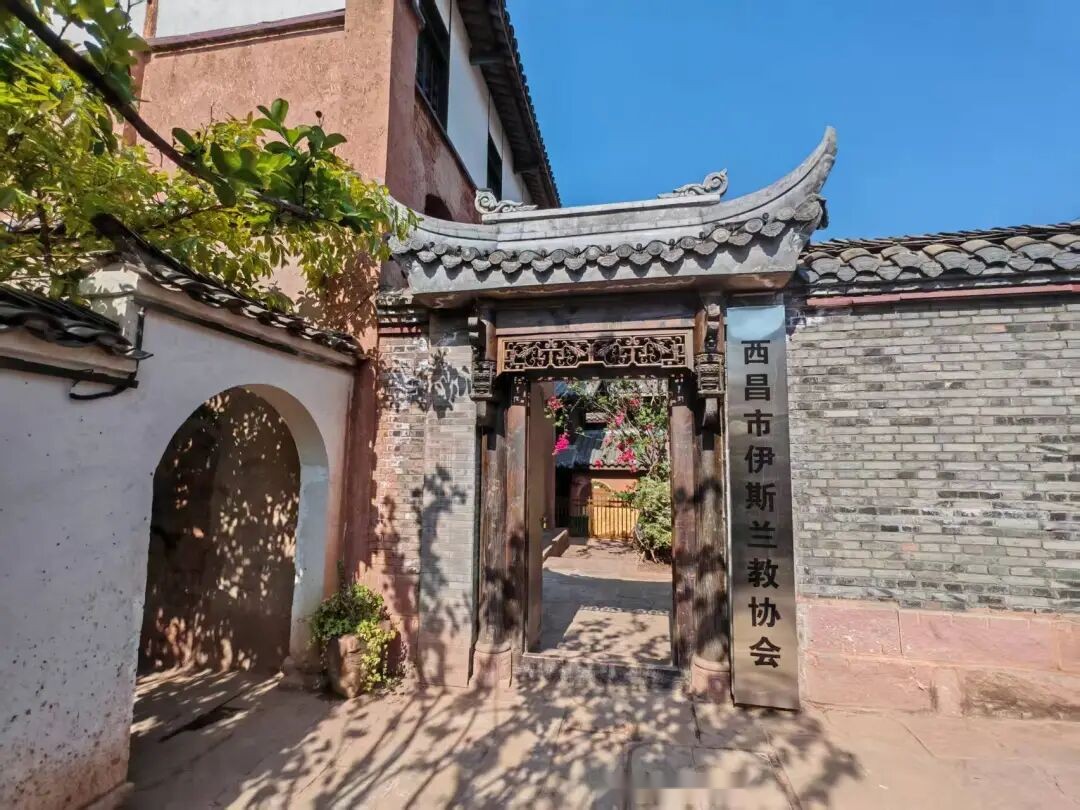
In the middle of Jiyang Lane, you'll find a historic Qing-style complex: the Jiyang Lane Mosque, or 'Jiancheng Mosque' (often called the 'City Mosque' for short). In 1995, the Xichang Municipal Government officially designated it as a municipal-level heritage site. It was once the center of Hui Muslim culture in the Ningyuan region (the city was renamed Ningyuan during the Yongzheng reign of the Qing Dynasty, when it became a prefectural capital). With its massive, centuries-old trees and quiet, serene atmosphere, the site now serves as the office for the Liangshan Yi Autonomous Prefecture Islamic Association.
The 600-year history of the Jiyang Lane Mosque is deeply tied to the growth and changes of Xichang itself, serving as a living witness and a window into the city's development.
The mosque was first built between 1324 and 1327 during the Yuan Dynasty by a group of over 60 Hui Muslim families near the Old West Gate (the former location of the city's grain station, now the 53rd Community). It was originally built in a Yuan architectural style. In 1574 during the Ming Dynasty (though some temple inscriptions suggest a 1494 relocation, and local Imams pass down stories that it moved during the Hongwu period to make way for city walls, so the exact date remains debated), the mosque was relocated to its current site to make room for the Jianchang city wall construction. The old site became a family temple for the Yu family. In 1848 (Qing Daoguang period), An Yongshu, a local military official, led a fundraising effort to renovate the aging site. After the 1850 earthquake caused damage to the main hall and surrounding galleries, it was patched up until a full reconstruction began in 1875, taking six years to finish. In 1921, the Xichang branch of the China Islamic Association was established there, and in 1940, the Xikang branch of the China Islamic Salvation Association moved from Kangding to this site. During the Cultural Revolution, the buildings were occupied and used as classrooms and storage, many historic plaques were destroyed, and land on both sides was taken. In 1983, government funding helped restore the mosque, allowing local Hui Muslims to resume religious services after a 20-year break. In 1991, community members donated funds to restore the front hall, and in 1995, the north wing was replaced by a three-story office building and a ground-floor bathroom. In 2019, the south wings and interior courtyards were renovated. Recently, as the government works to revitalize Jianchang Ancient City, the mosque is undergoing another large-scale upgrade.
Riding my bike into the ancient city through Datong Gate after a summer rain, I made my way through Yongquan Street to the mosque. The 'vintage' stone paving installed for the tourist area is a bit uneven, making for a bumpy ride—I felt like a soldier from the past riding through the city, or a merchant on the rugged Tea Horse Road. The puddles reflecting the sunlight looked like shimmering stars on the ground, signaling a bright future for the ancient city. Arriving at the mosque, it felt much more open than before. Most of the nearby houses were demolished, making the street feel wider and more historic. Imam Xiong Mingzhong told me the renovations will take another three months to finish, after which it will be open to the public for free. (Editor's note: The layout description below reflects the pre-renovation state).
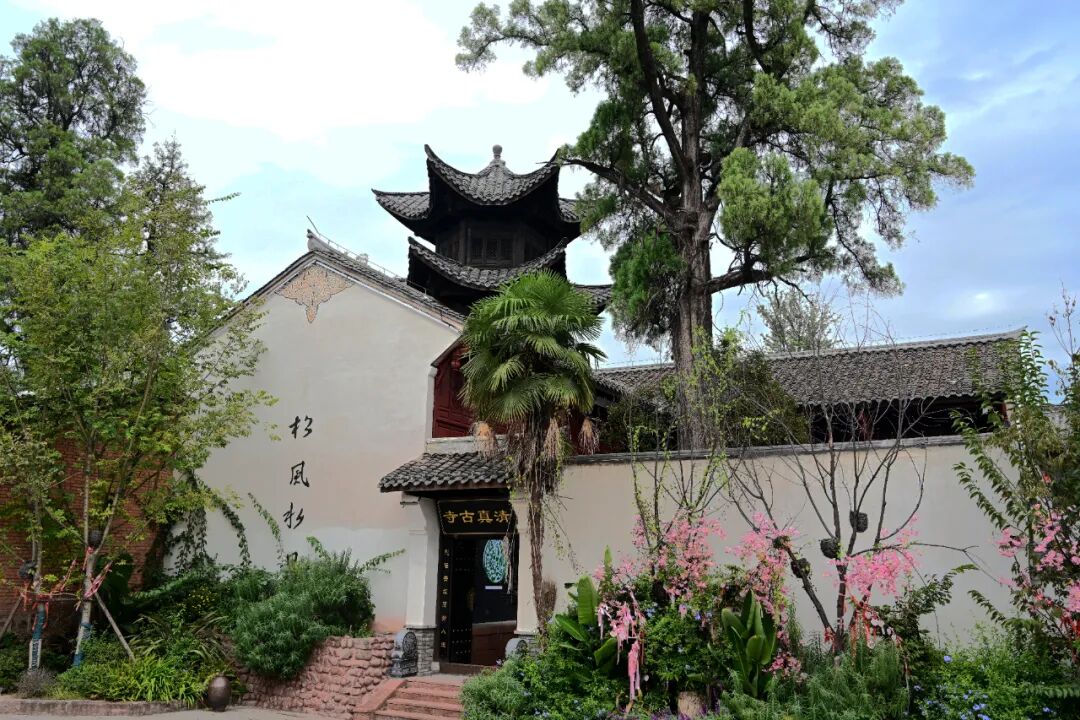
The mosque originally covered dozens of acres, but over centuries of change, only the core area from the main gate to the main hall remains—about two acres with 800 square meters of buildings. It's a classic Chinese courtyard style, facing east. While it used to be a standard three-section courtyard, the space behind the main hall is now quite narrow, making it more like a two-section courtyard. It has three gates, two courtyards, three ancient cypress trees, and a pair of stone lions in front of the main hall. The site features beautiful Chinese and Arabic calligraphy on plaques, spotless walkways, and lush greenery.
On the screen wall opposite the gate, you’ll see the four-character seal script 'Qu Wang Xun Zhen' (To Dispel Delusions and Seek Truth), said to be written by Tang Chenglie, the Ningyuan Prefect during the Qing Dynasty. On the walls flanking the gate, there are four beautiful Arabic calligraphic phrases: 'May Allah grant you peace' (left wall), 'Hold fast to the rope of Allah and do not divide' (right wall), 'The mercy of Allah is near to those who do good' (left gate wall), and 'The religion favored by Allah is Islam' (right gate wall). The antique green wooden gate represents sacred faith, with vertical bars that look like the railings of an old government yamen. Looking up at the plaque 'Qingzhen Libaisi' (Islamic Mosque) above the gate, it’s easy to feel like you've stepped back into the Yuan or Ming eras. The gate is both solemn and a little mysterious.
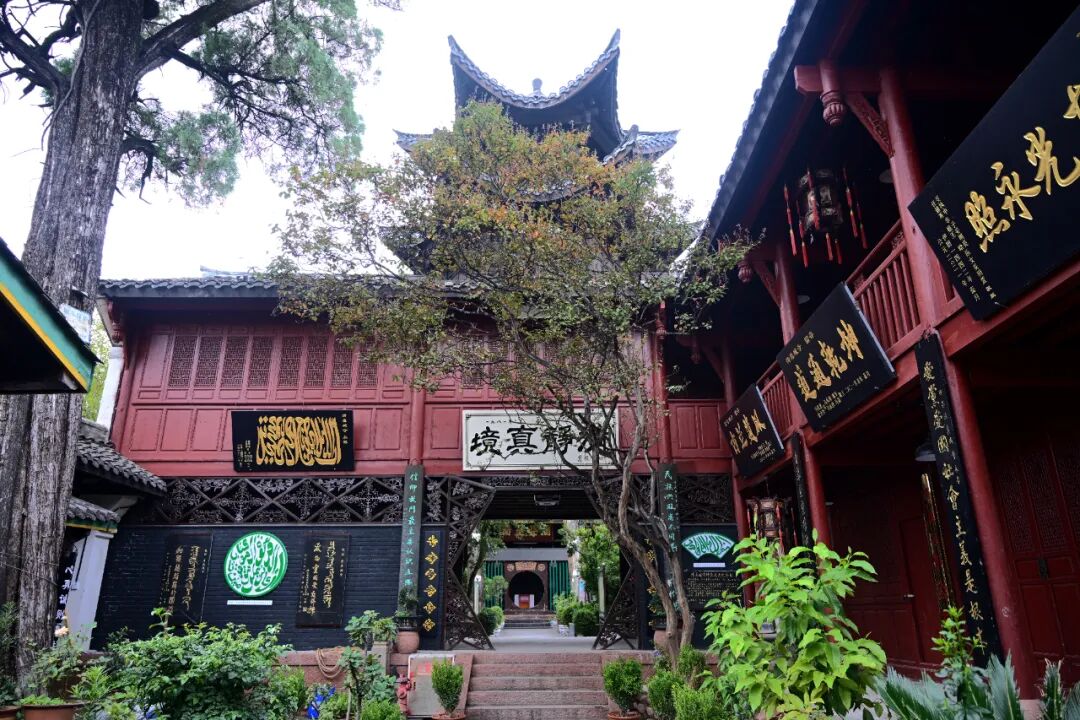
Walking through the gate into the front courtyard, you'll see a tall, straight ancient cypress on the left. Legend says there used to be eight, but only three remain. On the right stands a centuries-old crepe myrtle tree. The walls of the front courtyard are covered in Chinese and Arabic poetry and script. A circular archway ahead is inscribed with 'Qing Jing Zhen Jing' (The Realm of Purity and Truth) in Chinese, decorated with Arabic scripture.
Passing through the circular arch into the inner courtyard, you'll see historic stone tablets embedded in the gallery walls, detailing the mosque's history and property records. Two massive cypress trees stand like guards in front of the main hall’s entryway. To the right of the hall is an old well, which was once the main water source and is known for its sweet water.
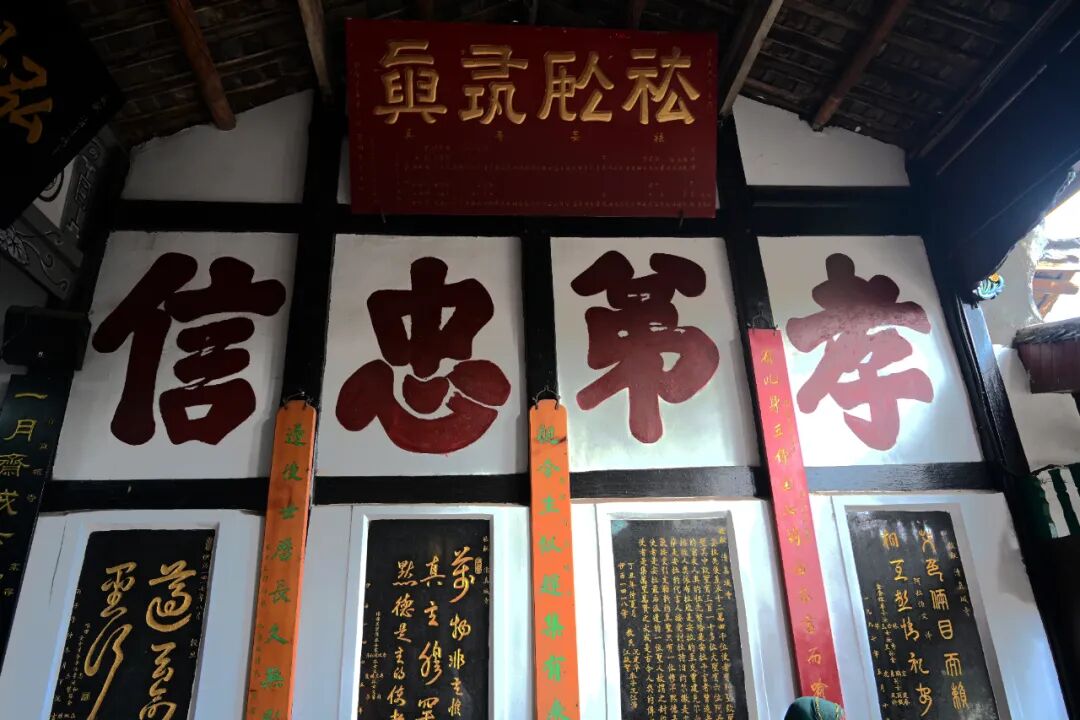
Entering the inner hall (baoting), you'll see a red circular door decorated with golden Arabic scripture. This space is where major meetings and religious classes are held. It is 13 meters wide and 8 meters deep. The atmosphere is immediately solemn. Looking up, you'll see large red characters representing traditional Confucian virtues like 'Filial Piety, Fraternity, Loyalty, Trust' and 'Propriety, Righteousness, Integrity, Shame.' The beams and pillars are covered in Chinese and Arabic plaques and calligraphy, a perfect example of how Chinese and Islamic cultures have blended over centuries.
The inner hall connects directly to the Prayer Hall (the main sanctuary). The Prayer Hall is even more grand, at 13 meters wide and 16 meters deep, standing over 8 meters high. The front pillars feature dragon carvings. Inside, you'll find the sacred space for the local Muslim community. It houses a 30-volume hand-copied Quran from the Qing Dynasty, written in a bold, elegant calligraphy style that is a true treasure.
Many of the mosque’s tablets and plaques were damaged during the Cultural Revolution, but the local Imams and community members did their best to save what they could. Most of the remaining tablets document the history of renovations and donation lists, showing the dedication and unity of the local Muslim community. The 1882 restoration tablet is particularly valuable for historical research.
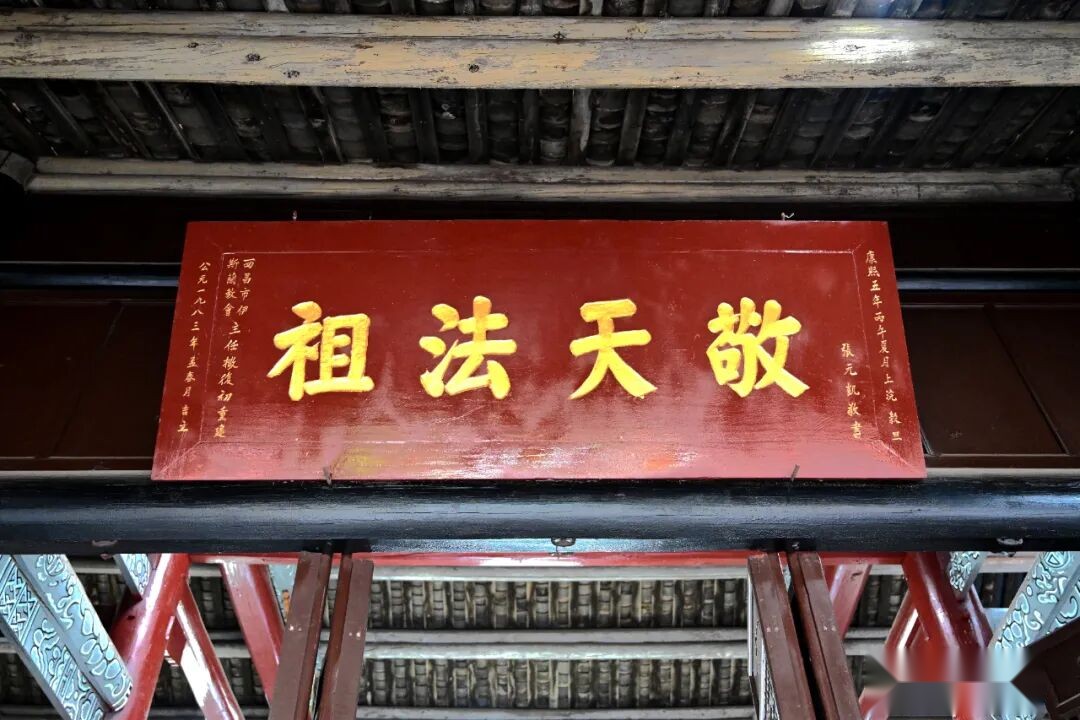
Many of the surviving plaques were gifts from wealthy Hui Muslim figures or local officials. For example, the 'Jing Tian Fa Zu' (Respect Heaven and Ancestors) plaque was gifted in 1666 by the local regional commander Zhang Yuankai. The 'Qu Wang Xun Zhen' plaque dates back to 1746, and the 'Ke Ji Fu Li' (Subdue the Self and Return to Propriety) plaque was donated in 1885 by the scholar Yang Yingsong.
The mosque also played a huge role in local education. In 1940, the Xikang branch of the China Islamic Salvation Association opened the Islamic Elementary School here. In 1944, they founded the Jiansheng Middle School nearby. Both schools were highly regarded for their high-quality teaching, even during the difficult years of the Second Sino-Japanese War. Many of their graduates went on to become prominent figures in Xichang’s development. The dedication of Principal Ding Zhenting is still talked about today.
As the spiritual and educational center for the community, the mosque has been home to many influential Hui Muslim families in Xichang—generals, scholars, and merchants alike. Figures like Ha Yuansheng, Tang Chenglie, and Ding Zhenting all contributed to the growth of both the mosque and the city.
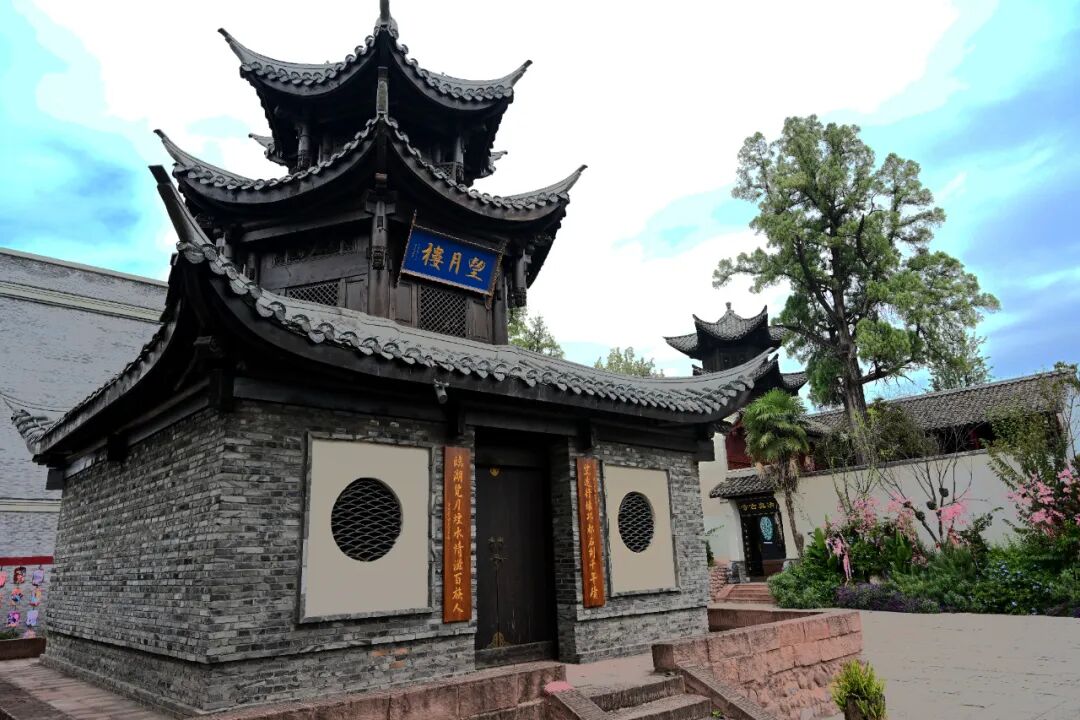
As I wrapped up my visit, Imam Xiong reminded me that the mosque will be open to the public for free once the upgrades are done. Walking away, I looked back at the new Huifang Street, with the tower tops of the Wangyue Building and the mosque's minaret silhouetted against the sky. I remembered that there’s also a new Hui ethnic cultural museum planned just 100 meters away, which is going to be a beautiful new addition to the ancient city’s cultural landscape. view all
Come walk with me through Jiyang Lane, in the heart of the Jianchang Ancient City in Xichang, Sichuan. We’re visiting the Jiyang Lane Mosque (also known as the Jiancheng Mosque), which was once the most important of the 36 Hui Muslim mosques in the Ningyuan Prefecture during the Qing Dynasty. This guide features 27 photos documenting the evolution of this ancient alley, the Qing-style courtyard architecture, and the peaceful vibes beneath its towering, ancient trees.
Jiyang Lane is a long, narrow alley in the southeastern part of the old Jianchang city core. It runs north to south, connecting Fu Street in the north to Yongquan Street in the south. The alley sits on a slope, stretching about 280 meters long and 3 meters wide, with a classic stone-paved floor. Back in the day, a clear stream used to flow through the alley, and the local Hui Muslims who lived nearby often butchered sheep there, which is why it was originally called 'Zhaiyang Lane' (Butcher Sheep Lane).
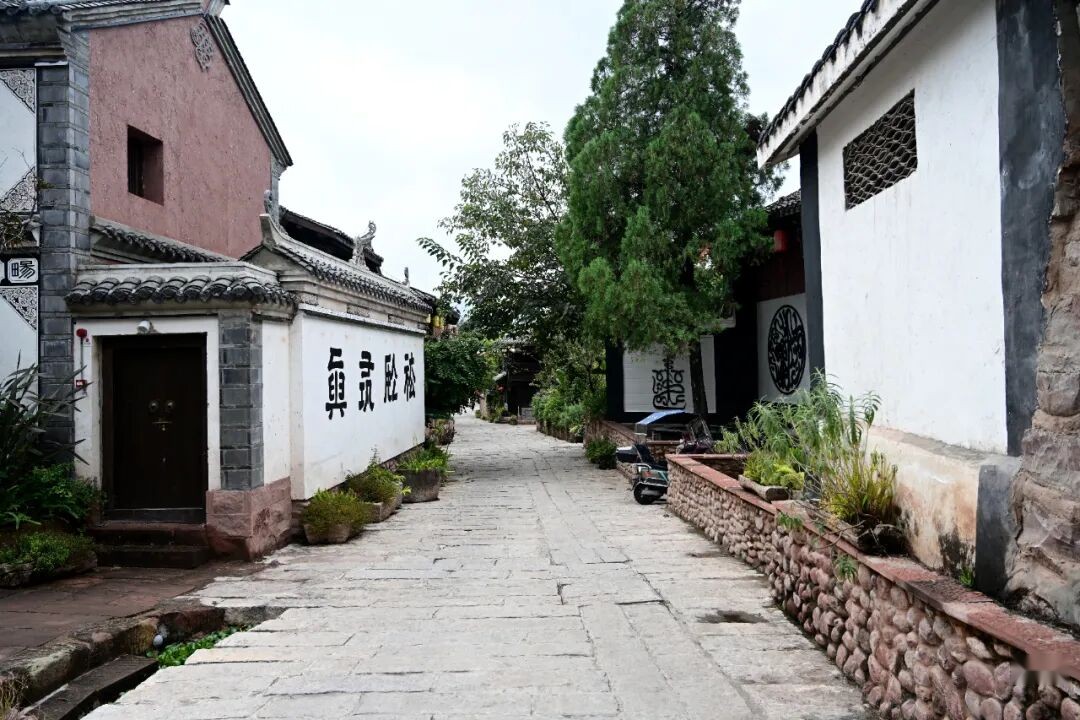
During the Republican era, some people felt the name 'Butcher Sheep Lane' sounded a bit unrefined, so they changed it to Jiyang Lane (Lucky Sheep Lane). In 1966, it was renamed Hongguang Lane, before finally being changed back to Jiyang Lane in 1981.
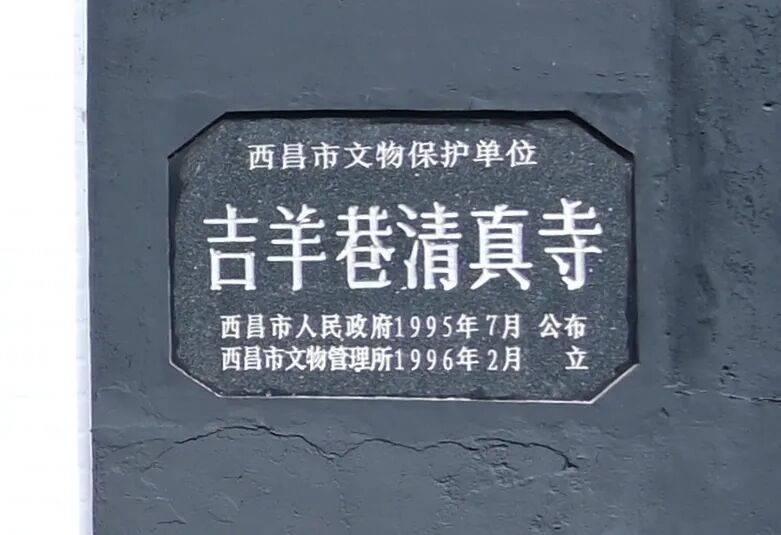
In the middle of Jiyang Lane, you'll find a historic Qing-style complex: the Jiyang Lane Mosque, or 'Jiancheng Mosque' (often called the 'City Mosque' for short). In 1995, the Xichang Municipal Government officially designated it as a municipal-level heritage site. It was once the center of Hui Muslim culture in the Ningyuan region (the city was renamed Ningyuan during the Yongzheng reign of the Qing Dynasty, when it became a prefectural capital). With its massive, centuries-old trees and quiet, serene atmosphere, the site now serves as the office for the Liangshan Yi Autonomous Prefecture Islamic Association.
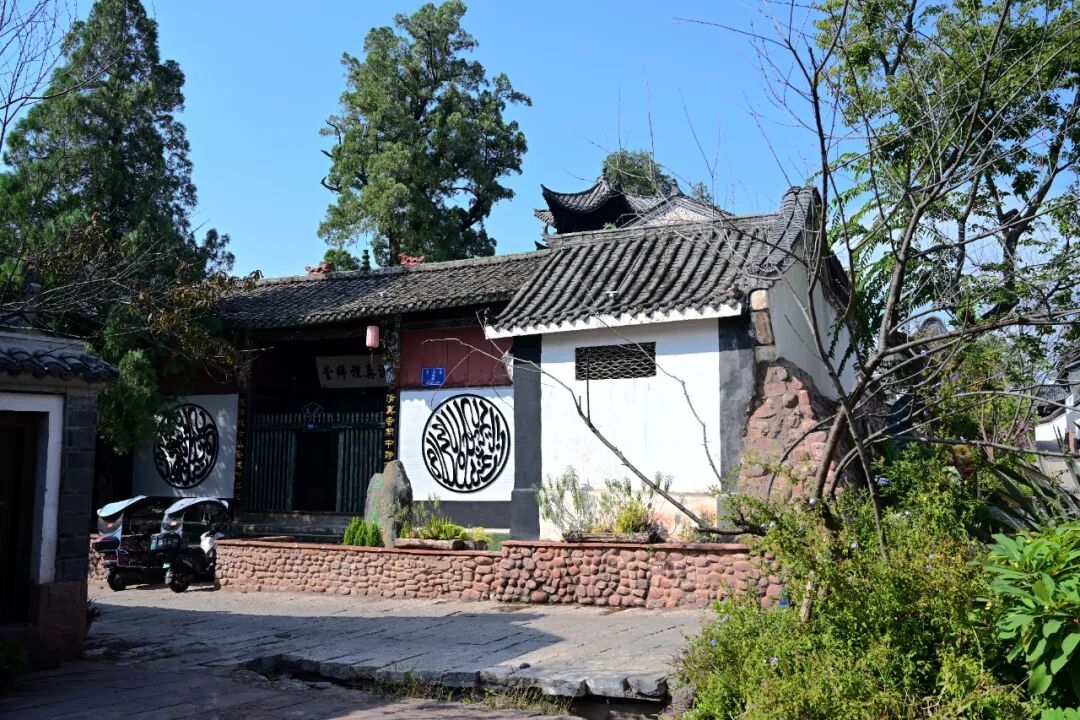
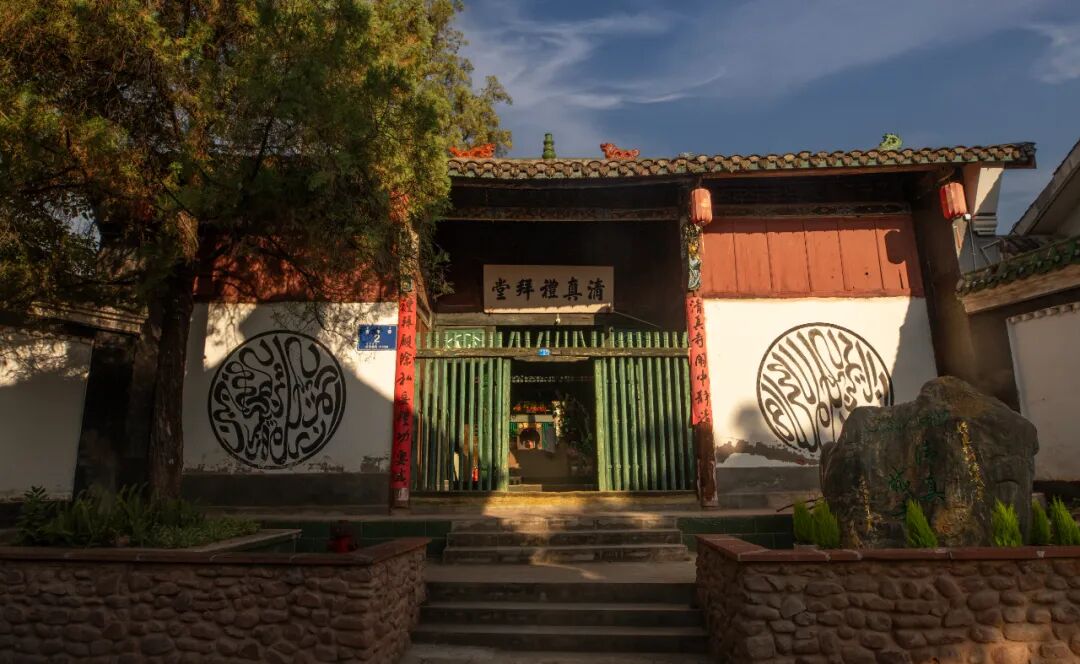
The 600-year history of the Jiyang Lane Mosque is deeply tied to the growth and changes of Xichang itself, serving as a living witness and a window into the city's development.
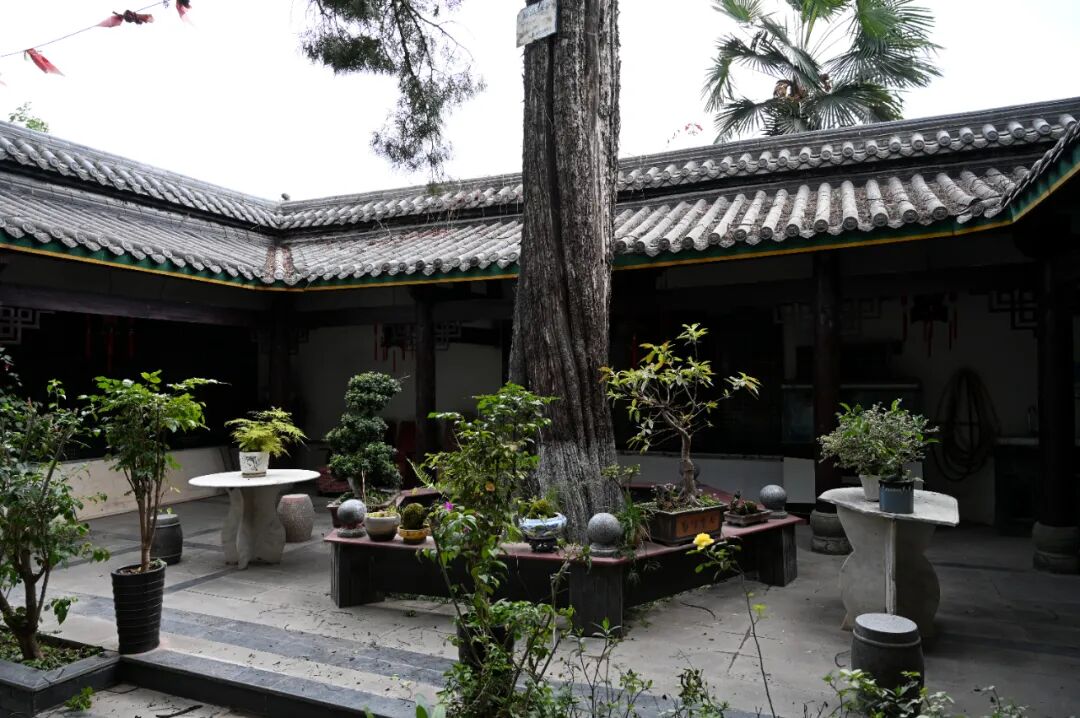
The mosque was first built between 1324 and 1327 during the Yuan Dynasty by a group of over 60 Hui Muslim families near the Old West Gate (the former location of the city's grain station, now the 53rd Community). It was originally built in a Yuan architectural style. In 1574 during the Ming Dynasty (though some temple inscriptions suggest a 1494 relocation, and local Imams pass down stories that it moved during the Hongwu period to make way for city walls, so the exact date remains debated), the mosque was relocated to its current site to make room for the Jianchang city wall construction. The old site became a family temple for the Yu family. In 1848 (Qing Daoguang period), An Yongshu, a local military official, led a fundraising effort to renovate the aging site. After the 1850 earthquake caused damage to the main hall and surrounding galleries, it was patched up until a full reconstruction began in 1875, taking six years to finish. In 1921, the Xichang branch of the China Islamic Association was established there, and in 1940, the Xikang branch of the China Islamic Salvation Association moved from Kangding to this site. During the Cultural Revolution, the buildings were occupied and used as classrooms and storage, many historic plaques were destroyed, and land on both sides was taken. In 1983, government funding helped restore the mosque, allowing local Hui Muslims to resume religious services after a 20-year break. In 1991, community members donated funds to restore the front hall, and in 1995, the north wing was replaced by a three-story office building and a ground-floor bathroom. In 2019, the south wings and interior courtyards were renovated. Recently, as the government works to revitalize Jianchang Ancient City, the mosque is undergoing another large-scale upgrade.
Riding my bike into the ancient city through Datong Gate after a summer rain, I made my way through Yongquan Street to the mosque. The 'vintage' stone paving installed for the tourist area is a bit uneven, making for a bumpy ride—I felt like a soldier from the past riding through the city, or a merchant on the rugged Tea Horse Road. The puddles reflecting the sunlight looked like shimmering stars on the ground, signaling a bright future for the ancient city. Arriving at the mosque, it felt much more open than before. Most of the nearby houses were demolished, making the street feel wider and more historic. Imam Xiong Mingzhong told me the renovations will take another three months to finish, after which it will be open to the public for free. (Editor's note: The layout description below reflects the pre-renovation state).
The mosque originally covered dozens of acres, but over centuries of change, only the core area from the main gate to the main hall remains—about two acres with 800 square meters of buildings. It's a classic Chinese courtyard style, facing east. While it used to be a standard three-section courtyard, the space behind the main hall is now quite narrow, making it more like a two-section courtyard. It has three gates, two courtyards, three ancient cypress trees, and a pair of stone lions in front of the main hall. The site features beautiful Chinese and Arabic calligraphy on plaques, spotless walkways, and lush greenery.
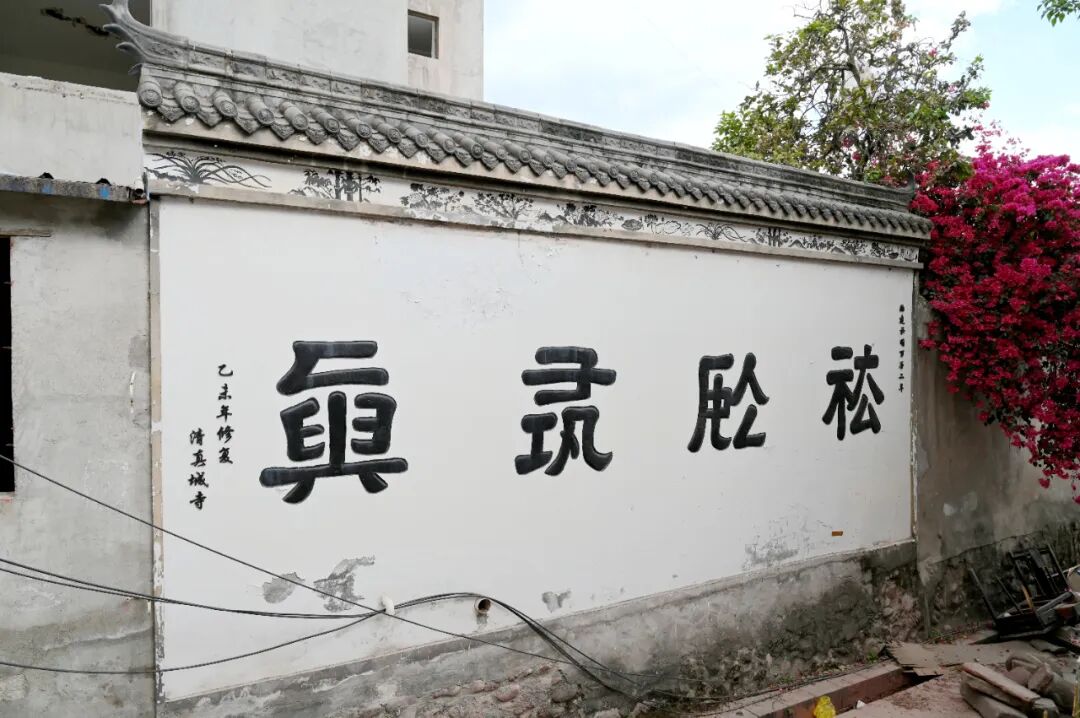
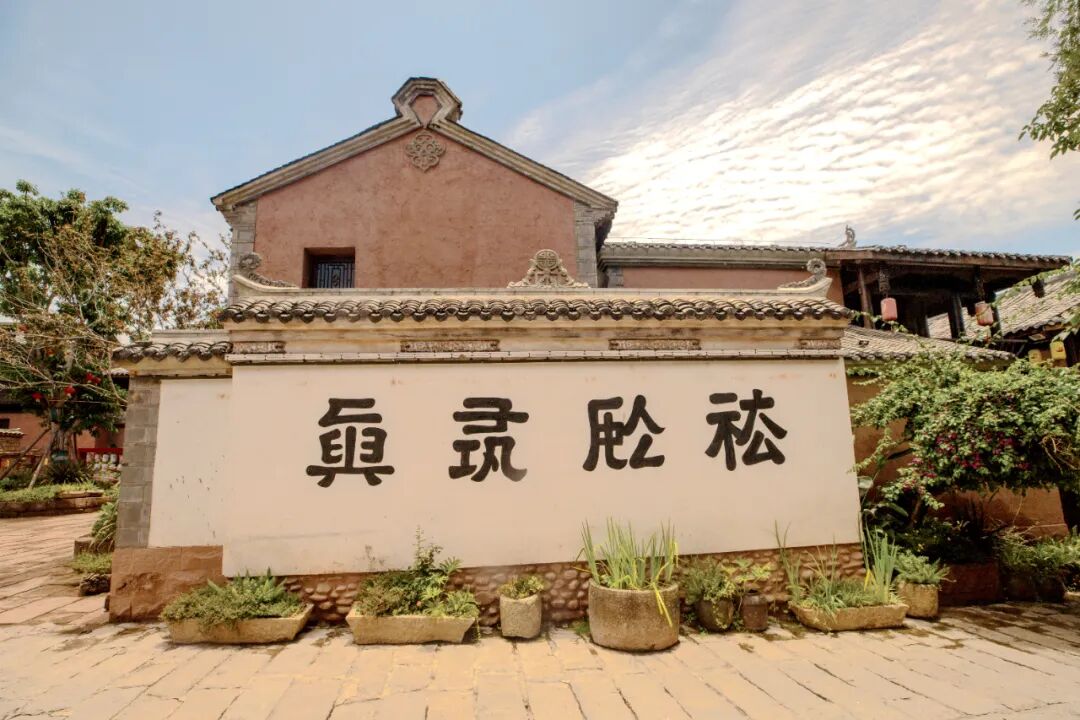
On the screen wall opposite the gate, you’ll see the four-character seal script 'Qu Wang Xun Zhen' (To Dispel Delusions and Seek Truth), said to be written by Tang Chenglie, the Ningyuan Prefect during the Qing Dynasty. On the walls flanking the gate, there are four beautiful Arabic calligraphic phrases: 'May Allah grant you peace' (left wall), 'Hold fast to the rope of Allah and do not divide' (right wall), 'The mercy of Allah is near to those who do good' (left gate wall), and 'The religion favored by Allah is Islam' (right gate wall). The antique green wooden gate represents sacred faith, with vertical bars that look like the railings of an old government yamen. Looking up at the plaque 'Qingzhen Libaisi' (Islamic Mosque) above the gate, it’s easy to feel like you've stepped back into the Yuan or Ming eras. The gate is both solemn and a little mysterious.


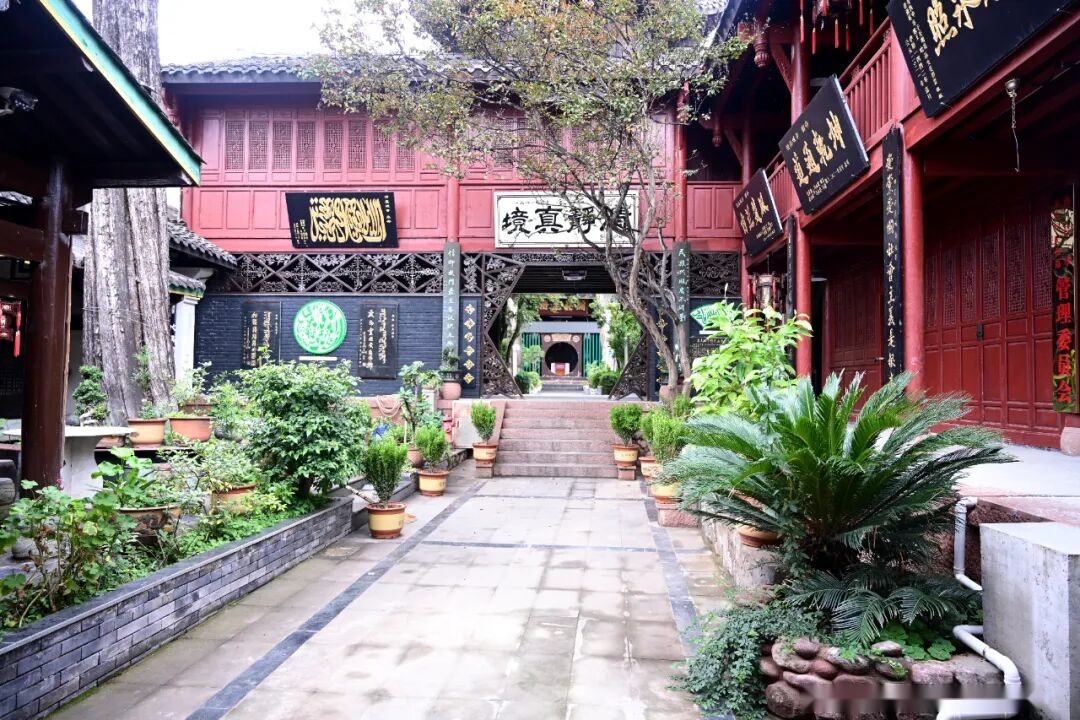
Walking through the gate into the front courtyard, you'll see a tall, straight ancient cypress on the left. Legend says there used to be eight, but only three remain. On the right stands a centuries-old crepe myrtle tree. The walls of the front courtyard are covered in Chinese and Arabic poetry and script. A circular archway ahead is inscribed with 'Qing Jing Zhen Jing' (The Realm of Purity and Truth) in Chinese, decorated with Arabic scripture.

Passing through the circular arch into the inner courtyard, you'll see historic stone tablets embedded in the gallery walls, detailing the mosque's history and property records. Two massive cypress trees stand like guards in front of the main hall’s entryway. To the right of the hall is an old well, which was once the main water source and is known for its sweet water.

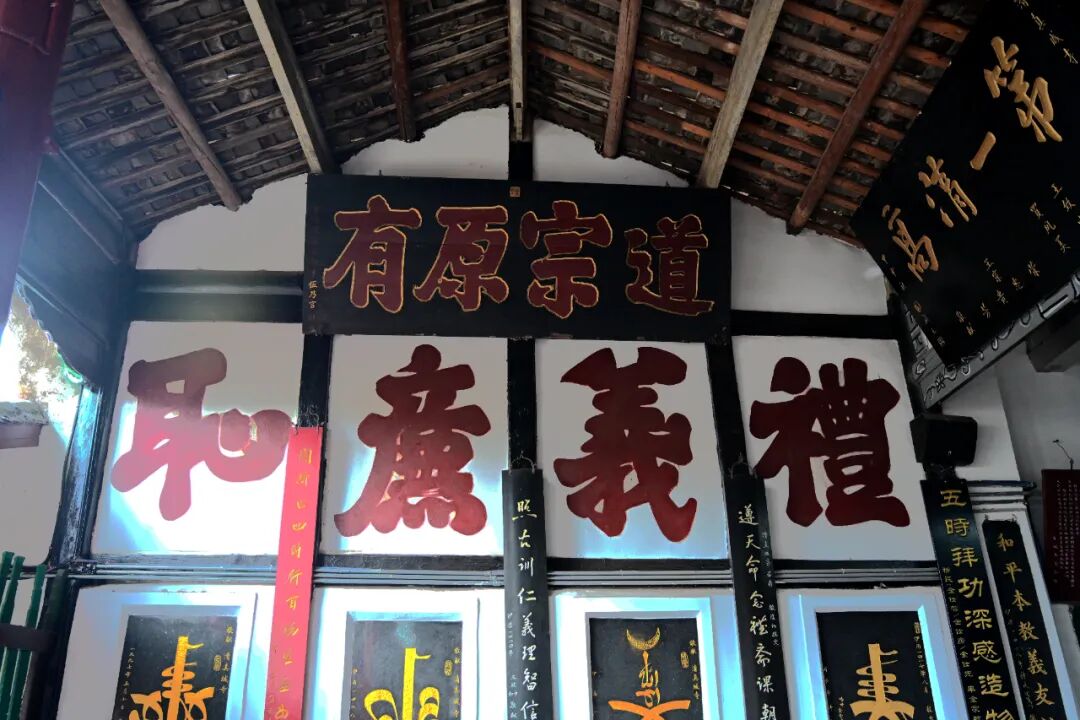
Entering the inner hall (baoting), you'll see a red circular door decorated with golden Arabic scripture. This space is where major meetings and religious classes are held. It is 13 meters wide and 8 meters deep. The atmosphere is immediately solemn. Looking up, you'll see large red characters representing traditional Confucian virtues like 'Filial Piety, Fraternity, Loyalty, Trust' and 'Propriety, Righteousness, Integrity, Shame.' The beams and pillars are covered in Chinese and Arabic plaques and calligraphy, a perfect example of how Chinese and Islamic cultures have blended over centuries.
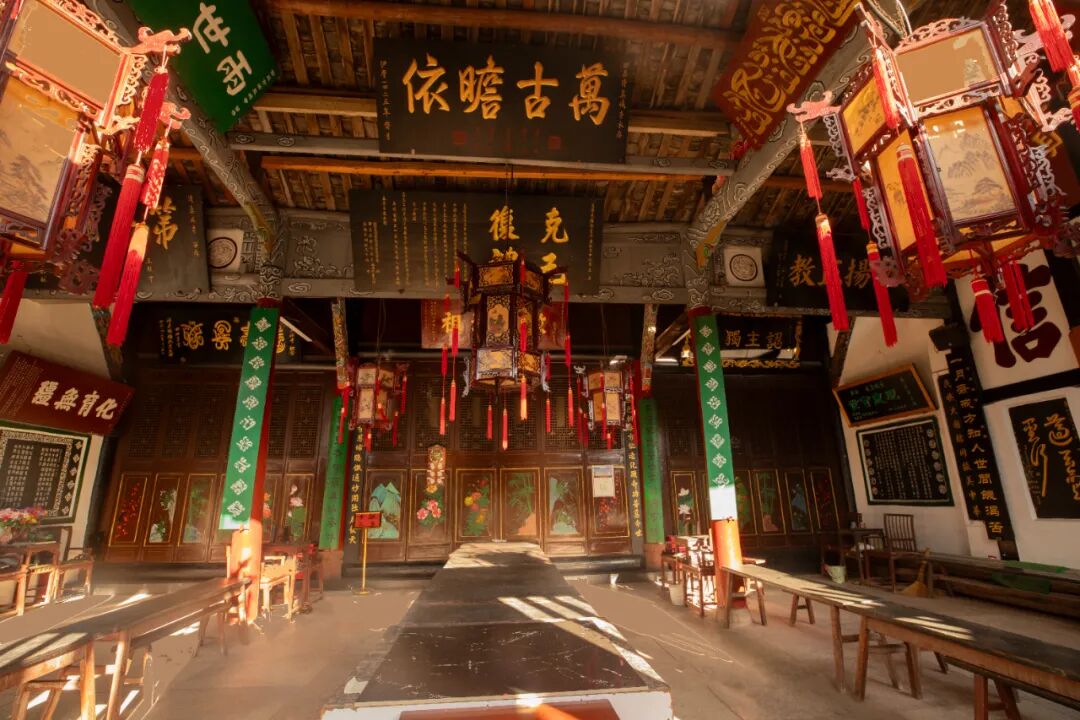
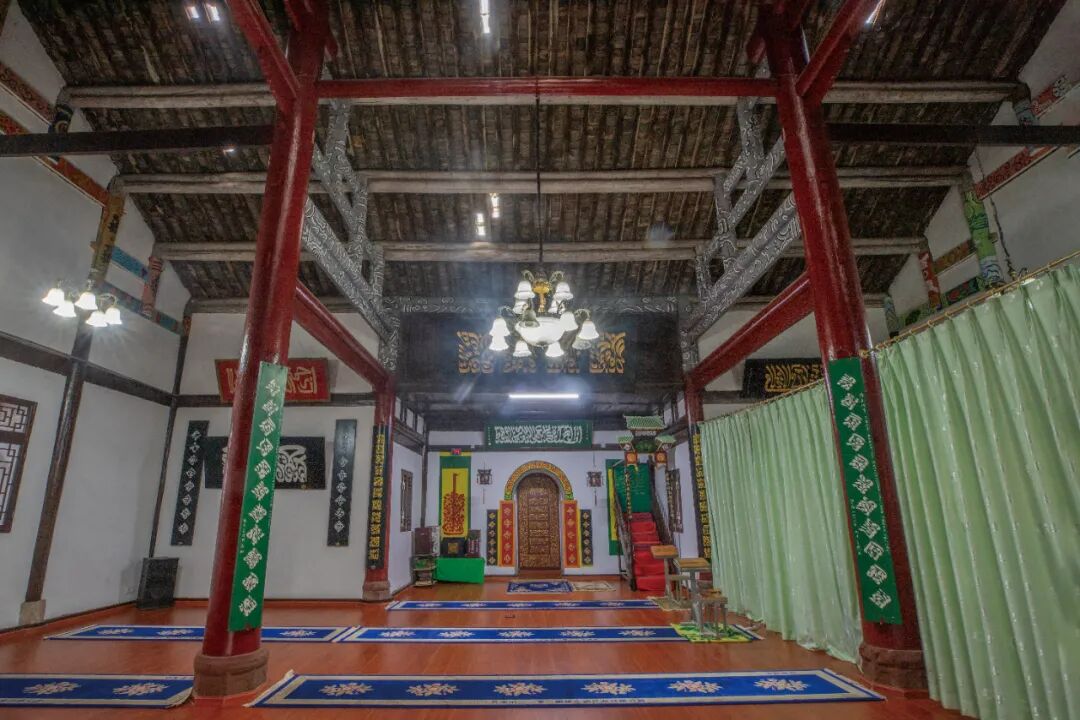
The inner hall connects directly to the Prayer Hall (the main sanctuary). The Prayer Hall is even more grand, at 13 meters wide and 16 meters deep, standing over 8 meters high. The front pillars feature dragon carvings. Inside, you'll find the sacred space for the local Muslim community. It houses a 30-volume hand-copied Quran from the Qing Dynasty, written in a bold, elegant calligraphy style that is a true treasure.
Many of the mosque’s tablets and plaques were damaged during the Cultural Revolution, but the local Imams and community members did their best to save what they could. Most of the remaining tablets document the history of renovations and donation lists, showing the dedication and unity of the local Muslim community. The 1882 restoration tablet is particularly valuable for historical research.
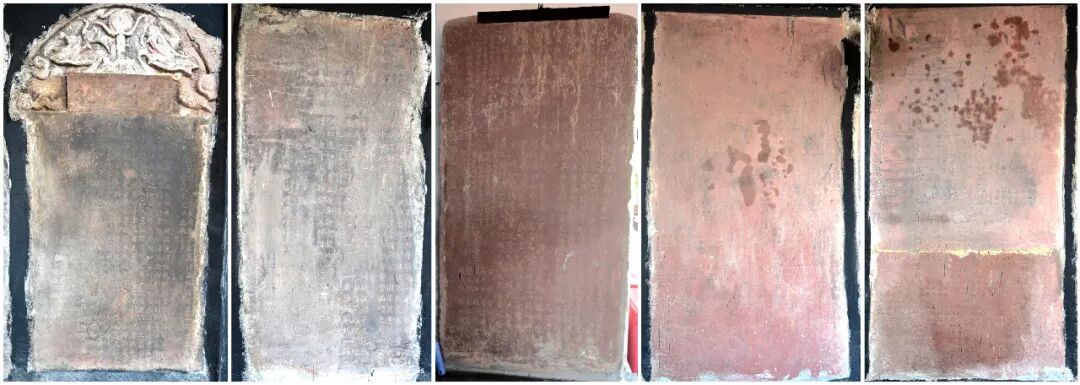
Many of the surviving plaques were gifts from wealthy Hui Muslim figures or local officials. For example, the 'Jing Tian Fa Zu' (Respect Heaven and Ancestors) plaque was gifted in 1666 by the local regional commander Zhang Yuankai. The 'Qu Wang Xun Zhen' plaque dates back to 1746, and the 'Ke Ji Fu Li' (Subdue the Self and Return to Propriety) plaque was donated in 1885 by the scholar Yang Yingsong.


The mosque also played a huge role in local education. In 1940, the Xikang branch of the China Islamic Salvation Association opened the Islamic Elementary School here. In 1944, they founded the Jiansheng Middle School nearby. Both schools were highly regarded for their high-quality teaching, even during the difficult years of the Second Sino-Japanese War. Many of their graduates went on to become prominent figures in Xichang’s development. The dedication of Principal Ding Zhenting is still talked about today.
As the spiritual and educational center for the community, the mosque has been home to many influential Hui Muslim families in Xichang—generals, scholars, and merchants alike. Figures like Ha Yuansheng, Tang Chenglie, and Ding Zhenting all contributed to the growth of both the mosque and the city.
As I wrapped up my visit, Imam Xiong reminded me that the mosque will be open to the public for free once the upgrades are done. Walking away, I looked back at the new Huifang Street, with the tower tops of the Wangyue Building and the mosque's minaret silhouetted against the sky. I remembered that there’s also a new Hui ethnic cultural museum planned just 100 meters away, which is going to be a beautiful new addition to the ancient city’s cultural landscape.
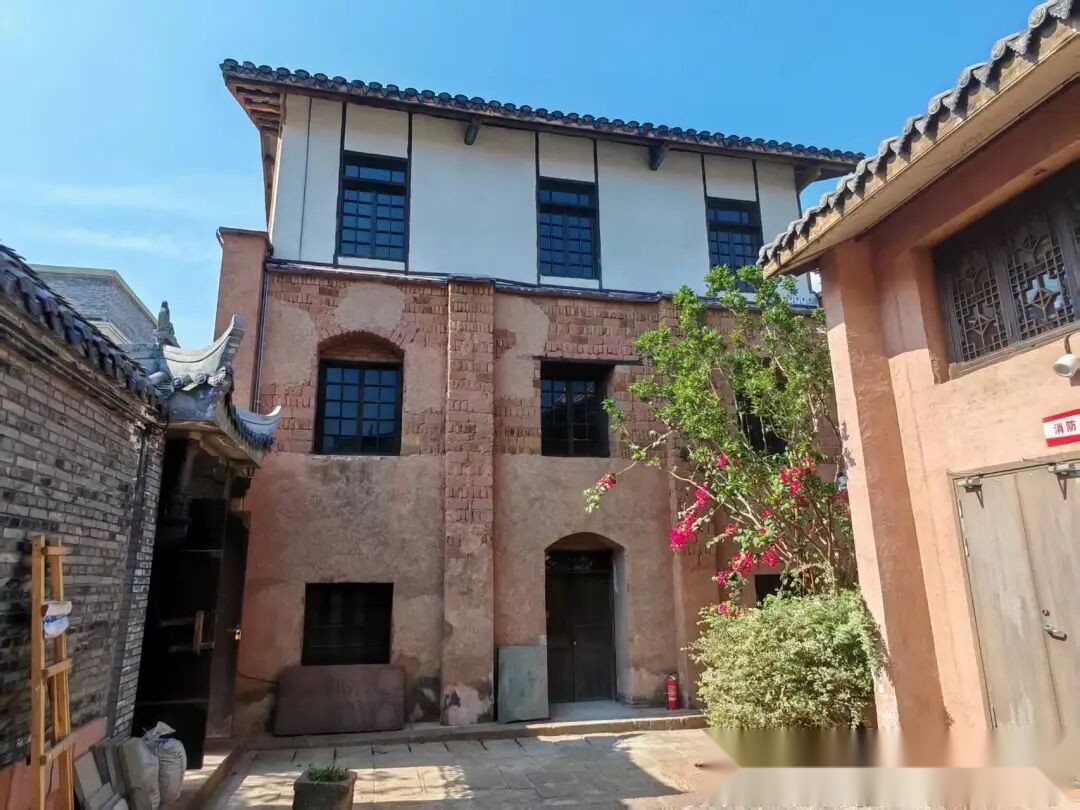
Best Islamic Heritage in Zhengzhou: Exploring North Street Mosque and Central Plains Architecture
Articles • Hasan09 posted the article • 0 comments • 20 views • 1 days ago
Explore Zhengzhou's oldest and largest mosque, the North Street Mosque (Beida Mosque) located in the Guancheng District. Through 34 high-definition photos, check out its single-eaves Xieshan-style mountain gate built in the late Yuan and early Ming dynasties, the double-eaves Xieshan moon-sighting tower, the interconnected prayer hall, and ancient locust tree stone tablets, while experiencing authentic Central Plains classical architectural aesthetics.
Deep in the old streets of Zhengzhou's Guancheng District, you will find a stunning collection of traditional Chinese ancient architecture.
Visiting this place for the first time completely flipped my preconceived notions about what a mosque looks like.
There are no round domes or exotic minarets here. Instead, everything in front of you screams classic Central Plains architecture: flying eaves and upturned corners, grey bricks and tiles, carved screen walls, and ancient courtyards shaded by locust trees. The main entrance features a single-eaves Xieshan roof, the moon-sighting tower is a double-eaves Xieshan pavilion, and the main prayer hall uses the traditional Chinese palace-style goulianda (interconnected structure). If it weren't for the three characters for "Mosque" on the lintel, it would be hard to connect this place with Islamic architecture.
This is the North Street Mosque (Beida Mosque), the oldest and largest surviving mosque in Zhengzhou. Because it's located on North Street, locals usually just call it the North Street Mosque.
Islam has been in Zhengzhou for over a thousand years. Back in the Tang Dynasty, Guancheng was a major water and land transportation hub connecting Chang'an, Luoyang, and the southeast coast. Arab merchants and envoys passing through would stop and settle down here, making them some of the earliest ancestors of Zhengzhou's Hui Muslims.
Built in the late Yuan and early Ming dynasties, the North Street Mosque is a major birthplace for the spread of Islam in Zhengzhou. Its current architectural layout was mostly shaped during the Ming and Qing dynasties. After two major renovations during the Qianlong Emperor's reign, it finally took on today's layout: facing west with three courtyards along a symmetrical central axis, cleverly combining a traditional courtyard house with palace-style architecture.
As Islam spread, it naturally blended with local architectural traditions and evolved over time. The fact that the Zhengzhou mosque looks so traditionally Chinese is the ultimate example of localization in China.
During the Ming and Qing dynasties, most mosques in Henan adopted traditional Chinese architectural language rather than chasing the external forms of Arabic architecture. They used flying eaves, bracket sets (feiyan dougong, traditional flying eaves and brackets), and courtyard layouts to carry Islamic faith. It wasn't just a simple mashup of two styles, but a cultural fusion that lasted for hundreds of years.
Right in front of the moon-sighting tower, you can still see Chinese-style couplets hanging up: "Observe, listen, and comprehend the core truth, and you understand all of nature; experience prosperity and decline, realize the subtle turning point, and you grasp the ultimate mystery." Using the language of Chinese philosophy to explain Islamic ideas allows both architecture and text to carry on a dialogue between civilizations.
Because it has continuously functioned as a place of worship, a huge collection of ancient buildings inside has been kept completely intact. There are 16 surviving Qing dynasty stone tablets, and major structures like the main hall, moon-sighting tower, and screen walls are all original Qing constructions. The wood carvings, brick carvings, and colorful paintings are super well-preserved, making it a rare sample for appreciating Central Plains ancient architecture from the Qing dynasty.
In the quiet afternoon, the mosque is totally empty of tourists and believers, giving it a super serene vibe.
Ancient locust trees cast thick shadows, and the sunlight hits the grey brick ground, making it feel like you just stepped into a deep Qing dynasty mansion. Outside the courtyard walls, you've got the buzzing Zhengzhou street life; inside the walls, time has basically stood still for hundreds of years.
It doesn't feel like a tourist spot at all. It feels more like an old house that's still breathing, quietly guarding a thousand years of history at its own pace.
Zhengzhou North Street Mosque | Major National Historical and Cultural Site |
Free Admission (Please keep quiet during your visit and respect the order of this religious site.)
Bonus
---
Not too far from the North Street Mosque is another super low-key historical site—Baba's Tomb.
"Mountain and Sea Finger (Sages)"
Hidden inside a residential courtyard in the Erqi District, a traditional Chinese hexagonal pavilion stands quietly. Buried beneath the pavilion is Mumuduha, an Islamic sage who came from the Arab world during the Ming dynasty. He used to lecture and preach at the North Street Mosque, and because of his incredible virtue and respect, local Muslims called him "Baba" (an Islamic honorific title for wise men and saints).
At first, the burial site of this sage was just a wild hillside near the water outside the city. Later generations of Muslims, deeply inspired by Mumuduha's character, started building their own tombs around his gravesite. Over hundreds of years, this gradually grew into Zhengzhou's largest public cemetery for Hui Muslims—Laofenggang.
By the late Qing and early Republic eras, Laofenggang slowly transformed into one of Zhengzhou's busiest street landmarks, packed with markets, folk arts, and acrobatics, rivaling places like the old Tianjin Quanyechang or Nanjing Fuzimiao.
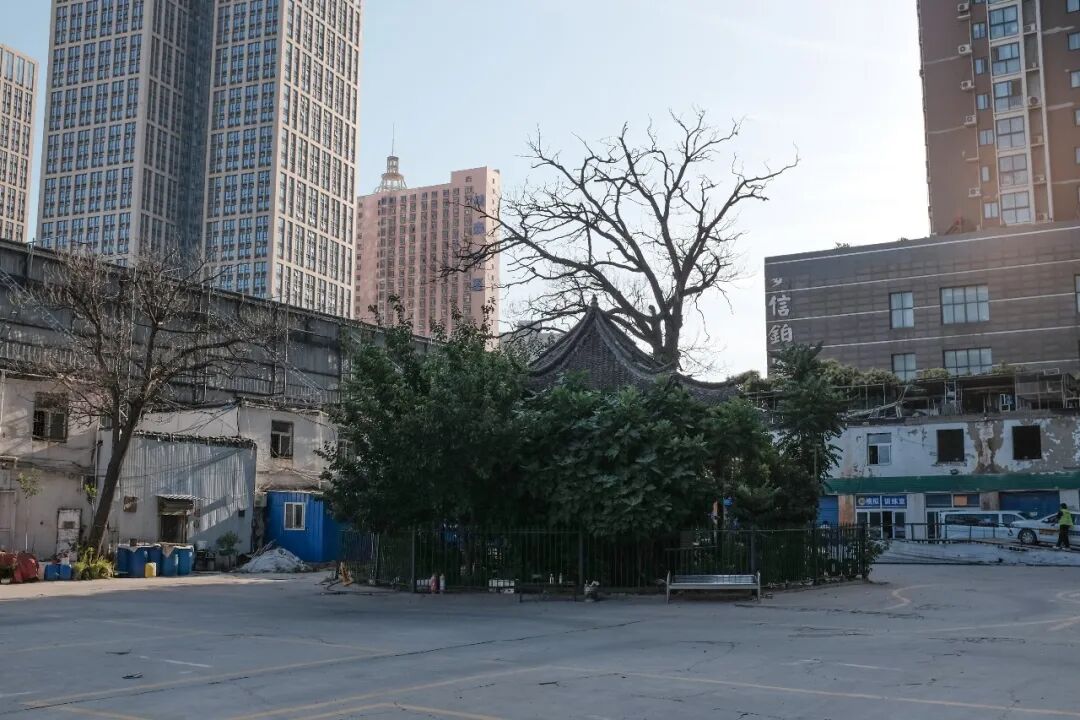
Nowadays, though, this spot has turned into a driving school training ground. Traffic flows non-stop all around it, but this slightly weathered ancient hexagonal pavilion just keeps standing there quietly.
This Arab sage who crossed oceans to reach the Central Plains has basically witnessed the area's hustle, bustle, and changes over hundreds of years—from a wild hill to a cemetery, and from a marketplace to a modern city.
Reference materials: Zhengzhou Library, online literature view all
Explore Zhengzhou's oldest and largest mosque, the North Street Mosque (Beida Mosque) located in the Guancheng District. Through 34 high-definition photos, check out its single-eaves Xieshan-style mountain gate built in the late Yuan and early Ming dynasties, the double-eaves Xieshan moon-sighting tower, the interconnected prayer hall, and ancient locust tree stone tablets, while experiencing authentic Central Plains classical architectural aesthetics.
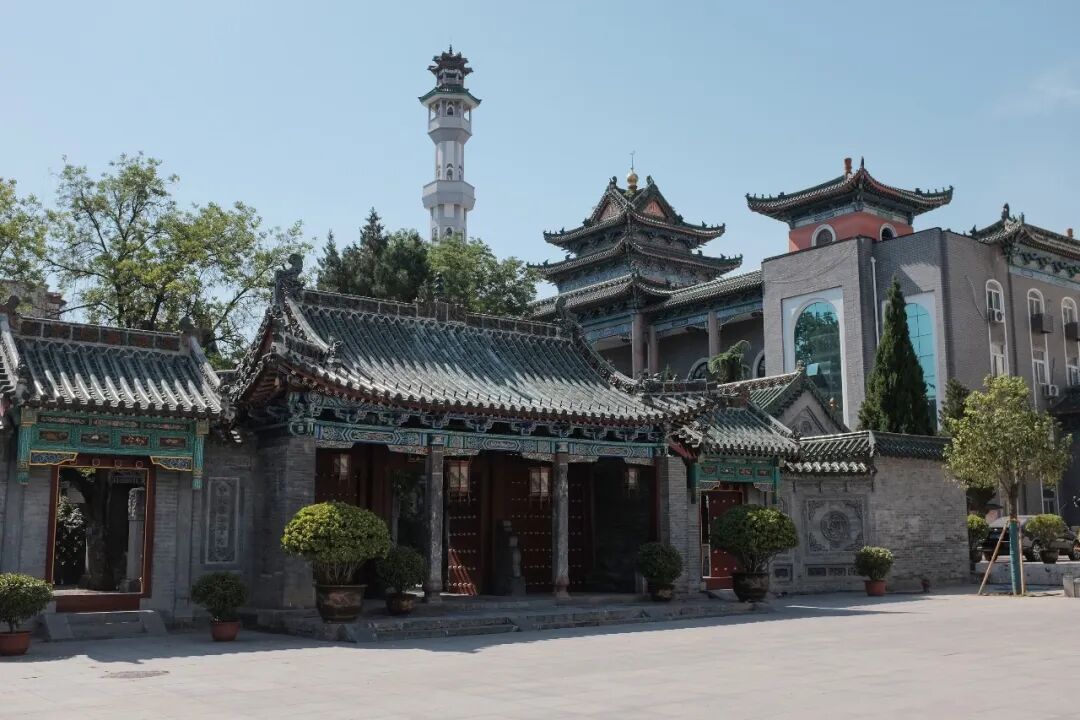
Deep in the old streets of Zhengzhou's Guancheng District, you will find a stunning collection of traditional Chinese ancient architecture.
Visiting this place for the first time completely flipped my preconceived notions about what a mosque looks like.
There are no round domes or exotic minarets here. Instead, everything in front of you screams classic Central Plains architecture: flying eaves and upturned corners, grey bricks and tiles, carved screen walls, and ancient courtyards shaded by locust trees. The main entrance features a single-eaves Xieshan roof, the moon-sighting tower is a double-eaves Xieshan pavilion, and the main prayer hall uses the traditional Chinese palace-style goulianda (interconnected structure). If it weren't for the three characters for "Mosque" on the lintel, it would be hard to connect this place with Islamic architecture.
This is the North Street Mosque (Beida Mosque), the oldest and largest surviving mosque in Zhengzhou. Because it's located on North Street, locals usually just call it the North Street Mosque.
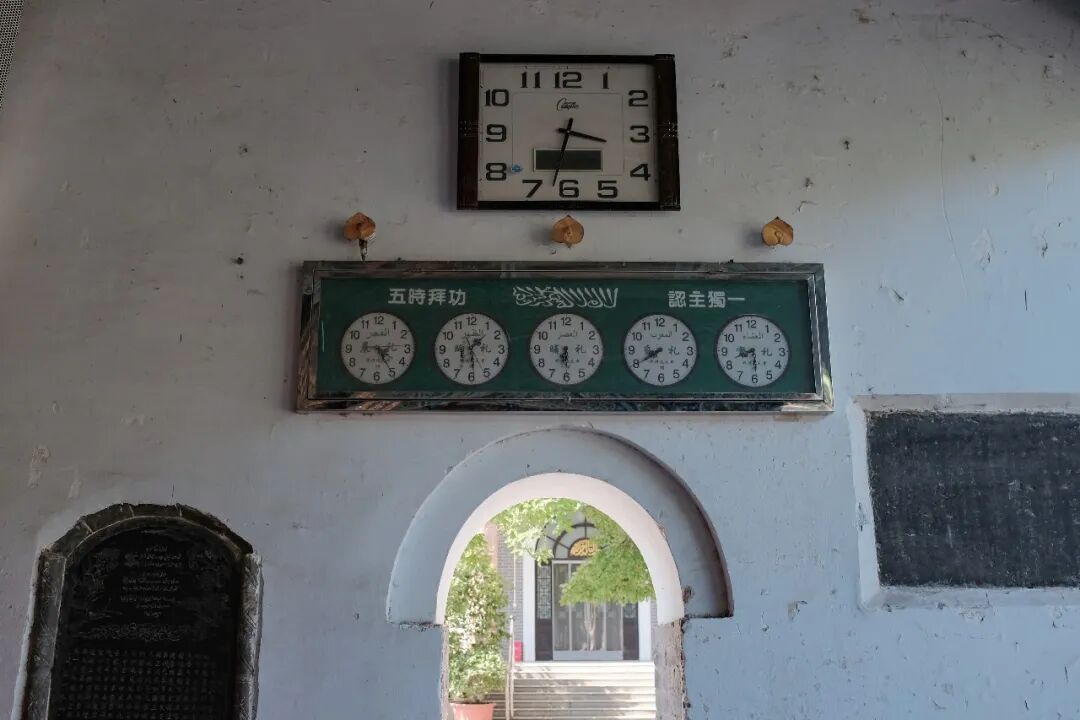
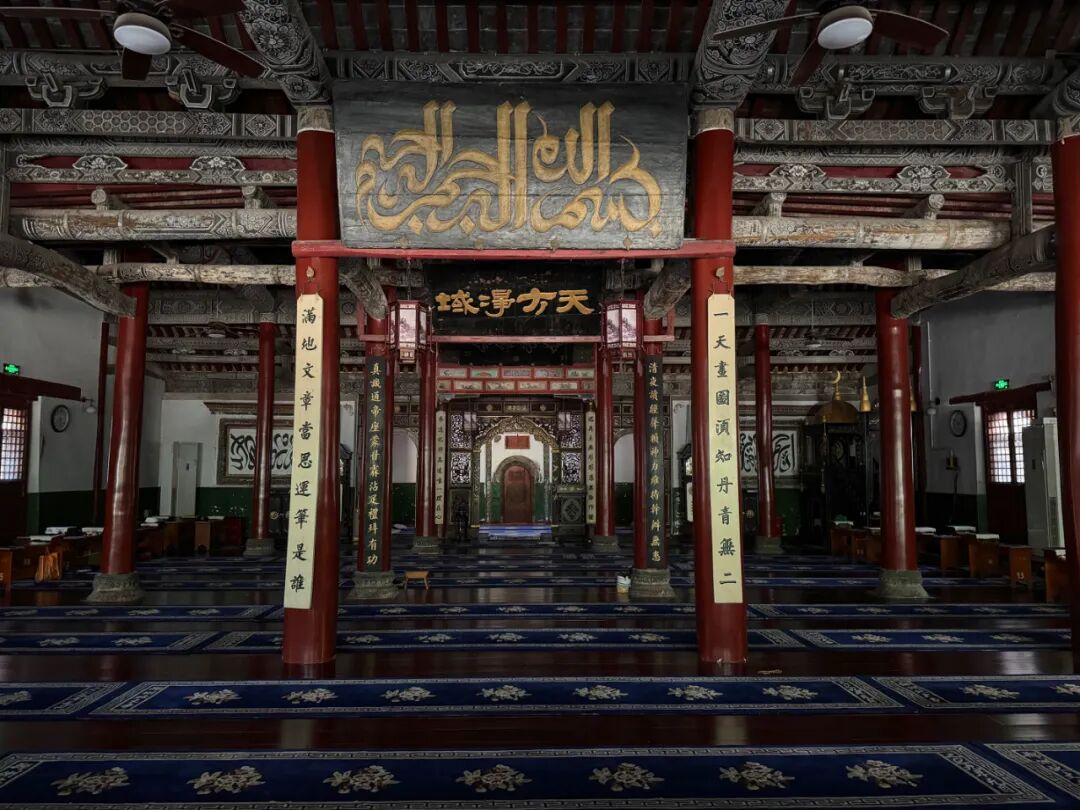
Islam has been in Zhengzhou for over a thousand years. Back in the Tang Dynasty, Guancheng was a major water and land transportation hub connecting Chang'an, Luoyang, and the southeast coast. Arab merchants and envoys passing through would stop and settle down here, making them some of the earliest ancestors of Zhengzhou's Hui Muslims.
Built in the late Yuan and early Ming dynasties, the North Street Mosque is a major birthplace for the spread of Islam in Zhengzhou. Its current architectural layout was mostly shaped during the Ming and Qing dynasties. After two major renovations during the Qianlong Emperor's reign, it finally took on today's layout: facing west with three courtyards along a symmetrical central axis, cleverly combining a traditional courtyard house with palace-style architecture.
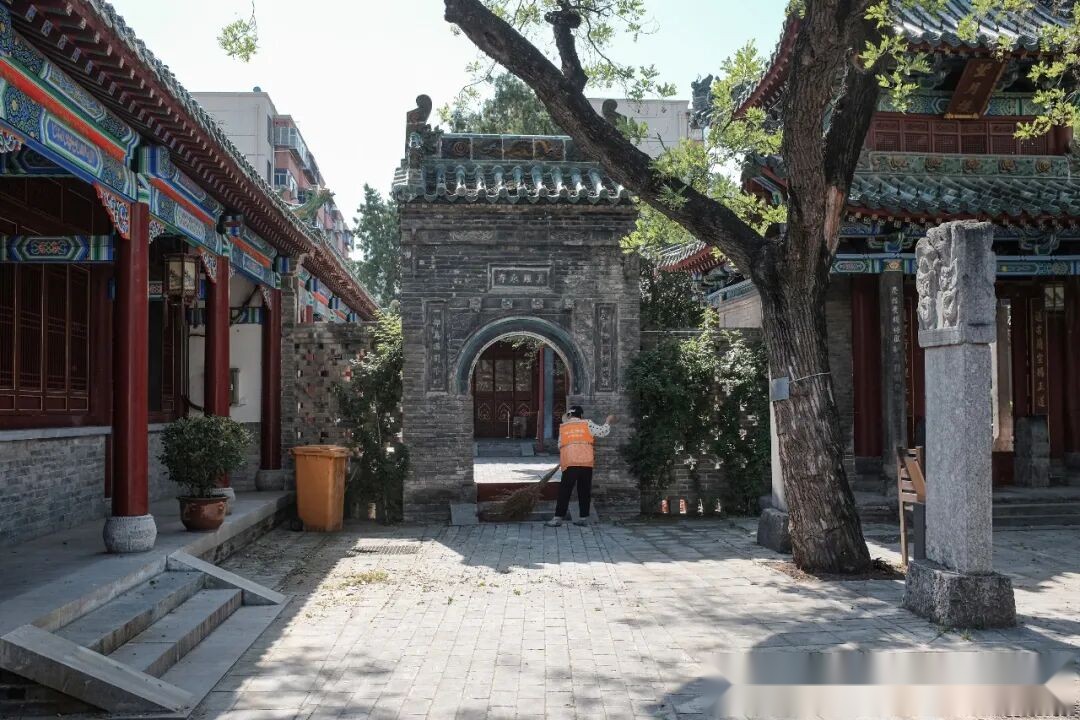
As Islam spread, it naturally blended with local architectural traditions and evolved over time. The fact that the Zhengzhou mosque looks so traditionally Chinese is the ultimate example of localization in China.
During the Ming and Qing dynasties, most mosques in Henan adopted traditional Chinese architectural language rather than chasing the external forms of Arabic architecture. They used flying eaves, bracket sets (feiyan dougong, traditional flying eaves and brackets), and courtyard layouts to carry Islamic faith. It wasn't just a simple mashup of two styles, but a cultural fusion that lasted for hundreds of years.
Right in front of the moon-sighting tower, you can still see Chinese-style couplets hanging up: "Observe, listen, and comprehend the core truth, and you understand all of nature; experience prosperity and decline, realize the subtle turning point, and you grasp the ultimate mystery." Using the language of Chinese philosophy to explain Islamic ideas allows both architecture and text to carry on a dialogue between civilizations.
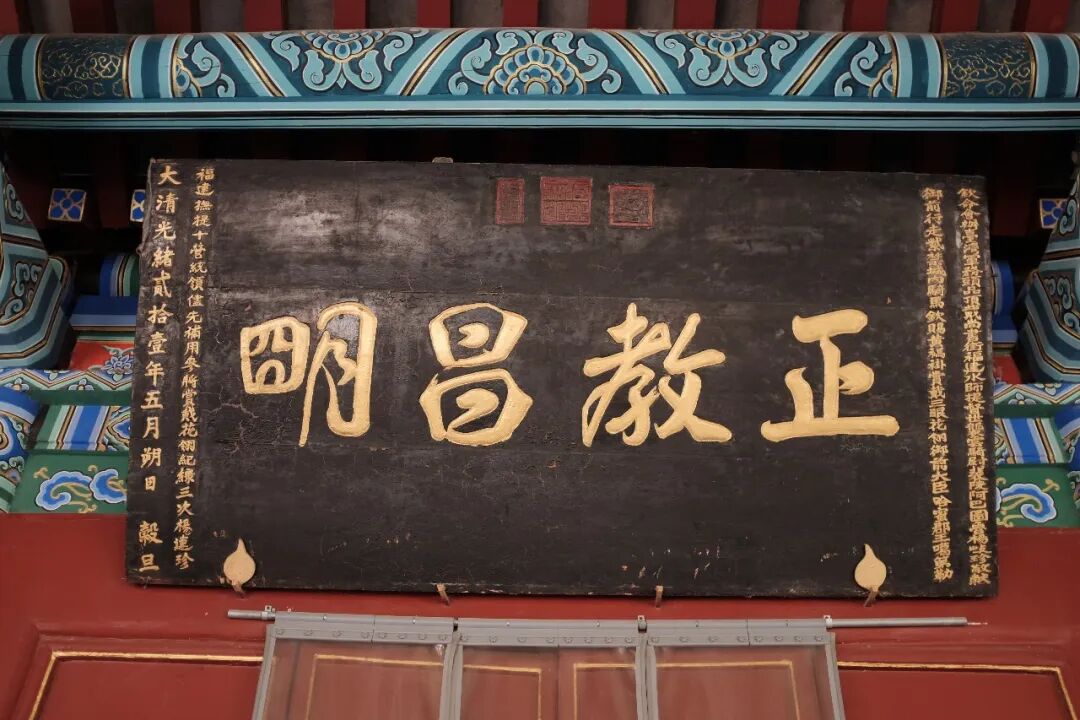
Because it has continuously functioned as a place of worship, a huge collection of ancient buildings inside has been kept completely intact. There are 16 surviving Qing dynasty stone tablets, and major structures like the main hall, moon-sighting tower, and screen walls are all original Qing constructions. The wood carvings, brick carvings, and colorful paintings are super well-preserved, making it a rare sample for appreciating Central Plains ancient architecture from the Qing dynasty.
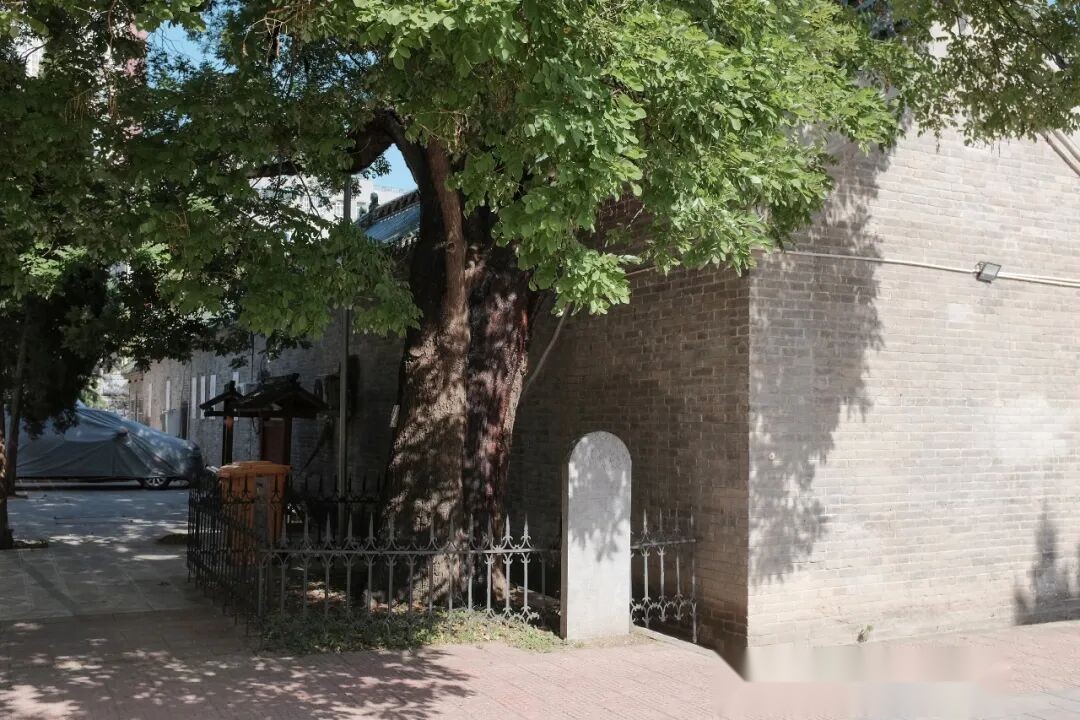
In the quiet afternoon, the mosque is totally empty of tourists and believers, giving it a super serene vibe.
Ancient locust trees cast thick shadows, and the sunlight hits the grey brick ground, making it feel like you just stepped into a deep Qing dynasty mansion. Outside the courtyard walls, you've got the buzzing Zhengzhou street life; inside the walls, time has basically stood still for hundreds of years.
It doesn't feel like a tourist spot at all. It feels more like an old house that's still breathing, quietly guarding a thousand years of history at its own pace.
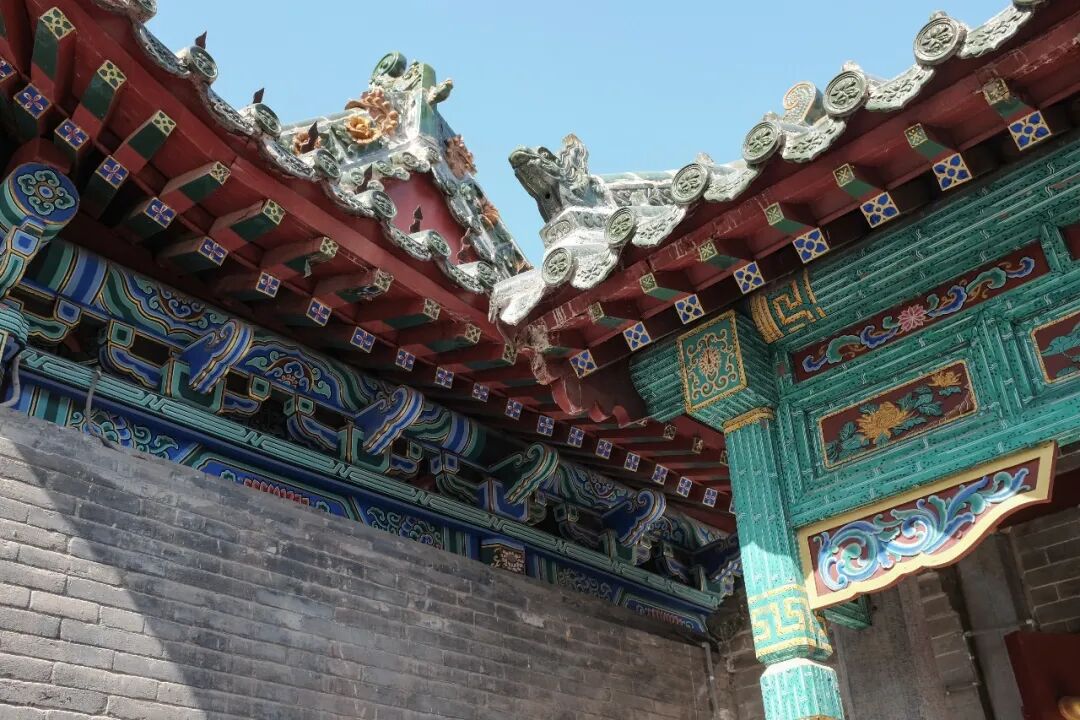
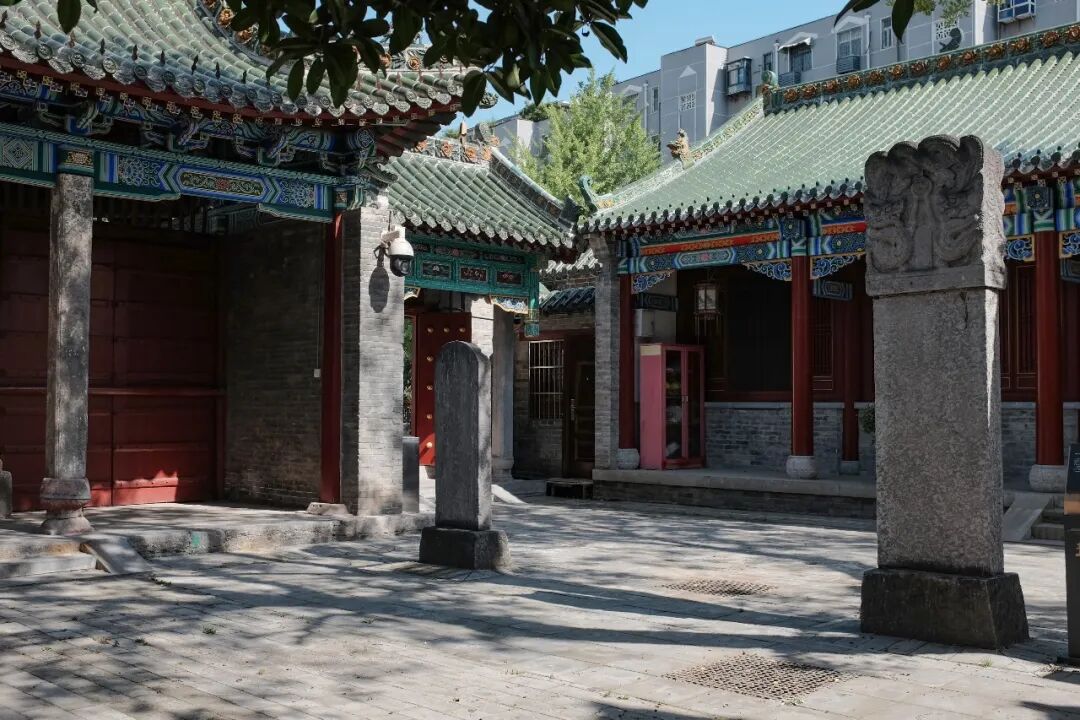
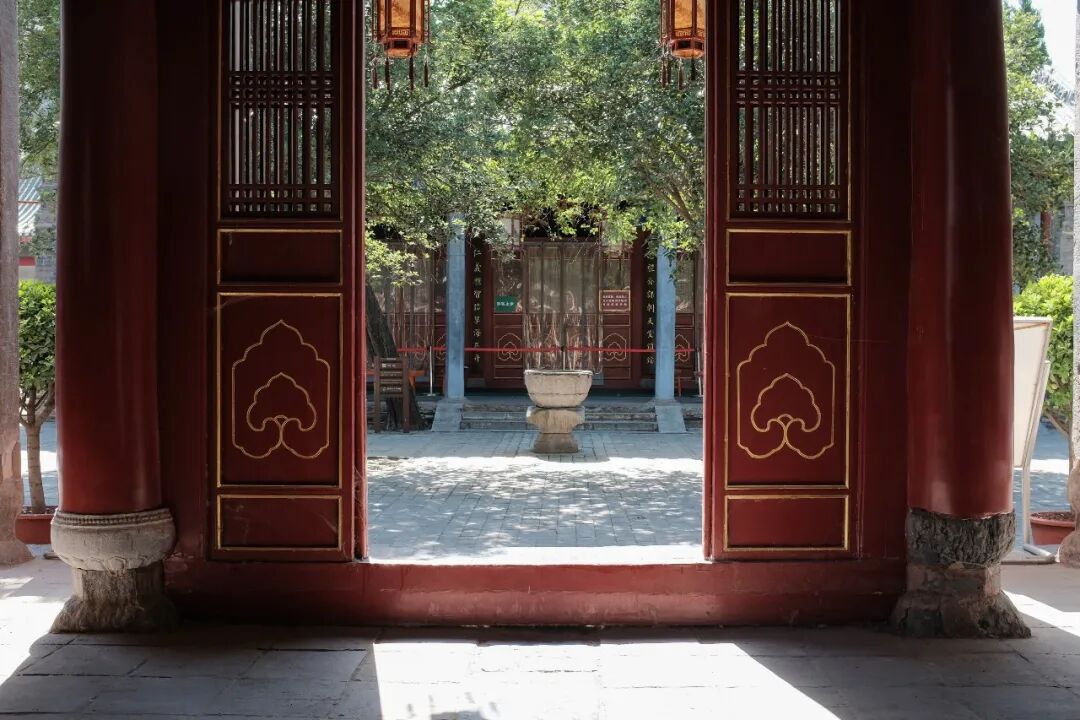
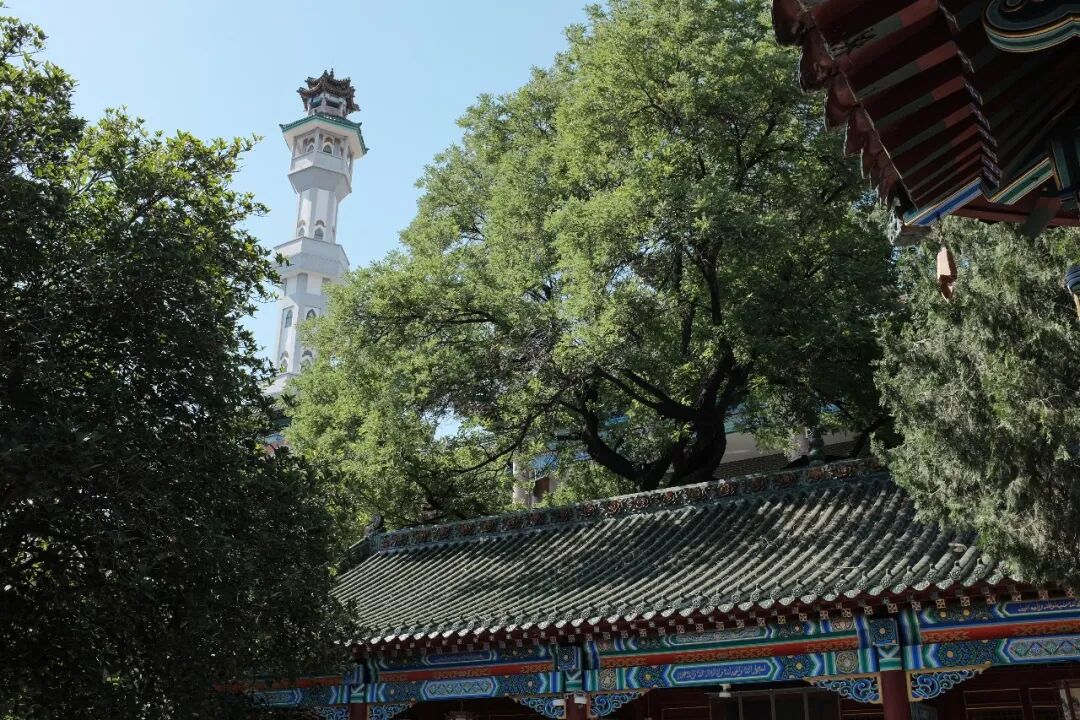

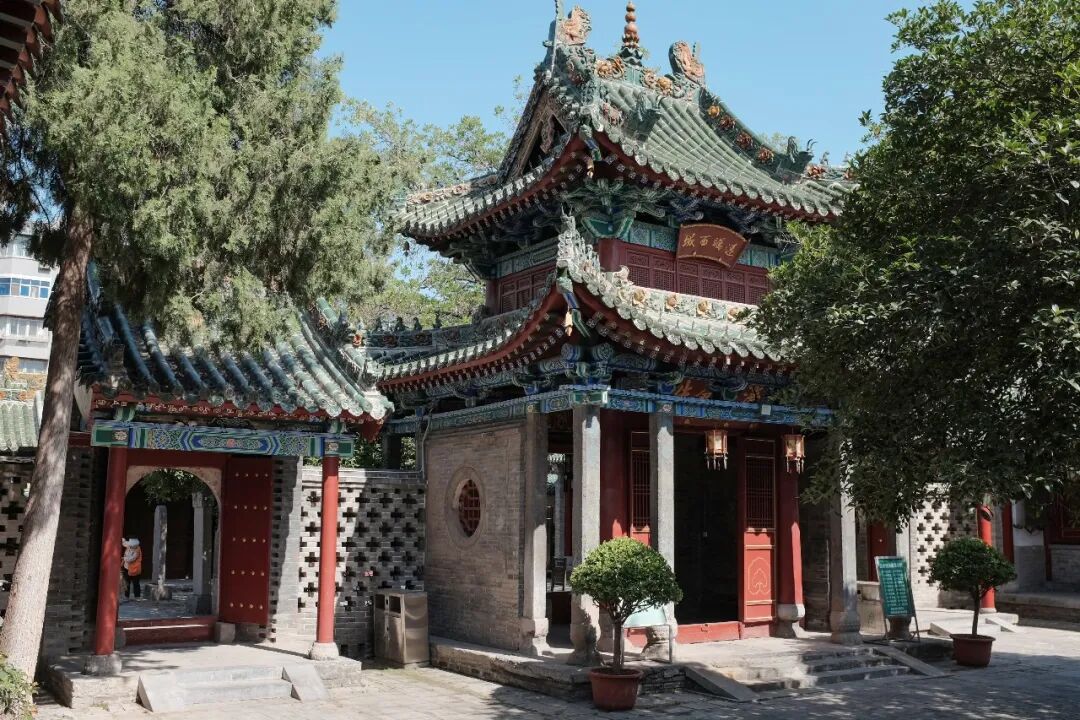
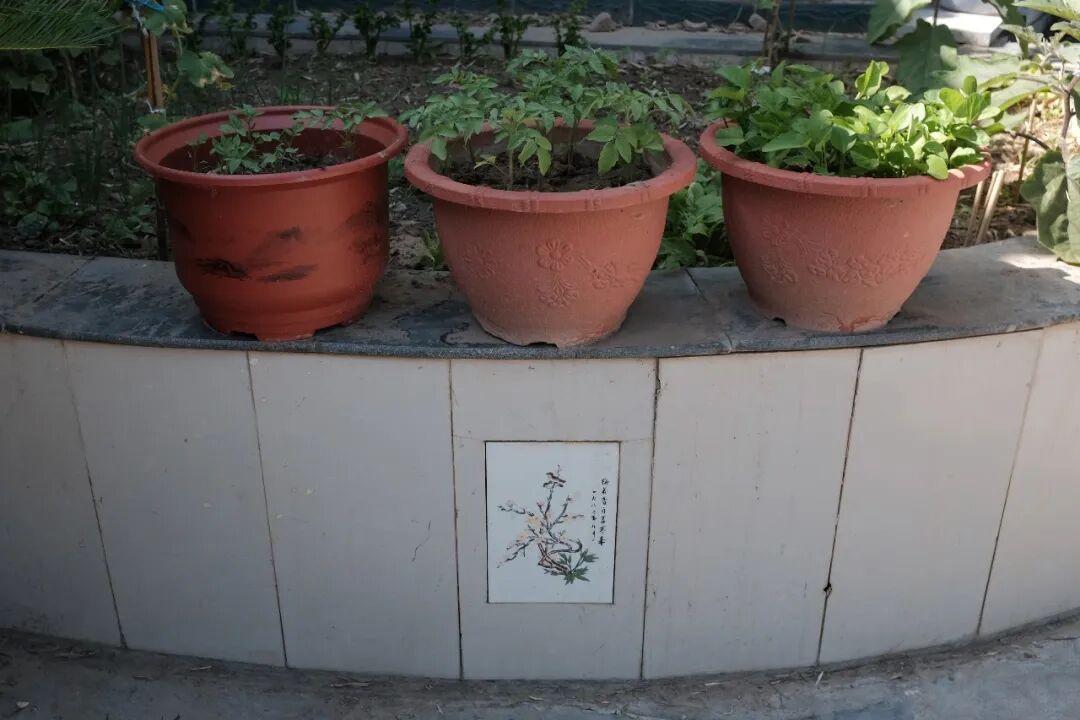


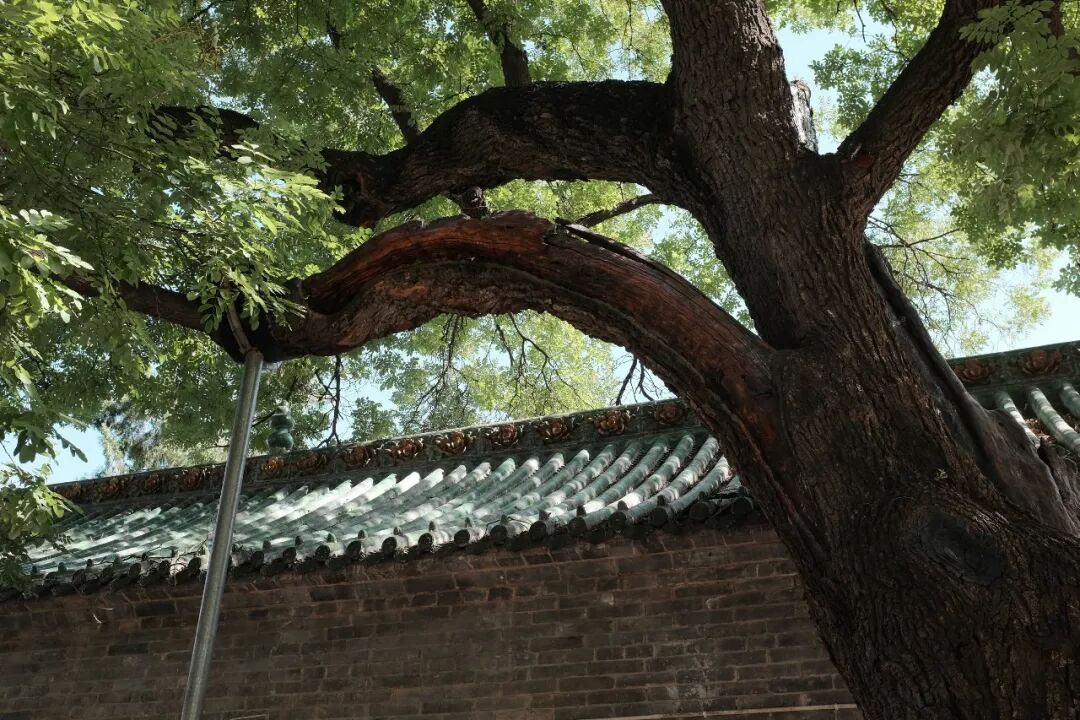
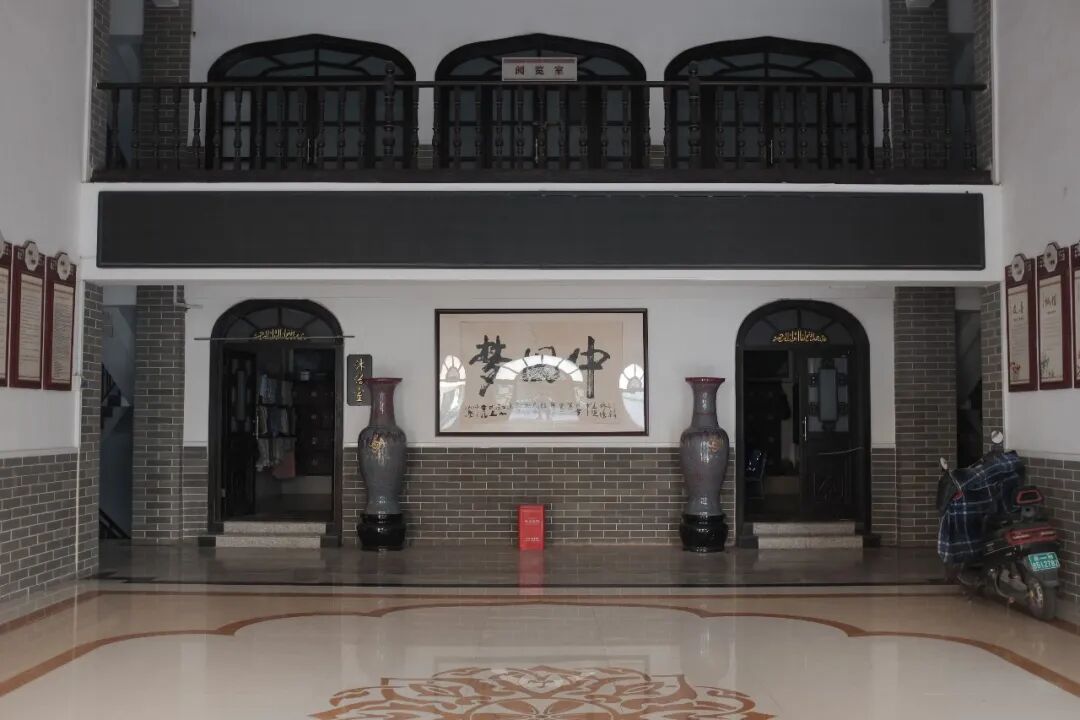

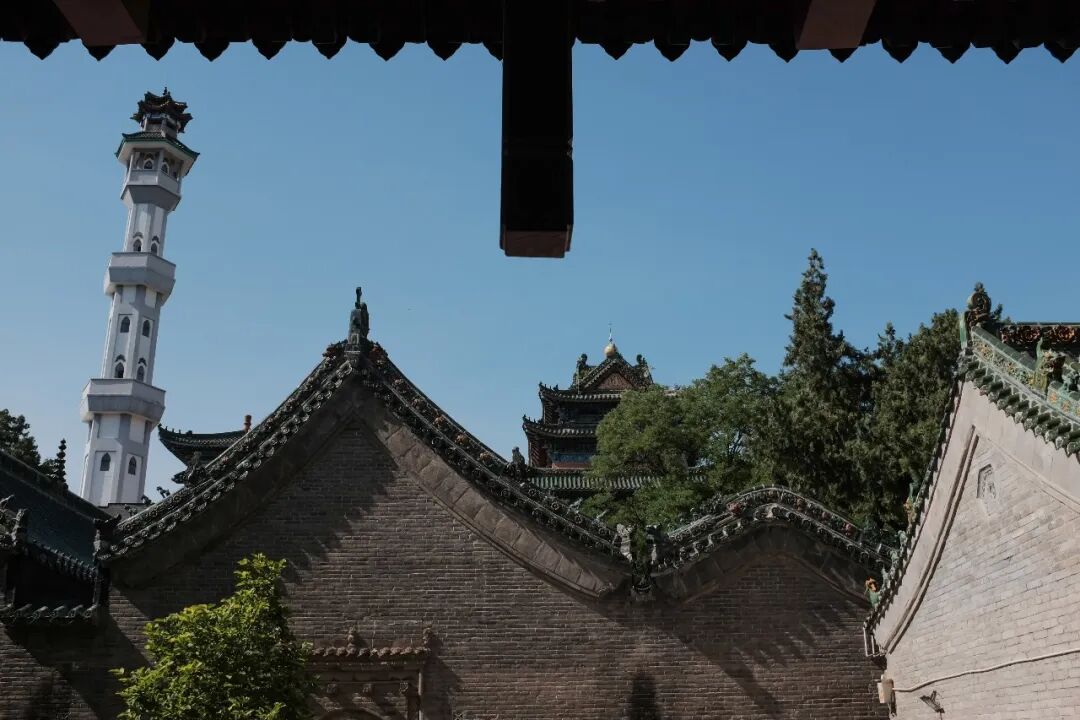


Zhengzhou North Street Mosque | Major National Historical and Cultural Site |
Free Admission (Please keep quiet during your visit and respect the order of this religious site.)
Bonus
---
Not too far from the North Street Mosque is another super low-key historical site—Baba's Tomb.
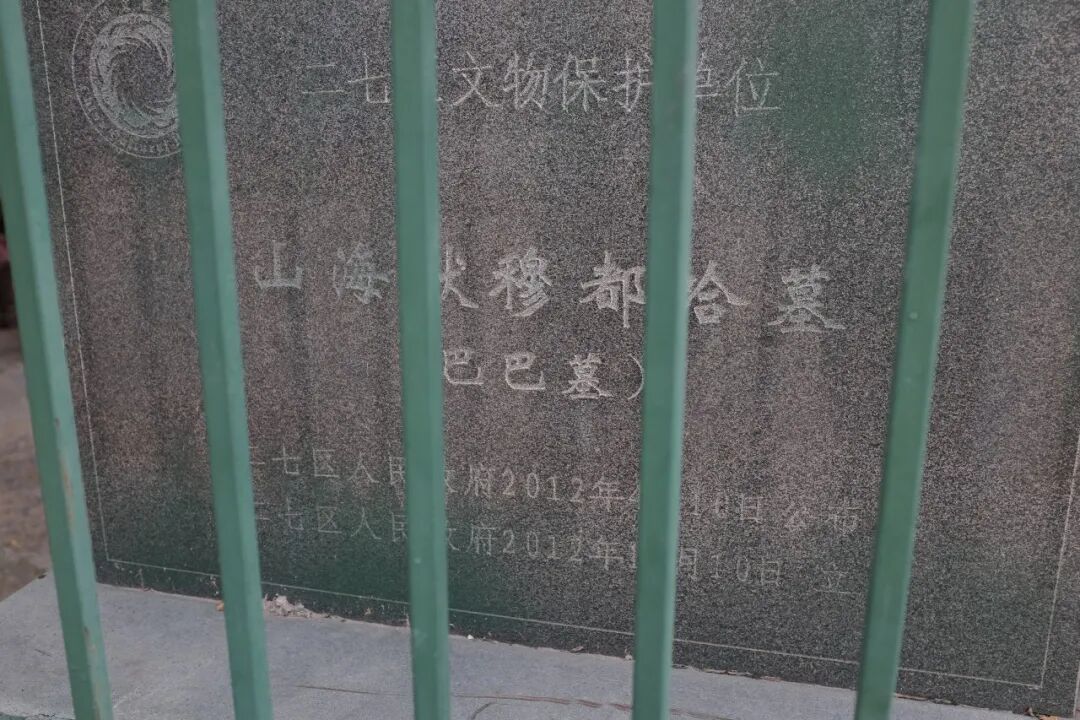
"Mountain and Sea Finger (Sages)"
Hidden inside a residential courtyard in the Erqi District, a traditional Chinese hexagonal pavilion stands quietly. Buried beneath the pavilion is Mumuduha, an Islamic sage who came from the Arab world during the Ming dynasty. He used to lecture and preach at the North Street Mosque, and because of his incredible virtue and respect, local Muslims called him "Baba" (an Islamic honorific title for wise men and saints).
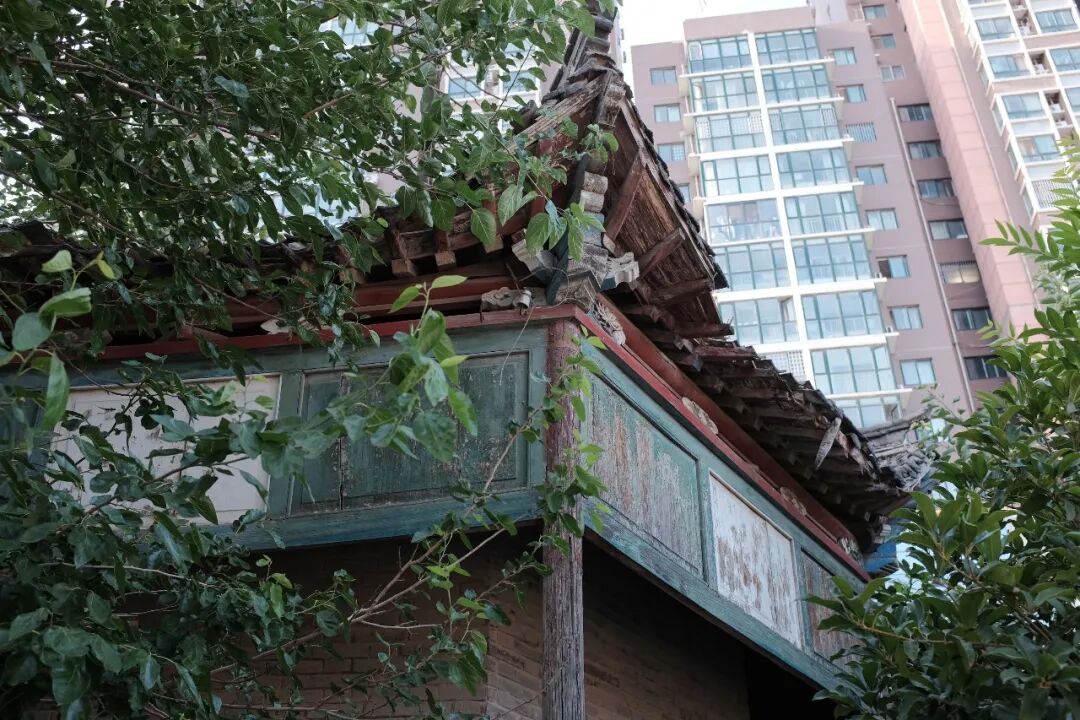
At first, the burial site of this sage was just a wild hillside near the water outside the city. Later generations of Muslims, deeply inspired by Mumuduha's character, started building their own tombs around his gravesite. Over hundreds of years, this gradually grew into Zhengzhou's largest public cemetery for Hui Muslims—Laofenggang.
By the late Qing and early Republic eras, Laofenggang slowly transformed into one of Zhengzhou's busiest street landmarks, packed with markets, folk arts, and acrobatics, rivaling places like the old Tianjin Quanyechang or Nanjing Fuzimiao.
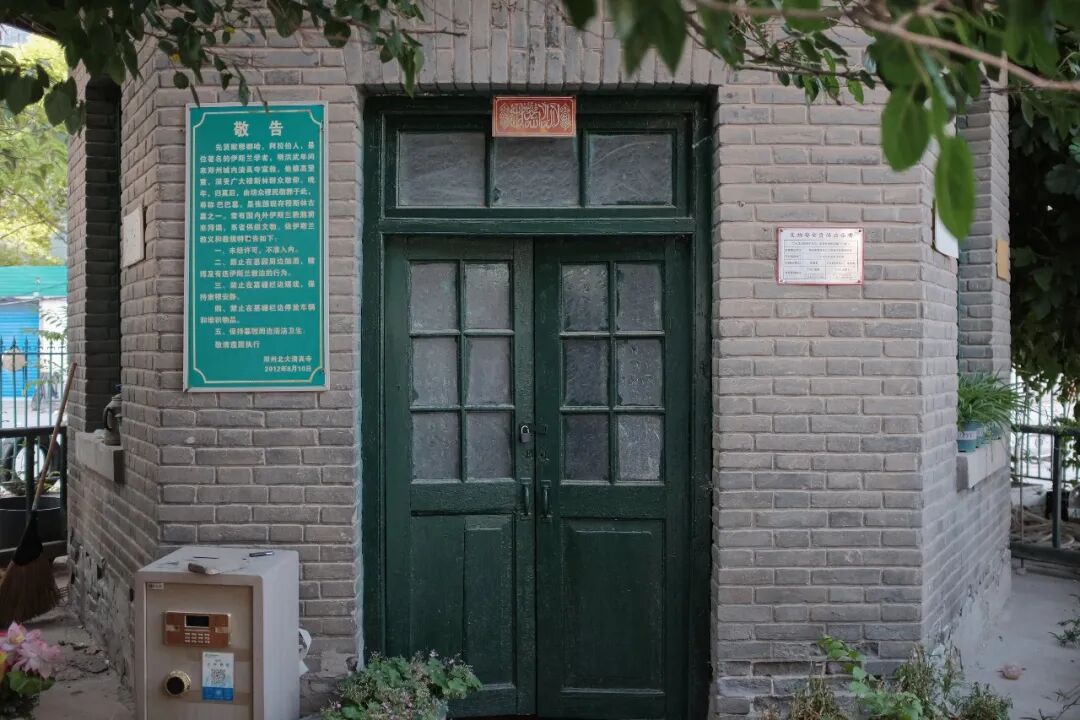
Nowadays, though, this spot has turned into a driving school training ground. Traffic flows non-stop all around it, but this slightly weathered ancient hexagonal pavilion just keeps standing there quietly.
This Arab sage who crossed oceans to reach the Central Plains has basically witnessed the area's hustle, bustle, and changes over hundreds of years—from a wild hill to a cemetery, and from a marketplace to a modern city.
Reference materials: Zhengzhou Library, online literature
Baotou Heritage Mosques: Exploring the Historic Wayaogou Mosque and the Great Mosque of Baotou
Articles • Hasan09 posted the article • 0 comments • 20 views • 1 days ago
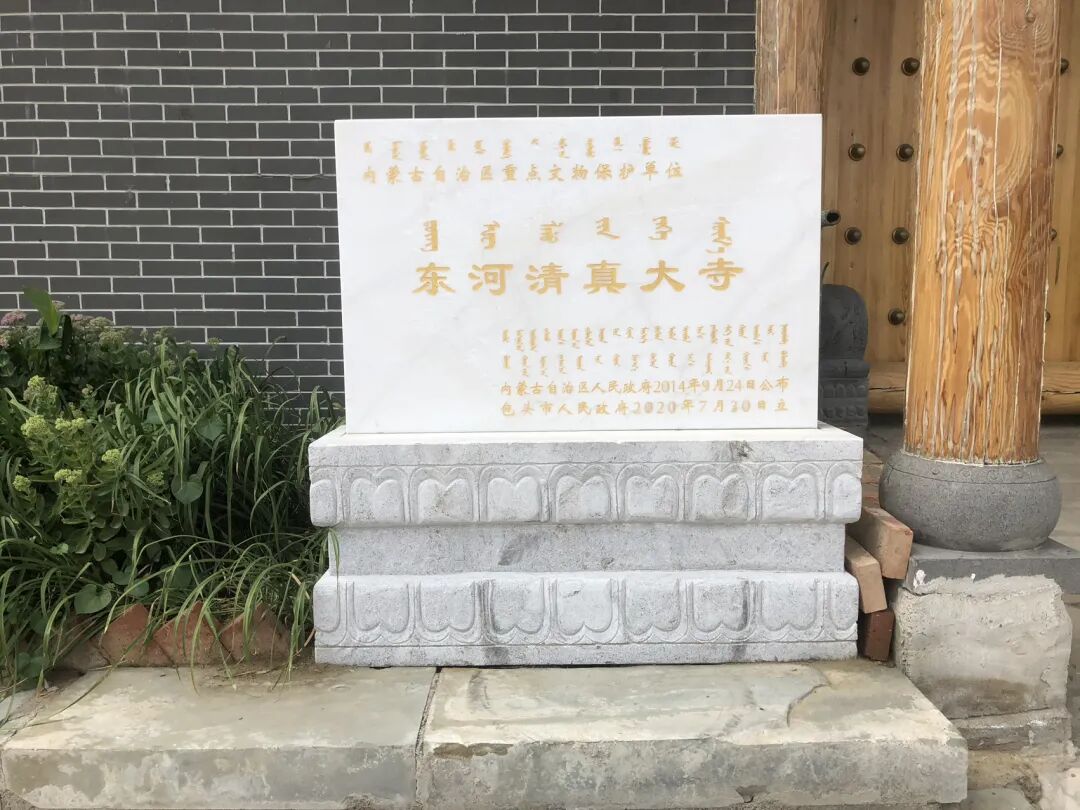
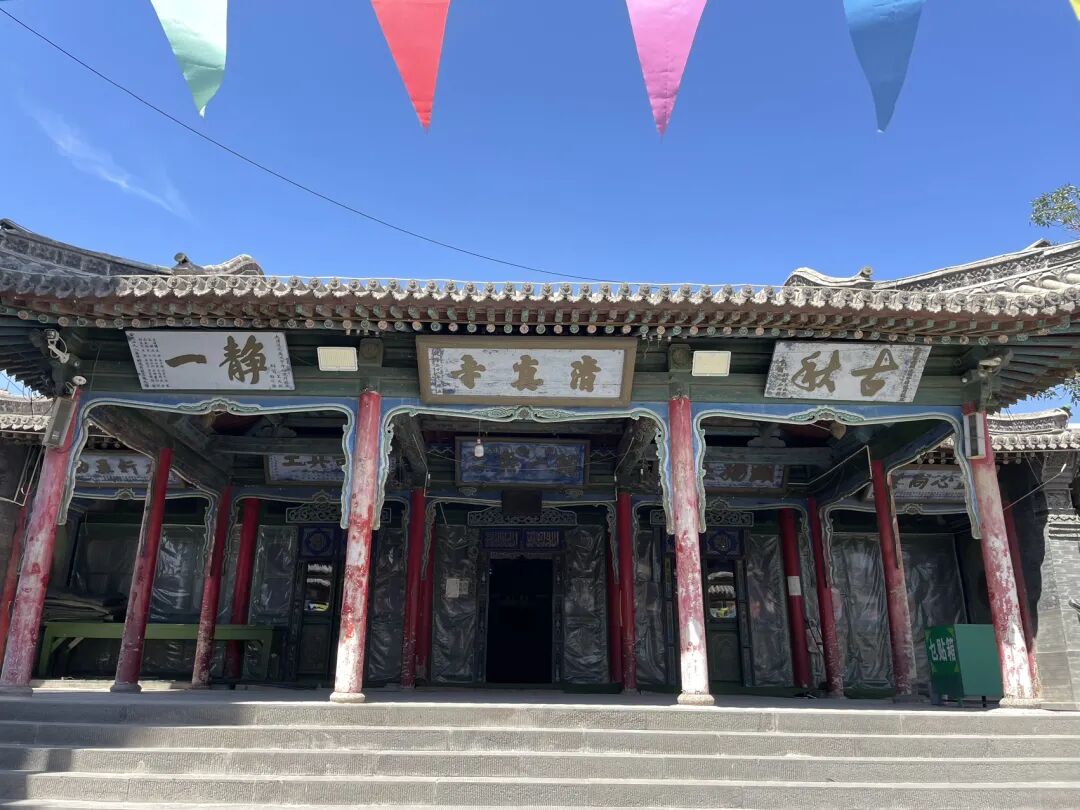
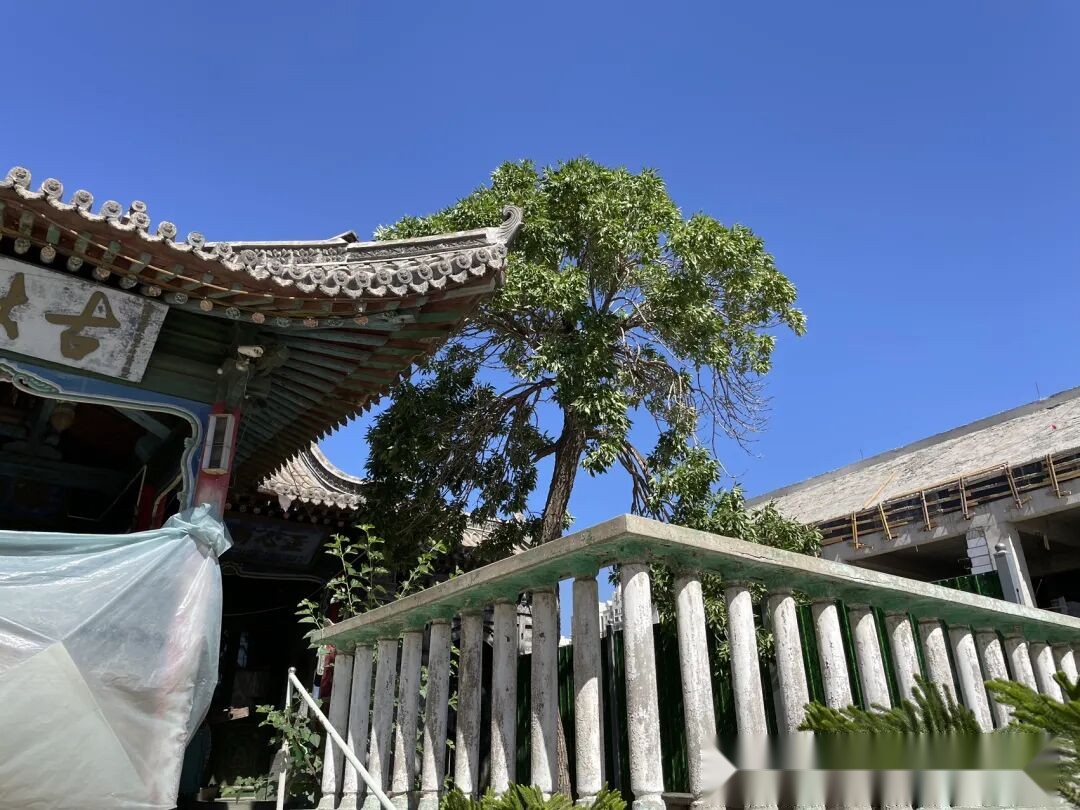
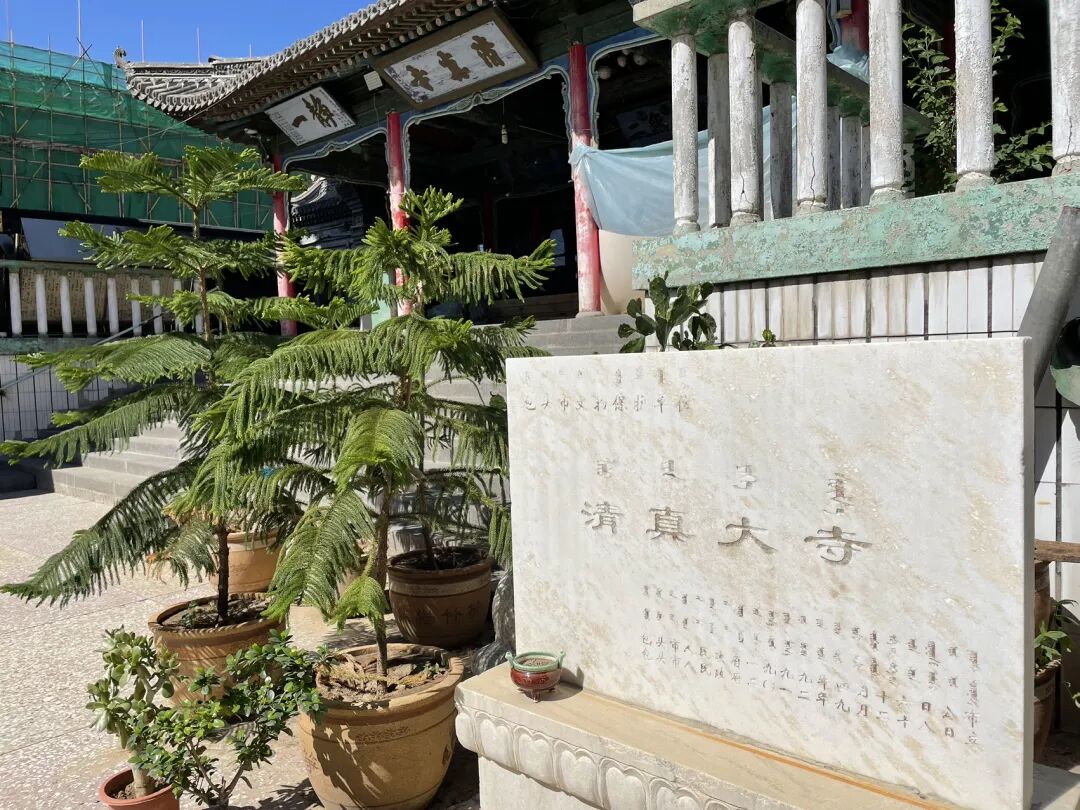
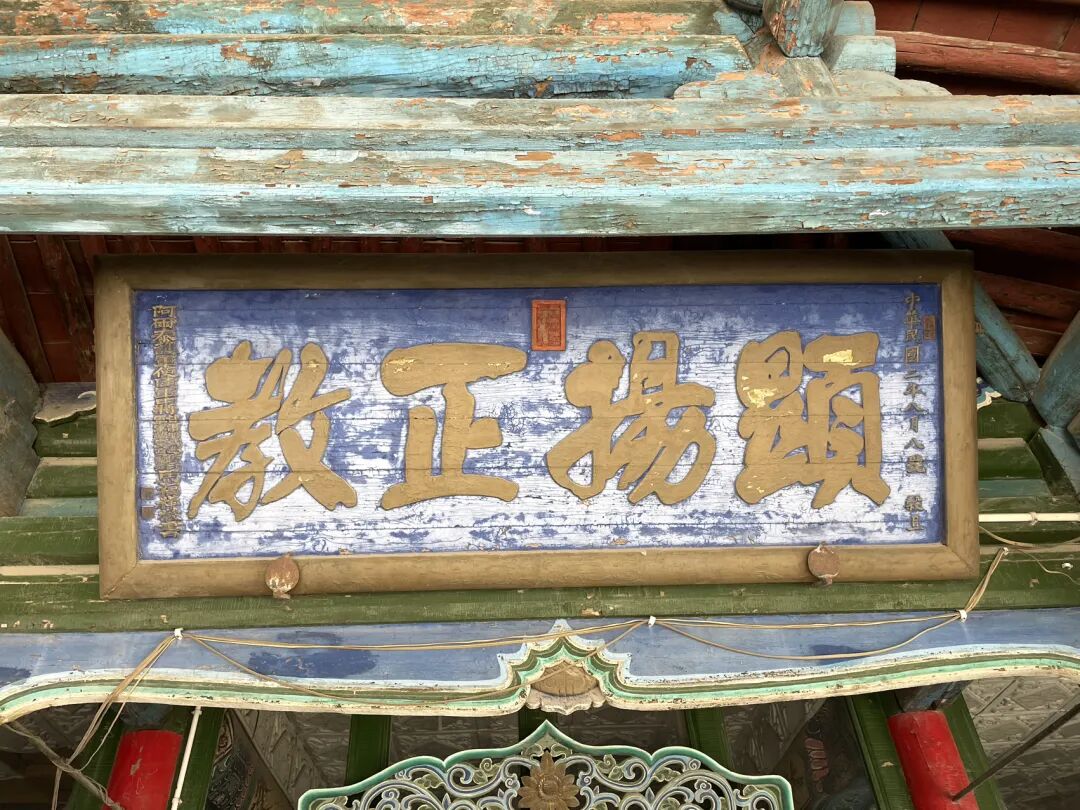
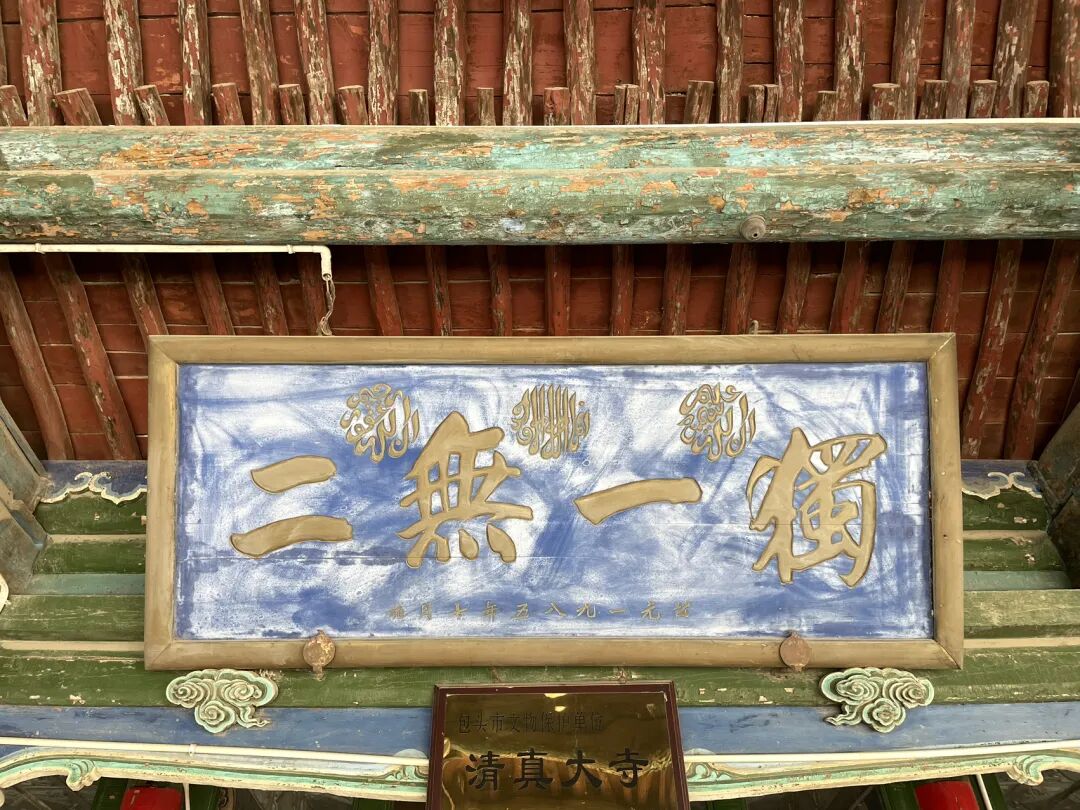
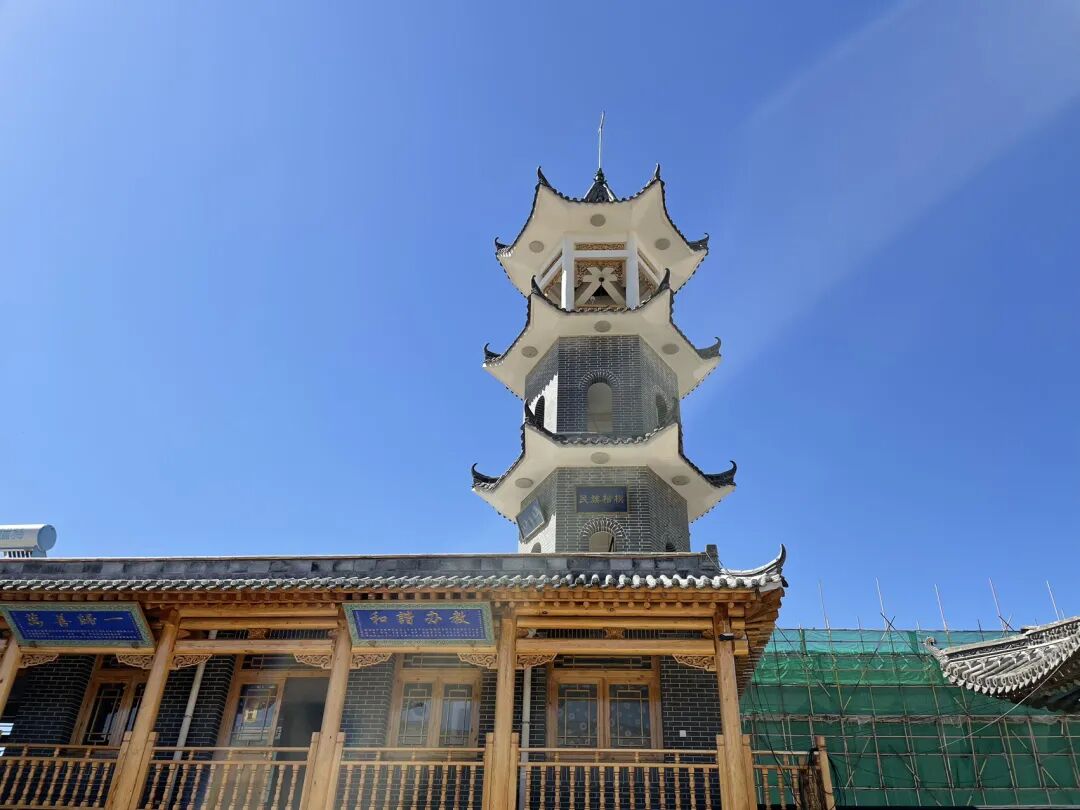
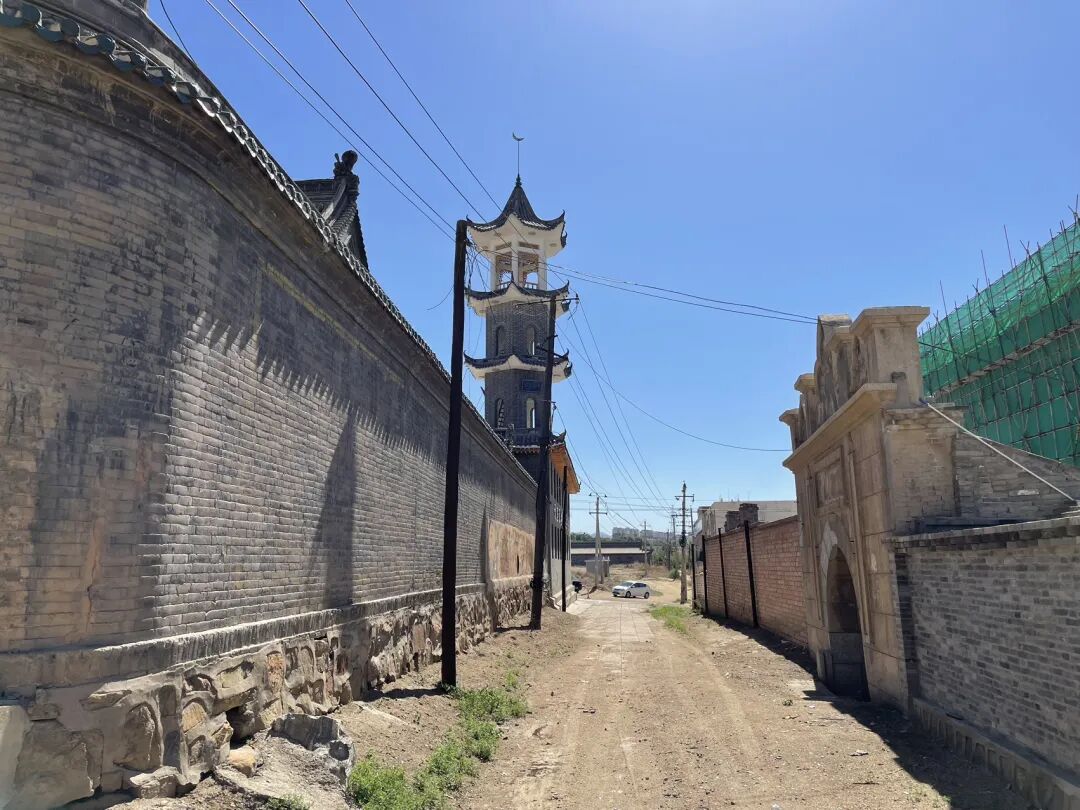
We have captured 24 high-definition photos documenting two major heritage-protected mosques in the Donghe District of Baotou, Inner Mongolia: the Wayaogou Mosque (also known as the North Mosque), built in 1913, and the Great Mosque of Baotou, which dates back to the eighth year of the Qianlong reign in the Qing Dynasty (1743). This guide breaks down their unique brick-and-timber architecture and the history that has shaped them over the last century.
The Wayaogou Mosque is located at No. 27 Wayaogou Street in the Donghe District and is commonly known by locals as the North Mosque. Spanning 350.1 square meters, the complex faces south and houses four distinct buildings. The main hall faces east, featuring a single-slope roof style with an attached porch-like structure called a baoshea (front entrance hall). This entrance hall measures 8.46 meters wide and 6.8 meters deep. The side rooms to the north and south also feature single-slope roofs, measuring 8.29 meters wide and 6.8 meters deep, all connecting to the main hall to serve as a space for prayer and dua (supplication). The five main rooms on the north side serve as the living quarters for the Ahong (Imam), measuring 13.86 meters wide and 4.35 meters deep. The mosque was founded in 1913, starting with the construction of a bathing facility called Xishuitang, along with a water well. The main hall, side rooms, and main living quarters were completed in 1918. During the Cultural Revolution, the site was occupied by a neighborhood factory, but in 1990, the site was restored for religious use and officially reopened.
The Great Mosque of Baotou was established in 1743 during the Qianlong era, with the main prayer hall finished in 1834. The mosque covers 1,590 square meters, with its buildings occupying 464.3 square meters. The remaining historic prayer hall faces east and is built in a brick-and-timber style, consisting of three interconnected sections—the front entrance hall (baoshea), the front hall, and the rear hall—which rise in elevation. The baoshea features a xieshan (gable-and-hip roof) style with curved eaves, measuring two bays wide and two bays deep. The scripture hall, composed of the front and rear sections, is five bays wide, spanning 28 meters in length and 15 meters in width. The front hall has a curved roof, while the rear hall uses a traditional yingshan (hard-gable roof) style. On either side of the entrance hall are brick-carved arched doorways, 1.1 meters wide, topped with yingshan-style tiled eaves. As the very first mosque built after Islam was introduced to Baotou, the Great Mosque is a treasure trove of architectural skill and unique style, holding significant historical value. view all
We have captured 24 high-definition photos documenting two major heritage-protected mosques in the Donghe District of Baotou, Inner Mongolia: the Wayaogou Mosque (also known as the North Mosque), built in 1913, and the Great Mosque of Baotou, which dates back to the eighth year of the Qianlong reign in the Qing Dynasty (1743). This guide breaks down their unique brick-and-timber architecture and the history that has shaped them over the last century.
The Wayaogou Mosque is located at No. 27 Wayaogou Street in the Donghe District and is commonly known by locals as the North Mosque. Spanning 350.1 square meters, the complex faces south and houses four distinct buildings. The main hall faces east, featuring a single-slope roof style with an attached porch-like structure called a baoshea (front entrance hall). This entrance hall measures 8.46 meters wide and 6.8 meters deep. The side rooms to the north and south also feature single-slope roofs, measuring 8.29 meters wide and 6.8 meters deep, all connecting to the main hall to serve as a space for prayer and dua (supplication). The five main rooms on the north side serve as the living quarters for the Ahong (Imam), measuring 13.86 meters wide and 4.35 meters deep. The mosque was founded in 1913, starting with the construction of a bathing facility called Xishuitang, along with a water well. The main hall, side rooms, and main living quarters were completed in 1918. During the Cultural Revolution, the site was occupied by a neighborhood factory, but in 1990, the site was restored for religious use and officially reopened.


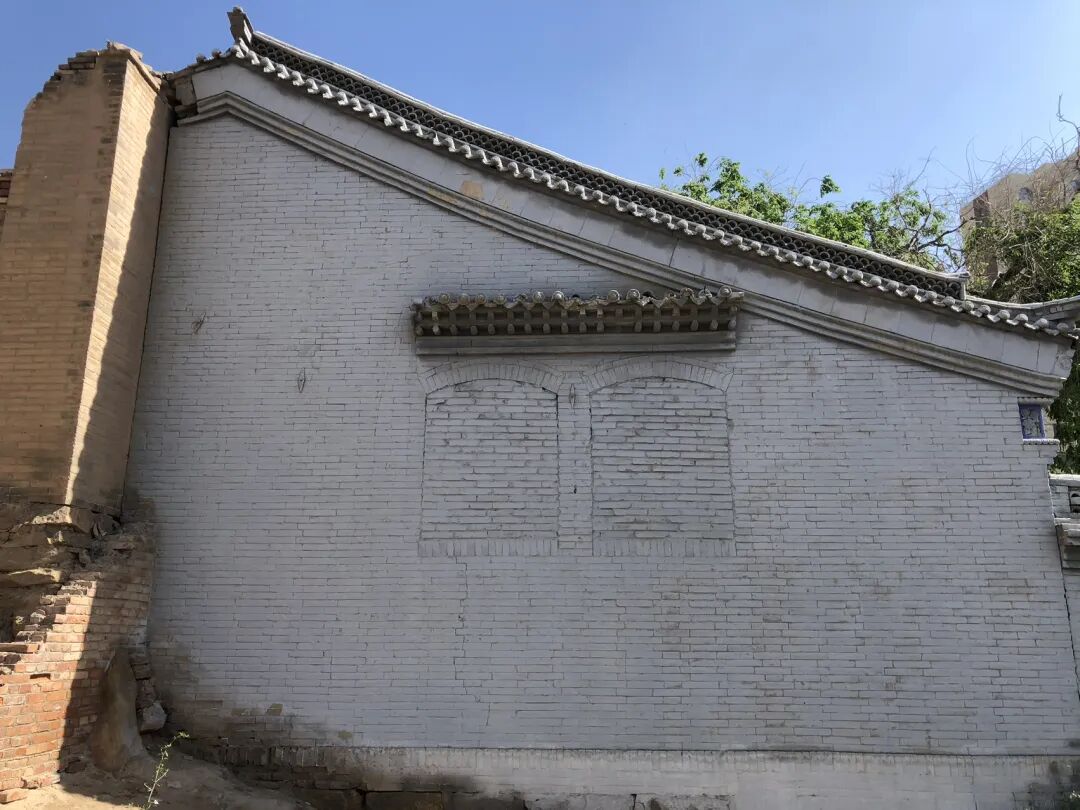


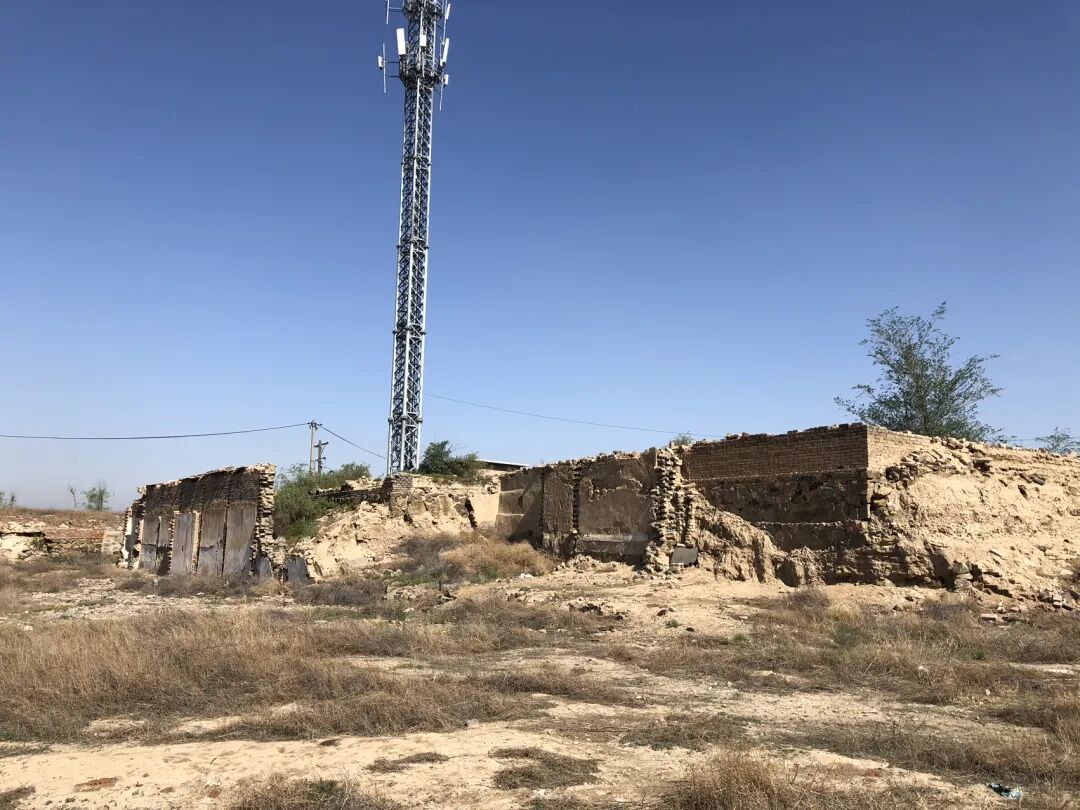
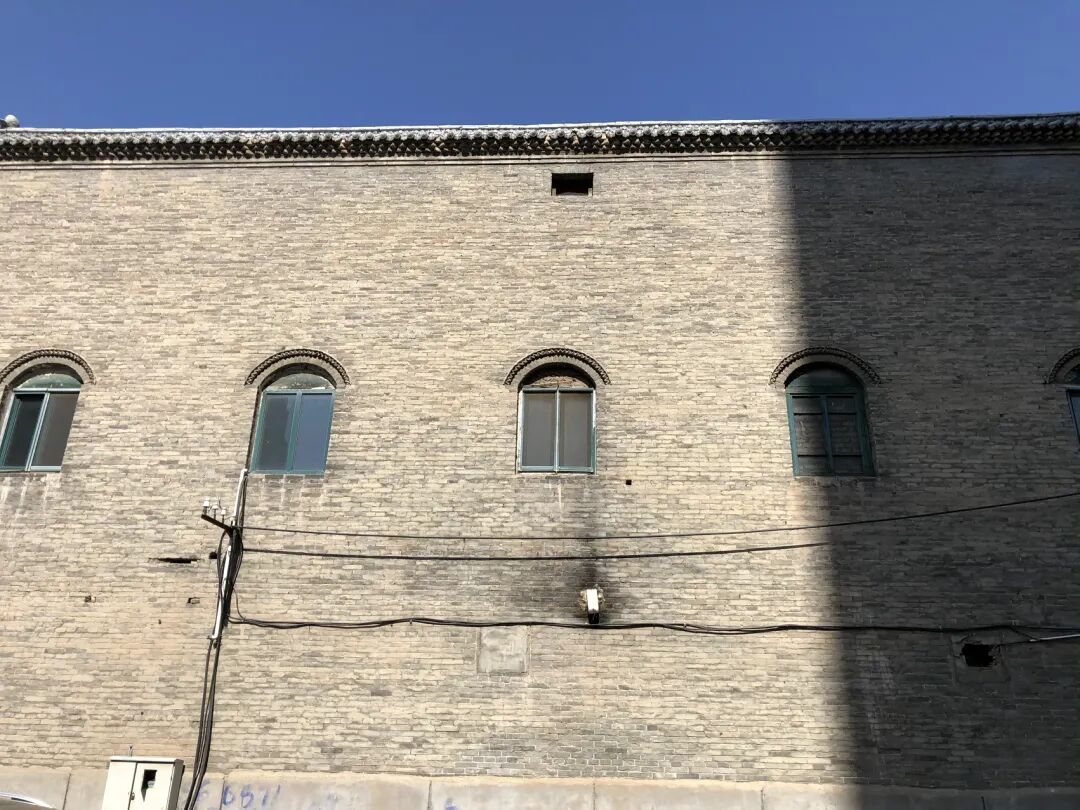
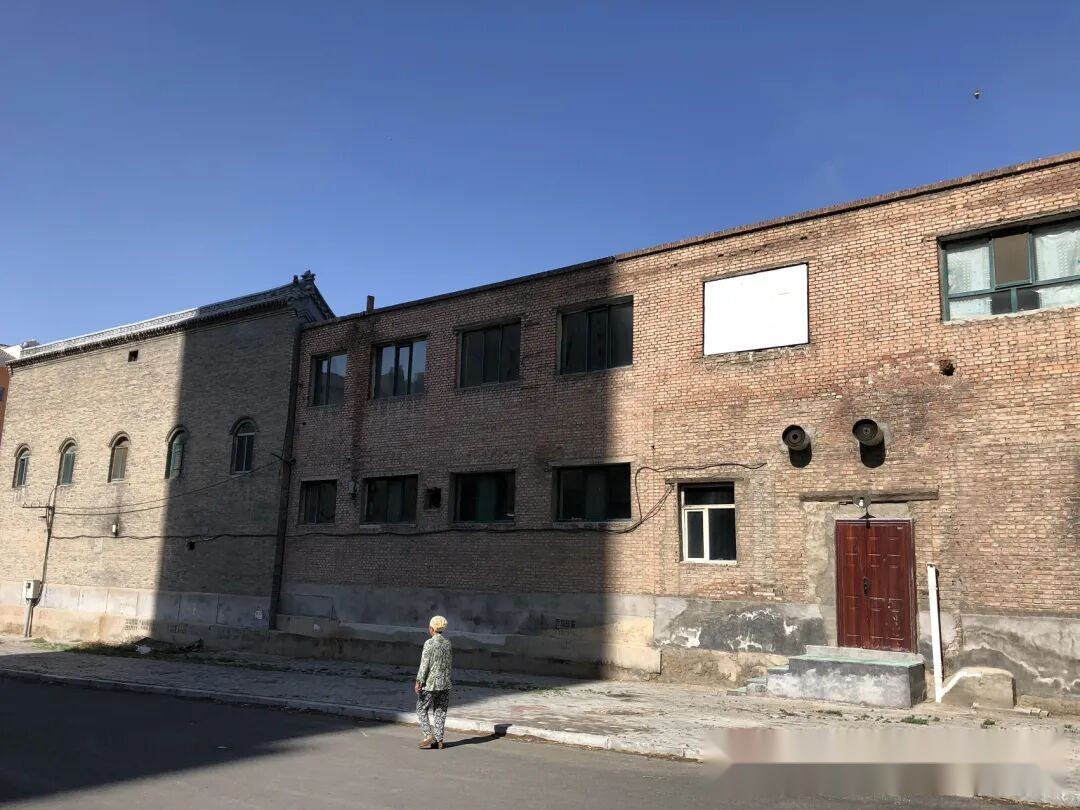
The Great Mosque of Baotou was established in 1743 during the Qianlong era, with the main prayer hall finished in 1834. The mosque covers 1,590 square meters, with its buildings occupying 464.3 square meters. The remaining historic prayer hall faces east and is built in a brick-and-timber style, consisting of three interconnected sections—the front entrance hall (baoshea), the front hall, and the rear hall—which rise in elevation. The baoshea features a xieshan (gable-and-hip roof) style with curved eaves, measuring two bays wide and two bays deep. The scripture hall, composed of the front and rear sections, is five bays wide, spanning 28 meters in length and 15 meters in width. The front hall has a curved roof, while the rear hall uses a traditional yingshan (hard-gable roof) style. On either side of the entrance hall are brick-carved arched doorways, 1.1 meters wide, topped with yingshan-style tiled eaves. As the very first mosque built after Islam was introduced to Baotou, the Great Mosque is a treasure trove of architectural skill and unique style, holding significant historical value.
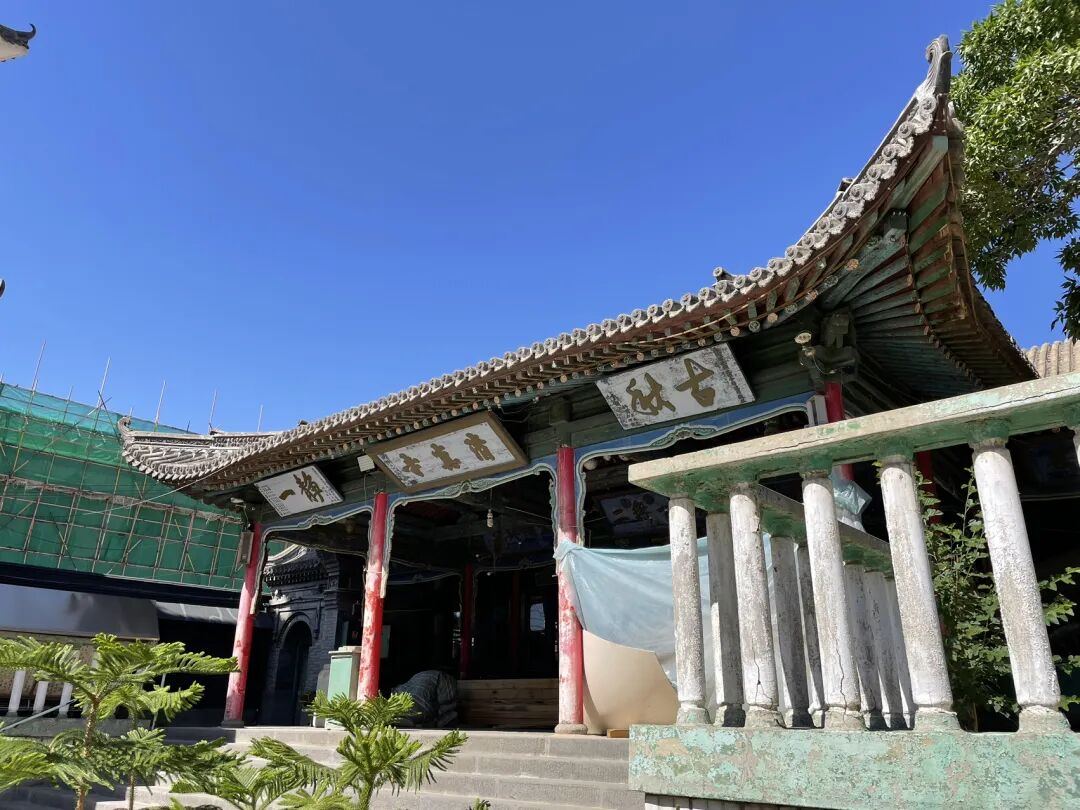
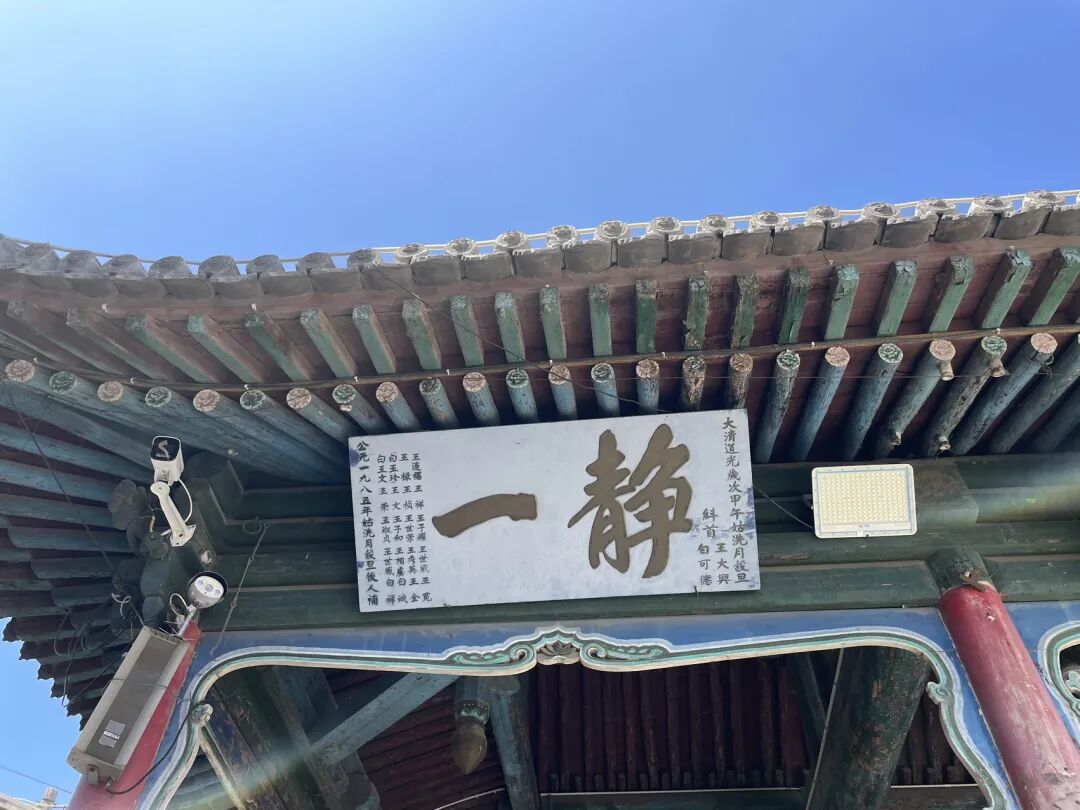
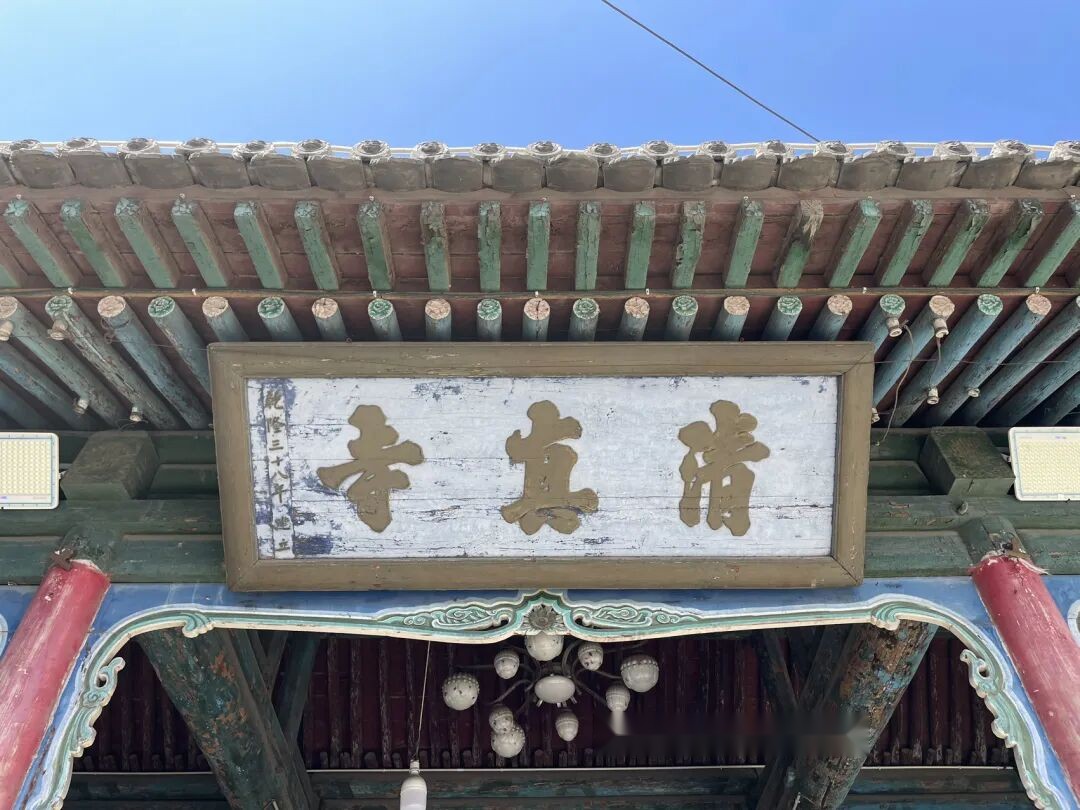
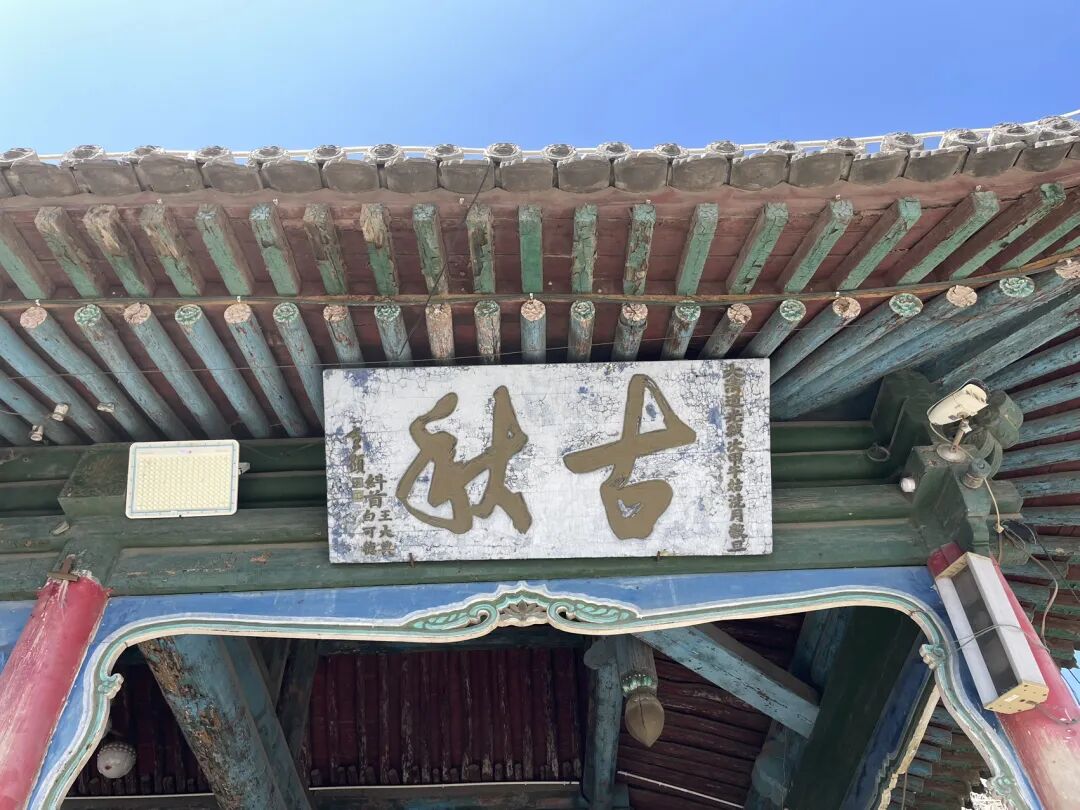
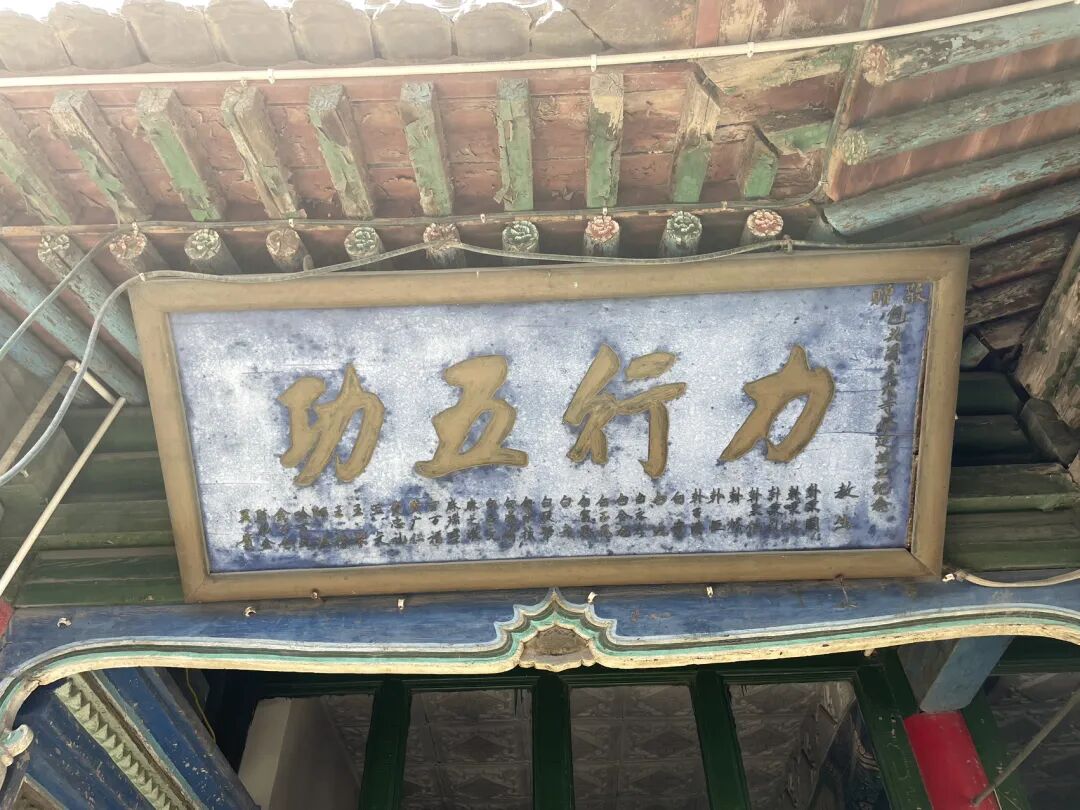
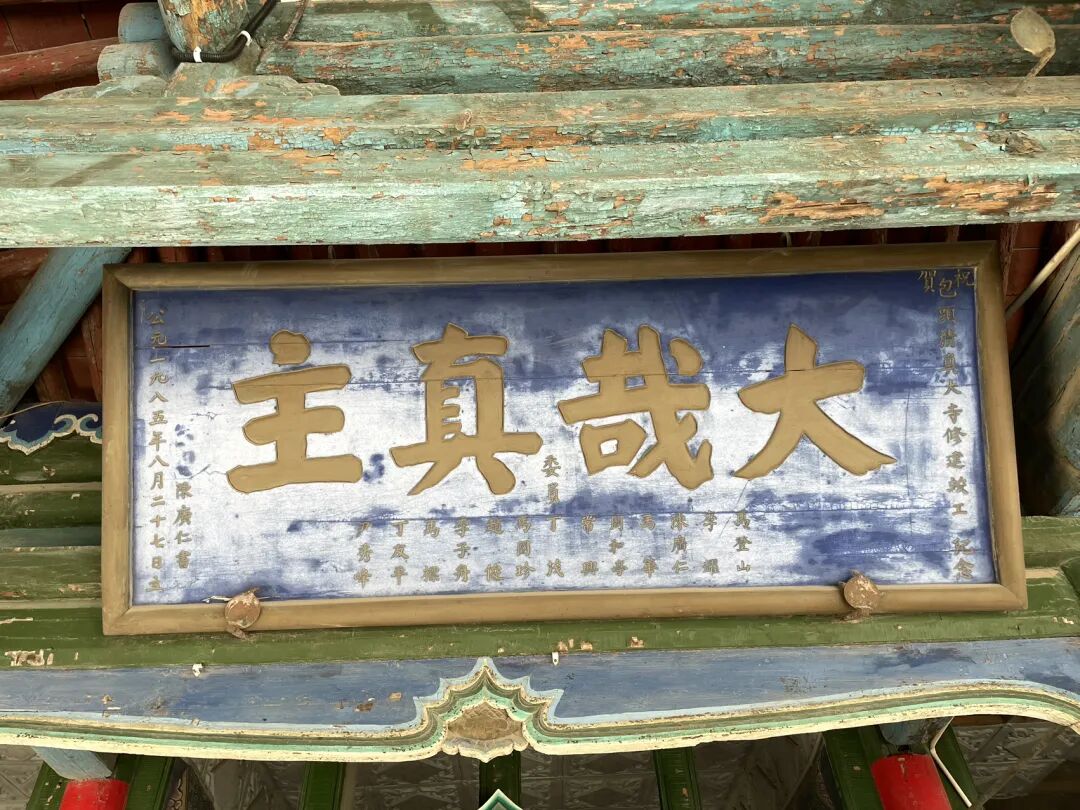
Hongshuiquan Mosque in Qinghai: 600-Year-Old Ming Dynasty Architecture and Masterpiece Brick Carvings
Articles • Hasan09 posted the article • 0 comments • 23 views • 1 days ago
We headed out to explore the Hongshuiquan Mosque, a 600-year-old Ming Dynasty gem located in the Ping'an District of Haidong, Qinghai. We’re zooming in on the one-of-a-kind 'Tianluosan' (Heaven-descended umbrella) caisson ceiling, the beam-less gate structure supported by intricate dougong (traditional interlocking wooden brackets) known as 'ergui tiaodan' (two spirits carrying a load), and a 100-meter-long brick-carved screen wall featuring over 200 distinct patterns—a true testament to the blend of Han, Tibetan, and Hui Muslim architectural artistry.
Seeing the 'Tianluosan' caisson ceiling at Hongshuiquan Mosque in person is truly the 'GOAT' of all ceilings. The name isn't just for show! The entire wooden structure fans out from the top down, looking exactly like a giant umbrella dropping from the heavens. It’s a design so unique that you won’t find another one like it in any other mosque across the country.
Hidden away in a mountain valley, this 600-year-old Ming Dynasty mosque is the ultimate example of Han, Tibetan, and Hui Muslim cultural fusion. The whole complex is designed as a classic Chinese siheyuan (quadrangle courtyard). You won't find any Arabic domes here; instead, it features a screen wall, a ceremonial archway, and a three-tiered bangke lou (minaret/call-to-prayer tower) that flow together to create something both grand and incredibly detailed.
The coolest part has to be the 'wuliang shanmen' (beam-less gate)! It’s held up entirely by interlocking dougong, which locals call 'ergui tiaodan'—the genius of our ancestors is honestly mind-blowing. Then there’s that 100-meter-long screen wall, carved with over 200 unique motifs, from dragons and phoenixes to qilin (mythical hooved chimeras) and the Anbaxian (eight immortals' symbols). Every single carve tells a story.
The main body of the caisson ceiling hasn't been dismantled or undergone major repairs since it was built, with only routine maintenance like wood preservation over the centuries, yet it remains in perfect condition today. It’s a shame there are no original blueprints left; the construction methods were passed down through word of mouth. While minor repairs are doable, a complete rebuild or exact replica is pretty much impossible. There’s a quiet, isolated beauty to this place that’s hard to put into words—I was totally captivated the moment I saw it. view all
We headed out to explore the Hongshuiquan Mosque, a 600-year-old Ming Dynasty gem located in the Ping'an District of Haidong, Qinghai. We’re zooming in on the one-of-a-kind 'Tianluosan' (Heaven-descended umbrella) caisson ceiling, the beam-less gate structure supported by intricate dougong (traditional interlocking wooden brackets) known as 'ergui tiaodan' (two spirits carrying a load), and a 100-meter-long brick-carved screen wall featuring over 200 distinct patterns—a true testament to the blend of Han, Tibetan, and Hui Muslim architectural artistry.
Seeing the 'Tianluosan' caisson ceiling at Hongshuiquan Mosque in person is truly the 'GOAT' of all ceilings. The name isn't just for show! The entire wooden structure fans out from the top down, looking exactly like a giant umbrella dropping from the heavens. It’s a design so unique that you won’t find another one like it in any other mosque across the country.
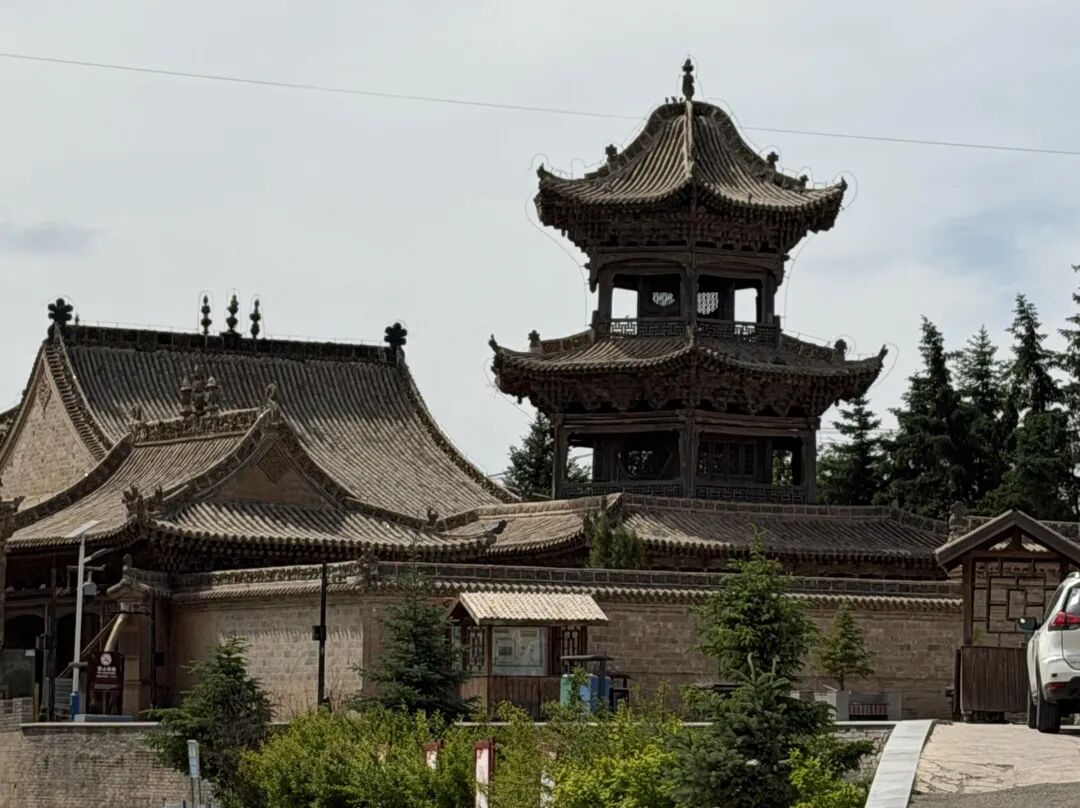
Hidden away in a mountain valley, this 600-year-old Ming Dynasty mosque is the ultimate example of Han, Tibetan, and Hui Muslim cultural fusion. The whole complex is designed as a classic Chinese siheyuan (quadrangle courtyard). You won't find any Arabic domes here; instead, it features a screen wall, a ceremonial archway, and a three-tiered bangke lou (minaret/call-to-prayer tower) that flow together to create something both grand and incredibly detailed.
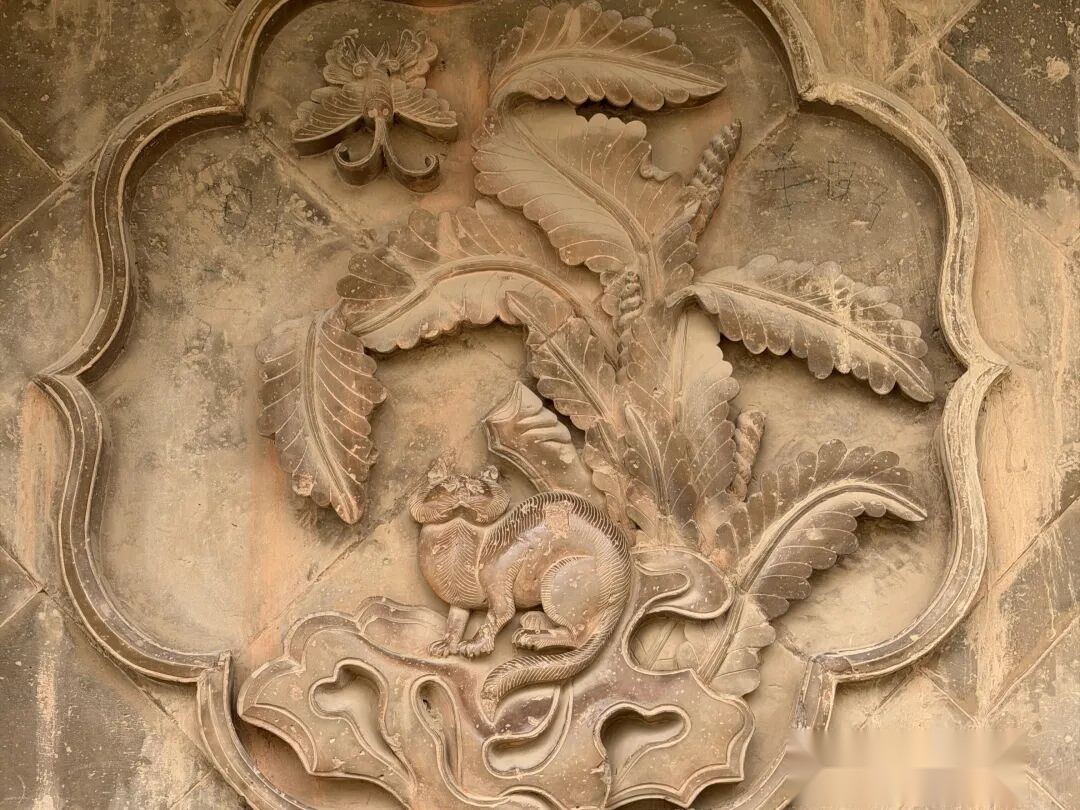
The coolest part has to be the 'wuliang shanmen' (beam-less gate)! It’s held up entirely by interlocking dougong, which locals call 'ergui tiaodan'—the genius of our ancestors is honestly mind-blowing. Then there’s that 100-meter-long screen wall, carved with over 200 unique motifs, from dragons and phoenixes to qilin (mythical hooved chimeras) and the Anbaxian (eight immortals' symbols). Every single carve tells a story.
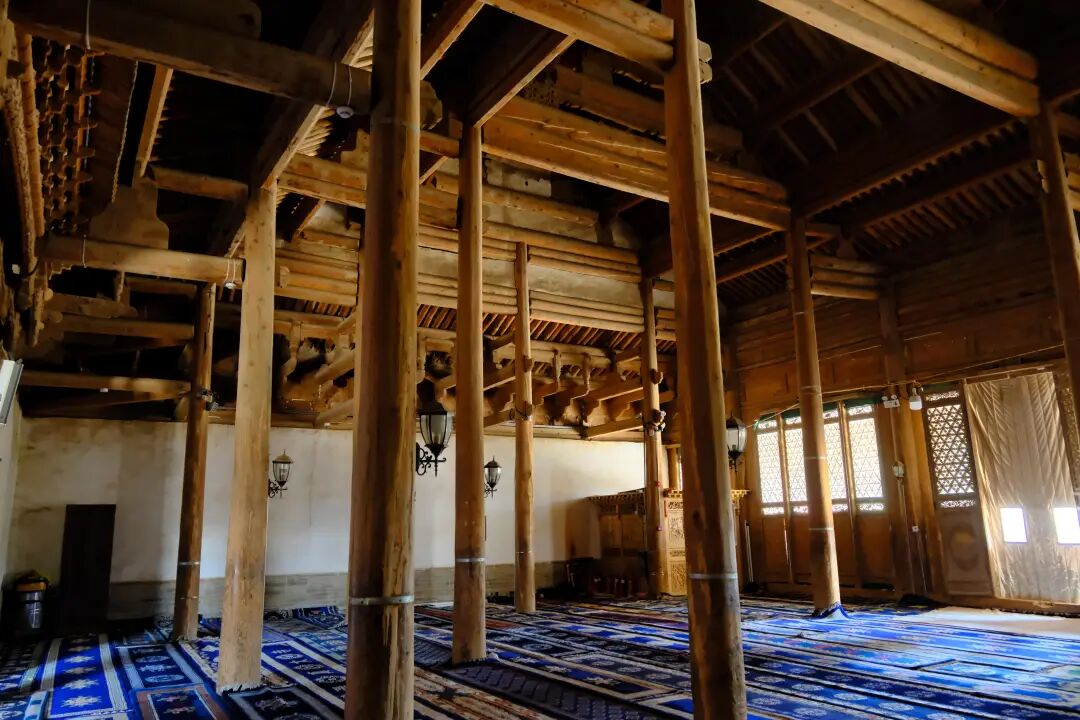

The main body of the caisson ceiling hasn't been dismantled or undergone major repairs since it was built, with only routine maintenance like wood preservation over the centuries, yet it remains in perfect condition today. It’s a shame there are no original blueprints left; the construction methods were passed down through word of mouth. While minor repairs are doable, a complete rebuild or exact replica is pretty much impossible. There’s a quiet, isolated beauty to this place that’s hard to put into words—I was totally captivated the moment I saw it.
Exploring Huabuquan Mosque: Authentic Hui Muslim Heritage and History in Linyi, Shandong
Articles • Hasan09 posted the article • 0 comments • 19 views • 1 days ago
We’re taking a deep dive into the largest Hui Muslim village in Shandong Province, Huabuquan Village in Linyi’s Luozhuang District, which was honored as a National Model for Ethnic Unity in 2024. We'll trace the history of the Hui Muslims who settled in ancient Langya during the Northern Song Dynasty and check out the traditional architecture of the local mosque.
Huabuquan Village is a vibrant minority community located in the Shengzhuang sub-district of Linyi, Shandong. With a registered population of 8,362, over 98% of the residents are Hui Muslims, making it the largest Hui settlement in the entire province. In 2024, the village was officially recognized as a National Model for Ethnic Unity.
The Hui Muslims were among the earliest minority groups to migrate to ancient Langya. During the Jianlong era of the Northern Song Dynasty, a group of Hui families settled in Qingfengling, about 10 kilometers south of Linyi. The area was named Huabuquan (literally 'Flower Port Circle') because it’s tucked into a circular hilly landscape that blooms with wildflowers every spring and summer. The village has 1,302 households with a natural population growth rate of 0.8 per thousand. It’s a melting pot of surnames, with Ma, Xiao, Wen, Sha, and Zhang being the most common, alongside others like Gao, Hu, Lu, Xing, and Du. Out of the total population, 8,195 are Hui and 167 are Han, meaning the community is predominantly Hui.
During the War of Resistance Against Japanese Aggression, over 40 villagers, including Gao Lianhuai, Li Deyou, and Wen Tingjin, joined the Binhai Hui Cavalry Brigade. This brigade operated from the banks of the Yi River all the way to the coast, focusing on guerrilla warfare, supporting major army units, and clearing out remaining enemy forces around the Linyi area.
During the War of Liberation, in February 1948, the Binhai Hui Cavalry Brigade merged with the Bohai Hui Cavalry Brigade to form a dedicated Hui regiment. More than 10 villagers, including Xiao Zhihong and Yang Decai, joined the 900-member unit led by commander Ma Jie and political commissar Peng Linbo. They took part in major operations like the Jinan Campaign and the Huaihai Campaign. The village established its first Communist Party branch in December 1945, led by its first secretary, Ma Baoyin, who was eventually killed by the Kuomintang on the west bank of the Yi River.
During the War to Resist U.S. Aggression and Aid Korea, local villagers like Wen Yanru and Zhang Hongfu courageously enlisted in the military and headed to the front lines in Korea to defend their country.
The exact founding date of the Huabuquan Mosque is unknown, but records on existing steles show that it was renovated in the 20th year of the Guangxu reign under the Qing Dynasty, overseen by Imam Zhang Yun. The national hero Zuo Baogui generously funded the project and inscribed the temple plaque with the words Shengjiao Changzhao (The Sacred Teachings Always Shine). At the time, it featured three main prayer halls, five lecture halls, three ritual washing rooms, and a gate tower, covering an area of 1.7 mu. Through historical upheavals, damage during the Cultural Revolution, and a fire in 1972, the mosque suffered several setbacks that hampered the religious lives of local Muslims. Because of this, successive leaders like Zhang Yuqian, Xiao Yanbin, Sha Ziling, and Imams Wen Yanbin and Wen Yongquan spearheaded multiple renovations. By 1992, the complex had expanded to five main prayer halls, ten lecture halls, six washing rooms, and a gate tower, covering 2.7 mu, with a new plaque inscribed by Department Chief Ding Lechun. In June 1998, with support from religious authorities and the Shengzhuang Town government, Party Secretary Xiao Zili led a major reconstruction to fulfill the wishes of the local Muslim community. During the opening of the 200th-anniversary cultural forum for the mosque, Mi Changling—former chair of the Jining Democratic League and a university professor—presented a 20-meter-long scroll titled 'The Hui People' on behalf of General Ma Guochao, the son of war hero Ma Benzhai. For the past two centuries, the Huabuquan Mosque has played a vital role in preserving Hui culture and fostering ethnic unity. view all
We’re taking a deep dive into the largest Hui Muslim village in Shandong Province, Huabuquan Village in Linyi’s Luozhuang District, which was honored as a National Model for Ethnic Unity in 2024. We'll trace the history of the Hui Muslims who settled in ancient Langya during the Northern Song Dynasty and check out the traditional architecture of the local mosque.
Huabuquan Village is a vibrant minority community located in the Shengzhuang sub-district of Linyi, Shandong. With a registered population of 8,362, over 98% of the residents are Hui Muslims, making it the largest Hui settlement in the entire province. In 2024, the village was officially recognized as a National Model for Ethnic Unity.

The Hui Muslims were among the earliest minority groups to migrate to ancient Langya. During the Jianlong era of the Northern Song Dynasty, a group of Hui families settled in Qingfengling, about 10 kilometers south of Linyi. The area was named Huabuquan (literally 'Flower Port Circle') because it’s tucked into a circular hilly landscape that blooms with wildflowers every spring and summer. The village has 1,302 households with a natural population growth rate of 0.8 per thousand. It’s a melting pot of surnames, with Ma, Xiao, Wen, Sha, and Zhang being the most common, alongside others like Gao, Hu, Lu, Xing, and Du. Out of the total population, 8,195 are Hui and 167 are Han, meaning the community is predominantly Hui.
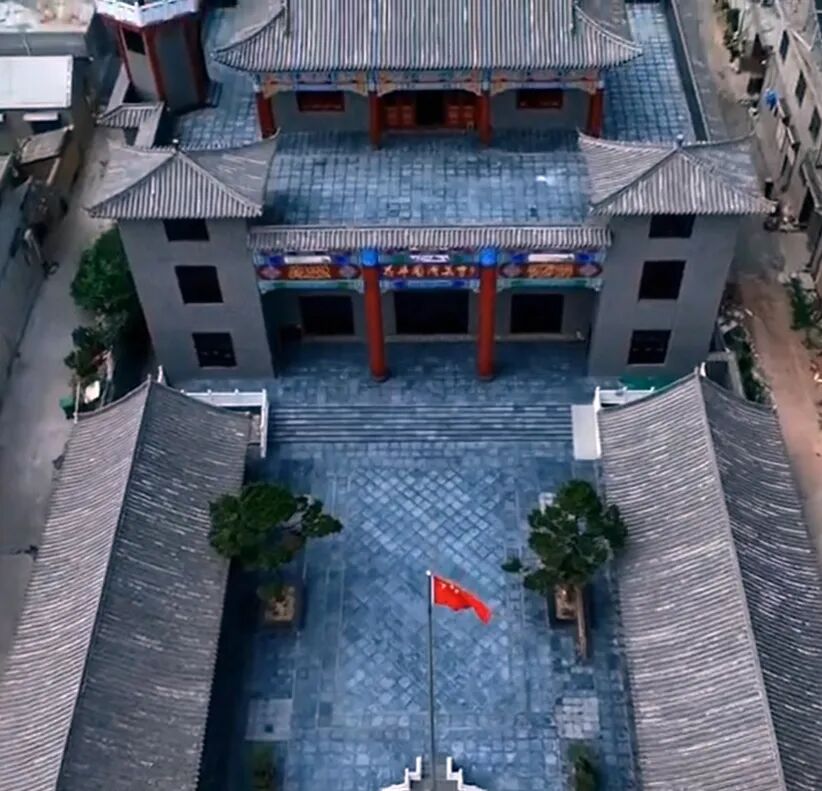
During the War of Resistance Against Japanese Aggression, over 40 villagers, including Gao Lianhuai, Li Deyou, and Wen Tingjin, joined the Binhai Hui Cavalry Brigade. This brigade operated from the banks of the Yi River all the way to the coast, focusing on guerrilla warfare, supporting major army units, and clearing out remaining enemy forces around the Linyi area.
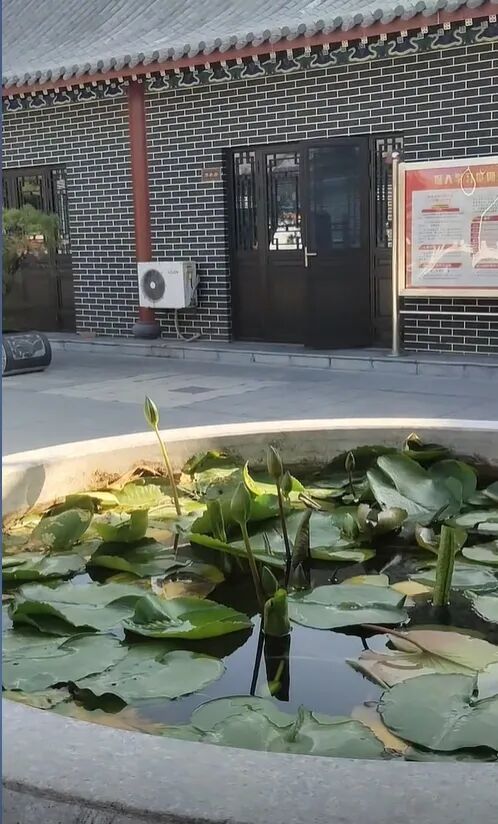
During the War of Liberation, in February 1948, the Binhai Hui Cavalry Brigade merged with the Bohai Hui Cavalry Brigade to form a dedicated Hui regiment. More than 10 villagers, including Xiao Zhihong and Yang Decai, joined the 900-member unit led by commander Ma Jie and political commissar Peng Linbo. They took part in major operations like the Jinan Campaign and the Huaihai Campaign. The village established its first Communist Party branch in December 1945, led by its first secretary, Ma Baoyin, who was eventually killed by the Kuomintang on the west bank of the Yi River.
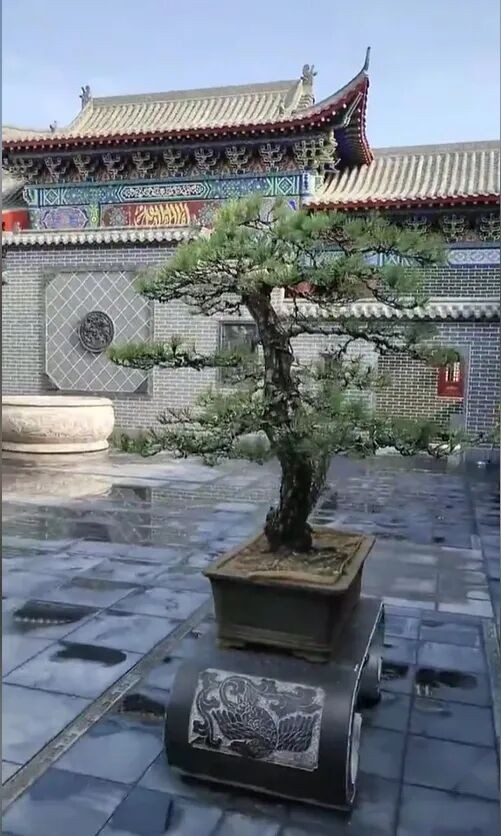
During the War to Resist U.S. Aggression and Aid Korea, local villagers like Wen Yanru and Zhang Hongfu courageously enlisted in the military and headed to the front lines in Korea to defend their country.
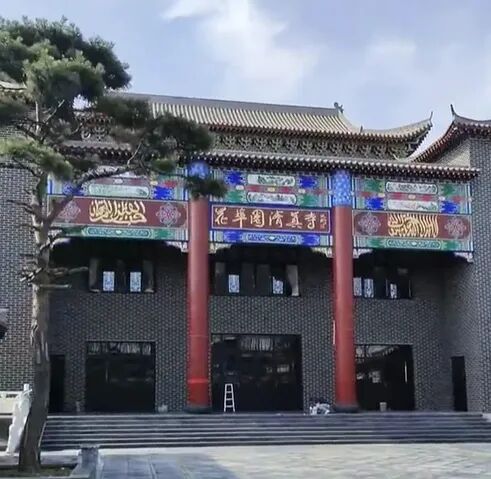
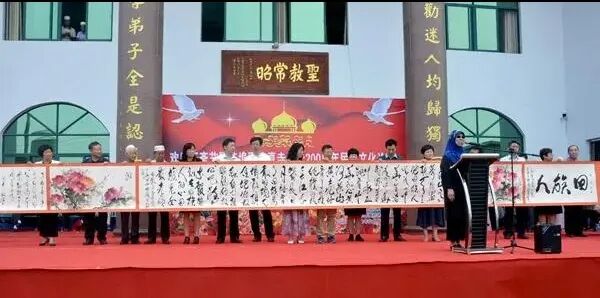
The exact founding date of the Huabuquan Mosque is unknown, but records on existing steles show that it was renovated in the 20th year of the Guangxu reign under the Qing Dynasty, overseen by Imam Zhang Yun. The national hero Zuo Baogui generously funded the project and inscribed the temple plaque with the words Shengjiao Changzhao (The Sacred Teachings Always Shine). At the time, it featured three main prayer halls, five lecture halls, three ritual washing rooms, and a gate tower, covering an area of 1.7 mu. Through historical upheavals, damage during the Cultural Revolution, and a fire in 1972, the mosque suffered several setbacks that hampered the religious lives of local Muslims. Because of this, successive leaders like Zhang Yuqian, Xiao Yanbin, Sha Ziling, and Imams Wen Yanbin and Wen Yongquan spearheaded multiple renovations. By 1992, the complex had expanded to five main prayer halls, ten lecture halls, six washing rooms, and a gate tower, covering 2.7 mu, with a new plaque inscribed by Department Chief Ding Lechun. In June 1998, with support from religious authorities and the Shengzhuang Town government, Party Secretary Xiao Zili led a major reconstruction to fulfill the wishes of the local Muslim community. During the opening of the 200th-anniversary cultural forum for the mosque, Mi Changling—former chair of the Jining Democratic League and a university professor—presented a 20-meter-long scroll titled 'The Hui People' on behalf of General Ma Guochao, the son of war hero Ma Benzhai. For the past two centuries, the Huabuquan Mosque has played a vital role in preserving Hui culture and fostering ethnic unity.
Istanbul 3-Day Mosque Guide: Authentic Tips for Blue Mosque, Süleymaniye & Secret Photo Spots
Articles • Hasan09 posted the article • 0 comments • 22 views • 1 days ago
This guide provides a detailed breakdown of a three-day architectural and cultural tour of Istanbul's mosques, including the Blue Mosque, Hagia Sophia, Süleymaniye Mosque, and Rüstem Pasha Mosque. It covers the best visiting times, tips for capturing autumn foliage, dress codes, and practical transportation advice.
First time out! Your ultimate 3-day Istanbul mosque itinerary—hidden gems included, with zero tourist traps!
Autumn in Hangzhou is all about the sweet scent of osmanthus in Manlongguiyu and the satisfying crunch of sycamore leaves falling on Beishan Street. Last week, while walking through the golden carpet at Jingci Temple, I heard a call to prayer from afar, which immediately brought me back to Istanbul. I spent all night digging up photos from last late autumn: sunlight filtering through stained glass turning the Blue Mosque dome into a rainbow, and a ginger cat napping in the Süleymaniye courtyard to the sound of Quran recitation. Here is the 3-day itinerary I’ve been gatekeeping, featuring off-the-beaten-path photo spots and money-saving hacks. Just follow along and you can't go wrong!
Best Timing: Chasing the Call to Prayer in the Autumn Light
October to November is the sweet spot. There are 30% fewer tourists than in mid-summer, the temperature hovers around 20°C (68°F), and it’s cool enough to walk barefoot in the mosques while wearing modest layers. The maple leaves turn red in early November; the sycamores in the Topkapı Palace back gardens yellow first, while the maples on the Süleymaniye hillside turn red last. If you want that perfect 'mosque and red leaf' shot, aim for the first week of November. Friday afternoons are crowded for Jumu'ah (Friday prayer), so for quiet photos, go before 9 AM on a weekday. The way the light hits the columns at that hour is absolutely stunning.
Transportation: One Card Does It All
Buy an Istanbulkart at the airport (it costs 70 Lira). It works for the metro, trams, and ferries, and it’s 40% cheaper than buying single tickets. The T1 tram line is a total treasure—the Blue Mosque, Hagia Sophia, and Grand Bazaar are all on this route. You have to take a ferry (25 Lira with the card) to get from the European side to the Asian side; feeding seagulls and watching the skyline from the deck is 80% cheaper than a tourist boat. Pro tip: Don't take taxis, traffic and detours are the norm.
✨ Five Must-Visit Spots (Including Secret Photo Angles)
1. Blue Mosque: Get to the western cloister by 7 AM. The morning sun turns the six minarets into a honey color with zero crowds! For interiors, get a 24mm wide-angle lens near the floor; the dome’s blue tiles look like a galaxy. 2. Süleymaniye: Head to the corner of the northern courtyard at 4 PM for silhouettes against the Bosphorus, using a telephoto lens for that intense compression effect. 3. New Mosque: Next to the Spice Market, go at 5 PM to the Eminönü pier for reflections, and try to snap a photo of birds taking flight during the call to prayer. 4. Sokollu Mehmed Pasha Mosque: So obscure you’ll have the place to yourself! The side entrance has no lines, and the blue Iznik tiles inside are even more intricate than the Blue Mosque. Use f/2.8 to blur the details. 5. Ortaköy: A hidden gem on the Asian side; visit on a Friday evening to capture the mosque and the Bosphorus Bridge in one frame, then grab some roasted chestnuts to snack on while you walk.
Food: Eat Like a Local and Avoid Getting Ripped Off
Hidden Gem: Karaköy Lokantası in the back alleys of Süleymaniye. Their lunch set (kebab, rice, and soup) is only 180 Lira, half the price of the tourist spots. Money-saving tip: Don't buy Turkish delight in the Grand Bazaar; go to the outskirts of the Spice Market to Hafız Mustafa, where you can buy it by weight. Must-try: Street-side midye dolma (stuffed mussels with herb-infused rice) for 10 Lira each; squeeze fresh lemon juice on them and they are incredibly delicious.
Accommodation: Stay in the Old City, but not in Sultanahmet
Choose Sirkeci or Eminönü. You’ll be a 10-minute walk from the main mosques, and prices are 30% lower than in the heart of the tourist district. Booking hack: Use the 'free cancellation' filter on Booking.com and book two weeks ahead for 30% off early-bird rates. Hostel beds start at 250 Lira, and you can get a boutique guesthouse room with a terrace for 600 Lira. Having breakfast on the terrace while listening to the call to prayer makes the room worth every penny.
3-Day Lazy-Traveler Itinerary (Just Copy This)
Day 1: 7 AM Blue Mosque → 9 AM Hagia Sophia (take photos from outside) → Lunch at Karaköy Lokantası → Afternoon at Süleymaniye → Evening ferry to Ortaköy. Day 2: 8 AM New Mosque → Spice Market → Lunch at a midye dolma stand → Afternoon at Sokollu Mehmed Pasha Mosque → Sunset at Galata Bridge. Day 3: 9 AM Topkapı Palace back gardens → Lunch on the outskirts of the Grand Bazaar → Afternoon for catch-up photos → Evening ferry back to the Asian side.
Budget & Tips
Daily cost per person: Transportation 40 + Dining 200 + Tickets 150 (Mosques are free; Hagia Sophia is free from the outside) = approx. 400 Lira (excluding accommodation). Local secret: Don't go to large mosques during Jumu'ah on Friday, but feel free to duck into small neighborhood mosques to observe the ceremony. Grab a free plastic bag at the entrance for your shoes. Photography: Use spot metering for the domes when shooting against the light, and place silhouettes on the bottom-right third of the frame. Gear: Pack light with a 35mm prime lens (use your phone for wide-angle shots). Ladies, bring your own headscarf (they are free to borrow at the door, but there's often a line). Wear comfortable socks—walking barefoot on the carpets is heavenly!
Lastly, a little story: I was at Süleymaniye and met a Turkish gentleman who saw me holding my camera for a long time. He grabbed my arm and led me to a small side door: 'Look through this hole, the minaret is perfectly framed by the Bosphorus Bridge.' It was incredible. See, the kindness of Istanbul is hidden in these little corners. Pick an autumn day to go, and please feed that ginger cat for me. view all
This guide provides a detailed breakdown of a three-day architectural and cultural tour of Istanbul's mosques, including the Blue Mosque, Hagia Sophia, Süleymaniye Mosque, and Rüstem Pasha Mosque. It covers the best visiting times, tips for capturing autumn foliage, dress codes, and practical transportation advice.
First time out! Your ultimate 3-day Istanbul mosque itinerary—hidden gems included, with zero tourist traps!
Autumn in Hangzhou is all about the sweet scent of osmanthus in Manlongguiyu and the satisfying crunch of sycamore leaves falling on Beishan Street. Last week, while walking through the golden carpet at Jingci Temple, I heard a call to prayer from afar, which immediately brought me back to Istanbul. I spent all night digging up photos from last late autumn: sunlight filtering through stained glass turning the Blue Mosque dome into a rainbow, and a ginger cat napping in the Süleymaniye courtyard to the sound of Quran recitation. Here is the 3-day itinerary I’ve been gatekeeping, featuring off-the-beaten-path photo spots and money-saving hacks. Just follow along and you can't go wrong!
Best Timing: Chasing the Call to Prayer in the Autumn Light
October to November is the sweet spot. There are 30% fewer tourists than in mid-summer, the temperature hovers around 20°C (68°F), and it’s cool enough to walk barefoot in the mosques while wearing modest layers. The maple leaves turn red in early November; the sycamores in the Topkapı Palace back gardens yellow first, while the maples on the Süleymaniye hillside turn red last. If you want that perfect 'mosque and red leaf' shot, aim for the first week of November. Friday afternoons are crowded for Jumu'ah (Friday prayer), so for quiet photos, go before 9 AM on a weekday. The way the light hits the columns at that hour is absolutely stunning.

Transportation: One Card Does It All
Buy an Istanbulkart at the airport (it costs 70 Lira). It works for the metro, trams, and ferries, and it’s 40% cheaper than buying single tickets. The T1 tram line is a total treasure—the Blue Mosque, Hagia Sophia, and Grand Bazaar are all on this route. You have to take a ferry (25 Lira with the card) to get from the European side to the Asian side; feeding seagulls and watching the skyline from the deck is 80% cheaper than a tourist boat. Pro tip: Don't take taxis, traffic and detours are the norm.
✨ Five Must-Visit Spots (Including Secret Photo Angles)
1. Blue Mosque: Get to the western cloister by 7 AM. The morning sun turns the six minarets into a honey color with zero crowds! For interiors, get a 24mm wide-angle lens near the floor; the dome’s blue tiles look like a galaxy. 2. Süleymaniye: Head to the corner of the northern courtyard at 4 PM for silhouettes against the Bosphorus, using a telephoto lens for that intense compression effect. 3. New Mosque: Next to the Spice Market, go at 5 PM to the Eminönü pier for reflections, and try to snap a photo of birds taking flight during the call to prayer. 4. Sokollu Mehmed Pasha Mosque: So obscure you’ll have the place to yourself! The side entrance has no lines, and the blue Iznik tiles inside are even more intricate than the Blue Mosque. Use f/2.8 to blur the details. 5. Ortaköy: A hidden gem on the Asian side; visit on a Friday evening to capture the mosque and the Bosphorus Bridge in one frame, then grab some roasted chestnuts to snack on while you walk.

Food: Eat Like a Local and Avoid Getting Ripped Off
Hidden Gem: Karaköy Lokantası in the back alleys of Süleymaniye. Their lunch set (kebab, rice, and soup) is only 180 Lira, half the price of the tourist spots. Money-saving tip: Don't buy Turkish delight in the Grand Bazaar; go to the outskirts of the Spice Market to Hafız Mustafa, where you can buy it by weight. Must-try: Street-side midye dolma (stuffed mussels with herb-infused rice) for 10 Lira each; squeeze fresh lemon juice on them and they are incredibly delicious.
Accommodation: Stay in the Old City, but not in Sultanahmet
Choose Sirkeci or Eminönü. You’ll be a 10-minute walk from the main mosques, and prices are 30% lower than in the heart of the tourist district. Booking hack: Use the 'free cancellation' filter on Booking.com and book two weeks ahead for 30% off early-bird rates. Hostel beds start at 250 Lira, and you can get a boutique guesthouse room with a terrace for 600 Lira. Having breakfast on the terrace while listening to the call to prayer makes the room worth every penny.
3-Day Lazy-Traveler Itinerary (Just Copy This)
Day 1: 7 AM Blue Mosque → 9 AM Hagia Sophia (take photos from outside) → Lunch at Karaköy Lokantası → Afternoon at Süleymaniye → Evening ferry to Ortaköy. Day 2: 8 AM New Mosque → Spice Market → Lunch at a midye dolma stand → Afternoon at Sokollu Mehmed Pasha Mosque → Sunset at Galata Bridge. Day 3: 9 AM Topkapı Palace back gardens → Lunch on the outskirts of the Grand Bazaar → Afternoon for catch-up photos → Evening ferry back to the Asian side.

Budget & Tips
Daily cost per person: Transportation 40 + Dining 200 + Tickets 150 (Mosques are free; Hagia Sophia is free from the outside) = approx. 400 Lira (excluding accommodation). Local secret: Don't go to large mosques during Jumu'ah on Friday, but feel free to duck into small neighborhood mosques to observe the ceremony. Grab a free plastic bag at the entrance for your shoes. Photography: Use spot metering for the domes when shooting against the light, and place silhouettes on the bottom-right third of the frame. Gear: Pack light with a 35mm prime lens (use your phone for wide-angle shots). Ladies, bring your own headscarf (they are free to borrow at the door, but there's often a line). Wear comfortable socks—walking barefoot on the carpets is heavenly!
Lastly, a little story: I was at Süleymaniye and met a Turkish gentleman who saw me holding my camera for a long time. He grabbed my arm and led me to a small side door: 'Look through this hole, the minaret is perfectly framed by the Bosphorus Bridge.' It was incredible. See, the kindness of Istanbul is hidden in these little corners. Pick an autumn day to go, and please feed that ginger cat for me.
Daxuexi Alley Mosque Xi'an: Exploring Tang Dynasty Islamic Heritage and Authentic Hui Muslim Neighborhood Street Life
Articles • Hasan09 posted the article • 0 comments • 21 views • 1 days ago
Taking the bus through the streets of Xi'an between the Bell Tower and Qiaozikou, the author visits the Daxuexi Alley Mosque, an ancient thousand-year-old temple that mirrors the Great Mosque of Huajue Alley. The article documents the strict Chinese architectural style of the mosque, the surviving Shengxin Pavilion and stele pavilions, and the vibrant, everyday street life along the way in old Xi'an.
Binging the drama Lan Xiang Ru Gu for days on end recently left my head spinning. With the show finally finished, I could finally step outside and get some fresh air.
01.
Taking advantage of the gorgeous afternoon sunshine, I decided to head out for a walk. Lately, my routine has mostly revolved around the ancient city wall. Having just visited Guangren Temple a few days ago, I followed a travel guide today to check out the mosque on Daxuexi Alley.
Before heading out, I consulted Doubao for directions as usual.
It gave me two options: first, take Line 2 and transfer to Line 6, which still required a walk of over ten minutes after exiting the station; second, take Line 2 for two stops to the Bell Tower, transfer to bus route 4 to Qiaozikou Station, and walk a shorter distance.
The thought of navigating underground transfers with up-and-down escalators, twisting long corridors, and massive crowds made me a bit nervous.
So, I decisively went with the second bus option.
Even though I picked a route, my sense of direction isn't great, and I ran into all sorts of minor mishaps along the way. First, I got turned around trying to find the bus stop near the Bell Tower and took quite a few detours; then, after getting off at Qiaozikou, I struggled to figure out which way Daxuexi Alley was and wasted a bunch of time. After wandering around and dealing with a few twists and turns, I finally found Daxuexi Alley.
A tall archway stands at the entrance of the alley, featuring carved beams and painted pillars, though I couldn't read the couplets on either side of the gate. However, I had learned a bit beforehand about how the alley got its name.
Legend has it that during the An Lushan Rebellion, Uyghur and Western Regions troops helped Tang dynasty general Guo Ziyi retake Chang'an. After the war, over 200 military officers from the Western Regions stayed behind right here. The imperial court set up a school here to teach them the Chinese language, Central Plains rituals, and legal systems, which is why the place became known as "Xuexi (Study) Alley."
02.
This is an authentic old alley with narrow streets. Most of the businesses on both sides are local shops, especially eateries, overflowing with a lively, everyday vibe. Walking down the alley, you frequently run into Hui Muslim women wearing hijabs and men wearing white caps, revealing that this is a Hui Muslim residential community.
Walking further down the alley, I spotted two men looking around as if searching for something. When they reached a small side door, they muttered quietly, "Why isn't it open? Are they not letting people in?"
I figured they were also visitors who had come specifically to find the mosque here. Since we shared the same goal, I tagged along behind them.
A few more meters ahead, I saw a modest courtyard entrance where Hui Muslim women wearing hijabs were walking in and out. The two men stepped up to ask if visitors were allowed inside, and after getting permission, they walked in. I quickly followed right behind them. Right behind me was a middle-aged man.
03.
Inside the mosque grounds, there were very few tourists, making it wonderfully quiet and serene. As soon as you step through the gate, you see a three-story, four-cornered pavilion. After years of wind and sun, the once-bright paint has faded and peeled, exposing the cracked and rough wood grain. While it has lost its original colorful vibrance, it still maintains that rustic and elegant charm. This turned out to be the "Shengxin Pavilion (Pavilion of Self-Reflection)."
(Shengxin Pavilion, photo from the internet)
Sitting under the pavilion was an elderly man in his eighties, dressed in traditional Hui Muslim attire with a long beard and a white cap. A sign hung on the chair next to him read: "Entering the mosque, photography is prohibited."
The old man stopped the two men to ask where they were from. To prove their sincerity, they said they came from Northeast China and handed over their ID cards to show they were also Hui Muslims. The old man took them, looked them over, and handed them back.
For some reason, seeing Hui Muslims made me feel a bit anxious. Now, seeing this elderly man asking questions added an extra layer of nervousness. I'm not a Muslim; I was just visiting out of curiosity as an outsider, so I didn't dare say much. I slipped through the gate beside Shengxin Pavilion into the second courtyard to get away from the old man's line of sight as quickly as possible.
The middle-aged man who had followed me in took out his phone the moment he stepped into the second courtyard and secretly snapped a photo. I didn't dare do the same, terrified of getting told off. I figured taking pictures was out of the question today, so I would just have to enjoy this rustic and exquisite courtyard with my eyes and keep it in my heart.
04.
This is a classic Chinese-style courtyard with a total of three courtyards. The Shengxin Pavilion sits right on the central axis, with buildings symmetrically distributed on both sides, while the rockeries, ponds, and flower beds in the yard are scattered on either side.
Stepping into the second courtyard, you'll find tons of super old stone steles—some of the text is still barely readable, while other parts are totally faded. I did my homework beforehand, so I knew this mosque was hiding two absolute treasures inside its pavilion structures.
One of them is a stele from the Jiajing period of the Ming Dynasty titled "Record of the Restoration of Qingjing Mosque," which documents the historical reality of Zheng He's voyages to the Western Oceans. Locals usually just call it the "Zheng He Stele."
The inscription tells the fascinating story of how, during the Yongle era of the Ming Dynasty, the famous eunuch commander Zheng He was ordered on a mission to the Western Oceans. Passing through Xi'an, he looked for talent and recruited the mosque's Imam, Hasan, to tag along as a translator. After they got back, because Hasan had done a great job and his prayers at sea were answered, Zheng He petitioned the imperial court for funds and personally led the reconstruction of this mosque.
The other one is a Yuan Dynasty Arabic stele featuring the Chinese text "Record of the Enlargement of the Mosque" on the front and entirely Arabic writing on the back. These two steles—one Chinese, one Arabic, one from the Ming, and one from the Yuan—don't just track the history of this ancient mosque; they are super valuable physical pieces of evidence showing the cultural exchange and mutual learning between Chinese civilization and Islamic civilization.
From the second courtyard, you walk up some stone steps into the third courtyard. The yard is wrapped in stone railings, with a stone memorial archway on both the north and south sides. The most breathtaking thing here is the main prayer hall, which is said to hold up to 500 people for prayer.
The prayer hall doors were closed to visitors, so I turned my gaze upward to the layers of peacock blue glazed tiles along the roof ridge. They were literally glowing in the sun, so gorgeous you just couldn't look away.
Honestly, the whole courtyard is stunning, from the doors and windows to the eaves. The wood carvings have this timeless, elegant vibe, while the brick and stone carvings are just next-level gorgeous.
(Photo source: Internet)
(The main prayer hall, photo source: Internet)
After heading out, I snapped a few quick pics of the front entrance from the outside.
Even though this visit had a few hiccups and I couldn't take photos everywhere, all those ornate painted beams, carved rafters, peacock blue glazed tiles, and the centuries-old stories carved into the steles are totally burned into my memory.
(The spirit wall directly facing the main entrance of the mosque)
(The main entrance of the mosque)
(Daxuexi Alley) view all
Taking the bus through the streets of Xi'an between the Bell Tower and Qiaozikou, the author visits the Daxuexi Alley Mosque, an ancient thousand-year-old temple that mirrors the Great Mosque of Huajue Alley. The article documents the strict Chinese architectural style of the mosque, the surviving Shengxin Pavilion and stele pavilions, and the vibrant, everyday street life along the way in old Xi'an.
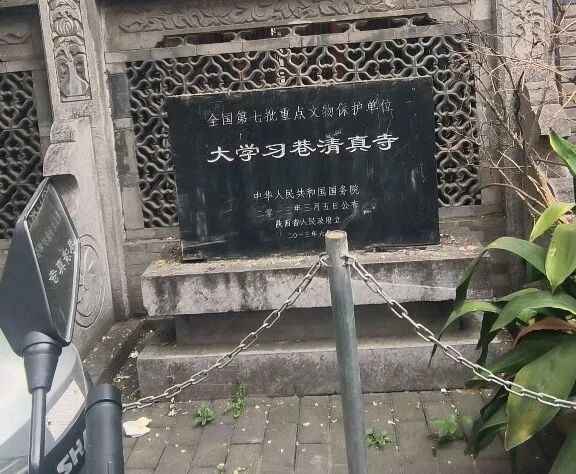
Binging the drama Lan Xiang Ru Gu for days on end recently left my head spinning. With the show finally finished, I could finally step outside and get some fresh air.
01.
Taking advantage of the gorgeous afternoon sunshine, I decided to head out for a walk. Lately, my routine has mostly revolved around the ancient city wall. Having just visited Guangren Temple a few days ago, I followed a travel guide today to check out the mosque on Daxuexi Alley.
Before heading out, I consulted Doubao for directions as usual.
It gave me two options: first, take Line 2 and transfer to Line 6, which still required a walk of over ten minutes after exiting the station; second, take Line 2 for two stops to the Bell Tower, transfer to bus route 4 to Qiaozikou Station, and walk a shorter distance.
The thought of navigating underground transfers with up-and-down escalators, twisting long corridors, and massive crowds made me a bit nervous.
So, I decisively went with the second bus option.
Even though I picked a route, my sense of direction isn't great, and I ran into all sorts of minor mishaps along the way. First, I got turned around trying to find the bus stop near the Bell Tower and took quite a few detours; then, after getting off at Qiaozikou, I struggled to figure out which way Daxuexi Alley was and wasted a bunch of time. After wandering around and dealing with a few twists and turns, I finally found Daxuexi Alley.
A tall archway stands at the entrance of the alley, featuring carved beams and painted pillars, though I couldn't read the couplets on either side of the gate. However, I had learned a bit beforehand about how the alley got its name.
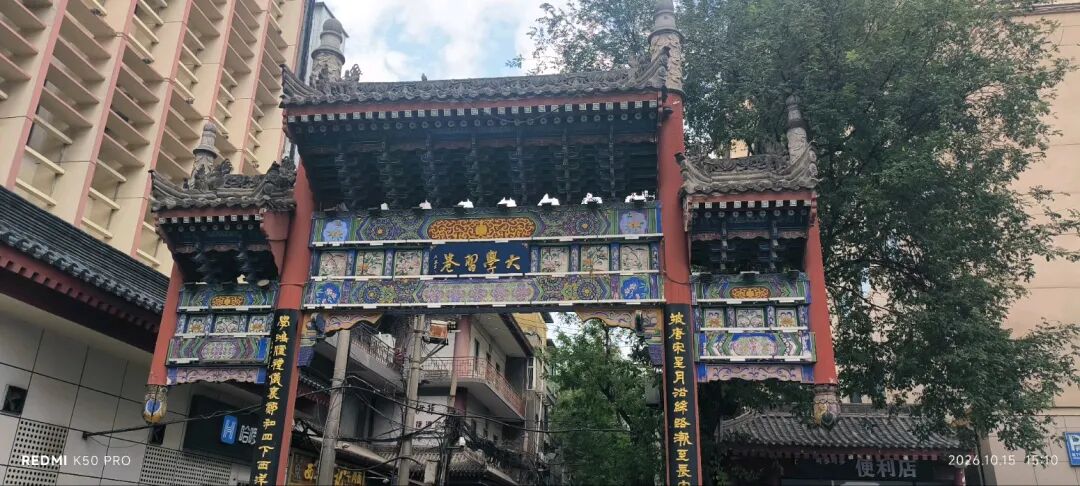
Legend has it that during the An Lushan Rebellion, Uyghur and Western Regions troops helped Tang dynasty general Guo Ziyi retake Chang'an. After the war, over 200 military officers from the Western Regions stayed behind right here. The imperial court set up a school here to teach them the Chinese language, Central Plains rituals, and legal systems, which is why the place became known as "Xuexi (Study) Alley."
02.
This is an authentic old alley with narrow streets. Most of the businesses on both sides are local shops, especially eateries, overflowing with a lively, everyday vibe. Walking down the alley, you frequently run into Hui Muslim women wearing hijabs and men wearing white caps, revealing that this is a Hui Muslim residential community.
Walking further down the alley, I spotted two men looking around as if searching for something. When they reached a small side door, they muttered quietly, "Why isn't it open? Are they not letting people in?"
I figured they were also visitors who had come specifically to find the mosque here. Since we shared the same goal, I tagged along behind them.
A few more meters ahead, I saw a modest courtyard entrance where Hui Muslim women wearing hijabs were walking in and out. The two men stepped up to ask if visitors were allowed inside, and after getting permission, they walked in. I quickly followed right behind them. Right behind me was a middle-aged man.
03.
Inside the mosque grounds, there were very few tourists, making it wonderfully quiet and serene. As soon as you step through the gate, you see a three-story, four-cornered pavilion. After years of wind and sun, the once-bright paint has faded and peeled, exposing the cracked and rough wood grain. While it has lost its original colorful vibrance, it still maintains that rustic and elegant charm. This turned out to be the "Shengxin Pavilion (Pavilion of Self-Reflection)."
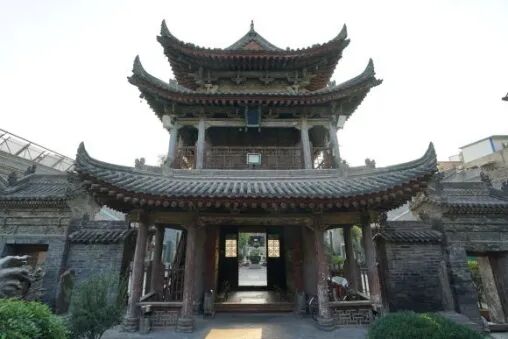
(Shengxin Pavilion, photo from the internet)
Sitting under the pavilion was an elderly man in his eighties, dressed in traditional Hui Muslim attire with a long beard and a white cap. A sign hung on the chair next to him read: "Entering the mosque, photography is prohibited."
The old man stopped the two men to ask where they were from. To prove their sincerity, they said they came from Northeast China and handed over their ID cards to show they were also Hui Muslims. The old man took them, looked them over, and handed them back.
For some reason, seeing Hui Muslims made me feel a bit anxious. Now, seeing this elderly man asking questions added an extra layer of nervousness. I'm not a Muslim; I was just visiting out of curiosity as an outsider, so I didn't dare say much. I slipped through the gate beside Shengxin Pavilion into the second courtyard to get away from the old man's line of sight as quickly as possible.
The middle-aged man who had followed me in took out his phone the moment he stepped into the second courtyard and secretly snapped a photo. I didn't dare do the same, terrified of getting told off. I figured taking pictures was out of the question today, so I would just have to enjoy this rustic and exquisite courtyard with my eyes and keep it in my heart.
04.
This is a classic Chinese-style courtyard with a total of three courtyards. The Shengxin Pavilion sits right on the central axis, with buildings symmetrically distributed on both sides, while the rockeries, ponds, and flower beds in the yard are scattered on either side.
Stepping into the second courtyard, you'll find tons of super old stone steles—some of the text is still barely readable, while other parts are totally faded. I did my homework beforehand, so I knew this mosque was hiding two absolute treasures inside its pavilion structures.
One of them is a stele from the Jiajing period of the Ming Dynasty titled "Record of the Restoration of Qingjing Mosque," which documents the historical reality of Zheng He's voyages to the Western Oceans. Locals usually just call it the "Zheng He Stele."
The inscription tells the fascinating story of how, during the Yongle era of the Ming Dynasty, the famous eunuch commander Zheng He was ordered on a mission to the Western Oceans. Passing through Xi'an, he looked for talent and recruited the mosque's Imam, Hasan, to tag along as a translator. After they got back, because Hasan had done a great job and his prayers at sea were answered, Zheng He petitioned the imperial court for funds and personally led the reconstruction of this mosque.
The other one is a Yuan Dynasty Arabic stele featuring the Chinese text "Record of the Enlargement of the Mosque" on the front and entirely Arabic writing on the back. These two steles—one Chinese, one Arabic, one from the Ming, and one from the Yuan—don't just track the history of this ancient mosque; they are super valuable physical pieces of evidence showing the cultural exchange and mutual learning between Chinese civilization and Islamic civilization.
From the second courtyard, you walk up some stone steps into the third courtyard. The yard is wrapped in stone railings, with a stone memorial archway on both the north and south sides. The most breathtaking thing here is the main prayer hall, which is said to hold up to 500 people for prayer.
The prayer hall doors were closed to visitors, so I turned my gaze upward to the layers of peacock blue glazed tiles along the roof ridge. They were literally glowing in the sun, so gorgeous you just couldn't look away.
Honestly, the whole courtyard is stunning, from the doors and windows to the eaves. The wood carvings have this timeless, elegant vibe, while the brick and stone carvings are just next-level gorgeous.
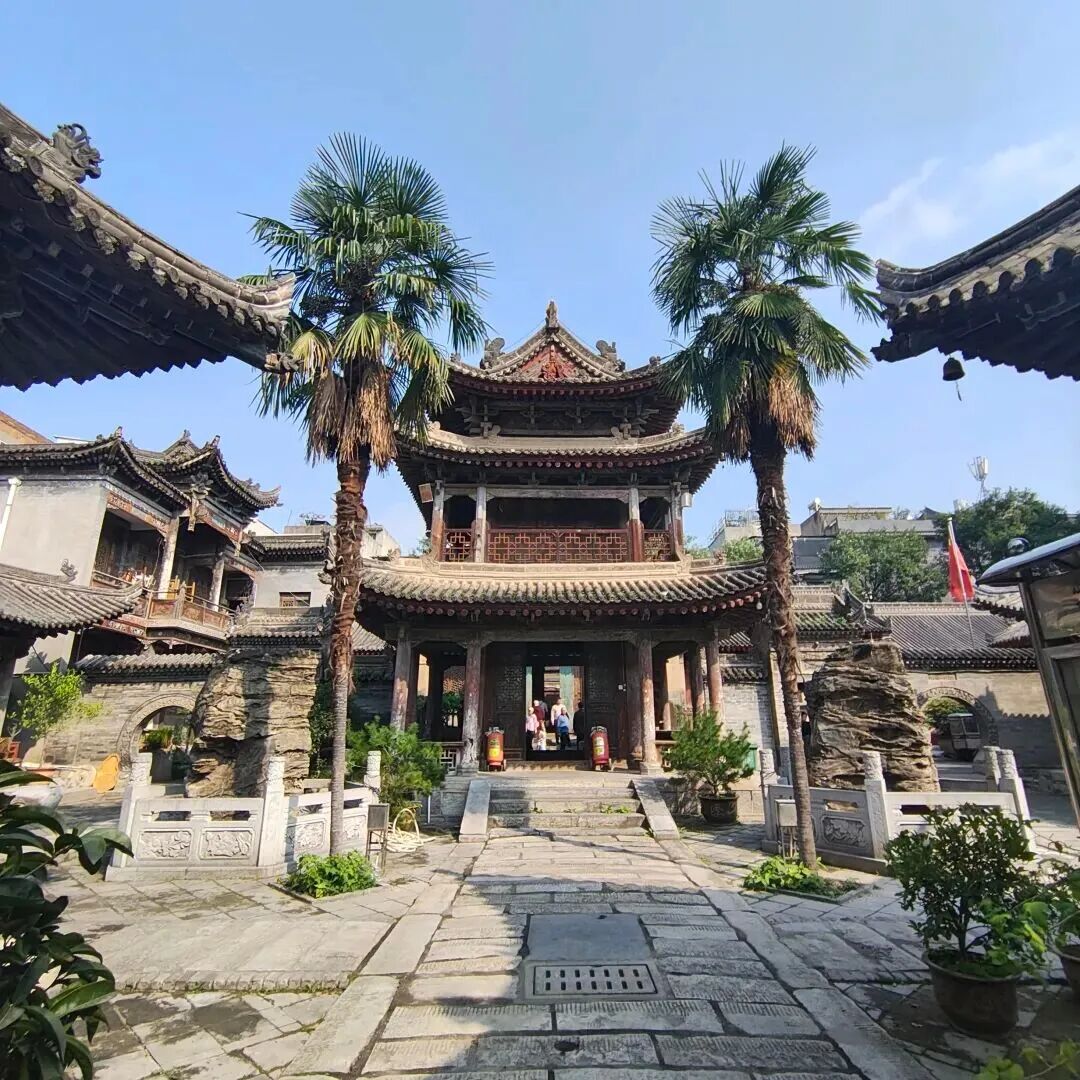
(Photo source: Internet)
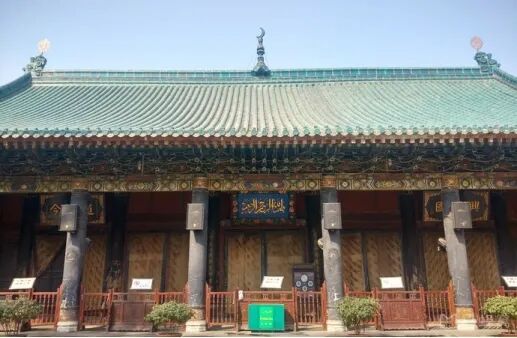
(The main prayer hall, photo source: Internet)
After heading out, I snapped a few quick pics of the front entrance from the outside.
Even though this visit had a few hiccups and I couldn't take photos everywhere, all those ornate painted beams, carved rafters, peacock blue glazed tiles, and the centuries-old stories carved into the steles are totally burned into my memory.
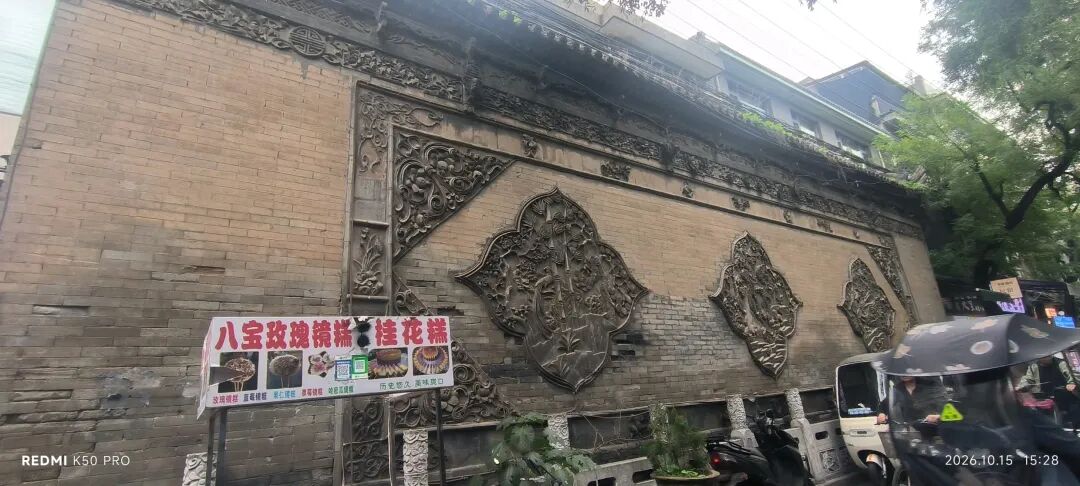
(The spirit wall directly facing the main entrance of the mosque)
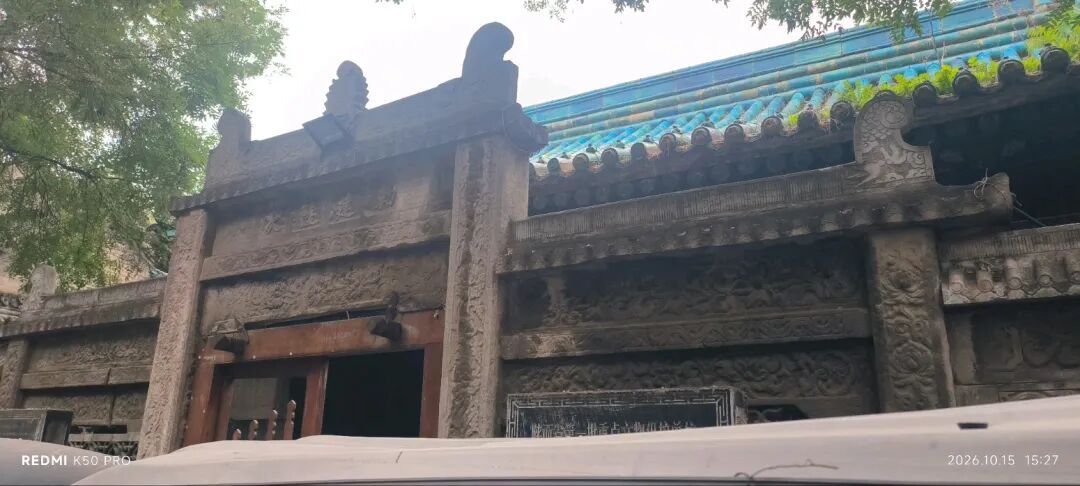
(The main entrance of the mosque)
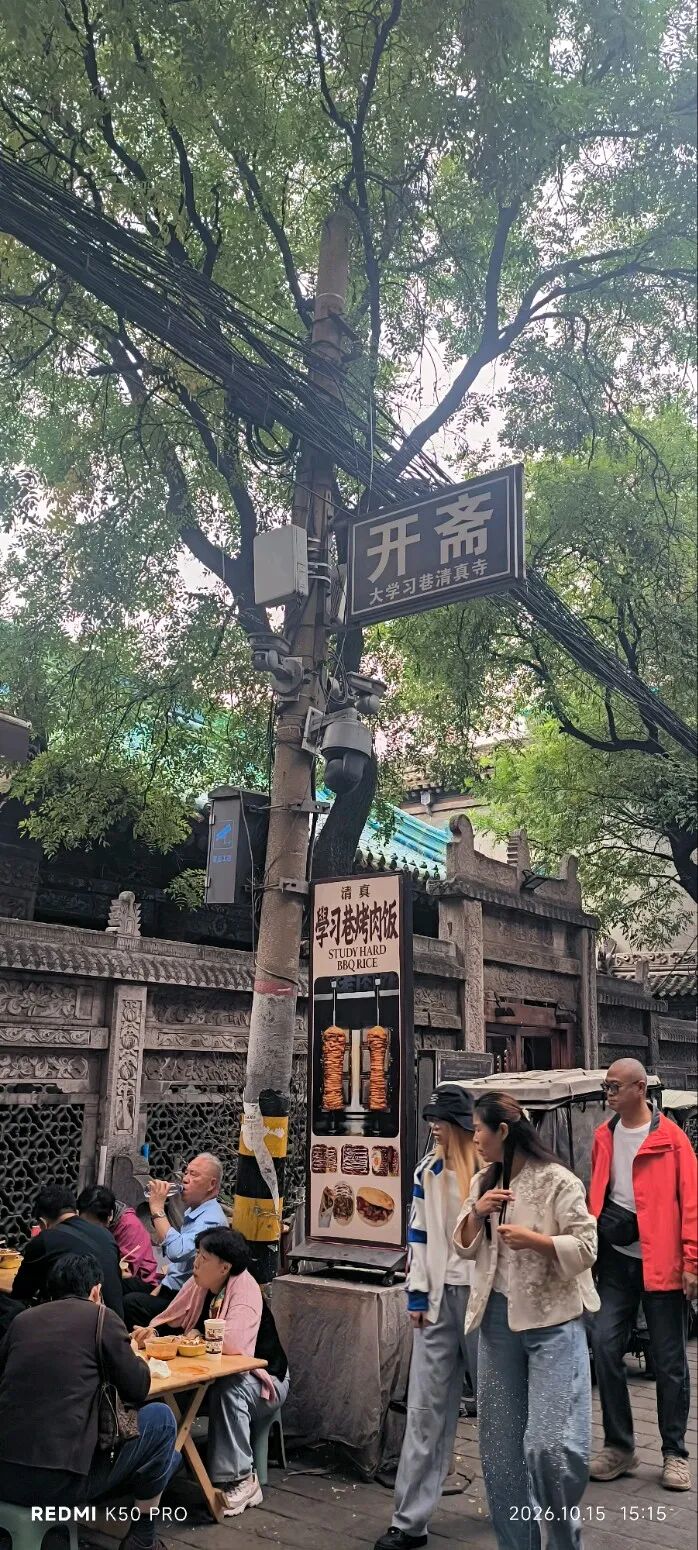

(Daxuexi Alley)
Hohhot Great Mosque Guide: Discover Inner Mongolia's Historic Islamic Architecture and Silk Road Heritage
Articles • Hasan09 posted the article • 0 comments • 20 views • 1 days ago
Dive deep into the oldest and largest surviving mosque in Hohhot. Explore its historical roots tied to camel caravan merchants during the Kangxi reign of the Qing dynasty, and closely check out the three-courtyard layout, double-eaved Xieshan-style training pavilion, hexagonal roofed moon-sighting tower, and precious handwritten copies of the Quran from the Kangxi era.
Amidst the bustling streets of Tongdao South Street in Hohhot's Huimin District, where traffic and chatter never stop, a quick turn reveals vermilion gates and gray-blue ancient walls standing quietly, blocking out the city's lively hustle and bustle. This is the Hohhot Great Mosque, the city's oldest and largest existing mosque, and a Major Historical and Cultural Site Protected at the National Level. It is hailed as an architectural gem on the northern frontier that tells a rich story of cultural blending.
Push open the iron gate, and the loud noise instantly fades away. Three successive courtyards unfold before you, making time feel like it's slowing down.
The mosque was first built in the thirty-second year of the Kangxi reign of the Qing dynasty, in 1693 AD. Back then, merchants traveled back and forth through Guihua City, the camel bells of the Tea Horse Road rang out, and Hui Muslim ancestors settled in the frontier to build their initial place of worship. It went through several renovations later on: rebuilt in the fifty-fourth year of the Qianlong reign, expanded on a large scale through donations from believers in 1923, and saw its iconic moon-sighting tower completed in 1939, slowly shaping the complete layout we see today. Through over three hundred years of wind and rain, every single brick and tile holds memories of the past.
What makes it so touching is its unique blend of styles native to China's northern frontier.
The entire complex follows the central axis layout of traditional Chinese architecture, featuring Xieshan-style roofs, feiyan dougong (traditional flying eaves and brackets), and gray brick screen walls, presenting a familiar oriental courtyard aesthetic. Meanwhile, the patterns, calligraphy, and orientation strictly adhere to Islamic cultural traditions, as the mosque faces east-west toward Mecca with solemnity and devotion.
As the core structure, the main prayer hall is magnificent in scale. The building adopts an interlocking roof style with staggered layers, and its window frames and walls are covered in delicate brick carvings, where floral motifs and Arabic script calligraphy are interwoven with elegant, clean lines rather than complex clutter. The interior of the hall is spacious and solemn, holding hundreds of people praying at the same time. Red lacquered pillars stand quietly while sunlight streams through the window lattices onto the gray brick floor, creating a quiet and powerful atmosphere.
In the southeast corner of the courtyard, the moon-sighting tower stands as the visual pinnacle of the entire mosque. Rising about 33 meters high with a six-sided clustered-peak design, a wooden spiral staircase winds its way up. In ancient times when Ramadan arrived, the Imam would climb the tower to sight the moon to determine the start and end of fasting. Today, the breeze sweeps past the copper bells on the eaves, and their crisp sound echoes over the city. Standing downstairs and looking up, the crescent moon symbol atop the spire stands out sharply against the clear blue sky, which is the deepest impression many people have of the Great Mosque.
Between the stele corridors, ancient stone tablets are quietly displayed, recording the history of renovations down through the dynasties. The mosque also preserves ancient handwritten copies of the Quran, whose ink remains clear even after centuries. These stone steles, scriptures, woodwork, and brick carvings are not just cultural relics; they are living proof of multiple ethnic groups living and thriving together on the grasslands. Across the land of Hohhot, the chanting of Tibetan Buddhist temples, the prayers of ancient mosques, and grassland nomadic songs blend with one another, forming the city's rich cultural backdrop.
Stepping out of the mosque, right outside the door is the lively Islamic Style Street. The aromas of shaomai (steamed dumplings), beizi (baked flatbreads), and beef and lamb fill the alleys, buzzing with people in old shops and markets. The ancient mosque doesn't isolate itself from everyday life; instead, it coexists harmoniously and gently with the surrounding neighborhood. A solemn space for faith sits right next to the daily routines of ordinary people, and this exact kind of gentle inclusiveness is completely unique to Hohhot.
Address: No. 28, Tongdao South Street, Huimin District, Hohhot
Admission: Free to visit
✨ Visiting Etiquette: Because this is an active religious site, please keep your voice down, dress appropriately, do not wander into the prayer areas, and respect local religious customs.
⏰ Recommended Combo: You can pair your visit with a stroll down Islamic Style Street to soak in the old town's vibrant atmosphere. There are plenty of halal legacy eateries nearby, making it a great spot to try authentic Hohhot flavors.
The camel bells have faded away, but the ancient mosque remains.
For over three hundred years, this Great Mosque has guarded a quiet corner of Hohhot, bearing witness to generations of travelers coming and putting down roots. Traditional Chinese flying eaves hold up the Islamic star and crescent moon. This frontier grassland city is diverse, inclusive, gentle, and profoundly deep.
If you ever visit Hohhot, don't just rush off to the grasslands. Take half a day to step inside this ancient temple, listen to the wind blowing through the moon-sighting tower, and touch the chapters of time written by multi-ethnic harmony across the gray bricks.
#HohhotGreatMosque #HohhotCheckIn #HohhotCityWalk #SinoIslamicArchitecture #InnerMongoliaTourism view all
Dive deep into the oldest and largest surviving mosque in Hohhot. Explore its historical roots tied to camel caravan merchants during the Kangxi reign of the Qing dynasty, and closely check out the three-courtyard layout, double-eaved Xieshan-style training pavilion, hexagonal roofed moon-sighting tower, and precious handwritten copies of the Quran from the Kangxi era.
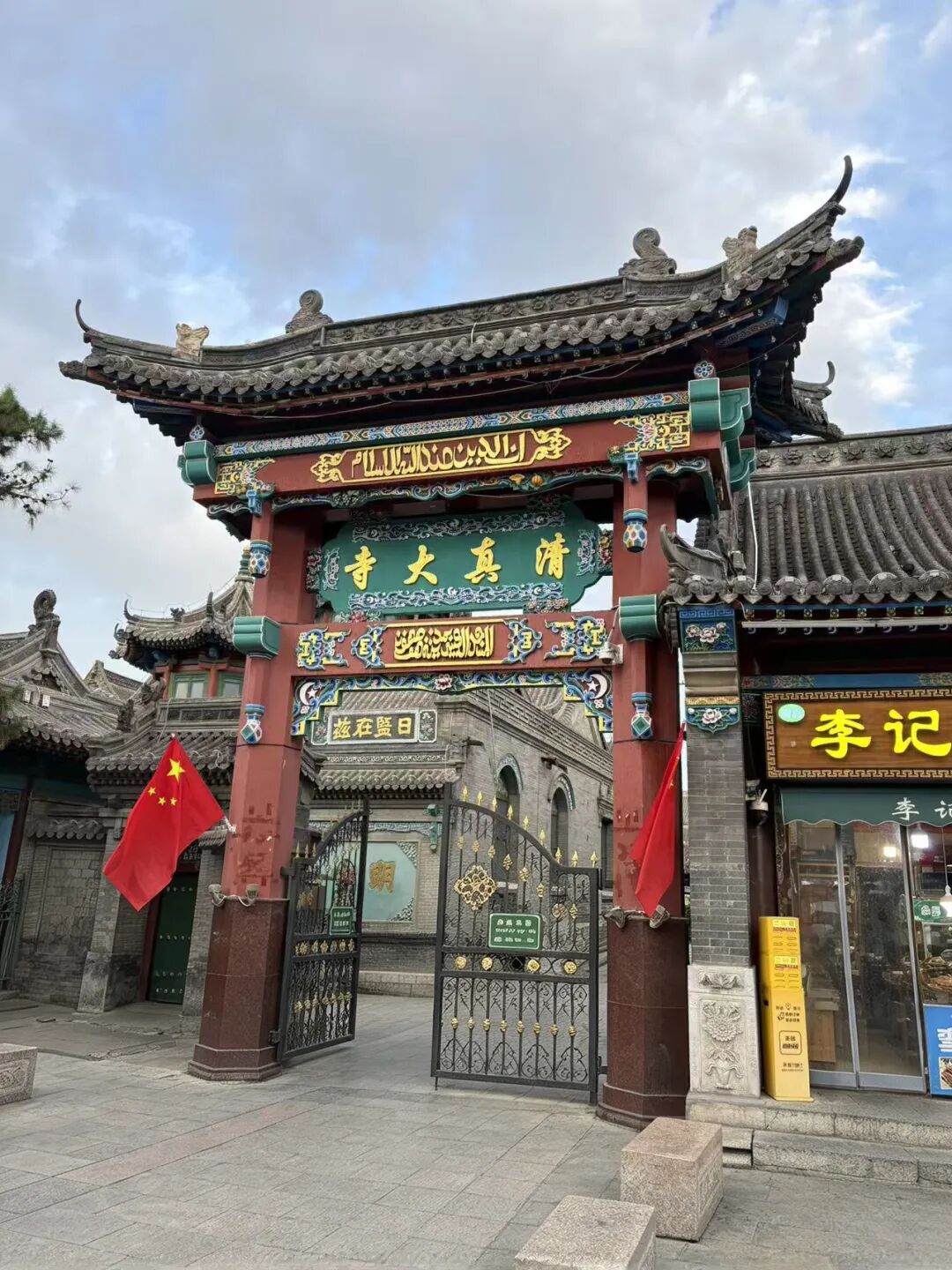
Amidst the bustling streets of Tongdao South Street in Hohhot's Huimin District, where traffic and chatter never stop, a quick turn reveals vermilion gates and gray-blue ancient walls standing quietly, blocking out the city's lively hustle and bustle. This is the Hohhot Great Mosque, the city's oldest and largest existing mosque, and a Major Historical and Cultural Site Protected at the National Level. It is hailed as an architectural gem on the northern frontier that tells a rich story of cultural blending.
Push open the iron gate, and the loud noise instantly fades away. Three successive courtyards unfold before you, making time feel like it's slowing down.
The mosque was first built in the thirty-second year of the Kangxi reign of the Qing dynasty, in 1693 AD. Back then, merchants traveled back and forth through Guihua City, the camel bells of the Tea Horse Road rang out, and Hui Muslim ancestors settled in the frontier to build their initial place of worship. It went through several renovations later on: rebuilt in the fifty-fourth year of the Qianlong reign, expanded on a large scale through donations from believers in 1923, and saw its iconic moon-sighting tower completed in 1939, slowly shaping the complete layout we see today. Through over three hundred years of wind and rain, every single brick and tile holds memories of the past.
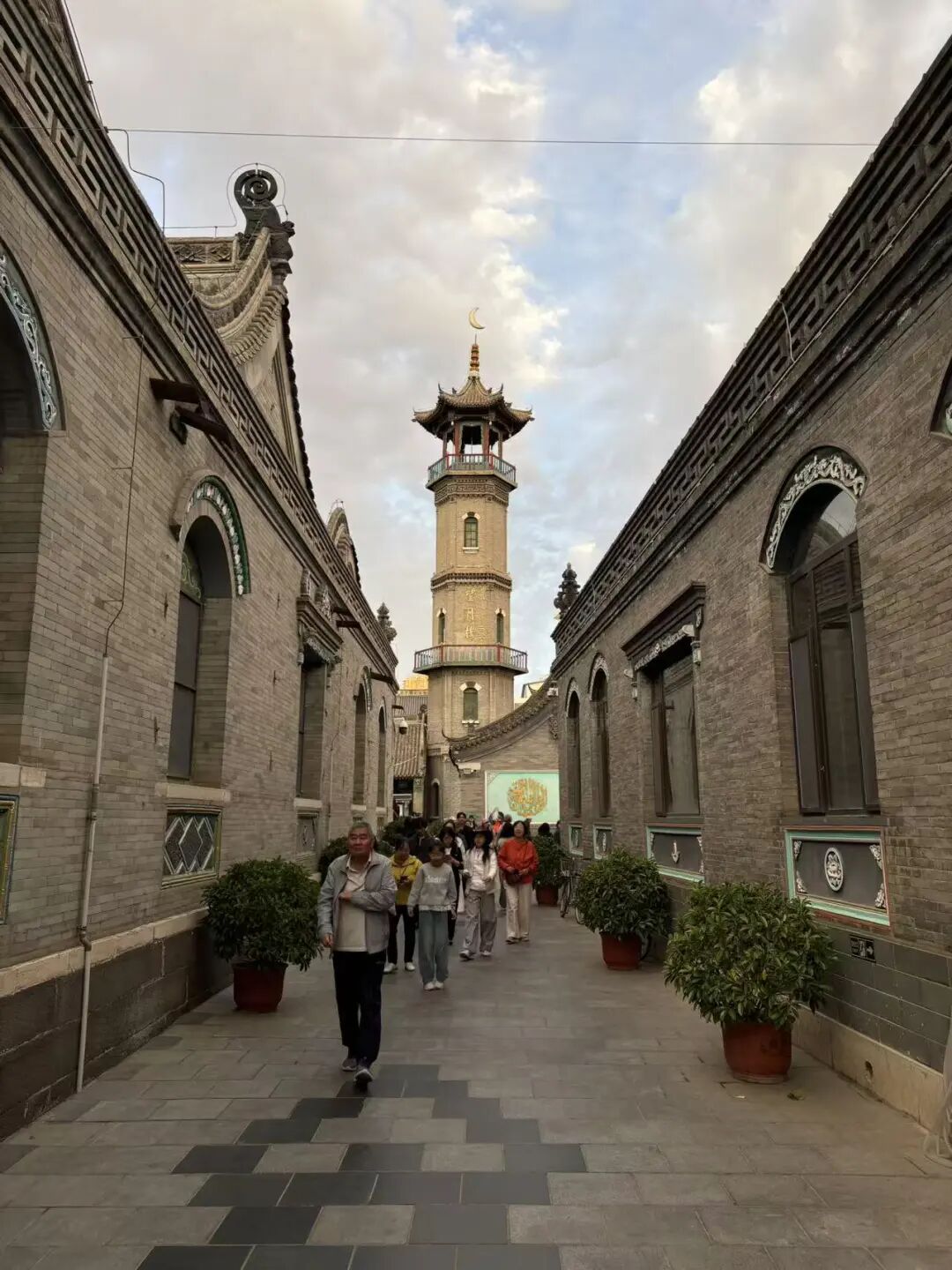
What makes it so touching is its unique blend of styles native to China's northern frontier.
The entire complex follows the central axis layout of traditional Chinese architecture, featuring Xieshan-style roofs, feiyan dougong (traditional flying eaves and brackets), and gray brick screen walls, presenting a familiar oriental courtyard aesthetic. Meanwhile, the patterns, calligraphy, and orientation strictly adhere to Islamic cultural traditions, as the mosque faces east-west toward Mecca with solemnity and devotion.
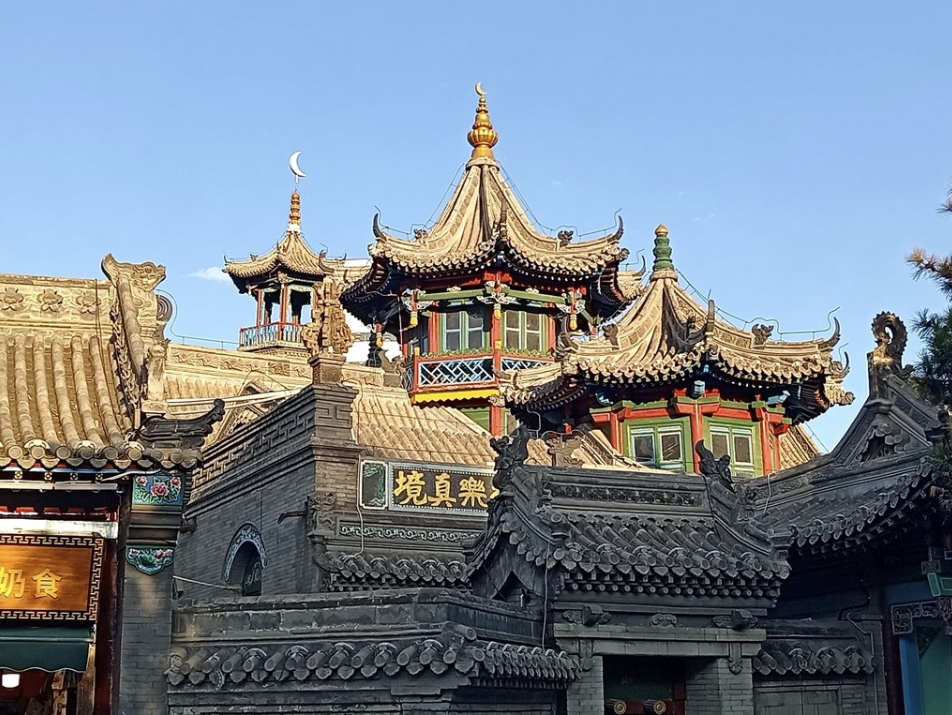
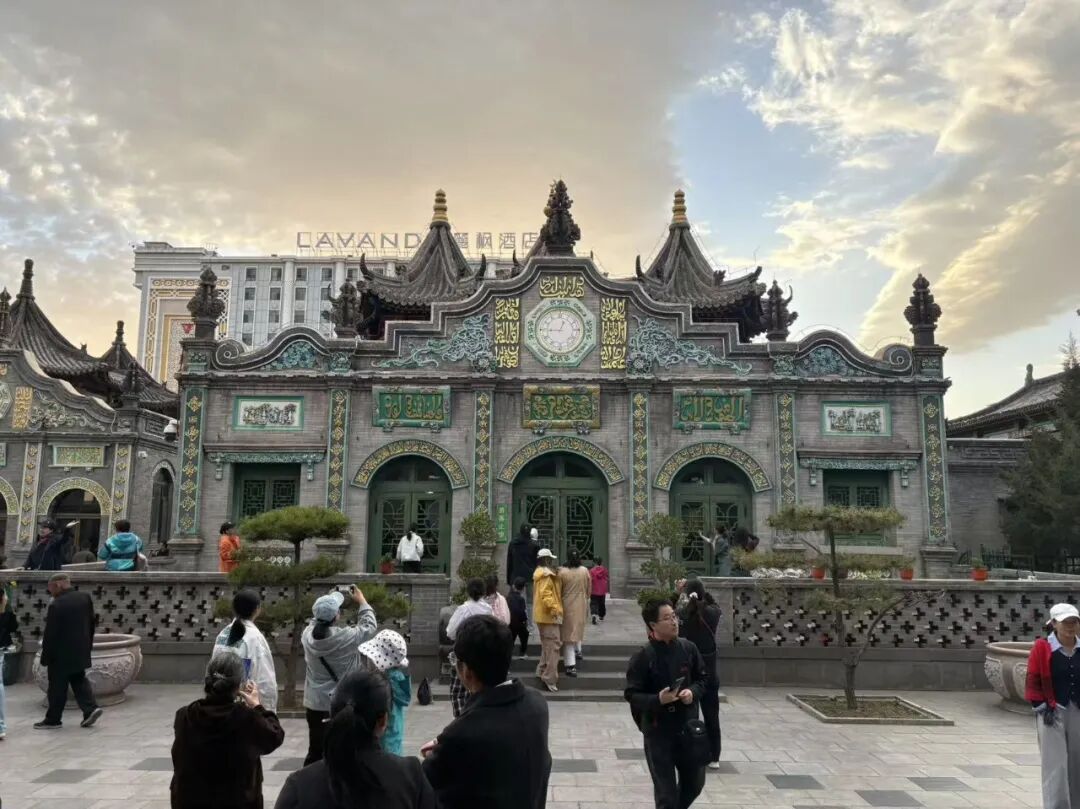
As the core structure, the main prayer hall is magnificent in scale. The building adopts an interlocking roof style with staggered layers, and its window frames and walls are covered in delicate brick carvings, where floral motifs and Arabic script calligraphy are interwoven with elegant, clean lines rather than complex clutter. The interior of the hall is spacious and solemn, holding hundreds of people praying at the same time. Red lacquered pillars stand quietly while sunlight streams through the window lattices onto the gray brick floor, creating a quiet and powerful atmosphere.

In the southeast corner of the courtyard, the moon-sighting tower stands as the visual pinnacle of the entire mosque. Rising about 33 meters high with a six-sided clustered-peak design, a wooden spiral staircase winds its way up. In ancient times when Ramadan arrived, the Imam would climb the tower to sight the moon to determine the start and end of fasting. Today, the breeze sweeps past the copper bells on the eaves, and their crisp sound echoes over the city. Standing downstairs and looking up, the crescent moon symbol atop the spire stands out sharply against the clear blue sky, which is the deepest impression many people have of the Great Mosque.

Between the stele corridors, ancient stone tablets are quietly displayed, recording the history of renovations down through the dynasties. The mosque also preserves ancient handwritten copies of the Quran, whose ink remains clear even after centuries. These stone steles, scriptures, woodwork, and brick carvings are not just cultural relics; they are living proof of multiple ethnic groups living and thriving together on the grasslands. Across the land of Hohhot, the chanting of Tibetan Buddhist temples, the prayers of ancient mosques, and grassland nomadic songs blend with one another, forming the city's rich cultural backdrop.
Stepping out of the mosque, right outside the door is the lively Islamic Style Street. The aromas of shaomai (steamed dumplings), beizi (baked flatbreads), and beef and lamb fill the alleys, buzzing with people in old shops and markets. The ancient mosque doesn't isolate itself from everyday life; instead, it coexists harmoniously and gently with the surrounding neighborhood. A solemn space for faith sits right next to the daily routines of ordinary people, and this exact kind of gentle inclusiveness is completely unique to Hohhot.
Address: No. 28, Tongdao South Street, Huimin District, Hohhot
Admission: Free to visit
✨ Visiting Etiquette: Because this is an active religious site, please keep your voice down, dress appropriately, do not wander into the prayer areas, and respect local religious customs.
⏰ Recommended Combo: You can pair your visit with a stroll down Islamic Style Street to soak in the old town's vibrant atmosphere. There are plenty of halal legacy eateries nearby, making it a great spot to try authentic Hohhot flavors.
The camel bells have faded away, but the ancient mosque remains.
For over three hundred years, this Great Mosque has guarded a quiet corner of Hohhot, bearing witness to generations of travelers coming and putting down roots. Traditional Chinese flying eaves hold up the Islamic star and crescent moon. This frontier grassland city is diverse, inclusive, gentle, and profoundly deep.
If you ever visit Hohhot, don't just rush off to the grasslands. Take half a day to step inside this ancient temple, listen to the wind blowing through the moon-sighting tower, and touch the chapters of time written by multi-ethnic harmony across the gray bricks.
#HohhotGreatMosque #HohhotCheckIn #HohhotCityWalk #SinoIslamicArchitecture #InnerMongoliaTourism
Hohhot Great Mosque at Night: Exploring the Kangxi-Era National Heritage Site and Architecture in Inner Mongolia
Articles • Hasan09 posted the article • 0 comments • 20 views • 1 days ago
Taking a night trip to the Hohhot Great Mosque, a major historical and cultural site protected at the national level, located on South Tongdao Street in Hohhot's Huimin District. We captured the solemn silhouettes of the layered ancient roofs, the moon-sighting tower, and the brick-carved gate tower built back in the 32nd year of the Kangxi reign, all beautifully lit up by warm yellow lights.
Stopping by the Great Mosque at dusk, located at No. 28 South Tongdao Street in Hohhot's Huimin District, the stacked ancient rooftops are outlined against the warm glow of the yellow lights. First built during the 32nd year of the Kangxi reign, this ancient architectural complex is a national-level protected cultural relic and a super iconic historical landmark in the Huimin District. view all
Taking a night trip to the Hohhot Great Mosque, a major historical and cultural site protected at the national level, located on South Tongdao Street in Hohhot's Huimin District. We captured the solemn silhouettes of the layered ancient roofs, the moon-sighting tower, and the brick-carved gate tower built back in the 32nd year of the Kangxi reign, all beautifully lit up by warm yellow lights.

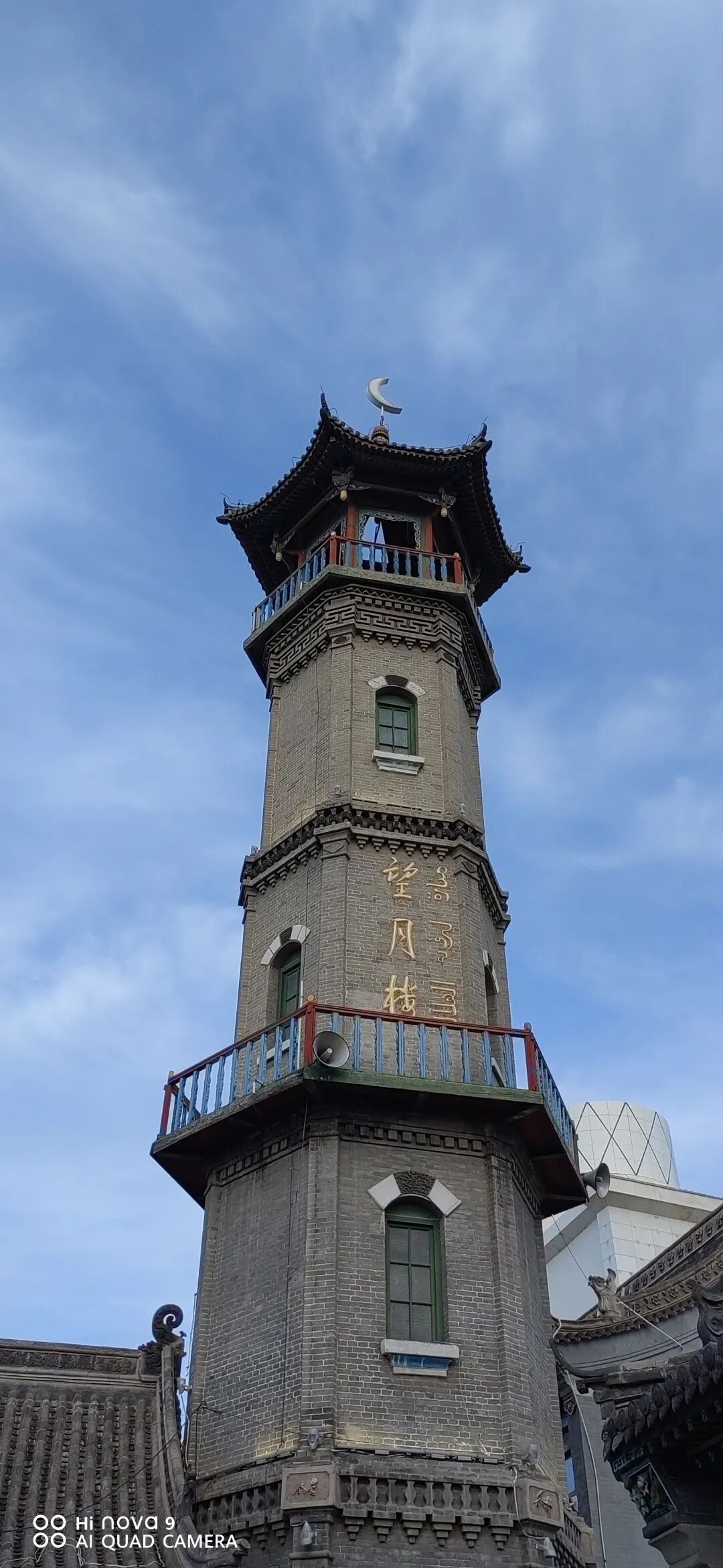
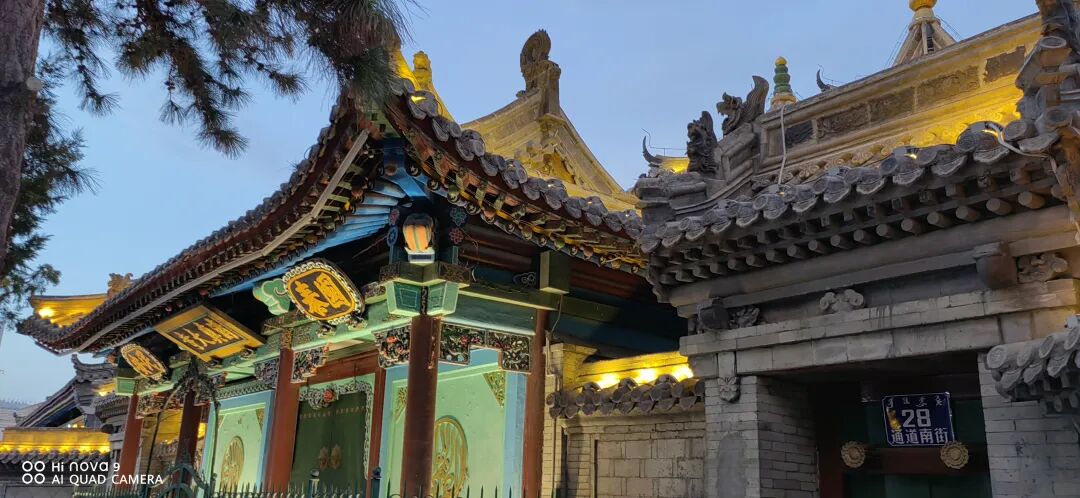
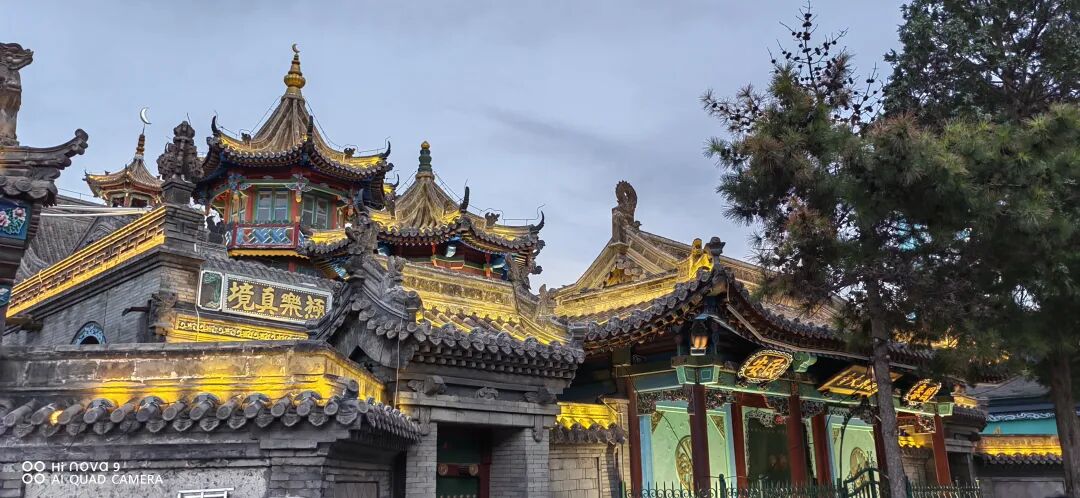
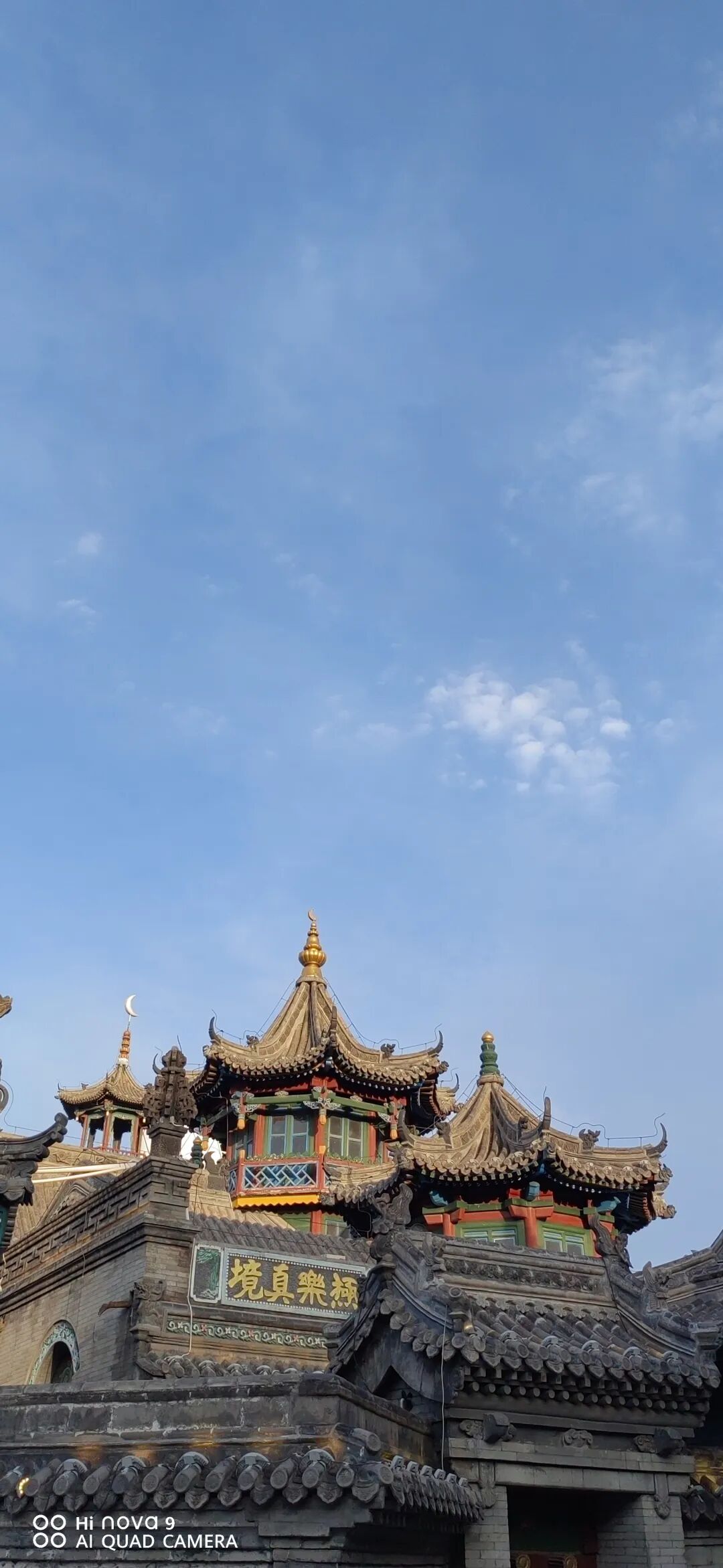
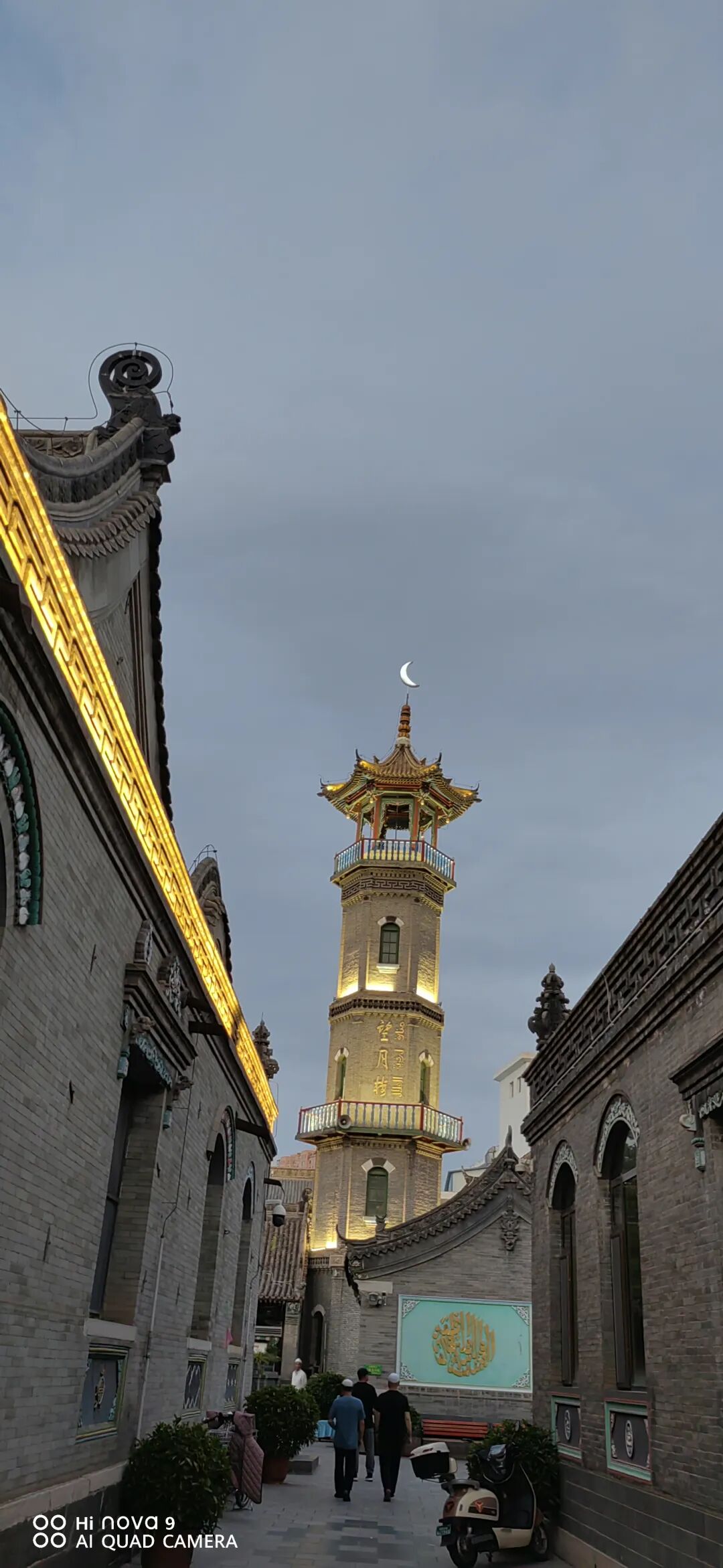
Stopping by the Great Mosque at dusk, located at No. 28 South Tongdao Street in Hohhot's Huimin District, the stacked ancient rooftops are outlined against the warm glow of the yellow lights. First built during the 32nd year of the Kangxi reign, this ancient architectural complex is a national-level protected cultural relic and a super iconic historical landmark in the Huimin District.
Exploring Shadian Grand Mosque in Yunnan: The Largest Islamic Architecture in Southwest China
Articles • Hasan09 posted the article • 0 comments • 21 views • 1 days ago
I took a road trip to check out the Shadian Grand Mosque, which sits right at the intersection of Gejiu, Mengzi, and Kaiyuan in Yunnan Province’s Honghe Prefecture. These 29 high-res photos show off the massive prayer hall—first built during the Ming Dynasty’s Hongzhi era—the 21,000-square-meter complex, the four towering minarets, and the stunning blend of Chinese and Arabic architectural styles.
On October 22, we hopped in our RV and headed out from the home of crossing-the-bridge rice noodles to the Shadian Grand Mosque in the Shadian sub-district of Gejiu, Yunnan. Located where the cities of Gejiu, Mengzi, and Kaiyuan meet, this isn't just the biggest mosque in Southwest China; it’s also ranked among the 100 most famous mosques in the entire country.
Historical records show that the mosque dates back to the Hongzhi years of the Ming Dynasty (1488-1505). It started as a super simple thatched hut, but after centuries of history, it’s been rebuilt and renovated plenty of times. The main prayer hall we see today was built between 2005 and 2010, with funding coming mostly from the generous donations of the local Muslim community.
The mosque covers a massive 21,000 square meters, with the prayer hall itself taking up 17,700 square meters, leaving enough space for over 10,000 believers to perform their daily prayers at once. Four minarets tower into the clouds at the corners, laid out symmetrically along the central axis and complementing the hall and study rooms. The architectural design is a clever fusion of Islamic features and traditional Chinese palace style, where feiyan dougong (traditional flying eaves and brackets) perfectly match the domes and arched doorways to create a look that is both solemn and elegant.
As the heart of the Hui Muslim community in Southern Yunnan, the Shadian Grand Mosque hosts five daily prayers and serves as a major hub for Islamic culture and religious study. I managed to snap some photos of this incredible site during the gaps between prayers, capturing some unforgettable moments during both the day and night. view all
I took a road trip to check out the Shadian Grand Mosque, which sits right at the intersection of Gejiu, Mengzi, and Kaiyuan in Yunnan Province’s Honghe Prefecture. These 29 high-res photos show off the massive prayer hall—first built during the Ming Dynasty’s Hongzhi era—the 21,000-square-meter complex, the four towering minarets, and the stunning blend of Chinese and Arabic architectural styles.
On October 22, we hopped in our RV and headed out from the home of crossing-the-bridge rice noodles to the Shadian Grand Mosque in the Shadian sub-district of Gejiu, Yunnan. Located where the cities of Gejiu, Mengzi, and Kaiyuan meet, this isn't just the biggest mosque in Southwest China; it’s also ranked among the 100 most famous mosques in the entire country.
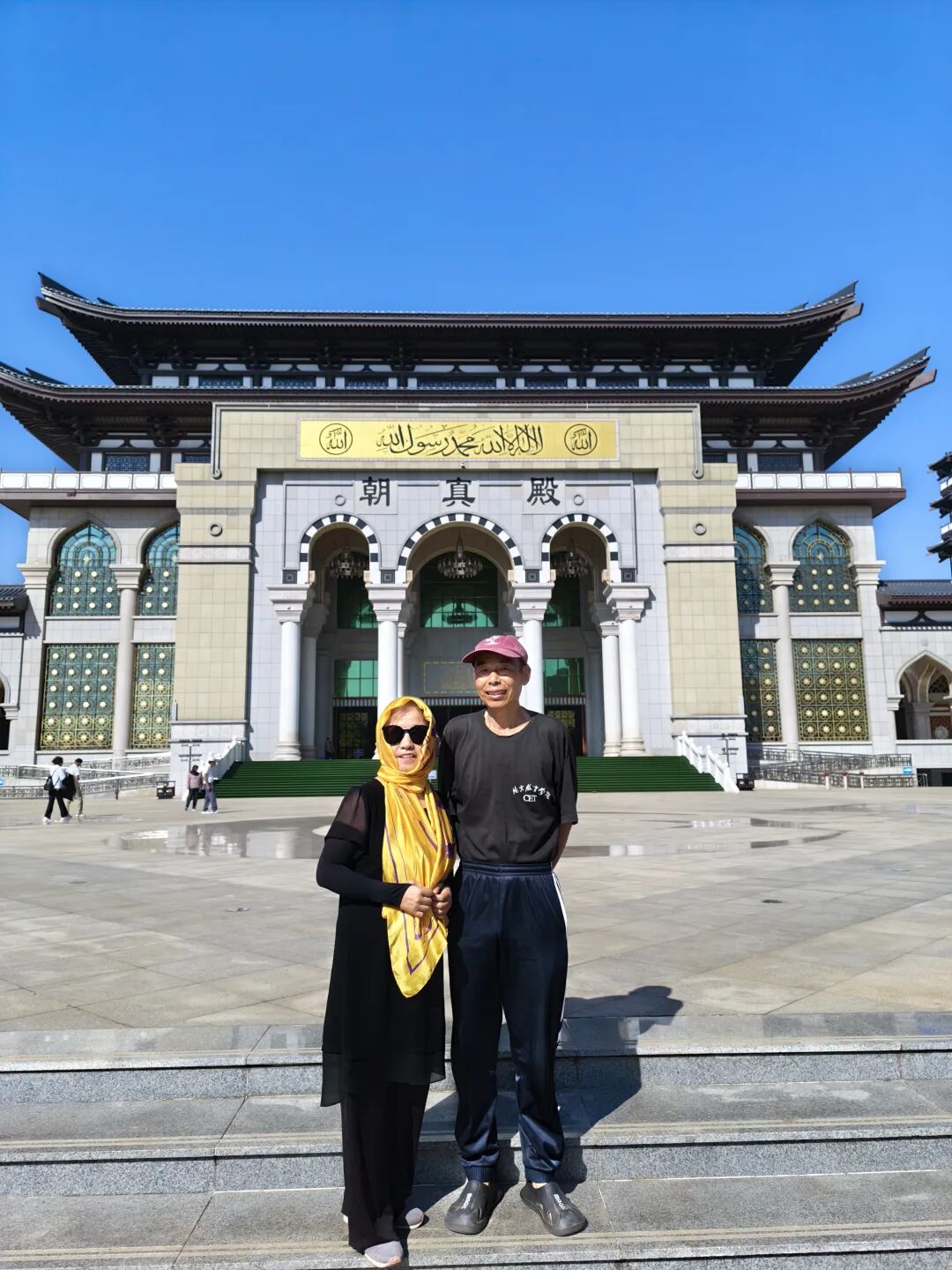
Historical records show that the mosque dates back to the Hongzhi years of the Ming Dynasty (1488-1505). It started as a super simple thatched hut, but after centuries of history, it’s been rebuilt and renovated plenty of times. The main prayer hall we see today was built between 2005 and 2010, with funding coming mostly from the generous donations of the local Muslim community.


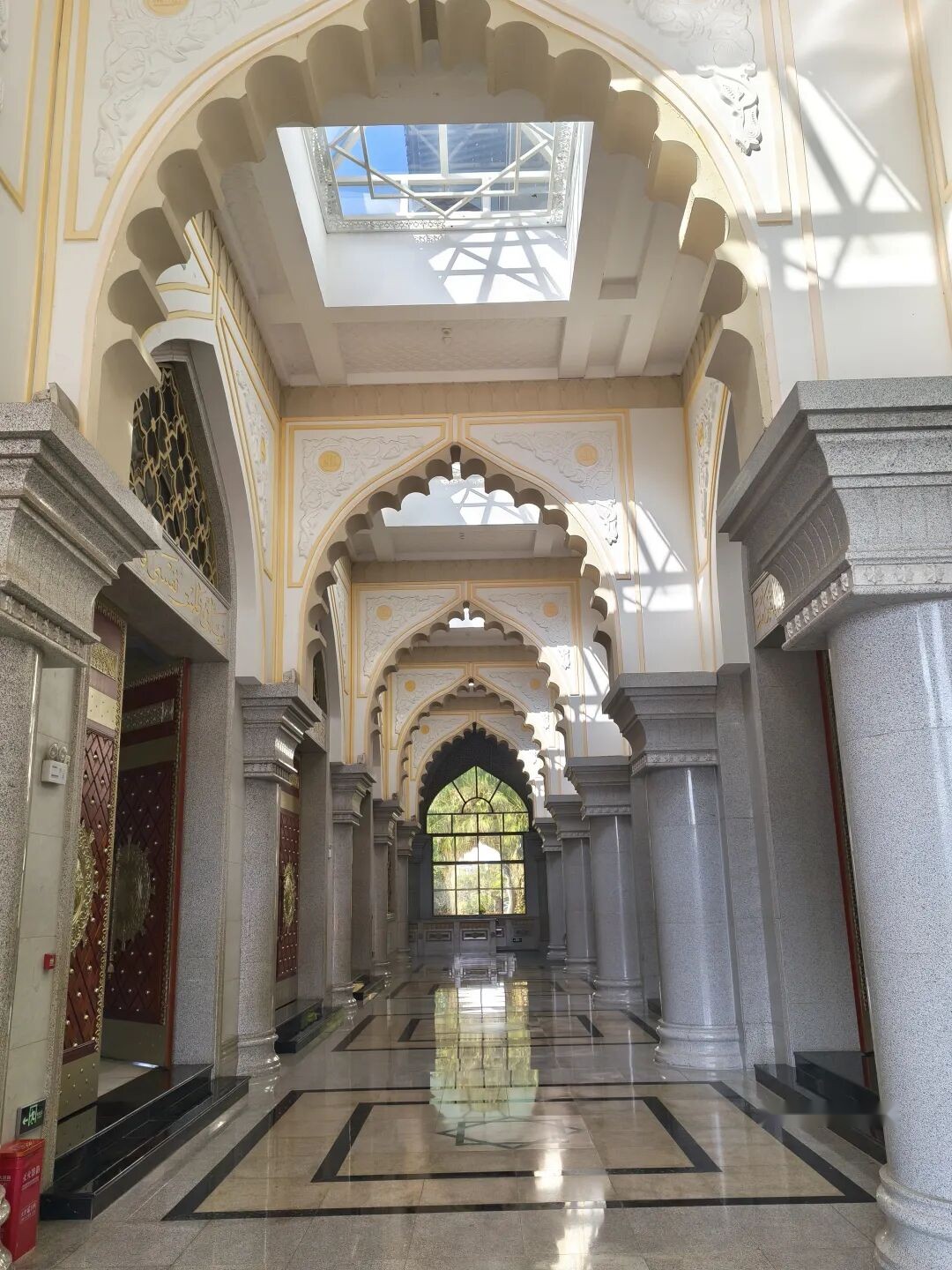
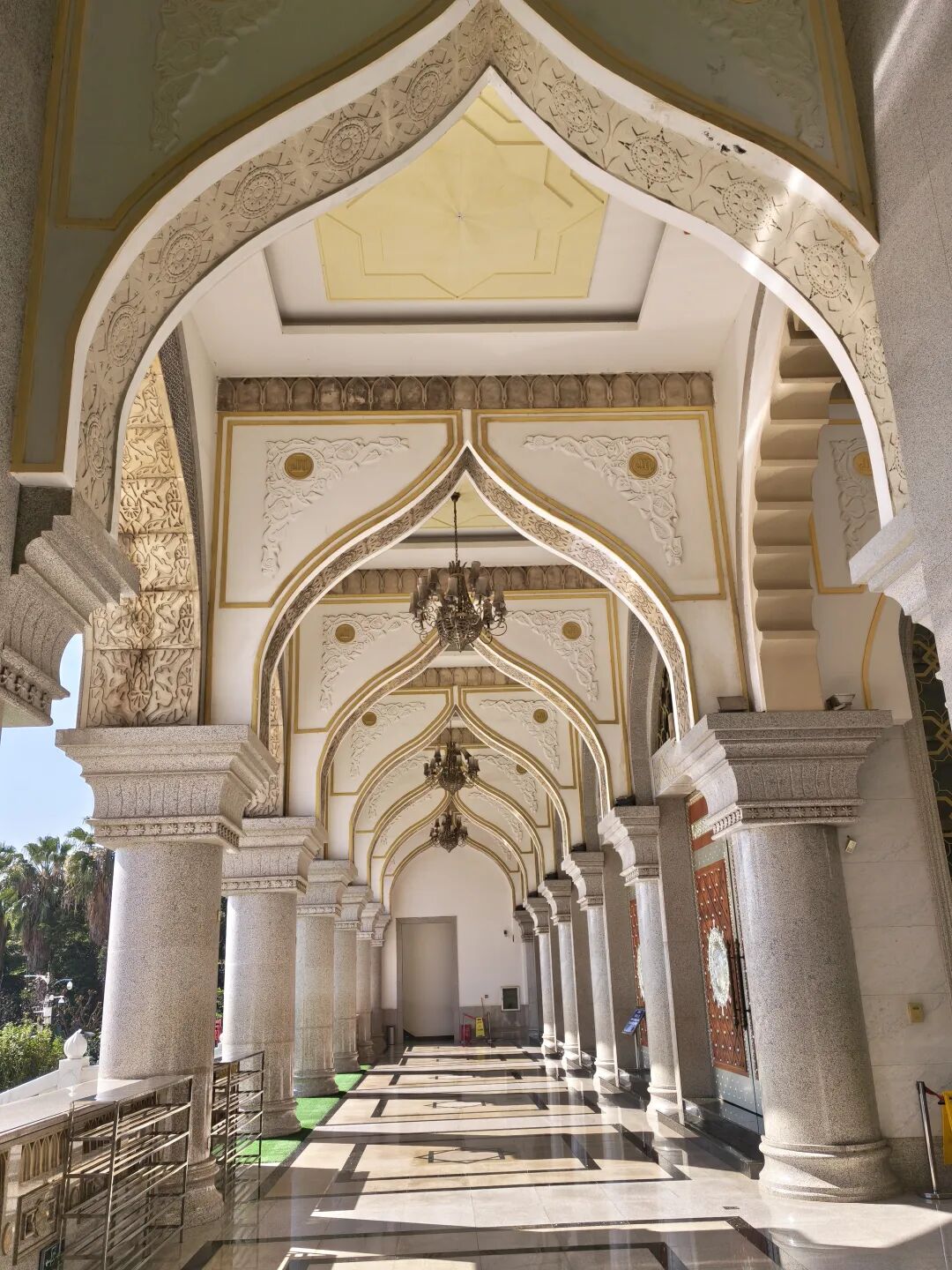
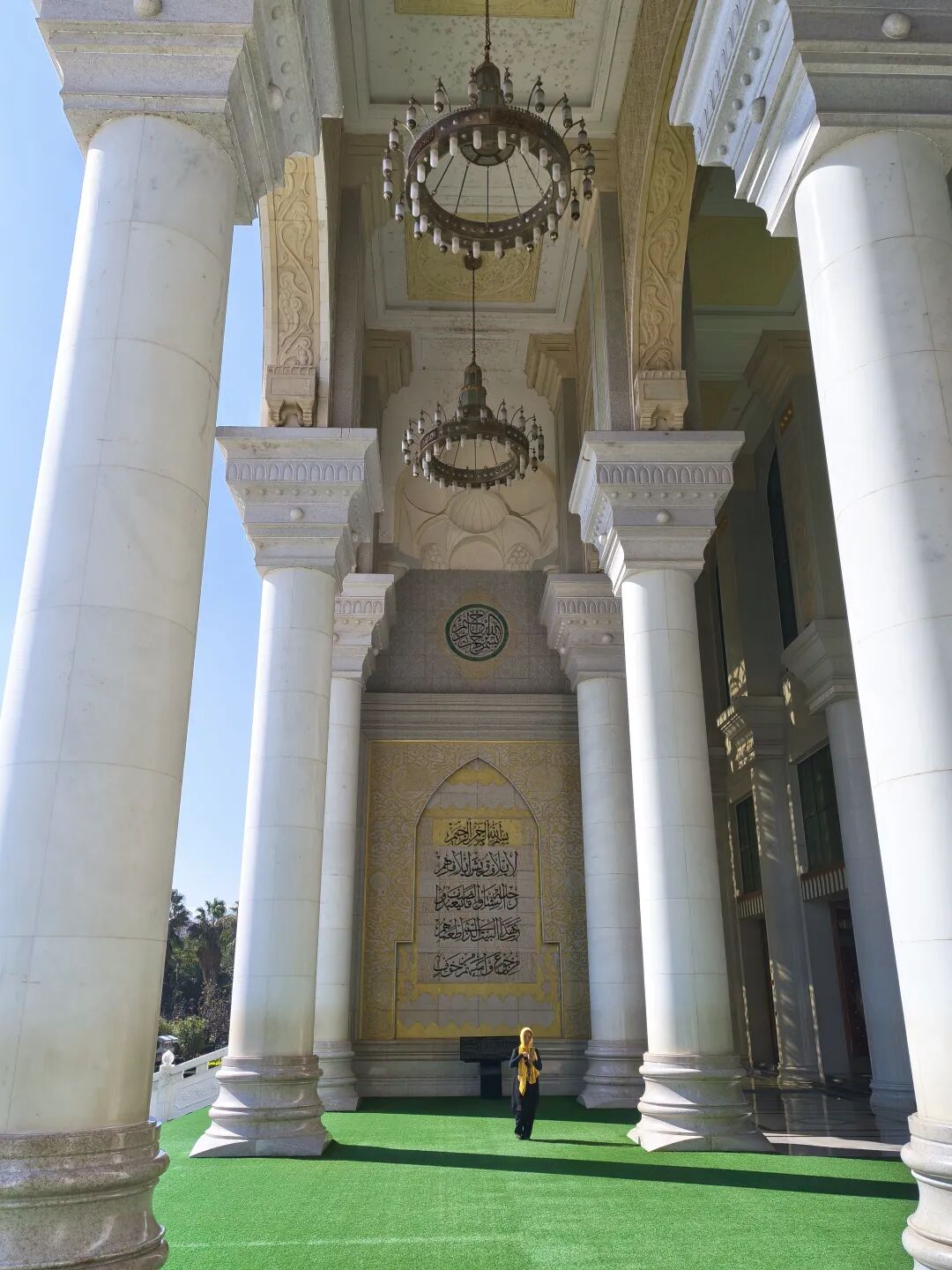
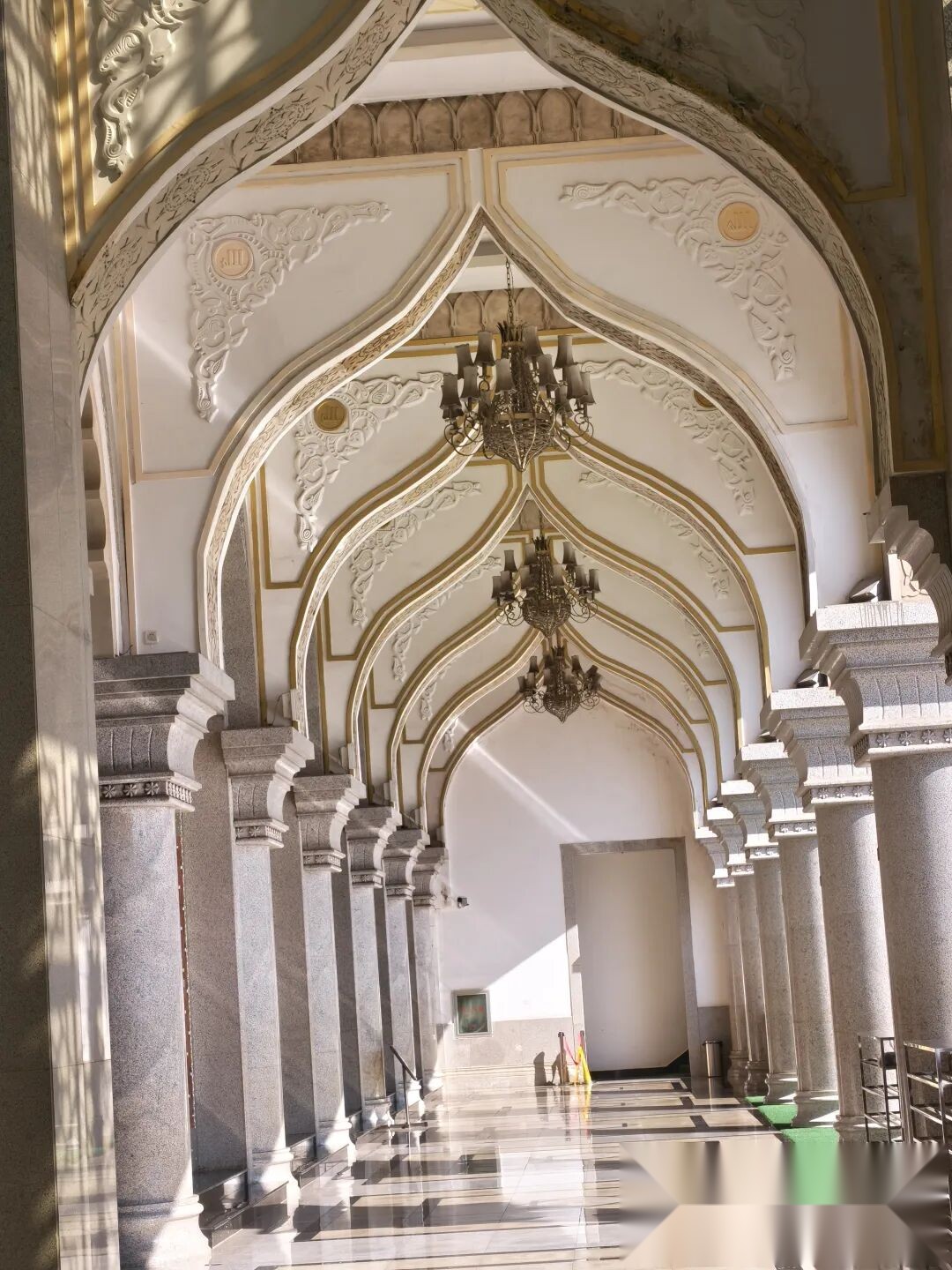
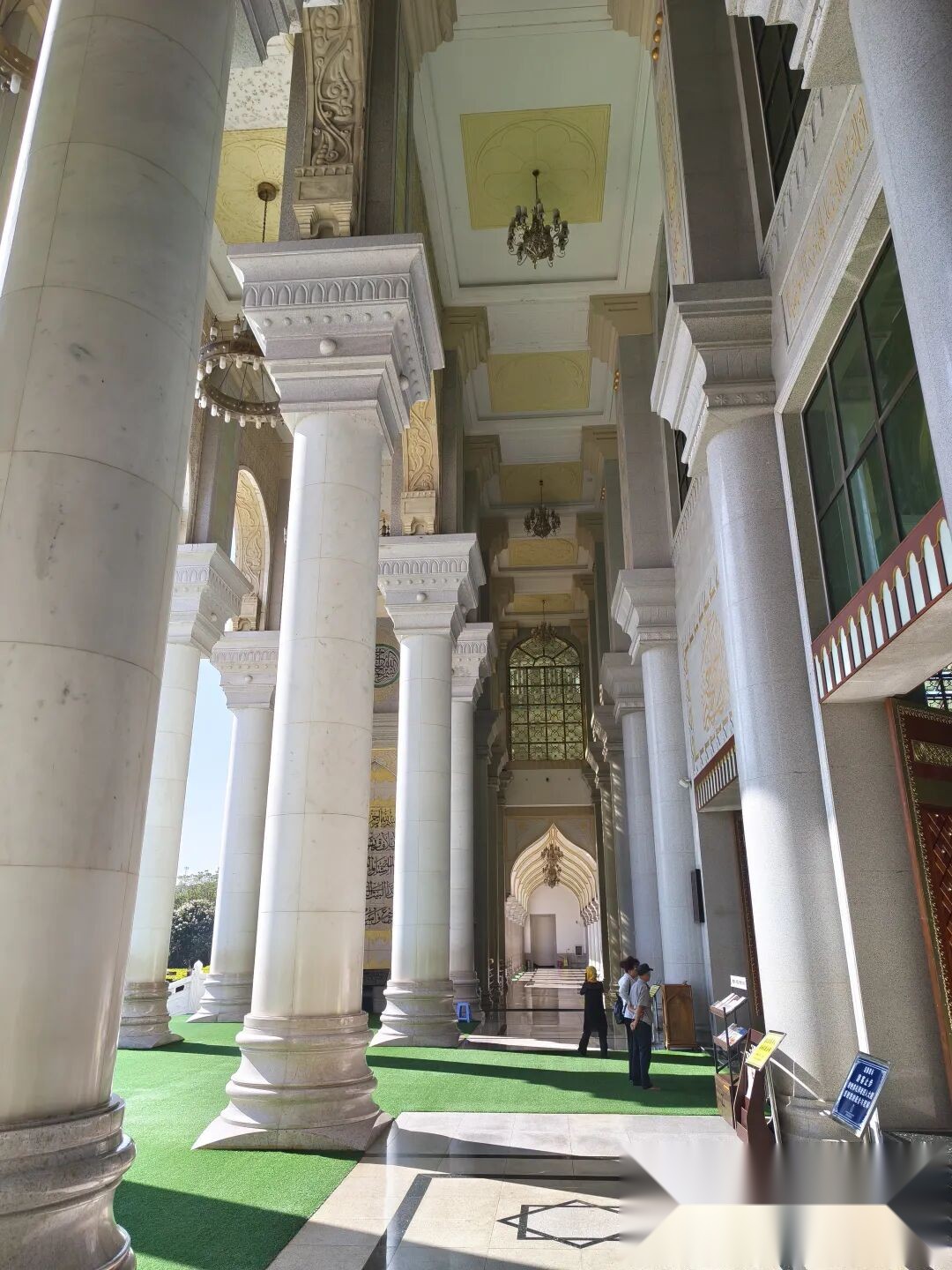
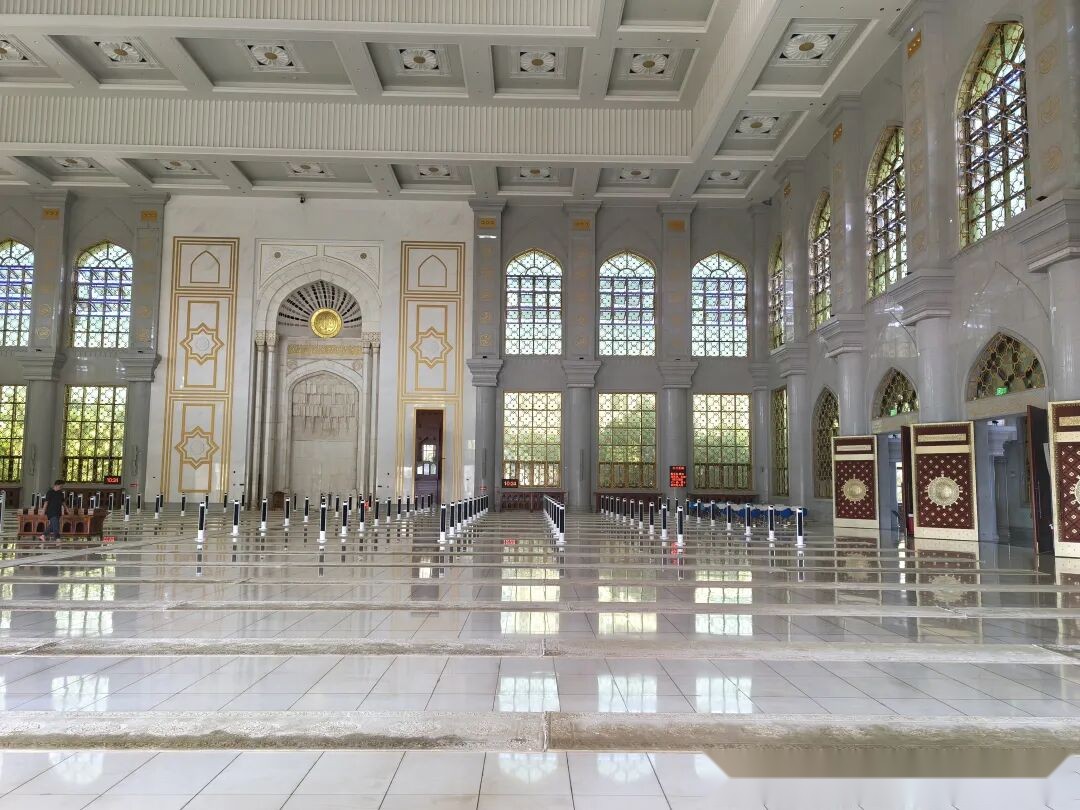
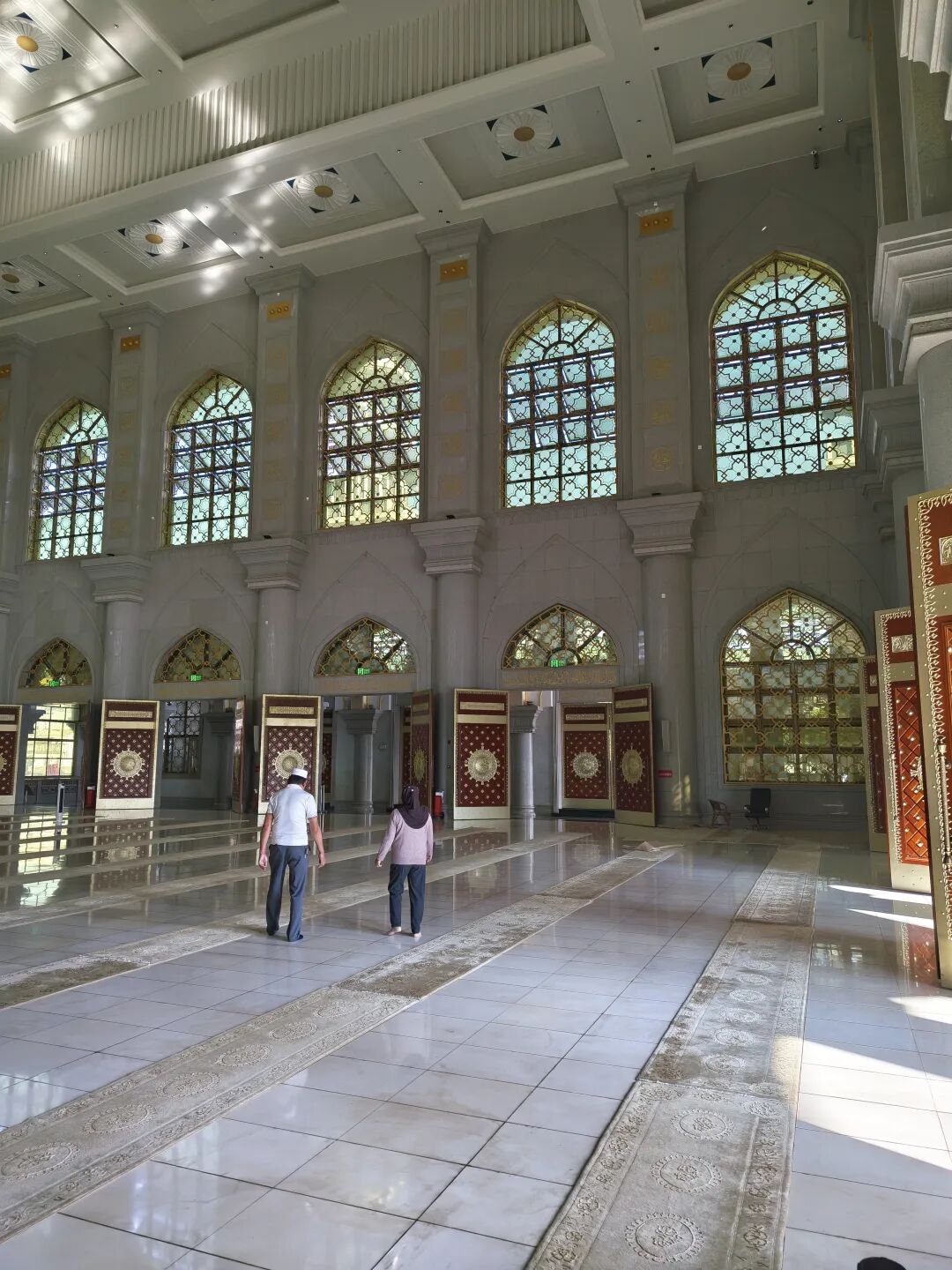
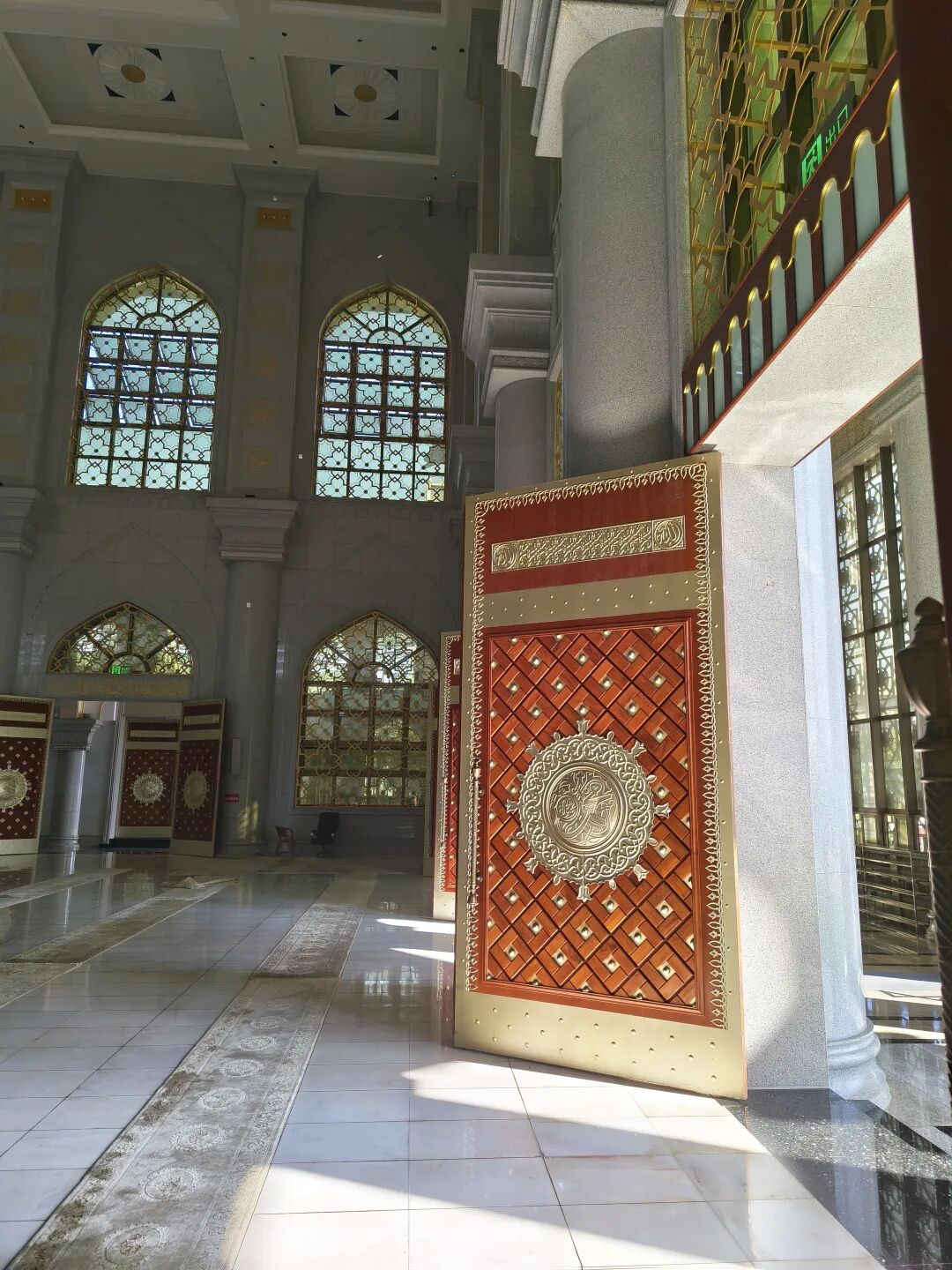
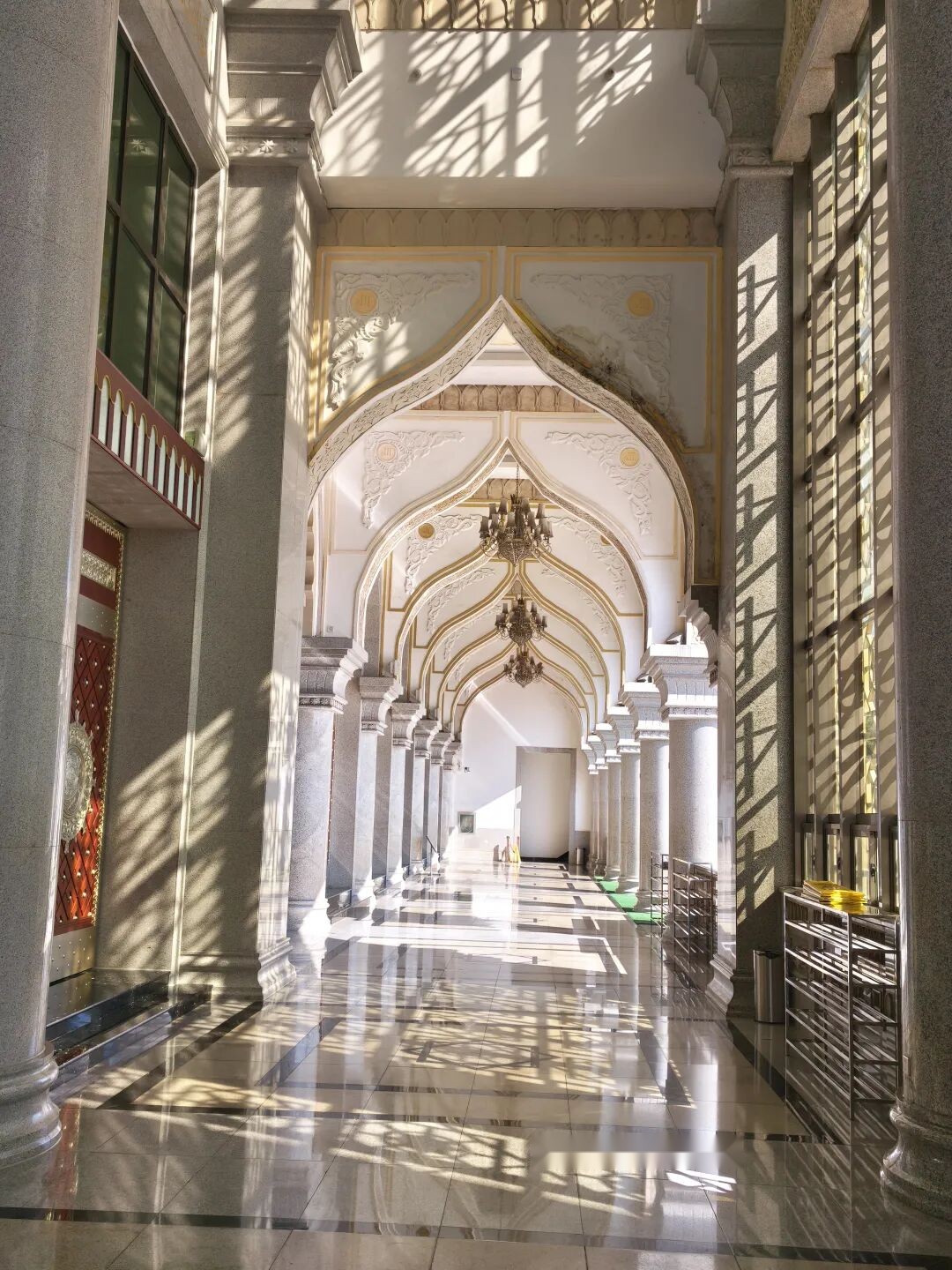


The mosque covers a massive 21,000 square meters, with the prayer hall itself taking up 17,700 square meters, leaving enough space for over 10,000 believers to perform their daily prayers at once. Four minarets tower into the clouds at the corners, laid out symmetrically along the central axis and complementing the hall and study rooms. The architectural design is a clever fusion of Islamic features and traditional Chinese palace style, where feiyan dougong (traditional flying eaves and brackets) perfectly match the domes and arched doorways to create a look that is both solemn and elegant.
As the heart of the Hui Muslim community in Southern Yunnan, the Shadian Grand Mosque hosts five daily prayers and serves as a major hub for Islamic culture and religious study. I managed to snap some photos of this incredible site during the gaps between prayers, capturing some unforgettable moments during both the day and night.
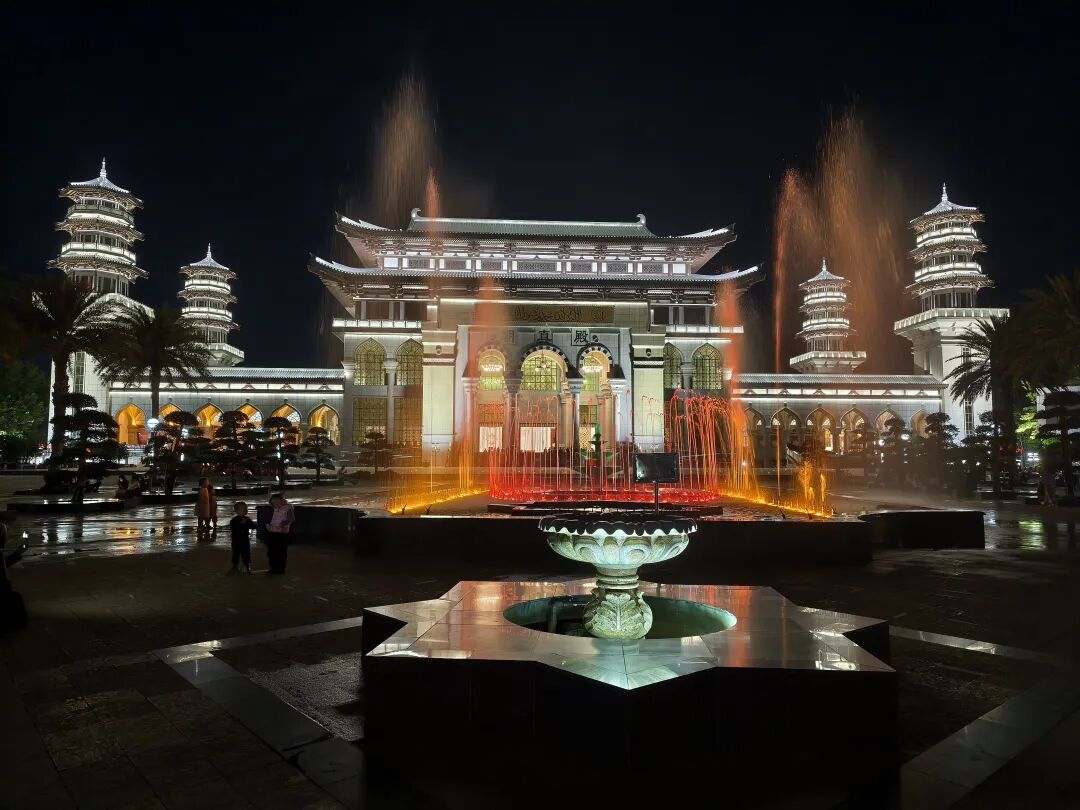
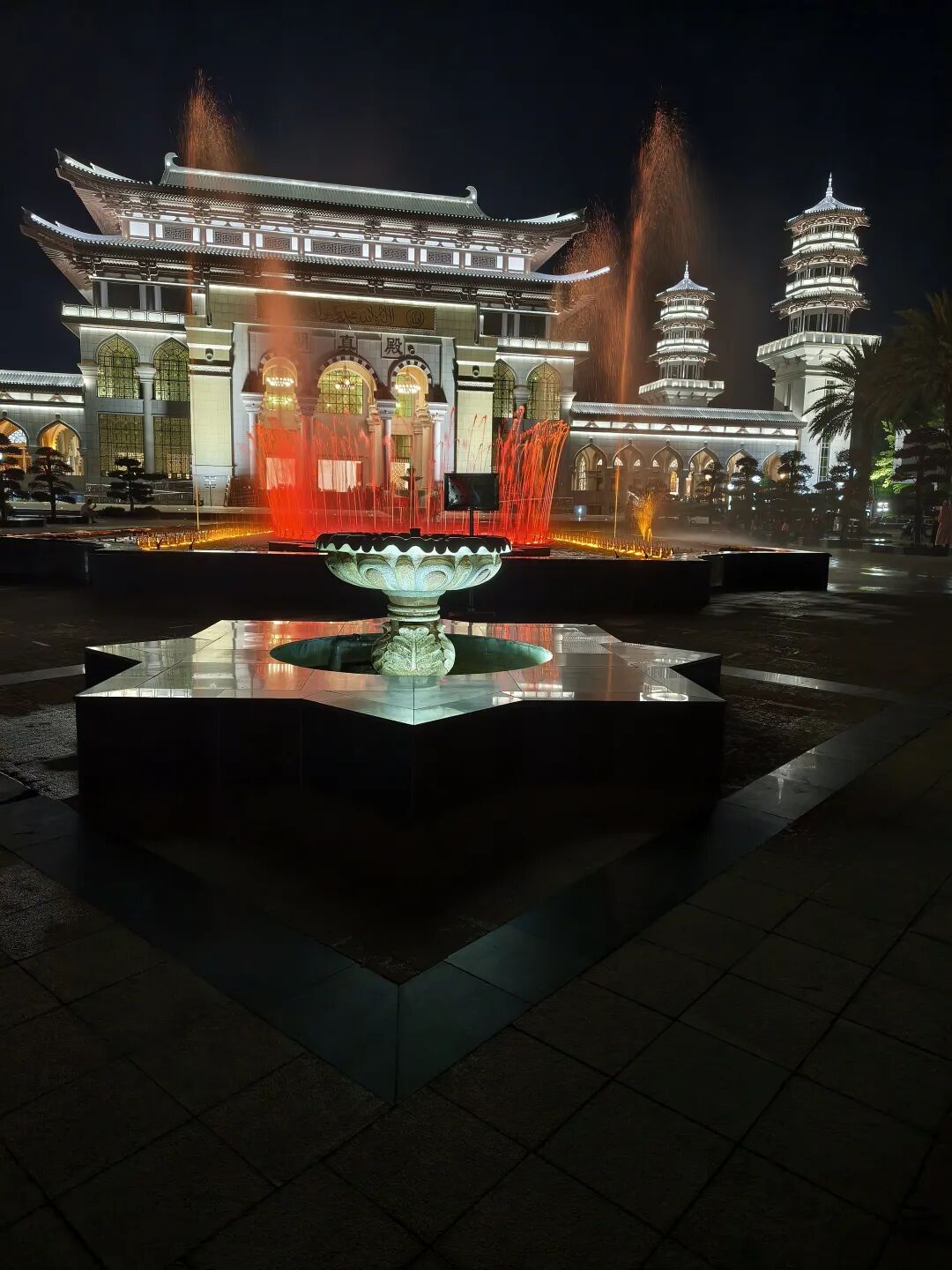
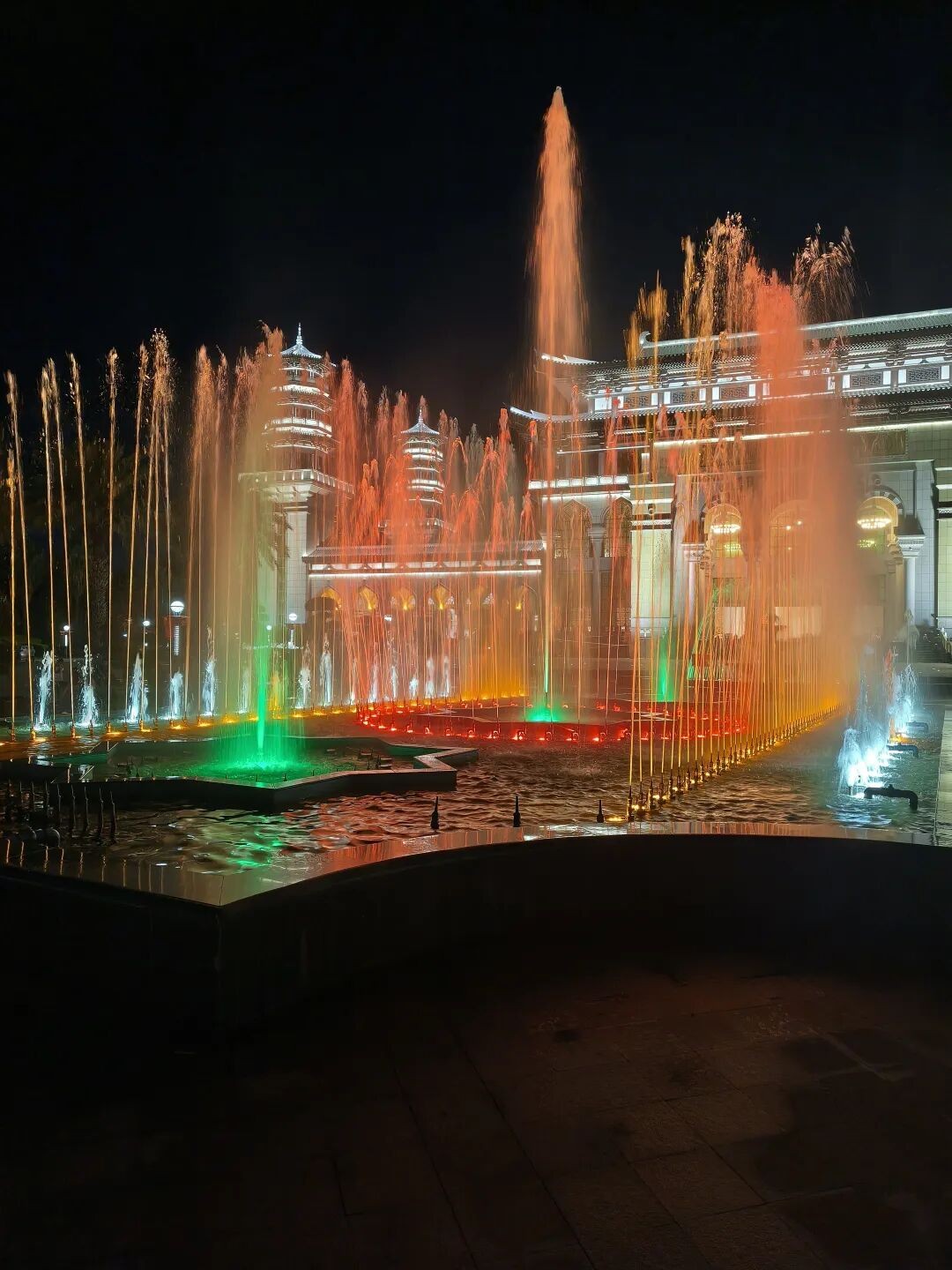
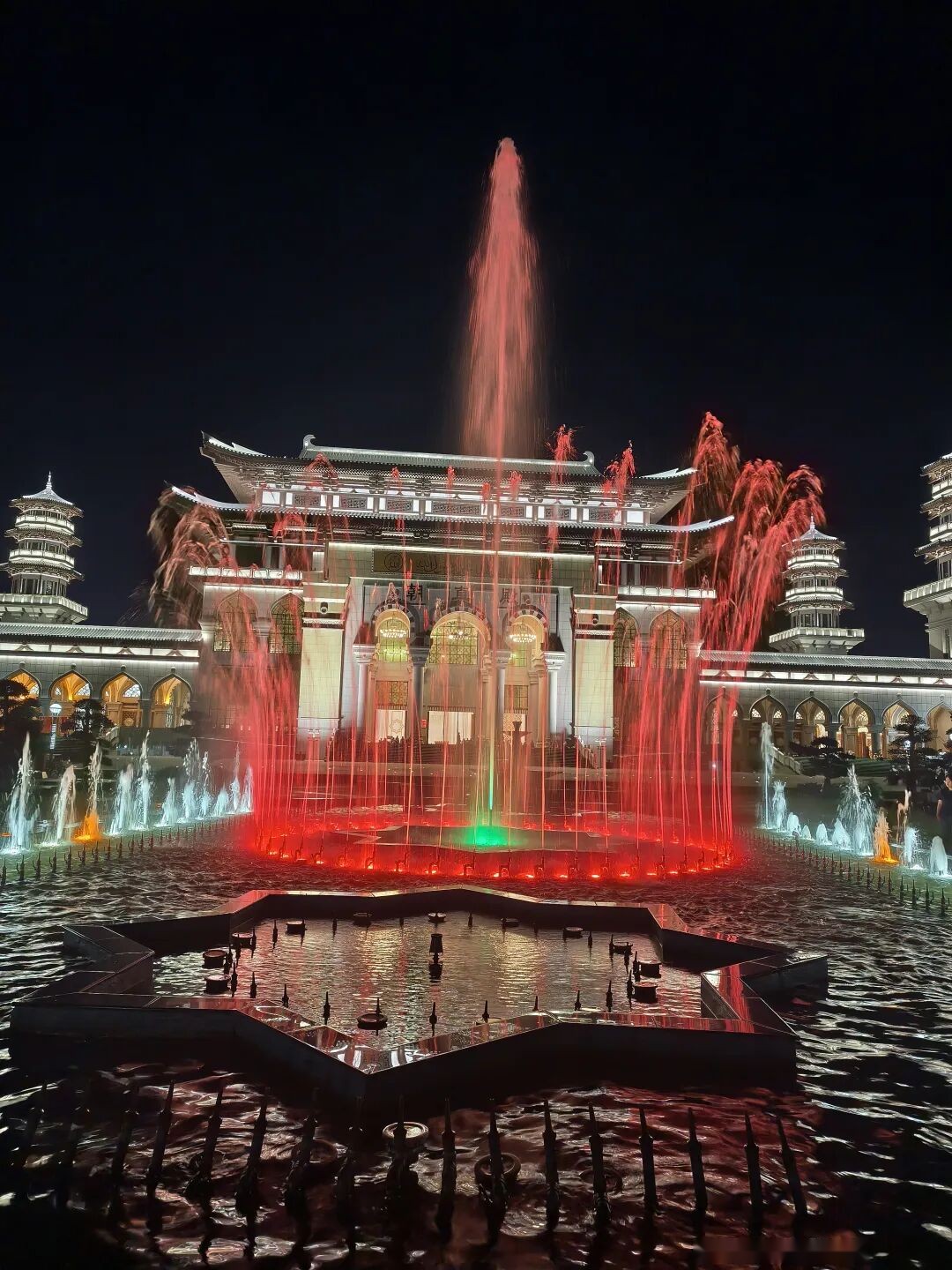


Xi'an Great Mosque Guide: Historic Huajue Lane Islamic Architecture and Tang Dynasty Gardens in China
Articles • Hasan09 posted the article • 0 comments • 19 views • 1 days ago
Explore the Great Mosque of Xi'an nestled deep in Huajue Lane within the Muslim Quarter, a nationally protected cultural heritage site. Discover this ancient Chinese-style garden mosque founded in the first year of Tianbao during the Tang Dynasty, and experience total peace right in the middle of a bustling city surrounded by feiyan dougong (traditional flying eaves and brackets), towering ancient trees, and centuries-old stone steles.
I'd been dying to visit the Xi'an Great Mosque and the Muslim Quarter, and this past April, I finally made it happen. Tucked away deep down the lively Huajue Lane in the Muslim Quarter, it's also known as the Huajue Lane Mosque and ranks as one of the top four major mosques in the country. The mosque was originally built during the first year of Tianbao in the Tang Dynasty, and after going through continuous renovations and expansions across the Song, Yuan, Ming, and Qing dynasties, it boasts a history of over a thousand years and is recognized as a key national cultural relic protection unit.
Unlike the typical mosques you might picture, the main prayer hall and pavilions are all built in traditional Chinese architectural styles, complete with feiyan dougong (traditional flying eaves and brackets), grey bricks, and ancient trees. The entire temple is split into multiple courtyards that unfold step by step along a central axis, blending deep Islamic heritage with the elegant vibes of traditional Chinese gardens in a super rare and seamless cultural mashup.
Outside, the Muslim Quarter is super loud and packed with the amazing smells of local street food, but the moment you step foot inside the mosque, everything goes totally quiet. Towering ancient trees and peaceful courtyards frame quiet stone steles that silently stand to tell the story of a thousand years. Separated by just a single wall, you get this wild contrast between buzzing city life and total, calming serenity that immediately clears your mind.
When visiting Xi'an, most people only know about the Muslim Quarter food scene and totally miss this thousand-year-old ancient temple hidden right in the middle of everyday neighborhood life. Taking some time to slow down, wander around, soak in the vibe of the ancient architecture, and appreciate the story of cultural blending is the ultimate, one-of-a-kind romantic experience in the ancient capital of Xi'an. view all
Explore the Great Mosque of Xi'an nestled deep in Huajue Lane within the Muslim Quarter, a nationally protected cultural heritage site. Discover this ancient Chinese-style garden mosque founded in the first year of Tianbao during the Tang Dynasty, and experience total peace right in the middle of a bustling city surrounded by feiyan dougong (traditional flying eaves and brackets), towering ancient trees, and centuries-old stone steles.
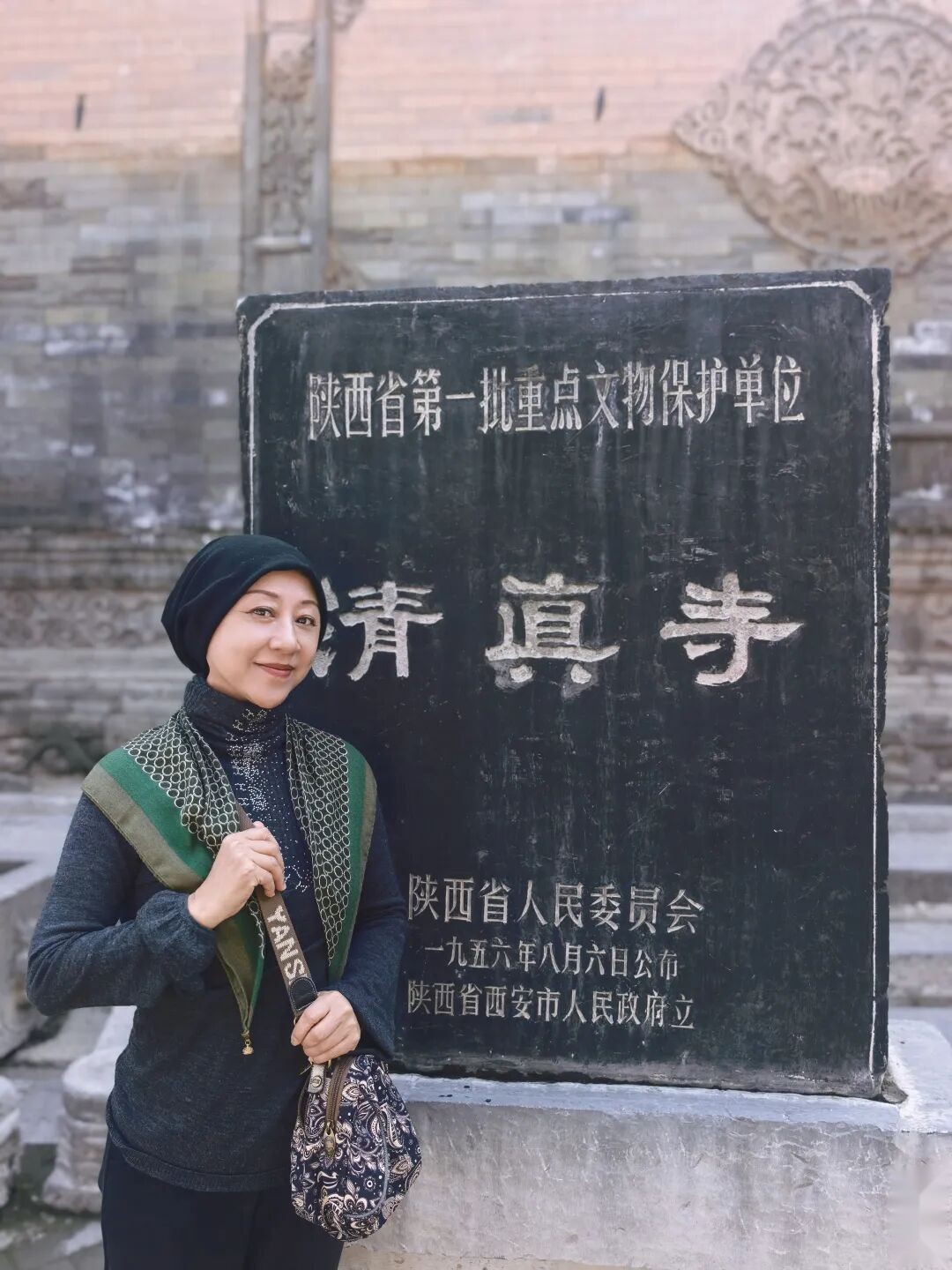
I'd been dying to visit the Xi'an Great Mosque and the Muslim Quarter, and this past April, I finally made it happen. Tucked away deep down the lively Huajue Lane in the Muslim Quarter, it's also known as the Huajue Lane Mosque and ranks as one of the top four major mosques in the country. The mosque was originally built during the first year of Tianbao in the Tang Dynasty, and after going through continuous renovations and expansions across the Song, Yuan, Ming, and Qing dynasties, it boasts a history of over a thousand years and is recognized as a key national cultural relic protection unit.

Unlike the typical mosques you might picture, the main prayer hall and pavilions are all built in traditional Chinese architectural styles, complete with feiyan dougong (traditional flying eaves and brackets), grey bricks, and ancient trees. The entire temple is split into multiple courtyards that unfold step by step along a central axis, blending deep Islamic heritage with the elegant vibes of traditional Chinese gardens in a super rare and seamless cultural mashup.

Outside, the Muslim Quarter is super loud and packed with the amazing smells of local street food, but the moment you step foot inside the mosque, everything goes totally quiet. Towering ancient trees and peaceful courtyards frame quiet stone steles that silently stand to tell the story of a thousand years. Separated by just a single wall, you get this wild contrast between buzzing city life and total, calming serenity that immediately clears your mind.

When visiting Xi'an, most people only know about the Muslim Quarter food scene and totally miss this thousand-year-old ancient temple hidden right in the middle of everyday neighborhood life. Taking some time to slow down, wander around, soak in the vibe of the ancient architecture, and appreciate the story of cultural blending is the ultimate, one-of-a-kind romantic experience in the ancient capital of Xi'an.
Explore Dongguan Mosque Xining: 600-Year-Old Islamic Architecture and History in Qinghai
Articles • Hasan09 posted the article • 0 comments • 17 views • 1 days ago
Take a deep dive into the Dongguan Mosque in Xining, one of the top four mosques in Northwest China and the largest in Qinghai Province. Starting with its founding in 1380 during the 12th year of the Hongwu reign in the Ming Dynasty, this guide breaks down its unique architectural art, which blends Han-style Xieshan (traditional resting mountain) roofs, Tibetan-style gilded vases, and Islamic symmetrical axes through detailed photos and descriptions.
Doing the Northwest Loop road trip brought us to Xining, where we checked out the Xining Dongguan Mosque.
What makes it so special is its combination of Han-style roofs, Tibetan-style vases, and an Islamic axis layout.
The Xining Dongguan Mosque is the largest mosque in Qinghai Province. Alongside the Huajue Lane Mosque in Xi'an, the Qiaomen Mosque in Lanzhou, and the Id Kah Mosque in Kashgar, it is known as one of the four major mosques in Northwest China.
Word has it that there are free guided tours inside, but I missed out and just ended up wandering around on my own. There's an exhibition hall in the tall building right by the entrance, but it was closed when I visited, and I'm super curious about what's on display inside. If any of you have been there, please share!
1. 600 Years of History
It was first built in 1380, the 12th year of the Hongwu reign of the Ming Dynasty. Legend has it that Mu Ying, the Marquis of Xiping who guarded the Gansu and Qinghai regions, teamed up with Xining local chieftain Ye Zhengguo, and after petitioning the imperial court at the request of Hui Muslim community leaders, they got the green light to build it.
During the Tongzhi reign (1862–1874), the mosque was destroyed.
It was rebuilt in 1913. Later on, it was renovated and expanded in 1919, expanded again in 1946, and restored in 1979. The main framework of the complex we see today dates back to this past century.
In March 2013, it was designated as a major historical and cultural site protected at the national level (the seventh batch).
2. Architectural Layout
The Dongguan Mosque faces east and sits to the west. Walking westward along the central axis, you will pass through these areas in order:
Front Three Gates -> Middle Five Gates -> Minarets -> Courtyard -> North and South Side Towers -> Main Prayer Hall.
Architecture
Description
Front Three Gates
The Western-style street-facing main gate, featuring an eight-character plaque above it that reads "Xining Dongguan Qingzhen Dasi" (Xining Dongguan Great Mosque)
Middle Five Gates
Five flat-topped arched doorways
Minarets
Located on both sides of the main entrance tower, featuring rounded dome tops. In the past, these were high vantage points used to call the faithful to prayer (adhan)
Courtyard
Located between the main hall and the side buildings, paved with bluestone slabs
North and South Side Towers
Two-story Xieshan-style side towers featuring facing covered corridors
Main Prayer Hall
The core of the entire mosque features a single-eave Xieshan-style roof covered with green glazed tiles. The ridge of the roof is decorated with a Tibetan-style gilded vase, which is said to have been donated by the monks of Labrang Monastery in Gansu after the main hall was completed. Visitors are not allowed inside the hall, so just taking a quick look from the doorway is enough.
The main hall, the south auxiliary building, and the north auxiliary building form the backbone of the entire mosque.
The Chinese-style palace architecture with feiyan dougong (traditional flying eaves and brackets) blends Islamic, Tibetan, and Han cultural elements in its details, looking breathtaking in the sunset light and shadows.
What also blew me away was the amazing variety of garden greenery and plants.
3. Visit Tips
The Dongguan Mosque in Xining is an active religious site, not a standard tourist attraction.
Visitors are not allowed to enter the main prayer hall, so try to avoid the five daily prayer times when exploring.
Fun Fact: Prayer Times
Prayer times follow the sun: before sunrise, just after noon, in the mid-afternoon, after sunset, and after nightfall. If you see crowds gathering in the courtyard and people taking off their shoes to line up, it means the next prayer is about to begin. Just step aside for a bit and resume exploring after prayers are over.
4. Xi'nanguan Street
Don't rush to leave after exploring the Xining Dongguan Mosque. Xi'nanguan Street is right outside the back gate of the mosque.
The commercial history of this street dates back to the Guangxu reign of the Qing Dynasty, making it one of the earliest commercial hubs in the eastern part of the city. Today, it is an ethnic specialty street where over a hundred types of Northwest Chinese snacks are packed into a stretch of less than 1,000 meters:
Goujiaoniao bing (traditional local pancake), sanzi (crispy fried dough twists), niangpi (thick steamed wheat noodles), sheep intestines, tianpei (fermented highland barley),laozao (fermented glutinous rice)...
Nobody ever walks out of Xi'nanguan Street on an empty stomach.
We ordered goujiaoniao bing, sheep intestines, niangpi, highland barley, lamb skewers, and fruits like tomatoes. The prices are super budget-friendly compared to the rest of the country, though fruit prices are slightly higher here than at the shops just across the street.
Northwestern Niangpi is Not Shaanxi Liangpi
Both Northwestern niangpi and Shaanxi liangpi (cold skin noodles) are made by washing wheat dough to extract gluten and then steaming the batter, but the differences lie in the steaming method and seasoning:
Liangpi: Thin with a tangy and spicy flavor profile;
Niangpi: Thicker and softer, seasoned with vinegar, garlic water, chili oil, and a kick of mustard. view all
Take a deep dive into the Dongguan Mosque in Xining, one of the top four mosques in Northwest China and the largest in Qinghai Province. Starting with its founding in 1380 during the 12th year of the Hongwu reign in the Ming Dynasty, this guide breaks down its unique architectural art, which blends Han-style Xieshan (traditional resting mountain) roofs, Tibetan-style gilded vases, and Islamic symmetrical axes through detailed photos and descriptions.
Doing the Northwest Loop road trip brought us to Xining, where we checked out the Xining Dongguan Mosque.
What makes it so special is its combination of Han-style roofs, Tibetan-style vases, and an Islamic axis layout.
The Xining Dongguan Mosque is the largest mosque in Qinghai Province. Alongside the Huajue Lane Mosque in Xi'an, the Qiaomen Mosque in Lanzhou, and the Id Kah Mosque in Kashgar, it is known as one of the four major mosques in Northwest China.
Word has it that there are free guided tours inside, but I missed out and just ended up wandering around on my own. There's an exhibition hall in the tall building right by the entrance, but it was closed when I visited, and I'm super curious about what's on display inside. If any of you have been there, please share!
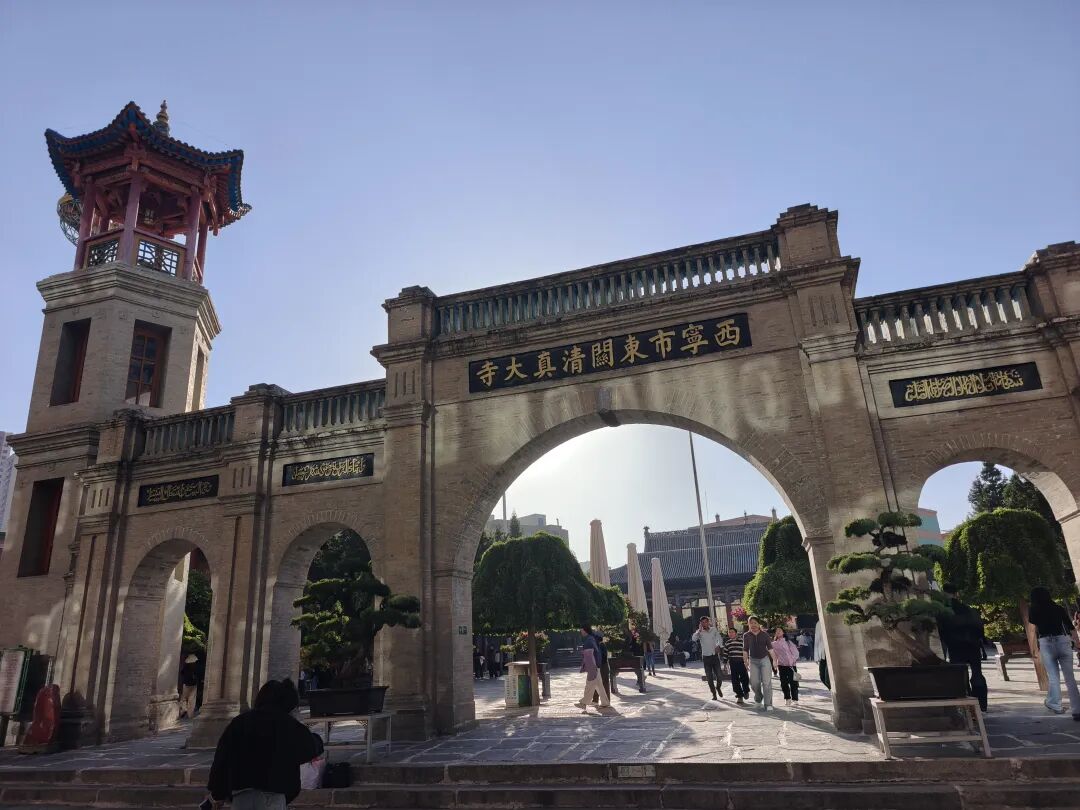
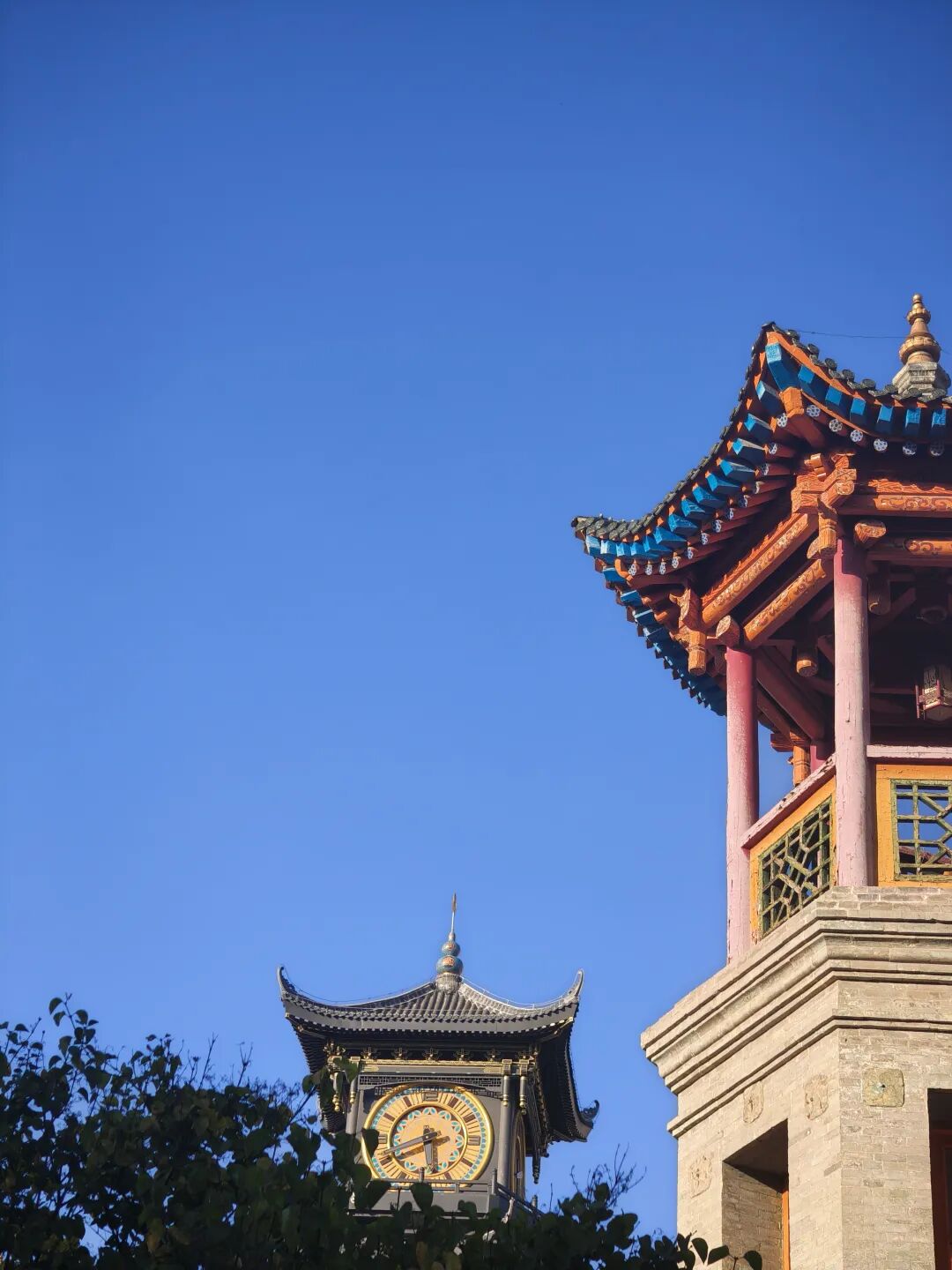
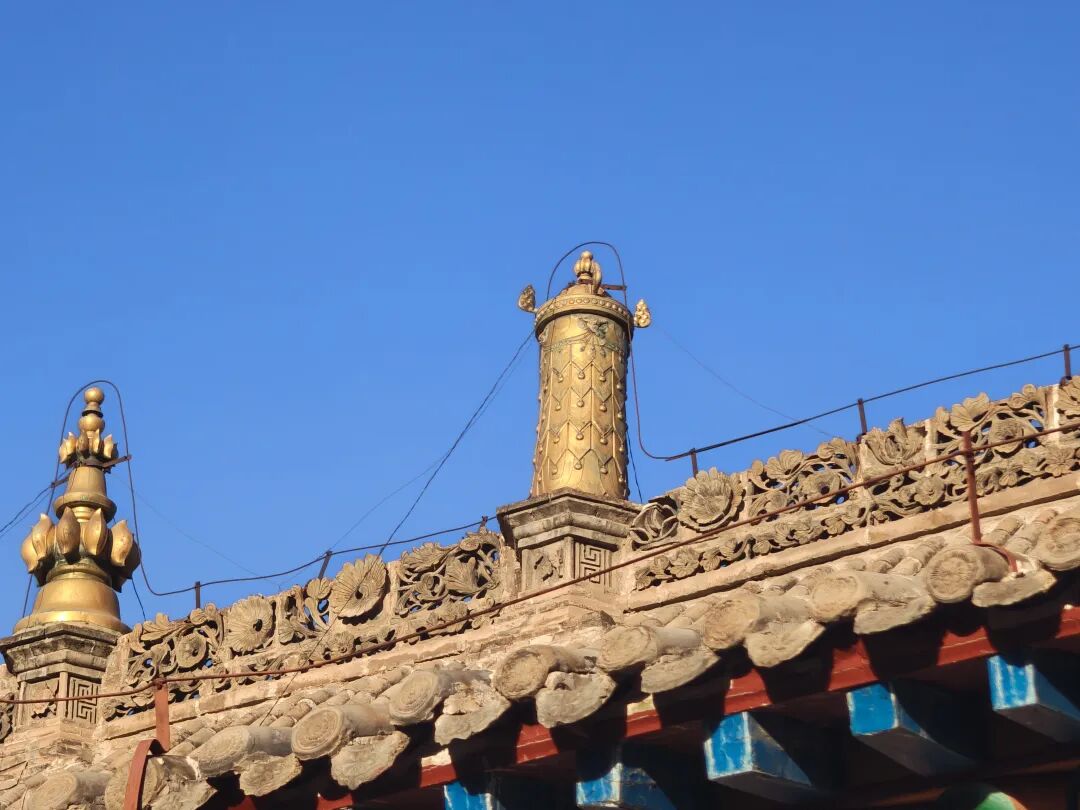
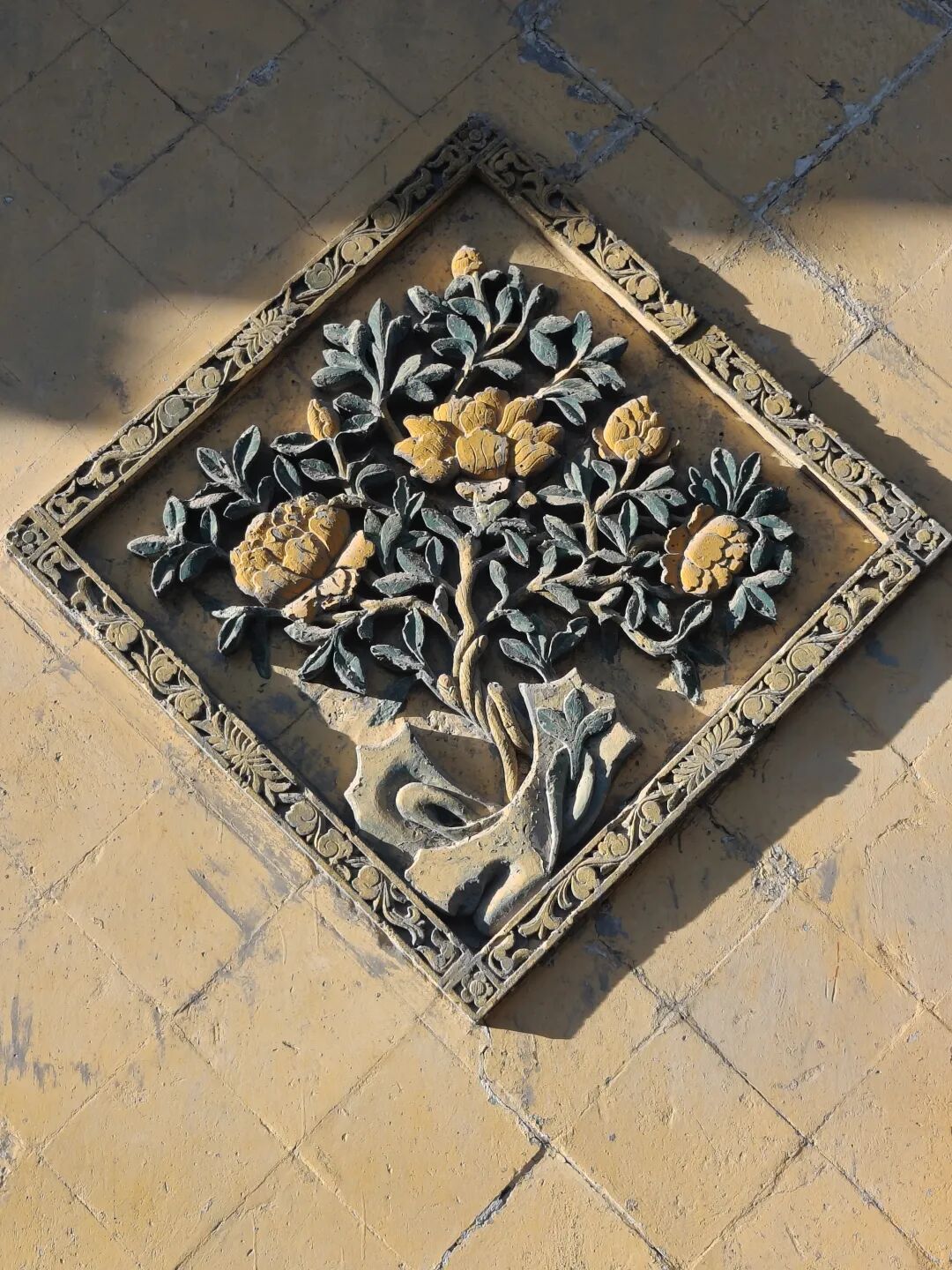
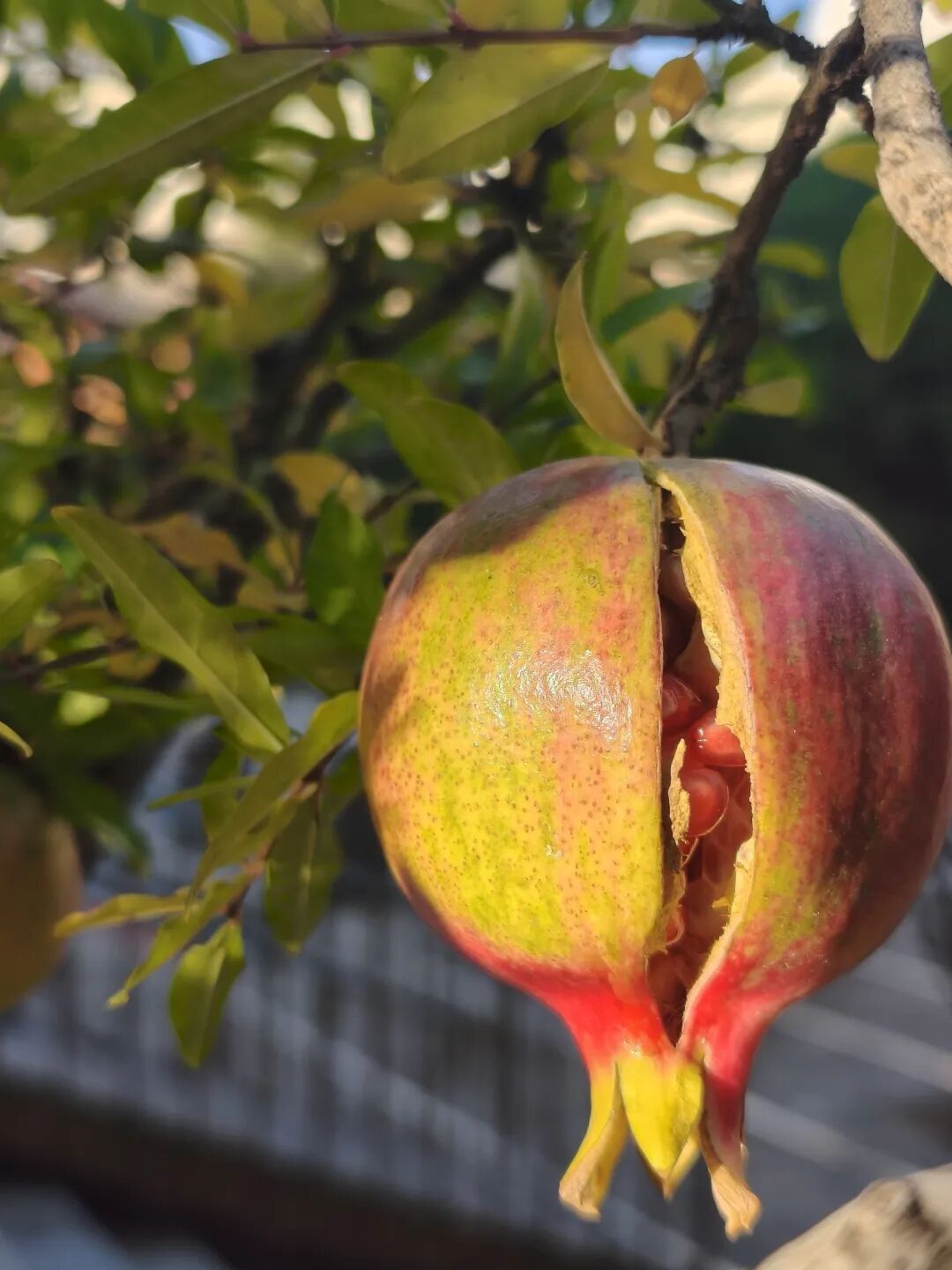
1. 600 Years of History
It was first built in 1380, the 12th year of the Hongwu reign of the Ming Dynasty. Legend has it that Mu Ying, the Marquis of Xiping who guarded the Gansu and Qinghai regions, teamed up with Xining local chieftain Ye Zhengguo, and after petitioning the imperial court at the request of Hui Muslim community leaders, they got the green light to build it.
During the Tongzhi reign (1862–1874), the mosque was destroyed.
It was rebuilt in 1913. Later on, it was renovated and expanded in 1919, expanded again in 1946, and restored in 1979. The main framework of the complex we see today dates back to this past century.
In March 2013, it was designated as a major historical and cultural site protected at the national level (the seventh batch).
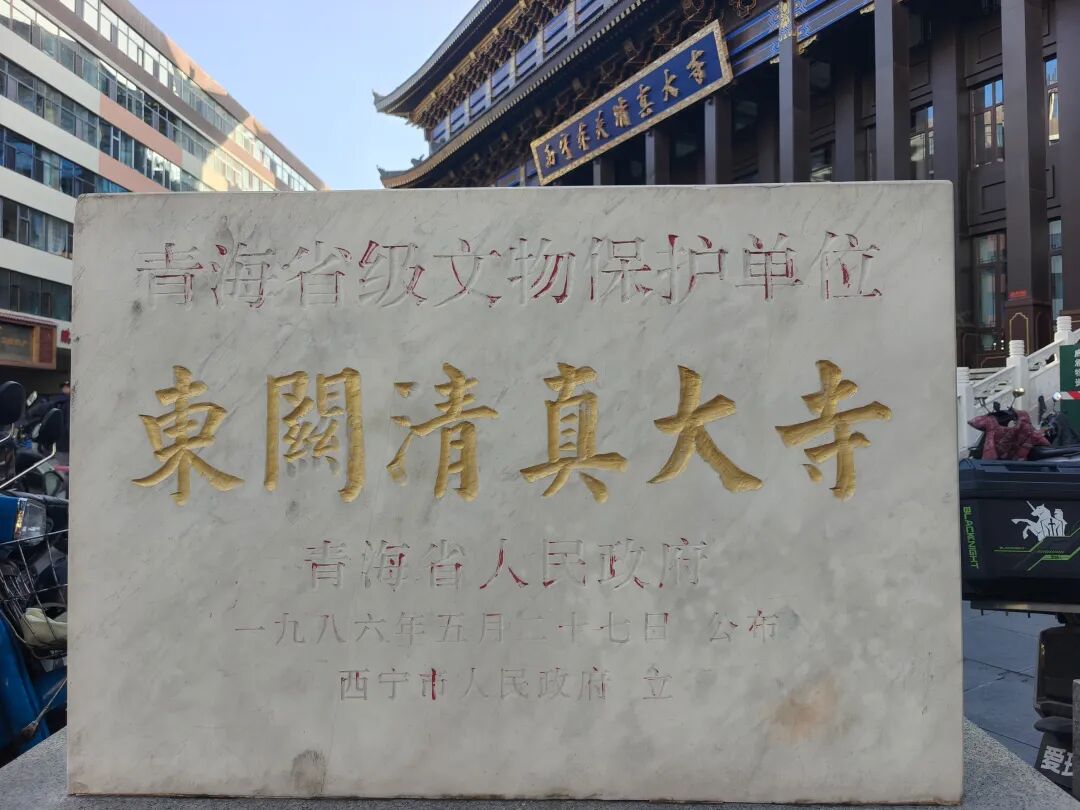
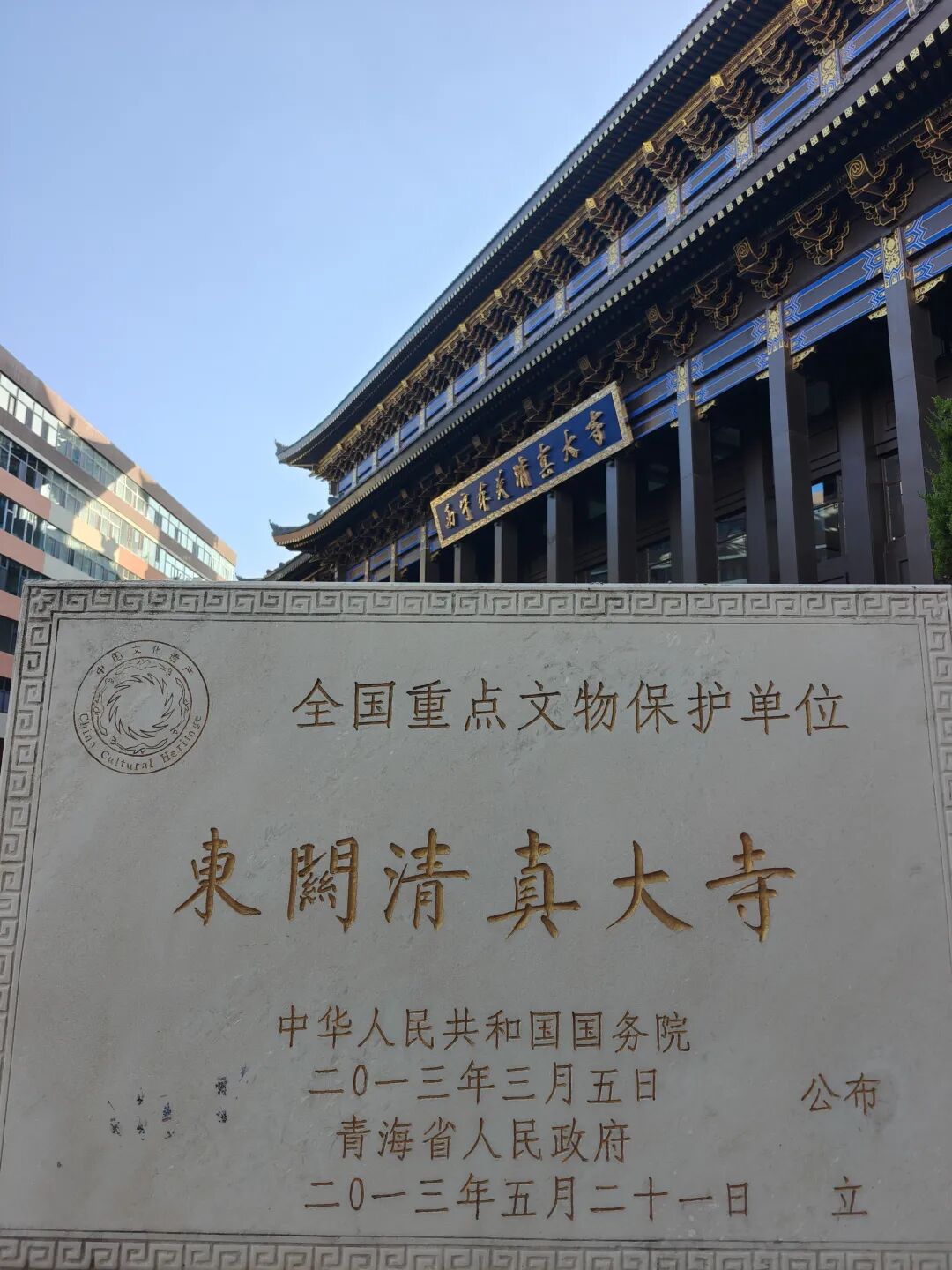
2. Architectural Layout
The Dongguan Mosque faces east and sits to the west. Walking westward along the central axis, you will pass through these areas in order:
Front Three Gates -> Middle Five Gates -> Minarets -> Courtyard -> North and South Side Towers -> Main Prayer Hall.
Architecture
Description
Front Three Gates
The Western-style street-facing main gate, featuring an eight-character plaque above it that reads "Xining Dongguan Qingzhen Dasi" (Xining Dongguan Great Mosque)
Middle Five Gates
Five flat-topped arched doorways
Minarets
Located on both sides of the main entrance tower, featuring rounded dome tops. In the past, these were high vantage points used to call the faithful to prayer (adhan)
Courtyard
Located between the main hall and the side buildings, paved with bluestone slabs
North and South Side Towers
Two-story Xieshan-style side towers featuring facing covered corridors
Main Prayer Hall
The core of the entire mosque features a single-eave Xieshan-style roof covered with green glazed tiles. The ridge of the roof is decorated with a Tibetan-style gilded vase, which is said to have been donated by the monks of Labrang Monastery in Gansu after the main hall was completed. Visitors are not allowed inside the hall, so just taking a quick look from the doorway is enough.
The main hall, the south auxiliary building, and the north auxiliary building form the backbone of the entire mosque.
The Chinese-style palace architecture with feiyan dougong (traditional flying eaves and brackets) blends Islamic, Tibetan, and Han cultural elements in its details, looking breathtaking in the sunset light and shadows.
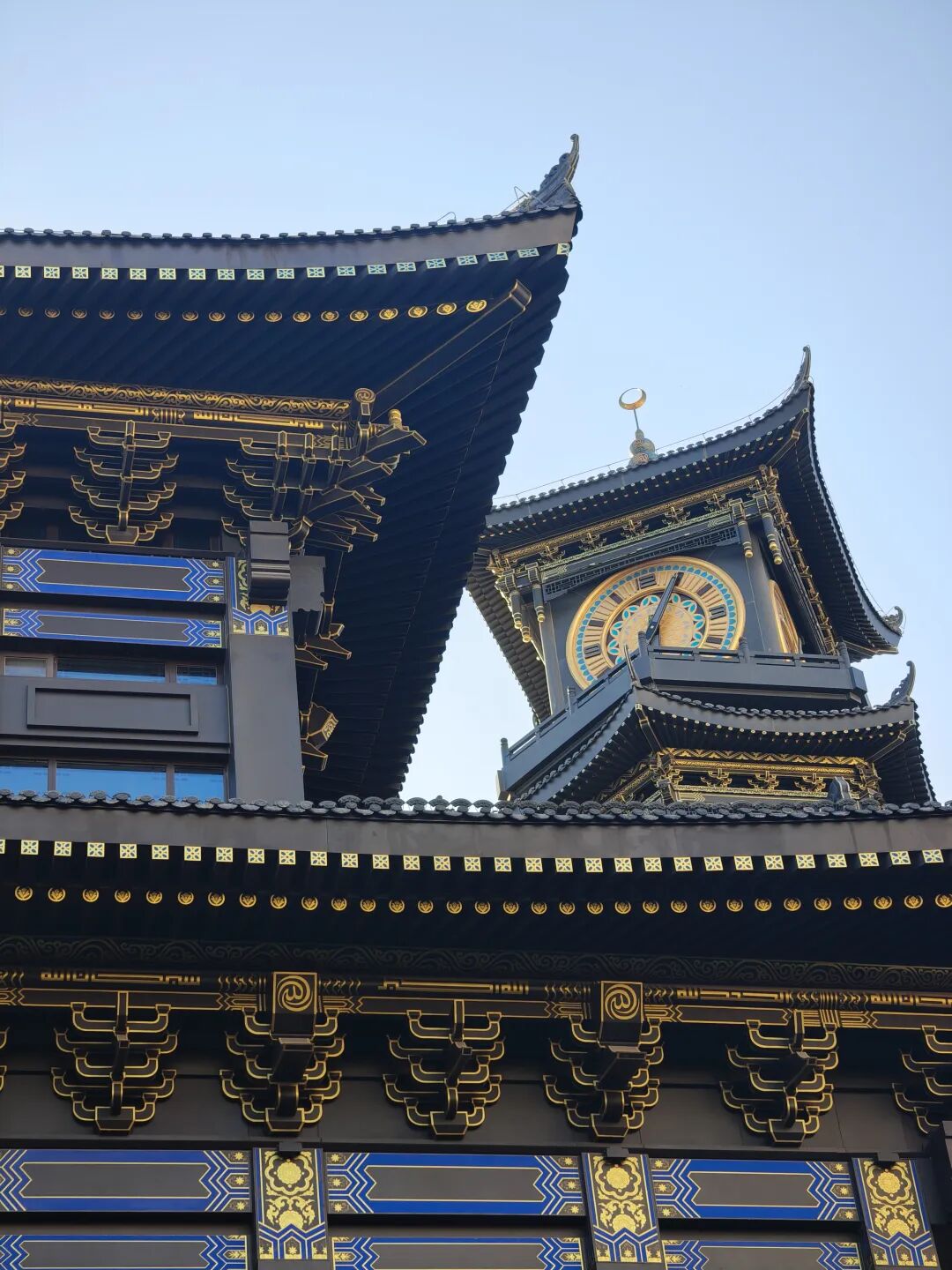
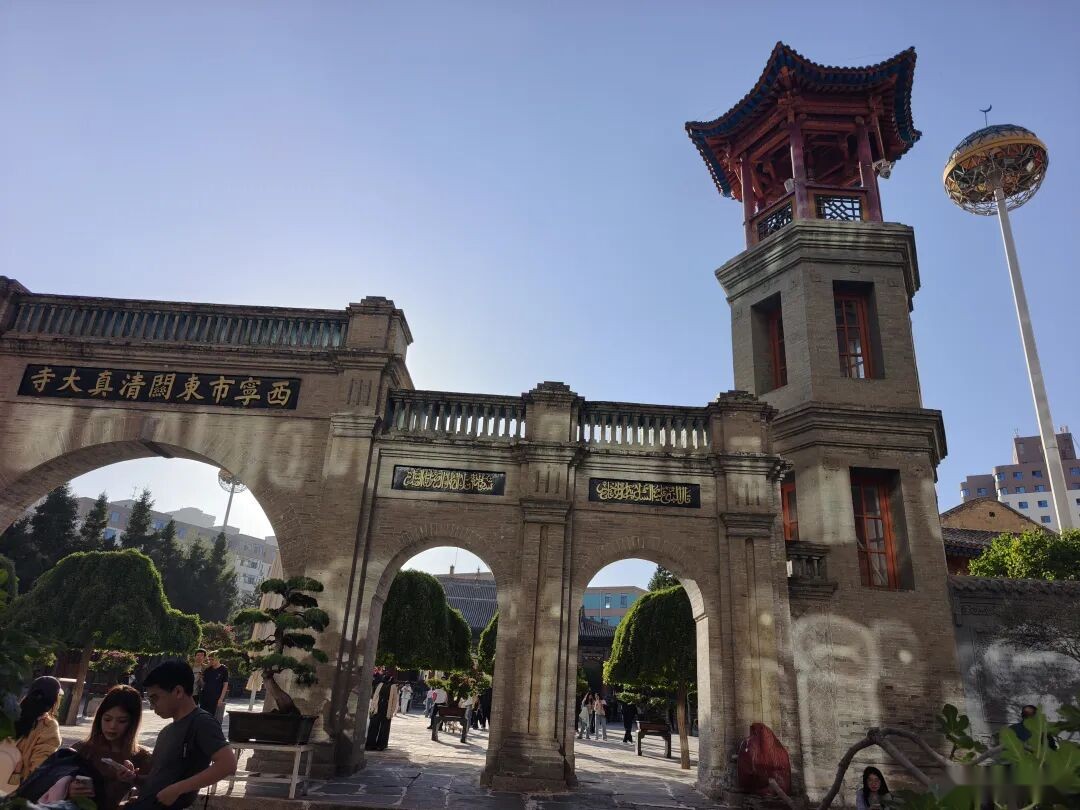
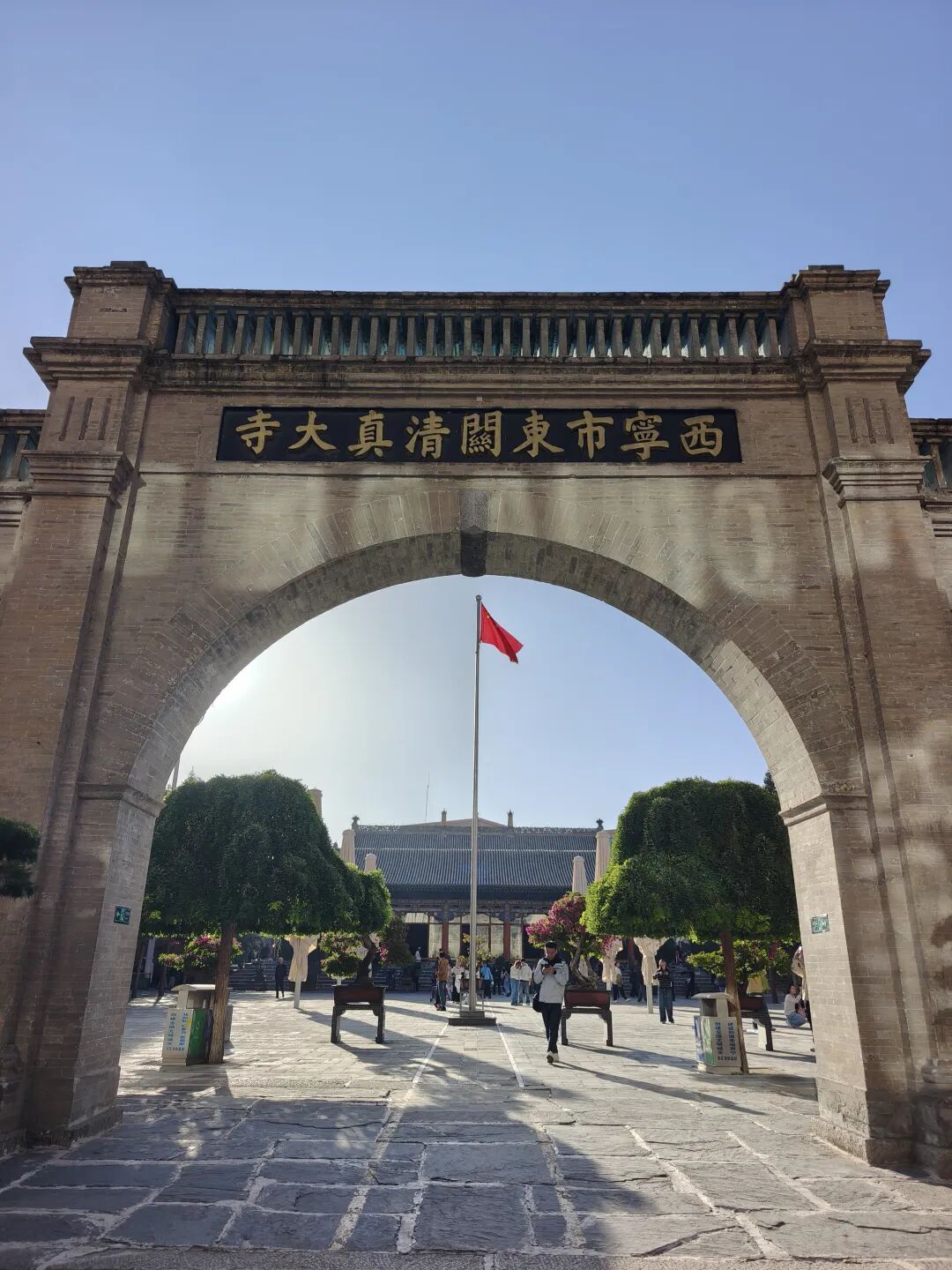
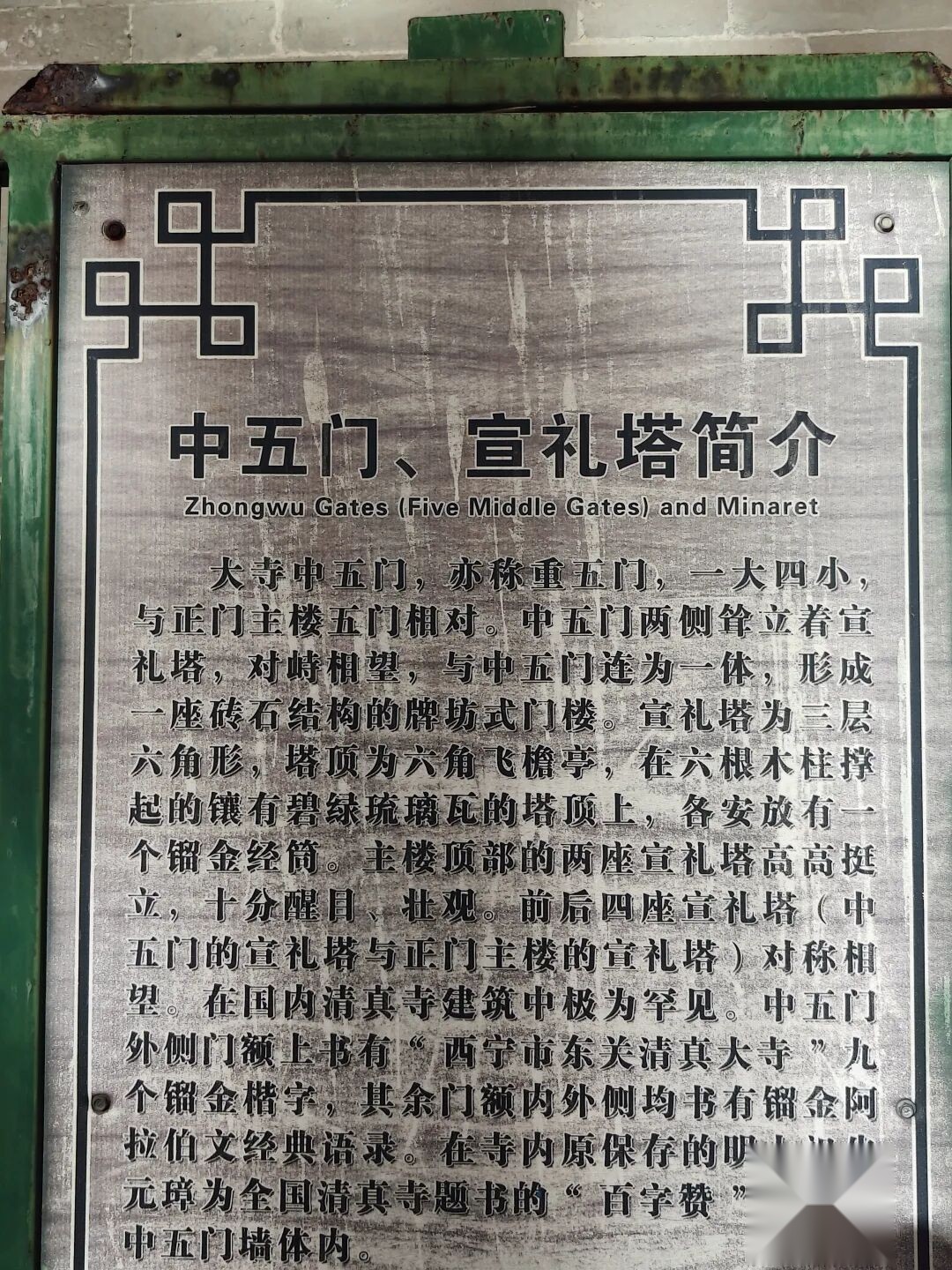
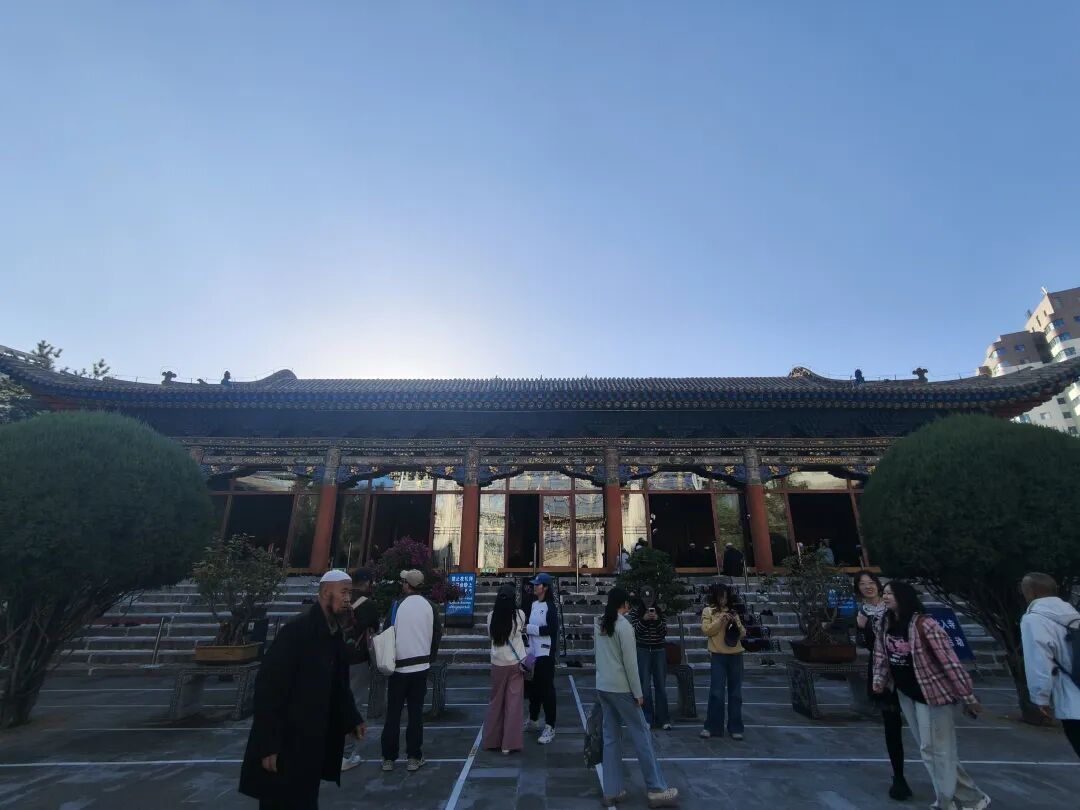
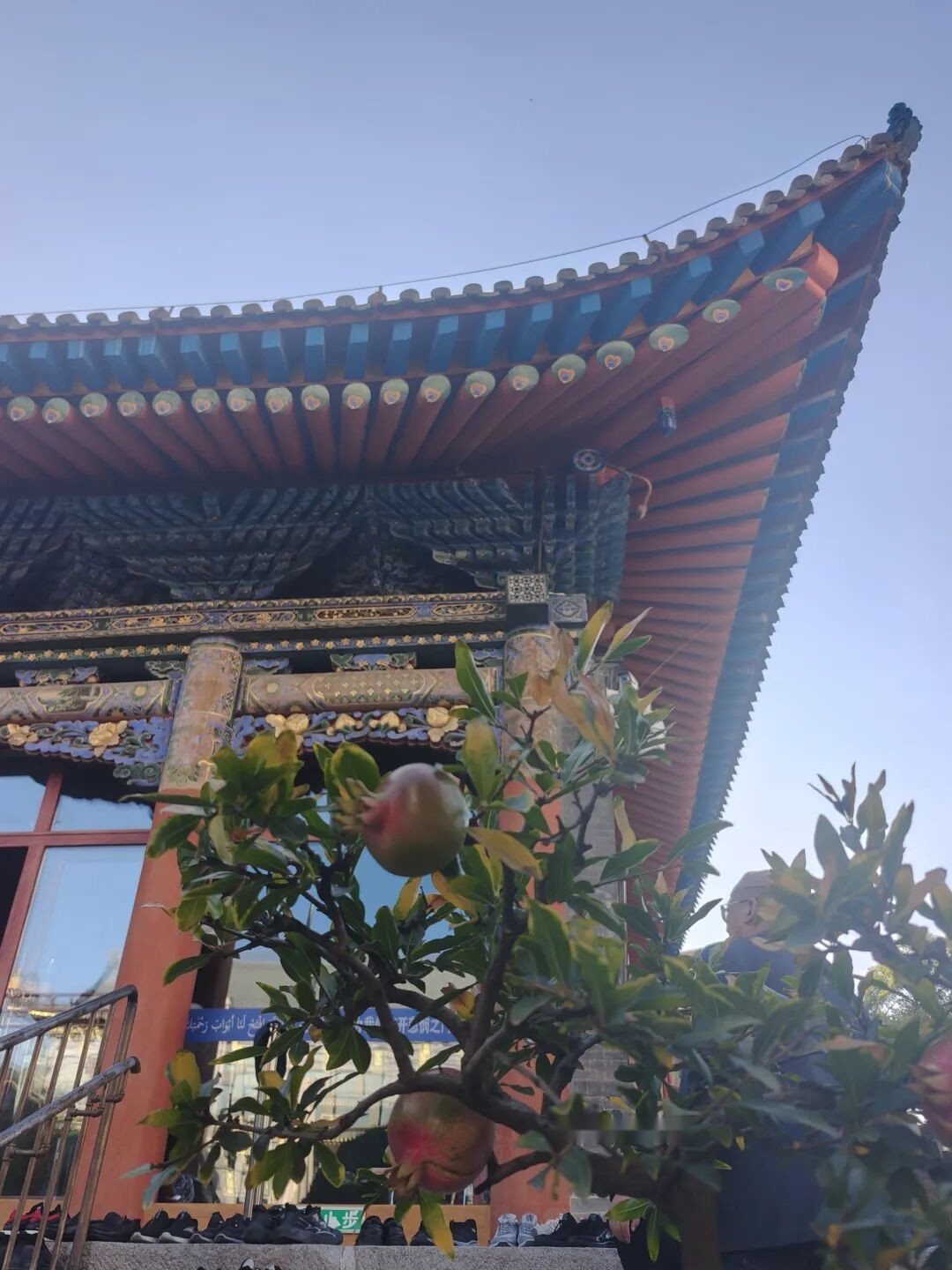
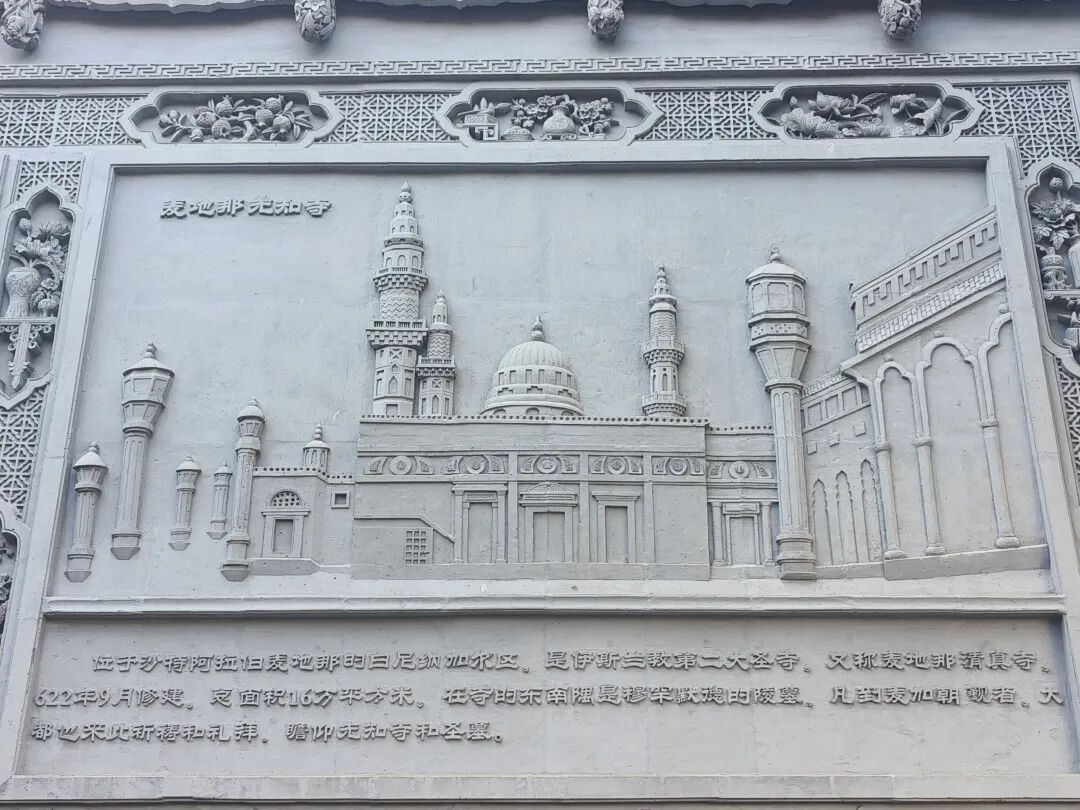
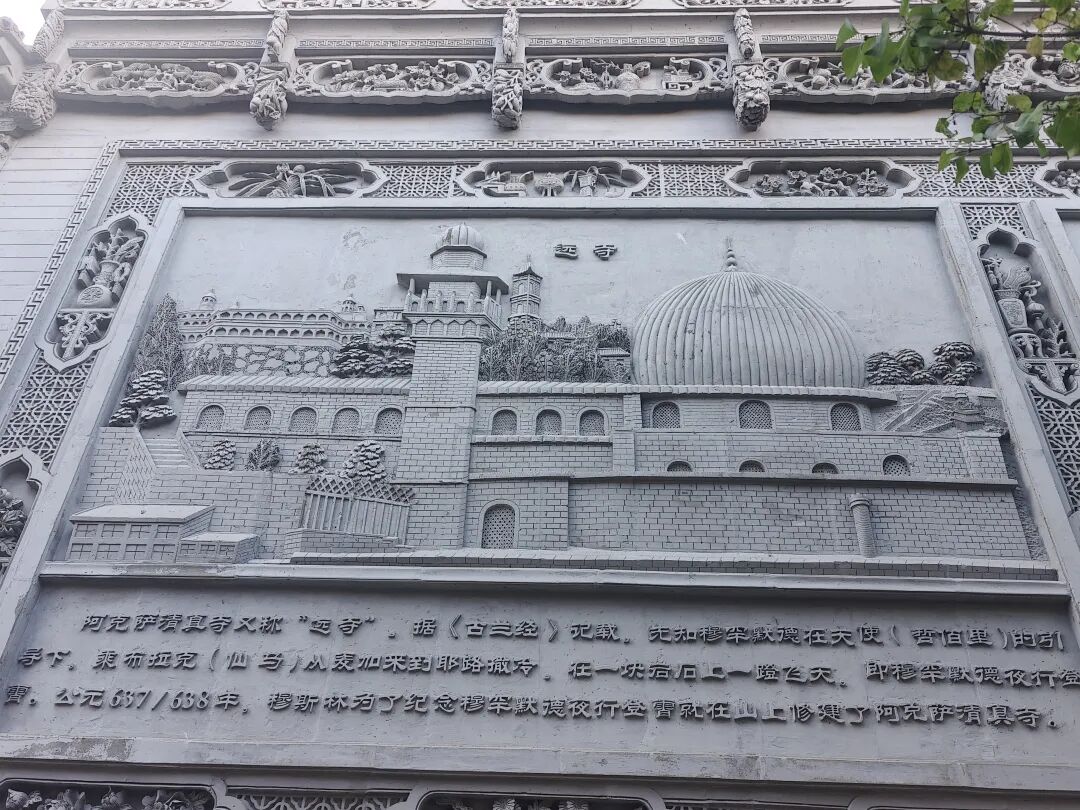
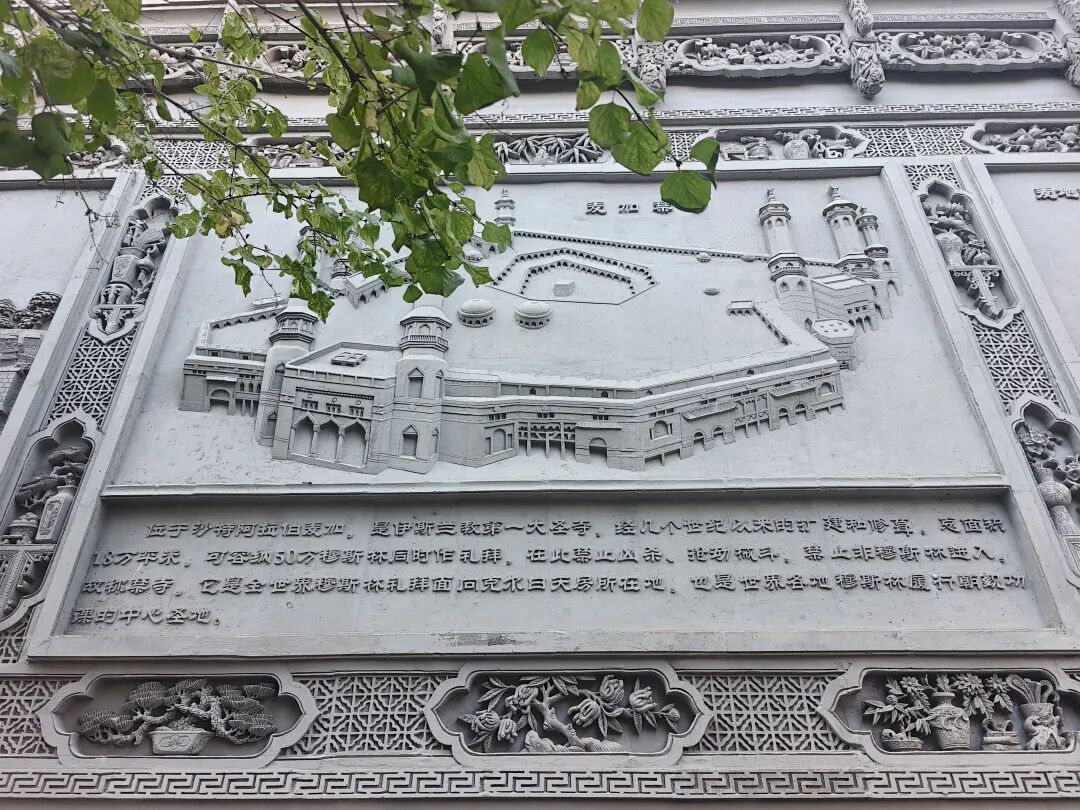
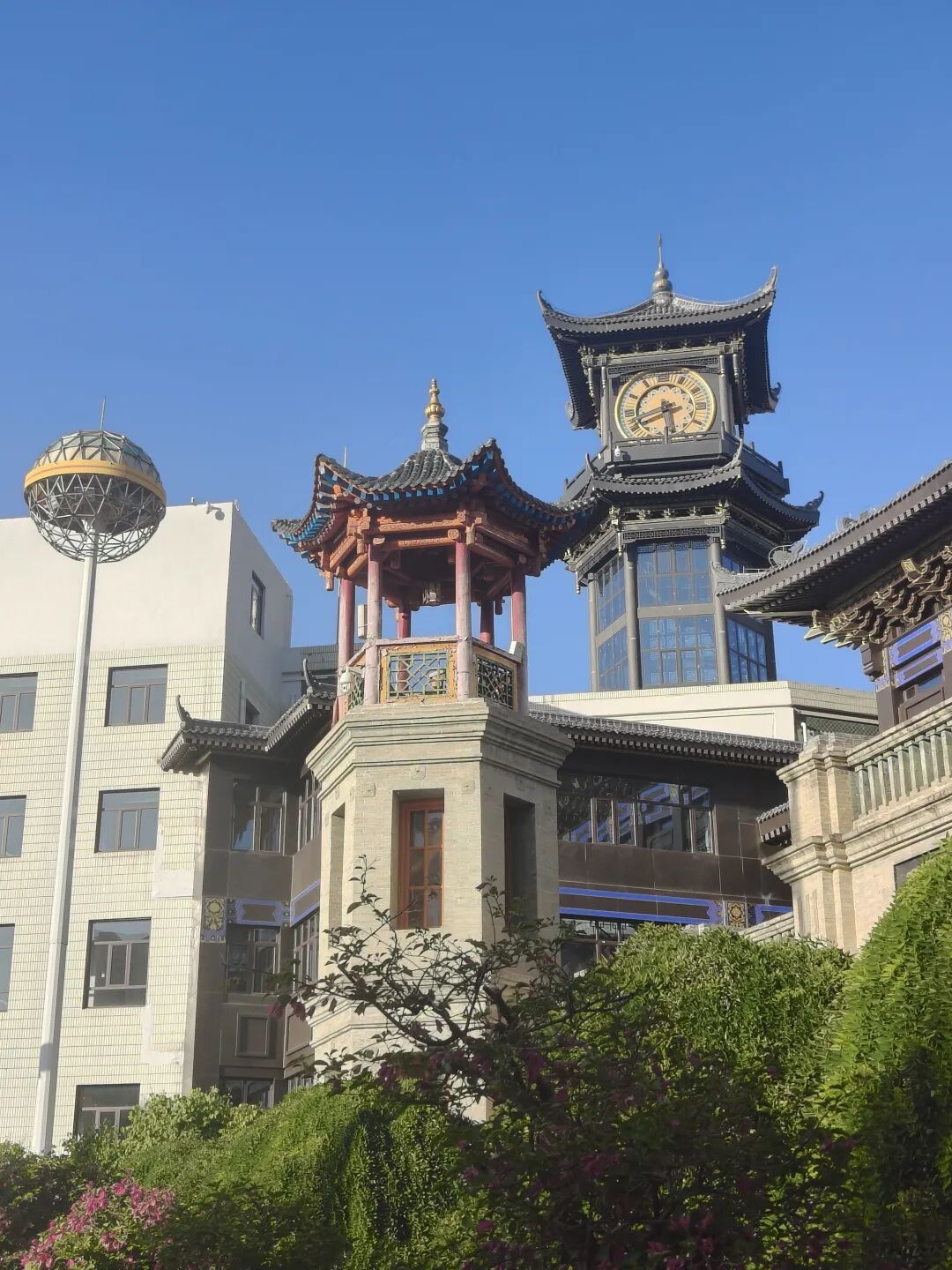
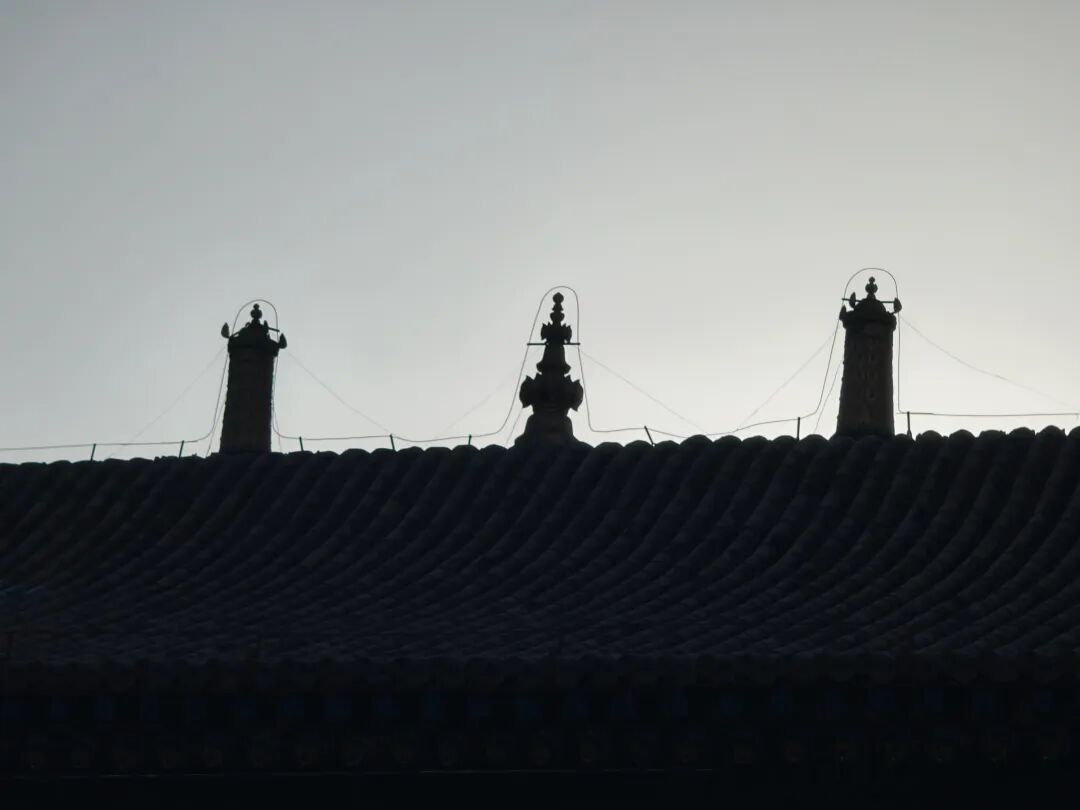
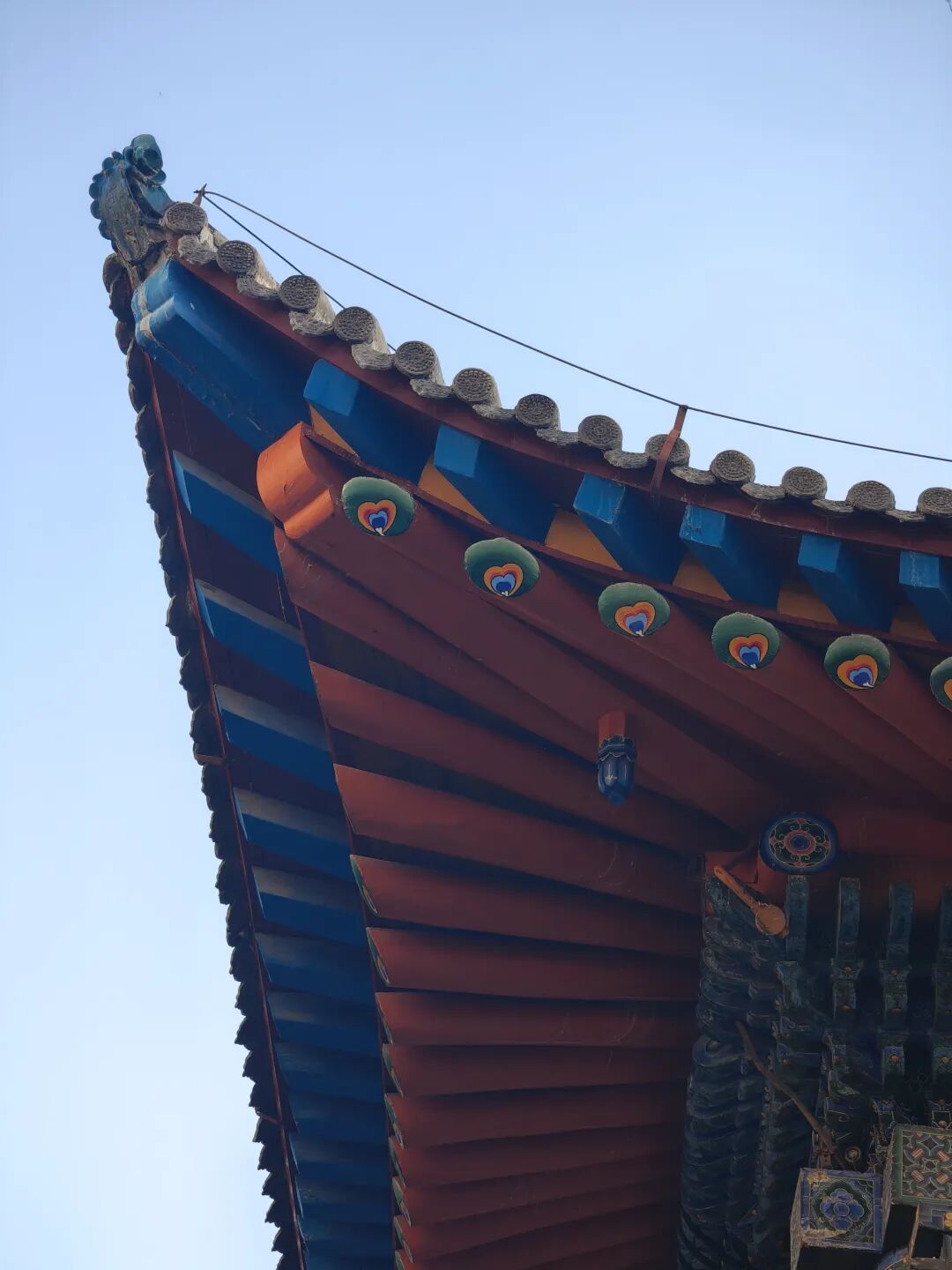
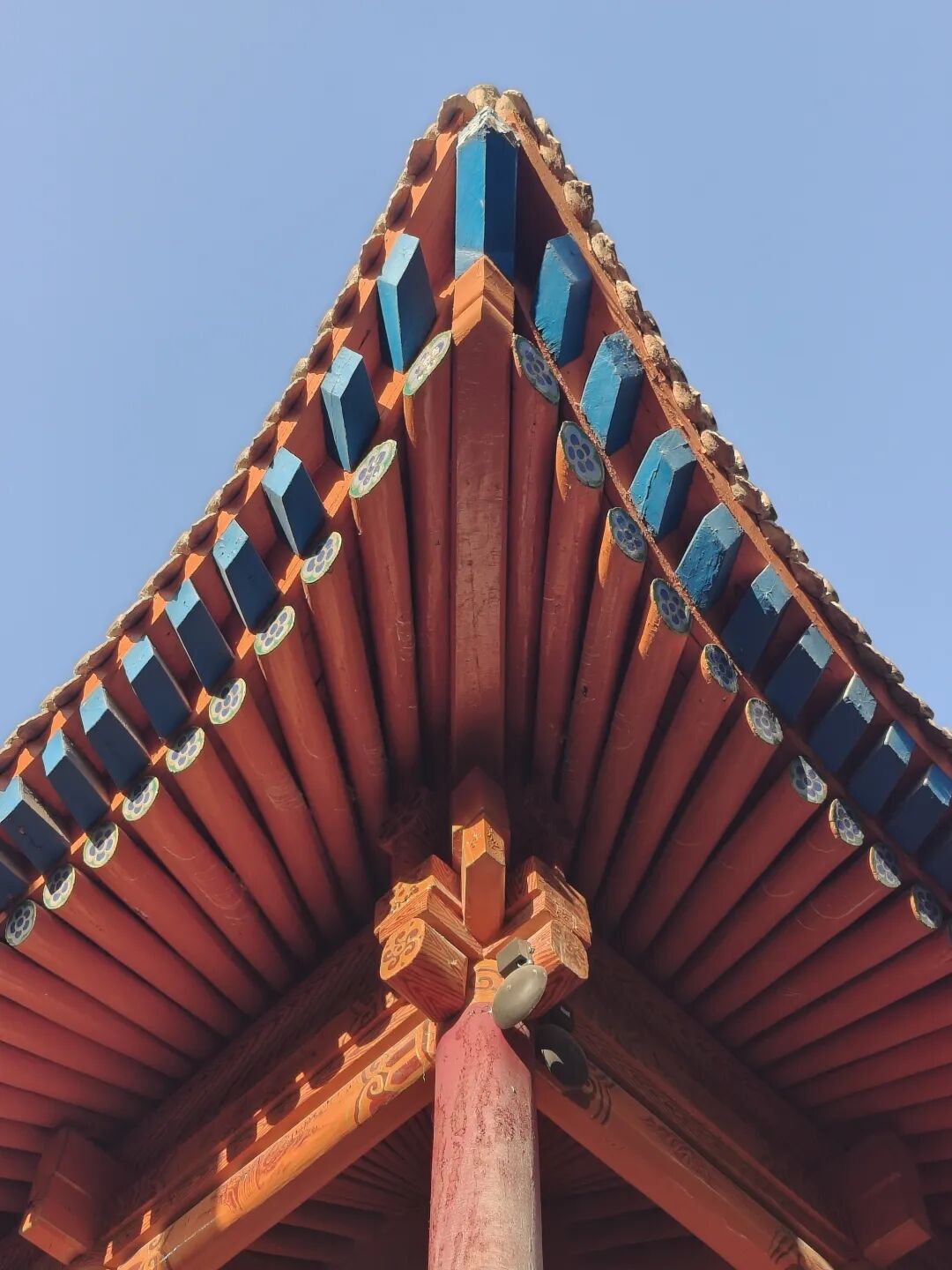
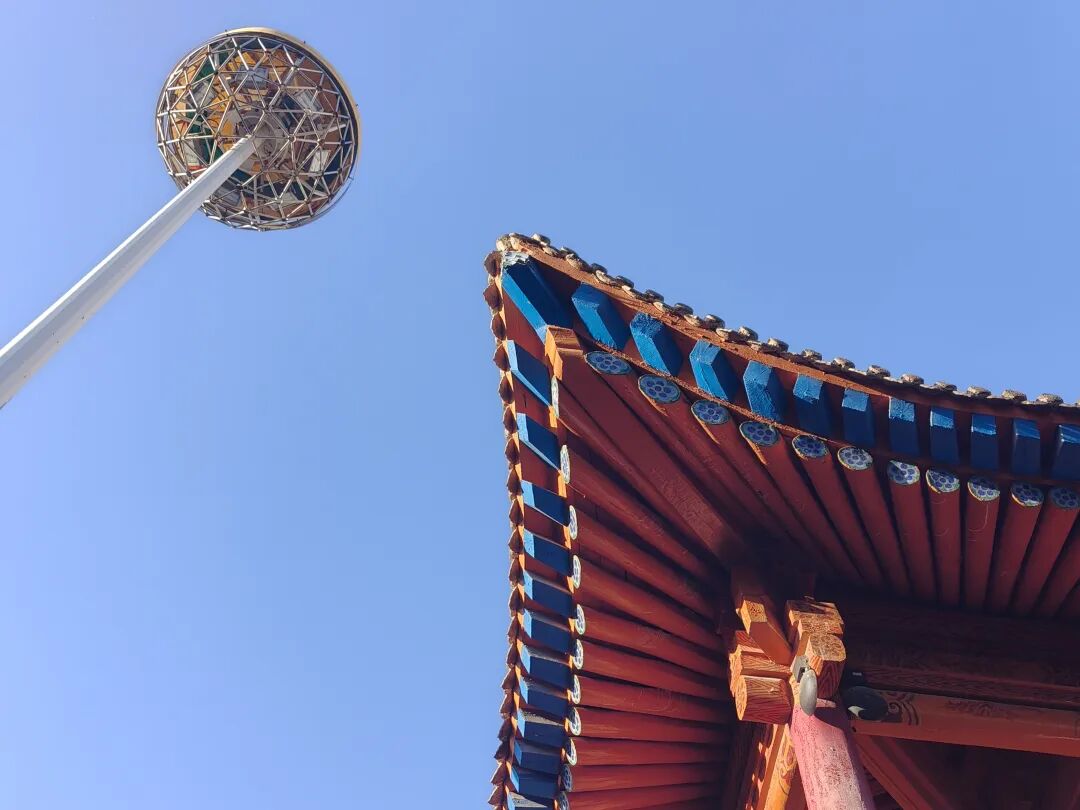
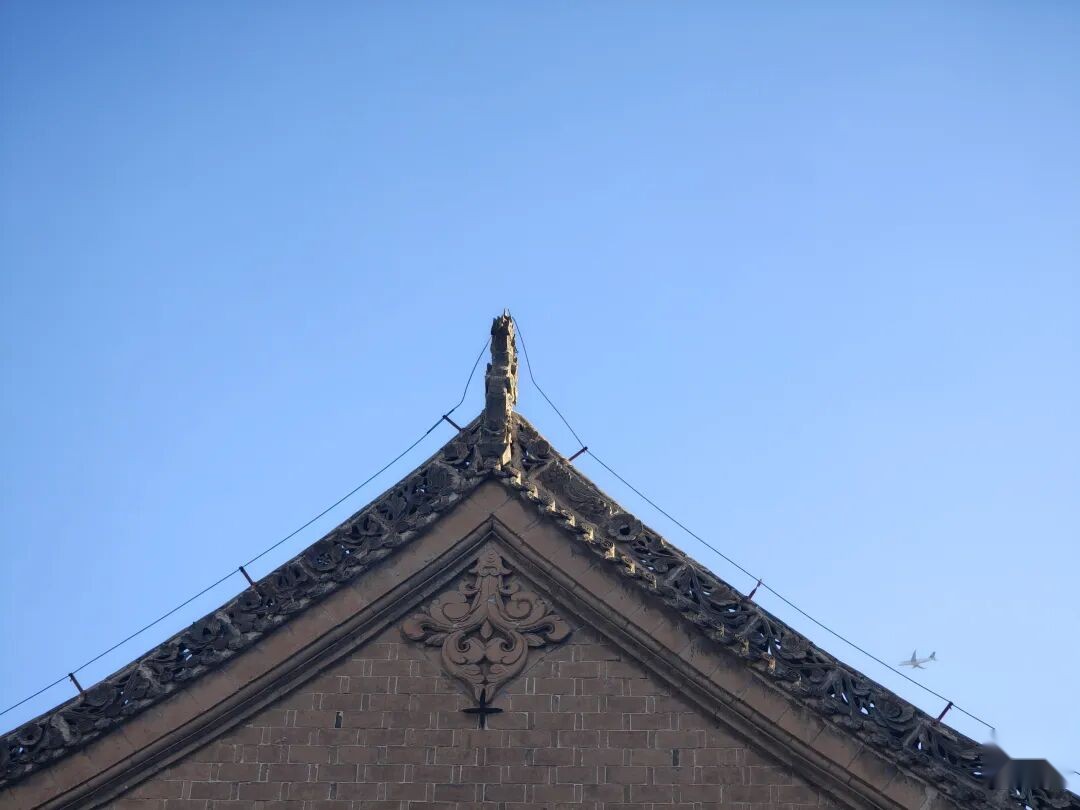
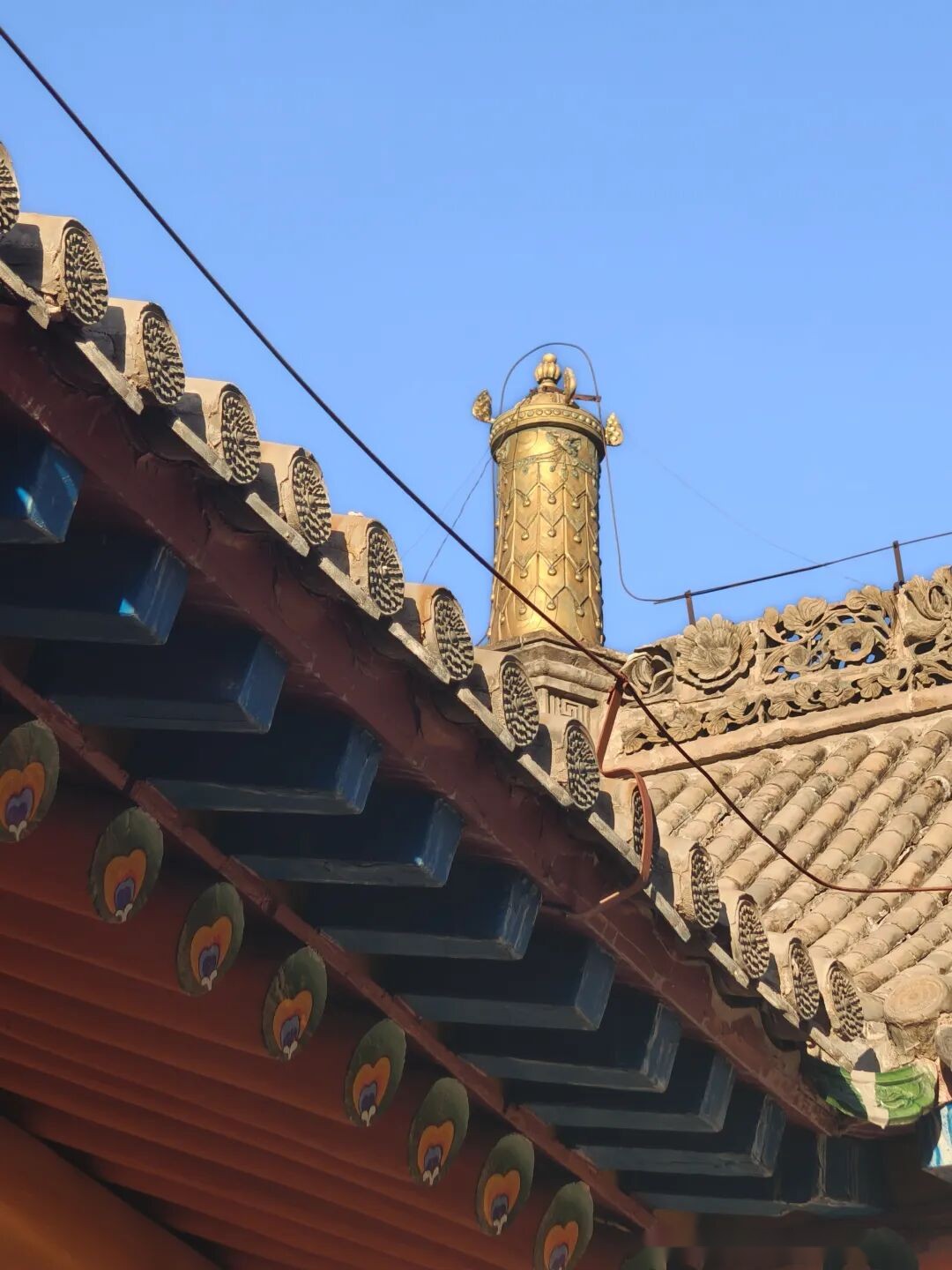
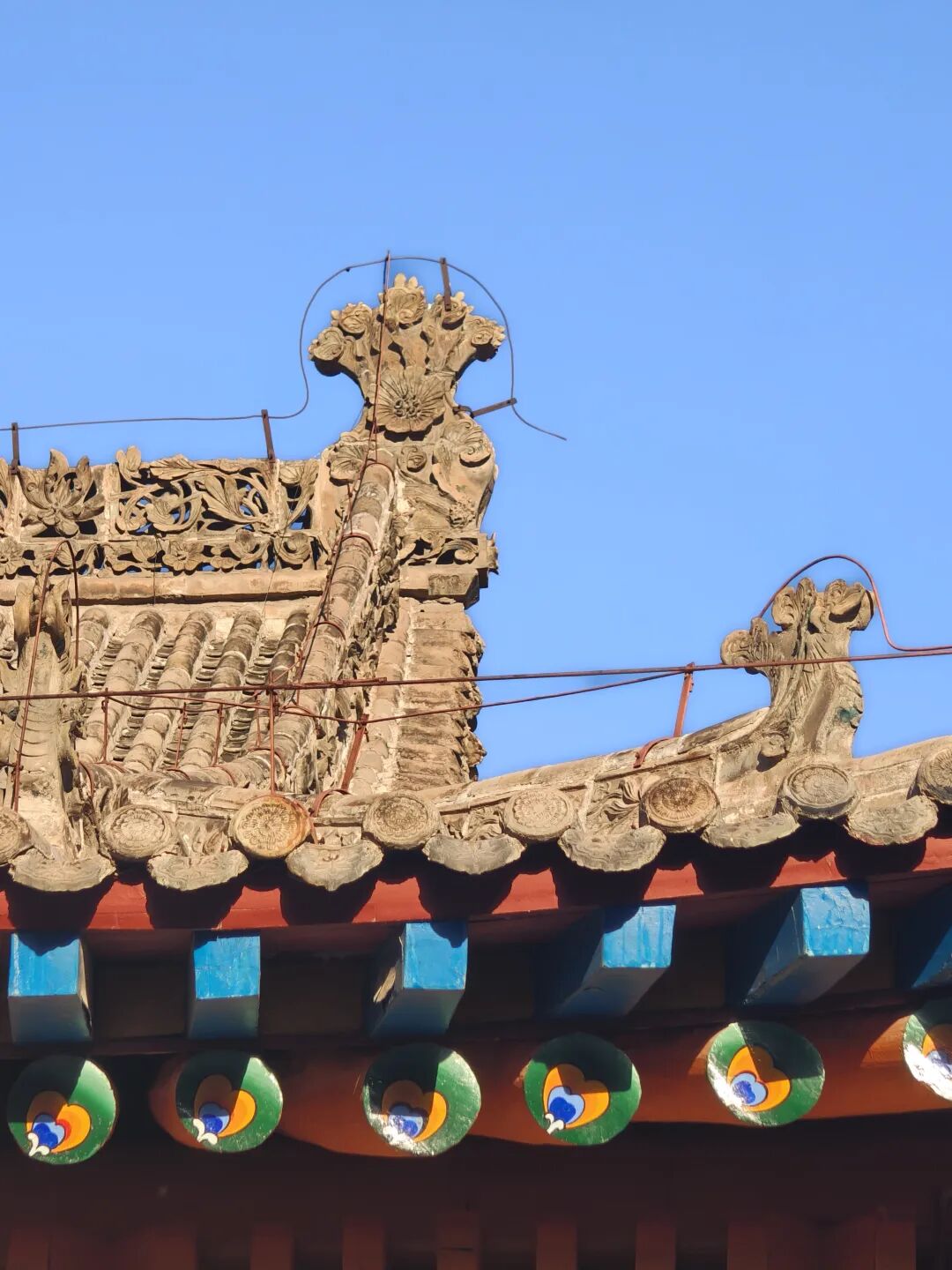
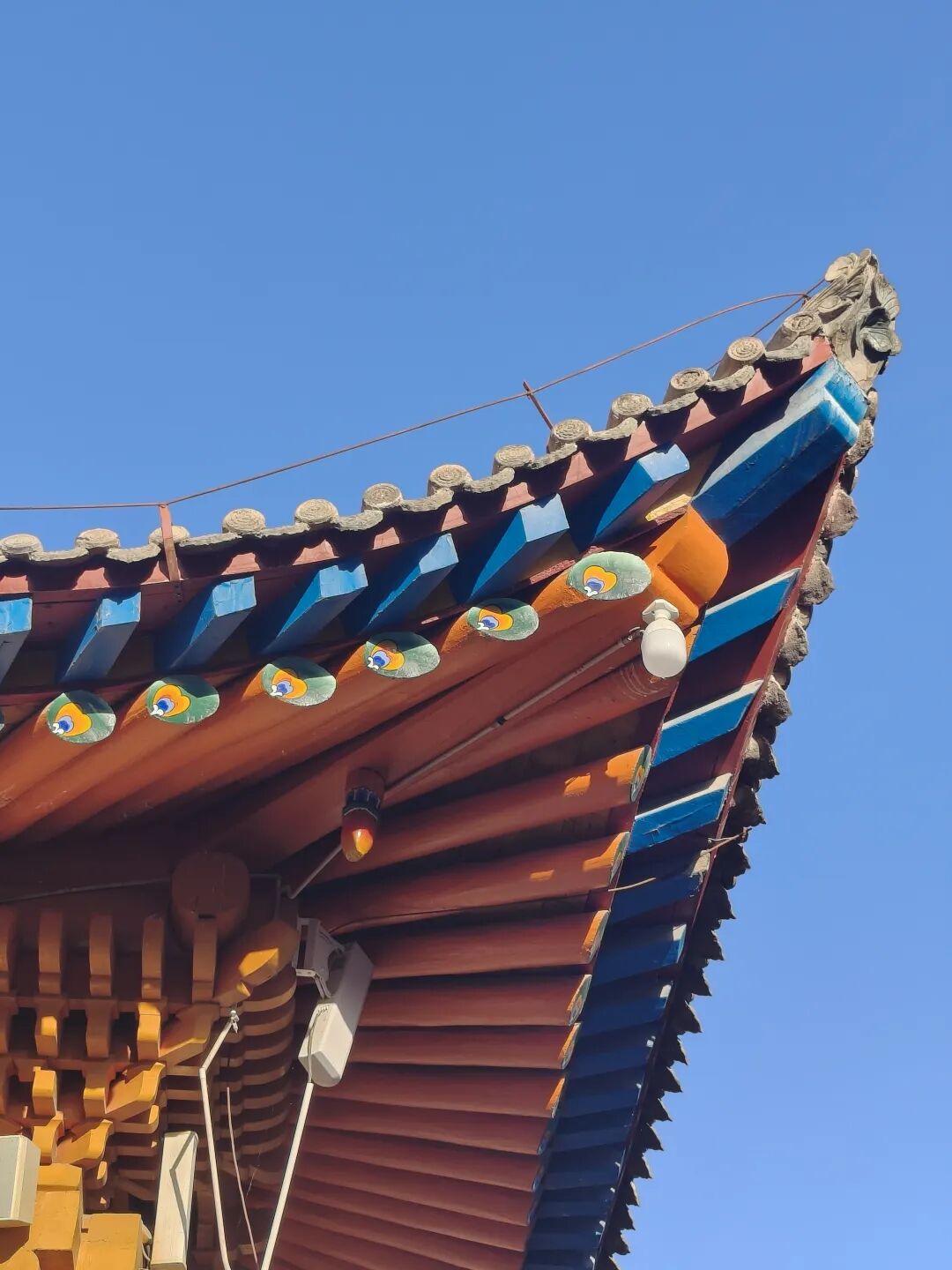
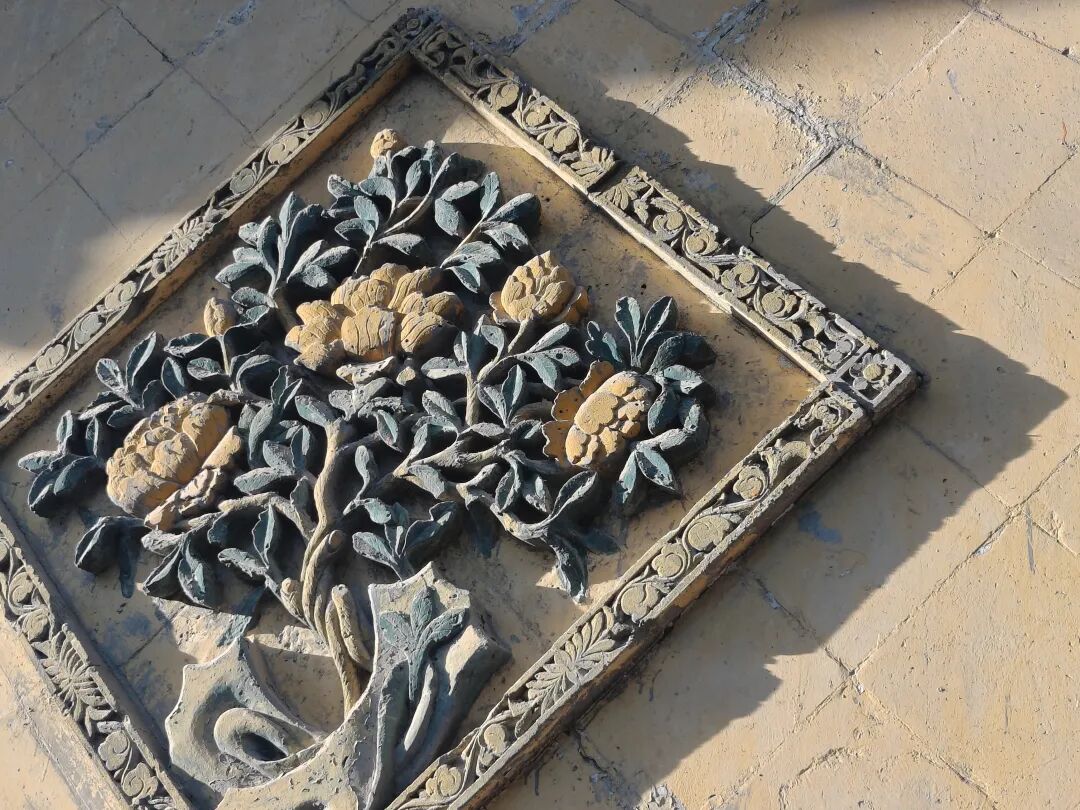
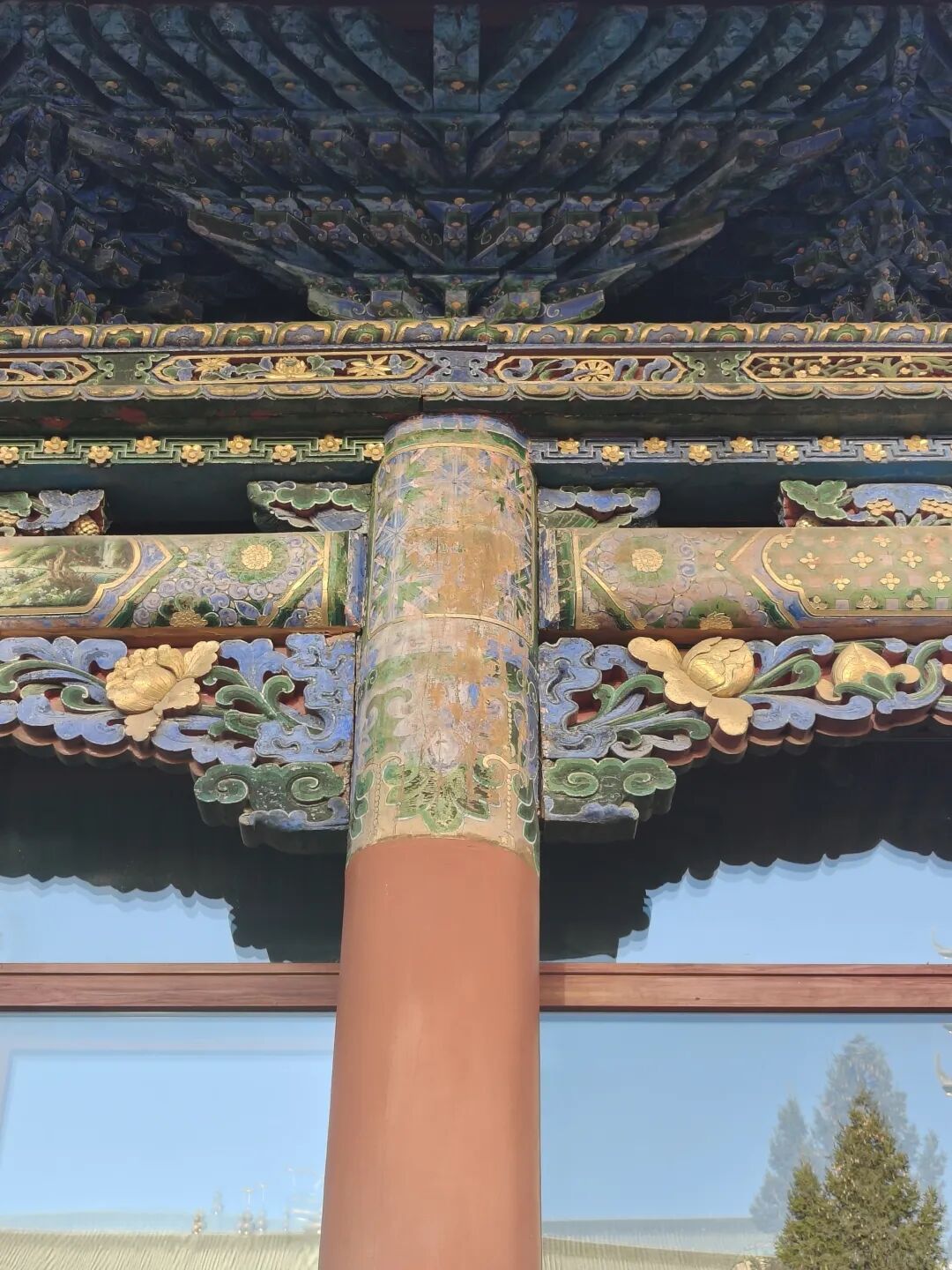
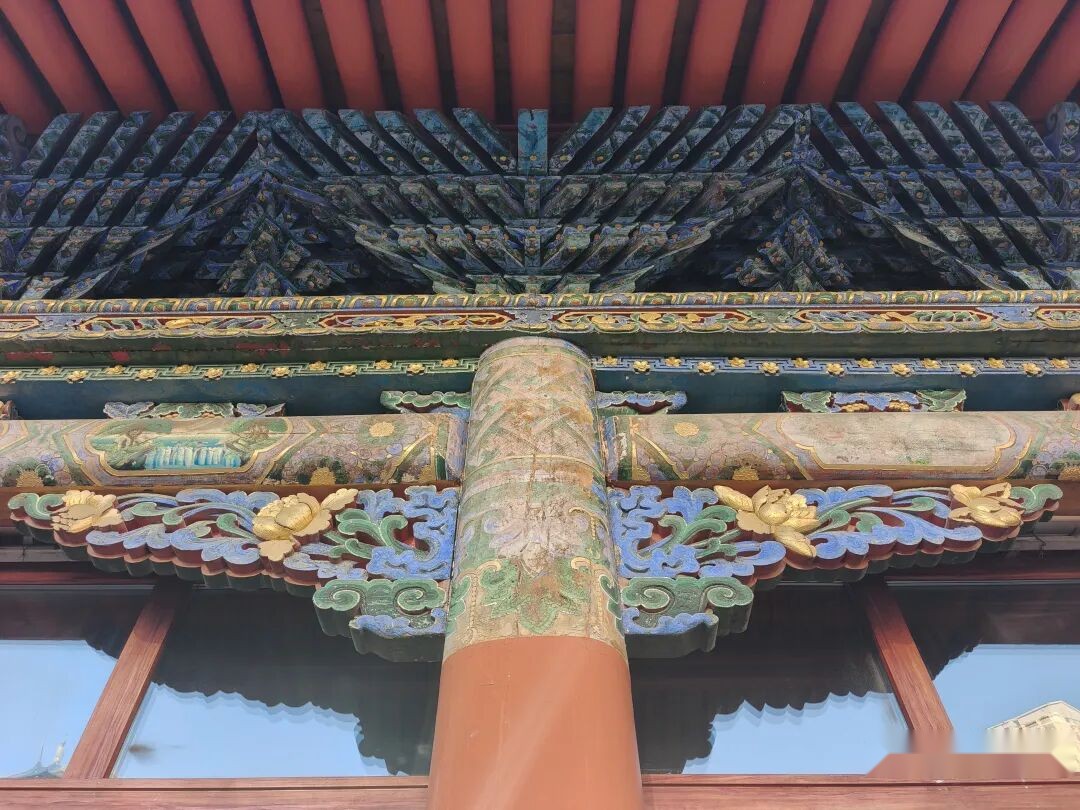
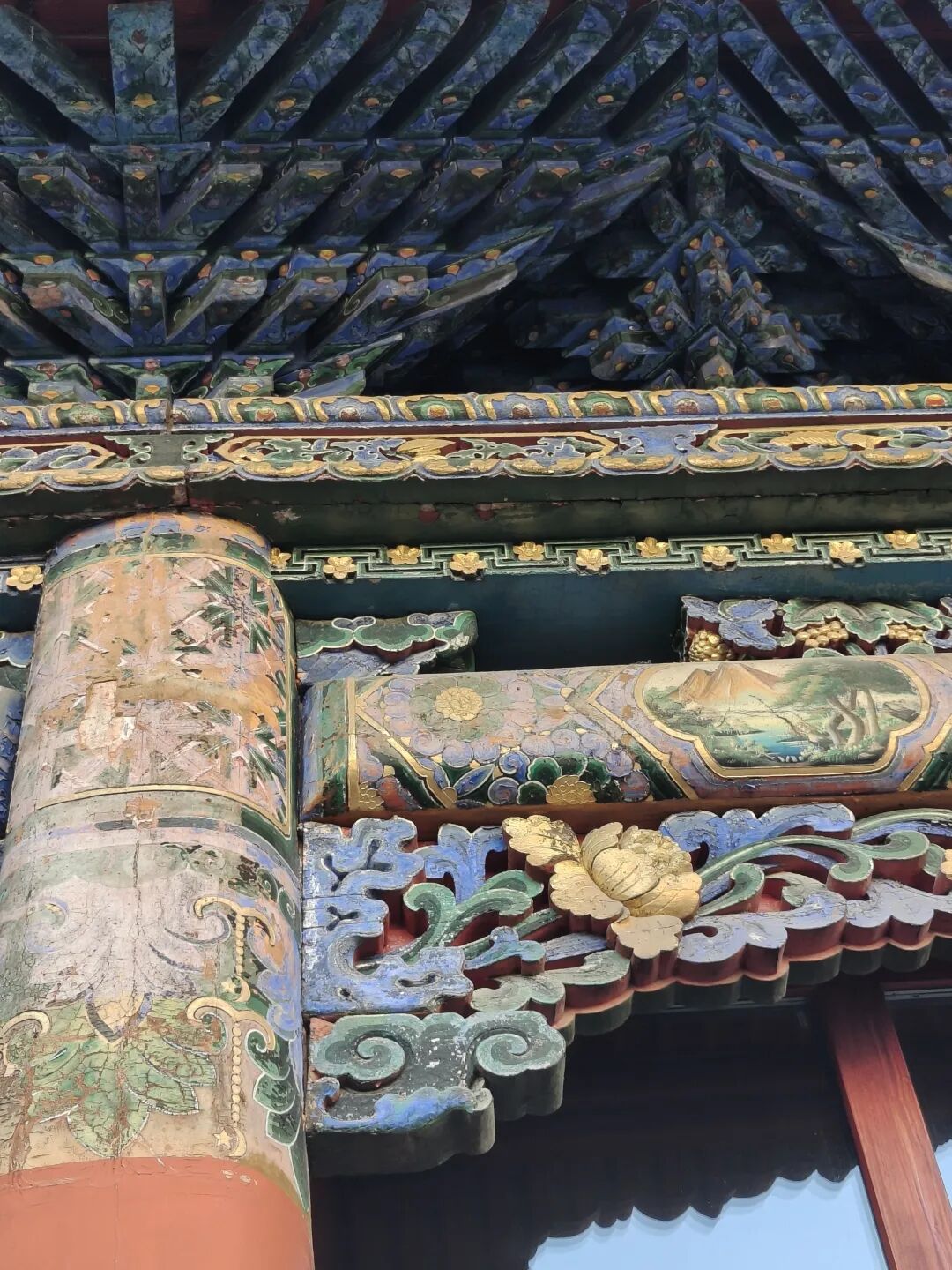
What also blew me away was the amazing variety of garden greenery and plants.
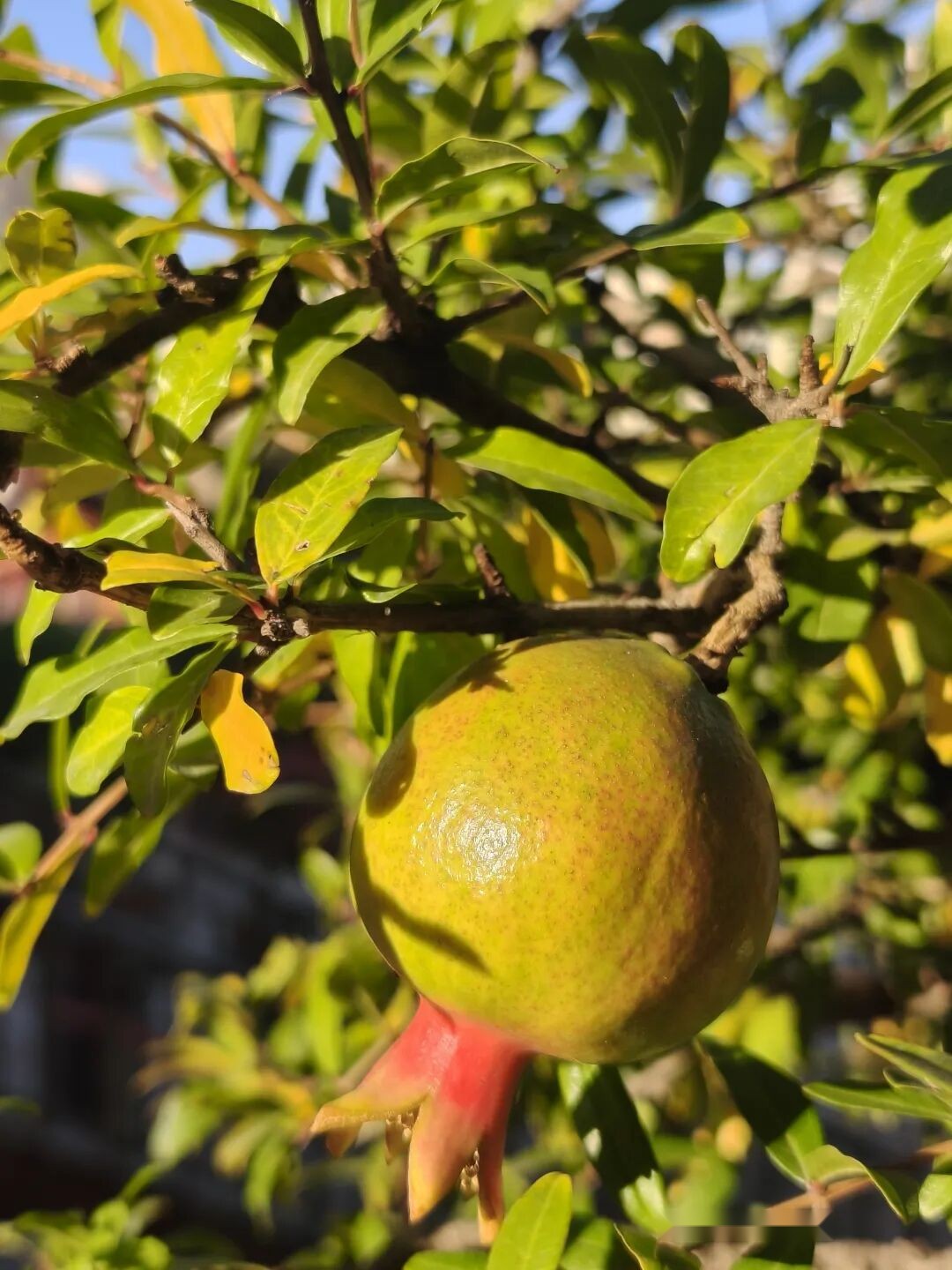
3. Visit Tips
The Dongguan Mosque in Xining is an active religious site, not a standard tourist attraction.
Visitors are not allowed to enter the main prayer hall, so try to avoid the five daily prayer times when exploring.
Fun Fact: Prayer Times
Prayer times follow the sun: before sunrise, just after noon, in the mid-afternoon, after sunset, and after nightfall. If you see crowds gathering in the courtyard and people taking off their shoes to line up, it means the next prayer is about to begin. Just step aside for a bit and resume exploring after prayers are over.
4. Xi'nanguan Street
Don't rush to leave after exploring the Xining Dongguan Mosque. Xi'nanguan Street is right outside the back gate of the mosque.
The commercial history of this street dates back to the Guangxu reign of the Qing Dynasty, making it one of the earliest commercial hubs in the eastern part of the city. Today, it is an ethnic specialty street where over a hundred types of Northwest Chinese snacks are packed into a stretch of less than 1,000 meters:
Goujiaoniao bing (traditional local pancake), sanzi (crispy fried dough twists), niangpi (thick steamed wheat noodles), sheep intestines, tianpei (fermented highland barley),laozao (fermented glutinous rice)...
Nobody ever walks out of Xi'nanguan Street on an empty stomach.
We ordered goujiaoniao bing, sheep intestines, niangpi, highland barley, lamb skewers, and fruits like tomatoes. The prices are super budget-friendly compared to the rest of the country, though fruit prices are slightly higher here than at the shops just across the street.
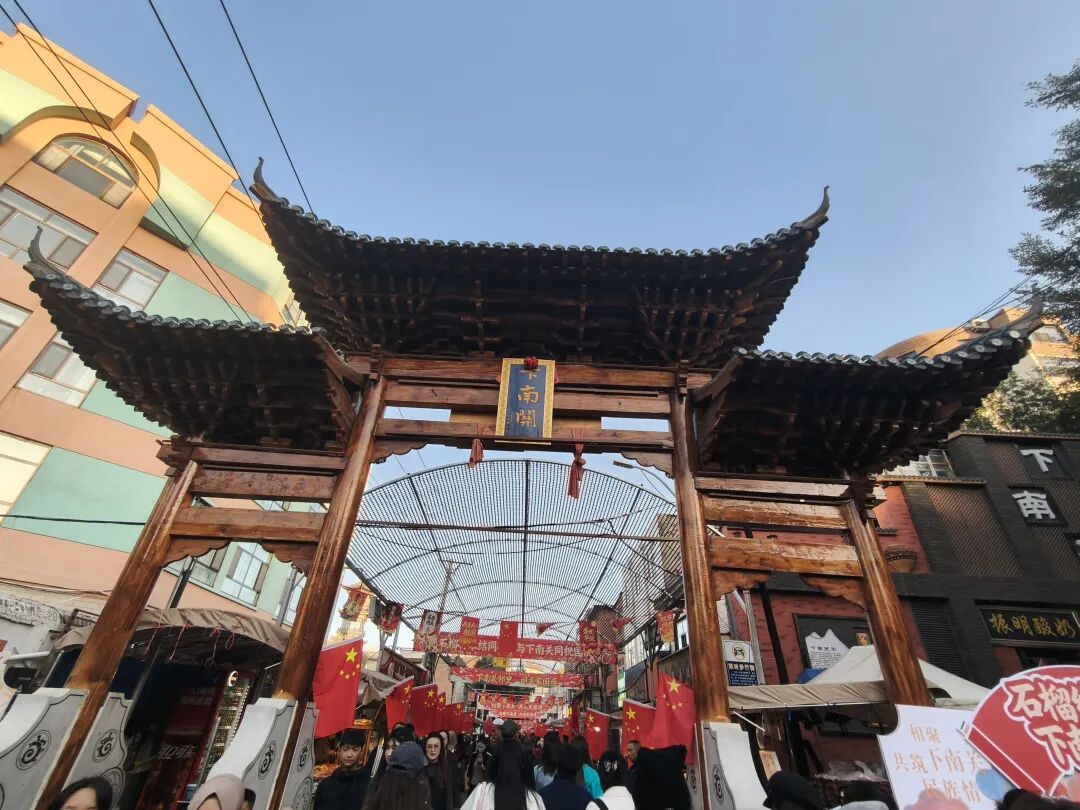


Northwestern Niangpi is Not Shaanxi Liangpi
Both Northwestern niangpi and Shaanxi liangpi (cold skin noodles) are made by washing wheat dough to extract gluten and then steaming the batter, but the differences lie in the steaming method and seasoning:
Liangpi: Thin with a tangy and spicy flavor profile;
Niangpi: Thicker and softer, seasoned with vinegar, garlic water, chili oil, and a kick of mustard.





Exploring Longshengzhuang Mosque in Inner Mongolia: A Rare Blend of Qing Dynasty History and Architecture
Articles • Hasan09 posted the article • 0 comments • 19 views • 1 days ago
Check out these 20 photos of the Longshengzhuang Mosque in Fengzhen, a protected cultural heritage site in Inner Mongolia. First built back in the Qianlong era of the Qing Dynasty, the mosque features a unique architectural style that blends Chinese and Western designs, with the courtyard still housing rare historic plaques, couplets, and intricate Arabic brick and wood carvings.
The mosque dates back to the Qianlong era and is currently a major cultural heritage site in the region. It stands out for two main reasons: first, it features a rare mix of Chinese and Western architectural elements you don't see often; second, it is filled with priceless artifacts, including plaques and couplets that perfectly document the history of ethnic exchange and cultural integration. You can even use AI tools like Doubao to help identify and translate the Arabic calligraphy found throughout the grounds. view all
Check out these 20 photos of the Longshengzhuang Mosque in Fengzhen, a protected cultural heritage site in Inner Mongolia. First built back in the Qianlong era of the Qing Dynasty, the mosque features a unique architectural style that blends Chinese and Western designs, with the courtyard still housing rare historic plaques, couplets, and intricate Arabic brick and wood carvings.
The mosque dates back to the Qianlong era and is currently a major cultural heritage site in the region. It stands out for two main reasons: first, it features a rare mix of Chinese and Western architectural elements you don't see often; second, it is filled with priceless artifacts, including plaques and couplets that perfectly document the history of ethnic exchange and cultural integration. You can even use AI tools like Doubao to help identify and translate the Arabic calligraphy found throughout the grounds.
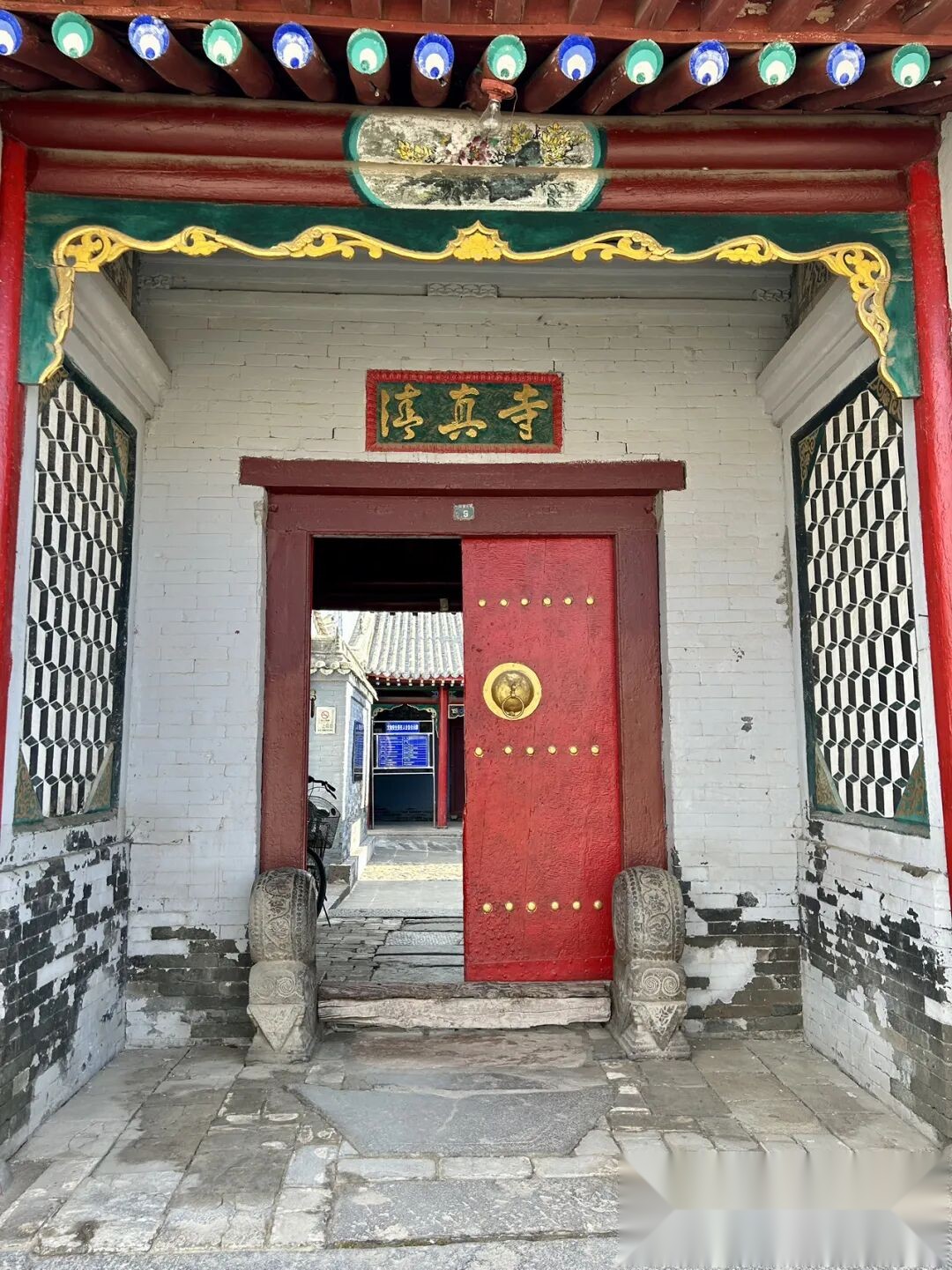
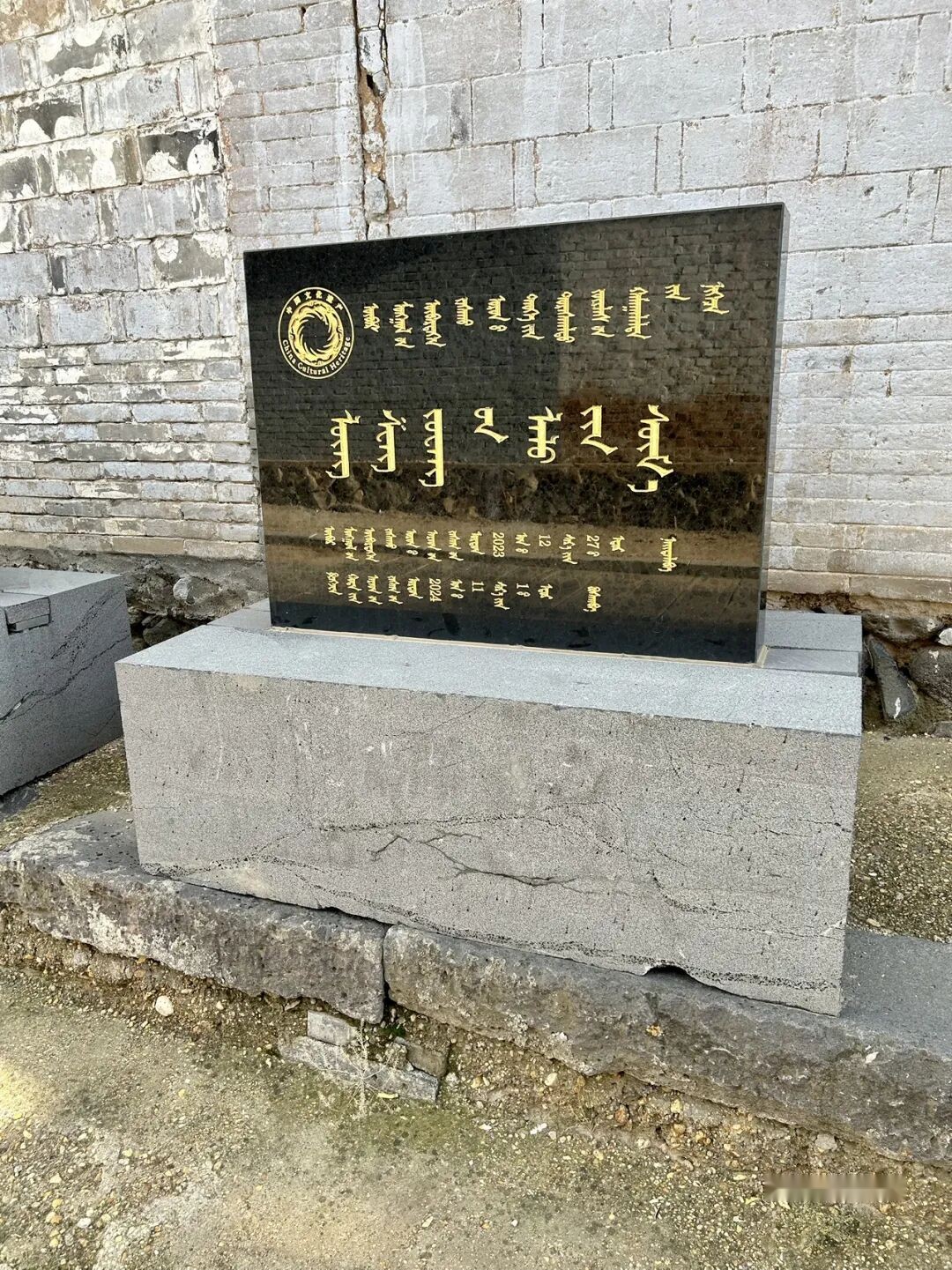
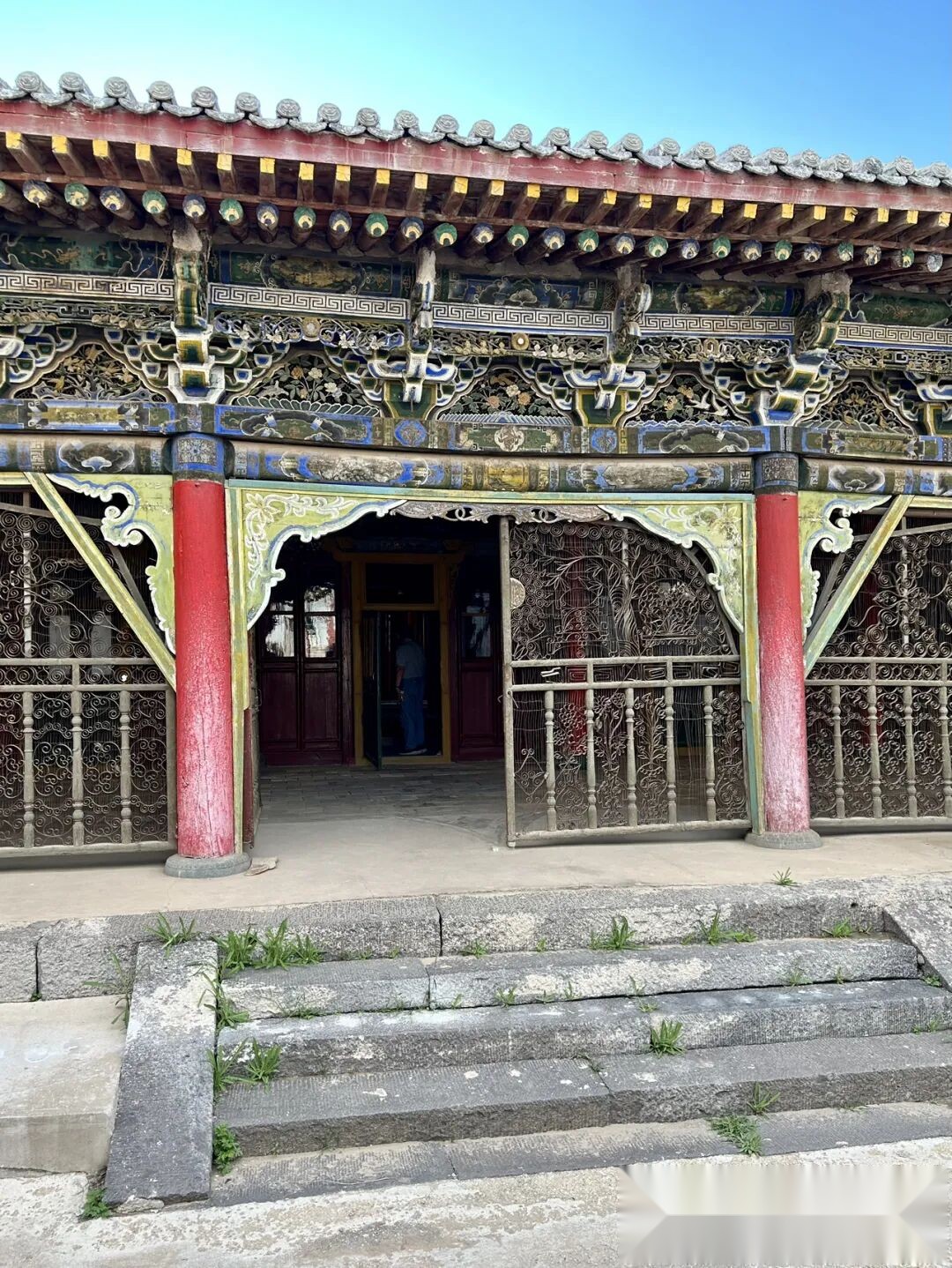
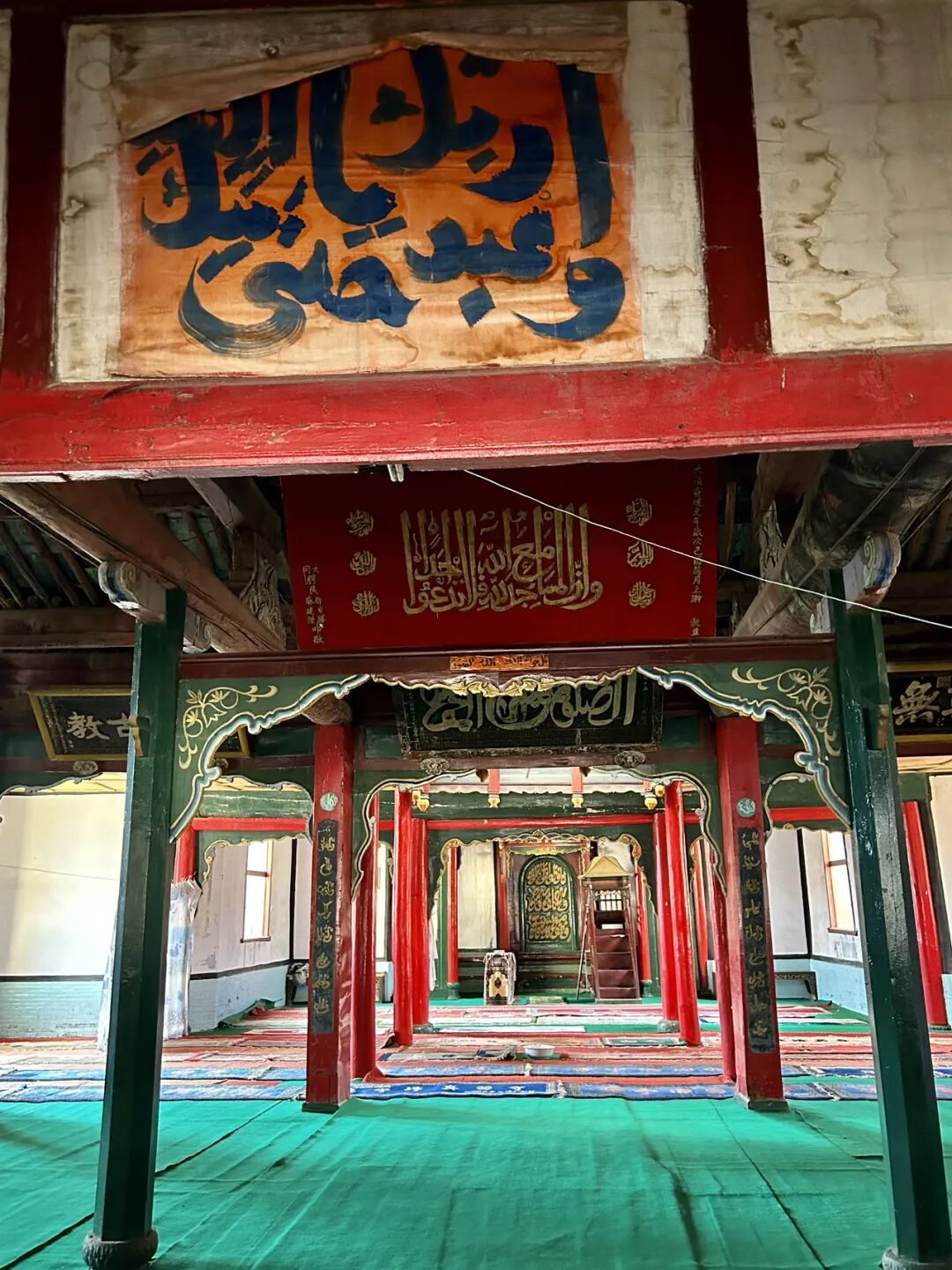
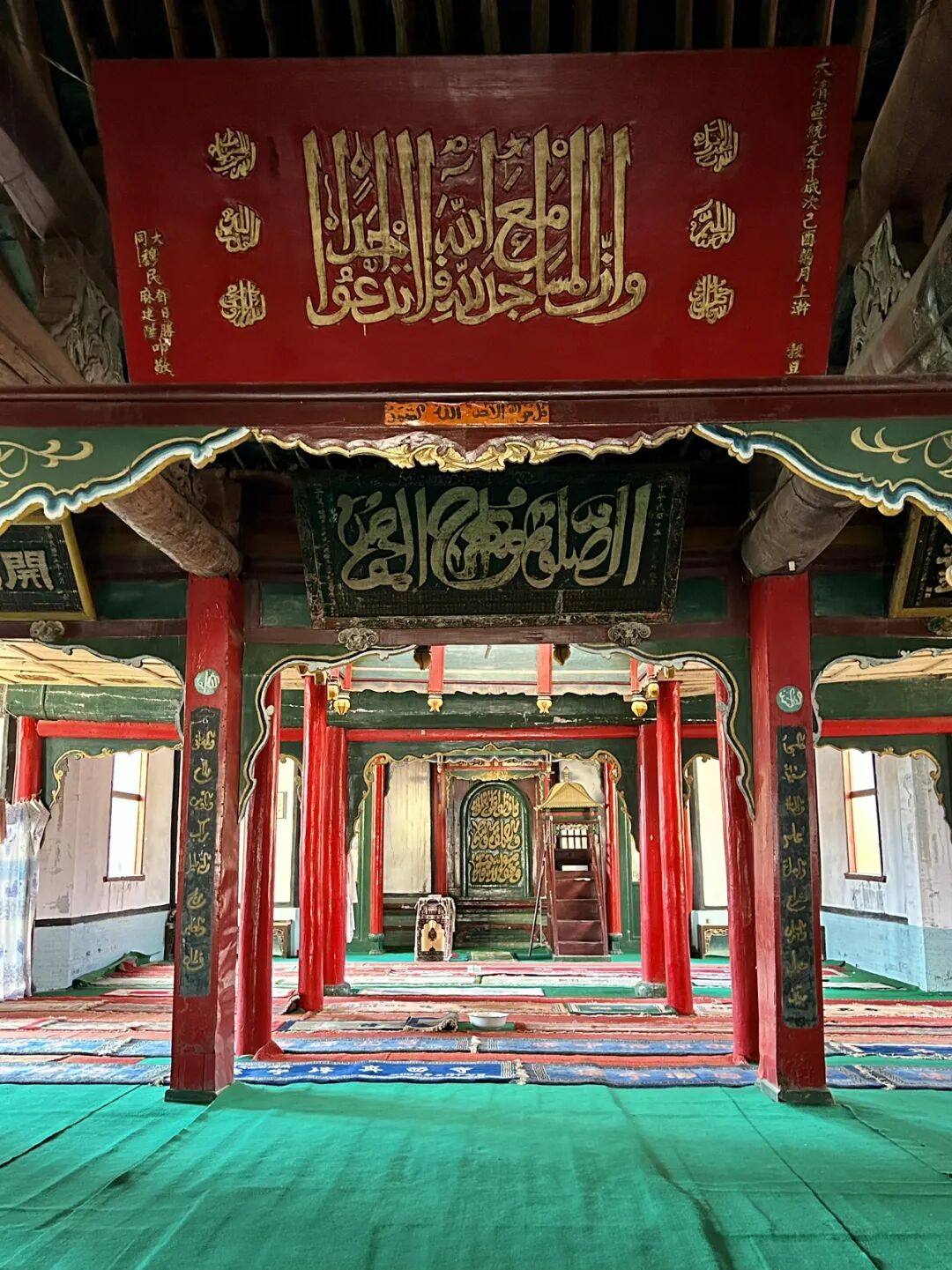
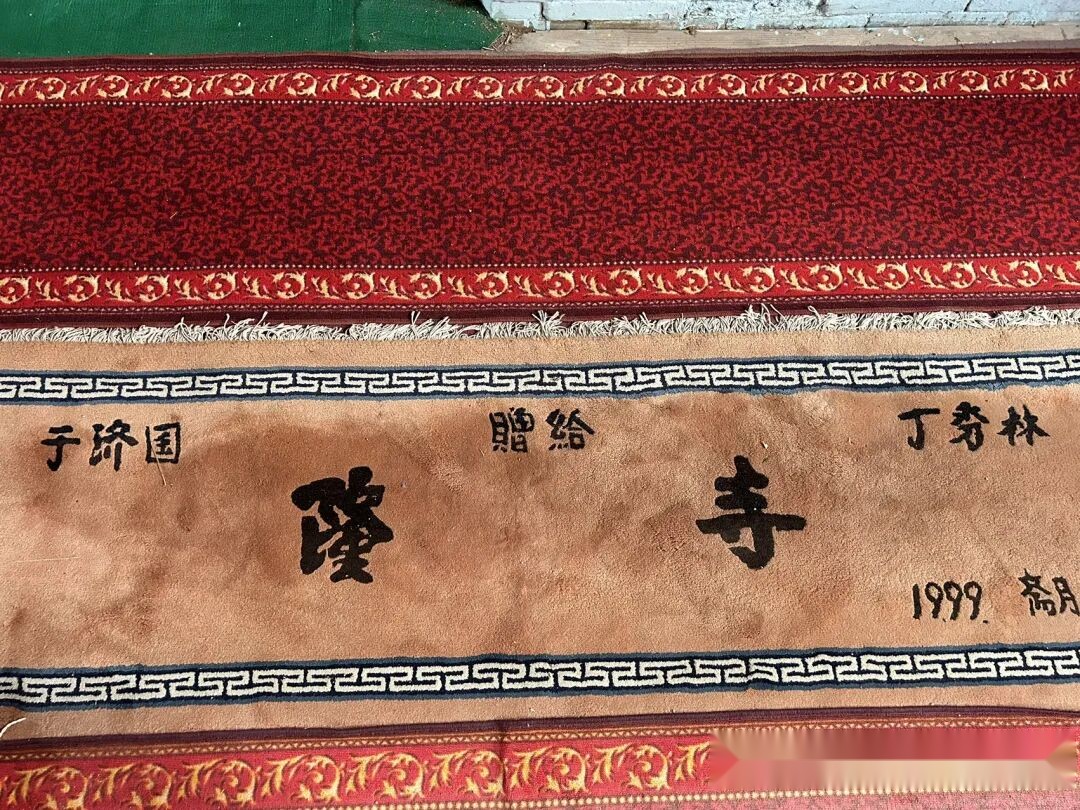
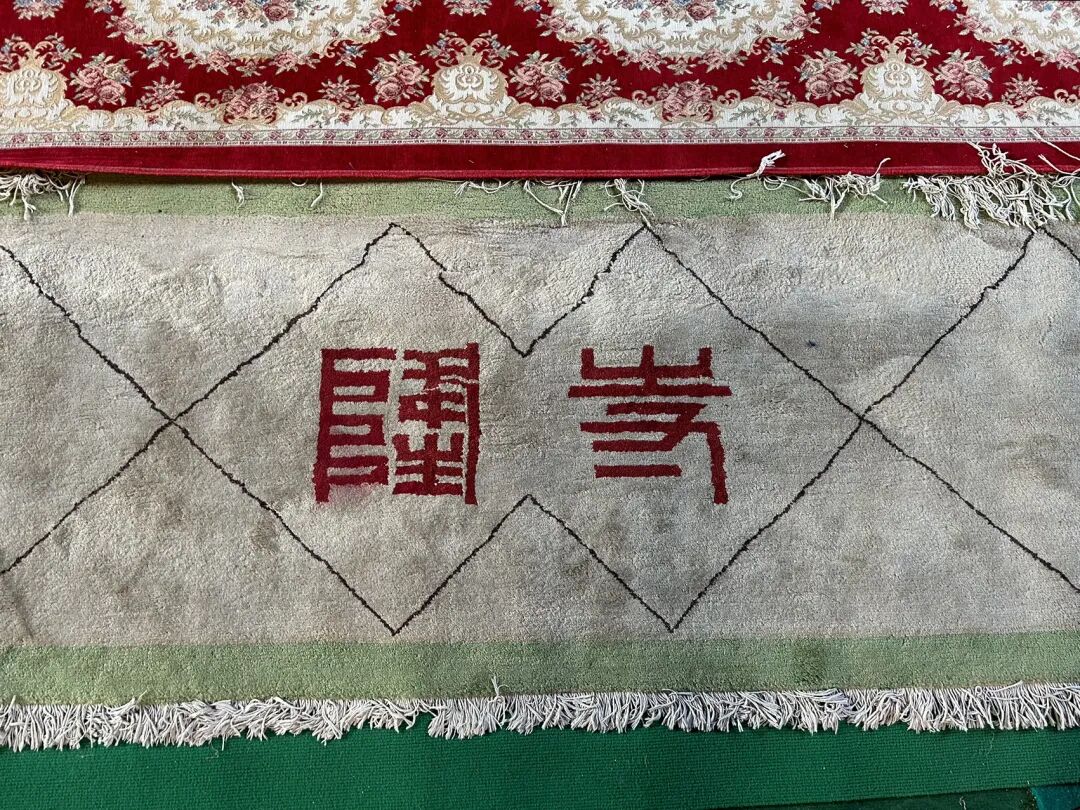
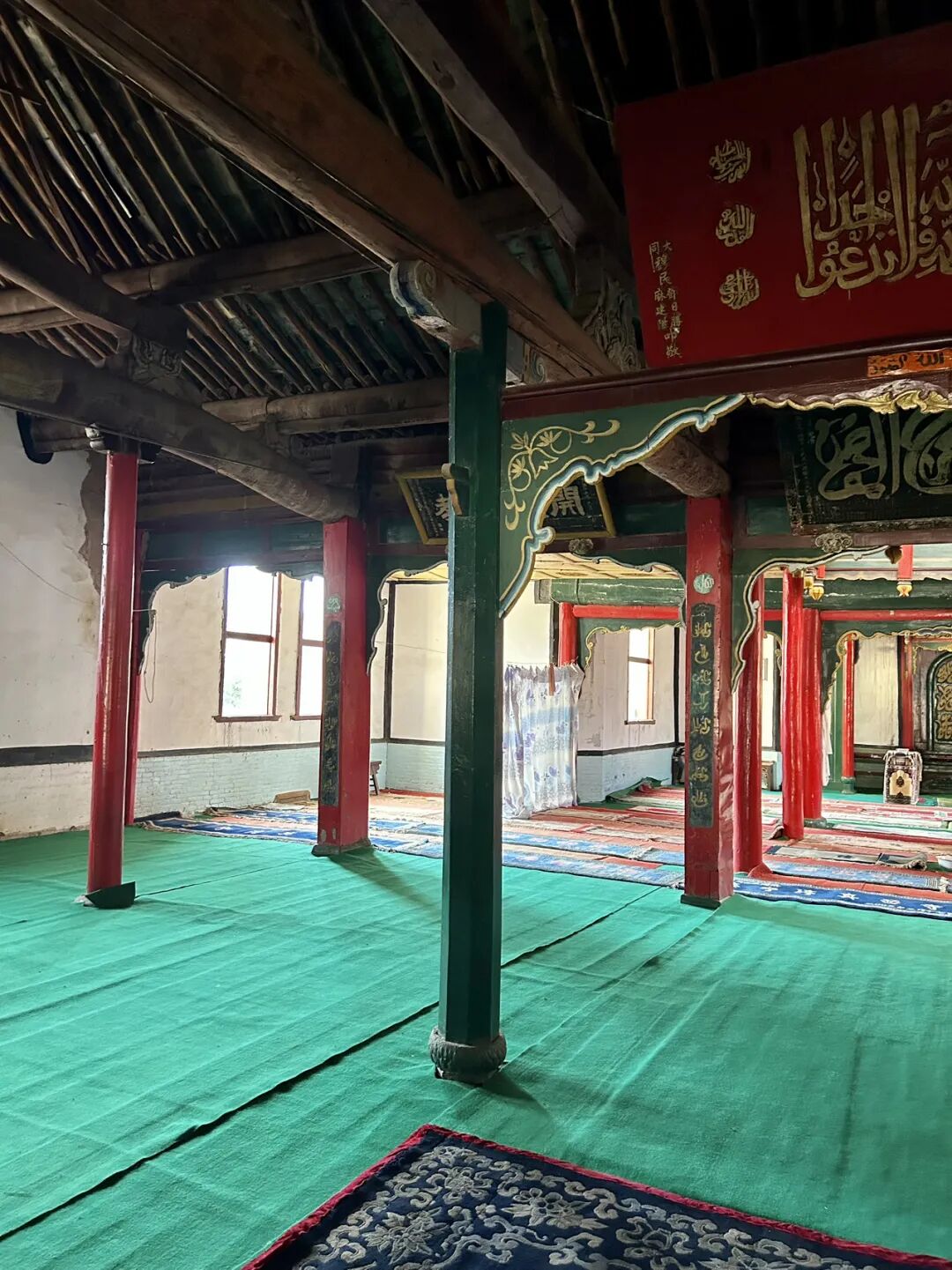
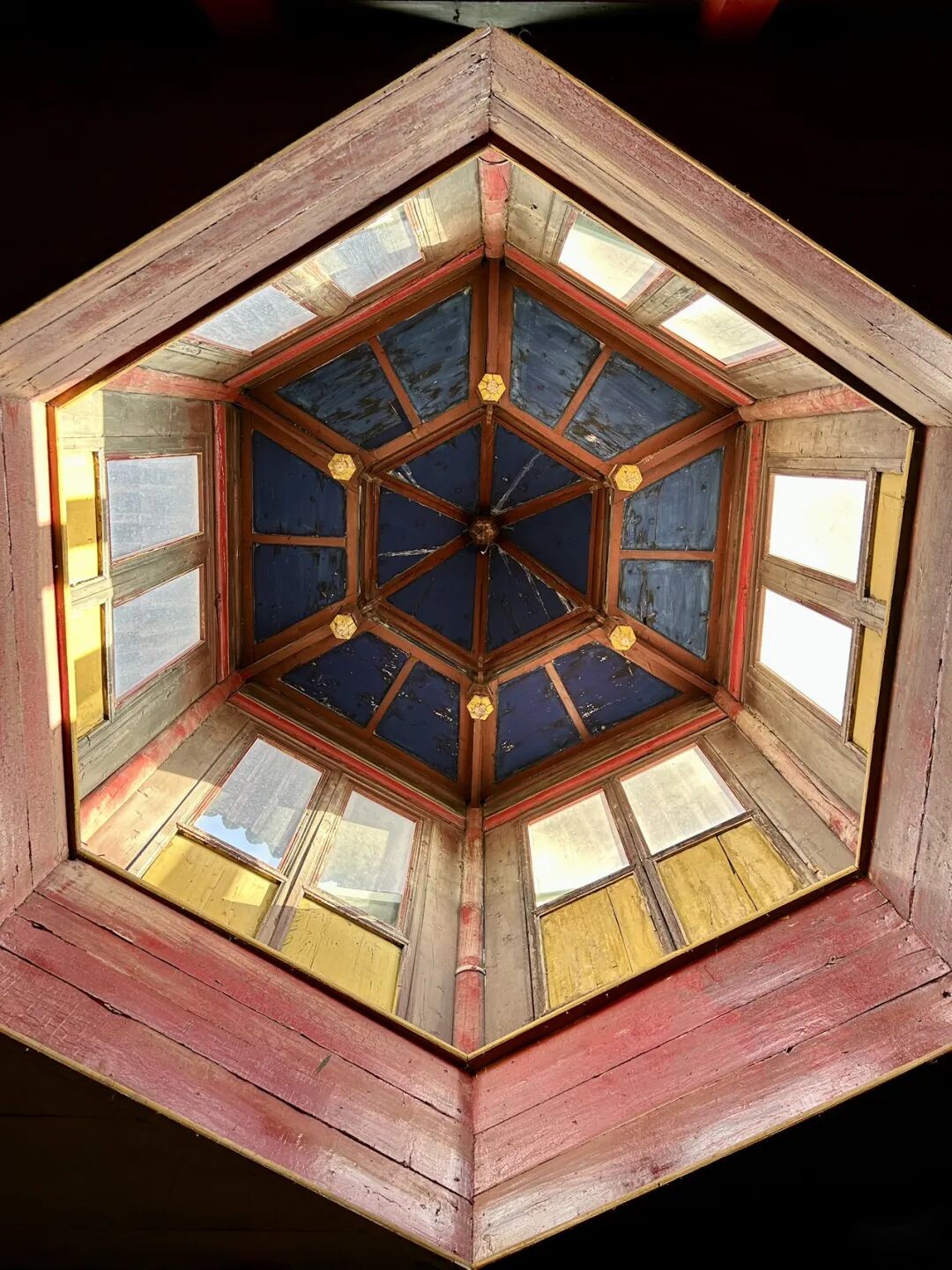
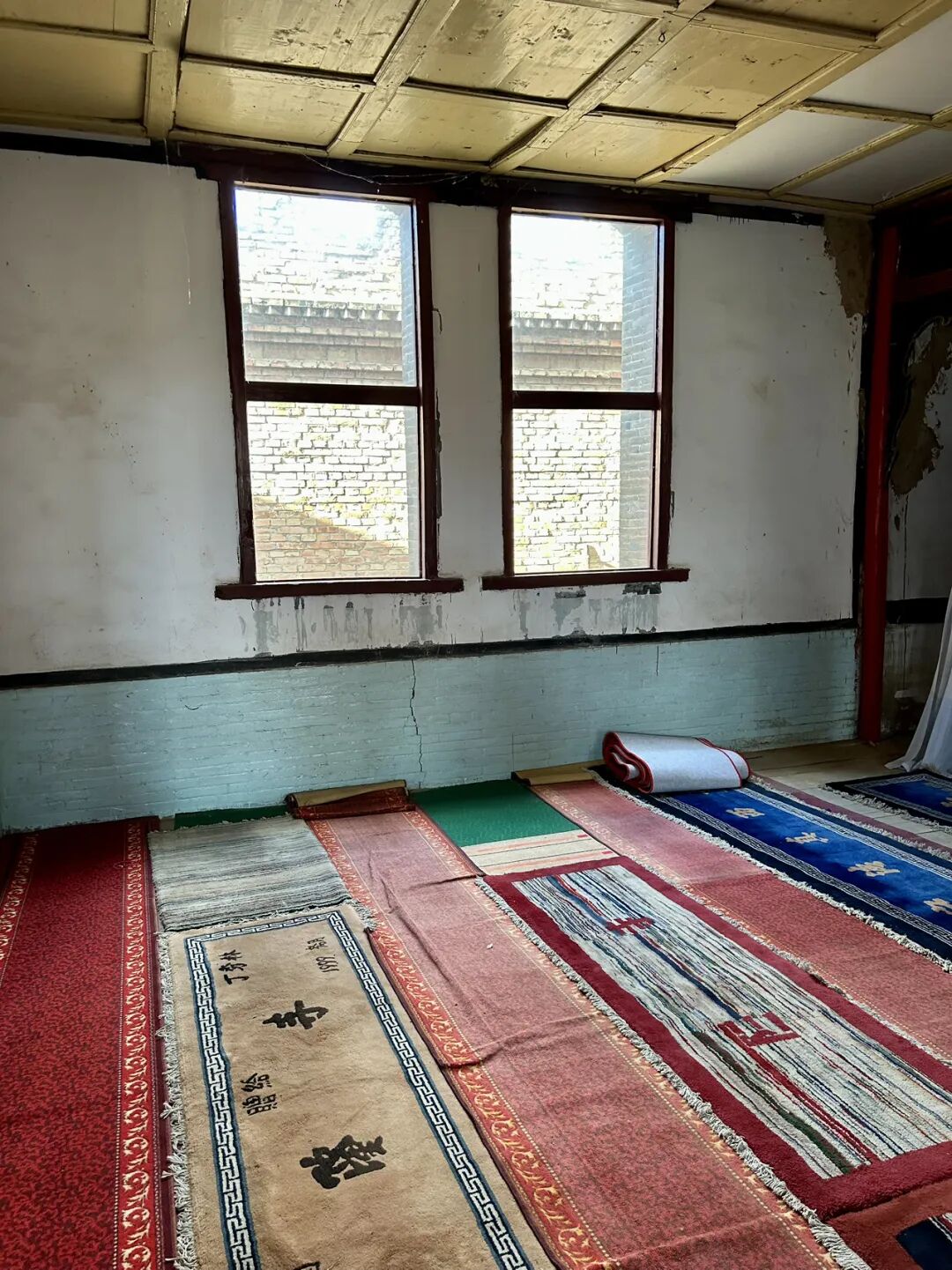
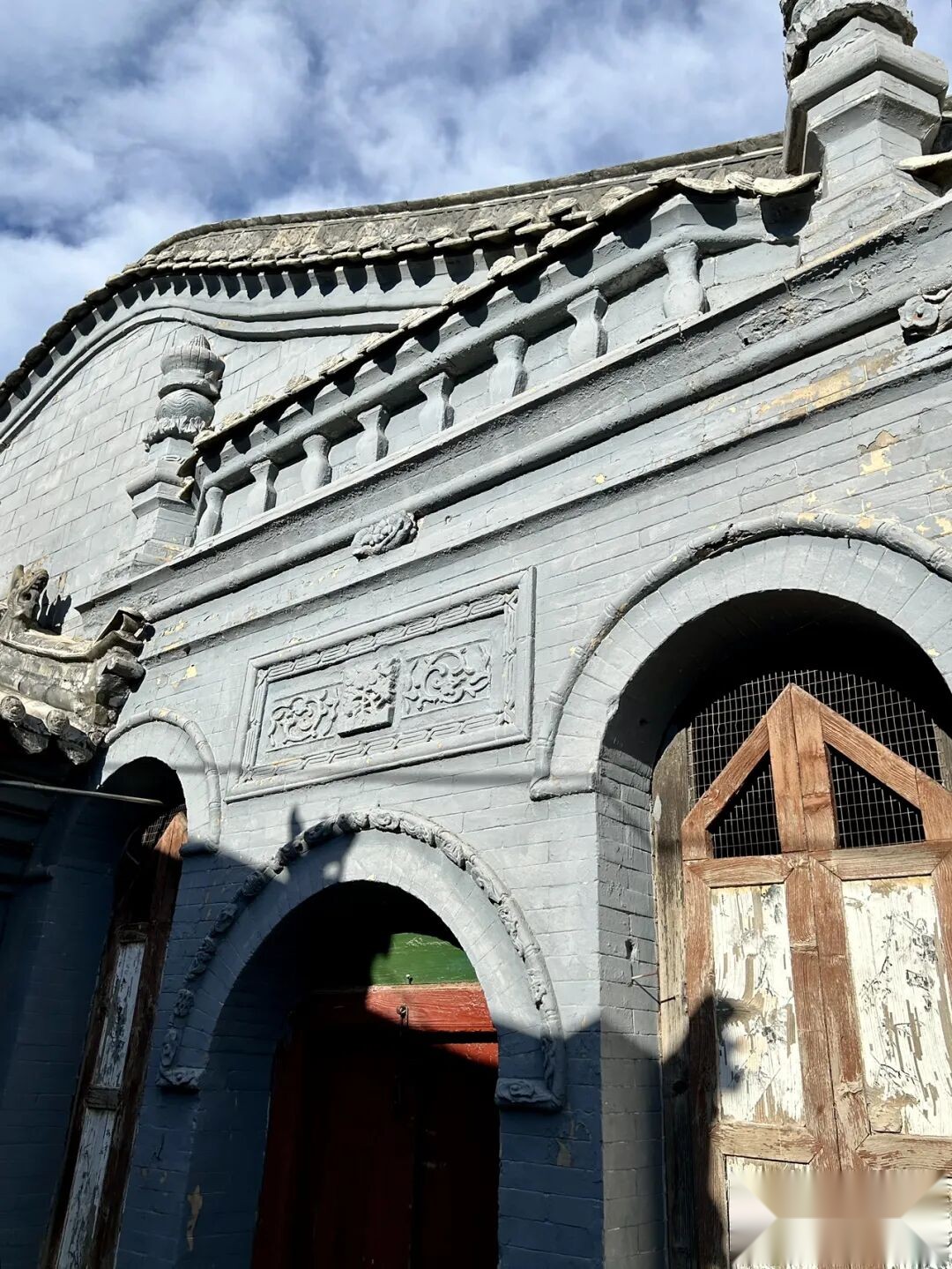
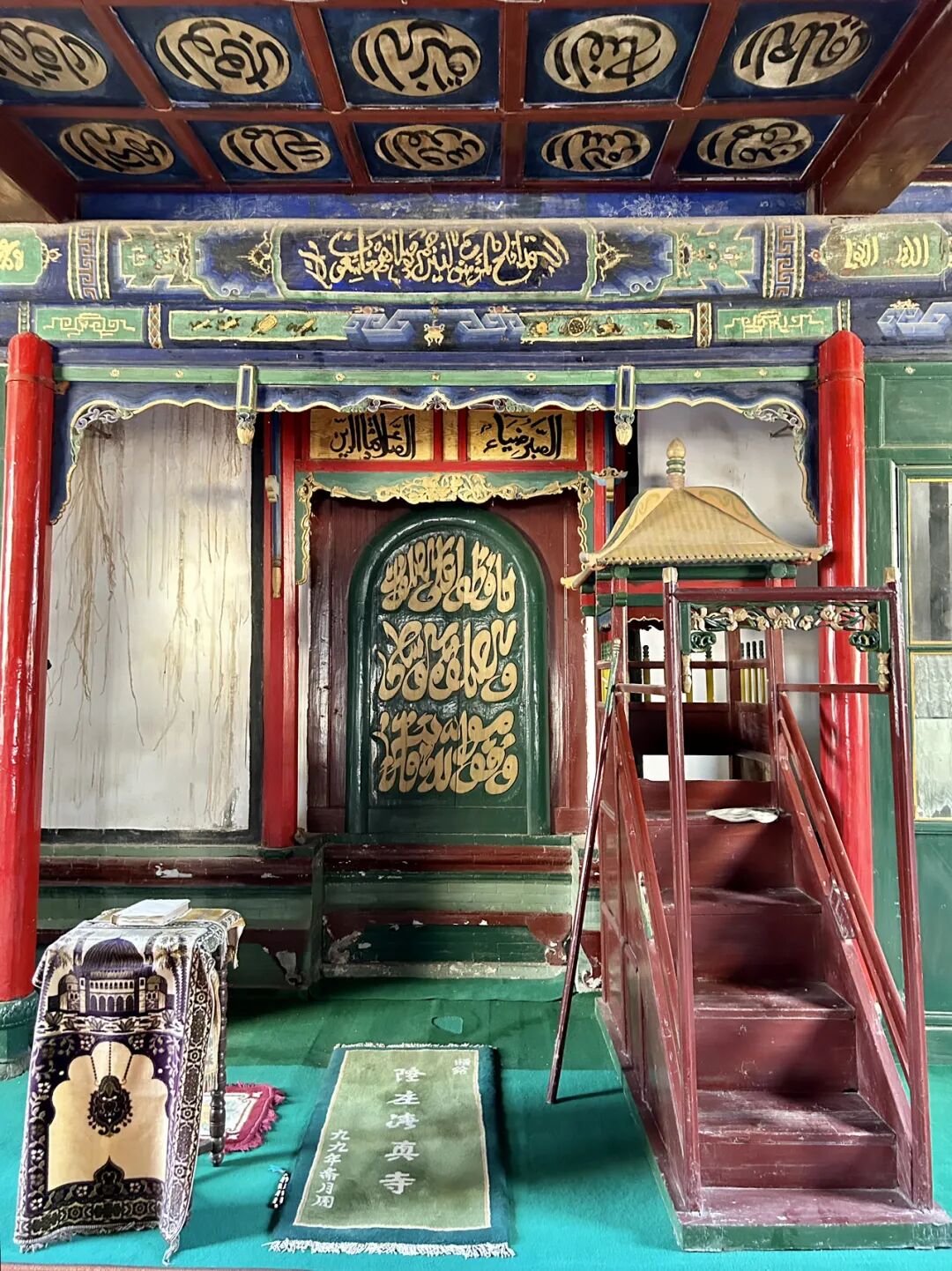
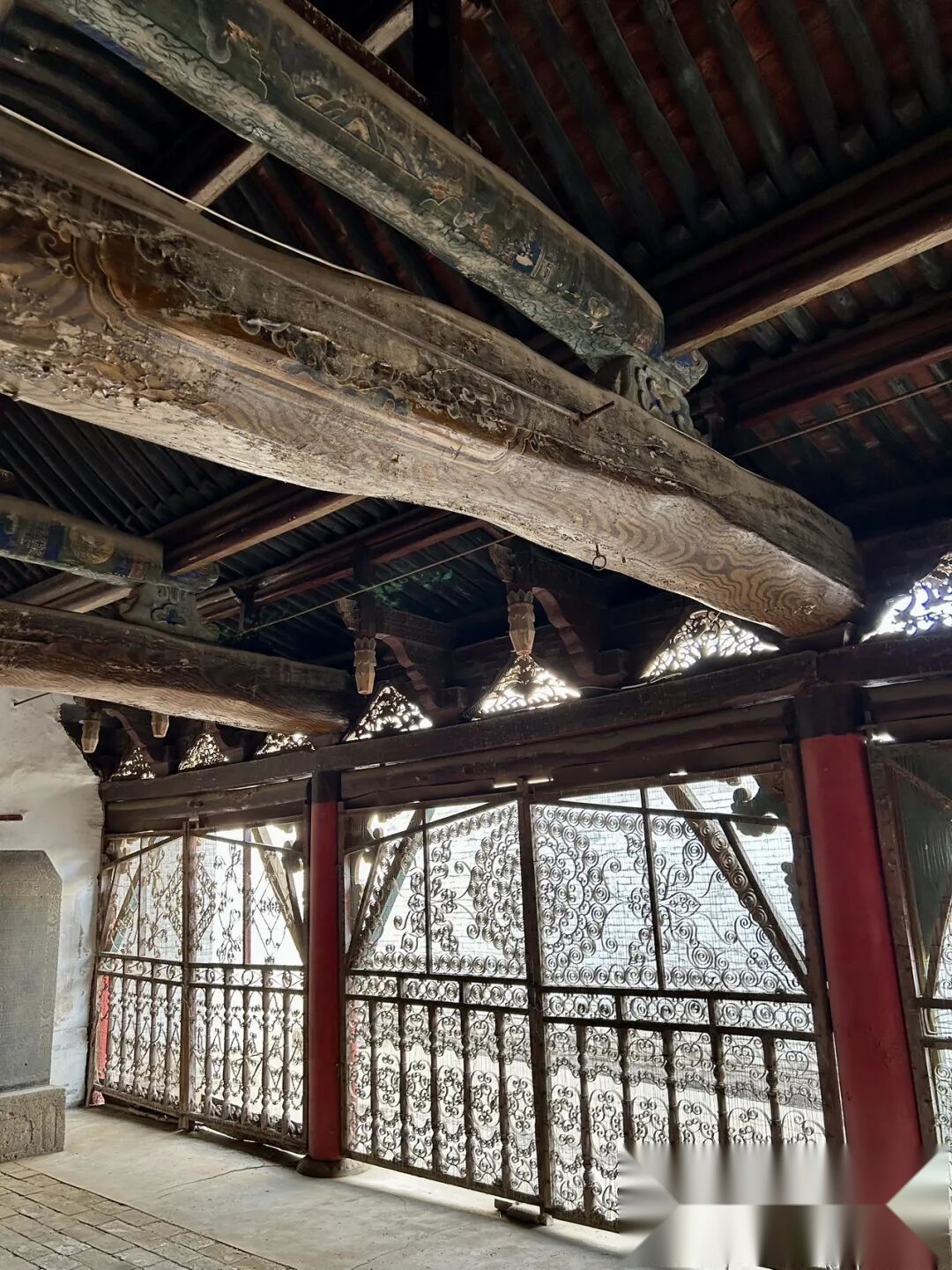
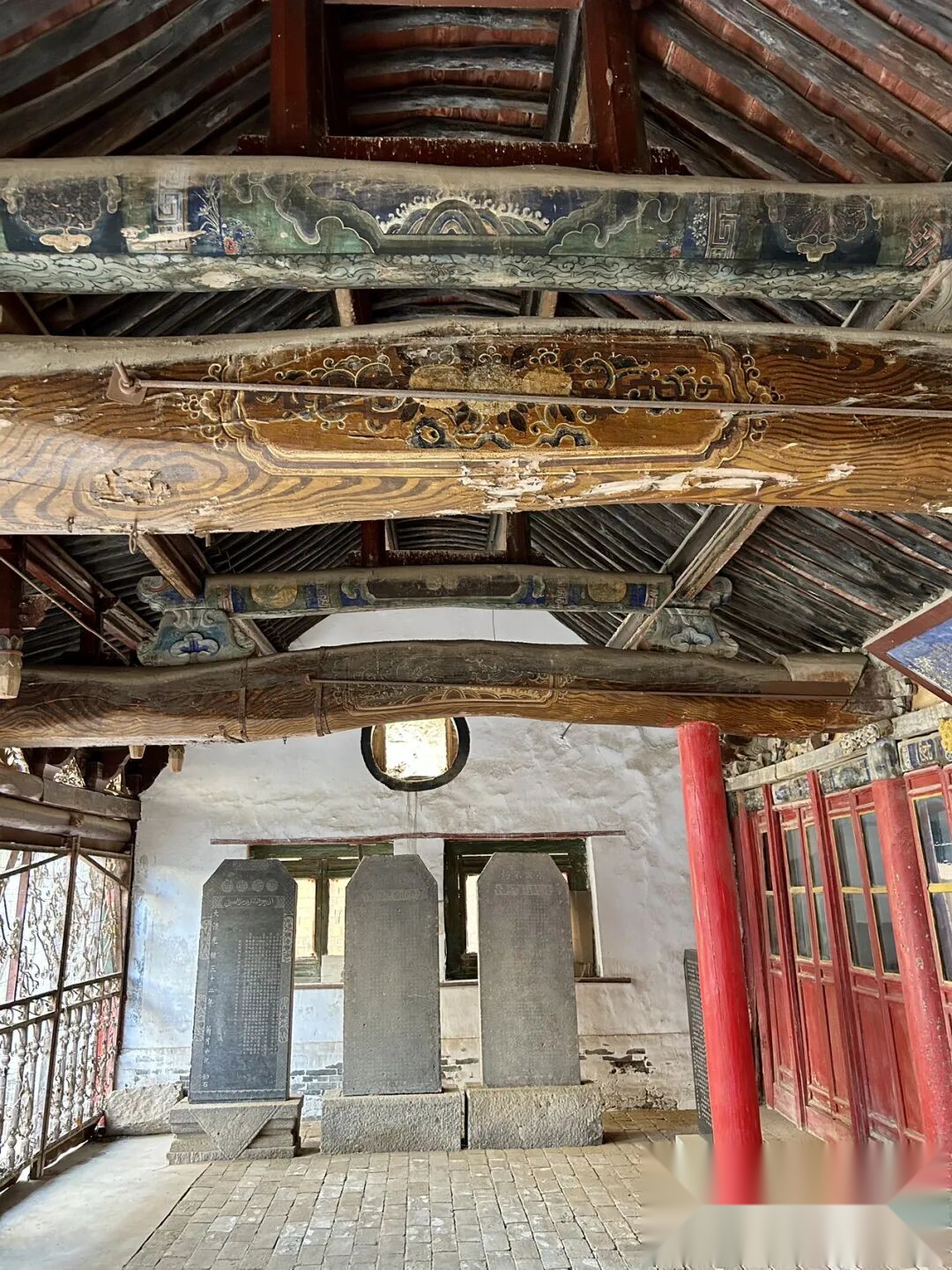
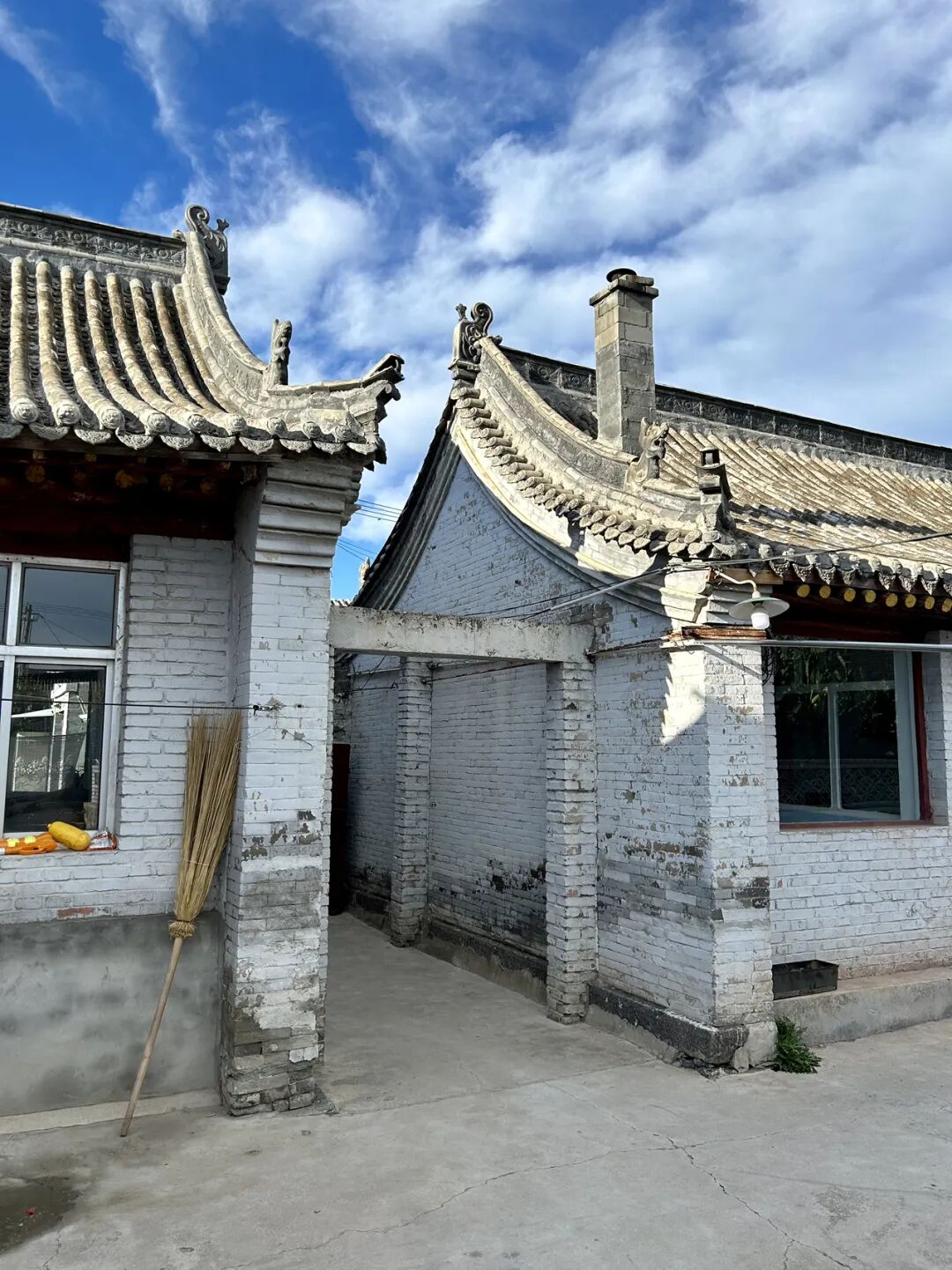
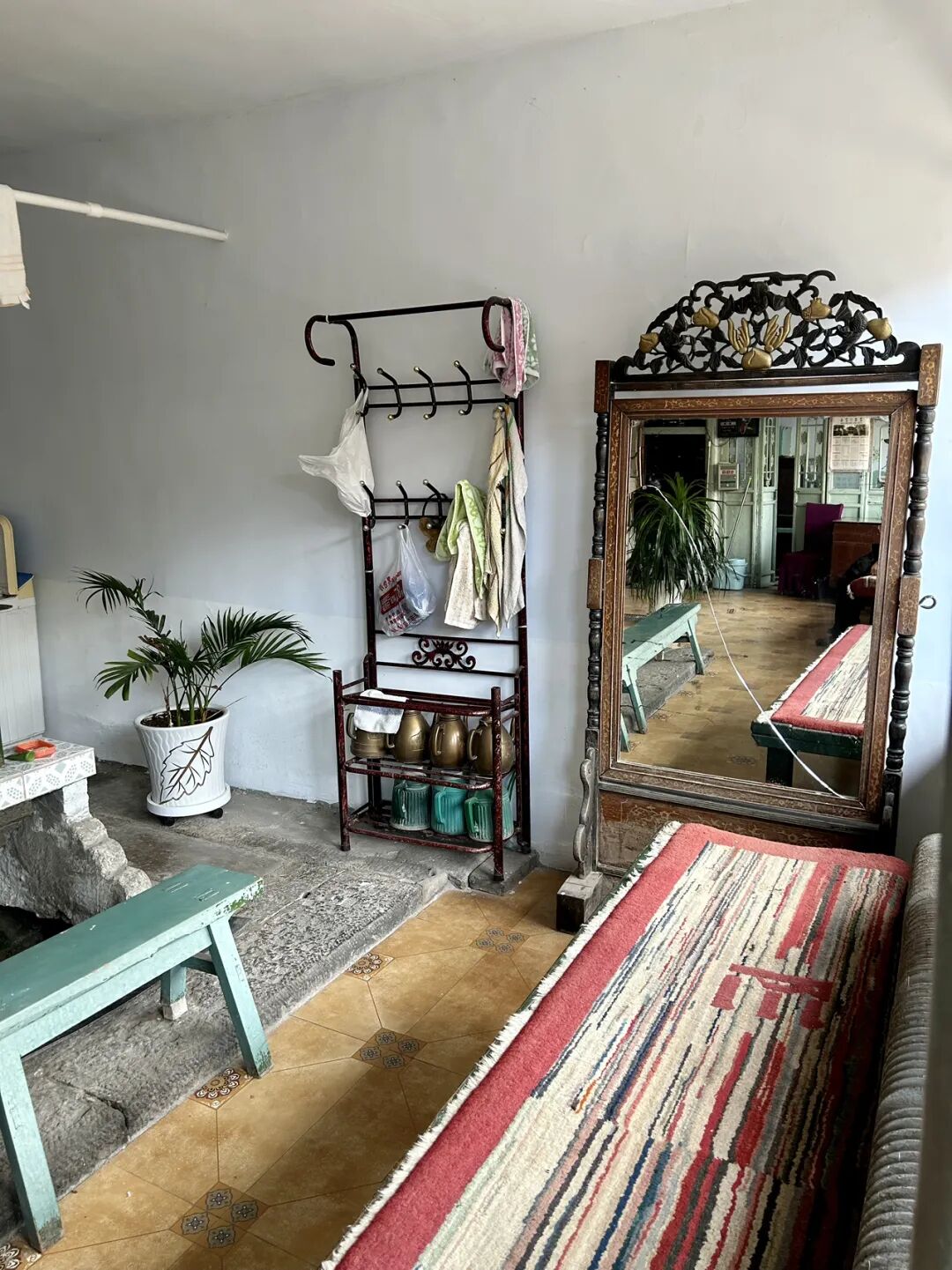
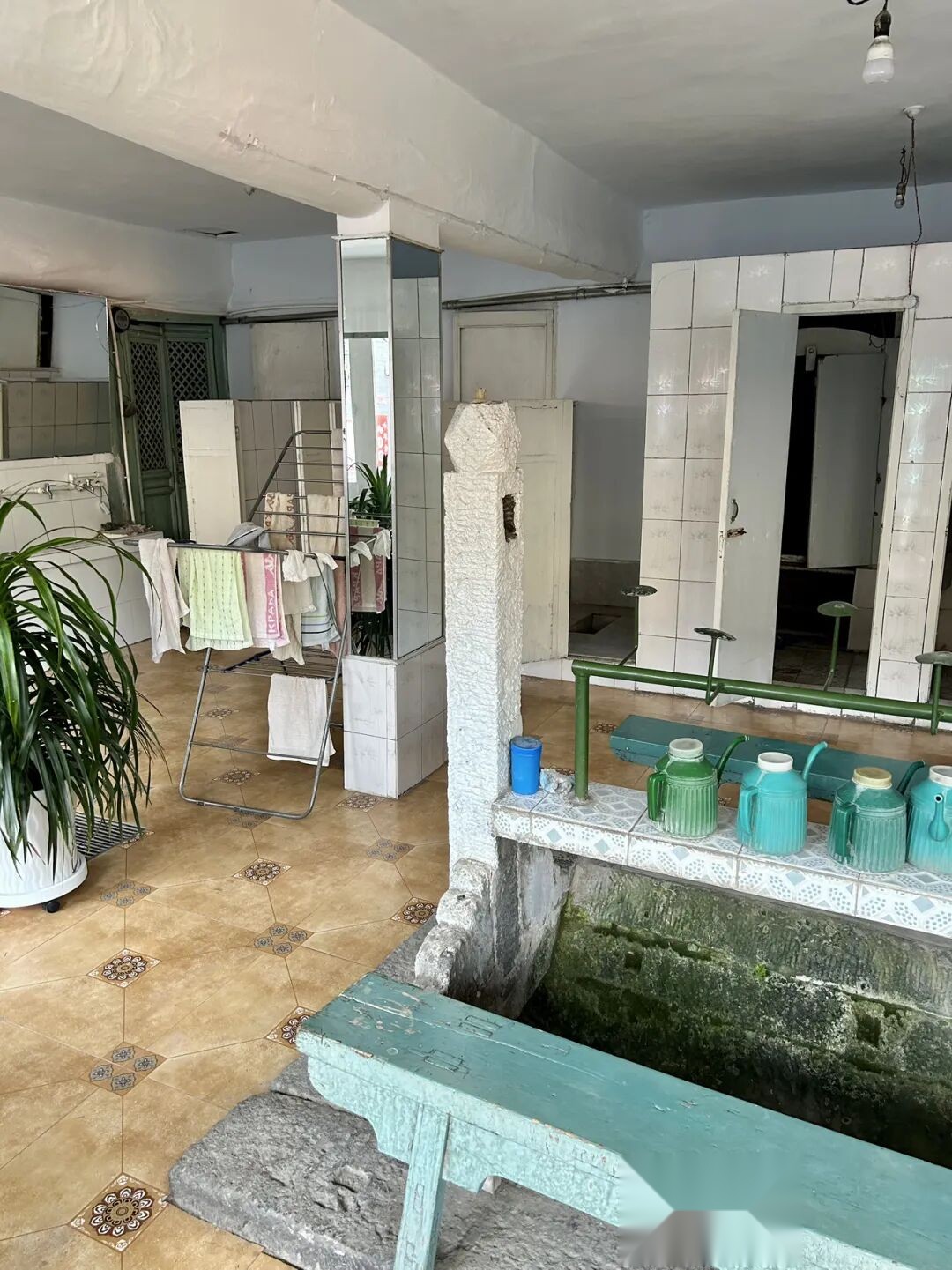
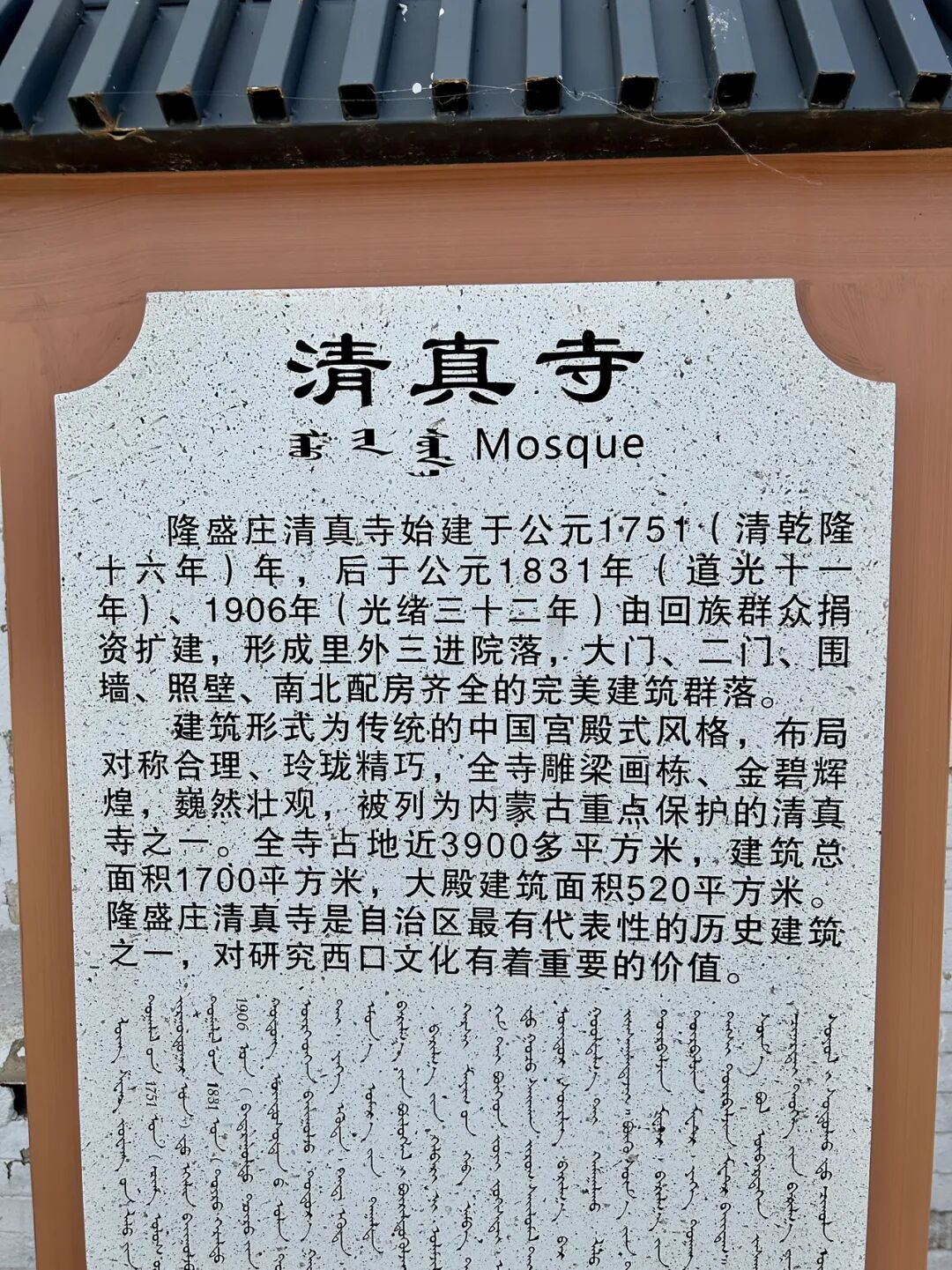
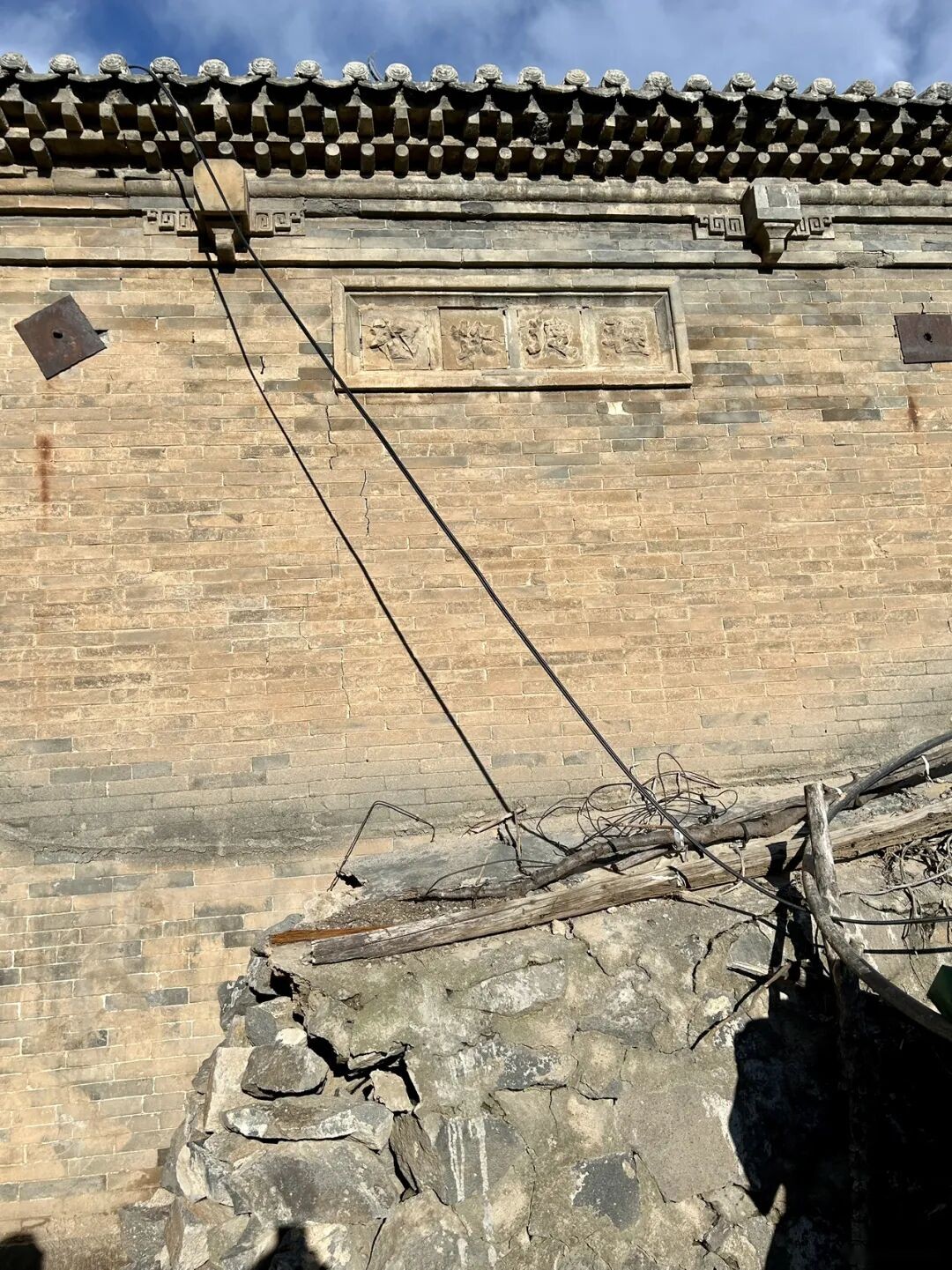
Discover Chengdong Mosque in Zhaoqing: Hidden Century-Old Hui Muslim Heritage in Lingnan Old Town
Articles • Hasan09 posted the article • 0 comments • 20 views • 1 days ago
Wandering through the weathered arcade streets of Duanzhou's old district in Zhaoqing, Guangdong, we explored the Chengdong Mosque—a hidden, city-level cultural heritage site nestled deep within the residential blocks—to experience the peaceful vibe where local Lingnan street life blends seamlessly with a century-old mosque.
Walking down the alleys of Duanzhou's old town, you are surrounded by peeling vintage arcade buildings and a maze of overhead wires, soaking in the down-to-earth, everyday vibe of old Zhaoqing. Right here hides a low-key, under-the-radar historic spot: the Chengdong Mosque.
It doesn't have some grand, flashy entrance; it quietly blends right into the neighborhood homes, making it super easy to walk right past if you aren't paying close attention.
This mosque has a long history dating all the way back to the Tang and Song dynasties, and after getting rebuilt generation after generation through the Ming and Qing dynasties, it is officially recognized as a Zhaoqing city-level cultural heritage site. It also serves as a religious hub for local Hui Muslims.
Right in the middle of bustling old streets and ordinary alleys, you get daily city life on one side and a quiet, sacred mosque on the other. It just sits there quietly, bearing witness to the cross-cultural years of Zhaoqing's rich history! view all
Wandering through the weathered arcade streets of Duanzhou's old district in Zhaoqing, Guangdong, we explored the Chengdong Mosque—a hidden, city-level cultural heritage site nestled deep within the residential blocks—to experience the peaceful vibe where local Lingnan street life blends seamlessly with a century-old mosque.
Walking down the alleys of Duanzhou's old town, you are surrounded by peeling vintage arcade buildings and a maze of overhead wires, soaking in the down-to-earth, everyday vibe of old Zhaoqing. Right here hides a low-key, under-the-radar historic spot: the Chengdong Mosque.
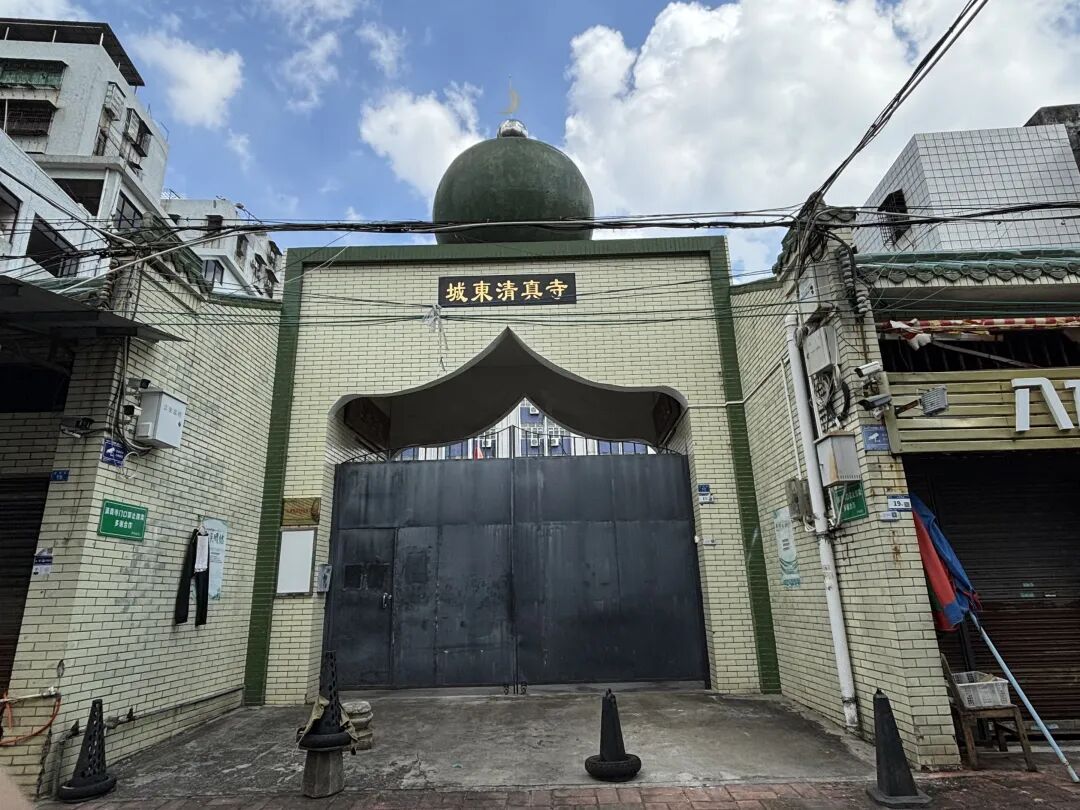
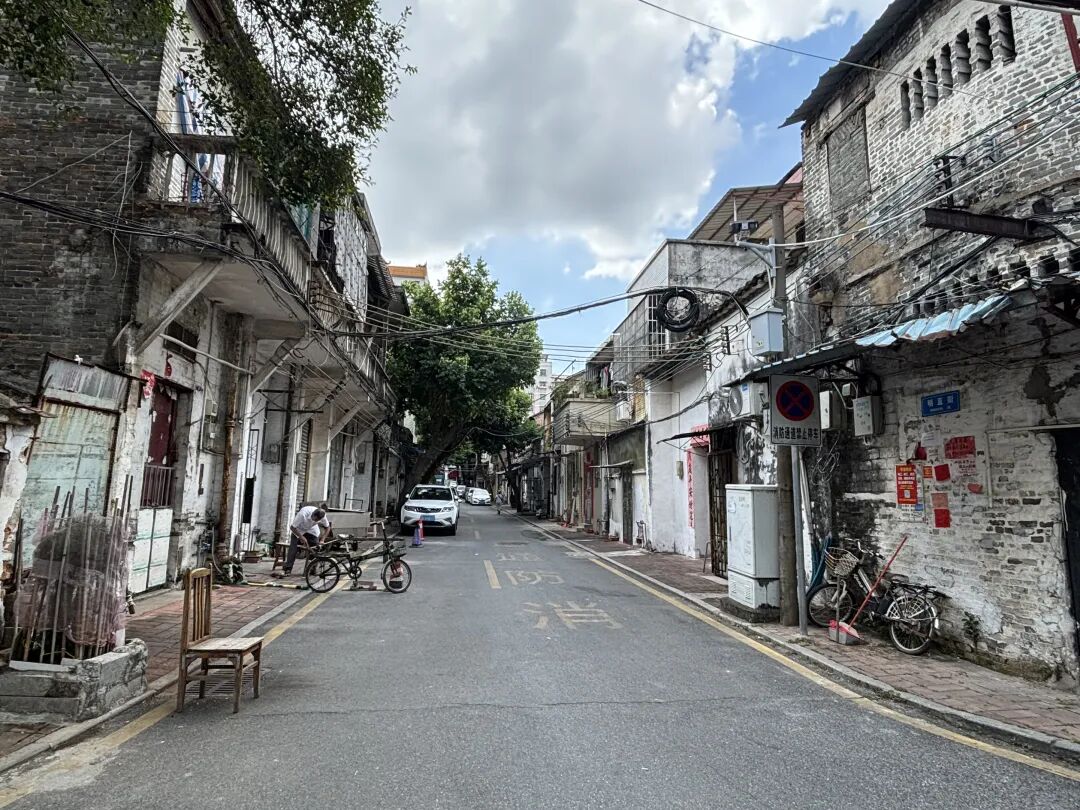
It doesn't have some grand, flashy entrance; it quietly blends right into the neighborhood homes, making it super easy to walk right past if you aren't paying close attention.
This mosque has a long history dating all the way back to the Tang and Song dynasties, and after getting rebuilt generation after generation through the Ming and Qing dynasties, it is officially recognized as a Zhaoqing city-level cultural heritage site. It also serves as a religious hub for local Hui Muslims.
Right in the middle of bustling old streets and ordinary alleys, you get daily city life on one side and a quiet, sacred mosque on the other. It just sits there quietly, bearing witness to the cross-cultural years of Zhaoqing's rich history!
Hiking Qilian Mountains & Xining Mosque Guide: Authentic Hui Muslim Cuisine and Ancient Architecture Tours
Articles • Hasan09 posted the article • 0 comments • 22 views • 1 days ago
This trip features 87 high-definition photos capturing a pastoral hiking journey through Qingyang Valley in Qilian County, Qinghai. Along the way, we explored the ancient Epu City, visited the Dongguan and Nanguan mosques in downtown Xining, climbed Fenghuang Terrace at Nanshan Park for a panoramic view of the highland city, and hunted for halal eats at the Mojia Street and Daxin Street night markets.
Today’s hike took us through Qingyang Valley in Qilian County, tucked away behind the backside of Zhuoer Mountain. The route is only about 3 miles (5 kilometers) long with minimal elevation gain, but I took it incredibly slow. It wasn’t because the trail was tough—it was just impossible to pull myself away from the scenery. Usually, I’m the one charging ahead, but today I found myself lagging behind. The place was just too beautiful; I couldn't bear to rush through it.
We started our hike at the Malahe Village Kindergarten in Babao Town, Qilian County. As we strolled along the dirt paths behind the village, we were surrounded by golden, ripe highland barley and wheat, along with withered, seed-bearing rapeseed flowers—a total pastoral dream. Every once in a while, I’d turn back, and the view would blow me away. Below the highland meadows of the rear Zhuoer Mountain, exposed red sandstone and conglomerate looked like a Danxia landscape painted onto the earth’s canvas. Reaching the hilltop and sitting on the soft grass to quietly take in the rolling mountains and sprawling fields was a soul-stirring experience.
Think that was it? Once you cross the mountain pass, the views get even more intense. To the right in the distance, you’ll see Niuxin Mountain—or 'Ami Dongsu' in Tibetan—which is the sacred mountain of Qilian, where I hiked yesterday. Looking across the Babao River valley, the main peak of Niuxin Mountain is imposing, with clouds drifting below its summit. The mountains stretch eastward, dipping down into slopes covered in pristine, ancient forests. Down closer, the golden barley and wheat fields weave through the slopes, and there was even a patch of late-blooming rapeseed flowers waiting for us latecomers. It felt like walking right through a landscape painting.
We ended the hike at Ladong Village in Babao Town and drove about four hours back to Xining. We grabbed lunch at the ancient Epu City, feasting on banmian (hand-pulled noodles with potato and beef), yogurt, and lamb skewers. This former Silk Road outpost was a major junction: head north to cross Biandu Pass into the Hexi Corridor, west into the Qilian grasslands, or east toward Xining and Lanzhou. Epu City had fallen into ruins, but it’s been revitalized thanks to the tourism boom. You can check out the 'Highway 9' signs and the Epu city gate, where you’ll find remnants of the old city walls nearby.
Once we hit downtown Xining, we freshened up and headed straight to the Nanguan and Dongguan mosques. They’re only about 600 meters apart, so you can easily do both in one go. Just a heads-up: they’re closed to visitors during prayer times, and non-Muslims aren't allowed inside the main prayer halls at any time.
The Dongguan Great Mosque was originally built during the Hongwu era of the Ming Dynasty. It’s one of the four largest mosques in Northwest China. After being renovated and expanded over several generations, the main hall now features a traditional Chinese palace-style roof with 'feiyan dougong' (upturned eaves and interlocking wooden brackets), blending Islamic style with Tibetan architectural elements. It’s a textbook example of how Central Plains architecture and Islamic culture mesh together.
The Nanguan Mosque dates back to 1934 and was completely rebuilt in 2013. It sports a classic Arabic Islamic design with white walls and golden domes, complete with arched corridors and columns—it feels totally exotic. You can tour inside the Dongguan Mosque, but you can only take photos from the entrance of the Nanguan Mosque. One is old, one is new; one has Chinese-style halls, the other has Arabic domes—together, they tell the story of Xining’s religious heritage and its history of multi-ethnic harmony.
To get to Nanshan Park from the Dongguan Mosque, grab a taxi. Once you’re in, walk straight to the observation deck, then turn right and head up the slope to Fenghuang Terrace. You can go up to the second floor for a killer view of Xining. Keep in mind that trees block the sunset view from the west side of the terrace. The secret spot for the sunset isn't on the terrace itself; walk around to the back, take the wooden boardwalk down to the small protruding balcony, and you’ll get the perfect shot of the overpass, the TV tower, and the golden sunset glow.
Below Fenghuang Terrace, there’s a massive complex of ancient buildings. It’s known as the 'Ghadiriyya' Gongbei (shrine), which holds the tomb of the Islamic sage Qutb al-Rabbani Abd al-Rahman, a descendant of the Prophet from Baghdad. Originally built during the Yuan Dynasty under the order of the Prince of Xining, it’s been destroyed and rebuilt several times throughout the Ming and Qing dynasties. The octagonal tower with flying eaves we see today was restored in the 1980s. With its Chinese-style eaves and brackets mixed with Islamic architectural flair, it has stood on this hilltop for 700 years, watching over Xining and bearing witness to the fusion of cultures in the Hehuang region.
Getting a taxi down from Nanshan Park can be tricky, especially after 8:30 PM when everyone is leaving the night view. We caught a tricycle for 10 yuan to the bottom of the hill and hailed a cab there to the Mojia Street night market. Traffic gets heavy near the market, so it’s easier to just have the driver drop you off at a nearby side street and walk the rest of the way.
Walk Mojia Street from south to north, then turn right at the end to hit the Daxin Street night market. The intersection of the two is the best place to catch a ride out. Try to stick to the local specialties—skip the grilled squid and stinky tofu. When you’re looking for 'liu-liu yangrou' (grilled lamb skewers on red willow branches), go for the stalls that slice and skewer the meat right in front of you. I wouldn’t recommend the 'ganbian yangchang' (dry-fried lamb intestine), as it’s stuffed with bean flour and tastes a bit off. The 'doubao rou' (lamb tripe stuffed with beef) is great. There are tons of tiny tomatoes here that are super eye-catching, and the 'yangyu jinjin' (stir-fried potato strips with bean sprouts, onions, and green peppers) is way better than you’d expect. You should definitely try the lamb head and trotters. The lamb skewers are pretty standard everywhere. If you get thirsty, grab some yogurt, 'tianpeizi' (fermented highland barley), milk tea, or 'jidan niunai lauzao' (sweet fermented rice with egg and milk). Honestly, there weren't as many 'unique' foods as I expected, but that’s probably because I’d spent several days eating my way through Lanzhou, Wuwei, and Qilian, so my standards were pretty high. I rushed through Xining on my previous Qinghai-Gansu road trip, so it was nice to really explore it this time. view all
This trip features 87 high-definition photos capturing a pastoral hiking journey through Qingyang Valley in Qilian County, Qinghai. Along the way, we explored the ancient Epu City, visited the Dongguan and Nanguan mosques in downtown Xining, climbed Fenghuang Terrace at Nanshan Park for a panoramic view of the highland city, and hunted for halal eats at the Mojia Street and Daxin Street night markets.
Today’s hike took us through Qingyang Valley in Qilian County, tucked away behind the backside of Zhuoer Mountain. The route is only about 3 miles (5 kilometers) long with minimal elevation gain, but I took it incredibly slow. It wasn’t because the trail was tough—it was just impossible to pull myself away from the scenery. Usually, I’m the one charging ahead, but today I found myself lagging behind. The place was just too beautiful; I couldn't bear to rush through it.


We started our hike at the Malahe Village Kindergarten in Babao Town, Qilian County. As we strolled along the dirt paths behind the village, we were surrounded by golden, ripe highland barley and wheat, along with withered, seed-bearing rapeseed flowers—a total pastoral dream. Every once in a while, I’d turn back, and the view would blow me away. Below the highland meadows of the rear Zhuoer Mountain, exposed red sandstone and conglomerate looked like a Danxia landscape painted onto the earth’s canvas. Reaching the hilltop and sitting on the soft grass to quietly take in the rolling mountains and sprawling fields was a soul-stirring experience.
Think that was it? Once you cross the mountain pass, the views get even more intense. To the right in the distance, you’ll see Niuxin Mountain—or 'Ami Dongsu' in Tibetan—which is the sacred mountain of Qilian, where I hiked yesterday. Looking across the Babao River valley, the main peak of Niuxin Mountain is imposing, with clouds drifting below its summit. The mountains stretch eastward, dipping down into slopes covered in pristine, ancient forests. Down closer, the golden barley and wheat fields weave through the slopes, and there was even a patch of late-blooming rapeseed flowers waiting for us latecomers. It felt like walking right through a landscape painting.










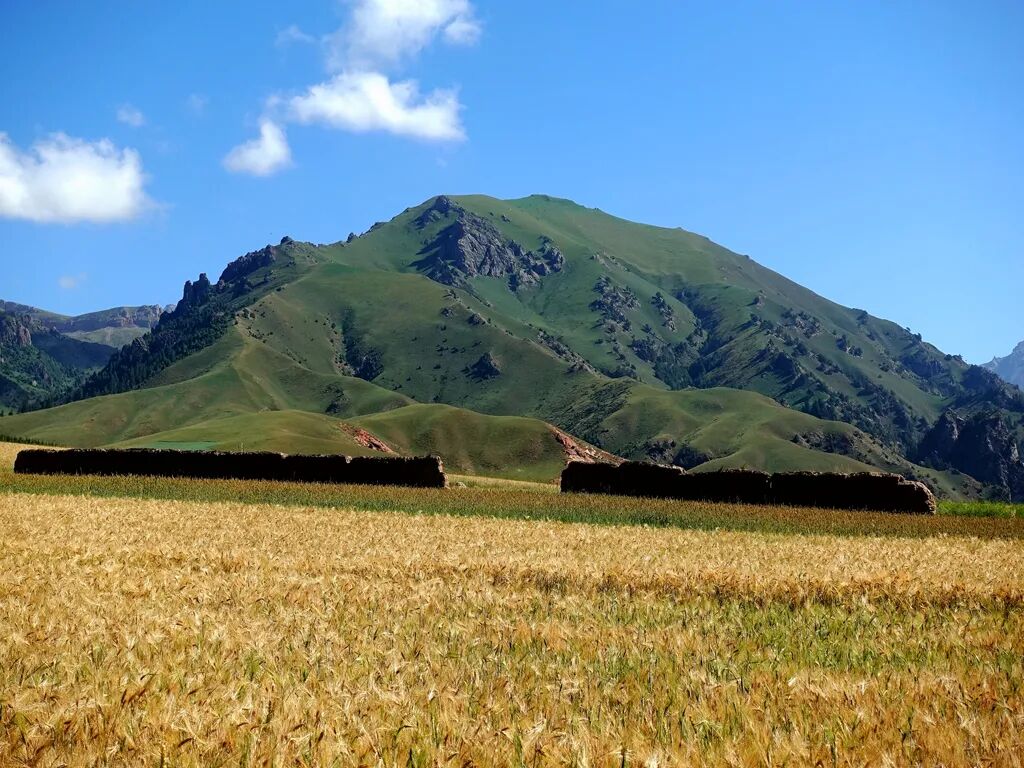



We ended the hike at Ladong Village in Babao Town and drove about four hours back to Xining. We grabbed lunch at the ancient Epu City, feasting on banmian (hand-pulled noodles with potato and beef), yogurt, and lamb skewers. This former Silk Road outpost was a major junction: head north to cross Biandu Pass into the Hexi Corridor, west into the Qilian grasslands, or east toward Xining and Lanzhou. Epu City had fallen into ruins, but it’s been revitalized thanks to the tourism boom. You can check out the 'Highway 9' signs and the Epu city gate, where you’ll find remnants of the old city walls nearby.
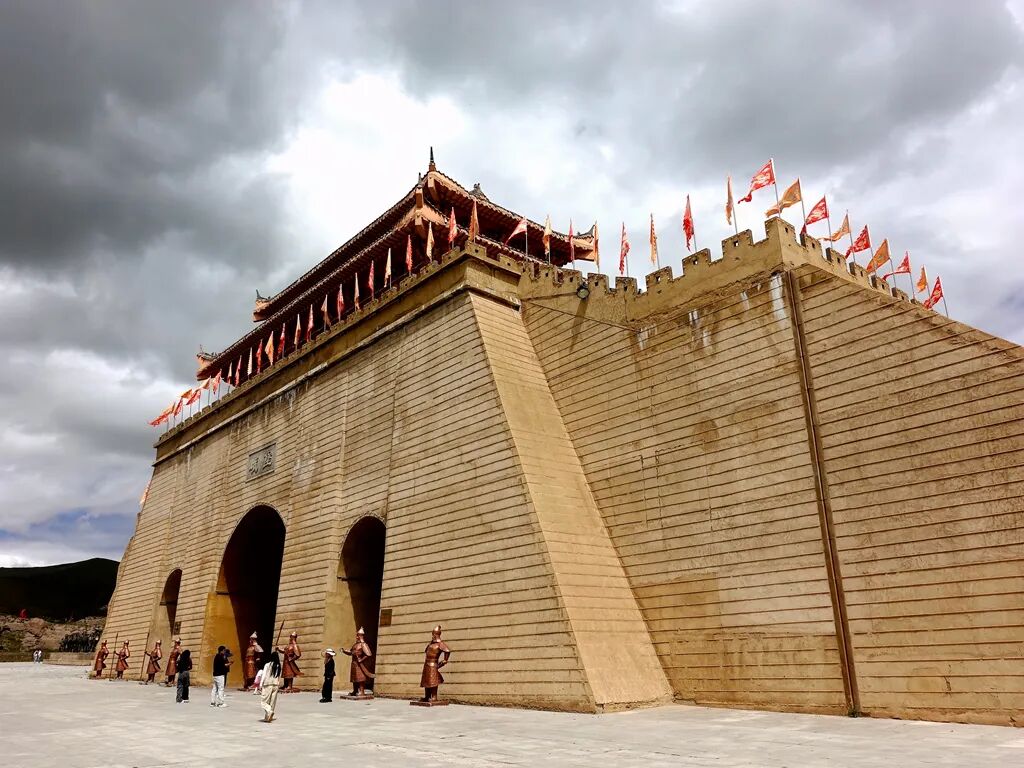


Once we hit downtown Xining, we freshened up and headed straight to the Nanguan and Dongguan mosques. They’re only about 600 meters apart, so you can easily do both in one go. Just a heads-up: they’re closed to visitors during prayer times, and non-Muslims aren't allowed inside the main prayer halls at any time.
The Dongguan Great Mosque was originally built during the Hongwu era of the Ming Dynasty. It’s one of the four largest mosques in Northwest China. After being renovated and expanded over several generations, the main hall now features a traditional Chinese palace-style roof with 'feiyan dougong' (upturned eaves and interlocking wooden brackets), blending Islamic style with Tibetan architectural elements. It’s a textbook example of how Central Plains architecture and Islamic culture mesh together.
The Nanguan Mosque dates back to 1934 and was completely rebuilt in 2013. It sports a classic Arabic Islamic design with white walls and golden domes, complete with arched corridors and columns—it feels totally exotic. You can tour inside the Dongguan Mosque, but you can only take photos from the entrance of the Nanguan Mosque. One is old, one is new; one has Chinese-style halls, the other has Arabic domes—together, they tell the story of Xining’s religious heritage and its history of multi-ethnic harmony.


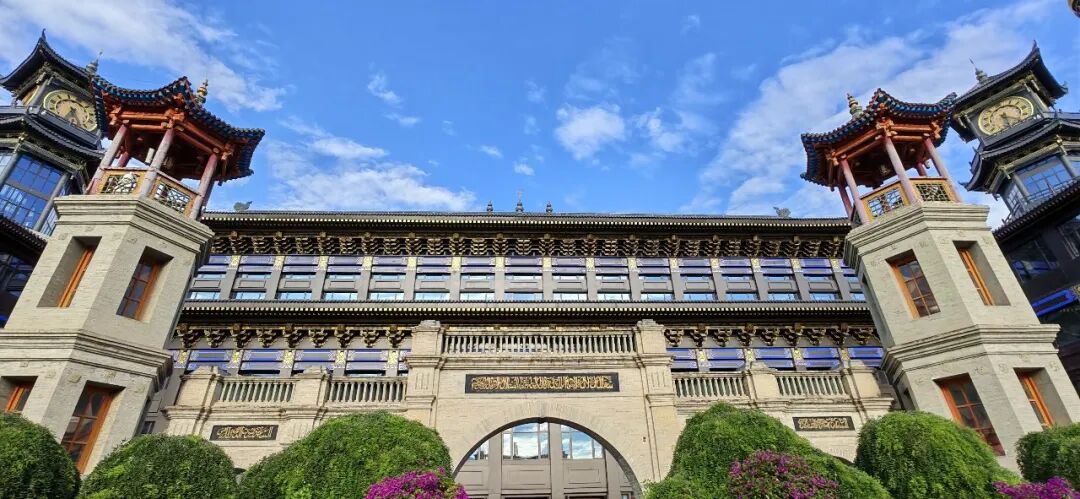
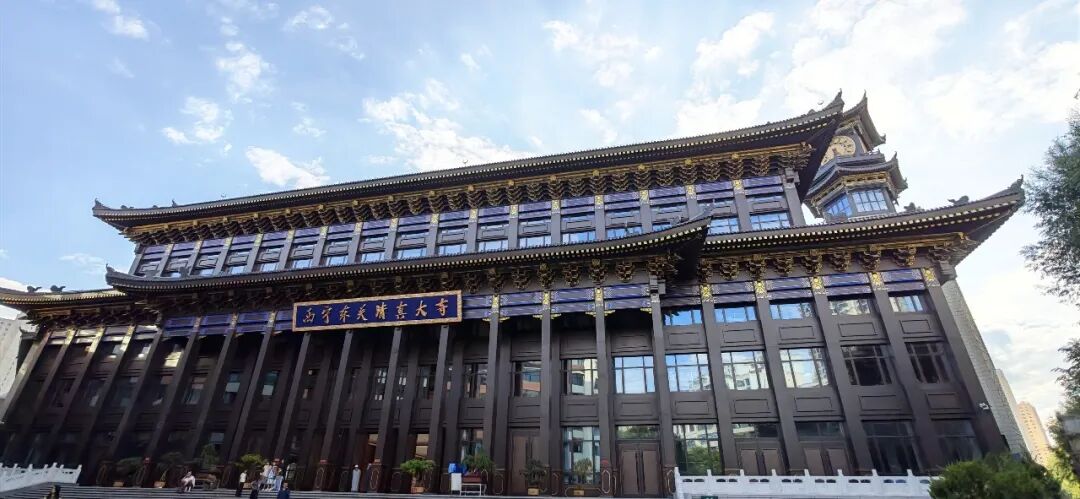
To get to Nanshan Park from the Dongguan Mosque, grab a taxi. Once you’re in, walk straight to the observation deck, then turn right and head up the slope to Fenghuang Terrace. You can go up to the second floor for a killer view of Xining. Keep in mind that trees block the sunset view from the west side of the terrace. The secret spot for the sunset isn't on the terrace itself; walk around to the back, take the wooden boardwalk down to the small protruding balcony, and you’ll get the perfect shot of the overpass, the TV tower, and the golden sunset glow.
Below Fenghuang Terrace, there’s a massive complex of ancient buildings. It’s known as the 'Ghadiriyya' Gongbei (shrine), which holds the tomb of the Islamic sage Qutb al-Rabbani Abd al-Rahman, a descendant of the Prophet from Baghdad. Originally built during the Yuan Dynasty under the order of the Prince of Xining, it’s been destroyed and rebuilt several times throughout the Ming and Qing dynasties. The octagonal tower with flying eaves we see today was restored in the 1980s. With its Chinese-style eaves and brackets mixed with Islamic architectural flair, it has stood on this hilltop for 700 years, watching over Xining and bearing witness to the fusion of cultures in the Hehuang region.
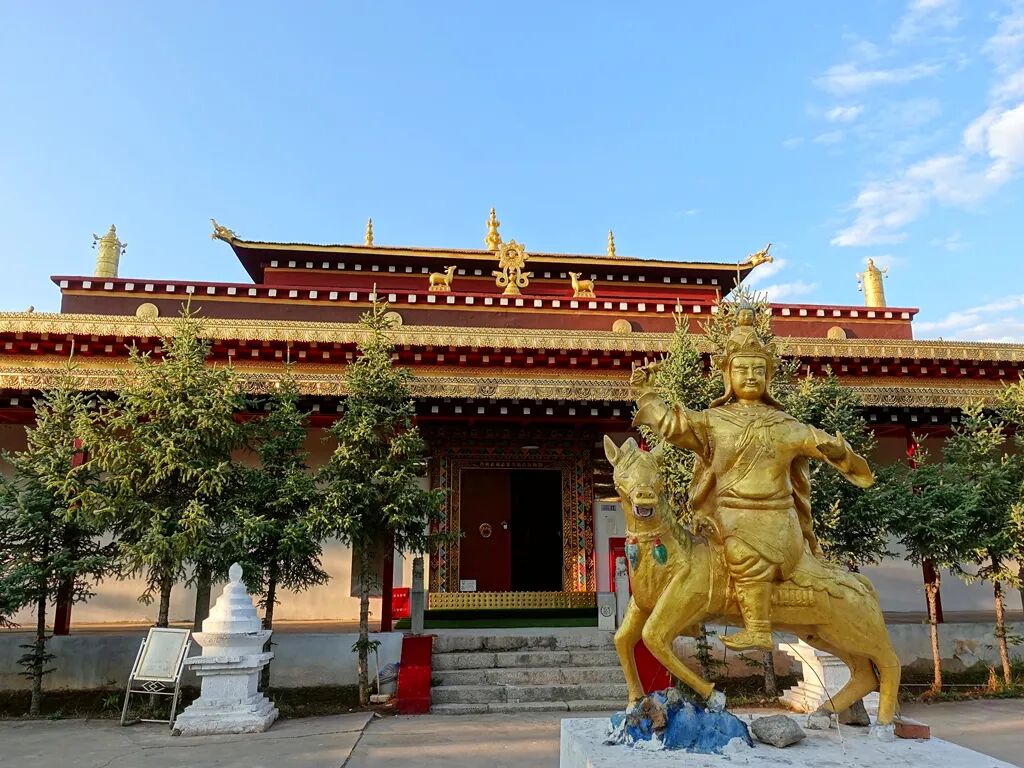


Getting a taxi down from Nanshan Park can be tricky, especially after 8:30 PM when everyone is leaving the night view. We caught a tricycle for 10 yuan to the bottom of the hill and hailed a cab there to the Mojia Street night market. Traffic gets heavy near the market, so it’s easier to just have the driver drop you off at a nearby side street and walk the rest of the way.
Walk Mojia Street from south to north, then turn right at the end to hit the Daxin Street night market. The intersection of the two is the best place to catch a ride out. Try to stick to the local specialties—skip the grilled squid and stinky tofu. When you’re looking for 'liu-liu yangrou' (grilled lamb skewers on red willow branches), go for the stalls that slice and skewer the meat right in front of you. I wouldn’t recommend the 'ganbian yangchang' (dry-fried lamb intestine), as it’s stuffed with bean flour and tastes a bit off. The 'doubao rou' (lamb tripe stuffed with beef) is great. There are tons of tiny tomatoes here that are super eye-catching, and the 'yangyu jinjin' (stir-fried potato strips with bean sprouts, onions, and green peppers) is way better than you’d expect. You should definitely try the lamb head and trotters. The lamb skewers are pretty standard everywhere. If you get thirsty, grab some yogurt, 'tianpeizi' (fermented highland barley), milk tea, or 'jidan niunai lauzao' (sweet fermented rice with egg and milk). Honestly, there weren't as many 'unique' foods as I expected, but that’s probably because I’d spent several days eating my way through Lanzhou, Wuwei, and Qilian, so my standards were pretty high. I rushed through Xining on my previous Qinghai-Gansu road trip, so it was nice to really explore it this time.

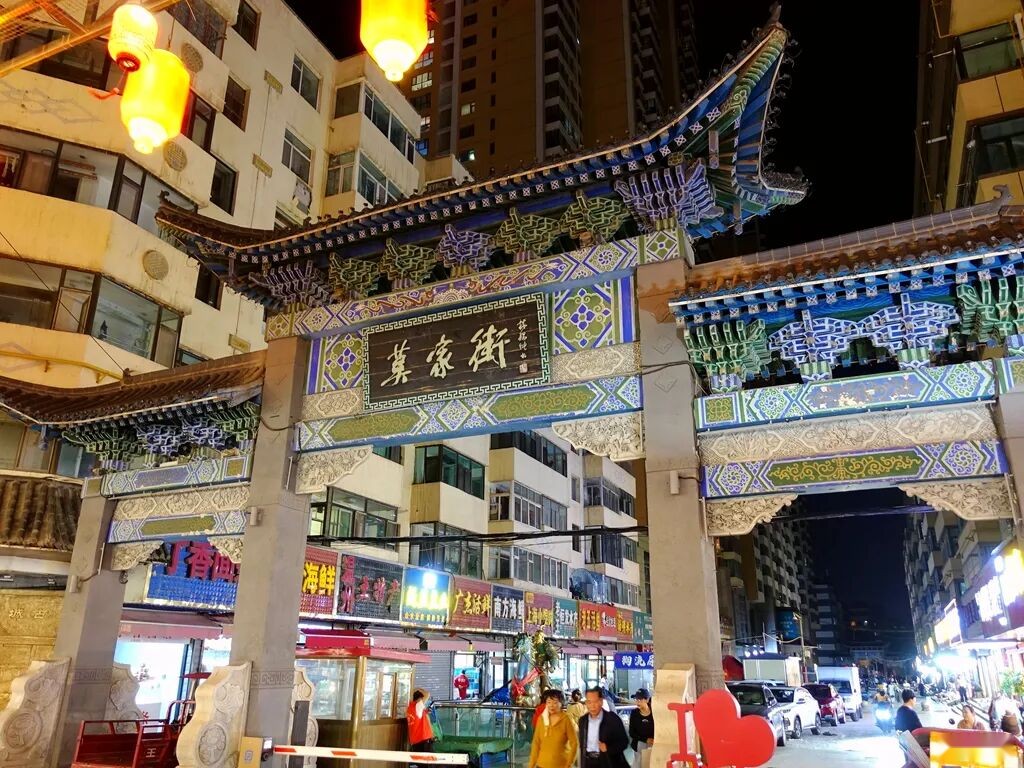
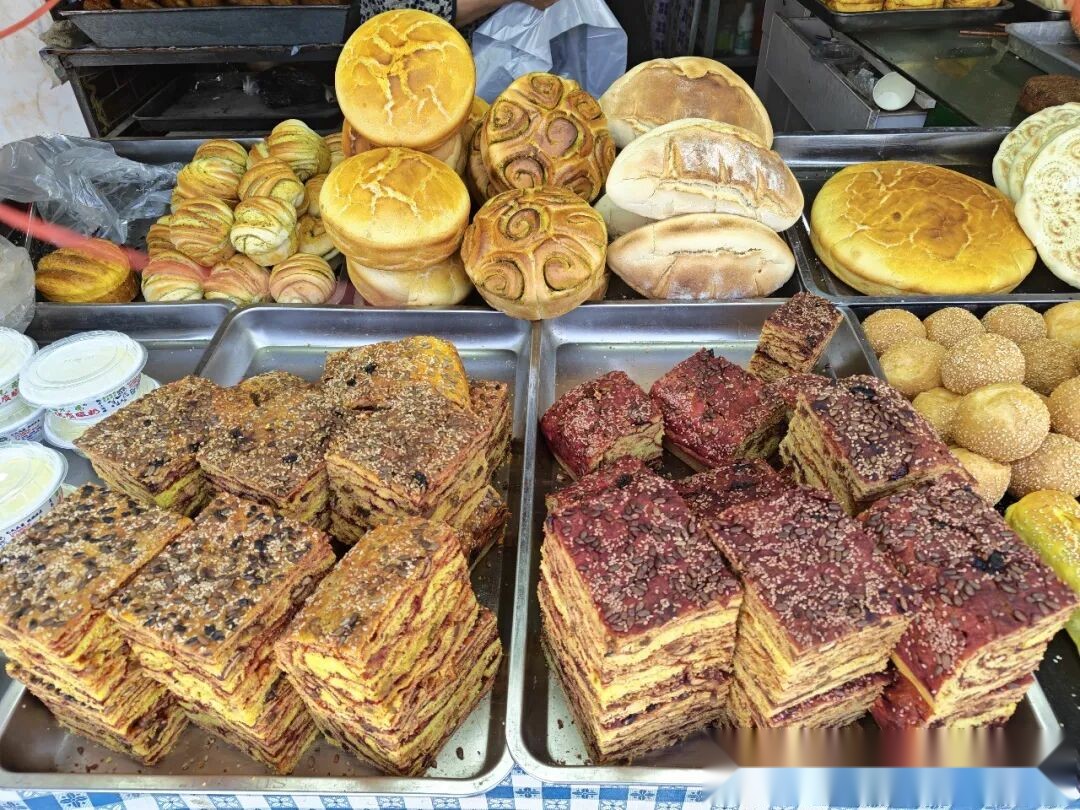
Historic Beijing Mosque Guide: Exploring the 500-Year-Old Changying Mosque and Authentic Halal Food
Articles • Hasan09 posted the article • 0 comments • 19 views • 1 days ago
Come check out the Changying Mosque in Beijing's Chaoyang District, a historic site dating back to the Ming Dynasty with over 500 years of history. This guide covers everything from its three-courtyard layout, ancient trees, and stone tablets to the intricate architectural paintings, how to register for a free visit, and a look at the surrounding Halal food scene.
While biking over to the Huangqu subway station, I happened to pass by the Changying Mosque and noticed the front gate was open. I decided to try my luck and asked the older gentleman at the entrance if visitors were allowed inside.
The man was super friendly and gave me a smile, telling me I was welcome to look around as long as I signed in at the desk, though he noted I shouldn't go inside the main prayer hall.
I honestly thought mosques were usually closed to the public, so this was a total win. It’s actually the second mosque I’ve visited in Beijing.
01
Overview
The Changying Mosque is located on the north side of Chaoyang North Road, about 700 meters west of the Huangqu subway station.
It was first built during the Zhengde period of the Ming Dynasty (1506–1521), making it over five centuries old. It underwent a major renovation during the Jiaqing period of the Qing Dynasty, and the original monument, the 'Record of the Reconstruction of the Changying Village Mosque in Tongzhou,' is still there today. It was designated as a cultural heritage site in Chaoyang District in 1986, and after several rounds of repairs and expansions, it saw a massive renovation in 2002.
Spanning over 8,400 square meters, it is the largest mosque in the suburbs of Beijing.
02
Architectural Layout
The Changying Mosque is quite spacious and consists of three courtyards. It faces east, and each of the four corners of the perimeter wall features a small hexagonal pavilion with a pointed roof.
The east-facing front gate is built in a traditional 'Wangfu' (Prince’s Mansion) style with five bays and three doorways, which is really impressive.
Once you walk in, you'll find the washing rooms (wudu areas) on both sides, with prayer schedules and charts explaining the rules for minor and major ablutions posted on the walls.
Inside the front gate, there are two pavilions: one housing stone tablets and the other enclosing a well.
The tablet pavilion mentions that this is the largest mosque in Beijing, but I remember hearing that Niujie Mosque held that title. After checking with Yuanbao, I realized that after the Changying Mosque was renovated, the Niujie Mosque underwent its own expansion in 2005, surpassing Changying in size. So, at the time the monument was carved, this place was indeed the largest.
The well inside the well pavilion is over 500 years old.
On the west side of the front courtyard, there are three side-by-side 'chuihuamen' (hanging flower gates) that lead to the three main halls and courtyards, all connected by an ornately carved and painted corridor.
The three courtyards are laid out similarly, and the middle one features a 500-year-old ancient tree that is roughly as old as the mosque itself.
From south to north, you have the women’s prayer hall, the main prayer hall, and the men’s prayer hall. They all follow the traditional Ming and Qing dynasty architectural style, consisting of three sections: the front porch, the main hall body, and the rear kiln-style chamber.
The central main hall is covered in blue glazed tiles, and there is a hexagonal pavilion (bangke lou, or minaret/call to prayer tower) on the roof of the rear chamber.
The two side halls are slightly smaller than the main hall, have no pavilion, and are covered in green glazed tiles.
On the north side of the main hall, there is a stone tablet dedicated to the record of the mosque's reconstruction in Changying, Tongzhou.
The back courtyard seems to be the administrative area for the mosque, and there are several hawthorn trees filled with fruit.
03
The Neighborhood
Right outside the mosque's main gate, you'll find a street packed with Halal eats—it's basically known as the 'Little Niujie' (a famous street in Beijing known for its Muslim community and food) of the area. I was in a rush and couldn't check it out myself, but rumor has it the flagship store for the famous Lixiaolao Shaobing (baked sesame flatbread) is located right here.
Across from the main entrance, there’s a square featuring a traditional-style building and a stone tablet. The inscription explains the origins of the mosque, noting that Changying was a permanent garrison established by the Ming Dynasty general Chang Yuchun after he captured Beijing—which is exactly how the area got its name, 'Changying' (literally 'Chang's Camp').
I was just biking by when I caught sight of the tablet. I made a habit of stopping to read these kinds of markers, and when I saw it mentioned the Changying Mosque, I turned around and realized this massive mosque was right there across the street.
04
Practical Info
Address: Changying Mosque, Minzu Jiayuan East Road, Chaoyang District, Beijing.
Opening Hours: No set hours, but generally open during the day; just be sure to avoid times when congregants are busy with their salah (obligatory prayer).
Admission: Free and no reservation required; just sign in when you enter.
Public Transport: Huangqu Subway Station or Changying West Bus Stop.
Suggested Itinerary: Changying Mosque to the Three Temples and One Pagoda Scenic Area.
Estimated Time: About two hours to explore the mosque and the surrounding area.
P.S. Since I work outdoors and spend all my time running around Beijing, I've passed by the Niujie Mosque countless times. Thanks to this experience, next time I’m in the area, I’m definitely going to ask if I can go inside for a visit.
The mosque doesn't have official visitor hours, but I’d say visiting between 9:00 AM and 4:00 PM is a safe bet.
Guides for nearby attractions:
Date of visit: October 7, 2026. view all
Come check out the Changying Mosque in Beijing's Chaoyang District, a historic site dating back to the Ming Dynasty with over 500 years of history. This guide covers everything from its three-courtyard layout, ancient trees, and stone tablets to the intricate architectural paintings, how to register for a free visit, and a look at the surrounding Halal food scene.

While biking over to the Huangqu subway station, I happened to pass by the Changying Mosque and noticed the front gate was open. I decided to try my luck and asked the older gentleman at the entrance if visitors were allowed inside.
The man was super friendly and gave me a smile, telling me I was welcome to look around as long as I signed in at the desk, though he noted I shouldn't go inside the main prayer hall.
I honestly thought mosques were usually closed to the public, so this was a total win. It’s actually the second mosque I’ve visited in Beijing.

01
Overview
The Changying Mosque is located on the north side of Chaoyang North Road, about 700 meters west of the Huangqu subway station.
It was first built during the Zhengde period of the Ming Dynasty (1506–1521), making it over five centuries old. It underwent a major renovation during the Jiaqing period of the Qing Dynasty, and the original monument, the 'Record of the Reconstruction of the Changying Village Mosque in Tongzhou,' is still there today. It was designated as a cultural heritage site in Chaoyang District in 1986, and after several rounds of repairs and expansions, it saw a massive renovation in 2002.
Spanning over 8,400 square meters, it is the largest mosque in the suburbs of Beijing.

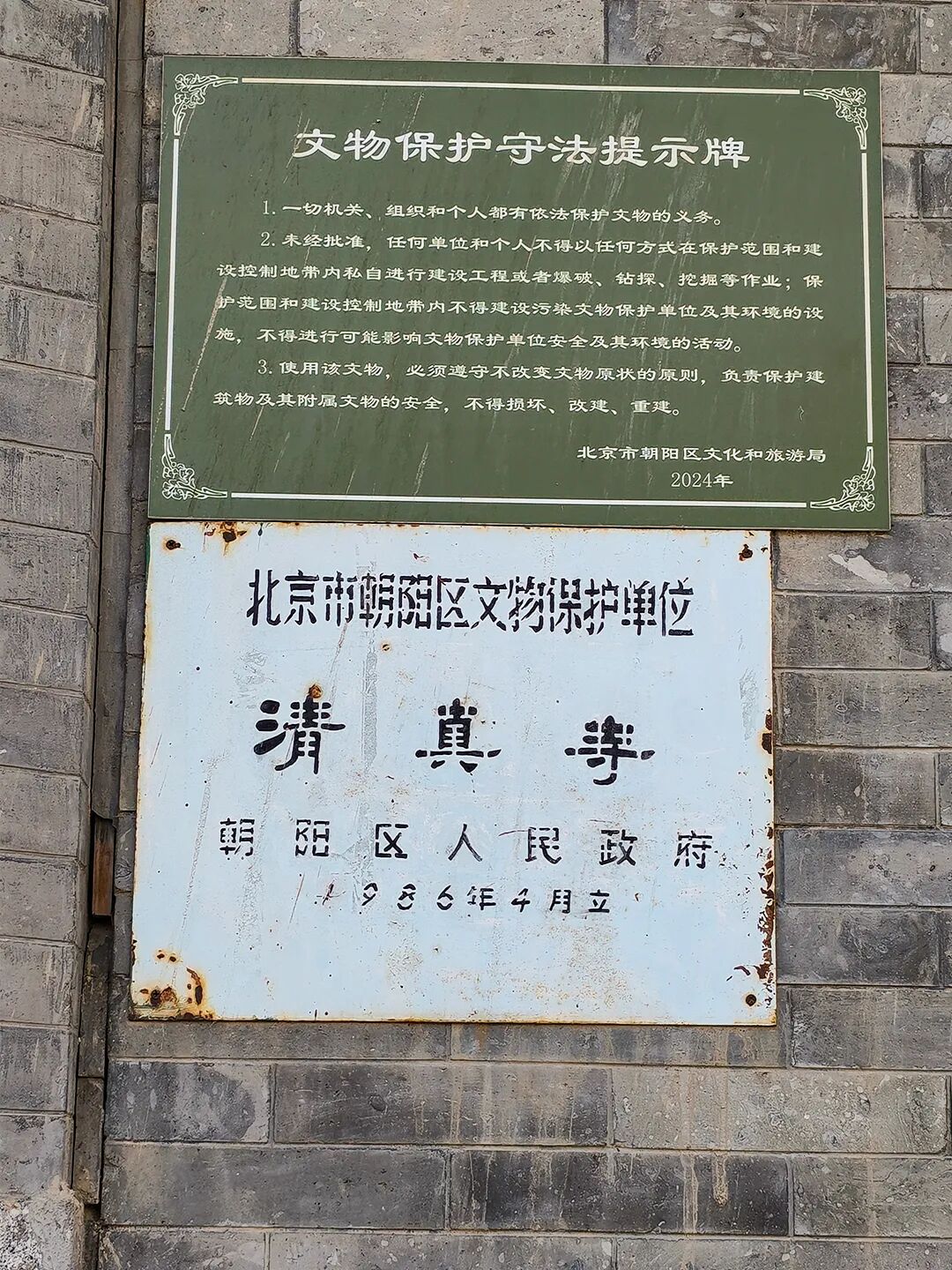
02
Architectural Layout
The Changying Mosque is quite spacious and consists of three courtyards. It faces east, and each of the four corners of the perimeter wall features a small hexagonal pavilion with a pointed roof.
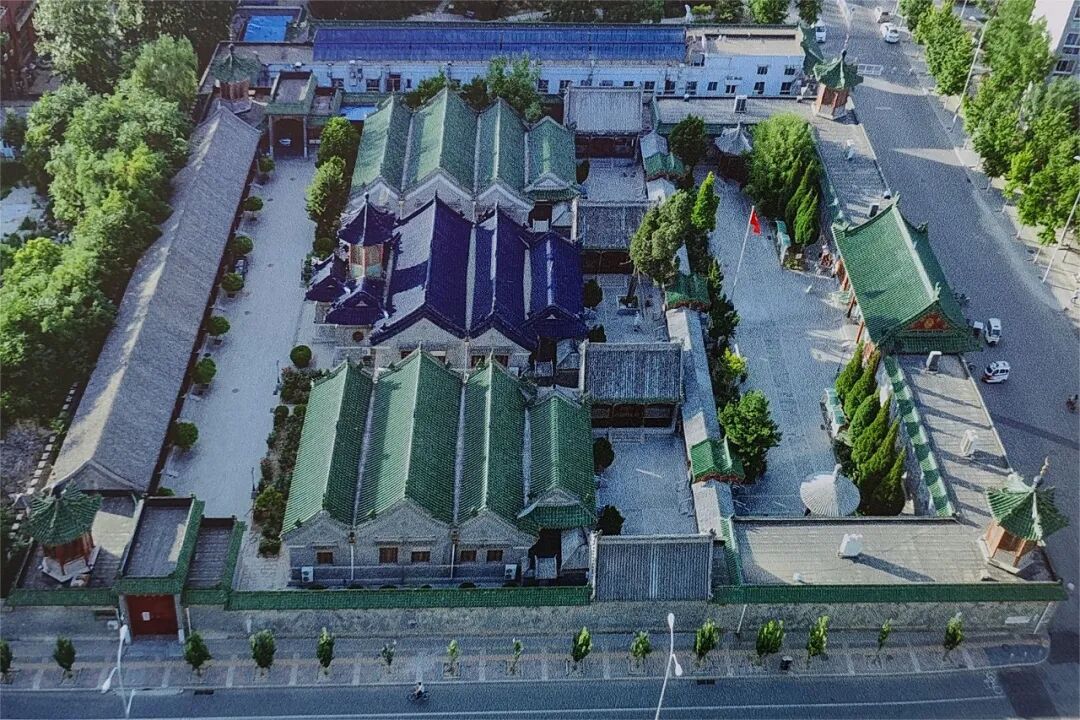


The east-facing front gate is built in a traditional 'Wangfu' (Prince’s Mansion) style with five bays and three doorways, which is really impressive.


Once you walk in, you'll find the washing rooms (wudu areas) on both sides, with prayer schedules and charts explaining the rules for minor and major ablutions posted on the walls.


Inside the front gate, there are two pavilions: one housing stone tablets and the other enclosing a well.
The tablet pavilion mentions that this is the largest mosque in Beijing, but I remember hearing that Niujie Mosque held that title. After checking with Yuanbao, I realized that after the Changying Mosque was renovated, the Niujie Mosque underwent its own expansion in 2005, surpassing Changying in size. So, at the time the monument was carved, this place was indeed the largest.
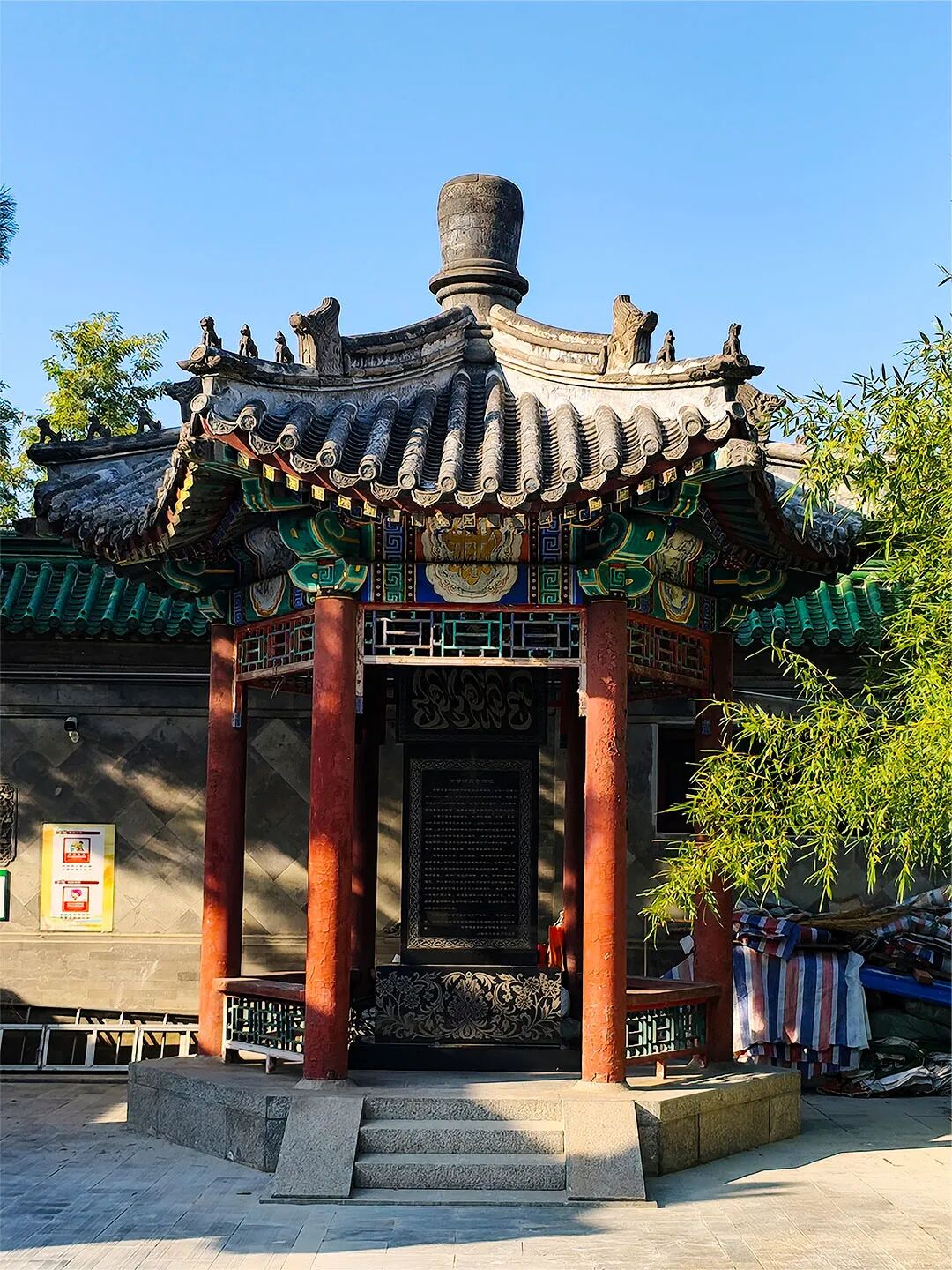
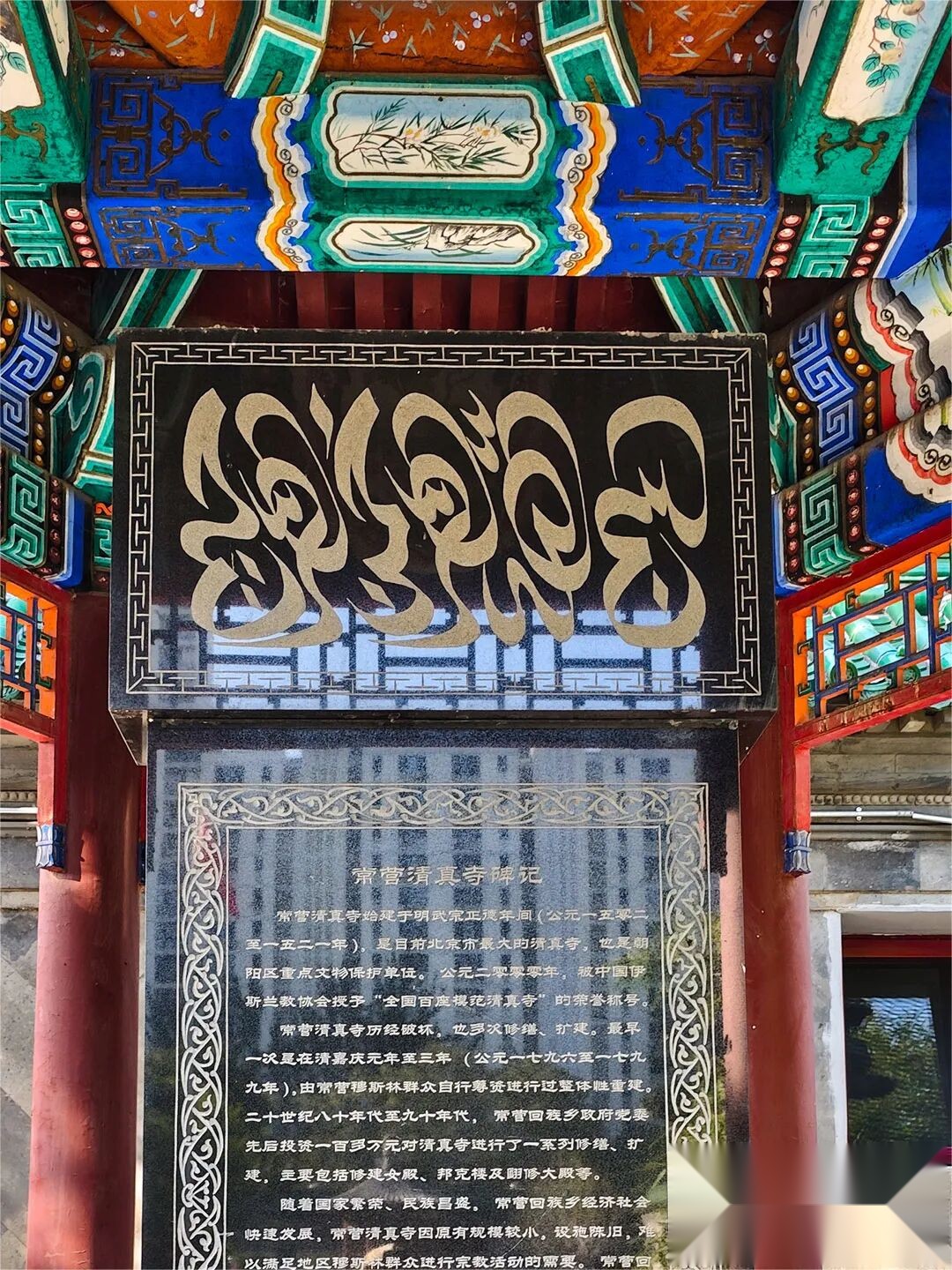
The well inside the well pavilion is over 500 years old.
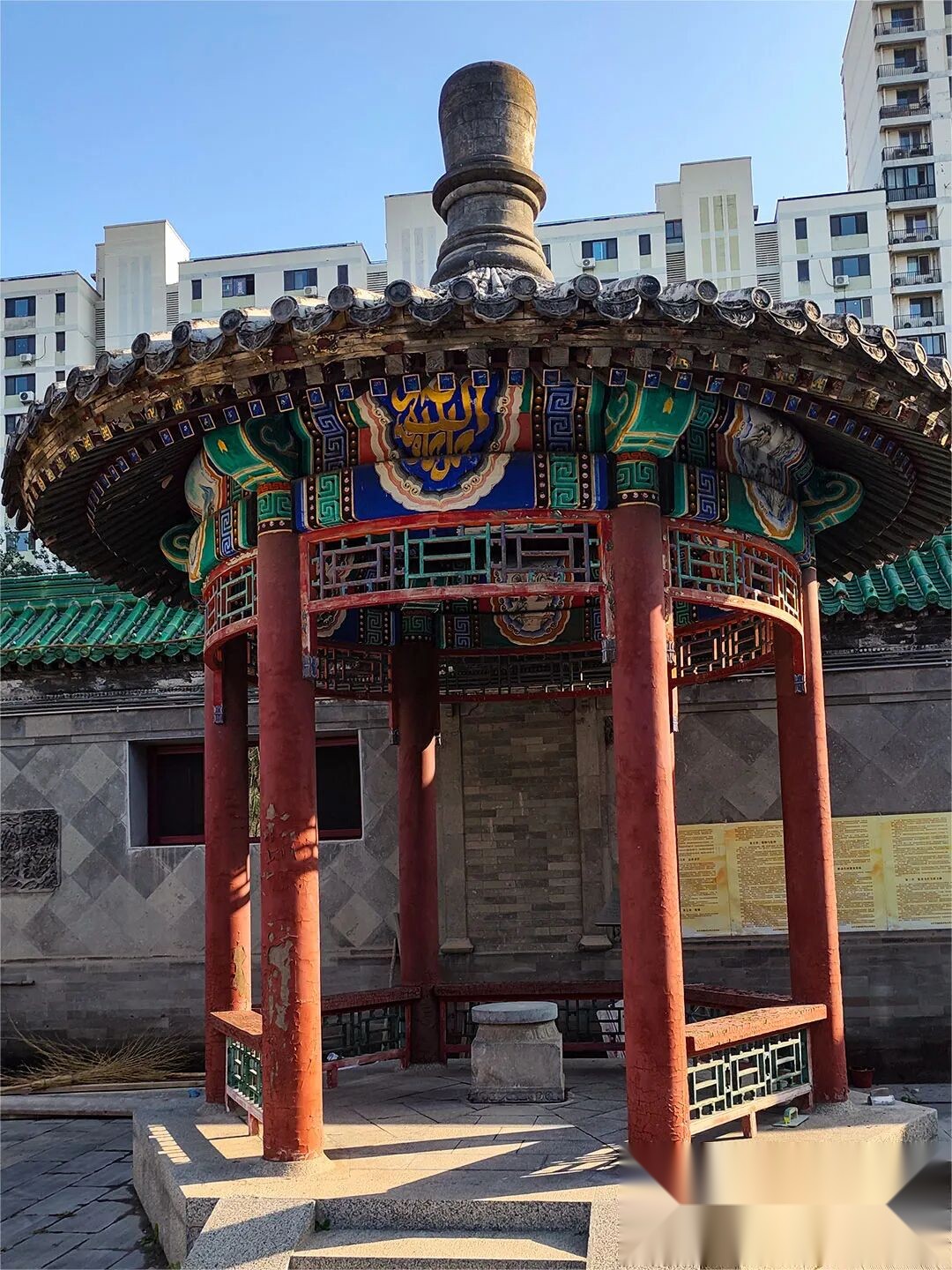

On the west side of the front courtyard, there are three side-by-side 'chuihuamen' (hanging flower gates) that lead to the three main halls and courtyards, all connected by an ornately carved and painted corridor.


The three courtyards are laid out similarly, and the middle one features a 500-year-old ancient tree that is roughly as old as the mosque itself.


From south to north, you have the women’s prayer hall, the main prayer hall, and the men’s prayer hall. They all follow the traditional Ming and Qing dynasty architectural style, consisting of three sections: the front porch, the main hall body, and the rear kiln-style chamber.
The central main hall is covered in blue glazed tiles, and there is a hexagonal pavilion (bangke lou, or minaret/call to prayer tower) on the roof of the rear chamber.
The two side halls are slightly smaller than the main hall, have no pavilion, and are covered in green glazed tiles.


On the north side of the main hall, there is a stone tablet dedicated to the record of the mosque's reconstruction in Changying, Tongzhou.

The back courtyard seems to be the administrative area for the mosque, and there are several hawthorn trees filled with fruit.
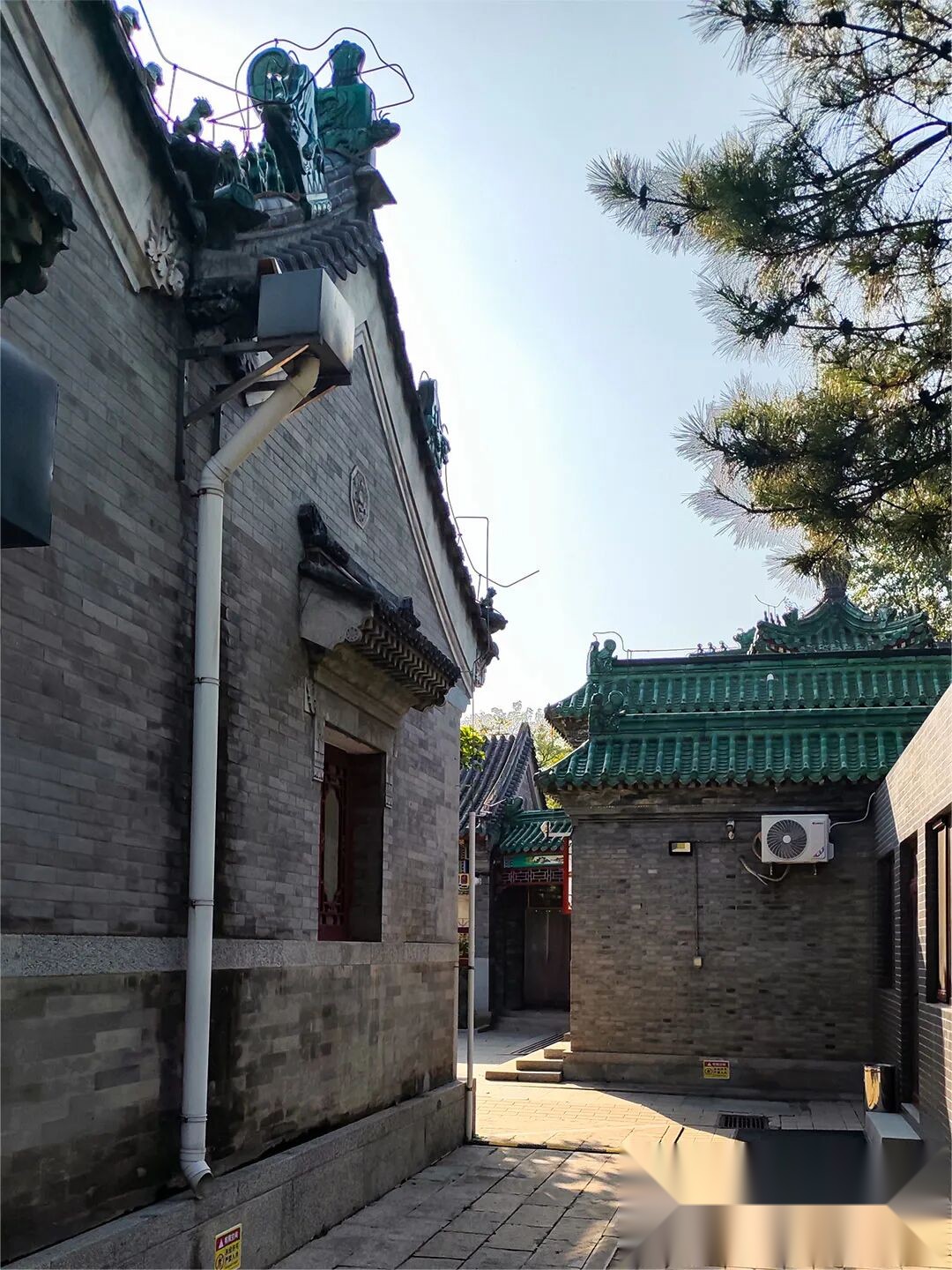
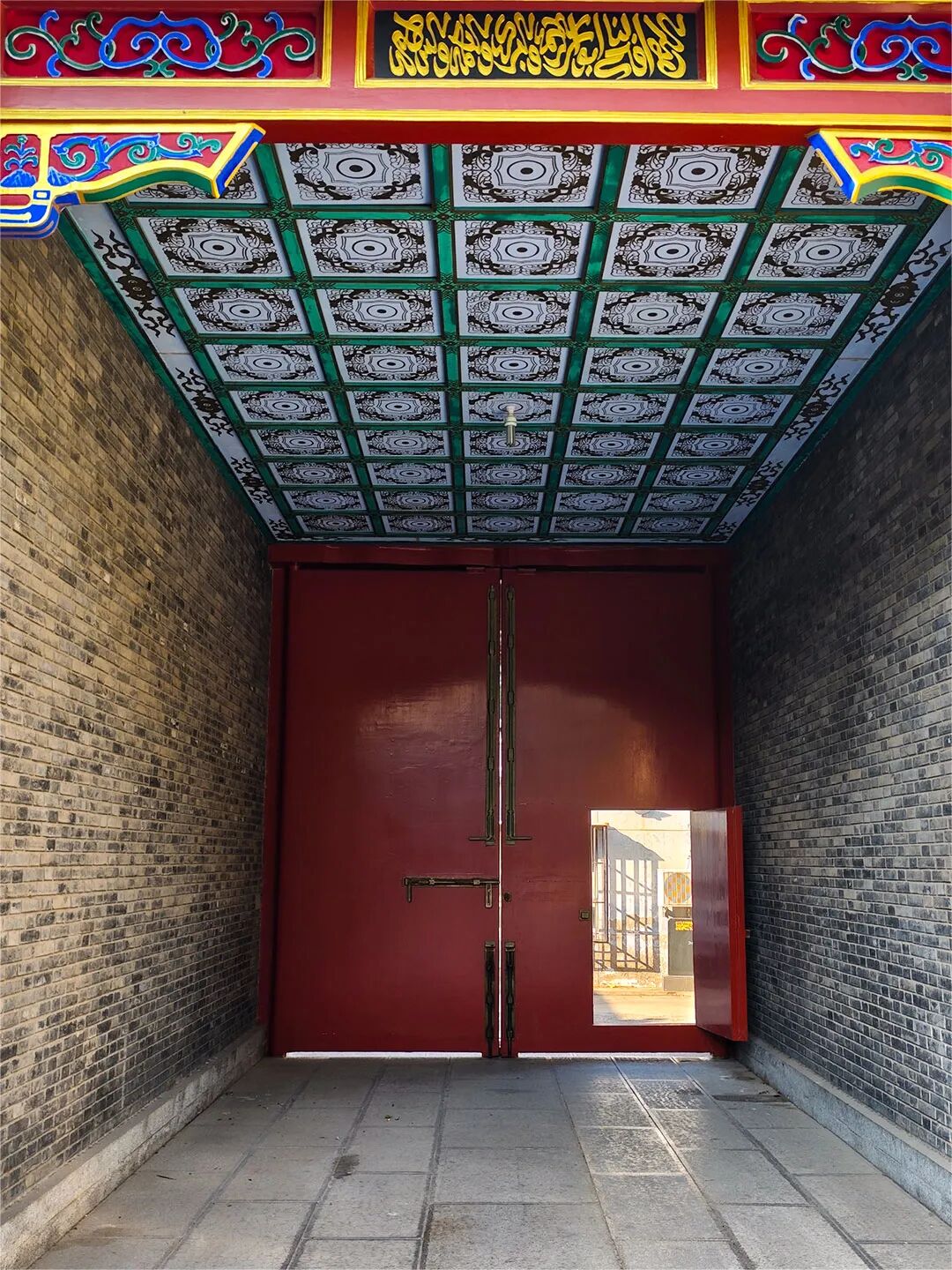
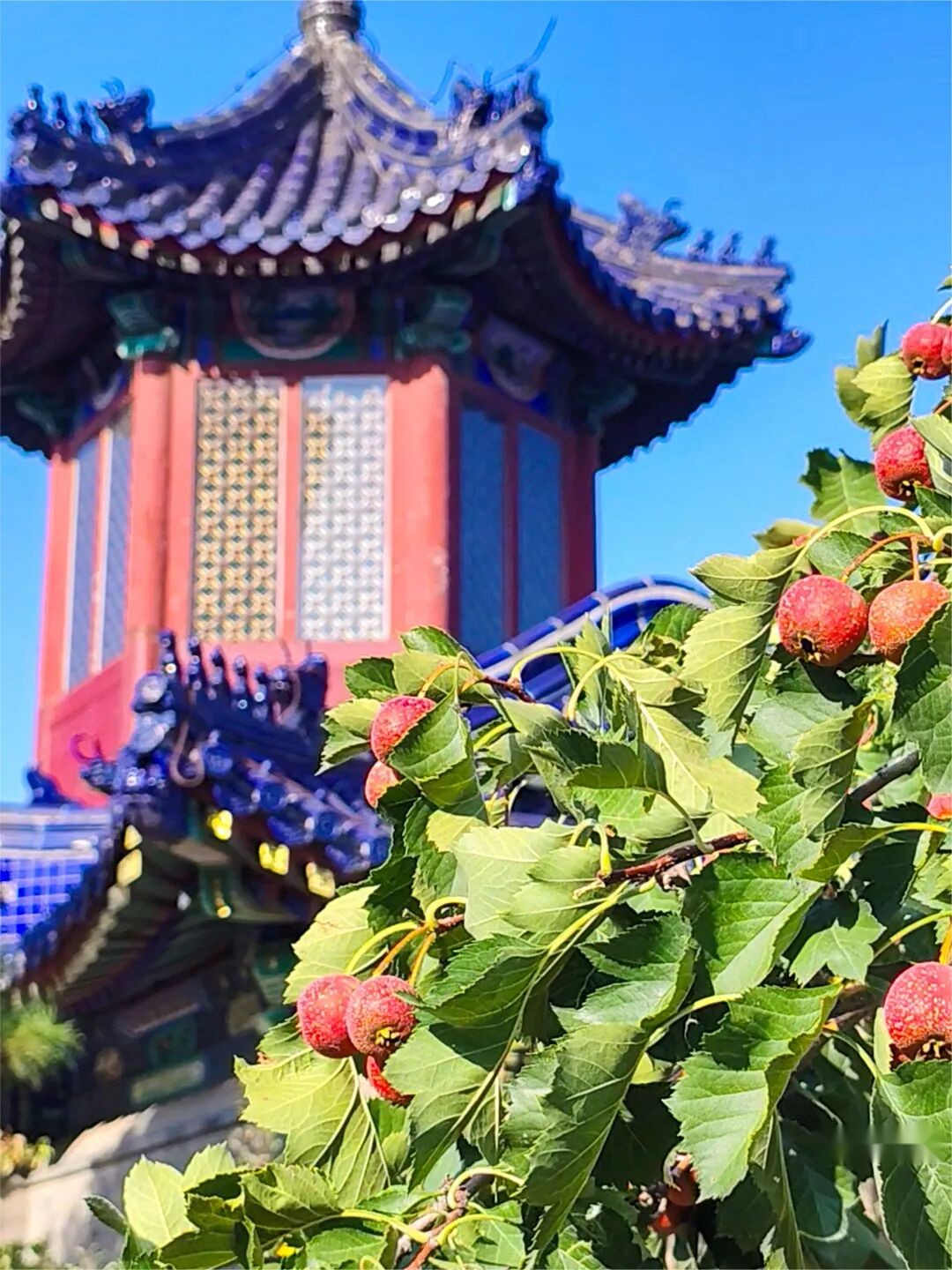
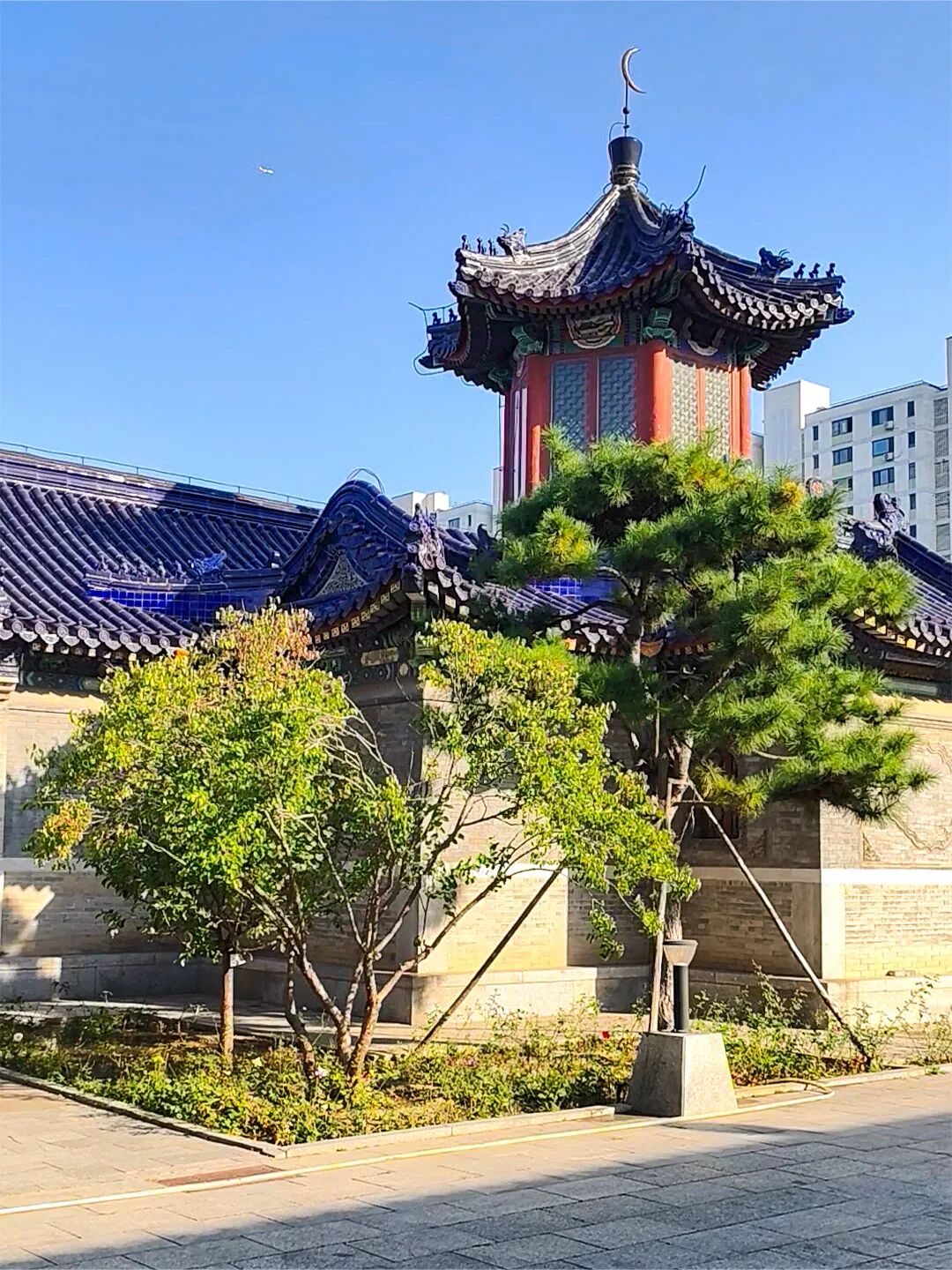
03
The Neighborhood
Right outside the mosque's main gate, you'll find a street packed with Halal eats—it's basically known as the 'Little Niujie' (a famous street in Beijing known for its Muslim community and food) of the area. I was in a rush and couldn't check it out myself, but rumor has it the flagship store for the famous Lixiaolao Shaobing (baked sesame flatbread) is located right here.
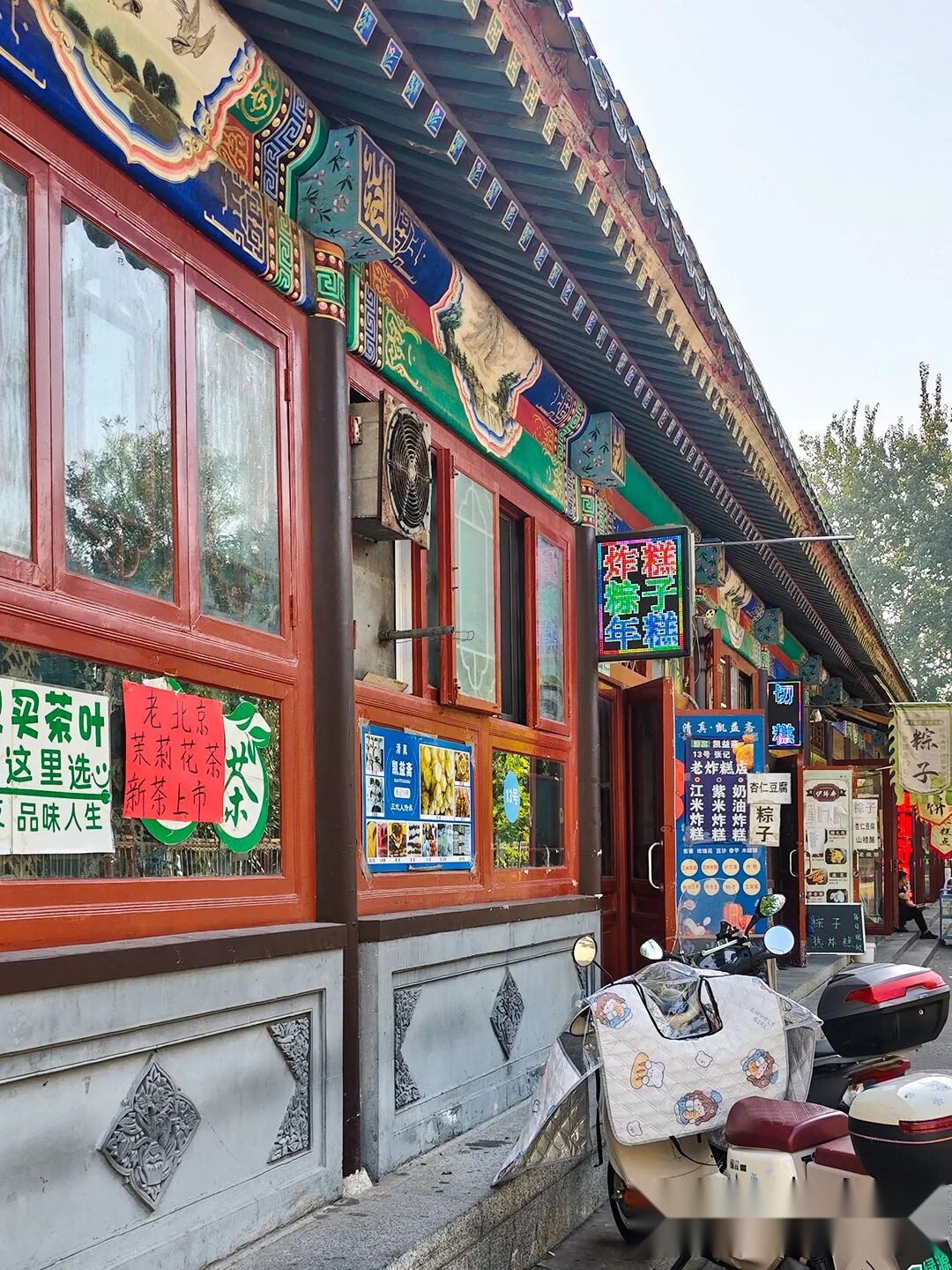
Across from the main entrance, there’s a square featuring a traditional-style building and a stone tablet. The inscription explains the origins of the mosque, noting that Changying was a permanent garrison established by the Ming Dynasty general Chang Yuchun after he captured Beijing—which is exactly how the area got its name, 'Changying' (literally 'Chang's Camp').
I was just biking by when I caught sight of the tablet. I made a habit of stopping to read these kinds of markers, and when I saw it mentioned the Changying Mosque, I turned around and realized this massive mosque was right there across the street.
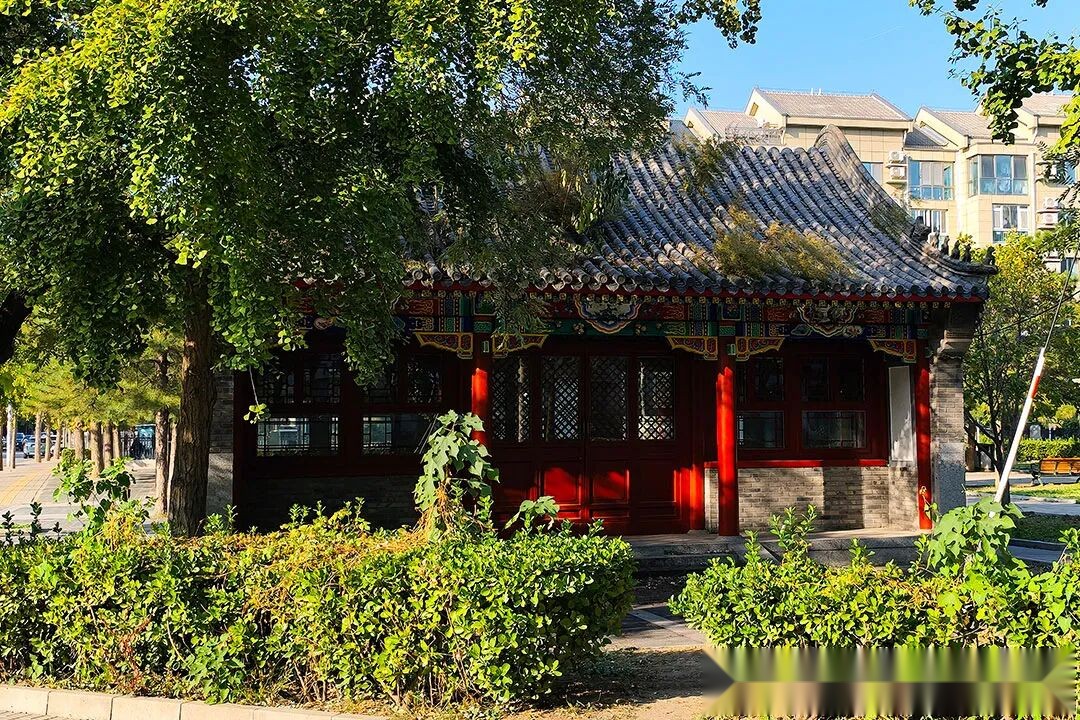
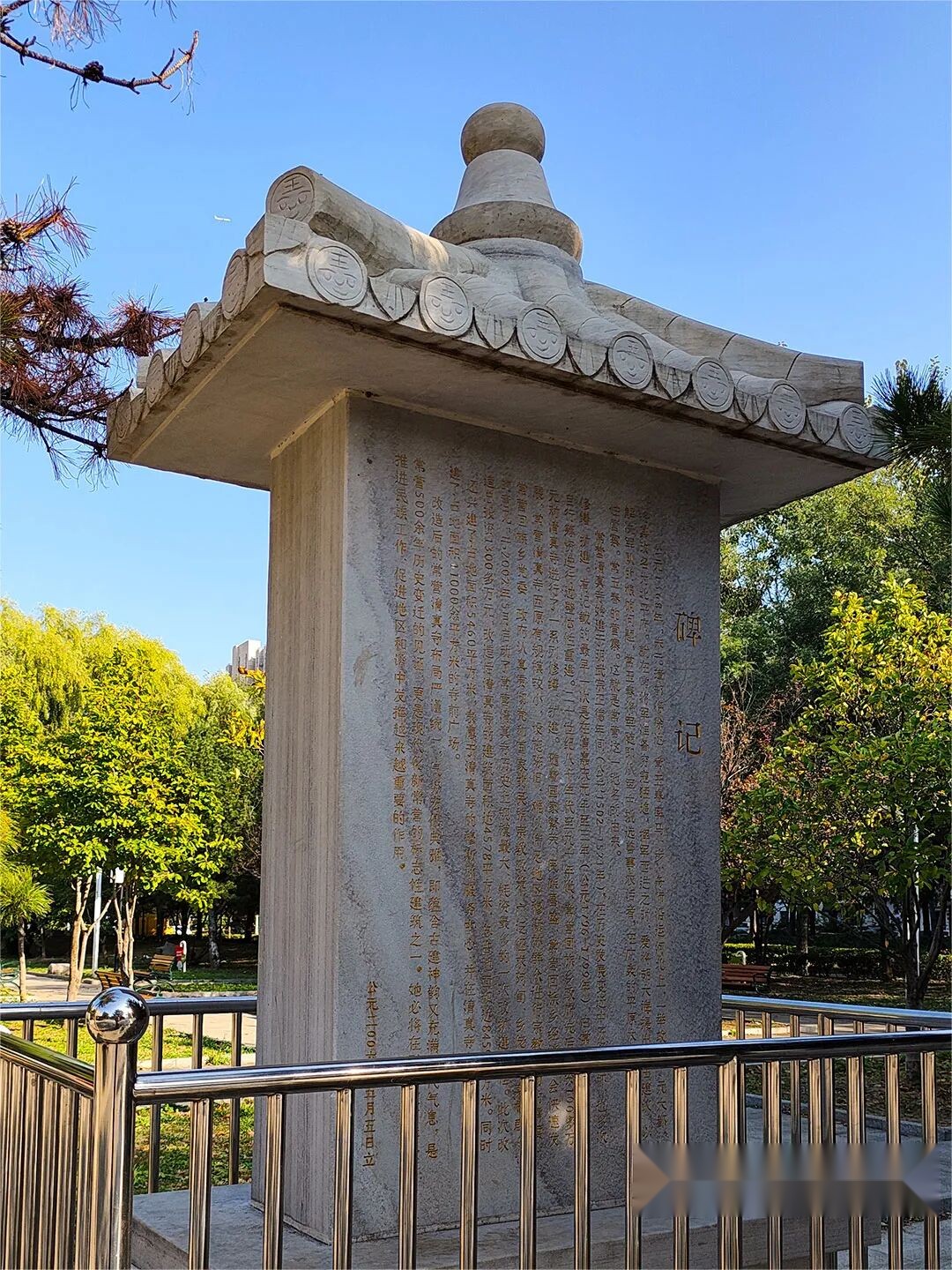
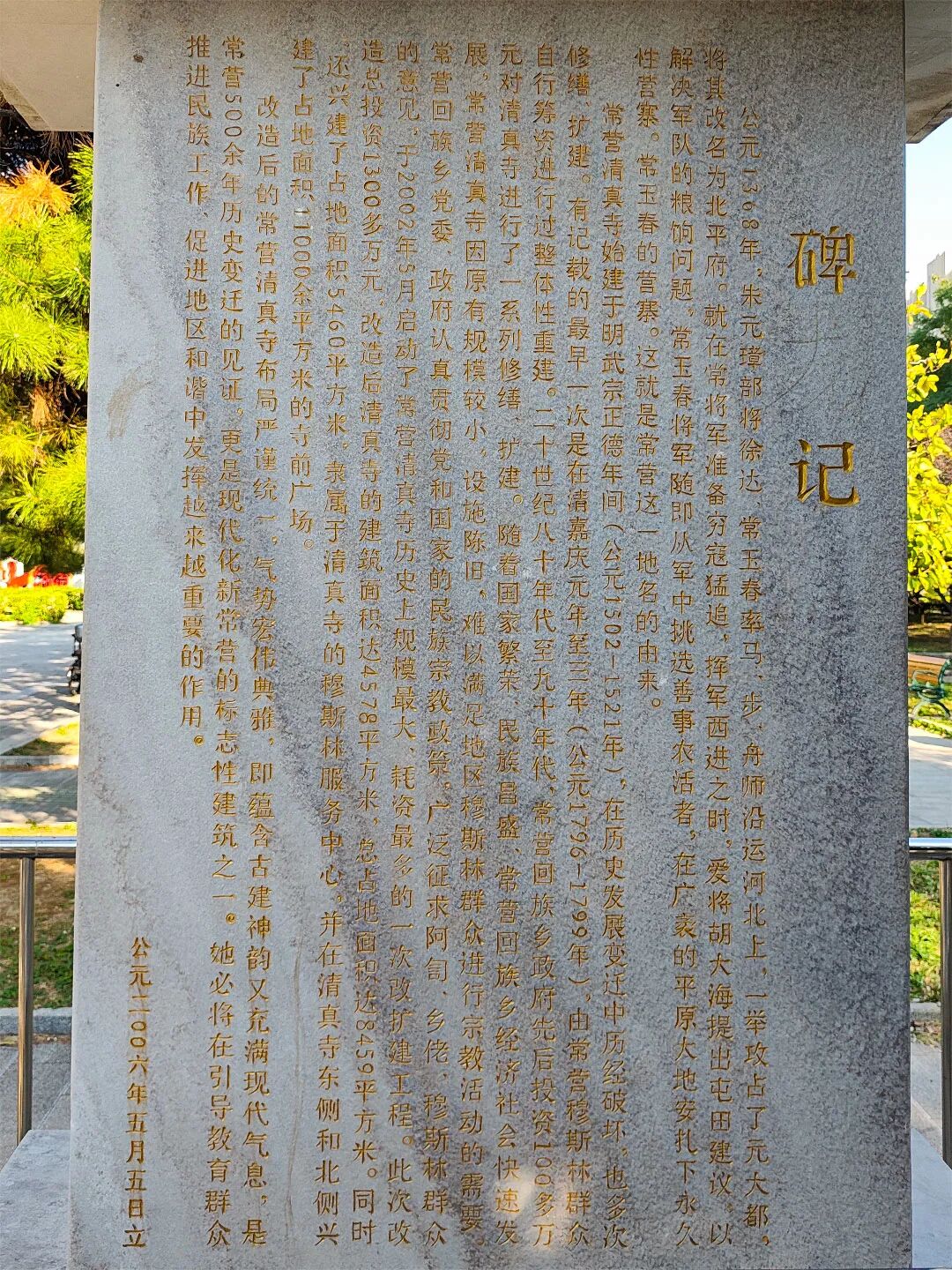
04
Practical Info
Address: Changying Mosque, Minzu Jiayuan East Road, Chaoyang District, Beijing.
Opening Hours: No set hours, but generally open during the day; just be sure to avoid times when congregants are busy with their salah (obligatory prayer).
Admission: Free and no reservation required; just sign in when you enter.
Public Transport: Huangqu Subway Station or Changying West Bus Stop.
Suggested Itinerary: Changying Mosque to the Three Temples and One Pagoda Scenic Area.
Estimated Time: About two hours to explore the mosque and the surrounding area.
P.S. Since I work outdoors and spend all my time running around Beijing, I've passed by the Niujie Mosque countless times. Thanks to this experience, next time I’m in the area, I’m definitely going to ask if I can go inside for a visit.
The mosque doesn't have official visitor hours, but I’d say visiting between 9:00 AM and 4:00 PM is a safe bet.
Guides for nearby attractions:
Date of visit: October 7, 2026.
Datong Great Mosque Guide: Discover 1,200 Years of History at this Ancient Hui Muslim Landmark in Shanxi
Articles • Hasan09 posted the article • 0 comments • 15 views • 1 days ago
Come check out the Datong Great Mosque in Shanxi, which dates all the way back to the second year of the Zhenguan reign (628 AD) and boasts over 1,200 years of history. This guide covers this architectural gem that perfectly blends classic Chinese wooden palace design with Arabic decorative arts, plus all the practical tips you need for free entry and visiting hours.
The Datong Great Mosque is a stunning complex that brilliantly combines traditional Chinese palace-style architecture with classic Arabic design elements. The whole place is masterfully constructed and feels incredibly grand, radiating a sense of deep history and civilization in every corner.
According to the monument stone for the mosque re-erected in the seventh year of the Qianlong reign (1742 AD), the site was first established in 628 AD, making it over 1,200 years old.
That actually makes it 670 years older than the Dongsi Mosque (also known as the Faming Mosque) in Beijing, which is the main hub for Muslim prayer and holiday gatherings and the home of the Islamic Association of China.
You don’t need to make a reservation, and it’s completely free to enter.
It’s generally open from 8:00 AM to 6:00 PM, though it stays closed to visitors on Fridays when there are religious activities happening.
You’ll need to scan your ID to get in. Just a heads-up: be mindful of what you're wearing and avoid anything too revealing. view all
Come check out the Datong Great Mosque in Shanxi, which dates all the way back to the second year of the Zhenguan reign (628 AD) and boasts over 1,200 years of history. This guide covers this architectural gem that perfectly blends classic Chinese wooden palace design with Arabic decorative arts, plus all the practical tips you need for free entry and visiting hours.
The Datong Great Mosque is a stunning complex that brilliantly combines traditional Chinese palace-style architecture with classic Arabic design elements. The whole place is masterfully constructed and feels incredibly grand, radiating a sense of deep history and civilization in every corner.
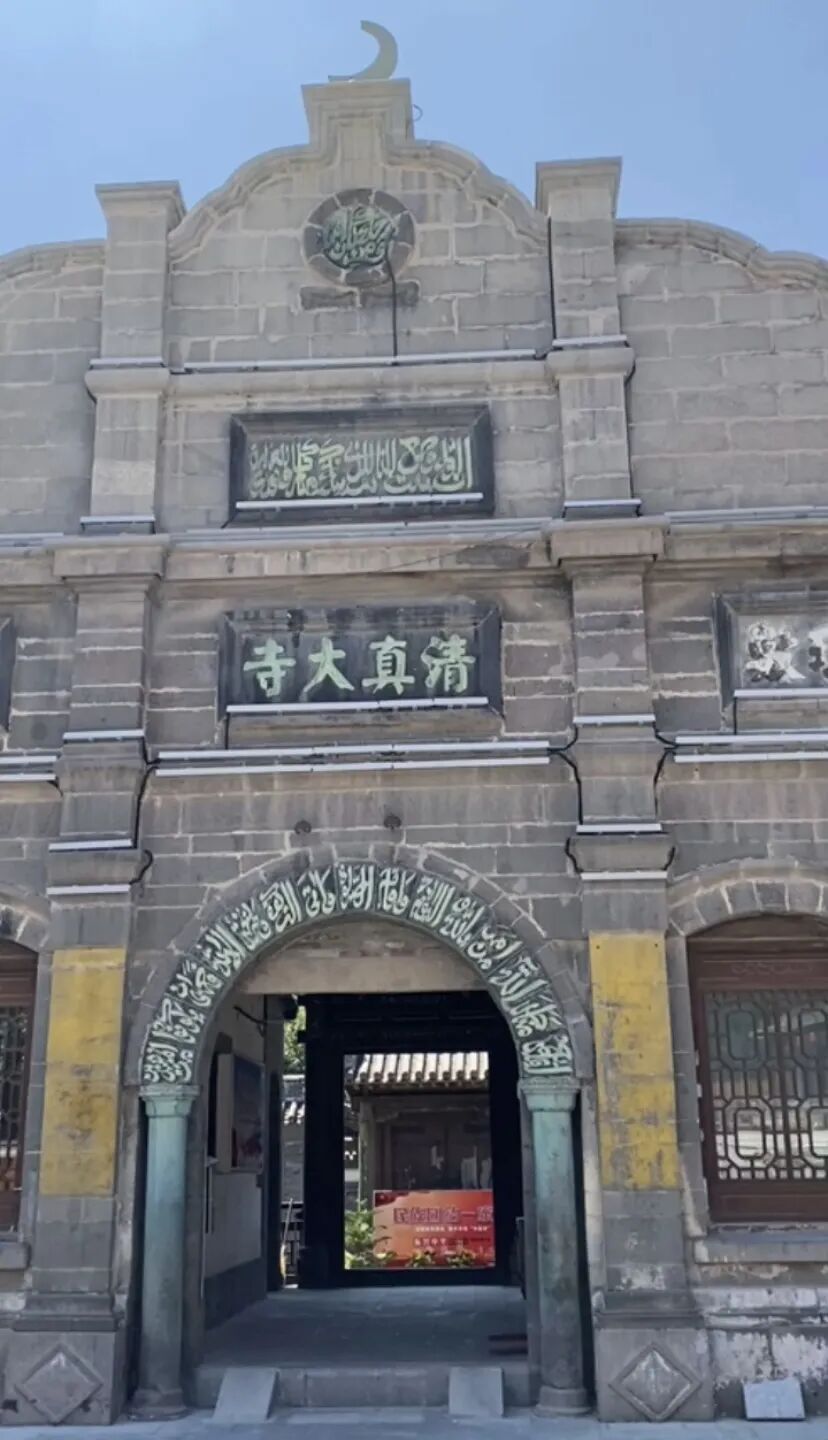
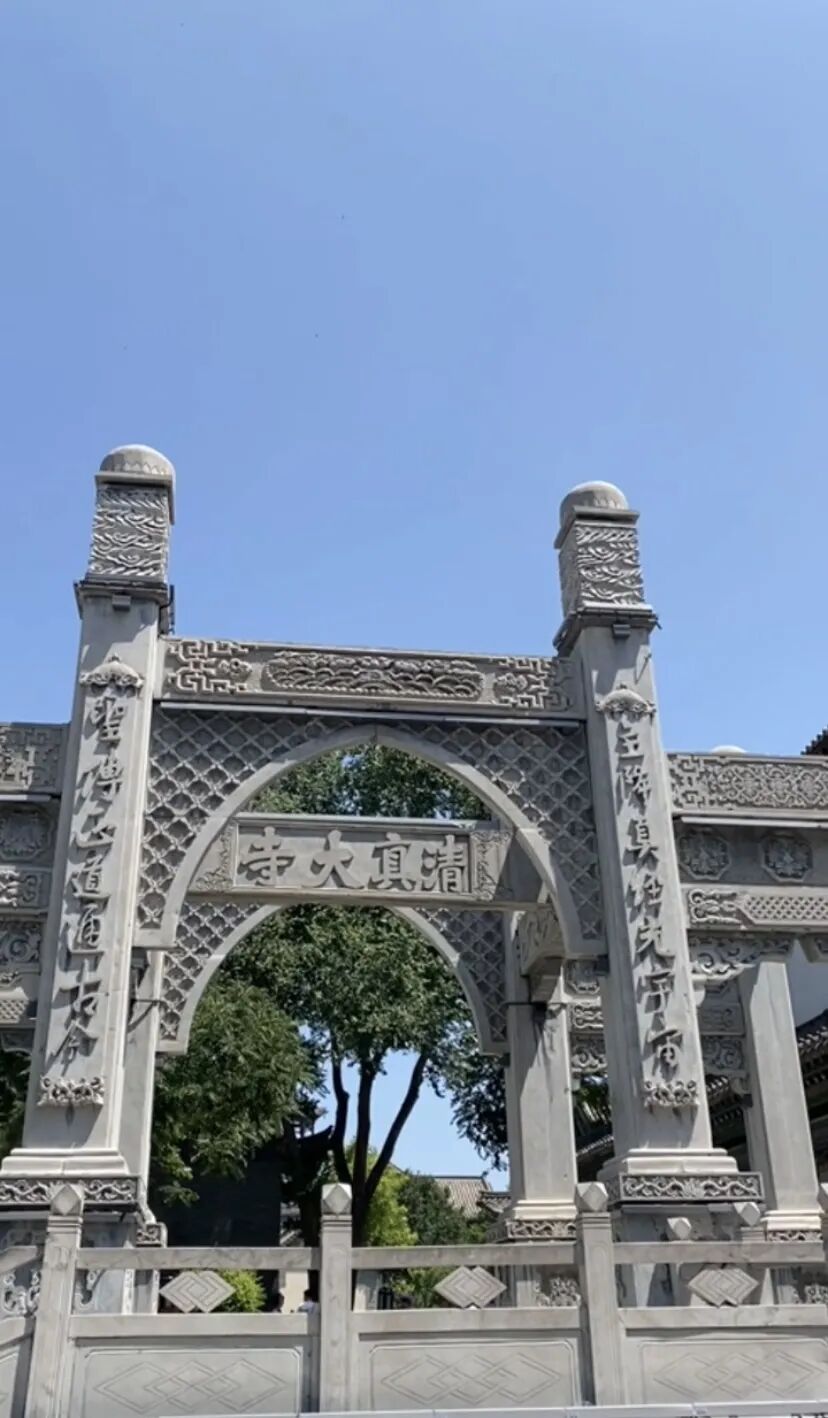
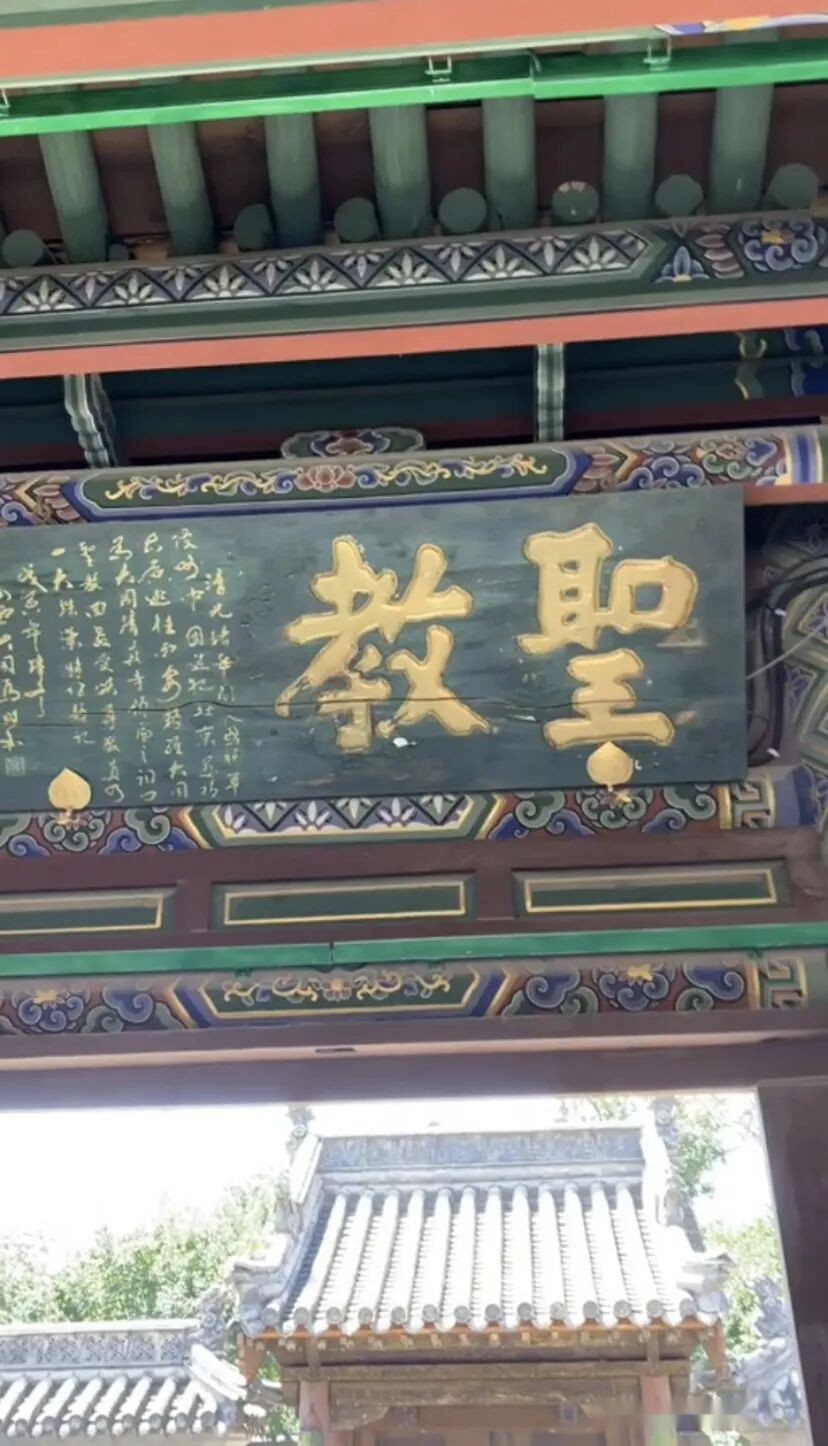
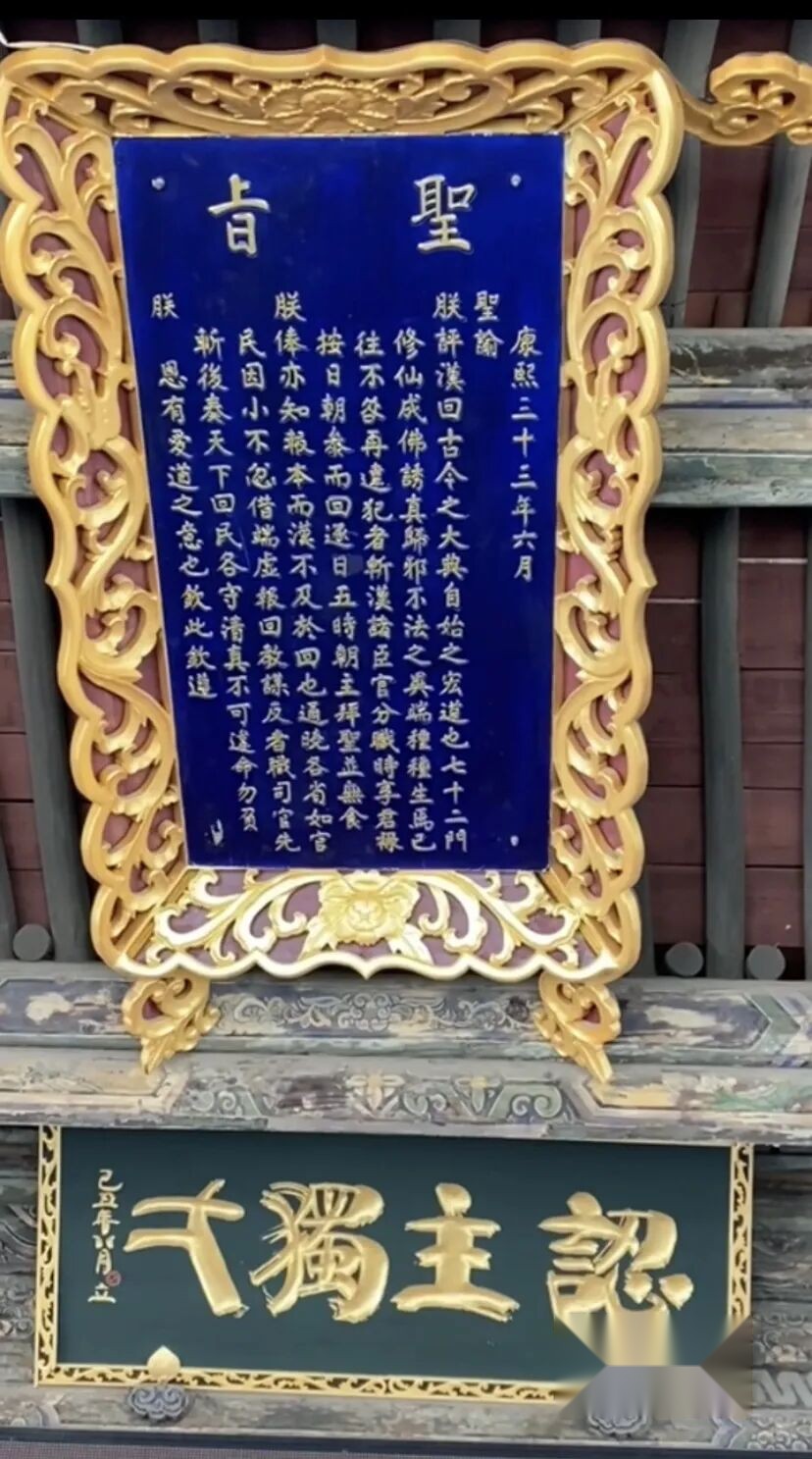
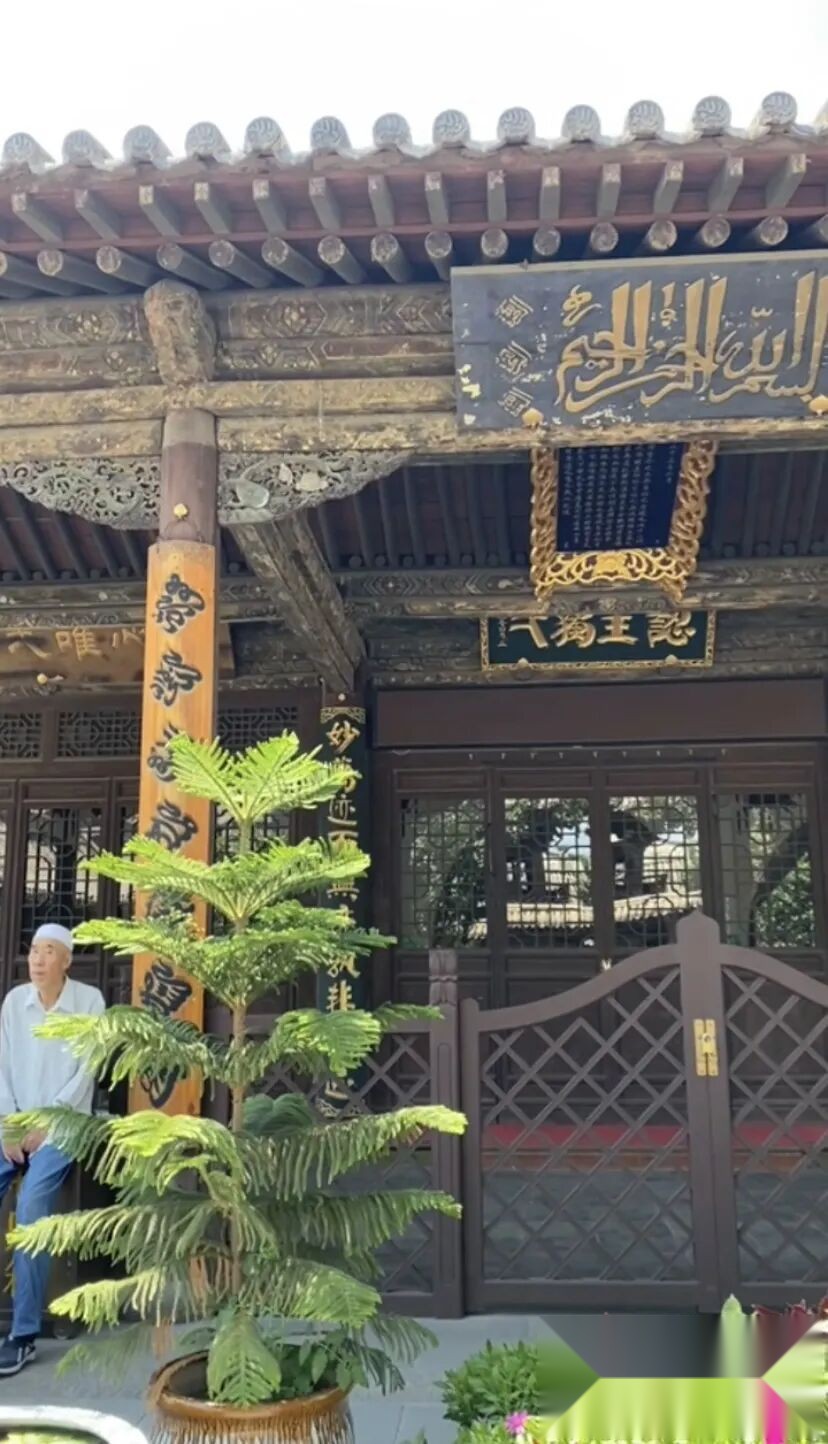
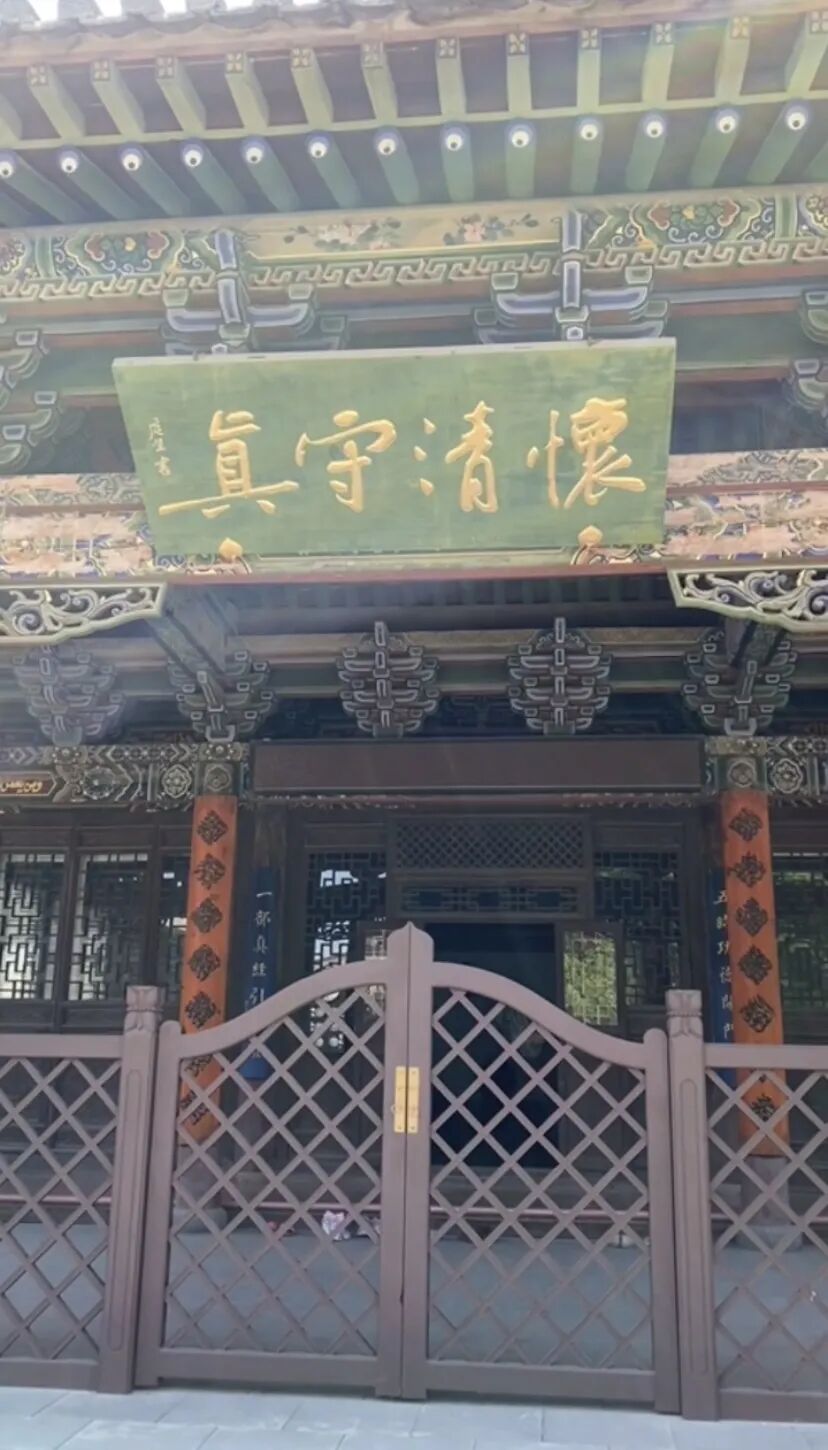
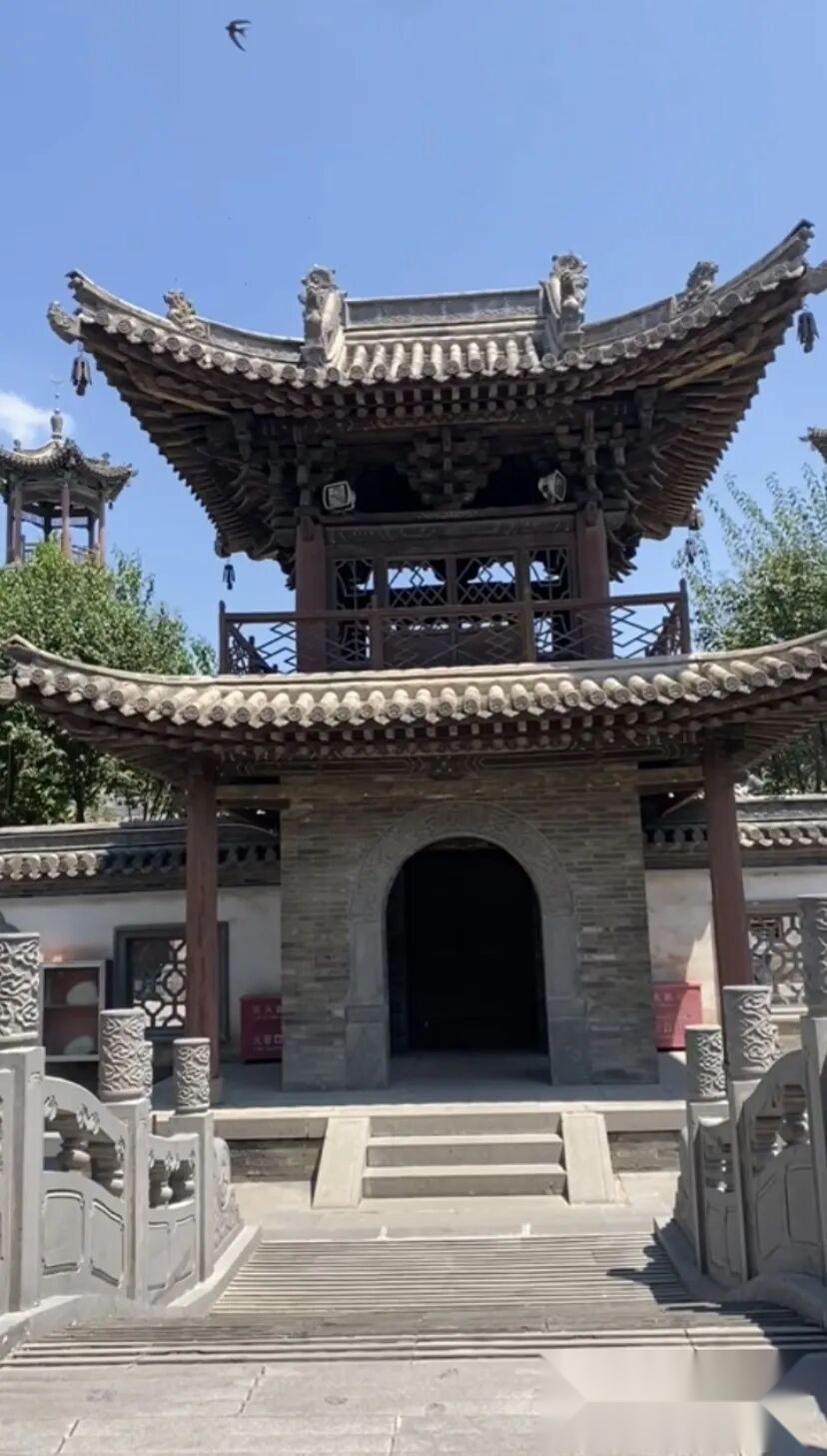
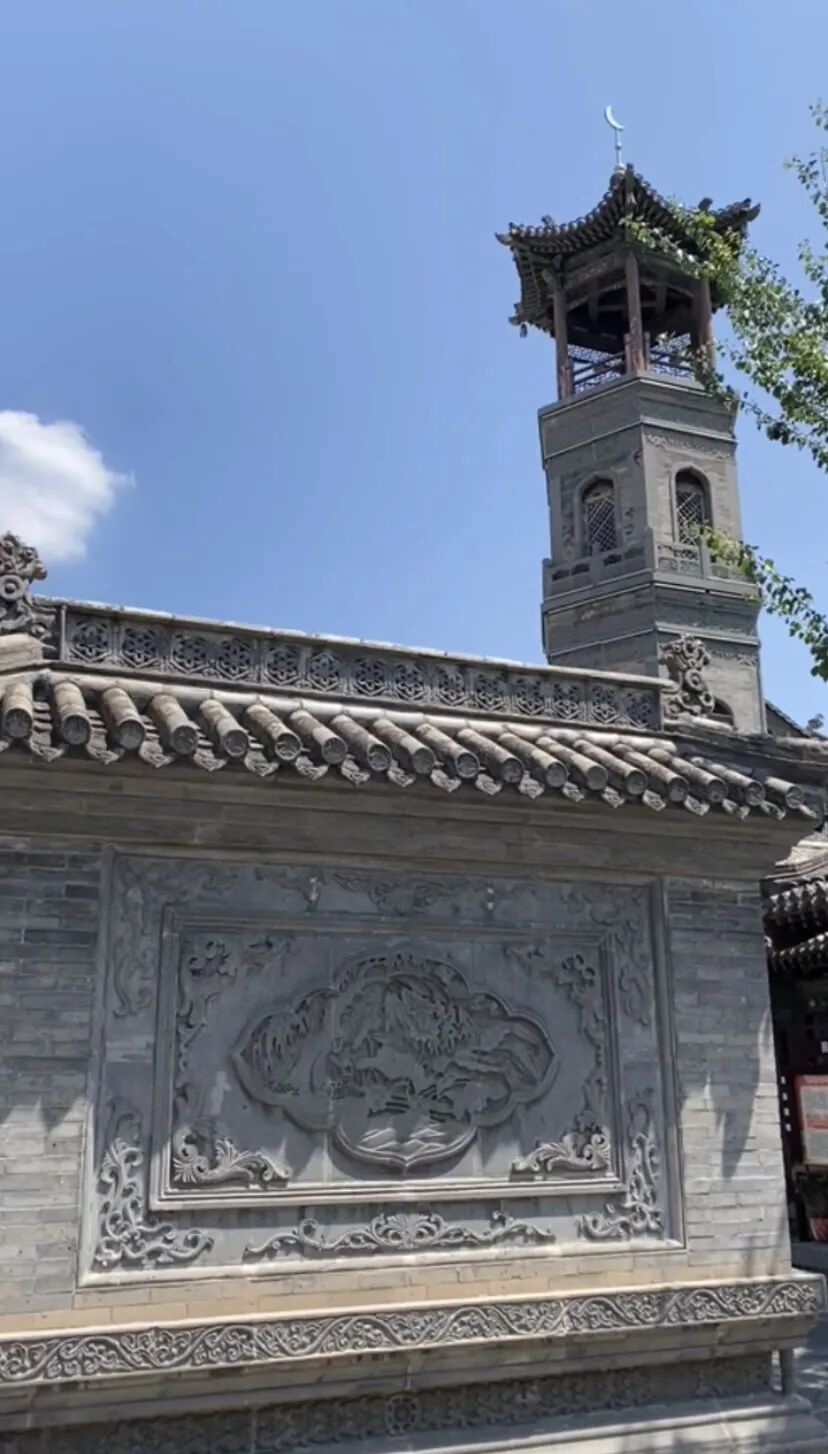
According to the monument stone for the mosque re-erected in the seventh year of the Qianlong reign (1742 AD), the site was first established in 628 AD, making it over 1,200 years old.
That actually makes it 670 years older than the Dongsi Mosque (also known as the Faming Mosque) in Beijing, which is the main hub for Muslim prayer and holiday gatherings and the home of the Islamic Association of China.
You don’t need to make a reservation, and it’s completely free to enter.
It’s generally open from 8:00 AM to 6:00 PM, though it stays closed to visitors on Fridays when there are religious activities happening.
You’ll need to scan your ID to get in. Just a heads-up: be mindful of what you're wearing and avoid anything too revealing.
Qiqihar Bukui Mosque History: Discover the 300-Year-Old Islamic Heritage in Heilongjiang
Articles • Hasan09 posted the article • 0 comments • 18 views • 1 days ago
Explore the Bukui Mosque in Qiqihar (formerly known as Bukui), which was founded in 1684 during the 23rd year of the Kangxi Emperor's reign. Discover the history behind the merging of the East and West mosques, the aesthetic of the traditional Chinese brick-and-wood feiyan dougong (flying eaves and brackets), and the story of how the mosque was awarded the 'Ji Gong Hao Yi' (eager for public good and righteousness) plaque for its dedication to charity and education during the Qing Dynasty.
There’s a local saying: 'First came the mosque, then the city of Bukui.'
Bukui is the old name for Qiqihar. It comes from the Daur language, originally the name of a tribal leader meaning 'warrior,' but it eventually became the name of the place.
As for the mosque, it's actually divided into the East Mosque and the West Mosque.
Back in 1684, a group of Hui Muslims who had arrived in Bukui with the frontier garrison pooled their money to build five thatched cottages to use for dua (prayer)—that was the original East Mosque.
The West Mosque came a bit later. It was built by another group of Muslims who migrated to Bukui, and it was located right next to the East Mosque.
Because the two mosques were built right next to each other with similar layouts and only a wall separating them, they eventually merged into what we now know as the Bukui Mosque.
The coolest thing about this place is the architecture itself.
When people think of mosques, they usually picture exotic, foreign styles. But the Bukui Mosque is different—it’s a classic example of traditional Chinese brick-and-wood architecture.
With its feiyan dougong (traditional flying eaves and brackets) and gray-tiled roofs, it looks a lot like a northern Chinese temple, but the details hold unique Islamic characteristics, showing how two cultures slowly blended together.
During the Guangxu era, the mosque took the lead in opening a charity school to help local kids get an education. Because of their commitment to community service, the imperial court awarded them a plaque that read 'Ji Gong Hao Yi' (eager for public good and righteousness), which stands as a historical record of ethnic unity.
For over three hundred years, it hasn't just been a place for dua (prayer); it has been the heart of life, mutual aid, and community roots in the city of Bukui. view all
Explore the Bukui Mosque in Qiqihar (formerly known as Bukui), which was founded in 1684 during the 23rd year of the Kangxi Emperor's reign. Discover the history behind the merging of the East and West mosques, the aesthetic of the traditional Chinese brick-and-wood feiyan dougong (flying eaves and brackets), and the story of how the mosque was awarded the 'Ji Gong Hao Yi' (eager for public good and righteousness) plaque for its dedication to charity and education during the Qing Dynasty.
There’s a local saying: 'First came the mosque, then the city of Bukui.'
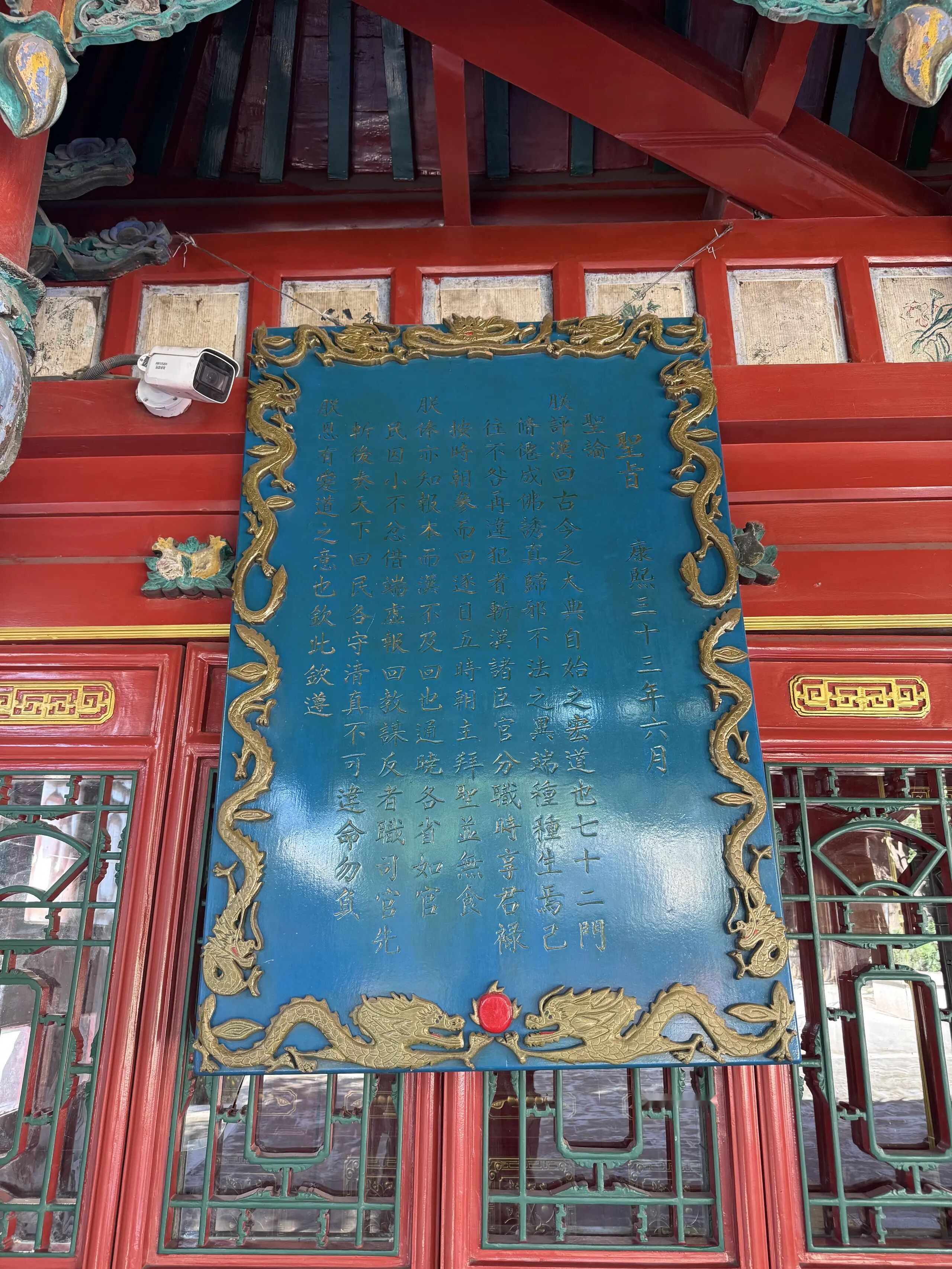
Bukui is the old name for Qiqihar. It comes from the Daur language, originally the name of a tribal leader meaning 'warrior,' but it eventually became the name of the place.
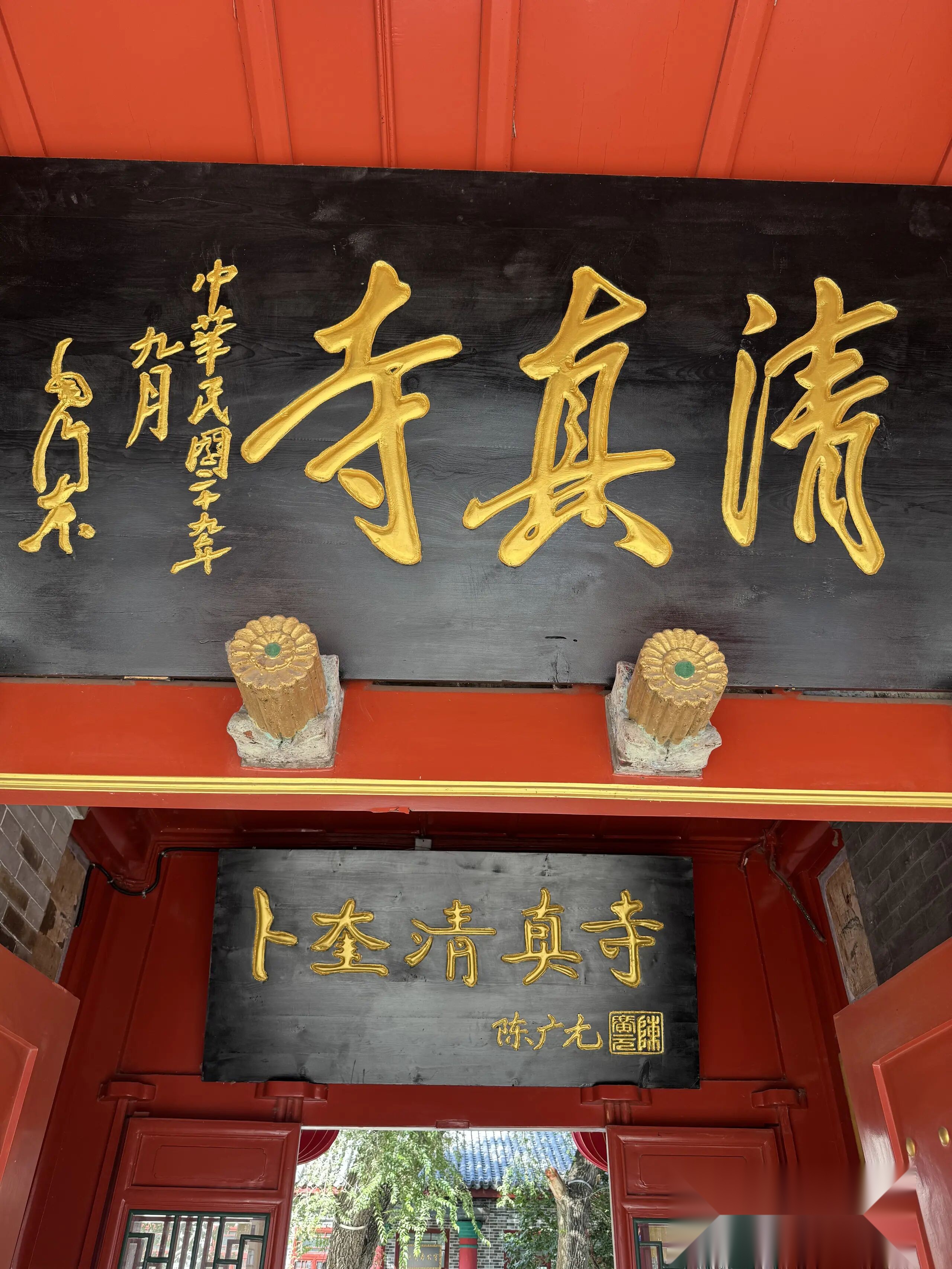
As for the mosque, it's actually divided into the East Mosque and the West Mosque.

Back in 1684, a group of Hui Muslims who had arrived in Bukui with the frontier garrison pooled their money to build five thatched cottages to use for dua (prayer)—that was the original East Mosque.

The West Mosque came a bit later. It was built by another group of Muslims who migrated to Bukui, and it was located right next to the East Mosque.

Because the two mosques were built right next to each other with similar layouts and only a wall separating them, they eventually merged into what we now know as the Bukui Mosque.
The coolest thing about this place is the architecture itself.
When people think of mosques, they usually picture exotic, foreign styles. But the Bukui Mosque is different—it’s a classic example of traditional Chinese brick-and-wood architecture.
With its feiyan dougong (traditional flying eaves and brackets) and gray-tiled roofs, it looks a lot like a northern Chinese temple, but the details hold unique Islamic characteristics, showing how two cultures slowly blended together.
During the Guangxu era, the mosque took the lead in opening a charity school to help local kids get an education. Because of their commitment to community service, the imperial court awarded them a plaque that read 'Ji Gong Hao Yi' (eager for public good and righteousness), which stands as a historical record of ethnic unity.
For over three hundred years, it hasn't just been a place for dua (prayer); it has been the heart of life, mutual aid, and community roots in the city of Bukui.
Historic Mosques in China: Exploring Taiyuan's Ancient Qingzhen Temple and Islamic Architecture
Articles • Hasan09 posted the article • 0 comments • 20 views • 1 days ago
We’re taking an up-close look at the Taiyuan Qingzhen Ancient Mosque (Taiyuan Great Mosque), a National Key Cultural Relic site located on Jiefang Road in the Yingze District. This breakdown covers its history dating back to the Tang Dynasty, the stunning double-eaved Shengxin Tower, its unique goulianda (interlocking) architectural structure, and the priceless collection of ancient stone inscriptions and plaques.
Located at No. 48 Jiefang Road in Taiyuan, the Taiyuan Qingzhen Ancient Mosque is a high-level cultural landmark and one of the best-preserved mosques in North China. According to historical records, it was first built during the Zhenyuan era of the Tang Dynasty. It has been renovated and expanded throughout the Song, Yuan, Ming, and Qing dynasties, with most of the current structures dating back to the Ming and Qing eras.
The mosque faces east and covers 2,121 square meters, featuring a two-courtyard layout. Along the central axis, you'll find the main gate, Shengxin Tower, the lecture hall, and the main prayer hall, flanked by stone tablet pavilions, imam quarters, and bathing rooms. The Shengxin Tower is famous for its intricate double-eaved, hip-and-gable roof. The prayer hall features a complex interlocking structure that blends traditional Chinese wood framing with Arabic Islamic aesthetics, complete with ornate paintings and Arabic script carvings. It’s a vital site for the local Hui Muslim community and a living testament to the harmony between Han and Hui cultures, holding immense value in history, architecture, and art.
The main prayer hall is the highlight of the complex. It’s a brick-and-wood structure with an intricate interlocking roof. The interior is huge, easily holding 500 people for dua (prayers). It’s a masterclass in blending Islamic and Chinese craftsmanship; the walls are fully paneled, hiding the structural wood and bricks in a technique known as 'neither brick nor wood visible.' The hall is grand, with gold-painted pillars and intricate carvings. The focal point is the mihrab (niche in the wall indicating the direction of Mecca) on the western wall, which features stunning Quranic verses in Kufic and Thuluth Arabic calligraphy—truly a rare find in China. To the right, you'll also find a rare 13-step wooden pulpit used for sermons.
The Shengxin Tower stands right in the center of the courtyard facing the east gate. It’s a two-story structure with distinct, gracefully curved double-eaves. The ground floor is supported by inward-leaning red lacquered wooden pillars. Inside, there's a plaque written by the famous Ming scholar Fang Xiaoru; his cursive calligraphy is so dynamic, it looks like a dragon in motion.
The north and south stone pavilions sit on either side of the Shengxin Tower. The south pavilion features an imperial 100-word poem dedicated to Islam by the Ming Dynasty founder, Emperor Zhu Yuanzhang. The back of the tablet holds an inscription by the Northern Song poet Huang Tingjian, praising the wisdom of Hui Muslim traditions. You’ll also find eight large, fluid, and elegant characters written by the famous Qing Dynasty calligrapher Liu Yong, emphasizing loyalty, filial piety, and benevolence.
South Tablet Pavilion.
The north pavilion houses an imperial decree from 1695 during the Qing Kangxi era, specifically ordering the protection of the mosque, topped with a traditional chi-dragon head carving. The mosque is filled with antithetical couplets and plaques from Ming and Qing dignitaries and scholars. These pieces reflect the 'Yiru Huitong' (integration of Islamic and Confucian traditions) culture that thrived in Taiyuan during that time.
The Taiyuan Qingzhen Ancient Mosque is located at No. 20 Jiefang Road, Taiyuan, the capital of Shanxi Province. It’s one of the most well-preserved mosques in North China. An inscription from a 1876 renovation states that it was founded in 785 AD, with current remains largely dating back to the late Yuan and early Ming periods. It is a masterpiece of Chinese architectural style fused with Islamic culture and was officially designated a National Key Cultural Relic site in March 2013.
The original front gate used to be on South Niurou Alley, but it was moved to the current west-facing entrance during the expansion of Jiefang Road. The gate features a beautifully carved and ornate archway, topped with a plaque that reads 'Qingzhen Gu Si' (Ancient Mosque) in gold, written by Wang Juemin, the prefect of Taiyuan in 1645.
The mosque retains its two-courtyard layout today, covering over 2,500 square meters. The surviving structures—the prayer hall, lecture hall, Shengxin Tower, firewall, and pavilions—all date to the Ming and Qing dynasties. The layout is strictly symmetrical, following traditional Chinese architectural standards. The courtyard is peaceful, filled with old, towering pagoda trees whose branches provide cool shade.
West of the Shengxin Tower are the lecture hall and the firewall. The hall is where the Quran is taught and where Muslims rest after prayer. The massive 1-meter-thick firewall separates the front and back courtyards; it stands as high and wide as the prayer hall’s eaves. It was built with fire-resistant materials and features a stone door—if a fire broke out in the front courtyard, closing this door would save the main hall. This clever design, which also helps with earthquake resistance, is incredibly rare in ancient Chinese architecture.
The Taiyuan Qingzhen Ancient Mosque is a prime example of the Sinicization of Islam. It beautifully showcases how Islamic architecture evolved in China, blending traditional Chinese spatial layout and decoration with Islamic spiritual identity. It is a powerful symbol of openness, tolerance, and peace.
In this new era, the Islamic community in Taiyuan continues to uphold the spirit of national unity and integration. By adhering to the direction of making Islam compatible with socialist society, the local Muslim community remains committed to promoting harmony and maintaining the healthy development of their faith traditions. view all
We’re taking an up-close look at the Taiyuan Qingzhen Ancient Mosque (Taiyuan Great Mosque), a National Key Cultural Relic site located on Jiefang Road in the Yingze District. This breakdown covers its history dating back to the Tang Dynasty, the stunning double-eaved Shengxin Tower, its unique goulianda (interlocking) architectural structure, and the priceless collection of ancient stone inscriptions and plaques.
Located at No. 48 Jiefang Road in Taiyuan, the Taiyuan Qingzhen Ancient Mosque is a high-level cultural landmark and one of the best-preserved mosques in North China. According to historical records, it was first built during the Zhenyuan era of the Tang Dynasty. It has been renovated and expanded throughout the Song, Yuan, Ming, and Qing dynasties, with most of the current structures dating back to the Ming and Qing eras.
The mosque faces east and covers 2,121 square meters, featuring a two-courtyard layout. Along the central axis, you'll find the main gate, Shengxin Tower, the lecture hall, and the main prayer hall, flanked by stone tablet pavilions, imam quarters, and bathing rooms. The Shengxin Tower is famous for its intricate double-eaved, hip-and-gable roof. The prayer hall features a complex interlocking structure that blends traditional Chinese wood framing with Arabic Islamic aesthetics, complete with ornate paintings and Arabic script carvings. It’s a vital site for the local Hui Muslim community and a living testament to the harmony between Han and Hui cultures, holding immense value in history, architecture, and art.
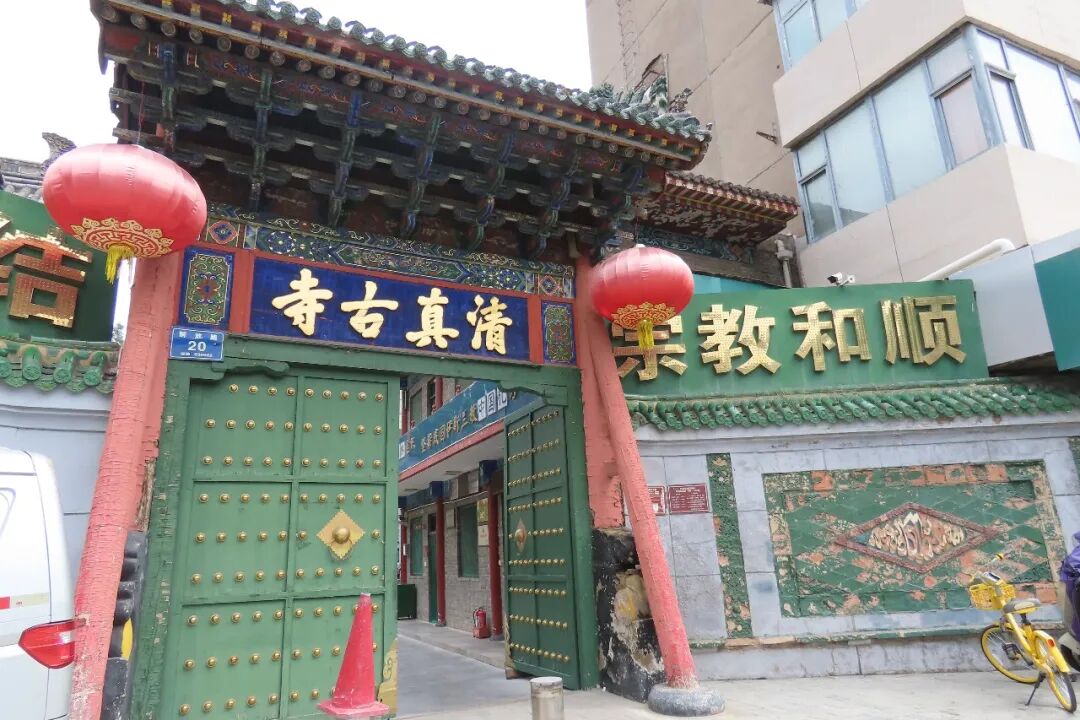
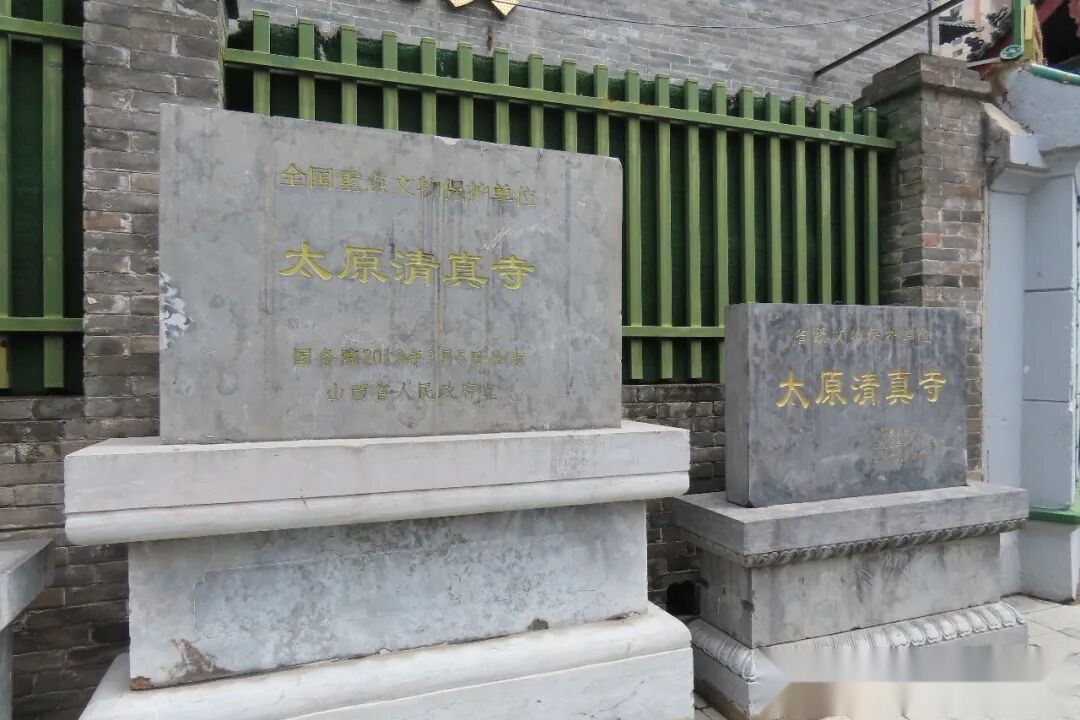
The main prayer hall is the highlight of the complex. It’s a brick-and-wood structure with an intricate interlocking roof. The interior is huge, easily holding 500 people for dua (prayers). It’s a masterclass in blending Islamic and Chinese craftsmanship; the walls are fully paneled, hiding the structural wood and bricks in a technique known as 'neither brick nor wood visible.' The hall is grand, with gold-painted pillars and intricate carvings. The focal point is the mihrab (niche in the wall indicating the direction of Mecca) on the western wall, which features stunning Quranic verses in Kufic and Thuluth Arabic calligraphy—truly a rare find in China. To the right, you'll also find a rare 13-step wooden pulpit used for sermons.
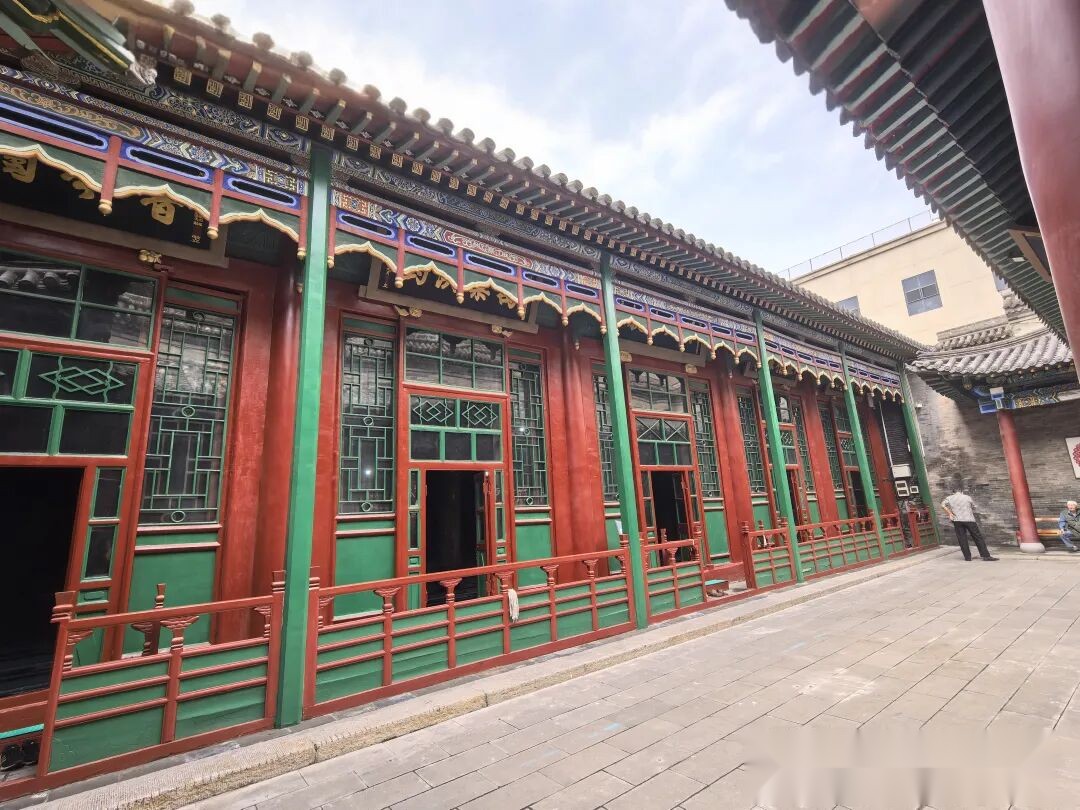
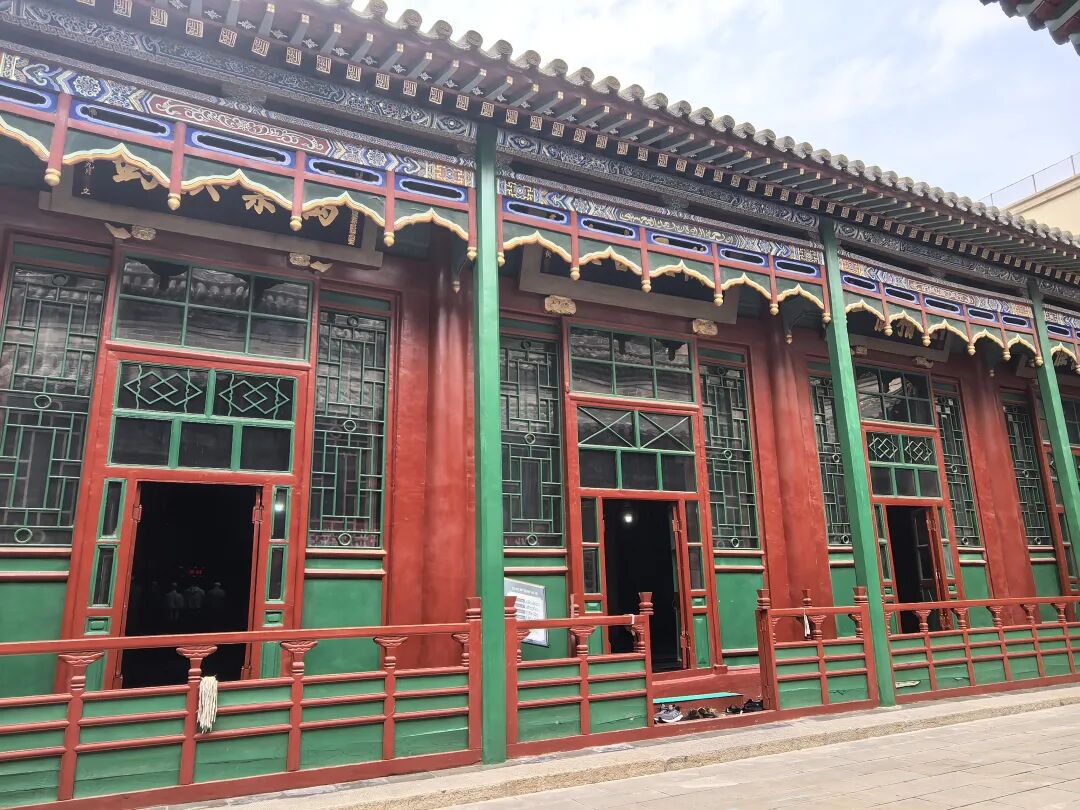
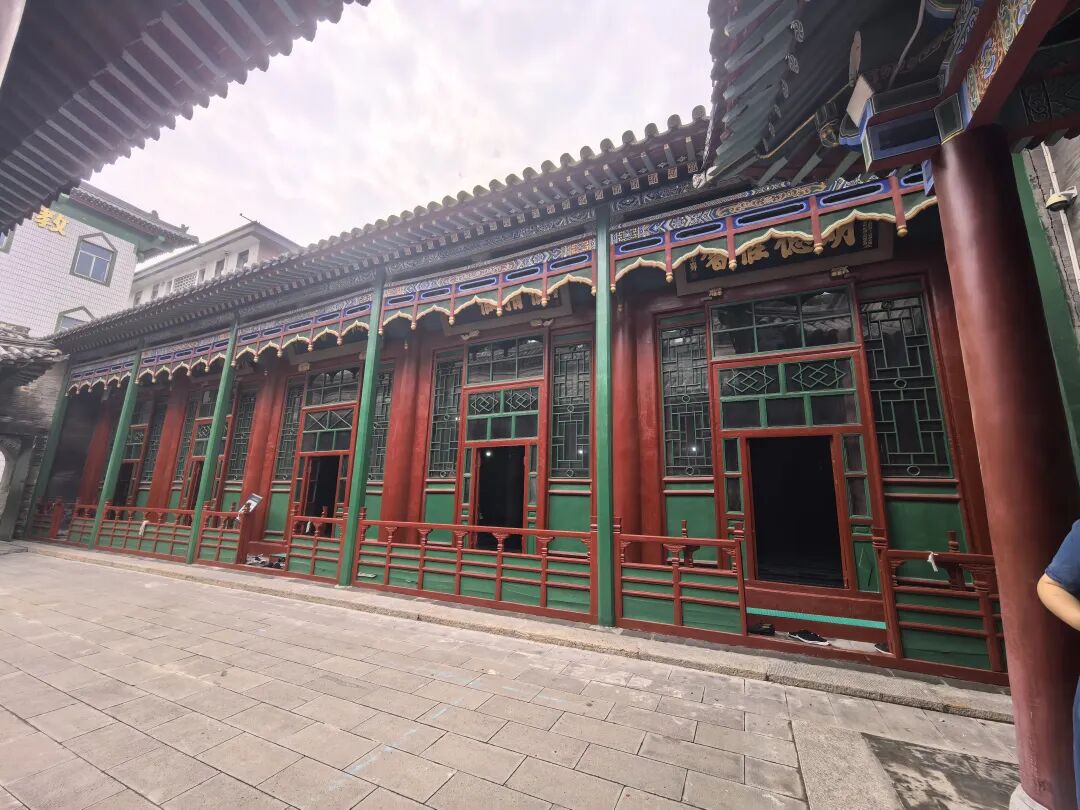
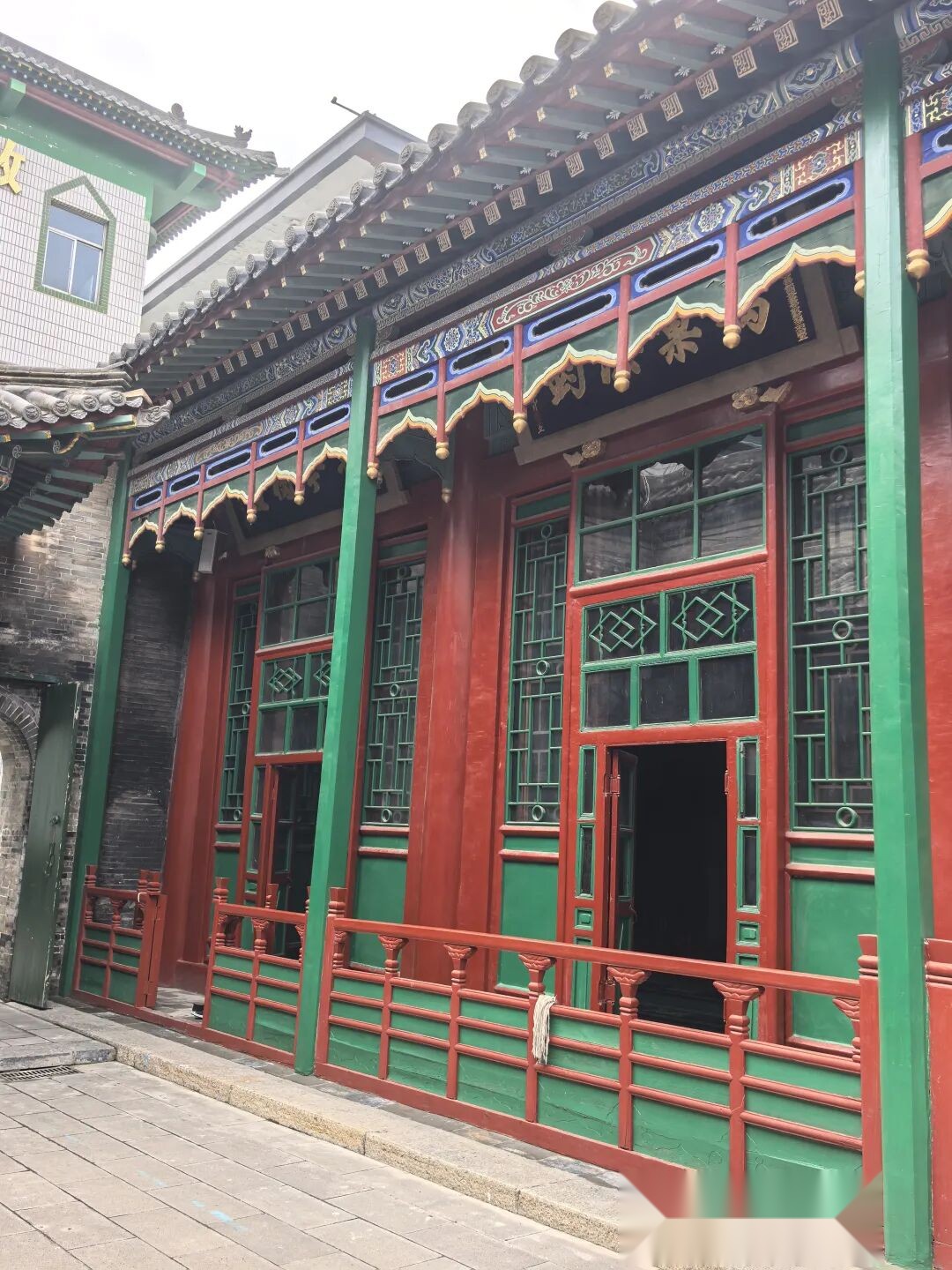
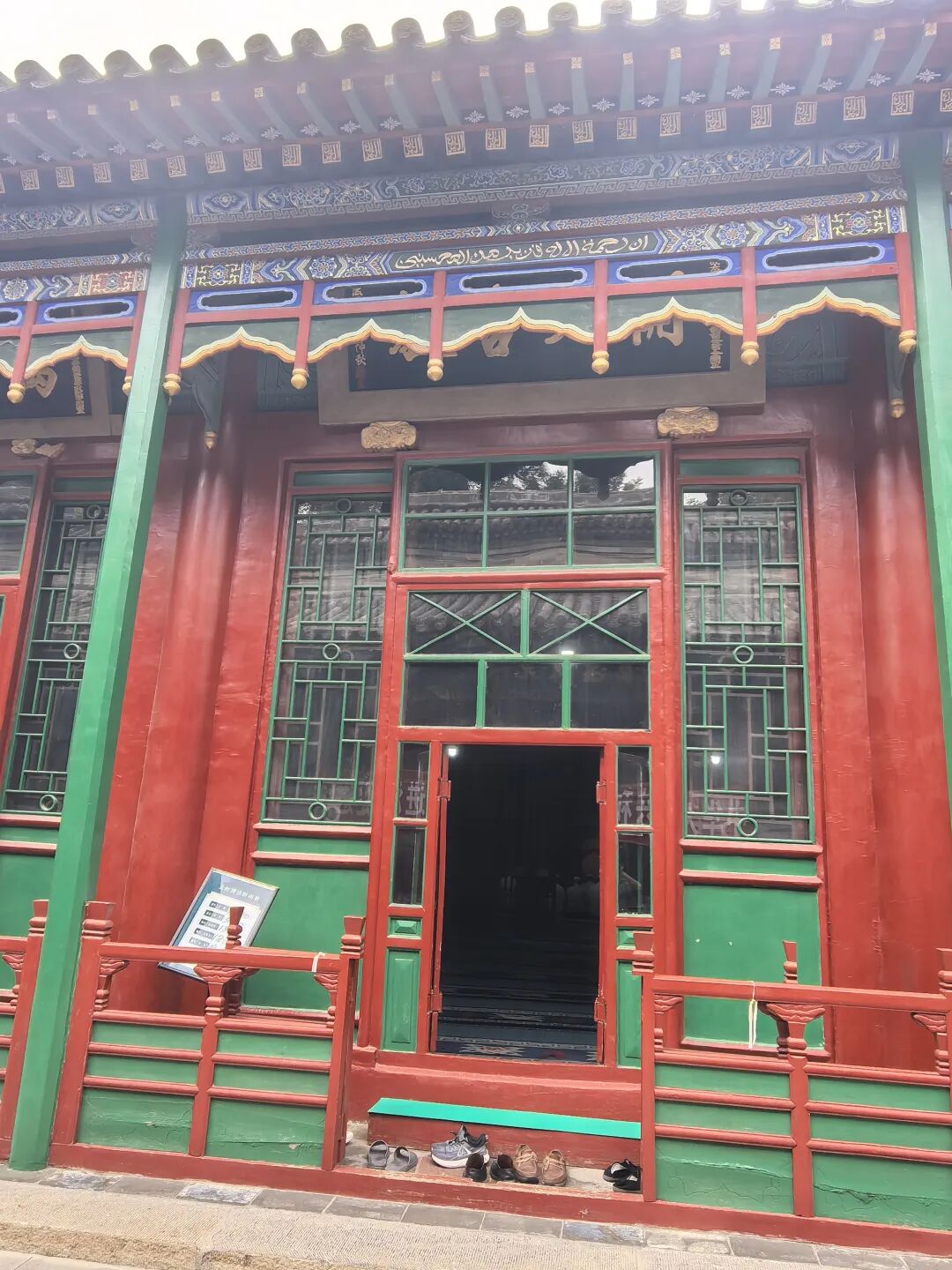
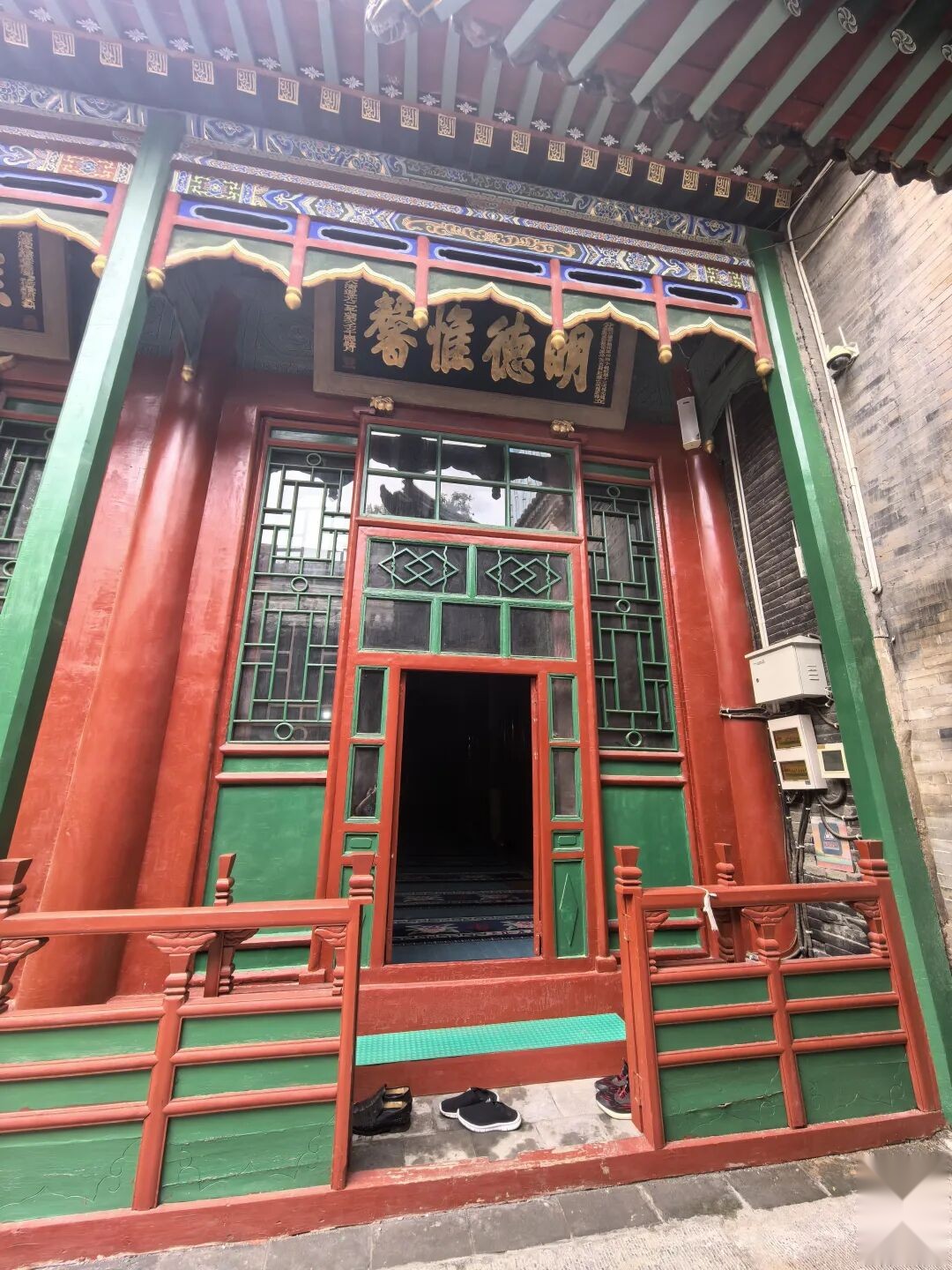
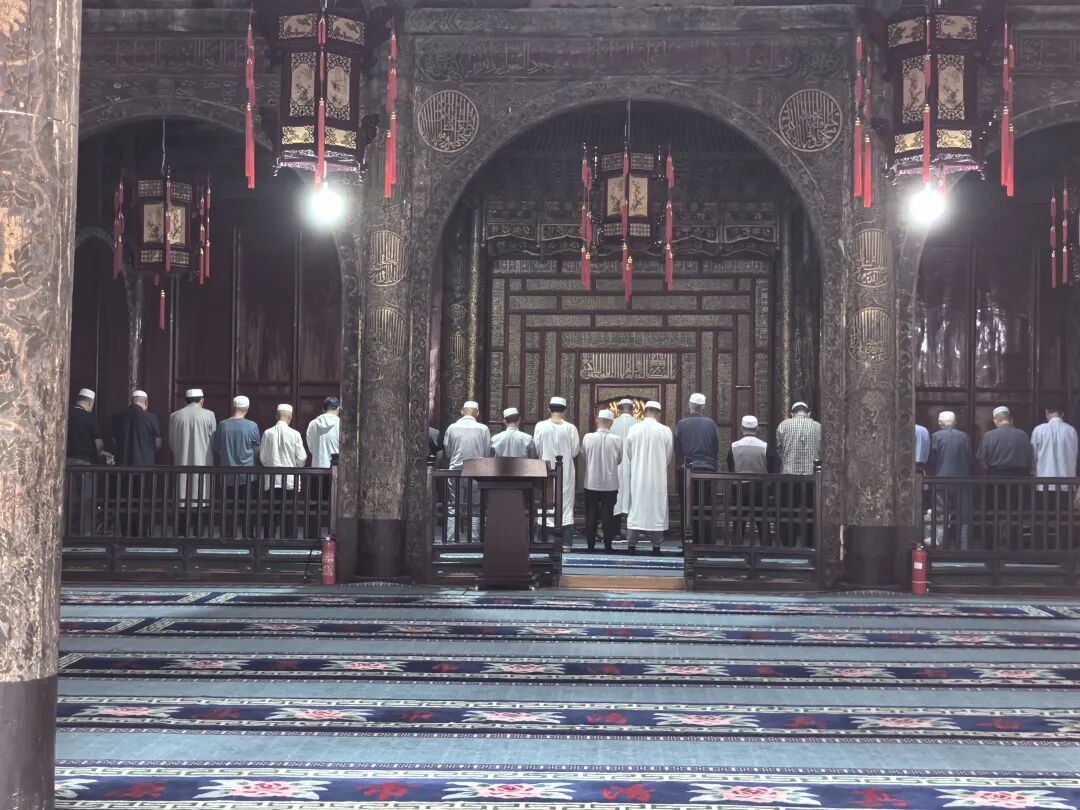
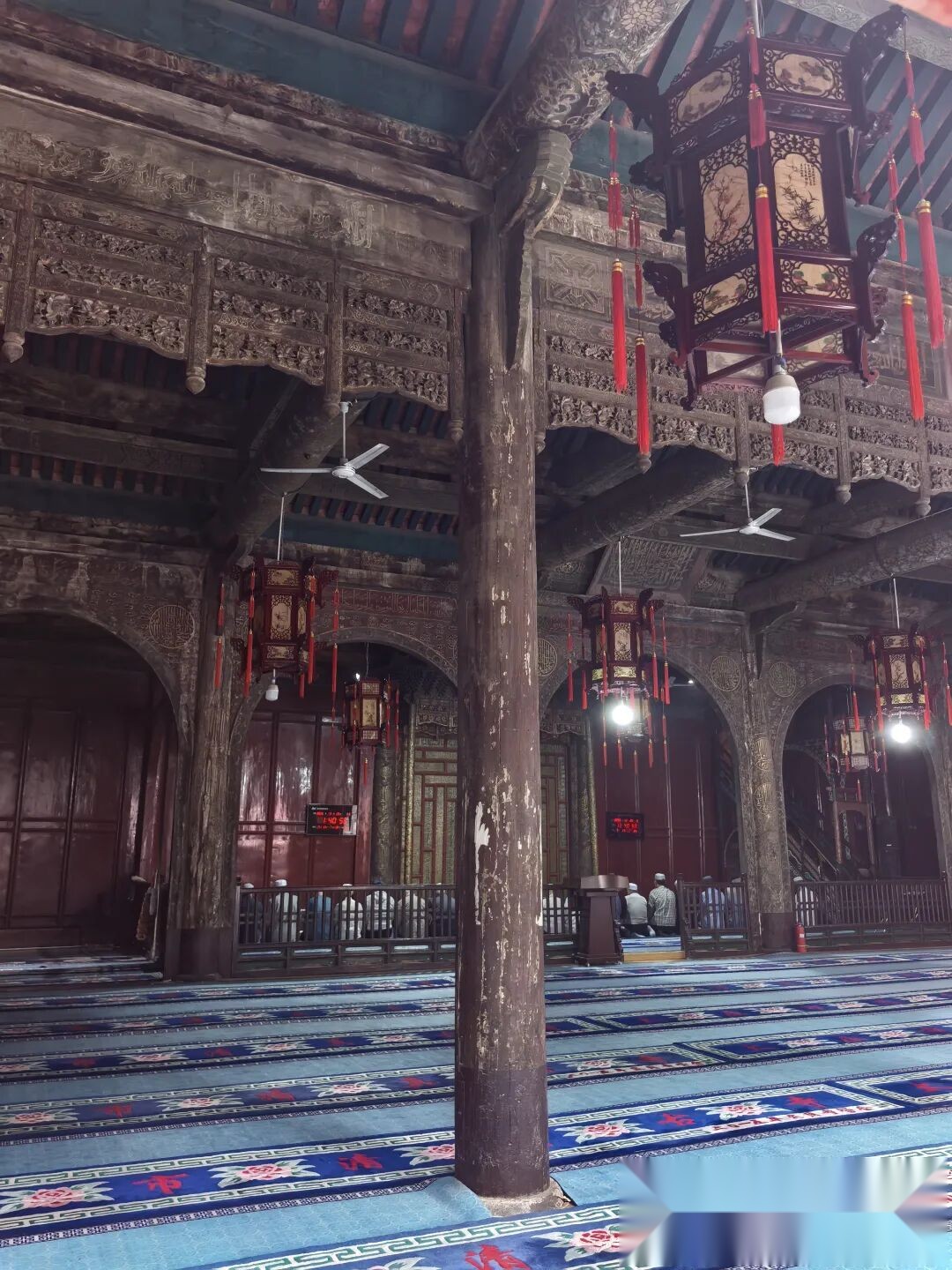
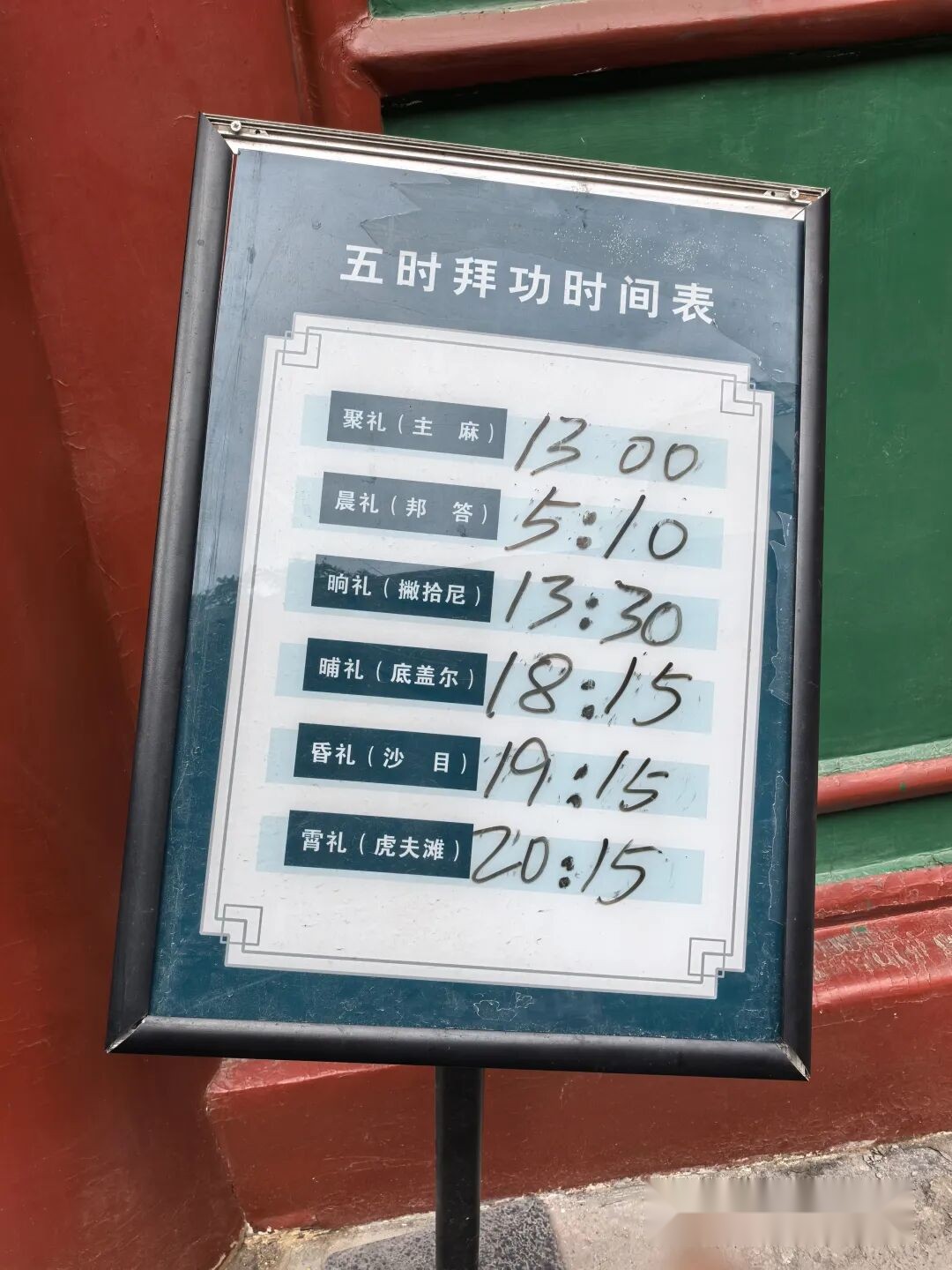
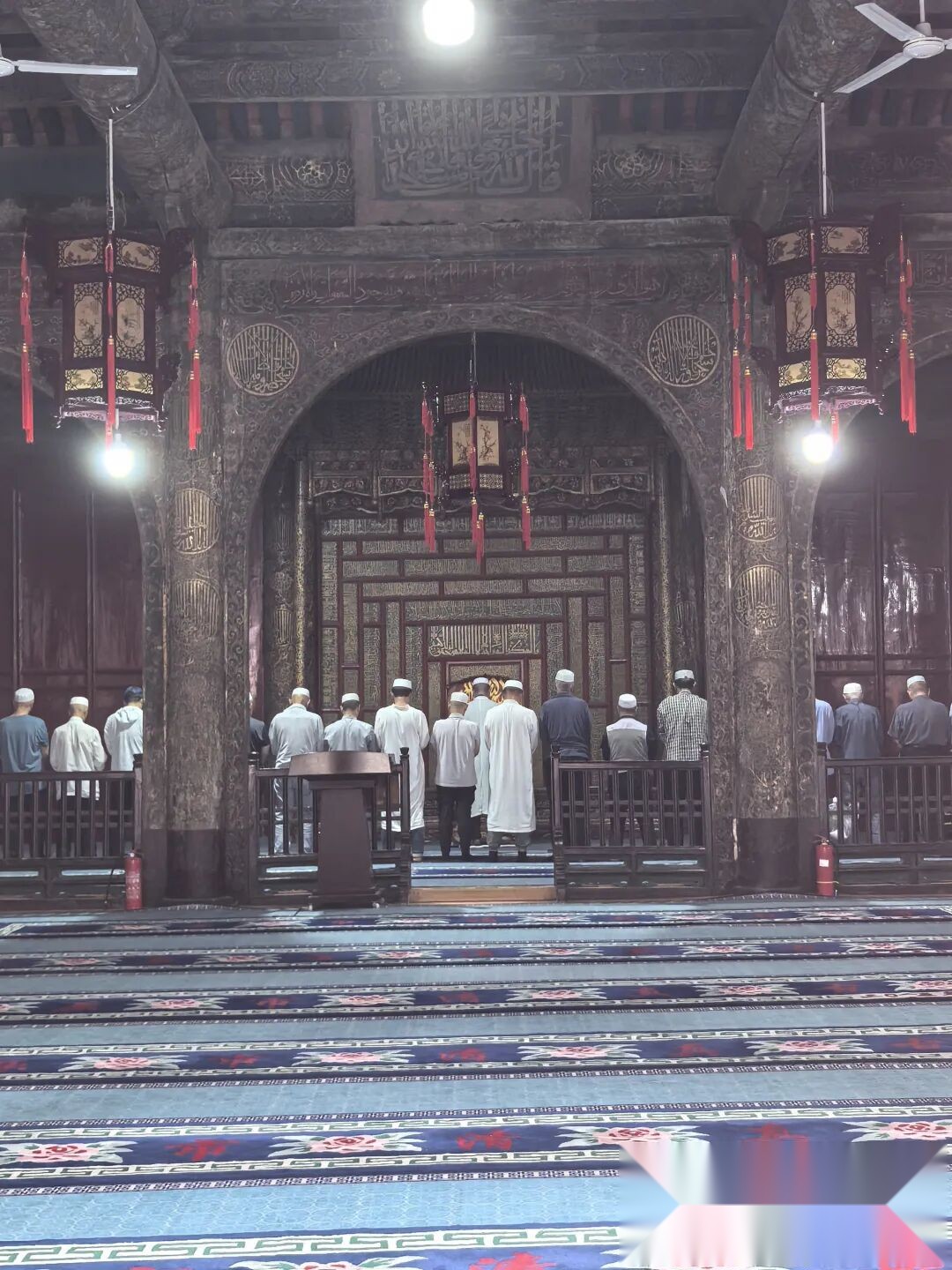
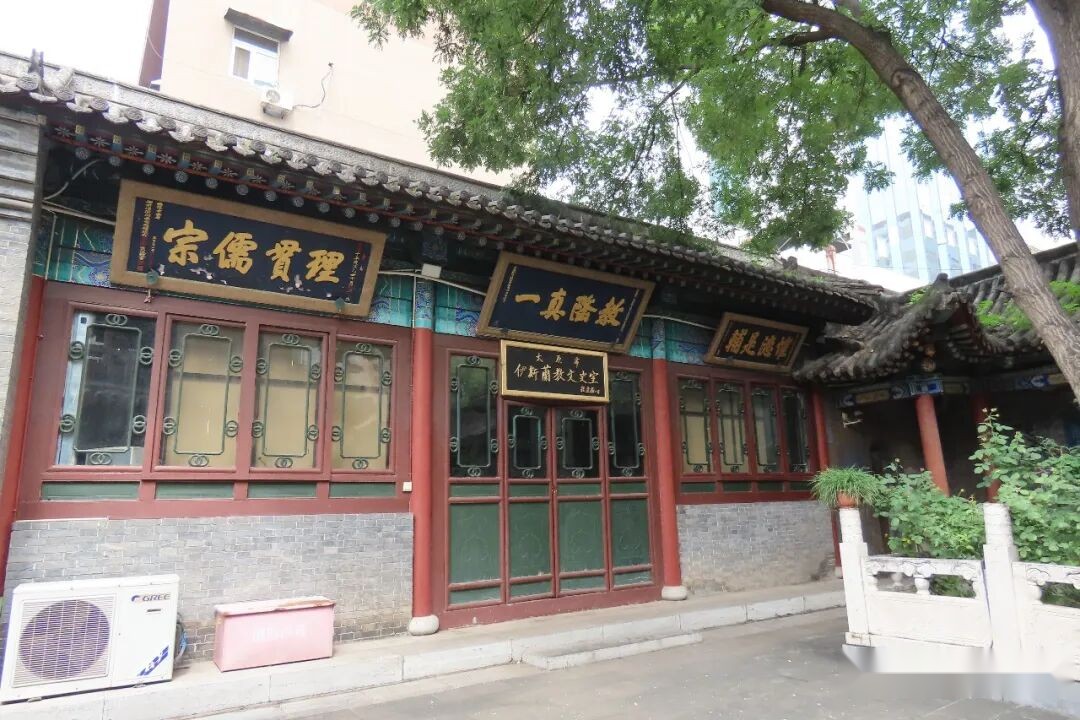
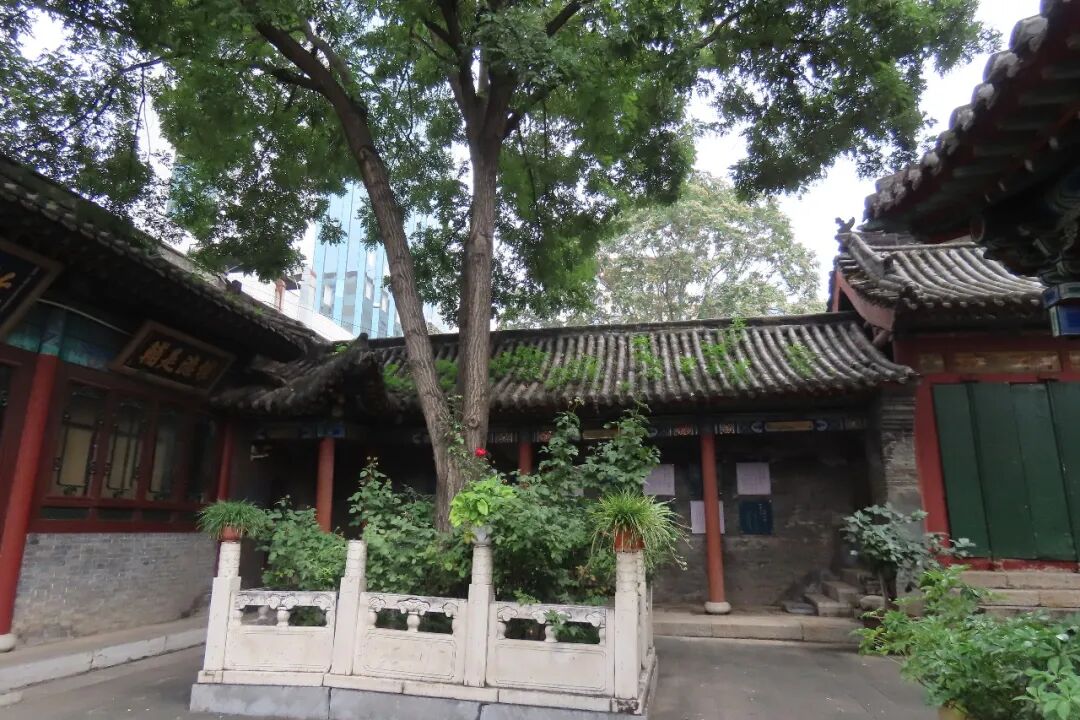
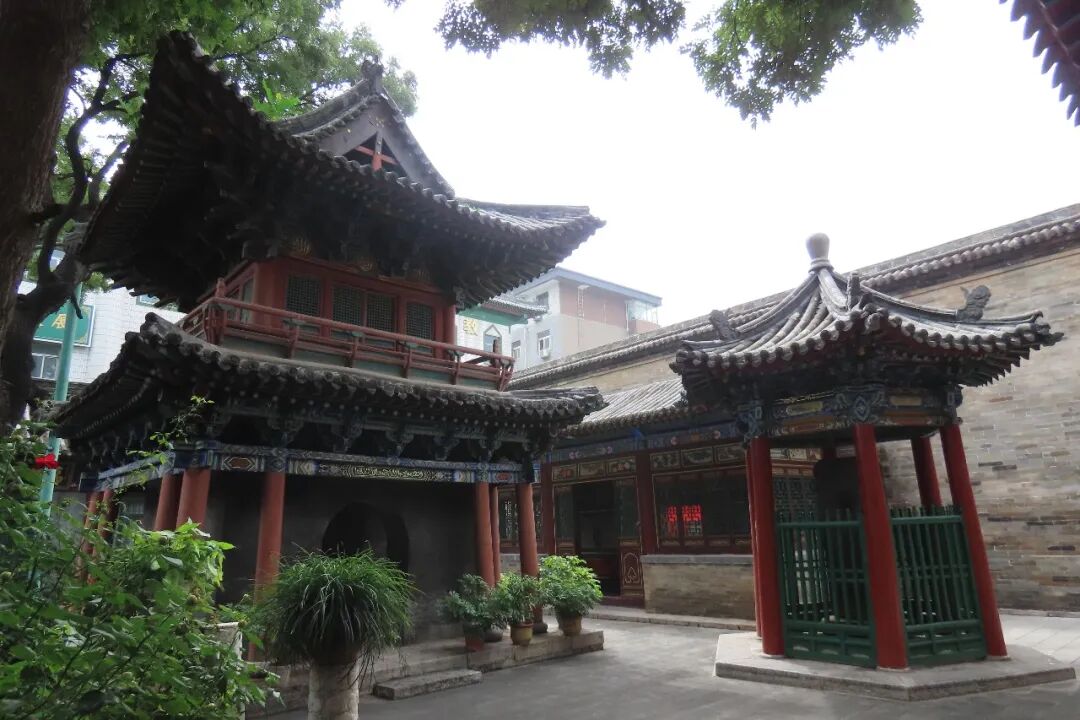
The Shengxin Tower stands right in the center of the courtyard facing the east gate. It’s a two-story structure with distinct, gracefully curved double-eaves. The ground floor is supported by inward-leaning red lacquered wooden pillars. Inside, there's a plaque written by the famous Ming scholar Fang Xiaoru; his cursive calligraphy is so dynamic, it looks like a dragon in motion.


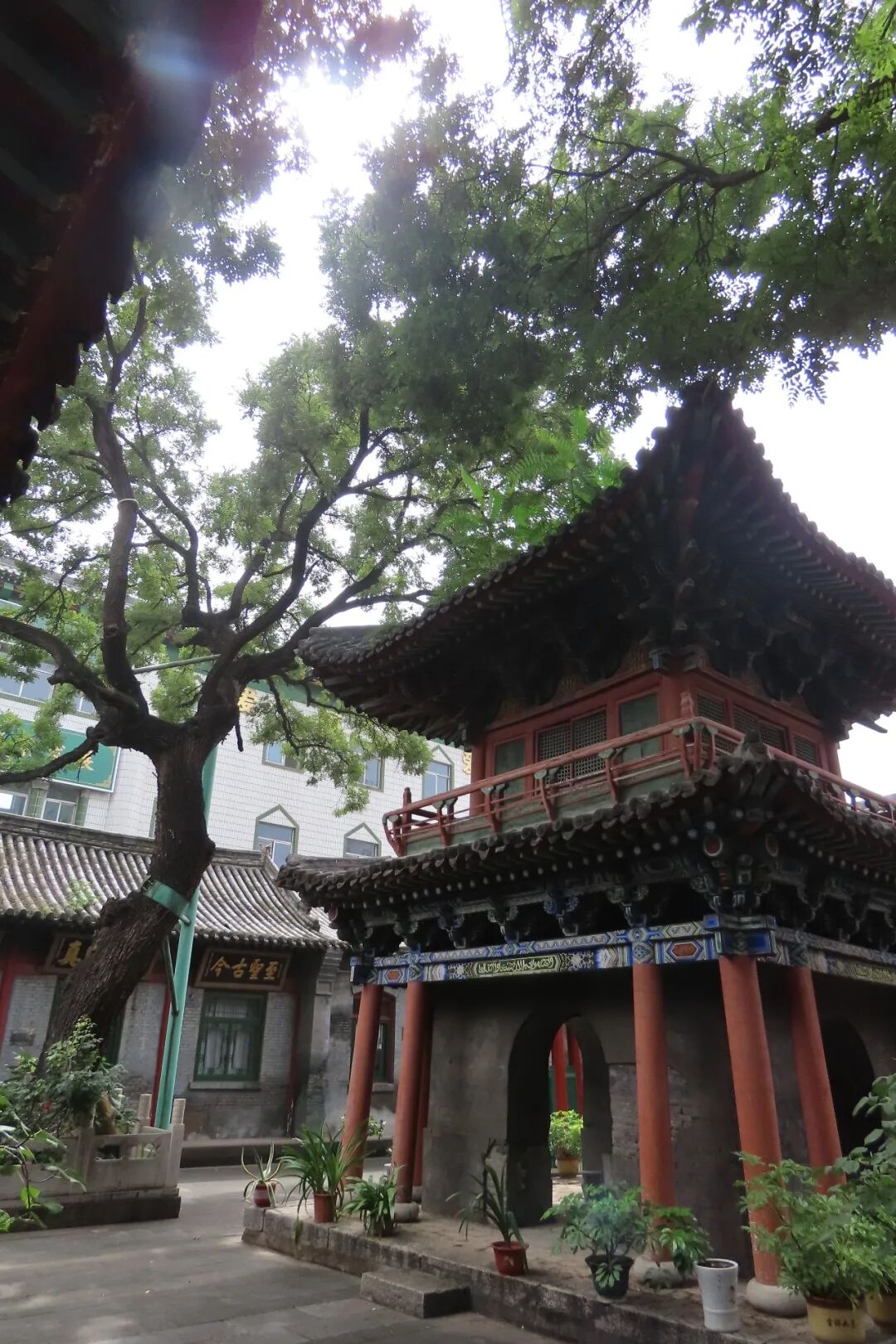
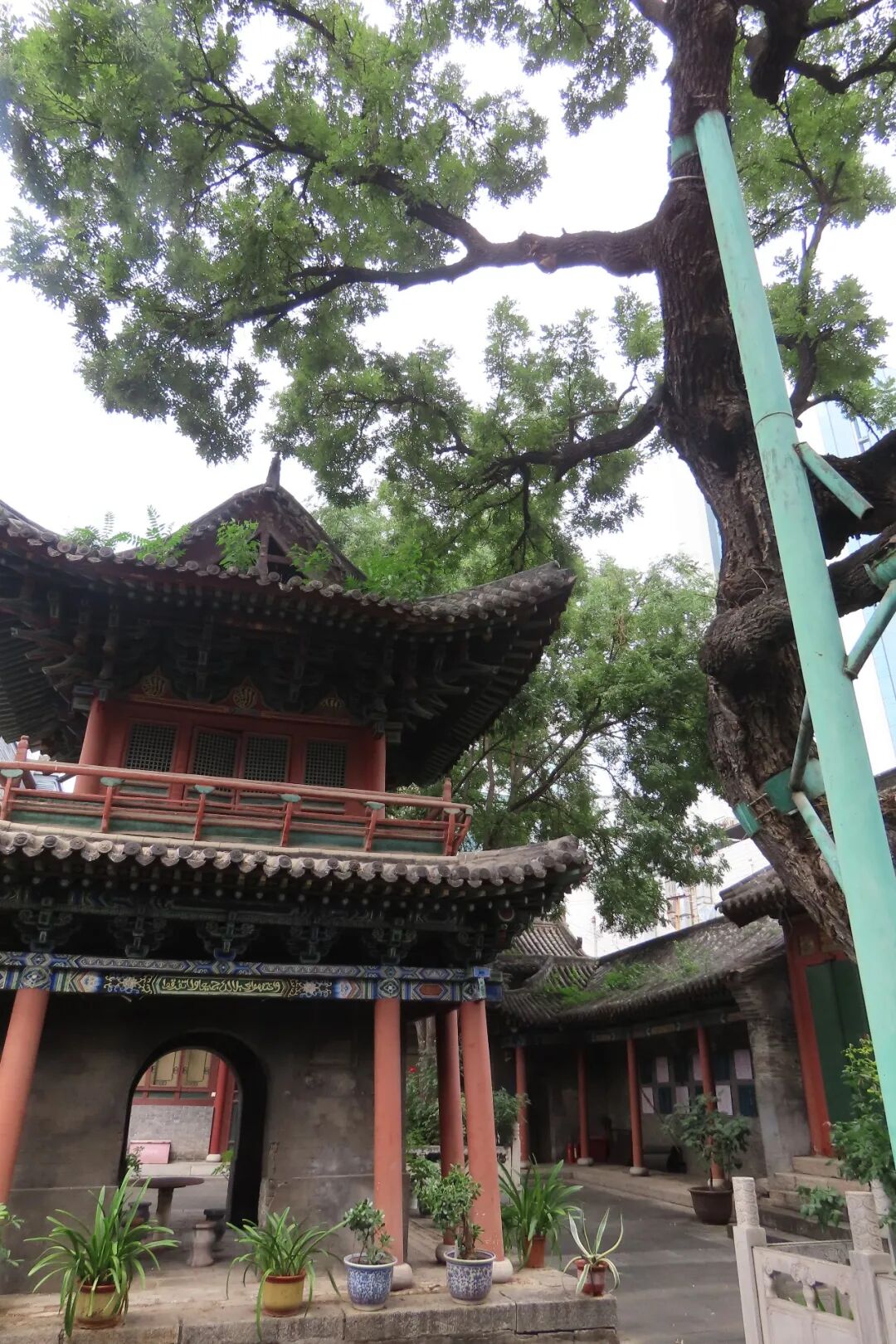
The north and south stone pavilions sit on either side of the Shengxin Tower. The south pavilion features an imperial 100-word poem dedicated to Islam by the Ming Dynasty founder, Emperor Zhu Yuanzhang. The back of the tablet holds an inscription by the Northern Song poet Huang Tingjian, praising the wisdom of Hui Muslim traditions. You’ll also find eight large, fluid, and elegant characters written by the famous Qing Dynasty calligrapher Liu Yong, emphasizing loyalty, filial piety, and benevolence.
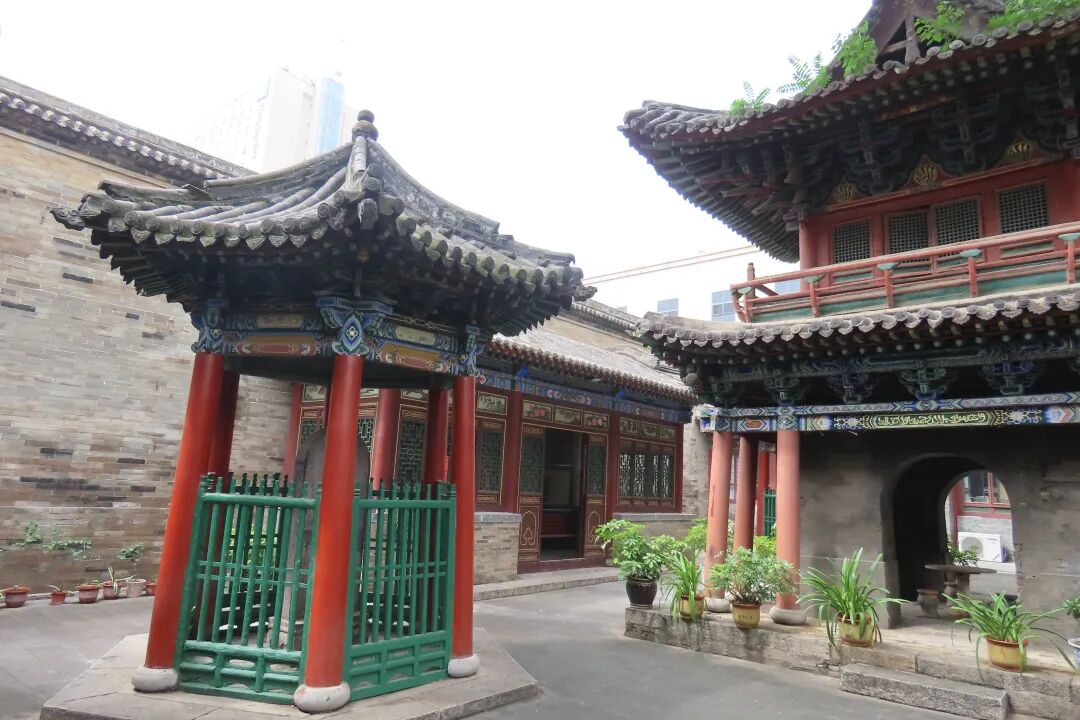
South Tablet Pavilion.
The north pavilion houses an imperial decree from 1695 during the Qing Kangxi era, specifically ordering the protection of the mosque, topped with a traditional chi-dragon head carving. The mosque is filled with antithetical couplets and plaques from Ming and Qing dignitaries and scholars. These pieces reflect the 'Yiru Huitong' (integration of Islamic and Confucian traditions) culture that thrived in Taiyuan during that time.
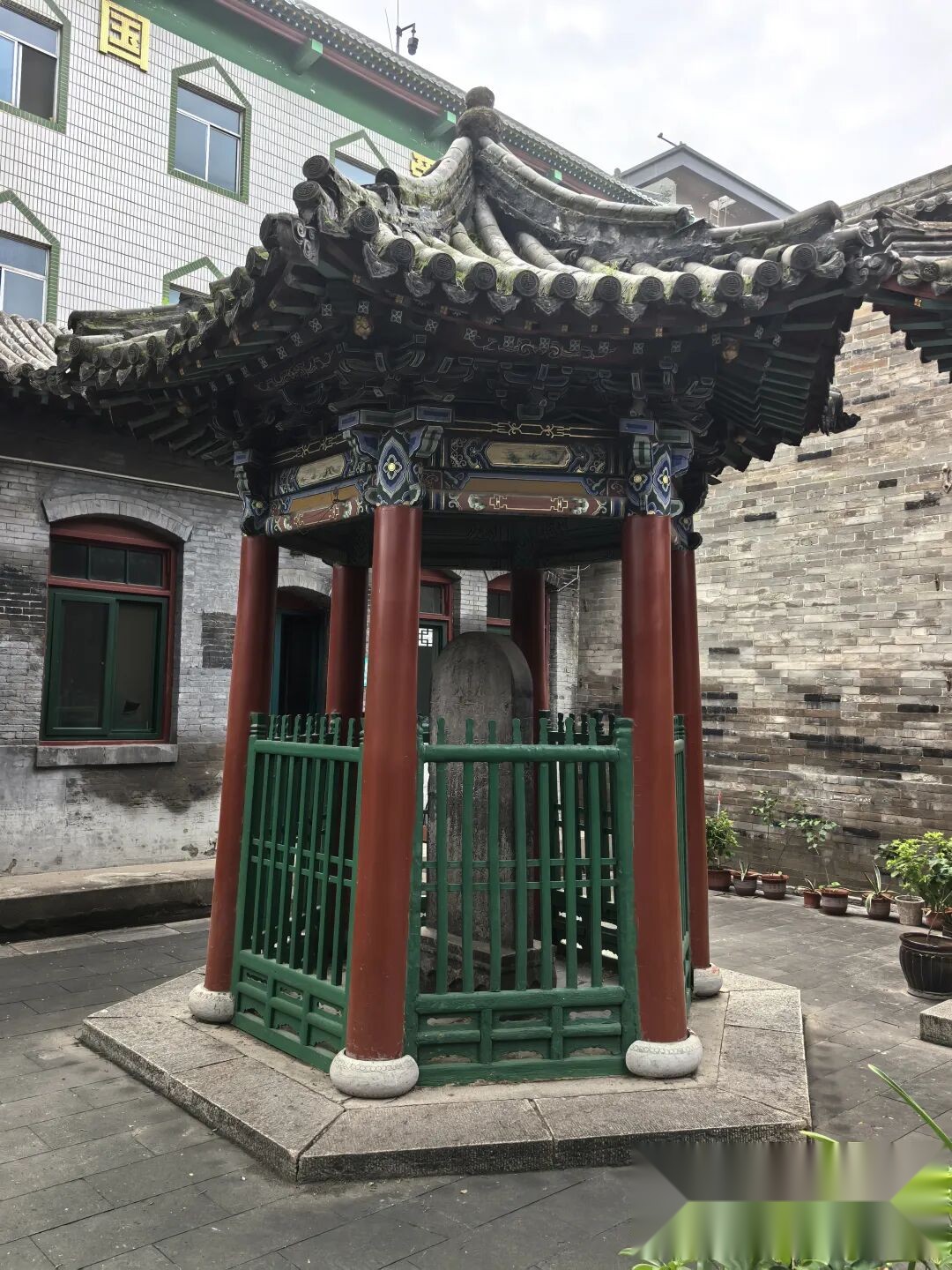
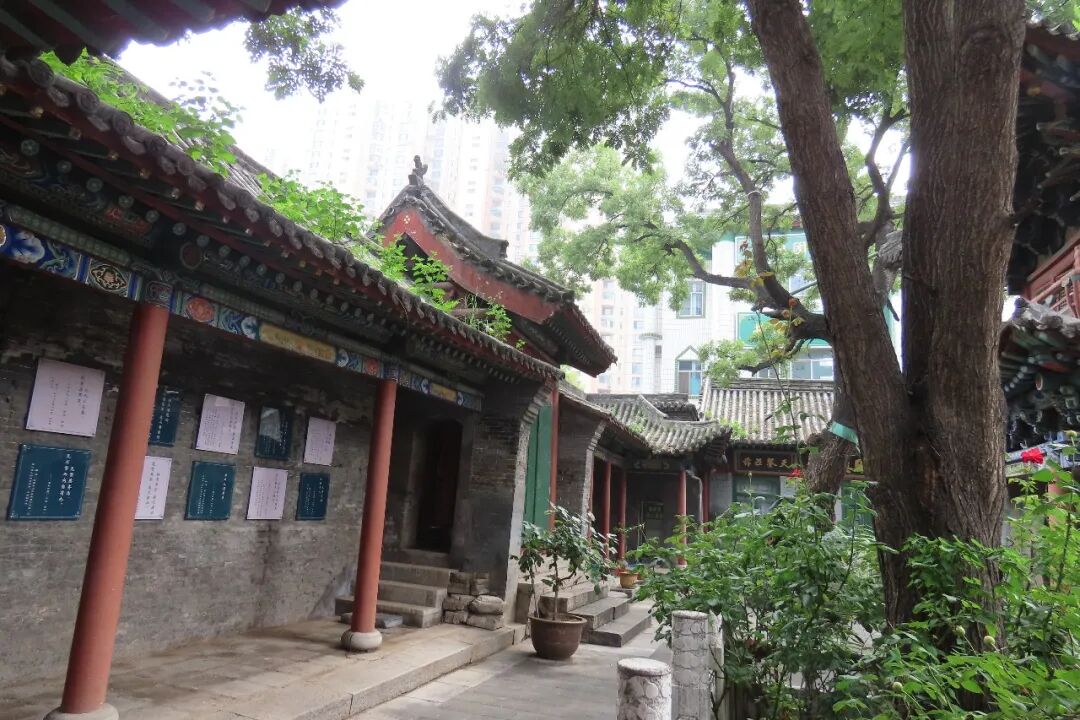
The Taiyuan Qingzhen Ancient Mosque is located at No. 20 Jiefang Road, Taiyuan, the capital of Shanxi Province. It’s one of the most well-preserved mosques in North China. An inscription from a 1876 renovation states that it was founded in 785 AD, with current remains largely dating back to the late Yuan and early Ming periods. It is a masterpiece of Chinese architectural style fused with Islamic culture and was officially designated a National Key Cultural Relic site in March 2013.
The original front gate used to be on South Niurou Alley, but it was moved to the current west-facing entrance during the expansion of Jiefang Road. The gate features a beautifully carved and ornate archway, topped with a plaque that reads 'Qingzhen Gu Si' (Ancient Mosque) in gold, written by Wang Juemin, the prefect of Taiyuan in 1645.
The mosque retains its two-courtyard layout today, covering over 2,500 square meters. The surviving structures—the prayer hall, lecture hall, Shengxin Tower, firewall, and pavilions—all date to the Ming and Qing dynasties. The layout is strictly symmetrical, following traditional Chinese architectural standards. The courtyard is peaceful, filled with old, towering pagoda trees whose branches provide cool shade.
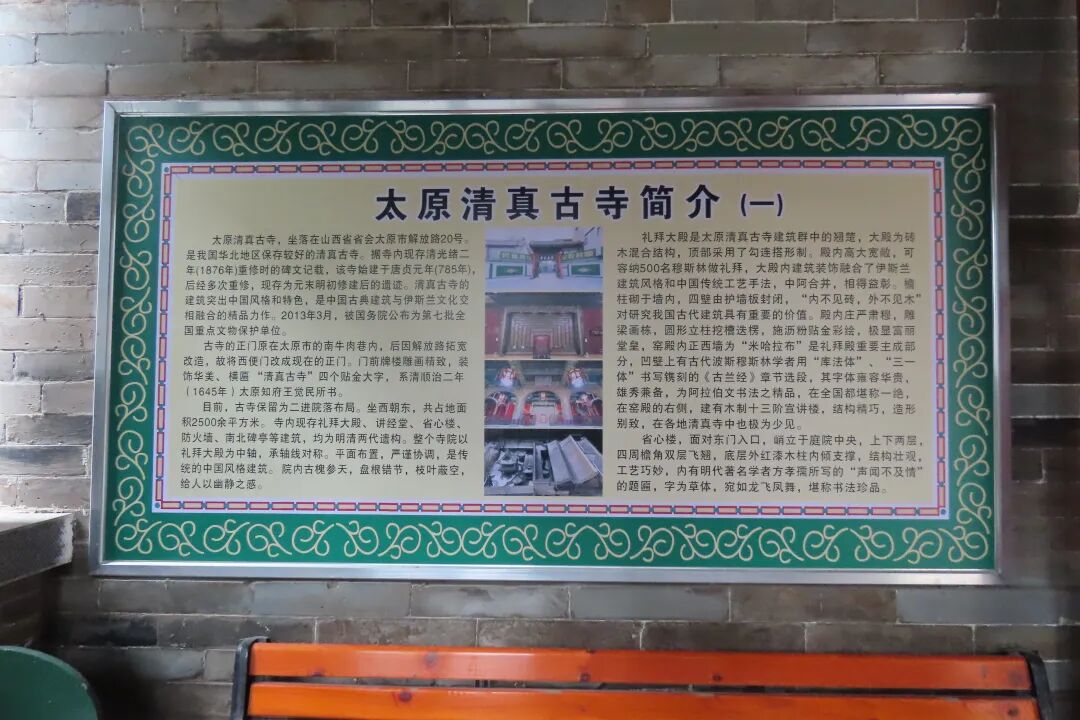
West of the Shengxin Tower are the lecture hall and the firewall. The hall is where the Quran is taught and where Muslims rest after prayer. The massive 1-meter-thick firewall separates the front and back courtyards; it stands as high and wide as the prayer hall’s eaves. It was built with fire-resistant materials and features a stone door—if a fire broke out in the front courtyard, closing this door would save the main hall. This clever design, which also helps with earthquake resistance, is incredibly rare in ancient Chinese architecture.
The Taiyuan Qingzhen Ancient Mosque is a prime example of the Sinicization of Islam. It beautifully showcases how Islamic architecture evolved in China, blending traditional Chinese spatial layout and decoration with Islamic spiritual identity. It is a powerful symbol of openness, tolerance, and peace.
In this new era, the Islamic community in Taiyuan continues to uphold the spirit of national unity and integration. By adhering to the direction of making Islam compatible with socialist society, the local Muslim community remains committed to promoting harmony and maintaining the healthy development of their faith traditions.
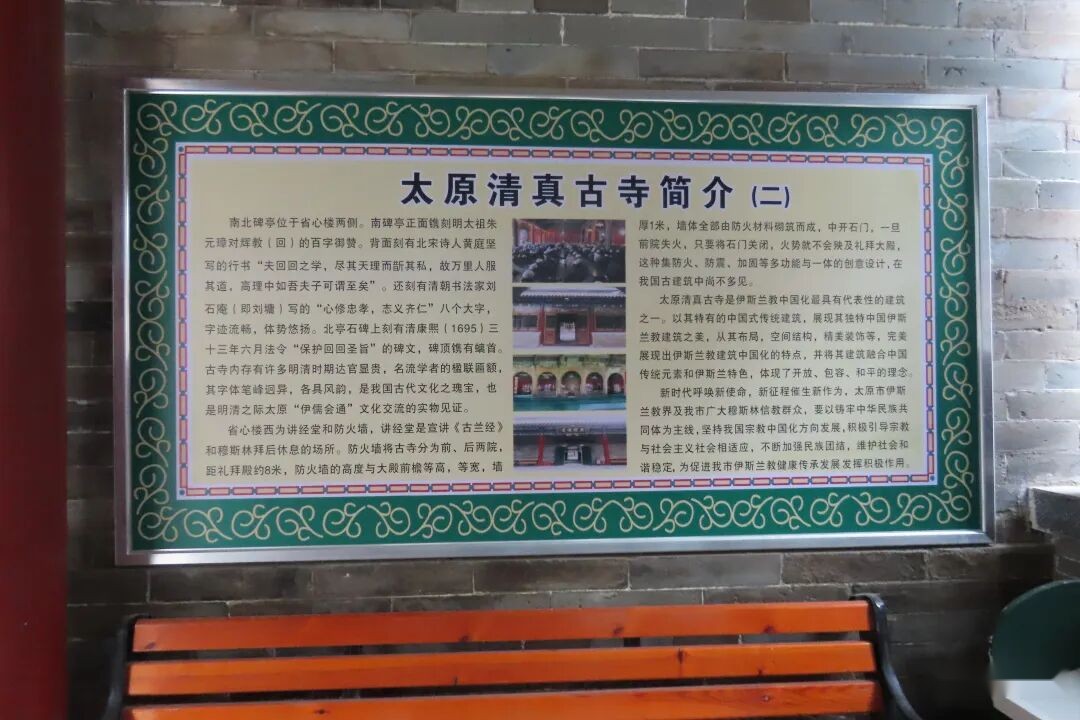
Exploring Tuanpotou Mosque in Gejiu, Yunnan: A Must-Visit Authentic Hui Muslim Heritage Site Near Shadian
Articles • Hasan09 posted the article • 0 comments • 21 views • 1 days ago
Check out these 23 photos capturing the Tuanpotou Mosque, located near the Shadian area in Gejiu City, Honghe Prefecture, Yunnan. This collection highlights the solemn prayer hall that blends traditional structural styles with modern craftsmanship, the towering minaret, and the quiet, pristine atmosphere of the mosque's courtyard.
After hitting up the famous Shadian Grand Mosque in Gejiu, I made sure to stop by the nearby Tuanpotou Mosque. It is fascinating to see how the two mosques use such different architectural materials.
Photo Gallery view all
Check out these 23 photos capturing the Tuanpotou Mosque, located near the Shadian area in Gejiu City, Honghe Prefecture, Yunnan. This collection highlights the solemn prayer hall that blends traditional structural styles with modern craftsmanship, the towering minaret, and the quiet, pristine atmosphere of the mosque's courtyard.
After hitting up the famous Shadian Grand Mosque in Gejiu, I made sure to stop by the nearby Tuanpotou Mosque. It is fascinating to see how the two mosques use such different architectural materials.
Photo Gallery
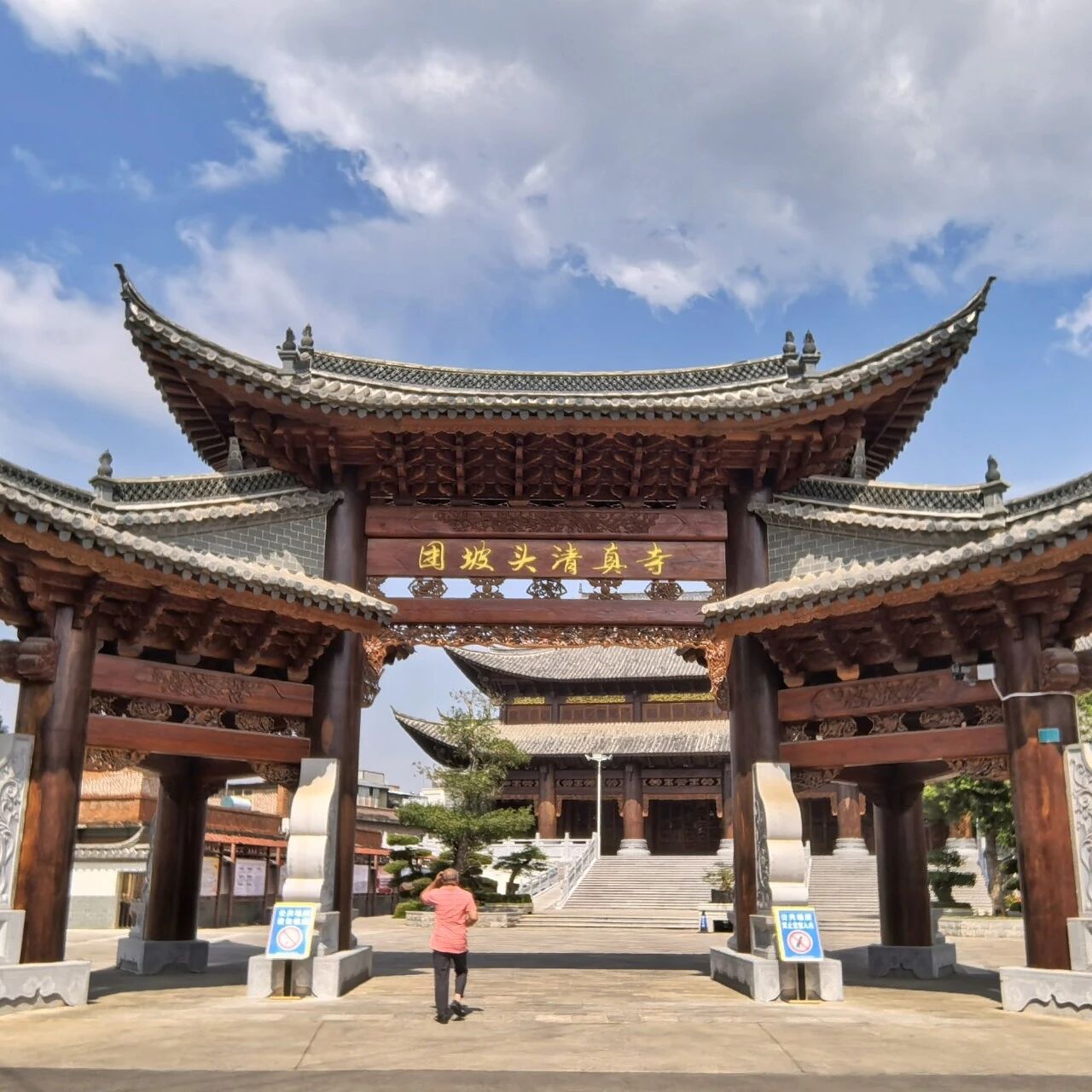
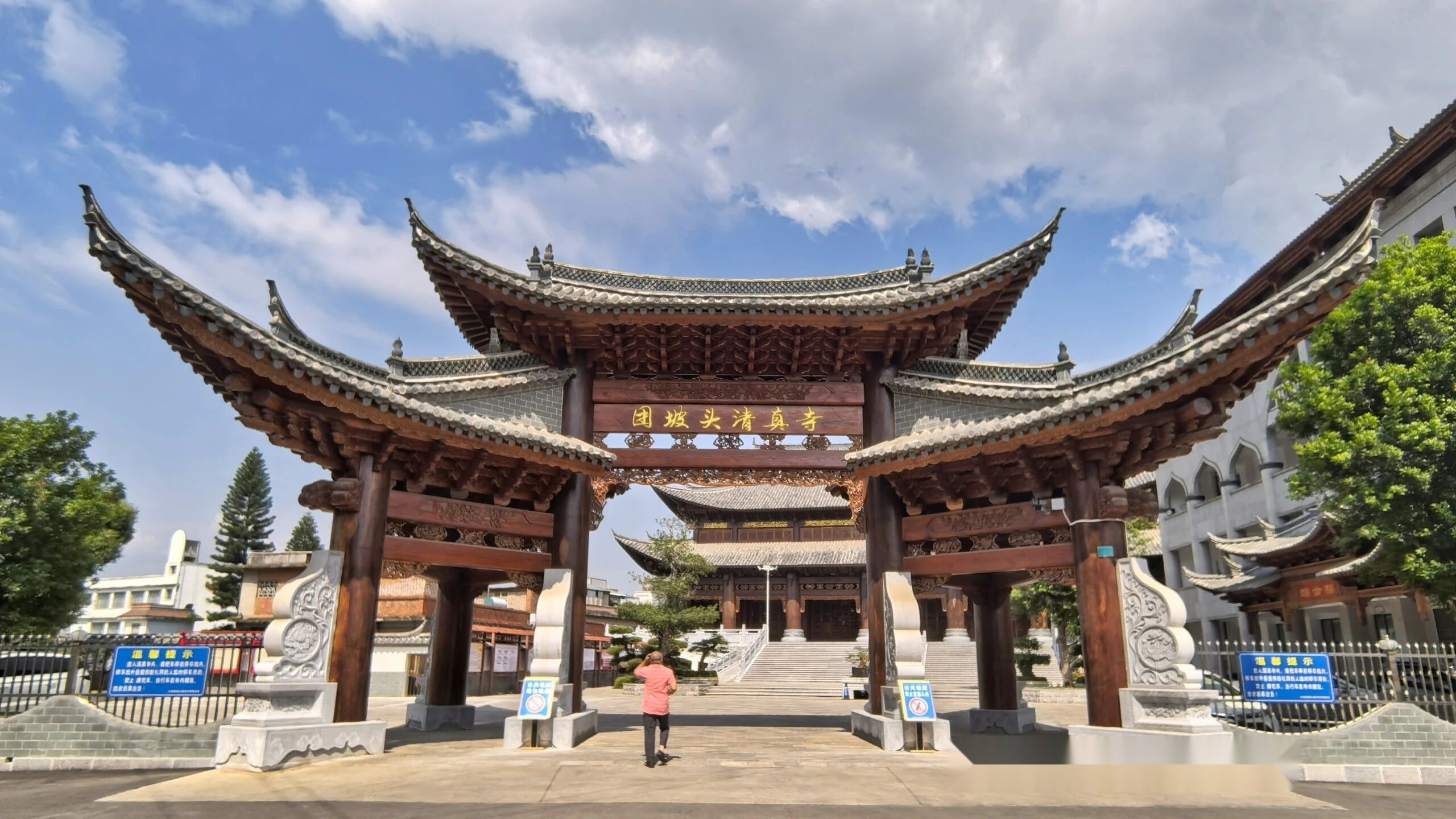
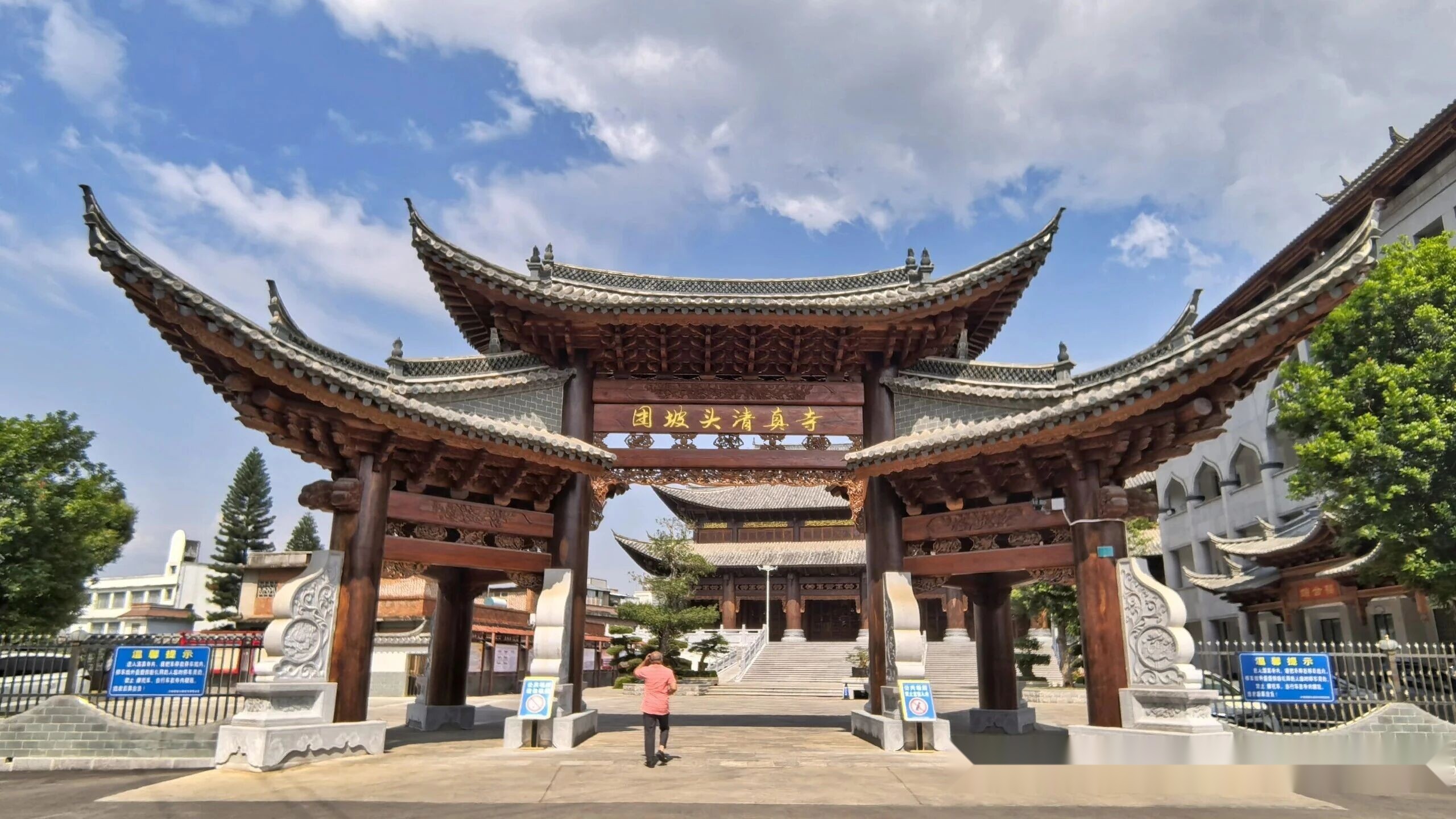
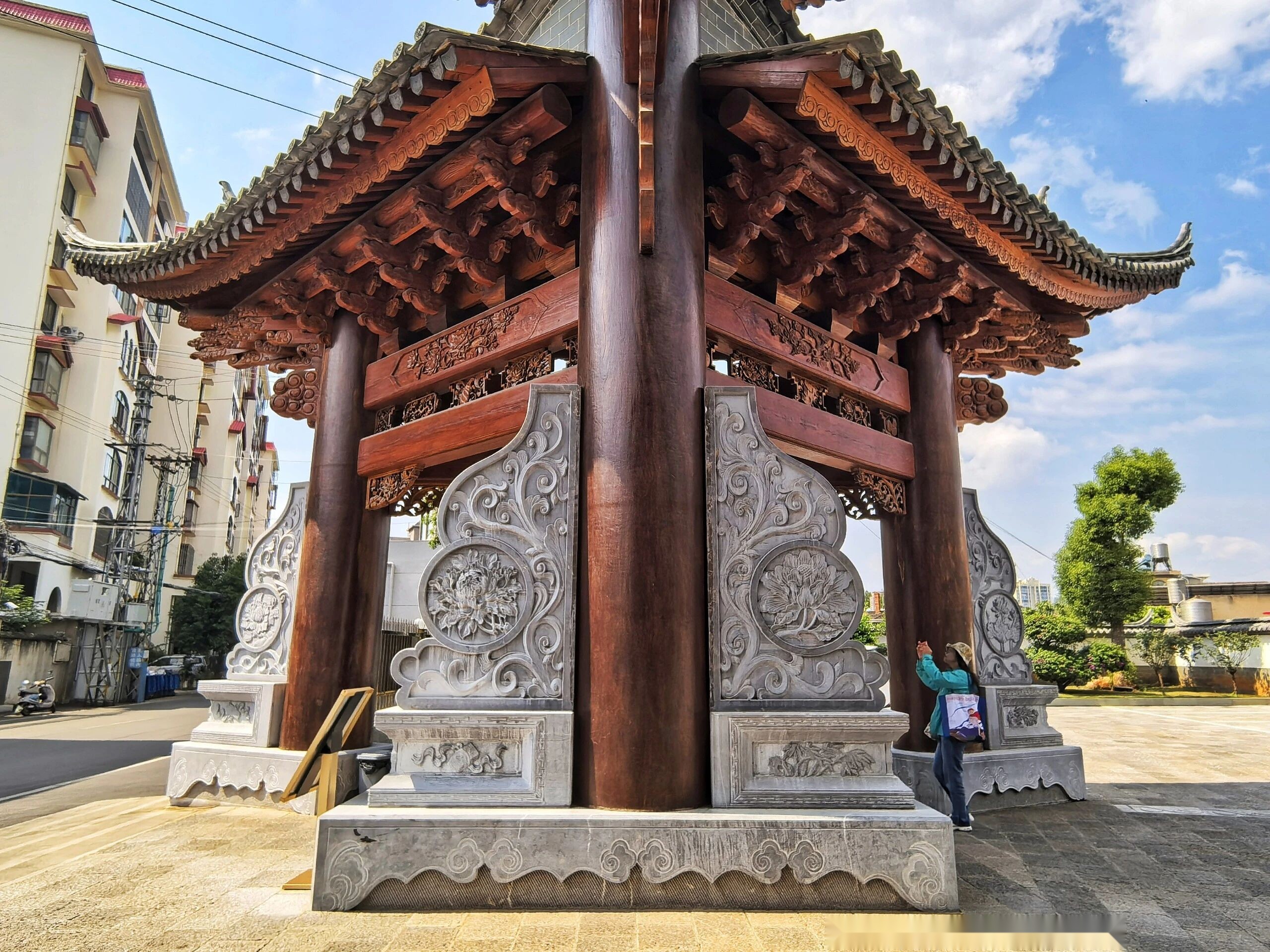
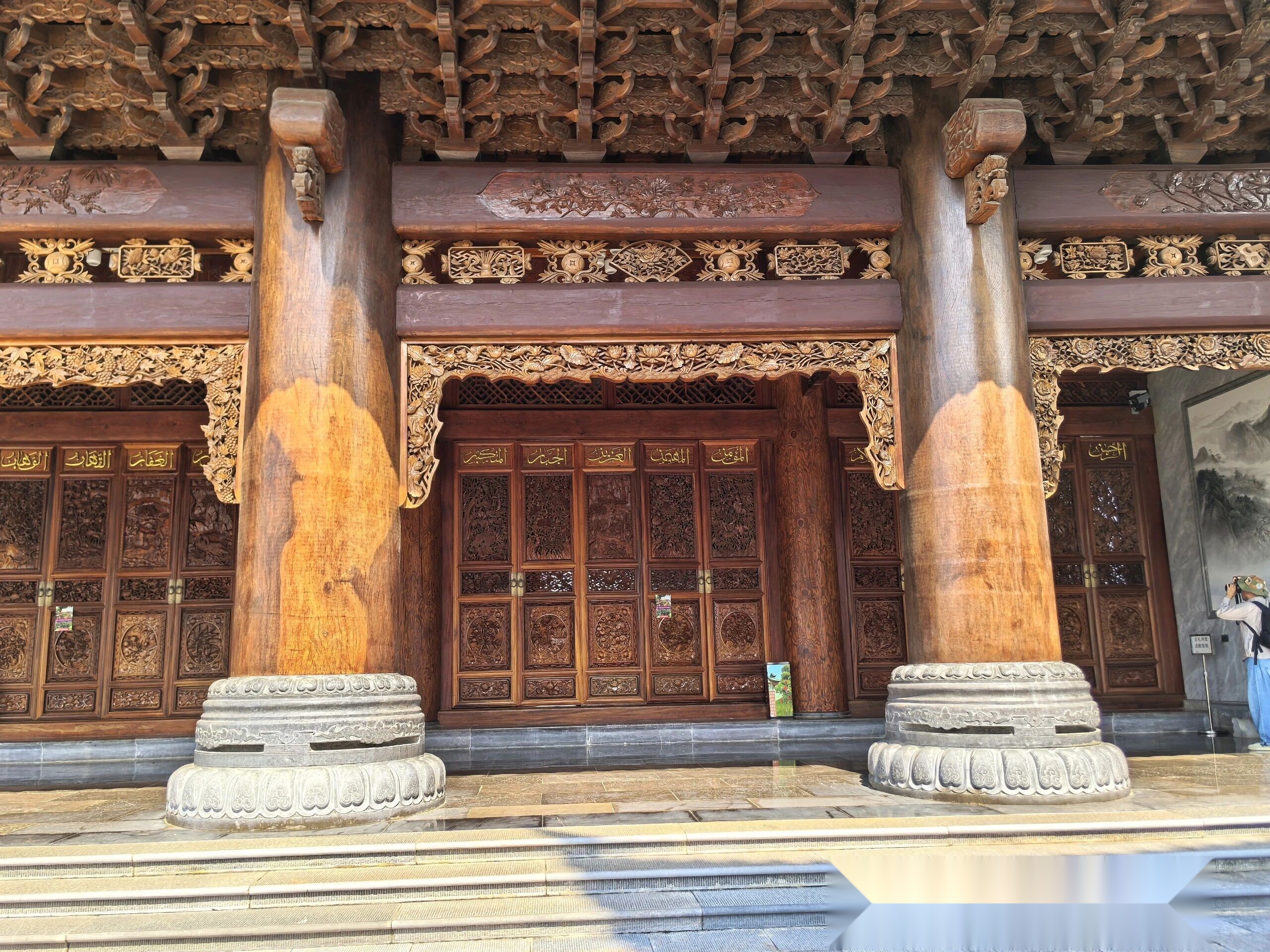
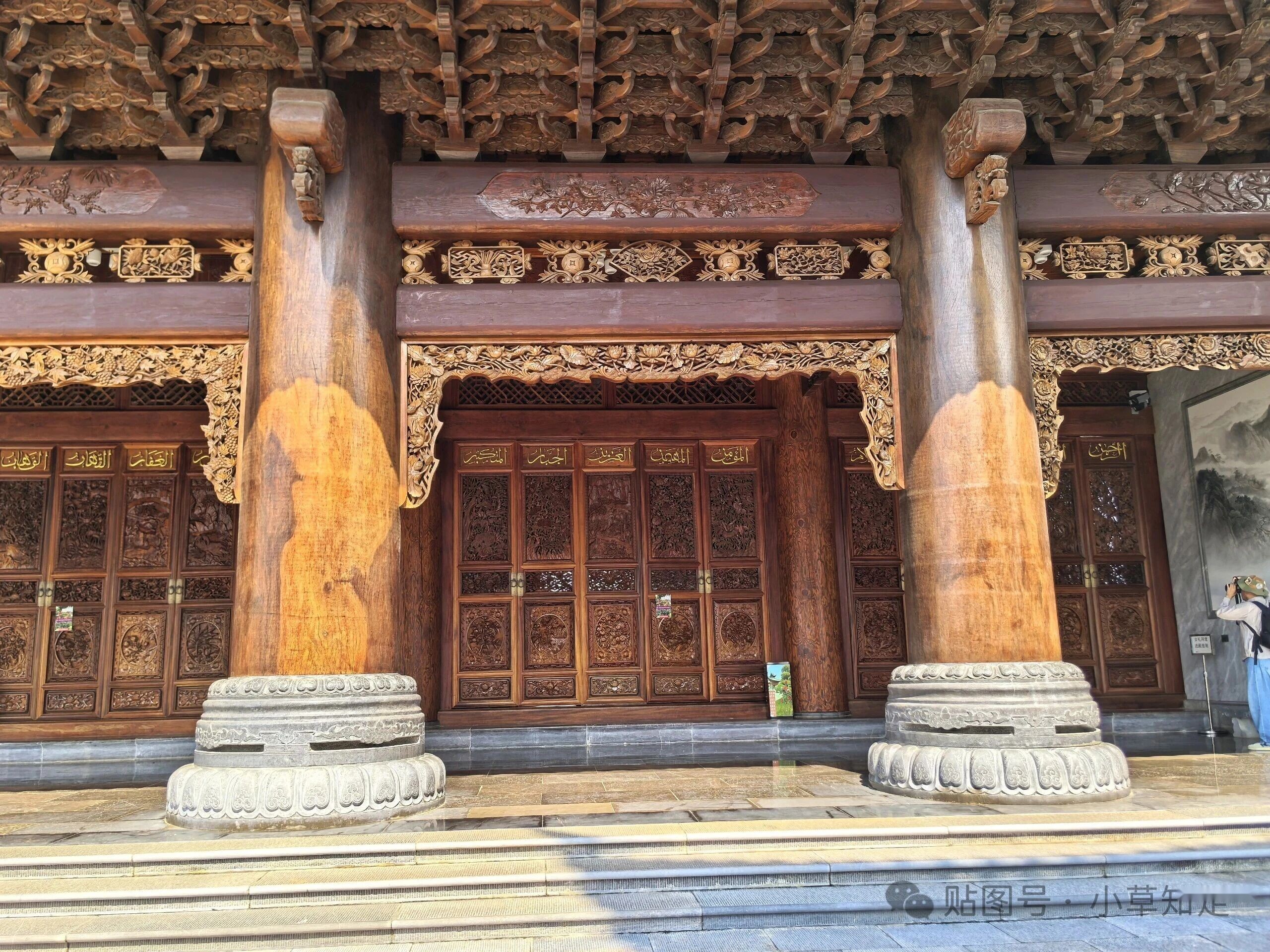
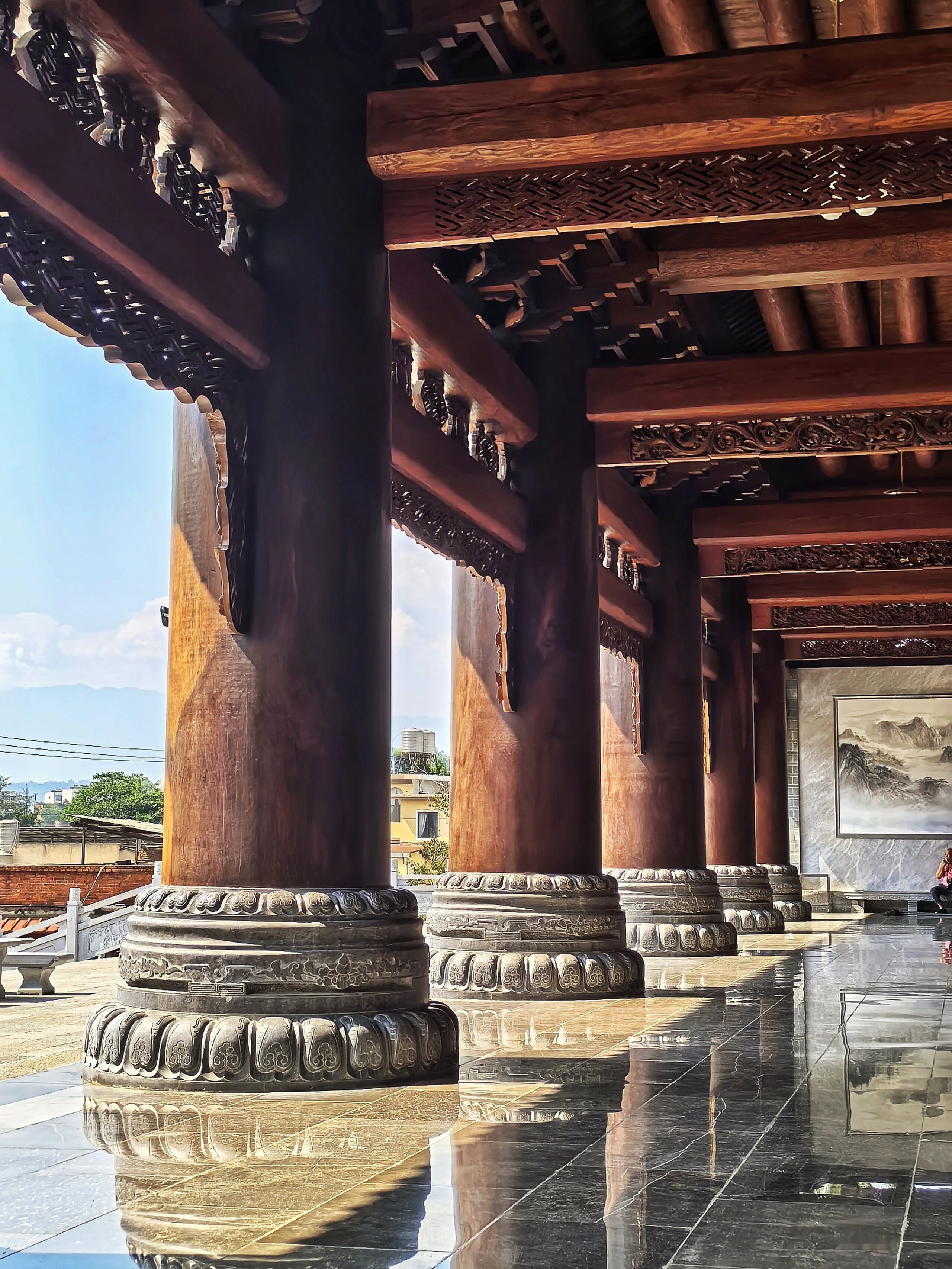
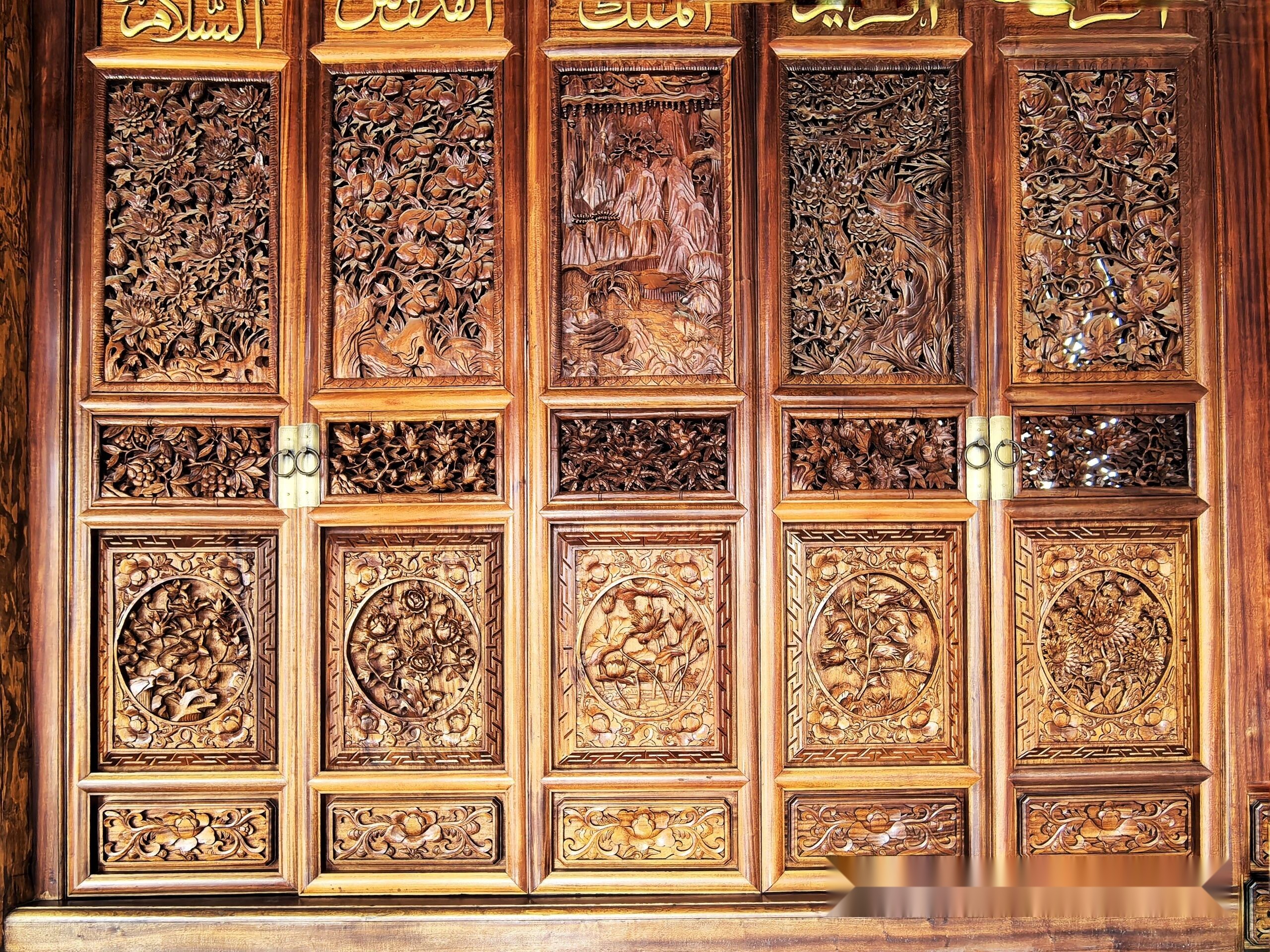
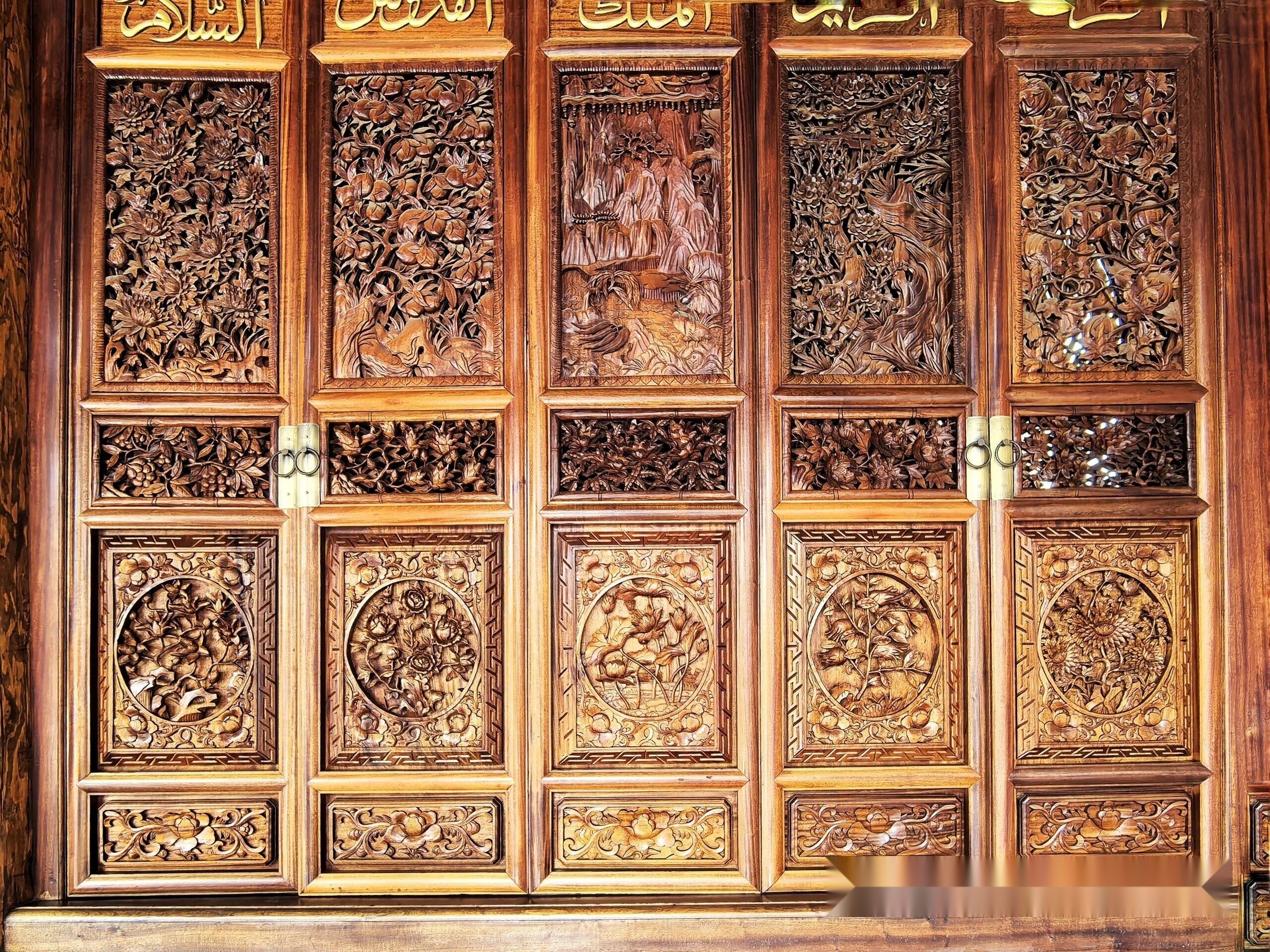
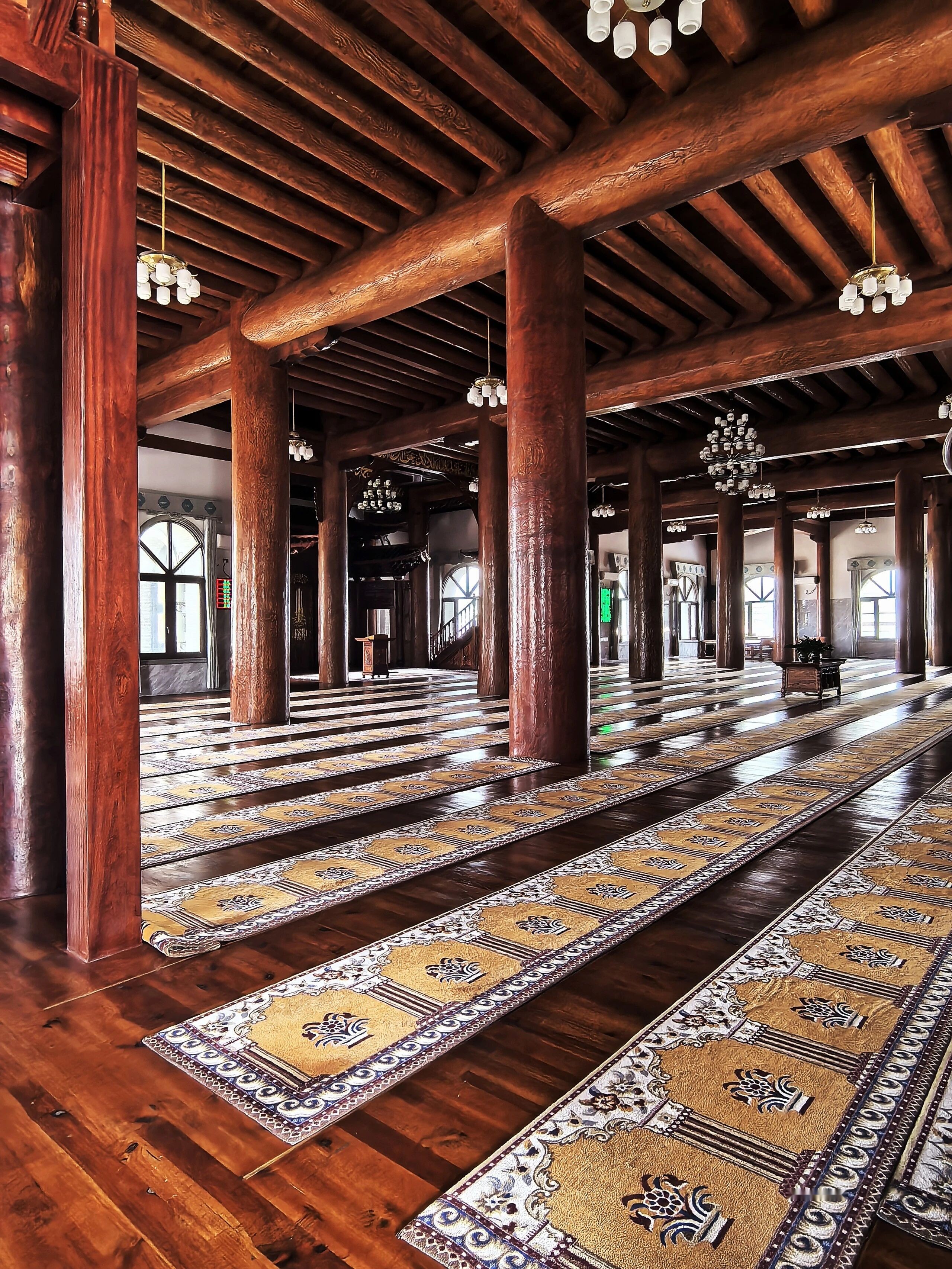
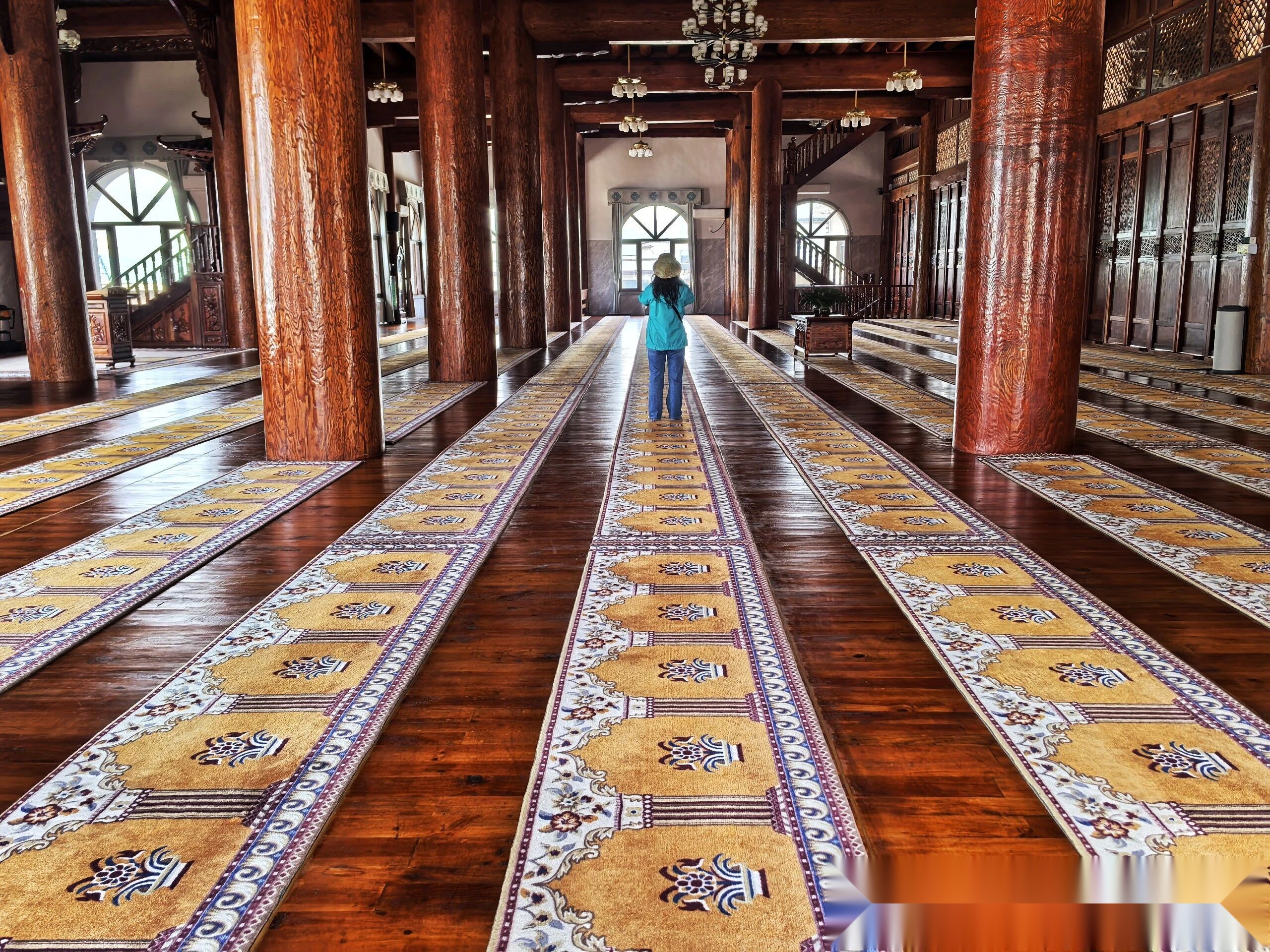
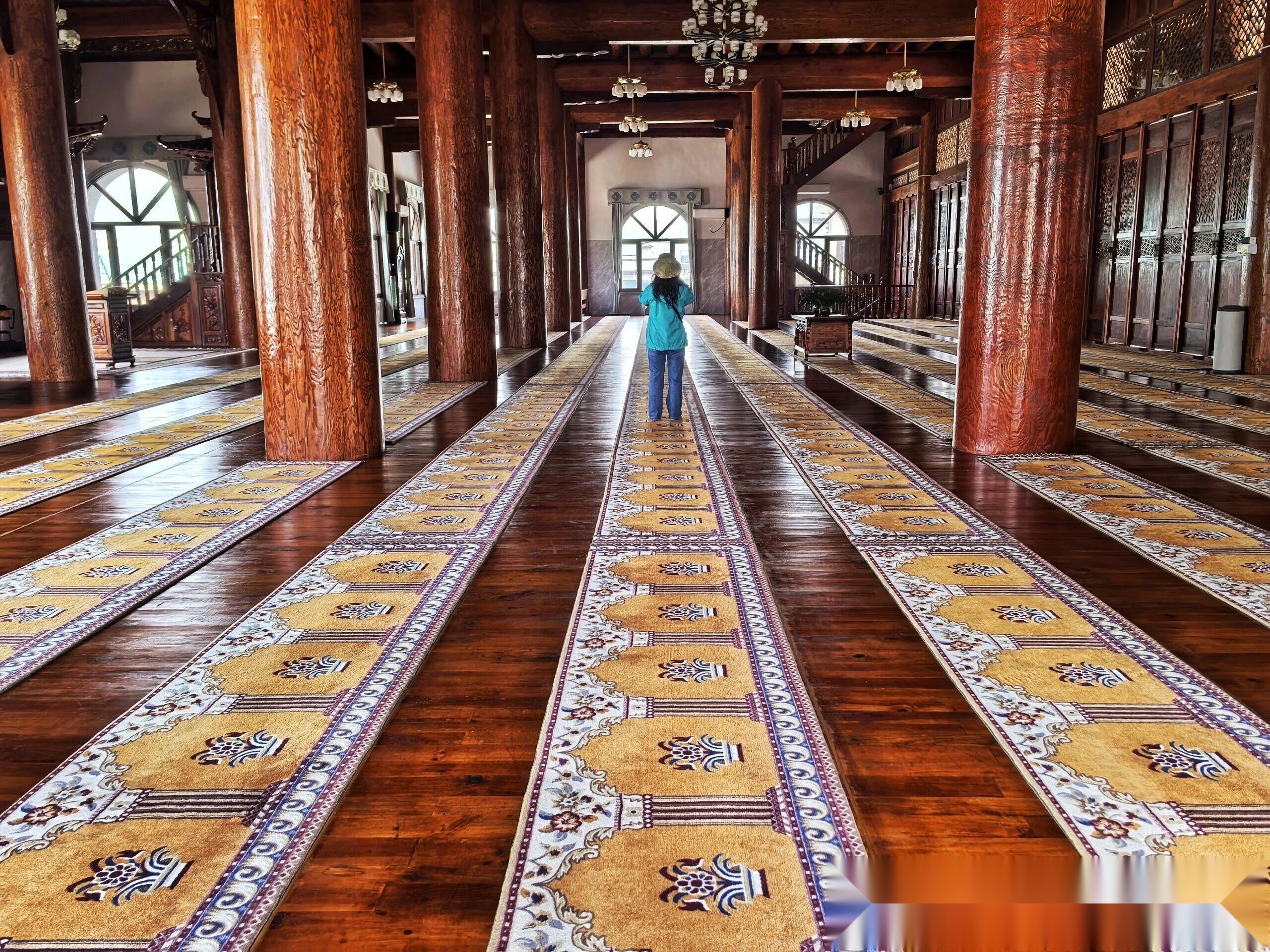
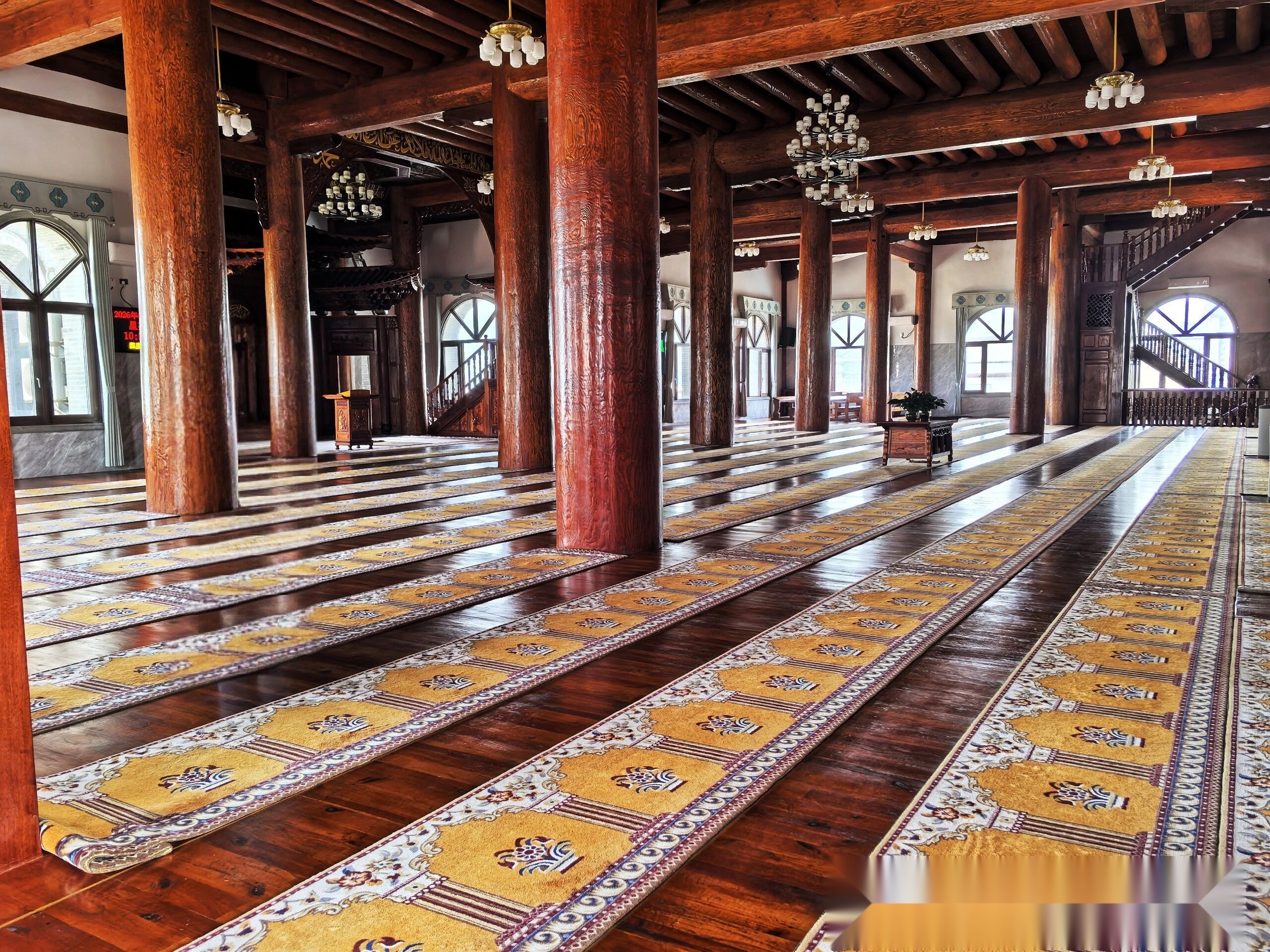
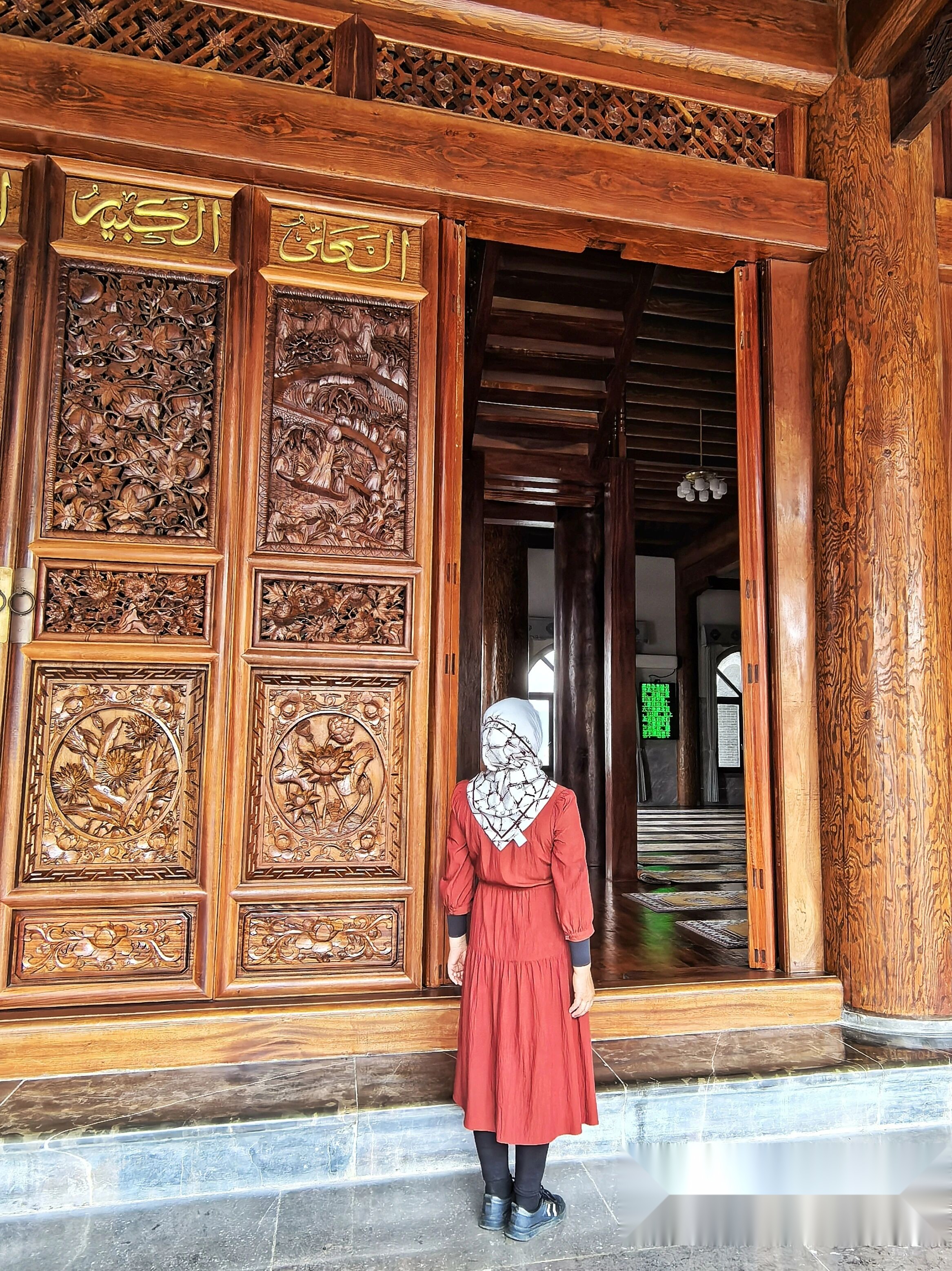
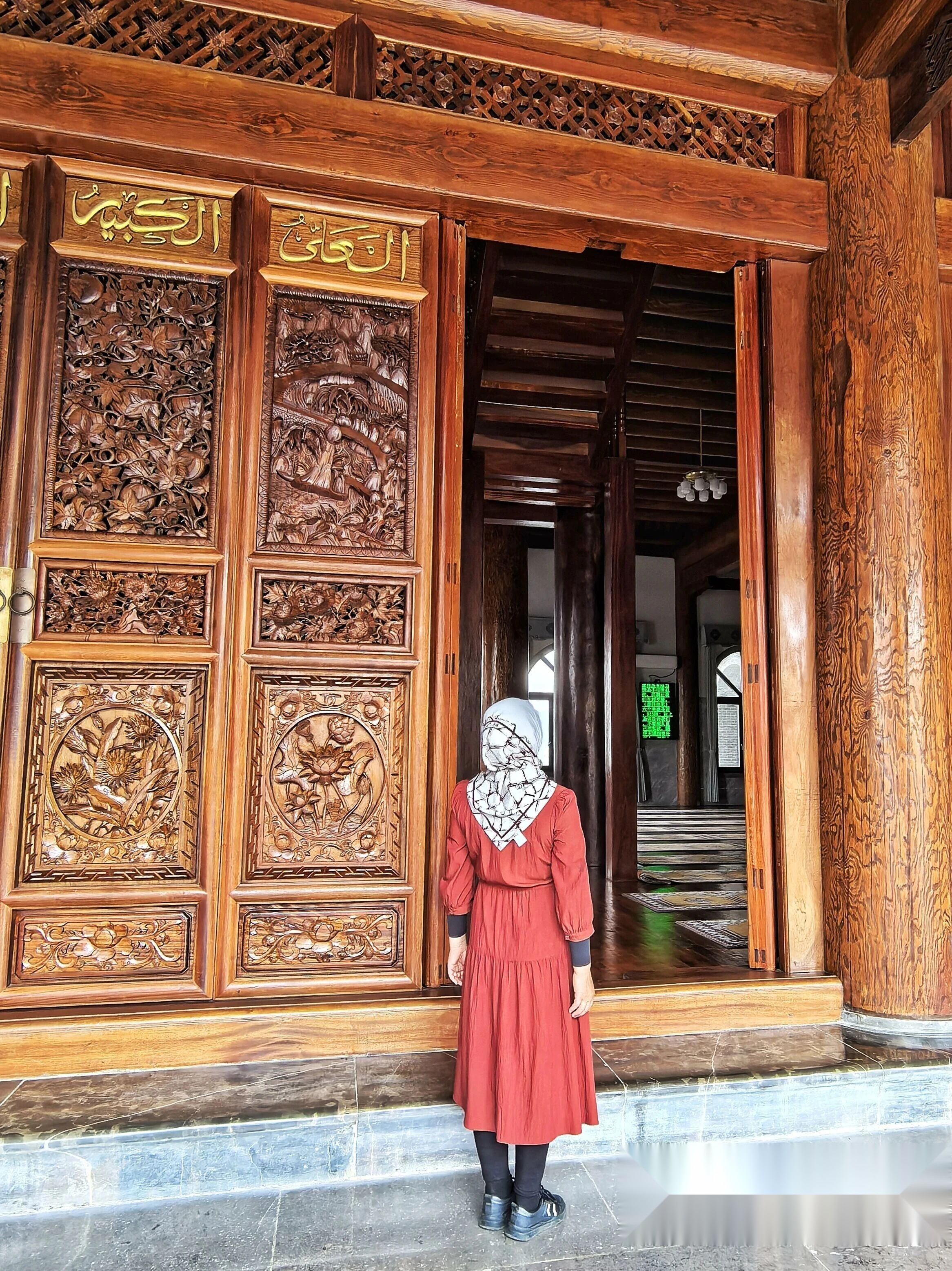
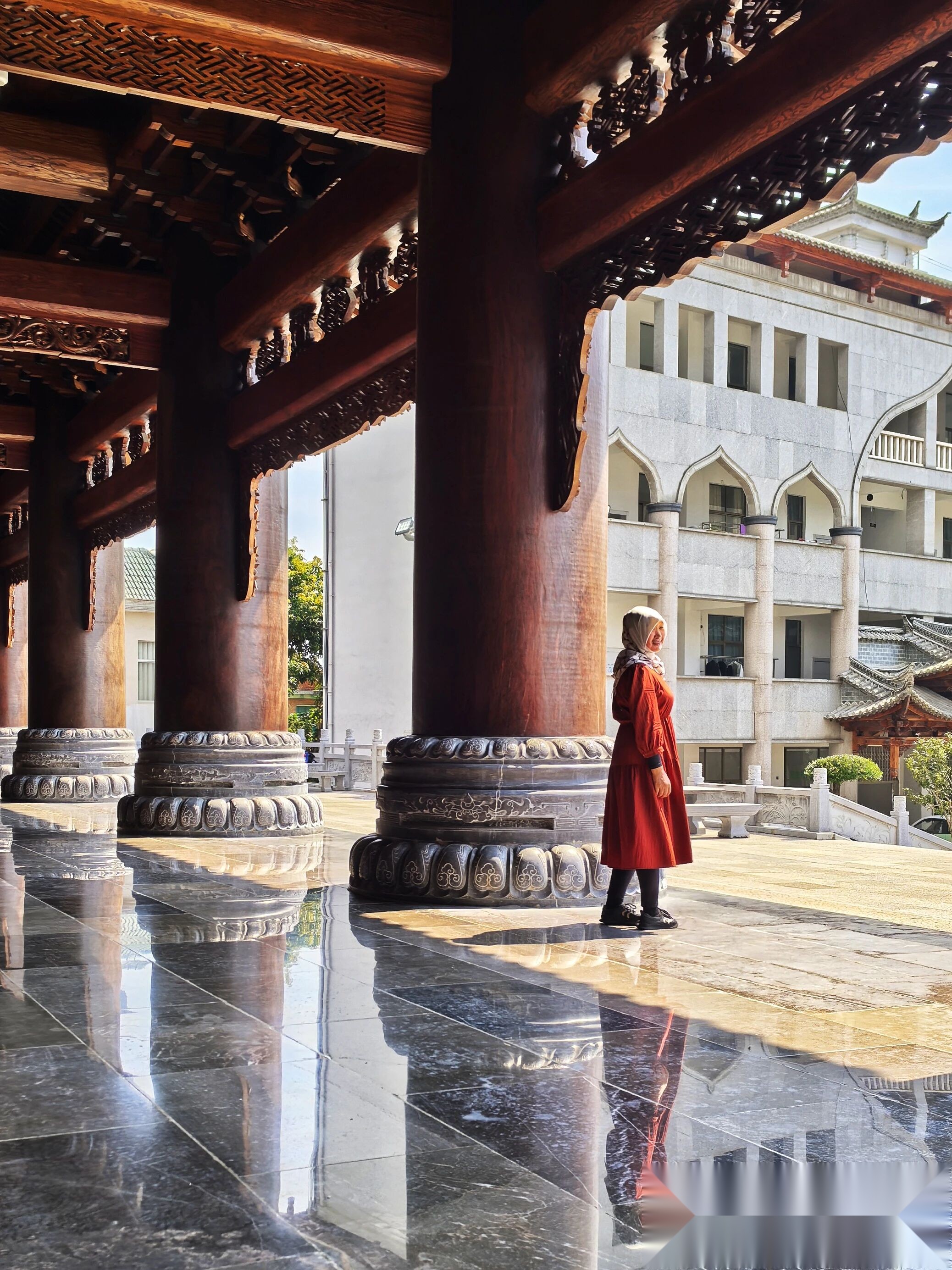
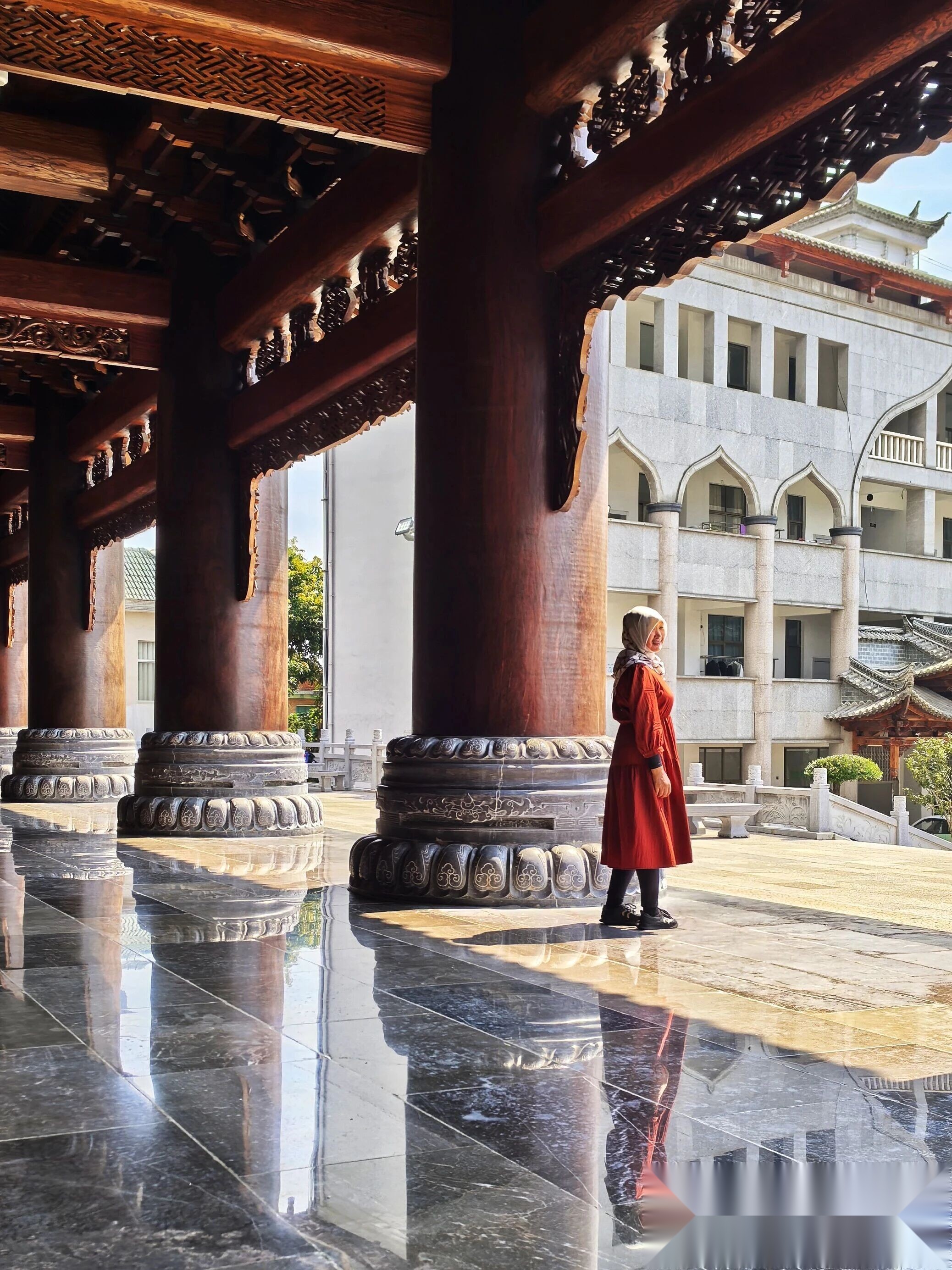
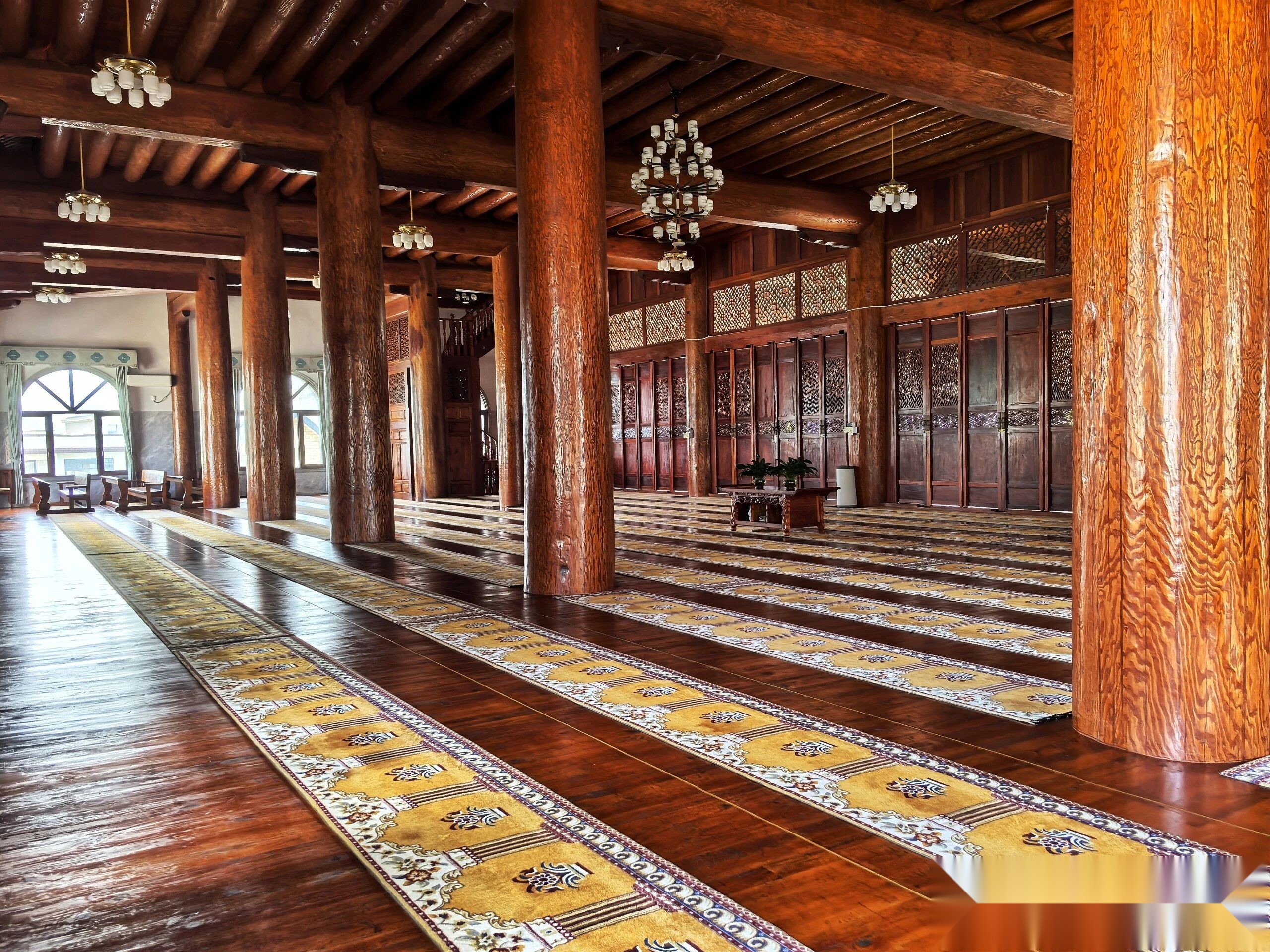
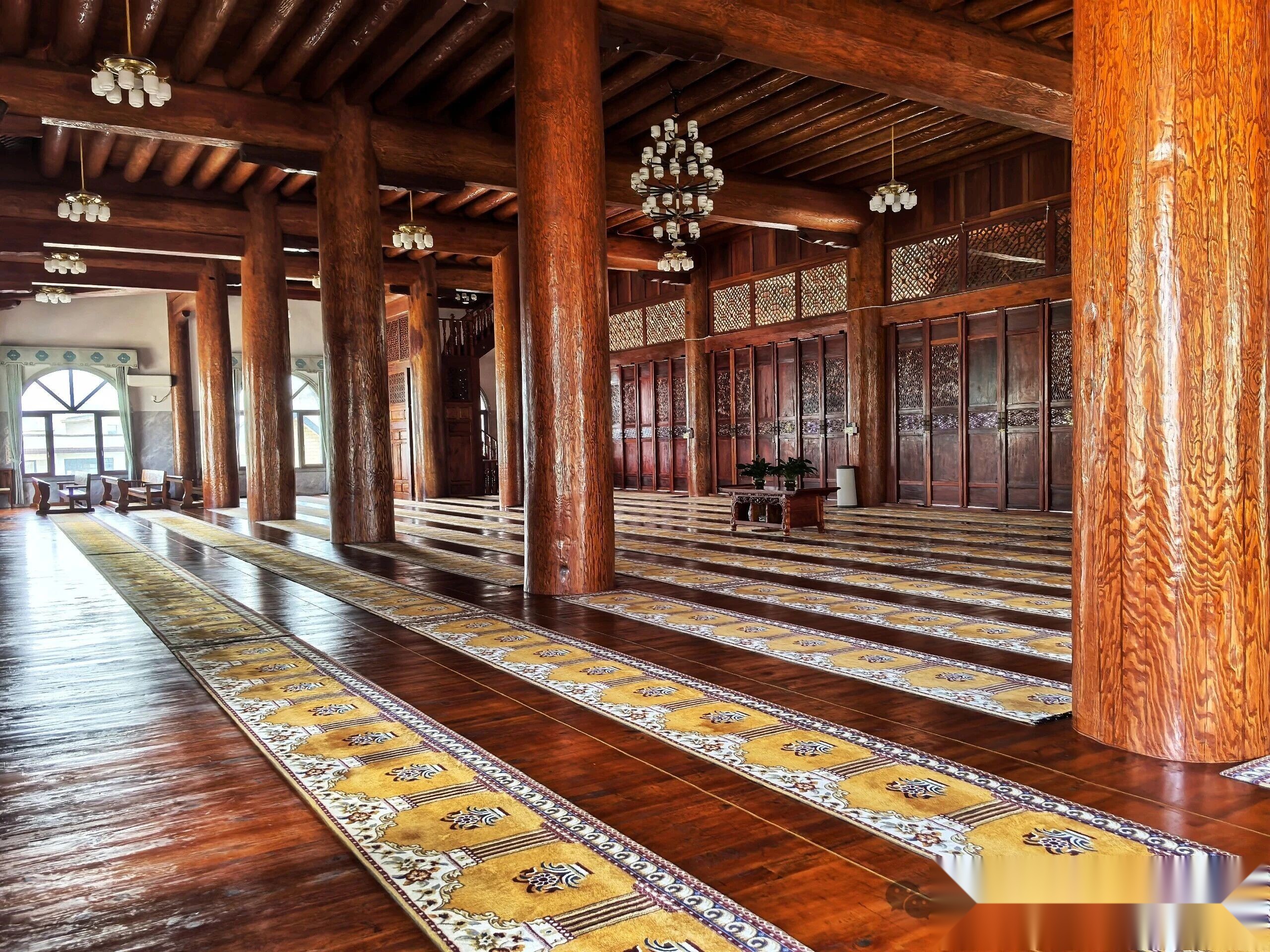
Best Halal Food in Beijing: Exotic Thai, Nigerian, and Authentic Xinjiang Cuisine Guide
Articles • Hasan09 posted the article • 0 comments • 22 views • 1 days ago
We’ve unlocked 59 high-def shots for the 60th edition of our Beijing Halal food map, featuring some absolute hidden gems. We’re diving into the city’s rare halal Thai, Indian, and Nigerian spots, along with authentic comfort-food rice noodles and traditional beef and lamb joints, all to show off the global variety in Beijing’s halal dining scene.
The range of halal restaurants in Beijing is honestly mind-blowing. I just stumbled upon some halal Thai and Nigerian spots, and it makes me wonder how many other hidden gems are still out there. If you know of any, definitely leave a comment and let me know!
Here’s the lineup of halal restaurants we’re checking out in this edition:
1. Sixiang Rice Noodles
2. Victor’s Place (Indian & Thai Restaurant)
3. CODED Nigerian Restaurant
4. Kang Kang Burger
5. Yiqinglan Rotating Hot Pot
6. Kashgar Knight Cuisine
7. Zai Tianshan Xinjiang Giant Spicy Chicken
8. Yili Talanchi Xinjiang Restaurant
1. Sixiang Rice Noodles
Near the Shunyi airport, I found this Xinjiang rice noodle spot; turns out it just moved here from Xiaoyun Road. The place is pretty small and mostly sticks to various rice noodle dishes and classic Xinjiang snacks.
This plastic-bottled kvass (a fermented bread drink) wasn't as good as the glass-bottled kind. Honestly, it just tasted like sweet soda.
The chicken mixed rice noodles were solid. The texture is actually pretty similar to Hunan-style rice noodles, and you can pick your spice level and add extra toppings.
The beef rice noodles, however, were not it. The beef had a weird, heavy gamey smell, and my friend said it didn't taste as good as it used to.
2. Victor’s Place (Indian & Thai Restaurant)
Just 400 meters away from the noodle shop is this place. It’s been open for 22 years, and I had no idea it was halal! The staff here are actually from Bangladesh and Pakistan.
The vibe inside is like a bookstore—super spacious and perfect if you’re looking to host a business meeting.
I came specifically for the halal Thai food. There used to be a place called Sukhothai near Nanluoguxiang that served halal Thai, but they closed down years ago.
This is their signature Tom Yum Goong soup. I ordered the large, which is plenty for three or four people. It’s rich, flavorful, and packed with ingredients.
The Thai appetizer platter was good, too. Those little rice-wrapped bundles actually have chicken inside.
This is the pineapple seafood fried rice. The flavor was fine, but the only letdown was that they didn't serve it inside an actual pineapple. I saw it on their website photos served in the shell—maybe they just ran out of pineapples that day?
The Thai-style lemon grilled chicken was incredibly tender and juicy.
For the Thai curry shrimp, do yourself a favor and order a side of naan (leavened flatbread) to go with it.
The Mumbai mutton curry was fantastic, and the server totally recommended we try their garlic butter naan, too—everything we ordered tasted amazing.
No wonder this spot has been around for 22 years, since the food and service are both top-notch. A friendly guy from Bangladesh who spoke fluent Mandarin took care of us.
3. CODED Nigerian Restaurant
This place is pretty well hidden with no sign outside, so we had to call them to figure out it's a Halal Nigerian spot. Word is they used to serve Ethiopian food too, but the chef who made it moved back home.
The staff mentioned that most African food is Halal, and besides North African Egyptian and Algerian spots, this Nigerian restaurant and another one called Tribal Garden Ghanaian Restaurant are both fully Halal.
The African background music has super cool vibes, they host music events on weekends, and their hours run from evening straight through late night.
I didn't have super high expectations coming in and just wanted to try something totally different, but I was seriously blown away. The dishes were ridiculously good, even if they aren't the most photogenic—like this Egusi, which is made from ground melon seeds mixed with African spices and has a texture kind of like tofu.
This is the braised cow foot served in an okra-based broth where you can mix and match options, and you can pick fufu as your carb. The cow foot was super tender, soft, and bouncy.
This braised chicken leg was also super good. The chicken leg was probably pan-seared first, giving it a crispy skin while staying super flavorful inside.
Next is the African grilled fish, which is probably tilapia since it's native to Africa. It has no tiny bones, the meat is thick and hearty, and the skin is crispy and fragrant. All of these dishes are totally kid-friendly since they aren't too salty, spicy, or greasy.
This wheat flour dough ball is called Semo, and the authentic way to eat it is to grab it with your hands and dip it into the sauce.
This is fufu, the most classic African carb. They give you these complimentary when you order main dishes, and it's made from cassava flour, making fufu a bit stickier than Semo.
4. Xinjiang Bazaar - Kangkang Burger
There's a Xinjiang bazaar happening this week at the 1733 Food Street in Dazhongshi, running from August 3rd to August 9th.
There's a vendor at the bazaar called Kangkang Burger, known for their signature Xinjiang-style milk skin beef burgers, and they even have a foie gras flavor.
We grabbed a milk skin and foie gras beef burger, plus a perilla seed yogurt waterfall burger.
The burgers aren't cheap, but they taste pretty decent. The owner is a Hui Muslim from Zaozhuang, Shandong, and they don't have a permanent brick-and-mortar storefront yet, though the owner mentioned they'll be opening a casual Western diner near Longfusi by September.
Down at the 1733 Valley Food Market, you can also check out One Belt One Road (Yi Dai Yi Lu), which is located right next to Kangkang Burger.
One Belt One Road has two booths at the bazaar—one selling yogurt shaved ice, and another selling ciabatta and baked breads.
Their yogurt is made using authentic Ili methods, too.
My absolute favorite is the original yogurt shaved ice, which is pleasantly tart without a hint of sweetness.
Right in the middle booth, there's a Xinjiang-style coffee stand where you should definitely try their signature baked naan coffee.
This latte is brewed fresh using an espresso machine, and you're supposed to eat the naan after finishing your coffee, though the naan itself was a little on the hard side.
5. Yiqinglan Kaitian Revolving Hot Pot
This is a brand new revolving mini hot pot spot in Liudaokou that's currently in its soft opening phase, with free soup bases and dipping sauce bars.
Beijing Halal Food Guide Part 60: Discover exotic Thai halal, Nigerian eats, and nostalgic rice noodles in this authentic city tour. We’re tracking down the best hidden gems and community favorites across Beijing.
The place is super clean with over a hundred items on the menu; you just count the skewers to pay at the end, and it costs less than 50 yuan per person.
The golden soup base is pretty solid, packed with suancai (pickled mustard greens), and the sauce station has a huge variety. My go-to mix is beef sauce, vinegar, green onions, cilantro, garlic, and sesame oil.
6. Kashgar Knight Flavors Restaurant
This spot is the official Kashgar government office restaurant in Beijing. It was closed for years but recently reopened. There’s also a location back in Kashgar.
Restaurants run by government offices are rarely ever inauthentic because the officials eat there all the time.
The decor feels a bit dated, honestly, like they didn't put much thought into the design. The ground floor is open seating, and half the space is dedicated to selling Xinjiang specialties.
I ordered the homestyle banmian (hand-pulled noodles), zhuafan (pilaf), and kaobaozi (baked buns). The noodles were great, the pilaf was a bit too oily, and the skewers were decent.
The kaobaozi crust wasn't crispy enough, but they do have an outdoor takeout window selling all kinds of nang (traditional flatbread).
7. Zai Tianshan Xinjiang Massive Spicy Chicken
It’s a Xinjiang spicy chicken spot in Wangjing, but it’s actually run by folks from Tianshui.
All the servers are from Gansu.
This pot is filled with savory milk tea.
The spicy chicken is definitely huge, mostly loaded with chilies and garlic. The style is different from traditional Xinjiang spicy chicken, but honestly, the best part was the huajuan (steamed twisted rolls)—they were super soft and fluffy.
These are baursak (fried dough); in Ili, this is basically breakfast for the Kazakh people. This place did a modern twist by serving them with dipping sauces like passion fruit and blueberry jam, or you can use them to wrap up veggies.
The lapizi liangfen (cold starch jelly with spicy pepper skins) was a bit too salty. For those strictly looking for that authentic Xinjiang taste, this might be a letdown.
8. Ili Taranchi Xinjiang Restaurant
A newly opened Ili restaurant in Fengtai. The staff includes both Uyghur and Kazakh people—one girl there is actually of mixed heritage. Taranchi is a term for a specific group in the Ili region who were later officially classified as Uyghur.
The place is tiny with only a few tables, but their banmian and zhuafan are seriously on point.
The portions of noodles and pilaf aren't huge, but the flavor is excellent and it’s on the lighter side, which works for me since I don't need a massive amount of food.
This pilaf is way lighter and less greasy than the one at the Kashgar office restaurant, though some people online have complained that the meat portions are a bit skimpy. The grilled meat is super tender. They don't have a huge menu, but the noodles, pilaf, and skewers are definitely worth recommending. A bunch of new Ili-style noodle shops have popped up in Beijing lately that look really authentic—I’ll be checking those out one by one. view all
We’ve unlocked 59 high-def shots for the 60th edition of our Beijing Halal food map, featuring some absolute hidden gems. We’re diving into the city’s rare halal Thai, Indian, and Nigerian spots, along with authentic comfort-food rice noodles and traditional beef and lamb joints, all to show off the global variety in Beijing’s halal dining scene.
The range of halal restaurants in Beijing is honestly mind-blowing. I just stumbled upon some halal Thai and Nigerian spots, and it makes me wonder how many other hidden gems are still out there. If you know of any, definitely leave a comment and let me know!
Here’s the lineup of halal restaurants we’re checking out in this edition:
1. Sixiang Rice Noodles
2. Victor’s Place (Indian & Thai Restaurant)
3. CODED Nigerian Restaurant
4. Kang Kang Burger
5. Yiqinglan Rotating Hot Pot
6. Kashgar Knight Cuisine
7. Zai Tianshan Xinjiang Giant Spicy Chicken
8. Yili Talanchi Xinjiang Restaurant
1. Sixiang Rice Noodles
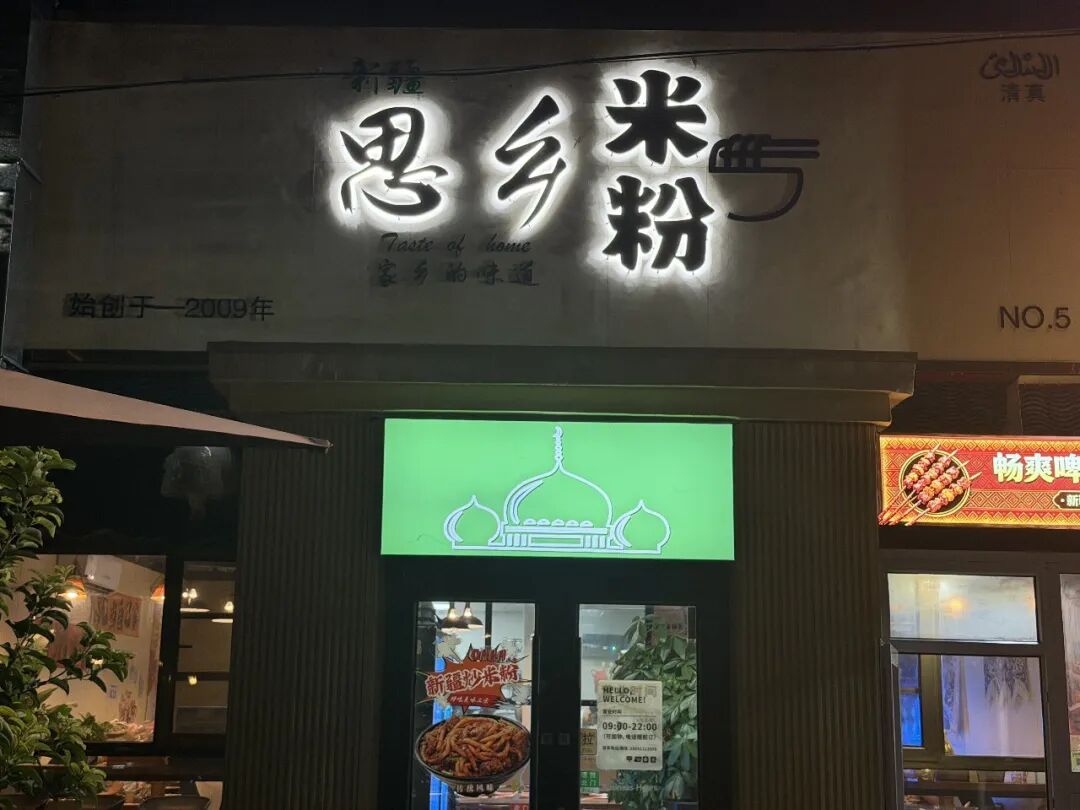
Near the Shunyi airport, I found this Xinjiang rice noodle spot; turns out it just moved here from Xiaoyun Road. The place is pretty small and mostly sticks to various rice noodle dishes and classic Xinjiang snacks.

This plastic-bottled kvass (a fermented bread drink) wasn't as good as the glass-bottled kind. Honestly, it just tasted like sweet soda.
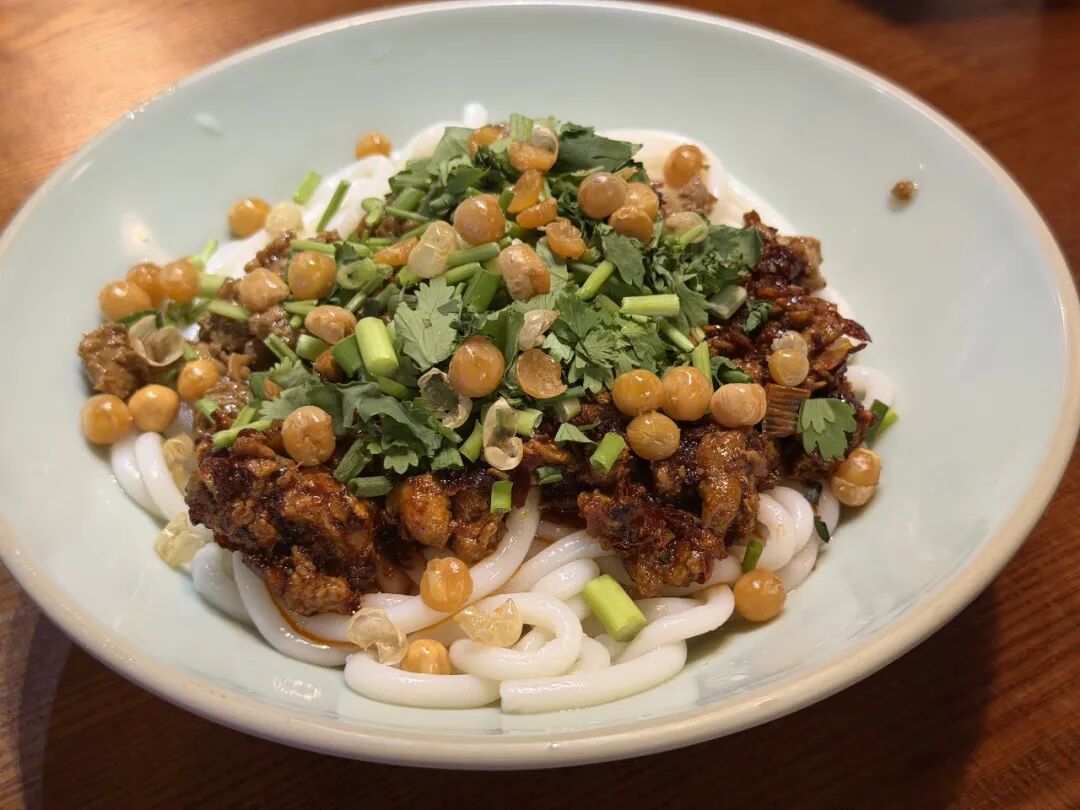
The chicken mixed rice noodles were solid. The texture is actually pretty similar to Hunan-style rice noodles, and you can pick your spice level and add extra toppings.
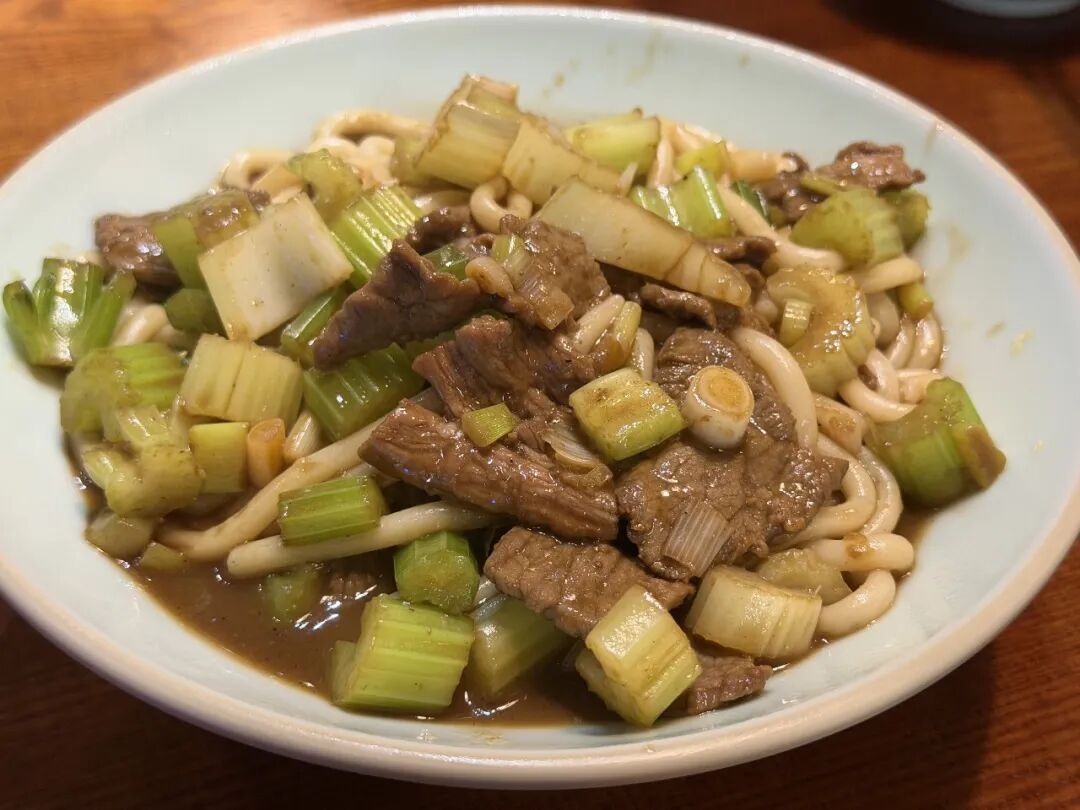
The beef rice noodles, however, were not it. The beef had a weird, heavy gamey smell, and my friend said it didn't taste as good as it used to.
2. Victor’s Place (Indian & Thai Restaurant)
Just 400 meters away from the noodle shop is this place. It’s been open for 22 years, and I had no idea it was halal! The staff here are actually from Bangladesh and Pakistan.
The vibe inside is like a bookstore—super spacious and perfect if you’re looking to host a business meeting.
I came specifically for the halal Thai food. There used to be a place called Sukhothai near Nanluoguxiang that served halal Thai, but they closed down years ago.
This is their signature Tom Yum Goong soup. I ordered the large, which is plenty for three or four people. It’s rich, flavorful, and packed with ingredients.
The Thai appetizer platter was good, too. Those little rice-wrapped bundles actually have chicken inside.
This is the pineapple seafood fried rice. The flavor was fine, but the only letdown was that they didn't serve it inside an actual pineapple. I saw it on their website photos served in the shell—maybe they just ran out of pineapples that day?
The Thai-style lemon grilled chicken was incredibly tender and juicy.
For the Thai curry shrimp, do yourself a favor and order a side of naan (leavened flatbread) to go with it.
The Mumbai mutton curry was fantastic, and the server totally recommended we try their garlic butter naan, too—everything we ordered tasted amazing.
No wonder this spot has been around for 22 years, since the food and service are both top-notch. A friendly guy from Bangladesh who spoke fluent Mandarin took care of us.
3. CODED Nigerian Restaurant
This place is pretty well hidden with no sign outside, so we had to call them to figure out it's a Halal Nigerian spot. Word is they used to serve Ethiopian food too, but the chef who made it moved back home.
The staff mentioned that most African food is Halal, and besides North African Egyptian and Algerian spots, this Nigerian restaurant and another one called Tribal Garden Ghanaian Restaurant are both fully Halal.
The African background music has super cool vibes, they host music events on weekends, and their hours run from evening straight through late night.
I didn't have super high expectations coming in and just wanted to try something totally different, but I was seriously blown away. The dishes were ridiculously good, even if they aren't the most photogenic—like this Egusi, which is made from ground melon seeds mixed with African spices and has a texture kind of like tofu.
This is the braised cow foot served in an okra-based broth where you can mix and match options, and you can pick fufu as your carb. The cow foot was super tender, soft, and bouncy.
This braised chicken leg was also super good. The chicken leg was probably pan-seared first, giving it a crispy skin while staying super flavorful inside.
Next is the African grilled fish, which is probably tilapia since it's native to Africa. It has no tiny bones, the meat is thick and hearty, and the skin is crispy and fragrant. All of these dishes are totally kid-friendly since they aren't too salty, spicy, or greasy.
This wheat flour dough ball is called Semo, and the authentic way to eat it is to grab it with your hands and dip it into the sauce.
This is fufu, the most classic African carb. They give you these complimentary when you order main dishes, and it's made from cassava flour, making fufu a bit stickier than Semo.
4. Xinjiang Bazaar - Kangkang Burger
There's a Xinjiang bazaar happening this week at the 1733 Food Street in Dazhongshi, running from August 3rd to August 9th.
There's a vendor at the bazaar called Kangkang Burger, known for their signature Xinjiang-style milk skin beef burgers, and they even have a foie gras flavor.
We grabbed a milk skin and foie gras beef burger, plus a perilla seed yogurt waterfall burger.
The burgers aren't cheap, but they taste pretty decent. The owner is a Hui Muslim from Zaozhuang, Shandong, and they don't have a permanent brick-and-mortar storefront yet, though the owner mentioned they'll be opening a casual Western diner near Longfusi by September.
Down at the 1733 Valley Food Market, you can also check out One Belt One Road (Yi Dai Yi Lu), which is located right next to Kangkang Burger.
One Belt One Road has two booths at the bazaar—one selling yogurt shaved ice, and another selling ciabatta and baked breads.
Their yogurt is made using authentic Ili methods, too.

My absolute favorite is the original yogurt shaved ice, which is pleasantly tart without a hint of sweetness.
Right in the middle booth, there's a Xinjiang-style coffee stand where you should definitely try their signature baked naan coffee.
This latte is brewed fresh using an espresso machine, and you're supposed to eat the naan after finishing your coffee, though the naan itself was a little on the hard side.
5. Yiqinglan Kaitian Revolving Hot Pot
This is a brand new revolving mini hot pot spot in Liudaokou that's currently in its soft opening phase, with free soup bases and dipping sauce bars.
Beijing Halal Food Guide Part 60: Discover exotic Thai halal, Nigerian eats, and nostalgic rice noodles in this authentic city tour. We’re tracking down the best hidden gems and community favorites across Beijing.
The place is super clean with over a hundred items on the menu; you just count the skewers to pay at the end, and it costs less than 50 yuan per person.
The golden soup base is pretty solid, packed with suancai (pickled mustard greens), and the sauce station has a huge variety. My go-to mix is beef sauce, vinegar, green onions, cilantro, garlic, and sesame oil.
6. Kashgar Knight Flavors Restaurant
This spot is the official Kashgar government office restaurant in Beijing. It was closed for years but recently reopened. There’s also a location back in Kashgar.
Restaurants run by government offices are rarely ever inauthentic because the officials eat there all the time.
The decor feels a bit dated, honestly, like they didn't put much thought into the design. The ground floor is open seating, and half the space is dedicated to selling Xinjiang specialties.
I ordered the homestyle banmian (hand-pulled noodles), zhuafan (pilaf), and kaobaozi (baked buns). The noodles were great, the pilaf was a bit too oily, and the skewers were decent.
The kaobaozi crust wasn't crispy enough, but they do have an outdoor takeout window selling all kinds of nang (traditional flatbread).
7. Zai Tianshan Xinjiang Massive Spicy Chicken
It’s a Xinjiang spicy chicken spot in Wangjing, but it’s actually run by folks from Tianshui.
All the servers are from Gansu.
This pot is filled with savory milk tea.
The spicy chicken is definitely huge, mostly loaded with chilies and garlic. The style is different from traditional Xinjiang spicy chicken, but honestly, the best part was the huajuan (steamed twisted rolls)—they were super soft and fluffy.
These are baursak (fried dough); in Ili, this is basically breakfast for the Kazakh people. This place did a modern twist by serving them with dipping sauces like passion fruit and blueberry jam, or you can use them to wrap up veggies.
The lapizi liangfen (cold starch jelly with spicy pepper skins) was a bit too salty. For those strictly looking for that authentic Xinjiang taste, this might be a letdown.
8. Ili Taranchi Xinjiang Restaurant
A newly opened Ili restaurant in Fengtai. The staff includes both Uyghur and Kazakh people—one girl there is actually of mixed heritage. Taranchi is a term for a specific group in the Ili region who were later officially classified as Uyghur.
The place is tiny with only a few tables, but their banmian and zhuafan are seriously on point.
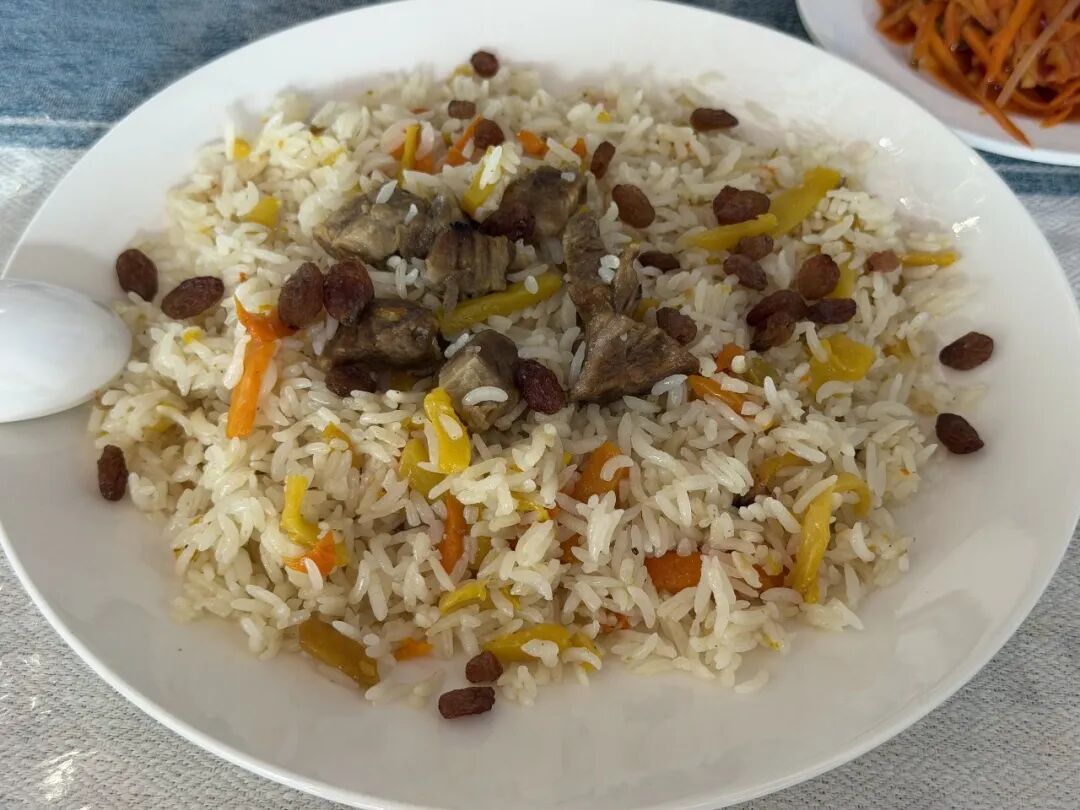
The portions of noodles and pilaf aren't huge, but the flavor is excellent and it’s on the lighter side, which works for me since I don't need a massive amount of food.
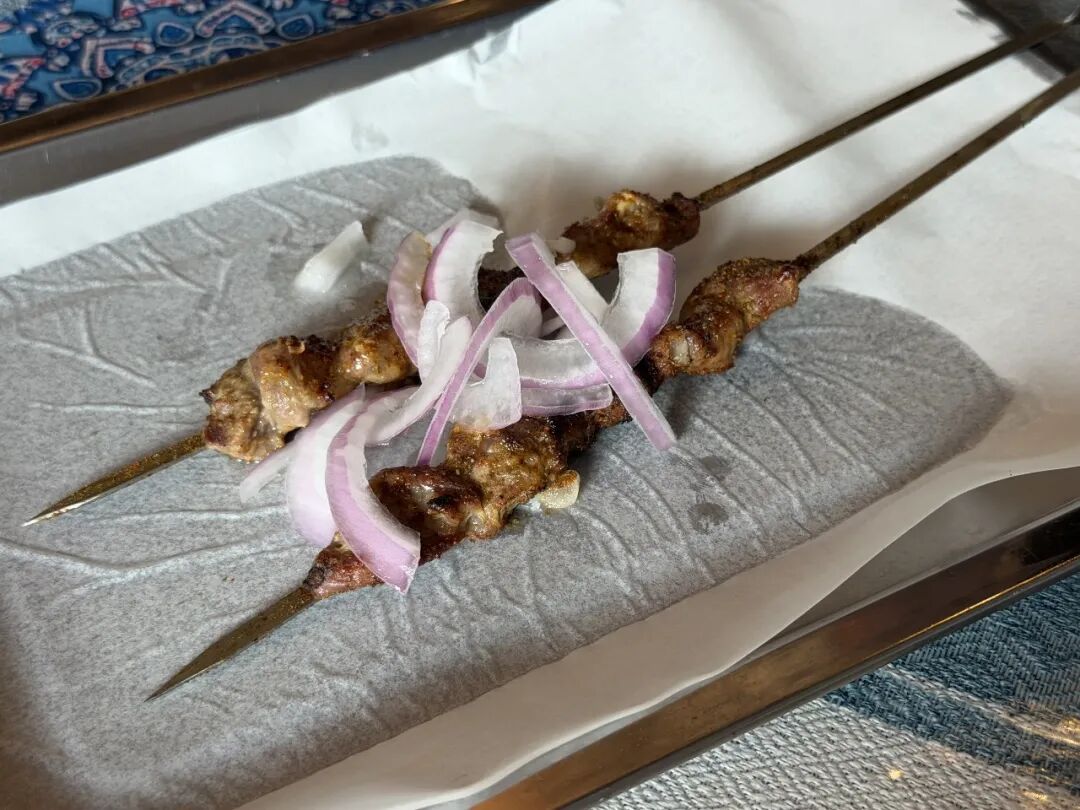
This pilaf is way lighter and less greasy than the one at the Kashgar office restaurant, though some people online have complained that the meat portions are a bit skimpy. The grilled meat is super tender. They don't have a huge menu, but the noodles, pilaf, and skewers are definitely worth recommending. A bunch of new Ili-style noodle shops have popped up in Beijing lately that look really authentic—I’ll be checking those out one by one.
Best Halal Food in Beijing: Authentic Qinghai Paozhangmian, Yangchangzi, and Turkish Cuisine Guide
Articles • Hasan09 posted the article • 0 comments • 18 views • 1 days ago
Check out this ultimate guide featuring 55 real photos for Part 61 of the Beijing Halal Food Map. Discover authentic street-style Qinghai paozhangmian (stir-fried pulled noodle pieces) and yangchangzi (lamb intestines), halal Sichuan chuanchuan hotpot (skewer hotpot), traditional shaomai (steamed dumplings) and jianbing (savory Chinese crêpes), plus Turkish coffee and Western bites for an awesome mix of diverse halal eats.
Here is the list of halal spots checked out in this edition:
1. Shusheng Chuanchuan Hotpot
2. Shaobing Jianbing (Sesame Flatbreads and Savory Crêpes)
3. Choulixiang
4. TURKISH CAFE
5. Rose City Mediterranean Western Restaurant
6. Resuli
7. Yak Beef Qinghai Ramen
8. Huiwei Xiaoguaner
9. Laosan Beef Baomian
10. Jishengke Burger
11. Laoshe Shaobing (Sesame Flatbreads)
12. Mojianshan
1. Shusheng Chuanchuan Hotpot
This new Sichuan-style chuanchuan hotpot spot just opened at Huateng Xintiandi in Dajiaoting. It's got the exact same vibe as AijiZi out by Daxing Airport, and the flavors are super similar. You grab your skewers self-service style with dozens of options to choose from—I'm totally obsessed with all the beef skewers.
The place is way more spacious inside and has a huge screen for watching TV, so you can totally tell the owner is a big sports fan.
It's 0.99 RMB per stick, which is a tiny bit pricier than AijiZi's 0.8 RMB per stick out in Daxing. An average guy will probably crush about 130 skewers in one sitting, making the price per person around 150 RMB. Right now, they're running an 12% off grand opening discount.
At the DIY sauce station, I love mixing up my dipping sauce with those classic Yunnan-Guizhou-Sichuan flavor profiles.
They probably haven't set up their full dish-washing station yet, so they're rolling with 100% disposable tableware for now.
I went totally all-in on the beef skewers, especially loving the mint beef and bamboo shoot-stuffed beef mini skewers.
Whenever I get the soup base, I always go for the Guizhou sour soup. Since their skewers already come marinated with a spicy-numb kick, and you can amp up the heat in your dipping sauce, you totally don't need to order an extra spicy red oil broth.
2. Shaobing Jianbing (Sesame Flatbreads and Savory Crêpes)
This shaobing and jianbing spot used to be on Sanzhong Lane and has now relocated to Huangcun. They serve up pepper-salt flatbreads and sesame flatbreads.
What originally drew me in was hearing they make bamboo tube zongzi (glutinous rice dumplings wrapped in bamboo leaves), but rumor has it they only make those when it cools down. Since it's still super hot out right now, they didn't have any.
You can get all kinds of fillings for the shaobing (sesame flatbread), and they even sell mooncakes right now. I just tried their shaobing stuffed with spiced beef, but honestly, the taste was pretty mediocre.
3. Chou Lixiang
This is a tiny stinky tofu spot in Xihongmen. It used to be a little blue food truck, but now they've finally got a physical storefront.
The little blue truck is still parked right outside the entrance.
Their signature item is stinky tofu, followed by all kinds of fried skewers, suanlafen (hot and sour glass noodles), and chicken racks. There’s only one tiny table inside the shop, and they’ve recently added hot dry noodles and lobster tails to the menu.
The hot dry noodles have a savory and spicy flavor profile, though they were a bit on the salty side. The stinky tofu was definitely the winner here—it didn't even smell that pungent, and it tasted amazing.
4. TURKISH CAFE
This is a Turkish casual cafe and eatery located in Sanlitun, and the owner is a Uyghur from Urumqi.
They serve various fast-food burgers here. I had just finished a full meal, but I happened to walk by and decided to stop in for afternoon tea.
Sanlitun is practically turning into a halal food street these days, with halal spots from all over the world popping up and clustering together.
The Turkish coffee has a rich, bold texture with a layer of coffee grounds sitting at the bottom (which Turks traditionally use for fortune-telling by reading the patterns). The accompanying rice pudding is super good, featuring a light, sweet, and refreshing flavor.
5. Rose City Mediterranean Western Restaurant
Rose City is an alcohol-free Western restaurant with a distinctly Arabic vibe.
The interior space is super roomy, and the kitchen crew is entirely made up of foreign staff, though the servers are all Chinese, which makes communication a breeze.
Most of the diners are expats, and the restaurant definitely leans toward budget-friendly pricing.
I ordered a plate of chicken mandi rice—a dish I used to eat all the time in Malaysia. Compared to that, the Arabic food in Malaysia tends to be a bit more refined and comes in much larger portions. The chicken here was a little on the dry side, but the rice itself had a great texture.
They also serve falafel, a Middle Eastern snack made of deep-fried chickpea balls that are traditionally eaten wrapped in flatbread. This dish definitely gets a thumbs-up.
6. Resuli
I found out about Resuli through a coworker who hyped up their barbecue as being insanely good. At first, I didn't expect much, figuring Northwest-style spots are everywhere and asking myself how good it could really be.
Right after the skewers were brought to the table, the very first bite completely blew me away. It really was that good. We ended up ordering extra lamb tendon skewers, which were just as delicious. Honestly, if you're coming specifically for a meat-skewer feast, this place is a totally safe bet. It's actually part of a chain, so I can't speak for the other locations, but the Panjiayuan branch is legit delicious. Business is booming here too, and it’s totally packed even on weekday lunch hours.
7. Yibeiwei Yak Beef Qinghai Ramen
Qinghai noodle shops are gradually dropping the Lanzhou ramen branding and switching back to their hometown names. This spot is a quintessential Qinghai eatery, and their signature dishes are paozhangmian (stir-fried hand-pulled noodle pieces) and yangchangmian (sheep's intestine noodles)—these two are the real deal when it comes to Qinghai specialty noodles, rather than standard ramen.
I ordered their sheep's intestine and paozhangmian. Both dishes tasted thoroughly authentic to Qinghai—super savory and great value for the money. I definitely recommend folks from Qinghai to come give it a try. This place is located in a basement near Dawanglu, so it's not too crowded if you come for dinner, and I haven't even seen the owners doing any heavy promotion.
8. Huiwei Xiaoguaner
This spot is located on the halal food street in Yujiawu Hui Township, Tongzhou, where literally every single restaurant is halal. This little eatery serves up grilled fish, mala xiangguo (spicy dry pot), and various wok-fried dishes.
We totally stumbled into this place by accident; it was after 9 p.m., but the spot was still packed with people.
We ordered the spicy numbing pot for two, which came with an order of spicy stir-fried scallops, but honestly, everything tasted a bit too salty.
The grilled oysters were okay, but the quality was just average.
That said, their stir-fried dishes were actually solid. They accidentally brought us this Kung Pao chicken and dried-pot potato slices on the house.
The dried-pot potato slices were a total highlight—the flavors soaked right in, making them super delicious and perfect with a side of rice.
9. Lao San Beef Banmian (Hand-pulled noodle soup)
There are two beef banmian shops on the Yujiawu Halal Food Street. I figured they’d pretty much taste the same, and this one was spot on with the bowl I used to get in Zhangjiawan.
The prices for these noodles are insane—only 10 yuan a bowl, and you can add all sorts of toppings. I highly recommend the dried tofu skin and the egg; skip the meatballs, they aren't great. Ever since I tried the halal banmian in Zhangjiawan, I haven't been able to stop thinking about it, so I made a special trip here just to check it out.
10. Jishengke Burger
This is a halal burger joint located near the Liangxiang campus of the Beijing Institute of Technology. Jishengke is a chain, but this is the only location that’s halal.
They have a massive menu of burgers, plus a bunch of fried chicken snacks. The best part is that it’s incredibly cheap—a burger is only about five yuan. I grabbed a single combo with a burger, chicken fillet, and a soda for just eight yuan. Most of the people eating here are international students from Africa.
It looked like the owner's kid was sitting there doing homework.
11. Lao Xie Shaobing (Baked flatbread)
This is a total viral spot for shaobing in Liangxiang. Business is booming; they close up shop by 3 p.m. every day, and people say they pull in millions in revenue a year.
They specialize in shaobing sandwiches with meat. The crowd is mostly locals swinging by for breakfast, so parking right out front is pretty tough.
I got there at 2 p.m. and there were still a few people hanging around. I ordered the vegetable meatball soup, lamb offal soup, a beef-stuffed shaobing, and a mackerel-stuffed shaobing.
The veggie meatball soup and the lamb offal soup were both great. The beef shaobing was better than the mackerel one; the fish was a little bit fishy and a tad on the salty side.
12. Mojianshan
Mojianshan is a drink shop run by the Zhengxingde Tea House on Niujie. Since Zhengxingde is famous for their jasmine tea, all their drinks revolve around that jasmine flavor, which I’m personally a huge fan of.
Zhengxingde is a classic halal institution. They used to have the 'halal' label right on their sign, but it’s gone now. Even so, I still buy their jasmine tea all the time—no matter what I try, I always end up coming back to their jasmine tea.
Their jasmine-flavored ice cream is delicious and only costs 9.9 yuan. The lines aren't too bad right now. I wasn't a fan of the jasmine drinks, though—I asked for 30% sugar, but it still tasted way too sweet for me. view all
Check out this ultimate guide featuring 55 real photos for Part 61 of the Beijing Halal Food Map. Discover authentic street-style Qinghai paozhangmian (stir-fried pulled noodle pieces) and yangchangzi (lamb intestines), halal Sichuan chuanchuan hotpot (skewer hotpot), traditional shaomai (steamed dumplings) and jianbing (savory Chinese crêpes), plus Turkish coffee and Western bites for an awesome mix of diverse halal eats.
Here is the list of halal spots checked out in this edition:
1. Shusheng Chuanchuan Hotpot
2. Shaobing Jianbing (Sesame Flatbreads and Savory Crêpes)
3. Choulixiang
4. TURKISH CAFE
5. Rose City Mediterranean Western Restaurant
6. Resuli
7. Yak Beef Qinghai Ramen
8. Huiwei Xiaoguaner
9. Laosan Beef Baomian
10. Jishengke Burger
11. Laoshe Shaobing (Sesame Flatbreads)
12. Mojianshan
1. Shusheng Chuanchuan Hotpot
This new Sichuan-style chuanchuan hotpot spot just opened at Huateng Xintiandi in Dajiaoting. It's got the exact same vibe as AijiZi out by Daxing Airport, and the flavors are super similar. You grab your skewers self-service style with dozens of options to choose from—I'm totally obsessed with all the beef skewers.
The place is way more spacious inside and has a huge screen for watching TV, so you can totally tell the owner is a big sports fan.
It's 0.99 RMB per stick, which is a tiny bit pricier than AijiZi's 0.8 RMB per stick out in Daxing. An average guy will probably crush about 130 skewers in one sitting, making the price per person around 150 RMB. Right now, they're running an 12% off grand opening discount.
At the DIY sauce station, I love mixing up my dipping sauce with those classic Yunnan-Guizhou-Sichuan flavor profiles.
They probably haven't set up their full dish-washing station yet, so they're rolling with 100% disposable tableware for now.
I went totally all-in on the beef skewers, especially loving the mint beef and bamboo shoot-stuffed beef mini skewers.
Whenever I get the soup base, I always go for the Guizhou sour soup. Since their skewers already come marinated with a spicy-numb kick, and you can amp up the heat in your dipping sauce, you totally don't need to order an extra spicy red oil broth.
2. Shaobing Jianbing (Sesame Flatbreads and Savory Crêpes)
This shaobing and jianbing spot used to be on Sanzhong Lane and has now relocated to Huangcun. They serve up pepper-salt flatbreads and sesame flatbreads.
What originally drew me in was hearing they make bamboo tube zongzi (glutinous rice dumplings wrapped in bamboo leaves), but rumor has it they only make those when it cools down. Since it's still super hot out right now, they didn't have any.
You can get all kinds of fillings for the shaobing (sesame flatbread), and they even sell mooncakes right now. I just tried their shaobing stuffed with spiced beef, but honestly, the taste was pretty mediocre.
3. Chou Lixiang
This is a tiny stinky tofu spot in Xihongmen. It used to be a little blue food truck, but now they've finally got a physical storefront.
The little blue truck is still parked right outside the entrance.
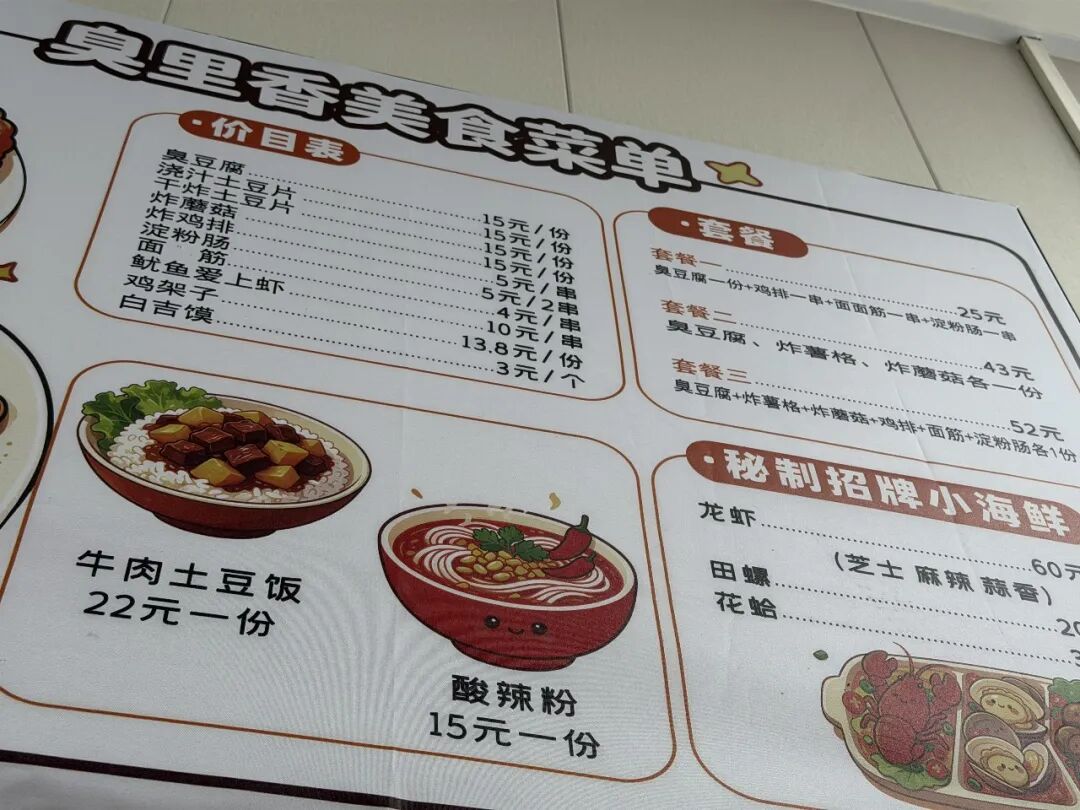
Their signature item is stinky tofu, followed by all kinds of fried skewers, suanlafen (hot and sour glass noodles), and chicken racks. There’s only one tiny table inside the shop, and they’ve recently added hot dry noodles and lobster tails to the menu.
The hot dry noodles have a savory and spicy flavor profile, though they were a bit on the salty side. The stinky tofu was definitely the winner here—it didn't even smell that pungent, and it tasted amazing.
4. TURKISH CAFE
This is a Turkish casual cafe and eatery located in Sanlitun, and the owner is a Uyghur from Urumqi.
They serve various fast-food burgers here. I had just finished a full meal, but I happened to walk by and decided to stop in for afternoon tea.
Sanlitun is practically turning into a halal food street these days, with halal spots from all over the world popping up and clustering together.
The Turkish coffee has a rich, bold texture with a layer of coffee grounds sitting at the bottom (which Turks traditionally use for fortune-telling by reading the patterns). The accompanying rice pudding is super good, featuring a light, sweet, and refreshing flavor.
5. Rose City Mediterranean Western Restaurant
Rose City is an alcohol-free Western restaurant with a distinctly Arabic vibe.
The interior space is super roomy, and the kitchen crew is entirely made up of foreign staff, though the servers are all Chinese, which makes communication a breeze.
Most of the diners are expats, and the restaurant definitely leans toward budget-friendly pricing.
I ordered a plate of chicken mandi rice—a dish I used to eat all the time in Malaysia. Compared to that, the Arabic food in Malaysia tends to be a bit more refined and comes in much larger portions. The chicken here was a little on the dry side, but the rice itself had a great texture.
They also serve falafel, a Middle Eastern snack made of deep-fried chickpea balls that are traditionally eaten wrapped in flatbread. This dish definitely gets a thumbs-up.
6. Resuli
I found out about Resuli through a coworker who hyped up their barbecue as being insanely good. At first, I didn't expect much, figuring Northwest-style spots are everywhere and asking myself how good it could really be.
Right after the skewers were brought to the table, the very first bite completely blew me away. It really was that good. We ended up ordering extra lamb tendon skewers, which were just as delicious. Honestly, if you're coming specifically for a meat-skewer feast, this place is a totally safe bet. It's actually part of a chain, so I can't speak for the other locations, but the Panjiayuan branch is legit delicious. Business is booming here too, and it’s totally packed even on weekday lunch hours.
7. Yibeiwei Yak Beef Qinghai Ramen
Qinghai noodle shops are gradually dropping the Lanzhou ramen branding and switching back to their hometown names. This spot is a quintessential Qinghai eatery, and their signature dishes are paozhangmian (stir-fried hand-pulled noodle pieces) and yangchangmian (sheep's intestine noodles)—these two are the real deal when it comes to Qinghai specialty noodles, rather than standard ramen.
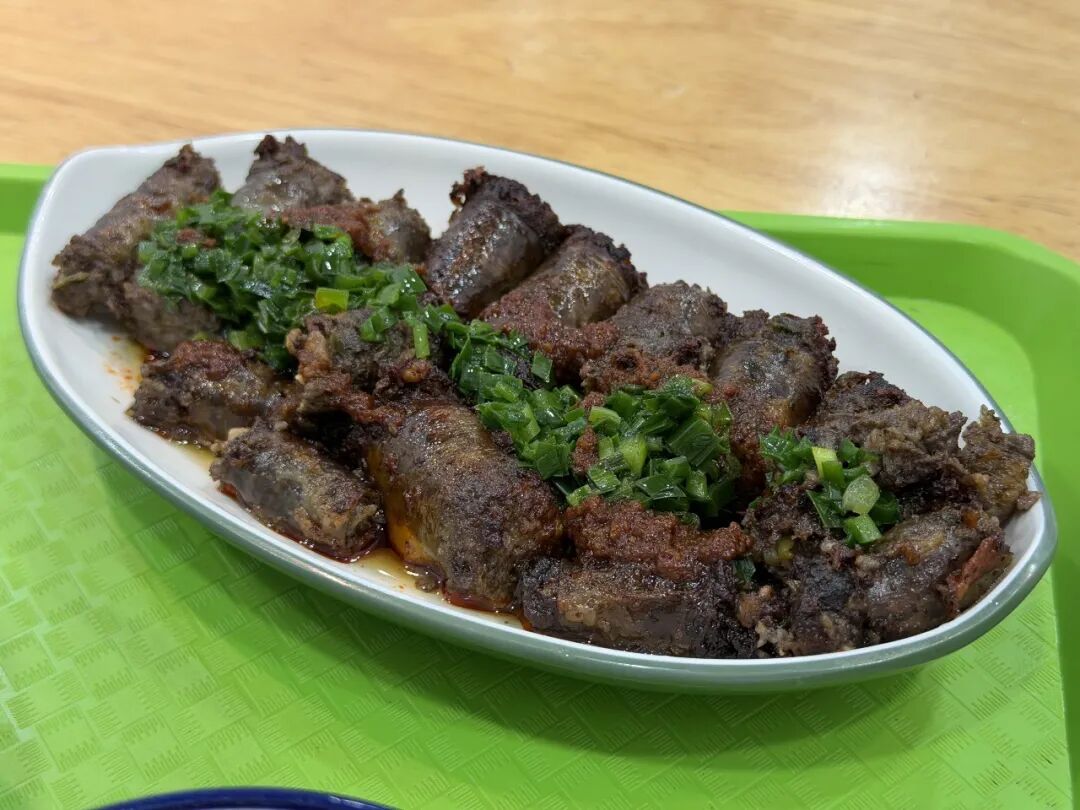
I ordered their sheep's intestine and paozhangmian. Both dishes tasted thoroughly authentic to Qinghai—super savory and great value for the money. I definitely recommend folks from Qinghai to come give it a try. This place is located in a basement near Dawanglu, so it's not too crowded if you come for dinner, and I haven't even seen the owners doing any heavy promotion.
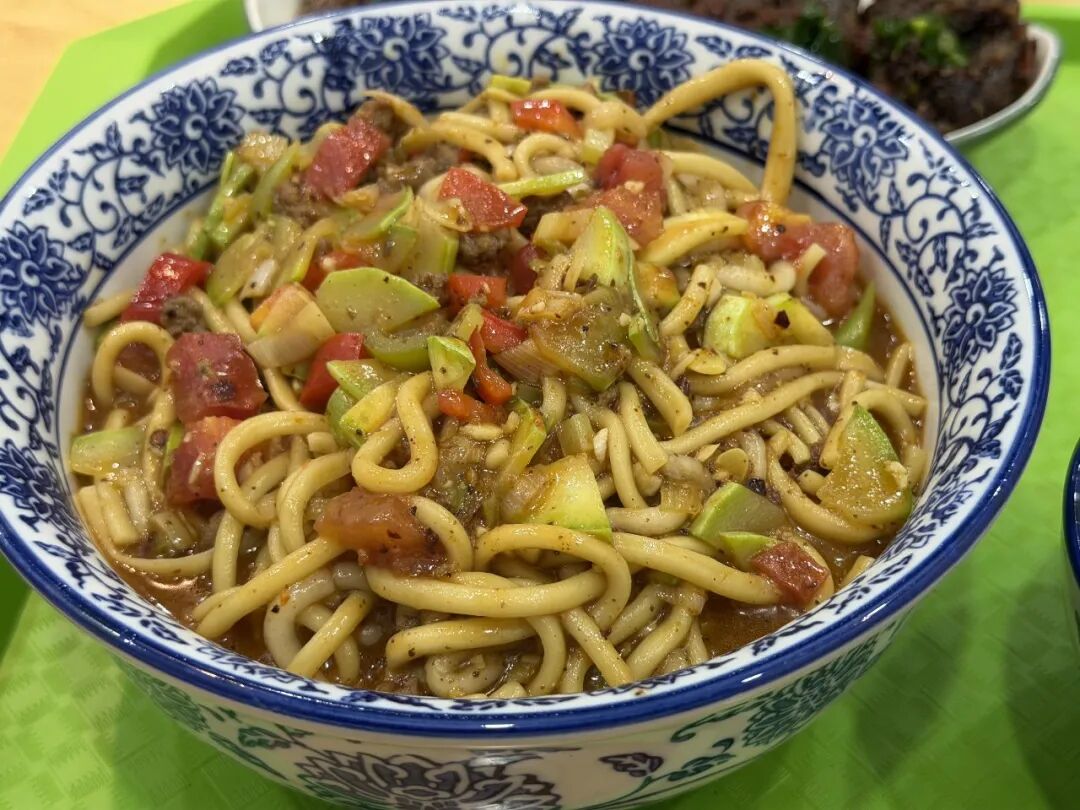
8. Huiwei Xiaoguaner
This spot is located on the halal food street in Yujiawu Hui Township, Tongzhou, where literally every single restaurant is halal. This little eatery serves up grilled fish, mala xiangguo (spicy dry pot), and various wok-fried dishes.
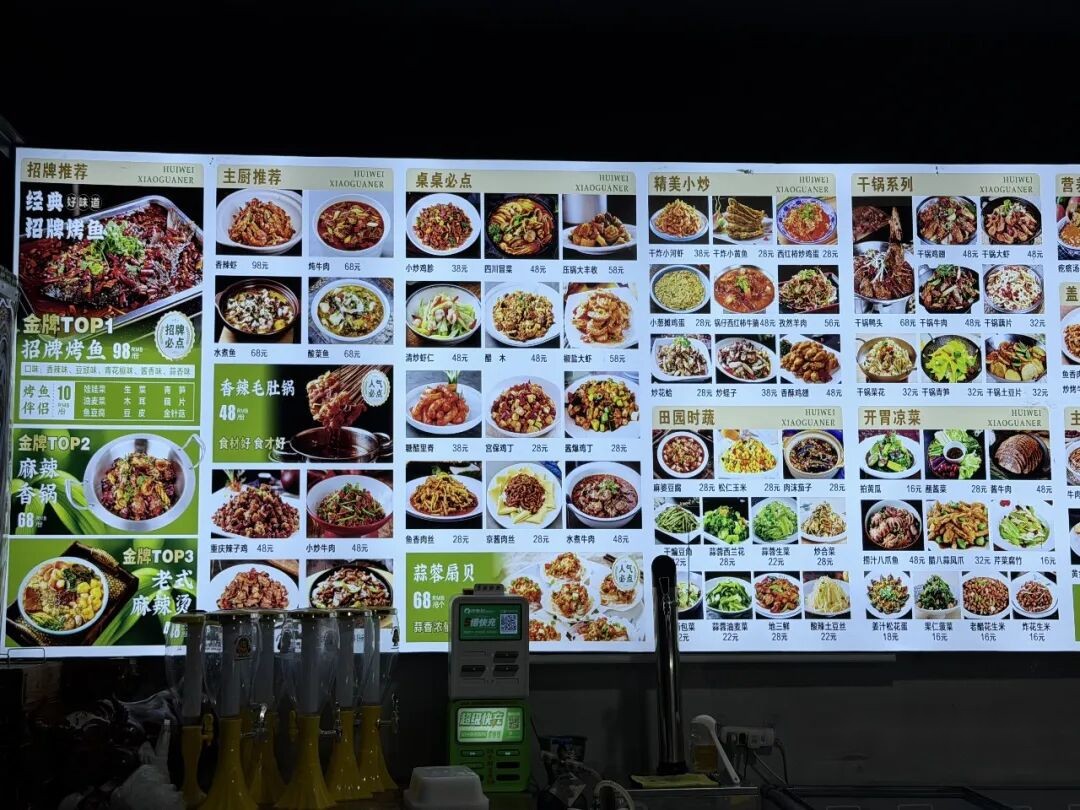
We totally stumbled into this place by accident; it was after 9 p.m., but the spot was still packed with people.
We ordered the spicy numbing pot for two, which came with an order of spicy stir-fried scallops, but honestly, everything tasted a bit too salty.
The grilled oysters were okay, but the quality was just average.
That said, their stir-fried dishes were actually solid. They accidentally brought us this Kung Pao chicken and dried-pot potato slices on the house.
The dried-pot potato slices were a total highlight—the flavors soaked right in, making them super delicious and perfect with a side of rice.
9. Lao San Beef Banmian (Hand-pulled noodle soup)
There are two beef banmian shops on the Yujiawu Halal Food Street. I figured they’d pretty much taste the same, and this one was spot on with the bowl I used to get in Zhangjiawan.
The prices for these noodles are insane—only 10 yuan a bowl, and you can add all sorts of toppings. I highly recommend the dried tofu skin and the egg; skip the meatballs, they aren't great. Ever since I tried the halal banmian in Zhangjiawan, I haven't been able to stop thinking about it, so I made a special trip here just to check it out.
10. Jishengke Burger
This is a halal burger joint located near the Liangxiang campus of the Beijing Institute of Technology. Jishengke is a chain, but this is the only location that’s halal.
They have a massive menu of burgers, plus a bunch of fried chicken snacks. The best part is that it’s incredibly cheap—a burger is only about five yuan. I grabbed a single combo with a burger, chicken fillet, and a soda for just eight yuan. Most of the people eating here are international students from Africa.
It looked like the owner's kid was sitting there doing homework.
11. Lao Xie Shaobing (Baked flatbread)
This is a total viral spot for shaobing in Liangxiang. Business is booming; they close up shop by 3 p.m. every day, and people say they pull in millions in revenue a year.
They specialize in shaobing sandwiches with meat. The crowd is mostly locals swinging by for breakfast, so parking right out front is pretty tough.
I got there at 2 p.m. and there were still a few people hanging around. I ordered the vegetable meatball soup, lamb offal soup, a beef-stuffed shaobing, and a mackerel-stuffed shaobing.
The veggie meatball soup and the lamb offal soup were both great. The beef shaobing was better than the mackerel one; the fish was a little bit fishy and a tad on the salty side.
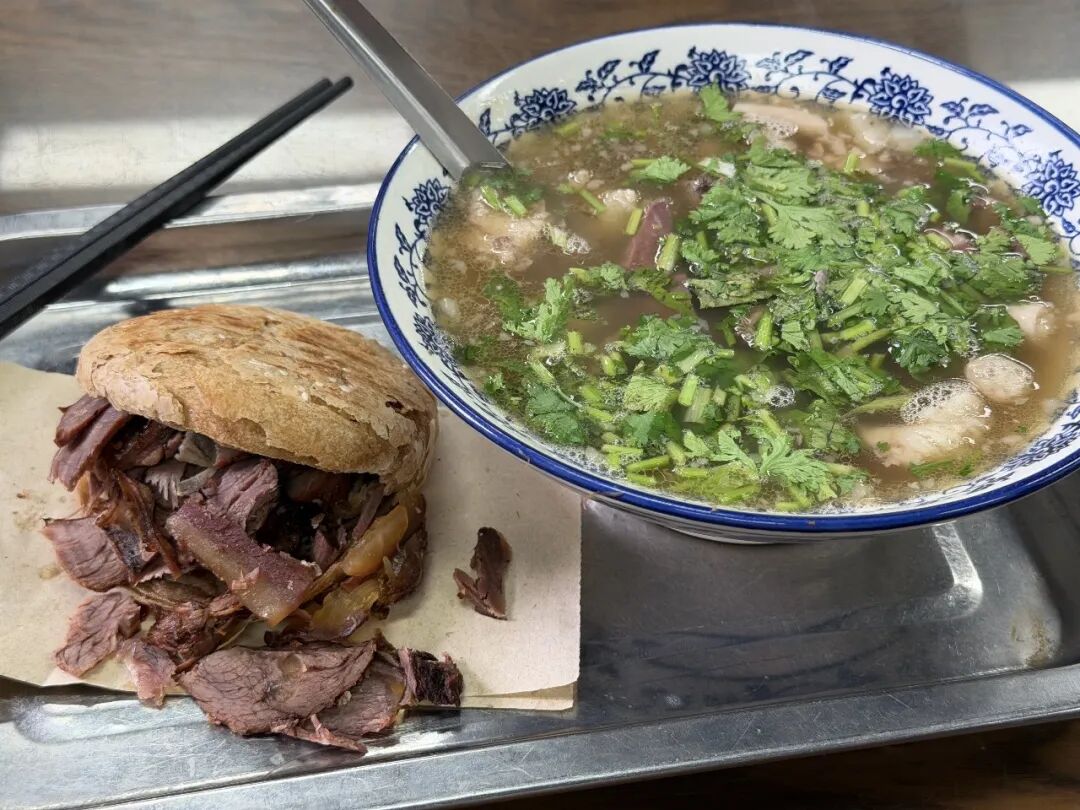
12. Mojianshan
Mojianshan is a drink shop run by the Zhengxingde Tea House on Niujie. Since Zhengxingde is famous for their jasmine tea, all their drinks revolve around that jasmine flavor, which I’m personally a huge fan of.
Zhengxingde is a classic halal institution. They used to have the 'halal' label right on their sign, but it’s gone now. Even so, I still buy their jasmine tea all the time—no matter what I try, I always end up coming back to their jasmine tea.

Their jasmine-flavored ice cream is delicious and only costs 9.9 yuan. The lines aren't too bad right now. I wasn't a fan of the jasmine drinks, though—I asked for 30% sugar, but it still tasted way too sweet for me.
Best Halal Food in Beijing: Authentic Niujie Alley Eats, Gansu Cuisine, and Hidden Muslim Gems
Articles • Hasan09 posted the article • 0 comments • 20 views • 1 days ago
Check out 44 real-deal photos from the 63rd installment of our Beijing Halal food guide. We're covering Shengbaozhai Niujie Alley Noodle House, the Northwestern flavors at Moyan Dunhuang Lou, signature shouzhua fan (hand-grabbed rice), and Uncle Wu's Tianjin-style home-cooked halal meals, taking you on a tour of the most authentic halal eats tucked away in Beijing's hidden alleys.
1. Shengbaozhai Niujie Alley Noodle House
2. Moyan Dunhuang Lou
3. Kaorou Liu (Liu's Barbecue)
4. Zhua Ge Fan Fan (Grab That Rice)
5. Uncle Wu's Tianjin Halal Diner
6. Jian Bing Tian Xia (The World of Crepes)
7. Anji Small Kitchen
8. Xiehe Classic Beef Noodles
9. Shengbaozhai Niujie Alley Noodle House
When you see the signature stir-fried chicken, you know it's run by folks from Shandong. This spot is located in Chunfeng Alley in Niujie; it's only been open for two weeks and specializes in various hand-pulled noodles with savory toppings.
A major highlight here is the Linyi caijianbing (savory vegetable crepe). I've shared two other Tengzhou-style crepe spots before, and while the Linyi version is similar, I feel like this place gives you a better deal.
These noodle bowls topped with big chunks of beef are exactly what Beijingers traditionally expect from a beef noodle soup. It's locally called jiaotang niuroumian (beef noodle soup with ladle-poured broth), and the Shandong influence makes total sense.
The priciest item is the stir-fried chicken noodle bowl. The noodles are hand-pulled and have a great, chewy texture, but the topping had a bit of a gamey smell. Also, the green peppers were super spicy—and that was me specifically asking for no peppers! If you can't handle the heat, don't try to be a hero.
The zhajiangmian (soybean paste noodles) and beef noodle soup are classic, homestyle flavors, and the portions are massive—someone with a small appetite definitely won't finish a bowl.
I originally planned on putting away two bowls of noodles, but I ended up struggling to finish even one.
The lamb skewers were just okay—nothing to write home about—but the Linyi caijianbing really made my day.
This crepe is made by pressing two thin layers of dough together with a mix of veggies inside. You can also add egg or sausage, but I prefer the veggie-only version. Once assembled, they press it flat with a wooden board and slice it into four pieces.
The outer layer is crispy, making the whole thing really refreshing, nutritious, and healthy.
2. Moyan Dunhuang Lou
This is a new, more business-casual Gansu-style halal restaurant in Yizhuang. It’s huge and has free parking right out front. Rumor has it they used to specialize in beef noodles, but they’ve moved that fast-food side of the business to the shop next door.
So, if you think the main dining menu is a bit pricey, you can just head to the beef noodle shop right next door.
They have greeters at the door and the service is decent, though it feels like they’re a bit short-staffed; the food comes out slow and it’s often hard to track down a server in the dining hall.
If you check in on social media while at the restaurant, you get free huidouzi (red pea soup) or tianpeizi (fermented sweet oat porridge), both of which are classic Gansu-style desserts.
They sell a variety of seafood like fish, shrimp, and crab, plus sashimi, so it’s not exactly cheap. Since I brought my son, we stuck to what he likes—the burrito-style roll with sanzi (deep-fried dough twists) and braised beef is perfect for kids.
Since my kid's been super into green beans lately, I ordered a non-spicy version with mushrooms, and he totally chowed down on it.
Saoxiang mian (Northwest-style braised noodles) is a total classic from Northwest China, and they actually make it really well here with nice, chewy noodles.
3. Kaorou Liu (Liu's Iron Griddle BBQ)
Kaorou Liu has been around for almost twenty years. It originally started over in Hufangqiao, where I used to grab a bite back in high school. Later on, another spot called Liuji Kaorou opened right across the street. That Liuji isn't affiliated with Kaorou Liu at all, it's not certified halal, and I've never been. Whenever we talk about getting barbecue in Hufangqiao, we always mean this specific Kaorou Liu.
Kaorou Liu has opened a bunch of branches now. The biggest difference between this old Beijing-style zhizi kaorou (iron griddle barbecue) and Qiqihaer barbecue from Northeast China is that zhizi kaorou meat is pre-marinated, so the flavors are a bit heavier.
Our family is pretty big on BBQ, but these days we're way more into that Northeast-style big Qiqihaer BBQ because you can really taste the natural, fresh flavor of the meat.
They've got fried mantou (steamed buns) smeared with chou (stinky tofu). Stinky tofu smells funky but tastes super savory. The older I get, the lighter I like my food, so I pretty much skip this kind of stuff now.
4. Zhuo Ge Fan Fan
This is just a casual Hui Muslim spot for a quick bite of Xinjiang zhua fan (hand-grabbed rice) while running errands. I originally only planned to order some rice for my kid, but we accidentally ended up trying a few extra dishes because we were pleasantly surprised by how good it was.
This place only serves zhua fan, no banmian (hand-pulled noodles), but they do have huangmian (yellow noodles).
Both the shredded meat zhua fan and the lamb chop zhua fan are super tasty. Even though the portions are kind of small, you can get free refills on the rice.
For the huangmian, you can choose between cold-dressed or hot-gravy styles. That said, the noodles are probably store-bought and pre-made, so they lack that springy texture. You're honestly better off just sticking to the zhua fan here.
The skewers are totally fire—Uyghur folks seriously have a natural talent for making amazing BBQ. But their kavas (traditional fermented honey drink) is way too sweet and lacks carbonation, tasting pretty much like sugary water.
5. Wushu Tianjin Halal Eatery
This is a newly opened Tianjin-style halal spot in Wangsiying. Over the past couple of years, Beijing has suddenly had a few Tianjin halal restaurants pop up. Honestly, I'm not usually into traditional Tianjin flavors because I find them way too oily and salty, plus the portions at Tianjin places are massive and always end up going to waste.
To be fair, their food is actually decent—not overly salty, just huge portions. Aside from classic Tianjin dishes, they've also added a dish of haichang laofan (sea cucumber rice to the menu).
Bawei doufu (eight-treasure tofu) is one of my personal favorites. It's packed with all kinds of ingredients, and a single plate is big enough for four people.
The du mianjin (braised wheat gluten) and damu yu (dab Sole fish) were not good. The gluten was okay, but the fish was seriously bad. It was just a fixed part of the set meal so I couldn't swap it out, even though I really wanted to change it for the haichang laofan.
This spot is pretty convenient since there's parking right in the courtyard. The prices are cheap, and the per-person cost stays under a hundred bucks.
6. Jianbing Tianxia
A new jianbing (savory Chinese crepe) stall just popped up right next to the Northwest lamian (hand-pulled noodles) spot in Yazhiqiao. Jianbing Tianxia is a chain brand, but this particular location is the only halal one.
They've got a few types of jianbing, plus you can get kaolengmian (grilled cold noodles) and shouzhuabing (scallion pancakes).
That said, I think their jianbing is the best choice. The grilled cold noodles are just so-so, and for the jianbing, I definitely recommend the beef sauce flavor.
7. Anji Xiaochu
This is a halal Japanese restaurant opened in Shunyi. The owner is a Hui Muslim from Haidian, and the menu mainly features classic Japanese dishes like sushi and unagi don (eel rice), alongside some Beijing-style home-cooked favorites.
The interior design is super minimal, the vibe is really comfy, and the service is warm and attentive.
Their signature eel rice and beef gyudon (beef bowl) are both legit; the eel rice has a nice sweet touch to it.
It’s not every day I make the trip out here, so I stuck with their Japanese menu, but my friends have tried their Beijing-style dishes and said those are great too.
The takoyaki (octopus balls) and potato croquettes are also tasty—definitely a spot to bring the kids. Aside from this place, the only other Halal Japanese spot left in Beijing is Niushi Yakiniku (Japanese-style grilled meat), so enjoy it while it’s still around.
8. Sheikh Classic Beef Noodles
Sheikh Beef Noodles recently opened two new spots at the same time in Sanlitun and Beiqijia. It’s a Lanzhou-based noodle brand that already has shops back home, and the Beiqijia location is their flagship store. I went to the Sanlitun branch.
After some friends from Lanzhou checked it out, they agreed the taste is pretty much spot on with what you get back in Lanzhou. It’s great to have a few authentic Lanzhou beef noodle spots here in Beijing.
I’ve tried it myself and honestly, it’s delicious—the broth, the beef, and the chili oil are all totally authentic. view all
Check out 44 real-deal photos from the 63rd installment of our Beijing Halal food guide. We're covering Shengbaozhai Niujie Alley Noodle House, the Northwestern flavors at Moyan Dunhuang Lou, signature shouzhua fan (hand-grabbed rice), and Uncle Wu's Tianjin-style home-cooked halal meals, taking you on a tour of the most authentic halal eats tucked away in Beijing's hidden alleys.
1. Shengbaozhai Niujie Alley Noodle House
2. Moyan Dunhuang Lou
3. Kaorou Liu (Liu's Barbecue)
4. Zhua Ge Fan Fan (Grab That Rice)
5. Uncle Wu's Tianjin Halal Diner
6. Jian Bing Tian Xia (The World of Crepes)
7. Anji Small Kitchen
8. Xiehe Classic Beef Noodles
9. Shengbaozhai Niujie Alley Noodle House
When you see the signature stir-fried chicken, you know it's run by folks from Shandong. This spot is located in Chunfeng Alley in Niujie; it's only been open for two weeks and specializes in various hand-pulled noodles with savory toppings.
A major highlight here is the Linyi caijianbing (savory vegetable crepe). I've shared two other Tengzhou-style crepe spots before, and while the Linyi version is similar, I feel like this place gives you a better deal.
These noodle bowls topped with big chunks of beef are exactly what Beijingers traditionally expect from a beef noodle soup. It's locally called jiaotang niuroumian (beef noodle soup with ladle-poured broth), and the Shandong influence makes total sense.
The priciest item is the stir-fried chicken noodle bowl. The noodles are hand-pulled and have a great, chewy texture, but the topping had a bit of a gamey smell. Also, the green peppers were super spicy—and that was me specifically asking for no peppers! If you can't handle the heat, don't try to be a hero.
The zhajiangmian (soybean paste noodles) and beef noodle soup are classic, homestyle flavors, and the portions are massive—someone with a small appetite definitely won't finish a bowl.
I originally planned on putting away two bowls of noodles, but I ended up struggling to finish even one.
The lamb skewers were just okay—nothing to write home about—but the Linyi caijianbing really made my day.
This crepe is made by pressing two thin layers of dough together with a mix of veggies inside. You can also add egg or sausage, but I prefer the veggie-only version. Once assembled, they press it flat with a wooden board and slice it into four pieces.
The outer layer is crispy, making the whole thing really refreshing, nutritious, and healthy.
2. Moyan Dunhuang Lou
This is a new, more business-casual Gansu-style halal restaurant in Yizhuang. It’s huge and has free parking right out front. Rumor has it they used to specialize in beef noodles, but they’ve moved that fast-food side of the business to the shop next door.
So, if you think the main dining menu is a bit pricey, you can just head to the beef noodle shop right next door.
They have greeters at the door and the service is decent, though it feels like they’re a bit short-staffed; the food comes out slow and it’s often hard to track down a server in the dining hall.
If you check in on social media while at the restaurant, you get free huidouzi (red pea soup) or tianpeizi (fermented sweet oat porridge), both of which are classic Gansu-style desserts.
They sell a variety of seafood like fish, shrimp, and crab, plus sashimi, so it’s not exactly cheap. Since I brought my son, we stuck to what he likes—the burrito-style roll with sanzi (deep-fried dough twists) and braised beef is perfect for kids.
Since my kid's been super into green beans lately, I ordered a non-spicy version with mushrooms, and he totally chowed down on it.
Saoxiang mian (Northwest-style braised noodles) is a total classic from Northwest China, and they actually make it really well here with nice, chewy noodles.
3. Kaorou Liu (Liu's Iron Griddle BBQ)
Kaorou Liu has been around for almost twenty years. It originally started over in Hufangqiao, where I used to grab a bite back in high school. Later on, another spot called Liuji Kaorou opened right across the street. That Liuji isn't affiliated with Kaorou Liu at all, it's not certified halal, and I've never been. Whenever we talk about getting barbecue in Hufangqiao, we always mean this specific Kaorou Liu.
Kaorou Liu has opened a bunch of branches now. The biggest difference between this old Beijing-style zhizi kaorou (iron griddle barbecue) and Qiqihaer barbecue from Northeast China is that zhizi kaorou meat is pre-marinated, so the flavors are a bit heavier.
Our family is pretty big on BBQ, but these days we're way more into that Northeast-style big Qiqihaer BBQ because you can really taste the natural, fresh flavor of the meat.
They've got fried mantou (steamed buns) smeared with chou (stinky tofu). Stinky tofu smells funky but tastes super savory. The older I get, the lighter I like my food, so I pretty much skip this kind of stuff now.
4. Zhuo Ge Fan Fan
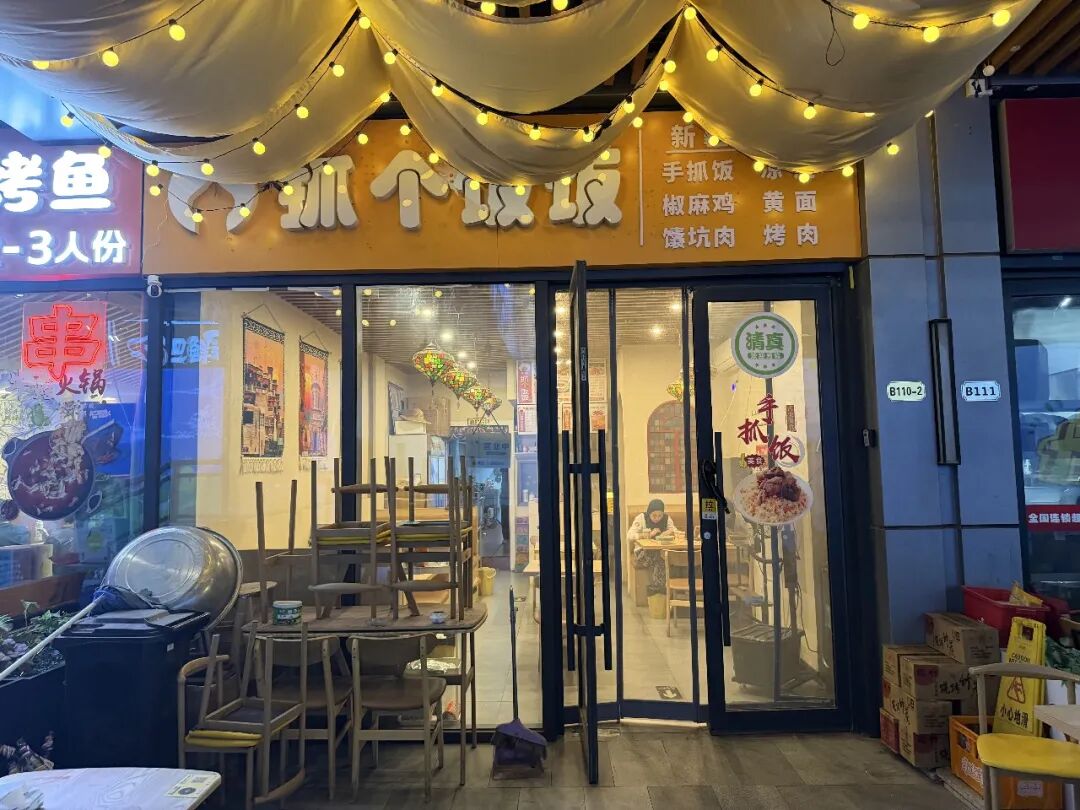
This is just a casual Hui Muslim spot for a quick bite of Xinjiang zhua fan (hand-grabbed rice) while running errands. I originally only planned to order some rice for my kid, but we accidentally ended up trying a few extra dishes because we were pleasantly surprised by how good it was.
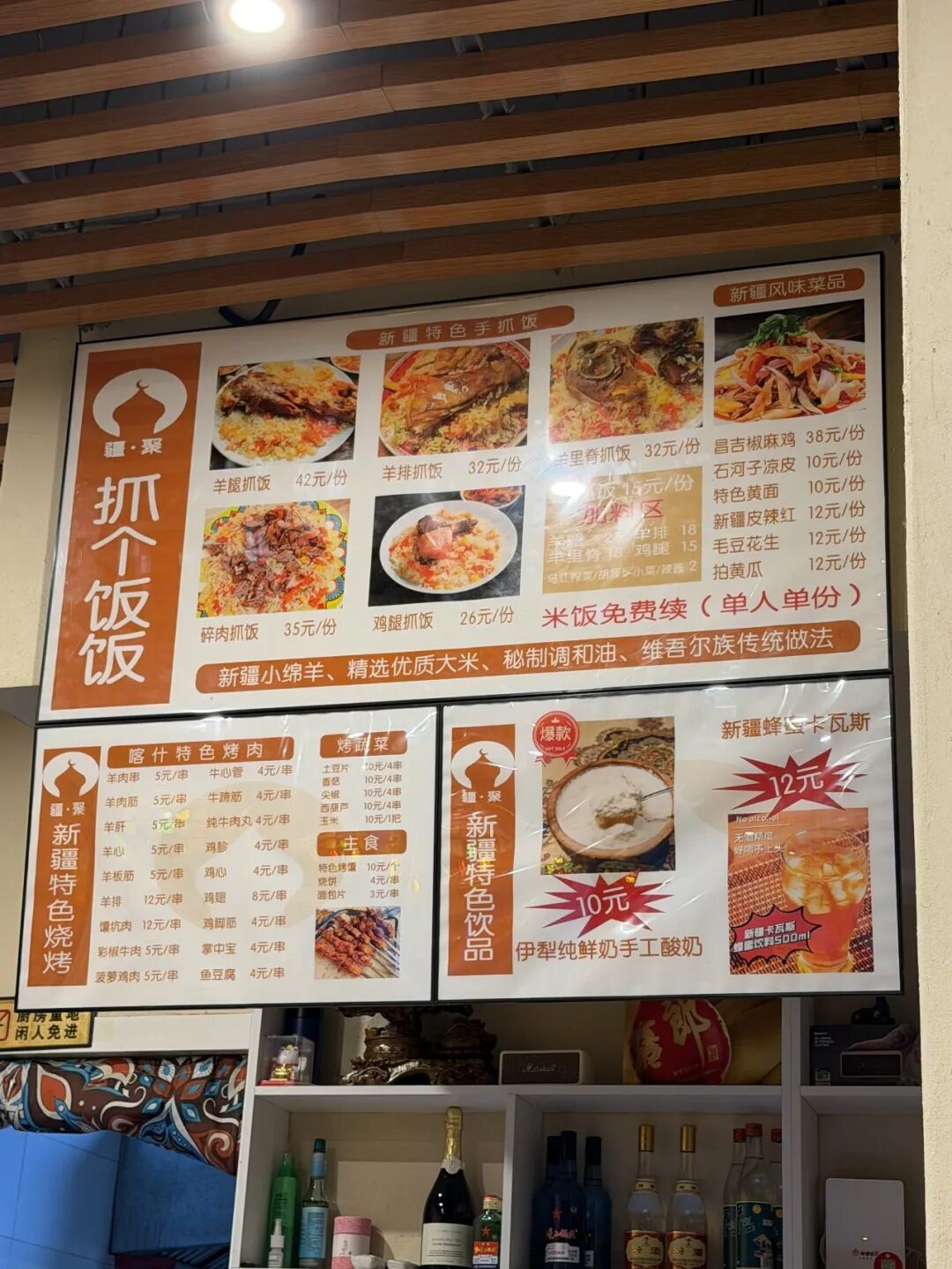
This place only serves zhua fan, no banmian (hand-pulled noodles), but they do have huangmian (yellow noodles).
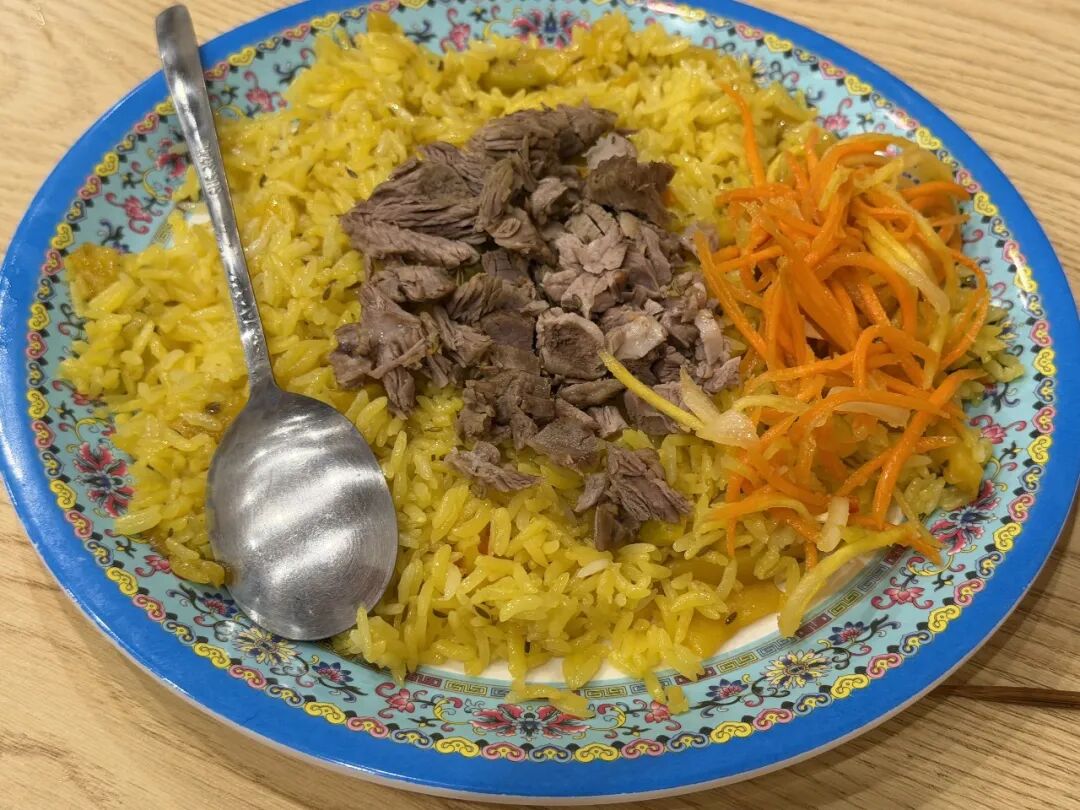
Both the shredded meat zhua fan and the lamb chop zhua fan are super tasty. Even though the portions are kind of small, you can get free refills on the rice.
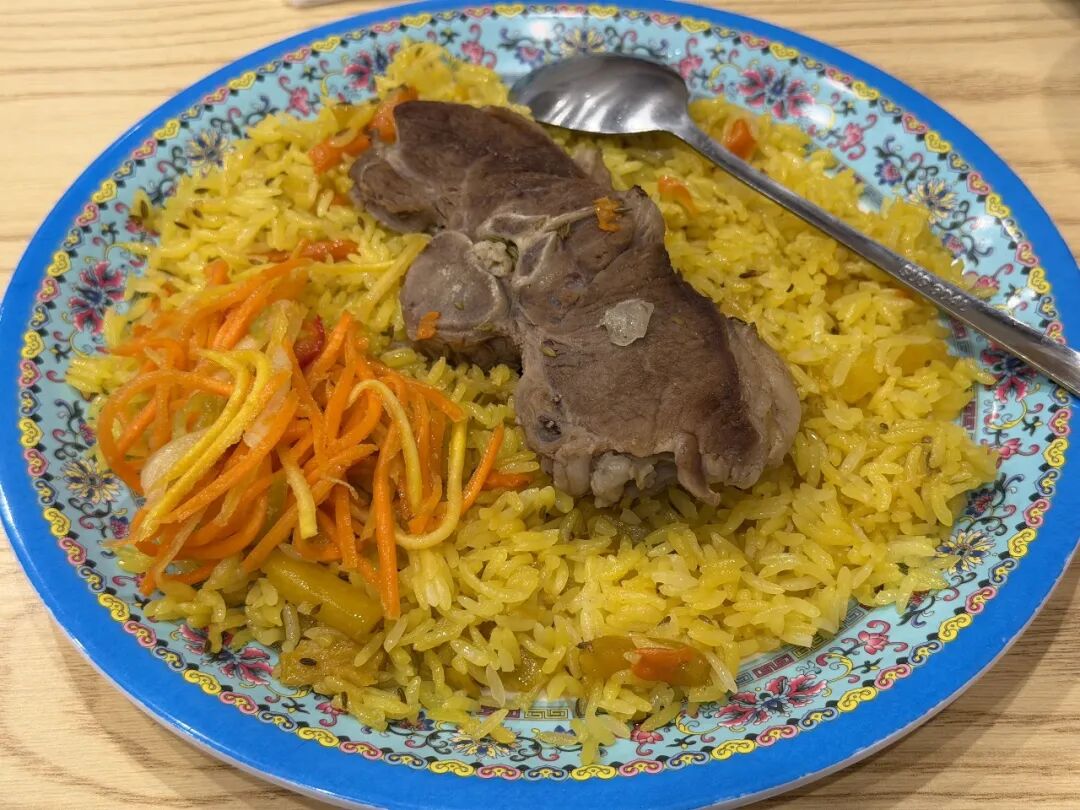
For the huangmian, you can choose between cold-dressed or hot-gravy styles. That said, the noodles are probably store-bought and pre-made, so they lack that springy texture. You're honestly better off just sticking to the zhua fan here.
The skewers are totally fire—Uyghur folks seriously have a natural talent for making amazing BBQ. But their kavas (traditional fermented honey drink) is way too sweet and lacks carbonation, tasting pretty much like sugary water.
5. Wushu Tianjin Halal Eatery
This is a newly opened Tianjin-style halal spot in Wangsiying. Over the past couple of years, Beijing has suddenly had a few Tianjin halal restaurants pop up. Honestly, I'm not usually into traditional Tianjin flavors because I find them way too oily and salty, plus the portions at Tianjin places are massive and always end up going to waste.
To be fair, their food is actually decent—not overly salty, just huge portions. Aside from classic Tianjin dishes, they've also added a dish of haichang laofan (sea cucumber rice to the menu).
Bawei doufu (eight-treasure tofu) is one of my personal favorites. It's packed with all kinds of ingredients, and a single plate is big enough for four people.
The du mianjin (braised wheat gluten) and damu yu (dab Sole fish) were not good. The gluten was okay, but the fish was seriously bad. It was just a fixed part of the set meal so I couldn't swap it out, even though I really wanted to change it for the haichang laofan.
This spot is pretty convenient since there's parking right in the courtyard. The prices are cheap, and the per-person cost stays under a hundred bucks.
6. Jianbing Tianxia
A new jianbing (savory Chinese crepe) stall just popped up right next to the Northwest lamian (hand-pulled noodles) spot in Yazhiqiao. Jianbing Tianxia is a chain brand, but this particular location is the only halal one.
They've got a few types of jianbing, plus you can get kaolengmian (grilled cold noodles) and shouzhuabing (scallion pancakes).
That said, I think their jianbing is the best choice. The grilled cold noodles are just so-so, and for the jianbing, I definitely recommend the beef sauce flavor.
7. Anji Xiaochu
This is a halal Japanese restaurant opened in Shunyi. The owner is a Hui Muslim from Haidian, and the menu mainly features classic Japanese dishes like sushi and unagi don (eel rice), alongside some Beijing-style home-cooked favorites.
The interior design is super minimal, the vibe is really comfy, and the service is warm and attentive.
Their signature eel rice and beef gyudon (beef bowl) are both legit; the eel rice has a nice sweet touch to it.
It’s not every day I make the trip out here, so I stuck with their Japanese menu, but my friends have tried their Beijing-style dishes and said those are great too.
The takoyaki (octopus balls) and potato croquettes are also tasty—definitely a spot to bring the kids. Aside from this place, the only other Halal Japanese spot left in Beijing is Niushi Yakiniku (Japanese-style grilled meat), so enjoy it while it’s still around.
8. Sheikh Classic Beef Noodles
Sheikh Beef Noodles recently opened two new spots at the same time in Sanlitun and Beiqijia. It’s a Lanzhou-based noodle brand that already has shops back home, and the Beiqijia location is their flagship store. I went to the Sanlitun branch.
After some friends from Lanzhou checked it out, they agreed the taste is pretty much spot on with what you get back in Lanzhou. It’s great to have a few authentic Lanzhou beef noodle spots here in Beijing.
I’ve tried it myself and honestly, it’s delicious—the broth, the beef, and the chili oil are all totally authentic.
Best Halal Food in Beijing: Xixinglong Street Cafe, Lao Huihui Dumplings, and Shanxian Lamb Soup Guide
Articles • Hasan09 posted the article • 0 comments • 19 views • 1 days ago
Check out this collection featuring 67 real-life photos from the 64th edition of our Beijing Halal food map. We’ve scouted out specialty Halal cafes on Xixinglong Street, handmade dumplings at Lao Huihui, Xiaoxianyang Shanxian lamb soup, and the Halal buffet at the Comfort Hotel to give Beijing foodies the ultimate guide for your next visit.
1. JM Cafe, Xixinglong Street Flagship Store
2. Lao Huihui Dumpling House
3. Xiaoxianyang Shanxian Lamb Soup
4. Comfort Hotel Halal Buffet
5. Xizhuanfang Shabu-Shabu Museum
6. Zanka Pakistani Restaurant
7. Ma’s Palace Cheese
8. Sultan Turkish Restaurant
9. Bani Restaurant
10. Northwest Chencang Mianpi (steamed cold noodles) & Liangfen (starch jelly)
11. Liu’s Watch Repair & Barbecue
12. JM Cafe, Xixinglong Street Flagship Store
Xixinglong Street is located in the Qianmen area. After a major urban planning update during the Mid-Autumn Festival, the street is now home to a bunch of super aesthetic boutique shops—and this JM Cafe is one of them.
Every JM location has its own vibe. For this flagship store, they hired the famous Japanese designer Aoyama Shuhei, who’s a bit of an internet celebrity known for his high-end work, especially in renovating traditional hutong courtyards.
The first floor is all about espresso and baked goods, while the second floor serves up pour-over coffee using award-winning beans.
The view from the second floor is actually nicer. Word is that Aoyama Shuhei’s whole concept was to encourage people to interact with strangers. So, the first floor is laid out like a theater, and the second floor is centered around a long table—like a conference room—where strangers face each other. The designer really wanted to help people make a connection.
When you’re ordering at the counter, you’re standing right in front of the casual seating area, so it’s pretty much guaranteed that everyone will be watching whoever walks by.
All the baked goods are made fresh daily. The Hui Muslim owner keeps a tight handle on the quality, and all the branches follow a standardized supply chain.
2. Lao Huihui Dumpling House
Ever since the Junlian Dumpling House in Niujie closed down, finding really solid dumplings meant traveling a bit further. But now, there’s finally a solid alternative: Lao Huihui Dumpling House. It’s a chain that already opened a spot near Jiao Da (Beijing Jiaotong University), and they specialize in all kinds of dumpling fillings.
They’ve got an open kitchen, so you can see four or five people busy hand-wrapping and boiling the dumplings right in front of you. Dumplings are best served fresh, batch by batch, so you can always count on them being piping hot.
They have a signature tomato and beef dumpling that I tried. It’s definitely unique—I wouldn’t call it amazing, but it’s not bad either. It’s just that I’m not used to that kind of creative flavor profile. Their traditional beef with celery and lamb with scallion dumplings are honestly delicious. Plus, they serve classic Beijing-style stir-fried dishes that are really affordable and come in huge portions.
3. Xiaoxianyang Shanxian Lamb Soup
Xiaoxianyang Shanxian Lamb Soup is a chain, but this location in You'anmen is the only one I found that is fully Halal. They specialize in all sorts of lamb soups and lamb dishes, and they even serve Jinzhou-style barbecue.
They open up at 7:00 AM and keep the kitchen running until 4:00 AM.
You have to pair their lamb soup with a diaolu shaobing (a flatbread baked in a hanging oven). The soup itself is solid—the meat doesn't have that gamey smell and the broth is rich—but the flatbread was a letdown because it wasn't crispy enough.
They also serve lamb rice noodles, which I tried. The flavor is basically identical to the lamb soup.
Honestly, diaolu shaobing really needs to be served fresh out of the oven to be any good, and theirs was pretty bland.
4. Comfort Hotel Halal Buffet
The Comfort Hotel in Niujie is now offering a halal breakfast to the public for 28 yuan a head, with both Western and Chinese options available.
When I posted about this on Xiaohongshu, a lot of people complained that 28 yuan was too expensive and that you're better off ordering a la carte at a restaurant. I really don't get that logic; 28 yuan at a local spot barely gets you a bowl of lamian (hand-pulled noodles), and you’re definitely not getting the variety you get at a hotel breakfast buffet.
I love hotel breakfasts because the variety lets me eat a balanced and healthy meal. I rarely eat traditional Beijing-style breakfasts anymore—they’re just too greasy and packed with carbs, which I don't think is great for you.
For those 28 yuan, you get everything: veggies, fruit, desserts, milk, eggs, and staples. Plus, it's all-you-can-eat. Seriously, 28 yuan only buys you maybe 5 buns down at Hongji.
Looking at the headscarves the ladies in the back kitchen are wearing, you can tell right away they're from the Northwest.
5. Xizhuanfang Hot Pot Museum
Xizhuanfang is a new hot pot museum in Niujie. It’s spread across three courtyards tucked away in the hutongs (traditional narrow alleyways). The vibe is top-tier—it’s got that classic cultural aesthetic but feels upscale enough for a business meeting.
The courtyards are filled with flowers, birds, and fish, and they’ve got a bunch of antiques related to the history of hot pot on display.
If you follow your GPS, it’ll take you to Courtyard No. 1, which has most of the antiques. Courtyards No. 2 and No. 3 are in a different alleyway and are a bit more quiet and secluded.
The only downside is that they use alcohol stoves. They give off a bit of an odor, and the heat control isn't great. It would be much better if they switched to charcoal.
The ingredients are all high quality; they even serve top-tier grapes as a pre-meal fruit plate. Another highlight is their shaobing—you can choose from four types and get a sampler platter. I highly recommend the caramel shaobing; it’s similar to a tang huoshao (brown sugar pastry). Expect to spend at least 150 yuan per person.
6. Zanka Pakistani Restaurant
Zanka is a new Pakistani spot in the Chaoyang district that hosts a buffet on Fridays and Saturdays. The space is small, but it’s decorated pretty nicely.
When we went for lunch, there was only one other table occupied, probably because the location is a bit tucked away.
There’s no buffet on weekdays, so you have to order a la carte. The staff are all 'Pak-Tie' (a colloquial term for Pakistani friends) and don't speak Chinese.
I brought my son along because he’s a huge fan of pani puri (crispy hollow balls filled with spiced water), and I saw it was on the menu.
They definitely make the pani puri look pretty, but they weren't crispy and the texture was off, which was a huge disappointment for Fahim.
The chicken kebab was actually pretty good—the meat was tender with a nice little spicy kick.
The Peshawar chicken curry was just okay, and the plain naan wasn't really my style. I prefer a thinner, buttery naan. Overall, the food here was a bit lacking, even though the prices are cheap.
7. Maji Palace Cheese
Ma's Dairy has been around for over a decade. Compared to Naolao Wei (a famous dairy shop), it's cheaper and the portions are bigger, but honestly, it doesn't taste as good.
Their guozigan (preserved fruit drink) and dairy treats have a bit of a budget vibe, and the guozigan is super sweet. I still prefer Naolao Wei in Niujie. Ma’s used to have two locations, but the one in Guangqumen shut down, so now there’s only the Nongguangli branch left.
8. Sultan Turkish Restaurant
A new Sultan Turkish Restaurant just opened in the C-Joy City mall—that makes two spots in Beijing now. They’ve already got a huge following with multiple locations across Shanghai, Yiwu, and Guangzhou.
The vibe is pretty decent, though I’d say it’s a notch below Xiting Xiuse, which feels a bit more upscale and elegant.
The assorted mixed grill is delicious. I used to grab this kind of Middle Eastern food with my son back when we were in Malaysia because it’s not spicy, making it perfect for kids.
The Turkish balloon bread is another hit with my son; he can easily polish off half of it on his own.
Sultan teamed up with MADO ice cream, so you can get authentic Turkish goat milk ice cream at every location. My son doesn't really appreciate it though—he's not a fan of dairy products—but I personally love the MADO stuff.
9. Bani Restaurant
This newly opened Bani Pakistani restaurant is less than three kilometers away from the Zanka place I mentioned earlier, and they offer an affordable weekday buffet.
The interior is definitely prettier, and the service is more attentive. Plus, the lunch buffet is only 78 yuan.
That said, they only have eight dishes for the lunch buffet, and the taste is pretty average. Compared to all the other Pakistani spots in the city, I still prefer the China-Pakistan Friendship Restaurant.
The buffet drinks and the crunchy pani puri (hollow, crispy dough balls filled with spiced water and chickpeas) are a huge hit with my son; he can fill up on those alone.
10. Northwest Chencang Mianpi and Liangfen
I stumbled upon this Baoji-style liangfen (starch jelly) and mianpi (cold steamed noodles) shop near Madian. 'Chencang' is actually a district in Baoji.
There’s just one uncle running the place, but he’s super friendly. We asked for a two-way combo of mianpi, and he actually made us a three-way combo instead. It was delicious and perfectly seasoned, but it’s definitely more of a snack—you won't be full if you treat it as a main meal.
There’s only one table in the whole shop, which is tucked away inside the first floor of the Fulite Business Building. It's not the easiest place to find.
11. Liu's Watch Repair and BBQ
This place looks like a watch repair shop from the outside, but once you step inside, it’s a full-on barbecue joint.
It’s a classic Beijing-style BBQ spot with plenty of space, including both a courtyard and indoor seating. If you sit inside, you're surrounded by all these clocks. Since they’re all set to different times, you’ll hear them chiming and going off every now and then.
The guy grilling the skewers looks like he's from Xinjiang. Their prices are on the higher side, and since they grill order by order, the service is pretty slow. The beef skewers were a bit tough, the lamb tendon was chewy, and the lamb cartilage lacked flavor. I’d only recommend their lamb rib meat, which is tender—though it’ll run you 10 bucks a skewer. view all
Check out this collection featuring 67 real-life photos from the 64th edition of our Beijing Halal food map. We’ve scouted out specialty Halal cafes on Xixinglong Street, handmade dumplings at Lao Huihui, Xiaoxianyang Shanxian lamb soup, and the Halal buffet at the Comfort Hotel to give Beijing foodies the ultimate guide for your next visit.
1. JM Cafe, Xixinglong Street Flagship Store
2. Lao Huihui Dumpling House
3. Xiaoxianyang Shanxian Lamb Soup
4. Comfort Hotel Halal Buffet
5. Xizhuanfang Shabu-Shabu Museum
6. Zanka Pakistani Restaurant
7. Ma’s Palace Cheese
8. Sultan Turkish Restaurant
9. Bani Restaurant
10. Northwest Chencang Mianpi (steamed cold noodles) & Liangfen (starch jelly)
11. Liu’s Watch Repair & Barbecue
12. JM Cafe, Xixinglong Street Flagship Store
Xixinglong Street is located in the Qianmen area. After a major urban planning update during the Mid-Autumn Festival, the street is now home to a bunch of super aesthetic boutique shops—and this JM Cafe is one of them.
Every JM location has its own vibe. For this flagship store, they hired the famous Japanese designer Aoyama Shuhei, who’s a bit of an internet celebrity known for his high-end work, especially in renovating traditional hutong courtyards.
The first floor is all about espresso and baked goods, while the second floor serves up pour-over coffee using award-winning beans.
The view from the second floor is actually nicer. Word is that Aoyama Shuhei’s whole concept was to encourage people to interact with strangers. So, the first floor is laid out like a theater, and the second floor is centered around a long table—like a conference room—where strangers face each other. The designer really wanted to help people make a connection.
When you’re ordering at the counter, you’re standing right in front of the casual seating area, so it’s pretty much guaranteed that everyone will be watching whoever walks by.
All the baked goods are made fresh daily. The Hui Muslim owner keeps a tight handle on the quality, and all the branches follow a standardized supply chain.
2. Lao Huihui Dumpling House
Ever since the Junlian Dumpling House in Niujie closed down, finding really solid dumplings meant traveling a bit further. But now, there’s finally a solid alternative: Lao Huihui Dumpling House. It’s a chain that already opened a spot near Jiao Da (Beijing Jiaotong University), and they specialize in all kinds of dumpling fillings.
They’ve got an open kitchen, so you can see four or five people busy hand-wrapping and boiling the dumplings right in front of you. Dumplings are best served fresh, batch by batch, so you can always count on them being piping hot.
They have a signature tomato and beef dumpling that I tried. It’s definitely unique—I wouldn’t call it amazing, but it’s not bad either. It’s just that I’m not used to that kind of creative flavor profile. Their traditional beef with celery and lamb with scallion dumplings are honestly delicious. Plus, they serve classic Beijing-style stir-fried dishes that are really affordable and come in huge portions.
3. Xiaoxianyang Shanxian Lamb Soup
Xiaoxianyang Shanxian Lamb Soup is a chain, but this location in You'anmen is the only one I found that is fully Halal. They specialize in all sorts of lamb soups and lamb dishes, and they even serve Jinzhou-style barbecue.
They open up at 7:00 AM and keep the kitchen running until 4:00 AM.
You have to pair their lamb soup with a diaolu shaobing (a flatbread baked in a hanging oven). The soup itself is solid—the meat doesn't have that gamey smell and the broth is rich—but the flatbread was a letdown because it wasn't crispy enough.
They also serve lamb rice noodles, which I tried. The flavor is basically identical to the lamb soup.
Honestly, diaolu shaobing really needs to be served fresh out of the oven to be any good, and theirs was pretty bland.
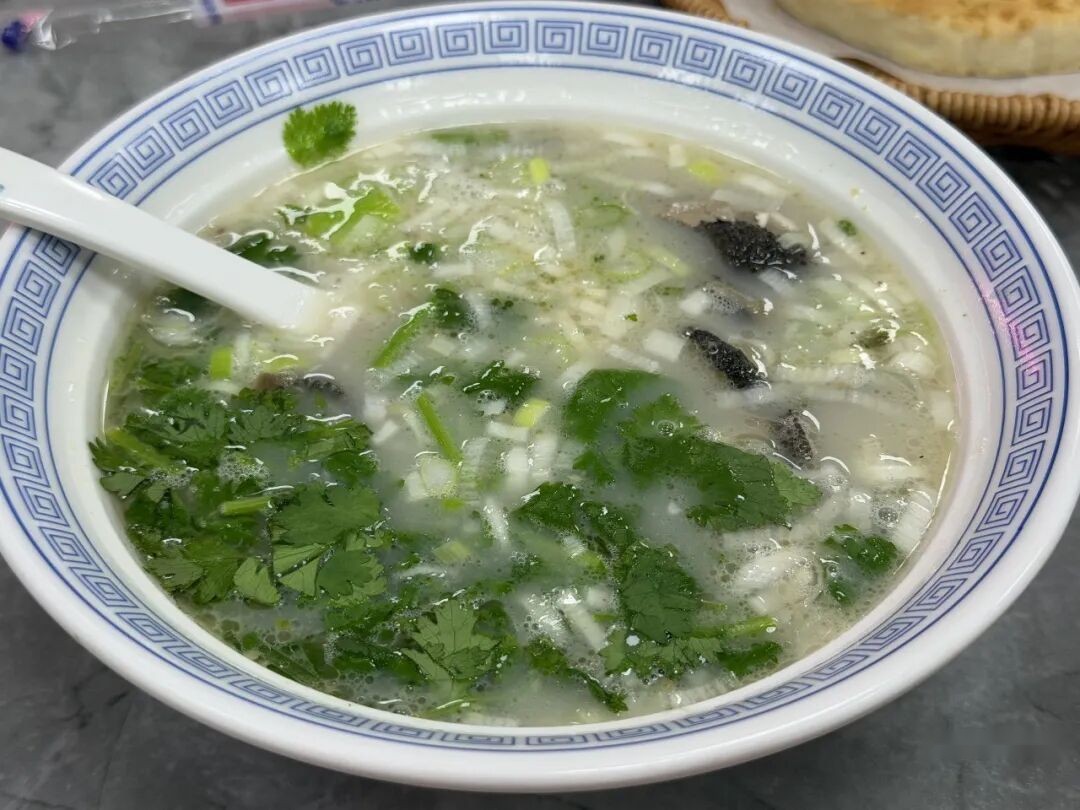
4. Comfort Hotel Halal Buffet
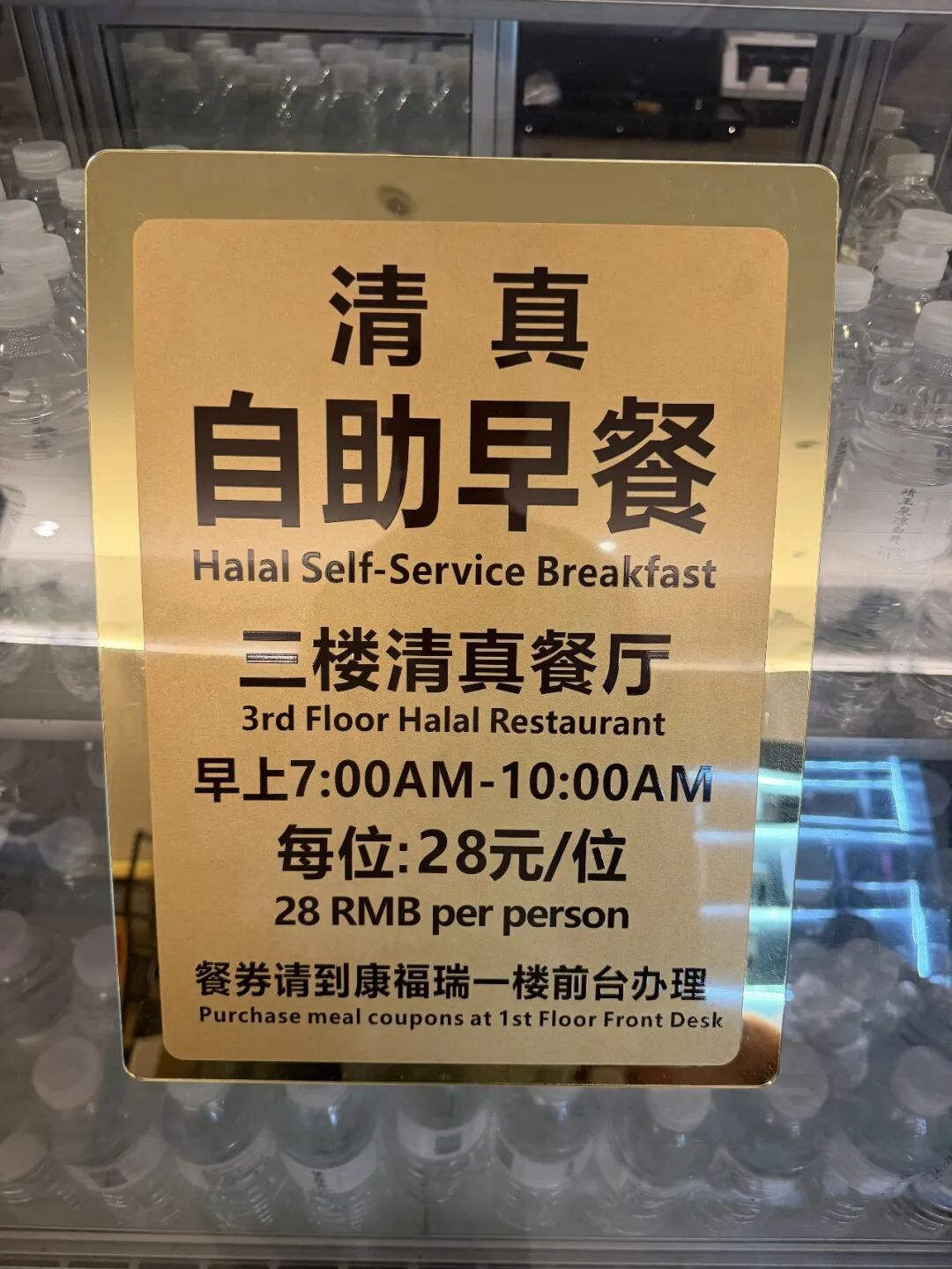
The Comfort Hotel in Niujie is now offering a halal breakfast to the public for 28 yuan a head, with both Western and Chinese options available.
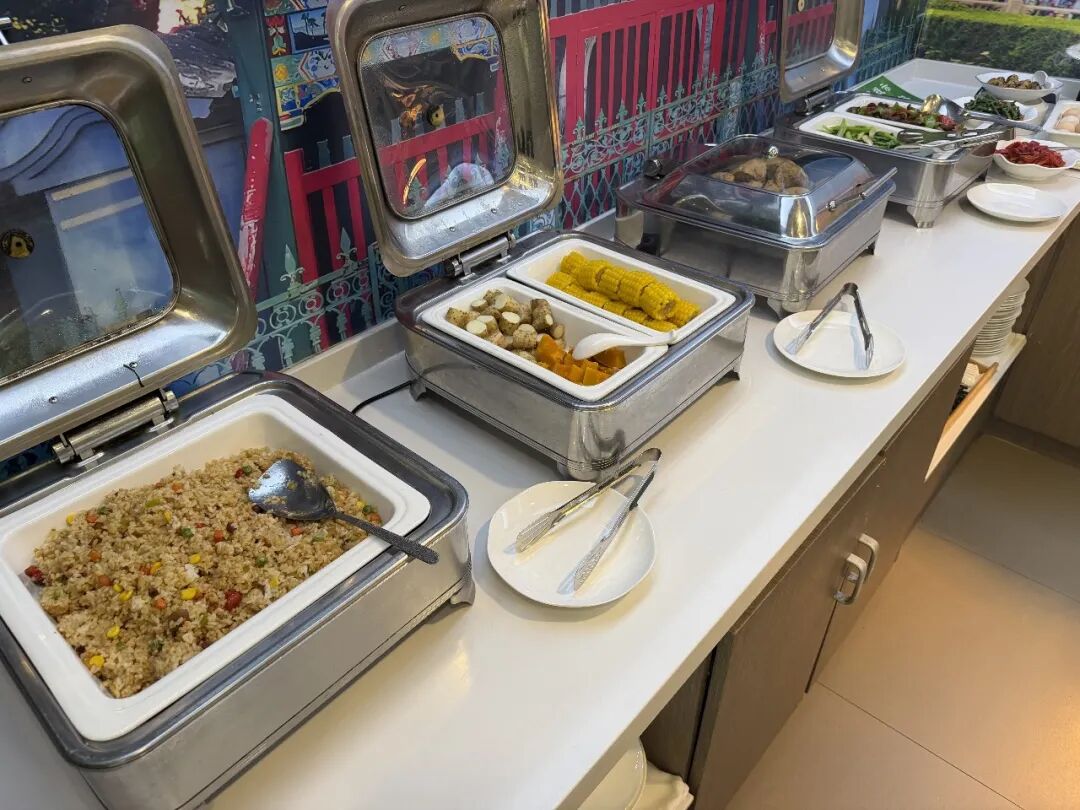
When I posted about this on Xiaohongshu, a lot of people complained that 28 yuan was too expensive and that you're better off ordering a la carte at a restaurant. I really don't get that logic; 28 yuan at a local spot barely gets you a bowl of lamian (hand-pulled noodles), and you’re definitely not getting the variety you get at a hotel breakfast buffet.
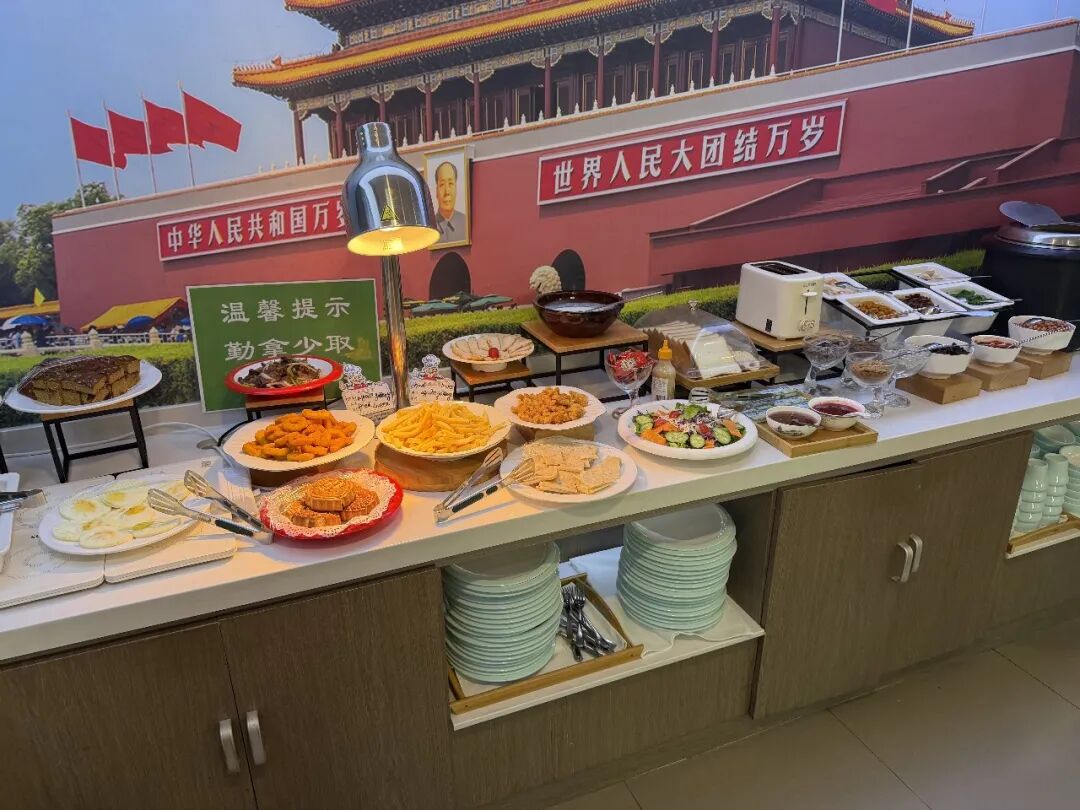
I love hotel breakfasts because the variety lets me eat a balanced and healthy meal. I rarely eat traditional Beijing-style breakfasts anymore—they’re just too greasy and packed with carbs, which I don't think is great for you.

For those 28 yuan, you get everything: veggies, fruit, desserts, milk, eggs, and staples. Plus, it's all-you-can-eat. Seriously, 28 yuan only buys you maybe 5 buns down at Hongji.
Looking at the headscarves the ladies in the back kitchen are wearing, you can tell right away they're from the Northwest.
5. Xizhuanfang Hot Pot Museum
Xizhuanfang is a new hot pot museum in Niujie. It’s spread across three courtyards tucked away in the hutongs (traditional narrow alleyways). The vibe is top-tier—it’s got that classic cultural aesthetic but feels upscale enough for a business meeting.
The courtyards are filled with flowers, birds, and fish, and they’ve got a bunch of antiques related to the history of hot pot on display.
If you follow your GPS, it’ll take you to Courtyard No. 1, which has most of the antiques. Courtyards No. 2 and No. 3 are in a different alleyway and are a bit more quiet and secluded.
The only downside is that they use alcohol stoves. They give off a bit of an odor, and the heat control isn't great. It would be much better if they switched to charcoal.
The ingredients are all high quality; they even serve top-tier grapes as a pre-meal fruit plate. Another highlight is their shaobing—you can choose from four types and get a sampler platter. I highly recommend the caramel shaobing; it’s similar to a tang huoshao (brown sugar pastry). Expect to spend at least 150 yuan per person.
6. Zanka Pakistani Restaurant
Zanka is a new Pakistani spot in the Chaoyang district that hosts a buffet on Fridays and Saturdays. The space is small, but it’s decorated pretty nicely.
When we went for lunch, there was only one other table occupied, probably because the location is a bit tucked away.
There’s no buffet on weekdays, so you have to order a la carte. The staff are all 'Pak-Tie' (a colloquial term for Pakistani friends) and don't speak Chinese.
I brought my son along because he’s a huge fan of pani puri (crispy hollow balls filled with spiced water), and I saw it was on the menu.
They definitely make the pani puri look pretty, but they weren't crispy and the texture was off, which was a huge disappointment for Fahim.
The chicken kebab was actually pretty good—the meat was tender with a nice little spicy kick.
The Peshawar chicken curry was just okay, and the plain naan wasn't really my style. I prefer a thinner, buttery naan. Overall, the food here was a bit lacking, even though the prices are cheap.
7. Maji Palace Cheese
Ma's Dairy has been around for over a decade. Compared to Naolao Wei (a famous dairy shop), it's cheaper and the portions are bigger, but honestly, it doesn't taste as good.
Their guozigan (preserved fruit drink) and dairy treats have a bit of a budget vibe, and the guozigan is super sweet. I still prefer Naolao Wei in Niujie. Ma’s used to have two locations, but the one in Guangqumen shut down, so now there’s only the Nongguangli branch left.
8. Sultan Turkish Restaurant
A new Sultan Turkish Restaurant just opened in the C-Joy City mall—that makes two spots in Beijing now. They’ve already got a huge following with multiple locations across Shanghai, Yiwu, and Guangzhou.
The vibe is pretty decent, though I’d say it’s a notch below Xiting Xiuse, which feels a bit more upscale and elegant.
The assorted mixed grill is delicious. I used to grab this kind of Middle Eastern food with my son back when we were in Malaysia because it’s not spicy, making it perfect for kids.
The Turkish balloon bread is another hit with my son; he can easily polish off half of it on his own.
Sultan teamed up with MADO ice cream, so you can get authentic Turkish goat milk ice cream at every location. My son doesn't really appreciate it though—he's not a fan of dairy products—but I personally love the MADO stuff.

9. Bani Restaurant
This newly opened Bani Pakistani restaurant is less than three kilometers away from the Zanka place I mentioned earlier, and they offer an affordable weekday buffet.
The interior is definitely prettier, and the service is more attentive. Plus, the lunch buffet is only 78 yuan.
That said, they only have eight dishes for the lunch buffet, and the taste is pretty average. Compared to all the other Pakistani spots in the city, I still prefer the China-Pakistan Friendship Restaurant.
The buffet drinks and the crunchy pani puri (hollow, crispy dough balls filled with spiced water and chickpeas) are a huge hit with my son; he can fill up on those alone.
10. Northwest Chencang Mianpi and Liangfen
I stumbled upon this Baoji-style liangfen (starch jelly) and mianpi (cold steamed noodles) shop near Madian. 'Chencang' is actually a district in Baoji.
There’s just one uncle running the place, but he’s super friendly. We asked for a two-way combo of mianpi, and he actually made us a three-way combo instead. It was delicious and perfectly seasoned, but it’s definitely more of a snack—you won't be full if you treat it as a main meal.
There’s only one table in the whole shop, which is tucked away inside the first floor of the Fulite Business Building. It's not the easiest place to find.
11. Liu's Watch Repair and BBQ
This place looks like a watch repair shop from the outside, but once you step inside, it’s a full-on barbecue joint.
It’s a classic Beijing-style BBQ spot with plenty of space, including both a courtyard and indoor seating. If you sit inside, you're surrounded by all these clocks. Since they’re all set to different times, you’ll hear them chiming and going off every now and then.
The guy grilling the skewers looks like he's from Xinjiang. Their prices are on the higher side, and since they grill order by order, the service is pretty slow. The beef skewers were a bit tough, the lamb tendon was chewy, and the lamb cartilage lacked flavor. I’d only recommend their lamb rib meat, which is tender—though it’ll run you 10 bucks a skewer.
Understanding Islamic Jurisprudence: Imam al-Shafi'i and the Evolution of Usul al-Fiqh from Theory to Practice
Articles • Hasan09 posted the article • 0 comments • 22 views • 1 days ago
Let’s dive into the legacy of Imam al-Shafi'i and his famous work, the Risala, and see how they shaped the history of Islamic jurisprudence (Usul al-Fiqh). By looking at recent academic research in Islamic legal history, we can break down how these theories spread and evolved during the 9th and 10th centuries.
The content here comes from a paper by Professor Wael Hallaq, a world-renowned legal scholar of Palestinian descent. I’ve mentioned him on my channel before, and this is my own summary of his work rather than a word-for-word translation, which should make it much easier to grasp.
The traditional view, held by scholars like Schacht and Coulson, is that al-Shafi'i is the 'father of jurisprudence,' claiming his Risala was a fully formed legal textbook. However, Hallaq argues that al-Shafi'i wasn't the actual founder. Instead, he suggests that a mature, fully developed field of jurisprudence didn't really emerge until the 9th to mid-10th century—about a hundred years after al-Shafi'i.
The person who actually built the first real framework for jurisprudence was Ibn Surayj and his students.
Hallaq argues that there are five key conditions that had to be met for mature jurisprudence to exist:
1. The standardization of the four sources of law: the Quran, Sunnah, Ijma (consensus), and Qiyas (analogy). These weren't always universally accepted. In the early 9th and 10th centuries, scholars proposed all sorts of sources—some suggested seven, while others rejected consensus and analogy entirely. Al-Shafi'i didn't offer a complete four-source theory, and even though Ibn Surayj recognized them, he didn't codify or order them. It wasn't until the 11th century that the 'four sources' became the standard consensus.
2. A structured approach to writing. Mature legal works aren't just random musings; they follow a logical sequence that the author explains. Early works from the 9th and 10th centuries—by figures like Ibn Dawud, al-Tabari, and Ibn al-Qassar—were pretty disorganized. Some put consensus first, others put 'taqlid' (blind following) at the front. The turning point came with al-Baqillani (died 403/1012), who finally dedicated sections to explaining why the Quran and Sunnah should come first, with consensus and analogy following. It was the wrap-up of a century of debate.
3. Clear disciplinary boundaries. A mature field needs general, universal principles that can be applied to specific cases. This didn't exist with Ibn Surayj or Ibn al-Qassar. The first person to clearly define the scope of jurisprudence was likely al-Basri (died 436/1044), and these definitions didn't really solidify until the 11th century.
4. Disciplinary self-awareness. Jurisprudence eventually anchored itself in three pillars: Kalam (theology), Fiqh (law), and linguistics. Early on, the term for 'law' was plural, referring to a scattered bunch of sources. Later, it became a singular, formal discipline. Professional 'jurists' didn't even exist in the early days; people like Ibn Surayj were just known for writing about law. The formal identity of a 'jurist' didn't appear until the late 10th century.
5. Independent, standardized text formats. Before this, there was no independent 'textbook' for jurisprudence. Al-Baqillani was the turning point here, too. Once the format was standardized, it led to branches like dialectics, legal theory, and conceptual analysis.
Hallaq believes that only when all five of these conditions are met can we call jurisprudence 'mature.' By this metric, al-Shafi'i doesn't qualify; he belongs to the 'prehistoric' phase of the field. His work was more like a draft for debate than a finished legal manual.
Hallaq proposes eight stages of development for Islamic jurisprudence:
Stage 1 (780–870 AD): The germination period. Works by people like al-Shafi'i were just drafts; whether or not his ideas survived depended on the debates that followed.
Stage 2 (850–940 AD): The struggle for legal authority. This was a messy time of debate between the Hanafis, Shafi'is, Mu'tazilites, and the literalist schools. There was no single mainstream theory yet; this was the era of Ibn Surayj and Ibn Dawud.
Stage 3 (920–1010 AD): The terminology shift. Legal terms moved from general religious roots toward the specific, technical field of jurisprudence. Al-Baqillani marks the tail end of this era.
Stage 4 (990–1130 AD): The crystallization period. All five conditions were met, and mature jurisprudence appeared. This is the era of al-Basri, al-Juwayni, and al-Ghazali.
Stage 5 (1100–1220 AD): Specialization. With jurisprudence now mature, sub-disciplines emerged, and legal theory began to integrate deeply with philosophy and theology, famously led by figures like al-Razi.
Stage 6 (1200–1400 AD): The standardization of textbooks. The written format for legal studies became fixed, spawning numerous sub-fields.
Stage 7 (1400–1830 AD): The stability phase. The Sharia education system became the core, stable structure that continued to function across the Muslim world.
Stage 8 (1830–present): Decline and fragmentation. During the colonial era, institutions like the Waqf (endowment) were dismantled, and European civil codes were introduced. The traditional education system began to die out, and those foundational legal texts became museum pieces.
Hallaq also pushes back against critics who argue that scholars like Ibn Dawud or al-Tabari had already written complete legal works. He notes that the original manuscripts don't exist; we only have fragments cited by others. Even if you piece them together, the logic is totally scrambled and doesn't match a mature structure. Mature texts prioritize linguistics, while Ibn Dawud put consensus right at the start. Al-Tabari’s work just included legal bits as an addendum; it’s not a structured legal treatise.
Some people claim the Hanafi school was the actual founder of jurisprudence. Hallaq disagrees, arguing that the early Hanafi reliance on personal opinion (ra'y) and independent reasoning was exactly what mature jurisprudence formed to reorganize and constrain.
Hallaq isn't suggesting there was a complete break in the chain of transmission. He admits al-Shafi'i’s idea of prioritizing the Quran and Sunnah had a huge impact. But it was just a draft for later debates. Decades after he died, his ideas were often ignored, and his direct student, al-Buwayti, actually toned down or modified some of al-Shafi'i’s core views on analogy. It wasn't a smooth path. Ibn Surayj’s theories also diverged from al-Shafi'i’s, and he never even used the term 'jurisprudence.'
Hallaq acknowledges that al-Shafi'i did establish the general direction—that the revealed text is the foundation of law—and everyone later inherited that. However, the purpose and structure of their writing were totally different. Mature jurisprudence aimed to create a complete 'tool' to handle brand-new legal cases, something that wasn't on al-Shafi'i’s radar.
Hallaq doesn't deny al-Shafi'i’s historical impact, but he insists that we can't equate his work with the mature books of jurisprudence we see later. True jurisprudence was born out of centuries of intense sectarian conflict, filtering, editing, and synthesis.
The emergence of jurisprudence was a product of intellectual struggle. It represents a massive integration within the Sunni tradition, bridging the gap between traditionalists and rationalists to build a comprehensive Sunni worldview and ethical framework. view all
Let’s dive into the legacy of Imam al-Shafi'i and his famous work, the Risala, and see how they shaped the history of Islamic jurisprudence (Usul al-Fiqh). By looking at recent academic research in Islamic legal history, we can break down how these theories spread and evolved during the 9th and 10th centuries.
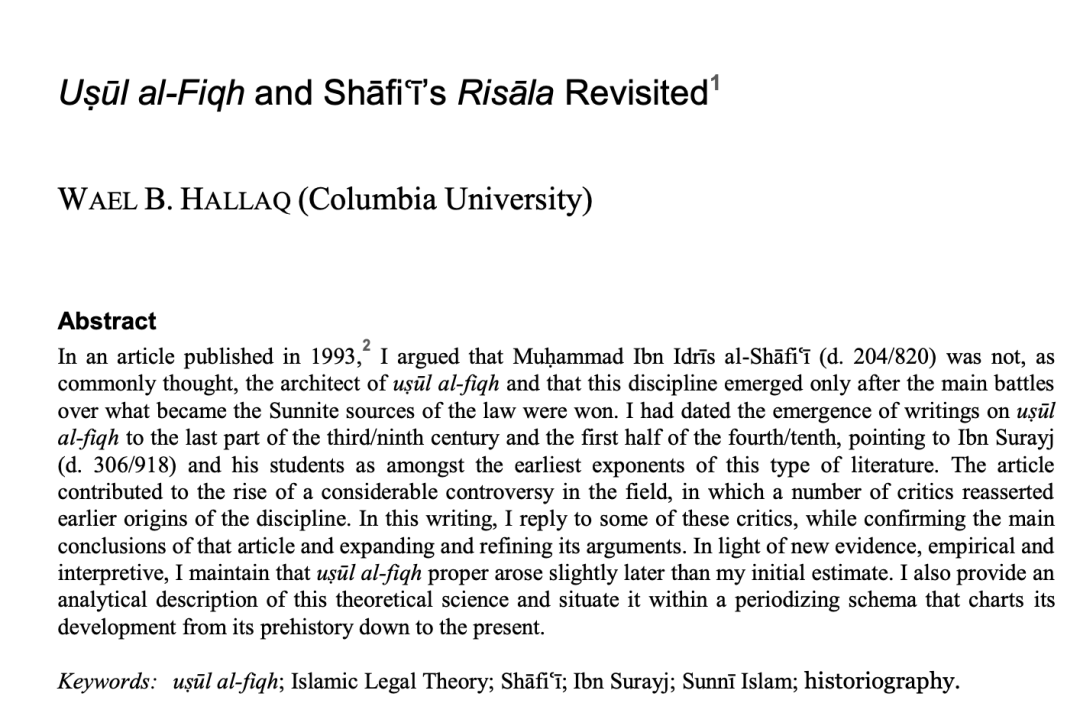
The content here comes from a paper by Professor Wael Hallaq, a world-renowned legal scholar of Palestinian descent. I’ve mentioned him on my channel before, and this is my own summary of his work rather than a word-for-word translation, which should make it much easier to grasp.
The traditional view, held by scholars like Schacht and Coulson, is that al-Shafi'i is the 'father of jurisprudence,' claiming his Risala was a fully formed legal textbook. However, Hallaq argues that al-Shafi'i wasn't the actual founder. Instead, he suggests that a mature, fully developed field of jurisprudence didn't really emerge until the 9th to mid-10th century—about a hundred years after al-Shafi'i.
The person who actually built the first real framework for jurisprudence was Ibn Surayj and his students.
Hallaq argues that there are five key conditions that had to be met for mature jurisprudence to exist:
1. The standardization of the four sources of law: the Quran, Sunnah, Ijma (consensus), and Qiyas (analogy). These weren't always universally accepted. In the early 9th and 10th centuries, scholars proposed all sorts of sources—some suggested seven, while others rejected consensus and analogy entirely. Al-Shafi'i didn't offer a complete four-source theory, and even though Ibn Surayj recognized them, he didn't codify or order them. It wasn't until the 11th century that the 'four sources' became the standard consensus.
2. A structured approach to writing. Mature legal works aren't just random musings; they follow a logical sequence that the author explains. Early works from the 9th and 10th centuries—by figures like Ibn Dawud, al-Tabari, and Ibn al-Qassar—were pretty disorganized. Some put consensus first, others put 'taqlid' (blind following) at the front. The turning point came with al-Baqillani (died 403/1012), who finally dedicated sections to explaining why the Quran and Sunnah should come first, with consensus and analogy following. It was the wrap-up of a century of debate.
3. Clear disciplinary boundaries. A mature field needs general, universal principles that can be applied to specific cases. This didn't exist with Ibn Surayj or Ibn al-Qassar. The first person to clearly define the scope of jurisprudence was likely al-Basri (died 436/1044), and these definitions didn't really solidify until the 11th century.
4. Disciplinary self-awareness. Jurisprudence eventually anchored itself in three pillars: Kalam (theology), Fiqh (law), and linguistics. Early on, the term for 'law' was plural, referring to a scattered bunch of sources. Later, it became a singular, formal discipline. Professional 'jurists' didn't even exist in the early days; people like Ibn Surayj were just known for writing about law. The formal identity of a 'jurist' didn't appear until the late 10th century.
5. Independent, standardized text formats. Before this, there was no independent 'textbook' for jurisprudence. Al-Baqillani was the turning point here, too. Once the format was standardized, it led to branches like dialectics, legal theory, and conceptual analysis.
Hallaq believes that only when all five of these conditions are met can we call jurisprudence 'mature.' By this metric, al-Shafi'i doesn't qualify; he belongs to the 'prehistoric' phase of the field. His work was more like a draft for debate than a finished legal manual.
Hallaq proposes eight stages of development for Islamic jurisprudence:
Stage 1 (780–870 AD): The germination period. Works by people like al-Shafi'i were just drafts; whether or not his ideas survived depended on the debates that followed.
Stage 2 (850–940 AD): The struggle for legal authority. This was a messy time of debate between the Hanafis, Shafi'is, Mu'tazilites, and the literalist schools. There was no single mainstream theory yet; this was the era of Ibn Surayj and Ibn Dawud.
Stage 3 (920–1010 AD): The terminology shift. Legal terms moved from general religious roots toward the specific, technical field of jurisprudence. Al-Baqillani marks the tail end of this era.
Stage 4 (990–1130 AD): The crystallization period. All five conditions were met, and mature jurisprudence appeared. This is the era of al-Basri, al-Juwayni, and al-Ghazali.
Stage 5 (1100–1220 AD): Specialization. With jurisprudence now mature, sub-disciplines emerged, and legal theory began to integrate deeply with philosophy and theology, famously led by figures like al-Razi.
Stage 6 (1200–1400 AD): The standardization of textbooks. The written format for legal studies became fixed, spawning numerous sub-fields.
Stage 7 (1400–1830 AD): The stability phase. The Sharia education system became the core, stable structure that continued to function across the Muslim world.
Stage 8 (1830–present): Decline and fragmentation. During the colonial era, institutions like the Waqf (endowment) were dismantled, and European civil codes were introduced. The traditional education system began to die out, and those foundational legal texts became museum pieces.
Hallaq also pushes back against critics who argue that scholars like Ibn Dawud or al-Tabari had already written complete legal works. He notes that the original manuscripts don't exist; we only have fragments cited by others. Even if you piece them together, the logic is totally scrambled and doesn't match a mature structure. Mature texts prioritize linguistics, while Ibn Dawud put consensus right at the start. Al-Tabari’s work just included legal bits as an addendum; it’s not a structured legal treatise.
Some people claim the Hanafi school was the actual founder of jurisprudence. Hallaq disagrees, arguing that the early Hanafi reliance on personal opinion (ra'y) and independent reasoning was exactly what mature jurisprudence formed to reorganize and constrain.
Hallaq isn't suggesting there was a complete break in the chain of transmission. He admits al-Shafi'i’s idea of prioritizing the Quran and Sunnah had a huge impact. But it was just a draft for later debates. Decades after he died, his ideas were often ignored, and his direct student, al-Buwayti, actually toned down or modified some of al-Shafi'i’s core views on analogy. It wasn't a smooth path. Ibn Surayj’s theories also diverged from al-Shafi'i’s, and he never even used the term 'jurisprudence.'
Hallaq acknowledges that al-Shafi'i did establish the general direction—that the revealed text is the foundation of law—and everyone later inherited that. However, the purpose and structure of their writing were totally different. Mature jurisprudence aimed to create a complete 'tool' to handle brand-new legal cases, something that wasn't on al-Shafi'i’s radar.
Hallaq doesn't deny al-Shafi'i’s historical impact, but he insists that we can't equate his work with the mature books of jurisprudence we see later. True jurisprudence was born out of centuries of intense sectarian conflict, filtering, editing, and synthesis.
The emergence of jurisprudence was a product of intellectual struggle. It represents a massive integration within the Sunni tradition, bridging the gap between traditionalists and rationalists to build a comprehensive Sunni worldview and ethical framework.
Guide to Hadith Transmission History: From Oral Tradition and Early Writing to Authentic Isnad Networks in Islamic Heritage
Articles • Hasan09 posted the article • 0 comments • 19 views • 1 days ago
Based on the classic research by contemporary prominent hadith scholar Professor Muhammad Mustafa al-Azmi, this guide breaks down the early written records of hadiths from the time of the Prophet, the teaching networks of the Companions, and the rigorous cross-regional verification mechanisms used during traveling scholarship.
Professor Muhammad Mustafa al-Azmi was a renowned contemporary orthodox apologetic scholar from India. Fluent in English, Arabic, and multiple other languages, he spent years teaching in Saudi Arabia, where he also passed away. I've learned a ton from his work, and this article is basically my summary of his major book on hadith studies mentioned below.
He felt that the English-speaking world lacked high-quality books on hadith studies, so he wanted to write one in English to make it easier for college students and everyday educated readers who don't know Arabic to understand hadith, while also pushing back against various misconceptions spread by Orientalists.
However, al-Azmi also made it clear that just reading this one book isn't enough to judge whether a specific hadith is authentic or not.
Originally, the word hadith meant a narrative, story, or conversation, and it could refer to religious, secular, historical, or recent events, with the adjective form meaning "new." It appears 23 times in classic texts. Back during the time of the Prophet, the term almost exclusively referred to accounts about the Prophet—including his sayings, actions, tacit approvals, and physical descriptions—though in a broader sense it could also refer to the statements of the Companions and Successors.
Sunnah originally meant a behavioral model or way of walking a path, but later it came to specifically refer to the normative behavior of the Prophet. Hadiths are the texts that record the Sunnah, and the two terms are often used interchangeably.
The Prophet taught hadiths through three main methods: 1. Oral transmission, where important points were repeated three times, followed by a test for the Companions; 2. Written records, where scribes wrote down what was dictated; and 3. Practical demonstrations, like prayer and pilgrimage, where everyone could watch and copy hands-on.
The Prophet taught hadiths by setting up learning spaces in Medina and sending his followers out everywhere to deliver instructions, telling those present to pass the knowledge on to those who were absent. After listening to a lecture, the Companions would get together to review and recall what was said, taking turns attending classes so that anyone who missed a session could learn from someone who was there, and some of the Companions even wrote hadiths down.
After the Prophet passed away, the Companions spread out across different regions, carrying hadiths everywhere, and that's when eight distinct methods for transmitting hadiths emerged:
1. The teacher reads to the students—this includes reciting from memory, reading straight from a book, Q&A, and dictation. Later on, professional repeaters emerged who would speak loudly to massive audiences, and after copying down the texts, students would proofread them, with early records mostly kept on wooden tablets.
2. Students read texts back to the teacher for verification. After the 2nd century AH, this became the standard method. Students would mark up their manuscripts to prove they had read them to the teacher, and without going through this process, even if you bought a handwritten copy, you weren't allowed to transmit it on your own.
3. The teacher gives a student permission to transmit a certain book without forcing the student to read the entire work cover-to-cover. This method became widely used after the 3rd century AH, though scholars have mixed views on how legally binding it is.
4. The teacher hands a handwritten manuscript directly to a student and grants them the rights to transmit it.
5. Sending hadith texts across distances via letters for remote learning.
6. Informing someone that they have the clearance to transmit, which has always been a bit controversial.
7. Bestowing books through a will, where a scholar hands over their manuscripts right before passing away and gives someone permission to transmit them.
8. Finding an old manuscript on your own without having official transmission credentials, meaning you can only cite it by noting "found in such-and-such manuscript."
Successors usually started systematically studying hadiths in their early twenties, and finishing their studies meant getting a certificate. Kids aged five and older were counted as official students, while anyone under five was just marked down as present. Later on, it became a thing for very young kids to get certificates, but the point of these certificates was to protect the purity of the text, not to prove that a kid actually understood the hadith. Plus, most of this education didn't cost a dime.
Hadiths were already being written down during the time of the Prophet, and the book lists a bunch of Companions—like Abu Hurayrah, Ibn Umar, Aisha, Ibn Abbas, and Abdullah ibn Amr—who all had their own handwritten hadith collections. The author concludes that the vast majority of the Prophet's hadiths were actually written down while the Companions were still alive.
As for the circulating hadith that says, "Only record the Quran, do not write down any other hadiths," most of the chains of narration for that prohibition have weak or broken links. The original point of that ban was to keep hadith text from being written on the exact same pages as the scripture so people wouldn't mix up the Quran with anything else—it wasn't a permanent ban on writing hadiths. Some scholars discouraged writing things down purely out of personal preference, not because of a religious command, and they would still secretly make copies for themselves. A lot of scholars were just worried that people would lean too heavily on books and totally ruin their memory skills.
The hadith isnad (chain of transmission) system kicked off during the civil wars and is linked to pre-Islamic poetry chains. Once the civil wars broke out, scholars strictly demanded that narrators be named so they could tell different factions apart. By the end of the 1st century AH, this whole system was already locked down and fully mature.
Hadiths are classified based on their isnads (chains of transmission) into specific categories:
1. Mutawatir (mass-transmitted) hadiths: Every single generation has a huge crowd of narrators, making it impossible for everyone to have conspired to lie. These are split into verbal mutawatir (where the exact wording is identical, which is rare) and conceptual mutawatir (where the underlying meaning is the same, but the wording differs, which is very common).
2. Ahad (isolated) hadiths: These don't hit the threshold for mass transmission. They're broken down further based on whether there are at least 3, 2, or 1 narrator per generation. Depending on whether the chain is unbroken and traces all the way back to the Prophet, the Companions, or the Successors—or if a Successor skips the Companion straight to the Prophet, or if there's a missing link in the chain—they get categorized accordingly.
After the civil wars broke out and forged hadiths started showing up, hadith criticism also emerged. Back in the era of the Companions, they used to cross-check each other. By the 1st century AH, Successors in the Medina and Iraq schools were already running systematic critiques. Fast forward to the 2nd and 3rd centuries AH when traveling for scholarship blew up, and scholars started comparing transmissions across different regions. That era gave birth to a massive wave of hadith masters, including figures like Ahmad ibn Hanbal and al-Bukhari.
By cross-checking reports from multiple students of the same teacher, scholars could figure out whether a mistake came from the teacher himself or just a memory slip by a student during note-taking. They also compared accounts by the same scholar from different time periods and double-checked oral reports against written manuscripts.
Human reason alone can't really judge whether a historical narration is true or false, so scholars only reject a hadith text if it totally contradicts basic, common-sense rationality.
A qualified narrator needs to meet two strict requirements: rock-solid moral character and an accurate memory. The character of the Sahabah (companions of the Prophet) is vouched for by Allah and the Prophet, while other narrators have to go through extra investigation.
Narrator tiers (Ibn Hajar's 12 levels) range from the top: Sahabah (companions of the Prophet) -> Thiqa (reliable) -> Saduq (honest) -> Saduq yahim (honest but frequently makes mistakes) -> Maqbul (acceptable) -> Majhul al-hal (status unknown) -> Da'if (weak) -> all the way down to Kadhdhab (liar, fabricator). Throughout the entire chain of narration (isnad), if even a single narrator is classified as 'weak' (da'if), that specific hadith is deemed weak.
Azami points out: why did most early handwritten manuscripts disappear? Because once everything was thoroughly compiled and bound into standardized books later on, keeping the rough drafts just wasn't necessary anymore.
Major hadith scholars and their works include:
1. Malik's Al-Muwatta (AH 93–179): This isn't a pure hadith collection; it also includes legal rulings from the Medina school of thought. It exists in over eighty different versions. Malik actually turned down the Caliph's request to make this book the official nationwide law, arguing that different regions needed to follow their own localized legal practices.
2. Ahmad ibn Hanbal's Musnad (AH 164–241): This massive work organizes hadiths by the names of the Sahabah rather than by legal topics. It includes roughly 30,000 to 40,000 hadiths, which makes searching through it pretty tough. Ibn Hanbal faced heavy persecution from the Mu'tazilites but refused to back down or compromise.
3. Al-Bukhari's Sahih al-Bukhari (AH 194–256): Compiled over a span of 16 years using insanely strict criteria. Bukhari insisted on having concrete, verifiable proof that two consecutive narrators had actually met each other face-to-face and studied together.
4. Muslim's Sahih Muslim (AH 204–261): Just as famous as Bukhari's collection. Muslim took a slightly different approach, believing that if two narrators lived during the same era in the same region, they had the opportunity to connect, so ironclad proof of a physical meeting wasn't strictly required. He only included sound (sahih) hadiths agreed upon by consensus. Both his work and Bukhari's are widely considered by scholars to contain entirely sound hadiths.
5. An-Nasa'i's Al-Sunan al-Kubra and Al-Mujtaba (AH 215–303): Available in both a large comprehensive collection and a smaller selected edition, this work is super critical. It includes weak hadiths alongside the strong ones while actively pointing out their flaws.
6. Abu Dawud's Sunan Abu Dawud (AH 202–275): Focuses heavily on law-related hadiths. The author believed that a weak hadith is still better than a scholar's personal opinion, so the book includes some weak hadiths while clearly marking their defects.
7. Al-Tirmidhi's Sunan al-Tirmidhi (AH 209–279): The standout feature here is that after every single hadith, the author evaluates its grading and lists the differing views of various jurists on the issue.
8. Ibn Majah's Sunan ibn Majah (AH 209–273): This is rated the lowest among the Six Major Hadith Books (Kutub al-Sittah). It contains 1,339 hadiths not found in the other five books, but it mixes sound, good, weak, and even terrible isolated (mufrad) hadiths together, and the author rarely pointed out their defects. It ended up in the Kutub al-Sittah purely due to the editing habits of later scholars—ancient traditions didn't have a fixed concept of 'six books,' and inclusion doesn't mean every single hadith in it is sound.
9. Al-Tabari's trilogy: Al-Mu'jam al-Kabir, Al-Mu'jam al-Awsat, and Al-Mu'jam as-Saghir (AH 260–360), which are packed with a massive amount of hadiths and historical source materials.
10. Ibn al-Athir's Jami' al-Usul (AH 554–606): This book extracts hadiths from the six canonical collections and reorganizes them for easier searching, though researchers still need to go back to the original source books to double-check citations.
11. Al-Haythami's Majma' az-Zawa'id (AH 735–807): A massive reference tool specifically put together to collect hadiths not found in the six authentic collections, with the chains of narration stripped away and the strength of each hadith clearly noted.
12. As-Suyuti's Jam' al-Jawami' (AH 849–911): He tried to compile every single hadith in existence, but he never finished it, and his methodology for grading hadiths faced a lot of criticism from later scholars.
That sums up my breakdown of Professor Azami's work. However, even after diving deep into these research methods of hadith studies, I still have a few burning questions that my original video post didn't answer. Let me run through them again here:
1. How do we verify the real-world context in which a hadith text first emerged? Even if the content is totally authentic and reliable, was its scope meant only for the people physically standing there at the time, or does it apply to all believers across future generations?
2. If an isolated hadith (hadith ahad) can't be cross-verified through multiple independent chains, how can we truly judge whether its text is trustworthy? And if the message was super important, why did it end up as an isolated report instead of being passed down by massive crowds (mutawatir)?
3. Were the character and integrity of the Sahabah really completely flawless and beyond any doubt? If the things they narrated were totally unquestionable, how do we explain the civil war that broke out between Ali and Aisha? view all
Based on the classic research by contemporary prominent hadith scholar Professor Muhammad Mustafa al-Azmi, this guide breaks down the early written records of hadiths from the time of the Prophet, the teaching networks of the Companions, and the rigorous cross-regional verification mechanisms used during traveling scholarship.
Professor Muhammad Mustafa al-Azmi was a renowned contemporary orthodox apologetic scholar from India. Fluent in English, Arabic, and multiple other languages, he spent years teaching in Saudi Arabia, where he also passed away. I've learned a ton from his work, and this article is basically my summary of his major book on hadith studies mentioned below.
He felt that the English-speaking world lacked high-quality books on hadith studies, so he wanted to write one in English to make it easier for college students and everyday educated readers who don't know Arabic to understand hadith, while also pushing back against various misconceptions spread by Orientalists.
However, al-Azmi also made it clear that just reading this one book isn't enough to judge whether a specific hadith is authentic or not.
Originally, the word hadith meant a narrative, story, or conversation, and it could refer to religious, secular, historical, or recent events, with the adjective form meaning "new." It appears 23 times in classic texts. Back during the time of the Prophet, the term almost exclusively referred to accounts about the Prophet—including his sayings, actions, tacit approvals, and physical descriptions—though in a broader sense it could also refer to the statements of the Companions and Successors.
Sunnah originally meant a behavioral model or way of walking a path, but later it came to specifically refer to the normative behavior of the Prophet. Hadiths are the texts that record the Sunnah, and the two terms are often used interchangeably.
The Prophet taught hadiths through three main methods: 1. Oral transmission, where important points were repeated three times, followed by a test for the Companions; 2. Written records, where scribes wrote down what was dictated; and 3. Practical demonstrations, like prayer and pilgrimage, where everyone could watch and copy hands-on.
The Prophet taught hadiths by setting up learning spaces in Medina and sending his followers out everywhere to deliver instructions, telling those present to pass the knowledge on to those who were absent. After listening to a lecture, the Companions would get together to review and recall what was said, taking turns attending classes so that anyone who missed a session could learn from someone who was there, and some of the Companions even wrote hadiths down.
After the Prophet passed away, the Companions spread out across different regions, carrying hadiths everywhere, and that's when eight distinct methods for transmitting hadiths emerged:
1. The teacher reads to the students—this includes reciting from memory, reading straight from a book, Q&A, and dictation. Later on, professional repeaters emerged who would speak loudly to massive audiences, and after copying down the texts, students would proofread them, with early records mostly kept on wooden tablets.
2. Students read texts back to the teacher for verification. After the 2nd century AH, this became the standard method. Students would mark up their manuscripts to prove they had read them to the teacher, and without going through this process, even if you bought a handwritten copy, you weren't allowed to transmit it on your own.
3. The teacher gives a student permission to transmit a certain book without forcing the student to read the entire work cover-to-cover. This method became widely used after the 3rd century AH, though scholars have mixed views on how legally binding it is.
4. The teacher hands a handwritten manuscript directly to a student and grants them the rights to transmit it.
5. Sending hadith texts across distances via letters for remote learning.
6. Informing someone that they have the clearance to transmit, which has always been a bit controversial.
7. Bestowing books through a will, where a scholar hands over their manuscripts right before passing away and gives someone permission to transmit them.
8. Finding an old manuscript on your own without having official transmission credentials, meaning you can only cite it by noting "found in such-and-such manuscript."
Successors usually started systematically studying hadiths in their early twenties, and finishing their studies meant getting a certificate. Kids aged five and older were counted as official students, while anyone under five was just marked down as present. Later on, it became a thing for very young kids to get certificates, but the point of these certificates was to protect the purity of the text, not to prove that a kid actually understood the hadith. Plus, most of this education didn't cost a dime.
Hadiths were already being written down during the time of the Prophet, and the book lists a bunch of Companions—like Abu Hurayrah, Ibn Umar, Aisha, Ibn Abbas, and Abdullah ibn Amr—who all had their own handwritten hadith collections. The author concludes that the vast majority of the Prophet's hadiths were actually written down while the Companions were still alive.
As for the circulating hadith that says, "Only record the Quran, do not write down any other hadiths," most of the chains of narration for that prohibition have weak or broken links. The original point of that ban was to keep hadith text from being written on the exact same pages as the scripture so people wouldn't mix up the Quran with anything else—it wasn't a permanent ban on writing hadiths. Some scholars discouraged writing things down purely out of personal preference, not because of a religious command, and they would still secretly make copies for themselves. A lot of scholars were just worried that people would lean too heavily on books and totally ruin their memory skills.
The hadith isnad (chain of transmission) system kicked off during the civil wars and is linked to pre-Islamic poetry chains. Once the civil wars broke out, scholars strictly demanded that narrators be named so they could tell different factions apart. By the end of the 1st century AH, this whole system was already locked down and fully mature.
Hadiths are classified based on their isnads (chains of transmission) into specific categories:
1. Mutawatir (mass-transmitted) hadiths: Every single generation has a huge crowd of narrators, making it impossible for everyone to have conspired to lie. These are split into verbal mutawatir (where the exact wording is identical, which is rare) and conceptual mutawatir (where the underlying meaning is the same, but the wording differs, which is very common).
2. Ahad (isolated) hadiths: These don't hit the threshold for mass transmission. They're broken down further based on whether there are at least 3, 2, or 1 narrator per generation. Depending on whether the chain is unbroken and traces all the way back to the Prophet, the Companions, or the Successors—or if a Successor skips the Companion straight to the Prophet, or if there's a missing link in the chain—they get categorized accordingly.
After the civil wars broke out and forged hadiths started showing up, hadith criticism also emerged. Back in the era of the Companions, they used to cross-check each other. By the 1st century AH, Successors in the Medina and Iraq schools were already running systematic critiques. Fast forward to the 2nd and 3rd centuries AH when traveling for scholarship blew up, and scholars started comparing transmissions across different regions. That era gave birth to a massive wave of hadith masters, including figures like Ahmad ibn Hanbal and al-Bukhari.
By cross-checking reports from multiple students of the same teacher, scholars could figure out whether a mistake came from the teacher himself or just a memory slip by a student during note-taking. They also compared accounts by the same scholar from different time periods and double-checked oral reports against written manuscripts.
Human reason alone can't really judge whether a historical narration is true or false, so scholars only reject a hadith text if it totally contradicts basic, common-sense rationality.
A qualified narrator needs to meet two strict requirements: rock-solid moral character and an accurate memory. The character of the Sahabah (companions of the Prophet) is vouched for by Allah and the Prophet, while other narrators have to go through extra investigation.
Narrator tiers (Ibn Hajar's 12 levels) range from the top: Sahabah (companions of the Prophet) -> Thiqa (reliable) -> Saduq (honest) -> Saduq yahim (honest but frequently makes mistakes) -> Maqbul (acceptable) -> Majhul al-hal (status unknown) -> Da'if (weak) -> all the way down to Kadhdhab (liar, fabricator). Throughout the entire chain of narration (isnad), if even a single narrator is classified as 'weak' (da'if), that specific hadith is deemed weak.
Azami points out: why did most early handwritten manuscripts disappear? Because once everything was thoroughly compiled and bound into standardized books later on, keeping the rough drafts just wasn't necessary anymore.
Major hadith scholars and their works include:
1. Malik's Al-Muwatta (AH 93–179): This isn't a pure hadith collection; it also includes legal rulings from the Medina school of thought. It exists in over eighty different versions. Malik actually turned down the Caliph's request to make this book the official nationwide law, arguing that different regions needed to follow their own localized legal practices.
2. Ahmad ibn Hanbal's Musnad (AH 164–241): This massive work organizes hadiths by the names of the Sahabah rather than by legal topics. It includes roughly 30,000 to 40,000 hadiths, which makes searching through it pretty tough. Ibn Hanbal faced heavy persecution from the Mu'tazilites but refused to back down or compromise.
3. Al-Bukhari's Sahih al-Bukhari (AH 194–256): Compiled over a span of 16 years using insanely strict criteria. Bukhari insisted on having concrete, verifiable proof that two consecutive narrators had actually met each other face-to-face and studied together.
4. Muslim's Sahih Muslim (AH 204–261): Just as famous as Bukhari's collection. Muslim took a slightly different approach, believing that if two narrators lived during the same era in the same region, they had the opportunity to connect, so ironclad proof of a physical meeting wasn't strictly required. He only included sound (sahih) hadiths agreed upon by consensus. Both his work and Bukhari's are widely considered by scholars to contain entirely sound hadiths.
5. An-Nasa'i's Al-Sunan al-Kubra and Al-Mujtaba (AH 215–303): Available in both a large comprehensive collection and a smaller selected edition, this work is super critical. It includes weak hadiths alongside the strong ones while actively pointing out their flaws.
6. Abu Dawud's Sunan Abu Dawud (AH 202–275): Focuses heavily on law-related hadiths. The author believed that a weak hadith is still better than a scholar's personal opinion, so the book includes some weak hadiths while clearly marking their defects.
7. Al-Tirmidhi's Sunan al-Tirmidhi (AH 209–279): The standout feature here is that after every single hadith, the author evaluates its grading and lists the differing views of various jurists on the issue.
8. Ibn Majah's Sunan ibn Majah (AH 209–273): This is rated the lowest among the Six Major Hadith Books (Kutub al-Sittah). It contains 1,339 hadiths not found in the other five books, but it mixes sound, good, weak, and even terrible isolated (mufrad) hadiths together, and the author rarely pointed out their defects. It ended up in the Kutub al-Sittah purely due to the editing habits of later scholars—ancient traditions didn't have a fixed concept of 'six books,' and inclusion doesn't mean every single hadith in it is sound.
9. Al-Tabari's trilogy: Al-Mu'jam al-Kabir, Al-Mu'jam al-Awsat, and Al-Mu'jam as-Saghir (AH 260–360), which are packed with a massive amount of hadiths and historical source materials.
10. Ibn al-Athir's Jami' al-Usul (AH 554–606): This book extracts hadiths from the six canonical collections and reorganizes them for easier searching, though researchers still need to go back to the original source books to double-check citations.
11. Al-Haythami's Majma' az-Zawa'id (AH 735–807): A massive reference tool specifically put together to collect hadiths not found in the six authentic collections, with the chains of narration stripped away and the strength of each hadith clearly noted.
12. As-Suyuti's Jam' al-Jawami' (AH 849–911): He tried to compile every single hadith in existence, but he never finished it, and his methodology for grading hadiths faced a lot of criticism from later scholars.
That sums up my breakdown of Professor Azami's work. However, even after diving deep into these research methods of hadith studies, I still have a few burning questions that my original video post didn't answer. Let me run through them again here:
1. How do we verify the real-world context in which a hadith text first emerged? Even if the content is totally authentic and reliable, was its scope meant only for the people physically standing there at the time, or does it apply to all believers across future generations?
2. If an isolated hadith (hadith ahad) can't be cross-verified through multiple independent chains, how can we truly judge whether its text is trustworthy? And if the message was super important, why did it end up as an isolated report instead of being passed down by massive crowds (mutawatir)?
3. Were the character and integrity of the Sahabah really completely flawless and beyond any doubt? If the things they narrated were totally unquestionable, how do we explain the civil war that broke out between Ali and Aisha?
Hadith Studies and Islamic Heritage: Bridging Traditional Methodology and Modern Historical Analysis
Articles • Hasan09 posted the article • 0 comments • 19 views • 1 days ago
This article provides an overview of the differences in research approaches and methodologies between Eastern and Western scholars regarding Hadith studies. It contrasts the traditional Islamic scholars' rigorous system for verifying the credibility of narrators with the modern academic focus on textual analysis, highlighting the rich dimensions of research into these prophetic traditions.
The content here is drawn from Chapters 8 and 9 of a book by Jonathan Brown, a prominent contemporary American Hadith scholar. Brown studied Arabic systematically in Cairo, Egypt, conducted years of fieldwork across various Middle Eastern countries, and studied under local scholars in Sana'a, Yemen, to receive an ijazah (a formal license/certificate to transmit Hadith). He is currently a professor at Georgetown University and serves as the editor-in-chief of the Oxford Encyclopedia of Islam and Law.
Theological scholars evaluate the credibility of narrators from within the faith's traditional perspective, while modern Western historical studies ask a different question: whether a specific Hadith actually originated from the Prophet himself in the 7th century. The evaluation criteria for each are different; a 'sound' Hadith does not necessarily mean it is 'historically authentic' in the modern academic sense.
With the rise of Orientalism in 19th-century Europe, Western scholars gained access to the six major Hadith collections and classic biographical literature. However, they did not accept the faith-based premises—such as the infallibility of the Prophet or the inherent integrity of all narrators—and instead approached Hadith texts through the lens of critical analysis. Early Western scholars were skeptical, suggesting that many Hadith were retrospective creations of later communities rather than the actual words of the Prophet.
Brown points out a key ideological divide: believers have long acknowledged the existence of forged Hadith, but they mostly attribute the motives to sectarian strife or intentional fabrication. In contrast, Western scholars argue that these 'forged' Hadith were not necessarily the result of someone lying on purpose, but rather a natural evolution of oral tradition, where later communities retrospectively created chains of narration (isnad) to justify their views.
Taking the famous Orientalist Joseph Schacht as an example, he argued that many isnads (chains of transmission) converged on a single successor in the 8th century, with the connections going back to the Prophet's companions appearing chaotic and unreliable. Therefore, Schacht inferred that Hadith were not preserved from the 7th century, but were invented in the 8th. He believed the 'common link' narrator was the inventor, and later generations traced these views back to the companions and then to the Prophet.
Schacht believed that the vast majority of Hadith were products of legal debates during the Umayyad and Abbasid eras. It wasn't until the time of Al-Shafi'i that the standard was established that the Prophet's sunnah (tradition/practice) held supreme authority in jurisprudence. Before that, regions like Medina and Kufa relied on local community customs rather than direct Hadith citations. Many legal Hadith attributed to the Prophet were constructed during Al-Shafi'i's time to provide ultimate authority to the views of various legal schools.
Schacht observed that for the same legal issues, different regional schools held different opinions, and subsequently, corresponding narrations emerged to attribute their respective viewpoints to the Prophet. He noticed that many isnads became more riddled with loopholes the closer they got to the Prophet.
Brown points out the limitations of Schacht’s theory. Schacht expanded the idea that 'many legal Hadith emerged in the 8th century' to claim that almost all were later constructions, ignoring the possibility that oral traditions existed as early as the 7th century. Schacht rarely used early manuscripts and relied too heavily on printed collections, overlooking the Sahifa Hammam b. Munabbih (a 1st-century Hijri manuscript). This document contains hundreds of Hadith collected by Abu Hurairah, indicating that large-scale collection of Hadith was already occurring in the early 8th century, not just invented from scratch. Converging chains of narration onto one 8th-century figure only shows that he was a key transmitter who inherited earlier oral traditions; the existence of the chain alone cannot prove a Hadith is false.
Modern research suggests that Schacht's extreme conclusions don't hold up. We can only say that Schacht revealed how many Hadith were shaped and adapted through 8th and 9th-century sectarian debates. Some Hadith kernels can be traced back to the 7th century and the time of the companions, but during the oral transmission process, the texts were constantly rewritten, adjusted, and adapted to fit later controversies. Narrator chains were often 'upgraded' or modified by later generations to connect old texts through longer chains all the way to the Prophet.
Modern studies have found that chains of narration often appear after the text itself. In many cases, a story existed first, and later scholars constructed a complete chain to support it; this has become a widely accepted finding. Early successors frequently omitted intermediate links, simply saying 'So-and-so said,' which made the chains look shorter and older than they actually were.
Brown notes that by cross-referencing chains of narration with textual content, scholars can accurately identify what was added or rewritten by later generations and determine which versions appeared later. However, this cannot 100% prove that a specific Hadith was spoken by the Prophet himself; one can only infer whether the general meaning might have originated with him. For example, the earliest extant Hadith manuscript fragments date to around 730 AD, which only proves that large-scale collection was happening by the early 8th century, not that every sentence in the manuscript was spoken by the Prophet.
Some scholars oppose Schacht, pointing out the highly developed oral culture in the early Arab world. They argue one shouldn't assume oral tradition inevitably leads to large-scale fabrication. The Prophet’s companions were fully capable of memorizing and preserving a large number of the Prophet's sayings and actions and passing them on to the successors. While rewriting occurred, the original core meaning was likely preserved.
Brown highlights the limitation of Western research: the vast majority of available historical sources appeared after the 9th century, with almost no complete texts from the 7th century surviving. Scholars are forced to reconstruct earlier stages based on 9th-century compilations, creating an evidentiary gap.
After the concepts of Orientalist research reached the Middle East, they triggered a significant ideological shock. Next, we look at how the conservatives, skeptics, moderate reformers, and the Salafi movement responded to the verification of Hadith.
The traditional community's original understanding was that the 'sound' Hadith in the six major collections were all truly spoken by the Prophet. Now, a sharp question has arisen: if some Hadith historically did not originate from the Prophet, can they still be used as a legal basis? Is classical Hadith verification enough to distinguish between historical truth and fabricated content? In modern society, which parts of the Hadith must be strictly followed, and which are merely ancient customs?
Brown emphasizes that in ancient times, believers already knew that forged Hadith existed, but those doubts were kept within the community. In the modern era, this is the first time that external historical criticism has been introduced into the community's public debate.
Moderate modernists like Muhammad Abduh and Rashid Rida acknowledge the authority of the two major Sahih (authentic) collections but argue that classical Hadith verification is only a probabilistic judgment, not equivalent to absolute historical truth. Being 'sound' (sahih) only means the chain of narration is technically correct; it does not guarantee the text is the Prophet's exact word. They distinguish between two types of Hadith: those regarding creed and core tenets, and those regarding local or temporal customs. The latter needs to be interpreted in the context of 7th-century Arab history and cannot be applied unconditionally to the modern world. They do not reject all Hadith but argue that if a Hadith's literal meaning conflicts with the Quran, it should be set aside.
Radical skeptics argue that apart from a very small number of mass-transmitted (mutawatir) Hadith, the vast majority of solitary-narrated (ahad) Hadith cannot be used as a definitive basis for faith or law, sometimes even suggesting that the Quran should be the only reliable source.
Traditional scholars point out that the Quran itself does not describe the complete details of worship. If the majority of Hadith are discarded, the entire framework for prayer, marriage, and inheritance law loses its practical basis. Radical skeptics struggle to build a complete legal system at a practical level.
Conservatives, represented by Al-Azhar scholars, believe that 'sound' Hadith that have passed rigorous verification should be accepted. They view the classical system of Hadith science as a divinely gifted tool for protecting the Sunnah. They acknowledge that humans cannot achieve absolute 'seeing is believing' certainty, but argue that for the purpose of religious obligation, believers must rely on this verification system. Regarding textual interpretation, they do not advocate for rigid literalism, but rather for reconciling Hadith with modern practice through contextualization, recognizing special circumstances, and applying the theory of abrogation, while never using modern secular values to negate 'sound' Hadith.
The Salafi position holds that all 'sound' Hadith in the two major Sahih collections are 100% from the Prophet, denying the probability of historical error in these texts. Salafis believe that skeptics are shaking the foundations of faith and that one should return to the first three generations (the companions, the successors, and the followers), prioritizing literal meaning, rejecting later legal deductions, and citing Hadith texts as directly as possible.
Brown also points out the internal contradictions within the Salafi movement. The great Imam Ahmad ibn Hanbal explicitly admitted that even 'sound' Hadith could contain errors, but modern Salafis refuse to admit this. This is a modern development, not a consensus among ancient scholars, and there are disagreements among Salafis themselves regarding literalist versus contextual interpretations.
Brown mentions a popular modern phenomenon: the search for scientific predictions in Hadith. He criticizes this approach, stating that it is a modern invention. Classical Hadith studies never treated Hadith as a textbook for natural sciences; the core purpose of Hadith is religious guidance, not predicting scientific discoveries. Forcing Hadith to match modern science leads to an awkward situation: if scientific findings are updated, the interpretation of the Hadith must also change. Brown also opposes using modern values to judge the authenticity of ancient Hadith, noting that classical Hadith scholars rarely relied solely on content to judge authenticity.
Brown points out that there is a massive information asymmetry between popular folk Hadith culture and academic research. At the level of the ordinary believer, the public is largely unaware of the complex verification rankings of Hadith or the debates of modern historical research. A vast number of Hadith categorized as weak or forged are circulated on the internet and in popular pamphlets, yet they are treated as truth. This remains a persistent contradiction within the community.
Do not like. view all
This article provides an overview of the differences in research approaches and methodologies between Eastern and Western scholars regarding Hadith studies. It contrasts the traditional Islamic scholars' rigorous system for verifying the credibility of narrators with the modern academic focus on textual analysis, highlighting the rich dimensions of research into these prophetic traditions.
The content here is drawn from Chapters 8 and 9 of a book by Jonathan Brown, a prominent contemporary American Hadith scholar. Brown studied Arabic systematically in Cairo, Egypt, conducted years of fieldwork across various Middle Eastern countries, and studied under local scholars in Sana'a, Yemen, to receive an ijazah (a formal license/certificate to transmit Hadith). He is currently a professor at Georgetown University and serves as the editor-in-chief of the Oxford Encyclopedia of Islam and Law.
Theological scholars evaluate the credibility of narrators from within the faith's traditional perspective, while modern Western historical studies ask a different question: whether a specific Hadith actually originated from the Prophet himself in the 7th century. The evaluation criteria for each are different; a 'sound' Hadith does not necessarily mean it is 'historically authentic' in the modern academic sense.
With the rise of Orientalism in 19th-century Europe, Western scholars gained access to the six major Hadith collections and classic biographical literature. However, they did not accept the faith-based premises—such as the infallibility of the Prophet or the inherent integrity of all narrators—and instead approached Hadith texts through the lens of critical analysis. Early Western scholars were skeptical, suggesting that many Hadith were retrospective creations of later communities rather than the actual words of the Prophet.
Brown points out a key ideological divide: believers have long acknowledged the existence of forged Hadith, but they mostly attribute the motives to sectarian strife or intentional fabrication. In contrast, Western scholars argue that these 'forged' Hadith were not necessarily the result of someone lying on purpose, but rather a natural evolution of oral tradition, where later communities retrospectively created chains of narration (isnad) to justify their views.
Taking the famous Orientalist Joseph Schacht as an example, he argued that many isnads (chains of transmission) converged on a single successor in the 8th century, with the connections going back to the Prophet's companions appearing chaotic and unreliable. Therefore, Schacht inferred that Hadith were not preserved from the 7th century, but were invented in the 8th. He believed the 'common link' narrator was the inventor, and later generations traced these views back to the companions and then to the Prophet.
Schacht believed that the vast majority of Hadith were products of legal debates during the Umayyad and Abbasid eras. It wasn't until the time of Al-Shafi'i that the standard was established that the Prophet's sunnah (tradition/practice) held supreme authority in jurisprudence. Before that, regions like Medina and Kufa relied on local community customs rather than direct Hadith citations. Many legal Hadith attributed to the Prophet were constructed during Al-Shafi'i's time to provide ultimate authority to the views of various legal schools.
Schacht observed that for the same legal issues, different regional schools held different opinions, and subsequently, corresponding narrations emerged to attribute their respective viewpoints to the Prophet. He noticed that many isnads became more riddled with loopholes the closer they got to the Prophet.
Brown points out the limitations of Schacht’s theory. Schacht expanded the idea that 'many legal Hadith emerged in the 8th century' to claim that almost all were later constructions, ignoring the possibility that oral traditions existed as early as the 7th century. Schacht rarely used early manuscripts and relied too heavily on printed collections, overlooking the Sahifa Hammam b. Munabbih (a 1st-century Hijri manuscript). This document contains hundreds of Hadith collected by Abu Hurairah, indicating that large-scale collection of Hadith was already occurring in the early 8th century, not just invented from scratch. Converging chains of narration onto one 8th-century figure only shows that he was a key transmitter who inherited earlier oral traditions; the existence of the chain alone cannot prove a Hadith is false.
Modern research suggests that Schacht's extreme conclusions don't hold up. We can only say that Schacht revealed how many Hadith were shaped and adapted through 8th and 9th-century sectarian debates. Some Hadith kernels can be traced back to the 7th century and the time of the companions, but during the oral transmission process, the texts were constantly rewritten, adjusted, and adapted to fit later controversies. Narrator chains were often 'upgraded' or modified by later generations to connect old texts through longer chains all the way to the Prophet.
Modern studies have found that chains of narration often appear after the text itself. In many cases, a story existed first, and later scholars constructed a complete chain to support it; this has become a widely accepted finding. Early successors frequently omitted intermediate links, simply saying 'So-and-so said,' which made the chains look shorter and older than they actually were.
Brown notes that by cross-referencing chains of narration with textual content, scholars can accurately identify what was added or rewritten by later generations and determine which versions appeared later. However, this cannot 100% prove that a specific Hadith was spoken by the Prophet himself; one can only infer whether the general meaning might have originated with him. For example, the earliest extant Hadith manuscript fragments date to around 730 AD, which only proves that large-scale collection was happening by the early 8th century, not that every sentence in the manuscript was spoken by the Prophet.
Some scholars oppose Schacht, pointing out the highly developed oral culture in the early Arab world. They argue one shouldn't assume oral tradition inevitably leads to large-scale fabrication. The Prophet’s companions were fully capable of memorizing and preserving a large number of the Prophet's sayings and actions and passing them on to the successors. While rewriting occurred, the original core meaning was likely preserved.
Brown highlights the limitation of Western research: the vast majority of available historical sources appeared after the 9th century, with almost no complete texts from the 7th century surviving. Scholars are forced to reconstruct earlier stages based on 9th-century compilations, creating an evidentiary gap.
After the concepts of Orientalist research reached the Middle East, they triggered a significant ideological shock. Next, we look at how the conservatives, skeptics, moderate reformers, and the Salafi movement responded to the verification of Hadith.
The traditional community's original understanding was that the 'sound' Hadith in the six major collections were all truly spoken by the Prophet. Now, a sharp question has arisen: if some Hadith historically did not originate from the Prophet, can they still be used as a legal basis? Is classical Hadith verification enough to distinguish between historical truth and fabricated content? In modern society, which parts of the Hadith must be strictly followed, and which are merely ancient customs?
Brown emphasizes that in ancient times, believers already knew that forged Hadith existed, but those doubts were kept within the community. In the modern era, this is the first time that external historical criticism has been introduced into the community's public debate.
Moderate modernists like Muhammad Abduh and Rashid Rida acknowledge the authority of the two major Sahih (authentic) collections but argue that classical Hadith verification is only a probabilistic judgment, not equivalent to absolute historical truth. Being 'sound' (sahih) only means the chain of narration is technically correct; it does not guarantee the text is the Prophet's exact word. They distinguish between two types of Hadith: those regarding creed and core tenets, and those regarding local or temporal customs. The latter needs to be interpreted in the context of 7th-century Arab history and cannot be applied unconditionally to the modern world. They do not reject all Hadith but argue that if a Hadith's literal meaning conflicts with the Quran, it should be set aside.
Radical skeptics argue that apart from a very small number of mass-transmitted (mutawatir) Hadith, the vast majority of solitary-narrated (ahad) Hadith cannot be used as a definitive basis for faith or law, sometimes even suggesting that the Quran should be the only reliable source.
Traditional scholars point out that the Quran itself does not describe the complete details of worship. If the majority of Hadith are discarded, the entire framework for prayer, marriage, and inheritance law loses its practical basis. Radical skeptics struggle to build a complete legal system at a practical level.
Conservatives, represented by Al-Azhar scholars, believe that 'sound' Hadith that have passed rigorous verification should be accepted. They view the classical system of Hadith science as a divinely gifted tool for protecting the Sunnah. They acknowledge that humans cannot achieve absolute 'seeing is believing' certainty, but argue that for the purpose of religious obligation, believers must rely on this verification system. Regarding textual interpretation, they do not advocate for rigid literalism, but rather for reconciling Hadith with modern practice through contextualization, recognizing special circumstances, and applying the theory of abrogation, while never using modern secular values to negate 'sound' Hadith.
The Salafi position holds that all 'sound' Hadith in the two major Sahih collections are 100% from the Prophet, denying the probability of historical error in these texts. Salafis believe that skeptics are shaking the foundations of faith and that one should return to the first three generations (the companions, the successors, and the followers), prioritizing literal meaning, rejecting later legal deductions, and citing Hadith texts as directly as possible.
Brown also points out the internal contradictions within the Salafi movement. The great Imam Ahmad ibn Hanbal explicitly admitted that even 'sound' Hadith could contain errors, but modern Salafis refuse to admit this. This is a modern development, not a consensus among ancient scholars, and there are disagreements among Salafis themselves regarding literalist versus contextual interpretations.
Brown mentions a popular modern phenomenon: the search for scientific predictions in Hadith. He criticizes this approach, stating that it is a modern invention. Classical Hadith studies never treated Hadith as a textbook for natural sciences; the core purpose of Hadith is religious guidance, not predicting scientific discoveries. Forcing Hadith to match modern science leads to an awkward situation: if scientific findings are updated, the interpretation of the Hadith must also change. Brown also opposes using modern values to judge the authenticity of ancient Hadith, noting that classical Hadith scholars rarely relied solely on content to judge authenticity.
Brown points out that there is a massive information asymmetry between popular folk Hadith culture and academic research. At the level of the ordinary believer, the public is largely unaware of the complex verification rankings of Hadith or the debates of modern historical research. A vast number of Hadith categorized as weak or forged are circulated on the internet and in popular pamphlets, yet they are treated as truth. This remains a persistent contradiction within the community.
Do not like.
Sunni Jurisprudence Methodology: Hanafi vs Shafi'i Prayer Hand Raising and Hadith Authentication Standards
Articles • Hasan09 posted the article • 0 comments • 21 views • 1 days ago
Diving deep into the methodological differences between the Hanafi and Shafi'i schools regarding the physical details of raising hands during prayer, this analysis is based on Georgetown University Professor Jonathan Brown's seminal work on hadith studies. It breaks down the rigorous logic major legal schools use when vetting chains of transmission, analyzing widespread community practice, and applying analogical reasoning.
Professor Brown wrote a super influential, award-winning book in the West called *Misquoting Muhammad*, which mirrors the title of a more unorthodox book called *Misquoting Jesus*, though the main point is totally different. Don't stress, though—Professor Brown isn't some classic Orientalist; he's a convert to Islam. The real core of his book is actually in the subtitle: *The Challenges and Choices of Interpreting the Prophet Muhammad's Legacy*.
Chapter 3 of the book tackles a classic case study. Professor Brown picks what looks like a minor ritual detail of daily prayer as the core example for the entire book, showing the full debate logic, chain of transmission research, and legal school politics that classical scholars went through when dealing with conflicting, sound hadiths. It really proves that simply shouting "back to the Quran and Sunnah" doesn't automatically hand you a single, undisputed answer.
The practice of raising hands multiple times during prayer is reported by the Shafi'i, Hanbali, and some Maliki scholars, while the mainstream Hanafi position is to raise the hands only once at the very beginning. Both sides can put forward hadith texts that look to have completely sound chains of transmission to back up their views.
Part One: The Issue Itself: What Does Raising Hands in Prayer Mean?
1. Hadiths supporting raising the hands multiple times (The Ibn Umar Chain)
Ibn Umar reported: When the Prophet started his prayer, he raised his hands to his shoulders; he raised them before bowing, and raised them when standing back up from bowing, but he did not raise them between the two prostrations. The chain of transmission goes: Zuhri -> Salim (son of Ibn Umar) -> Ibn Umar -> Prophet Muhammad. The great Shafi'i jurist al-Bayhaqi gathered a massive amount of matching reports in his monumental work *Sunan al-Kubrā*, with multiple independent channels recording the exact same thing, backed up by tons of Companions and Successors who practiced it this way.
2. Hadiths supporting raising the hands only once at the beginning (The Ibn Mas'ud Chain)
Ibn Mas'ud reported: I prayed alongside the Prophet, Abu Bakr, and Umar, and they only raised their hands at the very opening of the prayer and never raised them again. The chain of transmission goes: Alqamah ibn Qays -> Ibn Mas'ud, and then passed down through the Kufan scholar Hammad ibn Abi Sulayman to Abu Hanifa, making it the core evidence for the Hanafi school.
The core conflict: Both hadiths claim to come straight from the Companions, yet the texts directly clash with each other. A foundational rule in Sunni legal theory is that truly sound and error-free hadiths cannot contradict one another. Because of this, scholars can't just write off one side as a total fabrication; they have to reconcile the differences using chain criticism, version comparisons, textual interpretation, and the doctrine of abrogation (naskh).
Part Two: The Two Great Debaters: Bayhaqi vs Tahawi
Bayhaqi: A champion of the Shafi'i school who dedicated himself to collecting all available hadith evidence to defend the practice of raising hands both before and after bowing.
Tahawi: Originally trained in the Shafi'i tradition, he later switched to the Hanafi school, became a master of hadith sciences, and stood as the ultimate defender of the Hanafi position.
1) Bayhaqi's Argument (Supporting Multiple Hand Raisings)
He critiqued the structural flaws in the chain of transmission for Ibn Mas'ud's hadith, citing research by the hadith master al-Daraqutni: in many versions, when Hammad transmitted this hadith, the chain was actually broken. Alqamah himself never directly met Ibn Mas'ud; some versions show it was just later successors passing on Ibn Mas'ud's personal opinion rather than a direct record of the Prophet's own actions. In other words, the version cited by the Hanafi school has a "broken chain" flaw, meaning it might just record Ibn Mas'ud's personal practice rather than a confirmed saying or action of the Prophet.
He pointed out that the narrator Yazid ibn Abi Ziyad suffered from memory issues in his old age, meaning any hadith flowing through him was prone to textual distortion.
He highlighted a ton of independent, multi-source reports backing up Ibn Umar's account: multiple Companions (like Malik ibn al-Huwayrith and Wail ibn Hujr) described the Prophet raising his hands multiple times during prayer. Bayhaqi wrote that with so many different sources recording this exact scene, it felt as though he were watching the Prophet raise his hands in prayer with his own eyes.
Reconciliation Solution One: The Doctrine of Abrogation (Naskh). What Ibn Mas'ud witnessed was the older practice from the early days of Islam; later on, the Prophet modified the prayer ritual by adding hand raising for bowing and standing, meaning the old way was officially abrogated. Therefore, what Ibn Mas'ud remembered was simply an earlier, now-abrogated style of prayer. Bayhaqi conceded that even if Ibn Mas'ud's memory was spot on, it only recorded an older version of the prayer before the ritual was officially updated.
2) Tahawi's Counterattack (Defending the Hanafi Position: Raising Hands Only at the Start)
Tahawi was brilliant; instead of outright dismissing the massive stack of hadiths supporting Ibn Umar, he zoomed in on the textual details of the versions, turning the tables to accuse the Shafi'i school of cherry-picking their evidence.
At the very end of Ibn Umar's long hadith, it adds: "And between the two prostrations, he did not raise them." Tahawi raised a tough question: Who actually said this sentence? Some versions show this line might have been added by later transmitters rather than being part of Ibn Umar's original report. Other versions of Ibn Umar's transmission note that the Prophet actually *did* raise his hands between the two prostrations. If the Shafi'i school relies on Ibn Umar's hadith, why do they reject raising hands between prostrations? Tahawi challenged his rivals: you only pluck out the parts that help your argument while rejecting other details from the exact same report—isn't that just selectively trimming hadith evidence?
He pulled in the actual practices of the two Rightly Guided Caliphs, Umar and Ali: according to certain reports, both caliphs only raised their hands at the start of prayer. Tahawi's logic was that even if the Prophet did raise his hands multiple times earlier on, the practice actually maintained and finalized by the leading Companions and Caliphs represents the definitive, final version of the Sunnah.
He pushed back against the accusation of a "broken chain": the local habit among Kufan successors was sometimes to drop intermediate transmitters, which didn't mean a report was fabricated; it was just a regional transmission norm of the era, so you can't just throw out the hadith entirely.
Part Three: The Deeper Scholarly Dilemma Revealed by This Debate
1. Both opposing sides were equally skilled at using the exact same high-level hadith criticism tools. Both Bayhaqi and Tahawi were absolute masters of the science of isnad chains (ʿilm al‑isnād): checking narrator character, memory retention, version differences, transmission habits, and abrogation theory. Yet these two sets of tools led them to completely opposite conclusions. There is no totally objective "hadith-testing machine," meaning human judgment inevitably plays a role.
Understanding Sunni Legal Methodology: Analyzing Hadith Acceptance Standards and Scholarly Disputes in Islamic Jurisprudence through the Hanafi and Shafi'i Debate on Raising Hands During Prayer.
This is a super key point from the whole book: a lot of people nowadays think that if you just ditch later legal schools (madhhabs) and read the original hadith texts directly, you will get the one and only definite answer. But the debate over raising the hands proves that even when dealing with tons of sound narrations, major disagreements still pop up.
2. Scholarly traditions totally shape how scholars judge the weight of evidence. The Hanafi school is rooted in Kufa and leans on Ibn Mas'ud and the later Kufan scholars; the Shafi'i school focuses on reports from the Prophet's companion Ibn Umar in Medina. Scholars aren't just blank slates—they are shaped by their school's intellectual tradition when they weigh which evidence is heavier or lighter.
3. The "theory of abrogation (naskh)" is both a tool for solving contradictions and a way to defend an argument. When two hadiths clash, one side can claim that one of them is an outdated rule that got abrogated. But there is no absolute objective standard to judge which one came first and which came second. Without rock-solid historical time evidence, abrogation just becomes a reasonable guess, not ironclad proof.
IV. Real-World Social Consequences: How Scholarly Disagreements Turn into Social Conflict
The book talks about a real historical event in India during the time of Shah Waliullah: The main crowd at the Delhi mosque followed the Hanafi school. One of Shah Waliullah's students raised his hands when bowing and rising from bowing during prayer, which went against local Hanafi customs. He got physically attacked by the crowd right on the spot and almost beaten to death.
Shah Waliullah's own stance was super delicate:
He believed that from the hadith evidence, raising the hands multiple times matches the recorded hadiths better;
At the same time, he brought up a practical ethics point: in public prayer spaces, you should respect local school customs and not deliberately stir up division. Ordinary believers shouldn't get caught up in these technical legal disputes; they should just follow the local legal school.
Brown's commentary: This isn't just some tiny detail about whether to raise your hands in prayer—it symbolizes a massive tension. On one side is the revivalist ideal calling to ditch blind following (taqlid) and return to the Prophet's original hadith; on the other side is over a thousand years of accumulated legal school traditions and the reality of community stability.
Brown specifically uses this tiny ritual issue to mirror all the major controversies in the book (like female prayer leaders, the punishment for apostasy, jihad, etc.):
Lots of people think that just by going back to the original scripture and hadiths, you can wipe out later scholarly disagreements and get one single, clear answer. The debate over raising hands shows that this idea is way too idealistic. Even with all the hadith texts laid out right in front of you, you're still gonna end up with unresolvable disagreements over narration versions, evidence weight, abrogation, and context.
Classical Islamic legal scholarship has a super precise set of tools, but those tools by themselves can't totally eliminate human judgment;
Scholarly disagreements can easily upgrade from textbook debates into real-world social conflicts; scholars have to study texts, but they also have to care about community peace;
The system where the four major legal schools recognize each other's legitimacy is literally designed to handle these kinds of tough problems where both sides have textual evidence yet can't totally disprove the other. Neither the Hanafi nor the Shafi'i school declares the other heretical; they both follow the principle of "we might be right but could be wrong, and you might be right but could be wrong." Even today, the Hanafi school (in Turkey, Central Asia, and South Asia) mostly raises hands only at the start of prayer; the Shafi'i (in Southeast Asia and parts of Egypt), Hanbali, and Salafi traditions usually raise their hands when bowing and rising from it. Both sides see themselves as following the Prophet's sunnah. view all
Diving deep into the methodological differences between the Hanafi and Shafi'i schools regarding the physical details of raising hands during prayer, this analysis is based on Georgetown University Professor Jonathan Brown's seminal work on hadith studies. It breaks down the rigorous logic major legal schools use when vetting chains of transmission, analyzing widespread community practice, and applying analogical reasoning.
Professor Brown wrote a super influential, award-winning book in the West called *Misquoting Muhammad*, which mirrors the title of a more unorthodox book called *Misquoting Jesus*, though the main point is totally different. Don't stress, though—Professor Brown isn't some classic Orientalist; he's a convert to Islam. The real core of his book is actually in the subtitle: *The Challenges and Choices of Interpreting the Prophet Muhammad's Legacy*.
Chapter 3 of the book tackles a classic case study. Professor Brown picks what looks like a minor ritual detail of daily prayer as the core example for the entire book, showing the full debate logic, chain of transmission research, and legal school politics that classical scholars went through when dealing with conflicting, sound hadiths. It really proves that simply shouting "back to the Quran and Sunnah" doesn't automatically hand you a single, undisputed answer.
The practice of raising hands multiple times during prayer is reported by the Shafi'i, Hanbali, and some Maliki scholars, while the mainstream Hanafi position is to raise the hands only once at the very beginning. Both sides can put forward hadith texts that look to have completely sound chains of transmission to back up their views.
Part One: The Issue Itself: What Does Raising Hands in Prayer Mean?
1. Hadiths supporting raising the hands multiple times (The Ibn Umar Chain)
Ibn Umar reported: When the Prophet started his prayer, he raised his hands to his shoulders; he raised them before bowing, and raised them when standing back up from bowing, but he did not raise them between the two prostrations. The chain of transmission goes: Zuhri -> Salim (son of Ibn Umar) -> Ibn Umar -> Prophet Muhammad. The great Shafi'i jurist al-Bayhaqi gathered a massive amount of matching reports in his monumental work *Sunan al-Kubrā*, with multiple independent channels recording the exact same thing, backed up by tons of Companions and Successors who practiced it this way.
2. Hadiths supporting raising the hands only once at the beginning (The Ibn Mas'ud Chain)
Ibn Mas'ud reported: I prayed alongside the Prophet, Abu Bakr, and Umar, and they only raised their hands at the very opening of the prayer and never raised them again. The chain of transmission goes: Alqamah ibn Qays -> Ibn Mas'ud, and then passed down through the Kufan scholar Hammad ibn Abi Sulayman to Abu Hanifa, making it the core evidence for the Hanafi school.
The core conflict: Both hadiths claim to come straight from the Companions, yet the texts directly clash with each other. A foundational rule in Sunni legal theory is that truly sound and error-free hadiths cannot contradict one another. Because of this, scholars can't just write off one side as a total fabrication; they have to reconcile the differences using chain criticism, version comparisons, textual interpretation, and the doctrine of abrogation (naskh).
Part Two: The Two Great Debaters: Bayhaqi vs Tahawi
Bayhaqi: A champion of the Shafi'i school who dedicated himself to collecting all available hadith evidence to defend the practice of raising hands both before and after bowing.
Tahawi: Originally trained in the Shafi'i tradition, he later switched to the Hanafi school, became a master of hadith sciences, and stood as the ultimate defender of the Hanafi position.
1) Bayhaqi's Argument (Supporting Multiple Hand Raisings)
He critiqued the structural flaws in the chain of transmission for Ibn Mas'ud's hadith, citing research by the hadith master al-Daraqutni: in many versions, when Hammad transmitted this hadith, the chain was actually broken. Alqamah himself never directly met Ibn Mas'ud; some versions show it was just later successors passing on Ibn Mas'ud's personal opinion rather than a direct record of the Prophet's own actions. In other words, the version cited by the Hanafi school has a "broken chain" flaw, meaning it might just record Ibn Mas'ud's personal practice rather than a confirmed saying or action of the Prophet.
He pointed out that the narrator Yazid ibn Abi Ziyad suffered from memory issues in his old age, meaning any hadith flowing through him was prone to textual distortion.
He highlighted a ton of independent, multi-source reports backing up Ibn Umar's account: multiple Companions (like Malik ibn al-Huwayrith and Wail ibn Hujr) described the Prophet raising his hands multiple times during prayer. Bayhaqi wrote that with so many different sources recording this exact scene, it felt as though he were watching the Prophet raise his hands in prayer with his own eyes.
Reconciliation Solution One: The Doctrine of Abrogation (Naskh). What Ibn Mas'ud witnessed was the older practice from the early days of Islam; later on, the Prophet modified the prayer ritual by adding hand raising for bowing and standing, meaning the old way was officially abrogated. Therefore, what Ibn Mas'ud remembered was simply an earlier, now-abrogated style of prayer. Bayhaqi conceded that even if Ibn Mas'ud's memory was spot on, it only recorded an older version of the prayer before the ritual was officially updated.
2) Tahawi's Counterattack (Defending the Hanafi Position: Raising Hands Only at the Start)
Tahawi was brilliant; instead of outright dismissing the massive stack of hadiths supporting Ibn Umar, he zoomed in on the textual details of the versions, turning the tables to accuse the Shafi'i school of cherry-picking their evidence.
At the very end of Ibn Umar's long hadith, it adds: "And between the two prostrations, he did not raise them." Tahawi raised a tough question: Who actually said this sentence? Some versions show this line might have been added by later transmitters rather than being part of Ibn Umar's original report. Other versions of Ibn Umar's transmission note that the Prophet actually *did* raise his hands between the two prostrations. If the Shafi'i school relies on Ibn Umar's hadith, why do they reject raising hands between prostrations? Tahawi challenged his rivals: you only pluck out the parts that help your argument while rejecting other details from the exact same report—isn't that just selectively trimming hadith evidence?
He pulled in the actual practices of the two Rightly Guided Caliphs, Umar and Ali: according to certain reports, both caliphs only raised their hands at the start of prayer. Tahawi's logic was that even if the Prophet did raise his hands multiple times earlier on, the practice actually maintained and finalized by the leading Companions and Caliphs represents the definitive, final version of the Sunnah.
He pushed back against the accusation of a "broken chain": the local habit among Kufan successors was sometimes to drop intermediate transmitters, which didn't mean a report was fabricated; it was just a regional transmission norm of the era, so you can't just throw out the hadith entirely.
Part Three: The Deeper Scholarly Dilemma Revealed by This Debate
1. Both opposing sides were equally skilled at using the exact same high-level hadith criticism tools. Both Bayhaqi and Tahawi were absolute masters of the science of isnad chains (ʿilm al‑isnād): checking narrator character, memory retention, version differences, transmission habits, and abrogation theory. Yet these two sets of tools led them to completely opposite conclusions. There is no totally objective "hadith-testing machine," meaning human judgment inevitably plays a role.
Understanding Sunni Legal Methodology: Analyzing Hadith Acceptance Standards and Scholarly Disputes in Islamic Jurisprudence through the Hanafi and Shafi'i Debate on Raising Hands During Prayer.
This is a super key point from the whole book: a lot of people nowadays think that if you just ditch later legal schools (madhhabs) and read the original hadith texts directly, you will get the one and only definite answer. But the debate over raising the hands proves that even when dealing with tons of sound narrations, major disagreements still pop up.
2. Scholarly traditions totally shape how scholars judge the weight of evidence. The Hanafi school is rooted in Kufa and leans on Ibn Mas'ud and the later Kufan scholars; the Shafi'i school focuses on reports from the Prophet's companion Ibn Umar in Medina. Scholars aren't just blank slates—they are shaped by their school's intellectual tradition when they weigh which evidence is heavier or lighter.
3. The "theory of abrogation (naskh)" is both a tool for solving contradictions and a way to defend an argument. When two hadiths clash, one side can claim that one of them is an outdated rule that got abrogated. But there is no absolute objective standard to judge which one came first and which came second. Without rock-solid historical time evidence, abrogation just becomes a reasonable guess, not ironclad proof.
IV. Real-World Social Consequences: How Scholarly Disagreements Turn into Social Conflict
The book talks about a real historical event in India during the time of Shah Waliullah: The main crowd at the Delhi mosque followed the Hanafi school. One of Shah Waliullah's students raised his hands when bowing and rising from bowing during prayer, which went against local Hanafi customs. He got physically attacked by the crowd right on the spot and almost beaten to death.
Shah Waliullah's own stance was super delicate:
He believed that from the hadith evidence, raising the hands multiple times matches the recorded hadiths better;
At the same time, he brought up a practical ethics point: in public prayer spaces, you should respect local school customs and not deliberately stir up division. Ordinary believers shouldn't get caught up in these technical legal disputes; they should just follow the local legal school.
Brown's commentary: This isn't just some tiny detail about whether to raise your hands in prayer—it symbolizes a massive tension. On one side is the revivalist ideal calling to ditch blind following (taqlid) and return to the Prophet's original hadith; on the other side is over a thousand years of accumulated legal school traditions and the reality of community stability.
Brown specifically uses this tiny ritual issue to mirror all the major controversies in the book (like female prayer leaders, the punishment for apostasy, jihad, etc.):
Lots of people think that just by going back to the original scripture and hadiths, you can wipe out later scholarly disagreements and get one single, clear answer. The debate over raising hands shows that this idea is way too idealistic. Even with all the hadith texts laid out right in front of you, you're still gonna end up with unresolvable disagreements over narration versions, evidence weight, abrogation, and context.
Classical Islamic legal scholarship has a super precise set of tools, but those tools by themselves can't totally eliminate human judgment;
Scholarly disagreements can easily upgrade from textbook debates into real-world social conflicts; scholars have to study texts, but they also have to care about community peace;
The system where the four major legal schools recognize each other's legitimacy is literally designed to handle these kinds of tough problems where both sides have textual evidence yet can't totally disprove the other. Neither the Hanafi nor the Shafi'i school declares the other heretical; they both follow the principle of "we might be right but could be wrong, and you might be right but could be wrong." Even today, the Hanafi school (in Turkey, Central Asia, and South Asia) mostly raises hands only at the start of prayer; the Shafi'i (in Southeast Asia and parts of Egypt), Hanbali, and Salafi traditions usually raise their hands when bowing and rising from it. Both sides see themselves as following the Prophet's sunnah.
Best Halal Food in Beijing: Authentic Hui Muslim Street Eats and Traditional Beef Noodles Guide
Articles • Hasan09 posted the article • 0 comments • 20 views • 1 days ago
I’ve rounded up 65 high-res photos for the 65th installment of my Beijing Halal food guide. We’re deep-diving into local spots like Linfen Beef Meatball Noodles, the Xuanwu Culture-themed restaurant, and Gansu-style barbecue sandwiches to give you the lowdown on the best eats and dining vibes in the city.
Here is the list of Halal restaurants featured in this episode:
1. Linfen Beef Meatball Noodles
2. Zai Xuanwu Cultural Theme Restaurant
3. Gansu Barbecue Sandwich
4. Beijing-style Hot Pot Buffet
5. Ules Kazakh Grassland Flavor Restaurant
6. Yilan Liyuan Angus Beef Noodles
7. RABIUL'S KITCHEN Indian Restaurant
8. Khyber Restaurant
9. Culture Indian & Pakistani Restaurant
10. Cao's Beef Zhaobing (Crushed Pancake)
1. Linfen Beef Meatball Noodles
I finally found authentic Halal Linfen beef meatball noodles in Beijing, and it’s actually run by the famous Bai brand from Linfen. It’s a stall located at the night market right by the Xingong subway station entrance, open from noon until night.
Linfen-style beef meatball noodles use a beef tallow spicy broth. It’s super spicy, kind of like a Sichuan hot pot base.
The noodles are yellow, quickly blanched in the broth, and served—similar to how banmian (flat noodles) are prepared. You can add extra beef, meatballs, mahua (fried dough twists), and veggies. I personally love adding the mahua, meatballs, and beef.
The weather has been pretty cold lately and the night market is empty. I’m not sure how long this stall can hang on, but I really hope they can open a permanent brick-and-mortar shop in Beijing.
2. Zai Xuanwu Cultural Theme Restaurant
Ever since the old Xuanwu District was merged into Xicheng, a lot of locals have been really nostalgic about the past, which is how this restaurant themed around old Xuanwu culture came to be.
Xuanwu Yongcun (Xuanwu Forever) is the title of a popular underground hip-hop track from 2011. I used to have that song on repeat back in the day; the lyrics are great and always bring back a ton of childhood memories.
The message on the chopstick packaging is actually a snippet of those lyrics. 110104 is the old prefix for residents' ID cards in Xuanwu. I’m an 110104, but by my son’s generation, the ID prefix has changed to 110102, with 102 standing for the Xicheng District.
The wall mural in the restaurant depicts the Islamic Scripture Institute of Niujie.
They’ve got old-school Nintendo consoles and black Sega consoles on display, totally capturing the vibe of 80s kids' childhoods.
The restaurant specializes in shuanrou (instant-boiled mutton/hot pot) and yangxiezi (lamb spine hot pot), plus skewers and zhizi kaorou (iron-plate grilled meat). The grill is done in the kitchen and brought to your table. The meat quality is solid, though old-school Xuanwu locals definitely prefer things on the saltier side.
The grilled potato slices and enoki mushrooms in the two-person grill combo are great. The set only costs 92 yuan and comes with two plates of meat—one beef and one lamb—which is a total bargain.
3. Gansu-Style Meat Skewer Sandwiches
There’s a little takeout window at the Jingyaju Hotpot spot in Guangwai where a lady from Gansu sells grilled meat skewers tucked into flatbread. It’s strictly takeout, but I’m a huge fan of these Gansu-style sandwiches where you can pick whatever fillings you want.
She also makes spicy latiao (spicy gluten sticks) and potato-filled steamed buns, and the youxuan bing (layered scallion oil pancakes) at the bottom are super tasty too.
4. Beijing All-You-Can-Eat Halal Hotpot and BBQ
A new halal AYCE (all-you-can-eat) hotpot and BBQ place just opened by the South Gate of Olympic Forest Park. It’s perfect for grabbing a meal after hanging out at the park with the kids all day, plus kids under a meter tall eat for free.
The dinner buffet is 113 per person and it’s loaded with options, with the real highlights being the seafood, crab, and grilled durian.
Here you’ve got two types of slushies where you can add your own toppings, and there’s an ice cream machine right next to them.
The crabs are served live, and since it’s in season, they’re packed with roe.
The grilled durian pieces might be on the smaller side, but you can eat as much as you want, which makes it a win.
You grab your own hotpot ingredients and beef or lamb, while the raw skewers for the grill are set out for you to pick, then you hand them to the kitchen to get them cooked up.
The ingredients are pretty fresh, the variety is solid, and the drinks are all-you-can-drink too.
5. Ules Kazakh Grassland Flavors
A restaurant serving authentic Kazakh cuisine recently opened near the Beijing Institute of Technology’s Liangxiang campus, run by three sisters from the Kazakh community.
Their specialty dishes include naryn (horse meat noodles), baursak (fried dough balls), potato slices, and kuirdak (a traditional meat stew). Since the space is tiny, they don't prep huge batches, so it’s best to call ahead and order what you want, otherwise you might miss out.
The shop only has three and a half tables, so their capacity is limited—by 7 PM, most of the food is usually sold out.
You can tell just by looking at them that these ladies are definitely Kazakh, and the food they put out is genuinely delicious.
I got the veggie pilaf because all the meat versions were already gone.
Baursak is a classic Kazakh snack people usually have with milk tea for breakfast; the texture is a lot like youxiang (savory deep-fried dough).
Their homemade noodles with diced meat are incredible—the noodles have a great chew, and you get one free refill, with any extra refills only costing three yuan.
The Kazakh-style potato slices are pretty spicy, and they’re cooked down until they’re super tender.
They also serve Kazakh-style salty milk tea, which usually comes with naipizi (milk skin), though they were all out that day.
The dish I had to wait the longest for was the horse meat naryn. The horse meat is firmer than beef with a coarser texture, and the 'naryn' refers to the way it’s tossed with the noodles.
6. Yilan Liyuan Beef Noodles
Yilan Liyuan just opened a new beef noodle shop in Baizhifang, featuring their signature Angus bone broth beef noodles.
Yilan Liyuan is originally a famous beef and mutton shop on Niujie Street that’s turned into a major viral hit, and now they’re even serving electric-grilled skewers and American-style burgers.
Their electric-grilled skewers and burgers are pretty good, but the beef noodles and rice bowls with grilled meat are just so-so.
7. RABIUL'S KITCHEN Indian Restaurant
Run by Indians, this Kolkata-style Indian restaurant features an owner who used to work as a head chef in many hotel restaurants.
Kolkata Indian cuisine blends Hakka Chinese elements, and their curry has a really rich and mellow flavor.
8. Khyber Restaurant
Khyber is a Pakistani restaurant located in Liangxiang. There's another Pakistani brother restaurant nearby, but I feel this one has a more authentic taste.
Beijing has recently seen quite a few new Pakistani restaurants open up close together. Each spot has its own vibe, and once you try enough of them, you can really tell the difference.
The grilled meat here is also solid. Pakistani folks are basically like the northwestern Chinese of the international scene, opening restaurants all over the world.
Remember that Pakistani biryani rice is always spicy—that's how you tell it apart from Arab rice dishes.
The taste of the naan bread can also totally show off the chef's skill level.
9. Culture Pakistani and Indian Restaurant
This spot is in Sanlitun right next to Han Baba Pakistani Restaurant. I've never really understood why they love clustering their shops together, but it doesn't seem to hurt their business. Honestly, very few Pakistani and Indian restaurants in Beijing go out of business these days.
The interior setup feels more like a lounge bar and even has a stage for live music.
The dish prices are super cheap, and you can usually eat here for under 100 RMB per person.
These kebab skewers have a bit of a kick to them, whereas Turkish kebabs are non-spicy.
Comparatively speaking, this place offers a wider variety of dishes and has a much more spacious setup. Plenty of people show up for lunch.
Their naan bread is extra fragrant, but the pani puri (crispy hollow spheres filled with spiced water and potatoes) shown in the picture below wasn't great. My son doesn't like the fillings inside them and only wanted to eat the empty shells, but even the empty shells here weren't crispy.
10. Cao Family Beef Zhaobing
Cao Yunjin has opened a bunch of new restaurants lately—some Halal and some not—mostly clustered over in Wangsiying. I thought it was too far and didn't want to wait in long lines, so I skipped those. However, this Cao Family Beef Zhaobing (pan-cured flatbread shredded and stir-fried with beef) opened a new branch in You'anmen, and since it's close by, I came to check it out.
The new location is pretty big, and with it being the opening period, it's super busy. Even if you come for dinner, you still have to wait for a table.
However, the staff's service is prompt and keeps up with the crowd, and the zhaobing tastes pretty authentic. Having tried beef zhaobing in Baoding before, I'd say the flavor here is pretty standard—the ingredients are clean and fresh, and it tastes much like any other good spot.
Their beef steamed dumplings and Governor tofu are both delicious too. The steamed dumplings are genuinely awesome, and they're only 18 RMB a portion.
After the meal, I randomly ordered two little desserts: one was peach gum soup, and the other was mung bean paste soup. They were super generous with the ingredients, and the total bill for this whole spread came out to under 100 RMB. The value for money is seriously high. view all
I’ve rounded up 65 high-res photos for the 65th installment of my Beijing Halal food guide. We’re deep-diving into local spots like Linfen Beef Meatball Noodles, the Xuanwu Culture-themed restaurant, and Gansu-style barbecue sandwiches to give you the lowdown on the best eats and dining vibes in the city.
Here is the list of Halal restaurants featured in this episode:
1. Linfen Beef Meatball Noodles
2. Zai Xuanwu Cultural Theme Restaurant
3. Gansu Barbecue Sandwich
4. Beijing-style Hot Pot Buffet
5. Ules Kazakh Grassland Flavor Restaurant
6. Yilan Liyuan Angus Beef Noodles
7. RABIUL'S KITCHEN Indian Restaurant
8. Khyber Restaurant
9. Culture Indian & Pakistani Restaurant
10. Cao's Beef Zhaobing (Crushed Pancake)
1. Linfen Beef Meatball Noodles
I finally found authentic Halal Linfen beef meatball noodles in Beijing, and it’s actually run by the famous Bai brand from Linfen. It’s a stall located at the night market right by the Xingong subway station entrance, open from noon until night.
Linfen-style beef meatball noodles use a beef tallow spicy broth. It’s super spicy, kind of like a Sichuan hot pot base.
The noodles are yellow, quickly blanched in the broth, and served—similar to how banmian (flat noodles) are prepared. You can add extra beef, meatballs, mahua (fried dough twists), and veggies. I personally love adding the mahua, meatballs, and beef.
The weather has been pretty cold lately and the night market is empty. I’m not sure how long this stall can hang on, but I really hope they can open a permanent brick-and-mortar shop in Beijing.
2. Zai Xuanwu Cultural Theme Restaurant
Ever since the old Xuanwu District was merged into Xicheng, a lot of locals have been really nostalgic about the past, which is how this restaurant themed around old Xuanwu culture came to be.
Xuanwu Yongcun (Xuanwu Forever) is the title of a popular underground hip-hop track from 2011. I used to have that song on repeat back in the day; the lyrics are great and always bring back a ton of childhood memories.
The message on the chopstick packaging is actually a snippet of those lyrics. 110104 is the old prefix for residents' ID cards in Xuanwu. I’m an 110104, but by my son’s generation, the ID prefix has changed to 110102, with 102 standing for the Xicheng District.
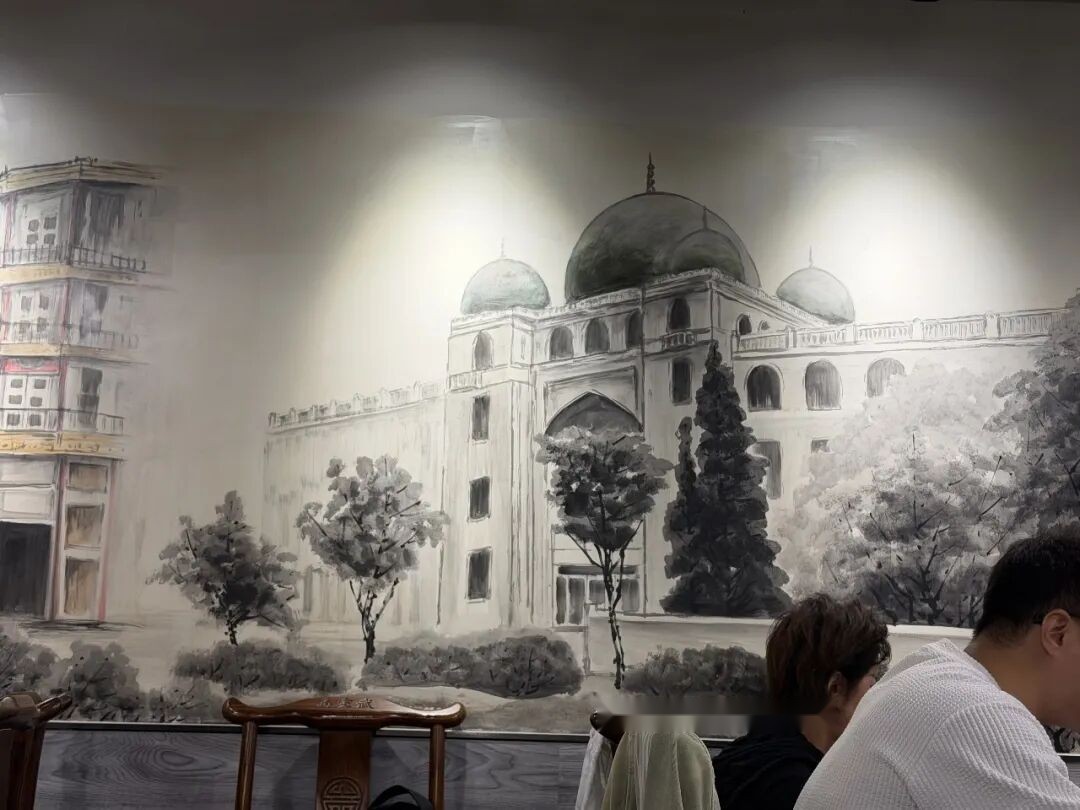
The wall mural in the restaurant depicts the Islamic Scripture Institute of Niujie.
They’ve got old-school Nintendo consoles and black Sega consoles on display, totally capturing the vibe of 80s kids' childhoods.
The restaurant specializes in shuanrou (instant-boiled mutton/hot pot) and yangxiezi (lamb spine hot pot), plus skewers and zhizi kaorou (iron-plate grilled meat). The grill is done in the kitchen and brought to your table. The meat quality is solid, though old-school Xuanwu locals definitely prefer things on the saltier side.
The grilled potato slices and enoki mushrooms in the two-person grill combo are great. The set only costs 92 yuan and comes with two plates of meat—one beef and one lamb—which is a total bargain.
3. Gansu-Style Meat Skewer Sandwiches
There’s a little takeout window at the Jingyaju Hotpot spot in Guangwai where a lady from Gansu sells grilled meat skewers tucked into flatbread. It’s strictly takeout, but I’m a huge fan of these Gansu-style sandwiches where you can pick whatever fillings you want.
She also makes spicy latiao (spicy gluten sticks) and potato-filled steamed buns, and the youxuan bing (layered scallion oil pancakes) at the bottom are super tasty too.
4. Beijing All-You-Can-Eat Halal Hotpot and BBQ
A new halal AYCE (all-you-can-eat) hotpot and BBQ place just opened by the South Gate of Olympic Forest Park. It’s perfect for grabbing a meal after hanging out at the park with the kids all day, plus kids under a meter tall eat for free.
The dinner buffet is 113 per person and it’s loaded with options, with the real highlights being the seafood, crab, and grilled durian.
Here you’ve got two types of slushies where you can add your own toppings, and there’s an ice cream machine right next to them.
The crabs are served live, and since it’s in season, they’re packed with roe.
The grilled durian pieces might be on the smaller side, but you can eat as much as you want, which makes it a win.
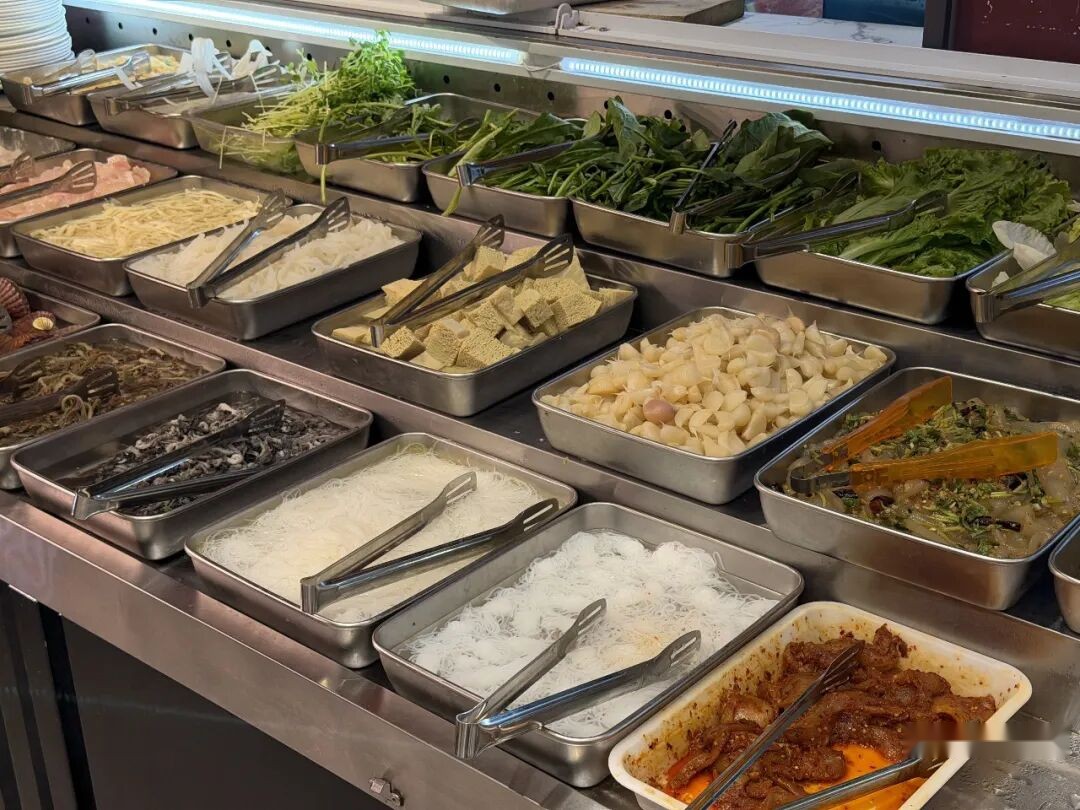
You grab your own hotpot ingredients and beef or lamb, while the raw skewers for the grill are set out for you to pick, then you hand them to the kitchen to get them cooked up.

The ingredients are pretty fresh, the variety is solid, and the drinks are all-you-can-drink too.
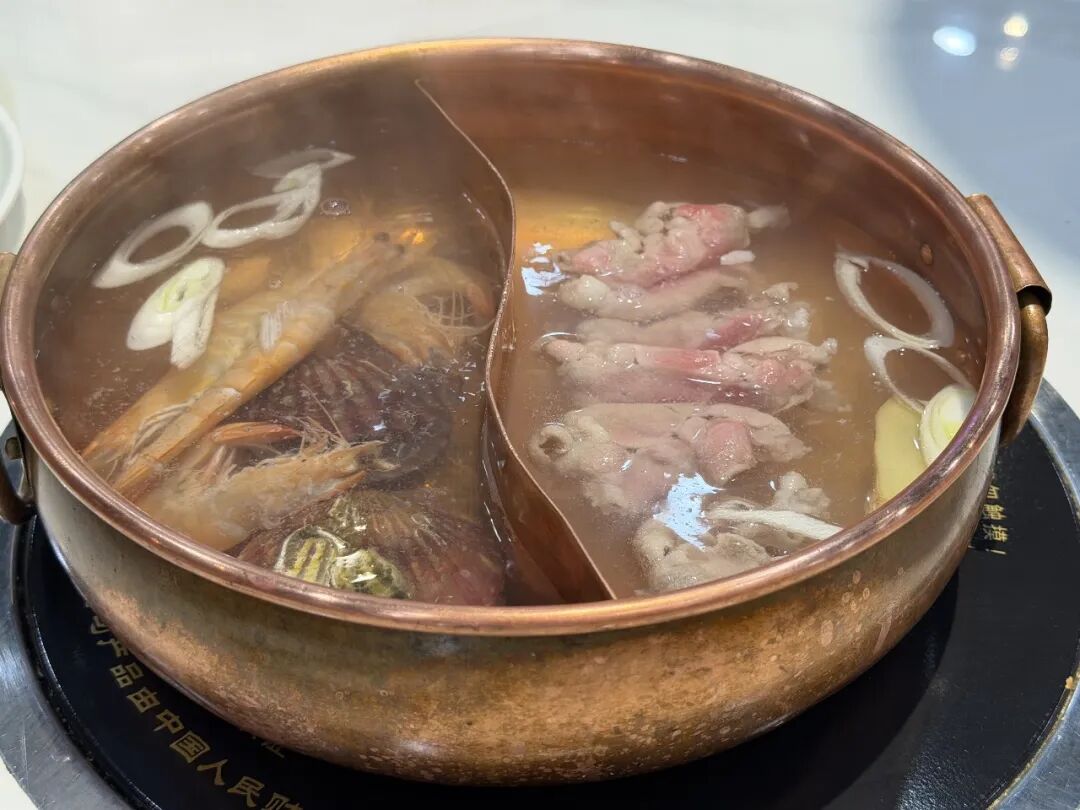
5. Ules Kazakh Grassland Flavors
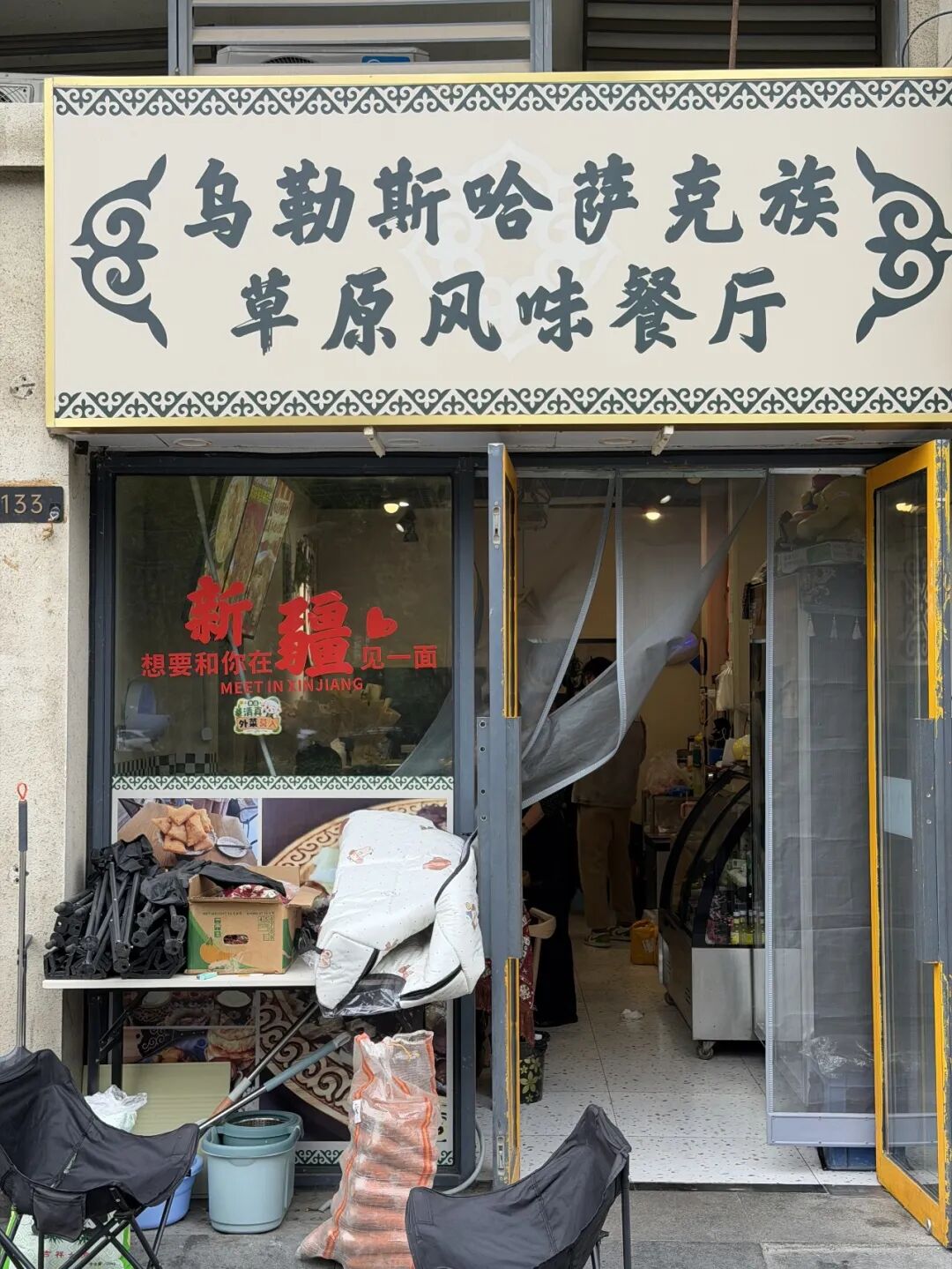
A restaurant serving authentic Kazakh cuisine recently opened near the Beijing Institute of Technology’s Liangxiang campus, run by three sisters from the Kazakh community.
Their specialty dishes include naryn (horse meat noodles), baursak (fried dough balls), potato slices, and kuirdak (a traditional meat stew). Since the space is tiny, they don't prep huge batches, so it’s best to call ahead and order what you want, otherwise you might miss out.
The shop only has three and a half tables, so their capacity is limited—by 7 PM, most of the food is usually sold out.
You can tell just by looking at them that these ladies are definitely Kazakh, and the food they put out is genuinely delicious.
I got the veggie pilaf because all the meat versions were already gone.
Baursak is a classic Kazakh snack people usually have with milk tea for breakfast; the texture is a lot like youxiang (savory deep-fried dough).
Their homemade noodles with diced meat are incredible—the noodles have a great chew, and you get one free refill, with any extra refills only costing three yuan.
The Kazakh-style potato slices are pretty spicy, and they’re cooked down until they’re super tender.
They also serve Kazakh-style salty milk tea, which usually comes with naipizi (milk skin), though they were all out that day.
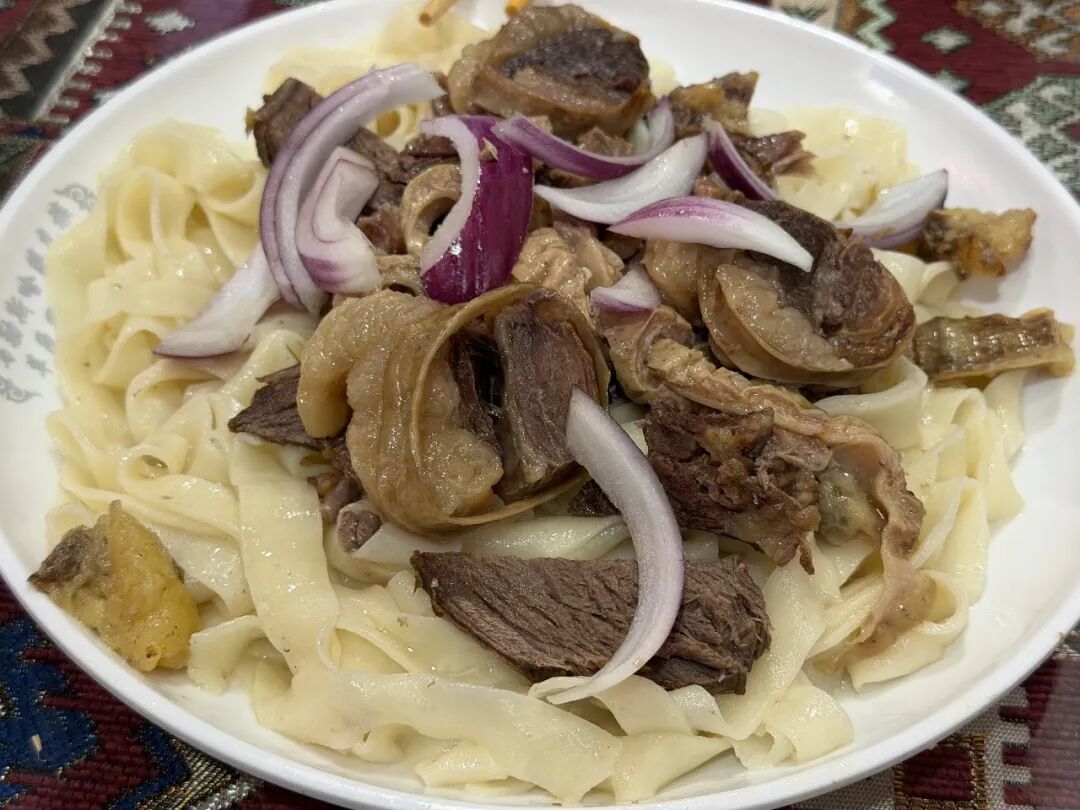
The dish I had to wait the longest for was the horse meat naryn. The horse meat is firmer than beef with a coarser texture, and the 'naryn' refers to the way it’s tossed with the noodles.
6. Yilan Liyuan Beef Noodles
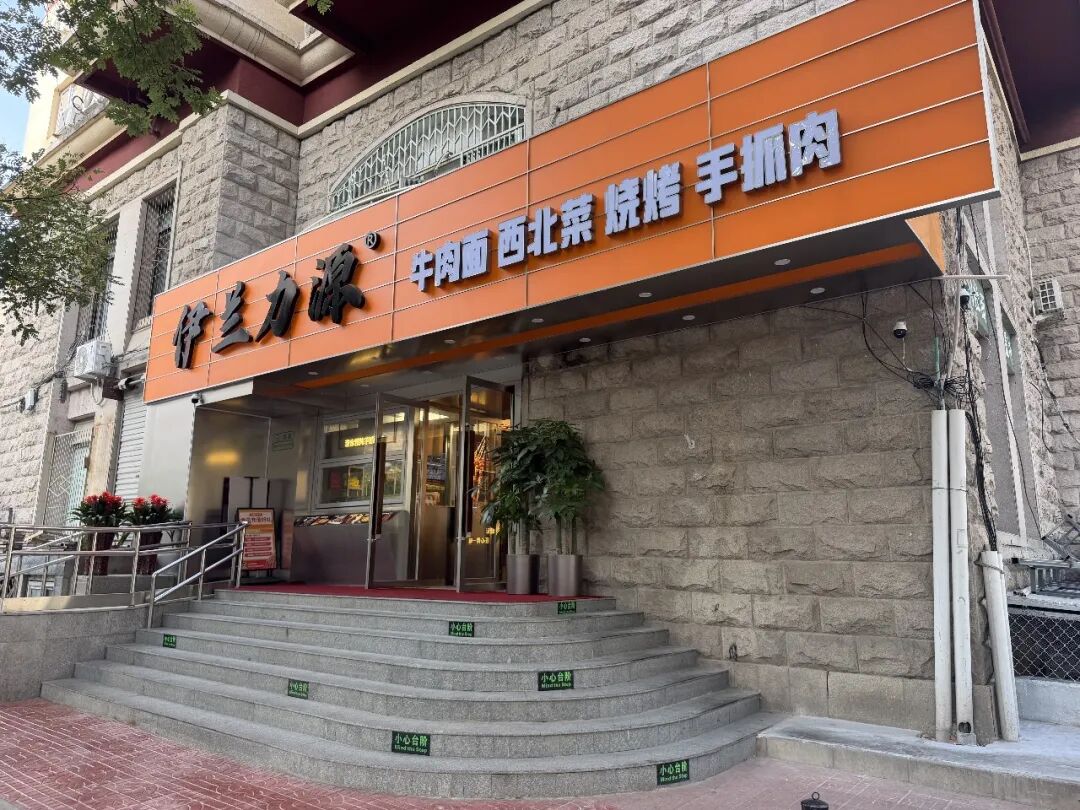
Yilan Liyuan just opened a new beef noodle shop in Baizhifang, featuring their signature Angus bone broth beef noodles.
Yilan Liyuan is originally a famous beef and mutton shop on Niujie Street that’s turned into a major viral hit, and now they’re even serving electric-grilled skewers and American-style burgers.
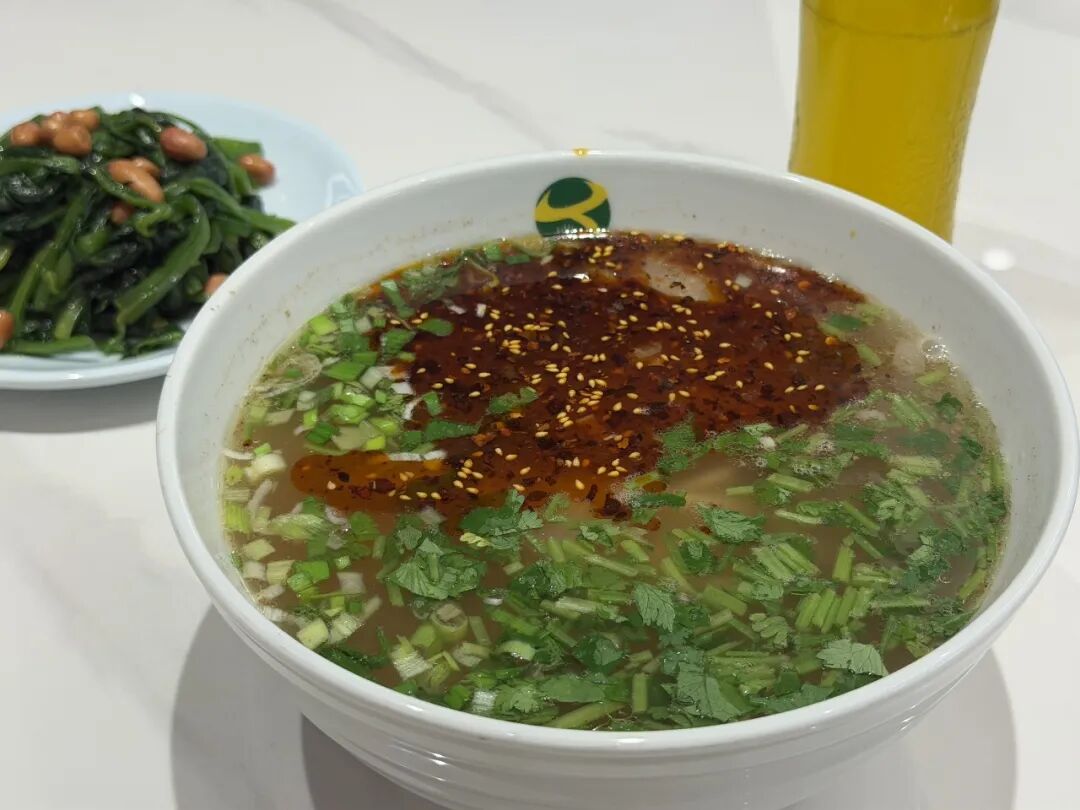
Their electric-grilled skewers and burgers are pretty good, but the beef noodles and rice bowls with grilled meat are just so-so.
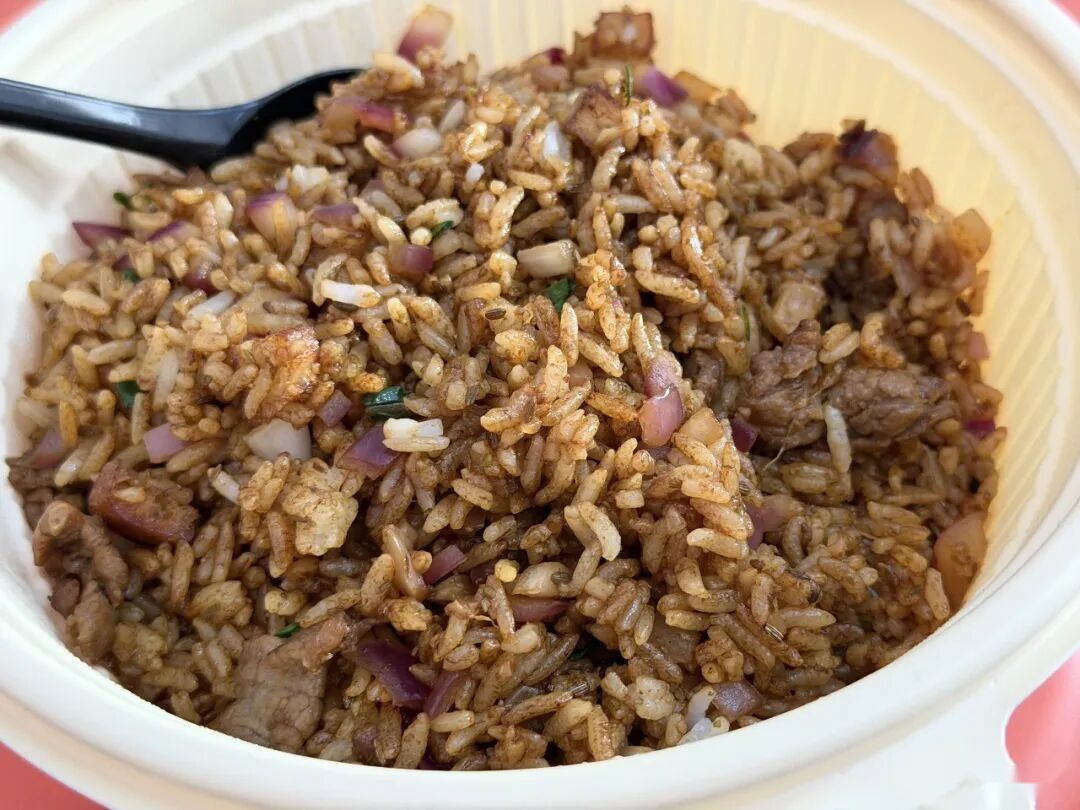
7. RABIUL'S KITCHEN Indian Restaurant
Run by Indians, this Kolkata-style Indian restaurant features an owner who used to work as a head chef in many hotel restaurants.
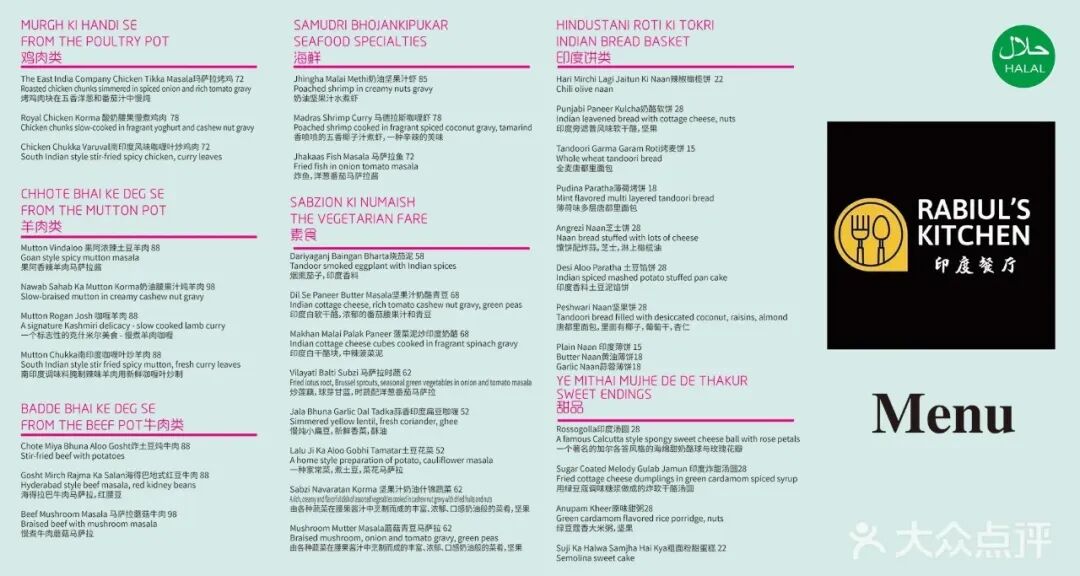
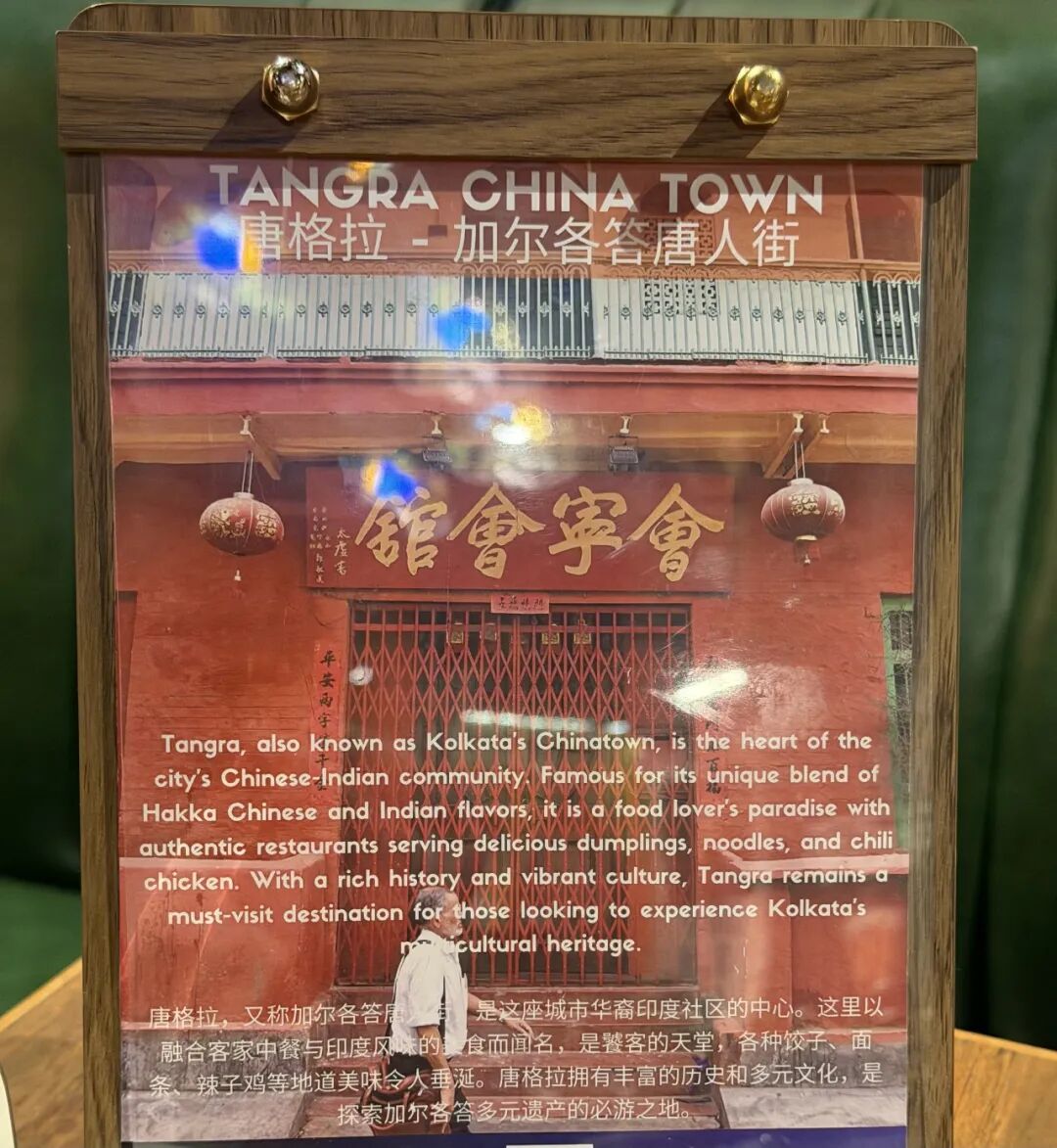
Kolkata Indian cuisine blends Hakka Chinese elements, and their curry has a really rich and mellow flavor.
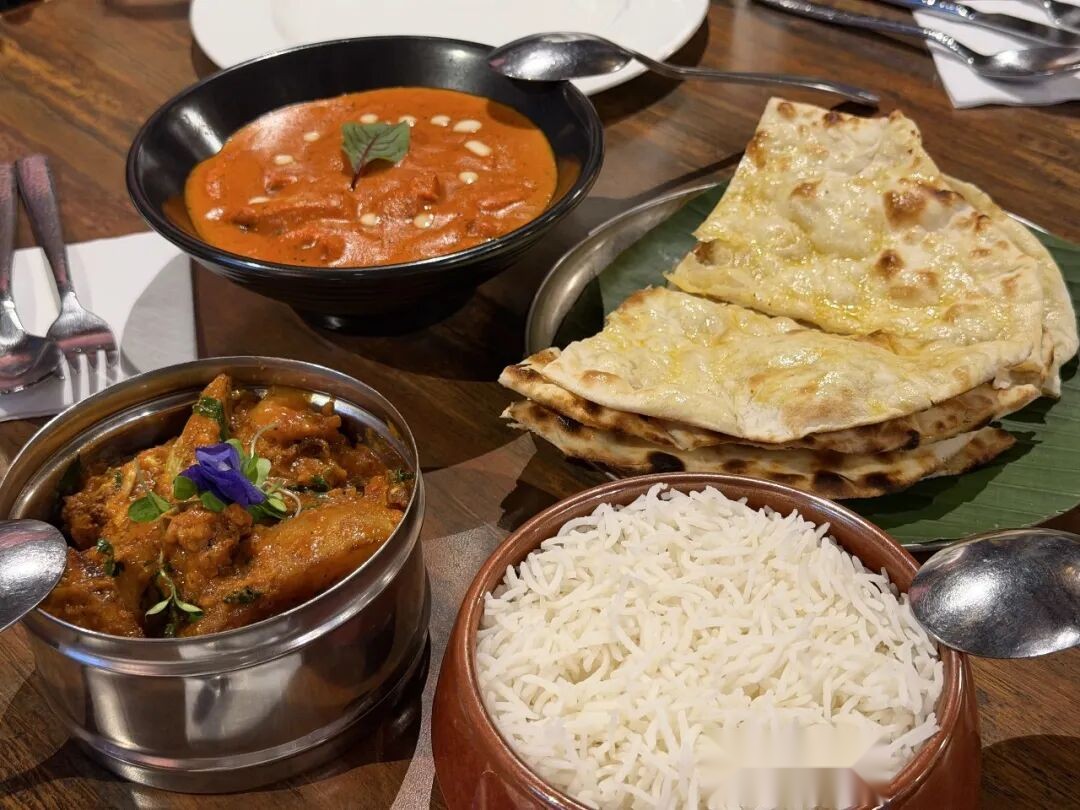
8. Khyber Restaurant
Khyber is a Pakistani restaurant located in Liangxiang. There's another Pakistani brother restaurant nearby, but I feel this one has a more authentic taste.
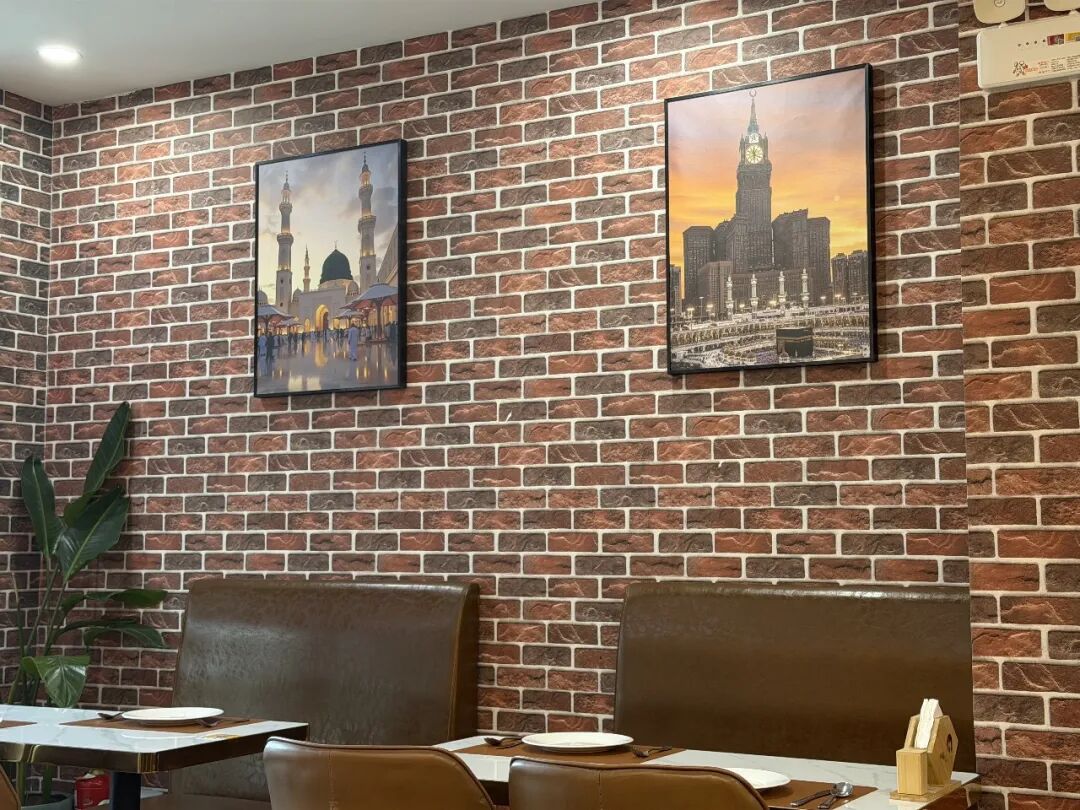
Beijing has recently seen quite a few new Pakistani restaurants open up close together. Each spot has its own vibe, and once you try enough of them, you can really tell the difference.
The grilled meat here is also solid. Pakistani folks are basically like the northwestern Chinese of the international scene, opening restaurants all over the world.
Remember that Pakistani biryani rice is always spicy—that's how you tell it apart from Arab rice dishes.
The taste of the naan bread can also totally show off the chef's skill level.
9. Culture Pakistani and Indian Restaurant
This spot is in Sanlitun right next to Han Baba Pakistani Restaurant. I've never really understood why they love clustering their shops together, but it doesn't seem to hurt their business. Honestly, very few Pakistani and Indian restaurants in Beijing go out of business these days.
The interior setup feels more like a lounge bar and even has a stage for live music.
The dish prices are super cheap, and you can usually eat here for under 100 RMB per person.
These kebab skewers have a bit of a kick to them, whereas Turkish kebabs are non-spicy.
Comparatively speaking, this place offers a wider variety of dishes and has a much more spacious setup. Plenty of people show up for lunch.
Their naan bread is extra fragrant, but the pani puri (crispy hollow spheres filled with spiced water and potatoes) shown in the picture below wasn't great. My son doesn't like the fillings inside them and only wanted to eat the empty shells, but even the empty shells here weren't crispy.
10. Cao Family Beef Zhaobing
Cao Yunjin has opened a bunch of new restaurants lately—some Halal and some not—mostly clustered over in Wangsiying. I thought it was too far and didn't want to wait in long lines, so I skipped those. However, this Cao Family Beef Zhaobing (pan-cured flatbread shredded and stir-fried with beef) opened a new branch in You'anmen, and since it's close by, I came to check it out.
The new location is pretty big, and with it being the opening period, it's super busy. Even if you come for dinner, you still have to wait for a table.
However, the staff's service is prompt and keeps up with the crowd, and the zhaobing tastes pretty authentic. Having tried beef zhaobing in Baoding before, I'd say the flavor here is pretty standard—the ingredients are clean and fresh, and it tastes much like any other good spot.
Their beef steamed dumplings and Governor tofu are both delicious too. The steamed dumplings are genuinely awesome, and they're only 18 RMB a portion.
After the meal, I randomly ordered two little desserts: one was peach gum soup, and the other was mung bean paste soup. They were super generous with the ingredients, and the total bill for this whole spread came out to under 100 RMB. The value for money is seriously high.