
Beautiful Traditional Javanese Mosque
Reposted from the web
Summary: This travel note introduces Beautiful Traditional Javanese Mosque. Between the 15th and 16th centuries, Islam became the dominant religion on the islands of Sumatra and Java through the efforts of Sufi Muslim missionaries, settled Muslim merchants, and Sultan rulers. It is useful for readers interested in Java Mosques, Muslim Travel, Islamic Heritage.
Between the 15th and 16th centuries, Islam became the dominant religion on the islands of Sumatra and Java through the efforts of Sufi Muslim missionaries, settled Muslim merchants, and Sultan rulers. In the process of converting from Buddhism, Hinduism, and traditional animism to Islam, the original traditional cultures and Islamic cultures mutually accommodated and merged, forming an "Indonesian traditional Islamic culture" that includes music, dance, clothing, architecture, and etiquette.
For tourists who want to understand Indonesian traditional Islamic culture, traditional mosque architecture is the most accessible channel. During the Qingming and May Day holidays in 2019, I visited several traditional mosque buildings on the island of Java, hoping to share these buildings to let everyone appreciate the charm of Indonesian traditional Islamic culture.
Existing Indonesian traditional mosques can be roughly divided into three styles: Javanese, Banjarese, and Minangkabau. The Javanese style, popular from the 15th to 18th centuries, is characterized by its multi-layered Tajug pyramid-shaped roof, Serambi front porch, and Bedug drum used for the call to prayer. Most traditional mosques in Indonesia are of the Javanese style. The Banjarese style in southern Borneo and the Minangkabau style in western Sumatra developed from the Javanese style, but their roofs have steeper slopes than the Javanese style. The Banjarese style does not have a front porch, and the mihrab is a separate building.
After the 19th century, Dutch colonizers introduced the "Moorish Revival" (also known as "Indo-Saracenic") architectural style, prevalent in European colonial regions of Southeast Asia, to Indonesia. Many traditional mosques were renovated and rebuilt in the 19th century, adding Indian mosque domes, pointed arches, and vertical minarets.
Here are some Javanese traditional mosques I visited:
I. Demak Great Mosque: 1466
II. Kudus Al-Aqsha Mosque: 1549
III. Banten Great Mosque: 1566
IV. Mataram Great Mosque: 1575
V. Surakarta Great Mosque: 1768
VI. Yogyakarta Great Mosque: 1773
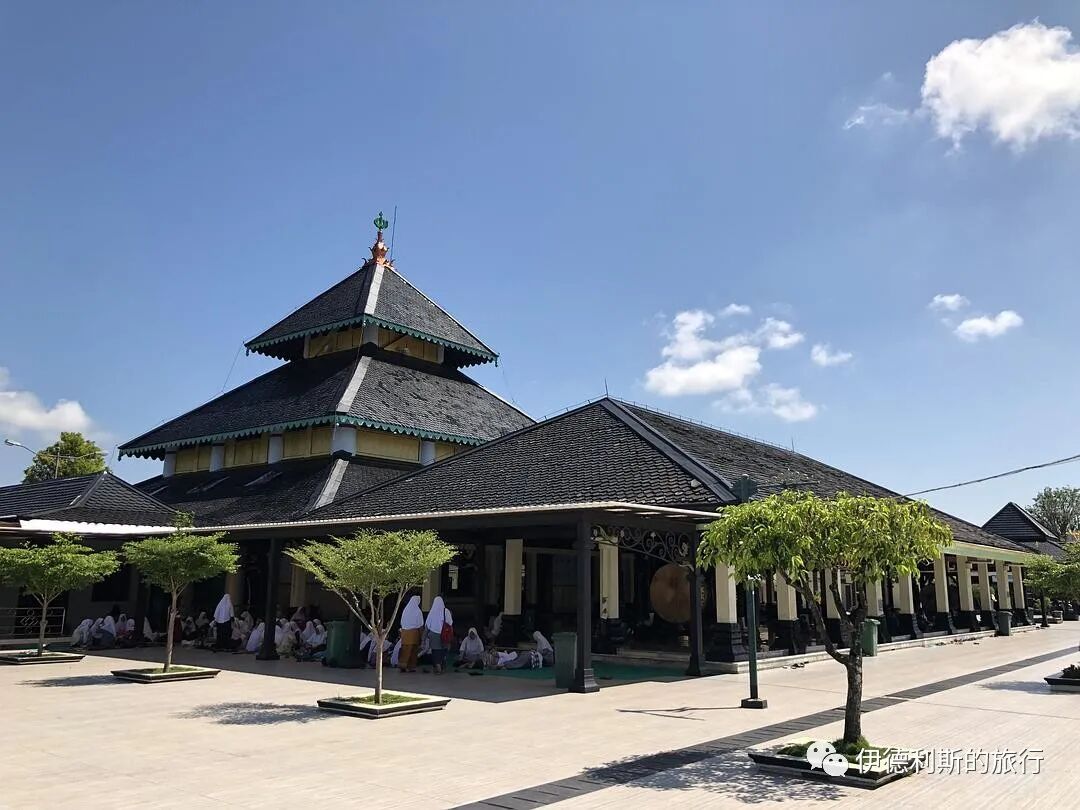
Demak Great Mosque: 1466
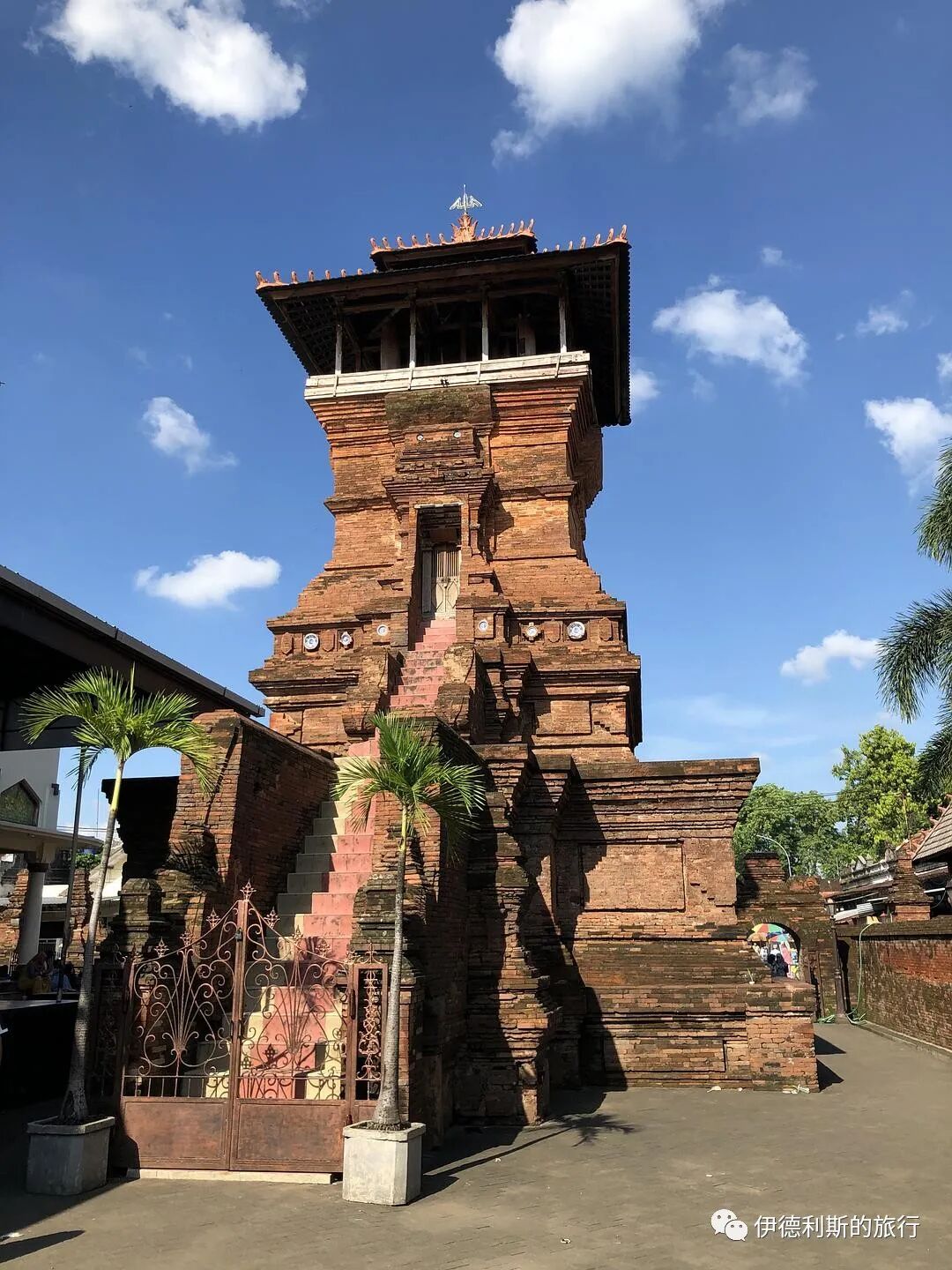
Kudus Al-Aqsha Mosque: 1549
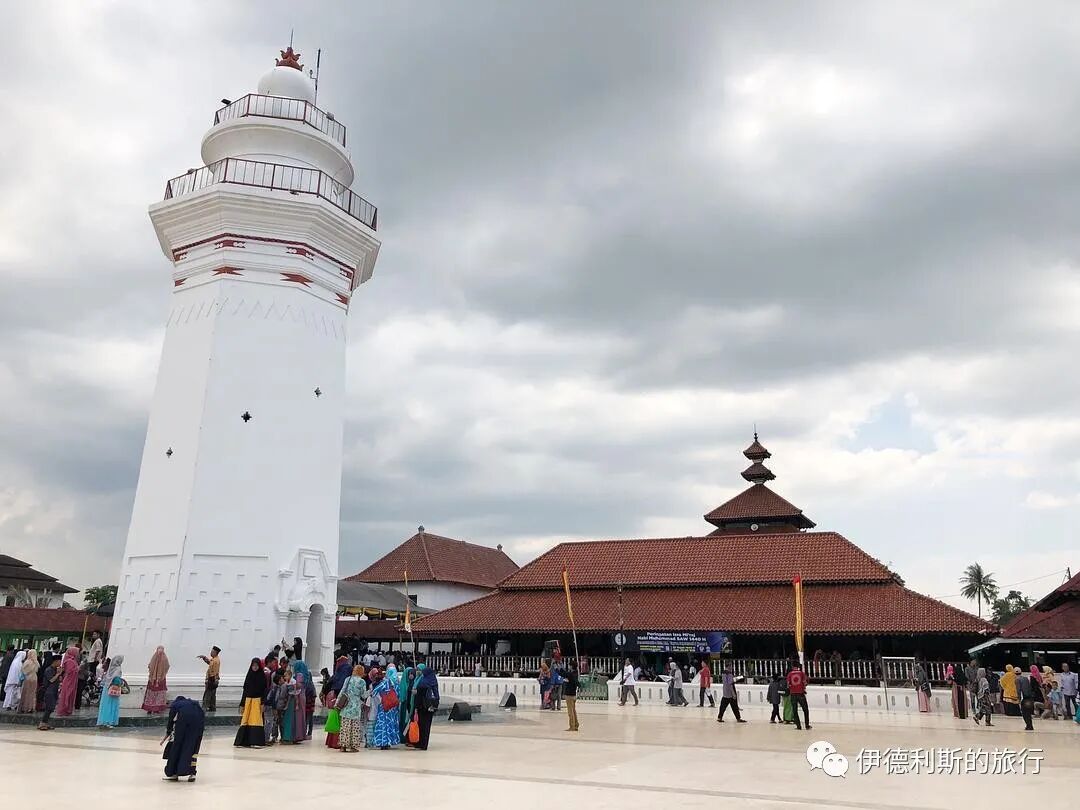
Banten Great Mosque: 1566
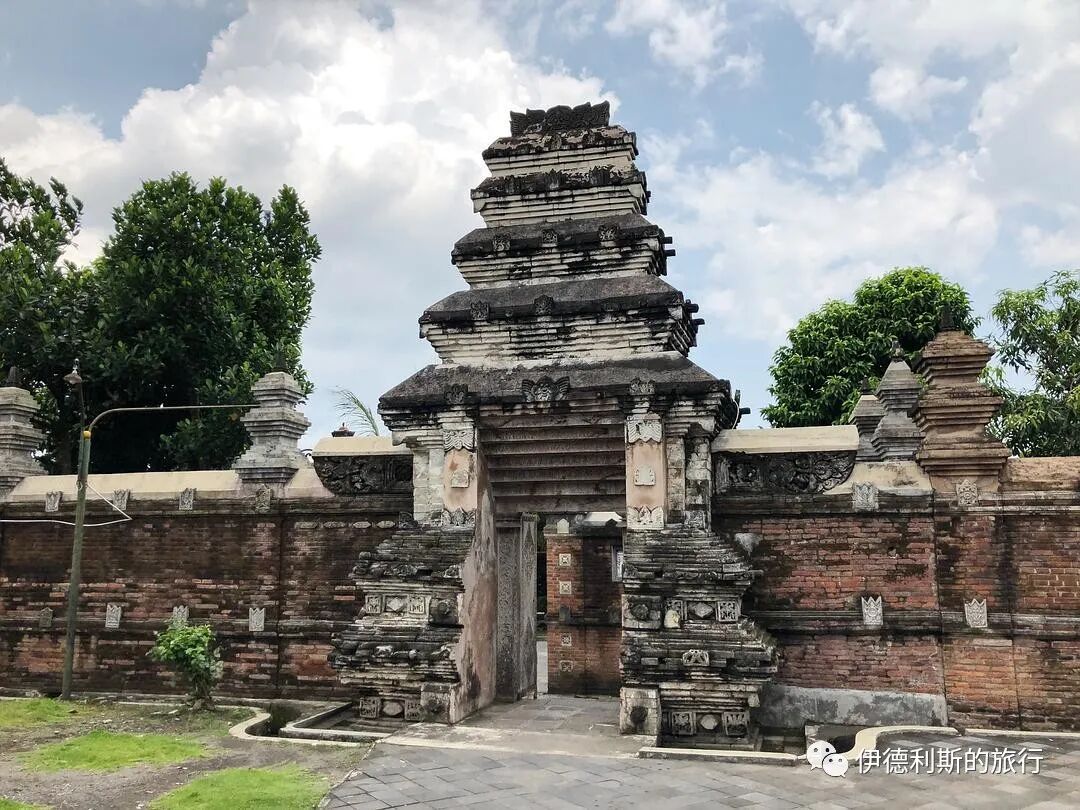
Mataram Great Mosque: 1575
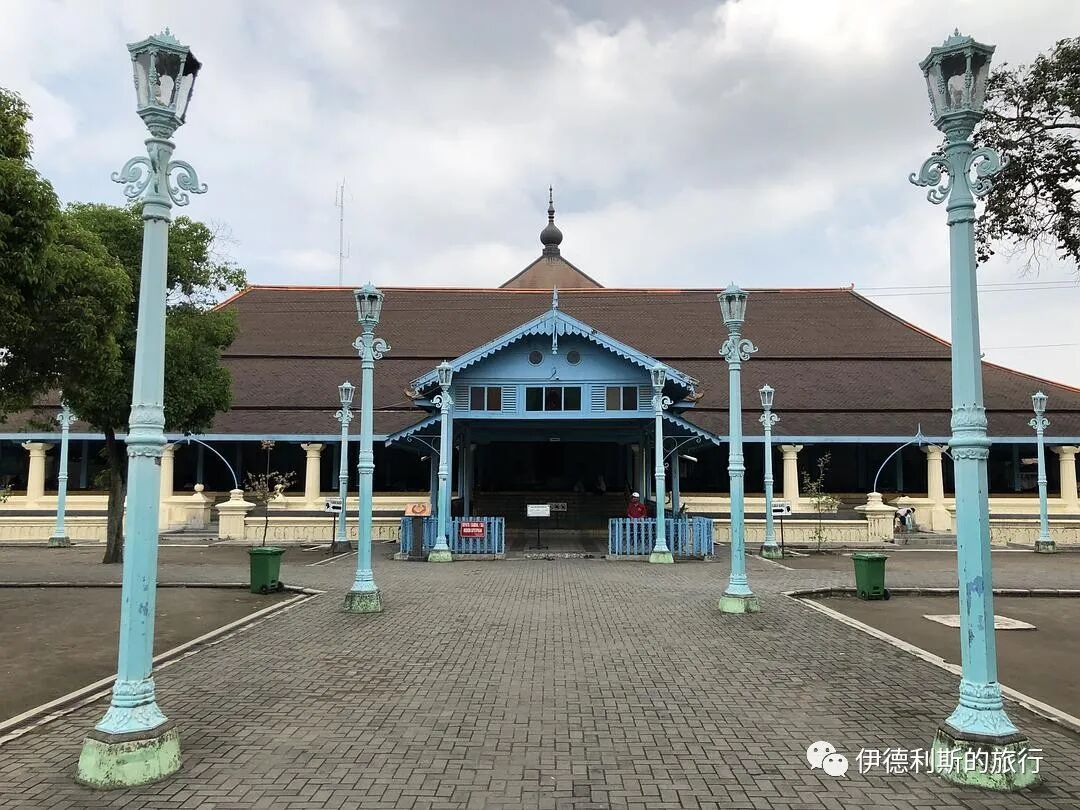
Surakarta Great Mosque: 1768
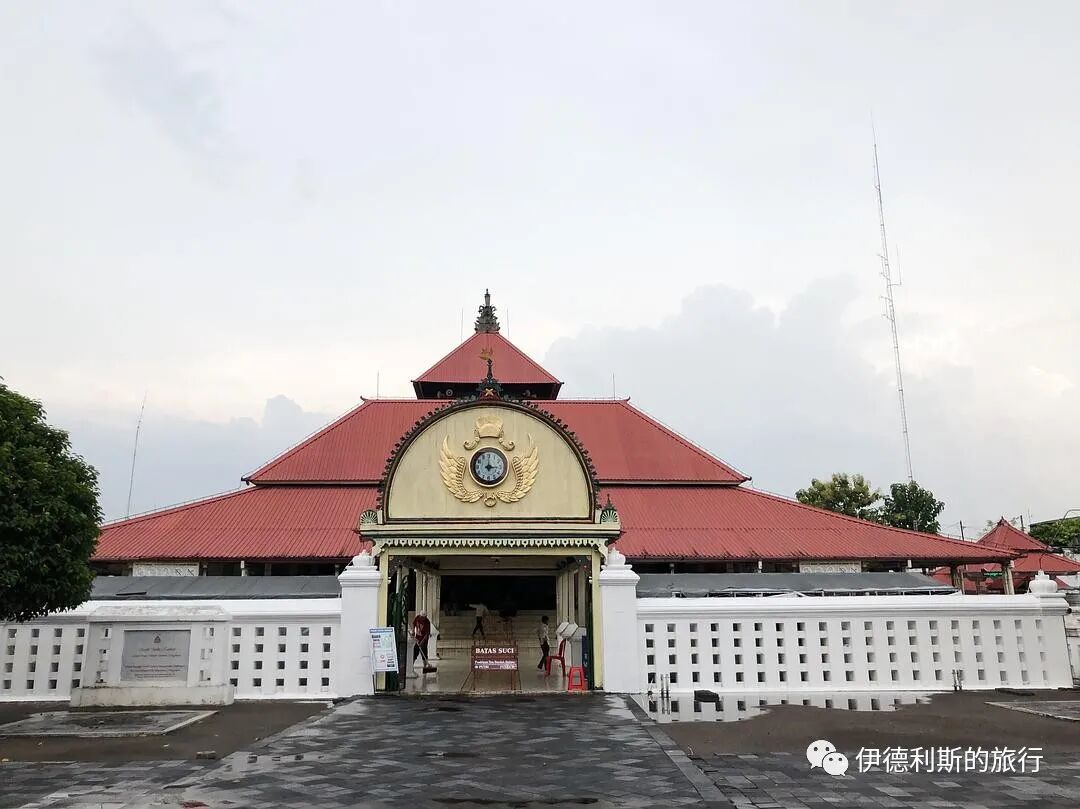
Yogyakarta Great Mosque: 1773
I. Traditional Gates
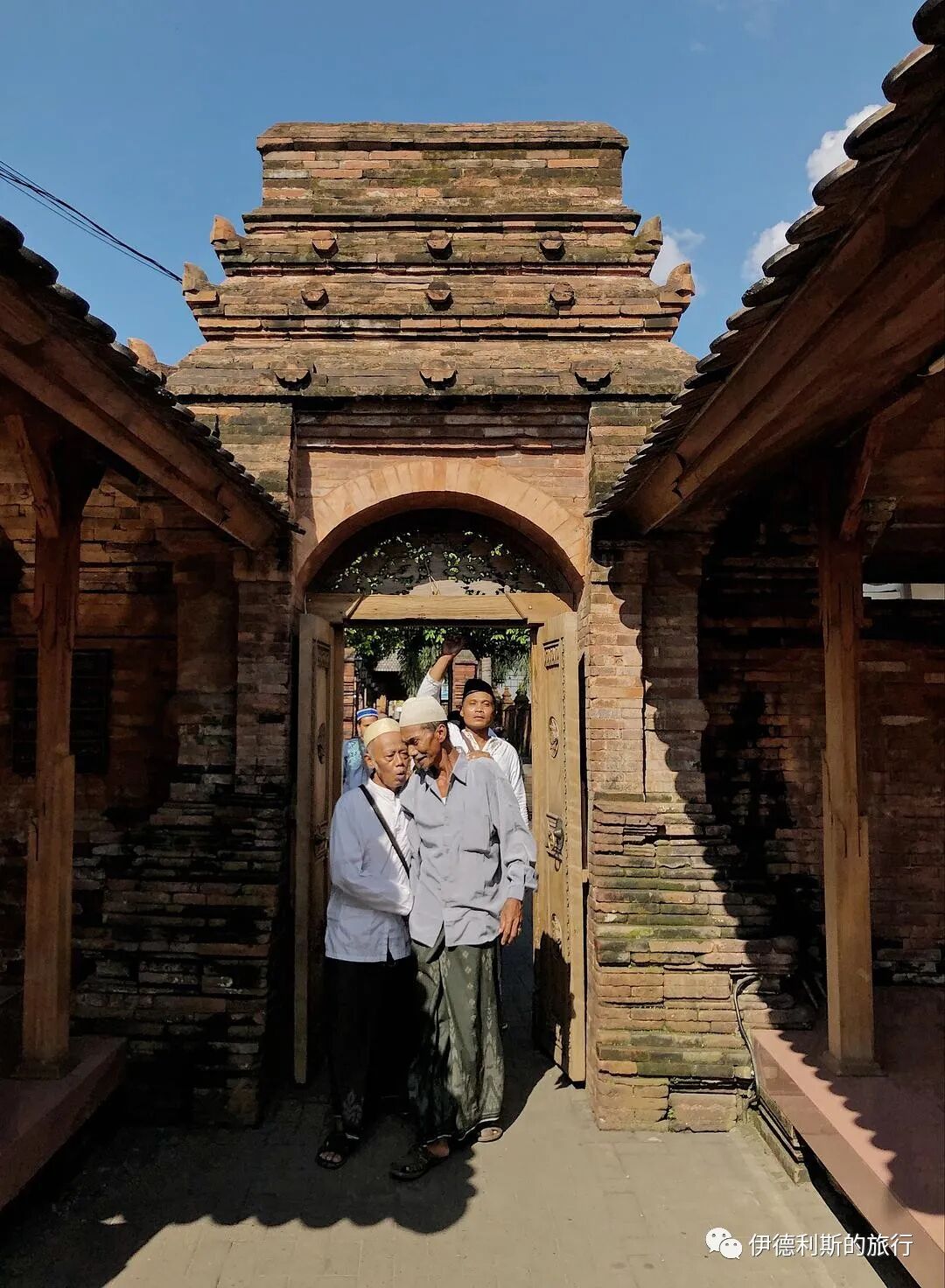
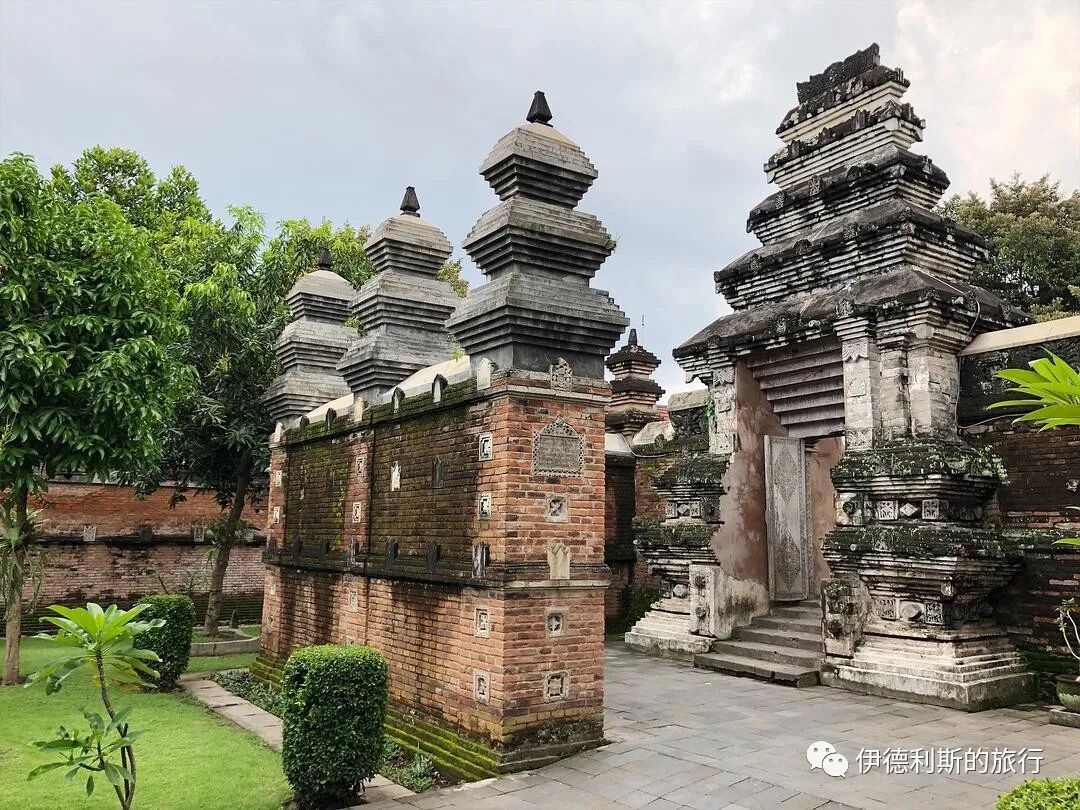
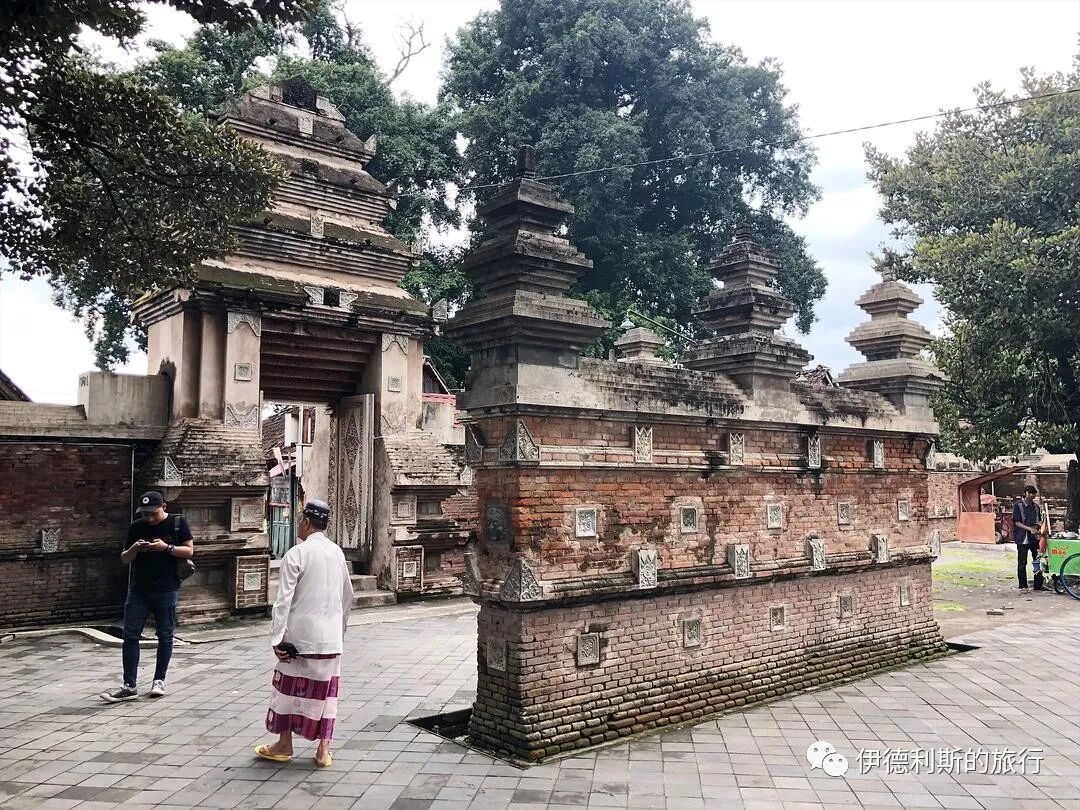
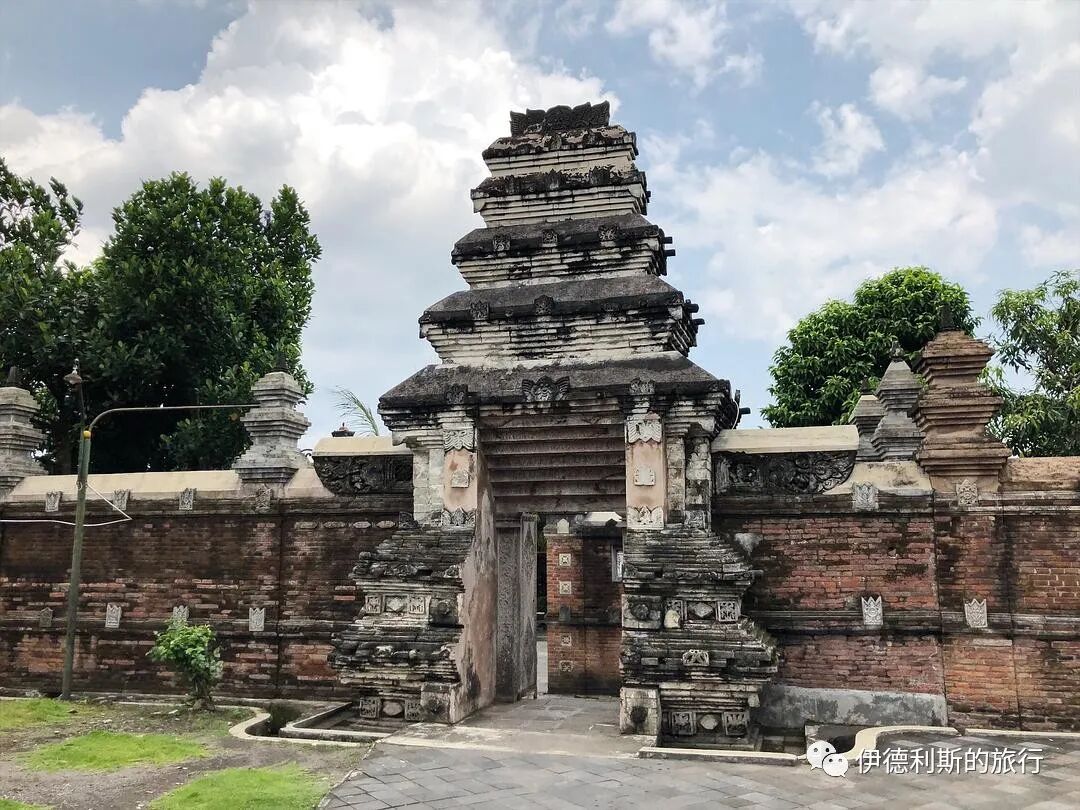
The gates of early Javanese traditional mosques directly inherited from the Buddhist/Hindu architecture of the Majapahit era, with Candi Bentar and Kori Agung being the most distinctive types.
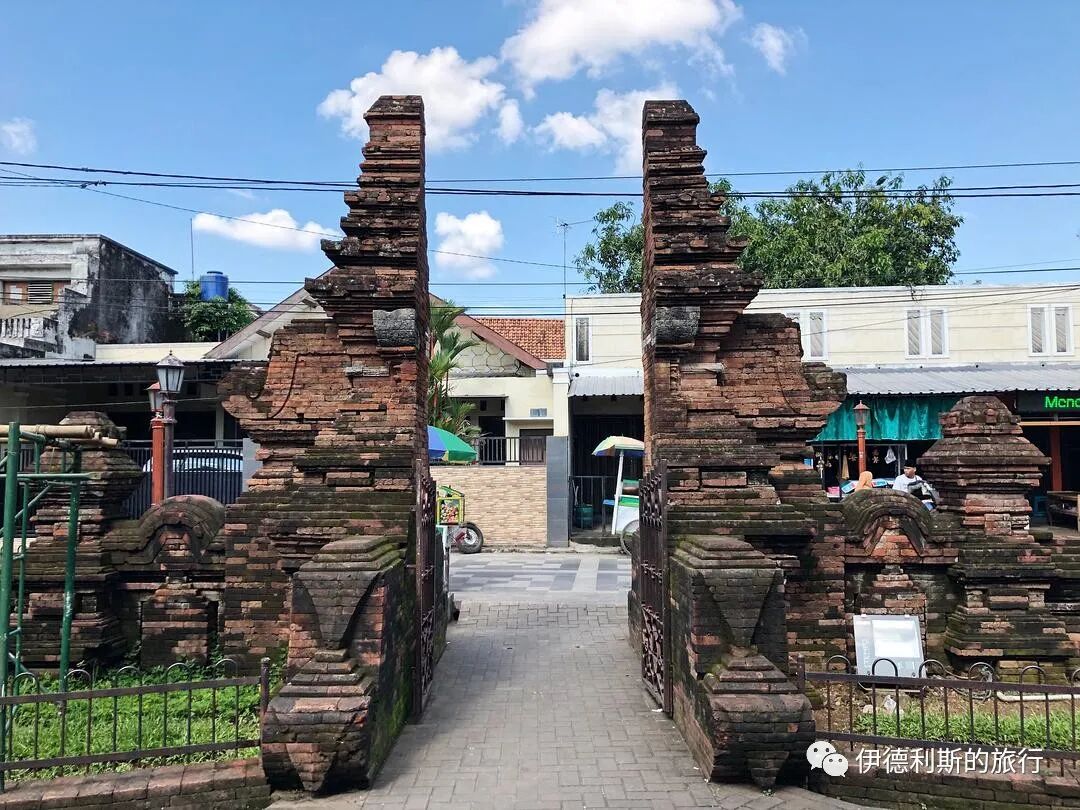
Candi was originally a type of Hindu/Buddhist mosque architecture on Java, Bali, and Lombok. Candi Bentar means "split Candi," where a Candi is split symmetrically down the middle, with a road laid out in between. In fact, Candi Bentar does not have doors installed in the middle; it serves as a passage from the secular space to the sacred space, creating a sense of solemnity before entering the main building.
The Candi Bentar gates of Javanese traditional mosques are built with tiered red bricks in the Majapahit style. The Al-Aqsha Mosque in Kudus and the Panjunan Mosque in Cirebon are the most famous. I visited the Al-Aqsha Mosque in Kudus, built in 1549, this time.
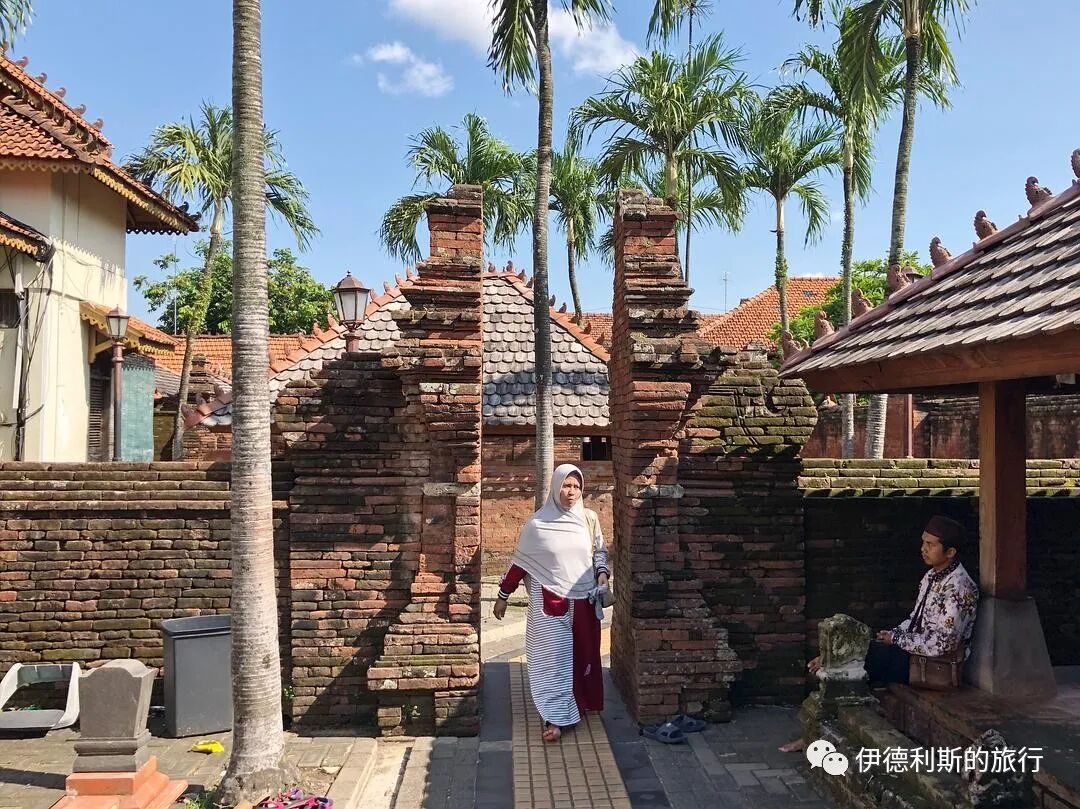
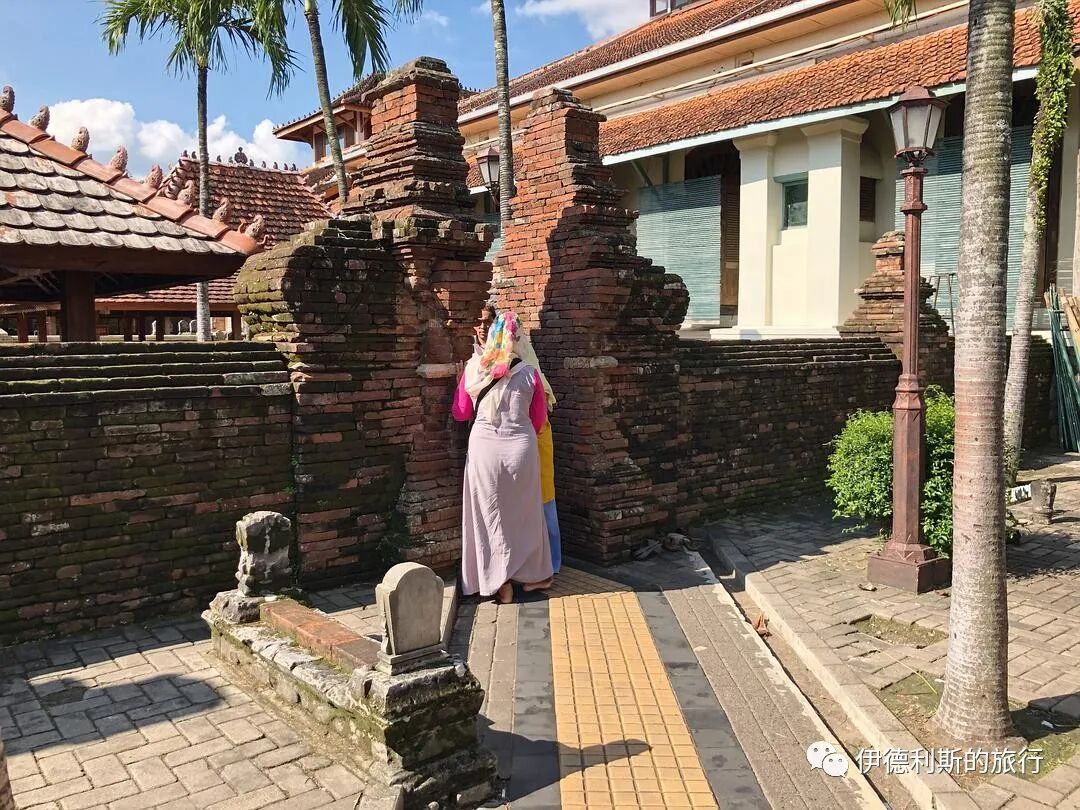
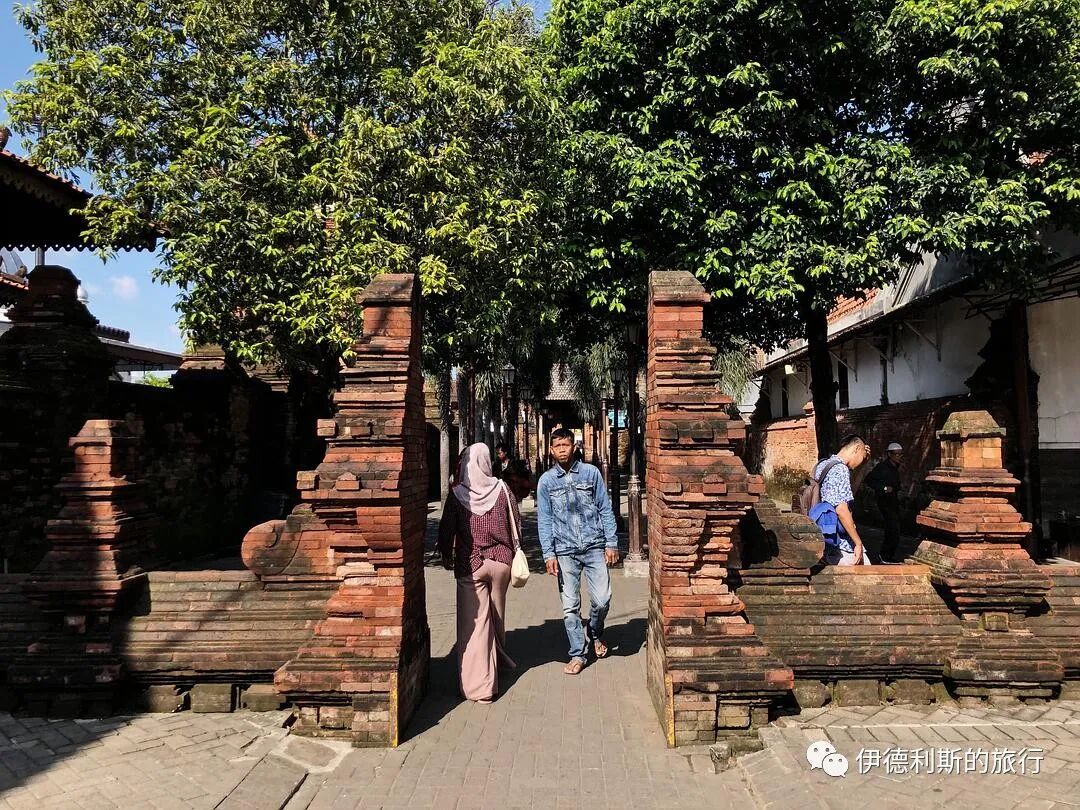
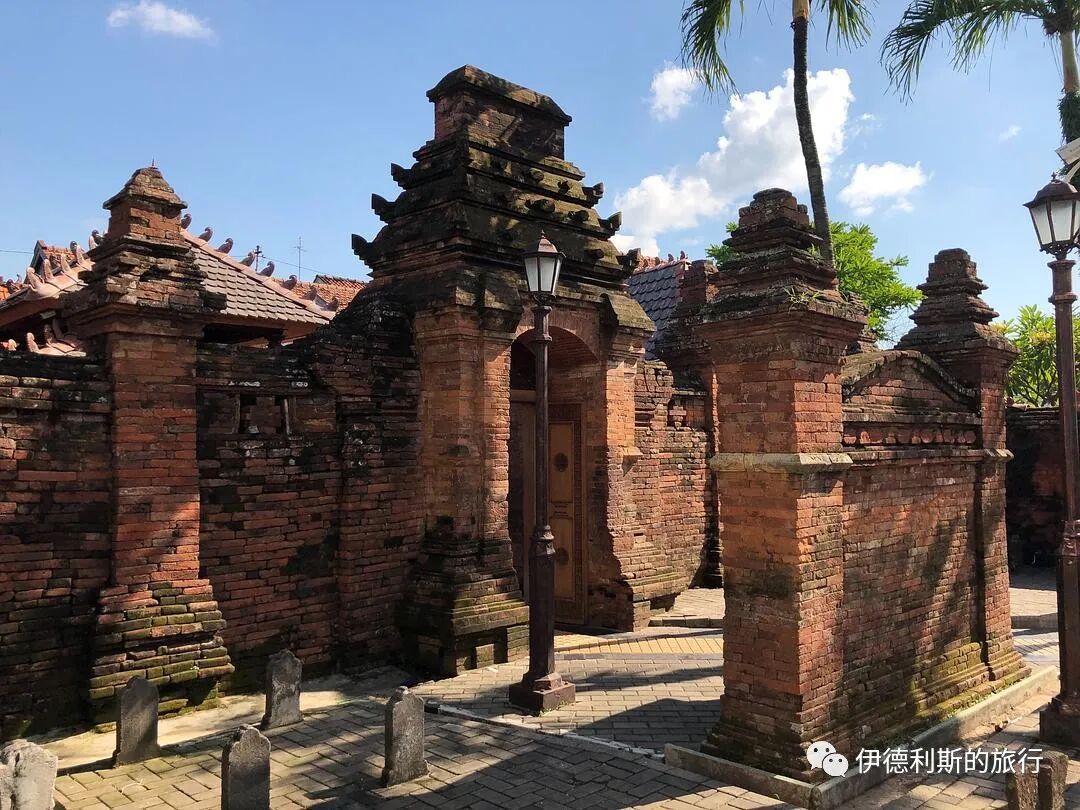
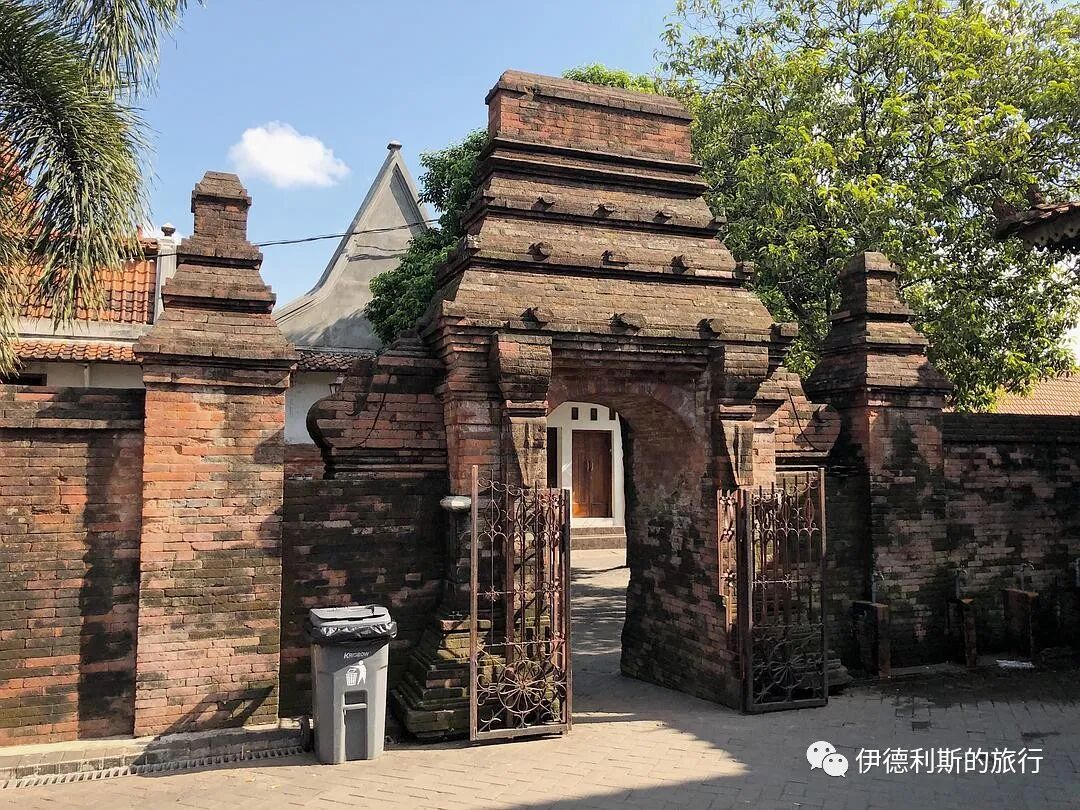
The Kori Agung gate is also called the Paduraksa gate in Hindu/Buddhist architecture and is the main gate for entering the sacred space from the secular space. The Kori Agung gate originated from the ancient Indian Gopuram gate and was widely used in ancient Javanese Hindu/Buddhist temples after the 8th to 9th centuries. After the 15th century, it was adopted by mosques, palaces, and cemeteries of the Islamic Sultanate, but without the elaborate decorations of Hindu/Buddhist architecture.
The Kori Agung in Javanese traditional mosques is actually a tiered Candi building in the Majapahit style, made of red bricks, with intricately patterned wooden doors. The Al-Aqsha Mosque in Kudus, built in 1549, and the Mataram Great Mosque in Yogyakarta, built in 1575, which I visited this time, both have Kori Agung.
II. Main Hall Roofs
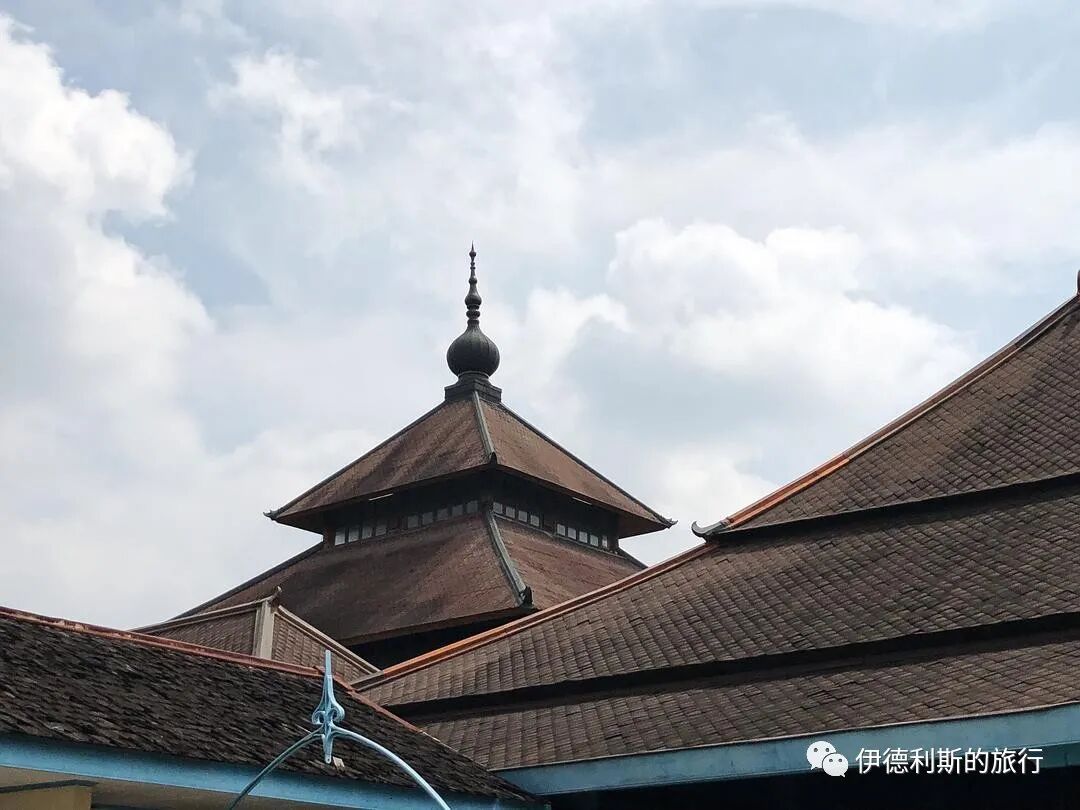
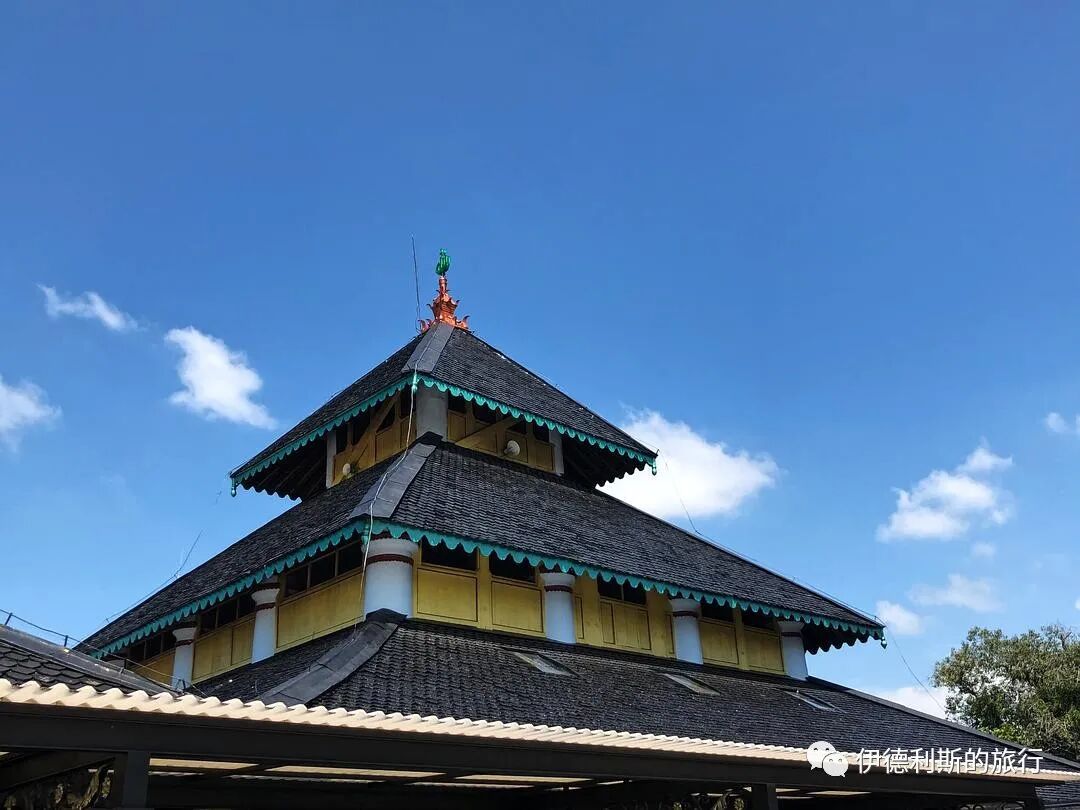
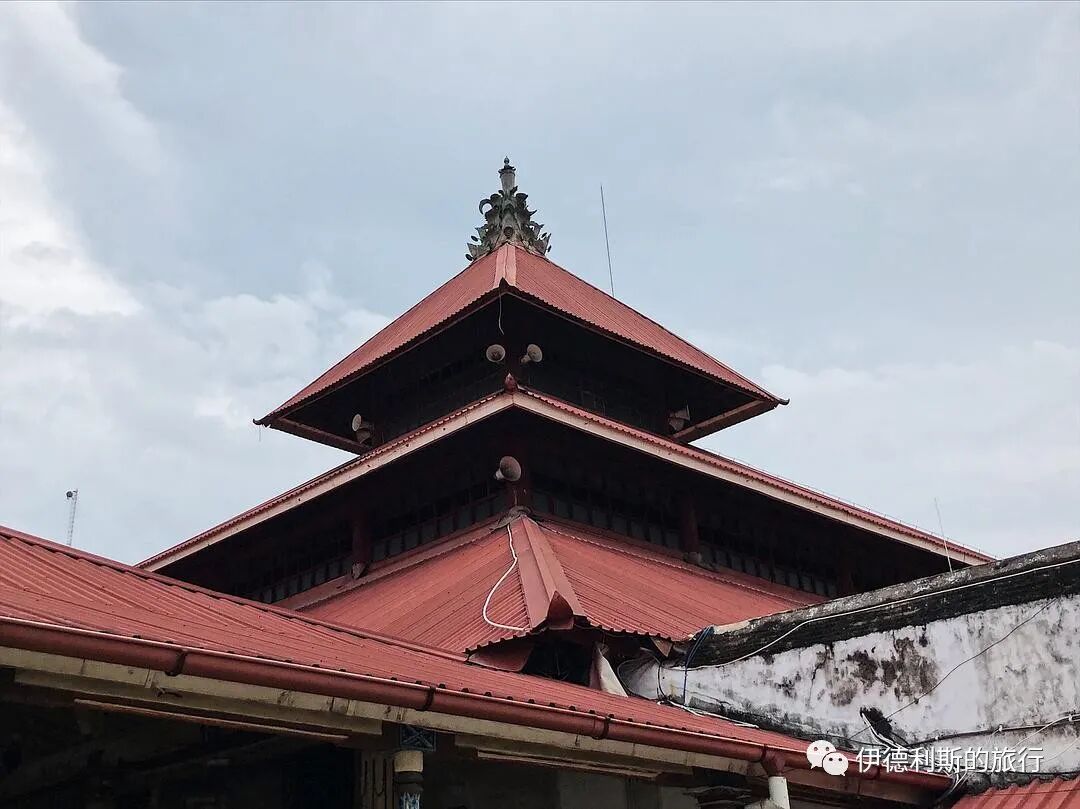
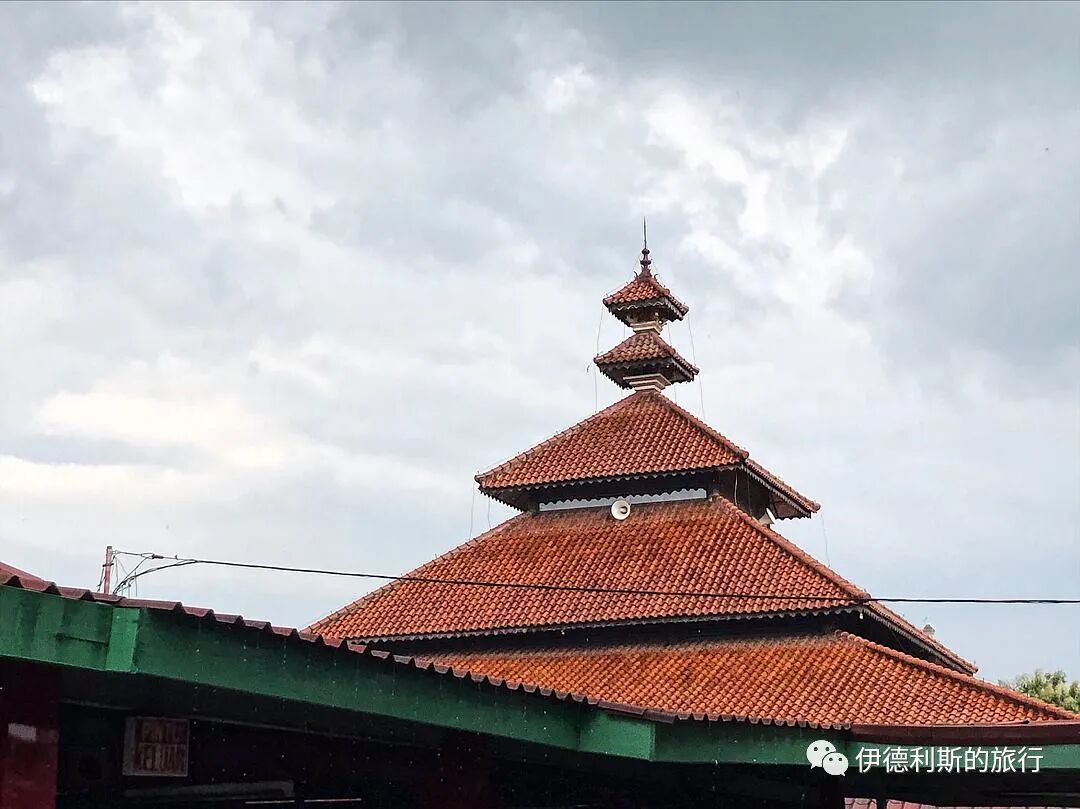
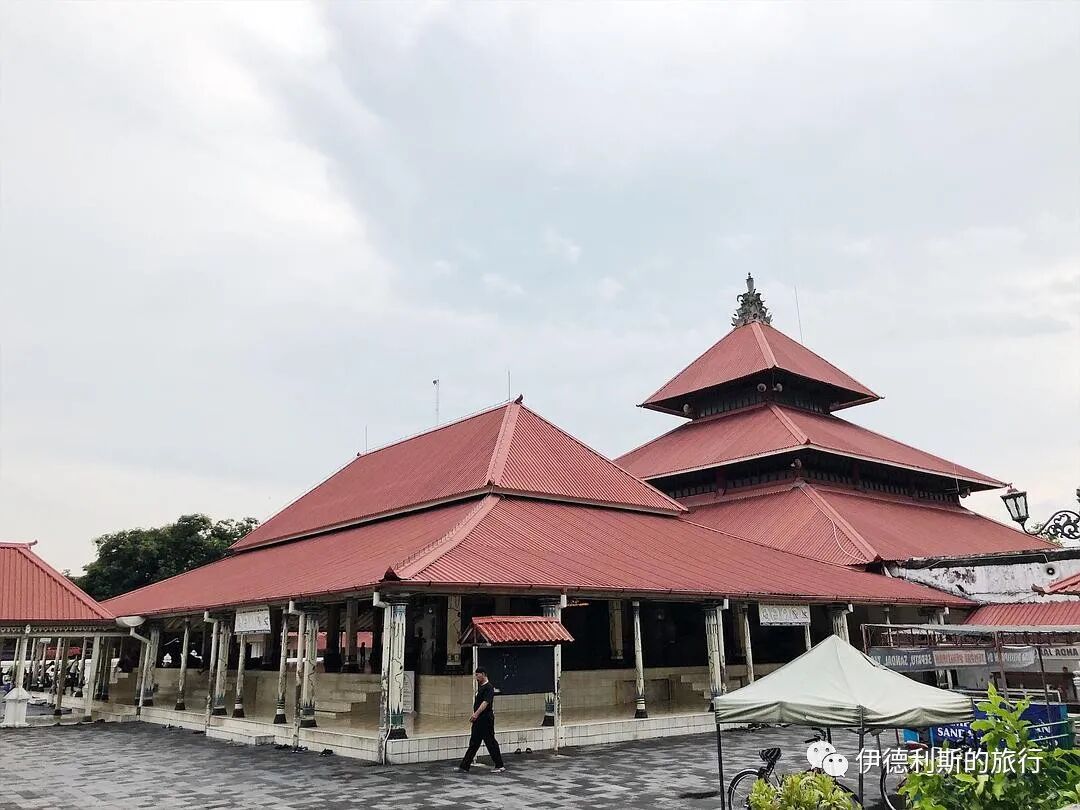
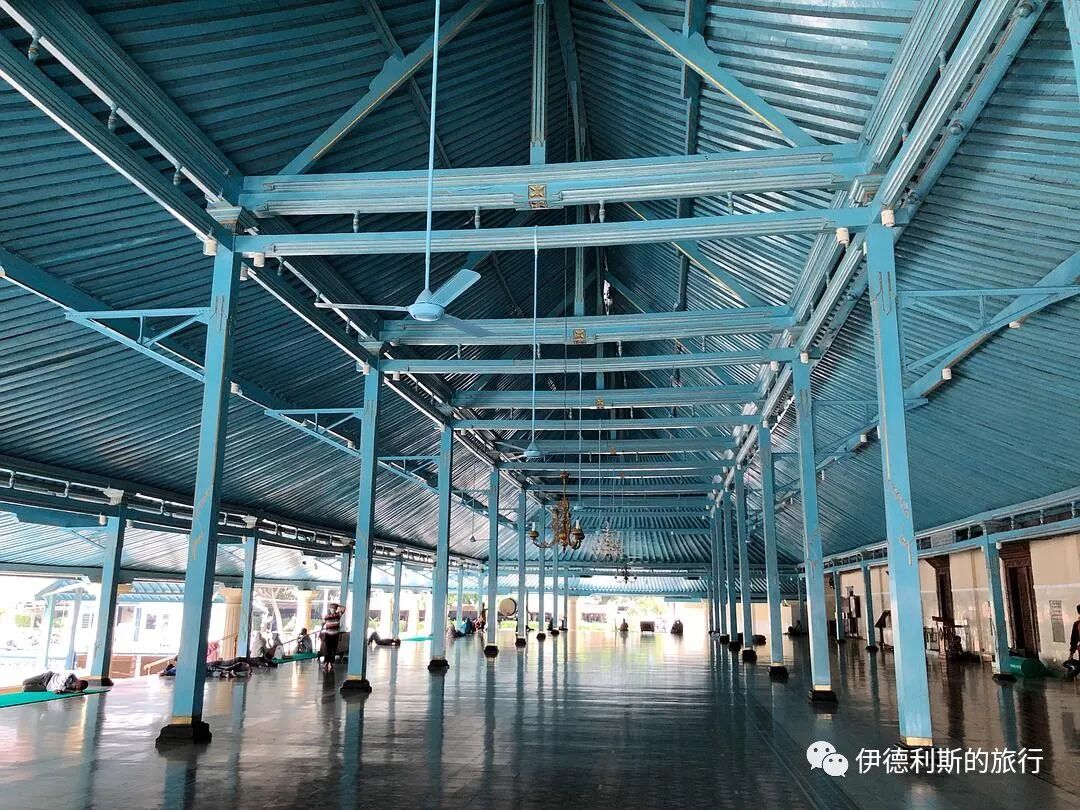
The pyramid-shaped multi-layered roof of Javanese traditional mosques is called Tajug, which is very similar to the Hindu pagodas in Bali. This architectural structure originated from Indian and Chinese cultures and existed before the arrival of Islam in Java, resulting from the integration of Indonesian indigenous culture and Islamic culture.
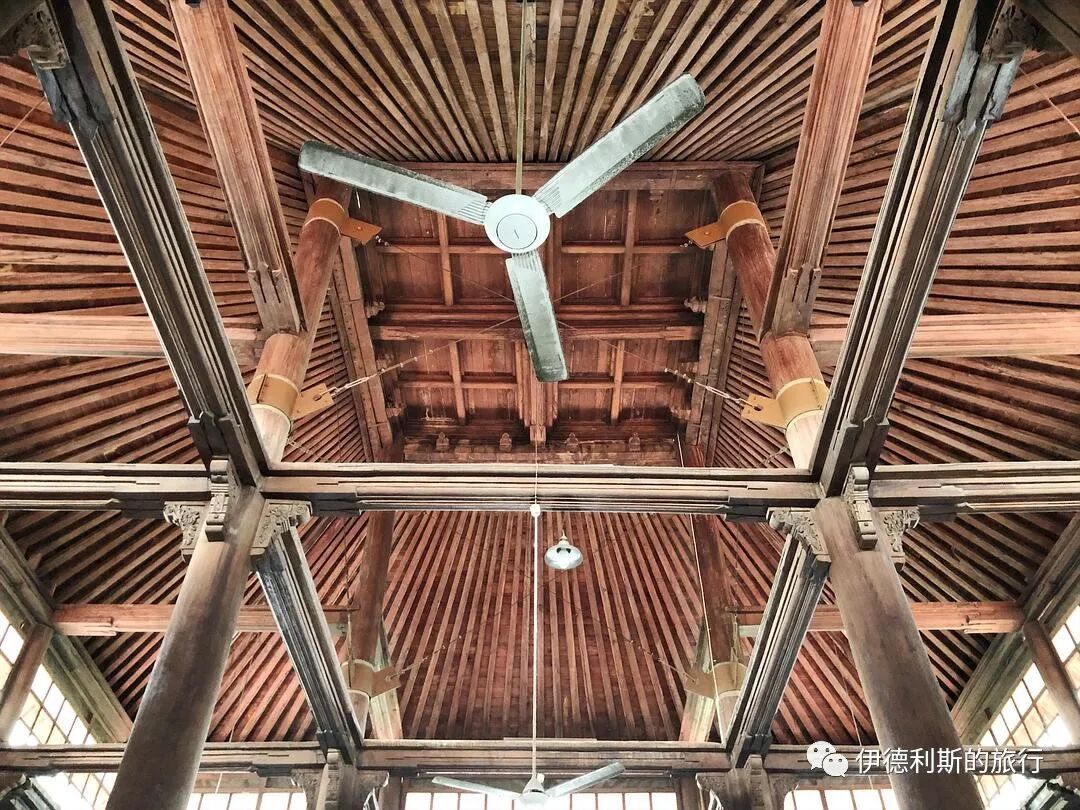
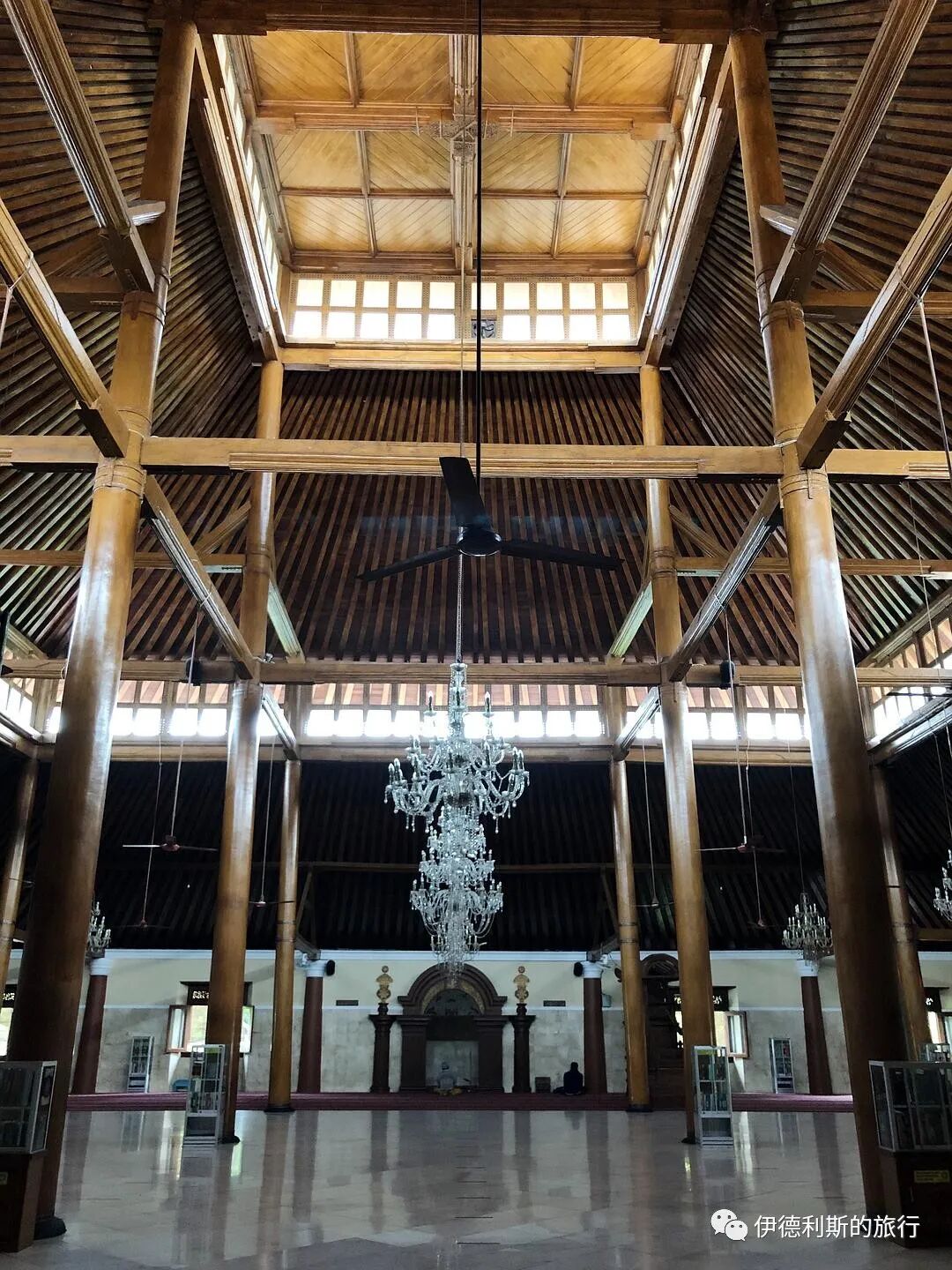
Tajug roofs generally have two to five layers and can be connected to the base or separated. When separated, the lower layer serves as the prayer hall, and the upper layer is used as a classroom. The decoration at the very top of the roof is called Mustoko or Memolo. The most traditional Mustoko is made of clay. Some have been replaced with metal during recent restorations. After the 19th century, some Mustoko were also replaced with Indian-style domes.
III. Main Hall Pillars
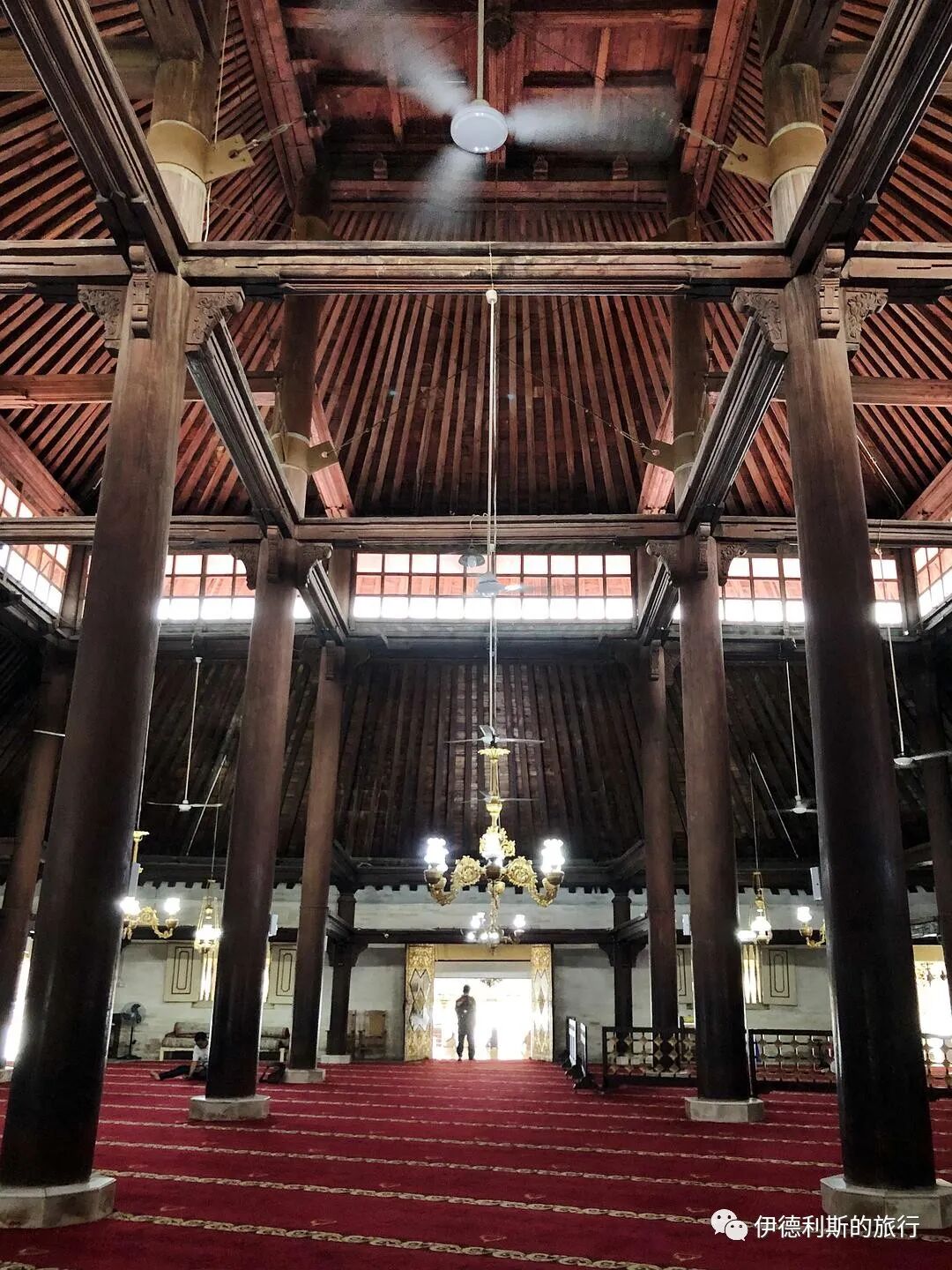
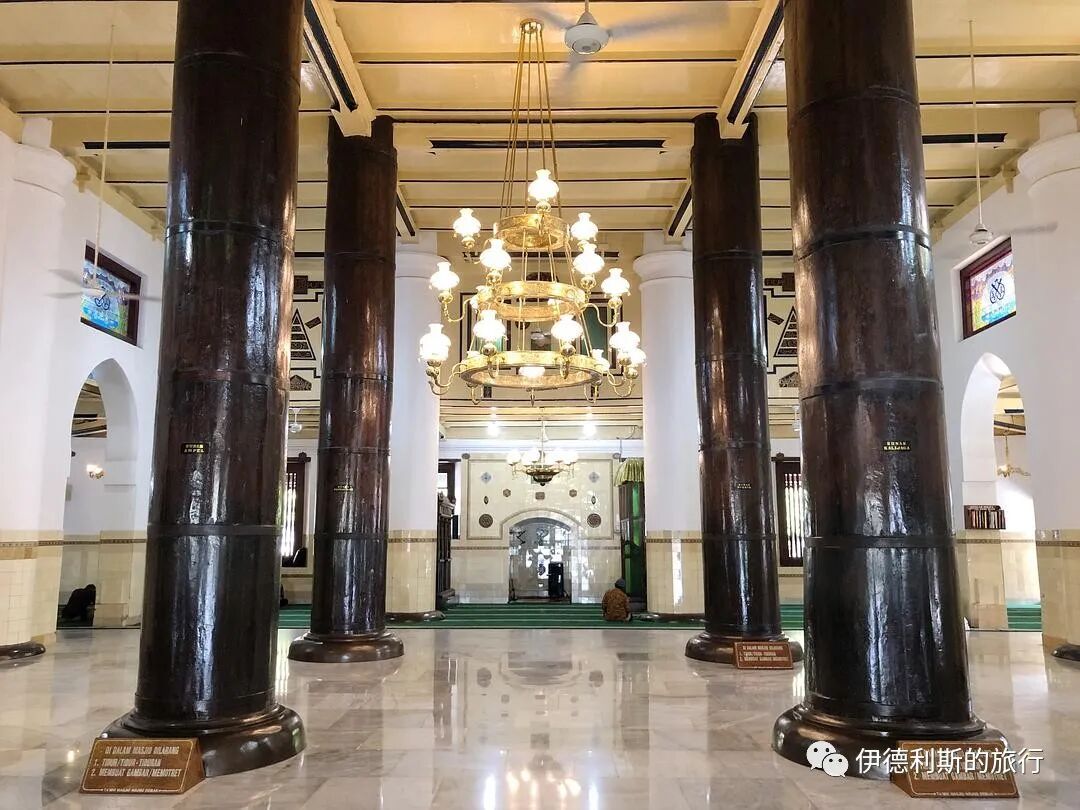
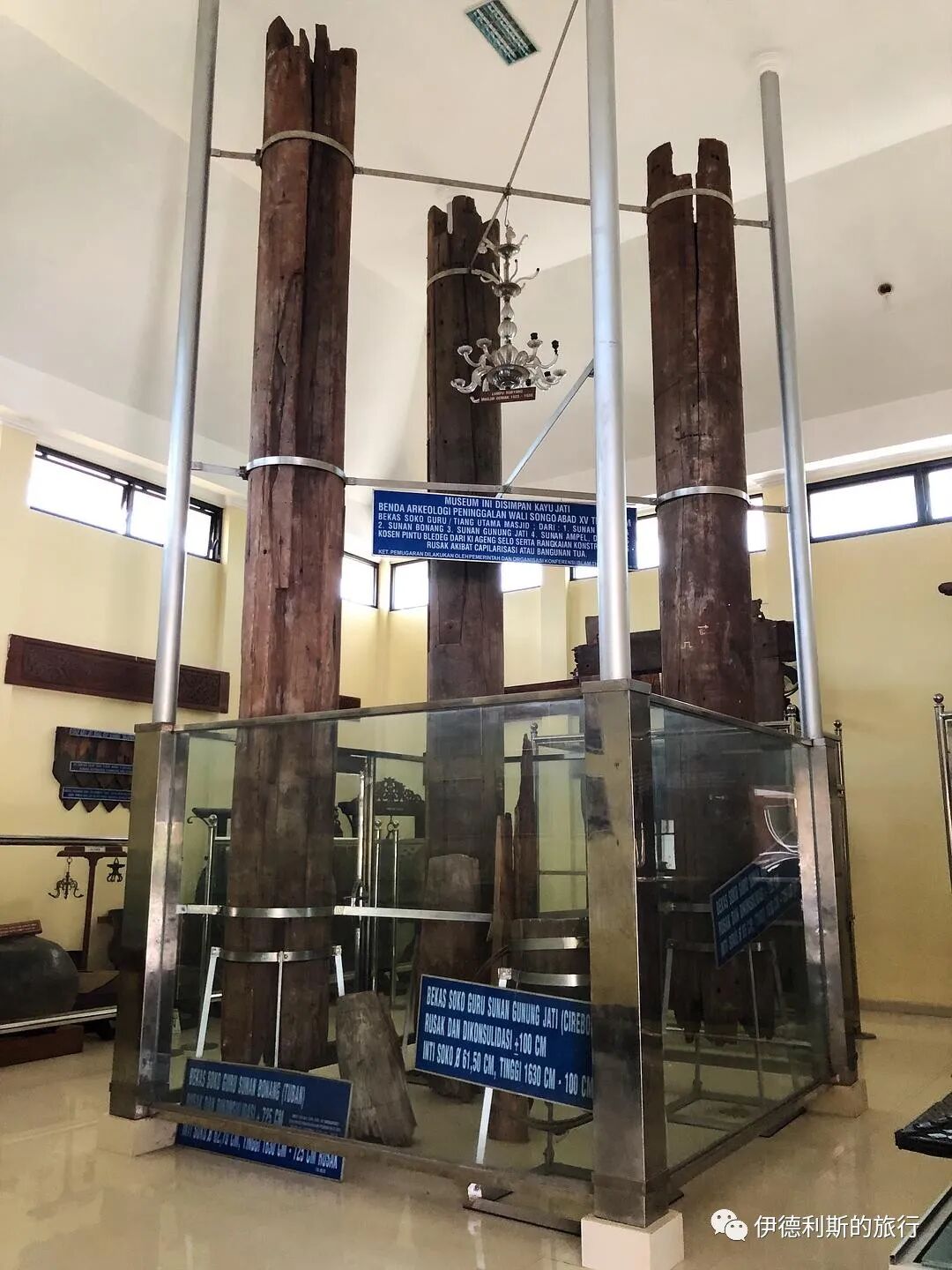
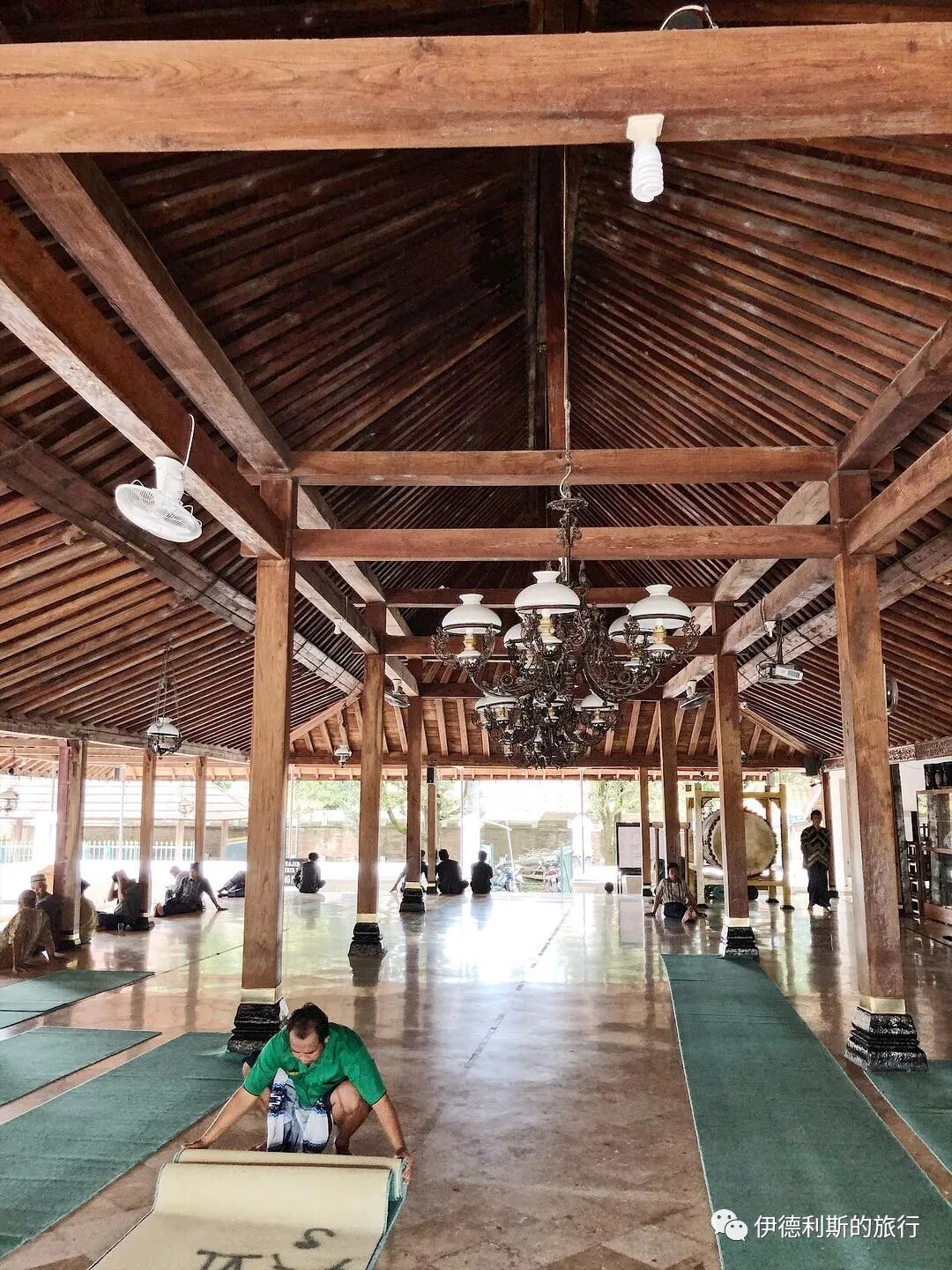
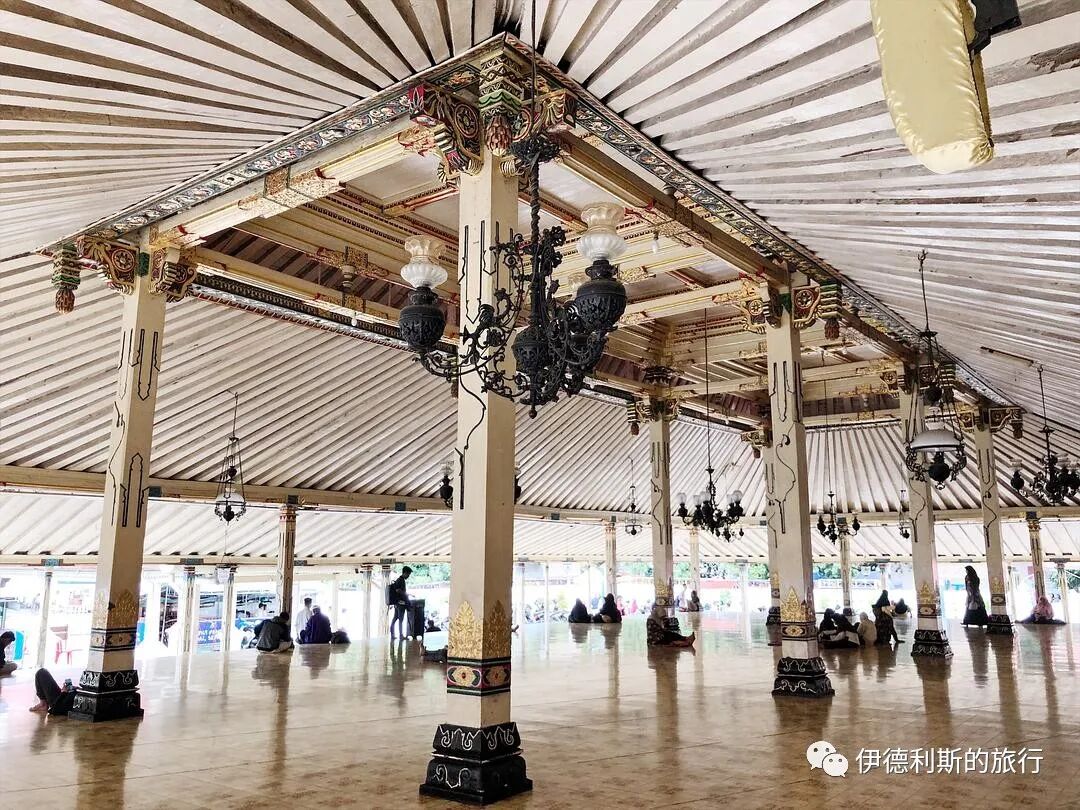
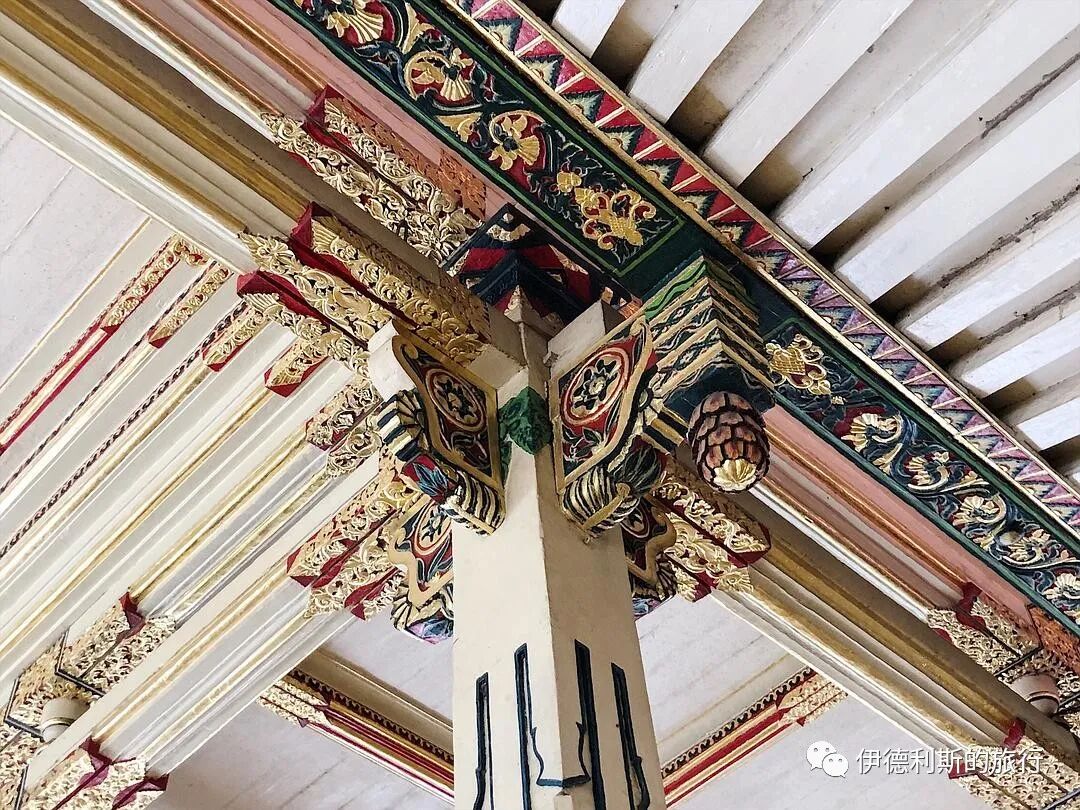
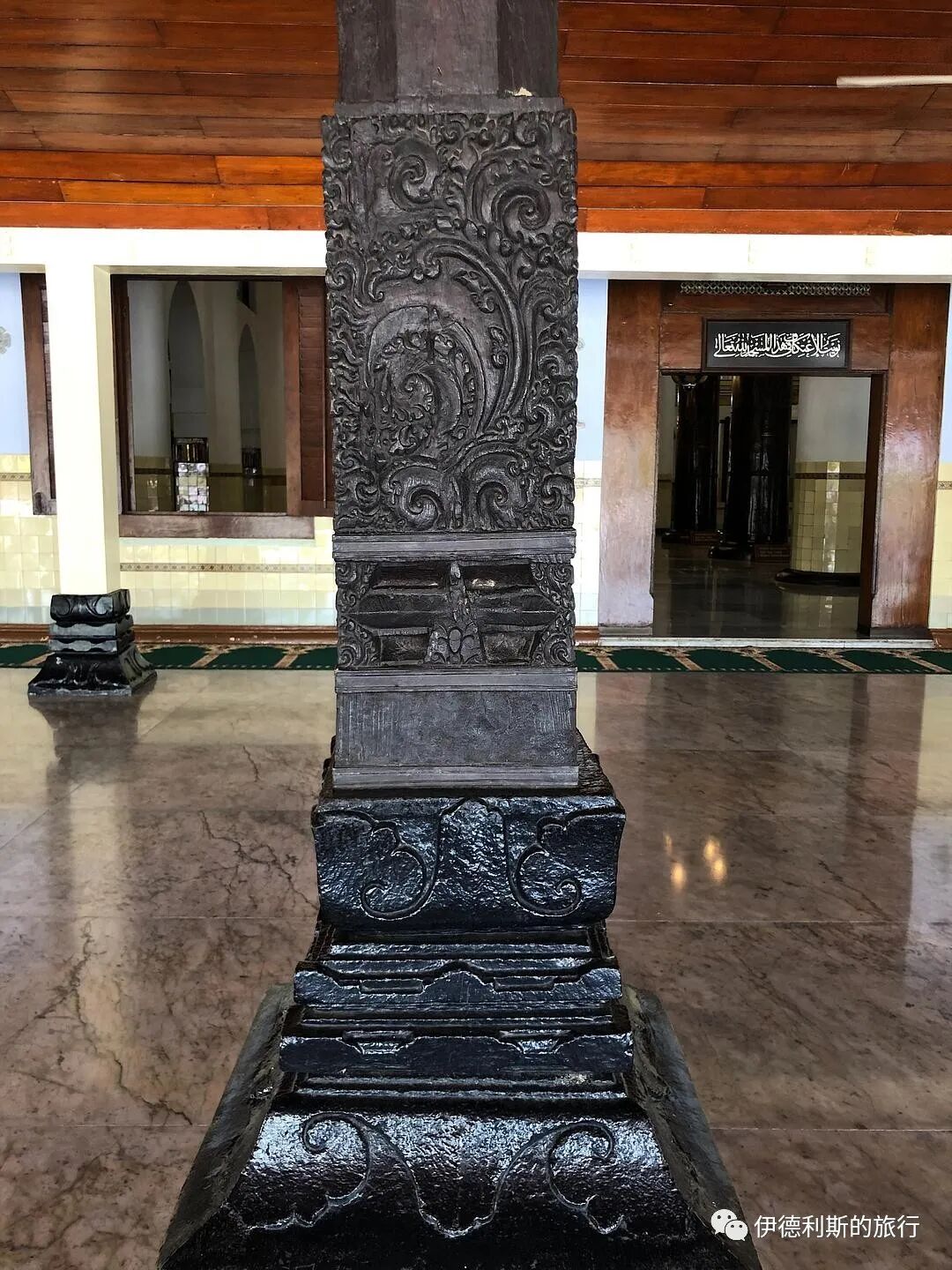
The main halls of Javanese traditional mosques do not bear weight on walls but are supported by four pillars connected to the highest roof layer. These four pillars are called Soko Guru. Each pillar is connected to the foundation by a stone base called Umpak. These bases prevent the wooden pillars from absorbing groundwater and also act as shock absorbers during earthquakes.
IV. Main Hall Interior
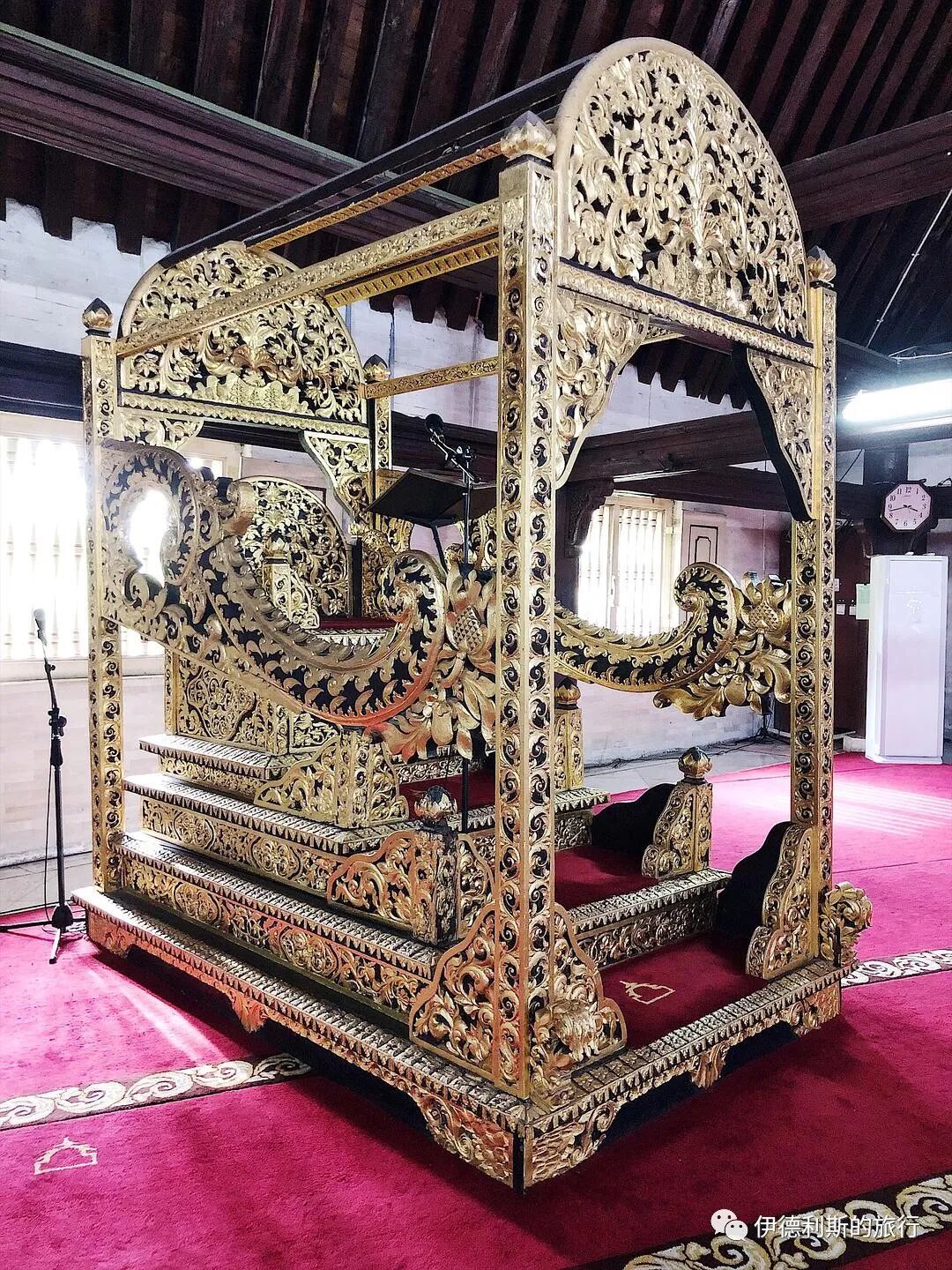
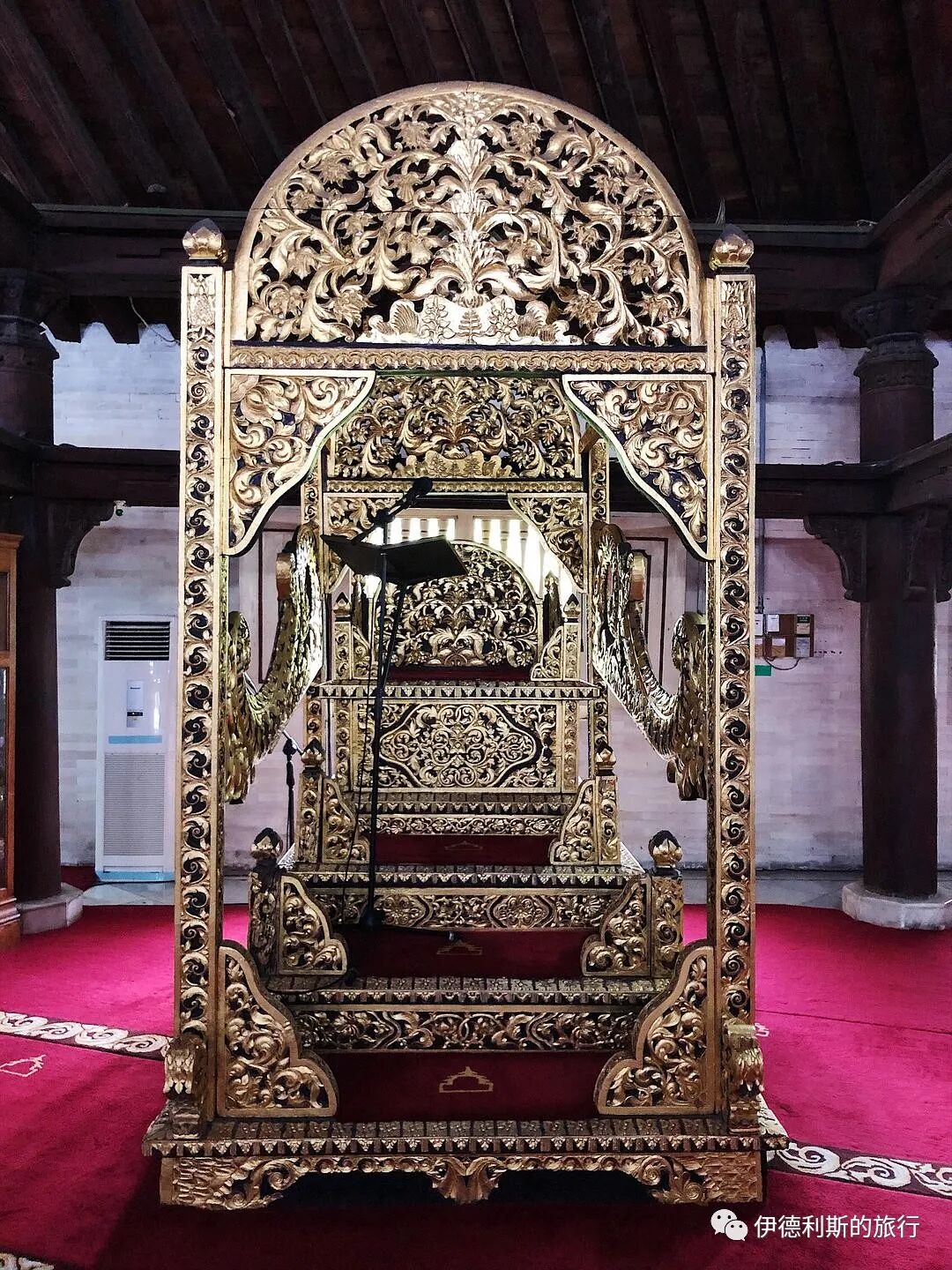
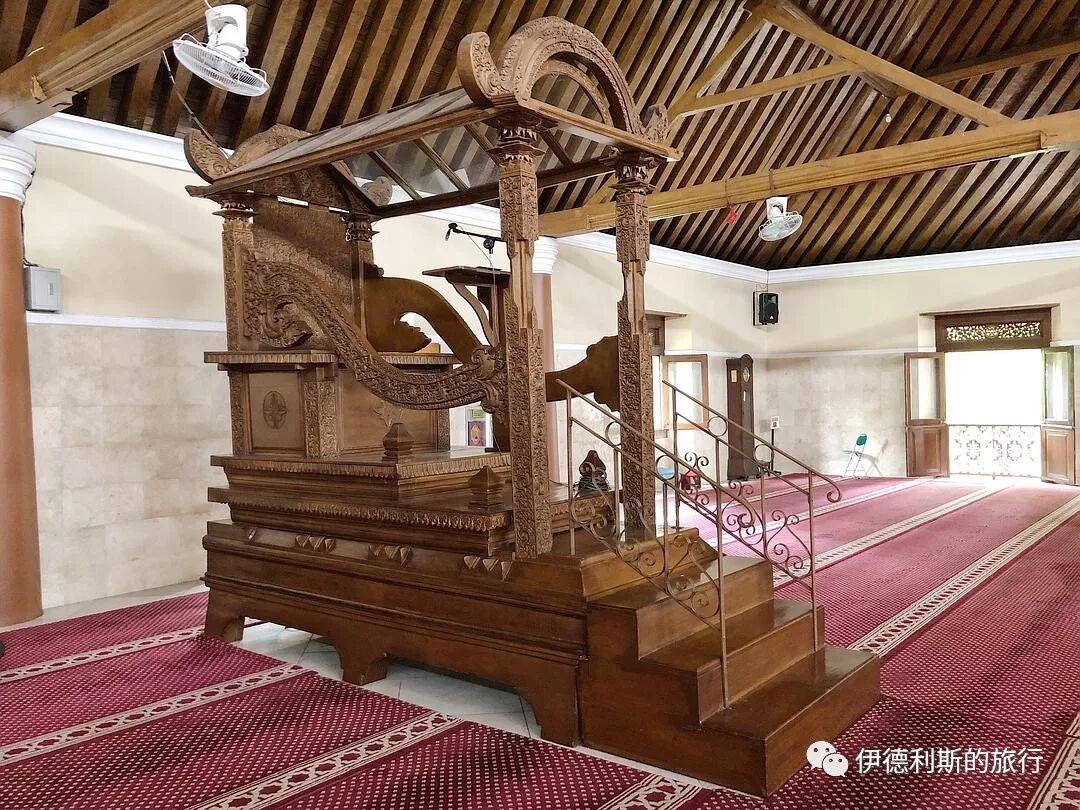
North of the mihrab niche in the main hall is the Minbar, a pulpit for preaching, which is in the style of a traditional Javanese carved wooden throne.
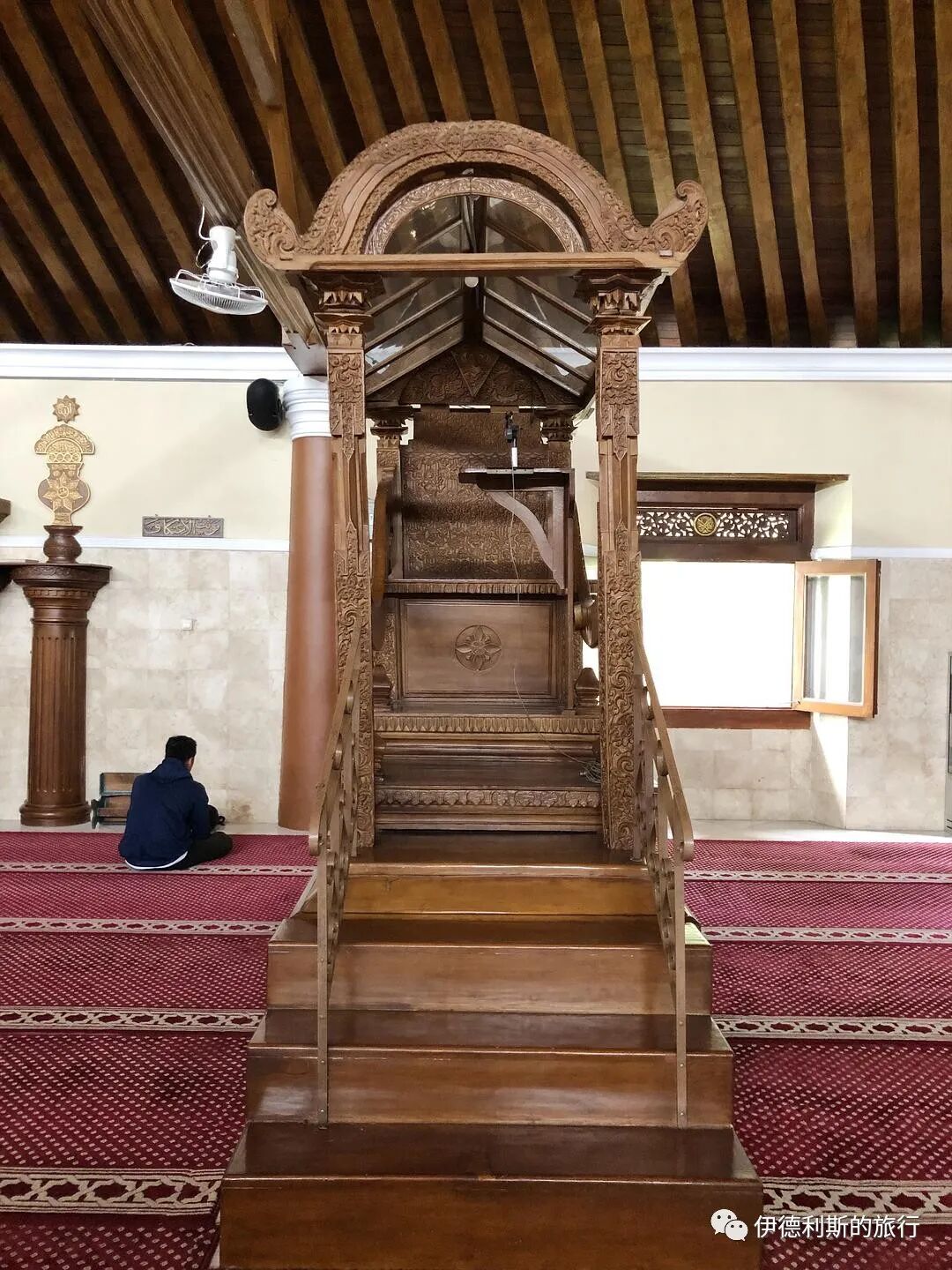
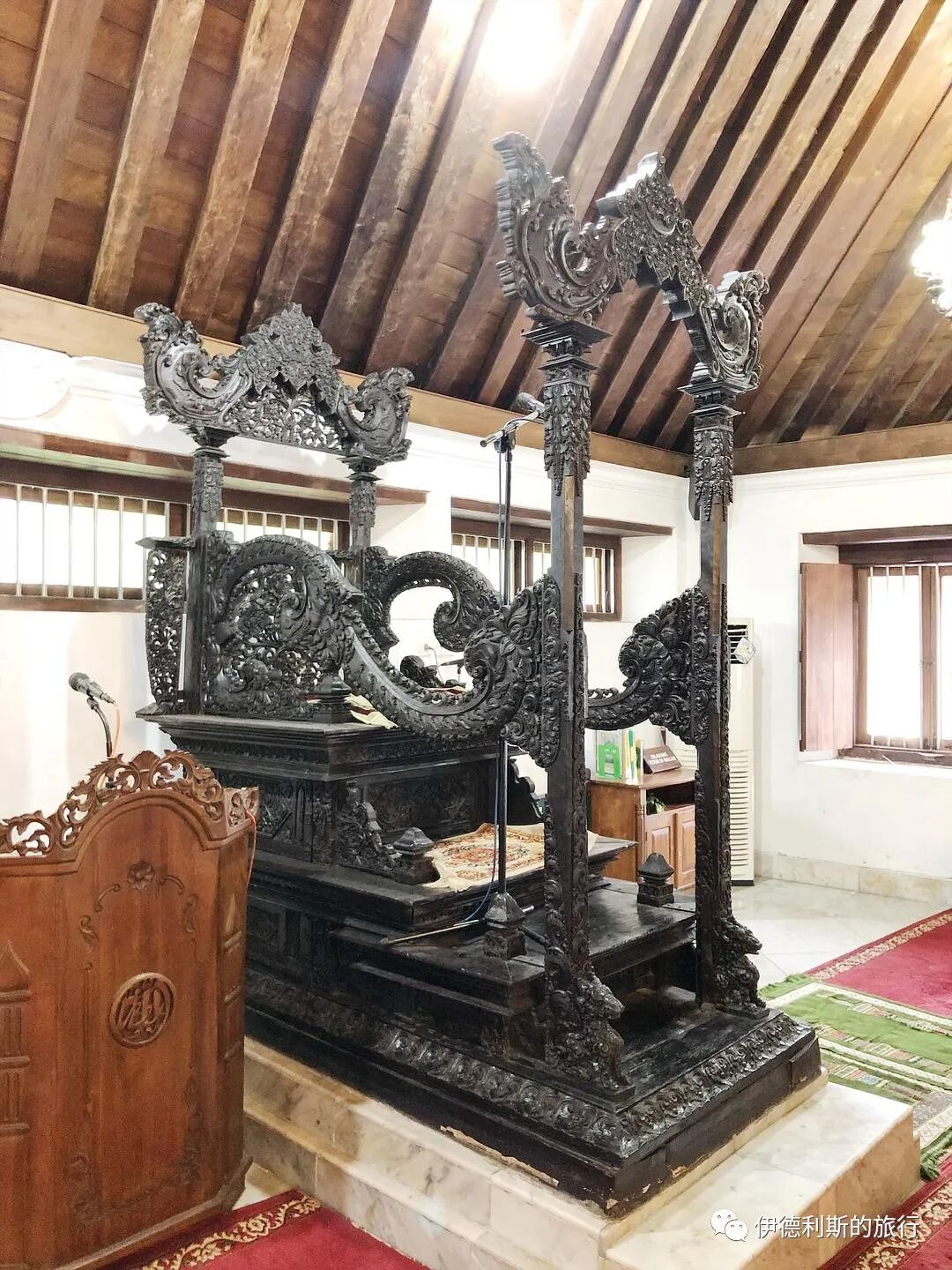
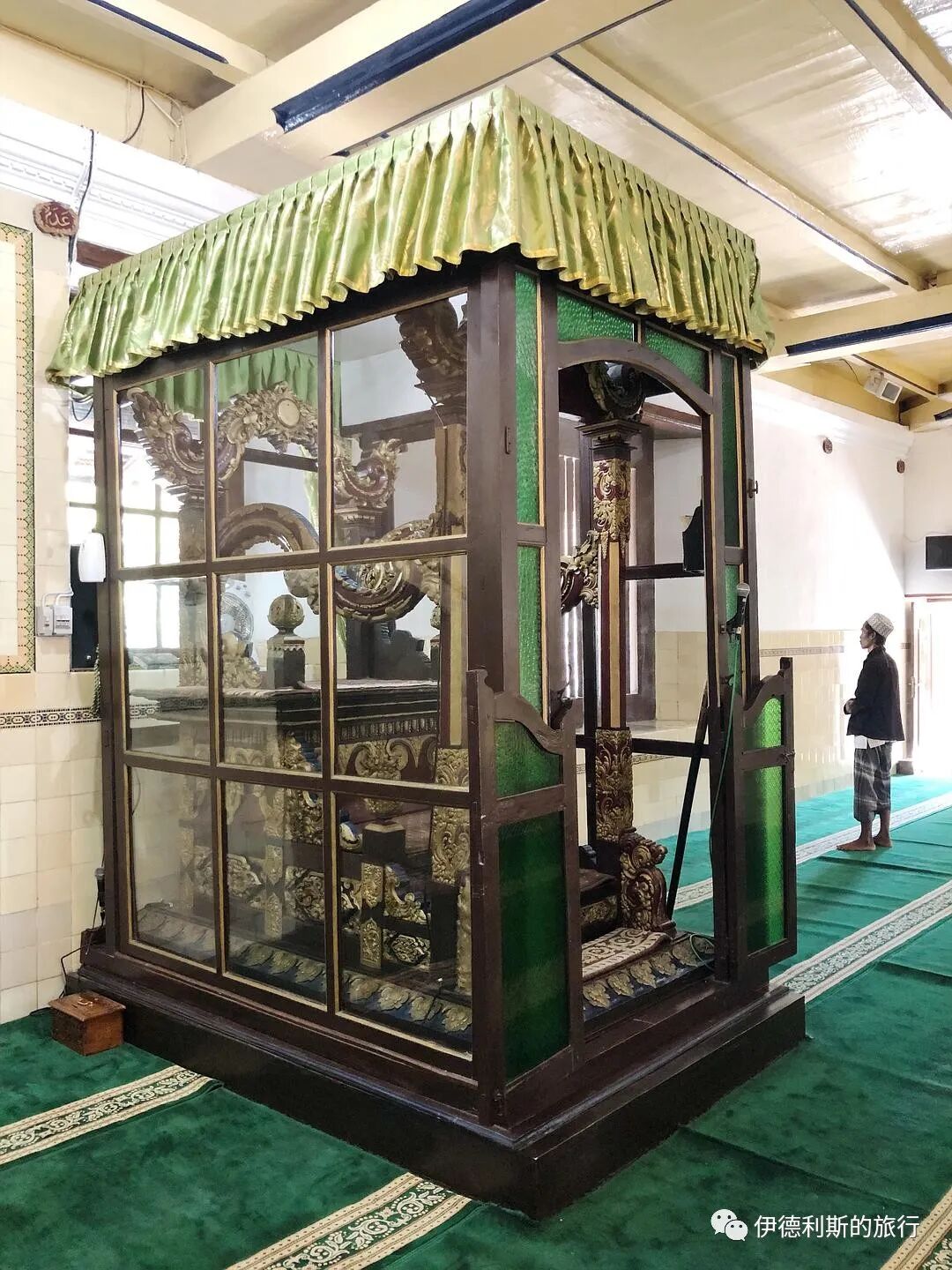
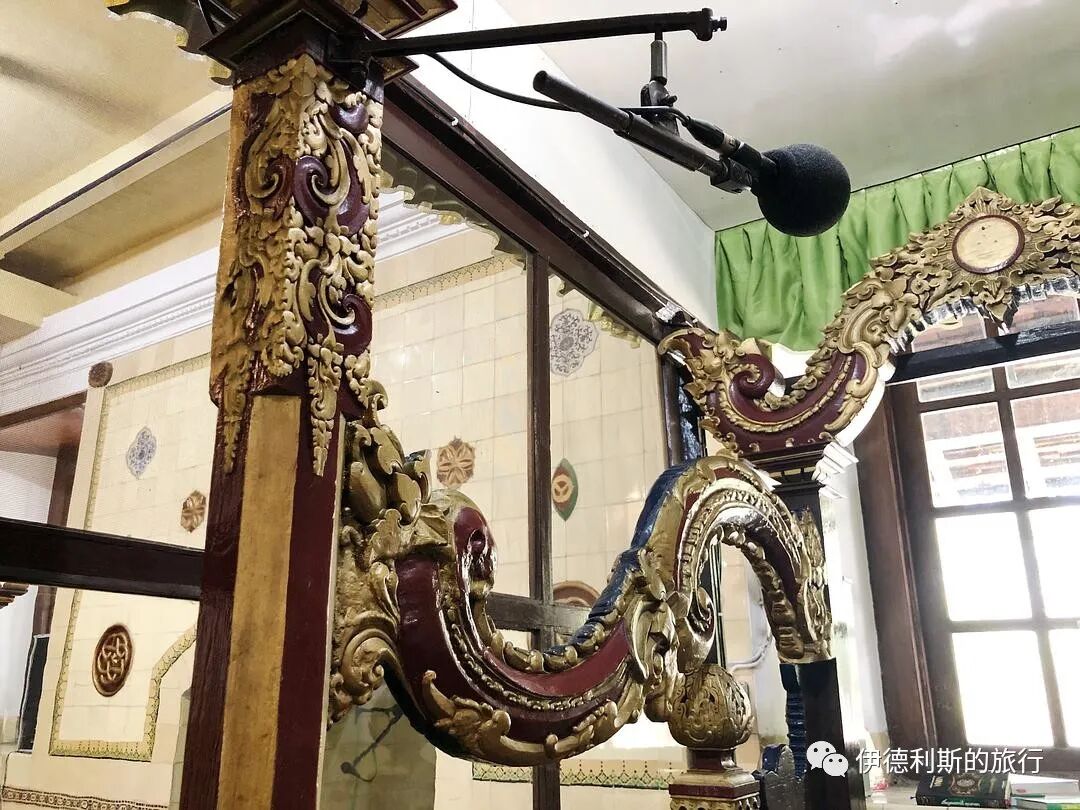
Some important mosques also have a structure called Kholwat or Maksuroh south of the mihrab, which is a place for important figures such as the Sultan or the Grand Imam to pray. Ordinary people are not allowed to enter.
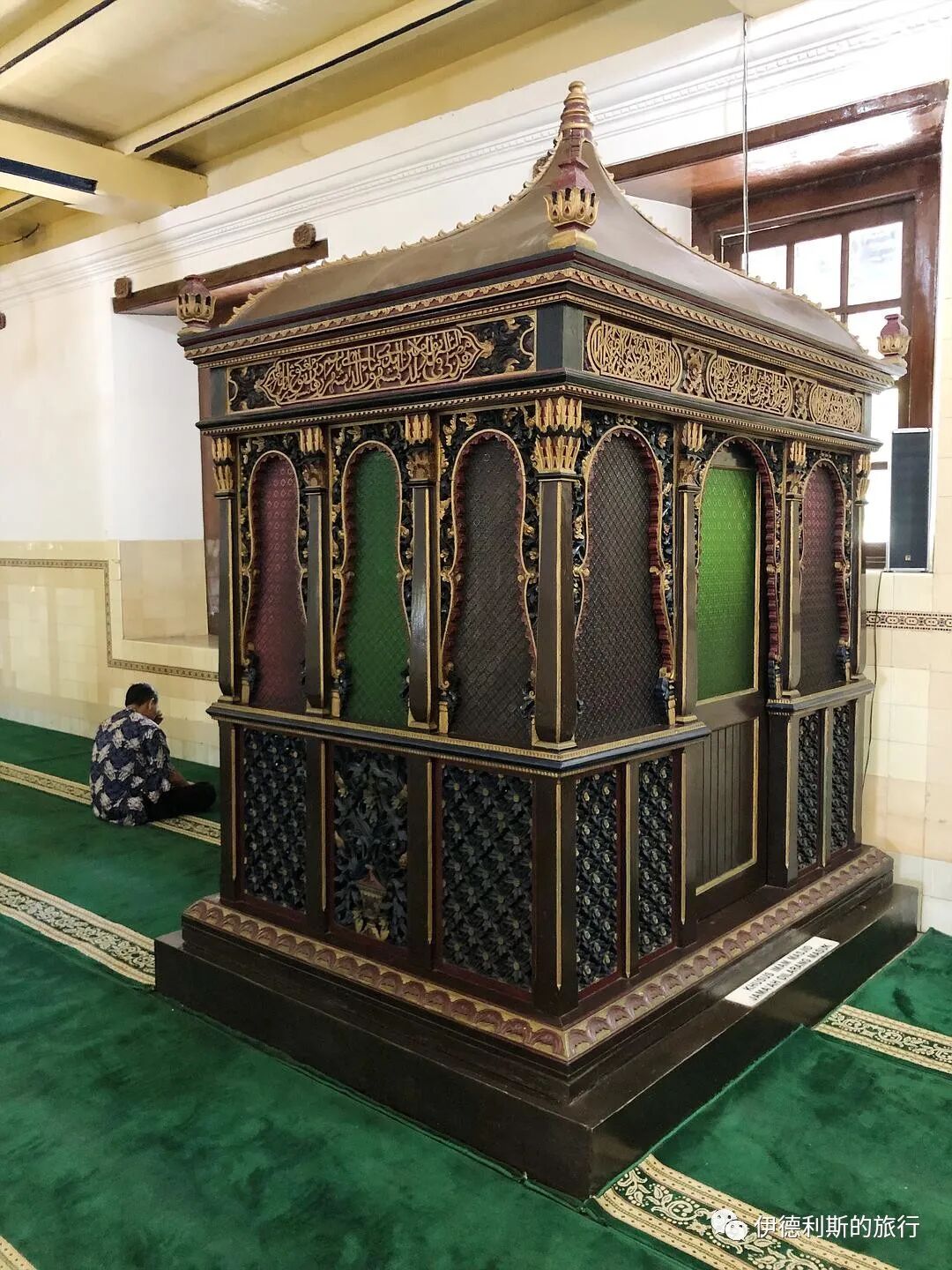
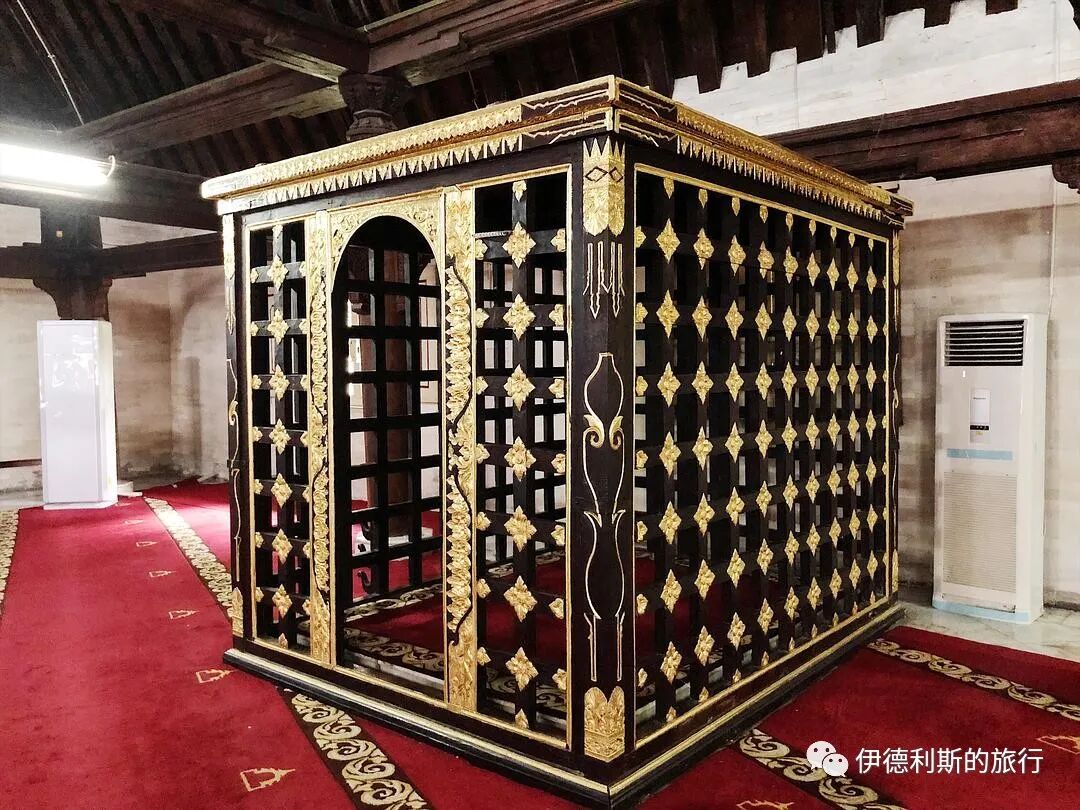
V. Front Porch
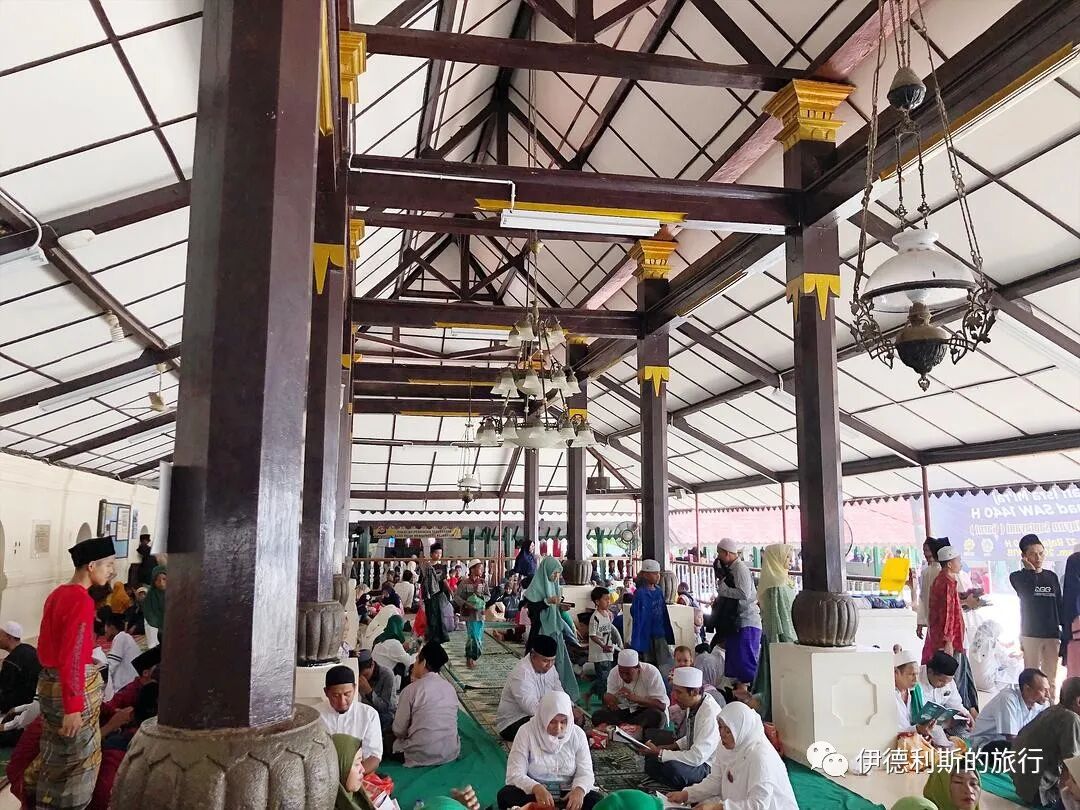
The front porch, Serambi, is located in front of the main hall and is integrated with it. The front porch is mainly used for shade and rain protection. People also pray in the front porch during Friday congregational prayers.
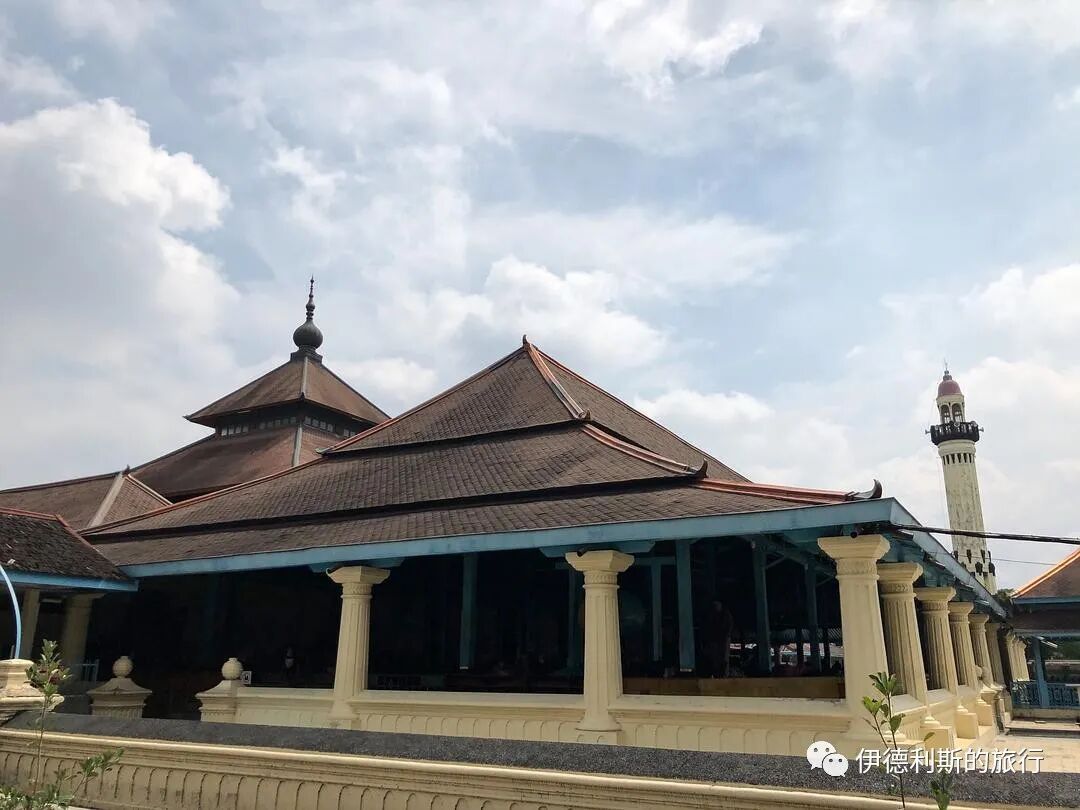
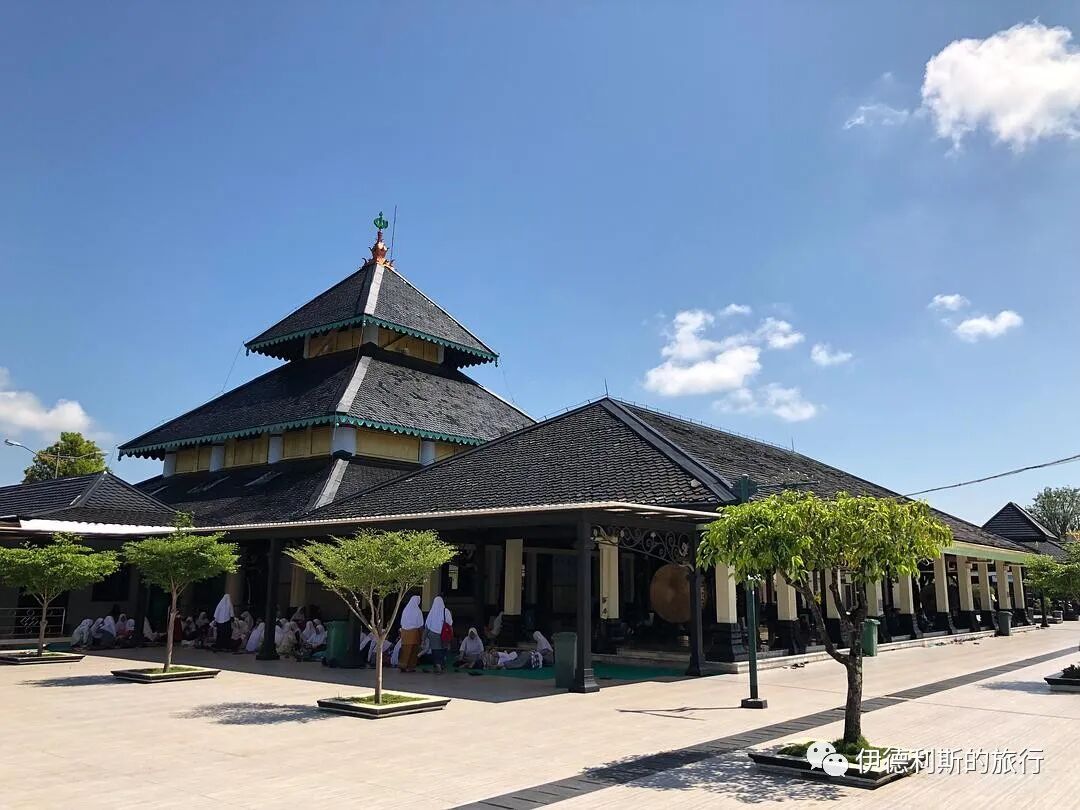
VI. Call to Prayer Drum and Minaret
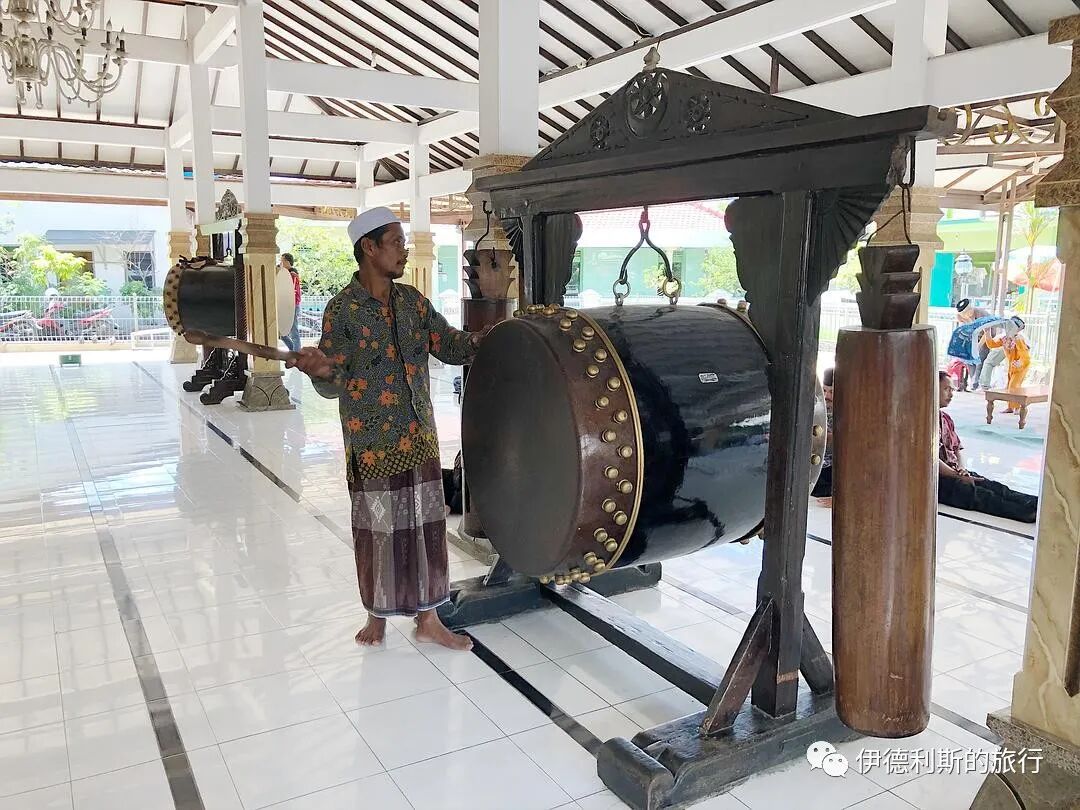
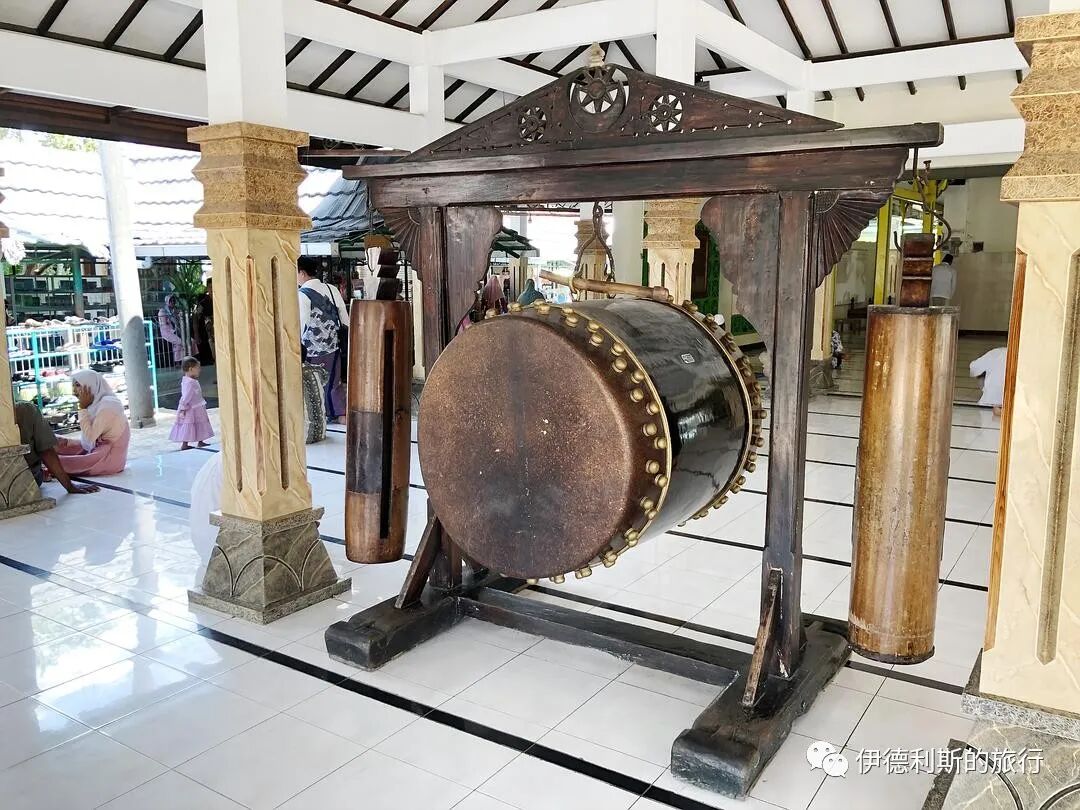
Early Javanese traditional mosques had almost no minarets; instead, the Bedug drum in the front porch was beaten to serve as a call to prayer. Today, in Javanese traditional mosques, the Bedug drum is still beaten every Friday and during Ramadan to call for prayer and to break the fast.
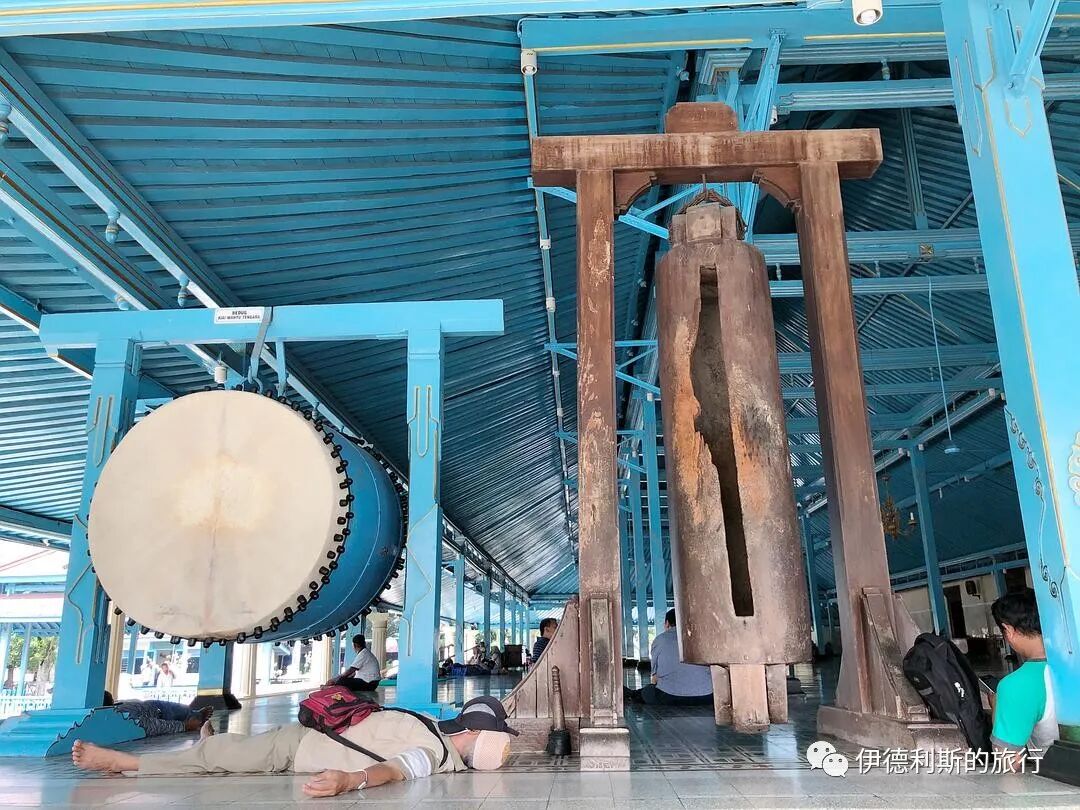
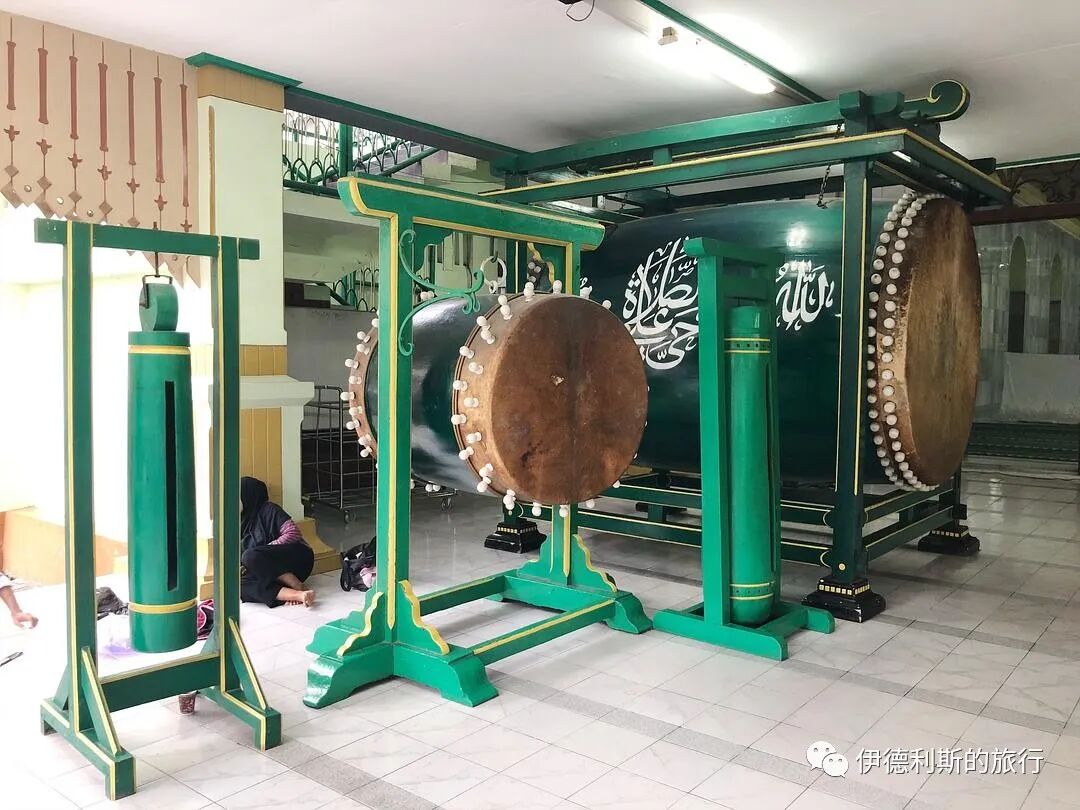
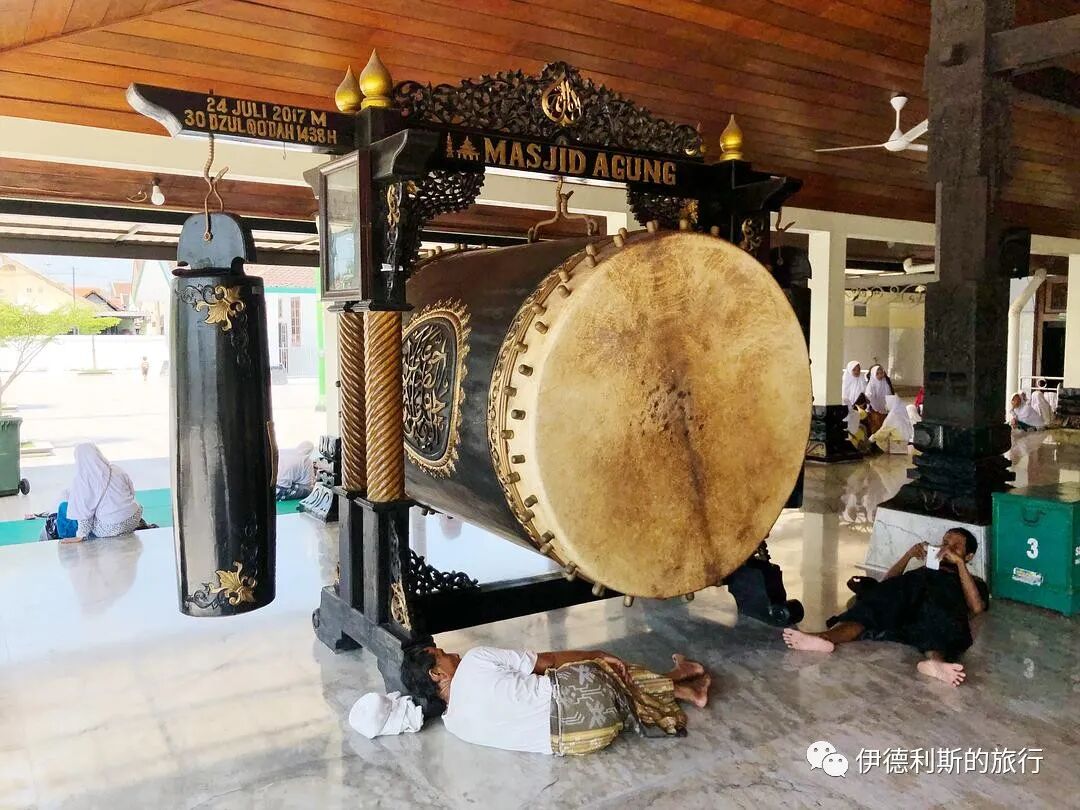
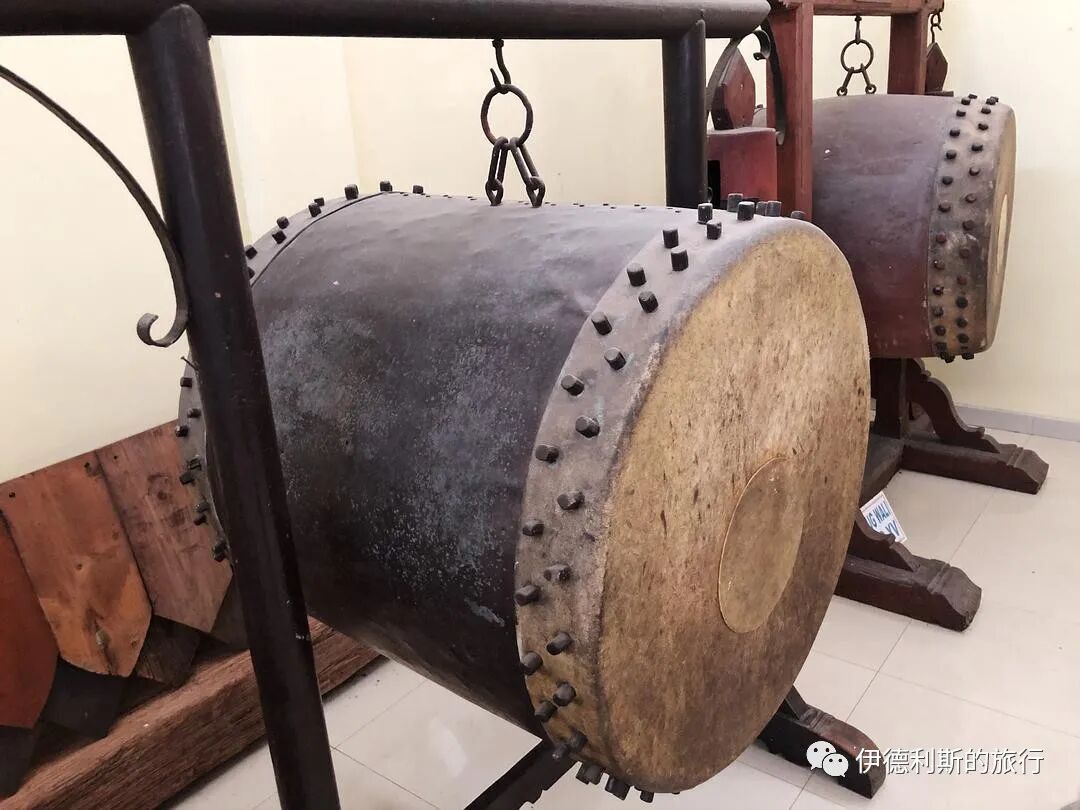
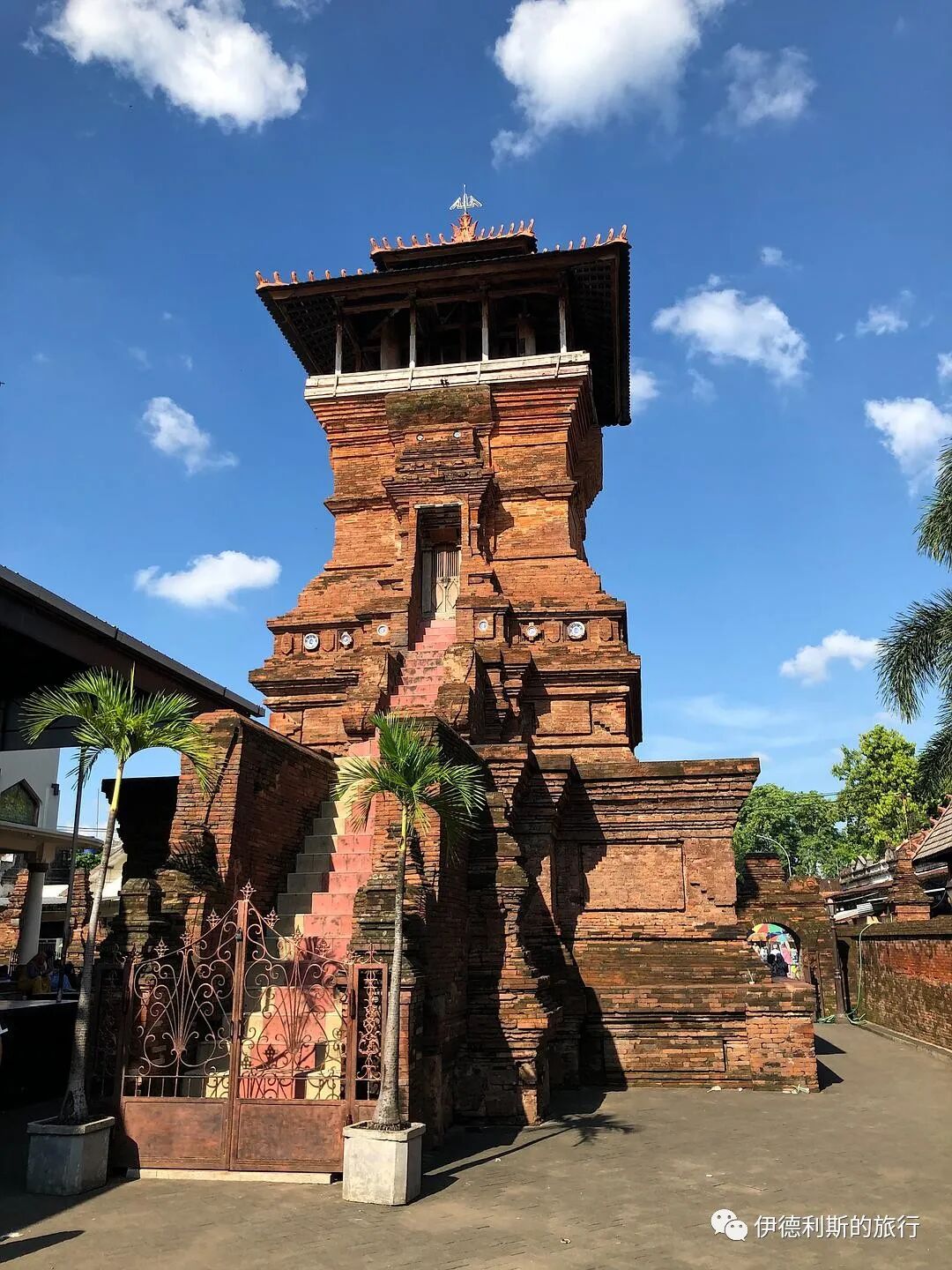
In the 16th century, the only Javanese traditional mosque with a minaret was the Al-Aqsha Mosque in Kudus, built in 1549. This tower is not in the Persian pointed-arch style at all but is a Javanese traditional Majapahit-style tower. The Bedug drum used for the call to prayer is placed at the top of the tower. Today, a similar style of drum tower, Bale kulkul, still exists in Bali, used to signal attacks, fires, or public events.
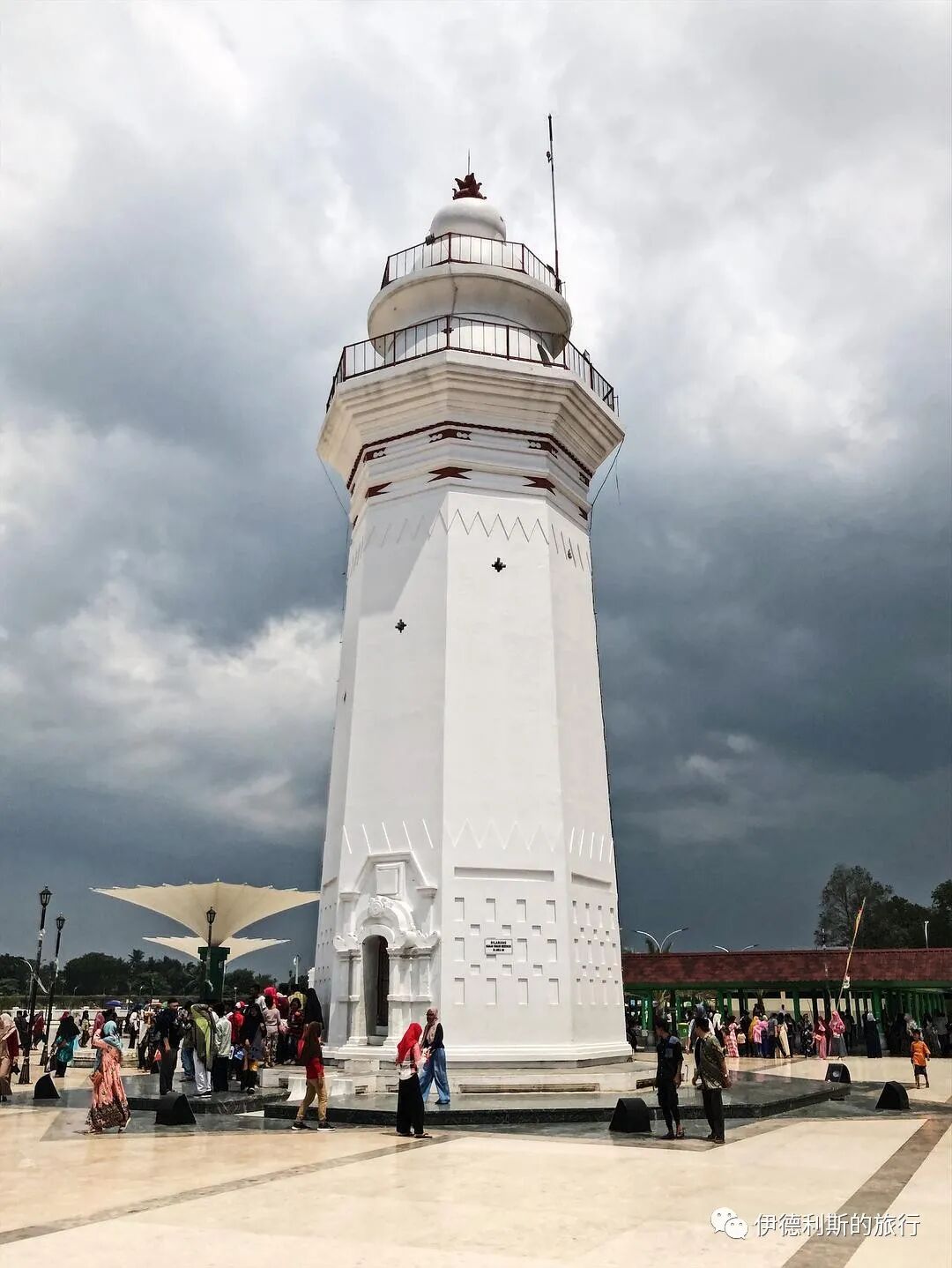
By the 17th century, the Banten Great Mosque in western Java had a minaret designed and built in 1632 by a Chinese person named Cek-ban-cut. This minaret is still not a Persian pointed-arch style but is a unique type that combines Mughal style with the local Javanese Hindu/Buddhist Candi architectural style.
Summary: This travel note introduces Beautiful Traditional Javanese Mosque. Between the 15th and 16th centuries, Islam became the dominant religion on the islands of Sumatra and Java through the efforts of Sufi Muslim missionaries, settled Muslim merchants, and Sultan rulers. It is useful for readers interested in Java Mosques, Muslim Travel, Islamic Heritage.
Between the 15th and 16th centuries, Islam became the dominant religion on the islands of Sumatra and Java through the efforts of Sufi Muslim missionaries, settled Muslim merchants, and Sultan rulers. In the process of converting from Buddhism, Hinduism, and traditional animism to Islam, the original traditional cultures and Islamic cultures mutually accommodated and merged, forming an "Indonesian traditional Islamic culture" that includes music, dance, clothing, architecture, and etiquette.
For tourists who want to understand Indonesian traditional Islamic culture, traditional mosque architecture is the most accessible channel. During the Qingming and May Day holidays in 2019, I visited several traditional mosque buildings on the island of Java, hoping to share these buildings to let everyone appreciate the charm of Indonesian traditional Islamic culture.
Existing Indonesian traditional mosques can be roughly divided into three styles: Javanese, Banjarese, and Minangkabau. The Javanese style, popular from the 15th to 18th centuries, is characterized by its multi-layered Tajug pyramid-shaped roof, Serambi front porch, and Bedug drum used for the call to prayer. Most traditional mosques in Indonesia are of the Javanese style. The Banjarese style in southern Borneo and the Minangkabau style in western Sumatra developed from the Javanese style, but their roofs have steeper slopes than the Javanese style. The Banjarese style does not have a front porch, and the mihrab is a separate building.
After the 19th century, Dutch colonizers introduced the "Moorish Revival" (also known as "Indo-Saracenic") architectural style, prevalent in European colonial regions of Southeast Asia, to Indonesia. Many traditional mosques were renovated and rebuilt in the 19th century, adding Indian mosque domes, pointed arches, and vertical minarets.
Here are some Javanese traditional mosques I visited:
I. Demak Great Mosque: 1466
II. Kudus Al-Aqsha Mosque: 1549
III. Banten Great Mosque: 1566
IV. Mataram Great Mosque: 1575
V. Surakarta Great Mosque: 1768
VI. Yogyakarta Great Mosque: 1773
Demak Great Mosque: 1466
Kudus Al-Aqsha Mosque: 1549
Banten Great Mosque: 1566
Mataram Great Mosque: 1575
Surakarta Great Mosque: 1768
Yogyakarta Great Mosque: 1773
I. Traditional Gates
The gates of early Javanese traditional mosques directly inherited from the Buddhist/Hindu architecture of the Majapahit era, with Candi Bentar and Kori Agung being the most distinctive types.
Candi was originally a type of Hindu/Buddhist mosque architecture on Java, Bali, and Lombok. Candi Bentar means "split Candi," where a Candi is split symmetrically down the middle, with a road laid out in between. In fact, Candi Bentar does not have doors installed in the middle; it serves as a passage from the secular space to the sacred space, creating a sense of solemnity before entering the main building.
The Candi Bentar gates of Javanese traditional mosques are built with tiered red bricks in the Majapahit style. The Al-Aqsha Mosque in Kudus and the Panjunan Mosque in Cirebon are the most famous. I visited the Al-Aqsha Mosque in Kudus, built in 1549, this time.
The Kori Agung gate is also called the Paduraksa gate in Hindu/Buddhist architecture and is the main gate for entering the sacred space from the secular space. The Kori Agung gate originated from the ancient Indian Gopuram gate and was widely used in ancient Javanese Hindu/Buddhist temples after the 8th to 9th centuries. After the 15th century, it was adopted by mosques, palaces, and cemeteries of the Islamic Sultanate, but without the elaborate decorations of Hindu/Buddhist architecture.
The Kori Agung in Javanese traditional mosques is actually a tiered Candi building in the Majapahit style, made of red bricks, with intricately patterned wooden doors. The Al-Aqsha Mosque in Kudus, built in 1549, and the Mataram Great Mosque in Yogyakarta, built in 1575, which I visited this time, both have Kori Agung.
II. Main Hall Roofs
The pyramid-shaped multi-layered roof of Javanese traditional mosques is called Tajug, which is very similar to the Hindu pagodas in Bali. This architectural structure originated from Indian and Chinese cultures and existed before the arrival of Islam in Java, resulting from the integration of Indonesian indigenous culture and Islamic culture.
Tajug roofs generally have two to five layers and can be connected to the base or separated. When separated, the lower layer serves as the prayer hall, and the upper layer is used as a classroom. The decoration at the very top of the roof is called Mustoko or Memolo. The most traditional Mustoko is made of clay. Some have been replaced with metal during recent restorations. After the 19th century, some Mustoko were also replaced with Indian-style domes.
III. Main Hall Pillars
The main halls of Javanese traditional mosques do not bear weight on walls but are supported by four pillars connected to the highest roof layer. These four pillars are called Soko Guru. Each pillar is connected to the foundation by a stone base called Umpak. These bases prevent the wooden pillars from absorbing groundwater and also act as shock absorbers during earthquakes.
IV. Main Hall Interior
North of the mihrab niche in the main hall is the Minbar, a pulpit for preaching, which is in the style of a traditional Javanese carved wooden throne.
Some important mosques also have a structure called Kholwat or Maksuroh south of the mihrab, which is a place for important figures such as the Sultan or the Grand Imam to pray. Ordinary people are not allowed to enter.
V. Front Porch
The front porch, Serambi, is located in front of the main hall and is integrated with it. The front porch is mainly used for shade and rain protection. People also pray in the front porch during Friday congregational prayers.
VI. Call to Prayer Drum and Minaret
Early Javanese traditional mosques had almost no minarets; instead, the Bedug drum in the front porch was beaten to serve as a call to prayer. Today, in Javanese traditional mosques, the Bedug drum is still beaten every Friday and during Ramadan to call for prayer and to break the fast.
In the 16th century, the only Javanese traditional mosque with a minaret was the Al-Aqsha Mosque in Kudus, built in 1549. This tower is not in the Persian pointed-arch style at all but is a Javanese traditional Majapahit-style tower. The Bedug drum used for the call to prayer is placed at the top of the tower. Today, a similar style of drum tower, Bale kulkul, still exists in Bali, used to signal attacks, fires, or public events.
By the 17th century, the Banten Great Mosque in western Java had a minaret designed and built in 1632 by a Chinese person named Cek-ban-cut. This minaret is still not a Persian pointed-arch style but is a unique type that combines Mughal style with the local Javanese Hindu/Buddhist Candi architectural style.
