
Hui and Islamic Artifacts at Poly Art Museum's Porcelain Exhibition
Reposted from the web
Summary: This travel note introduces Hui and Islamic Artifacts at Poly Art Museum's Porcelain Exhibition. In June 2022, the Poly Art Museum opened a comparative exhibition of Yuan and Ming dynasty blue-and-white porcelain from the Jingdezhen Imperial Kiln ruins and collections from home and abroad, displaying some artifacts. It is useful for readers interested in Islamic Art, Porcelain, Poly Art Museum.
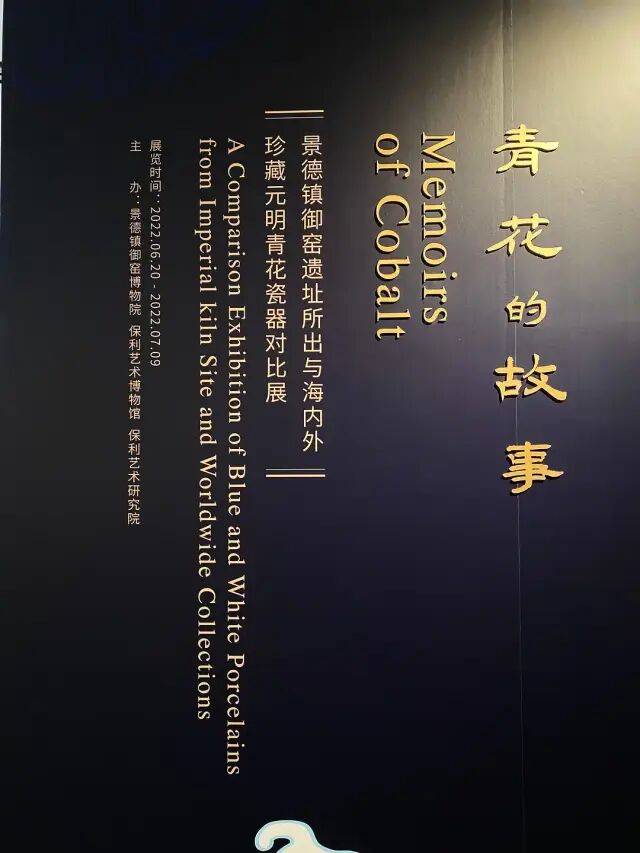
In June 2022, the Poly Art Museum opened a comparative exhibition of Yuan and Ming dynasty blue-and-white porcelain from the Jingdezhen Imperial Kiln ruins and collections from home and abroad, displaying some artifacts related to the Hui Muslims and Islam.
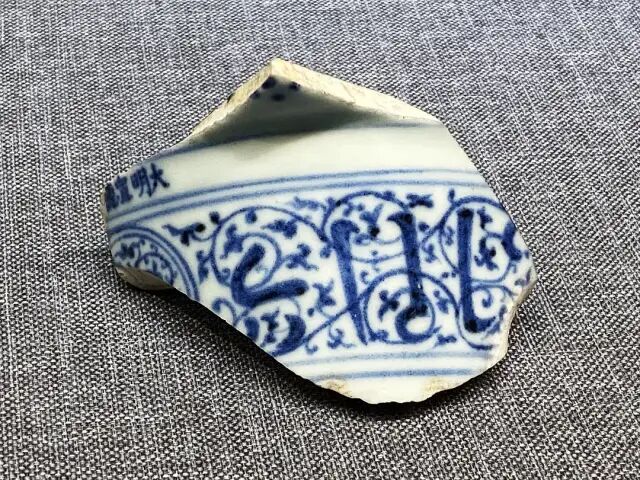
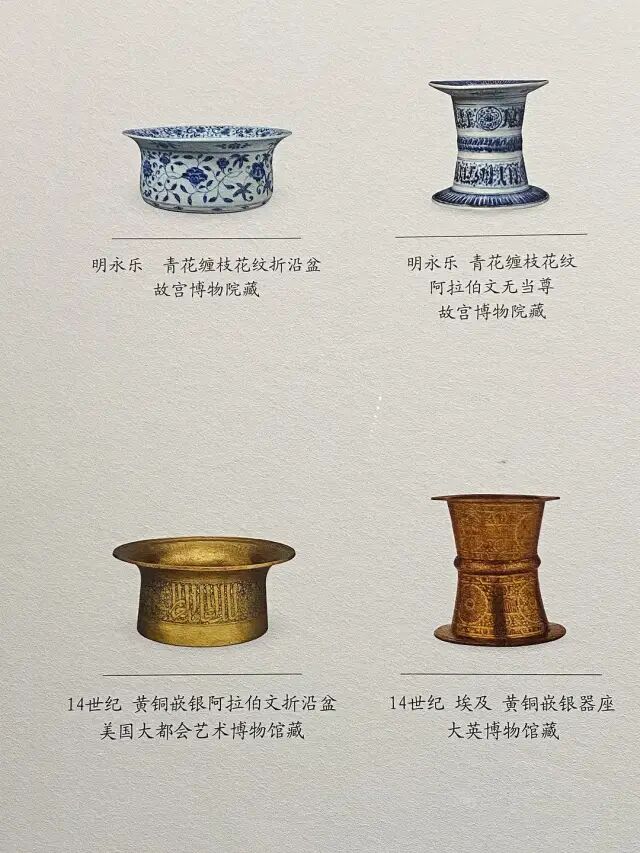
A fragment of a Ming Xuande period Arabic-inscribed wudangzun (a type of vessel without a handle) unearthed at the Zhushan Imperial Kiln in Jingdezhen in 1983, now housed in the Jingdezhen Imperial Kiln Museum, mimics the shape and patterns of 14th-century Middle Eastern brass inlaid with silver. The Palace Museum's Wuying Hall displays a Ming Yongle period Arabic-inscribed wudangzun from the former Qing imperial collection; the two pieces are basically the same in shape, but there are subtle differences in the brushwork of the characters and the painting of the scrolling floral patterns. Although the Palace Museum's exhibition label says it is Arabic, it is difficult to tell what is written. It is possible that at the time, they were only imitating the shapes and patterns of similar Middle Eastern objects without mastering the content of the text.
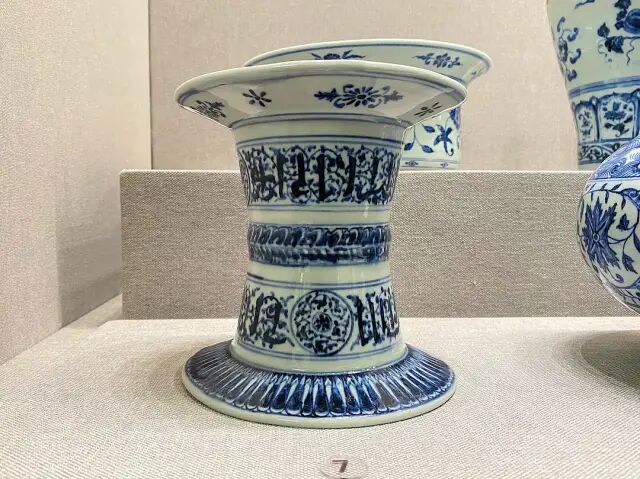
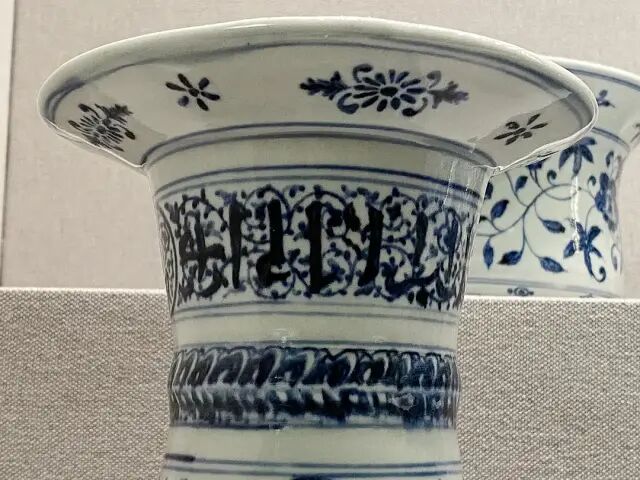
In the Palace Museum exhibition hall, there is a comparison photo of the wudangzun and a 14th-century Egyptian Mamluk dynasty brass stand inlaid with silver from the British Museum, and the shapes are indeed exactly the same.
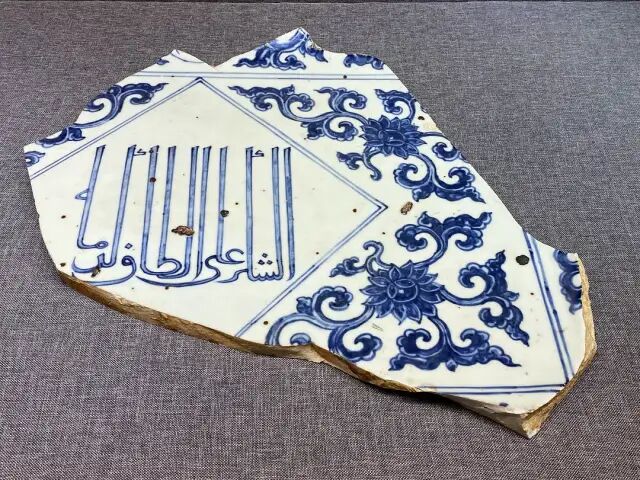
A fragment of a Ming Zhengde period Arabic-inscribed square basin unearthed at the northern foot of the Jingdezhen Imperial Kiln in 2002 looks quite large.
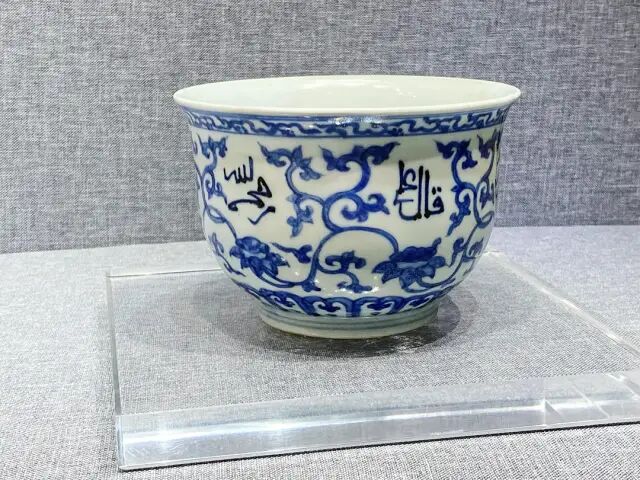
A Ming Zhengde period Arabic-inscribed bowl from the collection of Mr. Jin Liyan of Liangqing Shuwu. According to Mr. Jin, the Veritable Records of the Joseon Dynasty (Li Chao Shilu) record that in the third year of the Zhengde reign (1509), the Zhengde Emperor learned about Islam: 'Hearing that Hui Muslims do not eat meat slaughtered by others, but must slaughter it by hand to eat it, and that they have a good heart for reading scriptures, he welcomed them into the palace to serve them as teachers.' "
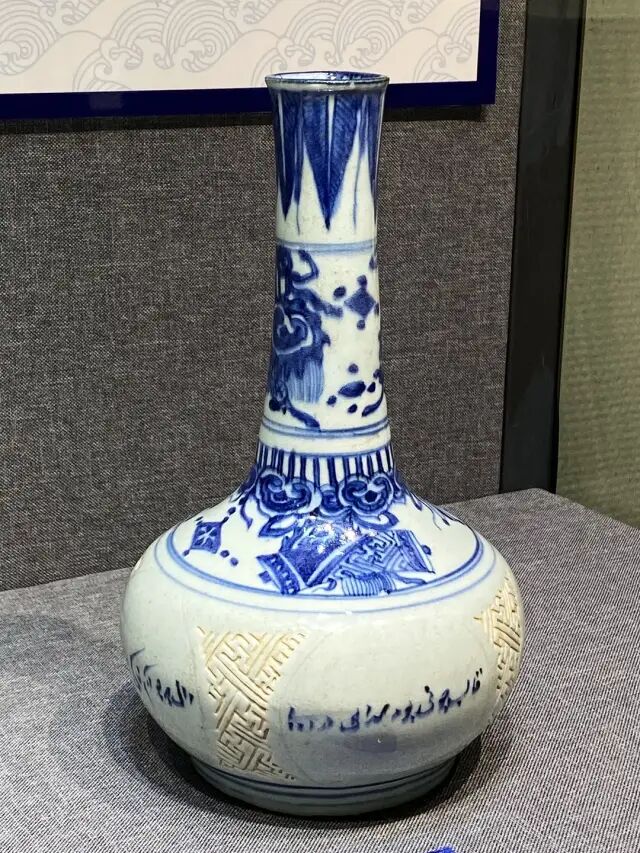
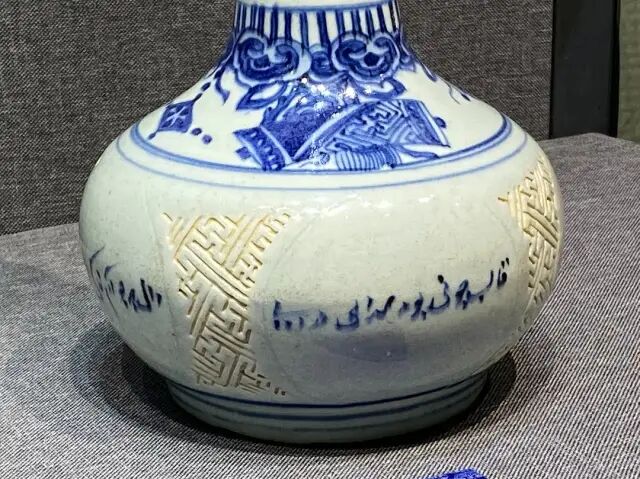
A Ming Wanli period Persian-inscribed long-necked vase from the collection of Mr. Jin Liyan of Liangqing Shuwu, which features a Persian ruba'i (quatrain) poem. During the Ming Wanli period, Islam was treated very favorably. According to Ma Zhu's Qingzhen Zhinan (Guide to Islam) - Qing Bao Biao, 'The Shenzong Emperor issued an edict to repair mosques throughout the world, honoring them with titles. All those in charge were granted the grace of wearing official caps, exempted from corvee labor, and served to burn incense and pray to the Lord who created heaven, earth, man, spirits, and all things.' The Niujie Mosque in Beijing underwent large-scale expansion during the Wanli period, and the Sanlihe Mosque was also built during the Wanli period.
According to Mr. Jin, the Persian ruba'i (quatrain) poem mentions the great Persian poet Omar Khayyam (1048-1131), who was famous for his ruba'i quatrains.
Summary: This travel note introduces Hui and Islamic Artifacts at Poly Art Museum's Porcelain Exhibition. In June 2022, the Poly Art Museum opened a comparative exhibition of Yuan and Ming dynasty blue-and-white porcelain from the Jingdezhen Imperial Kiln ruins and collections from home and abroad, displaying some artifacts. It is useful for readers interested in Islamic Art, Porcelain, Poly Art Museum.
In June 2022, the Poly Art Museum opened a comparative exhibition of Yuan and Ming dynasty blue-and-white porcelain from the Jingdezhen Imperial Kiln ruins and collections from home and abroad, displaying some artifacts related to the Hui Muslims and Islam.
A fragment of a Ming Xuande period Arabic-inscribed wudangzun (a type of vessel without a handle) unearthed at the Zhushan Imperial Kiln in Jingdezhen in 1983, now housed in the Jingdezhen Imperial Kiln Museum, mimics the shape and patterns of 14th-century Middle Eastern brass inlaid with silver. The Palace Museum's Wuying Hall displays a Ming Yongle period Arabic-inscribed wudangzun from the former Qing imperial collection; the two pieces are basically the same in shape, but there are subtle differences in the brushwork of the characters and the painting of the scrolling floral patterns. Although the Palace Museum's exhibition label says it is Arabic, it is difficult to tell what is written. It is possible that at the time, they were only imitating the shapes and patterns of similar Middle Eastern objects without mastering the content of the text.
In the Palace Museum exhibition hall, there is a comparison photo of the wudangzun and a 14th-century Egyptian Mamluk dynasty brass stand inlaid with silver from the British Museum, and the shapes are indeed exactly the same.
A fragment of a Ming Zhengde period Arabic-inscribed square basin unearthed at the northern foot of the Jingdezhen Imperial Kiln in 2002 looks quite large.
A Ming Zhengde period Arabic-inscribed bowl from the collection of Mr. Jin Liyan of Liangqing Shuwu. According to Mr. Jin, the Veritable Records of the Joseon Dynasty (Li Chao Shilu) record that in the third year of the Zhengde reign (1509), the Zhengde Emperor learned about Islam: 'Hearing that Hui Muslims do not eat meat slaughtered by others, but must slaughter it by hand to eat it, and that they have a good heart for reading scriptures, he welcomed them into the palace to serve them as teachers.' "
A Ming Wanli period Persian-inscribed long-necked vase from the collection of Mr. Jin Liyan of Liangqing Shuwu, which features a Persian ruba'i (quatrain) poem. During the Ming Wanli period, Islam was treated very favorably. According to Ma Zhu's Qingzhen Zhinan (Guide to Islam) - Qing Bao Biao, 'The Shenzong Emperor issued an edict to repair mosques throughout the world, honoring them with titles. All those in charge were granted the grace of wearing official caps, exempted from corvee labor, and served to burn incense and pray to the Lord who created heaven, earth, man, spirits, and all things.' The Niujie Mosque in Beijing underwent large-scale expansion during the Wanli period, and the Sanlihe Mosque was also built during the Wanli period.
According to Mr. Jin, the Persian ruba'i (quatrain) poem mentions the great Persian poet Omar Khayyam (1048-1131), who was famous for his ruba'i quatrains.
