
Qianlong Emperor's Islamic Helmet and Persian Scimitar: Muslim Artifacts in Beijing
Reposted from the web
Summary: This travel note introduces Qianlong Emperor's Islamic Helmet and Persian Scimitar: Muslim Artifacts in Beijing. Last Saturday, I went to the newly opened Palace Museum military equipment exhibition at the Guardian Art Center and saw two interesting artifacts that I would like to share with everyone. It is useful for readers interested in Islamic Art, Qianlong Emperor, Persian Sword.
Last Saturday, I went to the newly opened Palace Museum military equipment exhibition at the Guardian Art Center and saw two interesting artifacts that I would like to share with everyone.
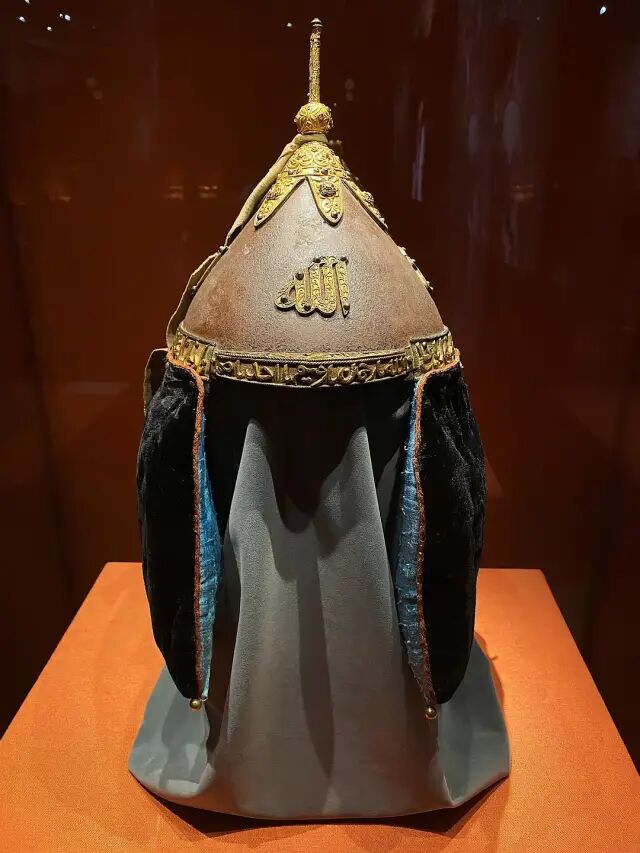
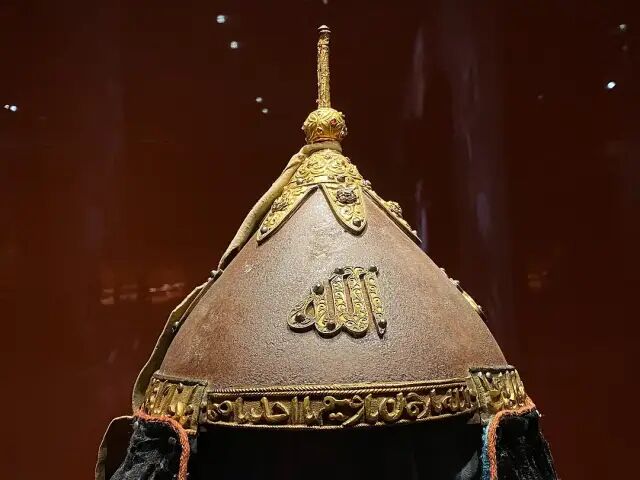
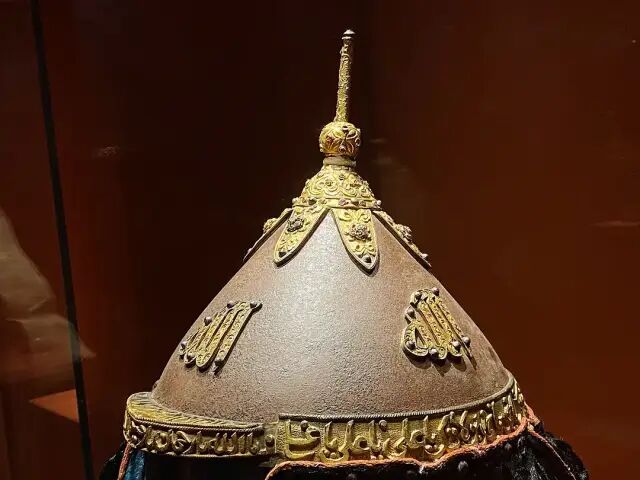
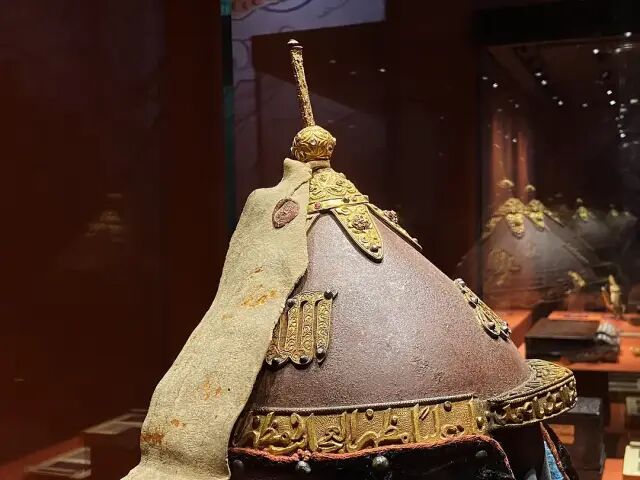
The first item is a white iron helmet with gold inlay and Arabic script, presented to the Qianlong Emperor by the Torgut tribe's Beizi (a noble title) Shalakouken in 1779 (the 44th year of the Qianlong reign). It is decorated with gemstone-set tassel tubes and features sable fur ear and neck flaps, making it extremely exquisite. The three gold-inlaid parts at the top are the Most Beautiful Names of Allah, the bottom part is a dua (supplication), the middle part is a praise of Allah, the right part is a praise of the Prophet, and the left part is a praise of Ali. Shalakouken was a noble of the Torgut tribe who had been nomadic in Ili for generations. After the Qing Dynasty destroyed the Dzungar Khanate in 1758, Shalakouken followed his uncle Sheleng to the Volga River to join the Torgut Khanate. In 1771, he followed the Torgut tribe back to the east and was granted the title of Gushan Beizi. Later, he was appointed as the deputy league leader of the New Torgut tribe, stationed southeast of Qinghe County in Altay. In 1779, Shalakouken traveled to Chengde for the second time to have an audience with the Qianlong Emperor and participated in the Mulan hunting expedition; it was during this time that he presented the iron helmet to the Emperor. However, I have not yet found out why Shalakouken, who practiced Tibetan Buddhism, possessed such an exquisite Islamic iron helmet. Whether it was obtained from the Ottomans when the Torgut Khanate participated in the Russo-Turkish War, or purchased from Russian merchants, remains unknown.
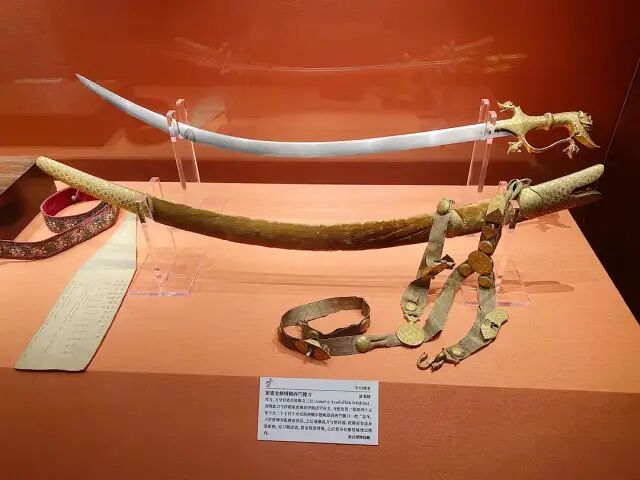
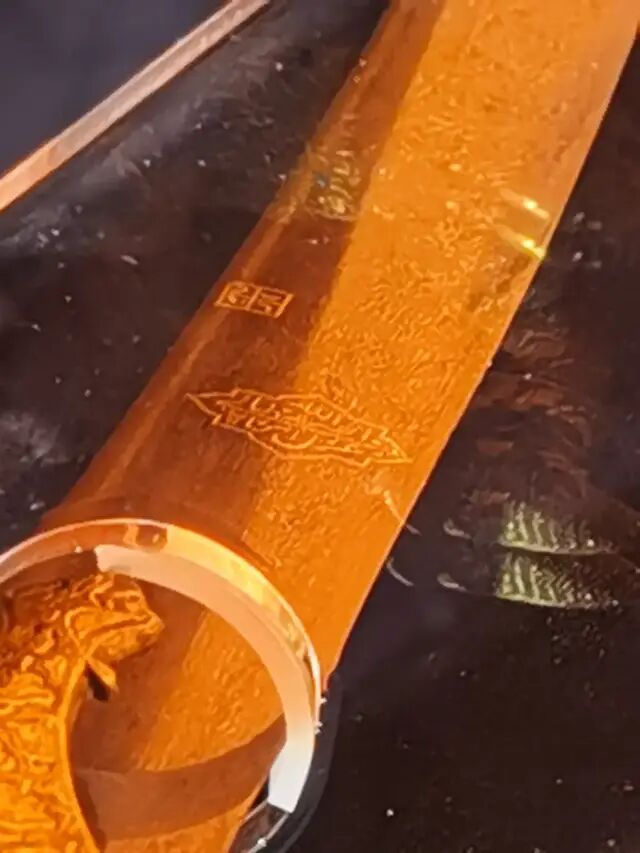
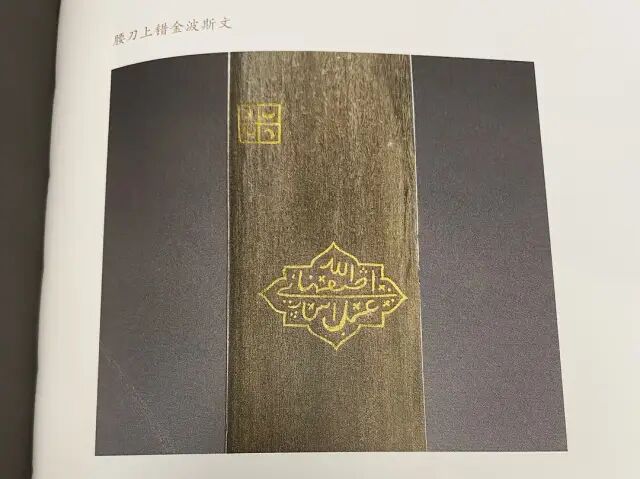
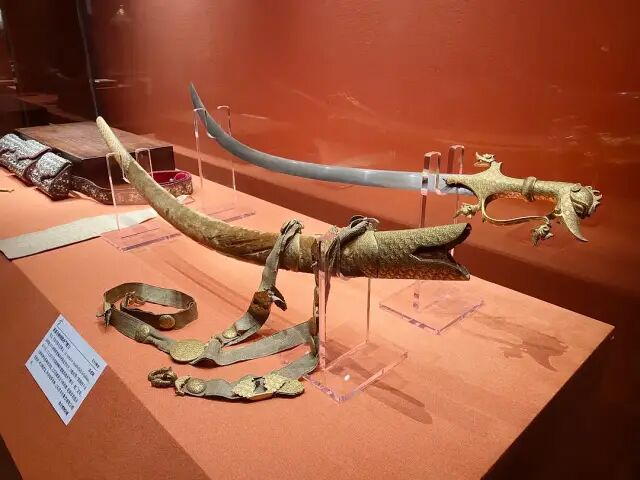
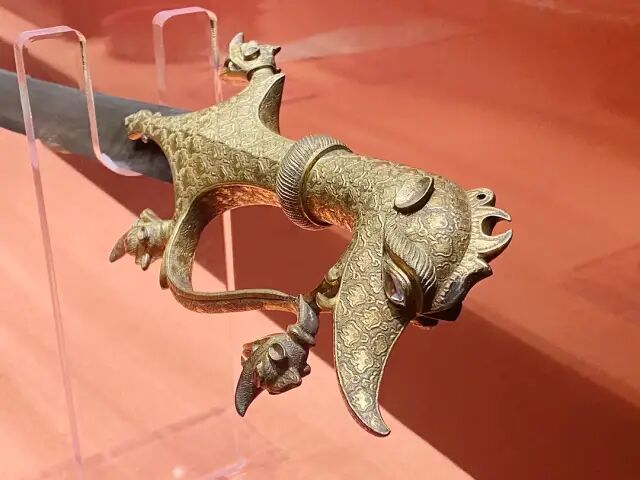
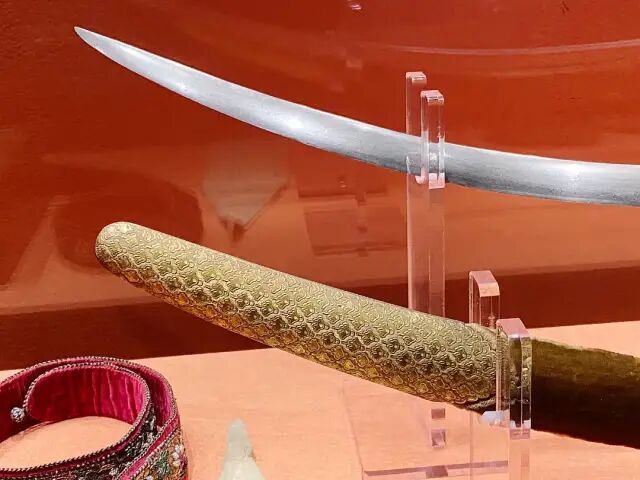
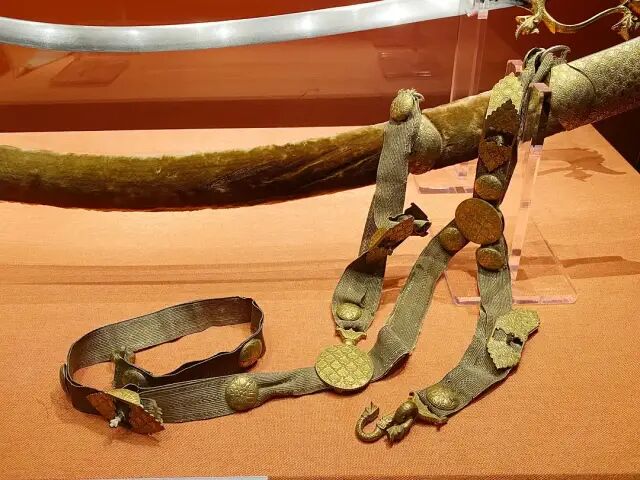
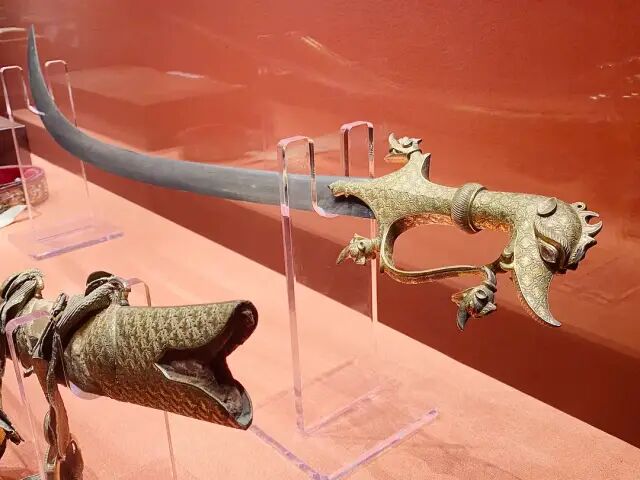
The second item is a Shamshir (Persian curved sword) presented by the 6th Panchen Lama in 1780 (the 45th year of the Qianlong reign) after he gave a sermon to the Qianlong Emperor at the Ning-shou Palace. At the time of presentation, it was called a 'Xizhu waist sword,' meaning it came from India. After receiving it, the Qianlong Emperor ordered the Imperial Household Department's workshops to make a leather-covered box to store it and replaced the gold thread belt of the scabbard, enshrining it in the Fanzong Building. Near the hilt, the blade has three lines of gold-inlaid Persian script: 'Amal-e Asadollah Isfahani,' which means 'Work of Asadollah of Isfahan'. Isfahan is a famous city in Iran, and Asadollah was a renowned craftsman. Additionally, some believe that 'Asadollah' should be translated as 'Lion of Allah,' which is an honorary title. Unfortunately, during the exhibition, the side with the Persian script was facing the back; one could only see a little bit by crouching down and twisting their head, and an average person would not notice it at all. However, when this sword was exhibited in Chengde in 2020, the blade was not even pulled out of the scabbard, so this time is a slight improvement compared to that. In Persian, the term Shamshir originally referred to a double-edged straight sword. During the 12th-13th centuries, in the Seljuk Empire and the Ilkhanate period, single-edged curved swords began to be brought into Iran from Central Asia by Turkic-speaking groups. By the 16th century, during the Safavid Dynasty, it became the main form of the Shamshir. It also spread widely in the Ottoman Empire and the Mughal Empire, and one can often see figures wearing Shamshir curved swords in Mughal miniature paintings. This sword of the Qianlong Emperor was very likely obtained by the Panchen Lama from the Mughal Empire.
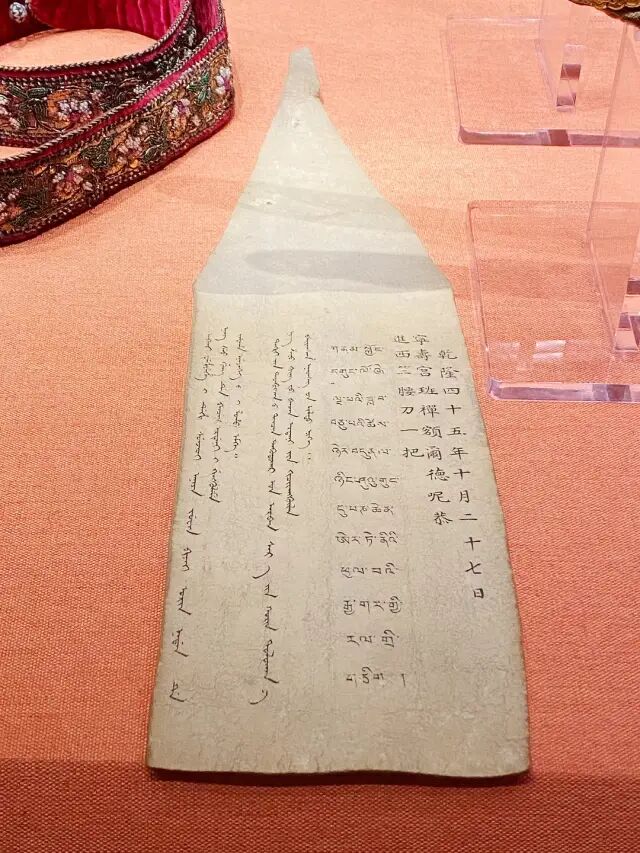
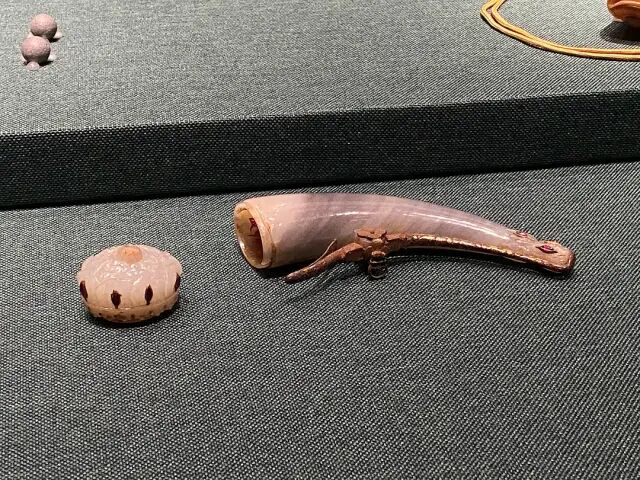
Additionally, I will share a Mughal Empire jade gunpowder flask from the Palace Museum collection.
Summary: This travel note introduces Qianlong Emperor's Islamic Helmet and Persian Scimitar: Muslim Artifacts in Beijing. Last Saturday, I went to the newly opened Palace Museum military equipment exhibition at the Guardian Art Center and saw two interesting artifacts that I would like to share with everyone. It is useful for readers interested in Islamic Art, Qianlong Emperor, Persian Sword.
Last Saturday, I went to the newly opened Palace Museum military equipment exhibition at the Guardian Art Center and saw two interesting artifacts that I would like to share with everyone.
The first item is a white iron helmet with gold inlay and Arabic script, presented to the Qianlong Emperor by the Torgut tribe's Beizi (a noble title) Shalakouken in 1779 (the 44th year of the Qianlong reign). It is decorated with gemstone-set tassel tubes and features sable fur ear and neck flaps, making it extremely exquisite. The three gold-inlaid parts at the top are the Most Beautiful Names of Allah, the bottom part is a dua (supplication), the middle part is a praise of Allah, the right part is a praise of the Prophet, and the left part is a praise of Ali. Shalakouken was a noble of the Torgut tribe who had been nomadic in Ili for generations. After the Qing Dynasty destroyed the Dzungar Khanate in 1758, Shalakouken followed his uncle Sheleng to the Volga River to join the Torgut Khanate. In 1771, he followed the Torgut tribe back to the east and was granted the title of Gushan Beizi. Later, he was appointed as the deputy league leader of the New Torgut tribe, stationed southeast of Qinghe County in Altay. In 1779, Shalakouken traveled to Chengde for the second time to have an audience with the Qianlong Emperor and participated in the Mulan hunting expedition; it was during this time that he presented the iron helmet to the Emperor. However, I have not yet found out why Shalakouken, who practiced Tibetan Buddhism, possessed such an exquisite Islamic iron helmet. Whether it was obtained from the Ottomans when the Torgut Khanate participated in the Russo-Turkish War, or purchased from Russian merchants, remains unknown.
The second item is a Shamshir (Persian curved sword) presented by the 6th Panchen Lama in 1780 (the 45th year of the Qianlong reign) after he gave a sermon to the Qianlong Emperor at the Ning-shou Palace. At the time of presentation, it was called a 'Xizhu waist sword,' meaning it came from India. After receiving it, the Qianlong Emperor ordered the Imperial Household Department's workshops to make a leather-covered box to store it and replaced the gold thread belt of the scabbard, enshrining it in the Fanzong Building. Near the hilt, the blade has three lines of gold-inlaid Persian script: 'Amal-e Asadollah Isfahani,' which means 'Work of Asadollah of Isfahan'. Isfahan is a famous city in Iran, and Asadollah was a renowned craftsman. Additionally, some believe that 'Asadollah' should be translated as 'Lion of Allah,' which is an honorary title. Unfortunately, during the exhibition, the side with the Persian script was facing the back; one could only see a little bit by crouching down and twisting their head, and an average person would not notice it at all. However, when this sword was exhibited in Chengde in 2020, the blade was not even pulled out of the scabbard, so this time is a slight improvement compared to that. In Persian, the term Shamshir originally referred to a double-edged straight sword. During the 12th-13th centuries, in the Seljuk Empire and the Ilkhanate period, single-edged curved swords began to be brought into Iran from Central Asia by Turkic-speaking groups. By the 16th century, during the Safavid Dynasty, it became the main form of the Shamshir. It also spread widely in the Ottoman Empire and the Mughal Empire, and one can often see figures wearing Shamshir curved swords in Mughal miniature paintings. This sword of the Qianlong Emperor was very likely obtained by the Panchen Lama from the Mughal Empire.
Additionally, I will share a Mughal Empire jade gunpowder flask from the Palace Museum collection.
