
Beijing Museum Guide: Islamic Artifacts in Four Museums
Reposted from the web
Summary: Beijing Museum Guide: Islamic Artifacts in Four Museums is presented here as a firsthand travel account in clear English, beginning with this scene: I am sharing Islamic artifacts I photographed at the Palace Museum, the National Museum of China, the Capital Museum, and the Guanfu Museum. The account keeps its focus on Beijing Museums, Islamic Artifacts, Muslim Heritage while preserving the names, places, food, and historical details from the Chinese source.
I am sharing Islamic artifacts I photographed at the Palace Museum, the National Museum of China, the Capital Museum, and the Guanfu Museum.
1. The Palace Museum
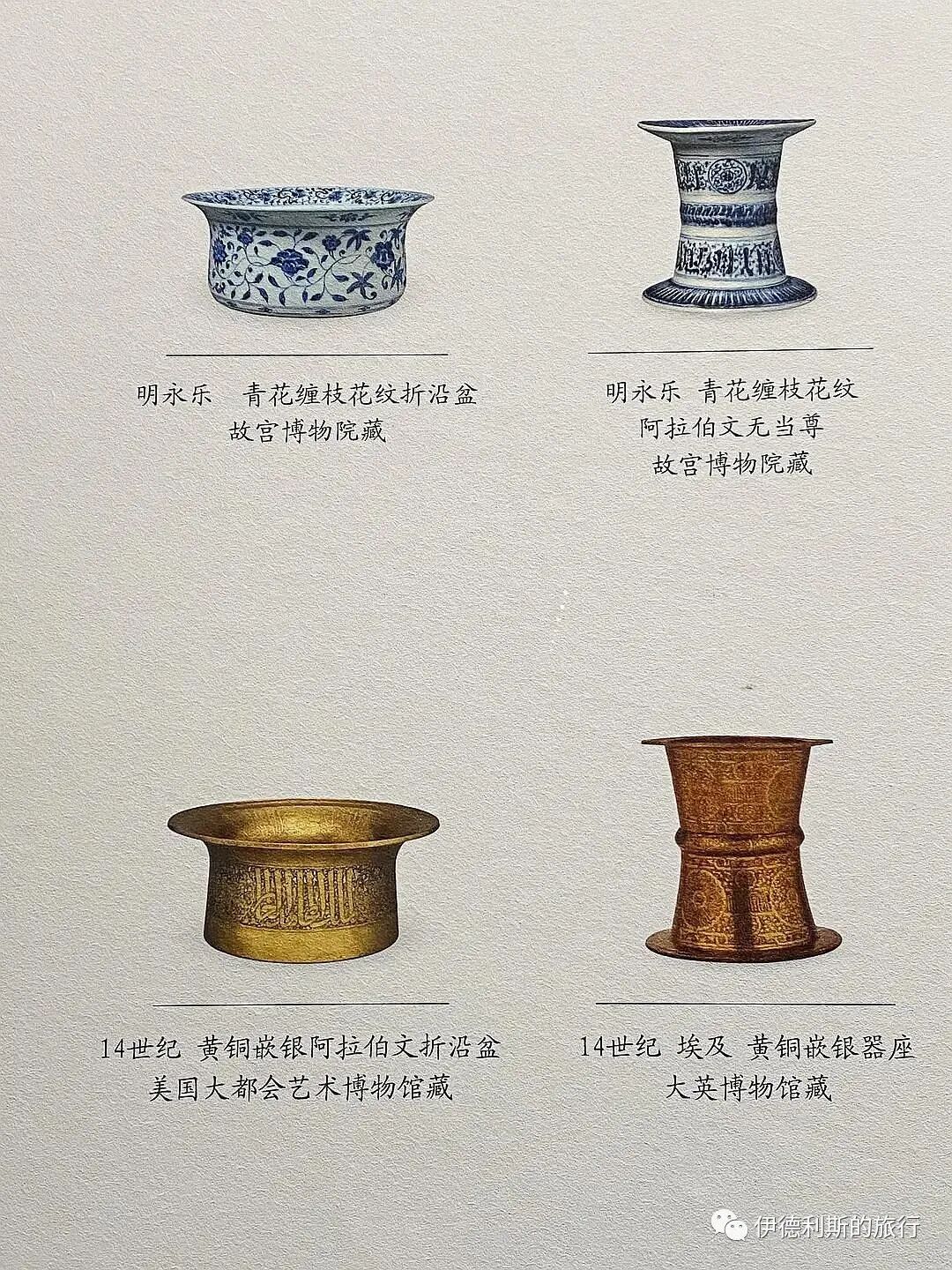
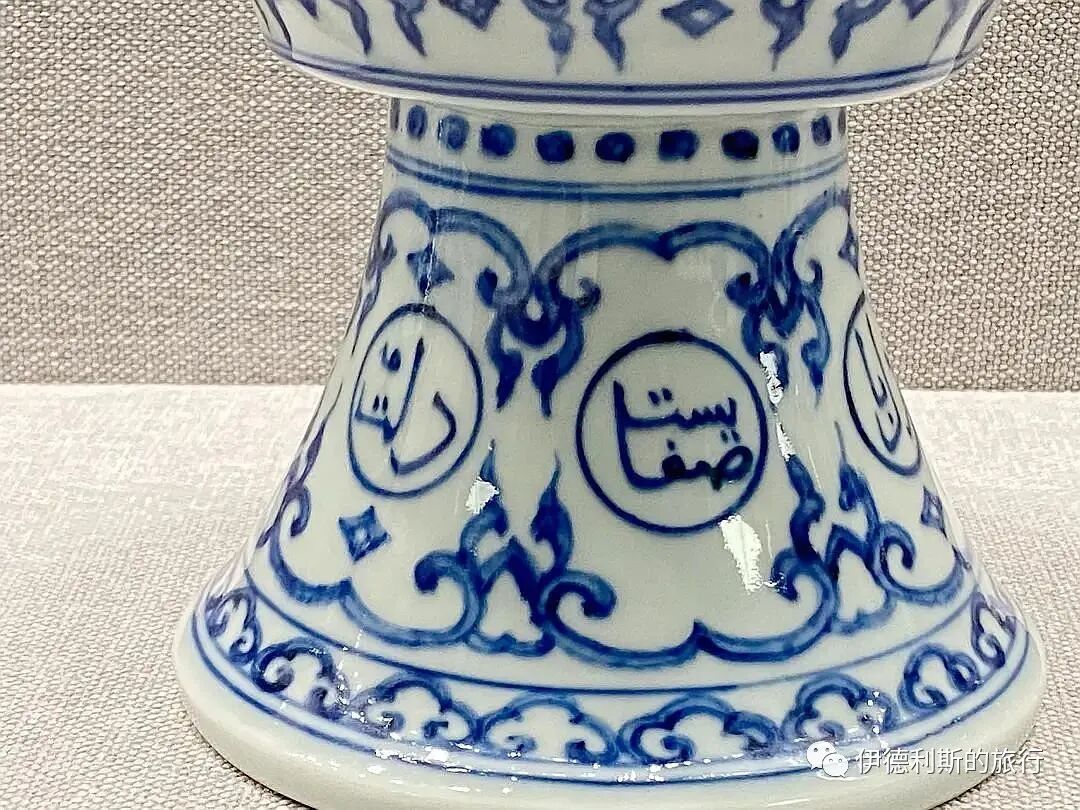
Photographed in 2021 at the Ceramics Gallery in the Hall of Martial Valor (Wuyingdian). This blue and white porcelain vase with Arabic calligraphy and scrolling floral patterns was made at the Jingdezhen imperial kilns during the Ming Yongle period and was part of the old Qing palace collection. Its shape and patterns mimic 14th-century Middle Eastern brass vessels inlaid with silver. A white-glazed vase of the same shape from the Yongle period was also unearthed at the Ming imperial kiln site at Zhushan in Jingdezhen. This piece originally had no name, but Emperor Qianlong gave it the name 'Wudang Zun' (bottomless vase) because he thought it looked like a vase without a base.
This porcelain uses imported 'Sumali blue' (sumaliqing) glaze, which is characteristic of the Yongle and Xuande periods. Because this cobalt material is high in iron and low in manganese, the patterns often show dark blue, metallic-looking iron oxide spots. You can feel the uneven texture when looking at it from the side, and the dark blue contrasts beautifully with the lighter blue.
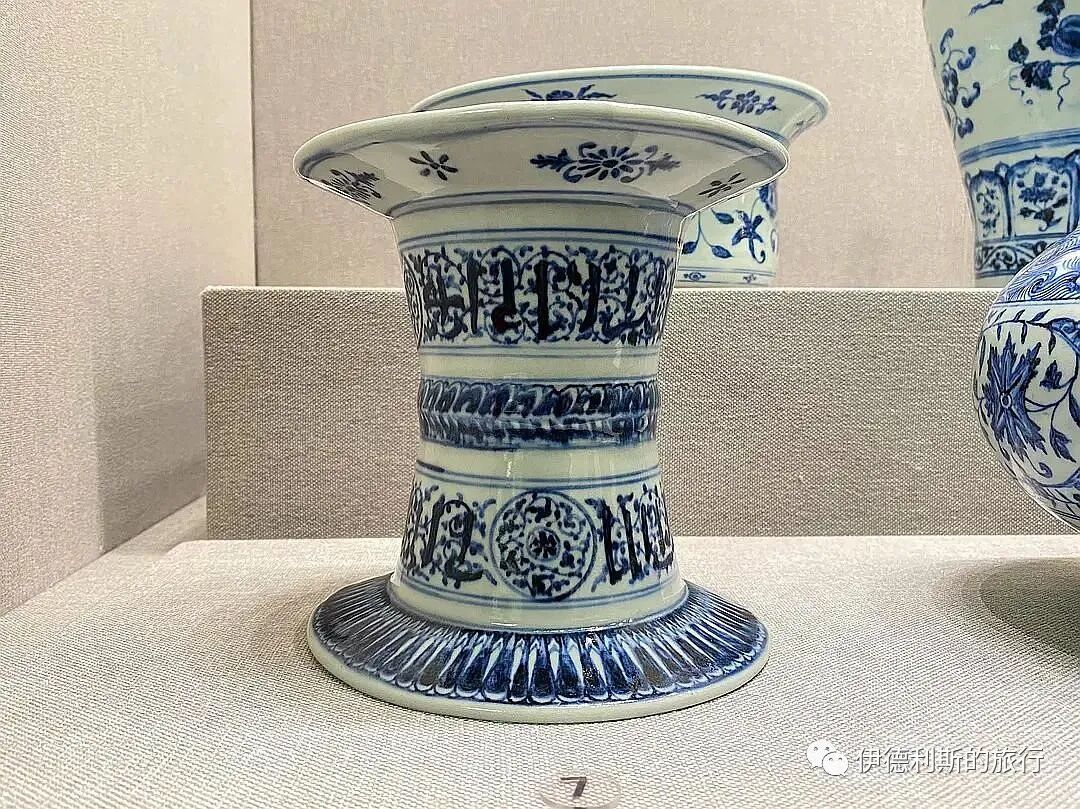
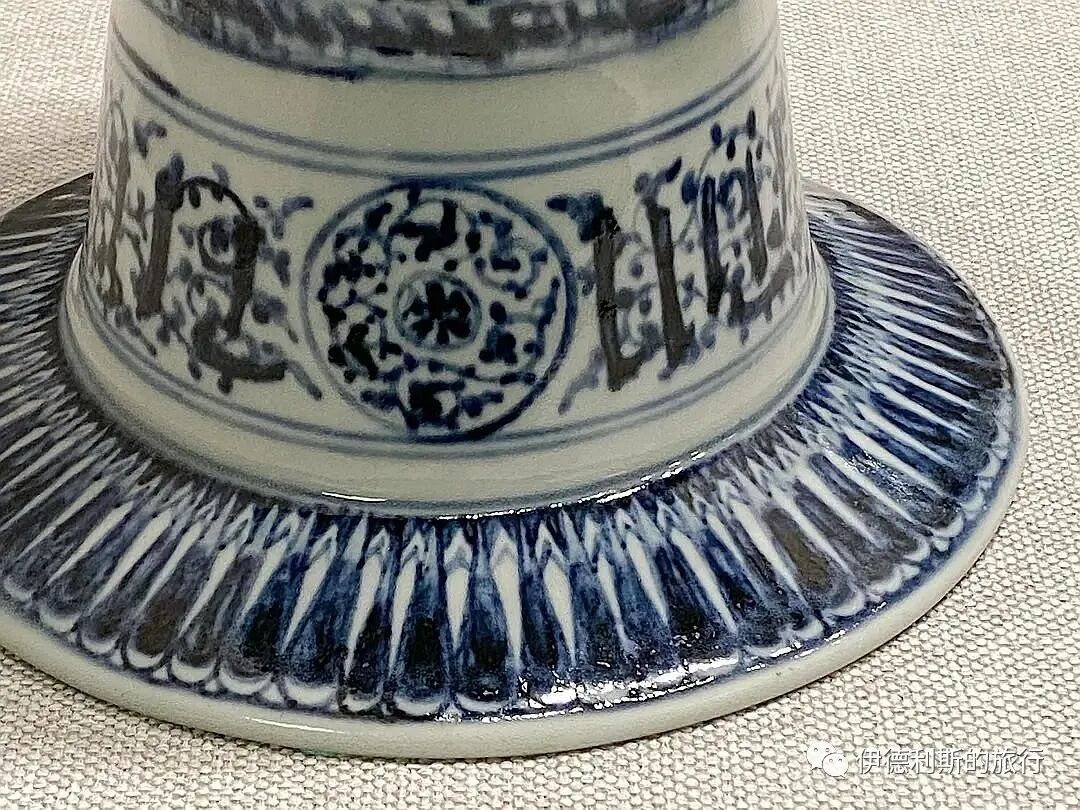
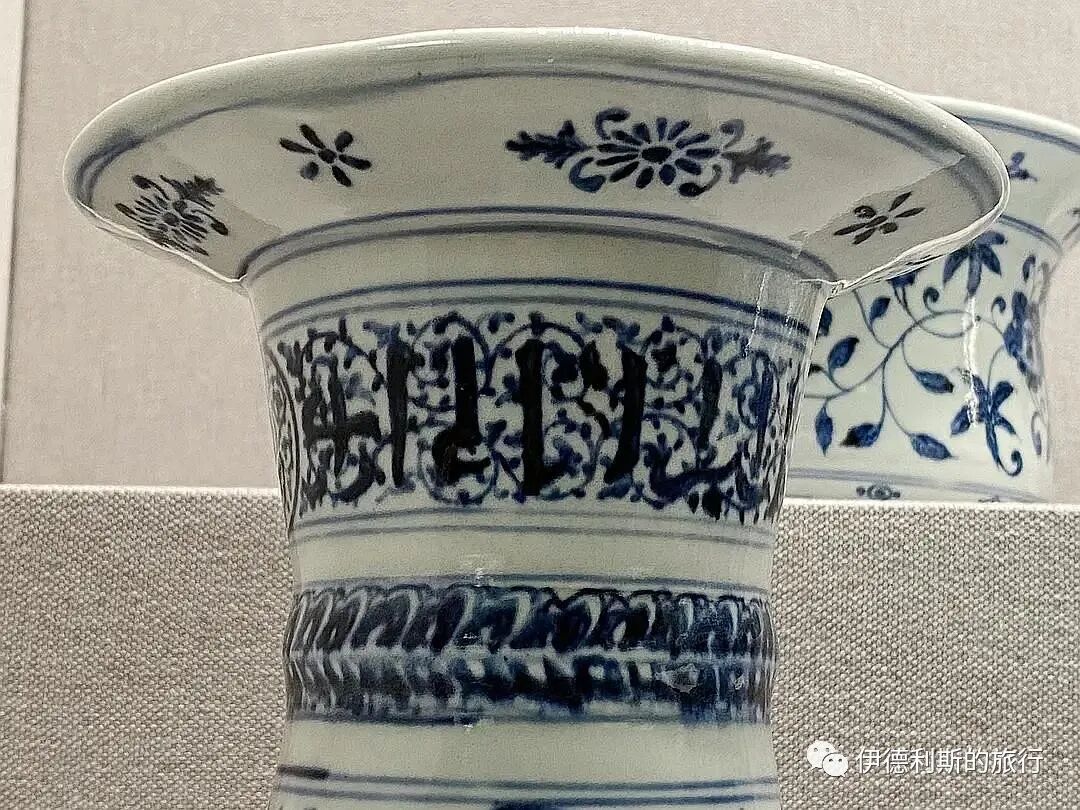
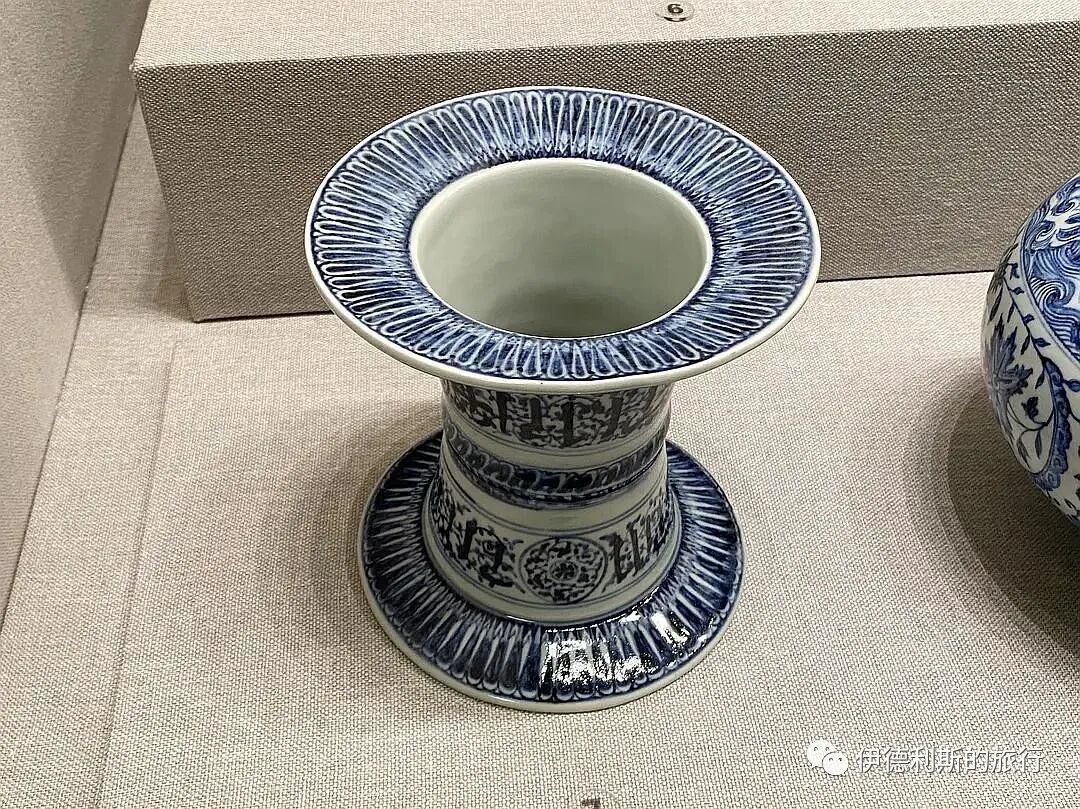
After the recent renovation of the Ceramics Gallery, they displayed a comparison photo of this vase next to a 14th-century Egyptian Mamluk dynasty brass stand inlaid with silver from the British Museum. The shapes are exactly the same!
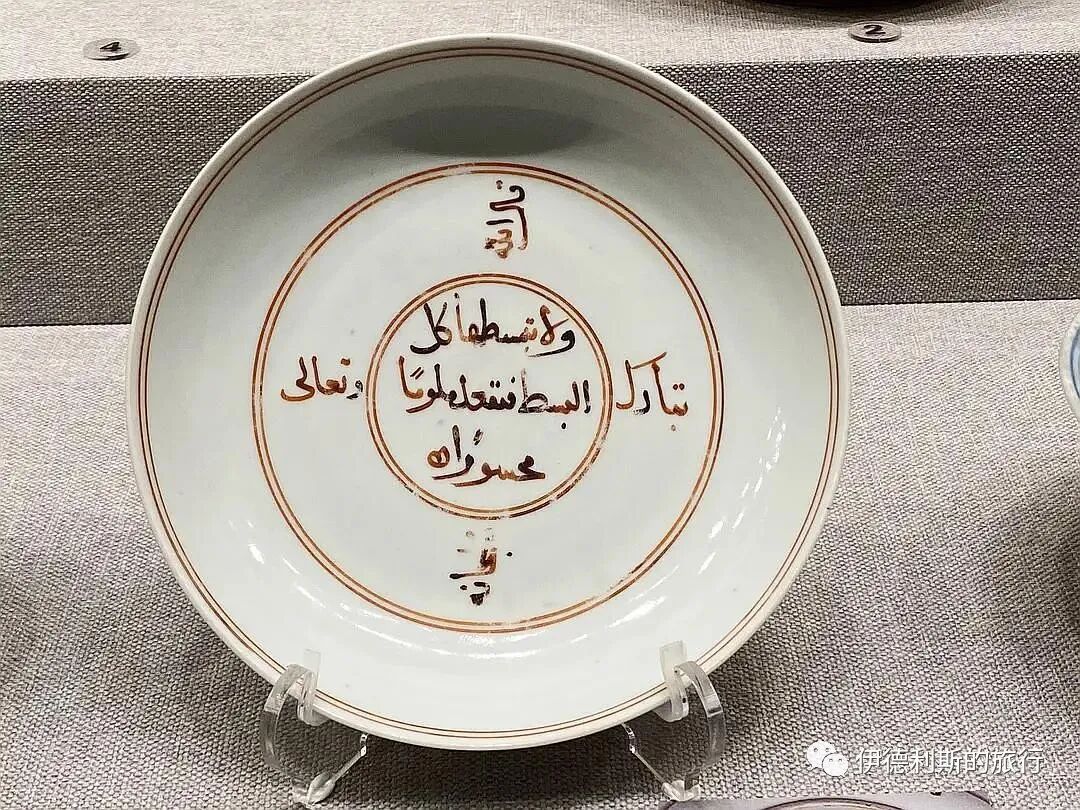
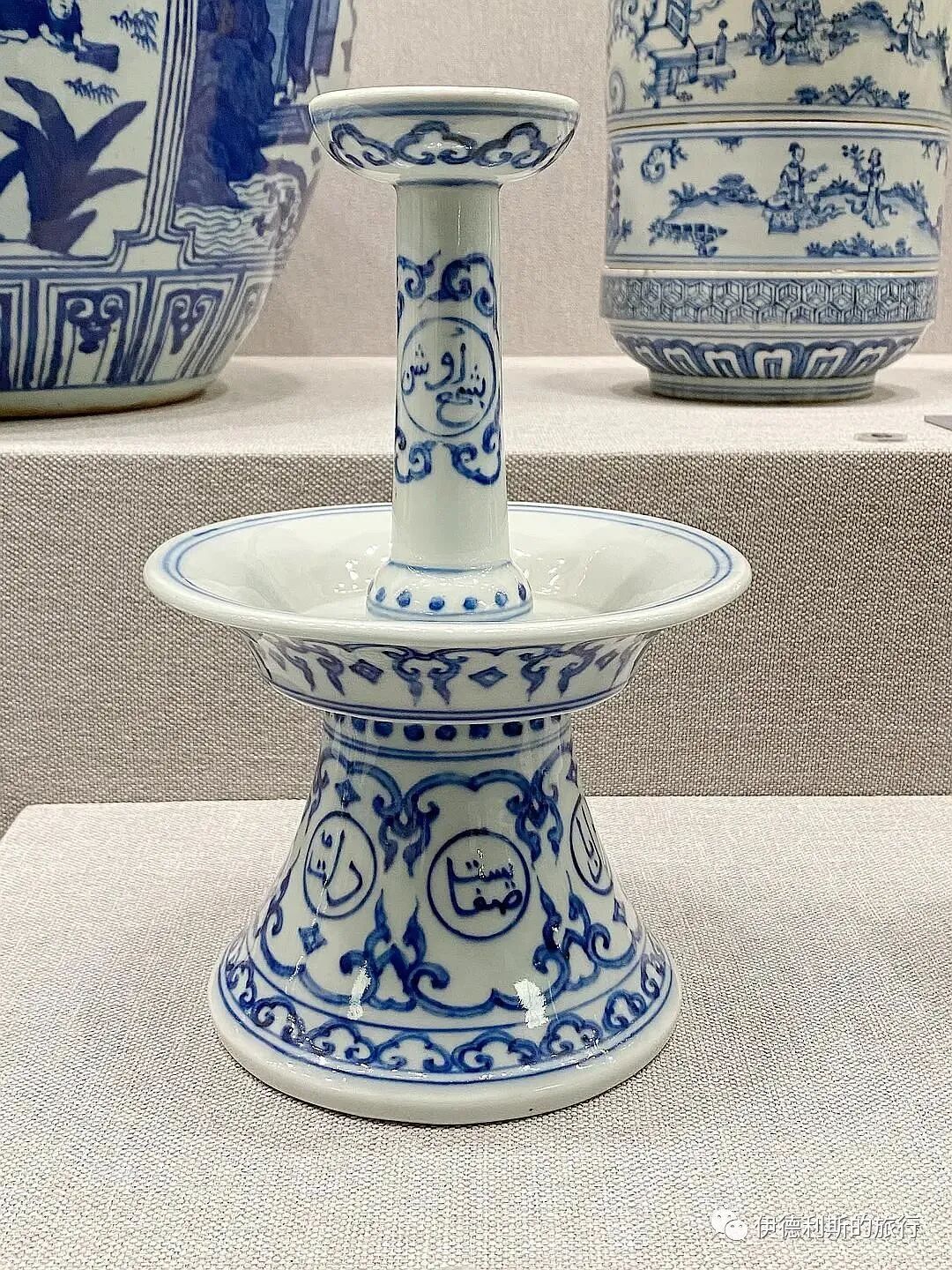
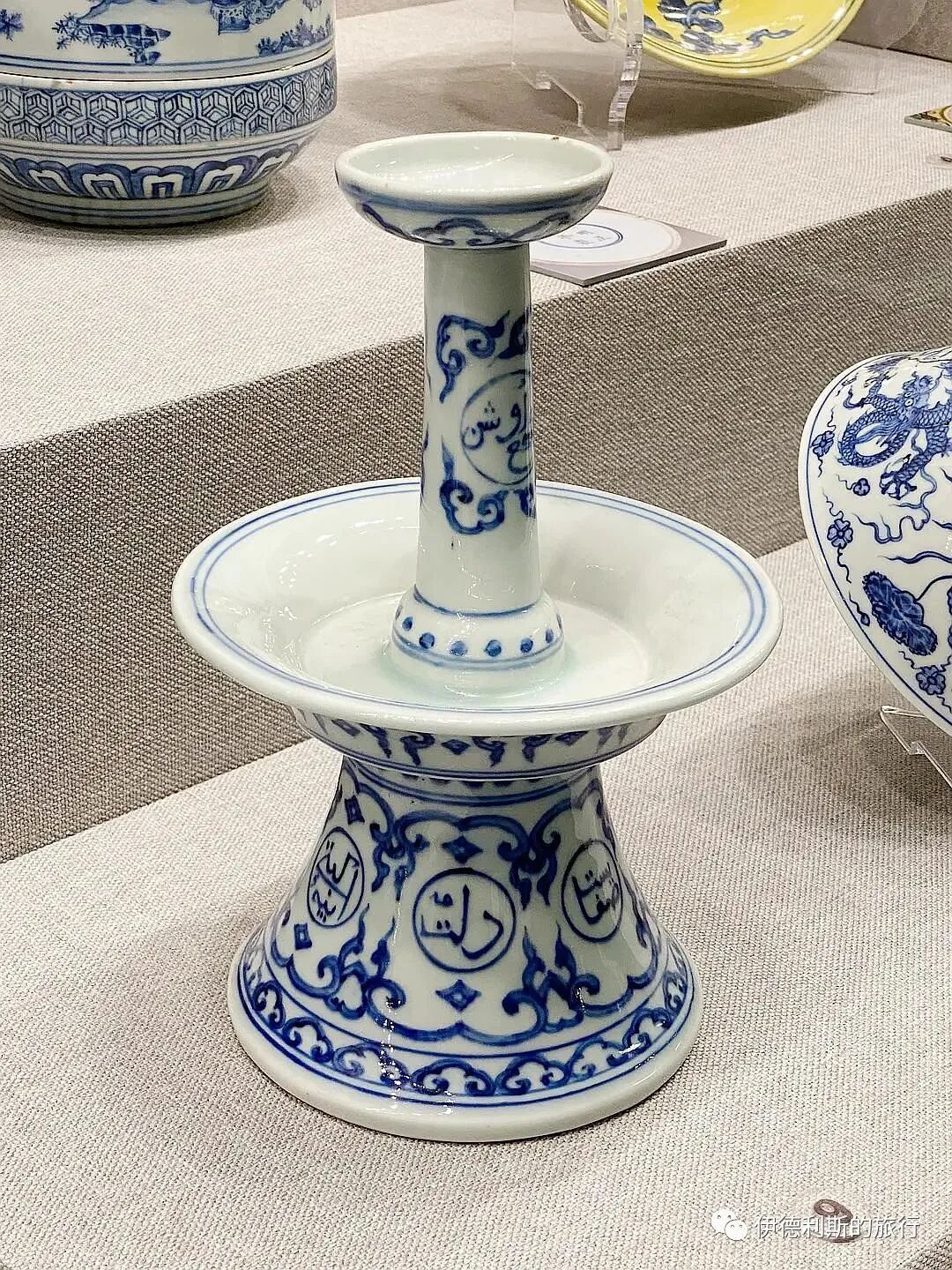
Photographed in 2021 at the Ceramics Gallery in the Hall of Martial Valor, these are a blue and white candlestick with Arabic calligraphy and a white-glazed plate with iron-red Arabic and Persian calligraphy, both made at the imperial kilns during the Ming Zhengde period (1506–1521). The imperial court during the Zhengde era really loved using porcelain with Arabic and Persian writing. Most Zhengde-period blue and white porcelain with Arabic and Persian writing consists of bowls, cups, brush rests, and boxes that share the same shapes as other official kiln wares of the time. Many are traditional stationery items, and they frequently feature verses from the Quran, Hadith, and praises to Allah. Therefore, it is believed these were mostly for use within China rather than for export.
The third issue of the 1984 'Journal of the Palace Museum' published an article by Li Yihua titled 'Two Pieces of Zhengde-Period Arabic and Persian Porcelain: Also Discussing the Influence of Islamic Culture.' It mentions that the Palace Museum holds over 20 pieces of Zhengde-period porcelain with Arabic and Persian writing, but only one of them is red-glazed. The four Arabic phrases in the center of the porcelain plate mean 'Allah, the Exalted and Majestic, says.' The three lines of Arabic in the center of the plate are from the second half of Chapter 17, Verse 29 of the Quran: 'And do not make your hand chained to your neck nor extend it completely and [thereby] become blamed and insolvent.' Additionally, there are four lines of Hadith on the wall of the plate, which mean: 'Allah, the Exalted and Majestic, says: Whoever does an atom's weight of good, or whoever does an atom's weight of evil, He (Allah) will see it. This is the reward for those who do good.'
The most interesting part is the three lines of text on the bottom of the plate. Li Yihua interprets them as 'Dimani Khan is Aman Suleiman Shah' and thinks they might have been custom-ordered for a country in the Arab region. However, some scholars lean toward the idea that 'Dimani' should be 'Da Mink,' meaning 'Great Ming.' Based on this, the text says 'The ruler of Great Ming is King Suleiman.' This means the Zhengde Emperor's Arabic or Persian name was likely 'Suleiman' (Solomon), so some people jokingly call this piece of porcelain 'King Solomon's Treasure'. Also, the ruler of the Ottoman Empire during almost the same period was the famous Suleiman the Magnificent (reigned 1520-1566), which is quite a coincidence.
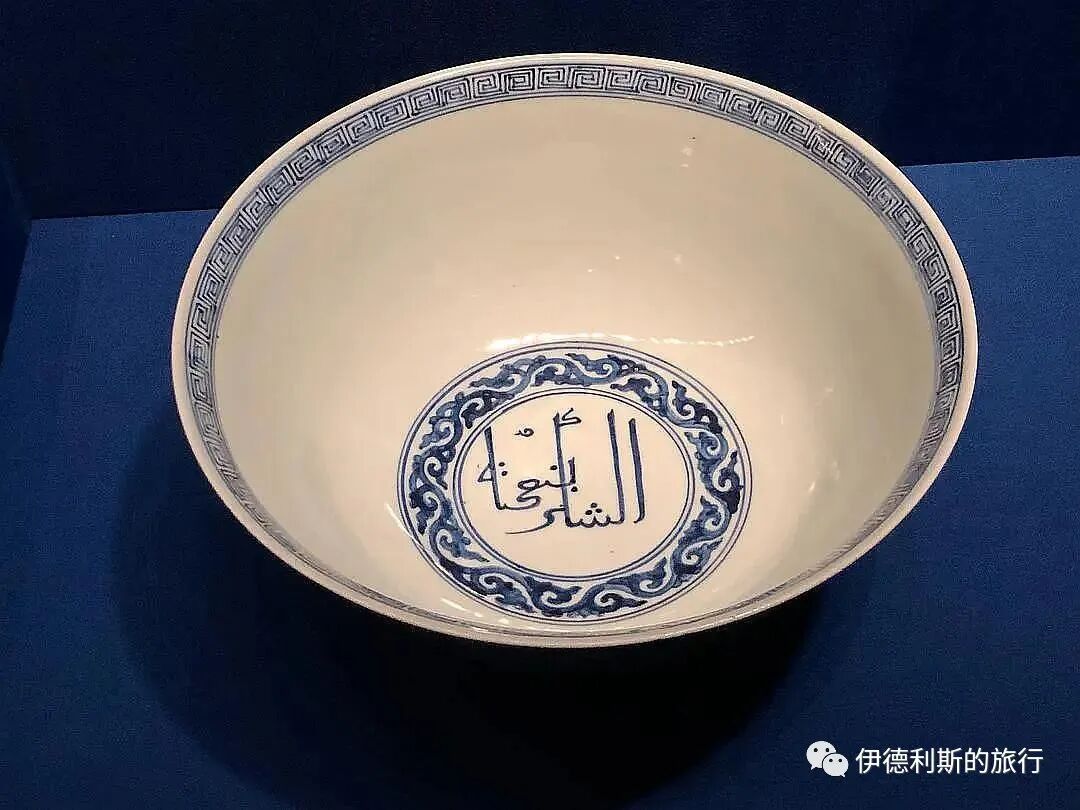
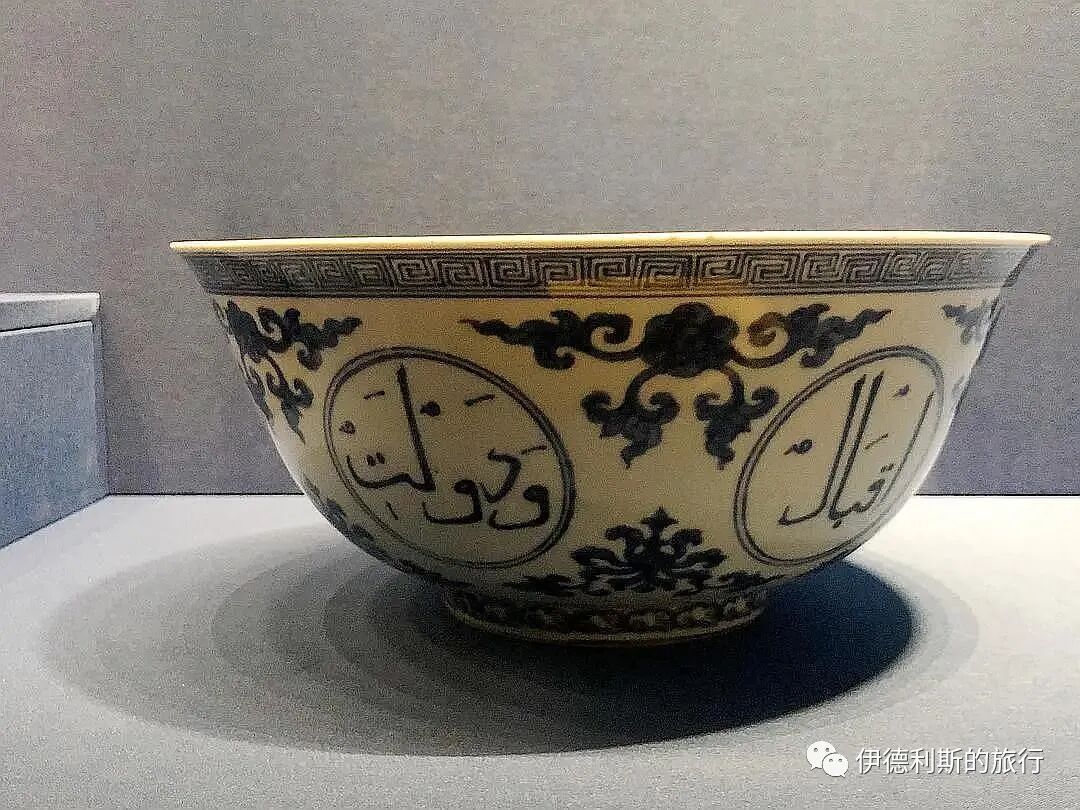
This blue and white porcelain bowl with Arabic script from the Zhengde period of the Ming Dynasty is in the Palace Museum collection. I photographed it in 2019 at the 'Beauty of Transmitting the Heart: Exhibition of Chinese Cultural Relics from the Vatican Museums' at the Gate of Divine Prowess (Shenwumen).
Most Arabic and Persian script on Ming Zhengde porcelain is written inside diamond or square-shaped panels. The outer walls are decorated with scrolling flowers or cloud patterns, and the bottom has a mark reading 'Made in the Zhengde Period of the Great Ming.' The vast majority are blue and white porcelain, with only a small number featuring red overglaze enamel.
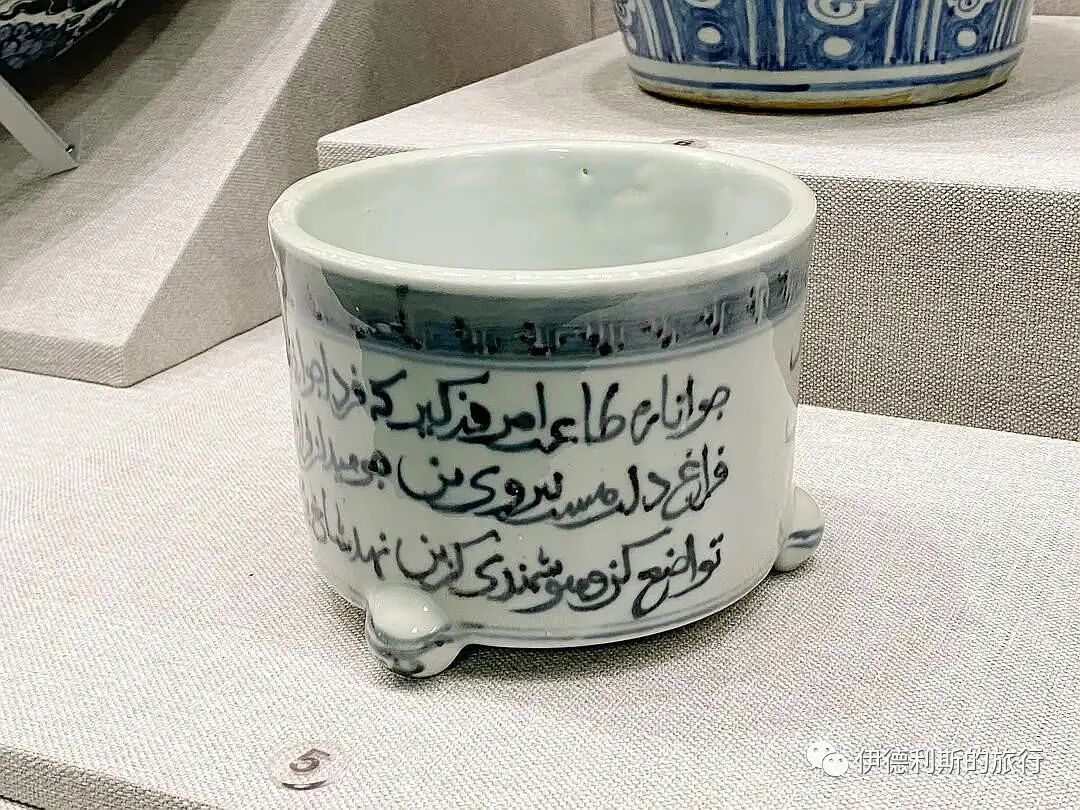
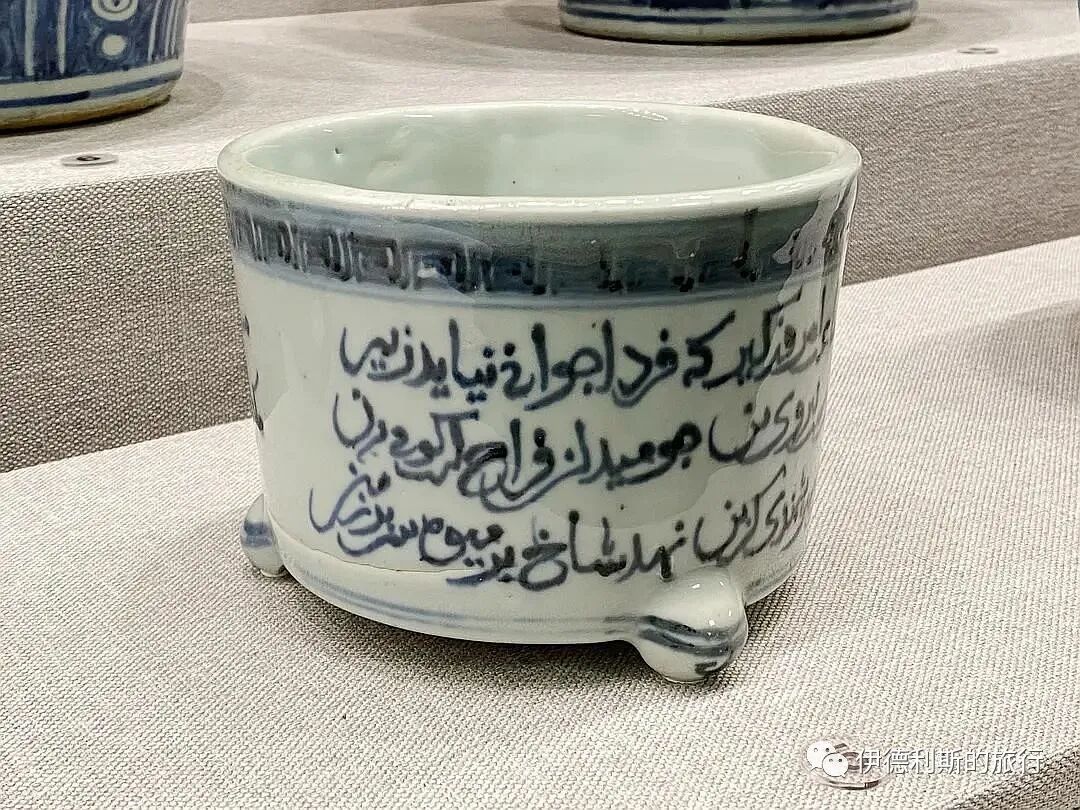
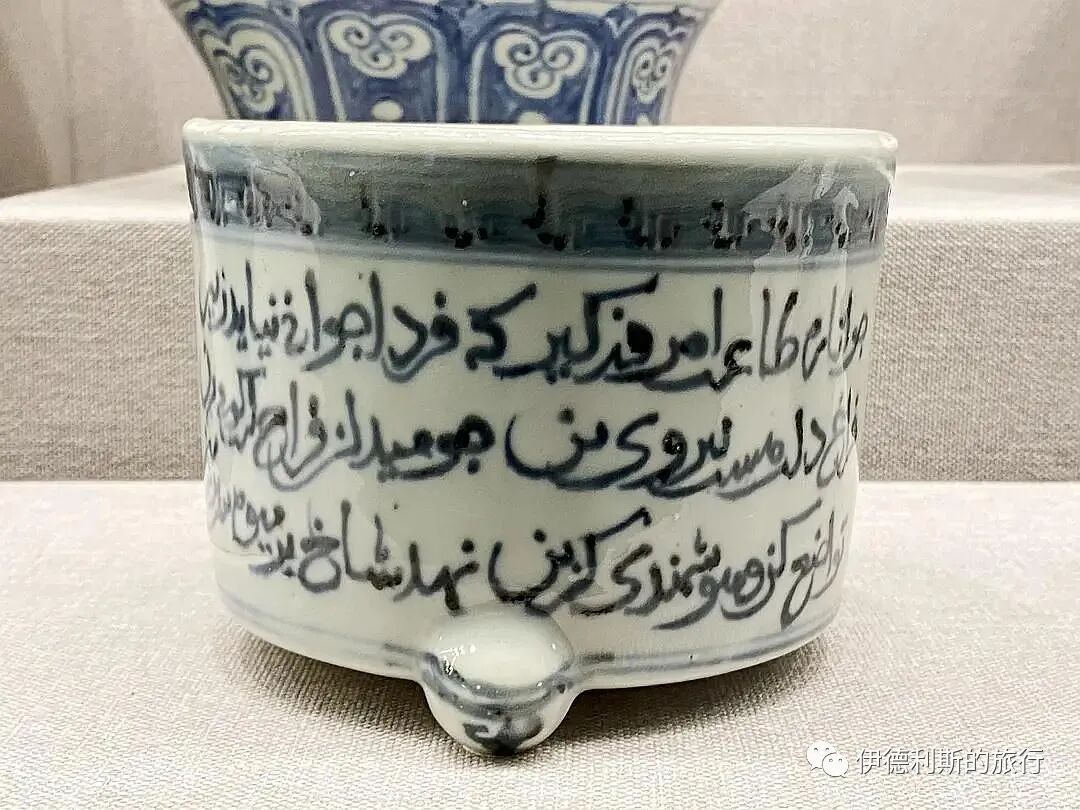
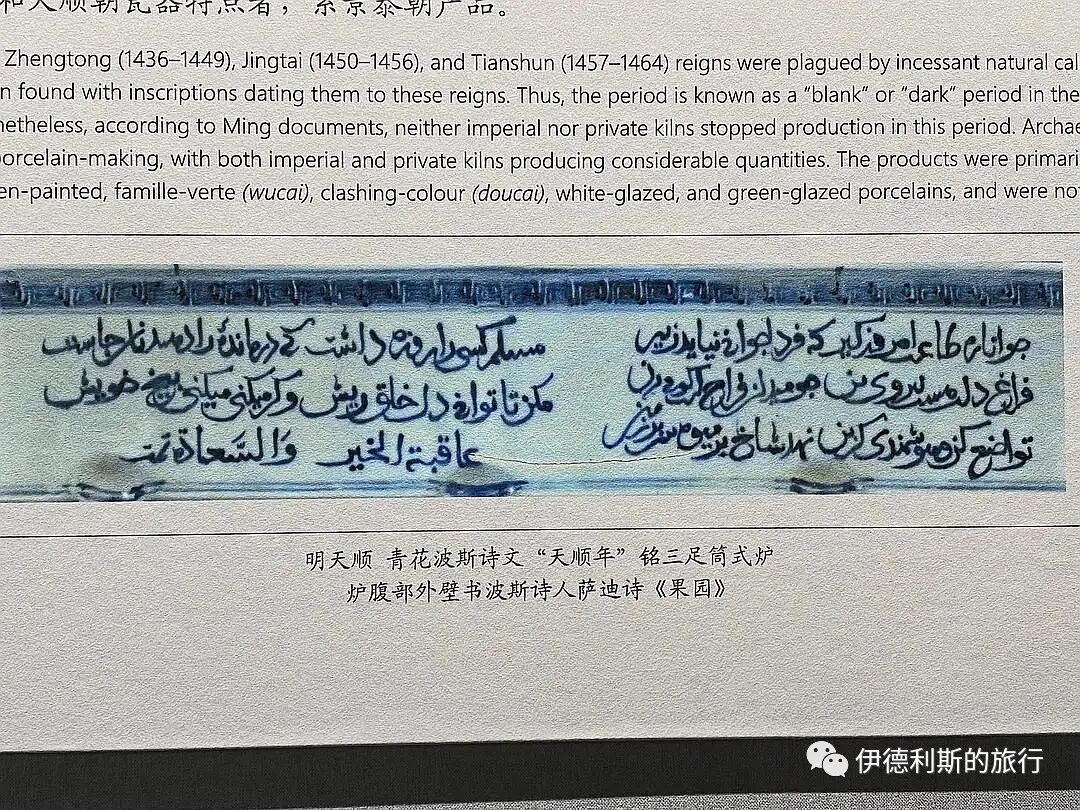
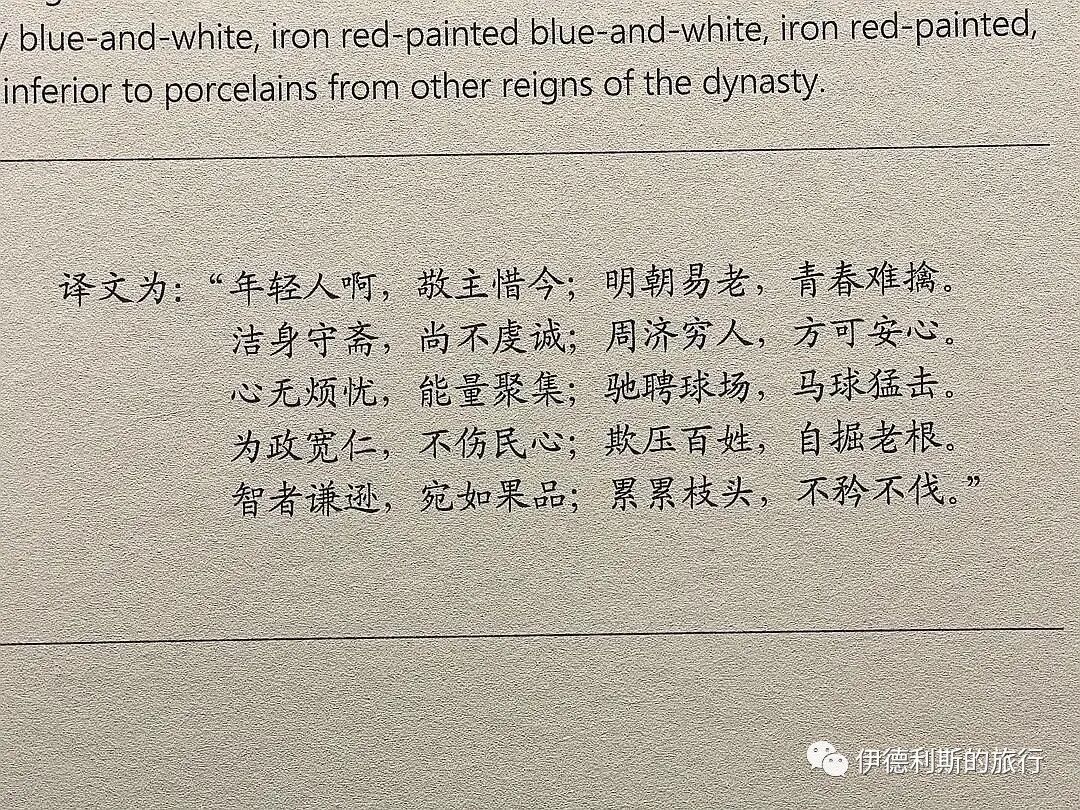
I photographed this in 2021 at the Wuyingdian Ceramics Gallery. It is a very classic blue and white porcelain three-legged cylindrical incense burner with Persian poetry and a 'Tianshun Period' mark, fired at the imperial kiln during the Ming Tianshun period (1457-1464). The outer wall features poetry from 'The Orchard' (Bustan) by the famous Persian poet Saadi. After the gallery was rearranged, they thoughtfully added a translation of the poem. Appreciating Persian poetry fired over 500 years ago at the Palace Museum adds 10,086 points to my Inner Asia interest level.
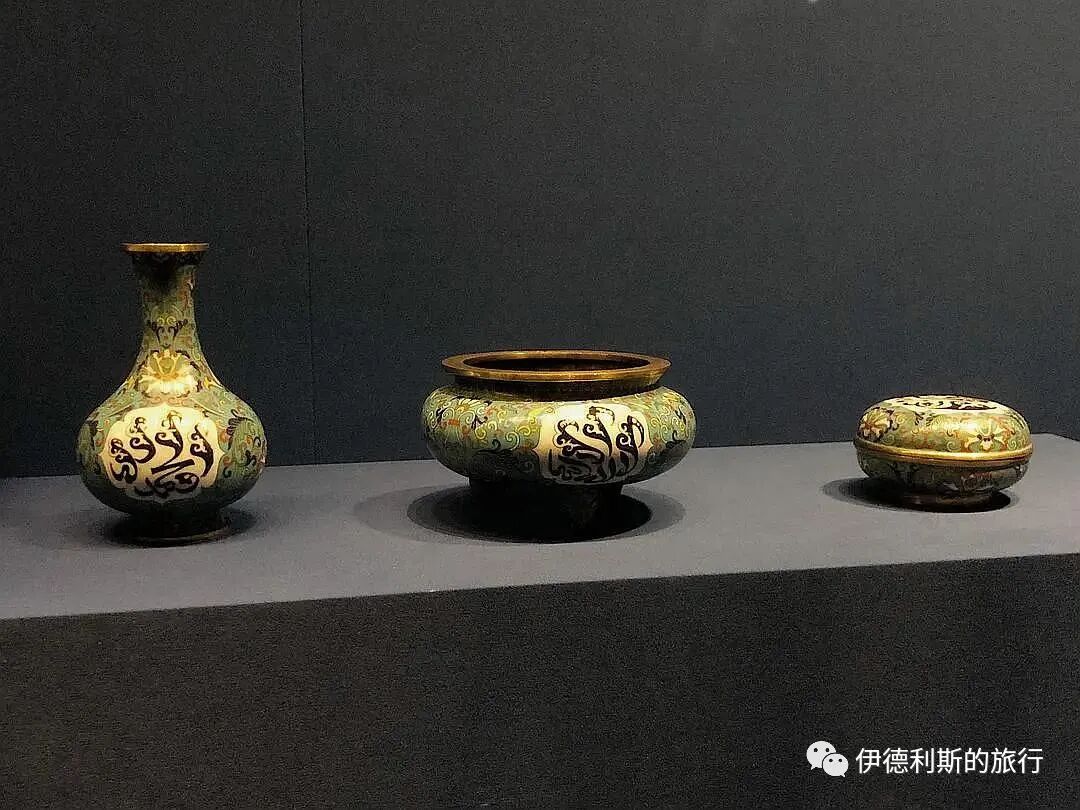
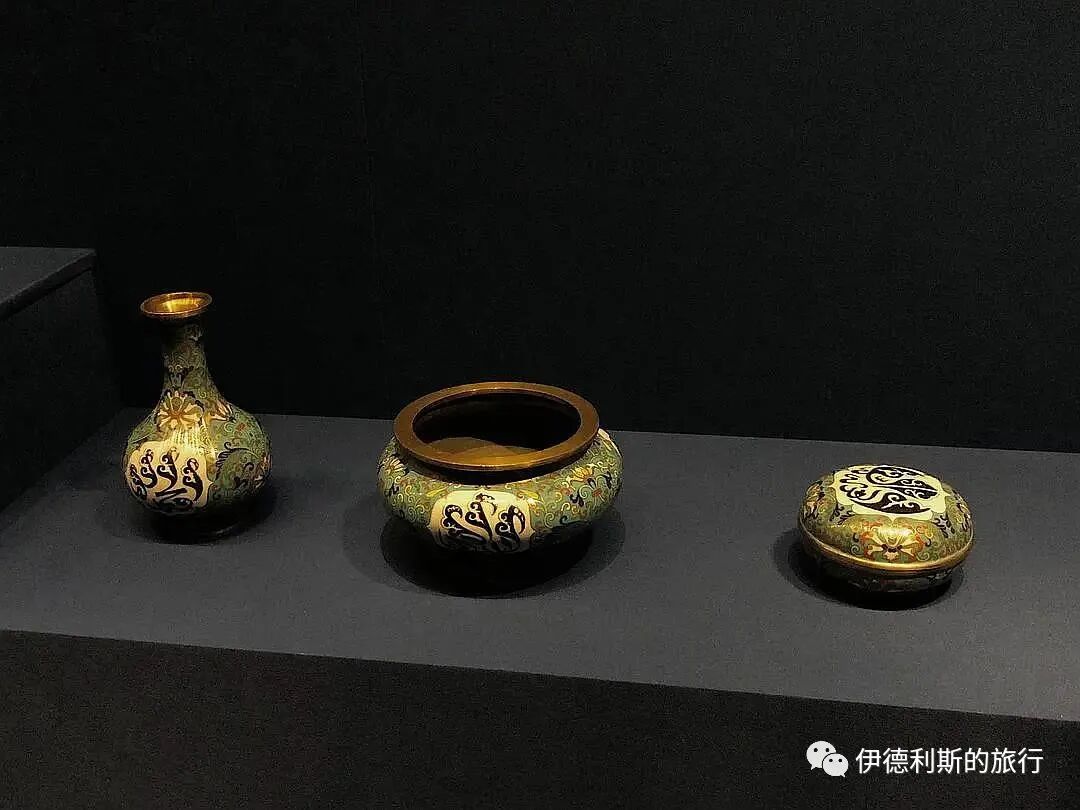
This Qing Dynasty cloisonné enamel incense burner set with Arabic script is in the Palace Museum collection. I photographed it in 2019 at the 'Beauty of Transmitting the Heart: Exhibition of Chinese Cultural Relics from the Vatican Museums' at the Gate of Divine Prowess (Shenwumen).
2. National Museum of China
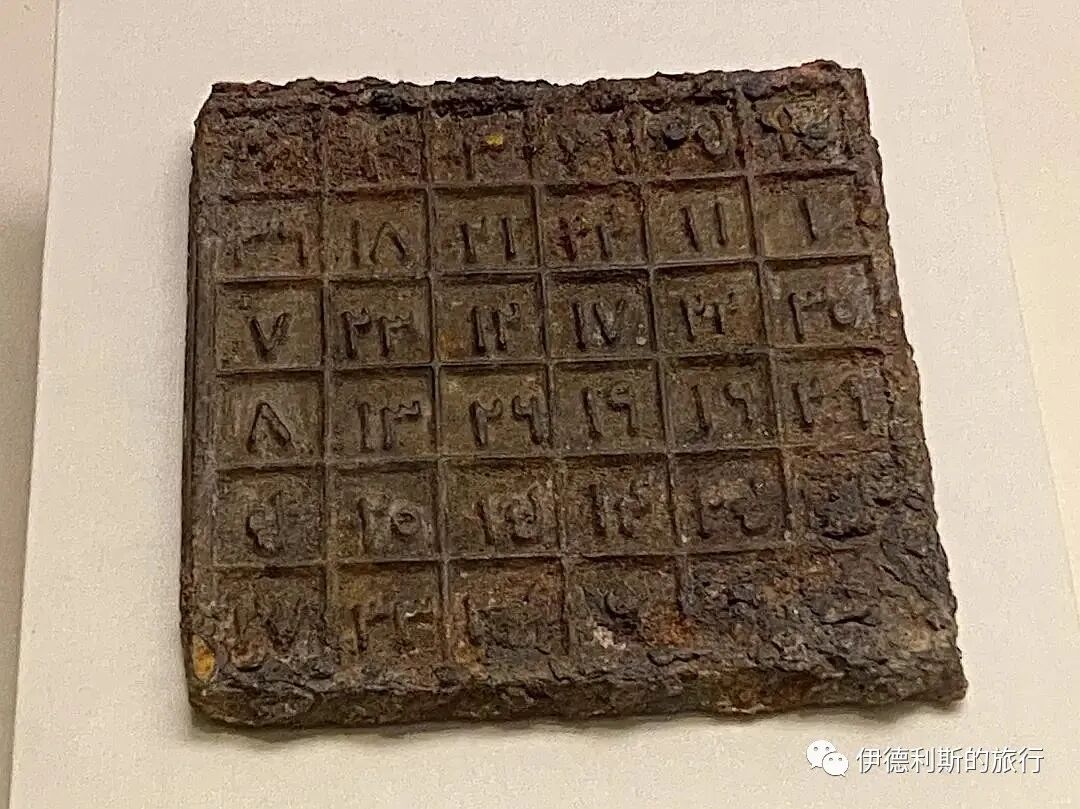
This Yuan Dynasty iron magic square with Arabic script was found in Xi'an. For the entire six-order magic square, the sum of every row, column, and diagonal is 111. For the four-order magic square inside, the sum of every row, column, and diagonal is 74.
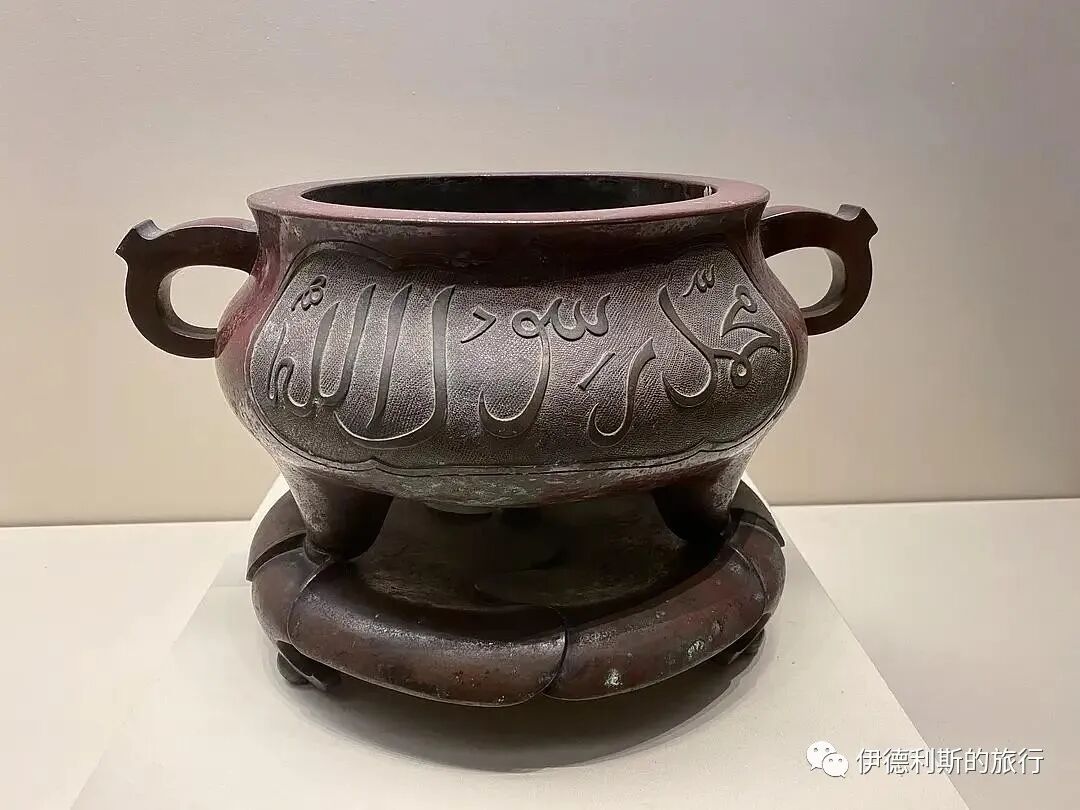
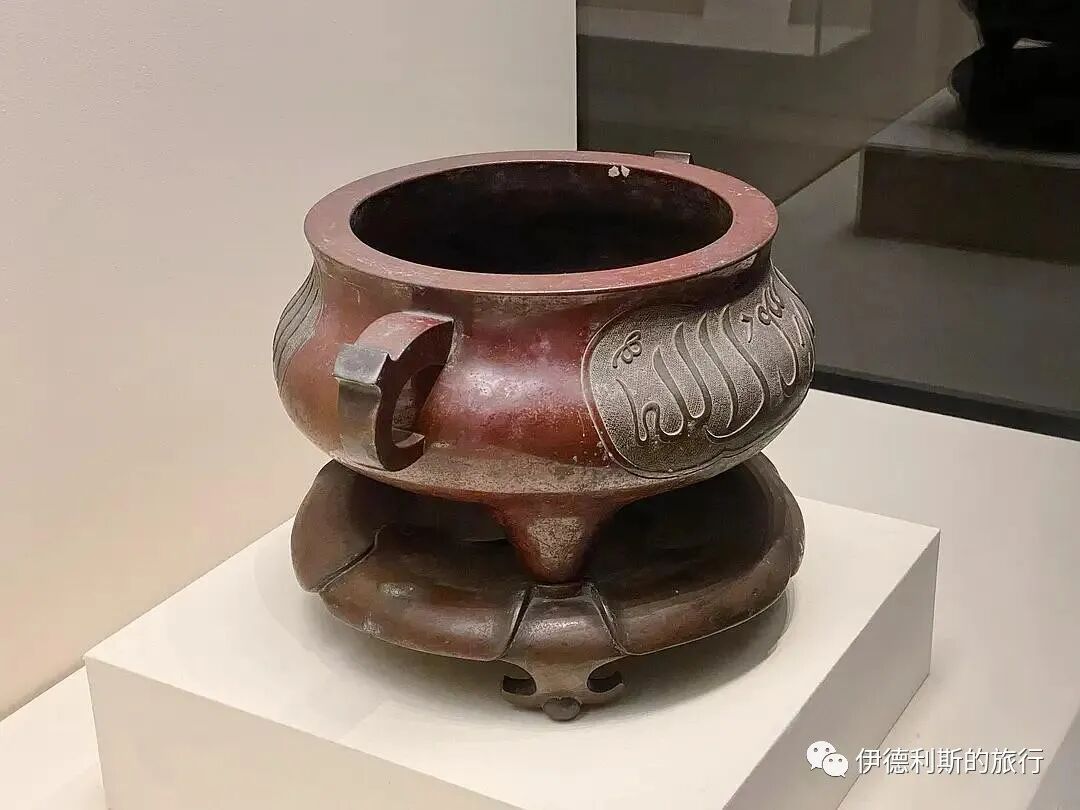
A copper incense burner with the Islamic declaration of faith (Shahada) from the Ming Zhengde period.
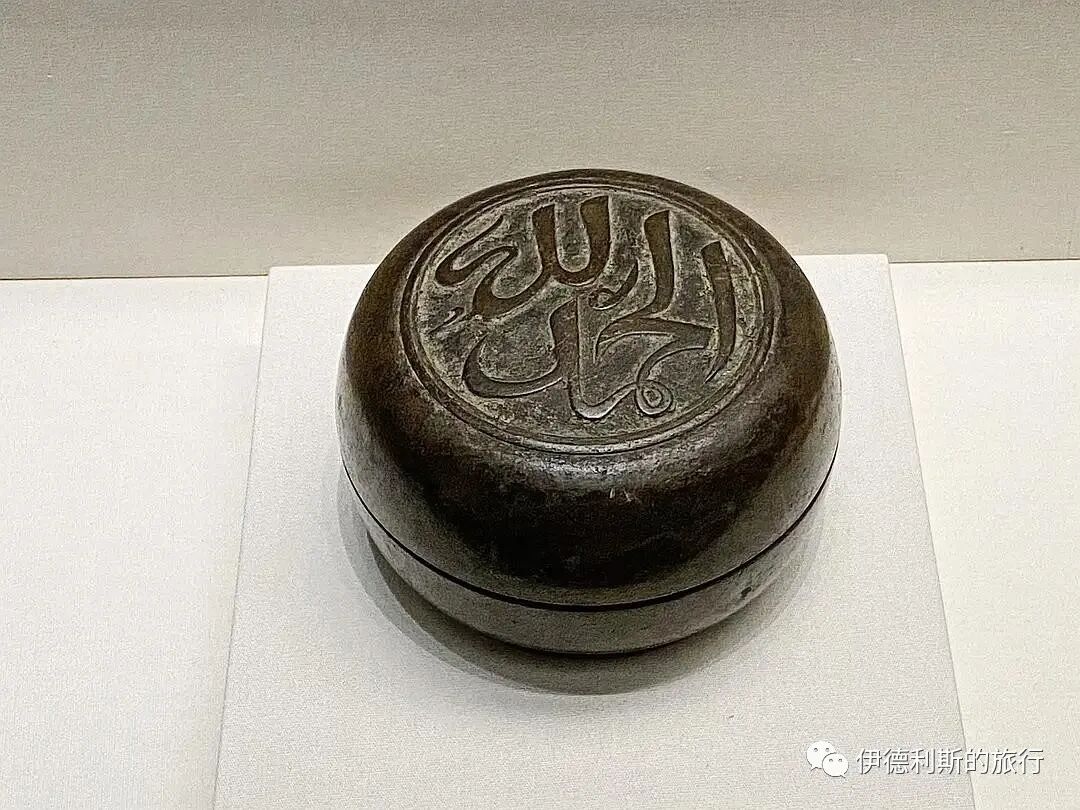
A Qing Dynasty copper box with Arabic script, engraved with 'Alhamdulillah' (Praise be to Allah).
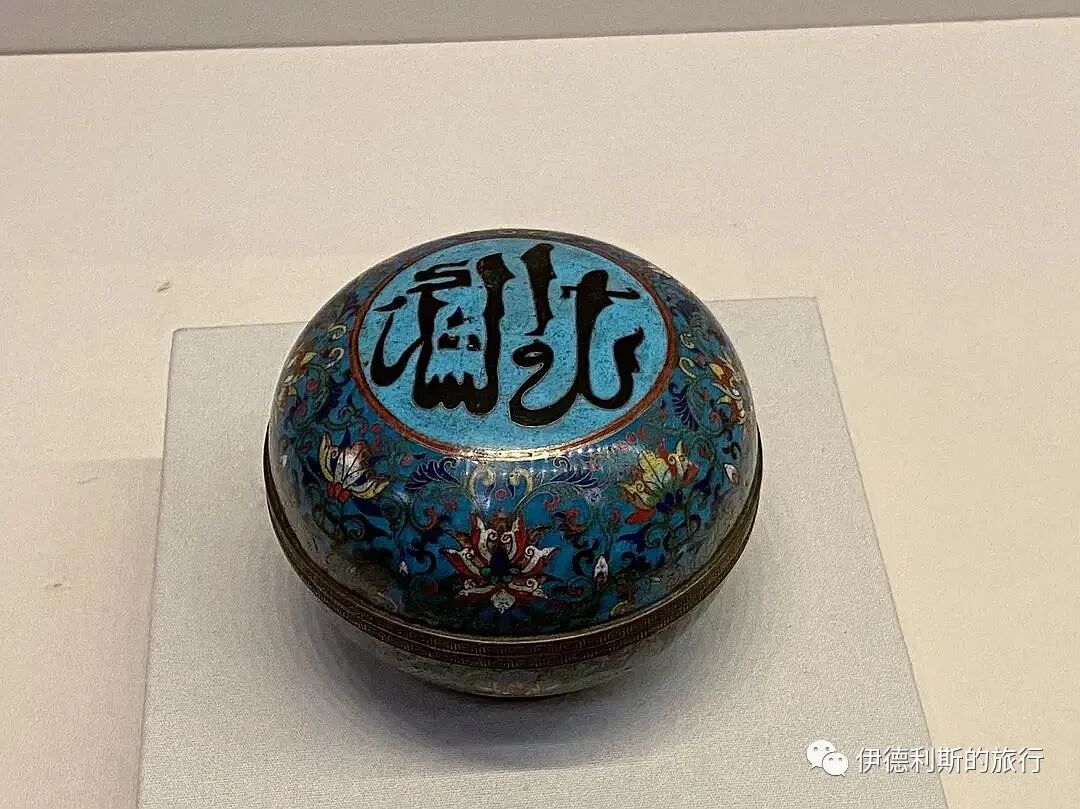
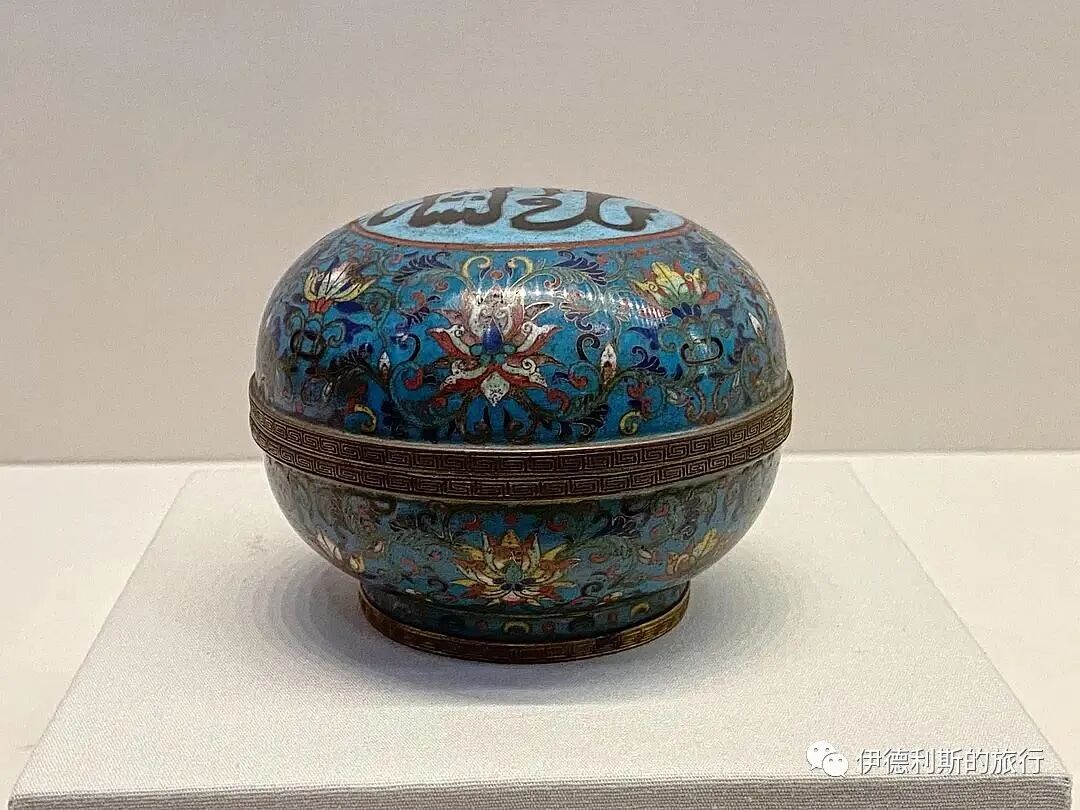
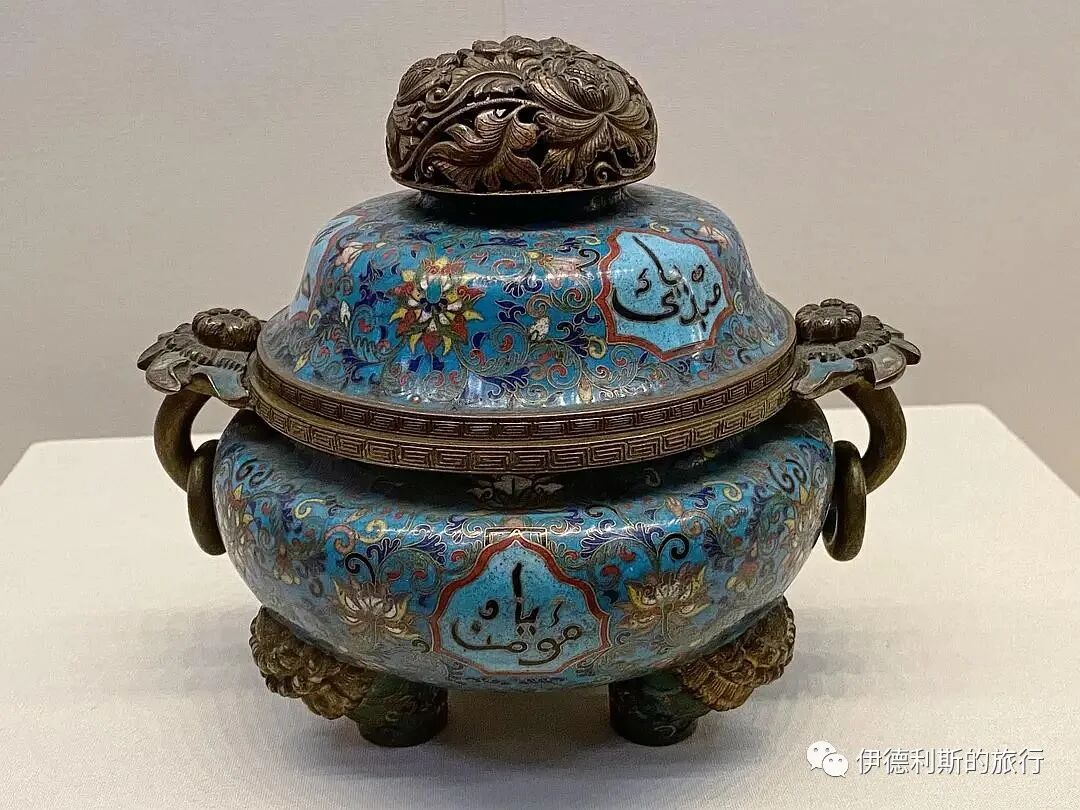
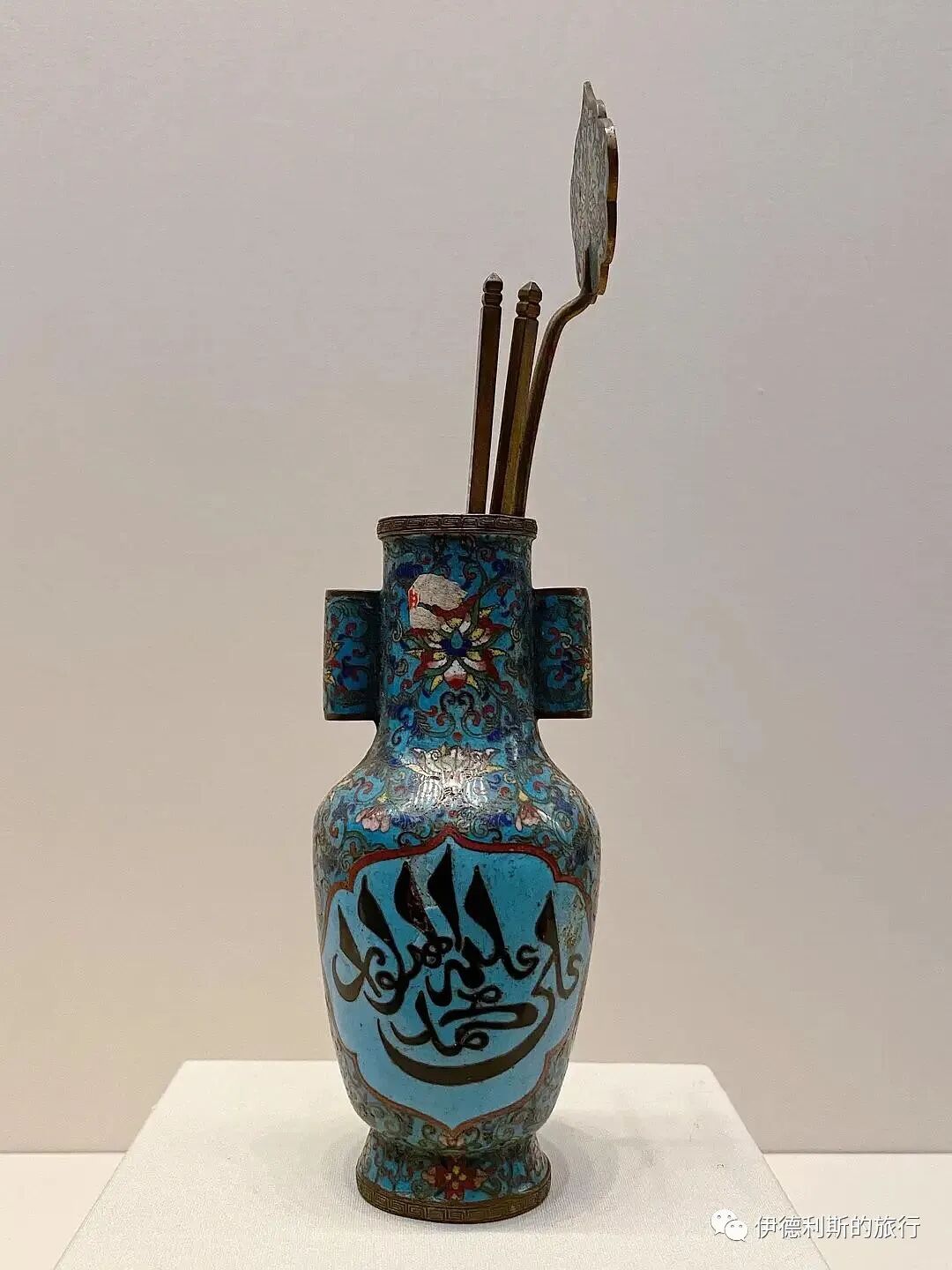
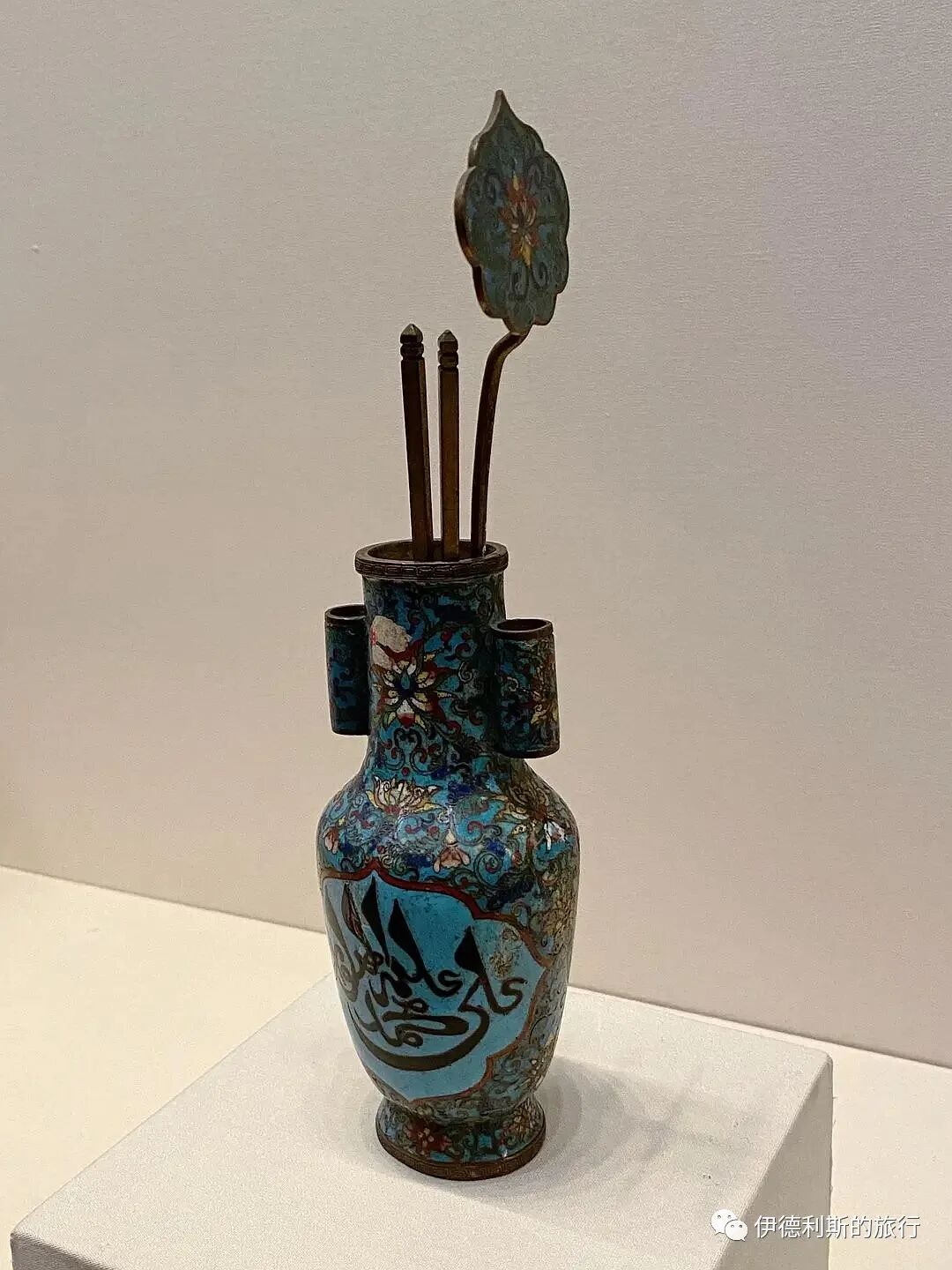
A Qing Dynasty cloisonné enamel incense burner and vase set (lu ping san shi) with Arabic calligraphy.
3. Capital Museum
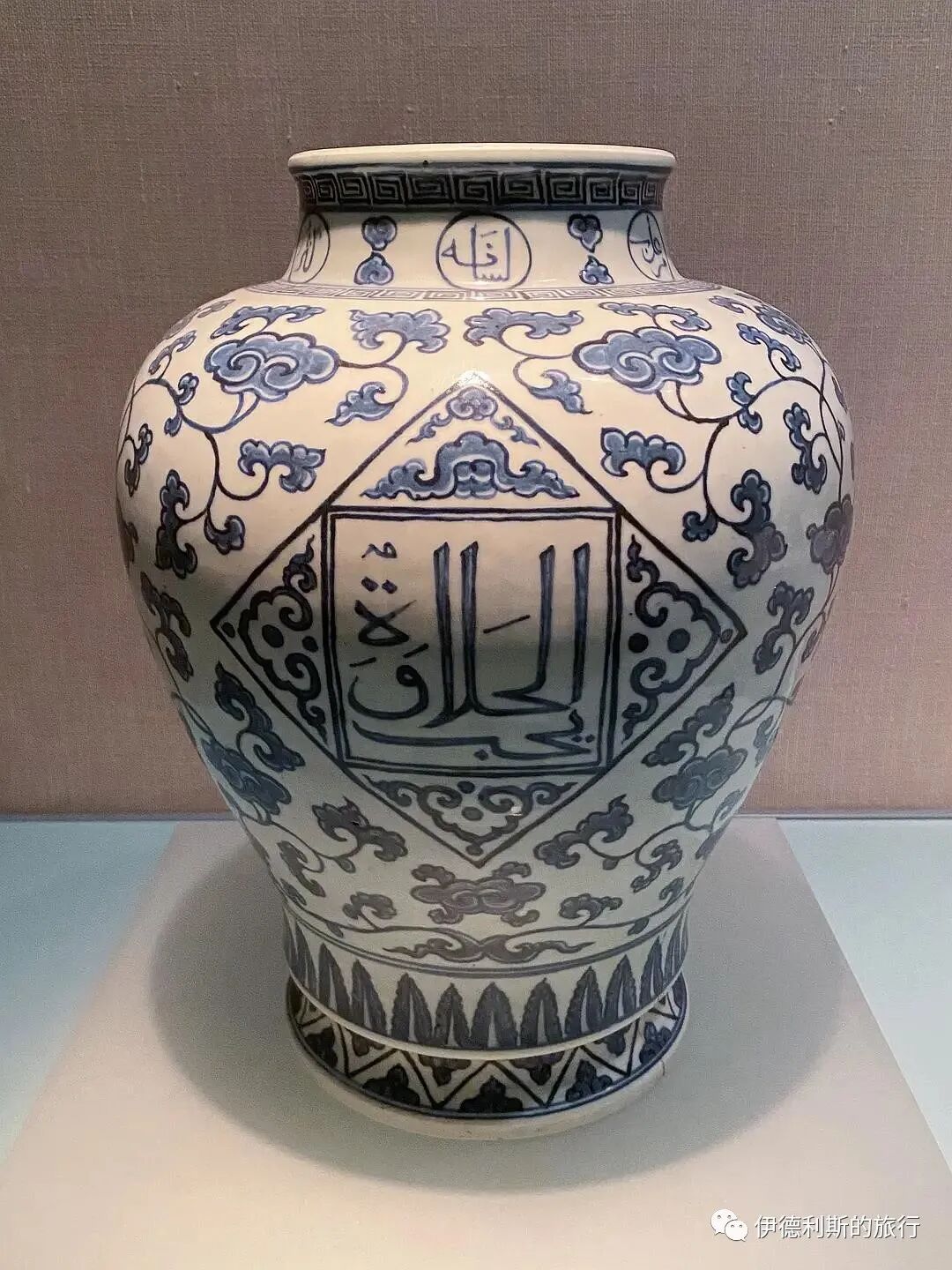
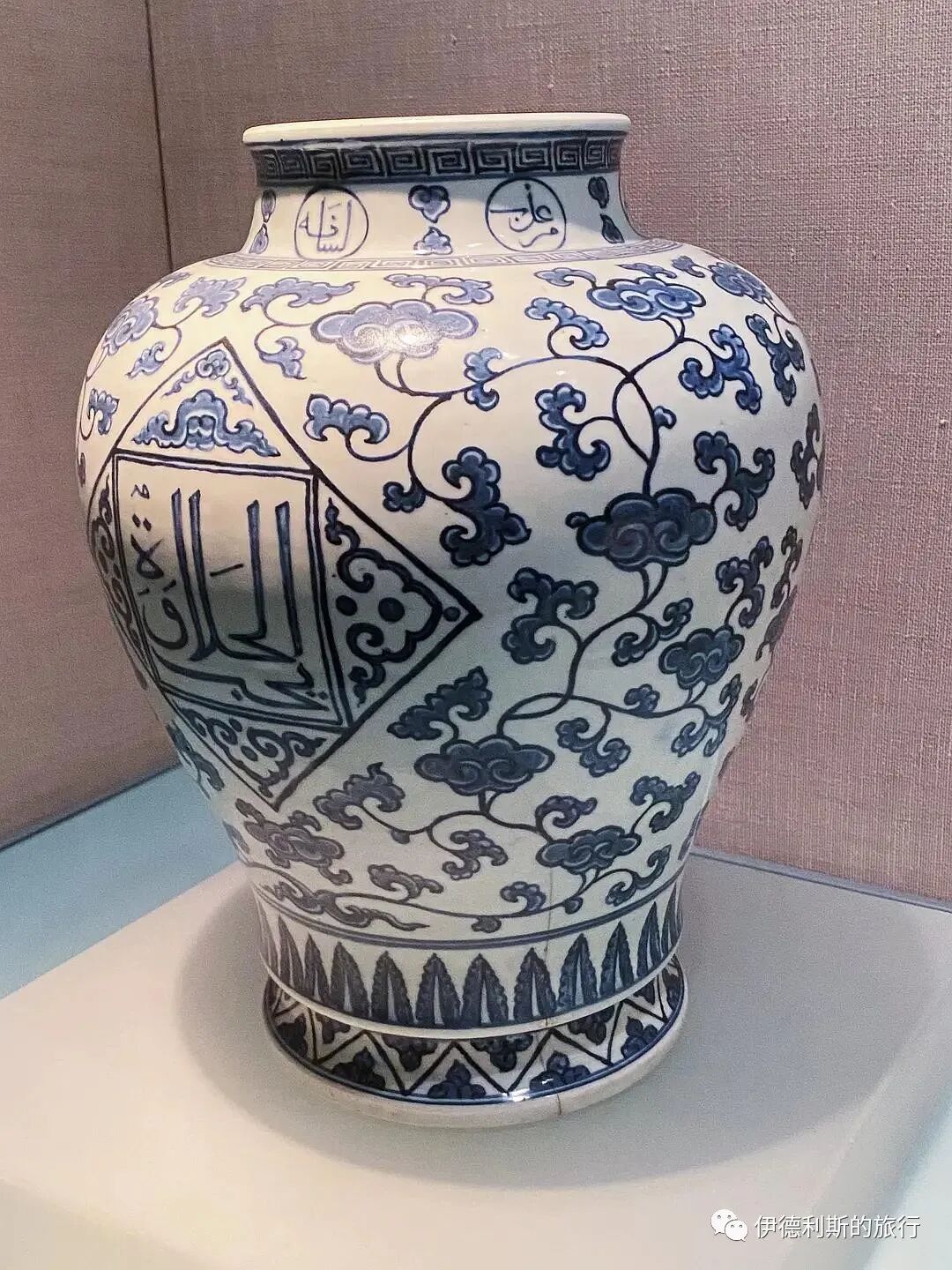
Photographed in 2022, a Ming Dynasty Zhengde period blue and white porcelain jar with a lingzhi mushroom pattern.
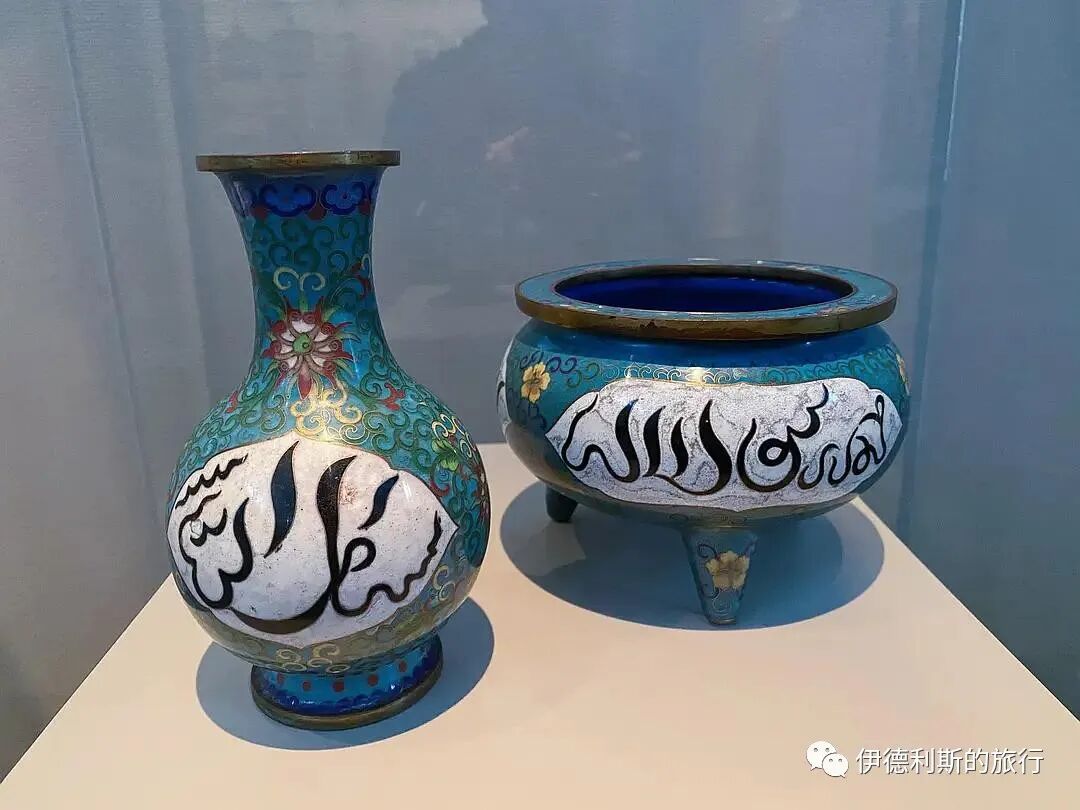
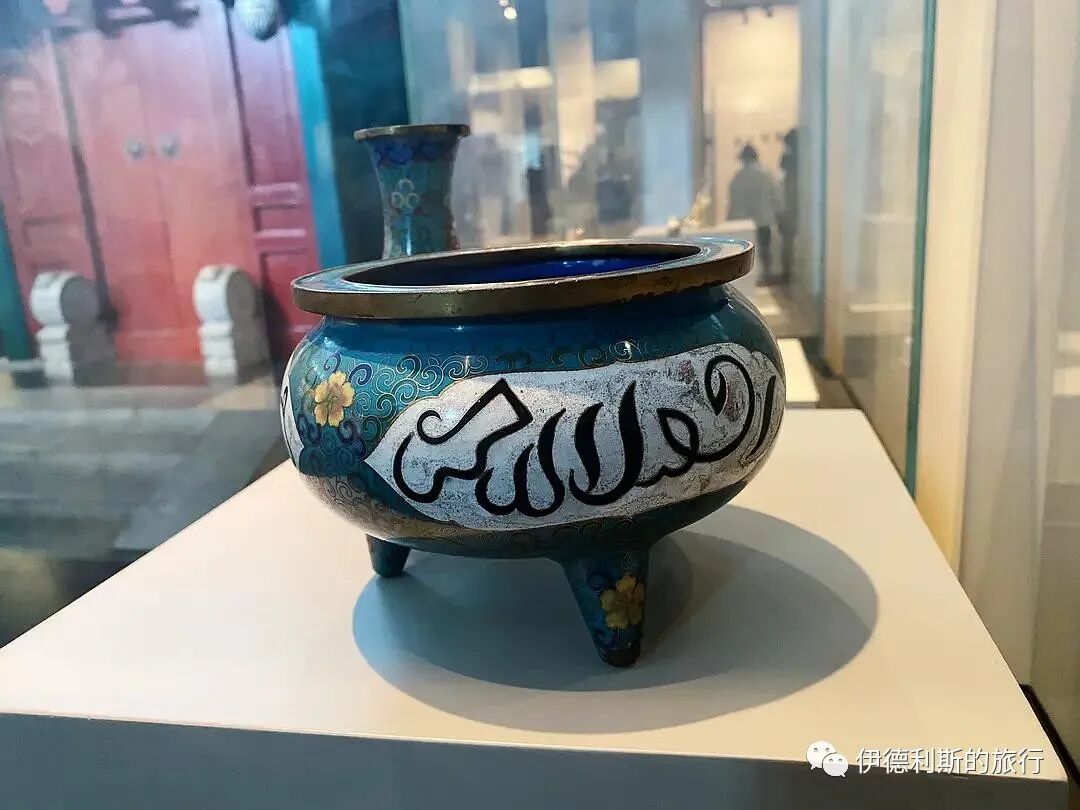
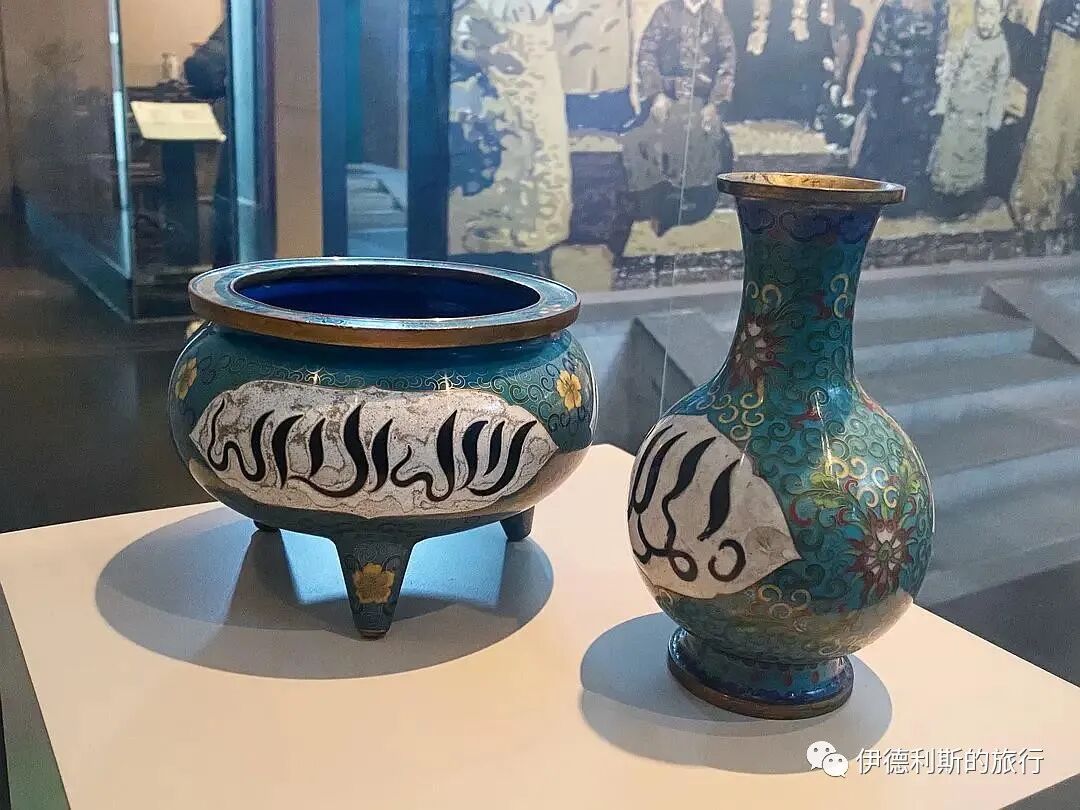
Photographed in 2022, a Qing Dynasty enamel incense burner and vase. It is a pity it is missing one piece, so it is not a complete set.
4. Guanfu Museum
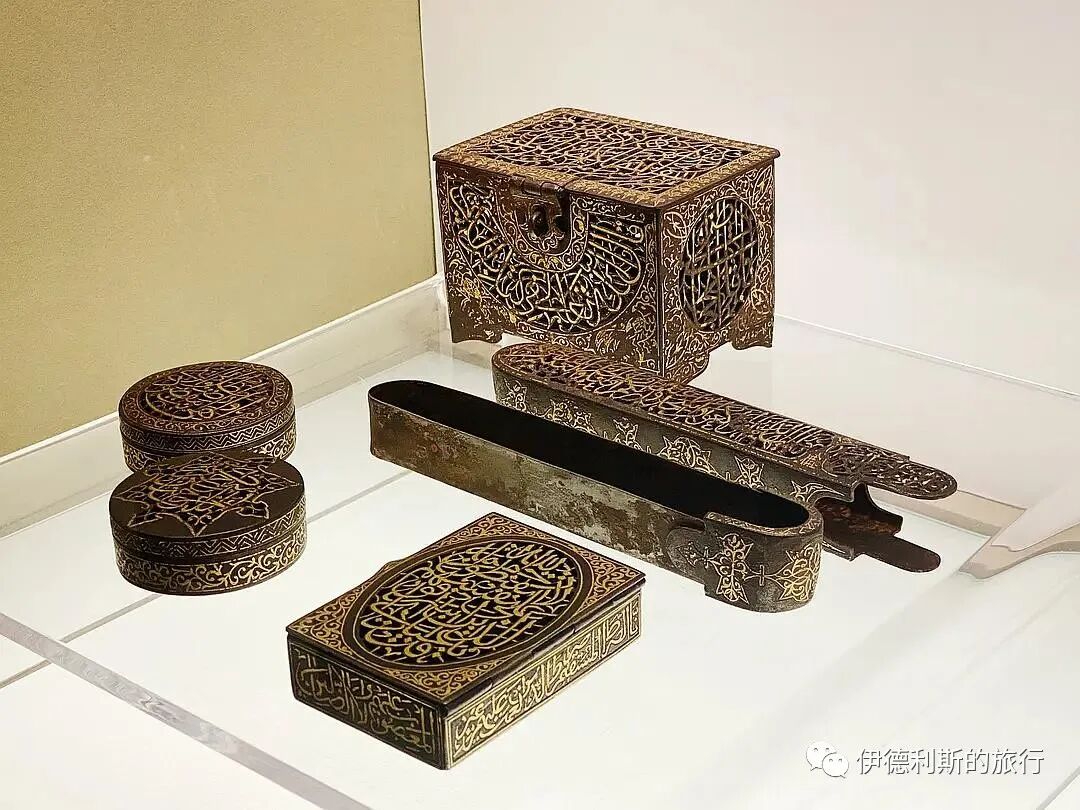
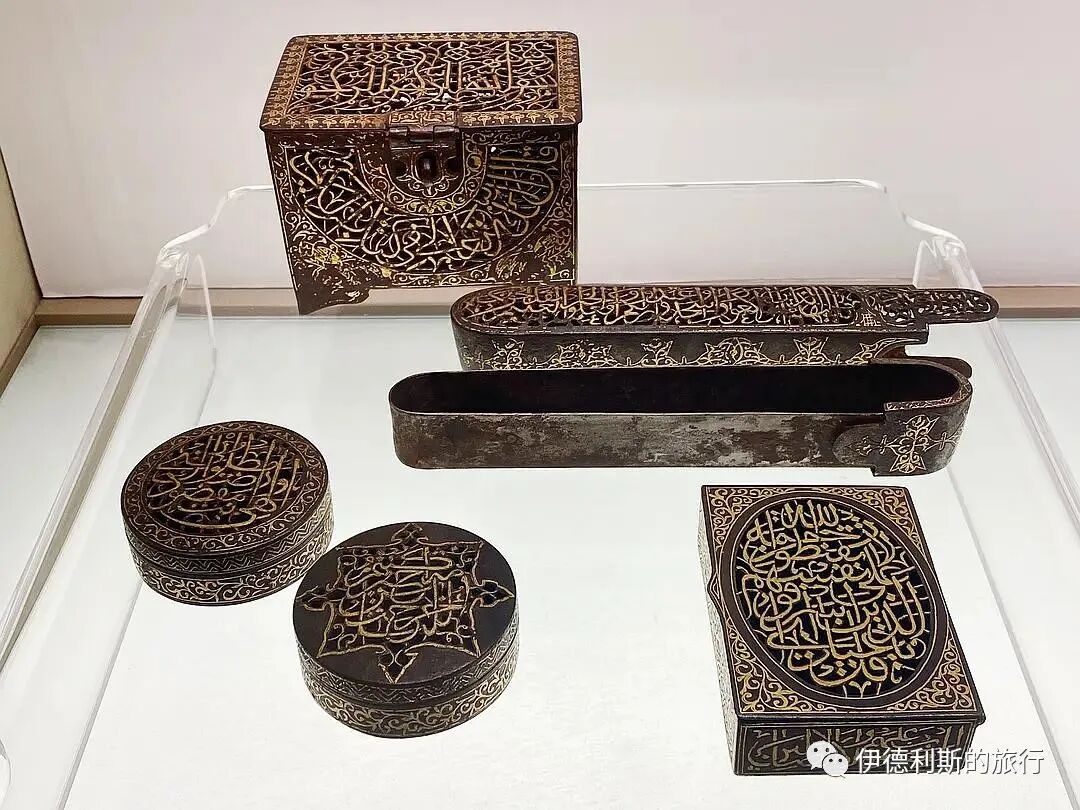
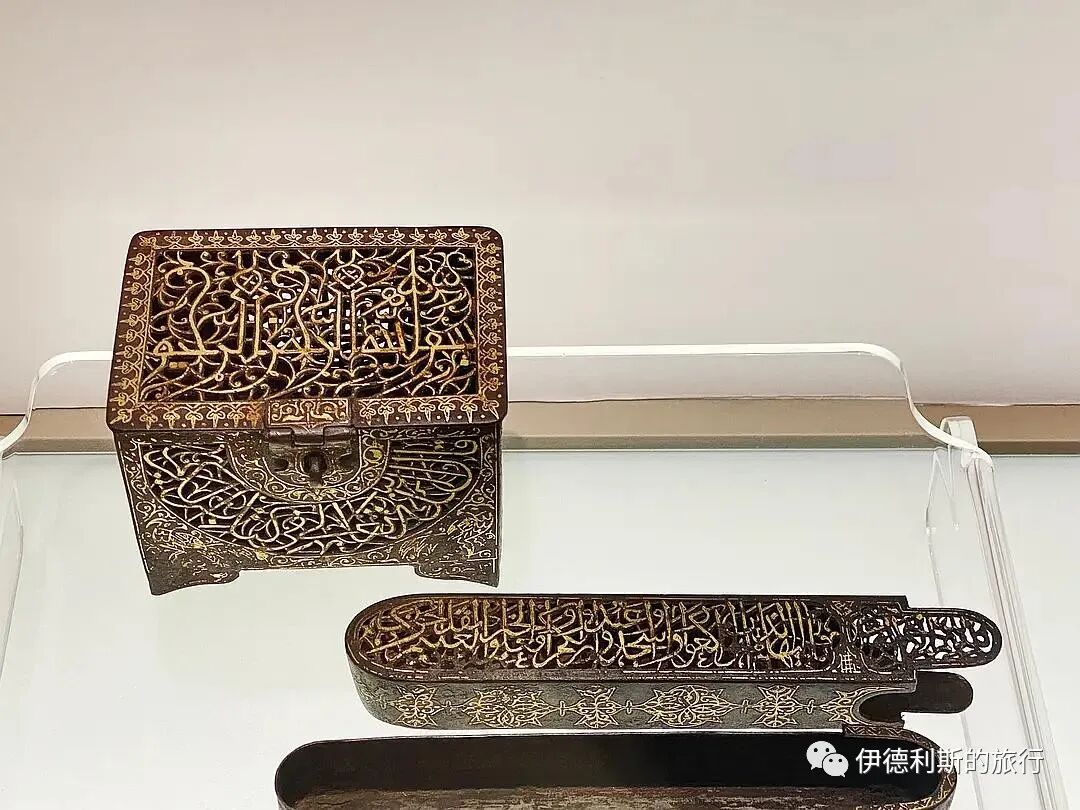
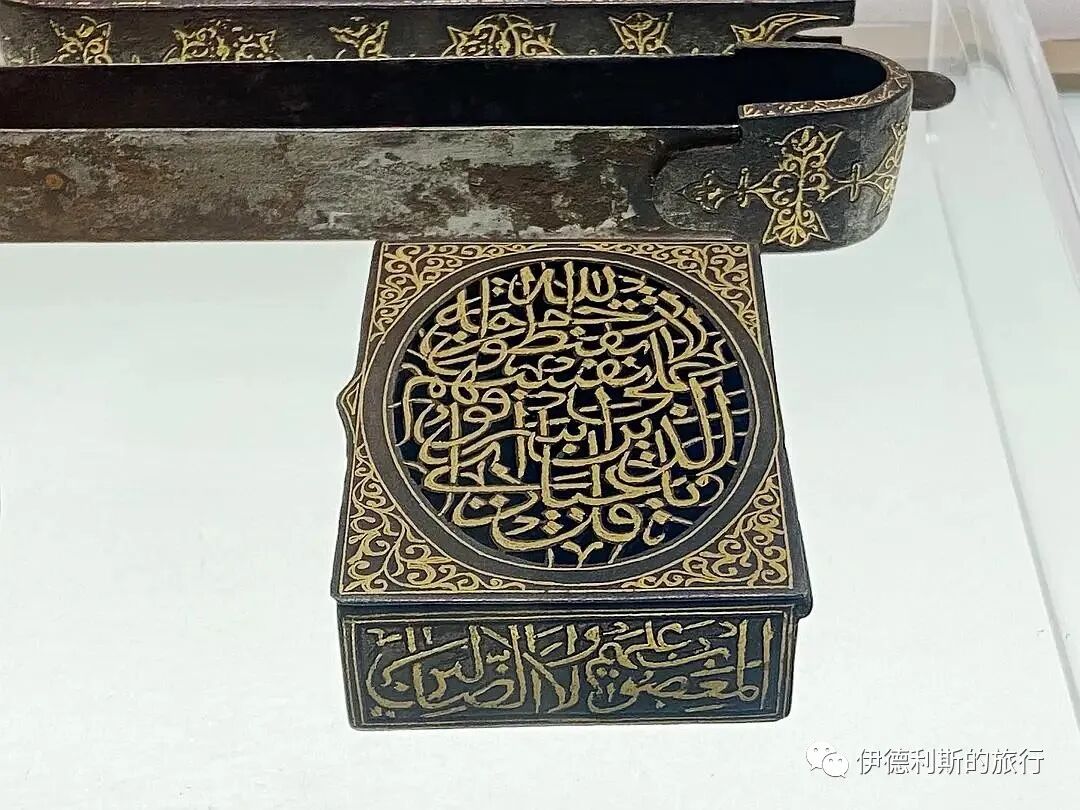
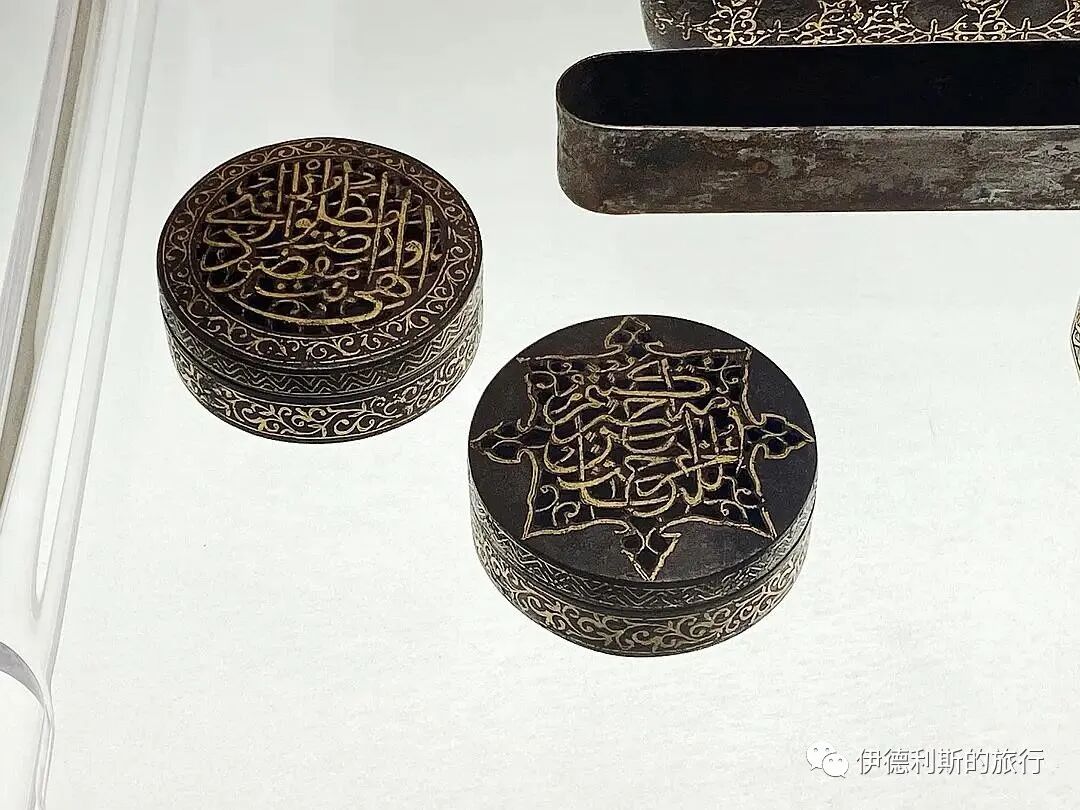
An iron stationery box with gold inlay (tie wan jin) and Arabic calligraphy. It is very beautiful! It likely comes from 14th or 15th century Iran. Ma Weidu previously mentioned on a show that it was found in Qinghai, but he did not provide specific details.
The iron gold-inlay technique involves carving a grid pattern onto an iron base, then using a heated hammer to quickly drive gold foil into the grid. The hammered gold foil bonds firmly with the iron base. Then, the object is heated to soften the metal, and tools like steel needles and agate knives are used to refine the details and make the surface smooth.
Summary: Beijing Museum Guide: Islamic Artifacts in Four Museums is presented here as a firsthand travel account in clear English, beginning with this scene: I am sharing Islamic artifacts I photographed at the Palace Museum, the National Museum of China, the Capital Museum, and the Guanfu Museum. The account keeps its focus on Beijing Museums, Islamic Artifacts, Muslim Heritage while preserving the names, places, food, and historical details from the Chinese source.
I am sharing Islamic artifacts I photographed at the Palace Museum, the National Museum of China, the Capital Museum, and the Guanfu Museum.
1. The Palace Museum
Photographed in 2021 at the Ceramics Gallery in the Hall of Martial Valor (Wuyingdian). This blue and white porcelain vase with Arabic calligraphy and scrolling floral patterns was made at the Jingdezhen imperial kilns during the Ming Yongle period and was part of the old Qing palace collection. Its shape and patterns mimic 14th-century Middle Eastern brass vessels inlaid with silver. A white-glazed vase of the same shape from the Yongle period was also unearthed at the Ming imperial kiln site at Zhushan in Jingdezhen. This piece originally had no name, but Emperor Qianlong gave it the name 'Wudang Zun' (bottomless vase) because he thought it looked like a vase without a base.
This porcelain uses imported 'Sumali blue' (sumaliqing) glaze, which is characteristic of the Yongle and Xuande periods. Because this cobalt material is high in iron and low in manganese, the patterns often show dark blue, metallic-looking iron oxide spots. You can feel the uneven texture when looking at it from the side, and the dark blue contrasts beautifully with the lighter blue.
After the recent renovation of the Ceramics Gallery, they displayed a comparison photo of this vase next to a 14th-century Egyptian Mamluk dynasty brass stand inlaid with silver from the British Museum. The shapes are exactly the same!
Photographed in 2021 at the Ceramics Gallery in the Hall of Martial Valor, these are a blue and white candlestick with Arabic calligraphy and a white-glazed plate with iron-red Arabic and Persian calligraphy, both made at the imperial kilns during the Ming Zhengde period (1506–1521). The imperial court during the Zhengde era really loved using porcelain with Arabic and Persian writing. Most Zhengde-period blue and white porcelain with Arabic and Persian writing consists of bowls, cups, brush rests, and boxes that share the same shapes as other official kiln wares of the time. Many are traditional stationery items, and they frequently feature verses from the Quran, Hadith, and praises to Allah. Therefore, it is believed these were mostly for use within China rather than for export.
The third issue of the 1984 'Journal of the Palace Museum' published an article by Li Yihua titled 'Two Pieces of Zhengde-Period Arabic and Persian Porcelain: Also Discussing the Influence of Islamic Culture.' It mentions that the Palace Museum holds over 20 pieces of Zhengde-period porcelain with Arabic and Persian writing, but only one of them is red-glazed. The four Arabic phrases in the center of the porcelain plate mean 'Allah, the Exalted and Majestic, says.' The three lines of Arabic in the center of the plate are from the second half of Chapter 17, Verse 29 of the Quran: 'And do not make your hand chained to your neck nor extend it completely and [thereby] become blamed and insolvent.' Additionally, there are four lines of Hadith on the wall of the plate, which mean: 'Allah, the Exalted and Majestic, says: Whoever does an atom's weight of good, or whoever does an atom's weight of evil, He (Allah) will see it. This is the reward for those who do good.'
The most interesting part is the three lines of text on the bottom of the plate. Li Yihua interprets them as 'Dimani Khan is Aman Suleiman Shah' and thinks they might have been custom-ordered for a country in the Arab region. However, some scholars lean toward the idea that 'Dimani' should be 'Da Mink,' meaning 'Great Ming.' Based on this, the text says 'The ruler of Great Ming is King Suleiman.' This means the Zhengde Emperor's Arabic or Persian name was likely 'Suleiman' (Solomon), so some people jokingly call this piece of porcelain 'King Solomon's Treasure'. Also, the ruler of the Ottoman Empire during almost the same period was the famous Suleiman the Magnificent (reigned 1520-1566), which is quite a coincidence.
This blue and white porcelain bowl with Arabic script from the Zhengde period of the Ming Dynasty is in the Palace Museum collection. I photographed it in 2019 at the 'Beauty of Transmitting the Heart: Exhibition of Chinese Cultural Relics from the Vatican Museums' at the Gate of Divine Prowess (Shenwumen).
Most Arabic and Persian script on Ming Zhengde porcelain is written inside diamond or square-shaped panels. The outer walls are decorated with scrolling flowers or cloud patterns, and the bottom has a mark reading 'Made in the Zhengde Period of the Great Ming.' The vast majority are blue and white porcelain, with only a small number featuring red overglaze enamel.
I photographed this in 2021 at the Wuyingdian Ceramics Gallery. It is a very classic blue and white porcelain three-legged cylindrical incense burner with Persian poetry and a 'Tianshun Period' mark, fired at the imperial kiln during the Ming Tianshun period (1457-1464). The outer wall features poetry from 'The Orchard' (Bustan) by the famous Persian poet Saadi. After the gallery was rearranged, they thoughtfully added a translation of the poem. Appreciating Persian poetry fired over 500 years ago at the Palace Museum adds 10,086 points to my Inner Asia interest level.
This Qing Dynasty cloisonné enamel incense burner set with Arabic script is in the Palace Museum collection. I photographed it in 2019 at the 'Beauty of Transmitting the Heart: Exhibition of Chinese Cultural Relics from the Vatican Museums' at the Gate of Divine Prowess (Shenwumen).
2. National Museum of China
This Yuan Dynasty iron magic square with Arabic script was found in Xi'an. For the entire six-order magic square, the sum of every row, column, and diagonal is 111. For the four-order magic square inside, the sum of every row, column, and diagonal is 74.
A copper incense burner with the Islamic declaration of faith (Shahada) from the Ming Zhengde period.
A Qing Dynasty copper box with Arabic script, engraved with 'Alhamdulillah' (Praise be to Allah).
A Qing Dynasty cloisonné enamel incense burner and vase set (lu ping san shi) with Arabic calligraphy.
3. Capital Museum
Photographed in 2022, a Ming Dynasty Zhengde period blue and white porcelain jar with a lingzhi mushroom pattern.
Photographed in 2022, a Qing Dynasty enamel incense burner and vase. It is a pity it is missing one piece, so it is not a complete set.
4. Guanfu Museum
An iron stationery box with gold inlay (tie wan jin) and Arabic calligraphy. It is very beautiful! It likely comes from 14th or 15th century Iran. Ma Weidu previously mentioned on a show that it was found in Qinghai, but he did not provide specific details.
The iron gold-inlay technique involves carving a grid pattern onto an iron base, then using a heated hammer to quickly drive gold foil into the grid. The hammered gold foil bonds firmly with the iron base. Then, the object is heated to soften the metal, and tools like steel needles and agate knives are used to refine the details and make the surface smooth.
