
Halal Travel Guide: Yuanmingyuan Mosque — Muslim History in the Old Summer Palace
Reposted from the web
Summary: Yuanmingyuan Mosque — Muslim History in the Old Summer Palace is presented here as a firsthand travel account in clear English, beginning with this scene: The Fangwaiguan is part of the Western-style building complex in the Old Summer Palace. The account keeps its focus on Yuanmingyuan, Beijing Muslim History, Mosque History while preserving the names, places, food, and historical details from the Chinese source.
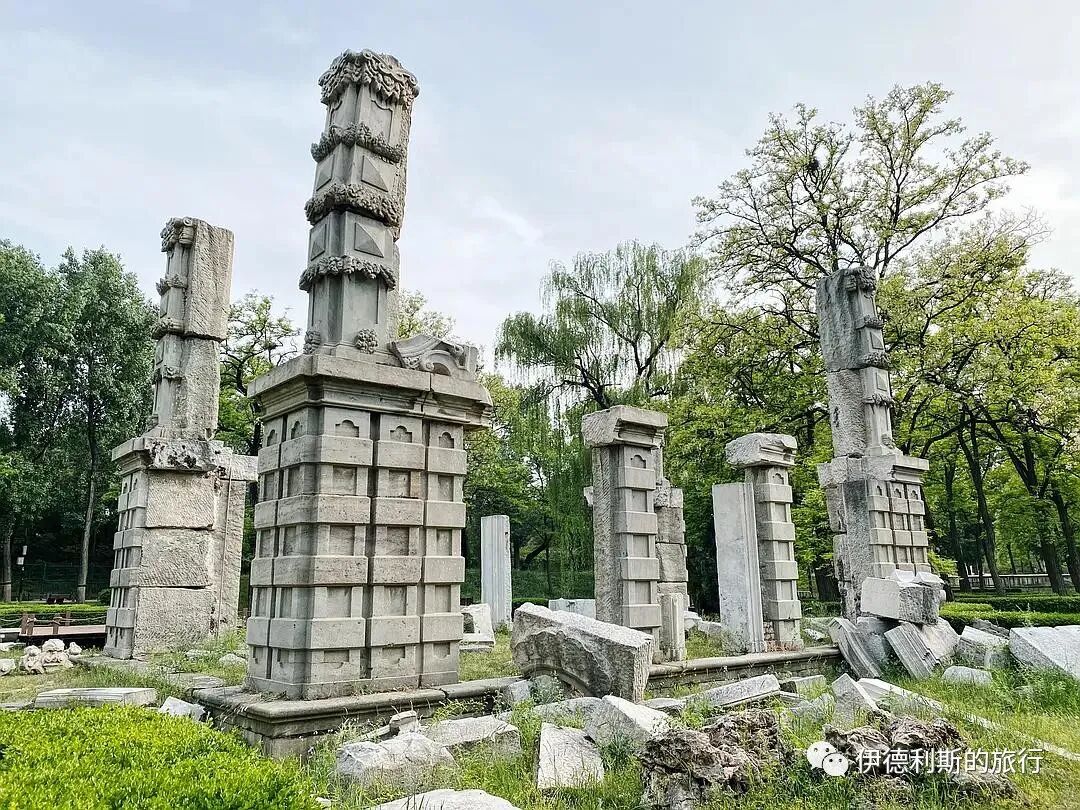
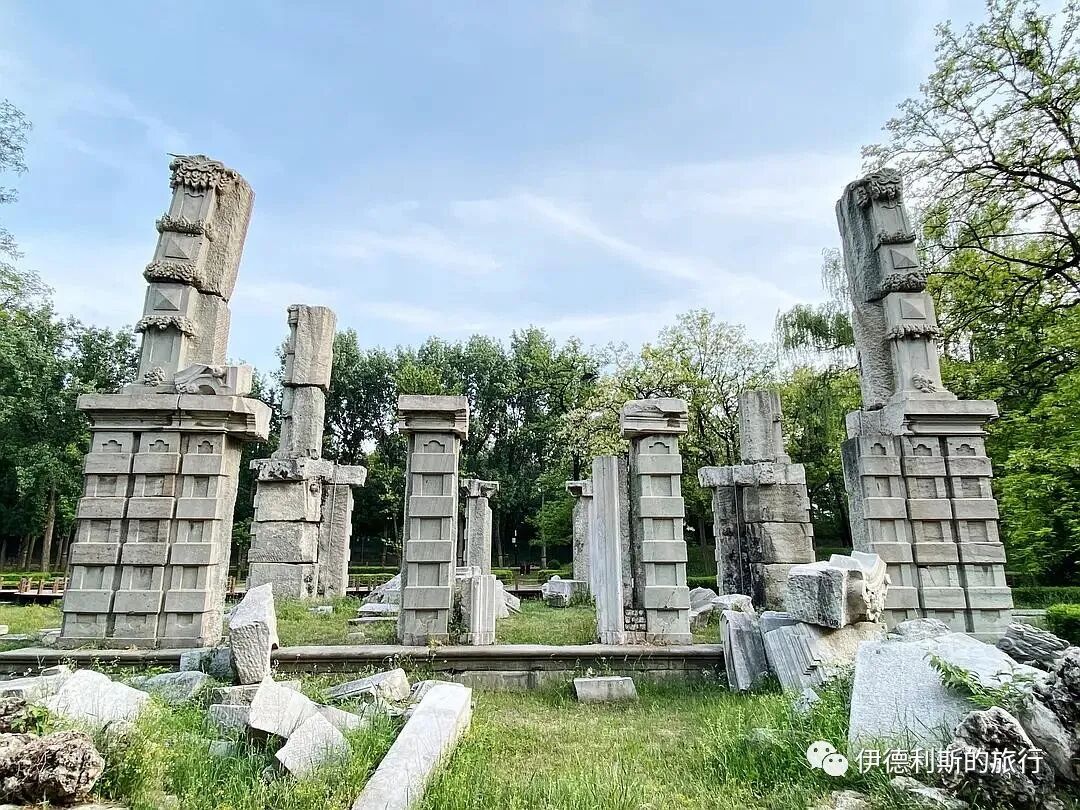
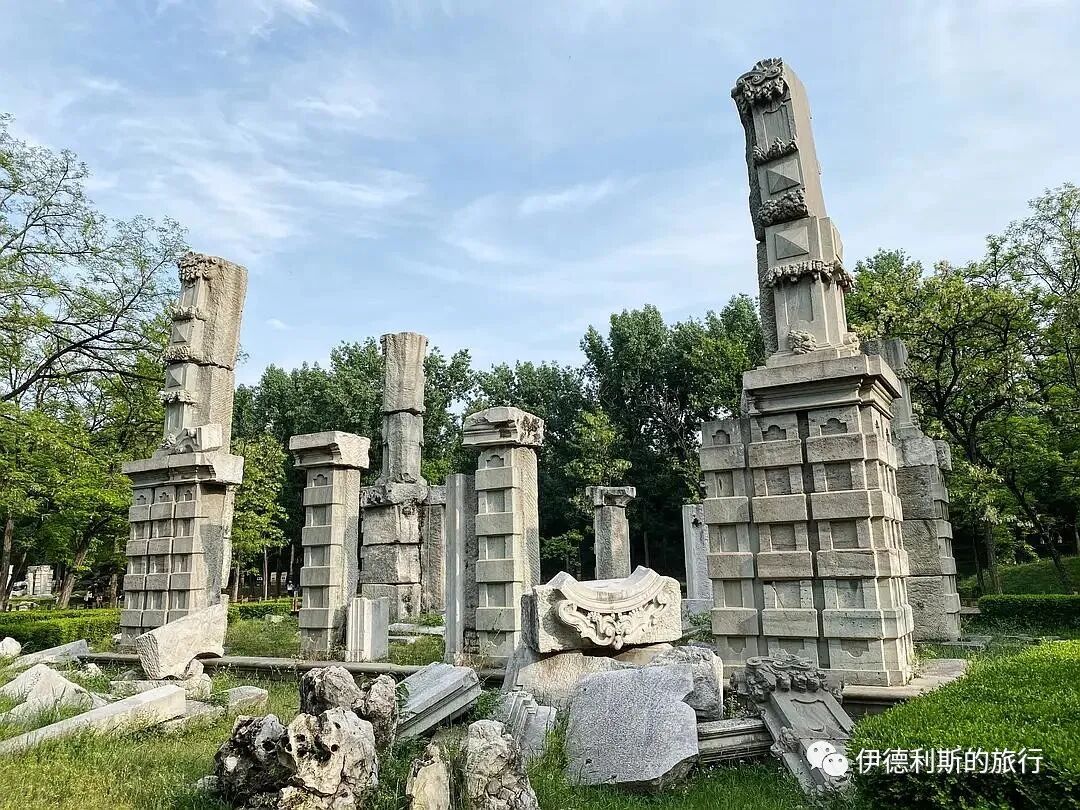
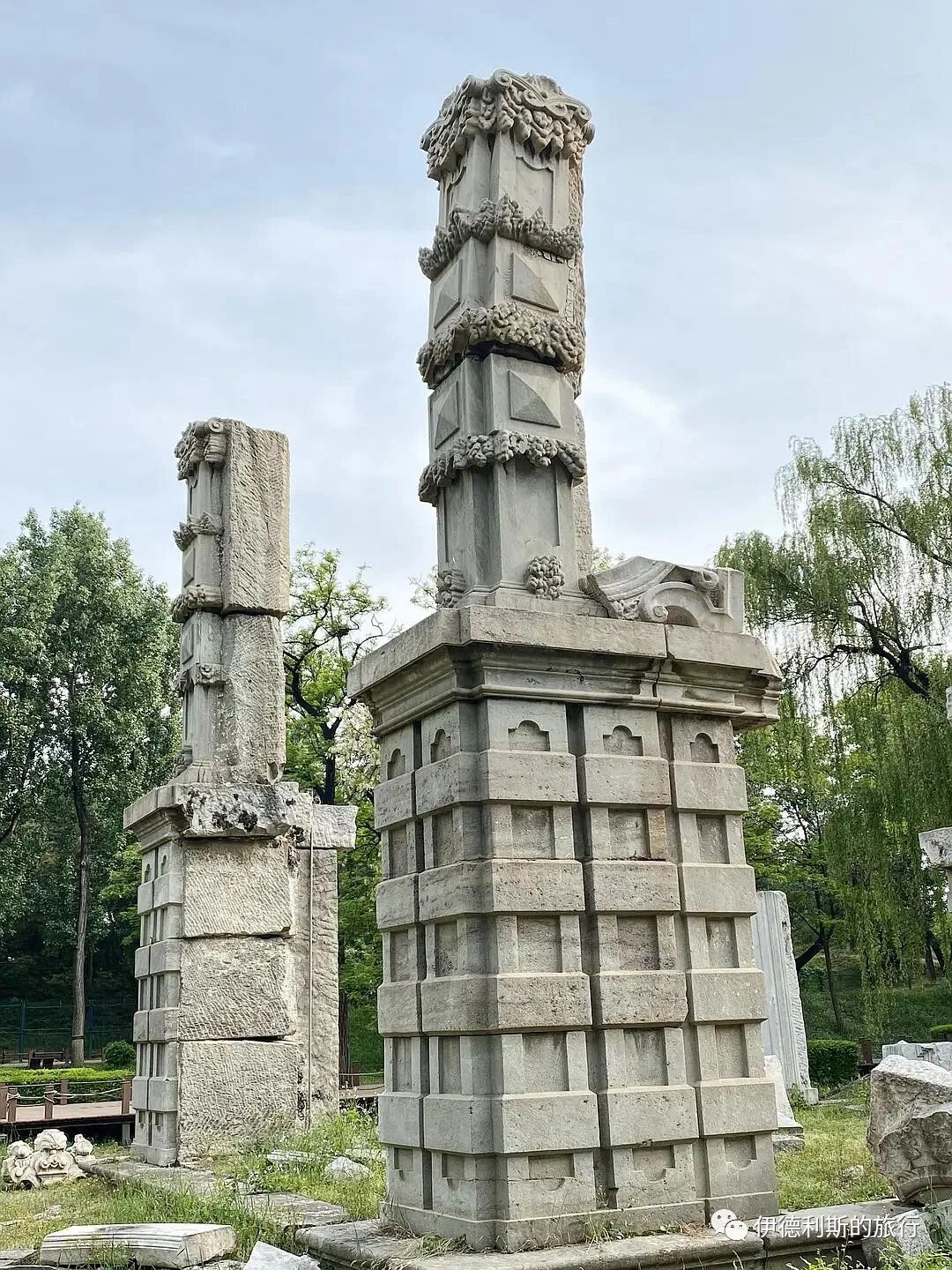
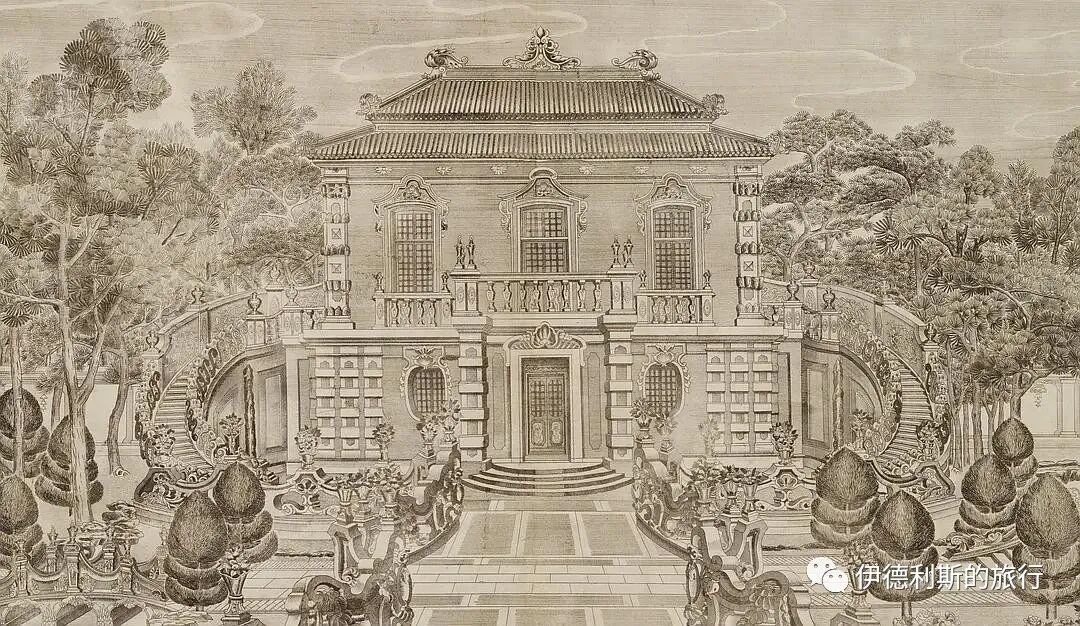
The Fangwaiguan is part of the Western-style building complex in the Old Summer Palace. It was first called the Three-Room Water-Feature Hall (Shuifadian Sanjianlou) and was built between 1756 and 1759. The Italian court painter Giuseppe Castiglione led the design, and Chinese craftsmen built it in the late Renaissance Italian Baroque style. In 1760, Emperor Qianlong summoned Hui Muslim figures from the Western Regions who helped suppress the White Mountain Sect rebellion to the capital. He named the hero Tu'erdu Zhuo a first-rank Taiji and gave his sister the title of Noble Lady He (He Guiren). In 1761, Lady Zhuo was promoted to Concubine Rong (Rong Pin) and later to Consort Rong (Rong Fei). Emperor Qianlong then turned the Fangwaiguan into a prayer hall specifically for her to perform namaz. Lady Zhuo lived in the palace for 28 years until she passed away (guizhen) at the Old Summer Palace in 1788. The Fangwaiguan has two floors and a double-eaved hip roof. Its main structure consists of four giant square pillars, and circular stairs outside the building lead directly to the second floor. In 1920, after visiting the site, the Frenchman Maurice Adam recorded in his book, The Old Summer Palace Projects by 18th-Century Jesuits, that the interior of the Fangwaiguan once held two white marble tablets with Arabic inscriptions. They bore the names of the third and fourth Caliphs, Uthman and Ali. It is believed that the Fangwaiguan originally also held tablets with the names of the first and second Caliphs, Abu Bakr and Umar, but these have been lost.
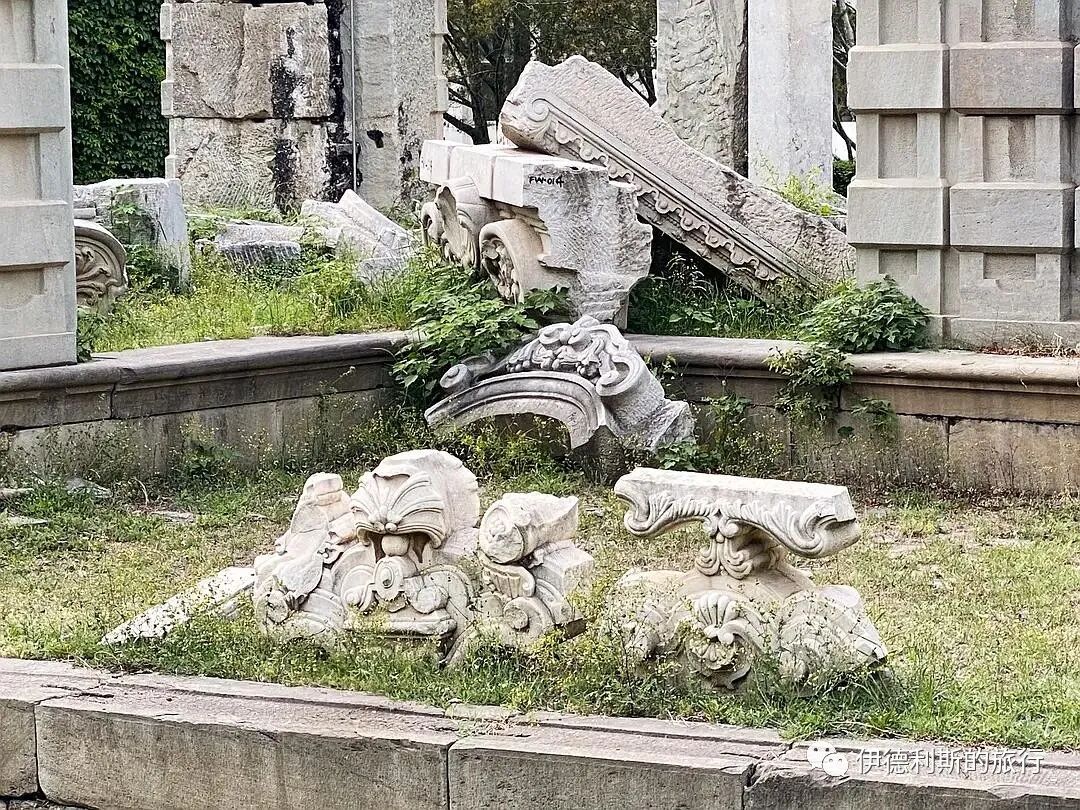
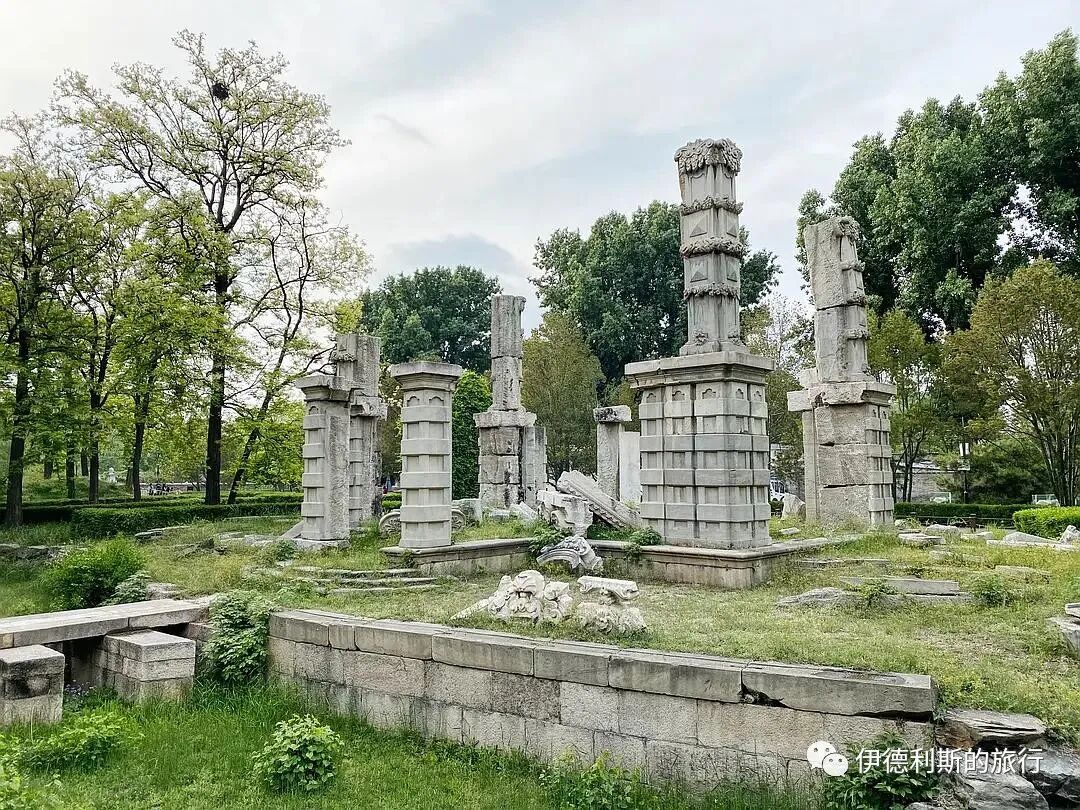
When the Old Summer Palace was burned in 1860, the Fangwaiguan was the only Western-style building that remained intact. However, over the next hundred years, its components were stolen or destroyed, and now only the four main stone pillars remain. The two sets of stone bridges outside the Fangwaiguan were moved to Yenching University during the Republic of China era. One set is now in the grass inside the west gate of Peking University, and the other is on the north side of the island in Weiming Lake. For detailed information about the Fangwaiguan, I recommend reading the 2022 book by Liu Yang, Emperor Qianlong's European-Style Garden.
The Fangwaiguan as seen in the 1786 Copperplate Prints of Western-Style Buildings.
The Fangwaiguan photographed in 1873 by Ernst Ohlmer, a German working for the Tianjin Customs. At that time, the building was still largely intact.
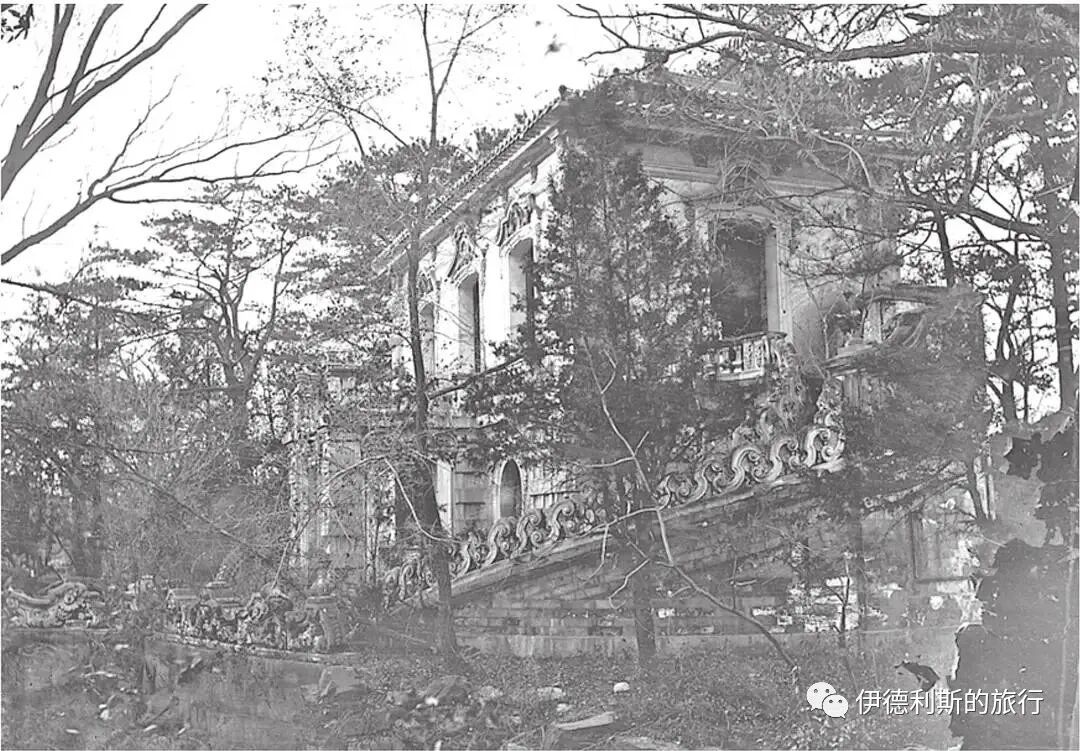
Fangwaiguan photographed in the autumn of 1877.
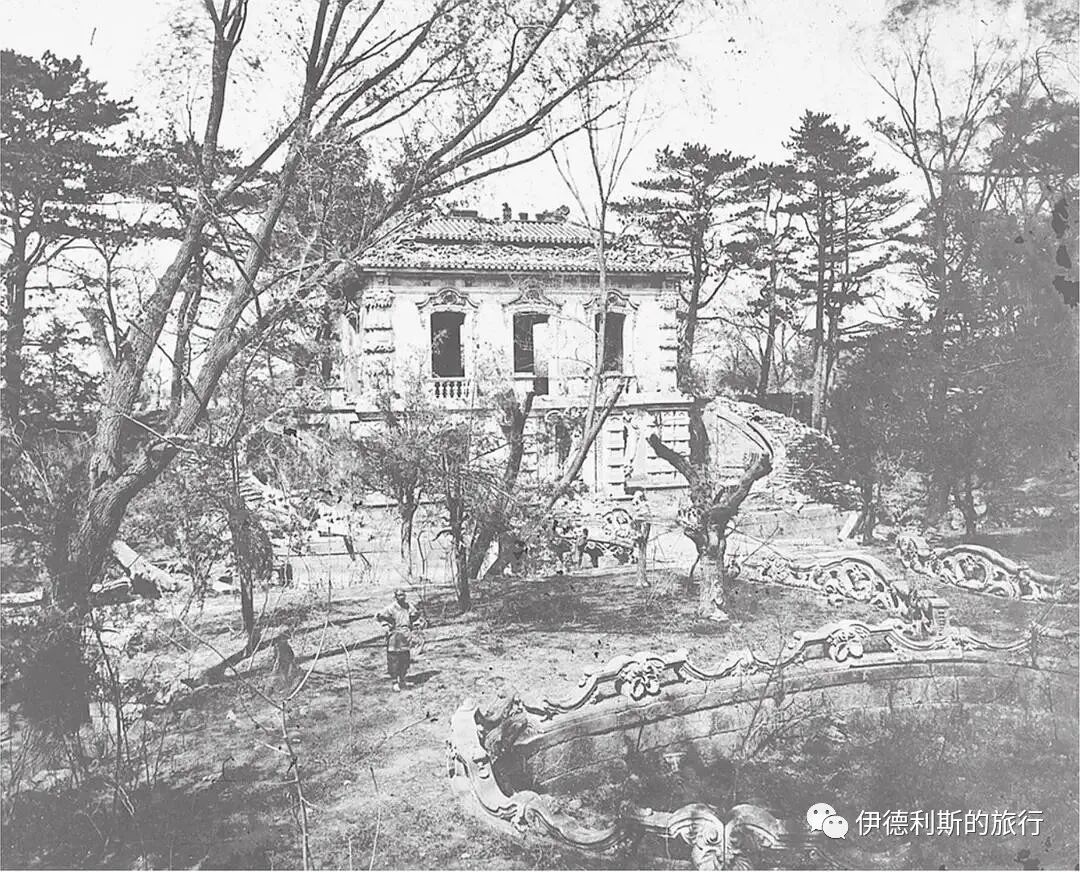
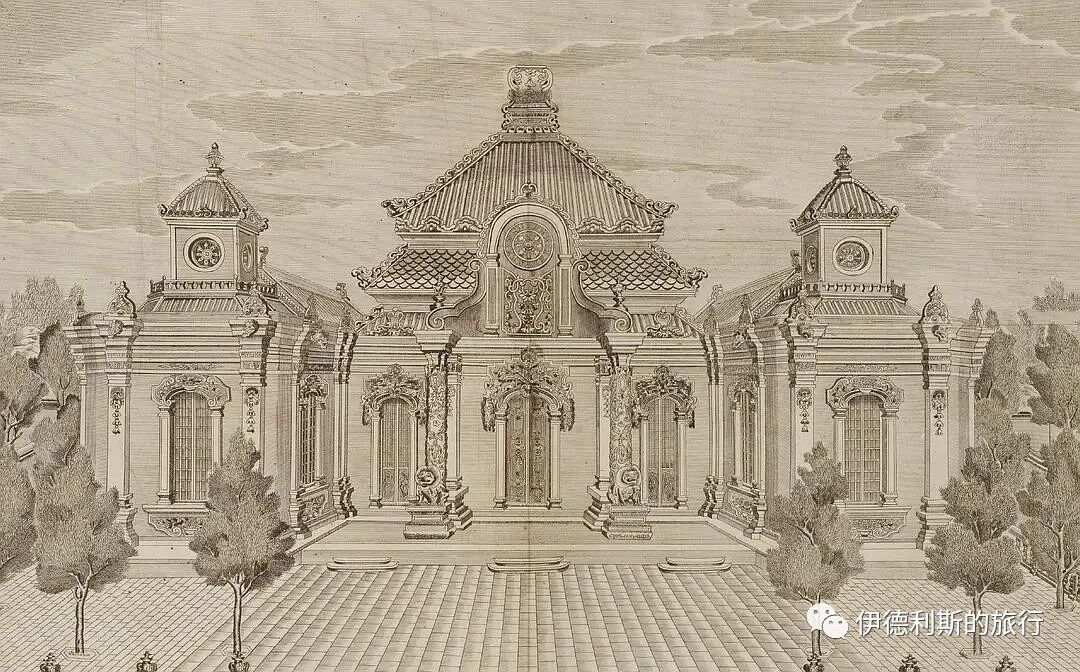
Yuanyingguan sits on a high platform on the east side of the Western-style building complex. It became the residence of Concubine Rong in the Old Summer Palace after it was built in 1783. Yuanyingguan is made of dozens of large white marble pillars. The center has a three-story hip-roof, while both sides feature two-story bell-tower style roofs. The walls were inlaid with 1,206 pieces of glass and included 24 cast-copper water spouts that created a spectacular sight when it rained. The interior of Yuanyingguan was also very luxurious. To please Concubine Rong, Emperor Qianlong chose Western-style gilded copper beds, bathtubs, and other furniture. There were also various Western toys, gold and silver, and enamel art treasures, including Turkish tapestries gifted by the King of France and an armillary sphere gifted by the King of England.
After the Old Summer Palace was burned in 1860, the gate and interior of Yuanyingguan were destroyed, but the main structure remained intact. Later, its components were gradually stolen or damaged. Wang Jizeng, the father of the famous collector Wang Shixiang, bought a garden outside the east gate of Yanyuan and moved a piece of Yuanyingguan into it. It now belongs to the Peking University Elementary School.
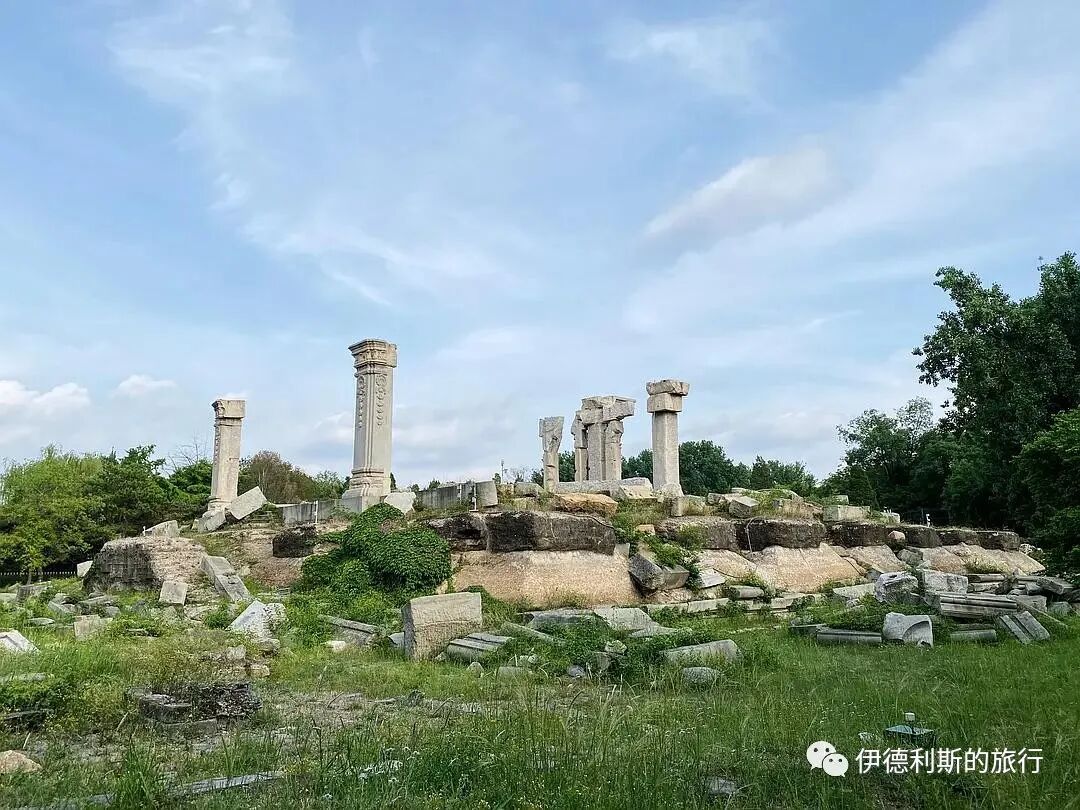
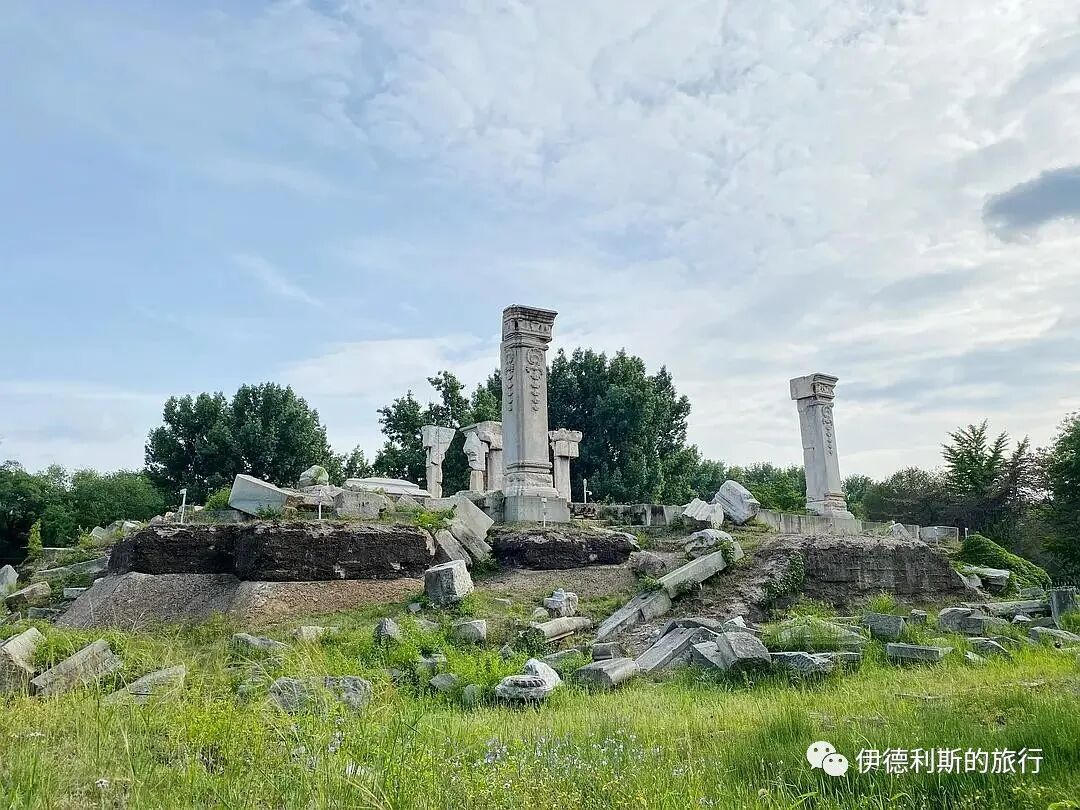
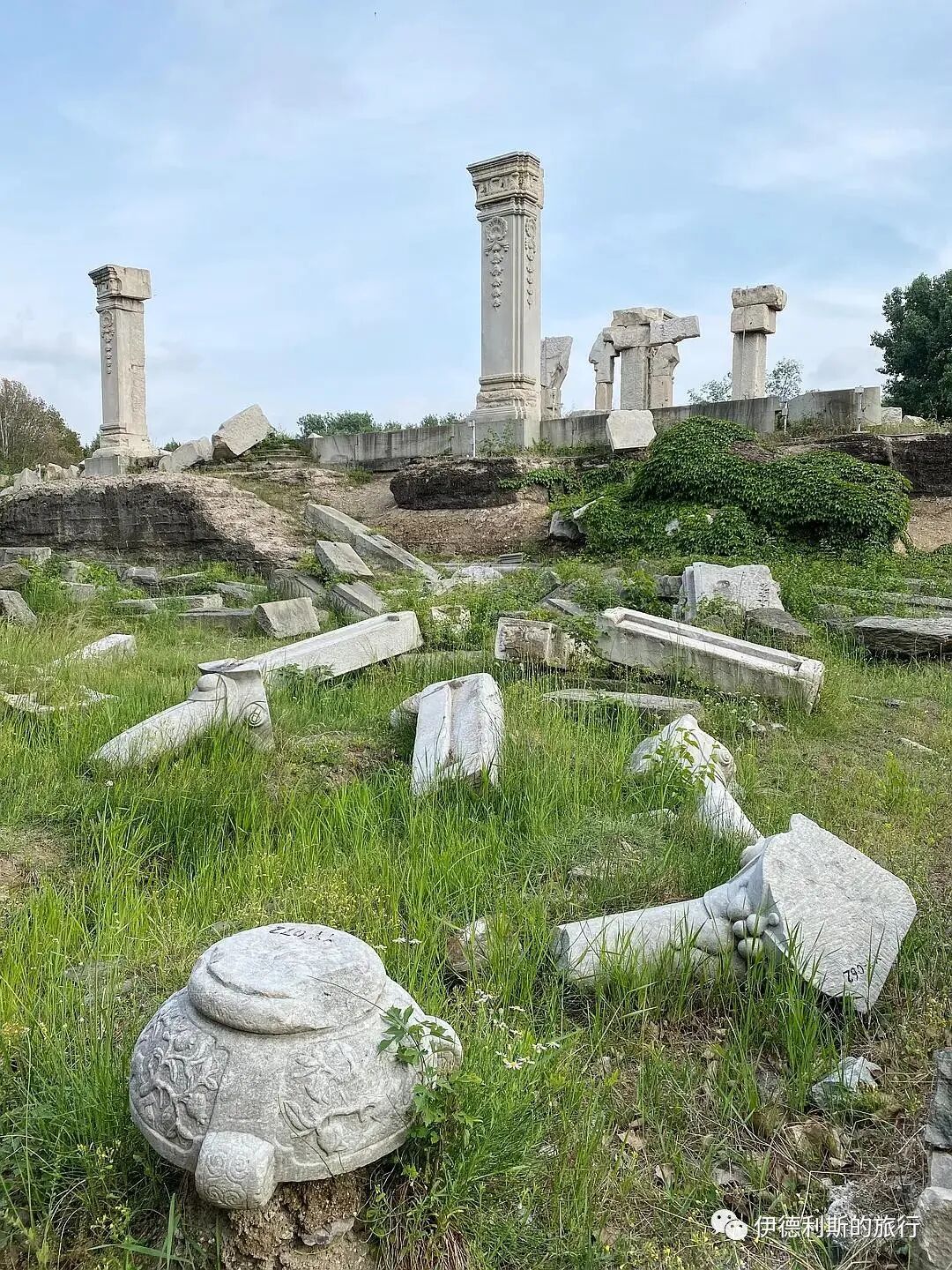
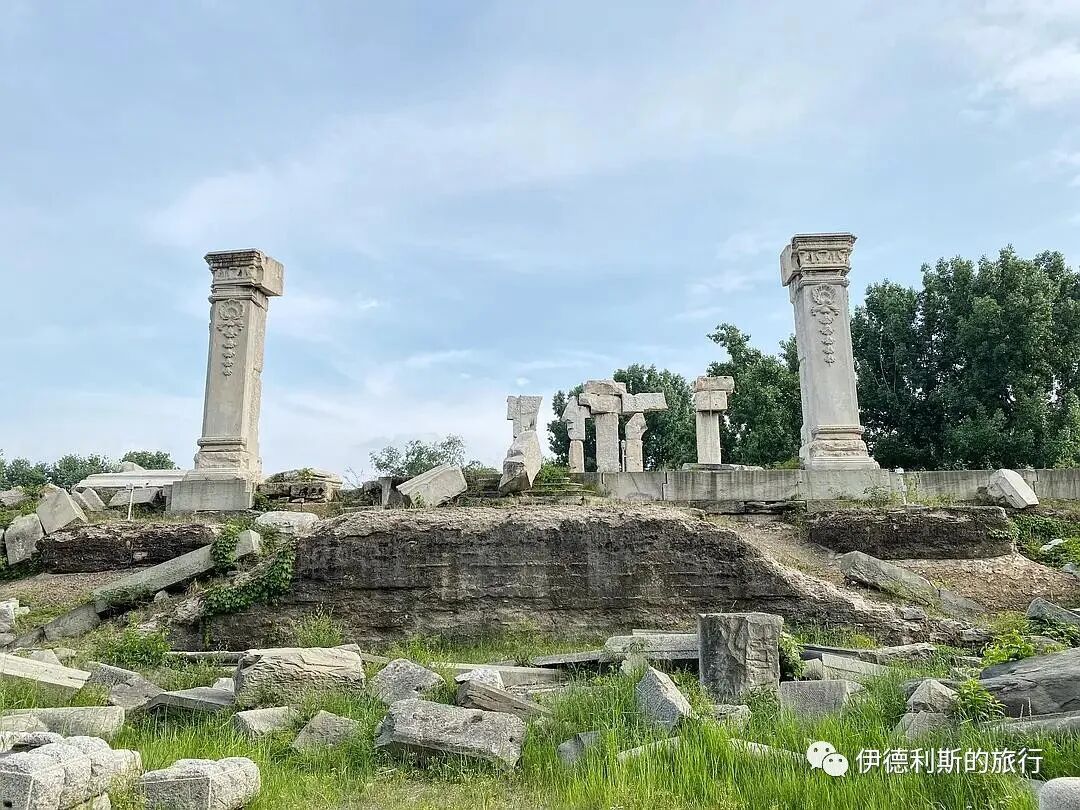
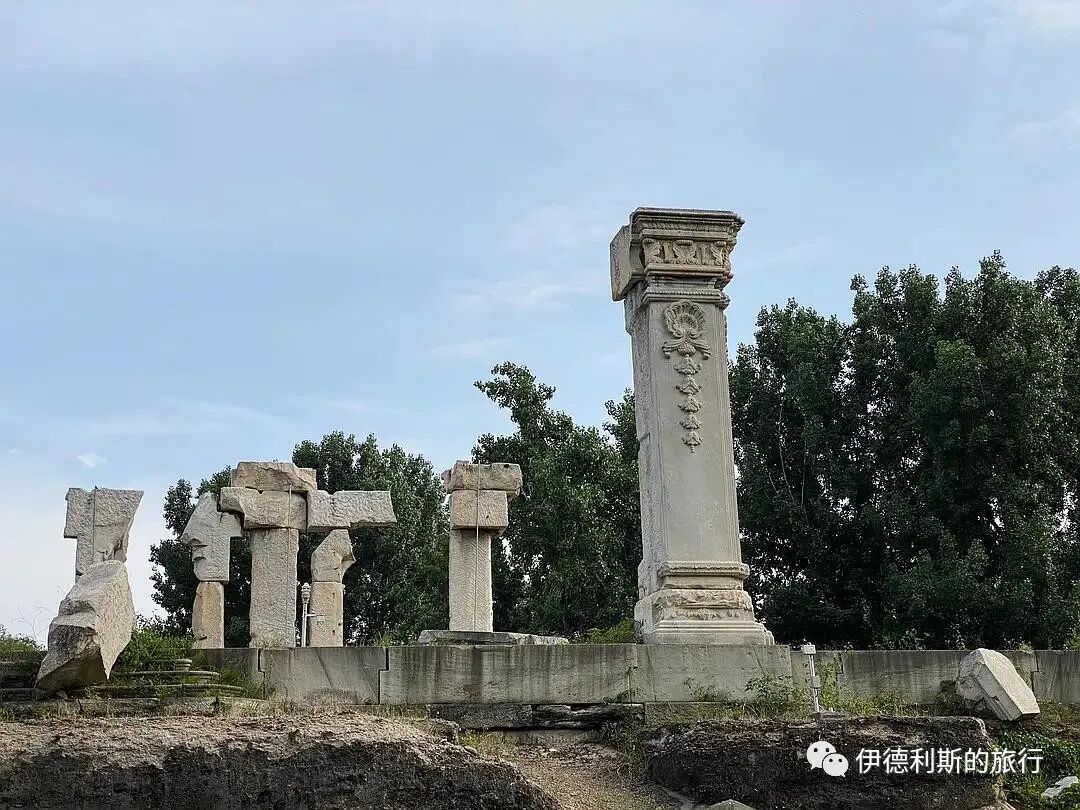
Yuanyingguan as seen in the 1786 Copperplate Engravings of Western-style Buildings.
Summary: Yuanmingyuan Mosque — Muslim History in the Old Summer Palace is presented here as a firsthand travel account in clear English, beginning with this scene: The Fangwaiguan is part of the Western-style building complex in the Old Summer Palace. The account keeps its focus on Yuanmingyuan, Beijing Muslim History, Mosque History while preserving the names, places, food, and historical details from the Chinese source.
The Fangwaiguan is part of the Western-style building complex in the Old Summer Palace. It was first called the Three-Room Water-Feature Hall (Shuifadian Sanjianlou) and was built between 1756 and 1759. The Italian court painter Giuseppe Castiglione led the design, and Chinese craftsmen built it in the late Renaissance Italian Baroque style. In 1760, Emperor Qianlong summoned Hui Muslim figures from the Western Regions who helped suppress the White Mountain Sect rebellion to the capital. He named the hero Tu'erdu Zhuo a first-rank Taiji and gave his sister the title of Noble Lady He (He Guiren). In 1761, Lady Zhuo was promoted to Concubine Rong (Rong Pin) and later to Consort Rong (Rong Fei). Emperor Qianlong then turned the Fangwaiguan into a prayer hall specifically for her to perform namaz. Lady Zhuo lived in the palace for 28 years until she passed away (guizhen) at the Old Summer Palace in 1788. The Fangwaiguan has two floors and a double-eaved hip roof. Its main structure consists of four giant square pillars, and circular stairs outside the building lead directly to the second floor. In 1920, after visiting the site, the Frenchman Maurice Adam recorded in his book, The Old Summer Palace Projects by 18th-Century Jesuits, that the interior of the Fangwaiguan once held two white marble tablets with Arabic inscriptions. They bore the names of the third and fourth Caliphs, Uthman and Ali. It is believed that the Fangwaiguan originally also held tablets with the names of the first and second Caliphs, Abu Bakr and Umar, but these have been lost.
When the Old Summer Palace was burned in 1860, the Fangwaiguan was the only Western-style building that remained intact. However, over the next hundred years, its components were stolen or destroyed, and now only the four main stone pillars remain. The two sets of stone bridges outside the Fangwaiguan were moved to Yenching University during the Republic of China era. One set is now in the grass inside the west gate of Peking University, and the other is on the north side of the island in Weiming Lake. For detailed information about the Fangwaiguan, I recommend reading the 2022 book by Liu Yang, Emperor Qianlong's European-Style Garden.
The Fangwaiguan as seen in the 1786 Copperplate Prints of Western-Style Buildings.
The Fangwaiguan photographed in 1873 by Ernst Ohlmer, a German working for the Tianjin Customs. At that time, the building was still largely intact.
Fangwaiguan photographed in the autumn of 1877.
Yuanyingguan sits on a high platform on the east side of the Western-style building complex. It became the residence of Concubine Rong in the Old Summer Palace after it was built in 1783. Yuanyingguan is made of dozens of large white marble pillars. The center has a three-story hip-roof, while both sides feature two-story bell-tower style roofs. The walls were inlaid with 1,206 pieces of glass and included 24 cast-copper water spouts that created a spectacular sight when it rained. The interior of Yuanyingguan was also very luxurious. To please Concubine Rong, Emperor Qianlong chose Western-style gilded copper beds, bathtubs, and other furniture. There were also various Western toys, gold and silver, and enamel art treasures, including Turkish tapestries gifted by the King of France and an armillary sphere gifted by the King of England.
After the Old Summer Palace was burned in 1860, the gate and interior of Yuanyingguan were destroyed, but the main structure remained intact. Later, its components were gradually stolen or damaged. Wang Jizeng, the father of the famous collector Wang Shixiang, bought a garden outside the east gate of Yanyuan and moved a piece of Yuanyingguan into it. It now belongs to the Peking University Elementary School.
Yuanyingguan as seen in the 1786 Copperplate Engravings of Western-style Buildings.
