
Halal Food Guide: Beijing Ramadan Iftar — Five International Buffets (Part 5 of 7)
Reposted from the web
Summary: Halal Food Guide: Beijing Ramadan Iftar — Five International Buffets is presented here as a firsthand travel account in clear English, beginning with this scene: Every year during Ramadan, having an Iftar buffet at one of the foreign restaurants in Beijing is a regular tradition for me. The account keeps its focus on Beijing Iftar, Ramadan Food, Halal Buffets while preserving the names, places, food, and historical details from the Chinese source.
4. Tunisian restaurant La Medina
I had the Ramadan iftar buffet at the Tunisian restaurant La Medina by the Liangma River. It is super crowded on weekends, which is likely the case for all iftar buffets in Beijing, so friends, it is better to choose a weekday.
First, let me introduce their restaurant name. Medina means "city" in Arabic. In North Africa, a medina usually refers to an old town built with city walls and many narrow, maze-like alleys. The Medina of Tunis, the capital of Tunisia, was listed as a UNESCO World Heritage site in 1979. It is one of the most famous medinas, containing 700 historical buildings including palaces, mosques, mausoleums, madrasas, and fountains.
Compared to last year, the variety at La Medina has decreased, which is truly a pity. Last year at the buffet, I had Tunisian harissa soup, merguez (North African sausage), and kibbeh, but I didn't get to eat them this time. I am not sure if it was just bad timing.
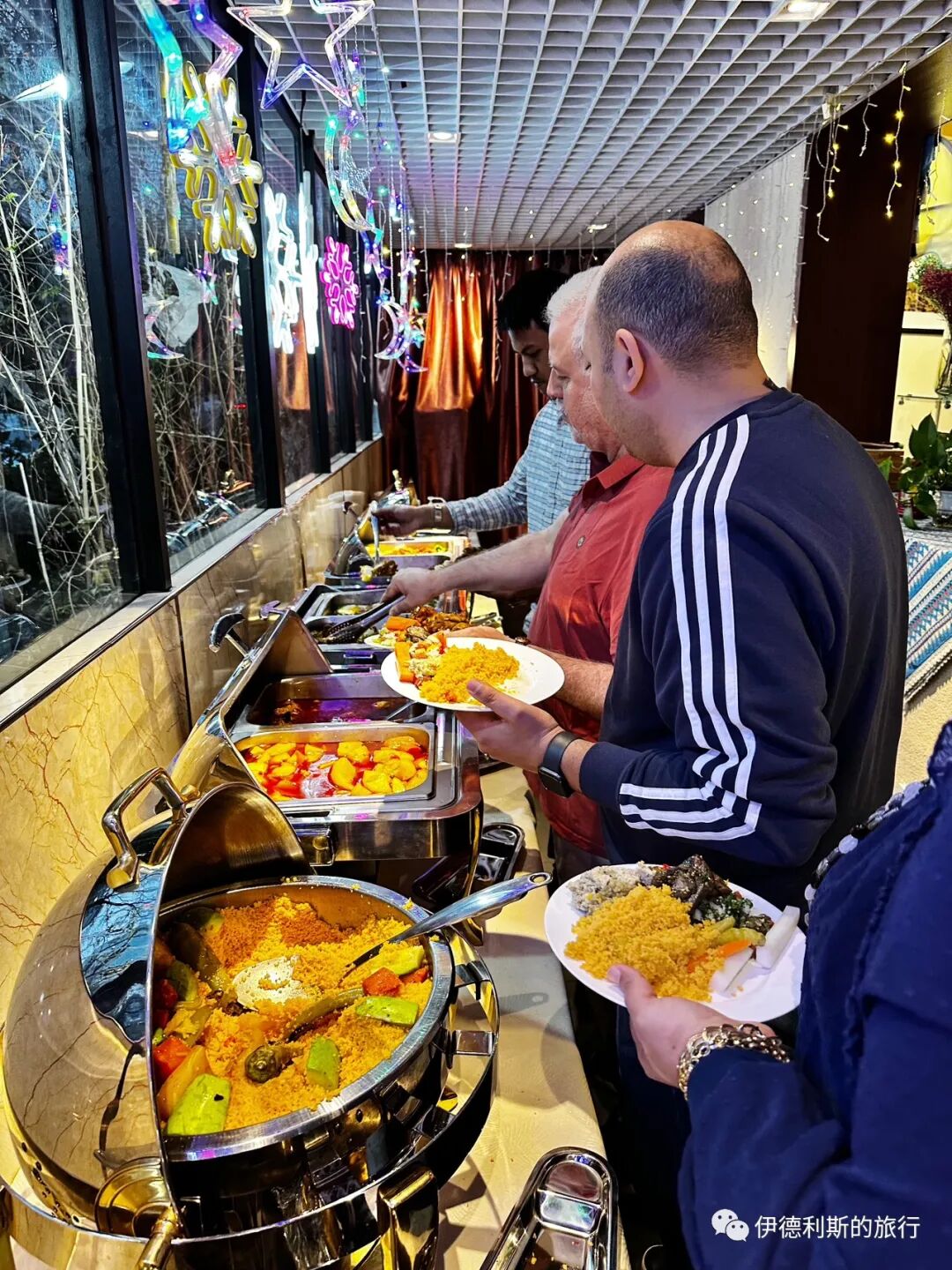
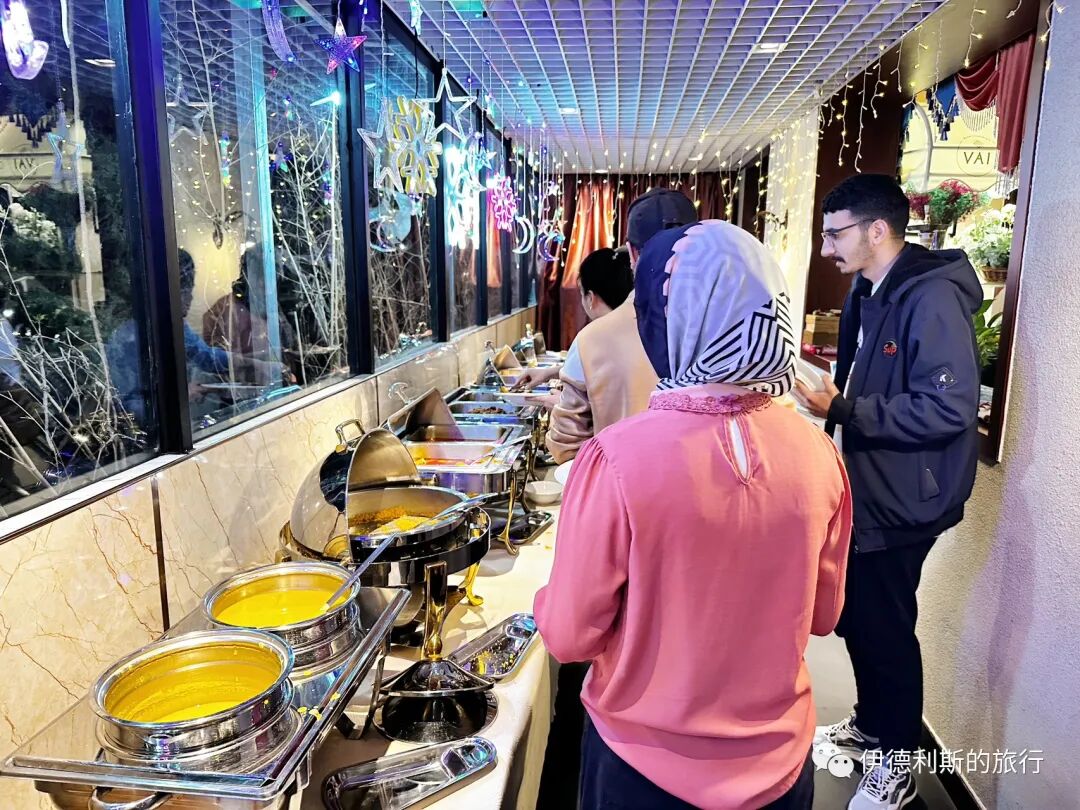
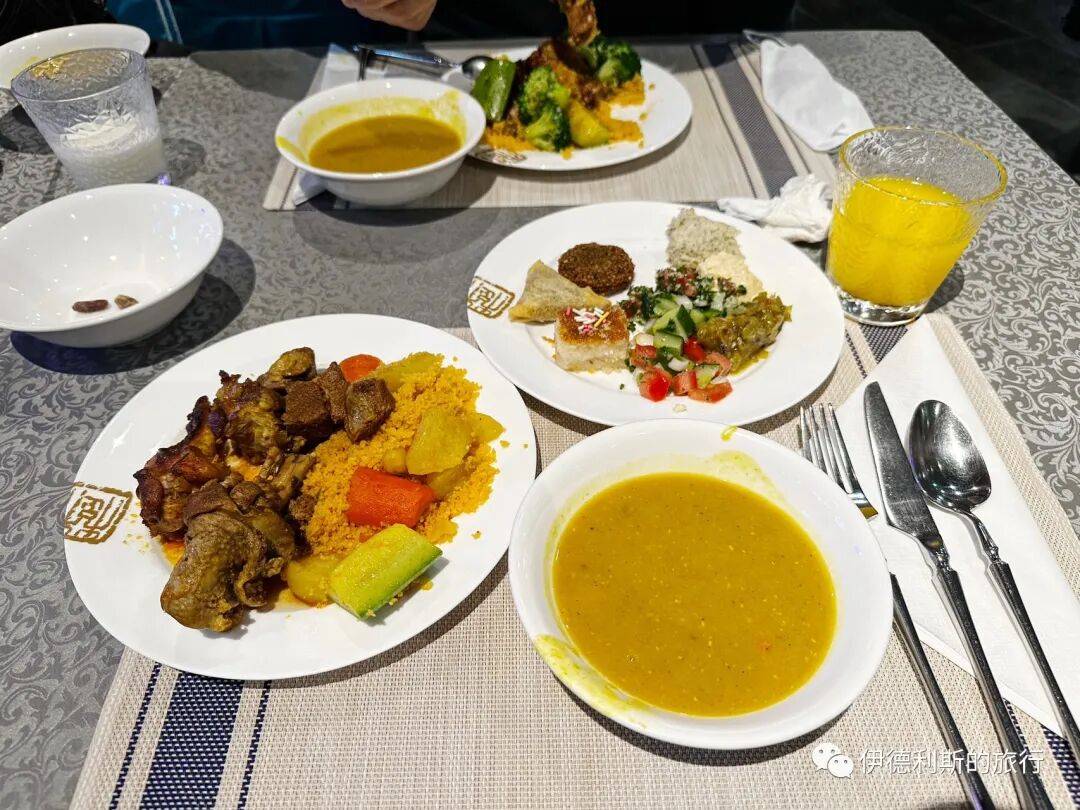
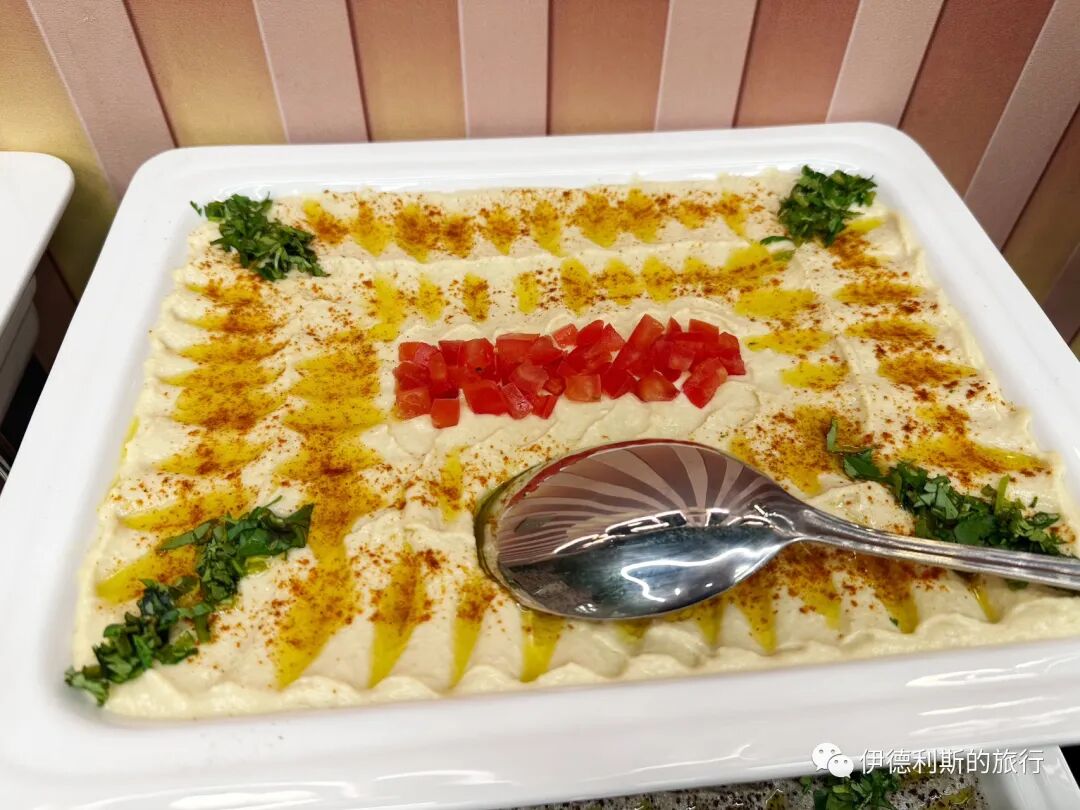
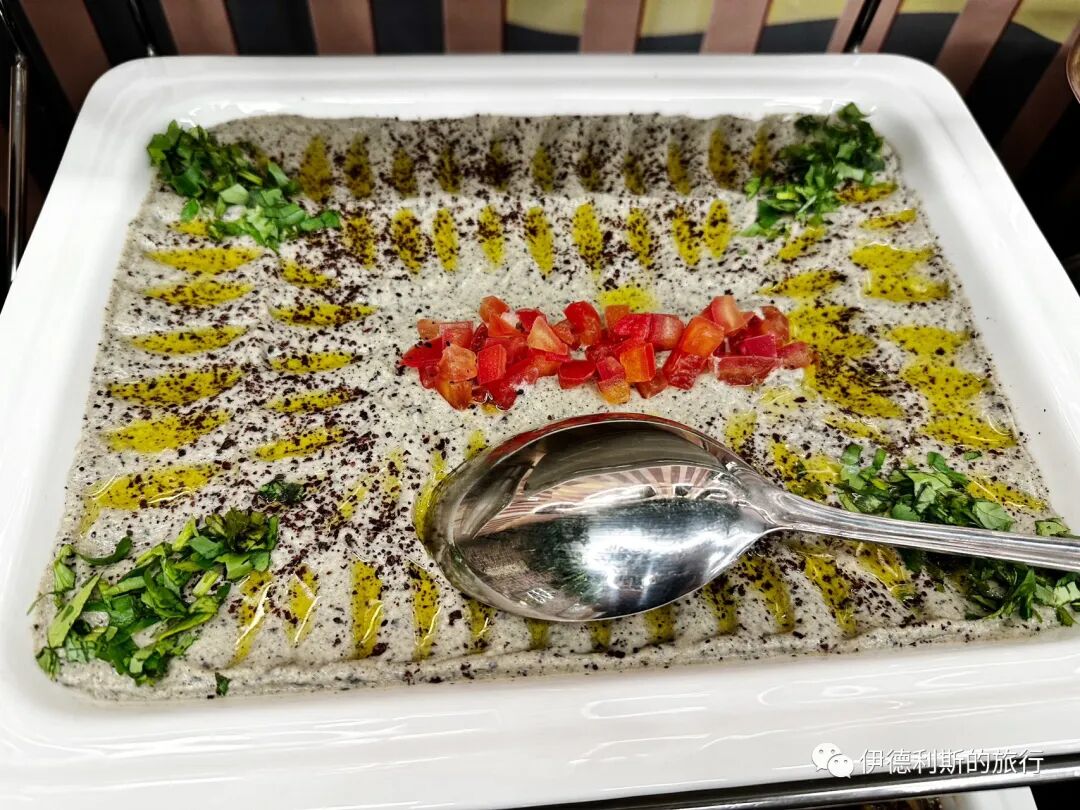
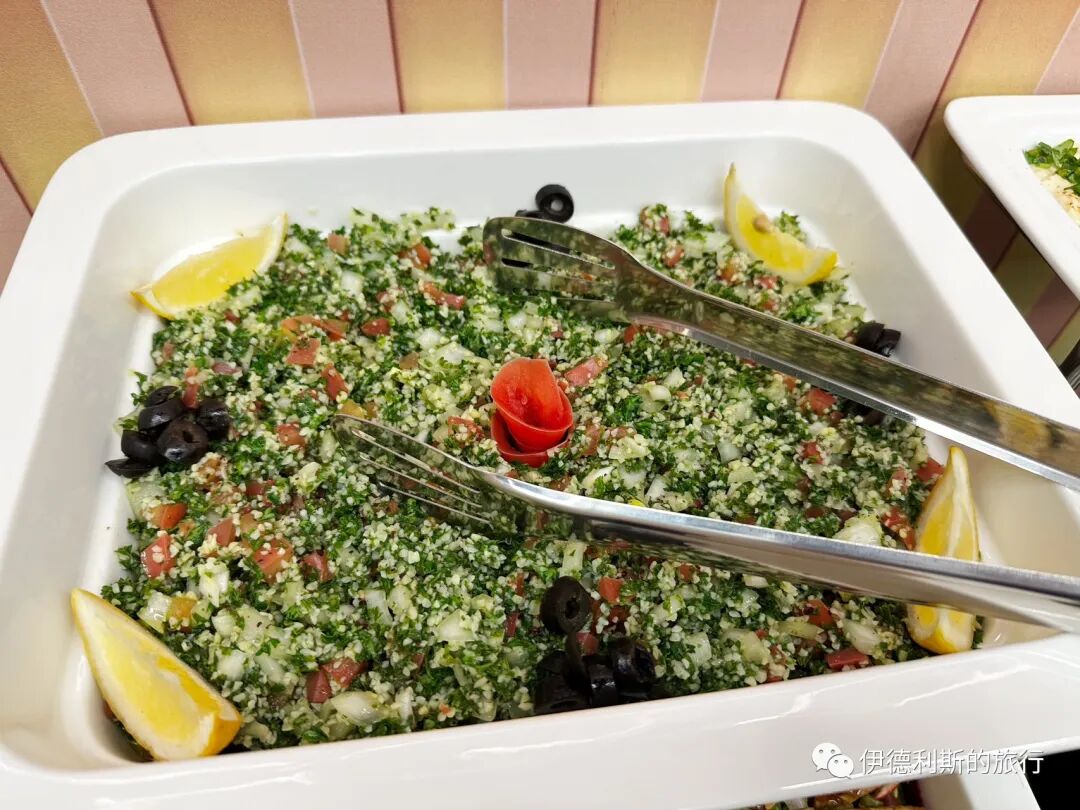
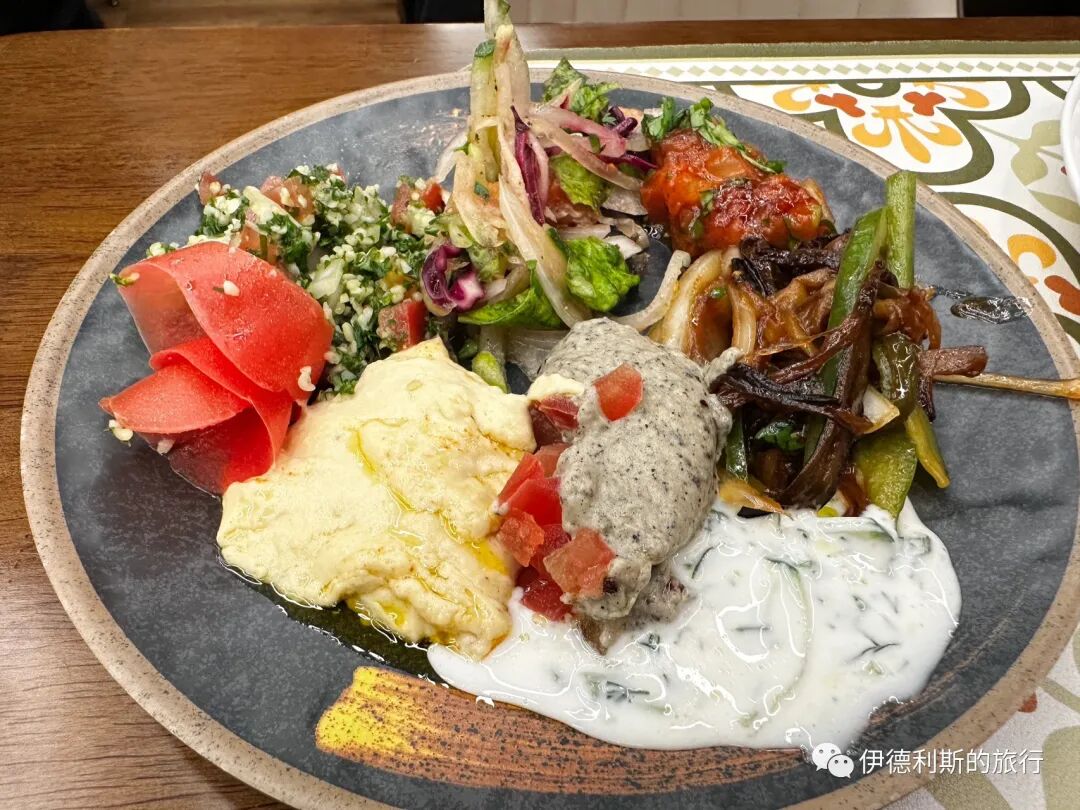
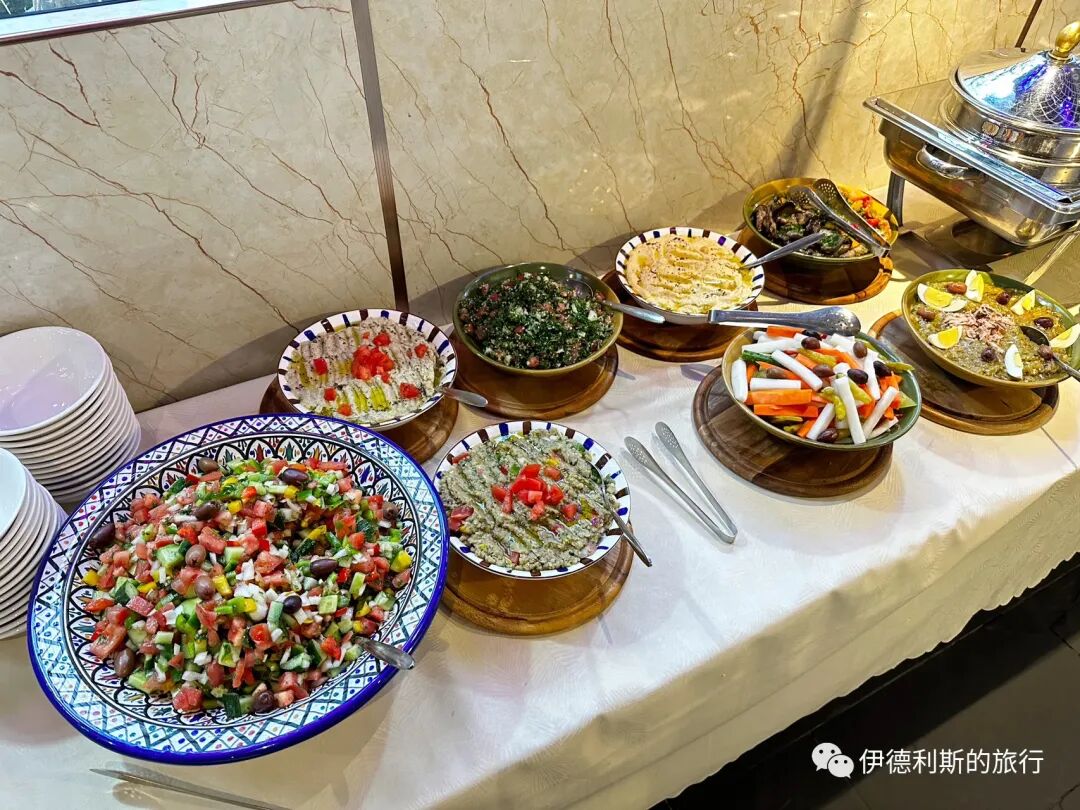
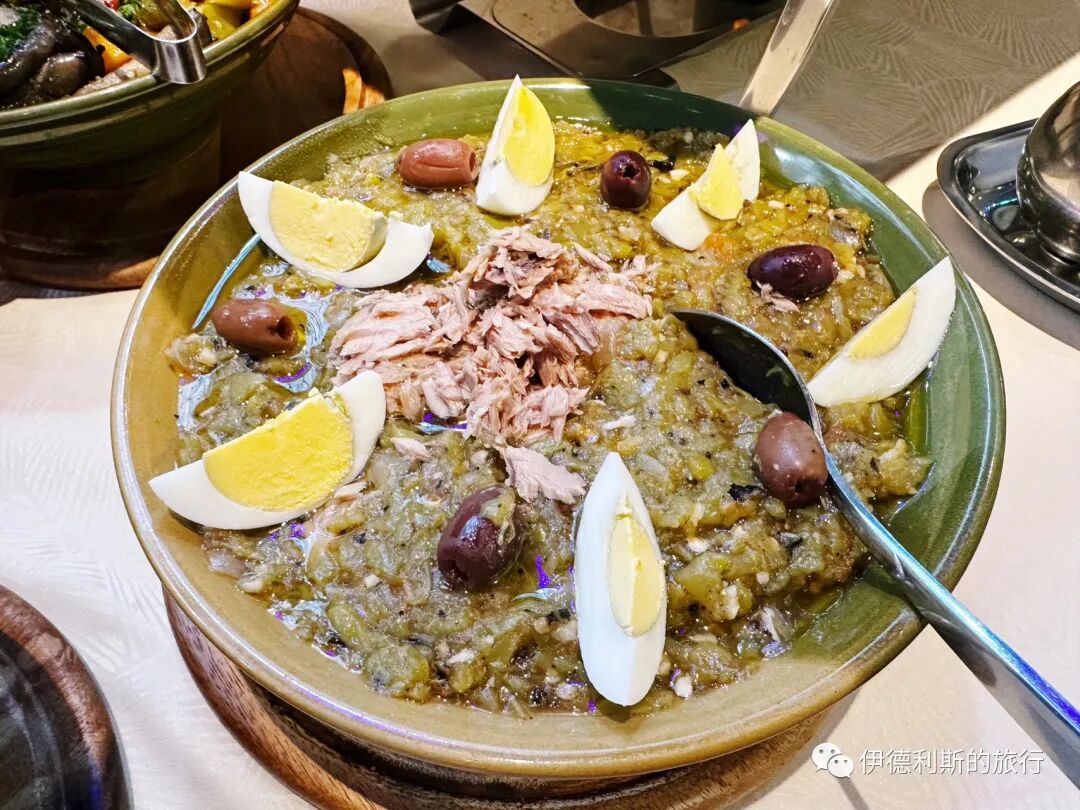
First, there were eight meze appetizers, including hummus, baba ghanoush, and tabbouleh, which can be found in every Arab restaurant. The most worth trying is the Tunisian-style mechouia salad, which you can only find at their place in Beijing. Mechouia means "grilled" in Arabic. It is made by roasting onions, green peppers, tomatoes, and garlic in an oven, seasoning them with caraway, salt, and black pepper, adding olive oil, and finally garnishing with olives, tuna, and boiled eggs.
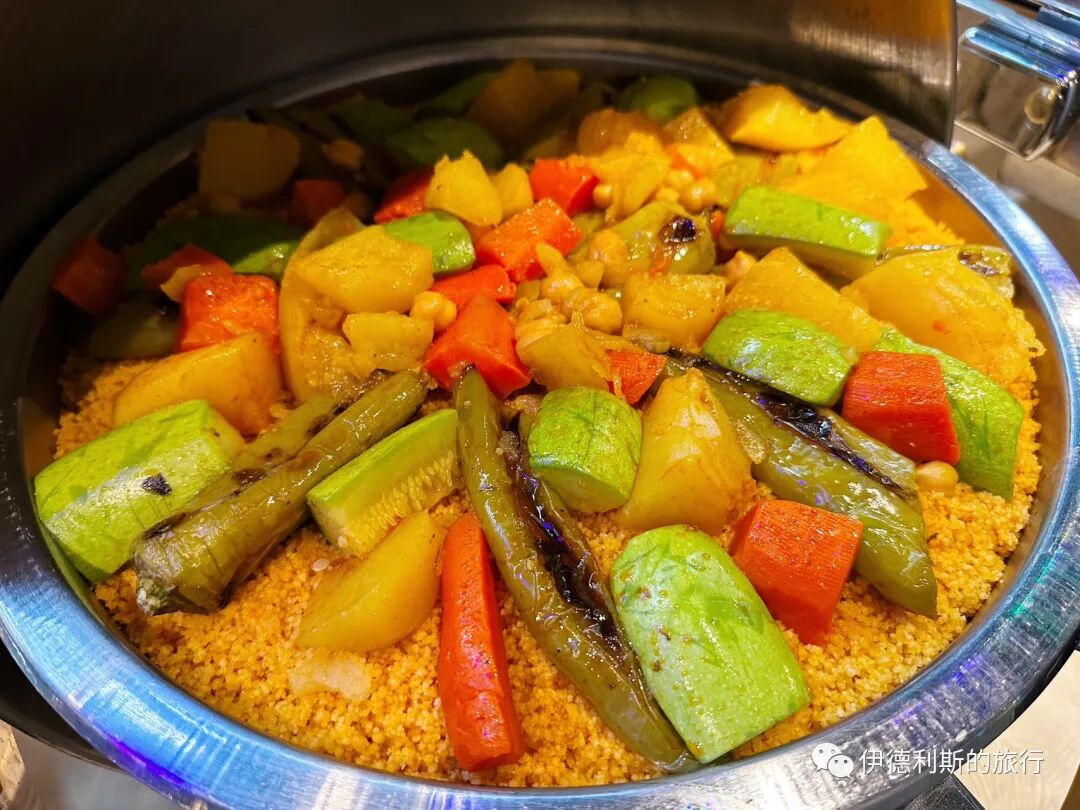
The main course is the classic North African Berber dish, couscous, served with tajine (stew cooked in a clay pot). Couscous is a staple food for the Berbers. It is made by rubbing semolina flour into millet-sized grains, which are then dried. A clay pot (tajine) is a cooking vessel with a round, flat bottom and a conical or domed top. This design lets evaporated steam return to the bottom, and you can add water through the hole in the lid.
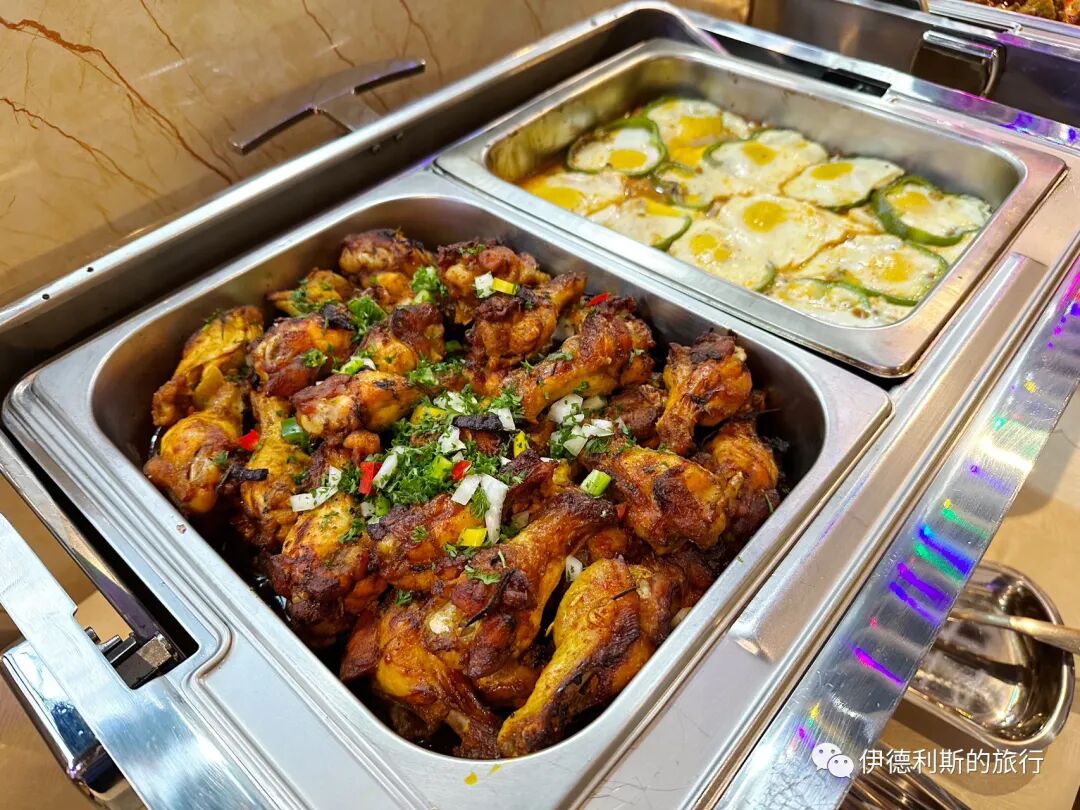
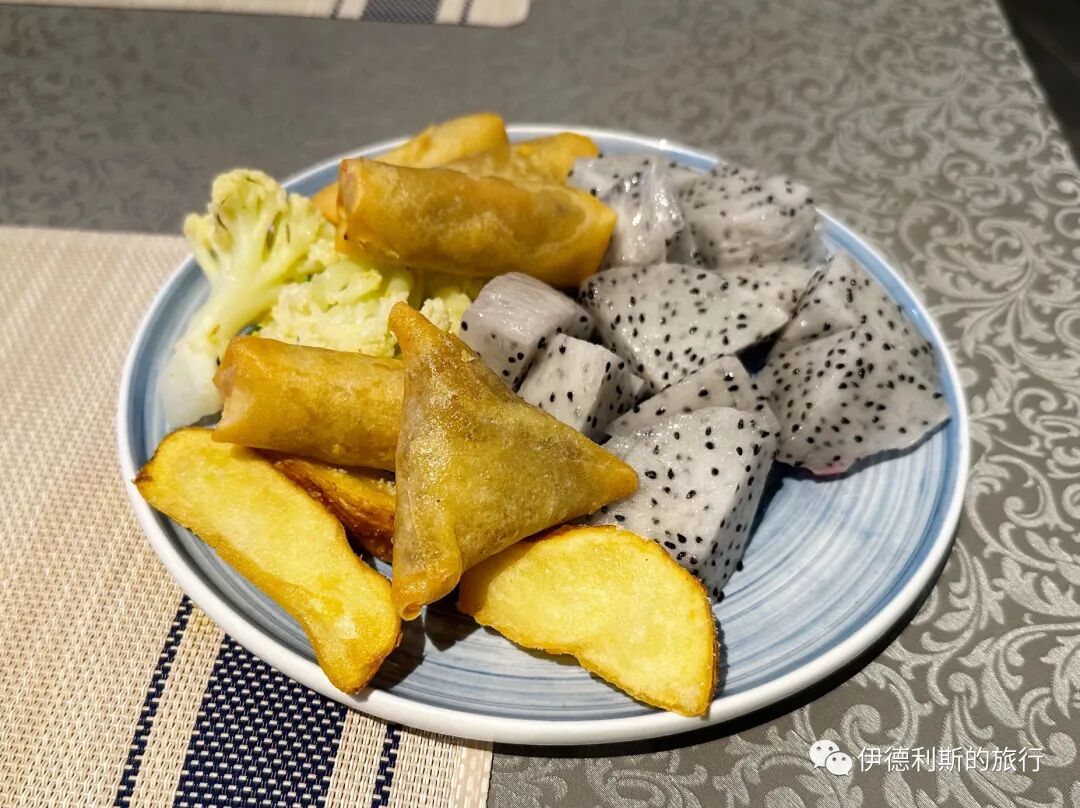
They also serve fried triangular pastries (sambousek) and chickpea fritters (falafel). Sambousek is a classic snack for Arabs during Ramadan. It originated from the Iranian sanbosag and later spread to various places with the spread of Persian culture. It entered Arab cuisine after the 10th century, reached South Asia with the Delhi Sultanate after the 13th century, and later spread to China, Indonesia, and across Africa. In some Hui Muslim communities in China, this snack is still called sanmosan.
For dessert after the meal, there is basbousa, which originated in Egypt. Basbousa is a semolina cake soaked in syrup. It is first baked in a pan and then soaked with orange blossom water, rose water, or syrup.
Summary: Halal Food Guide: Beijing Ramadan Iftar — Five International Buffets is presented here as a firsthand travel account in clear English, beginning with this scene: Every year during Ramadan, having an Iftar buffet at one of the foreign restaurants in Beijing is a regular tradition for me. The account keeps its focus on Beijing Iftar, Ramadan Food, Halal Buffets while preserving the names, places, food, and historical details from the Chinese source.
4. Tunisian restaurant La Medina
I had the Ramadan iftar buffet at the Tunisian restaurant La Medina by the Liangma River. It is super crowded on weekends, which is likely the case for all iftar buffets in Beijing, so friends, it is better to choose a weekday.
First, let me introduce their restaurant name. Medina means "city" in Arabic. In North Africa, a medina usually refers to an old town built with city walls and many narrow, maze-like alleys. The Medina of Tunis, the capital of Tunisia, was listed as a UNESCO World Heritage site in 1979. It is one of the most famous medinas, containing 700 historical buildings including palaces, mosques, mausoleums, madrasas, and fountains.
Compared to last year, the variety at La Medina has decreased, which is truly a pity. Last year at the buffet, I had Tunisian harissa soup, merguez (North African sausage), and kibbeh, but I didn't get to eat them this time. I am not sure if it was just bad timing.
First, there were eight meze appetizers, including hummus, baba ghanoush, and tabbouleh, which can be found in every Arab restaurant. The most worth trying is the Tunisian-style mechouia salad, which you can only find at their place in Beijing. Mechouia means "grilled" in Arabic. It is made by roasting onions, green peppers, tomatoes, and garlic in an oven, seasoning them with caraway, salt, and black pepper, adding olive oil, and finally garnishing with olives, tuna, and boiled eggs.
The main course is the classic North African Berber dish, couscous, served with tajine (stew cooked in a clay pot). Couscous is a staple food for the Berbers. It is made by rubbing semolina flour into millet-sized grains, which are then dried. A clay pot (tajine) is a cooking vessel with a round, flat bottom and a conical or domed top. This design lets evaporated steam return to the bottom, and you can add water through the hole in the lid.
They also serve fried triangular pastries (sambousek) and chickpea fritters (falafel). Sambousek is a classic snack for Arabs during Ramadan. It originated from the Iranian sanbosag and later spread to various places with the spread of Persian culture. It entered Arab cuisine after the 10th century, reached South Asia with the Delhi Sultanate after the 13th century, and later spread to China, Indonesia, and across Africa. In some Hui Muslim communities in China, this snack is still called sanmosan.
For dessert after the meal, there is basbousa, which originated in Egypt. Basbousa is a semolina cake soaked in syrup. It is first baked in a pan and then soaked with orange blossom water, rose water, or syrup.
