
Halal Travel Guide: Indonesian Festival in Beijing — Food, Culture and Embassy Visit
Reposted from the web
Summary: Indonesian Festival in Beijing — Food, Culture and Embassy Visit is presented here as a firsthand travel account in clear English, beginning with this scene: On Saturday noon, I felt very grateful to attend the Indonesian Cultural Festival held at the Indonesian Embassy. The account keeps its focus on Indonesian Culture, Beijing Embassy, Muslim Travel while preserving the names, places, food, and historical details from the Chinese source.
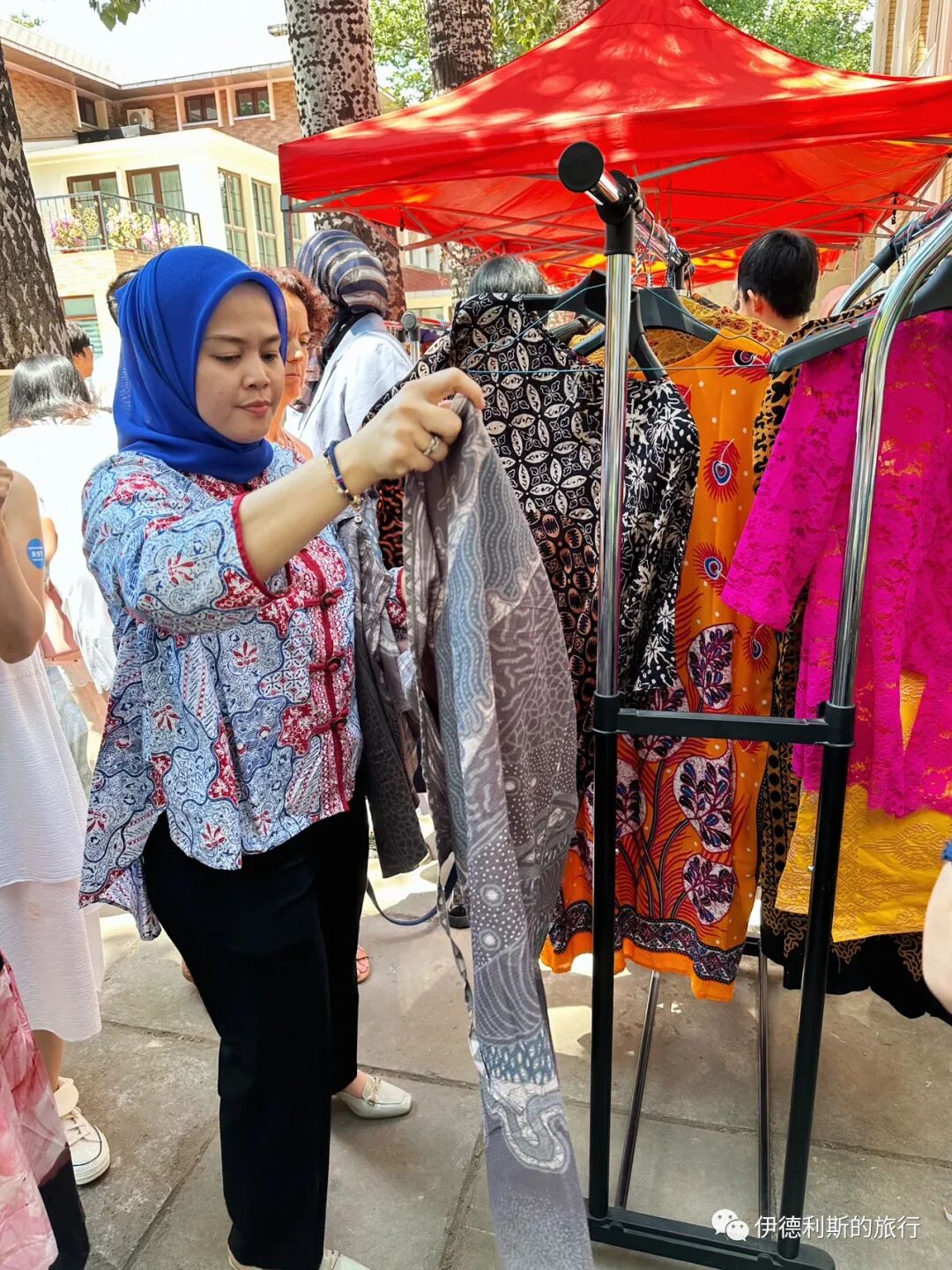
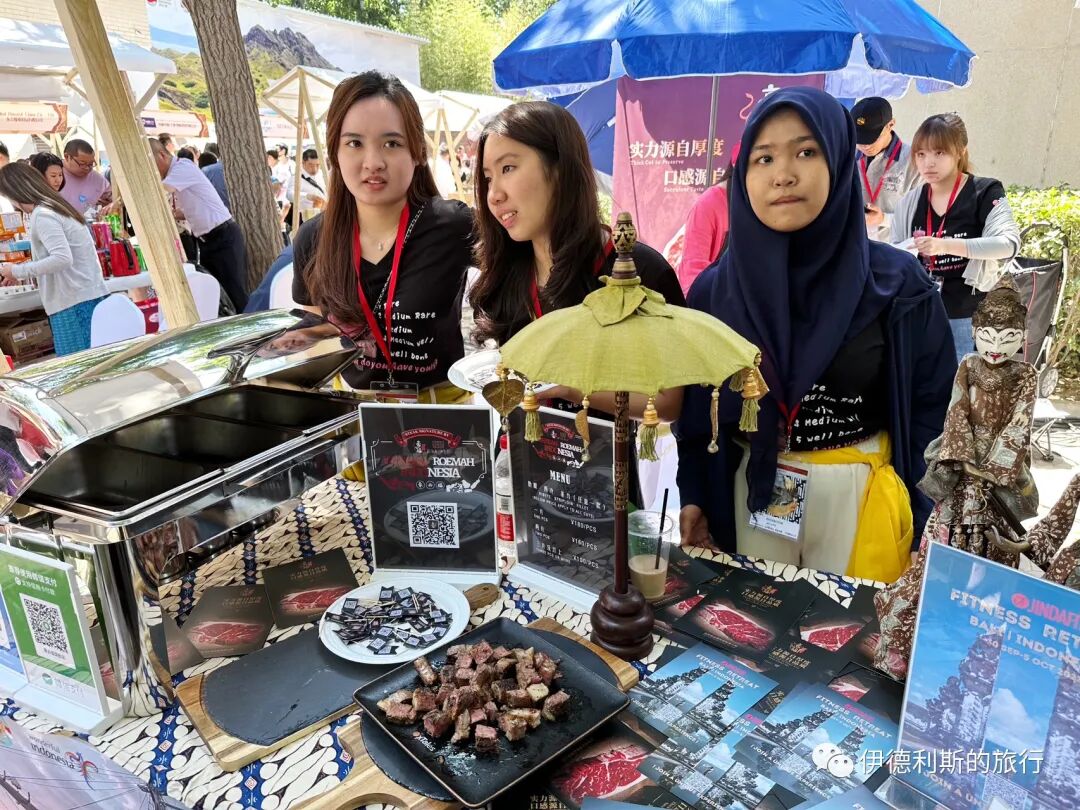
On Saturday noon, I felt very grateful to attend the Indonesian Cultural Festival held at the Indonesian Embassy. I tasted various Indonesian delicacies that I usually cannot find in Beijing.
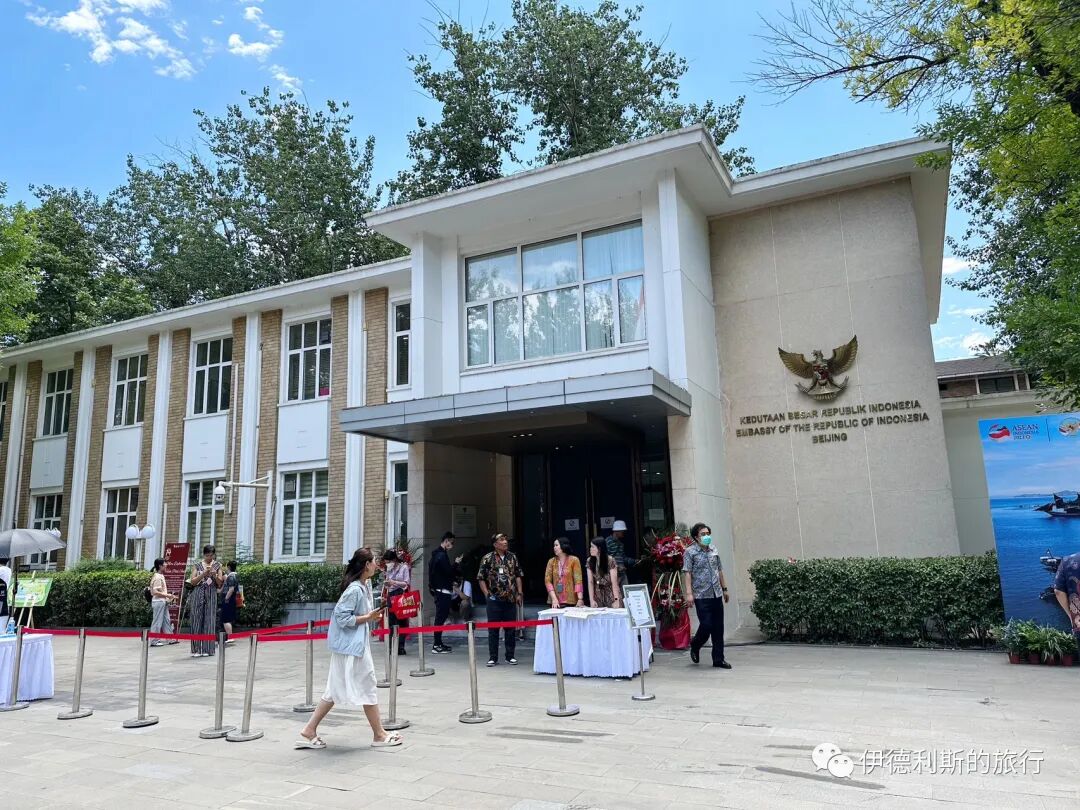
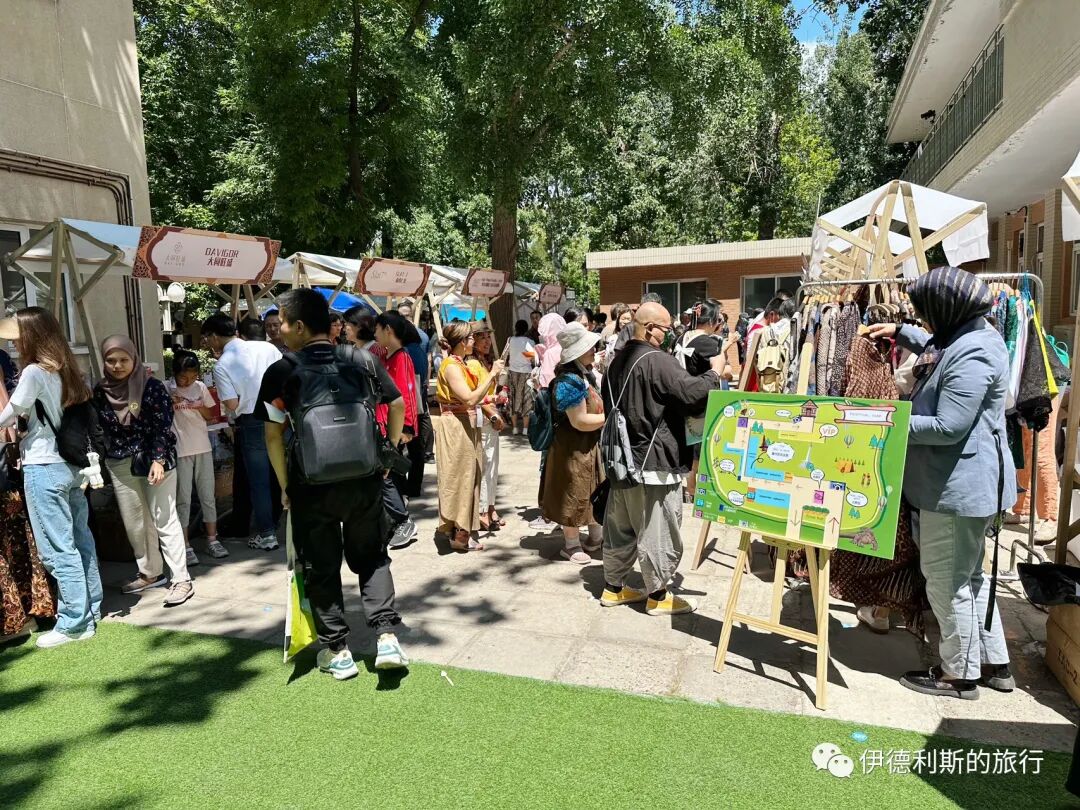
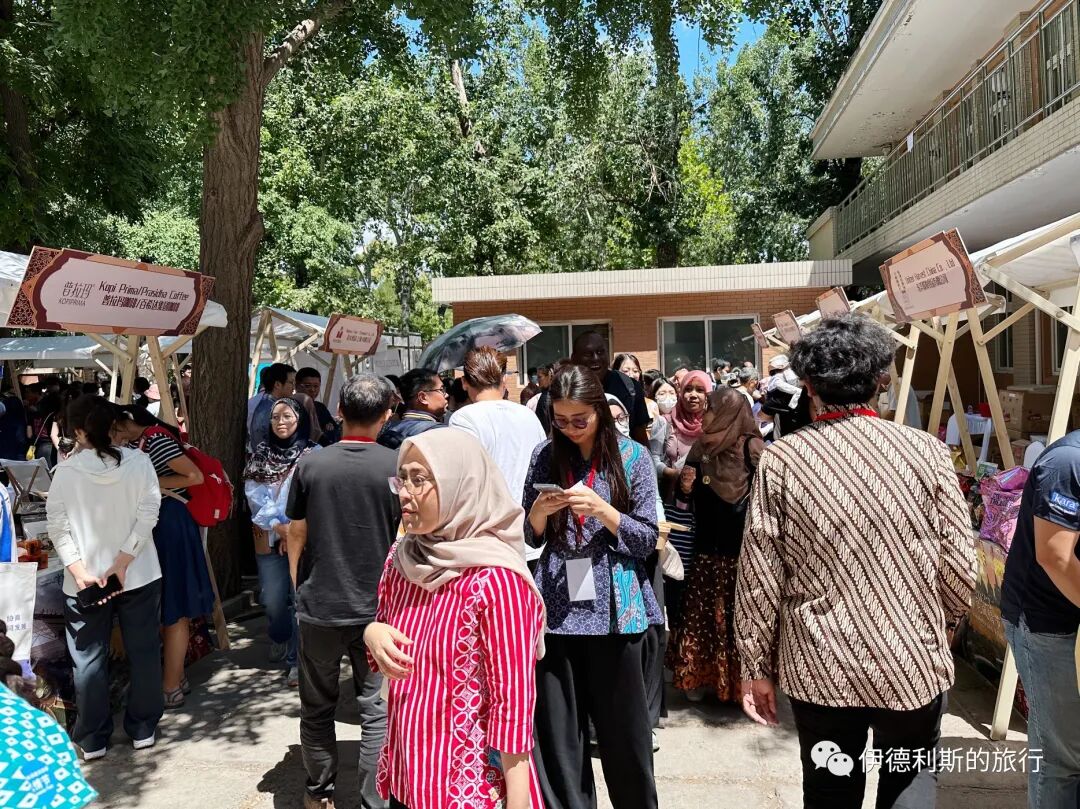
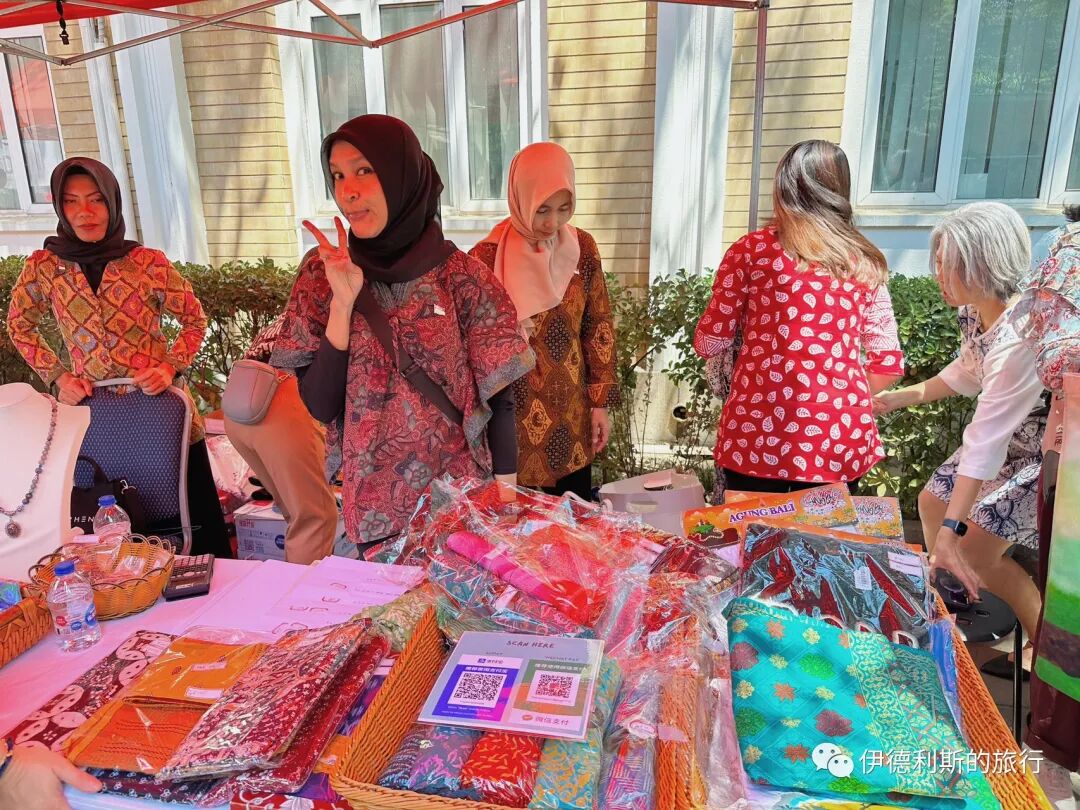

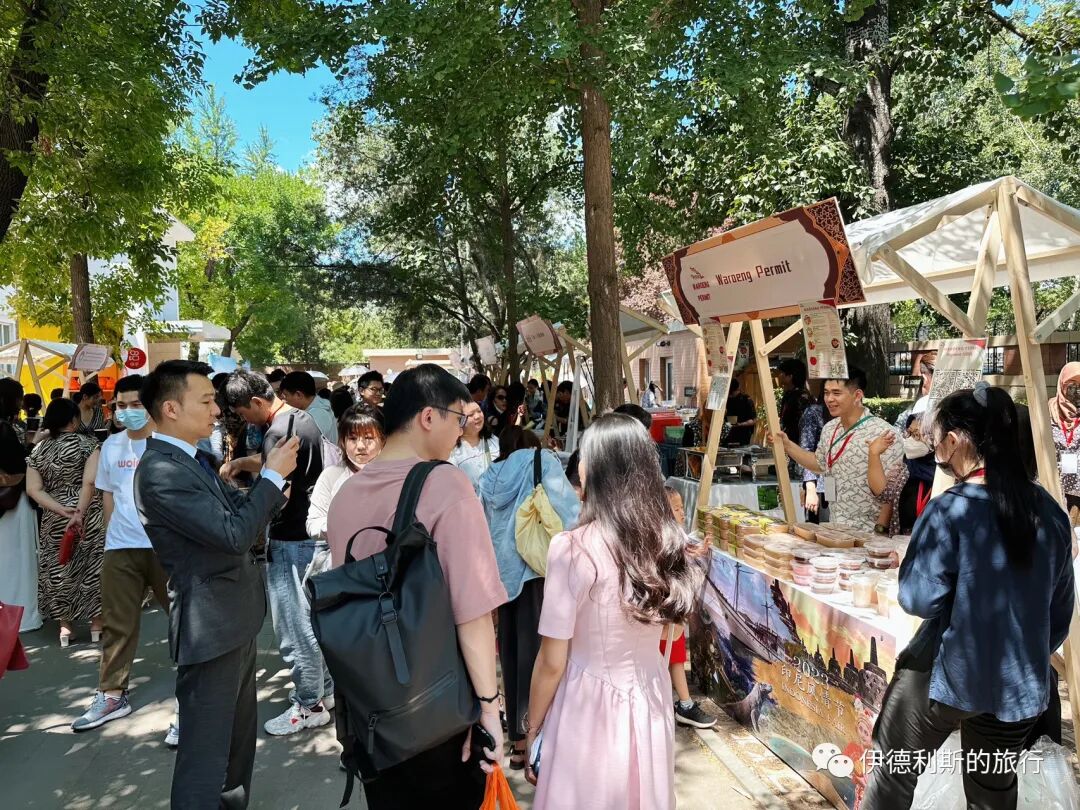
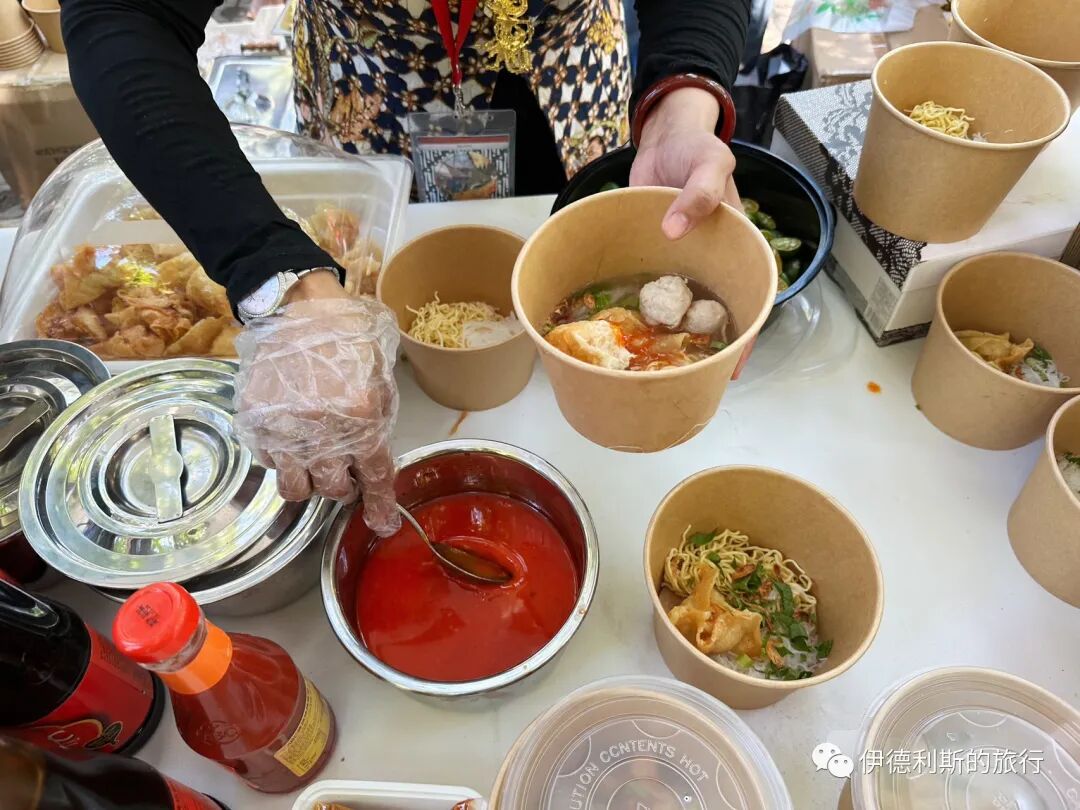
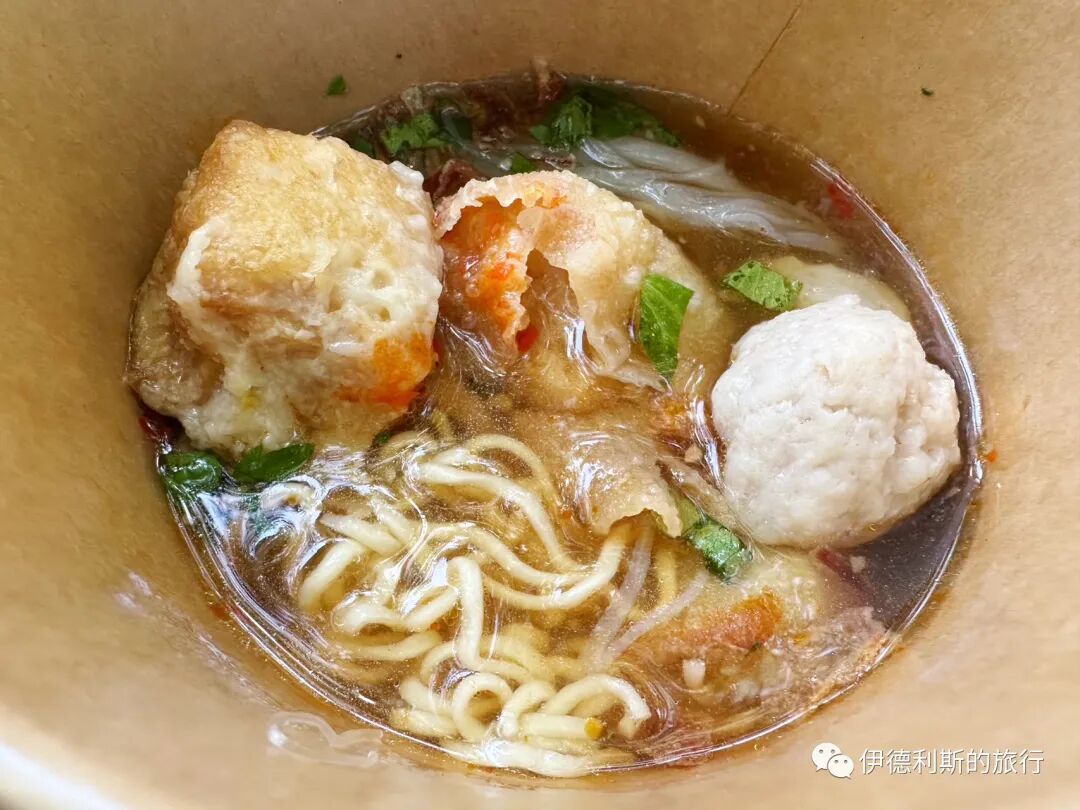
I first ate the Indonesian specialty beef meatball noodle soup (Mie Bakso) at the first stall. Friends (dosti) who often see my posts probably remember that I especially love Indonesian meatball (Bakso). I have already eaten it several times this year at Javanese restaurants in Macau and Hong Kong, and this time I had it again in Beijing. The meatball (Bakso) is made from beef, fish paste, and a small amount of tapioca flour, making it very firm. The finished meatballs are usually served in beef broth with tofu, glass noodles, and various side dishes.
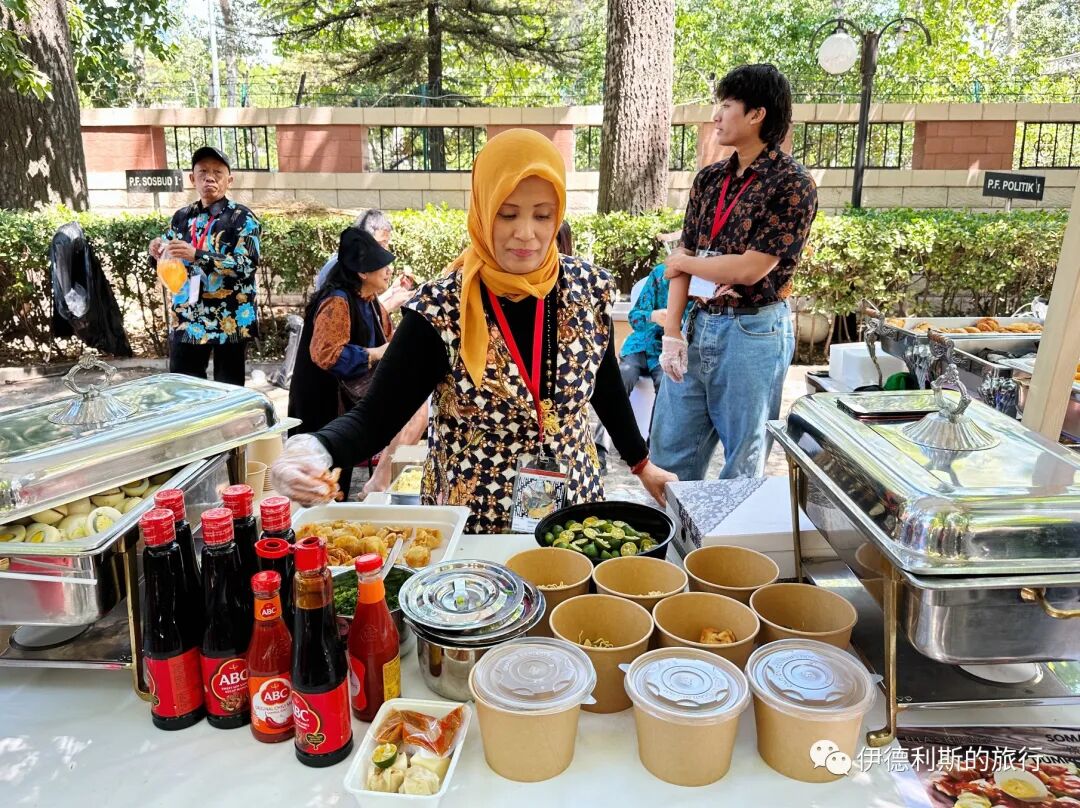
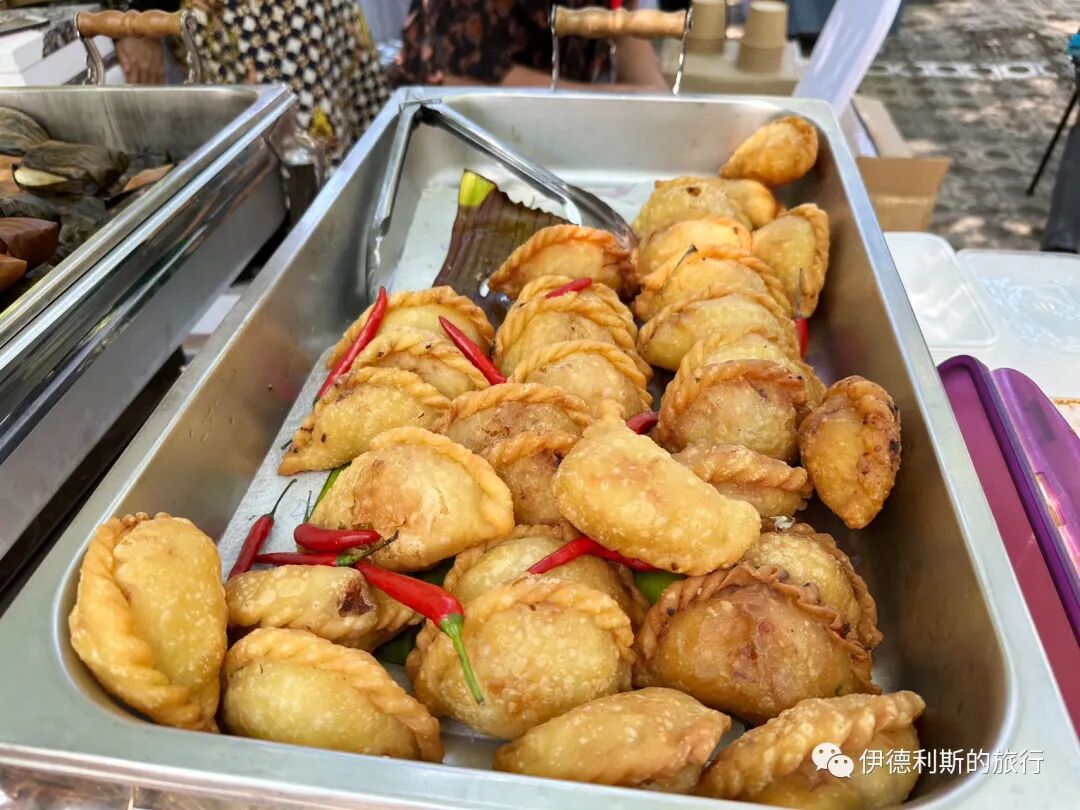
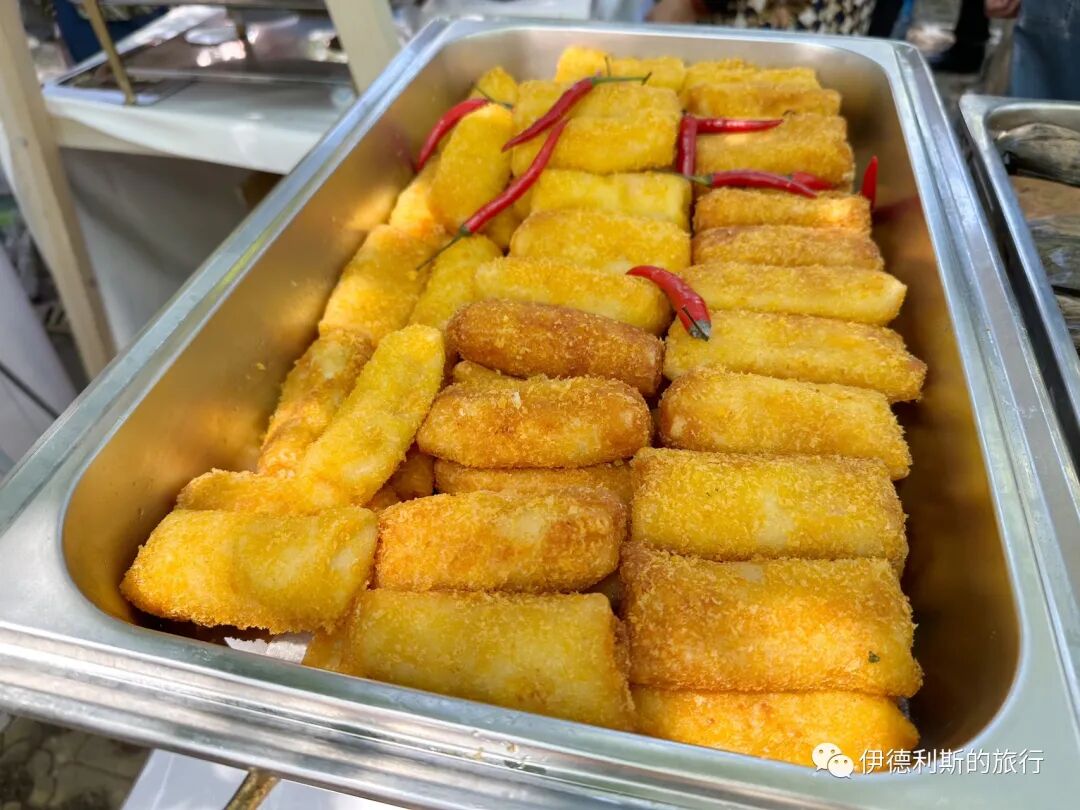
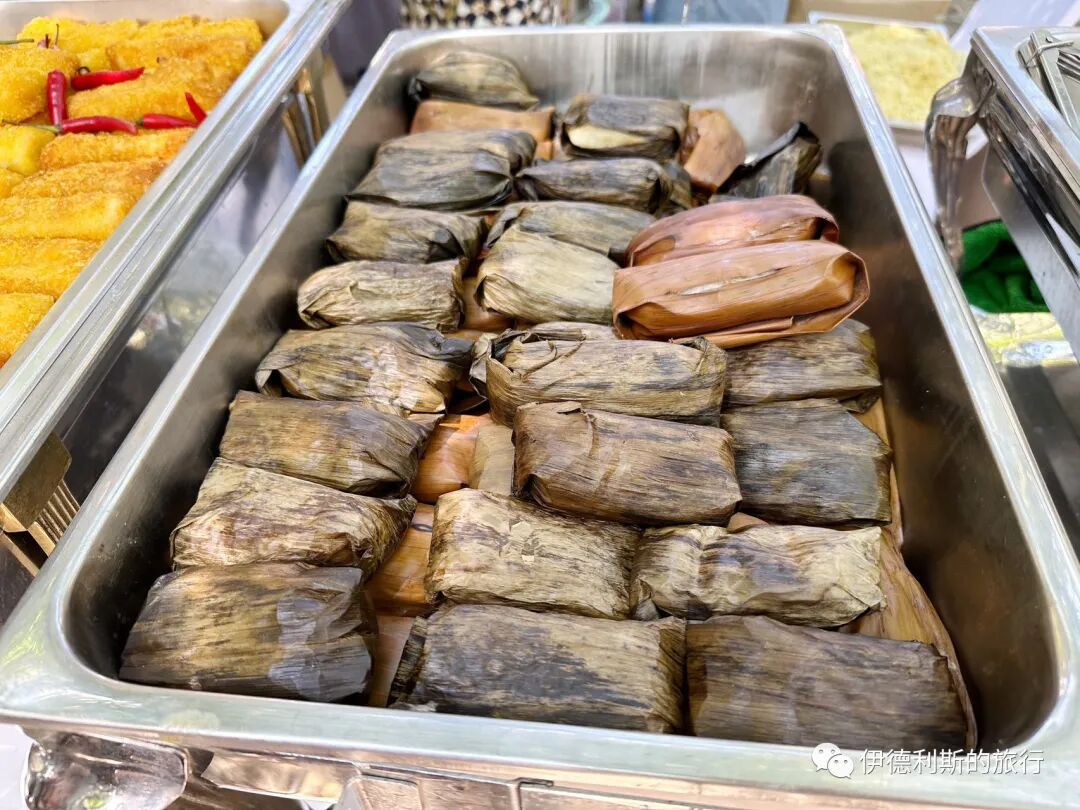
They had three classic Indonesian street snacks: fried pastry (Kue pastel), fried spring roll (Risoles), and rice dumpling (Arem-arem).
For the Indonesian fried pastry (Kue pastel), 'Kue' comes from the Minnan word for 'cake' (guo), and 'Pastel' means 'pastry' in Portuguese. The fried pastry (Kue pastel) is usually filled with chicken or beef, along with carrots, bean sprouts, and rice noodles. Indonesian people love to eat it when breaking their fast.
The Indonesian fried spring roll (Risoles) also gets its name from Portuguese, and it is very similar to the Portuguese version. The fried spring roll (Risoles) is filled with chicken, egg, diced carrots, diced celery, and potatoes, then coated in breadcrumbs and deep-fried.
The Indonesian rice dumpling (Arem-arem) is very common in Java. To make it, rice is cooked with coconut milk, stuffed with diced vegetables, cooked beef or chicken, and fermented soybeans (tempeh), then shaped into a cylinder and wrapped in tender banana leaves.
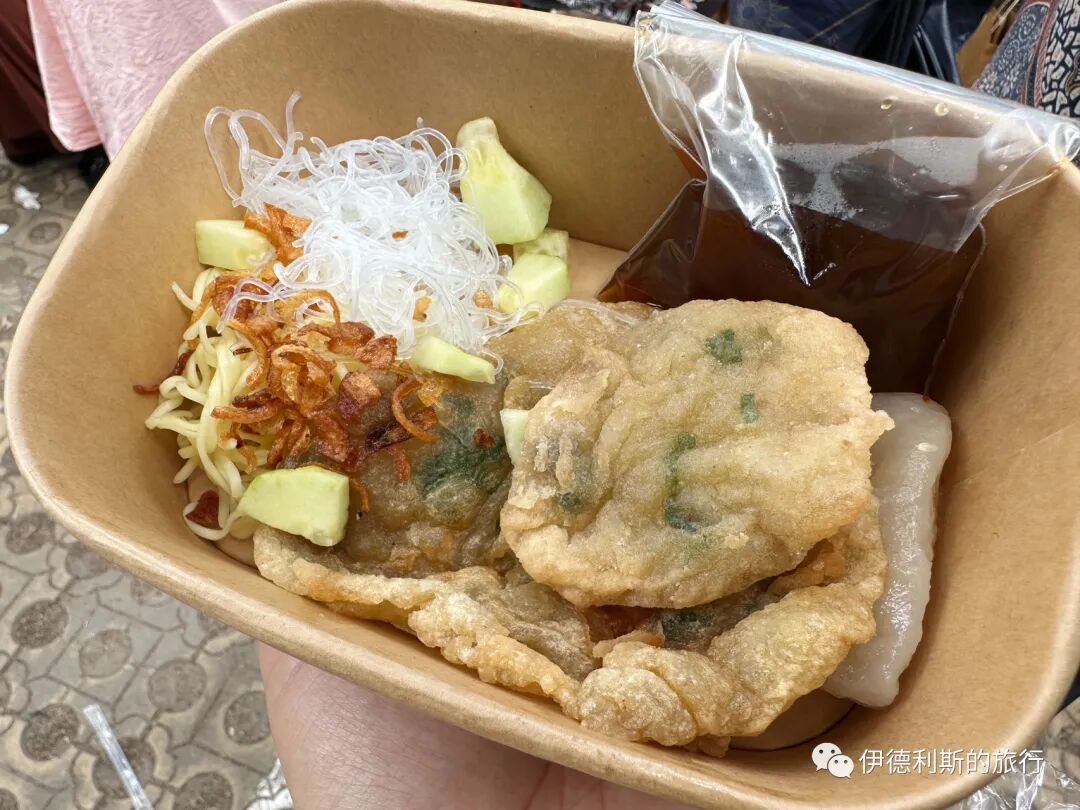
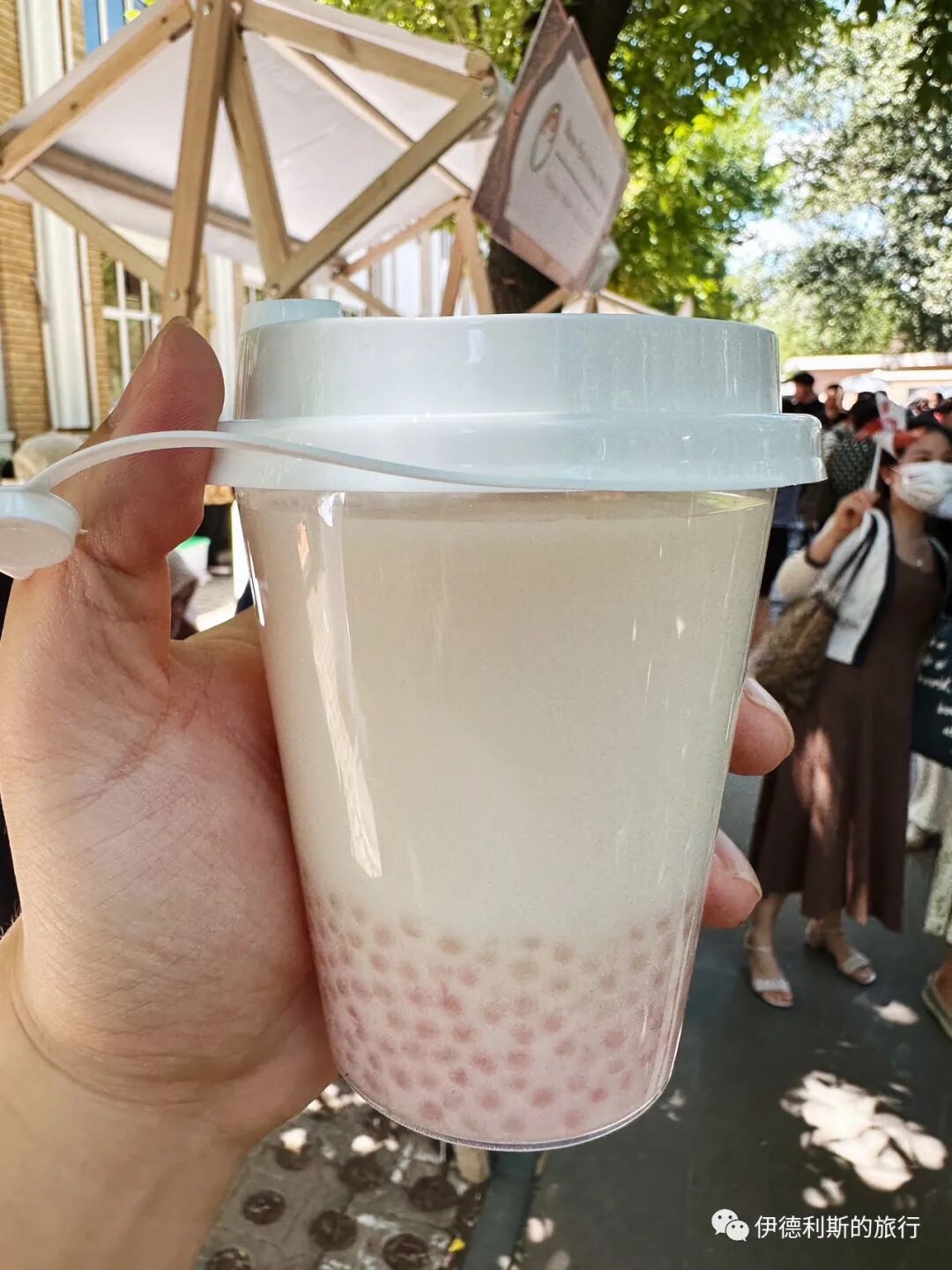
At the second stall, I ate Indonesian fish cake (Pempek) and Indonesian milkshake (Es Sagoo Mutiara). The milkshake contains coconut jelly, coconut milk, sago pearls, and pomegranate-colored tapioca pearls.
The Indonesian fish cake (Pempek) comes from Palembang on Sumatra Island and is made from fish paste and tapioca flour. Legend has it that in the 16th century, a Chinese immigrant noticed that local fishermen in Palembang threw away a lot of unsold fish because they only knew how to grill, fry, or boil them. He mixed the fish paste with tapioca and other spices to make fish cakes and sold them from a cart, which gradually developed into the Indonesian fish cake (Pempek) we see today. Some people also believe that the Indonesian fish cake (Pempek) was developed by adapting the five-spice braised meat (ngo hiang) of Minnan-descended Indonesian Chinese into a fish version. Fish cakes (pempek) need a special dipping sauce called vinegar sauce (kuah cuko), made by mixing palm sugar, chili, garlic, vinegar, and salt into boiling water.
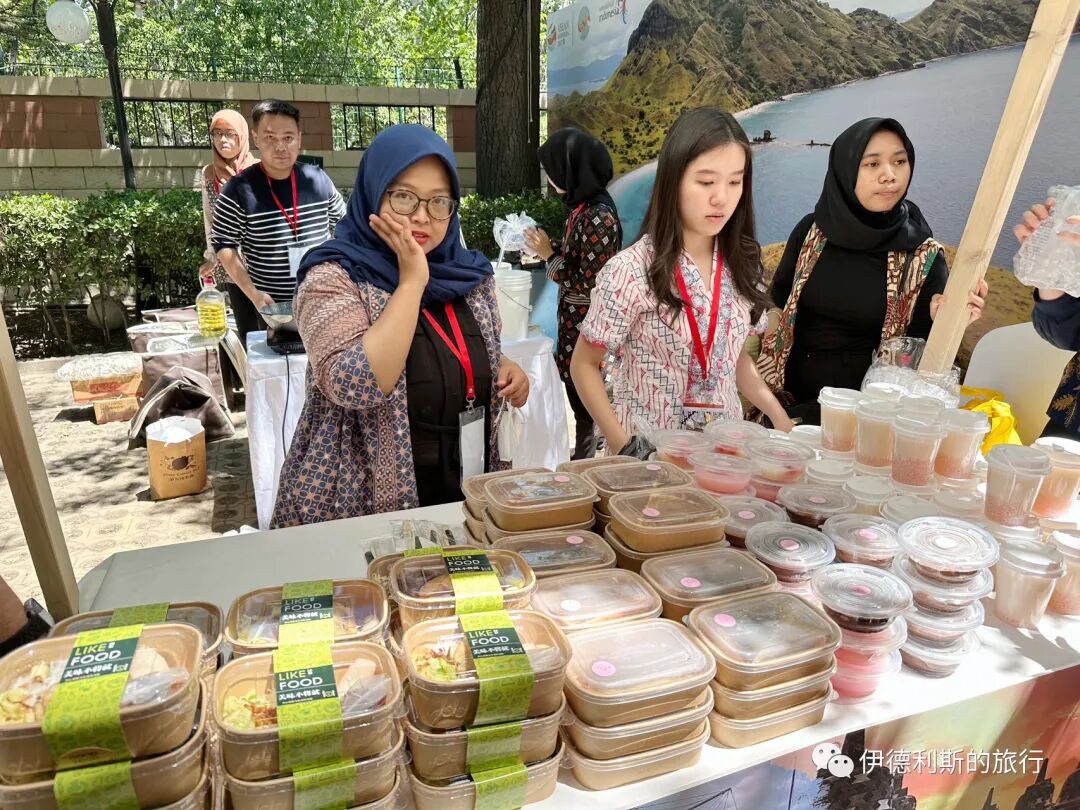
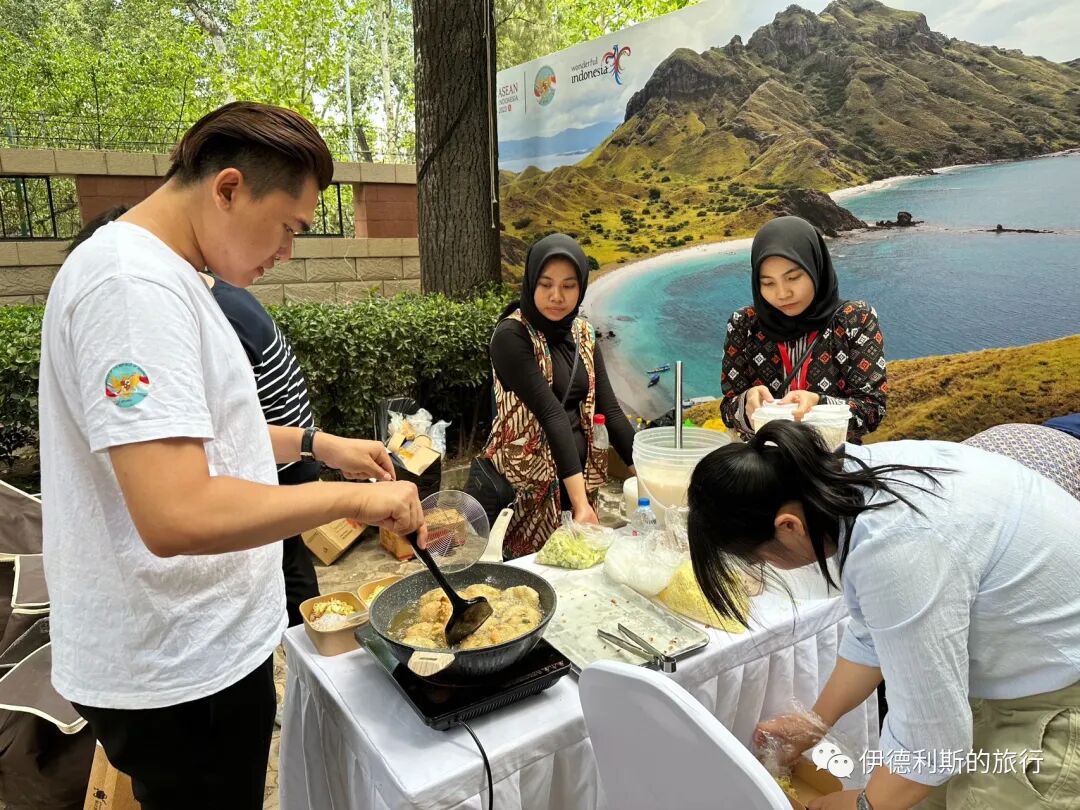
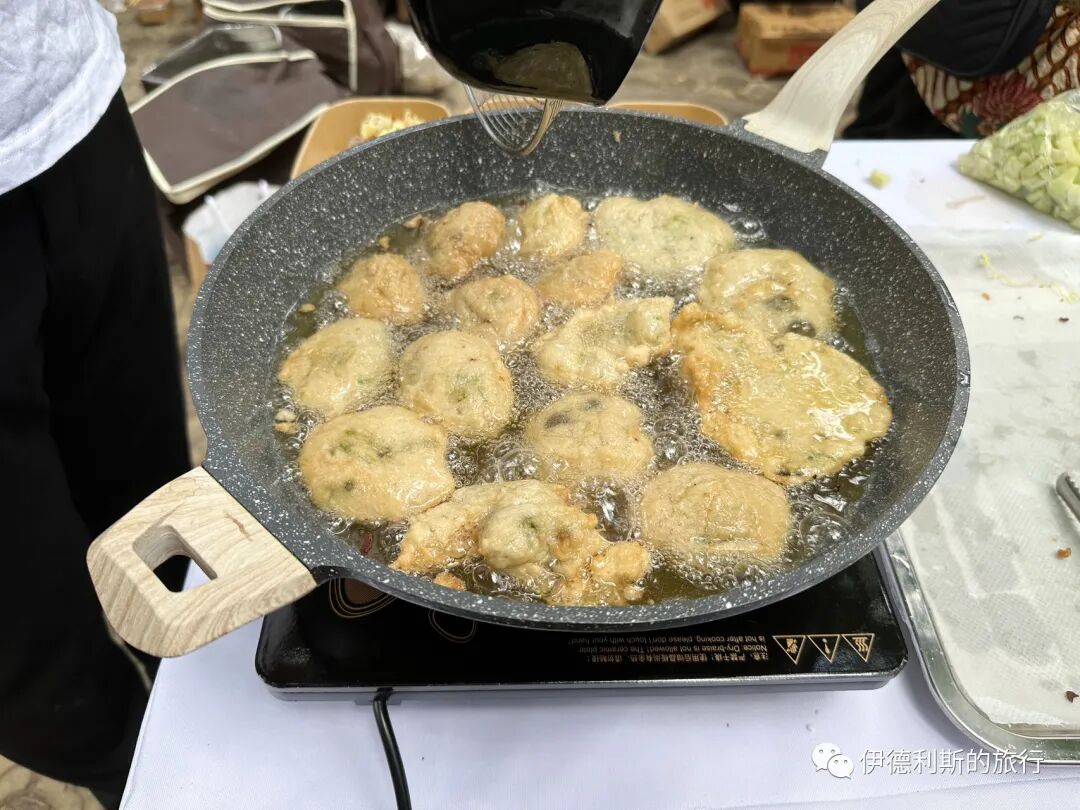
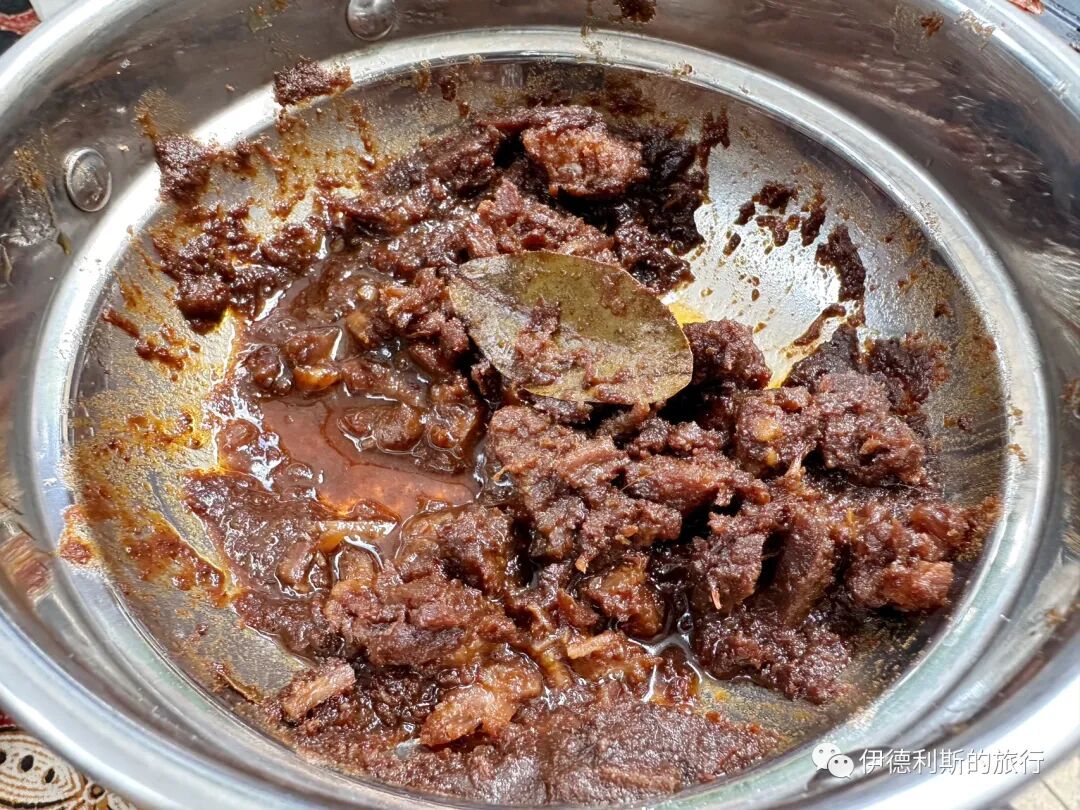
I bought Padang-style beef satay (Sate Padang) and thousand-layer cake (Lapis Legit) from a lady wearing traditional Minangkabau dress, and they also sell traditional Minangkabau beef stew (Rendang Sapi).
The Minangkabau people are an Austronesian ethnic group living in the western highlands of Sumatra, centered around their capital, Padang. The Minangkabau have a large matrilineal society where men usually travel for work while women manage farming and family life, so property, surnames, and land are passed from mother to daughter.
Minangkabau cuisine, also known as Padang food (Masakan Padang), is found in almost every Indonesian city and is also very popular in Malaysia and Singapore. Beef stew (rendang) is the most famous Minangkabau dish, likely developed from a combination of local Minangkabau food and curries brought by Indian merchants who arrived in Sumatra before the 15th century. The main ingredients for rendang are meat, coconut milk, chili, and various spices. To suit the needs of Minangkabau merchants on long voyages, it is slow-cooked until it becomes rich and dry, allowing it to be stored for weeks.
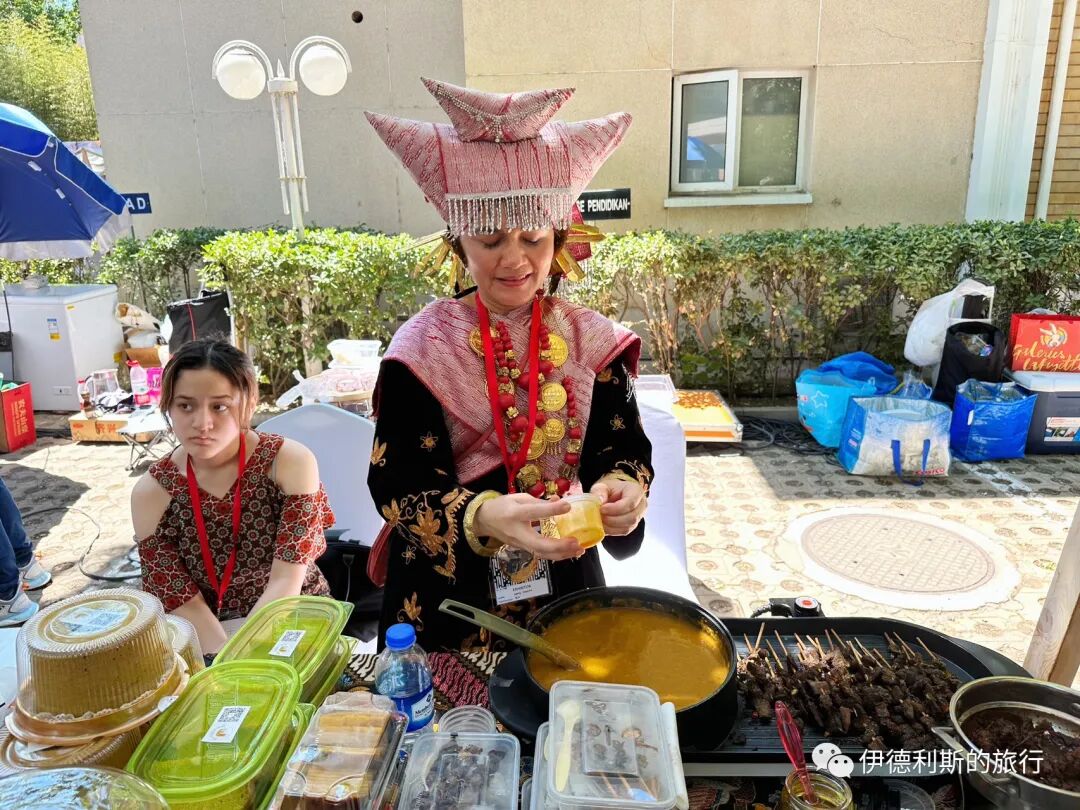
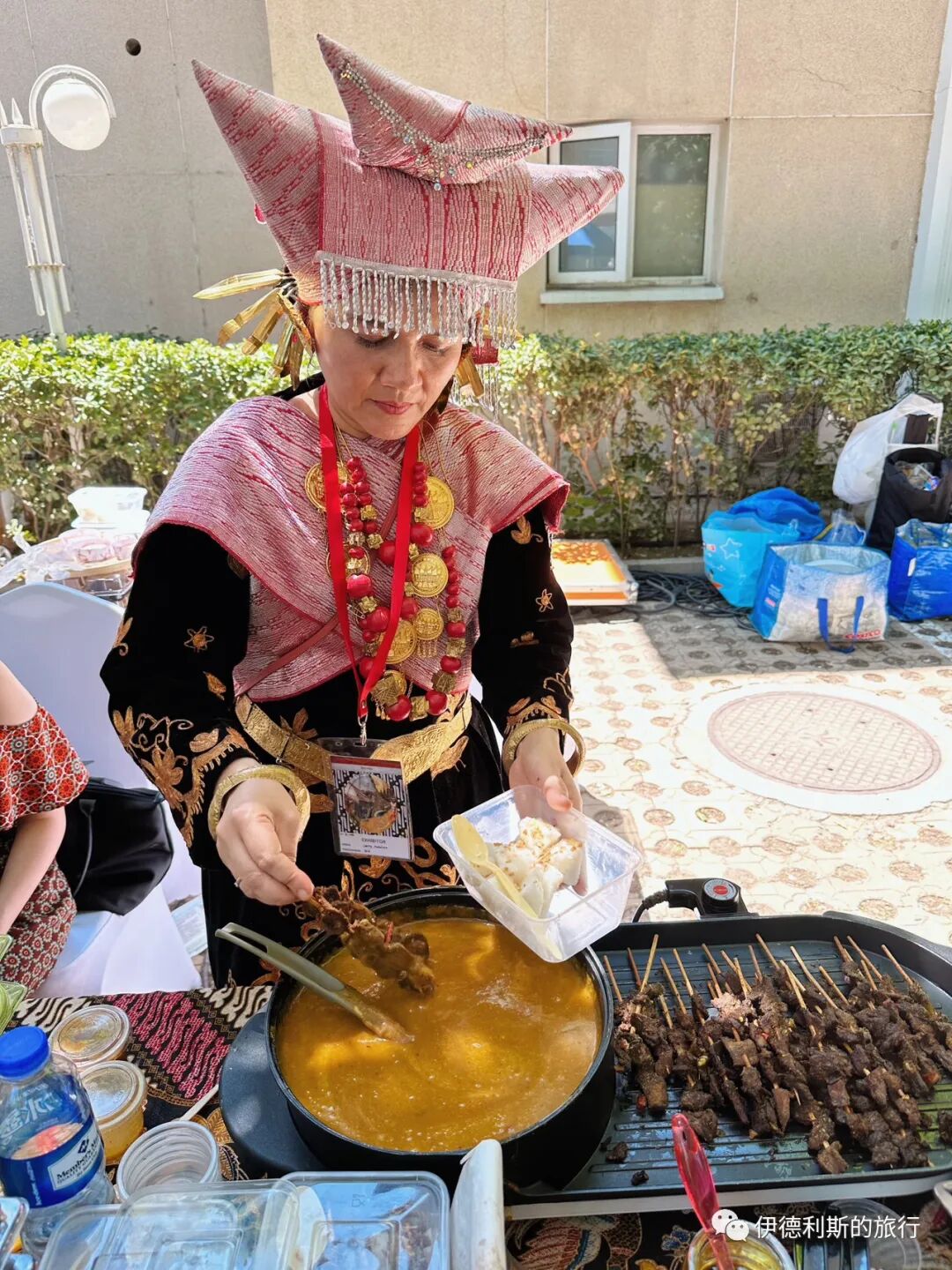
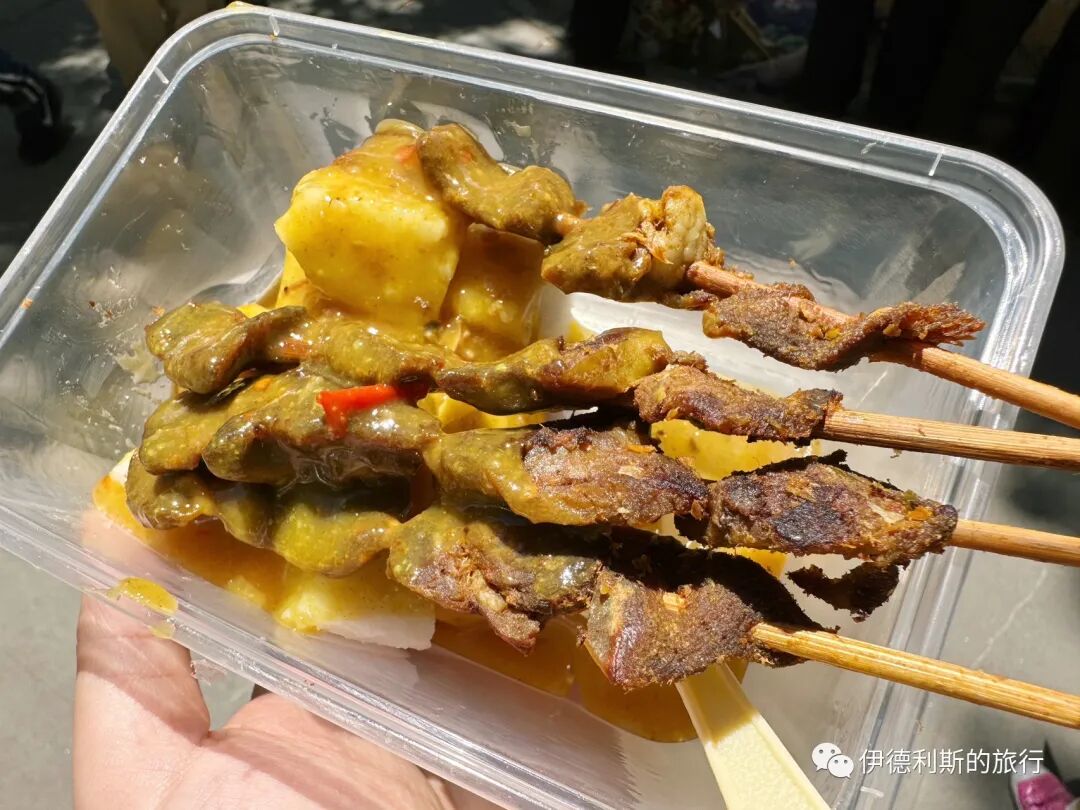
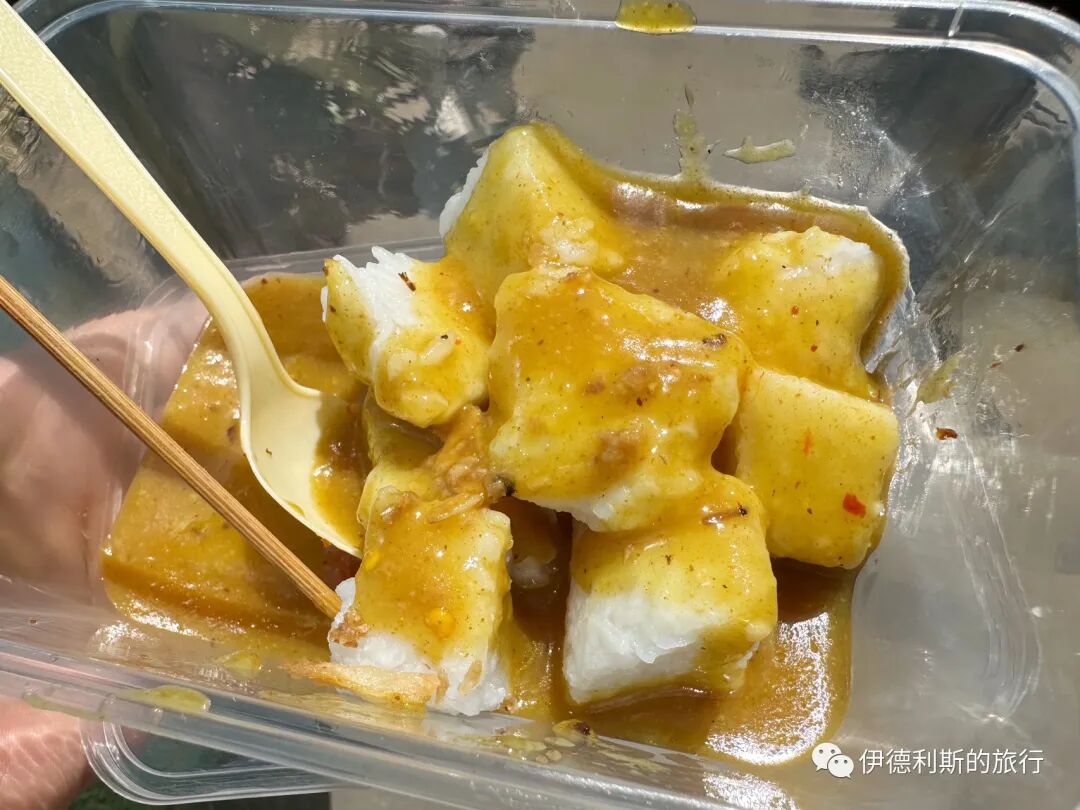
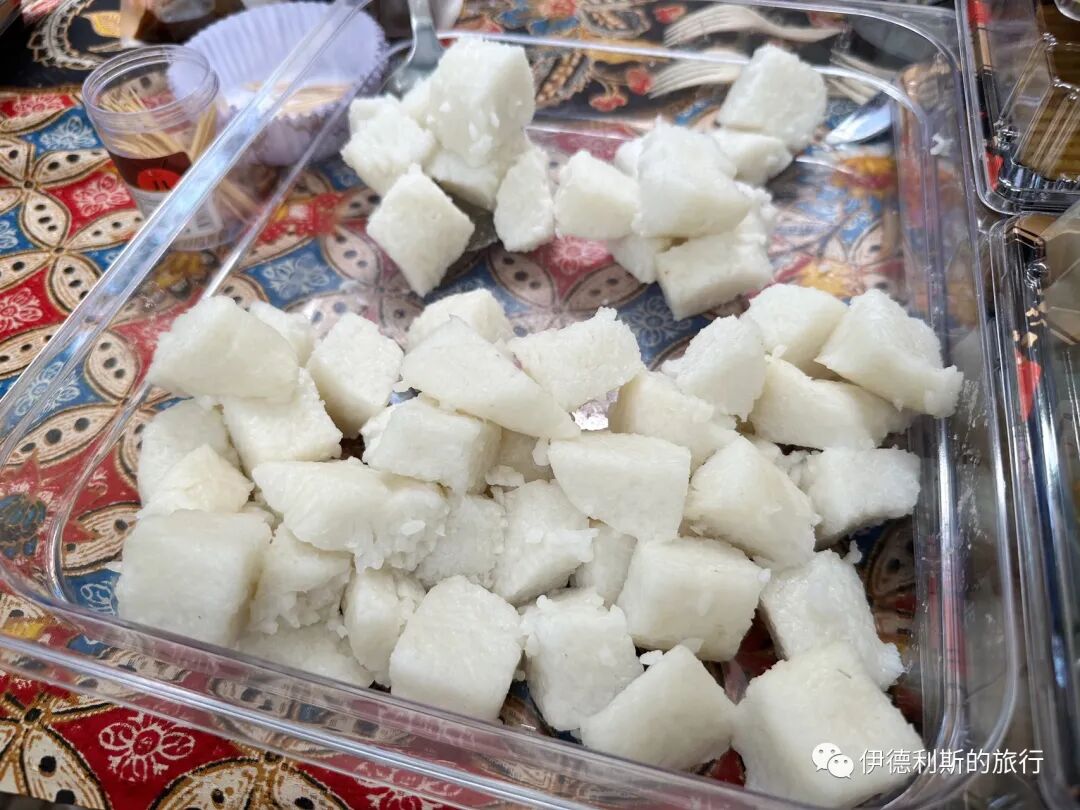
The Padang version of beef satay is quite different from the Javanese version we usually eat. First, the beef is boiled and stewed until tender, then cut into small pieces, skewered, and sprinkled with chili sauce. A thick yellow sauce is then made by mixing the beef broth with 19 spices, including turmeric, ginger, garlic, coriander, and cumin. Before eating, the beef skewers are grilled over coconut shell charcoal and then topped with the sauce. We also ate ours with Indonesian-style rice cakes (Longtong). Rice cakes (Longtong) are made by wrapping rice in banana leaves, boiling it until cooked and firm, and then slicing it. In Indonesian food culture, it is a staple as important as regular rice.
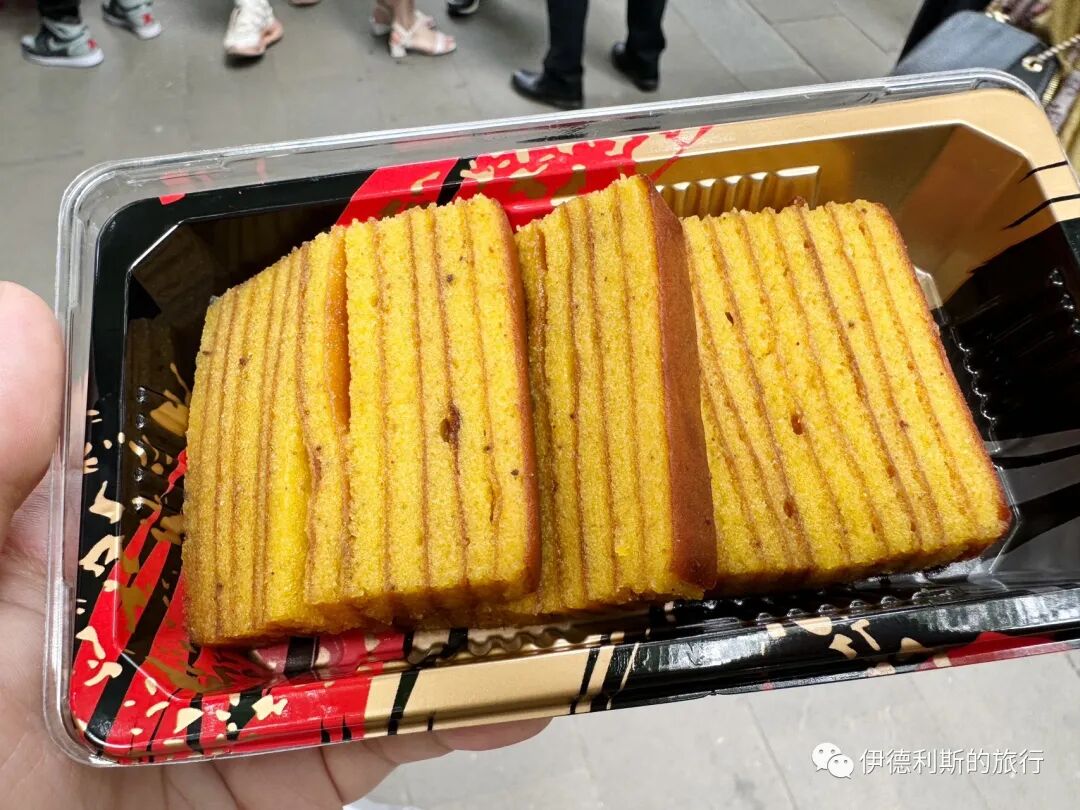
Thousand-layer cake (Lapis Legit) was invented by Indo-Europeans during the Dutch East Indies era. It is based on European spit cake but includes Indonesian spices like cardamom, cinnamon, cloves, nutmeg, and anise. Indonesians often make thousand-layer cake for feasts like Eid al-Fitr, weddings, and birthdays.
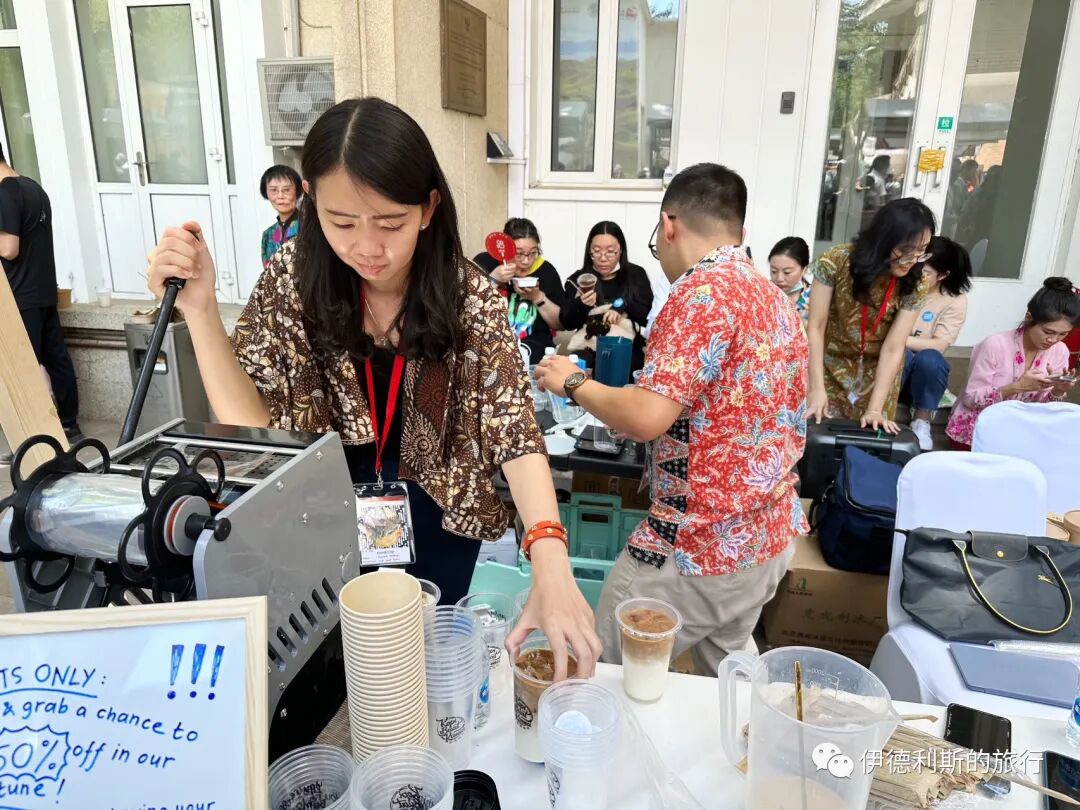
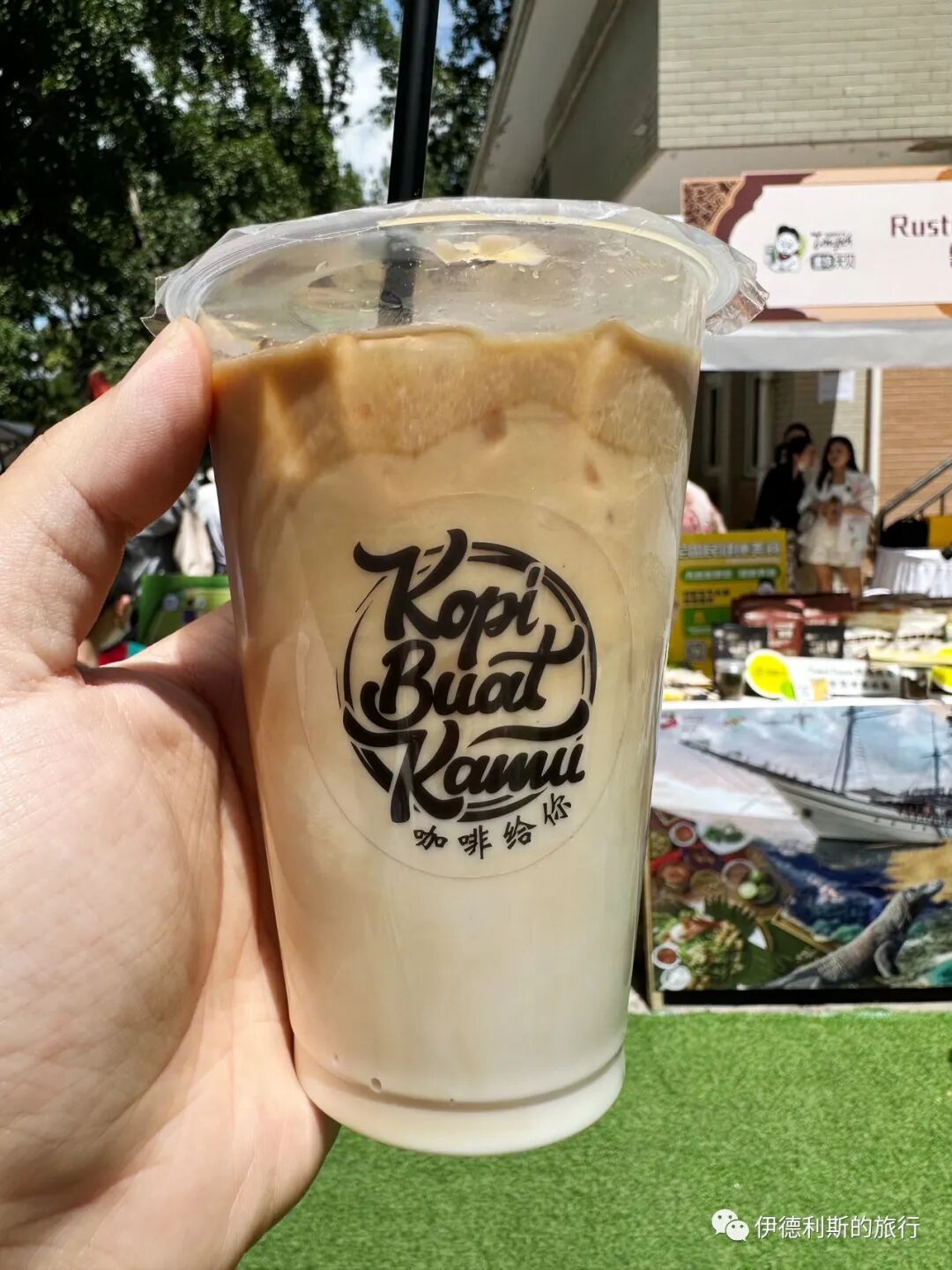
I had an iced milk coffee.
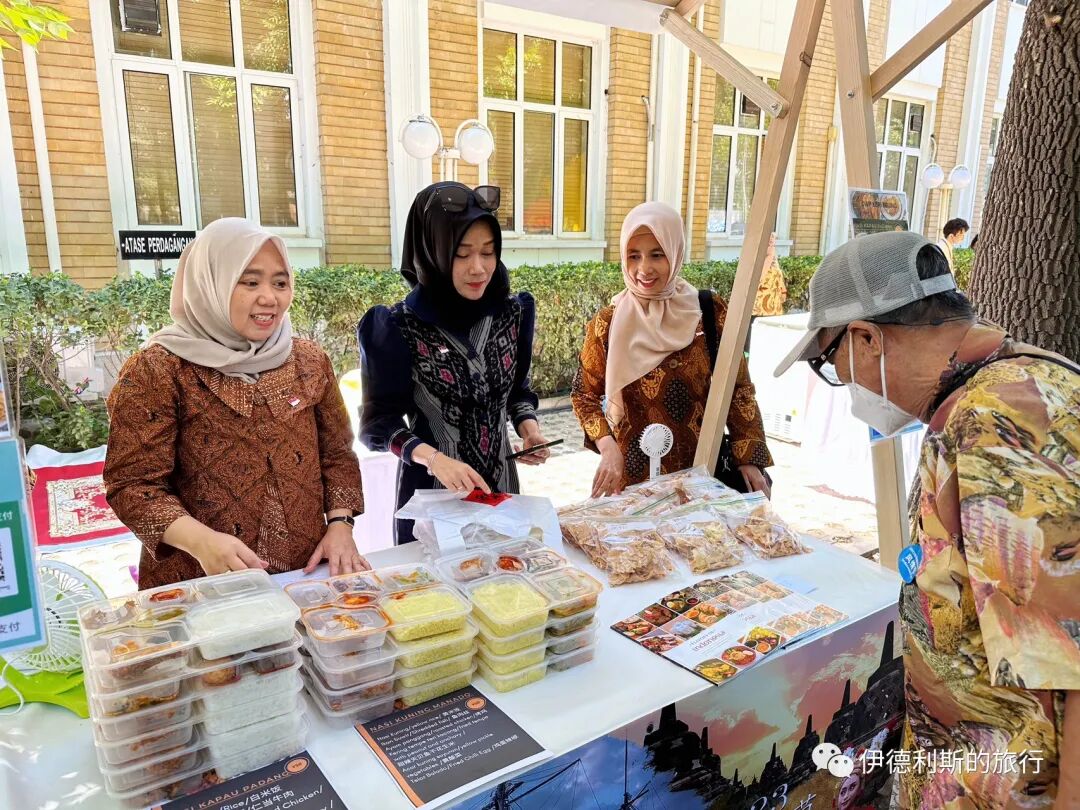
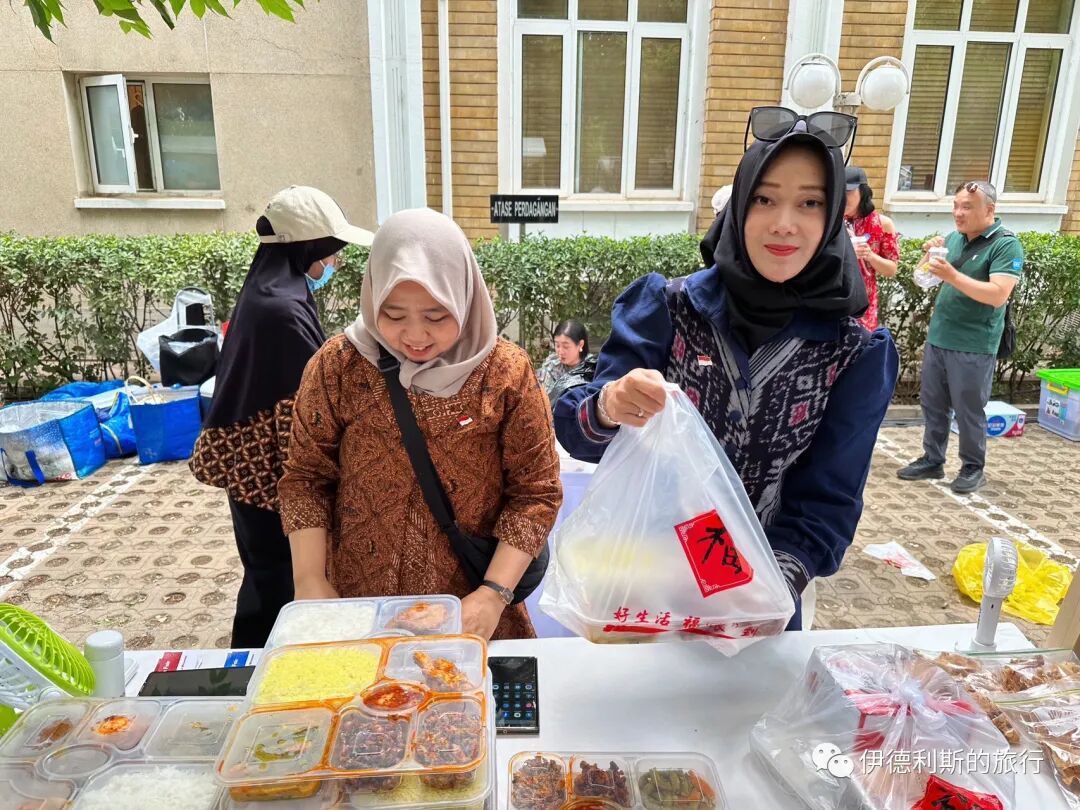
Finally, I bought Indonesian turmeric rice (Nasi Kuning) and fried peanut crackers (Peyek Kacang) to take home.
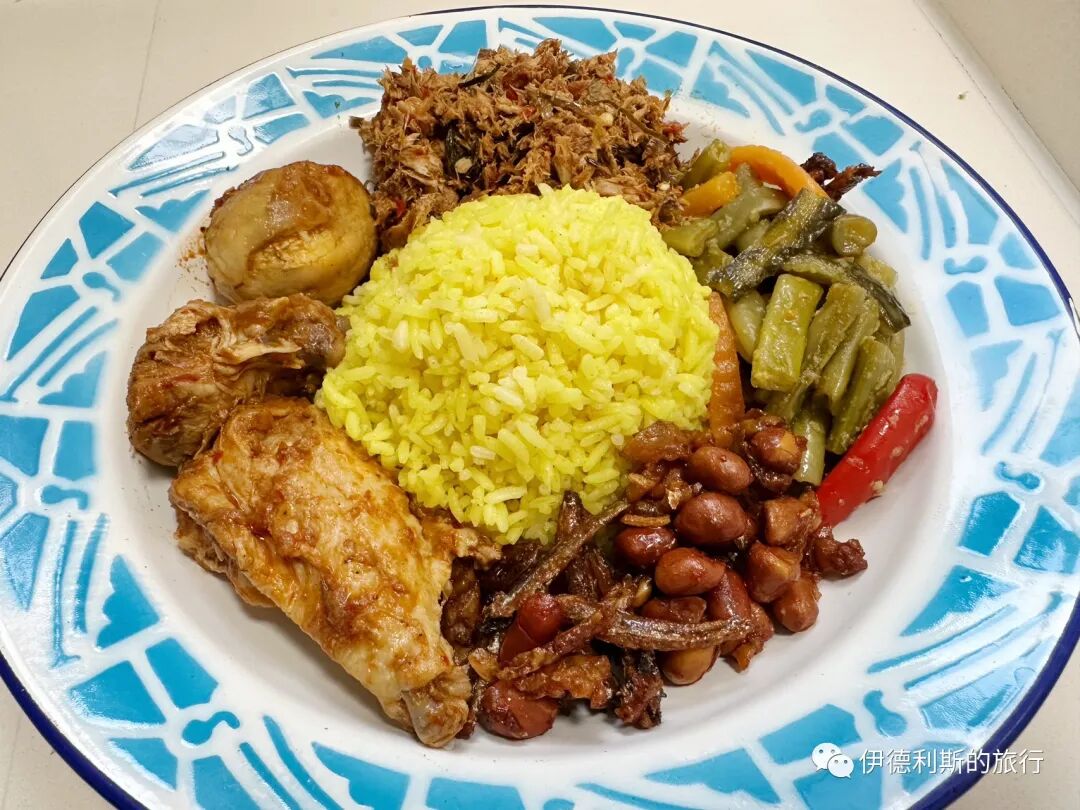
Turmeric rice (nasi kuning) is Indonesian fragrant rice cooked with coconut milk and turmeric. Because the golden color symbolizes victory in Indonesian culture, it is often served at housewarmings, welcoming ceremonies, or grand openings. The turmeric rice I bought came with shredded fish (ikan suwir), grilled chicken (ayam panggang), and a mix of fried tempeh, peanuts, and dried anchovies (kering tempe teri kacang).
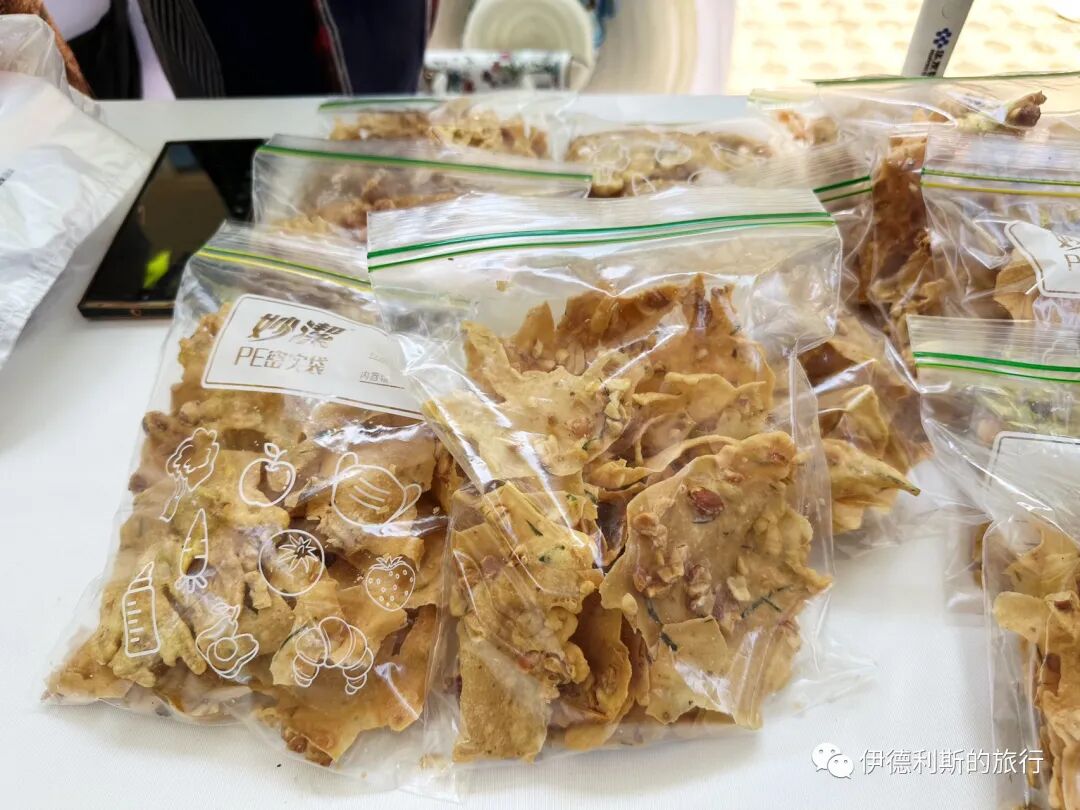
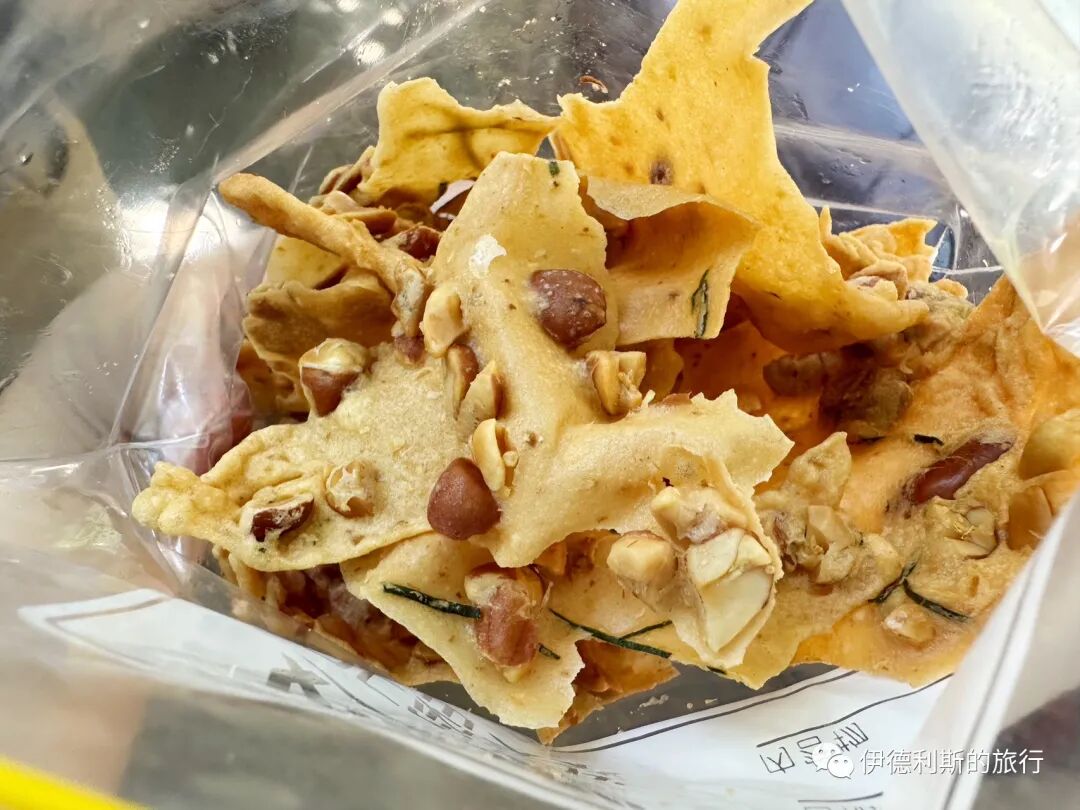
Peanut crackers (peyek kacang) are a fried snack from Java. Peyek is a Javanese onomatopoeia for the sound of a crispy cracker breaking, and kacang means peanut. You can find this snack all over Indonesia. It also became popular in Malaysia in the early 19th century thanks to Javanese immigrants. To make them, mix coconut milk, salt, and spices like coriander into a batter, add peanuts, and deep-fry until they turn into golden, crispy crackers.
Summary: Indonesian Festival in Beijing — Food, Culture and Embassy Visit is presented here as a firsthand travel account in clear English, beginning with this scene: On Saturday noon, I felt very grateful to attend the Indonesian Cultural Festival held at the Indonesian Embassy. The account keeps its focus on Indonesian Culture, Beijing Embassy, Muslim Travel while preserving the names, places, food, and historical details from the Chinese source.
On Saturday noon, I felt very grateful to attend the Indonesian Cultural Festival held at the Indonesian Embassy. I tasted various Indonesian delicacies that I usually cannot find in Beijing.
I first ate the Indonesian specialty beef meatball noodle soup (Mie Bakso) at the first stall. Friends (dosti) who often see my posts probably remember that I especially love Indonesian meatball (Bakso). I have already eaten it several times this year at Javanese restaurants in Macau and Hong Kong, and this time I had it again in Beijing. The meatball (Bakso) is made from beef, fish paste, and a small amount of tapioca flour, making it very firm. The finished meatballs are usually served in beef broth with tofu, glass noodles, and various side dishes.
They had three classic Indonesian street snacks: fried pastry (Kue pastel), fried spring roll (Risoles), and rice dumpling (Arem-arem).
For the Indonesian fried pastry (Kue pastel), 'Kue' comes from the Minnan word for 'cake' (guo), and 'Pastel' means 'pastry' in Portuguese. The fried pastry (Kue pastel) is usually filled with chicken or beef, along with carrots, bean sprouts, and rice noodles. Indonesian people love to eat it when breaking their fast.
The Indonesian fried spring roll (Risoles) also gets its name from Portuguese, and it is very similar to the Portuguese version. The fried spring roll (Risoles) is filled with chicken, egg, diced carrots, diced celery, and potatoes, then coated in breadcrumbs and deep-fried.
The Indonesian rice dumpling (Arem-arem) is very common in Java. To make it, rice is cooked with coconut milk, stuffed with diced vegetables, cooked beef or chicken, and fermented soybeans (tempeh), then shaped into a cylinder and wrapped in tender banana leaves.
At the second stall, I ate Indonesian fish cake (Pempek) and Indonesian milkshake (Es Sagoo Mutiara). The milkshake contains coconut jelly, coconut milk, sago pearls, and pomegranate-colored tapioca pearls.
The Indonesian fish cake (Pempek) comes from Palembang on Sumatra Island and is made from fish paste and tapioca flour. Legend has it that in the 16th century, a Chinese immigrant noticed that local fishermen in Palembang threw away a lot of unsold fish because they only knew how to grill, fry, or boil them. He mixed the fish paste with tapioca and other spices to make fish cakes and sold them from a cart, which gradually developed into the Indonesian fish cake (Pempek) we see today. Some people also believe that the Indonesian fish cake (Pempek) was developed by adapting the five-spice braised meat (ngo hiang) of Minnan-descended Indonesian Chinese into a fish version. Fish cakes (pempek) need a special dipping sauce called vinegar sauce (kuah cuko), made by mixing palm sugar, chili, garlic, vinegar, and salt into boiling water.
I bought Padang-style beef satay (Sate Padang) and thousand-layer cake (Lapis Legit) from a lady wearing traditional Minangkabau dress, and they also sell traditional Minangkabau beef stew (Rendang Sapi).
The Minangkabau people are an Austronesian ethnic group living in the western highlands of Sumatra, centered around their capital, Padang. The Minangkabau have a large matrilineal society where men usually travel for work while women manage farming and family life, so property, surnames, and land are passed from mother to daughter.
Minangkabau cuisine, also known as Padang food (Masakan Padang), is found in almost every Indonesian city and is also very popular in Malaysia and Singapore. Beef stew (rendang) is the most famous Minangkabau dish, likely developed from a combination of local Minangkabau food and curries brought by Indian merchants who arrived in Sumatra before the 15th century. The main ingredients for rendang are meat, coconut milk, chili, and various spices. To suit the needs of Minangkabau merchants on long voyages, it is slow-cooked until it becomes rich and dry, allowing it to be stored for weeks.
The Padang version of beef satay is quite different from the Javanese version we usually eat. First, the beef is boiled and stewed until tender, then cut into small pieces, skewered, and sprinkled with chili sauce. A thick yellow sauce is then made by mixing the beef broth with 19 spices, including turmeric, ginger, garlic, coriander, and cumin. Before eating, the beef skewers are grilled over coconut shell charcoal and then topped with the sauce. We also ate ours with Indonesian-style rice cakes (Longtong). Rice cakes (Longtong) are made by wrapping rice in banana leaves, boiling it until cooked and firm, and then slicing it. In Indonesian food culture, it is a staple as important as regular rice.
Thousand-layer cake (Lapis Legit) was invented by Indo-Europeans during the Dutch East Indies era. It is based on European spit cake but includes Indonesian spices like cardamom, cinnamon, cloves, nutmeg, and anise. Indonesians often make thousand-layer cake for feasts like Eid al-Fitr, weddings, and birthdays.
I had an iced milk coffee.
Finally, I bought Indonesian turmeric rice (Nasi Kuning) and fried peanut crackers (Peyek Kacang) to take home.
Turmeric rice (nasi kuning) is Indonesian fragrant rice cooked with coconut milk and turmeric. Because the golden color symbolizes victory in Indonesian culture, it is often served at housewarmings, welcoming ceremonies, or grand openings. The turmeric rice I bought came with shredded fish (ikan suwir), grilled chicken (ayam panggang), and a mix of fried tempeh, peanuts, and dried anchovies (kering tempe teri kacang).
Peanut crackers (peyek kacang) are a fried snack from Java. Peyek is a Javanese onomatopoeia for the sound of a crispy cracker breaking, and kacang means peanut. You can find this snack all over Indonesia. It also became popular in Malaysia in the early 19th century thanks to Javanese immigrants. To make them, mix coconut milk, salt, and spices like coriander into a batter, add peanuts, and deep-fry until they turn into golden, crispy crackers.
