
Mosque Travel Guide: 50 Mosques I Visited - Muslim Heritage Across China
Reposted from the web
5 mosques in Heilongjiang
Qiqihar Buque East Mosque and Buque West Mosque
Harbin Daowai Mosque, Tatar Mosque, and Acheng Mosque
1 mosque in Jilin
Changchun Changtong Road Mosque
12 mosques in Liaoning
Tieling Kaiyuan Old City Mosque
Shenyang South Mosque, East Mosque, and Xinmin Mosque
Fengcheng Mosque in Dandong
Qingdui Mosque and Fuzhou Mosque in Dalian
Xinlitun Mosque, Beizhen Mosque, and Luyang Mosque in Jinzhou
Lingyuan Mosque in Chaoyang
Suizhong Mosque in Huludao
4 mosques in Inner Mongolia
North Mosque (Beidasi) in Chifeng
Longshengzhuang Mosque in Ulanqab
Hohhot Great Mosque and East Mosque
16 mosques in Hebei
Chengde West Mosque and Pingquan Mosque
Zhangjiakou Xinhua Street Mosque, Xiguan Mosque, Tu'ergou Mosque, Xuanhua South Great Mosque, Xuanhua North Mosque, and Xuanhua Middle Mosque
Baoding West Mosque, East Mosque, Women's Mosque, and Zhuozhou Mosque
Cangzhou North Great Mosque and Botou Mosque
Xingtai Hongguanying Mosque
Qinhuangdao Shanhaiguan Mosque
12 mosques in Beijing (continued in the next part)
Gubeikou Mosque and Mujia Yu Mosque in Miyun
Nankou Mosque, Wujie Mosque, Heying Mosque, Shahe Mosque, and Xiguanshi Mosque in Changping
Anheqiao Mosque, Shucun Mosque, Madian Mosque, Haidian Mosque, and Siwangfu Mosque in Haidian
Heilongjiang
1. Bukui East Mosque in Qiqihar
Bukui Ancient Mosque and the Hui community in Qiqihar, Heilongjiang
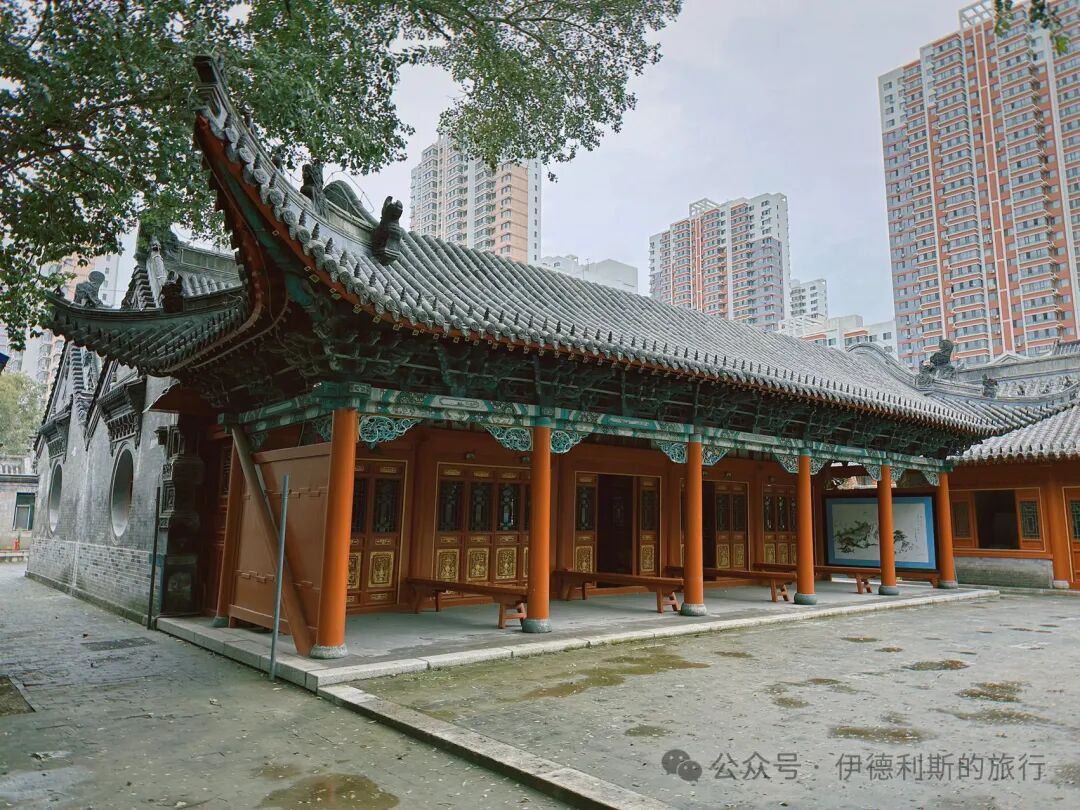
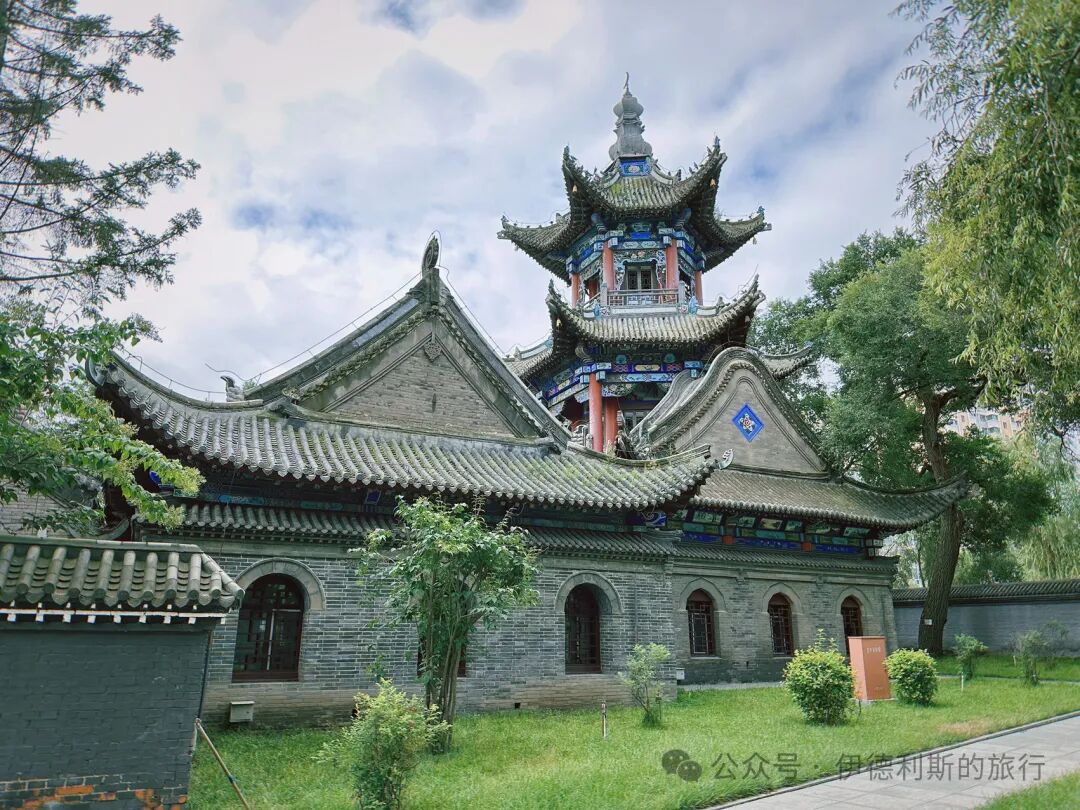
Bukui East Mosque in Qiqihar is the oldest mosque in Heilongjiang. The most common story is that it was built in 1676 by over 40 Hui families who moved to Bukui Village from Shandong and Hebei. Another theory says it was built in 1700 by the Wang and Xia families, who were Hui Muslims from Jinan, Shandong, and moved to Qiqihar with the Heilongjiang Naval Battalion. The original Bukui Mosque was just a thatched hut. It was rebuilt many times during the Jiaqing and Guangxu eras, eventually reaching its current size.
The most unique part of the East Mosque is the Moon-Sighting Tower (Wangyuelou) above the rear hall. It is a three-story structure with a four-cornered pointed roof and intricate brick carvings. On the east side, there is a plaque that reads 'Tianfang Jiejing'. The copper lotus-base gourd finial on top of the hall was added during the major renovation of the Bukui East Mosque in 1893 (the 19th year of the Guangxu era). People say Ma Wanliang bought it from a Tibetan Buddhist mosque near Zhangjiakou. Local legend says the finial was not installed until after the Republican era because it was taller than the near mansion of the Yikeming'an Eighth Prince.
2. Qiqihar
Bukui West Mosque
Bukui Ancient Mosque and the Hui community in Qiqihar, Heilongjiang
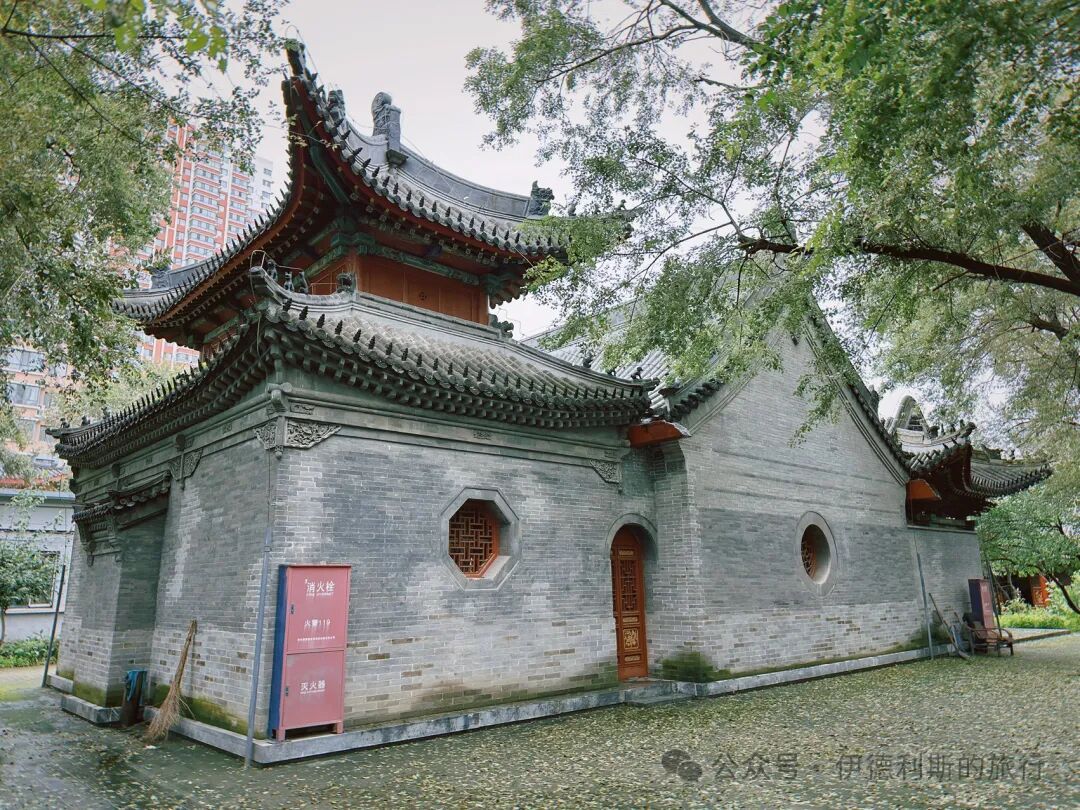
The Bukui West Mosque in Qiqihar, Heilongjiang, belongs to the Jahriyya order. In 1817, the third-generation leader (murshid) of the Jahriyya, Ma Datian, was sentenced to exile in Qiqihar, Heilongjiang. Twelve families led by Master Niu volunteered to take his place and followed him into exile. Ma Datian passed away while passing through the Jilin Shipyard. He was honored as the Shipyard Master (Chuanchang Taiye) from then on, while the 12 families continued their exile to Qiqihar. After arriving in Qiqihar, the 12 families were welcomed by the local Gedimu community. In 1852, they built the West Mosque (Bukuixi Si) on the west side of the Bukui Mosque, making it the only Jahriyya mosque in Heilongjiang.
The mosque keeps a banner inscribed with the words 'Benevolence, Loyalty, and Harmony.' It reads: 'In memory of the 50th anniversary of the passing of the late Imam Niu Chenggong, offered by his humble juniors Ma Yongcai and Ma Yongzhi on the 13th day of the eighth lunar month in the 14th year of Guangxu reign.' Imam Niu Chenggong is the same Master Niu who volunteered to take the blame and follow the Shipyard Master to Qiqihar. Master Niu was originally an imam from the Lingwu area of Wuzhong. Many stories of his miracles during the journey to Qiqihar are widely told among the Jahriyya menhuan. Every year, Jahriyya followers from places like Ningxia and Gansu travel thousands of miles to Qiqihar to visit Master Niu's grave.
3. Harbin Daowai Mosque
Daowai Mosque in Harbin and the century-old Laoguo Family Restaurant
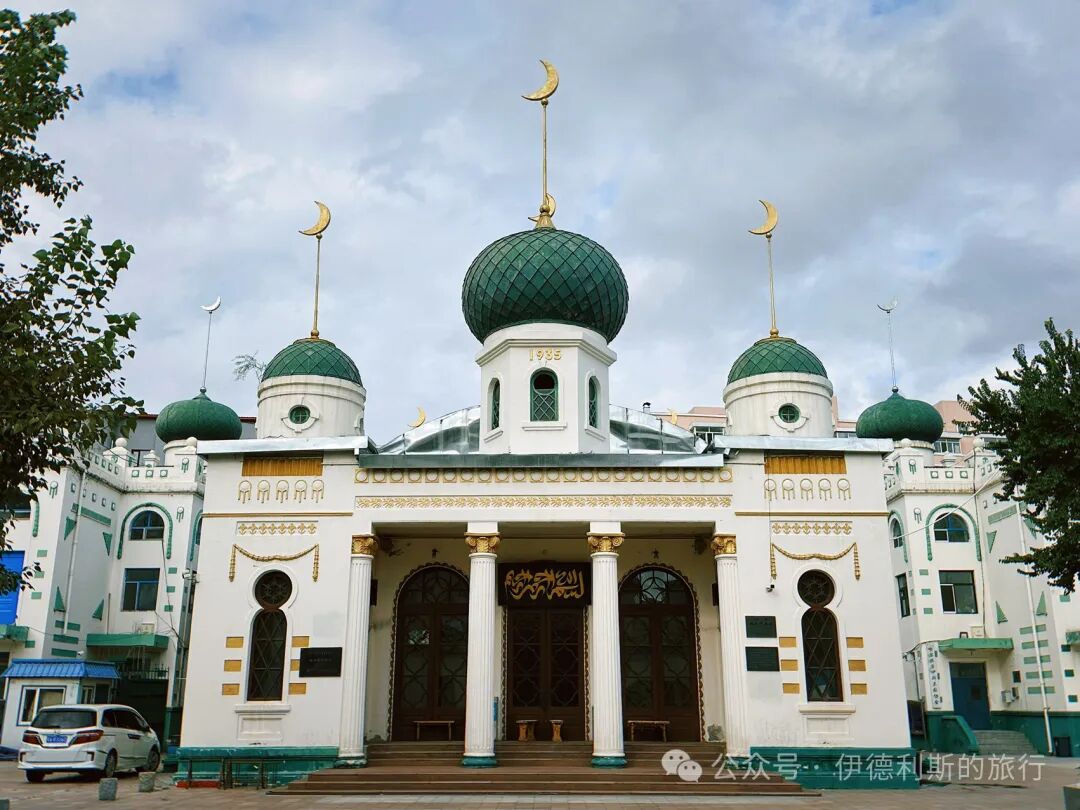
Daowai Mosque, also known as the East Mosque or Binjiang Mosque, started in 1897 (the 23rd year of Guangxu reign) when five thatched rooms were bought on South 12th Street. It was rebuilt in 1904. In the early 1930s, Imam Ma Songting proposed a new building. Head Imam Bai Yusheng traveled around to collect donations (nietie) and hired Russian designers, the Krabryov siblings, to build the current hall of Daowai Mosque in 1935.
Daowai Mosque has a strong Russian style. Its Roman columns and onion domes modeled after Russian architecture are unique, making it a standout piece of mosque architecture from the Republican era.
The classic Russian onion dome actually started in the Middle East. The earliest visible onion domes appear in Syrian mosaic images from the Arab Umayyad Caliphate (661–750 AD), and the earliest physical examples were built by the Seljuk Empire in Iran during the 11th century. Historians are not sure when Russia started using onion domes. Some scholars guess they learned it from the mosques of the Kazan Tatars after Russia conquered the Kazan Khanate in the 16th century, while others think they developed from Byzantine domes.
4. Harbin Tatar Mosque
The history of Harbin Tatar Mosque
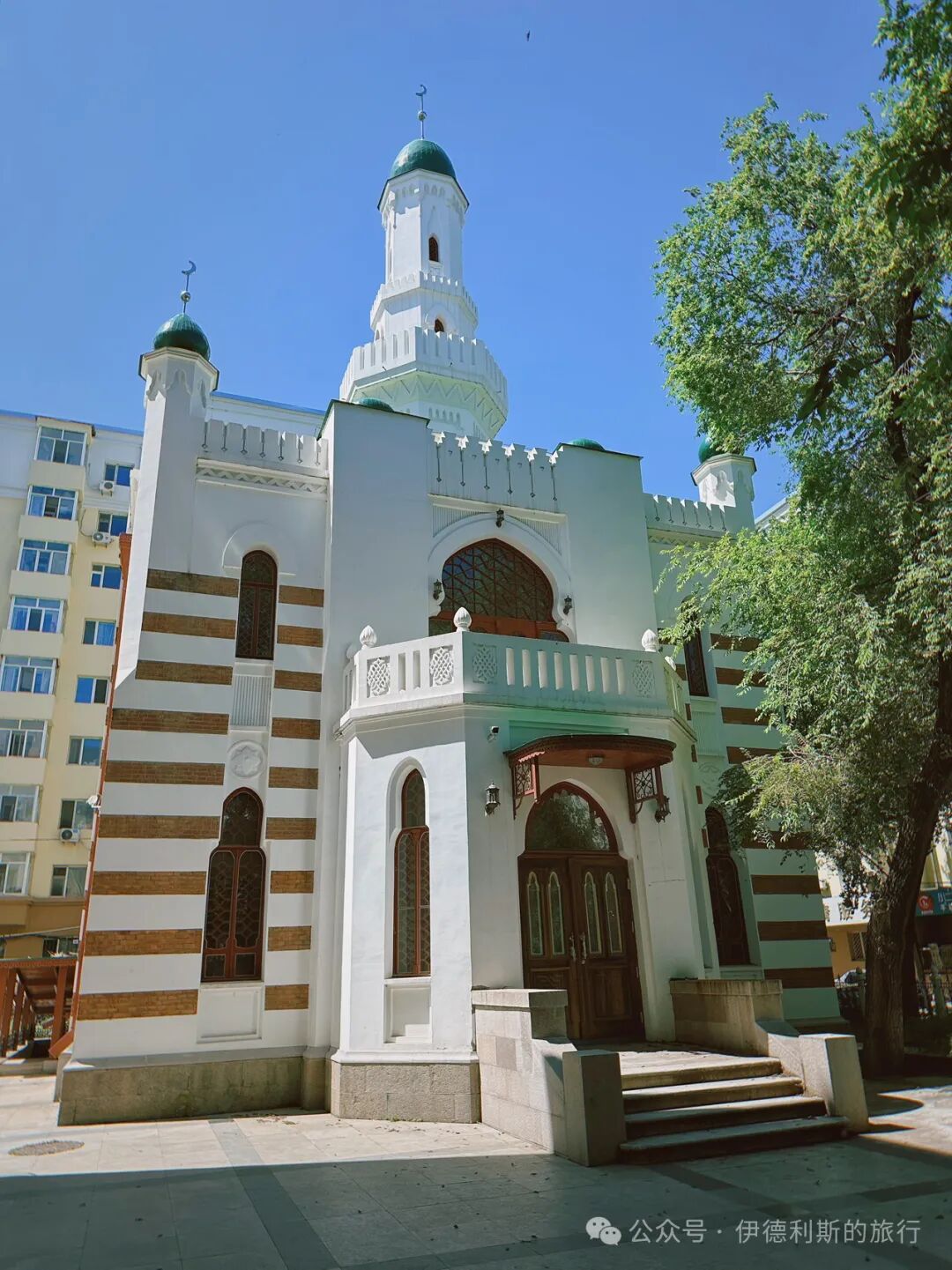
Construction of the Chinese Eastern Railway began in 1897 with Harbin as its center. After that, many Tatars from Russia came to live and work along the railway line. Tatars began settling in Harbin in 1901 and built the first wooden Tatar mosque that same year. As the Tatar population grew, they rebuilt the mosque using brick in 1906. The number of Tatar immigrants in Harbin rose after 1917, reaching over a thousand in the 1920s. Most of them made a living by trading furs, textiles, and clothing.
To mark the 1,000th anniversary of their ancestors, the Volga Bulgars, converting to Islam in 922 AD, the Harbin Tatars decided to build a new mosque. Construction of the new mosque started in 1923, but it stalled for a time due to the imam passing away, political instability, and poor management of funds. In 1936, Imam Münir Hasibullah traveled to every place where Tatars lived in the Far East to collect donations (niatie). The Millennium Mosque finally opened on October 8, 1937. After the Soviet Union entered Northeast China in 1945, most Harbin Tatars chose to move to the United States, Canada, and Turkey. By 1960, fewer than five Tatars remained in Harbin, and the Harbin Tatar community officially dissolved.
5. Acheng Mosque in Harbin
The beautiful Acheng Mosque in Heilongjiang
In 1770, a Hui Muslim named Yang Huaxian from Shen County, Shandong, settled in Acheng with the Qing army. Afterward, more Hui Muslims moved from Shandong to Acheng and rented homes from Manchu bannermen. By 1777, there were 26 (some say 28) Hui Muslim households in Acheng, including the Yang, Wang, San, Ma, Zhang, Ding, Jin, and Cai families. They rented houses and established the first Acheng Mosque, with Yang Huaxian serving as the mosque elder. In 1802, elder Yang Huaxian negotiated the purchase of land to build a formal Acheng Mosque. Construction took 50 years, spanning the Jiaqing, Daoguang, and Xianfeng reigns. In 1873, 12 years after the mosque was completed, a fire in Acheng destroyed the moon-sighting tower (wangyuelou) and the north lecture hall, leaving only the south lecture hall and the reception hall. In 1890, the mosque's imam, Liu Yuzhang, and manager Luo Yuzhang began organizing the reconstruction of the mosque. It took 10 years to complete the current structure in 1900.
Inside the hall of Acheng Mosque, there is a beautiful pulpit (minbar). It is actually one of two models built in 1890 for the reconstruction of the mosque's moon-sighting tower (wangyuelou). After the mosque elders discussed it, they chose the style of the other model, so this one was used as the pulpit (minbar).
Jilin
6. Changchun Changtong Road Mosque
Hand-pulled noodles (chenmian) in Nanguan, Changchun, and the Changtong Road Mosque
The Qing Dynasty relaxed its ban on Jilin in the early 19th century in Jiaqing reign. In 1800 (the fifth year of Jiaqing), Changchun Subprefecture was established in Changchunbao. Hui Muslims began moving to Changchun at this time, and because most came from Shandong, they were called the Shandong Group.
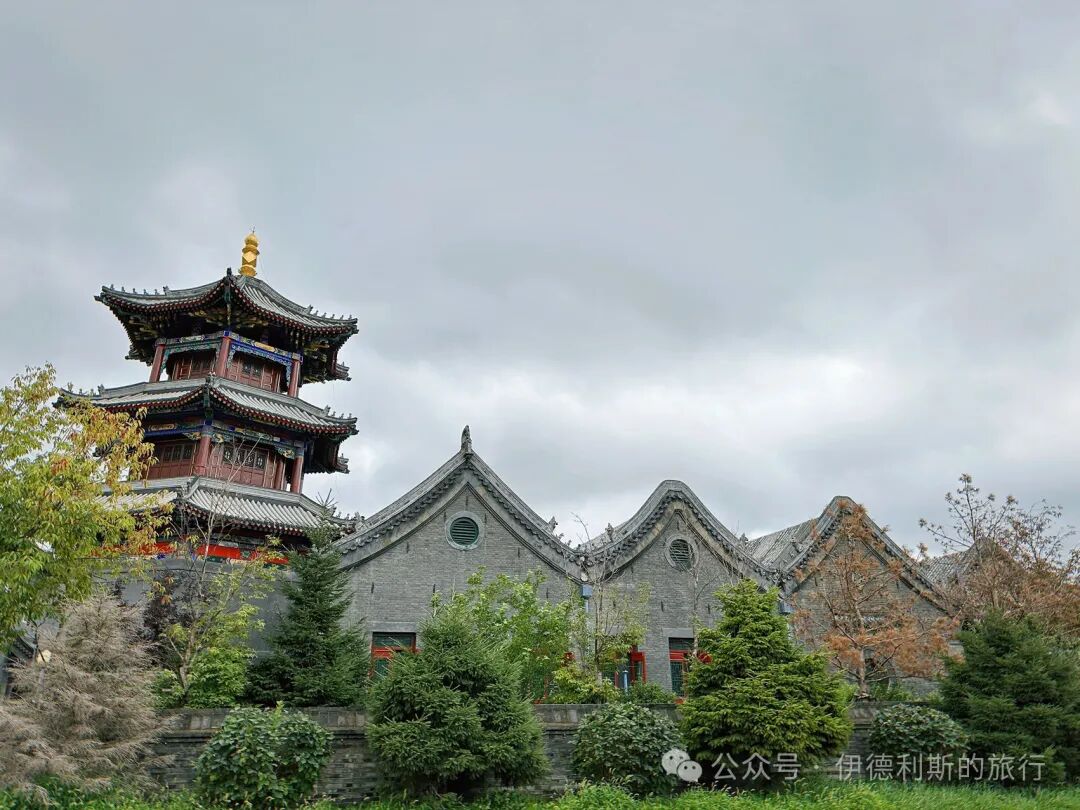
Changchun Changtong Road Mosque was built in 1824 (the fourth year of Daoguang). It was originally located inside the east gate of Dongsandao Street. In 1852 (the second year of Xianfeng), elder Han Xuecheng and Gong Wanmei donated houses, and elder Shi Xuecheng donated trees to move the mosque to its current location in Tielingtun. In 1864 (the third year of Tongzhi), Imam Han Dengqing and others raised funds to expand the mosque, building the current five-room hall and the three-story rear hall (yaodian). In 1889 (the 15th year of Guangxu reign), Imam Han Laixiang bought land from the Xu family in front of the mosque. He built the main gate tower, east and west side rooms, a north lecture hall, an east reception hall, and a front porch for the hall. The mosque was expanded several more times in the Republican era.
Liaoning
7. Old City Mosque in Kaiyuan, Tieling
A tour of three mosques in Liaoning: Lingyuan, Shenyang, and Kaiyuan
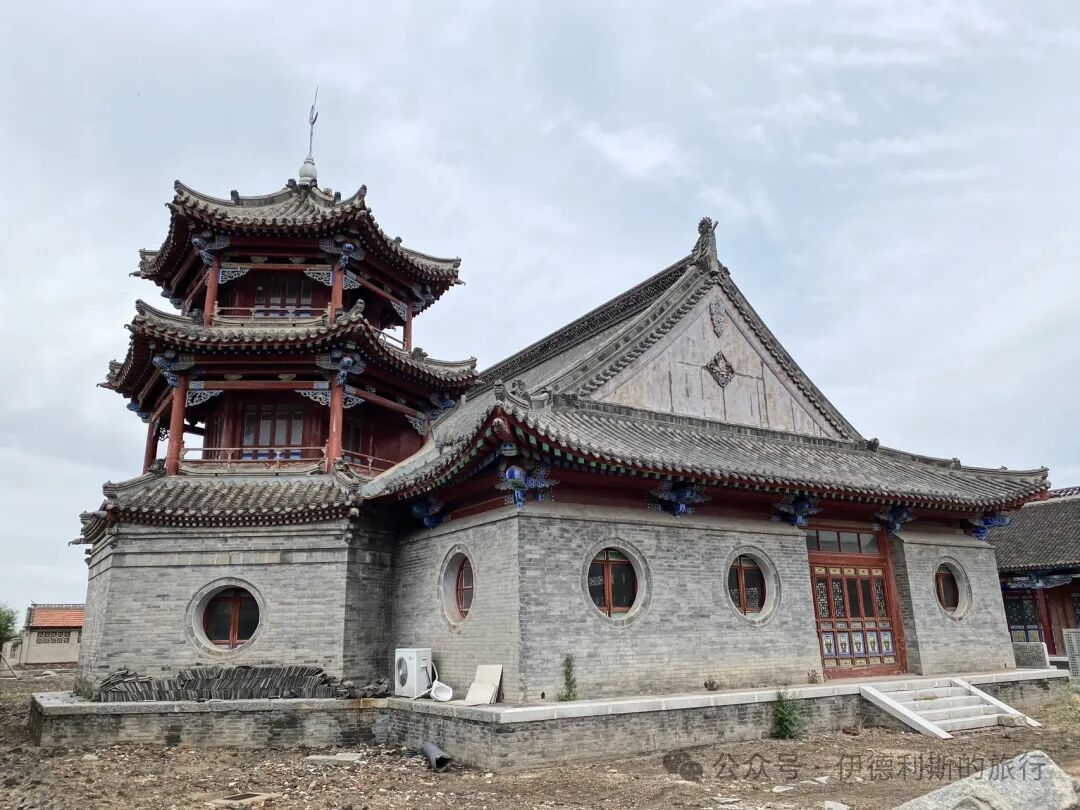
The Old City Mosque in Kaiyuan, Tieling, is inside the east gate of the old city of Kaiyuan. It was built in 1406 (the 4th year of the Yongle reign of the Ming) and is the oldest mosque in Northeast China. The current hall follows the style of the 1680 (the 19th year of Kangxi reign) reconstruction. It consists of a vaulted porch, the hall, and a hexagonal pavilion-style prayer niche (yaodian), which is similar in style to the South Mosque in Shenyang. The reception hall of the Old City Mosque stores old items, including drip tiles, eave tiles, roof ridge beasts, and carved wooden railings from the hall. It also holds the finial from the moon-sighting tower (wangyuelou) of the prayer niche and a plaque inscribed with the words 'Ling Luo Sha Juan' (fine silks and satins).
8. South Mosque in Shenyang
A tour of three mosques in Liaoning: Lingyuan, Shenyang, and Kaiyuan
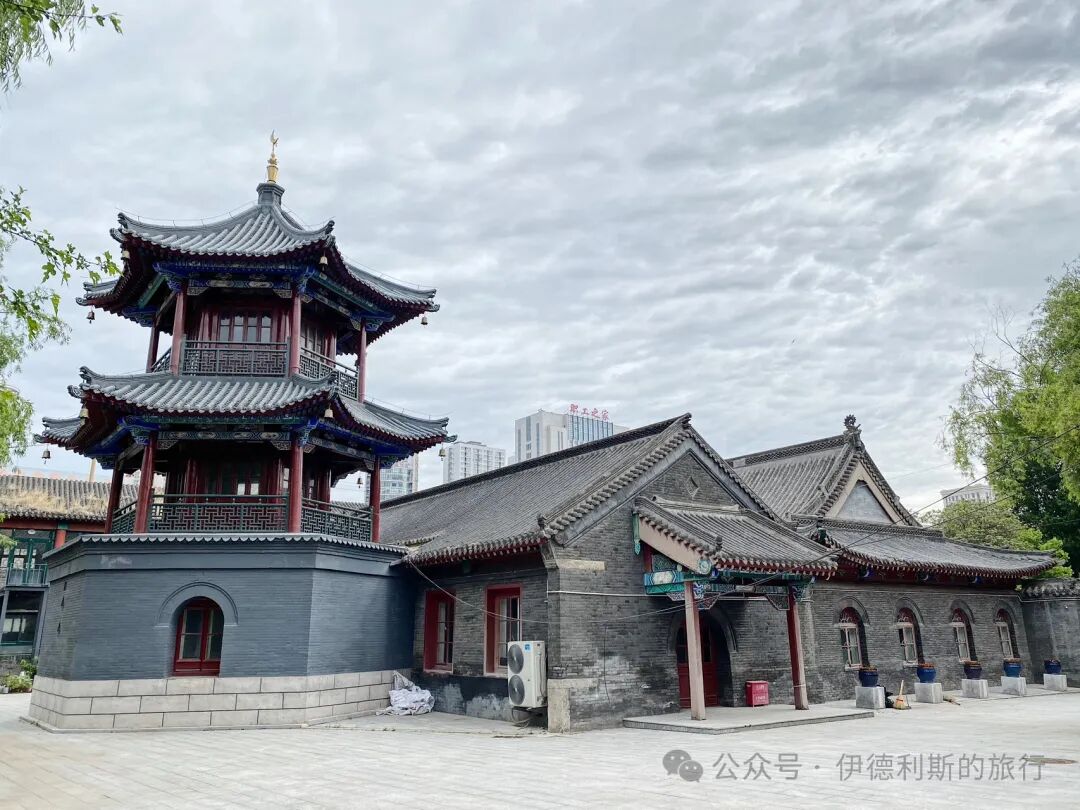
Shenyang South Mosque was built in 1636, the first year of the Chongde reign of the Qing. The ancestors of the Tie family who founded it were Hui Muslims from Central Asia who arrived in China during the Mongol western campaigns. In the early Ming Dynasty, Tie Xuan served as a provincial official in Jinan. During the Jingnan Campaign, he led troops to defend the city of Jinan. After the Prince of Yan broke through the city, Tie Xuan was captured and executed by dismemberment. After Tie Xuan returned to Allah, his second son, Tie Fushu, fled outside the Great Wall. During the Wanli reign (1573-1620), he moved from Jinzhou to Shenyang.
In 1662, the first year of Kangxi reign, Tie Kui expanded Shenyang South Mosque. He invited the famous imam She Yuanshan from Beijing to set up a school there. After Imam She's student, Tie Hongji, finished his studies, he became the leader of the mosque. From then on, the position of imam at the South Mosque was passed down through the Tie family for 11 generations. The last imam, Tie Zizhang, served until 1956.
The rear hall of the mosque was expanded in 1902. The hall is not the traditional T-shape but a hexagonal kiln-style hall. This design, which adds a loft-style kiln hall to the back of the hall, is common in the Northeast region.
9. Shenyang East Mosque
A tour of three mosques in Liaoning: Lingyuan, Shenyang, and Kaiyuan
Shenyang East Mosque was built in 1803 (the eighth year of Jiaqing reign). In 1935, the hall was rebuilt in a Western style, but the Moon-Sighting Tower (wangyuelou) kept its original Chinese style. The East Mosque was taken over in 1958, returned in 1980, and became the Shenyang Islamic Institute (Shenyang jingxueyuan) in 1988.
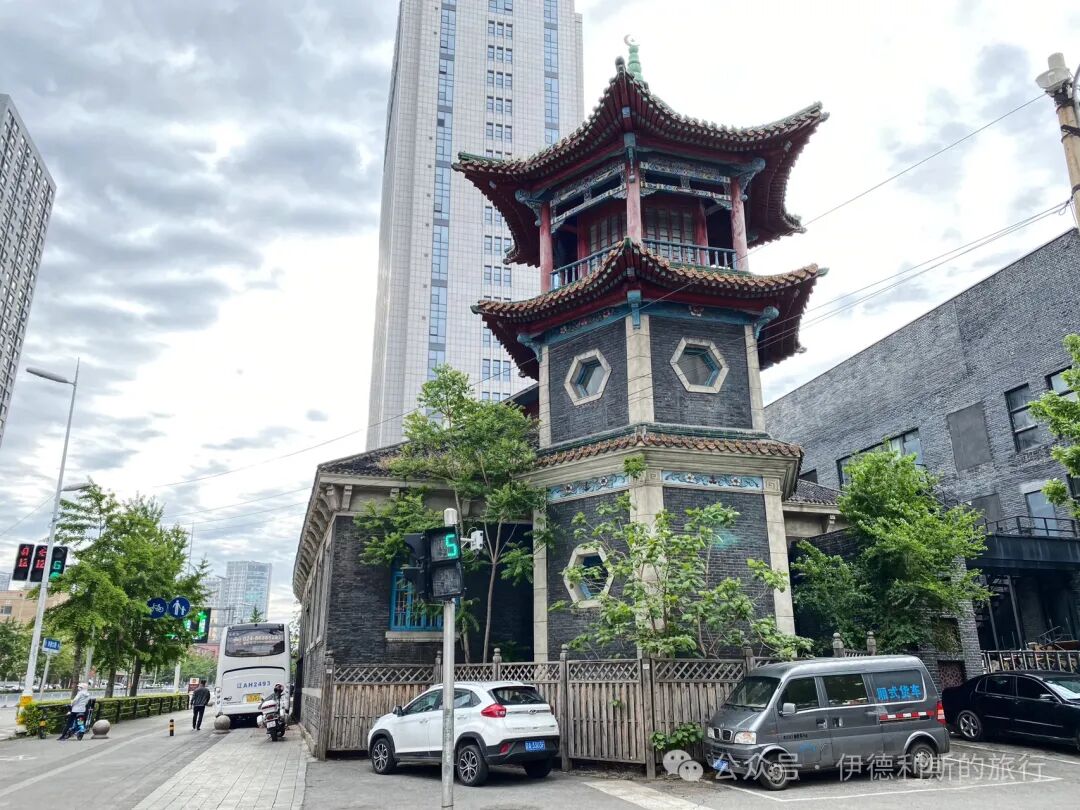
10. Shenyang Xinmin Mosque
[Liaoning Trip during Dragon Boat Festival] Strolling through the morning market in Shenyang and visiting an old mosque in Xinmin.
Xinmin is in the northwest of Shenyang. During the early years of Qianlong reign of the Qing, many new immigrants came here to farm after crossing the border, which is how it got the name 'Xinmin'. Many Hui Muslims came to Xinmin in Qianlong reign, and they built the Xinmin Mosque in Nanyingzi in 1765 (the thirtieth year of Qianlong reign). The Xinmin Mosque burned down in 1866 (the fifth year of the Tongzhi reign) and was rebuilt in 1883 (the ninth year of Guangxu reign), which is the structure we see now.
The main structure of Xinmin Mosque consists of a porch (juanpeng), the hall, a rear vaulted hall (yaodian), and the Moon-Sighting Tower (wangyuelou) on top of the vaulted hall. The Moon-Sighting Tower has a double-eaved, four-cornered pointed roof, topped with a 1.5-meter-tall copper wind-mill finial. The beams of the porch are painted with Suzhou-style patterns, and the wooden screens feature intricate openwork carvings.
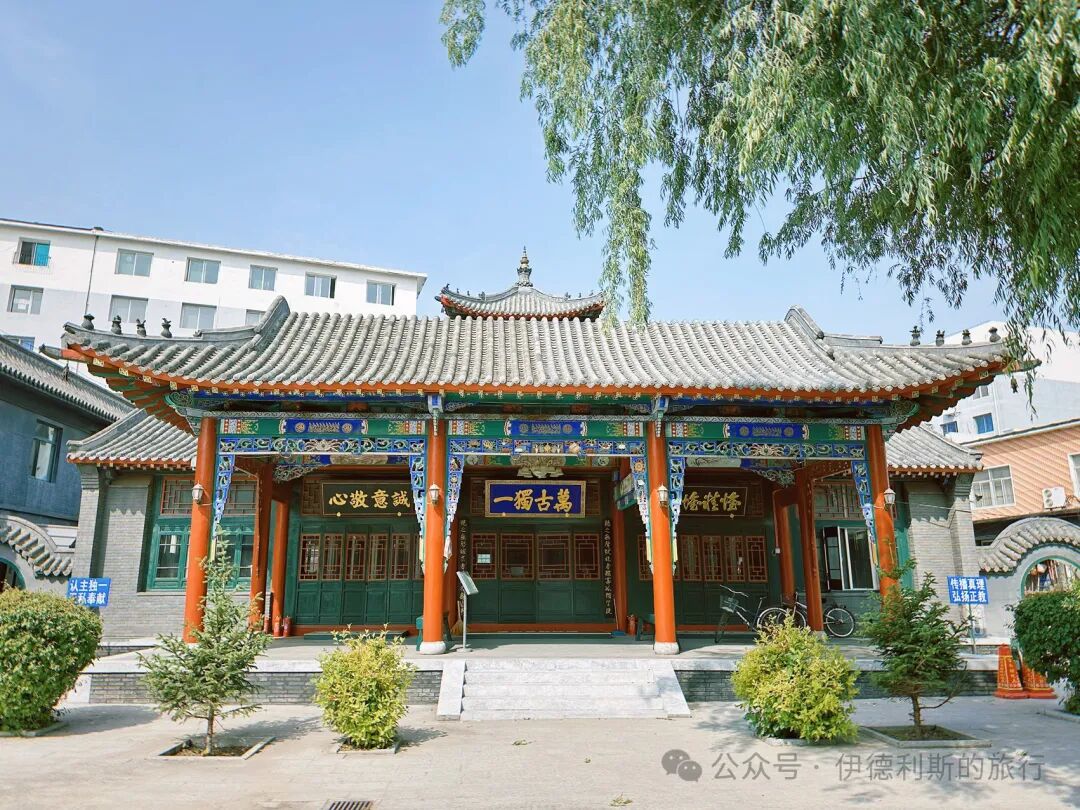
11. Fengcheng Mosque in Dandong
[Dragon Boat Festival Trip to Liaoning] Fengcheng Ancient Mosque and Dandong Food
Fengcheng Mosque was built in 1775 (the 40th year of Qianlong reign). It was renovated in 1862 (the 1st year of the Tongzhi reign), and in 1876 (the 2nd year of Guangxu reign), the north lecture hall was rebuilt and side rooms were added. In 1890 (the 16th year of Guangxu reign), the Moon-Sighting Tower was added, giving the mosque its current size. The most unique feature of Fengcheng Mosque is the Moon-Sighting Tower, built in Guangxu reign. It has a double-eaved, four-cornered pointed roof with elegant upturned eaves, brackets, and finely carved decorative brackets (que-ti).
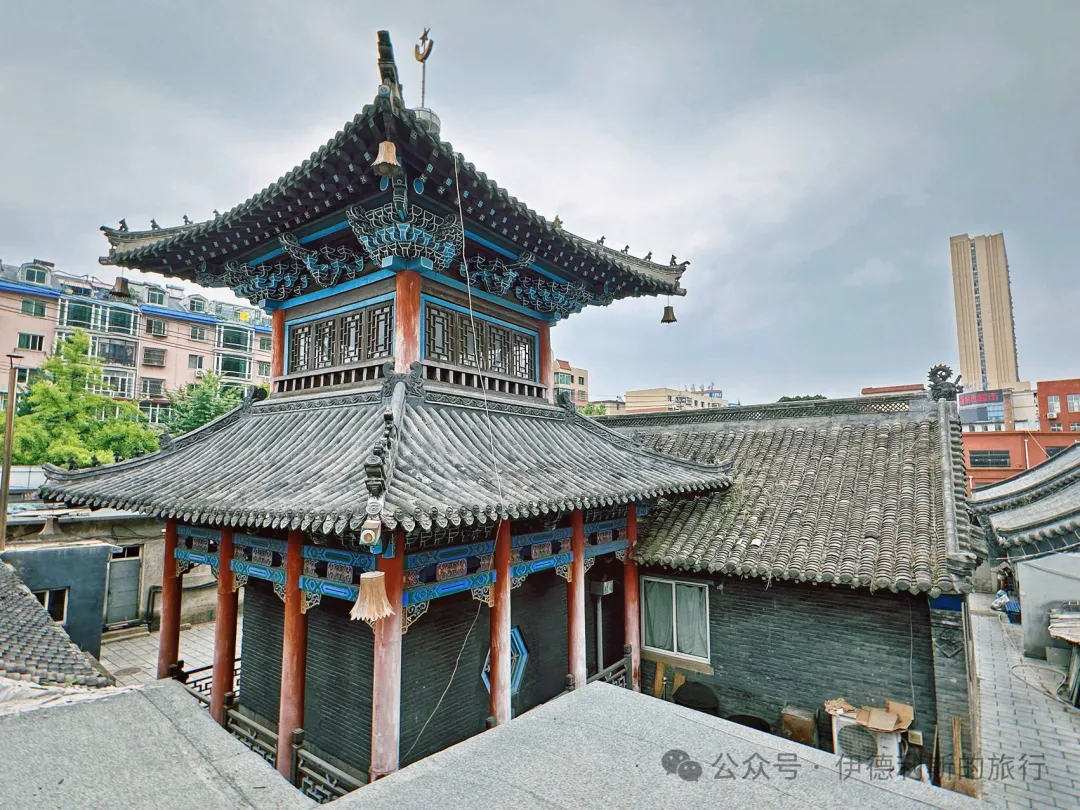
12. Qingdui Mosque in Dalian
[Dragon Boat Festival Trip to Liaoning] Dalian City, Fuzhou Ancient City, and Qingdui Ancient Town
Qingdui Town is a thousand-year-old town that has served as a fishing port and commercial hub on the Liaodong Peninsula since the Tang Dynasty. Qingbu Port officially opened in 1743 (the eighth year of Qianlong reign), making Qingdui Town an important transit point for people from Shandong and Hebei migrating to the Northeast. During the late Qing Dynasty and the Republican era, Qingdui Town was home to over three hundred businesses, with shops lining the streets and bustling with activity. Today, Qingdui Town still preserves many old houses with green bricks and dark tiles from the late Qing and Republican periods, and Qingdui Mosque (Qingdui Si) is one of them.
Qingdui Mosque was built in the Daoguang reign of the Qing, starting as just three thatched rooms. In July 1894, the First Sino-Japanese War broke out, and the famous Hui Muslim general Zuo Baogui led his troops to Korea to fight the Japanese, passing by Qingdui Mosque on the way. General Zuo Baogui got along very well with Imam Zhang Chaozhen of Qingdui Mosque. Later, he donated money, and with additional funds raised by his personal Hui Muslim guards and three local halal restaurants—Deshengyuan, Qingshengyuan, and Yongshengyuan—they worked together to expand the mosque. It is a pity that General Zuo Baogui died heroically fighting the Japanese in Pyongyang before the expansion of Qingdui Mosque was finished.
In 1895 (the 21st year of Guangxu reign), Hui Wanchun, the elder in charge of Qingdui Mosque, led the rebuilding of the hall into the three-room green brick and tile structure we see now. In 1920 (the 9th year of the Republic), the gatehouse was rebuilt and the lecture hall was expanded, giving the mosque its current size.
Above the gate of Qingdui Mosque is a brick-carved couplet that reads: 'The pure palace spreads the teachings of the Muhammadan path, the true sage passes down scriptures that bring grace from the Western Regions.' This is a very precious piece of Republic-era brick-carved calligraphy. The main gate is usually closed, so you have to enter the mosque through the south wing where the imam lives. The imam is from Gansu, and he warmly told us about the history of Qingdui Mosque; it is not easy for his family to stay here and keep this small community mosque running.
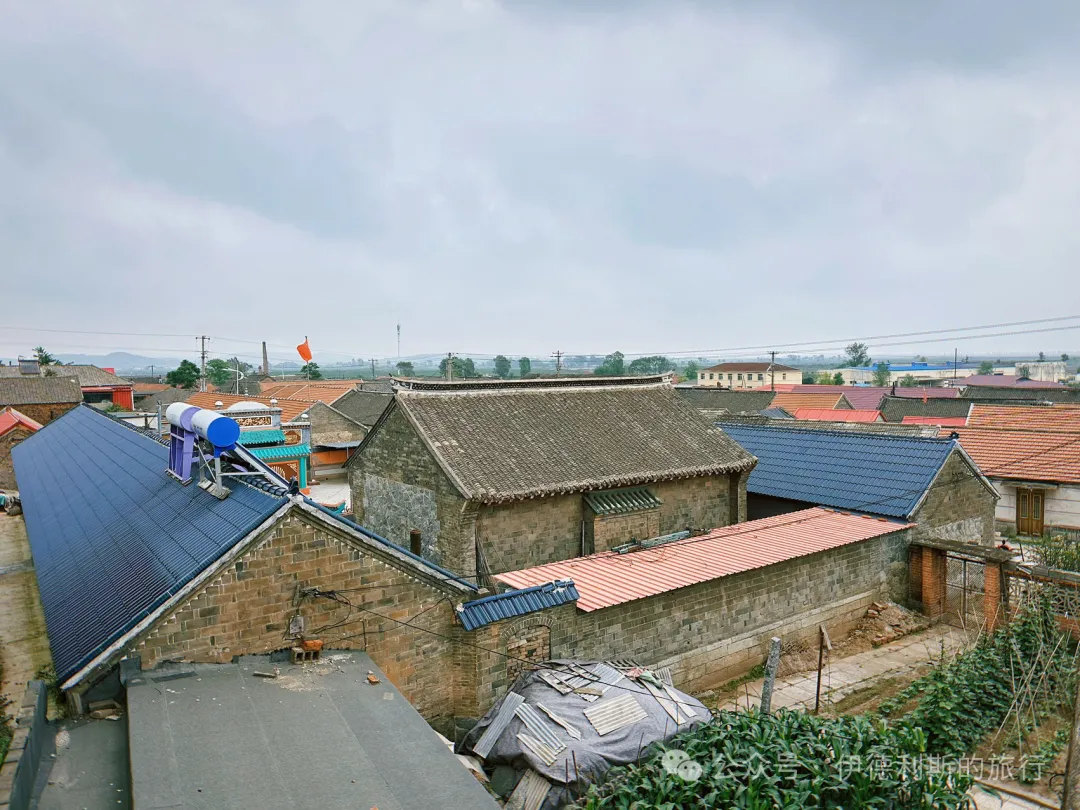
13. Fuzhou Mosque in Dalian
[Dragon Boat Festival Trip to Liaoning] Dalian City, Fuzhou Ancient City, and Qingdui Ancient Town
In the early Qing Dynasty, Hui Muslims with the surnames Yin, Dai, Ma, and Hui arrived in Fuzhou. In 1649, the sixth year of the Shunzhi reign, they began planning the Fuzhou Mosque. By 1656, the thirteenth year of the Shunzhi reign, they finished building three thatched rooms to serve as the hall. The hall was rebuilt in 1774, the thirty-ninth year of Qianlong reign, and expanded again in 1880, the sixth year of Guangxu reign, though it still had a thatched roof. In 1920, the front porch and rear kiln-style hall were added, and the roof was changed to grey brick tiles, creating the structure seen now.
Hanging in front of the Fuzhou Mosque hall is a plaque inscribed with the words "Return to Simplicity and Truth" (Huan Pu Gui Zhen). It was presented in 1897, the twenty-third year of Guangxu reign, by Wang Tingxiang, a high-ranking official who held several titles including Imperial Censor of the Jiangnan Circuit and Commissioner of Education for Shanxi.
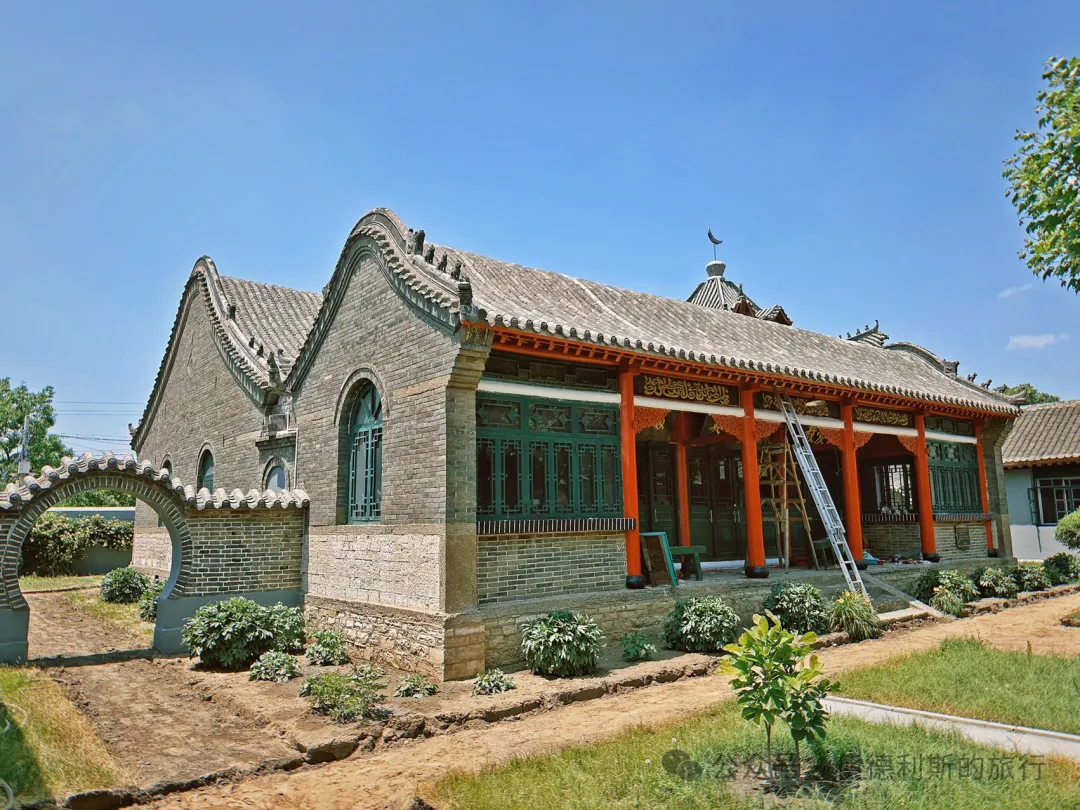
14. Xinlitun Mosque in Jinzhou
[Dragon Boat Festival Trip to Liaoning] The ancient town of Xinlitun in western Liaoning and the coal city of Fuxin
Xinlitun is an ancient town in western Liaoning, known as the "First Town Beyond the Frontier." During the Daoguang period of the Qing, Hui Muslims from places like Jinzhou, Yixian, Heishan, and Yingkou came to settle in Xinlitun. They built the Xinlitun Mosque in 1842.
On the 15th day of the first lunar month in 1873, Xinlitun held a stilt-walking festival. During the event, a conflict broke out between a Manchu banner man named Dashan, also known as Fifth Master Da, and Hui Muslims including Liu Hua, Zhao Guang'en, and Wang Yao. This escalated into a clash between the Manchu and Hui communities, which ended with the Xinlitun Mosque being burned down. Afterward, both the Manchu and Hui communities learned from the incident and decided to rebuild the Xinlitun Mosque. After several years of preparation, General Zuo Baogui, an anti-Japanese hero who led the Fengtian Army, took the lead by donating 300 taels of silver to finally complete the reconstruction.
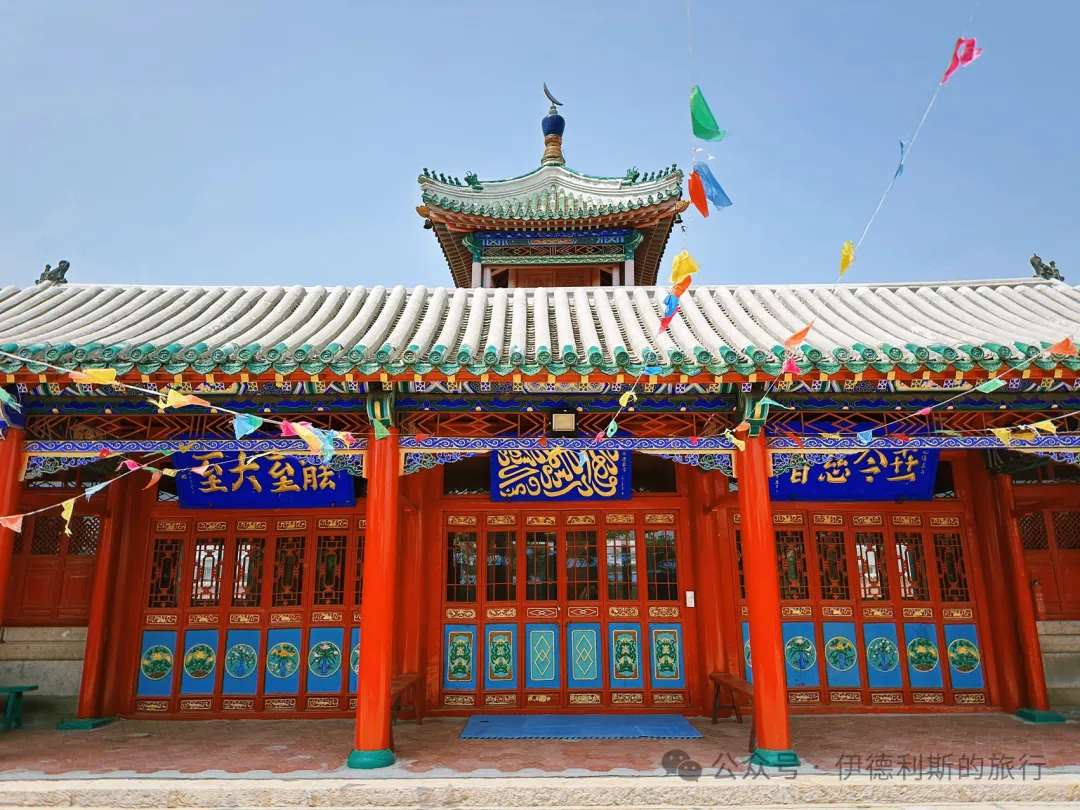
15. Beizhen Mosque in Jinzhou
Visiting an old mosque in Jinzhou, Liaoning
The Beizhen Mosque was built in 1522, expanded in 1617, and renovated again in 1798. Beizhen Mosque was once inside the south wall of Guangning City. During Qianlong reign, the south wall was abandoned when the city was rebuilt. The wall slowly disappeared, and later Guangning City was renamed Beizhen City. This turned Beizhen Mosque from a city mosque into one located outside the city walls.
Beizhen Mosque follows the traditional northern mosque layout of a porch (juanpeng), hall (dadian), and rear niche (yaodian). Unusually, the porch and the hall are separate structures and do not connect. The beams and brackets are painted with floral patterns, and the wood carvings are very fine and detailed.
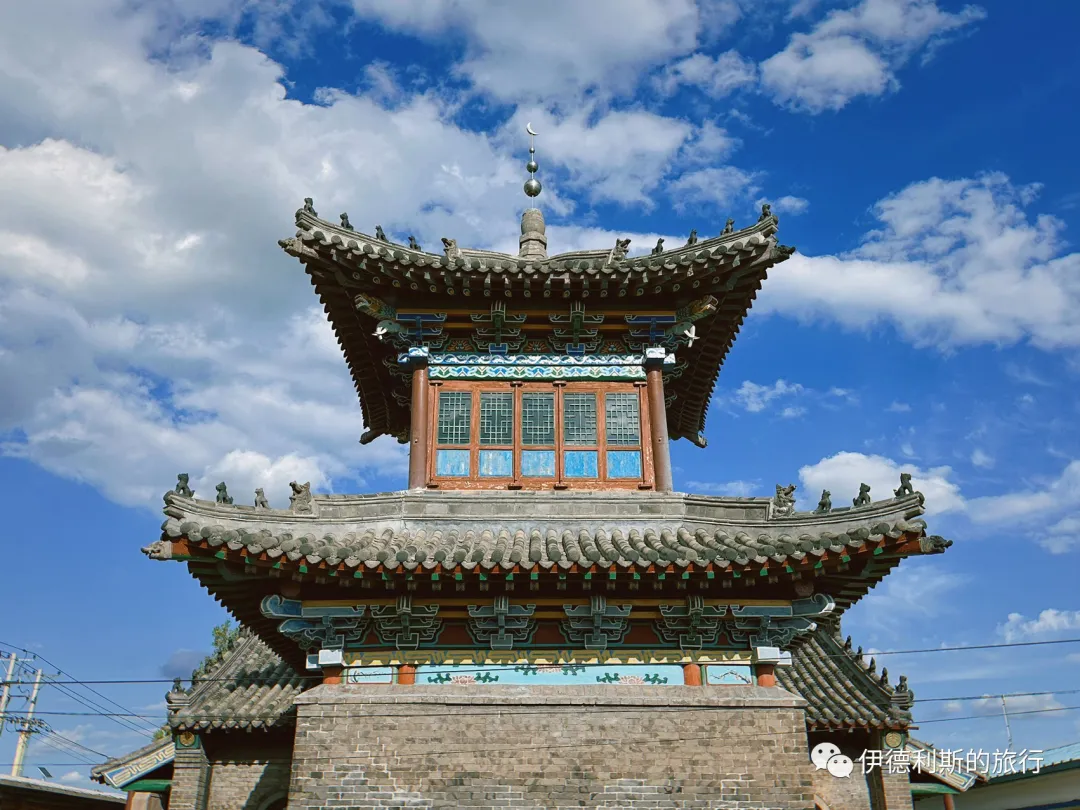
16. Luyang Mosque in Jinzhou
Visiting an old mosque in Jinzhou, Liaoning
Luyang Mosque in Jinzhou, Liaoning, was built in 1531 (the tenth year of the Jiajing reign of the Ming). It was rebuilt in the Xianfeng reign of the Qing and reached its current form in 1925. Manager Wang of the Luyang Enliyong pastry shop oversaw the construction. He invited Yang Peiran (Yuchun), who was a brigade commander in the Northeast Army at the time, to help raise the funds. Luyang Mosque is a rare historic mosque in China that features a moon-viewing tower (wangyuelou) placed directly above the hall. You can climb up to the tower to view the moon using a hanging wooden ladder. A plaque inscribed by the anti-Japanese hero General Zuo Baogui once hung in front of the hall, but it was destroyed. The current plaque was inscribed in 1984.
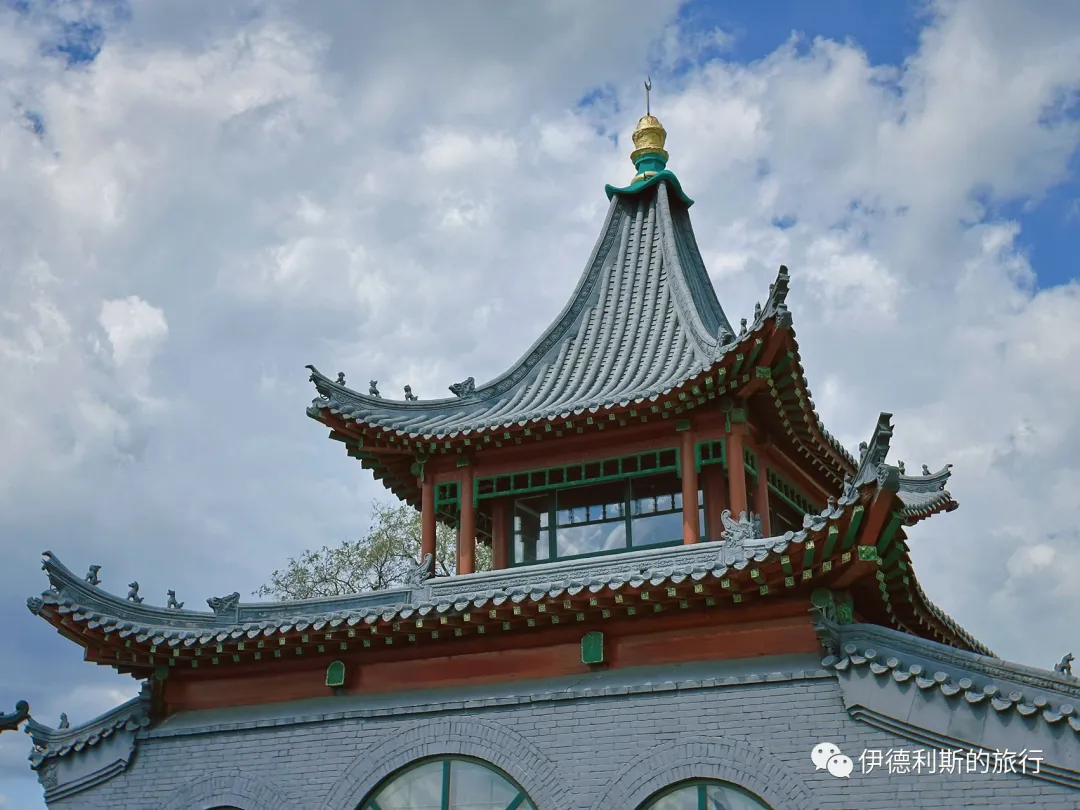
17. Lingyuan Mosque in Chaoyang
A tour of three mosques in Liaoning: Lingyuan, Shenyang, and Kaiyuan
Lingyuan City in Chaoyang, Liaoning, sits at the border of Hebei, Liaoning, and Inner Mongolia. It was originally called Tazigou. Since the Qianlong era of the Qing, Hui Muslims from Shandong and Hebei kept traveling through the Great Wall gaps near Xifengkou to reach the northeast. Lingyuan was their first stop after crossing the wall, and some Hui Muslims settled there. Lingyuan Mosque was built during the Qianlong era. According to stone inscriptions in the mosque, a Hui Muslim doctor named Zhang Lichen and others cured the illness of a Mongol prince from the Harqin Left Banner. The prince's estate then provided the land and silver to build the Lingyuan Mosque.
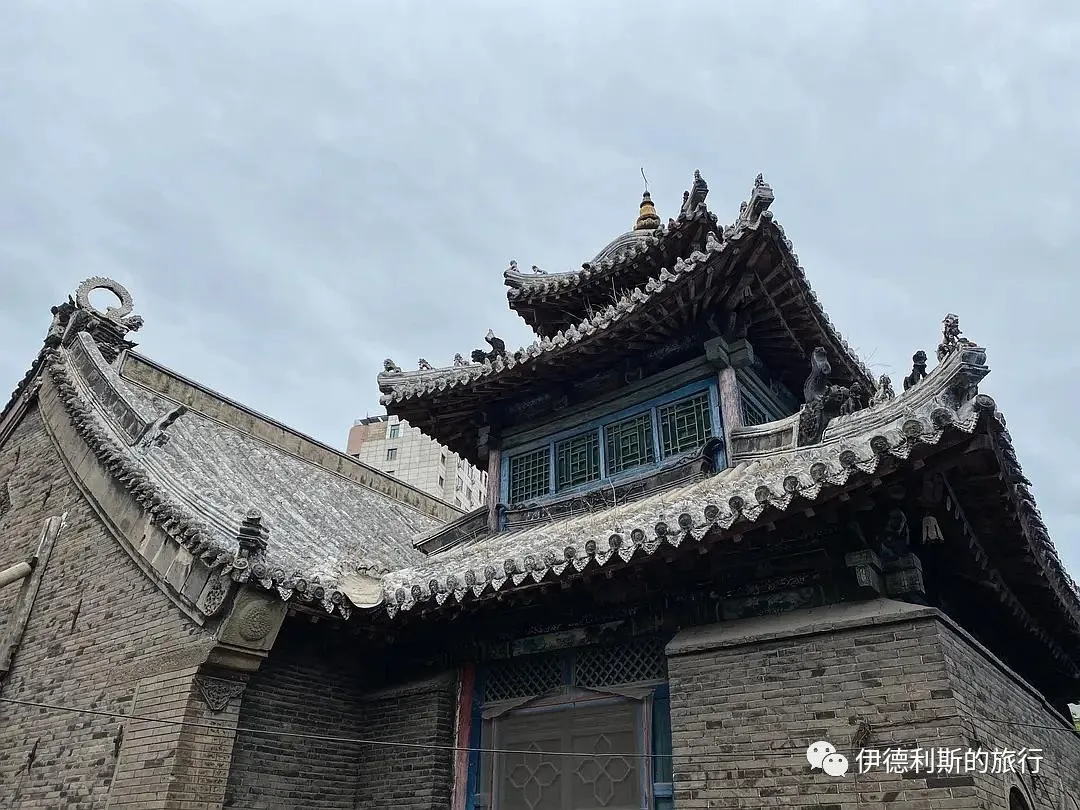
18. Suizhong Mosque in Huludao
The mosque and halal snacks in Suizhong, Liaoning
Suizhong County in Huludao, Liaoning, sits right next to Shanhai Pass and is the southwesternmost county in Liaoning Province. Starting in the 18th century, more than ten families of Hui Muslims, including the Zhang, Ding, Li, and Jin families, moved to Suizhong from Hebei Province. The first Suizhong mosque was built in 1737 (the second year of Qianlong reign) below the Kuixing Tower in the southeast of the city. It moved to its current location inside the West Gate in 1797 (the third year of Jiaqing reign) and took on its present form after being rebuilt between 1924 and 1927.
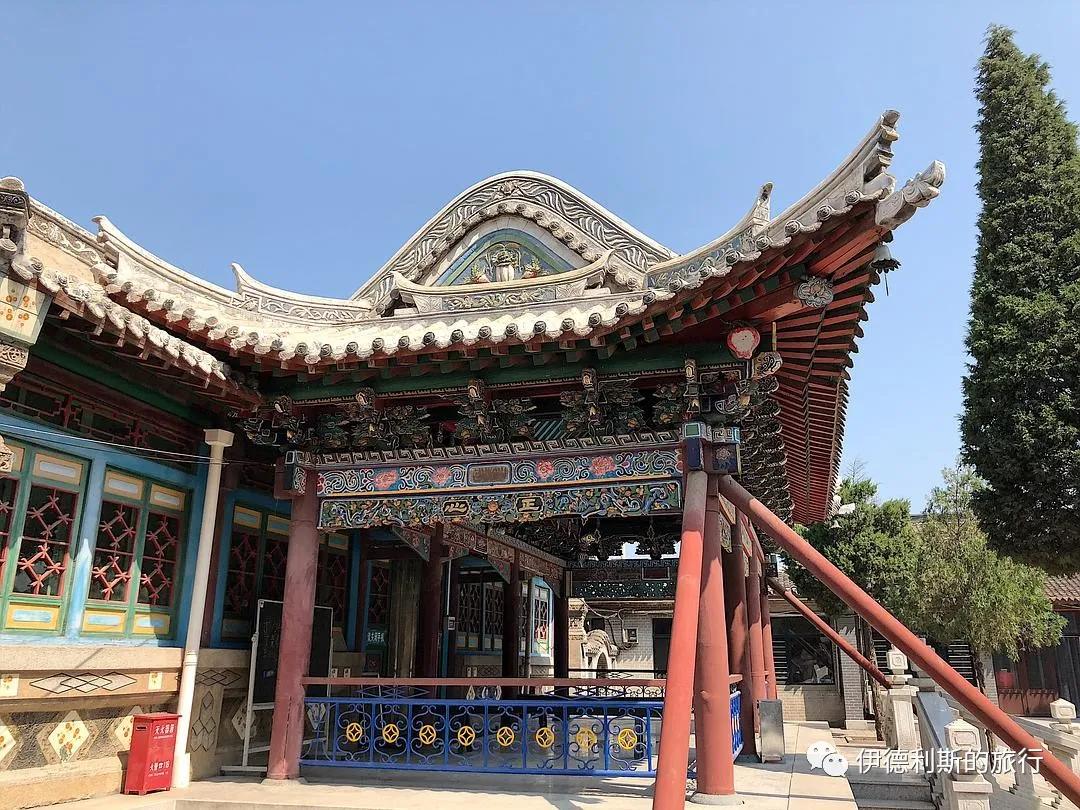
Inner Mongolia
19. Chifeng North Mosque
Chifeng North Mosque in Inner Mongolia and halal food
During the early Qing Dynasty, Hui Muslims from Shandong and Hebei continuously traveled through Gubeikou and Chengde to reach eastern Inner Mongolia to make a living. In the 1730s, ten Hui families with the surnames Zhang, Ma, and Bai moved from Shandong and Hebei to settle in Chifeng, where they became known as the ten great Hui families or the 'mountain-claiming households' (zhanshanhu). In 1739 (the fourth year of Qianlong reign), village elder Zhang Yueming from Chifeng led the effort to lease seven point six mu of land from Mongolian princes. They built five mud houses and a three-room hall, which became the earliest Chifeng Mosque.
In 1742 (the seventh year of Qianlong reign), village elder Ma Fen, who once ran the Desheng Security Firm in Shenyang, initiated the renovation of Chifeng Mosque. He paid for a plot of land, and the imam along with several village elders traveled to various places to collect donations through written requests (nietie). Afterward, Ma Fen went to Shenyang to hire craftsmen. Construction took four years and finished in 1747 (the twelfth year of Qianlong reign). All the wood used came from red pine trees on the south mountain of Chifeng. From then on, the imam of the North Mosque was always a scripture reader from the Ma family line.
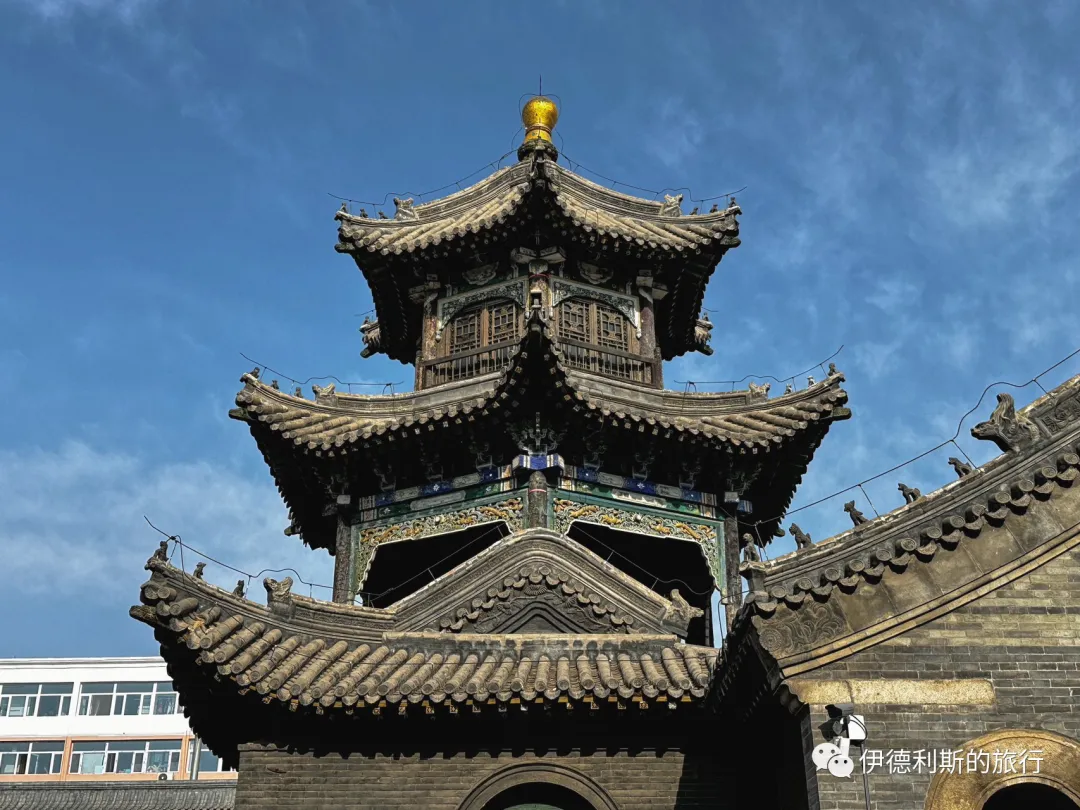
20. Longshengzhuang Mosque in Ulanqab
Longshengzhuang, a former trading town for Shanxi merchants traveling to Mongolia.
Longshengzhuang is on the border between Shanxi and Inner Mongolia. From the Qing to the early Republic of China, it was an important trading hub for Shanxi merchants traveling to Mongolia. During the early Qing Dynasty, Hui Muslims from Hebei and Shandong kept moving to Longshengzhuang for business. In the late Qing Dynasty, many Hui Muslims from Shaanxi also migrated there. During the reign of the Guangxu Emperor in the Qing, the Hui Muslim population in Longshengzhuang grew to two or three thousand people, reaching a peak of over five thousand in the early years of the Republic. Then, Longshengzhuang had nearly twenty businesses, including a large halal restaurant (qingzhen dafanzhuang), livestock traders, brokers, and inns for travelers with horses.
Longshengzhuang Mosque was built in 1751. It started with only three halls. As more Muslims came here for business, they added a hall, a front gate, a second gate, side rooms, and a screen wall in 1831, creating a three-courtyard layout. The arched porch (juanpeng) of Longshengzhuang Mosque was expanded in 1926 and features beautiful ironwork decorations from the Republican era.
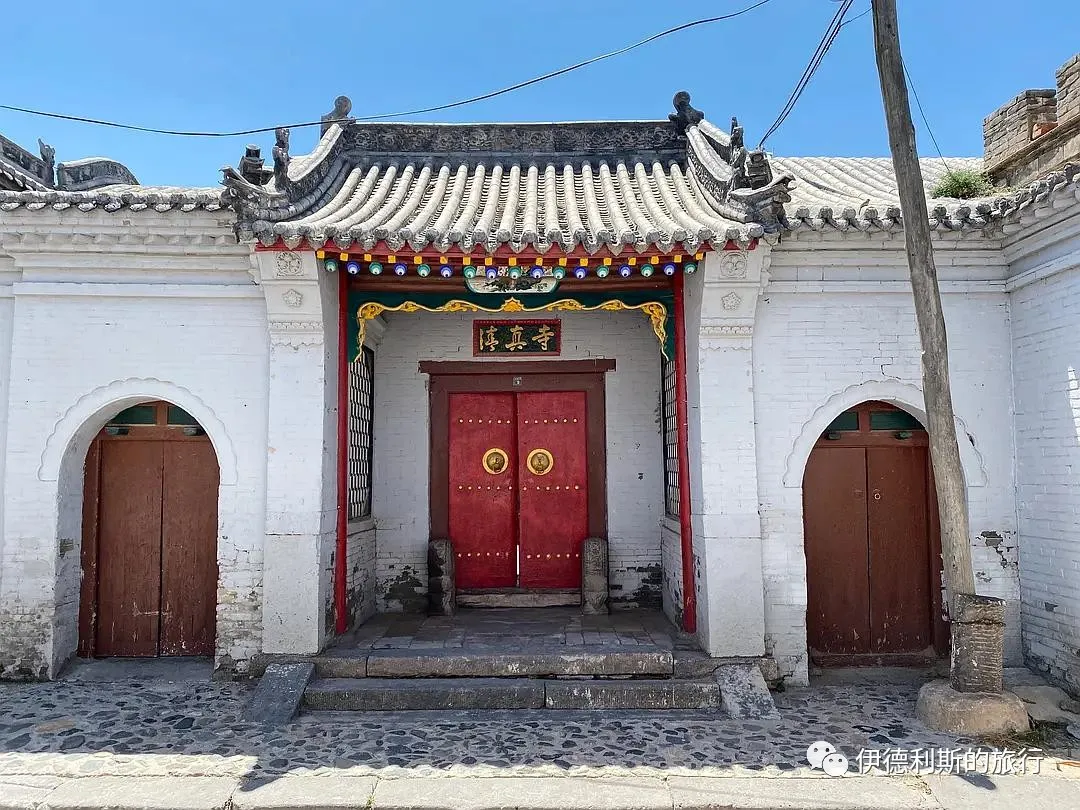
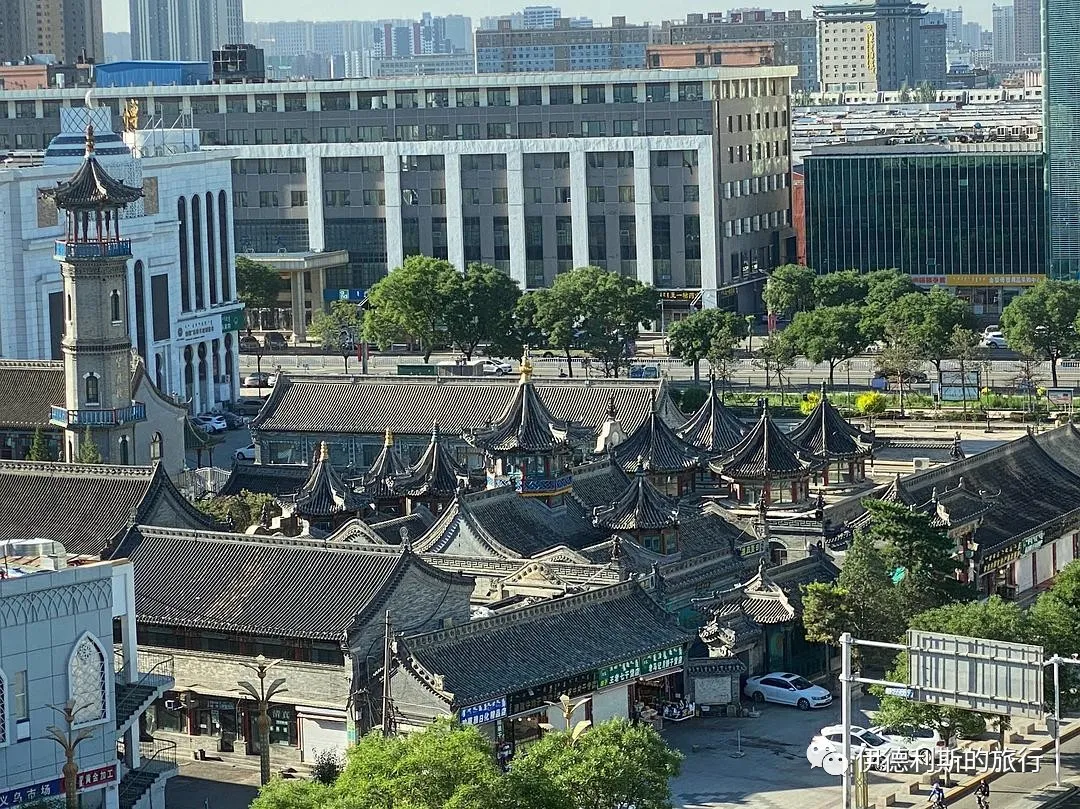
21. Hohhot Great Mosque
Summer halal food tour in Hohhot
Hohhot Great Mosque was built between the end of the Ming and the beginning of the Qing. It was expanded in 1789 (the 54th year of Qianlong reign) and again in 1923. The mosque gate was built in 1892 (the 18th year of Guangxu reign). Above it hangs a plaque inscribed with "Great Mosque" (Qingzhen Dasi) from 1890 (the 16th year of Guangxu reign), with plaques reading "National Prosperity" (Guotai) and "Peace for the People" (Min'an) on either side. Inside the entrance, you can see a brick-carved screen wall behind the hall. It was built in 1896 (the 22nd year of Guangxu reign) and is inscribed with phrases meaning "rectify the heart and be sincere in self-cultivation," "recognize the oneness of Allah," "brighten the heart," and "see one's true nature." These were written by Ma Fuxiang, who served as the Suiyuan Military Governor in 1924. The hall was expanded in 1923 and consists of a porch, a front hall, a middle hall, and a rear kiln-style hall. The roof features a connected structure with four gables and five pointed pavilions, which symbolize the five pillars of Islam: faith, prayer (namaz), fasting, charity, and pilgrimage. The porch blends Chinese and Western styles with arched doorways. The walls are has Arabic plaques, couplets, and floral patterns. The Moon-Sighting Tower (Wangyue Lou) was built in 1939. It stands 36 meters tall with a hexagonal brick base and a single-eave hexagonal pointed roof at the top.
22. Hohhot East Mosque
Summer halal food tour in Hohhot
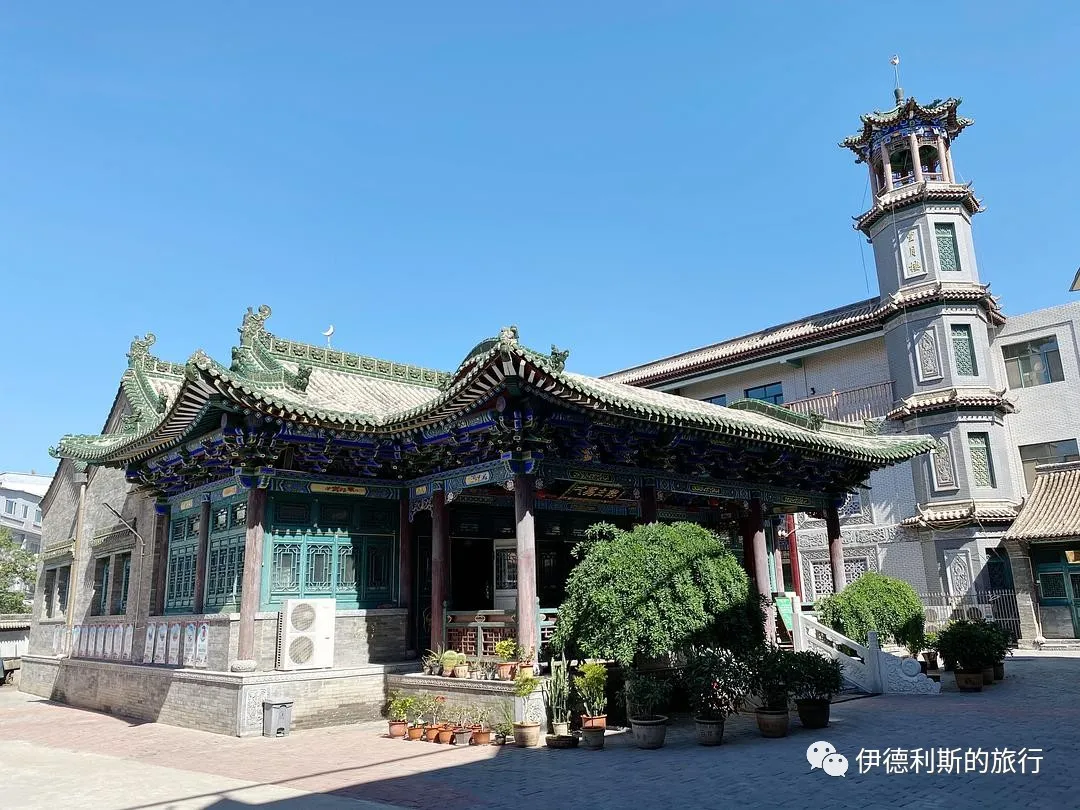
Hohhot East Mosque was built in Kangxi reign of the Qing. It started as a school and was expanded into a mosque in Guangxu reign. The current building was rebuilt in 2014.
Hebei
23. West Mosque (Xisi) in Chengde
Mosques and halal food in Chengde
Hui Muslims began settling in Chengde after the Qing built the Mountain Resort. Whenever Emperor Kangxi held the Mulan autumn hunt or visited the resort to escape the summer heat, Hui Muslim soldiers and merchants followed him. In the early years of the Yongzheng reign, the Qing government stationed Green Standard Army troops in Chengde. Because most soldiers came from Shaanxi, it was called the Shaanxi Camp, and the Left Camp within it was mostly made up of Hui Muslims. From then on, the Shaanxi Camp became the main residential area for Hui Muslims in Chengde.
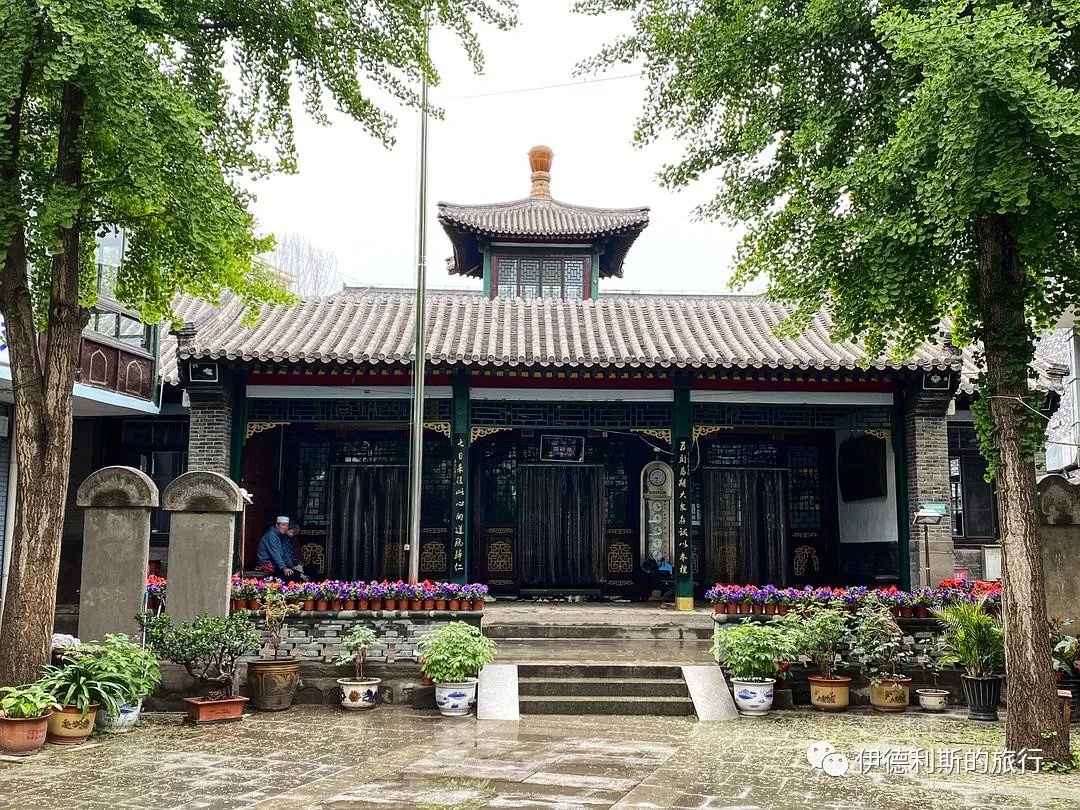
By the Qianlong era, Chengde had become a major city in the north. Hui Muslims from Shandong and Hebei came to do business, working in the food industry and cattle and sheep slaughtering, a movement known as 'chasing the imperial camp'. Today, the ten major surnames of Chengde's Hui Muslims, including Wang, Ma, Shi, and Chen, all moved here from Shandong. The Wu family moved from Cangzhou, Hebei, and the Kong family moved from Beijing. The earliest mosque in Chengde, the East Mosque (Dongsi), was built in Kangxi reign and was occupied in 1958. The existing West Mosque (Xisi) was built in the Daoguang reign. The hall consists of a porch (juanpeng), a hall, and a rear niche (yaodian). The moon-sighting tower (wangyuelou) is on top of the hall, topped with a decorative finial (baoding).
24. Pingquan Mosque in Chengde
Go to the small town of Pingquan outside the Great Wall to drink lamb bone broth (yangtang).
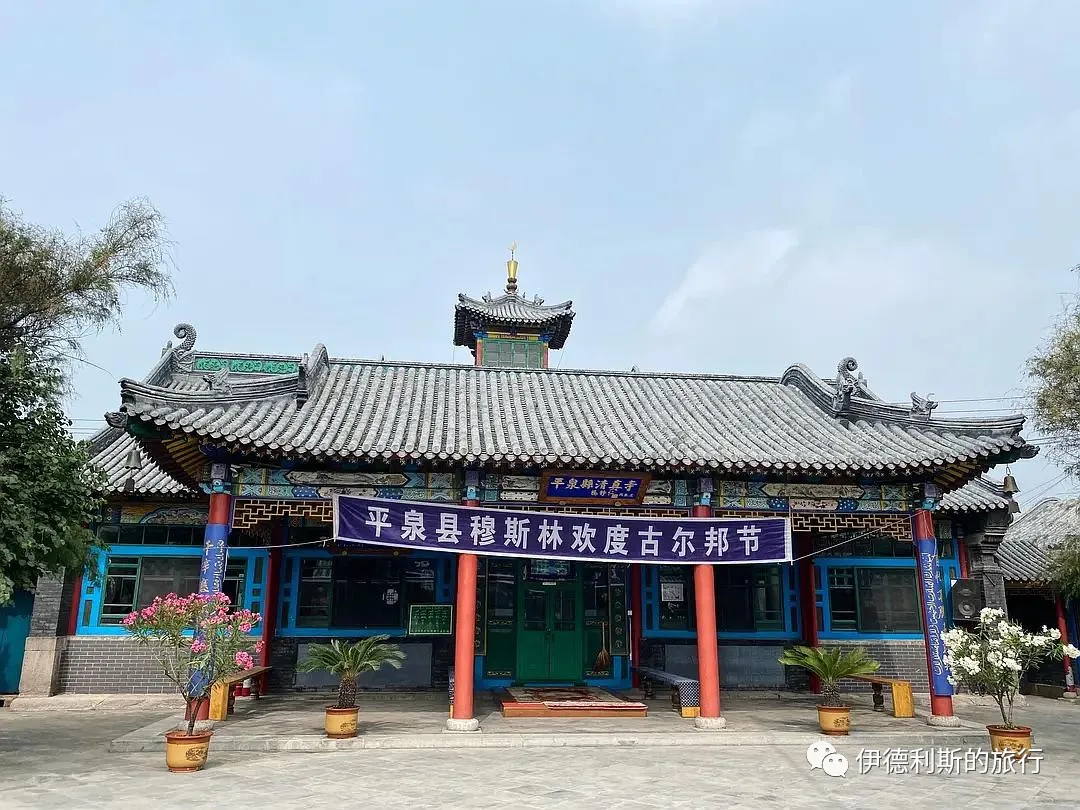
The South Street Mosque in Pingquan, Hebei, was built in 1647 (the fourth year of the Shunzhi reign of the Qing) and originally consisted of only three thatched rooms. As the number of Hui Muslims in Pingquan grew in Qianlong reign, the mosque's imam, Zhang Hongye, and his son, Zhang Jin, traveled to Beijing in 1742 (the seventh year of Qianlong reign). They made a model out of straw based on a mosque outside Qihua Gate (it is not verified whether it was the one at Nan Shangpo or Nan Xiapo) and brought it back to Pingquan to hire craftsmen to build the mosque. In 1915, Wu Zijian, the head of the Pingquan branch of the Islamic Promotion Association, led a renovation of the mosque.
25. Xinhua Street Mosque in Zhangjiakou
Mosques and halal food in Zhangjiakou and Xuanhua
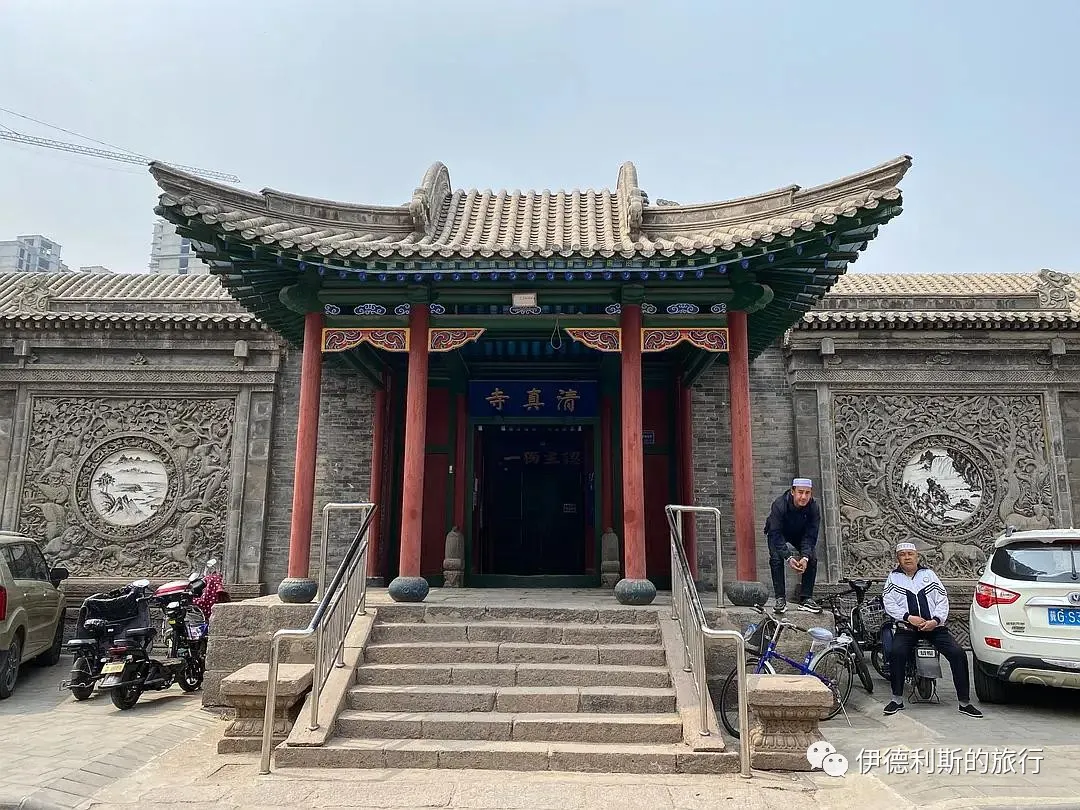
Xinhua Street Mosque in Zhangjiakou was originally called Shenggou Mosque. It was built in 1863, the second year of the Tongzhi reign, by over eighty Hui families from Ningxia who had taken refuge in Zhangjiakou. Because these people mainly worked in the camel transport trade, Xinhua Street Mosque is also known as Camel Caravan Mosque (Tuofang Si).
These Hui Muslims were mostly from the Ma, Liu, Li, Du, Wu, Wang, and Ding families. They used camels to transport furs, silk, and tea for merchants, traveling between Inner Mongolia, Shanxi, Gansu, Mongolia, and Russia. They first built a simple hall next to a business called Baoshun Camel Shop. It reached its current size at Xinhua Street Mosque after several expansions. In front of the hall of Xinhua Street Mosque, there are beautiful stone railings with pillar tops carved into the shape of fruit plates. All the large pine beams and pillars in the hall were brought from Mongolia, serving as a witness to the camel transport trade in Zhangjiakou.
26. Xiguan Mosque in Zhangjiakou
Mosques and halal food in Zhangjiakou and Xuanhua
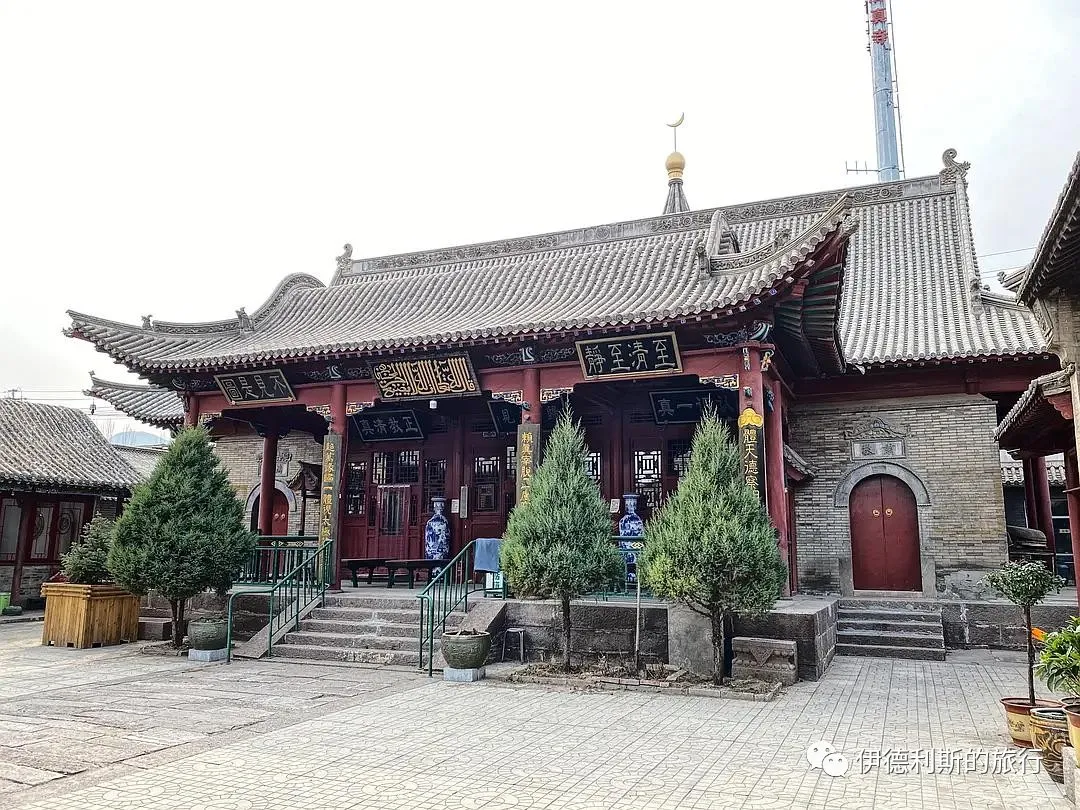
The Xiguan Mosque in Zhangjiakou was built during the reign of Emperor Yongzheng (1723-1735) by Hui Muslims from the Xiao, Zheng, Song, and Wang families who had lived in the Xiabao area of Zhangjiakou since the Ming and Qing dynasties. It had several renovations during the Qianlong, Jiaqing, and Daoguang eras. The original mihrab inside the hall of the Xiguan Mosque was destroyed due to historical events, and it could not be restored for a long time due to a lack of records. Fortunately, the mosque management committee kept searching and recently found a clear photo in a foreign book. In June 2020, they invited the famous Arabic calligrapher Wang Qifei to restore the Ming-style calligraphy on the mihrab. At the same time, he used Ming-style calligraphy to write the 99 Names of Allah on the caisson ceiling of the arched hall.
27. Turgou Mosque in Zhangjiakou
Mosques and halal food in Zhangjiakou and Xuanhua
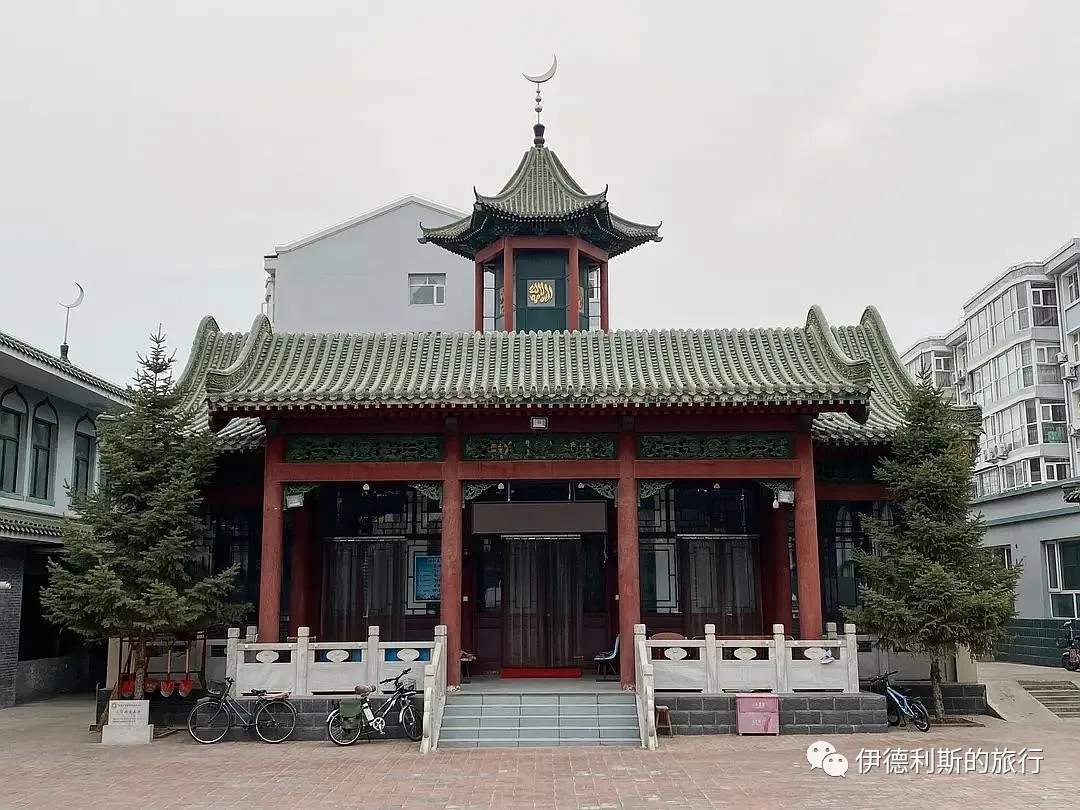
After the Beijing-Zhangjiakou Railway opened, the Qiaodong area of Zhangjiakou became prosperous. Hui Muslims with the surnames Yang, Chen, He, and Ma, who moved from the Dachang and Sanhe areas of Hebei, raised funds to build the Turgou Mosque in 1917. It was known as the Beijing and Jingdong Fangshang. The current hall was rebuilt in 1990.
28. Xuanhua South Mosque in Zhangjiakou
Mosques and halal food in Zhangjiakou and Xuanhua
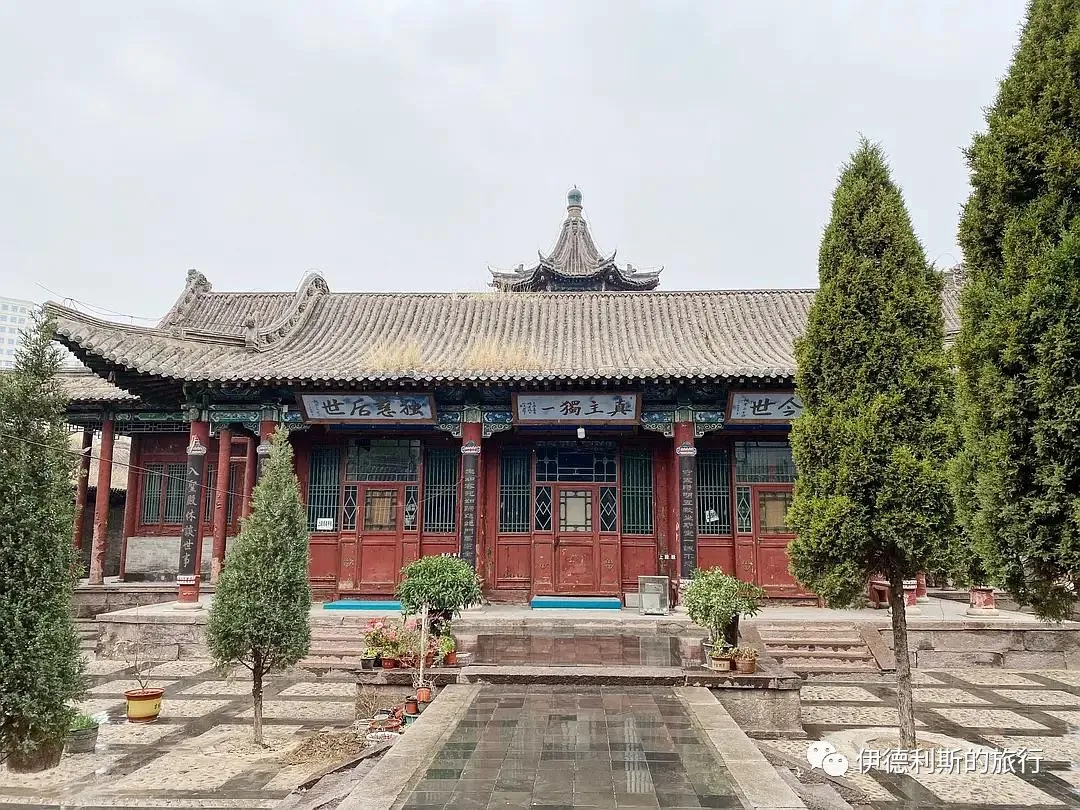
The South Mosque (Nandasi) in Xuanhua, Zhangjiakou, Hebei, was built in 1403 (the first year of the Yongle reign of the Ming). In 1820 (the 25th year of Jiaqing reign of the Qing), Hui Muslims from the Ding, Shan, and Yu families decided to move it to Miaodi Street. Then, they dismantled the gate, plaques, and Moon-Watching Tower (Wangyuelou) from the Ming mosque and moved them to the new site. Construction finished in 1854 (the fourth year of the Xianfeng reign of the Qing), making it the largest mosque in Zhangjiakou.
After the 1960s, the South Mosque suffered severe damage. The Moon-Watching Tower, corridors, stone arch bridge, and memorial archway were torn down, and all historical stone tablets, plaques, and couplets were destroyed. Restoration was finally completed between 2004 and 2007.
The South Mosque is laid out symmetrically along an east-west axis, with 15 halls and pavilions forming a complete architectural complex. Entering the main gate leads to a courtyard with a stone arch bridge in the center. Directly ahead is the Heart-Reflecting Tower (Shengxinlou), which has a hallway on the ground floor. The Moon-Watching Tower features upturned eaves with bracket sets and a double-eaved, hexagonal, pointed roof. The Moon-Watching Tower connects to the north and south lecture halls through covered corridors. The hall consists of a front porch (juanpeng), a hall, and a rear niche (yaodian). It uses a traditional timber frame structure with hardwood palace lanterns hanging from the beams. During Ramadan each year, all the lanterns are lit, making the hall as bright as day. Four pillars support the 17.6-meter-high roof of the rear niche (yaodian). The roof of the rear niche (yaodian) is an octagonal pointed structure with upturned eaves and a decorative caisson ceiling (zaojing) inside.
29. Xuanhua North Mosque in Zhangjiakou
Mosques and halal food in Zhangjiakou and Xuanhua
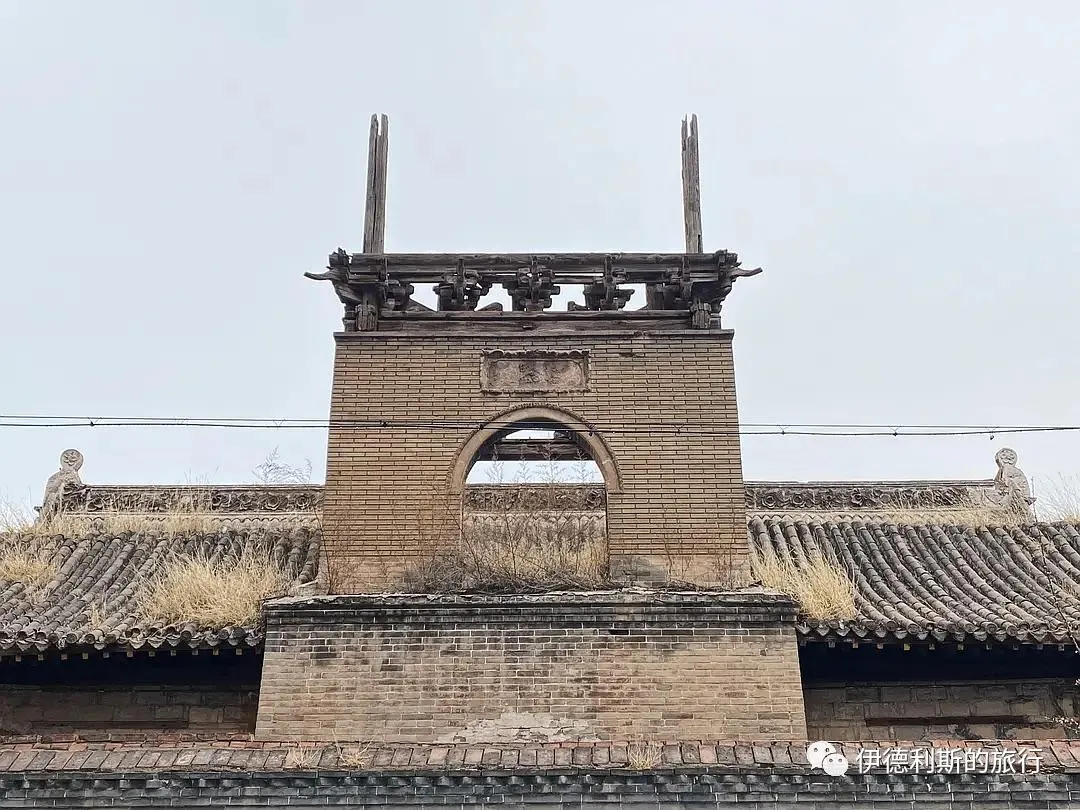
Xuanhua North Mosque in Zhangjiakou, Hebei, was built in 1722 (the 61st year of Kangxi reign of the Qing). The side rooms and auxiliary halls were rebuilt in 1860 and 1865. The North Mosque originally featured a gate tower, a minaret (xuanlilou), corridors, north and south side rooms, and a hall, all has ornate carvings and paintings. The hall is unique because the front porch (juanpeng), hall, and rear niche (yaodian) form a cross-shaped floor plan. The overall structure is shallow and wide, which is very different from the long and deep halls common in eastern regions, but is actually more common in Xinjiang. The kiln-style hall (yaodian) is also unique, featuring a square, multi-story roof built on top of the arched shed structure.
After the 1960s, the North Mosque suffered severe damage. The gate tower, side gate, perimeter walls, hanging flower gate (chuihuamen), corridors, and minaret were all torn down and have not been restored to this day. Currently, the hall and the north and south side rooms are rented out as warehouses. The roof of the kiln-style hall has collapsed, and the north side hall and the ablution room (shuifang) were converted into a workshop for a halal pastry factory, which still occupies the space.
30. Xuanhua Middle Mosque in Zhangjiakou
Mosques and halal food in Zhangjiakou and Xuanhua
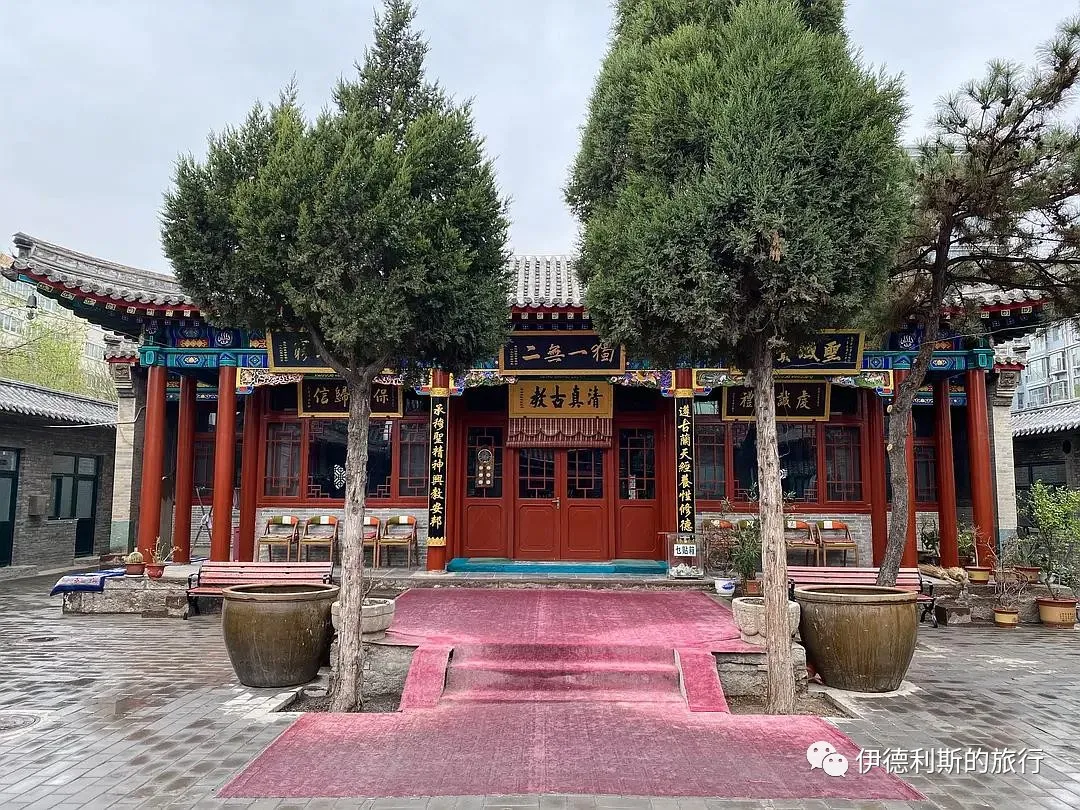
Located between the North Mosque and the South Mosque, the Xuanhua Middle Mosque in Zhangjiakou, Hebei, is smaller in scale. It was built in 1821 (the first year of the Daoguang reign of the Qing) and underwent renovations in 2016.
31. Baoding West Mosque
The ancient mosques and halal food of Baoding
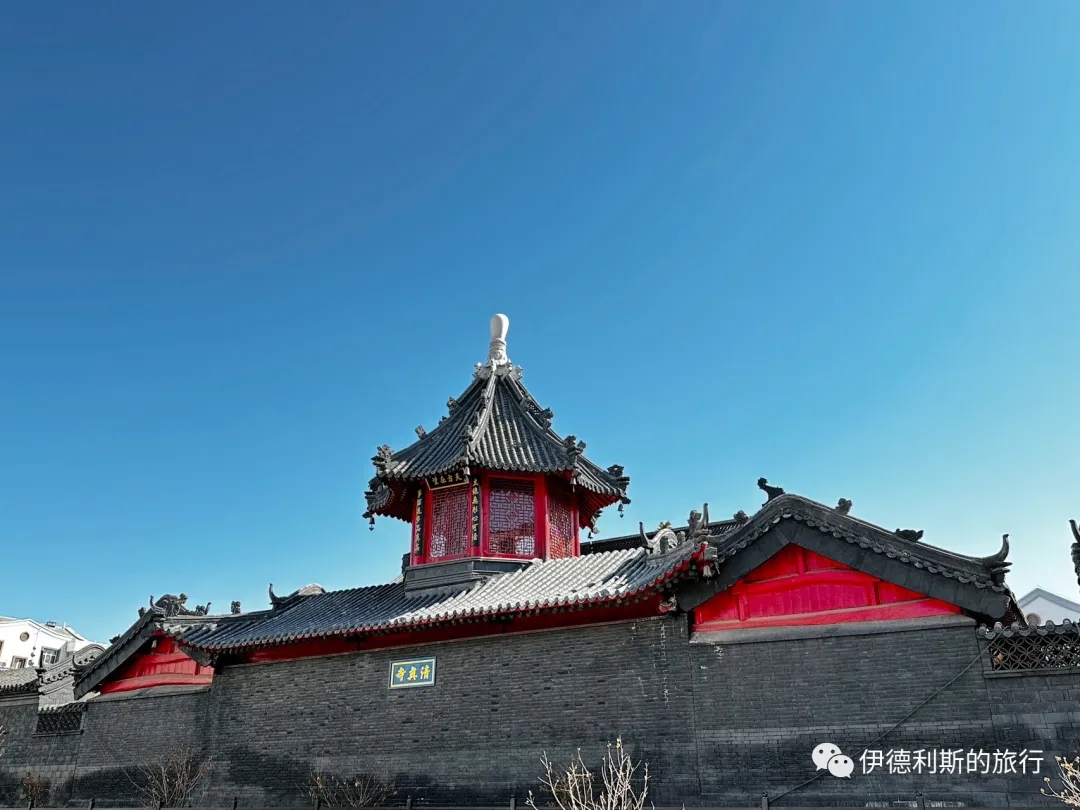
The West Mosque in Baoding, Hebei, was built in 1616 (the 44th year of the Wanli reign of the Ming). According to the stone inscriptions in the mosque, a man named Fa Gong from Hanji Village in Fangshan served as a military officer in Baoding during the Wanli years. He noticed there was no mosque in the city, which meant local Hui Muslims had to travel elsewhere for prayers during Eid (Erde). He bought 12 mu of land from the Wei family vegetable garden to build one. Besides building the mosque, the surrounding land was used for housing, which officially established the mosque community layout in Baoding. The West Mosque was renovated many times after the Qing. The bathing room was rebuilt in 1906 (the 23rd year of Guangxu reign), and the north and south lecture halls were rebuilt in the Republican era, creating the current layout.
The hall has two sections. The roof of the rear hall features an octagonal pavilion over 7 meters high, with a couplet that reads, 'The Lord is formless but can be understood by the heart, to leave room for others is a high virtue,' and a horizontal plaque that says, 'Looking toward Mecca (Tianfang).' The roof ridges originally had animal statues, but in the Republican era, Bai Yunzhang, the owner of the famous local halal steamed bun shop Bai Yunzhang Baozipu, paid to have them replaced with flower and plant designs. As a famous mosque in North China, the West Mosque had a thriving religious community and trained many scholars (alim), including Xie Jinqing, Yang Yuzhen, An Shiwei, and Yang Yongchang. The mosque also once had a training ground that produced many famous wrestling masters and martial arts teachers.
32. Baoding East Mosque
The ancient mosques and halal food of Baoding
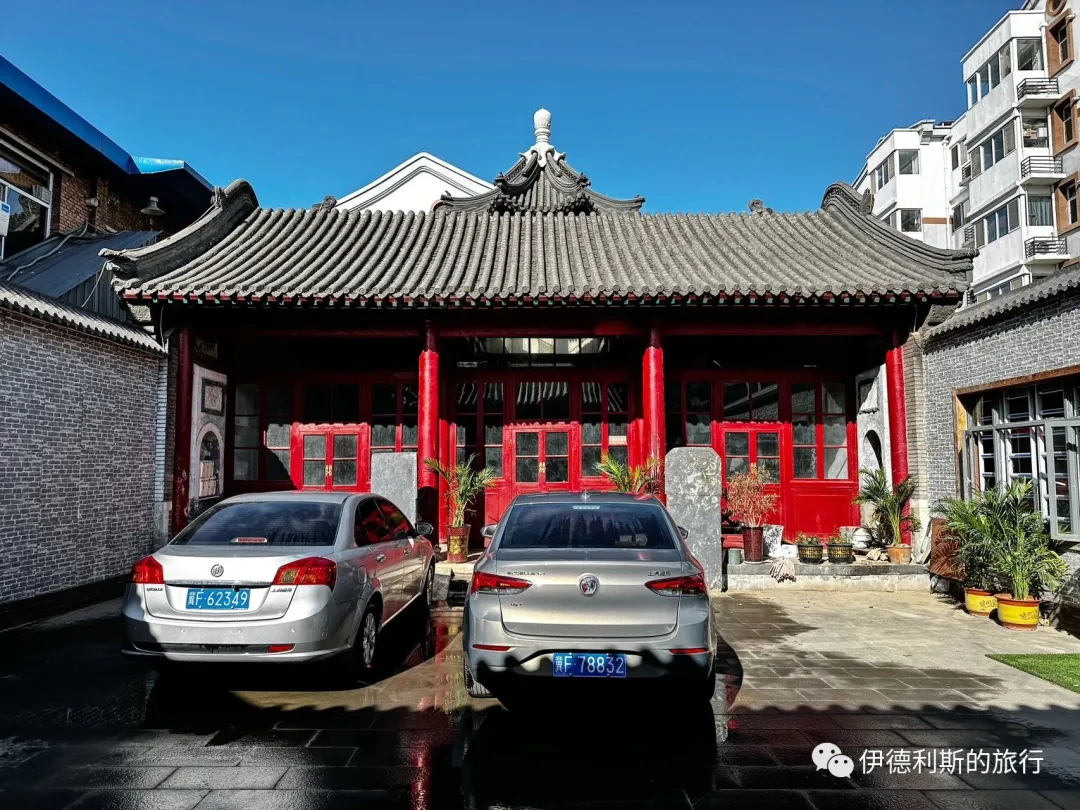
During the Tongzhi reign, the West Mosque in Baoding became too crowded as the number of worshippers grew, making the hall feel small. Local residents Shi Xie and his son Shi Jun built a scripture room to the east of the West Mosque. A few years later, the famous imam Yan Mingpu oversaw its official completion as the Baoding East Mosque. The Baoding East Mosque was renovated many times. During Guangxu reign, Imam Zhang Ziwen and Mr. Shi Tongshan led the construction of the south lecture hall and the washroom (shuifang). During the Xuantong reign, Imam Xie Jinqing oversaw the building of the north lecture hall, while Shi Changchun and Shi Tongshan managed a full renovation. In 1936, Imam Yang Baozhai led another major restoration. Although the Baoding East Mosque is not large, many well-known imams taught here, including Imam Wang Gui, Imam Li Ba, Imam Zhang Li, and Imam Bai Da, helping to train many talented students. After 1958, the East Mosque was taken over for use as a blueprint paper factory. In 1979, ownership was returned to the West Mosque, and it now serves as a warehouse for the Xinyue Halal Food Factory.
33. Baoding Women's Mosque
The ancient mosques and halal food of Baoding
The Baoding Women's Mosque in Hebei was founded in 1916 in the mosque's north alley by Imam Yan Fengshan from the Baoding East Mosque, with Jin Shiniang from Shandong serving as the prayer leader. In 1932, Imam Sha Zhijun from Jilin was hired to start a halal girls' primary school inside the mosque, which closed after the Japanese occupation in 1937. In 1940, Imam Sha and Elder Shi traveled to Beijing, Tianjin, and Jinan to raise funds. With additional help from local community elders, they bought a house from Bai Yunzhang, the owner of the famous Baoding halal steamed bun shop (baozhi), to build the current Baoding Women's Mosque. The mosque was taken over after 1958. In the 1970s, digging an air-raid shelter under the hall caused structural damage. After it was returned in 1982, the walls began to crack. A new building was constructed on the north side during the 2015 urban renewal project, and the old hall is now used as a storage room.
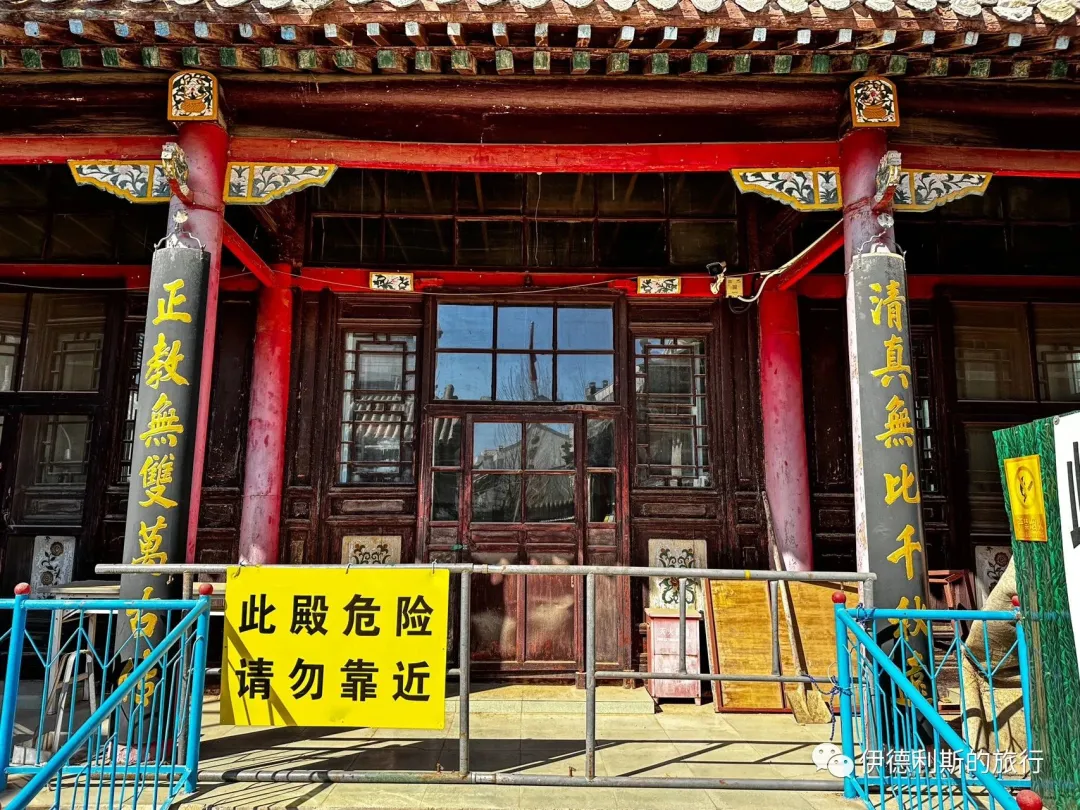
34. Baoding Zhuozhou Mosque
Going to Zhuozhou, Hebei, for Friday namaz.
Hui Muslims in Zhuozhou, Baoding, Hebei, mainly live in the areas of Ximen North Street and Yingfangqian Street. The area still keeps its traditional courtyard-style housing, and the thick rammed-earth sections of the old Zhuozhou west city wall are still standing near. The local Gao family in Zhuozhou City came here with the Prince of Yan during his northern military campaign in the early Ming Dynasty. The mosque was built during the Yongle period of the Ming, renovated in the 60th year of Kangxi reign of the Qing, and the hall was rebuilt in 2000 to reach its current appearance. In front of the mosque gate stand two 350-year-old Chinese scholar trees (guohuai), and the courtyard holds several 500-year-old Chinese arborvitae (cebai), all of which witness the history of the Zhuozhou mosque.
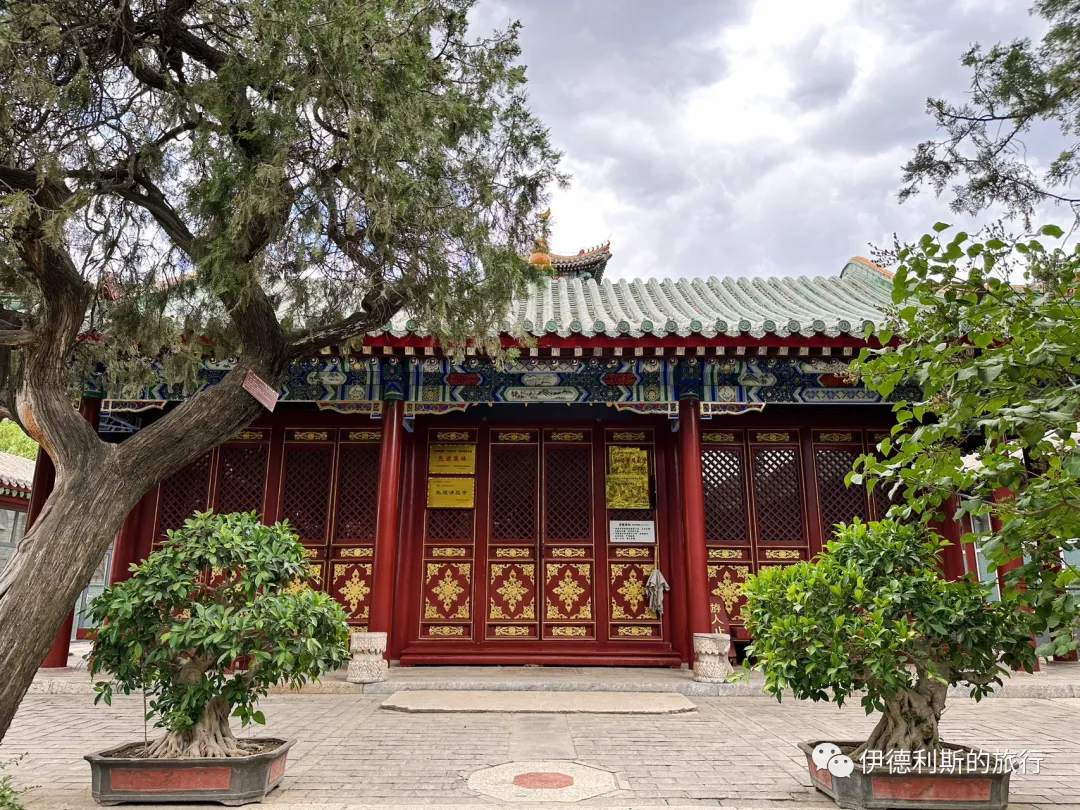
35. Cangzhou North Mosque
[Halal Travel Review] Hebei Cangzhou in 2016
Hui Muslim merchants began settling in Cangzhou with their families as early as the Yuan. However, during the Jingnan Campaign in 1399 (the first year of the Jianwen reign of the Ming), the Prince of Yan, Zhu Di, led his army to capture the old city of Cangzhou, killing thousands of surrendered soldiers and tens of thousands of residents, and destroying the entire old city. Afterward, the Prince of Yan ordered the city of Cangzhou to be moved to Changlu by the Grand Canal and brought in residents from Shanxi, Shandong, Anhui, and other places to settle, which included many Hui Muslims.
In 1403 (the first year of the Yongle reign of the Ming), Wu Zuoyong, a Hui Muslim from Anhui, was appointed as the Assistant Magistrate of the Cangzhou Salt Transport Commission in Hejian Prefecture, Zhili, and moved to Cangzhou from Shexian County in Huizhou, Anhui. The area near the south gate of Cangzhou was once a key route to the Grand Canal. Many Hui Muslims, mostly craftspeople and small vendors, chose to live here. In 1420, during the 18th year of the Yongle reign of the Ming, the North Mosque of Cangzhou (Cangzhou Beidasi) was completed after Wu Yongzuo donated the land and oversaw its construction. This marked the official beginning of the current Hui community in Cangzhou.
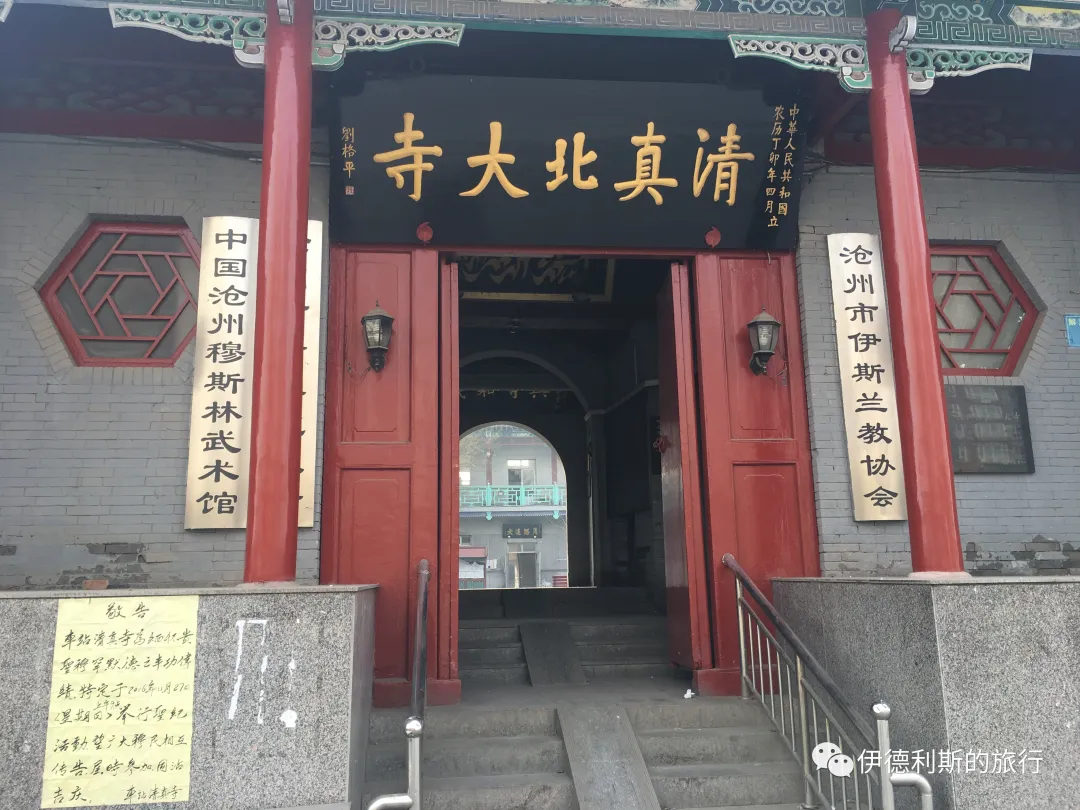
36. Botou Mosque in Cangzhou
[Halal Travel Review] Botou, Hebei in 2017
Botou suffered heavy damage during the Jingnan Campaign in 1399, the first year of the Jianwen reign, and its population dropped sharply. In 1404, the second year of the Yongle reign, Emperor Zhu Di ordered residents to move to Cangzhou, which brought many Hui Muslims to Botou. Records show that seven Hui families—Yang, Cao, Dai, Hui, Zhang, Wang, and Shi—moved to Botou by imperial decree in 1404 from Erlanggang, Shangyuan County, Yingtian Prefecture in Nanjing. The first Botou Mosque was also built that year.
After that, more Hui Muslims moved here from Shandong, Shanxi, and Anhui. Botou Mosque underwent a large-scale expansion during the late Ming and early Qing dynasties, which gave it the layout it has now.
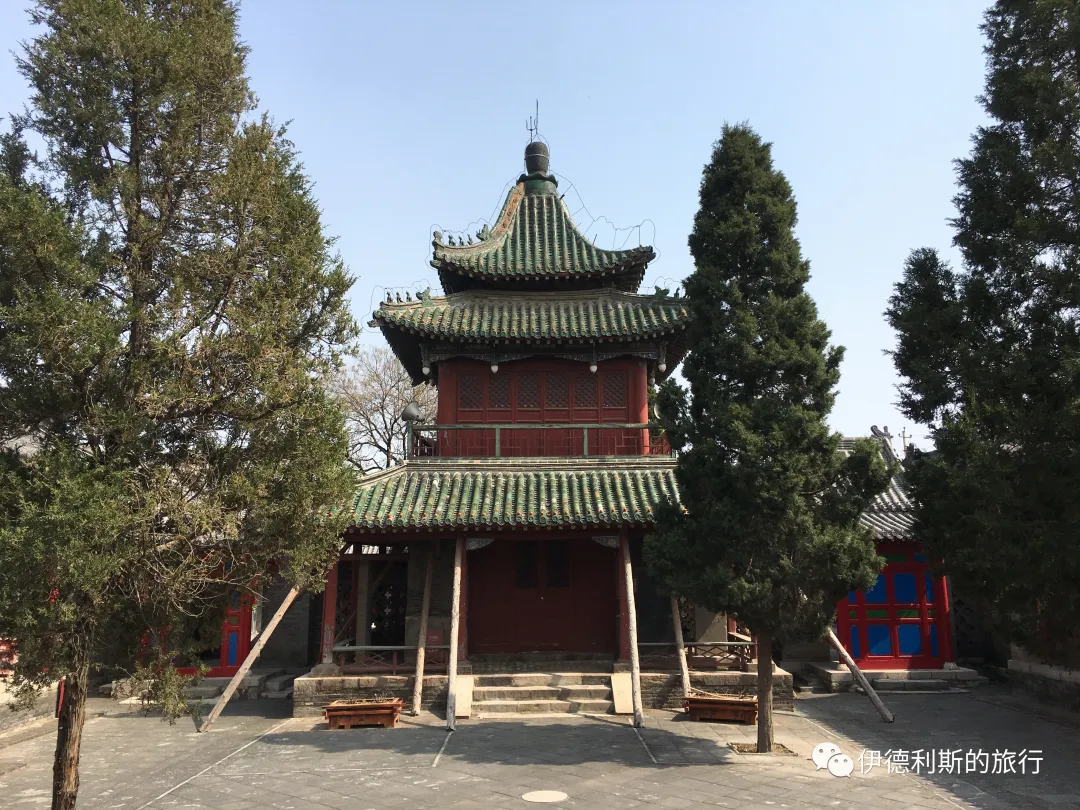
37. Hongguanying Mosque in Xingtai.
The ancient canal city of Linqing, Shandong.
Hongguanying Mosque is in Linxi County, Xingtai, Hebei, just across the Wei Canal from Linqing. Hongguanying is named after the Hong family of Hui Muslims. According to the Hong Family Genealogy of Linqing, the ancestor of the Hong Hui Muslims was Sayyid Ajjal Shams al-Din. His sixth-generation descendant, Hong Badan, served as an official in Linqing during the Ming. His descendants took Hong as their surname and settled in Linqing. One branch settled in the urban area of Linqing and built the Hong Family Mosque (North Mosque). Another branch settled in Hongguanying Village and built the Hongguanying Mosque. Hongguanying Mosque was built between the Xuande and Tianshun periods of the Ming. It was burned down in 1854 (the fourth year of the Xianfeng reign) during the Northern Expedition of the Taiping Rebellion, and it was rebuilt in its current form in 1874 (the thirteenth year of the Tongzhi reign). We were warmly welcomed at Hongguanying Mosque by Imam Lan. He is a talented Arabic calligrapher, and his scripture paintings and stone carvings are truly impressive.
38. Shanhaiguan Mosque in Qinhuangdao
In July, I visited the mosque, the sea, and the Great Wall in Shanhaiguan.
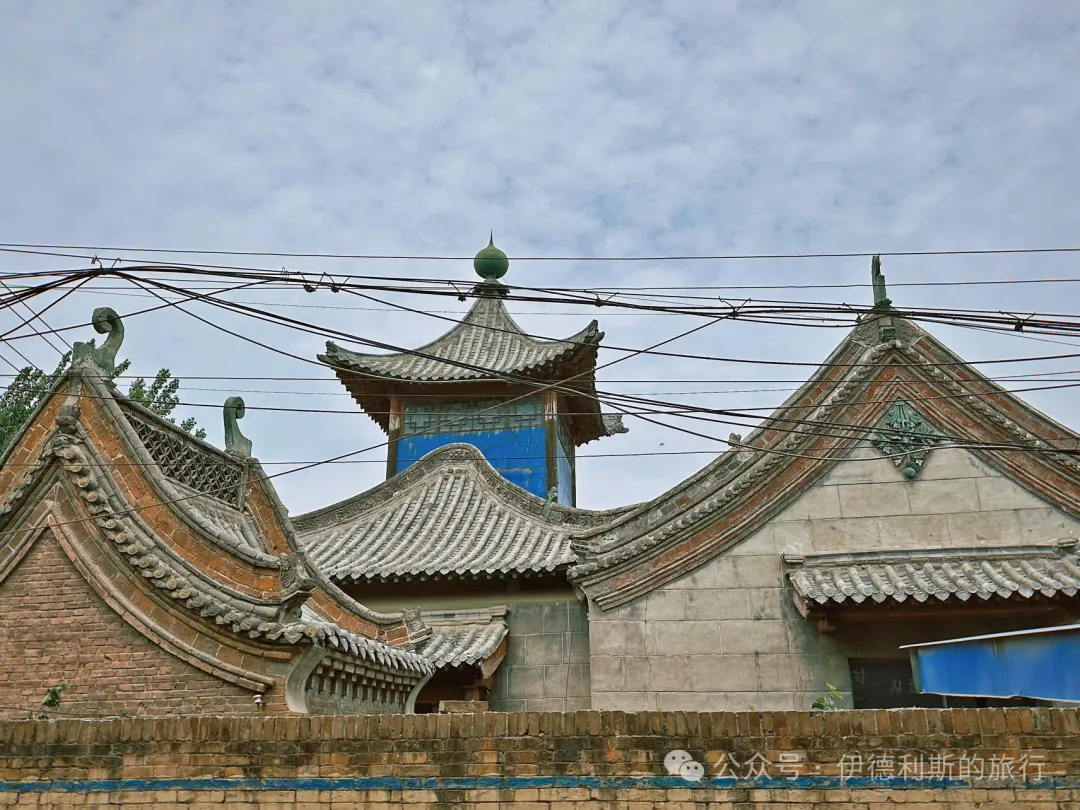
Shanhaiguan Mosque in Qinhuangdao, Hebei, sits just outside the west gate of the Shanhaiguan fortress. According to the Kangxi-era Records of Shanhaiguan, in the first month of 1381 (the 14th year of the Hongwu reign), General Xu Da sent 15,100 soldiers from the Yanshan Garrison to build 32 passes, including Yongping and Jieling. People say the original Shanhaiguan Mosque was built by the Hui Muslim soldiers brought by Xu Da. Because of this, the local Hui Muslims in Shanhaiguan have a saying: The mosque came before the Shanhaiguan Pass. The current hall of the mosque was rebuilt between 1998 and 2003. In the courtyard, there is a 600-year-old Chinese pine (yousong) planted when the mosque was built, along with a Chinese arborvitae (cebai) planted at the same time. The north wing of the mosque houses Ming and Qing dynasty brick and wood carvings removed during the 1998 renovation, and some old-fashioned mantel clocks.
Beijing
39. Gubeikou Mosque in Miyun
Visiting the old mosque in Gubeikou
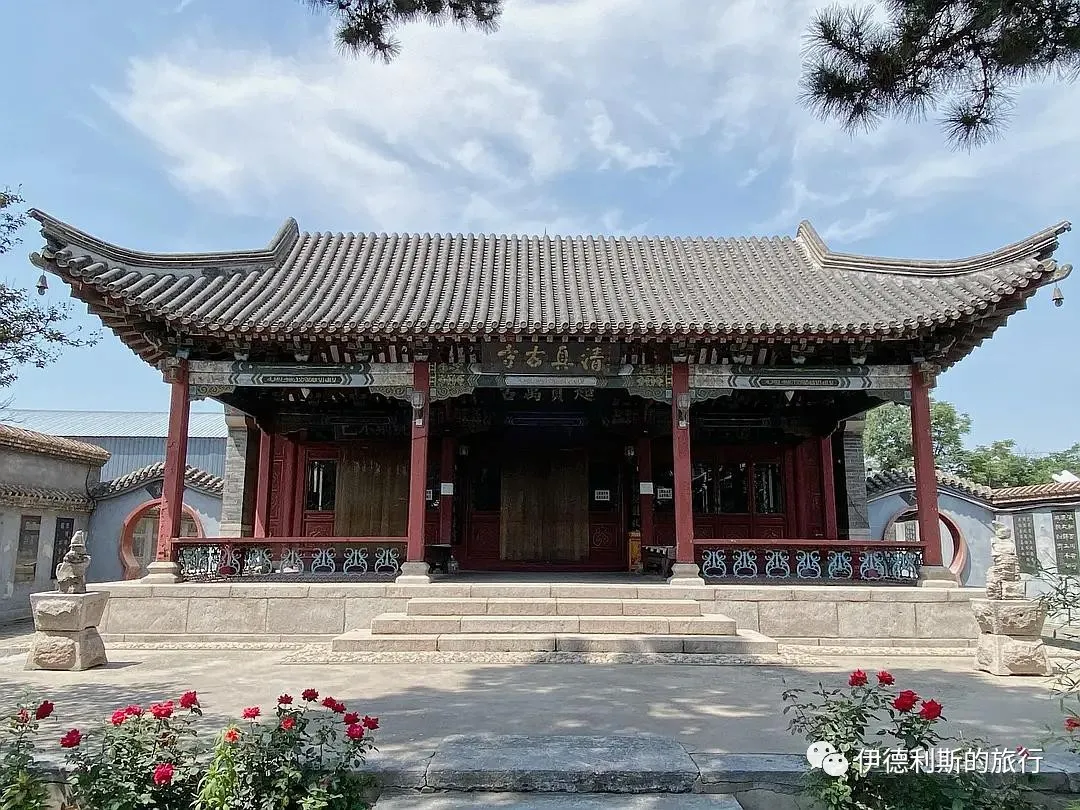
Gubeikou Mosque is in Hexi Village, Gubeikou, Miyun, Beijing. Its original construction date is unknown, but a stone tablet from the Ming Chongzhen era inside the mosque says it was rebuilt in the second year of Chongzhen (1629). During the Kangxi era, Gubeikou was a key military site for Kangxi’s campaigns against the Dzungars. It was also an imperial road for his northern hunting trips and inspections, making it very important. In the 34th year of Kangxi (1695), a Hui Muslim military officer named Ma Jinliang was promoted to commander-in-chief of Gubeikou in Zhili due to his outstanding battle achievements. People called him General Ma the Hui Muslim. While in Gubeikou, Ma Jinliang led the renovation of Gubeikou Mosque. In the ninth year of Tongzhi (1870), Zheng Kuishi, a famous late Qing Dynasty general and the Gubeikou commander at the time, worked with local elders from Rehe, Dage Town (now Fengning, Chengde), and Gubeikou to donate money to rebuild the mosque's kiln hall (yaodian), turning it from one story into two.
As the imperial road fell into disrepair at the end of the Qing, Hexi Village gradually became quiet. After the 1960s, the Gubeikou Mosque was used by the brigade headquarters. It was renovated in 2004 for the Olympics, but it has not resumed religious activities since. Today, the key to the Gubeikou Mosque is held by an elderly Hui Muslim man living next door. I only managed to get inside to visit after I happened to run into him.
40. Mujiayu Mosque in Miyun (rebuilt)
A halal tour around Miyun Reservoir
Mujiayu is located northeast of Miyun's urban area. Historically, it sat on the trade route from Gubeikou and Shixia Ancient City to the center of Miyun. The Hui Muslims with the surname Mu in the village came from Tianmu Village in Tianjin. They moved to Miyun in Qianlong reign, over two hundred years ago.
In 1771 (the 36th year of Qianlong reign), Mu Guobao was arrested for accidentally injuring someone while standing up for justice at a market in Tianjin, but he was rescued by his younger brother while being escorted. The two brothers fled Tianjin and came to Mengjiayu in Miyun (now Nanmujiayu Village) to work. In less than ten years, they built a house, bought land, married, and had children. They founded Mujiayu, and Mu Guobao was the first ancestor to move there. According to research by local scholar Cao Rongxin, Mujiayu originally only had the Mu family. Later, Hui Muslims with the surname Ha fled famine and settled there. In 1958, the construction of the Miyun Reservoir flooded the ancient city of Shixia. Hui Muslims with the surnames Li, Cao, Ma, and Zhang from the ancient city, along with the Mu family from Qianchao Duzhuang (whose first ancestor was the younger brother of Mu Guobao), all moved to Mujiayu. This eventually created the current size of Mujiayu.
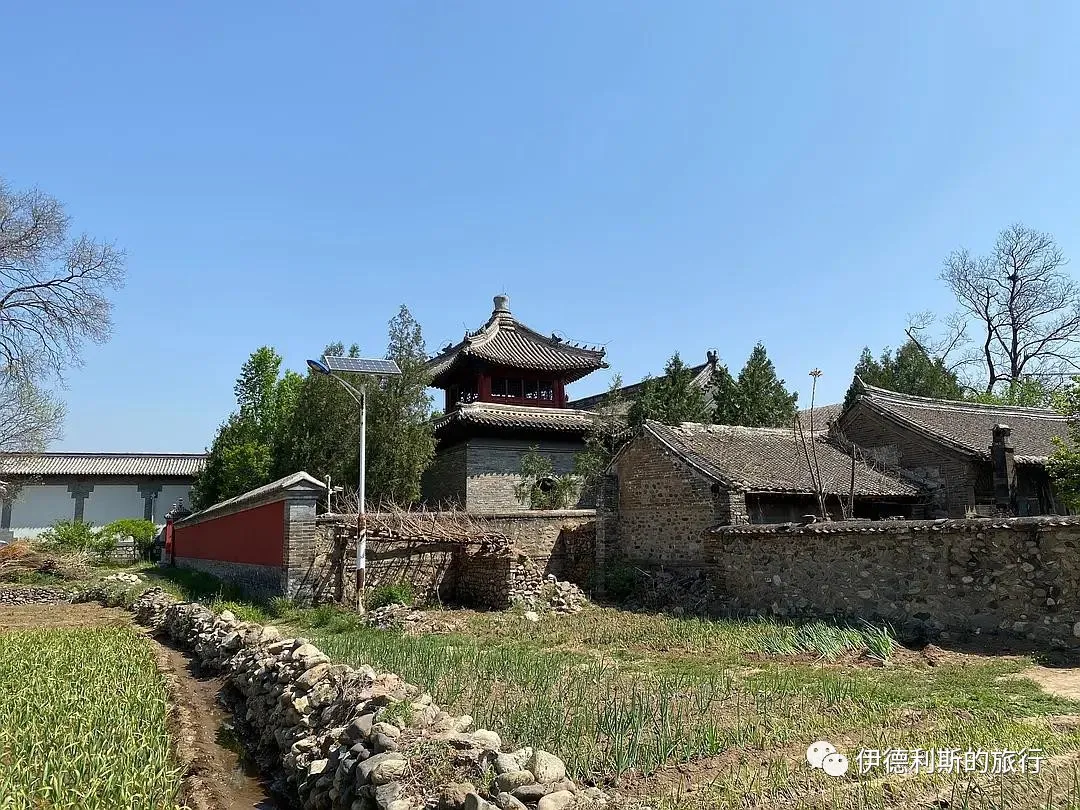
Mu Chaoyu, the son of the first ancestor Mu Guobao, built the Mujiayu Mosque on a small hill by the river east of the village in his later years. In 1946, the Mujiayu Mosque was seized by the armed landlord group Huohui from West Mujiayu. It was destroyed in 1948 during the liberation of Miyun, and only two pine trees remain now. After 1949, Mujiayu used compensation money to build six rooms on the west side of the village. They originally planned to rebuild the hall, but the project failed due to road construction. Later, the mosque buildings were occupied by a collective canteen and other units. It was not until 1991 that the Mujiayu Mosque was finally rebuilt on the west side of the road in the west of the village. The Mujiayu Mosque was demolished and rebuilt again in 2023. What I am showing now is the Mujiayu Mosque before it was rebuilt.
41. Changping Nankou Village Mosque
Visiting seven ancient mosques during Ramadan.
Nankou is the first gateway for Beijing to reach Datong, Xuanhua, and the Mongolian grasslands via the Jundu Pass, one of the eight passes of the Taihang Mountains. It was also the final line of defense for the capital and has been a strategic military location since ancient times. To defend against Mongol invasions, the Ming built Nankou City in 1404 (the second year of the Yongle reign), and it was renovated many times later. After the Qing, trade with the grasslands flourished, filling Nankou City with shops and a constant stream of merchants and travelers. After the Beijing-Zhangjiakou Railway was completed in 1909, the commercial importance of Nankou City was gradually replaced by Nankou Town, where the railway station was located.
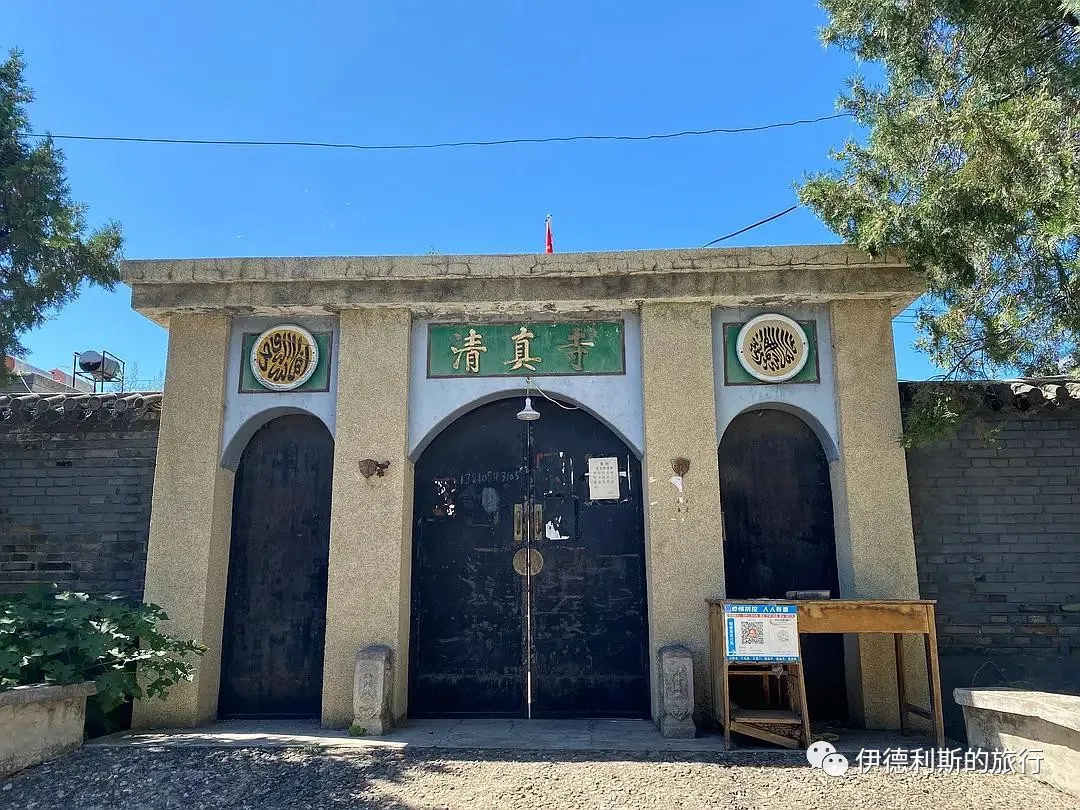
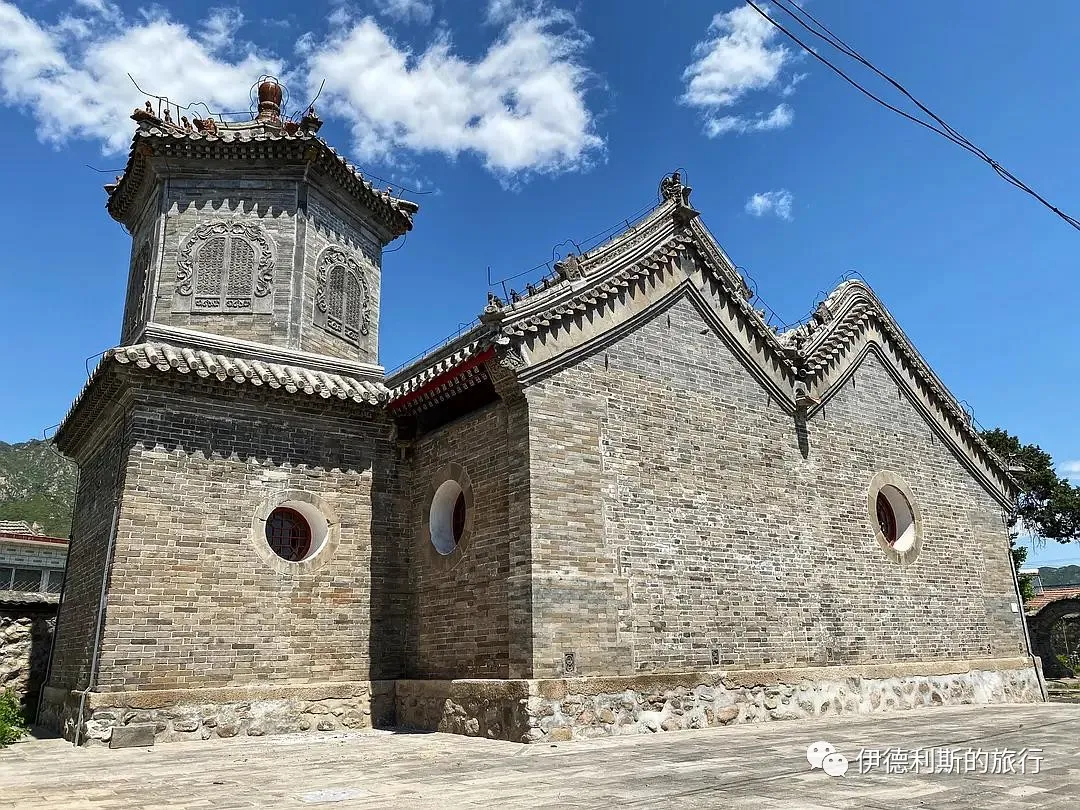
Nankou Mosque is located outside the south gate of Nankou City. Its exact founding date is unknown, but it is estimated to have been built during the Ming. The mosque houses a stone tablet from the 20th year of Guangxu reign (1894) titled 'Record of the Renovation of the Nankou Mosque in Yanqing Prefecture.' It records that Imam Yang Xiaoshan from Shixia City in Miyun was hired by Nankou Mosque in 1876. He traveled everywhere to raise donations (nietie), and then renovated the south lecture hall in 1879, the north quiet room in 1880, and built a water well in 1881. In 1887, Imam Yang was hired by Shacheng Mosque in Huailai County, and Nankou Mosque hired Imam Shan Hong'en, who continued to build a water room next to the well and a main gate in the northeast corner. The current Nankou Mosque generally keeps the layout from its renovation in Guangxu reign.
Nankou Mosque closed in 1958 and has not opened since. In 2005, the Changping District Cultural Relics Management Office renovated the hall and the north quiet room. They planned to open it afterward, but it has remained closed due to disputes over the mosque's property. The Changping District Cultural Relics Management Office repaired the mosque again between 2020 and 2021.
42. Changping Wujie Mosque
Visiting seven ancient mosques during Ramadan.
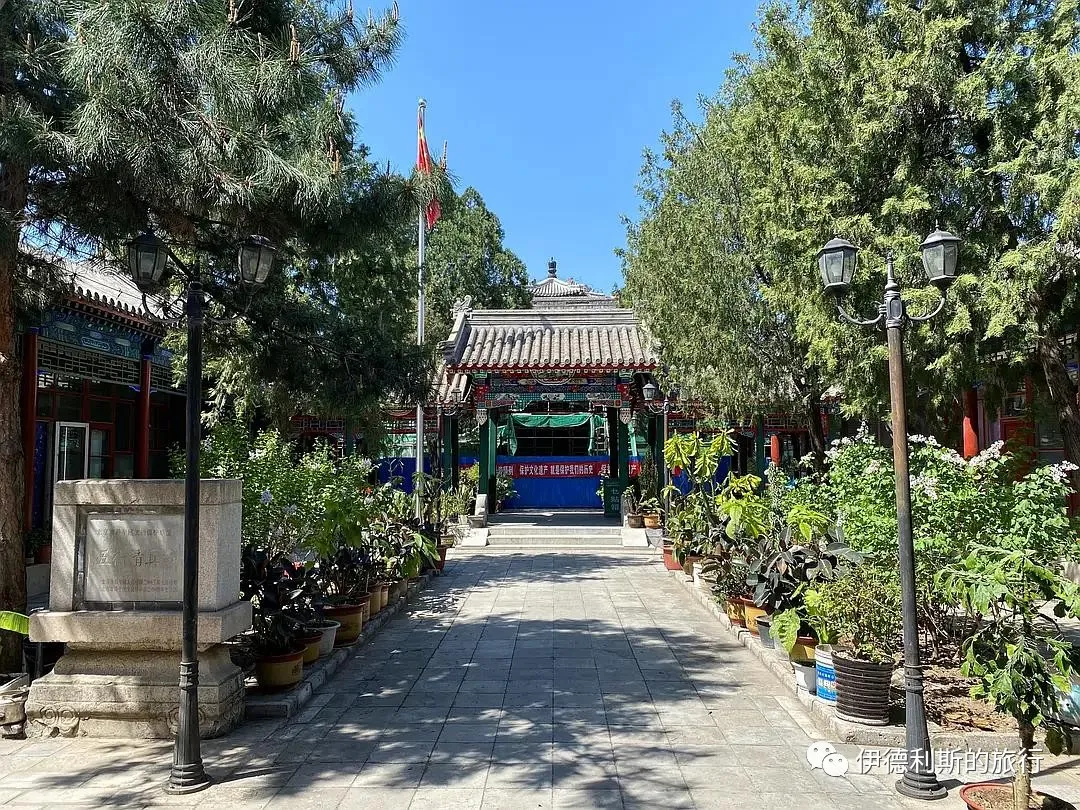
Changping Wujie Mosque is also called Changping City Mosque. Legend says it was built by Chang Yuchun during his northern military campaign. It was rebuilt in the Wanli reign using stone and wood left over from building the Ming Tombs. The golden nanmu wood beams and pillars in the hall still remain now.
Changping Wujie Mosque is now the only Jahriyya mosque in Beijing. The prayer rug used by Imam Jin Zichang is still kept inside the mosque. Imam Jin Zichang comes from the Jinjiadian Daotang in Jinan, Shandong. He is the Eastern Rais of the Jahriyya and manages the religious affairs of the Jahriyya in Jiangsu, Shandong, Hebei, and the three northeastern provinces. Imam Jin's ancestor, Jin Shizhang, joined Ma Mingxin in 1770 to study Jahriyya teachings. He was later appointed as the Rais in charge of religious affairs in Shandong, Zhili, and Jiangsu, and he founded the Jinjiadian Daotang in Xiguan, Jinan. Imam Jin's great-grandfather, Jin Zhong, once managed the religious affairs of the Nanshangpo Mosque outside Chaoyangmen in Beijing and the Wujie Mosque in Changping. His grandfather, Jin Shiyi, became the Rais of the Jahriyya in Xinjiang in 1912 and helped expand the Nanda Mosque in Urumqi.
43. Heying Mosque in Changping
Visiting the tomb of the Western Region sage Bo Hazhi
The tomb of the Western Region sage Bo Hazhi is in Heying, Changping, Beijing. Locals also call it the Sheikh Baba grave. Records say Bo Hazhi came from Medina and arrived in China to spread the faith in the early years of the Hongwu reign of the Ming. He eventually passed away in Heying, Changping, and is deeply respected by Hui Muslims. Local legends say Bo Hazhi killed a giant python on Mangshan Mountain to save the people, and that he appeared in white robes to protect villagers from soldiers when the rebel leader Chuang Wang marched on Beijing.
In front of the tomb of Bo Hazhi, there are five stone tablets from the Ming and Qing dynasties. The people who set them up include General Yang Yingrui, a Hui Muslim from Niujie in Beijing during the Ming dynasty; General Ma Fang, a legendary Hui Muslim who won many battles in the mid-Ming dynasty; and Ma Jinliang, a famous Hui Muslim officer from the early Qing dynasty. The cemetery holds 68 ancient cypress trees from the Ming dynasty. Outside of the Ming Tombs, this is the best-preserved collection of Ming-era trees in Changping.
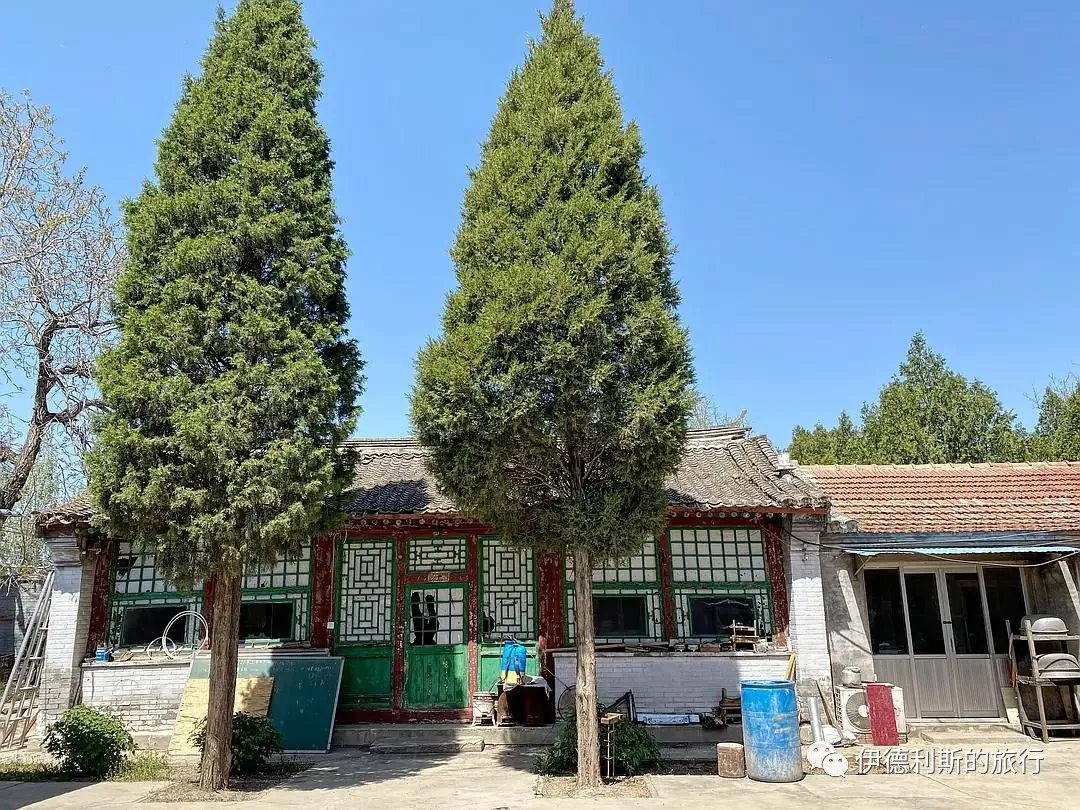
A local Hui Muslim family named Zhang has guarded the tomb of Bo Hazhi for generations. Today, the guardians are Zhang Youjin and his wife. On the south side of the cemetery stands Heying Mosque (Heying Si), built by the Zhang family in the 1930s. The imam of Heying Mosque was forced to leave after the 1960s, and since then, the building has mainly been used for visiting graves and funeral rites (mayiti). When policies were updated in the 1980s, Heying Mosque was not included in the heritage protection area along with the tomb of Bo Hazhi, so it still does not have official status as a cultural relic. Heying Mosque is now being repaired step by step, and the north building has been rebuilt.
According to a tablet record from the first year of the Xuantong reign, officials and Hui Muslims from past dynasties have come here every year on the 24th day of the third lunar month to pay respects and visit the grave, a tradition that has lasted a long time. From the Ming dynasty until now, Hui Muslims from the local area and near have come to visit the grave of the Sheikh Baba (Shaihai Baba) on the 24th day of the third lunar month without fail. On this day, we invite the imam from a near mosque to lead the scripture reading and closing prayers. The villagers slaughter sheep to make meat porridge and fry dough fritters (youxiang), making it a very grand occasion.
44. Shahe Mosque in Changping
Visiting seven ancient mosques during Ramadan.
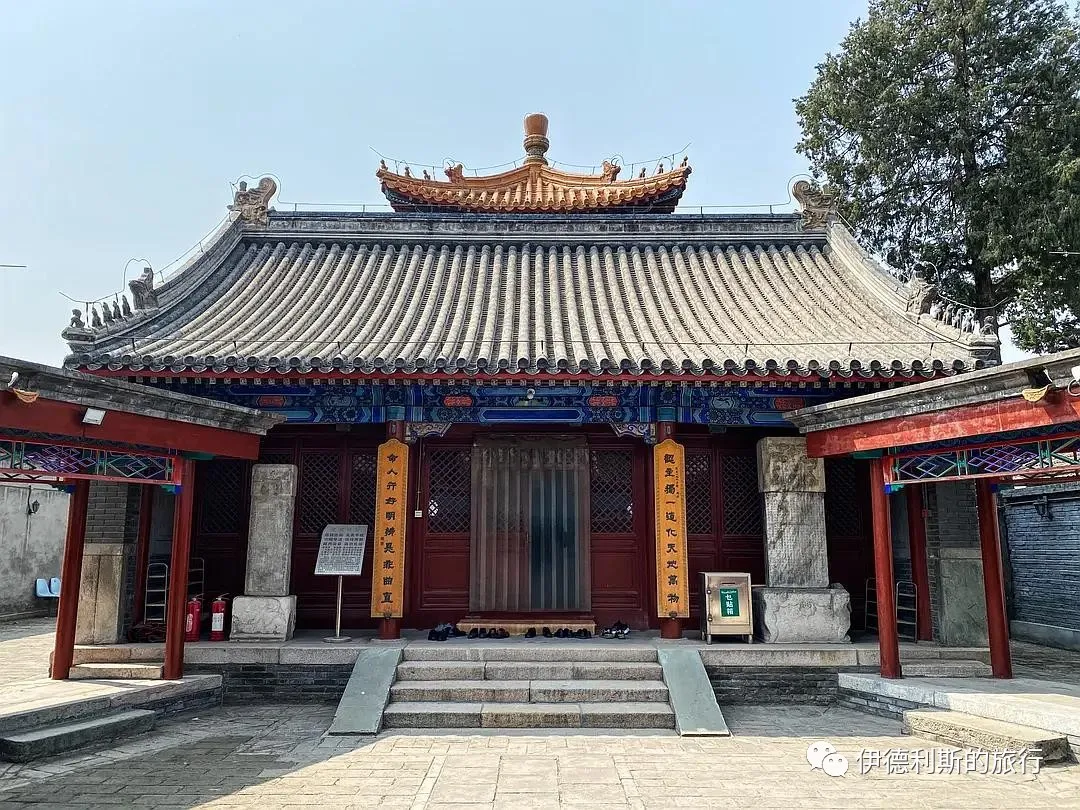
During the Wanli reign of the Ming, the northern capital road to Zhangjiakou moved to Shahe. Hui Muslims who traded cattle and sheep began to settle in Shahe. Shahe Mosque was built during the Ming and was renovated twice, once in Guangxu reign of the Qing and once in the Republican era.
The renovation stele from the 31st year of Guangxu reign (1905) on the north side of the hall's porch records the mosque's renovation process between 1895 and 1905. The text notes that at the time, the local sheep market donated five wen from the sale of every sheep, and one hundred wen from every cow and camel, to cover the mosque's various expenses. The 1920 renovation stele on the south side of the porch records that the mosque renovated its water room in 1917. Later, they collected donations (nieti) to build the rear hall and a Western-style gate in 1920. The first donor mentioned is the Republic-era Hui Muslim general Yang Kaijia. His ancestral home was Dachang, Hebei, and he served for a long time as a military guard for Yuan Shikai. He was promoted to lieutenant general for his many contributions. Most of the names that follow are various businesses, many from Madian outside Deshengmen. The most famous one among them is likely Donglaishun.
45. Xiguanshi Mosque in Changping
Xiguanshi Mosque
Visiting old mosques in Beijing during the Islamic New Year
Xiguanshi Mosque in Changping, Beijing, was built in 1494 (the seventh year of the Hongzhi reign of the Ming). The hall was rebuilt in 1709 (the forty-eighth year of Kangxi reign), the main gate in 1723 (the first year of the Yongzheng reign), the hall rooms in 1732 (the tenth year of the Yongzheng reign), and the kiln hall (yaodian) in 1761 (the twenty-sixth year of Qianlong reign). It was renovated many times in Guangxu reign and the Republican era.
On August 15, 1900, the Eight-Nation Alliance entered Beijing. Empress Dowager Cixi and the Guangxu Emperor left the city to head west, arriving at Xiguanshi by evening. Hui Muslim Li Xilun from Xiguanshi led a group to welcome the imperial party south of the village. He guided Cixi and her entourage to stay at Xiguanshi Mosque, where they were received by Imam Cai Wanchun. Afterward, Empress Dowager Cixi slept in the hall, Emperor Guangxu and his consorts slept in the side halls, and the rest of the group stayed in near private homes. The next day, Li Xijun, the owner of the Xiguangyu Escort Agency in Xiguanshi, prepared twenty mule-drawn sedan chairs, several silver ingots, and grain for Cixi’s group. A villager named Yang Juchuan volunteered to lead the way, and Li Jintang provided protection for the journey to the next stop. Two years later, Cixi returned to Beijing and donated silver to renovate the Xiguanshi mosque. She also ordered the imperial kilns at Liulihe to fire glazed tiles, roof finials, and ridge beasts, which were gifted to the Xiguanshi mosque and the mosque in Gaotou Village, Wuji County, the hometown of Imam Cai Wanchun.
Cixi inscribed a plaque for the Xiguanshi mosque that read 'Linggan Zhaozhu' (Manifestation of Spiritual Inspiration), Guangxu inscribed 'Zhongshu Qinshang' (Loyalty Dedicated to the Sovereign), Prince Su Shanqi inscribed 'Qingxu Weidao' (Pure and Void Taste of the Way), and Prince Li inscribed 'Aomiao Wuqiong' (Infinite Profundity). She also bestowed the title 'Marquis of Leading the Way' upon Yang Juchuan for his service, and granted Li Jintang the rank of a second-grade official with a peacock feather, serving as a candidate for a circuit intendant in Zhejiang. Others, including village elder Li Xilun and Imam Cai Wanchun, were awarded fifth, sixth, and seventh-grade official buttons. In 1958, when the communal canteen was established, the plaques from the hall were taken down and used as cutting boards, and their whereabouts are now unknown. After the 1960s, the hall was turned into a warehouse, and all the plaques and couplets were burned. Every building except for the hall and the front gate was demolished, until the site was restored and reopened in 1982.
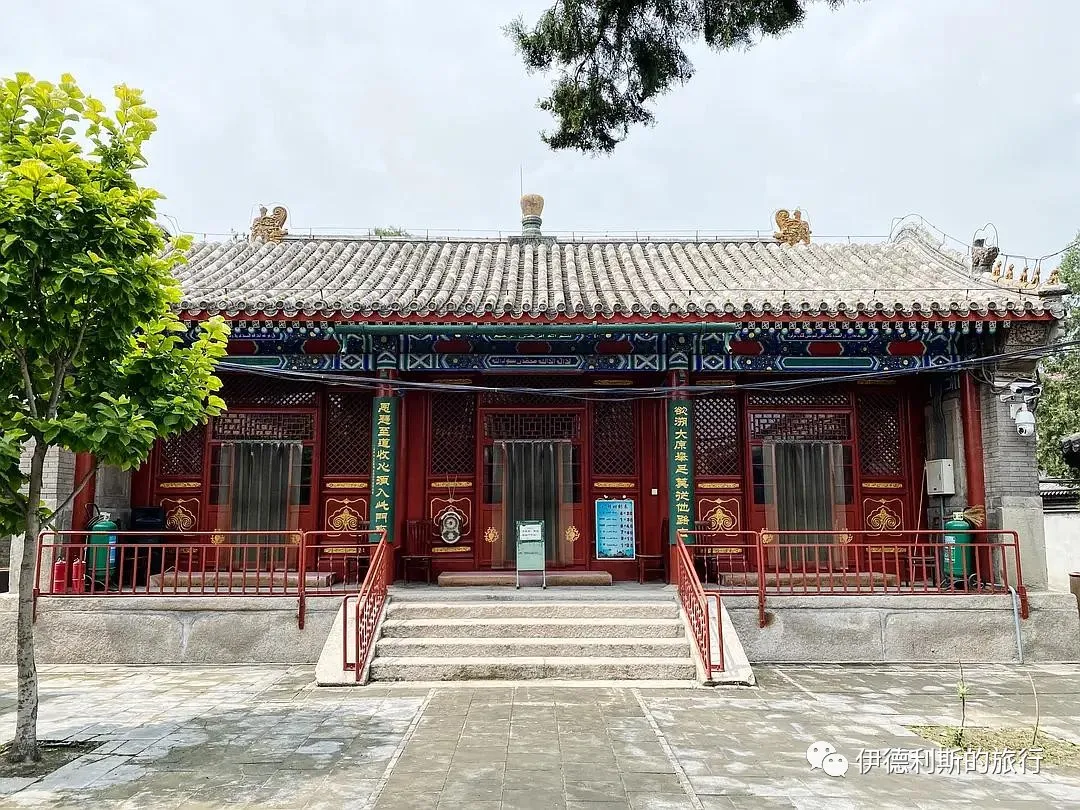
46. Anheqiao Mosque in Haidian
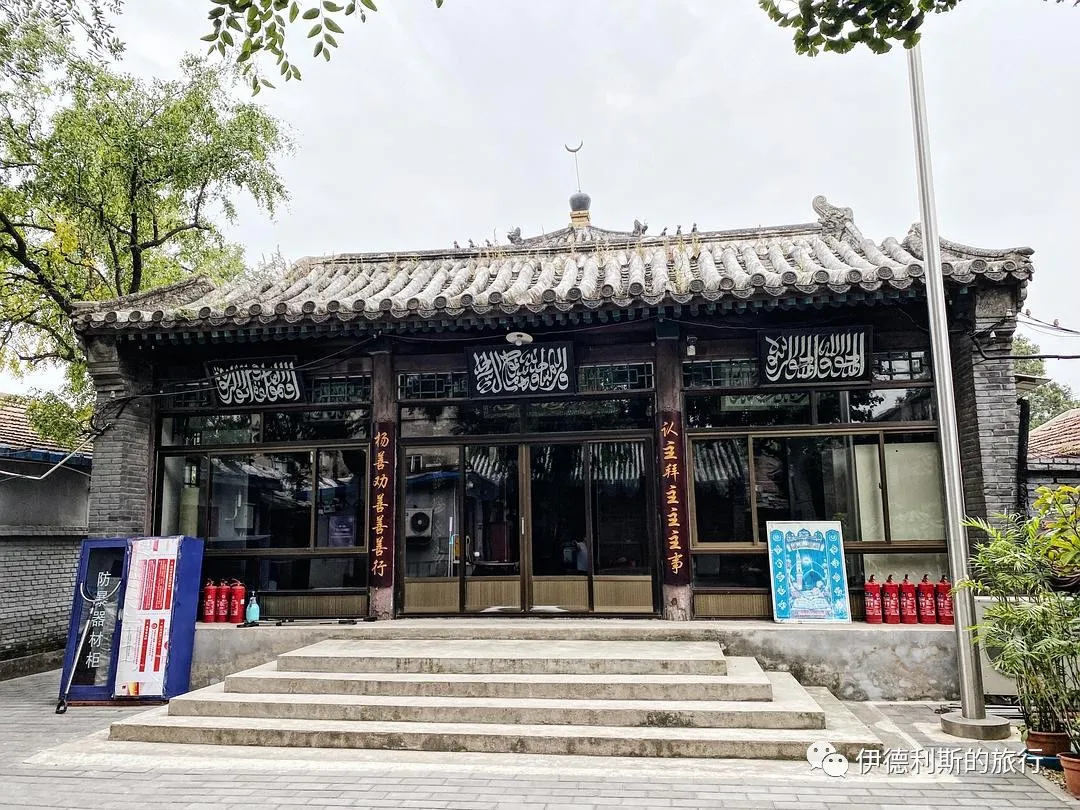
Anheqiao Mosque in Haidian, Beijing, sits by Xiangshan Road at the southern foot of Hongshan Mountain. It was built at the end of the Ming. During Kangxi reign, the Qing built the Three Hills and Five Gardens in western Beijing. Many Hui Muslims settled in Anheqiao and expanded the mosque. It had several renovations during the Qianlong and Guangxu periods and the Republican era. In 1950, the mosque moved to make way for the Jingmi Diversion Canal. It moved again between 2003 and 2005 due to the construction of the Fifth Ring Road, resulting in its current four-story, octagonal pavilion-style hall.
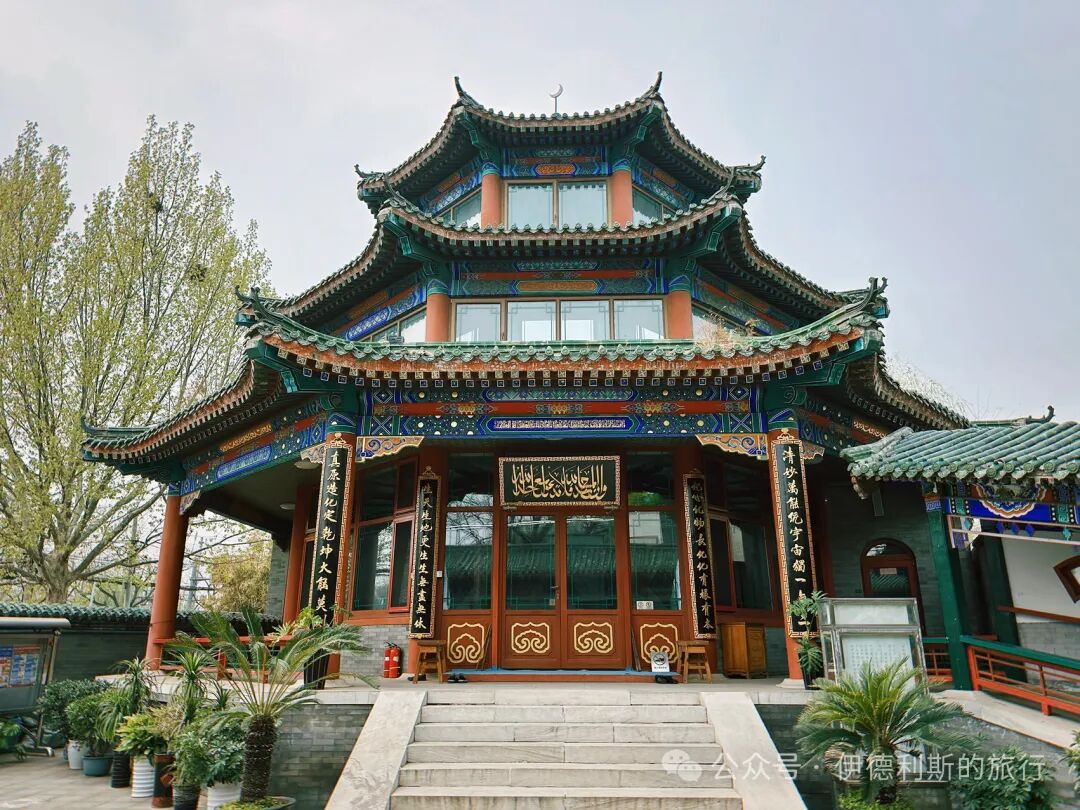
47. Shucun Mosque in Haidian
Visiting old mosques in Beijing during autumn
Shucun Mosque in Beijing is located outside the north gate of the Old Summer Palace. It was built during the Kangxi (or possibly Yongzheng) reign. In 1873 (the 12th year of the Tongzhi reign), a eunuch named Ma donated 300 taels of silver. Hui Muslims from the local community and surrounding areas—including Sanjiadian, Xiguanshi, Anheqiao, Shangqinghe, Siwangfu, Landianchang, outside Deshengmen, and Xuanhua Prefecture in Zhangjiakou—raised over 2,000 taels of silver to restore it. In the early years of the Republic, a family named Shen from outside Deshengmen donated 2,000 silver dollars and asked a village elder named Man from Shucun to lead the renovation of the hall. Shucun Mosque was occupied in the 1950s and damaged in the 1960s. It resumed activities in 1983 and has had several renovations since. Shucun Village has been demolished, and the villagers have moved into apartment buildings. The mosque grounds hold two ancient cypress trees from the Qing, one dead and one alive. Also a plaque inscribed with the words "Heaven is close at hand" (tiantang zhichi), gifted by a fourth-rank imperial bodyguard in 1873 during a renovation.
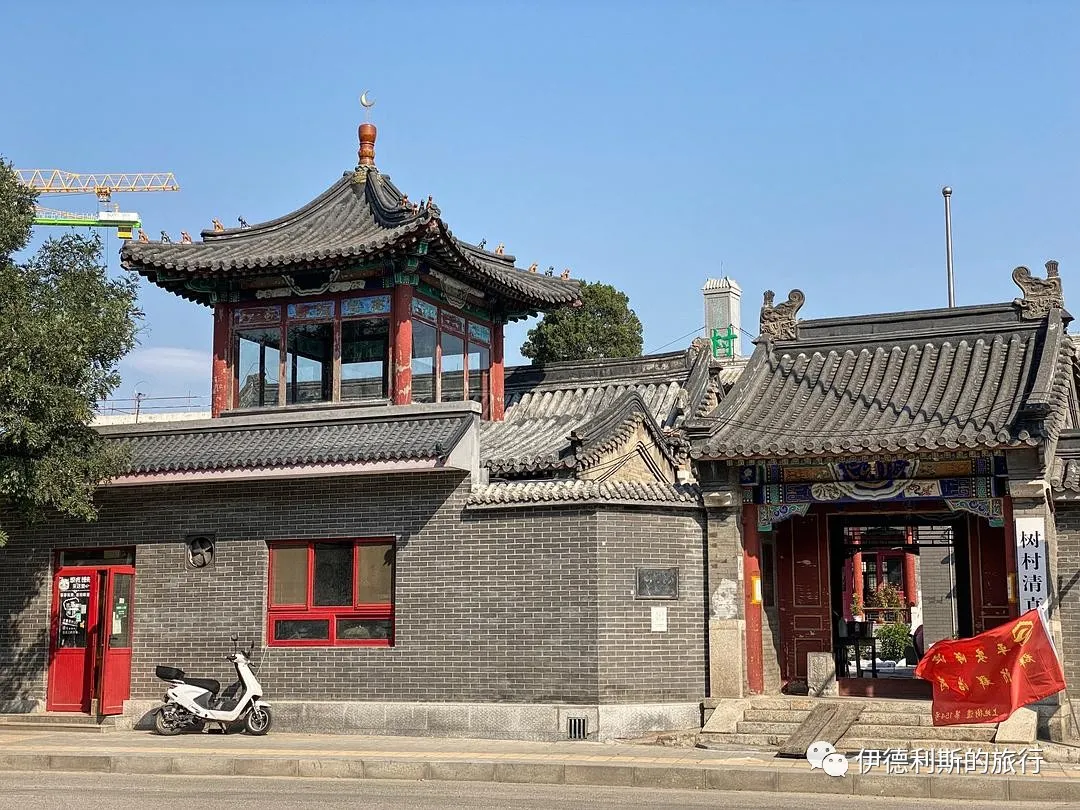
48. Haidian Madian Mosque
Madian is on the Jingbei Avenue outside Deshengmen in Beijing. Since the Ming and Qing dynasties, it has been a hub for cattle and sheep trading with a large population of Hui Muslims. The number of Hui Muslims here is no less than that of Niujie. After the Qing, hundreds of thousands of cattle, sheep, and horses entered Beijing from Mongolia via Zhangjiakou every year. Hui Muslims in Madian opened many horse and sheep shops to feed and sell these animals for a commission. Madian Mosque was built in Kangxi reign. In 1850 (the 30th year of the Daoguang reign), it was renovated with funds raised by over ten sheep and horse shops in Madian, and it was renovated again in the Republican era.
The ceremonial gate of Madian Mosque features a ridged hip-and-gable roof and a carved stone arched doorway. The hanging flower gate (chuihuamen) has a curved-shed gable-and-hip roof, and the lintels are has blue-green paintings. The hall uses a raised-beam timber frame and is spacious and bright. The arched door in front of the kiln hall (yaodian) is painted with intertwined passion flower patterns.
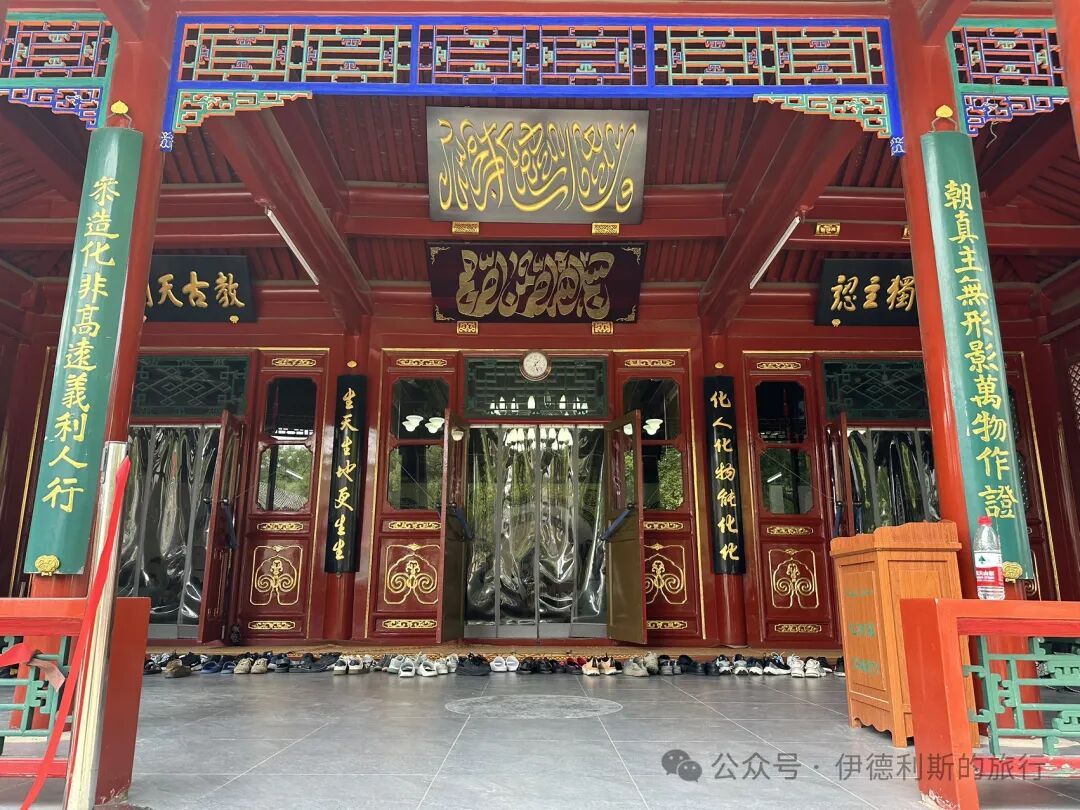
49. Haidian Mosque
Haidian Mosque in Beijing was built in Kangxi reign. Then, Hui Muslims from Tongzhou came to Haidian Town to sell fish and settled there. Haidian Mosque was expanded several times during the Jiaqing, Guangxu, and Republican periods. At its peak, it covered over 30 mu of land and included a vegetable garden and a cemetery. It was rebuilt into its current form in 1995. The hall consists of a curved shed, a hall, and a kiln hall (yaodian). The kiln hall has a four-cornered pointed roof with green and yellow glazed tiles with trimmed edges. There are many schools around Haidian Mosque. Every Friday prayer (Jumu'ah), hundreds of international students attend. When it is crowded, the basement, lobby, and courtyard are all packed with people, which is a spectacular sight.
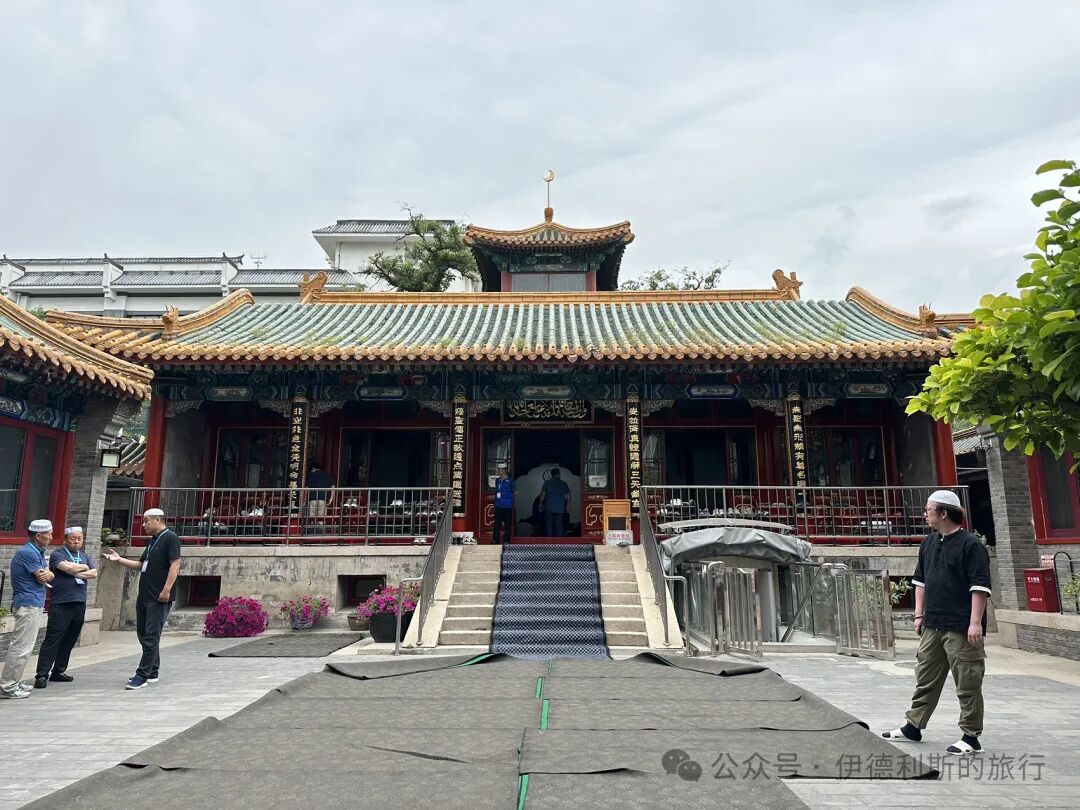
50. Haidian Siwangfu Mosque
Visiting old mosques in Beijing during autumn
The Siwangfu Mosque in Haidian, Beijing, sits east of the Fragrant Hills Botanical Garden. It is shared by Hui Muslims from five near communities: Fragrant Hills (Xiangshan), Siwangfu, Mentou, Nanhetan, and Xiaotun. Legend says the Siwangfu Mosque was founded during the Qianlong era by elders from Houmenqiao and the local community. It was renovated in the Republican era, but closed in the 1960s, leaving the hall on the verge of collapse. After religious policy returned in the 1980s, the hall was torn down and its wood and bricks were sold. The north rooms and surrounding walls were rebuilt, and namaz was held in the north rooms instead. Through the hard work of local elders, the hall was finally rebuilt in 1990. Due to a construction error, the hall was moved to the east of its original site, which created the layout we see now. The courtyard is clean and tidy now, offering a glimpse of what the outskirts of Beijing felt like before.
5 mosques in Heilongjiang
Qiqihar Buque East Mosque and Buque West Mosque
Harbin Daowai Mosque, Tatar Mosque, and Acheng Mosque
1 mosque in Jilin
Changchun Changtong Road Mosque
12 mosques in Liaoning
Tieling Kaiyuan Old City Mosque
Shenyang South Mosque, East Mosque, and Xinmin Mosque
Fengcheng Mosque in Dandong
Qingdui Mosque and Fuzhou Mosque in Dalian
Xinlitun Mosque, Beizhen Mosque, and Luyang Mosque in Jinzhou
Lingyuan Mosque in Chaoyang
Suizhong Mosque in Huludao
4 mosques in Inner Mongolia
North Mosque (Beidasi) in Chifeng
Longshengzhuang Mosque in Ulanqab
Hohhot Great Mosque and East Mosque
16 mosques in Hebei
Chengde West Mosque and Pingquan Mosque
Zhangjiakou Xinhua Street Mosque, Xiguan Mosque, Tu'ergou Mosque, Xuanhua South Great Mosque, Xuanhua North Mosque, and Xuanhua Middle Mosque
Baoding West Mosque, East Mosque, Women's Mosque, and Zhuozhou Mosque
Cangzhou North Great Mosque and Botou Mosque
Xingtai Hongguanying Mosque
Qinhuangdao Shanhaiguan Mosque
12 mosques in Beijing (continued in the next part)
Gubeikou Mosque and Mujia Yu Mosque in Miyun
Nankou Mosque, Wujie Mosque, Heying Mosque, Shahe Mosque, and Xiguanshi Mosque in Changping
Anheqiao Mosque, Shucun Mosque, Madian Mosque, Haidian Mosque, and Siwangfu Mosque in Haidian
Heilongjiang
1. Bukui East Mosque in Qiqihar
Bukui Ancient Mosque and the Hui community in Qiqihar, Heilongjiang
Bukui East Mosque in Qiqihar is the oldest mosque in Heilongjiang. The most common story is that it was built in 1676 by over 40 Hui families who moved to Bukui Village from Shandong and Hebei. Another theory says it was built in 1700 by the Wang and Xia families, who were Hui Muslims from Jinan, Shandong, and moved to Qiqihar with the Heilongjiang Naval Battalion. The original Bukui Mosque was just a thatched hut. It was rebuilt many times during the Jiaqing and Guangxu eras, eventually reaching its current size.
The most unique part of the East Mosque is the Moon-Sighting Tower (Wangyuelou) above the rear hall. It is a three-story structure with a four-cornered pointed roof and intricate brick carvings. On the east side, there is a plaque that reads 'Tianfang Jiejing'. The copper lotus-base gourd finial on top of the hall was added during the major renovation of the Bukui East Mosque in 1893 (the 19th year of the Guangxu era). People say Ma Wanliang bought it from a Tibetan Buddhist mosque near Zhangjiakou. Local legend says the finial was not installed until after the Republican era because it was taller than the near mansion of the Yikeming'an Eighth Prince.
2. Qiqihar
Bukui West Mosque
Bukui Ancient Mosque and the Hui community in Qiqihar, Heilongjiang
The Bukui West Mosque in Qiqihar, Heilongjiang, belongs to the Jahriyya order. In 1817, the third-generation leader (murshid) of the Jahriyya, Ma Datian, was sentenced to exile in Qiqihar, Heilongjiang. Twelve families led by Master Niu volunteered to take his place and followed him into exile. Ma Datian passed away while passing through the Jilin Shipyard. He was honored as the Shipyard Master (Chuanchang Taiye) from then on, while the 12 families continued their exile to Qiqihar. After arriving in Qiqihar, the 12 families were welcomed by the local Gedimu community. In 1852, they built the West Mosque (Bukuixi Si) on the west side of the Bukui Mosque, making it the only Jahriyya mosque in Heilongjiang.
The mosque keeps a banner inscribed with the words 'Benevolence, Loyalty, and Harmony.' It reads: 'In memory of the 50th anniversary of the passing of the late Imam Niu Chenggong, offered by his humble juniors Ma Yongcai and Ma Yongzhi on the 13th day of the eighth lunar month in the 14th year of Guangxu reign.' Imam Niu Chenggong is the same Master Niu who volunteered to take the blame and follow the Shipyard Master to Qiqihar. Master Niu was originally an imam from the Lingwu area of Wuzhong. Many stories of his miracles during the journey to Qiqihar are widely told among the Jahriyya menhuan. Every year, Jahriyya followers from places like Ningxia and Gansu travel thousands of miles to Qiqihar to visit Master Niu's grave.
3. Harbin Daowai Mosque
Daowai Mosque in Harbin and the century-old Laoguo Family Restaurant
Daowai Mosque, also known as the East Mosque or Binjiang Mosque, started in 1897 (the 23rd year of Guangxu reign) when five thatched rooms were bought on South 12th Street. It was rebuilt in 1904. In the early 1930s, Imam Ma Songting proposed a new building. Head Imam Bai Yusheng traveled around to collect donations (nietie) and hired Russian designers, the Krabryov siblings, to build the current hall of Daowai Mosque in 1935.
Daowai Mosque has a strong Russian style. Its Roman columns and onion domes modeled after Russian architecture are unique, making it a standout piece of mosque architecture from the Republican era.
The classic Russian onion dome actually started in the Middle East. The earliest visible onion domes appear in Syrian mosaic images from the Arab Umayyad Caliphate (661–750 AD), and the earliest physical examples were built by the Seljuk Empire in Iran during the 11th century. Historians are not sure when Russia started using onion domes. Some scholars guess they learned it from the mosques of the Kazan Tatars after Russia conquered the Kazan Khanate in the 16th century, while others think they developed from Byzantine domes.
4. Harbin Tatar Mosque
The history of Harbin Tatar Mosque
Construction of the Chinese Eastern Railway began in 1897 with Harbin as its center. After that, many Tatars from Russia came to live and work along the railway line. Tatars began settling in Harbin in 1901 and built the first wooden Tatar mosque that same year. As the Tatar population grew, they rebuilt the mosque using brick in 1906. The number of Tatar immigrants in Harbin rose after 1917, reaching over a thousand in the 1920s. Most of them made a living by trading furs, textiles, and clothing.
To mark the 1,000th anniversary of their ancestors, the Volga Bulgars, converting to Islam in 922 AD, the Harbin Tatars decided to build a new mosque. Construction of the new mosque started in 1923, but it stalled for a time due to the imam passing away, political instability, and poor management of funds. In 1936, Imam Münir Hasibullah traveled to every place where Tatars lived in the Far East to collect donations (niatie). The Millennium Mosque finally opened on October 8, 1937. After the Soviet Union entered Northeast China in 1945, most Harbin Tatars chose to move to the United States, Canada, and Turkey. By 1960, fewer than five Tatars remained in Harbin, and the Harbin Tatar community officially dissolved.
5. Acheng Mosque in Harbin
The beautiful Acheng Mosque in Heilongjiang
In 1770, a Hui Muslim named Yang Huaxian from Shen County, Shandong, settled in Acheng with the Qing army. Afterward, more Hui Muslims moved from Shandong to Acheng and rented homes from Manchu bannermen. By 1777, there were 26 (some say 28) Hui Muslim households in Acheng, including the Yang, Wang, San, Ma, Zhang, Ding, Jin, and Cai families. They rented houses and established the first Acheng Mosque, with Yang Huaxian serving as the mosque elder. In 1802, elder Yang Huaxian negotiated the purchase of land to build a formal Acheng Mosque. Construction took 50 years, spanning the Jiaqing, Daoguang, and Xianfeng reigns. In 1873, 12 years after the mosque was completed, a fire in Acheng destroyed the moon-sighting tower (wangyuelou) and the north lecture hall, leaving only the south lecture hall and the reception hall. In 1890, the mosque's imam, Liu Yuzhang, and manager Luo Yuzhang began organizing the reconstruction of the mosque. It took 10 years to complete the current structure in 1900.
Inside the hall of Acheng Mosque, there is a beautiful pulpit (minbar). It is actually one of two models built in 1890 for the reconstruction of the mosque's moon-sighting tower (wangyuelou). After the mosque elders discussed it, they chose the style of the other model, so this one was used as the pulpit (minbar).
Jilin
6. Changchun Changtong Road Mosque
Hand-pulled noodles (chenmian) in Nanguan, Changchun, and the Changtong Road Mosque
The Qing Dynasty relaxed its ban on Jilin in the early 19th century in Jiaqing reign. In 1800 (the fifth year of Jiaqing), Changchun Subprefecture was established in Changchunbao. Hui Muslims began moving to Changchun at this time, and because most came from Shandong, they were called the Shandong Group.
Changchun Changtong Road Mosque was built in 1824 (the fourth year of Daoguang). It was originally located inside the east gate of Dongsandao Street. In 1852 (the second year of Xianfeng), elder Han Xuecheng and Gong Wanmei donated houses, and elder Shi Xuecheng donated trees to move the mosque to its current location in Tielingtun. In 1864 (the third year of Tongzhi), Imam Han Dengqing and others raised funds to expand the mosque, building the current five-room hall and the three-story rear hall (yaodian). In 1889 (the 15th year of Guangxu reign), Imam Han Laixiang bought land from the Xu family in front of the mosque. He built the main gate tower, east and west side rooms, a north lecture hall, an east reception hall, and a front porch for the hall. The mosque was expanded several more times in the Republican era.
Liaoning
7. Old City Mosque in Kaiyuan, Tieling
A tour of three mosques in Liaoning: Lingyuan, Shenyang, and Kaiyuan
The Old City Mosque in Kaiyuan, Tieling, is inside the east gate of the old city of Kaiyuan. It was built in 1406 (the 4th year of the Yongle reign of the Ming) and is the oldest mosque in Northeast China. The current hall follows the style of the 1680 (the 19th year of Kangxi reign) reconstruction. It consists of a vaulted porch, the hall, and a hexagonal pavilion-style prayer niche (yaodian), which is similar in style to the South Mosque in Shenyang. The reception hall of the Old City Mosque stores old items, including drip tiles, eave tiles, roof ridge beasts, and carved wooden railings from the hall. It also holds the finial from the moon-sighting tower (wangyuelou) of the prayer niche and a plaque inscribed with the words 'Ling Luo Sha Juan' (fine silks and satins).
8. South Mosque in Shenyang
A tour of three mosques in Liaoning: Lingyuan, Shenyang, and Kaiyuan
Shenyang South Mosque was built in 1636, the first year of the Chongde reign of the Qing. The ancestors of the Tie family who founded it were Hui Muslims from Central Asia who arrived in China during the Mongol western campaigns. In the early Ming Dynasty, Tie Xuan served as a provincial official in Jinan. During the Jingnan Campaign, he led troops to defend the city of Jinan. After the Prince of Yan broke through the city, Tie Xuan was captured and executed by dismemberment. After Tie Xuan returned to Allah, his second son, Tie Fushu, fled outside the Great Wall. During the Wanli reign (1573-1620), he moved from Jinzhou to Shenyang.
In 1662, the first year of Kangxi reign, Tie Kui expanded Shenyang South Mosque. He invited the famous imam She Yuanshan from Beijing to set up a school there. After Imam She's student, Tie Hongji, finished his studies, he became the leader of the mosque. From then on, the position of imam at the South Mosque was passed down through the Tie family for 11 generations. The last imam, Tie Zizhang, served until 1956.
The rear hall of the mosque was expanded in 1902. The hall is not the traditional T-shape but a hexagonal kiln-style hall. This design, which adds a loft-style kiln hall to the back of the hall, is common in the Northeast region.
9. Shenyang East Mosque
A tour of three mosques in Liaoning: Lingyuan, Shenyang, and Kaiyuan
Shenyang East Mosque was built in 1803 (the eighth year of Jiaqing reign). In 1935, the hall was rebuilt in a Western style, but the Moon-Sighting Tower (wangyuelou) kept its original Chinese style. The East Mosque was taken over in 1958, returned in 1980, and became the Shenyang Islamic Institute (Shenyang jingxueyuan) in 1988.
10. Shenyang Xinmin Mosque
[Liaoning Trip during Dragon Boat Festival] Strolling through the morning market in Shenyang and visiting an old mosque in Xinmin.
Xinmin is in the northwest of Shenyang. During the early years of Qianlong reign of the Qing, many new immigrants came here to farm after crossing the border, which is how it got the name 'Xinmin'. Many Hui Muslims came to Xinmin in Qianlong reign, and they built the Xinmin Mosque in Nanyingzi in 1765 (the thirtieth year of Qianlong reign). The Xinmin Mosque burned down in 1866 (the fifth year of the Tongzhi reign) and was rebuilt in 1883 (the ninth year of Guangxu reign), which is the structure we see now.
The main structure of Xinmin Mosque consists of a porch (juanpeng), the hall, a rear vaulted hall (yaodian), and the Moon-Sighting Tower (wangyuelou) on top of the vaulted hall. The Moon-Sighting Tower has a double-eaved, four-cornered pointed roof, topped with a 1.5-meter-tall copper wind-mill finial. The beams of the porch are painted with Suzhou-style patterns, and the wooden screens feature intricate openwork carvings.
11. Fengcheng Mosque in Dandong
[Dragon Boat Festival Trip to Liaoning] Fengcheng Ancient Mosque and Dandong Food
Fengcheng Mosque was built in 1775 (the 40th year of Qianlong reign). It was renovated in 1862 (the 1st year of the Tongzhi reign), and in 1876 (the 2nd year of Guangxu reign), the north lecture hall was rebuilt and side rooms were added. In 1890 (the 16th year of Guangxu reign), the Moon-Sighting Tower was added, giving the mosque its current size. The most unique feature of Fengcheng Mosque is the Moon-Sighting Tower, built in Guangxu reign. It has a double-eaved, four-cornered pointed roof with elegant upturned eaves, brackets, and finely carved decorative brackets (que-ti).
12. Qingdui Mosque in Dalian
[Dragon Boat Festival Trip to Liaoning] Dalian City, Fuzhou Ancient City, and Qingdui Ancient Town
Qingdui Town is a thousand-year-old town that has served as a fishing port and commercial hub on the Liaodong Peninsula since the Tang Dynasty. Qingbu Port officially opened in 1743 (the eighth year of Qianlong reign), making Qingdui Town an important transit point for people from Shandong and Hebei migrating to the Northeast. During the late Qing Dynasty and the Republican era, Qingdui Town was home to over three hundred businesses, with shops lining the streets and bustling with activity. Today, Qingdui Town still preserves many old houses with green bricks and dark tiles from the late Qing and Republican periods, and Qingdui Mosque (Qingdui Si) is one of them.
Qingdui Mosque was built in the Daoguang reign of the Qing, starting as just three thatched rooms. In July 1894, the First Sino-Japanese War broke out, and the famous Hui Muslim general Zuo Baogui led his troops to Korea to fight the Japanese, passing by Qingdui Mosque on the way. General Zuo Baogui got along very well with Imam Zhang Chaozhen of Qingdui Mosque. Later, he donated money, and with additional funds raised by his personal Hui Muslim guards and three local halal restaurants—Deshengyuan, Qingshengyuan, and Yongshengyuan—they worked together to expand the mosque. It is a pity that General Zuo Baogui died heroically fighting the Japanese in Pyongyang before the expansion of Qingdui Mosque was finished.
In 1895 (the 21st year of Guangxu reign), Hui Wanchun, the elder in charge of Qingdui Mosque, led the rebuilding of the hall into the three-room green brick and tile structure we see now. In 1920 (the 9th year of the Republic), the gatehouse was rebuilt and the lecture hall was expanded, giving the mosque its current size.
Above the gate of Qingdui Mosque is a brick-carved couplet that reads: 'The pure palace spreads the teachings of the Muhammadan path, the true sage passes down scriptures that bring grace from the Western Regions.' This is a very precious piece of Republic-era brick-carved calligraphy. The main gate is usually closed, so you have to enter the mosque through the south wing where the imam lives. The imam is from Gansu, and he warmly told us about the history of Qingdui Mosque; it is not easy for his family to stay here and keep this small community mosque running.
13. Fuzhou Mosque in Dalian
[Dragon Boat Festival Trip to Liaoning] Dalian City, Fuzhou Ancient City, and Qingdui Ancient Town
In the early Qing Dynasty, Hui Muslims with the surnames Yin, Dai, Ma, and Hui arrived in Fuzhou. In 1649, the sixth year of the Shunzhi reign, they began planning the Fuzhou Mosque. By 1656, the thirteenth year of the Shunzhi reign, they finished building three thatched rooms to serve as the hall. The hall was rebuilt in 1774, the thirty-ninth year of Qianlong reign, and expanded again in 1880, the sixth year of Guangxu reign, though it still had a thatched roof. In 1920, the front porch and rear kiln-style hall were added, and the roof was changed to grey brick tiles, creating the structure seen now.
Hanging in front of the Fuzhou Mosque hall is a plaque inscribed with the words "Return to Simplicity and Truth" (Huan Pu Gui Zhen). It was presented in 1897, the twenty-third year of Guangxu reign, by Wang Tingxiang, a high-ranking official who held several titles including Imperial Censor of the Jiangnan Circuit and Commissioner of Education for Shanxi.
14. Xinlitun Mosque in Jinzhou
[Dragon Boat Festival Trip to Liaoning] The ancient town of Xinlitun in western Liaoning and the coal city of Fuxin
Xinlitun is an ancient town in western Liaoning, known as the "First Town Beyond the Frontier." During the Daoguang period of the Qing, Hui Muslims from places like Jinzhou, Yixian, Heishan, and Yingkou came to settle in Xinlitun. They built the Xinlitun Mosque in 1842.
On the 15th day of the first lunar month in 1873, Xinlitun held a stilt-walking festival. During the event, a conflict broke out between a Manchu banner man named Dashan, also known as Fifth Master Da, and Hui Muslims including Liu Hua, Zhao Guang'en, and Wang Yao. This escalated into a clash between the Manchu and Hui communities, which ended with the Xinlitun Mosque being burned down. Afterward, both the Manchu and Hui communities learned from the incident and decided to rebuild the Xinlitun Mosque. After several years of preparation, General Zuo Baogui, an anti-Japanese hero who led the Fengtian Army, took the lead by donating 300 taels of silver to finally complete the reconstruction.
15. Beizhen Mosque in Jinzhou
Visiting an old mosque in Jinzhou, Liaoning
The Beizhen Mosque was built in 1522, expanded in 1617, and renovated again in 1798. Beizhen Mosque was once inside the south wall of Guangning City. During Qianlong reign, the south wall was abandoned when the city was rebuilt. The wall slowly disappeared, and later Guangning City was renamed Beizhen City. This turned Beizhen Mosque from a city mosque into one located outside the city walls.
Beizhen Mosque follows the traditional northern mosque layout of a porch (juanpeng), hall (dadian), and rear niche (yaodian). Unusually, the porch and the hall are separate structures and do not connect. The beams and brackets are painted with floral patterns, and the wood carvings are very fine and detailed.
16. Luyang Mosque in Jinzhou
Visiting an old mosque in Jinzhou, Liaoning
Luyang Mosque in Jinzhou, Liaoning, was built in 1531 (the tenth year of the Jiajing reign of the Ming). It was rebuilt in the Xianfeng reign of the Qing and reached its current form in 1925. Manager Wang of the Luyang Enliyong pastry shop oversaw the construction. He invited Yang Peiran (Yuchun), who was a brigade commander in the Northeast Army at the time, to help raise the funds. Luyang Mosque is a rare historic mosque in China that features a moon-viewing tower (wangyuelou) placed directly above the hall. You can climb up to the tower to view the moon using a hanging wooden ladder. A plaque inscribed by the anti-Japanese hero General Zuo Baogui once hung in front of the hall, but it was destroyed. The current plaque was inscribed in 1984.
17. Lingyuan Mosque in Chaoyang
A tour of three mosques in Liaoning: Lingyuan, Shenyang, and Kaiyuan
Lingyuan City in Chaoyang, Liaoning, sits at the border of Hebei, Liaoning, and Inner Mongolia. It was originally called Tazigou. Since the Qianlong era of the Qing, Hui Muslims from Shandong and Hebei kept traveling through the Great Wall gaps near Xifengkou to reach the northeast. Lingyuan was their first stop after crossing the wall, and some Hui Muslims settled there. Lingyuan Mosque was built during the Qianlong era. According to stone inscriptions in the mosque, a Hui Muslim doctor named Zhang Lichen and others cured the illness of a Mongol prince from the Harqin Left Banner. The prince's estate then provided the land and silver to build the Lingyuan Mosque.
18. Suizhong Mosque in Huludao
The mosque and halal snacks in Suizhong, Liaoning
Suizhong County in Huludao, Liaoning, sits right next to Shanhai Pass and is the southwesternmost county in Liaoning Province. Starting in the 18th century, more than ten families of Hui Muslims, including the Zhang, Ding, Li, and Jin families, moved to Suizhong from Hebei Province. The first Suizhong mosque was built in 1737 (the second year of Qianlong reign) below the Kuixing Tower in the southeast of the city. It moved to its current location inside the West Gate in 1797 (the third year of Jiaqing reign) and took on its present form after being rebuilt between 1924 and 1927.
Inner Mongolia
19. Chifeng North Mosque
Chifeng North Mosque in Inner Mongolia and halal food
During the early Qing Dynasty, Hui Muslims from Shandong and Hebei continuously traveled through Gubeikou and Chengde to reach eastern Inner Mongolia to make a living. In the 1730s, ten Hui families with the surnames Zhang, Ma, and Bai moved from Shandong and Hebei to settle in Chifeng, where they became known as the ten great Hui families or the 'mountain-claiming households' (zhanshanhu). In 1739 (the fourth year of Qianlong reign), village elder Zhang Yueming from Chifeng led the effort to lease seven point six mu of land from Mongolian princes. They built five mud houses and a three-room hall, which became the earliest Chifeng Mosque.
In 1742 (the seventh year of Qianlong reign), village elder Ma Fen, who once ran the Desheng Security Firm in Shenyang, initiated the renovation of Chifeng Mosque. He paid for a plot of land, and the imam along with several village elders traveled to various places to collect donations through written requests (nietie). Afterward, Ma Fen went to Shenyang to hire craftsmen. Construction took four years and finished in 1747 (the twelfth year of Qianlong reign). All the wood used came from red pine trees on the south mountain of Chifeng. From then on, the imam of the North Mosque was always a scripture reader from the Ma family line.
20. Longshengzhuang Mosque in Ulanqab
Longshengzhuang, a former trading town for Shanxi merchants traveling to Mongolia.
Longshengzhuang is on the border between Shanxi and Inner Mongolia. From the Qing to the early Republic of China, it was an important trading hub for Shanxi merchants traveling to Mongolia. During the early Qing Dynasty, Hui Muslims from Hebei and Shandong kept moving to Longshengzhuang for business. In the late Qing Dynasty, many Hui Muslims from Shaanxi also migrated there. During the reign of the Guangxu Emperor in the Qing, the Hui Muslim population in Longshengzhuang grew to two or three thousand people, reaching a peak of over five thousand in the early years of the Republic. Then, Longshengzhuang had nearly twenty businesses, including a large halal restaurant (qingzhen dafanzhuang), livestock traders, brokers, and inns for travelers with horses.
Longshengzhuang Mosque was built in 1751. It started with only three halls. As more Muslims came here for business, they added a hall, a front gate, a second gate, side rooms, and a screen wall in 1831, creating a three-courtyard layout. The arched porch (juanpeng) of Longshengzhuang Mosque was expanded in 1926 and features beautiful ironwork decorations from the Republican era.
21. Hohhot Great Mosque
Summer halal food tour in Hohhot
Hohhot Great Mosque was built between the end of the Ming and the beginning of the Qing. It was expanded in 1789 (the 54th year of Qianlong reign) and again in 1923. The mosque gate was built in 1892 (the 18th year of Guangxu reign). Above it hangs a plaque inscribed with "Great Mosque" (Qingzhen Dasi) from 1890 (the 16th year of Guangxu reign), with plaques reading "National Prosperity" (Guotai) and "Peace for the People" (Min'an) on either side. Inside the entrance, you can see a brick-carved screen wall behind the hall. It was built in 1896 (the 22nd year of Guangxu reign) and is inscribed with phrases meaning "rectify the heart and be sincere in self-cultivation," "recognize the oneness of Allah," "brighten the heart," and "see one's true nature." These were written by Ma Fuxiang, who served as the Suiyuan Military Governor in 1924. The hall was expanded in 1923 and consists of a porch, a front hall, a middle hall, and a rear kiln-style hall. The roof features a connected structure with four gables and five pointed pavilions, which symbolize the five pillars of Islam: faith, prayer (namaz), fasting, charity, and pilgrimage. The porch blends Chinese and Western styles with arched doorways. The walls are has Arabic plaques, couplets, and floral patterns. The Moon-Sighting Tower (Wangyue Lou) was built in 1939. It stands 36 meters tall with a hexagonal brick base and a single-eave hexagonal pointed roof at the top.
22. Hohhot East Mosque
Summer halal food tour in Hohhot
Hohhot East Mosque was built in Kangxi reign of the Qing. It started as a school and was expanded into a mosque in Guangxu reign. The current building was rebuilt in 2014.
Hebei
23. West Mosque (Xisi) in Chengde
Mosques and halal food in Chengde
Hui Muslims began settling in Chengde after the Qing built the Mountain Resort. Whenever Emperor Kangxi held the Mulan autumn hunt or visited the resort to escape the summer heat, Hui Muslim soldiers and merchants followed him. In the early years of the Yongzheng reign, the Qing government stationed Green Standard Army troops in Chengde. Because most soldiers came from Shaanxi, it was called the Shaanxi Camp, and the Left Camp within it was mostly made up of Hui Muslims. From then on, the Shaanxi Camp became the main residential area for Hui Muslims in Chengde.
By the Qianlong era, Chengde had become a major city in the north. Hui Muslims from Shandong and Hebei came to do business, working in the food industry and cattle and sheep slaughtering, a movement known as 'chasing the imperial camp'. Today, the ten major surnames of Chengde's Hui Muslims, including Wang, Ma, Shi, and Chen, all moved here from Shandong. The Wu family moved from Cangzhou, Hebei, and the Kong family moved from Beijing. The earliest mosque in Chengde, the East Mosque (Dongsi), was built in Kangxi reign and was occupied in 1958. The existing West Mosque (Xisi) was built in the Daoguang reign. The hall consists of a porch (juanpeng), a hall, and a rear niche (yaodian). The moon-sighting tower (wangyuelou) is on top of the hall, topped with a decorative finial (baoding).
24. Pingquan Mosque in Chengde
Go to the small town of Pingquan outside the Great Wall to drink lamb bone broth (yangtang).
The South Street Mosque in Pingquan, Hebei, was built in 1647 (the fourth year of the Shunzhi reign of the Qing) and originally consisted of only three thatched rooms. As the number of Hui Muslims in Pingquan grew in Qianlong reign, the mosque's imam, Zhang Hongye, and his son, Zhang Jin, traveled to Beijing in 1742 (the seventh year of Qianlong reign). They made a model out of straw based on a mosque outside Qihua Gate (it is not verified whether it was the one at Nan Shangpo or Nan Xiapo) and brought it back to Pingquan to hire craftsmen to build the mosque. In 1915, Wu Zijian, the head of the Pingquan branch of the Islamic Promotion Association, led a renovation of the mosque.
25. Xinhua Street Mosque in Zhangjiakou
Mosques and halal food in Zhangjiakou and Xuanhua
Xinhua Street Mosque in Zhangjiakou was originally called Shenggou Mosque. It was built in 1863, the second year of the Tongzhi reign, by over eighty Hui families from Ningxia who had taken refuge in Zhangjiakou. Because these people mainly worked in the camel transport trade, Xinhua Street Mosque is also known as Camel Caravan Mosque (Tuofang Si).
These Hui Muslims were mostly from the Ma, Liu, Li, Du, Wu, Wang, and Ding families. They used camels to transport furs, silk, and tea for merchants, traveling between Inner Mongolia, Shanxi, Gansu, Mongolia, and Russia. They first built a simple hall next to a business called Baoshun Camel Shop. It reached its current size at Xinhua Street Mosque after several expansions. In front of the hall of Xinhua Street Mosque, there are beautiful stone railings with pillar tops carved into the shape of fruit plates. All the large pine beams and pillars in the hall were brought from Mongolia, serving as a witness to the camel transport trade in Zhangjiakou.
26. Xiguan Mosque in Zhangjiakou
Mosques and halal food in Zhangjiakou and Xuanhua
The Xiguan Mosque in Zhangjiakou was built during the reign of Emperor Yongzheng (1723-1735) by Hui Muslims from the Xiao, Zheng, Song, and Wang families who had lived in the Xiabao area of Zhangjiakou since the Ming and Qing dynasties. It had several renovations during the Qianlong, Jiaqing, and Daoguang eras. The original mihrab inside the hall of the Xiguan Mosque was destroyed due to historical events, and it could not be restored for a long time due to a lack of records. Fortunately, the mosque management committee kept searching and recently found a clear photo in a foreign book. In June 2020, they invited the famous Arabic calligrapher Wang Qifei to restore the Ming-style calligraphy on the mihrab. At the same time, he used Ming-style calligraphy to write the 99 Names of Allah on the caisson ceiling of the arched hall.
27. Turgou Mosque in Zhangjiakou
Mosques and halal food in Zhangjiakou and Xuanhua
After the Beijing-Zhangjiakou Railway opened, the Qiaodong area of Zhangjiakou became prosperous. Hui Muslims with the surnames Yang, Chen, He, and Ma, who moved from the Dachang and Sanhe areas of Hebei, raised funds to build the Turgou Mosque in 1917. It was known as the Beijing and Jingdong Fangshang. The current hall was rebuilt in 1990.
28. Xuanhua South Mosque in Zhangjiakou
Mosques and halal food in Zhangjiakou and Xuanhua
The South Mosque (Nandasi) in Xuanhua, Zhangjiakou, Hebei, was built in 1403 (the first year of the Yongle reign of the Ming). In 1820 (the 25th year of Jiaqing reign of the Qing), Hui Muslims from the Ding, Shan, and Yu families decided to move it to Miaodi Street. Then, they dismantled the gate, plaques, and Moon-Watching Tower (Wangyuelou) from the Ming mosque and moved them to the new site. Construction finished in 1854 (the fourth year of the Xianfeng reign of the Qing), making it the largest mosque in Zhangjiakou.
After the 1960s, the South Mosque suffered severe damage. The Moon-Watching Tower, corridors, stone arch bridge, and memorial archway were torn down, and all historical stone tablets, plaques, and couplets were destroyed. Restoration was finally completed between 2004 and 2007.
The South Mosque is laid out symmetrically along an east-west axis, with 15 halls and pavilions forming a complete architectural complex. Entering the main gate leads to a courtyard with a stone arch bridge in the center. Directly ahead is the Heart-Reflecting Tower (Shengxinlou), which has a hallway on the ground floor. The Moon-Watching Tower features upturned eaves with bracket sets and a double-eaved, hexagonal, pointed roof. The Moon-Watching Tower connects to the north and south lecture halls through covered corridors. The hall consists of a front porch (juanpeng), a hall, and a rear niche (yaodian). It uses a traditional timber frame structure with hardwood palace lanterns hanging from the beams. During Ramadan each year, all the lanterns are lit, making the hall as bright as day. Four pillars support the 17.6-meter-high roof of the rear niche (yaodian). The roof of the rear niche (yaodian) is an octagonal pointed structure with upturned eaves and a decorative caisson ceiling (zaojing) inside.
29. Xuanhua North Mosque in Zhangjiakou
Mosques and halal food in Zhangjiakou and Xuanhua
Xuanhua North Mosque in Zhangjiakou, Hebei, was built in 1722 (the 61st year of Kangxi reign of the Qing). The side rooms and auxiliary halls were rebuilt in 1860 and 1865. The North Mosque originally featured a gate tower, a minaret (xuanlilou), corridors, north and south side rooms, and a hall, all has ornate carvings and paintings. The hall is unique because the front porch (juanpeng), hall, and rear niche (yaodian) form a cross-shaped floor plan. The overall structure is shallow and wide, which is very different from the long and deep halls common in eastern regions, but is actually more common in Xinjiang. The kiln-style hall (yaodian) is also unique, featuring a square, multi-story roof built on top of the arched shed structure.
After the 1960s, the North Mosque suffered severe damage. The gate tower, side gate, perimeter walls, hanging flower gate (chuihuamen), corridors, and minaret were all torn down and have not been restored to this day. Currently, the hall and the north and south side rooms are rented out as warehouses. The roof of the kiln-style hall has collapsed, and the north side hall and the ablution room (shuifang) were converted into a workshop for a halal pastry factory, which still occupies the space.
30. Xuanhua Middle Mosque in Zhangjiakou
Mosques and halal food in Zhangjiakou and Xuanhua
Located between the North Mosque and the South Mosque, the Xuanhua Middle Mosque in Zhangjiakou, Hebei, is smaller in scale. It was built in 1821 (the first year of the Daoguang reign of the Qing) and underwent renovations in 2016.
31. Baoding West Mosque
The ancient mosques and halal food of Baoding
The West Mosque in Baoding, Hebei, was built in 1616 (the 44th year of the Wanli reign of the Ming). According to the stone inscriptions in the mosque, a man named Fa Gong from Hanji Village in Fangshan served as a military officer in Baoding during the Wanli years. He noticed there was no mosque in the city, which meant local Hui Muslims had to travel elsewhere for prayers during Eid (Erde). He bought 12 mu of land from the Wei family vegetable garden to build one. Besides building the mosque, the surrounding land was used for housing, which officially established the mosque community layout in Baoding. The West Mosque was renovated many times after the Qing. The bathing room was rebuilt in 1906 (the 23rd year of Guangxu reign), and the north and south lecture halls were rebuilt in the Republican era, creating the current layout.
The hall has two sections. The roof of the rear hall features an octagonal pavilion over 7 meters high, with a couplet that reads, 'The Lord is formless but can be understood by the heart, to leave room for others is a high virtue,' and a horizontal plaque that says, 'Looking toward Mecca (Tianfang).' The roof ridges originally had animal statues, but in the Republican era, Bai Yunzhang, the owner of the famous local halal steamed bun shop Bai Yunzhang Baozipu, paid to have them replaced with flower and plant designs. As a famous mosque in North China, the West Mosque had a thriving religious community and trained many scholars (alim), including Xie Jinqing, Yang Yuzhen, An Shiwei, and Yang Yongchang. The mosque also once had a training ground that produced many famous wrestling masters and martial arts teachers.
32. Baoding East Mosque
The ancient mosques and halal food of Baoding
During the Tongzhi reign, the West Mosque in Baoding became too crowded as the number of worshippers grew, making the hall feel small. Local residents Shi Xie and his son Shi Jun built a scripture room to the east of the West Mosque. A few years later, the famous imam Yan Mingpu oversaw its official completion as the Baoding East Mosque. The Baoding East Mosque was renovated many times. During Guangxu reign, Imam Zhang Ziwen and Mr. Shi Tongshan led the construction of the south lecture hall and the washroom (shuifang). During the Xuantong reign, Imam Xie Jinqing oversaw the building of the north lecture hall, while Shi Changchun and Shi Tongshan managed a full renovation. In 1936, Imam Yang Baozhai led another major restoration. Although the Baoding East Mosque is not large, many well-known imams taught here, including Imam Wang Gui, Imam Li Ba, Imam Zhang Li, and Imam Bai Da, helping to train many talented students. After 1958, the East Mosque was taken over for use as a blueprint paper factory. In 1979, ownership was returned to the West Mosque, and it now serves as a warehouse for the Xinyue Halal Food Factory.
33. Baoding Women's Mosque
The ancient mosques and halal food of Baoding
The Baoding Women's Mosque in Hebei was founded in 1916 in the mosque's north alley by Imam Yan Fengshan from the Baoding East Mosque, with Jin Shiniang from Shandong serving as the prayer leader. In 1932, Imam Sha Zhijun from Jilin was hired to start a halal girls' primary school inside the mosque, which closed after the Japanese occupation in 1937. In 1940, Imam Sha and Elder Shi traveled to Beijing, Tianjin, and Jinan to raise funds. With additional help from local community elders, they bought a house from Bai Yunzhang, the owner of the famous Baoding halal steamed bun shop (baozhi), to build the current Baoding Women's Mosque. The mosque was taken over after 1958. In the 1970s, digging an air-raid shelter under the hall caused structural damage. After it was returned in 1982, the walls began to crack. A new building was constructed on the north side during the 2015 urban renewal project, and the old hall is now used as a storage room.
34. Baoding Zhuozhou Mosque
Going to Zhuozhou, Hebei, for Friday namaz.
Hui Muslims in Zhuozhou, Baoding, Hebei, mainly live in the areas of Ximen North Street and Yingfangqian Street. The area still keeps its traditional courtyard-style housing, and the thick rammed-earth sections of the old Zhuozhou west city wall are still standing near. The local Gao family in Zhuozhou City came here with the Prince of Yan during his northern military campaign in the early Ming Dynasty. The mosque was built during the Yongle period of the Ming, renovated in the 60th year of Kangxi reign of the Qing, and the hall was rebuilt in 2000 to reach its current appearance. In front of the mosque gate stand two 350-year-old Chinese scholar trees (guohuai), and the courtyard holds several 500-year-old Chinese arborvitae (cebai), all of which witness the history of the Zhuozhou mosque.
35. Cangzhou North Mosque
[Halal Travel Review] Hebei Cangzhou in 2016
Hui Muslim merchants began settling in Cangzhou with their families as early as the Yuan. However, during the Jingnan Campaign in 1399 (the first year of the Jianwen reign of the Ming), the Prince of Yan, Zhu Di, led his army to capture the old city of Cangzhou, killing thousands of surrendered soldiers and tens of thousands of residents, and destroying the entire old city. Afterward, the Prince of Yan ordered the city of Cangzhou to be moved to Changlu by the Grand Canal and brought in residents from Shanxi, Shandong, Anhui, and other places to settle, which included many Hui Muslims.
In 1403 (the first year of the Yongle reign of the Ming), Wu Zuoyong, a Hui Muslim from Anhui, was appointed as the Assistant Magistrate of the Cangzhou Salt Transport Commission in Hejian Prefecture, Zhili, and moved to Cangzhou from Shexian County in Huizhou, Anhui. The area near the south gate of Cangzhou was once a key route to the Grand Canal. Many Hui Muslims, mostly craftspeople and small vendors, chose to live here. In 1420, during the 18th year of the Yongle reign of the Ming, the North Mosque of Cangzhou (Cangzhou Beidasi) was completed after Wu Yongzuo donated the land and oversaw its construction. This marked the official beginning of the current Hui community in Cangzhou.
36. Botou Mosque in Cangzhou
[Halal Travel Review] Botou, Hebei in 2017
Botou suffered heavy damage during the Jingnan Campaign in 1399, the first year of the Jianwen reign, and its population dropped sharply. In 1404, the second year of the Yongle reign, Emperor Zhu Di ordered residents to move to Cangzhou, which brought many Hui Muslims to Botou. Records show that seven Hui families—Yang, Cao, Dai, Hui, Zhang, Wang, and Shi—moved to Botou by imperial decree in 1404 from Erlanggang, Shangyuan County, Yingtian Prefecture in Nanjing. The first Botou Mosque was also built that year.
After that, more Hui Muslims moved here from Shandong, Shanxi, and Anhui. Botou Mosque underwent a large-scale expansion during the late Ming and early Qing dynasties, which gave it the layout it has now.
37. Hongguanying Mosque in Xingtai.
The ancient canal city of Linqing, Shandong.
Hongguanying Mosque is in Linxi County, Xingtai, Hebei, just across the Wei Canal from Linqing. Hongguanying is named after the Hong family of Hui Muslims. According to the Hong Family Genealogy of Linqing, the ancestor of the Hong Hui Muslims was Sayyid Ajjal Shams al-Din. His sixth-generation descendant, Hong Badan, served as an official in Linqing during the Ming. His descendants took Hong as their surname and settled in Linqing. One branch settled in the urban area of Linqing and built the Hong Family Mosque (North Mosque). Another branch settled in Hongguanying Village and built the Hongguanying Mosque. Hongguanying Mosque was built between the Xuande and Tianshun periods of the Ming. It was burned down in 1854 (the fourth year of the Xianfeng reign) during the Northern Expedition of the Taiping Rebellion, and it was rebuilt in its current form in 1874 (the thirteenth year of the Tongzhi reign). We were warmly welcomed at Hongguanying Mosque by Imam Lan. He is a talented Arabic calligrapher, and his scripture paintings and stone carvings are truly impressive.
38. Shanhaiguan Mosque in Qinhuangdao
In July, I visited the mosque, the sea, and the Great Wall in Shanhaiguan.
Shanhaiguan Mosque in Qinhuangdao, Hebei, sits just outside the west gate of the Shanhaiguan fortress. According to the Kangxi-era Records of Shanhaiguan, in the first month of 1381 (the 14th year of the Hongwu reign), General Xu Da sent 15,100 soldiers from the Yanshan Garrison to build 32 passes, including Yongping and Jieling. People say the original Shanhaiguan Mosque was built by the Hui Muslim soldiers brought by Xu Da. Because of this, the local Hui Muslims in Shanhaiguan have a saying: The mosque came before the Shanhaiguan Pass. The current hall of the mosque was rebuilt between 1998 and 2003. In the courtyard, there is a 600-year-old Chinese pine (yousong) planted when the mosque was built, along with a Chinese arborvitae (cebai) planted at the same time. The north wing of the mosque houses Ming and Qing dynasty brick and wood carvings removed during the 1998 renovation, and some old-fashioned mantel clocks.
Beijing
39. Gubeikou Mosque in Miyun
Visiting the old mosque in Gubeikou
Gubeikou Mosque is in Hexi Village, Gubeikou, Miyun, Beijing. Its original construction date is unknown, but a stone tablet from the Ming Chongzhen era inside the mosque says it was rebuilt in the second year of Chongzhen (1629). During the Kangxi era, Gubeikou was a key military site for Kangxi’s campaigns against the Dzungars. It was also an imperial road for his northern hunting trips and inspections, making it very important. In the 34th year of Kangxi (1695), a Hui Muslim military officer named Ma Jinliang was promoted to commander-in-chief of Gubeikou in Zhili due to his outstanding battle achievements. People called him General Ma the Hui Muslim. While in Gubeikou, Ma Jinliang led the renovation of Gubeikou Mosque. In the ninth year of Tongzhi (1870), Zheng Kuishi, a famous late Qing Dynasty general and the Gubeikou commander at the time, worked with local elders from Rehe, Dage Town (now Fengning, Chengde), and Gubeikou to donate money to rebuild the mosque's kiln hall (yaodian), turning it from one story into two.
As the imperial road fell into disrepair at the end of the Qing, Hexi Village gradually became quiet. After the 1960s, the Gubeikou Mosque was used by the brigade headquarters. It was renovated in 2004 for the Olympics, but it has not resumed religious activities since. Today, the key to the Gubeikou Mosque is held by an elderly Hui Muslim man living next door. I only managed to get inside to visit after I happened to run into him.
40. Mujiayu Mosque in Miyun (rebuilt)
A halal tour around Miyun Reservoir
Mujiayu is located northeast of Miyun's urban area. Historically, it sat on the trade route from Gubeikou and Shixia Ancient City to the center of Miyun. The Hui Muslims with the surname Mu in the village came from Tianmu Village in Tianjin. They moved to Miyun in Qianlong reign, over two hundred years ago.
In 1771 (the 36th year of Qianlong reign), Mu Guobao was arrested for accidentally injuring someone while standing up for justice at a market in Tianjin, but he was rescued by his younger brother while being escorted. The two brothers fled Tianjin and came to Mengjiayu in Miyun (now Nanmujiayu Village) to work. In less than ten years, they built a house, bought land, married, and had children. They founded Mujiayu, and Mu Guobao was the first ancestor to move there. According to research by local scholar Cao Rongxin, Mujiayu originally only had the Mu family. Later, Hui Muslims with the surname Ha fled famine and settled there. In 1958, the construction of the Miyun Reservoir flooded the ancient city of Shixia. Hui Muslims with the surnames Li, Cao, Ma, and Zhang from the ancient city, along with the Mu family from Qianchao Duzhuang (whose first ancestor was the younger brother of Mu Guobao), all moved to Mujiayu. This eventually created the current size of Mujiayu.
Mu Chaoyu, the son of the first ancestor Mu Guobao, built the Mujiayu Mosque on a small hill by the river east of the village in his later years. In 1946, the Mujiayu Mosque was seized by the armed landlord group Huohui from West Mujiayu. It was destroyed in 1948 during the liberation of Miyun, and only two pine trees remain now. After 1949, Mujiayu used compensation money to build six rooms on the west side of the village. They originally planned to rebuild the hall, but the project failed due to road construction. Later, the mosque buildings were occupied by a collective canteen and other units. It was not until 1991 that the Mujiayu Mosque was finally rebuilt on the west side of the road in the west of the village. The Mujiayu Mosque was demolished and rebuilt again in 2023. What I am showing now is the Mujiayu Mosque before it was rebuilt.
41. Changping Nankou Village Mosque
Visiting seven ancient mosques during Ramadan.
Nankou is the first gateway for Beijing to reach Datong, Xuanhua, and the Mongolian grasslands via the Jundu Pass, one of the eight passes of the Taihang Mountains. It was also the final line of defense for the capital and has been a strategic military location since ancient times. To defend against Mongol invasions, the Ming built Nankou City in 1404 (the second year of the Yongle reign), and it was renovated many times later. After the Qing, trade with the grasslands flourished, filling Nankou City with shops and a constant stream of merchants and travelers. After the Beijing-Zhangjiakou Railway was completed in 1909, the commercial importance of Nankou City was gradually replaced by Nankou Town, where the railway station was located.
Nankou Mosque is located outside the south gate of Nankou City. Its exact founding date is unknown, but it is estimated to have been built during the Ming. The mosque houses a stone tablet from the 20th year of Guangxu reign (1894) titled 'Record of the Renovation of the Nankou Mosque in Yanqing Prefecture.' It records that Imam Yang Xiaoshan from Shixia City in Miyun was hired by Nankou Mosque in 1876. He traveled everywhere to raise donations (nietie), and then renovated the south lecture hall in 1879, the north quiet room in 1880, and built a water well in 1881. In 1887, Imam Yang was hired by Shacheng Mosque in Huailai County, and Nankou Mosque hired Imam Shan Hong'en, who continued to build a water room next to the well and a main gate in the northeast corner. The current Nankou Mosque generally keeps the layout from its renovation in Guangxu reign.
Nankou Mosque closed in 1958 and has not opened since. In 2005, the Changping District Cultural Relics Management Office renovated the hall and the north quiet room. They planned to open it afterward, but it has remained closed due to disputes over the mosque's property. The Changping District Cultural Relics Management Office repaired the mosque again between 2020 and 2021.
42. Changping Wujie Mosque
Visiting seven ancient mosques during Ramadan.
Changping Wujie Mosque is also called Changping City Mosque. Legend says it was built by Chang Yuchun during his northern military campaign. It was rebuilt in the Wanli reign using stone and wood left over from building the Ming Tombs. The golden nanmu wood beams and pillars in the hall still remain now.
Changping Wujie Mosque is now the only Jahriyya mosque in Beijing. The prayer rug used by Imam Jin Zichang is still kept inside the mosque. Imam Jin Zichang comes from the Jinjiadian Daotang in Jinan, Shandong. He is the Eastern Rais of the Jahriyya and manages the religious affairs of the Jahriyya in Jiangsu, Shandong, Hebei, and the three northeastern provinces. Imam Jin's ancestor, Jin Shizhang, joined Ma Mingxin in 1770 to study Jahriyya teachings. He was later appointed as the Rais in charge of religious affairs in Shandong, Zhili, and Jiangsu, and he founded the Jinjiadian Daotang in Xiguan, Jinan. Imam Jin's great-grandfather, Jin Zhong, once managed the religious affairs of the Nanshangpo Mosque outside Chaoyangmen in Beijing and the Wujie Mosque in Changping. His grandfather, Jin Shiyi, became the Rais of the Jahriyya in Xinjiang in 1912 and helped expand the Nanda Mosque in Urumqi.
43. Heying Mosque in Changping
Visiting the tomb of the Western Region sage Bo Hazhi
The tomb of the Western Region sage Bo Hazhi is in Heying, Changping, Beijing. Locals also call it the Sheikh Baba grave. Records say Bo Hazhi came from Medina and arrived in China to spread the faith in the early years of the Hongwu reign of the Ming. He eventually passed away in Heying, Changping, and is deeply respected by Hui Muslims. Local legends say Bo Hazhi killed a giant python on Mangshan Mountain to save the people, and that he appeared in white robes to protect villagers from soldiers when the rebel leader Chuang Wang marched on Beijing.
In front of the tomb of Bo Hazhi, there are five stone tablets from the Ming and Qing dynasties. The people who set them up include General Yang Yingrui, a Hui Muslim from Niujie in Beijing during the Ming dynasty; General Ma Fang, a legendary Hui Muslim who won many battles in the mid-Ming dynasty; and Ma Jinliang, a famous Hui Muslim officer from the early Qing dynasty. The cemetery holds 68 ancient cypress trees from the Ming dynasty. Outside of the Ming Tombs, this is the best-preserved collection of Ming-era trees in Changping.
A local Hui Muslim family named Zhang has guarded the tomb of Bo Hazhi for generations. Today, the guardians are Zhang Youjin and his wife. On the south side of the cemetery stands Heying Mosque (Heying Si), built by the Zhang family in the 1930s. The imam of Heying Mosque was forced to leave after the 1960s, and since then, the building has mainly been used for visiting graves and funeral rites (mayiti). When policies were updated in the 1980s, Heying Mosque was not included in the heritage protection area along with the tomb of Bo Hazhi, so it still does not have official status as a cultural relic. Heying Mosque is now being repaired step by step, and the north building has been rebuilt.
According to a tablet record from the first year of the Xuantong reign, officials and Hui Muslims from past dynasties have come here every year on the 24th day of the third lunar month to pay respects and visit the grave, a tradition that has lasted a long time. From the Ming dynasty until now, Hui Muslims from the local area and near have come to visit the grave of the Sheikh Baba (Shaihai Baba) on the 24th day of the third lunar month without fail. On this day, we invite the imam from a near mosque to lead the scripture reading and closing prayers. The villagers slaughter sheep to make meat porridge and fry dough fritters (youxiang), making it a very grand occasion.
44. Shahe Mosque in Changping
Visiting seven ancient mosques during Ramadan.
During the Wanli reign of the Ming, the northern capital road to Zhangjiakou moved to Shahe. Hui Muslims who traded cattle and sheep began to settle in Shahe. Shahe Mosque was built during the Ming and was renovated twice, once in Guangxu reign of the Qing and once in the Republican era.
The renovation stele from the 31st year of Guangxu reign (1905) on the north side of the hall's porch records the mosque's renovation process between 1895 and 1905. The text notes that at the time, the local sheep market donated five wen from the sale of every sheep, and one hundred wen from every cow and camel, to cover the mosque's various expenses. The 1920 renovation stele on the south side of the porch records that the mosque renovated its water room in 1917. Later, they collected donations (nieti) to build the rear hall and a Western-style gate in 1920. The first donor mentioned is the Republic-era Hui Muslim general Yang Kaijia. His ancestral home was Dachang, Hebei, and he served for a long time as a military guard for Yuan Shikai. He was promoted to lieutenant general for his many contributions. Most of the names that follow are various businesses, many from Madian outside Deshengmen. The most famous one among them is likely Donglaishun.
45. Xiguanshi Mosque in Changping
Xiguanshi Mosque
Visiting old mosques in Beijing during the Islamic New Year
Xiguanshi Mosque in Changping, Beijing, was built in 1494 (the seventh year of the Hongzhi reign of the Ming). The hall was rebuilt in 1709 (the forty-eighth year of Kangxi reign), the main gate in 1723 (the first year of the Yongzheng reign), the hall rooms in 1732 (the tenth year of the Yongzheng reign), and the kiln hall (yaodian) in 1761 (the twenty-sixth year of Qianlong reign). It was renovated many times in Guangxu reign and the Republican era.
On August 15, 1900, the Eight-Nation Alliance entered Beijing. Empress Dowager Cixi and the Guangxu Emperor left the city to head west, arriving at Xiguanshi by evening. Hui Muslim Li Xilun from Xiguanshi led a group to welcome the imperial party south of the village. He guided Cixi and her entourage to stay at Xiguanshi Mosque, where they were received by Imam Cai Wanchun. Afterward, Empress Dowager Cixi slept in the hall, Emperor Guangxu and his consorts slept in the side halls, and the rest of the group stayed in near private homes. The next day, Li Xijun, the owner of the Xiguangyu Escort Agency in Xiguanshi, prepared twenty mule-drawn sedan chairs, several silver ingots, and grain for Cixi’s group. A villager named Yang Juchuan volunteered to lead the way, and Li Jintang provided protection for the journey to the next stop. Two years later, Cixi returned to Beijing and donated silver to renovate the Xiguanshi mosque. She also ordered the imperial kilns at Liulihe to fire glazed tiles, roof finials, and ridge beasts, which were gifted to the Xiguanshi mosque and the mosque in Gaotou Village, Wuji County, the hometown of Imam Cai Wanchun.
Cixi inscribed a plaque for the Xiguanshi mosque that read 'Linggan Zhaozhu' (Manifestation of Spiritual Inspiration), Guangxu inscribed 'Zhongshu Qinshang' (Loyalty Dedicated to the Sovereign), Prince Su Shanqi inscribed 'Qingxu Weidao' (Pure and Void Taste of the Way), and Prince Li inscribed 'Aomiao Wuqiong' (Infinite Profundity). She also bestowed the title 'Marquis of Leading the Way' upon Yang Juchuan for his service, and granted Li Jintang the rank of a second-grade official with a peacock feather, serving as a candidate for a circuit intendant in Zhejiang. Others, including village elder Li Xilun and Imam Cai Wanchun, were awarded fifth, sixth, and seventh-grade official buttons. In 1958, when the communal canteen was established, the plaques from the hall were taken down and used as cutting boards, and their whereabouts are now unknown. After the 1960s, the hall was turned into a warehouse, and all the plaques and couplets were burned. Every building except for the hall and the front gate was demolished, until the site was restored and reopened in 1982.
46. Anheqiao Mosque in Haidian
Anheqiao Mosque in Haidian, Beijing, sits by Xiangshan Road at the southern foot of Hongshan Mountain. It was built at the end of the Ming. During Kangxi reign, the Qing built the Three Hills and Five Gardens in western Beijing. Many Hui Muslims settled in Anheqiao and expanded the mosque. It had several renovations during the Qianlong and Guangxu periods and the Republican era. In 1950, the mosque moved to make way for the Jingmi Diversion Canal. It moved again between 2003 and 2005 due to the construction of the Fifth Ring Road, resulting in its current four-story, octagonal pavilion-style hall.
47. Shucun Mosque in Haidian
Visiting old mosques in Beijing during autumn
Shucun Mosque in Beijing is located outside the north gate of the Old Summer Palace. It was built during the Kangxi (or possibly Yongzheng) reign. In 1873 (the 12th year of the Tongzhi reign), a eunuch named Ma donated 300 taels of silver. Hui Muslims from the local community and surrounding areas—including Sanjiadian, Xiguanshi, Anheqiao, Shangqinghe, Siwangfu, Landianchang, outside Deshengmen, and Xuanhua Prefecture in Zhangjiakou—raised over 2,000 taels of silver to restore it. In the early years of the Republic, a family named Shen from outside Deshengmen donated 2,000 silver dollars and asked a village elder named Man from Shucun to lead the renovation of the hall. Shucun Mosque was occupied in the 1950s and damaged in the 1960s. It resumed activities in 1983 and has had several renovations since. Shucun Village has been demolished, and the villagers have moved into apartment buildings. The mosque grounds hold two ancient cypress trees from the Qing, one dead and one alive. Also a plaque inscribed with the words "Heaven is close at hand" (tiantang zhichi), gifted by a fourth-rank imperial bodyguard in 1873 during a renovation.
48. Haidian Madian Mosque
Madian is on the Jingbei Avenue outside Deshengmen in Beijing. Since the Ming and Qing dynasties, it has been a hub for cattle and sheep trading with a large population of Hui Muslims. The number of Hui Muslims here is no less than that of Niujie. After the Qing, hundreds of thousands of cattle, sheep, and horses entered Beijing from Mongolia via Zhangjiakou every year. Hui Muslims in Madian opened many horse and sheep shops to feed and sell these animals for a commission. Madian Mosque was built in Kangxi reign. In 1850 (the 30th year of the Daoguang reign), it was renovated with funds raised by over ten sheep and horse shops in Madian, and it was renovated again in the Republican era.
The ceremonial gate of Madian Mosque features a ridged hip-and-gable roof and a carved stone arched doorway. The hanging flower gate (chuihuamen) has a curved-shed gable-and-hip roof, and the lintels are has blue-green paintings. The hall uses a raised-beam timber frame and is spacious and bright. The arched door in front of the kiln hall (yaodian) is painted with intertwined passion flower patterns.
49. Haidian Mosque
Haidian Mosque in Beijing was built in Kangxi reign. Then, Hui Muslims from Tongzhou came to Haidian Town to sell fish and settled there. Haidian Mosque was expanded several times during the Jiaqing, Guangxu, and Republican periods. At its peak, it covered over 30 mu of land and included a vegetable garden and a cemetery. It was rebuilt into its current form in 1995. The hall consists of a curved shed, a hall, and a kiln hall (yaodian). The kiln hall has a four-cornered pointed roof with green and yellow glazed tiles with trimmed edges. There are many schools around Haidian Mosque. Every Friday prayer (Jumu'ah), hundreds of international students attend. When it is crowded, the basement, lobby, and courtyard are all packed with people, which is a spectacular sight.
50. Haidian Siwangfu Mosque
Visiting old mosques in Beijing during autumn
The Siwangfu Mosque in Haidian, Beijing, sits east of the Fragrant Hills Botanical Garden. It is shared by Hui Muslims from five near communities: Fragrant Hills (Xiangshan), Siwangfu, Mentou, Nanhetan, and Xiaotun. Legend says the Siwangfu Mosque was founded during the Qianlong era by elders from Houmenqiao and the local community. It was renovated in the Republican era, but closed in the 1960s, leaving the hall on the verge of collapse. After religious policy returned in the 1980s, the hall was torn down and its wood and bricks were sold. The north rooms and surrounding walls were rebuilt, and namaz was held in the north rooms instead. Through the hard work of local elders, the hall was finally rebuilt in 1990. Due to a construction error, the hall was moved to the east of its original site, which created the layout we see now. The courtyard is clean and tidy now, offering a glimpse of what the outskirts of Beijing felt like before.
