
Halal Food Guide: Kuching — Halal Chinese Food and Century-Old Homestay
Reposted from the web
Summary: Kuching offers halal Chinese food alongside old houses and heritage-style stays shaped by the city’s mixed cultural background. This article keeps the original restaurant details, homestay notes, photos, and local observations from the Chinese travel account.
We flew from Kota Bharu to Kuching at night. The staff checked us very strictly at the gate. They looked at everyone's passports and flight and hotel bookings, and only let us board after a long phone call. After arriving at Kuching Airport, we had to go through customs again and get an entry stamp. According to the Malaysian Constitution, Sarawak, where Kuching is located, has the most autonomy of any state in Malaysia. The state government has the power to restrict entry and residency for people from West Malaysia and Sabah.
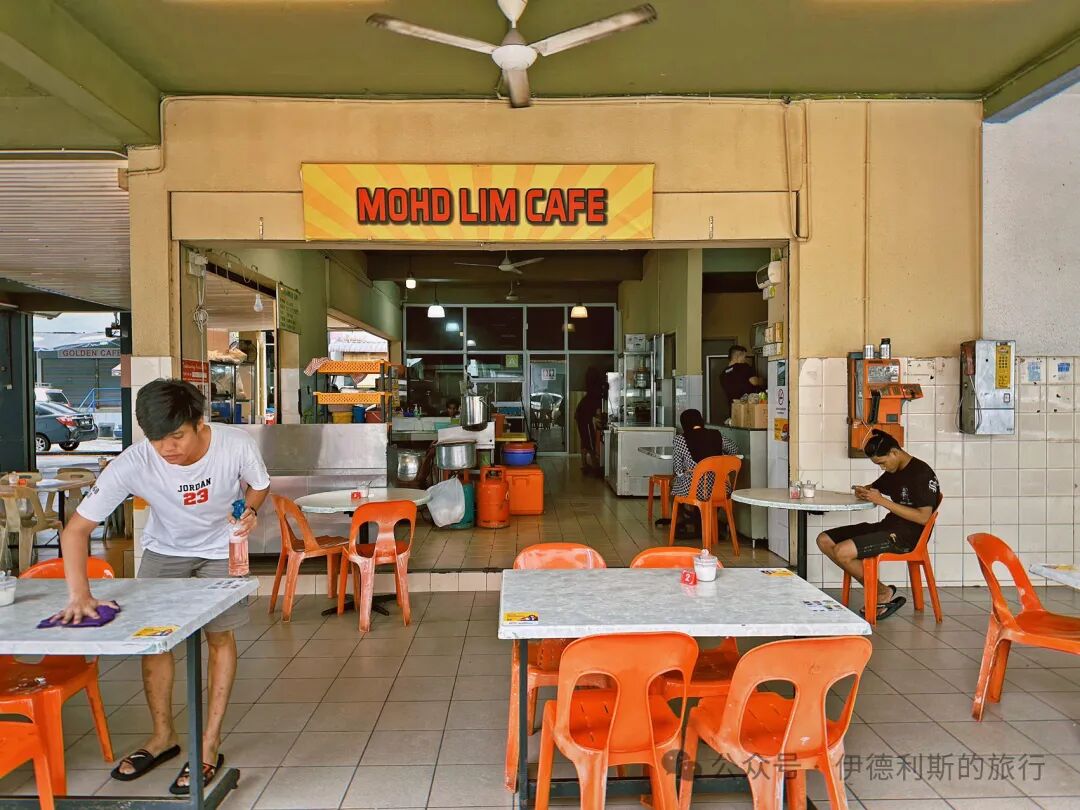
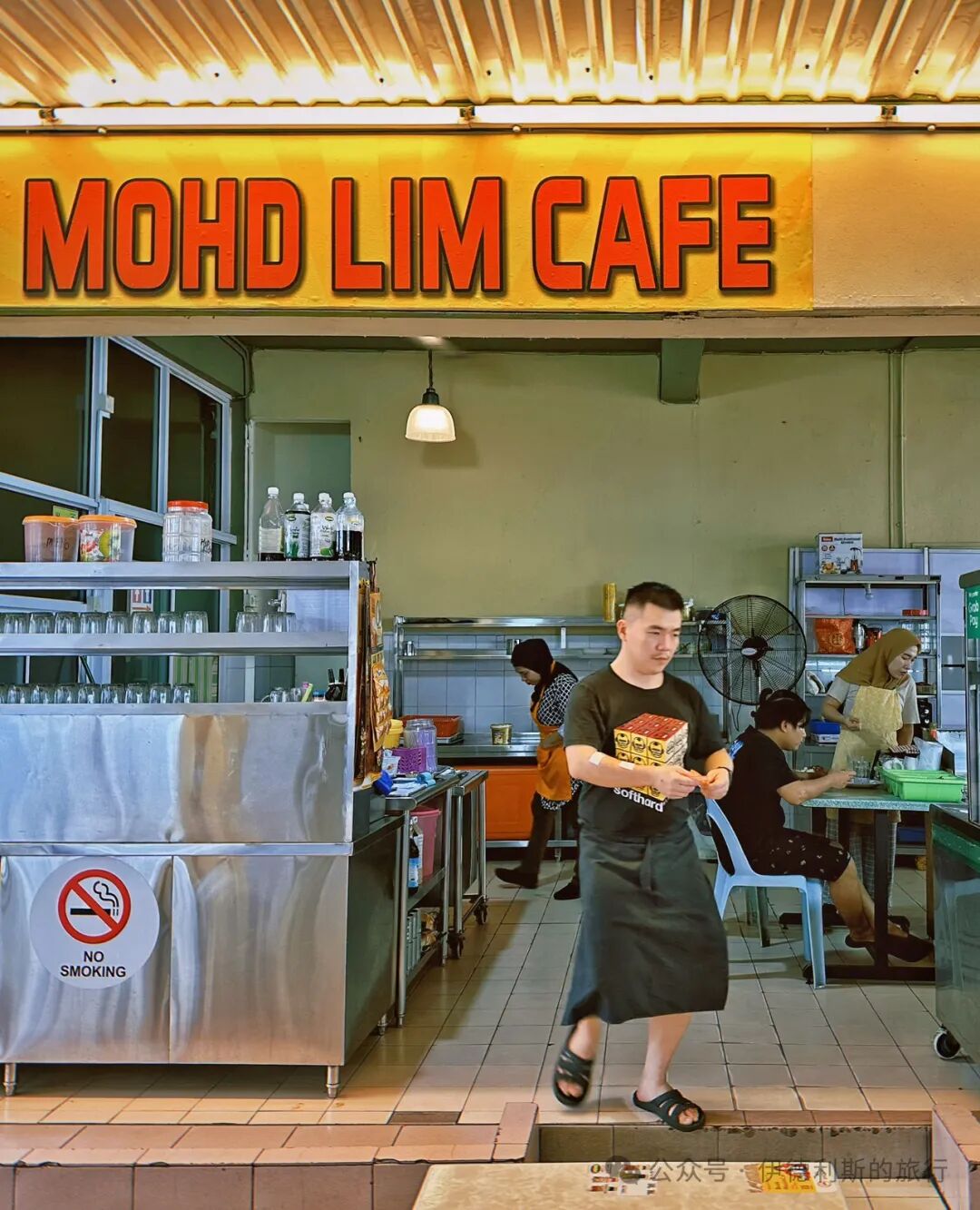
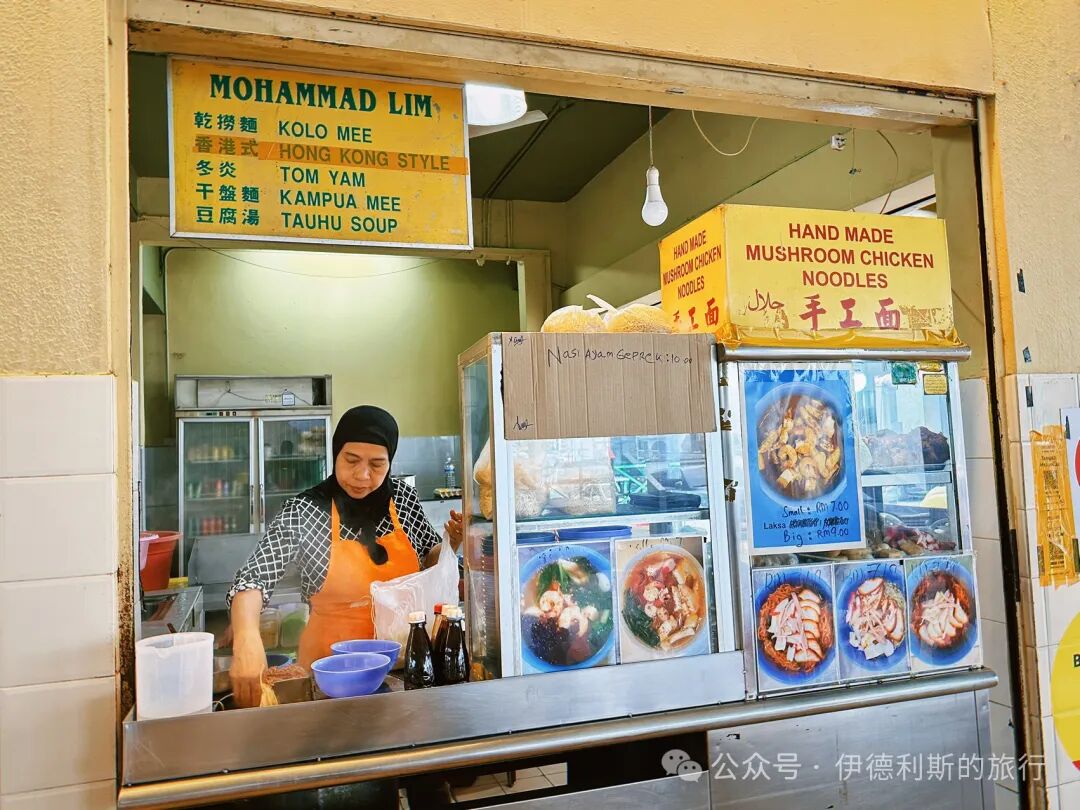
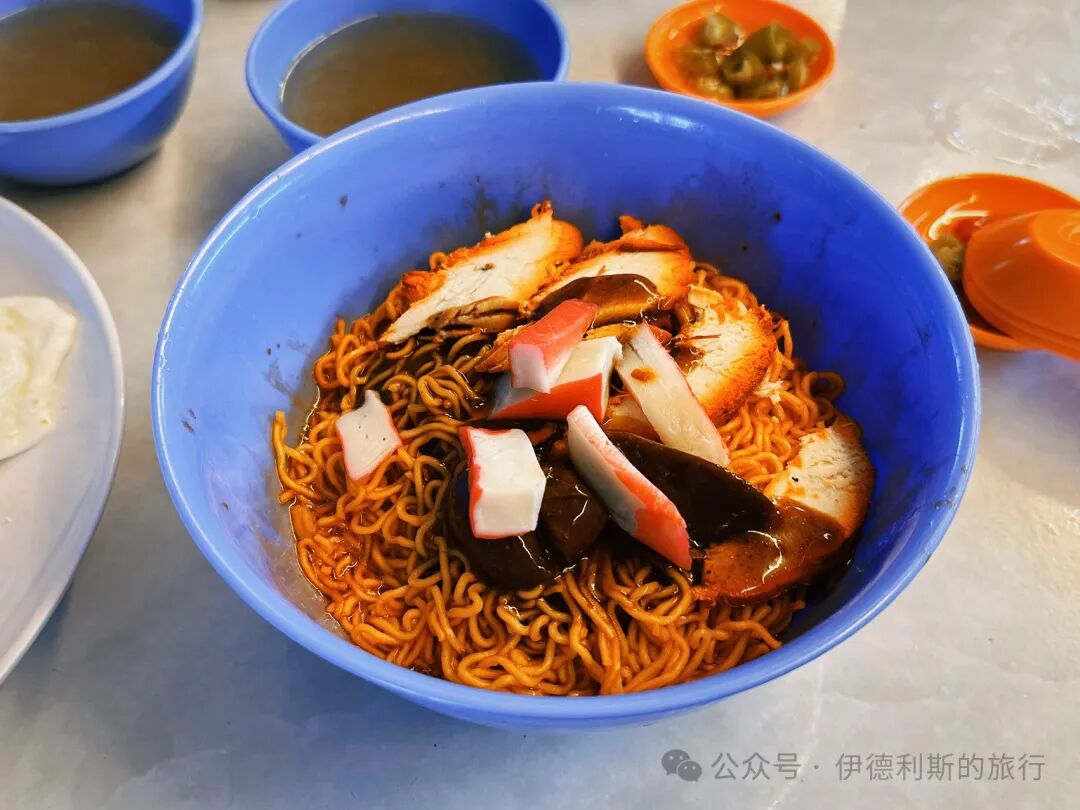
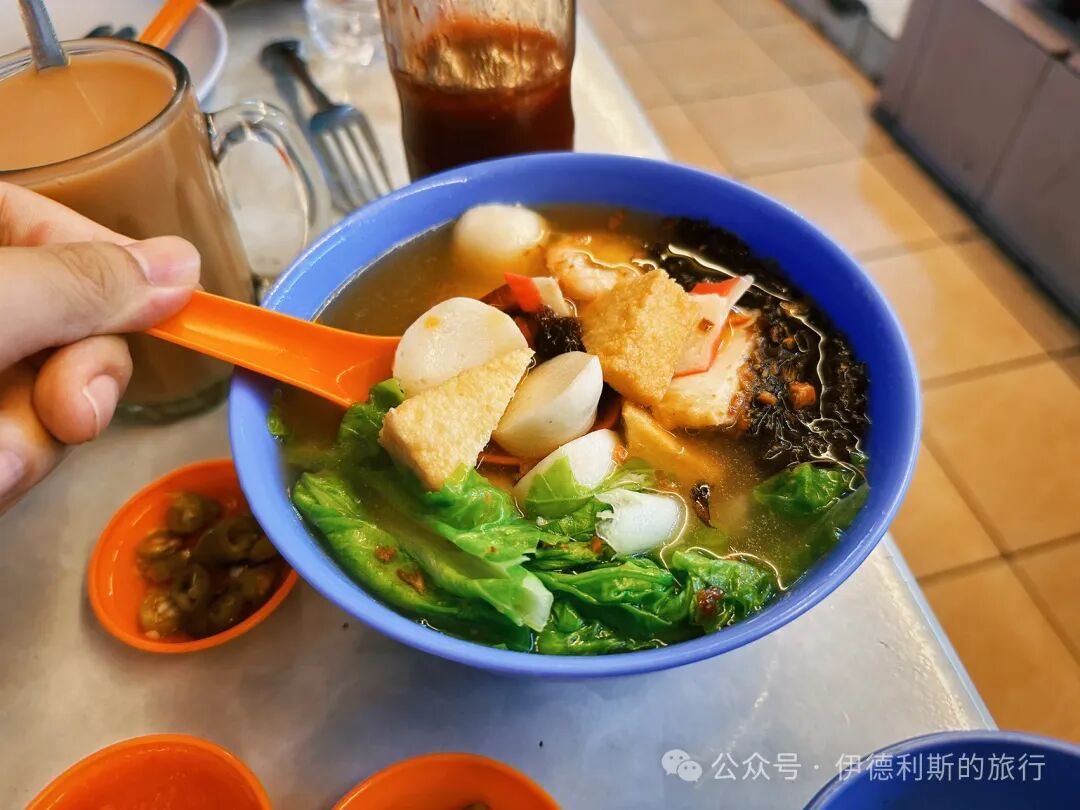
The next morning, we went to Mohammad Lim Cafe, a famous halal Chinese snack shop in Kuching's old town, for breakfast. They specialize in handmade noodles, including dry-tossed noodles, tom yum, kampua noodles, tofu soup, and laksa. We ordered dry-tossed noodles, kampua noodles, and tofu soup.
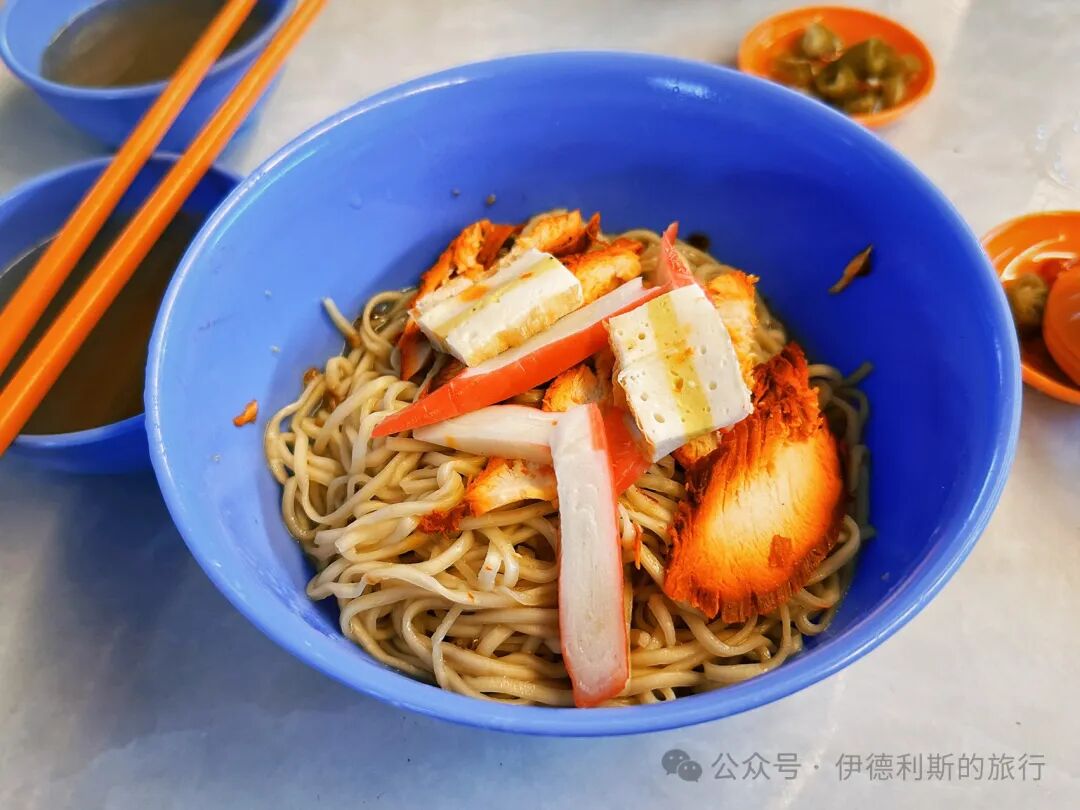
Dry-tossed noodles (kolomee) are a specialty egg noodle brought by Cantonese Chinese. They are popular in cities with many Cantonese people like Kuching. You can have them plain in clear soup, with dark soy sauce, or with red char siu oil, topped with slices of chicken or beef char siu. Kampua noodles (ganpanmian) are a specialty brought by Fuzhou Chinese. They are made similarly to dry-tossed noodles and are popular in cities with many Fuzhou people like Sibu. Dry-tossed noodles are wetter than kampua noodles and look more like instant noodles, while kampua noodles are usually made with handmade noodles.
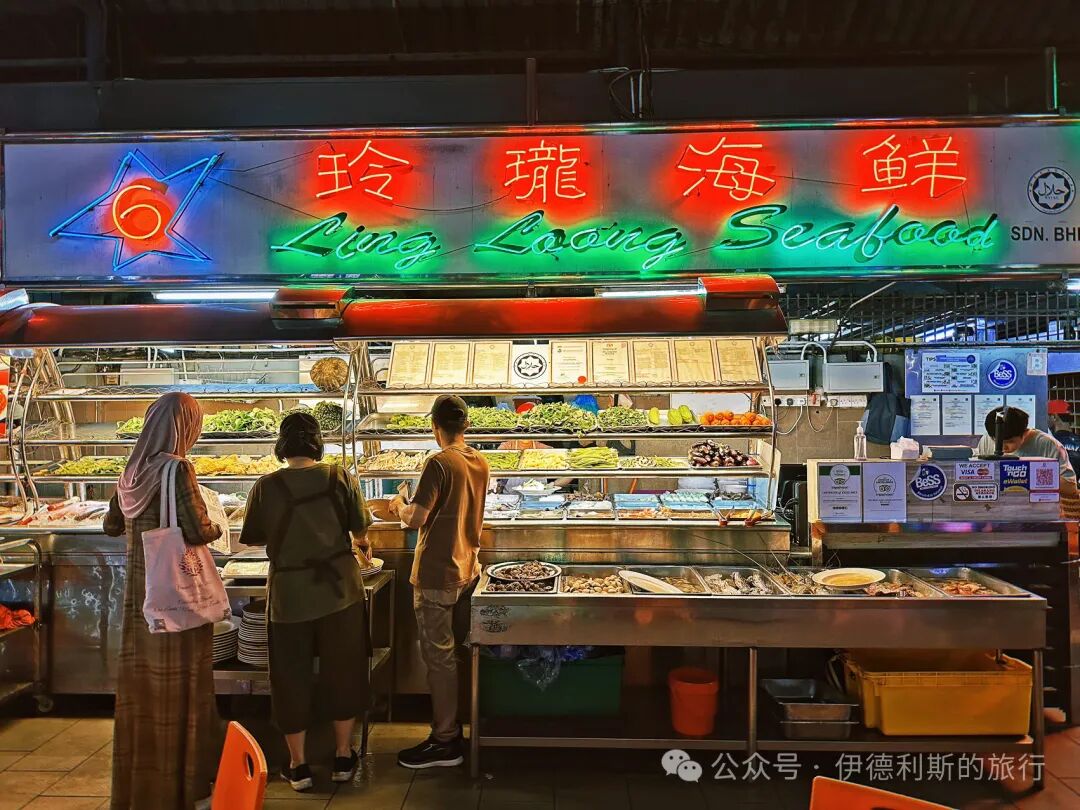
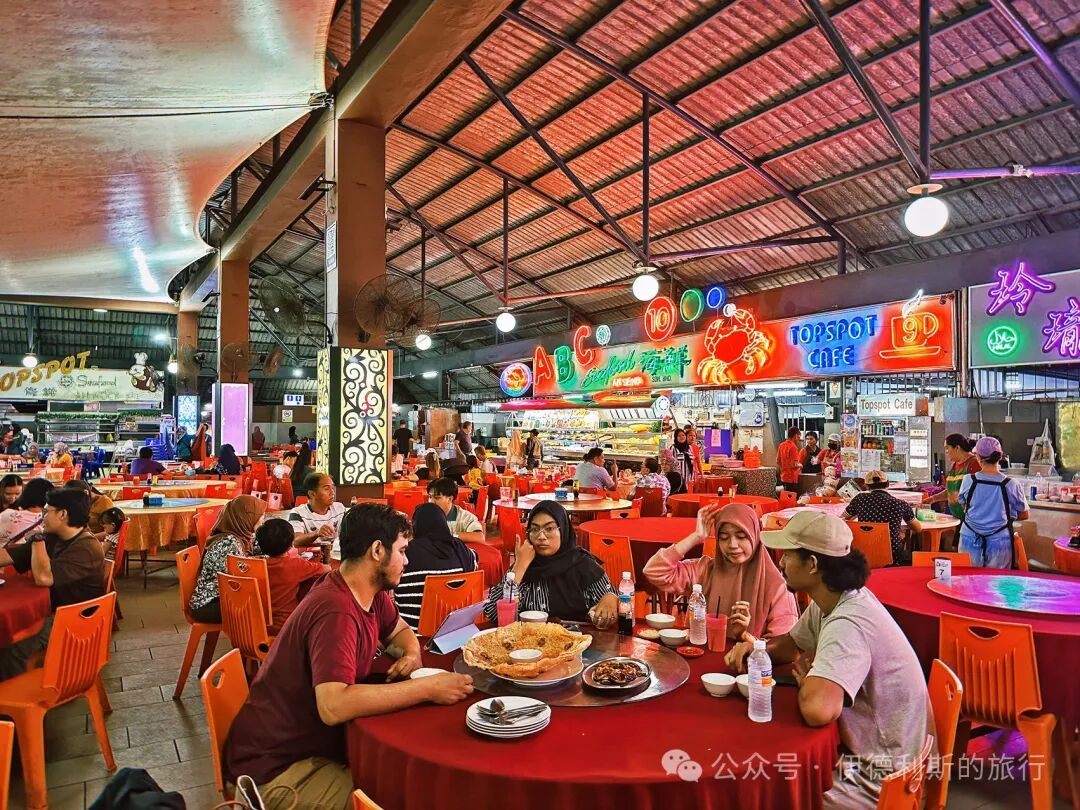
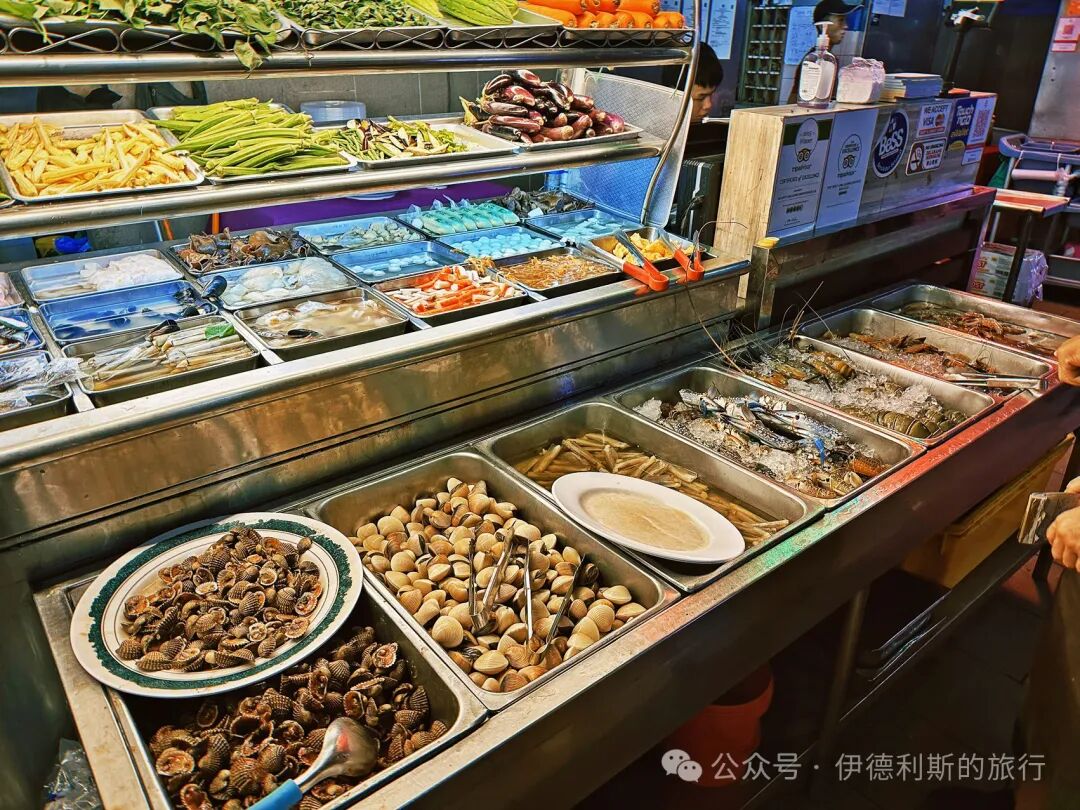
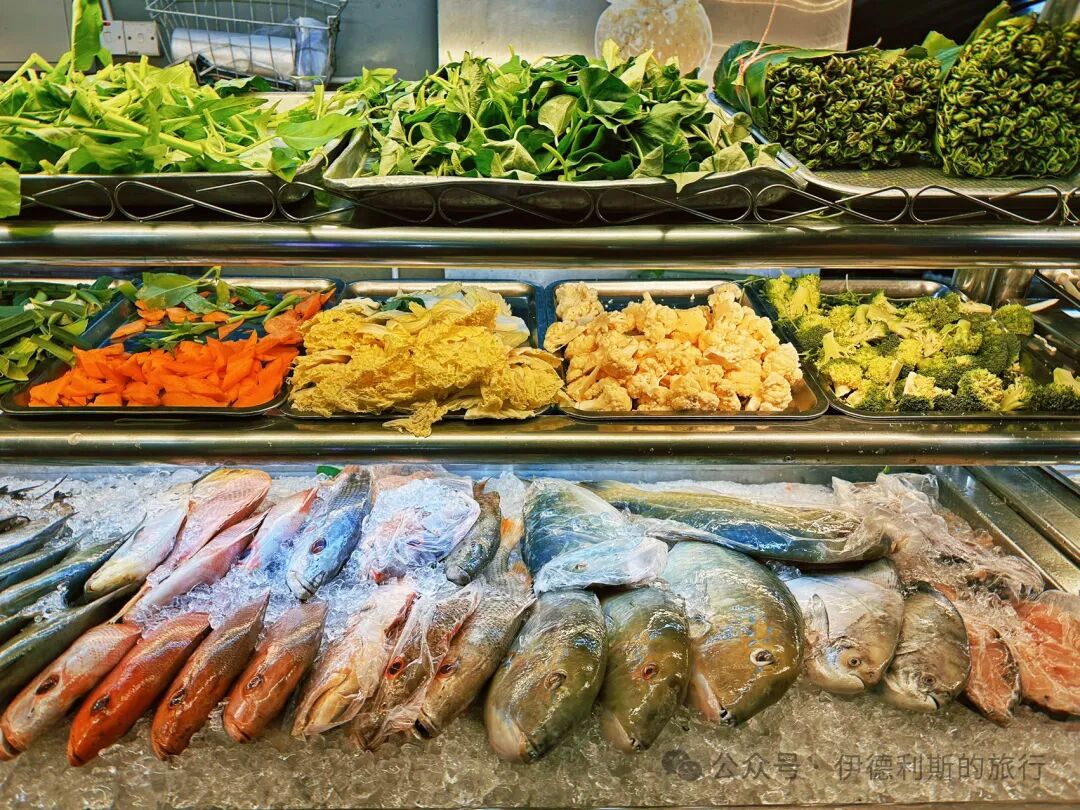
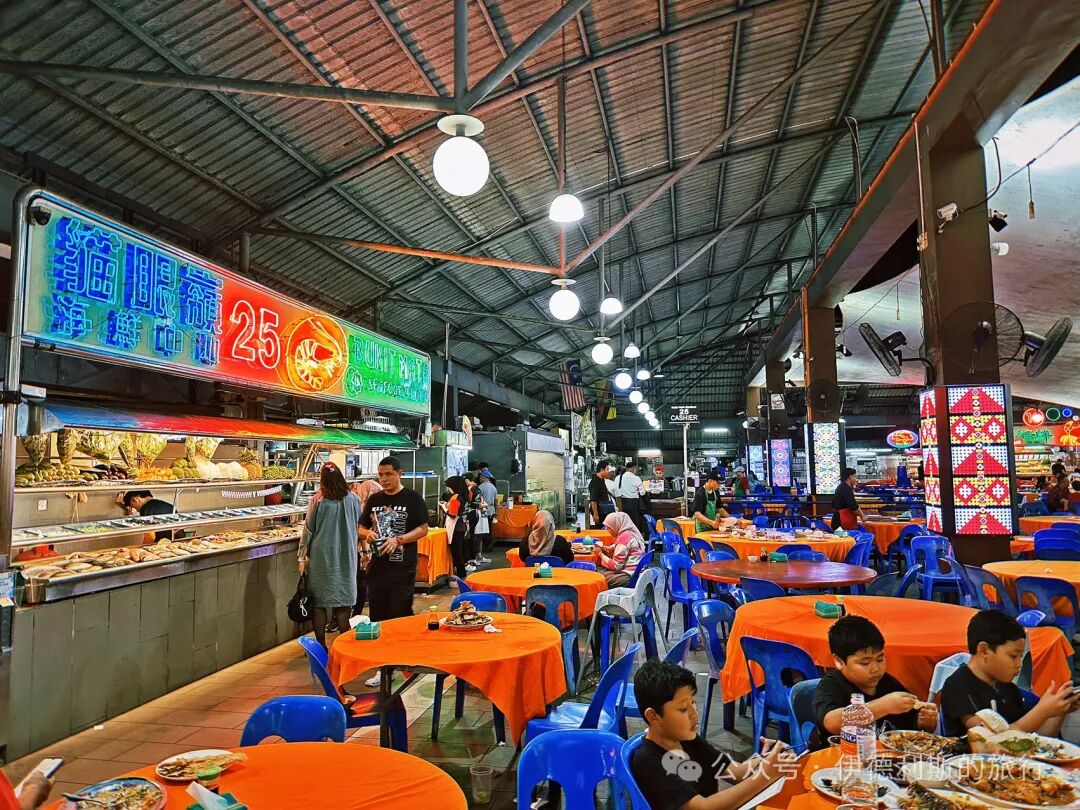
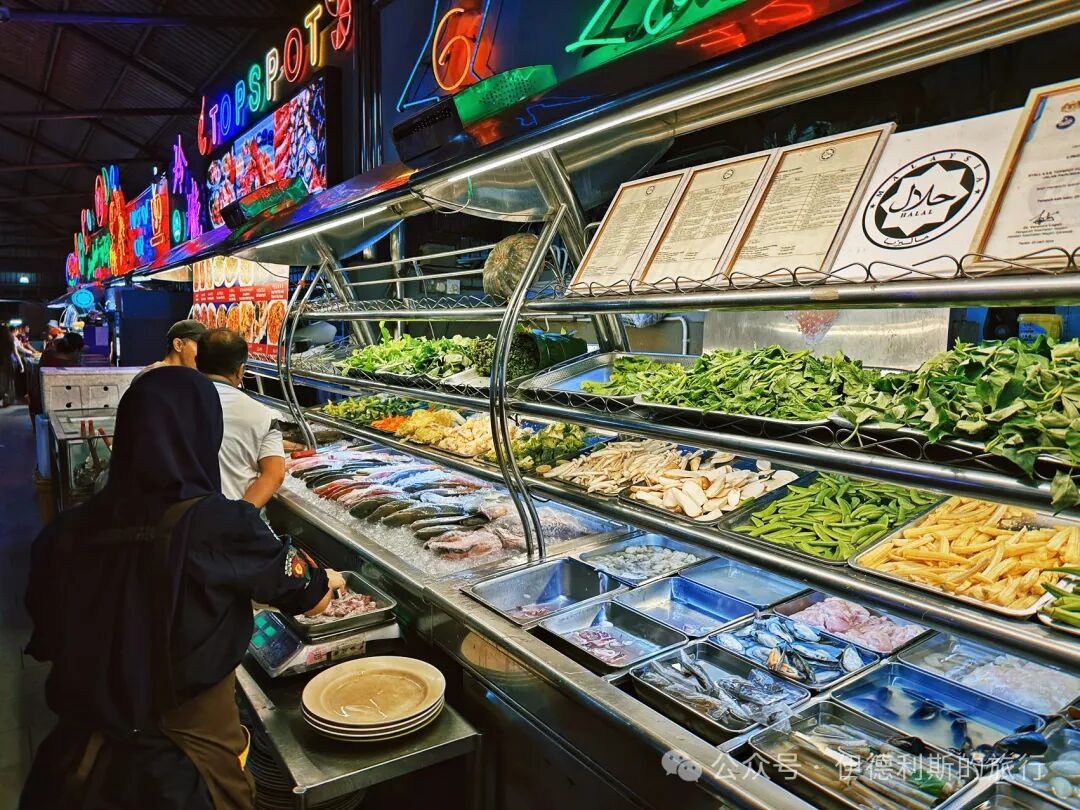
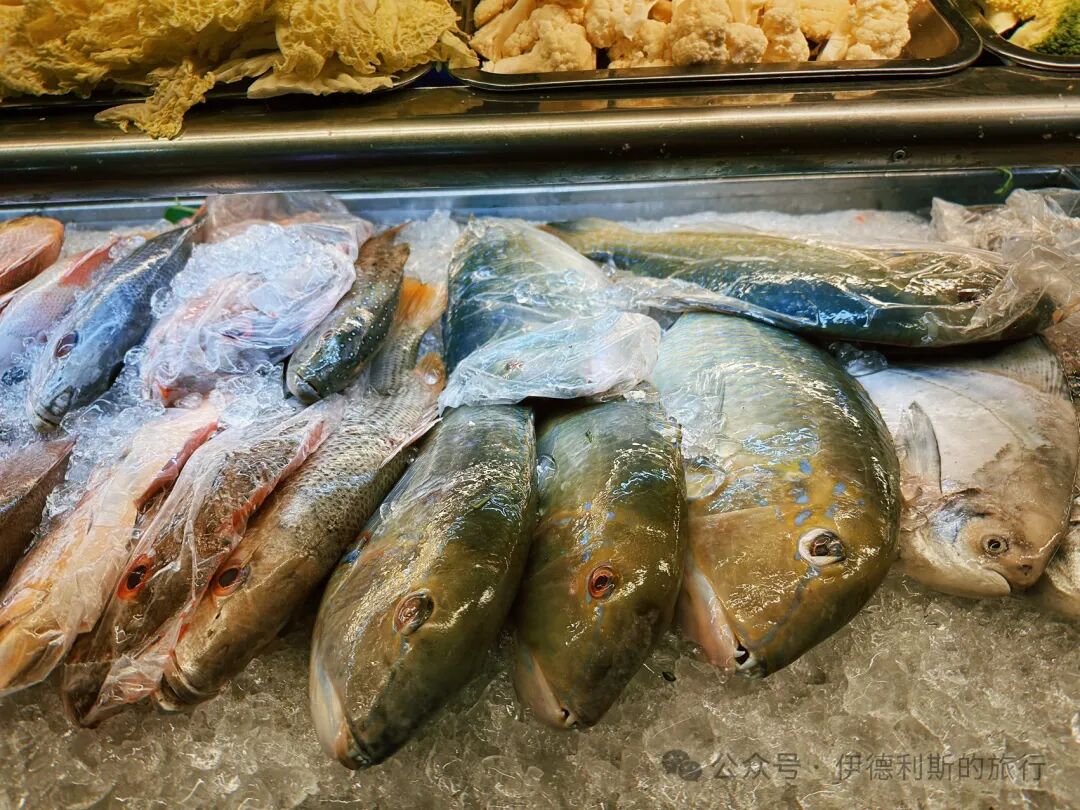
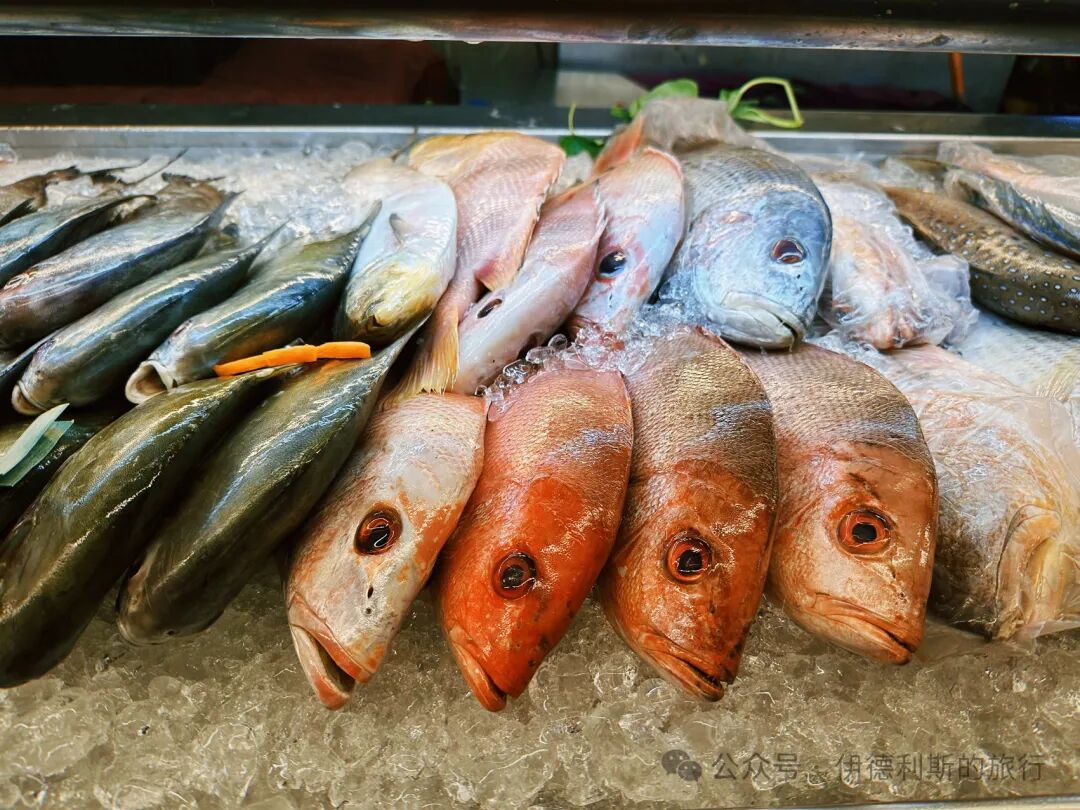
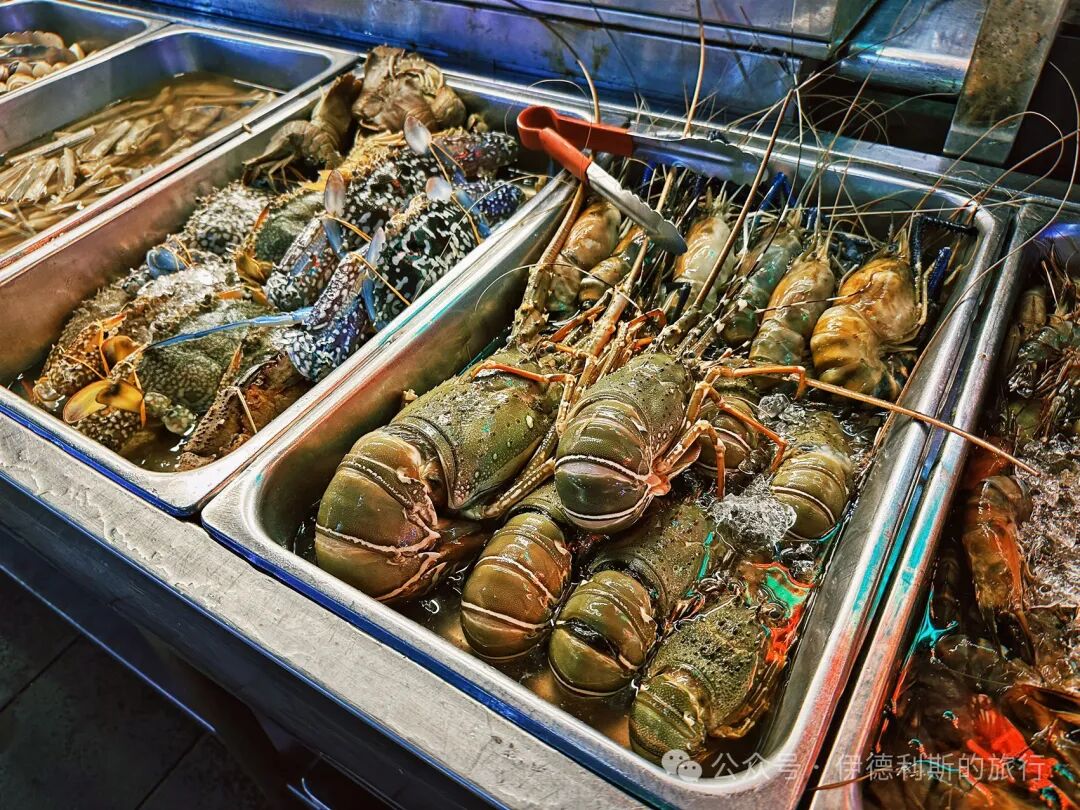
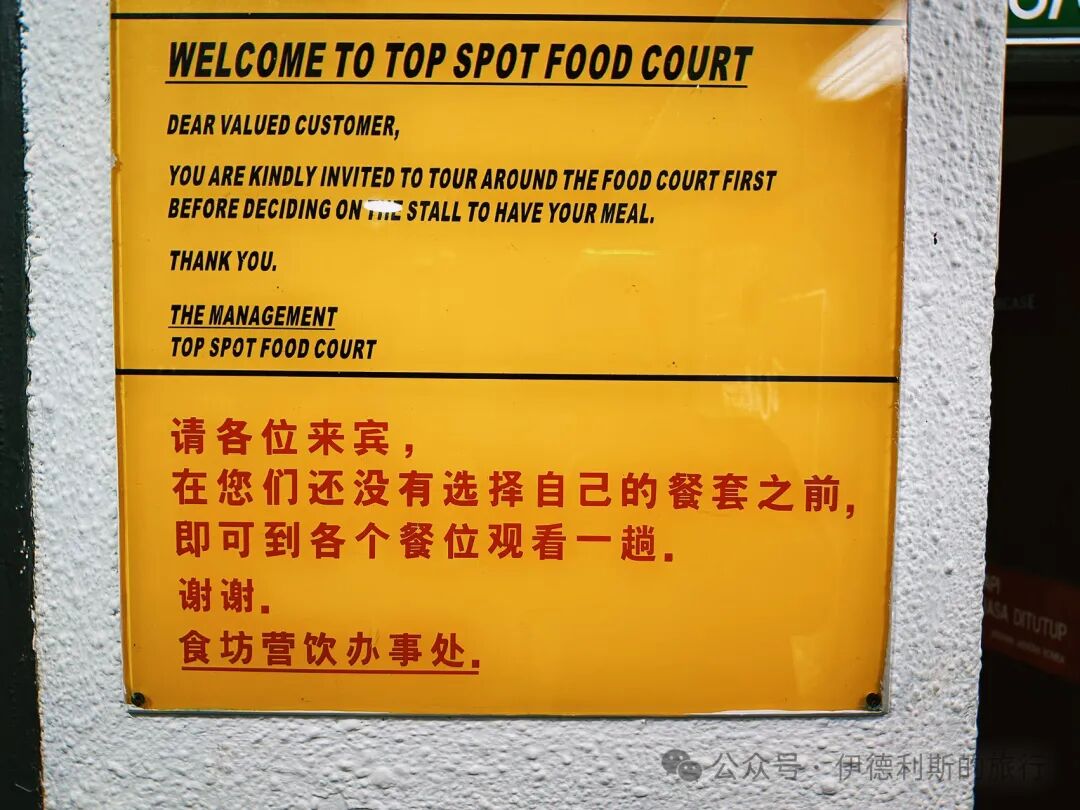
I highly recommend the Top Spot Food Court in the city center to any friends (dosti) visiting Kuching. It is a halal Chinese seafood center with a Southeast Asian vibe. The food court is open from 5 p.m. to 10 p.m. It looks like a plain parking garage from the outside, but once you take the elevator to the top floor, you enter a very lively seafood market. Most stalls in the food court are run by Chinese owners and have halal certification. All kinds of fish, shrimp, and vegetables are displayed openly, so you can pick exactly what you want.
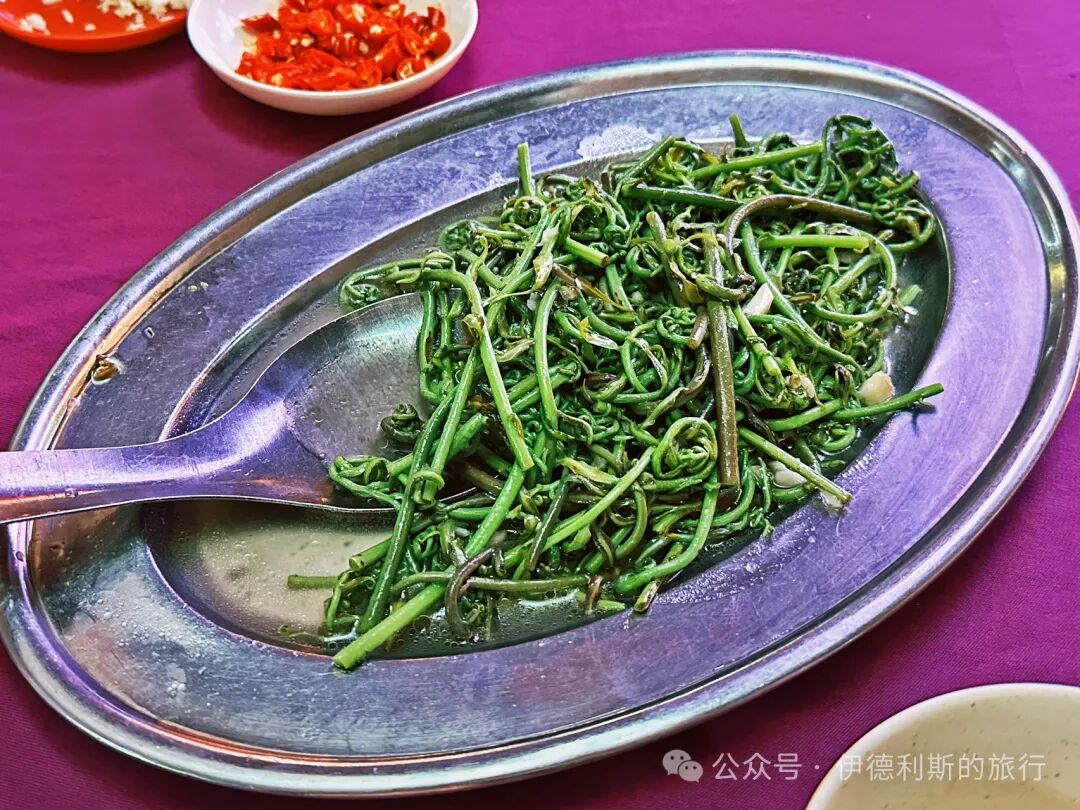
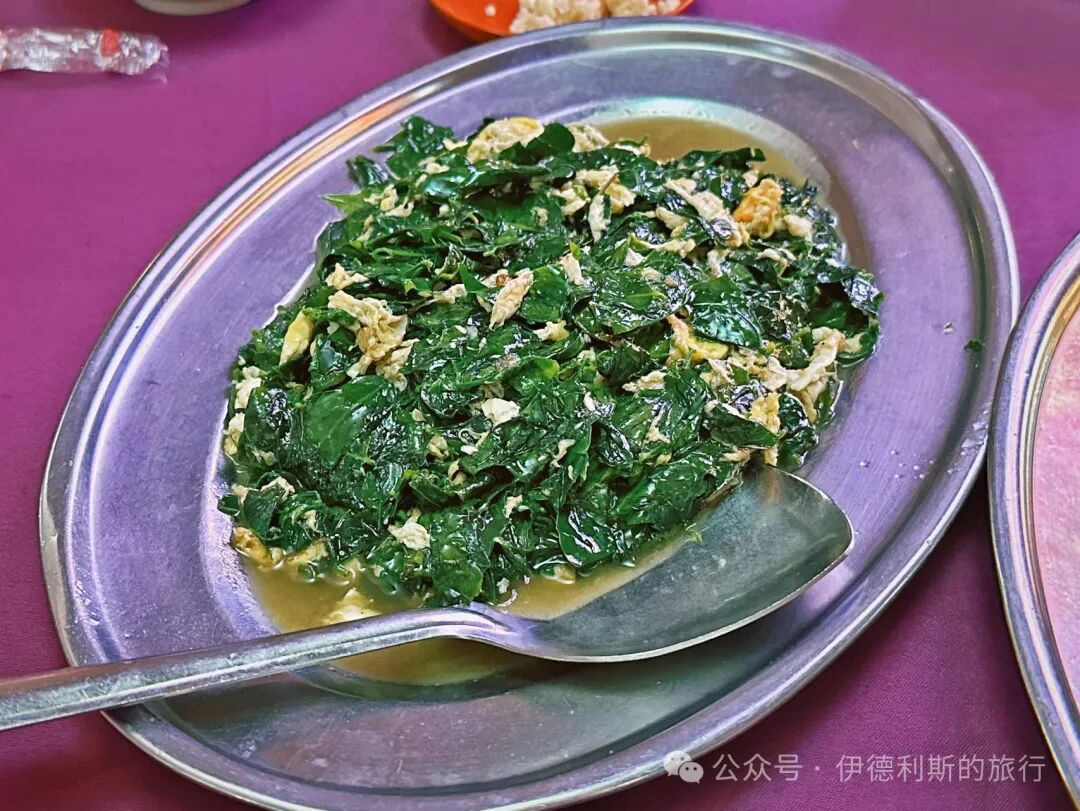
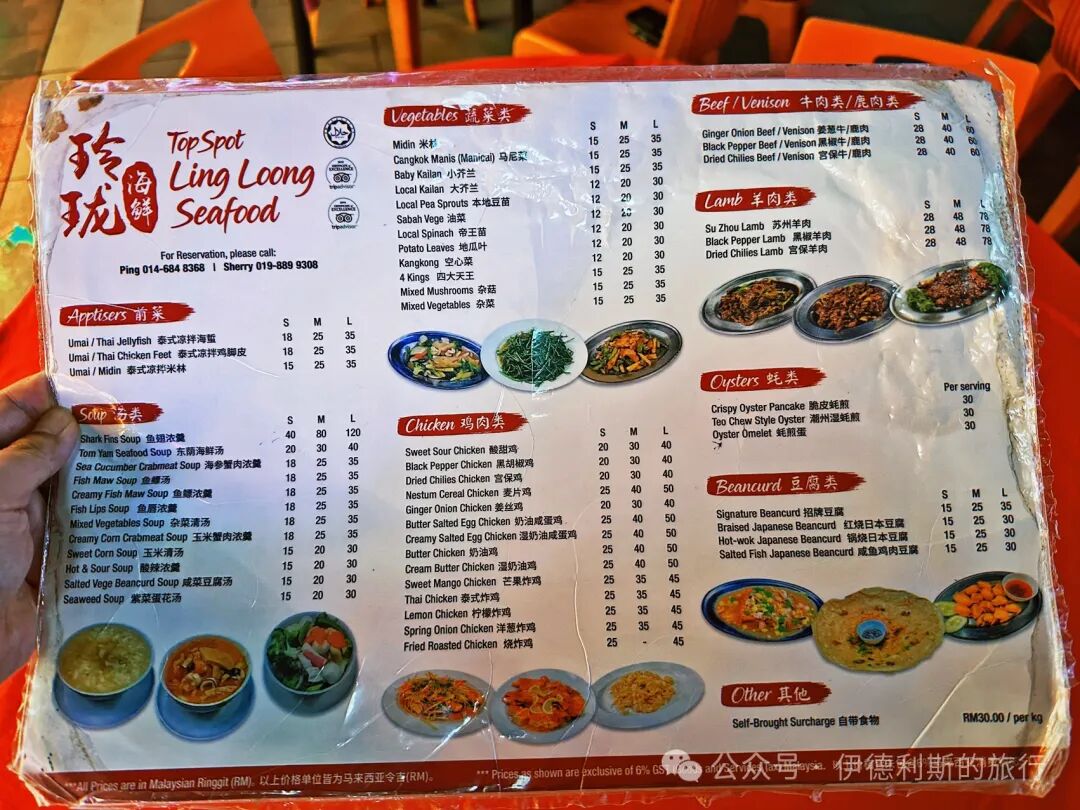
We chose a stall called Ling Long Seafood. The lady who took our order was Hainanese. Hainanese people running halal Chinese restaurants is a big feature in Malaysia. She spoke great Mandarin and was very enthusiastic about helping us order what we wanted. We ordered Sarawak-style stir-fried midin ferns (midin) with shrimp paste and stir-fried sweet leaf (mani cai) with egg. Their stir-fried dishes come in small, medium, and large sizes, so even one person can eat well.
Midin is a fern native to Borneo. It is not bitter at all when stir-fried and has a very fresh fragrance. Sweet leaf (mani cai) is a wild vegetable that Sarawak Hakka people love to cook. You can find it in homes and small restaurants. The leaves must be rubbed in water and drained to remove any bitterness, and the small stems must be picked out before cooking, so it is much more work than other vegetables.
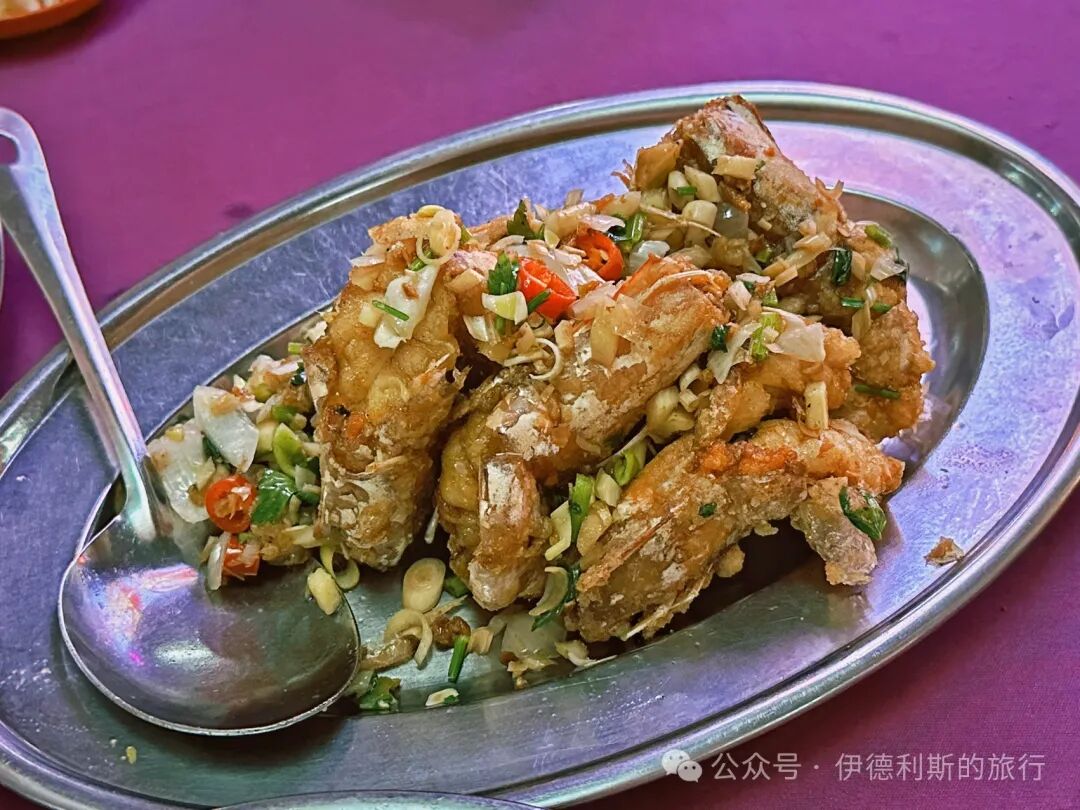
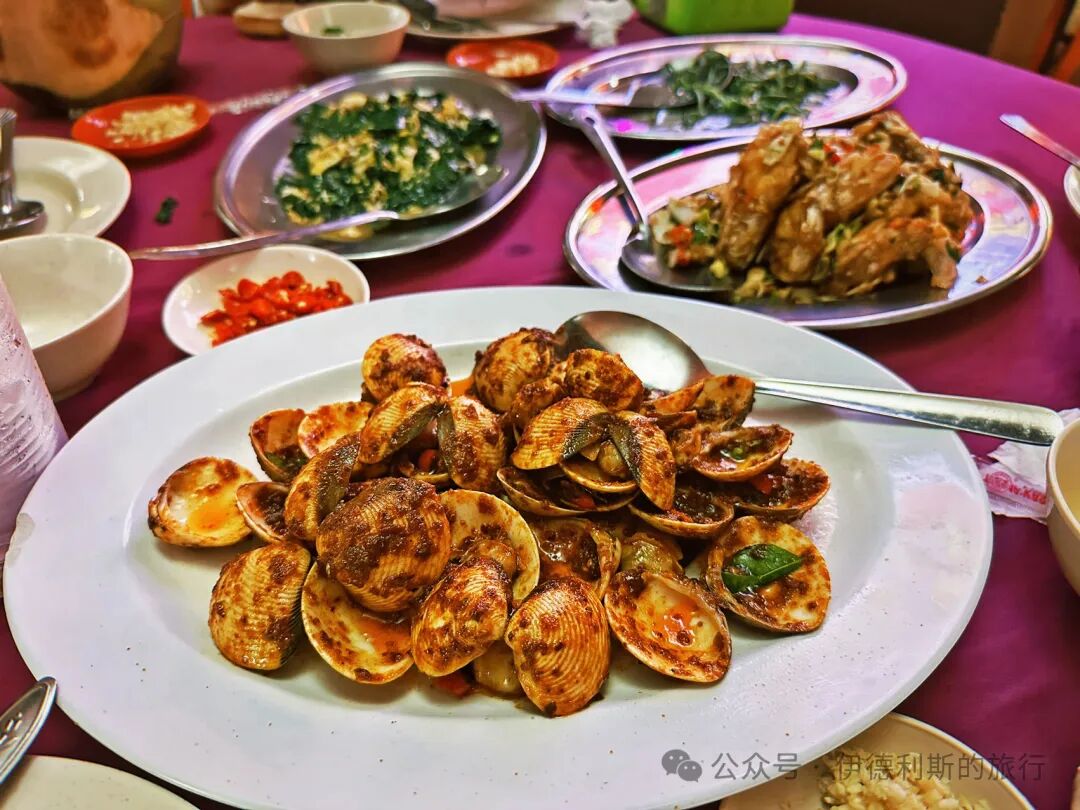
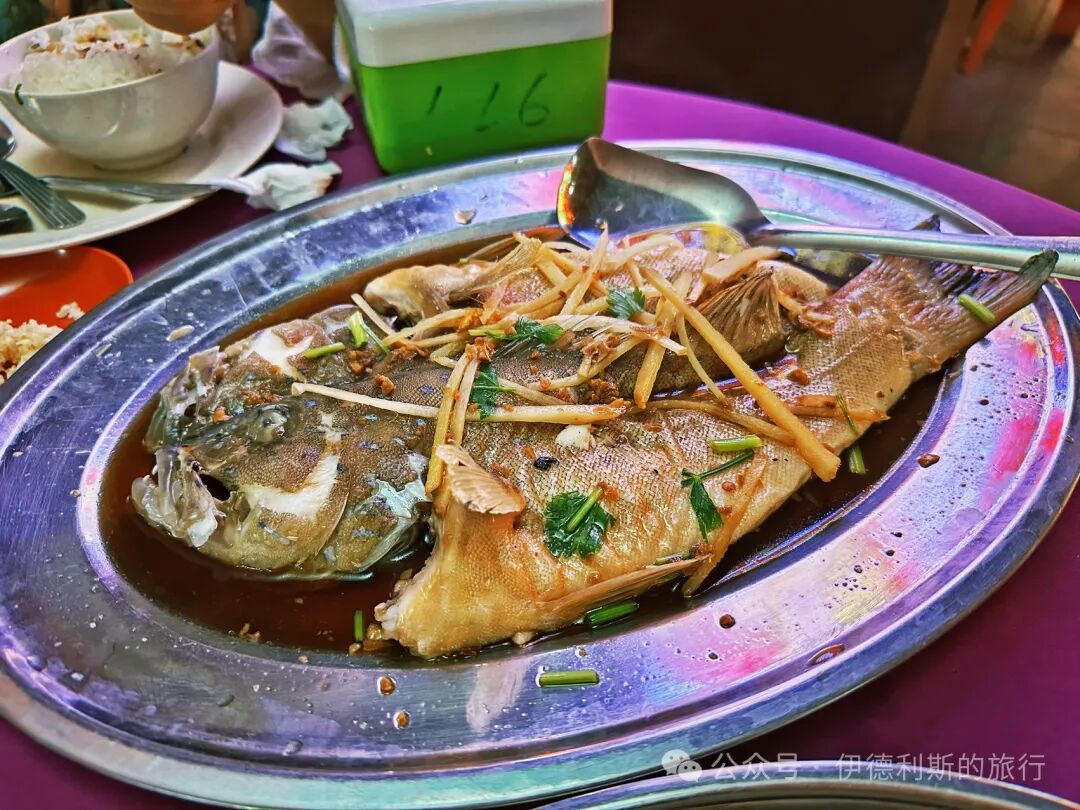
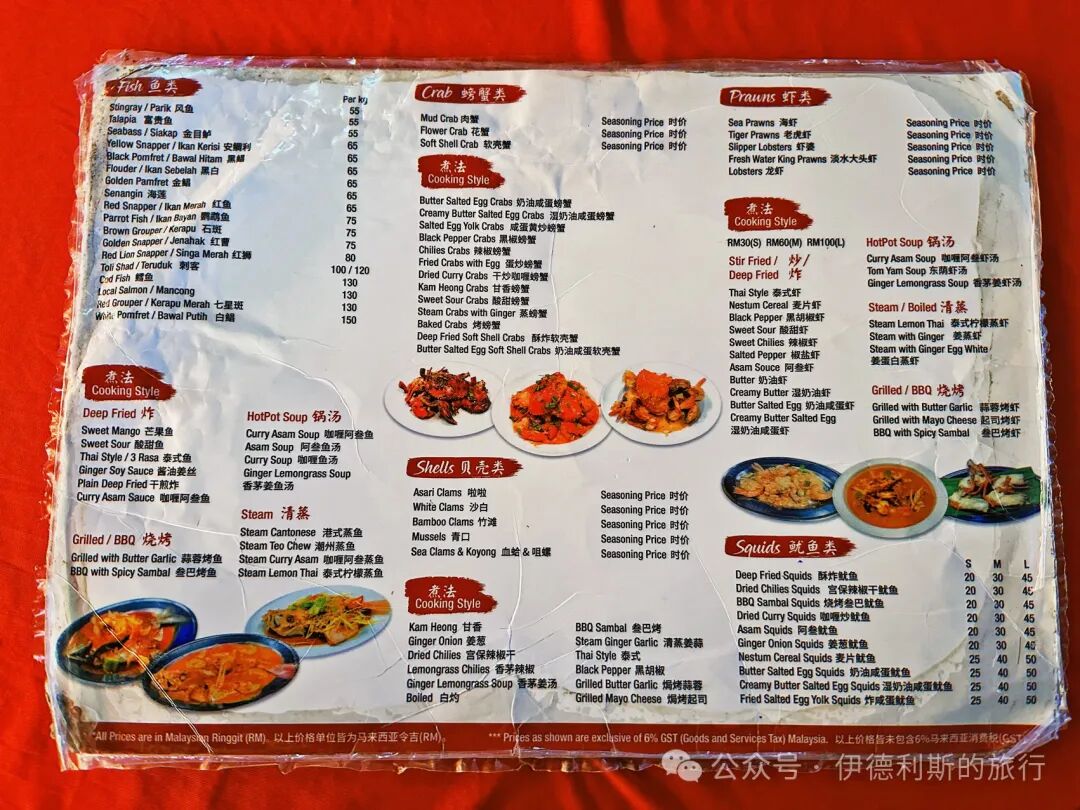
For seafood, we ordered lokan clams (lokan), sea shrimp, and seven-star grouper. The waiter told us which ones were fresh and which were frozen. Everything we ordered was indeed very fresh and delicious. Since it is a food court by the sea in the city center, I am not sure if other stalls overcharge, but I felt this stall was good value for money. In the end, our five dishes, rice, and the 6% sales tax cost a total of 313 RMB. Small stir-fried dishes were 24 RMB each, the seven-star grouper was 148 RMB (they had cheaper fish too), a plate of sea shrimp was 48 RMB, and a plate of clams was 40 RMB.
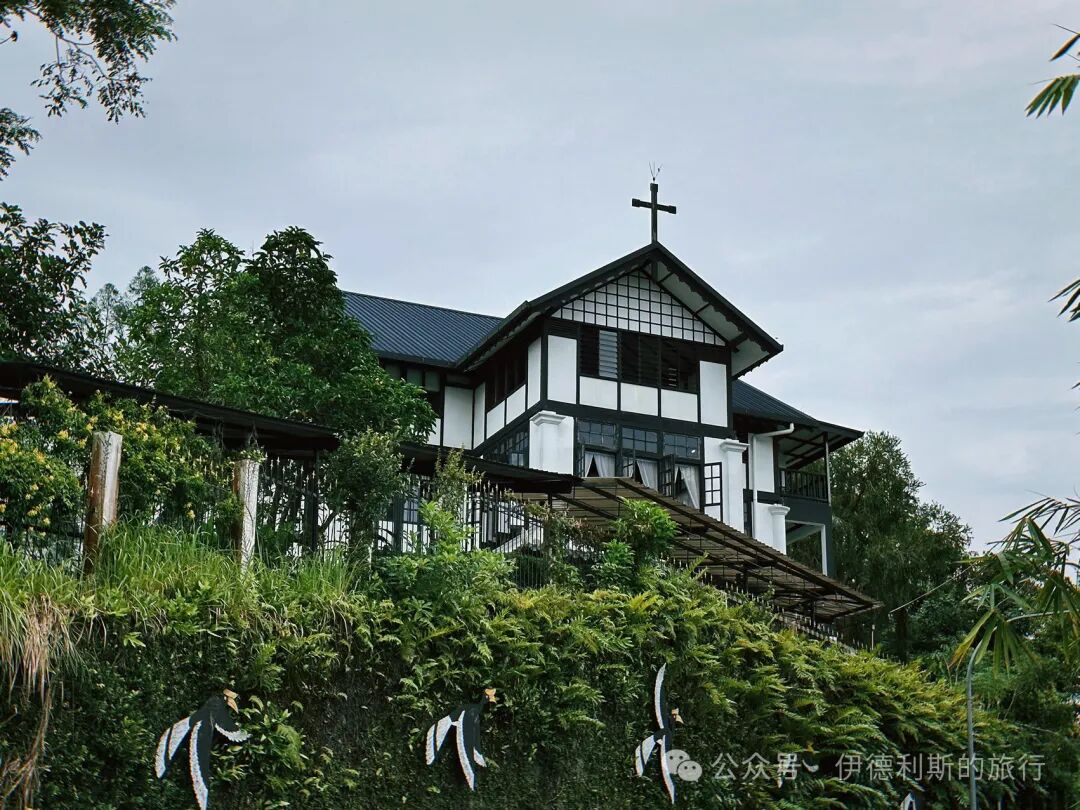
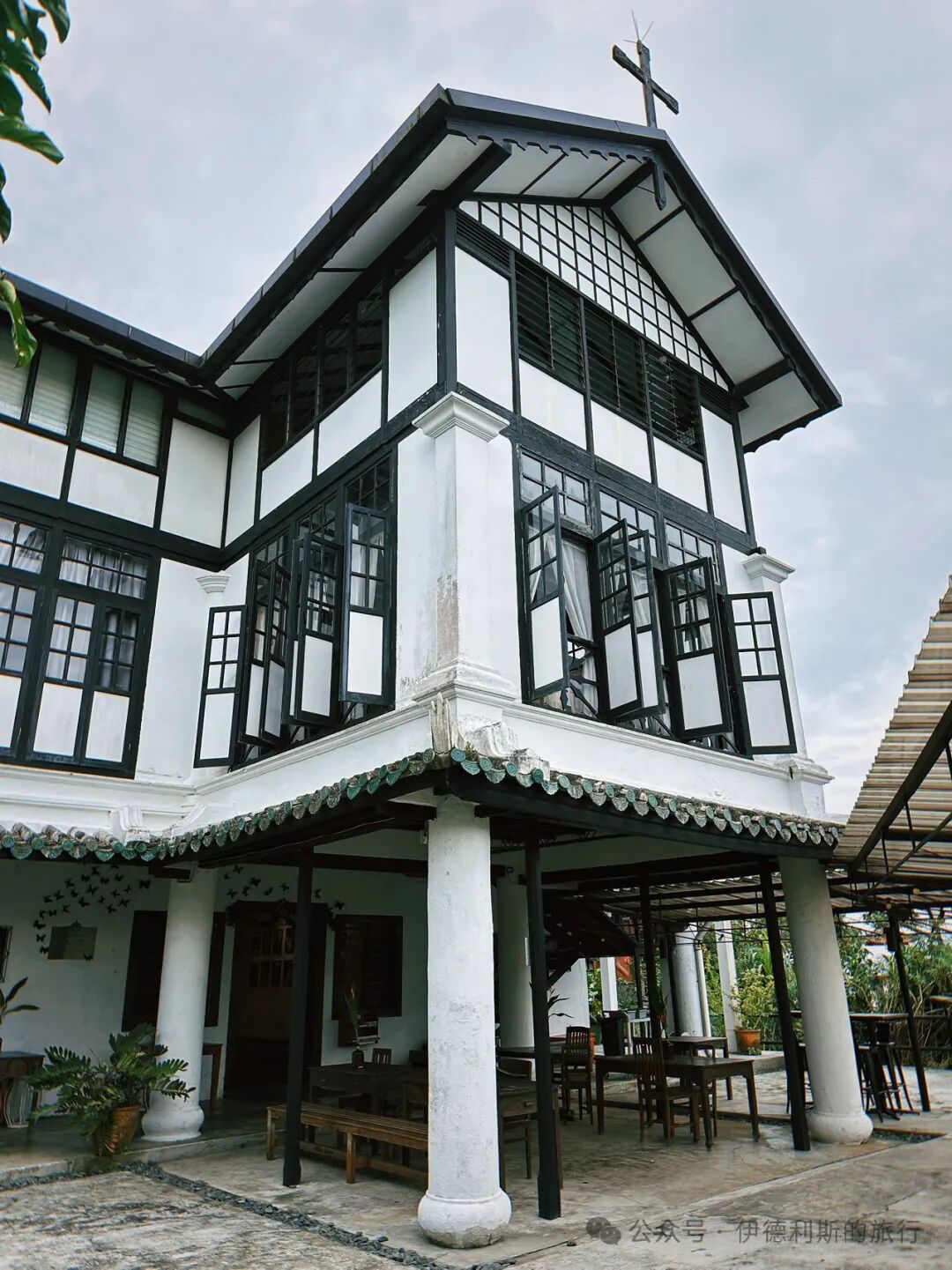
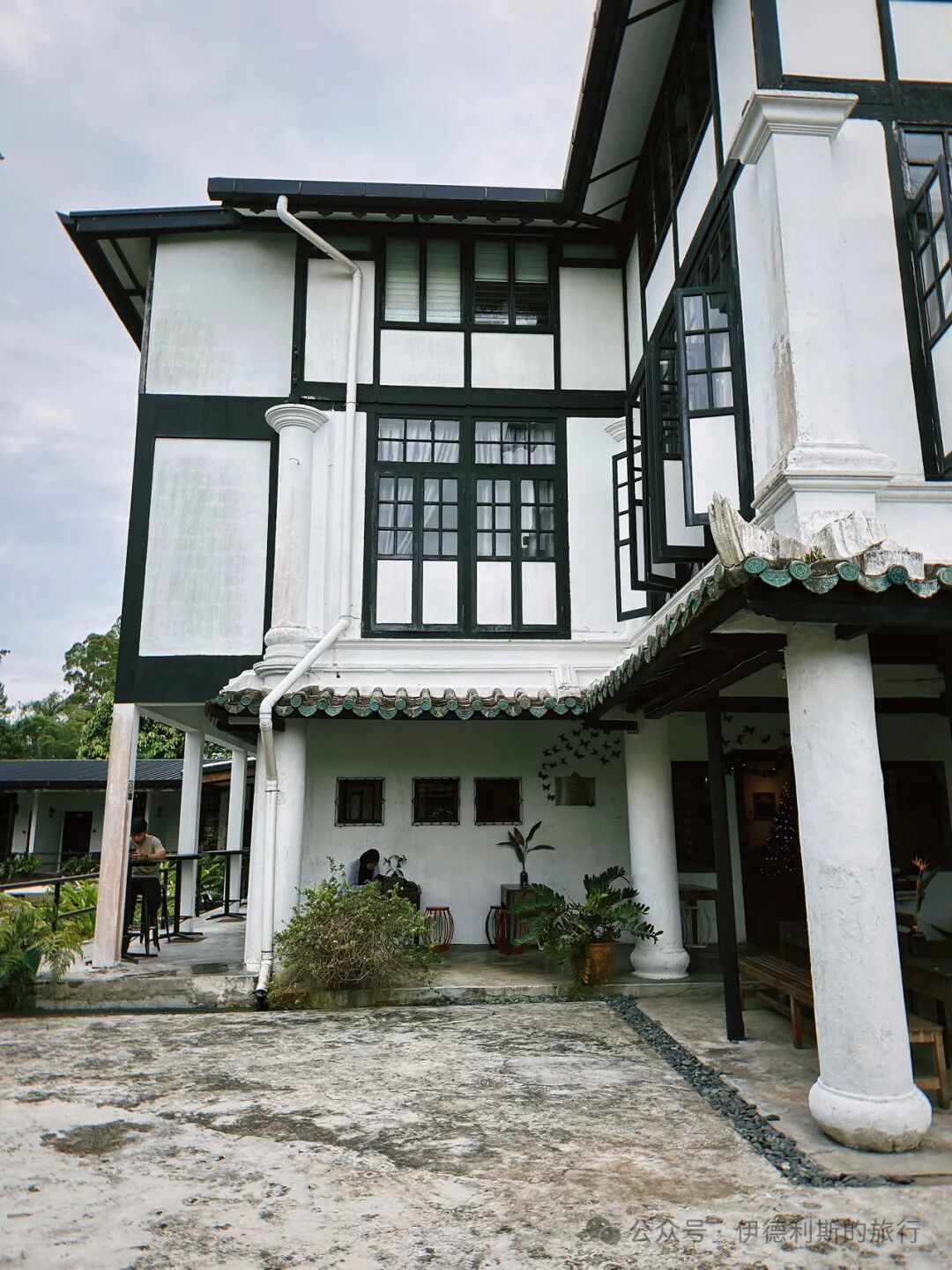
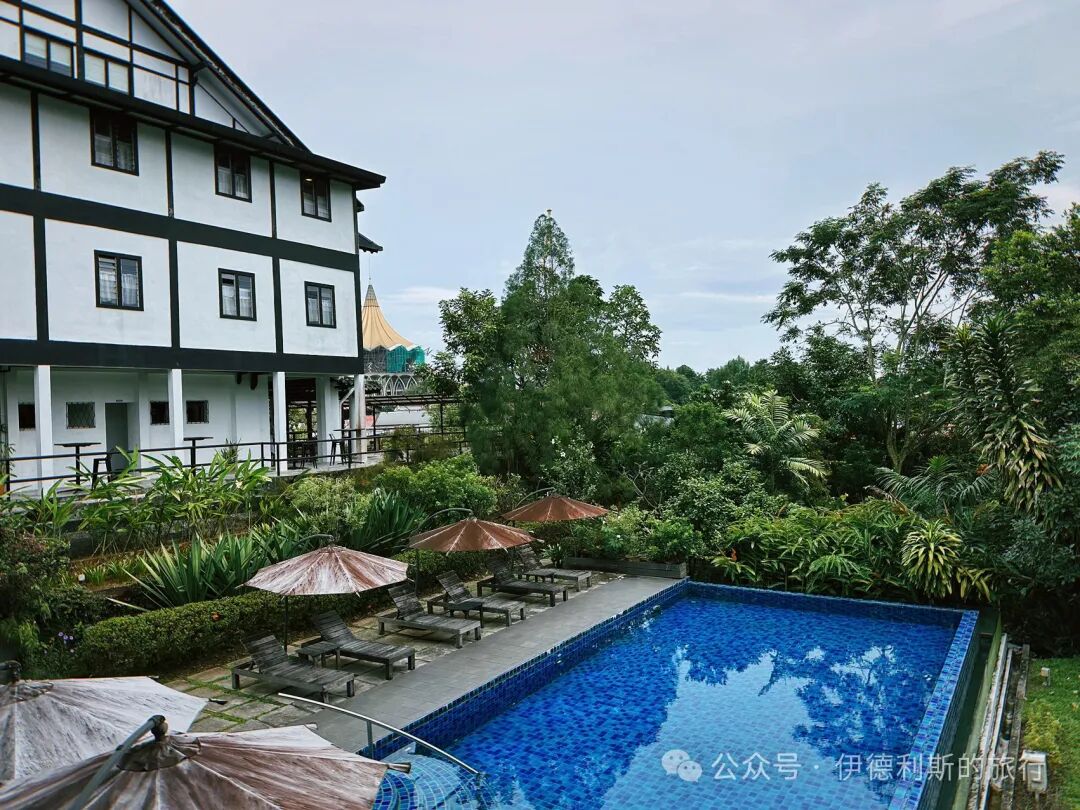
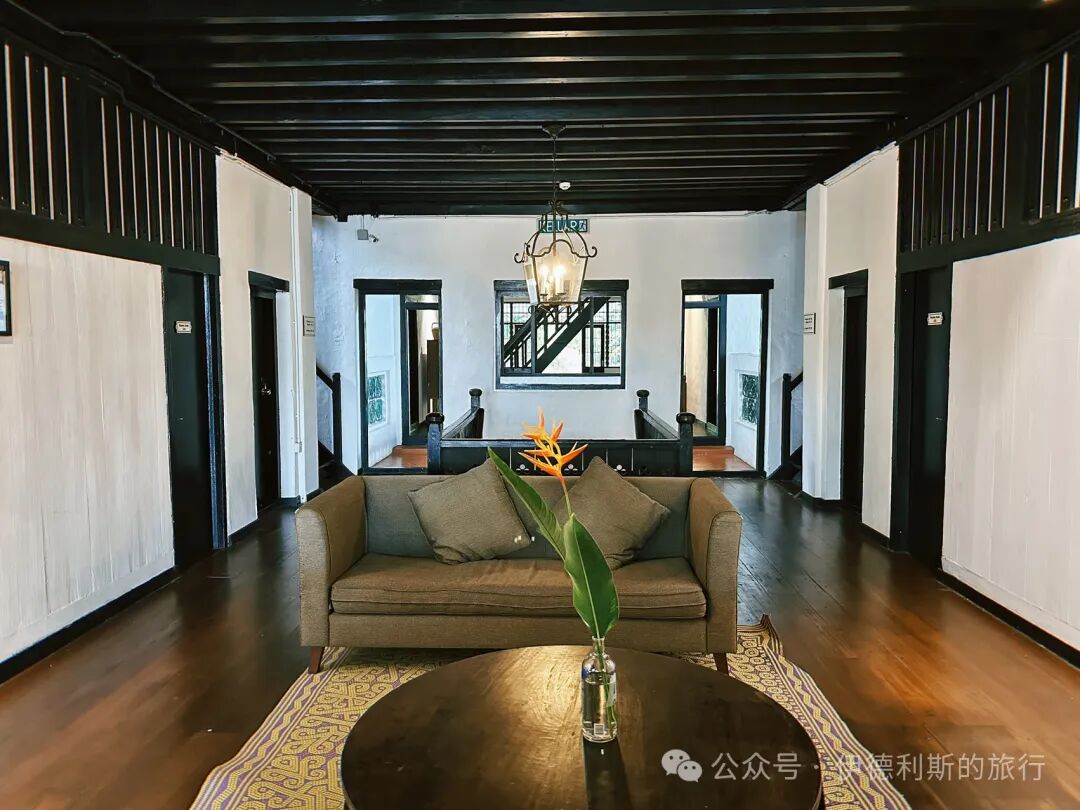
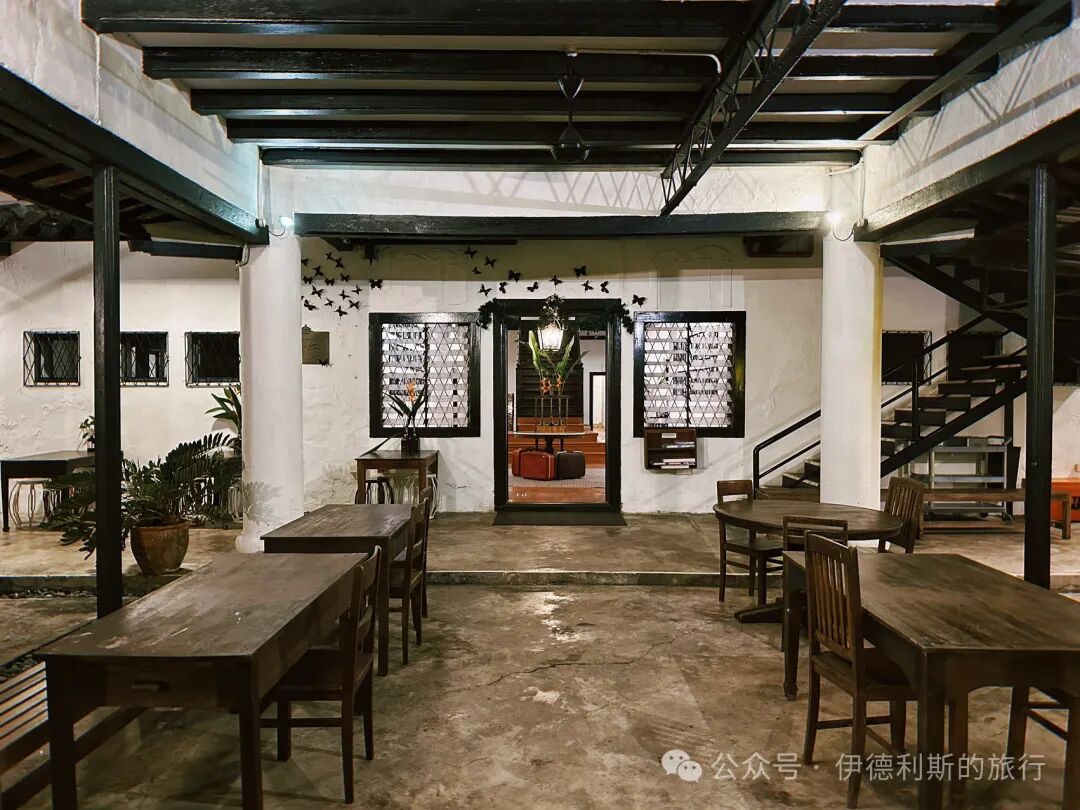
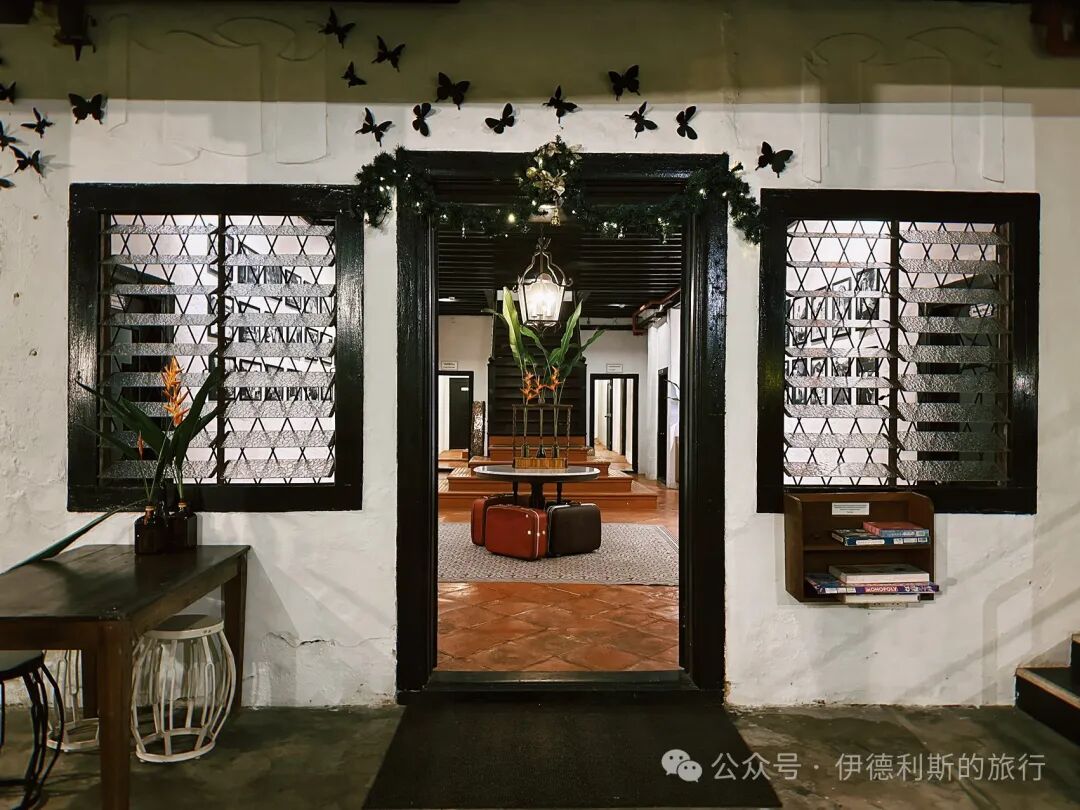
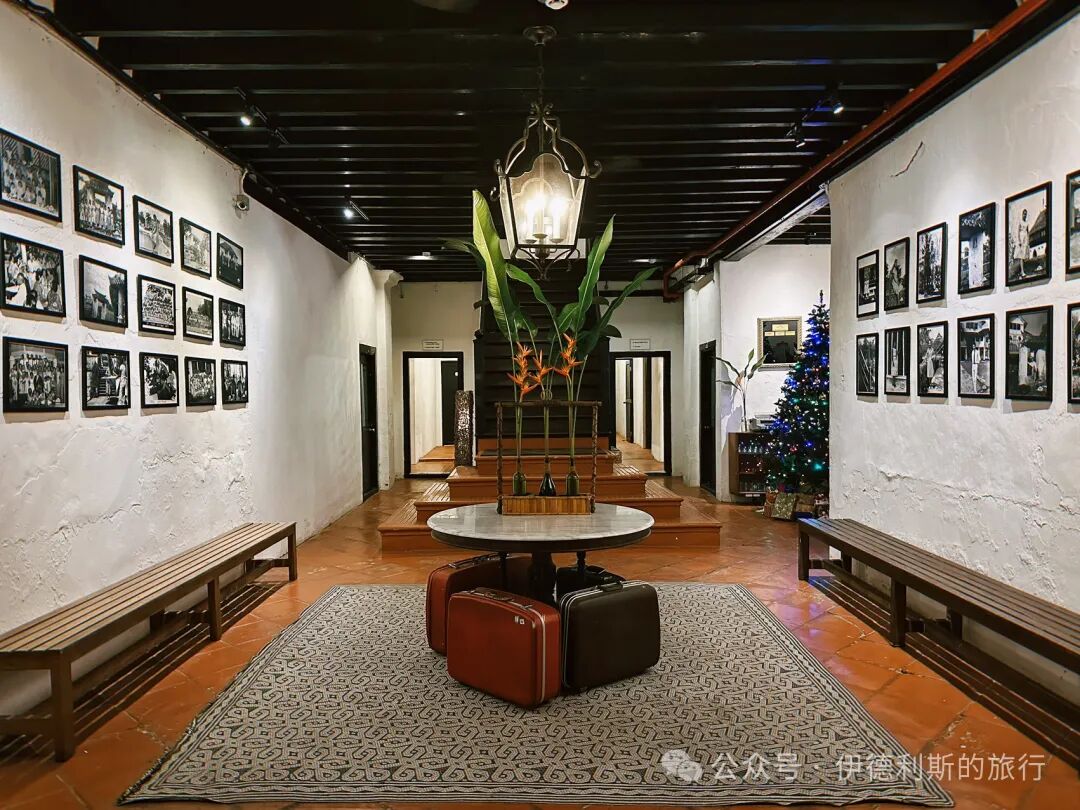
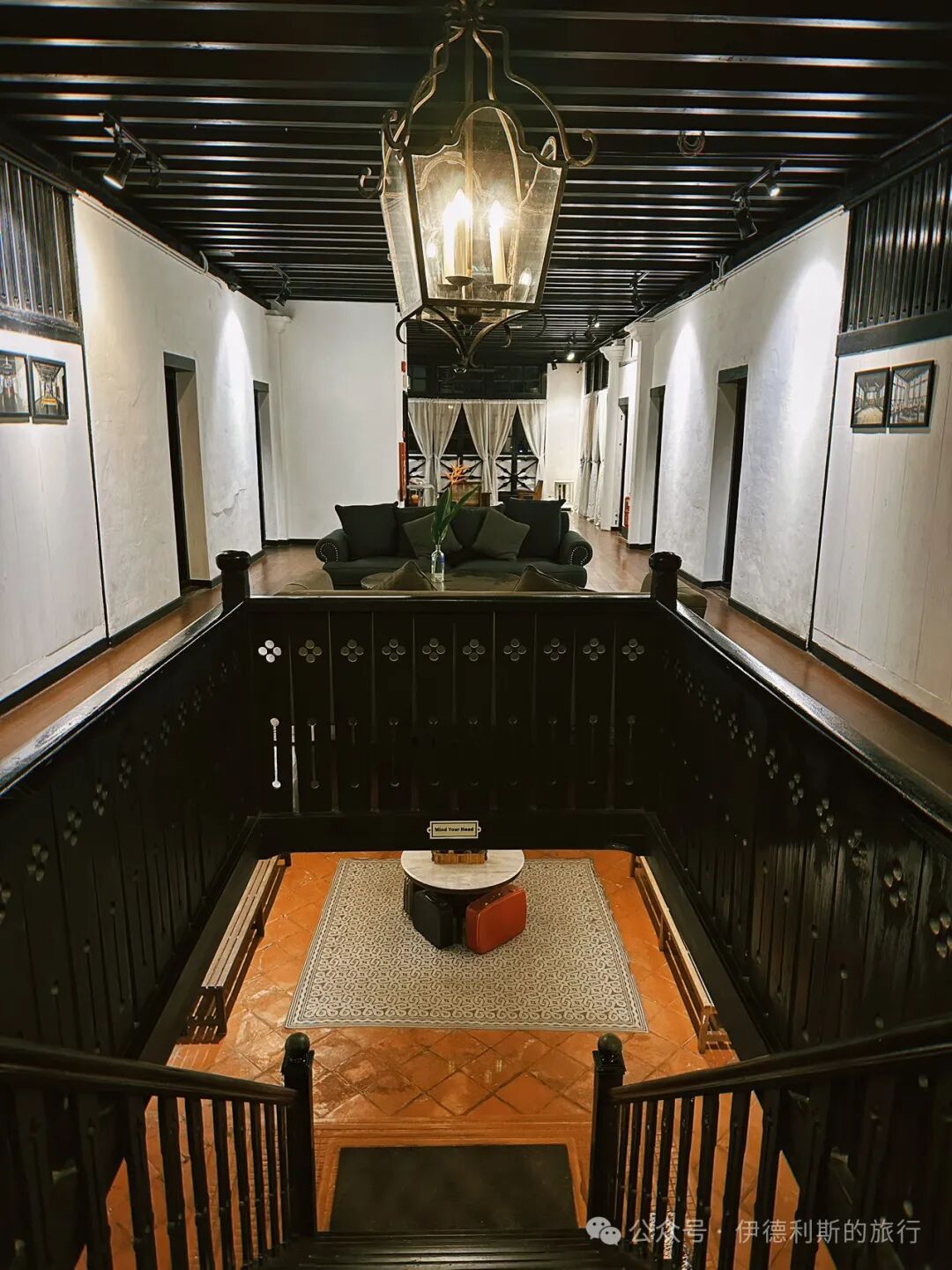
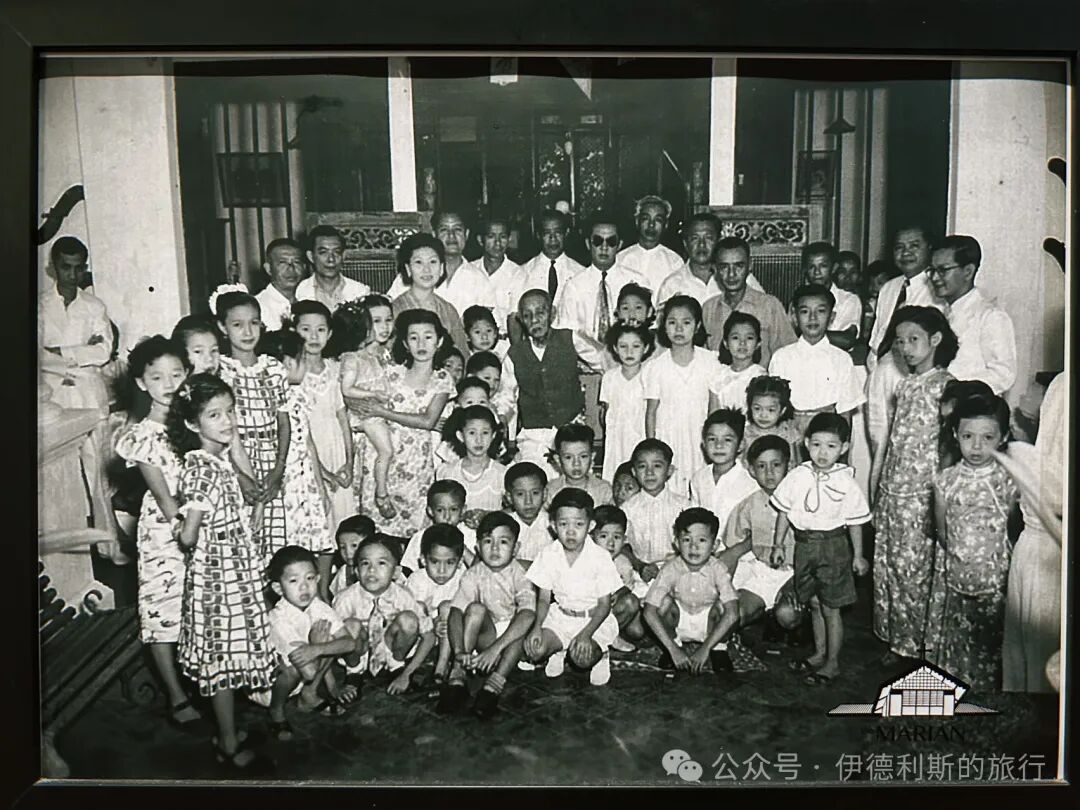
We stayed at the Marian Boutique Hotel in Kuching. It is the old Wang family mansion built in 1885 on a hill on Carpenter Street by Wang Youhai, a first-generation Fujianese tycoon in Sarawak. Wang Youhai (1830-1889) was born in Singapore and his ancestral home was Zhangzhou, Fujian. In 1846, 16-year-old Wang Youhai came to Kuching to make a living. He started the Youhai Mao Company with friends, dealing in local produce, groceries, and textiles. He gradually became a leader of the Fujian community in the Singapore-Malaysia region and was appointed as a Kapitan Cina for Sarawak. After the 1870s, Wang Youhai's wealth surpassed that of the Teochew merchant groups. He was known as the big boss of the Sarawak Chinese, and the Wang family was considered the top Chinese family in Sarawak. Youhai Street in the old town of Kuching was built by Wang Youhai in 1889.
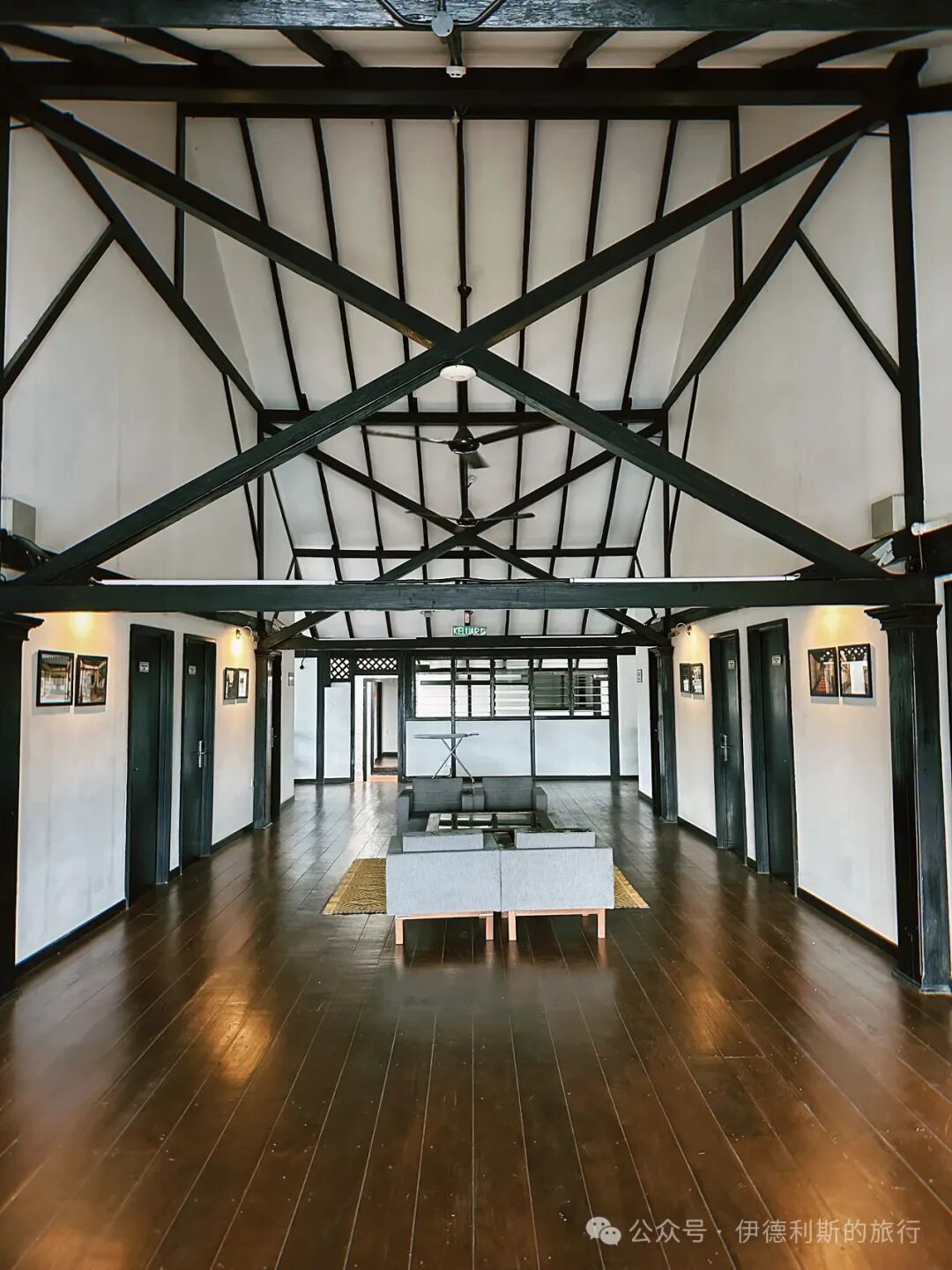
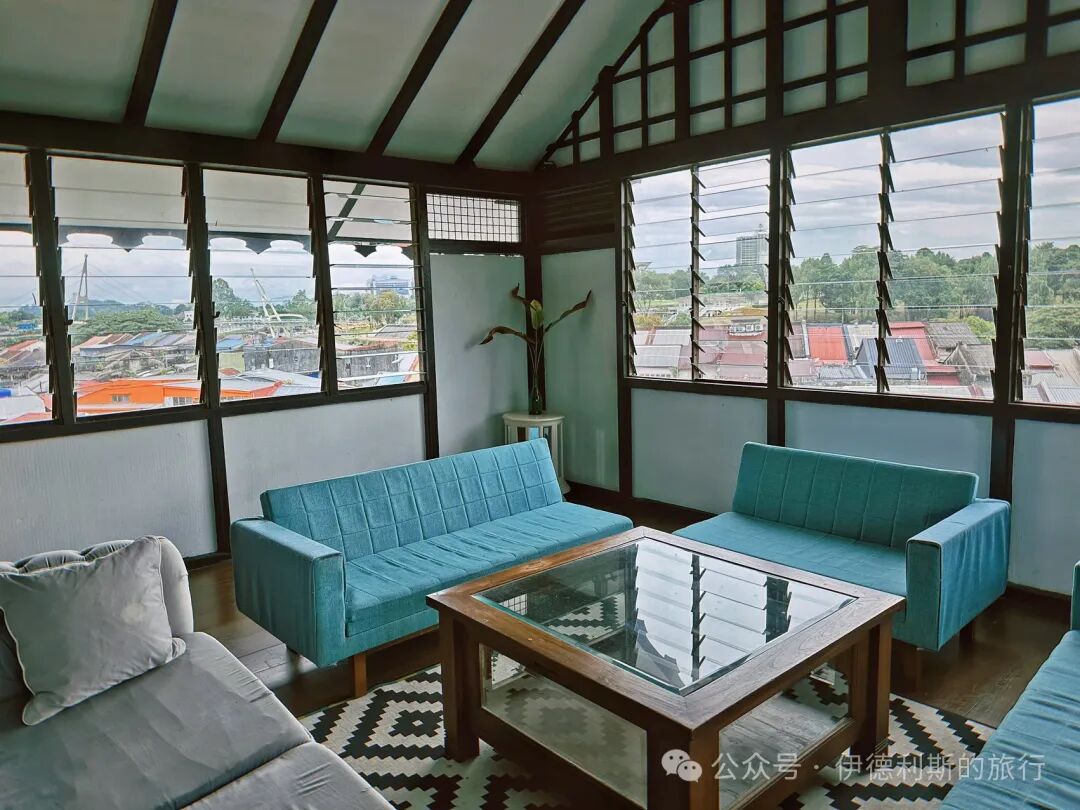
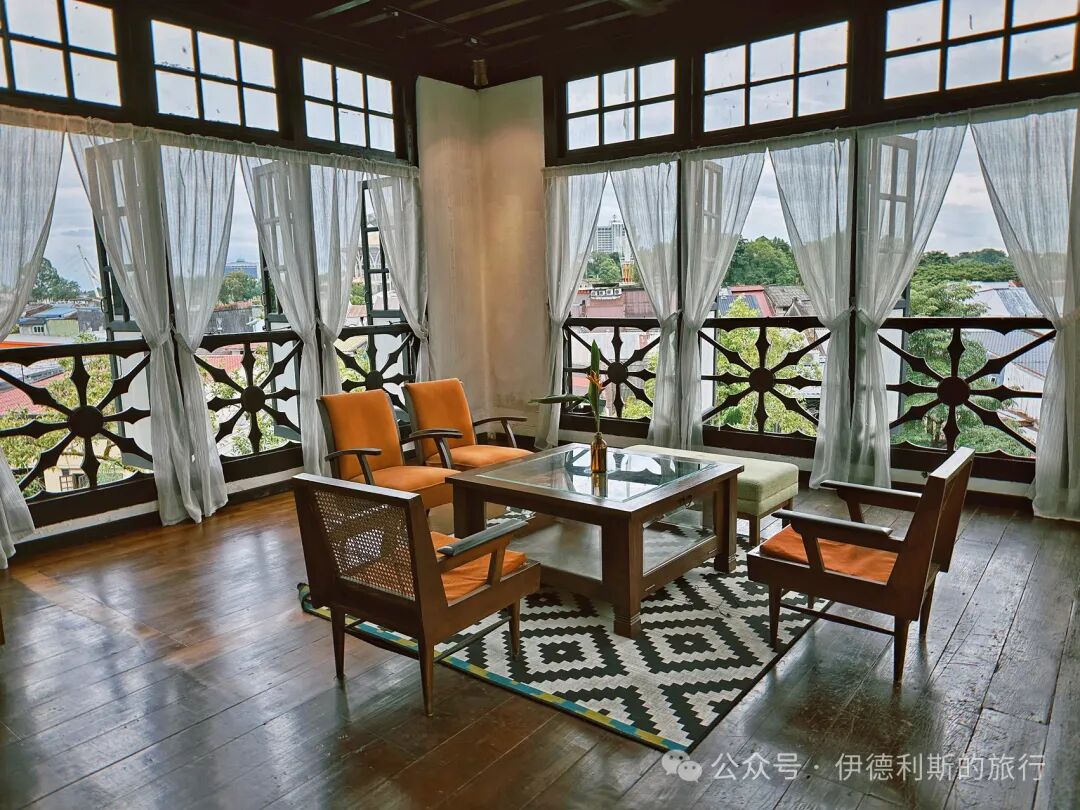
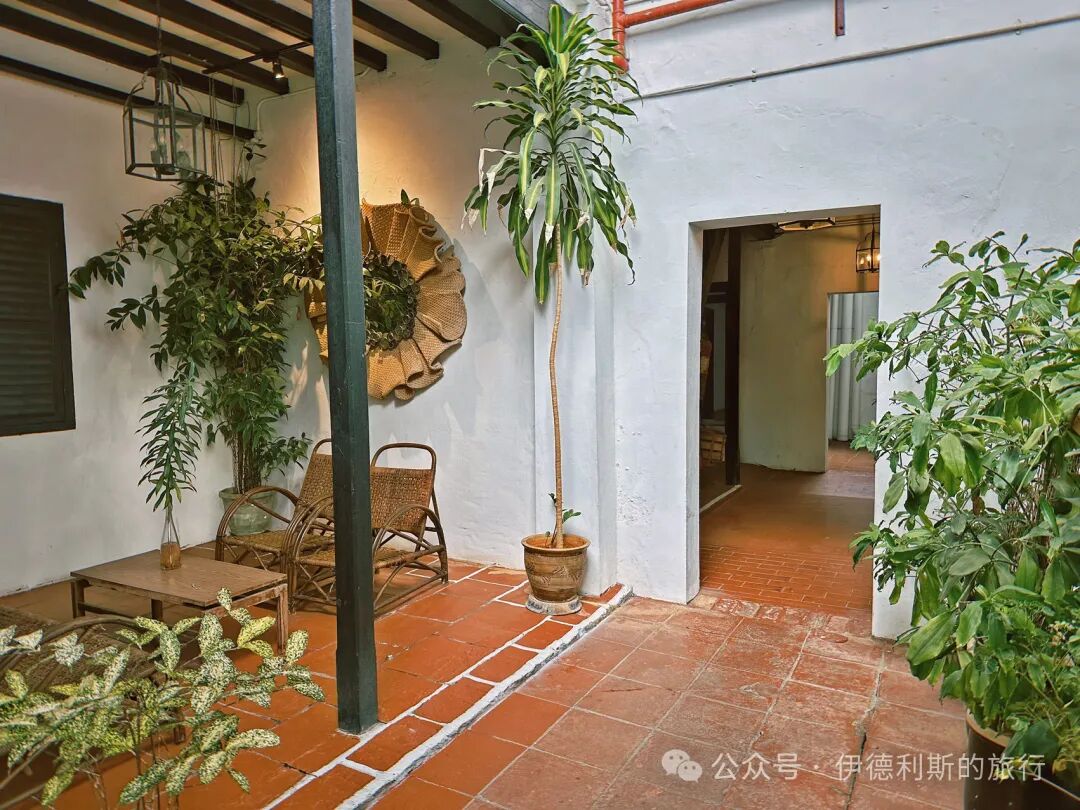
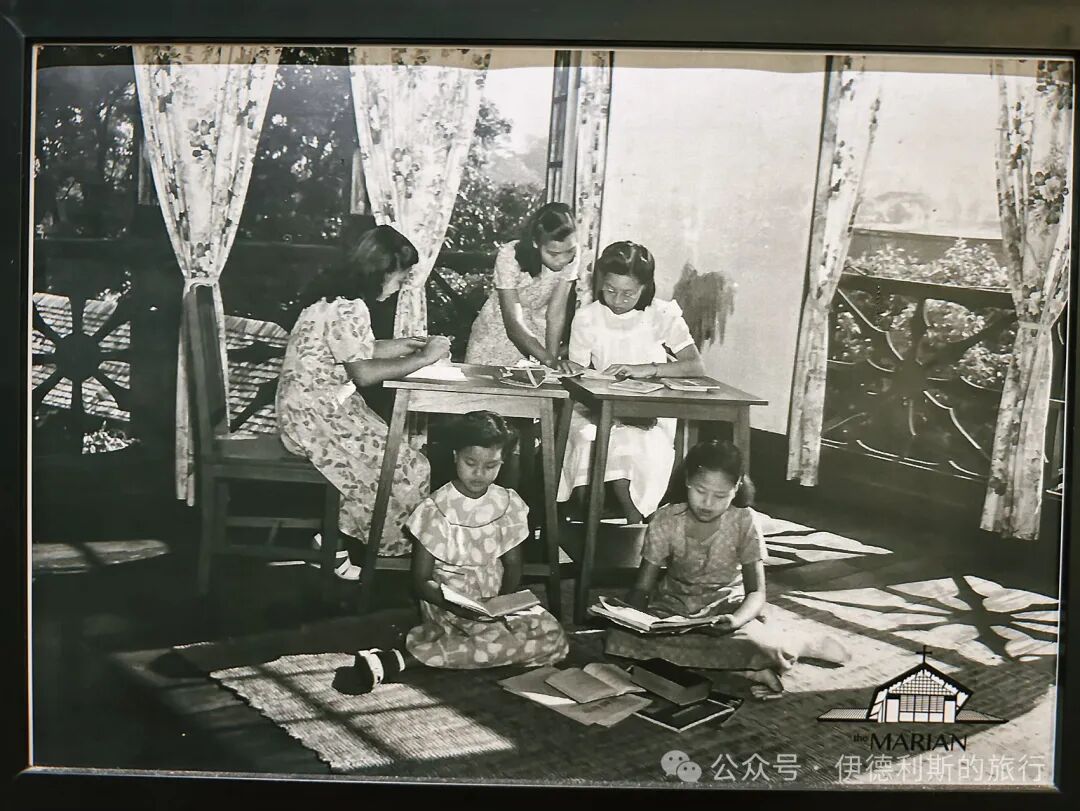
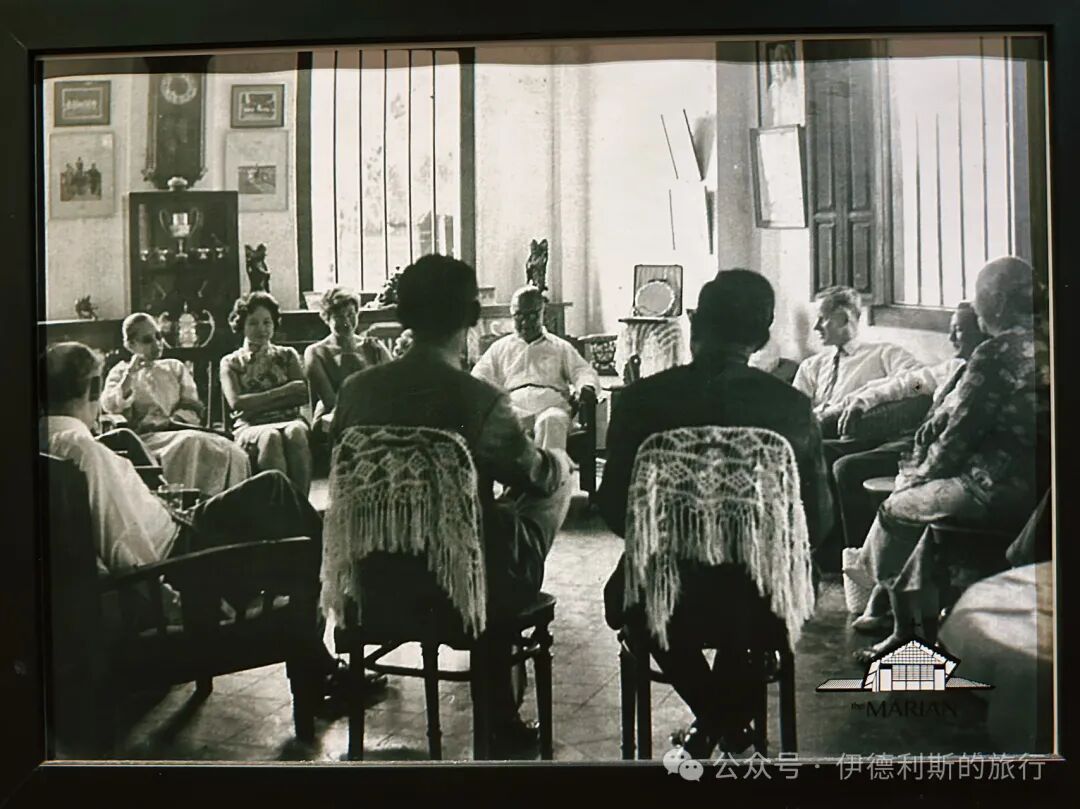
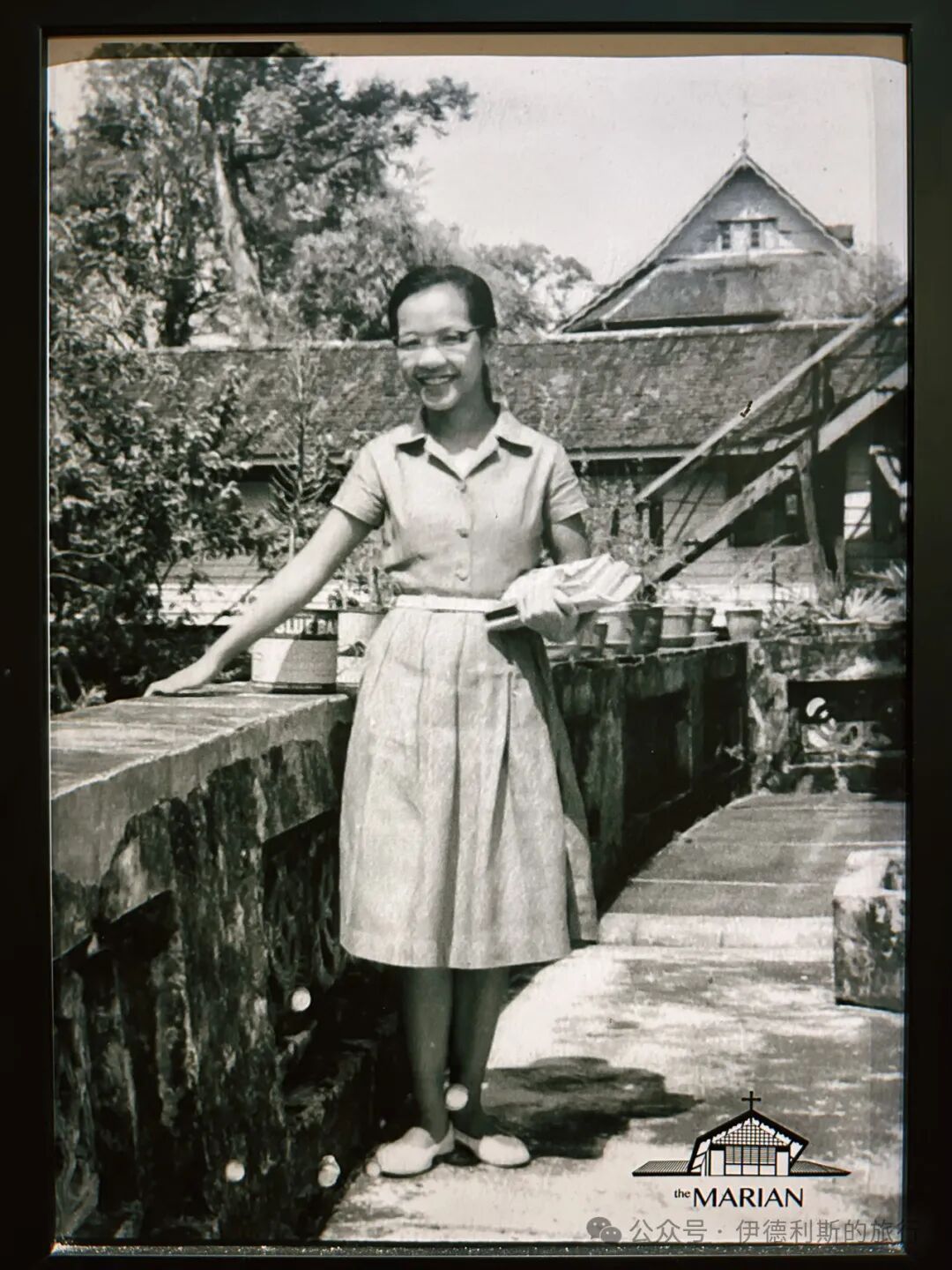
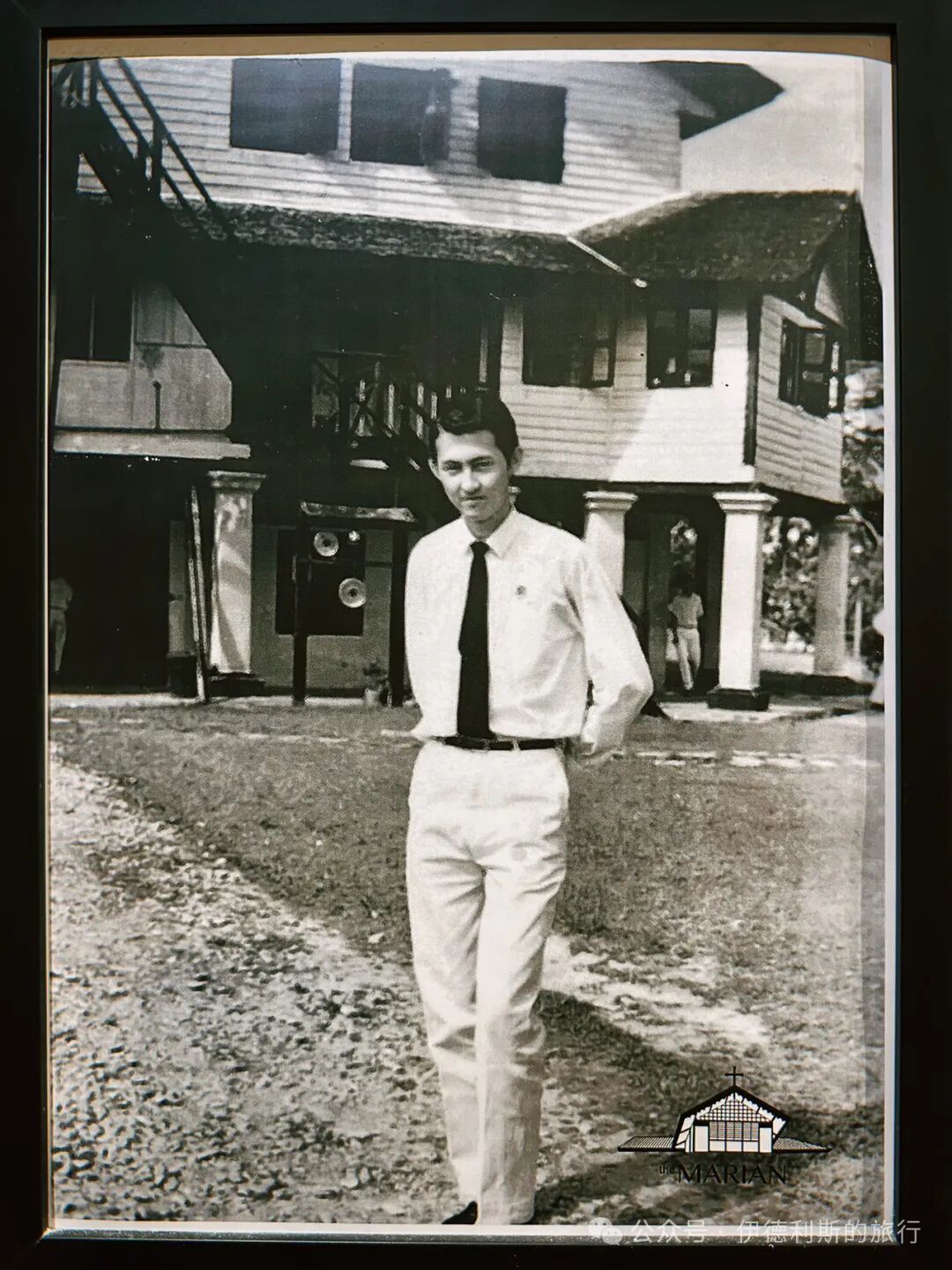
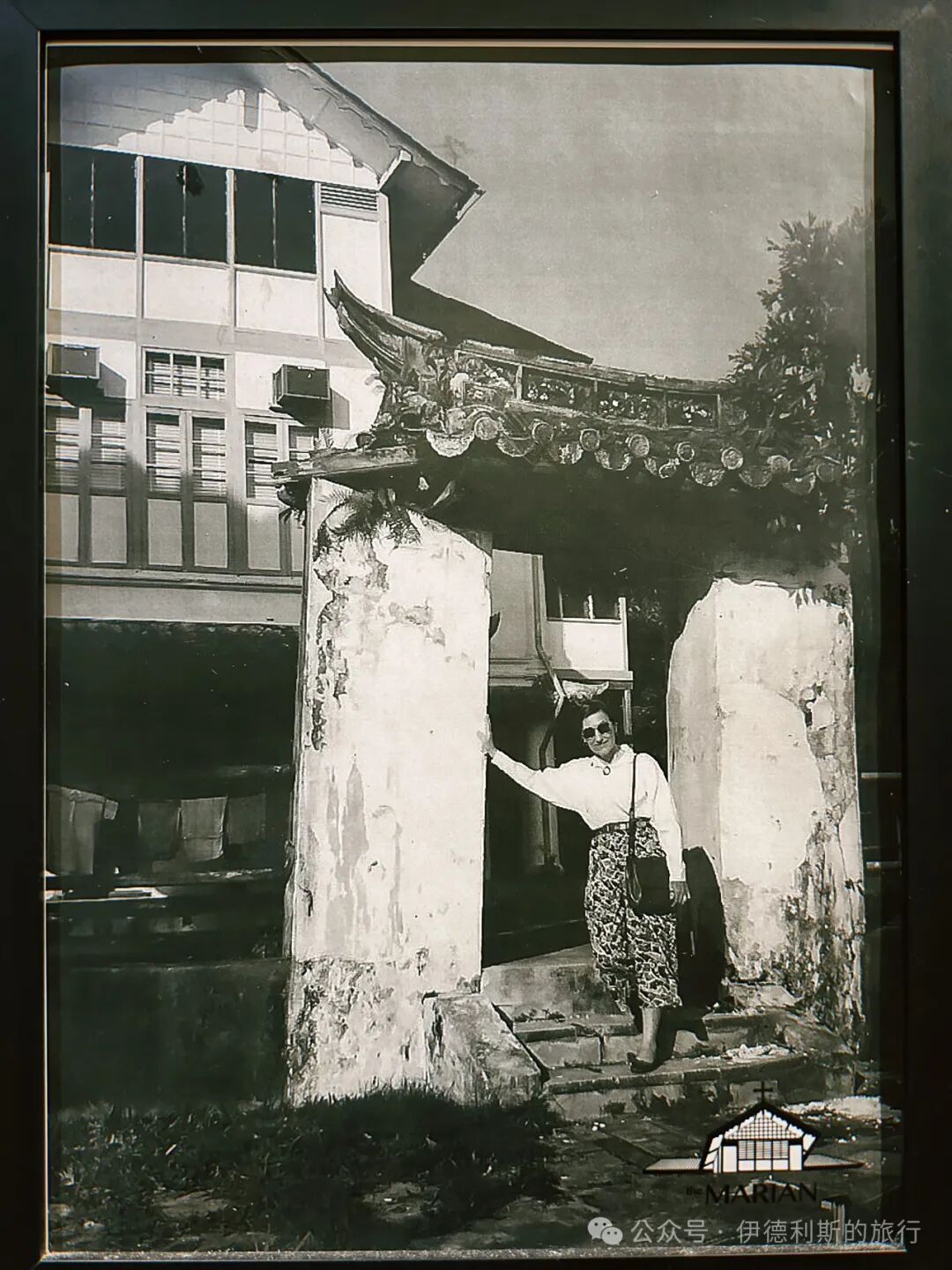
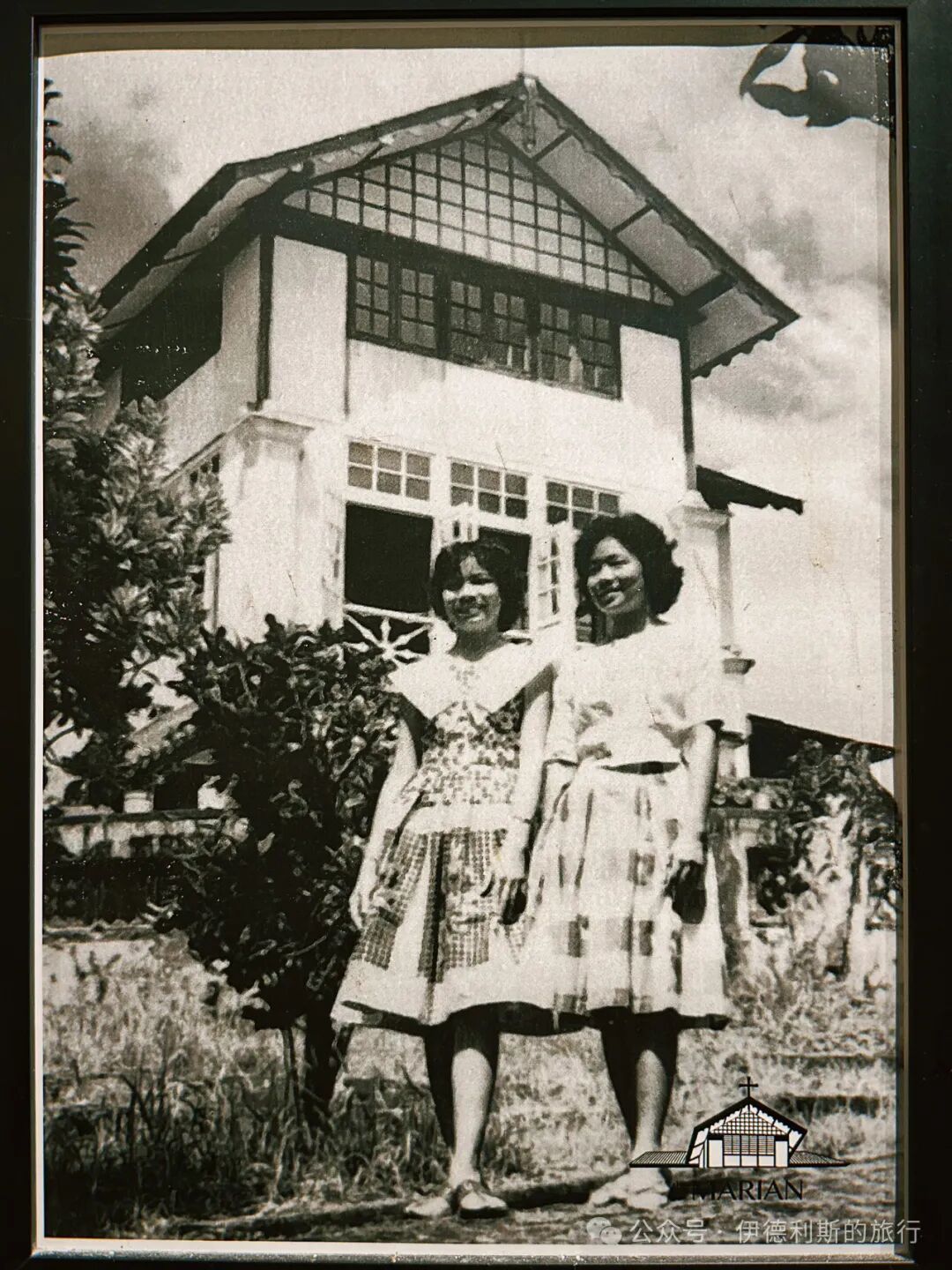
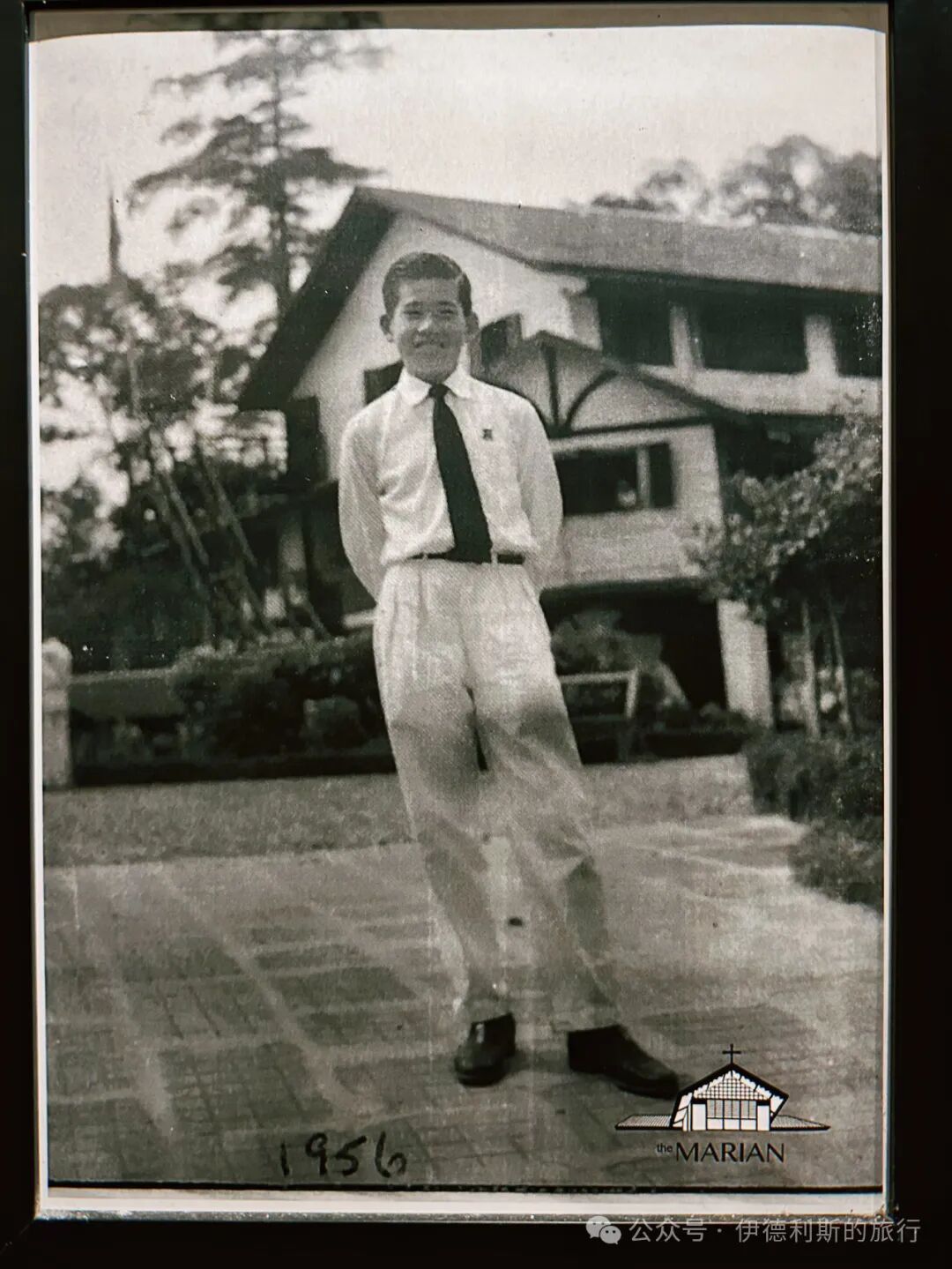
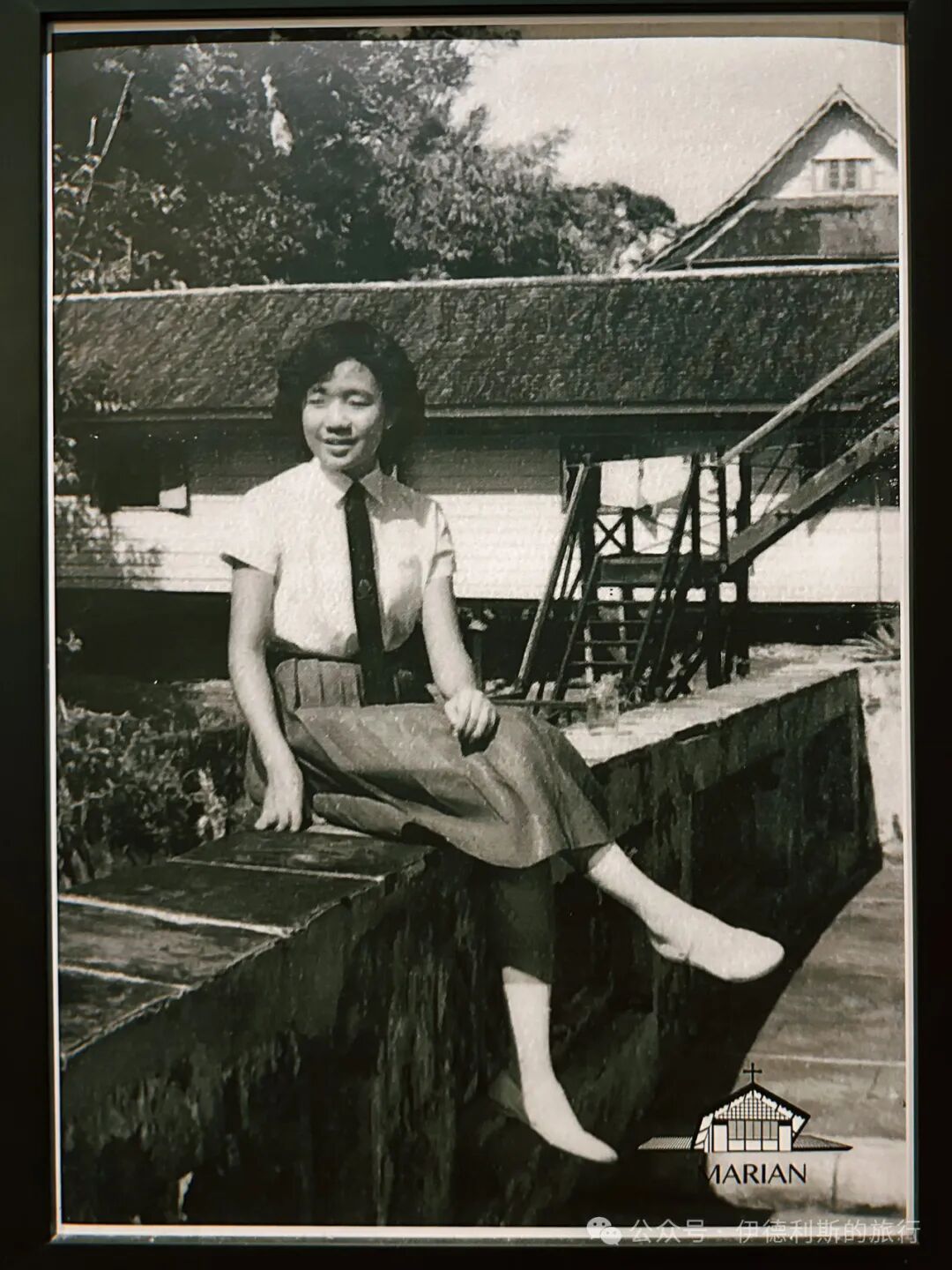
The old Wang family residence was built with Borneo ironwood (belian) and Chinese green roof tiles. It had a grand Chinese-style archway at the entrance. In 1933, the Wang family sold the old house to the Anglican Church. The church expanded it into the three-story St. Mary's Boarding House. It became a church guesthouse after 1968. In the 1990s, the front yard and Chinese archway were demolished for road construction. After renovations in 2013, it opened as the Marian Boutique Hotel in 2017.
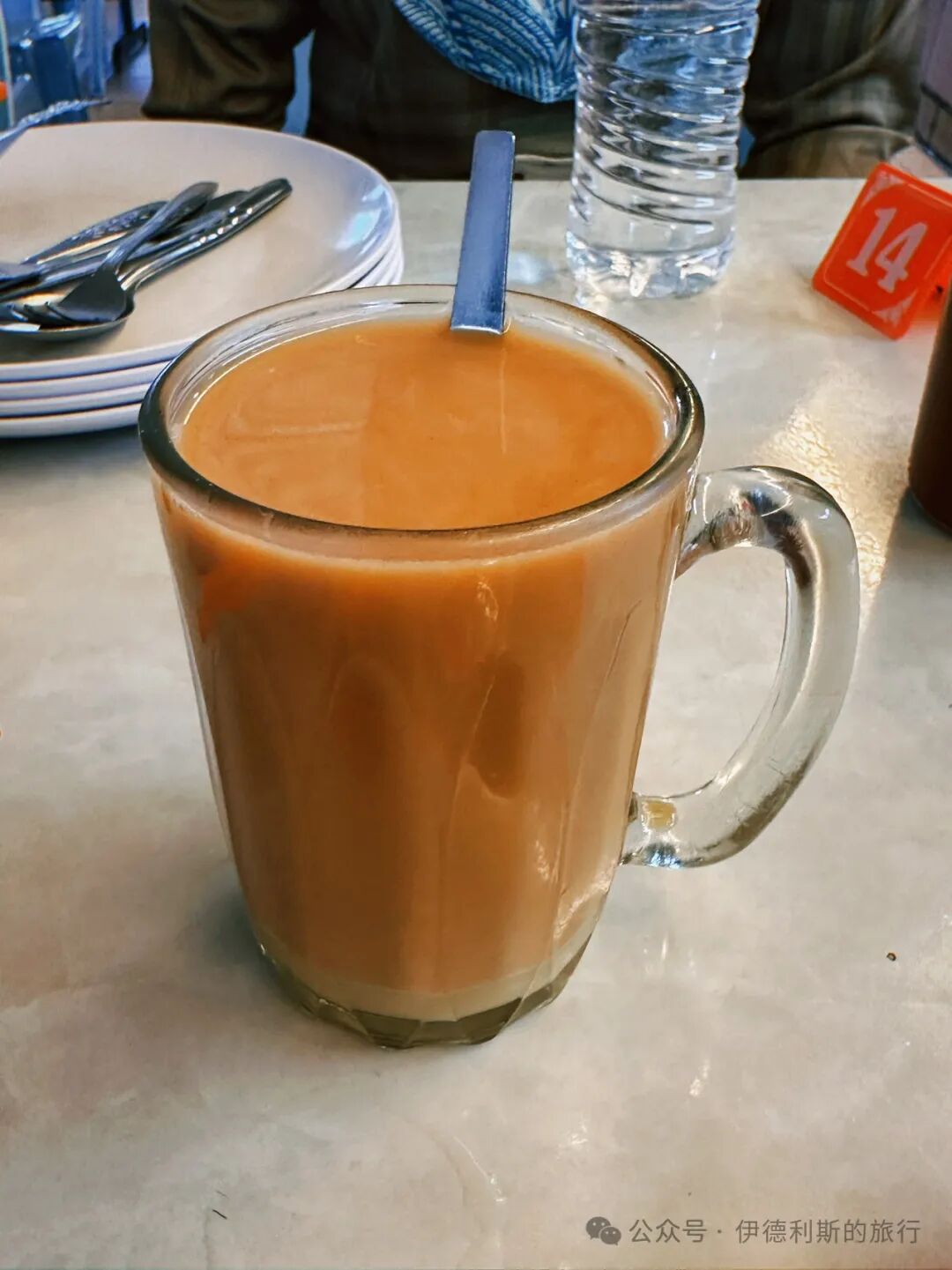
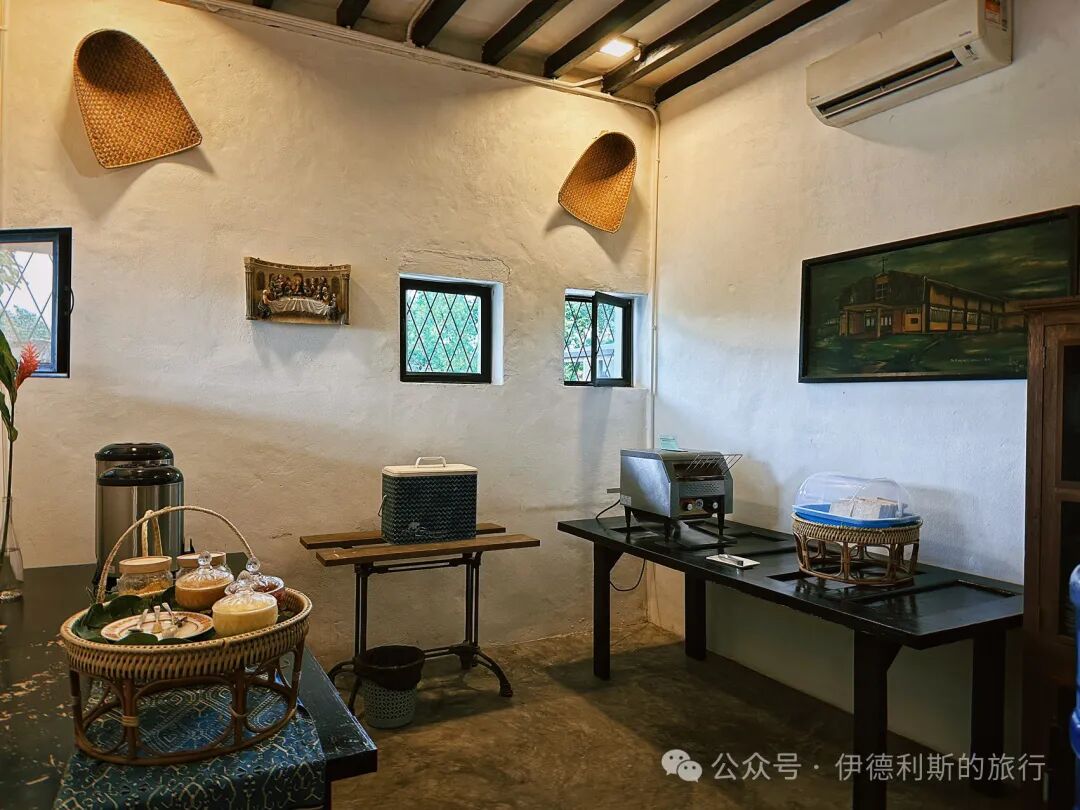
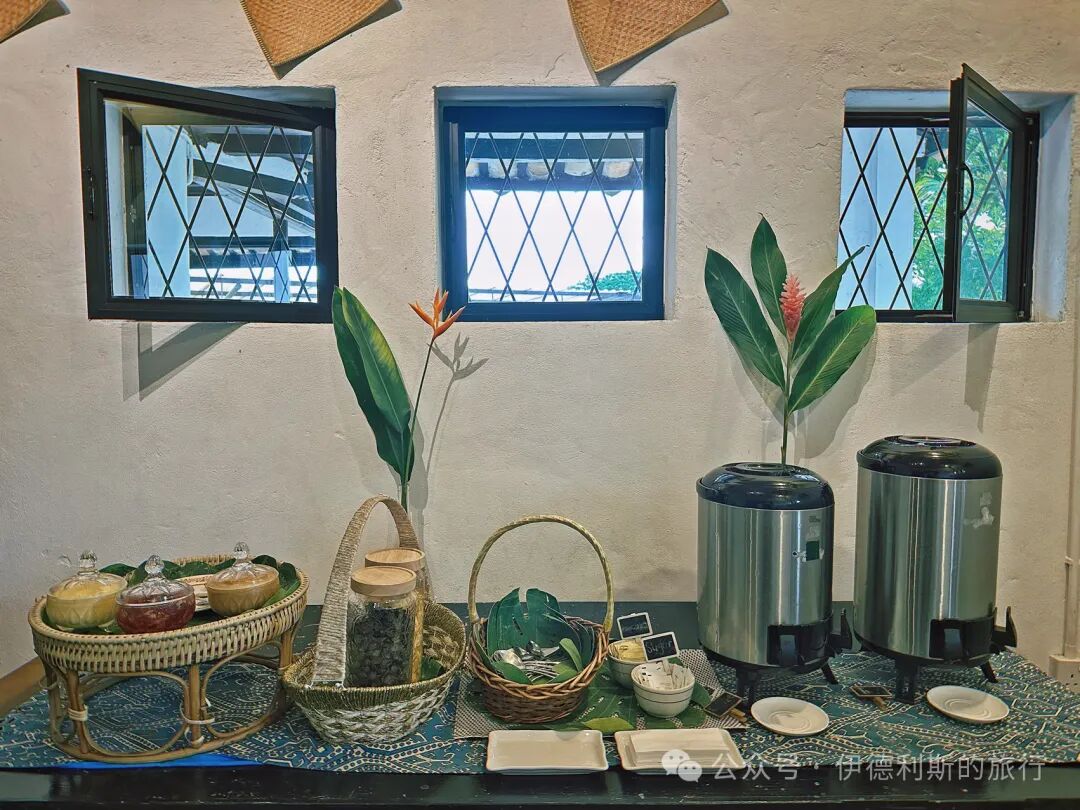
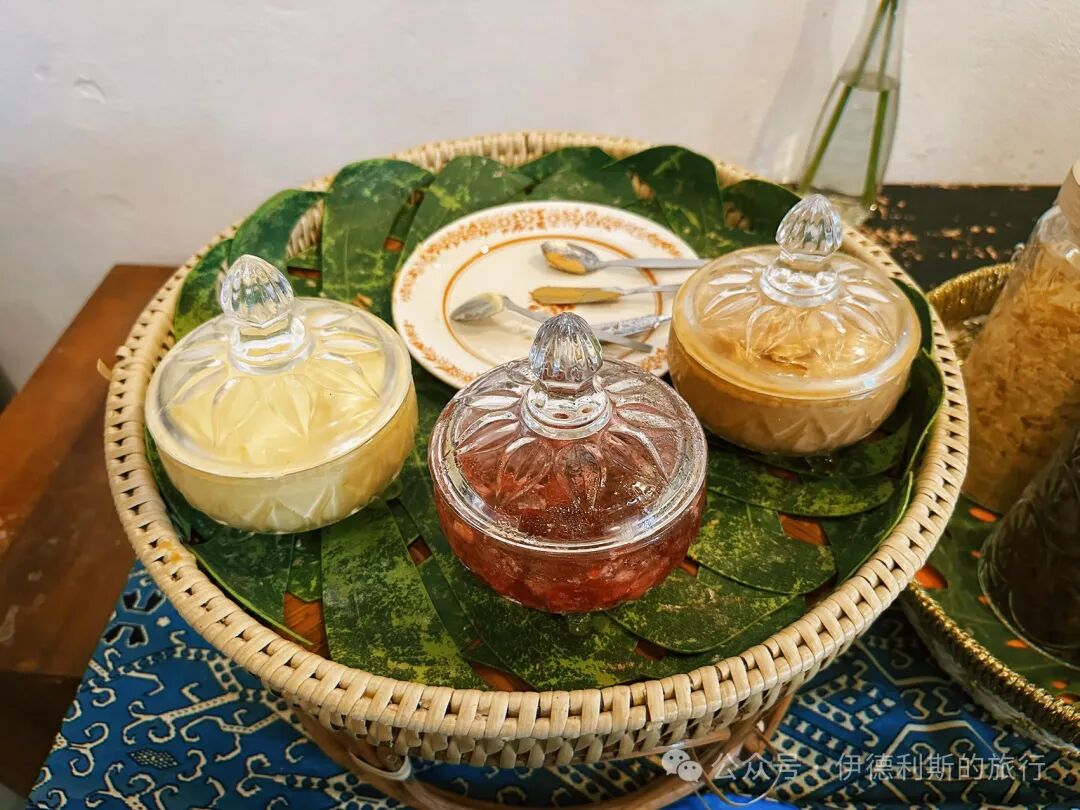
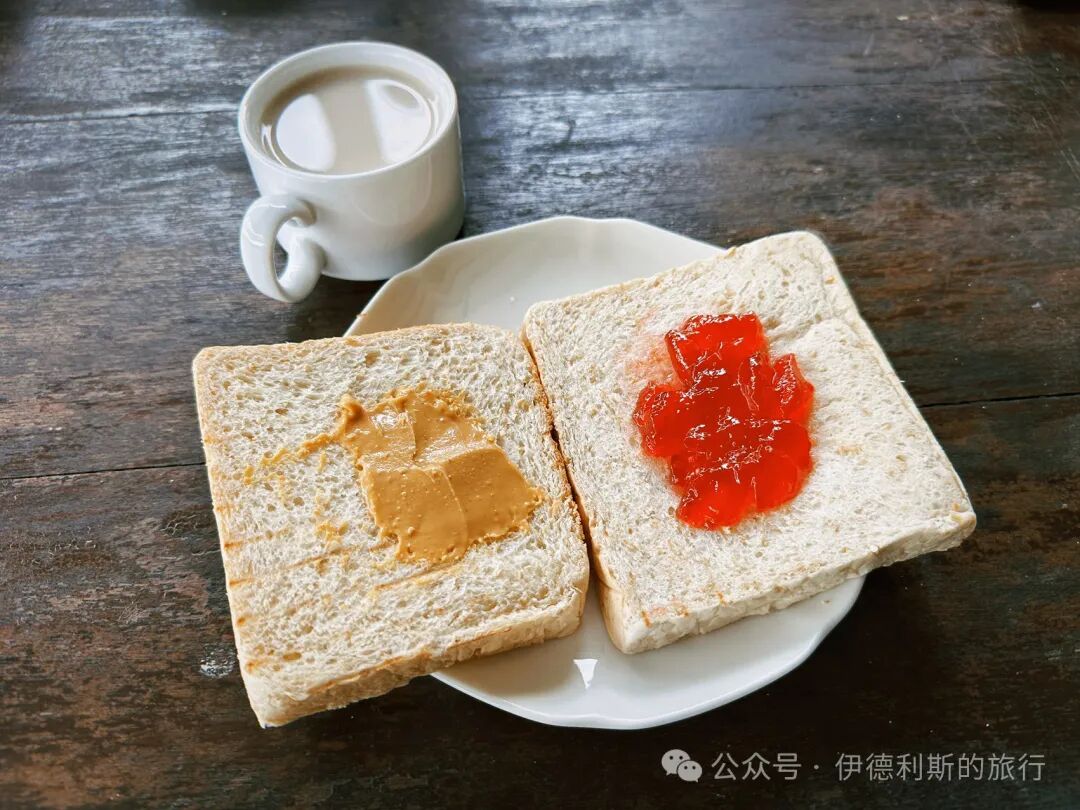
Breakfast was a simple meal of milk tea and bread with jam.
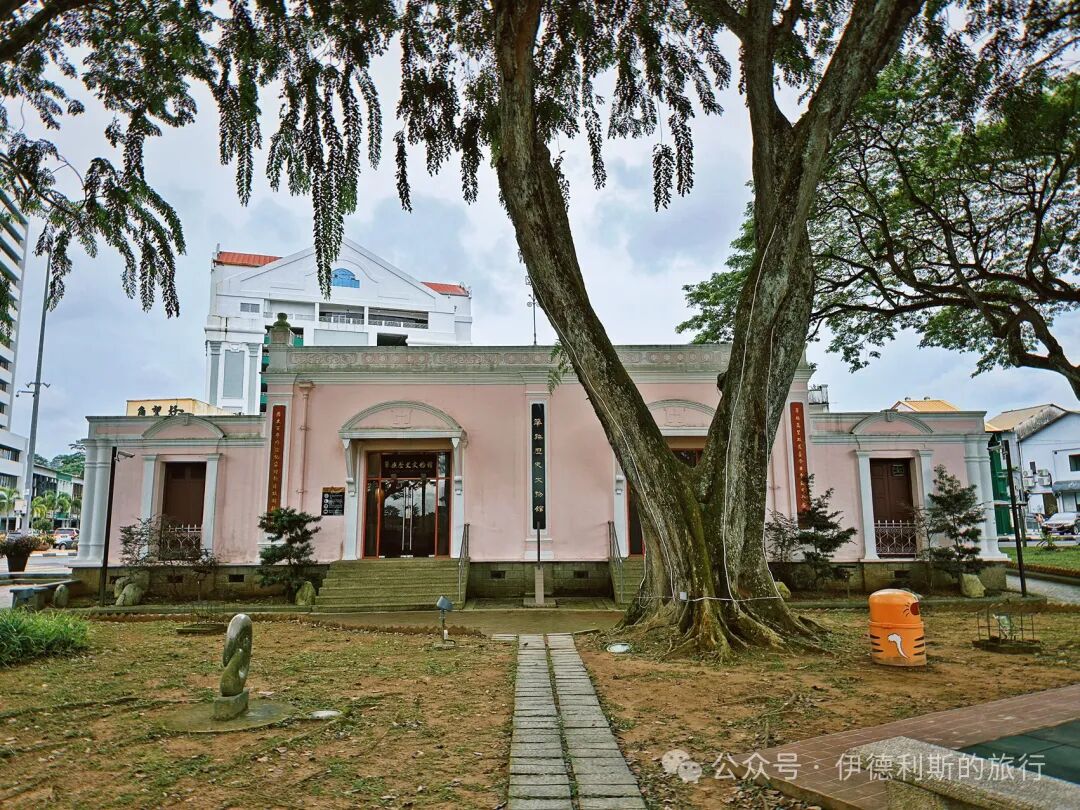
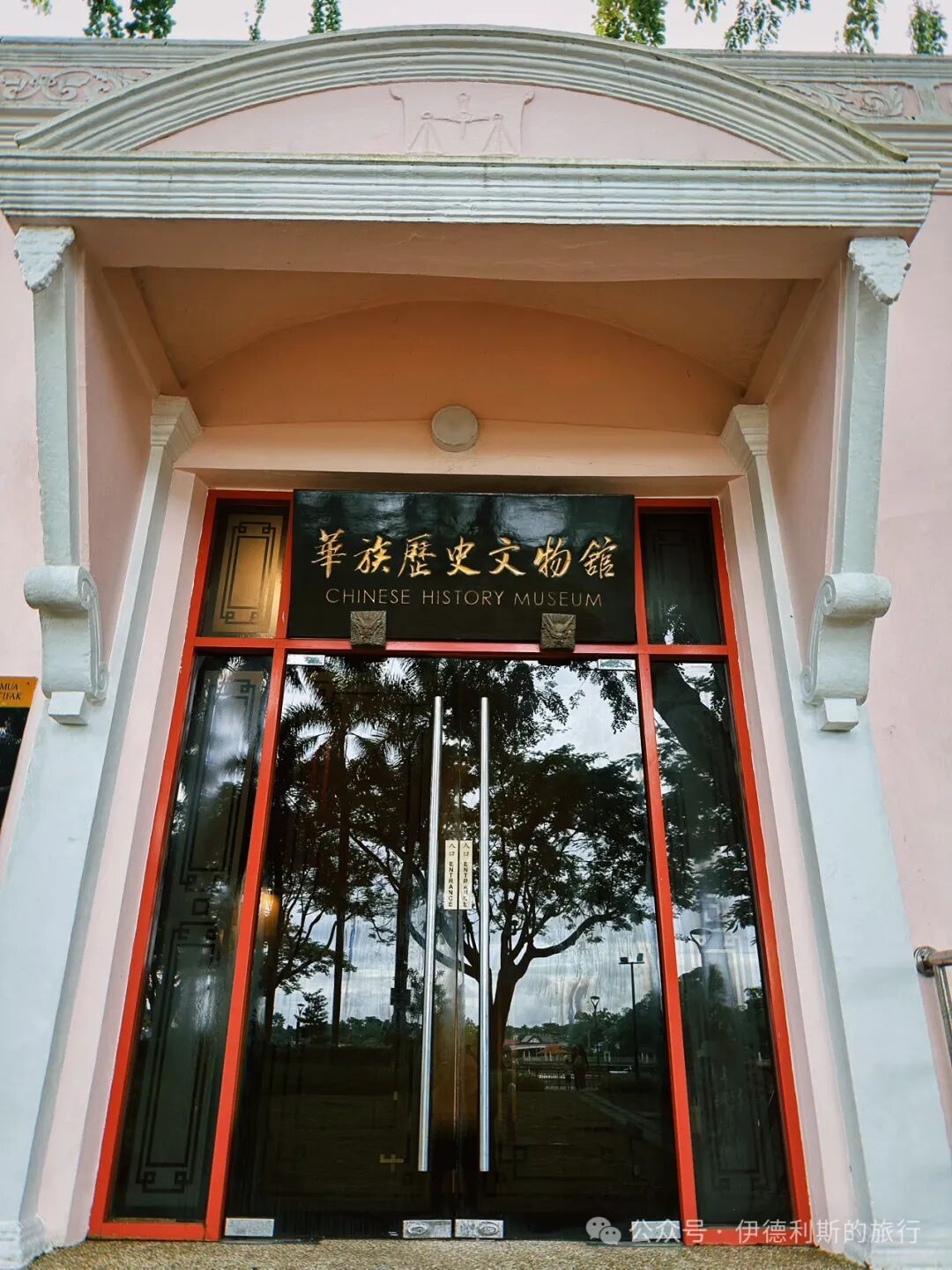
The Chinese History Museum in Kuching Waterfront Park was originally the Chinese Court built by the Kingdom of Sarawak in 1912. It handled civil lawsuits, probate, and marriage and divorce cases involving Chinese people, which is why a scale is decorated on the main gate. In 1921, it became the Chinese Affairs Office, then the Chinese Chamber of Commerce in 1930, and finally opened as the Chinese History Museum in 1993.
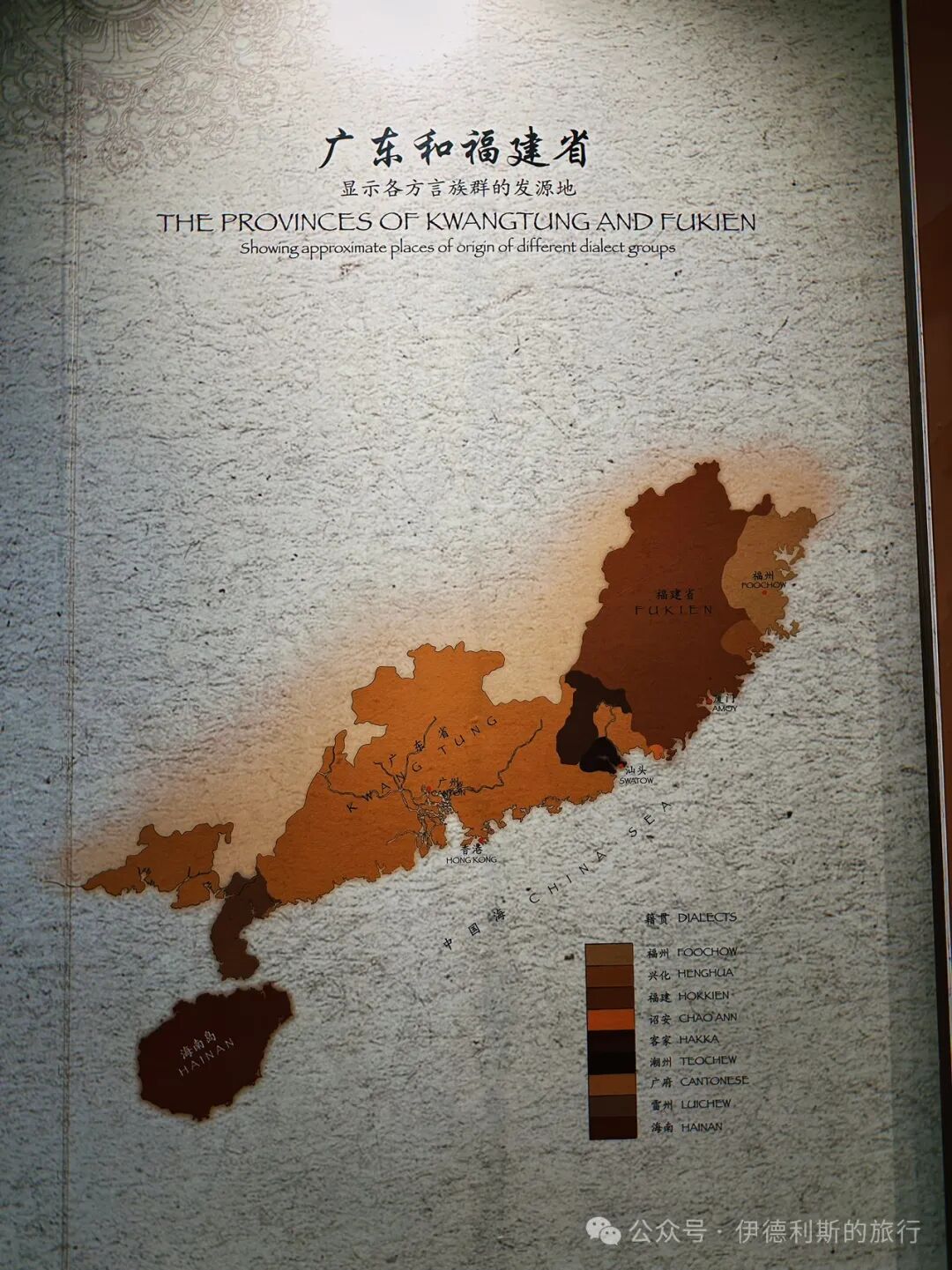
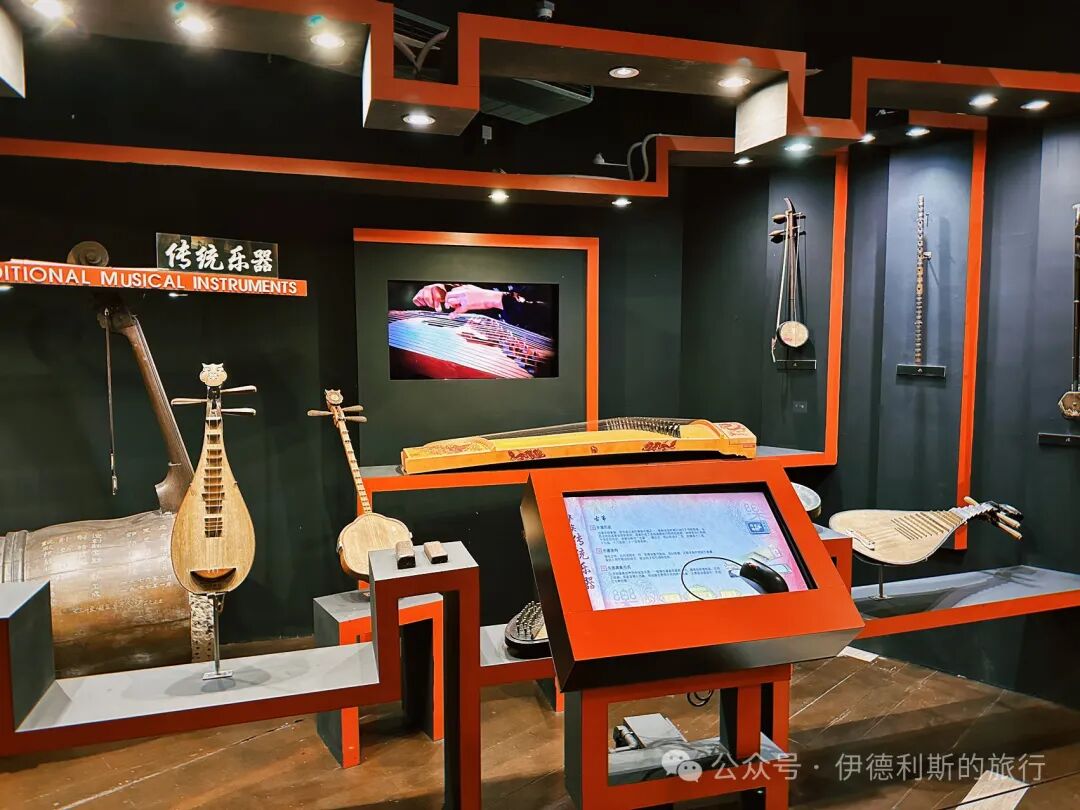
The museum has rich exhibits, including detailed introductions to all Chinese dialect groups in Sarawak like the Hakka, Teochew, Cantonese, Fuzhou, and Hainanese people, along with recordings of their daily dialects. Inside the museum, a large wall features a panoramic map of Kuching's old town, showing the Chinese names of all streets and the types of shops, which is perfect for exploring the area.
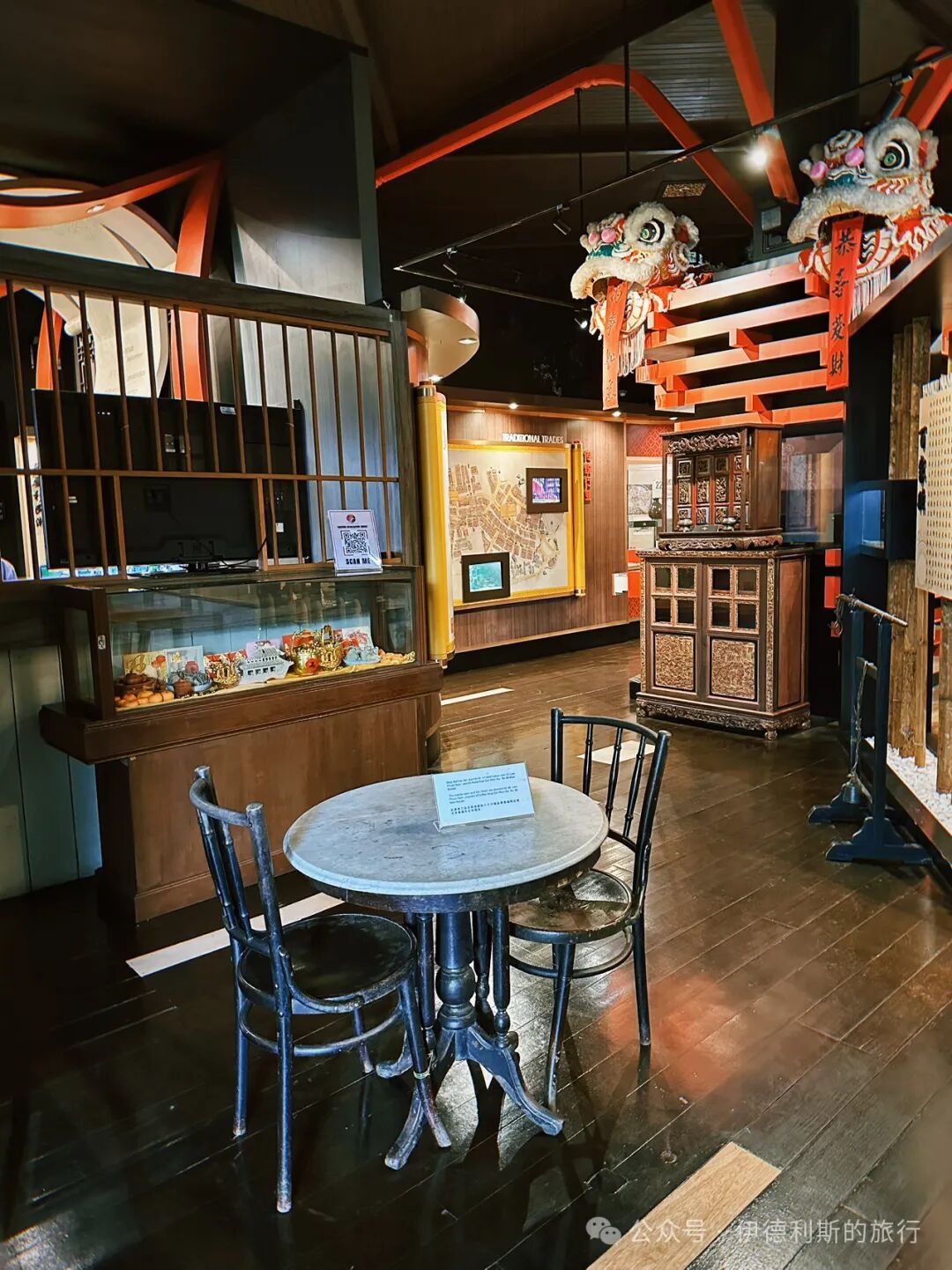
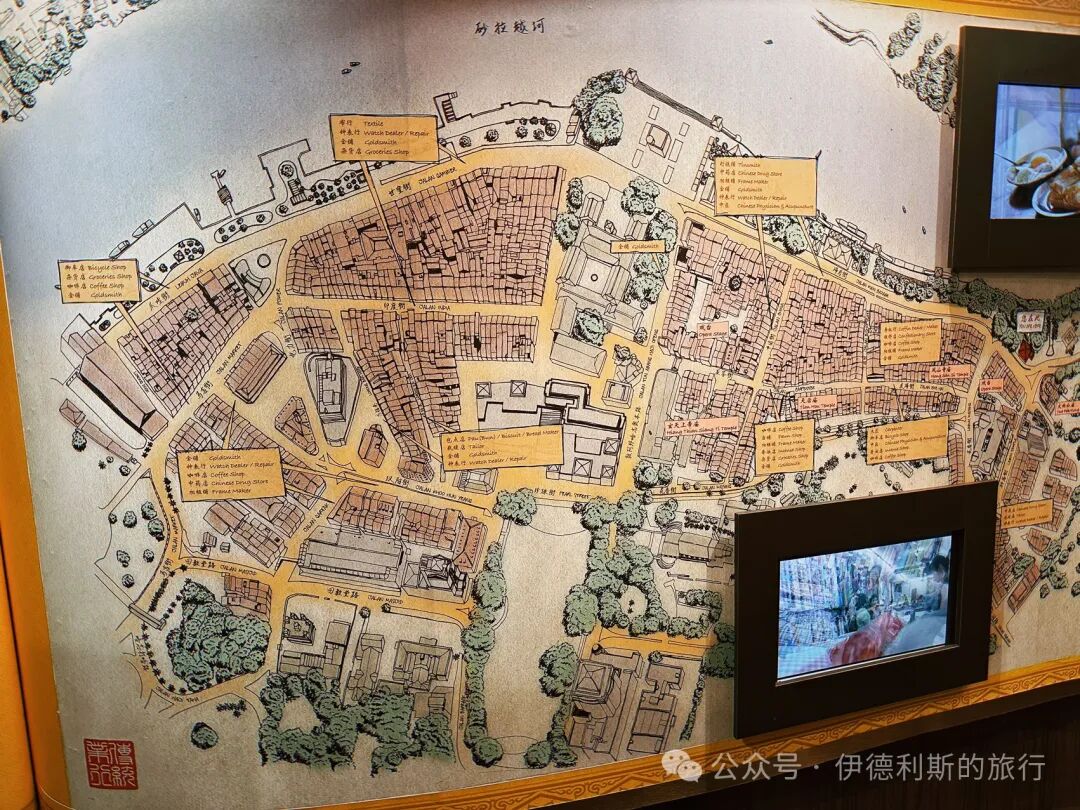
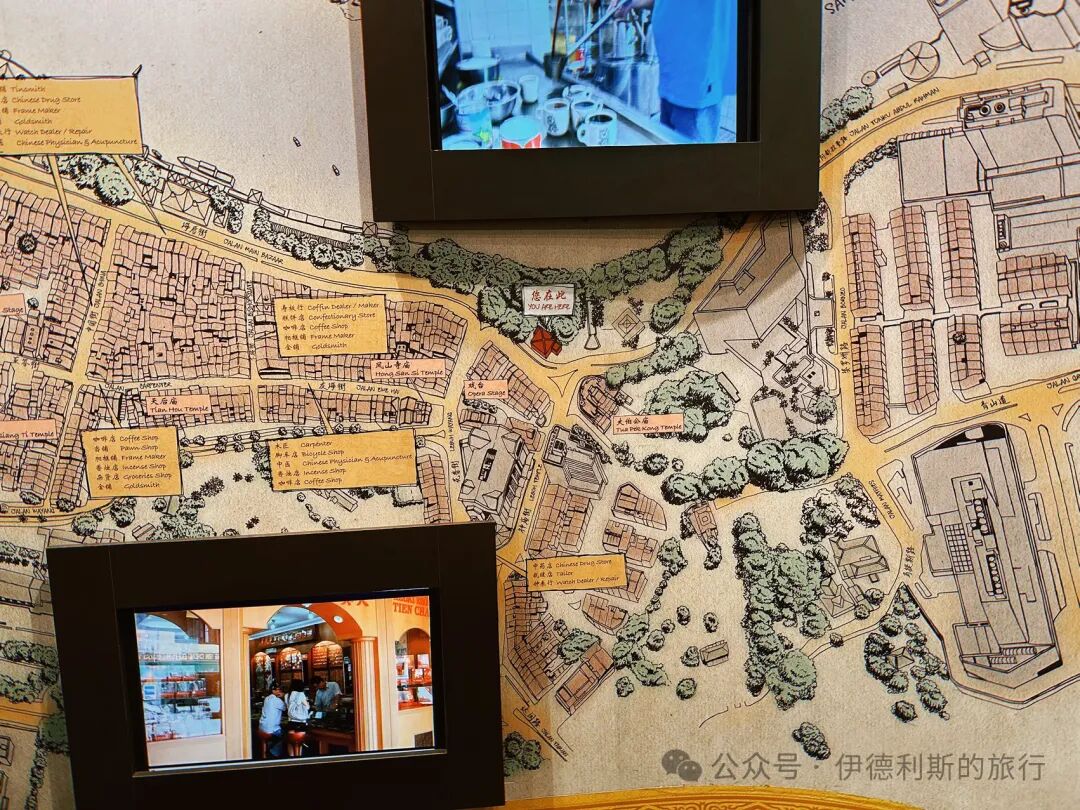
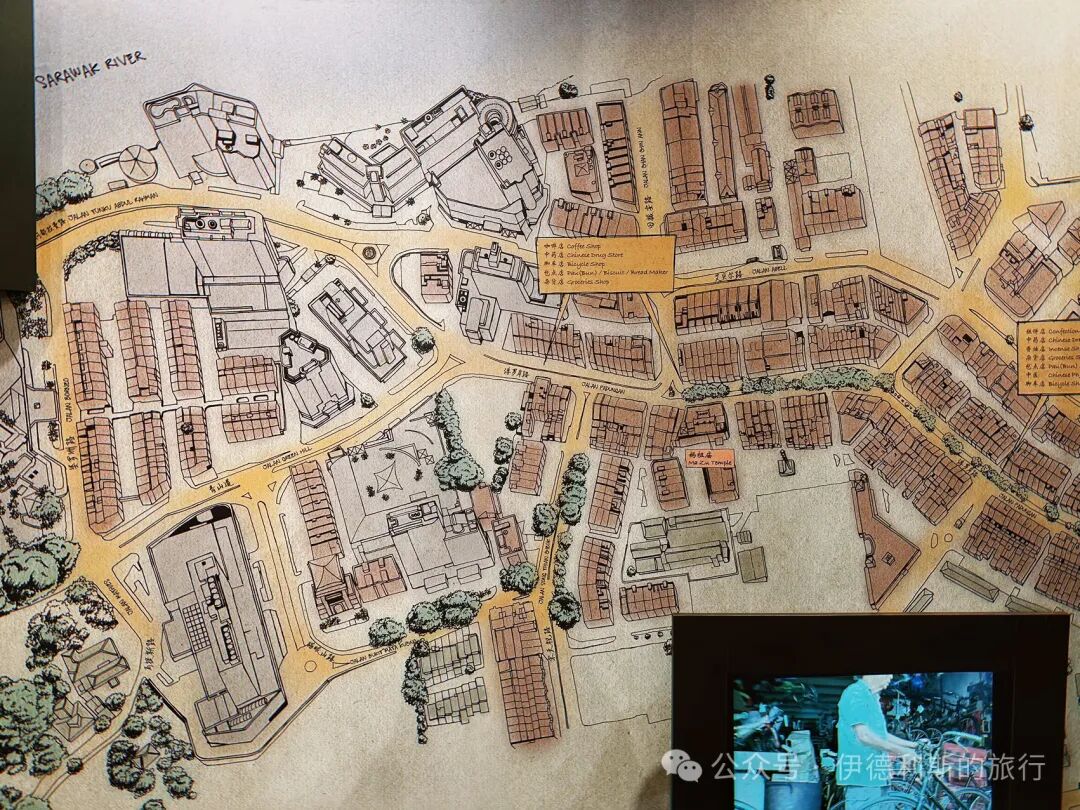
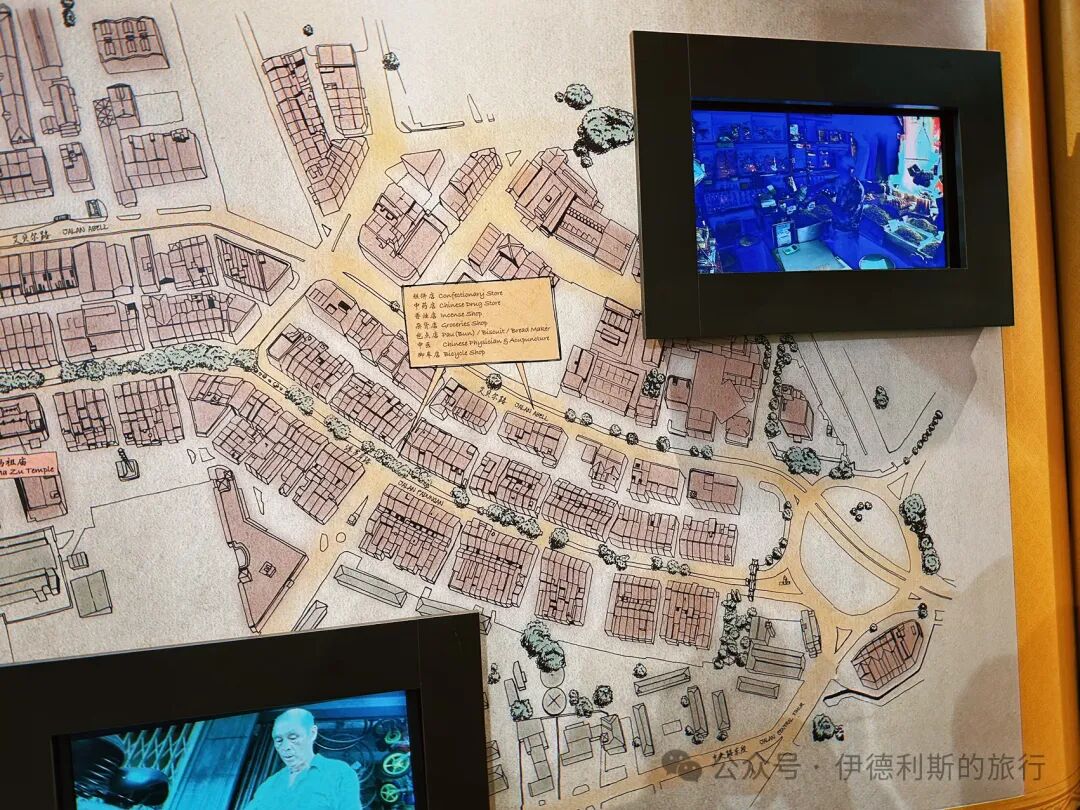
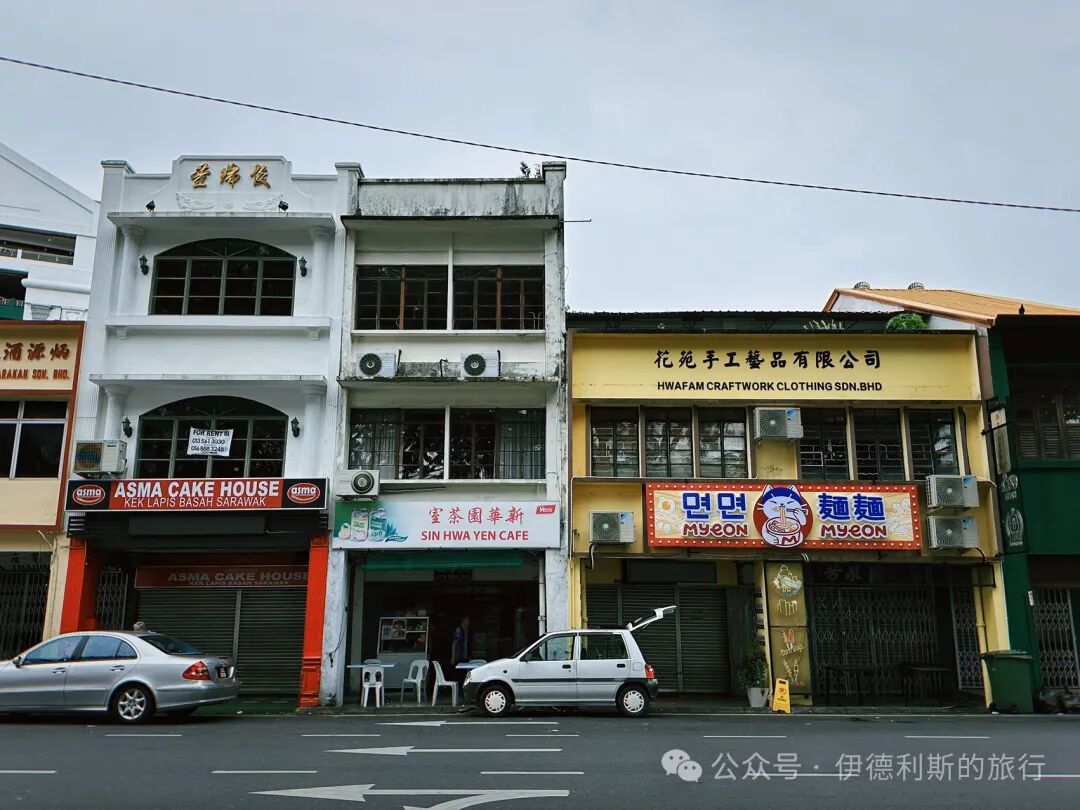
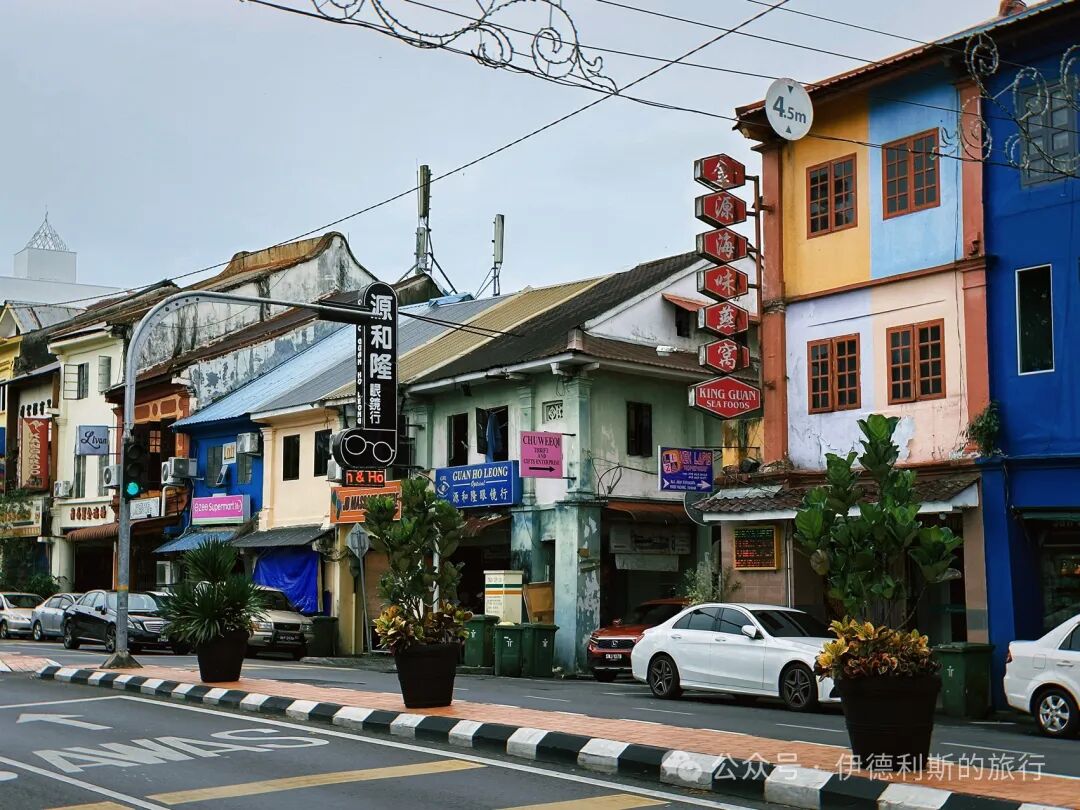
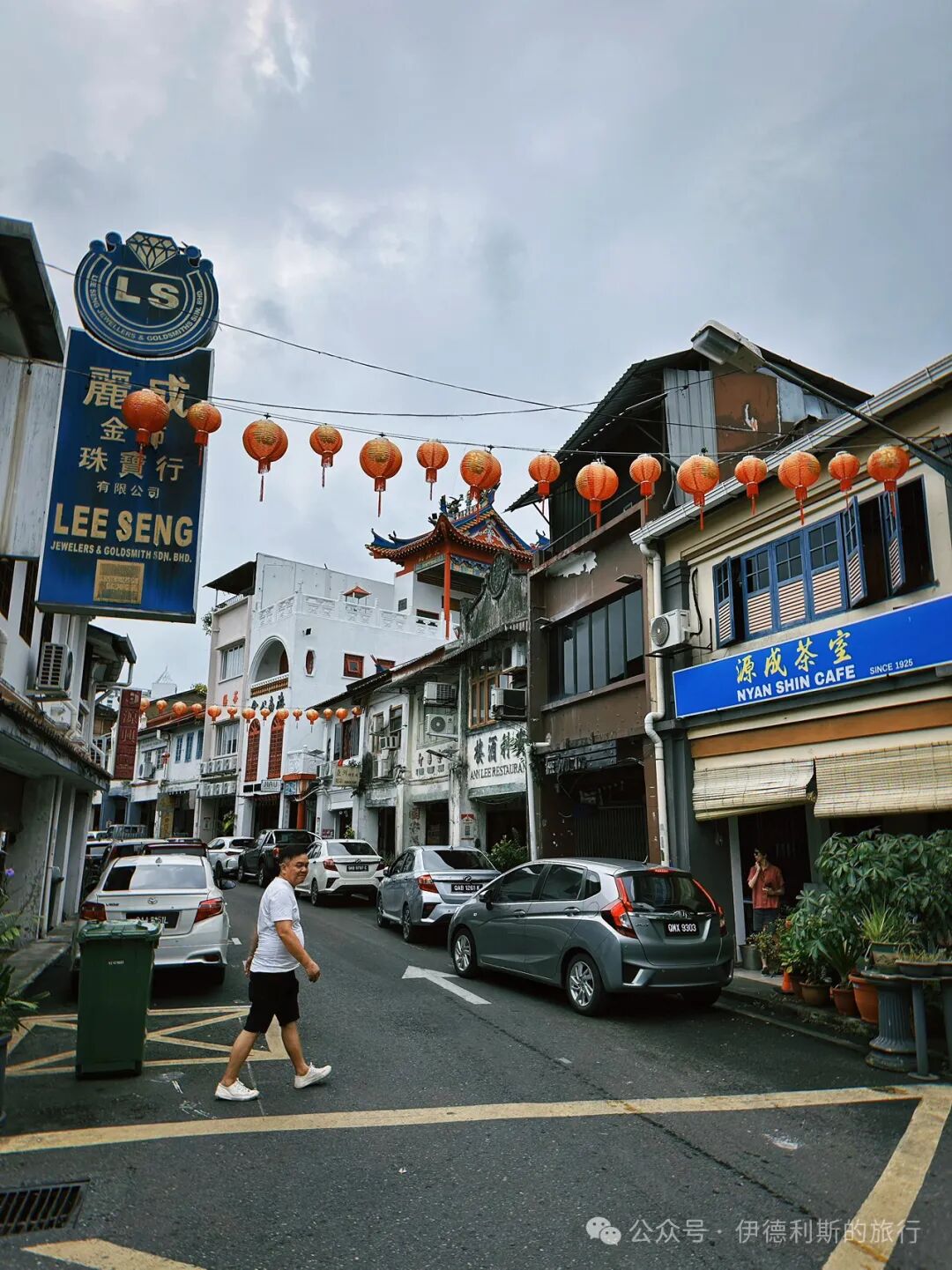
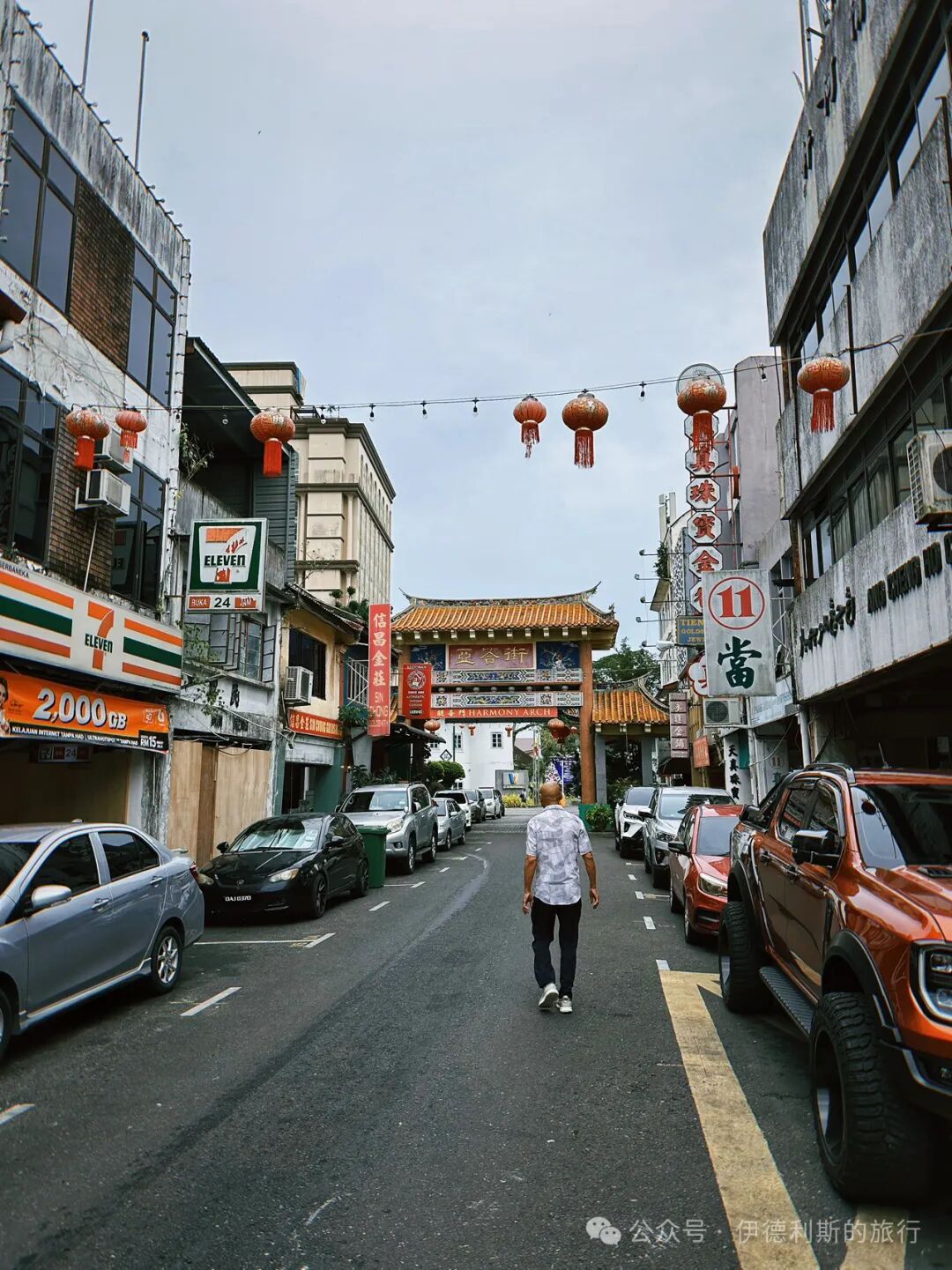
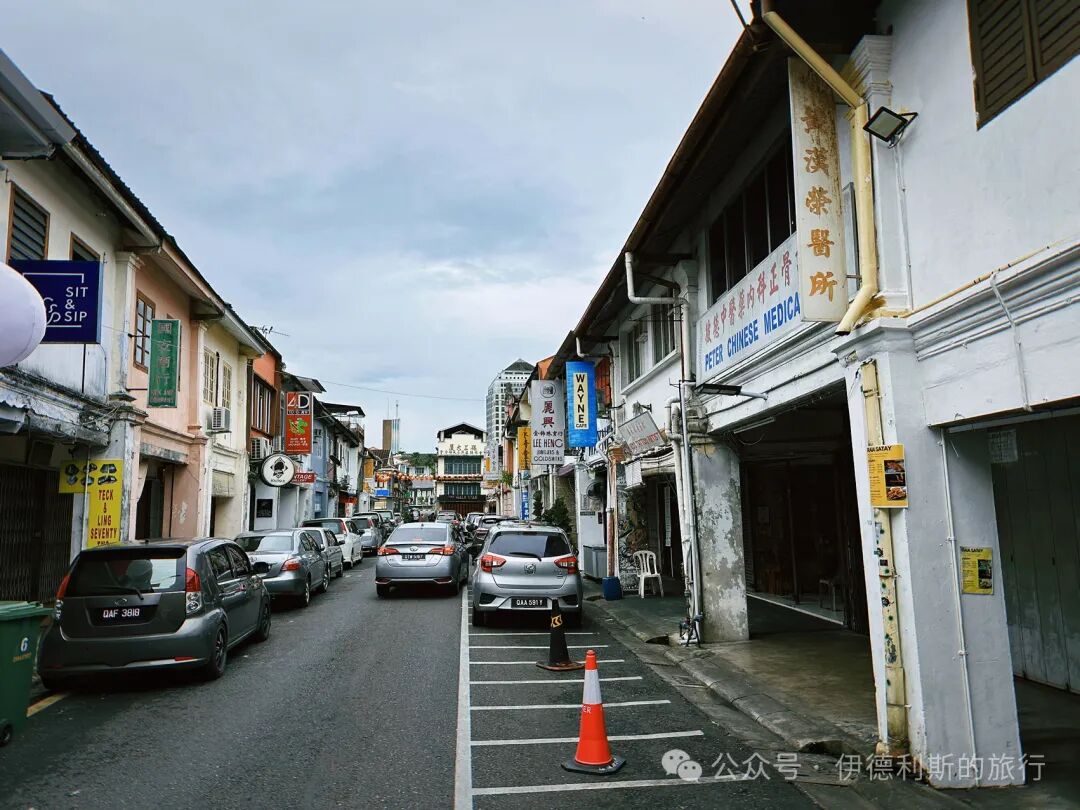
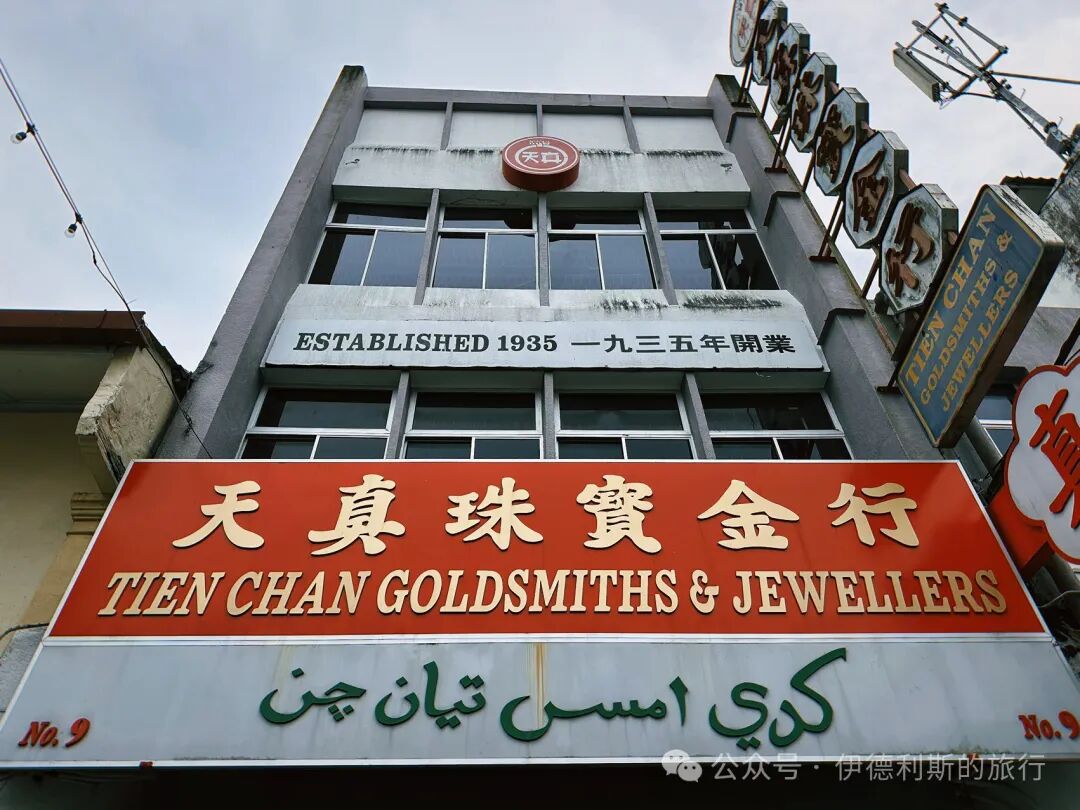
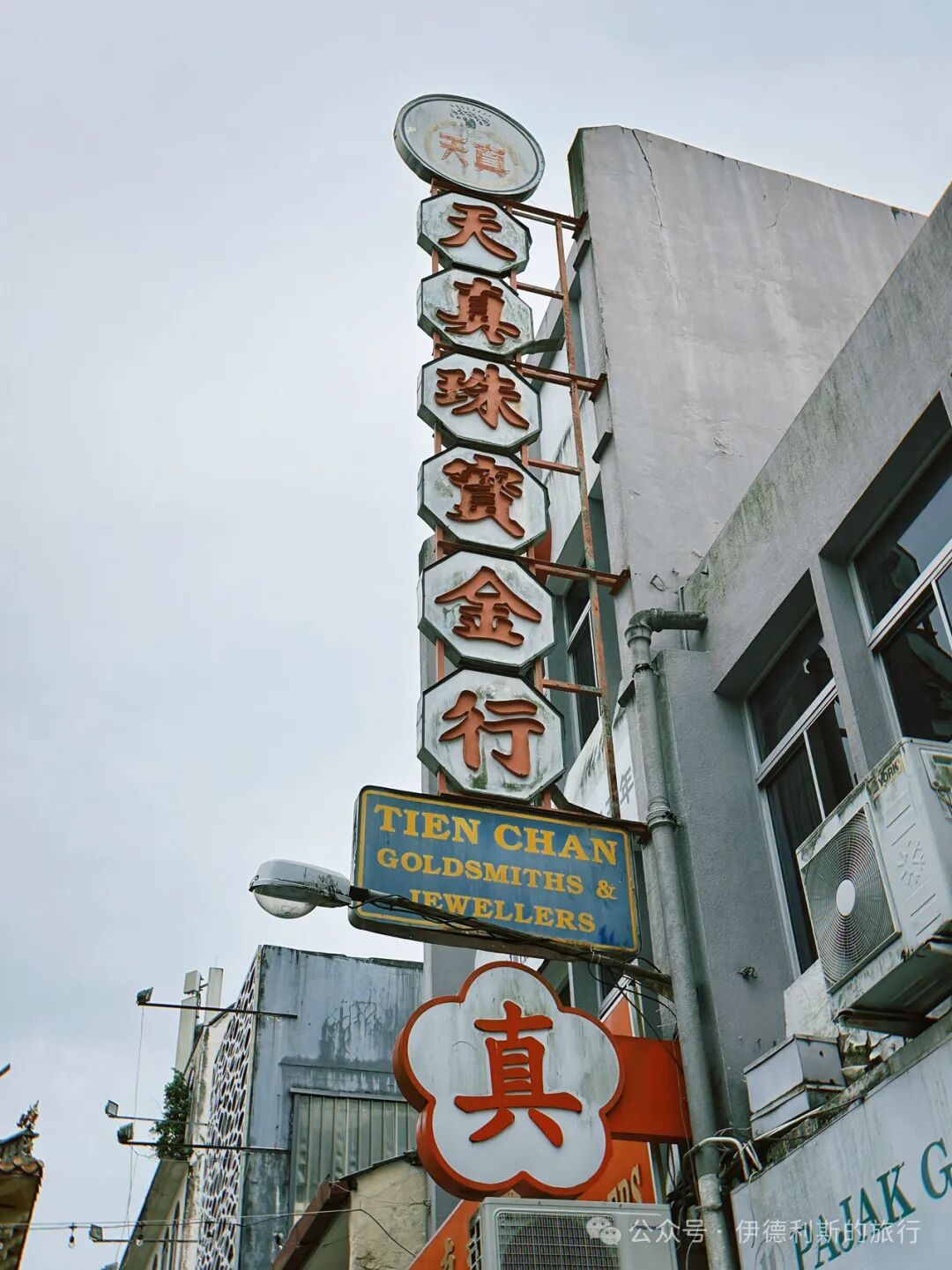
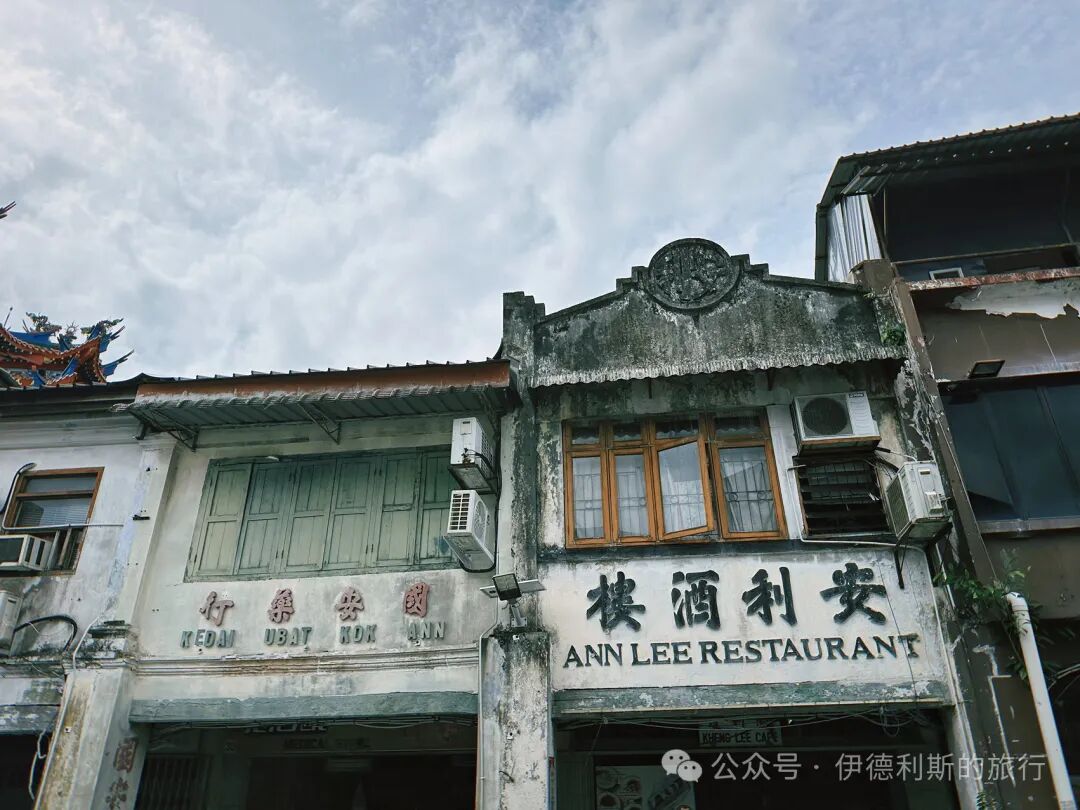
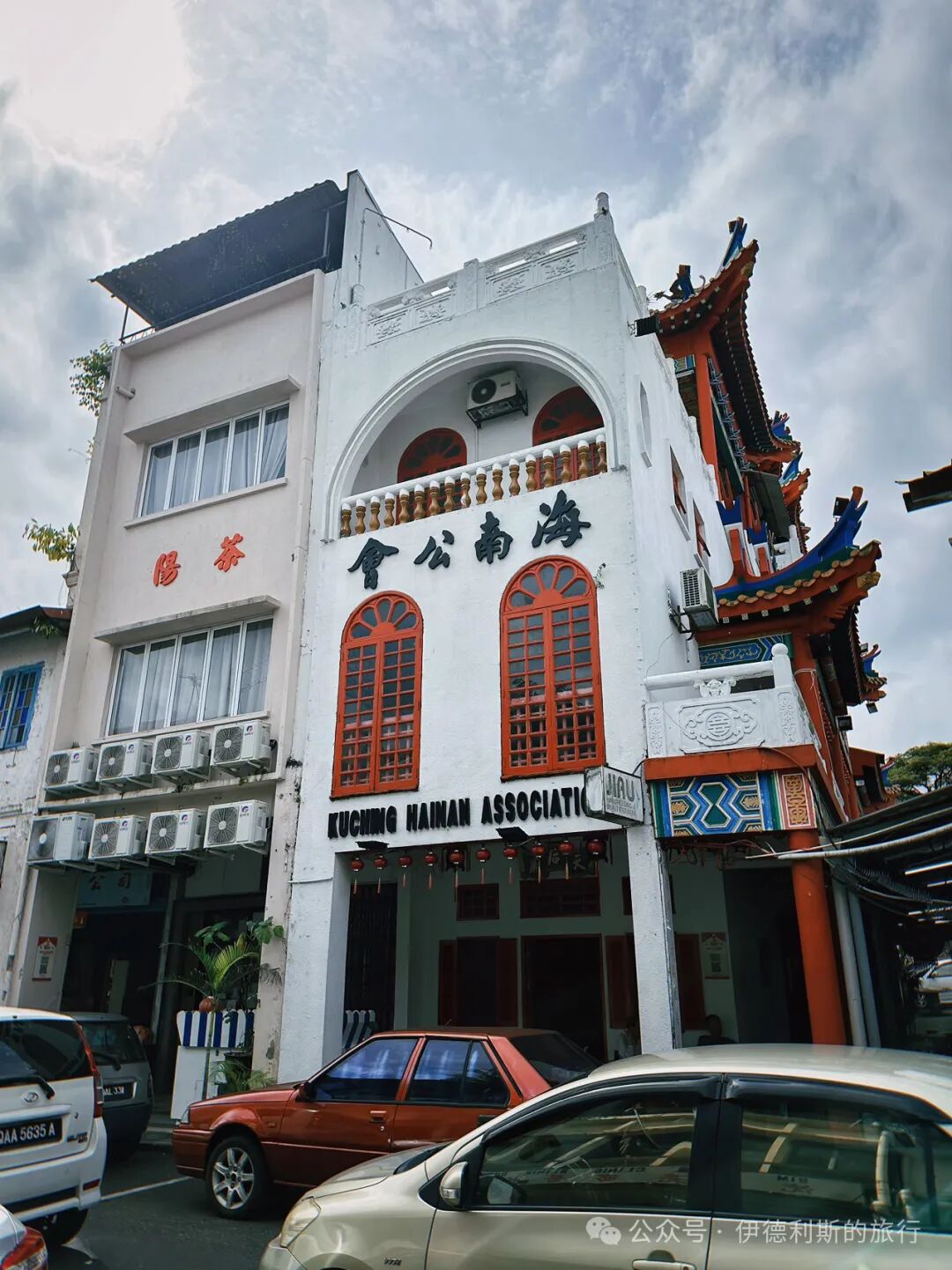
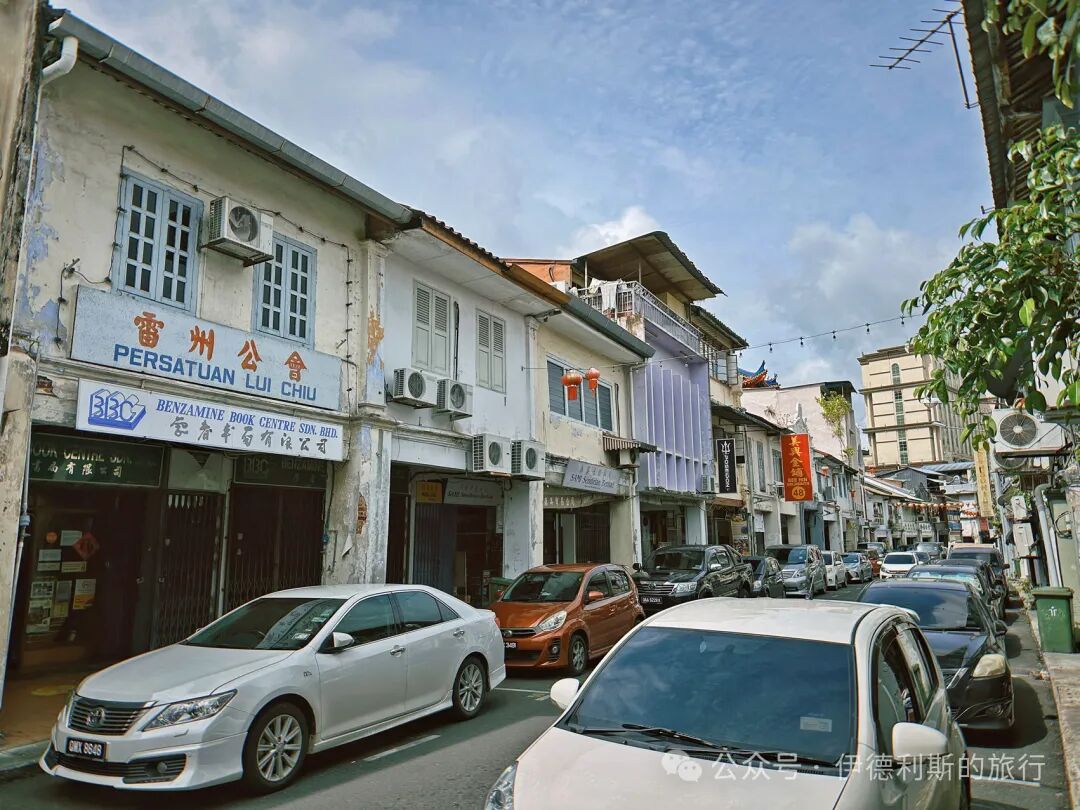
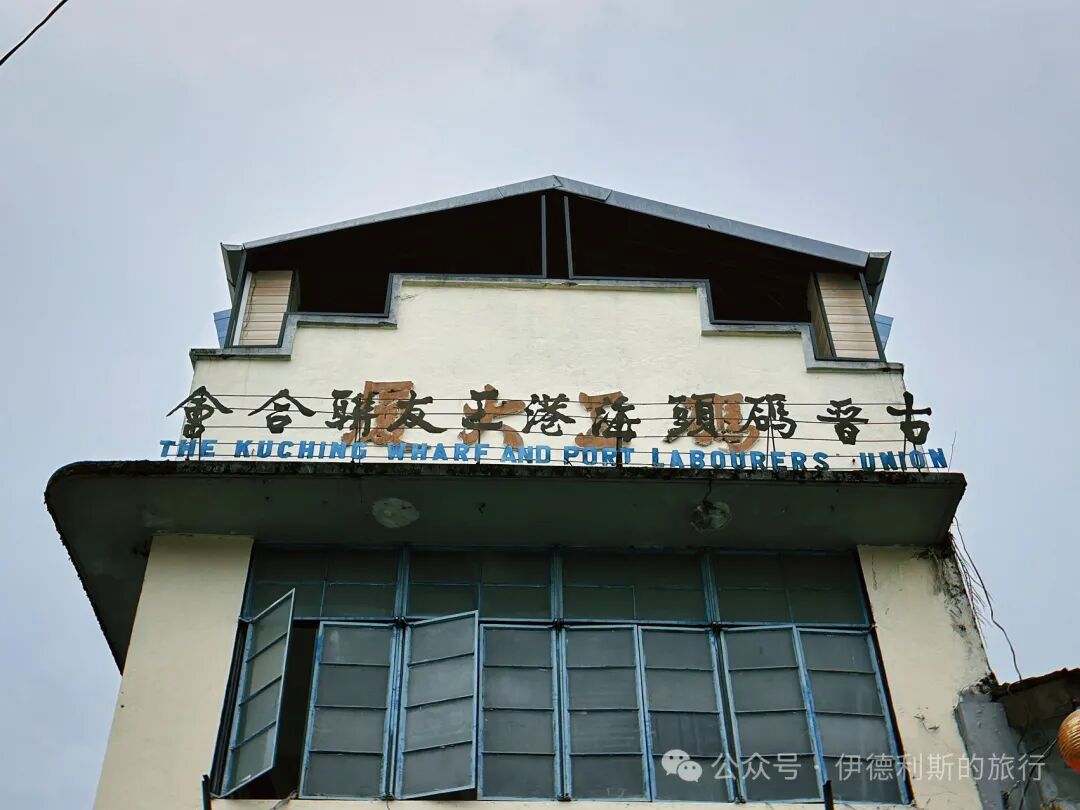
West of the Chinese History Museum is the old street area with shophouses centered around China Street. It includes streets like Youhai Street, Carpenter Street, Lower Bazaar, Ewe Hai Street, Upper China Street, and Main Bazaar, making it the area with the richest Chinese culture in Kuching.
The first Chinese person to arrive in Kuching was Liu Zhi from Guangdong. He arrived in 1820 and once served as the butler for the White Rajah, James Brooke. In 1866, the Kingdom of Sarawak issued a land deed for his shop, Julong Zhiji, in Kuching. This street was later called China Street (Jalan China).
Main Bazaar (Jalan Main Bazaar) is literally translated as Big Market Road. It is known as the first street of Sarawak and was the busiest commercial center in 19th-century Sarawak. The name Main Bazaar comes from the Hakka word haichun, which means seaside.
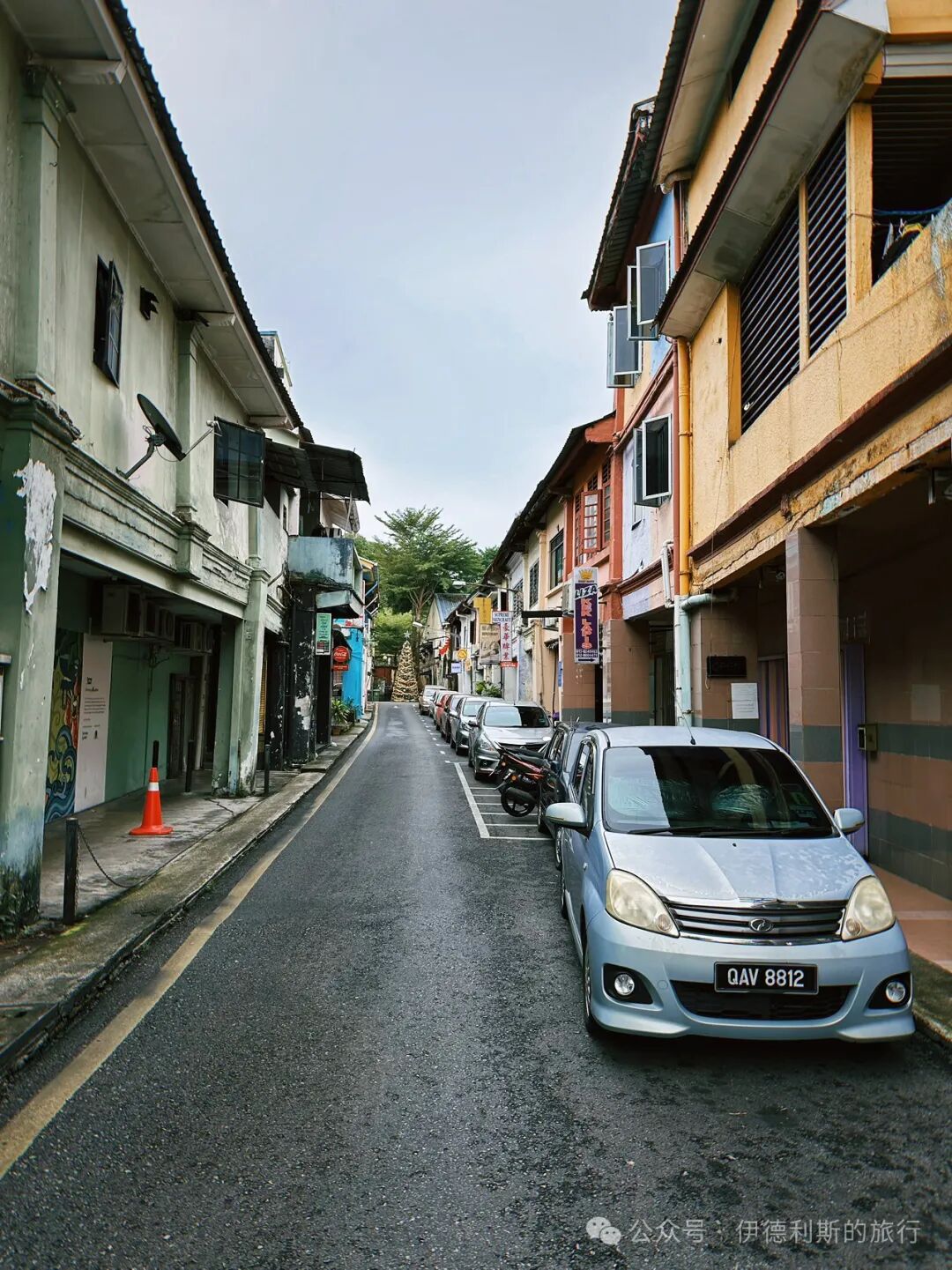
Carpenter Street (Jalan Carpenter) is literally translated as Carpenter Road, but the Chinese name refers to a type of palm leaf used for roofing. Carpenter Street was famous for its carpenter workshops in the 19th century.
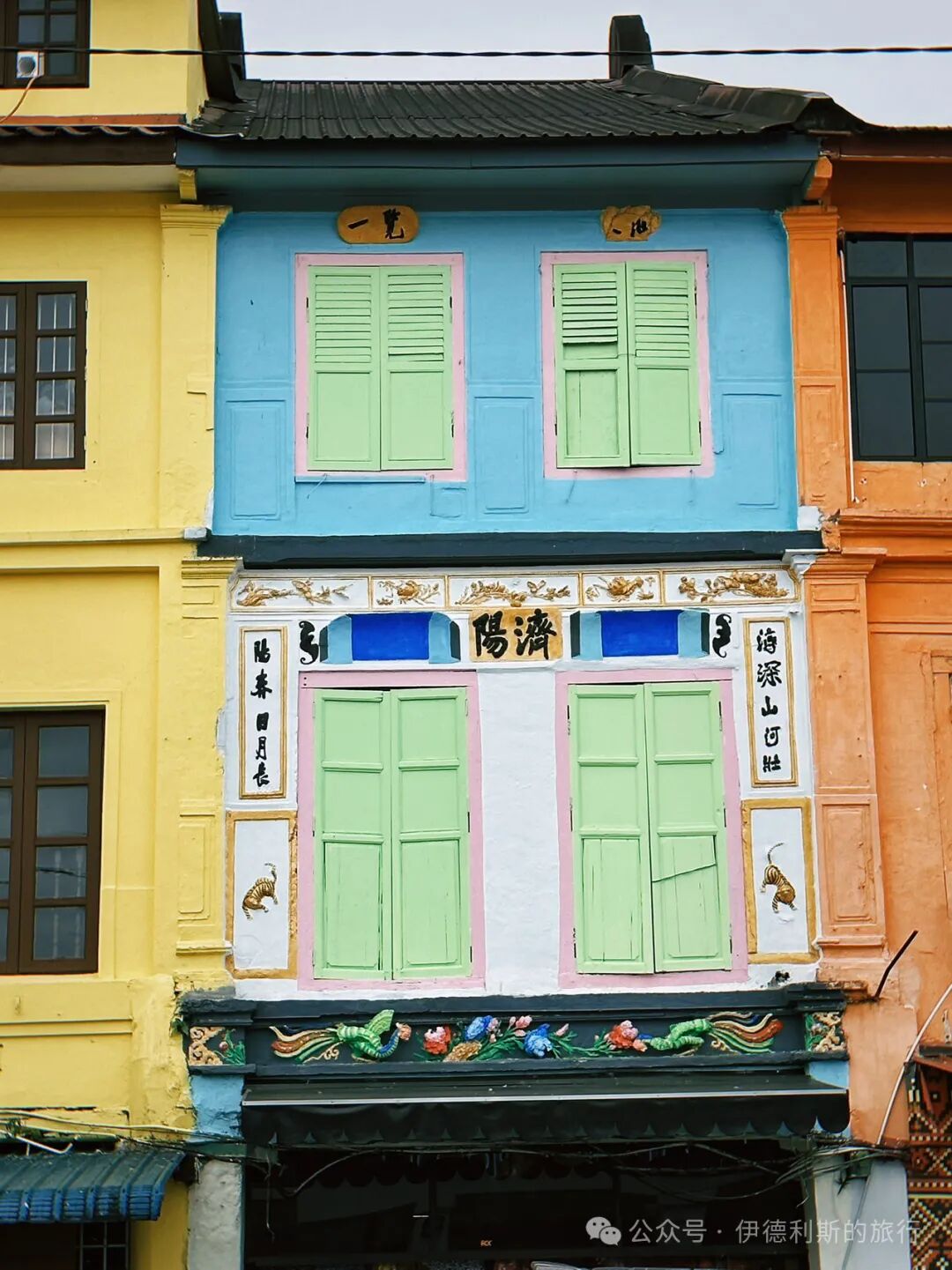
The double row of shophouses on Youhai Street was built in 1889 by the Fujianese merchant Wang Youhai, which is how it got its name. Wang Youhai (1830-1889) was born in Singapore with ancestral roots in Zhangzhou, Fujian. He came to Kuching to make a living when he was young, started a business, and was appointed as a Kapitan Cina for Sarawak. He was known as the big boss of the Sarawak Chinese, and the Wang family was considered the top Chinese family in Sarawak.
Summary: Kuching offers halal Chinese food alongside old houses and heritage-style stays shaped by the city’s mixed cultural background. This article keeps the original restaurant details, homestay notes, photos, and local observations from the Chinese travel account.
We flew from Kota Bharu to Kuching at night. The staff checked us very strictly at the gate. They looked at everyone's passports and flight and hotel bookings, and only let us board after a long phone call. After arriving at Kuching Airport, we had to go through customs again and get an entry stamp. According to the Malaysian Constitution, Sarawak, where Kuching is located, has the most autonomy of any state in Malaysia. The state government has the power to restrict entry and residency for people from West Malaysia and Sabah.
The next morning, we went to Mohammad Lim Cafe, a famous halal Chinese snack shop in Kuching's old town, for breakfast. They specialize in handmade noodles, including dry-tossed noodles, tom yum, kampua noodles, tofu soup, and laksa. We ordered dry-tossed noodles, kampua noodles, and tofu soup.
Dry-tossed noodles (kolomee) are a specialty egg noodle brought by Cantonese Chinese. They are popular in cities with many Cantonese people like Kuching. You can have them plain in clear soup, with dark soy sauce, or with red char siu oil, topped with slices of chicken or beef char siu. Kampua noodles (ganpanmian) are a specialty brought by Fuzhou Chinese. They are made similarly to dry-tossed noodles and are popular in cities with many Fuzhou people like Sibu. Dry-tossed noodles are wetter than kampua noodles and look more like instant noodles, while kampua noodles are usually made with handmade noodles.
I highly recommend the Top Spot Food Court in the city center to any friends (dosti) visiting Kuching. It is a halal Chinese seafood center with a Southeast Asian vibe. The food court is open from 5 p.m. to 10 p.m. It looks like a plain parking garage from the outside, but once you take the elevator to the top floor, you enter a very lively seafood market. Most stalls in the food court are run by Chinese owners and have halal certification. All kinds of fish, shrimp, and vegetables are displayed openly, so you can pick exactly what you want.
We chose a stall called Ling Long Seafood. The lady who took our order was Hainanese. Hainanese people running halal Chinese restaurants is a big feature in Malaysia. She spoke great Mandarin and was very enthusiastic about helping us order what we wanted. We ordered Sarawak-style stir-fried midin ferns (midin) with shrimp paste and stir-fried sweet leaf (mani cai) with egg. Their stir-fried dishes come in small, medium, and large sizes, so even one person can eat well.
Midin is a fern native to Borneo. It is not bitter at all when stir-fried and has a very fresh fragrance. Sweet leaf (mani cai) is a wild vegetable that Sarawak Hakka people love to cook. You can find it in homes and small restaurants. The leaves must be rubbed in water and drained to remove any bitterness, and the small stems must be picked out before cooking, so it is much more work than other vegetables.
For seafood, we ordered lokan clams (lokan), sea shrimp, and seven-star grouper. The waiter told us which ones were fresh and which were frozen. Everything we ordered was indeed very fresh and delicious. Since it is a food court by the sea in the city center, I am not sure if other stalls overcharge, but I felt this stall was good value for money. In the end, our five dishes, rice, and the 6% sales tax cost a total of 313 RMB. Small stir-fried dishes were 24 RMB each, the seven-star grouper was 148 RMB (they had cheaper fish too), a plate of sea shrimp was 48 RMB, and a plate of clams was 40 RMB.
We stayed at the Marian Boutique Hotel in Kuching. It is the old Wang family mansion built in 1885 on a hill on Carpenter Street by Wang Youhai, a first-generation Fujianese tycoon in Sarawak. Wang Youhai (1830-1889) was born in Singapore and his ancestral home was Zhangzhou, Fujian. In 1846, 16-year-old Wang Youhai came to Kuching to make a living. He started the Youhai Mao Company with friends, dealing in local produce, groceries, and textiles. He gradually became a leader of the Fujian community in the Singapore-Malaysia region and was appointed as a Kapitan Cina for Sarawak. After the 1870s, Wang Youhai's wealth surpassed that of the Teochew merchant groups. He was known as the big boss of the Sarawak Chinese, and the Wang family was considered the top Chinese family in Sarawak. Youhai Street in the old town of Kuching was built by Wang Youhai in 1889.
The old Wang family residence was built with Borneo ironwood (belian) and Chinese green roof tiles. It had a grand Chinese-style archway at the entrance. In 1933, the Wang family sold the old house to the Anglican Church. The church expanded it into the three-story St. Mary's Boarding House. It became a church guesthouse after 1968. In the 1990s, the front yard and Chinese archway were demolished for road construction. After renovations in 2013, it opened as the Marian Boutique Hotel in 2017.
Breakfast was a simple meal of milk tea and bread with jam.
The Chinese History Museum in Kuching Waterfront Park was originally the Chinese Court built by the Kingdom of Sarawak in 1912. It handled civil lawsuits, probate, and marriage and divorce cases involving Chinese people, which is why a scale is decorated on the main gate. In 1921, it became the Chinese Affairs Office, then the Chinese Chamber of Commerce in 1930, and finally opened as the Chinese History Museum in 1993.
The museum has rich exhibits, including detailed introductions to all Chinese dialect groups in Sarawak like the Hakka, Teochew, Cantonese, Fuzhou, and Hainanese people, along with recordings of their daily dialects. Inside the museum, a large wall features a panoramic map of Kuching's old town, showing the Chinese names of all streets and the types of shops, which is perfect for exploring the area.
West of the Chinese History Museum is the old street area with shophouses centered around China Street. It includes streets like Youhai Street, Carpenter Street, Lower Bazaar, Ewe Hai Street, Upper China Street, and Main Bazaar, making it the area with the richest Chinese culture in Kuching.
The first Chinese person to arrive in Kuching was Liu Zhi from Guangdong. He arrived in 1820 and once served as the butler for the White Rajah, James Brooke. In 1866, the Kingdom of Sarawak issued a land deed for his shop, Julong Zhiji, in Kuching. This street was later called China Street (Jalan China).
Main Bazaar (Jalan Main Bazaar) is literally translated as Big Market Road. It is known as the first street of Sarawak and was the busiest commercial center in 19th-century Sarawak. The name Main Bazaar comes from the Hakka word haichun, which means seaside.
Carpenter Street (Jalan Carpenter) is literally translated as Carpenter Road, but the Chinese name refers to a type of palm leaf used for roofing. Carpenter Street was famous for its carpenter workshops in the 19th century.
The double row of shophouses on Youhai Street was built in 1889 by the Fujianese merchant Wang Youhai, which is how it got its name. Wang Youhai (1830-1889) was born in Singapore with ancestral roots in Zhangzhou, Fujian. He came to Kuching to make a living when he was young, started a business, and was appointed as a Kapitan Cina for Sarawak. He was known as the big boss of the Sarawak Chinese, and the Wang family was considered the top Chinese family in Sarawak.
