
Islamic Guide: Ayat al-Kursi - Meaning, Protection and Daily Recitation
Reposted from the web
Summary: This article explains Ayat al-Kursi, Quran 2:255, through its meaning, core themes, hadith evidence, and role as a daily protection dua. It covers memorization, ruqya, recitation after prayer, and the spiritual benefits connected to this verse.
Author: Sh. Ismail Kamdar
About the author: Ismail Kamdar graduated from the ʿĀlimiyyah program in 2006 and finished his Bachelor's degree in Islamic Studies at the International Open University in 2014. He specializes in Islamic jurisprudence (Fiqh), Quranic exegesis (Tafsir), and history. He has written over a dozen books on Islamic studies and personal development. He is the founder of Islamic Self Help and a research manager at the Yaqeen Institute.
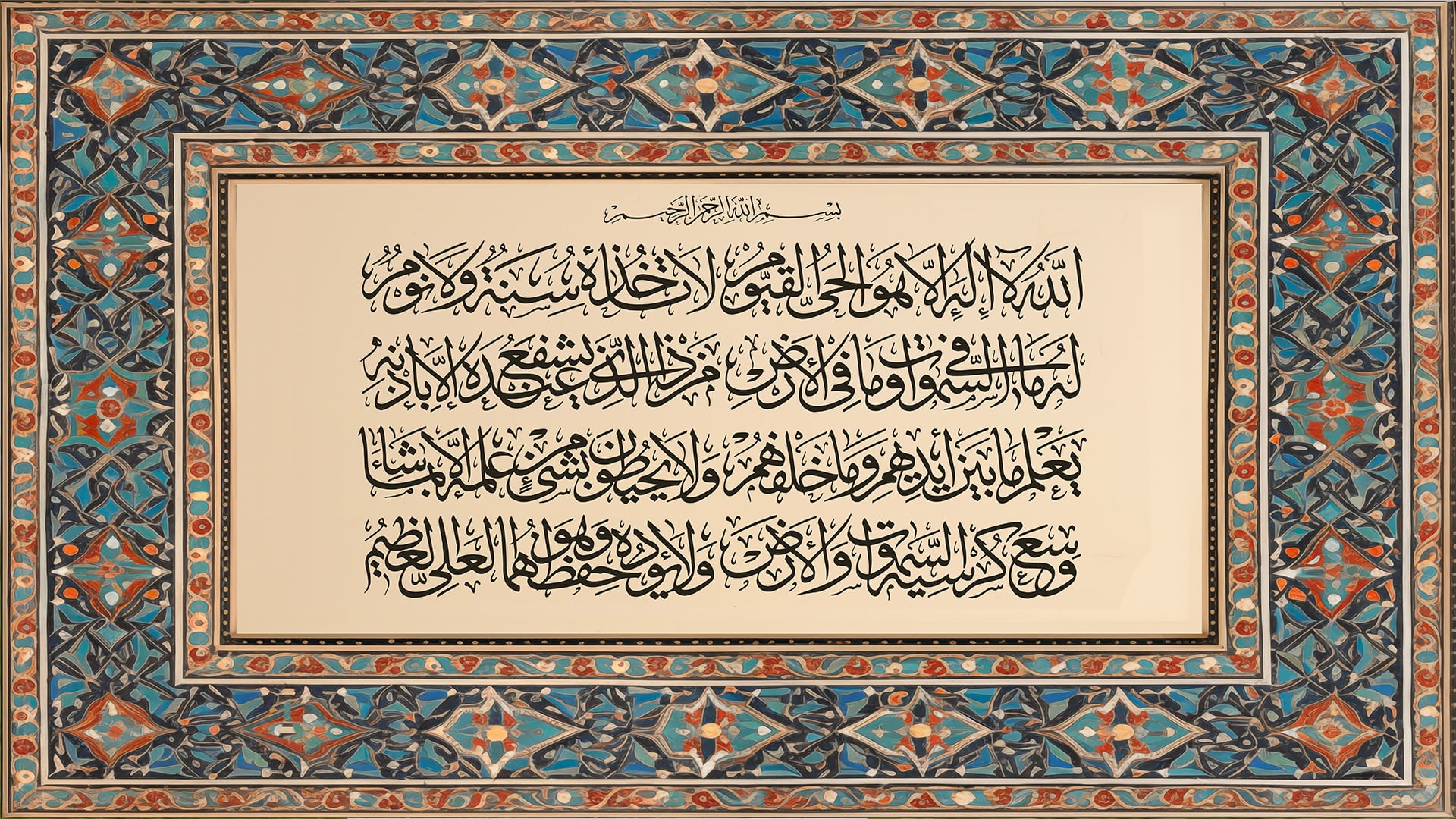
The Verse of the Throne (Ayatul Kursi) is one of the most important verses in the Quran. It is recognized as the greatest verse in the Quran and should be memorized, understood, and recited often. It serves as a daily protection against worldly harm and unseen sources of danger. What is the Verse of the Throne?
The Verse of the Throne (Ayatul Kursi) is the 255th verse of the Chapter of the Cow (Surah al-Baqarah). It is recognized as the greatest verse in the Quran, and Muslims around the world recite it daily to protect themselves from evil. Because of its importance and core teachings, Muslim children learn to memorize the Verse of the Throne at a very young age. Memorizing, understanding, and frequently reciting this important Quranic verse is a significant act of worship. The Verse of the Throne — Arabic, Transliteration, and English Meaning
Allahu laa ilaaha illaa Huwal Hayyul Qayyoom; laa ta'khudhuhu sinatun wa laa nawm; lahu maa fissamawati wa maa fil-ard; man dhalladhi yashfa'u 'indahu illaa bi-idhnihi; Ya'lamu maa bayna aydeehim wa maa khalfahum; wa laa yuheetoona bishay'in min 'ilmihi illaa bimaa shaa'; wasi'a kursiyyuhus-samawati wal-ard; wa laa ya'ooduhu hifzhuhuma; wa Huwal 'Aliyyul 'Azeem
Allahu laa ilaaha illaa Huwa al-Hayyul Qayyoom; laa ta’khudhuhu sinatun wa laa nawm; lahu maa fissamawati wa maa fil-ard; man dhalladhi yashfa’u ‘indahu illaa bi-idhnihi; He knows what is before them and what is behind them; and they encompass not a thing of His knowledge except for what He wills; His throne (kursi) extends over the heavens and the earth; and their preservation tires Him not; and He is the Most High, the Most Great.
Allah, there is no god worthy of worship except Him. He is the Ever-Living, the Sustainer of all existence. Neither drowsiness nor sleep overtakes Him. To Him belongs whatever is in the heavens and whatever is on the earth. Who is it that can intercede with Him except by His permission? He knows what is before them and what is behind them. They encompass not a thing of His knowledge except for what He wills. His throne (kursi) extends over the heavens and the earth, and their preservation tires Him not. He is the Most High, the Most Great. (Quran 2:255)
The core themes of the Throne Verse (Ayat al-Kursi).
The Throne Verse (Ayat al-Kursi) summarizes some core beliefs and principles of Islamic monotheism (Tawhid). It introduces the attributes of Allah and the ways to understand these attributes. The Throne Verse (Ayat al-Kursi) teaches us that there is only one true Allah, and He alone is worthy of worship. Allah is perfect in His names and attributes. He neither sleeps nor grows tired. He controls and knows everything, and nothing happens unless He wills it. Nothing is like Allah, and His attributes are unique and perfect.
The Throne Verse (Ayat al-Kursi) also reminds us that only Allah can protect us from all harm and evil. He is perfect, never sleeps, and controls everything. Therefore, all protection comes only from Him. The Throne Verse (Ayat al-Kursi) has a dual purpose: it is both a confirmation of the core beliefs of Islam and a protective dua we are advised to recite daily. Why is it called the greatest verse in the Quran?
There is some debate about whether we can consider certain chapters of the Quran to have more virtue than others. Shaykh Yousef Wahb explores these different views in detail in his paper, "Are Some Quranic Verses More Virtuous Than Others? Reconciling Different Scholarly Views." Given the mainstream view that some verses are greater than others, the Throne Verse is the greatest verse in the Quran according to the following hadith.
Ubayy ibn Ka’b reported that the Prophet ﷺ asked, "Abu Mundhir, do you know which verse in the Book of Allah you have is the greatest?" I recited the Throne Verse: "Allah, there is no god but He;" the Ever-Living, the Sustainer of all existence..." (2:255). The Prophet ﷺ patted my chest and said, "Abu Mundhir, by Allah, congratulations on this knowledge!" (Sahih Muslim 810)
Abu Hurairah reported that the Prophet ﷺ said, "Everything has a peak, and the peak of the Quran is the Cow Chapter (Surah Al-Baqarah)." It contains a verse that is the head of the Quran, which is the Throne Verse. (Jami` at-Tirmidhi 2878)
These narrations show that the Throne Verse is the greatest verse in the Quran. This is because it summarizes the most important beliefs of Islam and is also an extremely powerful means of protection. The Cow Chapter is listed as the peak of the Quran because it contains the Throne Verse. The Cow Chapter is an explanation of the core teachings of Islam, and the Throne Verse covers the most important lessons within it. The Benefits of the Throne Verse
There are many narrations that point to the virtues of the Throne Verse. Besides being called the head of the Quran and the greatest verse in the Quran, it is also a means of protection against harm, a daily protective dua, ruqya (spiritual protection against jinn, the evil eye, and magic), and a path for people to enter Paradise. The following narrations are evidence of these virtues.
Abu Hurairah reported that the Prophet ﷺ entrusted me with guarding the charity of Ramadan. Someone came to me and started taking food. I caught him and said, 'I must take you to the Prophet!' Abu Hurairah told this story to the Prophet, and the Prophet said, 'That person told me that when I go to bed, I should recite the Throne Verse (Ayat al-Kursi).' Allah will appoint a protector to guard me, and no devil will be able to come near me until morning. The Prophet (peace be upon him) said, 'He told you the truth, even though he is a liar.' That was Satan. (Sahih al-Bukhari 5010)
From this story, we learn that the Throne Verse is a protective dua that keeps a person safe from evening until morning, and from morning until evening. Therefore, it is recommended to recite it early every morning, usually after the dawn prayer (fajr), and in the evening, after the afternoon prayer (asr) or sunset prayer (maghrib). In this account, Abu Hurairah caught a devil trying to steal from the treasury. The devil taught him this dua in exchange for his freedom. In any other situation, what a devil teaches would be suspicious, but here, the Prophet (peace be upon him) confirmed that he spoke the truth, even though he is a liar. We follow this hadith not because of what the devil said, but because the Prophet (peace be upon him) confirmed that this specific statement was true.
The Prophet (peace be upon him) said, 'Whenever it is recited in a house, the devils will flee.' That verse is the Throne Verse (Ayat al-Kursi). (Kitab al-Amr bi-l-Ma'ruf wa-l-Nahy 'an al-Munkar, Vol. 2, p. 370)
It is also narrated that devils will flee from a house where the Chapter of the Cow (Surah al-Baqarah) is recited. (Sahih Muslim 780) Since the Throne Verse is the most important verse in the Chapter of the Cow, reciting it is often enough to drive away devils. This makes the Chapter of the Cow, and especially the Throne Verse, an important form of spiritual healing (ruqya). Spiritual healing (ruqya) refers to any recitation used to protect against devils, magic, and the evil eye. If someone feels the presence of a devil or magic in their home, it is recommended to recite the Throne Verse frequently to drive away the evil presence. If that does not work, try reciting the entire Chapter of the Cow for a more powerful spiritual healing. The best time to recite the Throne Verse
The Throne Verse should be part of our daily recitations. Ideally, there are two times each day when the Throne Verse should be recited. According to the following account, it should be recited after every obligatory prayer (fard namaz).
Abu Umamah reported that the Prophet (peace be upon him) said, 'Whoever recites the Throne Verse after every prescribed prayer, nothing will stop him from entering Paradise except death.' (Al-Tabarani: Al-Mu'jam al-Awsat 8068, Rating: Sahih)
Reciting the Throne Verse after every prayer is a path to entering Paradise. Additionally, the Throne Verse should be recited in the morning after the dawn prayer, and in the evening after the afternoon or sunset prayer, as a means of daily protection. This can be understood from the earlier account of Abu Hurairah and is also explained in the following account.
The Prophet Muhammad (peace be upon him) said: Whoever says these words when they wake up in the morning will be protected from the devil until they go to sleep in the evening. Whoever says these words when they go to sleep in the evening will be protected from the devil until they wake up in the morning. (Al-Hakim 1:562, Rating: Sahih) Conclusion
The Throne Verse (Ayat al-Kursi) is one of the most important verses in the Quran. It is recognized as the greatest verse in the Quran and should be memorized, understood, and recited often. It serves as a way to protect yourself from everyday harm and from unseen sources of harm like the devil, magic, and the evil eye. Also, reciting it after every namaz can lead to Paradise. These are some of the true virtues of the Throne Verse as told in various authentic hadiths.
Summary: This article explains Ayat al-Kursi, Quran 2:255, through its meaning, core themes, hadith evidence, and role as a daily protection dua. It covers memorization, ruqya, recitation after prayer, and the spiritual benefits connected to this verse.
Author: Sh. Ismail Kamdar
About the author: Ismail Kamdar graduated from the ʿĀlimiyyah program in 2006 and finished his Bachelor's degree in Islamic Studies at the International Open University in 2014. He specializes in Islamic jurisprudence (Fiqh), Quranic exegesis (Tafsir), and history. He has written over a dozen books on Islamic studies and personal development. He is the founder of Islamic Self Help and a research manager at the Yaqeen Institute.
The Verse of the Throne (Ayatul Kursi) is one of the most important verses in the Quran. It is recognized as the greatest verse in the Quran and should be memorized, understood, and recited often. It serves as a daily protection against worldly harm and unseen sources of danger. What is the Verse of the Throne?
The Verse of the Throne (Ayatul Kursi) is the 255th verse of the Chapter of the Cow (Surah al-Baqarah). It is recognized as the greatest verse in the Quran, and Muslims around the world recite it daily to protect themselves from evil. Because of its importance and core teachings, Muslim children learn to memorize the Verse of the Throne at a very young age. Memorizing, understanding, and frequently reciting this important Quranic verse is a significant act of worship. The Verse of the Throne — Arabic, Transliteration, and English Meaning
Allahu laa ilaaha illaa Huwal Hayyul Qayyoom; laa ta'khudhuhu sinatun wa laa nawm; lahu maa fissamawati wa maa fil-ard; man dhalladhi yashfa'u 'indahu illaa bi-idhnihi; Ya'lamu maa bayna aydeehim wa maa khalfahum; wa laa yuheetoona bishay'in min 'ilmihi illaa bimaa shaa'; wasi'a kursiyyuhus-samawati wal-ard; wa laa ya'ooduhu hifzhuhuma; wa Huwal 'Aliyyul 'Azeem
Allahu laa ilaaha illaa Huwa al-Hayyul Qayyoom; laa ta’khudhuhu sinatun wa laa nawm; lahu maa fissamawati wa maa fil-ard; man dhalladhi yashfa’u ‘indahu illaa bi-idhnihi; He knows what is before them and what is behind them; and they encompass not a thing of His knowledge except for what He wills; His throne (kursi) extends over the heavens and the earth; and their preservation tires Him not; and He is the Most High, the Most Great.
Allah, there is no god worthy of worship except Him. He is the Ever-Living, the Sustainer of all existence. Neither drowsiness nor sleep overtakes Him. To Him belongs whatever is in the heavens and whatever is on the earth. Who is it that can intercede with Him except by His permission? He knows what is before them and what is behind them. They encompass not a thing of His knowledge except for what He wills. His throne (kursi) extends over the heavens and the earth, and their preservation tires Him not. He is the Most High, the Most Great. (Quran 2:255)
The core themes of the Throne Verse (Ayat al-Kursi).
The Throne Verse (Ayat al-Kursi) summarizes some core beliefs and principles of Islamic monotheism (Tawhid). It introduces the attributes of Allah and the ways to understand these attributes. The Throne Verse (Ayat al-Kursi) teaches us that there is only one true Allah, and He alone is worthy of worship. Allah is perfect in His names and attributes. He neither sleeps nor grows tired. He controls and knows everything, and nothing happens unless He wills it. Nothing is like Allah, and His attributes are unique and perfect.
The Throne Verse (Ayat al-Kursi) also reminds us that only Allah can protect us from all harm and evil. He is perfect, never sleeps, and controls everything. Therefore, all protection comes only from Him. The Throne Verse (Ayat al-Kursi) has a dual purpose: it is both a confirmation of the core beliefs of Islam and a protective dua we are advised to recite daily. Why is it called the greatest verse in the Quran?
There is some debate about whether we can consider certain chapters of the Quran to have more virtue than others. Shaykh Yousef Wahb explores these different views in detail in his paper, "Are Some Quranic Verses More Virtuous Than Others? Reconciling Different Scholarly Views." Given the mainstream view that some verses are greater than others, the Throne Verse is the greatest verse in the Quran according to the following hadith.
Ubayy ibn Ka’b reported that the Prophet ﷺ asked, "Abu Mundhir, do you know which verse in the Book of Allah you have is the greatest?" I recited the Throne Verse: "Allah, there is no god but He;" the Ever-Living, the Sustainer of all existence..." (2:255). The Prophet ﷺ patted my chest and said, "Abu Mundhir, by Allah, congratulations on this knowledge!" (Sahih Muslim 810)
Abu Hurairah reported that the Prophet ﷺ said, "Everything has a peak, and the peak of the Quran is the Cow Chapter (Surah Al-Baqarah)." It contains a verse that is the head of the Quran, which is the Throne Verse. (Jami` at-Tirmidhi 2878)
These narrations show that the Throne Verse is the greatest verse in the Quran. This is because it summarizes the most important beliefs of Islam and is also an extremely powerful means of protection. The Cow Chapter is listed as the peak of the Quran because it contains the Throne Verse. The Cow Chapter is an explanation of the core teachings of Islam, and the Throne Verse covers the most important lessons within it. The Benefits of the Throne Verse
There are many narrations that point to the virtues of the Throne Verse. Besides being called the head of the Quran and the greatest verse in the Quran, it is also a means of protection against harm, a daily protective dua, ruqya (spiritual protection against jinn, the evil eye, and magic), and a path for people to enter Paradise. The following narrations are evidence of these virtues.
Abu Hurairah reported that the Prophet ﷺ entrusted me with guarding the charity of Ramadan. Someone came to me and started taking food. I caught him and said, 'I must take you to the Prophet!' Abu Hurairah told this story to the Prophet, and the Prophet said, 'That person told me that when I go to bed, I should recite the Throne Verse (Ayat al-Kursi).' Allah will appoint a protector to guard me, and no devil will be able to come near me until morning. The Prophet (peace be upon him) said, 'He told you the truth, even though he is a liar.' That was Satan. (Sahih al-Bukhari 5010)
From this story, we learn that the Throne Verse is a protective dua that keeps a person safe from evening until morning, and from morning until evening. Therefore, it is recommended to recite it early every morning, usually after the dawn prayer (fajr), and in the evening, after the afternoon prayer (asr) or sunset prayer (maghrib). In this account, Abu Hurairah caught a devil trying to steal from the treasury. The devil taught him this dua in exchange for his freedom. In any other situation, what a devil teaches would be suspicious, but here, the Prophet (peace be upon him) confirmed that he spoke the truth, even though he is a liar. We follow this hadith not because of what the devil said, but because the Prophet (peace be upon him) confirmed that this specific statement was true.
The Prophet (peace be upon him) said, 'Whenever it is recited in a house, the devils will flee.' That verse is the Throne Verse (Ayat al-Kursi). (Kitab al-Amr bi-l-Ma'ruf wa-l-Nahy 'an al-Munkar, Vol. 2, p. 370)
It is also narrated that devils will flee from a house where the Chapter of the Cow (Surah al-Baqarah) is recited. (Sahih Muslim 780) Since the Throne Verse is the most important verse in the Chapter of the Cow, reciting it is often enough to drive away devils. This makes the Chapter of the Cow, and especially the Throne Verse, an important form of spiritual healing (ruqya). Spiritual healing (ruqya) refers to any recitation used to protect against devils, magic, and the evil eye. If someone feels the presence of a devil or magic in their home, it is recommended to recite the Throne Verse frequently to drive away the evil presence. If that does not work, try reciting the entire Chapter of the Cow for a more powerful spiritual healing. The best time to recite the Throne Verse
The Throne Verse should be part of our daily recitations. Ideally, there are two times each day when the Throne Verse should be recited. According to the following account, it should be recited after every obligatory prayer (fard namaz).
Abu Umamah reported that the Prophet (peace be upon him) said, 'Whoever recites the Throne Verse after every prescribed prayer, nothing will stop him from entering Paradise except death.' (Al-Tabarani: Al-Mu'jam al-Awsat 8068, Rating: Sahih)
Reciting the Throne Verse after every prayer is a path to entering Paradise. Additionally, the Throne Verse should be recited in the morning after the dawn prayer, and in the evening after the afternoon or sunset prayer, as a means of daily protection. This can be understood from the earlier account of Abu Hurairah and is also explained in the following account.
The Prophet Muhammad (peace be upon him) said: Whoever says these words when they wake up in the morning will be protected from the devil until they go to sleep in the evening. Whoever says these words when they go to sleep in the evening will be protected from the devil until they wake up in the morning. (Al-Hakim 1:562, Rating: Sahih) Conclusion
The Throne Verse (Ayat al-Kursi) is one of the most important verses in the Quran. It is recognized as the greatest verse in the Quran and should be memorized, understood, and recited often. It serves as a way to protect yourself from everyday harm and from unseen sources of harm like the devil, magic, and the evil eye. Also, reciting it after every namaz can lead to Paradise. These are some of the true virtues of the Throne Verse as told in various authentic hadiths.
