
Travel Guide: Jordan - Quseir Amra and Umayyad Palace Frescoes
Reposted from the web
Summary: Quseir Amra in Jordan was built by the Umayyad Caliph Walid II between 723 and 743 and became a UNESCO World Heritage Site in 1985. This account keeps the source's fresco details, historical figures, palace layout, damage history, and images.
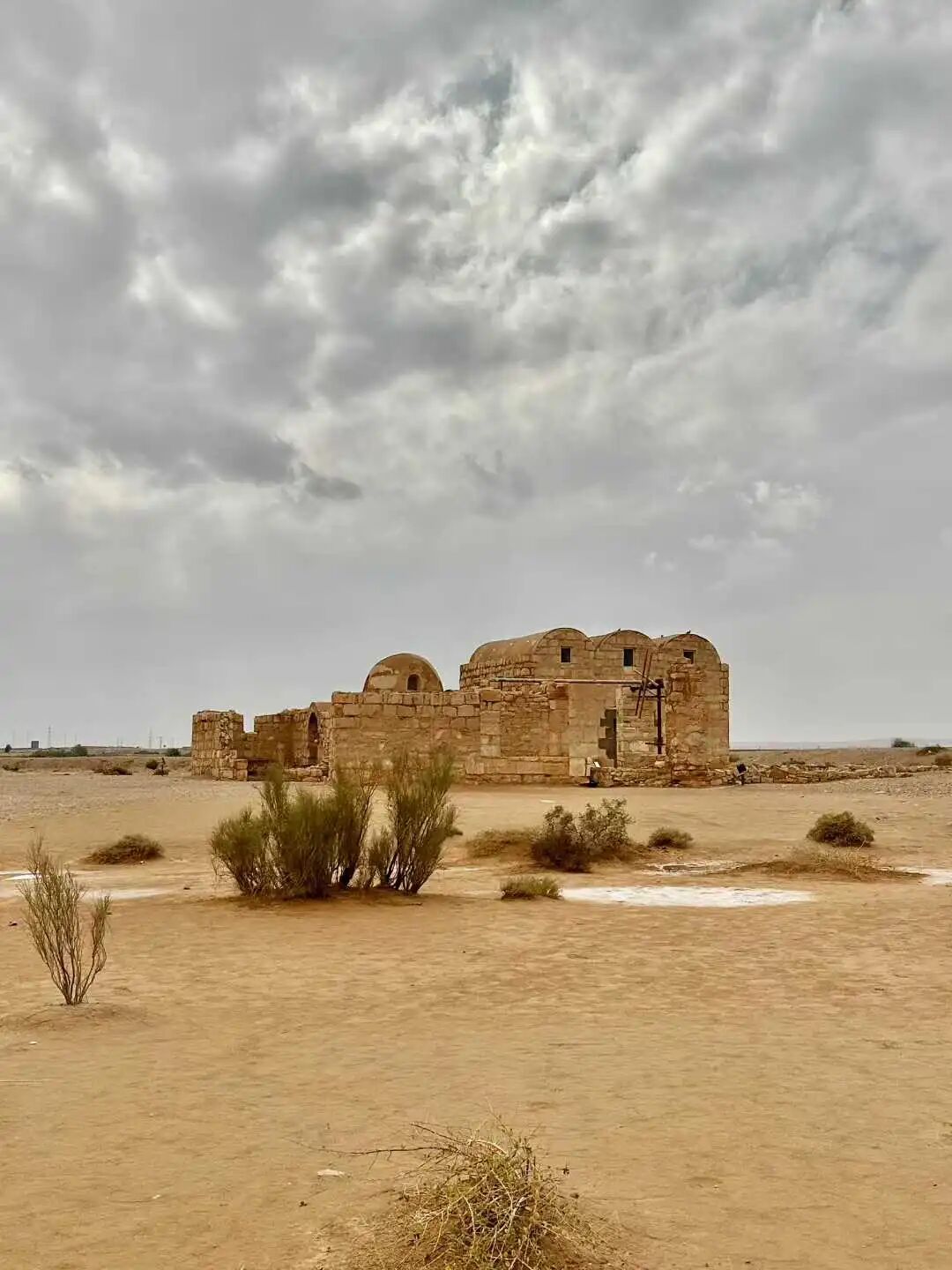
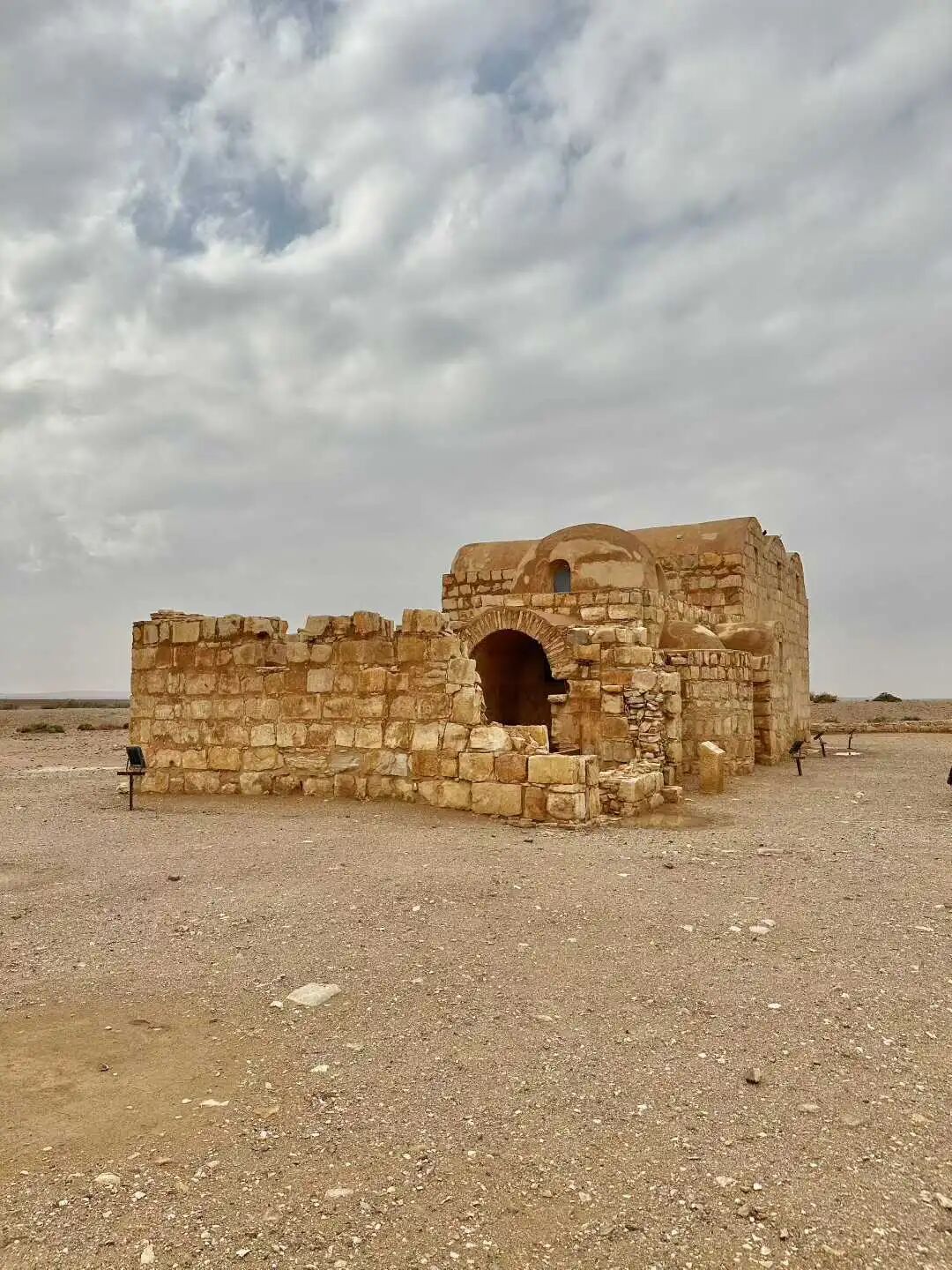
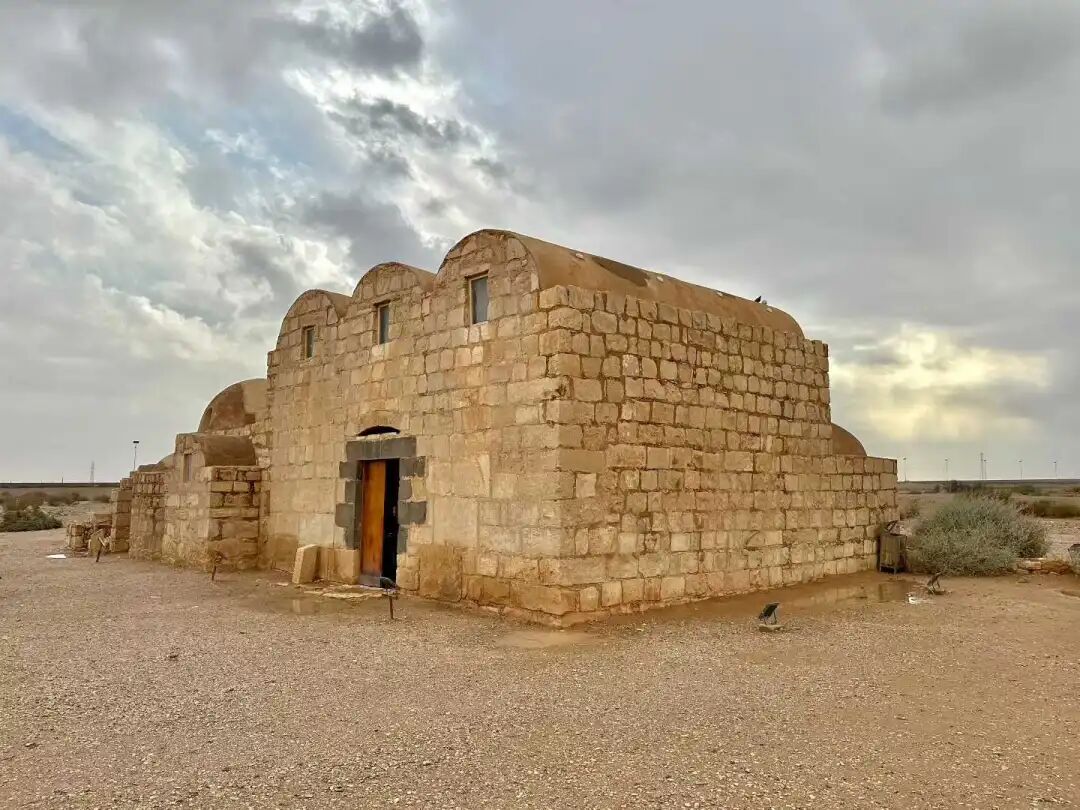
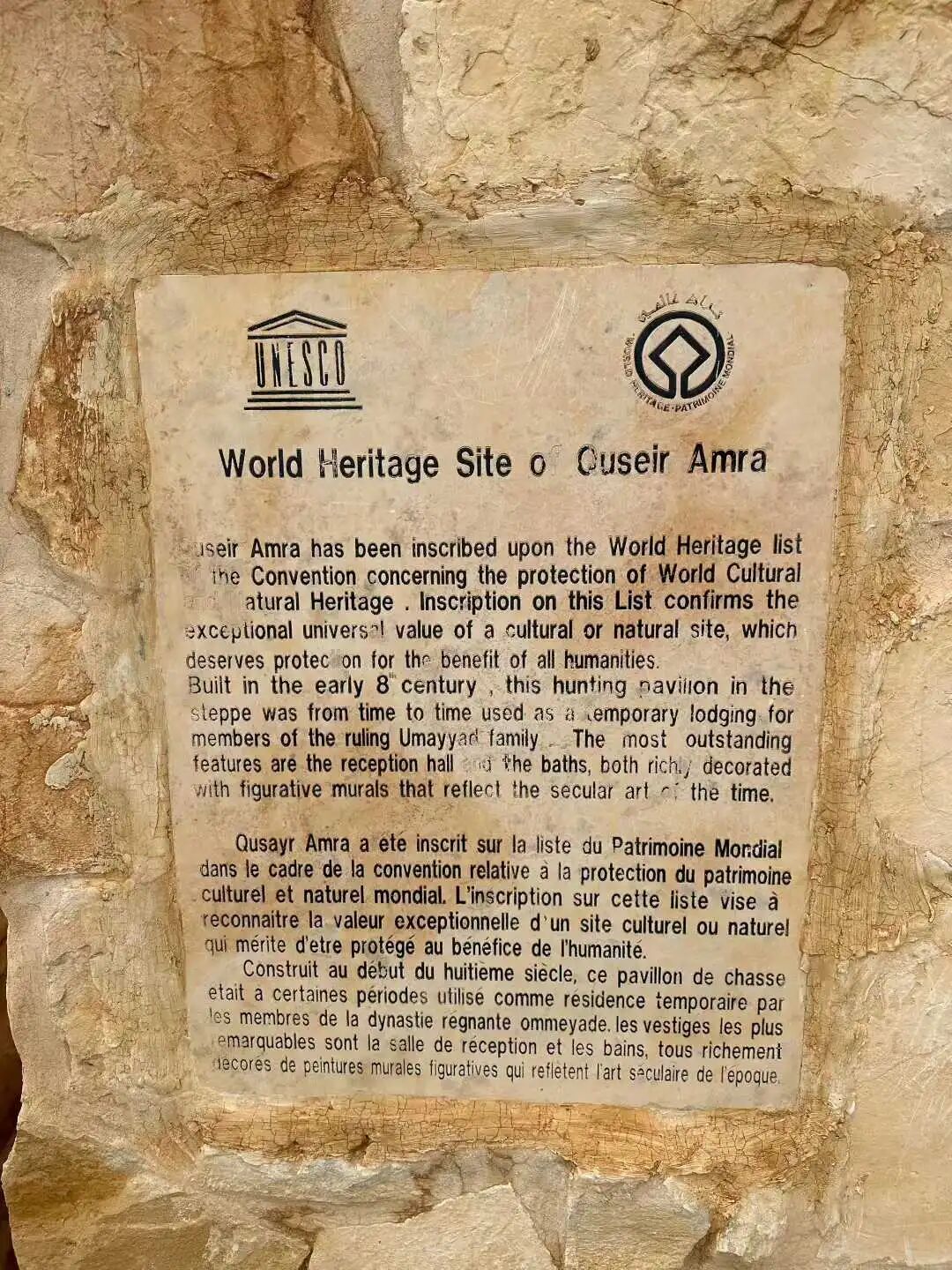
I drove to Jordan's most famous World Heritage site, Quseir Amra. Built by the Umayyad Caliph Walid II between 723 and 743, it was added to the UNESCO World Heritage list in 1985 because of the rich and unique murals in its bathhouse.
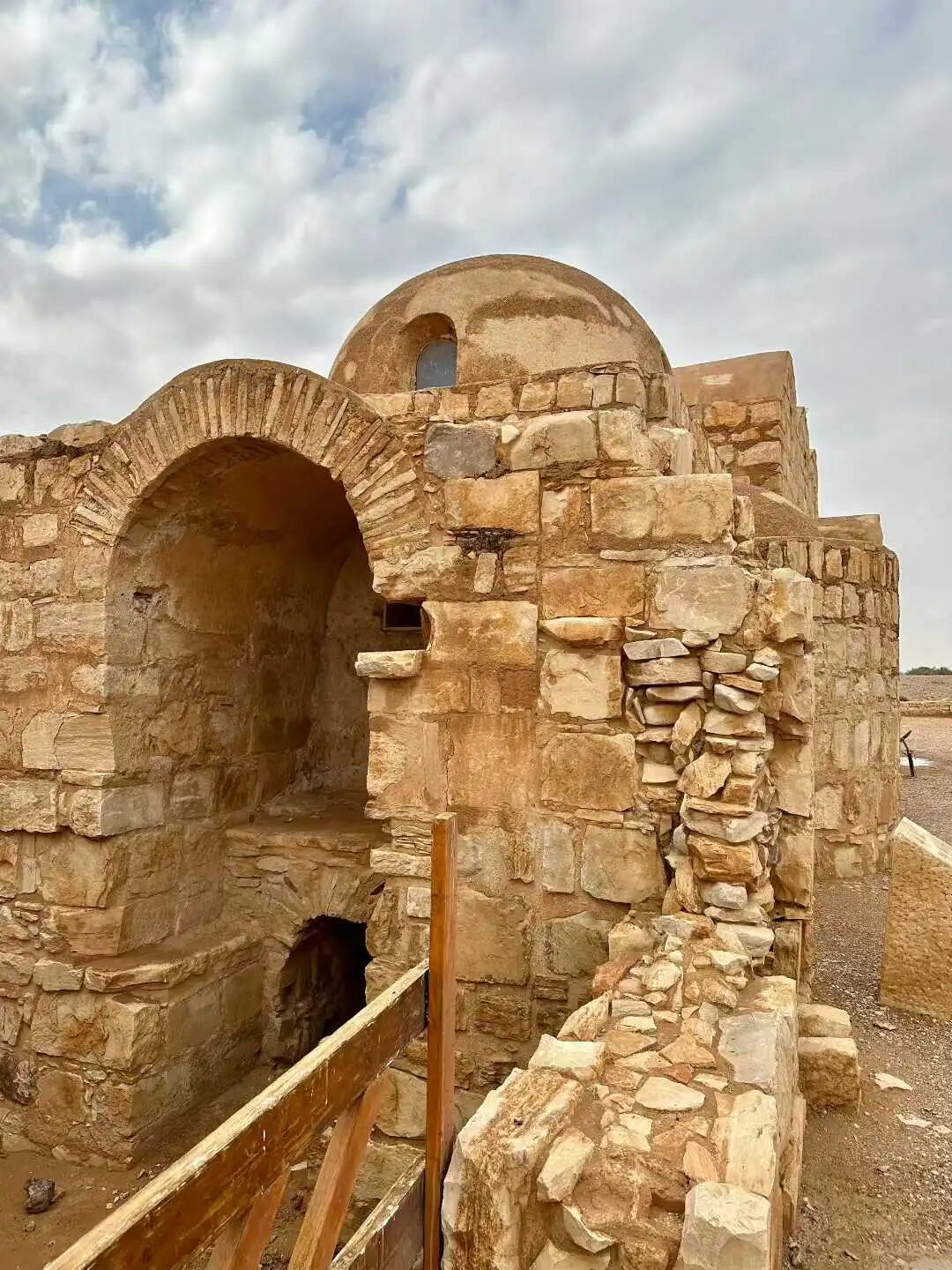
Based on the stone wall ruins around the site, this Umayyad palace was once a massive 25-hectare complex. Today, only the foundations remain, with the bathhouse and reception hall being the best-preserved parts. The interior murals feature images of hunting, bathing, animals, and plants, offering the most vivid look at secular life during the Umayyad dynasty. Walid II had a free spirit and loved art, music, and a luxurious lifestyle. He would lead his entourage away from the bustle of Damascus, traveling for days by camel to reach this desert palace to enjoy his private life.
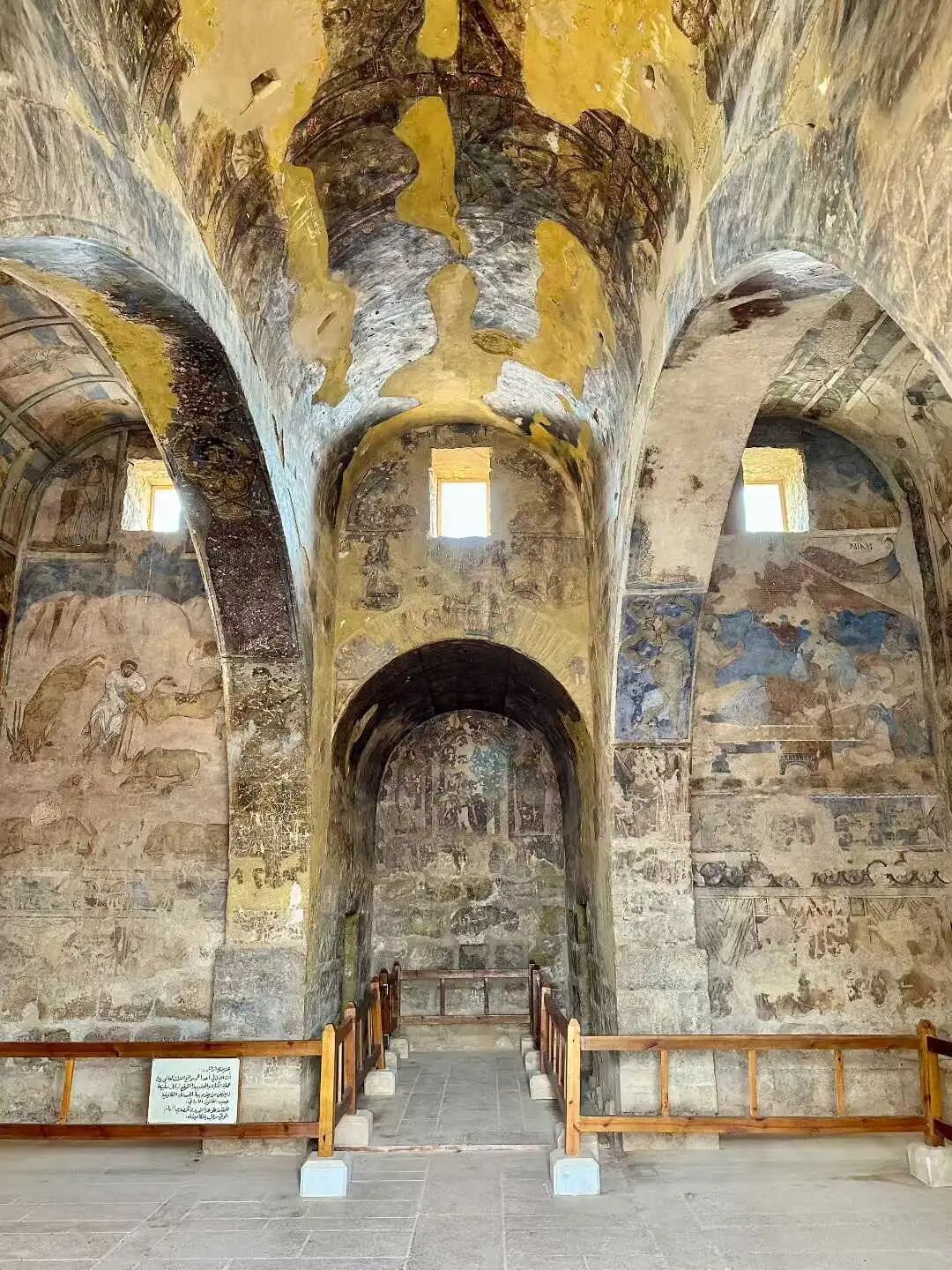
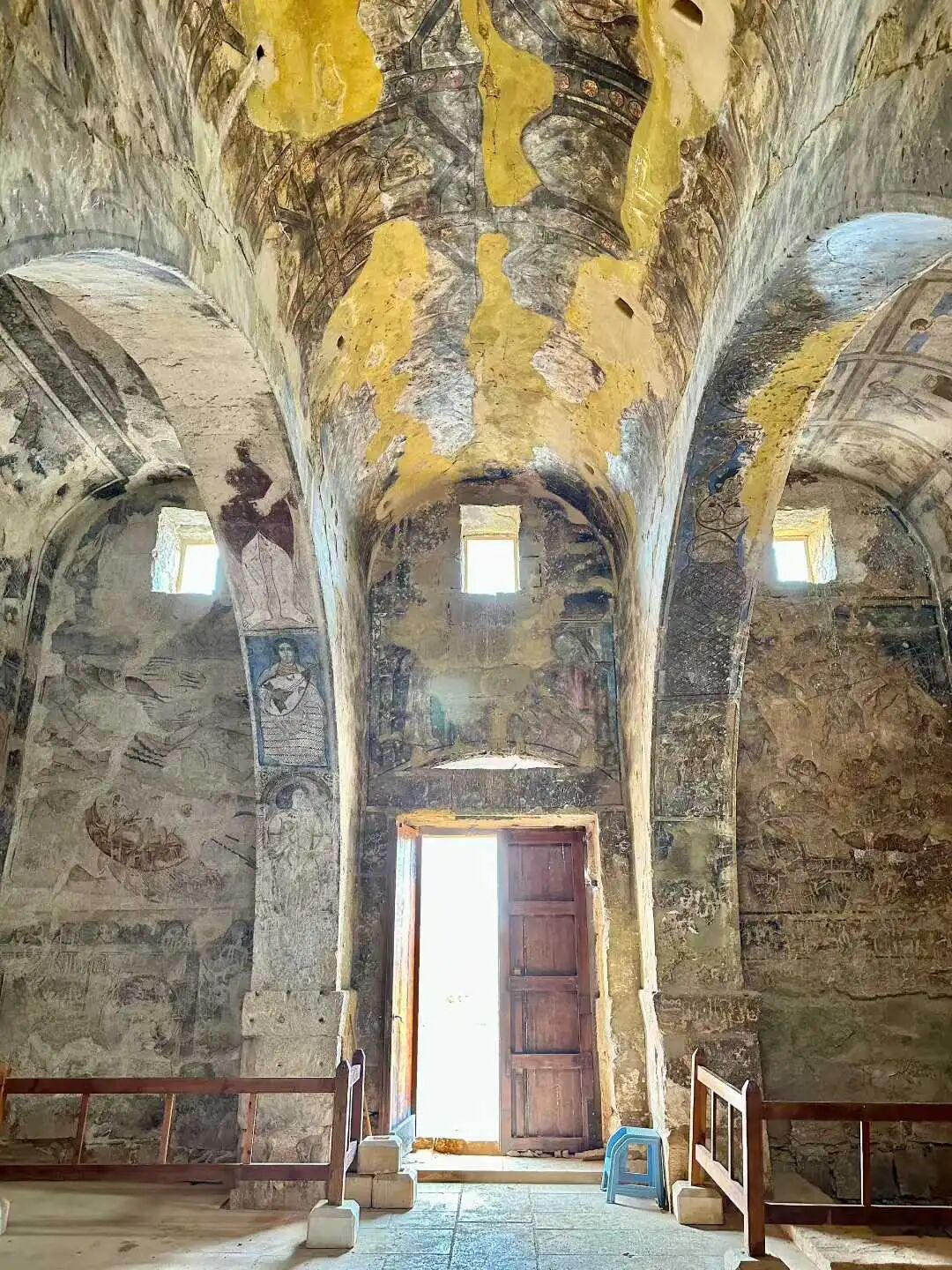
The most famous mural in the reception hall is the Painting of the Six Kings at the south end of the west hall. Four of the six kings have Arabic and Greek inscriptions above them. One is the Byzantine Emperor, Caesar, wearing imperial robes and a crown. Another is the Visigothic King Roderic, wearing a robe and a helmet. Then there is the Sasanian Emperor Khosrow, shown with curly hair, a crown, and a cloak. Finally, there is the Aksumite King Najashi, wearing a crown and a red shawl. Sadly, in 1898, the Czech Alois Musil and the Austrian Alfons Leopold Mielich tried to remove the Six Kings mural, causing serious damage. Additionally, the labels for two of the kings and parts of their crowns were moved to the Museum of Islamic Art in Berlin.
The only figure in the Six Kings mural whose identity is certain is the Visigothic King Roderic, who reigned from 710 to 711. He ruled parts of Spain, likely with Toledo as his capital. Although his reign was short, he still fought wars against the Umayyad dynasty in southern Spain and destroyed many Umayyad towns. After Roderic died in battle in 711, the Umayyad army quickly occupied Toledo and went on to conquer the Iberian Peninsula.
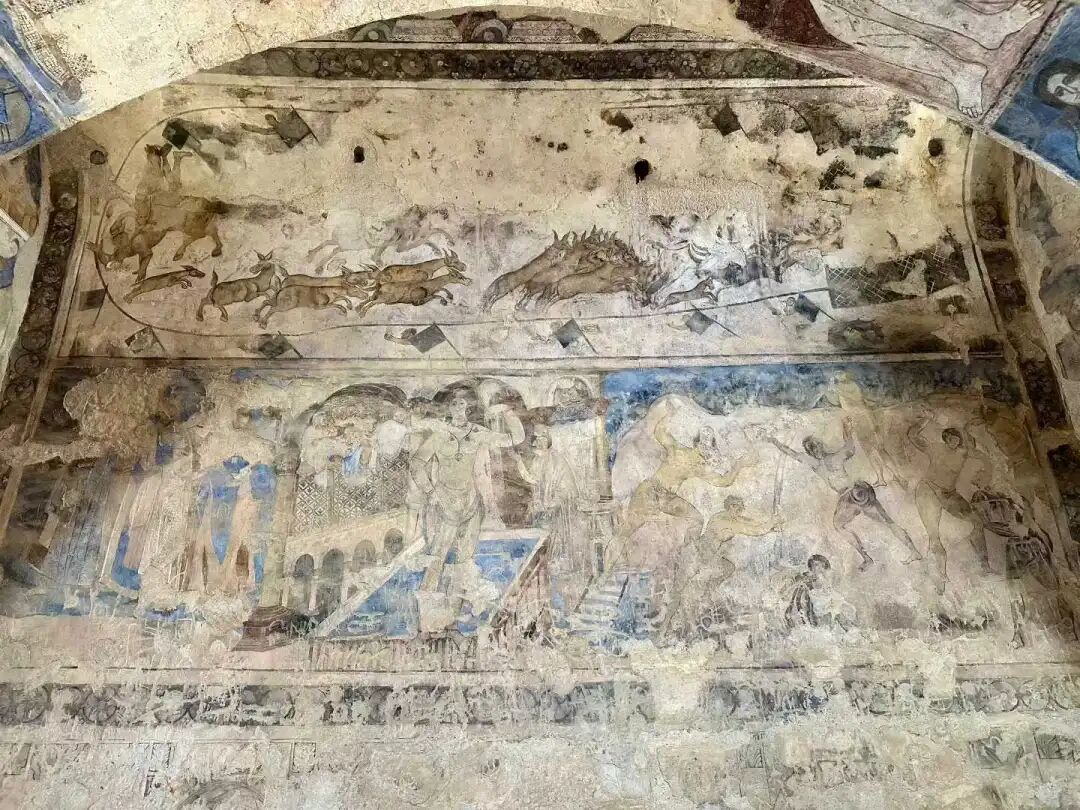
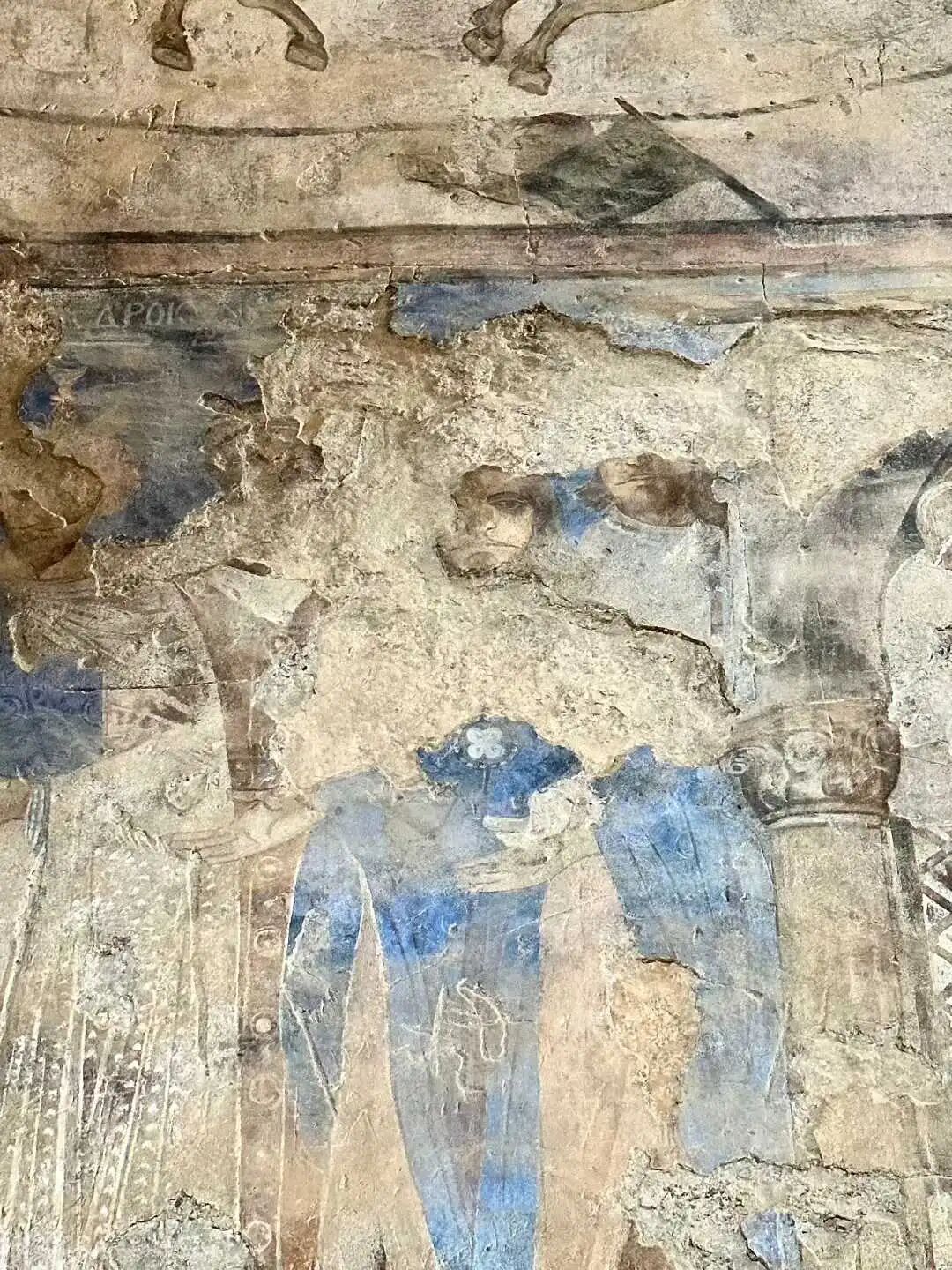
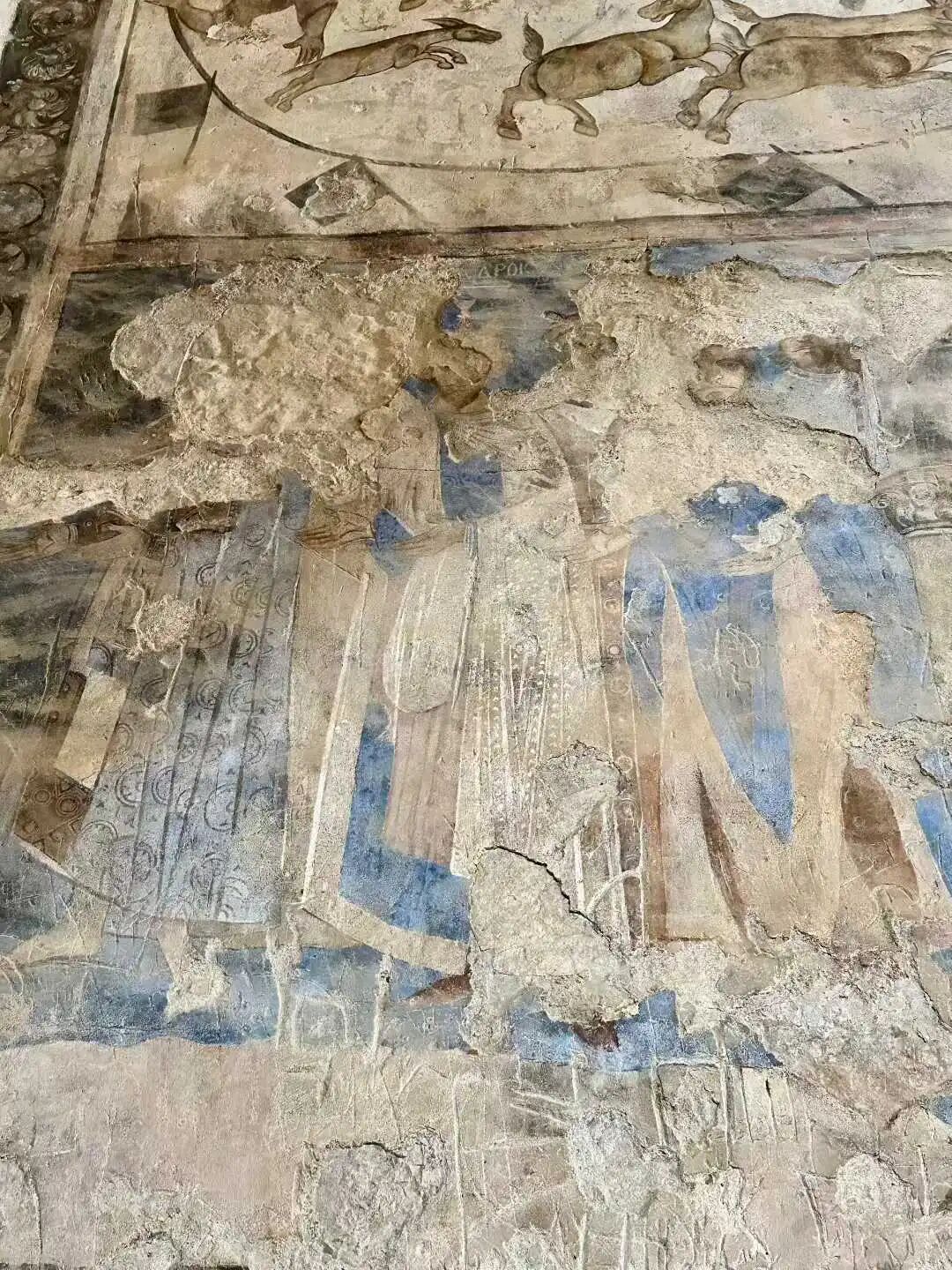
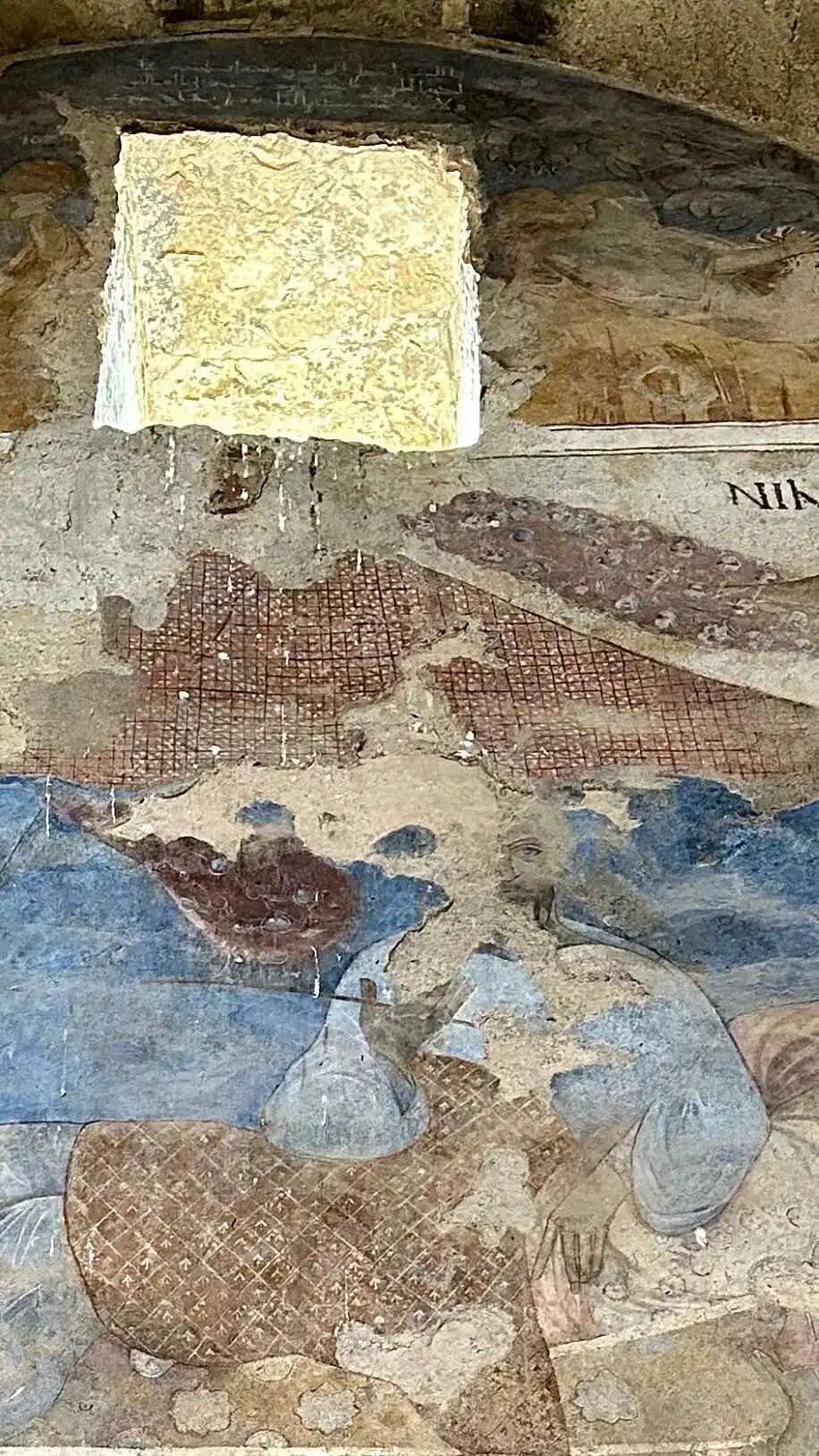
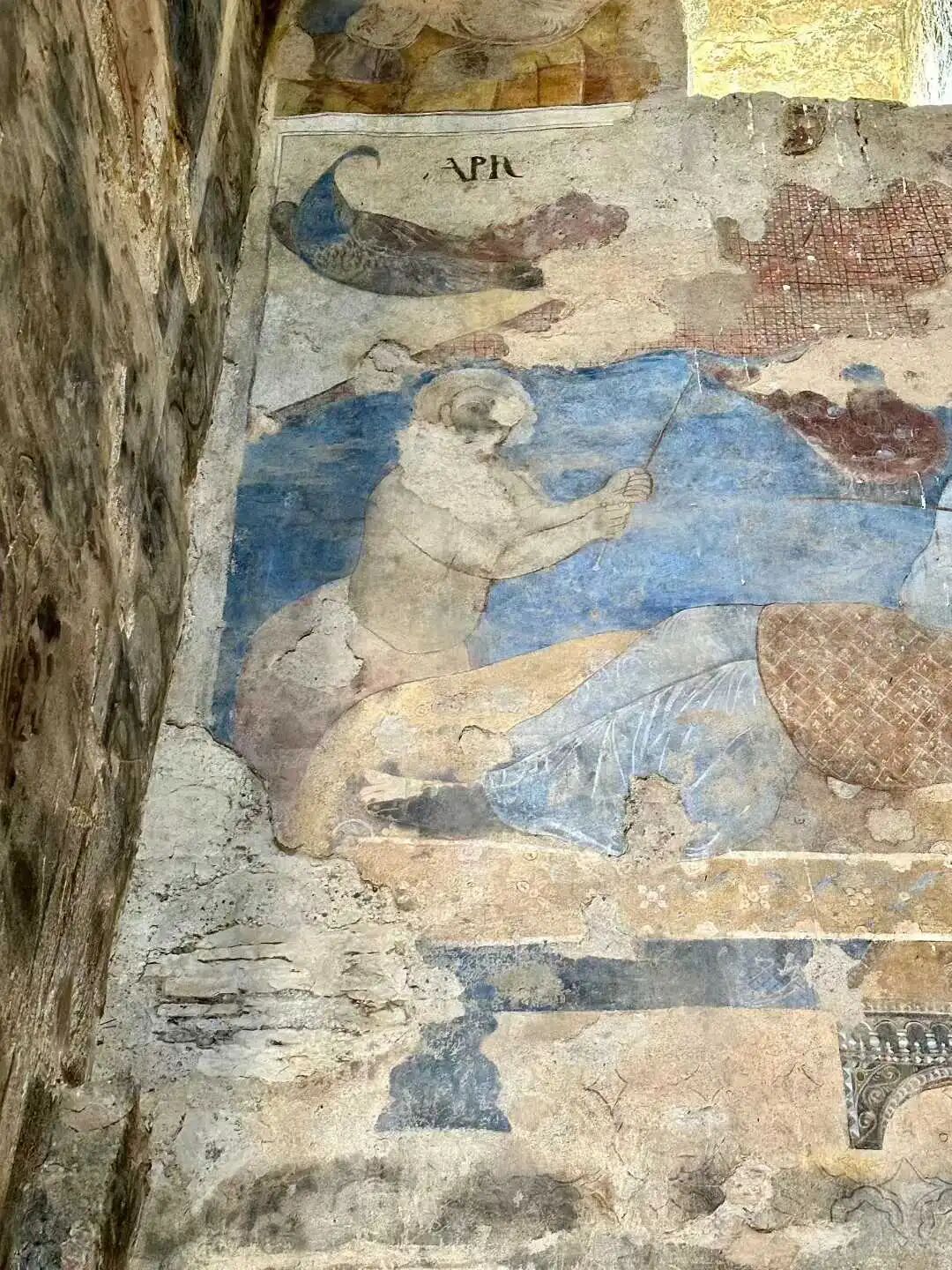
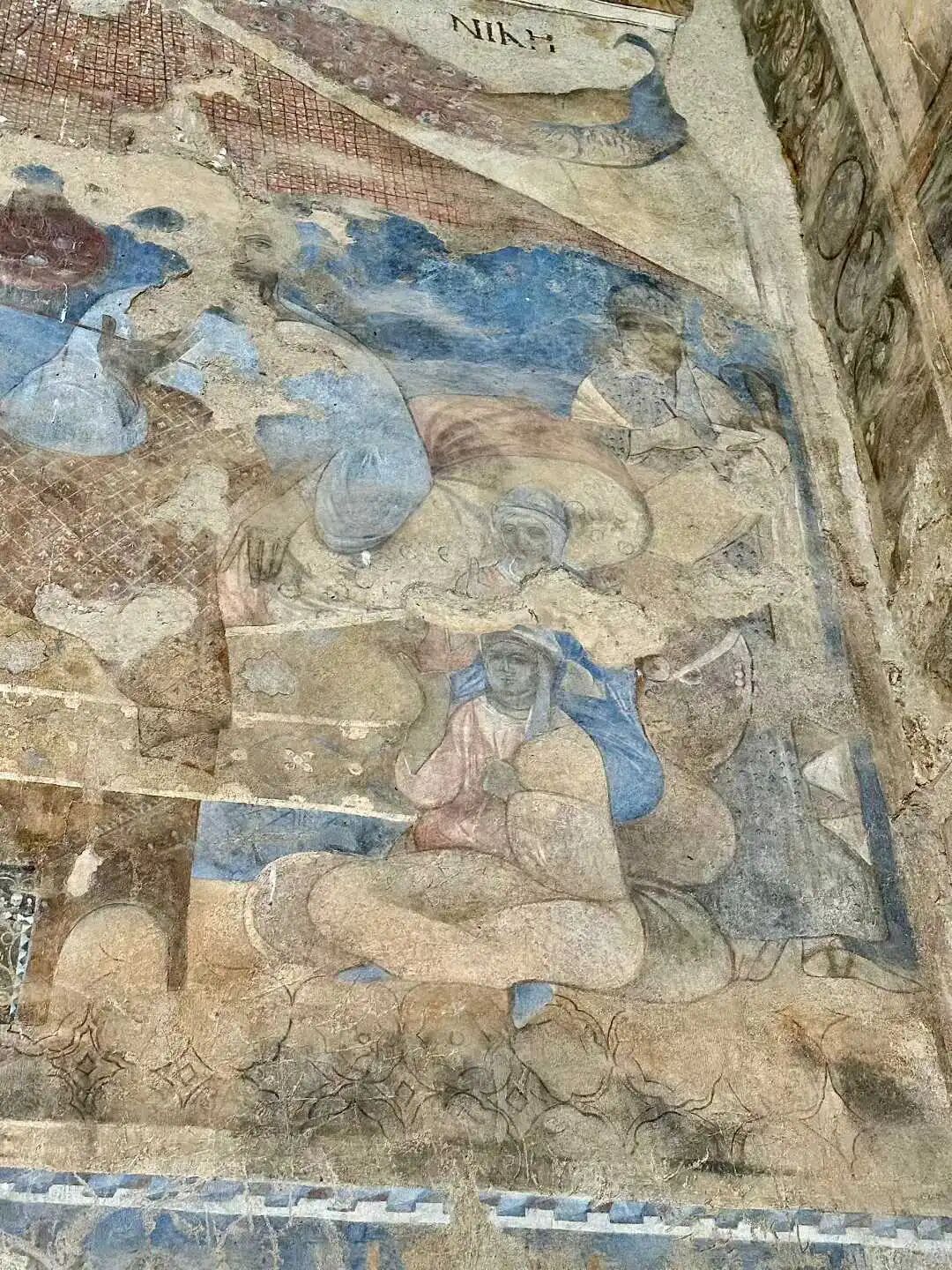
To the left of the Six Kings, facing them diagonally, is a portrait of the Umayyad Caliph Walid II, who reigned from 743 to 744. According to the inscription, Walid II is shown sitting in a relaxed pose with a chestnut-colored cloak slipping off his shoulder. Beside him are a clerk, two children who were likely his sons, and a woman fanning him. Above the scene is a pair of peacocks, and the stool in front of the sofa is inlaid with pearls. The painting includes two Greek inscriptions meaning grace and victory. At the very top are three lines of Kufic Arabic script that read, Oh Allah, bless Walid ibn Yazid with justice... Because the title of Caliph is missing, we know Walid II was still the crown prince at the time.
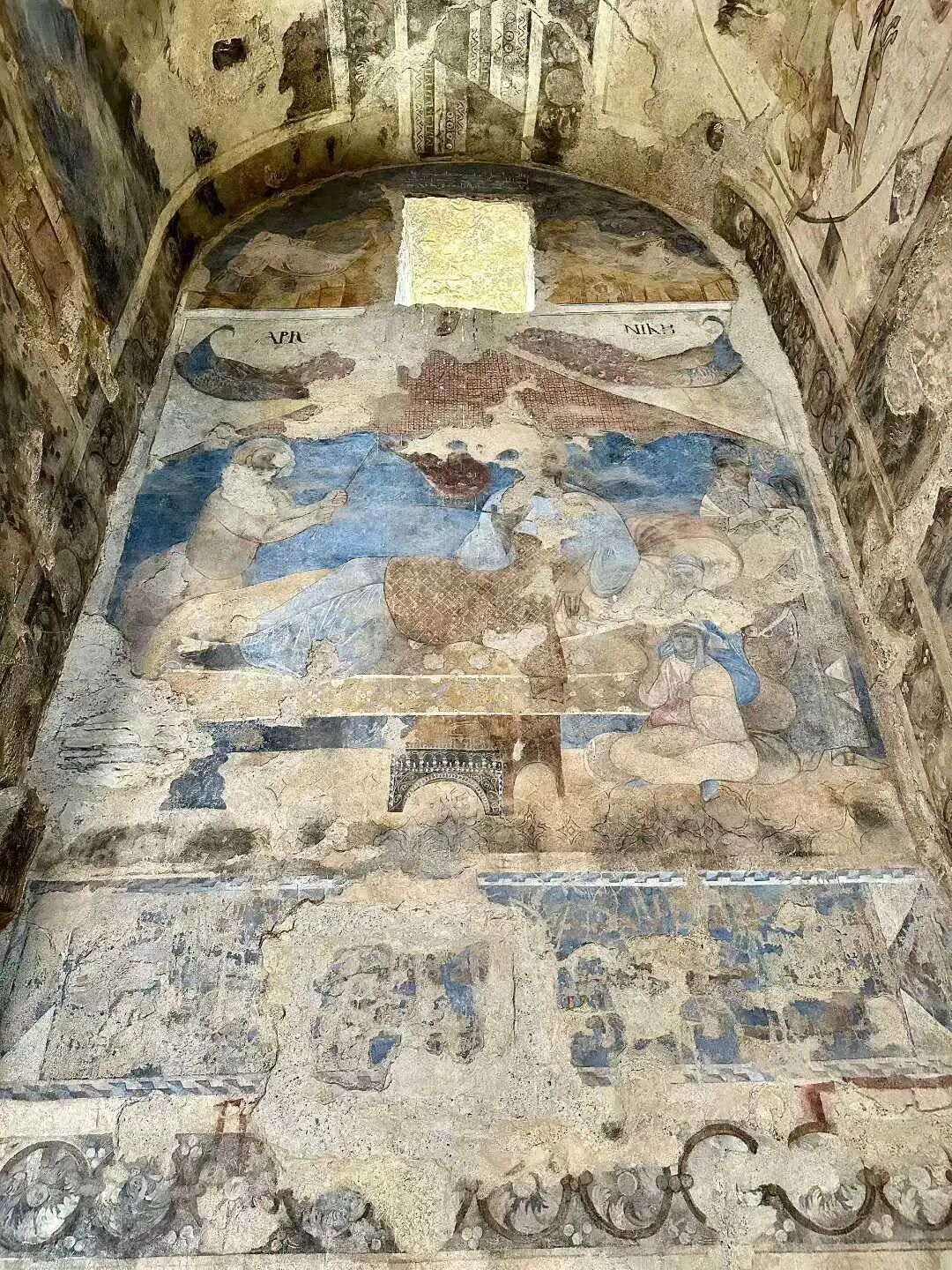
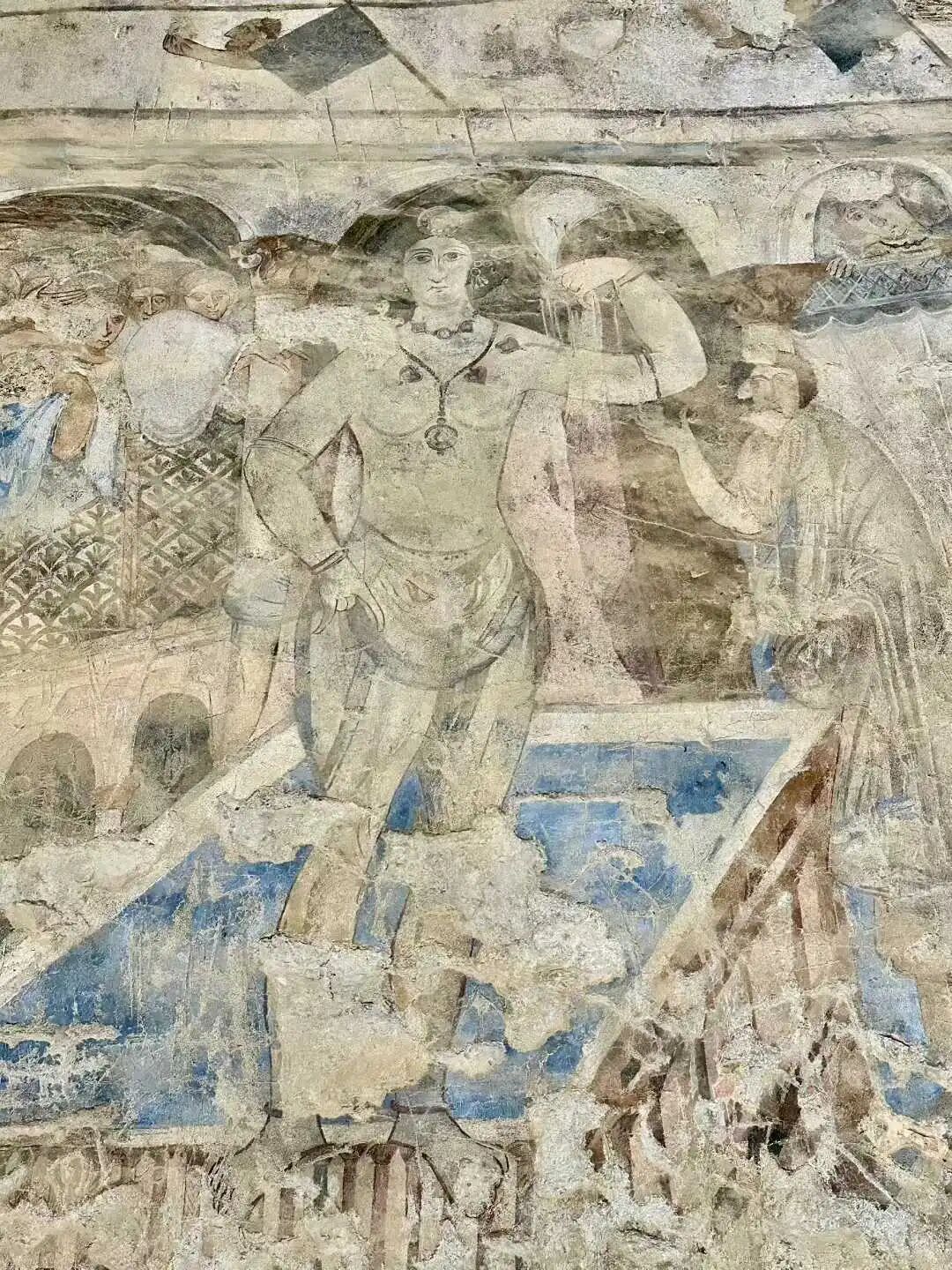
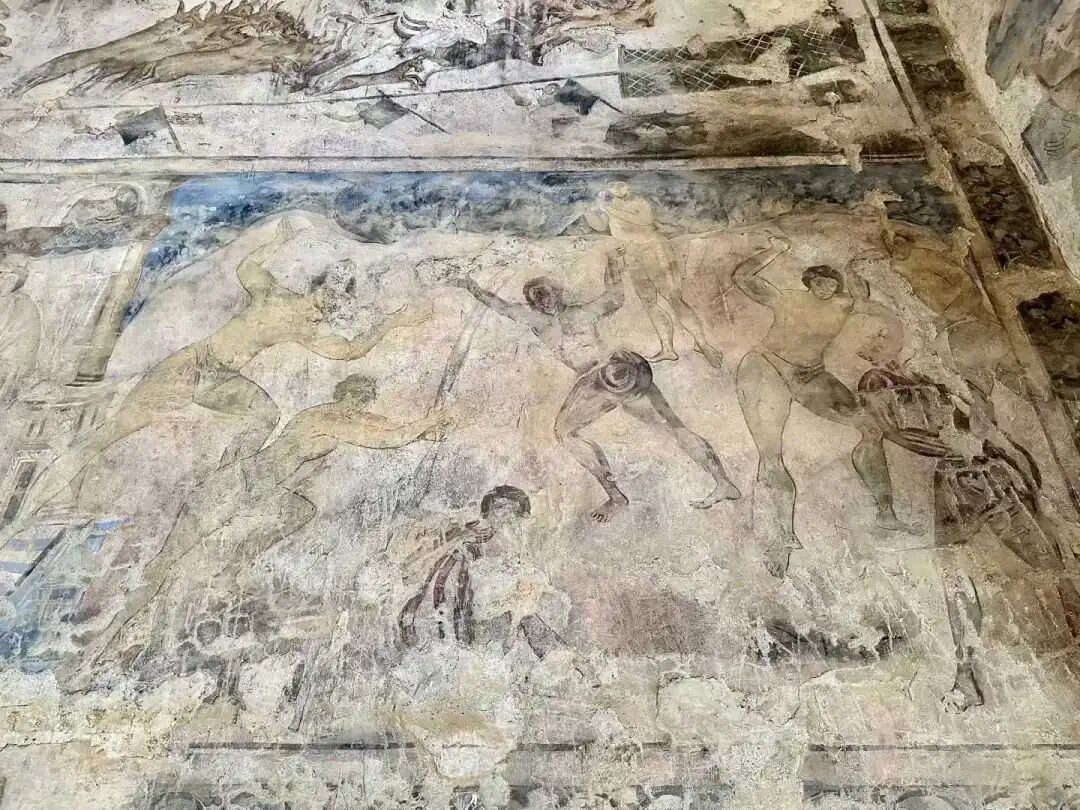
To the right of the Six Kings is a scene of women bathing, with a spectacular arcade supported by Corinthian columns in the background. Further to the right is a wrestling scene.
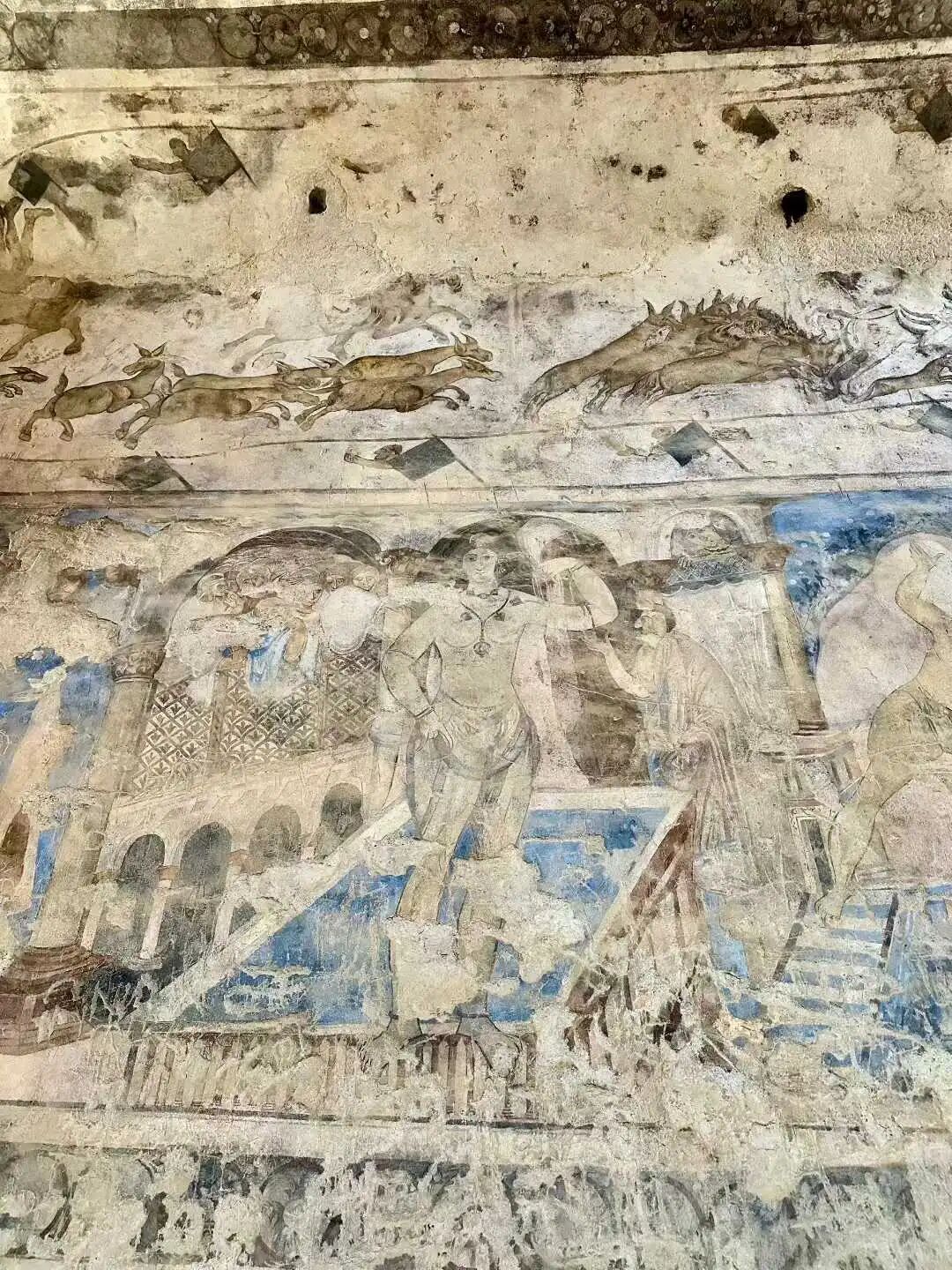
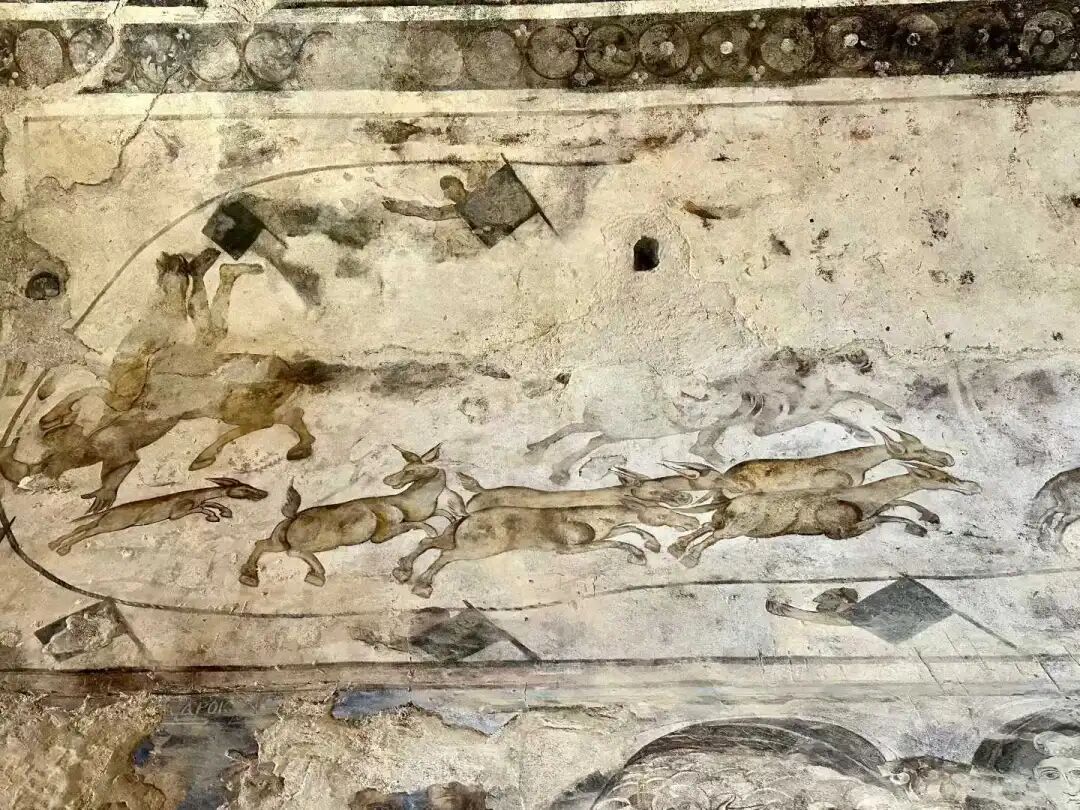
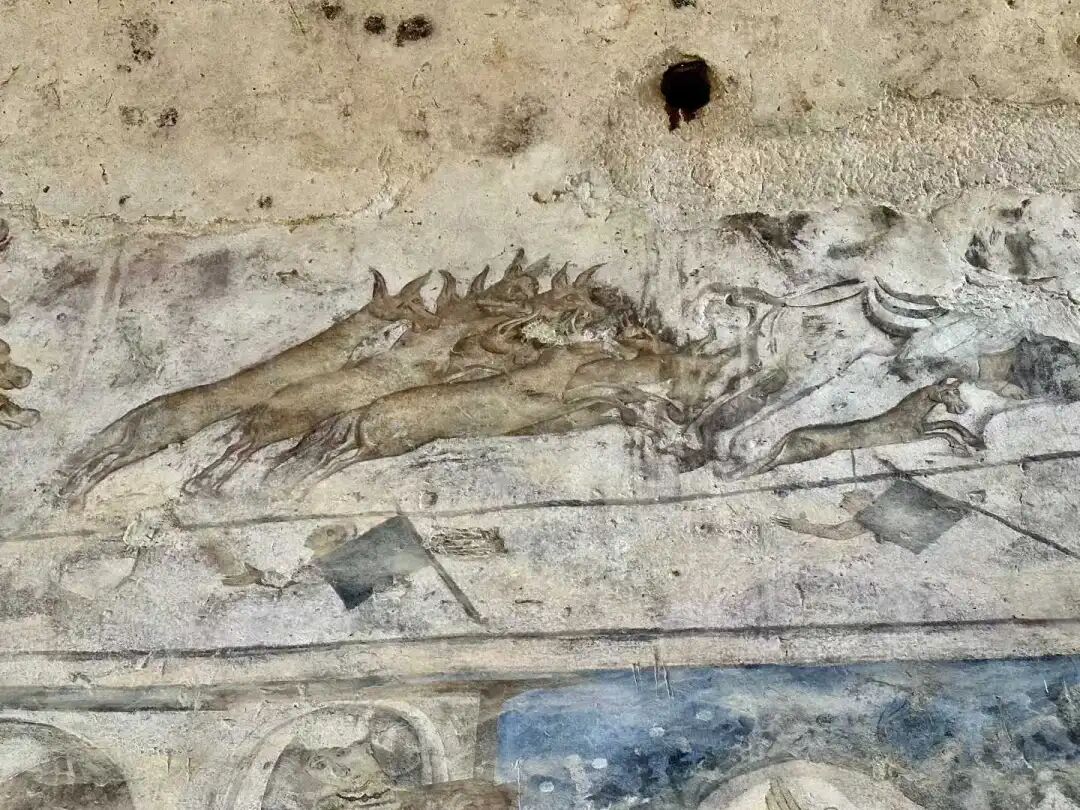
Above the Six Kings is a hunting scene. The hunting scene features wild donkeys, gazelles, and Saluki dogs. The Saluki, also known as the Arabian hound, is one of the earliest dog breeds kept by humans. Its history goes back over 4,000 years to ancient Egypt, and it has been used as a hunting dog by Arabs ever since. Saluki dogs were loved by countries along the Silk Road throughout history, and were even kept by the Ming dynasty court during the Xuande period.
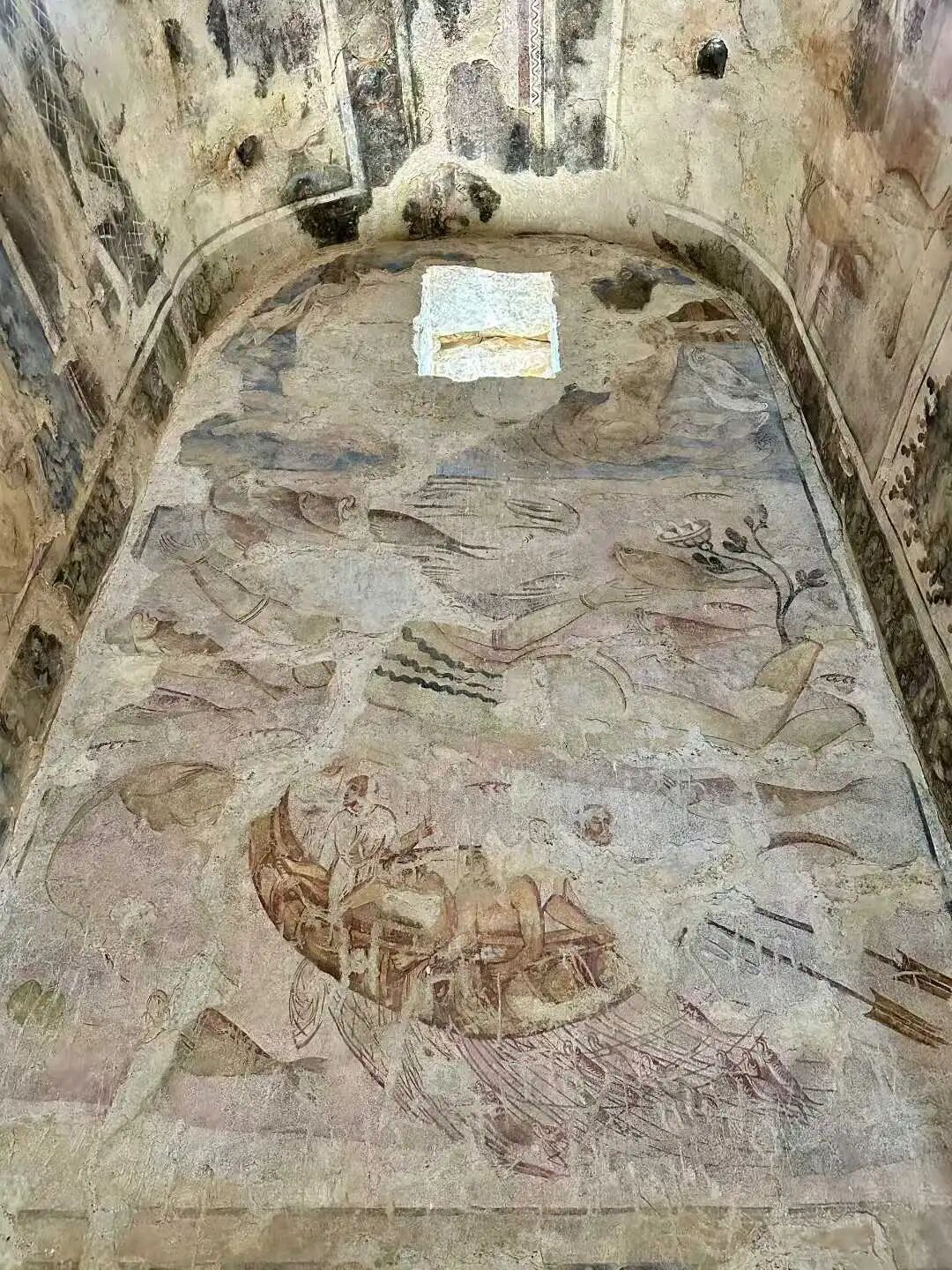
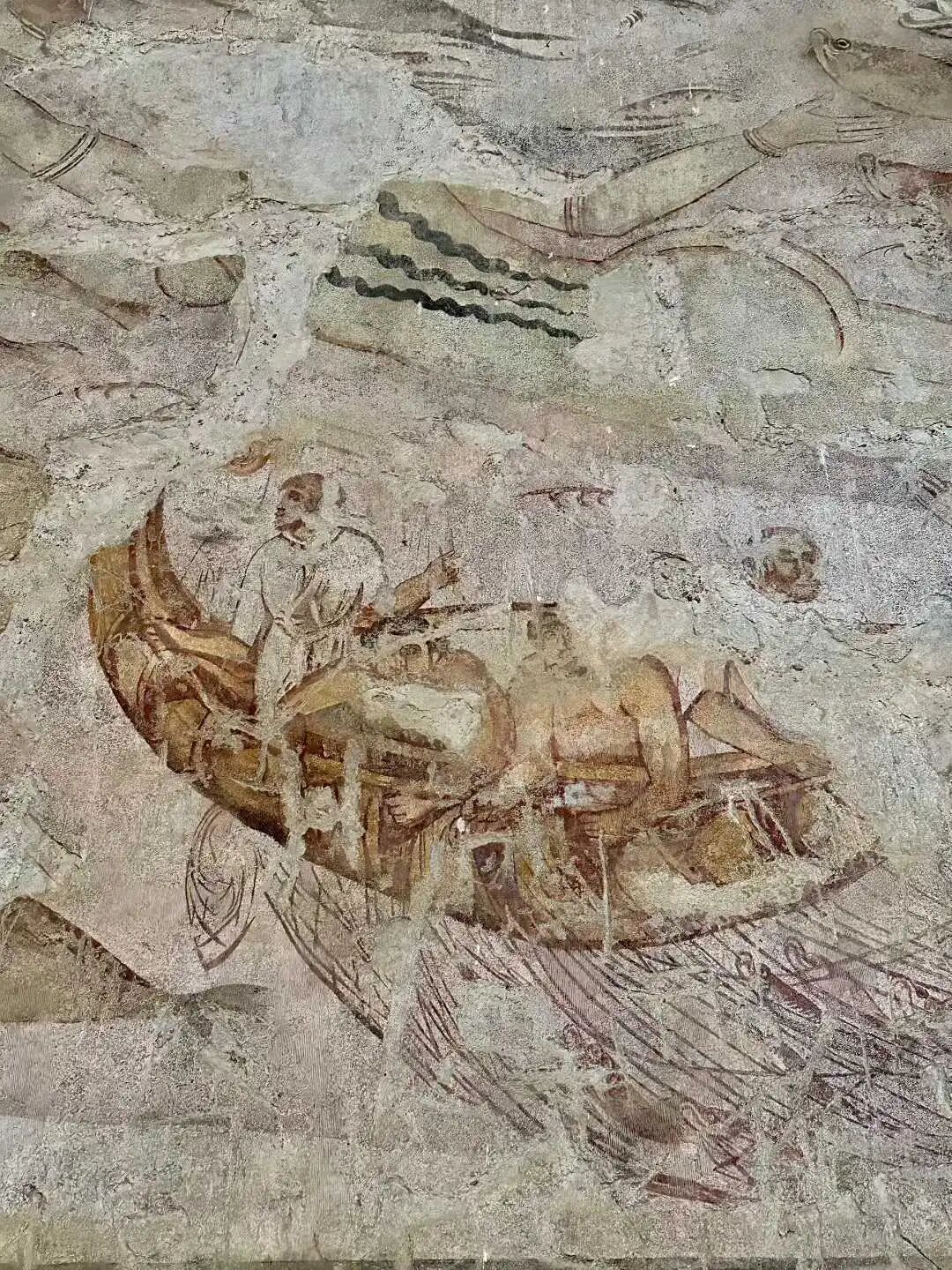
The mural on the north wall of the west hall shows a scene in a great river, with the story of 'Yunus and the Great Fish' depicted at the top. This is the earliest known image of the Prophet Yunus in religious art. Prophet Yunus is known as the 'Man of the Fish' in the Quran. The scripture records that he fled onto a fully loaded ship, lost a drawing of lots, and was swallowed by a great fish. Because he often praised Allah, he was not buried in the fish's belly but was cast onto dry land.
Since the story of Yunus and the great fish is mentioned in the scriptures of all three religions, it became a common artistic theme for them. Murals of Yunus and the great fish were found in Roman Christian catacombs as early as the 2nd century AD. Michelangelo depicted this story on the ceiling of the famous Sistine Chapel in the early 16th century, and it also appears many times in Persian and Turkish miniature paintings.
The central hall faces the main gate and connects to the throne room in the south. The ceiling of the central hall is a grid of figures, with each square showing one or more people surrounded by ancient Roman-style stone pillars and birds.
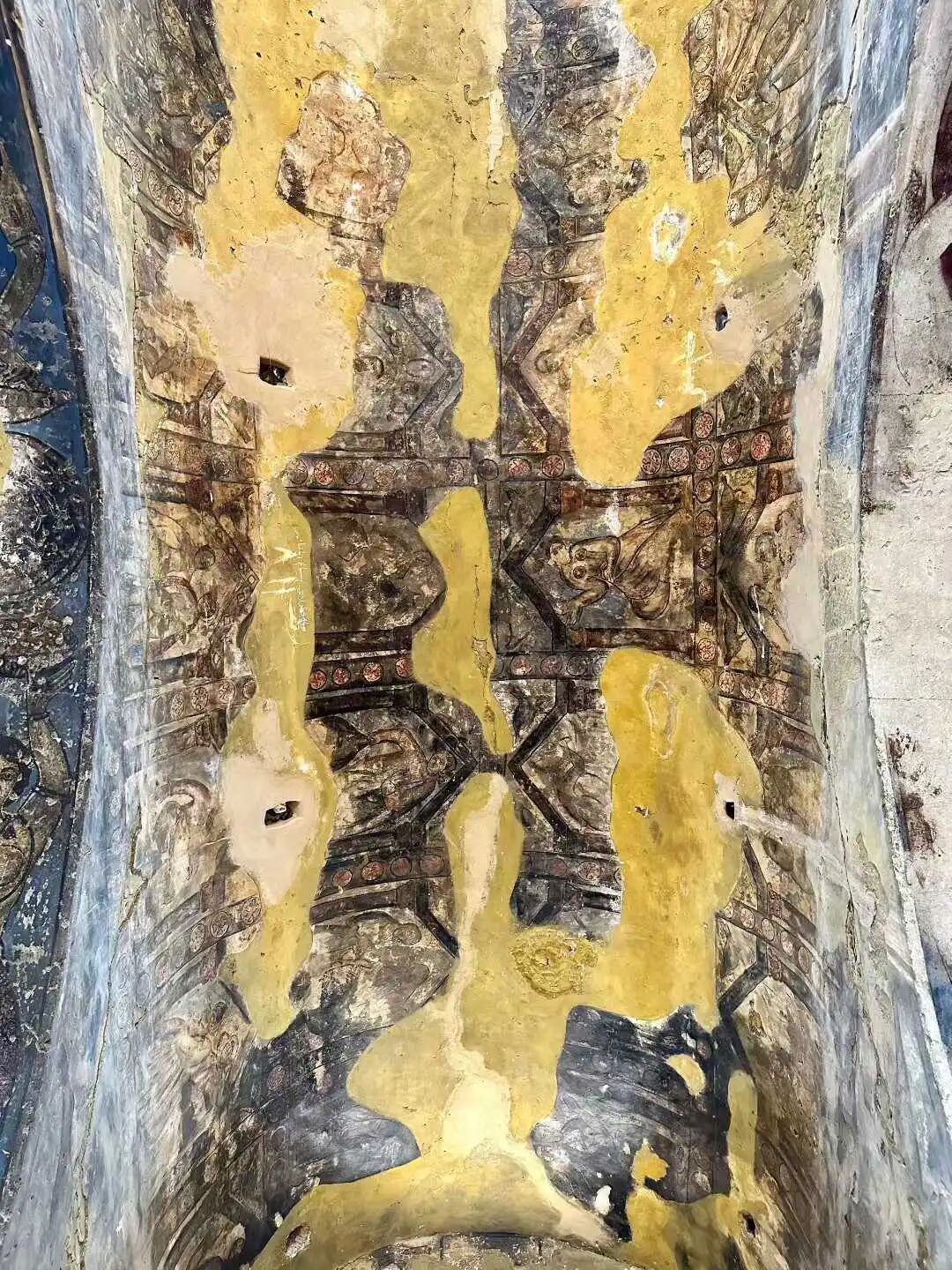
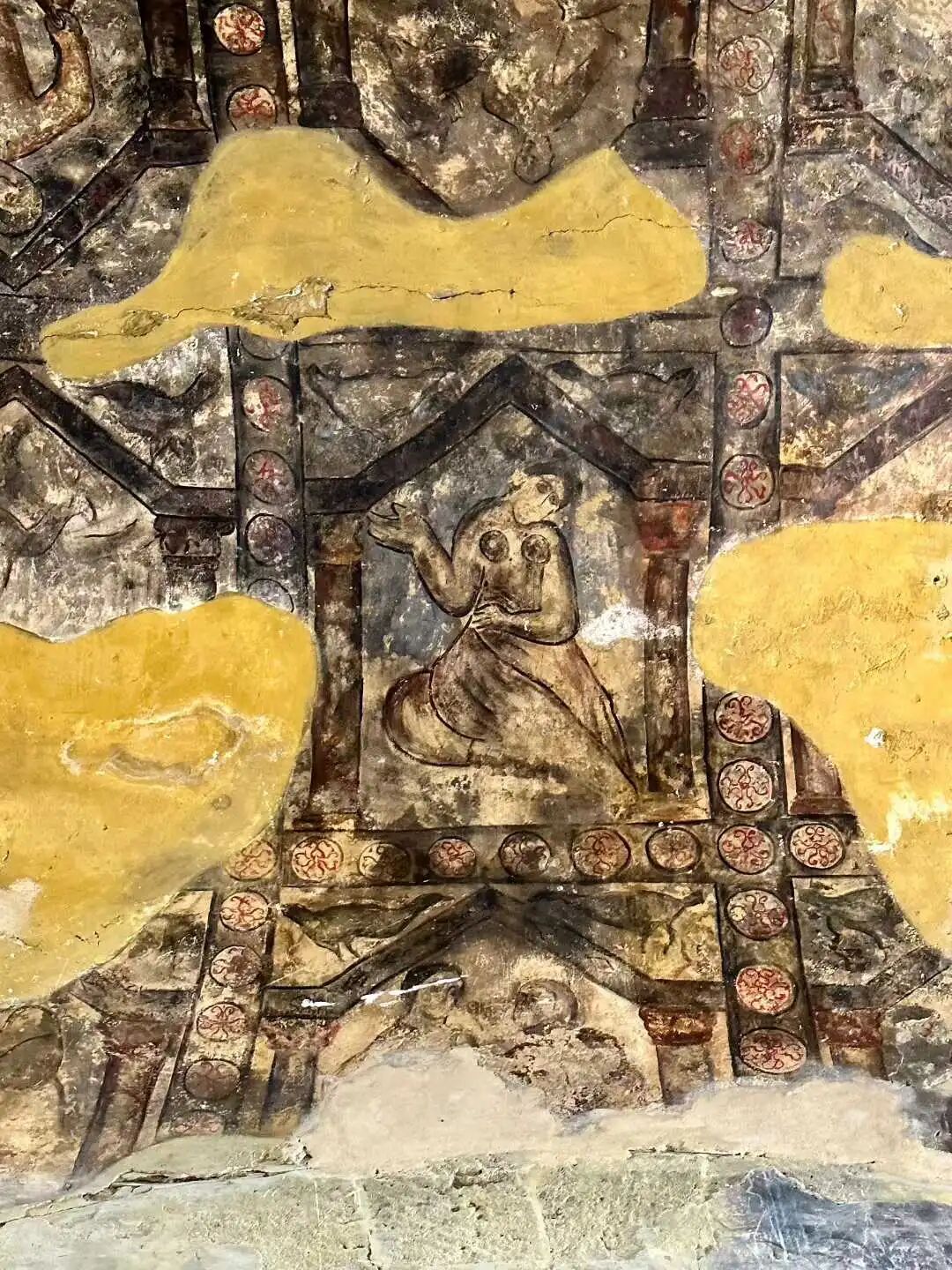
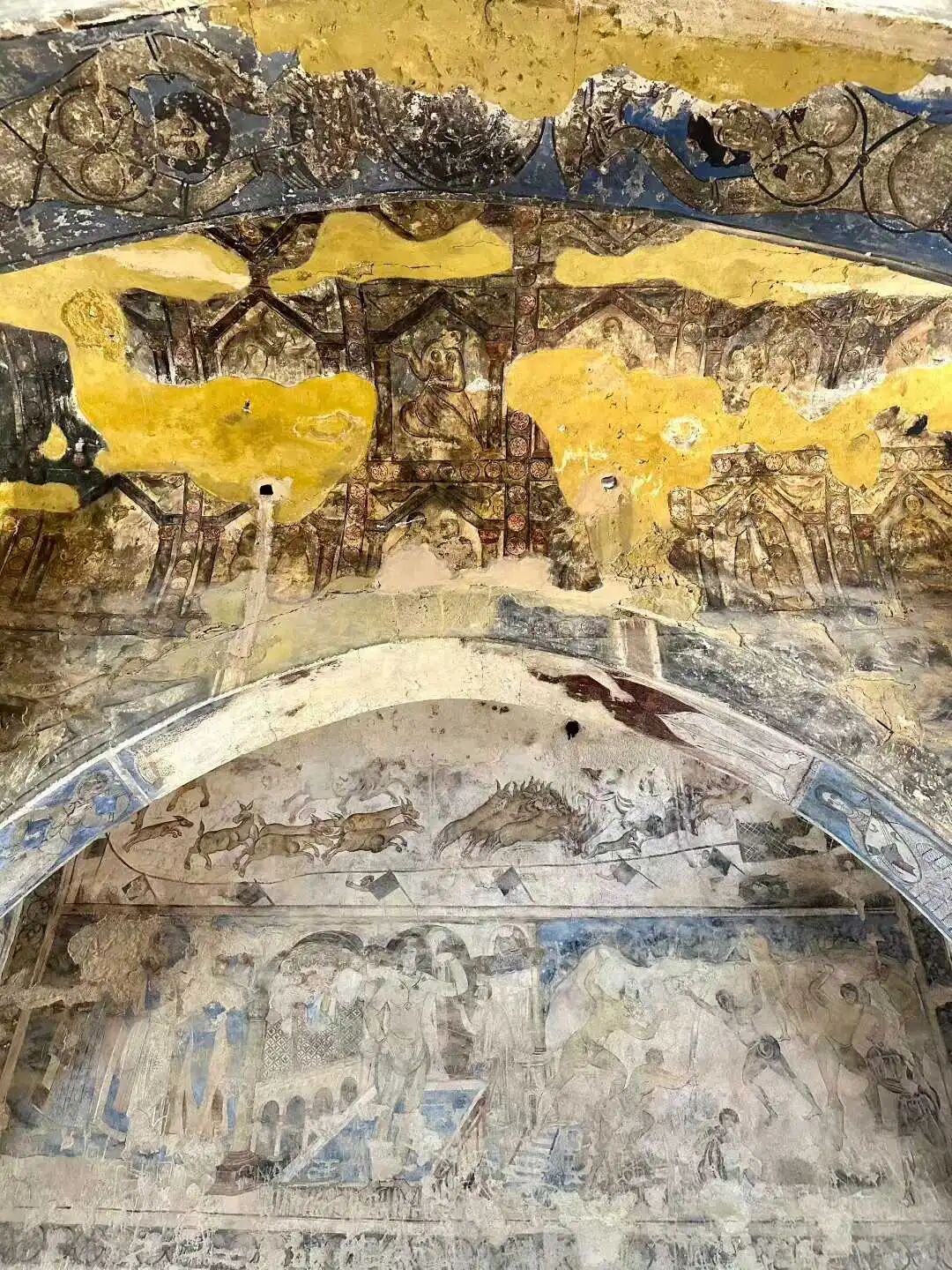
The sides of the central hall show banquet scenes, with people playing the oud, dancing, and holding fruit plates.
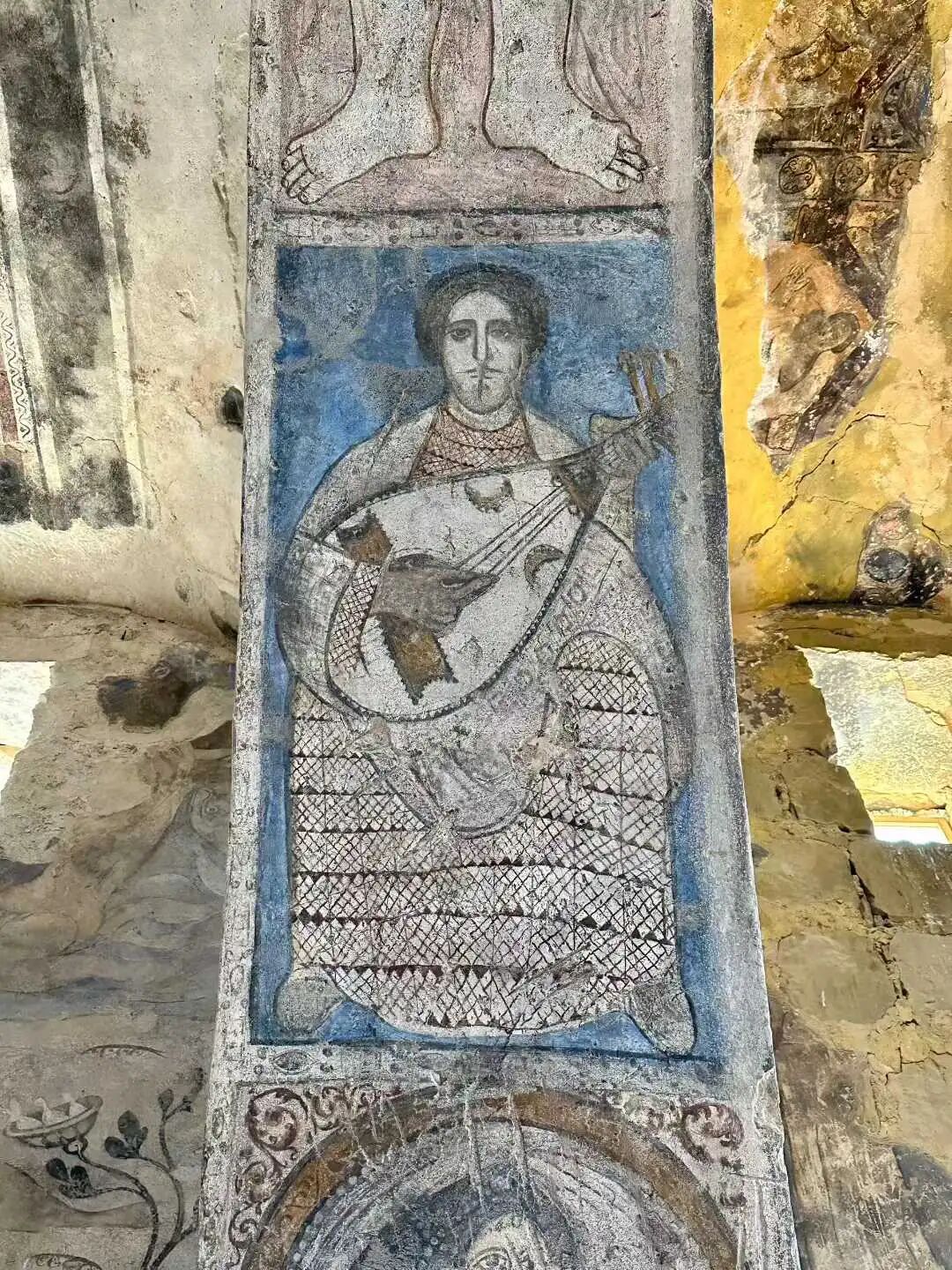
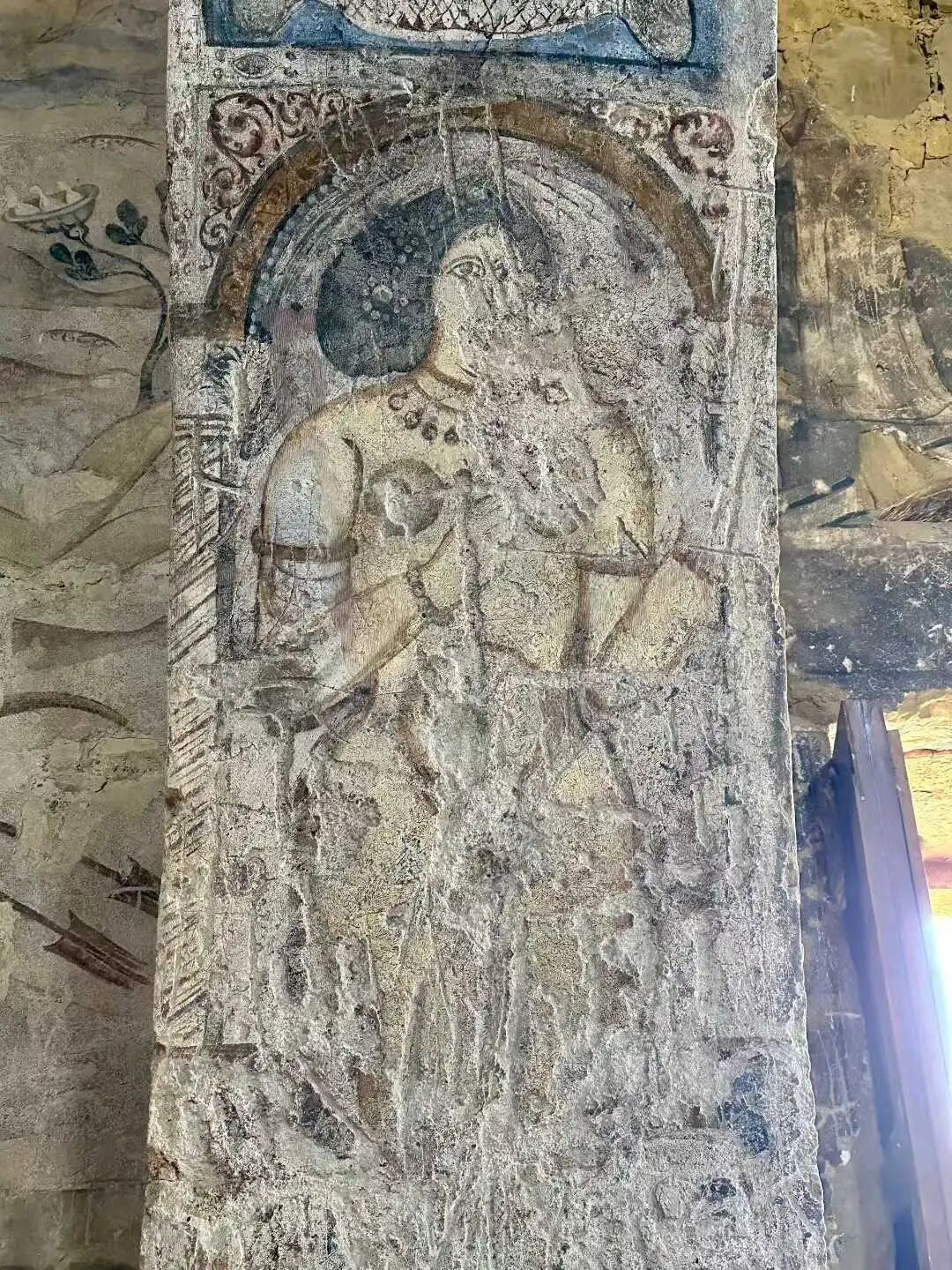
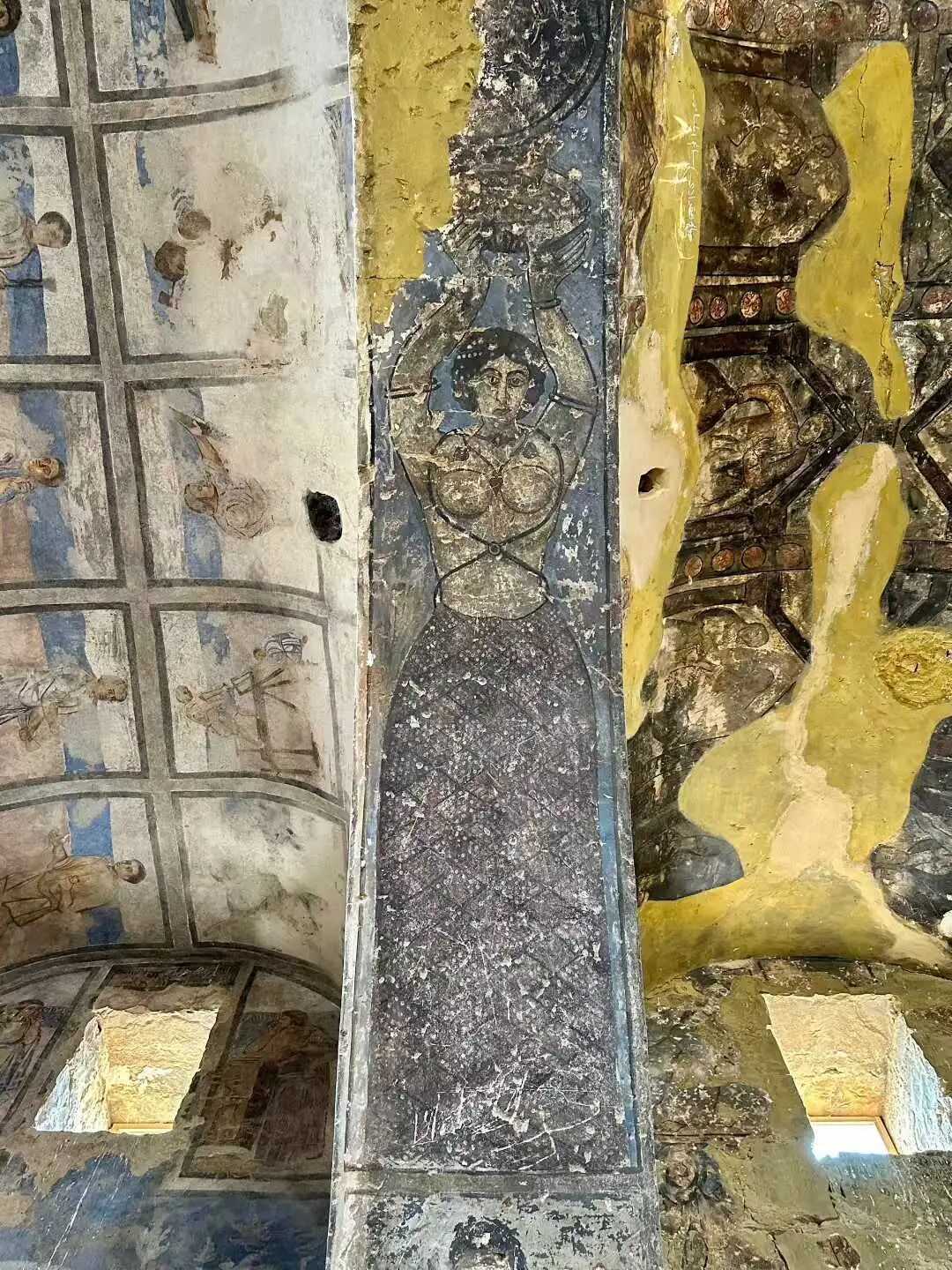
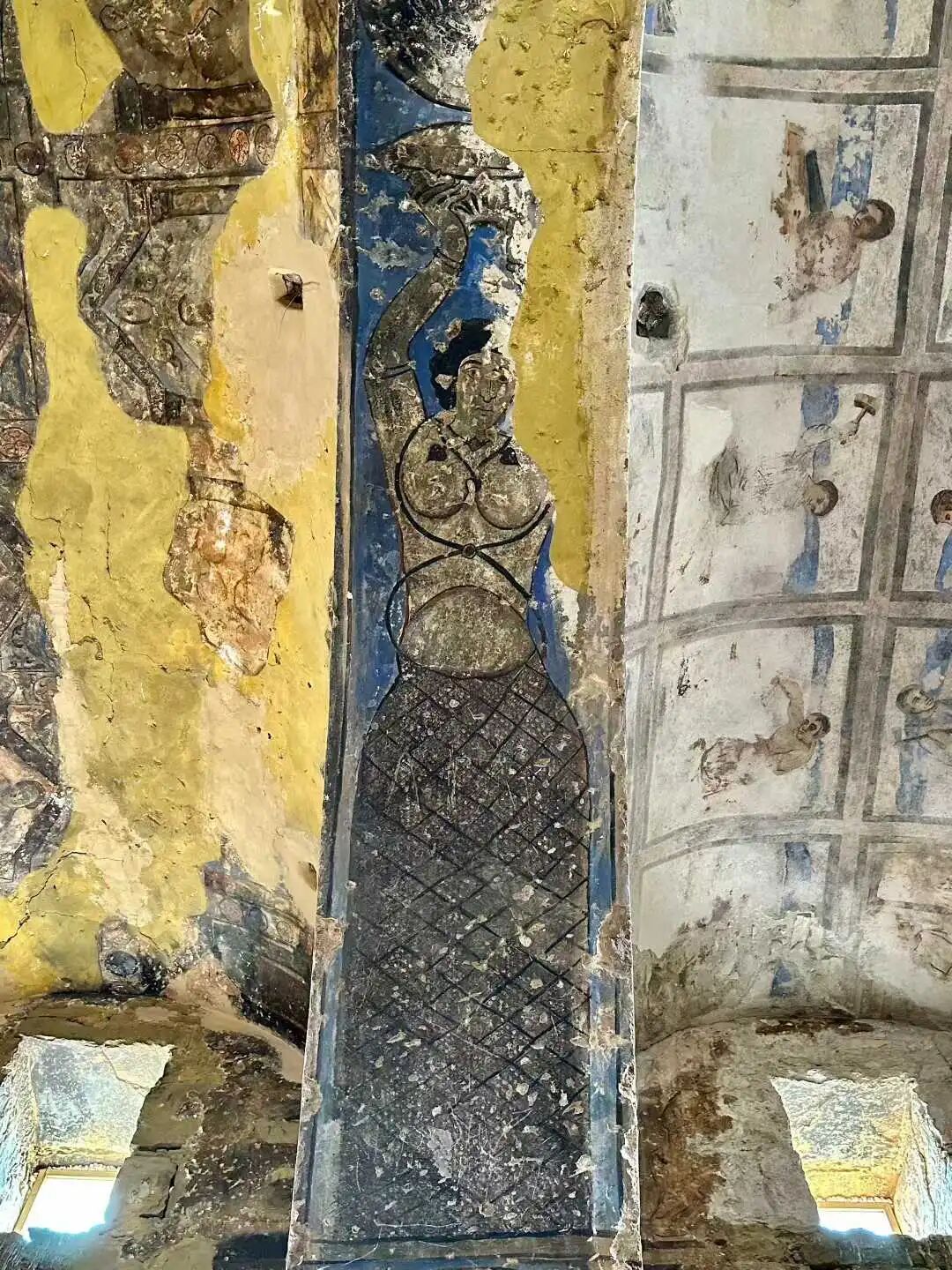
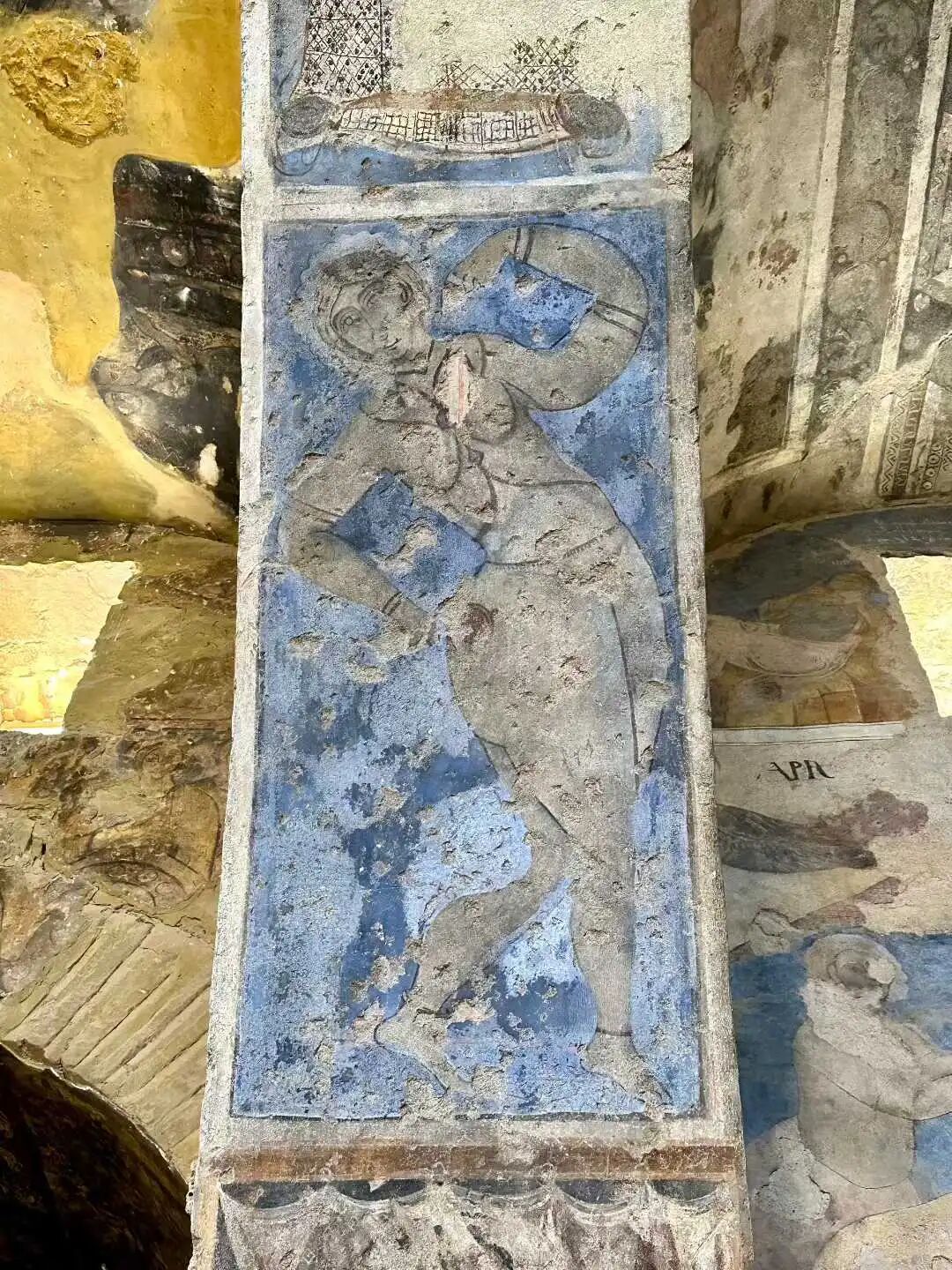
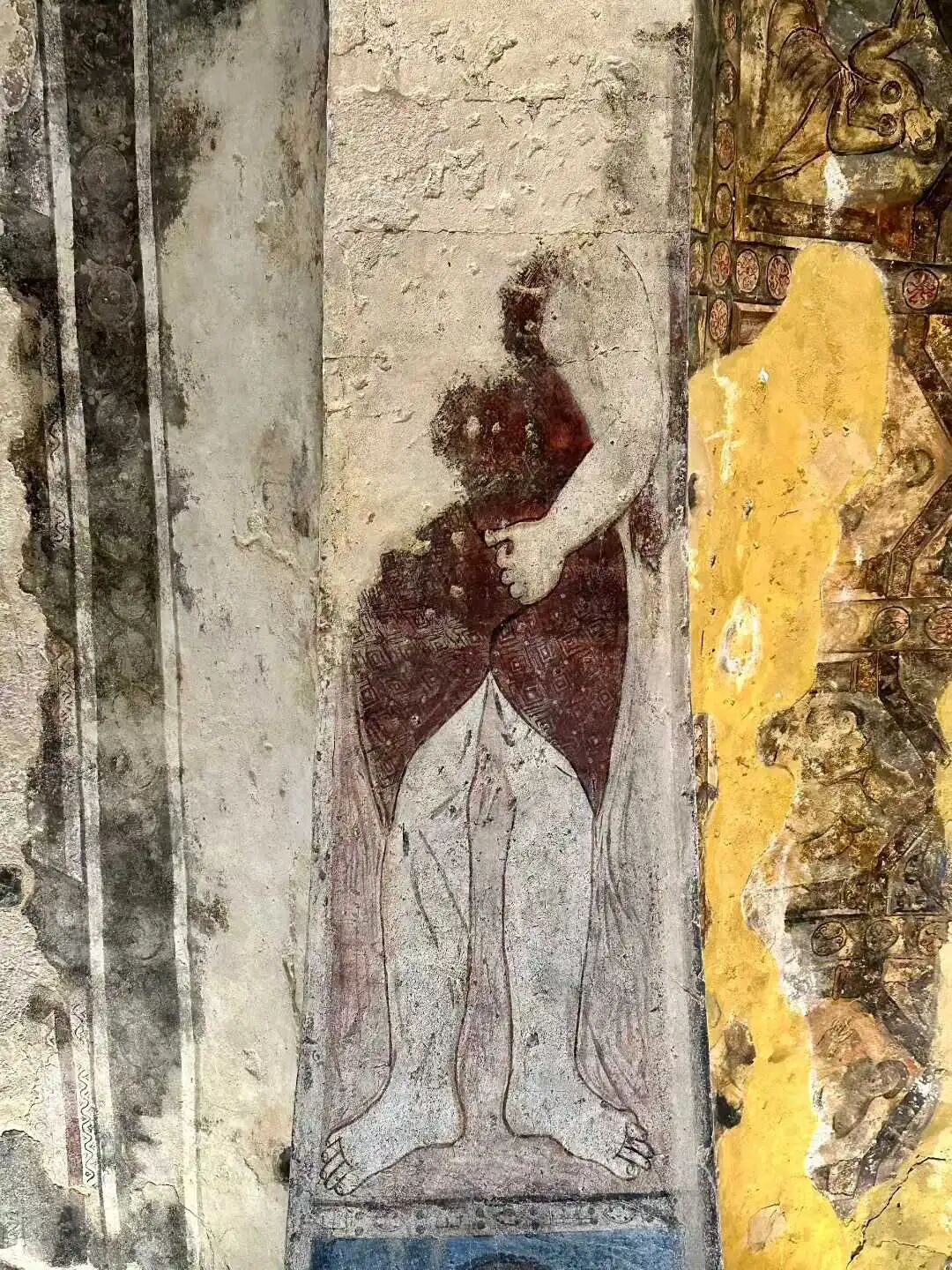
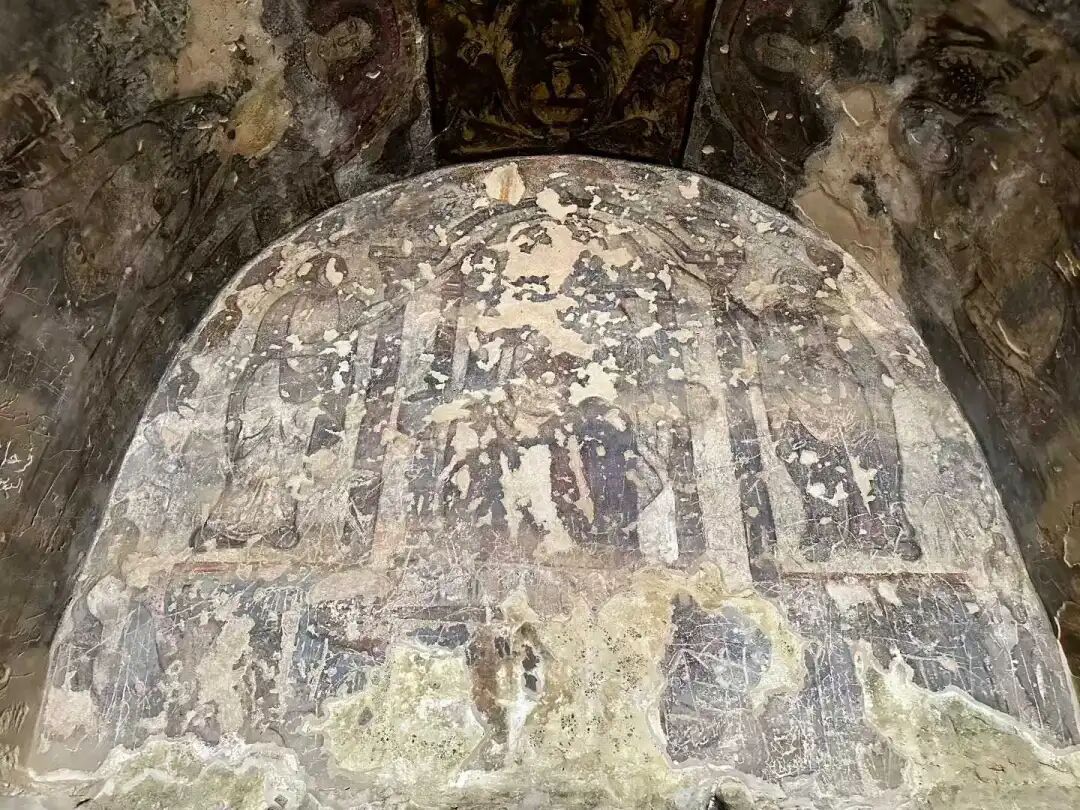
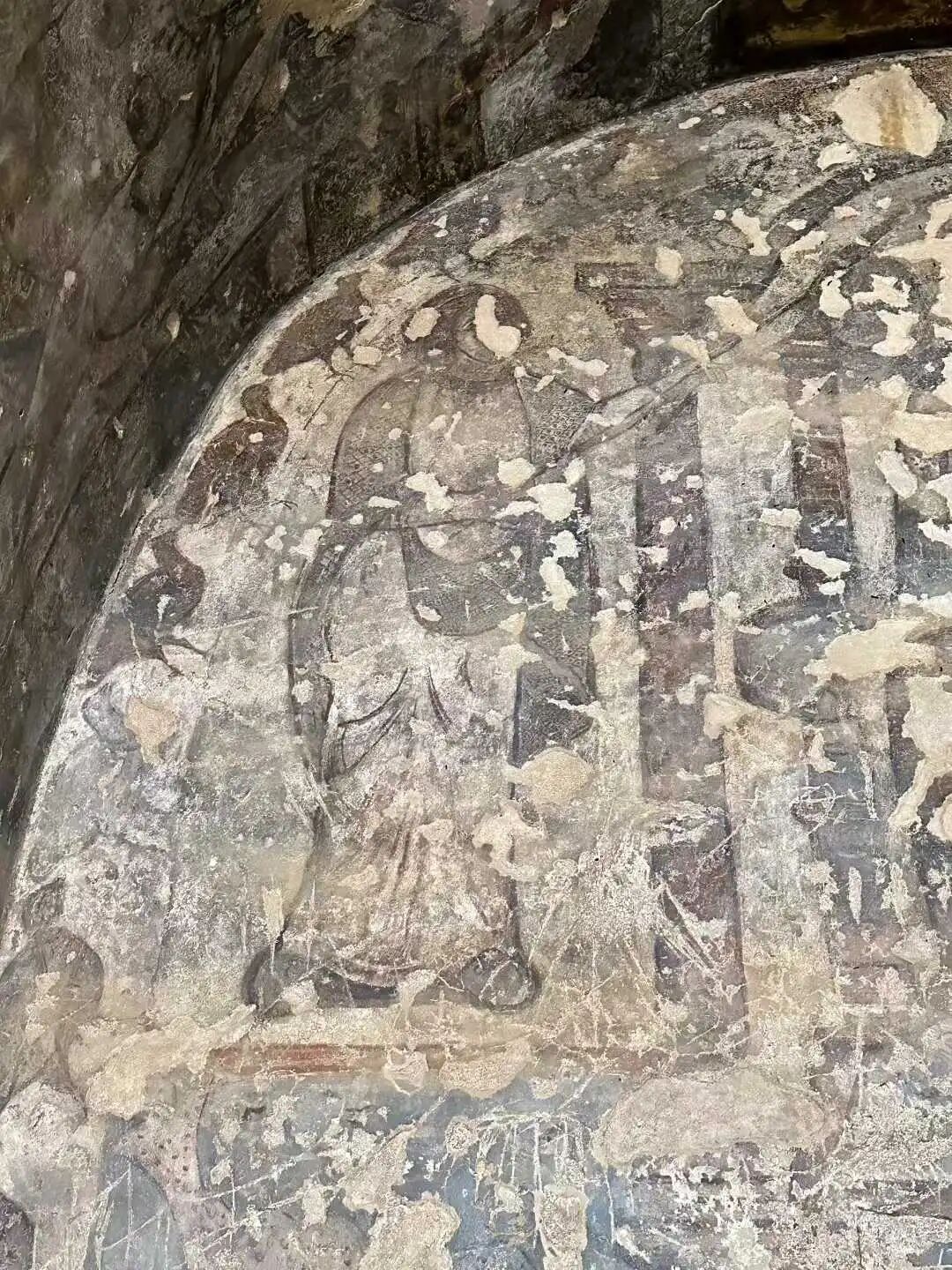
Directly south of the central hall is the lower throne room, where Walid II once sat to receive guests and watch performances. The wall at the very back of the throne room shows a prince receiving guests. The ceiling of the throne room depicts various figures and birds.
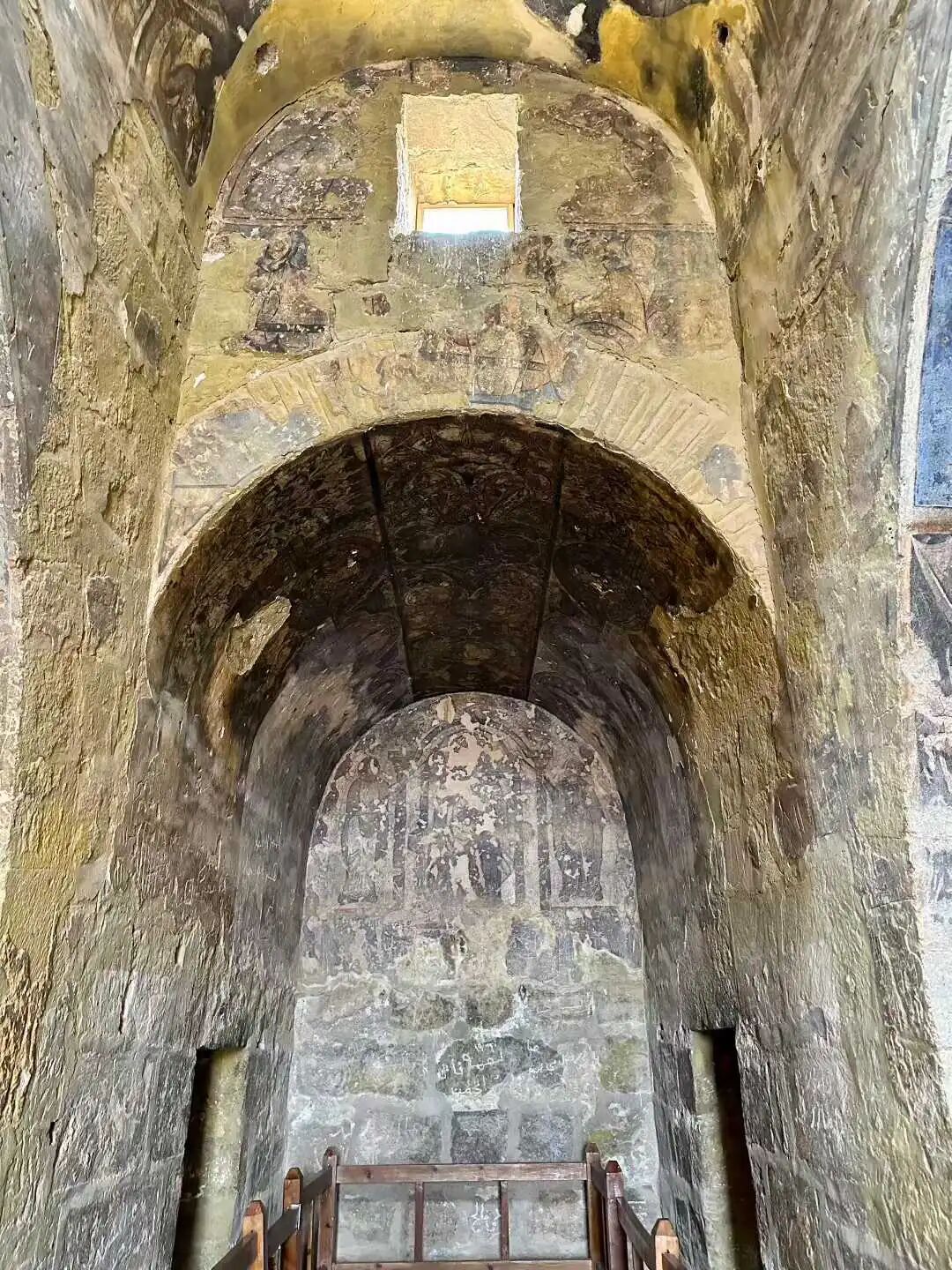
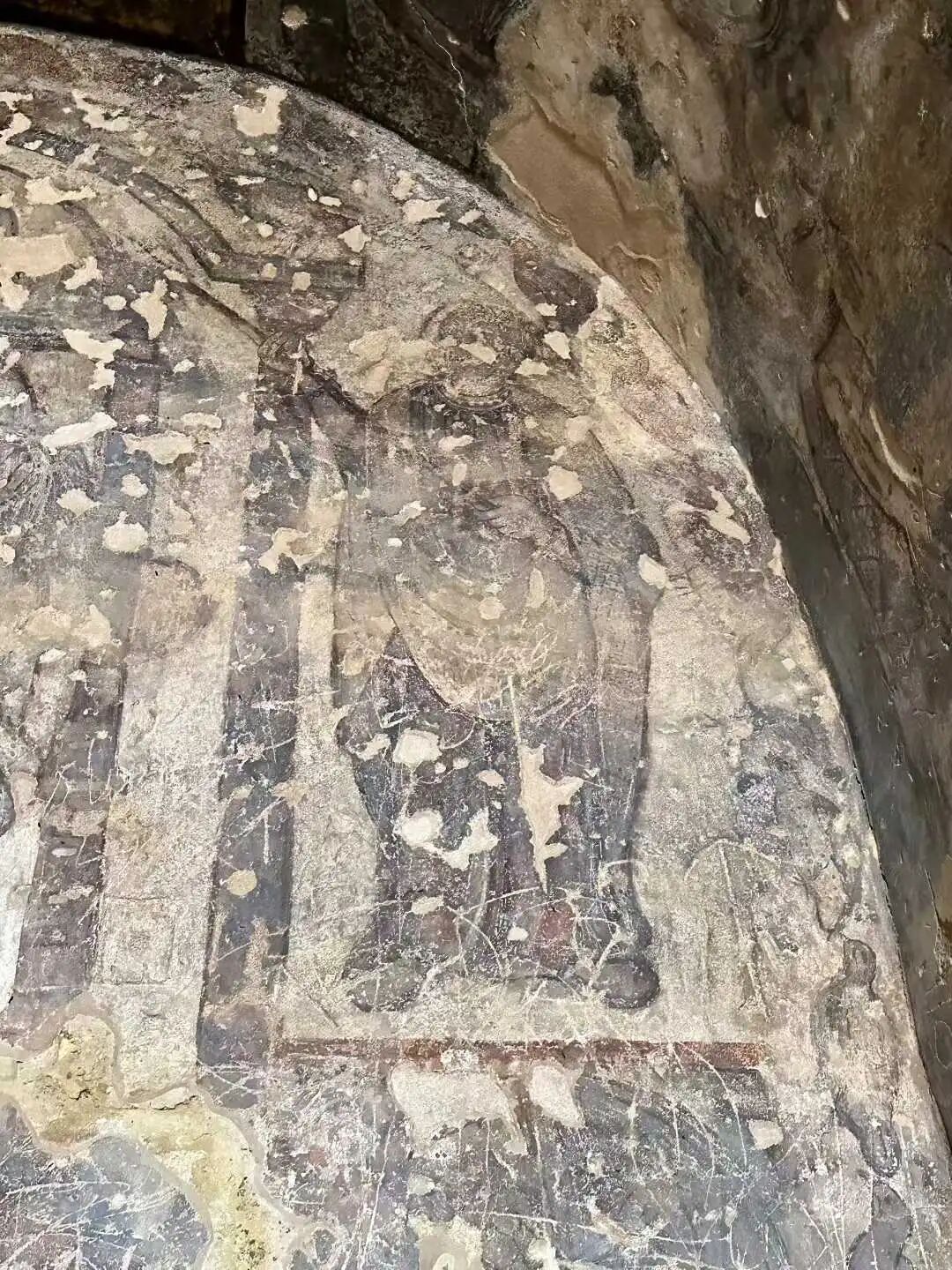
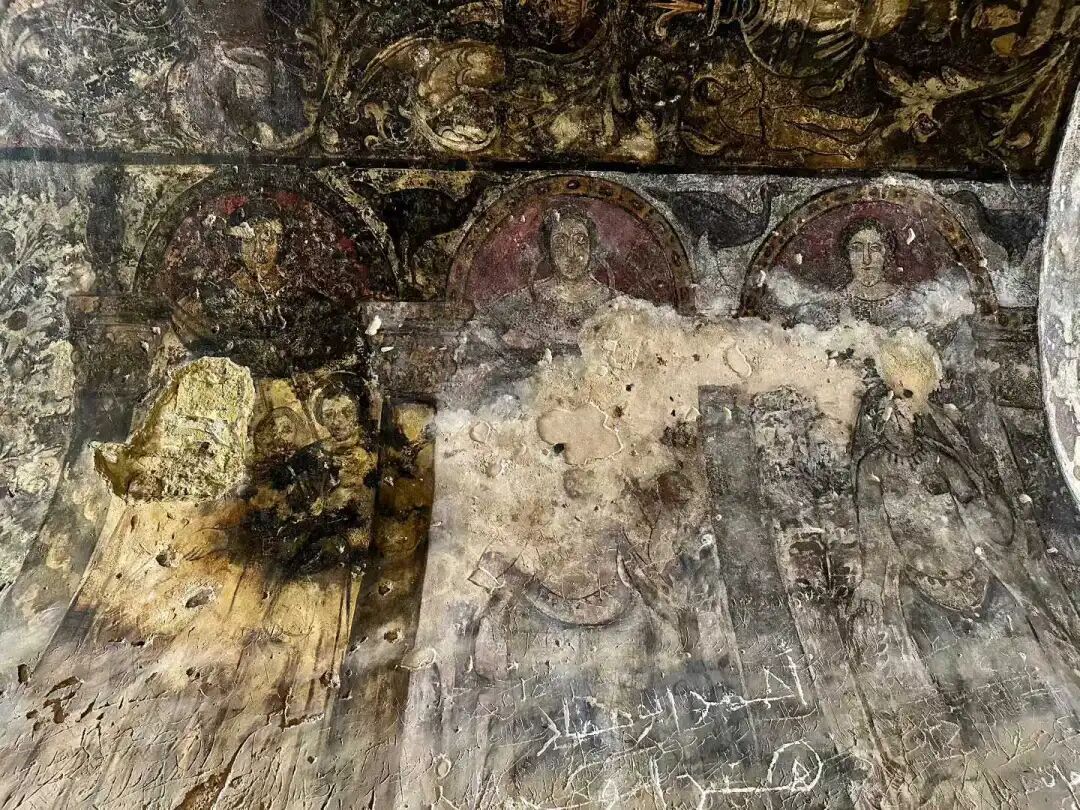
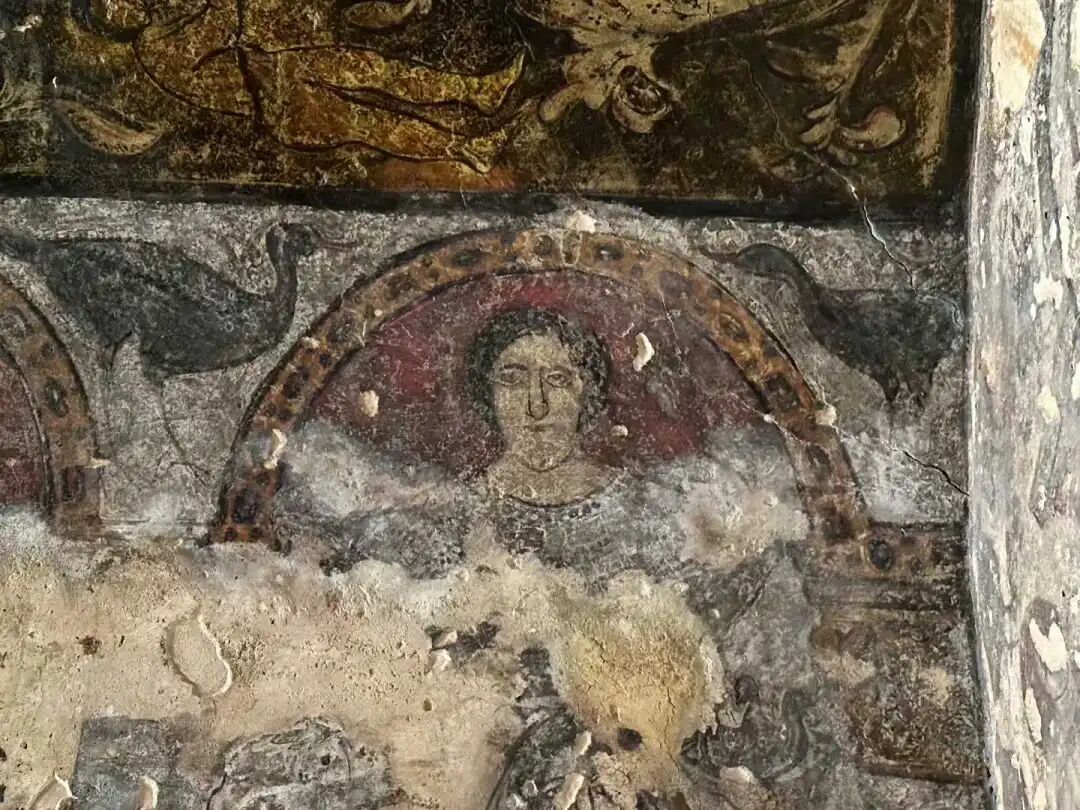
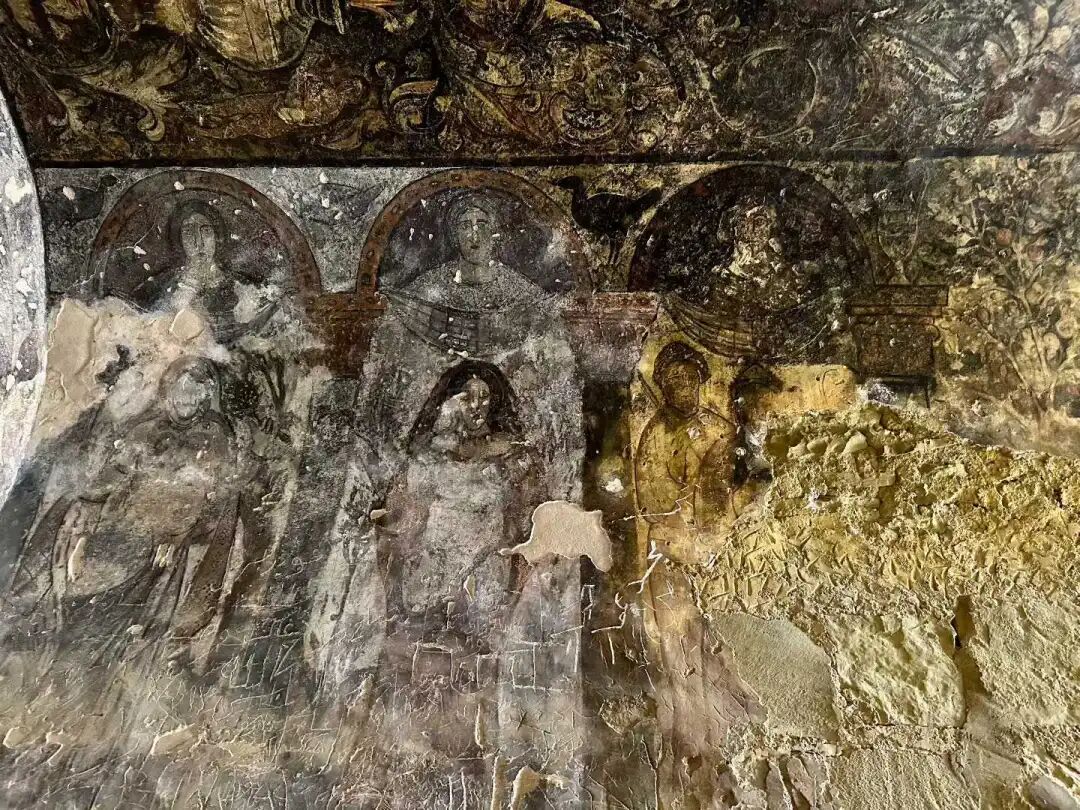
There is a side room on each side of the throne room, and precious mosaic floors are preserved there.
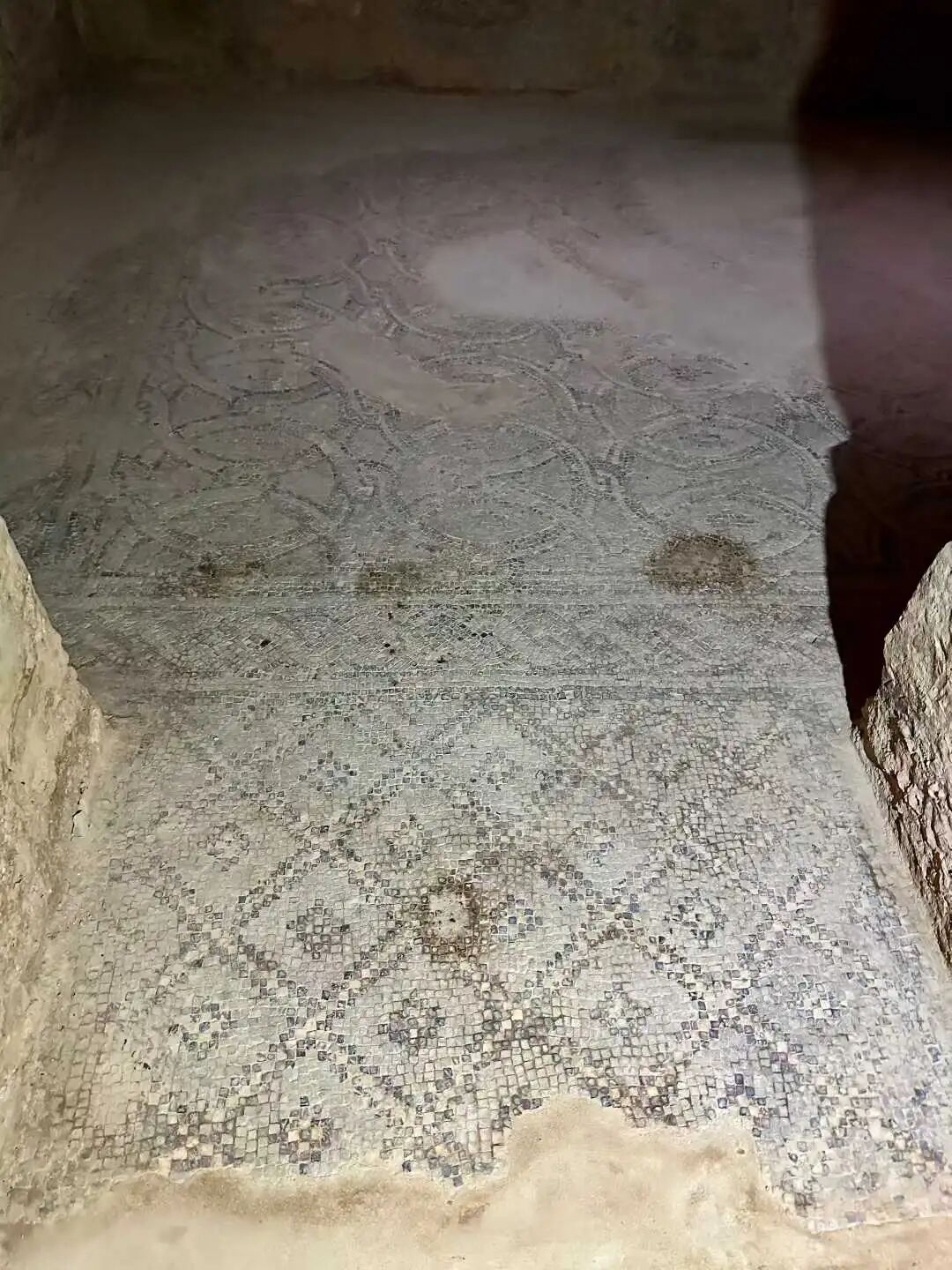
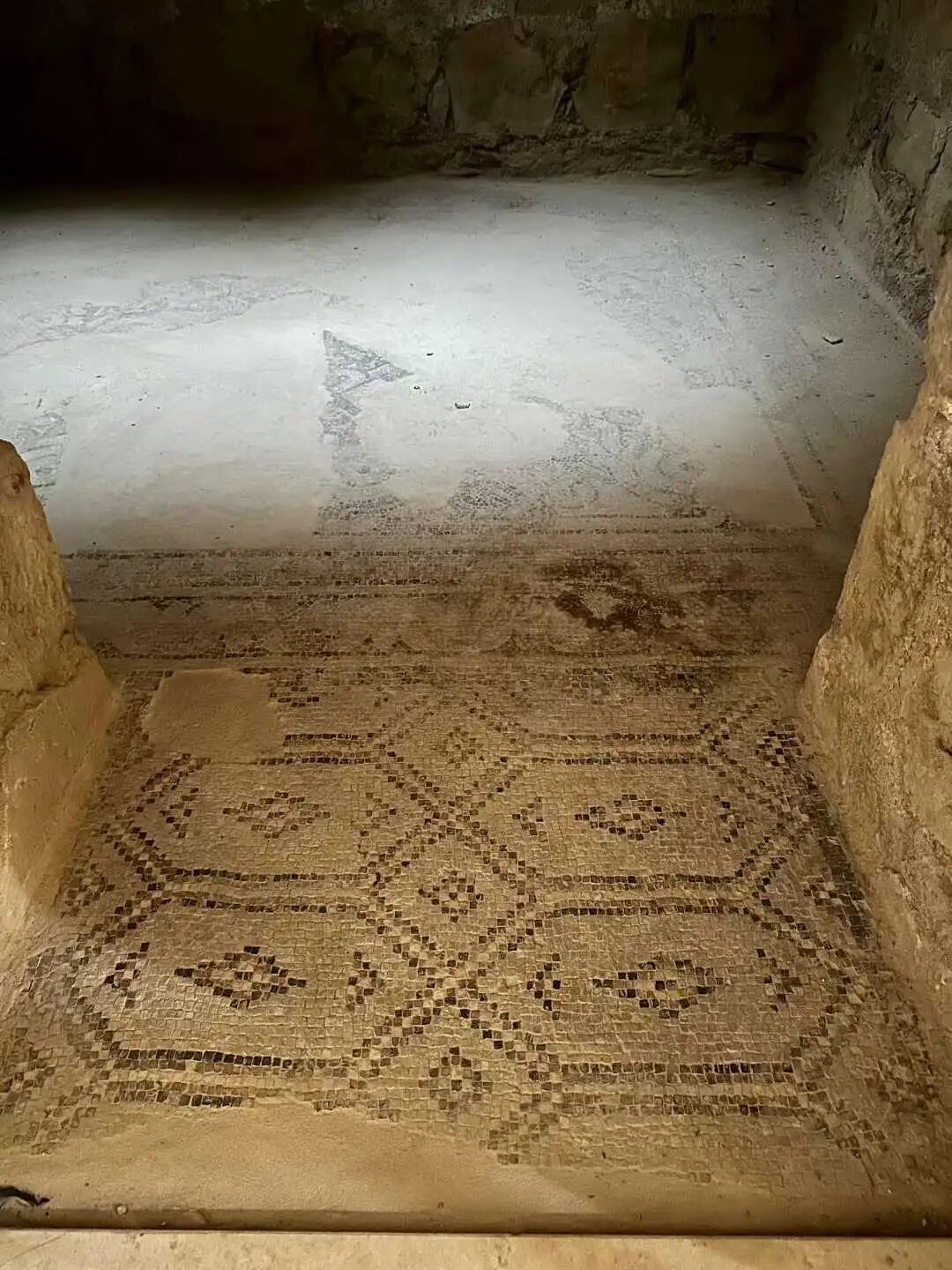
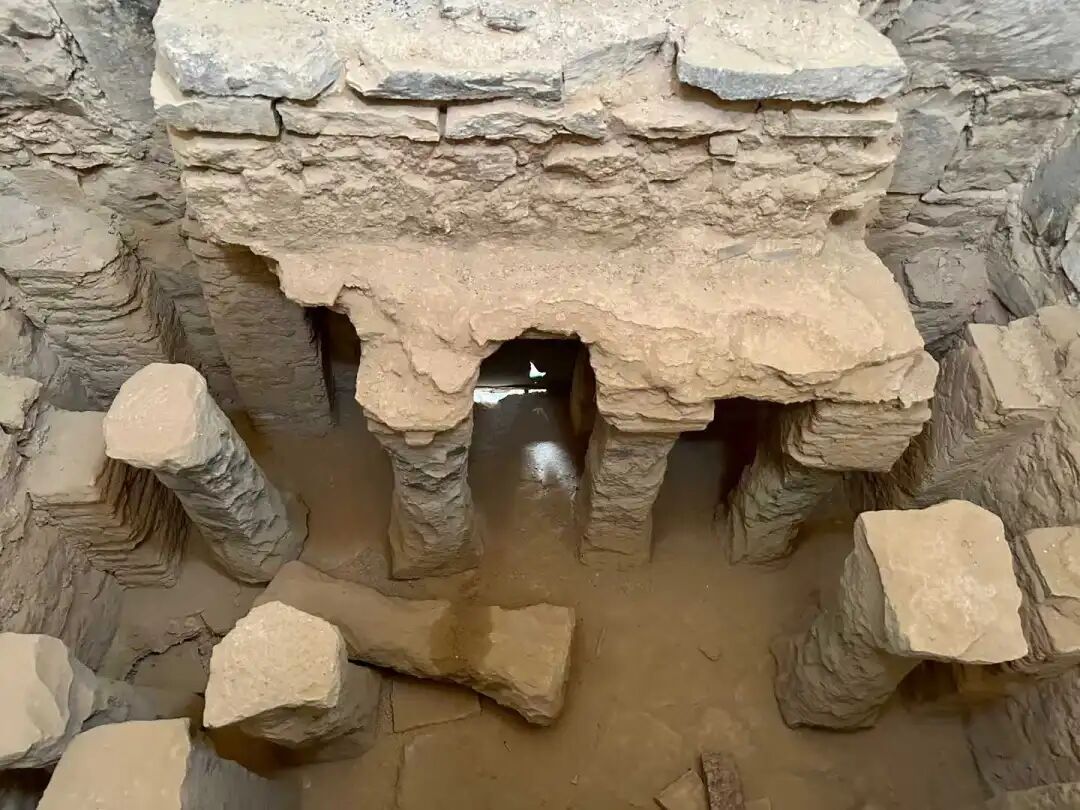
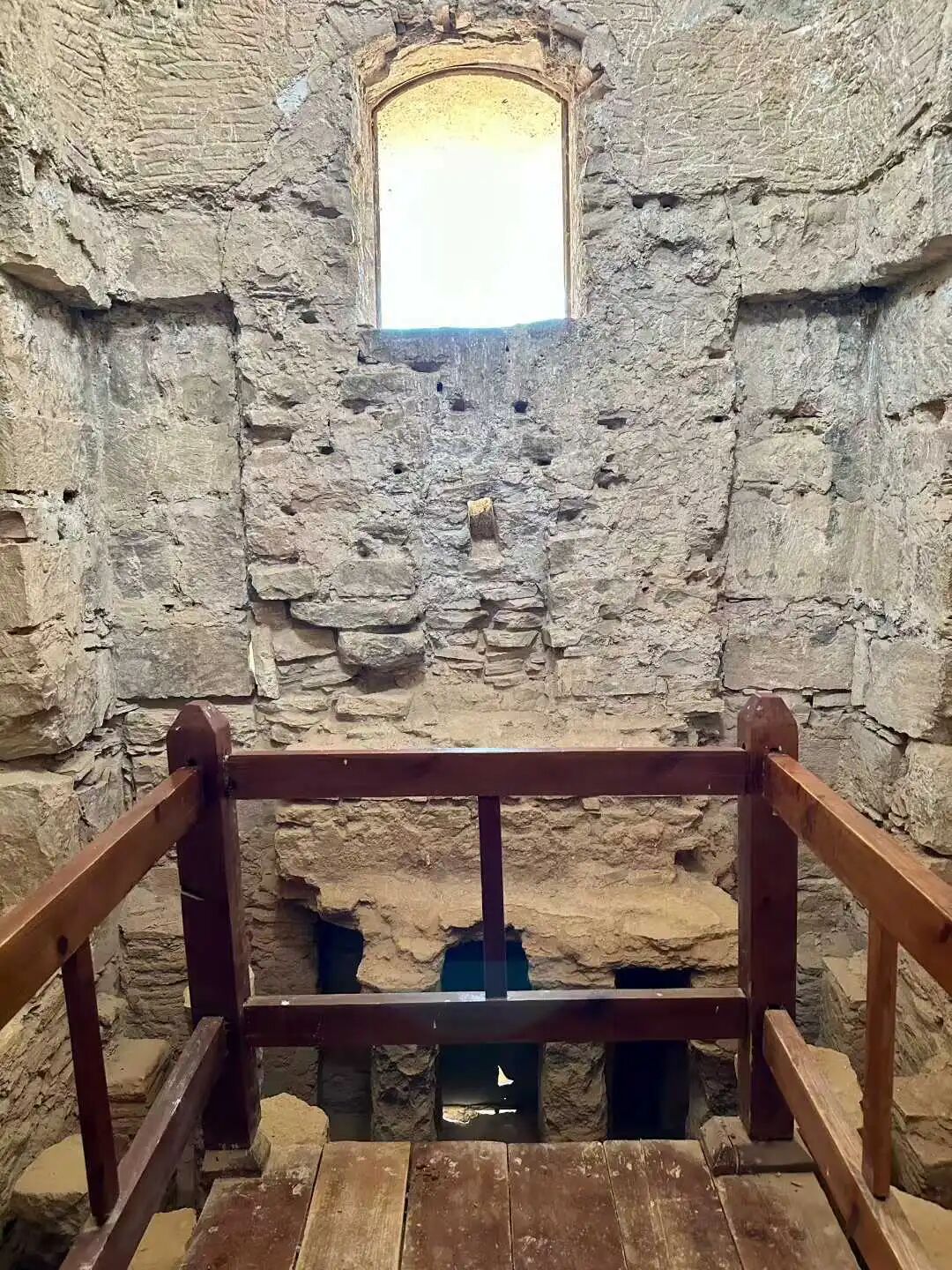
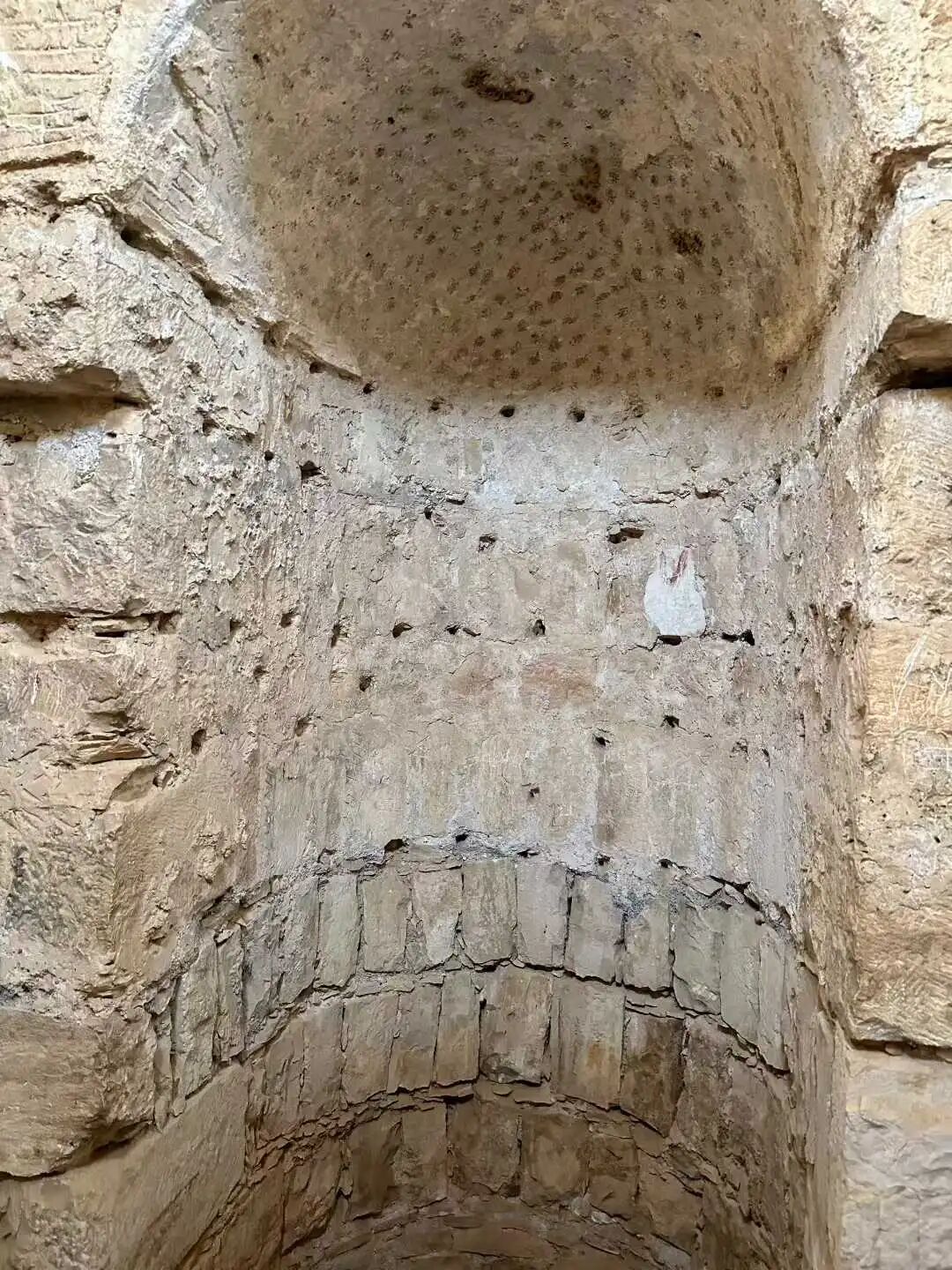
The east side of the reception hall connects to the bathhouse. The bathhouse consists of a changing room (Apodyterium), a warm room (Tepidarium), and a hot room (Caldarium).
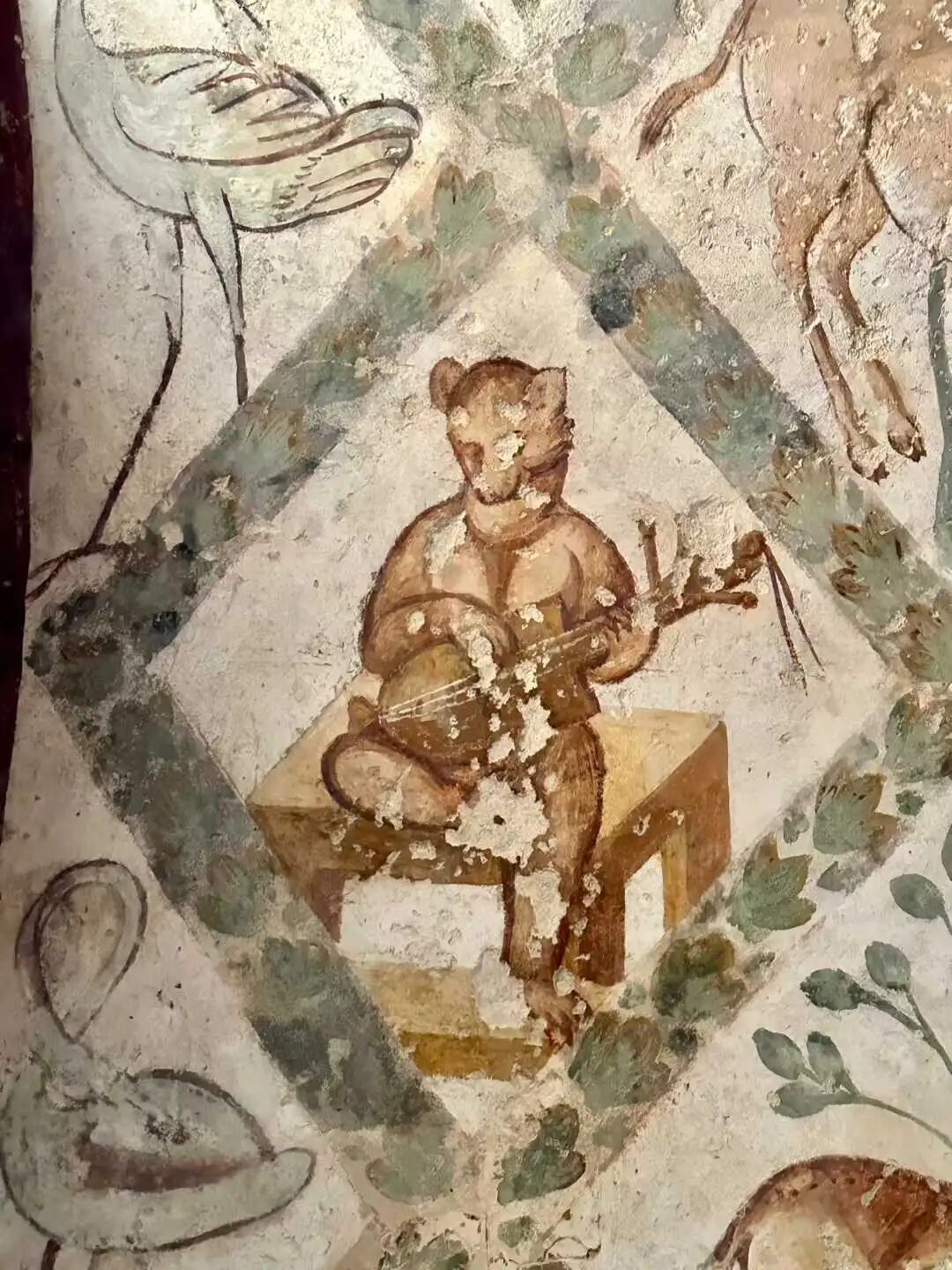
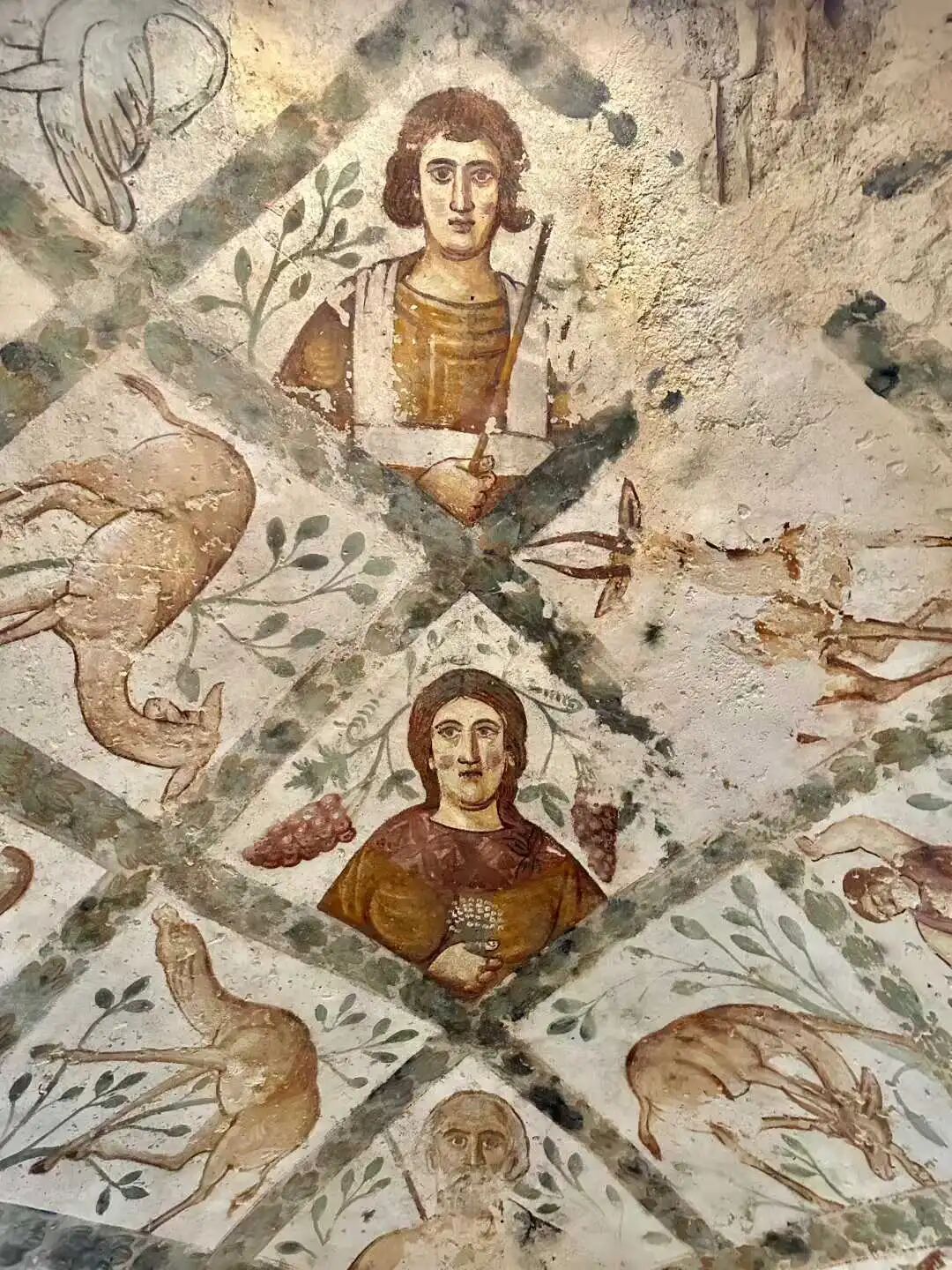
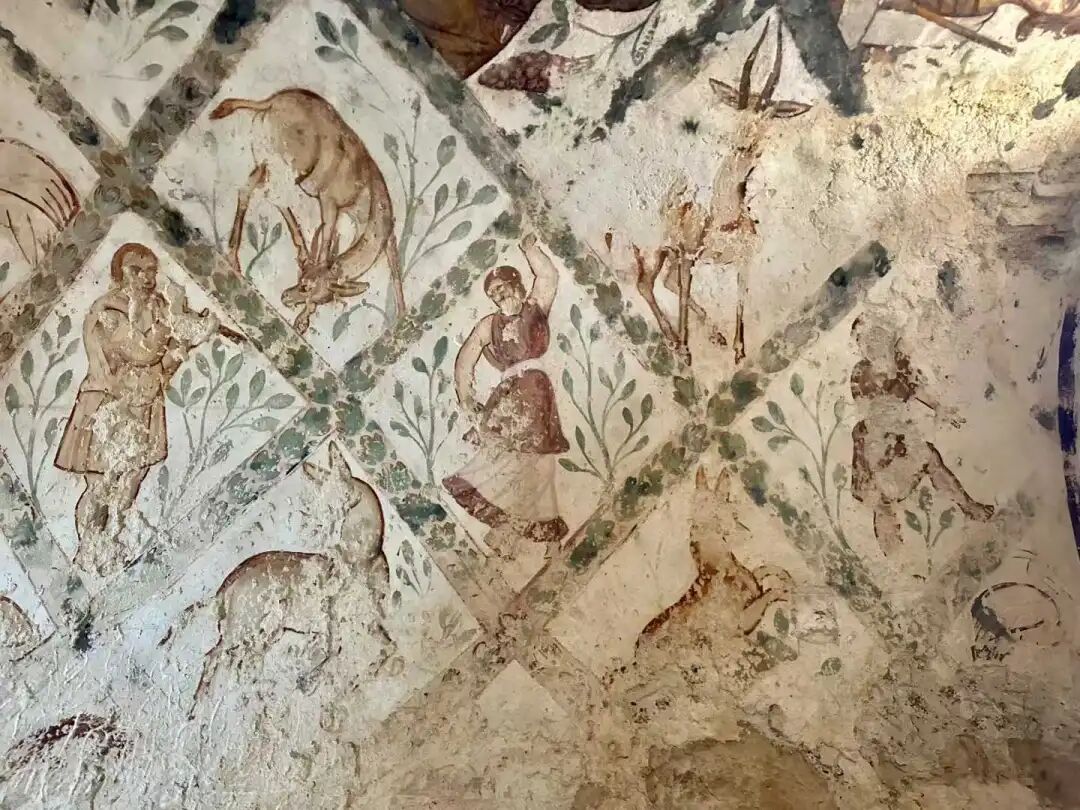
The ceiling of the changing room depicts people, animals, and anthropomorphic animal figures, some playing music and some dancing. The center of the ceiling depicts three figures representing youth, middle age, and old age, which are thought to represent the three stages of life.
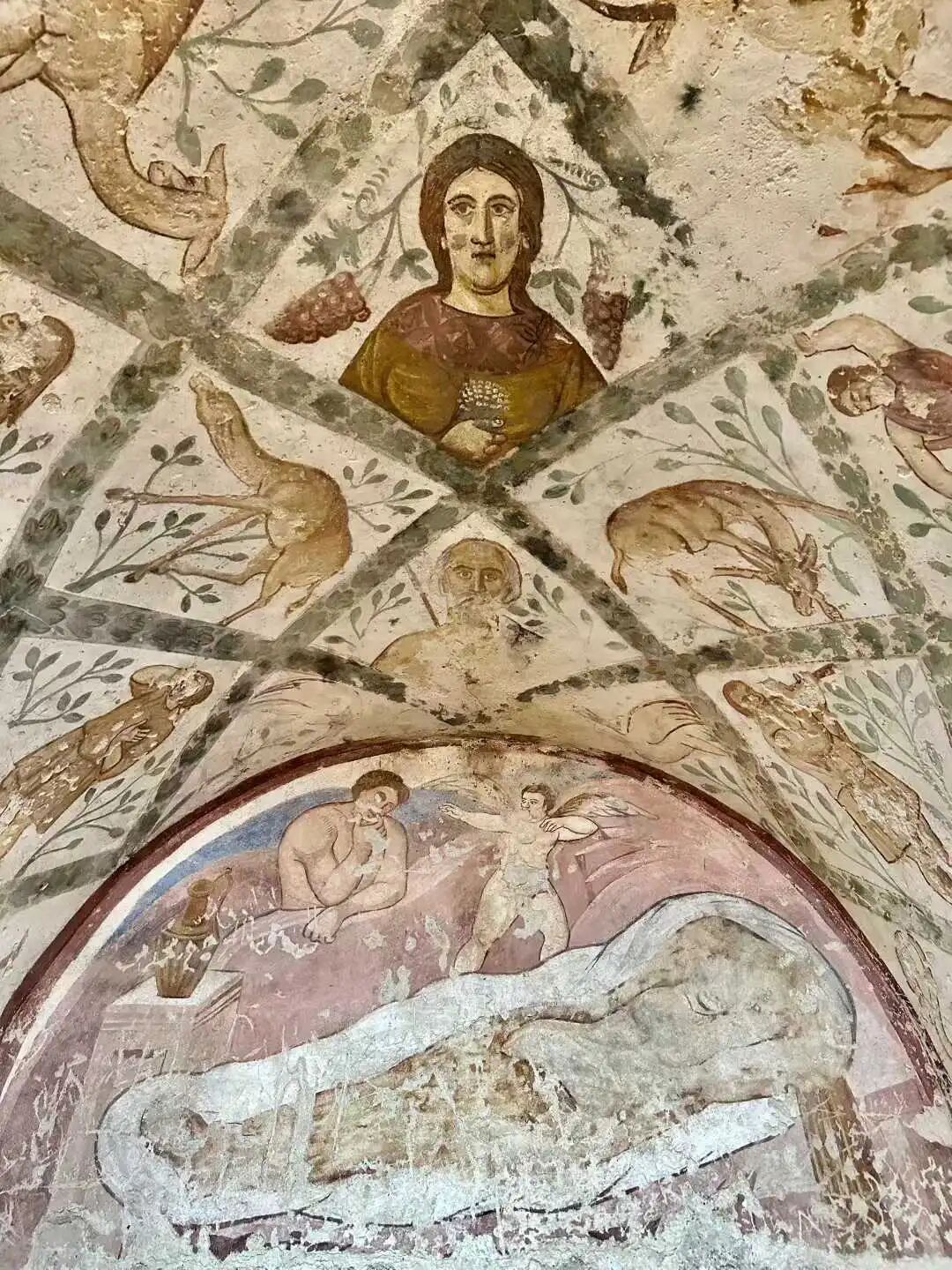
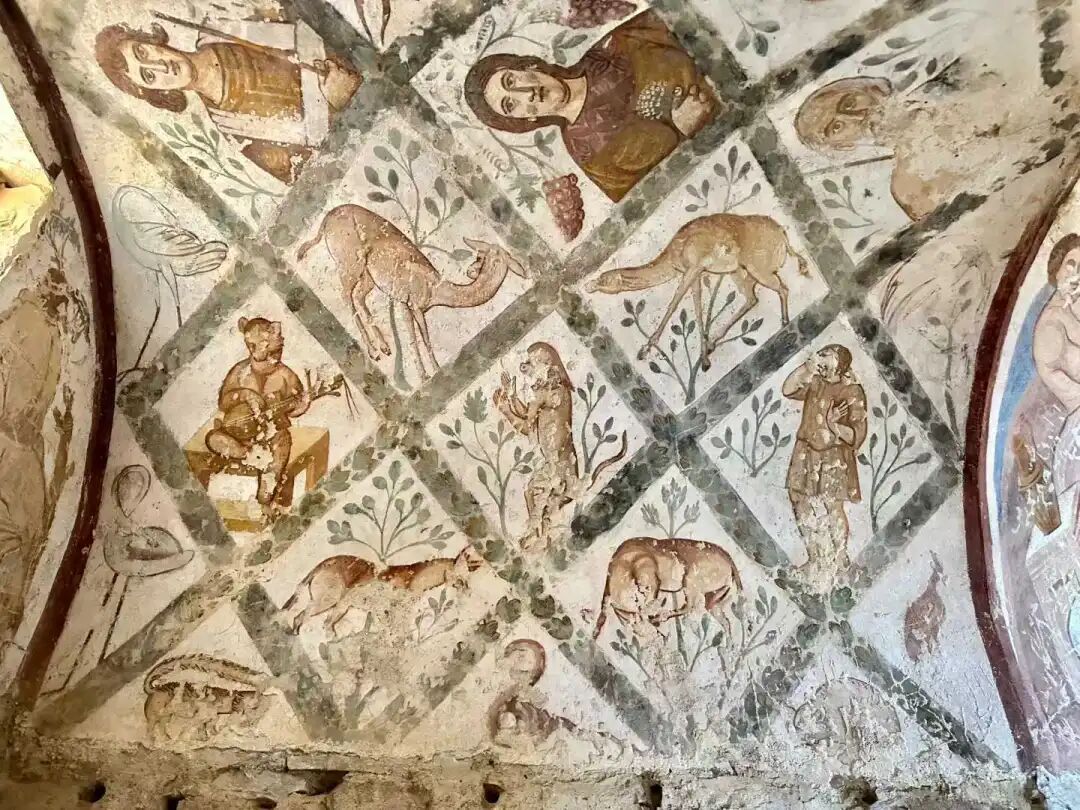
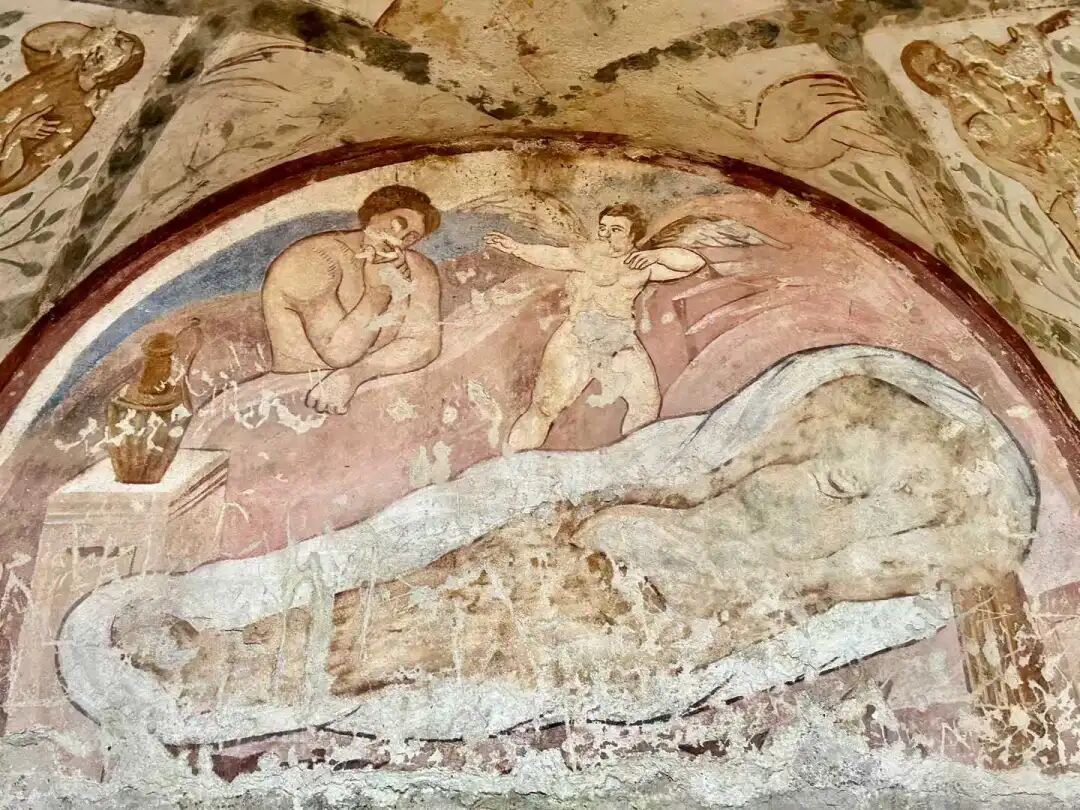
Above the gate, angels are depicted gazing at a body in a burial shroud (kafan), symbolizing the return to Allah.
Above the warm room are plant images similar to those in the Great Mosque of Damascus, as well as women carrying buckets to bathe children. These paintings are clearly influenced by ancient Roman art, and some figures are very similar to the god of love, Eros.
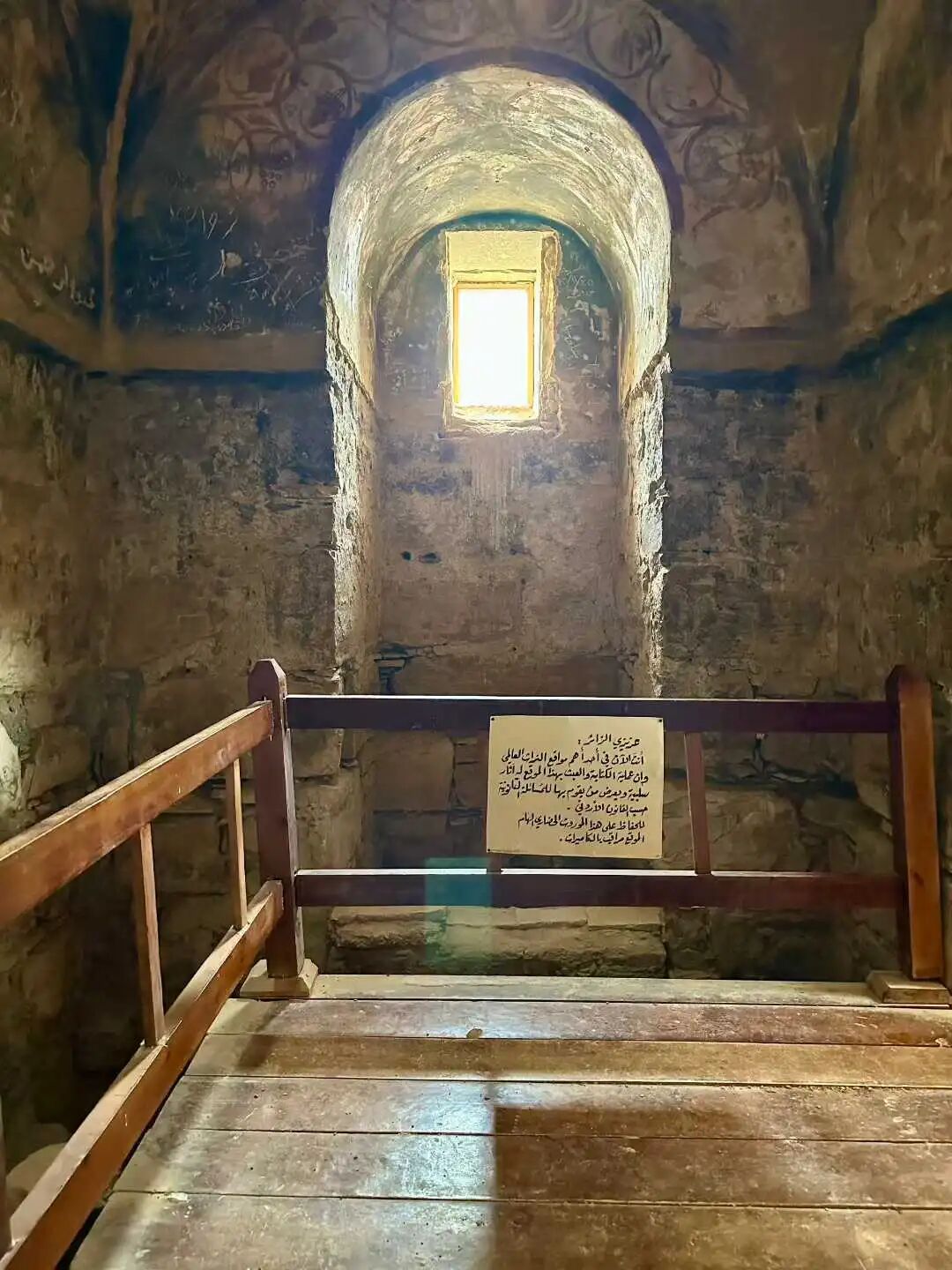
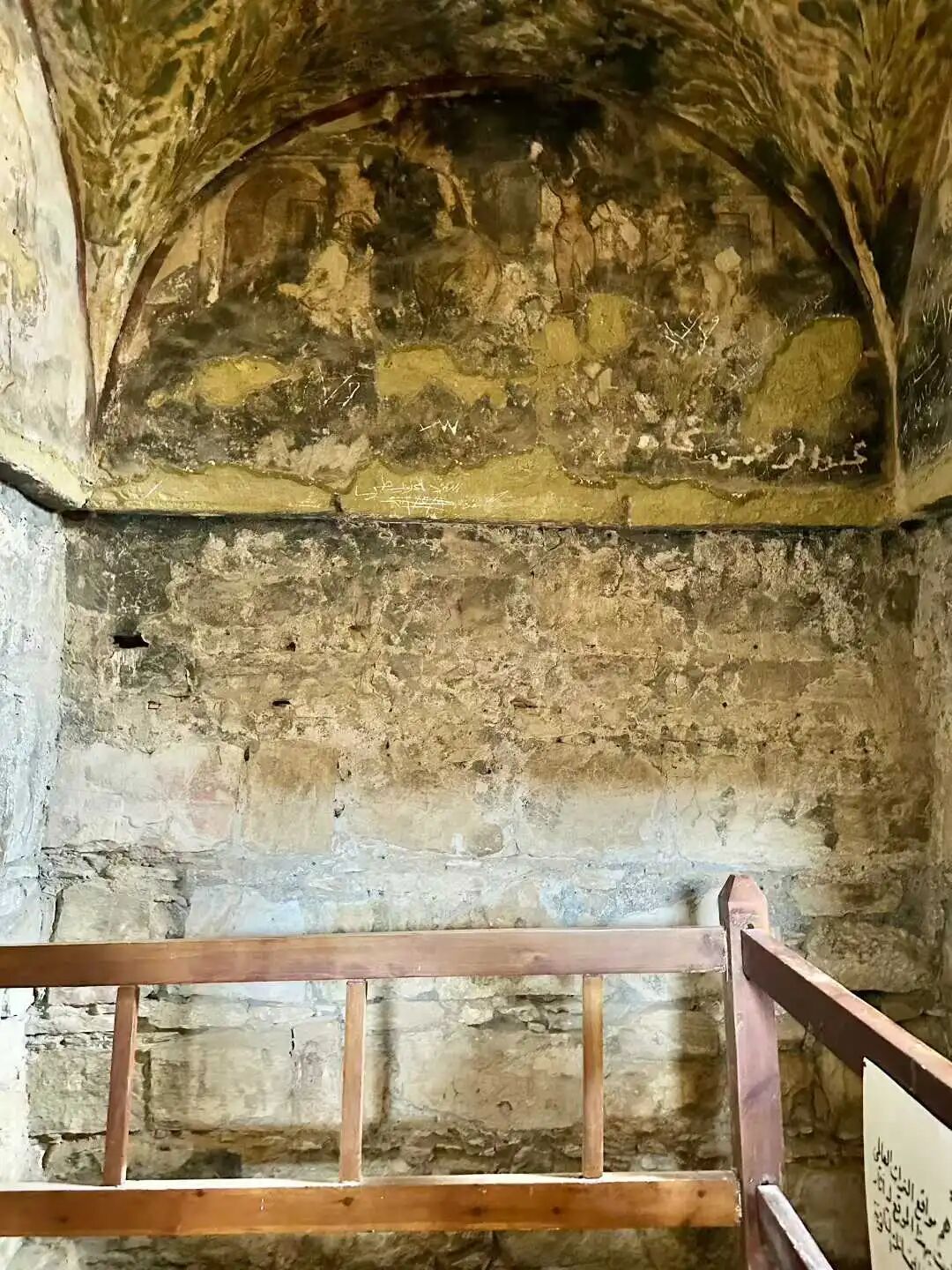
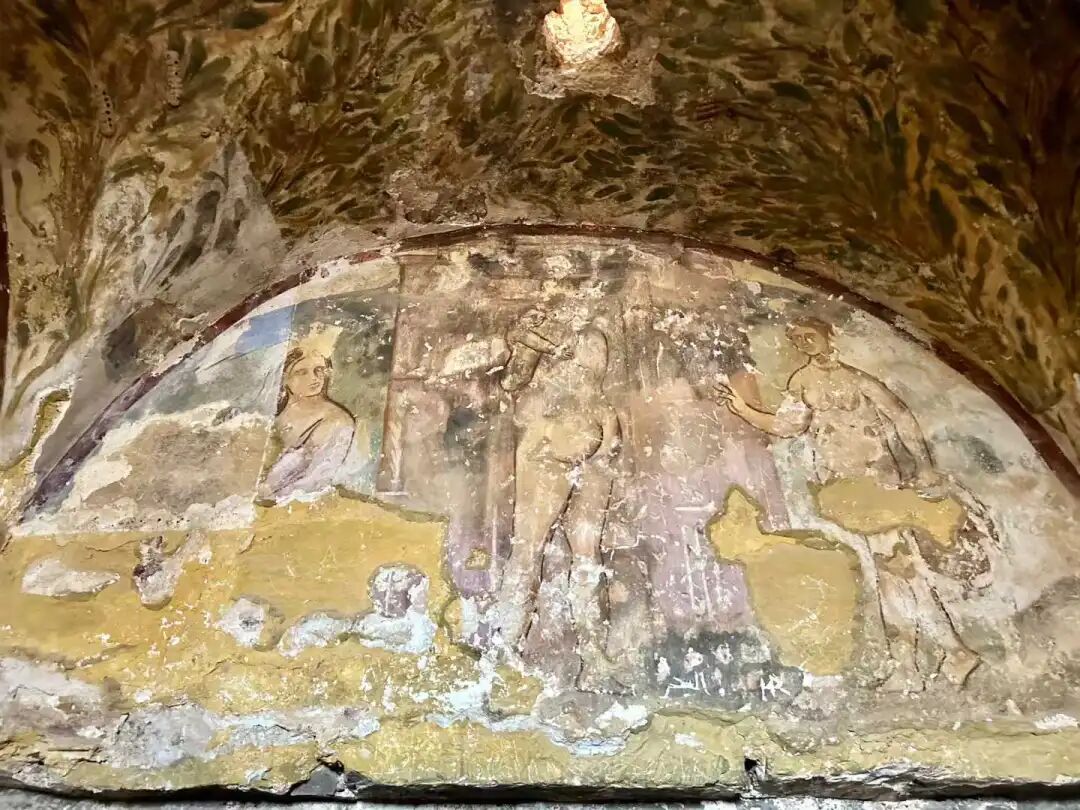
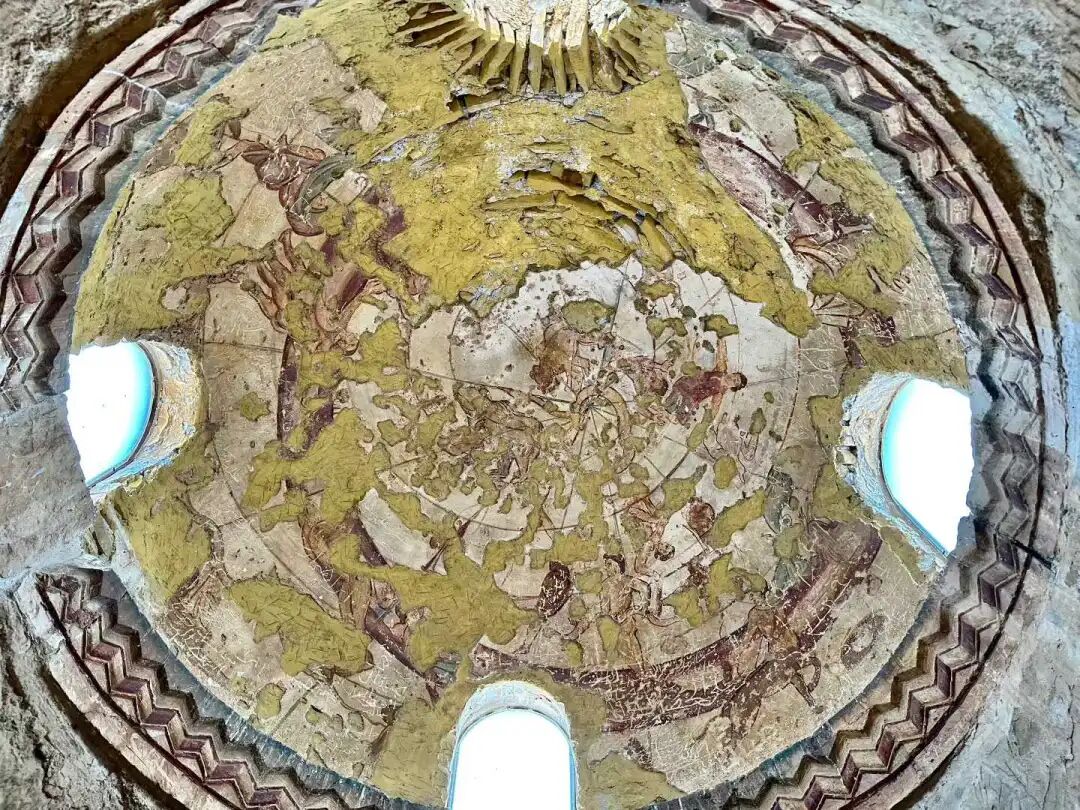
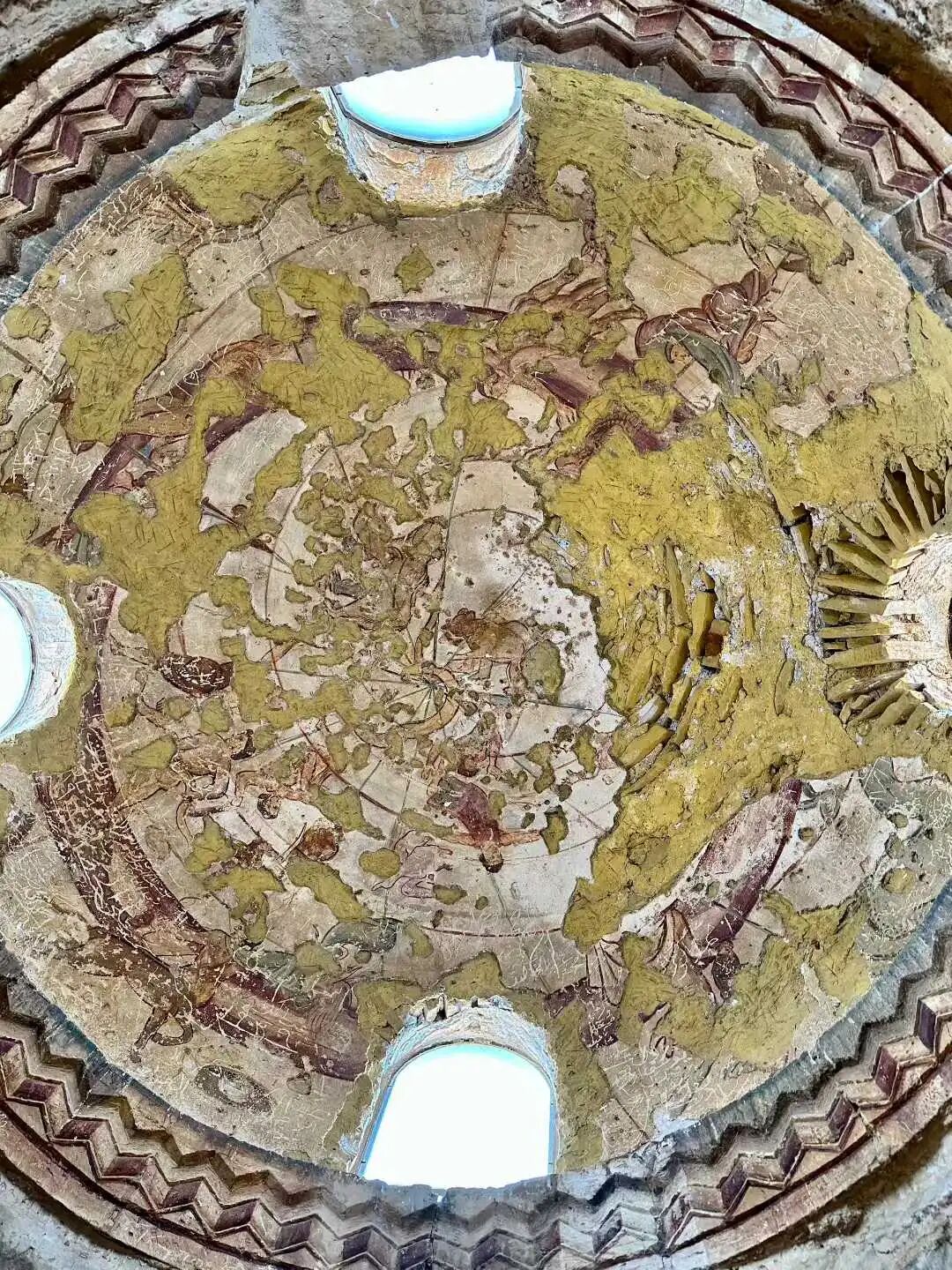
The top of the hot room depicts the famous sky, including the zodiac and 35 identifiable constellations. Research shows this is the earliest image of the starry sky drawn on a non-flat surface. The radius of the starry sky does not start from the center of the dome, but accurately begins from the North Celestial Pole. Also, the angle of the zodiac is extremely accurate.
Summary: Quseir Amra in Jordan was built by the Umayyad Caliph Walid II between 723 and 743 and became a UNESCO World Heritage Site in 1985. This account keeps the source's fresco details, historical figures, palace layout, damage history, and images.
I drove to Jordan's most famous World Heritage site, Quseir Amra. Built by the Umayyad Caliph Walid II between 723 and 743, it was added to the UNESCO World Heritage list in 1985 because of the rich and unique murals in its bathhouse.
Based on the stone wall ruins around the site, this Umayyad palace was once a massive 25-hectare complex. Today, only the foundations remain, with the bathhouse and reception hall being the best-preserved parts. The interior murals feature images of hunting, bathing, animals, and plants, offering the most vivid look at secular life during the Umayyad dynasty. Walid II had a free spirit and loved art, music, and a luxurious lifestyle. He would lead his entourage away from the bustle of Damascus, traveling for days by camel to reach this desert palace to enjoy his private life.
The most famous mural in the reception hall is the Painting of the Six Kings at the south end of the west hall. Four of the six kings have Arabic and Greek inscriptions above them. One is the Byzantine Emperor, Caesar, wearing imperial robes and a crown. Another is the Visigothic King Roderic, wearing a robe and a helmet. Then there is the Sasanian Emperor Khosrow, shown with curly hair, a crown, and a cloak. Finally, there is the Aksumite King Najashi, wearing a crown and a red shawl. Sadly, in 1898, the Czech Alois Musil and the Austrian Alfons Leopold Mielich tried to remove the Six Kings mural, causing serious damage. Additionally, the labels for two of the kings and parts of their crowns were moved to the Museum of Islamic Art in Berlin.
The only figure in the Six Kings mural whose identity is certain is the Visigothic King Roderic, who reigned from 710 to 711. He ruled parts of Spain, likely with Toledo as his capital. Although his reign was short, he still fought wars against the Umayyad dynasty in southern Spain and destroyed many Umayyad towns. After Roderic died in battle in 711, the Umayyad army quickly occupied Toledo and went on to conquer the Iberian Peninsula.
To the left of the Six Kings, facing them diagonally, is a portrait of the Umayyad Caliph Walid II, who reigned from 743 to 744. According to the inscription, Walid II is shown sitting in a relaxed pose with a chestnut-colored cloak slipping off his shoulder. Beside him are a clerk, two children who were likely his sons, and a woman fanning him. Above the scene is a pair of peacocks, and the stool in front of the sofa is inlaid with pearls. The painting includes two Greek inscriptions meaning grace and victory. At the very top are three lines of Kufic Arabic script that read, Oh Allah, bless Walid ibn Yazid with justice... Because the title of Caliph is missing, we know Walid II was still the crown prince at the time.
To the right of the Six Kings is a scene of women bathing, with a spectacular arcade supported by Corinthian columns in the background. Further to the right is a wrestling scene.
Above the Six Kings is a hunting scene. The hunting scene features wild donkeys, gazelles, and Saluki dogs. The Saluki, also known as the Arabian hound, is one of the earliest dog breeds kept by humans. Its history goes back over 4,000 years to ancient Egypt, and it has been used as a hunting dog by Arabs ever since. Saluki dogs were loved by countries along the Silk Road throughout history, and were even kept by the Ming dynasty court during the Xuande period.
The mural on the north wall of the west hall shows a scene in a great river, with the story of 'Yunus and the Great Fish' depicted at the top. This is the earliest known image of the Prophet Yunus in religious art. Prophet Yunus is known as the 'Man of the Fish' in the Quran. The scripture records that he fled onto a fully loaded ship, lost a drawing of lots, and was swallowed by a great fish. Because he often praised Allah, he was not buried in the fish's belly but was cast onto dry land.
Since the story of Yunus and the great fish is mentioned in the scriptures of all three religions, it became a common artistic theme for them. Murals of Yunus and the great fish were found in Roman Christian catacombs as early as the 2nd century AD. Michelangelo depicted this story on the ceiling of the famous Sistine Chapel in the early 16th century, and it also appears many times in Persian and Turkish miniature paintings.
The central hall faces the main gate and connects to the throne room in the south. The ceiling of the central hall is a grid of figures, with each square showing one or more people surrounded by ancient Roman-style stone pillars and birds.
The sides of the central hall show banquet scenes, with people playing the oud, dancing, and holding fruit plates.
Directly south of the central hall is the lower throne room, where Walid II once sat to receive guests and watch performances. The wall at the very back of the throne room shows a prince receiving guests. The ceiling of the throne room depicts various figures and birds.
There is a side room on each side of the throne room, and precious mosaic floors are preserved there.
The east side of the reception hall connects to the bathhouse. The bathhouse consists of a changing room (Apodyterium), a warm room (Tepidarium), and a hot room (Caldarium).
The ceiling of the changing room depicts people, animals, and anthropomorphic animal figures, some playing music and some dancing. The center of the ceiling depicts three figures representing youth, middle age, and old age, which are thought to represent the three stages of life.
Above the gate, angels are depicted gazing at a body in a burial shroud (kafan), symbolizing the return to Allah.
Above the warm room are plant images similar to those in the Great Mosque of Damascus, as well as women carrying buckets to bathe children. These paintings are clearly influenced by ancient Roman art, and some figures are very similar to the god of love, Eros.
The top of the hot room depicts the famous sky, including the zodiac and 35 identifiable constellations. Research shows this is the earliest image of the starry sky drawn on a non-flat surface. The radius of the starry sky does not start from the center of the dome, but accurately begins from the North Celestial Pole. Also, the angle of the zodiac is extremely accurate.
