
Hidden Islamic Art in Shanghai: Persian Sufi Poetry at Museum of Art Pudong
Reposted from the web
Summary: The Museum of Art Pudong in Shanghai displayed 300 Louvre artworks from India, Iran, and the Ottoman Empire from December 13, 2025, to May 6, 2026. This article preserves the source's Persian Sufi poetry translations, object notes, historical context, and photographs.
From December 13, 2025, to May 6, 2026, the Museum of Art Pudong in Shanghai displayed 300 artworks from the 16th to 19th centuries from India, Iran, and the Ottoman Empire, all from the Louvre's collection. Many of these items were purchased by King Louis XIV of France (1638-1715) from the Mughal and Ottoman empires and were once used to decorate royal palaces like the Louvre and the Palace of Versailles.
Many of these pieces feature Persian Sufi poetry, but the exhibition hall provided almost no information about them. Fortunately, the Louvre's official website has translations for these poems. You can visit the site, search using the location 'Shanghai,' and view all the items from this Shanghai exhibition at once.
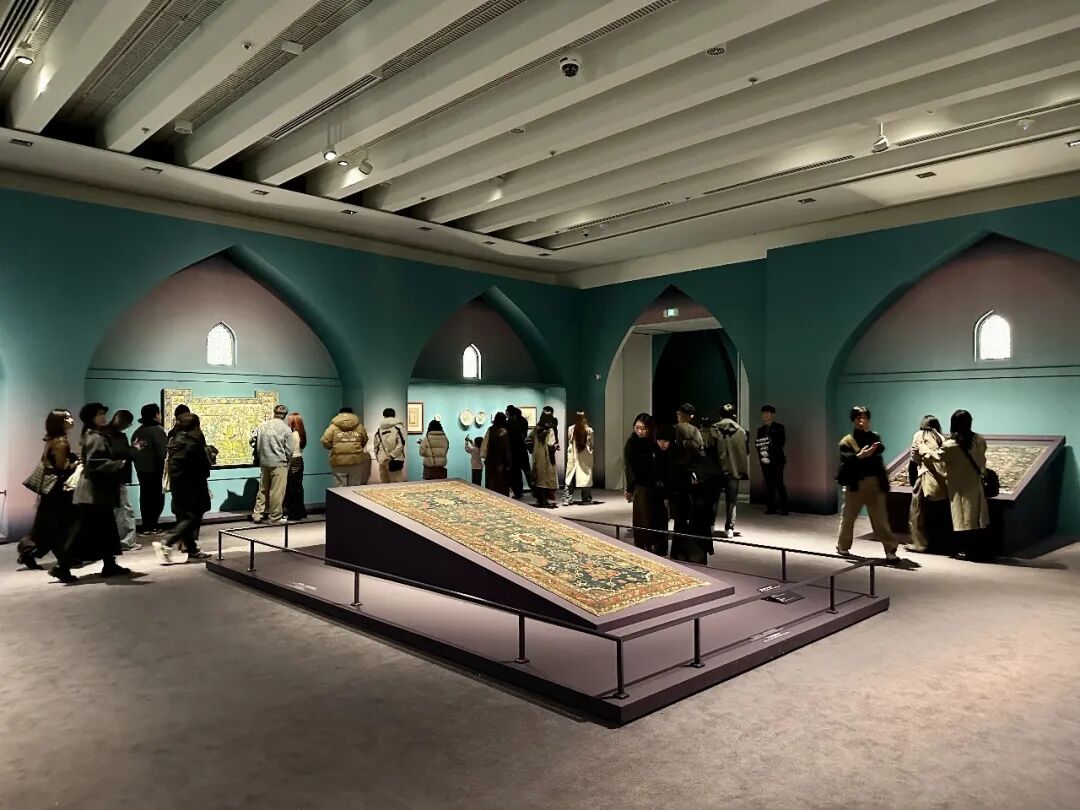
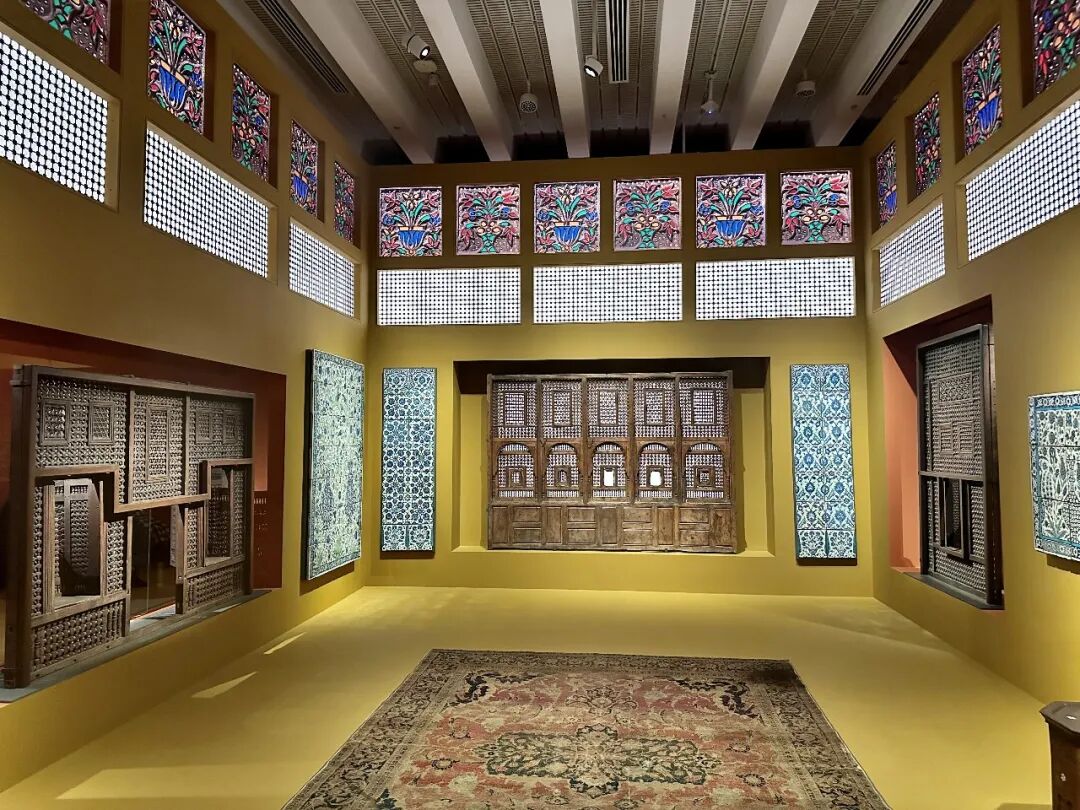
Here are the items from the Shanghai exhibition that feature Persian poetry:
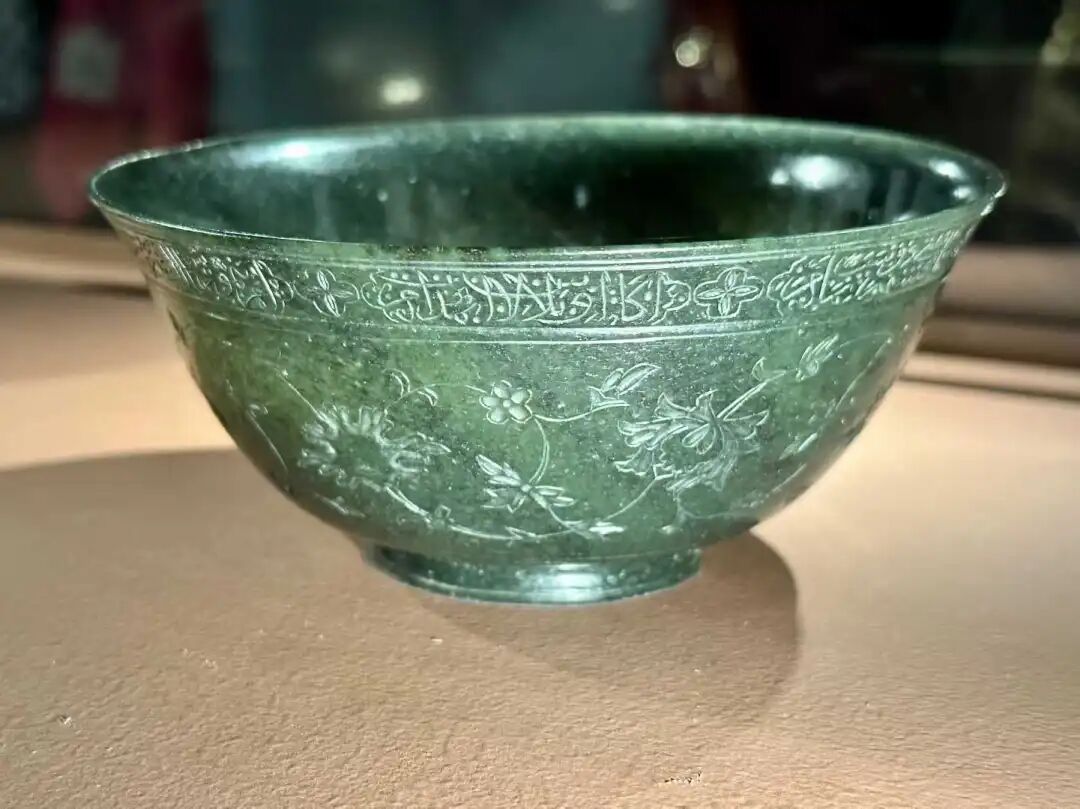
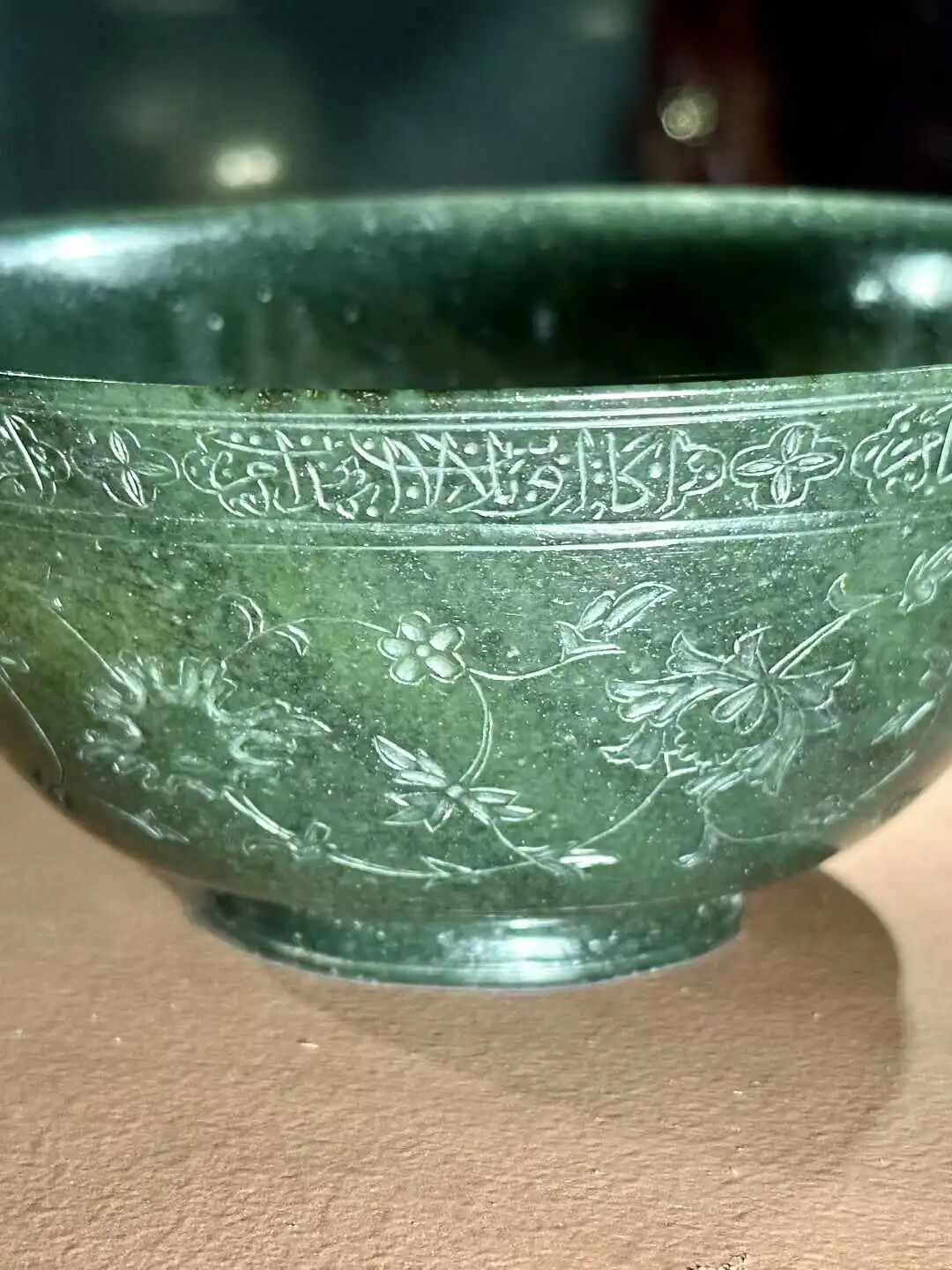
This jade cup from the Iranian Aq Qoyunlu dynasty (1450-1500), once in the collection of King Louis XIV, is inscribed with two Sufi poems in Arabic and Persian:
Because of the purity of the wine and the delicacy of the cup,
The color of the cup and the wine blend into one.
Everything in the world is like a cup,
As if no wine exists,
Or as if everything is fine wine,
And the cup itself is nowhere to be found.
The horizon is stained with the color of the morning sun,
Shedding the cloak of twilight,
Day and night are reconciled,
And all things in the world return to their proper order.
The imagery of the 'cup and wine' is frequently mentioned in Sufi poetry. Sufi sheikhs often use the cup and wine to represent the concepts of 'blending' and 'oneness' in Sufi thought, using the fusion of the two as a metaphor for spiritual elevation and unity. Therefore, when reading Sufi poetry, you should not interpret the meaning only from the surface.
The Arabic in the poem comes from Sahib ibn Abbad, a grand vizier of the Buyid dynasty in 10th-century Iran. He was a Persian scholar from Isfahan, Iran, who had a deep interest in Arabic culture and created many literary works.
The Persian text comes from the famous 15th-century Persian Sufi sheikh, Mir Shams-ud-Din Araqi. Araqi was from Iran and belonged to the Noorbakshia order. He traveled to Kashmir to preach, which led many local Tibetan-speaking Balti people to embrace the faith, leaving a profound impact on the development of the religion in the Kashmir region. After the 16th century, the Nurbakhshiyya order was gradually assimilated by the Twelver Shia sect in Iran, but it has been passed down to this day in the Kashmir region.
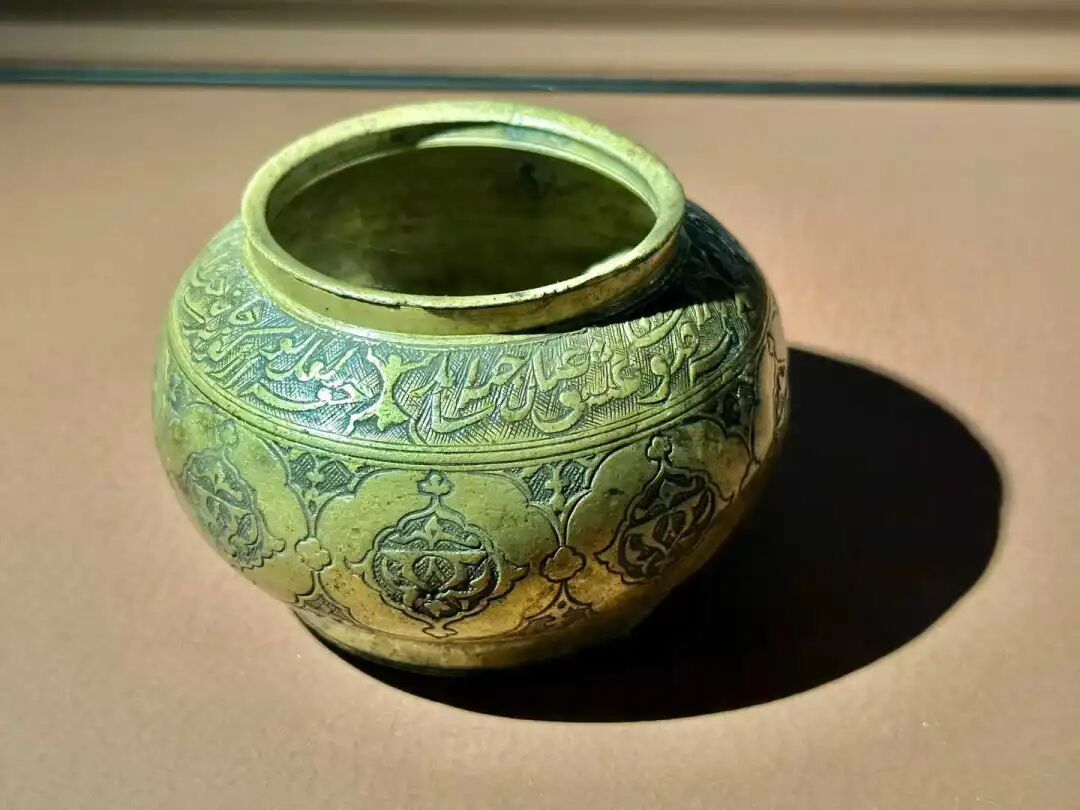
A copper alloy jar from the Mughal or Safavid dynasty, dating between 1585 and 1615, was once used to hold gemstones. Engraved on it is a poem from the 'Divan' by the famous 15th-century Persian Sufi poet Jami:
Your ruby cup is made from the pearls of the soul.
The longing of every person withered by love is hidden within this cup.
Everything that was once hidden behind the veil of the unseen,
Becomes clearly visible in the form of love.
This is the opening of a Sufi ode and a classic text where religious artifact art, Sufism, and Persian poetry become one. The 'withered person' refers to a seeker whose soul is tempered and obsessed with the love of Allah. The 'veil of the unseen' refers to the barrier between the secular world and the divine essence, where the mundane cannot glimpse the ultimate beauty and subtlety of Allah. 'Love' refers to the ultimate devotion to Allah, which is the only path to break through the veil of the unseen.
The cup in the poem is the physical manifestation of the soul's essence, corresponding to the Sufi ontology that 'all existence is a manifestation of Allah'. The divine nature is hidden by the 'veil of the unseen,' and divine love is the only power that can remove this cover. The seeker's devotion is poured into the object, turning the invisible divine subtlety into the visible beauty of the cup's body. The 'longing' hidden in the cup is the original intention of the Sufi practitioner and their yearning for Allah. The object becomes a 'medium' for practice; holding the cup and contemplating it means contemplating the connection between one's own soul and the divine.
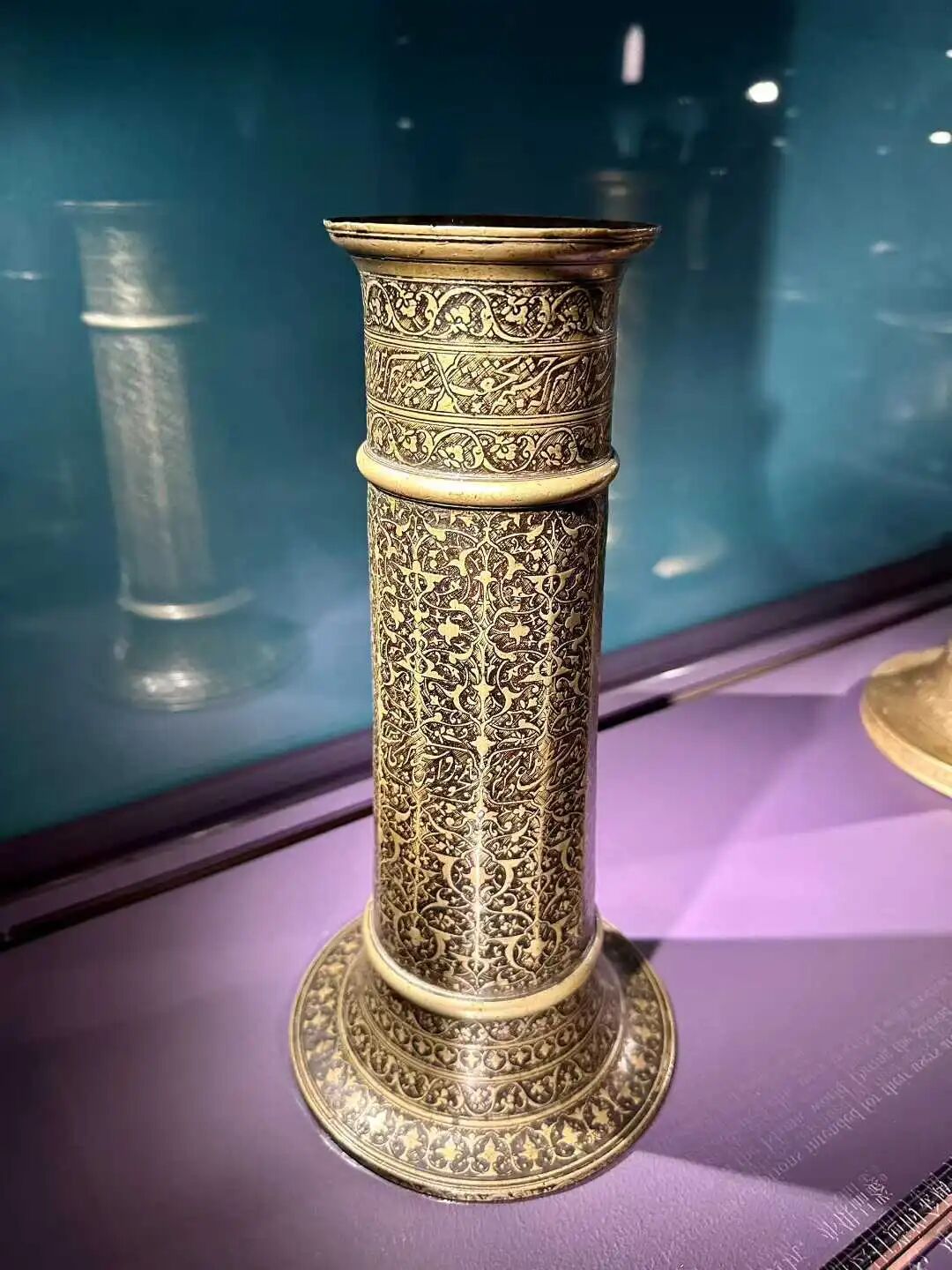
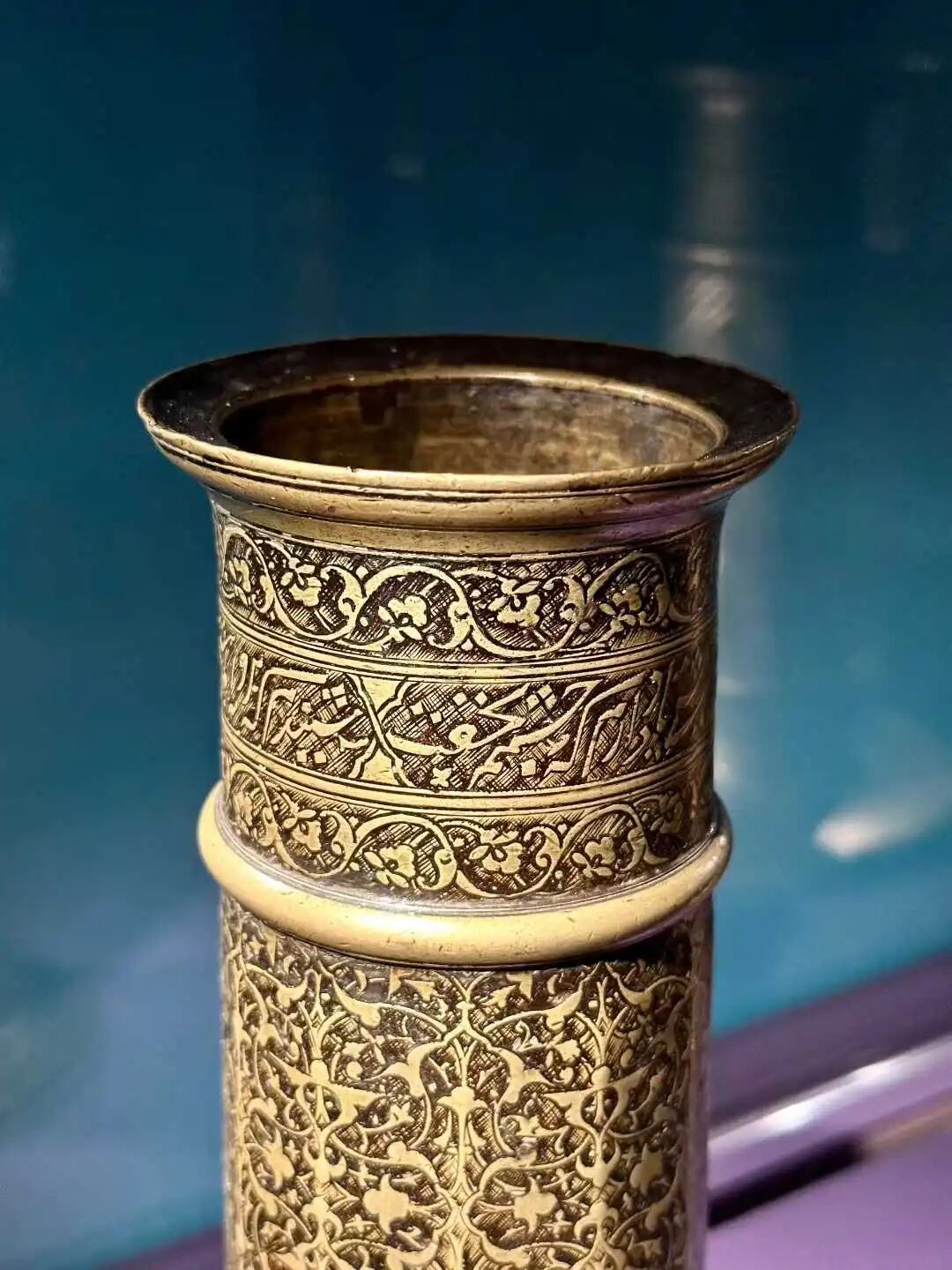
A copper alloy candlestick from the Safavid or Mughal dynasty, dating between 1585 and 1600, has two Persian Sufi poems engraved on its upper and middle sections. The upper poem is by the Khorasan poet Mulla Hayrati Tuni (died 1554):
When the soul burns because of the love of an idol,
Love burns me every moment with another flame.
I am just like a butterfly near a candle flame,
If I take one step forward, my wings will be burned away.
I burn in the pain of loving you, and this burning has already witnessed,
The glory of the candle flame burning above me.
'Idol love' in the poem does not refer to worshipping material idols, but is a common rhetorical device in Sufi literature. It uses 'idol' to represent secular love or obsession with non-divine things, contrasting it with pure love for Allah to highlight the intensity and exclusivity of divine love.
The middle poem is from the famous 'Butterfly and Candle' passage in the masterpiece 'Bustan' (The Orchard) by the great Persian poet Saadi (1210-1291).
I remember a dim night.
With eyes closed, I heard a butterfly say to the candle flame,
I am worn out for love.
Burning is also a form of completion.
Why so many tears?
Why exhaust yourself?
The butterfly and the candle flame is a classic metaphor in Persian Sufi poetry. The butterfly represents the soul longing to unite with Allah, and the candle flame represents divine love and the light of Allah. Throwing oneself into the fire to burn one's wings means the soul is willing to dissolve itself in pursuit of divine love. It is a poetic expression of the Sufi state of selflessness.
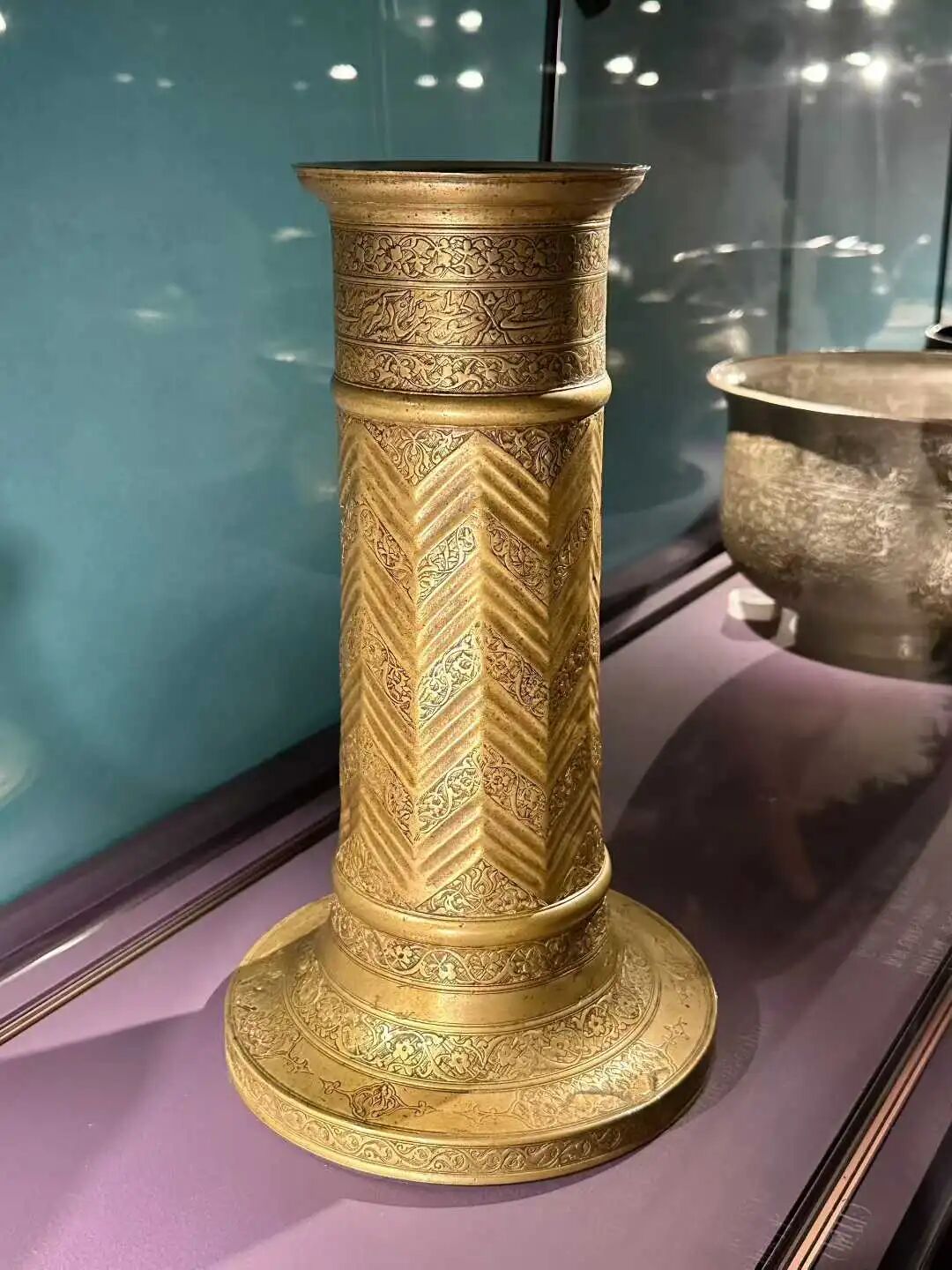
A copper alloy candlestick from the Safavid or Mughal dynasty, dating between 1550 and 1600. The upper part is inscribed with Persian Sufi verses, also by the Khorasan poet Mulla Hairati Tuni, titled When the soul burns for the love of the idol.
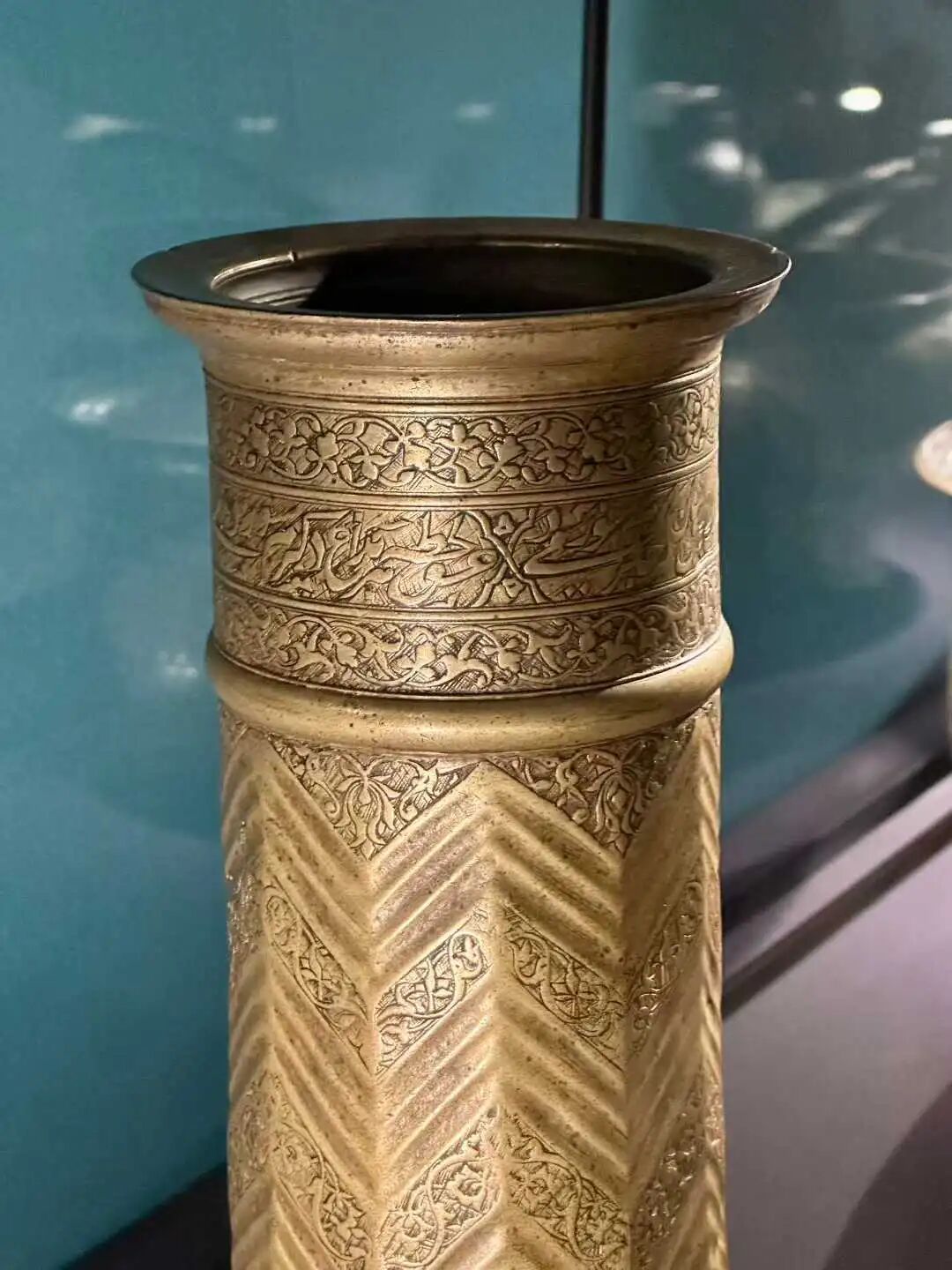
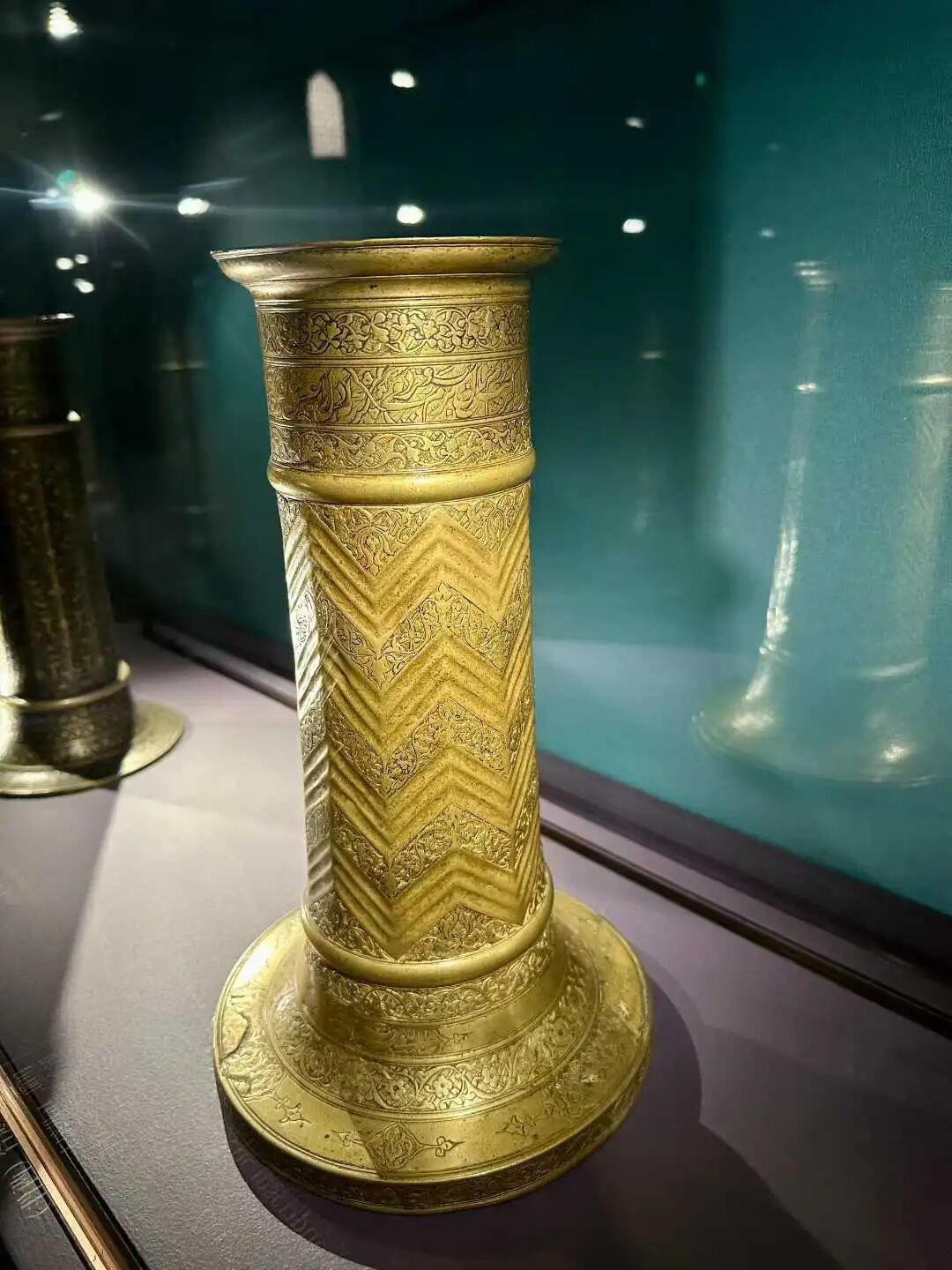
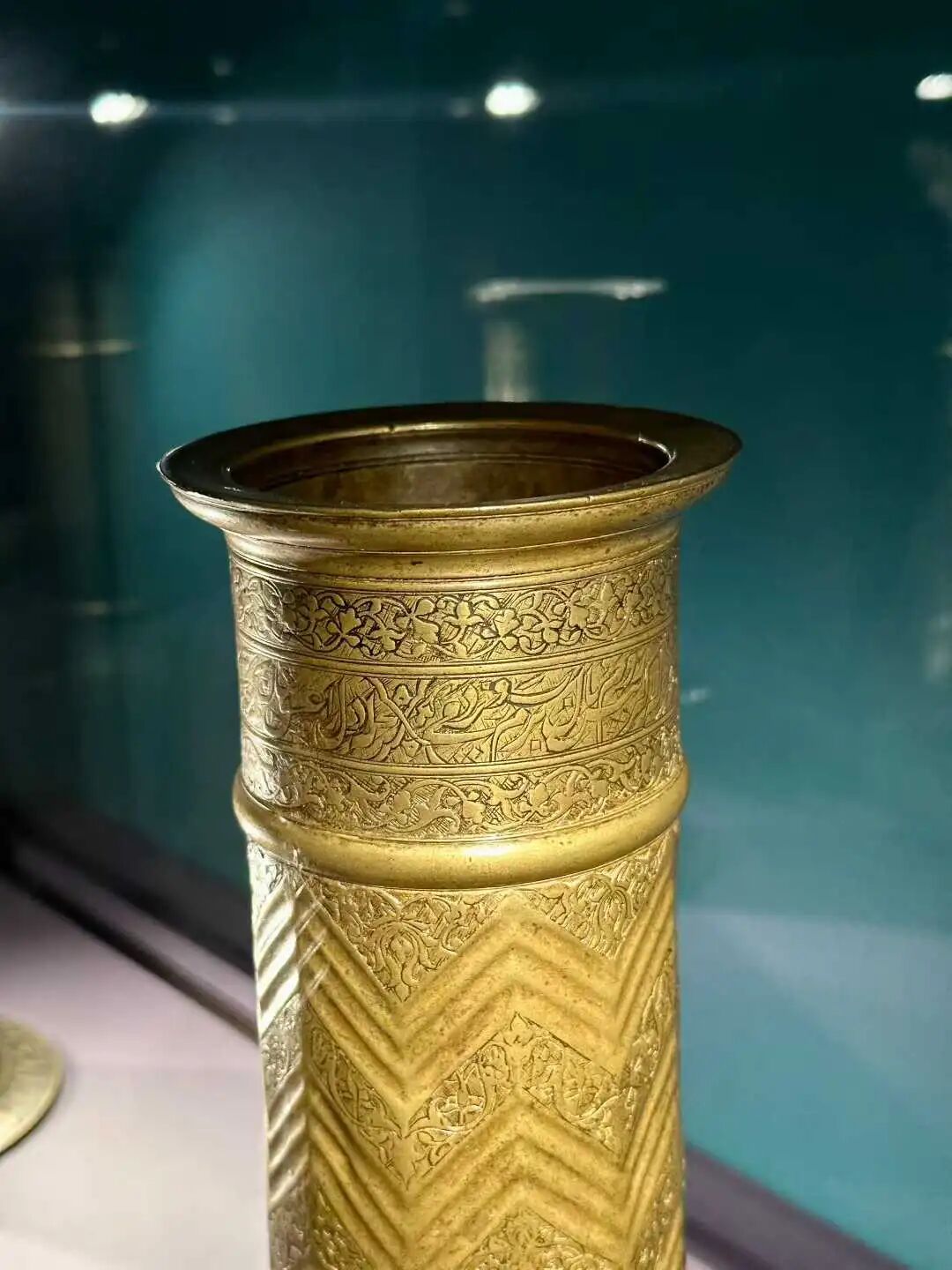
A bronze candlestick from the 16th-century Mughal or Safavid dynasty. The upper part of the candlestick shaft is divided into four panels, each engraved with a Persian Sufi quatrain:
The lamp of the gnostic shines because of your face.
I see you, and the souls of all who know the heart turn toward your face.
My heart looks to you, for you are the ultimate destination of the universe.
May not a single hair on your head perish, for this world relies entirely on you.
In the poem, the gnostic refers to a practitioner in a Sufi order seeking inner enlightenment, and those who know the heart refers to Sufi mystics or those with spiritual awareness. This poem was written during the 15th-century Timurid dynasty, but it was very common on metalware and ceramics during the 16th-century Safavid dynasty.
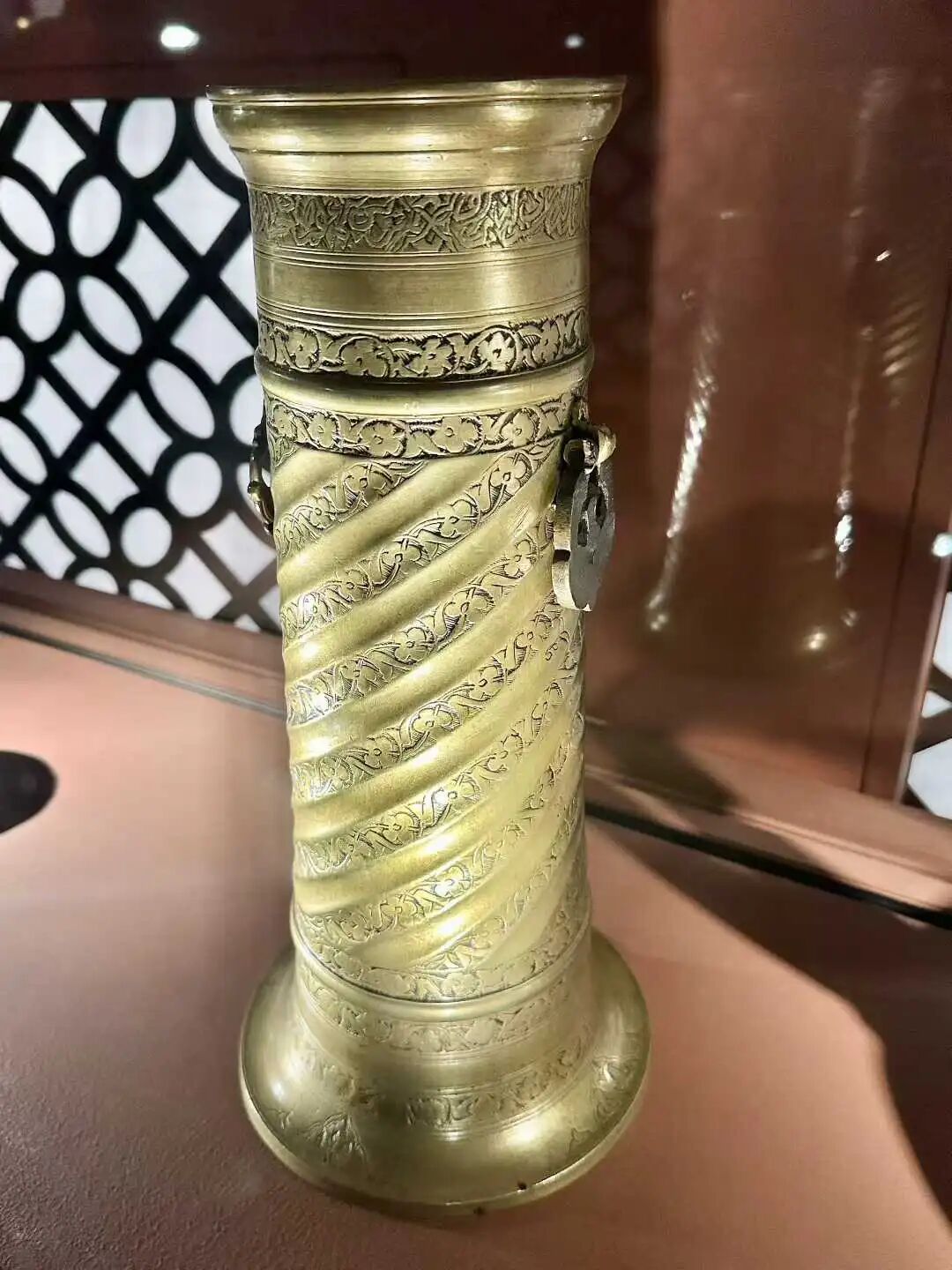
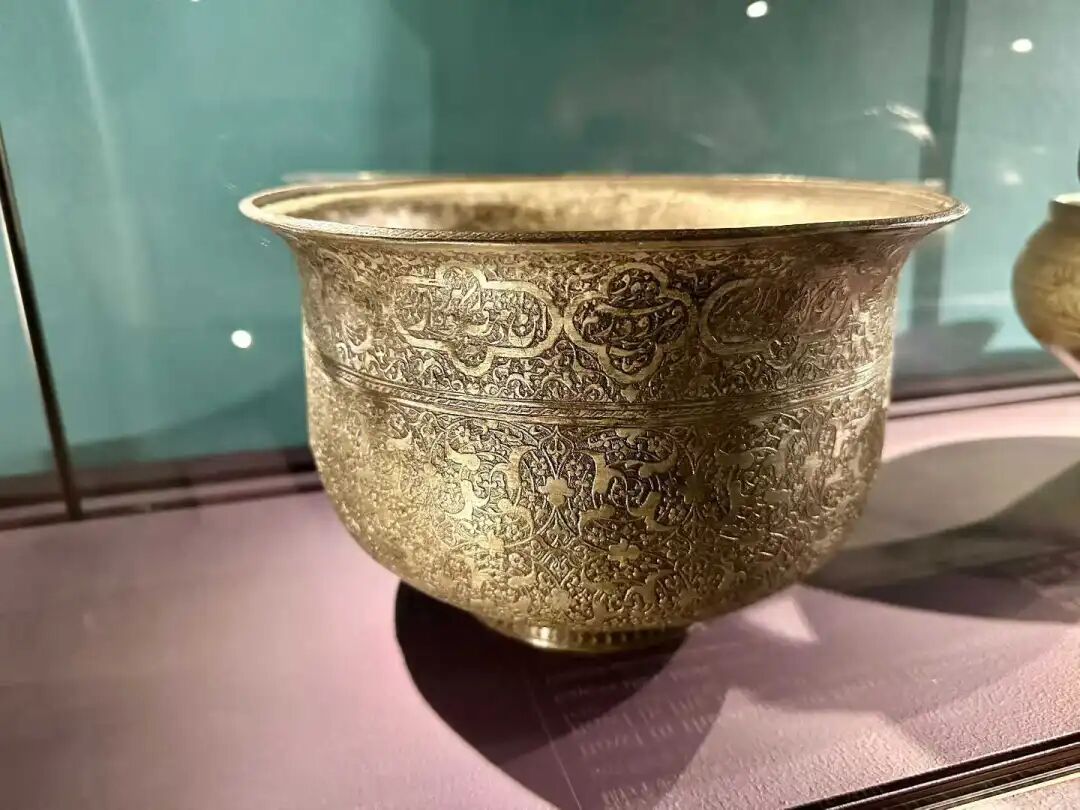
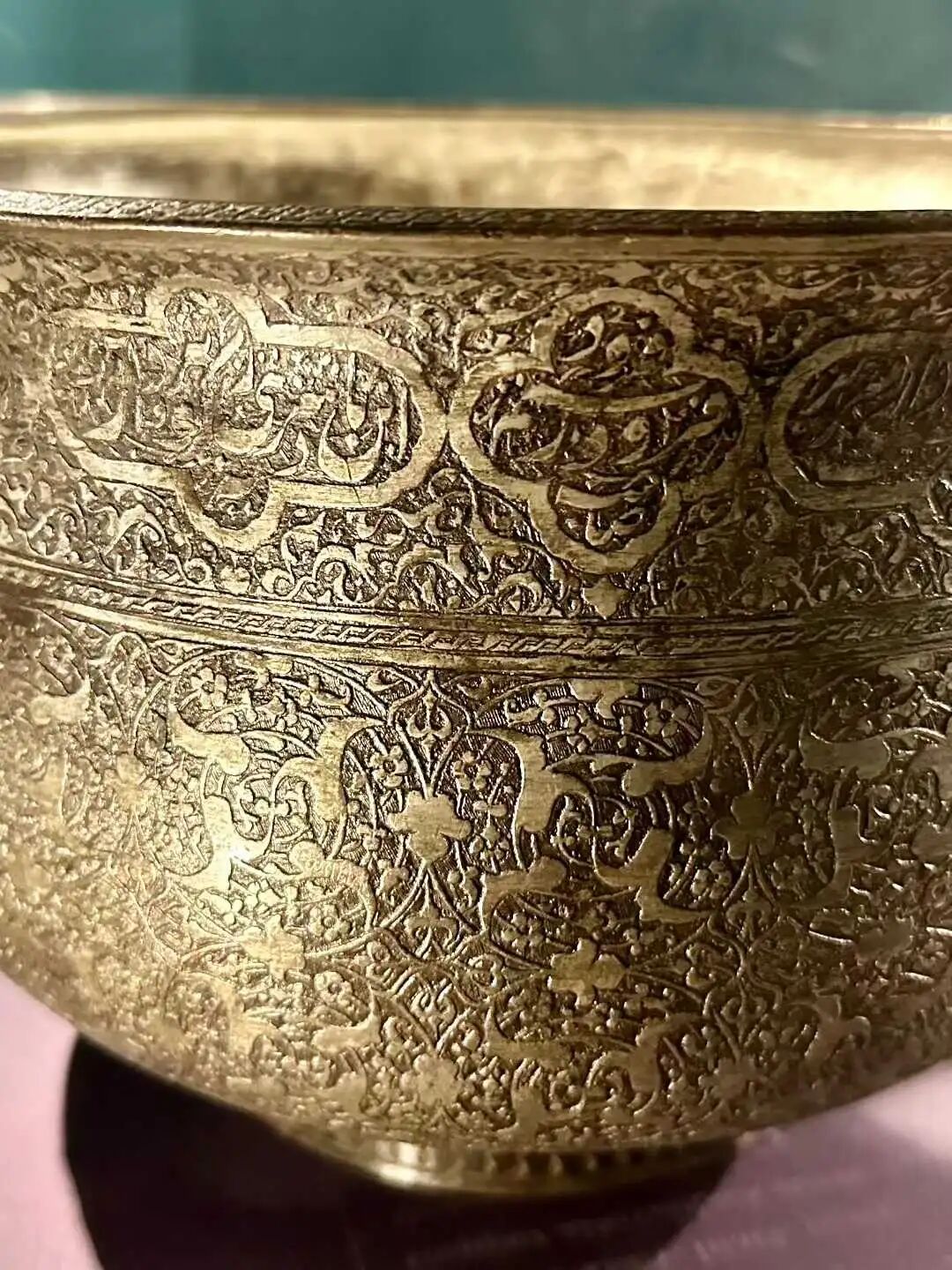
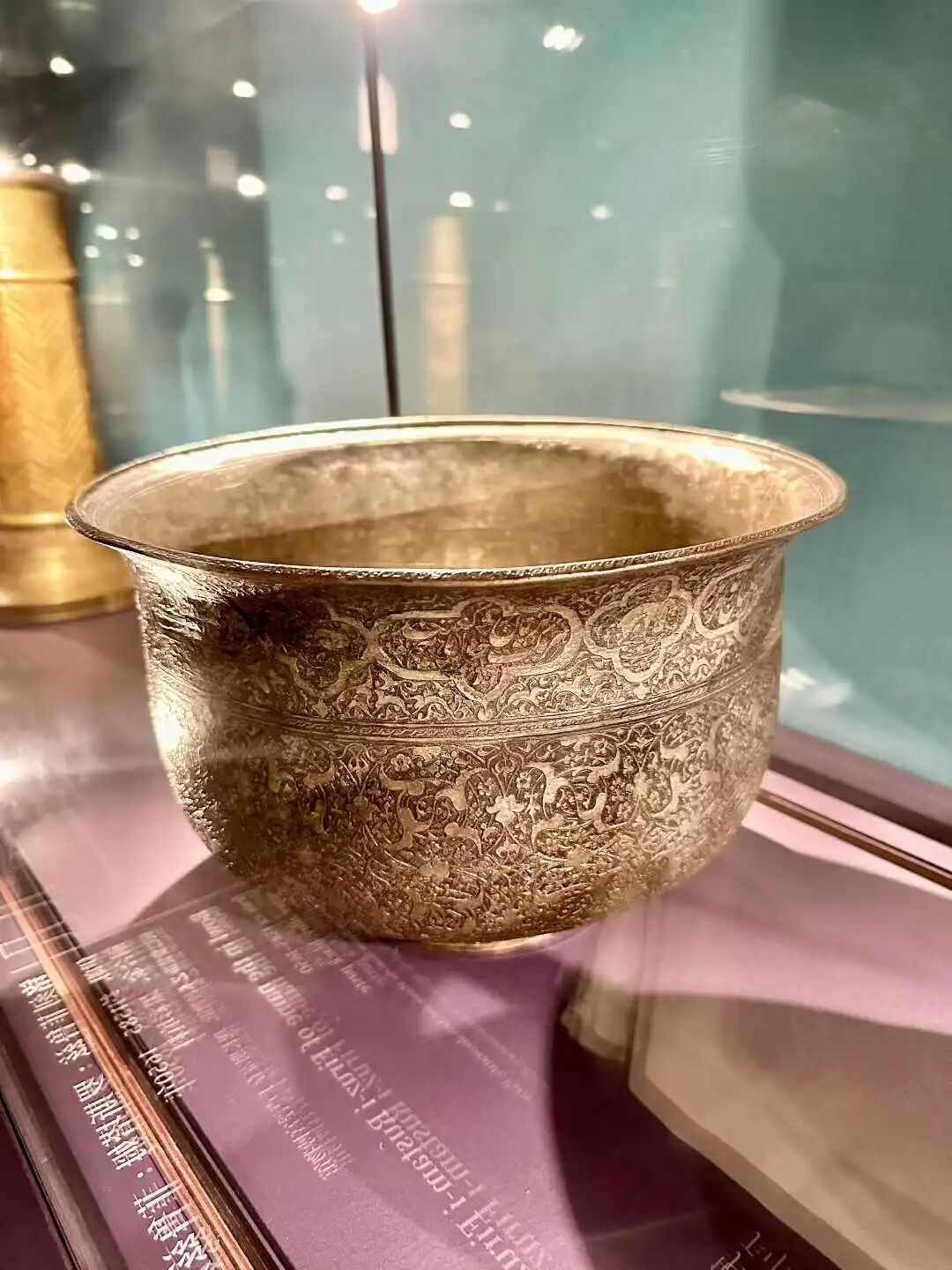
A tinned copper bowl from the Safavid dynasty, dating from 1585 to 1650. It is engraved with the Persian name Firuz-i Rustam-i Firuz, which belonged to a Safavid court noble. Rustam is taken from the hero in the Persian epic Shahnameh, symbolizing bravery and nobility.
The bowl is engraved with two Persian Sufi quatrains:
This cup is filled with the nectar of the Kawthar spring.
Its outline is just like the lines of a beauty's cheek.
Whoever drinks the sweet dew from this cup,
Will be like Khidr, possessing the breath that gives life.
I travel fast through the desert of your love,
And see two thousand bloodthirsty black men.
They spoke to each other in mysterious, coded language:
Tilt the cup in your hand, but do not spill it!
The Kawsar (Kawsar) is the sacred pond in Paradise mentioned in the scriptures, known as the 'Pool of Abundance.' On the Day of Resurrection, people will rise from thirst, and the noble Prophet will offer the believers refreshing water from the pool.
'Desert' and 'cup' sound similar in Persian, so they are common metaphors in Sufi poetry. They refer to the use of the vessel while expressing a persistent search for divine love.
Khidr (Khidr) is considered by the faith to be an immortal saint, symbolizing life, wisdom, and guidance.
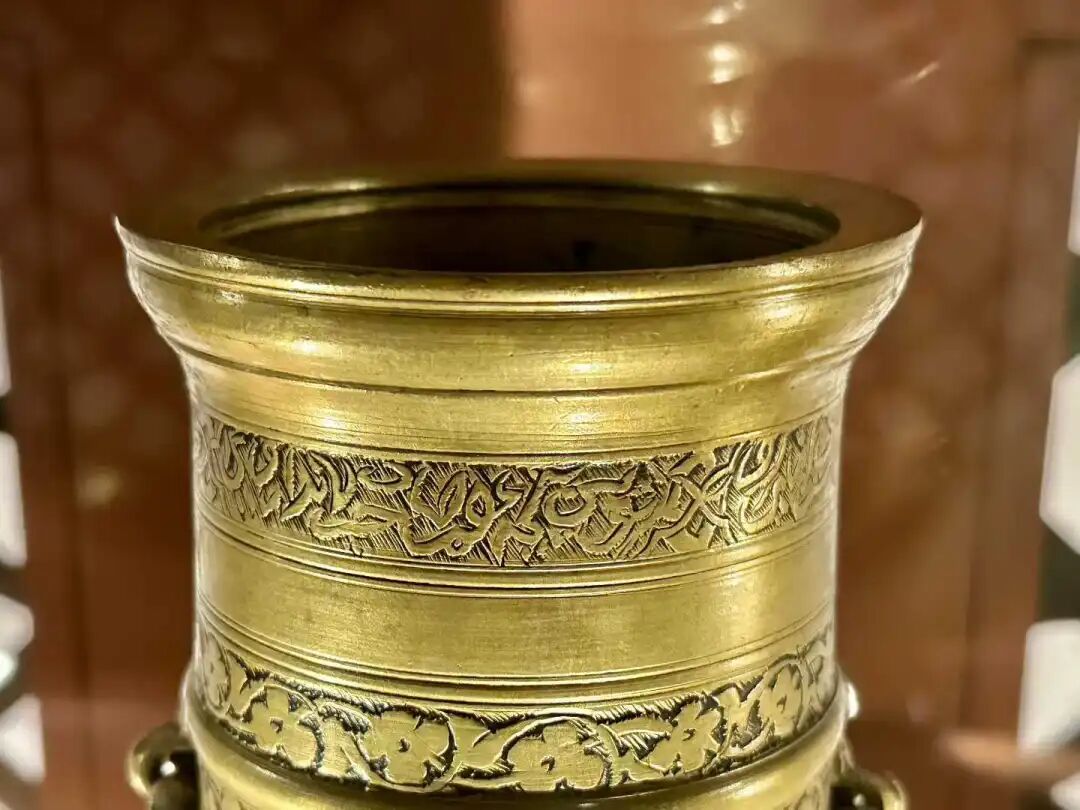
A bronze bath bucket from the Safavid or Mughal dynasty, dating between 1585 and 1615, is inscribed with Persian poetry:
When my moon-faced beauty steps into the bathhouse, I rise
I fill my eyes with water and pour it over her feet
To bathe you, oh, blooming rose
The sun becomes a golden cup, the new moon becomes the handle
Whenever my moon-faced beauty steps into the bathhouse
The water cup is my eye, and the eyebrow is its handle
This is a specialized bucket for a traditional Middle Eastern public bath (hammam), used to carry toiletries or hold water, and was a daily object for the wealthy class at the time. Using parts of everyday objects to describe a lover's appearance is a common rhetorical technique in Persian poetry. Blending the bathing scene with intense longing is a classic expression of the 'lover' (ashiq) theme in religious art.
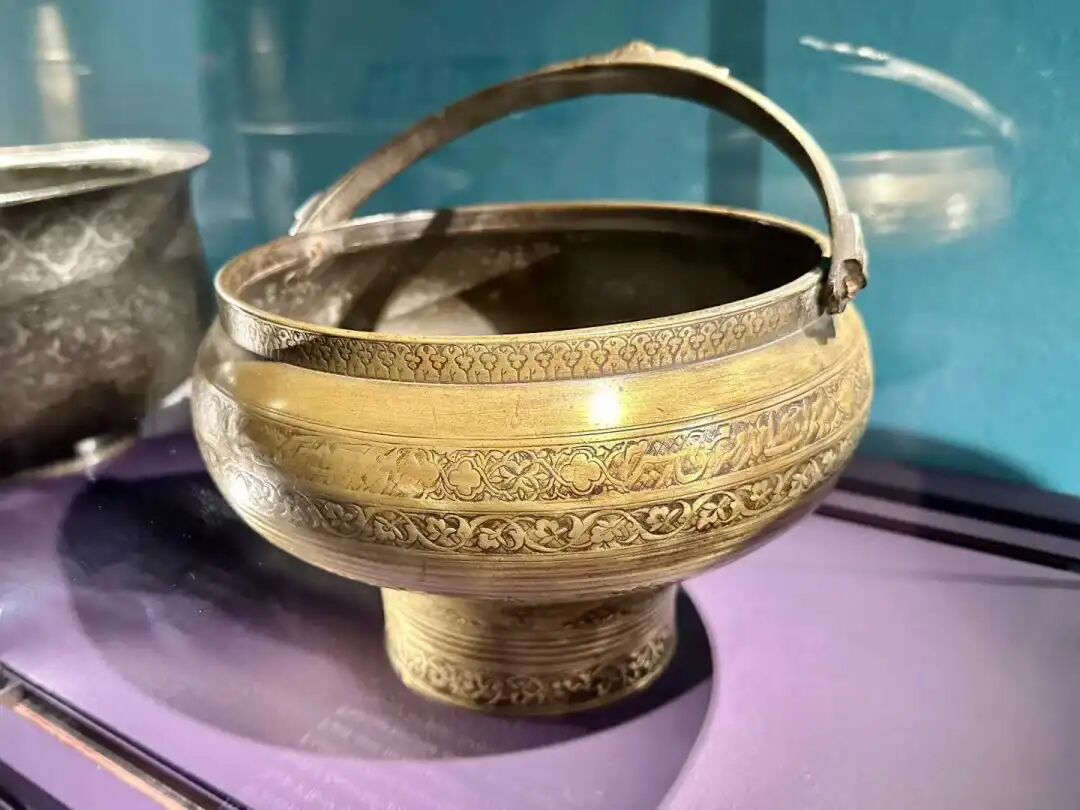
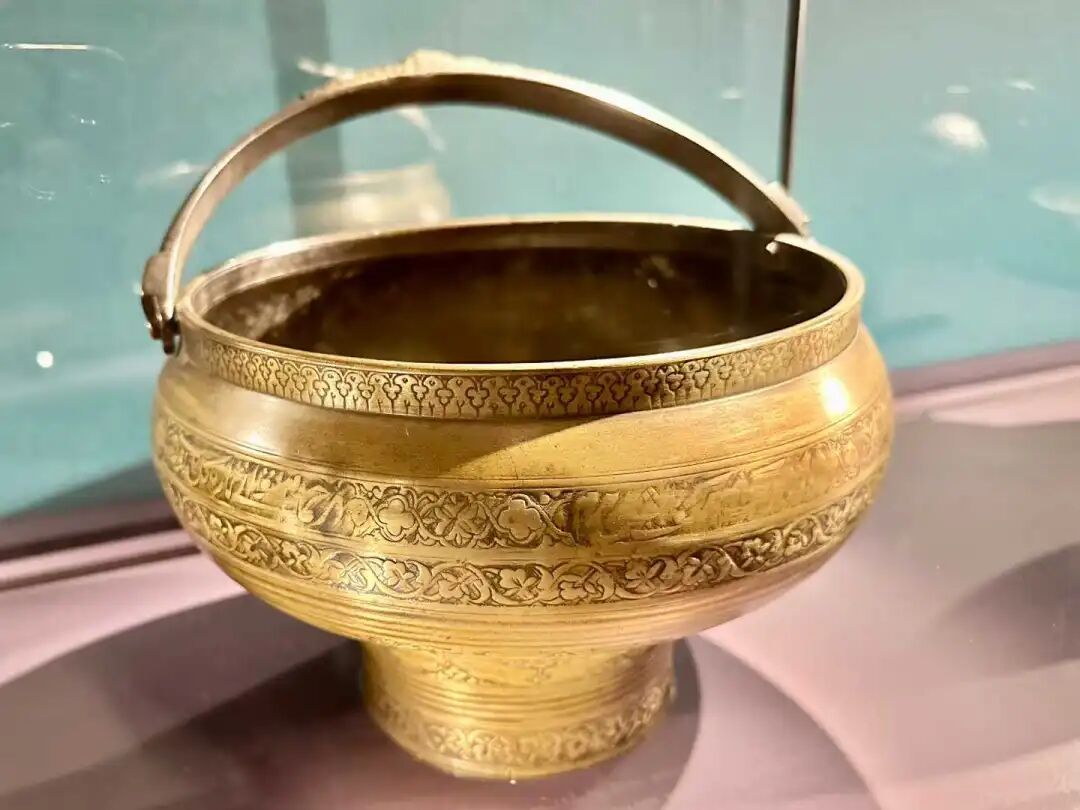
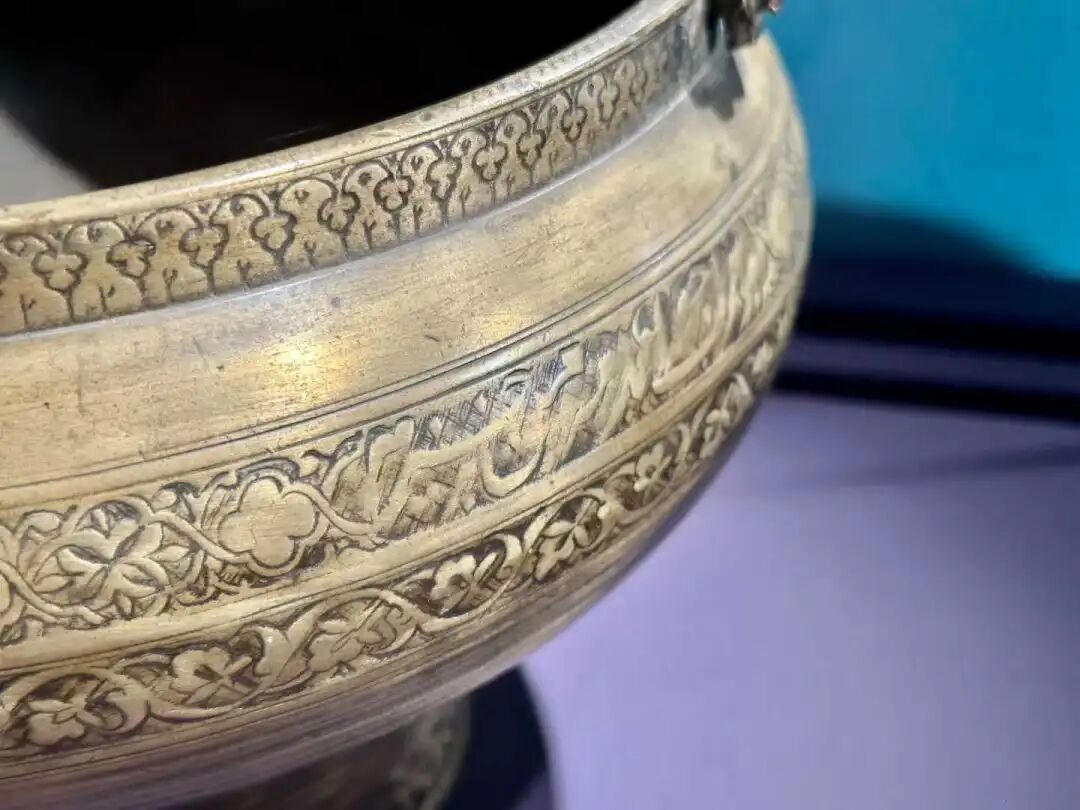
A bronze bath bucket from the Safavid dynasty dated 1589 is inscribed with the same Persian poem as the previous one, along with the name 'Giyan Big' and the date '998,' which corresponds to the Hijri year 998 or 1589-90 AD.
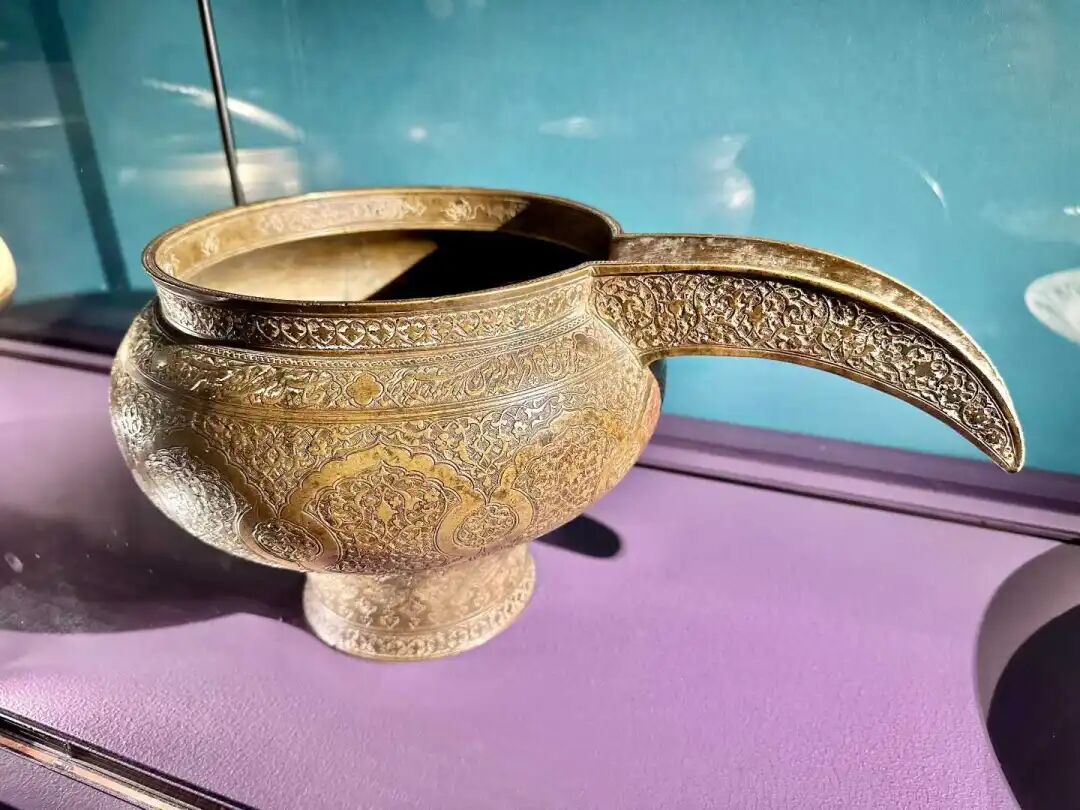
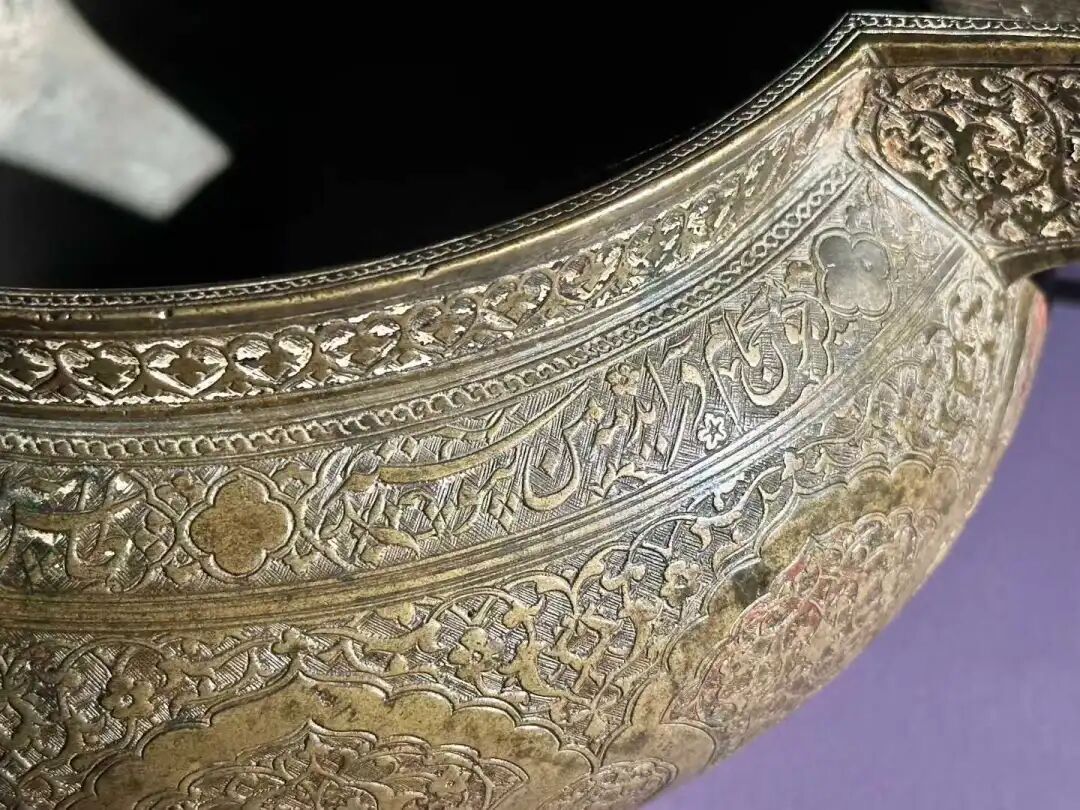
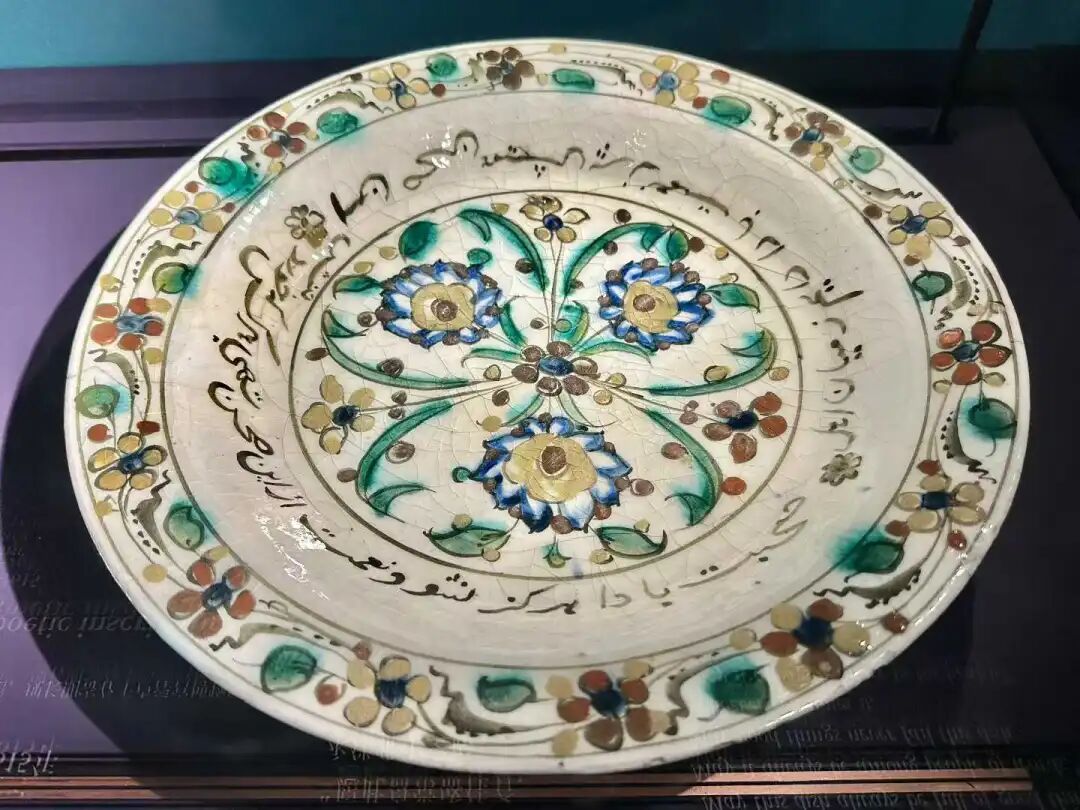
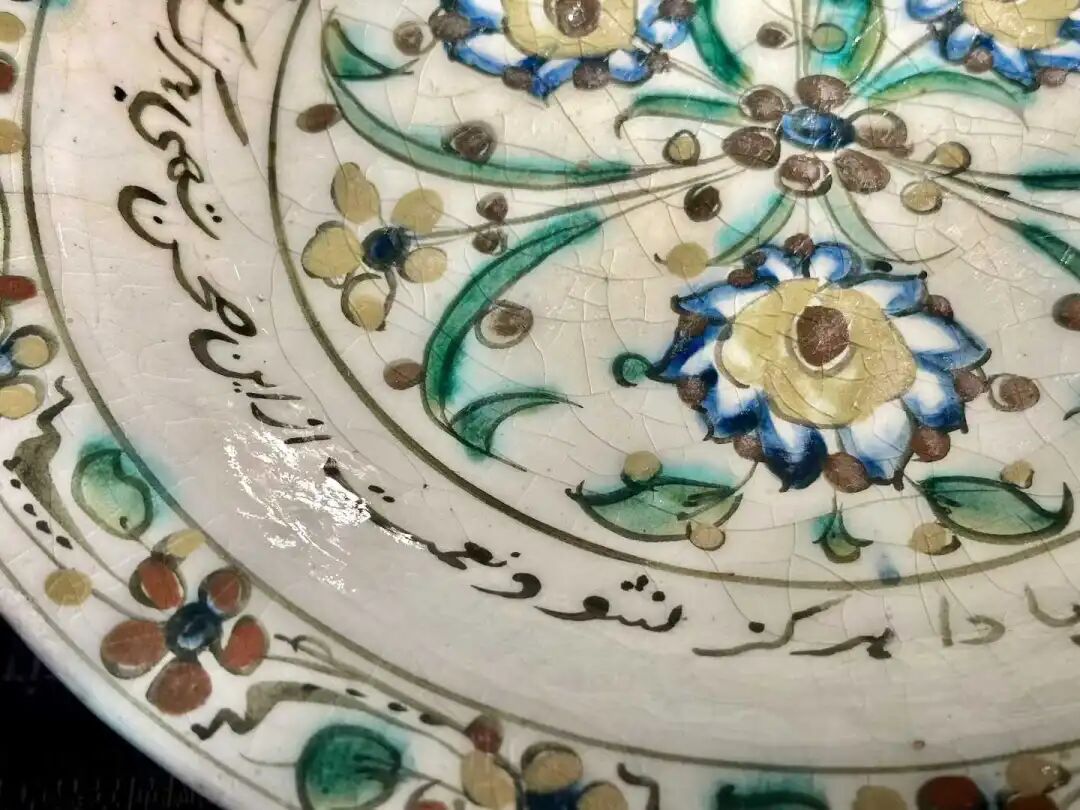
An underglaze painted ceramic plate from the Safavid dynasty, dating between 1585 and 1615, is inscribed with a Persian quatrain:
May this plate always be full of blessings and delicious food
Long accompanying the table of elegant scholars and good friends
May the delicacies in the plate never run dry
Whoever eats from this plate (will have health and longevity)
This anonymous lyric poem was popular at the time and is commonly found on metal and ceramic wares used by the Safavid court and nobility. After the Safavid dynasty moved its capital to Isfahan in 1587, ceramic art was influenced by Chinese Wanli blue-and-white porcelain, leading to mass production of blue and white glazed wares. Meanwhile, Persian poetic inscriptions became a signature decoration for high-end items, reflecting the Safavid dynasty's appreciation for literature and calligraphy.
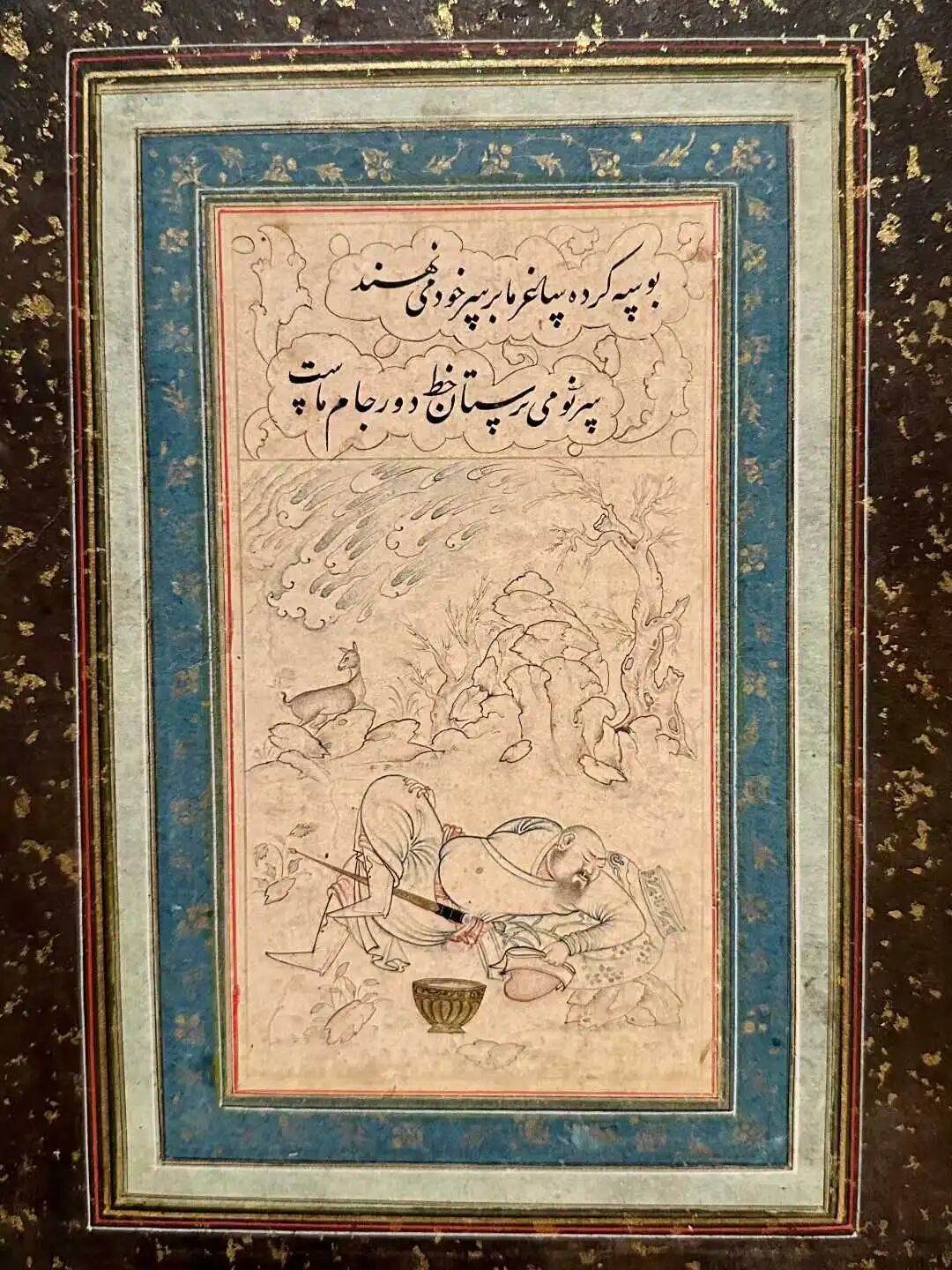
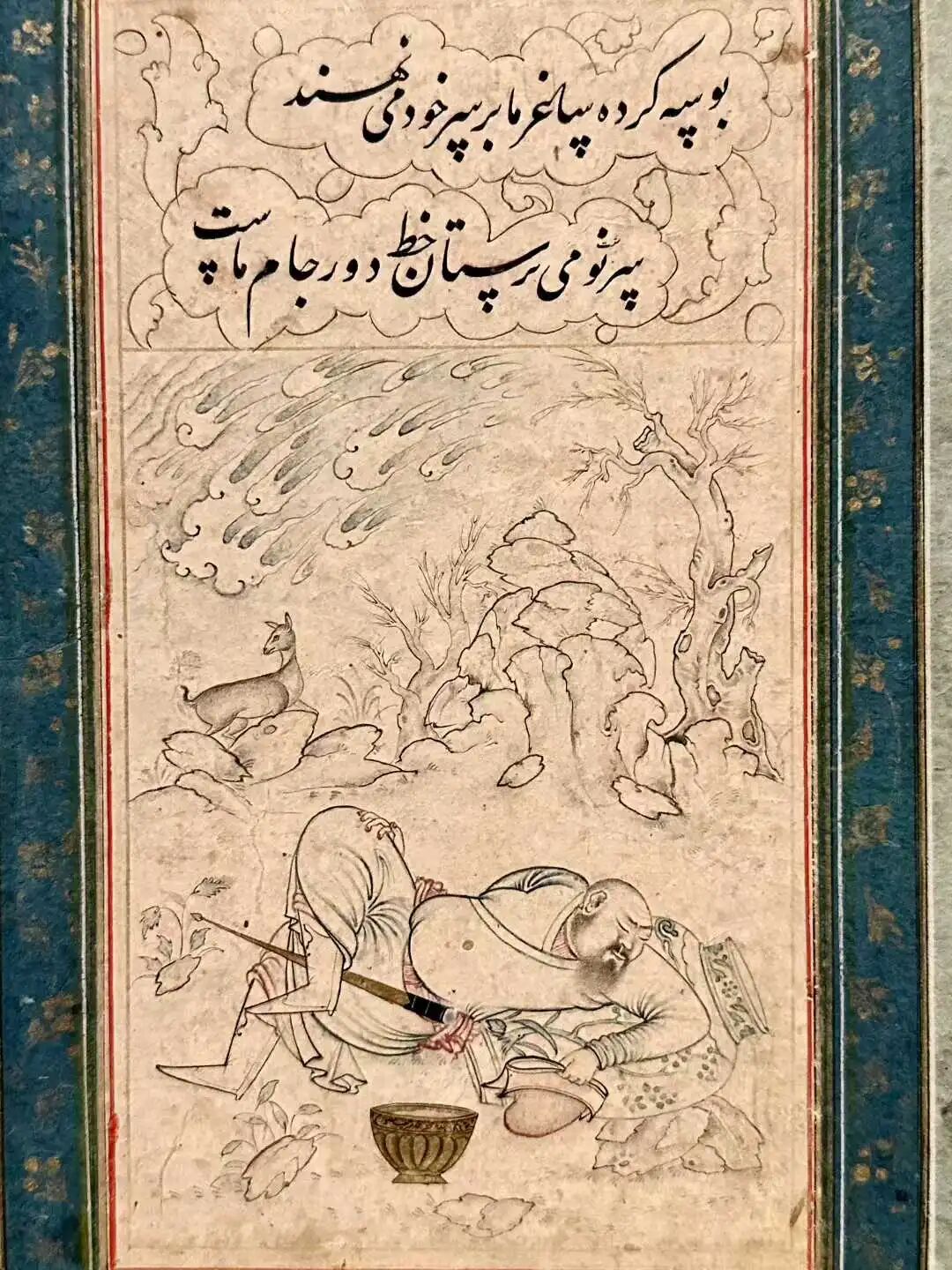
A miniature painting from the Bukhara Khanate between 1585 and 1600 shows an Uzbek or Mongol warrior leaning against a large Chinese porcelain vase. Above it is a Persian couplet:
Kissing our wine cup
They lift it to their foreheads
The fate of a wine lover
Is tied to the pattern on the rim of the cup
This is a classic wine and cup image in Sufi literature. In these Persian miniature poems, the wine cup symbolizes a spiritual vessel for union with Allah, and drinking symbolizes spiritual intoxication and soul awakening.
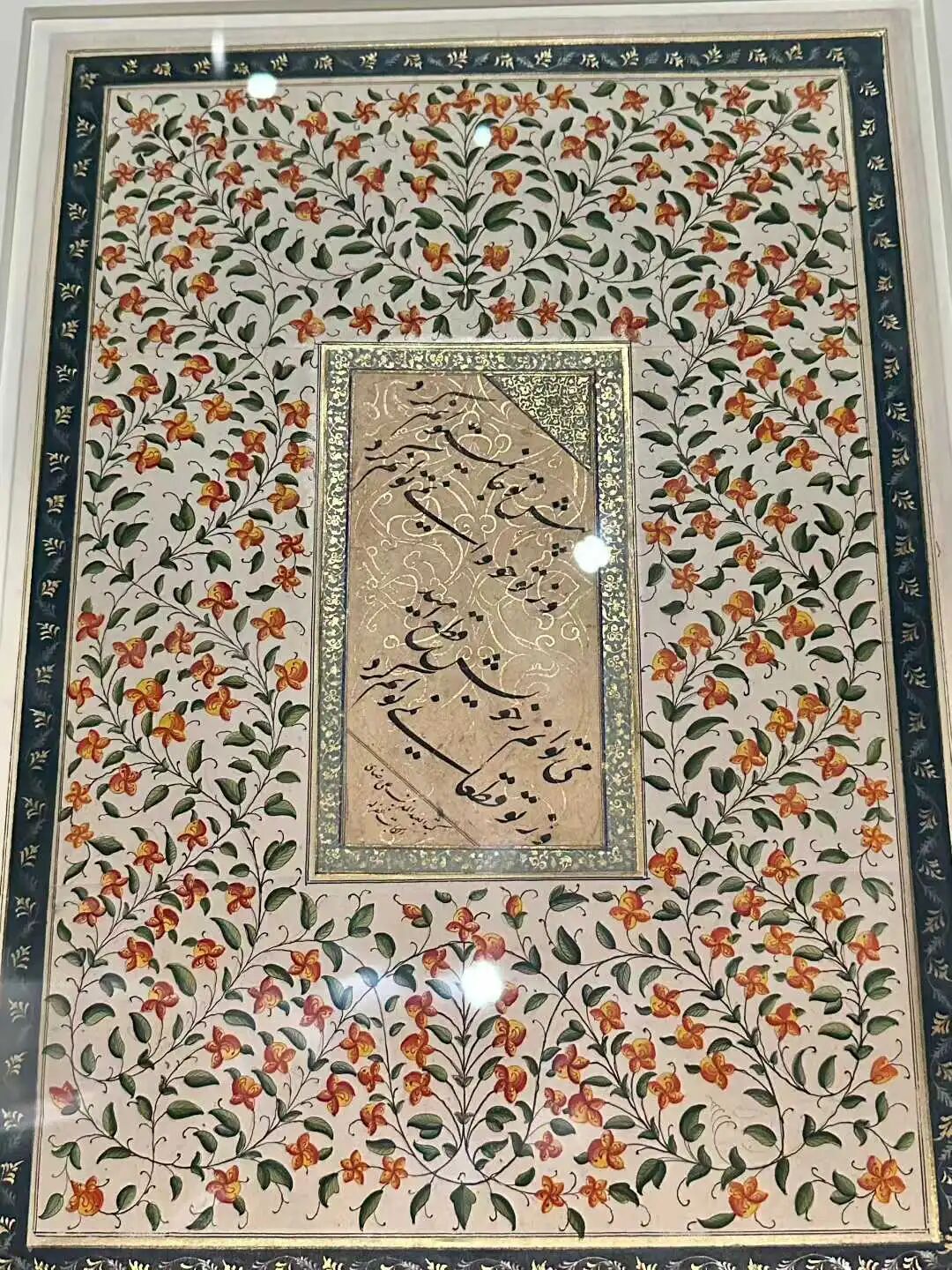
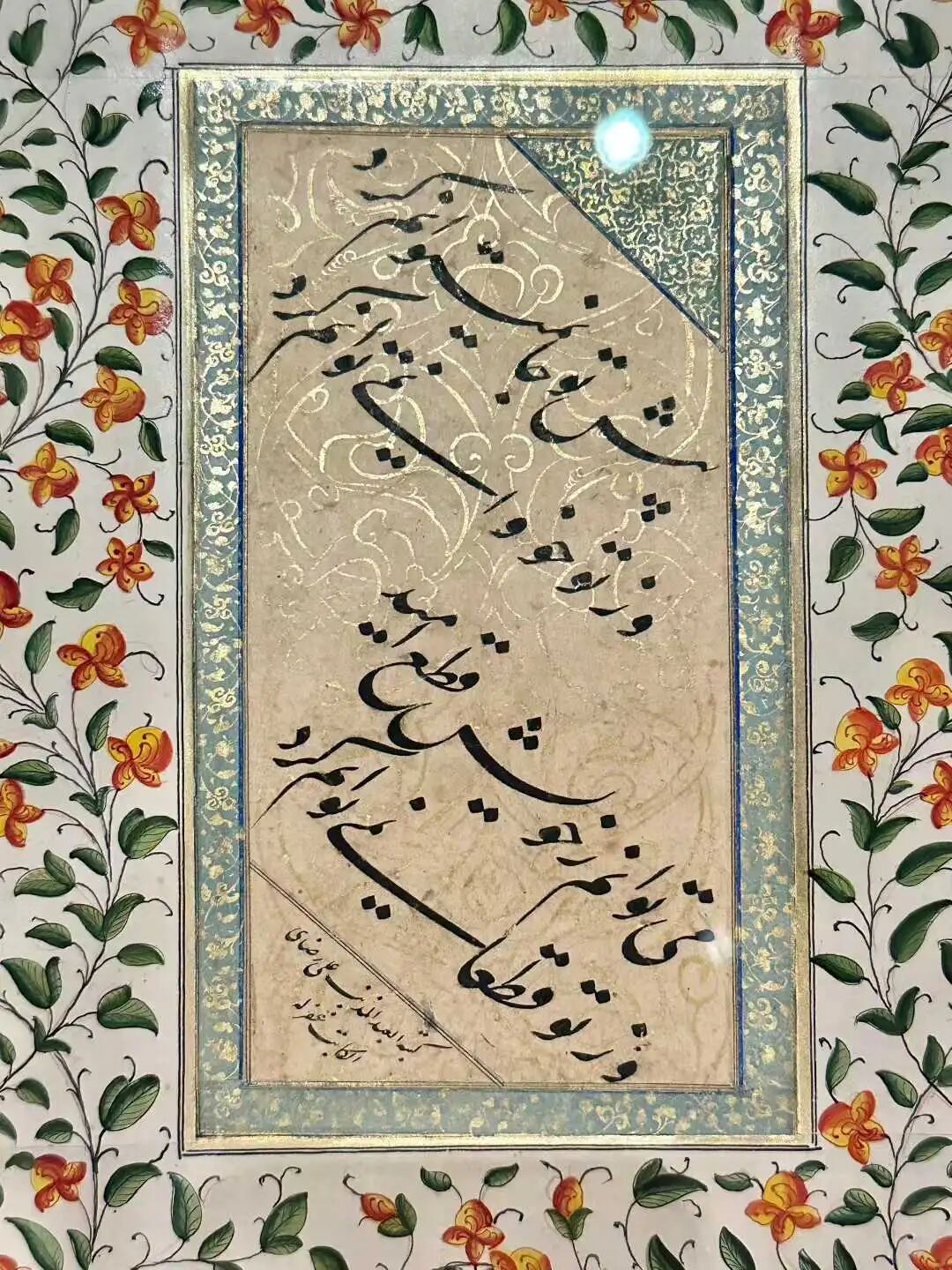
A Mughal dynasty calligraphy album page from 1772-1789 with floral decorations, featuring a Persian lyric poem:
I can no longer ask you for more, nor can I beg you
I can give up all hope for myself, but I can never give up on you
Written by the sinful servant Ali Reza. May Allah forgive him.
Using worldly love to describe absolute devotion to Allah is a classic pattern in classical Persian literature. Giving up the self while being unable to let go of the beloved is the core spirit of Sufi selflessness and devotion.
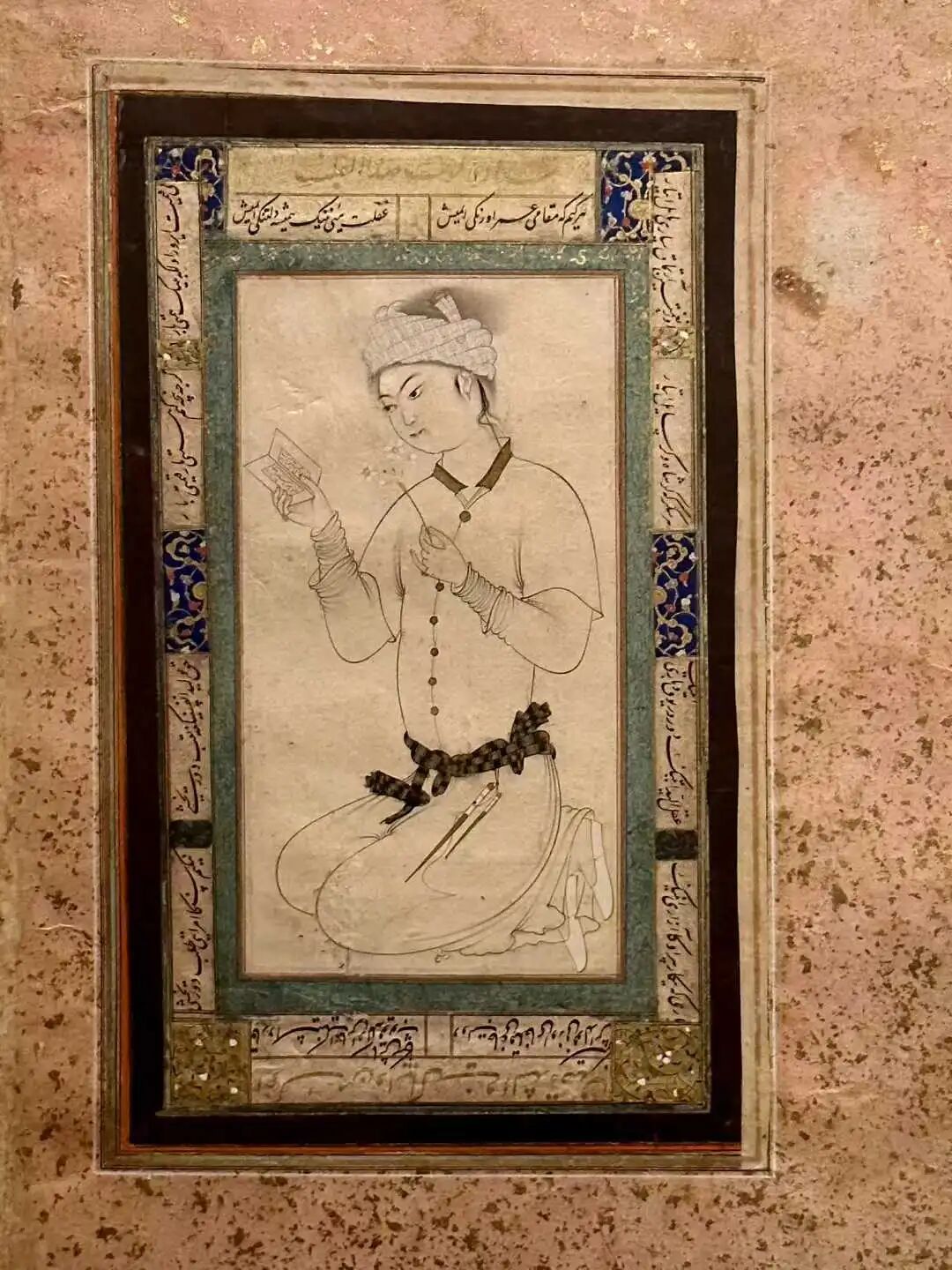
A portrait of a young man made during the Safavid dynasty in 1560. Persian poetry is written around it:
I long again for the breeze of the garden
My heart yearns for the beauty of the cypress and jasmine
The cypress symbolizes uprightness, immortality, and the integrity of a gentleman; it is an eternal image of nobility in Persian poetry. Jasmine represents fragrance and softness. Together with the cypress, they balance strength and gentleness, creating a perfect blend of nature and humanity in Persian aesthetics. The poem uses the garden scenery to express a longing for beautiful nature and pure states of mind, which is a typical way to express feelings through scenery in religious art.
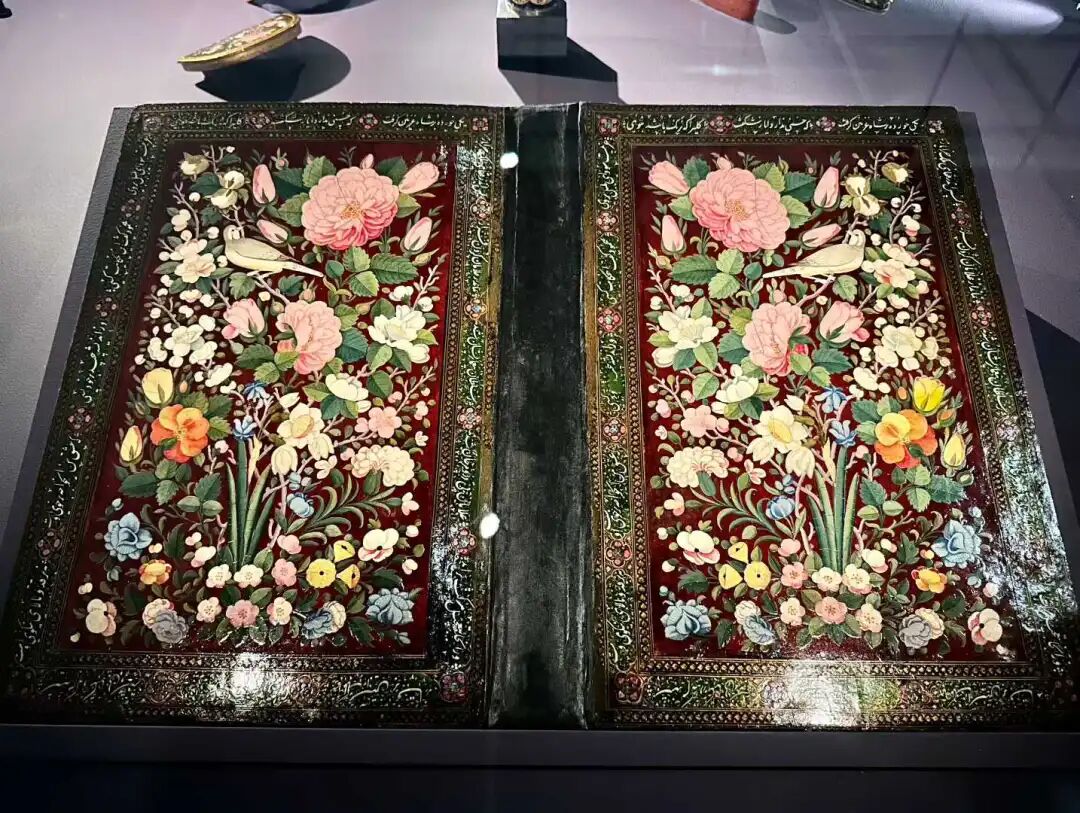
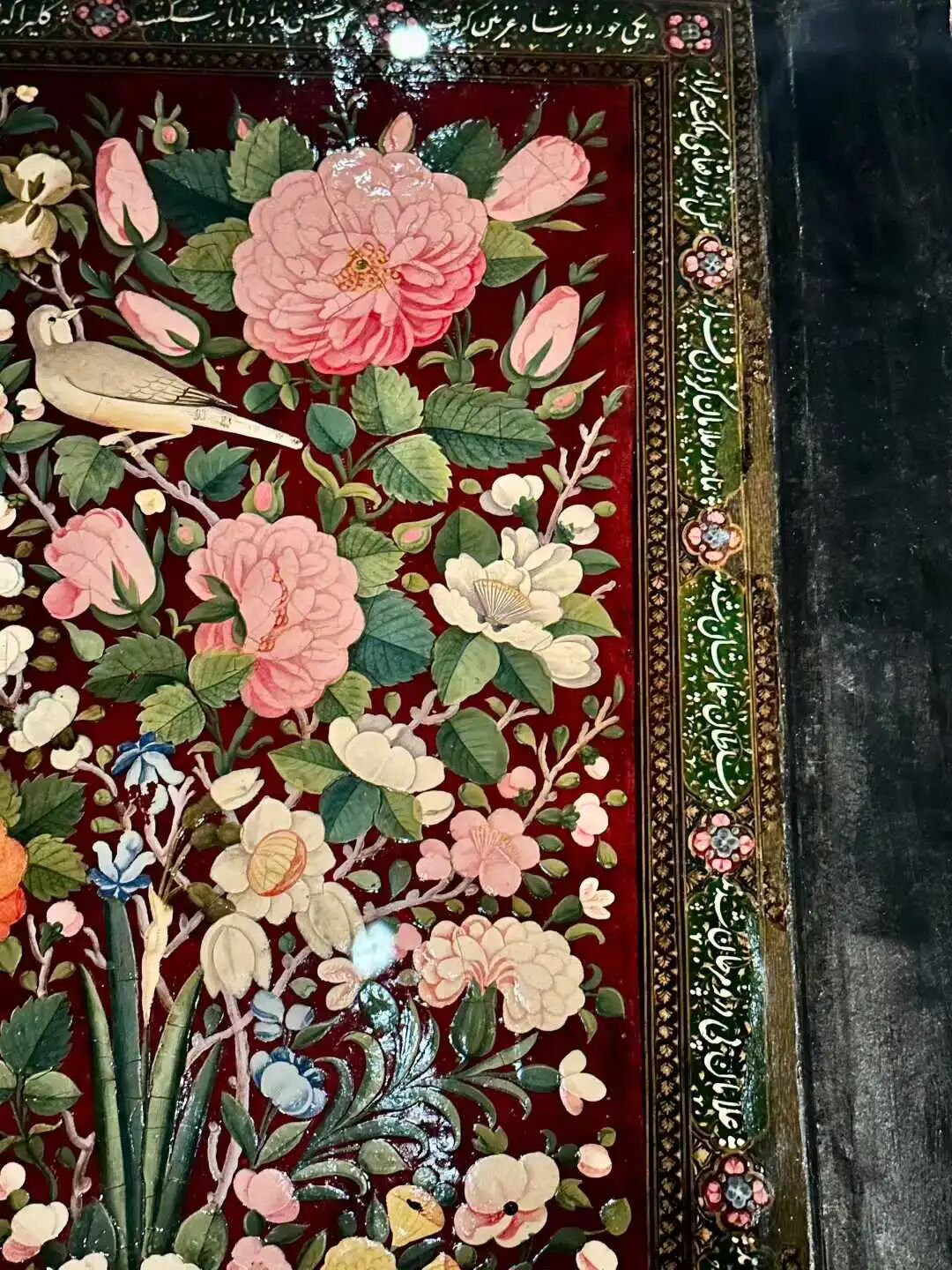
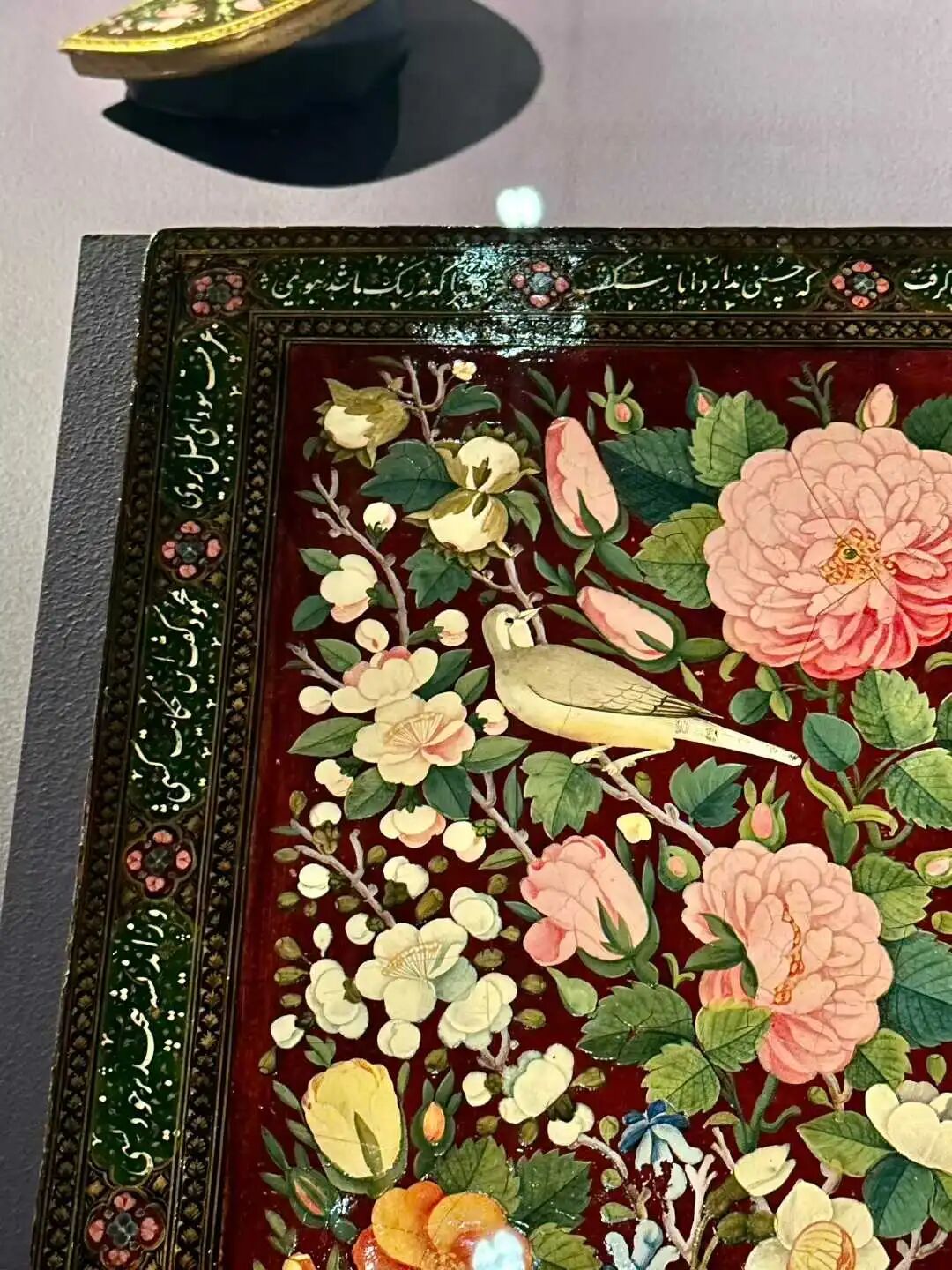
A Rose and Nightingale book cover from the Qajar dynasty in Iran, 1775-1825. This period in Iran was the founding and consolidation of the Qajar dynasty. Fath-Ali Shah highly valued art, and court workshops gathered top lacquer artists. The center of the image shows irises, hyacinths, carnations, roses, and hazelnuts, surrounded by verses from The Orchard (Bustan) by the great Persian poet Saadi:
A rose without scent or color is a strange thing, and the nightingale would never fall in love with it.
O wise one, I admire its character and soul, not its handsome appearance.
The rose and nightingale theme matches the book cover decoration. Here, the idea that a nightingale still loves a rose without scent or color suggests that love is not based on looks, but on inner character and loyalty. This is a common moral poem in religious book binding, used to explain the values of true love, loyalty, and prioritizing the heart over material things.
The rose and nightingale is also one of the most classic themes in Persian Sufi literature and art, symbolizing the Sufi practitioner's longing for Allah.
A glazed ceramic bowl from the Qajar dynasty of Iran, dated 1808-09.
The center features a lyric poem by the great Persian poet Hafez:
Last night I saw angels busy in the tavern.
They kneaded the essence of human souls and poured it into a wine cup.
Written in the city on the first day of the month following Rabi al-Awwal.
Made by the craftsman Ramazan in the year 1223 of the Hijri calendar.
This is a typical Sufi poem. The tavern symbolizes a spiritual retreat, the essence of human souls (guli adam) represents personified spiritual knowledge, and the wine cup symbolizes a spiritual vessel for communion with Allah.
The first line around the edge contains verses from The Rose Garden (Gulistan) by the great Persian poet Saadi:
One day, I picked up a piece of scented clay dropped by a loved one,
I was intoxicated and obsessed by its fragrance,
So I asked: 'Are you ambergris, or are you musk?'
The clay replied softly:
'I was originally just a piece of common, humble earth,
But because I stayed close to a rose,
I became stained with the noble character of my companion,
Even though my essence remains the same, my spirit has become something different.'
This poem is a classic fable from The Rose Garden. Its core message is that character comes from one's companions, and that one's environment and friends can elevate an ordinary nature. By comparing itself to common earth and using the rose to represent good friends, wise people, and noble souls, it expresses the philosophy that one becomes like those they associate with. This fits the tradition of religious moral literature while using beautiful imagery suitable for ceramic housewares, making it a representative literary decoration for Iranian practical ceramics from the 18th and 19th centuries. Glazed ceramics from 18th and 19th-century Iran often featured famous lines from Persian poets like Saadi, Hafez, and Rumi, serving practical, aesthetic, and literary purposes.
The second line around the edge contains a Persian Sufi proverb:
The fool who gives his soul never leaves the path of the wise.
The nightingale with a heart burned by love never leaves the rose garden.
The true nature of a sincere lover is just like this.
Even if their head falls, they do not break their oath or promise.
The "nightingale with a heart burned by love" is a classic theme in Persian poetry, representing a seeker who sacrifices everything for love. While the oath refers to romantic love, it actually symbolizes loyalty to the path of Allah.
The third line around the edge comes from the narrative poem "Shapur and Shirin" (Maṯnawī-ye Šāpūr va Šhnāz):
One night, a performer sighed to himself in the wilderness.
In these mountains and deserts, where must I wander?
Come, let us spread our wings and fly to the royal city.
To talk and keep company with princes and nobles.
Sometimes acting as a close friend at the king's banquet.
This is a couplet from a classical Persian epic, a long romantic poem. It uses wandering in the wilderness to represent life's confusion and the royal city to represent ideals, power, and spiritual destination, making it perfect for decorating court-style objects.
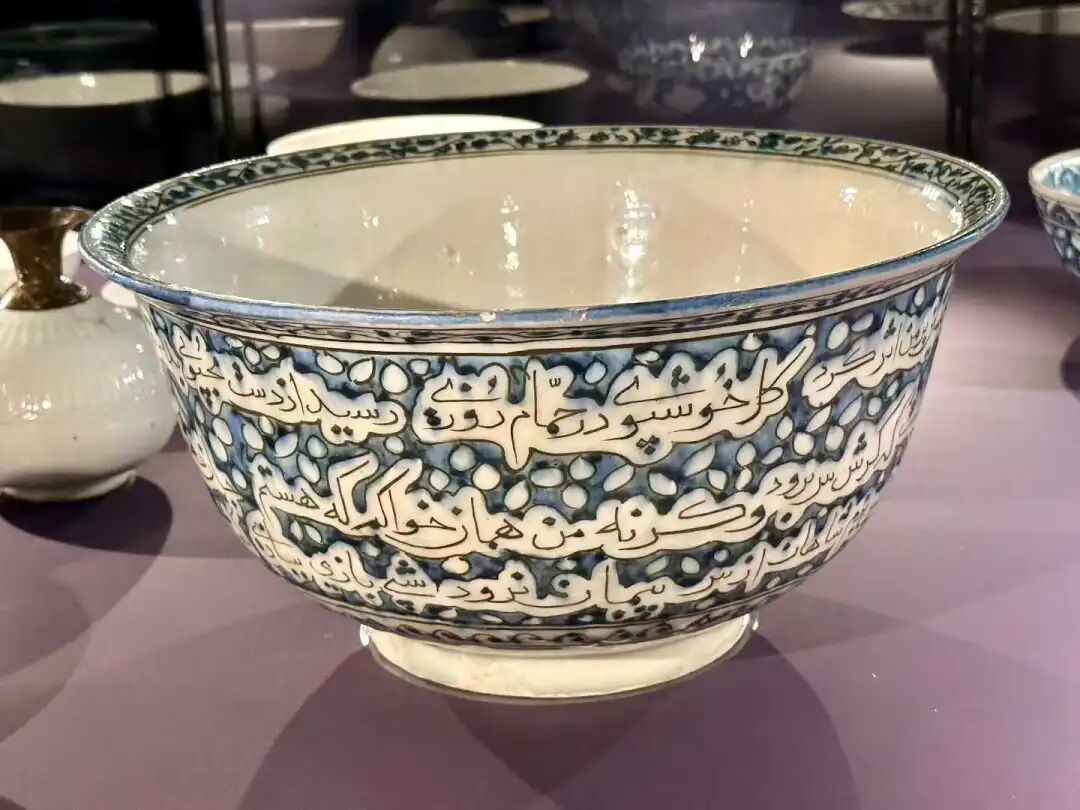
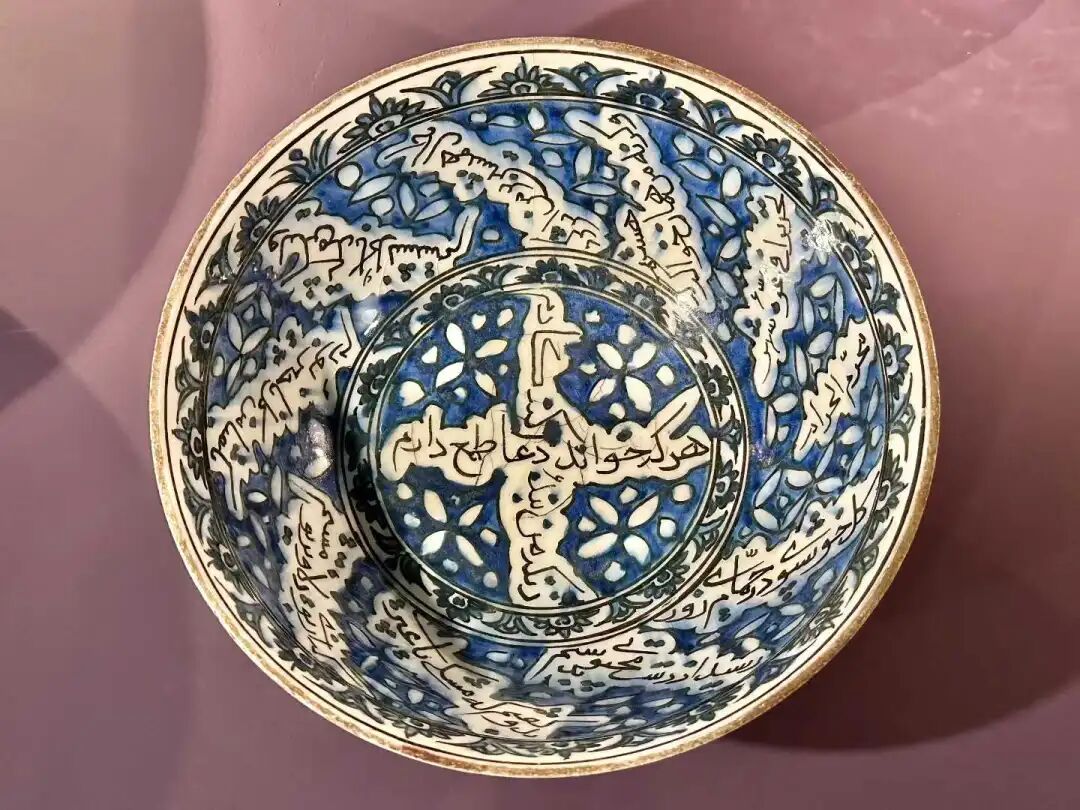
A glazed ceramic bowl from the Qajar dynasty of Iran, dated 1800–1815.
The bottom of the bowl says:
For all who recite scripture and offer dua for me, I have my own hopes.
Because I am only a lowly servant burdened by sin.
The surrounding area features verses from the book "The Orchard" (Bustan) by the great Persian poet Saadi.
One day, I picked up a piece of scented clay dropped by a loved one,
I was intoxicated and obsessed by its fragrance,
So I asked: 'Are you ambergris, or are you musk?'
The clay replied softly:
'I was originally just a piece of common, humble earth,
But because I stayed close to a rose,
I became stained with the noble character of my companion,
Even though my essence remains the same, my spirit has become something different.'
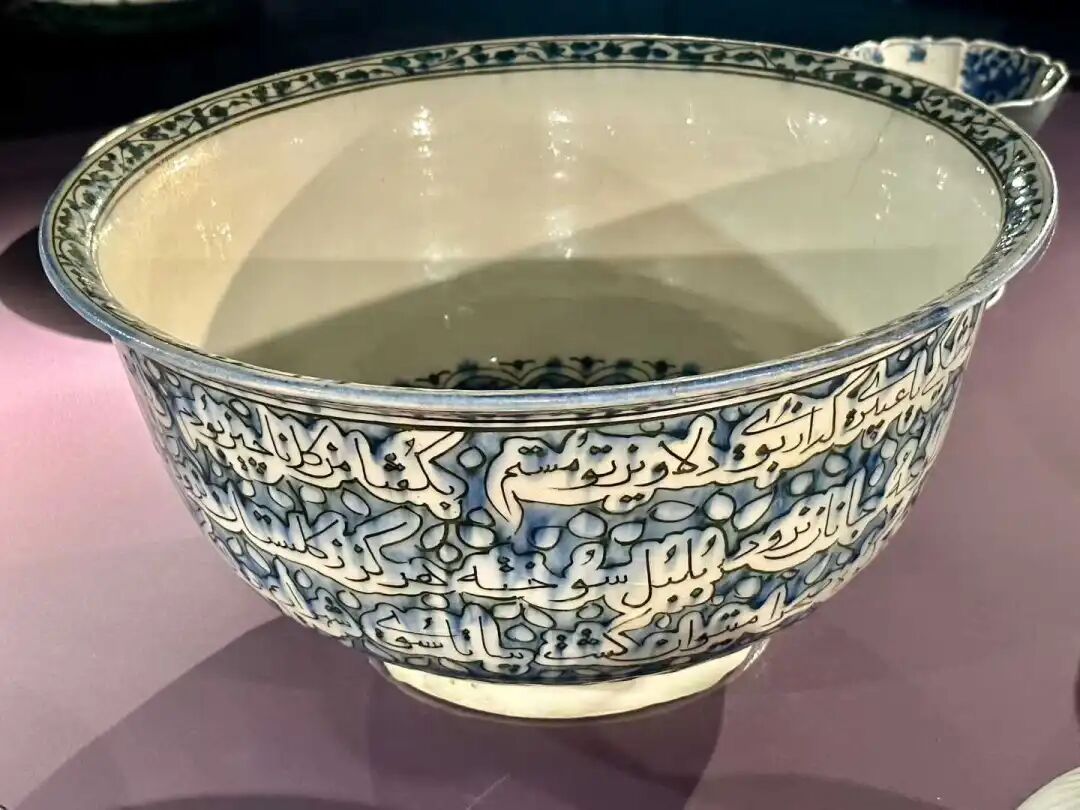
A glazed ceramic bowl from the Qajar dynasty of Iran, dating to 1820-1821.
The bottom of the bowl says:
For all who recite scripture and offer dua for me, I have my own hopes.
Because I am only a lowly servant burdened by sin.
The inscription along the inner rim of the bowl reads:
Drink up, you gentle and sweet-mannered beauty.
Come drink this water of life from the palm of my hand.
May you drink in joy all your life, and be safe and healthy year after year.
May life be sweeter than rock sugar (bingtang), granulated sugar (shatang), dried fruits, and fragrant herbs.
There is also a fragment of a Shia text: Drink this water, you... fragrant lips, keep Ali and Abbas in your heart, and remember the grace of the king.
Ali was the fourth Caliph of the faith, and Abbas was a martyr of the Battle of Karbala.
The first part is a humble prayer poem at the bottom of the bowl, expressing the user's humility and desire for blessings. The second part is a celebratory poem for banquets on the rim, using the imagery of the water of life to encourage drinking and wish for a long, sweet life. The third part commemorates the Shia sages Ali and Abbas, serving both dining etiquette and devotional purposes. Together, these three parts form a typical inscription pattern for daily ritual vessels of the Qajar period, blending secular banquet culture, religious ethics, and Shia faith, serving as an important example of how classical Persian literature continued on everyday objects.
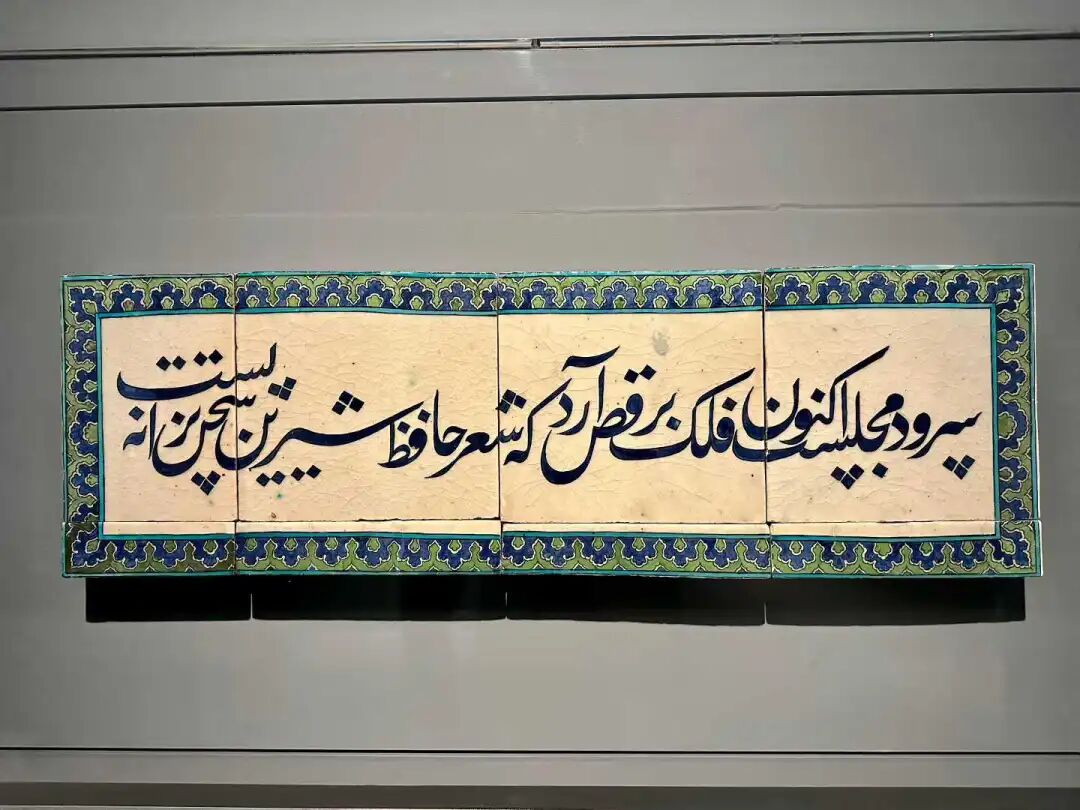
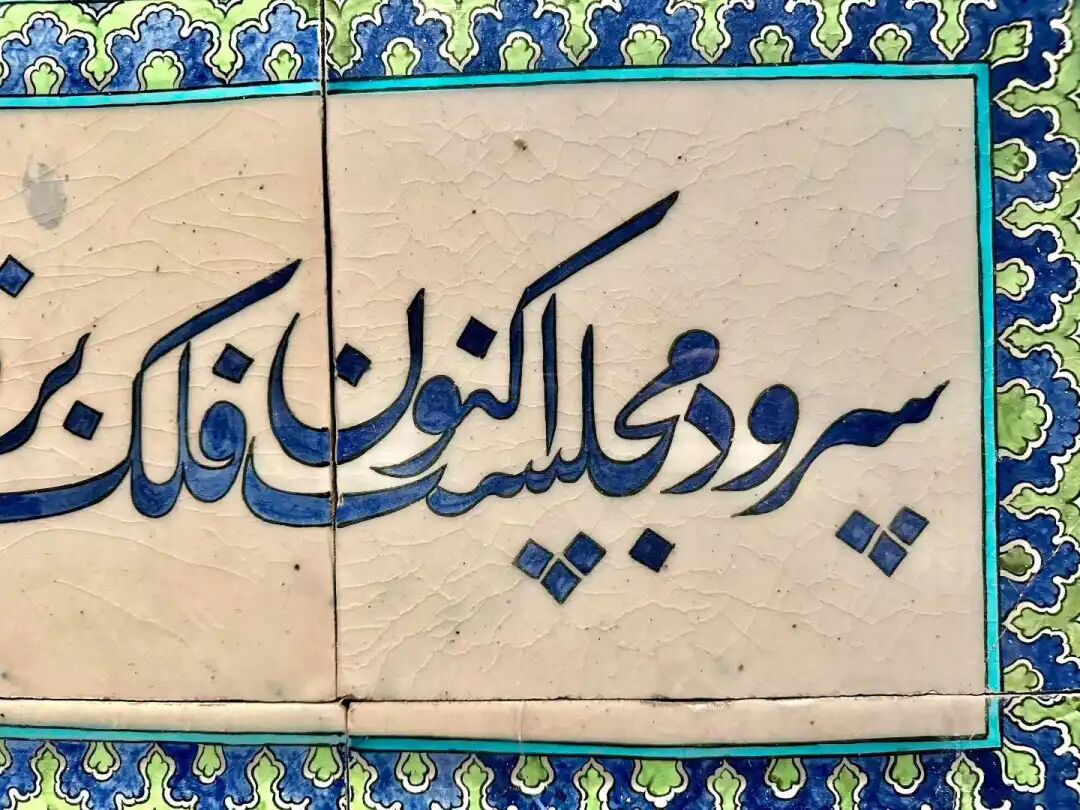
A glazed ceramic tile from Ottoman Syria, dating to 1570-1620, inscribed with Persian poetry:
Your poetry feast makes the heavens dance at this moment,
The poems of Hafez, with their sweet words and wonderful language, are your songs.
This is the final couplet of a classic lyric poem (ghazal) by the great Persian poet Hafez, and it is also a classical Persian couplet (masnavi).
In this context, the 'poetry feast (majlisat)' refers to a sacred gathering in the Sufi tradition where the divine and human connect. In Sufi literature, this poem means that the beauty and wisdom of Allah are the source of the universe's movement, and poetry is a way to speak about divine beauty. The heavens dance for the poetic feast, not for human entertainment, but because they are called by the beauty of sacred words. Hafiz's poetry turns divine beauty into human language, acting as a bridge between the mortal world and the heavens.
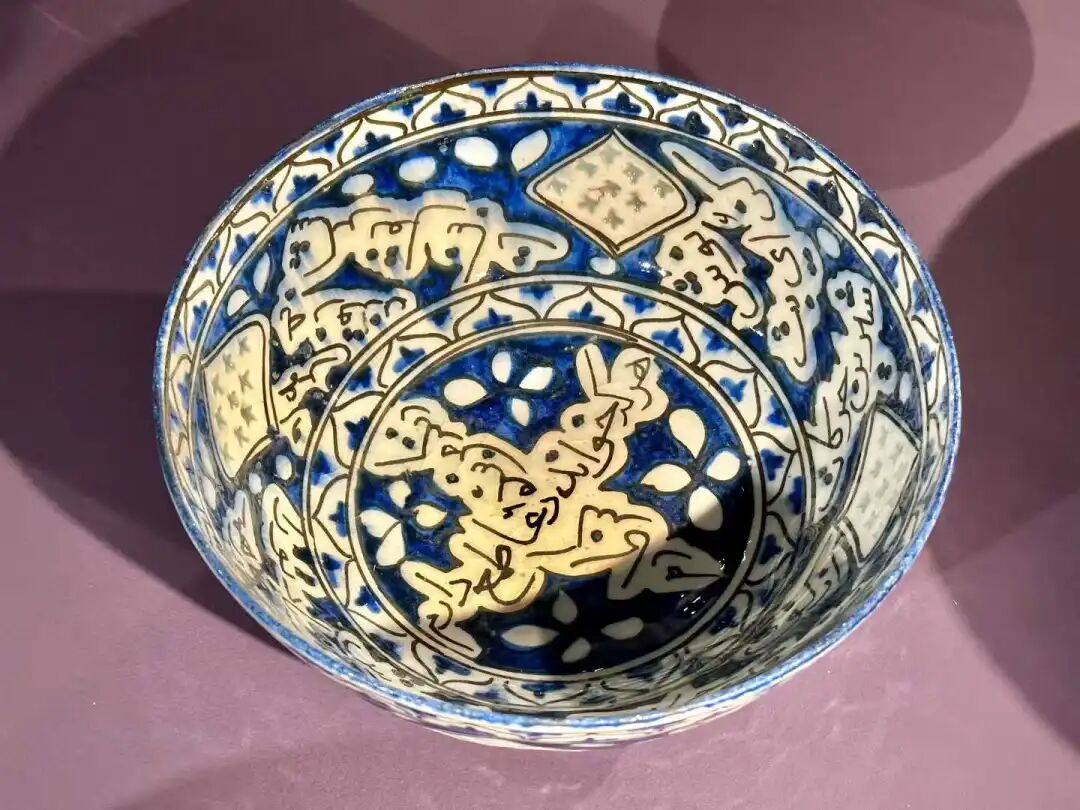
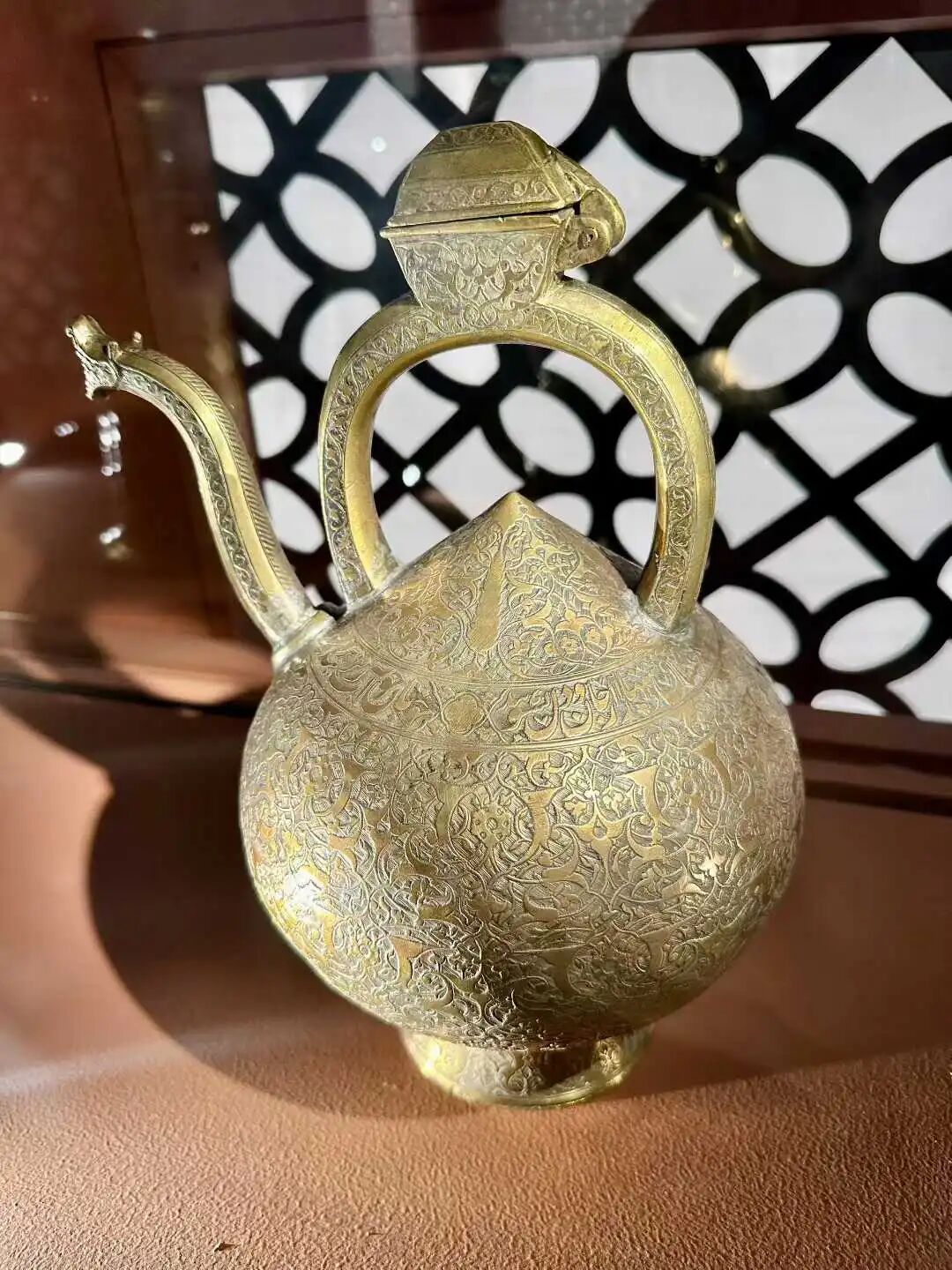
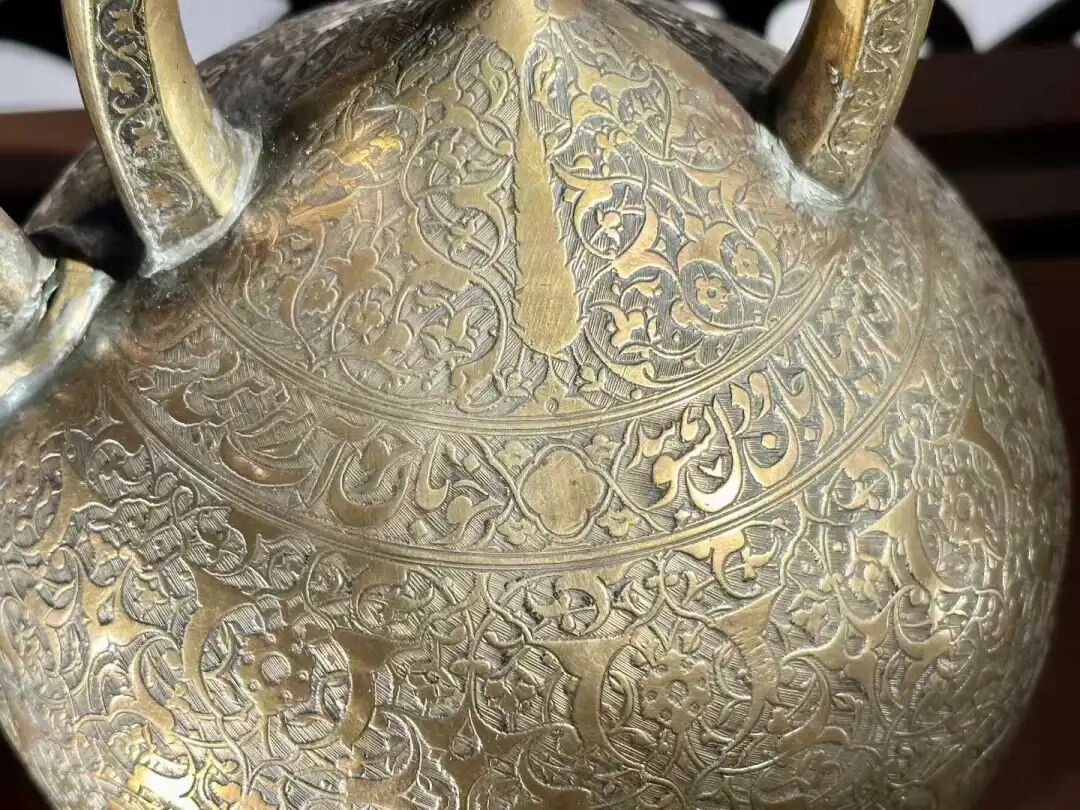
A copper ewer from the Safavid or Mughal dynasty in 1615 is engraved with a Persian classical lyric couplet (mathnawī):
At the feast of the enlightened, servants stand ready to serve.
Beauties from all directions stand holding pure water ewers.
The beloved washes their hands with soul and heart.
As the beauty pours the water, she still holds the ewer in her hand.
In Sufi literature, the "feast of the enlightened" refers to a Sufi gathering, "the beloved" refers to one who loves Allah, "water" refers to Allah's grace, and "washing with soul and heart" means cleansing the soul of worldly distractions and selfish desires, while "beauties" refers to the ways Allah's grace is delivered. Sufi practice emphasizes being clean in body and soul. Washing hands is not just a matter of hygiene; it is a spiritual ritual to wash away the dust of the soul with sacred water and offer sincerity to Allah. The poem turns an everyday object into a spiritual vessel for those seeking the Sufi path.
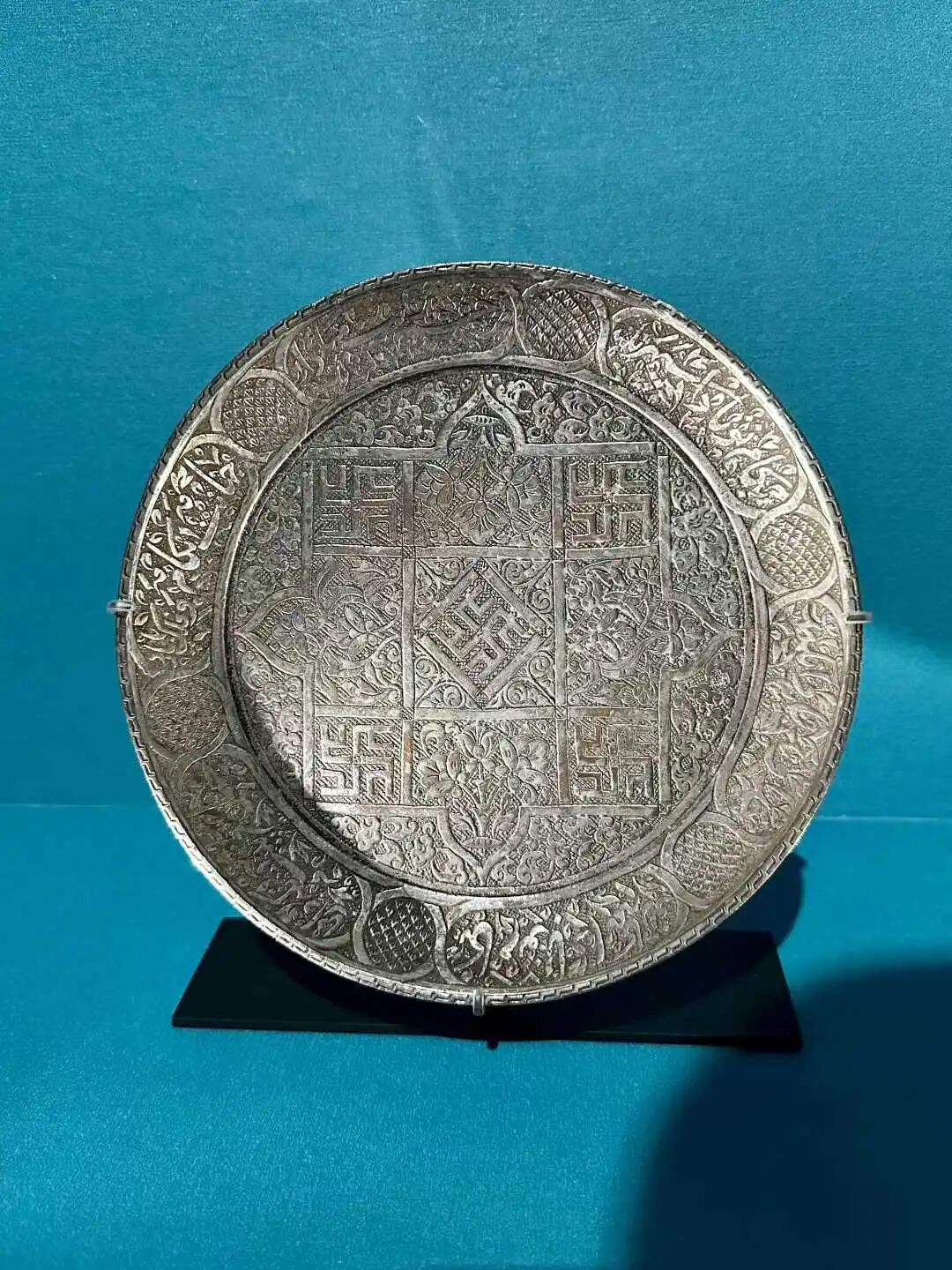
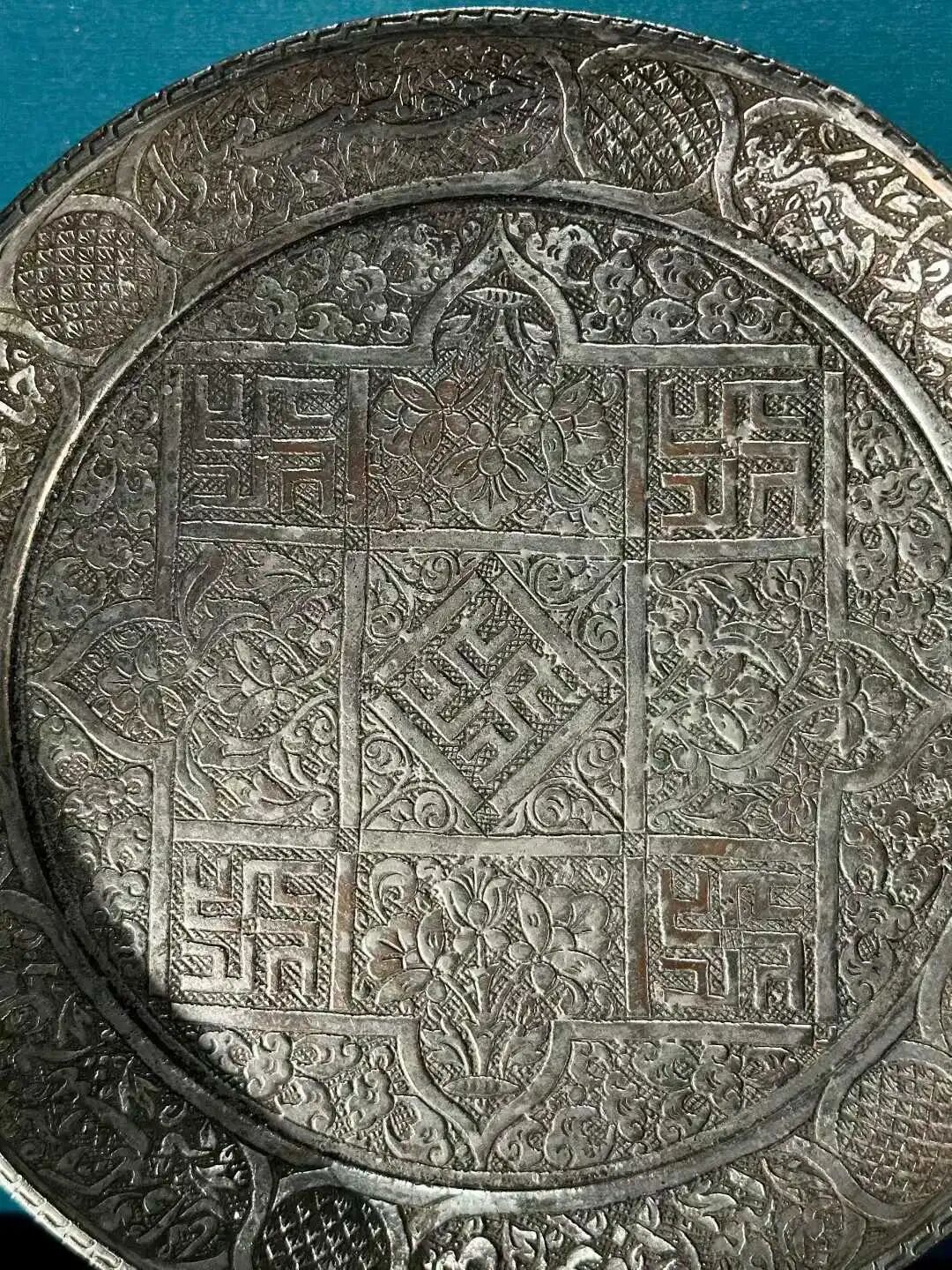
A 16th-century copper plate from the Safavid dynasty is engraved with three Persian poetic couplets.
The first couplet is from the Orchard (Bustan) by the great Persian poet Saadi:
May you enjoy all you wish for in this world, and may the heavens be your close friend.
May the Lord of Creation protect you forever.
The second couplet is from the work of the Persian poet Daqiqi:
May everything go as you wish.
May the Lord God protect your health.
The third couplet is from the story of Bijan and Manijeh in the Book of Kings (Shahnameh) by the great Persian poet Ferdowsi:
May the high heavens follow your heart's desire.
May the evil eye never be able to harm you.
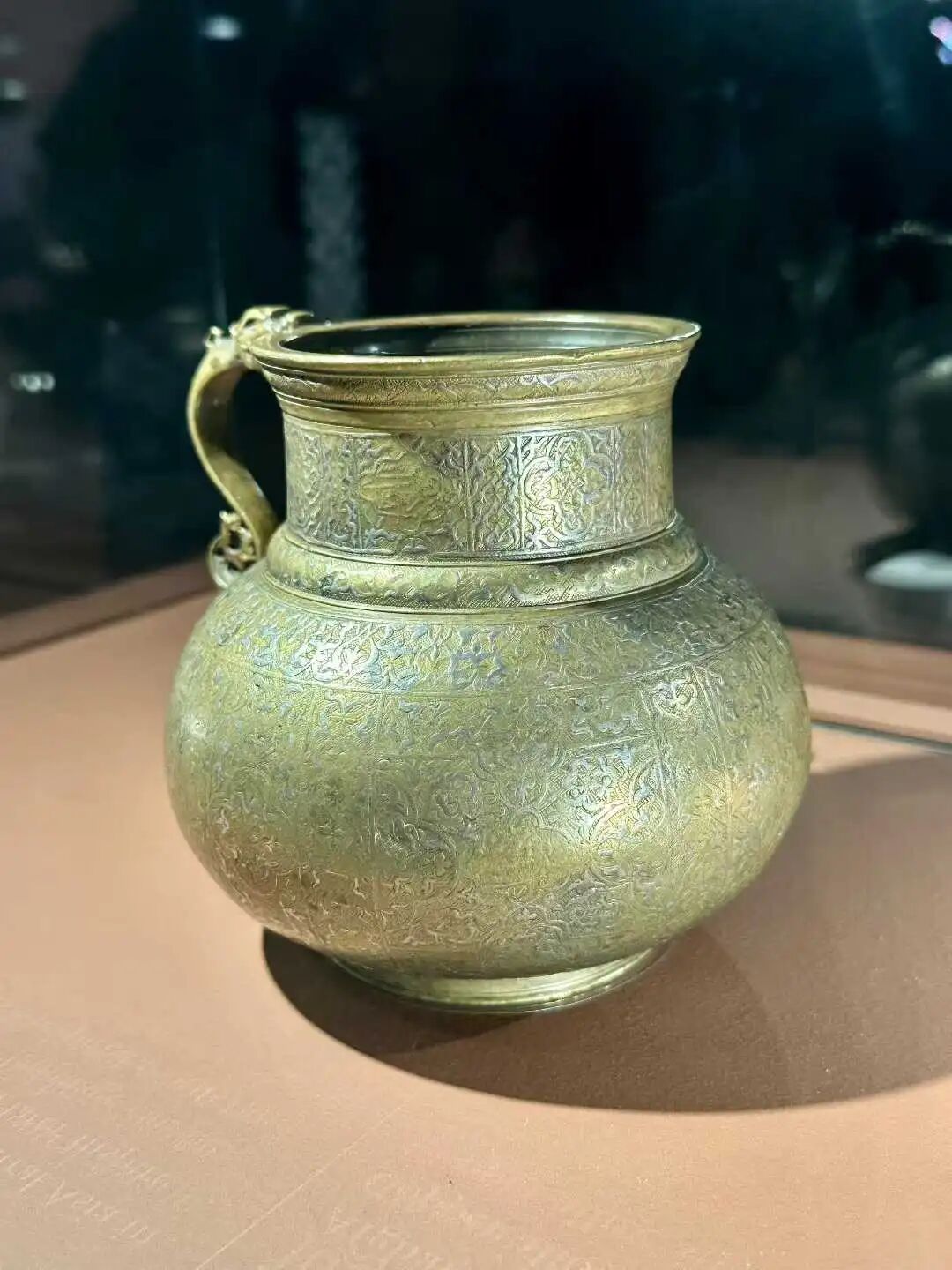
A copper ewer with a dragon-shaped handle from Herat, Afghanistan, during the Timurid dynasty, dated 1480-1500.
The craftsman's signature on the bottom of the ewer reads: A work by Abd al-Husayn ibn Mubarak Shah.
Four panels on the belly of the ewer are engraved with lyric poetry by the 12th-13th century Persian Sufi poet Qasim al-Anwar.
When the eastern shadow of the eternal dawn appears
The beautiful face of the Beloved emerges from the dust of creation
The jar of eternal wine was clear and without dregs from the start
After entering my heart's cup, it reaches an even purer state
This poem is a typical Sufi literary work, using the morning shadow as a metaphor for the manifestation of Allah, and wine to represent the infusion of divinity into the heart and the purification of the soul.
The four panels on the neck of the pot are carved with another Persian poem, though unfortunately, it can no longer be fully read:
The star of fortune has arrived at your orbit and conjunction
...among the free
...a copper cup
A drinking vessel for those intoxicated by love... a place for drinking
This poem continues the Sufi metaphorical tradition of wine, love, and auspicious signs, sharing the same poetic lineage as the poem on the belly of the pot.
Summary: The Museum of Art Pudong in Shanghai displayed 300 Louvre artworks from India, Iran, and the Ottoman Empire from December 13, 2025, to May 6, 2026. This article preserves the source's Persian Sufi poetry translations, object notes, historical context, and photographs.
From December 13, 2025, to May 6, 2026, the Museum of Art Pudong in Shanghai displayed 300 artworks from the 16th to 19th centuries from India, Iran, and the Ottoman Empire, all from the Louvre's collection. Many of these items were purchased by King Louis XIV of France (1638-1715) from the Mughal and Ottoman empires and were once used to decorate royal palaces like the Louvre and the Palace of Versailles.
Many of these pieces feature Persian Sufi poetry, but the exhibition hall provided almost no information about them. Fortunately, the Louvre's official website has translations for these poems. You can visit the site, search using the location 'Shanghai,' and view all the items from this Shanghai exhibition at once.
Here are the items from the Shanghai exhibition that feature Persian poetry:
This jade cup from the Iranian Aq Qoyunlu dynasty (1450-1500), once in the collection of King Louis XIV, is inscribed with two Sufi poems in Arabic and Persian:
Because of the purity of the wine and the delicacy of the cup,
The color of the cup and the wine blend into one.
Everything in the world is like a cup,
As if no wine exists,
Or as if everything is fine wine,
And the cup itself is nowhere to be found.
The horizon is stained with the color of the morning sun,
Shedding the cloak of twilight,
Day and night are reconciled,
And all things in the world return to their proper order.
The imagery of the 'cup and wine' is frequently mentioned in Sufi poetry. Sufi sheikhs often use the cup and wine to represent the concepts of 'blending' and 'oneness' in Sufi thought, using the fusion of the two as a metaphor for spiritual elevation and unity. Therefore, when reading Sufi poetry, you should not interpret the meaning only from the surface.
The Arabic in the poem comes from Sahib ibn Abbad, a grand vizier of the Buyid dynasty in 10th-century Iran. He was a Persian scholar from Isfahan, Iran, who had a deep interest in Arabic culture and created many literary works.
The Persian text comes from the famous 15th-century Persian Sufi sheikh, Mir Shams-ud-Din Araqi. Araqi was from Iran and belonged to the Noorbakshia order. He traveled to Kashmir to preach, which led many local Tibetan-speaking Balti people to embrace the faith, leaving a profound impact on the development of the religion in the Kashmir region. After the 16th century, the Nurbakhshiyya order was gradually assimilated by the Twelver Shia sect in Iran, but it has been passed down to this day in the Kashmir region.
A copper alloy jar from the Mughal or Safavid dynasty, dating between 1585 and 1615, was once used to hold gemstones. Engraved on it is a poem from the 'Divan' by the famous 15th-century Persian Sufi poet Jami:
Your ruby cup is made from the pearls of the soul.
The longing of every person withered by love is hidden within this cup.
Everything that was once hidden behind the veil of the unseen,
Becomes clearly visible in the form of love.
This is the opening of a Sufi ode and a classic text where religious artifact art, Sufism, and Persian poetry become one. The 'withered person' refers to a seeker whose soul is tempered and obsessed with the love of Allah. The 'veil of the unseen' refers to the barrier between the secular world and the divine essence, where the mundane cannot glimpse the ultimate beauty and subtlety of Allah. 'Love' refers to the ultimate devotion to Allah, which is the only path to break through the veil of the unseen.
The cup in the poem is the physical manifestation of the soul's essence, corresponding to the Sufi ontology that 'all existence is a manifestation of Allah'. The divine nature is hidden by the 'veil of the unseen,' and divine love is the only power that can remove this cover. The seeker's devotion is poured into the object, turning the invisible divine subtlety into the visible beauty of the cup's body. The 'longing' hidden in the cup is the original intention of the Sufi practitioner and their yearning for Allah. The object becomes a 'medium' for practice; holding the cup and contemplating it means contemplating the connection between one's own soul and the divine.
A copper alloy candlestick from the Safavid or Mughal dynasty, dating between 1585 and 1600, has two Persian Sufi poems engraved on its upper and middle sections. The upper poem is by the Khorasan poet Mulla Hayrati Tuni (died 1554):
When the soul burns because of the love of an idol,
Love burns me every moment with another flame.
I am just like a butterfly near a candle flame,
If I take one step forward, my wings will be burned away.
I burn in the pain of loving you, and this burning has already witnessed,
The glory of the candle flame burning above me.
'Idol love' in the poem does not refer to worshipping material idols, but is a common rhetorical device in Sufi literature. It uses 'idol' to represent secular love or obsession with non-divine things, contrasting it with pure love for Allah to highlight the intensity and exclusivity of divine love.
The middle poem is from the famous 'Butterfly and Candle' passage in the masterpiece 'Bustan' (The Orchard) by the great Persian poet Saadi (1210-1291).
I remember a dim night.
With eyes closed, I heard a butterfly say to the candle flame,
I am worn out for love.
Burning is also a form of completion.
Why so many tears?
Why exhaust yourself?
The butterfly and the candle flame is a classic metaphor in Persian Sufi poetry. The butterfly represents the soul longing to unite with Allah, and the candle flame represents divine love and the light of Allah. Throwing oneself into the fire to burn one's wings means the soul is willing to dissolve itself in pursuit of divine love. It is a poetic expression of the Sufi state of selflessness.
A copper alloy candlestick from the Safavid or Mughal dynasty, dating between 1550 and 1600. The upper part is inscribed with Persian Sufi verses, also by the Khorasan poet Mulla Hairati Tuni, titled When the soul burns for the love of the idol.
A bronze candlestick from the 16th-century Mughal or Safavid dynasty. The upper part of the candlestick shaft is divided into four panels, each engraved with a Persian Sufi quatrain:
The lamp of the gnostic shines because of your face.
I see you, and the souls of all who know the heart turn toward your face.
My heart looks to you, for you are the ultimate destination of the universe.
May not a single hair on your head perish, for this world relies entirely on you.
In the poem, the gnostic refers to a practitioner in a Sufi order seeking inner enlightenment, and those who know the heart refers to Sufi mystics or those with spiritual awareness. This poem was written during the 15th-century Timurid dynasty, but it was very common on metalware and ceramics during the 16th-century Safavid dynasty.
A tinned copper bowl from the Safavid dynasty, dating from 1585 to 1650. It is engraved with the Persian name Firuz-i Rustam-i Firuz, which belonged to a Safavid court noble. Rustam is taken from the hero in the Persian epic Shahnameh, symbolizing bravery and nobility.
The bowl is engraved with two Persian Sufi quatrains:
This cup is filled with the nectar of the Kawthar spring.
Its outline is just like the lines of a beauty's cheek.
Whoever drinks the sweet dew from this cup,
Will be like Khidr, possessing the breath that gives life.
I travel fast through the desert of your love,
And see two thousand bloodthirsty black men.
They spoke to each other in mysterious, coded language:
Tilt the cup in your hand, but do not spill it!
The Kawsar (Kawsar) is the sacred pond in Paradise mentioned in the scriptures, known as the 'Pool of Abundance.' On the Day of Resurrection, people will rise from thirst, and the noble Prophet will offer the believers refreshing water from the pool.
'Desert' and 'cup' sound similar in Persian, so they are common metaphors in Sufi poetry. They refer to the use of the vessel while expressing a persistent search for divine love.
Khidr (Khidr) is considered by the faith to be an immortal saint, symbolizing life, wisdom, and guidance.
A bronze bath bucket from the Safavid or Mughal dynasty, dating between 1585 and 1615, is inscribed with Persian poetry:
When my moon-faced beauty steps into the bathhouse, I rise
I fill my eyes with water and pour it over her feet
To bathe you, oh, blooming rose
The sun becomes a golden cup, the new moon becomes the handle
Whenever my moon-faced beauty steps into the bathhouse
The water cup is my eye, and the eyebrow is its handle
This is a specialized bucket for a traditional Middle Eastern public bath (hammam), used to carry toiletries or hold water, and was a daily object for the wealthy class at the time. Using parts of everyday objects to describe a lover's appearance is a common rhetorical technique in Persian poetry. Blending the bathing scene with intense longing is a classic expression of the 'lover' (ashiq) theme in religious art.
A bronze bath bucket from the Safavid dynasty dated 1589 is inscribed with the same Persian poem as the previous one, along with the name 'Giyan Big' and the date '998,' which corresponds to the Hijri year 998 or 1589-90 AD.
An underglaze painted ceramic plate from the Safavid dynasty, dating between 1585 and 1615, is inscribed with a Persian quatrain:
May this plate always be full of blessings and delicious food
Long accompanying the table of elegant scholars and good friends
May the delicacies in the plate never run dry
Whoever eats from this plate (will have health and longevity)
This anonymous lyric poem was popular at the time and is commonly found on metal and ceramic wares used by the Safavid court and nobility. After the Safavid dynasty moved its capital to Isfahan in 1587, ceramic art was influenced by Chinese Wanli blue-and-white porcelain, leading to mass production of blue and white glazed wares. Meanwhile, Persian poetic inscriptions became a signature decoration for high-end items, reflecting the Safavid dynasty's appreciation for literature and calligraphy.
A miniature painting from the Bukhara Khanate between 1585 and 1600 shows an Uzbek or Mongol warrior leaning against a large Chinese porcelain vase. Above it is a Persian couplet:
Kissing our wine cup
They lift it to their foreheads
The fate of a wine lover
Is tied to the pattern on the rim of the cup
This is a classic wine and cup image in Sufi literature. In these Persian miniature poems, the wine cup symbolizes a spiritual vessel for union with Allah, and drinking symbolizes spiritual intoxication and soul awakening.
A Mughal dynasty calligraphy album page from 1772-1789 with floral decorations, featuring a Persian lyric poem:
I can no longer ask you for more, nor can I beg you
I can give up all hope for myself, but I can never give up on you
Written by the sinful servant Ali Reza. May Allah forgive him.
Using worldly love to describe absolute devotion to Allah is a classic pattern in classical Persian literature. Giving up the self while being unable to let go of the beloved is the core spirit of Sufi selflessness and devotion.
A portrait of a young man made during the Safavid dynasty in 1560. Persian poetry is written around it:
I long again for the breeze of the garden
My heart yearns for the beauty of the cypress and jasmine
The cypress symbolizes uprightness, immortality, and the integrity of a gentleman; it is an eternal image of nobility in Persian poetry. Jasmine represents fragrance and softness. Together with the cypress, they balance strength and gentleness, creating a perfect blend of nature and humanity in Persian aesthetics. The poem uses the garden scenery to express a longing for beautiful nature and pure states of mind, which is a typical way to express feelings through scenery in religious art.
A Rose and Nightingale book cover from the Qajar dynasty in Iran, 1775-1825. This period in Iran was the founding and consolidation of the Qajar dynasty. Fath-Ali Shah highly valued art, and court workshops gathered top lacquer artists. The center of the image shows irises, hyacinths, carnations, roses, and hazelnuts, surrounded by verses from The Orchard (Bustan) by the great Persian poet Saadi:
A rose without scent or color is a strange thing, and the nightingale would never fall in love with it.
O wise one, I admire its character and soul, not its handsome appearance.
The rose and nightingale theme matches the book cover decoration. Here, the idea that a nightingale still loves a rose without scent or color suggests that love is not based on looks, but on inner character and loyalty. This is a common moral poem in religious book binding, used to explain the values of true love, loyalty, and prioritizing the heart over material things.
The rose and nightingale is also one of the most classic themes in Persian Sufi literature and art, symbolizing the Sufi practitioner's longing for Allah.
A glazed ceramic bowl from the Qajar dynasty of Iran, dated 1808-09.
The center features a lyric poem by the great Persian poet Hafez:
Last night I saw angels busy in the tavern.
They kneaded the essence of human souls and poured it into a wine cup.
Written in the city on the first day of the month following Rabi al-Awwal.
Made by the craftsman Ramazan in the year 1223 of the Hijri calendar.
This is a typical Sufi poem. The tavern symbolizes a spiritual retreat, the essence of human souls (guli adam) represents personified spiritual knowledge, and the wine cup symbolizes a spiritual vessel for communion with Allah.
The first line around the edge contains verses from The Rose Garden (Gulistan) by the great Persian poet Saadi:
One day, I picked up a piece of scented clay dropped by a loved one,
I was intoxicated and obsessed by its fragrance,
So I asked: 'Are you ambergris, or are you musk?'
The clay replied softly:
'I was originally just a piece of common, humble earth,
But because I stayed close to a rose,
I became stained with the noble character of my companion,
Even though my essence remains the same, my spirit has become something different.'
This poem is a classic fable from The Rose Garden. Its core message is that character comes from one's companions, and that one's environment and friends can elevate an ordinary nature. By comparing itself to common earth and using the rose to represent good friends, wise people, and noble souls, it expresses the philosophy that one becomes like those they associate with. This fits the tradition of religious moral literature while using beautiful imagery suitable for ceramic housewares, making it a representative literary decoration for Iranian practical ceramics from the 18th and 19th centuries. Glazed ceramics from 18th and 19th-century Iran often featured famous lines from Persian poets like Saadi, Hafez, and Rumi, serving practical, aesthetic, and literary purposes.
The second line around the edge contains a Persian Sufi proverb:
The fool who gives his soul never leaves the path of the wise.
The nightingale with a heart burned by love never leaves the rose garden.
The true nature of a sincere lover is just like this.
Even if their head falls, they do not break their oath or promise.
The "nightingale with a heart burned by love" is a classic theme in Persian poetry, representing a seeker who sacrifices everything for love. While the oath refers to romantic love, it actually symbolizes loyalty to the path of Allah.
The third line around the edge comes from the narrative poem "Shapur and Shirin" (Maṯnawī-ye Šāpūr va Šhnāz):
One night, a performer sighed to himself in the wilderness.
In these mountains and deserts, where must I wander?
Come, let us spread our wings and fly to the royal city.
To talk and keep company with princes and nobles.
Sometimes acting as a close friend at the king's banquet.
This is a couplet from a classical Persian epic, a long romantic poem. It uses wandering in the wilderness to represent life's confusion and the royal city to represent ideals, power, and spiritual destination, making it perfect for decorating court-style objects.
A glazed ceramic bowl from the Qajar dynasty of Iran, dated 1800–1815.
The bottom of the bowl says:
For all who recite scripture and offer dua for me, I have my own hopes.
Because I am only a lowly servant burdened by sin.
The surrounding area features verses from the book "The Orchard" (Bustan) by the great Persian poet Saadi.
One day, I picked up a piece of scented clay dropped by a loved one,
I was intoxicated and obsessed by its fragrance,
So I asked: 'Are you ambergris, or are you musk?'
The clay replied softly:
'I was originally just a piece of common, humble earth,
But because I stayed close to a rose,
I became stained with the noble character of my companion,
Even though my essence remains the same, my spirit has become something different.'
A glazed ceramic bowl from the Qajar dynasty of Iran, dating to 1820-1821.
The bottom of the bowl says:
For all who recite scripture and offer dua for me, I have my own hopes.
Because I am only a lowly servant burdened by sin.
The inscription along the inner rim of the bowl reads:
Drink up, you gentle and sweet-mannered beauty.
Come drink this water of life from the palm of my hand.
May you drink in joy all your life, and be safe and healthy year after year.
May life be sweeter than rock sugar (bingtang), granulated sugar (shatang), dried fruits, and fragrant herbs.
There is also a fragment of a Shia text: Drink this water, you... fragrant lips, keep Ali and Abbas in your heart, and remember the grace of the king.
Ali was the fourth Caliph of the faith, and Abbas was a martyr of the Battle of Karbala.
The first part is a humble prayer poem at the bottom of the bowl, expressing the user's humility and desire for blessings. The second part is a celebratory poem for banquets on the rim, using the imagery of the water of life to encourage drinking and wish for a long, sweet life. The third part commemorates the Shia sages Ali and Abbas, serving both dining etiquette and devotional purposes. Together, these three parts form a typical inscription pattern for daily ritual vessels of the Qajar period, blending secular banquet culture, religious ethics, and Shia faith, serving as an important example of how classical Persian literature continued on everyday objects.
A glazed ceramic tile from Ottoman Syria, dating to 1570-1620, inscribed with Persian poetry:
Your poetry feast makes the heavens dance at this moment,
The poems of Hafez, with their sweet words and wonderful language, are your songs.
This is the final couplet of a classic lyric poem (ghazal) by the great Persian poet Hafez, and it is also a classical Persian couplet (masnavi).
In this context, the 'poetry feast (majlisat)' refers to a sacred gathering in the Sufi tradition where the divine and human connect. In Sufi literature, this poem means that the beauty and wisdom of Allah are the source of the universe's movement, and poetry is a way to speak about divine beauty. The heavens dance for the poetic feast, not for human entertainment, but because they are called by the beauty of sacred words. Hafiz's poetry turns divine beauty into human language, acting as a bridge between the mortal world and the heavens.
A copper ewer from the Safavid or Mughal dynasty in 1615 is engraved with a Persian classical lyric couplet (mathnawī):
At the feast of the enlightened, servants stand ready to serve.
Beauties from all directions stand holding pure water ewers.
The beloved washes their hands with soul and heart.
As the beauty pours the water, she still holds the ewer in her hand.
In Sufi literature, the "feast of the enlightened" refers to a Sufi gathering, "the beloved" refers to one who loves Allah, "water" refers to Allah's grace, and "washing with soul and heart" means cleansing the soul of worldly distractions and selfish desires, while "beauties" refers to the ways Allah's grace is delivered. Sufi practice emphasizes being clean in body and soul. Washing hands is not just a matter of hygiene; it is a spiritual ritual to wash away the dust of the soul with sacred water and offer sincerity to Allah. The poem turns an everyday object into a spiritual vessel for those seeking the Sufi path.
A 16th-century copper plate from the Safavid dynasty is engraved with three Persian poetic couplets.
The first couplet is from the Orchard (Bustan) by the great Persian poet Saadi:
May you enjoy all you wish for in this world, and may the heavens be your close friend.
May the Lord of Creation protect you forever.
The second couplet is from the work of the Persian poet Daqiqi:
May everything go as you wish.
May the Lord God protect your health.
The third couplet is from the story of Bijan and Manijeh in the Book of Kings (Shahnameh) by the great Persian poet Ferdowsi:
May the high heavens follow your heart's desire.
May the evil eye never be able to harm you.
A copper ewer with a dragon-shaped handle from Herat, Afghanistan, during the Timurid dynasty, dated 1480-1500.
The craftsman's signature on the bottom of the ewer reads: A work by Abd al-Husayn ibn Mubarak Shah.
Four panels on the belly of the ewer are engraved with lyric poetry by the 12th-13th century Persian Sufi poet Qasim al-Anwar.
When the eastern shadow of the eternal dawn appears
The beautiful face of the Beloved emerges from the dust of creation
The jar of eternal wine was clear and without dregs from the start
After entering my heart's cup, it reaches an even purer state
This poem is a typical Sufi literary work, using the morning shadow as a metaphor for the manifestation of Allah, and wine to represent the infusion of divinity into the heart and the purification of the soul.
The four panels on the neck of the pot are carved with another Persian poem, though unfortunately, it can no longer be fully read:
The star of fortune has arrived at your orbit and conjunction
...among the free
...a copper cup
A drinking vessel for those intoxicated by love... a place for drinking
This poem continues the Sufi metaphorical tradition of wine, love, and auspicious signs, sharing the same poetic lineage as the poem on the belly of the pot.
