
Muslim Knowledge Guide Egypt: Ali Gomaa Fatwa on Halal Meat, People of the Book and Over-Questioning
Reposted from the web
Summary: This Muslim knowledge guide explains Ali Gomaa's fatwa on eating meat in Western countries, meat from the People of the Book, the Rome airport example, Ibn Kathir's view, and why Muslims should avoid obsessive questioning when there is no clear proof of haram food.
People who have traveled in Europe, America, Australia, and New Zealand might notice something. In these Western countries, you often see women wearing headscarves eating in restaurants that are not labeled halal. You might think that if they follow rules for their clothing, they should not be so casual about what they eat.
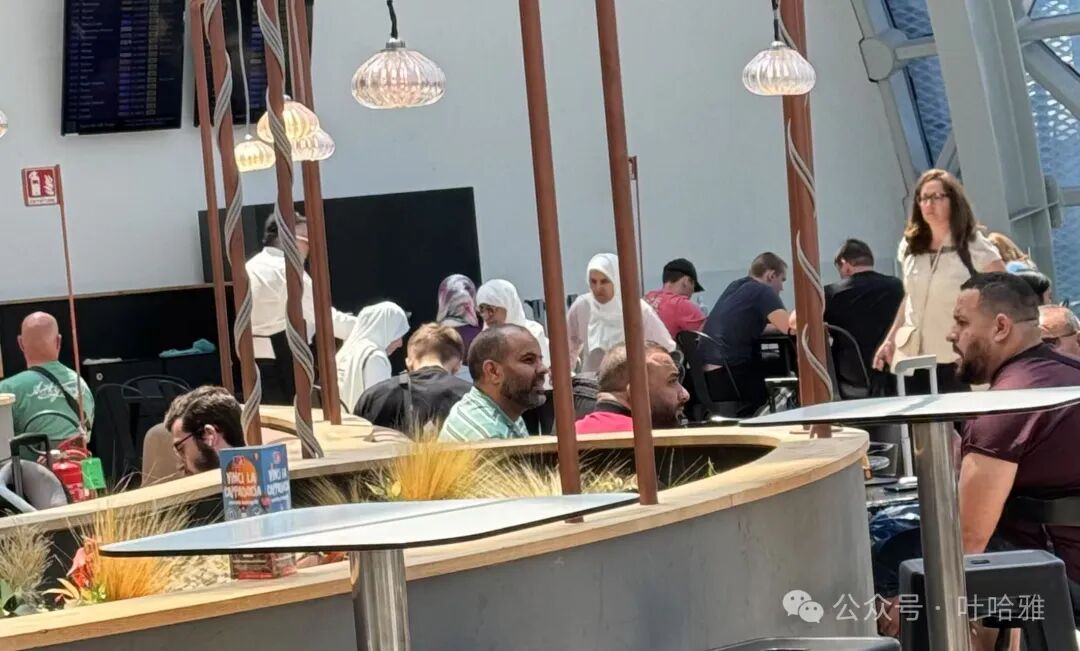
I took a photo at an airport in Rome, Italy, of a group of women wearing white headscarves eating in a non-halal restaurant that sells pork.
Today, I will use this article to explain that there is a theoretical basis for why they do this.
Grand Mufti Dr. Ali Gomaa on Halal Meat
Author: Party Til Fair
Main text: There is a lot of confusion about the topic of halal meat. Despite many debates on this subject, I found that the Grand Mufti of Egypt, Dr. Ali Gomaa, gave the best opinion on this issue. I am reprinting his fatwa regarding the following question:
I have a question about the rules for eating non-halal meat. For many years, I have heard conflicting statements. Some claim we can only eat meat slaughtered by Christians when they do it piously, while others say we can eat it no matter what.
Dr. Gomaa's answer:
The basic rule is that you cannot eat meat unless it comes from an animal allowed by Islamic law and slaughtered by a Muslim or a Person of the Book. Therefore, it is definitely halal to eat meat slaughtered by a Person of the Book.
Conclusion:
The rule is that you can eat meat slaughtered by a Person of the Book, unless you know for sure it was slaughtered by someone who is not a Christian or a Jew, or if the animal was beaten or electrocuted to death. If you are not sure, it is allowed to eat it.
Evidence:
A Jewish woman offered the Prophet (peace be upon him) some cooked lamb. The Prophet ate it without asking how it was slaughtered or if the name of Allah was mentioned over it.
Based on this:
A principle of Islamic law is to treat others well. So, when you are in a country where most people are People of the Book, it is against the law to be overly picky or to dig too deep into things.
O you who believe! Do not ask about things that would cause you trouble if they were explained to you... [5:101]
In his commentary on this verse, Ibn Kathir said: 'Almighty Allah teaches His believers and forbids them from asking about things that do not benefit them... The clear meaning of this verse is to forbid asking about things that might cause difficulty for the questioner if they were made clear, so it is better not to ask.' Therefore, people do not like to dig too deep into the core of a matter. Haritha ibn Nu'man (may Allah be pleased with him) said that the Prophet (may Allah bless him and grant him peace) said: 'Whenever bad thoughts arise in your heart, do not try to verify them.'
In another fatwa, Dr. Gomaa wrote:
You may eat animals slaughtered by Christians or Jews because the words of Almighty Allah have a universal meaning: 'The food of those who were given the Scripture is lawful for you, and your food is lawful for them.' ' [5:5]. Forbidden meat refers to meat you are certain comes from animals prohibited by Islamic law, animals that were not slaughtered properly, or animals slaughtered by people who do not follow a revealed scripture.
I believe that when it comes to handling matters of Islamic law, the Grand Mufti of Egypt has more authority than any other living jurist except for the Sheikh of Al-Azhar, and I hope these fatwas answer people's questions, insha'Allah. (End of translation)
Summary: This Muslim knowledge guide explains Ali Gomaa's fatwa on eating meat in Western countries, meat from the People of the Book, the Rome airport example, Ibn Kathir's view, and why Muslims should avoid obsessive questioning when there is no clear proof of haram food.
People who have traveled in Europe, America, Australia, and New Zealand might notice something. In these Western countries, you often see women wearing headscarves eating in restaurants that are not labeled halal. You might think that if they follow rules for their clothing, they should not be so casual about what they eat.
I took a photo at an airport in Rome, Italy, of a group of women wearing white headscarves eating in a non-halal restaurant that sells pork.
Today, I will use this article to explain that there is a theoretical basis for why they do this.
Grand Mufti Dr. Ali Gomaa on Halal Meat
Author: Party Til Fair
Main text: There is a lot of confusion about the topic of halal meat. Despite many debates on this subject, I found that the Grand Mufti of Egypt, Dr. Ali Gomaa, gave the best opinion on this issue. I am reprinting his fatwa regarding the following question:
I have a question about the rules for eating non-halal meat. For many years, I have heard conflicting statements. Some claim we can only eat meat slaughtered by Christians when they do it piously, while others say we can eat it no matter what.
Dr. Gomaa's answer:
The basic rule is that you cannot eat meat unless it comes from an animal allowed by Islamic law and slaughtered by a Muslim or a Person of the Book. Therefore, it is definitely halal to eat meat slaughtered by a Person of the Book.
Conclusion:
The rule is that you can eat meat slaughtered by a Person of the Book, unless you know for sure it was slaughtered by someone who is not a Christian or a Jew, or if the animal was beaten or electrocuted to death. If you are not sure, it is allowed to eat it.
Evidence:
A Jewish woman offered the Prophet (peace be upon him) some cooked lamb. The Prophet ate it without asking how it was slaughtered or if the name of Allah was mentioned over it.
Based on this:
A principle of Islamic law is to treat others well. So, when you are in a country where most people are People of the Book, it is against the law to be overly picky or to dig too deep into things.
O you who believe! Do not ask about things that would cause you trouble if they were explained to you... [5:101]
In his commentary on this verse, Ibn Kathir said: 'Almighty Allah teaches His believers and forbids them from asking about things that do not benefit them... The clear meaning of this verse is to forbid asking about things that might cause difficulty for the questioner if they were made clear, so it is better not to ask.' Therefore, people do not like to dig too deep into the core of a matter. Haritha ibn Nu'man (may Allah be pleased with him) said that the Prophet (may Allah bless him and grant him peace) said: 'Whenever bad thoughts arise in your heart, do not try to verify them.'
In another fatwa, Dr. Gomaa wrote:
You may eat animals slaughtered by Christians or Jews because the words of Almighty Allah have a universal meaning: 'The food of those who were given the Scripture is lawful for you, and your food is lawful for them.' ' [5:5]. Forbidden meat refers to meat you are certain comes from animals prohibited by Islamic law, animals that were not slaughtered properly, or animals slaughtered by people who do not follow a revealed scripture.
I believe that when it comes to handling matters of Islamic law, the Grand Mufti of Egypt has more authority than any other living jurist except for the Sheikh of Al-Azhar, and I hope these fatwas answer people's questions, insha'Allah. (End of translation)
