
Muslim Travel Guide Singapore: Burhani Mosque, Dawoodi Bohra Shia Community and Prayer Hall
Reposted from the web
Summary: This Singapore Muslim travel guide visits Burhani Mosque, the Shia mosque linked to the Dawoodi Bohra community from Gujarat, with its locked entrance, wudu area, two-part prayer hall, dome windows, mihrab banners, individual prayers, and a rare look at Shia Muslim life in Singapore.
I became interested when I heard a guide and an imam at the Abdul Gafoor Mosque mention that there is a Shia mosque in Singapore. I had read a bit online about the differences between Sunni and Shia Islam.
But I had never visited a Shia mosque or met anyone from the Shia community in person.
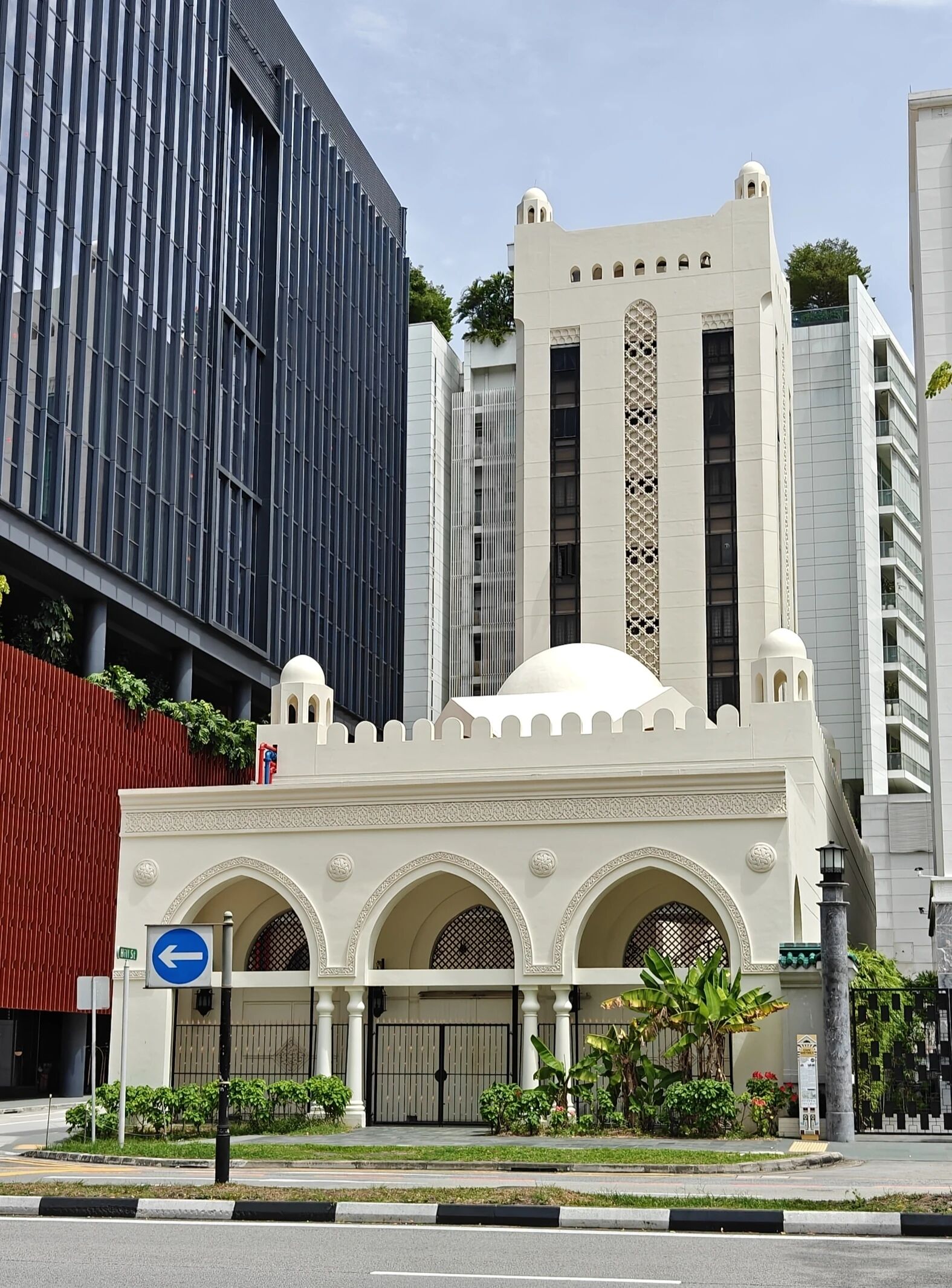
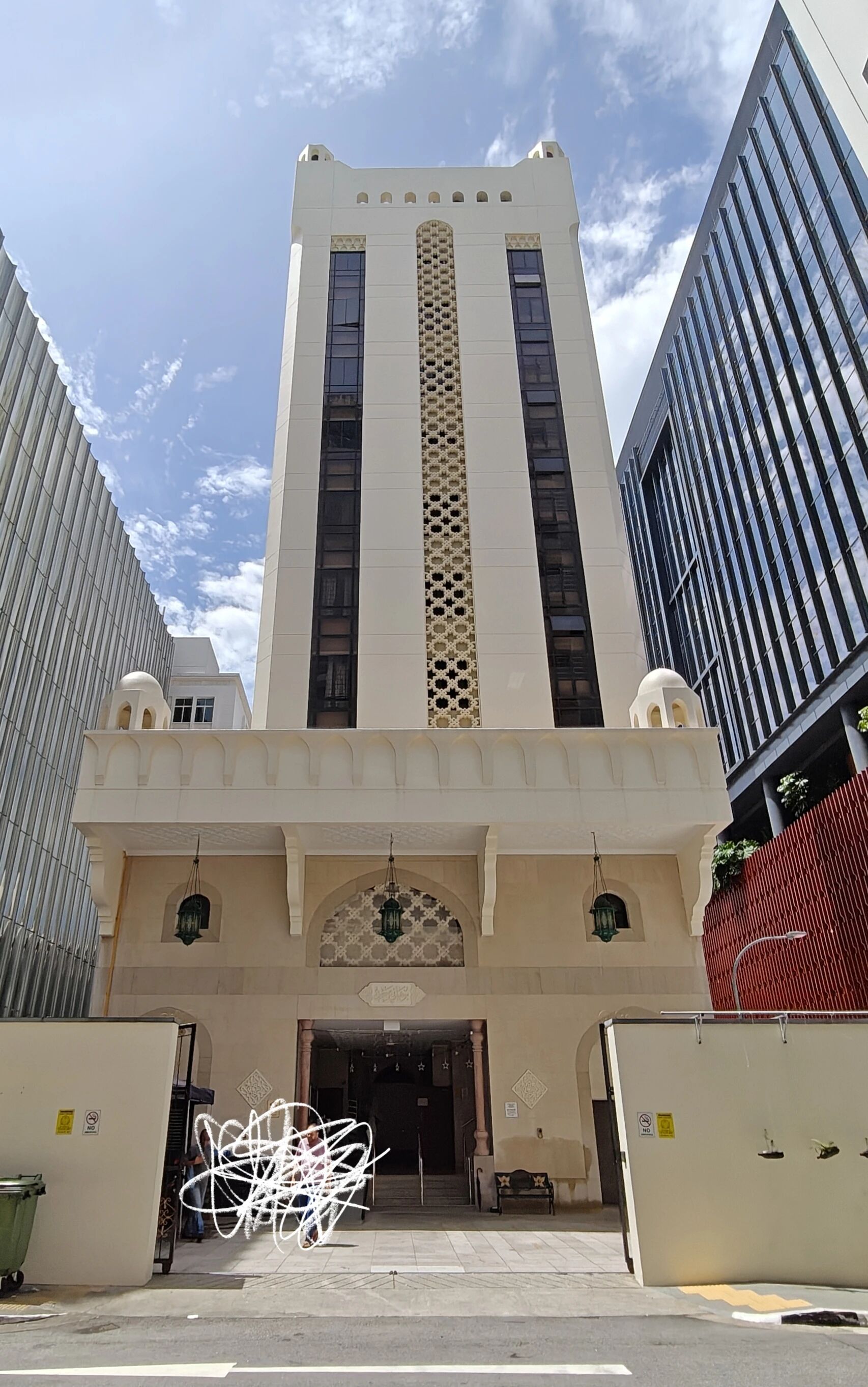
When I reached the main street entrance of Burhani Mosque, it was almost time for salah, but the doors were still locked.
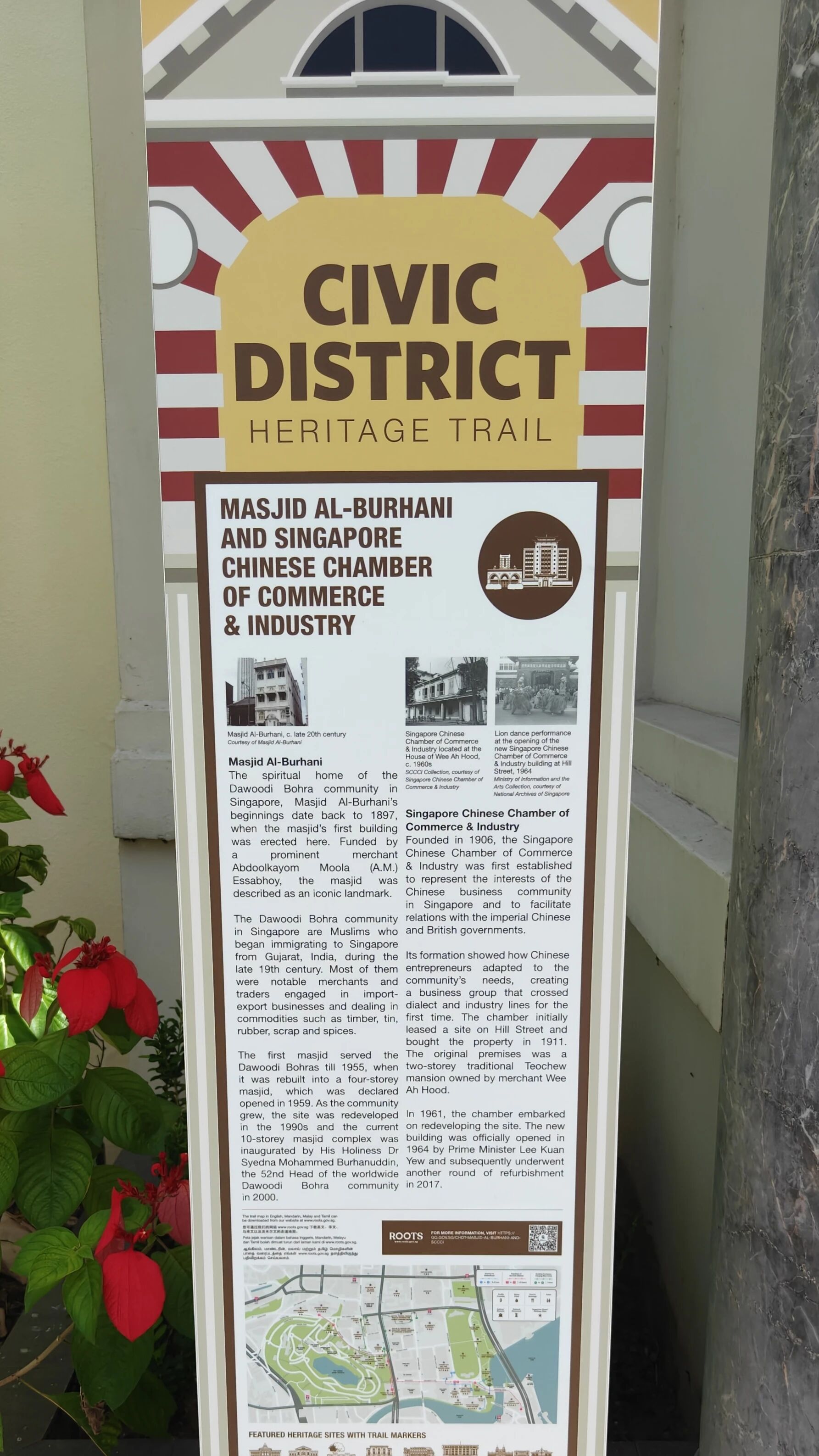
The sign at the entrance said that Burhani Mosque (Masjid Al Burhani) is the spiritual home of the Dawoodi Bohra community and was built in 1897.
This community comes from Gujarat, India (the same place as the Angullia family from my last post, and also the home of Indian Prime Minister Modi).
The older man I met inside the mosque later did look a bit like Modi, and the community members mainly trade in timber, tin, and rubber.
After quickly reading the introduction, I tried to enter through the back door, but there was a sign saying it was private property, even though the Q&A section on Google Maps said it was open. I stood at the entrance feeling stuck, wondering if I should just walk in. Or should I just leave and go somewhere else?
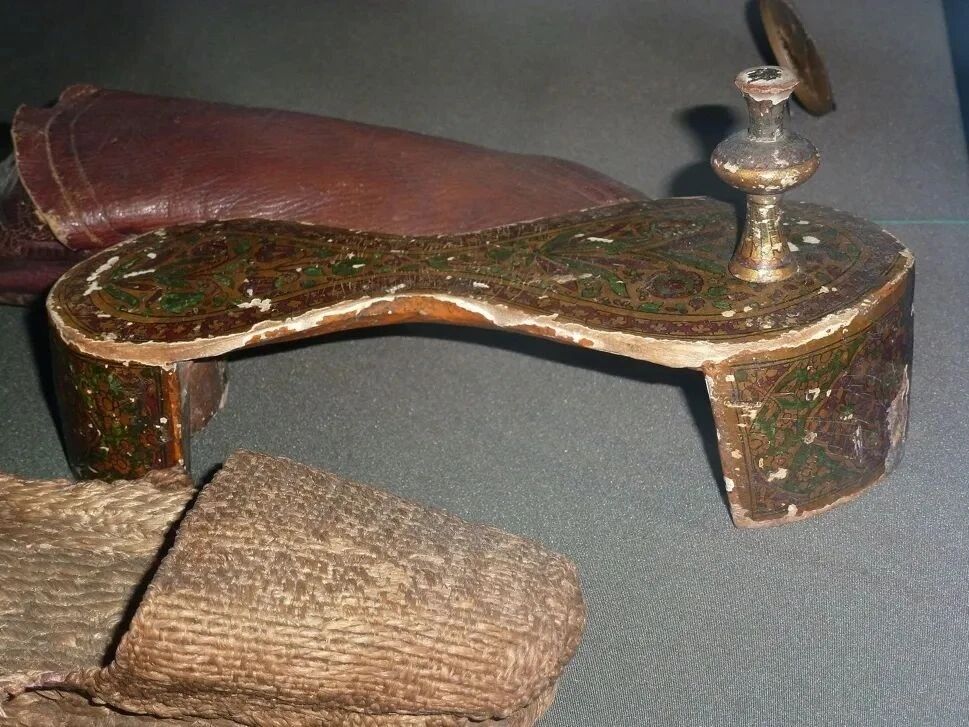
Just then, a man who looked South Asian walked up behind me, and after he confirmed I could go in, I finally entered this Shia mosque in Singapore. In the wudu area, I found some wooden clogs with an Indian style, which looked like they would be hard to wear.
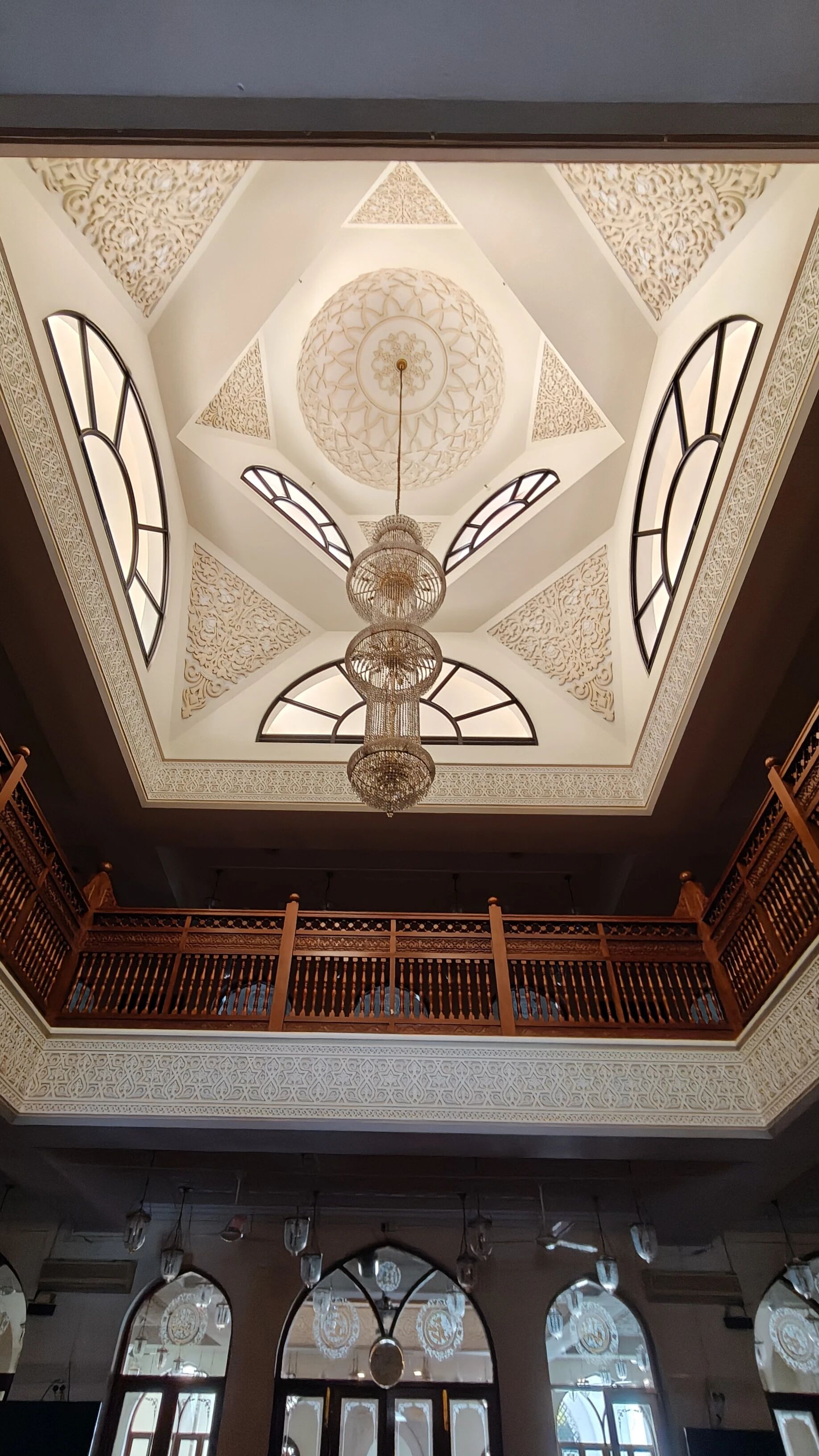
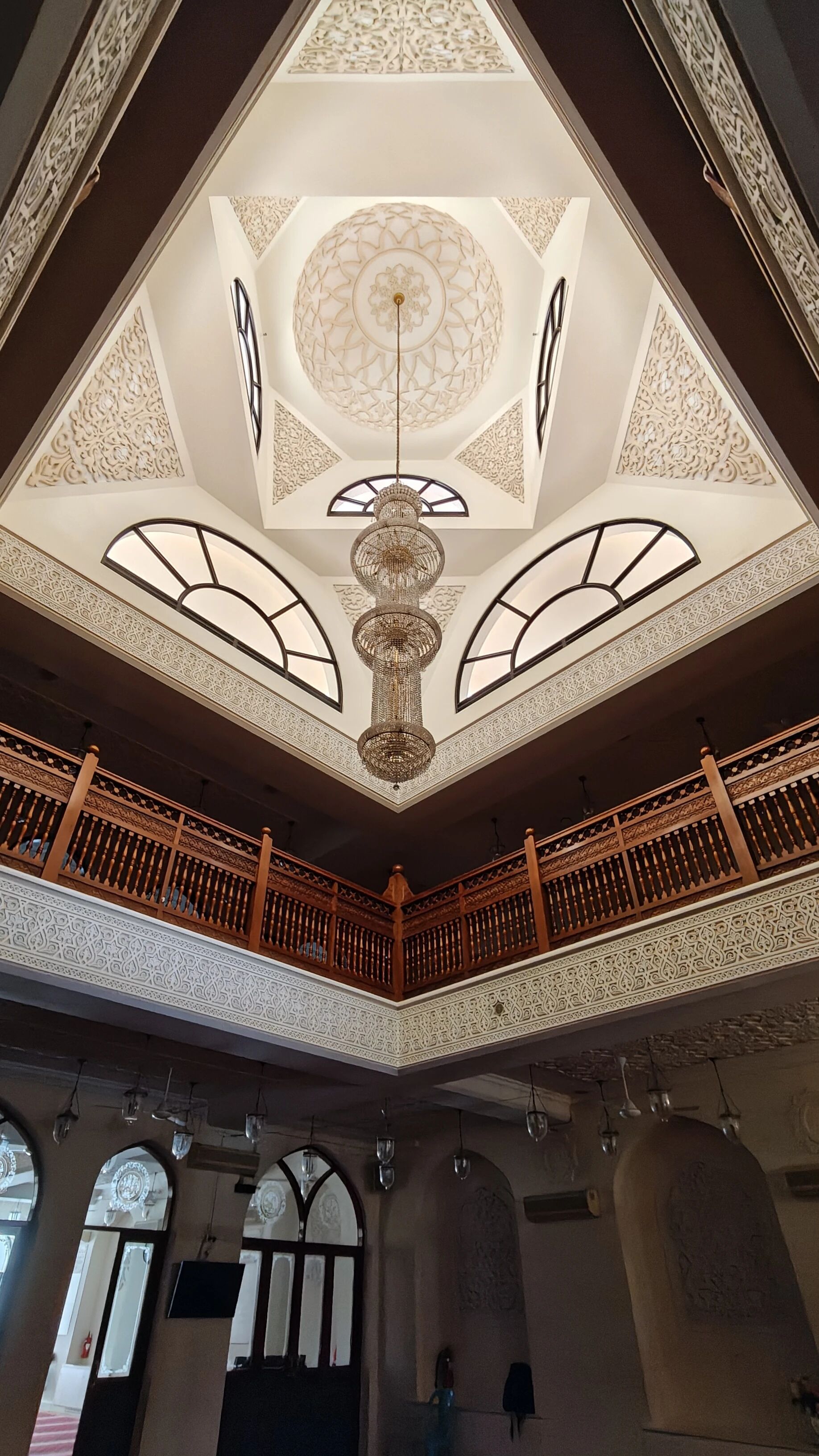
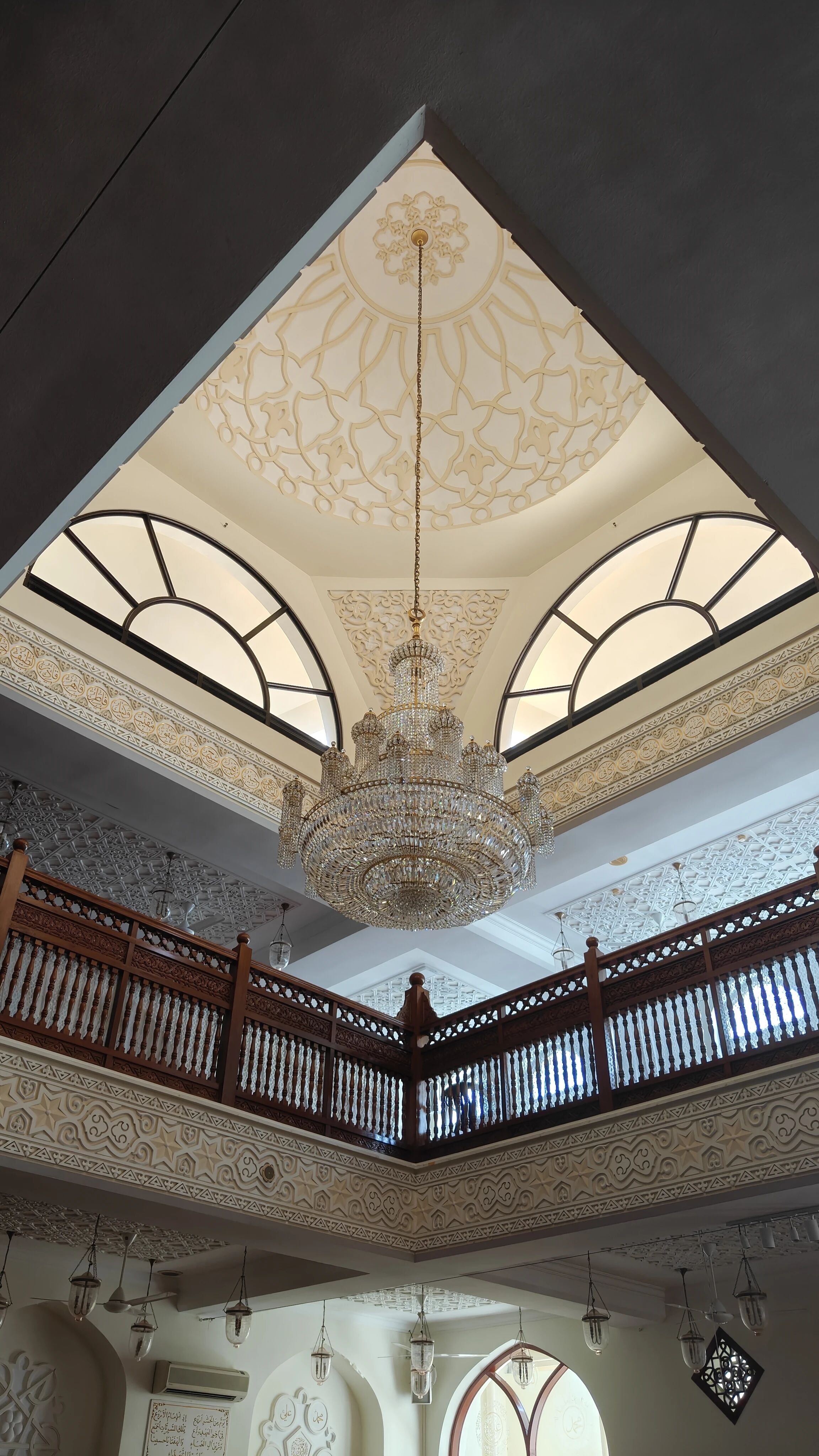
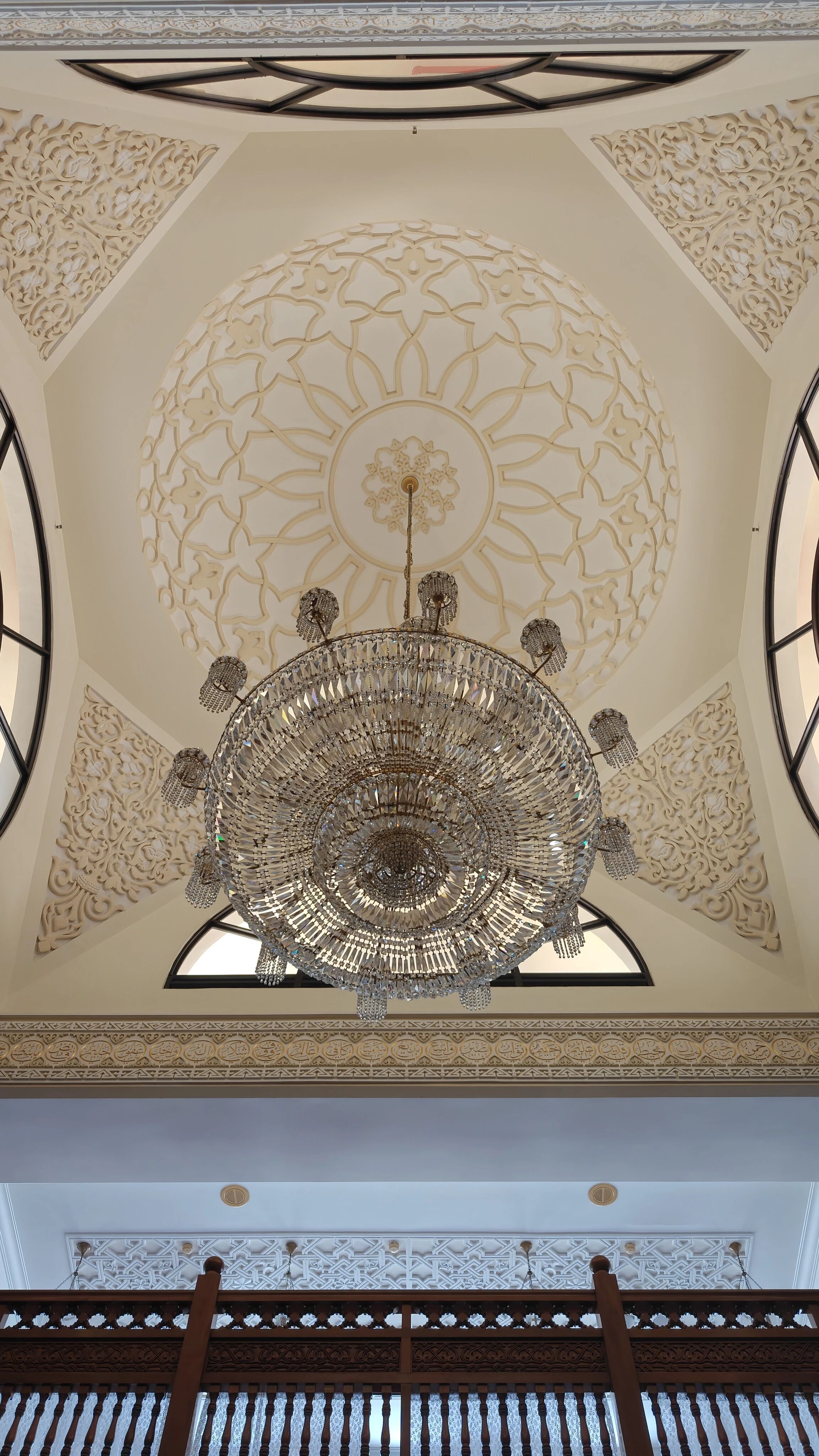
Entering the prayer hall, I found it divided into two sections by a central door: a front hall and a back hall. The back hall (photos 5 and 6) has a high ceiling, and there is also prayer space on the second floor. Above is a dome with two layers of windows along the edge, totaling eight semicircular windows, and the inside of the dome is decorated with relief patterns.
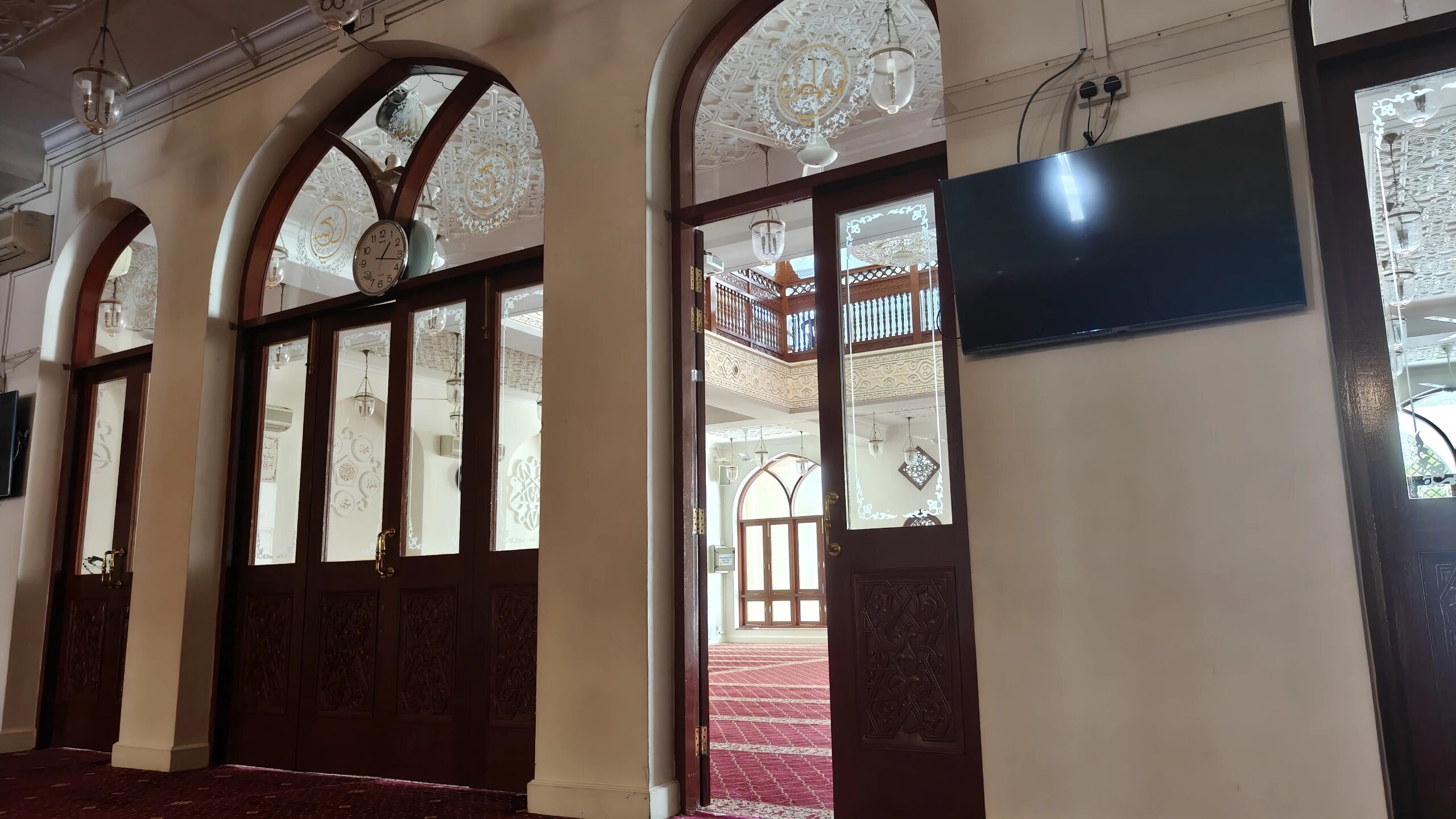
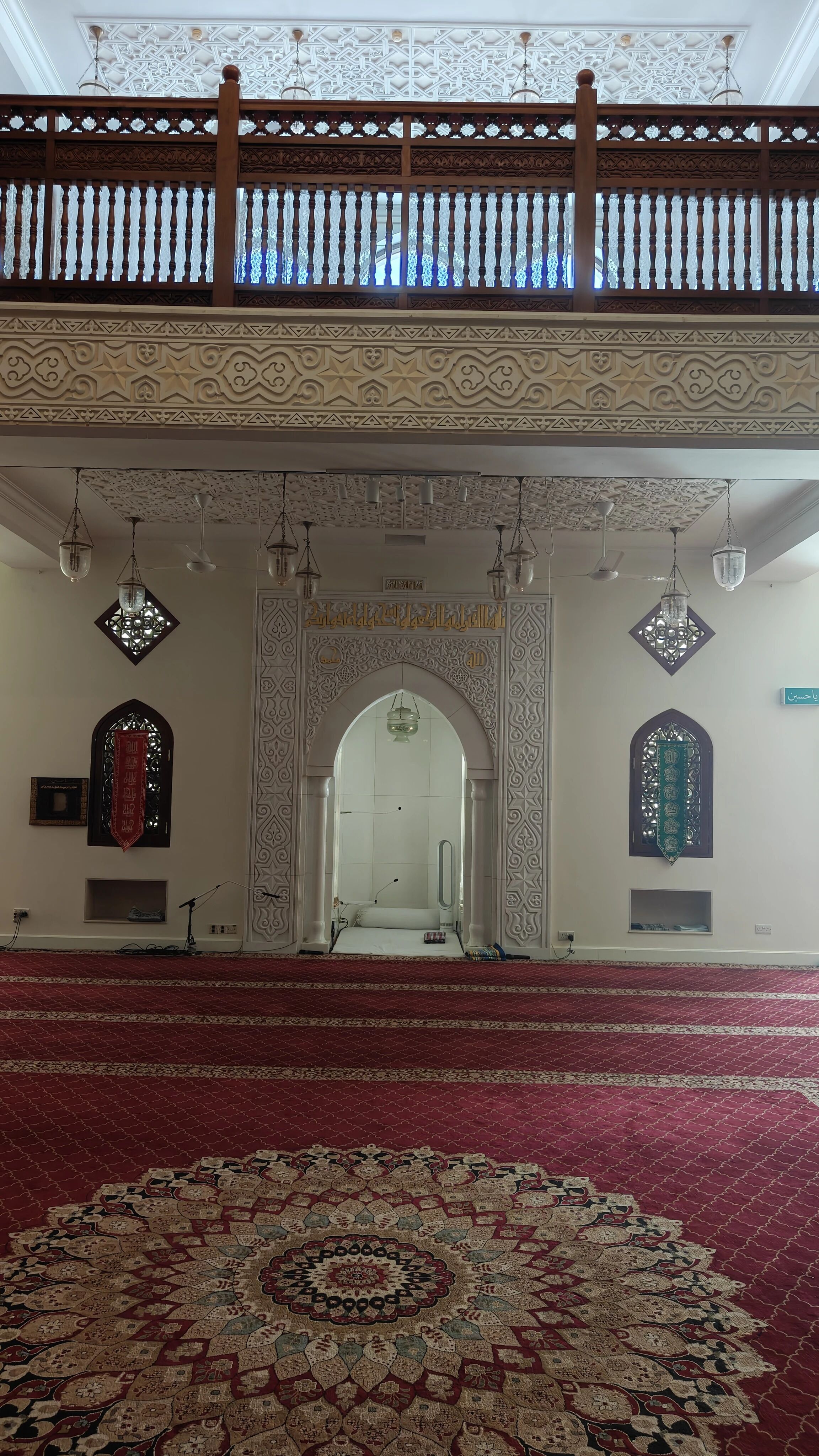
Opening the large central door (photo 7) leads to the front hall, which is lower than the back hall and has only one layer of four semicircular windows at the dome.
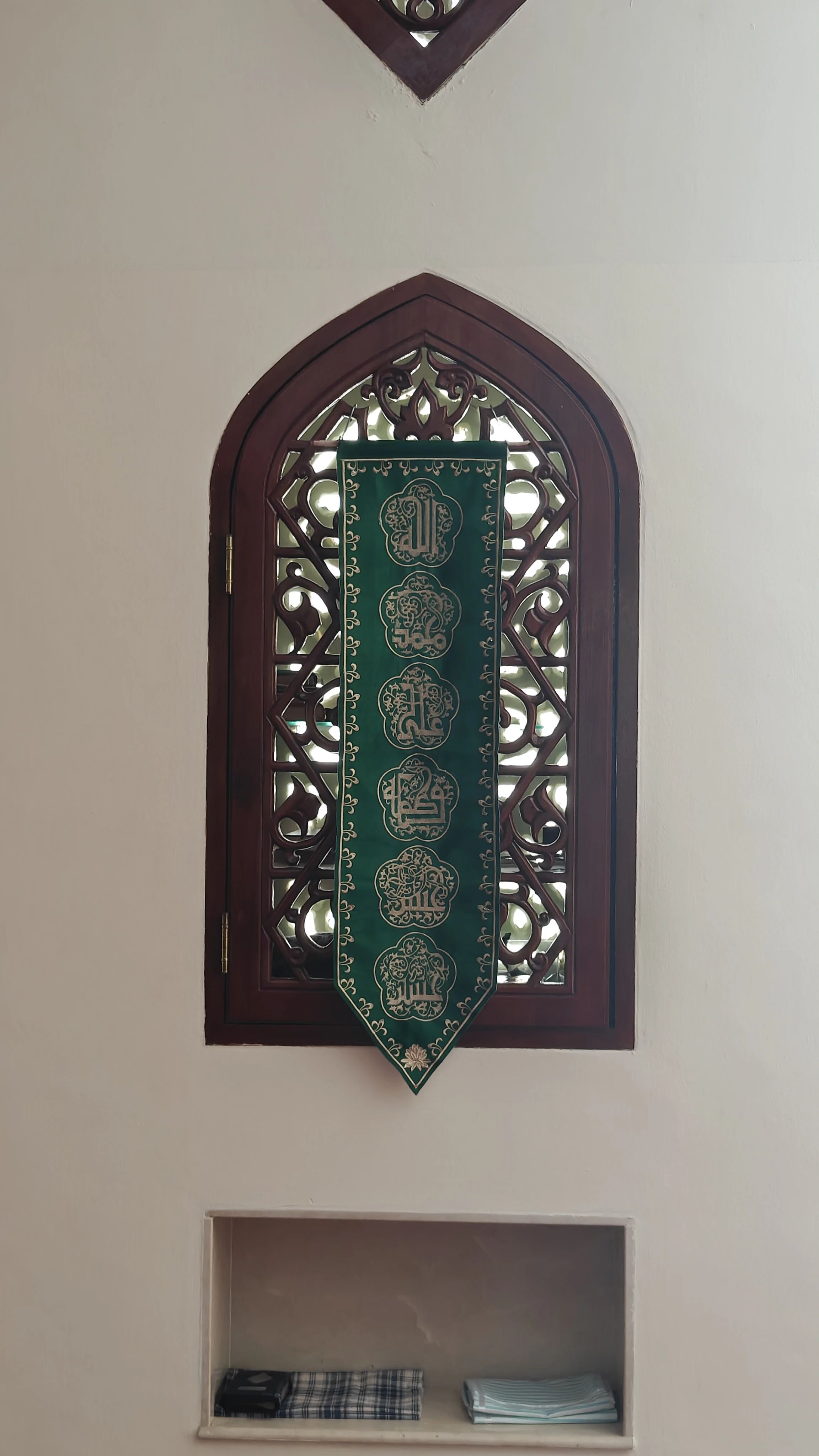
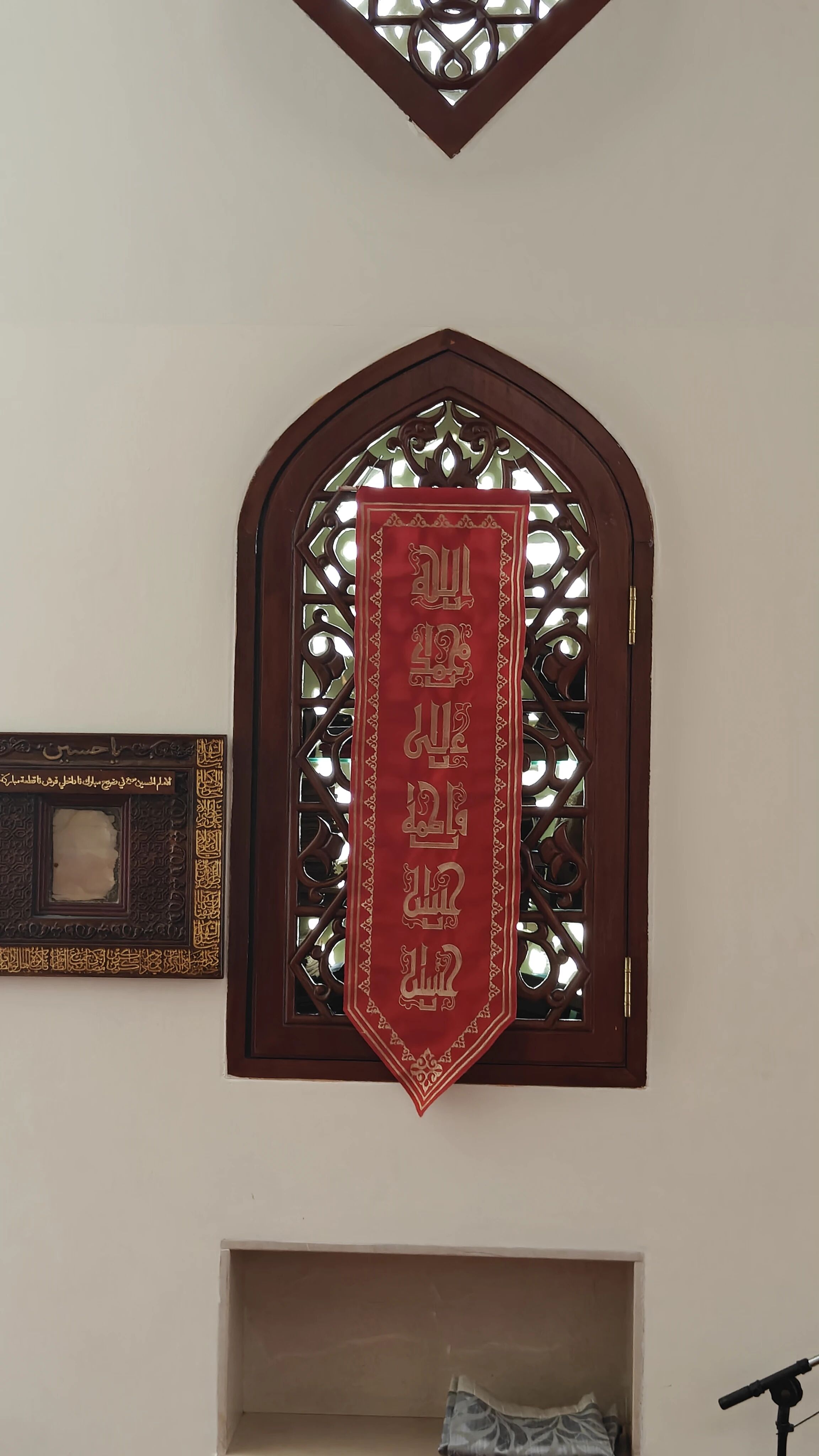
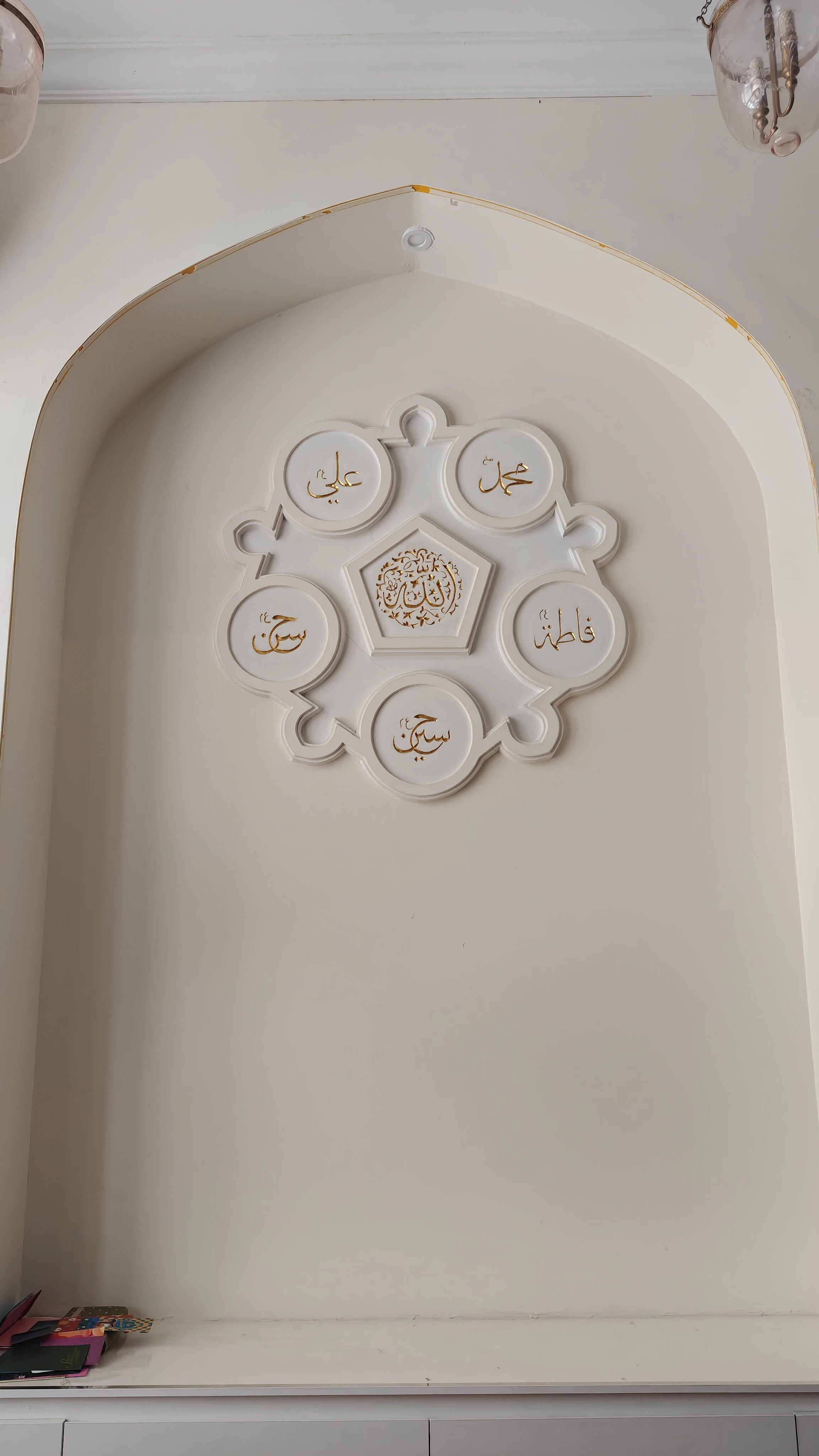
Below is the mihrab (photo 10), with banners on the left and right. The left one is green and the right one is red. The content is basically the same, listing from top to bottom: Allah, Muhammad (the Prophet Muhammad), Ali (the fourth caliph), Fatimah (the Prophet Muhammad's daughter and Ali's wife), Hasan (the eldest son of Ali and Fatimah), and Husayn (the second son of Ali and Fatimah).
The red banner adds the invocation 'Ya' before each name.
Photo 14 shows similar content. I have not seen similar banners in any other mosque to this day.
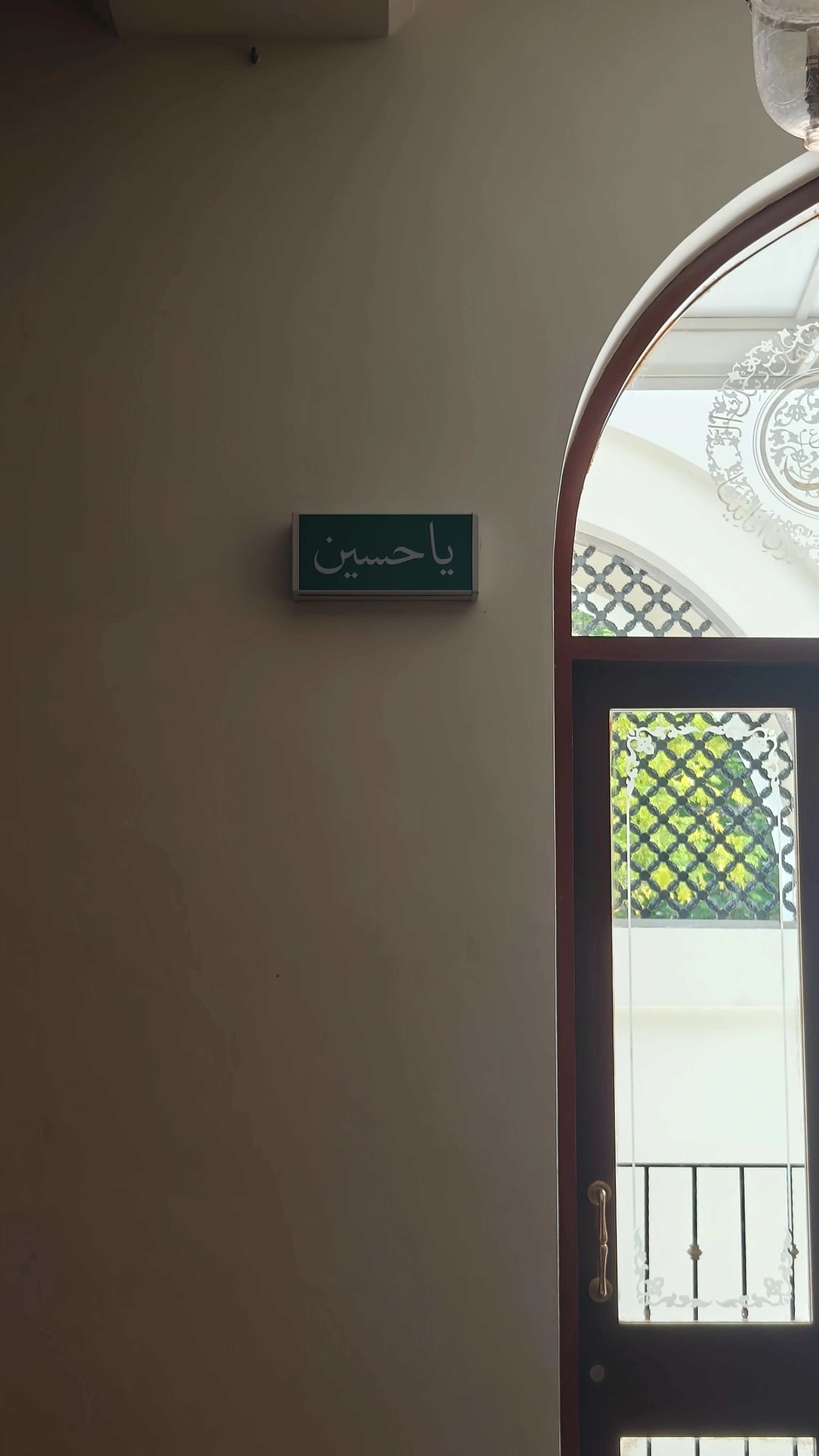
When I first arrived at the mosque, people were entering the prayer hall one after another to pray. In other mosques, many people would usually move toward the front after a while. However, no one here opened the door to move to the front rows. (The closer you are to the mihrab, the further forward you are.)
Only two elders were performing congregational namaz in front of the mihrab, where one leads and the others follow, while everyone else prayed individually. I also noticed that after their salah, they tapped their chests and recited "Ya Ali" several times.
After salah, I felt a bit shy but gathered the courage to greet the two Shia elders and asked about the congregational namaz here; they explained that people usually pray on their own and leave once they finish.
Shia Muslims are a minority, so finding a Shia mosque in Singapore was an unexpected discovery.
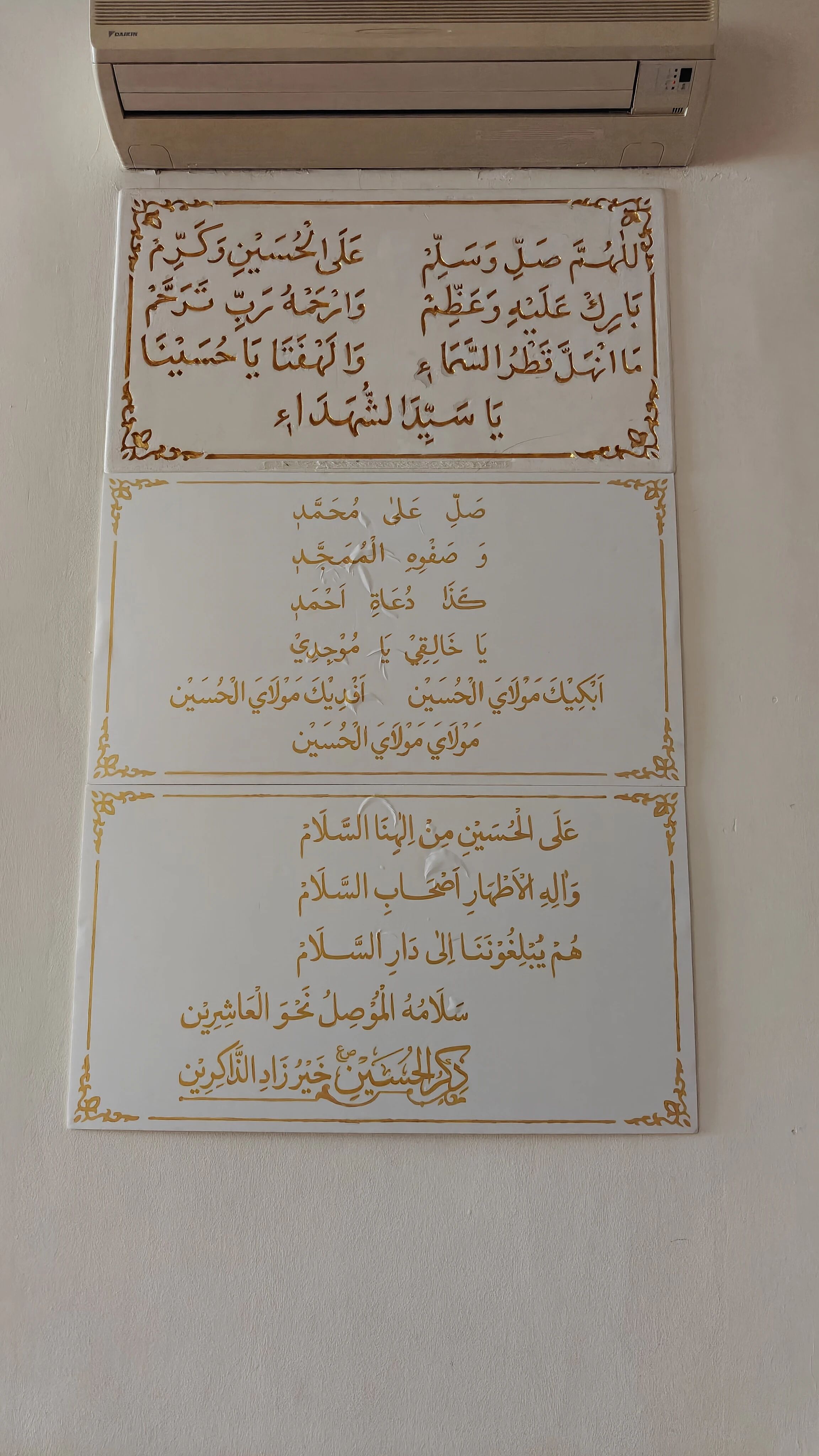
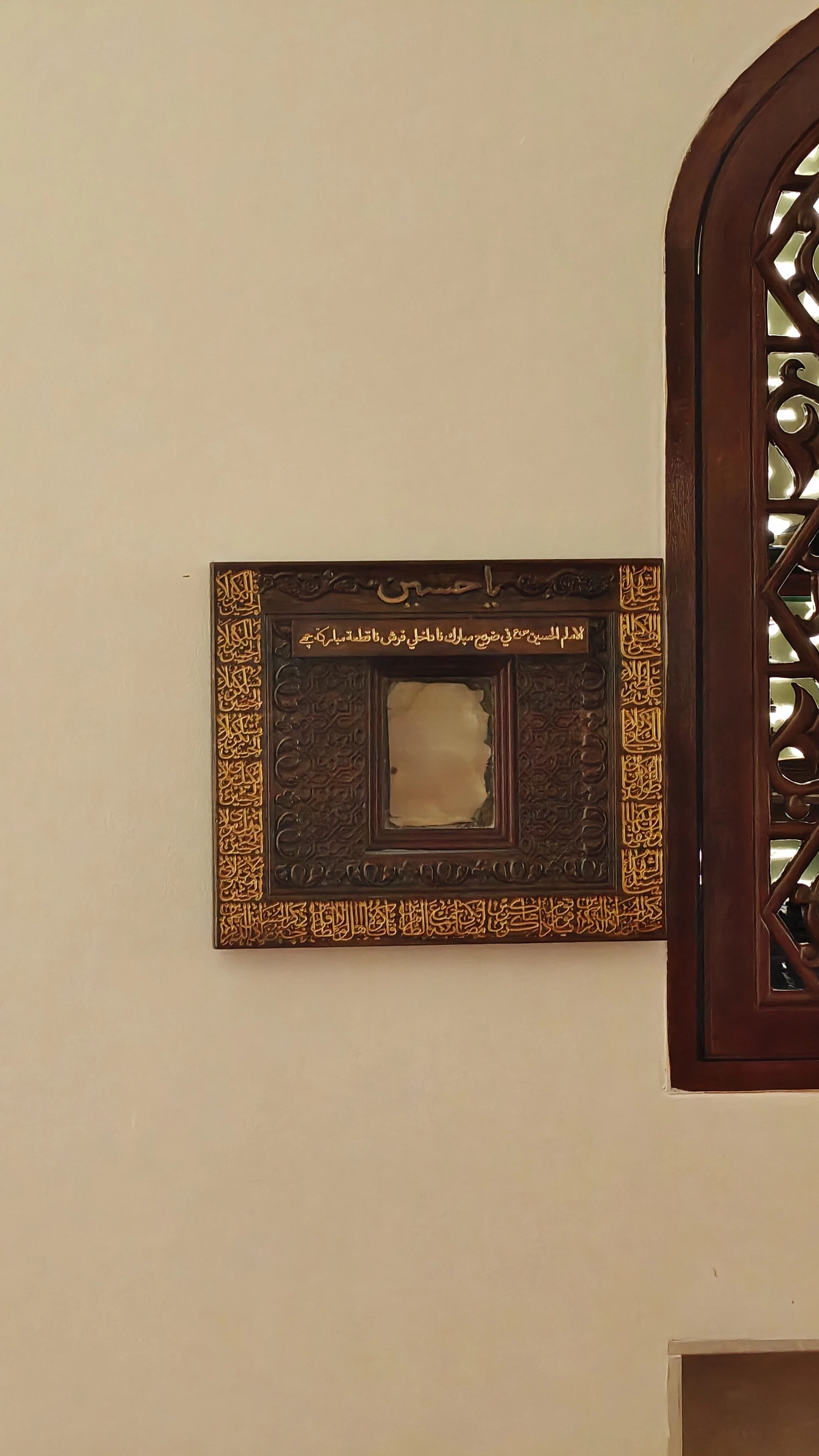
Summary: This Singapore Muslim travel guide visits Burhani Mosque, the Shia mosque linked to the Dawoodi Bohra community from Gujarat, with its locked entrance, wudu area, two-part prayer hall, dome windows, mihrab banners, individual prayers, and a rare look at Shia Muslim life in Singapore.
I became interested when I heard a guide and an imam at the Abdul Gafoor Mosque mention that there is a Shia mosque in Singapore. I had read a bit online about the differences between Sunni and Shia Islam.
But I had never visited a Shia mosque or met anyone from the Shia community in person.
When I reached the main street entrance of Burhani Mosque, it was almost time for salah, but the doors were still locked.
The sign at the entrance said that Burhani Mosque (Masjid Al Burhani) is the spiritual home of the Dawoodi Bohra community and was built in 1897.
This community comes from Gujarat, India (the same place as the Angullia family from my last post, and also the home of Indian Prime Minister Modi).
The older man I met inside the mosque later did look a bit like Modi, and the community members mainly trade in timber, tin, and rubber.
After quickly reading the introduction, I tried to enter through the back door, but there was a sign saying it was private property, even though the Q&A section on Google Maps said it was open. I stood at the entrance feeling stuck, wondering if I should just walk in. Or should I just leave and go somewhere else?
Just then, a man who looked South Asian walked up behind me, and after he confirmed I could go in, I finally entered this Shia mosque in Singapore. In the wudu area, I found some wooden clogs with an Indian style, which looked like they would be hard to wear.
Entering the prayer hall, I found it divided into two sections by a central door: a front hall and a back hall. The back hall (photos 5 and 6) has a high ceiling, and there is also prayer space on the second floor. Above is a dome with two layers of windows along the edge, totaling eight semicircular windows, and the inside of the dome is decorated with relief patterns.
Opening the large central door (photo 7) leads to the front hall, which is lower than the back hall and has only one layer of four semicircular windows at the dome.
Below is the mihrab (photo 10), with banners on the left and right. The left one is green and the right one is red. The content is basically the same, listing from top to bottom: Allah, Muhammad (the Prophet Muhammad), Ali (the fourth caliph), Fatimah (the Prophet Muhammad's daughter and Ali's wife), Hasan (the eldest son of Ali and Fatimah), and Husayn (the second son of Ali and Fatimah).
The red banner adds the invocation 'Ya' before each name.
Photo 14 shows similar content. I have not seen similar banners in any other mosque to this day.
When I first arrived at the mosque, people were entering the prayer hall one after another to pray. In other mosques, many people would usually move toward the front after a while. However, no one here opened the door to move to the front rows. (The closer you are to the mihrab, the further forward you are.)
Only two elders were performing congregational namaz in front of the mihrab, where one leads and the others follow, while everyone else prayed individually. I also noticed that after their salah, they tapped their chests and recited "Ya Ali" several times.
After salah, I felt a bit shy but gathered the courage to greet the two Shia elders and asked about the congregational namaz here; they explained that people usually pray on their own and leave once they finish.
Shia Muslims are a minority, so finding a Shia mosque in Singapore was an unexpected discovery.
