
Muslim History Guide Tianjin Museum: Kazakhstan Artifacts, Silk Road Culture and Islamic Heritage
Reposted from the web
Summary: This article covers the Kazakhstan National Museum collection exhibition at Tianjin Museum, with a close look at historical artifacts, steppe culture, and Central Asian heritage. It preserves the original exhibition details, object names, photographs, and cultural context for English readers.
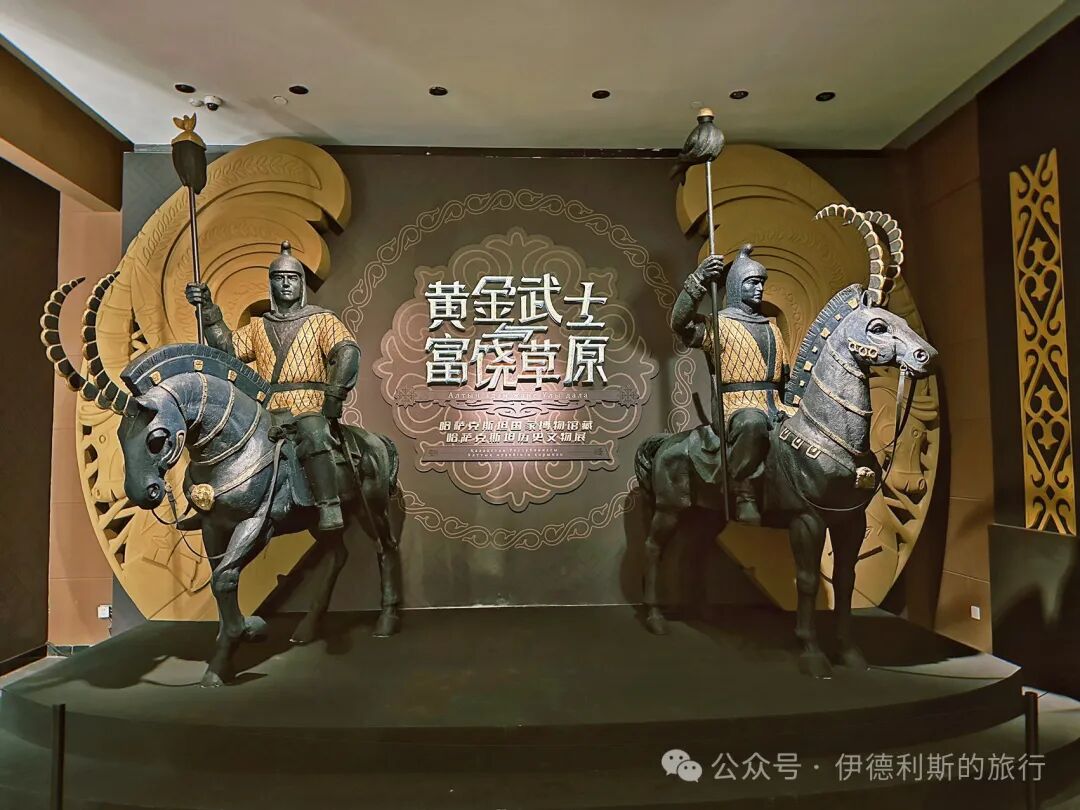
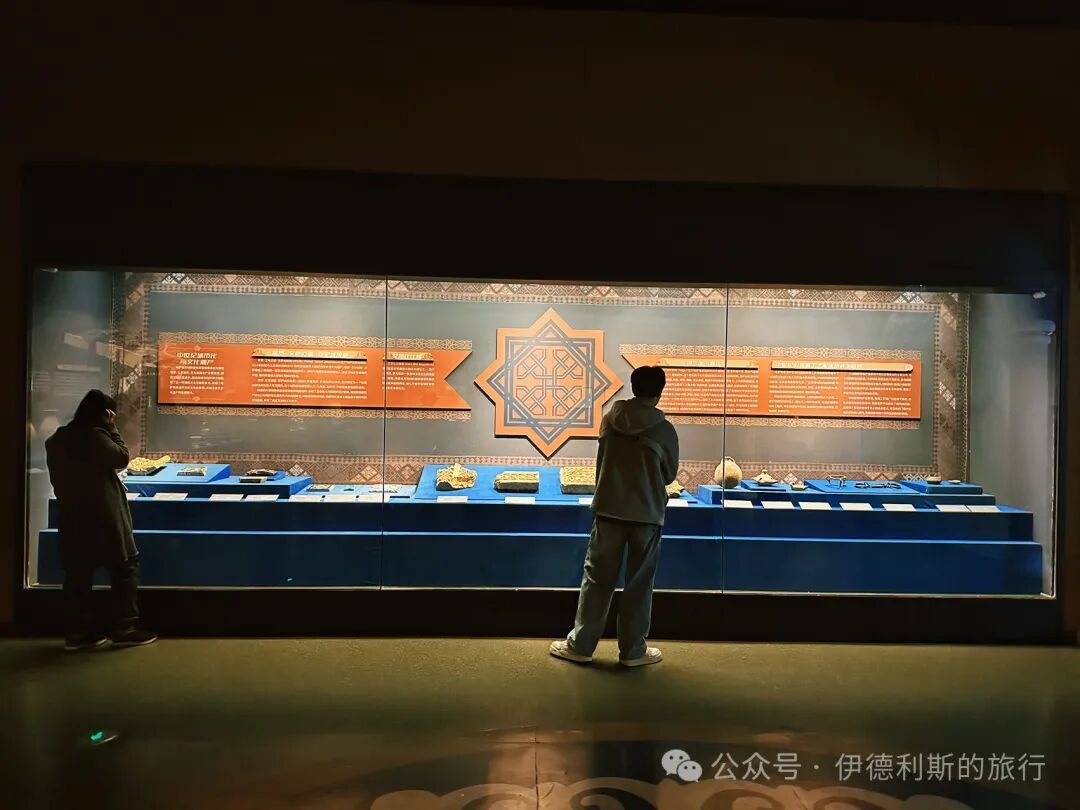
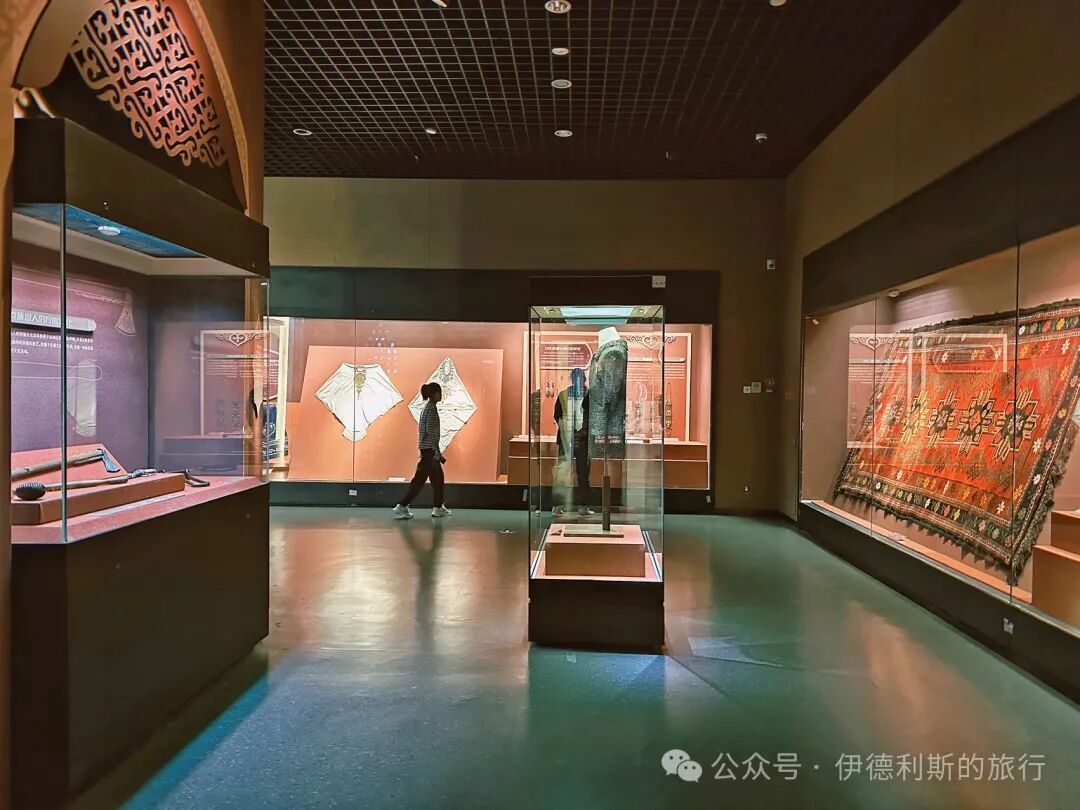
From September 30, 2024, to February 12, 2025, the fifth floor of the Tianjin Museum is hosting an exhibition of historical artifacts from the National Museum of Kazakhstan. Overall, it is not very stunning and lacks any major, heavy-hitting artifacts. Of course, I did not see any particularly significant artifacts when I visited the National Museum of Kazakhstan in person either.
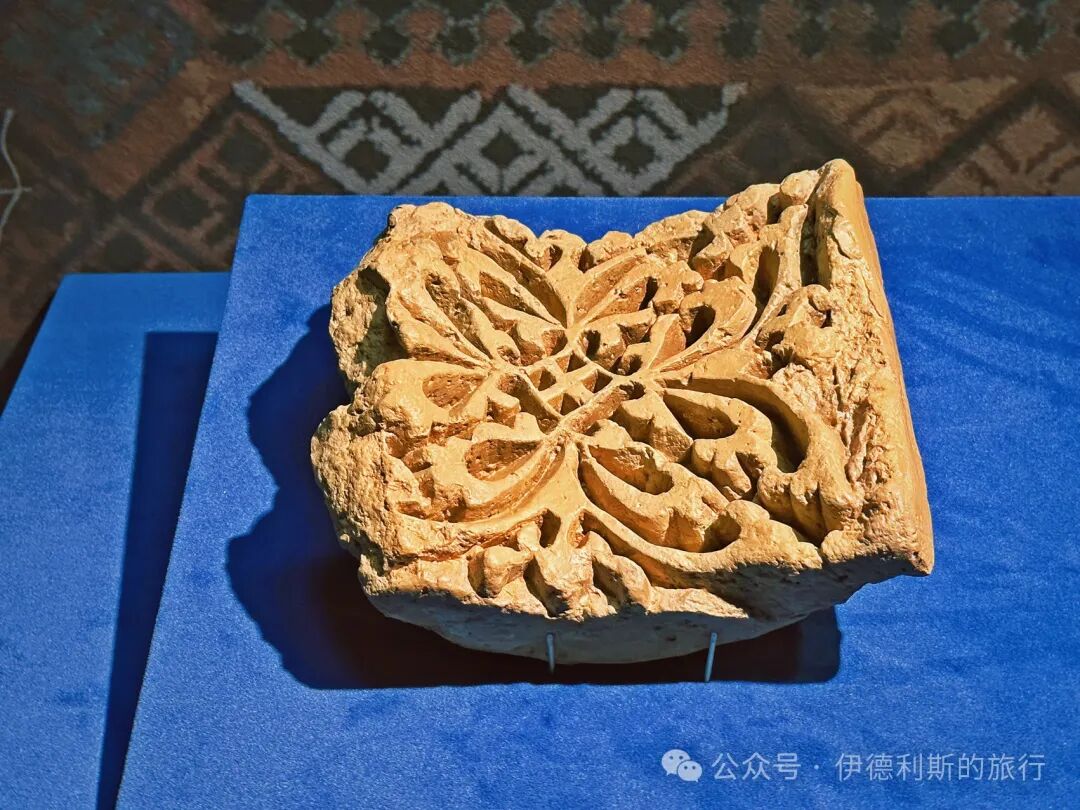
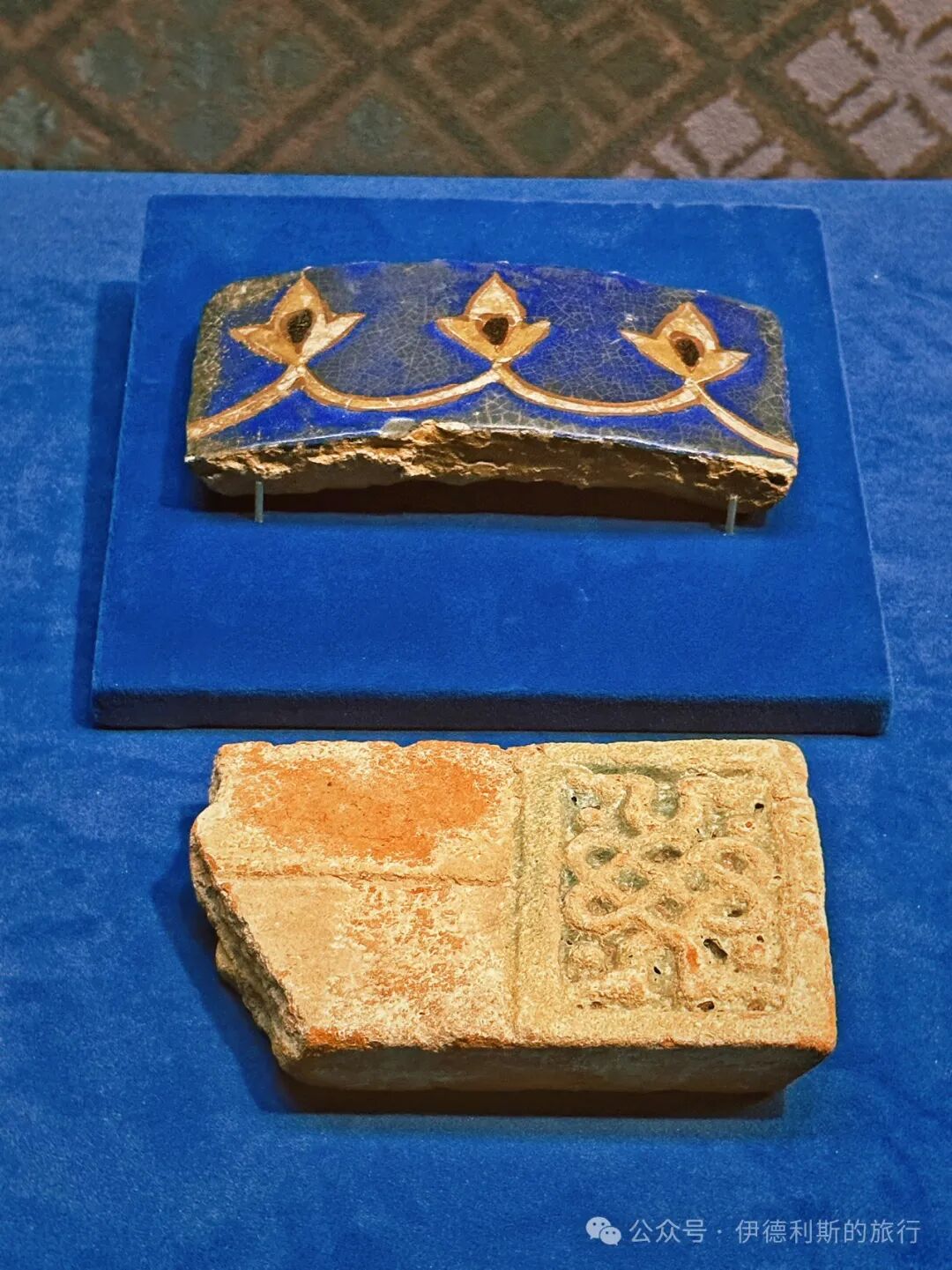
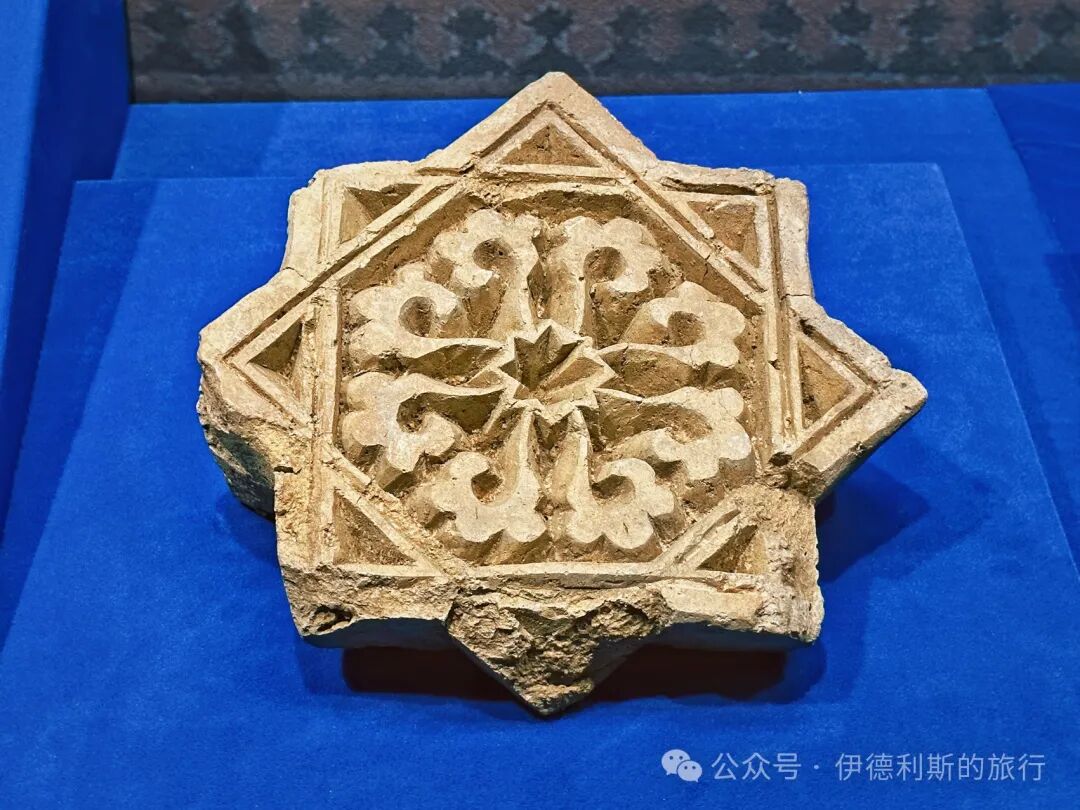
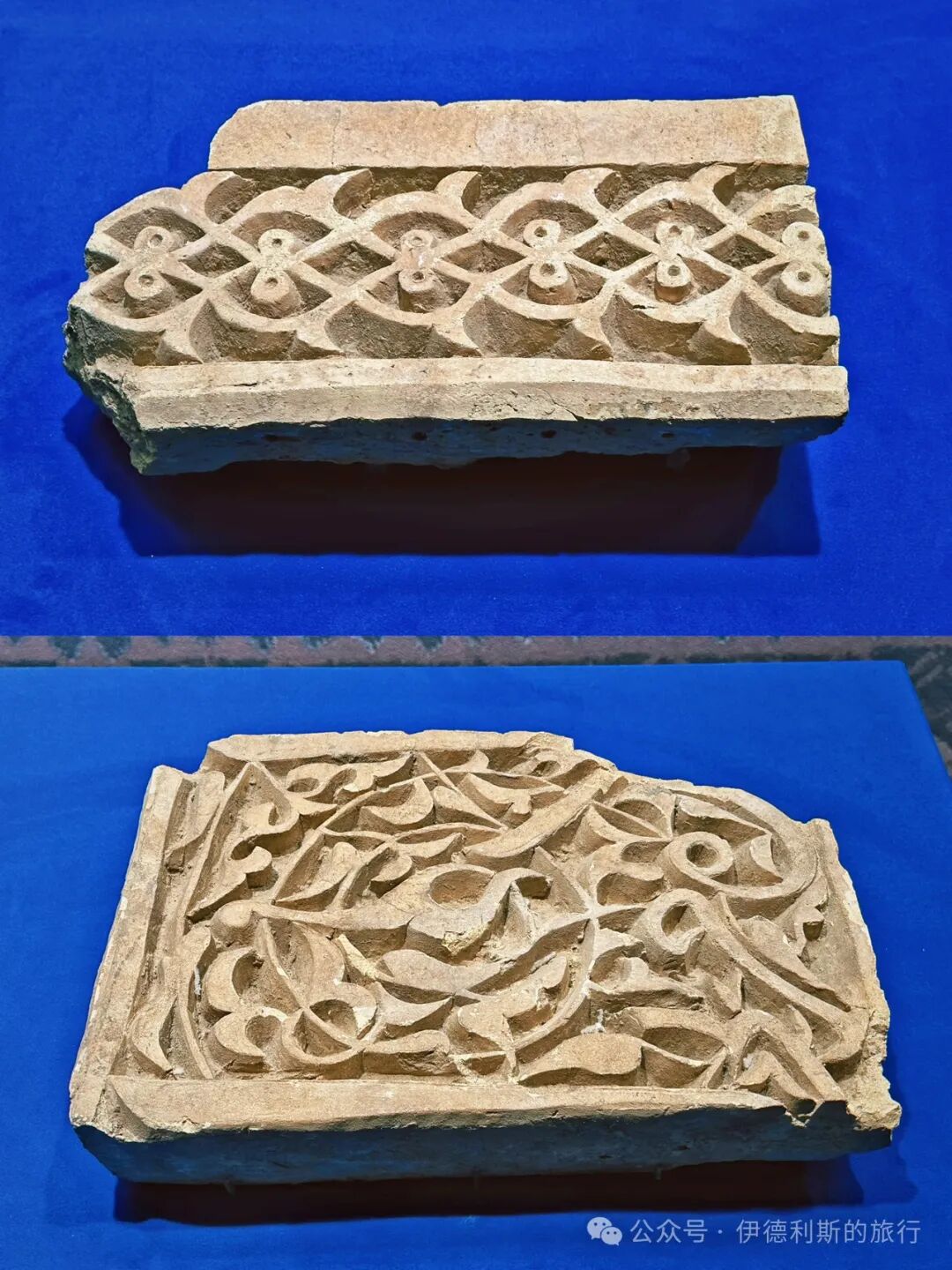
These are carved clay tiles from the 12th-century Karakhanid dynasty Aisha-Bibi Mausoleum in the ancient city of Taraz. The architectural style of this mausoleum follows the Samanid Mausoleum in Bukhara and serves as an important example of Karakhanid architecture. Taraz grew into a wealthy city during the 9th-century Samanid dynasty, reached its peak during the 10th to 12th-century Karakhanid dynasty, and was destroyed by the Mongol army in 1220.
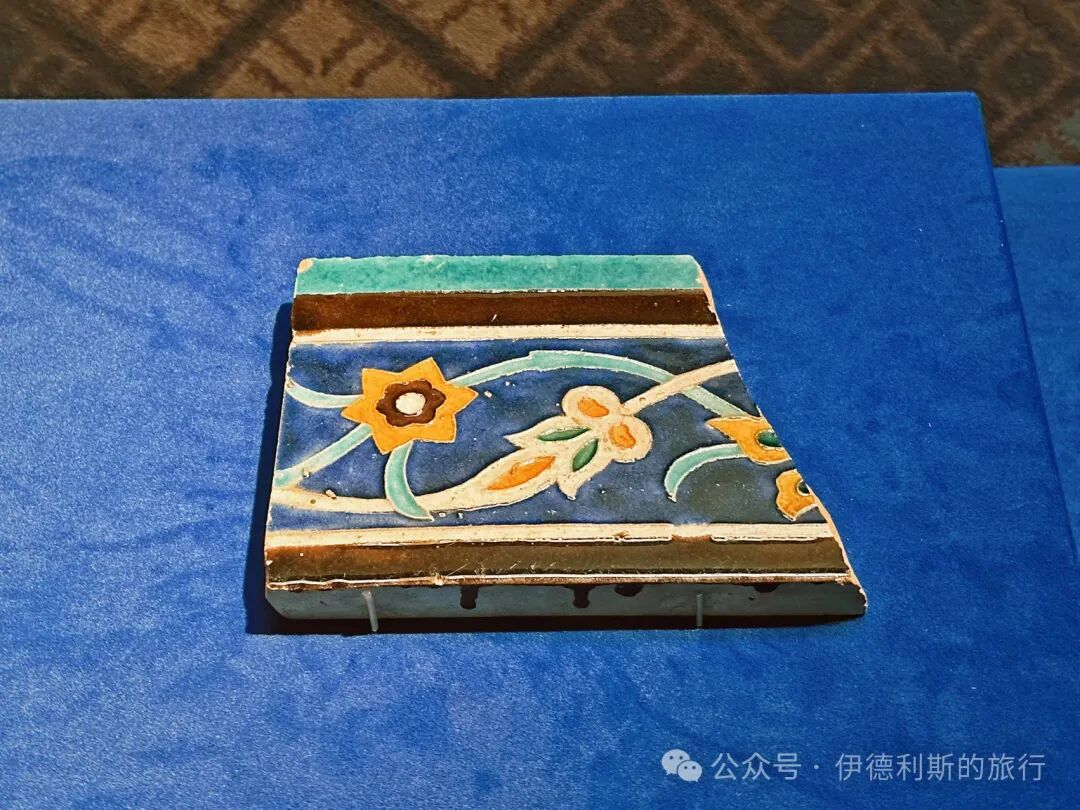
These are painted glazed tiles and glazed pottery shards from the Khoja Ahmed Yasawi Mausoleum, dating to the Timurid dynasty between 1389 and 1405. This mausoleum is a masterpiece of Timurid architecture and an important religious center in southern Kazakhstan. It was added to the World Heritage List in 2003.
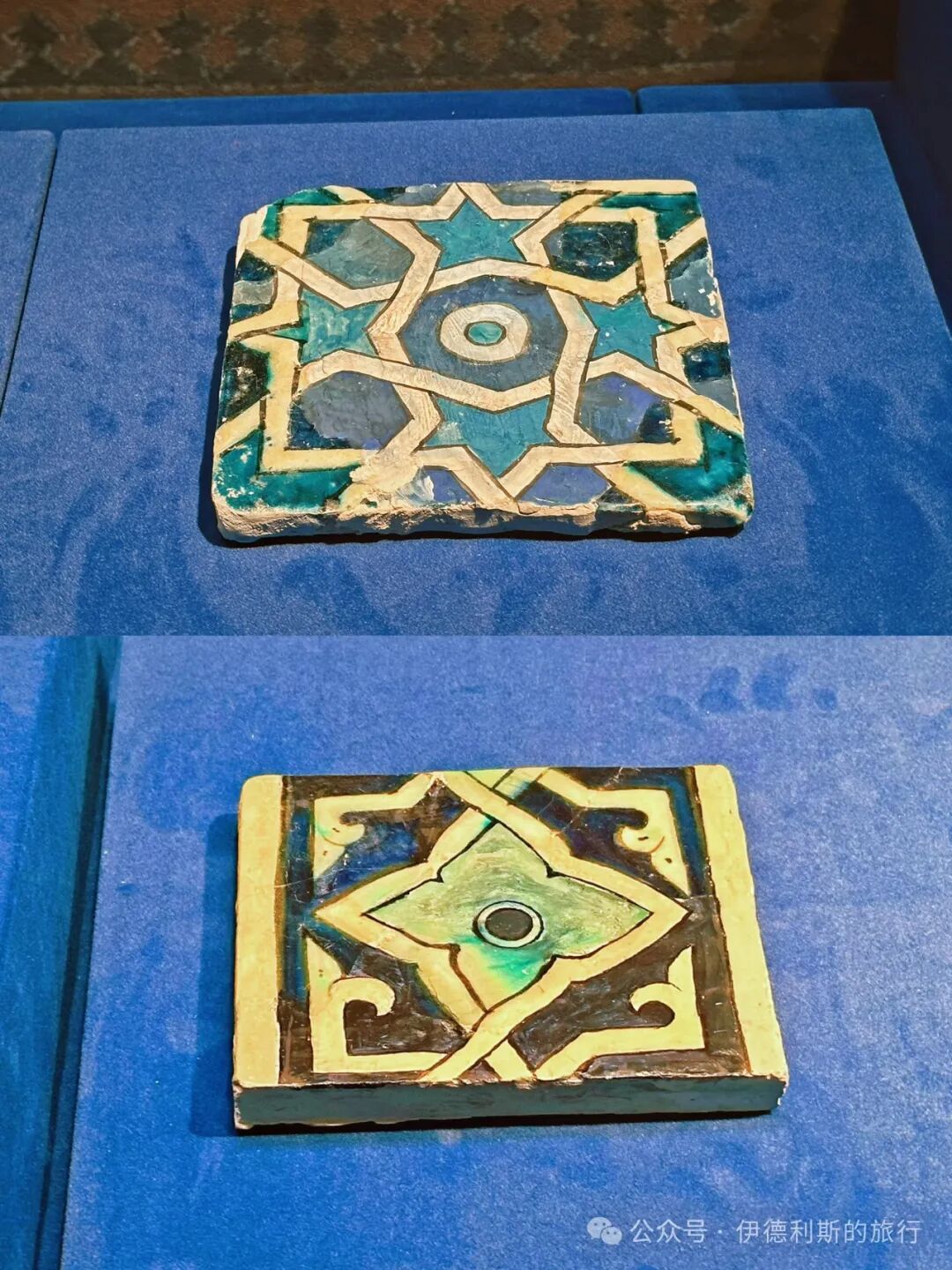
These are glazed tile fragments unearthed from a mausoleum at the Zhaiyk ancient city site, dating to the 14th-century Golden Horde period. The Zhaiyk ancient city site was discovered by an archaeological team in 2001 and has since been fully excavated and studied. Inside the city, they found the remains of a Turkish bath with an underfloor heating system, and in the cemetery west of the city, they found a domed mausoleum decorated with colorful glazed tiles.
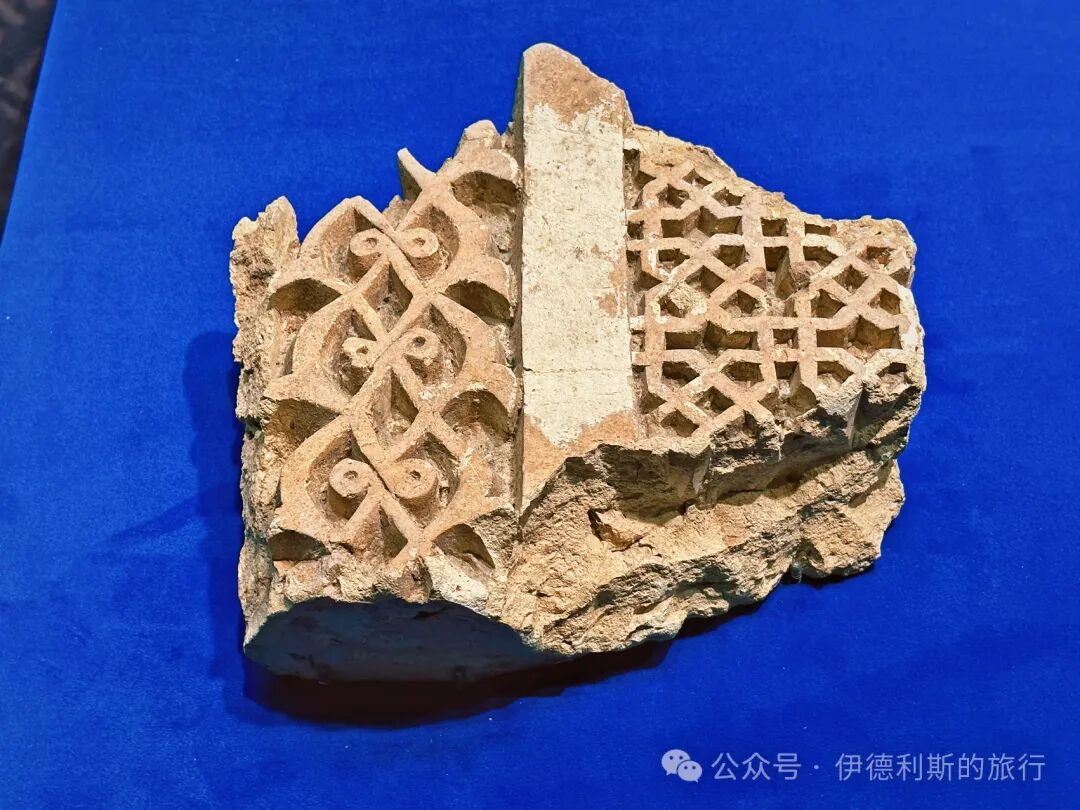
These are clay bricks unearthed from the Kyshkala ancient city site in the Syr Darya delta. Kyshkala was a wealthy ancient city during the Golden Horde period that produced a large number of clay bricks.
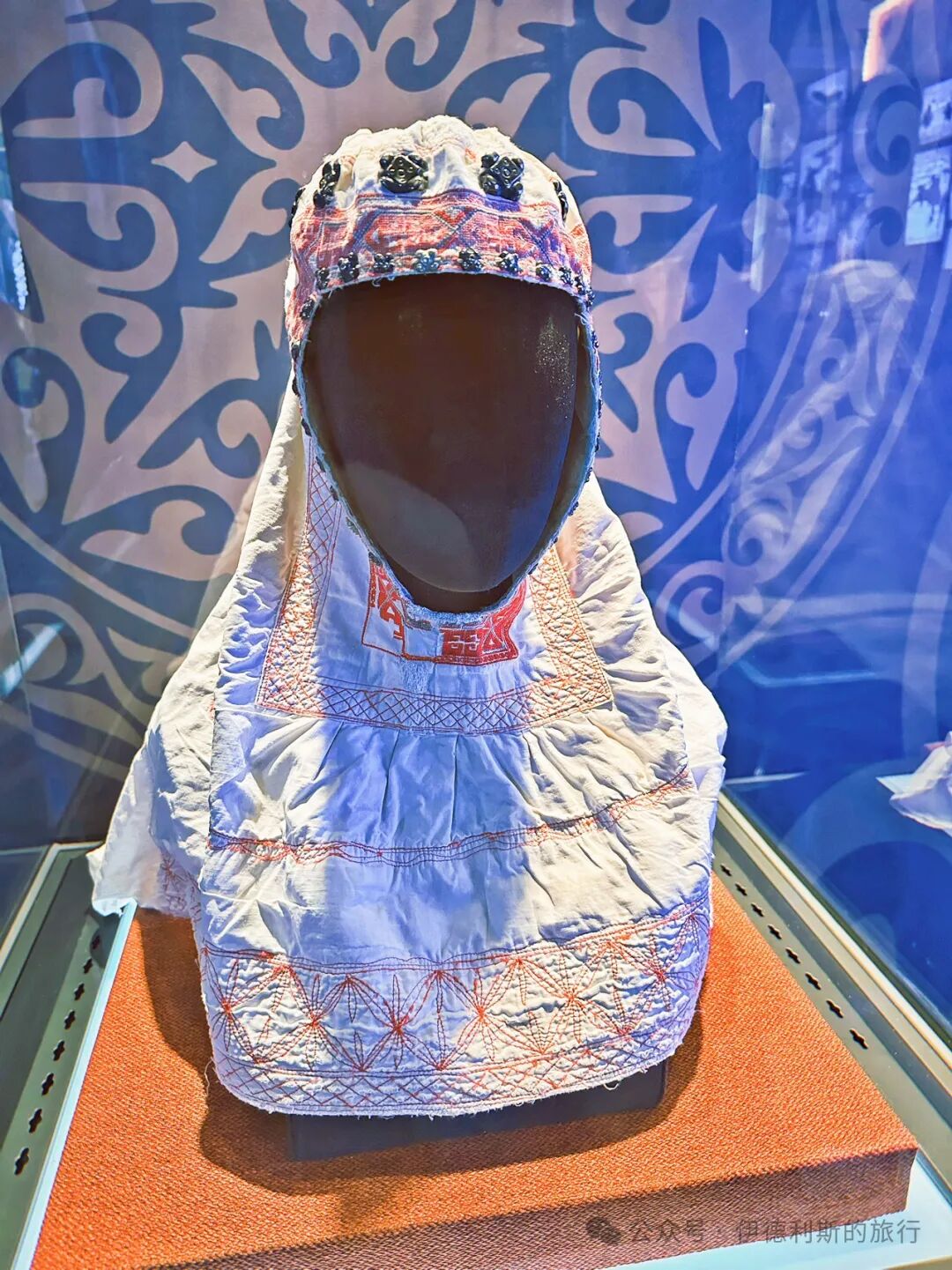
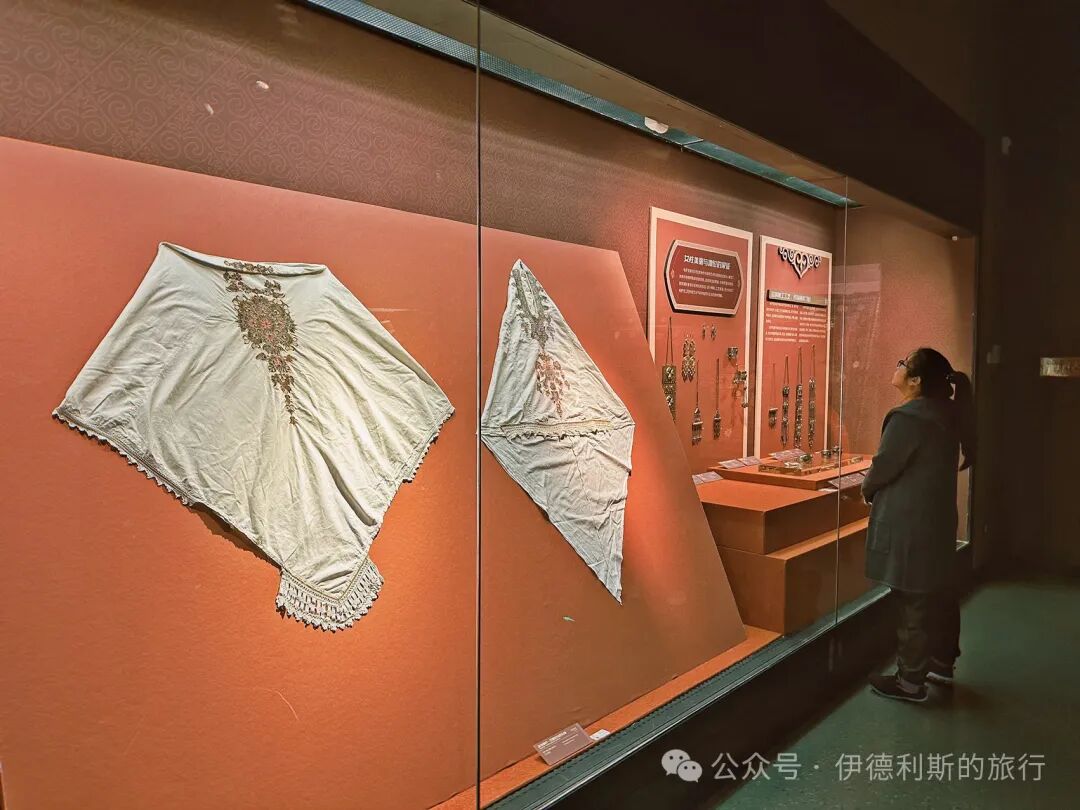
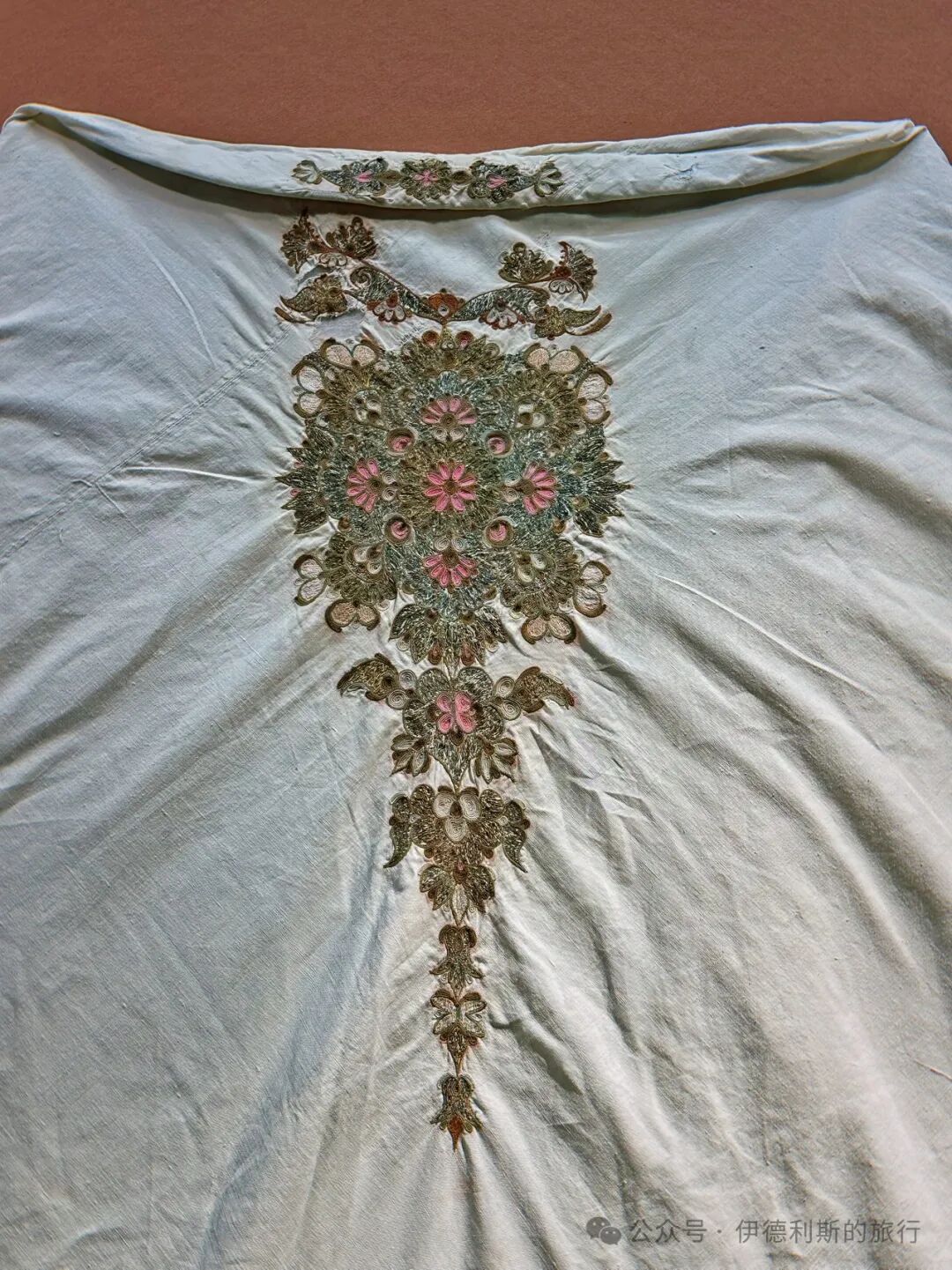
This is a Kimeshek, an embroidered head covering for married women from 19th-century southern Kazakhstan.
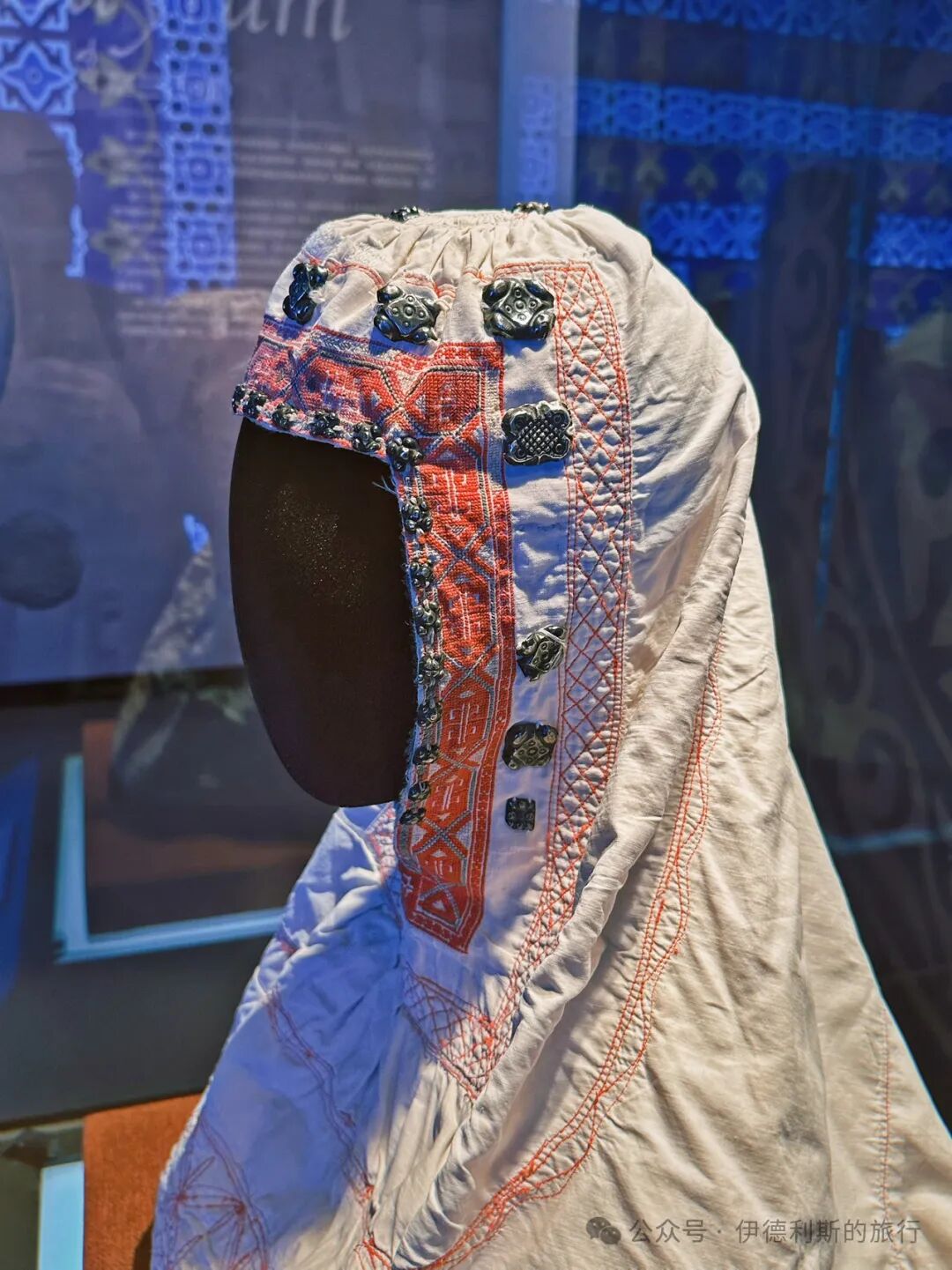
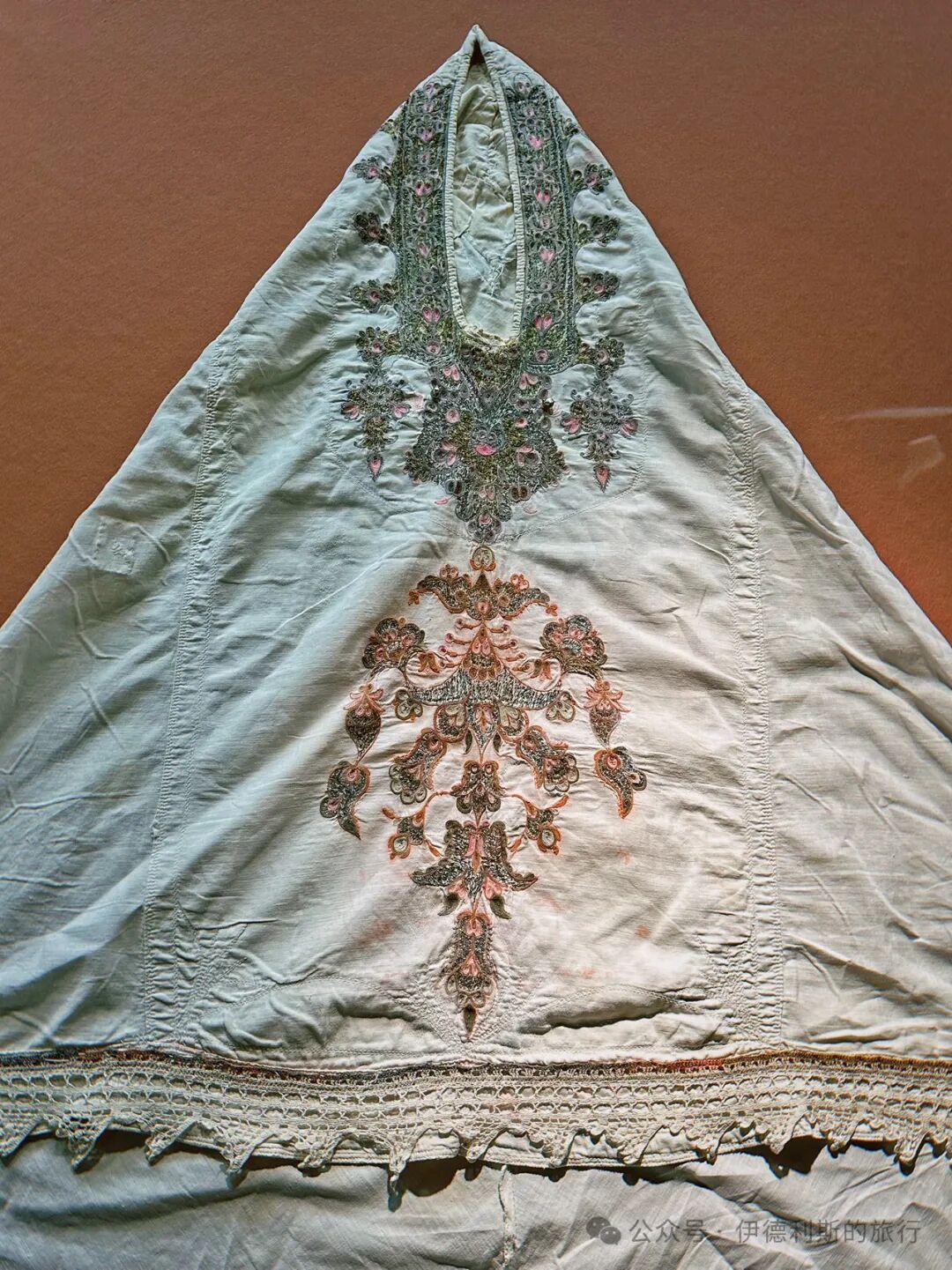
A Kimeshek with lace pendants.
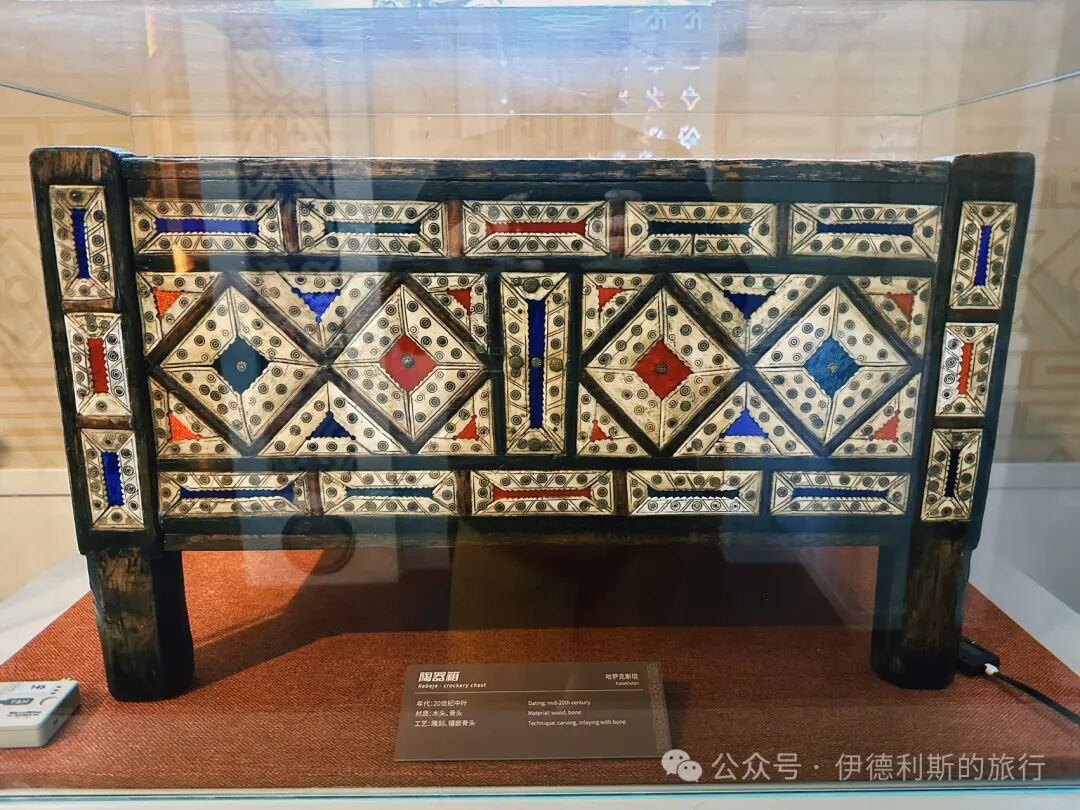
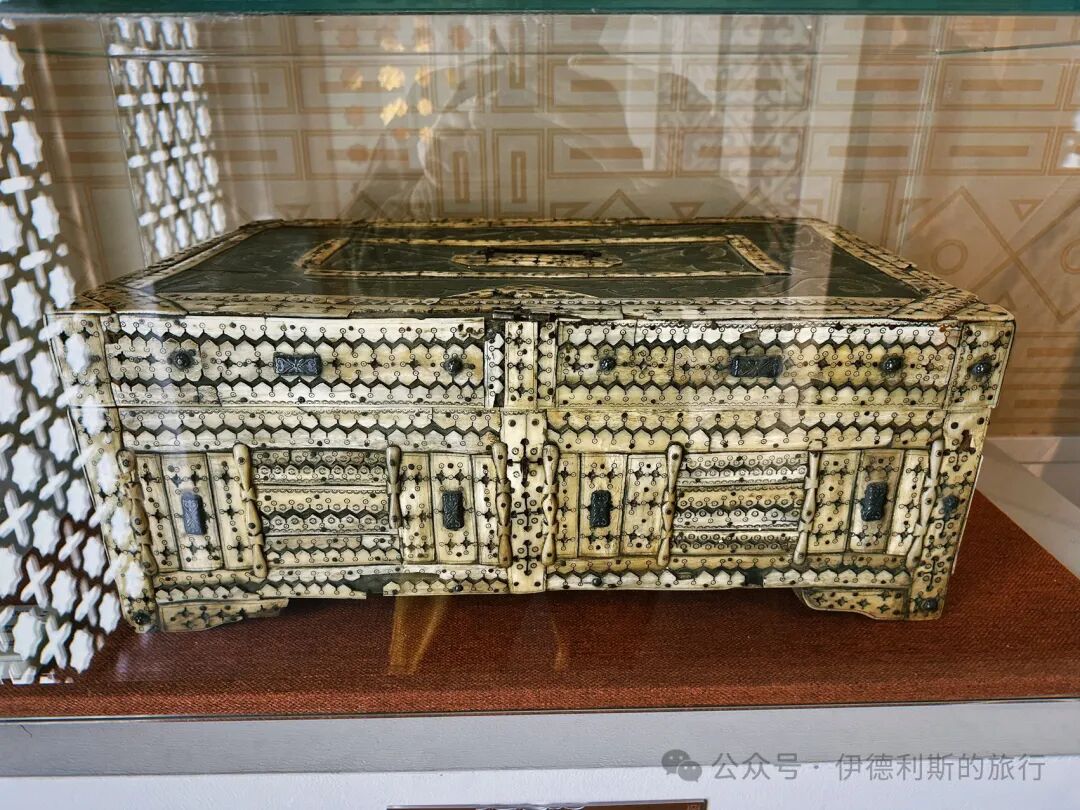
A Kebeje, which is a wooden chest with bone inlays, dating from the 19th to the mid-20th century.
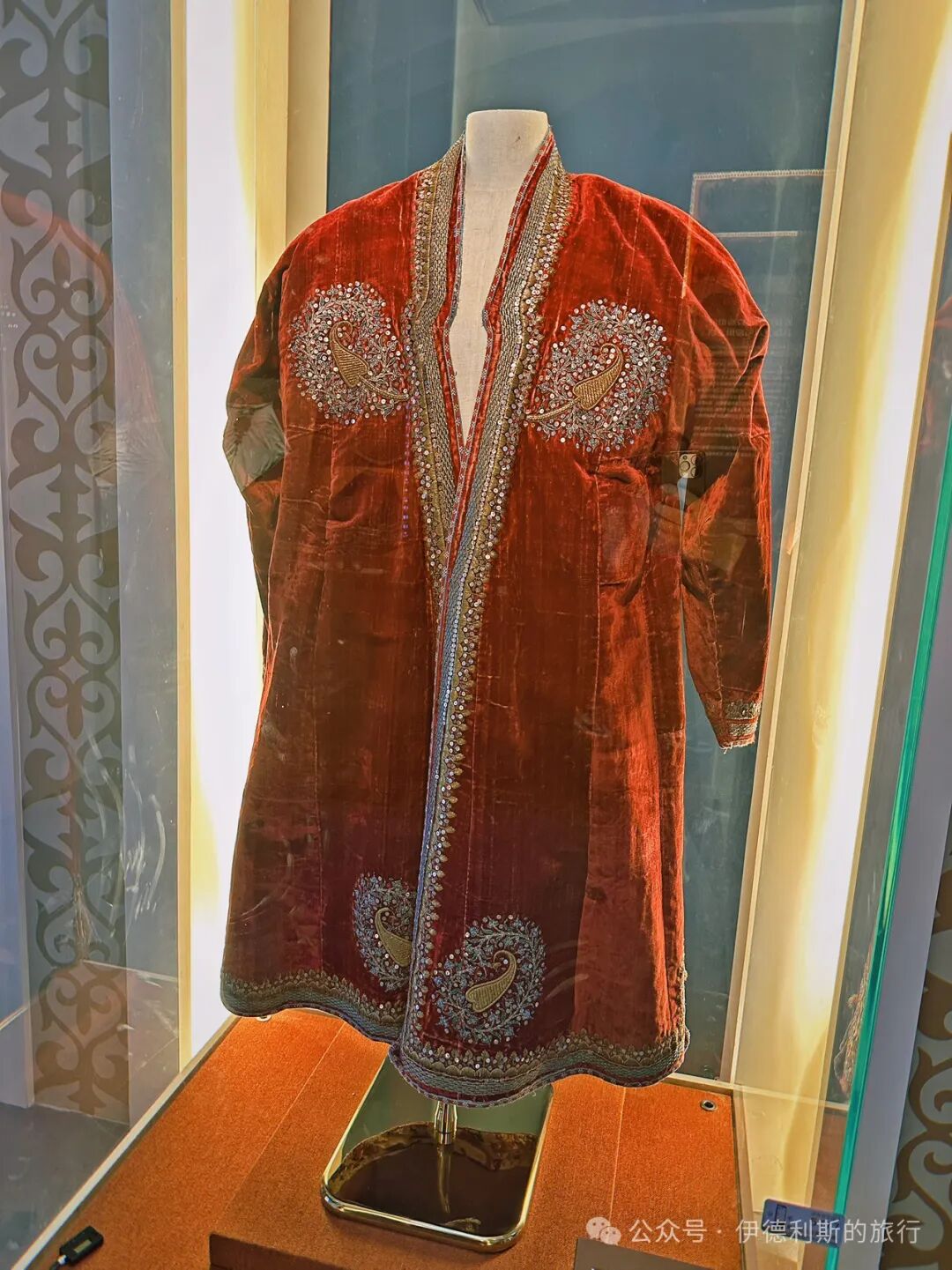
A Khan's robe (chapan) made of velvet, gold and silver thread, and appliqué from 18th to 19th-century northern Kazakhstan. After the 18th century, due to long-term conflicts with the Dzungar Khanate, the Kazakh Khanate split into the Senior, Middle, and Junior Juz, with each Juz having its own Khan. After the mid-19th century, the Kazakh Khanate was gradually controlled by the Russian Empire. Khan Kenesary Kasymov (reigned 1841–1847) was the last national hero to bravely resist Russia. After he died for his country in 1847, the Kazakh Khanate was declared fallen.
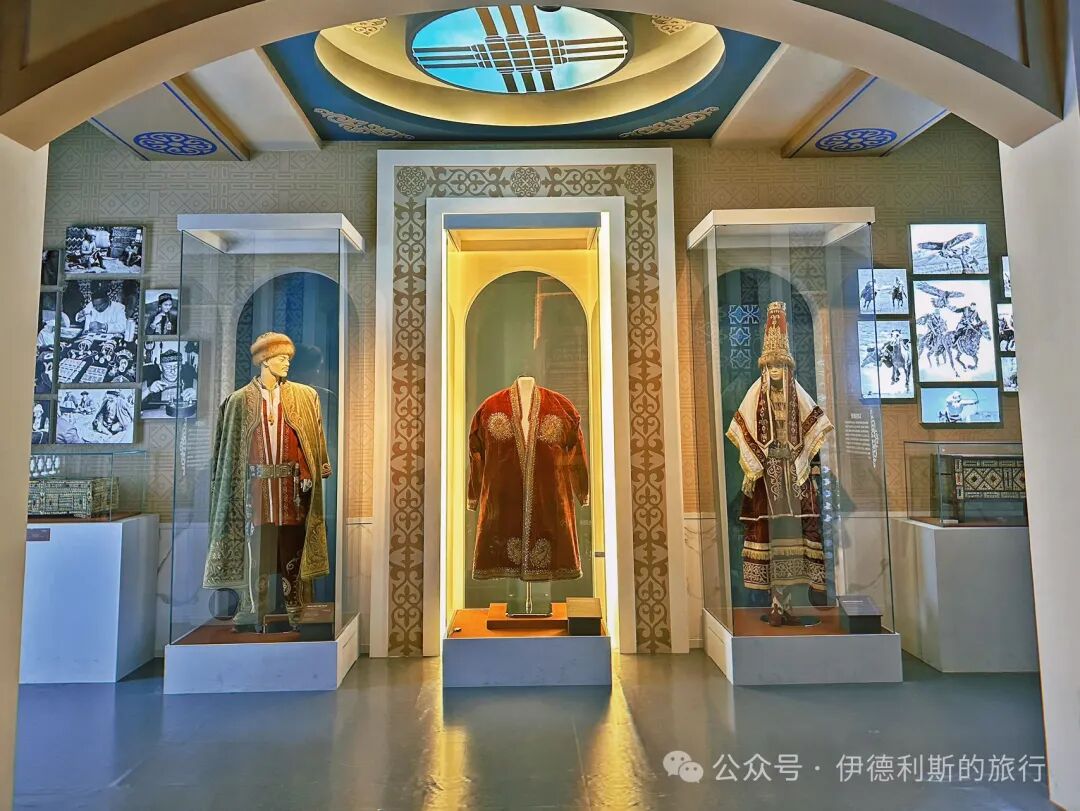
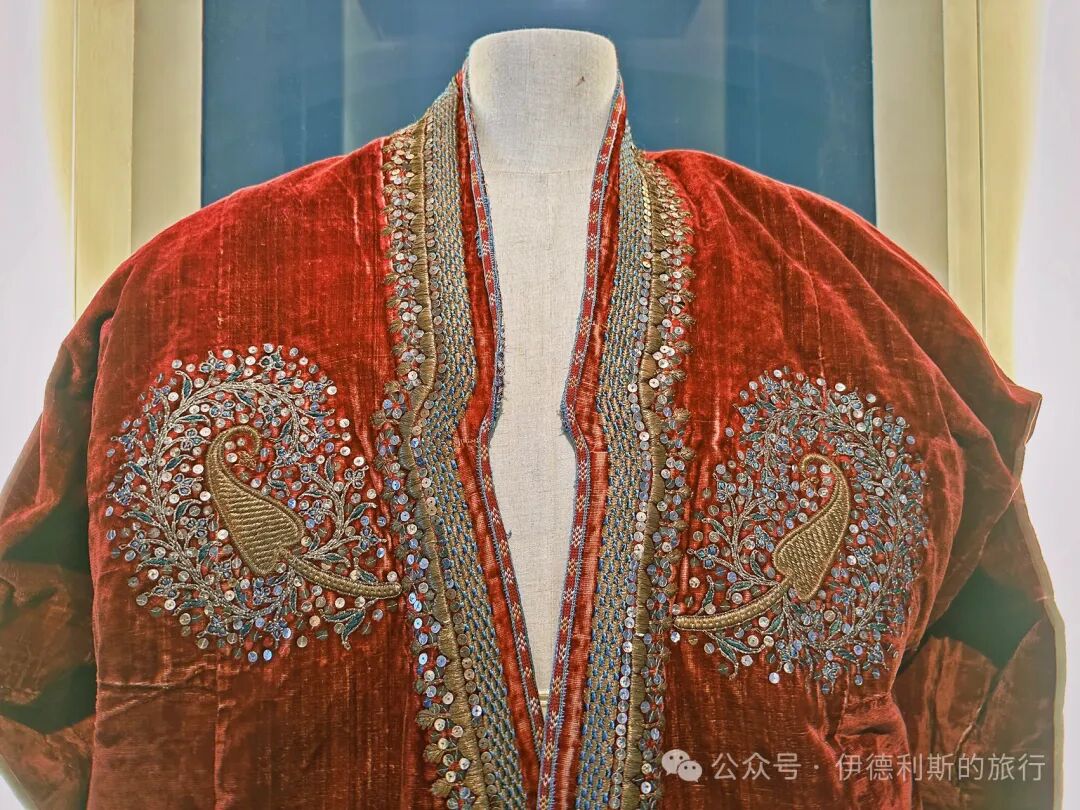
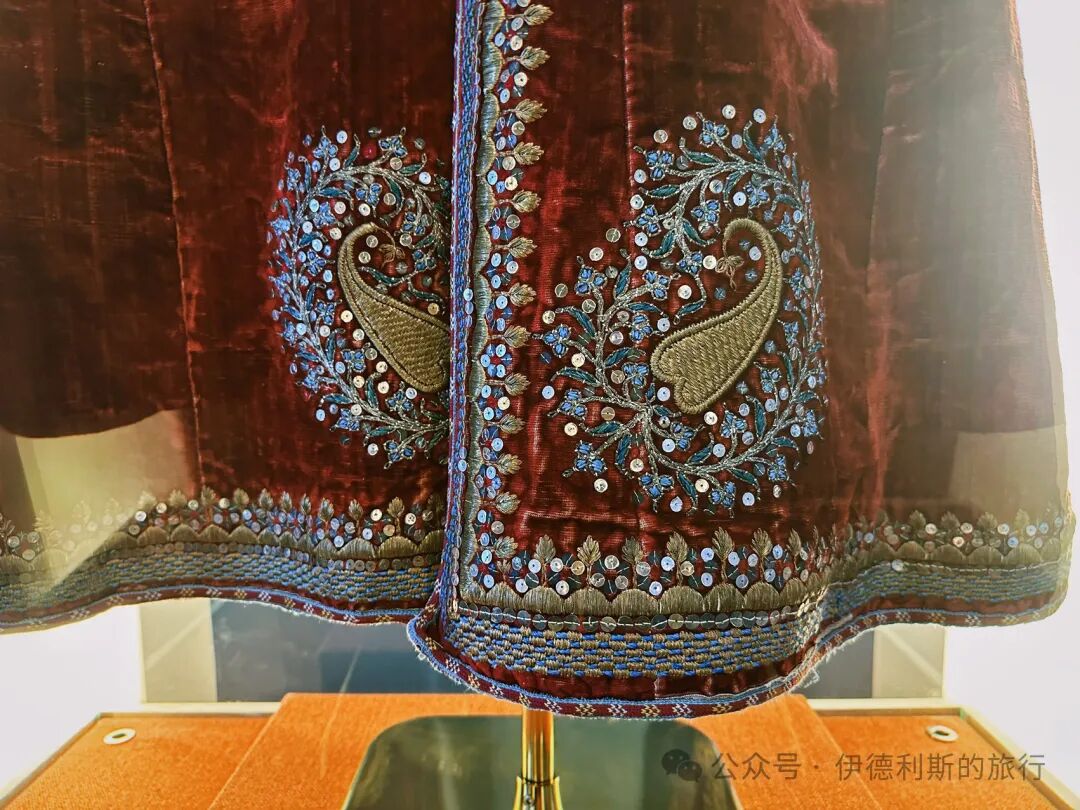
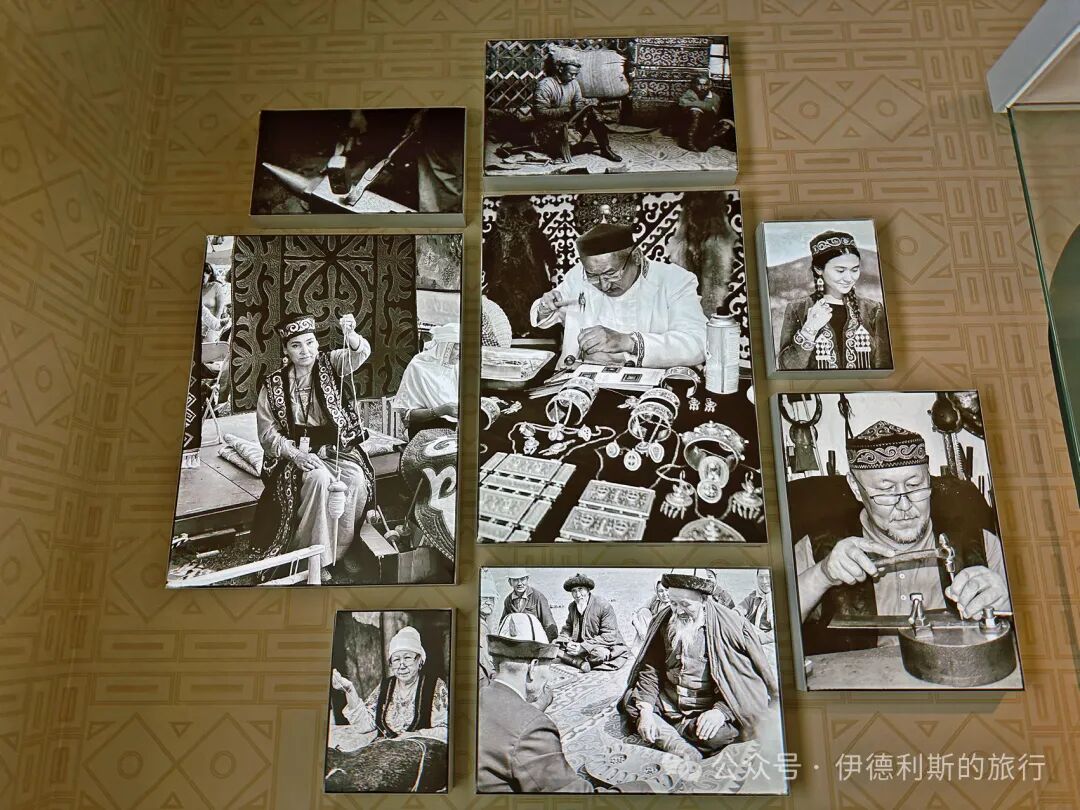
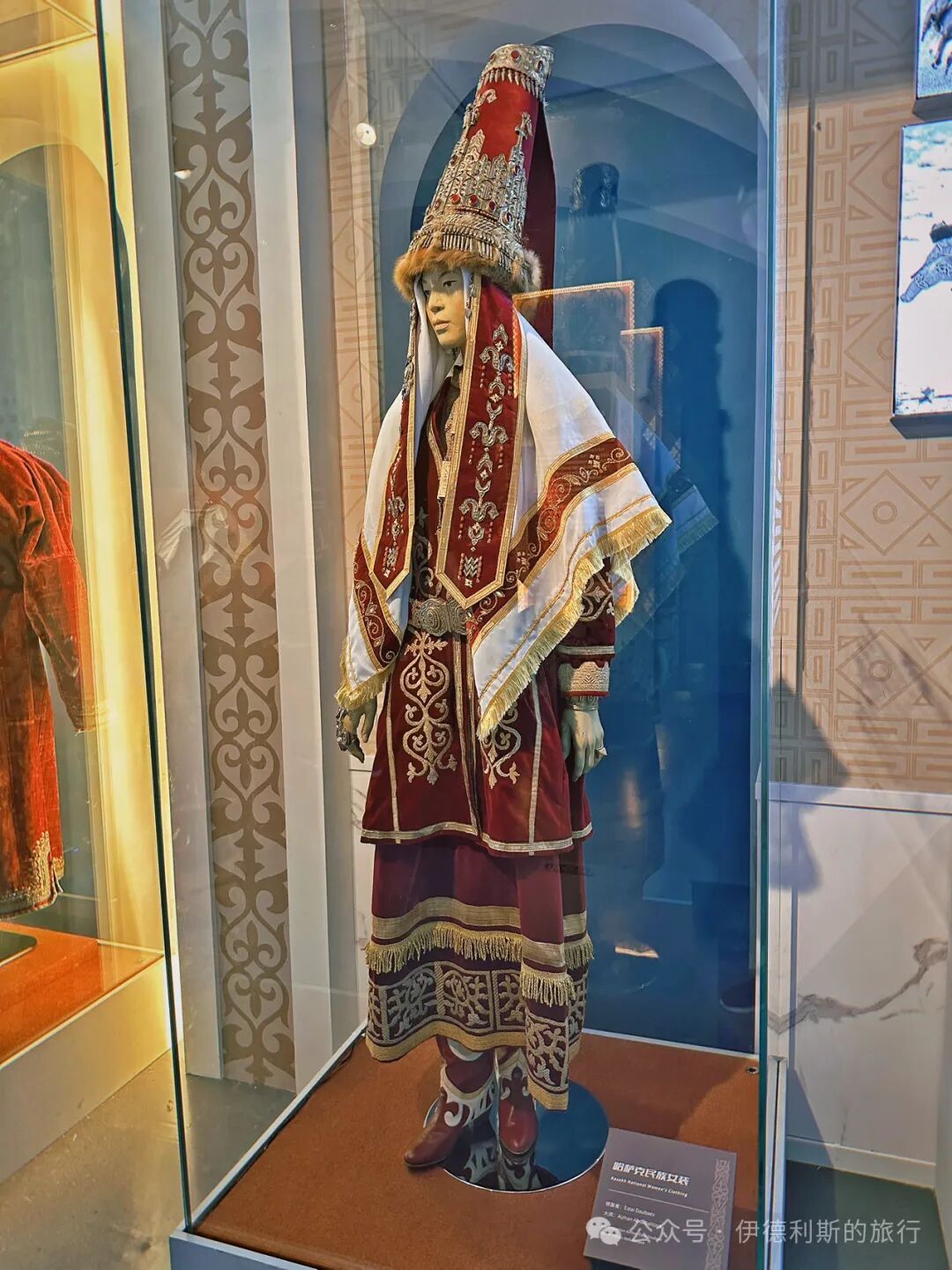
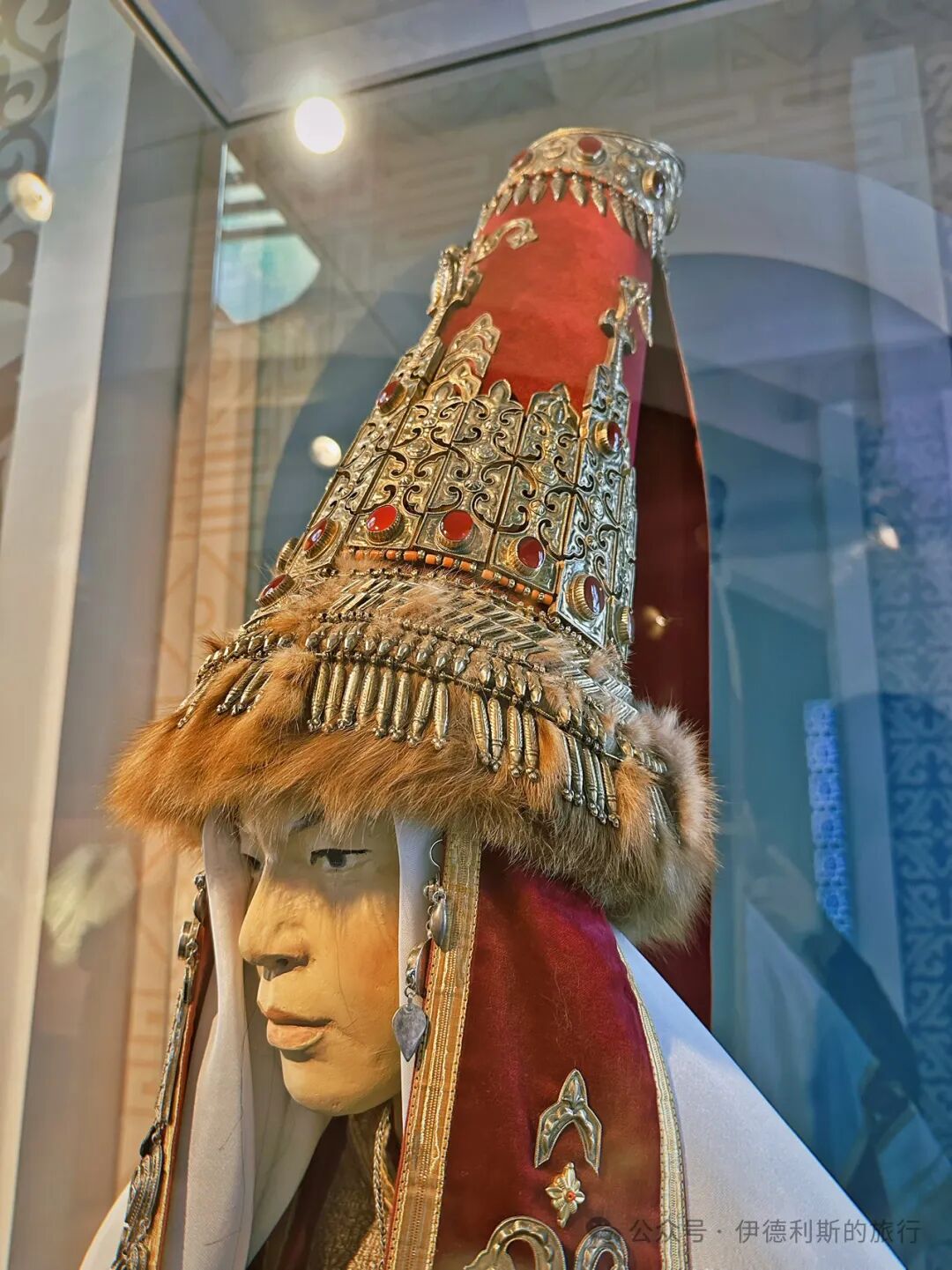
Traditional Kazakh clothing made by master designer Aizhan Abdubait. She comes from a family of tailors and is dedicated to making ethnic clothing. She has also restored the gold-thread embroidery technique that was gradually lost after the fall of the Kazakh Khanate in the 19th century. This is an embroidery technique that was used on the clothing of Khans and Sultans during the Kazakh Khanate era.
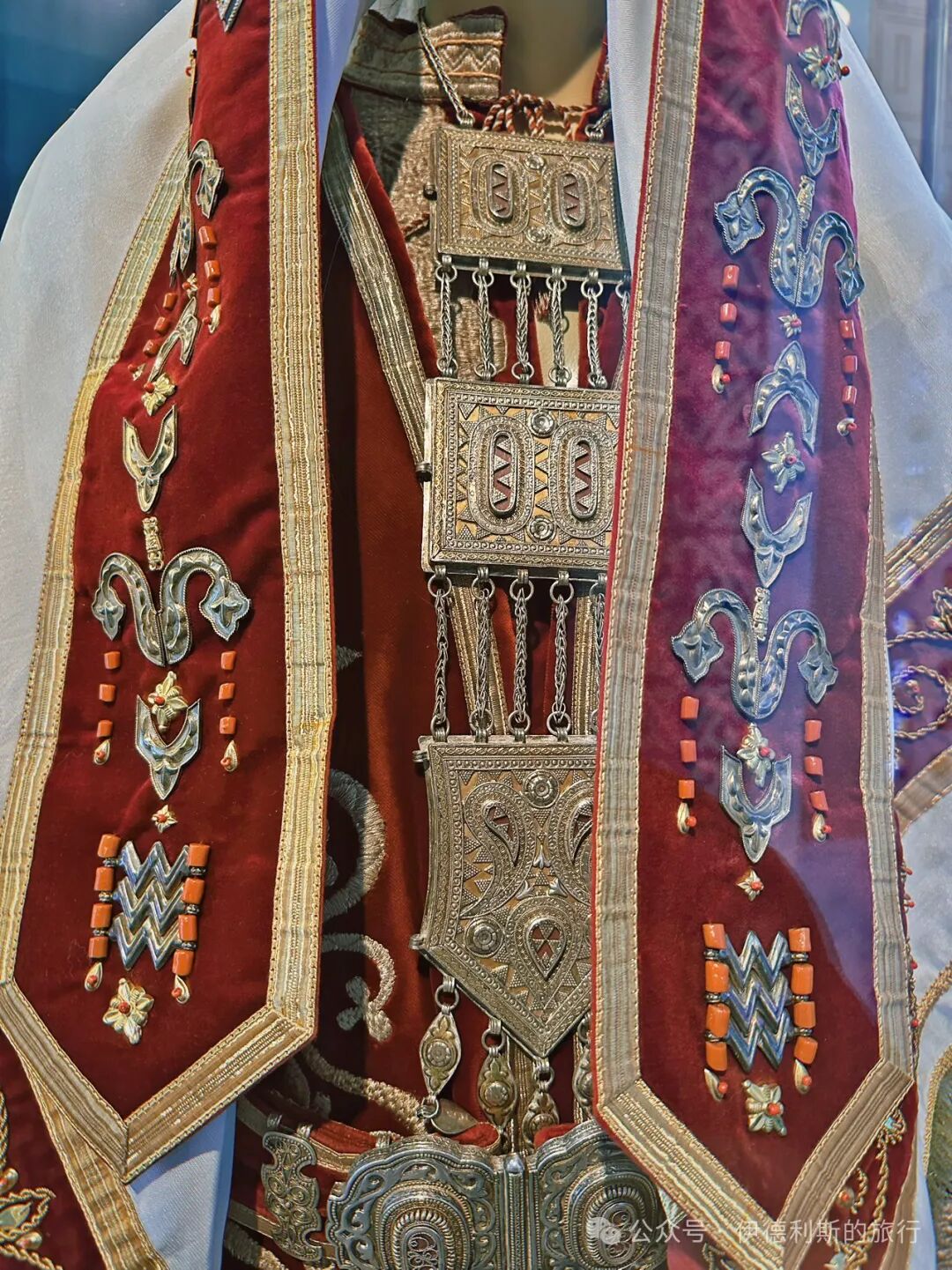
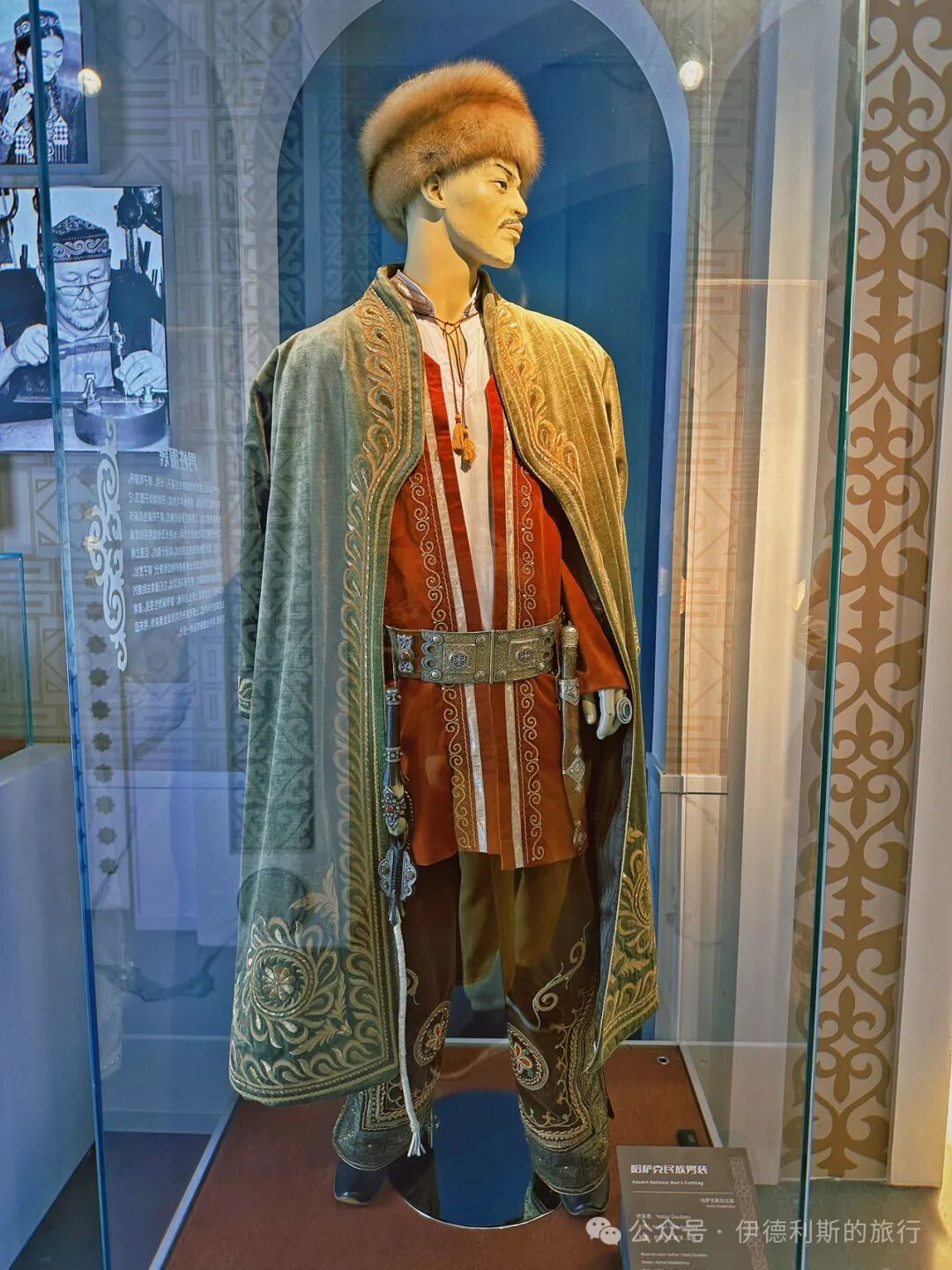
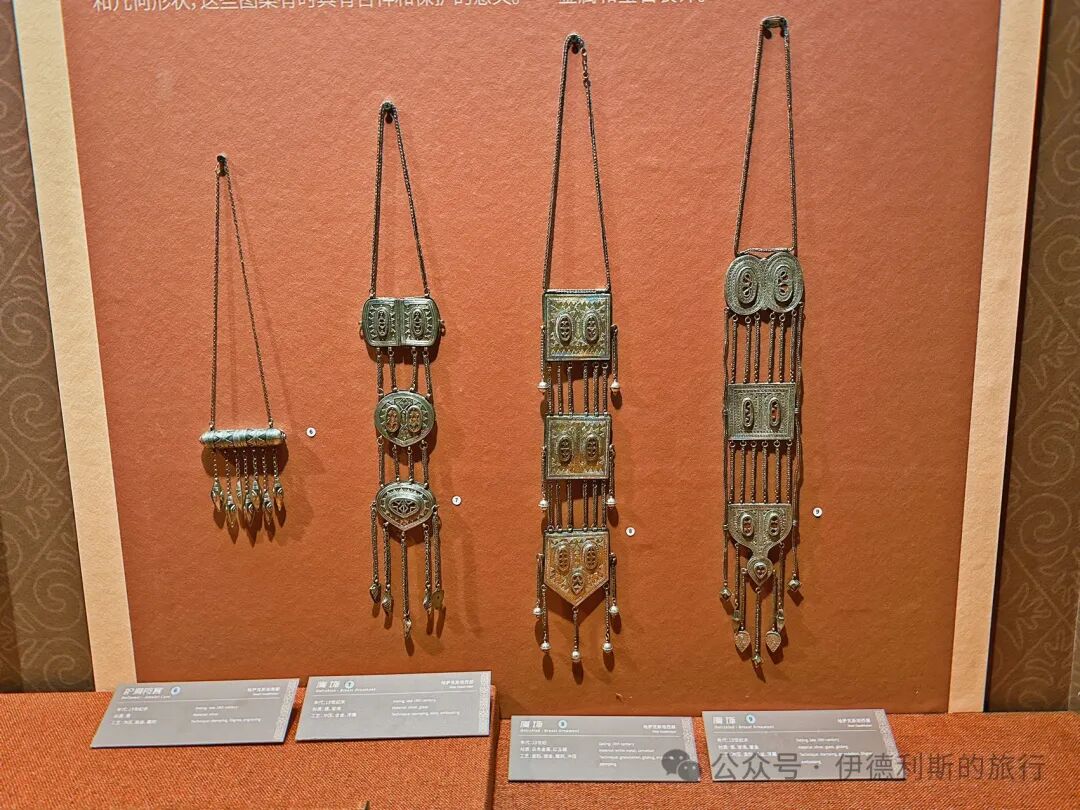
A 19th-century chest ornament.
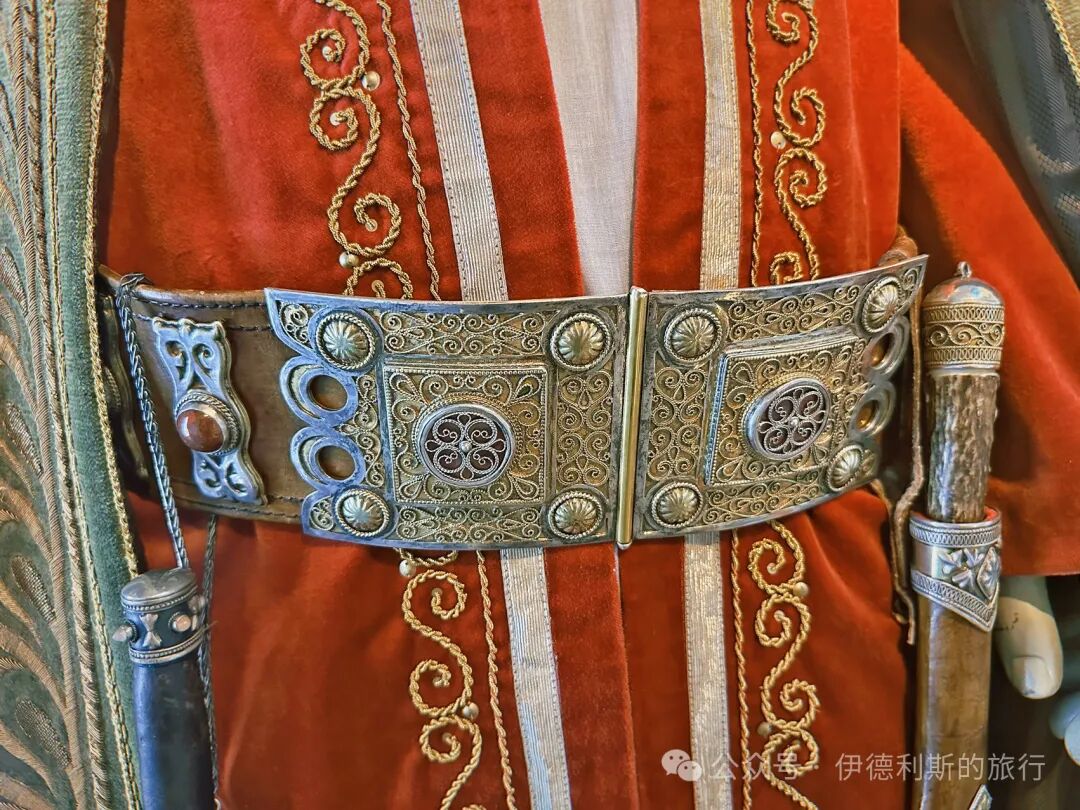
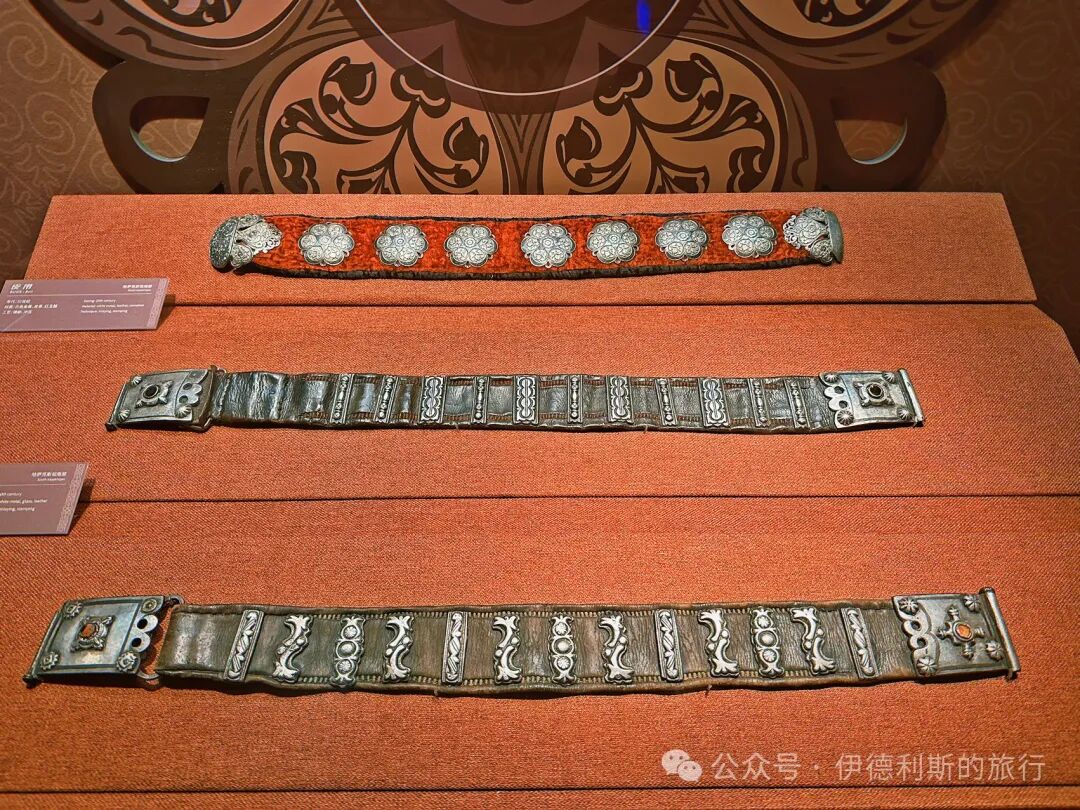
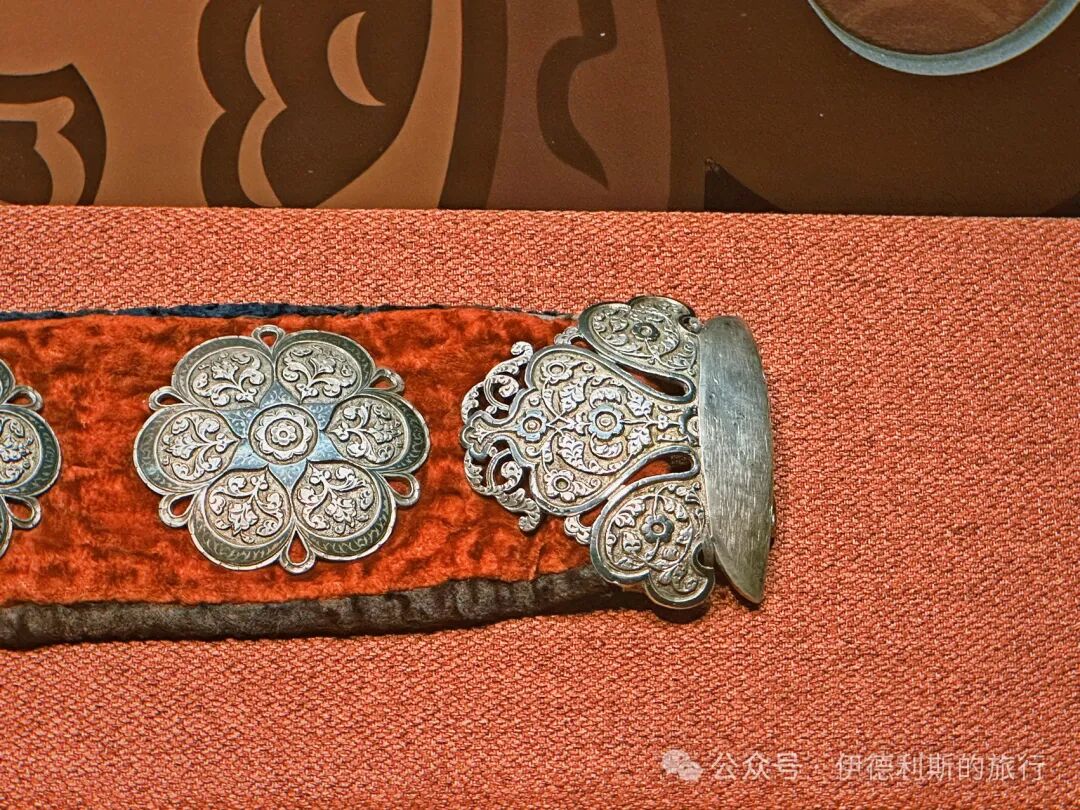
A 20th-century belt.
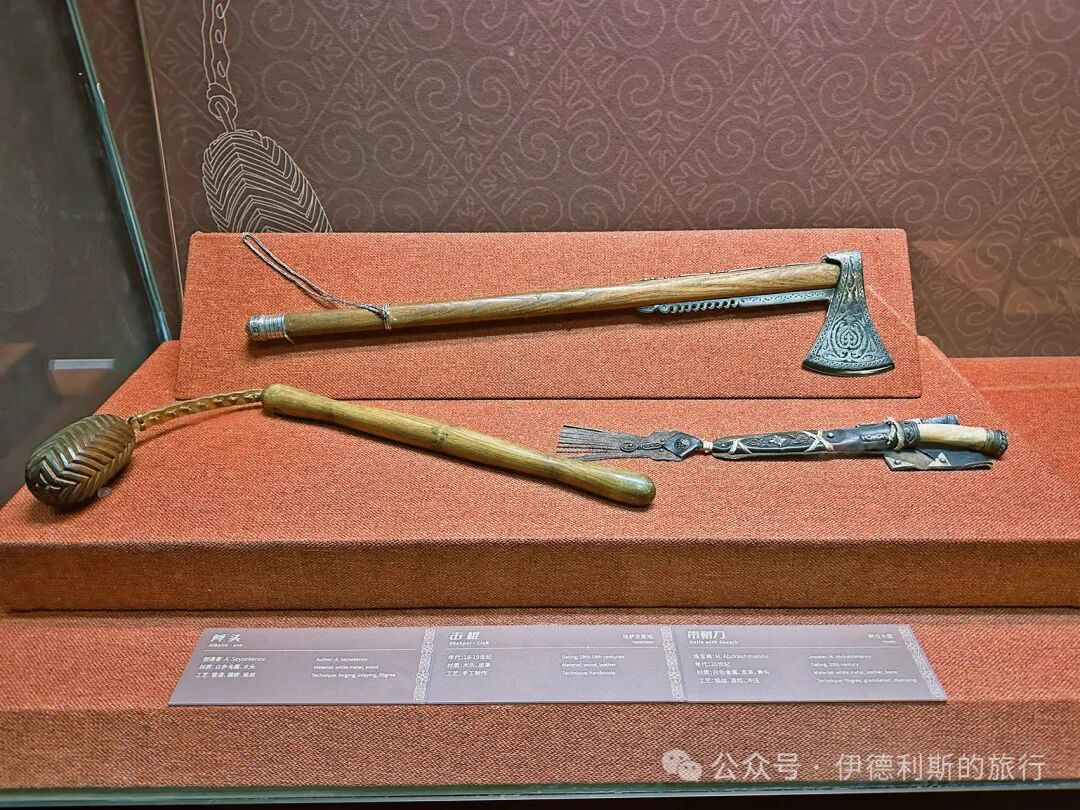
An axe, a club, and a sheathed knife.
A 19th-century copper pot.
Summary: This article covers the Kazakhstan National Museum collection exhibition at Tianjin Museum, with a close look at historical artifacts, steppe culture, and Central Asian heritage. It preserves the original exhibition details, object names, photographs, and cultural context for English readers.
From September 30, 2024, to February 12, 2025, the fifth floor of the Tianjin Museum is hosting an exhibition of historical artifacts from the National Museum of Kazakhstan. Overall, it is not very stunning and lacks any major, heavy-hitting artifacts. Of course, I did not see any particularly significant artifacts when I visited the National Museum of Kazakhstan in person either.
These are carved clay tiles from the 12th-century Karakhanid dynasty Aisha-Bibi Mausoleum in the ancient city of Taraz. The architectural style of this mausoleum follows the Samanid Mausoleum in Bukhara and serves as an important example of Karakhanid architecture. Taraz grew into a wealthy city during the 9th-century Samanid dynasty, reached its peak during the 10th to 12th-century Karakhanid dynasty, and was destroyed by the Mongol army in 1220.
These are painted glazed tiles and glazed pottery shards from the Khoja Ahmed Yasawi Mausoleum, dating to the Timurid dynasty between 1389 and 1405. This mausoleum is a masterpiece of Timurid architecture and an important religious center in southern Kazakhstan. It was added to the World Heritage List in 2003.
These are glazed tile fragments unearthed from a mausoleum at the Zhaiyk ancient city site, dating to the 14th-century Golden Horde period. The Zhaiyk ancient city site was discovered by an archaeological team in 2001 and has since been fully excavated and studied. Inside the city, they found the remains of a Turkish bath with an underfloor heating system, and in the cemetery west of the city, they found a domed mausoleum decorated with colorful glazed tiles.
These are clay bricks unearthed from the Kyshkala ancient city site in the Syr Darya delta. Kyshkala was a wealthy ancient city during the Golden Horde period that produced a large number of clay bricks.
This is a Kimeshek, an embroidered head covering for married women from 19th-century southern Kazakhstan.
A Kimeshek with lace pendants.
A Kebeje, which is a wooden chest with bone inlays, dating from the 19th to the mid-20th century.
A Khan's robe (chapan) made of velvet, gold and silver thread, and appliqué from 18th to 19th-century northern Kazakhstan. After the 18th century, due to long-term conflicts with the Dzungar Khanate, the Kazakh Khanate split into the Senior, Middle, and Junior Juz, with each Juz having its own Khan. After the mid-19th century, the Kazakh Khanate was gradually controlled by the Russian Empire. Khan Kenesary Kasymov (reigned 1841–1847) was the last national hero to bravely resist Russia. After he died for his country in 1847, the Kazakh Khanate was declared fallen.
Traditional Kazakh clothing made by master designer Aizhan Abdubait. She comes from a family of tailors and is dedicated to making ethnic clothing. She has also restored the gold-thread embroidery technique that was gradually lost after the fall of the Kazakh Khanate in the 19th century. This is an embroidery technique that was used on the clothing of Khans and Sultans during the Kazakh Khanate era.
A 19th-century chest ornament.
A 20th-century belt.
An axe, a club, and a sheathed knife.
A 19th-century copper pot.
