
Muslim Travel Guide Tunisia: 15 Ancient Mosques and Islamic Heritage (Part 1)
Reposted from the web
Summary: This first part of the Tunisia mosque journey begins with the Great Mosque of Kairouan, founded in 670 and rebuilt in 836, and follows a route through major early Islamic sites. It keeps the source's mosque names, dates, dynastic references, architecture, images, and travel observations in one English long-form article.
Great Mosque of Kairouan: founded in 670, rebuilt in 836.
Mosque of the Three Doors (Jami al-Thalathat Abwab) in Kairouan: 866.
Mosque of the Barber (Zaouia of Sidi Sahab) in Kairouan: 1629.
Zaytuna Mosque in Kairouan: date unknown.
Great Mosque of Zaytuna in Tunis: founded in 698, rebuilt in 864.
Kasbah Mosque in Tunis: 1230.
New Mosque (Jami al-Jadid) in Tunis: 1726.
Ksar Mosque in Tunis: founded in 1106, rebuilt in 1647.
Hammouda Pasha Mosque in Tunis: 1655.
Sidi Mahrez Mosque in Tunis: 1692.
El Ichbili Mosque in Tunis: founded in the 10th century.
Youssef Dey Mosque in Tunis: 1616.
Great Mosque of Sousse: 851.
Great Mosque of Monastir: founded in the 9th century.
Great Mosque of Hammamet: founded in the 12th century.
Great Mosque of Kairouan: founded in 670, rebuilt in 836.
The Great Mosque of Kairouan is the oldest and most spectacular Friday mosque in Tunisia. It was founded in 670 by order of the Arab Umayyad general Uqba ibn Nafi. It was destroyed by Christian Berbers in 690 and rebuilt by the Umayyad dynasty in 703. As Arabs spread the faith across the Tunisia region, the number of Muslims in Kairouan grew. The Great Mosque of Kairouan underwent many rebuilds and renovations in 724-728, 774, 836, 862-863, and 875, finally taking its current form in the 9th century.
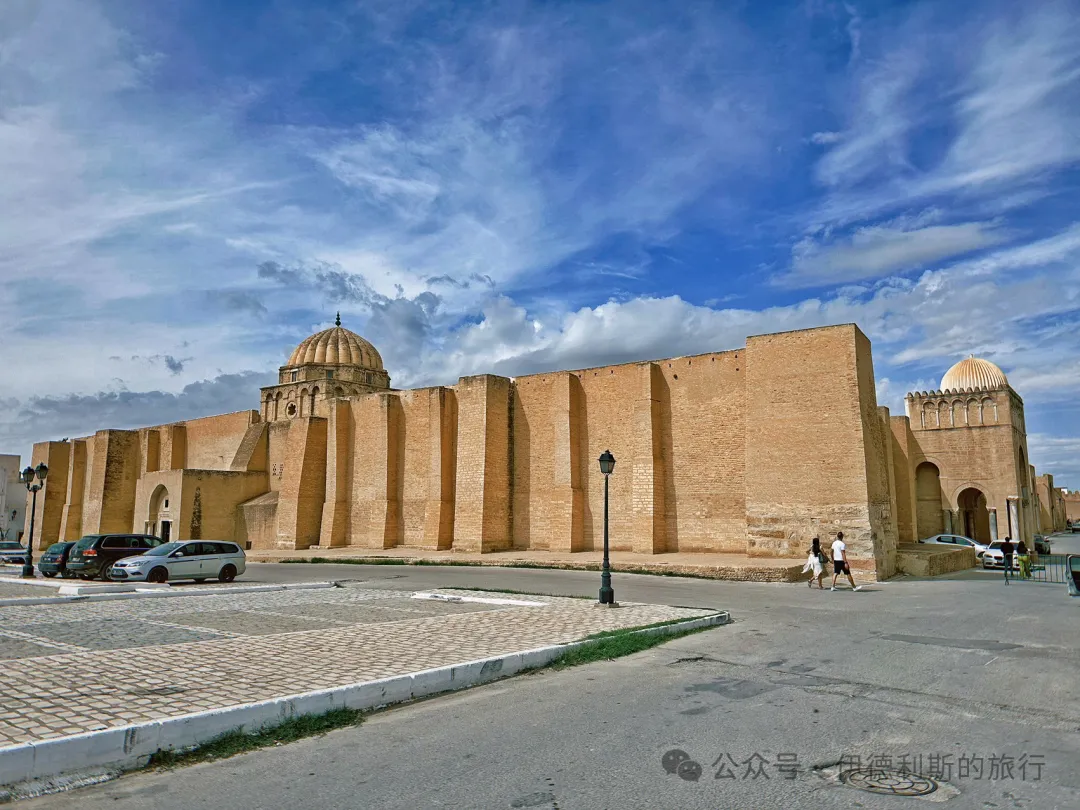
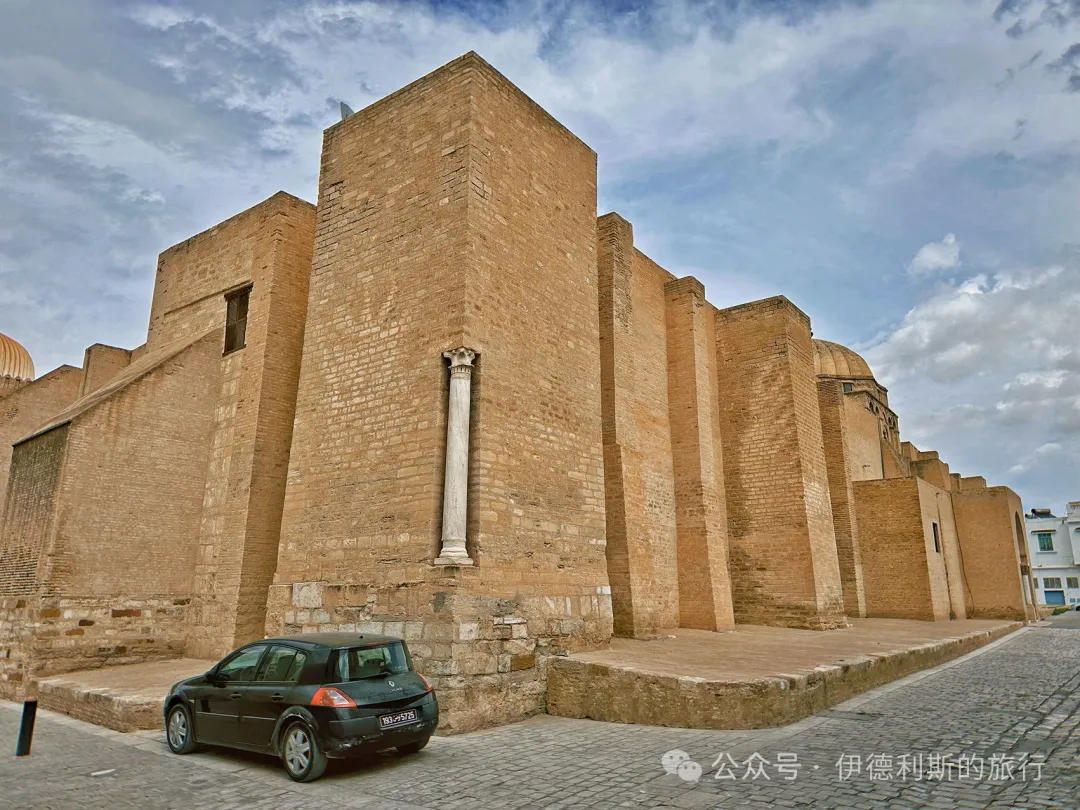
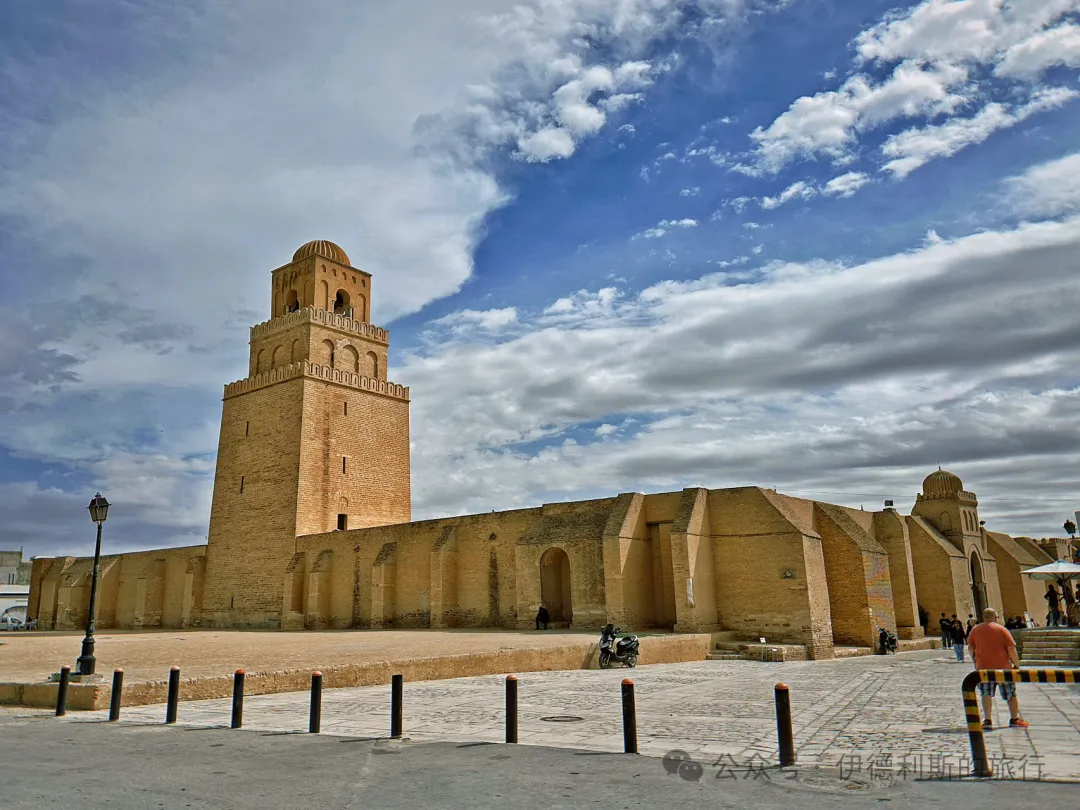
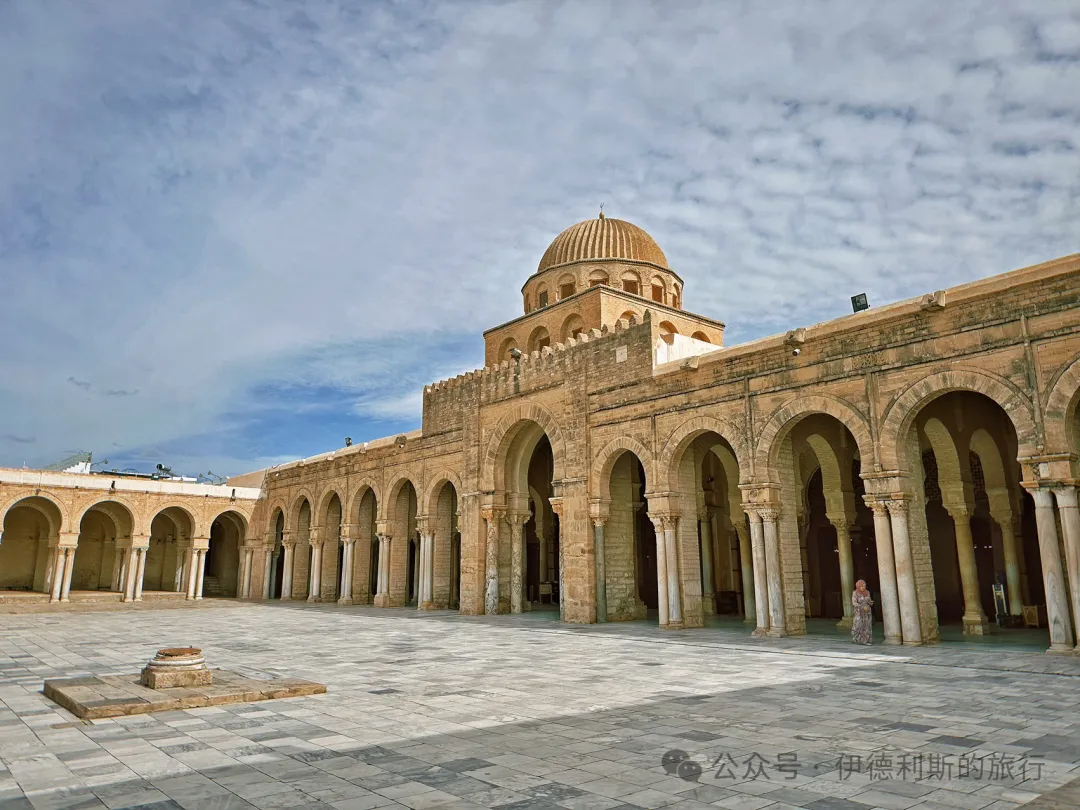
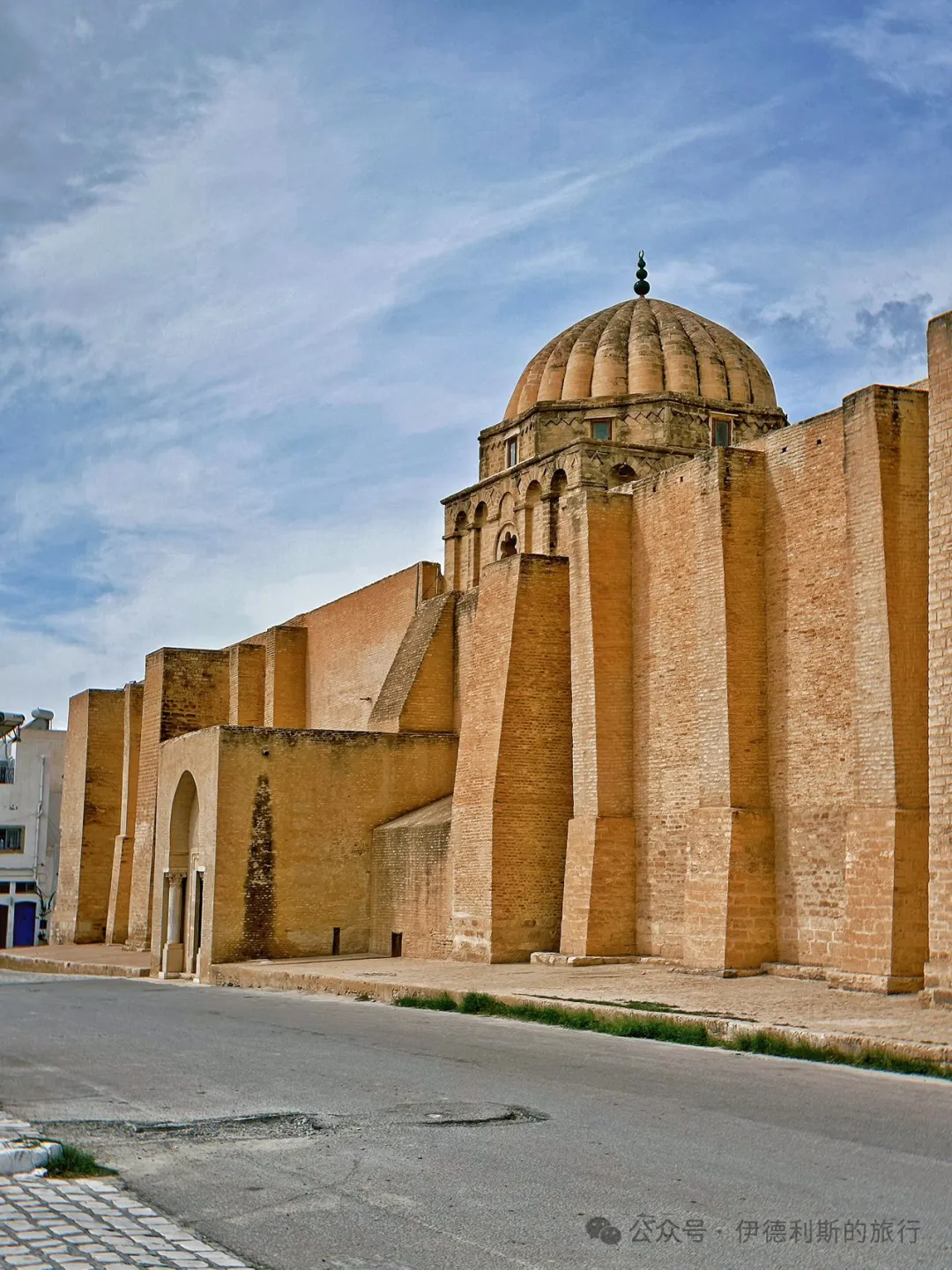
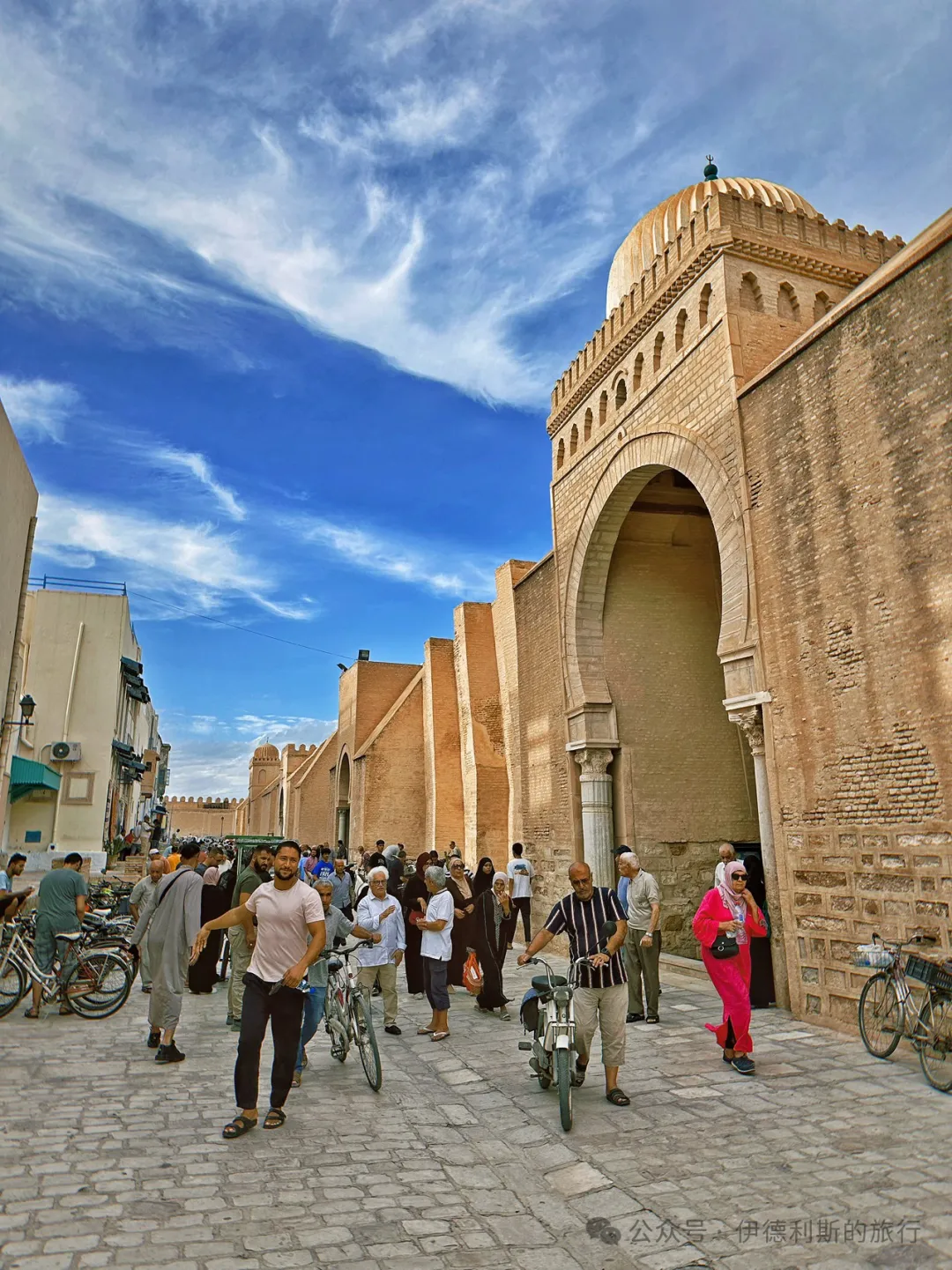
The Great Mosque of Kairouan is a massive, irregular quadrilateral with a perimeter of 405 meters. From the outside, it looks like a fortress. The outer walls are 1.9 meters thick and built from stone, rubble, and bricks. Because the ground is quite soft, the mosque's outer walls have many buttresses to add stability.
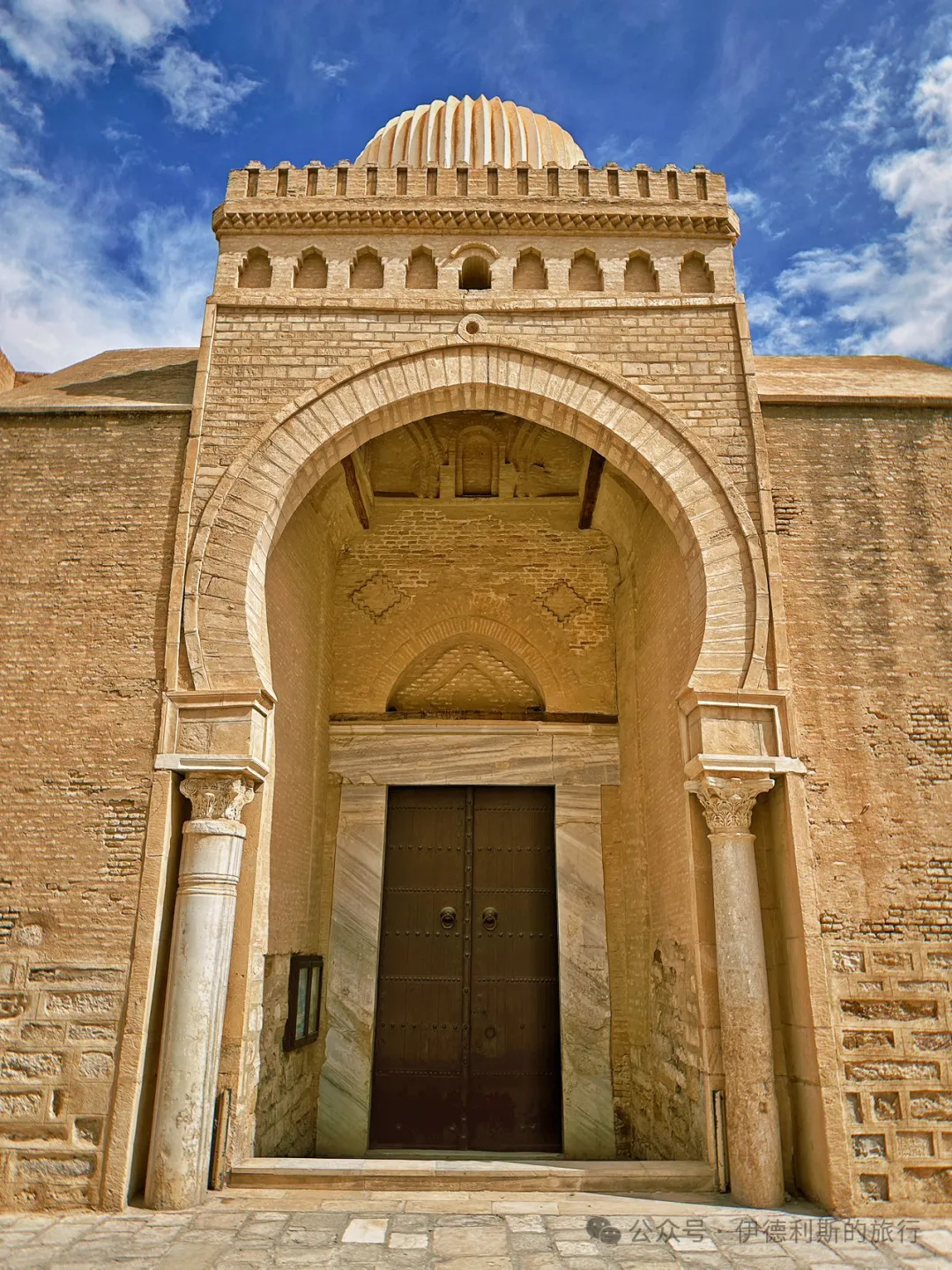
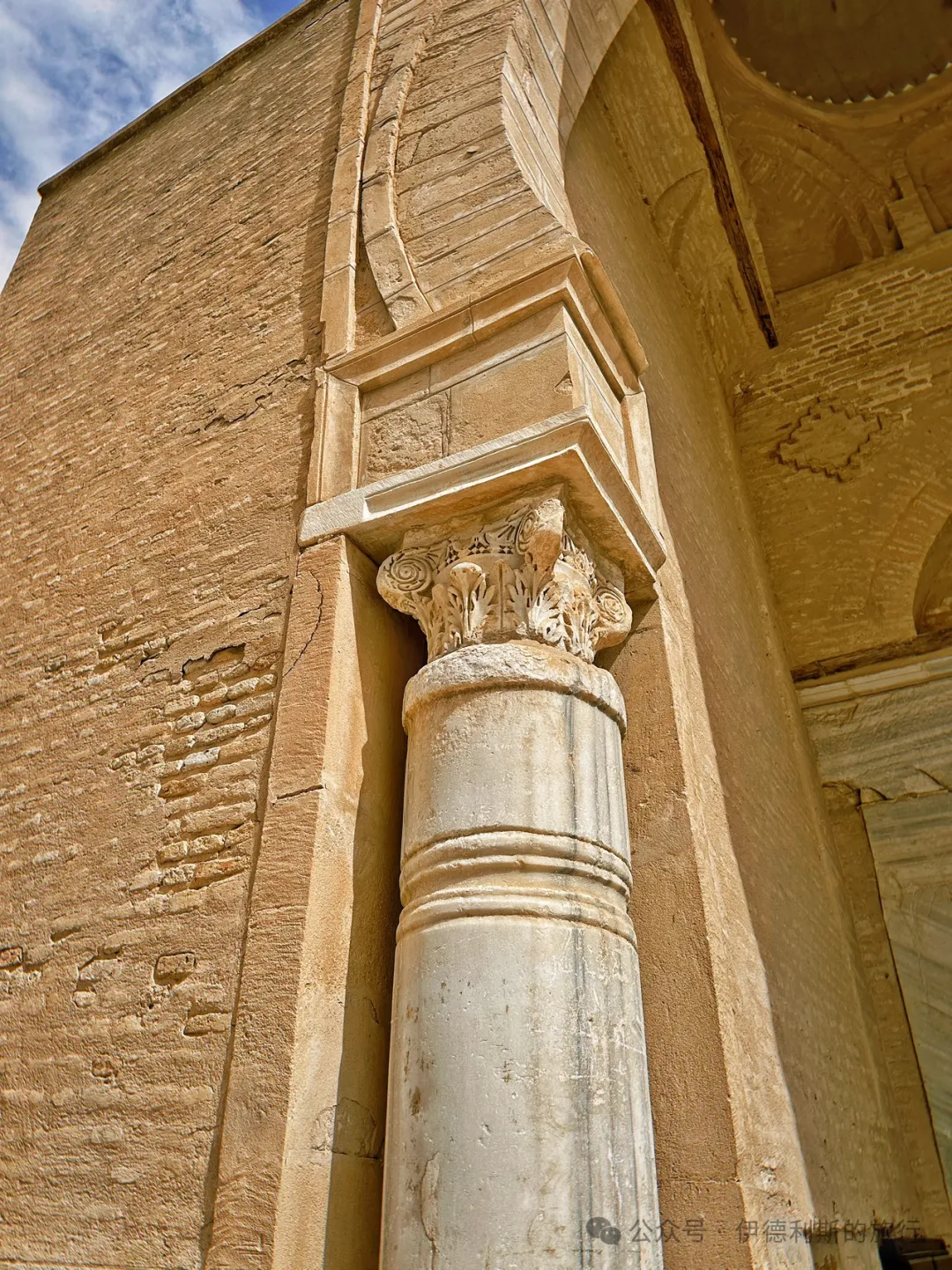
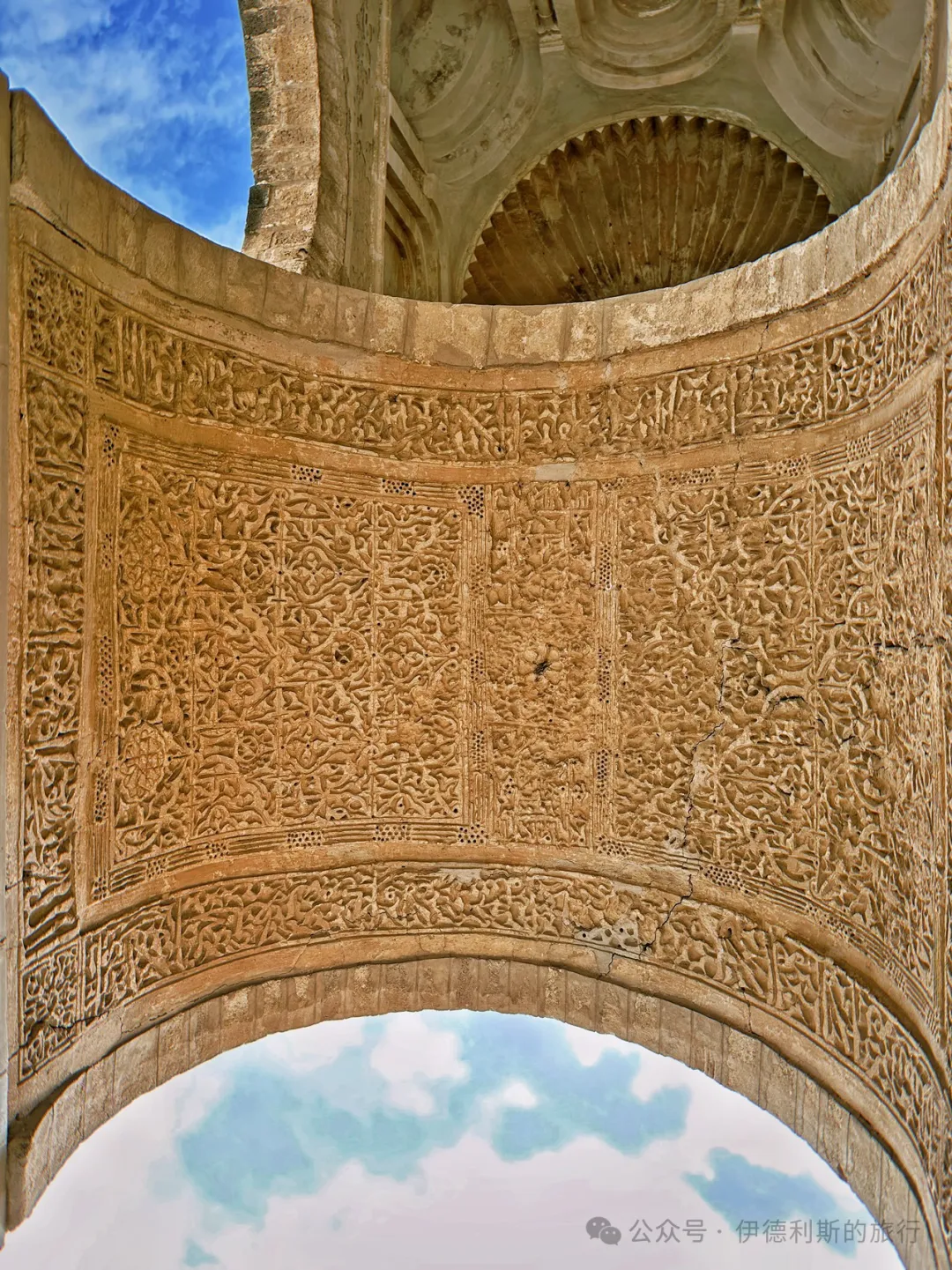
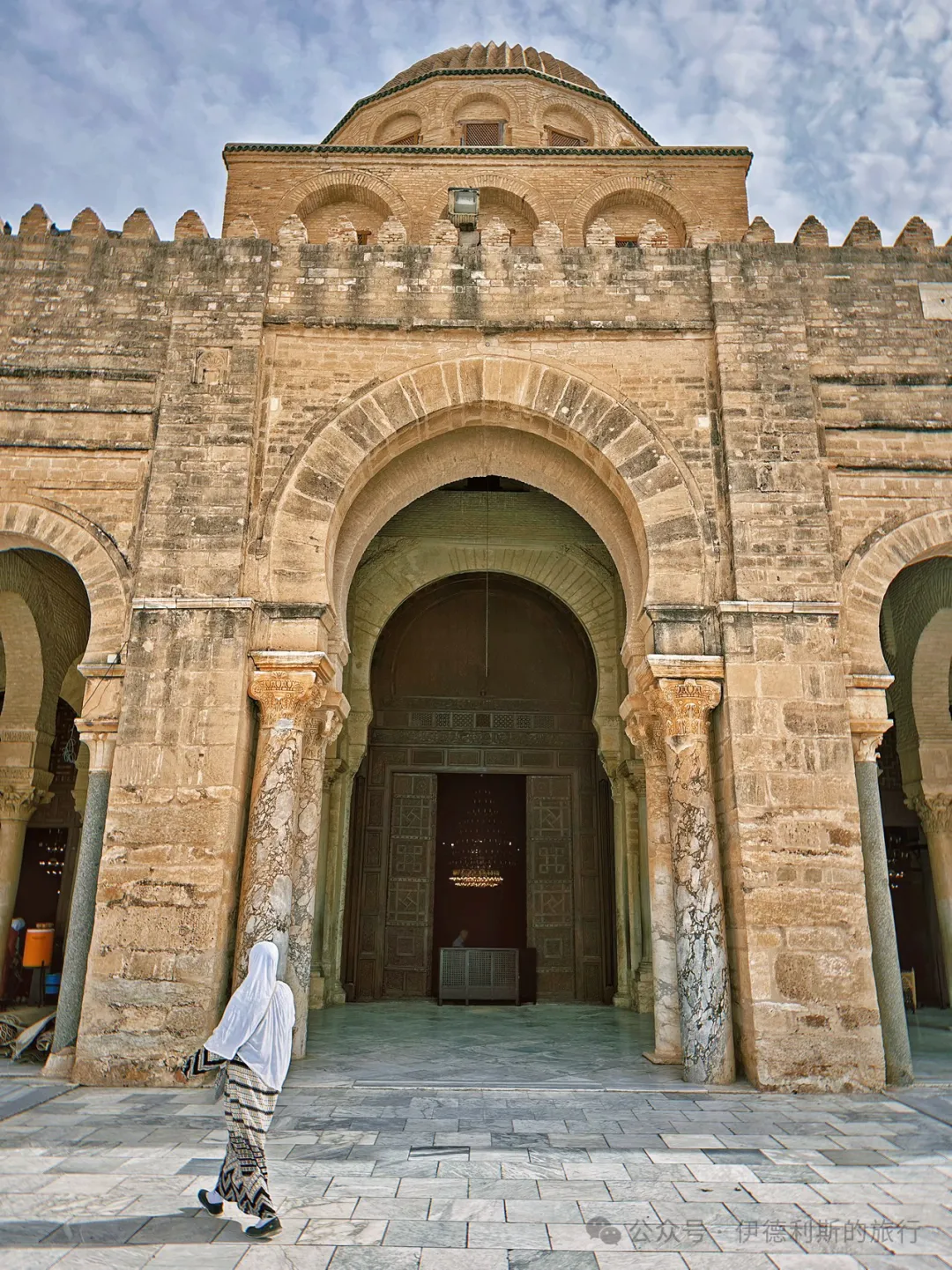
The Great Mosque of Kairouan has nine gates, some of which feature porches and ribbed domes. Bab Lalla Rihana on the southeast side was built in 1293 during the Hafsid dynasty. It features a horseshoe arch and ancient stone columns that blend perfectly with the 9th-century walls.
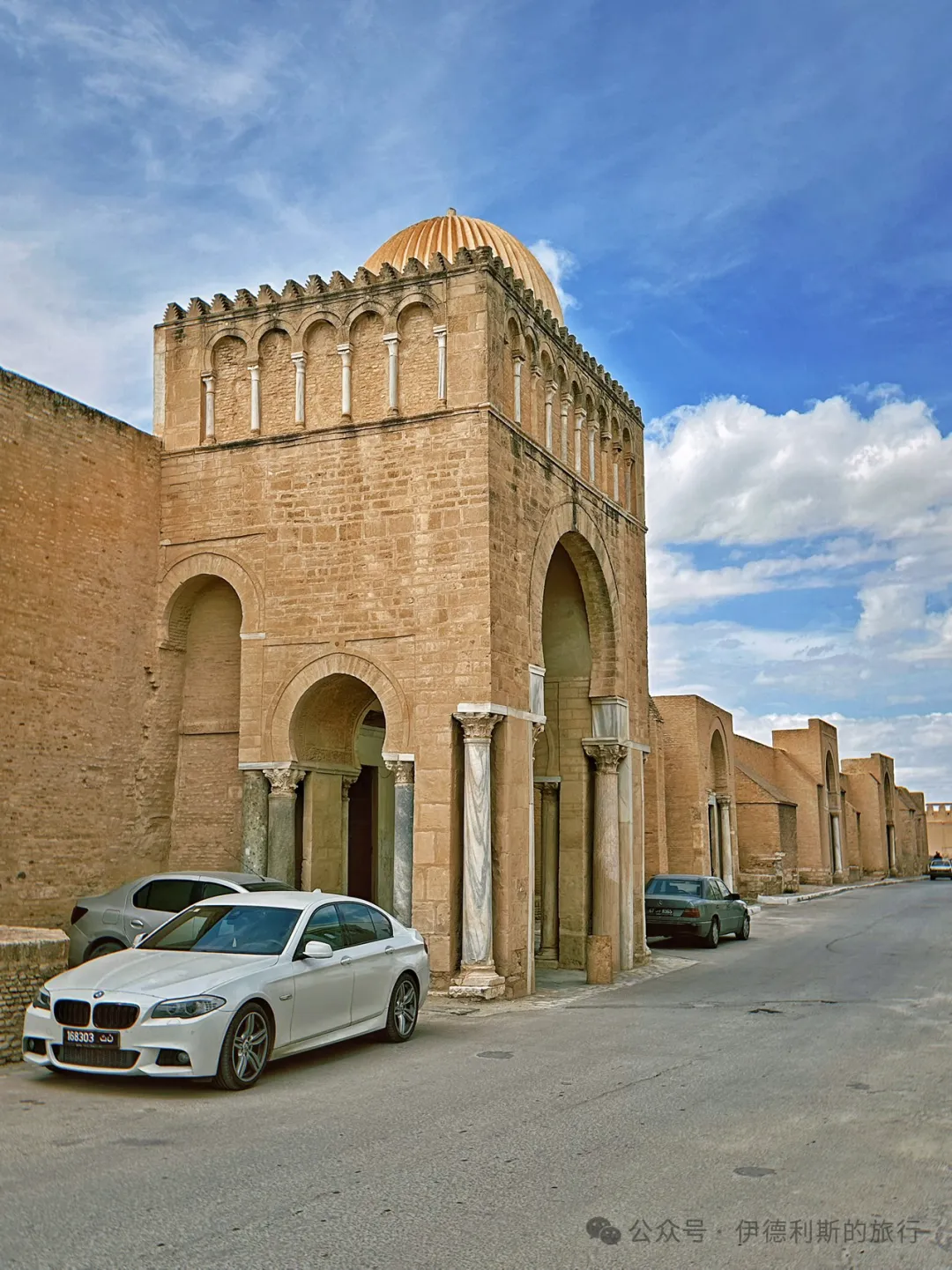
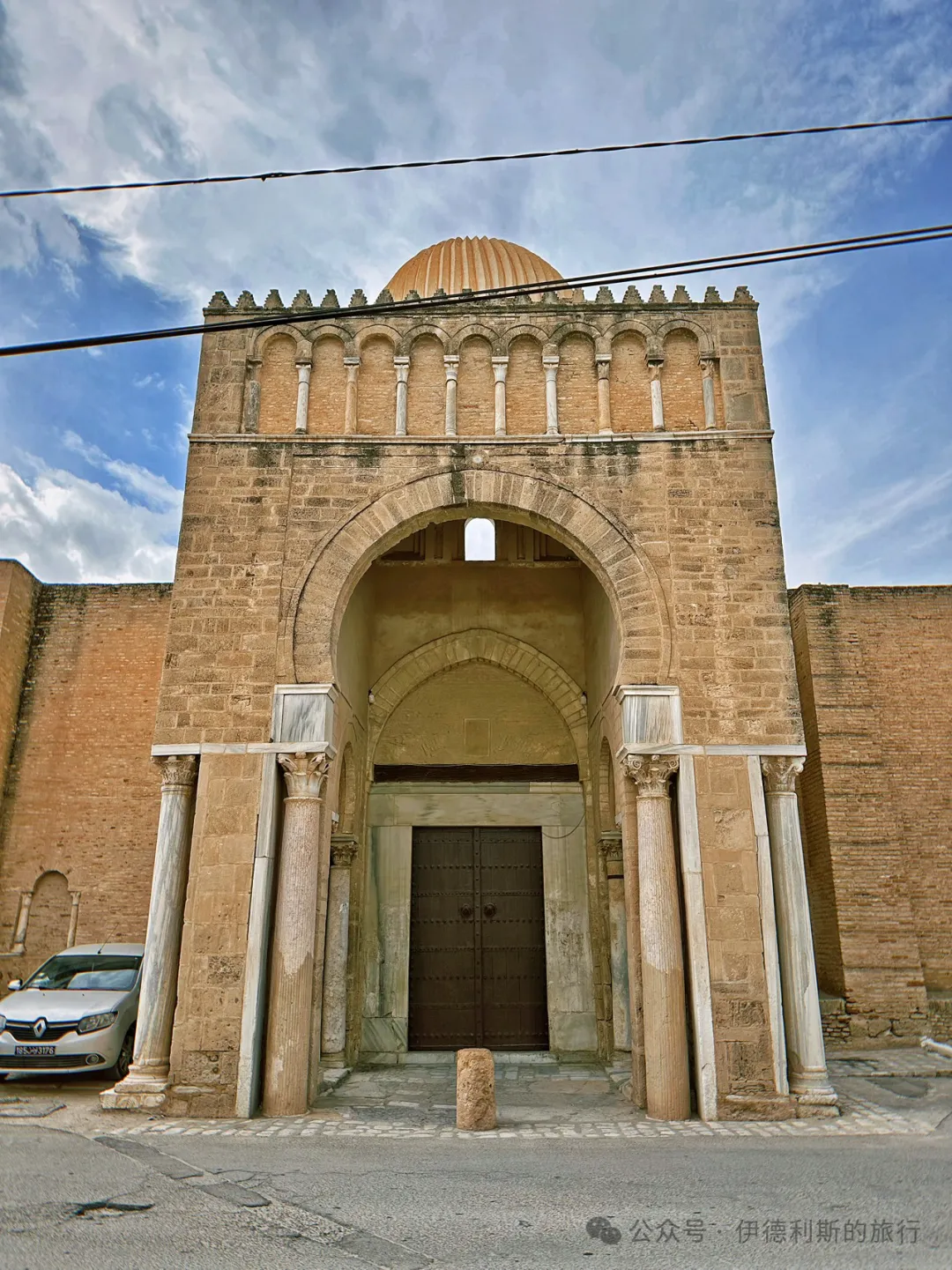
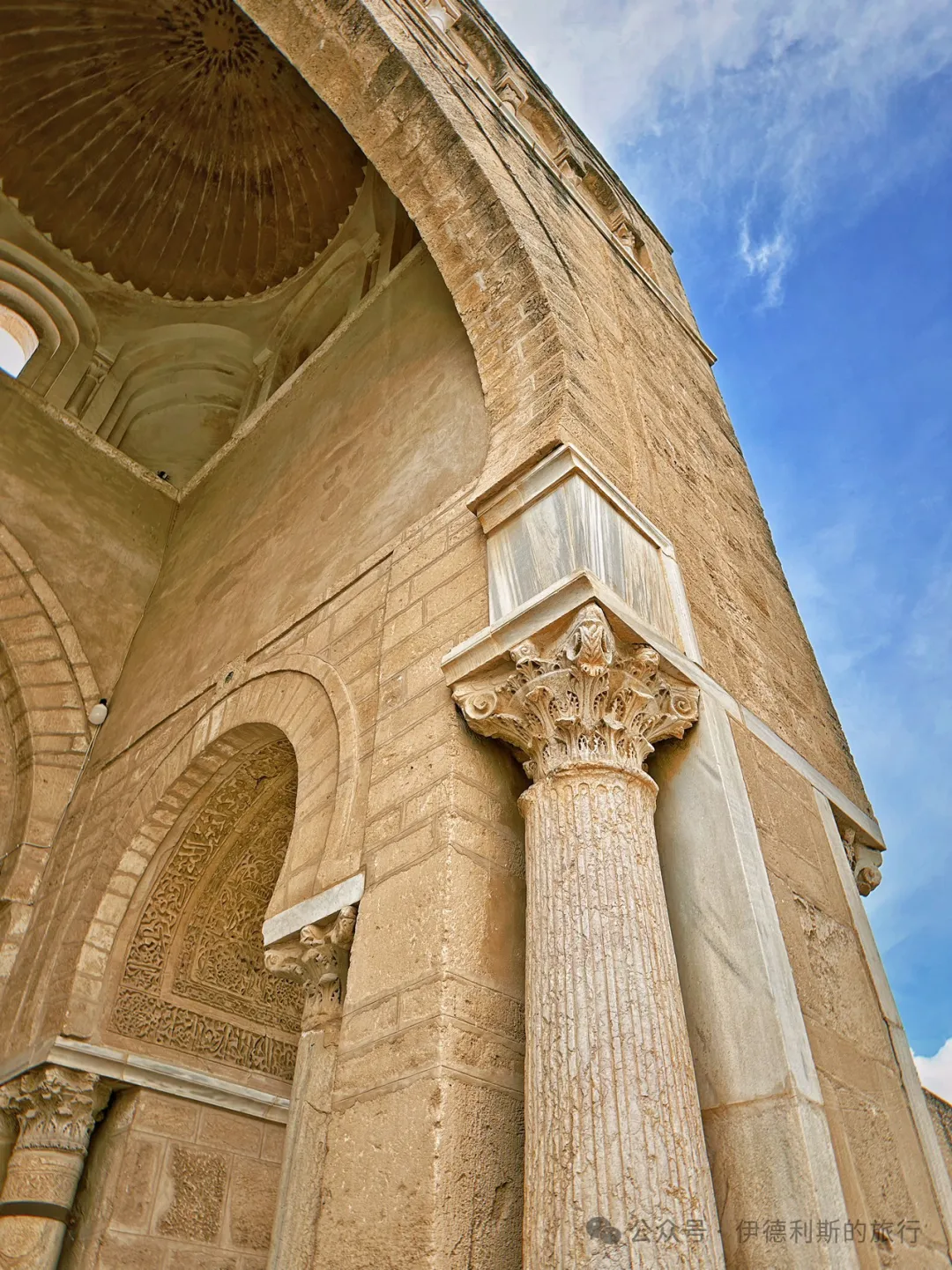
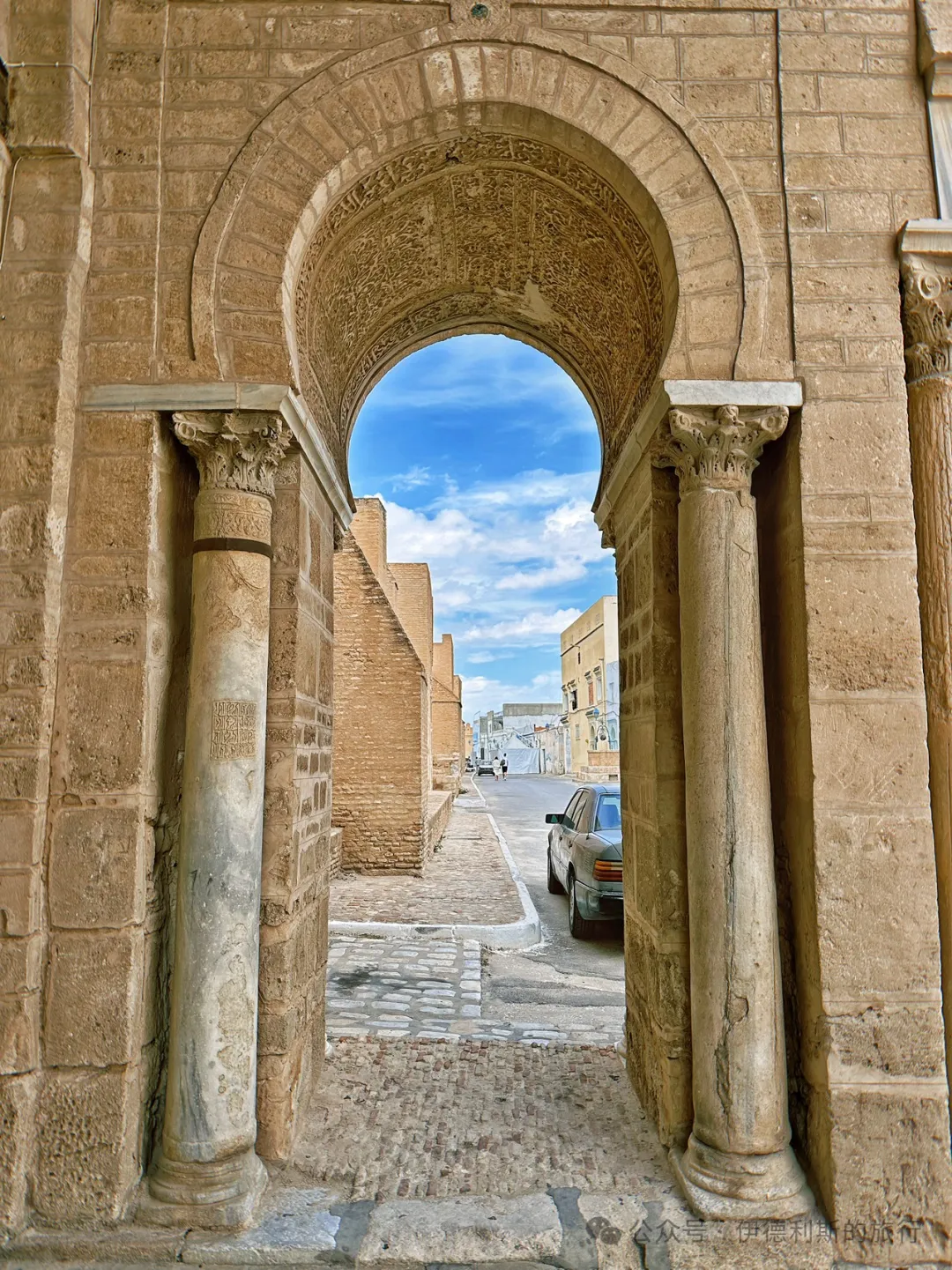
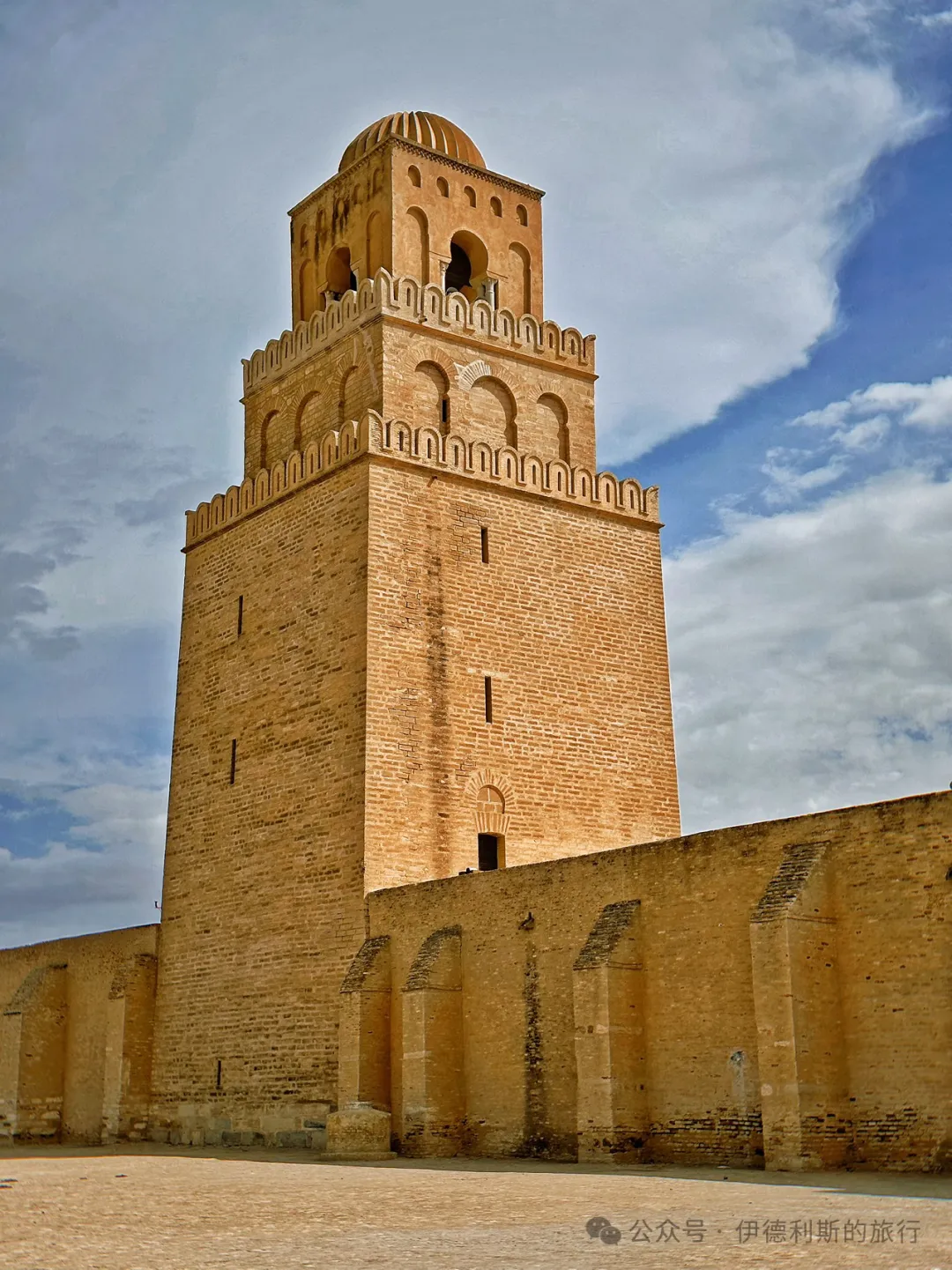
The minaret of the Great Mosque of Kairouan was built between the 8th and 9th centuries. The current structure mostly dates to 836. It is ranked as one of the three most important early minarets, alongside the spiral minaret of the Great Mosque of Samarra in Iraq (built 848-852) and the spiral minaret of the Abu Dulaf Mosque in Iraq (built 859). It served as a model for later minarets across Andalusia and the Maghreb.
During the time of the Prophet and the four Caliphs, there were no minarets. People called for prayer from the mosque entrance or the roof. Platforms for the call to prayer appeared during the Umayyad Caliphate in the 7th century, but true minarets did not emerge until the Abbasid Caliphate in the 8th century. There is no final conclusion on the origin of the minaret. Some say it mimics Syrian church towers, while others suggest it copies the Lighthouse of Alexandria or Mesopotamian ziggurats. Four towers were built during the reconstruction of the Sacred Mosque in Mecca in the late 8th century, but they have not survived. The oldest surviving minarets are the Great Mosque of Kairouan and two in Iraq. The Bride Minaret at the Umayyad Mosque in Damascus may also date to the 9th century, but there is no clear record of this.
The minaret of the Great Mosque of Kairouan is 31.5 meters high. Its base dates back to the Umayyad period in 725, and you can see Latin inscriptions from the Roman era on the walls. The first and second levels of the minaret were built in 836 using carefully cut stone. There are windows facing the courtyard and arrow slits on the other three sides. The third level of the minaret is a four-arched structure (chahartaq), which was likely added later.
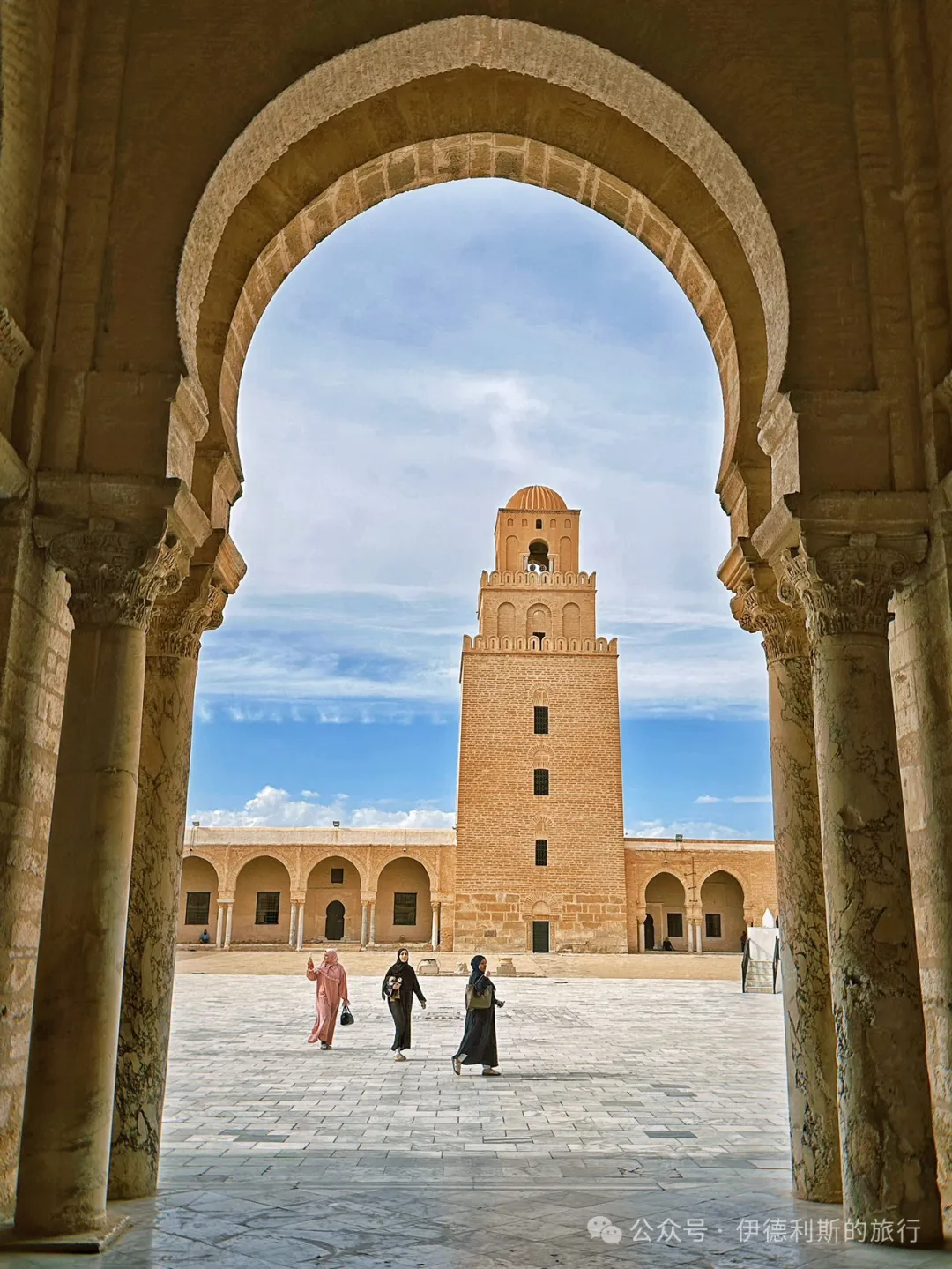
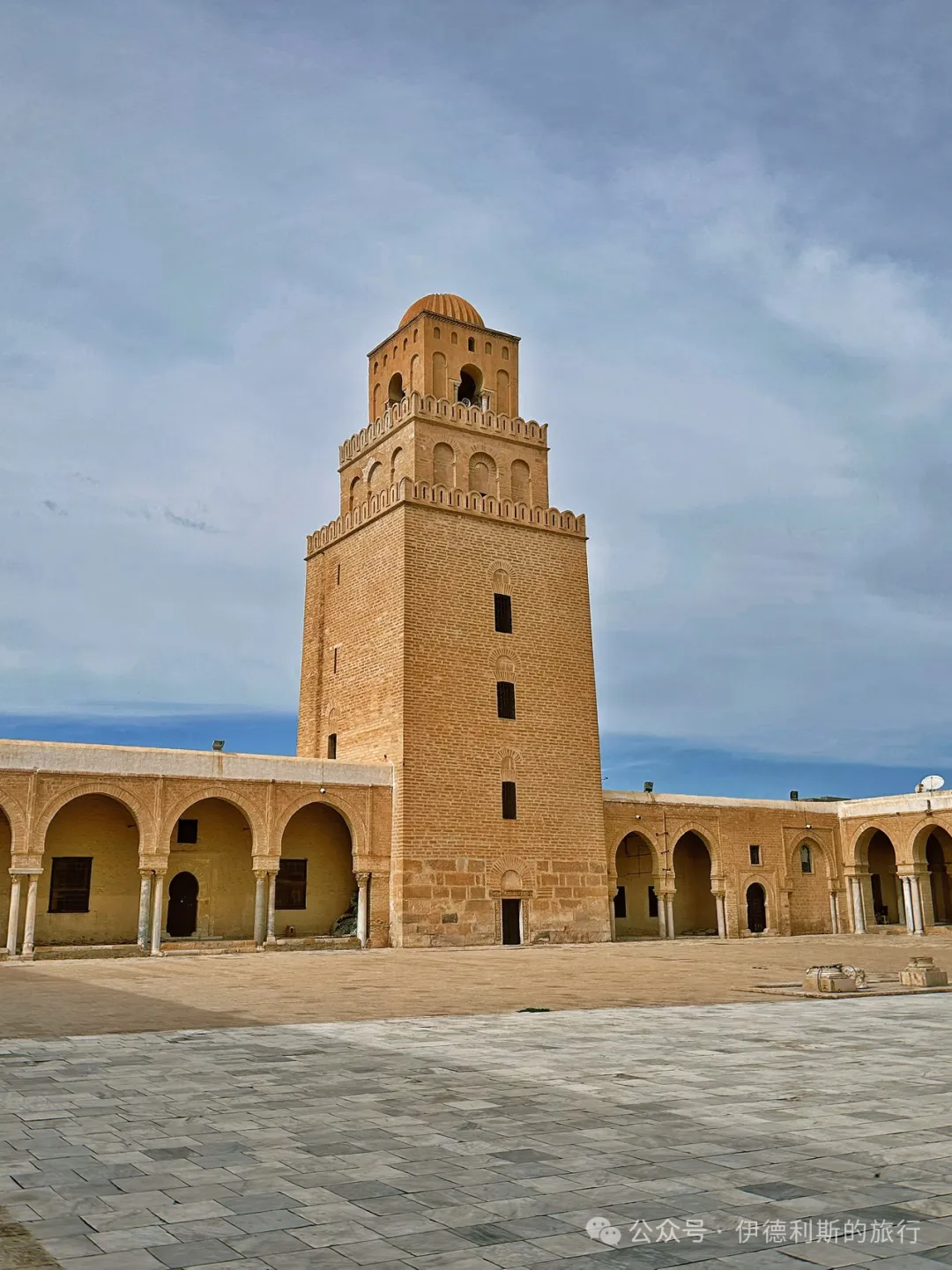
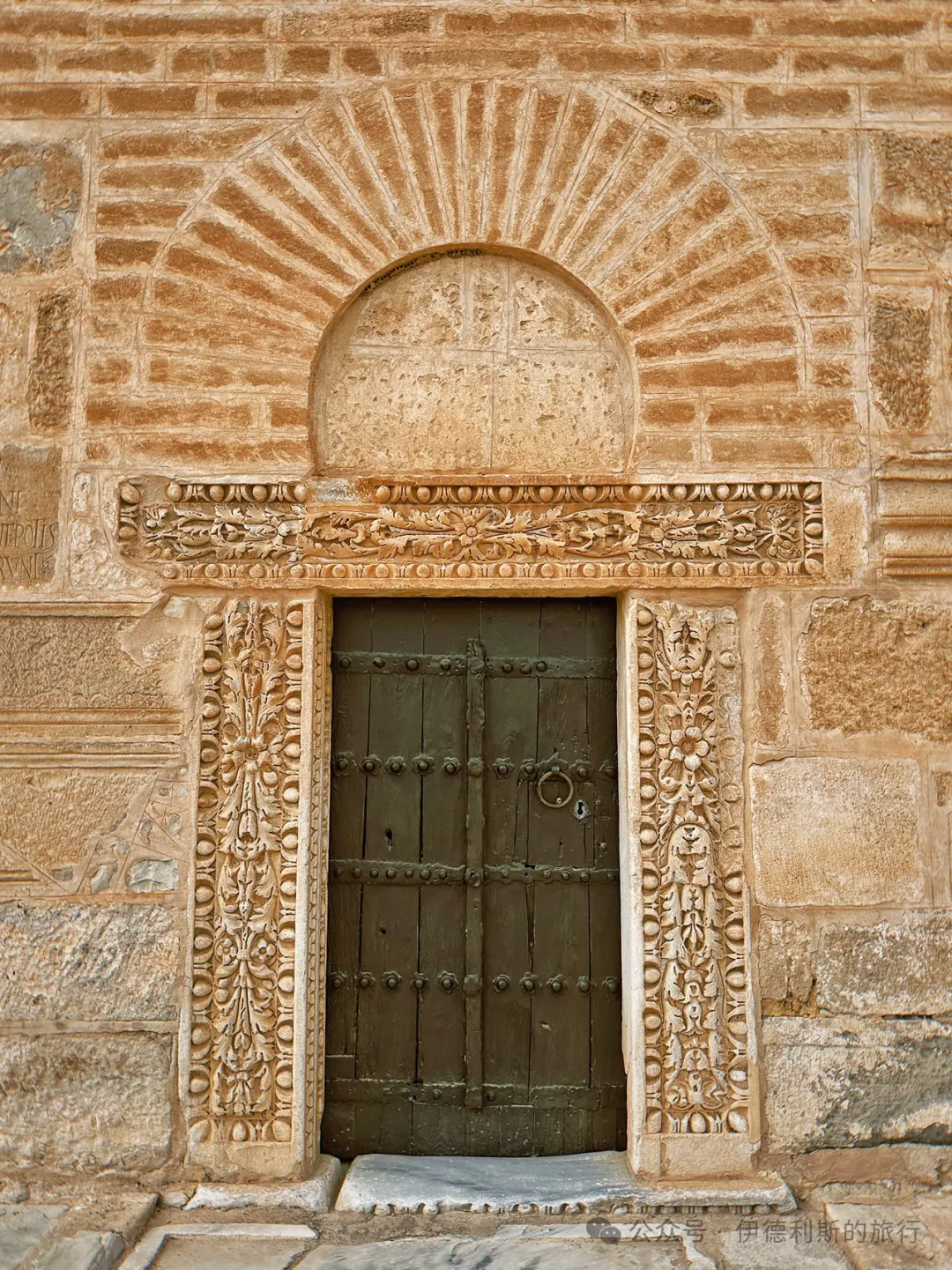
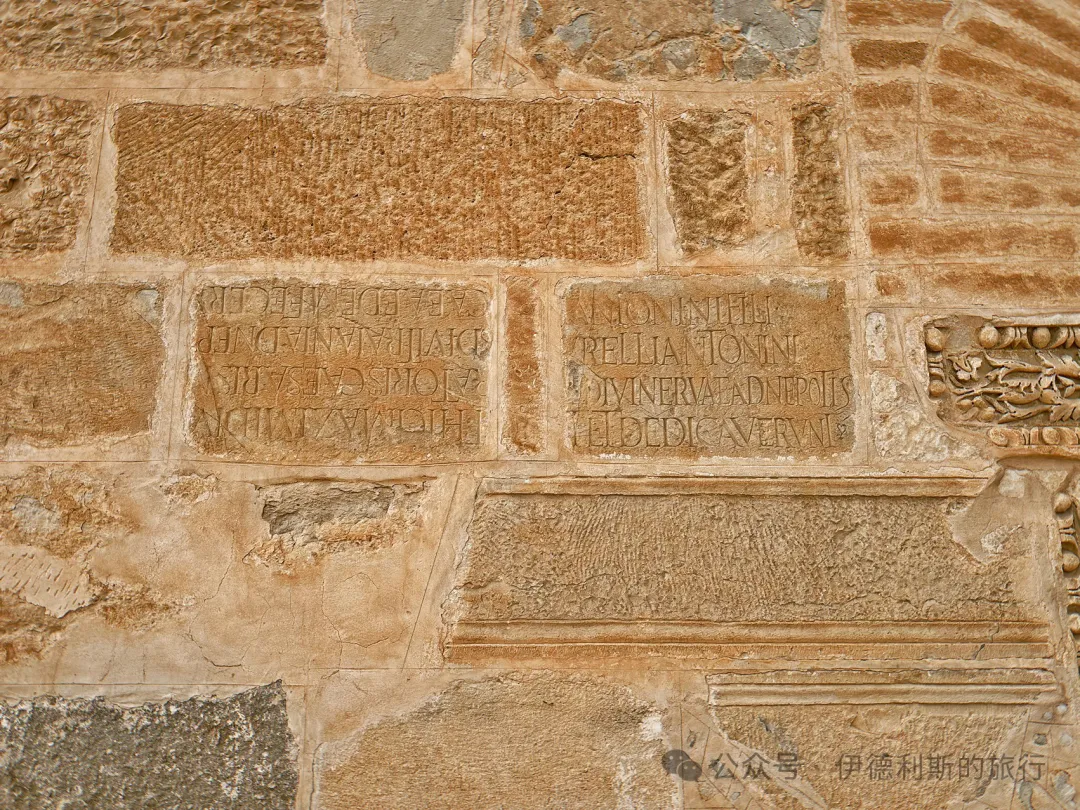
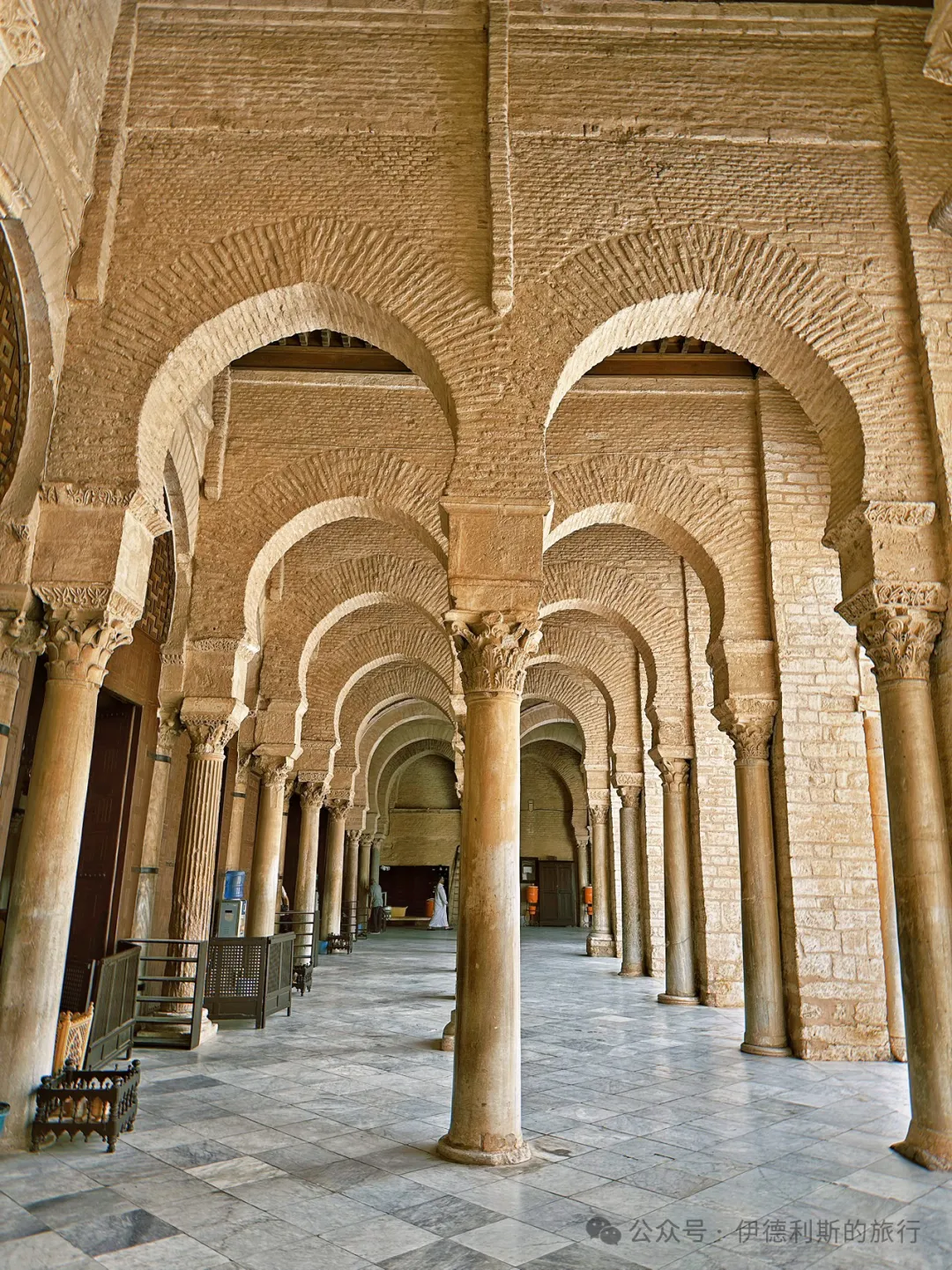
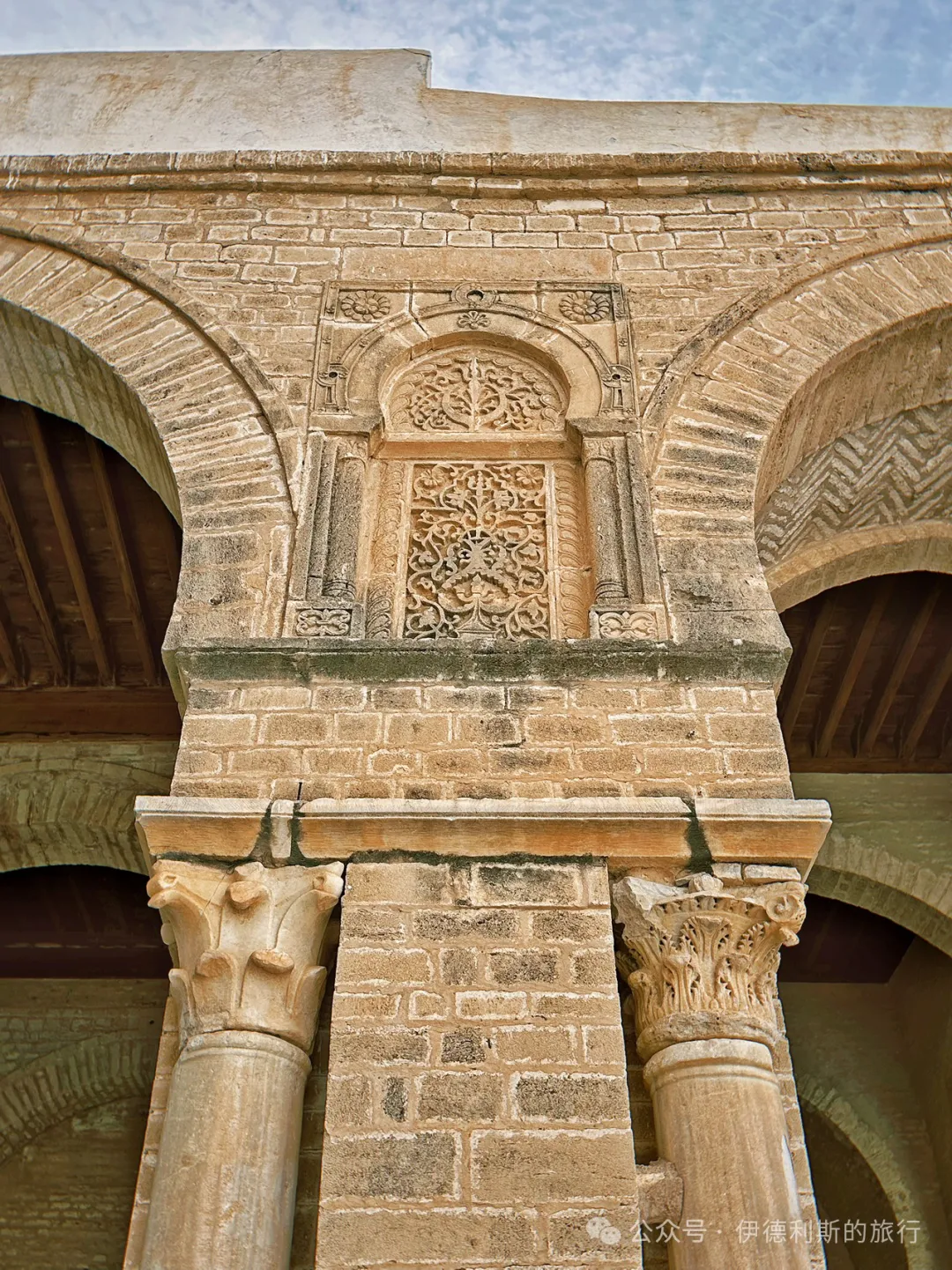
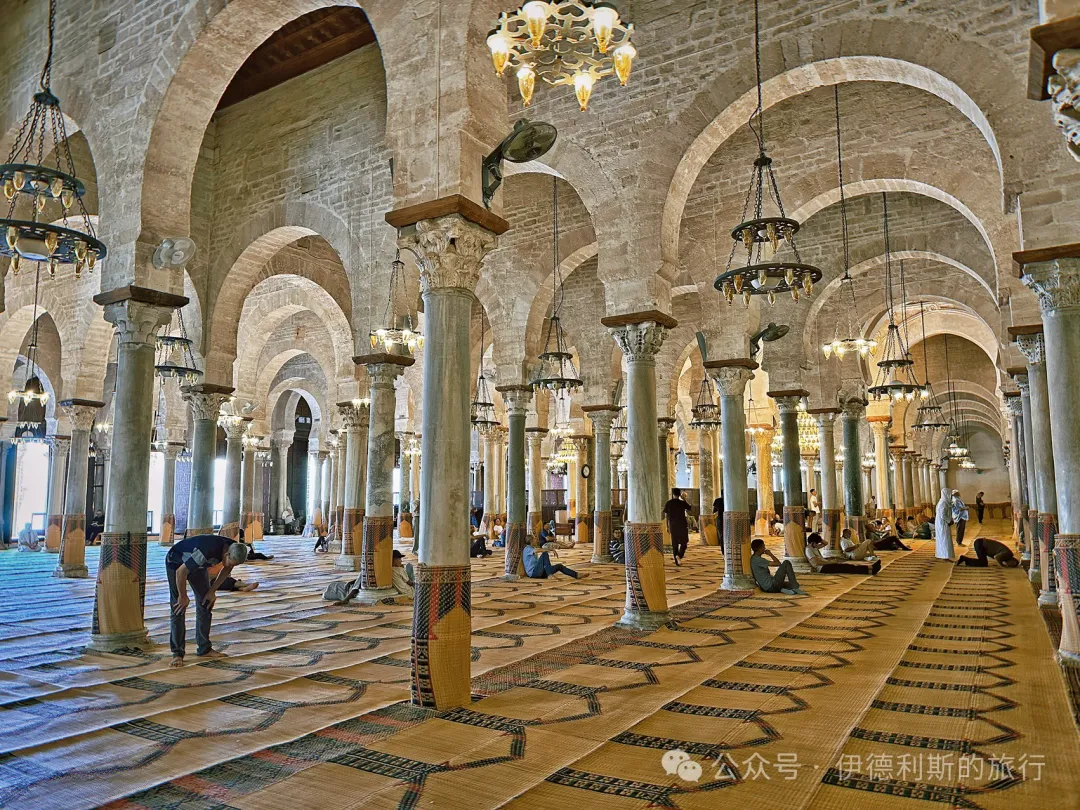
Three sides of the Great Mosque are surrounded by double-row horseshoe arches. The columns come from various ancient Roman and Byzantine ruins, including some from the famous site of Carthage.
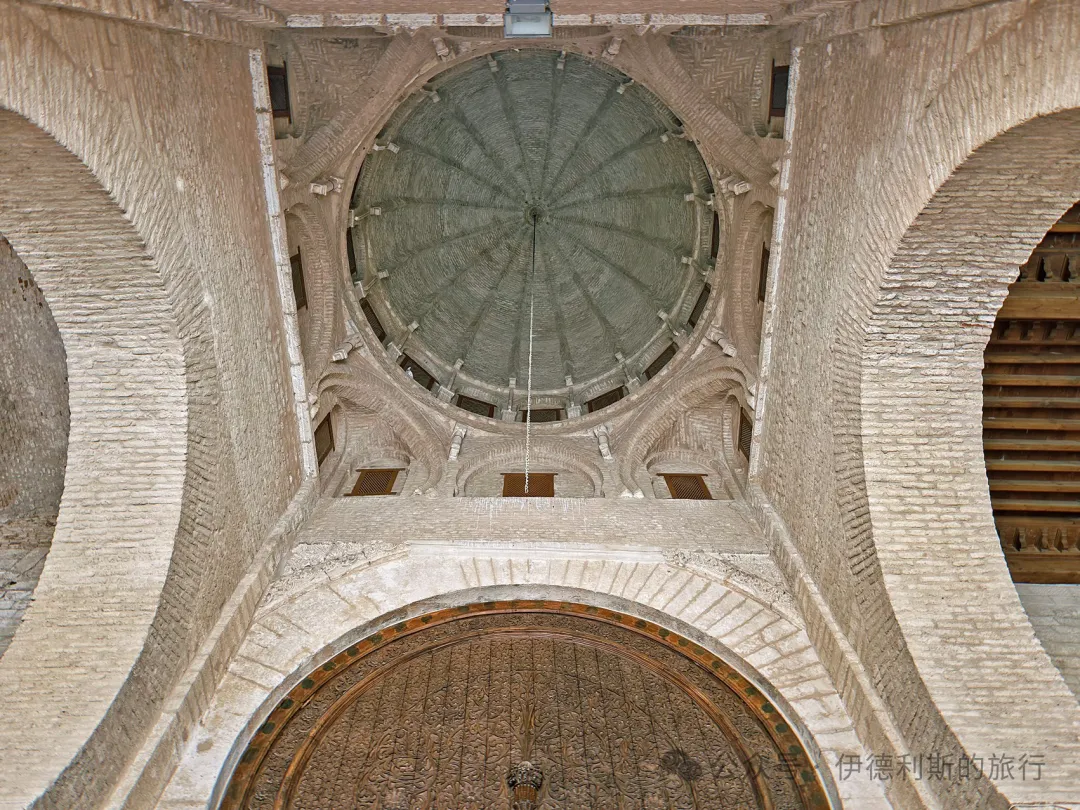
There is a dome above the main entrance of the prayer hall and another above the mihrab. These domes, built in 836, are important examples of early mosque architecture.
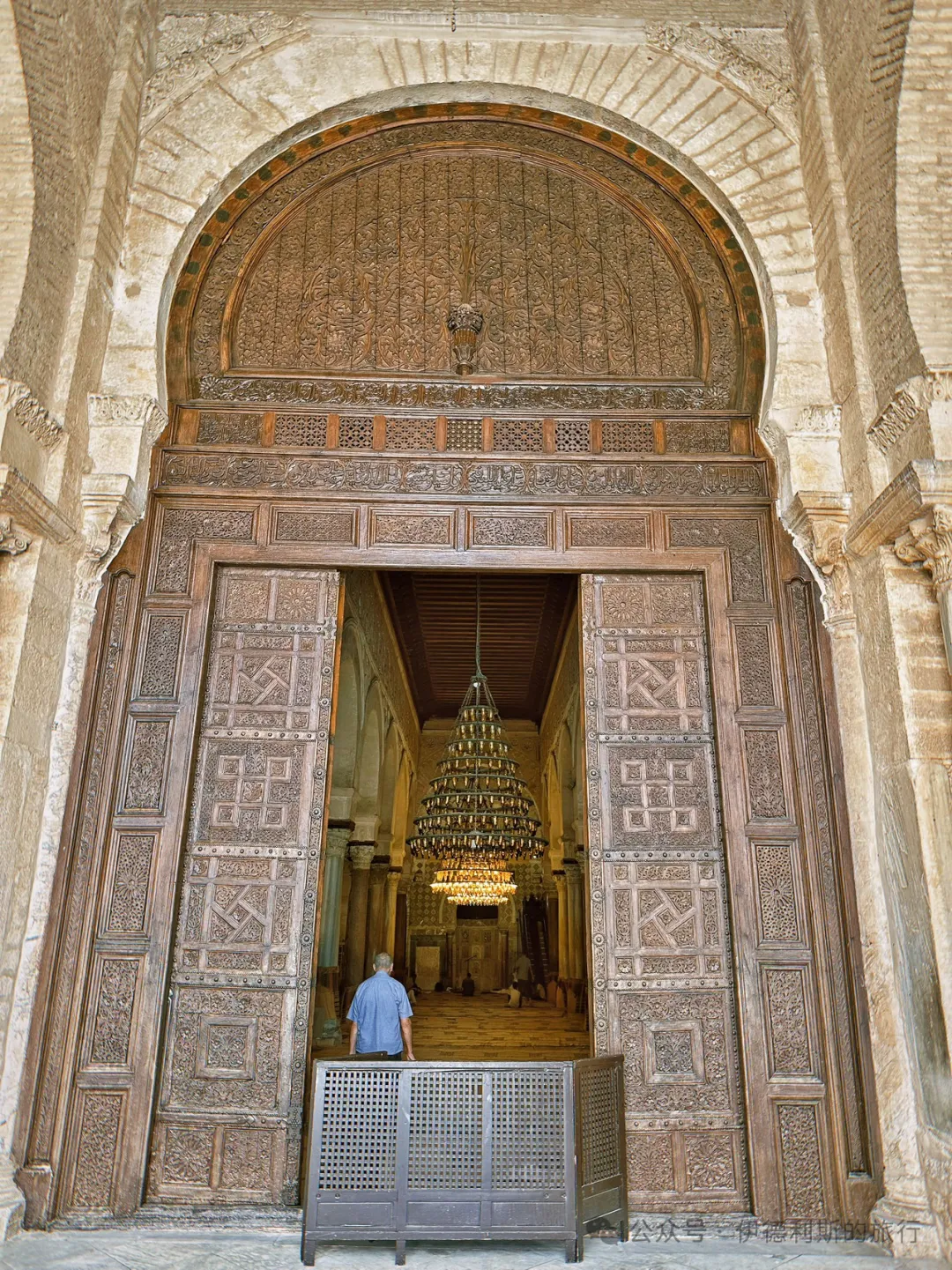
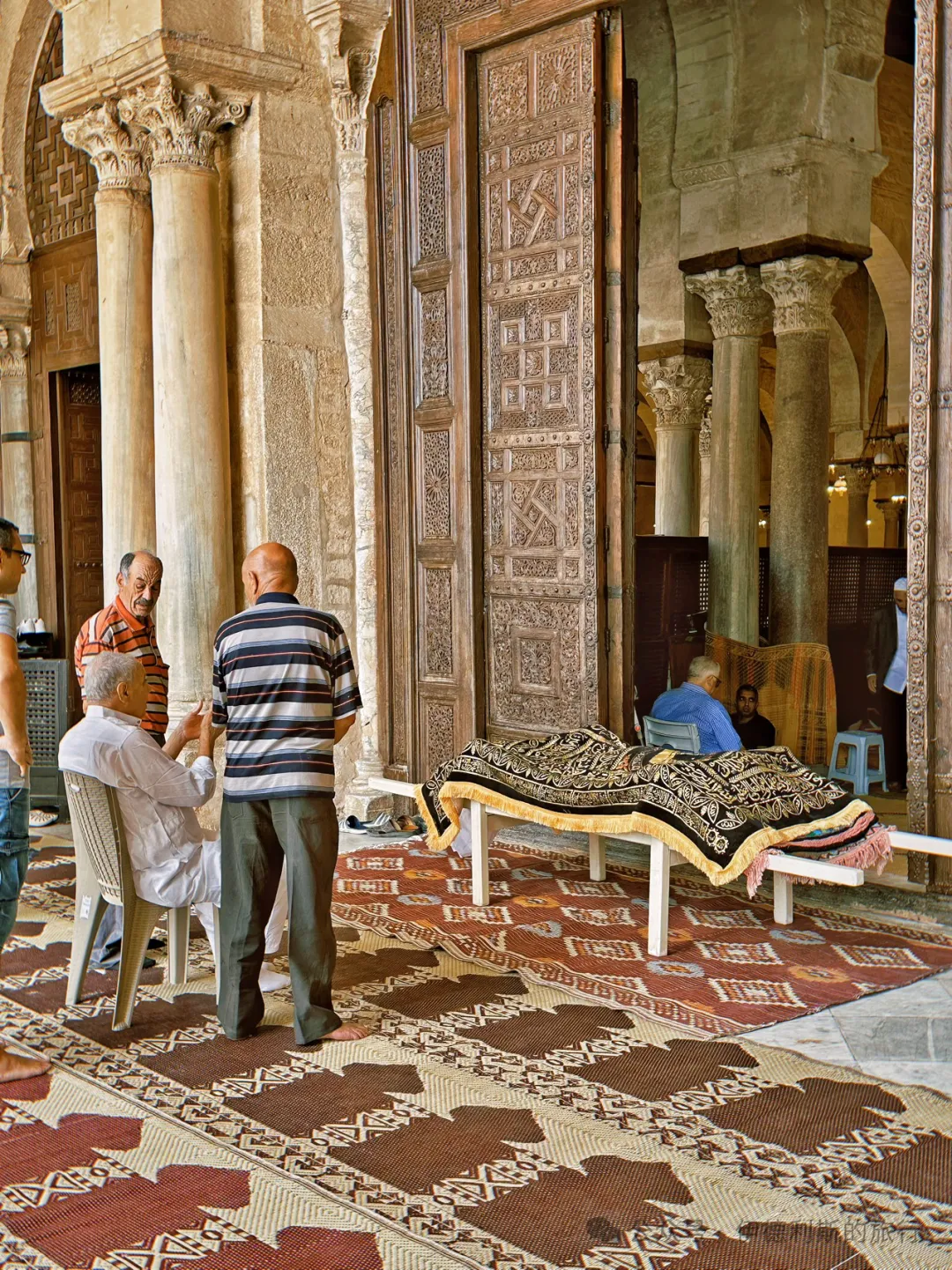
The prayer hall connects to the arcades through 17 carved wooden doors. The most exquisite one in the center was built in 1828 and features rich geometric and floral patterns.
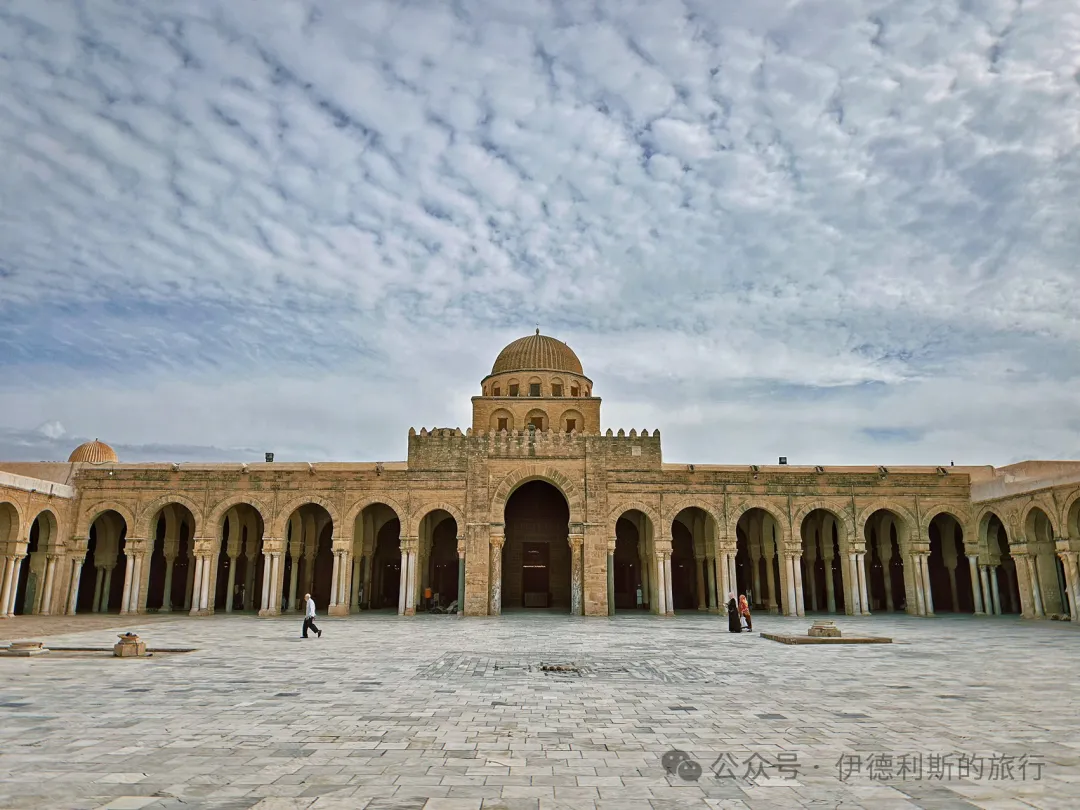
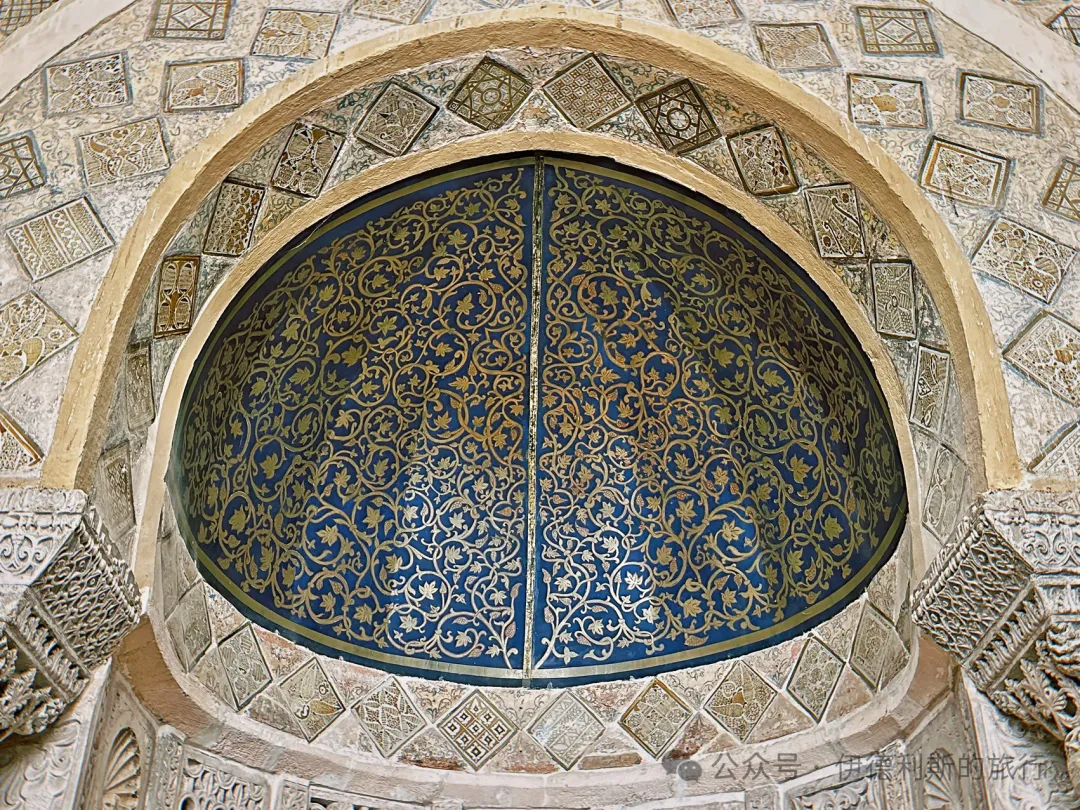
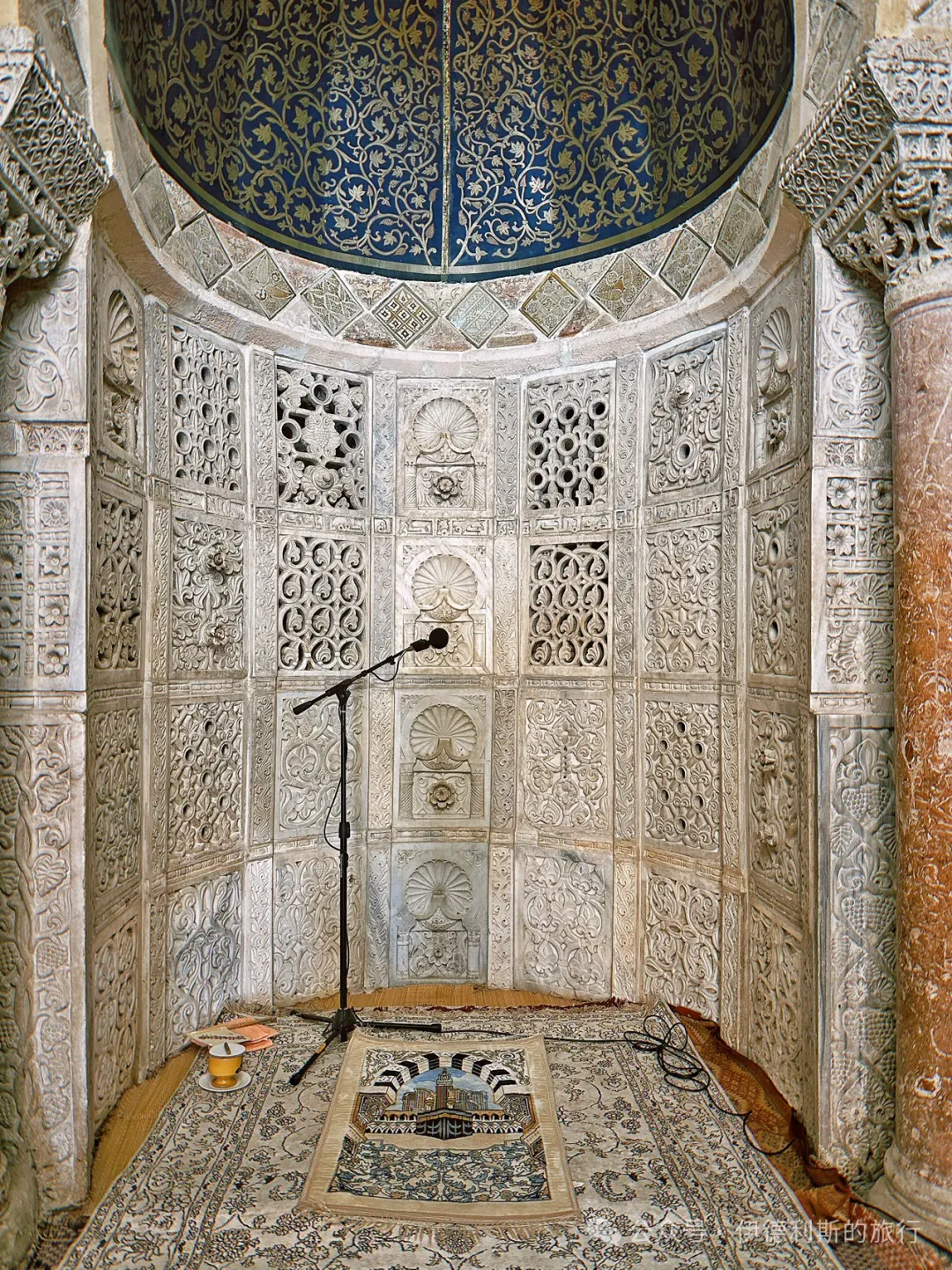
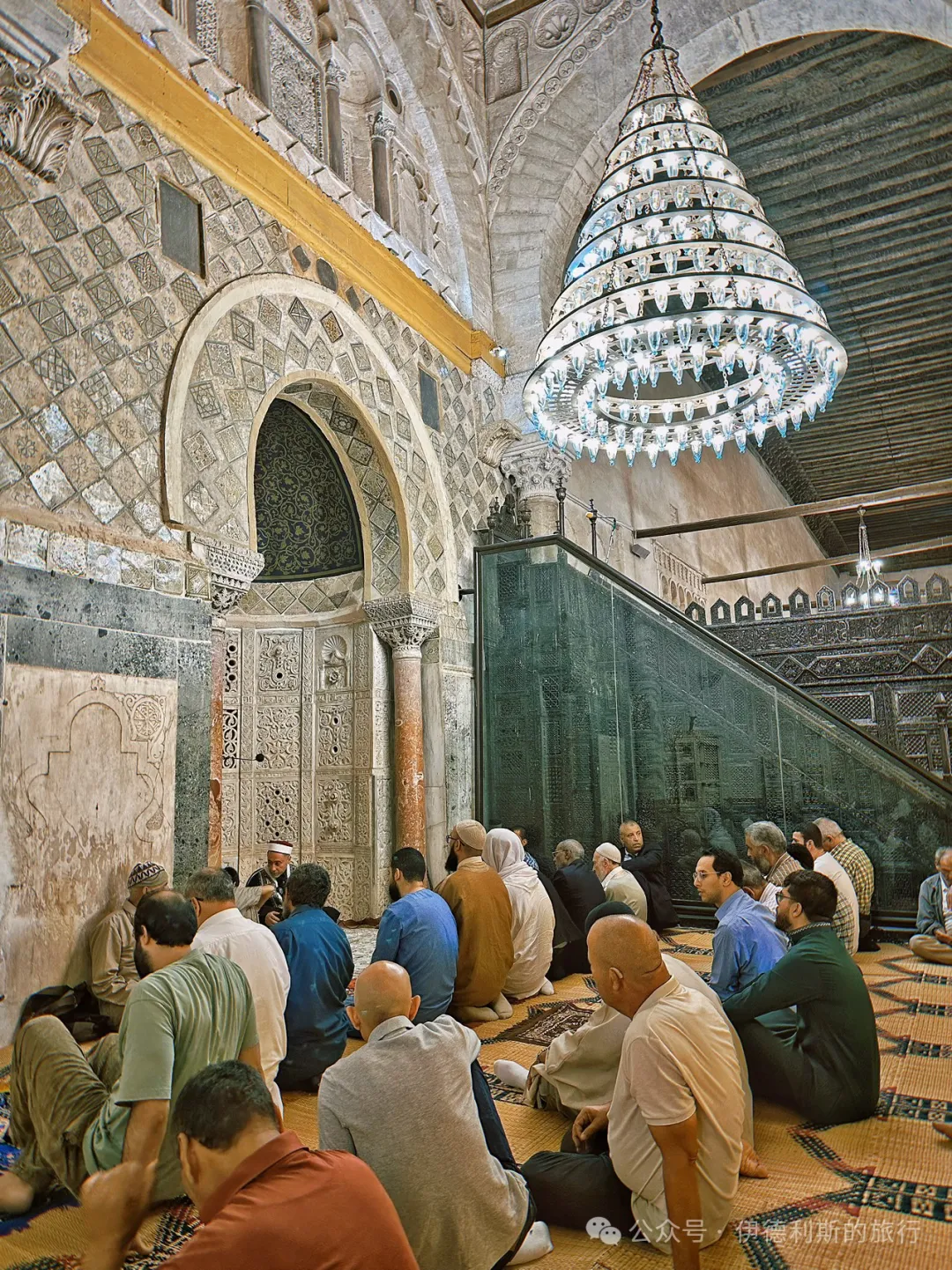
The mosque's mihrab is 5.1 meters high and was also built in 863. It is the oldest concave mihrab in the world. The main body of the mihrab is a horseshoe arch supported by two red marble columns. The columns have Byzantine-style capitals with very fine carvings.
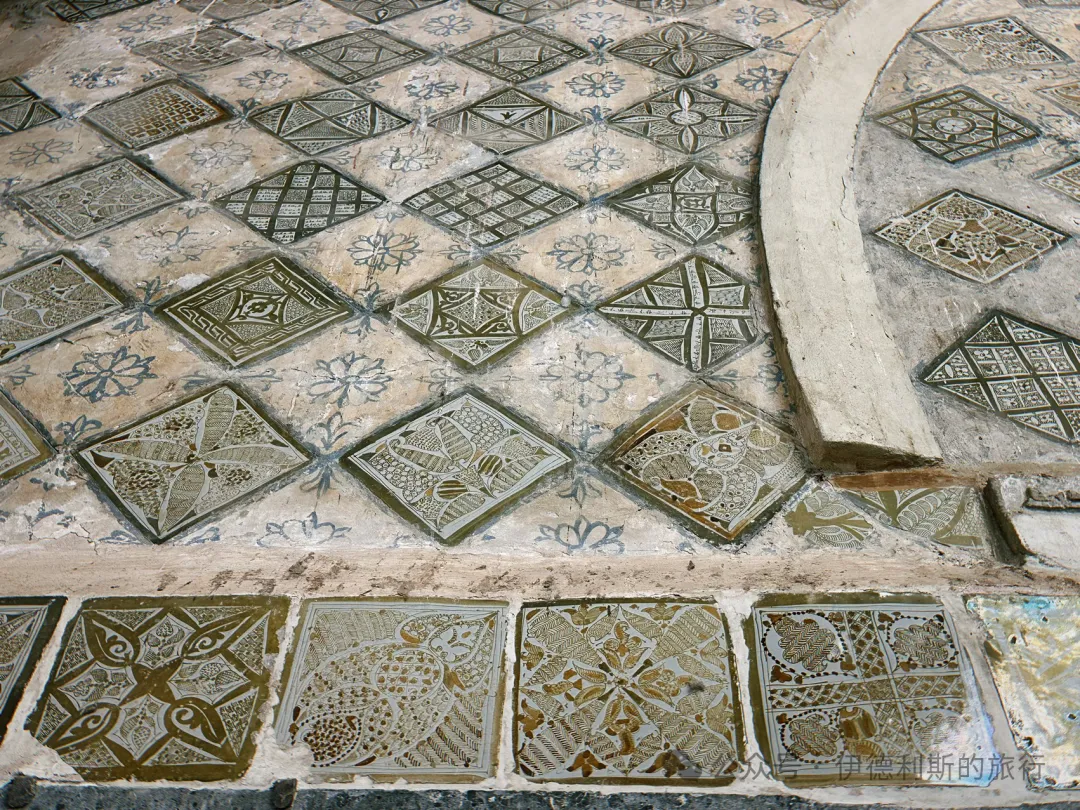
The upper part of the mihrab has 139 luster tiles fired in the second half of the 9th century. This metallic-glazed pottery originated in Abbasid-ruled Iraq and circulated throughout West Asia and North Africa. It is not yet certain whether the luster tiles of the Great Mosque of Kairouan were fired in Iraq or if Iraqi craftsmen were invited to Kairouan to make them.
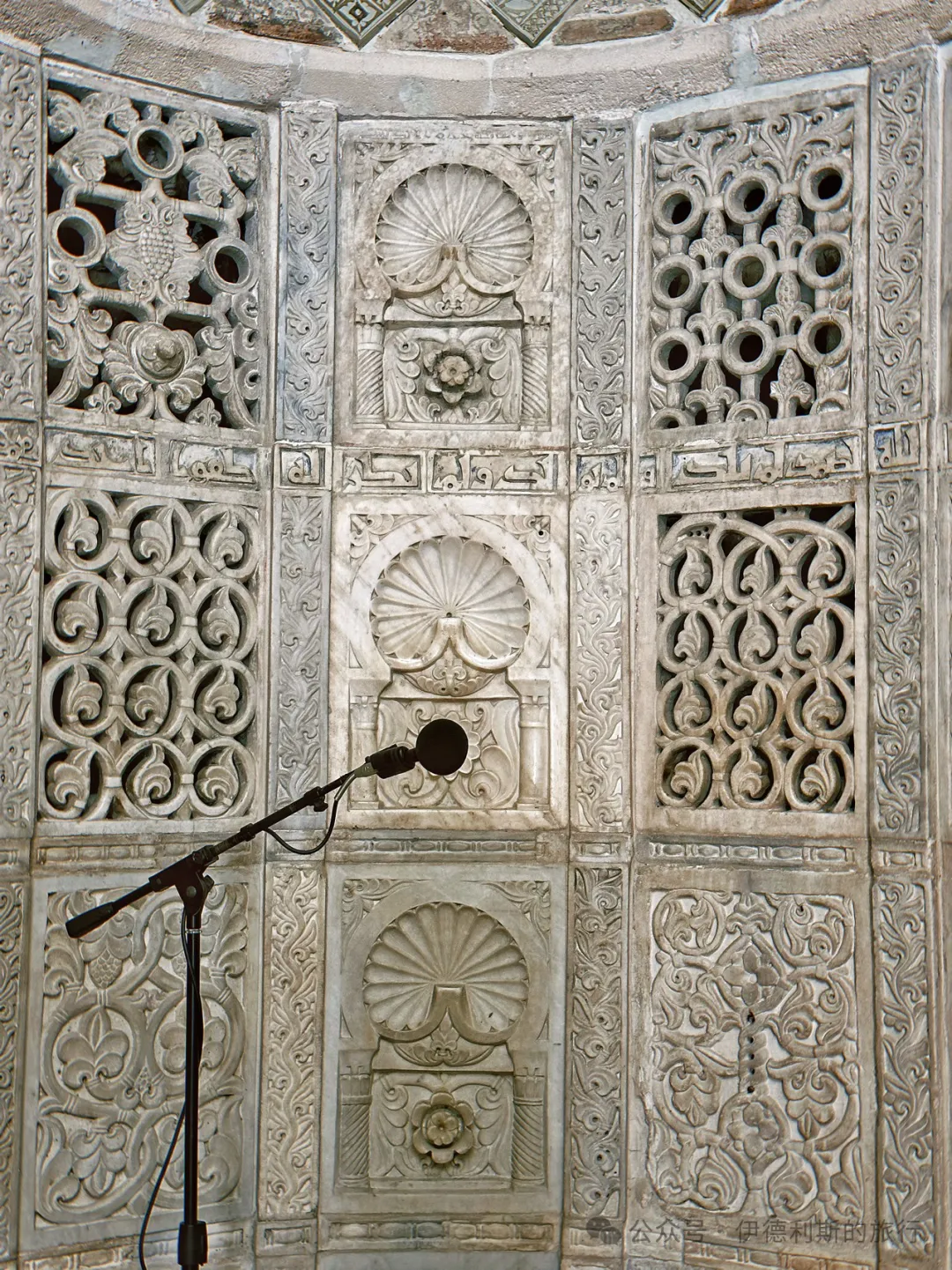
The concave surface in the center of the upper section is painted wood, featuring complex vine patterns in yellow on a blue background. The lower section is inlaid with 28 white marble slabs carved with complex plant and geometric patterns, including stylized grape leaves, flowers, and shells.
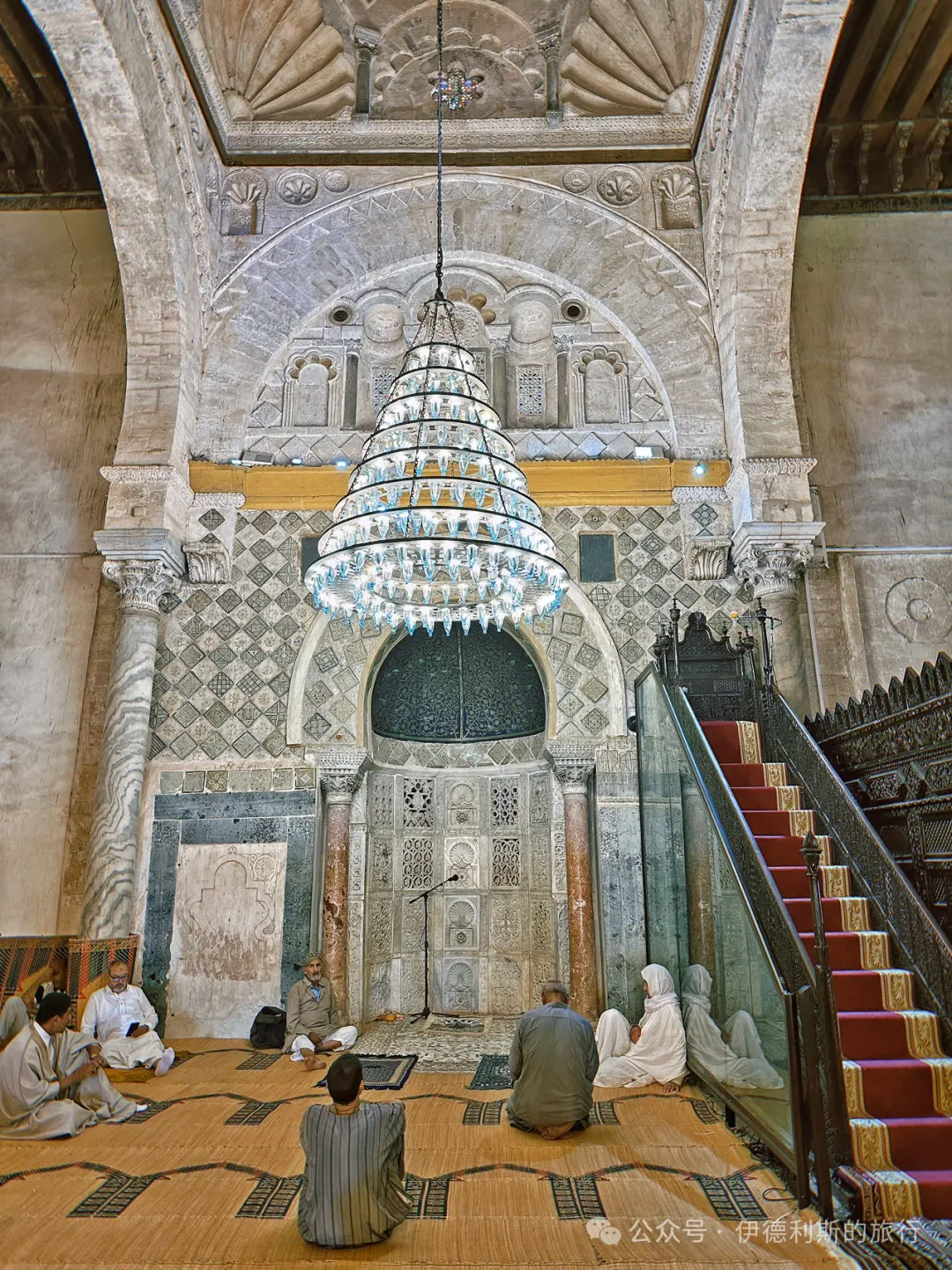
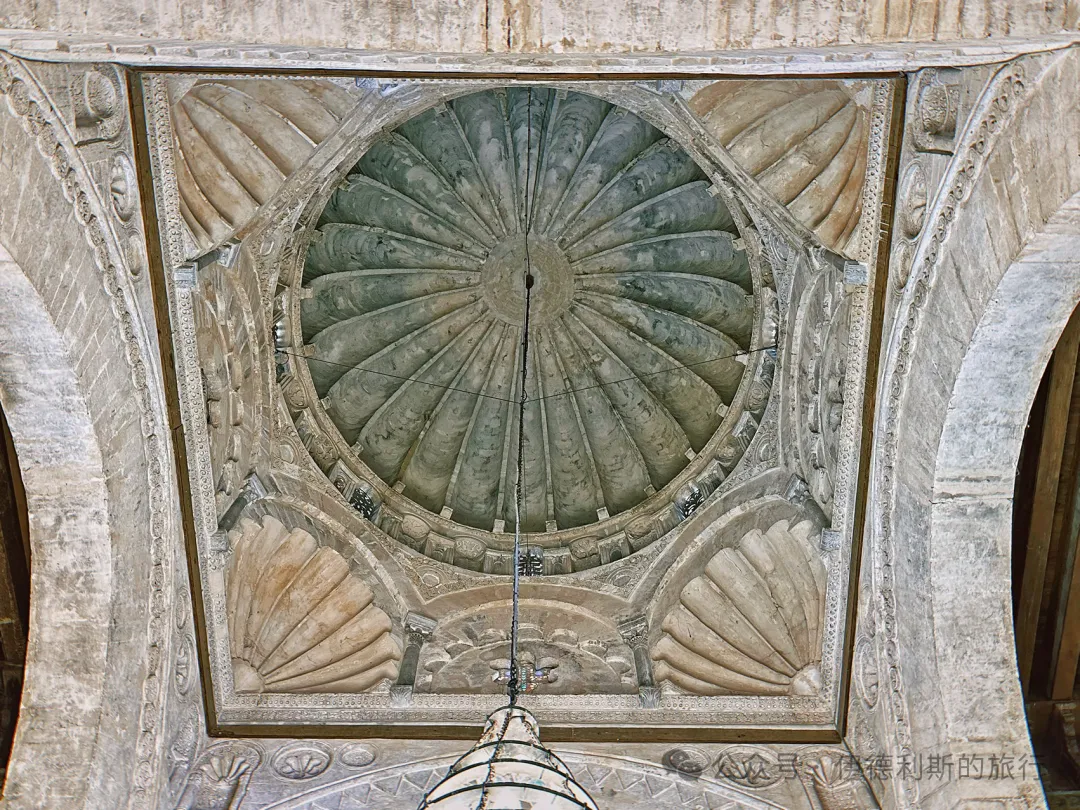
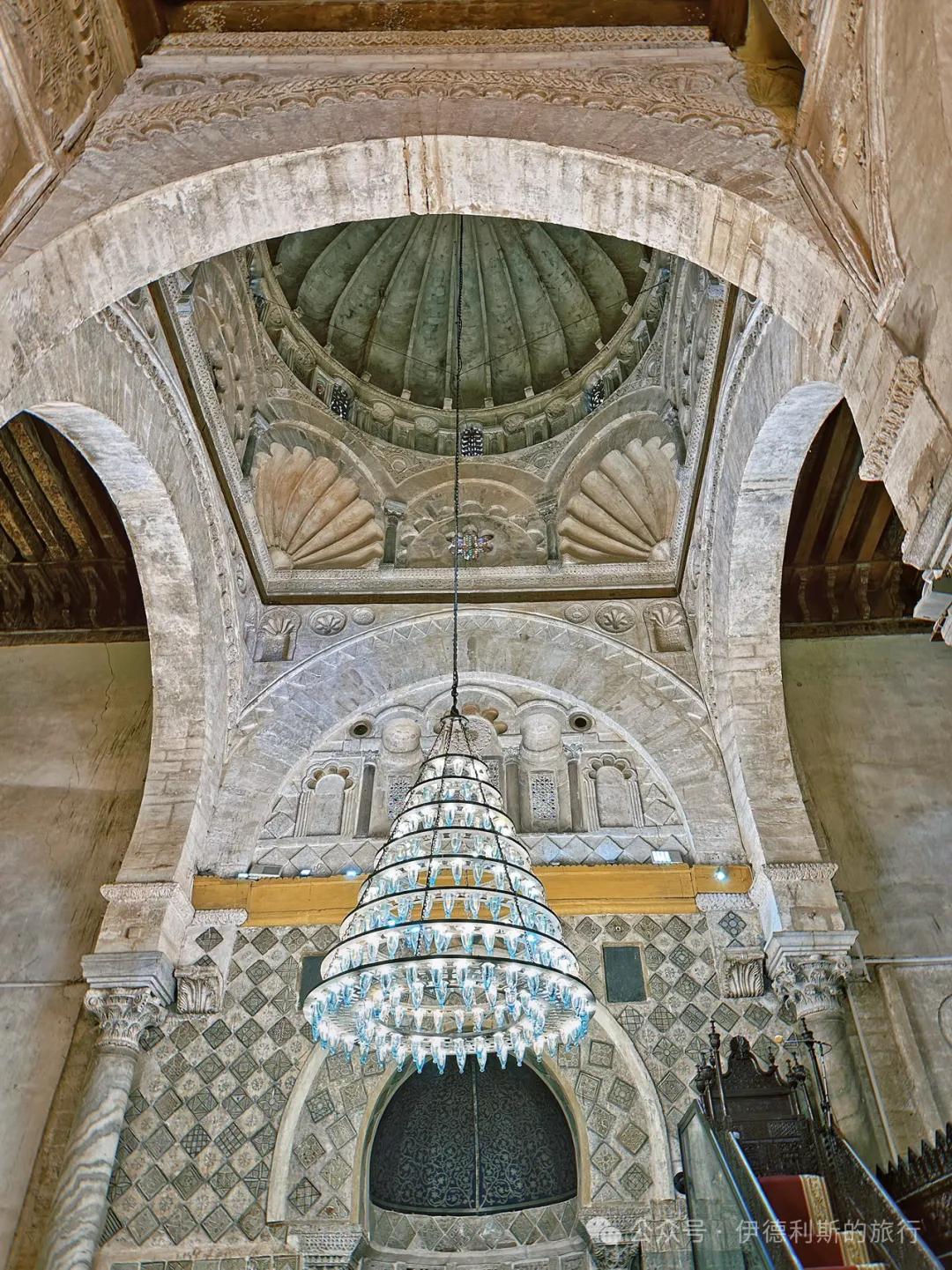
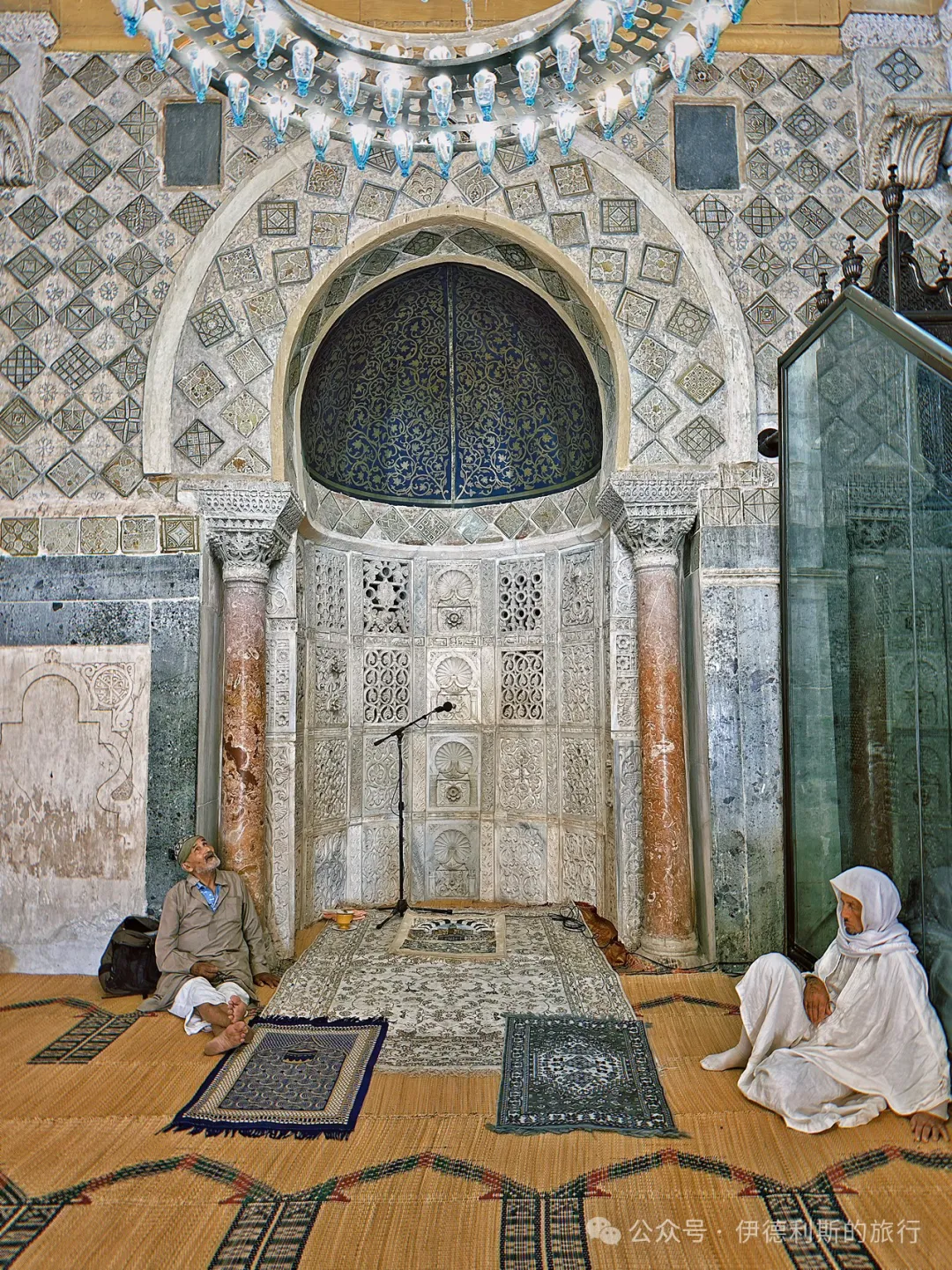
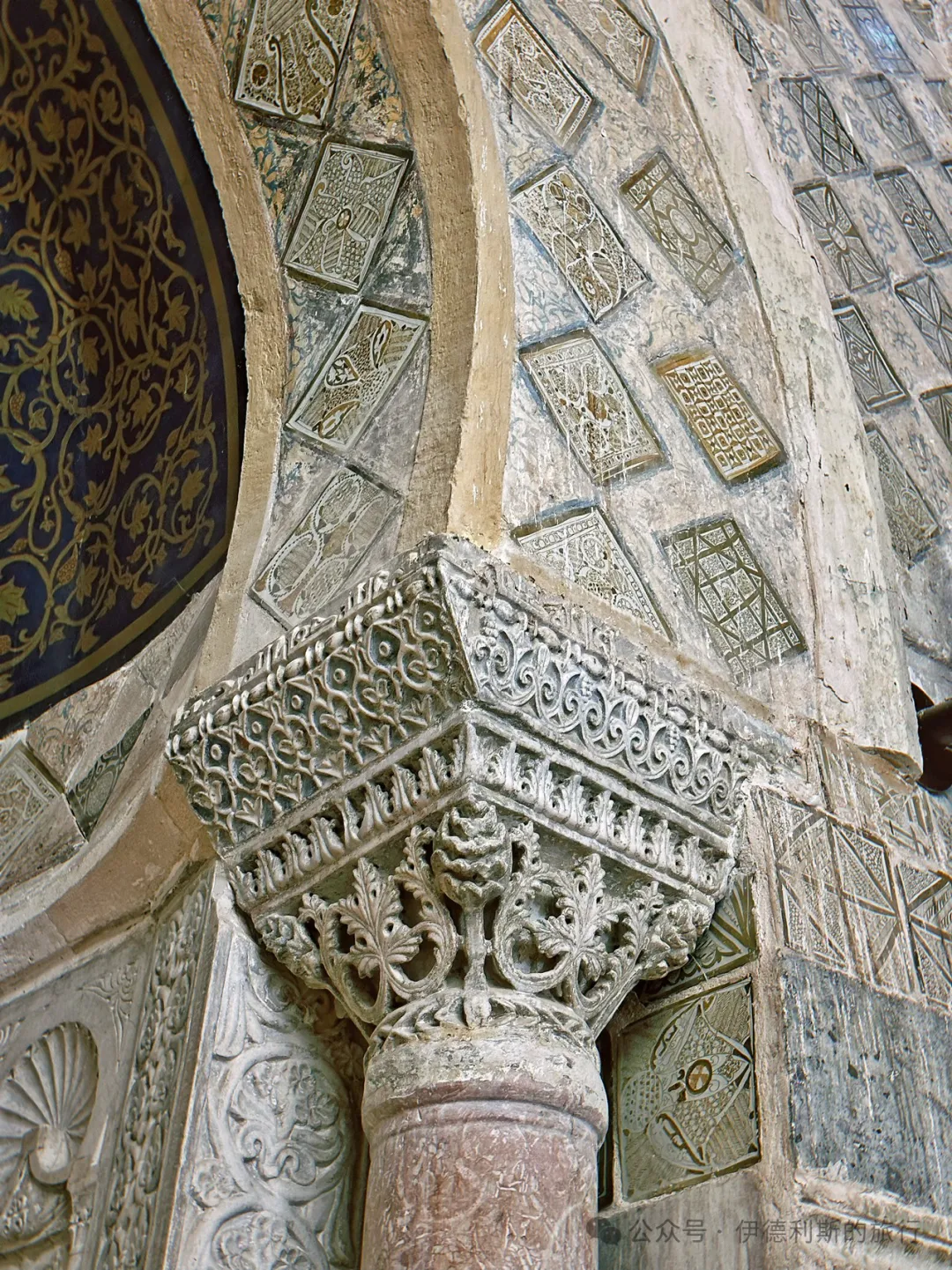
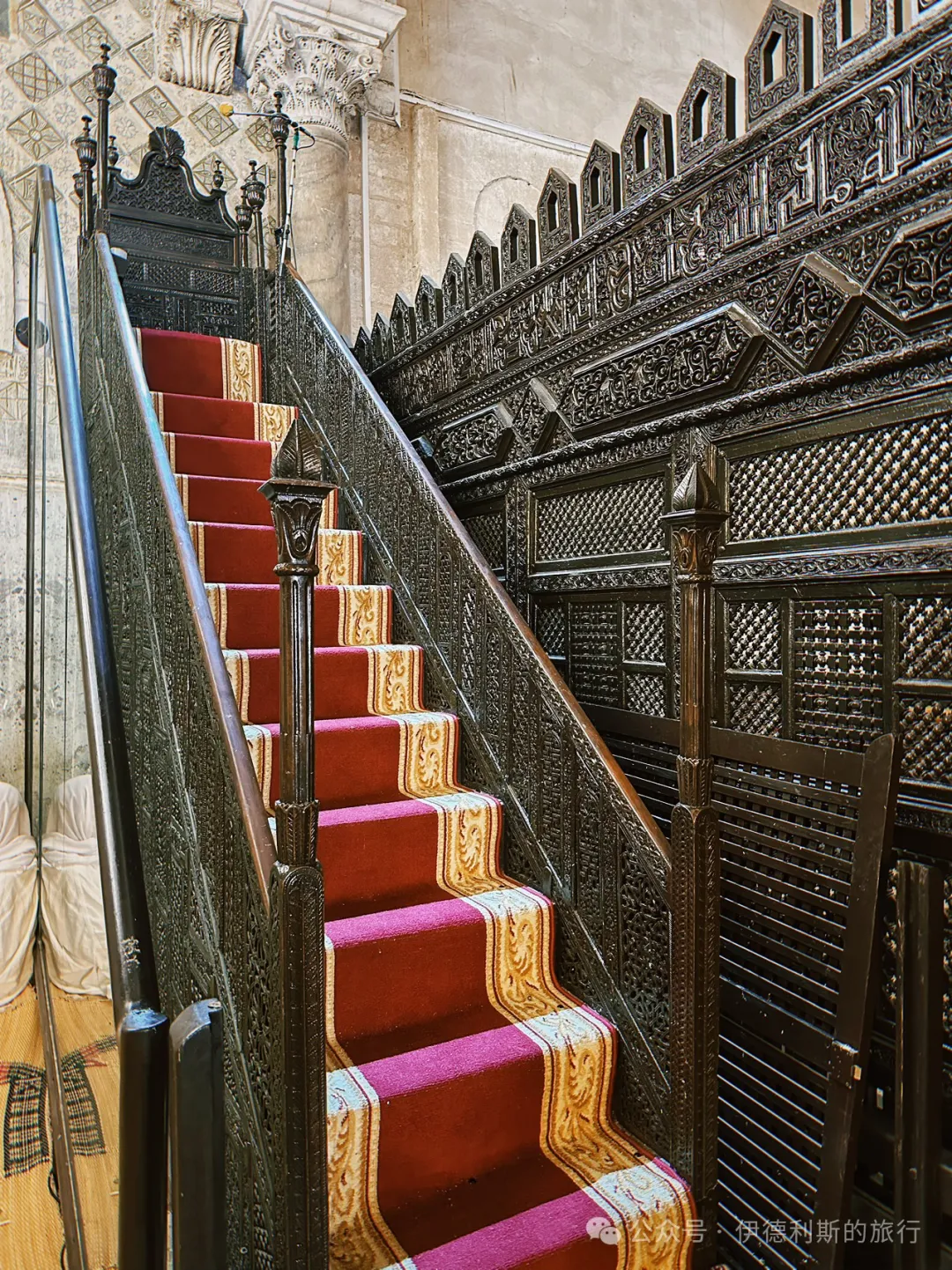
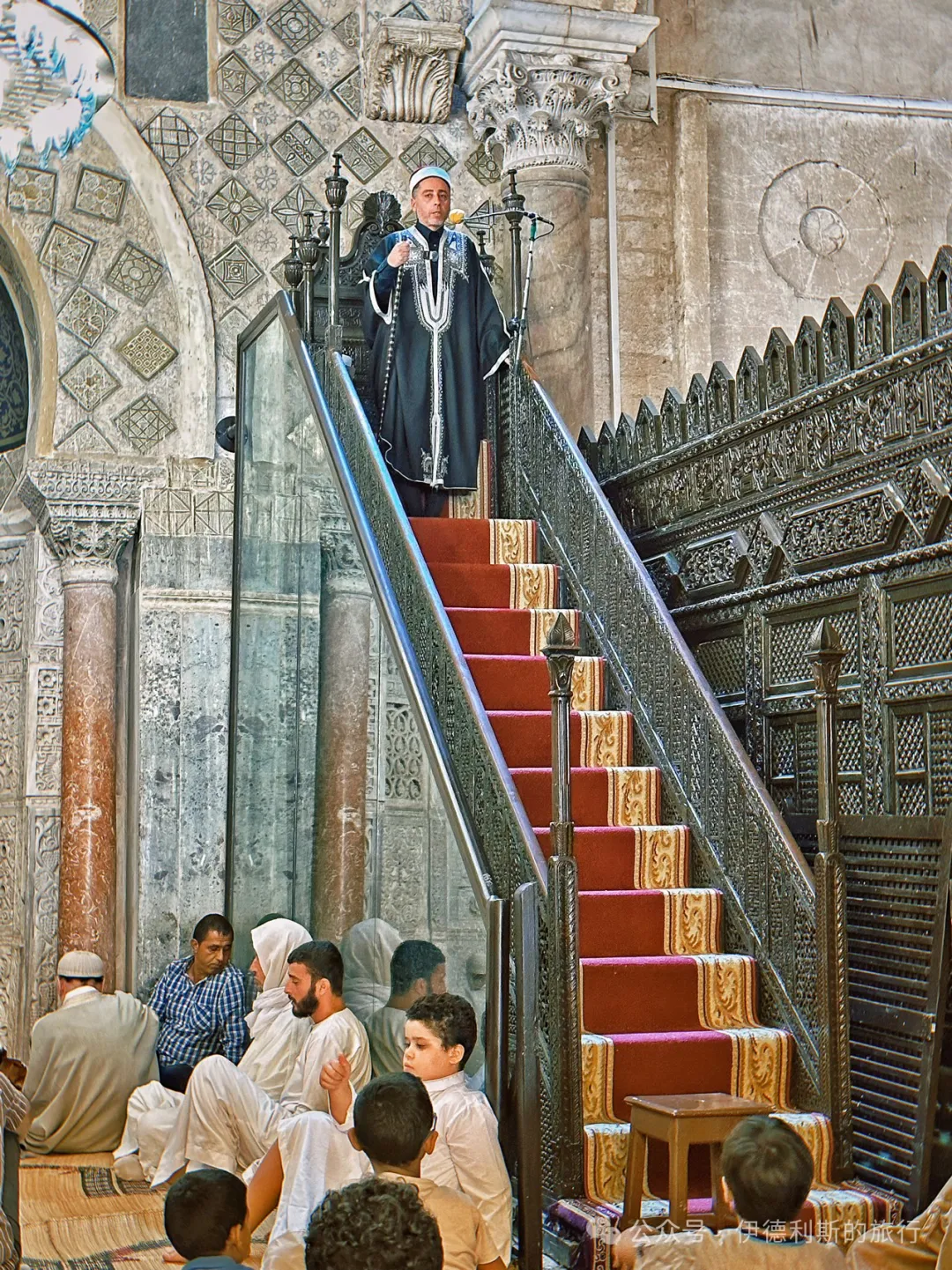
Next to the mihrab are the minbar for the Friday sermon and the enclosure (maqsurah) used by kings and nobles.
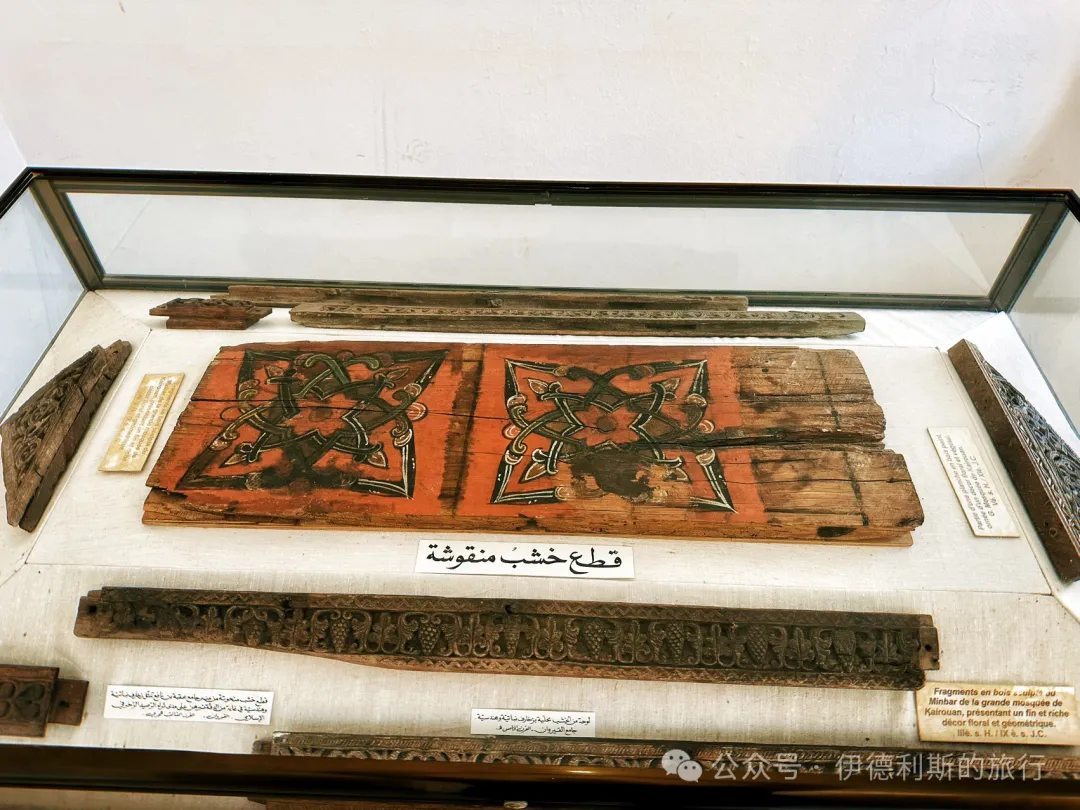
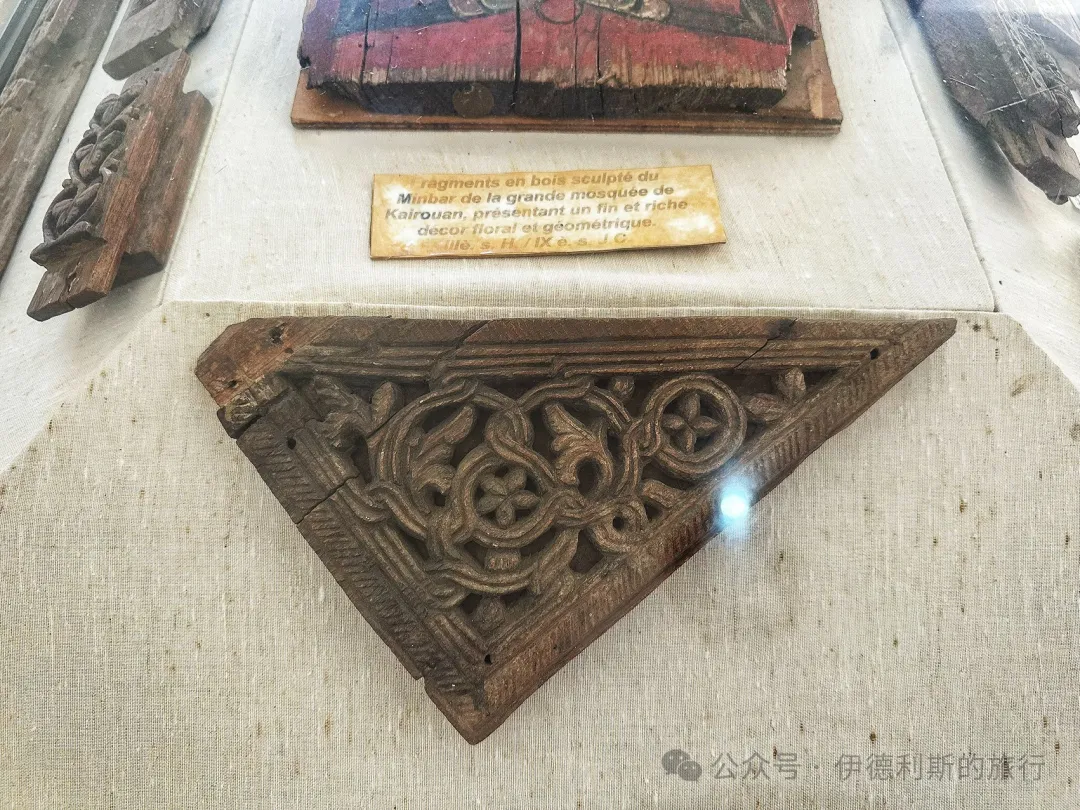
The minbar of the Great Mosque of Kairouan was also built in 863 and is the oldest surviving minbar in the world. The minbar is made of teak imported from India and is assembled from over 300 wooden panels carved with plant and geometric designs. Although it was restored in the early 20th century, all but nine of the wooden panels are original pieces from over a thousand years ago. Today, the sides of the minbar are protected by glass, making it difficult to take photos due to the reflection.
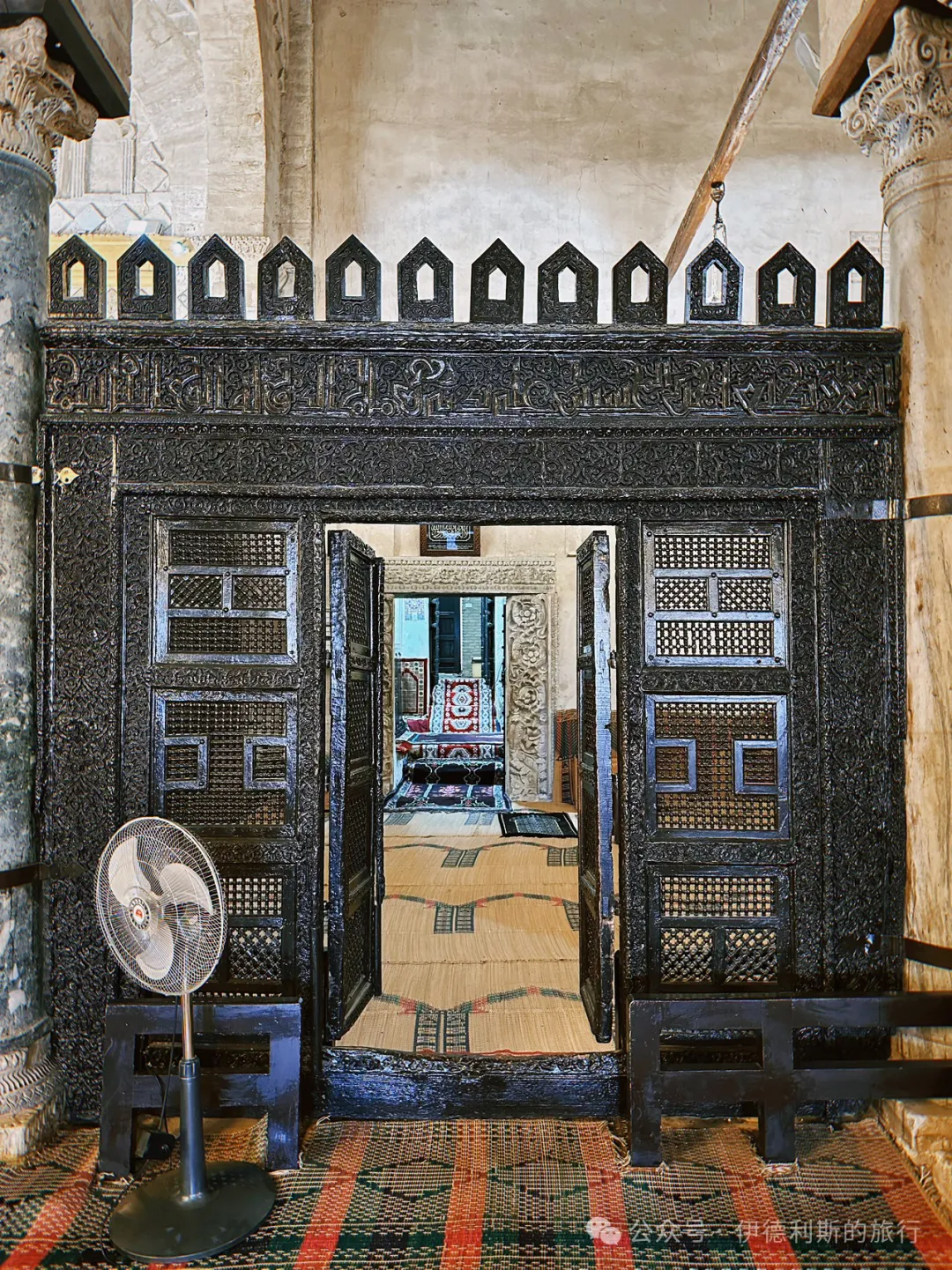
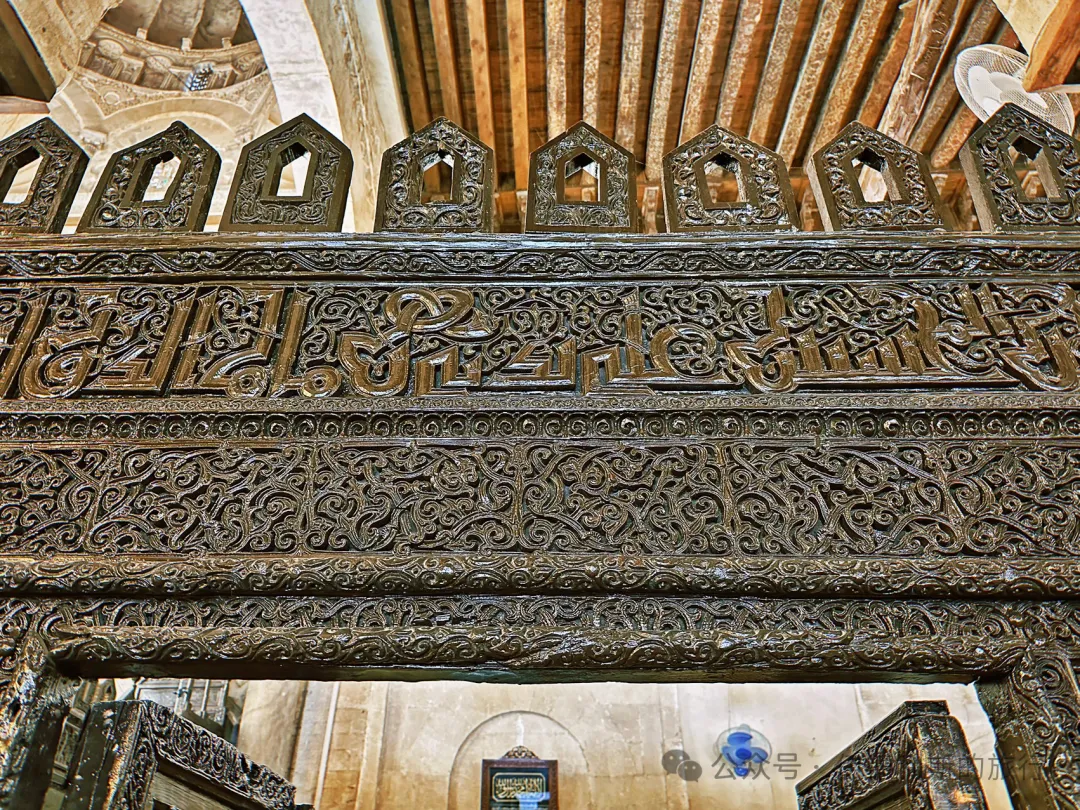
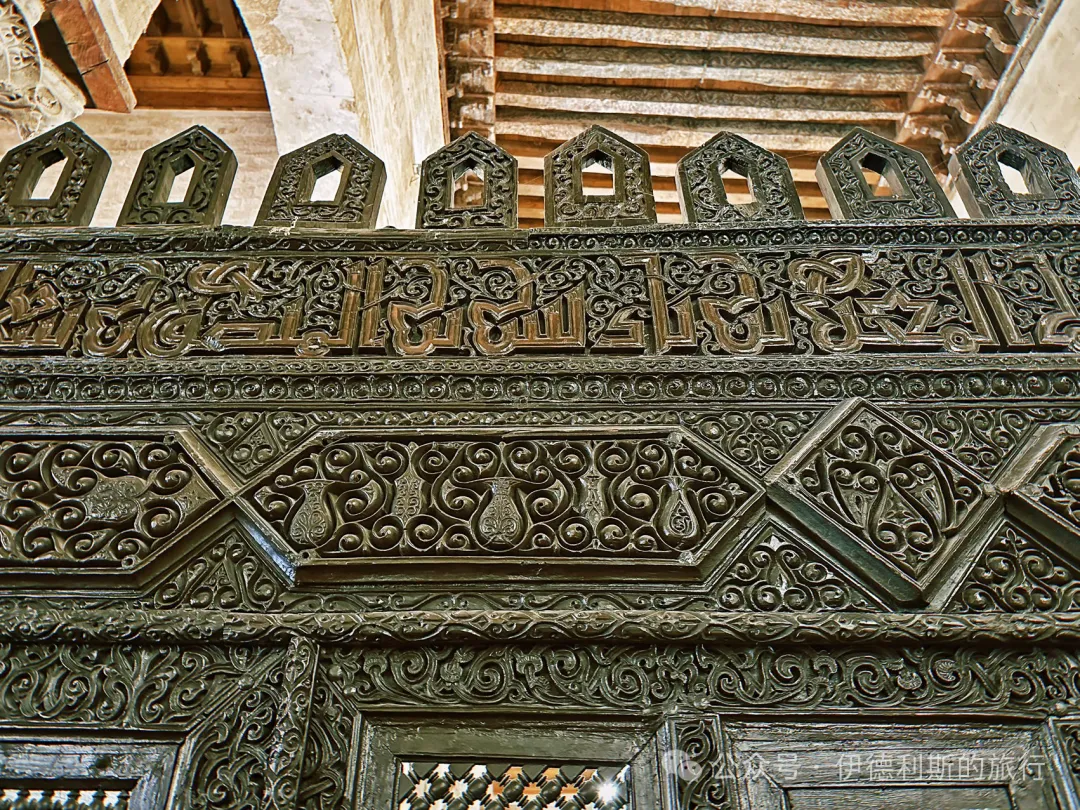
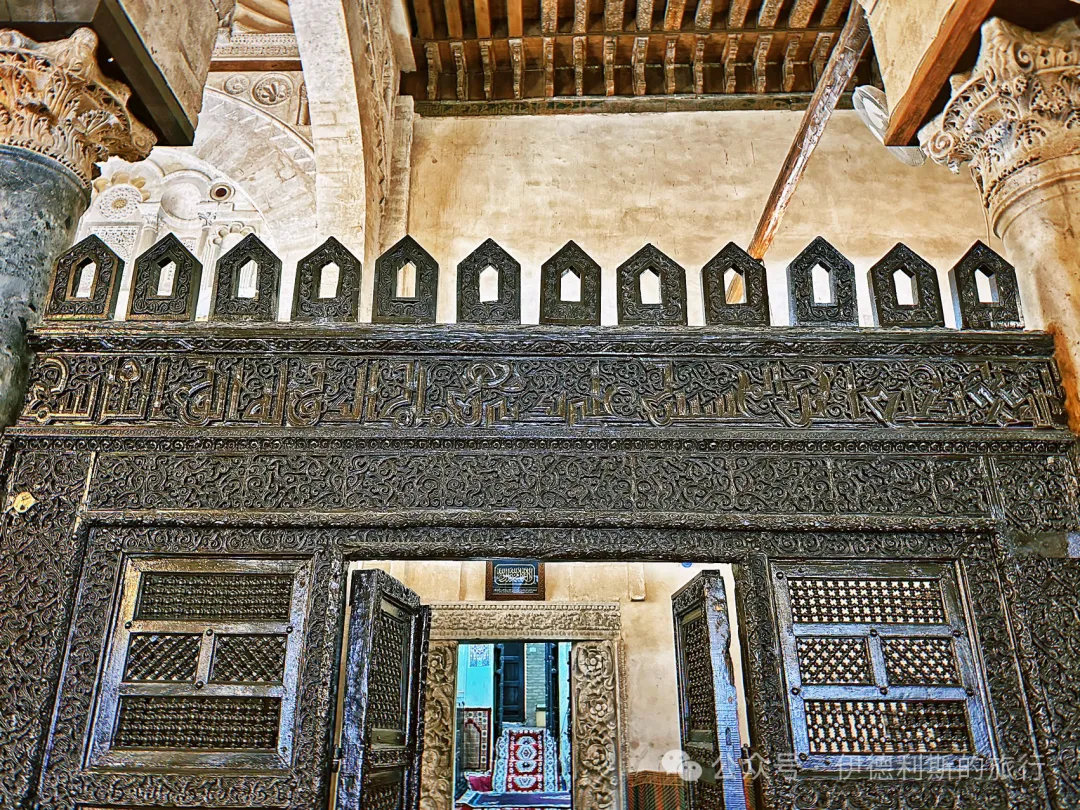
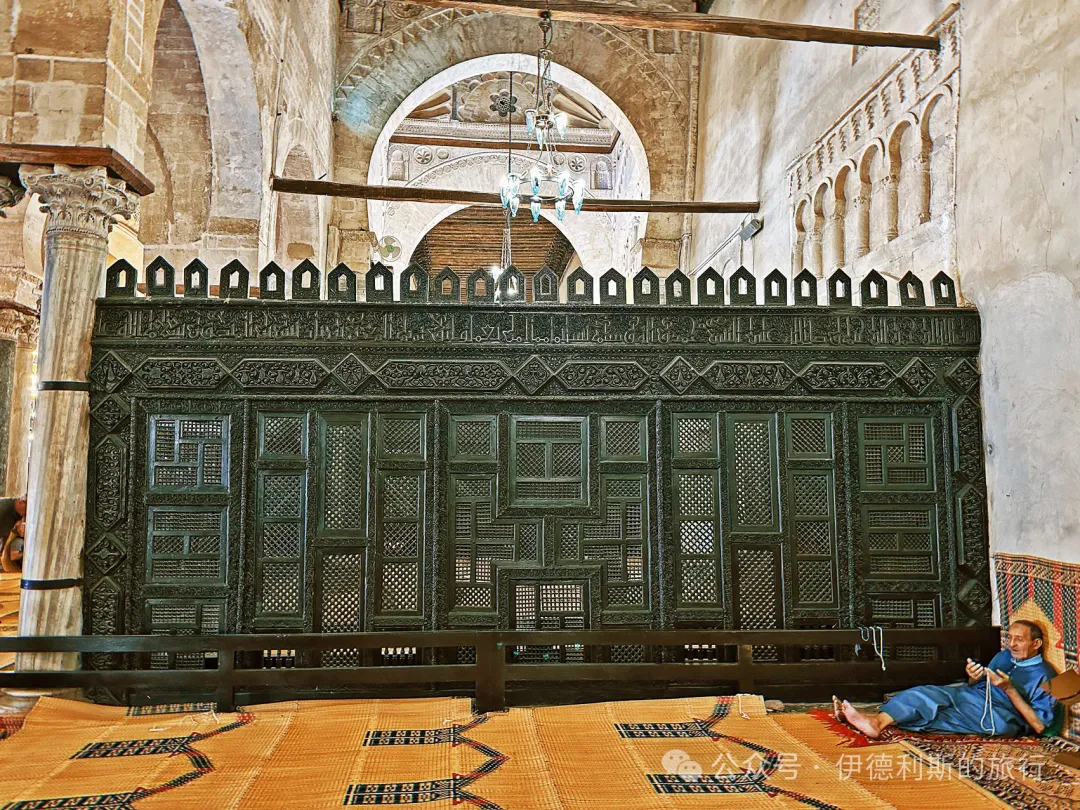
The maqsurah of the Great Mosque of Kairouan was built in the first half of the 11th century and is the oldest one still in use in the world (the maqsurah of the Great Mosque of Cordoba in Spain was built in 965 but is no longer in use). The prayer enclosure (maqsura) is made of cedar wood and measures 14 meters long. It is carved with ornate Kufic calligraphy and floral patterns, representing the highest achievement in Tunisian carving art at the time.
The maqsura originated in the mid-7th century during the time of Caliph Uthman. After Caliph Umar was assassinated inside the main prayer hall, Uthman built a wall inside the hall to protect himself. Later, a maqsura was built in every mosque where a caliph prayed.
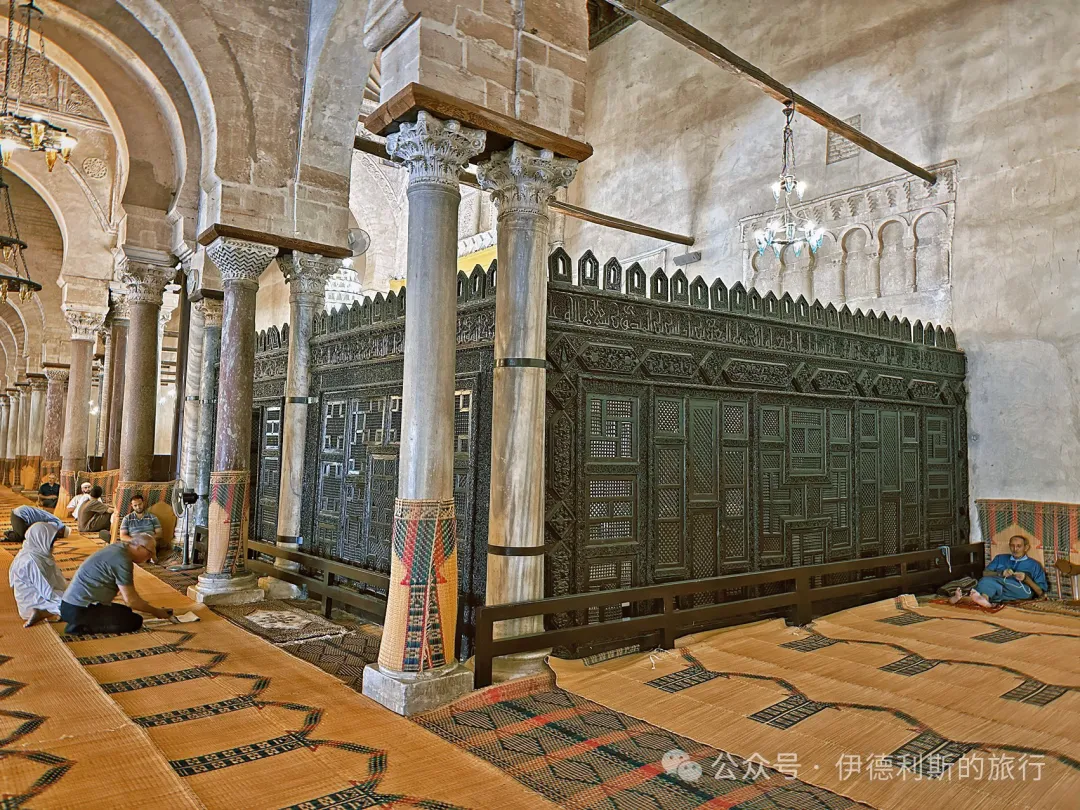
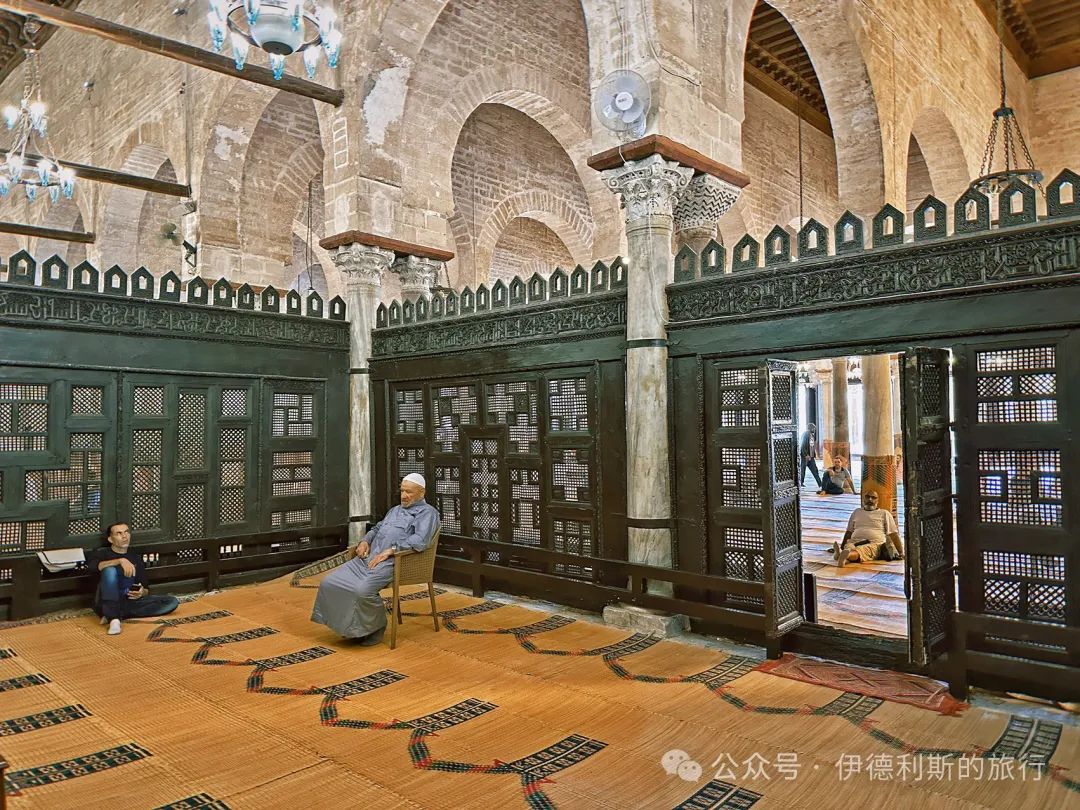
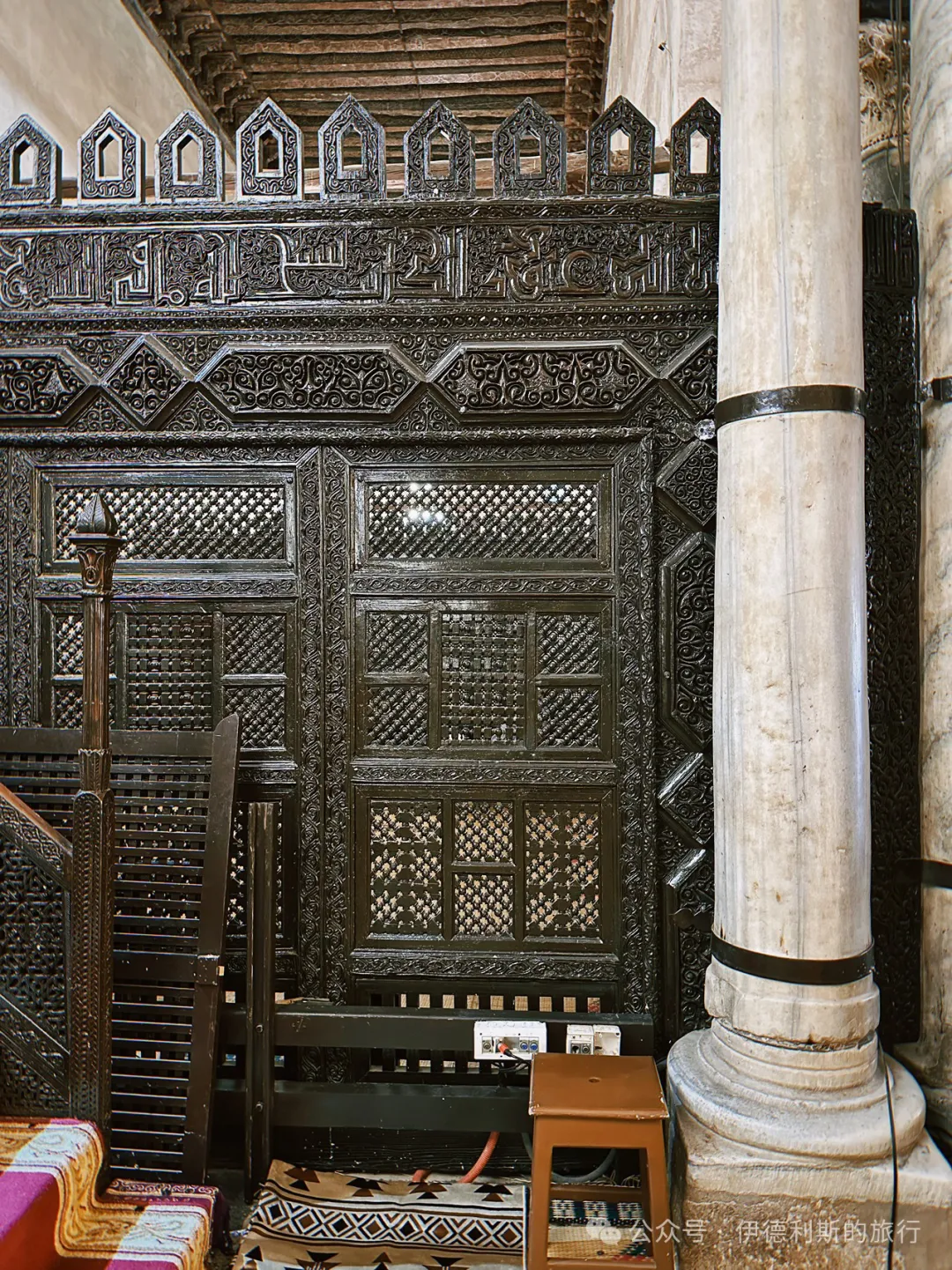
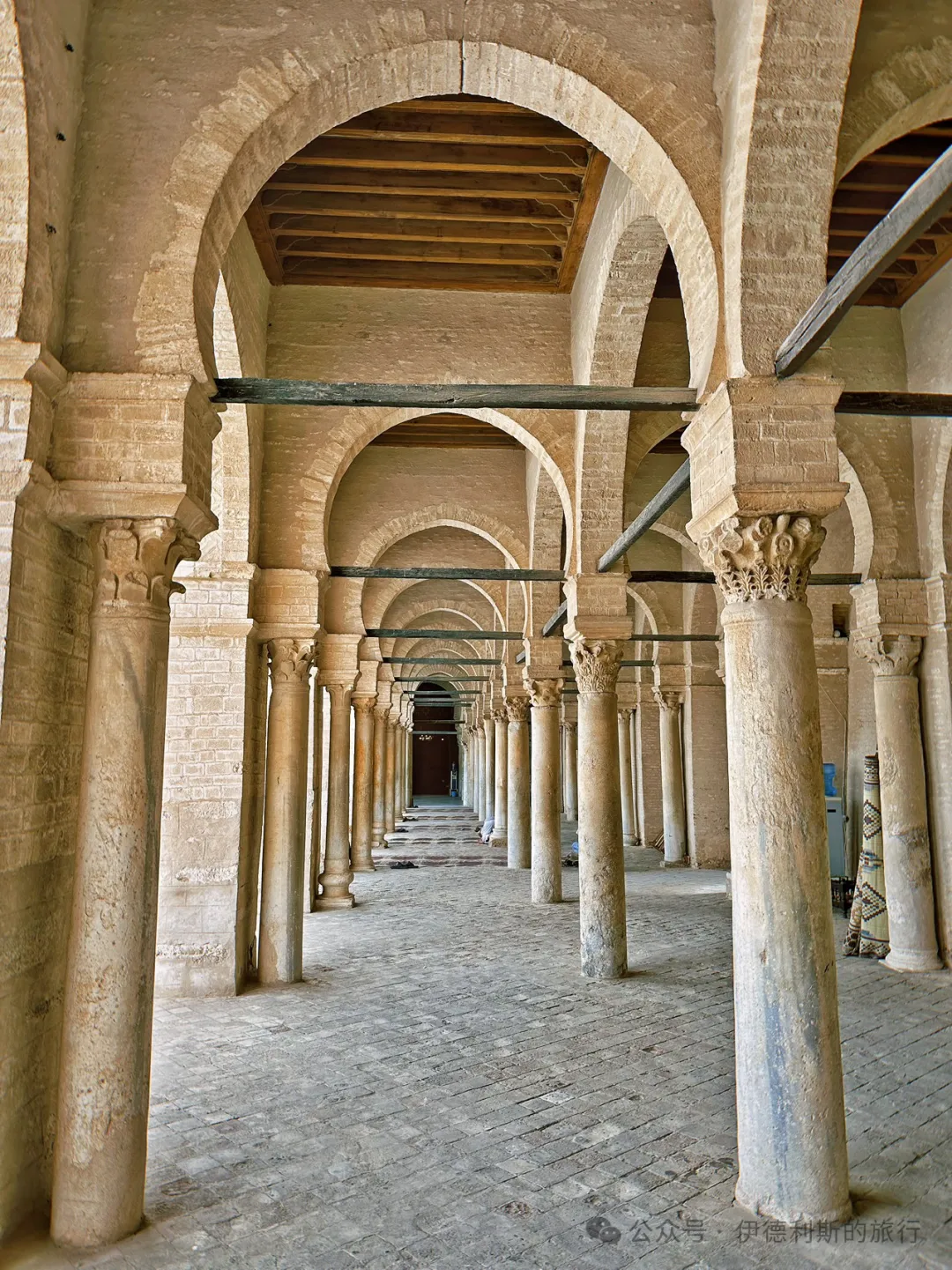
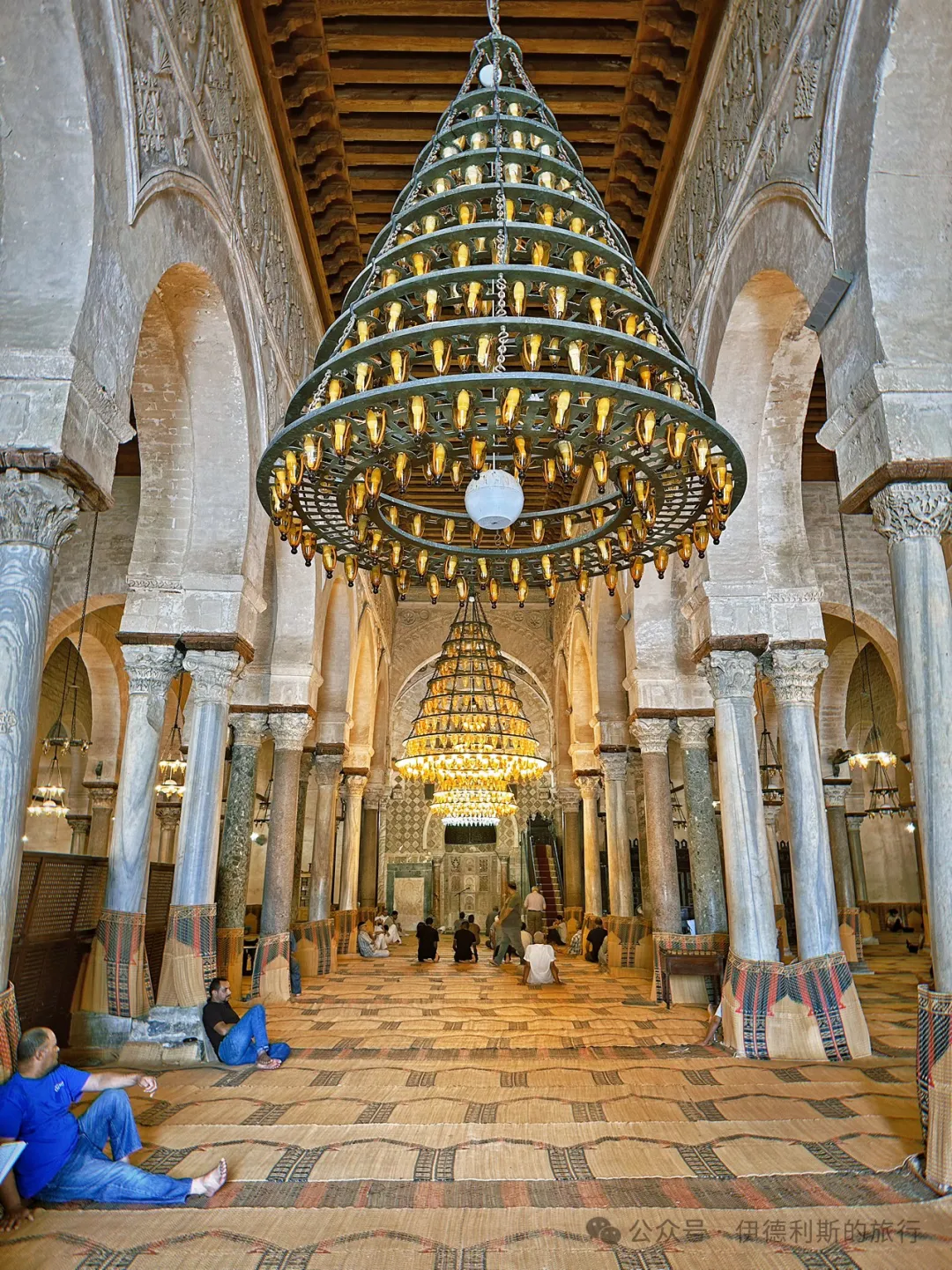
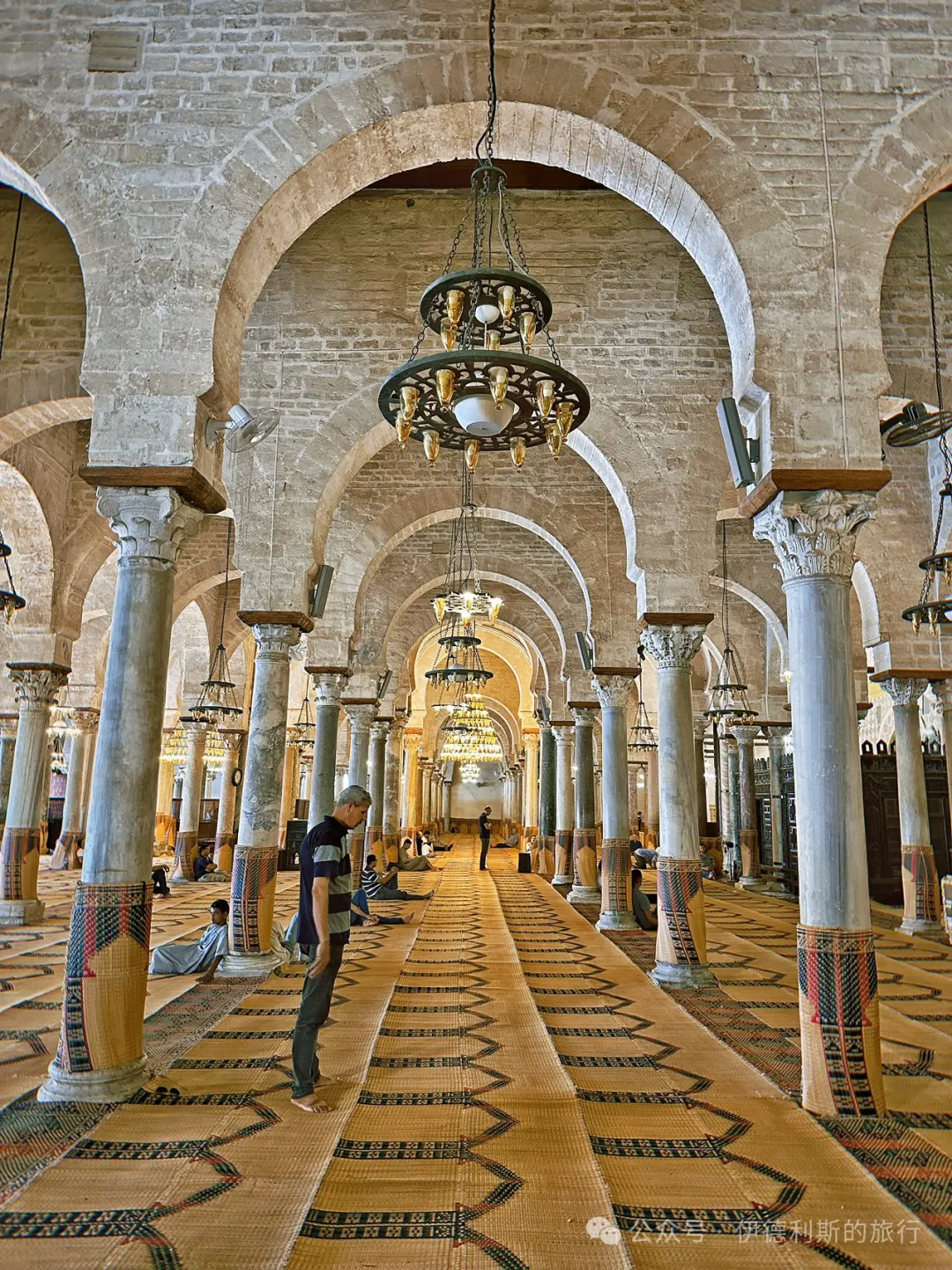
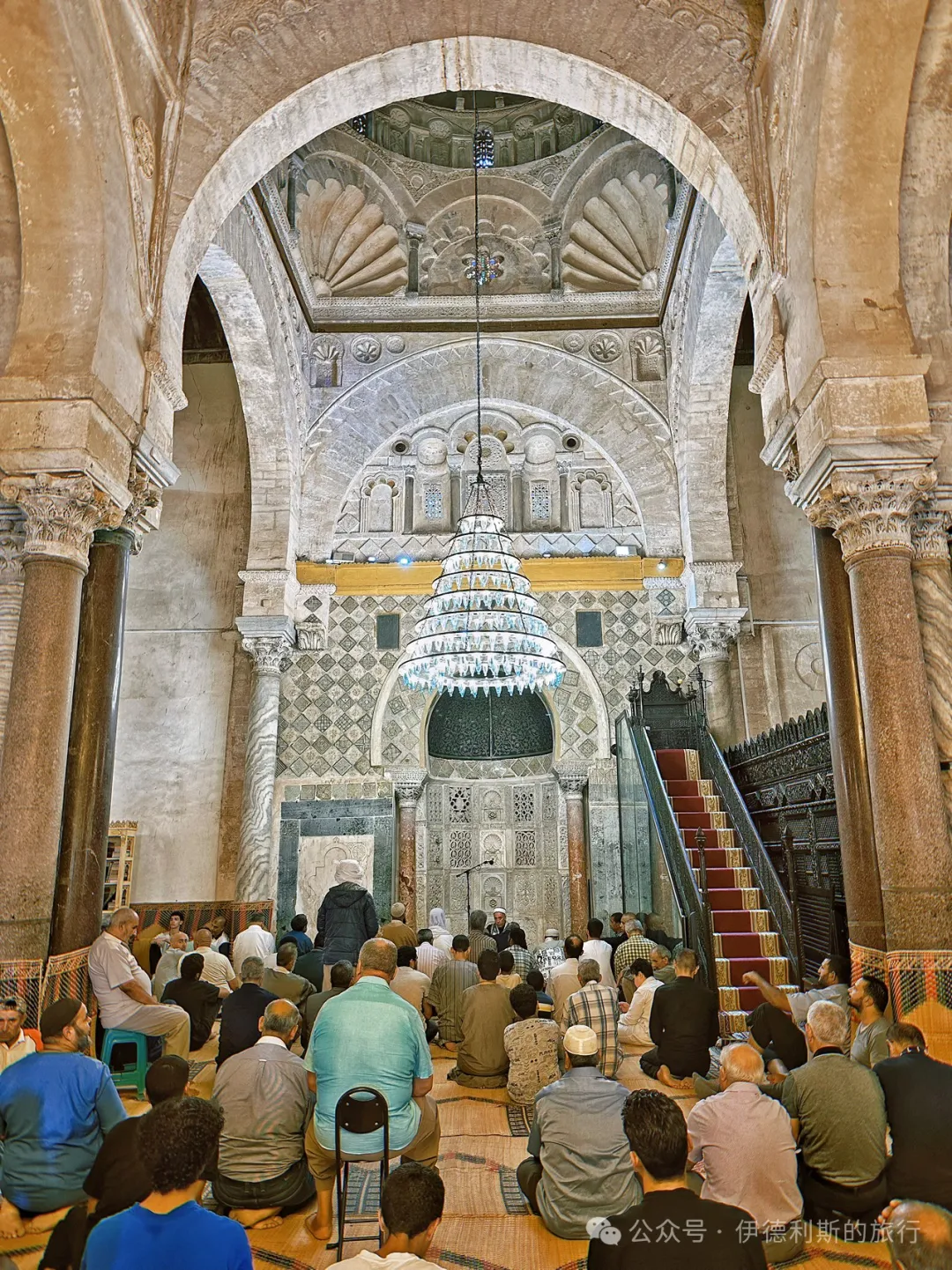
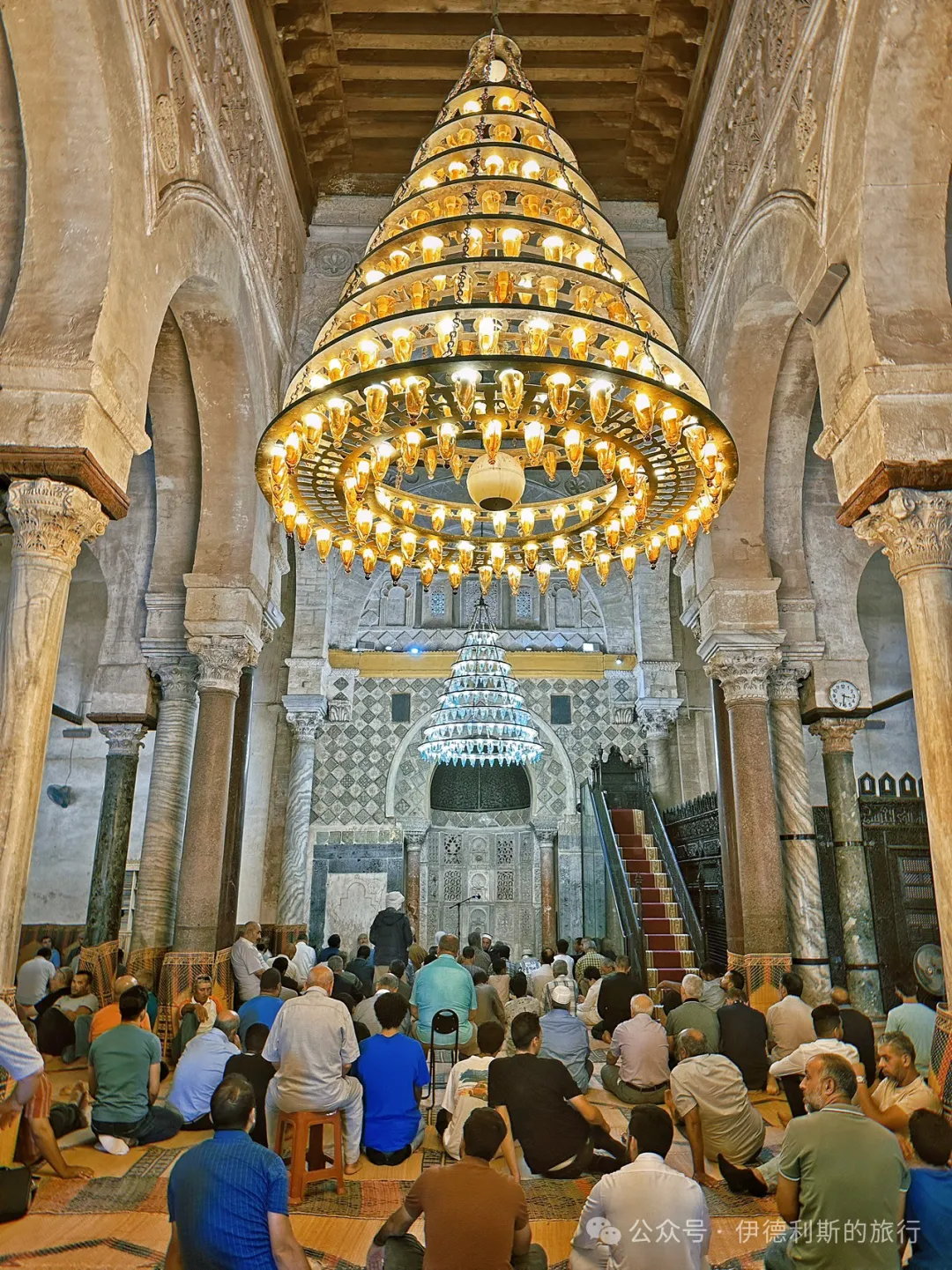
The main prayer hall of the Great Mosque of Kairouan is 70.6 meters wide and 37.5 meters deep. It consists of 17 aisles, with the aisle directly facing the mihrab being the tallest and widest. This layout was later adopted by major mosques across the Maghreb and Andalusia.
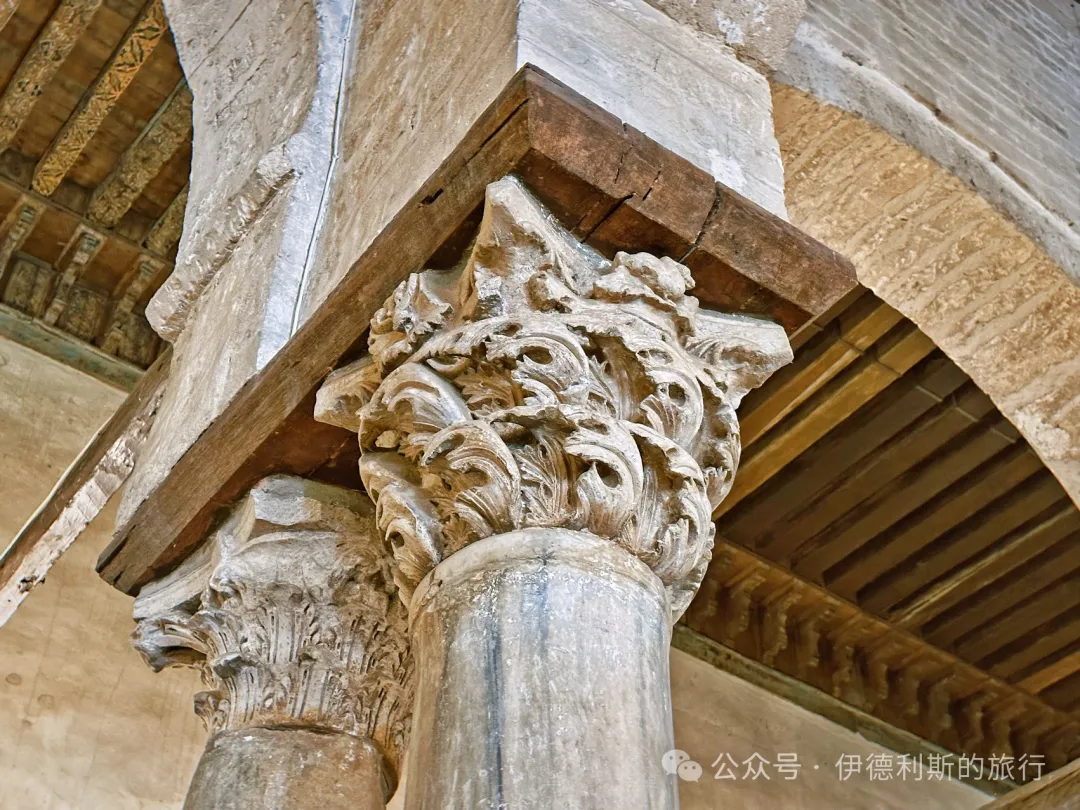
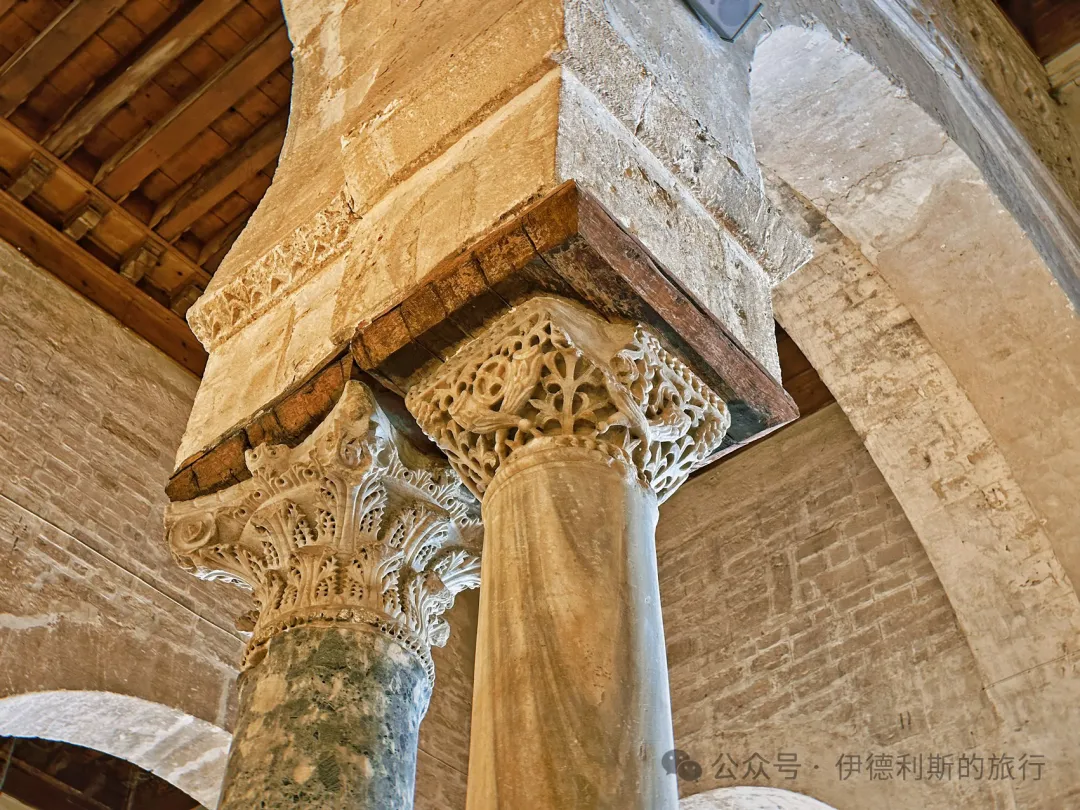
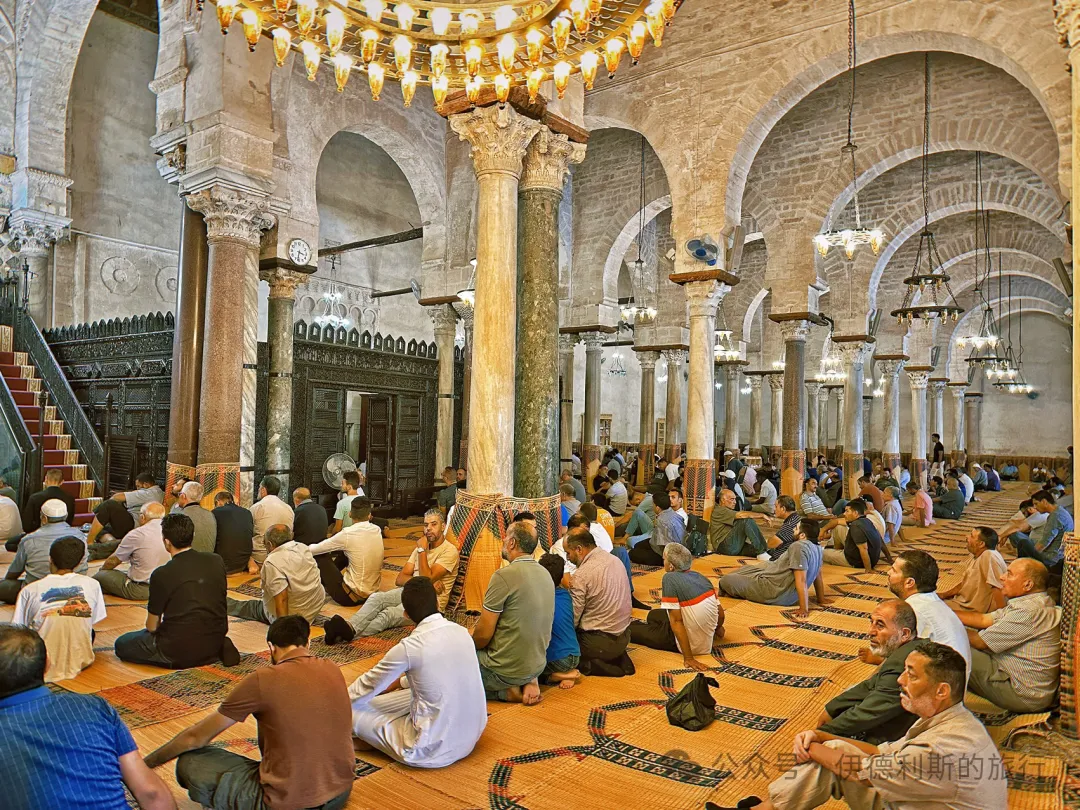
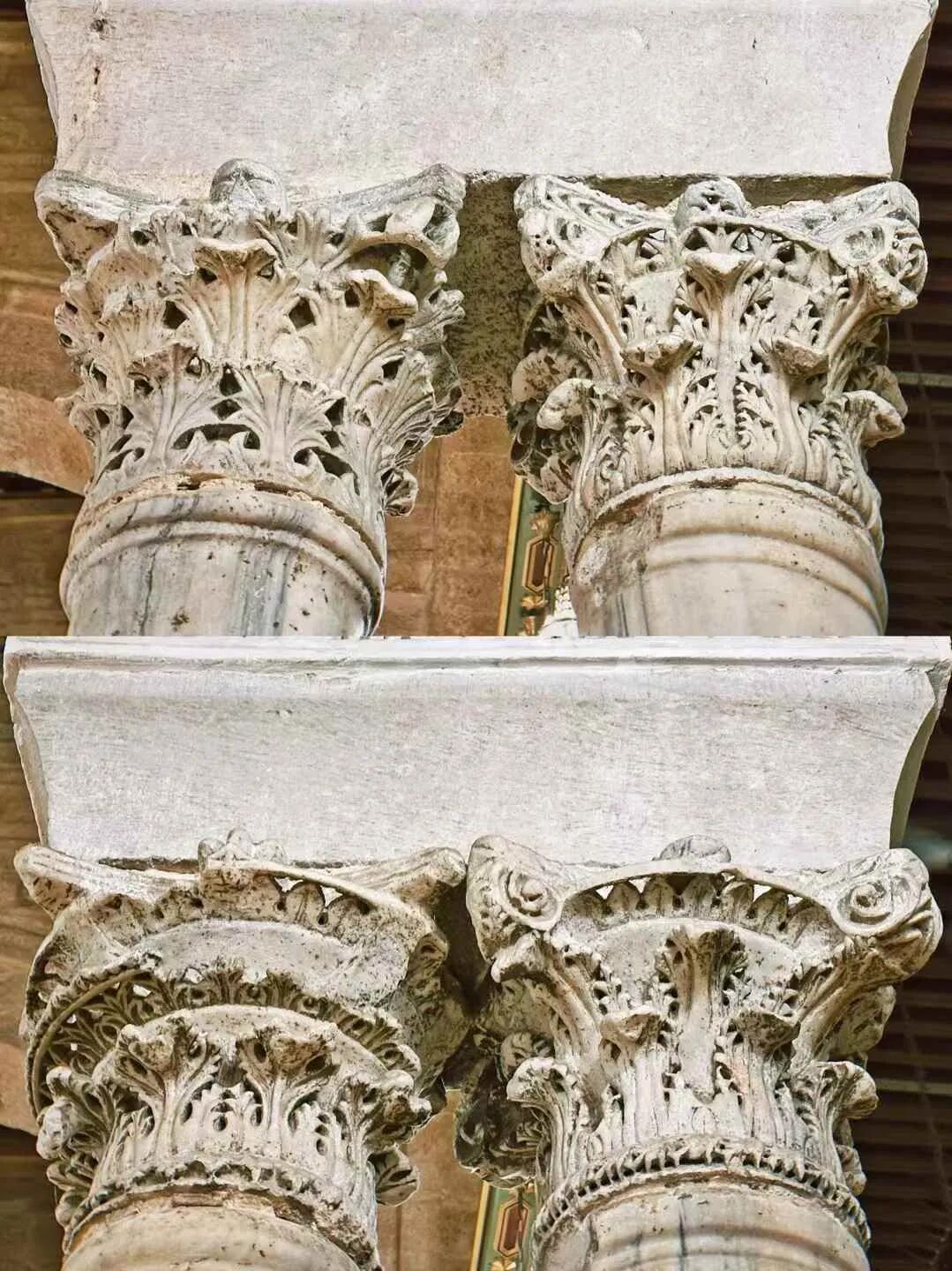
The main hall contains 414 stone columns made of marble, granite, and porphyry. The column capitals feature Corinthian, Ionic, and composite styles. Some capitals were carved specifically for the main hall, while many others came from ancient Roman, Phoenician, and Byzantine sites in Tunisia, including the famous ancient city of Carthage.
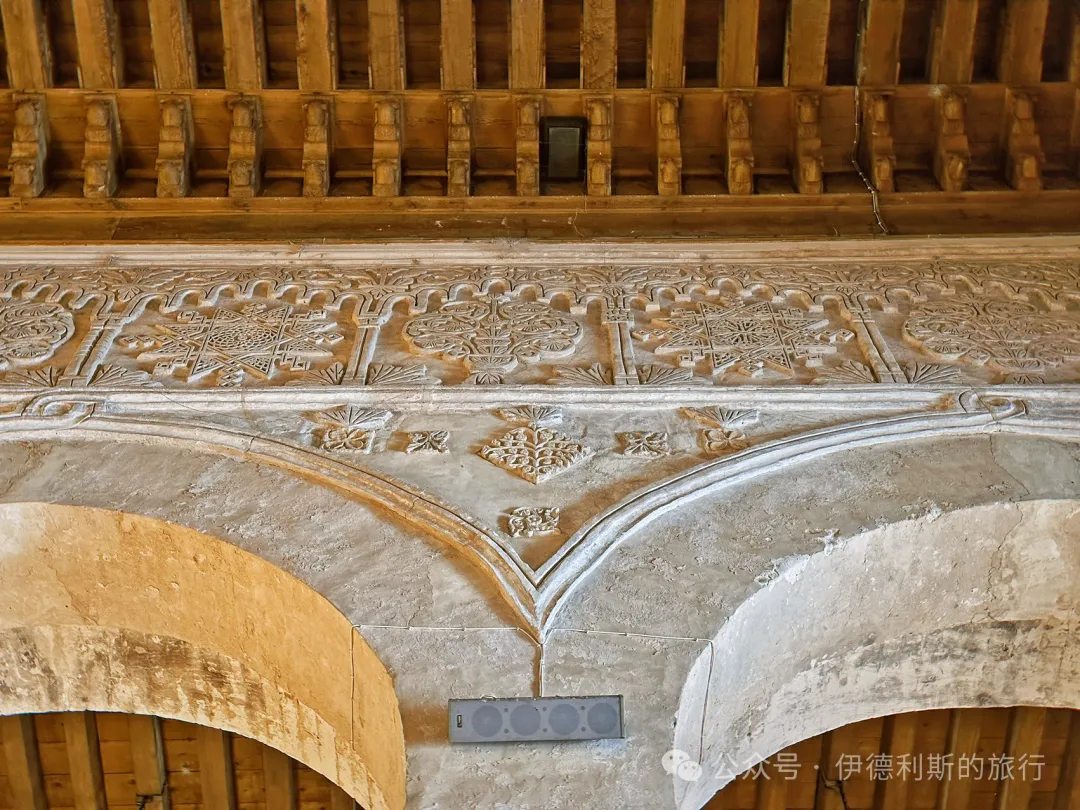
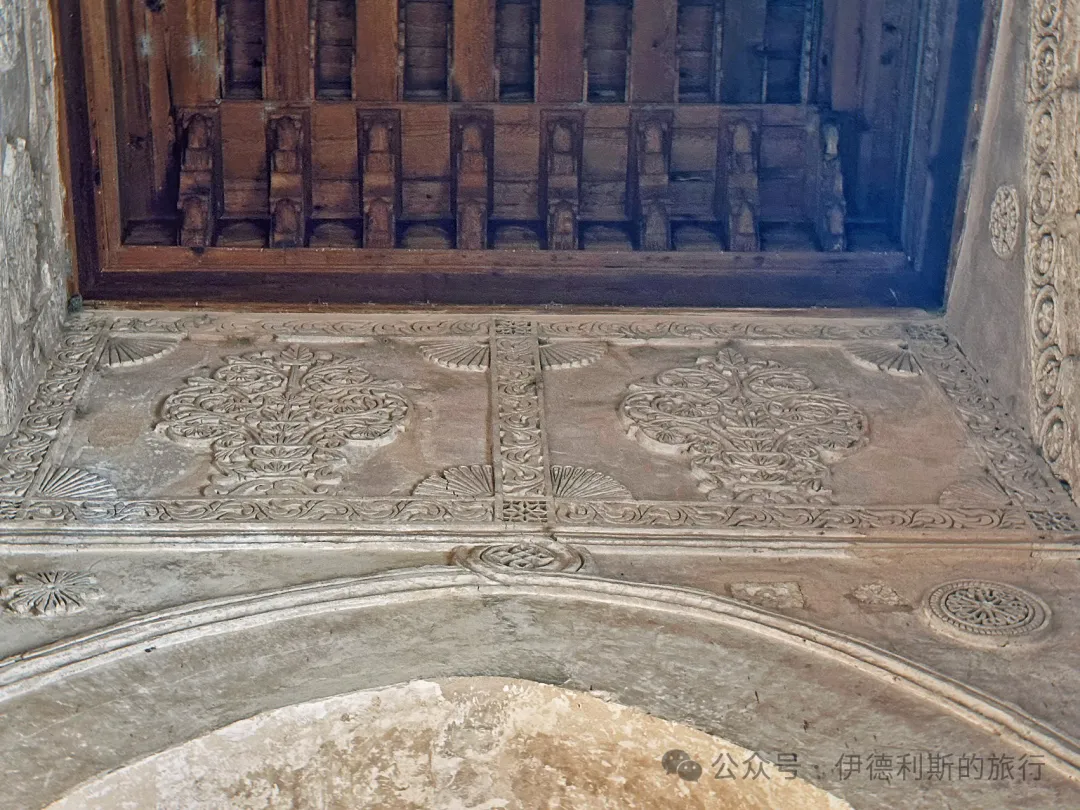
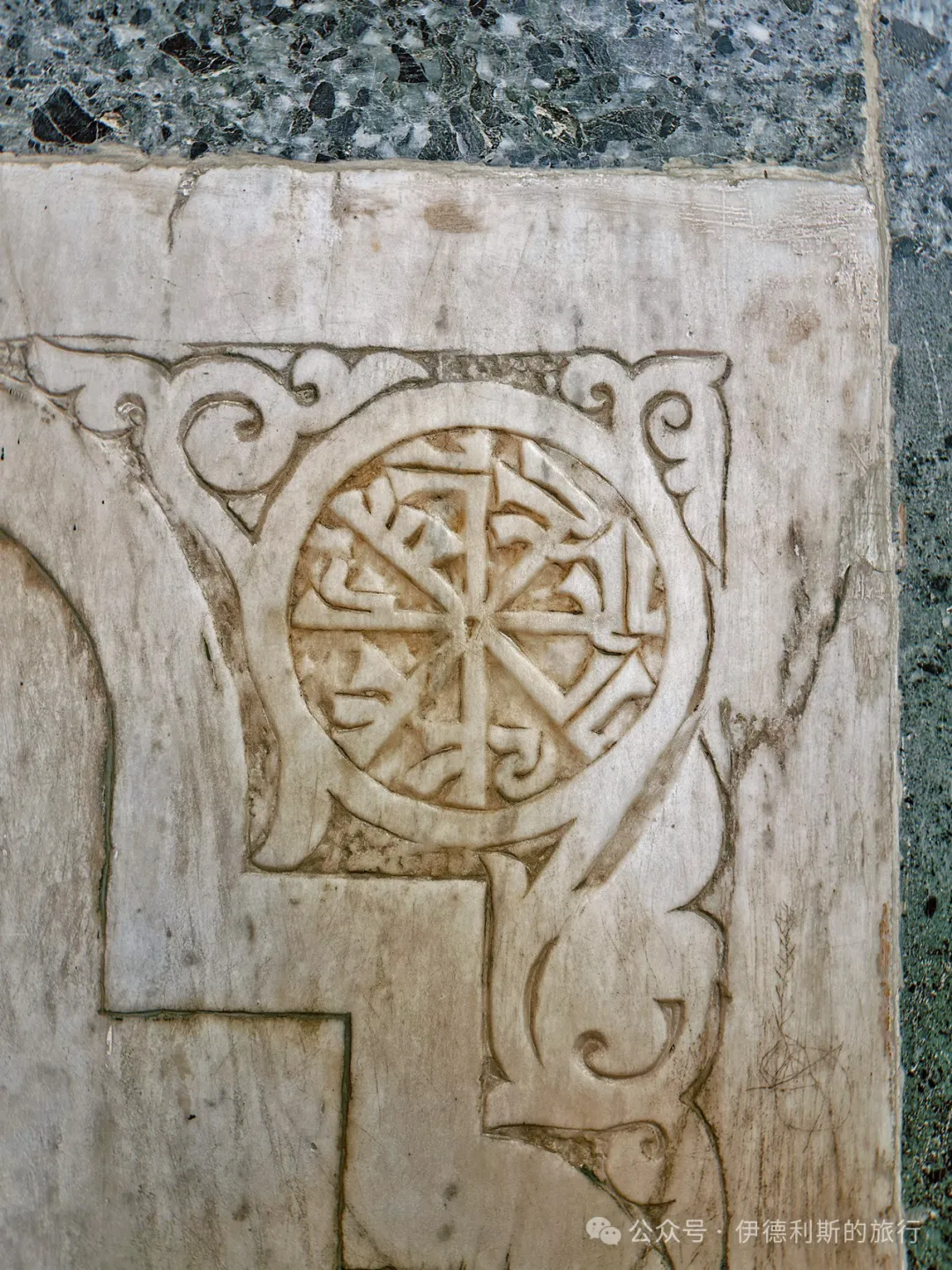
The gate inside the main hall's maqsura is decorated with marble floral carvings. This gate leads to the library behind the qibla wall, which is also where the imam usually stays. The imam only comes out from here to lead the prayer and deliver the khutbah.
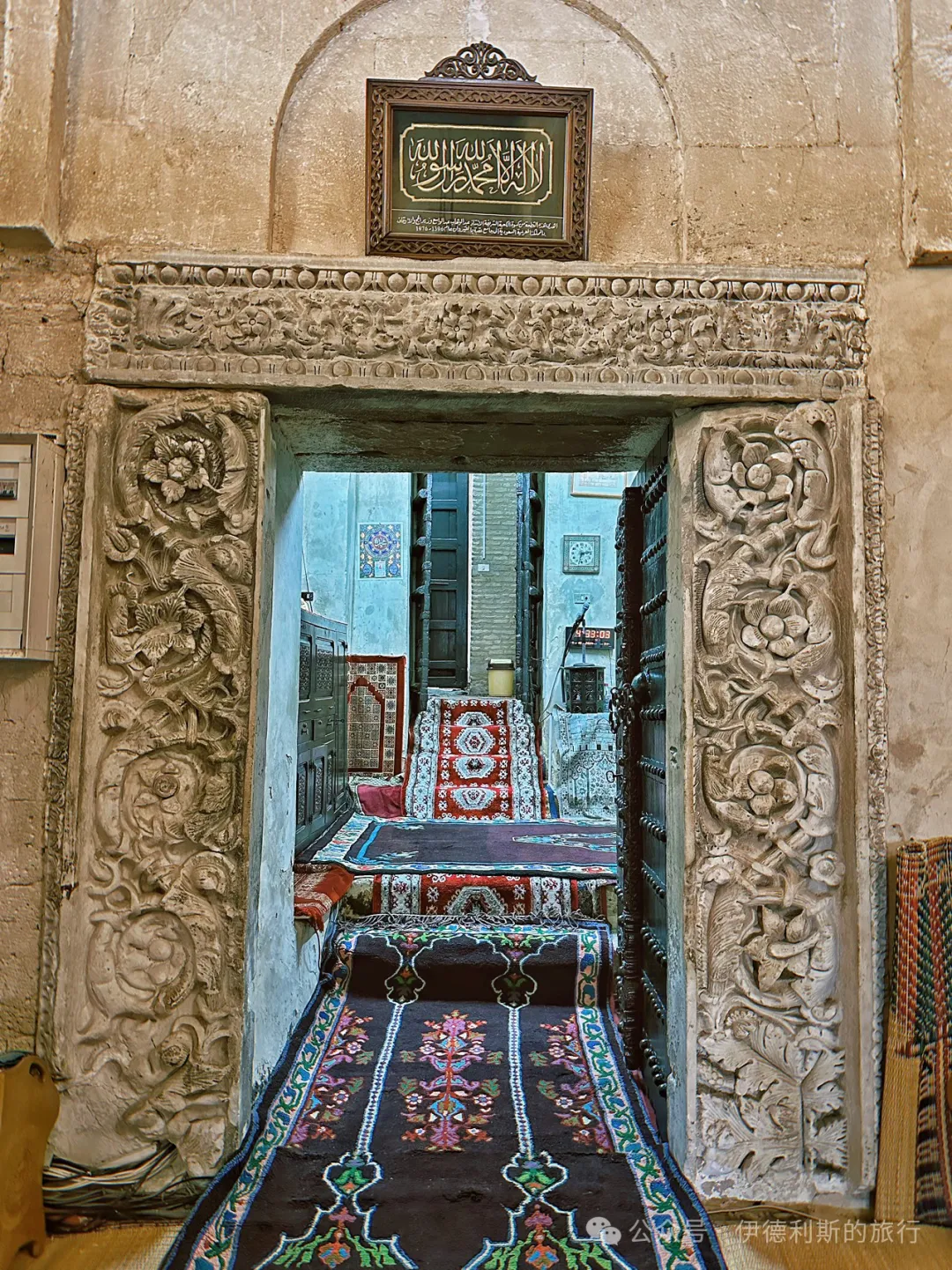
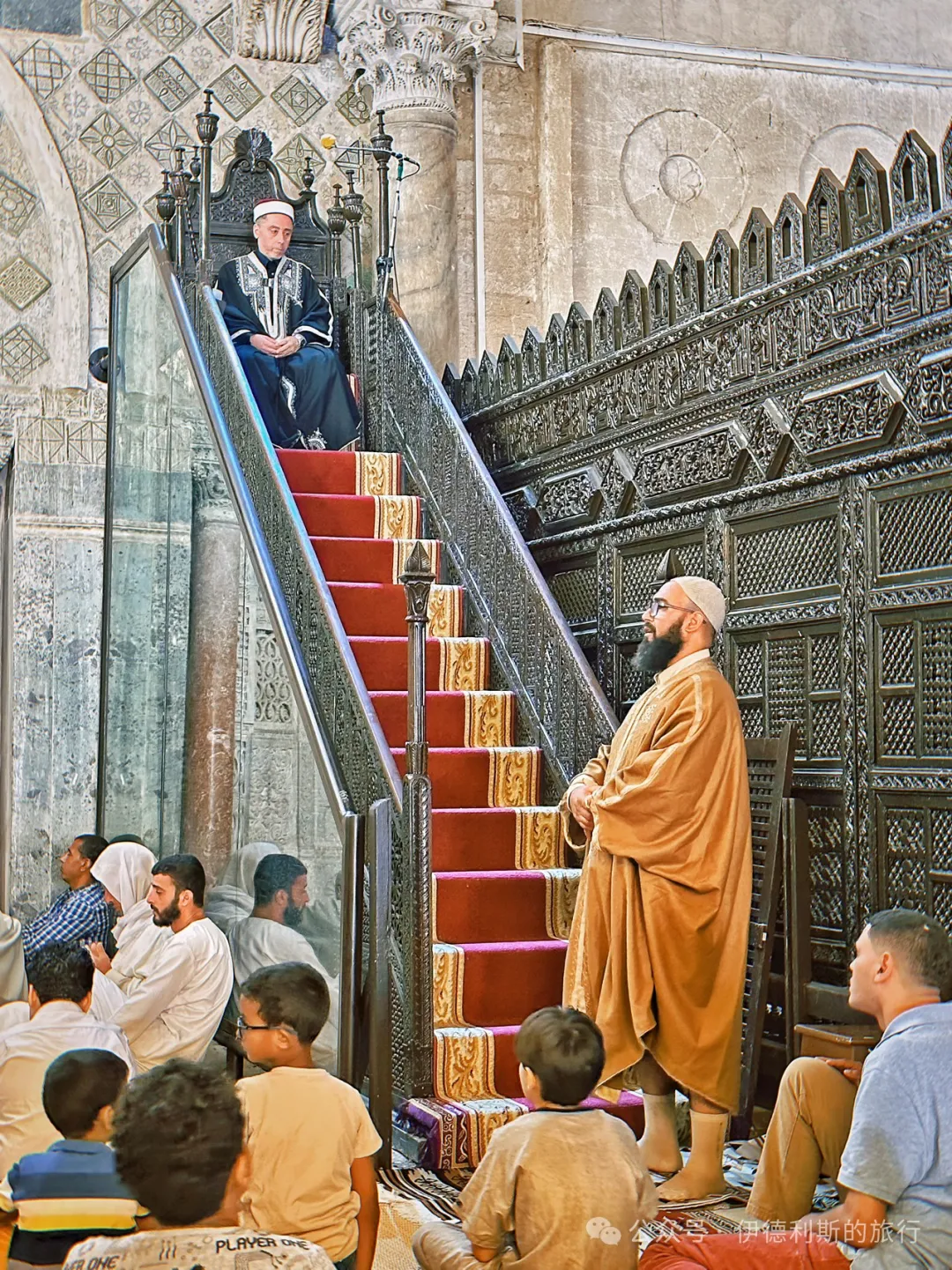
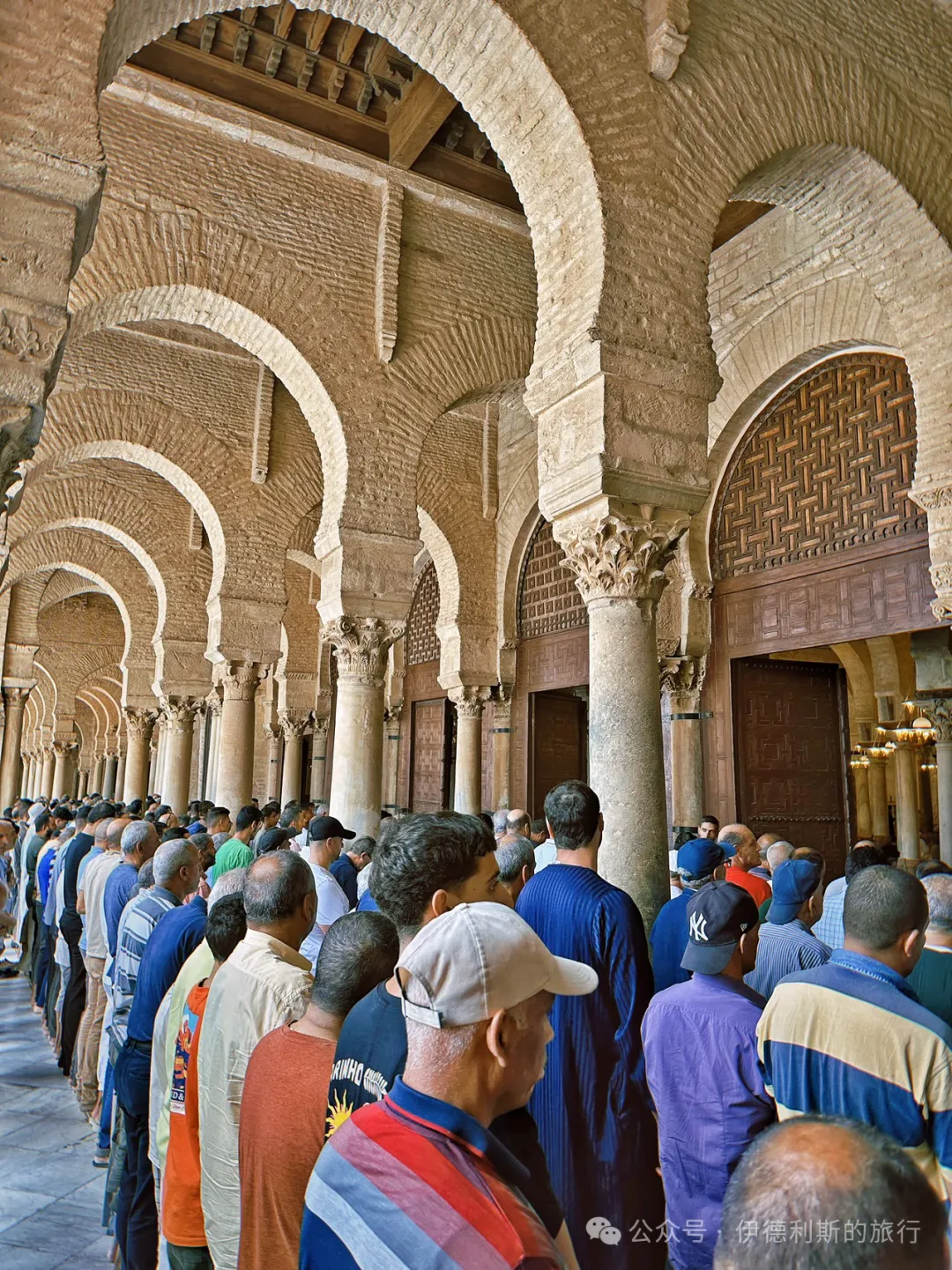
The grand scene of Jumu'ah at the Great Mosque of Kairouan. After the adhan is called, the imam slowly walks up the minbar to begin the khutbah. In Arabic-speaking regions, everyone understands the khutbah, so there is no need for a prior sermon (wa'z).
Tunisia follows the Maliki school of thought. The namaz movements are quite similar to our Hanafi school, including the initial raising of the hands, but the main difference is that they also fold their arms when making the intention.
After the prayer, we stood outside the main hall for the funeral prayer (janazah). Because Jumu'ah was at three o'clock, we immediately returned to the main hall to pray the Asr prayer (dhuhr/asr context) after finishing.
From the 9th to the 11th century, the Great Mosque of Kairouan was the academic center for the entire Maghreb region and the Maliki school. to religious courses, it offered subjects like mathematics, astronomy, medicine, and botany. In 1045, the Zirid dynasty court in Kairouan announced its adherence to the Sunni faith. Upon hearing this, the Shi'a Fatimid dynasty in Egypt sent a group of Arab tribes to invade Kairouan. In 1057, these Arab tribes occupied and destroyed Kairouan. The Great Mosque of Kairouan declined from then on and did not slowly recover until after the 13th century.
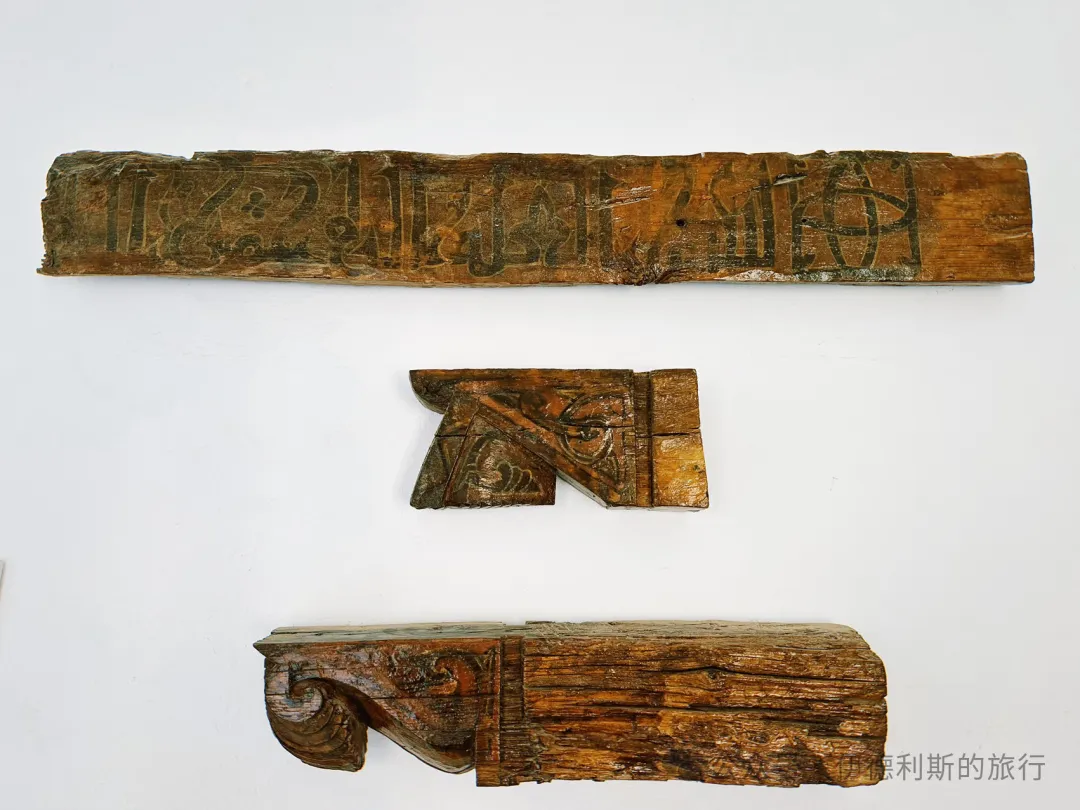
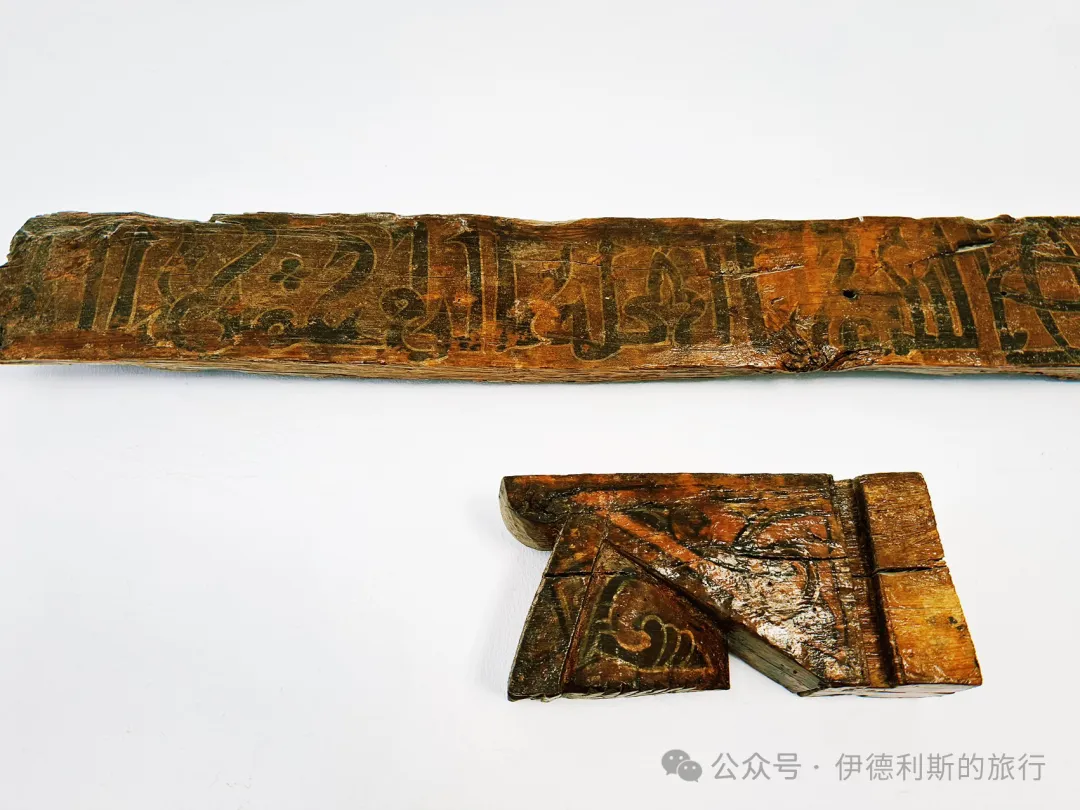
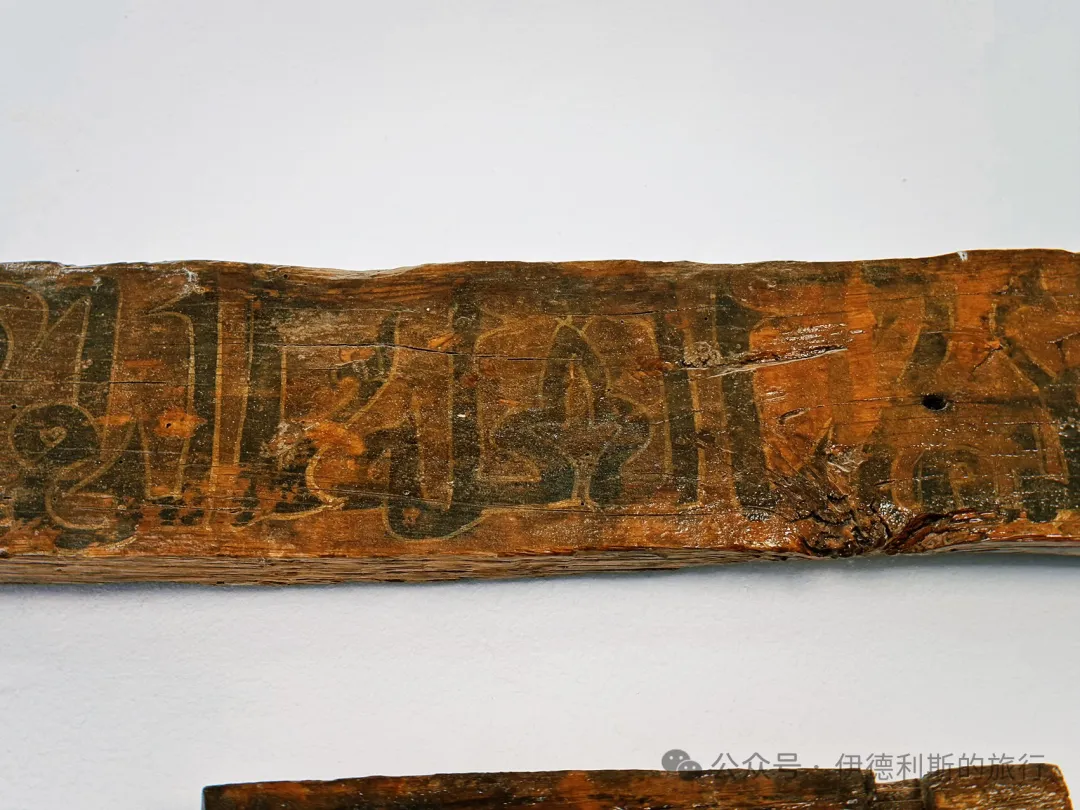
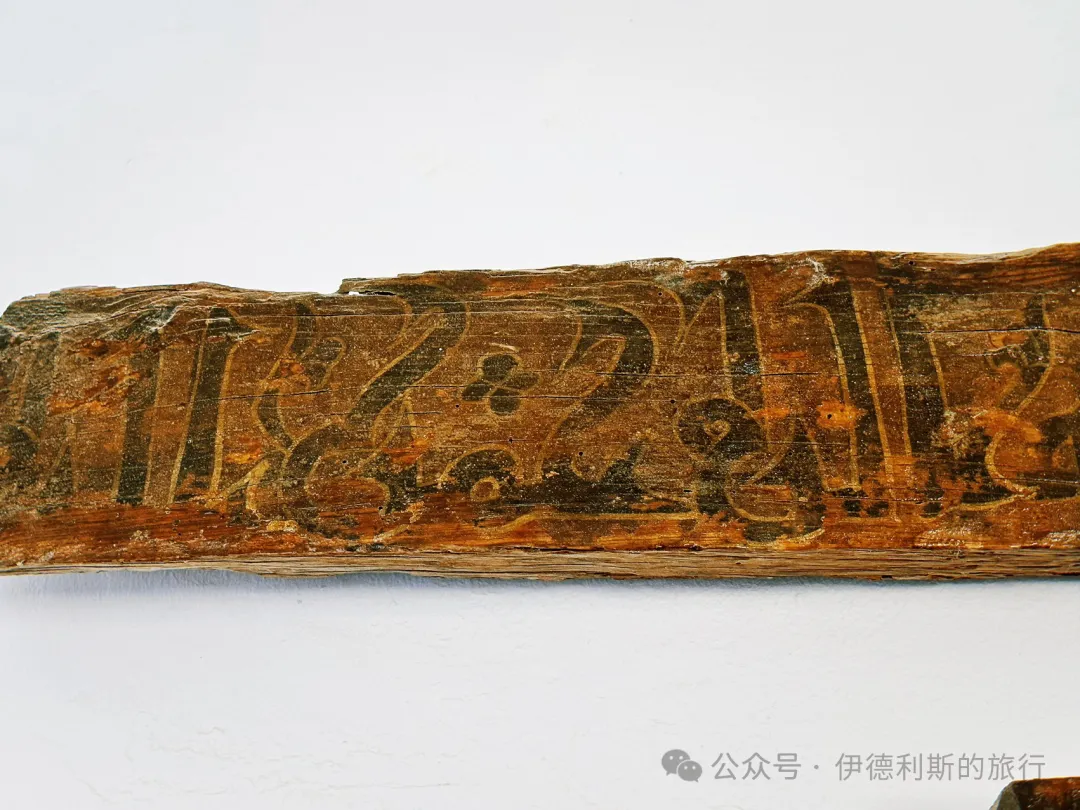
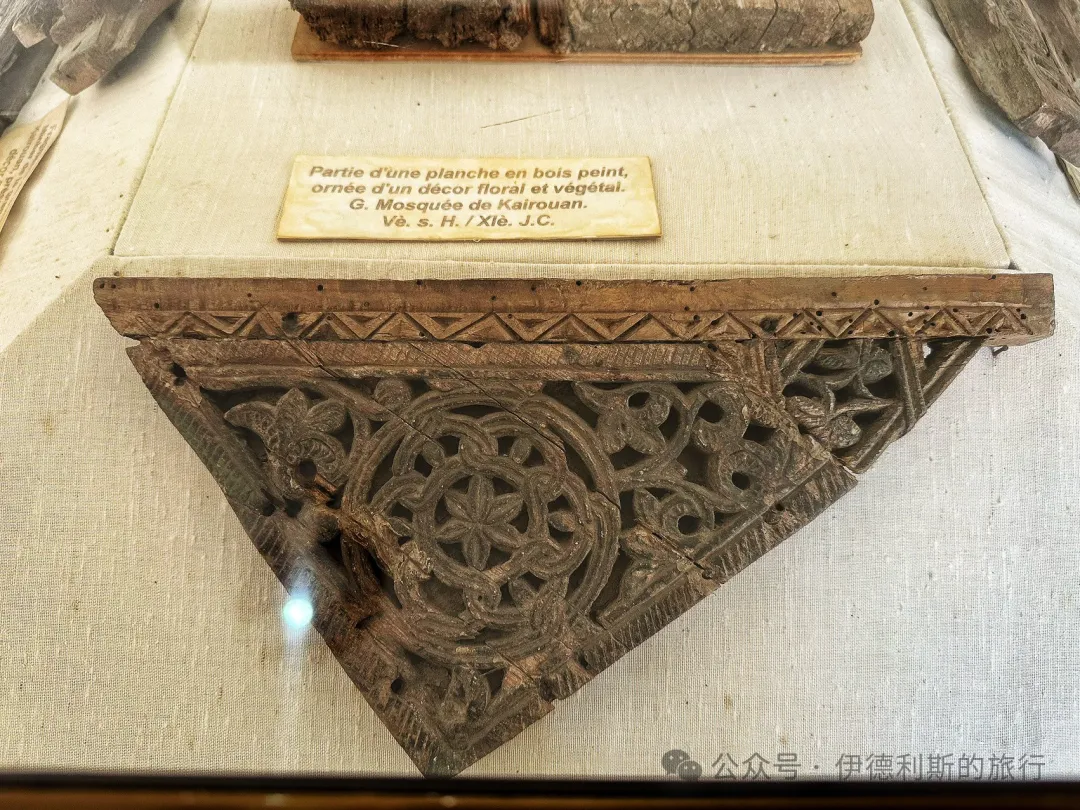
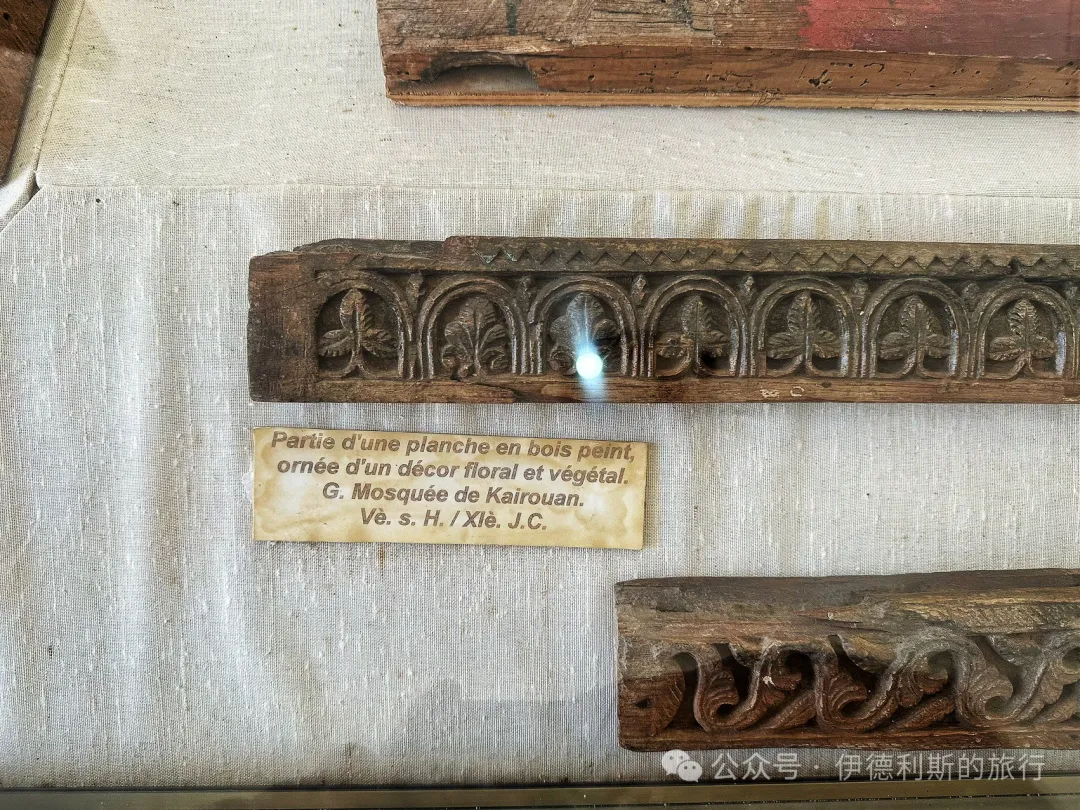
The Museum of the Ribat of Monastir in Tunisia houses wooden components from the 9th to 11th centuries from the main hall of the Great Mosque of Kairouan. Seeing these thousand-year-old North African wooden structures is truly stunning.
Mosque of the Three Doors (Jami al-Thalathat Abwab) in Kairouan: 866.
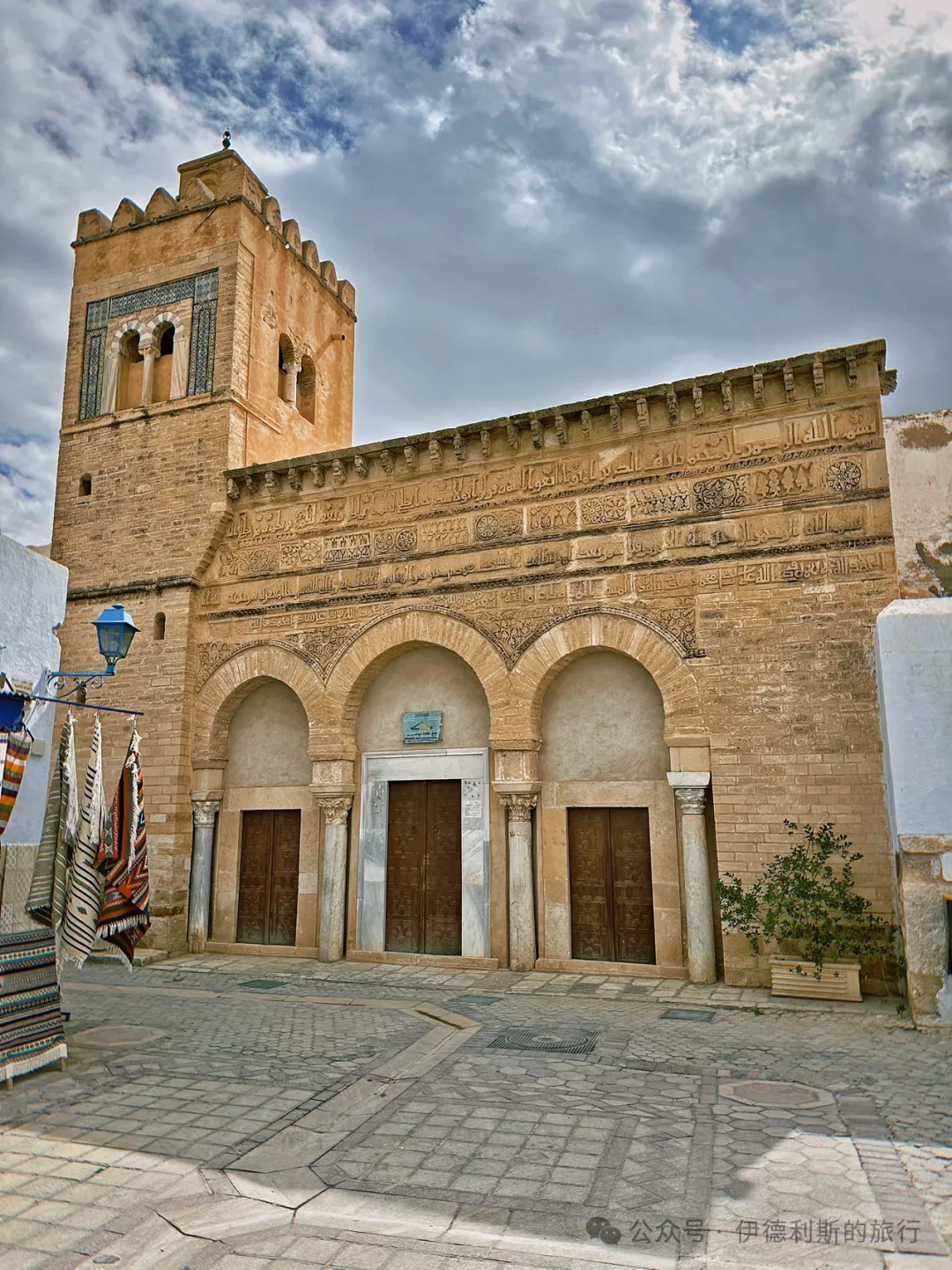
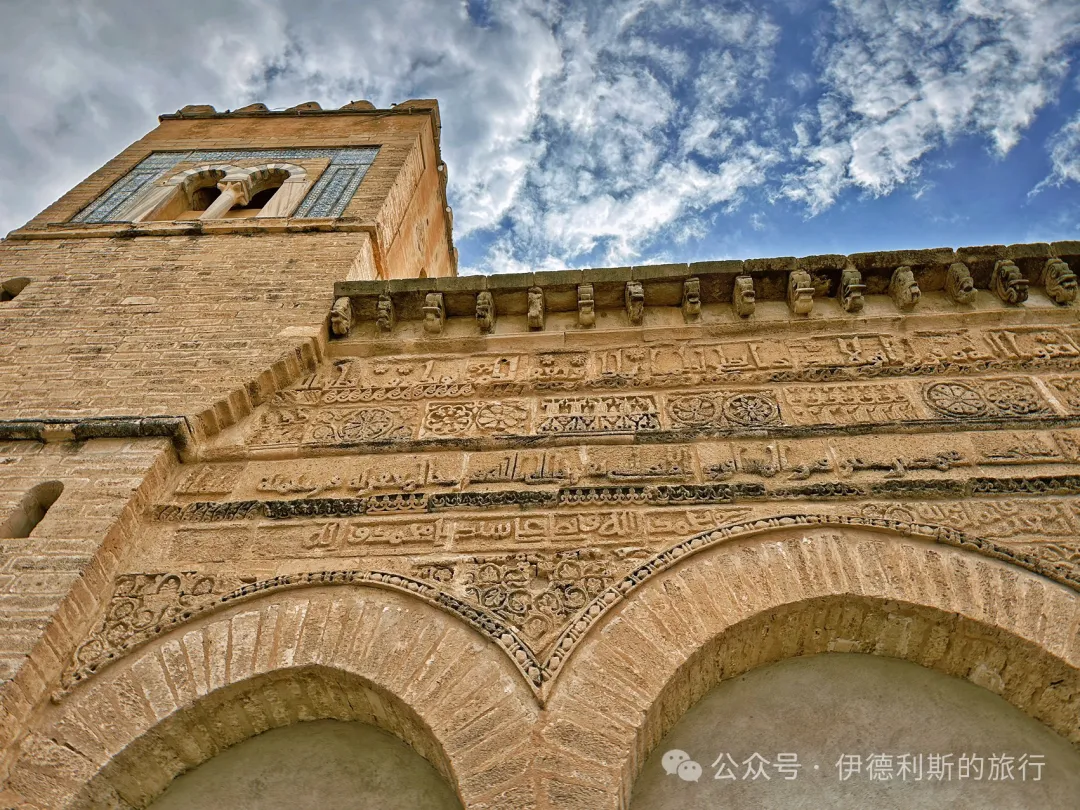
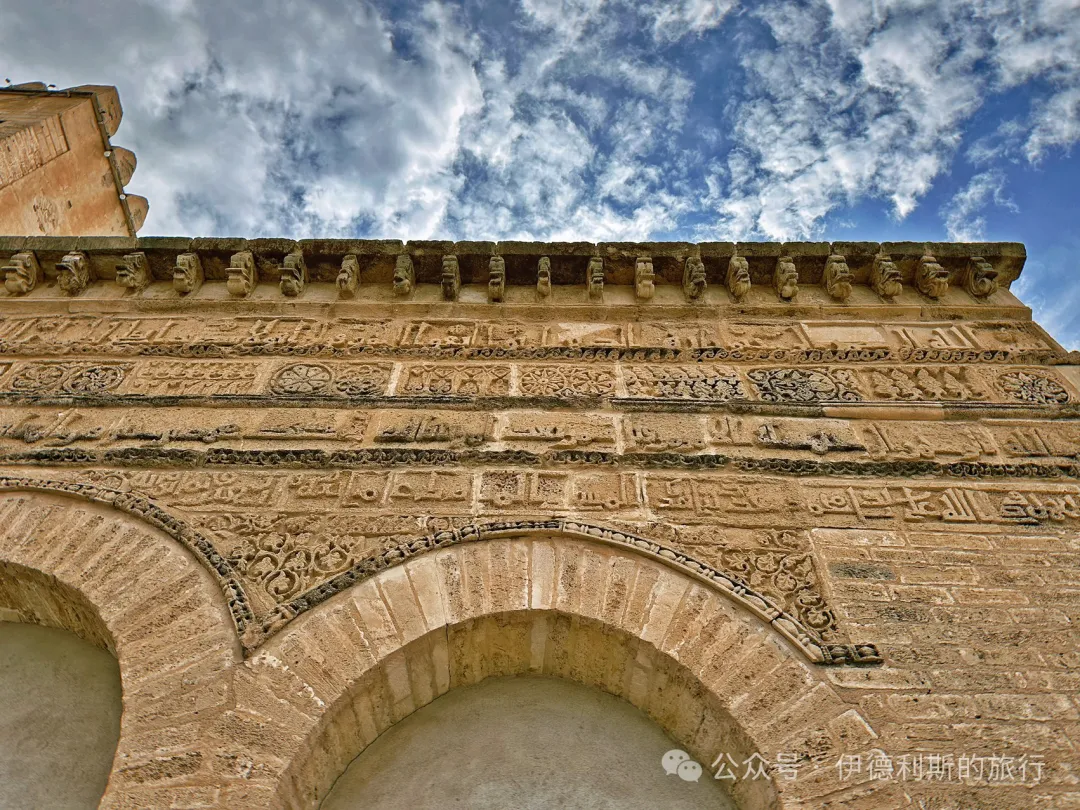
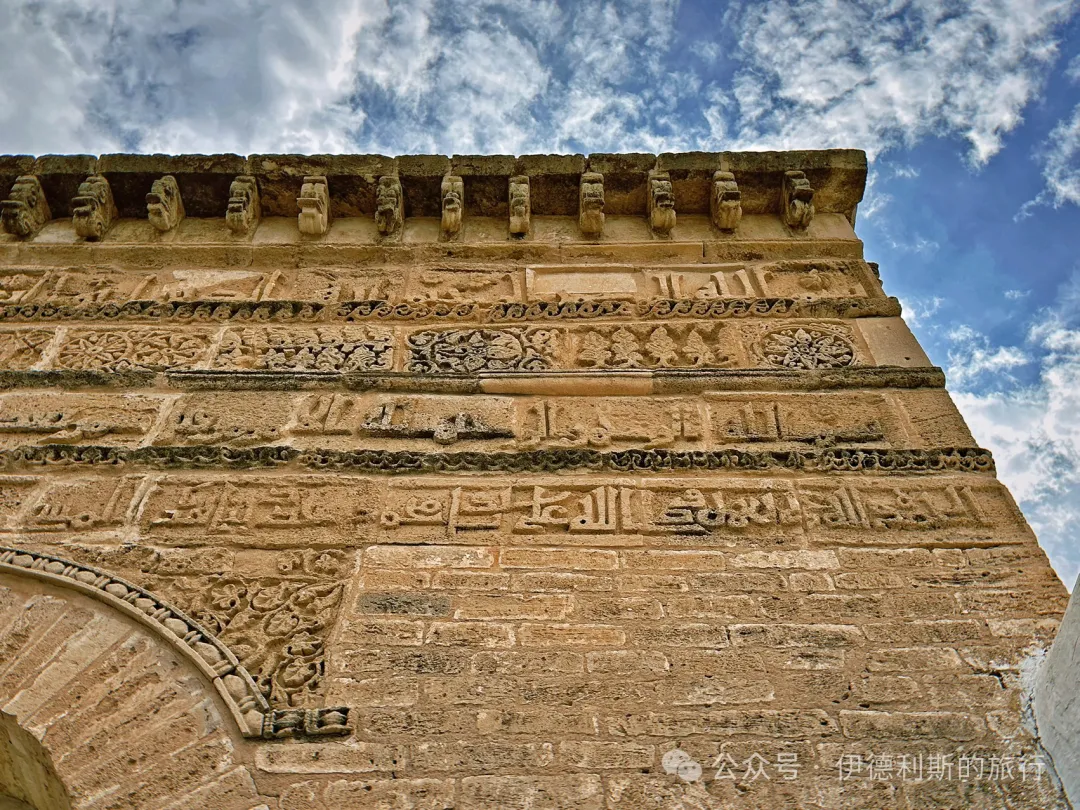
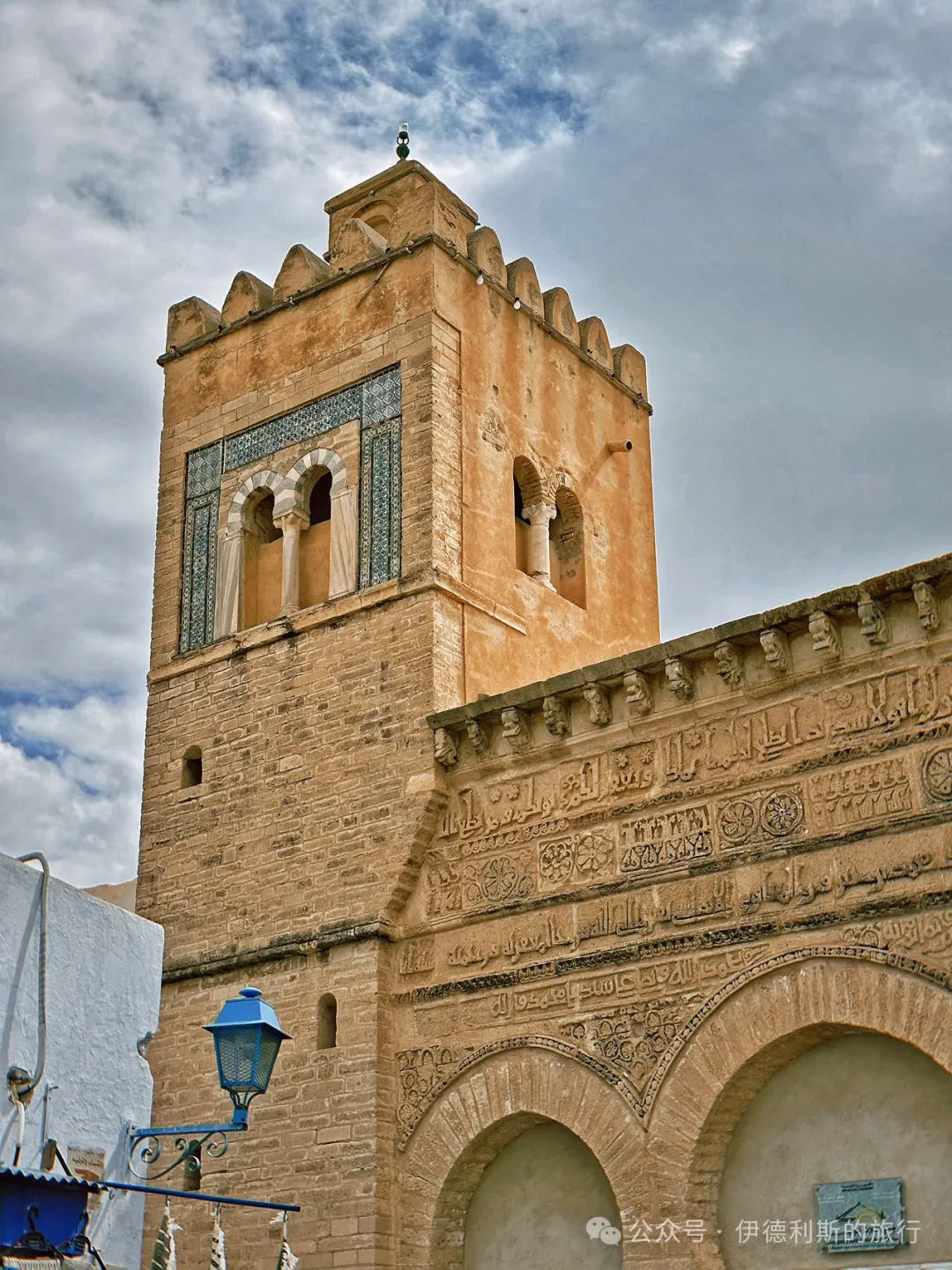
Besides the Great Mosque, another ancient mosque existing in Kairouan is the Mosque of the Three Doors (Jami' al-Thalathat Abwab), built in 866. This mosque has the oldest decorated facade of any religious building in the world.
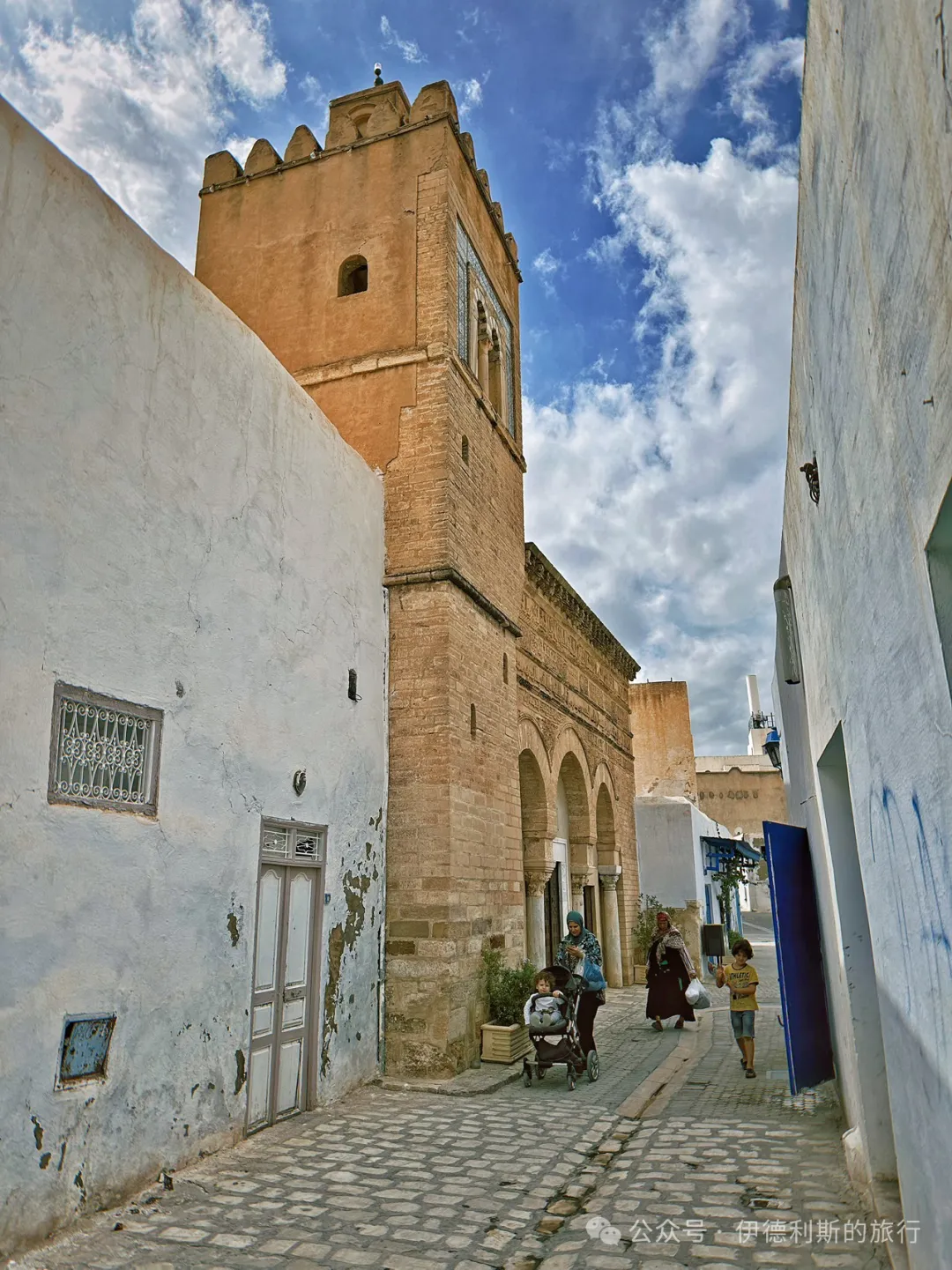
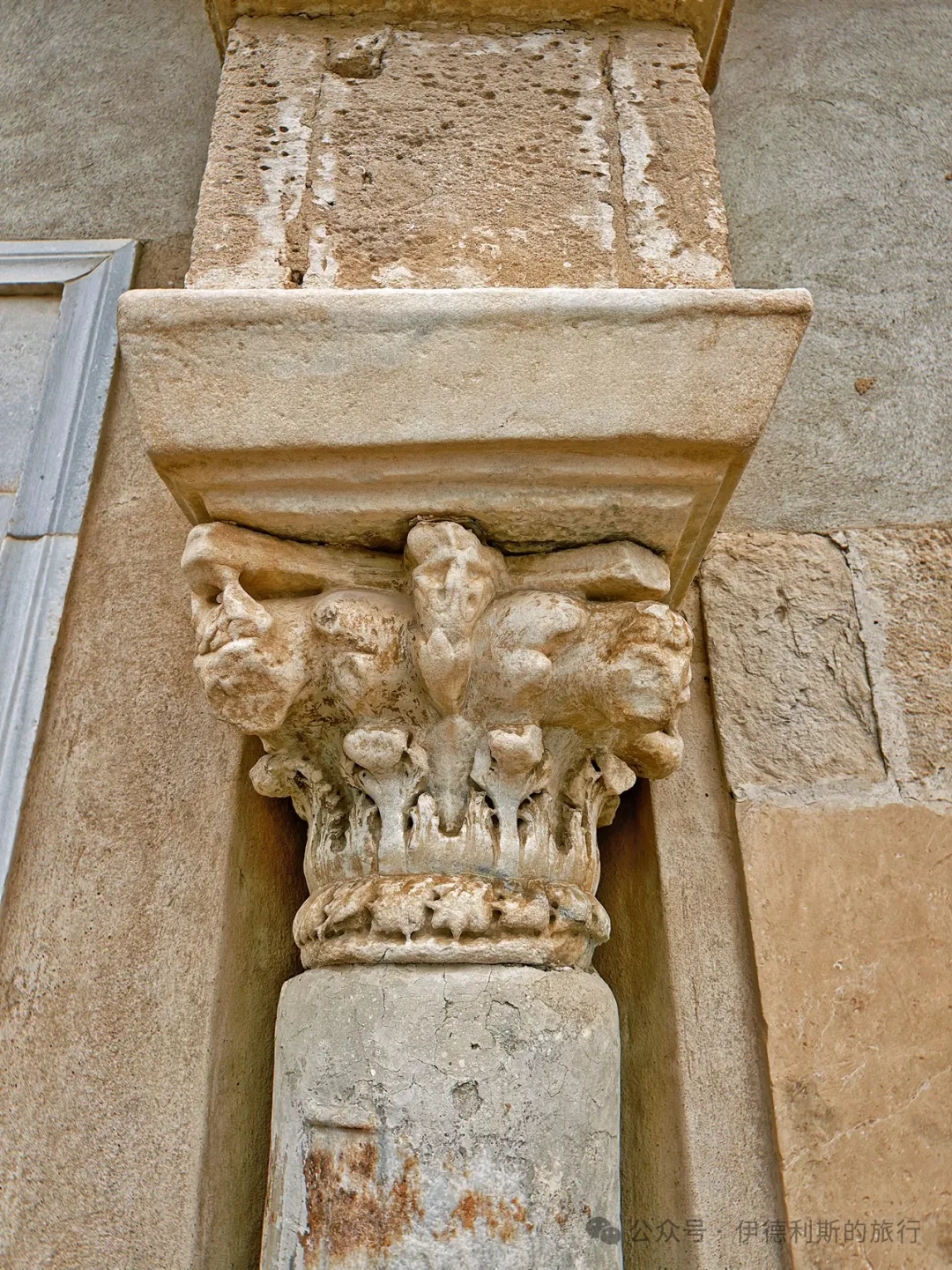
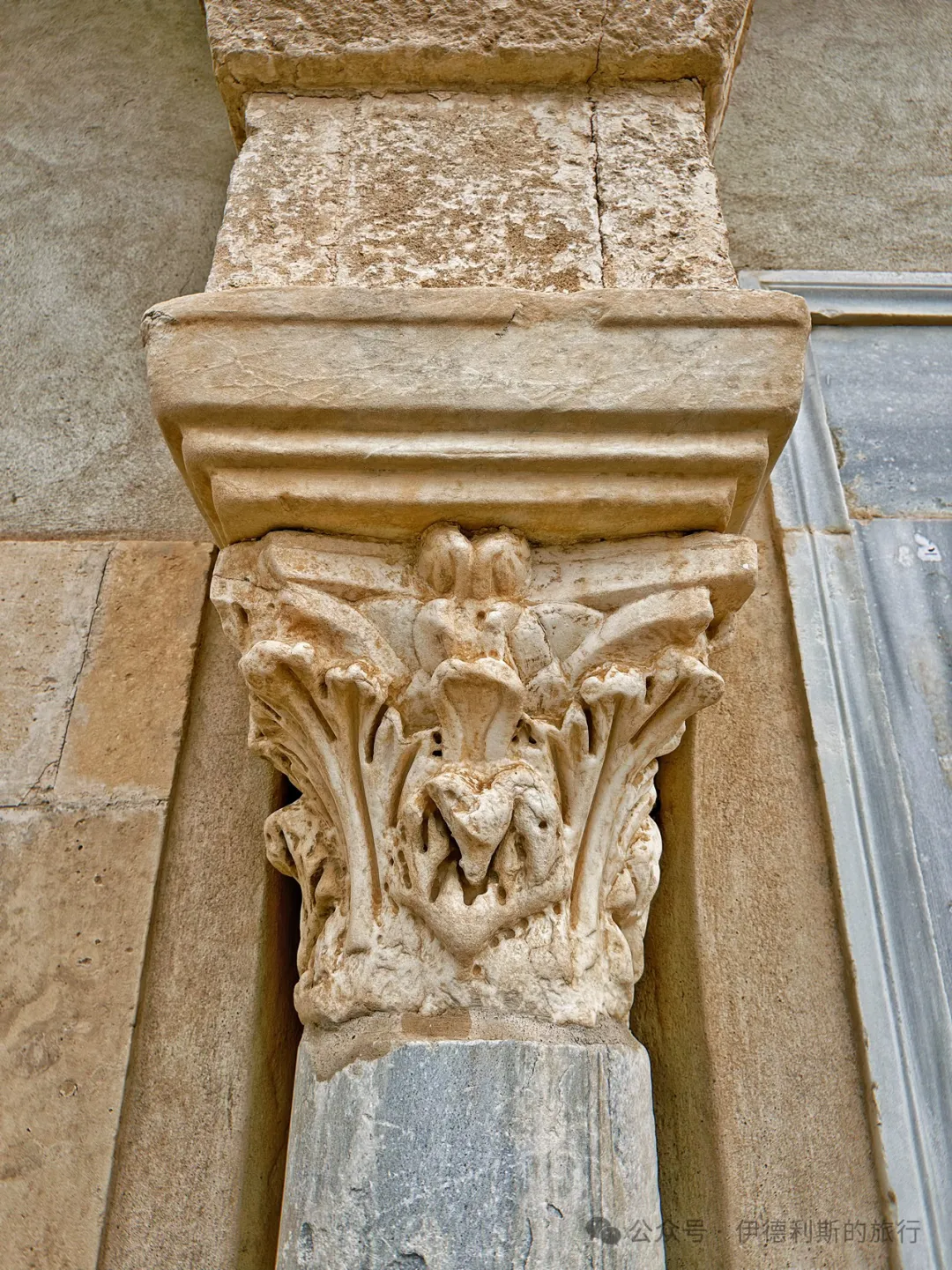
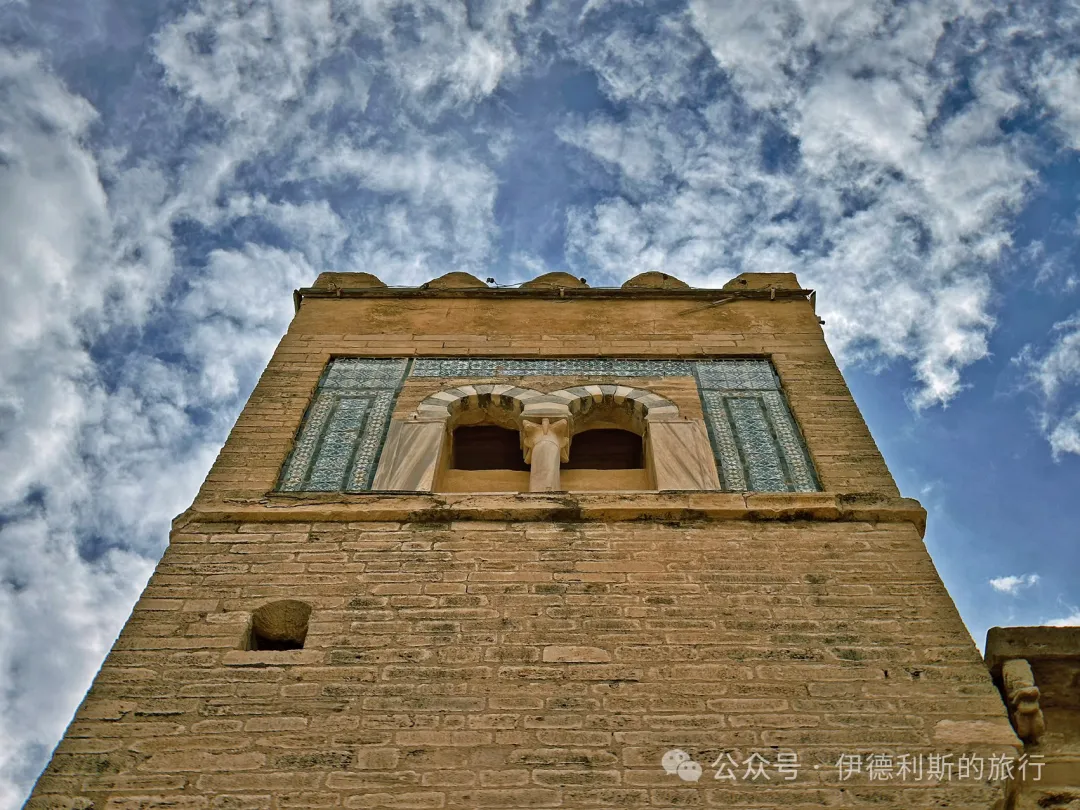
Today, only the facade of the Mosque of the Three Doors retains its 9th-century appearance, while the adjacent minaret was added in 1440. The gate of the Mosque of the Three Doors consists of three horseshoe arches and features four ancient stone columns. Above the arch are carved floral patterns and Kufic calligraphy, which include verses and the name of the builder, Muhammad ibn Khairun. Muhammad ibn Khairun was a scholar and merchant from Andalusia who traveled through Iraq and Egypt to reach Kairouan, Tunisia. When the minaret was added in 1440, the original 9th-century inscriptions were rearranged to make room for new text.
Mosque of the Barber (Zaouia of Sidi Sahab) in Kairouan: 1629.
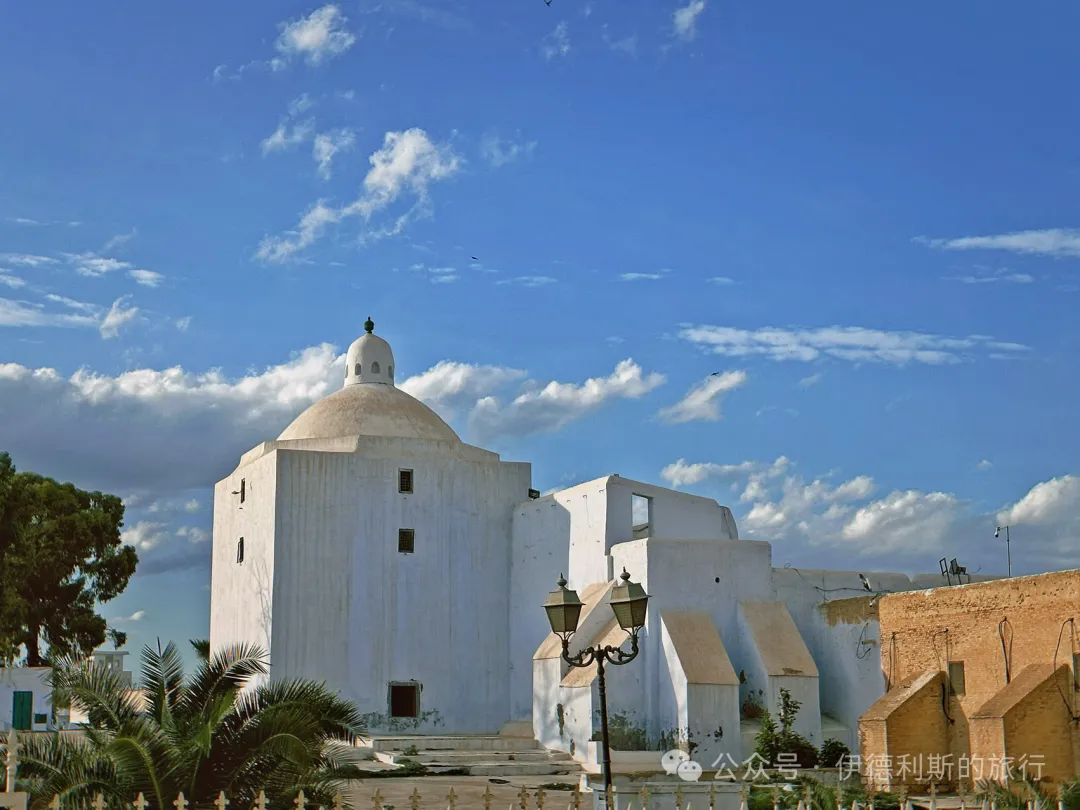
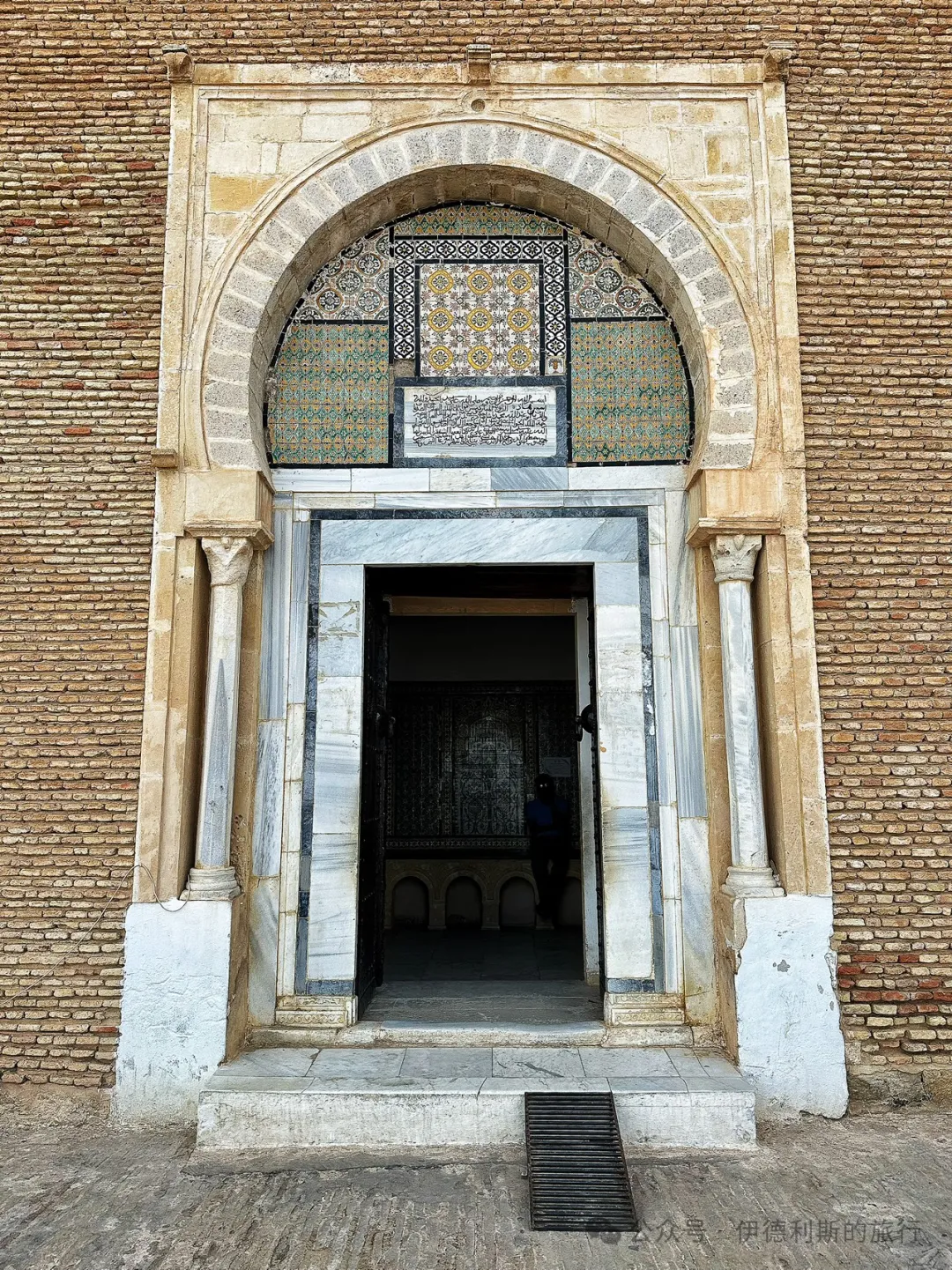
In the northwest of the Kairouan Medina stands an important tomb for Sidi Sahib, a companion and barber to the Prophet, which is why it is also called the Barber Mosque.
Legend says Sidi Sahib died in a battle in 654 and was buried here. By the 11th century, this place had become a famous religious site, and the gongbei (tomb shrine) was built in the 14th century. The Bey of Tunis, Hammuda Pasha (reigned 1631-66), expanded the tomb significantly in 1629 and built a new main hall. Another Bey, Mohamed (reigned 1675-96), built a new minaret and madrasa between 1690 and 1695. After the 19th century, the tomb of Sidi Sahib underwent several renovations, but it kept its 17th-century architectural style.
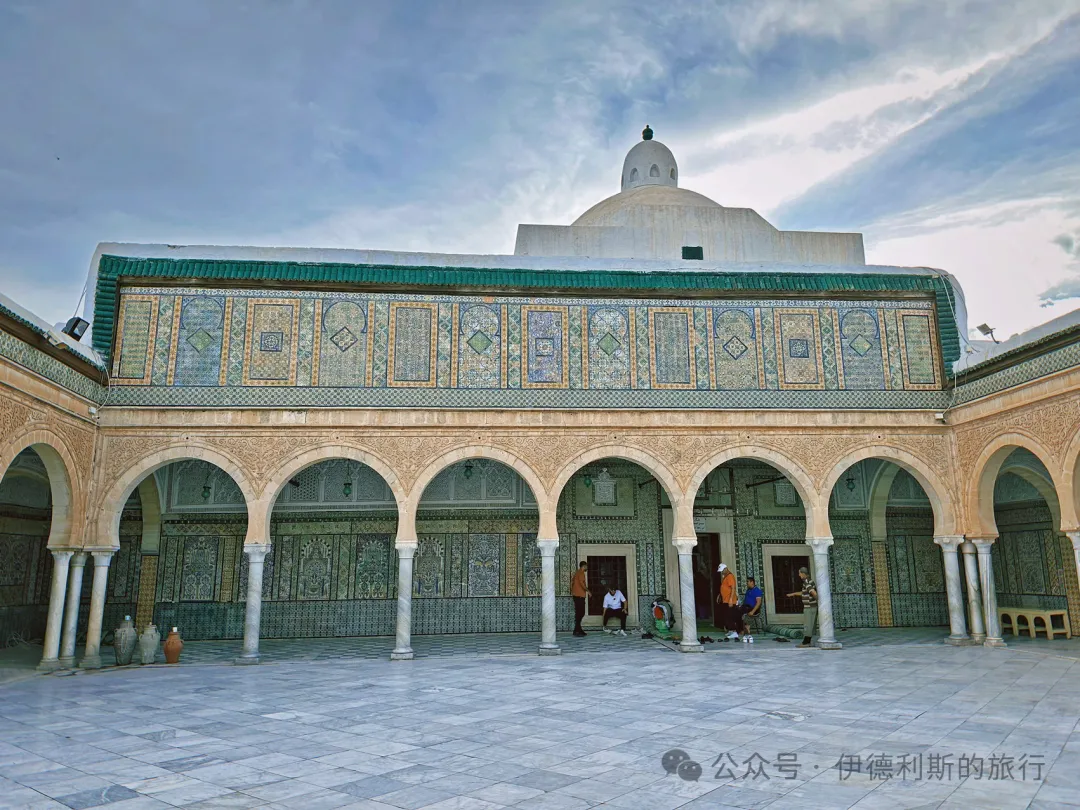
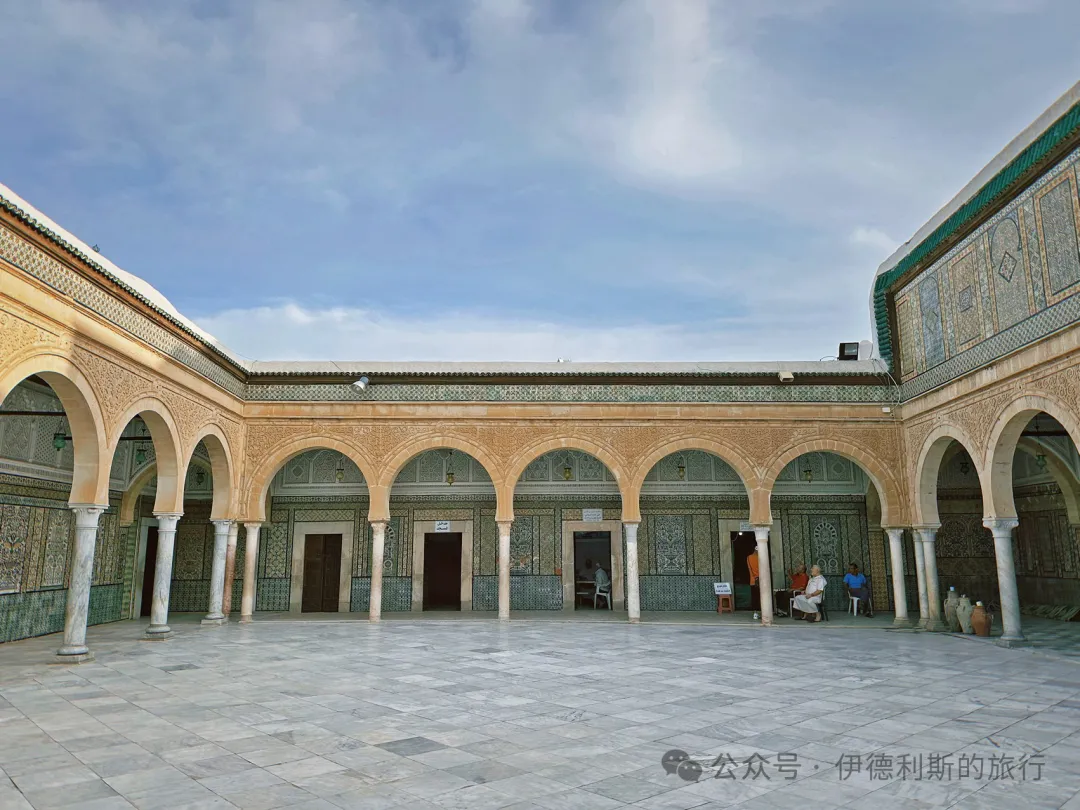
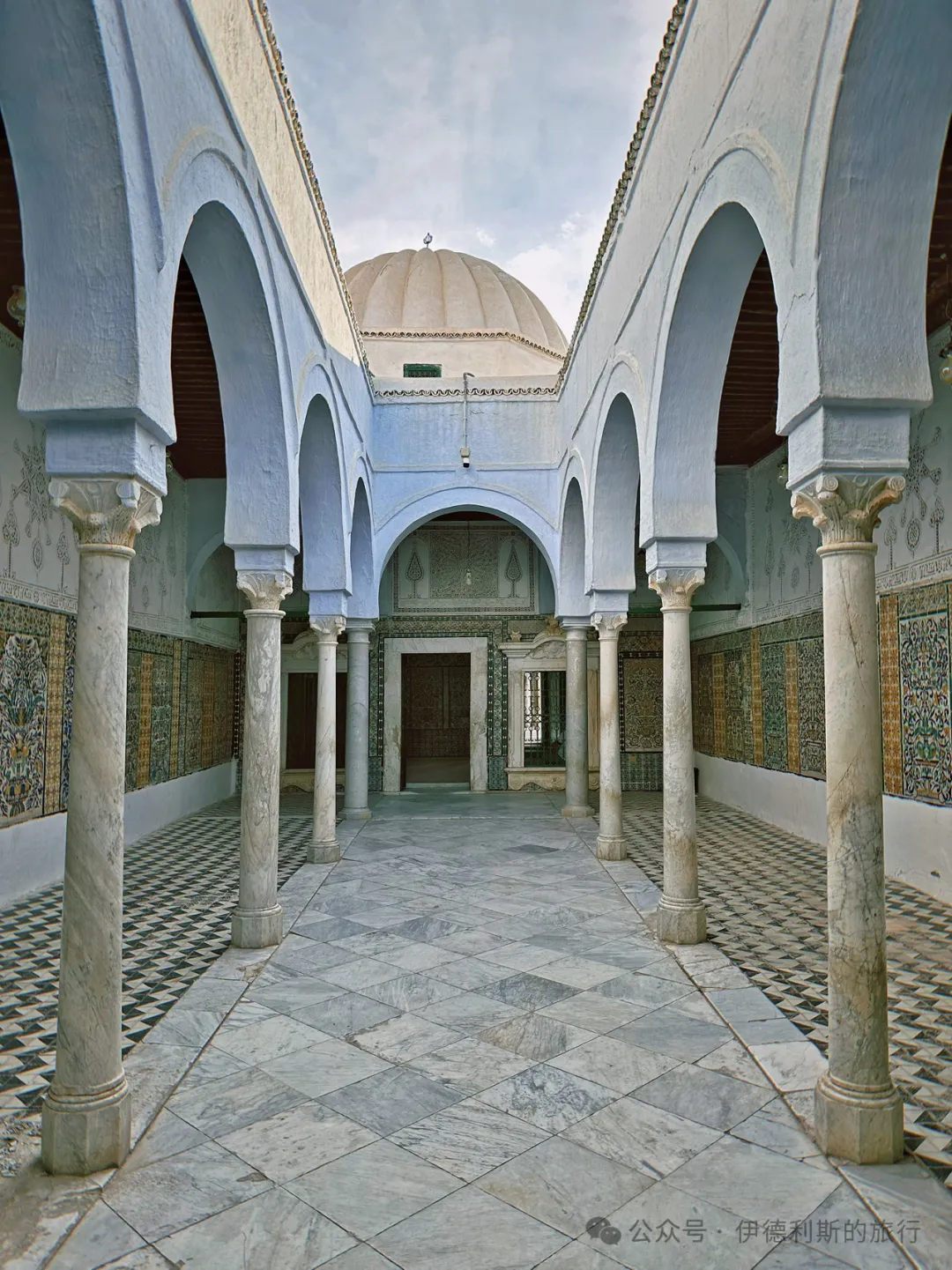
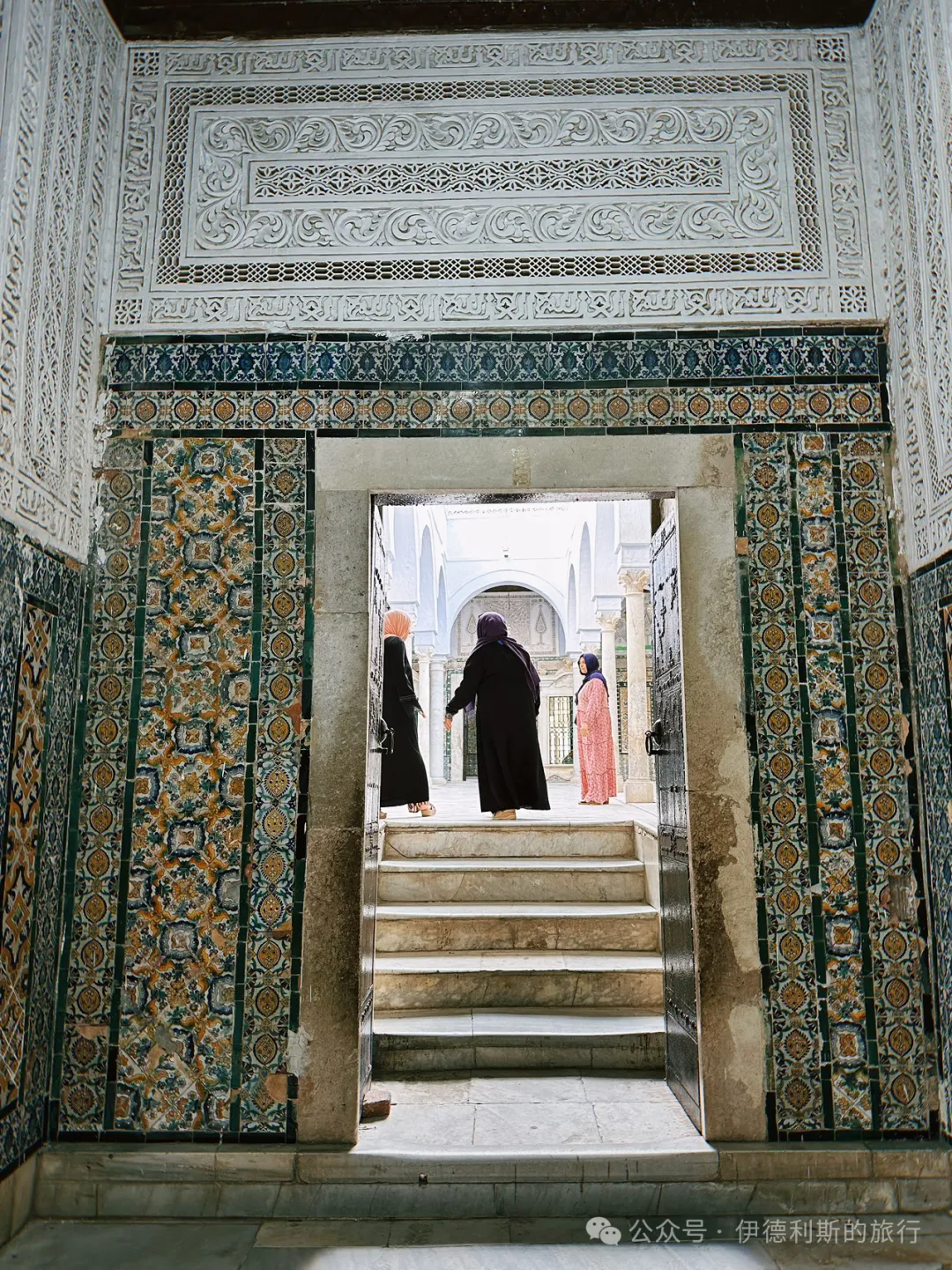
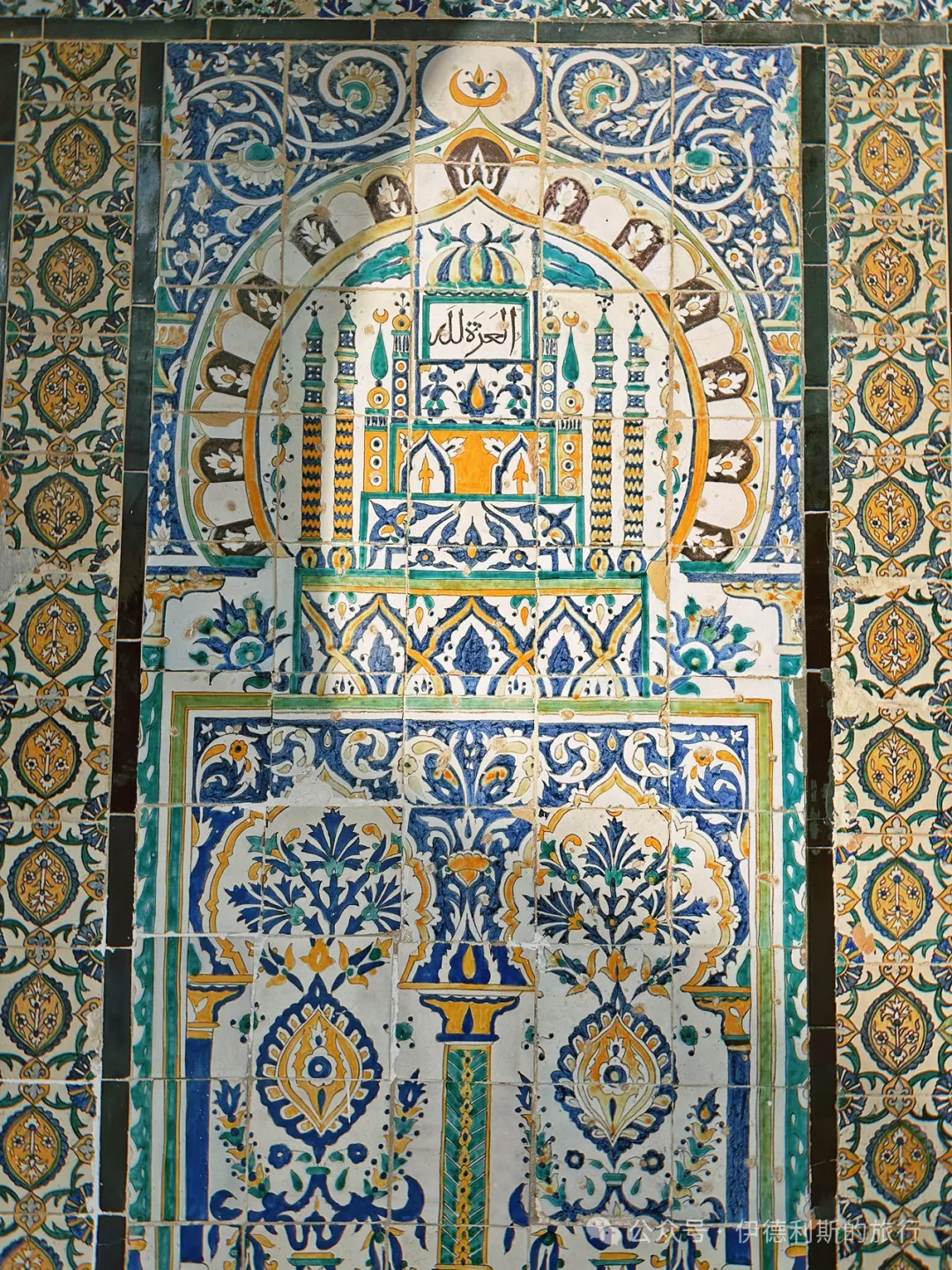
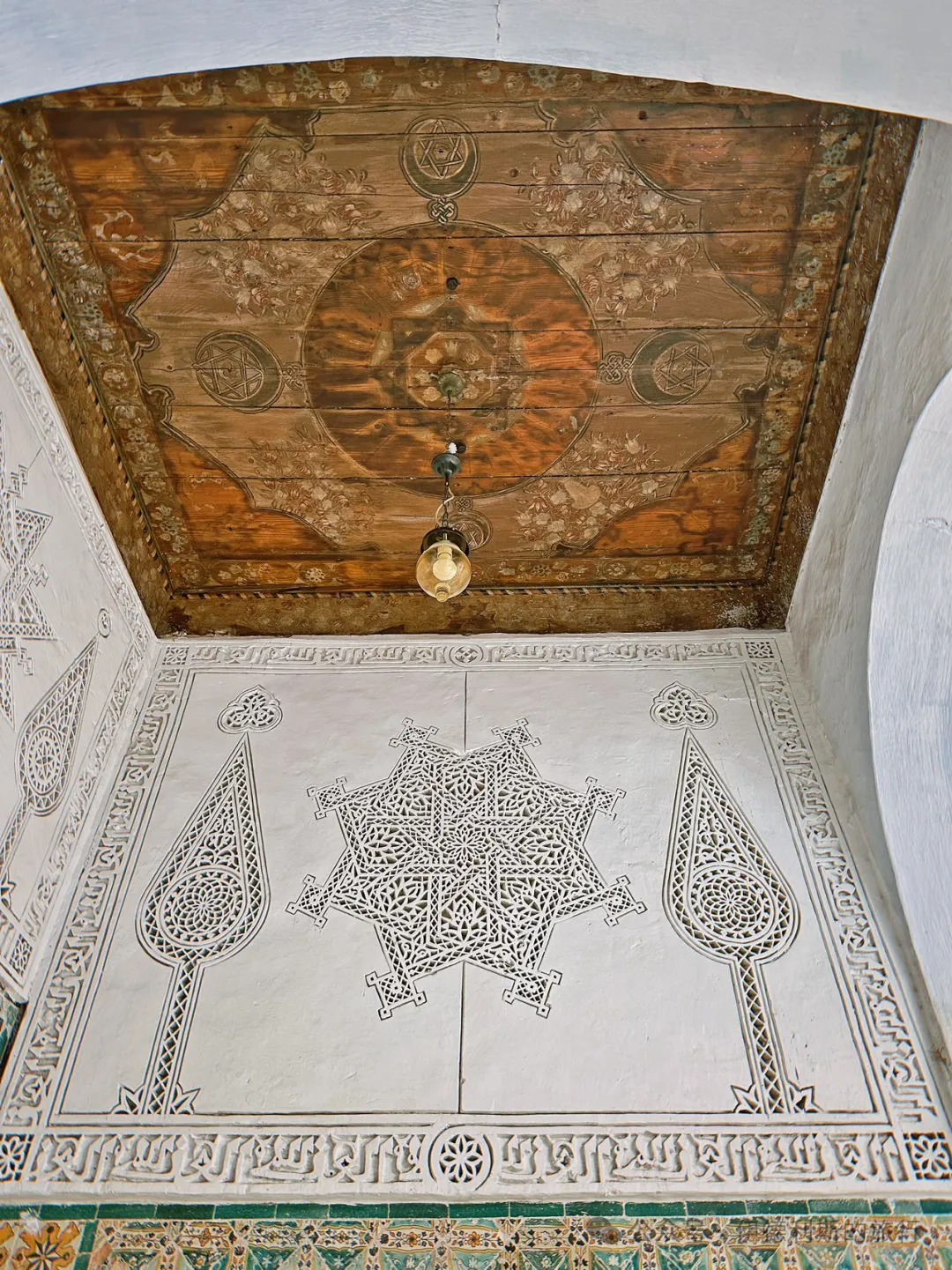
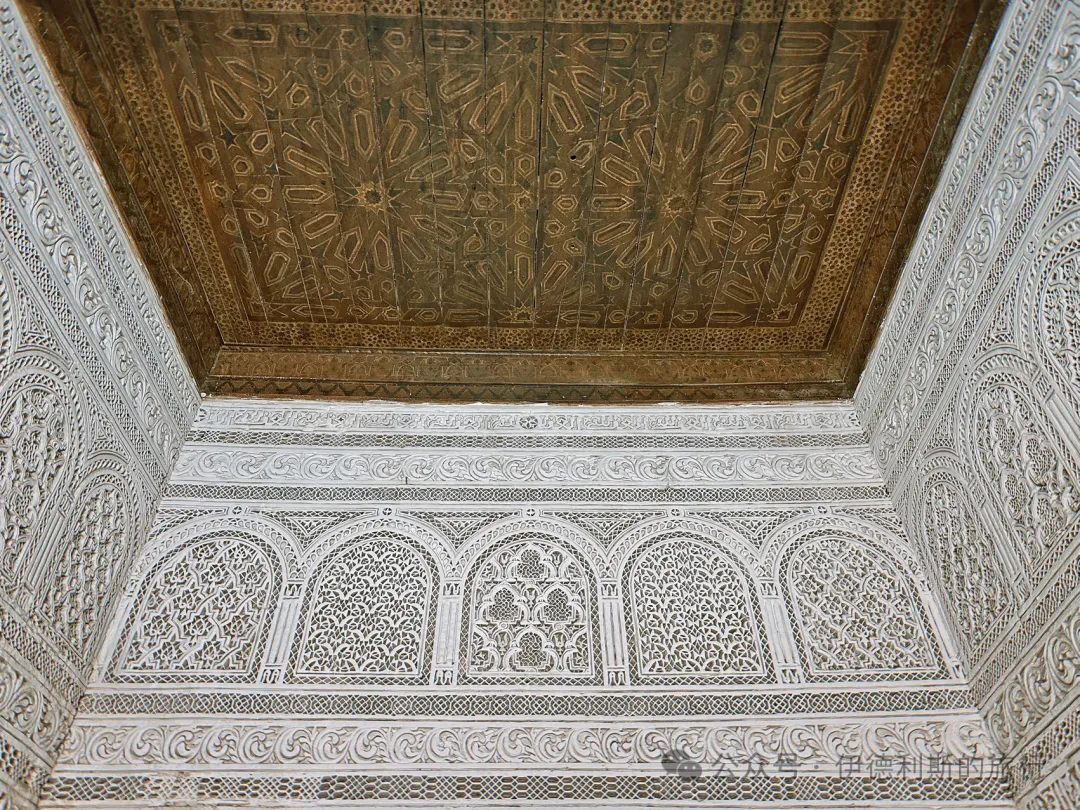
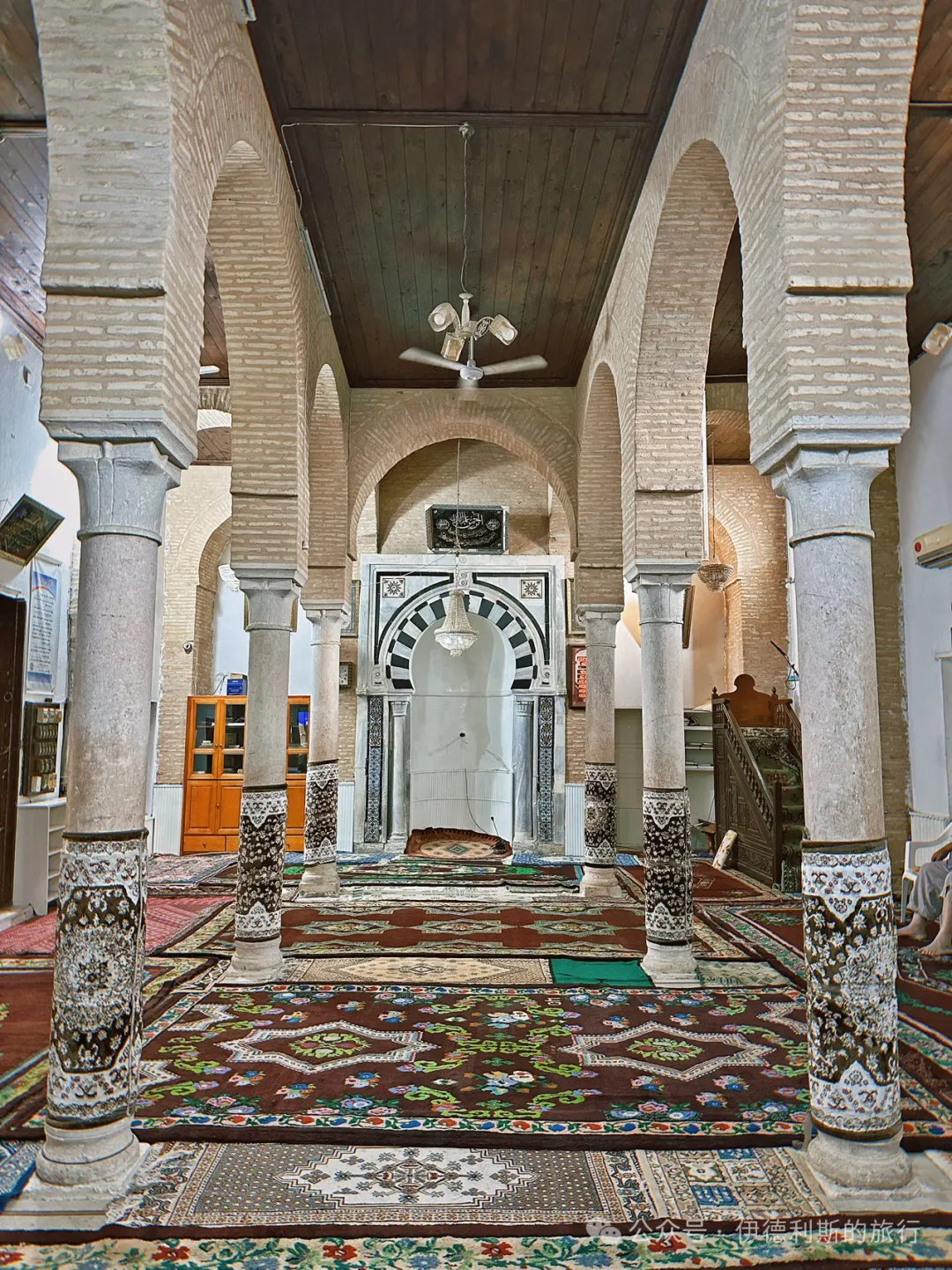
The interior features many classic 17th-century Tunisian Qallalin tiles and rich stucco carvings.
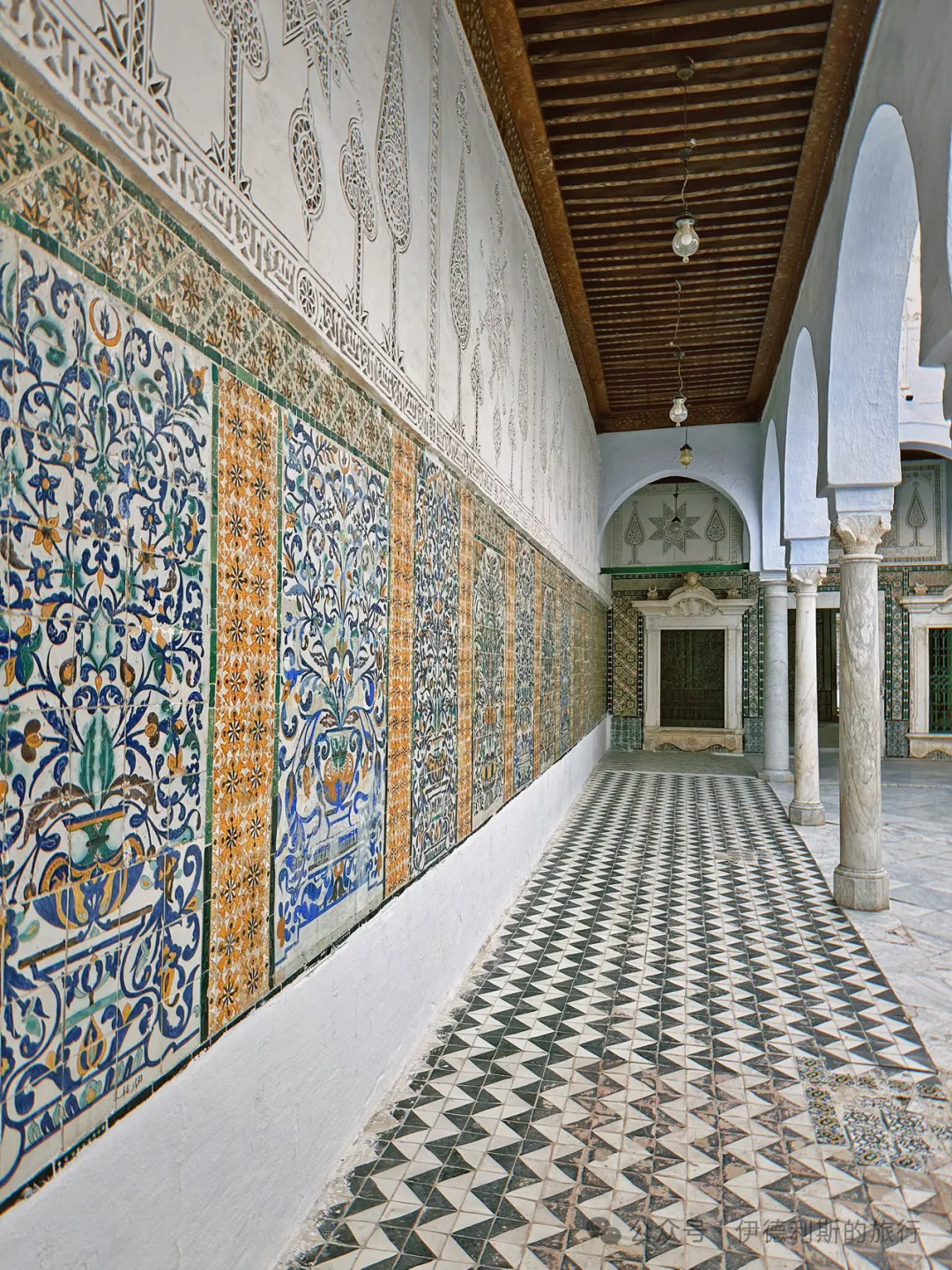
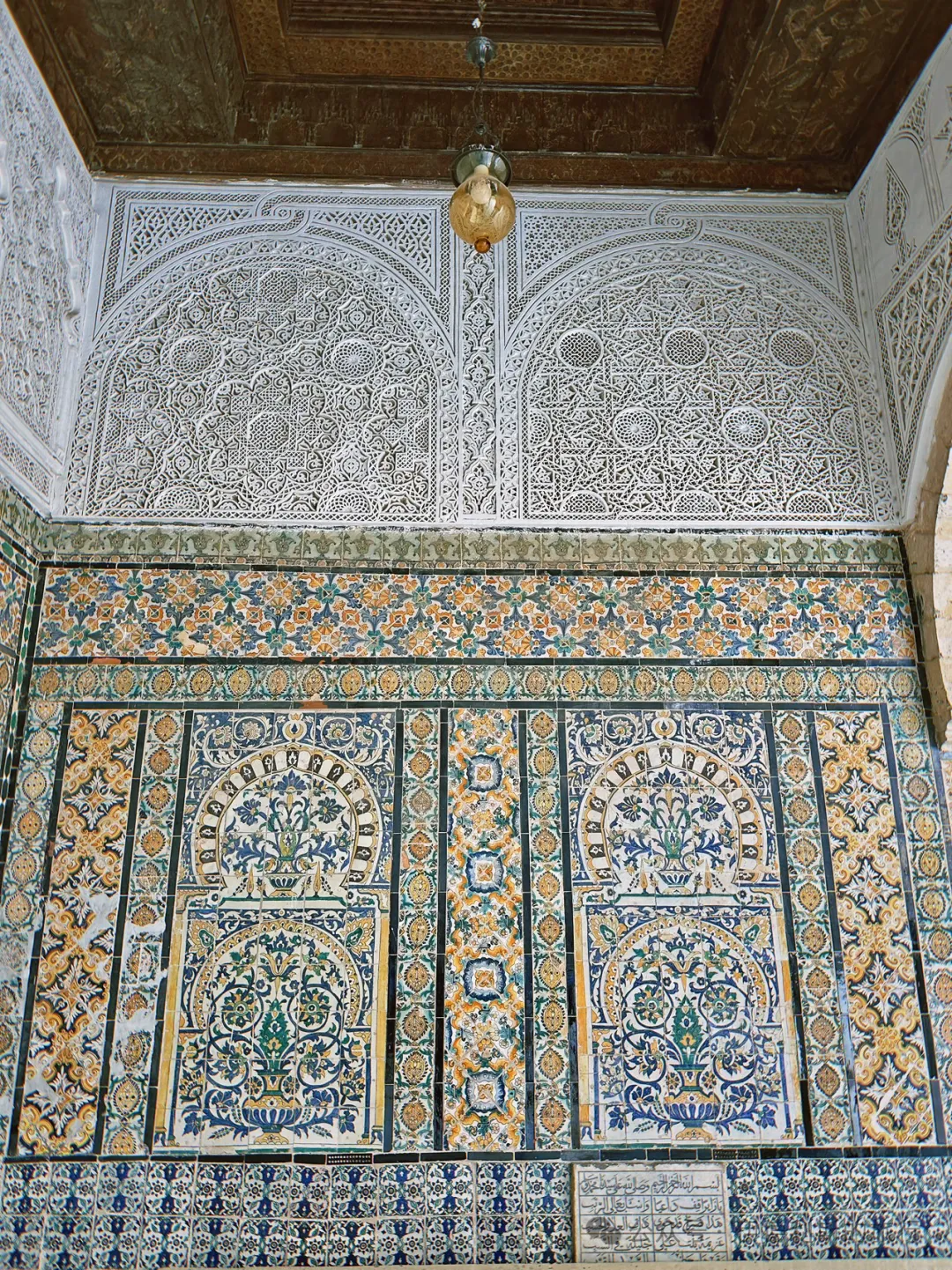
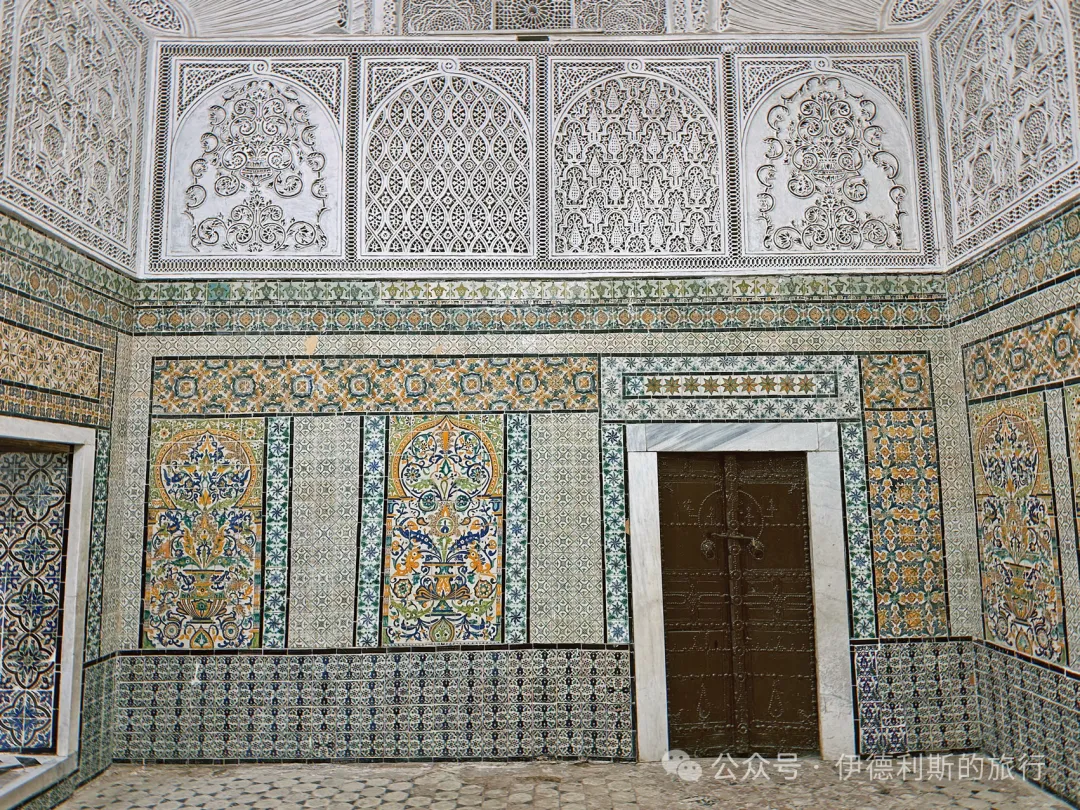
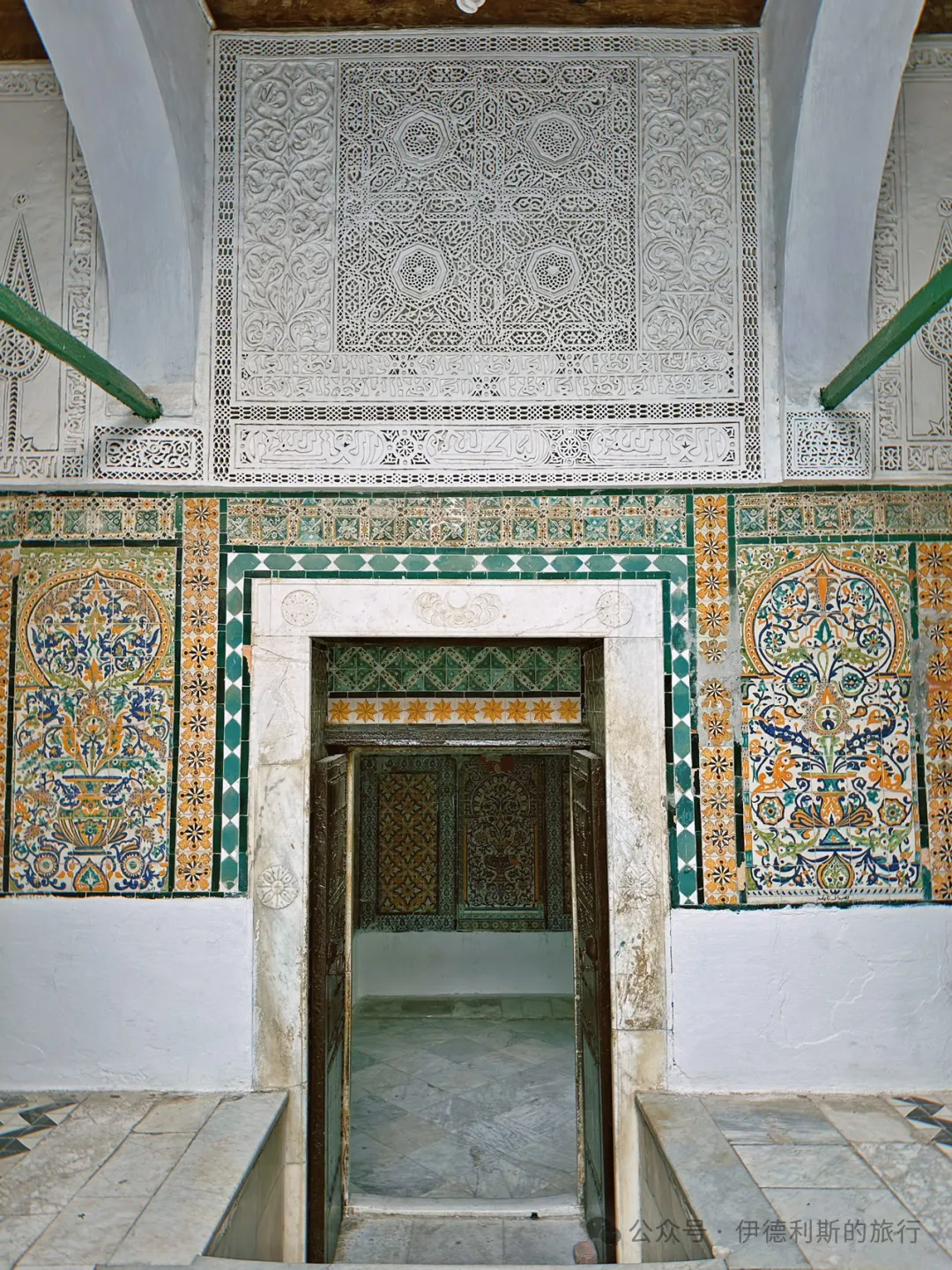
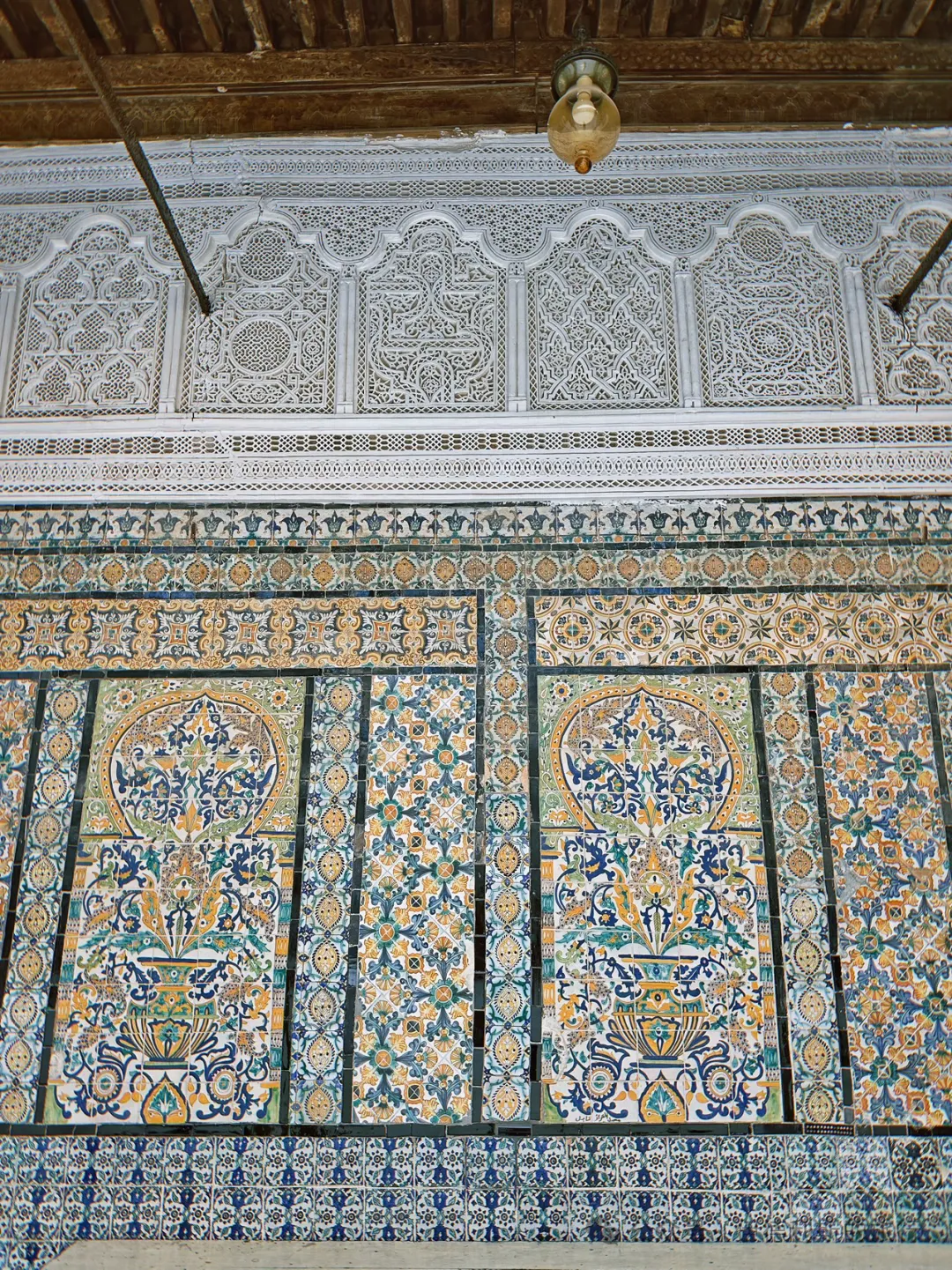
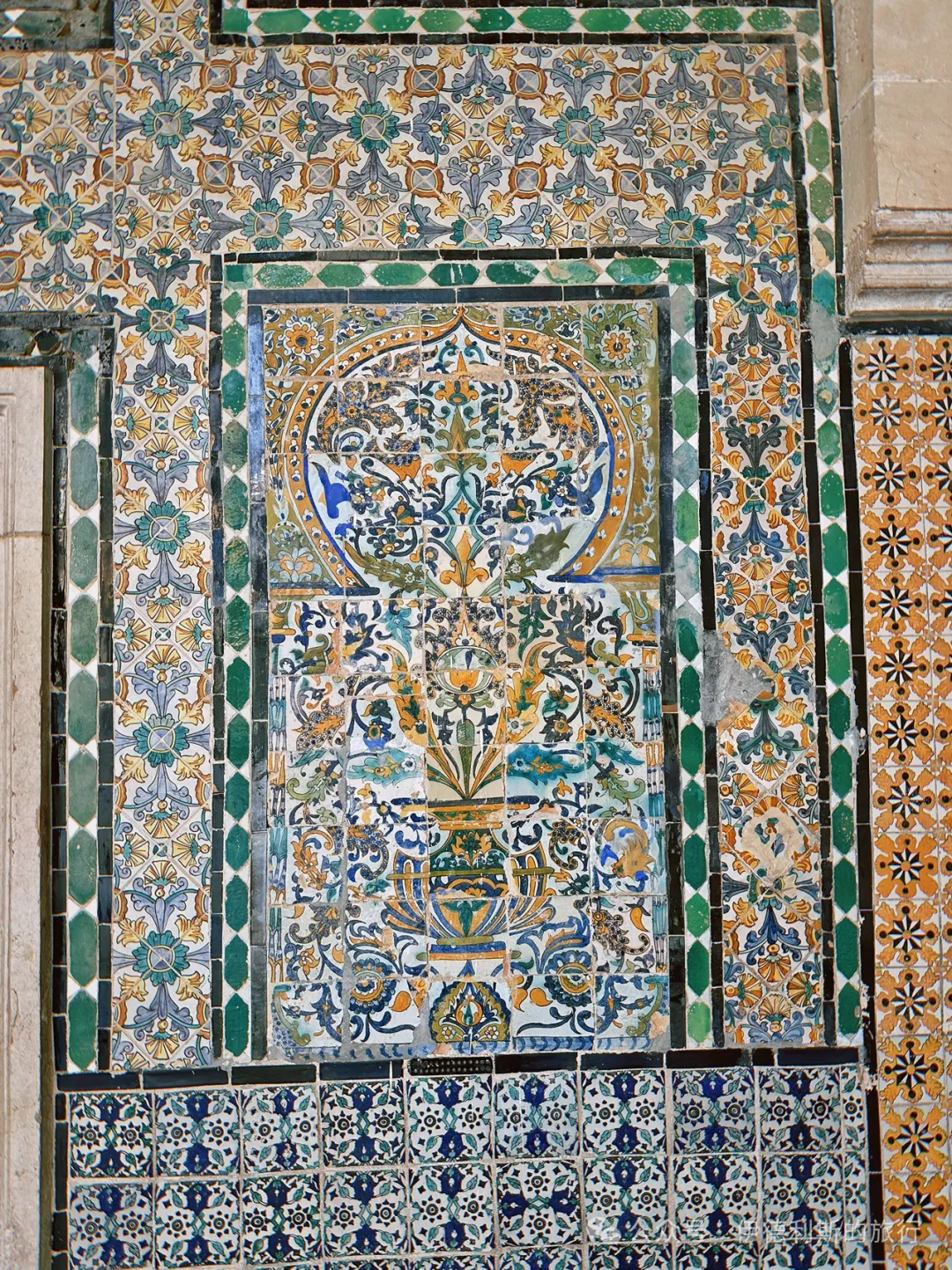
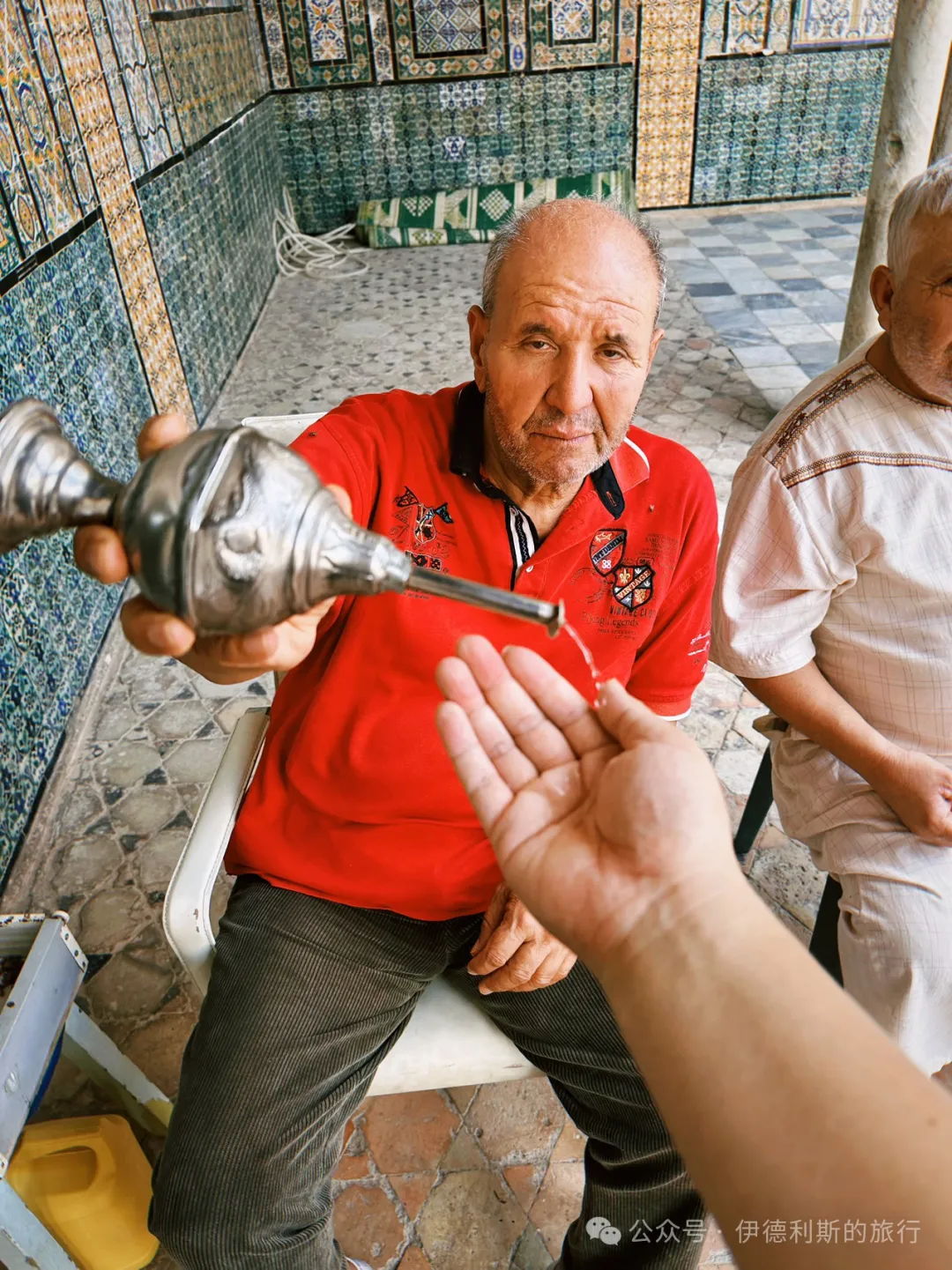
In the courtyard with the minaret, gate, and main hall, an old man pours perfume into the hands of every dost (friend/visitor) who comes to visit the grave.
Zaytuna Mosque in Kairouan: date unknown.
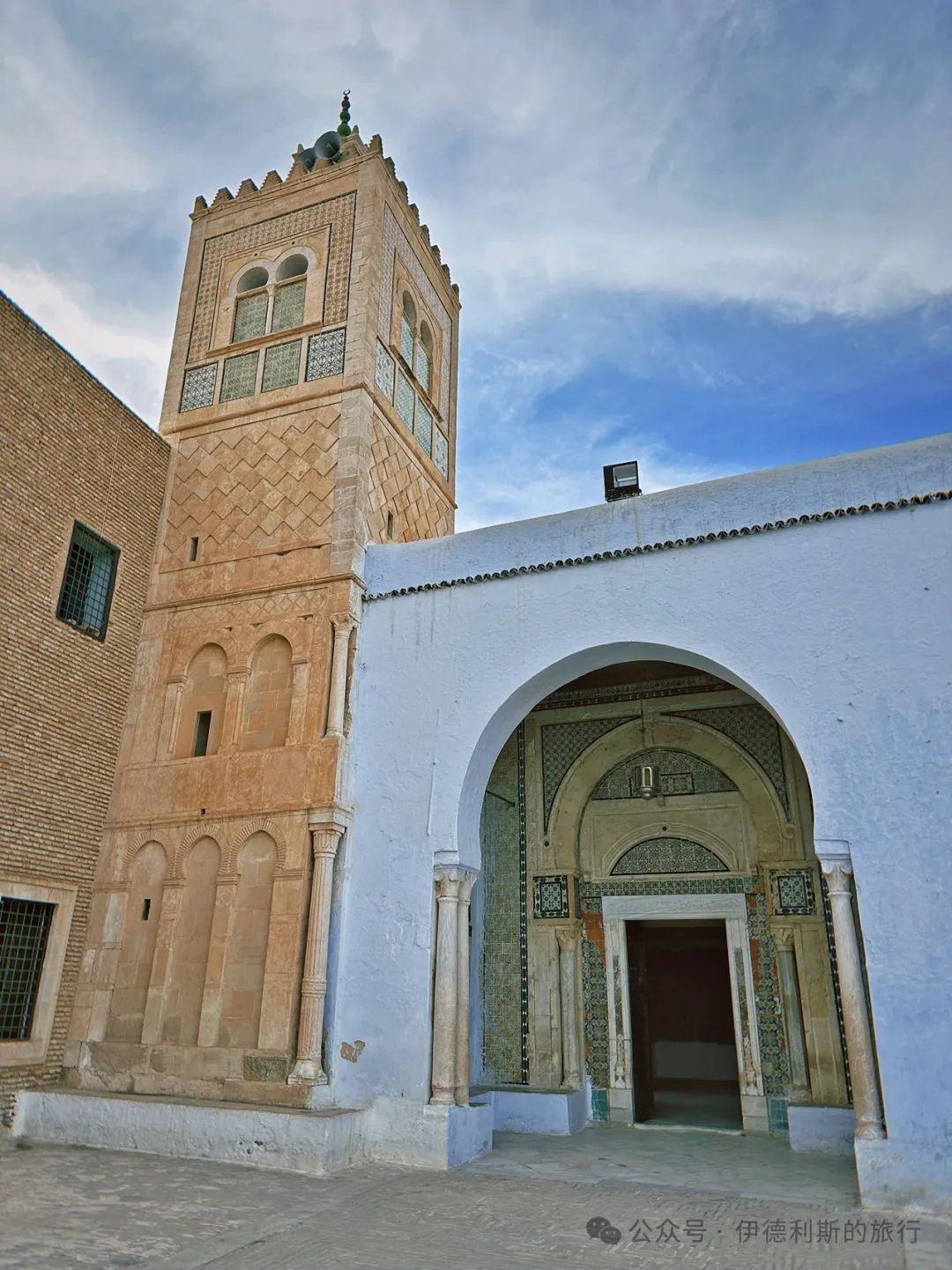
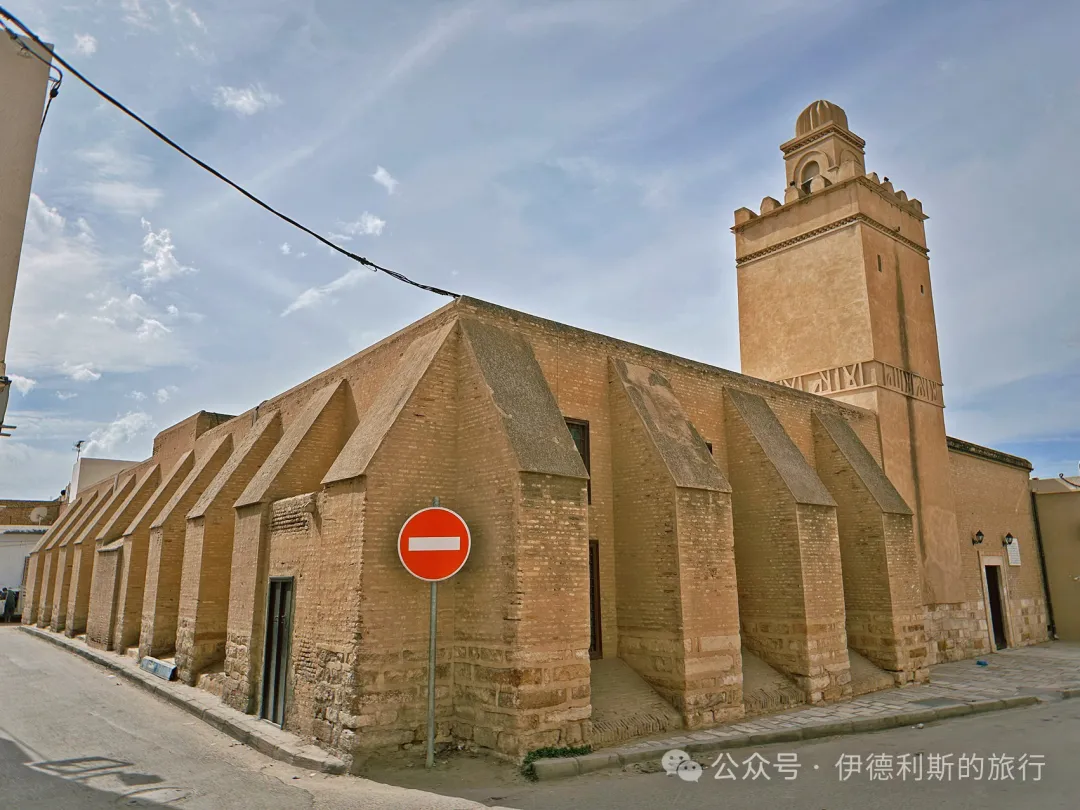
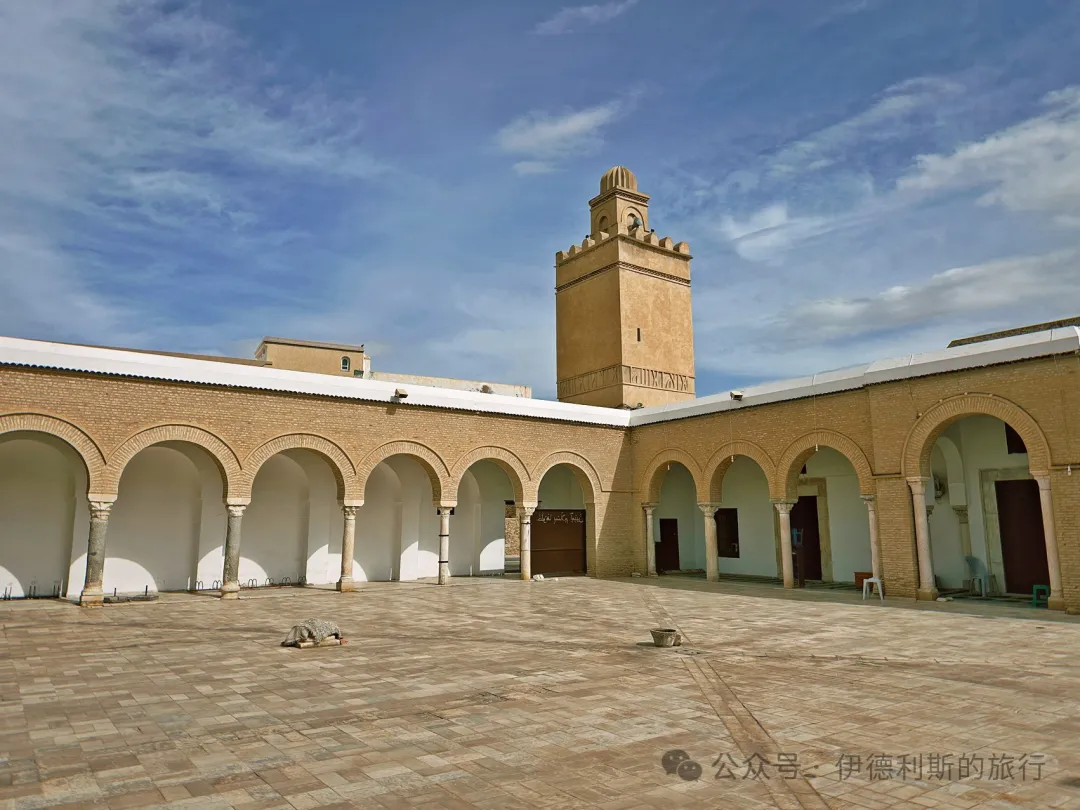
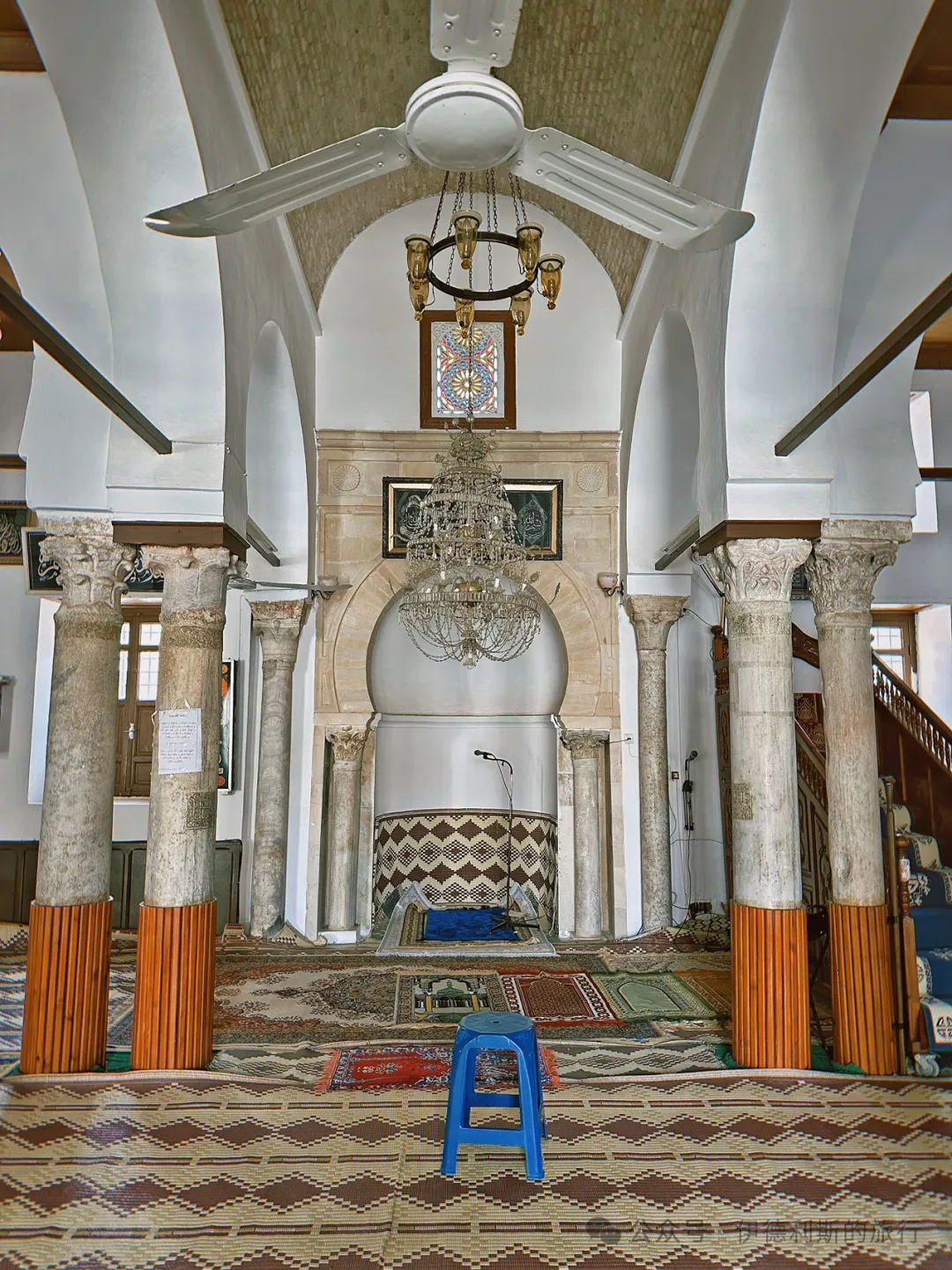
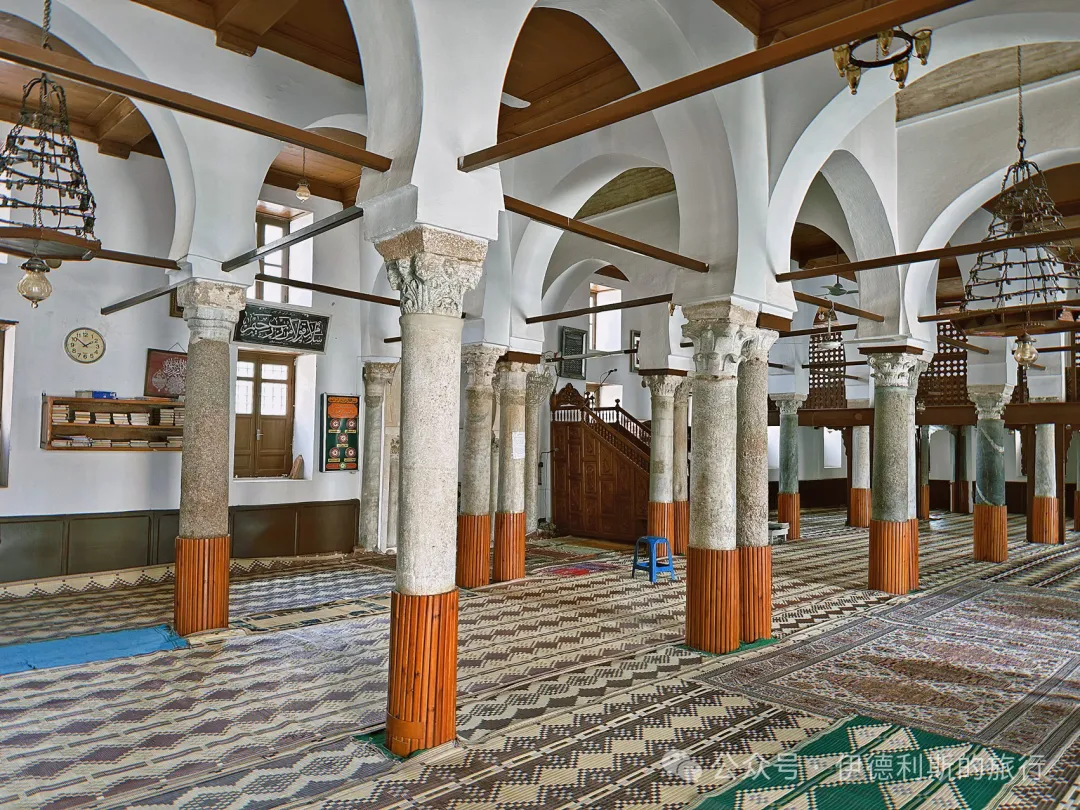
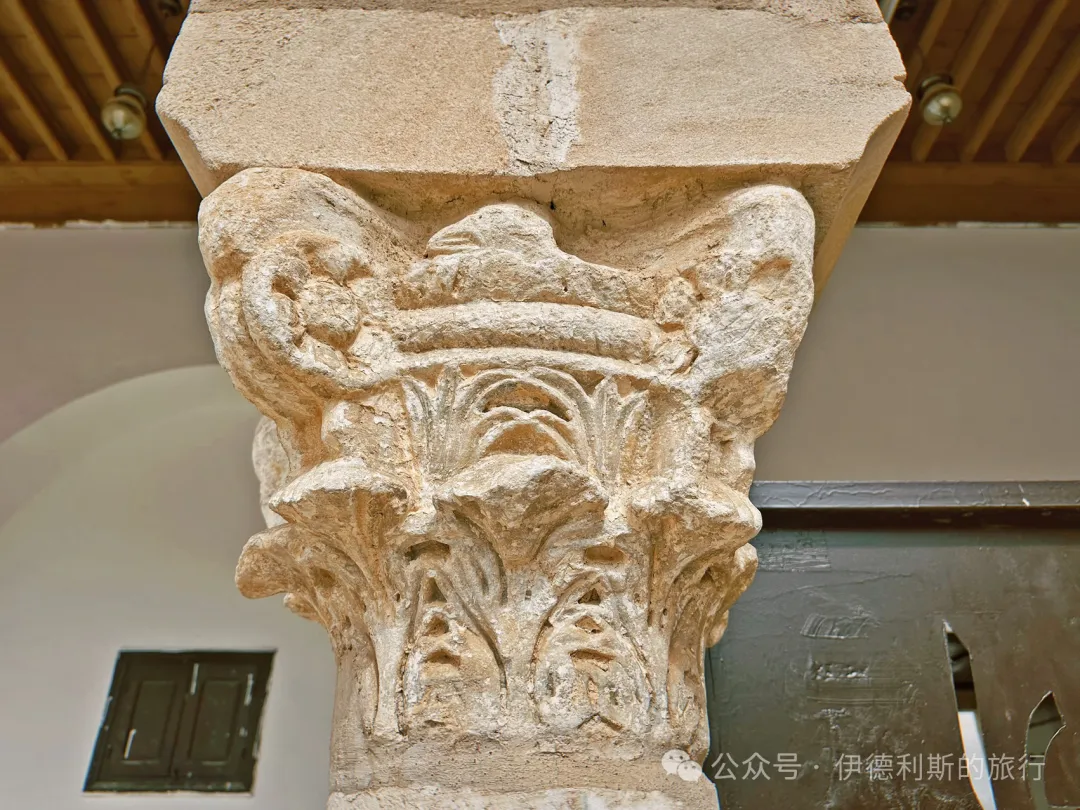
Outside the west gate of the Kairouan Medina is the Zeitouna Mosque, which has a similar architectural style to the Great Mosque of Kairouan but is smaller in scale.
Great Mosque of Zaytuna in Tunis: founded in 698, rebuilt in 864.
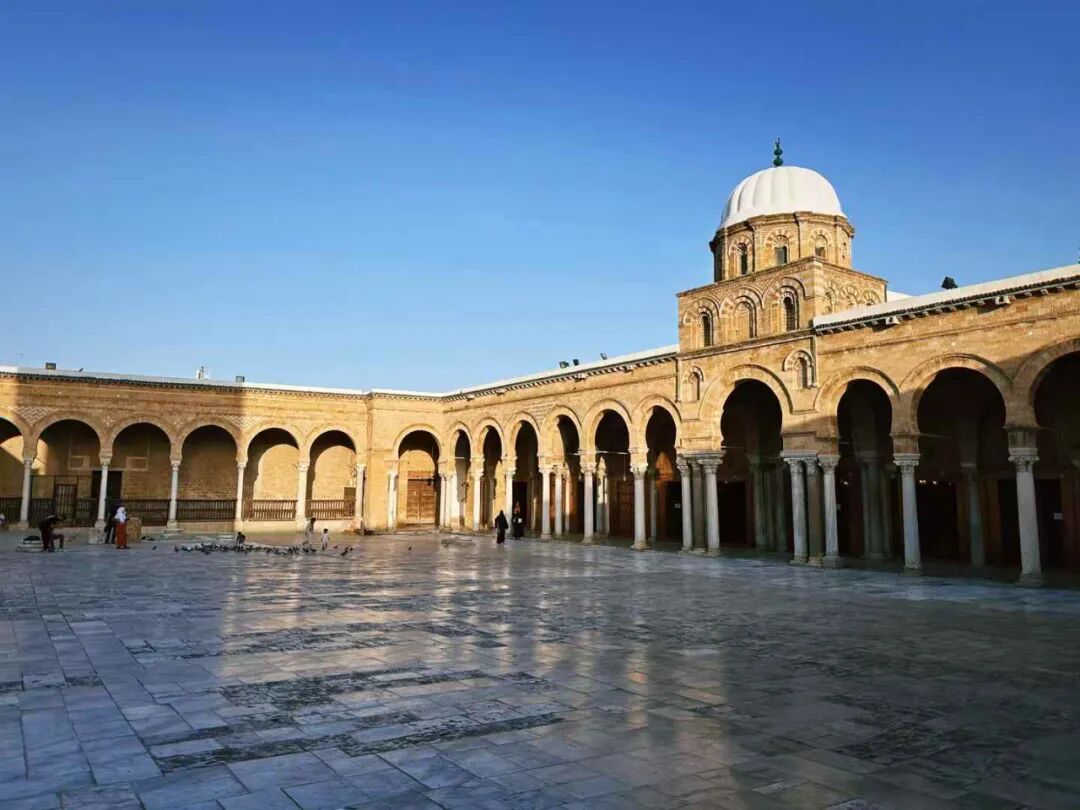
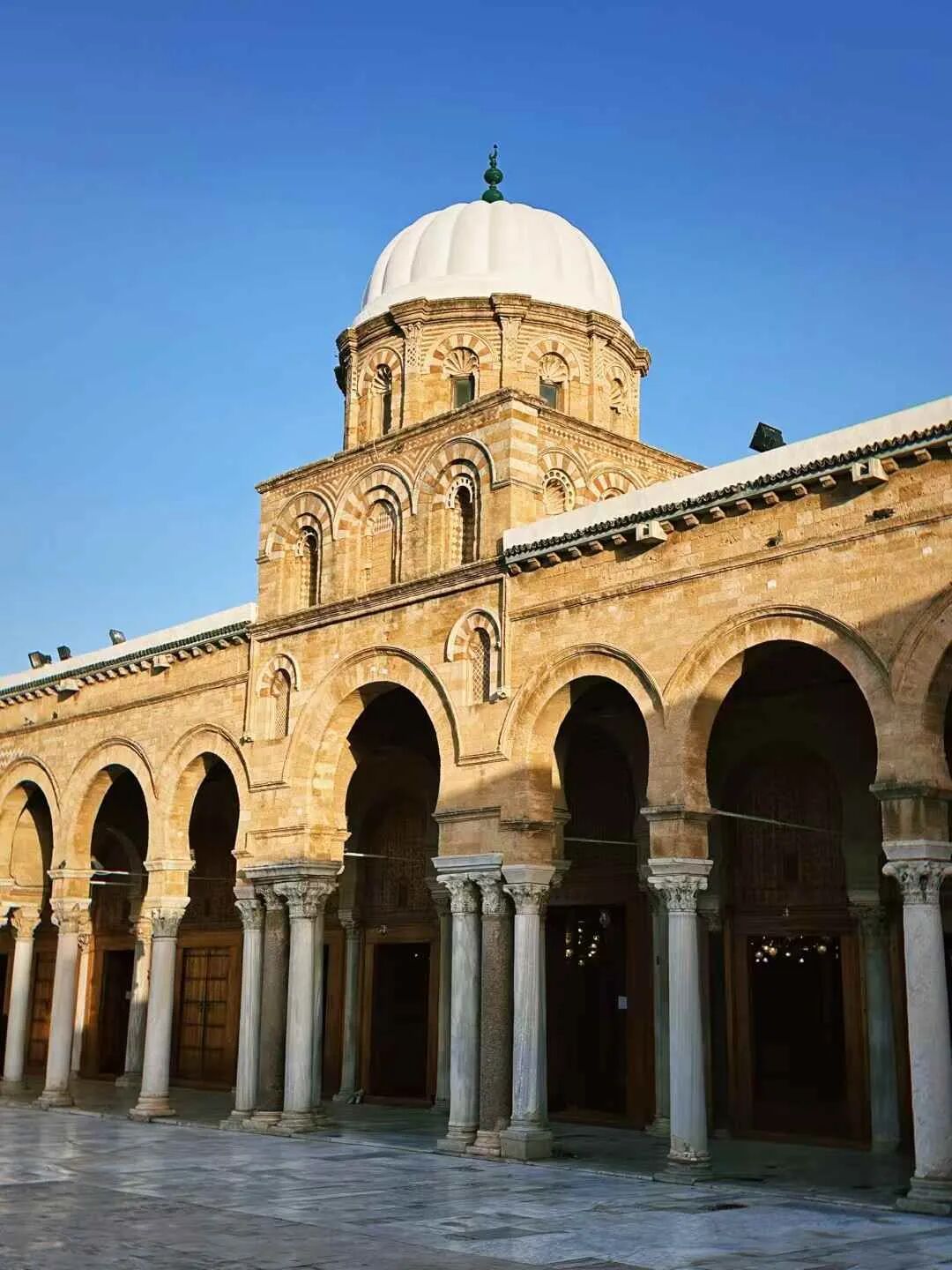
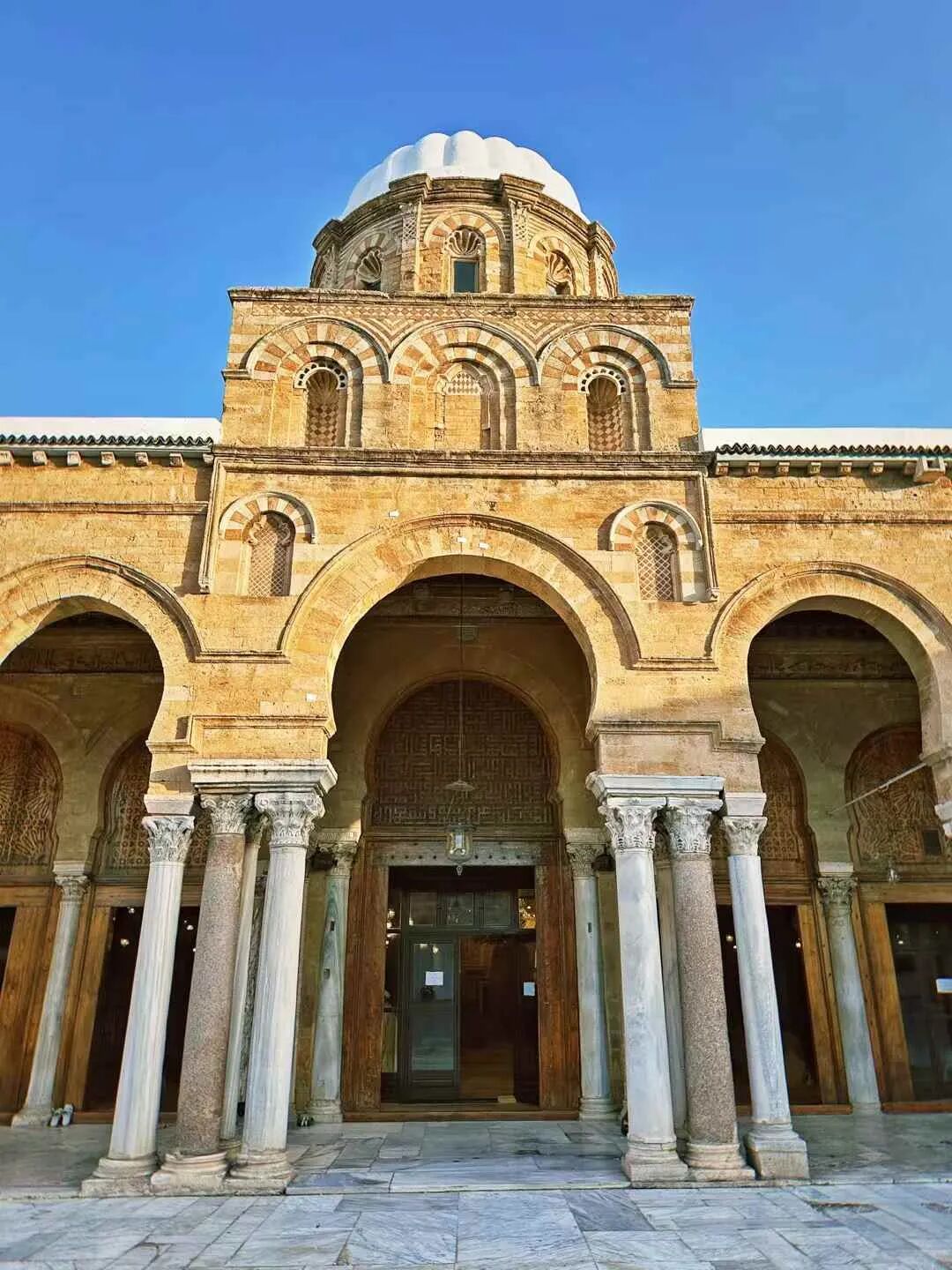
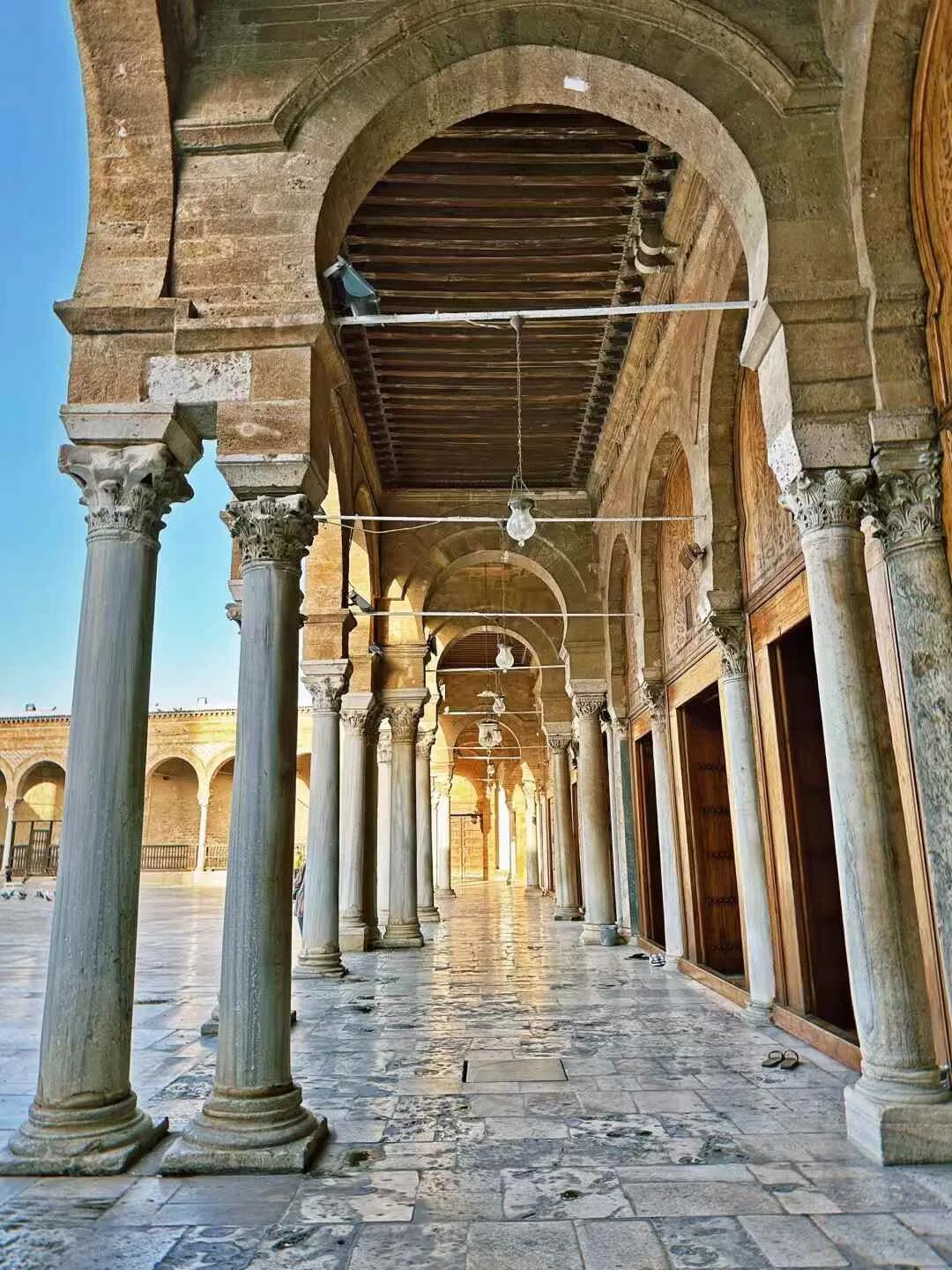
The Great Mosque of Al-Zaytuna in Tunis is the second great mosque built by Arabs in the Maghreb region after the Great Mosque of Kairouan, and it is the grandest mosque in Tunis.
One theory suggests the Umayyad general Hasan ibn al-Nu'man built the mosque after conquering Carthage in 698, while another suggests the Umayyad governor Ubayd Allah ibn al-Habhab built it between 732 and 733. The current structure of the Great Mosque of Al-Zaytuna mainly follows the design from the Aghlabid dynasty's reconstruction in 864-65, making it very similar to the Great Mosque of Kairouan, which was rebuilt in the same period. Stone inscriptions inside the mosque mention that the main patron of the reconstruction was the Abbasid Caliph al-Musta'in bi-llah. The original 9th-century structure remains mostly in the interior of the main hall and the round corner towers in the north and east.
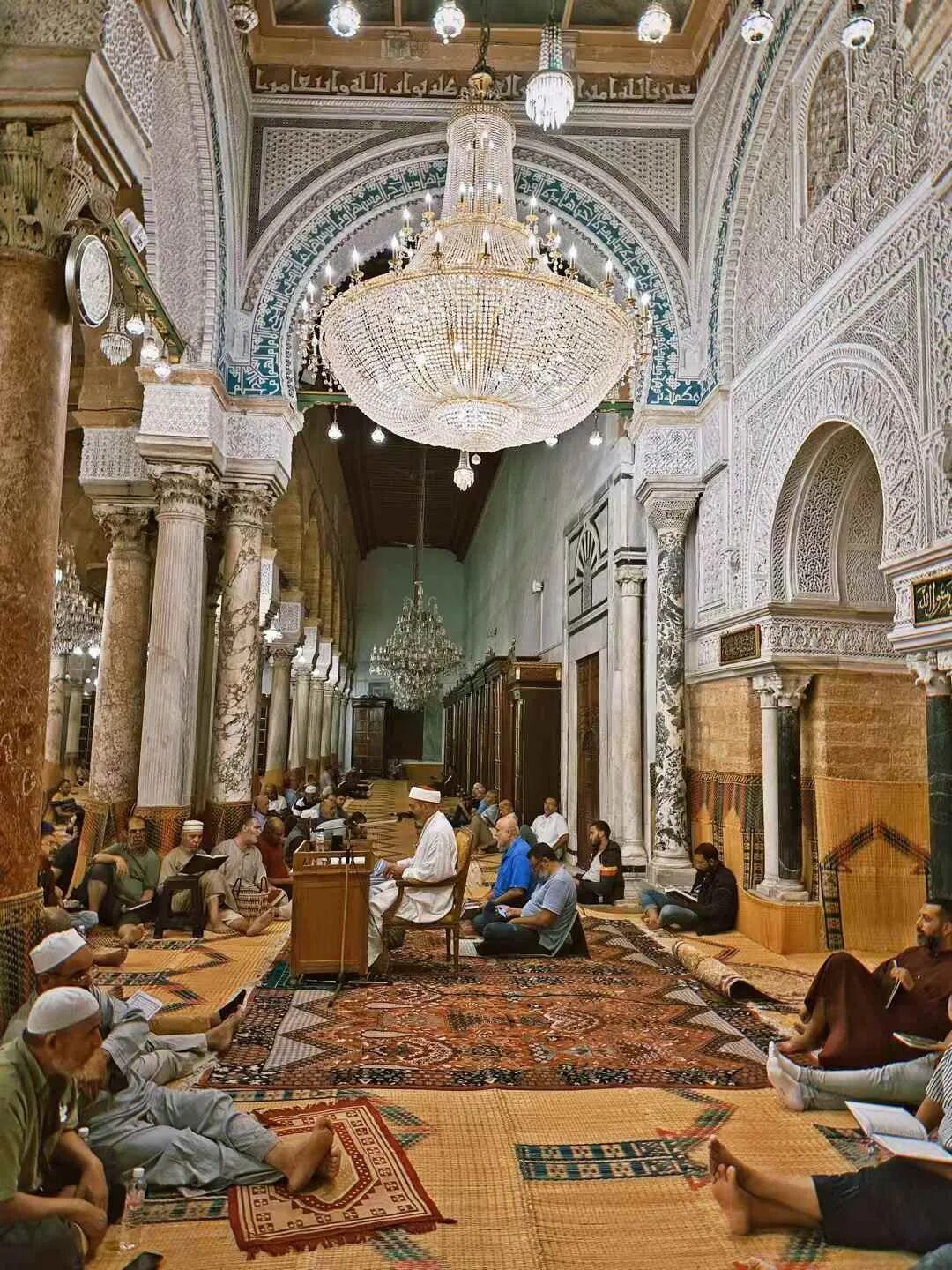
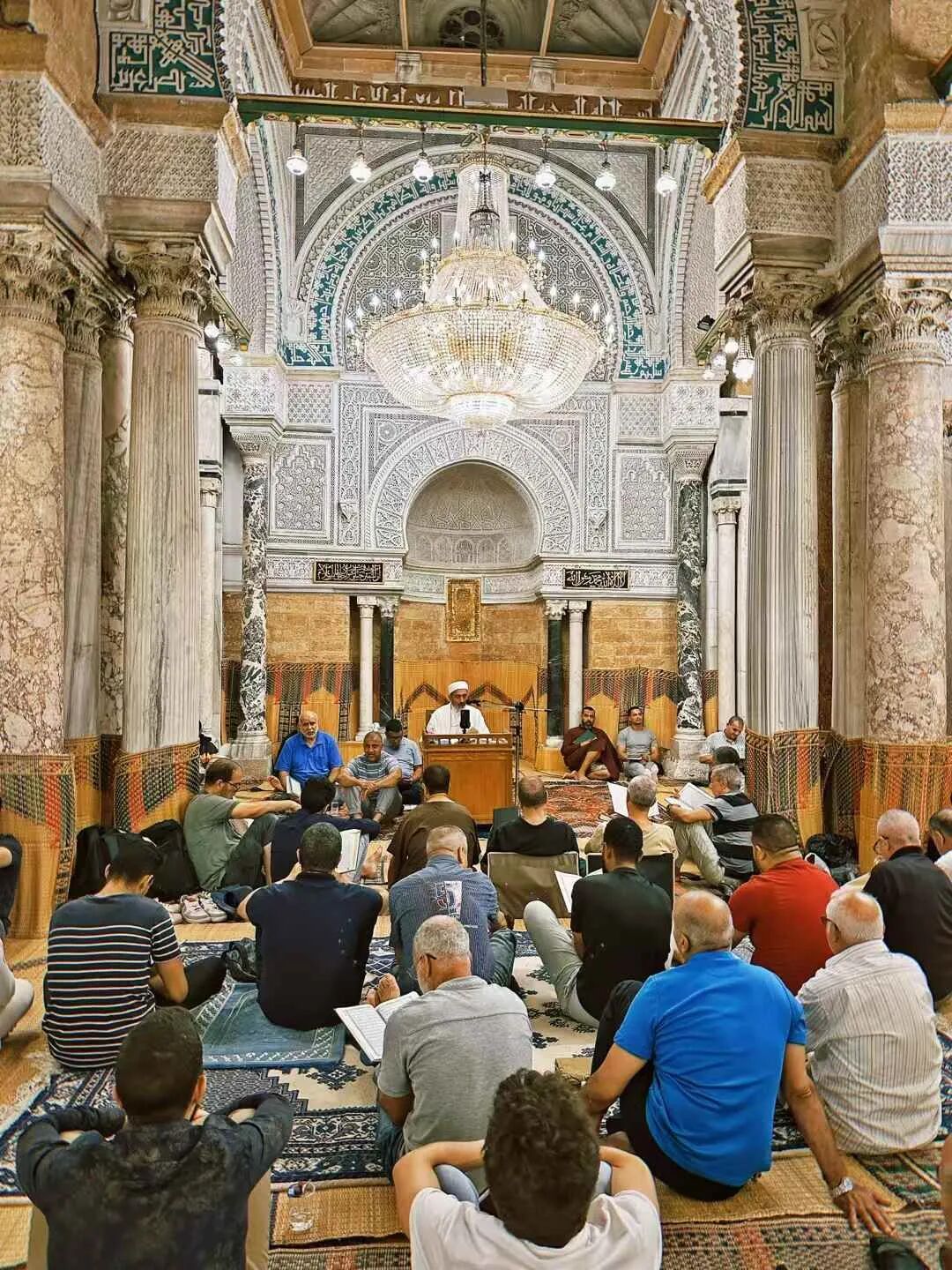
Between 990 and 995, the Zirid dynasty expanded the mosque, adding a gallery and a dome at the entrance to the main hall. The main hall contains 160 ancient stone columns, many of which were taken from the ruins of Carthage. The dome in front of the mihrab was built in the 9th century and is carved with Kufic inscriptions. The stucco carvings on the walls of the central corridor also date back to the 9th century, while other decorations can be traced to after the 13th century.
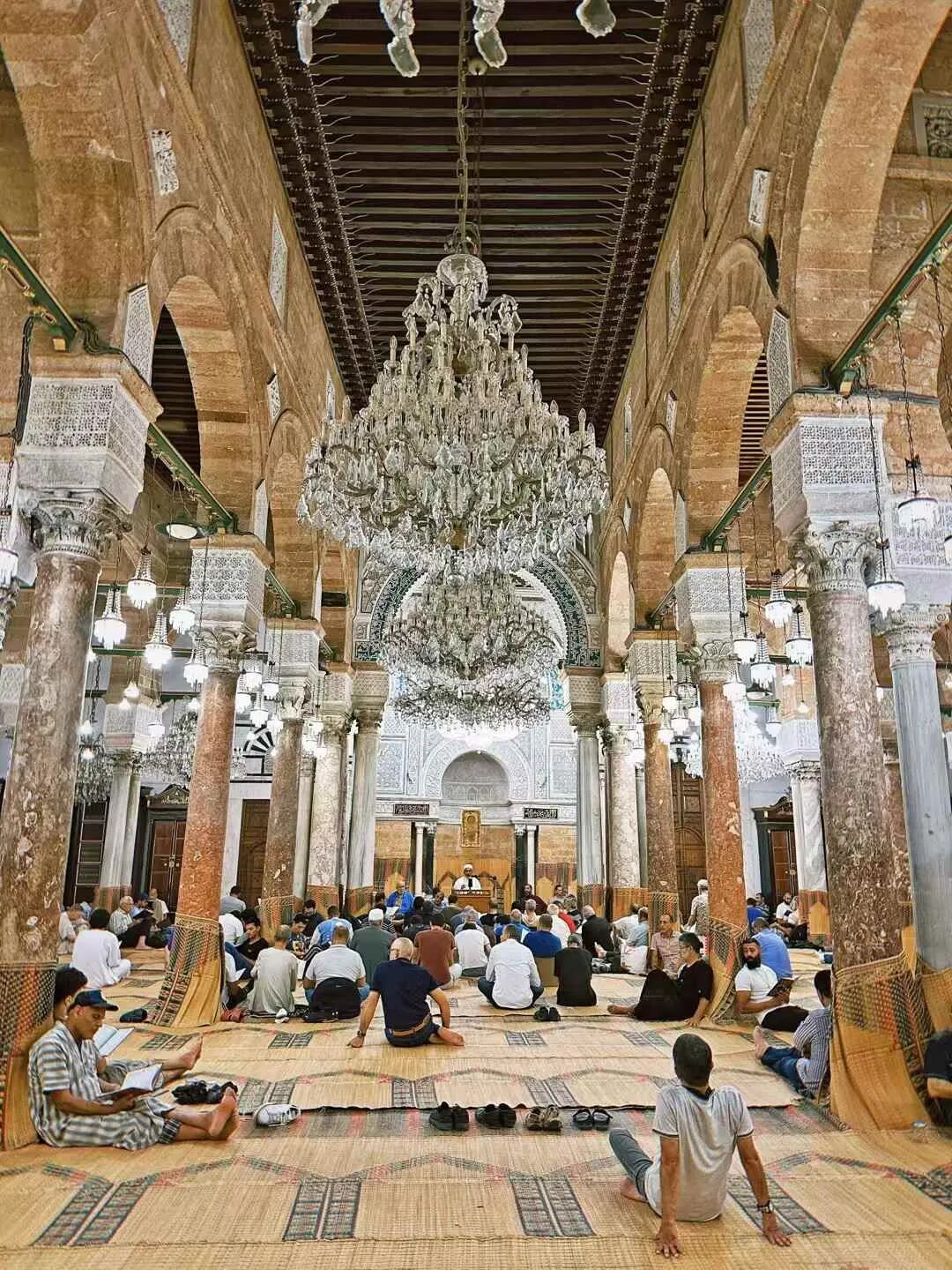
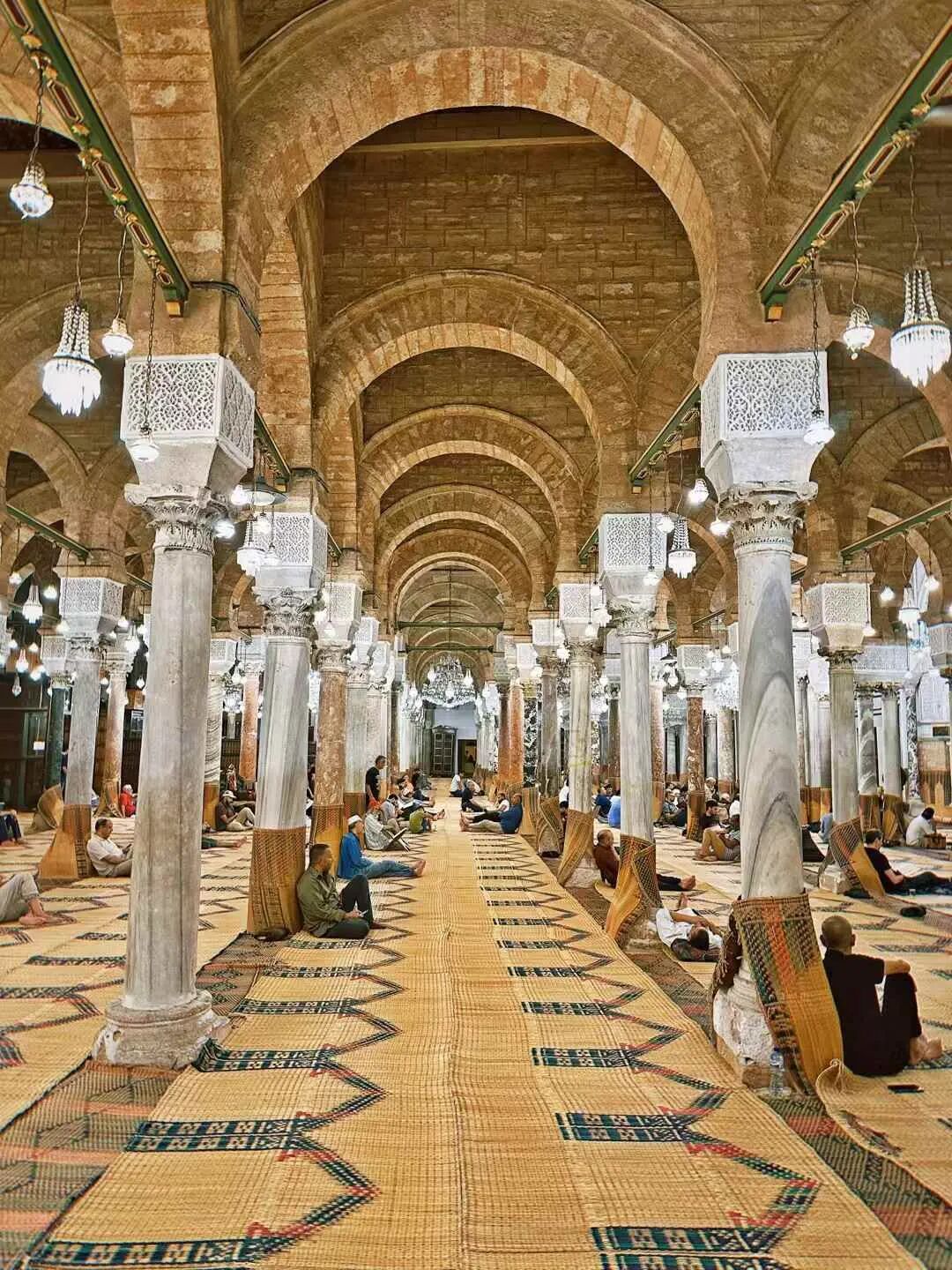
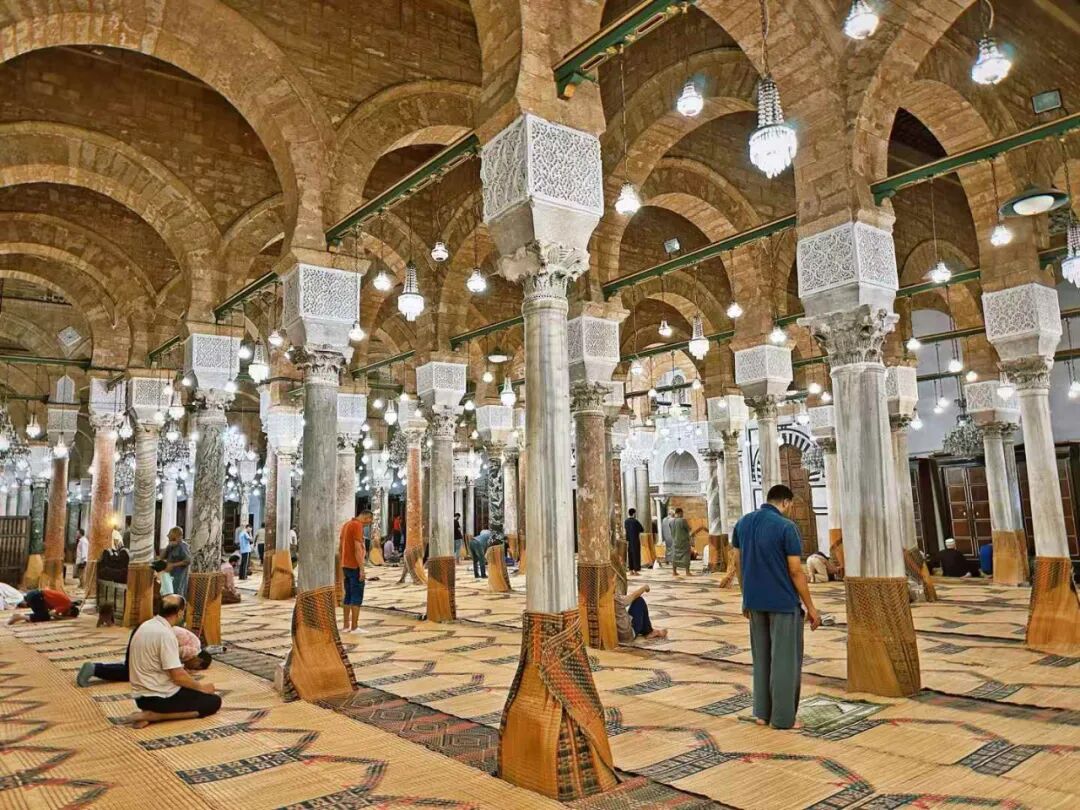
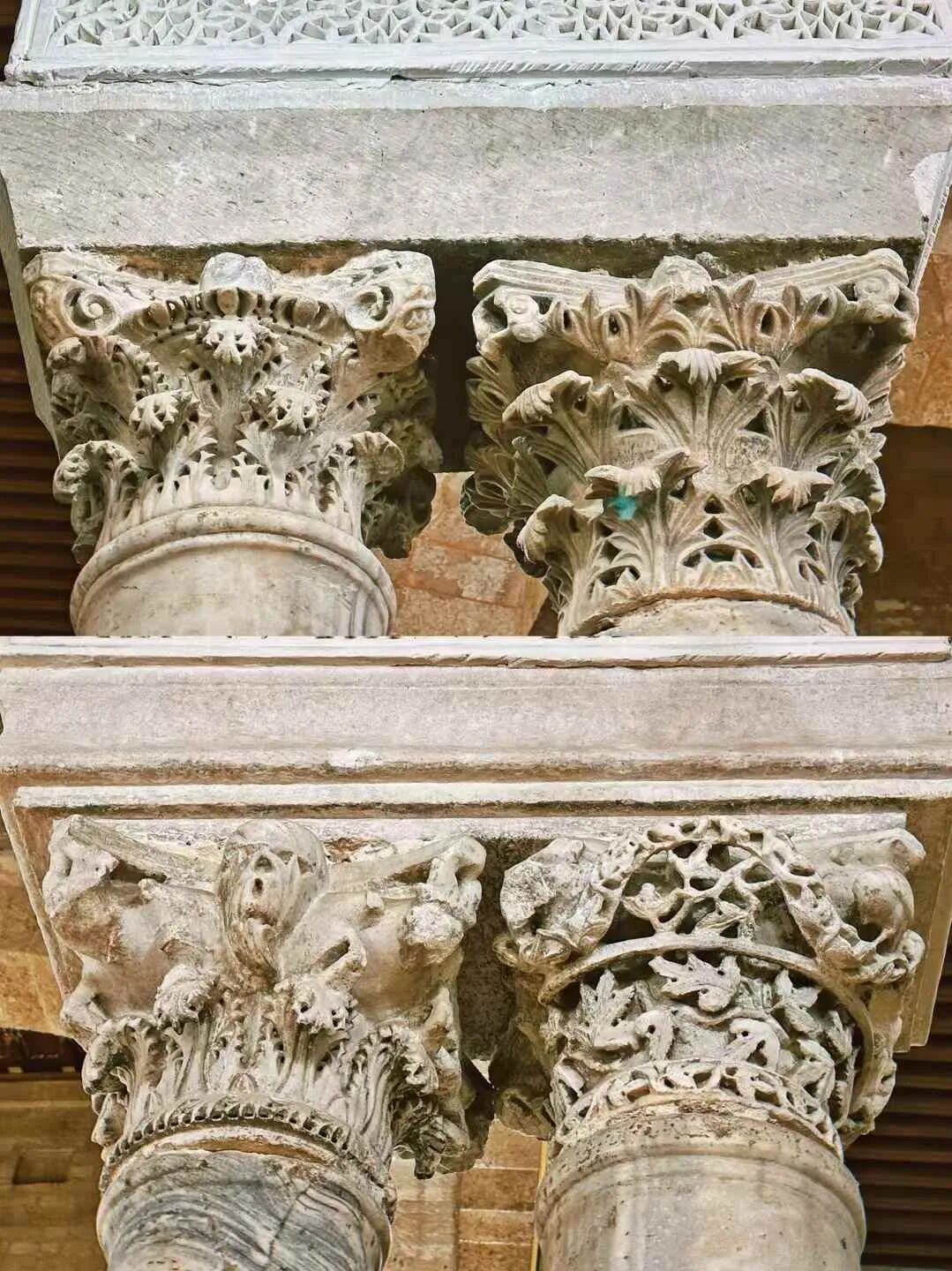
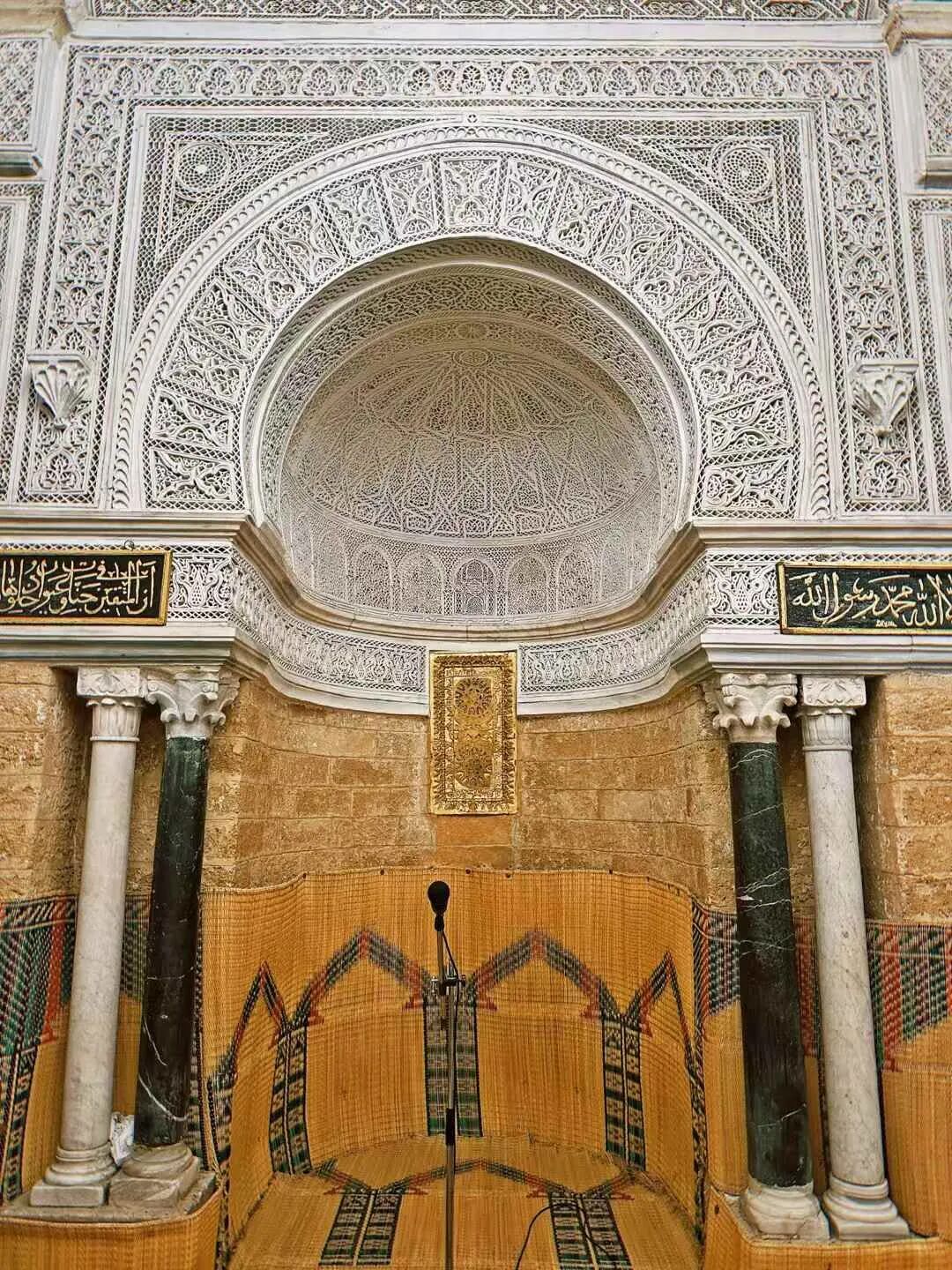
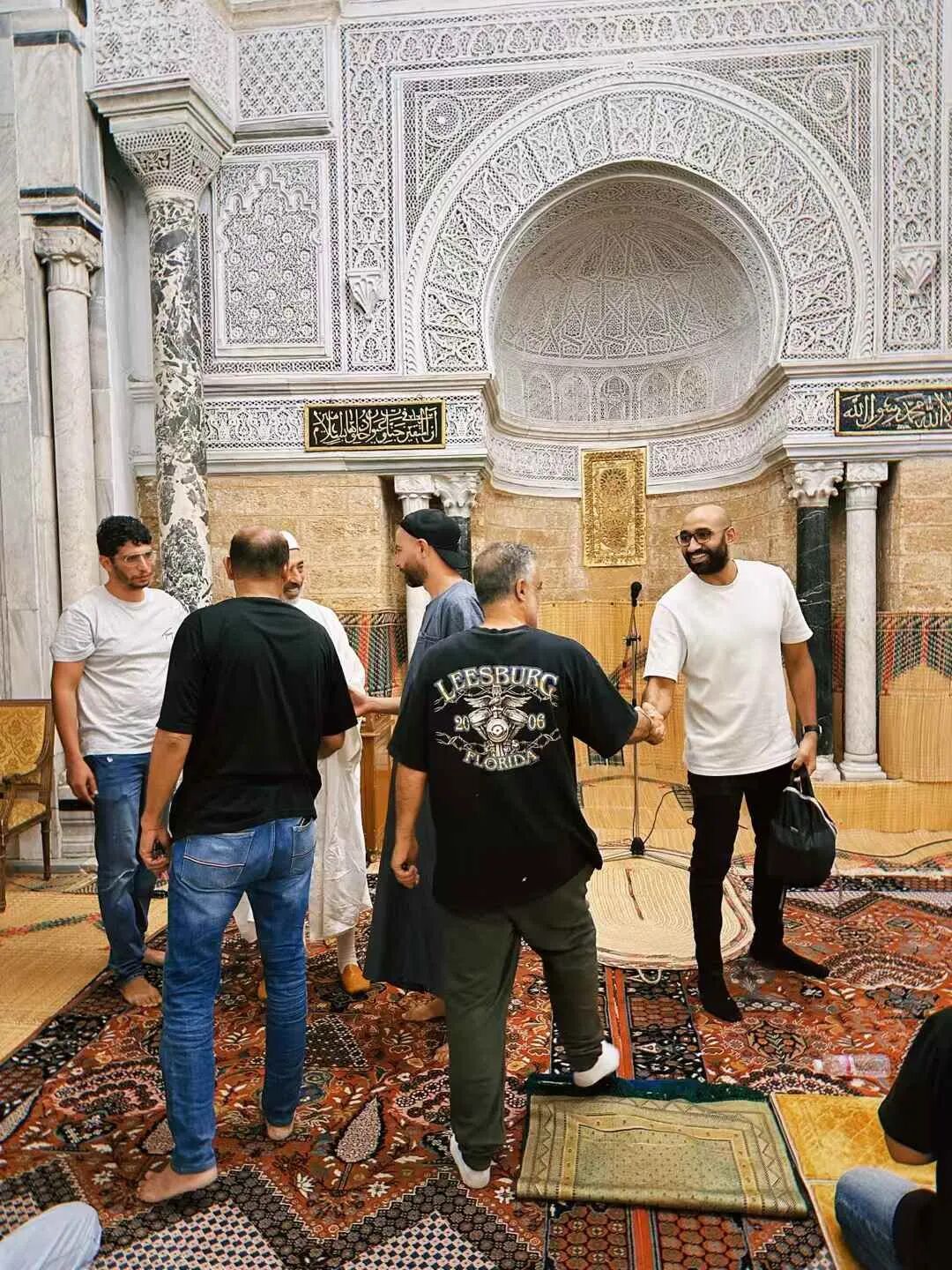
The gold-leaf marble carving at the center of the mihrab in the Great Mosque of Zaytuna dates back to the 9th century, while the surrounding plaster carvings were added during the Ottoman period in 1638.
Summary: This first part of the Tunisia mosque journey begins with the Great Mosque of Kairouan, founded in 670 and rebuilt in 836, and follows a route through major early Islamic sites. It keeps the source's mosque names, dates, dynastic references, architecture, images, and travel observations in one English long-form article.
Great Mosque of Kairouan: founded in 670, rebuilt in 836.
Mosque of the Three Doors (Jami al-Thalathat Abwab) in Kairouan: 866.
Mosque of the Barber (Zaouia of Sidi Sahab) in Kairouan: 1629.
Zaytuna Mosque in Kairouan: date unknown.
Great Mosque of Zaytuna in Tunis: founded in 698, rebuilt in 864.
Kasbah Mosque in Tunis: 1230.
New Mosque (Jami al-Jadid) in Tunis: 1726.
Ksar Mosque in Tunis: founded in 1106, rebuilt in 1647.
Hammouda Pasha Mosque in Tunis: 1655.
Sidi Mahrez Mosque in Tunis: 1692.
El Ichbili Mosque in Tunis: founded in the 10th century.
Youssef Dey Mosque in Tunis: 1616.
Great Mosque of Sousse: 851.
Great Mosque of Monastir: founded in the 9th century.
Great Mosque of Hammamet: founded in the 12th century.
Great Mosque of Kairouan: founded in 670, rebuilt in 836.
The Great Mosque of Kairouan is the oldest and most spectacular Friday mosque in Tunisia. It was founded in 670 by order of the Arab Umayyad general Uqba ibn Nafi. It was destroyed by Christian Berbers in 690 and rebuilt by the Umayyad dynasty in 703. As Arabs spread the faith across the Tunisia region, the number of Muslims in Kairouan grew. The Great Mosque of Kairouan underwent many rebuilds and renovations in 724-728, 774, 836, 862-863, and 875, finally taking its current form in the 9th century.
The Great Mosque of Kairouan is a massive, irregular quadrilateral with a perimeter of 405 meters. From the outside, it looks like a fortress. The outer walls are 1.9 meters thick and built from stone, rubble, and bricks. Because the ground is quite soft, the mosque's outer walls have many buttresses to add stability.
The Great Mosque of Kairouan has nine gates, some of which feature porches and ribbed domes. Bab Lalla Rihana on the southeast side was built in 1293 during the Hafsid dynasty. It features a horseshoe arch and ancient stone columns that blend perfectly with the 9th-century walls.
The minaret of the Great Mosque of Kairouan was built between the 8th and 9th centuries. The current structure mostly dates to 836. It is ranked as one of the three most important early minarets, alongside the spiral minaret of the Great Mosque of Samarra in Iraq (built 848-852) and the spiral minaret of the Abu Dulaf Mosque in Iraq (built 859). It served as a model for later minarets across Andalusia and the Maghreb.
During the time of the Prophet and the four Caliphs, there were no minarets. People called for prayer from the mosque entrance or the roof. Platforms for the call to prayer appeared during the Umayyad Caliphate in the 7th century, but true minarets did not emerge until the Abbasid Caliphate in the 8th century. There is no final conclusion on the origin of the minaret. Some say it mimics Syrian church towers, while others suggest it copies the Lighthouse of Alexandria or Mesopotamian ziggurats. Four towers were built during the reconstruction of the Sacred Mosque in Mecca in the late 8th century, but they have not survived. The oldest surviving minarets are the Great Mosque of Kairouan and two in Iraq. The Bride Minaret at the Umayyad Mosque in Damascus may also date to the 9th century, but there is no clear record of this.
The minaret of the Great Mosque of Kairouan is 31.5 meters high. Its base dates back to the Umayyad period in 725, and you can see Latin inscriptions from the Roman era on the walls. The first and second levels of the minaret were built in 836 using carefully cut stone. There are windows facing the courtyard and arrow slits on the other three sides. The third level of the minaret is a four-arched structure (chahartaq), which was likely added later.
Three sides of the Great Mosque are surrounded by double-row horseshoe arches. The columns come from various ancient Roman and Byzantine ruins, including some from the famous site of Carthage.
There is a dome above the main entrance of the prayer hall and another above the mihrab. These domes, built in 836, are important examples of early mosque architecture.
The prayer hall connects to the arcades through 17 carved wooden doors. The most exquisite one in the center was built in 1828 and features rich geometric and floral patterns.
The mosque's mihrab is 5.1 meters high and was also built in 863. It is the oldest concave mihrab in the world. The main body of the mihrab is a horseshoe arch supported by two red marble columns. The columns have Byzantine-style capitals with very fine carvings.
The upper part of the mihrab has 139 luster tiles fired in the second half of the 9th century. This metallic-glazed pottery originated in Abbasid-ruled Iraq and circulated throughout West Asia and North Africa. It is not yet certain whether the luster tiles of the Great Mosque of Kairouan were fired in Iraq or if Iraqi craftsmen were invited to Kairouan to make them.
The concave surface in the center of the upper section is painted wood, featuring complex vine patterns in yellow on a blue background. The lower section is inlaid with 28 white marble slabs carved with complex plant and geometric patterns, including stylized grape leaves, flowers, and shells.
Next to the mihrab are the minbar for the Friday sermon and the enclosure (maqsurah) used by kings and nobles.
The minbar of the Great Mosque of Kairouan was also built in 863 and is the oldest surviving minbar in the world. The minbar is made of teak imported from India and is assembled from over 300 wooden panels carved with plant and geometric designs. Although it was restored in the early 20th century, all but nine of the wooden panels are original pieces from over a thousand years ago. Today, the sides of the minbar are protected by glass, making it difficult to take photos due to the reflection.
The maqsurah of the Great Mosque of Kairouan was built in the first half of the 11th century and is the oldest one still in use in the world (the maqsurah of the Great Mosque of Cordoba in Spain was built in 965 but is no longer in use). The prayer enclosure (maqsura) is made of cedar wood and measures 14 meters long. It is carved with ornate Kufic calligraphy and floral patterns, representing the highest achievement in Tunisian carving art at the time.
The maqsura originated in the mid-7th century during the time of Caliph Uthman. After Caliph Umar was assassinated inside the main prayer hall, Uthman built a wall inside the hall to protect himself. Later, a maqsura was built in every mosque where a caliph prayed.
The main prayer hall of the Great Mosque of Kairouan is 70.6 meters wide and 37.5 meters deep. It consists of 17 aisles, with the aisle directly facing the mihrab being the tallest and widest. This layout was later adopted by major mosques across the Maghreb and Andalusia.
The main hall contains 414 stone columns made of marble, granite, and porphyry. The column capitals feature Corinthian, Ionic, and composite styles. Some capitals were carved specifically for the main hall, while many others came from ancient Roman, Phoenician, and Byzantine sites in Tunisia, including the famous ancient city of Carthage.
The gate inside the main hall's maqsura is decorated with marble floral carvings. This gate leads to the library behind the qibla wall, which is also where the imam usually stays. The imam only comes out from here to lead the prayer and deliver the khutbah.
The grand scene of Jumu'ah at the Great Mosque of Kairouan. After the adhan is called, the imam slowly walks up the minbar to begin the khutbah. In Arabic-speaking regions, everyone understands the khutbah, so there is no need for a prior sermon (wa'z).
Tunisia follows the Maliki school of thought. The namaz movements are quite similar to our Hanafi school, including the initial raising of the hands, but the main difference is that they also fold their arms when making the intention.
After the prayer, we stood outside the main hall for the funeral prayer (janazah). Because Jumu'ah was at three o'clock, we immediately returned to the main hall to pray the Asr prayer (dhuhr/asr context) after finishing.
From the 9th to the 11th century, the Great Mosque of Kairouan was the academic center for the entire Maghreb region and the Maliki school. to religious courses, it offered subjects like mathematics, astronomy, medicine, and botany. In 1045, the Zirid dynasty court in Kairouan announced its adherence to the Sunni faith. Upon hearing this, the Shi'a Fatimid dynasty in Egypt sent a group of Arab tribes to invade Kairouan. In 1057, these Arab tribes occupied and destroyed Kairouan. The Great Mosque of Kairouan declined from then on and did not slowly recover until after the 13th century.
The Museum of the Ribat of Monastir in Tunisia houses wooden components from the 9th to 11th centuries from the main hall of the Great Mosque of Kairouan. Seeing these thousand-year-old North African wooden structures is truly stunning.
Mosque of the Three Doors (Jami al-Thalathat Abwab) in Kairouan: 866.
Besides the Great Mosque, another ancient mosque existing in Kairouan is the Mosque of the Three Doors (Jami' al-Thalathat Abwab), built in 866. This mosque has the oldest decorated facade of any religious building in the world.
Today, only the facade of the Mosque of the Three Doors retains its 9th-century appearance, while the adjacent minaret was added in 1440. The gate of the Mosque of the Three Doors consists of three horseshoe arches and features four ancient stone columns. Above the arch are carved floral patterns and Kufic calligraphy, which include verses and the name of the builder, Muhammad ibn Khairun. Muhammad ibn Khairun was a scholar and merchant from Andalusia who traveled through Iraq and Egypt to reach Kairouan, Tunisia. When the minaret was added in 1440, the original 9th-century inscriptions were rearranged to make room for new text.
Mosque of the Barber (Zaouia of Sidi Sahab) in Kairouan: 1629.
In the northwest of the Kairouan Medina stands an important tomb for Sidi Sahib, a companion and barber to the Prophet, which is why it is also called the Barber Mosque.
Legend says Sidi Sahib died in a battle in 654 and was buried here. By the 11th century, this place had become a famous religious site, and the gongbei (tomb shrine) was built in the 14th century. The Bey of Tunis, Hammuda Pasha (reigned 1631-66), expanded the tomb significantly in 1629 and built a new main hall. Another Bey, Mohamed (reigned 1675-96), built a new minaret and madrasa between 1690 and 1695. After the 19th century, the tomb of Sidi Sahib underwent several renovations, but it kept its 17th-century architectural style.
The interior features many classic 17th-century Tunisian Qallalin tiles and rich stucco carvings.
In the courtyard with the minaret, gate, and main hall, an old man pours perfume into the hands of every dost (friend/visitor) who comes to visit the grave.
Zaytuna Mosque in Kairouan: date unknown.
Outside the west gate of the Kairouan Medina is the Zeitouna Mosque, which has a similar architectural style to the Great Mosque of Kairouan but is smaller in scale.
Great Mosque of Zaytuna in Tunis: founded in 698, rebuilt in 864.
The Great Mosque of Al-Zaytuna in Tunis is the second great mosque built by Arabs in the Maghreb region after the Great Mosque of Kairouan, and it is the grandest mosque in Tunis.
One theory suggests the Umayyad general Hasan ibn al-Nu'man built the mosque after conquering Carthage in 698, while another suggests the Umayyad governor Ubayd Allah ibn al-Habhab built it between 732 and 733. The current structure of the Great Mosque of Al-Zaytuna mainly follows the design from the Aghlabid dynasty's reconstruction in 864-65, making it very similar to the Great Mosque of Kairouan, which was rebuilt in the same period. Stone inscriptions inside the mosque mention that the main patron of the reconstruction was the Abbasid Caliph al-Musta'in bi-llah. The original 9th-century structure remains mostly in the interior of the main hall and the round corner towers in the north and east.
Between 990 and 995, the Zirid dynasty expanded the mosque, adding a gallery and a dome at the entrance to the main hall. The main hall contains 160 ancient stone columns, many of which were taken from the ruins of Carthage. The dome in front of the mihrab was built in the 9th century and is carved with Kufic inscriptions. The stucco carvings on the walls of the central corridor also date back to the 9th century, while other decorations can be traced to after the 13th century.
The gold-leaf marble carving at the center of the mihrab in the Great Mosque of Zaytuna dates back to the 9th century, while the surrounding plaster carvings were added during the Ottoman period in 1638.
