
Beijing Halal Food Guide: Guyuan Stewed Snacks, Tianjin Tea Soup and Nanjing Chicken Soup
Reposted from the web
Summary: This Beijing halal food guide covers Guyuan stewed snacks, Tianjin tea soup, Nanjing chicken soup, halal food in China, and food festival details.
This article summarizes the key points of the Beijing Exhibition Center International Food Fair, covering Guyuan stewed snacks (huixiaochi), Tianjin tea soup (chatang), and Nanjing chicken soup. It keeps the original paragraph and image order, making it perfect for readers interested in Muslim life, Islamic culture, and Chinese Islamic writing. It also helps with searching for content related to Uyghur culture, Guyuan stewed snacks, and Tianjin tea soup.
Summer is here, and there are more and more food streets in Beijing, with several popping up every weekend.
I went to the Beijing Exhibition Center International Food Fair at night. There was so much good food that I could eat specialties from Ningxia, Gansu, Xinjiang, Beijing, Tianjin, and Nanjing. I was stuffed by the end of the night. The food festival runs until Sunday and is well worth a visit.
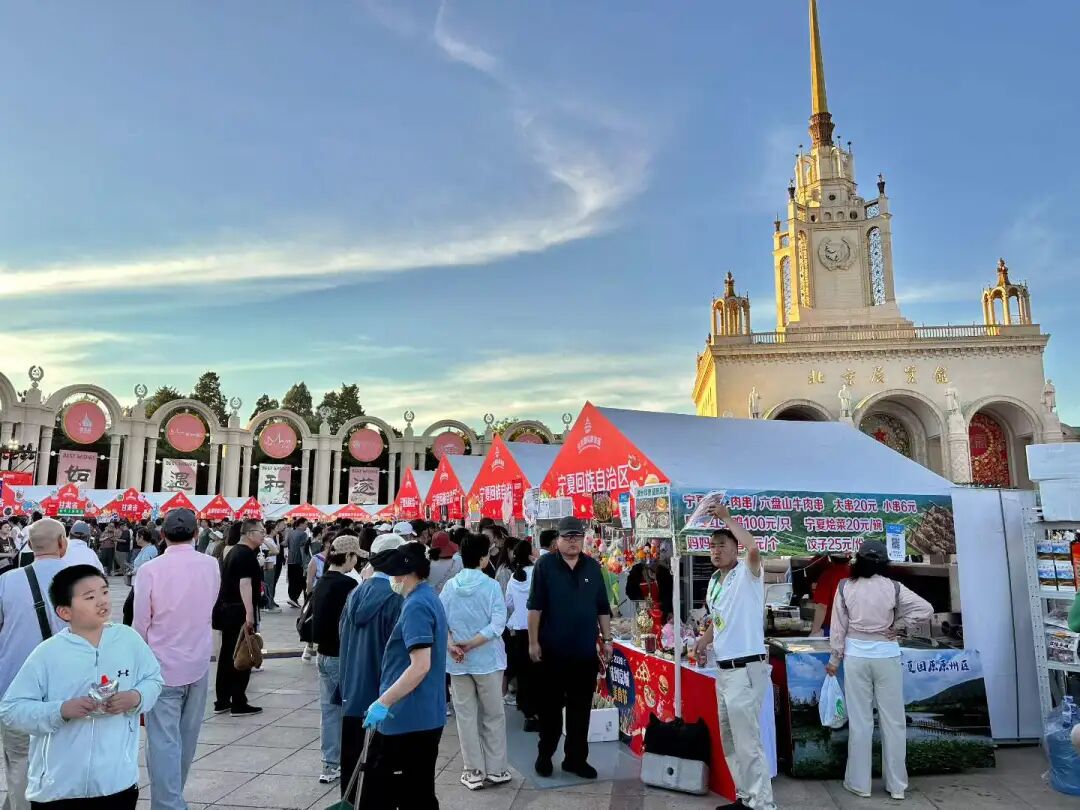
As soon as you enter the west entrance, you see the Ningxia stalls. From inside to outside, there is Yuanzhou Impression Guyuan Taste from Moshikou Street in Shijingshan, Baicao Tan Lamb from Lianhua Bridge, Jingyu Yanyu from Guomao, and the Ningxia Building from Andingmen.
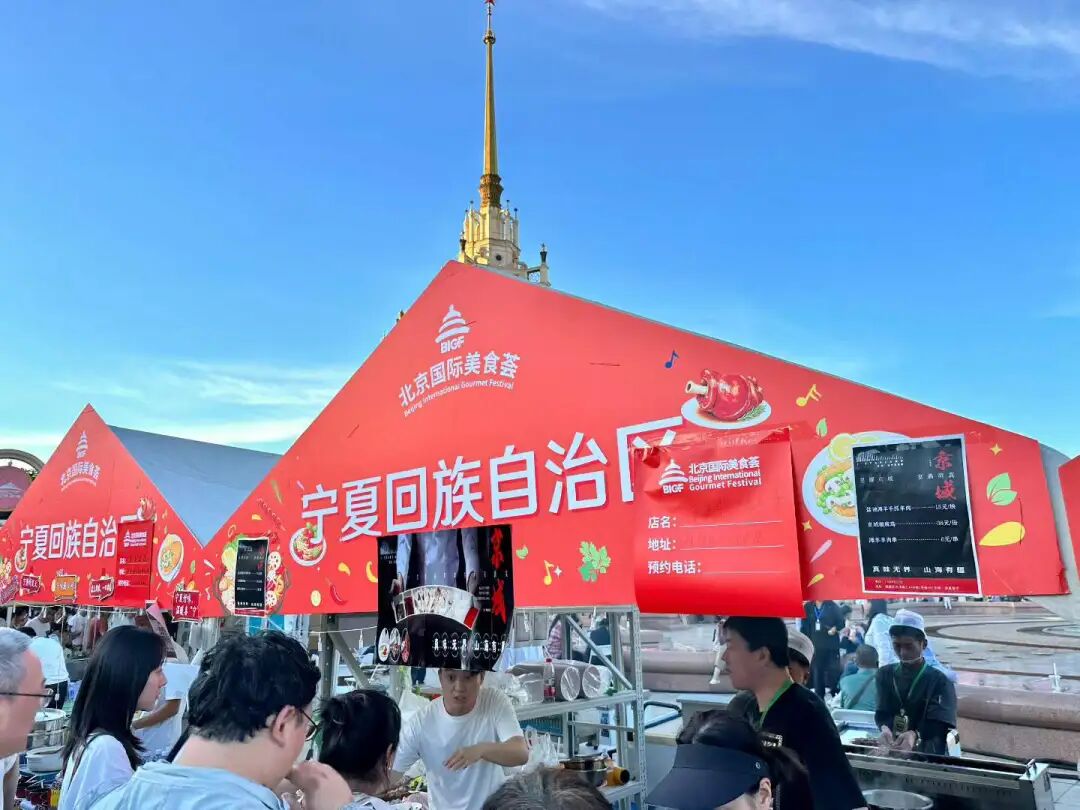
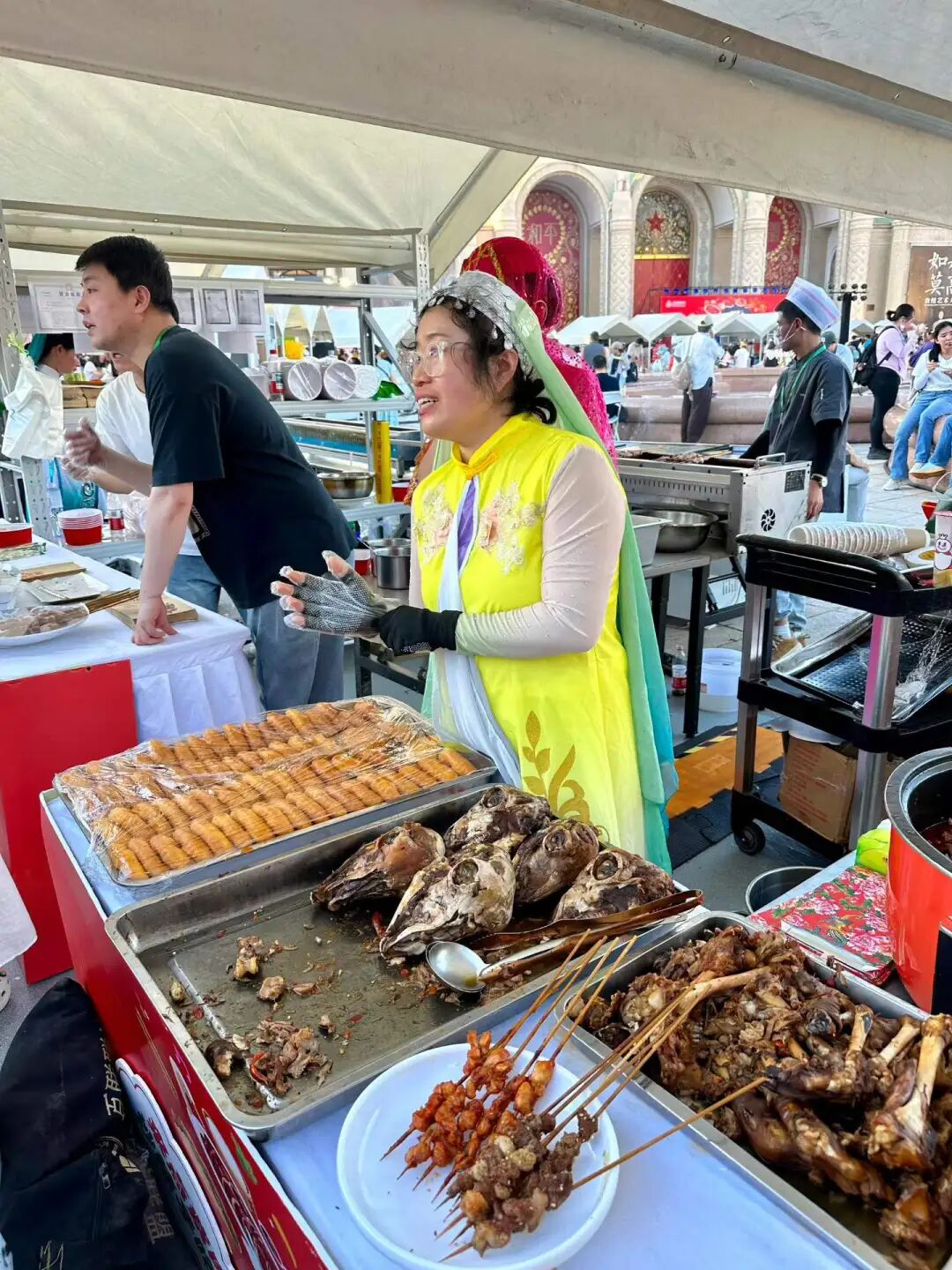
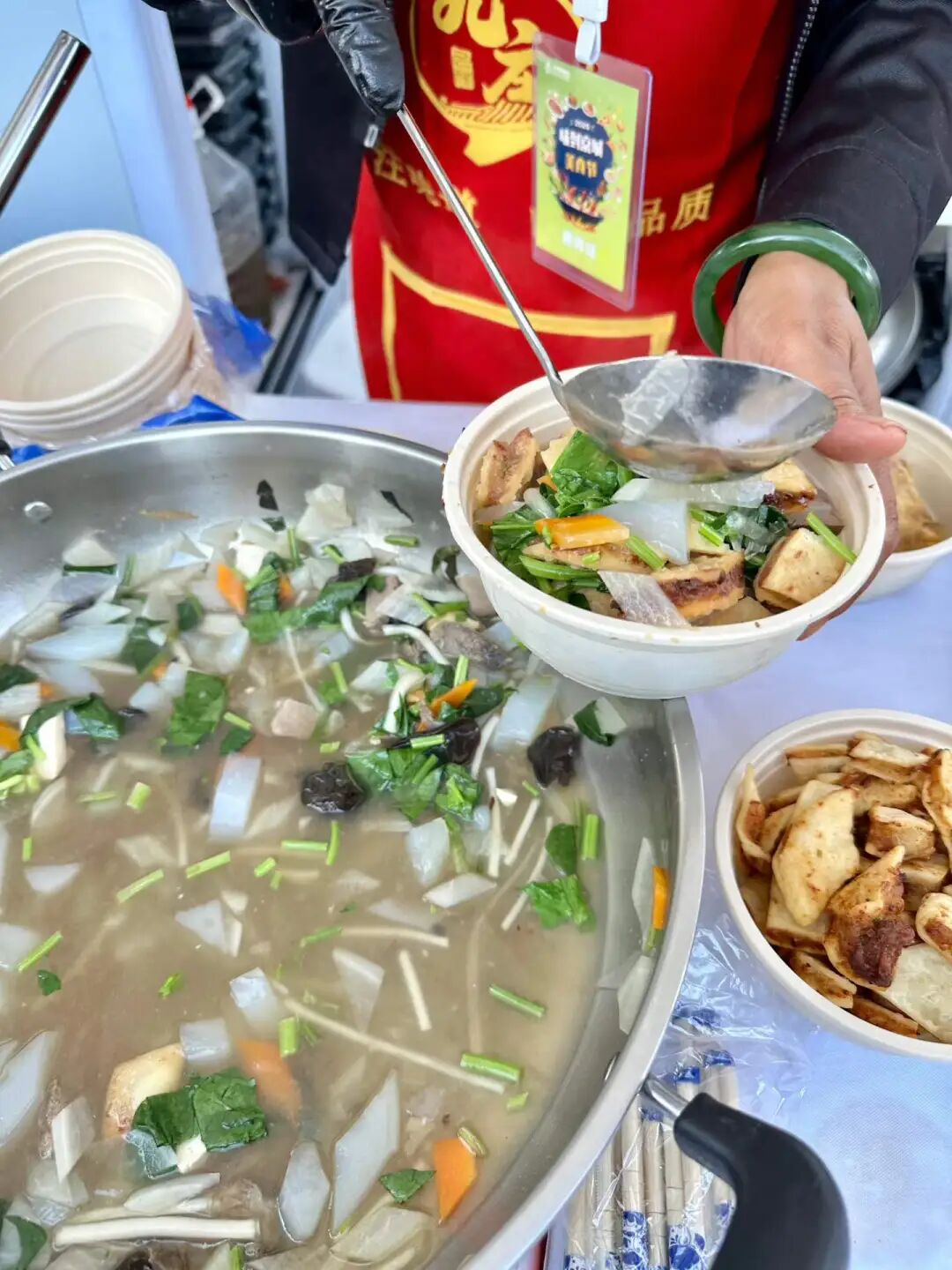
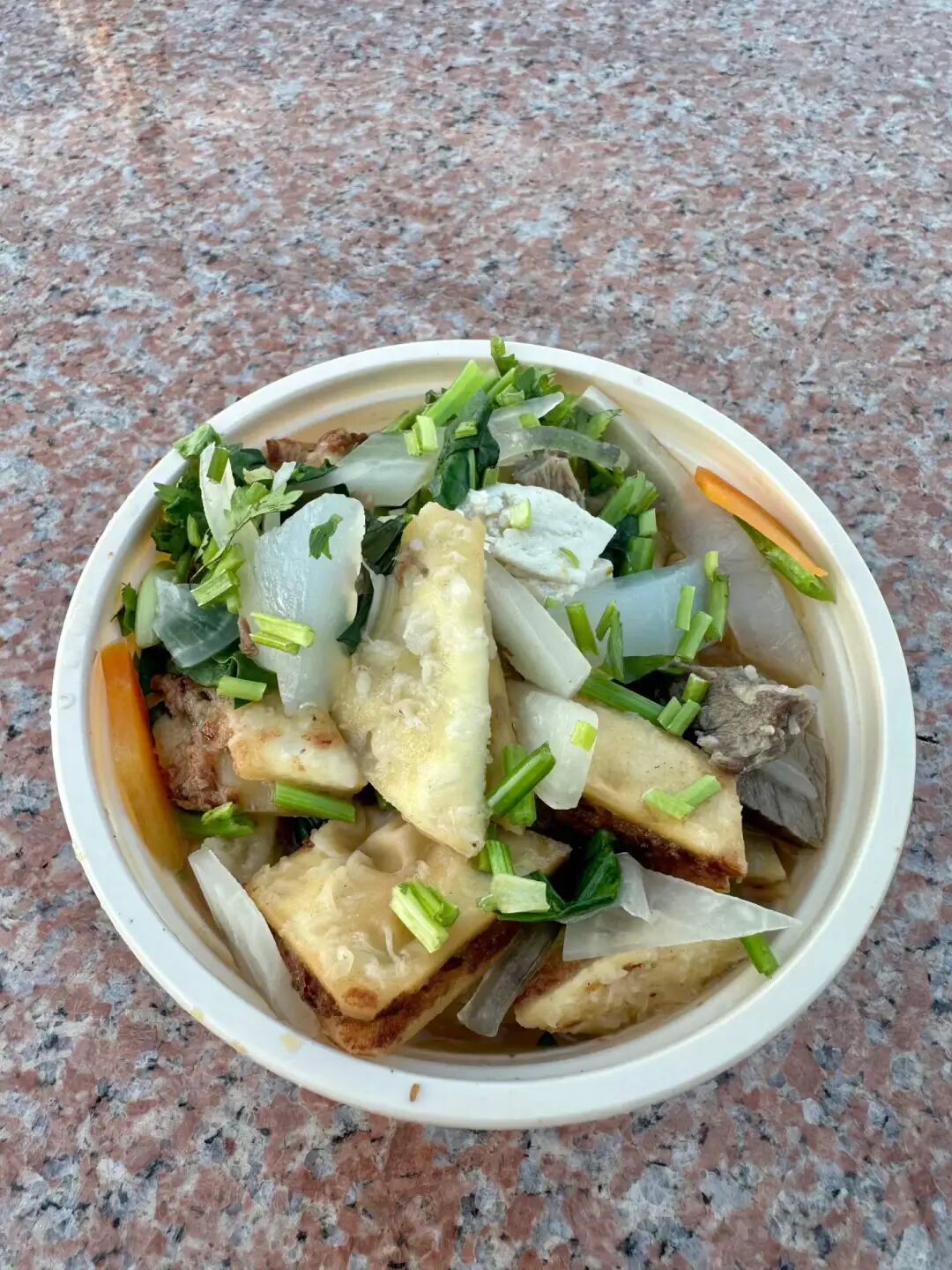
I did not expect to find Guyuan food here! We tried the Guyuan specialty stewed snacks (huixiaochi), which is one of the ten classic bowls of the Hui Muslims in Guyuan. This is similar to the noodle soup (fentang) of Northwest China, which is usually cooked in a big pot during dry, cold weather and eaten with fried dough (youxiang).
The core of Guyuan stewed snacks is egg-stuffed meat slices (jiaban), meatballs, and mung bean jelly (liangfen), all stewed together with a rich, fresh broth and vegetables. However, this stall did not have meatballs; they used egg-stuffed meat slices and meat slices instead. Egg-stuffed meat slices are made by mixing eggs, starch, and flour into a batter, spreading it thin, sandwiching it with lamb filling, steaming it, and cutting it into diamond-shaped pieces. They are soft and chewy with a meaty aroma, and you can add side dishes like wood ear mushrooms, vermicelli, tofu, and spinach.
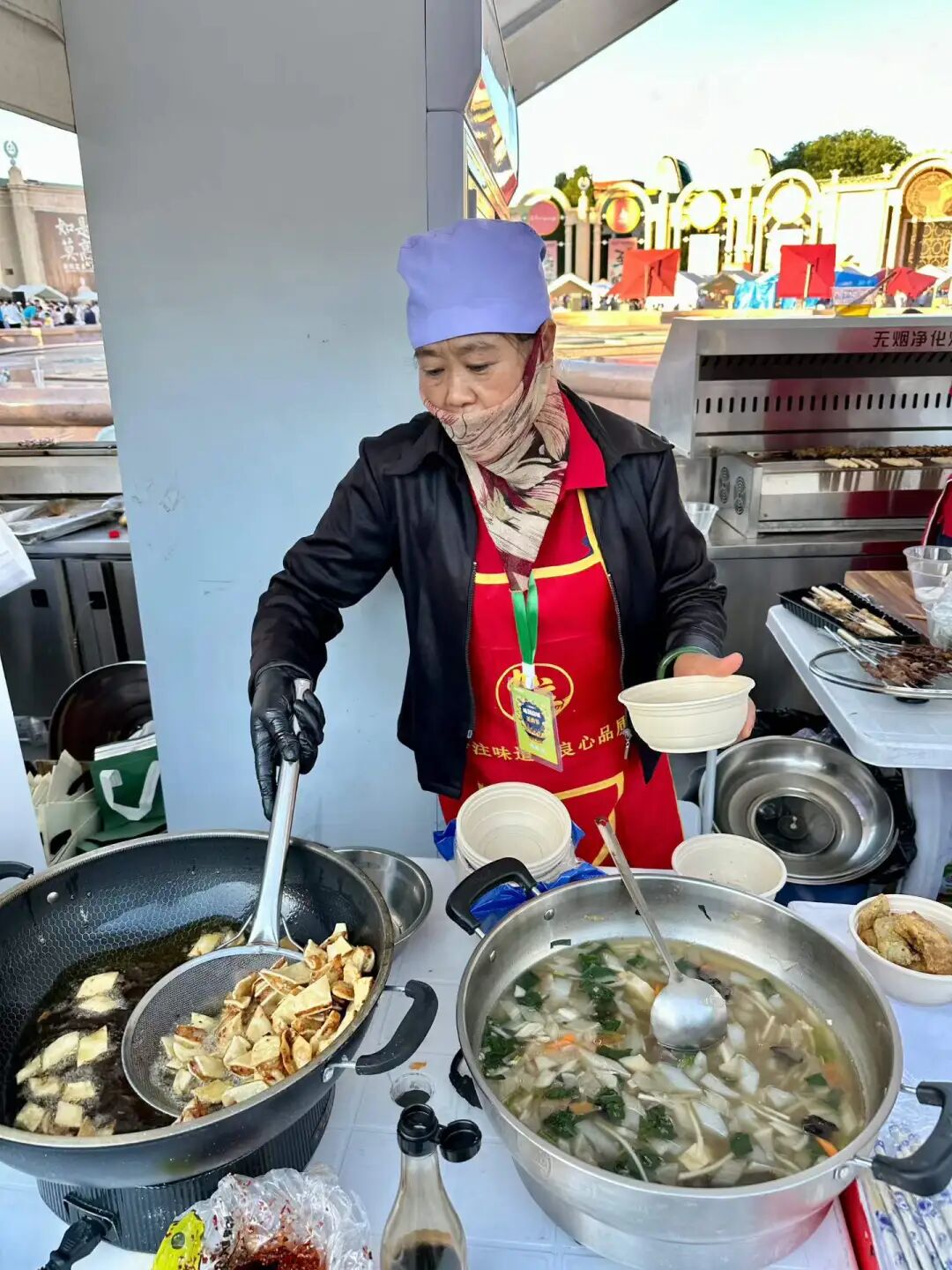
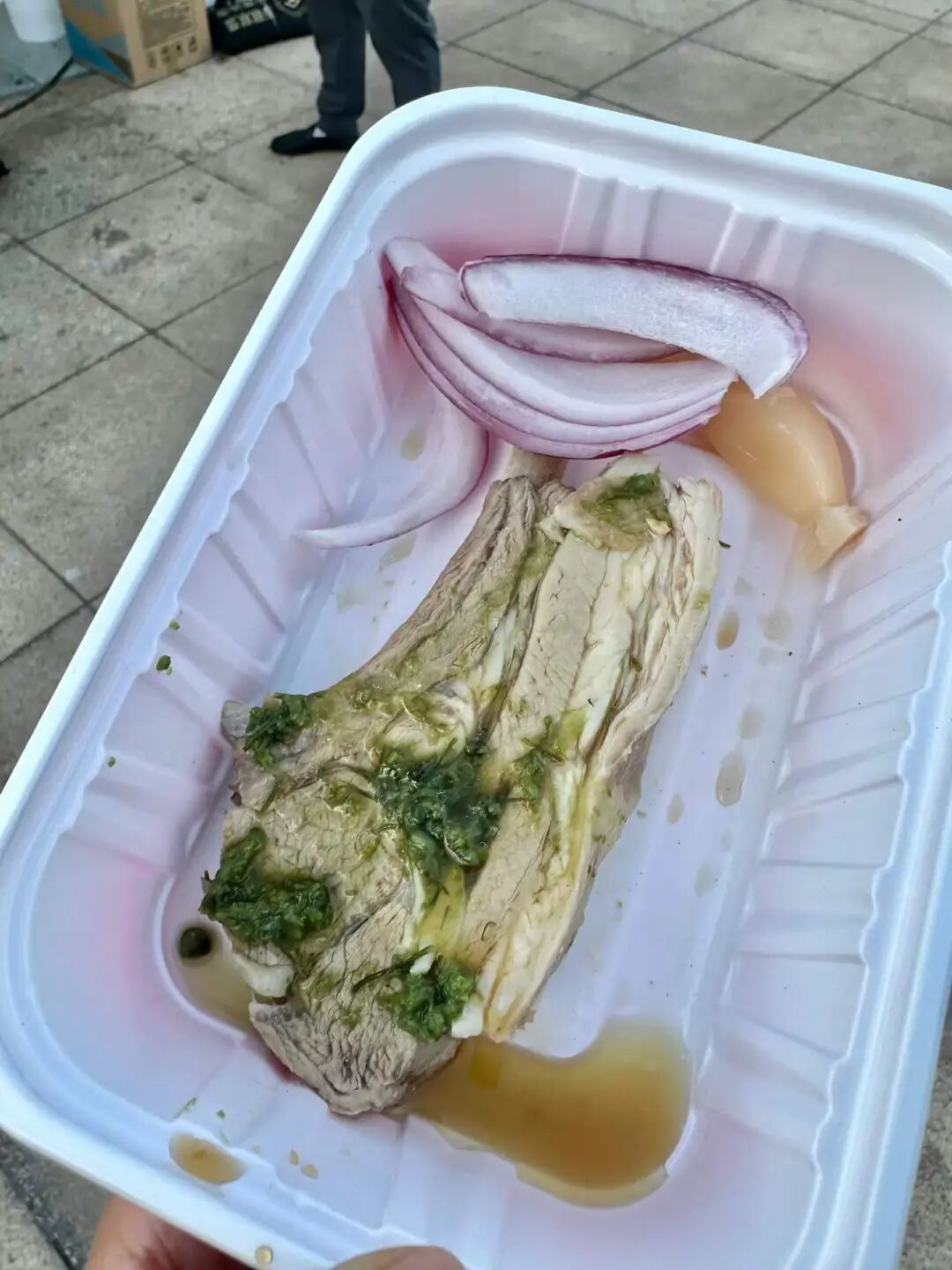
I then bought some hand-grabbed meat (shouzhuarou) and served it with chive flower sauce, onions, and sweet garlic. It tasted pretty good.
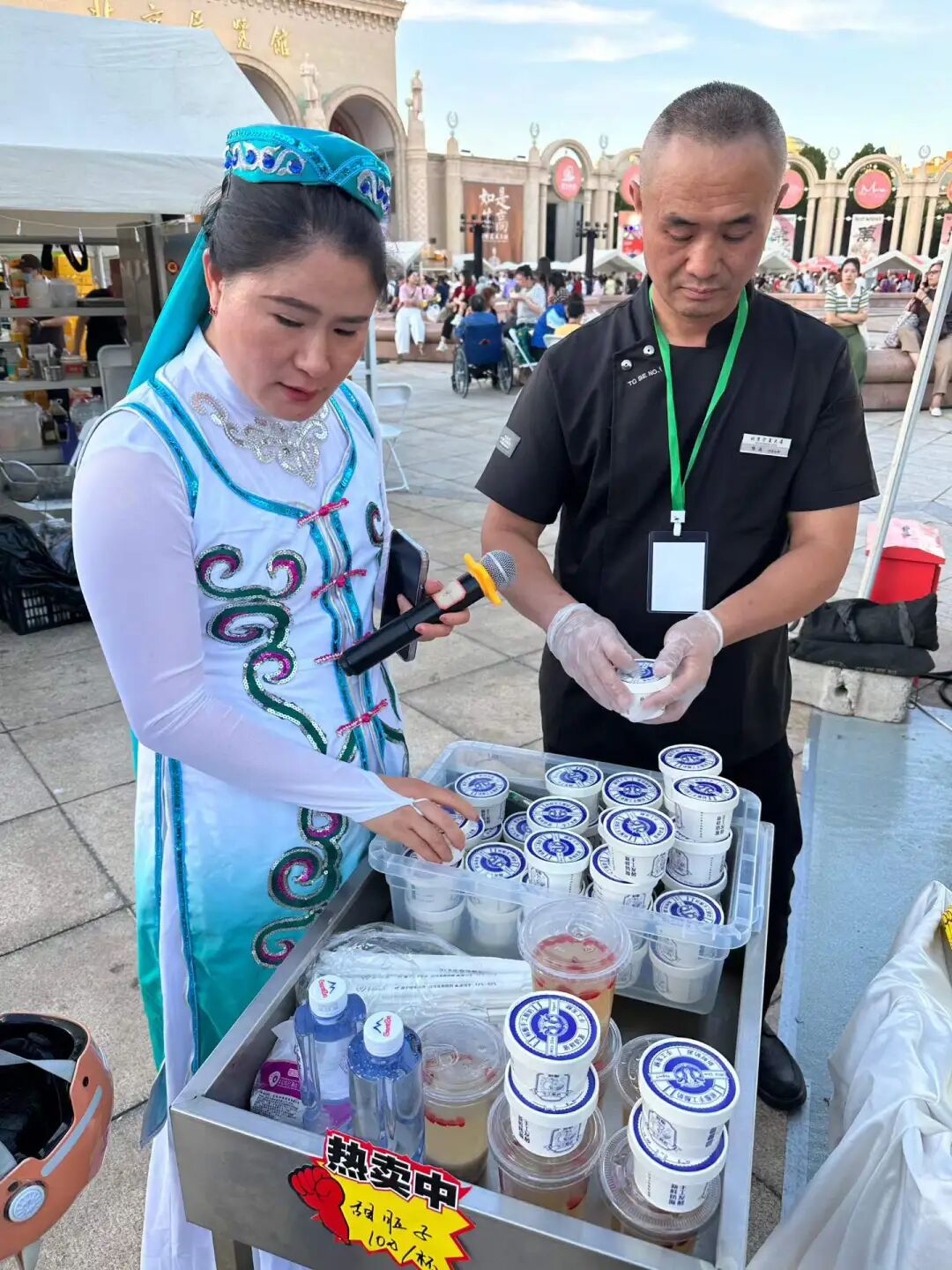
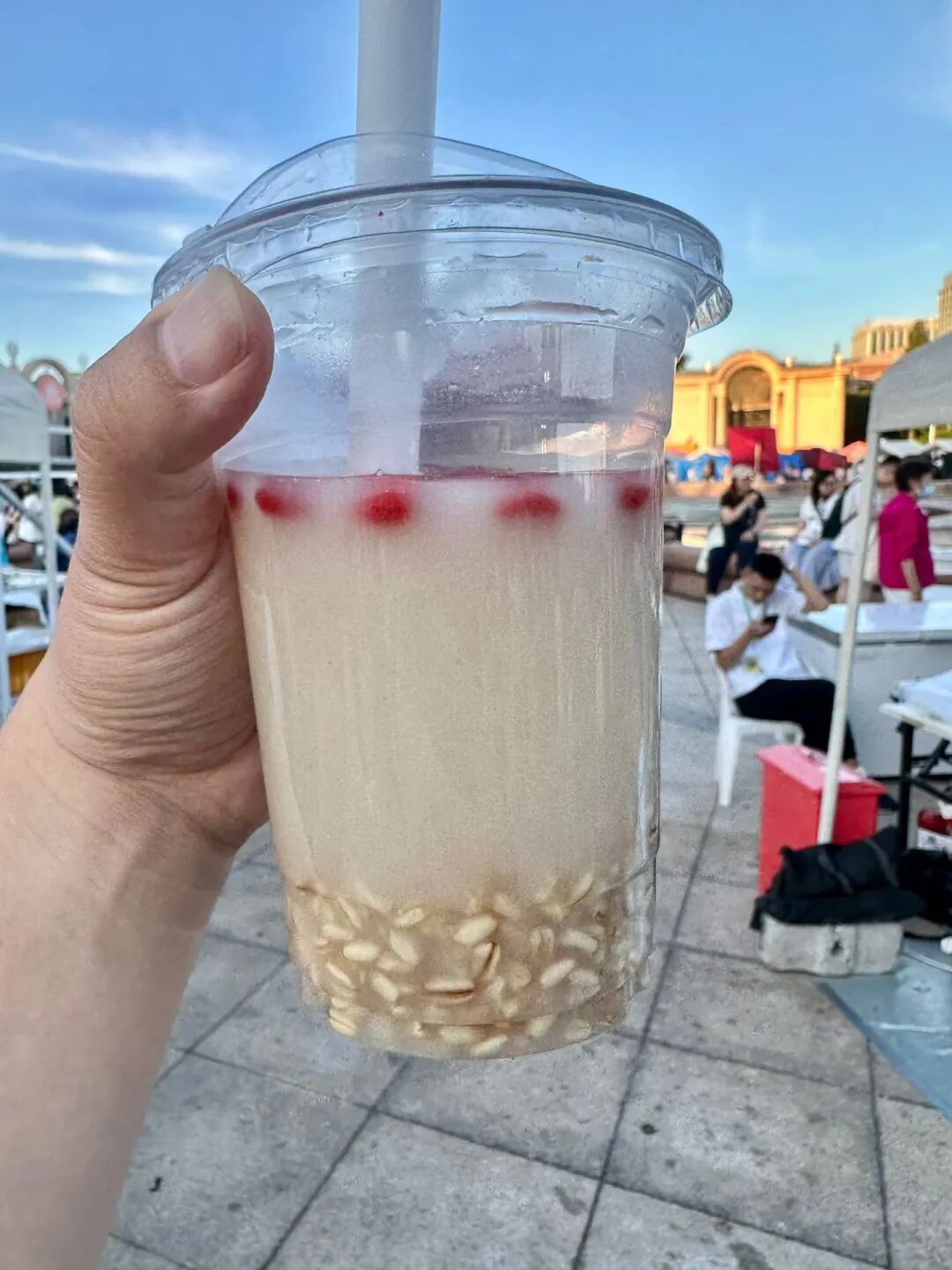
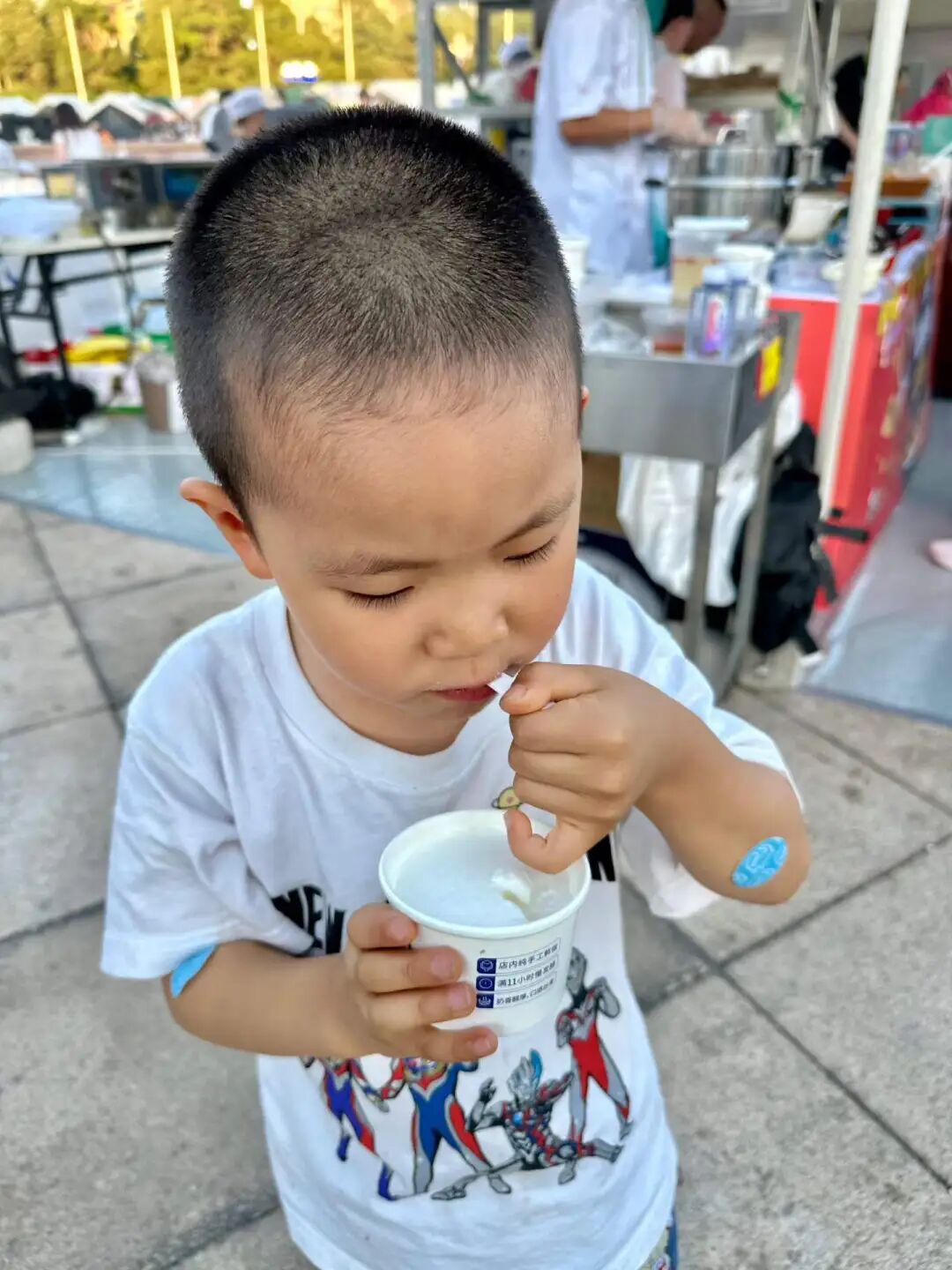
After eating, I bought some fermented oat drink (tianbeizi) and homemade xylitol yogurt at a stall in the Ningxia Building. Drinking tianbeizi in the summer is very refreshing.
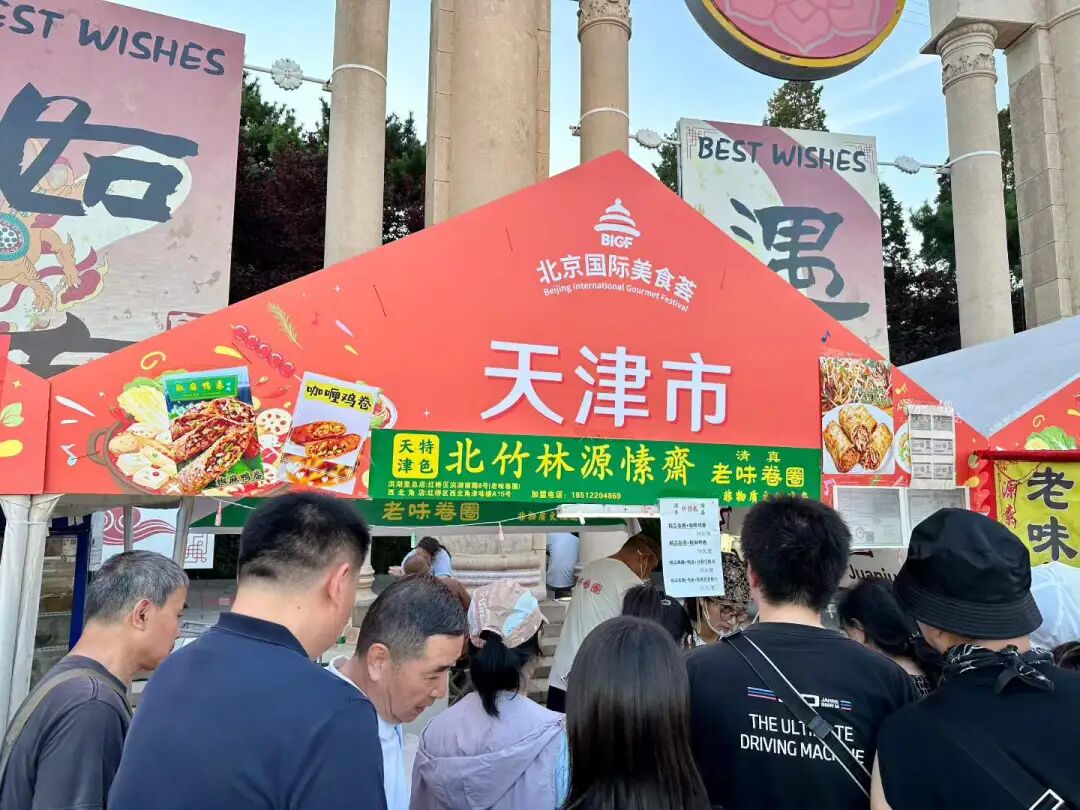
I was pleasantly surprised to find two Hui Muslim snack stalls from Tianjin at this Beijing International Food Festival held at the Beijing Exhibition Center: Yuansuzhai Old-Style Fried Rolls (juanquan) from Honghuli and Chatang Hui from the Northwest Corner.
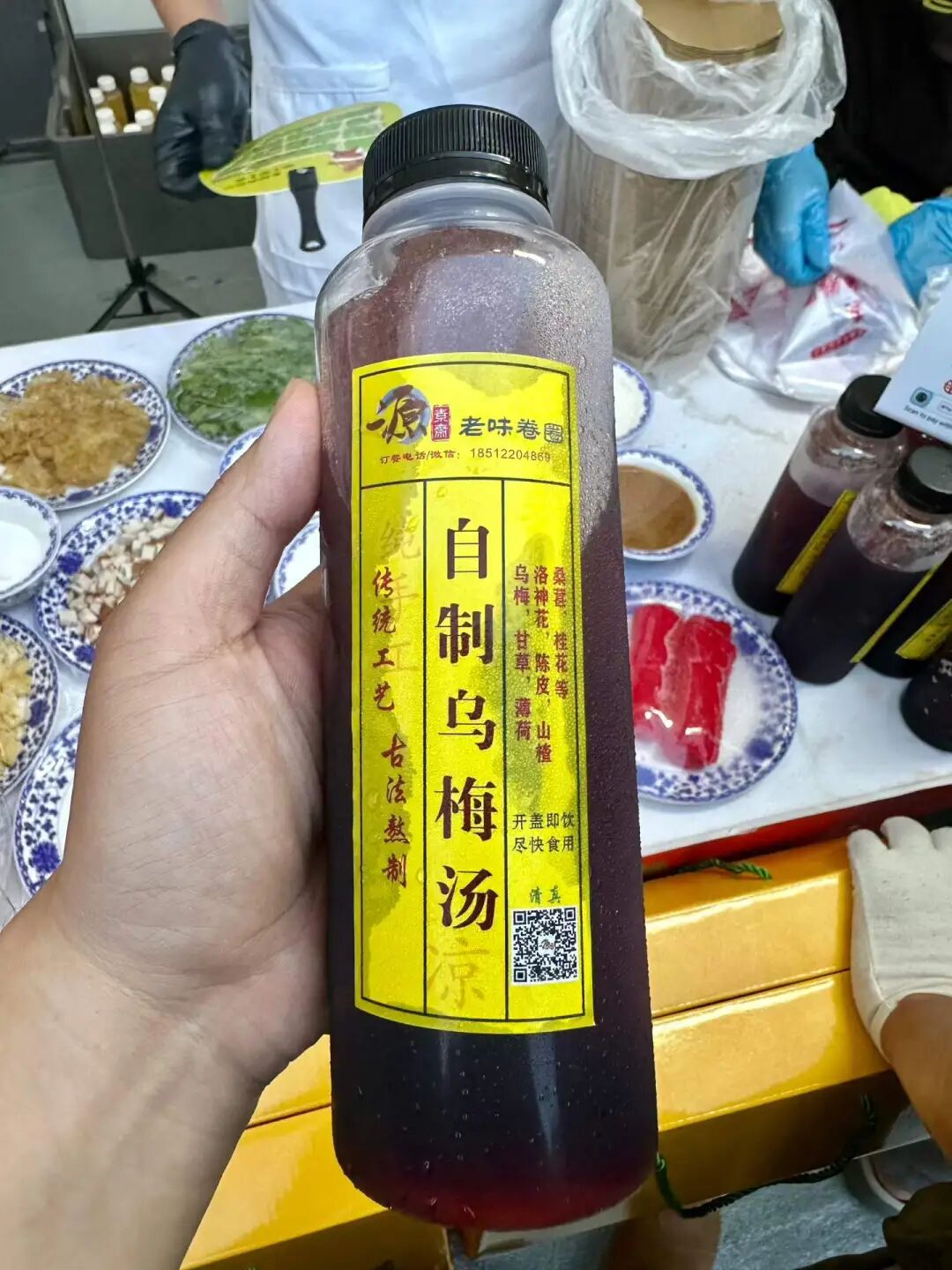
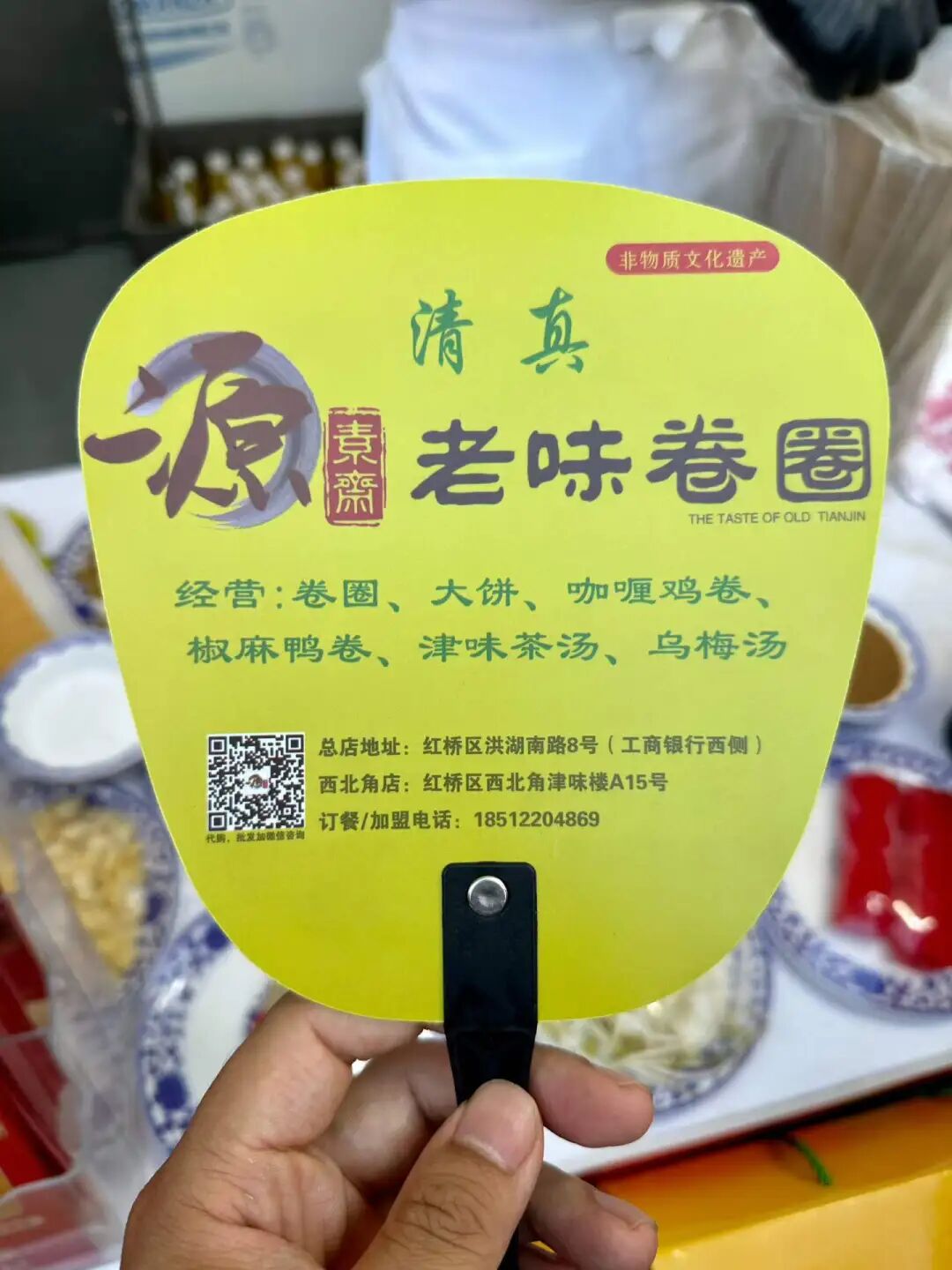
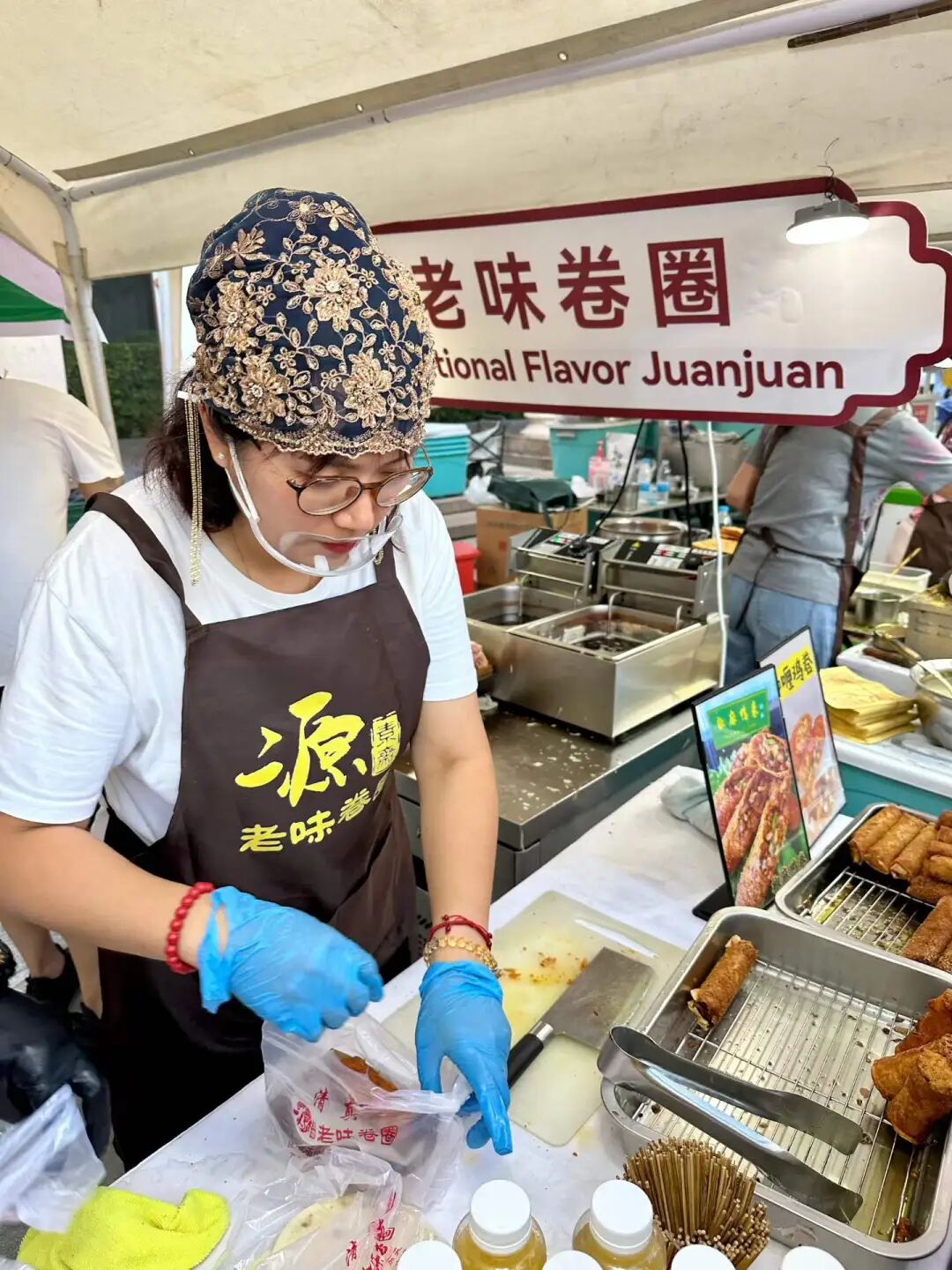
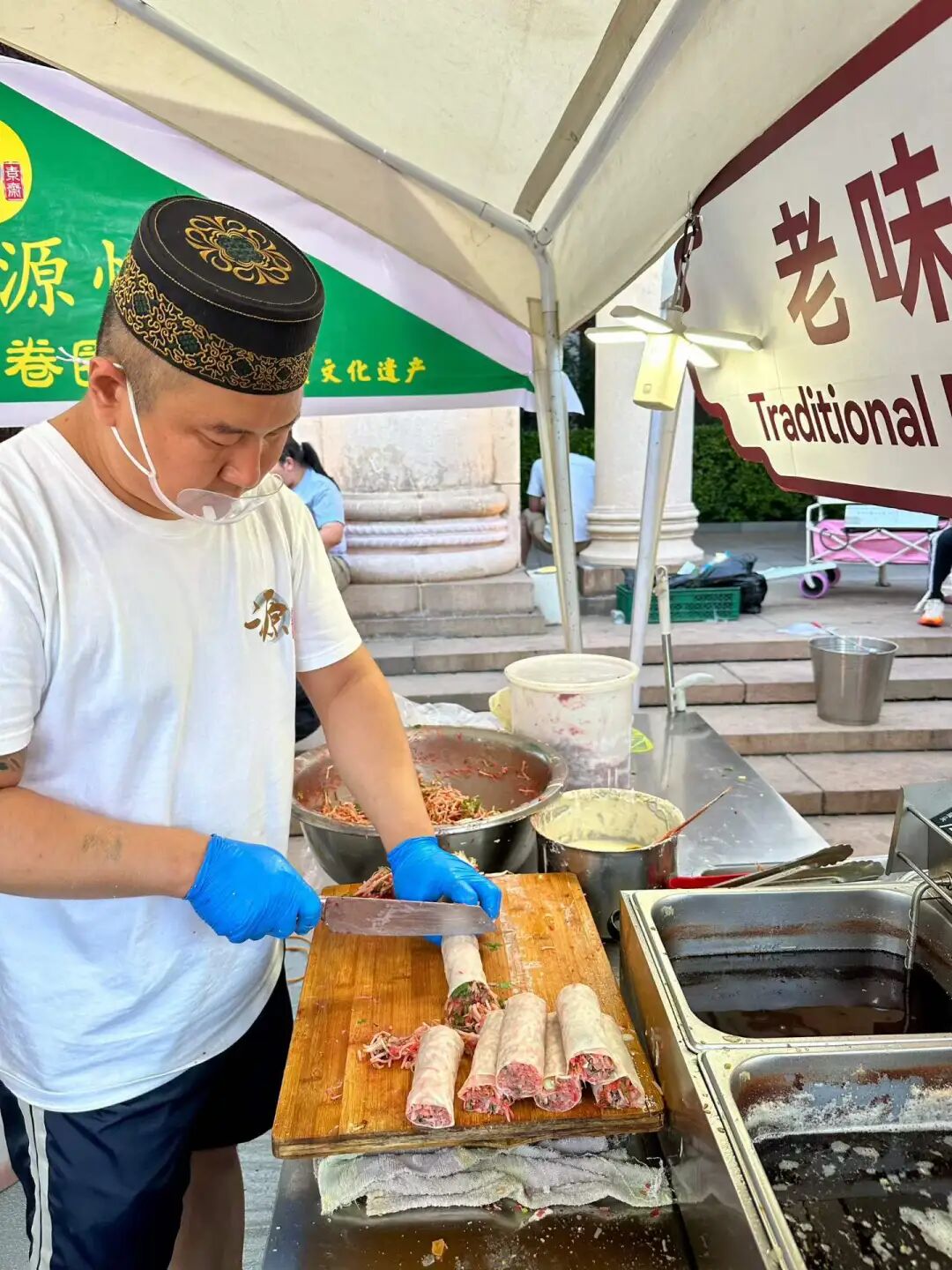
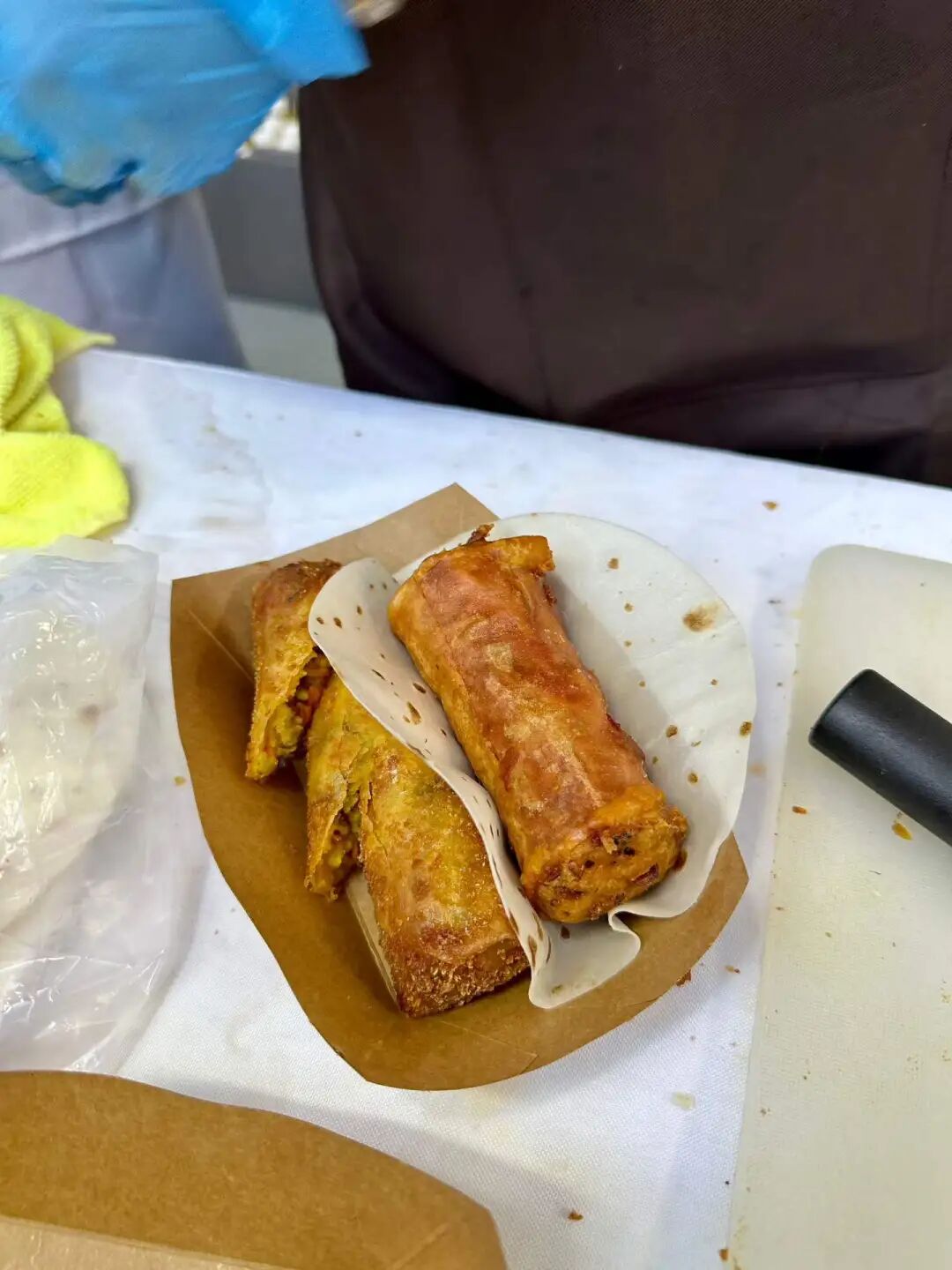
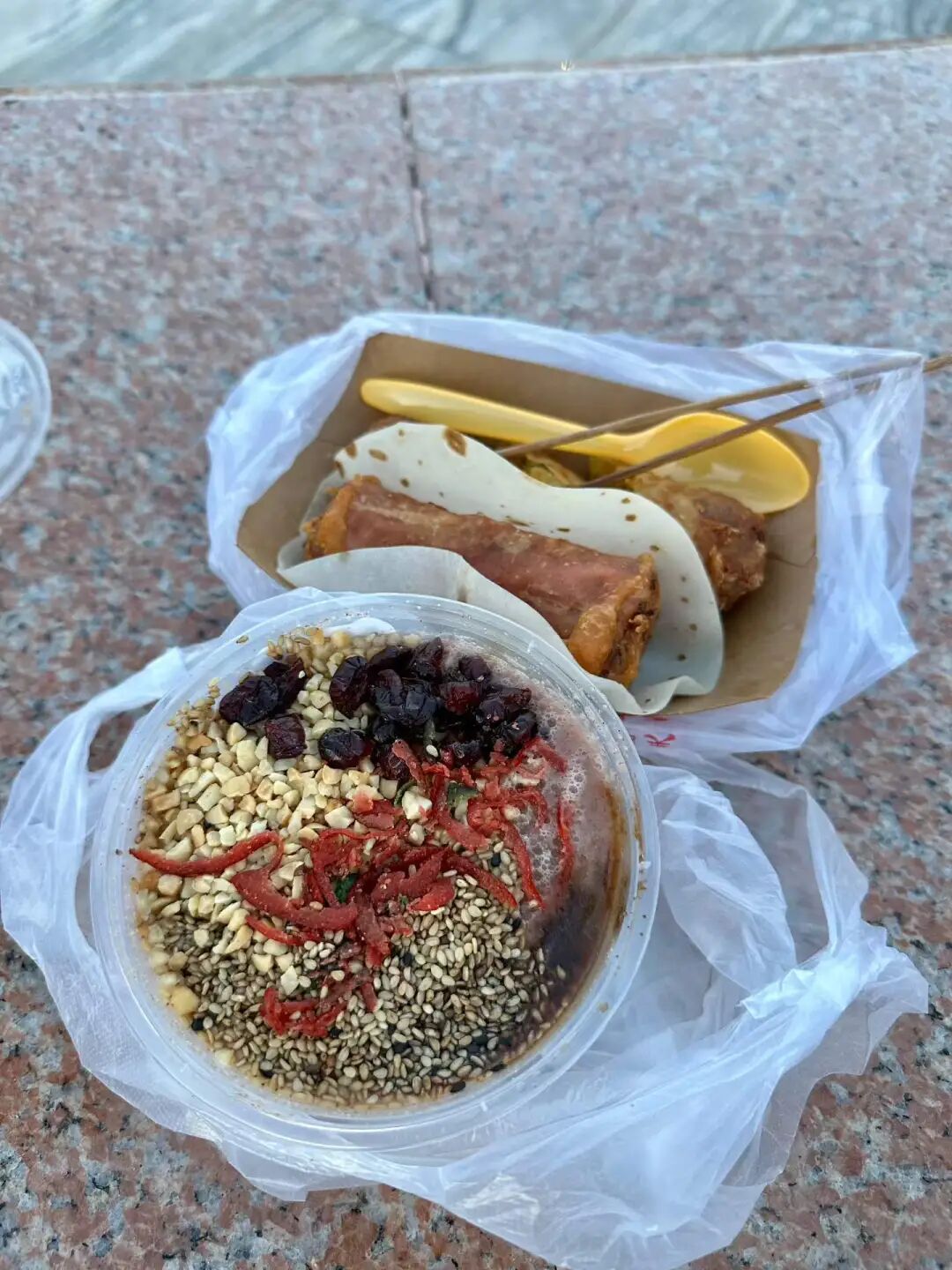
Yuansuzhai sells old-style fried rolls, curry chicken rolls, and peppercorn duck rolls, all served with homemade dark plum juice (wumeitang). The old-style fried rolls are vegetarian and filled with bean sprouts. The curry chicken roll skin is thicker and crispier, tasting a bit like a South Asian samosa. Traditionally, these rolls should be wrapped in a large flatbread (dabing), but they provided small thin pancakes instead so festival guests could try more varieties. I thought that was a great idea. I really love their homemade dark plum juice. I bought some when I visited Honghuli last time. It contains mulberries, osmanthus, roselle, dried tangerine peel, hawthorn, dark plum, licorice, and mint. It is very cooling and quenches thirst.
Yuansuzhai has a hundred-year history and has been passed down through four generations. They started selling fried rolls at a stall in North Zhulin near the Sancha River estuary in the 1920s. North Zhulin was originally a low-lying river beach along the Ziya River. It became solid land in the late Qing Dynasty. By the late Qing and Republican eras, it became a settlement for fishermen, boatmen, and dock workers living in makeshift shelters. Many Hui Muslim snack stalls gathered there, selling items like fried rolls, savory crepe strips (guobacai), and fried cakes (zhagao). The Tongyizhuang Mosque in North Zhulin was built during the Guangxu reign of the Qing Dynasty. It is 150 years old and is the only historical building preserved after the North Zhulin area was demolished.
In the late 1980s, Tianjin began large-scale urban renewal. Old districts like North Zhulin, Tongyizhuang, Xiyuzhuang, Hebei Street, and Beidaguan were demolished, and residents were relocated to Jiayuanli in the Beichen District. In the early 1990s, Yuansuzhai moved to the Jiayuanli commercial street along with the demolition of Beizhulin, becoming a landmark snack spot in Jiayuanli. The Jiayuanli shop closed in 2017, and the fourth-generation owner moved Yuansuzhai again to the Honghuli food street on Honghu South Road, starting with a breakfast cart before opening a formal storefront.
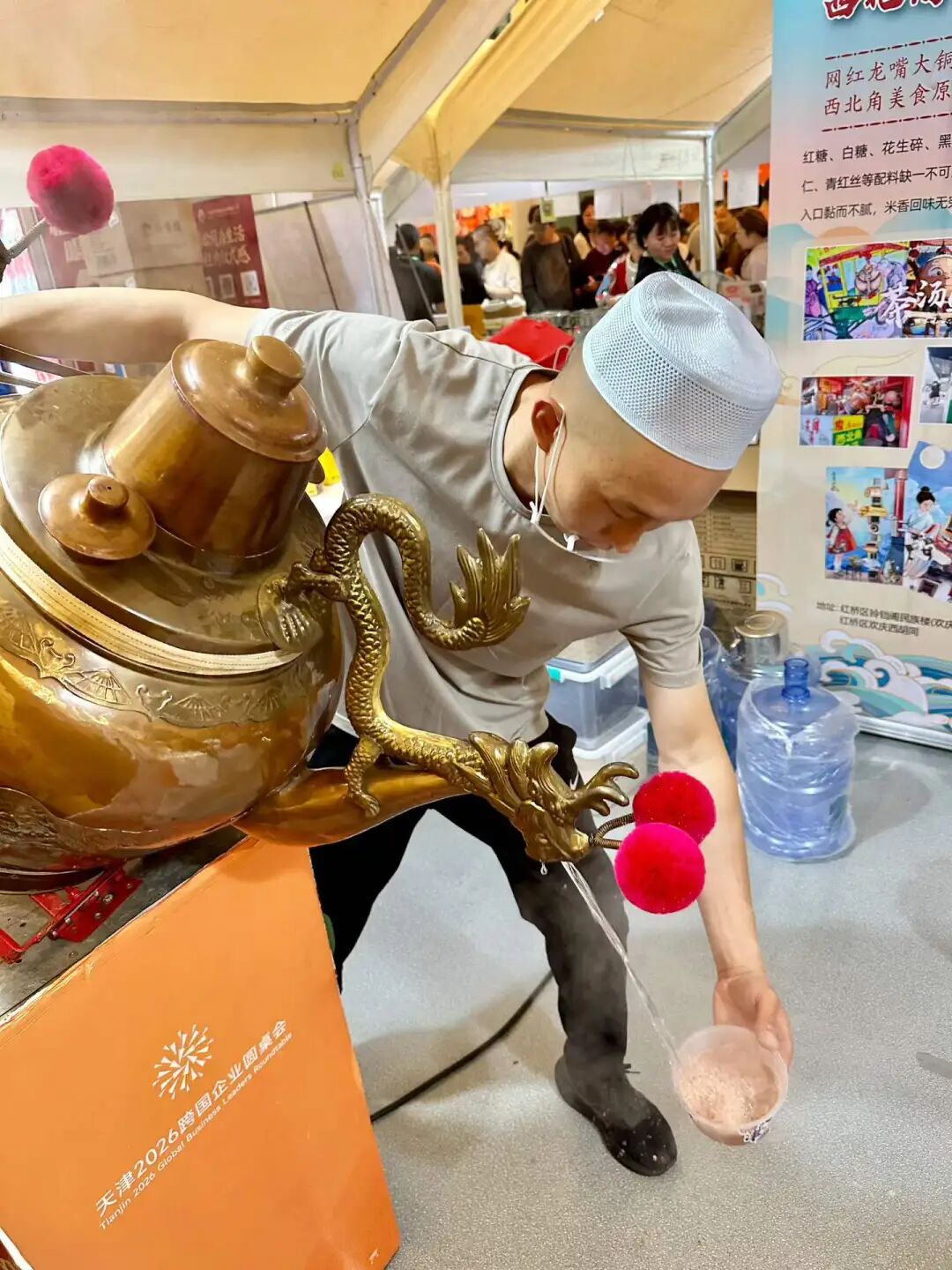
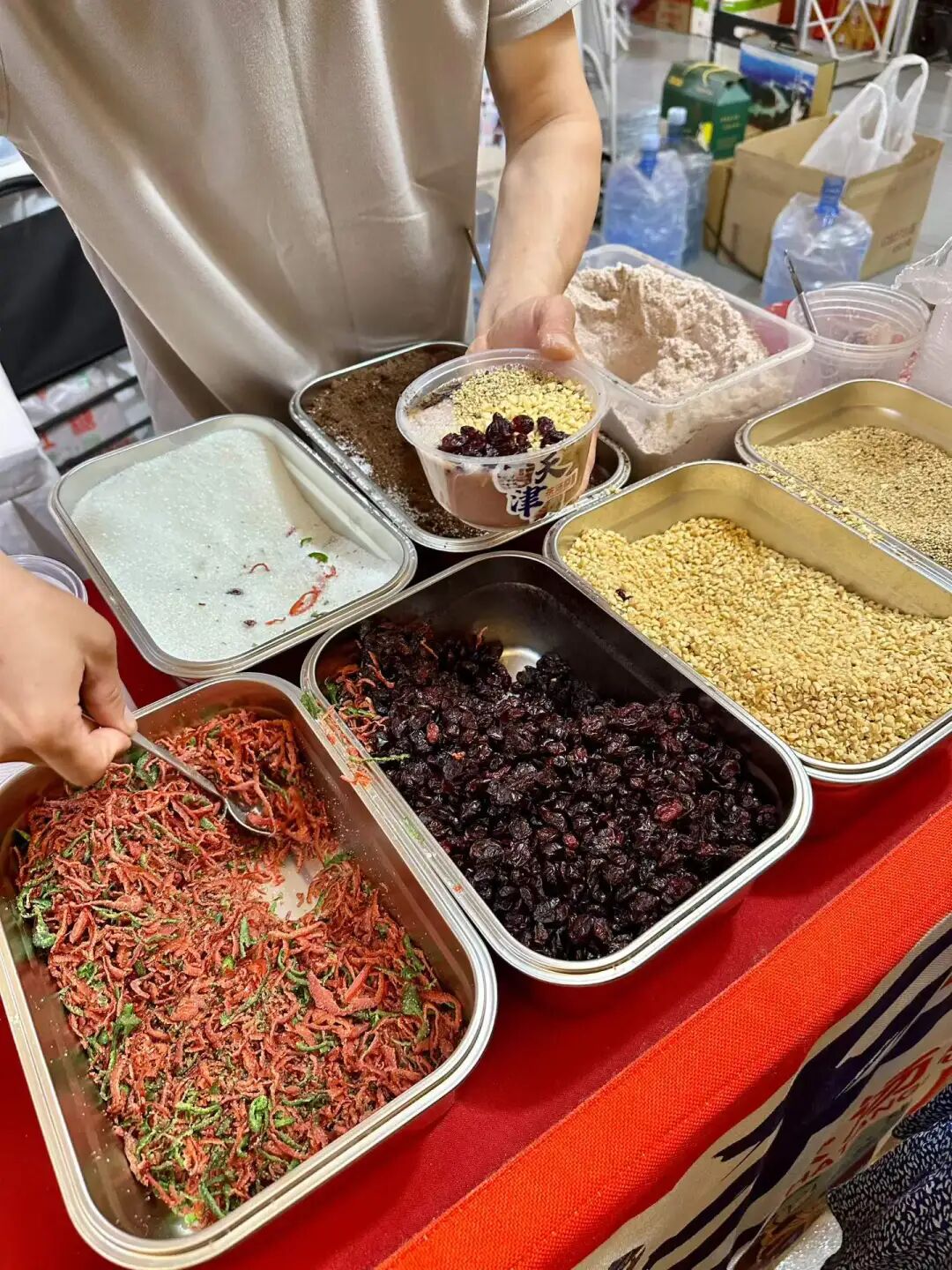
Chatang Hui is an old shop at the entrance of the South Mosque (Nandasi) in the Northwest Corner of Tianjin, with a century of history and four generations of heritage. Chatang (tea soup) first came to Tianjin via the Grand Canal. It was originally made with broomcorn millet flour, but later red sorghum flour was added, giving it a unique red color. Making chatang requires a large dragon-spout copper pot and the 'phoenix three nods' technique, a smooth motion that ensures not a drop spills when pouring. Traditional toppings include brown sugar, white sugar, sesame, crushed peanuts, raisins, and candied fruit shreds (qinghongsi), making it sweet and tangy.
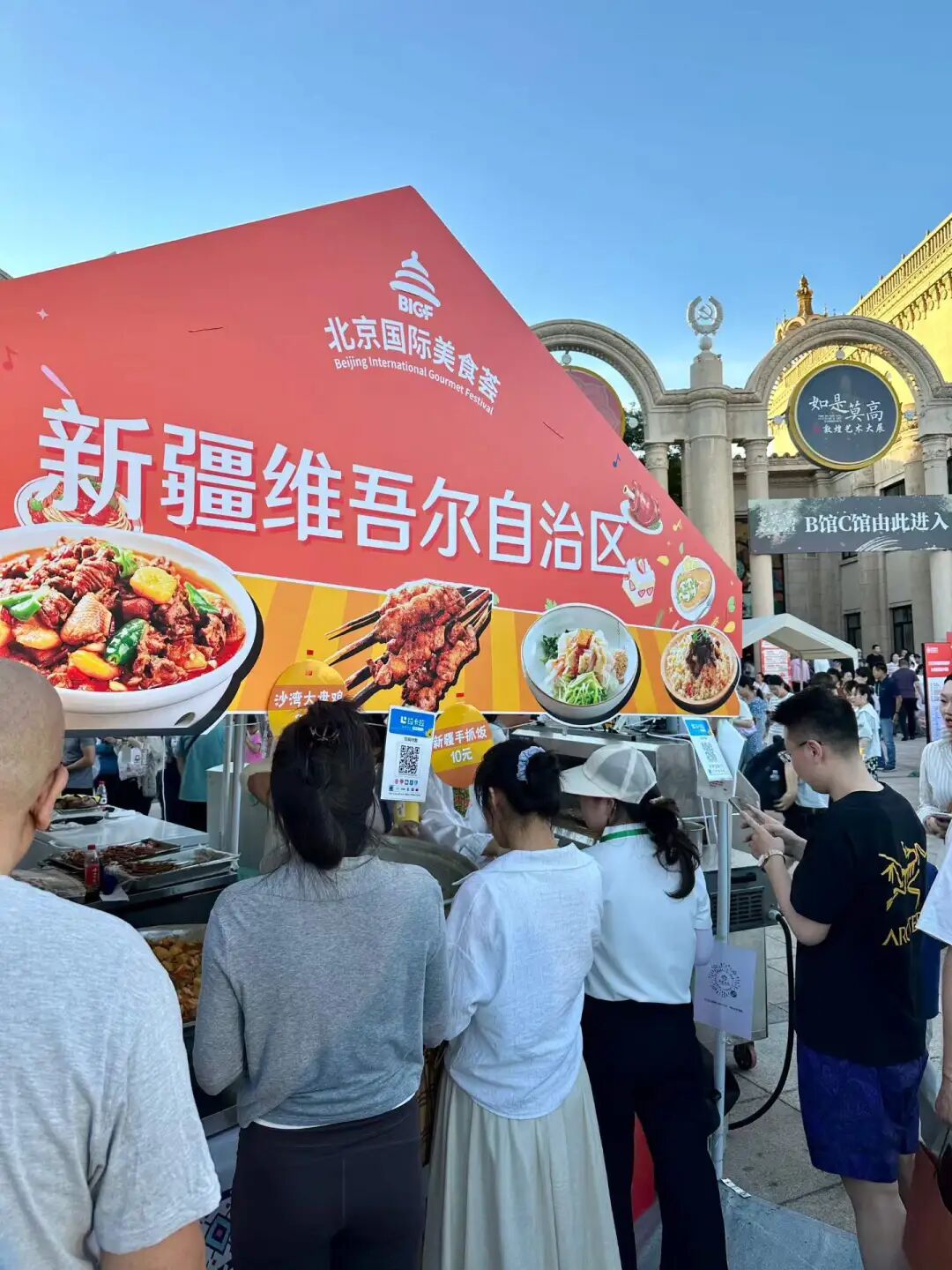
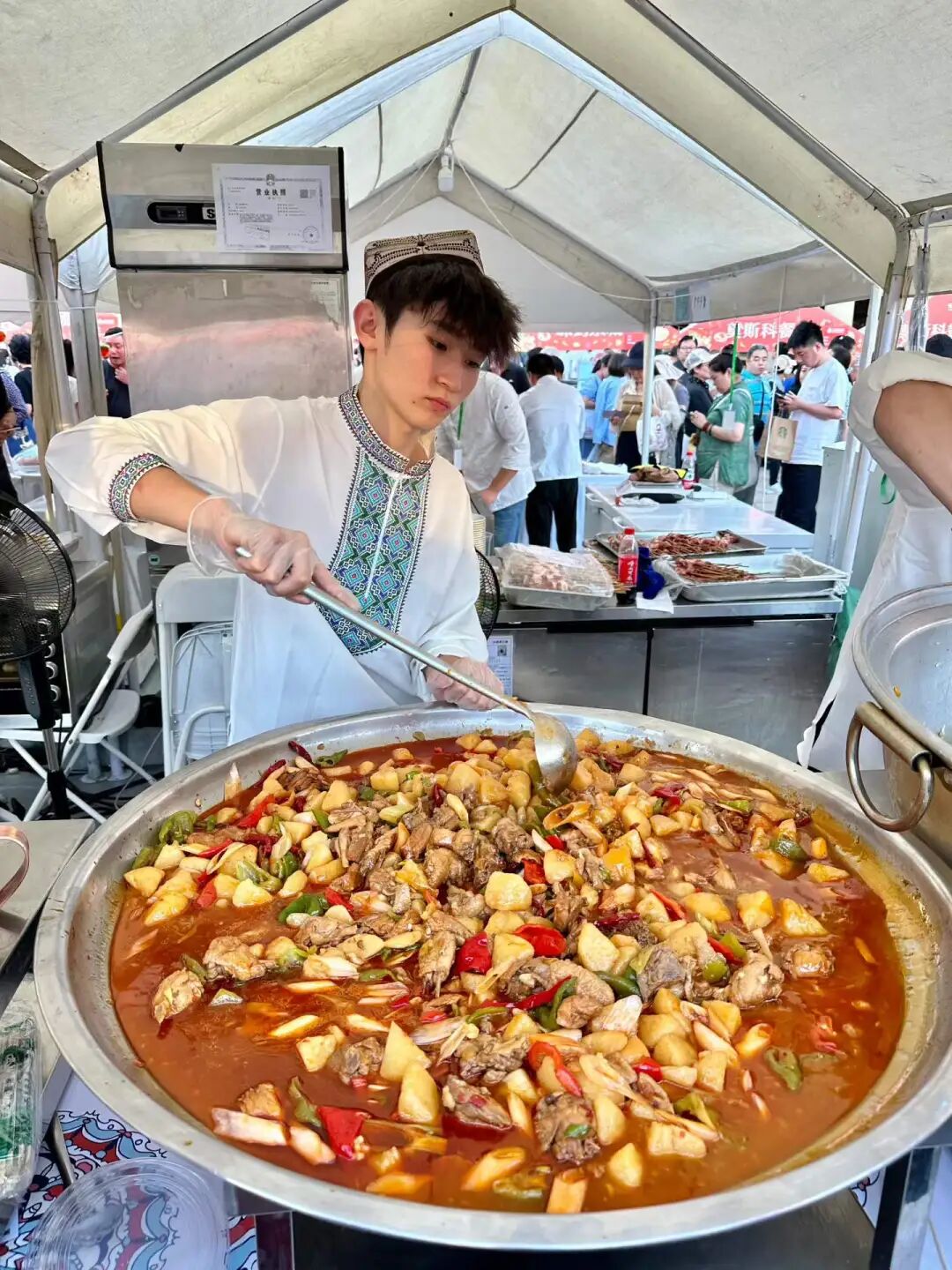
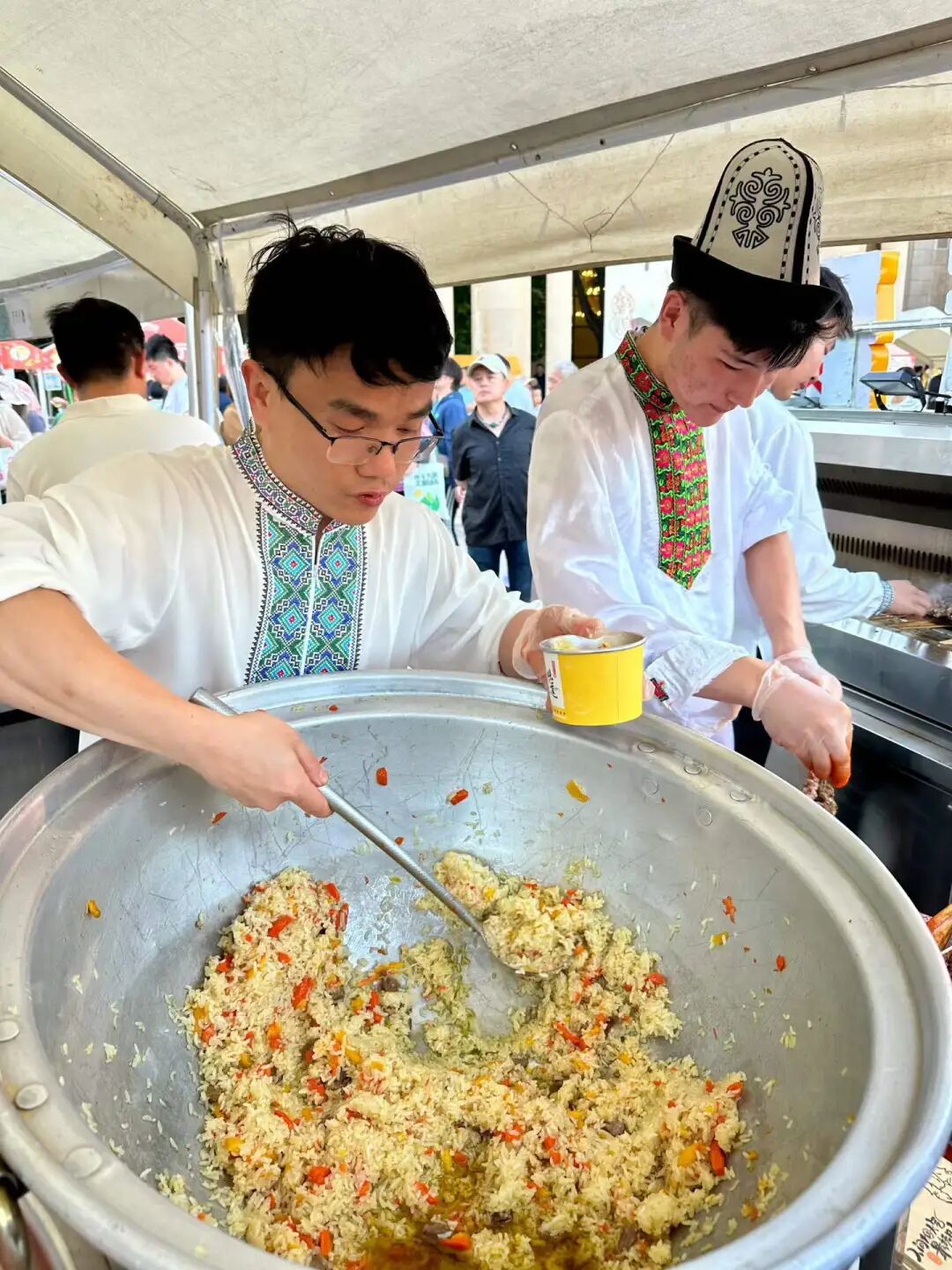
At the Beijing International Food Festival, the Xinjiang stall featuring big plate chicken (dapanji), pilaf (zhuafan), and lamb skewers (yangrouchuan) from the Xinjiang Building is very popular.
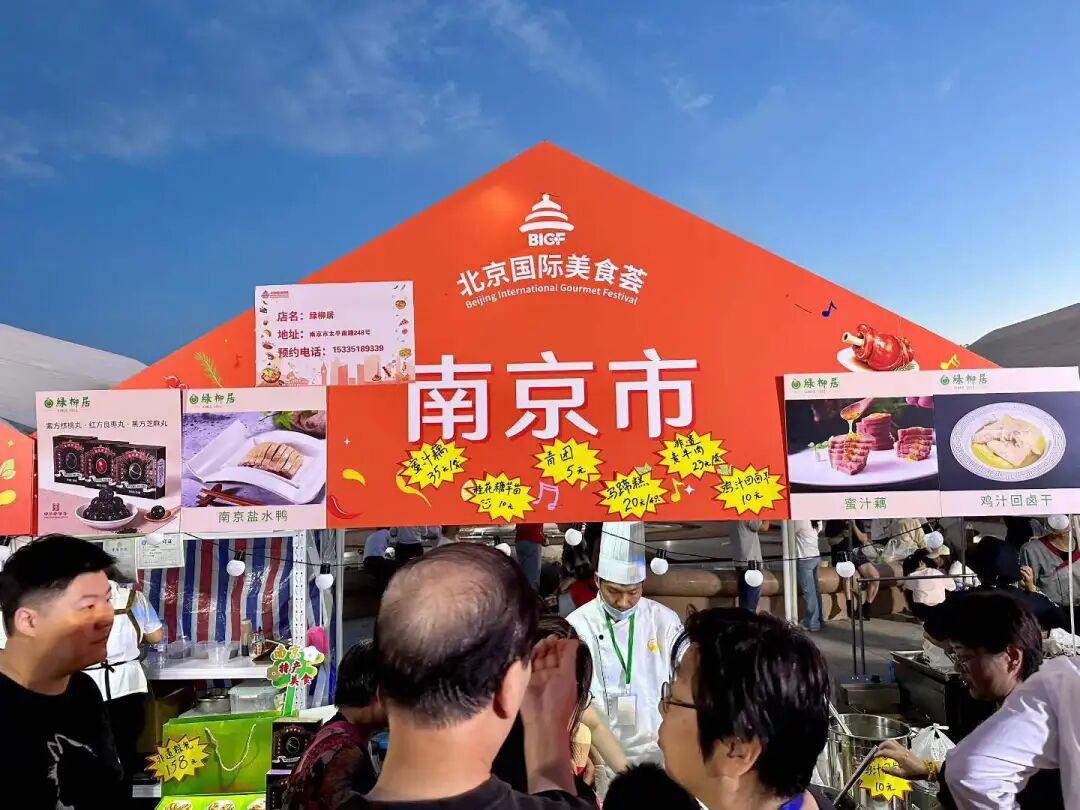
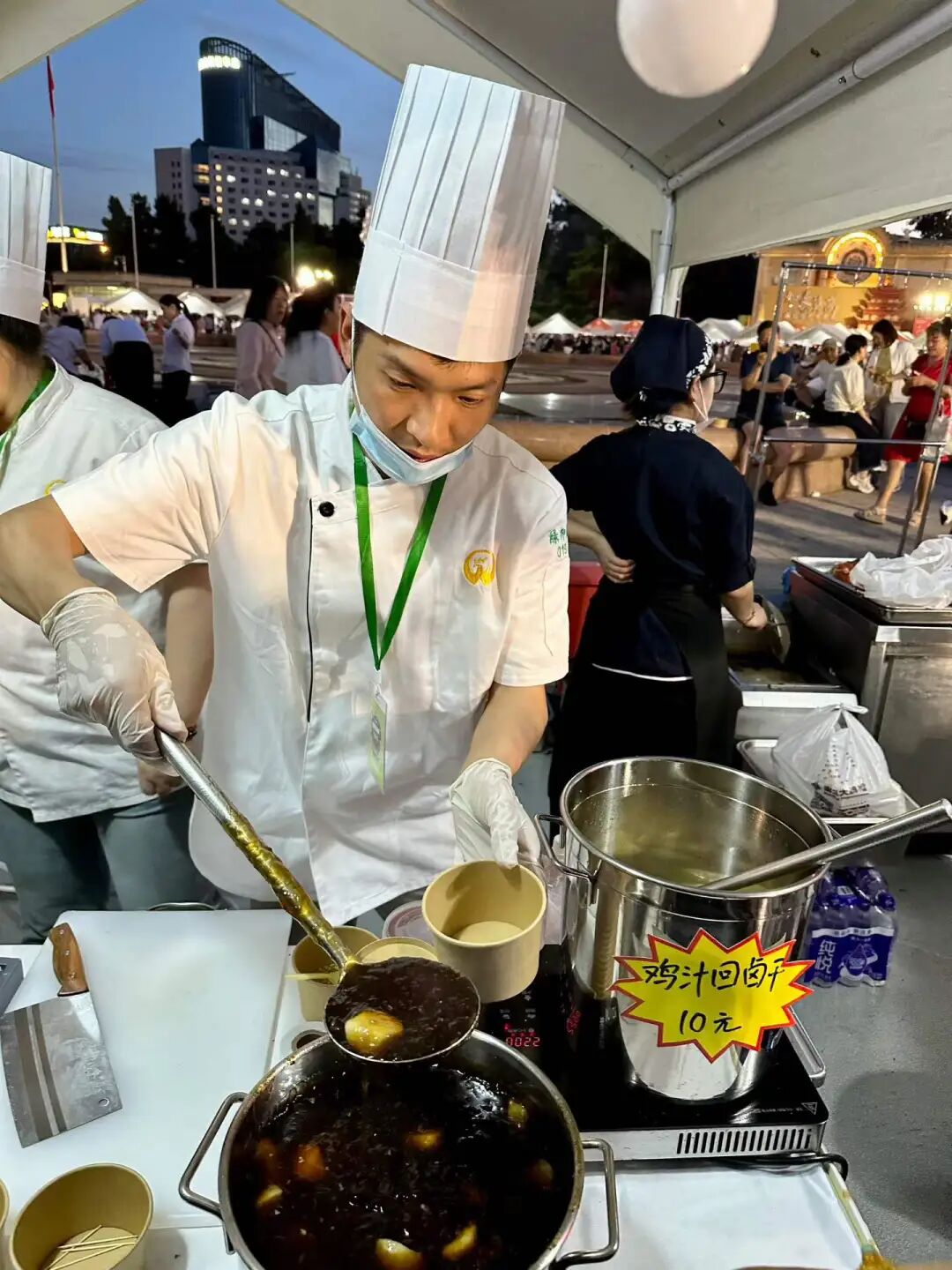
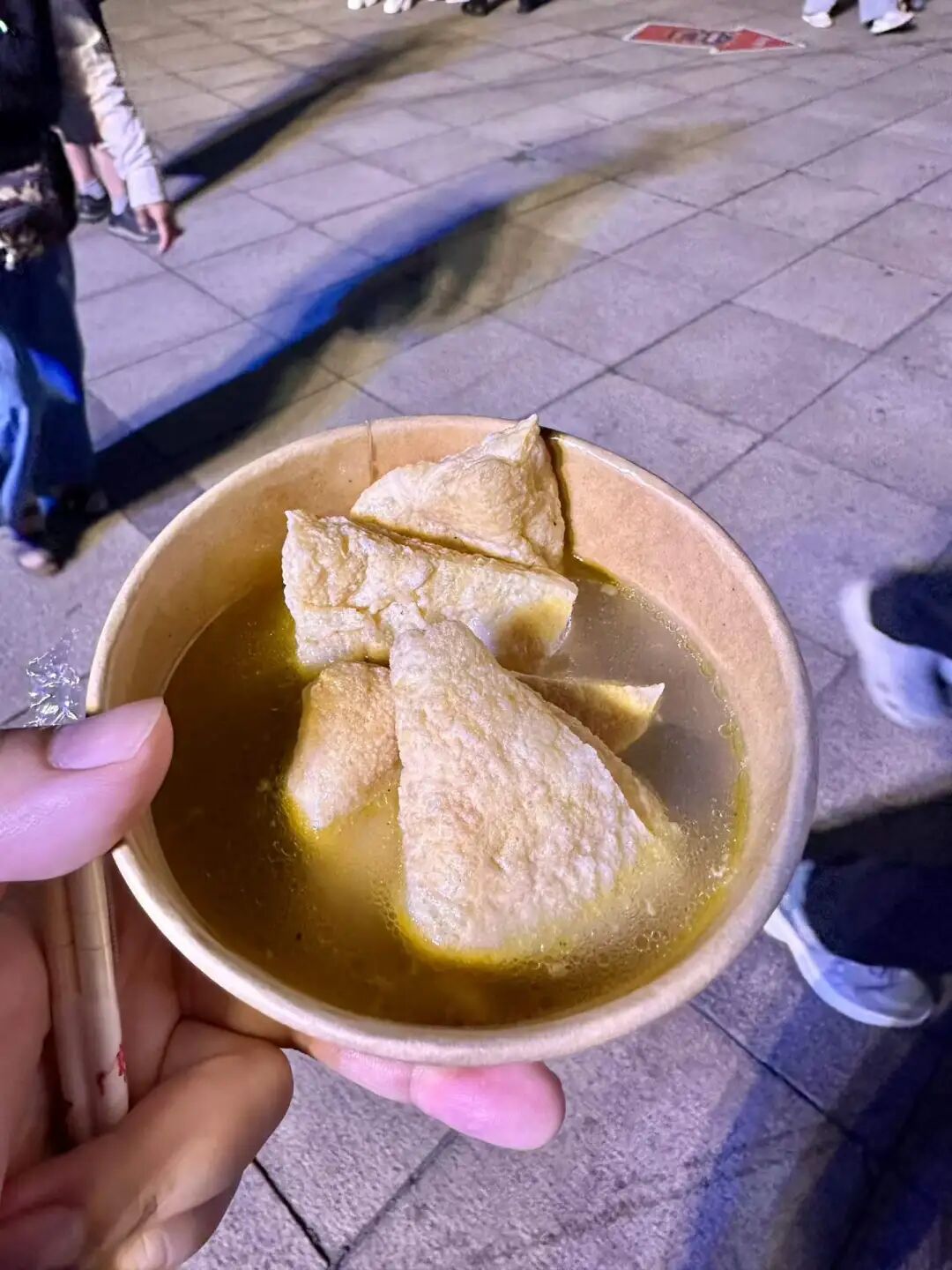
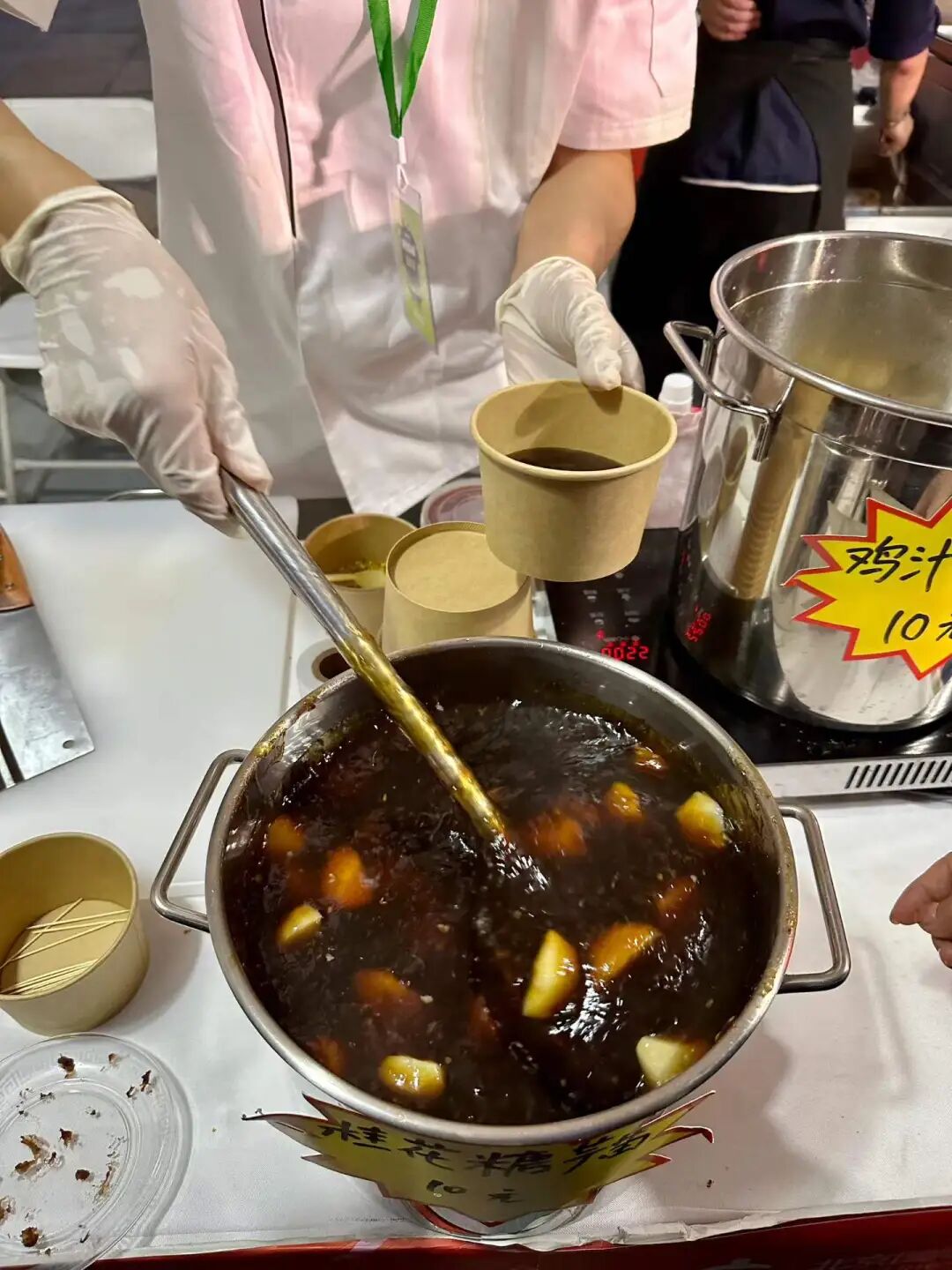
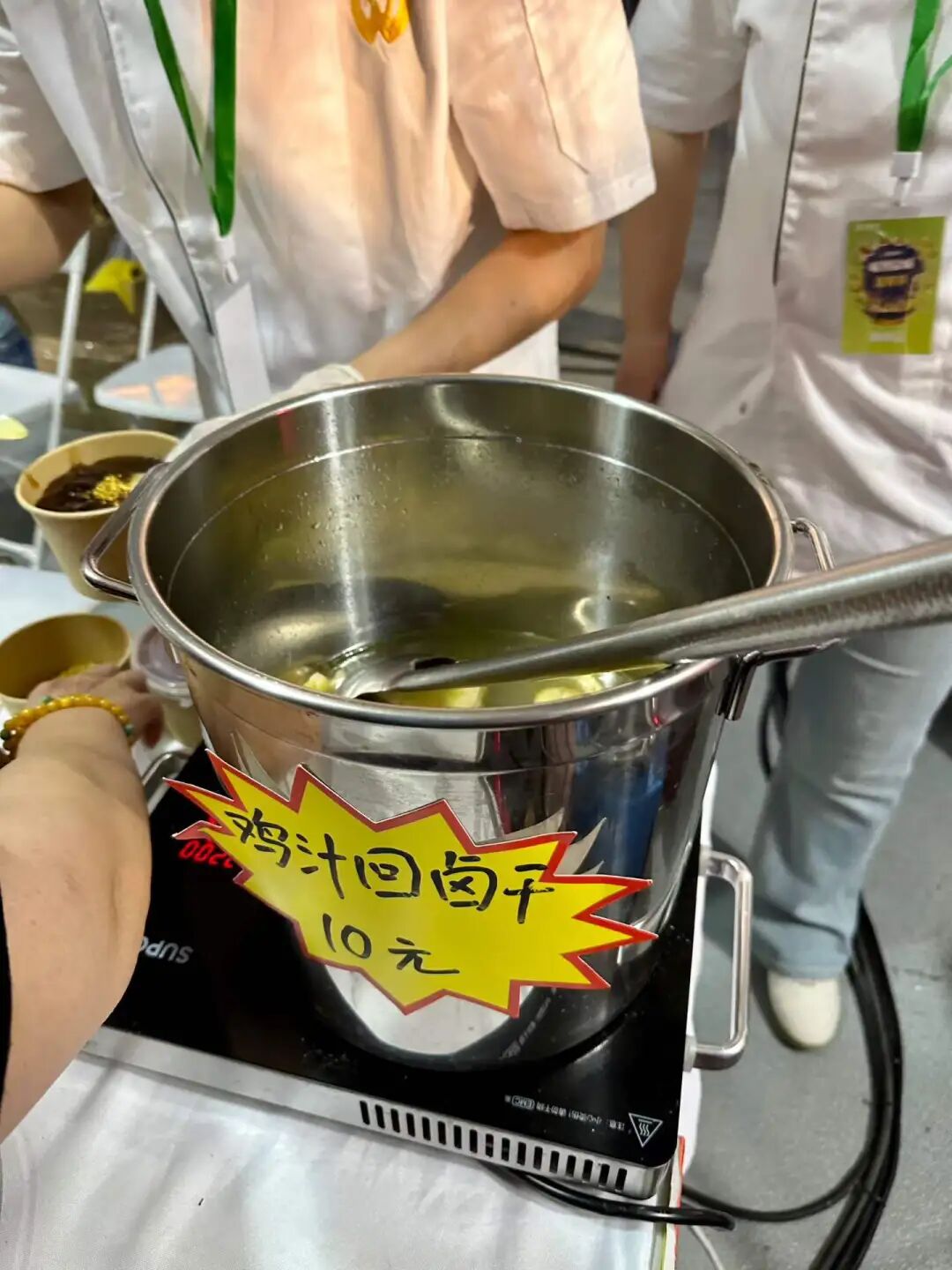
Before leaving, I was surprised to find a stall for the old Nanjing halal brand, Lvliuju! They sell various traditional Nanjing snacks, honey lotus root (mizhi ou), green sticky rice balls (qingtuan), water chestnut cake (mati gao), as well as hot osmanthus sugar taro seedlings (guihua tang yumiao) and chicken broth tofu (jizhi huilu gan). Even though we were full, we ordered a bowl of chicken broth tofu. The bean curd soaked in chicken broth was incredibly fresh, and the broth with bean sprouts and wood ear mushrooms was delicious. Chicken broth tofu gets its name because the fried tofu puffs are repeatedly simmered in broth. To make it, the chicken broth must be simmered for six hours and cooked with bean sprouts, wood ear mushrooms, and winter bamboo shoots, making the tofu soft and full of chicken flavor.
Lvliuju was founded in 1912 at Taoye Ferry along the Qinhuai River in Nanjing. It was named Lvliuju because of the shady green willow trees along the riverbank. Lvliuju started as a high-end vegetarian restaurant. Famous figures like Kong Xiangxi, Chiang Ching-kuo, Bai Chongxi, and the Soong sisters often dined here. After 1949, Lvliuju closed for a period. It reopened in 1963 on Yanggongjing, Taiping South Road, where they hired the famous chef Chen Bingyu to continue serving authentic vegetarian dishes. A major specialty of Lvliuju is vegetarian dishes that taste like meat. Their vegetarian chicken and vegetarian duck, made from tofu skin, gluten, and dried bean curd sticks seasoned with traditional Chinese herbs, are delicious. In 1987, Lvliuju added halal dishes to its vegetarian menu and became a halal restaurant. It still keeps vegetarian food as its specialty and is now recognized as a national-level intangible cultural heritage.
Summary: This Beijing halal food guide covers Guyuan stewed snacks, Tianjin tea soup, Nanjing chicken soup, halal food in China, and food festival details.
This article summarizes the key points of the Beijing Exhibition Center International Food Fair, covering Guyuan stewed snacks (huixiaochi), Tianjin tea soup (chatang), and Nanjing chicken soup. It keeps the original paragraph and image order, making it perfect for readers interested in Muslim life, Islamic culture, and Chinese Islamic writing. It also helps with searching for content related to Uyghur culture, Guyuan stewed snacks, and Tianjin tea soup.
Summer is here, and there are more and more food streets in Beijing, with several popping up every weekend.
I went to the Beijing Exhibition Center International Food Fair at night. There was so much good food that I could eat specialties from Ningxia, Gansu, Xinjiang, Beijing, Tianjin, and Nanjing. I was stuffed by the end of the night. The food festival runs until Sunday and is well worth a visit.
As soon as you enter the west entrance, you see the Ningxia stalls. From inside to outside, there is Yuanzhou Impression Guyuan Taste from Moshikou Street in Shijingshan, Baicao Tan Lamb from Lianhua Bridge, Jingyu Yanyu from Guomao, and the Ningxia Building from Andingmen.
I did not expect to find Guyuan food here! We tried the Guyuan specialty stewed snacks (huixiaochi), which is one of the ten classic bowls of the Hui Muslims in Guyuan. This is similar to the noodle soup (fentang) of Northwest China, which is usually cooked in a big pot during dry, cold weather and eaten with fried dough (youxiang).
The core of Guyuan stewed snacks is egg-stuffed meat slices (jiaban), meatballs, and mung bean jelly (liangfen), all stewed together with a rich, fresh broth and vegetables. However, this stall did not have meatballs; they used egg-stuffed meat slices and meat slices instead. Egg-stuffed meat slices are made by mixing eggs, starch, and flour into a batter, spreading it thin, sandwiching it with lamb filling, steaming it, and cutting it into diamond-shaped pieces. They are soft and chewy with a meaty aroma, and you can add side dishes like wood ear mushrooms, vermicelli, tofu, and spinach.
I then bought some hand-grabbed meat (shouzhuarou) and served it with chive flower sauce, onions, and sweet garlic. It tasted pretty good.
After eating, I bought some fermented oat drink (tianbeizi) and homemade xylitol yogurt at a stall in the Ningxia Building. Drinking tianbeizi in the summer is very refreshing.
I was pleasantly surprised to find two Hui Muslim snack stalls from Tianjin at this Beijing International Food Festival held at the Beijing Exhibition Center: Yuansuzhai Old-Style Fried Rolls (juanquan) from Honghuli and Chatang Hui from the Northwest Corner.
Yuansuzhai sells old-style fried rolls, curry chicken rolls, and peppercorn duck rolls, all served with homemade dark plum juice (wumeitang). The old-style fried rolls are vegetarian and filled with bean sprouts. The curry chicken roll skin is thicker and crispier, tasting a bit like a South Asian samosa. Traditionally, these rolls should be wrapped in a large flatbread (dabing), but they provided small thin pancakes instead so festival guests could try more varieties. I thought that was a great idea. I really love their homemade dark plum juice. I bought some when I visited Honghuli last time. It contains mulberries, osmanthus, roselle, dried tangerine peel, hawthorn, dark plum, licorice, and mint. It is very cooling and quenches thirst.
Yuansuzhai has a hundred-year history and has been passed down through four generations. They started selling fried rolls at a stall in North Zhulin near the Sancha River estuary in the 1920s. North Zhulin was originally a low-lying river beach along the Ziya River. It became solid land in the late Qing Dynasty. By the late Qing and Republican eras, it became a settlement for fishermen, boatmen, and dock workers living in makeshift shelters. Many Hui Muslim snack stalls gathered there, selling items like fried rolls, savory crepe strips (guobacai), and fried cakes (zhagao). The Tongyizhuang Mosque in North Zhulin was built during the Guangxu reign of the Qing Dynasty. It is 150 years old and is the only historical building preserved after the North Zhulin area was demolished.
In the late 1980s, Tianjin began large-scale urban renewal. Old districts like North Zhulin, Tongyizhuang, Xiyuzhuang, Hebei Street, and Beidaguan were demolished, and residents were relocated to Jiayuanli in the Beichen District. In the early 1990s, Yuansuzhai moved to the Jiayuanli commercial street along with the demolition of Beizhulin, becoming a landmark snack spot in Jiayuanli. The Jiayuanli shop closed in 2017, and the fourth-generation owner moved Yuansuzhai again to the Honghuli food street on Honghu South Road, starting with a breakfast cart before opening a formal storefront.
Chatang Hui is an old shop at the entrance of the South Mosque (Nandasi) in the Northwest Corner of Tianjin, with a century of history and four generations of heritage. Chatang (tea soup) first came to Tianjin via the Grand Canal. It was originally made with broomcorn millet flour, but later red sorghum flour was added, giving it a unique red color. Making chatang requires a large dragon-spout copper pot and the 'phoenix three nods' technique, a smooth motion that ensures not a drop spills when pouring. Traditional toppings include brown sugar, white sugar, sesame, crushed peanuts, raisins, and candied fruit shreds (qinghongsi), making it sweet and tangy.
At the Beijing International Food Festival, the Xinjiang stall featuring big plate chicken (dapanji), pilaf (zhuafan), and lamb skewers (yangrouchuan) from the Xinjiang Building is very popular.
Before leaving, I was surprised to find a stall for the old Nanjing halal brand, Lvliuju! They sell various traditional Nanjing snacks, honey lotus root (mizhi ou), green sticky rice balls (qingtuan), water chestnut cake (mati gao), as well as hot osmanthus sugar taro seedlings (guihua tang yumiao) and chicken broth tofu (jizhi huilu gan). Even though we were full, we ordered a bowl of chicken broth tofu. The bean curd soaked in chicken broth was incredibly fresh, and the broth with bean sprouts and wood ear mushrooms was delicious. Chicken broth tofu gets its name because the fried tofu puffs are repeatedly simmered in broth. To make it, the chicken broth must be simmered for six hours and cooked with bean sprouts, wood ear mushrooms, and winter bamboo shoots, making the tofu soft and full of chicken flavor.
Lvliuju was founded in 1912 at Taoye Ferry along the Qinhuai River in Nanjing. It was named Lvliuju because of the shady green willow trees along the riverbank. Lvliuju started as a high-end vegetarian restaurant. Famous figures like Kong Xiangxi, Chiang Ching-kuo, Bai Chongxi, and the Soong sisters often dined here. After 1949, Lvliuju closed for a period. It reopened in 1963 on Yanggongjing, Taiping South Road, where they hired the famous chef Chen Bingyu to continue serving authentic vegetarian dishes. A major specialty of Lvliuju is vegetarian dishes that taste like meat. Their vegetarian chicken and vegetarian duck, made from tofu skin, gluten, and dried bean curd sticks seasoned with traditional Chinese herbs, are delicious. In 1987, Lvliuju added halal dishes to its vegetarian menu and became a halal restaurant. It still keeps vegetarian food as its specialty and is now recognized as a national-level intangible cultural heritage.
