
The Construction of Authority in the Four Sunni Schools: Islamic Legal History and Methodology
[Internet Repost]
Drawing on the primary source research of legal historian Wael Hallaq, we explore the history behind how the founding Imams of the four Sunni schools of law (Madhhabs) achieved their authoritative status. We will break down how the community of scholars used systematic organization and theoretical construction to build the solid foundation of traditional Islamic jurisprudence.
The conventional view suggests that the founders of the four schools were absolute, independent creators who personally invented their entire school's methodology, leaving future generations to merely follow their lead. However, by digging into vast amounts of original manuscripts, Hallaq discovered that this so-called founder authority was actually constructed retroactively. Hallaq argues that this authority was built to fill a void: since there was no formal state legislative body to enact laws, legal authority had to be derived from the community of scholars themselves.
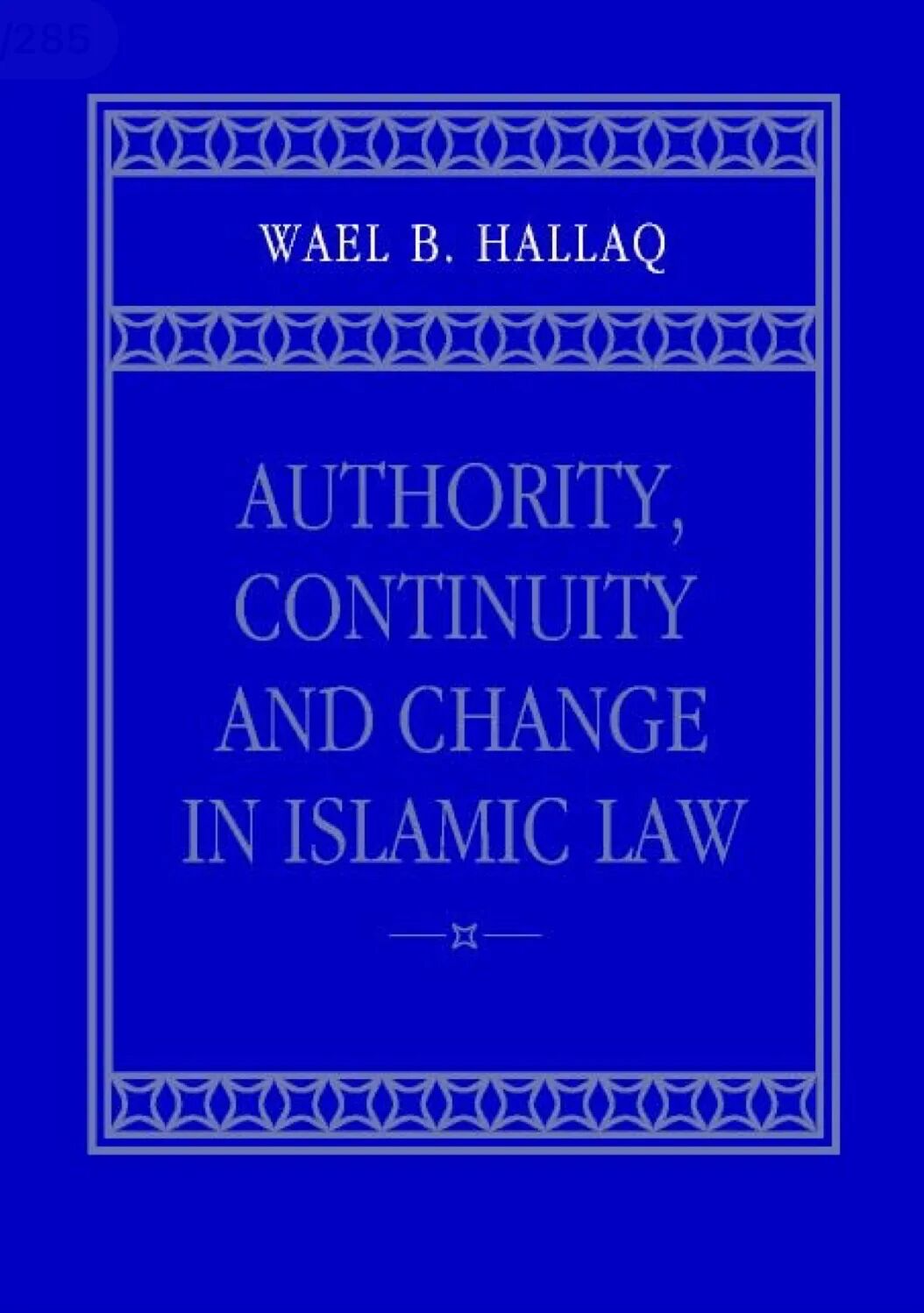
All content here is sourced from this book.
In reality, when these founders were alive, they drew heavily on the views of their predecessors and contemporary scholars. It was actually the subsequent generations of students who shaped the core doctrines of each school. A mechanism for ongoing legal development within each school only truly emerged during the mid-to-late medieval period. The idea that the 'gate of ijtihad' (independent legal reasoning) was closed is a narrative constructed by later generations, not a historical fact.
Hallaq interprets three key medieval legal ranking texts. The first is the tripartite system by Ibn Rushd, a 12th-century scholar of the Maliki school. Ibn Rushd's system lacks a strong sense of school-loyalty; he believed that a qualified jurist should not be constrained by the school’s founder, and that a jurist's ability doesn't change over time. During this period, the narrative that places the founder at the top of a pyramid, trickling down, had not yet been formed.
The second text is from Ibn al-Laham in the 13th century, a scholar of the Shafi'i school. He noted that because the four founding Imams could no longer be replicated, top-tier jurists were completely free from needing to follow any predecessor. However, those at lower levels (within his five-tier system) were strictly bound to the principles of their school's founder—a core mechanism for legal innovation in the late medieval period.
The third text is from the 16th-century scholar Ibn Kamal Pasha, who belonged to the Hanafi school. He proposed seven tiers, where the highest level was reserved exclusively for the four Imams, followed by their direct disciples, and so on, with those at the bottom only allowed to imitate. This is the legal structure most people are familiar with today.
Hallaq points out that as time went on, schools increasingly adopted a pyramid-like genealogy, placing the founding Imam at the peak to create a lineage of authority. Early thinkers like Ibn Rushd didn't follow this narrative. This hierarchical pyramid wasn't objective history, but a tool for building discourse; it defined what counted as 'legitimate' legal practice while hiding the truth—namely, that the founding Imams themselves borrowed extensively from others and didn't create their entire systems out of thin air.
Later narratives claim that the founding Imams created their entire body of substantive law and methodology from scratch, strictly based on the Quran and Sunnah, with later scholars merely following them. Hallaq cites primary sources from the Hanafi, Maliki, Shafi'i, and Hanbali schools to prove that this simply doesn't align with the historical facts.
First, looking at the Hanafi school, the founder Abu Hanifa largely inherited the views of earlier Iraqi jurists rather than deducing everything himself. Hanafi literature contains two contradictory accounts: one claiming, 'I do not imitate followers, I perform ijtihad myself,' and another recording that he adopted many views from his predecessors. Later Hanafi literature elevated the former while ignoring the latter.
Historical records show that during his lifetime, Abu Hanifa was not the universally recognized top authority; some lists of major scholars from that era don't even include his name. His exalted status was gradually molded by his direct and indirect disciples. A classic case of rewriting history involves tax law: a later author, al-Sarakhsi, erased the true source of Abu Hanifa's view—his student al-Nakhai—and traced the judgment directly back to Abu Hanifa, claiming it was derived from the Quran and Sunnah.
The Maliki school’s 'Muwatta' records that Malik heavily relied on the transmissions of earlier scholars in Medina and the community's practices, rather than independent invention. The book frequently states, 'This is the common practice here,' referring to the collective tradition of Medina. In his own words, Malik admitted that much of the book was not his own view, but things he heard from predecessors. However, later Maliki compilations like 'Al-Mudawwana' frequently rewrote texts that originally cited others or community practice, changing them to 'Malik says,' effectively backdating collective traditions to the Imam to solidify his authority.
The Shafi'i school's 'Al-Umm' similarly shows that Shafi'i adopted many rulings from his predecessors and other schools; many of his views were not independently deduced. Yet, later generations molded him into the founder of legal theory. For instance, his follower Ibn Surayj borrowed extensively from other schools, especially the Hanafi school, to reach new conclusions, which later Shafi'i successors then attributed back to Shafi'i himself.
Finally, the Hanbali case is the most extreme. Hanbal was fundamentally a hadith (sayings/actions of the Prophet) transmitter, not a legal scholar. He wrote almost no books on Islamic law. The entire Hanbali legal system was built by his successors, like al-Khallal, who then attributed the whole thing to Hanbal's name.
Drawing on the primary source research of legal historian Wael Hallaq, we explore the history behind how the founding Imams of the four Sunni schools of law (Madhhabs) achieved their authoritative status. We will break down how the community of scholars used systematic organization and theoretical construction to build the solid foundation of traditional Islamic jurisprudence.
The conventional view suggests that the founders of the four schools were absolute, independent creators who personally invented their entire school's methodology, leaving future generations to merely follow their lead. However, by digging into vast amounts of original manuscripts, Hallaq discovered that this so-called founder authority was actually constructed retroactively. Hallaq argues that this authority was built to fill a void: since there was no formal state legislative body to enact laws, legal authority had to be derived from the community of scholars themselves.
All content here is sourced from this book.
In reality, when these founders were alive, they drew heavily on the views of their predecessors and contemporary scholars. It was actually the subsequent generations of students who shaped the core doctrines of each school. A mechanism for ongoing legal development within each school only truly emerged during the mid-to-late medieval period. The idea that the 'gate of ijtihad' (independent legal reasoning) was closed is a narrative constructed by later generations, not a historical fact.
Hallaq interprets three key medieval legal ranking texts. The first is the tripartite system by Ibn Rushd, a 12th-century scholar of the Maliki school. Ibn Rushd's system lacks a strong sense of school-loyalty; he believed that a qualified jurist should not be constrained by the school’s founder, and that a jurist's ability doesn't change over time. During this period, the narrative that places the founder at the top of a pyramid, trickling down, had not yet been formed.
The second text is from Ibn al-Laham in the 13th century, a scholar of the Shafi'i school. He noted that because the four founding Imams could no longer be replicated, top-tier jurists were completely free from needing to follow any predecessor. However, those at lower levels (within his five-tier system) were strictly bound to the principles of their school's founder—a core mechanism for legal innovation in the late medieval period.
The third text is from the 16th-century scholar Ibn Kamal Pasha, who belonged to the Hanafi school. He proposed seven tiers, where the highest level was reserved exclusively for the four Imams, followed by their direct disciples, and so on, with those at the bottom only allowed to imitate. This is the legal structure most people are familiar with today.
Hallaq points out that as time went on, schools increasingly adopted a pyramid-like genealogy, placing the founding Imam at the peak to create a lineage of authority. Early thinkers like Ibn Rushd didn't follow this narrative. This hierarchical pyramid wasn't objective history, but a tool for building discourse; it defined what counted as 'legitimate' legal practice while hiding the truth—namely, that the founding Imams themselves borrowed extensively from others and didn't create their entire systems out of thin air.
Later narratives claim that the founding Imams created their entire body of substantive law and methodology from scratch, strictly based on the Quran and Sunnah, with later scholars merely following them. Hallaq cites primary sources from the Hanafi, Maliki, Shafi'i, and Hanbali schools to prove that this simply doesn't align with the historical facts.
First, looking at the Hanafi school, the founder Abu Hanifa largely inherited the views of earlier Iraqi jurists rather than deducing everything himself. Hanafi literature contains two contradictory accounts: one claiming, 'I do not imitate followers, I perform ijtihad myself,' and another recording that he adopted many views from his predecessors. Later Hanafi literature elevated the former while ignoring the latter.
Historical records show that during his lifetime, Abu Hanifa was not the universally recognized top authority; some lists of major scholars from that era don't even include his name. His exalted status was gradually molded by his direct and indirect disciples. A classic case of rewriting history involves tax law: a later author, al-Sarakhsi, erased the true source of Abu Hanifa's view—his student al-Nakhai—and traced the judgment directly back to Abu Hanifa, claiming it was derived from the Quran and Sunnah.
The Maliki school’s 'Muwatta' records that Malik heavily relied on the transmissions of earlier scholars in Medina and the community's practices, rather than independent invention. The book frequently states, 'This is the common practice here,' referring to the collective tradition of Medina. In his own words, Malik admitted that much of the book was not his own view, but things he heard from predecessors. However, later Maliki compilations like 'Al-Mudawwana' frequently rewrote texts that originally cited others or community practice, changing them to 'Malik says,' effectively backdating collective traditions to the Imam to solidify his authority.
The Shafi'i school's 'Al-Umm' similarly shows that Shafi'i adopted many rulings from his predecessors and other schools; many of his views were not independently deduced. Yet, later generations molded him into the founder of legal theory. For instance, his follower Ibn Surayj borrowed extensively from other schools, especially the Hanafi school, to reach new conclusions, which later Shafi'i successors then attributed back to Shafi'i himself.
Finally, the Hanbali case is the most extreme. Hanbal was fundamentally a hadith (sayings/actions of the Prophet) transmitter, not a legal scholar. He wrote almost no books on Islamic law. The entire Hanbali legal system was built by his successors, like al-Khallal, who then attributed the whole thing to Hanbal's name.
