
A Guide to Halal Chinese Cuisine: Traditional Flavors, Ancient History, and Iconic Meat Dishes
[Internet Repost]
We’re diving into the unique charm of Chinese Halal cuisine by looking at its history and food philosophy. From the introduction of silk road spices during the Tang and Song dynasties and strict ingredient selection standards, to the diverse fusion of Northwest niuyangrou paomo (lamb or beef pita bread soup), Beijing-Tianjin copper pot shuanrou (instant-boiled mutton), and Yunnan beef dishes.
When you think of Halal food, you probably go straight to lamb skewers or pilaf, right?
But it’s so much more than that—it’s built on hundreds of years of history and the dedication of generations.
One bite and you’re transported back in time, hearing the camel bells of ancient traders, watching the master chef’s knife work, and feeling the steam rise from a pot just like they did back then.
The rules for making Halal food aren’t just arbitrary, either.
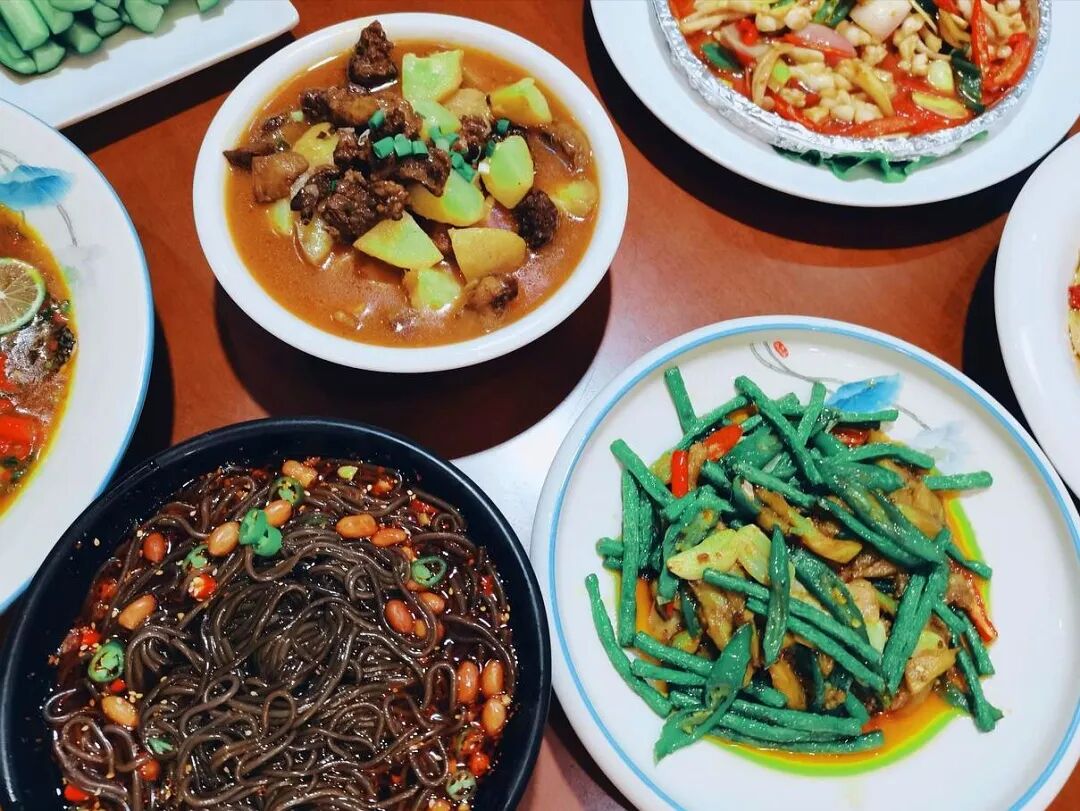
From how the animals are slaughtered and bled, to what spices are allowed or forbidden, everything is deeply rooted in faith.
Think back to the West Market in Chang’an during the Tang Dynasty. Traders were cooking spicy meats in copper pots, and the locals picked up the practice. When the two cultures collided, the foundation was set. People didn't call it 'Halal' back then, but they knew the food was 'trustworthy' and clean.
It wasn't until the Song and Yuan dynasties that the cuisine really took root. In the steam wafting from back-alley shops, you could see knife skills passed down through generations—meat sliced so thin it was translucent, and broths simmered until the bones were tender and falling apart.
By the Ming and Qing dynasties, formal Halal community centers were built. Old records outlined how to host guests, and the elders constantly reminded the younger generation: 'Don't lose the rules!' Those traditions became as essential as salt in every era of cooking.
The shops in the alleyways are still there, even if the faces have changed, but the old rules have held steady—occasionally making room for new local dishes.
This cuisine is like the people who keep these traditions: for hundreds of years, it has never lost its roots.
The king of Halal cuisine has to be shouzhua yangrou (hand-grabbed lamb).
The flavor is practically hardwired into the nomadic spirit.
From the markings on pottery from the Xindian culture to descriptions of tender lamb in the Yuan Dynasty’s 'Yinshan Zhengyao' (Important Principles of Food and Drink), you can taste that ancestral freshness.
They say the Tan sheep from Yanchi salt lakes grow up eating medicinal herbs and alkaline pasture grass while drinking mineral water. This natural diet gets rid of any gamey smell, leaving the meat as fine as a hair.
Just simmered slowly over low heat with salt, Sichuan peppercorns, and ginger, the red meat and white fat are so tender you can pierce them through with just chopsticks!
Dip it in some garlic and chili sauce, and the flavor hits you straight in the soul.
It’s not just a dish; it’s a living cultural artifact.
When hosting guests, everyone sits around the table, and the host uses a knife to cut the meat for everyone to share. It’s all about that bold, communal atmosphere.
It’s also the star of the show during Eid al-Fitr and the Nadaam festival, standing as a symbol of family reunions and good fortune.
Then there’s braised beef, the 'signature dish' of Jinan's Julelou restaurant, which has a history of over a hundred years.
This dish is all about the 'braising' technique. After the meat is boiled, it’s glazed in a wok until it's a glossy, reddish-brown color, like a jujube. It’s served neatly, almost like a chessboard, with a savory, punchy sauce.
It’s known as one of the 'Two Halal Wonders,' alongside the hand-grabbed lamb from Wuzhong, Ningxia.
During holidays, locals will slaughter livestock, serve gaiwan (lidded bowl) tea, and offer sanzi (deep-fried crispy dough twists) to guests.
A great braised beef needs 'three scents': the clean scent of fresh pasture, the deep savory scent of aged sauce, and the rich, satisfying aroma of a harvest.
In Shandong, they use sweet bean paste, giving it a reddish hue; in Tianjin, they keep it more original, highlighting a salty, savory flavor.
To make it, you need to pick beef with connective tissue, soak it in cold water to draw out the blood, then braise it in a pressure cooker. It’s pressed under a stone to set the shape, sliced, steamed, and finished with a thick sauce.
Pick it up, and it stays intact, but it melts in your mouth without feeling greasy. Served with flatbread or rice, it’s truly the king of meats!
When talking about banquets, the 'Halal Eight Bowls' are unavoidable.
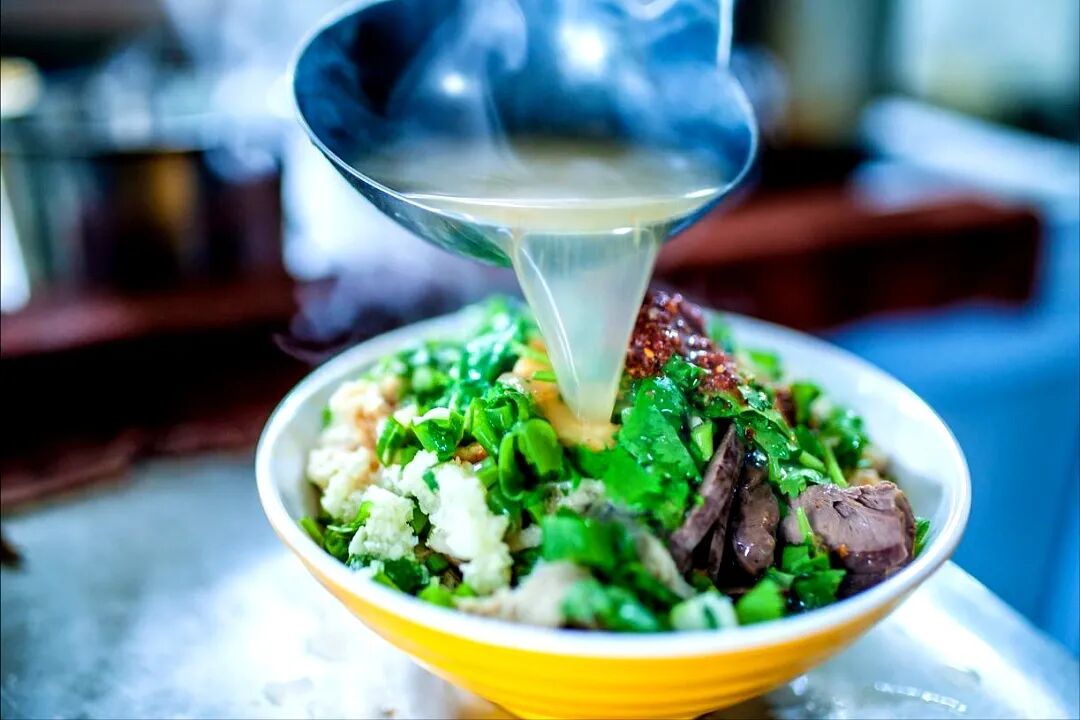
Originating in the Yuan Dynasty, when Hui Muslim soldiers were stationed along the Grand Canal, they needed a fast way to eat. They would pre-boil or fry the beef and lamb, then pour hot broth over it when it was time to serve.
Over time, this evolved into a formal banquet style where eight people share eight bowls of food.
Today, these 'hug-the-bowl' dishes have become a famous Shandong specialty.
For anyone in Linqing, whether it's a wedding or a funeral, the Eight Bowls are a mandatory staple.
Only after finishing a big bowl of hot, fluffy steamed buns alongside these dishes does it feel like a real reunion. Locals call it a proper, delicious feast. The set includes a mix of meat, soup, and tonics—four meat dishes and four vegetable dishes that make for a solid meal.
Examples include clear-stewed gelingyang (castrated ram) simmered for two hours until the meat is thick but not greasy, yellow-braised free-range chicken that’s marinated, fried, and then steamed for a crispy-but-soft texture, and 'Imperial Eight-Treasure Rice,' a sweet-but-not-cloying dish made with sticky rice, raisins, and jujubes.
Then there’s the whole roasted lamb, supposedly brought over from Xinjiang by the Alashan royalty during the Kangxi era of the Qing Dynasty.
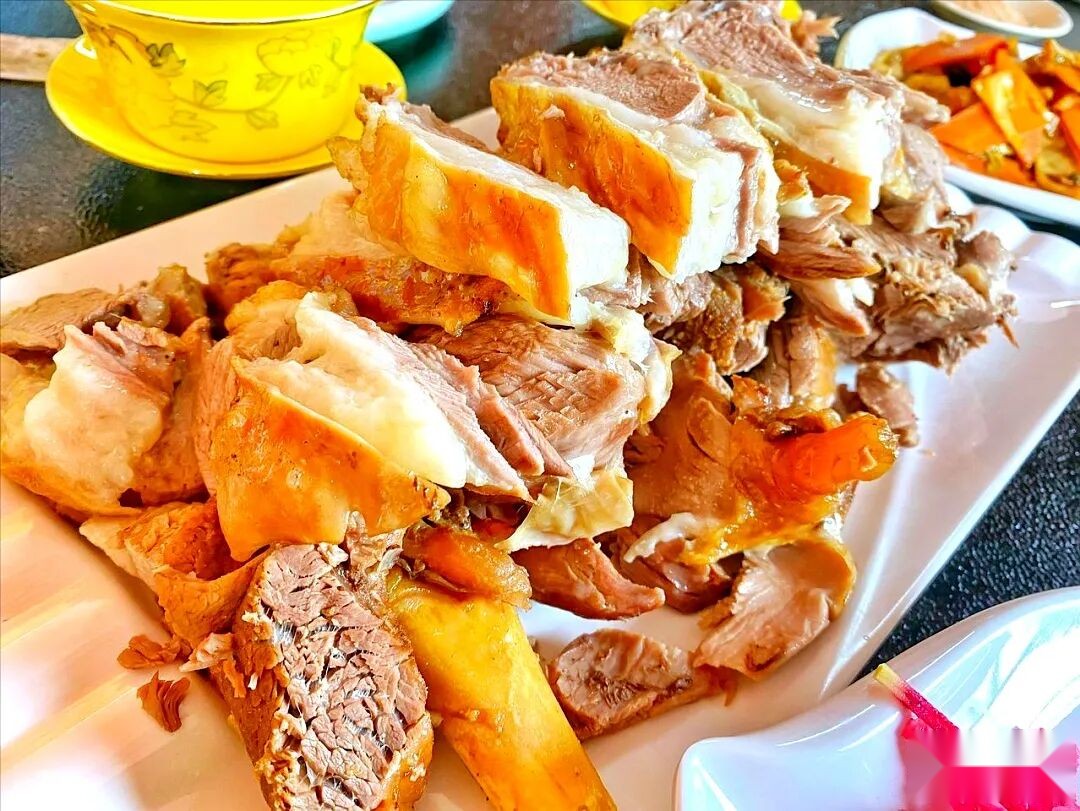
It was later adapted into a hanging oven method, slow-roasted for three hours over jujube wood charcoal.
The resulting lamb skin is golden and crispy, while the meat inside is as tender as butter, bursting with a rich, savory sweetness with every bite.
From the raw, earthy methods of digging pits in the ground described in Yuan history books, to the 'willow-steamed lamb' secrets of the 'Pao Tong Shi' (a guide for travelers), and now recognized as a national intangible cultural heritage, whole roasted lamb has become a true spiritual totem for nomadic people.
In Alashan, they pick a one-and-a-half-year-old castrated ram, coat it in a paste of turmeric, cumin, and egg yolk, seal it in a naan oven with wet mud, and let the magic happen.
Old-school masters rely entirely on their ears to tell when it’s done, listening to the sizzle of the dripping lamb fat and the sound of the meat expanding to judge the heat.
Nowadays, this 'king of the grasslands' has become a common dish found in everyday households.
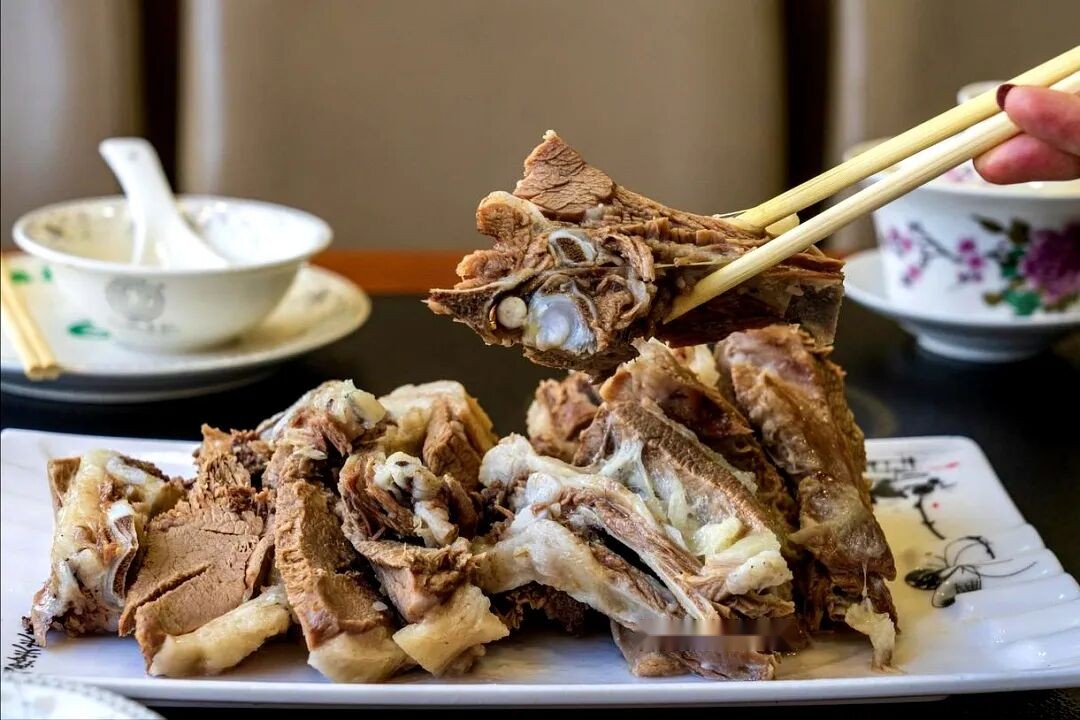
Speaking of fried food, fried lamb tail is a classic dish with quite a history in old-school Beijing halal restaurants.
Back in the day, the lamb tail was just dipped in egg white batter and deep-fried, which made it super gamey and greasy.
Later on, a chef had a lightbulb moment and swapped the filling for sweet bean paste, giving birth to the fluffy, sweet version we know today.
On the grasslands of Inner Mongolia, it’s a staple for hosting guests—lamb tail fat dipped in an egg-white foam batter, fried until it’s golden and crispy. Biting into it releases a rush of hot, savory oil that’s perfect for warming you up in the winter.
The coolest part of this dish is how it looks; the egg whites are whipped into a crispy white shell that hides the smooth bean paste. It fries up fluffy like a cloud, and with a dusting of sugar, it looks just like a fresh snowfall.
People in Taizhou call it 'Danqing Yangwei' (egg white lamb tail), and the original concept actually dates back 1,400 years.
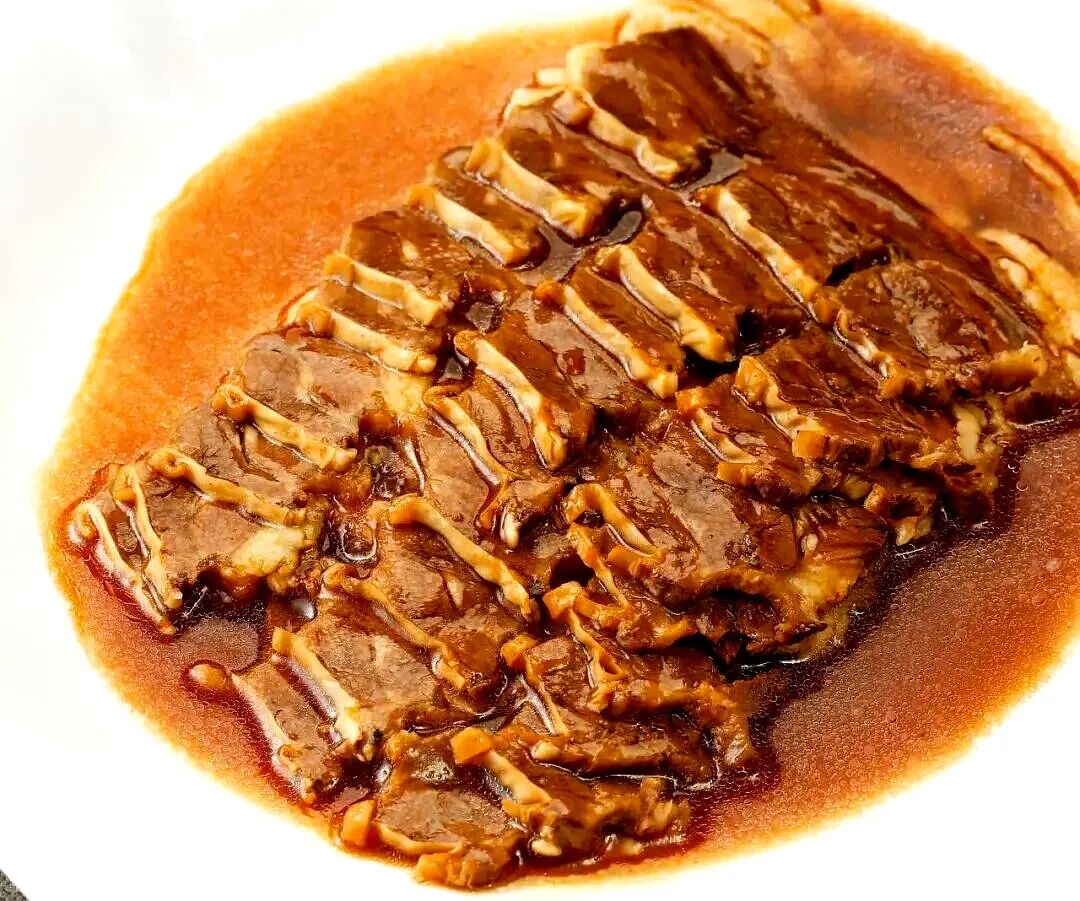
You can find it all over Ziyang Street today. The masters there make a batter so light that if you tap it with your finger, it stands right up. When fried, it doesn't collapse and stays perfectly crisp.
Once you bite in, the sweetness of the bean paste hits you along with a blast of steam that goes straight to your head.
When it comes to the top-tier sweet dishes in Beijing halal cuisine, 'Simi' (a sweet, glazed lamb dish) is definitely the GOAT.
The name itself implies sweetness, but it’s actually packed with three layers of legend.
During the Qianlong era, the Fragrant Concubine brought a Western-region dish called 'Tasimi' to the palace, and after trying it, Emperor Qianlong declared, 'This flavor beats honey.'
In her later years, when Empress Dowager Cixi had trouble chewing, the imperial chefs used lamb tenderloin, sweet bean paste, and sugar to create a soft, sweet dish. After tasting it, she said it was 'as sweet as honey,' so it became known as 'Simi' (literally 'like honey')! Some also say the name is connected to the 'Tasmiyah' (the act of saying 'Bismillah' before eating) in Islamic tradition, adding a layer of faith-filled warmth to the sweetness.
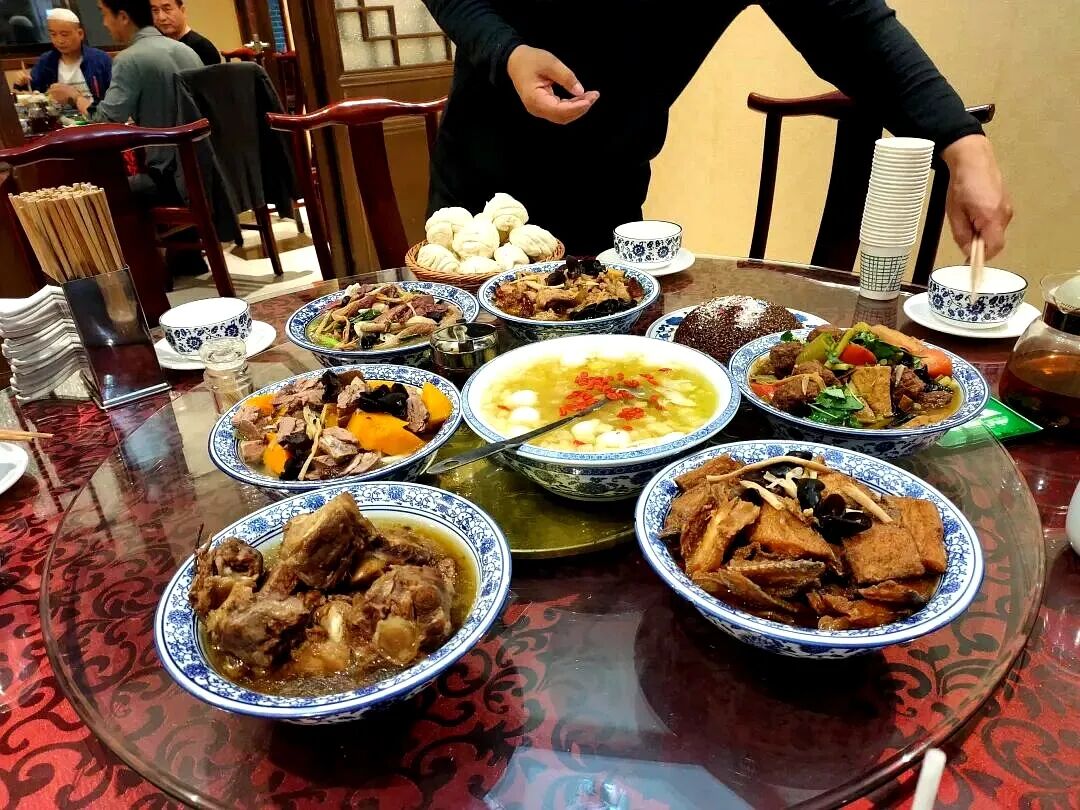
The dish eventually moved from the palace to the streets, becoming the signature appetizer at Beijing’s Hui Muslim restaurants. It’s a must-have for holidays, weddings, and funerals, symbolizing hopes for a sweet and happy life.
You take lamb tenderloin, slice it as thin as dried apricot, coat it in a caramelized sugar glaze, and stir-fry it fast. It comes out shimmering red and glossy, looking like it’s been soaked in honey.
One bite and it’s so tender it practically melts. The sweet aroma hits your nose first, then your palate, followed by a faint touch of acidity—what old-school Beijingers call 'sweet without being cloying, and just the right amount of tang.'
For 'tiqiu biao' (gaining weight for the winter), a plate of Simi is perfect for warming both your stomach and your soul.
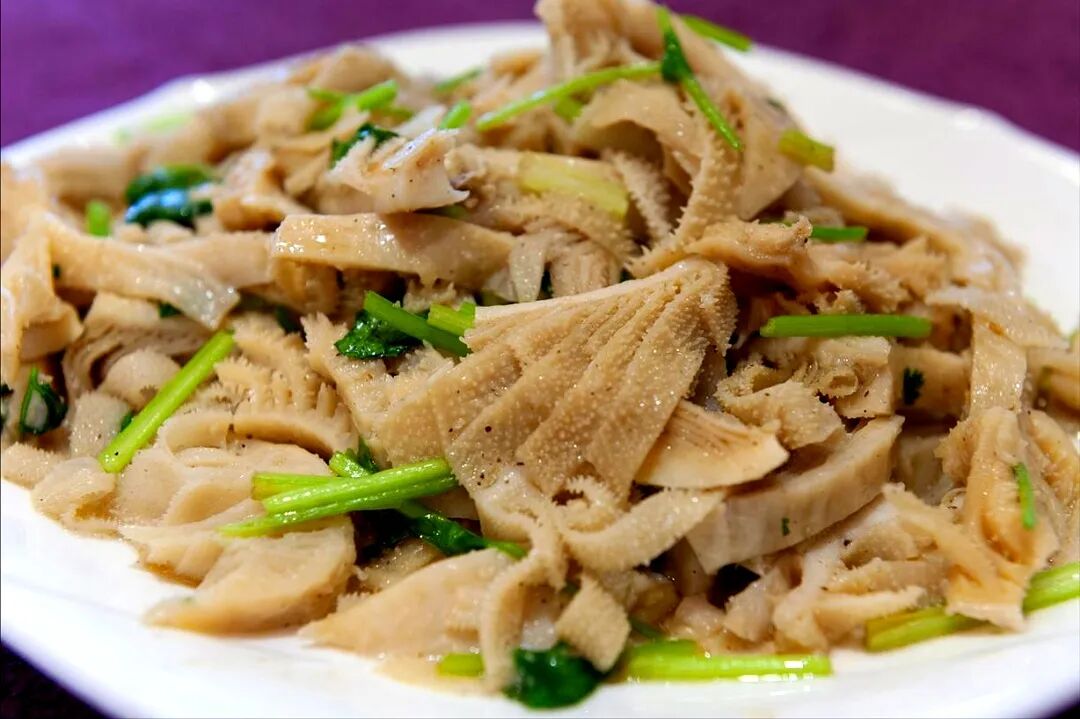
The heavy hitter of Northwest Chinese halal food is undoubtedly Yuanbao Sandan (stir-fried lamb tripe with cilantro). It’s been a staple for over a century at places like Xi'an’s Laoquingyazhai and Beijing’s Hongbinlou.
It’s the ultimate combo of Yang Sandan (lamb tripe or omasum) and yuansui (cilantro).
The tripe stands upright on the cutting board like spring bamboo shoots, and the savory, slightly spicy aroma hits your nose instantly. When you bite into it, you hear that signature 'crunch' as the tender leaves of the tripe give way.
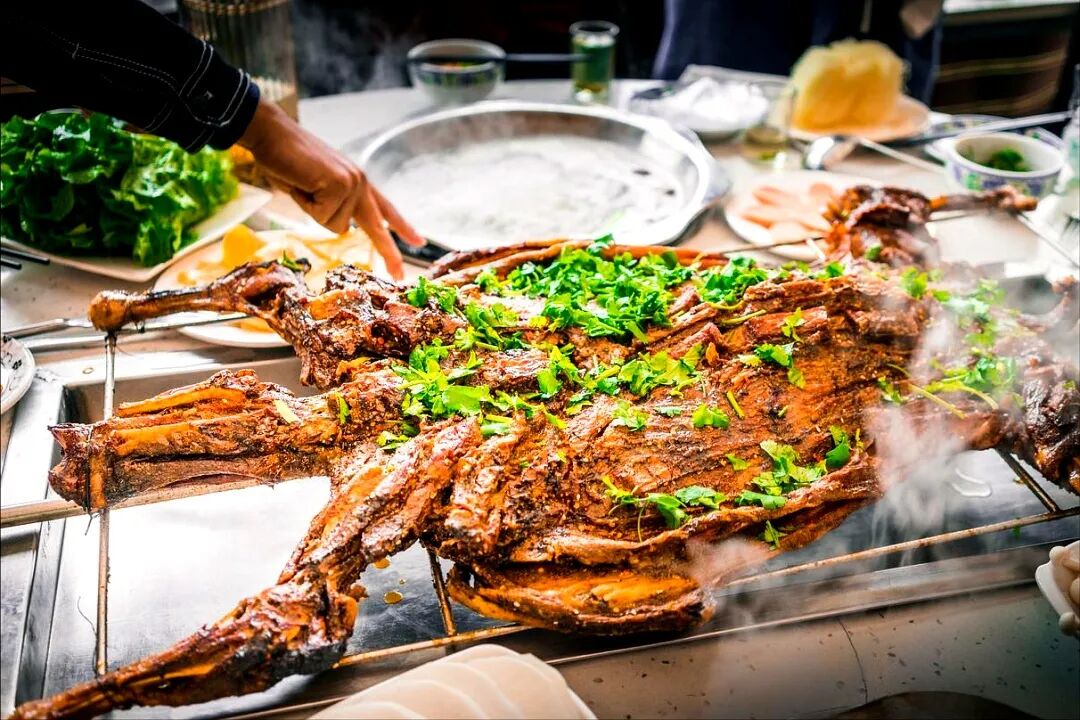
The old-school Xi'an masters insist on a 'hot wok, quick fry, out in eight seconds' rule. Cook it too long and you lose the crunch—or as they say, you’ve 'ruined the look.'
It’s a traditional wedding dish; the word 'sandan' sounds like 'sandan' (to break up an order), which in this context ironically implies 'bringing the family together and making everything prosper'—it’s all about the good luck.
Some people might think it’s a 'country' dish?
But this is a 'hard' dish that’s been served at state banquets. Yet, at its core, it’s still all about that rustic, home-cooked, 'steamy iron wok' vibe—that’s the true soul of halal cuisine!
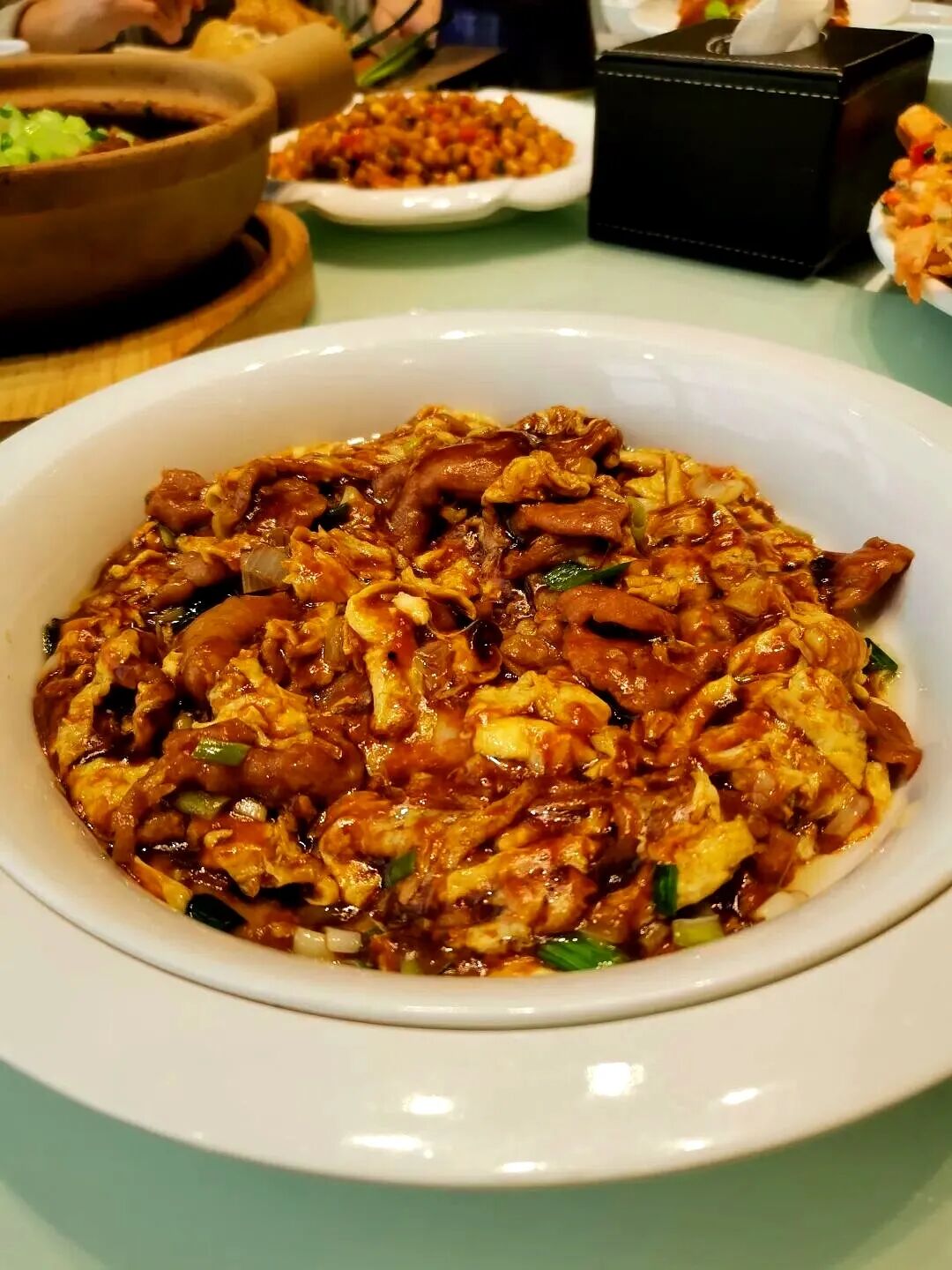
If we’re talking about a dish that’s one-of-a-kind in Beijing, 'Culiu Muxu' (vinegar-glazed stir-fried meat and eggs) is definitely on the list.
The famous Peking Opera master Ma Lianliang once visited the restaurant Youyishun and combined scallion-stir-fried lamb with scrambled eggs, seasoned with vinegar—and somehow, it created this amazing sweet-and-sour harmony.
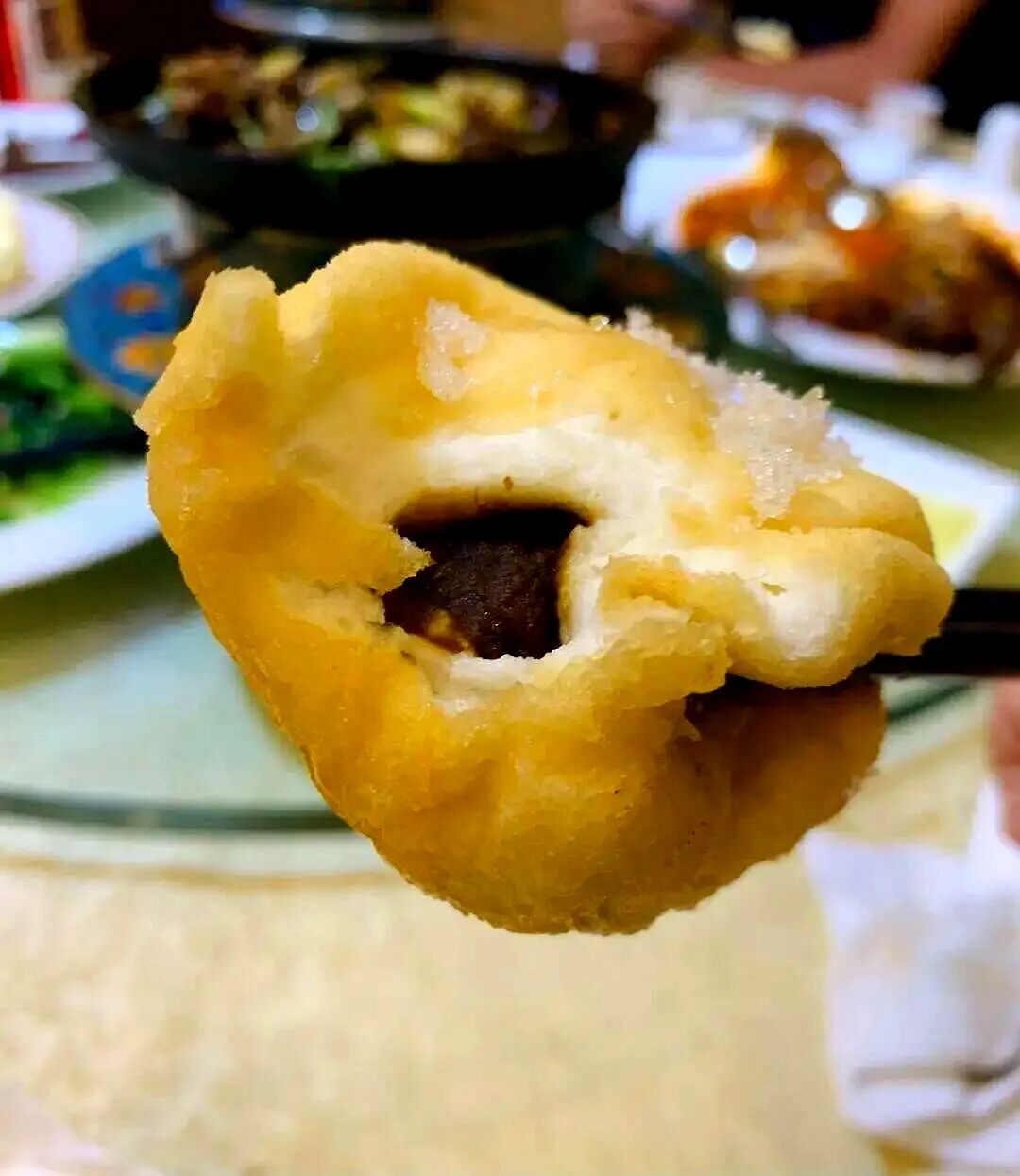
The 'Muxu' in the name actually refers to the eggs; when scrambled, they look like osmanthus flowers. Mixed with the tender lamb and the punch of vinegar, you’ll easily find yourself finishing three bowls of rice.
In the old hutongs of Beijing, this was a household staple for every holiday, and it still makes up over 30% of orders in halal restaurants.
You slice the lamb against the grain, coat it in egg white and starch, and velvet it in oil so it’s as tender as tofu. You whip the eggs with a bit of water and fry them into fluffy 'Muxu flowers' that glow like golden nuggets.
The best part is the vinegar—a sharp, crisp, clean scent that doesn't feel heavy or smoky. It’s refreshing on the palate, doesn't burn your throat, and leaves you craving more, whether it's warming you up in winter or whetting your appetite in spring.
Tianjin locals love the rich, mellow flavor of Duliu aged vinegar, while Beijingers like to add a bit of garlic chives on top for extra aroma.
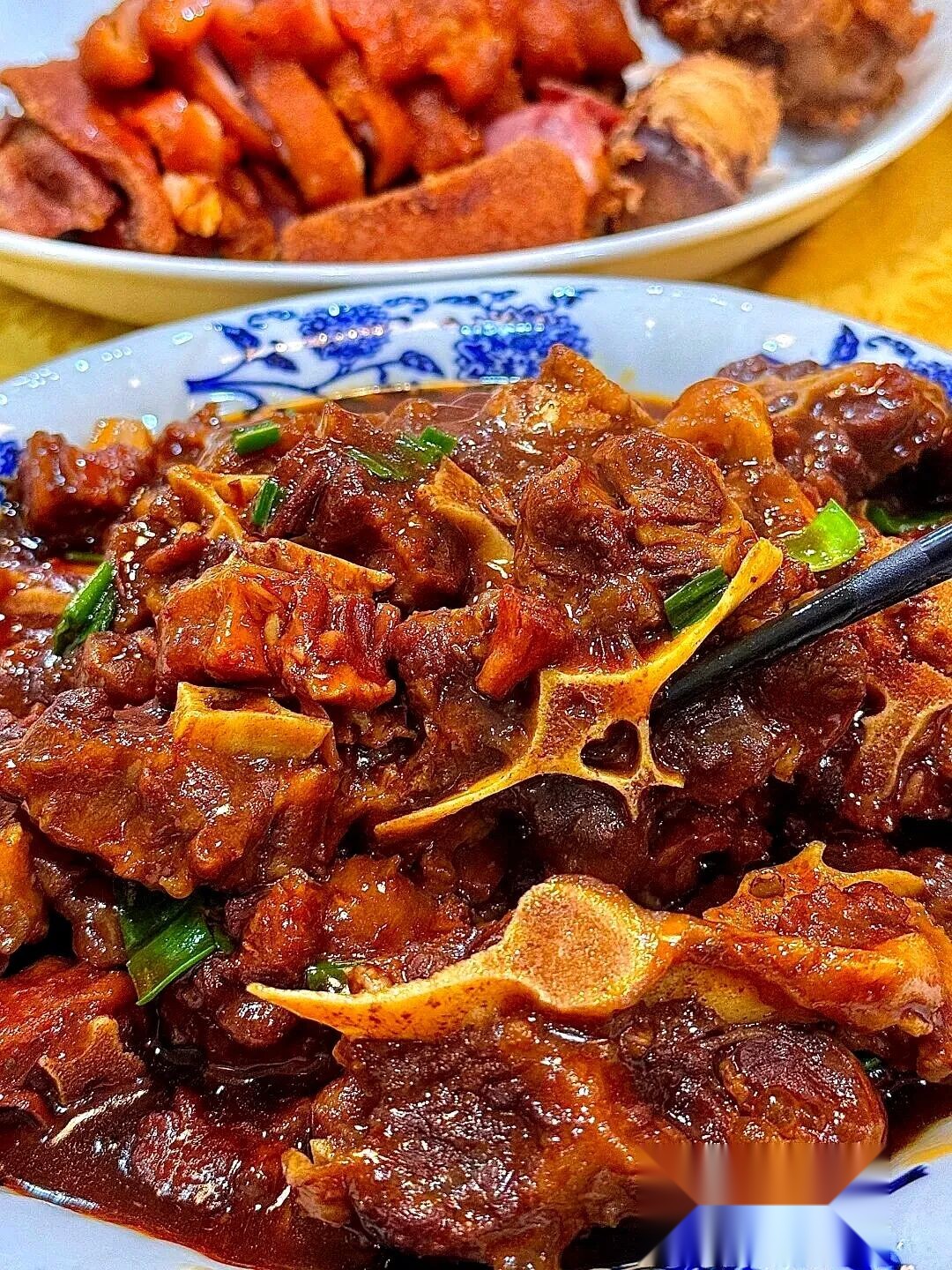
Shao Niuwe (braised oxtail) is said to have been discovered by Emperor Qin Shi Huang while he was on tour; he tried a shopkeeper’s braised oxtail and knew immediately it was something special, and it’s been a classic Guanzhong dish ever since.
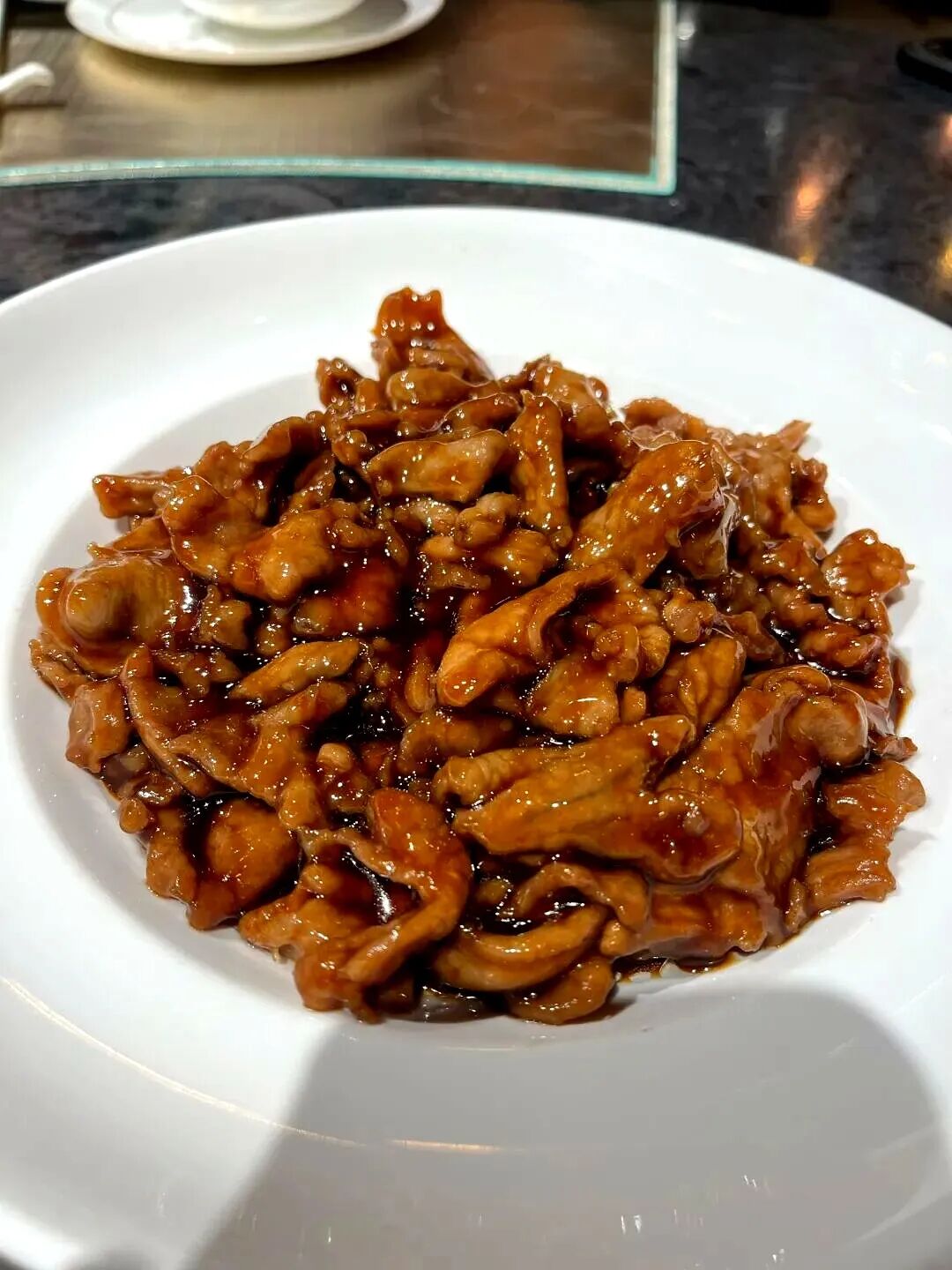
In old-school Xi'an restaurants today, you can still see chefs using rapeseed oil to fry peppercorns and dried chilis, then slow-braising the oxtail with carrots and winter bamboo shoots for two hours.
The oxtail ends up falling-off-the-bone tender without being mushy, and the sauce is as thick as honey. Before you eat, one gentle nudge with a spoon and the meat just drops right off. It’s savory and sticky, and the more you chew, the richer it gets.
Beijing’s Hongbinlou focuses on the 'balance of bone and meat,' selecting the third and fourth sections of the oxtail for the best texture. They braise it to perfection and sell over 20,000 portions a year.
There are two ways to cook this in Tianjin halal spots: one is braising the ingredients until tender, then using high heat to boil them down before finishing on a low simmer; the other is using a pressure cooker for 30 minutes before adding salt and seasonings.
This isn't just some random halal dish; it’s a staple for people in Western China and a 'face-saving' dish for Guanzhong folks when hosting guests. Whenever there’s a holiday, wedding, or funeral, you’ll see a plate of steaming braised oxtail at the center of the table.
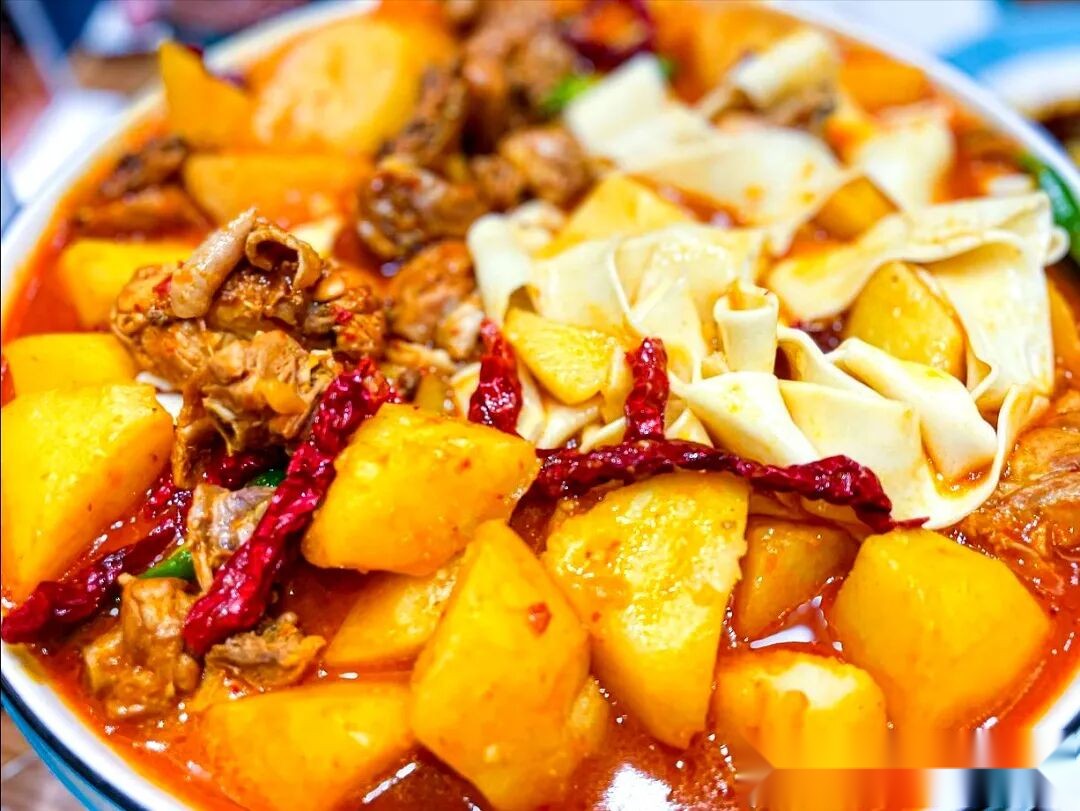
Finally, let’s talk about Xinjiang Dapanji (Big Plate Chicken), which has only become a massive hit in the last few decades.
It was born in the 1980s at a roadside diner in Shawan, Sichuan. It’s a dish made by stir-frying free-range chicken with dried chilis and green peppers over high heat, served with potatoes and wide, hand-pulled noodles.
When General Zuo Zongtang was reclaiming Xinjiang, he served his troops chicken with chili peppers as a morale booster; that’s basically how this iconic dish got its start.
The chicken skin is super crispy while the meat stays tender, and the red sauce is packed with flavor; the potatoes soak up all that spicy, numbing goodness until they’re as soft as a sunset in Shawan.
Once you mix in those wide, belt-like noodles, every inch gets coated in sauce; one bite and you’ll be gasping for air from the spice, but you literally can't stop eating.
The flavor has that rugged vibe from the Northwest mixed with the numbing heat of Sichuan cuisine, like a melting pot of Xinjiang’s culture where different styles come together to create this bold, spicy, and authentic street-food energy.
These days, the dish has traveled way beyond Xinjiang and has totally taken root in the streets and alleys of places like Henan.
This dish is so much more than just food; it’s a living fossil that captures the history of the Silk Road’s cultural fusion, so every bite is basically a taste of Xinjiang’s past.
With every pair of chopsticks, you’re picking up a hundred years of history, with all its challenges and triumphs simmering right in the pot.
Take a bite, and you can almost feel the ancient Silk Road merchants traveling on your tongue, while the shop owner keeps the tradition alive in the kitchen.
All those who honor the old ways and follow the strict traditions are keeping their legacy alive right inside this meat.
As you eat, you feel completely satisfied, both in your stomach and in your soul.
We’re diving into the unique charm of Chinese Halal cuisine by looking at its history and food philosophy. From the introduction of silk road spices during the Tang and Song dynasties and strict ingredient selection standards, to the diverse fusion of Northwest niuyangrou paomo (lamb or beef pita bread soup), Beijing-Tianjin copper pot shuanrou (instant-boiled mutton), and Yunnan beef dishes.
When you think of Halal food, you probably go straight to lamb skewers or pilaf, right?
But it’s so much more than that—it’s built on hundreds of years of history and the dedication of generations.
One bite and you’re transported back in time, hearing the camel bells of ancient traders, watching the master chef’s knife work, and feeling the steam rise from a pot just like they did back then.
The rules for making Halal food aren’t just arbitrary, either.
From how the animals are slaughtered and bled, to what spices are allowed or forbidden, everything is deeply rooted in faith.
Think back to the West Market in Chang’an during the Tang Dynasty. Traders were cooking spicy meats in copper pots, and the locals picked up the practice. When the two cultures collided, the foundation was set. People didn't call it 'Halal' back then, but they knew the food was 'trustworthy' and clean.
It wasn't until the Song and Yuan dynasties that the cuisine really took root. In the steam wafting from back-alley shops, you could see knife skills passed down through generations—meat sliced so thin it was translucent, and broths simmered until the bones were tender and falling apart.
By the Ming and Qing dynasties, formal Halal community centers were built. Old records outlined how to host guests, and the elders constantly reminded the younger generation: 'Don't lose the rules!' Those traditions became as essential as salt in every era of cooking.
The shops in the alleyways are still there, even if the faces have changed, but the old rules have held steady—occasionally making room for new local dishes.
This cuisine is like the people who keep these traditions: for hundreds of years, it has never lost its roots.
The king of Halal cuisine has to be shouzhua yangrou (hand-grabbed lamb).
The flavor is practically hardwired into the nomadic spirit.
From the markings on pottery from the Xindian culture to descriptions of tender lamb in the Yuan Dynasty’s 'Yinshan Zhengyao' (Important Principles of Food and Drink), you can taste that ancestral freshness.
They say the Tan sheep from Yanchi salt lakes grow up eating medicinal herbs and alkaline pasture grass while drinking mineral water. This natural diet gets rid of any gamey smell, leaving the meat as fine as a hair.
Just simmered slowly over low heat with salt, Sichuan peppercorns, and ginger, the red meat and white fat are so tender you can pierce them through with just chopsticks!
Dip it in some garlic and chili sauce, and the flavor hits you straight in the soul.
It’s not just a dish; it’s a living cultural artifact.
When hosting guests, everyone sits around the table, and the host uses a knife to cut the meat for everyone to share. It’s all about that bold, communal atmosphere.
It’s also the star of the show during Eid al-Fitr and the Nadaam festival, standing as a symbol of family reunions and good fortune.
Then there’s braised beef, the 'signature dish' of Jinan's Julelou restaurant, which has a history of over a hundred years.
This dish is all about the 'braising' technique. After the meat is boiled, it’s glazed in a wok until it's a glossy, reddish-brown color, like a jujube. It’s served neatly, almost like a chessboard, with a savory, punchy sauce.
It’s known as one of the 'Two Halal Wonders,' alongside the hand-grabbed lamb from Wuzhong, Ningxia.
During holidays, locals will slaughter livestock, serve gaiwan (lidded bowl) tea, and offer sanzi (deep-fried crispy dough twists) to guests.
A great braised beef needs 'three scents': the clean scent of fresh pasture, the deep savory scent of aged sauce, and the rich, satisfying aroma of a harvest.
In Shandong, they use sweet bean paste, giving it a reddish hue; in Tianjin, they keep it more original, highlighting a salty, savory flavor.
To make it, you need to pick beef with connective tissue, soak it in cold water to draw out the blood, then braise it in a pressure cooker. It’s pressed under a stone to set the shape, sliced, steamed, and finished with a thick sauce.
Pick it up, and it stays intact, but it melts in your mouth without feeling greasy. Served with flatbread or rice, it’s truly the king of meats!
When talking about banquets, the 'Halal Eight Bowls' are unavoidable.
Originating in the Yuan Dynasty, when Hui Muslim soldiers were stationed along the Grand Canal, they needed a fast way to eat. They would pre-boil or fry the beef and lamb, then pour hot broth over it when it was time to serve.
Over time, this evolved into a formal banquet style where eight people share eight bowls of food.
Today, these 'hug-the-bowl' dishes have become a famous Shandong specialty.
For anyone in Linqing, whether it's a wedding or a funeral, the Eight Bowls are a mandatory staple.
Only after finishing a big bowl of hot, fluffy steamed buns alongside these dishes does it feel like a real reunion. Locals call it a proper, delicious feast. The set includes a mix of meat, soup, and tonics—four meat dishes and four vegetable dishes that make for a solid meal.
Examples include clear-stewed gelingyang (castrated ram) simmered for two hours until the meat is thick but not greasy, yellow-braised free-range chicken that’s marinated, fried, and then steamed for a crispy-but-soft texture, and 'Imperial Eight-Treasure Rice,' a sweet-but-not-cloying dish made with sticky rice, raisins, and jujubes.
Then there’s the whole roasted lamb, supposedly brought over from Xinjiang by the Alashan royalty during the Kangxi era of the Qing Dynasty.
It was later adapted into a hanging oven method, slow-roasted for three hours over jujube wood charcoal.
The resulting lamb skin is golden and crispy, while the meat inside is as tender as butter, bursting with a rich, savory sweetness with every bite.
From the raw, earthy methods of digging pits in the ground described in Yuan history books, to the 'willow-steamed lamb' secrets of the 'Pao Tong Shi' (a guide for travelers), and now recognized as a national intangible cultural heritage, whole roasted lamb has become a true spiritual totem for nomadic people.
In Alashan, they pick a one-and-a-half-year-old castrated ram, coat it in a paste of turmeric, cumin, and egg yolk, seal it in a naan oven with wet mud, and let the magic happen.
Old-school masters rely entirely on their ears to tell when it’s done, listening to the sizzle of the dripping lamb fat and the sound of the meat expanding to judge the heat.
Nowadays, this 'king of the grasslands' has become a common dish found in everyday households.
Speaking of fried food, fried lamb tail is a classic dish with quite a history in old-school Beijing halal restaurants.
Back in the day, the lamb tail was just dipped in egg white batter and deep-fried, which made it super gamey and greasy.
Later on, a chef had a lightbulb moment and swapped the filling for sweet bean paste, giving birth to the fluffy, sweet version we know today.
On the grasslands of Inner Mongolia, it’s a staple for hosting guests—lamb tail fat dipped in an egg-white foam batter, fried until it’s golden and crispy. Biting into it releases a rush of hot, savory oil that’s perfect for warming you up in the winter.
The coolest part of this dish is how it looks; the egg whites are whipped into a crispy white shell that hides the smooth bean paste. It fries up fluffy like a cloud, and with a dusting of sugar, it looks just like a fresh snowfall.
People in Taizhou call it 'Danqing Yangwei' (egg white lamb tail), and the original concept actually dates back 1,400 years.
You can find it all over Ziyang Street today. The masters there make a batter so light that if you tap it with your finger, it stands right up. When fried, it doesn't collapse and stays perfectly crisp.
Once you bite in, the sweetness of the bean paste hits you along with a blast of steam that goes straight to your head.
When it comes to the top-tier sweet dishes in Beijing halal cuisine, 'Simi' (a sweet, glazed lamb dish) is definitely the GOAT.
The name itself implies sweetness, but it’s actually packed with three layers of legend.
During the Qianlong era, the Fragrant Concubine brought a Western-region dish called 'Tasimi' to the palace, and after trying it, Emperor Qianlong declared, 'This flavor beats honey.'
In her later years, when Empress Dowager Cixi had trouble chewing, the imperial chefs used lamb tenderloin, sweet bean paste, and sugar to create a soft, sweet dish. After tasting it, she said it was 'as sweet as honey,' so it became known as 'Simi' (literally 'like honey')! Some also say the name is connected to the 'Tasmiyah' (the act of saying 'Bismillah' before eating) in Islamic tradition, adding a layer of faith-filled warmth to the sweetness.
The dish eventually moved from the palace to the streets, becoming the signature appetizer at Beijing’s Hui Muslim restaurants. It’s a must-have for holidays, weddings, and funerals, symbolizing hopes for a sweet and happy life.
You take lamb tenderloin, slice it as thin as dried apricot, coat it in a caramelized sugar glaze, and stir-fry it fast. It comes out shimmering red and glossy, looking like it’s been soaked in honey.
One bite and it’s so tender it practically melts. The sweet aroma hits your nose first, then your palate, followed by a faint touch of acidity—what old-school Beijingers call 'sweet without being cloying, and just the right amount of tang.'
For 'tiqiu biao' (gaining weight for the winter), a plate of Simi is perfect for warming both your stomach and your soul.
The heavy hitter of Northwest Chinese halal food is undoubtedly Yuanbao Sandan (stir-fried lamb tripe with cilantro). It’s been a staple for over a century at places like Xi'an’s Laoquingyazhai and Beijing’s Hongbinlou.
It’s the ultimate combo of Yang Sandan (lamb tripe or omasum) and yuansui (cilantro).
The tripe stands upright on the cutting board like spring bamboo shoots, and the savory, slightly spicy aroma hits your nose instantly. When you bite into it, you hear that signature 'crunch' as the tender leaves of the tripe give way.
The old-school Xi'an masters insist on a 'hot wok, quick fry, out in eight seconds' rule. Cook it too long and you lose the crunch—or as they say, you’ve 'ruined the look.'
It’s a traditional wedding dish; the word 'sandan' sounds like 'sandan' (to break up an order), which in this context ironically implies 'bringing the family together and making everything prosper'—it’s all about the good luck.
Some people might think it’s a 'country' dish?
But this is a 'hard' dish that’s been served at state banquets. Yet, at its core, it’s still all about that rustic, home-cooked, 'steamy iron wok' vibe—that’s the true soul of halal cuisine!
If we’re talking about a dish that’s one-of-a-kind in Beijing, 'Culiu Muxu' (vinegar-glazed stir-fried meat and eggs) is definitely on the list.
The famous Peking Opera master Ma Lianliang once visited the restaurant Youyishun and combined scallion-stir-fried lamb with scrambled eggs, seasoned with vinegar—and somehow, it created this amazing sweet-and-sour harmony.
The 'Muxu' in the name actually refers to the eggs; when scrambled, they look like osmanthus flowers. Mixed with the tender lamb and the punch of vinegar, you’ll easily find yourself finishing three bowls of rice.
In the old hutongs of Beijing, this was a household staple for every holiday, and it still makes up over 30% of orders in halal restaurants.
You slice the lamb against the grain, coat it in egg white and starch, and velvet it in oil so it’s as tender as tofu. You whip the eggs with a bit of water and fry them into fluffy 'Muxu flowers' that glow like golden nuggets.
The best part is the vinegar—a sharp, crisp, clean scent that doesn't feel heavy or smoky. It’s refreshing on the palate, doesn't burn your throat, and leaves you craving more, whether it's warming you up in winter or whetting your appetite in spring.
Tianjin locals love the rich, mellow flavor of Duliu aged vinegar, while Beijingers like to add a bit of garlic chives on top for extra aroma.
Shao Niuwe (braised oxtail) is said to have been discovered by Emperor Qin Shi Huang while he was on tour; he tried a shopkeeper’s braised oxtail and knew immediately it was something special, and it’s been a classic Guanzhong dish ever since.
In old-school Xi'an restaurants today, you can still see chefs using rapeseed oil to fry peppercorns and dried chilis, then slow-braising the oxtail with carrots and winter bamboo shoots for two hours.
The oxtail ends up falling-off-the-bone tender without being mushy, and the sauce is as thick as honey. Before you eat, one gentle nudge with a spoon and the meat just drops right off. It’s savory and sticky, and the more you chew, the richer it gets.
Beijing’s Hongbinlou focuses on the 'balance of bone and meat,' selecting the third and fourth sections of the oxtail for the best texture. They braise it to perfection and sell over 20,000 portions a year.
There are two ways to cook this in Tianjin halal spots: one is braising the ingredients until tender, then using high heat to boil them down before finishing on a low simmer; the other is using a pressure cooker for 30 minutes before adding salt and seasonings.
This isn't just some random halal dish; it’s a staple for people in Western China and a 'face-saving' dish for Guanzhong folks when hosting guests. Whenever there’s a holiday, wedding, or funeral, you’ll see a plate of steaming braised oxtail at the center of the table.
Finally, let’s talk about Xinjiang Dapanji (Big Plate Chicken), which has only become a massive hit in the last few decades.
It was born in the 1980s at a roadside diner in Shawan, Sichuan. It’s a dish made by stir-frying free-range chicken with dried chilis and green peppers over high heat, served with potatoes and wide, hand-pulled noodles.
When General Zuo Zongtang was reclaiming Xinjiang, he served his troops chicken with chili peppers as a morale booster; that’s basically how this iconic dish got its start.
The chicken skin is super crispy while the meat stays tender, and the red sauce is packed with flavor; the potatoes soak up all that spicy, numbing goodness until they’re as soft as a sunset in Shawan.
Once you mix in those wide, belt-like noodles, every inch gets coated in sauce; one bite and you’ll be gasping for air from the spice, but you literally can't stop eating.
The flavor has that rugged vibe from the Northwest mixed with the numbing heat of Sichuan cuisine, like a melting pot of Xinjiang’s culture where different styles come together to create this bold, spicy, and authentic street-food energy.
These days, the dish has traveled way beyond Xinjiang and has totally taken root in the streets and alleys of places like Henan.
This dish is so much more than just food; it’s a living fossil that captures the history of the Silk Road’s cultural fusion, so every bite is basically a taste of Xinjiang’s past.
With every pair of chopsticks, you’re picking up a hundred years of history, with all its challenges and triumphs simmering right in the pot.
Take a bite, and you can almost feel the ancient Silk Road merchants traveling on your tongue, while the shop owner keeps the tradition alive in the kitchen.
All those who honor the old ways and follow the strict traditions are keeping their legacy alive right inside this meat.
As you eat, you feel completely satisfied, both in your stomach and in your soul.
