

Academic Theology
Hadith Studies and Islamic Heritage: Bridging Traditional Methodology and Modern Historical Analysis
Articles • Hasan09 posted the article • 0 comments • 11 views • 9 hours ago
[Internet Repost]
This article provides an overview of the differences in research approaches and methodologies between Eastern and Western scholars regarding Hadith studies. It contrasts the traditional Islamic scholars' rigorous system for verifying the credibility of narrators with the modern academic focus on textual analysis, highlighting the rich dimensions of research into these prophetic traditions.
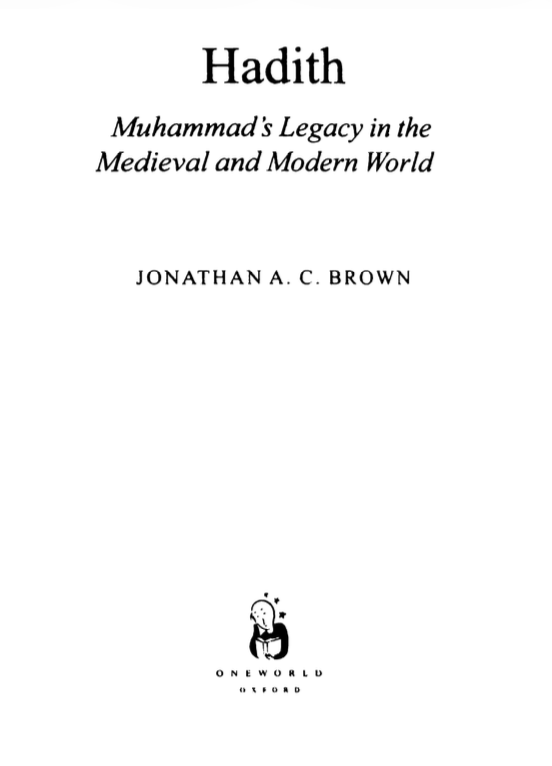
The content here is drawn from Chapters 8 and 9 of a book by Jonathan Brown, a prominent contemporary American Hadith scholar. Brown studied Arabic systematically in Cairo, Egypt, conducted years of fieldwork across various Middle Eastern countries, and studied under local scholars in Sana'a, Yemen, to receive an ijazah (a formal license/certificate to transmit Hadith). He is currently a professor at Georgetown University and serves as the editor-in-chief of the Oxford Encyclopedia of Islam and Law.
Theological scholars evaluate the credibility of narrators from within the faith's traditional perspective, while modern Western historical studies ask a different question: whether a specific Hadith actually originated from the Prophet himself in the 7th century. The evaluation criteria for each are different; a 'sound' Hadith does not necessarily mean it is 'historically authentic' in the modern academic sense.
With the rise of Orientalism in 19th-century Europe, Western scholars gained access to the six major Hadith collections and classic biographical literature. However, they did not accept the faith-based premises—such as the infallibility of the Prophet or the inherent integrity of all narrators—and instead approached Hadith texts through the lens of critical analysis. Early Western scholars were skeptical, suggesting that many Hadith were retrospective creations of later communities rather than the actual words of the Prophet.
Brown points out a key ideological divide: believers have long acknowledged the existence of forged Hadith, but they mostly attribute the motives to sectarian strife or intentional fabrication. In contrast, Western scholars argue that these 'forged' Hadith were not necessarily the result of someone lying on purpose, but rather a natural evolution of oral tradition, where later communities retrospectively created chains of narration (isnad) to justify their views.
Taking the famous Orientalist Joseph Schacht as an example, he argued that many isnads (chains of transmission) converged on a single successor in the 8th century, with the connections going back to the Prophet's companions appearing chaotic and unreliable. Therefore, Schacht inferred that Hadith were not preserved from the 7th century, but were invented in the 8th. He believed the 'common link' narrator was the inventor, and later generations traced these views back to the companions and then to the Prophet.
Schacht believed that the vast majority of Hadith were products of legal debates during the Umayyad and Abbasid eras. It wasn't until the time of Al-Shafi'i that the standard was established that the Prophet's sunnah (tradition/practice) held supreme authority in jurisprudence. Before that, regions like Medina and Kufa relied on local community customs rather than direct Hadith citations. Many legal Hadith attributed to the Prophet were constructed during Al-Shafi'i's time to provide ultimate authority to the views of various legal schools.
Schacht observed that for the same legal issues, different regional schools held different opinions, and subsequently, corresponding narrations emerged to attribute their respective viewpoints to the Prophet. He noticed that many isnads became more riddled with loopholes the closer they got to the Prophet.
Brown points out the limitations of Schacht’s theory. Schacht expanded the idea that 'many legal Hadith emerged in the 8th century' to claim that almost all were later constructions, ignoring the possibility that oral traditions existed as early as the 7th century. Schacht rarely used early manuscripts and relied too heavily on printed collections, overlooking the Sahifa Hammam b. Munabbih (a 1st-century Hijri manuscript). This document contains hundreds of Hadith collected by Abu Hurairah, indicating that large-scale collection of Hadith was already occurring in the early 8th century, not just invented from scratch. Converging chains of narration onto one 8th-century figure only shows that he was a key transmitter who inherited earlier oral traditions; the existence of the chain alone cannot prove a Hadith is false.
Modern research suggests that Schacht's extreme conclusions don't hold up. We can only say that Schacht revealed how many Hadith were shaped and adapted through 8th and 9th-century sectarian debates. Some Hadith kernels can be traced back to the 7th century and the time of the companions, but during the oral transmission process, the texts were constantly rewritten, adjusted, and adapted to fit later controversies. Narrator chains were often 'upgraded' or modified by later generations to connect old texts through longer chains all the way to the Prophet.
Modern studies have found that chains of narration often appear after the text itself. In many cases, a story existed first, and later scholars constructed a complete chain to support it; this has become a widely accepted finding. Early successors frequently omitted intermediate links, simply saying 'So-and-so said,' which made the chains look shorter and older than they actually were.
Brown notes that by cross-referencing chains of narration with textual content, scholars can accurately identify what was added or rewritten by later generations and determine which versions appeared later. However, this cannot 100% prove that a specific Hadith was spoken by the Prophet himself; one can only infer whether the general meaning might have originated with him. For example, the earliest extant Hadith manuscript fragments date to around 730 AD, which only proves that large-scale collection was happening by the early 8th century, not that every sentence in the manuscript was spoken by the Prophet.
Some scholars oppose Schacht, pointing out the highly developed oral culture in the early Arab world. They argue one shouldn't assume oral tradition inevitably leads to large-scale fabrication. The Prophet’s companions were fully capable of memorizing and preserving a large number of the Prophet's sayings and actions and passing them on to the successors. While rewriting occurred, the original core meaning was likely preserved.
Brown highlights the limitation of Western research: the vast majority of available historical sources appeared after the 9th century, with almost no complete texts from the 7th century surviving. Scholars are forced to reconstruct earlier stages based on 9th-century compilations, creating an evidentiary gap.
After the concepts of Orientalist research reached the Middle East, they triggered a significant ideological shock. Next, we look at how the conservatives, skeptics, moderate reformers, and the Salafi movement responded to the verification of Hadith.
The traditional community's original understanding was that the 'sound' Hadith in the six major collections were all truly spoken by the Prophet. Now, a sharp question has arisen: if some Hadith historically did not originate from the Prophet, can they still be used as a legal basis? Is classical Hadith verification enough to distinguish between historical truth and fabricated content? In modern society, which parts of the Hadith must be strictly followed, and which are merely ancient customs?
Brown emphasizes that in ancient times, believers already knew that forged Hadith existed, but those doubts were kept within the community. In the modern era, this is the first time that external historical criticism has been introduced into the community's public debate.
Moderate modernists like Muhammad Abduh and Rashid Rida acknowledge the authority of the two major Sahih (authentic) collections but argue that classical Hadith verification is only a probabilistic judgment, not equivalent to absolute historical truth. Being 'sound' (sahih) only means the chain of narration is technically correct; it does not guarantee the text is the Prophet's exact word. They distinguish between two types of Hadith: those regarding creed and core tenets, and those regarding local or temporal customs. The latter needs to be interpreted in the context of 7th-century Arab history and cannot be applied unconditionally to the modern world. They do not reject all Hadith but argue that if a Hadith's literal meaning conflicts with the Quran, it should be set aside.
Radical skeptics argue that apart from a very small number of mass-transmitted (mutawatir) Hadith, the vast majority of solitary-narrated (ahad) Hadith cannot be used as a definitive basis for faith or law, sometimes even suggesting that the Quran should be the only reliable source.
Traditional scholars point out that the Quran itself does not describe the complete details of worship. If the majority of Hadith are discarded, the entire framework for prayer, marriage, and inheritance law loses its practical basis. Radical skeptics struggle to build a complete legal system at a practical level.
Conservatives, represented by Al-Azhar scholars, believe that 'sound' Hadith that have passed rigorous verification should be accepted. They view the classical system of Hadith science as a divinely gifted tool for protecting the Sunnah. They acknowledge that humans cannot achieve absolute 'seeing is believing' certainty, but argue that for the purpose of religious obligation, believers must rely on this verification system. Regarding textual interpretation, they do not advocate for rigid literalism, but rather for reconciling Hadith with modern practice through contextualization, recognizing special circumstances, and applying the theory of abrogation, while never using modern secular values to negate 'sound' Hadith.
The Salafi position holds that all 'sound' Hadith in the two major Sahih collections are 100% from the Prophet, denying the probability of historical error in these texts. Salafis believe that skeptics are shaking the foundations of faith and that one should return to the first three generations (the companions, the successors, and the followers), prioritizing literal meaning, rejecting later legal deductions, and citing Hadith texts as directly as possible.
Brown also points out the internal contradictions within the Salafi movement. The great Imam Ahmad ibn Hanbal explicitly admitted that even 'sound' Hadith could contain errors, but modern Salafis refuse to admit this. This is a modern development, not a consensus among ancient scholars, and there are disagreements among Salafis themselves regarding literalist versus contextual interpretations.
Brown mentions a popular modern phenomenon: the search for scientific predictions in Hadith. He criticizes this approach, stating that it is a modern invention. Classical Hadith studies never treated Hadith as a textbook for natural sciences; the core purpose of Hadith is religious guidance, not predicting scientific discoveries. Forcing Hadith to match modern science leads to an awkward situation: if scientific findings are updated, the interpretation of the Hadith must also change. Brown also opposes using modern values to judge the authenticity of ancient Hadith, noting that classical Hadith scholars rarely relied solely on content to judge authenticity.
Brown points out that there is a massive information asymmetry between popular folk Hadith culture and academic research. At the level of the ordinary believer, the public is largely unaware of the complex verification rankings of Hadith or the debates of modern historical research. A vast number of Hadith categorized as weak or forged are circulated on the internet and in popular pamphlets, yet they are treated as truth. This remains a persistent contradiction within the community.
Do not like. view all
[Internet Repost]
This article provides an overview of the differences in research approaches and methodologies between Eastern and Western scholars regarding Hadith studies. It contrasts the traditional Islamic scholars' rigorous system for verifying the credibility of narrators with the modern academic focus on textual analysis, highlighting the rich dimensions of research into these prophetic traditions.
The content here is drawn from Chapters 8 and 9 of a book by Jonathan Brown, a prominent contemporary American Hadith scholar. Brown studied Arabic systematically in Cairo, Egypt, conducted years of fieldwork across various Middle Eastern countries, and studied under local scholars in Sana'a, Yemen, to receive an ijazah (a formal license/certificate to transmit Hadith). He is currently a professor at Georgetown University and serves as the editor-in-chief of the Oxford Encyclopedia of Islam and Law.
Theological scholars evaluate the credibility of narrators from within the faith's traditional perspective, while modern Western historical studies ask a different question: whether a specific Hadith actually originated from the Prophet himself in the 7th century. The evaluation criteria for each are different; a 'sound' Hadith does not necessarily mean it is 'historically authentic' in the modern academic sense.
With the rise of Orientalism in 19th-century Europe, Western scholars gained access to the six major Hadith collections and classic biographical literature. However, they did not accept the faith-based premises—such as the infallibility of the Prophet or the inherent integrity of all narrators—and instead approached Hadith texts through the lens of critical analysis. Early Western scholars were skeptical, suggesting that many Hadith were retrospective creations of later communities rather than the actual words of the Prophet.
Brown points out a key ideological divide: believers have long acknowledged the existence of forged Hadith, but they mostly attribute the motives to sectarian strife or intentional fabrication. In contrast, Western scholars argue that these 'forged' Hadith were not necessarily the result of someone lying on purpose, but rather a natural evolution of oral tradition, where later communities retrospectively created chains of narration (isnad) to justify their views.
Taking the famous Orientalist Joseph Schacht as an example, he argued that many isnads (chains of transmission) converged on a single successor in the 8th century, with the connections going back to the Prophet's companions appearing chaotic and unreliable. Therefore, Schacht inferred that Hadith were not preserved from the 7th century, but were invented in the 8th. He believed the 'common link' narrator was the inventor, and later generations traced these views back to the companions and then to the Prophet.
Schacht believed that the vast majority of Hadith were products of legal debates during the Umayyad and Abbasid eras. It wasn't until the time of Al-Shafi'i that the standard was established that the Prophet's sunnah (tradition/practice) held supreme authority in jurisprudence. Before that, regions like Medina and Kufa relied on local community customs rather than direct Hadith citations. Many legal Hadith attributed to the Prophet were constructed during Al-Shafi'i's time to provide ultimate authority to the views of various legal schools.
Schacht observed that for the same legal issues, different regional schools held different opinions, and subsequently, corresponding narrations emerged to attribute their respective viewpoints to the Prophet. He noticed that many isnads became more riddled with loopholes the closer they got to the Prophet.
Brown points out the limitations of Schacht’s theory. Schacht expanded the idea that 'many legal Hadith emerged in the 8th century' to claim that almost all were later constructions, ignoring the possibility that oral traditions existed as early as the 7th century. Schacht rarely used early manuscripts and relied too heavily on printed collections, overlooking the Sahifa Hammam b. Munabbih (a 1st-century Hijri manuscript). This document contains hundreds of Hadith collected by Abu Hurairah, indicating that large-scale collection of Hadith was already occurring in the early 8th century, not just invented from scratch. Converging chains of narration onto one 8th-century figure only shows that he was a key transmitter who inherited earlier oral traditions; the existence of the chain alone cannot prove a Hadith is false.
Modern research suggests that Schacht's extreme conclusions don't hold up. We can only say that Schacht revealed how many Hadith were shaped and adapted through 8th and 9th-century sectarian debates. Some Hadith kernels can be traced back to the 7th century and the time of the companions, but during the oral transmission process, the texts were constantly rewritten, adjusted, and adapted to fit later controversies. Narrator chains were often 'upgraded' or modified by later generations to connect old texts through longer chains all the way to the Prophet.
Modern studies have found that chains of narration often appear after the text itself. In many cases, a story existed first, and later scholars constructed a complete chain to support it; this has become a widely accepted finding. Early successors frequently omitted intermediate links, simply saying 'So-and-so said,' which made the chains look shorter and older than they actually were.
Brown notes that by cross-referencing chains of narration with textual content, scholars can accurately identify what was added or rewritten by later generations and determine which versions appeared later. However, this cannot 100% prove that a specific Hadith was spoken by the Prophet himself; one can only infer whether the general meaning might have originated with him. For example, the earliest extant Hadith manuscript fragments date to around 730 AD, which only proves that large-scale collection was happening by the early 8th century, not that every sentence in the manuscript was spoken by the Prophet.
Some scholars oppose Schacht, pointing out the highly developed oral culture in the early Arab world. They argue one shouldn't assume oral tradition inevitably leads to large-scale fabrication. The Prophet’s companions were fully capable of memorizing and preserving a large number of the Prophet's sayings and actions and passing them on to the successors. While rewriting occurred, the original core meaning was likely preserved.
Brown highlights the limitation of Western research: the vast majority of available historical sources appeared after the 9th century, with almost no complete texts from the 7th century surviving. Scholars are forced to reconstruct earlier stages based on 9th-century compilations, creating an evidentiary gap.
After the concepts of Orientalist research reached the Middle East, they triggered a significant ideological shock. Next, we look at how the conservatives, skeptics, moderate reformers, and the Salafi movement responded to the verification of Hadith.
The traditional community's original understanding was that the 'sound' Hadith in the six major collections were all truly spoken by the Prophet. Now, a sharp question has arisen: if some Hadith historically did not originate from the Prophet, can they still be used as a legal basis? Is classical Hadith verification enough to distinguish between historical truth and fabricated content? In modern society, which parts of the Hadith must be strictly followed, and which are merely ancient customs?
Brown emphasizes that in ancient times, believers already knew that forged Hadith existed, but those doubts were kept within the community. In the modern era, this is the first time that external historical criticism has been introduced into the community's public debate.
Moderate modernists like Muhammad Abduh and Rashid Rida acknowledge the authority of the two major Sahih (authentic) collections but argue that classical Hadith verification is only a probabilistic judgment, not equivalent to absolute historical truth. Being 'sound' (sahih) only means the chain of narration is technically correct; it does not guarantee the text is the Prophet's exact word. They distinguish between two types of Hadith: those regarding creed and core tenets, and those regarding local or temporal customs. The latter needs to be interpreted in the context of 7th-century Arab history and cannot be applied unconditionally to the modern world. They do not reject all Hadith but argue that if a Hadith's literal meaning conflicts with the Quran, it should be set aside.
Radical skeptics argue that apart from a very small number of mass-transmitted (mutawatir) Hadith, the vast majority of solitary-narrated (ahad) Hadith cannot be used as a definitive basis for faith or law, sometimes even suggesting that the Quran should be the only reliable source.
Traditional scholars point out that the Quran itself does not describe the complete details of worship. If the majority of Hadith are discarded, the entire framework for prayer, marriage, and inheritance law loses its practical basis. Radical skeptics struggle to build a complete legal system at a practical level.
Conservatives, represented by Al-Azhar scholars, believe that 'sound' Hadith that have passed rigorous verification should be accepted. They view the classical system of Hadith science as a divinely gifted tool for protecting the Sunnah. They acknowledge that humans cannot achieve absolute 'seeing is believing' certainty, but argue that for the purpose of religious obligation, believers must rely on this verification system. Regarding textual interpretation, they do not advocate for rigid literalism, but rather for reconciling Hadith with modern practice through contextualization, recognizing special circumstances, and applying the theory of abrogation, while never using modern secular values to negate 'sound' Hadith.
The Salafi position holds that all 'sound' Hadith in the two major Sahih collections are 100% from the Prophet, denying the probability of historical error in these texts. Salafis believe that skeptics are shaking the foundations of faith and that one should return to the first three generations (the companions, the successors, and the followers), prioritizing literal meaning, rejecting later legal deductions, and citing Hadith texts as directly as possible.
Brown also points out the internal contradictions within the Salafi movement. The great Imam Ahmad ibn Hanbal explicitly admitted that even 'sound' Hadith could contain errors, but modern Salafis refuse to admit this. This is a modern development, not a consensus among ancient scholars, and there are disagreements among Salafis themselves regarding literalist versus contextual interpretations.
Brown mentions a popular modern phenomenon: the search for scientific predictions in Hadith. He criticizes this approach, stating that it is a modern invention. Classical Hadith studies never treated Hadith as a textbook for natural sciences; the core purpose of Hadith is religious guidance, not predicting scientific discoveries. Forcing Hadith to match modern science leads to an awkward situation: if scientific findings are updated, the interpretation of the Hadith must also change. Brown also opposes using modern values to judge the authenticity of ancient Hadith, noting that classical Hadith scholars rarely relied solely on content to judge authenticity.
Brown points out that there is a massive information asymmetry between popular folk Hadith culture and academic research. At the level of the ordinary believer, the public is largely unaware of the complex verification rankings of Hadith or the debates of modern historical research. A vast number of Hadith categorized as weak or forged are circulated on the internet and in popular pamphlets, yet they are treated as truth. This remains a persistent contradiction within the community.
Do not like.
This article provides an overview of the differences in research approaches and methodologies between Eastern and Western scholars regarding Hadith studies. It contrasts the traditional Islamic scholars' rigorous system for verifying the credibility of narrators with the modern academic focus on textual analysis, highlighting the rich dimensions of research into these prophetic traditions.
The content here is drawn from Chapters 8 and 9 of a book by Jonathan Brown, a prominent contemporary American Hadith scholar. Brown studied Arabic systematically in Cairo, Egypt, conducted years of fieldwork across various Middle Eastern countries, and studied under local scholars in Sana'a, Yemen, to receive an ijazah (a formal license/certificate to transmit Hadith). He is currently a professor at Georgetown University and serves as the editor-in-chief of the Oxford Encyclopedia of Islam and Law.
Theological scholars evaluate the credibility of narrators from within the faith's traditional perspective, while modern Western historical studies ask a different question: whether a specific Hadith actually originated from the Prophet himself in the 7th century. The evaluation criteria for each are different; a 'sound' Hadith does not necessarily mean it is 'historically authentic' in the modern academic sense.
With the rise of Orientalism in 19th-century Europe, Western scholars gained access to the six major Hadith collections and classic biographical literature. However, they did not accept the faith-based premises—such as the infallibility of the Prophet or the inherent integrity of all narrators—and instead approached Hadith texts through the lens of critical analysis. Early Western scholars were skeptical, suggesting that many Hadith were retrospective creations of later communities rather than the actual words of the Prophet.
Brown points out a key ideological divide: believers have long acknowledged the existence of forged Hadith, but they mostly attribute the motives to sectarian strife or intentional fabrication. In contrast, Western scholars argue that these 'forged' Hadith were not necessarily the result of someone lying on purpose, but rather a natural evolution of oral tradition, where later communities retrospectively created chains of narration (isnad) to justify their views.
Taking the famous Orientalist Joseph Schacht as an example, he argued that many isnads (chains of transmission) converged on a single successor in the 8th century, with the connections going back to the Prophet's companions appearing chaotic and unreliable. Therefore, Schacht inferred that Hadith were not preserved from the 7th century, but were invented in the 8th. He believed the 'common link' narrator was the inventor, and later generations traced these views back to the companions and then to the Prophet.
Schacht believed that the vast majority of Hadith were products of legal debates during the Umayyad and Abbasid eras. It wasn't until the time of Al-Shafi'i that the standard was established that the Prophet's sunnah (tradition/practice) held supreme authority in jurisprudence. Before that, regions like Medina and Kufa relied on local community customs rather than direct Hadith citations. Many legal Hadith attributed to the Prophet were constructed during Al-Shafi'i's time to provide ultimate authority to the views of various legal schools.
Schacht observed that for the same legal issues, different regional schools held different opinions, and subsequently, corresponding narrations emerged to attribute their respective viewpoints to the Prophet. He noticed that many isnads became more riddled with loopholes the closer they got to the Prophet.
Brown points out the limitations of Schacht’s theory. Schacht expanded the idea that 'many legal Hadith emerged in the 8th century' to claim that almost all were later constructions, ignoring the possibility that oral traditions existed as early as the 7th century. Schacht rarely used early manuscripts and relied too heavily on printed collections, overlooking the Sahifa Hammam b. Munabbih (a 1st-century Hijri manuscript). This document contains hundreds of Hadith collected by Abu Hurairah, indicating that large-scale collection of Hadith was already occurring in the early 8th century, not just invented from scratch. Converging chains of narration onto one 8th-century figure only shows that he was a key transmitter who inherited earlier oral traditions; the existence of the chain alone cannot prove a Hadith is false.
Modern research suggests that Schacht's extreme conclusions don't hold up. We can only say that Schacht revealed how many Hadith were shaped and adapted through 8th and 9th-century sectarian debates. Some Hadith kernels can be traced back to the 7th century and the time of the companions, but during the oral transmission process, the texts were constantly rewritten, adjusted, and adapted to fit later controversies. Narrator chains were often 'upgraded' or modified by later generations to connect old texts through longer chains all the way to the Prophet.
Modern studies have found that chains of narration often appear after the text itself. In many cases, a story existed first, and later scholars constructed a complete chain to support it; this has become a widely accepted finding. Early successors frequently omitted intermediate links, simply saying 'So-and-so said,' which made the chains look shorter and older than they actually were.
Brown notes that by cross-referencing chains of narration with textual content, scholars can accurately identify what was added or rewritten by later generations and determine which versions appeared later. However, this cannot 100% prove that a specific Hadith was spoken by the Prophet himself; one can only infer whether the general meaning might have originated with him. For example, the earliest extant Hadith manuscript fragments date to around 730 AD, which only proves that large-scale collection was happening by the early 8th century, not that every sentence in the manuscript was spoken by the Prophet.
Some scholars oppose Schacht, pointing out the highly developed oral culture in the early Arab world. They argue one shouldn't assume oral tradition inevitably leads to large-scale fabrication. The Prophet’s companions were fully capable of memorizing and preserving a large number of the Prophet's sayings and actions and passing them on to the successors. While rewriting occurred, the original core meaning was likely preserved.
Brown highlights the limitation of Western research: the vast majority of available historical sources appeared after the 9th century, with almost no complete texts from the 7th century surviving. Scholars are forced to reconstruct earlier stages based on 9th-century compilations, creating an evidentiary gap.
After the concepts of Orientalist research reached the Middle East, they triggered a significant ideological shock. Next, we look at how the conservatives, skeptics, moderate reformers, and the Salafi movement responded to the verification of Hadith.
The traditional community's original understanding was that the 'sound' Hadith in the six major collections were all truly spoken by the Prophet. Now, a sharp question has arisen: if some Hadith historically did not originate from the Prophet, can they still be used as a legal basis? Is classical Hadith verification enough to distinguish between historical truth and fabricated content? In modern society, which parts of the Hadith must be strictly followed, and which are merely ancient customs?
Brown emphasizes that in ancient times, believers already knew that forged Hadith existed, but those doubts were kept within the community. In the modern era, this is the first time that external historical criticism has been introduced into the community's public debate.
Moderate modernists like Muhammad Abduh and Rashid Rida acknowledge the authority of the two major Sahih (authentic) collections but argue that classical Hadith verification is only a probabilistic judgment, not equivalent to absolute historical truth. Being 'sound' (sahih) only means the chain of narration is technically correct; it does not guarantee the text is the Prophet's exact word. They distinguish between two types of Hadith: those regarding creed and core tenets, and those regarding local or temporal customs. The latter needs to be interpreted in the context of 7th-century Arab history and cannot be applied unconditionally to the modern world. They do not reject all Hadith but argue that if a Hadith's literal meaning conflicts with the Quran, it should be set aside.
Radical skeptics argue that apart from a very small number of mass-transmitted (mutawatir) Hadith, the vast majority of solitary-narrated (ahad) Hadith cannot be used as a definitive basis for faith or law, sometimes even suggesting that the Quran should be the only reliable source.
Traditional scholars point out that the Quran itself does not describe the complete details of worship. If the majority of Hadith are discarded, the entire framework for prayer, marriage, and inheritance law loses its practical basis. Radical skeptics struggle to build a complete legal system at a practical level.
Conservatives, represented by Al-Azhar scholars, believe that 'sound' Hadith that have passed rigorous verification should be accepted. They view the classical system of Hadith science as a divinely gifted tool for protecting the Sunnah. They acknowledge that humans cannot achieve absolute 'seeing is believing' certainty, but argue that for the purpose of religious obligation, believers must rely on this verification system. Regarding textual interpretation, they do not advocate for rigid literalism, but rather for reconciling Hadith with modern practice through contextualization, recognizing special circumstances, and applying the theory of abrogation, while never using modern secular values to negate 'sound' Hadith.
The Salafi position holds that all 'sound' Hadith in the two major Sahih collections are 100% from the Prophet, denying the probability of historical error in these texts. Salafis believe that skeptics are shaking the foundations of faith and that one should return to the first three generations (the companions, the successors, and the followers), prioritizing literal meaning, rejecting later legal deductions, and citing Hadith texts as directly as possible.
Brown also points out the internal contradictions within the Salafi movement. The great Imam Ahmad ibn Hanbal explicitly admitted that even 'sound' Hadith could contain errors, but modern Salafis refuse to admit this. This is a modern development, not a consensus among ancient scholars, and there are disagreements among Salafis themselves regarding literalist versus contextual interpretations.
Brown mentions a popular modern phenomenon: the search for scientific predictions in Hadith. He criticizes this approach, stating that it is a modern invention. Classical Hadith studies never treated Hadith as a textbook for natural sciences; the core purpose of Hadith is religious guidance, not predicting scientific discoveries. Forcing Hadith to match modern science leads to an awkward situation: if scientific findings are updated, the interpretation of the Hadith must also change. Brown also opposes using modern values to judge the authenticity of ancient Hadith, noting that classical Hadith scholars rarely relied solely on content to judge authenticity.
Brown points out that there is a massive information asymmetry between popular folk Hadith culture and academic research. At the level of the ordinary believer, the public is largely unaware of the complex verification rankings of Hadith or the debates of modern historical research. A vast number of Hadith categorized as weak or forged are circulated on the internet and in popular pamphlets, yet they are treated as truth. This remains a persistent contradiction within the community.
Do not like.
Hadith Studies and Islamic Heritage: Bridging Traditional Methodology and Modern Historical Analysis
Articles • Hasan09 posted the article • 0 comments • 11 views • 9 hours ago
[Internet Repost]
This article provides an overview of the differences in research approaches and methodologies between Eastern and Western scholars regarding Hadith studies. It contrasts the traditional Islamic scholars' rigorous system for verifying the credibility of narrators with the modern academic focus on textual analysis, highlighting the rich dimensions of research into these prophetic traditions.
The content here is drawn from Chapters 8 and 9 of a book by Jonathan Brown, a prominent contemporary American Hadith scholar. Brown studied Arabic systematically in Cairo, Egypt, conducted years of fieldwork across various Middle Eastern countries, and studied under local scholars in Sana'a, Yemen, to receive an ijazah (a formal license/certificate to transmit Hadith). He is currently a professor at Georgetown University and serves as the editor-in-chief of the Oxford Encyclopedia of Islam and Law.
Theological scholars evaluate the credibility of narrators from within the faith's traditional perspective, while modern Western historical studies ask a different question: whether a specific Hadith actually originated from the Prophet himself in the 7th century. The evaluation criteria for each are different; a 'sound' Hadith does not necessarily mean it is 'historically authentic' in the modern academic sense.
With the rise of Orientalism in 19th-century Europe, Western scholars gained access to the six major Hadith collections and classic biographical literature. However, they did not accept the faith-based premises—such as the infallibility of the Prophet or the inherent integrity of all narrators—and instead approached Hadith texts through the lens of critical analysis. Early Western scholars were skeptical, suggesting that many Hadith were retrospective creations of later communities rather than the actual words of the Prophet.
Brown points out a key ideological divide: believers have long acknowledged the existence of forged Hadith, but they mostly attribute the motives to sectarian strife or intentional fabrication. In contrast, Western scholars argue that these 'forged' Hadith were not necessarily the result of someone lying on purpose, but rather a natural evolution of oral tradition, where later communities retrospectively created chains of narration (isnad) to justify their views.
Taking the famous Orientalist Joseph Schacht as an example, he argued that many isnads (chains of transmission) converged on a single successor in the 8th century, with the connections going back to the Prophet's companions appearing chaotic and unreliable. Therefore, Schacht inferred that Hadith were not preserved from the 7th century, but were invented in the 8th. He believed the 'common link' narrator was the inventor, and later generations traced these views back to the companions and then to the Prophet.
Schacht believed that the vast majority of Hadith were products of legal debates during the Umayyad and Abbasid eras. It wasn't until the time of Al-Shafi'i that the standard was established that the Prophet's sunnah (tradition/practice) held supreme authority in jurisprudence. Before that, regions like Medina and Kufa relied on local community customs rather than direct Hadith citations. Many legal Hadith attributed to the Prophet were constructed during Al-Shafi'i's time to provide ultimate authority to the views of various legal schools.
Schacht observed that for the same legal issues, different regional schools held different opinions, and subsequently, corresponding narrations emerged to attribute their respective viewpoints to the Prophet. He noticed that many isnads became more riddled with loopholes the closer they got to the Prophet.
Brown points out the limitations of Schacht’s theory. Schacht expanded the idea that 'many legal Hadith emerged in the 8th century' to claim that almost all were later constructions, ignoring the possibility that oral traditions existed as early as the 7th century. Schacht rarely used early manuscripts and relied too heavily on printed collections, overlooking the Sahifa Hammam b. Munabbih (a 1st-century Hijri manuscript). This document contains hundreds of Hadith collected by Abu Hurairah, indicating that large-scale collection of Hadith was already occurring in the early 8th century, not just invented from scratch. Converging chains of narration onto one 8th-century figure only shows that he was a key transmitter who inherited earlier oral traditions; the existence of the chain alone cannot prove a Hadith is false.
Modern research suggests that Schacht's extreme conclusions don't hold up. We can only say that Schacht revealed how many Hadith were shaped and adapted through 8th and 9th-century sectarian debates. Some Hadith kernels can be traced back to the 7th century and the time of the companions, but during the oral transmission process, the texts were constantly rewritten, adjusted, and adapted to fit later controversies. Narrator chains were often 'upgraded' or modified by later generations to connect old texts through longer chains all the way to the Prophet.
Modern studies have found that chains of narration often appear after the text itself. In many cases, a story existed first, and later scholars constructed a complete chain to support it; this has become a widely accepted finding. Early successors frequently omitted intermediate links, simply saying 'So-and-so said,' which made the chains look shorter and older than they actually were.
Brown notes that by cross-referencing chains of narration with textual content, scholars can accurately identify what was added or rewritten by later generations and determine which versions appeared later. However, this cannot 100% prove that a specific Hadith was spoken by the Prophet himself; one can only infer whether the general meaning might have originated with him. For example, the earliest extant Hadith manuscript fragments date to around 730 AD, which only proves that large-scale collection was happening by the early 8th century, not that every sentence in the manuscript was spoken by the Prophet.
Some scholars oppose Schacht, pointing out the highly developed oral culture in the early Arab world. They argue one shouldn't assume oral tradition inevitably leads to large-scale fabrication. The Prophet’s companions were fully capable of memorizing and preserving a large number of the Prophet's sayings and actions and passing them on to the successors. While rewriting occurred, the original core meaning was likely preserved.
Brown highlights the limitation of Western research: the vast majority of available historical sources appeared after the 9th century, with almost no complete texts from the 7th century surviving. Scholars are forced to reconstruct earlier stages based on 9th-century compilations, creating an evidentiary gap.
After the concepts of Orientalist research reached the Middle East, they triggered a significant ideological shock. Next, we look at how the conservatives, skeptics, moderate reformers, and the Salafi movement responded to the verification of Hadith.
The traditional community's original understanding was that the 'sound' Hadith in the six major collections were all truly spoken by the Prophet. Now, a sharp question has arisen: if some Hadith historically did not originate from the Prophet, can they still be used as a legal basis? Is classical Hadith verification enough to distinguish between historical truth and fabricated content? In modern society, which parts of the Hadith must be strictly followed, and which are merely ancient customs?
Brown emphasizes that in ancient times, believers already knew that forged Hadith existed, but those doubts were kept within the community. In the modern era, this is the first time that external historical criticism has been introduced into the community's public debate.
Moderate modernists like Muhammad Abduh and Rashid Rida acknowledge the authority of the two major Sahih (authentic) collections but argue that classical Hadith verification is only a probabilistic judgment, not equivalent to absolute historical truth. Being 'sound' (sahih) only means the chain of narration is technically correct; it does not guarantee the text is the Prophet's exact word. They distinguish between two types of Hadith: those regarding creed and core tenets, and those regarding local or temporal customs. The latter needs to be interpreted in the context of 7th-century Arab history and cannot be applied unconditionally to the modern world. They do not reject all Hadith but argue that if a Hadith's literal meaning conflicts with the Quran, it should be set aside.
Radical skeptics argue that apart from a very small number of mass-transmitted (mutawatir) Hadith, the vast majority of solitary-narrated (ahad) Hadith cannot be used as a definitive basis for faith or law, sometimes even suggesting that the Quran should be the only reliable source.
Traditional scholars point out that the Quran itself does not describe the complete details of worship. If the majority of Hadith are discarded, the entire framework for prayer, marriage, and inheritance law loses its practical basis. Radical skeptics struggle to build a complete legal system at a practical level.
Conservatives, represented by Al-Azhar scholars, believe that 'sound' Hadith that have passed rigorous verification should be accepted. They view the classical system of Hadith science as a divinely gifted tool for protecting the Sunnah. They acknowledge that humans cannot achieve absolute 'seeing is believing' certainty, but argue that for the purpose of religious obligation, believers must rely on this verification system. Regarding textual interpretation, they do not advocate for rigid literalism, but rather for reconciling Hadith with modern practice through contextualization, recognizing special circumstances, and applying the theory of abrogation, while never using modern secular values to negate 'sound' Hadith.
The Salafi position holds that all 'sound' Hadith in the two major Sahih collections are 100% from the Prophet, denying the probability of historical error in these texts. Salafis believe that skeptics are shaking the foundations of faith and that one should return to the first three generations (the companions, the successors, and the followers), prioritizing literal meaning, rejecting later legal deductions, and citing Hadith texts as directly as possible.
Brown also points out the internal contradictions within the Salafi movement. The great Imam Ahmad ibn Hanbal explicitly admitted that even 'sound' Hadith could contain errors, but modern Salafis refuse to admit this. This is a modern development, not a consensus among ancient scholars, and there are disagreements among Salafis themselves regarding literalist versus contextual interpretations.
Brown mentions a popular modern phenomenon: the search for scientific predictions in Hadith. He criticizes this approach, stating that it is a modern invention. Classical Hadith studies never treated Hadith as a textbook for natural sciences; the core purpose of Hadith is religious guidance, not predicting scientific discoveries. Forcing Hadith to match modern science leads to an awkward situation: if scientific findings are updated, the interpretation of the Hadith must also change. Brown also opposes using modern values to judge the authenticity of ancient Hadith, noting that classical Hadith scholars rarely relied solely on content to judge authenticity.
Brown points out that there is a massive information asymmetry between popular folk Hadith culture and academic research. At the level of the ordinary believer, the public is largely unaware of the complex verification rankings of Hadith or the debates of modern historical research. A vast number of Hadith categorized as weak or forged are circulated on the internet and in popular pamphlets, yet they are treated as truth. This remains a persistent contradiction within the community.
Do not like. view all
This article provides an overview of the differences in research approaches and methodologies between Eastern and Western scholars regarding Hadith studies. It contrasts the traditional Islamic scholars' rigorous system for verifying the credibility of narrators with the modern academic focus on textual analysis, highlighting the rich dimensions of research into these prophetic traditions.
The content here is drawn from Chapters 8 and 9 of a book by Jonathan Brown, a prominent contemporary American Hadith scholar. Brown studied Arabic systematically in Cairo, Egypt, conducted years of fieldwork across various Middle Eastern countries, and studied under local scholars in Sana'a, Yemen, to receive an ijazah (a formal license/certificate to transmit Hadith). He is currently a professor at Georgetown University and serves as the editor-in-chief of the Oxford Encyclopedia of Islam and Law.
Theological scholars evaluate the credibility of narrators from within the faith's traditional perspective, while modern Western historical studies ask a different question: whether a specific Hadith actually originated from the Prophet himself in the 7th century. The evaluation criteria for each are different; a 'sound' Hadith does not necessarily mean it is 'historically authentic' in the modern academic sense.
With the rise of Orientalism in 19th-century Europe, Western scholars gained access to the six major Hadith collections and classic biographical literature. However, they did not accept the faith-based premises—such as the infallibility of the Prophet or the inherent integrity of all narrators—and instead approached Hadith texts through the lens of critical analysis. Early Western scholars were skeptical, suggesting that many Hadith were retrospective creations of later communities rather than the actual words of the Prophet.
Brown points out a key ideological divide: believers have long acknowledged the existence of forged Hadith, but they mostly attribute the motives to sectarian strife or intentional fabrication. In contrast, Western scholars argue that these 'forged' Hadith were not necessarily the result of someone lying on purpose, but rather a natural evolution of oral tradition, where later communities retrospectively created chains of narration (isnad) to justify their views.
Taking the famous Orientalist Joseph Schacht as an example, he argued that many isnads (chains of transmission) converged on a single successor in the 8th century, with the connections going back to the Prophet's companions appearing chaotic and unreliable. Therefore, Schacht inferred that Hadith were not preserved from the 7th century, but were invented in the 8th. He believed the 'common link' narrator was the inventor, and later generations traced these views back to the companions and then to the Prophet.
Schacht believed that the vast majority of Hadith were products of legal debates during the Umayyad and Abbasid eras. It wasn't until the time of Al-Shafi'i that the standard was established that the Prophet's sunnah (tradition/practice) held supreme authority in jurisprudence. Before that, regions like Medina and Kufa relied on local community customs rather than direct Hadith citations. Many legal Hadith attributed to the Prophet were constructed during Al-Shafi'i's time to provide ultimate authority to the views of various legal schools.
Schacht observed that for the same legal issues, different regional schools held different opinions, and subsequently, corresponding narrations emerged to attribute their respective viewpoints to the Prophet. He noticed that many isnads became more riddled with loopholes the closer they got to the Prophet.
Brown points out the limitations of Schacht’s theory. Schacht expanded the idea that 'many legal Hadith emerged in the 8th century' to claim that almost all were later constructions, ignoring the possibility that oral traditions existed as early as the 7th century. Schacht rarely used early manuscripts and relied too heavily on printed collections, overlooking the Sahifa Hammam b. Munabbih (a 1st-century Hijri manuscript). This document contains hundreds of Hadith collected by Abu Hurairah, indicating that large-scale collection of Hadith was already occurring in the early 8th century, not just invented from scratch. Converging chains of narration onto one 8th-century figure only shows that he was a key transmitter who inherited earlier oral traditions; the existence of the chain alone cannot prove a Hadith is false.
Modern research suggests that Schacht's extreme conclusions don't hold up. We can only say that Schacht revealed how many Hadith were shaped and adapted through 8th and 9th-century sectarian debates. Some Hadith kernels can be traced back to the 7th century and the time of the companions, but during the oral transmission process, the texts were constantly rewritten, adjusted, and adapted to fit later controversies. Narrator chains were often 'upgraded' or modified by later generations to connect old texts through longer chains all the way to the Prophet.
Modern studies have found that chains of narration often appear after the text itself. In many cases, a story existed first, and later scholars constructed a complete chain to support it; this has become a widely accepted finding. Early successors frequently omitted intermediate links, simply saying 'So-and-so said,' which made the chains look shorter and older than they actually were.
Brown notes that by cross-referencing chains of narration with textual content, scholars can accurately identify what was added or rewritten by later generations and determine which versions appeared later. However, this cannot 100% prove that a specific Hadith was spoken by the Prophet himself; one can only infer whether the general meaning might have originated with him. For example, the earliest extant Hadith manuscript fragments date to around 730 AD, which only proves that large-scale collection was happening by the early 8th century, not that every sentence in the manuscript was spoken by the Prophet.
Some scholars oppose Schacht, pointing out the highly developed oral culture in the early Arab world. They argue one shouldn't assume oral tradition inevitably leads to large-scale fabrication. The Prophet’s companions were fully capable of memorizing and preserving a large number of the Prophet's sayings and actions and passing them on to the successors. While rewriting occurred, the original core meaning was likely preserved.
Brown highlights the limitation of Western research: the vast majority of available historical sources appeared after the 9th century, with almost no complete texts from the 7th century surviving. Scholars are forced to reconstruct earlier stages based on 9th-century compilations, creating an evidentiary gap.
After the concepts of Orientalist research reached the Middle East, they triggered a significant ideological shock. Next, we look at how the conservatives, skeptics, moderate reformers, and the Salafi movement responded to the verification of Hadith.
The traditional community's original understanding was that the 'sound' Hadith in the six major collections were all truly spoken by the Prophet. Now, a sharp question has arisen: if some Hadith historically did not originate from the Prophet, can they still be used as a legal basis? Is classical Hadith verification enough to distinguish between historical truth and fabricated content? In modern society, which parts of the Hadith must be strictly followed, and which are merely ancient customs?
Brown emphasizes that in ancient times, believers already knew that forged Hadith existed, but those doubts were kept within the community. In the modern era, this is the first time that external historical criticism has been introduced into the community's public debate.
Moderate modernists like Muhammad Abduh and Rashid Rida acknowledge the authority of the two major Sahih (authentic) collections but argue that classical Hadith verification is only a probabilistic judgment, not equivalent to absolute historical truth. Being 'sound' (sahih) only means the chain of narration is technically correct; it does not guarantee the text is the Prophet's exact word. They distinguish between two types of Hadith: those regarding creed and core tenets, and those regarding local or temporal customs. The latter needs to be interpreted in the context of 7th-century Arab history and cannot be applied unconditionally to the modern world. They do not reject all Hadith but argue that if a Hadith's literal meaning conflicts with the Quran, it should be set aside.
Radical skeptics argue that apart from a very small number of mass-transmitted (mutawatir) Hadith, the vast majority of solitary-narrated (ahad) Hadith cannot be used as a definitive basis for faith or law, sometimes even suggesting that the Quran should be the only reliable source.
Traditional scholars point out that the Quran itself does not describe the complete details of worship. If the majority of Hadith are discarded, the entire framework for prayer, marriage, and inheritance law loses its practical basis. Radical skeptics struggle to build a complete legal system at a practical level.
Conservatives, represented by Al-Azhar scholars, believe that 'sound' Hadith that have passed rigorous verification should be accepted. They view the classical system of Hadith science as a divinely gifted tool for protecting the Sunnah. They acknowledge that humans cannot achieve absolute 'seeing is believing' certainty, but argue that for the purpose of religious obligation, believers must rely on this verification system. Regarding textual interpretation, they do not advocate for rigid literalism, but rather for reconciling Hadith with modern practice through contextualization, recognizing special circumstances, and applying the theory of abrogation, while never using modern secular values to negate 'sound' Hadith.
The Salafi position holds that all 'sound' Hadith in the two major Sahih collections are 100% from the Prophet, denying the probability of historical error in these texts. Salafis believe that skeptics are shaking the foundations of faith and that one should return to the first three generations (the companions, the successors, and the followers), prioritizing literal meaning, rejecting later legal deductions, and citing Hadith texts as directly as possible.
Brown also points out the internal contradictions within the Salafi movement. The great Imam Ahmad ibn Hanbal explicitly admitted that even 'sound' Hadith could contain errors, but modern Salafis refuse to admit this. This is a modern development, not a consensus among ancient scholars, and there are disagreements among Salafis themselves regarding literalist versus contextual interpretations.
Brown mentions a popular modern phenomenon: the search for scientific predictions in Hadith. He criticizes this approach, stating that it is a modern invention. Classical Hadith studies never treated Hadith as a textbook for natural sciences; the core purpose of Hadith is religious guidance, not predicting scientific discoveries. Forcing Hadith to match modern science leads to an awkward situation: if scientific findings are updated, the interpretation of the Hadith must also change. Brown also opposes using modern values to judge the authenticity of ancient Hadith, noting that classical Hadith scholars rarely relied solely on content to judge authenticity.
Brown points out that there is a massive information asymmetry between popular folk Hadith culture and academic research. At the level of the ordinary believer, the public is largely unaware of the complex verification rankings of Hadith or the debates of modern historical research. A vast number of Hadith categorized as weak or forged are circulated on the internet and in popular pamphlets, yet they are treated as truth. This remains a persistent contradiction within the community.
Do not like. view all
[Internet Repost]
This article provides an overview of the differences in research approaches and methodologies between Eastern and Western scholars regarding Hadith studies. It contrasts the traditional Islamic scholars' rigorous system for verifying the credibility of narrators with the modern academic focus on textual analysis, highlighting the rich dimensions of research into these prophetic traditions.
The content here is drawn from Chapters 8 and 9 of a book by Jonathan Brown, a prominent contemporary American Hadith scholar. Brown studied Arabic systematically in Cairo, Egypt, conducted years of fieldwork across various Middle Eastern countries, and studied under local scholars in Sana'a, Yemen, to receive an ijazah (a formal license/certificate to transmit Hadith). He is currently a professor at Georgetown University and serves as the editor-in-chief of the Oxford Encyclopedia of Islam and Law.
Theological scholars evaluate the credibility of narrators from within the faith's traditional perspective, while modern Western historical studies ask a different question: whether a specific Hadith actually originated from the Prophet himself in the 7th century. The evaluation criteria for each are different; a 'sound' Hadith does not necessarily mean it is 'historically authentic' in the modern academic sense.
With the rise of Orientalism in 19th-century Europe, Western scholars gained access to the six major Hadith collections and classic biographical literature. However, they did not accept the faith-based premises—such as the infallibility of the Prophet or the inherent integrity of all narrators—and instead approached Hadith texts through the lens of critical analysis. Early Western scholars were skeptical, suggesting that many Hadith were retrospective creations of later communities rather than the actual words of the Prophet.
Brown points out a key ideological divide: believers have long acknowledged the existence of forged Hadith, but they mostly attribute the motives to sectarian strife or intentional fabrication. In contrast, Western scholars argue that these 'forged' Hadith were not necessarily the result of someone lying on purpose, but rather a natural evolution of oral tradition, where later communities retrospectively created chains of narration (isnad) to justify their views.
Taking the famous Orientalist Joseph Schacht as an example, he argued that many isnads (chains of transmission) converged on a single successor in the 8th century, with the connections going back to the Prophet's companions appearing chaotic and unreliable. Therefore, Schacht inferred that Hadith were not preserved from the 7th century, but were invented in the 8th. He believed the 'common link' narrator was the inventor, and later generations traced these views back to the companions and then to the Prophet.
Schacht believed that the vast majority of Hadith were products of legal debates during the Umayyad and Abbasid eras. It wasn't until the time of Al-Shafi'i that the standard was established that the Prophet's sunnah (tradition/practice) held supreme authority in jurisprudence. Before that, regions like Medina and Kufa relied on local community customs rather than direct Hadith citations. Many legal Hadith attributed to the Prophet were constructed during Al-Shafi'i's time to provide ultimate authority to the views of various legal schools.
Schacht observed that for the same legal issues, different regional schools held different opinions, and subsequently, corresponding narrations emerged to attribute their respective viewpoints to the Prophet. He noticed that many isnads became more riddled with loopholes the closer they got to the Prophet.
Brown points out the limitations of Schacht’s theory. Schacht expanded the idea that 'many legal Hadith emerged in the 8th century' to claim that almost all were later constructions, ignoring the possibility that oral traditions existed as early as the 7th century. Schacht rarely used early manuscripts and relied too heavily on printed collections, overlooking the Sahifa Hammam b. Munabbih (a 1st-century Hijri manuscript). This document contains hundreds of Hadith collected by Abu Hurairah, indicating that large-scale collection of Hadith was already occurring in the early 8th century, not just invented from scratch. Converging chains of narration onto one 8th-century figure only shows that he was a key transmitter who inherited earlier oral traditions; the existence of the chain alone cannot prove a Hadith is false.
Modern research suggests that Schacht's extreme conclusions don't hold up. We can only say that Schacht revealed how many Hadith were shaped and adapted through 8th and 9th-century sectarian debates. Some Hadith kernels can be traced back to the 7th century and the time of the companions, but during the oral transmission process, the texts were constantly rewritten, adjusted, and adapted to fit later controversies. Narrator chains were often 'upgraded' or modified by later generations to connect old texts through longer chains all the way to the Prophet.
Modern studies have found that chains of narration often appear after the text itself. In many cases, a story existed first, and later scholars constructed a complete chain to support it; this has become a widely accepted finding. Early successors frequently omitted intermediate links, simply saying 'So-and-so said,' which made the chains look shorter and older than they actually were.
Brown notes that by cross-referencing chains of narration with textual content, scholars can accurately identify what was added or rewritten by later generations and determine which versions appeared later. However, this cannot 100% prove that a specific Hadith was spoken by the Prophet himself; one can only infer whether the general meaning might have originated with him. For example, the earliest extant Hadith manuscript fragments date to around 730 AD, which only proves that large-scale collection was happening by the early 8th century, not that every sentence in the manuscript was spoken by the Prophet.
Some scholars oppose Schacht, pointing out the highly developed oral culture in the early Arab world. They argue one shouldn't assume oral tradition inevitably leads to large-scale fabrication. The Prophet’s companions were fully capable of memorizing and preserving a large number of the Prophet's sayings and actions and passing them on to the successors. While rewriting occurred, the original core meaning was likely preserved.
Brown highlights the limitation of Western research: the vast majority of available historical sources appeared after the 9th century, with almost no complete texts from the 7th century surviving. Scholars are forced to reconstruct earlier stages based on 9th-century compilations, creating an evidentiary gap.
After the concepts of Orientalist research reached the Middle East, they triggered a significant ideological shock. Next, we look at how the conservatives, skeptics, moderate reformers, and the Salafi movement responded to the verification of Hadith.
The traditional community's original understanding was that the 'sound' Hadith in the six major collections were all truly spoken by the Prophet. Now, a sharp question has arisen: if some Hadith historically did not originate from the Prophet, can they still be used as a legal basis? Is classical Hadith verification enough to distinguish between historical truth and fabricated content? In modern society, which parts of the Hadith must be strictly followed, and which are merely ancient customs?
Brown emphasizes that in ancient times, believers already knew that forged Hadith existed, but those doubts were kept within the community. In the modern era, this is the first time that external historical criticism has been introduced into the community's public debate.
Moderate modernists like Muhammad Abduh and Rashid Rida acknowledge the authority of the two major Sahih (authentic) collections but argue that classical Hadith verification is only a probabilistic judgment, not equivalent to absolute historical truth. Being 'sound' (sahih) only means the chain of narration is technically correct; it does not guarantee the text is the Prophet's exact word. They distinguish between two types of Hadith: those regarding creed and core tenets, and those regarding local or temporal customs. The latter needs to be interpreted in the context of 7th-century Arab history and cannot be applied unconditionally to the modern world. They do not reject all Hadith but argue that if a Hadith's literal meaning conflicts with the Quran, it should be set aside.
Radical skeptics argue that apart from a very small number of mass-transmitted (mutawatir) Hadith, the vast majority of solitary-narrated (ahad) Hadith cannot be used as a definitive basis for faith or law, sometimes even suggesting that the Quran should be the only reliable source.
Traditional scholars point out that the Quran itself does not describe the complete details of worship. If the majority of Hadith are discarded, the entire framework for prayer, marriage, and inheritance law loses its practical basis. Radical skeptics struggle to build a complete legal system at a practical level.
Conservatives, represented by Al-Azhar scholars, believe that 'sound' Hadith that have passed rigorous verification should be accepted. They view the classical system of Hadith science as a divinely gifted tool for protecting the Sunnah. They acknowledge that humans cannot achieve absolute 'seeing is believing' certainty, but argue that for the purpose of religious obligation, believers must rely on this verification system. Regarding textual interpretation, they do not advocate for rigid literalism, but rather for reconciling Hadith with modern practice through contextualization, recognizing special circumstances, and applying the theory of abrogation, while never using modern secular values to negate 'sound' Hadith.
The Salafi position holds that all 'sound' Hadith in the two major Sahih collections are 100% from the Prophet, denying the probability of historical error in these texts. Salafis believe that skeptics are shaking the foundations of faith and that one should return to the first three generations (the companions, the successors, and the followers), prioritizing literal meaning, rejecting later legal deductions, and citing Hadith texts as directly as possible.
Brown also points out the internal contradictions within the Salafi movement. The great Imam Ahmad ibn Hanbal explicitly admitted that even 'sound' Hadith could contain errors, but modern Salafis refuse to admit this. This is a modern development, not a consensus among ancient scholars, and there are disagreements among Salafis themselves regarding literalist versus contextual interpretations.
Brown mentions a popular modern phenomenon: the search for scientific predictions in Hadith. He criticizes this approach, stating that it is a modern invention. Classical Hadith studies never treated Hadith as a textbook for natural sciences; the core purpose of Hadith is religious guidance, not predicting scientific discoveries. Forcing Hadith to match modern science leads to an awkward situation: if scientific findings are updated, the interpretation of the Hadith must also change. Brown also opposes using modern values to judge the authenticity of ancient Hadith, noting that classical Hadith scholars rarely relied solely on content to judge authenticity.
Brown points out that there is a massive information asymmetry between popular folk Hadith culture and academic research. At the level of the ordinary believer, the public is largely unaware of the complex verification rankings of Hadith or the debates of modern historical research. A vast number of Hadith categorized as weak or forged are circulated on the internet and in popular pamphlets, yet they are treated as truth. This remains a persistent contradiction within the community.
Do not like.