

Acheng Mosque
Halal Travel Guide: Acheng, Heilongjiang — Mosque Architecture and Hui Muslims
Articles • ali2007fr posted the article • 0 comments • 166 views • 2026-05-19 03:43
Reposted from the web
Summary: Acheng Mosque in Heilongjiang is an important local Muslim site with distinctive architecture and community history. This travel account records the mosque, its spaces, and the surrounding Hui Muslim context while preserving the original image order.
Take a taxi from Harbin to Acheng to visit the famous historic mosque, Acheng Mosque.
In 1726 (the fourth year of the Yongzheng reign), the Ningguta General established the Alechuka Assistant Commander's Office near the site of the Jin Dynasty capital, Huining Prefecture. Soon after, the city of Alechuka was built, shortened to Acheng. In 1770 (the 35th year of the Qianlong reign), Yang Huaxian, a Hui Muslim from Shen County, Shandong, settled in Acheng with the Qing army to serve as a clerk at the Alechuka office. Afterward, more Hui Muslims moved from Shandong to Acheng and rented houses from Manchu bannermen. By 1777 (the 42nd year of the Qianlong reign), there were 26 (some say 28) Hui Muslim households in Acheng, including the Yang, Wang, San, Ma, Zhang, Ding, Jin, and Cai families. They rented eight rooms from Manchu bannermen in Xigangzi on West Street to establish the first Acheng Mosque, with Yang Huaxian serving as the mosque elder.
In 1802 (the seventh year of the Jiaqing reign), Elder Yang Huaxian negotiated the purchase of two plots of ancestral land in Xigangzi, formerly belonging to the Manchu official Saisai, and began building the formal Acheng Mosque. Construction continued through the Jiaqing, Daoguang, and Xianfeng reigns, taking 50 years to complete. Twelve years after the mosque was finished, a fire broke out in Acheng in 1873 (the 12th year of the Tongzhi reign). The mosque's Moon-Sighting Tower (wangyuelou) and North Lecture Hall were destroyed, leaving only the South Lecture Hall and the reception hall.
In 1890 (the 16th year of the Guangxu reign), the mosque's imam, Liu Yuzhang, and manager, Luo Yuzhang, began organizing the reconstruction of the mosque. The Moon-Sighting Tower on the main prayer hall required four pine pillars over 15 meters long. After searching, the mosque found such trees in a forest area called Houdu near Yabuli. Mosque elders Yang Qingbao, Geng Qiming, and Yang Baoshen risked their lives to negotiate logging with the bandits occupying the area. The bandit leader not only agreed to let them cut six trees but also sent men to help fell them and transport them back. When the timber arrived in Acheng, someone reported them. Mosque elder Jin Yuxi and others had to travel to Jilin for a difficult legal battle, which they eventually won to keep the wood.
When construction began, the elders went to Wula Street in Jilin to hire a carpenter named Sun Yulin to lead the work. Legend says Carpenter Sun's master was worried about his apprentice, so he traveled to Acheng to check the construction and material measurements. He said nothing after looking, but secretly went to a stone shop and had four 3-foot-tall lotus-shaped stone bases made. When it came time to raise the four main pillars for the prayer hall, they were exactly 3 feet too short. Seeing this, the master immediately told Carpenter Sun to take a cart to the stone shop and bring back the four lotus bases, which fit perfectly. In this way, Acheng Mosque was finally completed in 1900 (the 26th year of the Guangxu reign) as the building we see today.
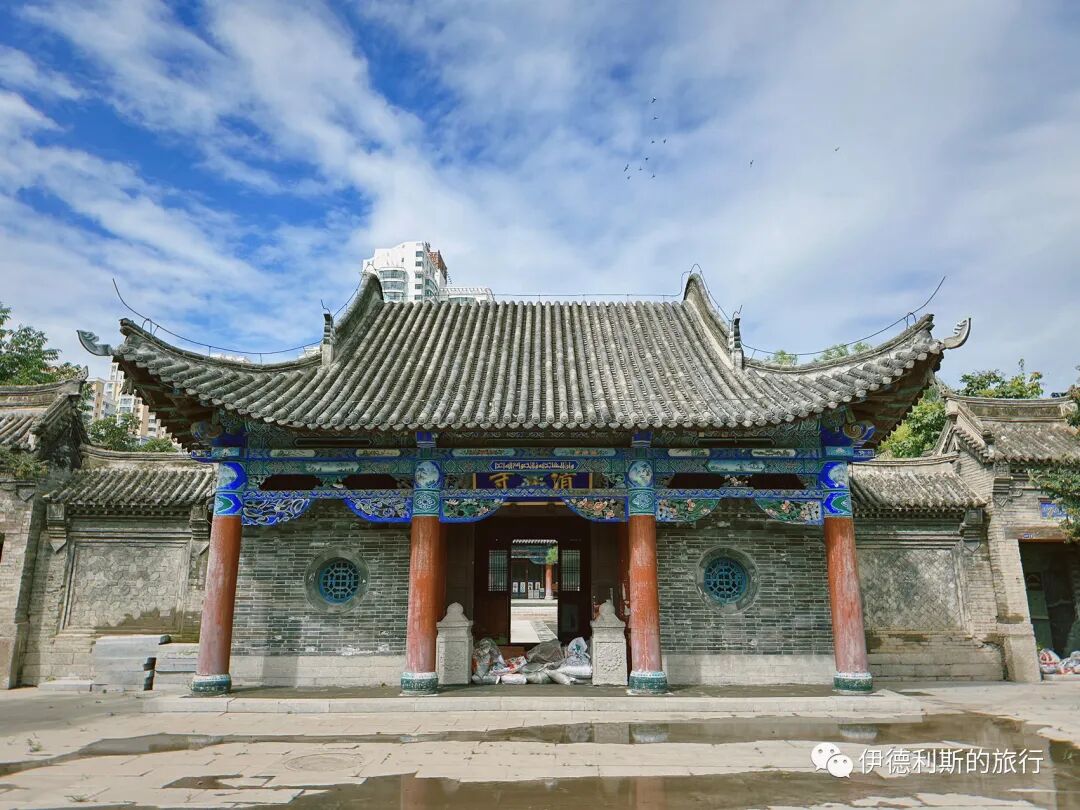
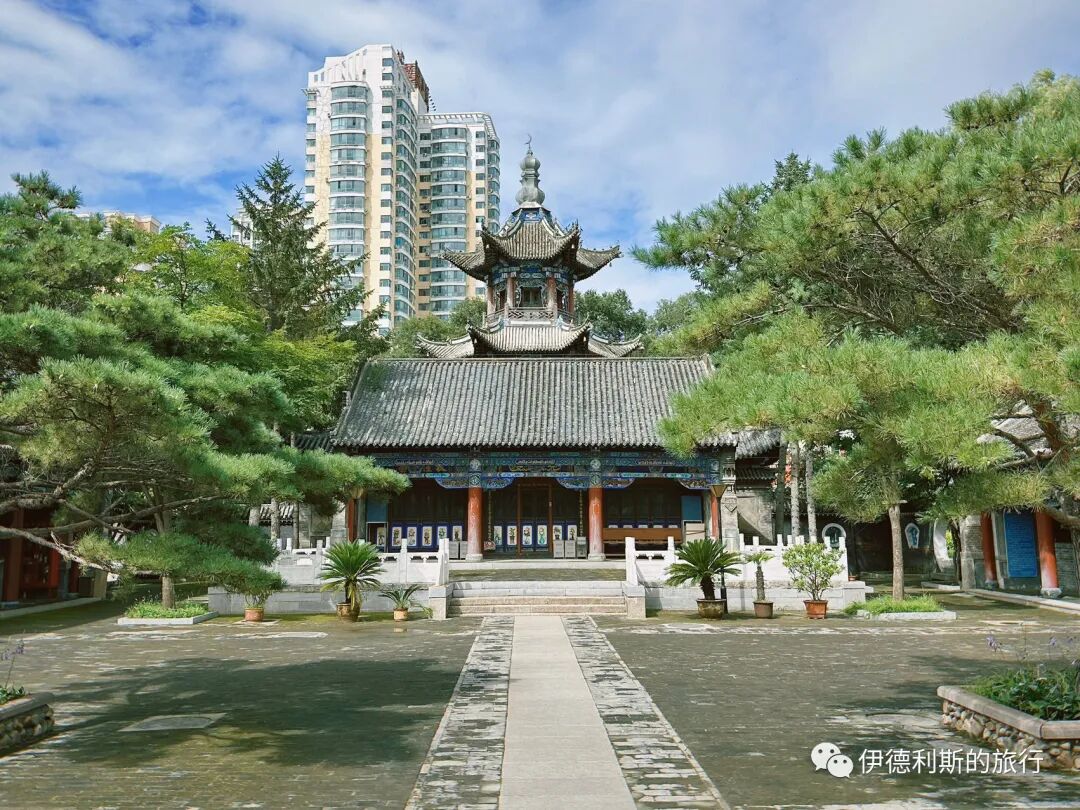
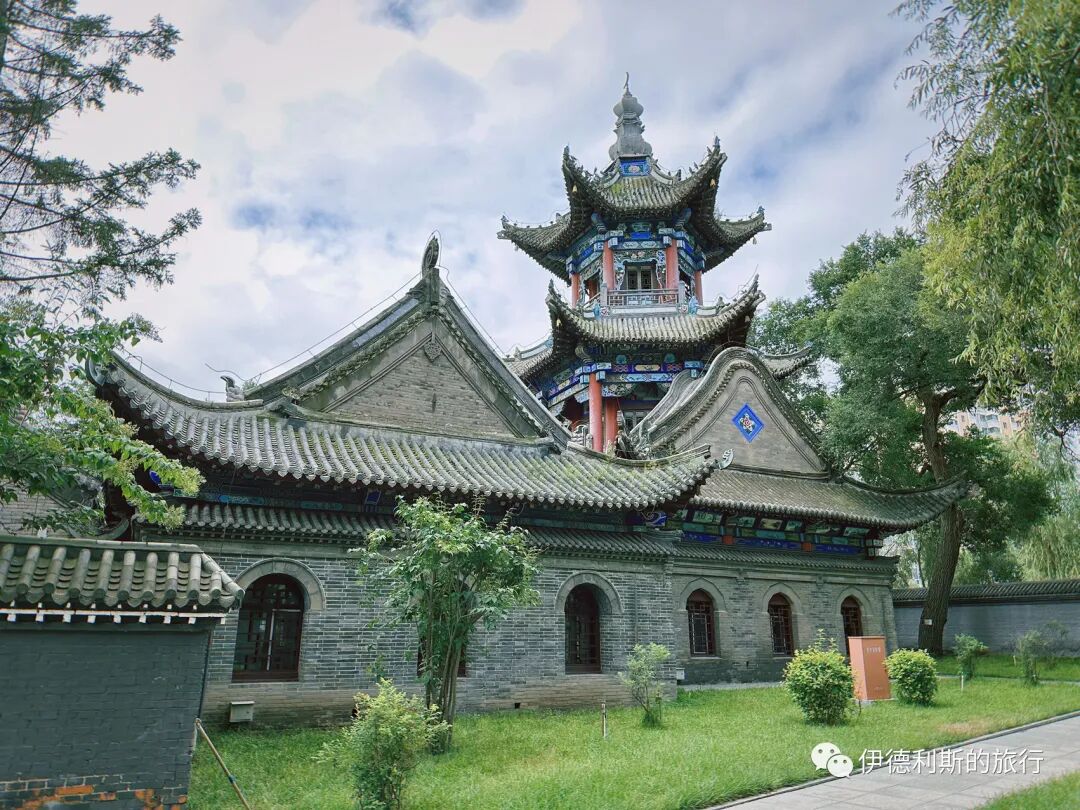
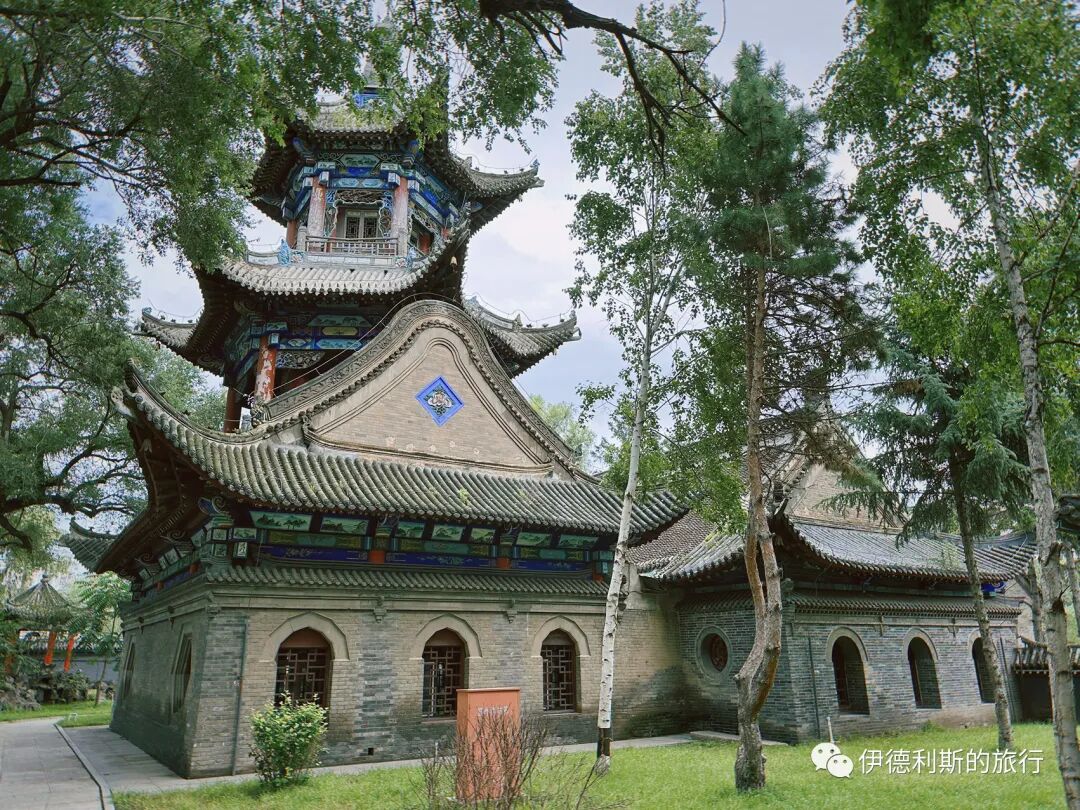
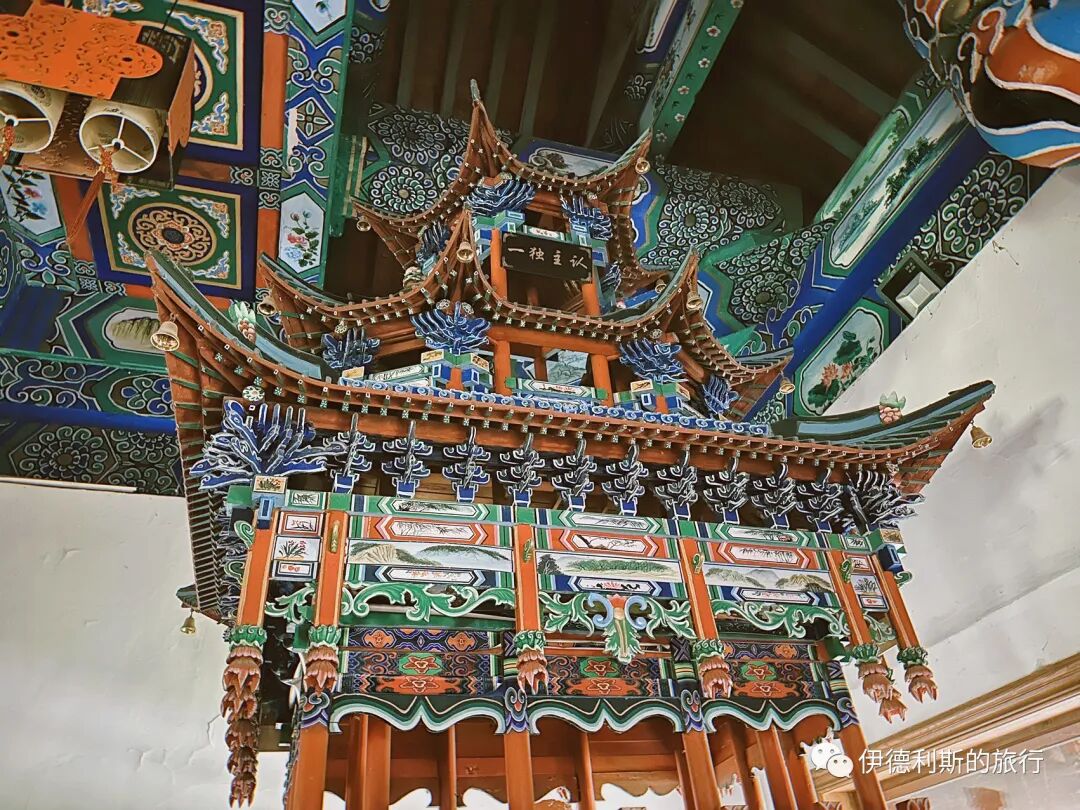
The Moon-Watching Tower (wangyuelou) at Acheng Mosque features painted beams and carved pillars with high, sweeping eaves. It has wooden railings with floral patterns on all six sides. The carvings use openwork techniques, with the Eight Immortals hidden in the bracket sets (que-ti). The hanging eaves (gualuo) feature carvings of plum blossoms, lotus flowers, peach blossoms, chrysanthemums, and camellias, creating a 'four seasons' scene.
Inside the main hall of Acheng Mosque stands an exquisite pulpit (minbar), reaching 3.3 meters in height. Its layered, staggered design makes it look like a pavilion from a fairyland. This minbar was actually one of two models built in 1890 (the 16th year of the Guangxu reign) for the reconstruction of the Acheng Mosque Moon-Watching Tower. After discussions among the mosque elders, they chose the style of the other model. They built the current Moon-Watching Tower according to that design in 1900 (the 26th year of the Guangxu reign), and this model was then used as the minbar. During the Cultural Revolution, the minbar was damaged. Nearly half of the hanging pillars were broken, the calligraphy for the dua was removed, and the railings were damaged. Fortunately, the main structure of the minbar was saved.
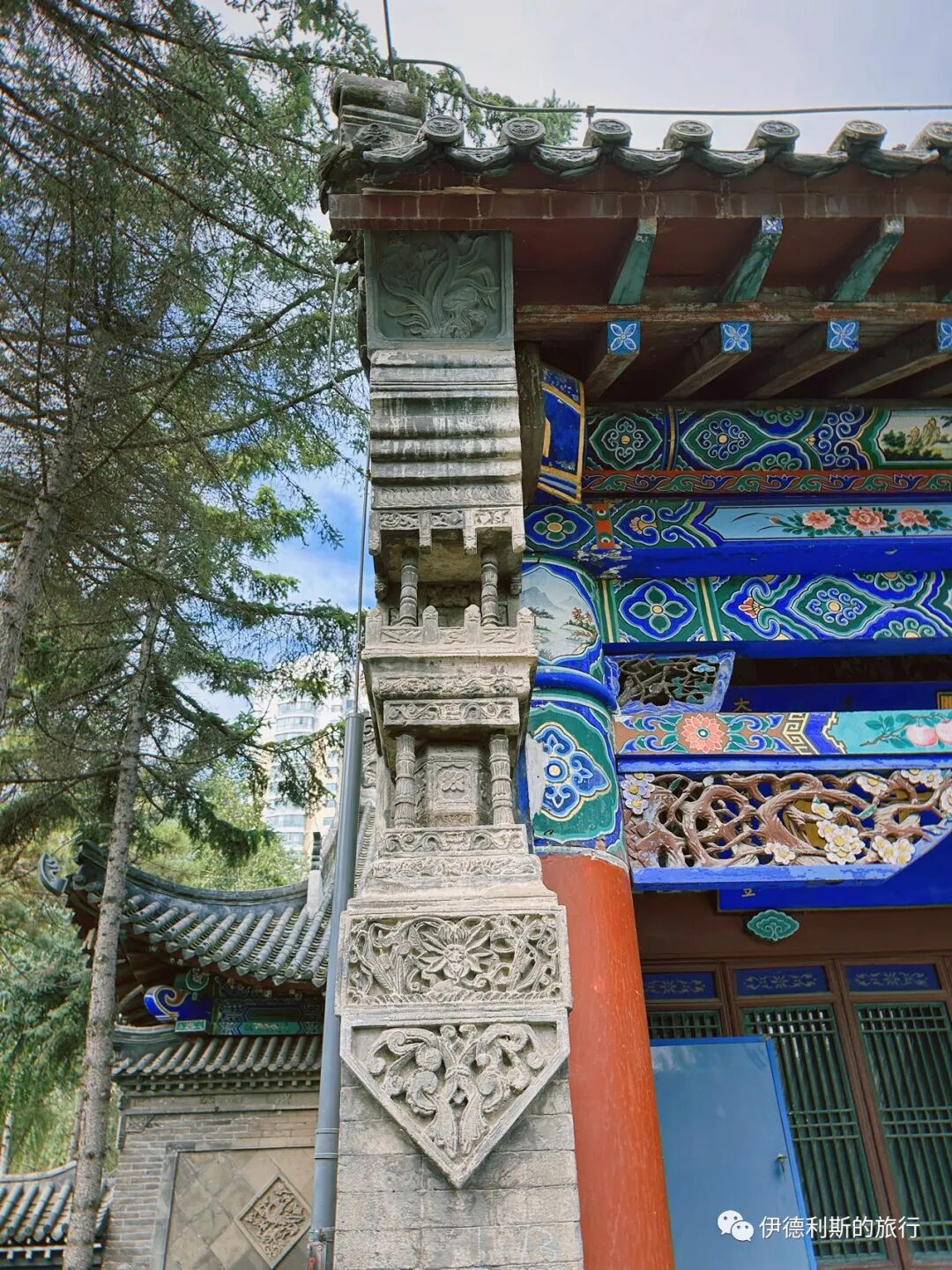
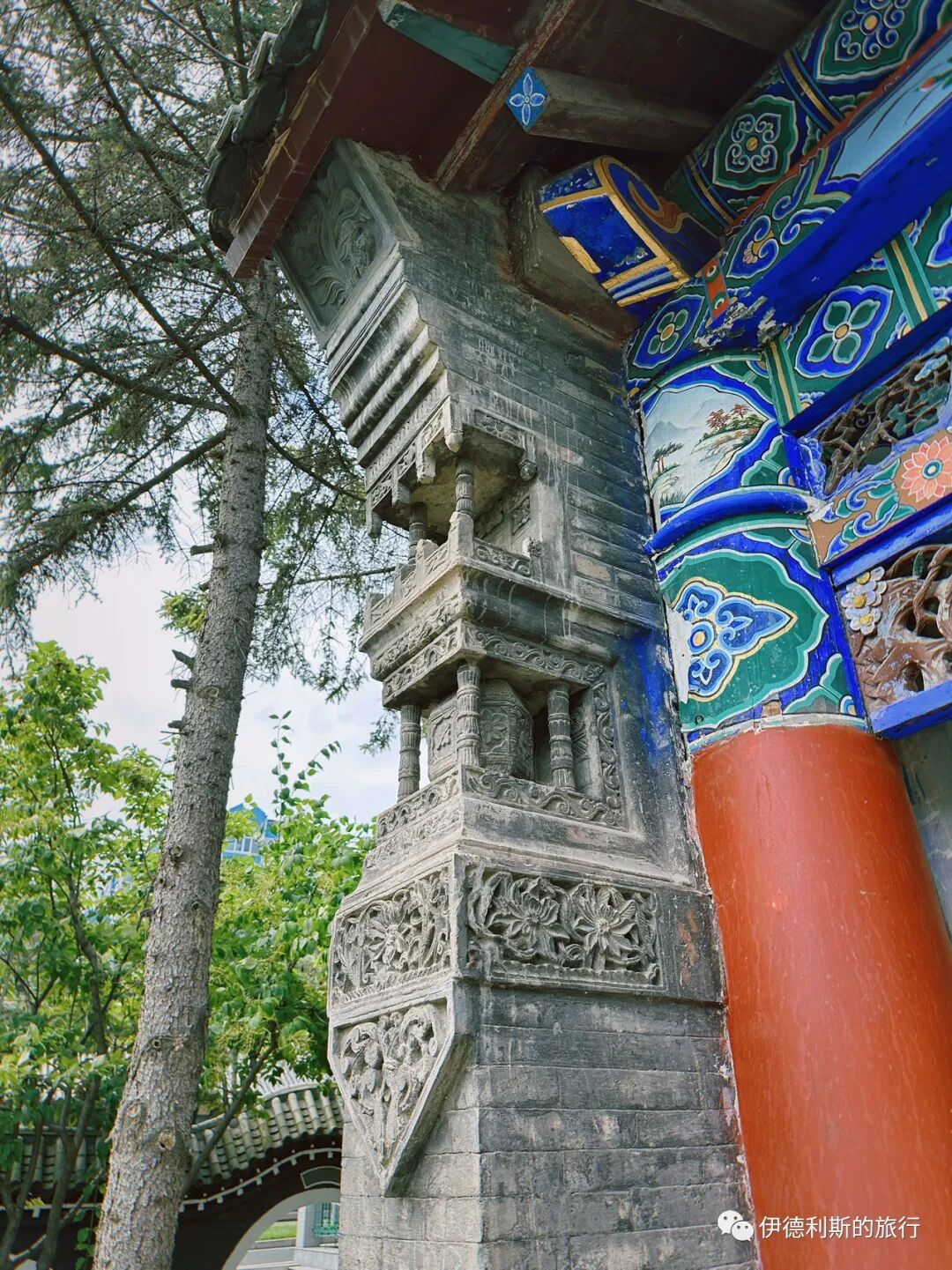
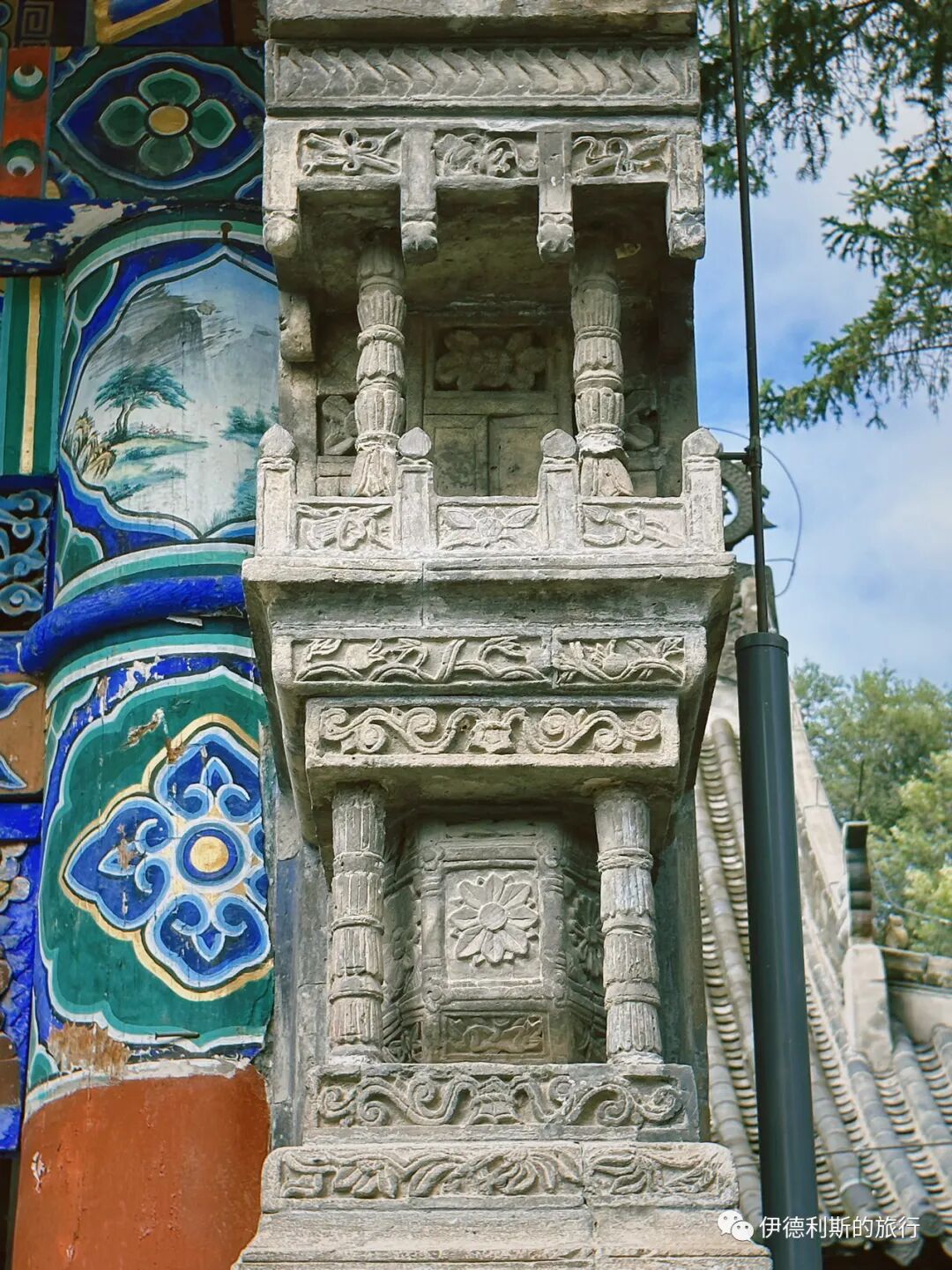
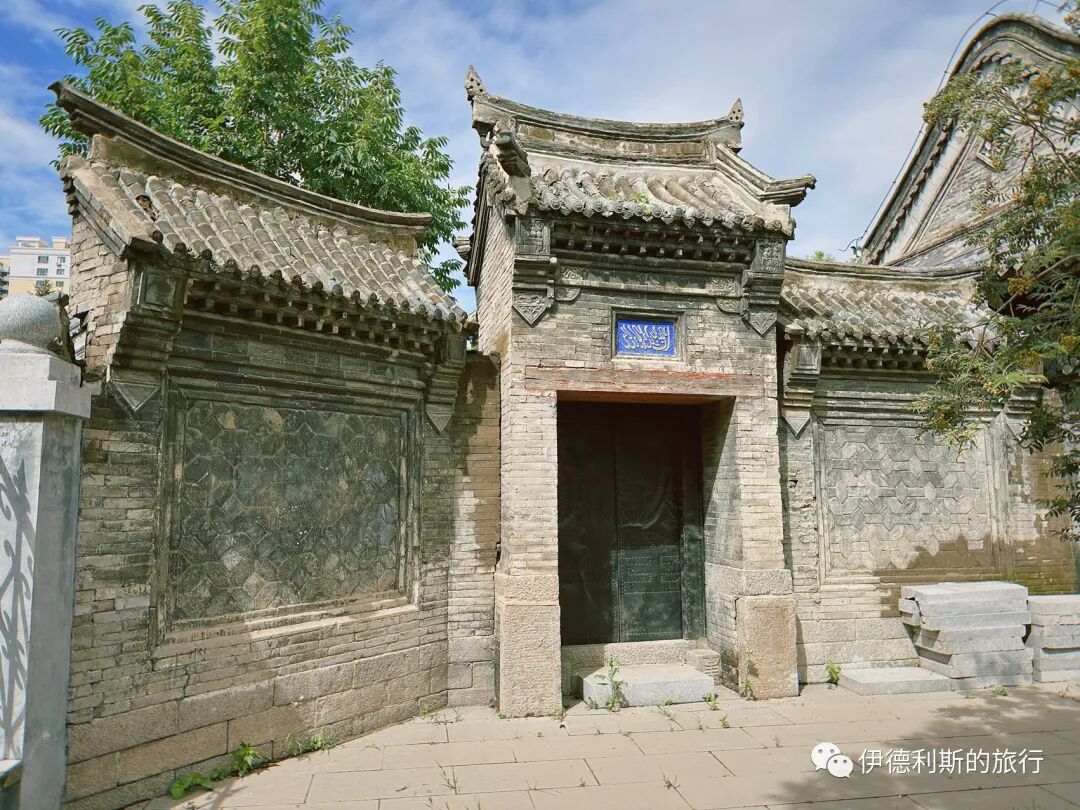
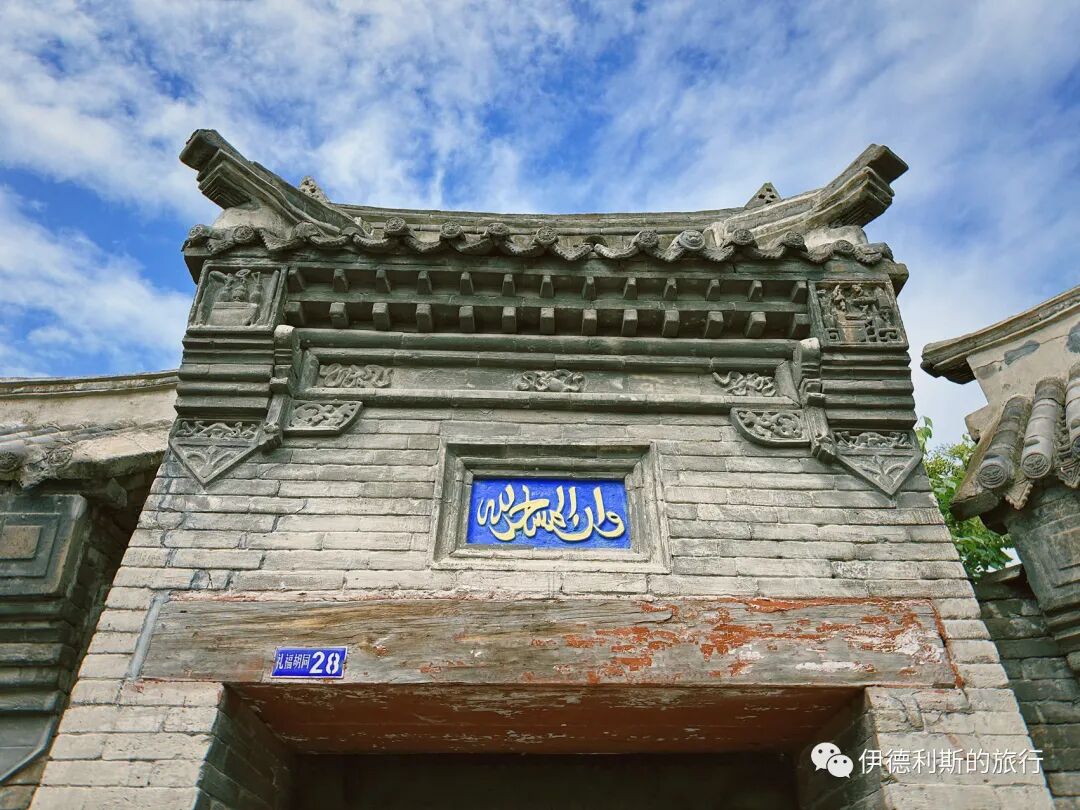
The brick carvings at Acheng Mosque are also very beautiful. The openwork technique used on the gable ends of the porch (juanpeng chitou) is quite rare in traditional mosque architecture.
Plaques and couplets inside Acheng Mosque.
'Profound Truth of Heaven' (Xiantian Miaoli): Presented by the official in charge of auditing, a fourth-rank expectant sub-prefect, in the ninth lunar month of 1863 (the second year of the Tongzhi reign). This plaque. This plaque was discovered in 2006 when the floor of the main hall of Acheng Mosque was being repaired. Unfortunately, the top and bottom parts of the plaque are missing, so the name of the person who presented it is lost. During the Tongzhi reign, a Manchu Bordered White Banner official named Dekejing'a served as the local official in Acheng. It is believed he may have presented this plaque.
'Sectarian Style of the Western Regions' (Xiyu Zongfeng): Presented by Deying, the former acting Jilin General and former Acheng and Heilongjiang General, who held the rank of Jilin Deputy Lieutenant-General, in the sixth lunar month of 1870 (the ninth year of the Tongzhi reign). Deying was a member of the Jilin Mongol Bordered White Banner. He became the Acheng Deputy Lieutenant-General in 1864 and later served as the Jilin General and Heilongjiang General. He was highly respected by the people, who called him 'Justice De'.
'The Faith Flourishes Throughout the Universe' (Jiao Long Yuzhou): Presented by Haguang Hejing, a military official in charge of Jilin affairs, in the second lunar month of 1878 (the fourth year of the Guangxu reign).
'Eternal Purity' (Wangu Qingzhen): Presented by Garudai, the Deputy Lieutenant-General stationed in Acheng and Lalin, in the fourth lunar month of 1898 (the 24th year of the Guangxu reign). Galudai was a member of the Manchu Plain White Banner. He served as the deputy lieutenant-general of Alechuka in 1897. He held the post for one year, and before leaving, he dedicated a plaque to the Acheng Mosque. He was later transferred to Jinzhou.
The plaque was dedicated by Wang Hongnian, who held the rank of fourth-class Wenhu Medal recipient and served as the quartermaster for the Jilin Deputy Commander's Office of the Northeast Frontier Defense Army and deputy director of the Jilin Army Clothing Factory. It was presented in the sixth lunar month of 1929. Wang Hongnian was a Hui Muslim army general who served under Zhang Xueliang in the Northeast Frontier Defense Army in 1929. The day the plaque was delivered was a grand and lively event. An honor guard from the Jilin Third Normal School escorted it with loud music and drums. Acheng County Magistrate Bai Hongkui also took part in the ceremony.
The inscription reads: 'With the skill of Lu Ban, the work was completed in three years, keeping the holy path in heart; with a name lasting through history, the praise for the pure faith remains for a hundred years.' This was presented in 1900 by Sun Yulin, a carpenter from Wula Street in Jilin who helped rebuild the Acheng Mosque.
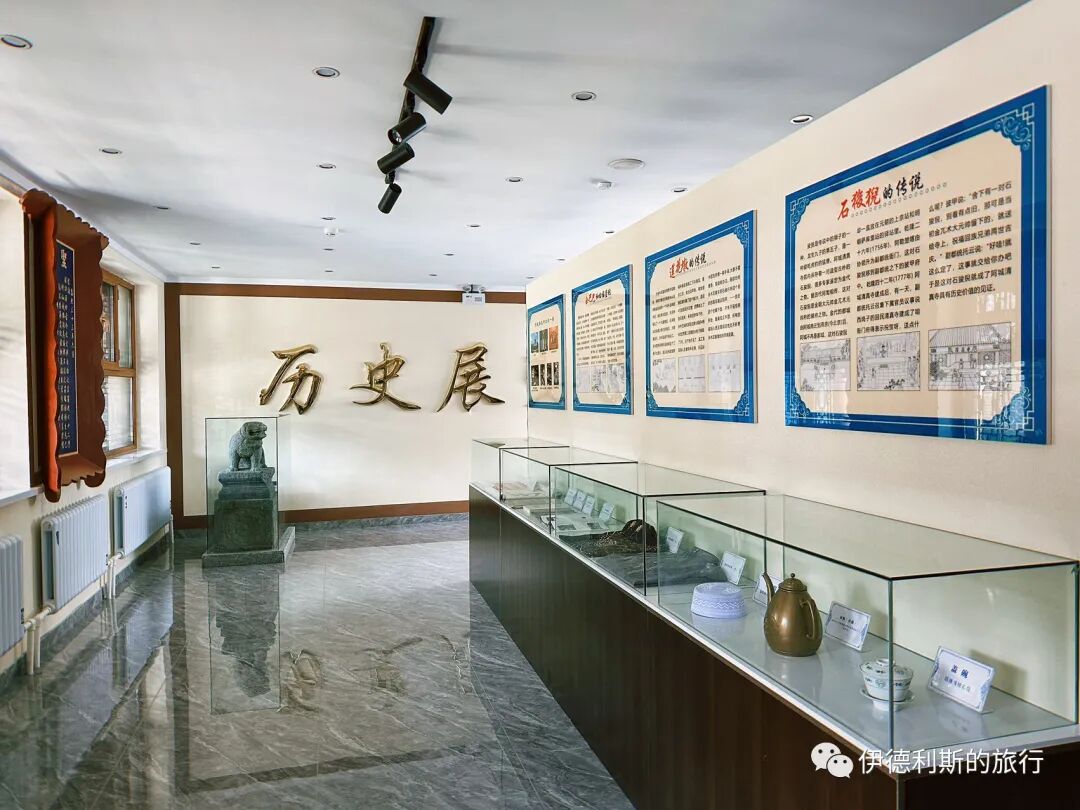
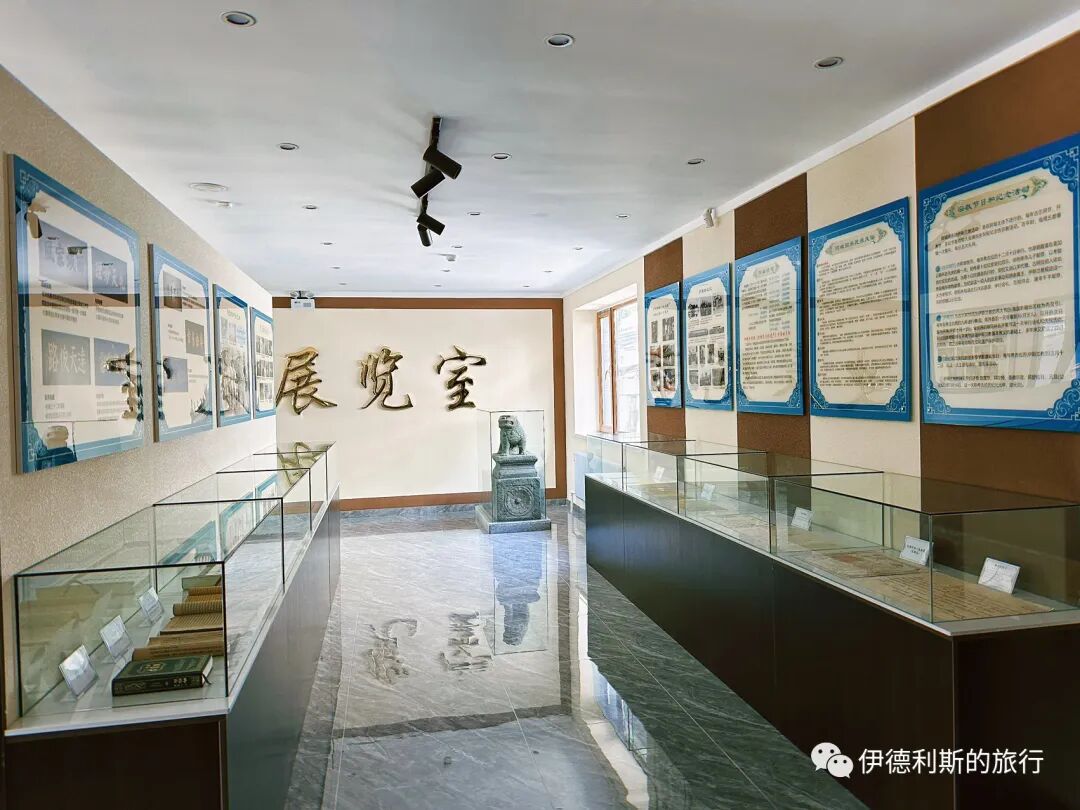
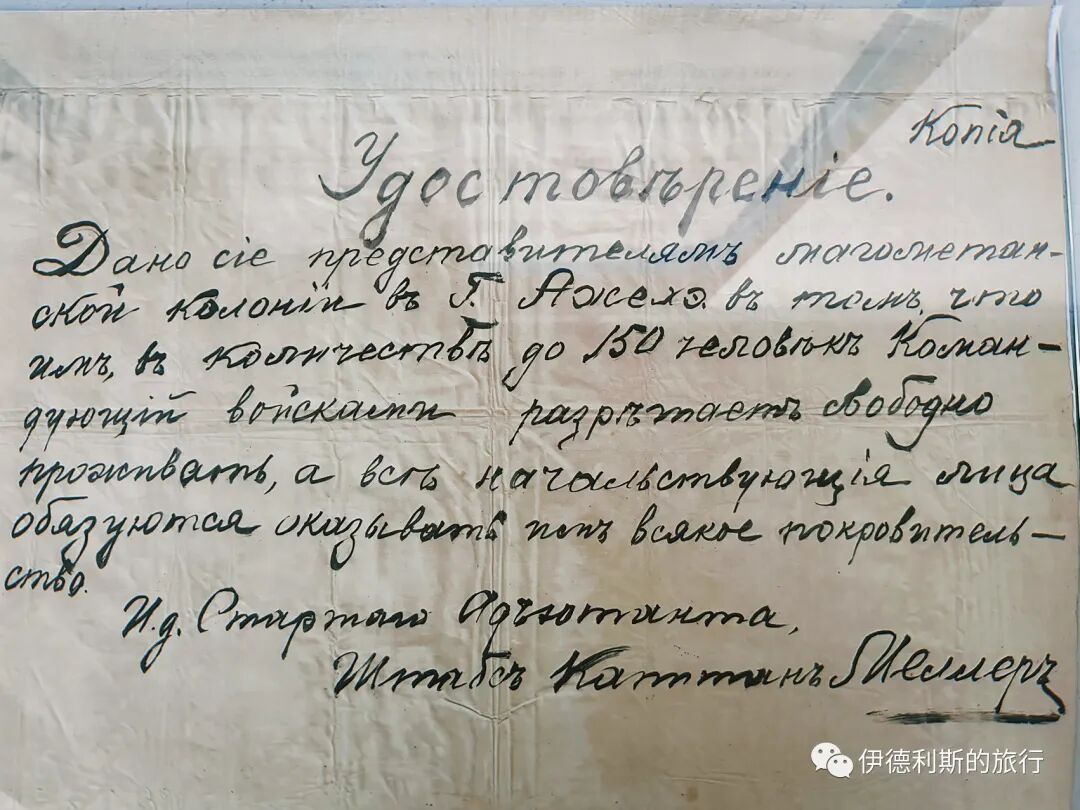
The north wing of the Acheng Mosque has been turned into a history exhibition room, where some precious artifacts are kept. Among them is a Russian document that serves as a historical witness to the lives of Tatars in Heilongjiang during the Tsarist era. The document states: 'The representative holding this paper and about 150 Muslim immigrants are traveling to Alechuka for worship. Military commanders should allow them free passage and residence.' all commanders have a responsibility to provide them with protection. VI II Military District Adjutant, Army Captain: Melyeryerqi.
After Russia occupied Vladivostok in 1860, they began planning a railway across the Qing Dynasty to reach this Pacific port more quickly. In 1896, Li Hongzhang signed the Secret Treaty of Alliance between the Qing Empire and the Russian Empire, naming the line the Great Qing Eastern Railway (Dongqing Railway). After 1920, it was renamed the Chinese Eastern Railway (Zhongdong Railway). Construction of the Chinese Eastern Railway began in August 1897. Soon after, Tatars began arriving from Russia to make a living along the railway line. Some opened small shops, while others served in the Russian army.
In March 1899, the railway opened from the Songhua River to the Ashi River near Acheng. The Ashi River Station (later renamed Acheng Station) became the first station on the Chinese Eastern Railway to open, and it transported large amounts of building materials for the early construction of Harbin. A Tatar community formed near Acheng Station. Many Tatars went to the Acheng Mosque for Friday Jumu'ah prayers. The Western-style chandeliers in the mosque's main prayer hall were gifts from these Tatars.
However, war is cruel. The Boxer Rebellion broke out in 1900. In August, three Russian cavalry companies attacked Acheng to suppress the Boxers, and the Qing troops guarding the city fled to Jilin. The Russian troops fired at the Moon-Watching Tower (Wangyuelou) of the Acheng Mosque to intimidate the people. Inside, the imam, Liu Yuzhang—known to everyone as Imam Liu Si—led the community in a vow to defend the mosque to the death. Imam Liu sent village elders who knew some Russian to negotiate with the Tatars among the Russian troops, while he led the others in hanging the scripture curtains (jingweibu) from the graves inside the mosque. Legend says the Russian troops set up a row of blades west of the mosque. Imam Liu held the Quran (Gure'ani) to his chest, recited the Opening Chapter (Fatiha), and walked through the blades with great courage, finally stopping the Russian troops from entering the mosque. Later, the legendary story of Imam Liu Si walking through the blades to protect the mosque became widely known among the Hui Muslims of Acheng.
At that time, besides Hui Muslims, some Han Chinese also took refuge in the mosque. Luo Wenge, the manager of the Yuxiangju Sauce Shop in Acheng, often told his Hui Muslim friends that his family's shopkeeper survived only because he took shelter in the mosque. Every year during Eid al-Fitr (Kaizhaijie), his family donated rice and flour to the mosque as a charitable gift (nieti) to show their gratitude.
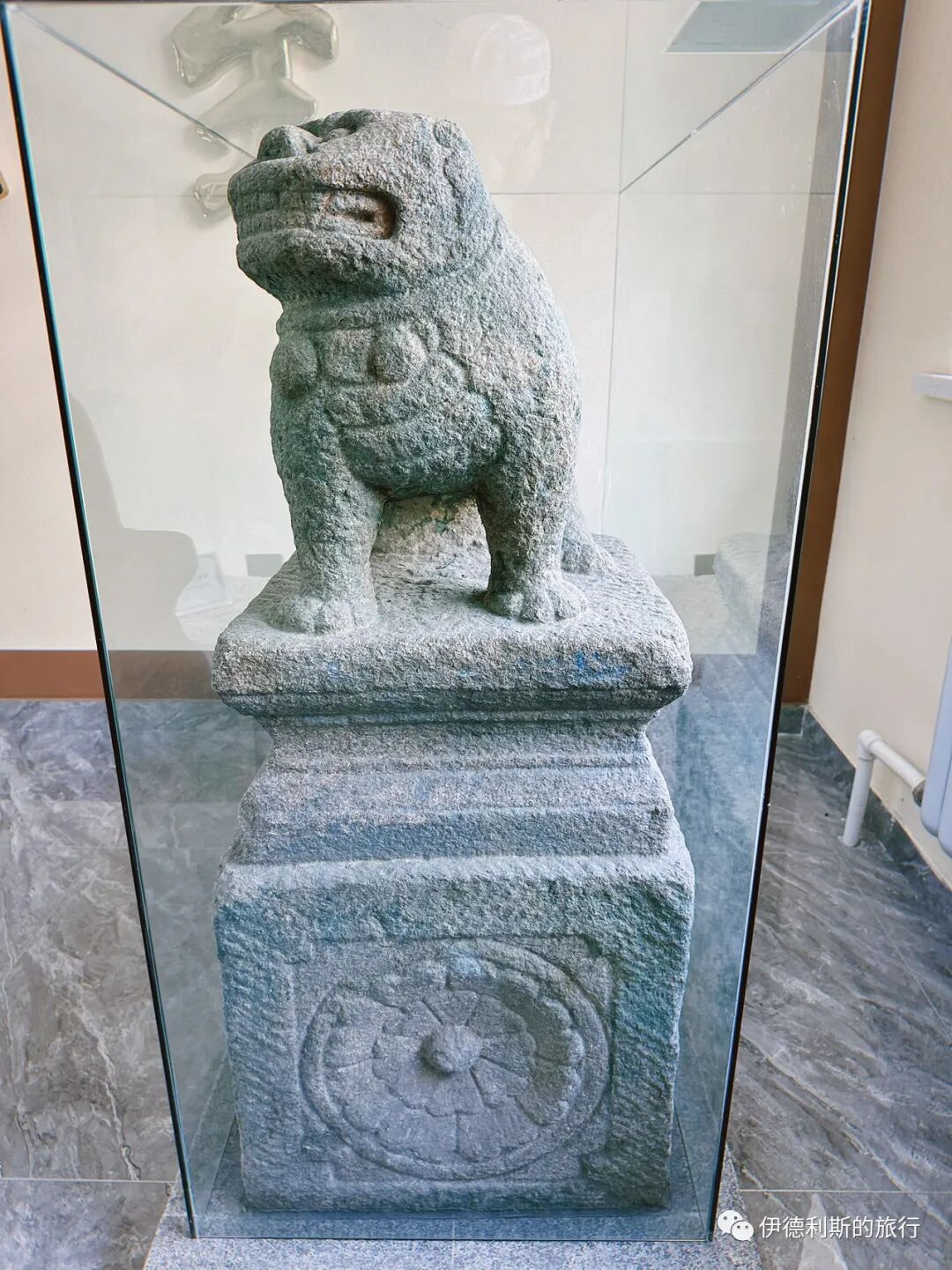
Legend says this pair of stone lions (shisunni) came from the mansion of the Jin Dynasty commander Jin Wuzhu. After the Alechuka Deputy Lieutenant-General's office was established during the Qianlong reign, they were moved to the Armored Soldiers' Office (Pijiafu) under the Deputy Lieutenant-General. After the Acheng Mosque was built, the armored soldiers gave the pair of stone lions to the mosque. They were kept in front of the main hall until 2002, when they were removed for safekeeping.
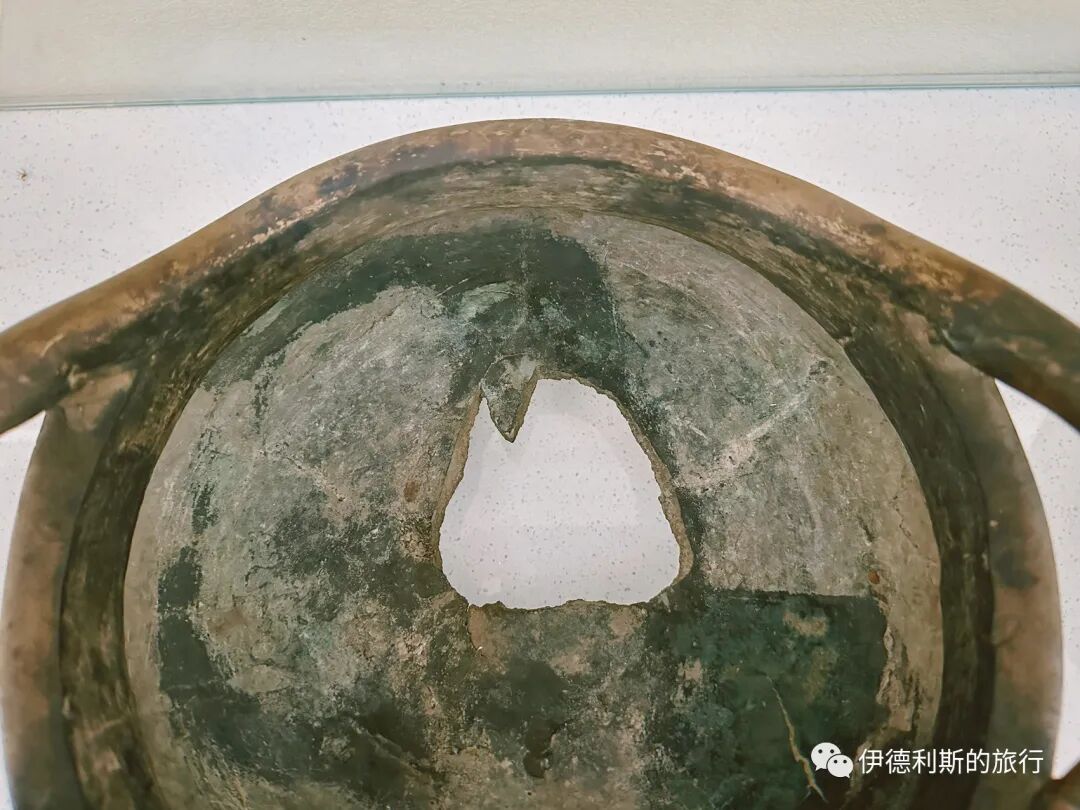
The bronze incense burner in the mosque was cast during the Qianlong period, and the holes on it were made in the 1960s.
Chinese and Arabic books preserved in the mosque.
Street view around the Acheng Mosque. view all
Summary: Acheng Mosque in Heilongjiang is an important local Muslim site with distinctive architecture and community history. This travel account records the mosque, its spaces, and the surrounding Hui Muslim context while preserving the original image order.
Take a taxi from Harbin to Acheng to visit the famous historic mosque, Acheng Mosque.
In 1726 (the fourth year of the Yongzheng reign), the Ningguta General established the Alechuka Assistant Commander's Office near the site of the Jin Dynasty capital, Huining Prefecture. Soon after, the city of Alechuka was built, shortened to Acheng. In 1770 (the 35th year of the Qianlong reign), Yang Huaxian, a Hui Muslim from Shen County, Shandong, settled in Acheng with the Qing army to serve as a clerk at the Alechuka office. Afterward, more Hui Muslims moved from Shandong to Acheng and rented houses from Manchu bannermen. By 1777 (the 42nd year of the Qianlong reign), there were 26 (some say 28) Hui Muslim households in Acheng, including the Yang, Wang, San, Ma, Zhang, Ding, Jin, and Cai families. They rented eight rooms from Manchu bannermen in Xigangzi on West Street to establish the first Acheng Mosque, with Yang Huaxian serving as the mosque elder.
In 1802 (the seventh year of the Jiaqing reign), Elder Yang Huaxian negotiated the purchase of two plots of ancestral land in Xigangzi, formerly belonging to the Manchu official Saisai, and began building the formal Acheng Mosque. Construction continued through the Jiaqing, Daoguang, and Xianfeng reigns, taking 50 years to complete. Twelve years after the mosque was finished, a fire broke out in Acheng in 1873 (the 12th year of the Tongzhi reign). The mosque's Moon-Sighting Tower (wangyuelou) and North Lecture Hall were destroyed, leaving only the South Lecture Hall and the reception hall.
In 1890 (the 16th year of the Guangxu reign), the mosque's imam, Liu Yuzhang, and manager, Luo Yuzhang, began organizing the reconstruction of the mosque. The Moon-Sighting Tower on the main prayer hall required four pine pillars over 15 meters long. After searching, the mosque found such trees in a forest area called Houdu near Yabuli. Mosque elders Yang Qingbao, Geng Qiming, and Yang Baoshen risked their lives to negotiate logging with the bandits occupying the area. The bandit leader not only agreed to let them cut six trees but also sent men to help fell them and transport them back. When the timber arrived in Acheng, someone reported them. Mosque elder Jin Yuxi and others had to travel to Jilin for a difficult legal battle, which they eventually won to keep the wood.
When construction began, the elders went to Wula Street in Jilin to hire a carpenter named Sun Yulin to lead the work. Legend says Carpenter Sun's master was worried about his apprentice, so he traveled to Acheng to check the construction and material measurements. He said nothing after looking, but secretly went to a stone shop and had four 3-foot-tall lotus-shaped stone bases made. When it came time to raise the four main pillars for the prayer hall, they were exactly 3 feet too short. Seeing this, the master immediately told Carpenter Sun to take a cart to the stone shop and bring back the four lotus bases, which fit perfectly. In this way, Acheng Mosque was finally completed in 1900 (the 26th year of the Guangxu reign) as the building we see today.
The Moon-Watching Tower (wangyuelou) at Acheng Mosque features painted beams and carved pillars with high, sweeping eaves. It has wooden railings with floral patterns on all six sides. The carvings use openwork techniques, with the Eight Immortals hidden in the bracket sets (que-ti). The hanging eaves (gualuo) feature carvings of plum blossoms, lotus flowers, peach blossoms, chrysanthemums, and camellias, creating a 'four seasons' scene.
Inside the main hall of Acheng Mosque stands an exquisite pulpit (minbar), reaching 3.3 meters in height. Its layered, staggered design makes it look like a pavilion from a fairyland. This minbar was actually one of two models built in 1890 (the 16th year of the Guangxu reign) for the reconstruction of the Acheng Mosque Moon-Watching Tower. After discussions among the mosque elders, they chose the style of the other model. They built the current Moon-Watching Tower according to that design in 1900 (the 26th year of the Guangxu reign), and this model was then used as the minbar. During the Cultural Revolution, the minbar was damaged. Nearly half of the hanging pillars were broken, the calligraphy for the dua was removed, and the railings were damaged. Fortunately, the main structure of the minbar was saved.
The brick carvings at Acheng Mosque are also very beautiful. The openwork technique used on the gable ends of the porch (juanpeng chitou) is quite rare in traditional mosque architecture.
Plaques and couplets inside Acheng Mosque.
'Profound Truth of Heaven' (Xiantian Miaoli): Presented by the official in charge of auditing, a fourth-rank expectant sub-prefect, in the ninth lunar month of 1863 (the second year of the Tongzhi reign). This plaque. This plaque was discovered in 2006 when the floor of the main hall of Acheng Mosque was being repaired. Unfortunately, the top and bottom parts of the plaque are missing, so the name of the person who presented it is lost. During the Tongzhi reign, a Manchu Bordered White Banner official named Dekejing'a served as the local official in Acheng. It is believed he may have presented this plaque.
'Sectarian Style of the Western Regions' (Xiyu Zongfeng): Presented by Deying, the former acting Jilin General and former Acheng and Heilongjiang General, who held the rank of Jilin Deputy Lieutenant-General, in the sixth lunar month of 1870 (the ninth year of the Tongzhi reign). Deying was a member of the Jilin Mongol Bordered White Banner. He became the Acheng Deputy Lieutenant-General in 1864 and later served as the Jilin General and Heilongjiang General. He was highly respected by the people, who called him 'Justice De'.
'The Faith Flourishes Throughout the Universe' (Jiao Long Yuzhou): Presented by Haguang Hejing, a military official in charge of Jilin affairs, in the second lunar month of 1878 (the fourth year of the Guangxu reign).
'Eternal Purity' (Wangu Qingzhen): Presented by Garudai, the Deputy Lieutenant-General stationed in Acheng and Lalin, in the fourth lunar month of 1898 (the 24th year of the Guangxu reign). Galudai was a member of the Manchu Plain White Banner. He served as the deputy lieutenant-general of Alechuka in 1897. He held the post for one year, and before leaving, he dedicated a plaque to the Acheng Mosque. He was later transferred to Jinzhou.
The plaque was dedicated by Wang Hongnian, who held the rank of fourth-class Wenhu Medal recipient and served as the quartermaster for the Jilin Deputy Commander's Office of the Northeast Frontier Defense Army and deputy director of the Jilin Army Clothing Factory. It was presented in the sixth lunar month of 1929. Wang Hongnian was a Hui Muslim army general who served under Zhang Xueliang in the Northeast Frontier Defense Army in 1929. The day the plaque was delivered was a grand and lively event. An honor guard from the Jilin Third Normal School escorted it with loud music and drums. Acheng County Magistrate Bai Hongkui also took part in the ceremony.
The inscription reads: 'With the skill of Lu Ban, the work was completed in three years, keeping the holy path in heart; with a name lasting through history, the praise for the pure faith remains for a hundred years.' This was presented in 1900 by Sun Yulin, a carpenter from Wula Street in Jilin who helped rebuild the Acheng Mosque.
The north wing of the Acheng Mosque has been turned into a history exhibition room, where some precious artifacts are kept. Among them is a Russian document that serves as a historical witness to the lives of Tatars in Heilongjiang during the Tsarist era. The document states: 'The representative holding this paper and about 150 Muslim immigrants are traveling to Alechuka for worship. Military commanders should allow them free passage and residence.' all commanders have a responsibility to provide them with protection. VI II Military District Adjutant, Army Captain: Melyeryerqi.
After Russia occupied Vladivostok in 1860, they began planning a railway across the Qing Dynasty to reach this Pacific port more quickly. In 1896, Li Hongzhang signed the Secret Treaty of Alliance between the Qing Empire and the Russian Empire, naming the line the Great Qing Eastern Railway (Dongqing Railway). After 1920, it was renamed the Chinese Eastern Railway (Zhongdong Railway). Construction of the Chinese Eastern Railway began in August 1897. Soon after, Tatars began arriving from Russia to make a living along the railway line. Some opened small shops, while others served in the Russian army.
In March 1899, the railway opened from the Songhua River to the Ashi River near Acheng. The Ashi River Station (later renamed Acheng Station) became the first station on the Chinese Eastern Railway to open, and it transported large amounts of building materials for the early construction of Harbin. A Tatar community formed near Acheng Station. Many Tatars went to the Acheng Mosque for Friday Jumu'ah prayers. The Western-style chandeliers in the mosque's main prayer hall were gifts from these Tatars.
However, war is cruel. The Boxer Rebellion broke out in 1900. In August, three Russian cavalry companies attacked Acheng to suppress the Boxers, and the Qing troops guarding the city fled to Jilin. The Russian troops fired at the Moon-Watching Tower (Wangyuelou) of the Acheng Mosque to intimidate the people. Inside, the imam, Liu Yuzhang—known to everyone as Imam Liu Si—led the community in a vow to defend the mosque to the death. Imam Liu sent village elders who knew some Russian to negotiate with the Tatars among the Russian troops, while he led the others in hanging the scripture curtains (jingweibu) from the graves inside the mosque. Legend says the Russian troops set up a row of blades west of the mosque. Imam Liu held the Quran (Gure'ani) to his chest, recited the Opening Chapter (Fatiha), and walked through the blades with great courage, finally stopping the Russian troops from entering the mosque. Later, the legendary story of Imam Liu Si walking through the blades to protect the mosque became widely known among the Hui Muslims of Acheng.
At that time, besides Hui Muslims, some Han Chinese also took refuge in the mosque. Luo Wenge, the manager of the Yuxiangju Sauce Shop in Acheng, often told his Hui Muslim friends that his family's shopkeeper survived only because he took shelter in the mosque. Every year during Eid al-Fitr (Kaizhaijie), his family donated rice and flour to the mosque as a charitable gift (nieti) to show their gratitude.
Legend says this pair of stone lions (shisunni) came from the mansion of the Jin Dynasty commander Jin Wuzhu. After the Alechuka Deputy Lieutenant-General's office was established during the Qianlong reign, they were moved to the Armored Soldiers' Office (Pijiafu) under the Deputy Lieutenant-General. After the Acheng Mosque was built, the armored soldiers gave the pair of stone lions to the mosque. They were kept in front of the main hall until 2002, when they were removed for safekeeping.
The bronze incense burner in the mosque was cast during the Qianlong period, and the holes on it were made in the 1960s.
Chinese and Arabic books preserved in the mosque.
Street view around the Acheng Mosque. view all
Reposted from the web
Summary: Acheng Mosque in Heilongjiang is an important local Muslim site with distinctive architecture and community history. This travel account records the mosque, its spaces, and the surrounding Hui Muslim context while preserving the original image order.
Take a taxi from Harbin to Acheng to visit the famous historic mosque, Acheng Mosque.
In 1726 (the fourth year of the Yongzheng reign), the Ningguta General established the Alechuka Assistant Commander's Office near the site of the Jin Dynasty capital, Huining Prefecture. Soon after, the city of Alechuka was built, shortened to Acheng. In 1770 (the 35th year of the Qianlong reign), Yang Huaxian, a Hui Muslim from Shen County, Shandong, settled in Acheng with the Qing army to serve as a clerk at the Alechuka office. Afterward, more Hui Muslims moved from Shandong to Acheng and rented houses from Manchu bannermen. By 1777 (the 42nd year of the Qianlong reign), there were 26 (some say 28) Hui Muslim households in Acheng, including the Yang, Wang, San, Ma, Zhang, Ding, Jin, and Cai families. They rented eight rooms from Manchu bannermen in Xigangzi on West Street to establish the first Acheng Mosque, with Yang Huaxian serving as the mosque elder.
In 1802 (the seventh year of the Jiaqing reign), Elder Yang Huaxian negotiated the purchase of two plots of ancestral land in Xigangzi, formerly belonging to the Manchu official Saisai, and began building the formal Acheng Mosque. Construction continued through the Jiaqing, Daoguang, and Xianfeng reigns, taking 50 years to complete. Twelve years after the mosque was finished, a fire broke out in Acheng in 1873 (the 12th year of the Tongzhi reign). The mosque's Moon-Sighting Tower (wangyuelou) and North Lecture Hall were destroyed, leaving only the South Lecture Hall and the reception hall.
In 1890 (the 16th year of the Guangxu reign), the mosque's imam, Liu Yuzhang, and manager, Luo Yuzhang, began organizing the reconstruction of the mosque. The Moon-Sighting Tower on the main prayer hall required four pine pillars over 15 meters long. After searching, the mosque found such trees in a forest area called Houdu near Yabuli. Mosque elders Yang Qingbao, Geng Qiming, and Yang Baoshen risked their lives to negotiate logging with the bandits occupying the area. The bandit leader not only agreed to let them cut six trees but also sent men to help fell them and transport them back. When the timber arrived in Acheng, someone reported them. Mosque elder Jin Yuxi and others had to travel to Jilin for a difficult legal battle, which they eventually won to keep the wood.
When construction began, the elders went to Wula Street in Jilin to hire a carpenter named Sun Yulin to lead the work. Legend says Carpenter Sun's master was worried about his apprentice, so he traveled to Acheng to check the construction and material measurements. He said nothing after looking, but secretly went to a stone shop and had four 3-foot-tall lotus-shaped stone bases made. When it came time to raise the four main pillars for the prayer hall, they were exactly 3 feet too short. Seeing this, the master immediately told Carpenter Sun to take a cart to the stone shop and bring back the four lotus bases, which fit perfectly. In this way, Acheng Mosque was finally completed in 1900 (the 26th year of the Guangxu reign) as the building we see today.
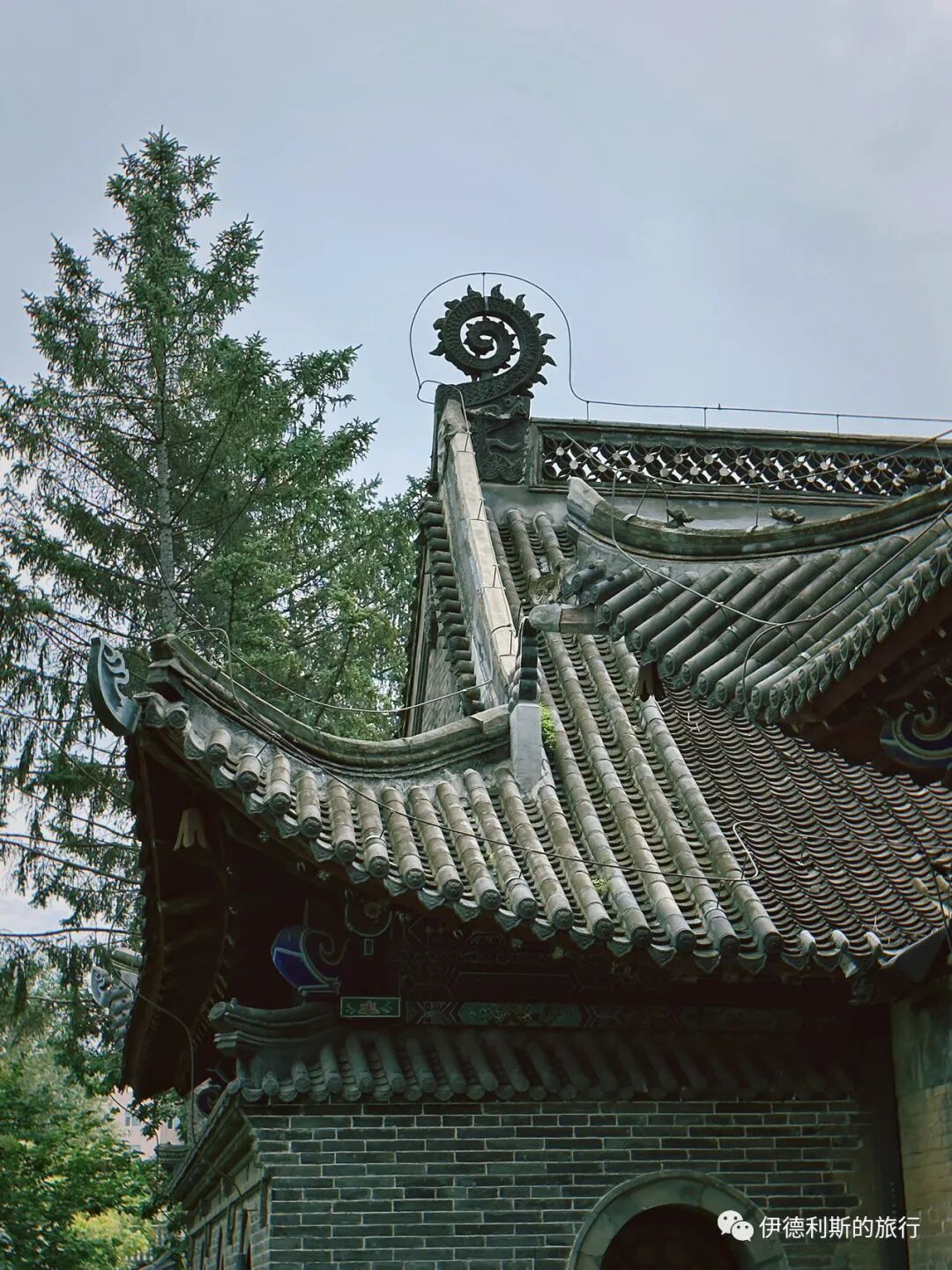
The Moon-Watching Tower (wangyuelou) at Acheng Mosque features painted beams and carved pillars with high, sweeping eaves. It has wooden railings with floral patterns on all six sides. The carvings use openwork techniques, with the Eight Immortals hidden in the bracket sets (que-ti). The hanging eaves (gualuo) feature carvings of plum blossoms, lotus flowers, peach blossoms, chrysanthemums, and camellias, creating a 'four seasons' scene.
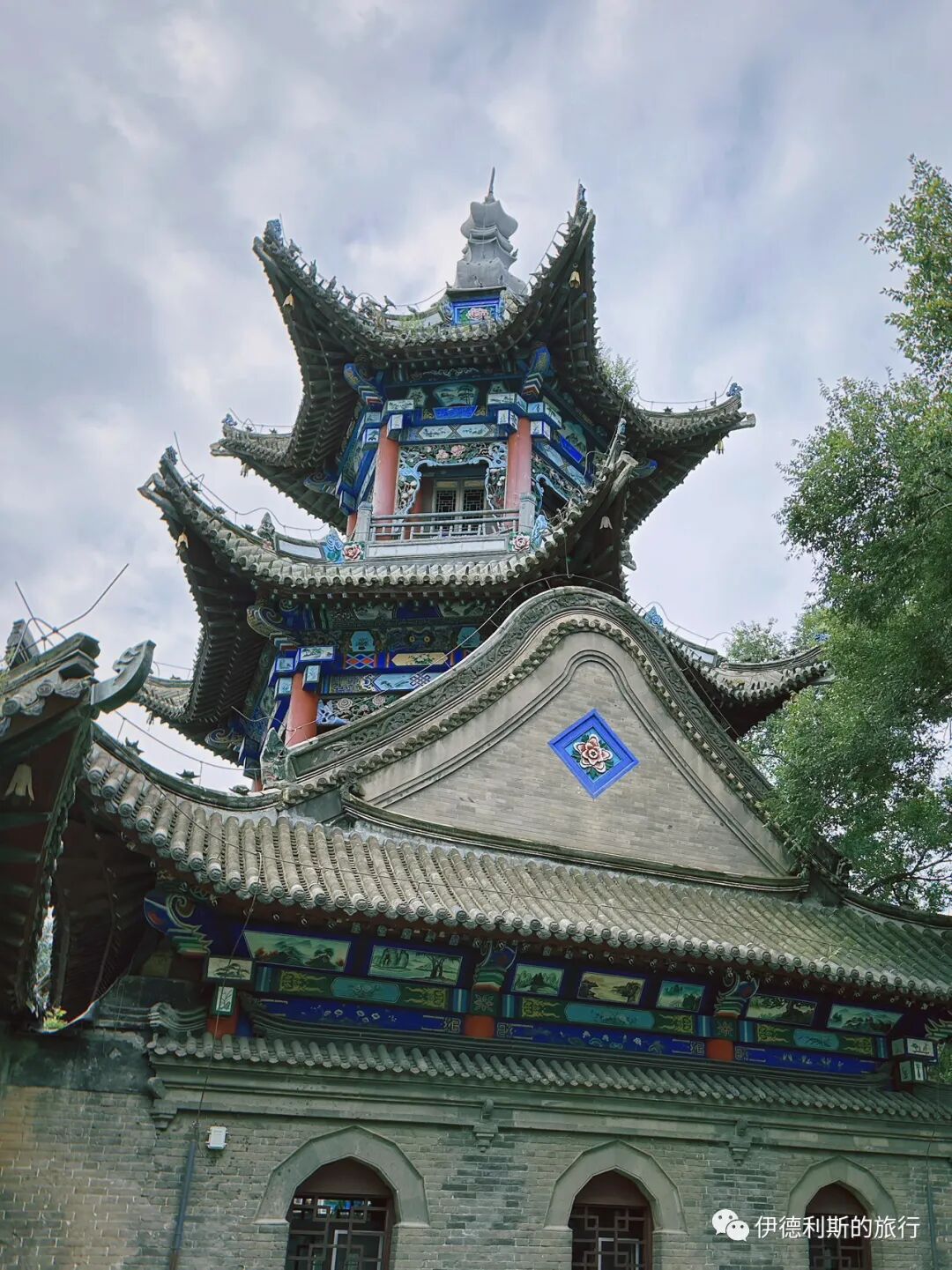
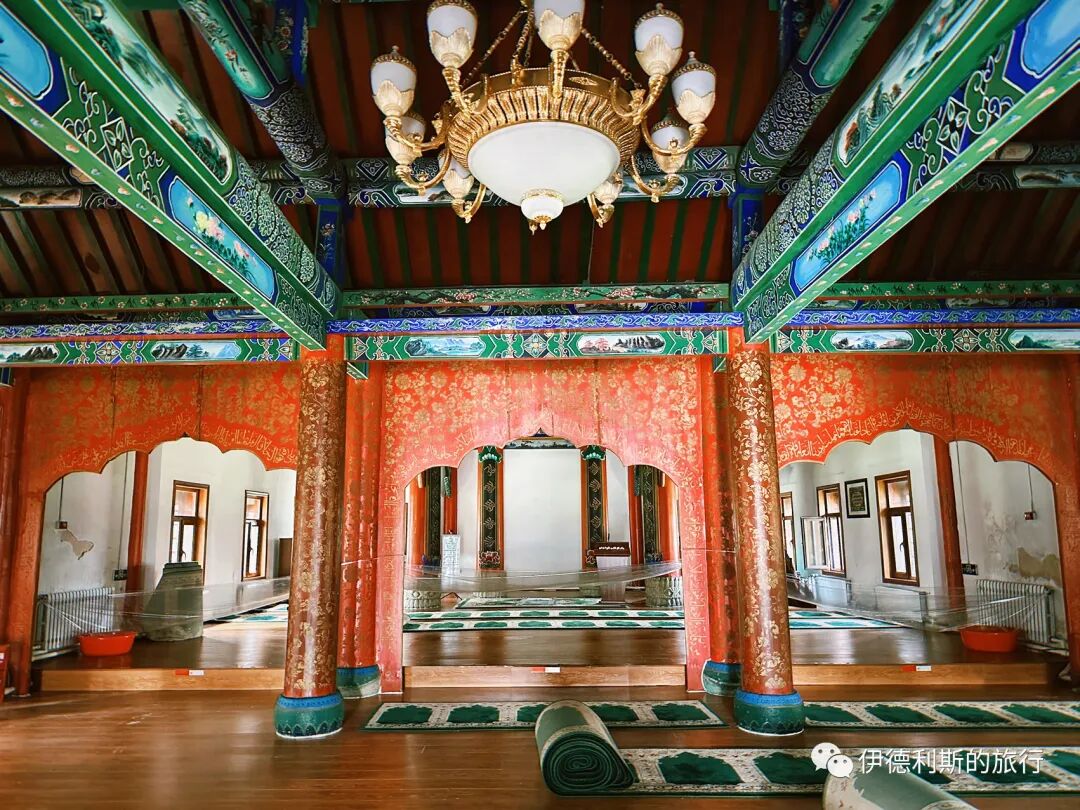
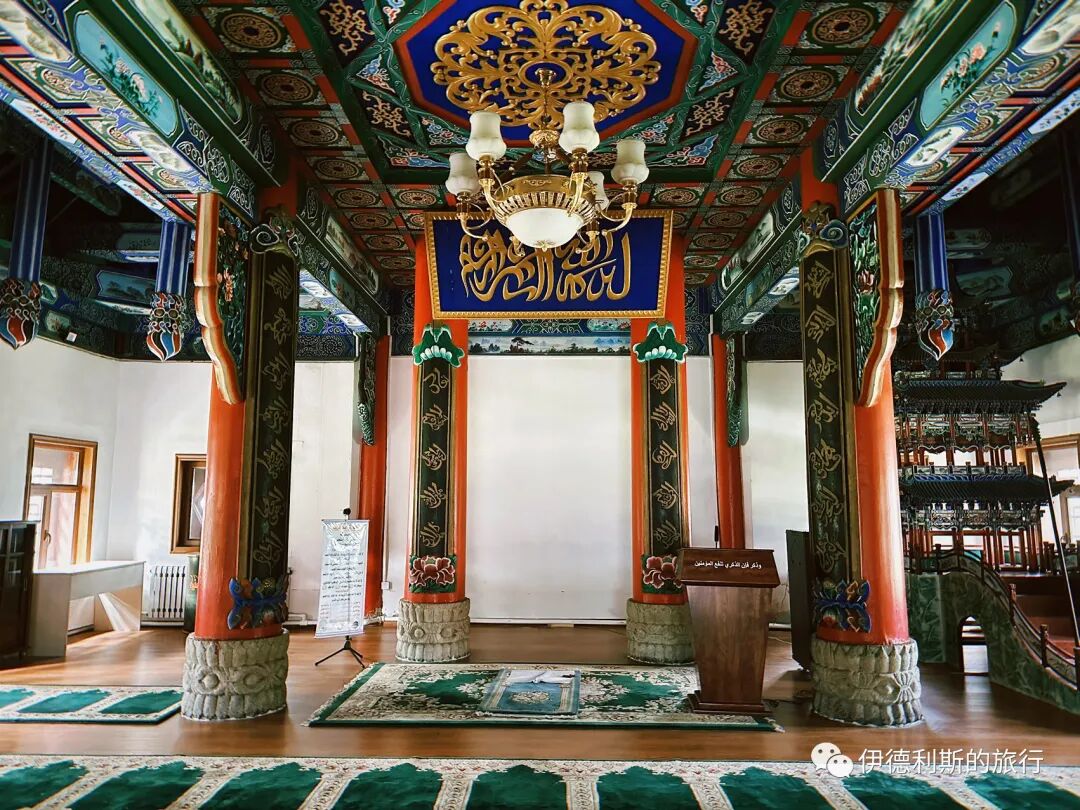
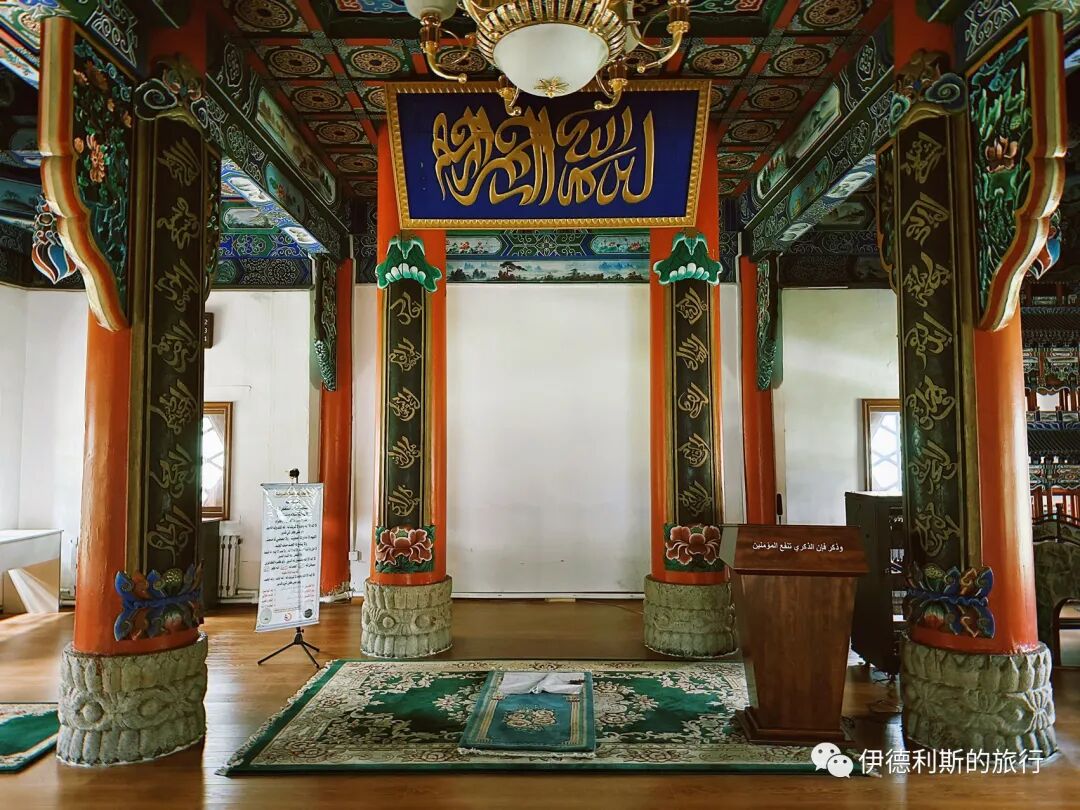
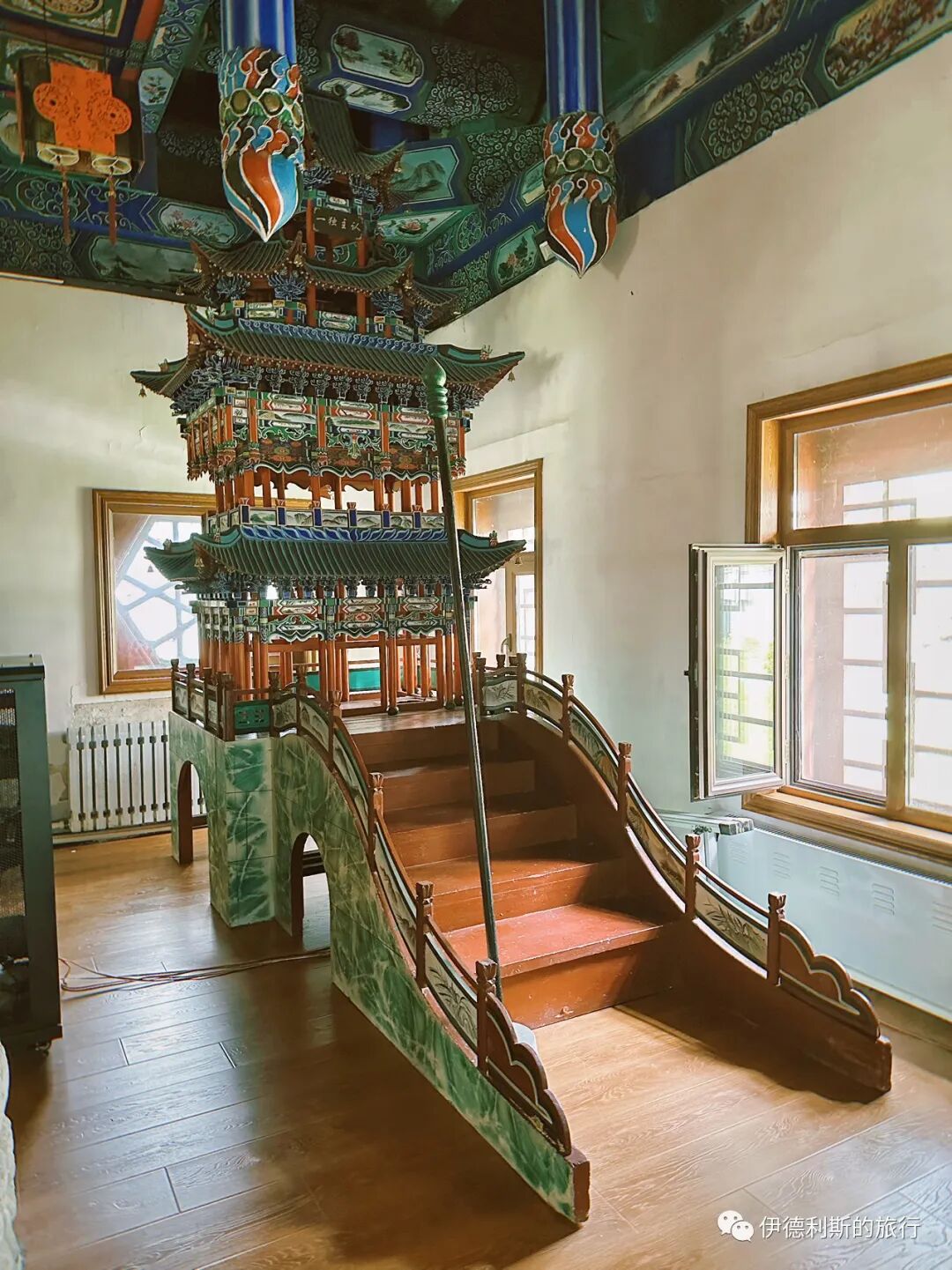
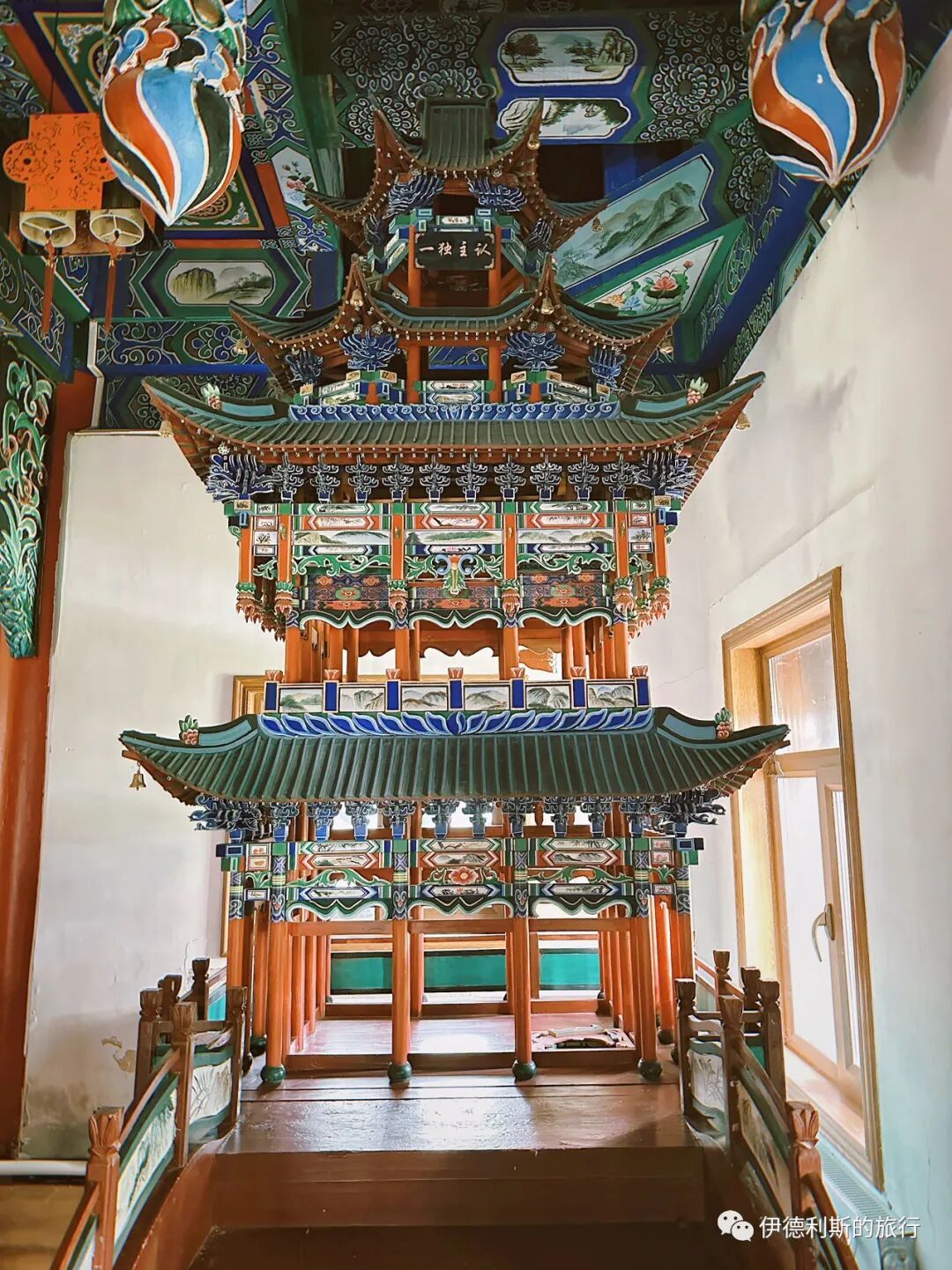
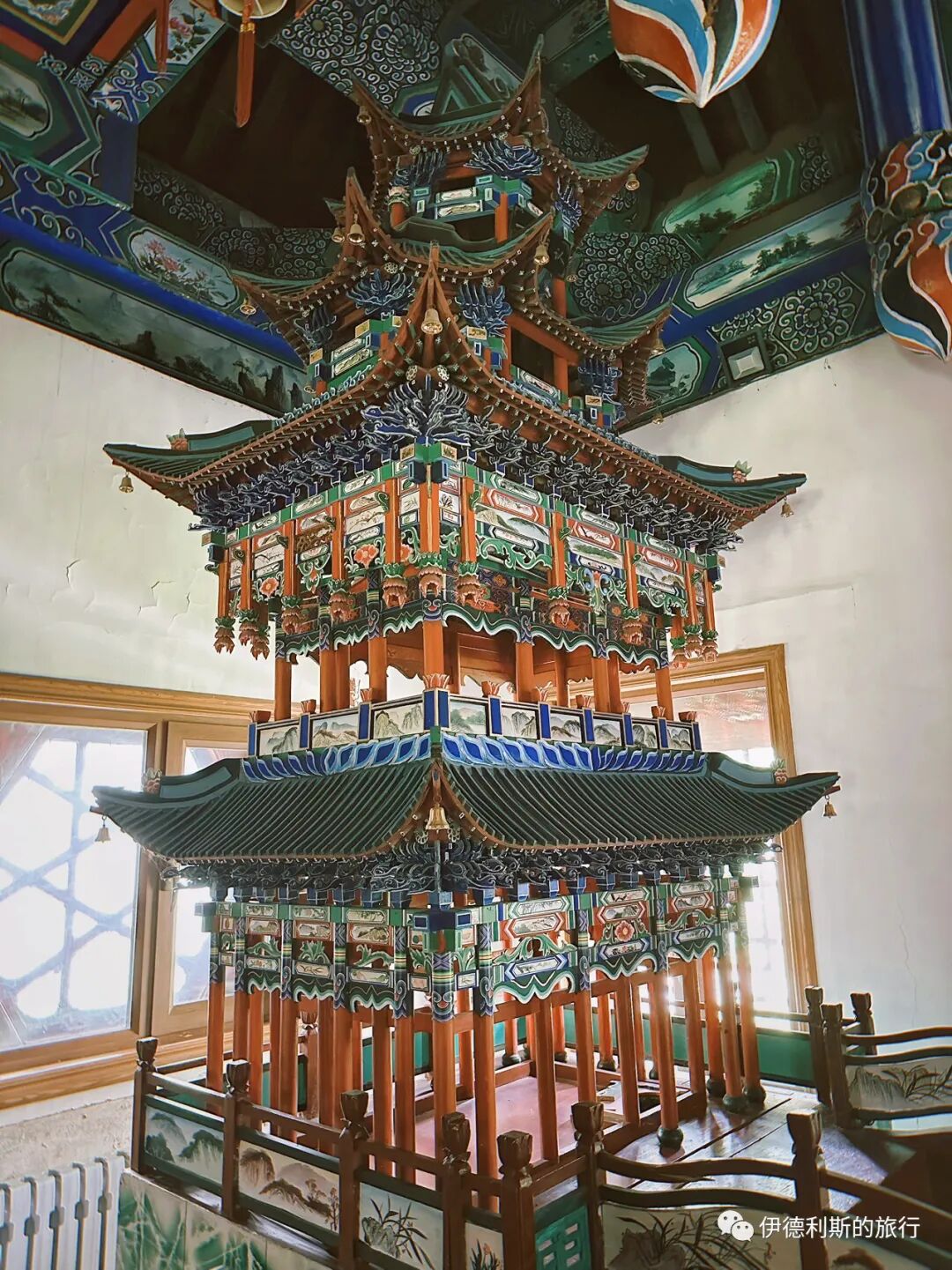
Inside the main hall of Acheng Mosque stands an exquisite pulpit (minbar), reaching 3.3 meters in height. Its layered, staggered design makes it look like a pavilion from a fairyland. This minbar was actually one of two models built in 1890 (the 16th year of the Guangxu reign) for the reconstruction of the Acheng Mosque Moon-Watching Tower. After discussions among the mosque elders, they chose the style of the other model. They built the current Moon-Watching Tower according to that design in 1900 (the 26th year of the Guangxu reign), and this model was then used as the minbar. During the Cultural Revolution, the minbar was damaged. Nearly half of the hanging pillars were broken, the calligraphy for the dua was removed, and the railings were damaged. Fortunately, the main structure of the minbar was saved.
The brick carvings at Acheng Mosque are also very beautiful. The openwork technique used on the gable ends of the porch (juanpeng chitou) is quite rare in traditional mosque architecture.
Plaques and couplets inside Acheng Mosque.
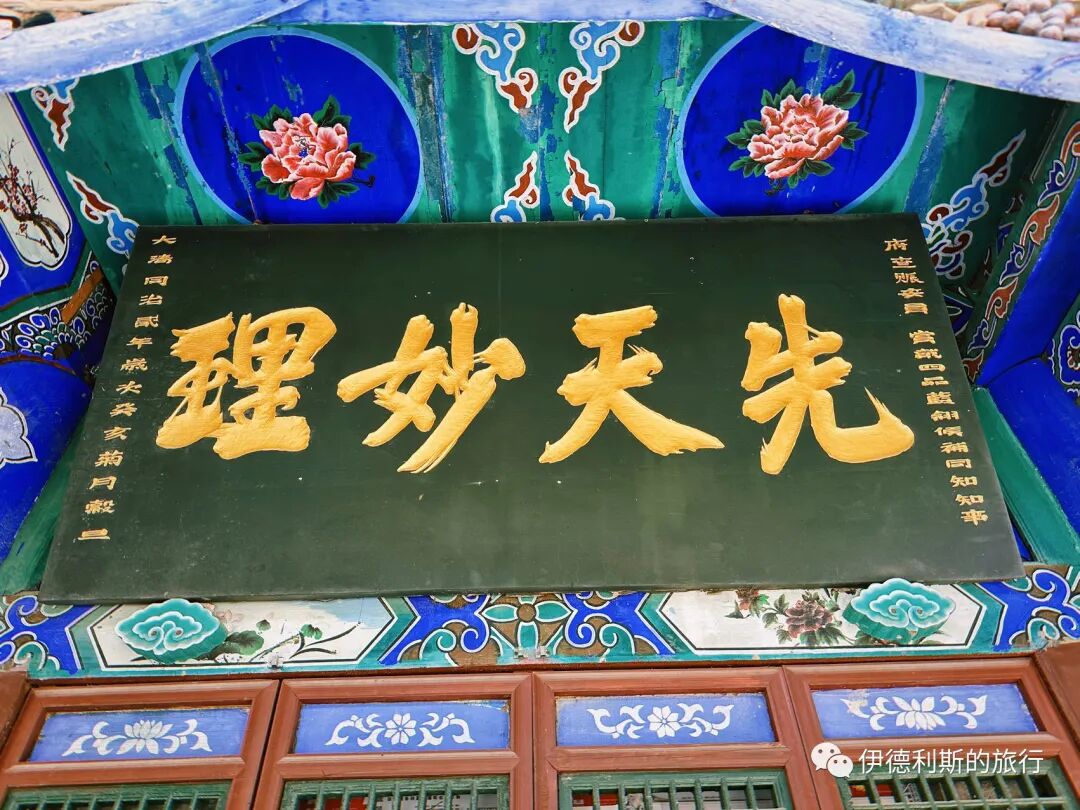
'Profound Truth of Heaven' (Xiantian Miaoli): Presented by the official in charge of auditing, a fourth-rank expectant sub-prefect, in the ninth lunar month of 1863 (the second year of the Tongzhi reign). This plaque. This plaque was discovered in 2006 when the floor of the main hall of Acheng Mosque was being repaired. Unfortunately, the top and bottom parts of the plaque are missing, so the name of the person who presented it is lost. During the Tongzhi reign, a Manchu Bordered White Banner official named Dekejing'a served as the local official in Acheng. It is believed he may have presented this plaque.
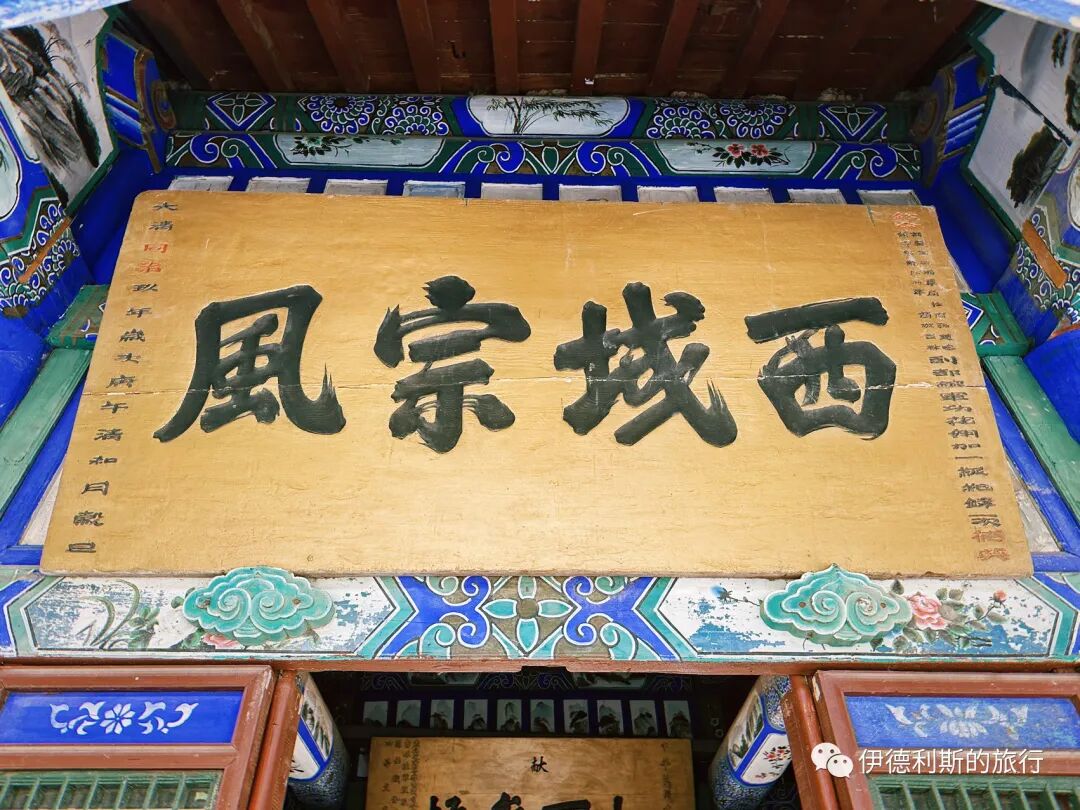
'Sectarian Style of the Western Regions' (Xiyu Zongfeng): Presented by Deying, the former acting Jilin General and former Acheng and Heilongjiang General, who held the rank of Jilin Deputy Lieutenant-General, in the sixth lunar month of 1870 (the ninth year of the Tongzhi reign). Deying was a member of the Jilin Mongol Bordered White Banner. He became the Acheng Deputy Lieutenant-General in 1864 and later served as the Jilin General and Heilongjiang General. He was highly respected by the people, who called him 'Justice De'.
'The Faith Flourishes Throughout the Universe' (Jiao Long Yuzhou): Presented by Haguang Hejing, a military official in charge of Jilin affairs, in the second lunar month of 1878 (the fourth year of the Guangxu reign).
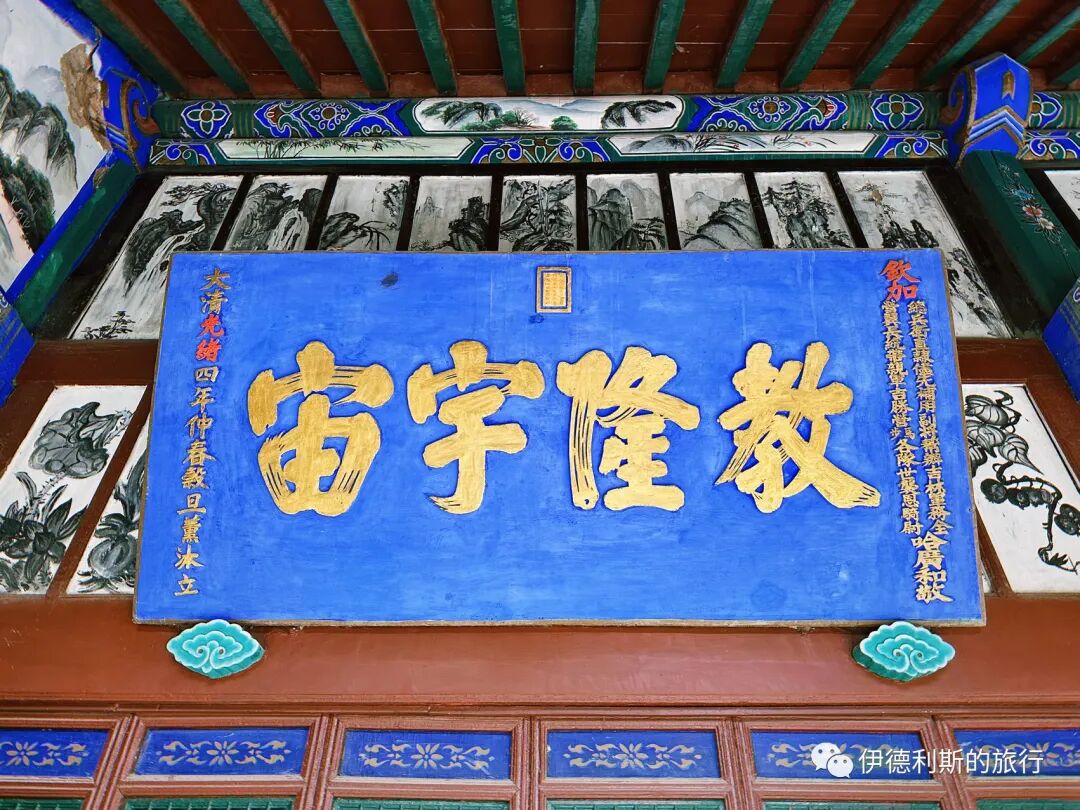
'Eternal Purity' (Wangu Qingzhen): Presented by Garudai, the Deputy Lieutenant-General stationed in Acheng and Lalin, in the fourth lunar month of 1898 (the 24th year of the Guangxu reign). Galudai was a member of the Manchu Plain White Banner. He served as the deputy lieutenant-general of Alechuka in 1897. He held the post for one year, and before leaving, he dedicated a plaque to the Acheng Mosque. He was later transferred to Jinzhou.
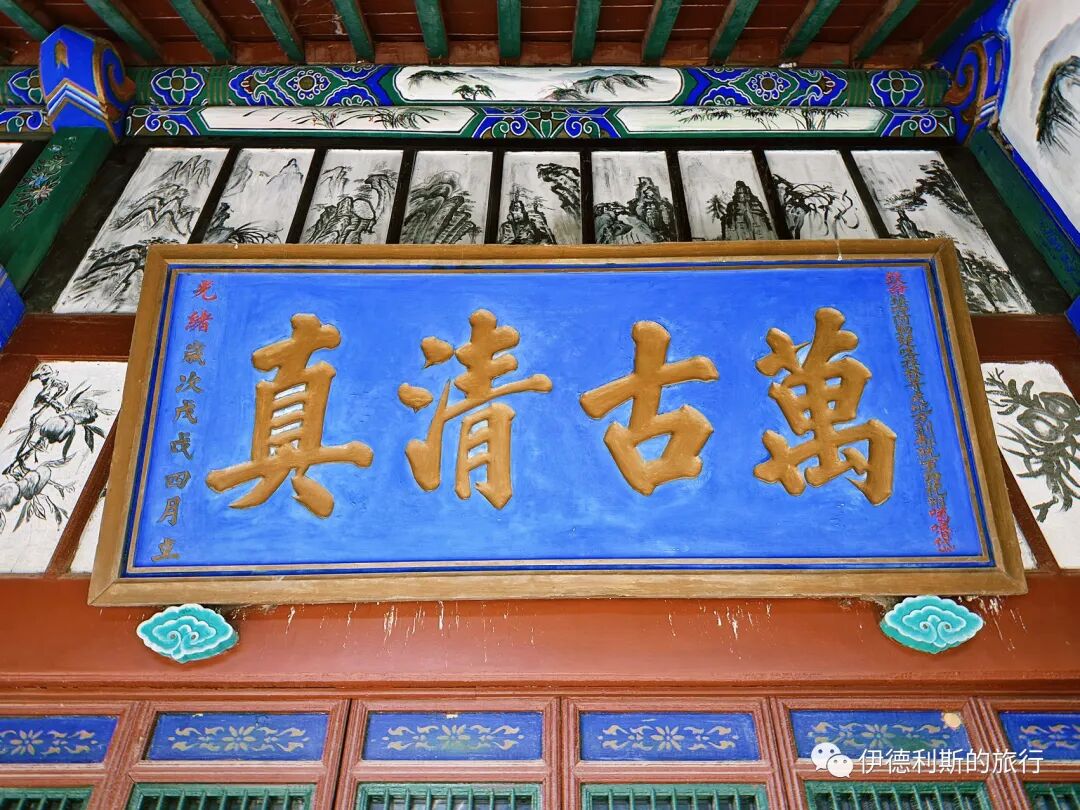
The plaque was dedicated by Wang Hongnian, who held the rank of fourth-class Wenhu Medal recipient and served as the quartermaster for the Jilin Deputy Commander's Office of the Northeast Frontier Defense Army and deputy director of the Jilin Army Clothing Factory. It was presented in the sixth lunar month of 1929. Wang Hongnian was a Hui Muslim army general who served under Zhang Xueliang in the Northeast Frontier Defense Army in 1929. The day the plaque was delivered was a grand and lively event. An honor guard from the Jilin Third Normal School escorted it with loud music and drums. Acheng County Magistrate Bai Hongkui also took part in the ceremony.
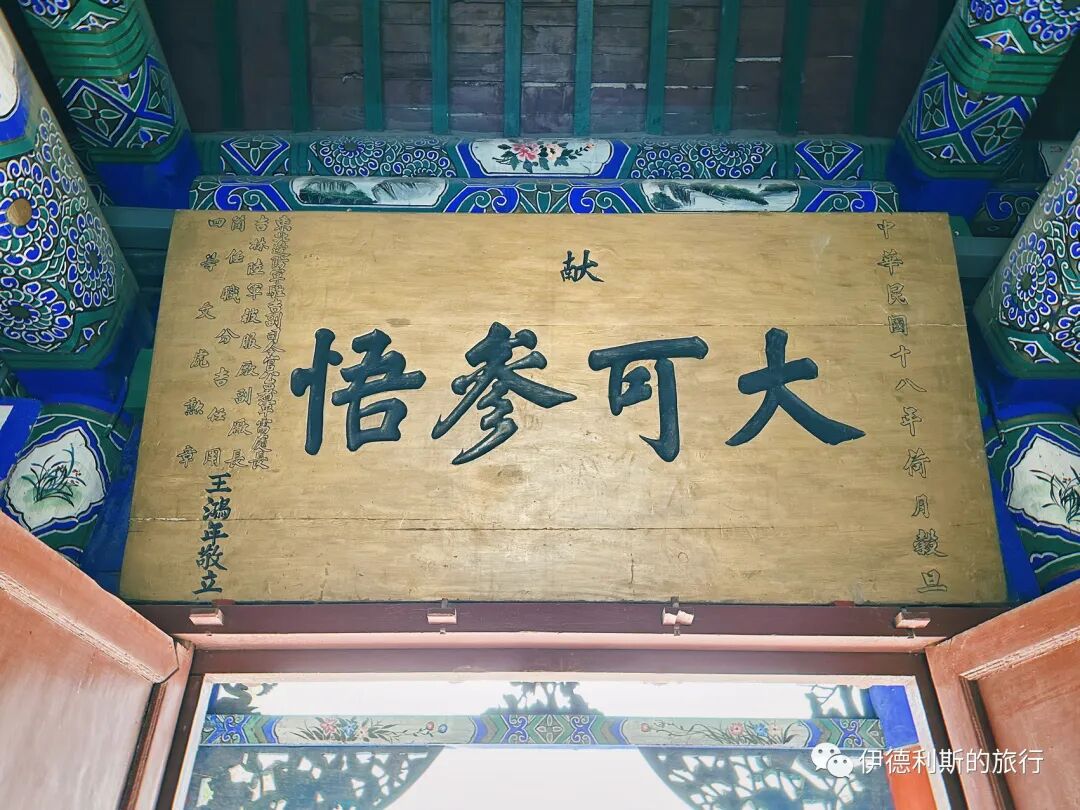
The inscription reads: 'With the skill of Lu Ban, the work was completed in three years, keeping the holy path in heart; with a name lasting through history, the praise for the pure faith remains for a hundred years.' This was presented in 1900 by Sun Yulin, a carpenter from Wula Street in Jilin who helped rebuild the Acheng Mosque.
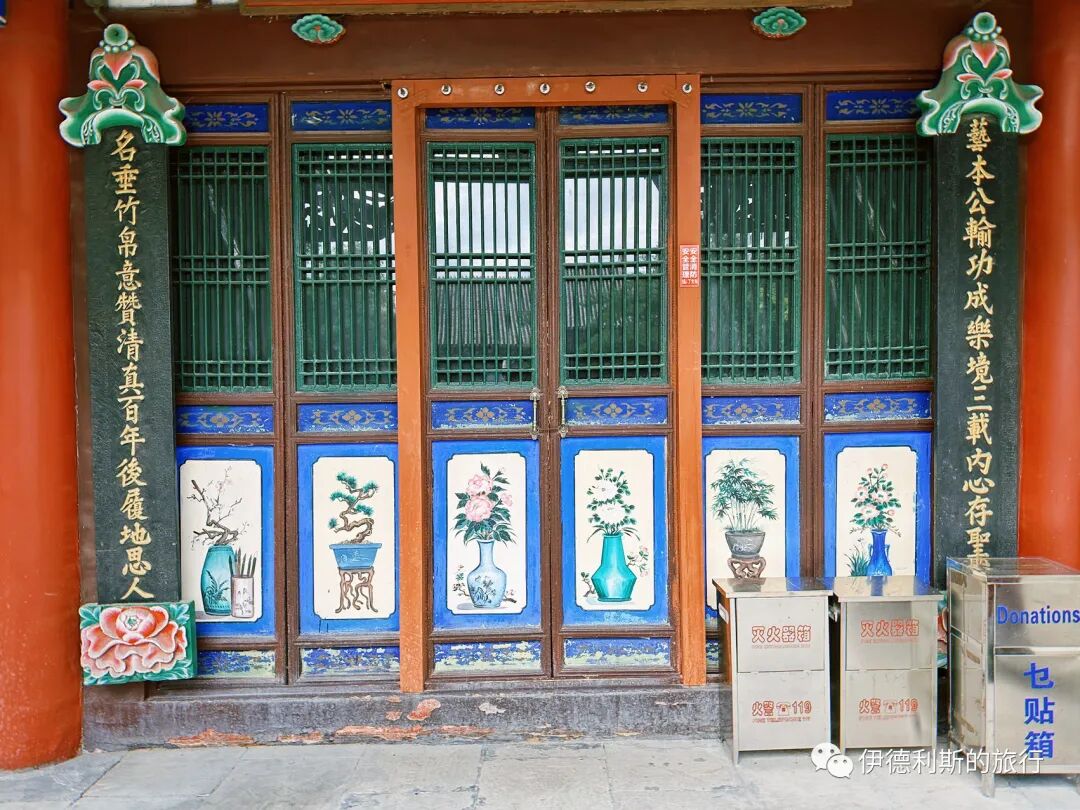
The north wing of the Acheng Mosque has been turned into a history exhibition room, where some precious artifacts are kept. Among them is a Russian document that serves as a historical witness to the lives of Tatars in Heilongjiang during the Tsarist era. The document states: 'The representative holding this paper and about 150 Muslim immigrants are traveling to Alechuka for worship. Military commanders should allow them free passage and residence.' all commanders have a responsibility to provide them with protection. VI II Military District Adjutant, Army Captain: Melyeryerqi.
After Russia occupied Vladivostok in 1860, they began planning a railway across the Qing Dynasty to reach this Pacific port more quickly. In 1896, Li Hongzhang signed the Secret Treaty of Alliance between the Qing Empire and the Russian Empire, naming the line the Great Qing Eastern Railway (Dongqing Railway). After 1920, it was renamed the Chinese Eastern Railway (Zhongdong Railway). Construction of the Chinese Eastern Railway began in August 1897. Soon after, Tatars began arriving from Russia to make a living along the railway line. Some opened small shops, while others served in the Russian army.
In March 1899, the railway opened from the Songhua River to the Ashi River near Acheng. The Ashi River Station (later renamed Acheng Station) became the first station on the Chinese Eastern Railway to open, and it transported large amounts of building materials for the early construction of Harbin. A Tatar community formed near Acheng Station. Many Tatars went to the Acheng Mosque for Friday Jumu'ah prayers. The Western-style chandeliers in the mosque's main prayer hall were gifts from these Tatars.
However, war is cruel. The Boxer Rebellion broke out in 1900. In August, three Russian cavalry companies attacked Acheng to suppress the Boxers, and the Qing troops guarding the city fled to Jilin. The Russian troops fired at the Moon-Watching Tower (Wangyuelou) of the Acheng Mosque to intimidate the people. Inside, the imam, Liu Yuzhang—known to everyone as Imam Liu Si—led the community in a vow to defend the mosque to the death. Imam Liu sent village elders who knew some Russian to negotiate with the Tatars among the Russian troops, while he led the others in hanging the scripture curtains (jingweibu) from the graves inside the mosque. Legend says the Russian troops set up a row of blades west of the mosque. Imam Liu held the Quran (Gure'ani) to his chest, recited the Opening Chapter (Fatiha), and walked through the blades with great courage, finally stopping the Russian troops from entering the mosque. Later, the legendary story of Imam Liu Si walking through the blades to protect the mosque became widely known among the Hui Muslims of Acheng.
At that time, besides Hui Muslims, some Han Chinese also took refuge in the mosque. Luo Wenge, the manager of the Yuxiangju Sauce Shop in Acheng, often told his Hui Muslim friends that his family's shopkeeper survived only because he took shelter in the mosque. Every year during Eid al-Fitr (Kaizhaijie), his family donated rice and flour to the mosque as a charitable gift (nieti) to show their gratitude.
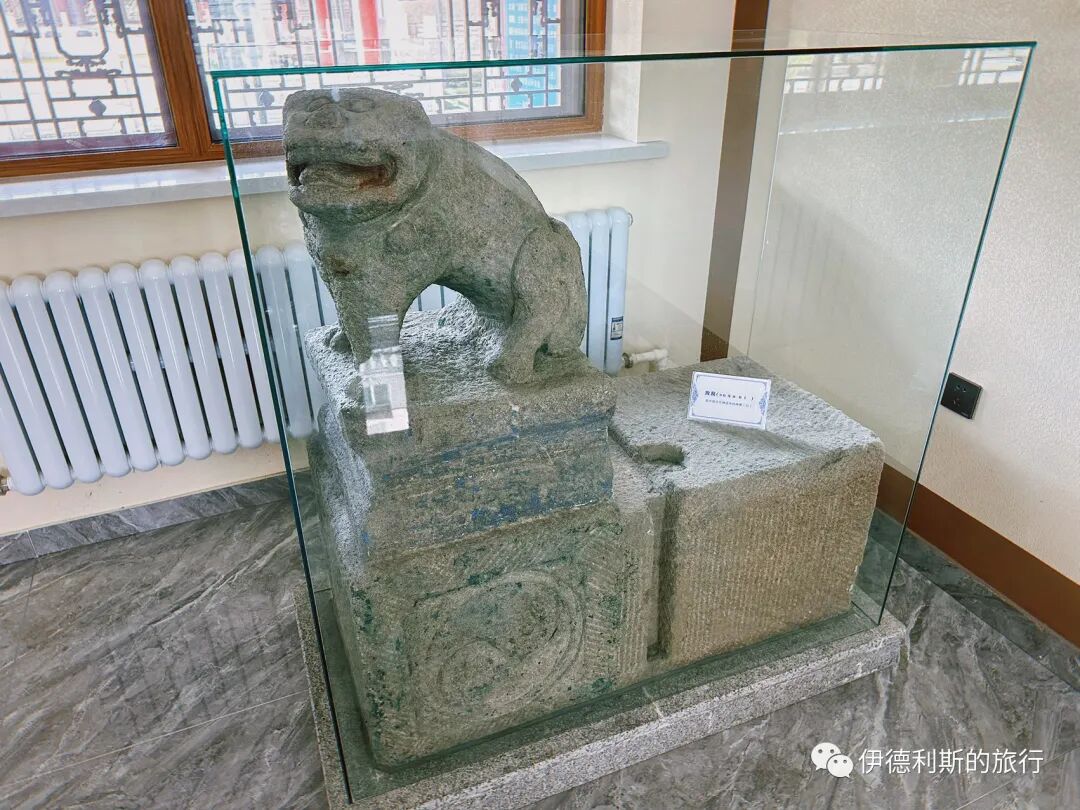
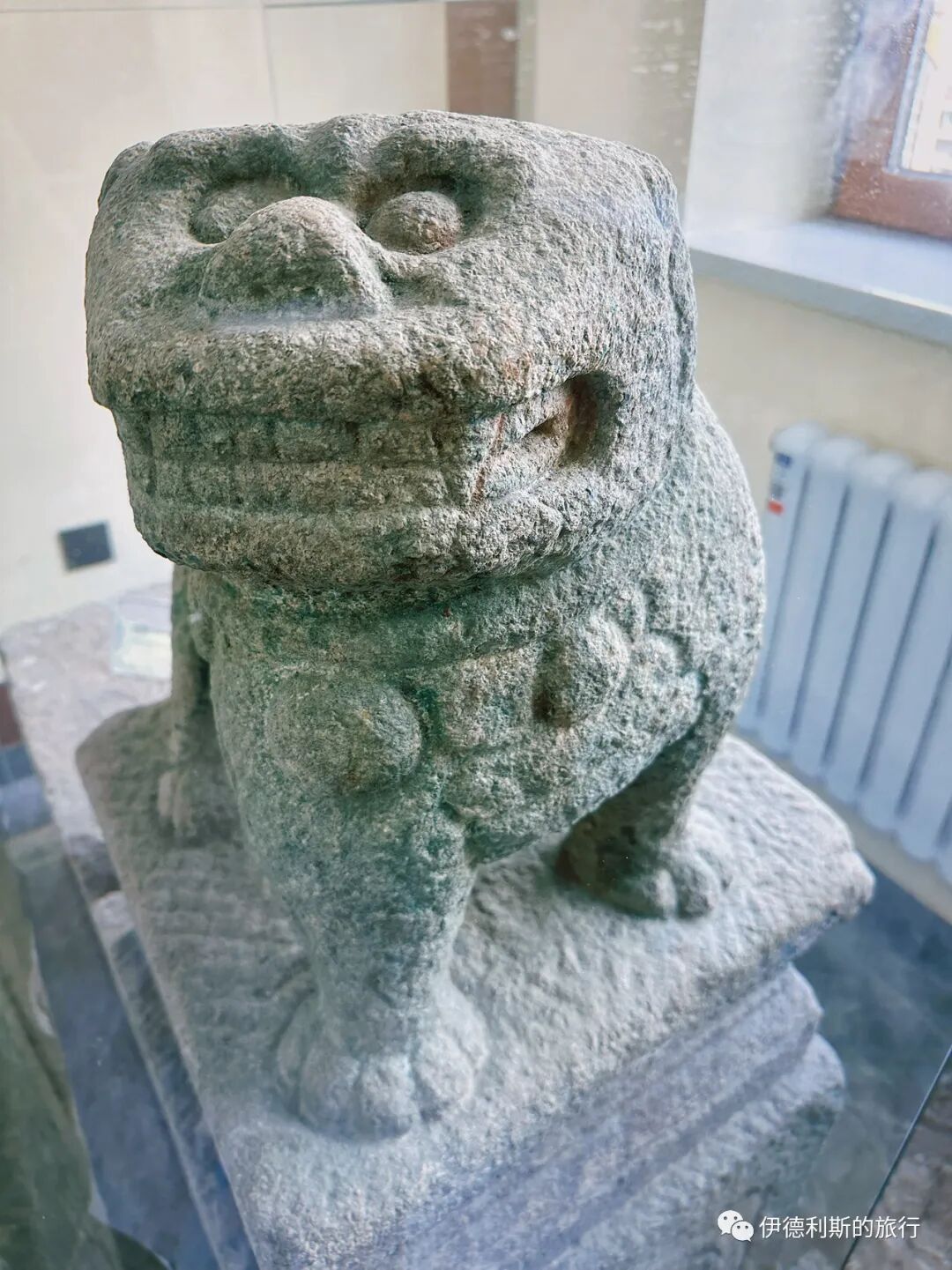
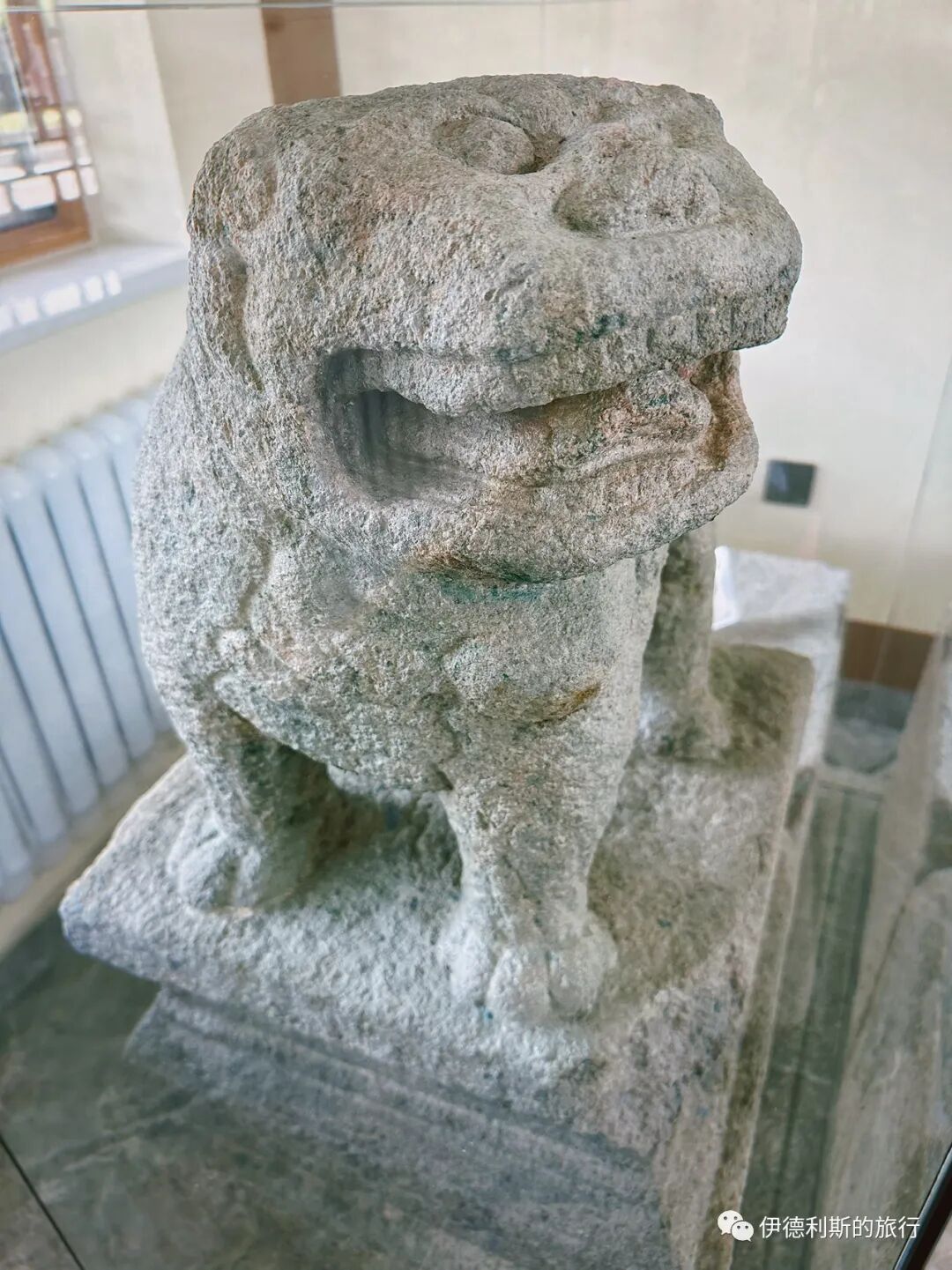
Legend says this pair of stone lions (shisunni) came from the mansion of the Jin Dynasty commander Jin Wuzhu. After the Alechuka Deputy Lieutenant-General's office was established during the Qianlong reign, they were moved to the Armored Soldiers' Office (Pijiafu) under the Deputy Lieutenant-General. After the Acheng Mosque was built, the armored soldiers gave the pair of stone lions to the mosque. They were kept in front of the main hall until 2002, when they were removed for safekeeping.
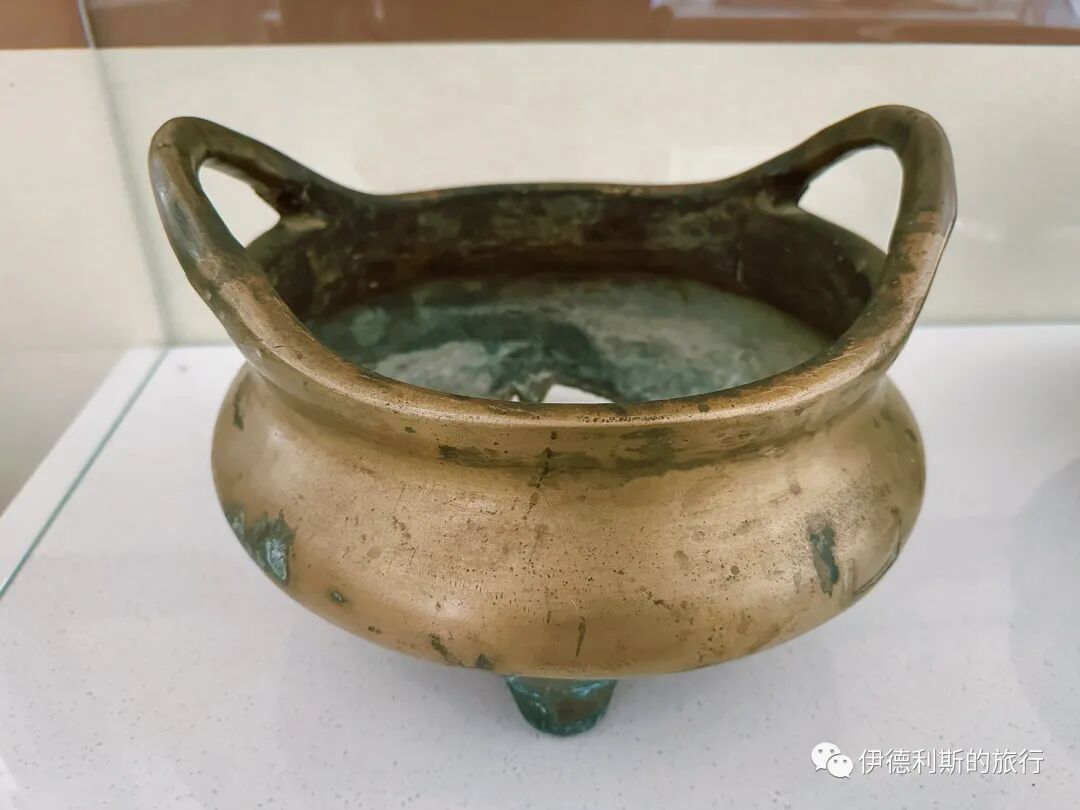
The bronze incense burner in the mosque was cast during the Qianlong period, and the holes on it were made in the 1960s.
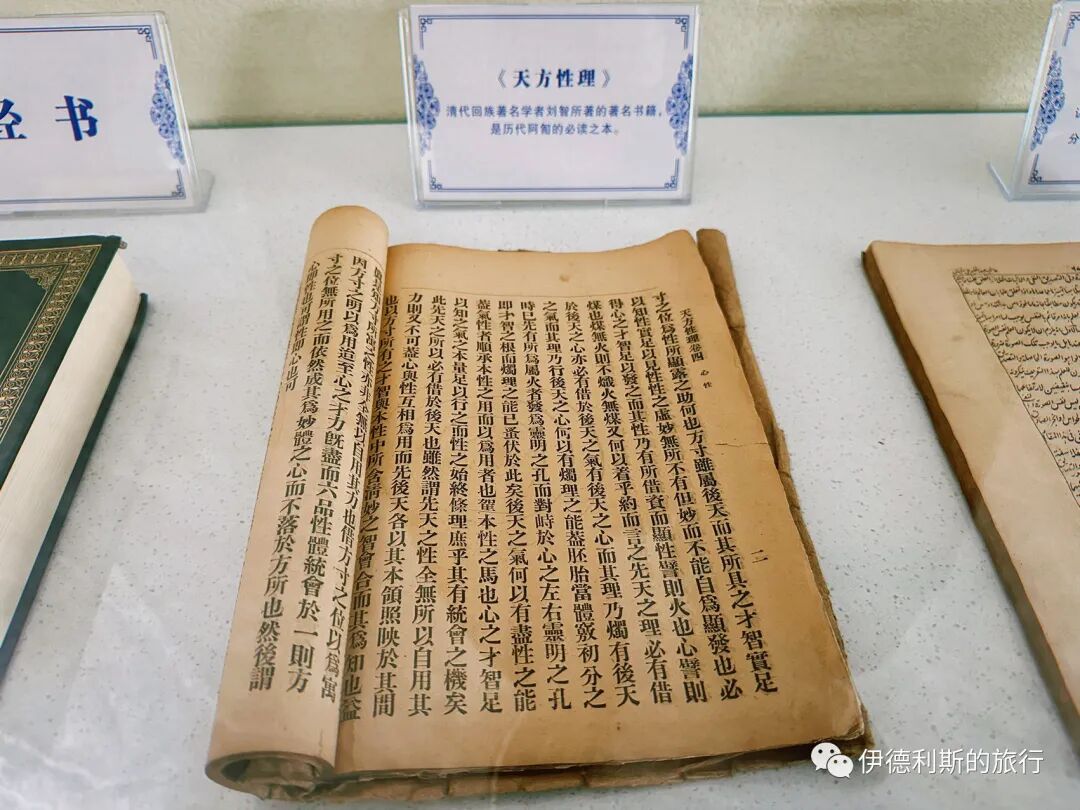
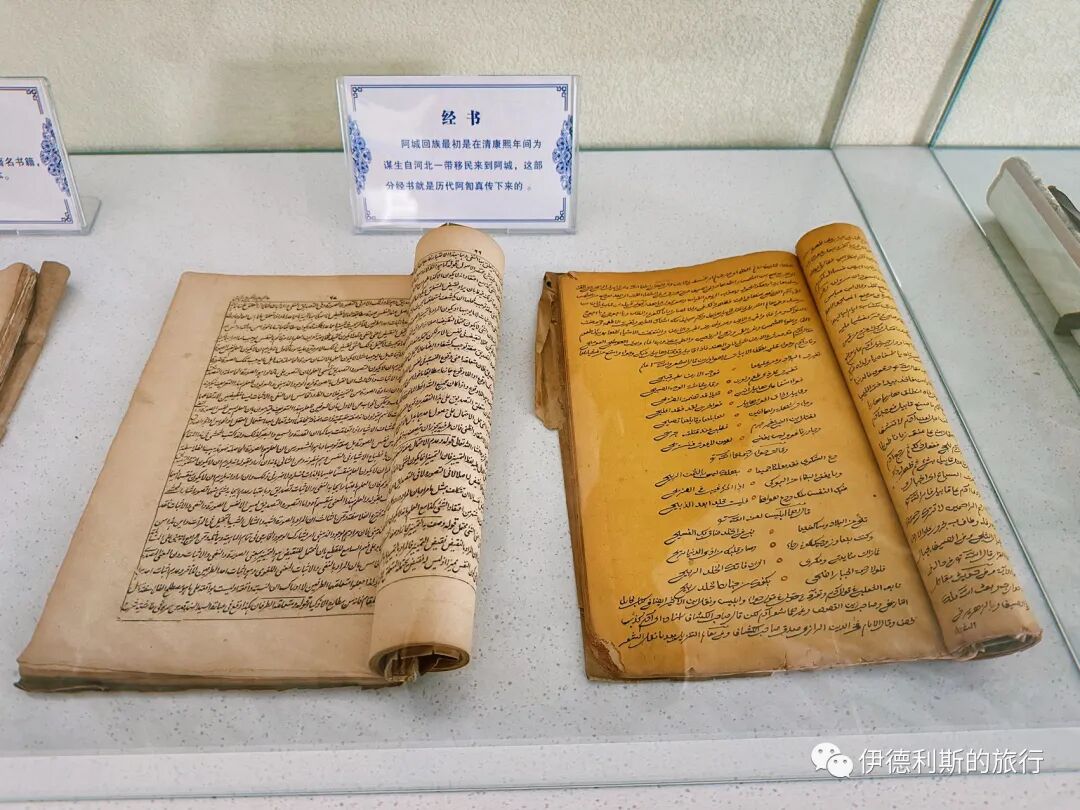
Chinese and Arabic books preserved in the mosque.
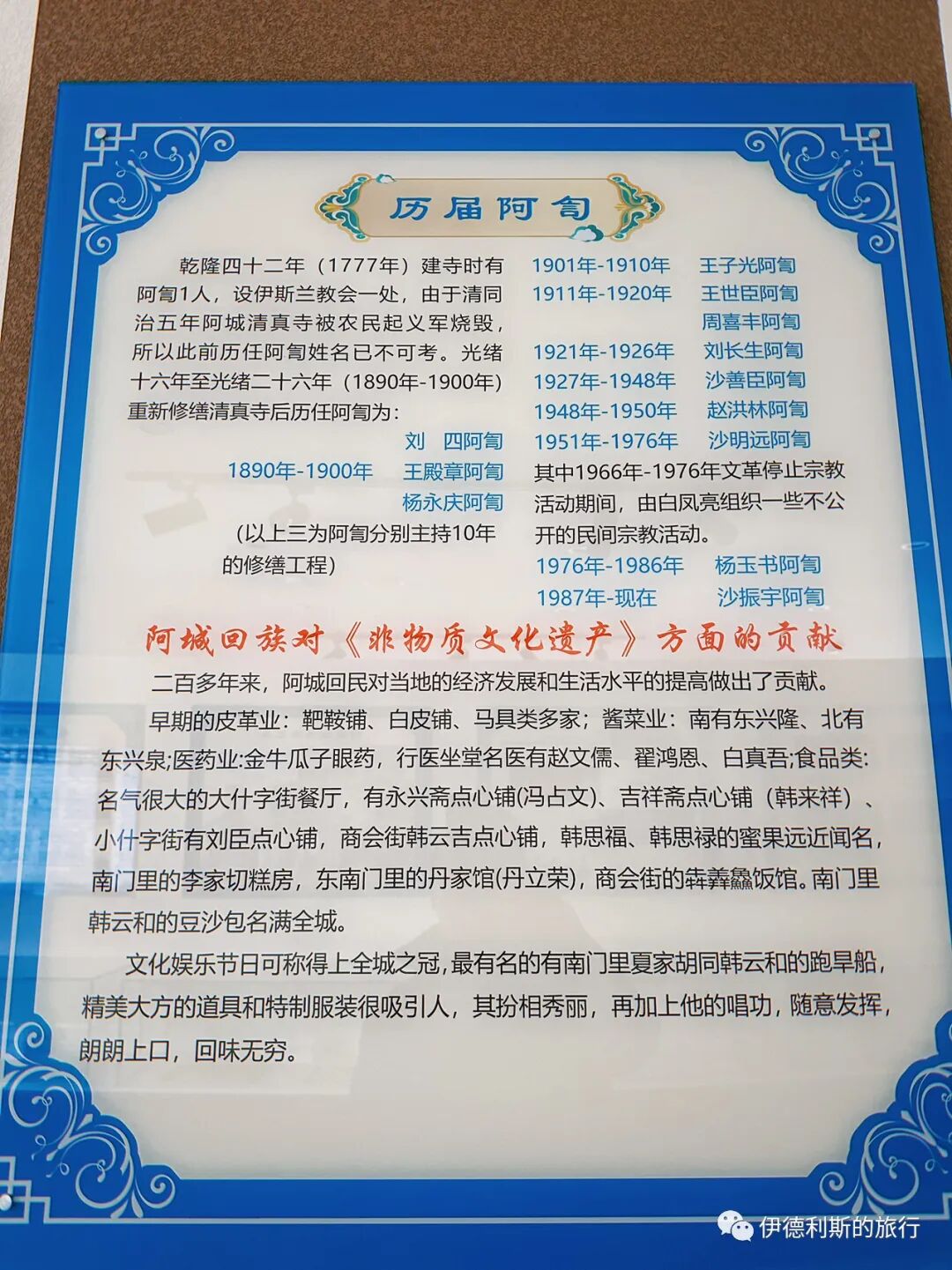
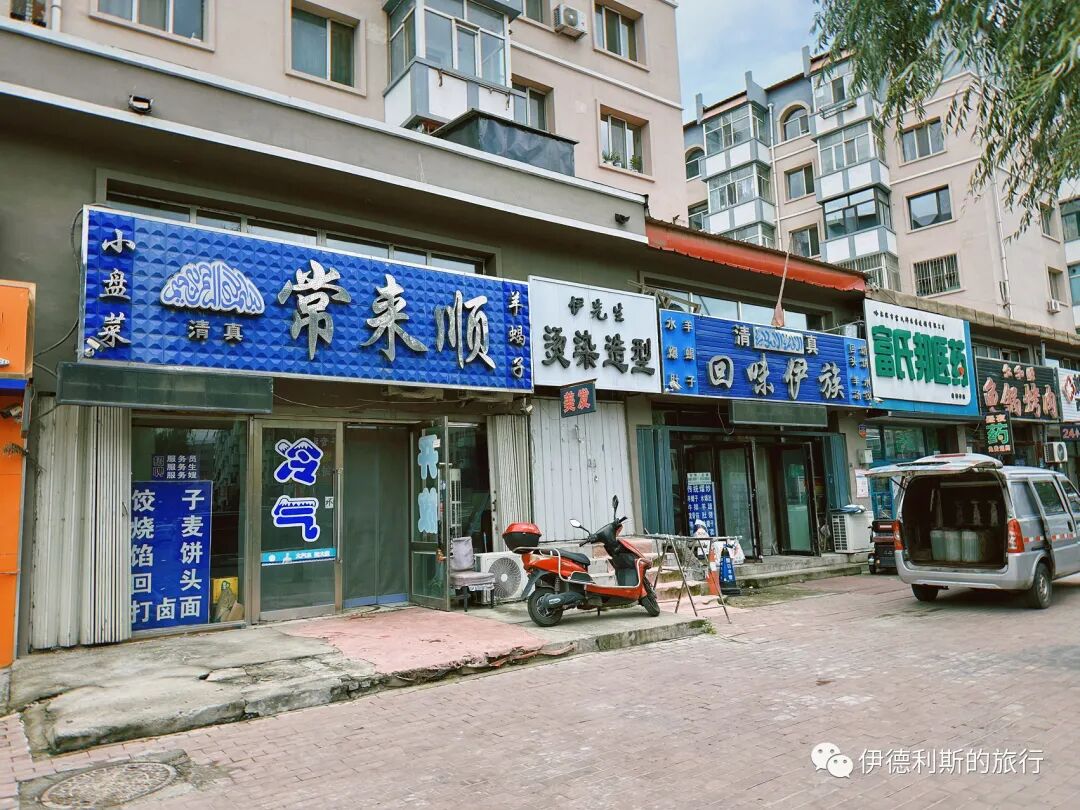
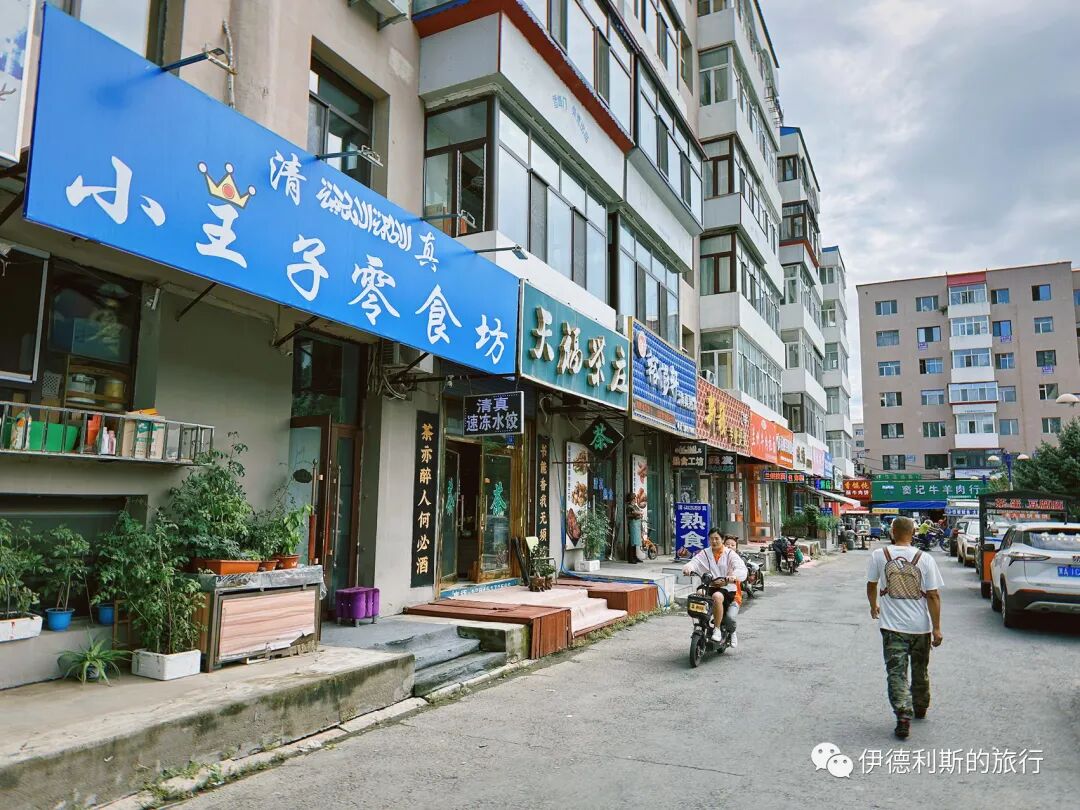
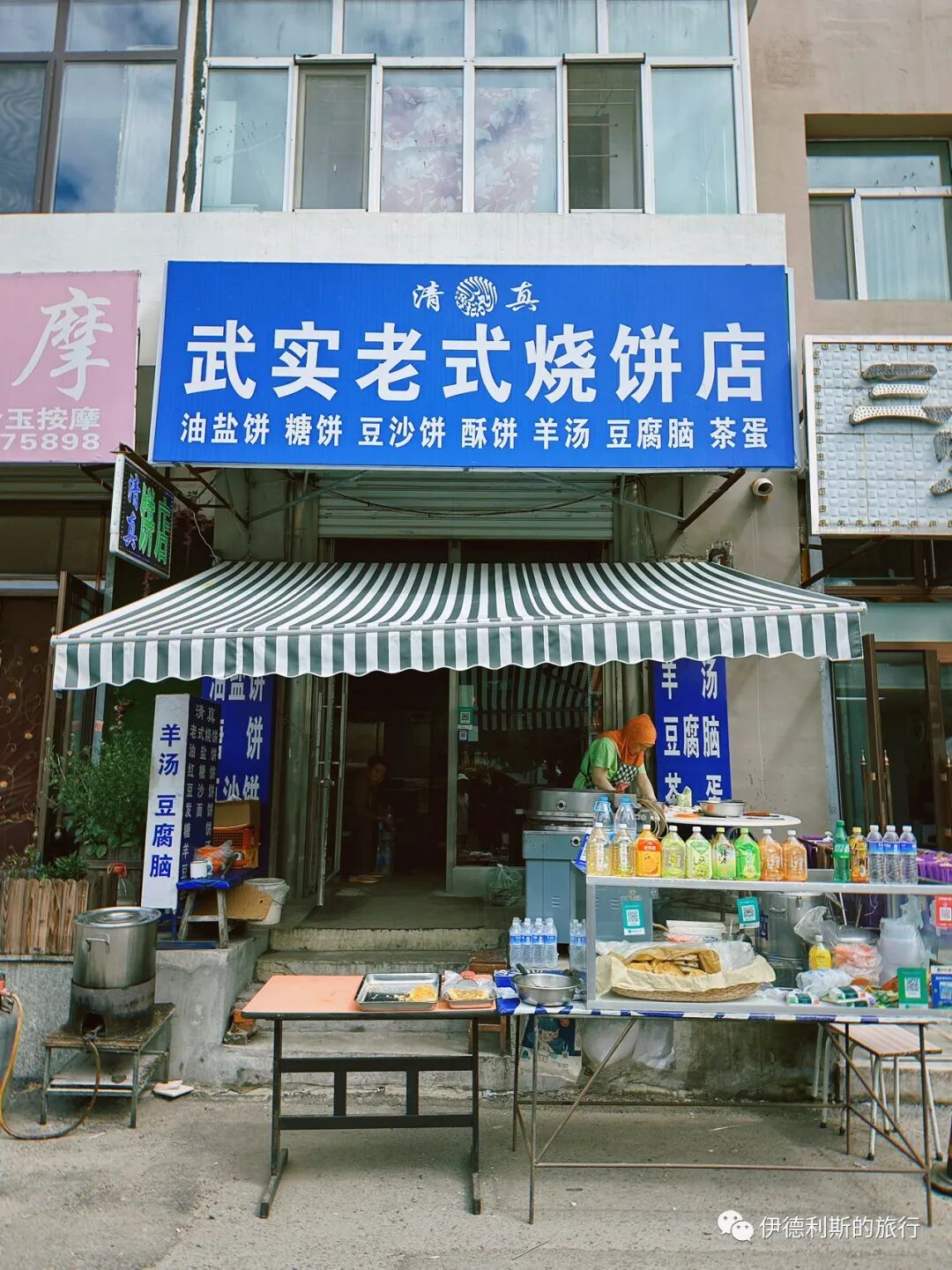
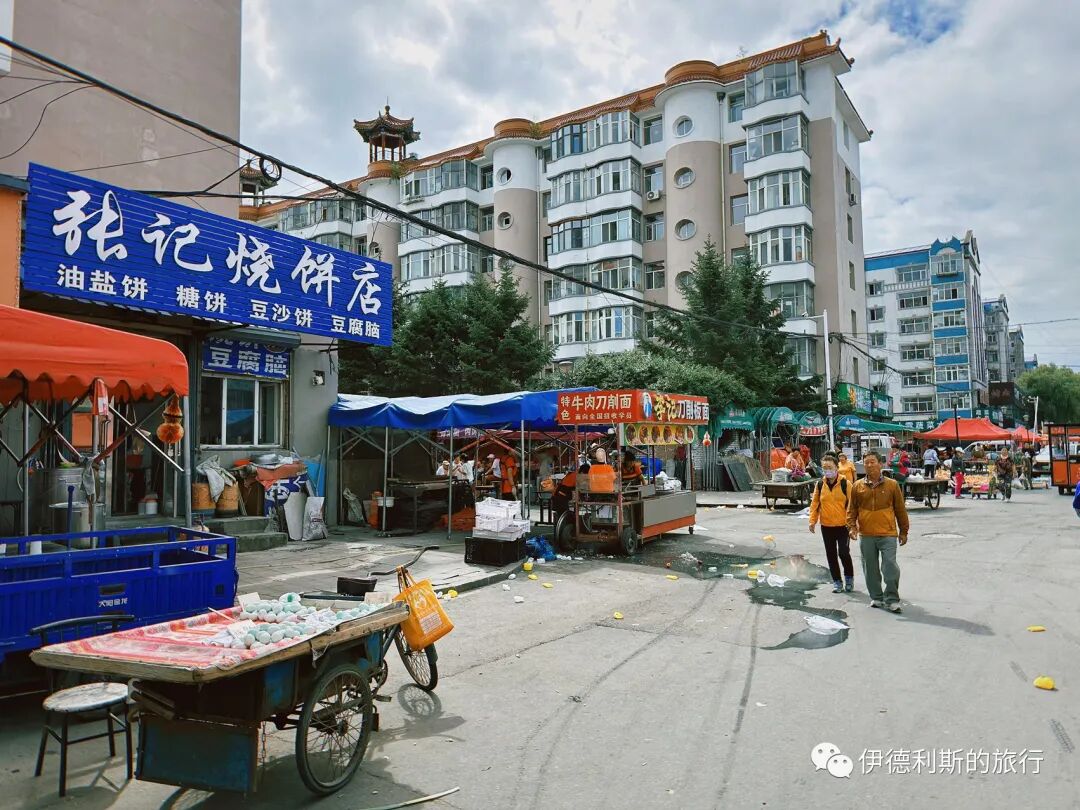
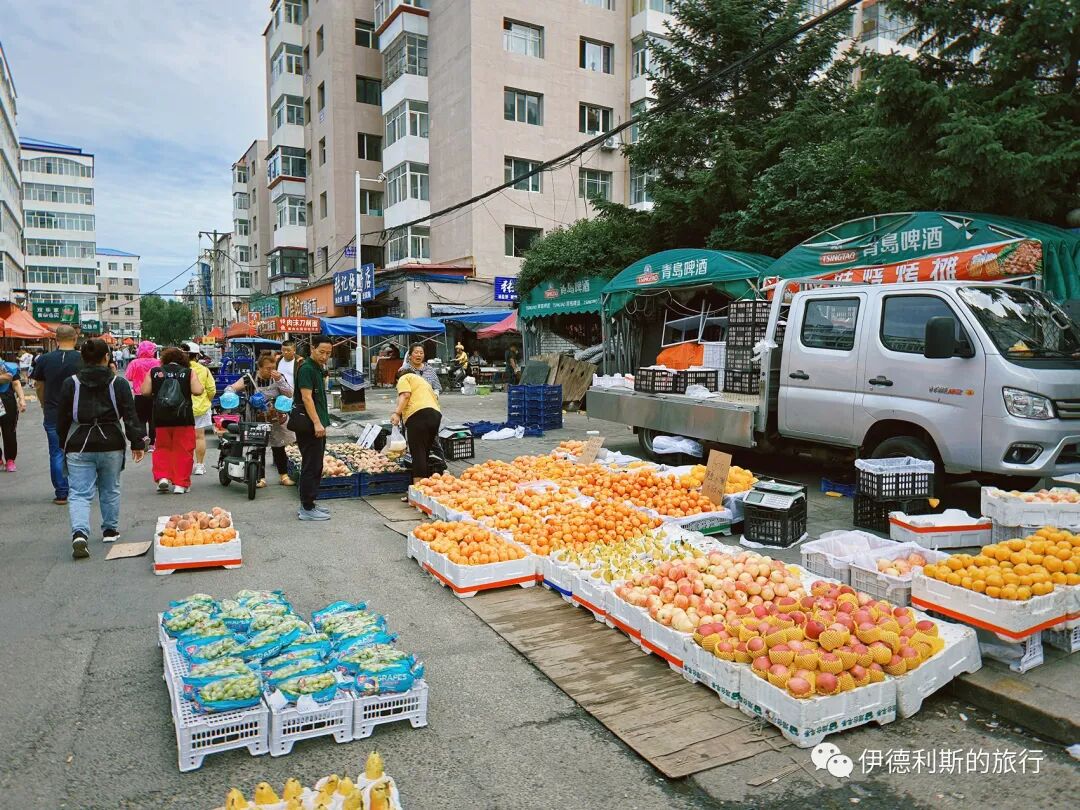
Street view around the Acheng Mosque.

Summary: Acheng Mosque in Heilongjiang is an important local Muslim site with distinctive architecture and community history. This travel account records the mosque, its spaces, and the surrounding Hui Muslim context while preserving the original image order.
Take a taxi from Harbin to Acheng to visit the famous historic mosque, Acheng Mosque.
In 1726 (the fourth year of the Yongzheng reign), the Ningguta General established the Alechuka Assistant Commander's Office near the site of the Jin Dynasty capital, Huining Prefecture. Soon after, the city of Alechuka was built, shortened to Acheng. In 1770 (the 35th year of the Qianlong reign), Yang Huaxian, a Hui Muslim from Shen County, Shandong, settled in Acheng with the Qing army to serve as a clerk at the Alechuka office. Afterward, more Hui Muslims moved from Shandong to Acheng and rented houses from Manchu bannermen. By 1777 (the 42nd year of the Qianlong reign), there were 26 (some say 28) Hui Muslim households in Acheng, including the Yang, Wang, San, Ma, Zhang, Ding, Jin, and Cai families. They rented eight rooms from Manchu bannermen in Xigangzi on West Street to establish the first Acheng Mosque, with Yang Huaxian serving as the mosque elder.
In 1802 (the seventh year of the Jiaqing reign), Elder Yang Huaxian negotiated the purchase of two plots of ancestral land in Xigangzi, formerly belonging to the Manchu official Saisai, and began building the formal Acheng Mosque. Construction continued through the Jiaqing, Daoguang, and Xianfeng reigns, taking 50 years to complete. Twelve years after the mosque was finished, a fire broke out in Acheng in 1873 (the 12th year of the Tongzhi reign). The mosque's Moon-Sighting Tower (wangyuelou) and North Lecture Hall were destroyed, leaving only the South Lecture Hall and the reception hall.
In 1890 (the 16th year of the Guangxu reign), the mosque's imam, Liu Yuzhang, and manager, Luo Yuzhang, began organizing the reconstruction of the mosque. The Moon-Sighting Tower on the main prayer hall required four pine pillars over 15 meters long. After searching, the mosque found such trees in a forest area called Houdu near Yabuli. Mosque elders Yang Qingbao, Geng Qiming, and Yang Baoshen risked their lives to negotiate logging with the bandits occupying the area. The bandit leader not only agreed to let them cut six trees but also sent men to help fell them and transport them back. When the timber arrived in Acheng, someone reported them. Mosque elder Jin Yuxi and others had to travel to Jilin for a difficult legal battle, which they eventually won to keep the wood.
When construction began, the elders went to Wula Street in Jilin to hire a carpenter named Sun Yulin to lead the work. Legend says Carpenter Sun's master was worried about his apprentice, so he traveled to Acheng to check the construction and material measurements. He said nothing after looking, but secretly went to a stone shop and had four 3-foot-tall lotus-shaped stone bases made. When it came time to raise the four main pillars for the prayer hall, they were exactly 3 feet too short. Seeing this, the master immediately told Carpenter Sun to take a cart to the stone shop and bring back the four lotus bases, which fit perfectly. In this way, Acheng Mosque was finally completed in 1900 (the 26th year of the Guangxu reign) as the building we see today.
The Moon-Watching Tower (wangyuelou) at Acheng Mosque features painted beams and carved pillars with high, sweeping eaves. It has wooden railings with floral patterns on all six sides. The carvings use openwork techniques, with the Eight Immortals hidden in the bracket sets (que-ti). The hanging eaves (gualuo) feature carvings of plum blossoms, lotus flowers, peach blossoms, chrysanthemums, and camellias, creating a 'four seasons' scene.
Inside the main hall of Acheng Mosque stands an exquisite pulpit (minbar), reaching 3.3 meters in height. Its layered, staggered design makes it look like a pavilion from a fairyland. This minbar was actually one of two models built in 1890 (the 16th year of the Guangxu reign) for the reconstruction of the Acheng Mosque Moon-Watching Tower. After discussions among the mosque elders, they chose the style of the other model. They built the current Moon-Watching Tower according to that design in 1900 (the 26th year of the Guangxu reign), and this model was then used as the minbar. During the Cultural Revolution, the minbar was damaged. Nearly half of the hanging pillars were broken, the calligraphy for the dua was removed, and the railings were damaged. Fortunately, the main structure of the minbar was saved.
The brick carvings at Acheng Mosque are also very beautiful. The openwork technique used on the gable ends of the porch (juanpeng chitou) is quite rare in traditional mosque architecture.
Plaques and couplets inside Acheng Mosque.
'Profound Truth of Heaven' (Xiantian Miaoli): Presented by the official in charge of auditing, a fourth-rank expectant sub-prefect, in the ninth lunar month of 1863 (the second year of the Tongzhi reign). This plaque. This plaque was discovered in 2006 when the floor of the main hall of Acheng Mosque was being repaired. Unfortunately, the top and bottom parts of the plaque are missing, so the name of the person who presented it is lost. During the Tongzhi reign, a Manchu Bordered White Banner official named Dekejing'a served as the local official in Acheng. It is believed he may have presented this plaque.
'Sectarian Style of the Western Regions' (Xiyu Zongfeng): Presented by Deying, the former acting Jilin General and former Acheng and Heilongjiang General, who held the rank of Jilin Deputy Lieutenant-General, in the sixth lunar month of 1870 (the ninth year of the Tongzhi reign). Deying was a member of the Jilin Mongol Bordered White Banner. He became the Acheng Deputy Lieutenant-General in 1864 and later served as the Jilin General and Heilongjiang General. He was highly respected by the people, who called him 'Justice De'.
'The Faith Flourishes Throughout the Universe' (Jiao Long Yuzhou): Presented by Haguang Hejing, a military official in charge of Jilin affairs, in the second lunar month of 1878 (the fourth year of the Guangxu reign).
'Eternal Purity' (Wangu Qingzhen): Presented by Garudai, the Deputy Lieutenant-General stationed in Acheng and Lalin, in the fourth lunar month of 1898 (the 24th year of the Guangxu reign). Galudai was a member of the Manchu Plain White Banner. He served as the deputy lieutenant-general of Alechuka in 1897. He held the post for one year, and before leaving, he dedicated a plaque to the Acheng Mosque. He was later transferred to Jinzhou.
The plaque was dedicated by Wang Hongnian, who held the rank of fourth-class Wenhu Medal recipient and served as the quartermaster for the Jilin Deputy Commander's Office of the Northeast Frontier Defense Army and deputy director of the Jilin Army Clothing Factory. It was presented in the sixth lunar month of 1929. Wang Hongnian was a Hui Muslim army general who served under Zhang Xueliang in the Northeast Frontier Defense Army in 1929. The day the plaque was delivered was a grand and lively event. An honor guard from the Jilin Third Normal School escorted it with loud music and drums. Acheng County Magistrate Bai Hongkui also took part in the ceremony.
The inscription reads: 'With the skill of Lu Ban, the work was completed in three years, keeping the holy path in heart; with a name lasting through history, the praise for the pure faith remains for a hundred years.' This was presented in 1900 by Sun Yulin, a carpenter from Wula Street in Jilin who helped rebuild the Acheng Mosque.
The north wing of the Acheng Mosque has been turned into a history exhibition room, where some precious artifacts are kept. Among them is a Russian document that serves as a historical witness to the lives of Tatars in Heilongjiang during the Tsarist era. The document states: 'The representative holding this paper and about 150 Muslim immigrants are traveling to Alechuka for worship. Military commanders should allow them free passage and residence.' all commanders have a responsibility to provide them with protection. VI II Military District Adjutant, Army Captain: Melyeryerqi.
After Russia occupied Vladivostok in 1860, they began planning a railway across the Qing Dynasty to reach this Pacific port more quickly. In 1896, Li Hongzhang signed the Secret Treaty of Alliance between the Qing Empire and the Russian Empire, naming the line the Great Qing Eastern Railway (Dongqing Railway). After 1920, it was renamed the Chinese Eastern Railway (Zhongdong Railway). Construction of the Chinese Eastern Railway began in August 1897. Soon after, Tatars began arriving from Russia to make a living along the railway line. Some opened small shops, while others served in the Russian army.
In March 1899, the railway opened from the Songhua River to the Ashi River near Acheng. The Ashi River Station (later renamed Acheng Station) became the first station on the Chinese Eastern Railway to open, and it transported large amounts of building materials for the early construction of Harbin. A Tatar community formed near Acheng Station. Many Tatars went to the Acheng Mosque for Friday Jumu'ah prayers. The Western-style chandeliers in the mosque's main prayer hall were gifts from these Tatars.
However, war is cruel. The Boxer Rebellion broke out in 1900. In August, three Russian cavalry companies attacked Acheng to suppress the Boxers, and the Qing troops guarding the city fled to Jilin. The Russian troops fired at the Moon-Watching Tower (Wangyuelou) of the Acheng Mosque to intimidate the people. Inside, the imam, Liu Yuzhang—known to everyone as Imam Liu Si—led the community in a vow to defend the mosque to the death. Imam Liu sent village elders who knew some Russian to negotiate with the Tatars among the Russian troops, while he led the others in hanging the scripture curtains (jingweibu) from the graves inside the mosque. Legend says the Russian troops set up a row of blades west of the mosque. Imam Liu held the Quran (Gure'ani) to his chest, recited the Opening Chapter (Fatiha), and walked through the blades with great courage, finally stopping the Russian troops from entering the mosque. Later, the legendary story of Imam Liu Si walking through the blades to protect the mosque became widely known among the Hui Muslims of Acheng.
At that time, besides Hui Muslims, some Han Chinese also took refuge in the mosque. Luo Wenge, the manager of the Yuxiangju Sauce Shop in Acheng, often told his Hui Muslim friends that his family's shopkeeper survived only because he took shelter in the mosque. Every year during Eid al-Fitr (Kaizhaijie), his family donated rice and flour to the mosque as a charitable gift (nieti) to show their gratitude.
Legend says this pair of stone lions (shisunni) came from the mansion of the Jin Dynasty commander Jin Wuzhu. After the Alechuka Deputy Lieutenant-General's office was established during the Qianlong reign, they were moved to the Armored Soldiers' Office (Pijiafu) under the Deputy Lieutenant-General. After the Acheng Mosque was built, the armored soldiers gave the pair of stone lions to the mosque. They were kept in front of the main hall until 2002, when they were removed for safekeeping.
The bronze incense burner in the mosque was cast during the Qianlong period, and the holes on it were made in the 1960s.
Chinese and Arabic books preserved in the mosque.
Street view around the Acheng Mosque.
Halal Travel Guide: Acheng, Heilongjiang — Mosque Architecture and Hui Muslims
Articles • ali2007fr posted the article • 0 comments • 166 views • 2026-05-19 03:43
Reposted from the web
Summary: Acheng Mosque in Heilongjiang is an important local Muslim site with distinctive architecture and community history. This travel account records the mosque, its spaces, and the surrounding Hui Muslim context while preserving the original image order.
Take a taxi from Harbin to Acheng to visit the famous historic mosque, Acheng Mosque.
In 1726 (the fourth year of the Yongzheng reign), the Ningguta General established the Alechuka Assistant Commander's Office near the site of the Jin Dynasty capital, Huining Prefecture. Soon after, the city of Alechuka was built, shortened to Acheng. In 1770 (the 35th year of the Qianlong reign), Yang Huaxian, a Hui Muslim from Shen County, Shandong, settled in Acheng with the Qing army to serve as a clerk at the Alechuka office. Afterward, more Hui Muslims moved from Shandong to Acheng and rented houses from Manchu bannermen. By 1777 (the 42nd year of the Qianlong reign), there were 26 (some say 28) Hui Muslim households in Acheng, including the Yang, Wang, San, Ma, Zhang, Ding, Jin, and Cai families. They rented eight rooms from Manchu bannermen in Xigangzi on West Street to establish the first Acheng Mosque, with Yang Huaxian serving as the mosque elder.
In 1802 (the seventh year of the Jiaqing reign), Elder Yang Huaxian negotiated the purchase of two plots of ancestral land in Xigangzi, formerly belonging to the Manchu official Saisai, and began building the formal Acheng Mosque. Construction continued through the Jiaqing, Daoguang, and Xianfeng reigns, taking 50 years to complete. Twelve years after the mosque was finished, a fire broke out in Acheng in 1873 (the 12th year of the Tongzhi reign). The mosque's Moon-Sighting Tower (wangyuelou) and North Lecture Hall were destroyed, leaving only the South Lecture Hall and the reception hall.
In 1890 (the 16th year of the Guangxu reign), the mosque's imam, Liu Yuzhang, and manager, Luo Yuzhang, began organizing the reconstruction of the mosque. The Moon-Sighting Tower on the main prayer hall required four pine pillars over 15 meters long. After searching, the mosque found such trees in a forest area called Houdu near Yabuli. Mosque elders Yang Qingbao, Geng Qiming, and Yang Baoshen risked their lives to negotiate logging with the bandits occupying the area. The bandit leader not only agreed to let them cut six trees but also sent men to help fell them and transport them back. When the timber arrived in Acheng, someone reported them. Mosque elder Jin Yuxi and others had to travel to Jilin for a difficult legal battle, which they eventually won to keep the wood.
When construction began, the elders went to Wula Street in Jilin to hire a carpenter named Sun Yulin to lead the work. Legend says Carpenter Sun's master was worried about his apprentice, so he traveled to Acheng to check the construction and material measurements. He said nothing after looking, but secretly went to a stone shop and had four 3-foot-tall lotus-shaped stone bases made. When it came time to raise the four main pillars for the prayer hall, they were exactly 3 feet too short. Seeing this, the master immediately told Carpenter Sun to take a cart to the stone shop and bring back the four lotus bases, which fit perfectly. In this way, Acheng Mosque was finally completed in 1900 (the 26th year of the Guangxu reign) as the building we see today.
The Moon-Watching Tower (wangyuelou) at Acheng Mosque features painted beams and carved pillars with high, sweeping eaves. It has wooden railings with floral patterns on all six sides. The carvings use openwork techniques, with the Eight Immortals hidden in the bracket sets (que-ti). The hanging eaves (gualuo) feature carvings of plum blossoms, lotus flowers, peach blossoms, chrysanthemums, and camellias, creating a 'four seasons' scene.
Inside the main hall of Acheng Mosque stands an exquisite pulpit (minbar), reaching 3.3 meters in height. Its layered, staggered design makes it look like a pavilion from a fairyland. This minbar was actually one of two models built in 1890 (the 16th year of the Guangxu reign) for the reconstruction of the Acheng Mosque Moon-Watching Tower. After discussions among the mosque elders, they chose the style of the other model. They built the current Moon-Watching Tower according to that design in 1900 (the 26th year of the Guangxu reign), and this model was then used as the minbar. During the Cultural Revolution, the minbar was damaged. Nearly half of the hanging pillars were broken, the calligraphy for the dua was removed, and the railings were damaged. Fortunately, the main structure of the minbar was saved.
The brick carvings at Acheng Mosque are also very beautiful. The openwork technique used on the gable ends of the porch (juanpeng chitou) is quite rare in traditional mosque architecture.
Plaques and couplets inside Acheng Mosque.
'Profound Truth of Heaven' (Xiantian Miaoli): Presented by the official in charge of auditing, a fourth-rank expectant sub-prefect, in the ninth lunar month of 1863 (the second year of the Tongzhi reign). This plaque. This plaque was discovered in 2006 when the floor of the main hall of Acheng Mosque was being repaired. Unfortunately, the top and bottom parts of the plaque are missing, so the name of the person who presented it is lost. During the Tongzhi reign, a Manchu Bordered White Banner official named Dekejing'a served as the local official in Acheng. It is believed he may have presented this plaque.
'Sectarian Style of the Western Regions' (Xiyu Zongfeng): Presented by Deying, the former acting Jilin General and former Acheng and Heilongjiang General, who held the rank of Jilin Deputy Lieutenant-General, in the sixth lunar month of 1870 (the ninth year of the Tongzhi reign). Deying was a member of the Jilin Mongol Bordered White Banner. He became the Acheng Deputy Lieutenant-General in 1864 and later served as the Jilin General and Heilongjiang General. He was highly respected by the people, who called him 'Justice De'.
'The Faith Flourishes Throughout the Universe' (Jiao Long Yuzhou): Presented by Haguang Hejing, a military official in charge of Jilin affairs, in the second lunar month of 1878 (the fourth year of the Guangxu reign).
'Eternal Purity' (Wangu Qingzhen): Presented by Garudai, the Deputy Lieutenant-General stationed in Acheng and Lalin, in the fourth lunar month of 1898 (the 24th year of the Guangxu reign). Galudai was a member of the Manchu Plain White Banner. He served as the deputy lieutenant-general of Alechuka in 1897. He held the post for one year, and before leaving, he dedicated a plaque to the Acheng Mosque. He was later transferred to Jinzhou.
The plaque was dedicated by Wang Hongnian, who held the rank of fourth-class Wenhu Medal recipient and served as the quartermaster for the Jilin Deputy Commander's Office of the Northeast Frontier Defense Army and deputy director of the Jilin Army Clothing Factory. It was presented in the sixth lunar month of 1929. Wang Hongnian was a Hui Muslim army general who served under Zhang Xueliang in the Northeast Frontier Defense Army in 1929. The day the plaque was delivered was a grand and lively event. An honor guard from the Jilin Third Normal School escorted it with loud music and drums. Acheng County Magistrate Bai Hongkui also took part in the ceremony.
The inscription reads: 'With the skill of Lu Ban, the work was completed in three years, keeping the holy path in heart; with a name lasting through history, the praise for the pure faith remains for a hundred years.' This was presented in 1900 by Sun Yulin, a carpenter from Wula Street in Jilin who helped rebuild the Acheng Mosque.
The north wing of the Acheng Mosque has been turned into a history exhibition room, where some precious artifacts are kept. Among them is a Russian document that serves as a historical witness to the lives of Tatars in Heilongjiang during the Tsarist era. The document states: 'The representative holding this paper and about 150 Muslim immigrants are traveling to Alechuka for worship. Military commanders should allow them free passage and residence.' all commanders have a responsibility to provide them with protection. VI II Military District Adjutant, Army Captain: Melyeryerqi.
After Russia occupied Vladivostok in 1860, they began planning a railway across the Qing Dynasty to reach this Pacific port more quickly. In 1896, Li Hongzhang signed the Secret Treaty of Alliance between the Qing Empire and the Russian Empire, naming the line the Great Qing Eastern Railway (Dongqing Railway). After 1920, it was renamed the Chinese Eastern Railway (Zhongdong Railway). Construction of the Chinese Eastern Railway began in August 1897. Soon after, Tatars began arriving from Russia to make a living along the railway line. Some opened small shops, while others served in the Russian army.
In March 1899, the railway opened from the Songhua River to the Ashi River near Acheng. The Ashi River Station (later renamed Acheng Station) became the first station on the Chinese Eastern Railway to open, and it transported large amounts of building materials for the early construction of Harbin. A Tatar community formed near Acheng Station. Many Tatars went to the Acheng Mosque for Friday Jumu'ah prayers. The Western-style chandeliers in the mosque's main prayer hall were gifts from these Tatars.
However, war is cruel. The Boxer Rebellion broke out in 1900. In August, three Russian cavalry companies attacked Acheng to suppress the Boxers, and the Qing troops guarding the city fled to Jilin. The Russian troops fired at the Moon-Watching Tower (Wangyuelou) of the Acheng Mosque to intimidate the people. Inside, the imam, Liu Yuzhang—known to everyone as Imam Liu Si—led the community in a vow to defend the mosque to the death. Imam Liu sent village elders who knew some Russian to negotiate with the Tatars among the Russian troops, while he led the others in hanging the scripture curtains (jingweibu) from the graves inside the mosque. Legend says the Russian troops set up a row of blades west of the mosque. Imam Liu held the Quran (Gure'ani) to his chest, recited the Opening Chapter (Fatiha), and walked through the blades with great courage, finally stopping the Russian troops from entering the mosque. Later, the legendary story of Imam Liu Si walking through the blades to protect the mosque became widely known among the Hui Muslims of Acheng.
At that time, besides Hui Muslims, some Han Chinese also took refuge in the mosque. Luo Wenge, the manager of the Yuxiangju Sauce Shop in Acheng, often told his Hui Muslim friends that his family's shopkeeper survived only because he took shelter in the mosque. Every year during Eid al-Fitr (Kaizhaijie), his family donated rice and flour to the mosque as a charitable gift (nieti) to show their gratitude.
Legend says this pair of stone lions (shisunni) came from the mansion of the Jin Dynasty commander Jin Wuzhu. After the Alechuka Deputy Lieutenant-General's office was established during the Qianlong reign, they were moved to the Armored Soldiers' Office (Pijiafu) under the Deputy Lieutenant-General. After the Acheng Mosque was built, the armored soldiers gave the pair of stone lions to the mosque. They were kept in front of the main hall until 2002, when they were removed for safekeeping.
The bronze incense burner in the mosque was cast during the Qianlong period, and the holes on it were made in the 1960s.
Chinese and Arabic books preserved in the mosque.
Street view around the Acheng Mosque. view all
Summary: Acheng Mosque in Heilongjiang is an important local Muslim site with distinctive architecture and community history. This travel account records the mosque, its spaces, and the surrounding Hui Muslim context while preserving the original image order.
Take a taxi from Harbin to Acheng to visit the famous historic mosque, Acheng Mosque.
In 1726 (the fourth year of the Yongzheng reign), the Ningguta General established the Alechuka Assistant Commander's Office near the site of the Jin Dynasty capital, Huining Prefecture. Soon after, the city of Alechuka was built, shortened to Acheng. In 1770 (the 35th year of the Qianlong reign), Yang Huaxian, a Hui Muslim from Shen County, Shandong, settled in Acheng with the Qing army to serve as a clerk at the Alechuka office. Afterward, more Hui Muslims moved from Shandong to Acheng and rented houses from Manchu bannermen. By 1777 (the 42nd year of the Qianlong reign), there were 26 (some say 28) Hui Muslim households in Acheng, including the Yang, Wang, San, Ma, Zhang, Ding, Jin, and Cai families. They rented eight rooms from Manchu bannermen in Xigangzi on West Street to establish the first Acheng Mosque, with Yang Huaxian serving as the mosque elder.
In 1802 (the seventh year of the Jiaqing reign), Elder Yang Huaxian negotiated the purchase of two plots of ancestral land in Xigangzi, formerly belonging to the Manchu official Saisai, and began building the formal Acheng Mosque. Construction continued through the Jiaqing, Daoguang, and Xianfeng reigns, taking 50 years to complete. Twelve years after the mosque was finished, a fire broke out in Acheng in 1873 (the 12th year of the Tongzhi reign). The mosque's Moon-Sighting Tower (wangyuelou) and North Lecture Hall were destroyed, leaving only the South Lecture Hall and the reception hall.
In 1890 (the 16th year of the Guangxu reign), the mosque's imam, Liu Yuzhang, and manager, Luo Yuzhang, began organizing the reconstruction of the mosque. The Moon-Sighting Tower on the main prayer hall required four pine pillars over 15 meters long. After searching, the mosque found such trees in a forest area called Houdu near Yabuli. Mosque elders Yang Qingbao, Geng Qiming, and Yang Baoshen risked their lives to negotiate logging with the bandits occupying the area. The bandit leader not only agreed to let them cut six trees but also sent men to help fell them and transport them back. When the timber arrived in Acheng, someone reported them. Mosque elder Jin Yuxi and others had to travel to Jilin for a difficult legal battle, which they eventually won to keep the wood.
When construction began, the elders went to Wula Street in Jilin to hire a carpenter named Sun Yulin to lead the work. Legend says Carpenter Sun's master was worried about his apprentice, so he traveled to Acheng to check the construction and material measurements. He said nothing after looking, but secretly went to a stone shop and had four 3-foot-tall lotus-shaped stone bases made. When it came time to raise the four main pillars for the prayer hall, they were exactly 3 feet too short. Seeing this, the master immediately told Carpenter Sun to take a cart to the stone shop and bring back the four lotus bases, which fit perfectly. In this way, Acheng Mosque was finally completed in 1900 (the 26th year of the Guangxu reign) as the building we see today.
The Moon-Watching Tower (wangyuelou) at Acheng Mosque features painted beams and carved pillars with high, sweeping eaves. It has wooden railings with floral patterns on all six sides. The carvings use openwork techniques, with the Eight Immortals hidden in the bracket sets (que-ti). The hanging eaves (gualuo) feature carvings of plum blossoms, lotus flowers, peach blossoms, chrysanthemums, and camellias, creating a 'four seasons' scene.
Inside the main hall of Acheng Mosque stands an exquisite pulpit (minbar), reaching 3.3 meters in height. Its layered, staggered design makes it look like a pavilion from a fairyland. This minbar was actually one of two models built in 1890 (the 16th year of the Guangxu reign) for the reconstruction of the Acheng Mosque Moon-Watching Tower. After discussions among the mosque elders, they chose the style of the other model. They built the current Moon-Watching Tower according to that design in 1900 (the 26th year of the Guangxu reign), and this model was then used as the minbar. During the Cultural Revolution, the minbar was damaged. Nearly half of the hanging pillars were broken, the calligraphy for the dua was removed, and the railings were damaged. Fortunately, the main structure of the minbar was saved.
The brick carvings at Acheng Mosque are also very beautiful. The openwork technique used on the gable ends of the porch (juanpeng chitou) is quite rare in traditional mosque architecture.
Plaques and couplets inside Acheng Mosque.
'Profound Truth of Heaven' (Xiantian Miaoli): Presented by the official in charge of auditing, a fourth-rank expectant sub-prefect, in the ninth lunar month of 1863 (the second year of the Tongzhi reign). This plaque. This plaque was discovered in 2006 when the floor of the main hall of Acheng Mosque was being repaired. Unfortunately, the top and bottom parts of the plaque are missing, so the name of the person who presented it is lost. During the Tongzhi reign, a Manchu Bordered White Banner official named Dekejing'a served as the local official in Acheng. It is believed he may have presented this plaque.
'Sectarian Style of the Western Regions' (Xiyu Zongfeng): Presented by Deying, the former acting Jilin General and former Acheng and Heilongjiang General, who held the rank of Jilin Deputy Lieutenant-General, in the sixth lunar month of 1870 (the ninth year of the Tongzhi reign). Deying was a member of the Jilin Mongol Bordered White Banner. He became the Acheng Deputy Lieutenant-General in 1864 and later served as the Jilin General and Heilongjiang General. He was highly respected by the people, who called him 'Justice De'.
'The Faith Flourishes Throughout the Universe' (Jiao Long Yuzhou): Presented by Haguang Hejing, a military official in charge of Jilin affairs, in the second lunar month of 1878 (the fourth year of the Guangxu reign).
'Eternal Purity' (Wangu Qingzhen): Presented by Garudai, the Deputy Lieutenant-General stationed in Acheng and Lalin, in the fourth lunar month of 1898 (the 24th year of the Guangxu reign). Galudai was a member of the Manchu Plain White Banner. He served as the deputy lieutenant-general of Alechuka in 1897. He held the post for one year, and before leaving, he dedicated a plaque to the Acheng Mosque. He was later transferred to Jinzhou.
The plaque was dedicated by Wang Hongnian, who held the rank of fourth-class Wenhu Medal recipient and served as the quartermaster for the Jilin Deputy Commander's Office of the Northeast Frontier Defense Army and deputy director of the Jilin Army Clothing Factory. It was presented in the sixth lunar month of 1929. Wang Hongnian was a Hui Muslim army general who served under Zhang Xueliang in the Northeast Frontier Defense Army in 1929. The day the plaque was delivered was a grand and lively event. An honor guard from the Jilin Third Normal School escorted it with loud music and drums. Acheng County Magistrate Bai Hongkui also took part in the ceremony.
The inscription reads: 'With the skill of Lu Ban, the work was completed in three years, keeping the holy path in heart; with a name lasting through history, the praise for the pure faith remains for a hundred years.' This was presented in 1900 by Sun Yulin, a carpenter from Wula Street in Jilin who helped rebuild the Acheng Mosque.
The north wing of the Acheng Mosque has been turned into a history exhibition room, where some precious artifacts are kept. Among them is a Russian document that serves as a historical witness to the lives of Tatars in Heilongjiang during the Tsarist era. The document states: 'The representative holding this paper and about 150 Muslim immigrants are traveling to Alechuka for worship. Military commanders should allow them free passage and residence.' all commanders have a responsibility to provide them with protection. VI II Military District Adjutant, Army Captain: Melyeryerqi.
After Russia occupied Vladivostok in 1860, they began planning a railway across the Qing Dynasty to reach this Pacific port more quickly. In 1896, Li Hongzhang signed the Secret Treaty of Alliance between the Qing Empire and the Russian Empire, naming the line the Great Qing Eastern Railway (Dongqing Railway). After 1920, it was renamed the Chinese Eastern Railway (Zhongdong Railway). Construction of the Chinese Eastern Railway began in August 1897. Soon after, Tatars began arriving from Russia to make a living along the railway line. Some opened small shops, while others served in the Russian army.
In March 1899, the railway opened from the Songhua River to the Ashi River near Acheng. The Ashi River Station (later renamed Acheng Station) became the first station on the Chinese Eastern Railway to open, and it transported large amounts of building materials for the early construction of Harbin. A Tatar community formed near Acheng Station. Many Tatars went to the Acheng Mosque for Friday Jumu'ah prayers. The Western-style chandeliers in the mosque's main prayer hall were gifts from these Tatars.
However, war is cruel. The Boxer Rebellion broke out in 1900. In August, three Russian cavalry companies attacked Acheng to suppress the Boxers, and the Qing troops guarding the city fled to Jilin. The Russian troops fired at the Moon-Watching Tower (Wangyuelou) of the Acheng Mosque to intimidate the people. Inside, the imam, Liu Yuzhang—known to everyone as Imam Liu Si—led the community in a vow to defend the mosque to the death. Imam Liu sent village elders who knew some Russian to negotiate with the Tatars among the Russian troops, while he led the others in hanging the scripture curtains (jingweibu) from the graves inside the mosque. Legend says the Russian troops set up a row of blades west of the mosque. Imam Liu held the Quran (Gure'ani) to his chest, recited the Opening Chapter (Fatiha), and walked through the blades with great courage, finally stopping the Russian troops from entering the mosque. Later, the legendary story of Imam Liu Si walking through the blades to protect the mosque became widely known among the Hui Muslims of Acheng.
At that time, besides Hui Muslims, some Han Chinese also took refuge in the mosque. Luo Wenge, the manager of the Yuxiangju Sauce Shop in Acheng, often told his Hui Muslim friends that his family's shopkeeper survived only because he took shelter in the mosque. Every year during Eid al-Fitr (Kaizhaijie), his family donated rice and flour to the mosque as a charitable gift (nieti) to show their gratitude.
Legend says this pair of stone lions (shisunni) came from the mansion of the Jin Dynasty commander Jin Wuzhu. After the Alechuka Deputy Lieutenant-General's office was established during the Qianlong reign, they were moved to the Armored Soldiers' Office (Pijiafu) under the Deputy Lieutenant-General. After the Acheng Mosque was built, the armored soldiers gave the pair of stone lions to the mosque. They were kept in front of the main hall until 2002, when they were removed for safekeeping.
The bronze incense burner in the mosque was cast during the Qianlong period, and the holes on it were made in the 1960s.
Chinese and Arabic books preserved in the mosque.
Street view around the Acheng Mosque. view all
Reposted from the web
Summary: Acheng Mosque in Heilongjiang is an important local Muslim site with distinctive architecture and community history. This travel account records the mosque, its spaces, and the surrounding Hui Muslim context while preserving the original image order.
Take a taxi from Harbin to Acheng to visit the famous historic mosque, Acheng Mosque.
In 1726 (the fourth year of the Yongzheng reign), the Ningguta General established the Alechuka Assistant Commander's Office near the site of the Jin Dynasty capital, Huining Prefecture. Soon after, the city of Alechuka was built, shortened to Acheng. In 1770 (the 35th year of the Qianlong reign), Yang Huaxian, a Hui Muslim from Shen County, Shandong, settled in Acheng with the Qing army to serve as a clerk at the Alechuka office. Afterward, more Hui Muslims moved from Shandong to Acheng and rented houses from Manchu bannermen. By 1777 (the 42nd year of the Qianlong reign), there were 26 (some say 28) Hui Muslim households in Acheng, including the Yang, Wang, San, Ma, Zhang, Ding, Jin, and Cai families. They rented eight rooms from Manchu bannermen in Xigangzi on West Street to establish the first Acheng Mosque, with Yang Huaxian serving as the mosque elder.
In 1802 (the seventh year of the Jiaqing reign), Elder Yang Huaxian negotiated the purchase of two plots of ancestral land in Xigangzi, formerly belonging to the Manchu official Saisai, and began building the formal Acheng Mosque. Construction continued through the Jiaqing, Daoguang, and Xianfeng reigns, taking 50 years to complete. Twelve years after the mosque was finished, a fire broke out in Acheng in 1873 (the 12th year of the Tongzhi reign). The mosque's Moon-Sighting Tower (wangyuelou) and North Lecture Hall were destroyed, leaving only the South Lecture Hall and the reception hall.
In 1890 (the 16th year of the Guangxu reign), the mosque's imam, Liu Yuzhang, and manager, Luo Yuzhang, began organizing the reconstruction of the mosque. The Moon-Sighting Tower on the main prayer hall required four pine pillars over 15 meters long. After searching, the mosque found such trees in a forest area called Houdu near Yabuli. Mosque elders Yang Qingbao, Geng Qiming, and Yang Baoshen risked their lives to negotiate logging with the bandits occupying the area. The bandit leader not only agreed to let them cut six trees but also sent men to help fell them and transport them back. When the timber arrived in Acheng, someone reported them. Mosque elder Jin Yuxi and others had to travel to Jilin for a difficult legal battle, which they eventually won to keep the wood.
When construction began, the elders went to Wula Street in Jilin to hire a carpenter named Sun Yulin to lead the work. Legend says Carpenter Sun's master was worried about his apprentice, so he traveled to Acheng to check the construction and material measurements. He said nothing after looking, but secretly went to a stone shop and had four 3-foot-tall lotus-shaped stone bases made. When it came time to raise the four main pillars for the prayer hall, they were exactly 3 feet too short. Seeing this, the master immediately told Carpenter Sun to take a cart to the stone shop and bring back the four lotus bases, which fit perfectly. In this way, Acheng Mosque was finally completed in 1900 (the 26th year of the Guangxu reign) as the building we see today.
The Moon-Watching Tower (wangyuelou) at Acheng Mosque features painted beams and carved pillars with high, sweeping eaves. It has wooden railings with floral patterns on all six sides. The carvings use openwork techniques, with the Eight Immortals hidden in the bracket sets (que-ti). The hanging eaves (gualuo) feature carvings of plum blossoms, lotus flowers, peach blossoms, chrysanthemums, and camellias, creating a 'four seasons' scene.
Inside the main hall of Acheng Mosque stands an exquisite pulpit (minbar), reaching 3.3 meters in height. Its layered, staggered design makes it look like a pavilion from a fairyland. This minbar was actually one of two models built in 1890 (the 16th year of the Guangxu reign) for the reconstruction of the Acheng Mosque Moon-Watching Tower. After discussions among the mosque elders, they chose the style of the other model. They built the current Moon-Watching Tower according to that design in 1900 (the 26th year of the Guangxu reign), and this model was then used as the minbar. During the Cultural Revolution, the minbar was damaged. Nearly half of the hanging pillars were broken, the calligraphy for the dua was removed, and the railings were damaged. Fortunately, the main structure of the minbar was saved.
The brick carvings at Acheng Mosque are also very beautiful. The openwork technique used on the gable ends of the porch (juanpeng chitou) is quite rare in traditional mosque architecture.
Plaques and couplets inside Acheng Mosque.
'Profound Truth of Heaven' (Xiantian Miaoli): Presented by the official in charge of auditing, a fourth-rank expectant sub-prefect, in the ninth lunar month of 1863 (the second year of the Tongzhi reign). This plaque. This plaque was discovered in 2006 when the floor of the main hall of Acheng Mosque was being repaired. Unfortunately, the top and bottom parts of the plaque are missing, so the name of the person who presented it is lost. During the Tongzhi reign, a Manchu Bordered White Banner official named Dekejing'a served as the local official in Acheng. It is believed he may have presented this plaque.
'Sectarian Style of the Western Regions' (Xiyu Zongfeng): Presented by Deying, the former acting Jilin General and former Acheng and Heilongjiang General, who held the rank of Jilin Deputy Lieutenant-General, in the sixth lunar month of 1870 (the ninth year of the Tongzhi reign). Deying was a member of the Jilin Mongol Bordered White Banner. He became the Acheng Deputy Lieutenant-General in 1864 and later served as the Jilin General and Heilongjiang General. He was highly respected by the people, who called him 'Justice De'.
'The Faith Flourishes Throughout the Universe' (Jiao Long Yuzhou): Presented by Haguang Hejing, a military official in charge of Jilin affairs, in the second lunar month of 1878 (the fourth year of the Guangxu reign).
'Eternal Purity' (Wangu Qingzhen): Presented by Garudai, the Deputy Lieutenant-General stationed in Acheng and Lalin, in the fourth lunar month of 1898 (the 24th year of the Guangxu reign). Galudai was a member of the Manchu Plain White Banner. He served as the deputy lieutenant-general of Alechuka in 1897. He held the post for one year, and before leaving, he dedicated a plaque to the Acheng Mosque. He was later transferred to Jinzhou.
The plaque was dedicated by Wang Hongnian, who held the rank of fourth-class Wenhu Medal recipient and served as the quartermaster for the Jilin Deputy Commander's Office of the Northeast Frontier Defense Army and deputy director of the Jilin Army Clothing Factory. It was presented in the sixth lunar month of 1929. Wang Hongnian was a Hui Muslim army general who served under Zhang Xueliang in the Northeast Frontier Defense Army in 1929. The day the plaque was delivered was a grand and lively event. An honor guard from the Jilin Third Normal School escorted it with loud music and drums. Acheng County Magistrate Bai Hongkui also took part in the ceremony.
The inscription reads: 'With the skill of Lu Ban, the work was completed in three years, keeping the holy path in heart; with a name lasting through history, the praise for the pure faith remains for a hundred years.' This was presented in 1900 by Sun Yulin, a carpenter from Wula Street in Jilin who helped rebuild the Acheng Mosque.
The north wing of the Acheng Mosque has been turned into a history exhibition room, where some precious artifacts are kept. Among them is a Russian document that serves as a historical witness to the lives of Tatars in Heilongjiang during the Tsarist era. The document states: 'The representative holding this paper and about 150 Muslim immigrants are traveling to Alechuka for worship. Military commanders should allow them free passage and residence.' all commanders have a responsibility to provide them with protection. VI II Military District Adjutant, Army Captain: Melyeryerqi.
After Russia occupied Vladivostok in 1860, they began planning a railway across the Qing Dynasty to reach this Pacific port more quickly. In 1896, Li Hongzhang signed the Secret Treaty of Alliance between the Qing Empire and the Russian Empire, naming the line the Great Qing Eastern Railway (Dongqing Railway). After 1920, it was renamed the Chinese Eastern Railway (Zhongdong Railway). Construction of the Chinese Eastern Railway began in August 1897. Soon after, Tatars began arriving from Russia to make a living along the railway line. Some opened small shops, while others served in the Russian army.
In March 1899, the railway opened from the Songhua River to the Ashi River near Acheng. The Ashi River Station (later renamed Acheng Station) became the first station on the Chinese Eastern Railway to open, and it transported large amounts of building materials for the early construction of Harbin. A Tatar community formed near Acheng Station. Many Tatars went to the Acheng Mosque for Friday Jumu'ah prayers. The Western-style chandeliers in the mosque's main prayer hall were gifts from these Tatars.
However, war is cruel. The Boxer Rebellion broke out in 1900. In August, three Russian cavalry companies attacked Acheng to suppress the Boxers, and the Qing troops guarding the city fled to Jilin. The Russian troops fired at the Moon-Watching Tower (Wangyuelou) of the Acheng Mosque to intimidate the people. Inside, the imam, Liu Yuzhang—known to everyone as Imam Liu Si—led the community in a vow to defend the mosque to the death. Imam Liu sent village elders who knew some Russian to negotiate with the Tatars among the Russian troops, while he led the others in hanging the scripture curtains (jingweibu) from the graves inside the mosque. Legend says the Russian troops set up a row of blades west of the mosque. Imam Liu held the Quran (Gure'ani) to his chest, recited the Opening Chapter (Fatiha), and walked through the blades with great courage, finally stopping the Russian troops from entering the mosque. Later, the legendary story of Imam Liu Si walking through the blades to protect the mosque became widely known among the Hui Muslims of Acheng.
At that time, besides Hui Muslims, some Han Chinese also took refuge in the mosque. Luo Wenge, the manager of the Yuxiangju Sauce Shop in Acheng, often told his Hui Muslim friends that his family's shopkeeper survived only because he took shelter in the mosque. Every year during Eid al-Fitr (Kaizhaijie), his family donated rice and flour to the mosque as a charitable gift (nieti) to show their gratitude.
Legend says this pair of stone lions (shisunni) came from the mansion of the Jin Dynasty commander Jin Wuzhu. After the Alechuka Deputy Lieutenant-General's office was established during the Qianlong reign, they were moved to the Armored Soldiers' Office (Pijiafu) under the Deputy Lieutenant-General. After the Acheng Mosque was built, the armored soldiers gave the pair of stone lions to the mosque. They were kept in front of the main hall until 2002, when they were removed for safekeeping.
The bronze incense burner in the mosque was cast during the Qianlong period, and the holes on it were made in the 1960s.
Chinese and Arabic books preserved in the mosque.
Street view around the Acheng Mosque.
Summary: Acheng Mosque in Heilongjiang is an important local Muslim site with distinctive architecture and community history. This travel account records the mosque, its spaces, and the surrounding Hui Muslim context while preserving the original image order.
Take a taxi from Harbin to Acheng to visit the famous historic mosque, Acheng Mosque.
In 1726 (the fourth year of the Yongzheng reign), the Ningguta General established the Alechuka Assistant Commander's Office near the site of the Jin Dynasty capital, Huining Prefecture. Soon after, the city of Alechuka was built, shortened to Acheng. In 1770 (the 35th year of the Qianlong reign), Yang Huaxian, a Hui Muslim from Shen County, Shandong, settled in Acheng with the Qing army to serve as a clerk at the Alechuka office. Afterward, more Hui Muslims moved from Shandong to Acheng and rented houses from Manchu bannermen. By 1777 (the 42nd year of the Qianlong reign), there were 26 (some say 28) Hui Muslim households in Acheng, including the Yang, Wang, San, Ma, Zhang, Ding, Jin, and Cai families. They rented eight rooms from Manchu bannermen in Xigangzi on West Street to establish the first Acheng Mosque, with Yang Huaxian serving as the mosque elder.
In 1802 (the seventh year of the Jiaqing reign), Elder Yang Huaxian negotiated the purchase of two plots of ancestral land in Xigangzi, formerly belonging to the Manchu official Saisai, and began building the formal Acheng Mosque. Construction continued through the Jiaqing, Daoguang, and Xianfeng reigns, taking 50 years to complete. Twelve years after the mosque was finished, a fire broke out in Acheng in 1873 (the 12th year of the Tongzhi reign). The mosque's Moon-Sighting Tower (wangyuelou) and North Lecture Hall were destroyed, leaving only the South Lecture Hall and the reception hall.
In 1890 (the 16th year of the Guangxu reign), the mosque's imam, Liu Yuzhang, and manager, Luo Yuzhang, began organizing the reconstruction of the mosque. The Moon-Sighting Tower on the main prayer hall required four pine pillars over 15 meters long. After searching, the mosque found such trees in a forest area called Houdu near Yabuli. Mosque elders Yang Qingbao, Geng Qiming, and Yang Baoshen risked their lives to negotiate logging with the bandits occupying the area. The bandit leader not only agreed to let them cut six trees but also sent men to help fell them and transport them back. When the timber arrived in Acheng, someone reported them. Mosque elder Jin Yuxi and others had to travel to Jilin for a difficult legal battle, which they eventually won to keep the wood.
When construction began, the elders went to Wula Street in Jilin to hire a carpenter named Sun Yulin to lead the work. Legend says Carpenter Sun's master was worried about his apprentice, so he traveled to Acheng to check the construction and material measurements. He said nothing after looking, but secretly went to a stone shop and had four 3-foot-tall lotus-shaped stone bases made. When it came time to raise the four main pillars for the prayer hall, they were exactly 3 feet too short. Seeing this, the master immediately told Carpenter Sun to take a cart to the stone shop and bring back the four lotus bases, which fit perfectly. In this way, Acheng Mosque was finally completed in 1900 (the 26th year of the Guangxu reign) as the building we see today.
The Moon-Watching Tower (wangyuelou) at Acheng Mosque features painted beams and carved pillars with high, sweeping eaves. It has wooden railings with floral patterns on all six sides. The carvings use openwork techniques, with the Eight Immortals hidden in the bracket sets (que-ti). The hanging eaves (gualuo) feature carvings of plum blossoms, lotus flowers, peach blossoms, chrysanthemums, and camellias, creating a 'four seasons' scene.
Inside the main hall of Acheng Mosque stands an exquisite pulpit (minbar), reaching 3.3 meters in height. Its layered, staggered design makes it look like a pavilion from a fairyland. This minbar was actually one of two models built in 1890 (the 16th year of the Guangxu reign) for the reconstruction of the Acheng Mosque Moon-Watching Tower. After discussions among the mosque elders, they chose the style of the other model. They built the current Moon-Watching Tower according to that design in 1900 (the 26th year of the Guangxu reign), and this model was then used as the minbar. During the Cultural Revolution, the minbar was damaged. Nearly half of the hanging pillars were broken, the calligraphy for the dua was removed, and the railings were damaged. Fortunately, the main structure of the minbar was saved.
The brick carvings at Acheng Mosque are also very beautiful. The openwork technique used on the gable ends of the porch (juanpeng chitou) is quite rare in traditional mosque architecture.
Plaques and couplets inside Acheng Mosque.
'Profound Truth of Heaven' (Xiantian Miaoli): Presented by the official in charge of auditing, a fourth-rank expectant sub-prefect, in the ninth lunar month of 1863 (the second year of the Tongzhi reign). This plaque. This plaque was discovered in 2006 when the floor of the main hall of Acheng Mosque was being repaired. Unfortunately, the top and bottom parts of the plaque are missing, so the name of the person who presented it is lost. During the Tongzhi reign, a Manchu Bordered White Banner official named Dekejing'a served as the local official in Acheng. It is believed he may have presented this plaque.
'Sectarian Style of the Western Regions' (Xiyu Zongfeng): Presented by Deying, the former acting Jilin General and former Acheng and Heilongjiang General, who held the rank of Jilin Deputy Lieutenant-General, in the sixth lunar month of 1870 (the ninth year of the Tongzhi reign). Deying was a member of the Jilin Mongol Bordered White Banner. He became the Acheng Deputy Lieutenant-General in 1864 and later served as the Jilin General and Heilongjiang General. He was highly respected by the people, who called him 'Justice De'.
'The Faith Flourishes Throughout the Universe' (Jiao Long Yuzhou): Presented by Haguang Hejing, a military official in charge of Jilin affairs, in the second lunar month of 1878 (the fourth year of the Guangxu reign).
'Eternal Purity' (Wangu Qingzhen): Presented by Garudai, the Deputy Lieutenant-General stationed in Acheng and Lalin, in the fourth lunar month of 1898 (the 24th year of the Guangxu reign). Galudai was a member of the Manchu Plain White Banner. He served as the deputy lieutenant-general of Alechuka in 1897. He held the post for one year, and before leaving, he dedicated a plaque to the Acheng Mosque. He was later transferred to Jinzhou.
The plaque was dedicated by Wang Hongnian, who held the rank of fourth-class Wenhu Medal recipient and served as the quartermaster for the Jilin Deputy Commander's Office of the Northeast Frontier Defense Army and deputy director of the Jilin Army Clothing Factory. It was presented in the sixth lunar month of 1929. Wang Hongnian was a Hui Muslim army general who served under Zhang Xueliang in the Northeast Frontier Defense Army in 1929. The day the plaque was delivered was a grand and lively event. An honor guard from the Jilin Third Normal School escorted it with loud music and drums. Acheng County Magistrate Bai Hongkui also took part in the ceremony.
The inscription reads: 'With the skill of Lu Ban, the work was completed in three years, keeping the holy path in heart; with a name lasting through history, the praise for the pure faith remains for a hundred years.' This was presented in 1900 by Sun Yulin, a carpenter from Wula Street in Jilin who helped rebuild the Acheng Mosque.
The north wing of the Acheng Mosque has been turned into a history exhibition room, where some precious artifacts are kept. Among them is a Russian document that serves as a historical witness to the lives of Tatars in Heilongjiang during the Tsarist era. The document states: 'The representative holding this paper and about 150 Muslim immigrants are traveling to Alechuka for worship. Military commanders should allow them free passage and residence.' all commanders have a responsibility to provide them with protection. VI II Military District Adjutant, Army Captain: Melyeryerqi.
After Russia occupied Vladivostok in 1860, they began planning a railway across the Qing Dynasty to reach this Pacific port more quickly. In 1896, Li Hongzhang signed the Secret Treaty of Alliance between the Qing Empire and the Russian Empire, naming the line the Great Qing Eastern Railway (Dongqing Railway). After 1920, it was renamed the Chinese Eastern Railway (Zhongdong Railway). Construction of the Chinese Eastern Railway began in August 1897. Soon after, Tatars began arriving from Russia to make a living along the railway line. Some opened small shops, while others served in the Russian army.
In March 1899, the railway opened from the Songhua River to the Ashi River near Acheng. The Ashi River Station (later renamed Acheng Station) became the first station on the Chinese Eastern Railway to open, and it transported large amounts of building materials for the early construction of Harbin. A Tatar community formed near Acheng Station. Many Tatars went to the Acheng Mosque for Friday Jumu'ah prayers. The Western-style chandeliers in the mosque's main prayer hall were gifts from these Tatars.
However, war is cruel. The Boxer Rebellion broke out in 1900. In August, three Russian cavalry companies attacked Acheng to suppress the Boxers, and the Qing troops guarding the city fled to Jilin. The Russian troops fired at the Moon-Watching Tower (Wangyuelou) of the Acheng Mosque to intimidate the people. Inside, the imam, Liu Yuzhang—known to everyone as Imam Liu Si—led the community in a vow to defend the mosque to the death. Imam Liu sent village elders who knew some Russian to negotiate with the Tatars among the Russian troops, while he led the others in hanging the scripture curtains (jingweibu) from the graves inside the mosque. Legend says the Russian troops set up a row of blades west of the mosque. Imam Liu held the Quran (Gure'ani) to his chest, recited the Opening Chapter (Fatiha), and walked through the blades with great courage, finally stopping the Russian troops from entering the mosque. Later, the legendary story of Imam Liu Si walking through the blades to protect the mosque became widely known among the Hui Muslims of Acheng.
At that time, besides Hui Muslims, some Han Chinese also took refuge in the mosque. Luo Wenge, the manager of the Yuxiangju Sauce Shop in Acheng, often told his Hui Muslim friends that his family's shopkeeper survived only because he took shelter in the mosque. Every year during Eid al-Fitr (Kaizhaijie), his family donated rice and flour to the mosque as a charitable gift (nieti) to show their gratitude.
Legend says this pair of stone lions (shisunni) came from the mansion of the Jin Dynasty commander Jin Wuzhu. After the Alechuka Deputy Lieutenant-General's office was established during the Qianlong reign, they were moved to the Armored Soldiers' Office (Pijiafu) under the Deputy Lieutenant-General. After the Acheng Mosque was built, the armored soldiers gave the pair of stone lions to the mosque. They were kept in front of the main hall until 2002, when they were removed for safekeeping.
The bronze incense burner in the mosque was cast during the Qianlong period, and the holes on it were made in the 1960s.
Chinese and Arabic books preserved in the mosque.
Street view around the Acheng Mosque.