

Amman Halal Food
Best Halal Food in Amman Old City: Hashem Hummus, Mansaf and Kunafa
Articles • ali2007fr posted the article • 0 comments • 188 views • 2026-05-21 06:21
Reposted from the web
Summary: Amman's old city food route includes Hashem Restaurant, Al Quds, Habibah Sweets, Faisal Cafe, and the Grand Husseini Mosque area. This article preserves the source's Palestinian restaurant histories, Mansaf and Kunafa details, Hashemite background, street context, and photographs.
The Umayyad dynasty built a massive urban complex on Amman Citadel Hill, but it slowly declined due to many earthquakes and natural disasters. A major earthquake in 749 turned Amman from a city into an ordinary town. Amman saw a brief revival during the Mamluk dynasty in the 14th century, but frequent land sales and divisions caused its importance to drop. By the 15th century, it had become a simple village again.
In 1878, Russia expelled the Circassians living in the North Caucasus. Tens of thousands of Circassian farmers then flooded into the Ottoman Empire as refugees. The Ottoman Empire settled some Circassians in Amman. They built houses in the valleys and on the slopes, and by 1908, there were 800 households.
After the Hejaz Railway was built in Amman in 1904, the town quickly turned from an agricultural village into a commercial hub. It attracted many Arab merchants from Damascus, Nablus, and Jerusalem, and Amman was officially established as a city in 1909. After the Ottoman Empire was defeated in 1918, Amman came under the rule of the Hashemite dynasty and officially became the capital of the Emirate of Transjordan in 1921. Amman later attracted many immigrants from the Levant and grew into the largest city on the east bank of the Jordan River.
The Hashemite family is named after the Prophet's great-grandfather, Hashim ibn Abd Manaf. They are also direct descendants of Imam Hasan, the son of Imam Ali. The Hashemite family ruled Mecca for a thousand years starting in the 10th century. They rebelled against the Ottoman Empire in 1916 and gained British support, which allowed them to rule the Kingdom of Hejaz (1916-1925), the Kingdom of Syria (1920), the Kingdom of Iraq (1921-1958), and Jordan (1921-present).
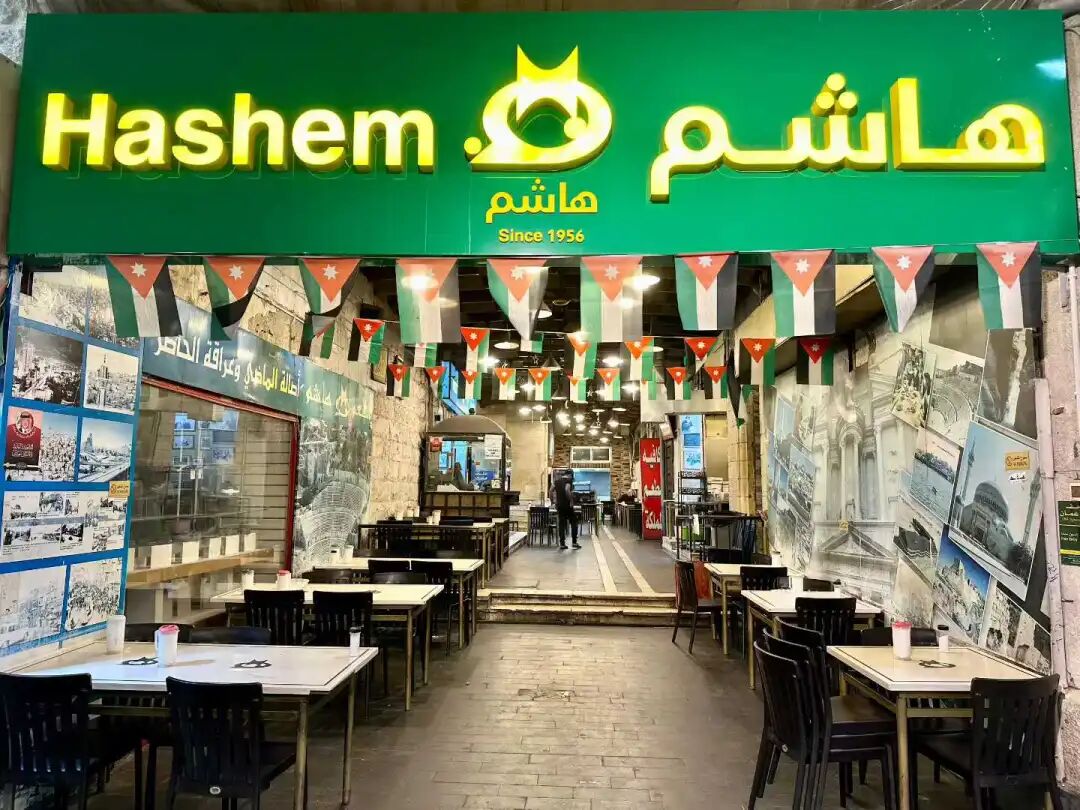
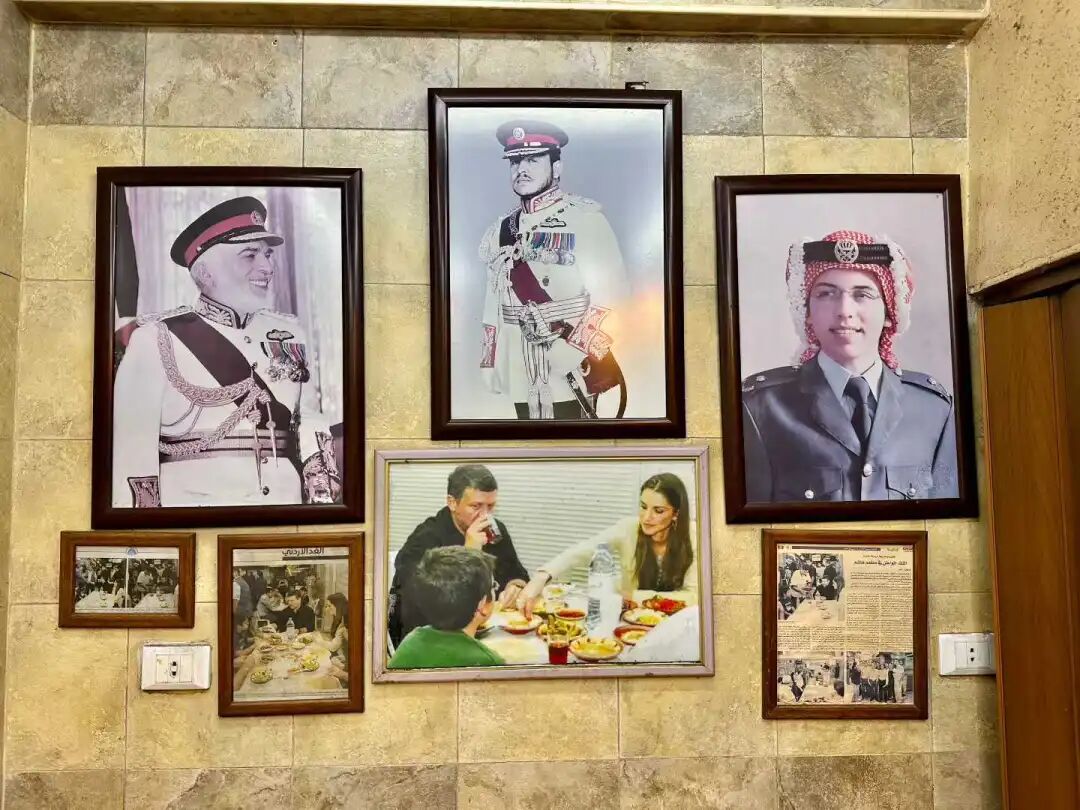
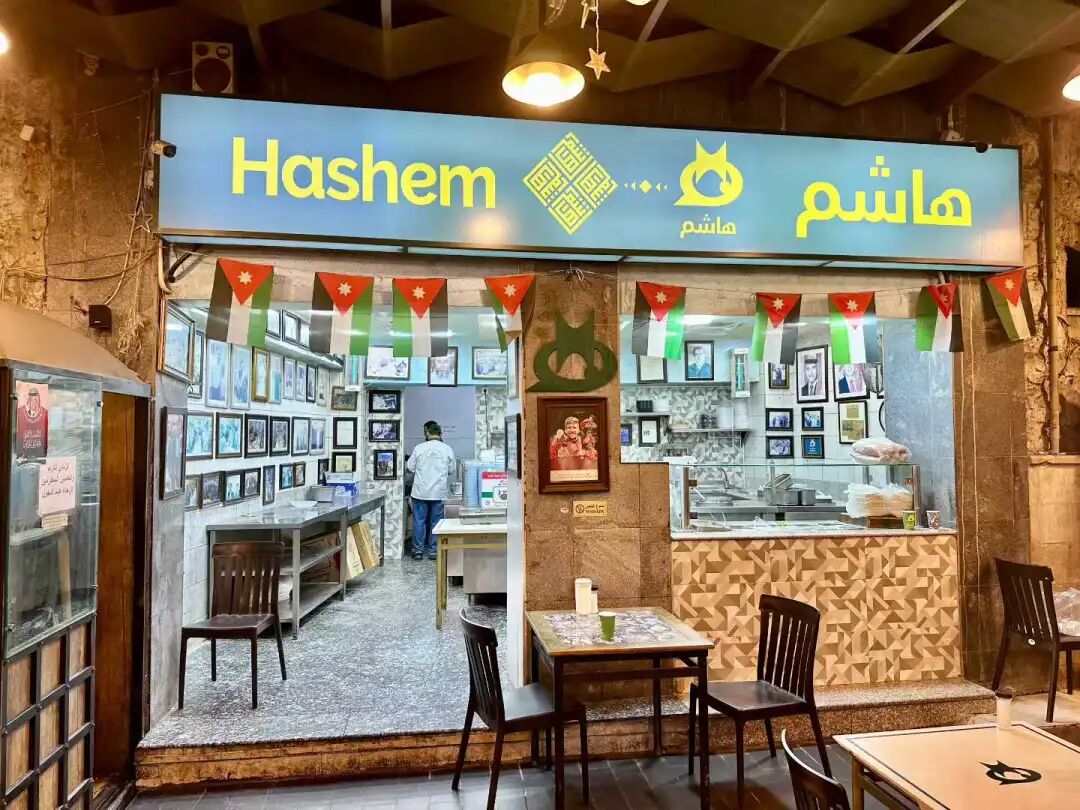
If you want to get close to the Hashemite family history in Amman, you can visit Hashem Restaurant on King Faisal Street. The restaurant is open 24 hours a day, making it a great place for breakfast if you are catching a bus to Damascus in the morning.
The owners of Hashem Restaurant are from Palestine, and they started their business in Jaffa in 1910. Jaffa was once a city with a Palestinian majority. When the United Nations created the partition plan for Palestine and Israel in 1947, it even designated Jaffa as a Palestinian enclave outside the Jewish residential areas in the north. In 1948, Zionist forces attacked Jaffa, causing many Palestinian civilian casualties and forcing most Palestinians to flee the city. The owners of Hashem Restaurant fled Palestine and finally reopened their restaurant in Amman in 1956. It has been open for 70 years now.
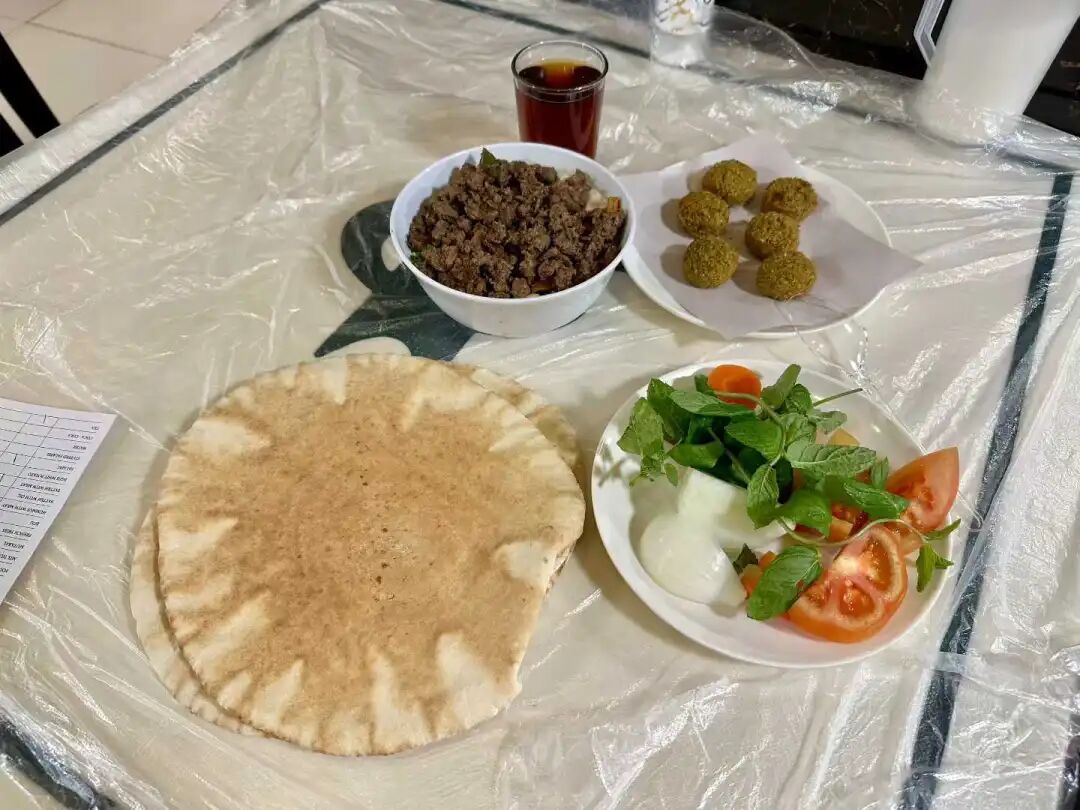
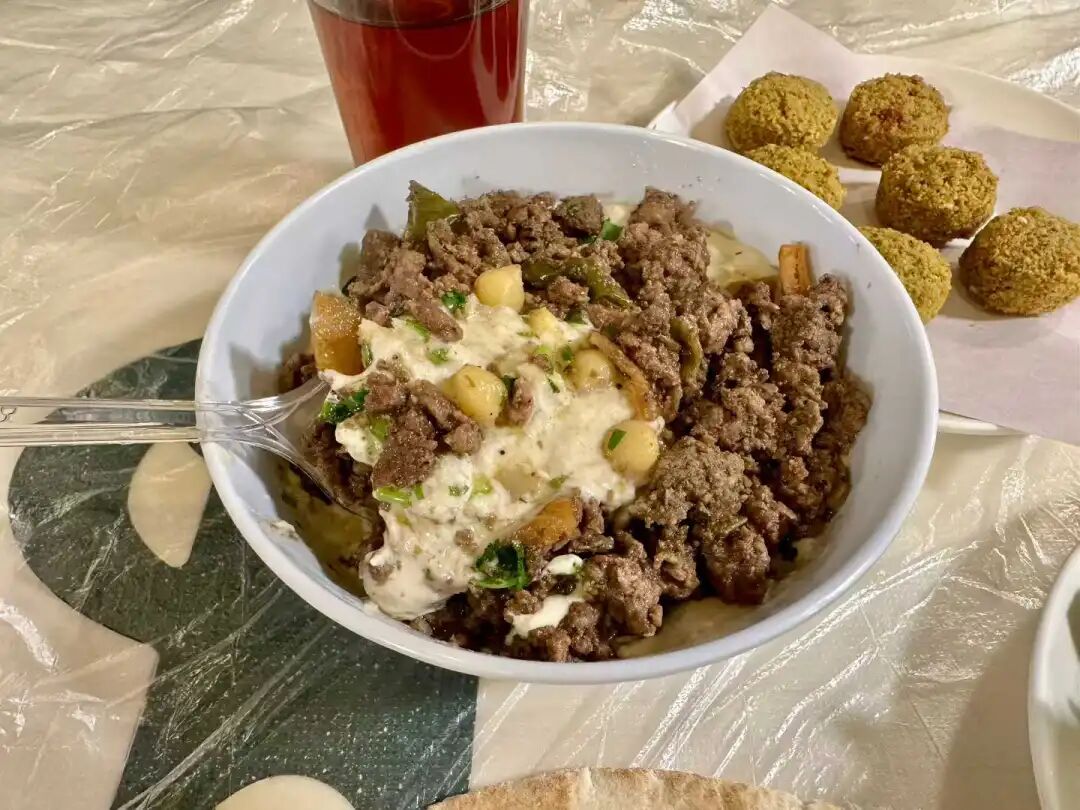
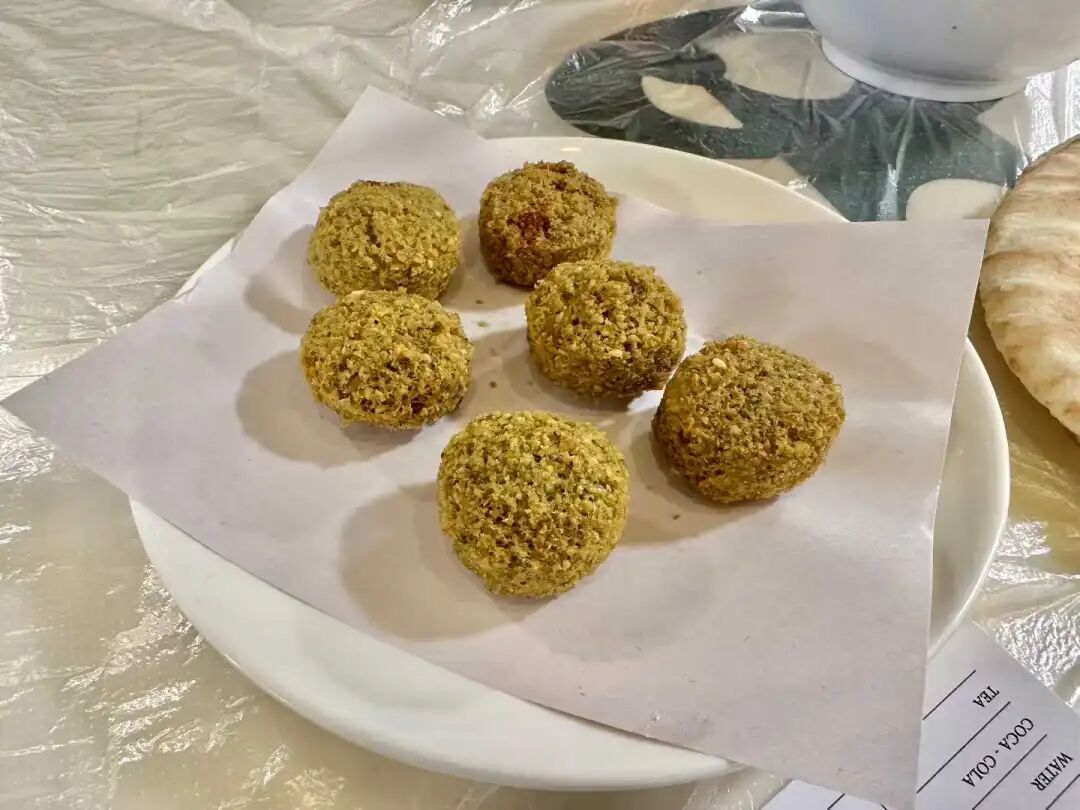
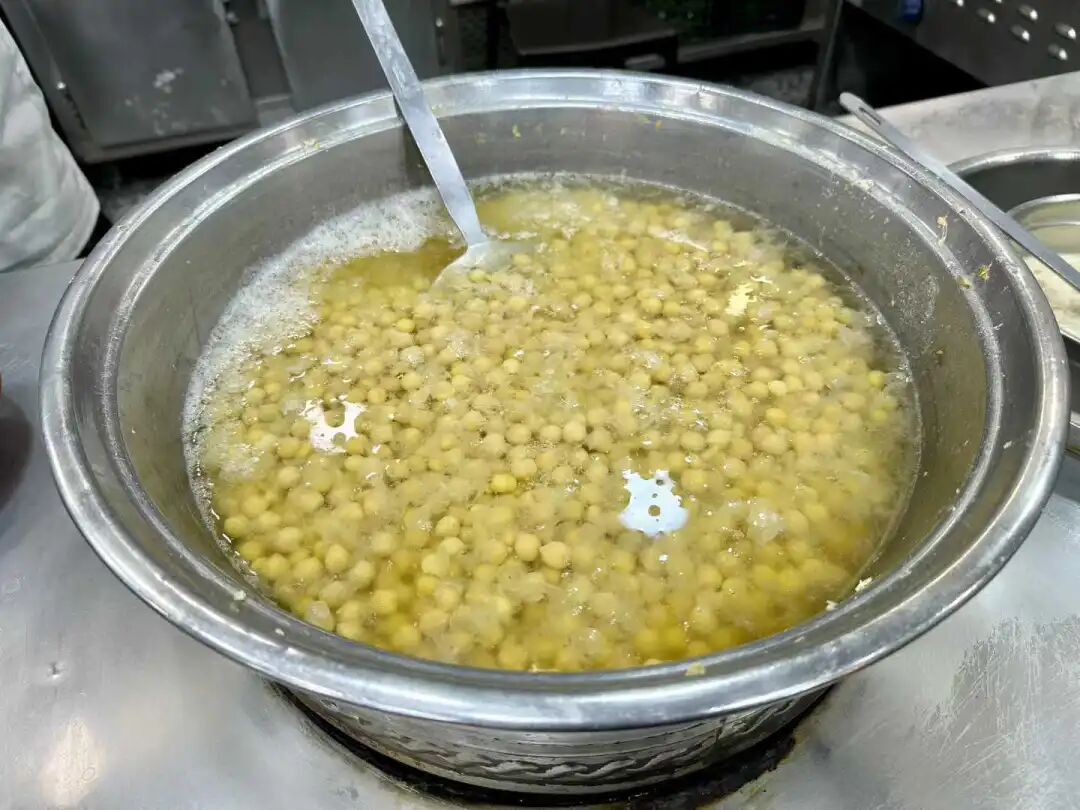
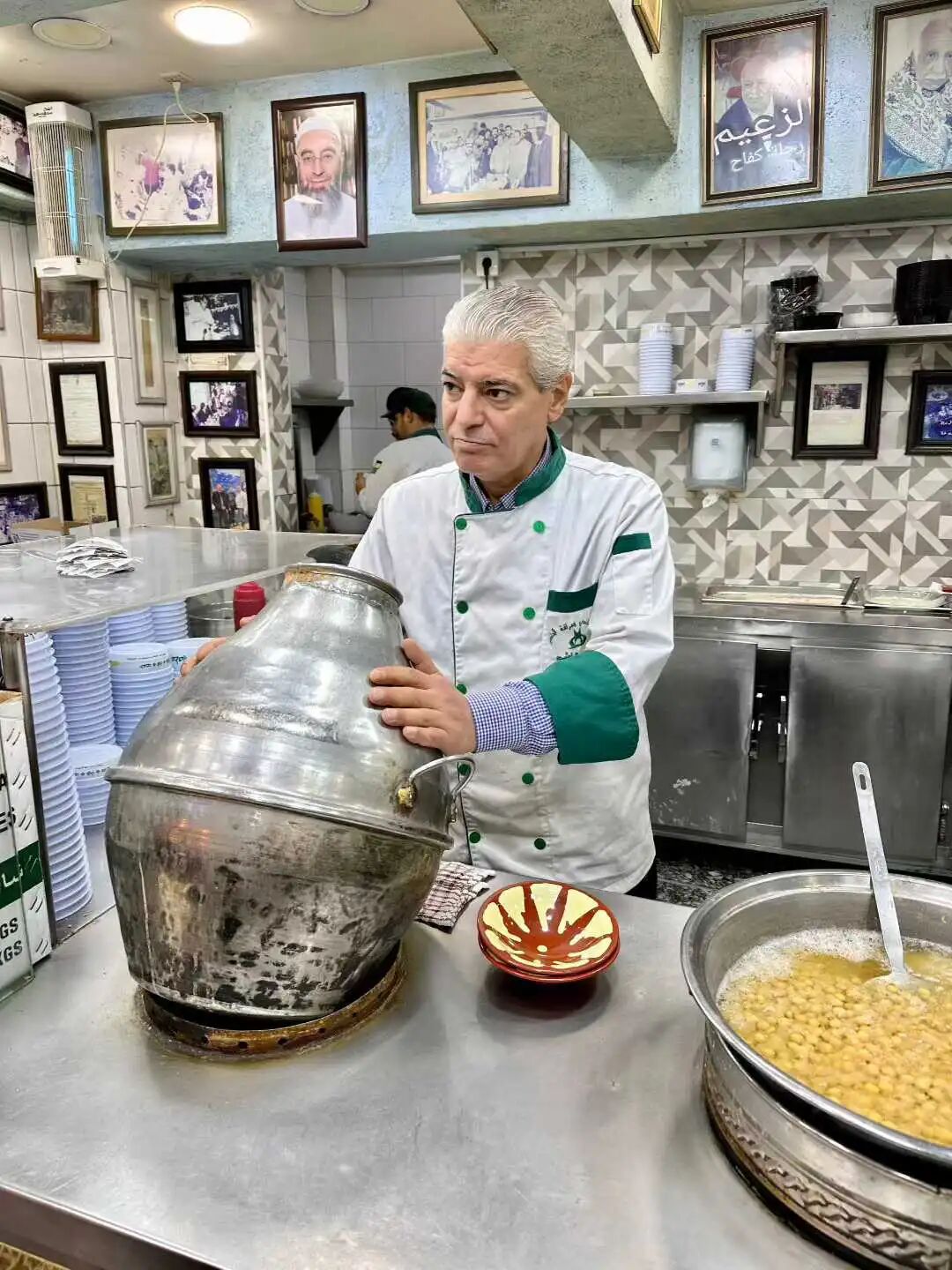
They specialize in classic Levantine hummus (hummus) and fava bean dip (foul). After you order, they serve pita bread (pita) and a vegetable platter. I ordered minced meat fatteh (fatteh) and fried chickpea balls (falafel). Fatteh means 'crushed' in Arabic. It is a snack from the southern Levant, found in Damascus, Beirut, Jordan, and Palestine, but not in the northern Levant. The main ingredient of fatteh is pieces of flatbread (khubz), topped with yogurt, steamed chickpeas, olive oil, and other ingredients, then sprinkled with cumin.
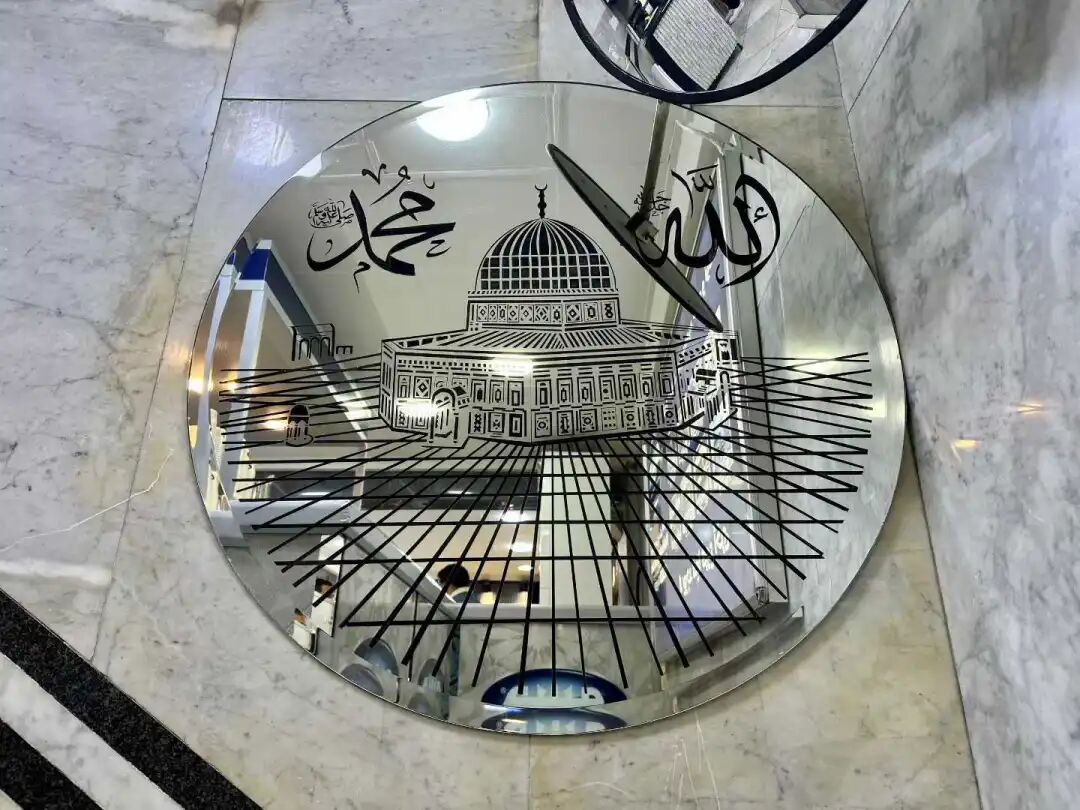
Although Circassians and Bedouins were the first to settle in the Amman valley, the main population of Amman today consists of Palestinians who have moved there over the last century. On King Hussein Street, there is a restaurant called Al Quds that opened in 1969. It is run by Palestinians from Jerusalem, and the shop is decorated with many photos of the Dome of the Rock and the Al-Aqsa Mosque.
Arabs have called Jerusalem 'Al Quds' since the 9th century, which is a literal translation of the Hebrew 'Ir HaKodesh' (Holy City). Before 1967, travel between Jerusalem and Amman was very easy. After Israel occupied Jerusalem and the West Bank in 1967, many Palestinians from Jerusalem fled to Jordan, and many settled in Amman.
Quds Restaurant specializes in the traditional Bedouin yogurt-stewed rice dish called Mansaf. It is Jordan's national dish and was added to the UNESCO Intangible Cultural Heritage list in 2022. Originally, Mansaf was just meat and clarified butter served with bread. Rice became common in northern Jordan in the 1920s, leading to the stewed rice version. Later, they added dried yogurt balls (Jameed) from settled Bedouin herders to create the yogurt-stewed rice we see today. When Bedouin tribes settle disputes, the leaders visit each other. The host serves a large platter of Mansaf as a symbol of reconciliation.
To make Amman-style Mansaf, lamb or camel meat is slow-cooked for hours in boiling yogurt soup. The rice is soaked in clarified butter (Samneh) and topped with nuts. The traditional yogurt soup uses dried yogurt balls (Jameed). To make them, sheep's milk is boiled, dried, and fermented. It is placed in fine cheesecloth and salted daily until it thickens into a round ball.
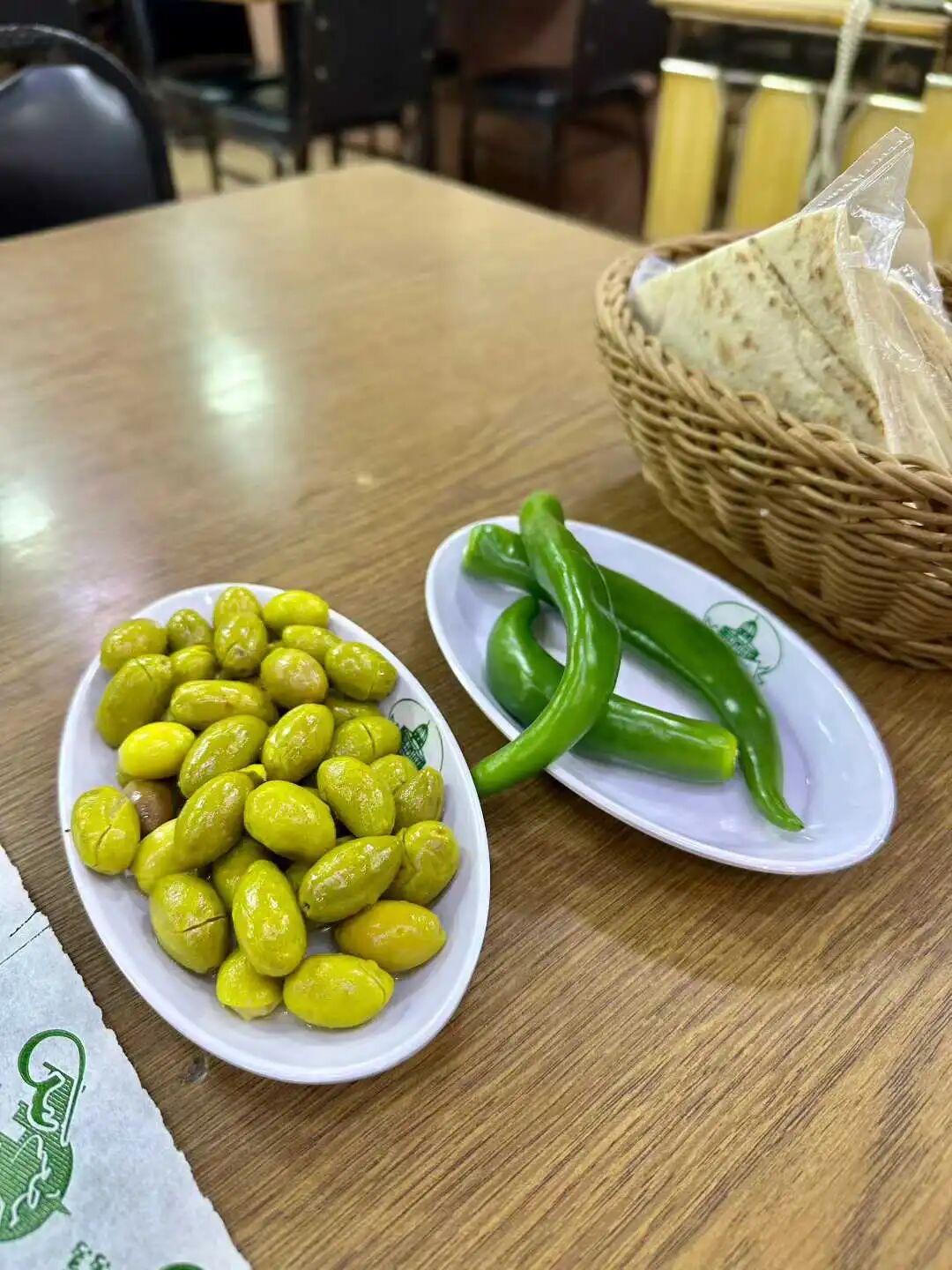
A century ago, Mansaf was served with thin flatbread (Khobz al-Shrak), a nearly translucent unleavened bread baked on a large iron griddle. Today, Mansaf is still served with thin flatbread, along with pickled olives and green chili peppers. It also comes with a bowl of yogurt soup that has a very rich, tangy, and meaty flavor, much like a traditional herder's meal.
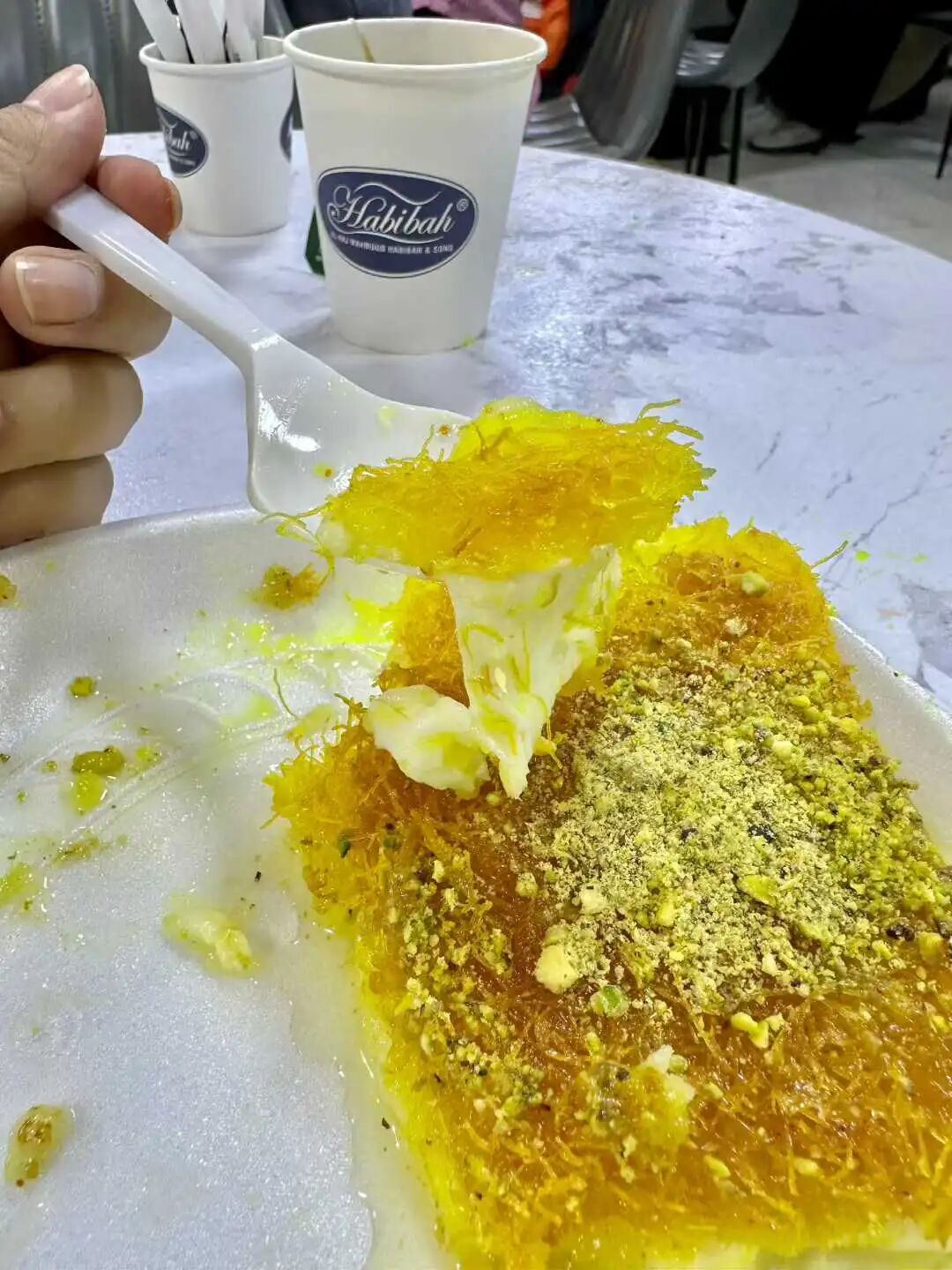
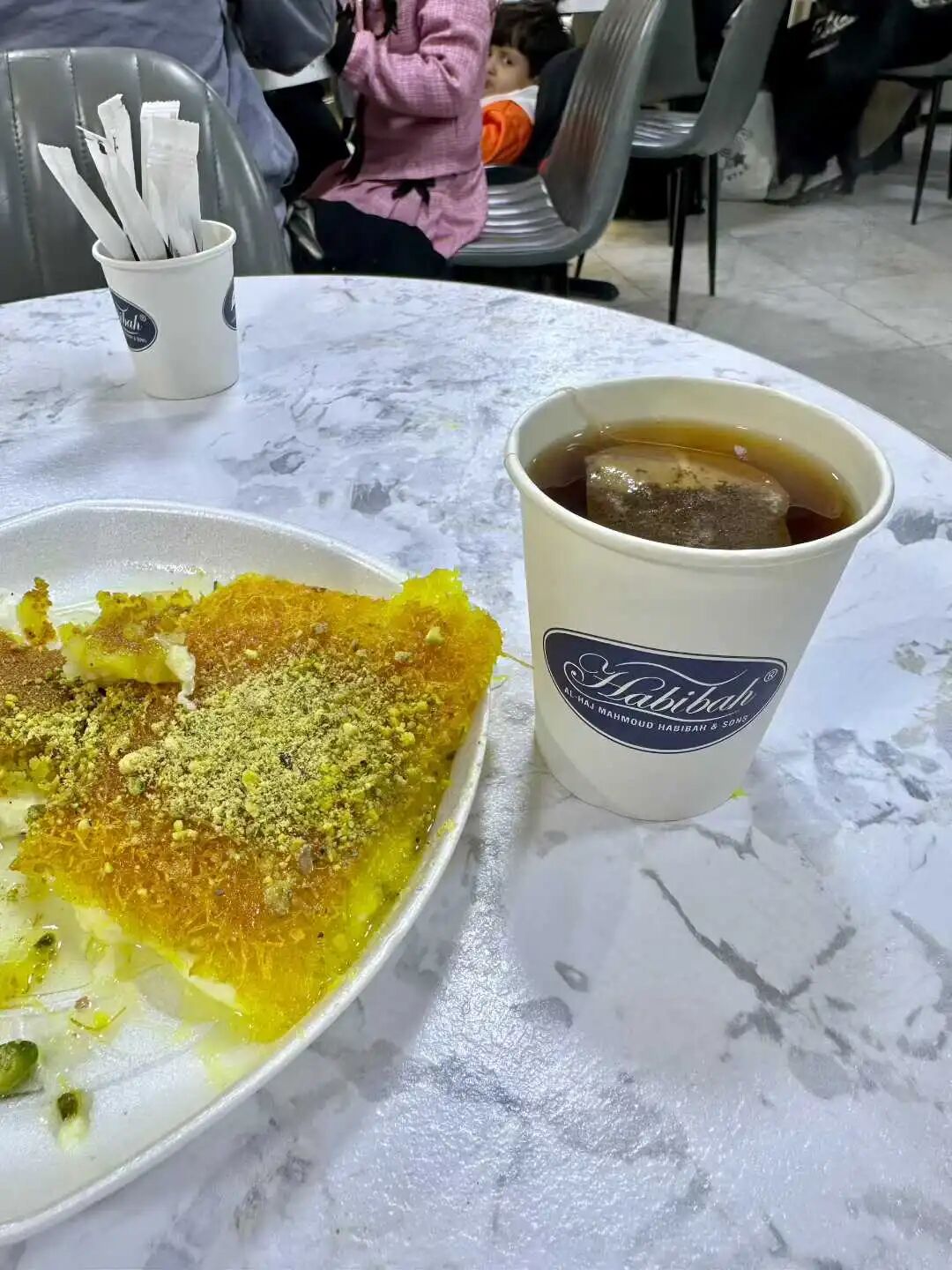
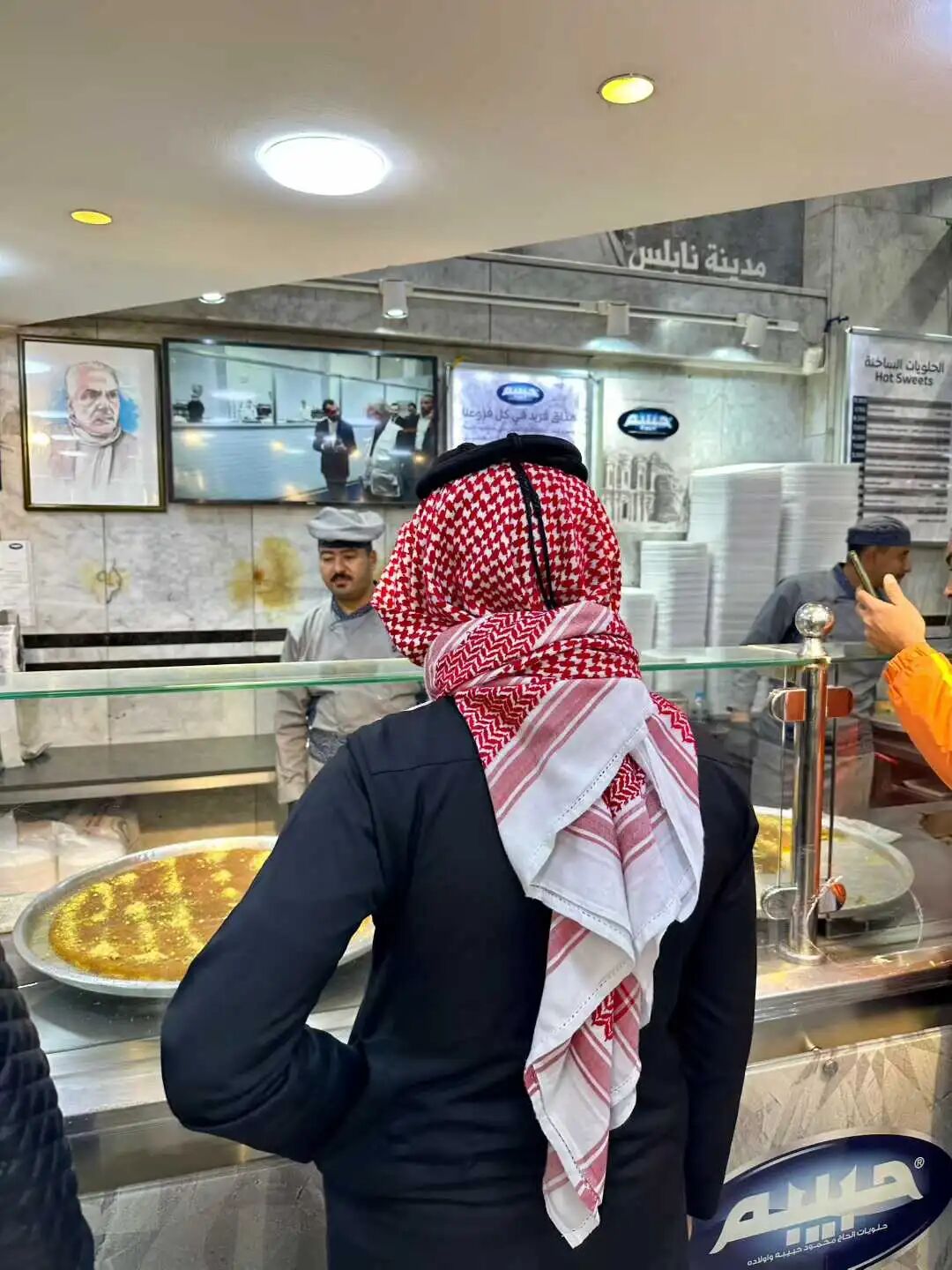
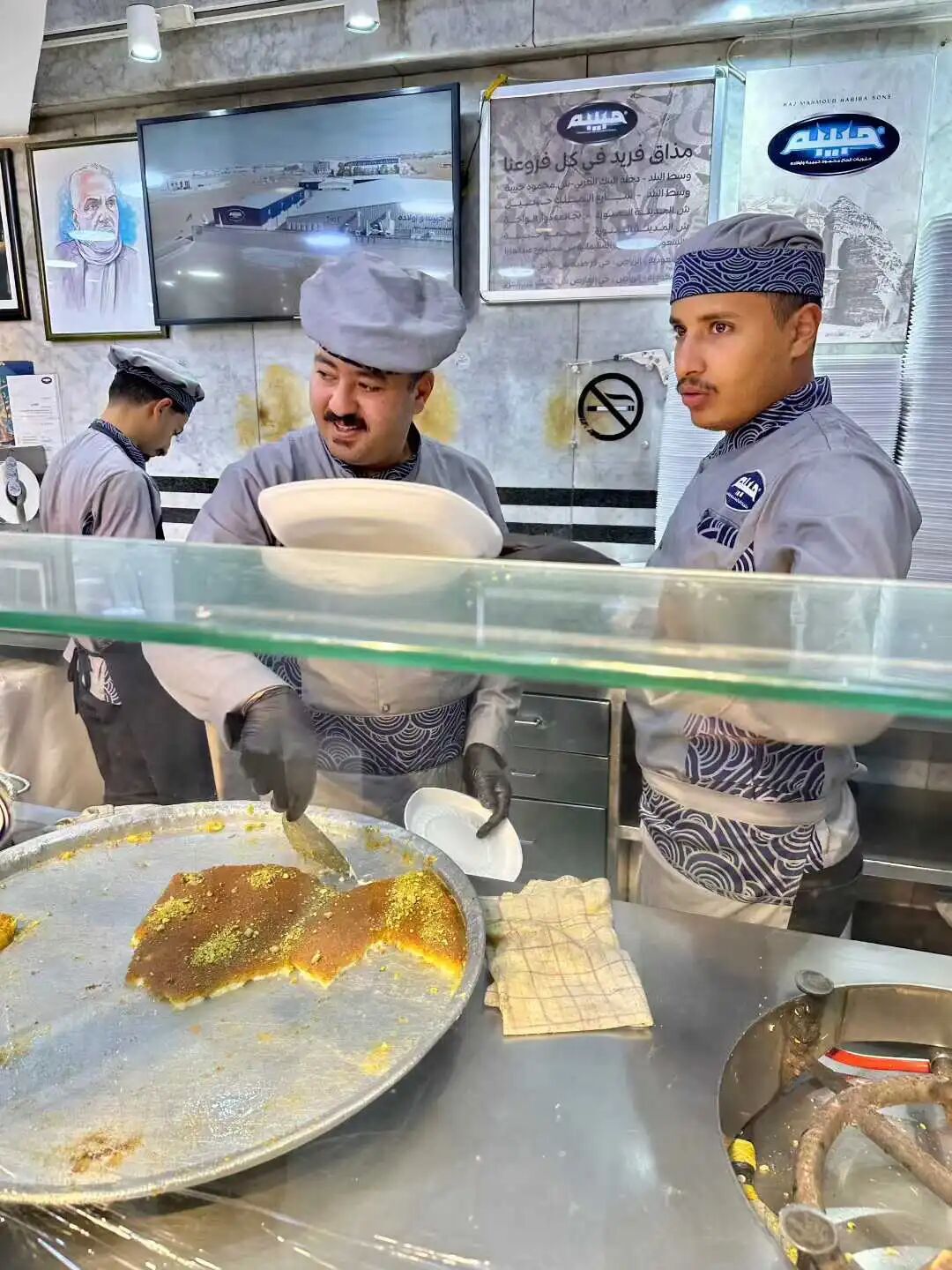
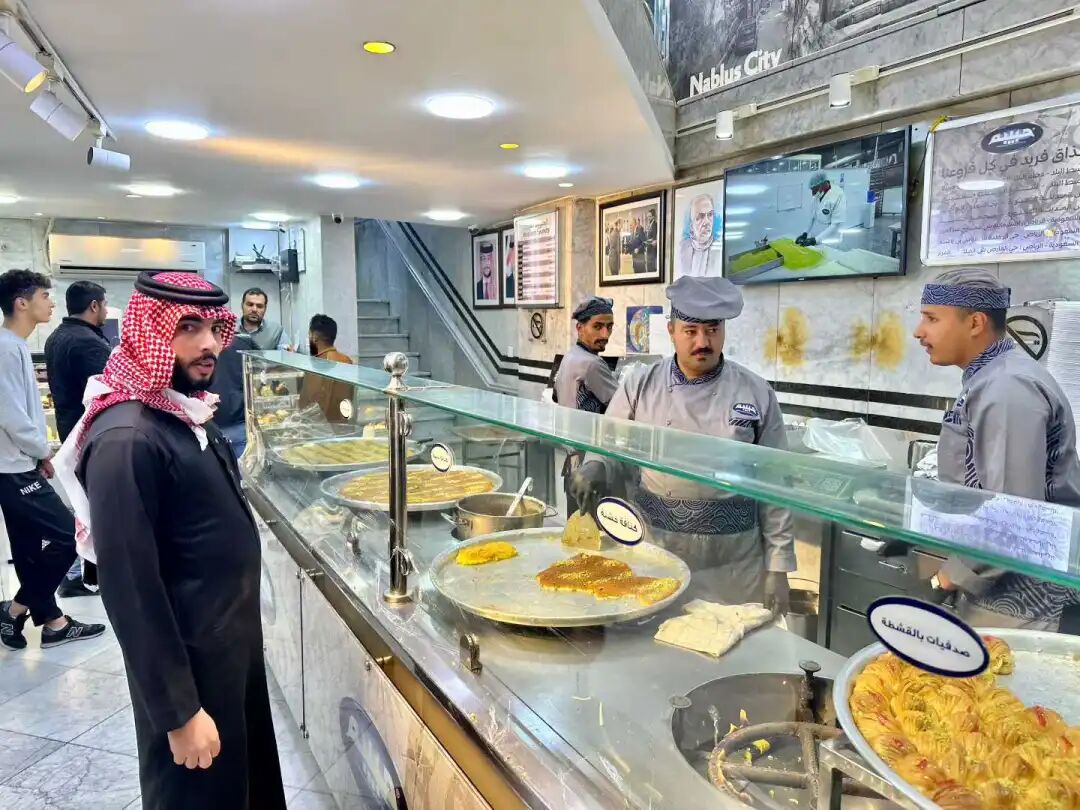
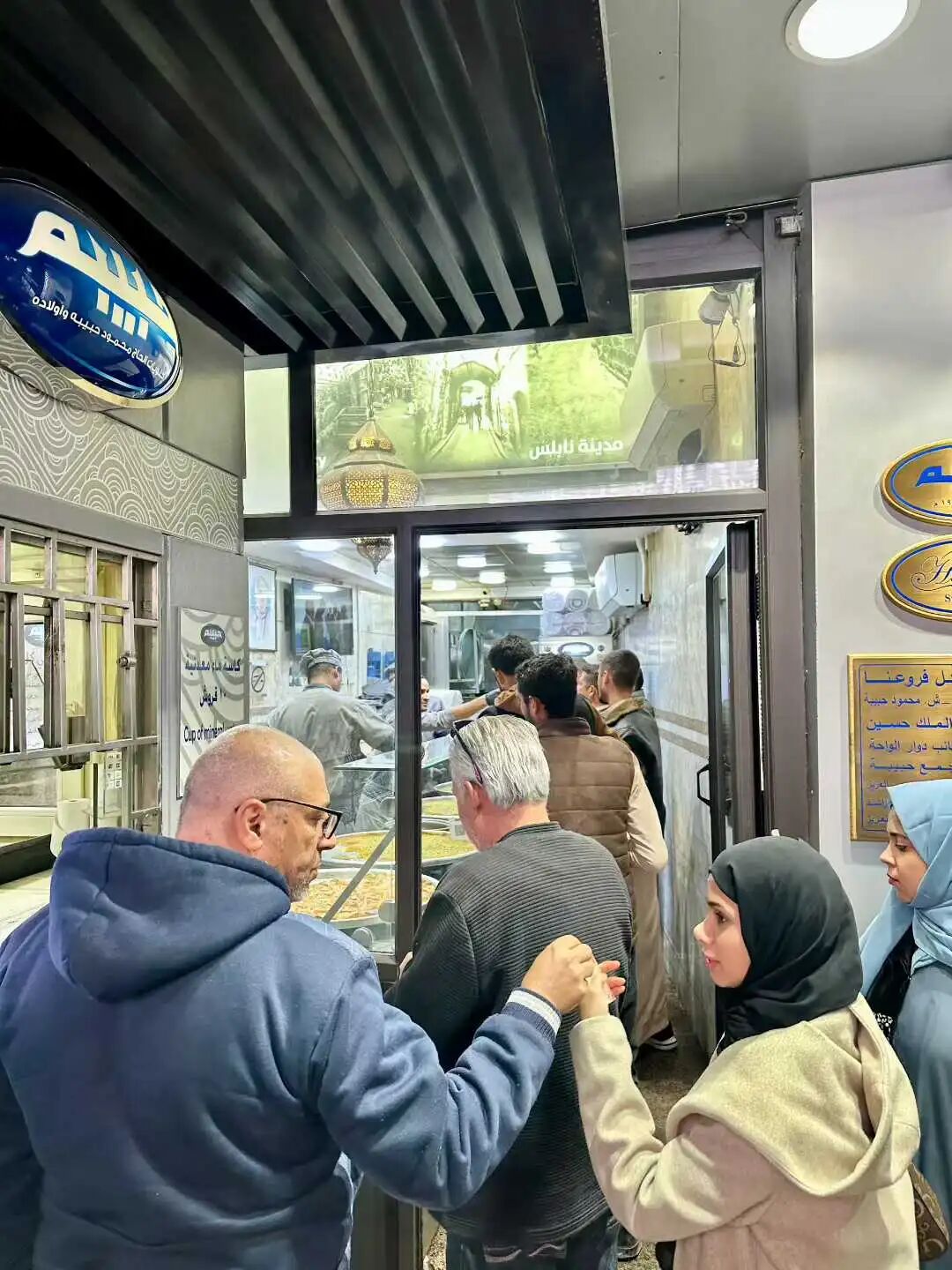
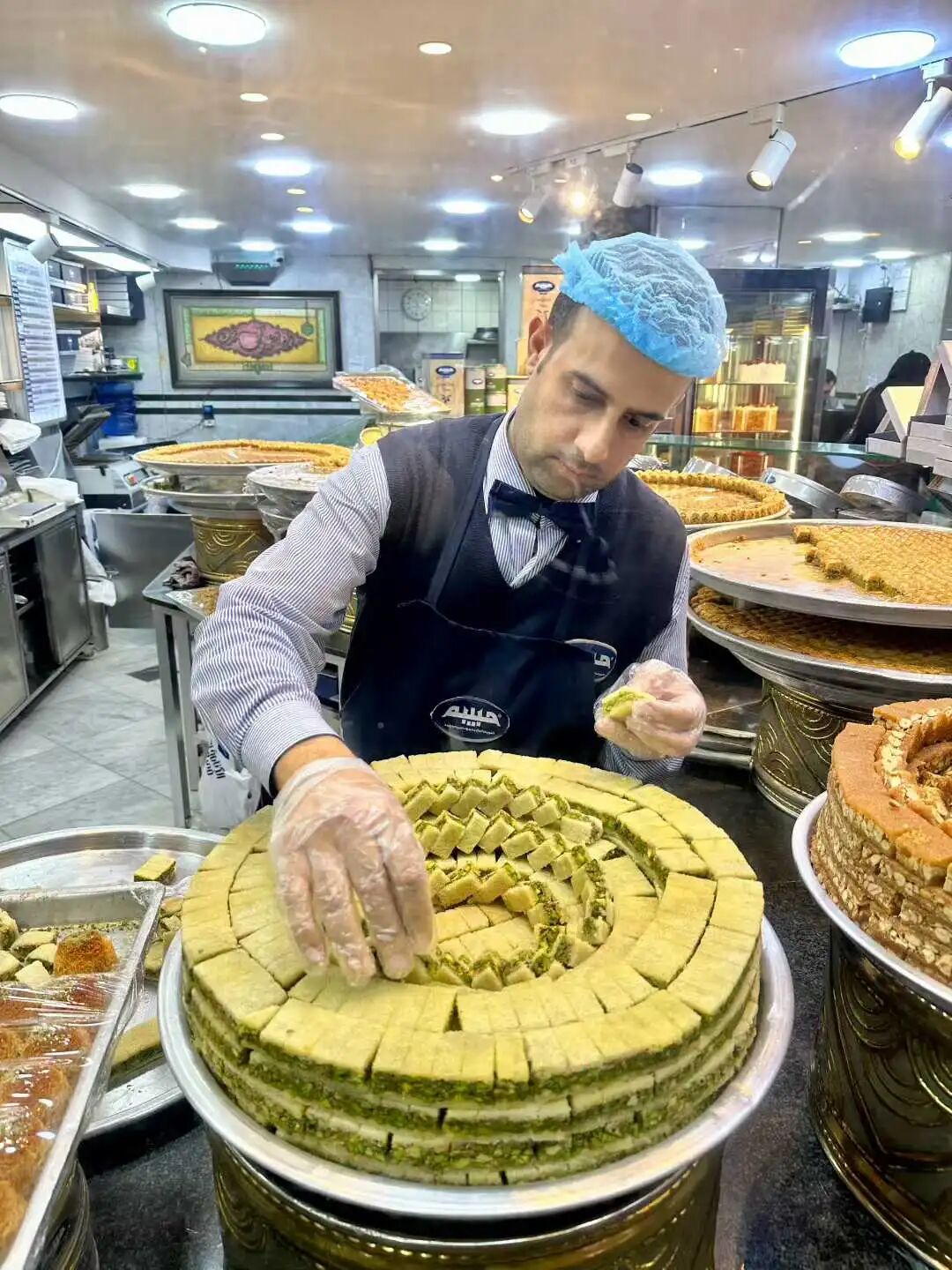
Right next to Quds Restaurant is Habibah Sweets, which opened in 1951 and is still run by Palestinians. Habibah's founder, Hajj Mahmoud Habibah, was from Nablus, Palestine. He opened his first dessert shop in Jerusalem in 1947, but the first Middle East war broke out shortly after. Zionist forces attacked and expelled Palestinian civilians, carrying out dozens of massacres. The war displaced over 700,000 Palestinians, and Habibah was forced to move to Amman. Habibah reopened his dessert shop in Amman in 1951, and it has been running for 75 years now. Today, Habibah has five branches in Amman and three in Riyadh, Saudi Arabia, making it Jordan's most famous dessert shop.
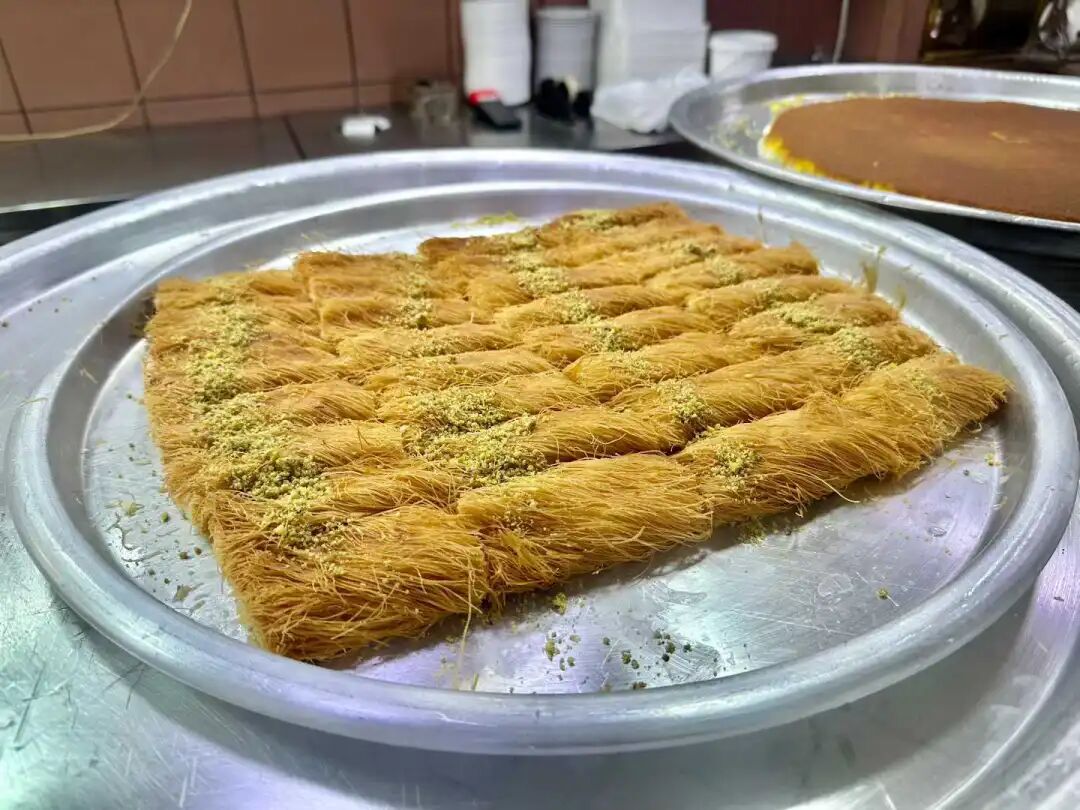
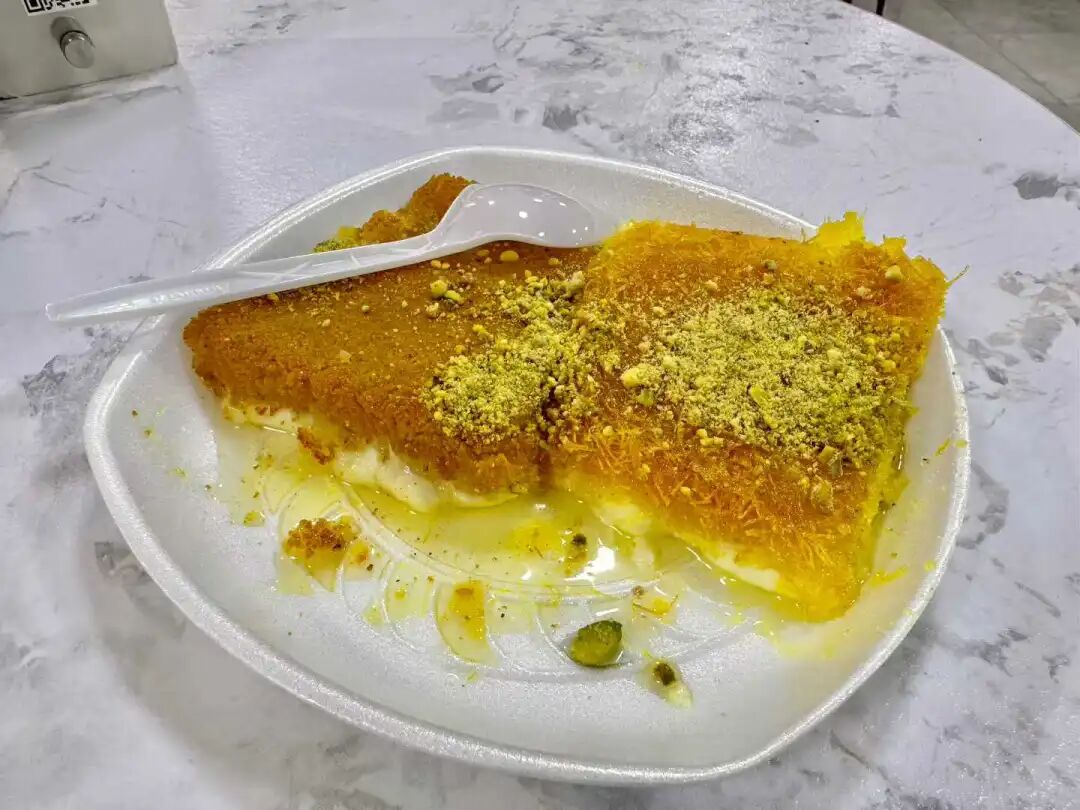
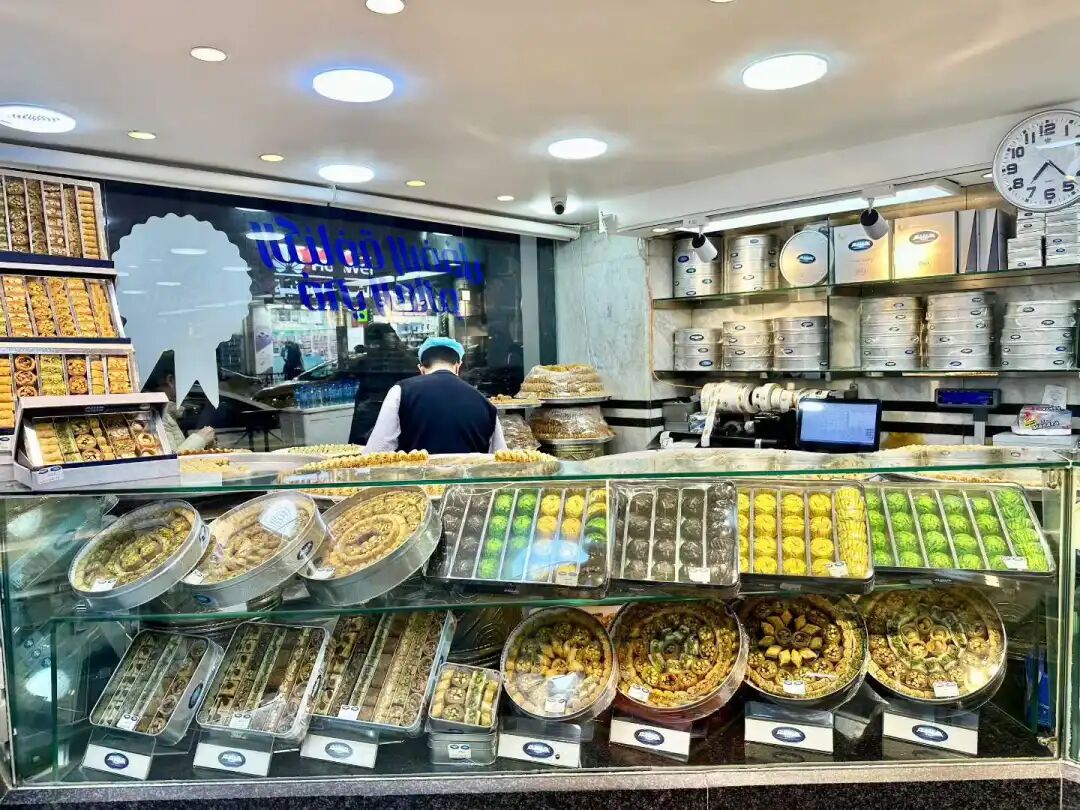
Their most classic dessert is Kunafa. Legend says a doctor in the Umayyad or Fatimid Caliphate court invented Kunafa to satisfy the Caliph's hunger during Ramadan. Kunafa later became a classic Arab dessert for breaking the fast and even appeared in One Thousand and One Nights. Kunafa is made of buttery pastry, stretchy cheese, and crushed pistachios. You pour a syrup called Attar over it before eating. Although it has a thousand-year history, the current fried, stretchy style formed during the Ottoman period in the mid-15th century and spread across the Ottoman-ruled Middle East.
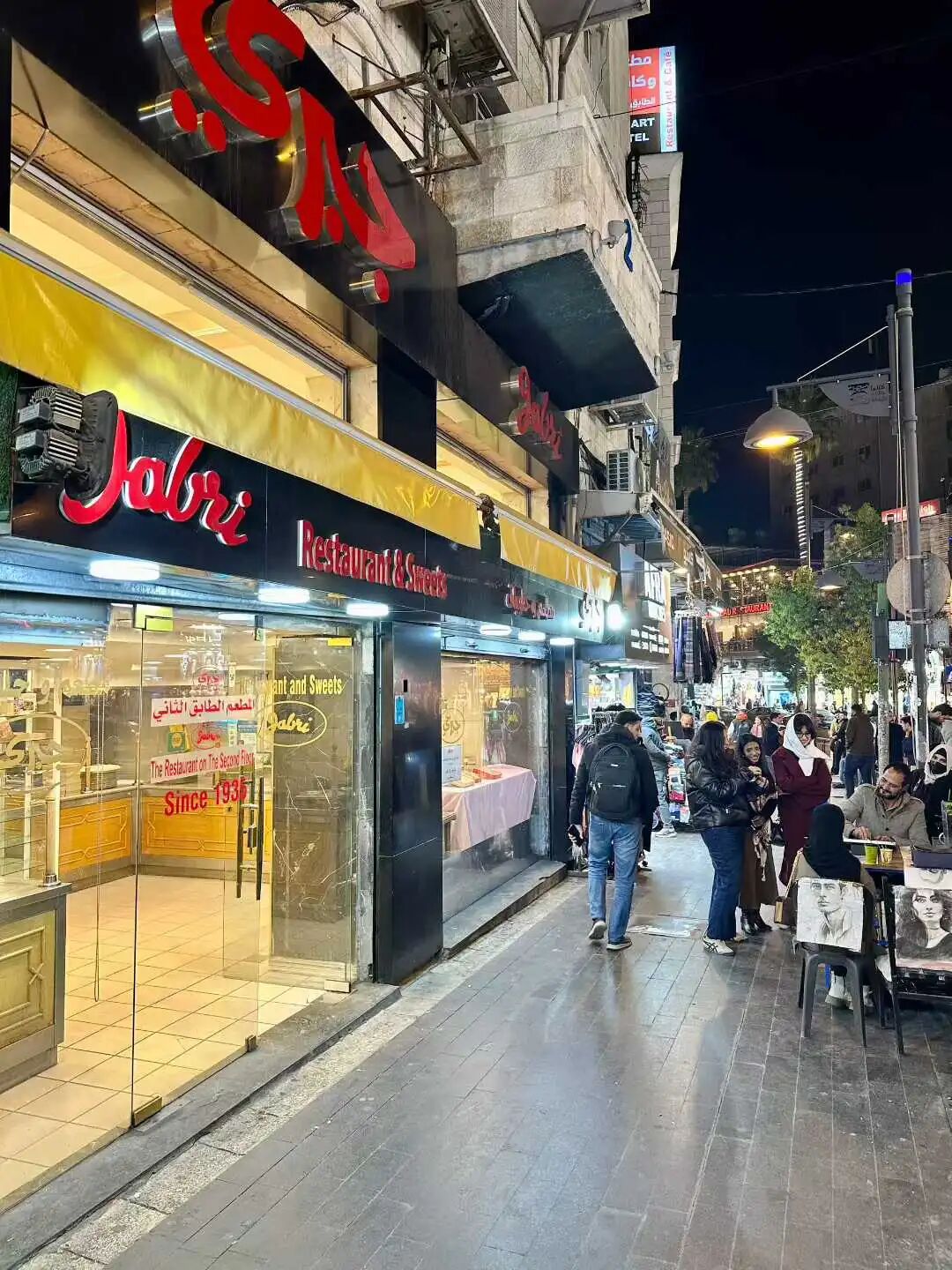
Old Amman has many long-standing restaurants, which shows that the city has developed steadily for over half a century. Right on King Hussein Street, next to Habibah Sweets, is Jabri Restaurant, which has desserts on the first floor and full meals on the second. Although the storefront is not very eye-catching, it opened in 1935 and has a 91-year history. I didn't have time to eat there this time, but it is worth sharing with you.
Founder Subhi Jabri opened his shop in Amman in 1935 and moved to the current King Hussein Street location in 1962. He provided catering services for King Hussein himself many times, and in 1990, the King awarded him the Order of Independence (Wisam al-Istiqlal).
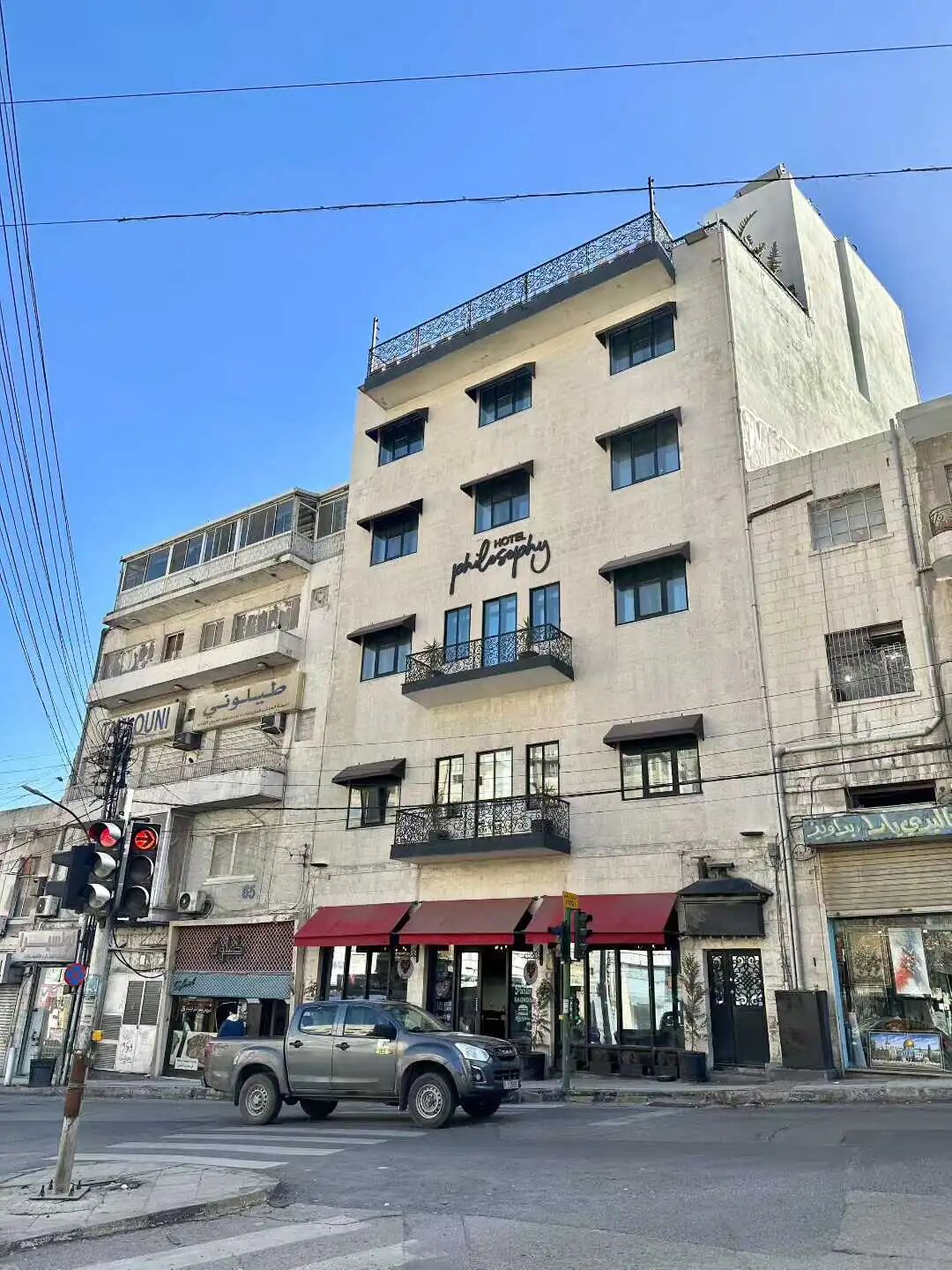
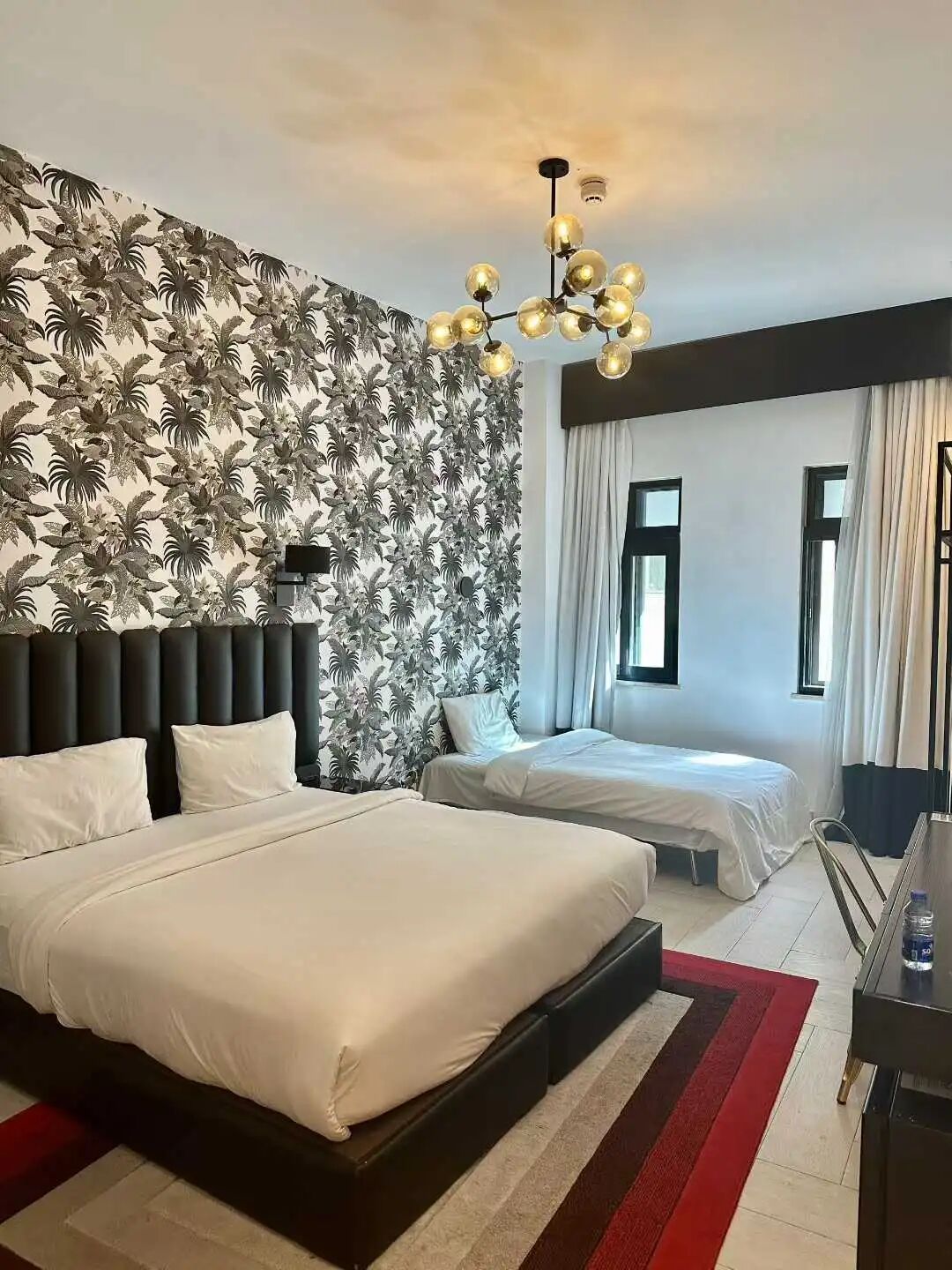
There are many hotels in the old city of Amman, but unfortunately, there are no high-quality heritage hotels. I originally booked a heritage homestay on Airbnb that looked great, but because I had to catch a bus to Damascus early the next morning, I switched to the more conveniently located Philosophy Hotel. The environment is decent, it is only a 5-minute walk from King Faisal Street, and it is convenient for having breakfast at Hashem Restaurant in the morning.
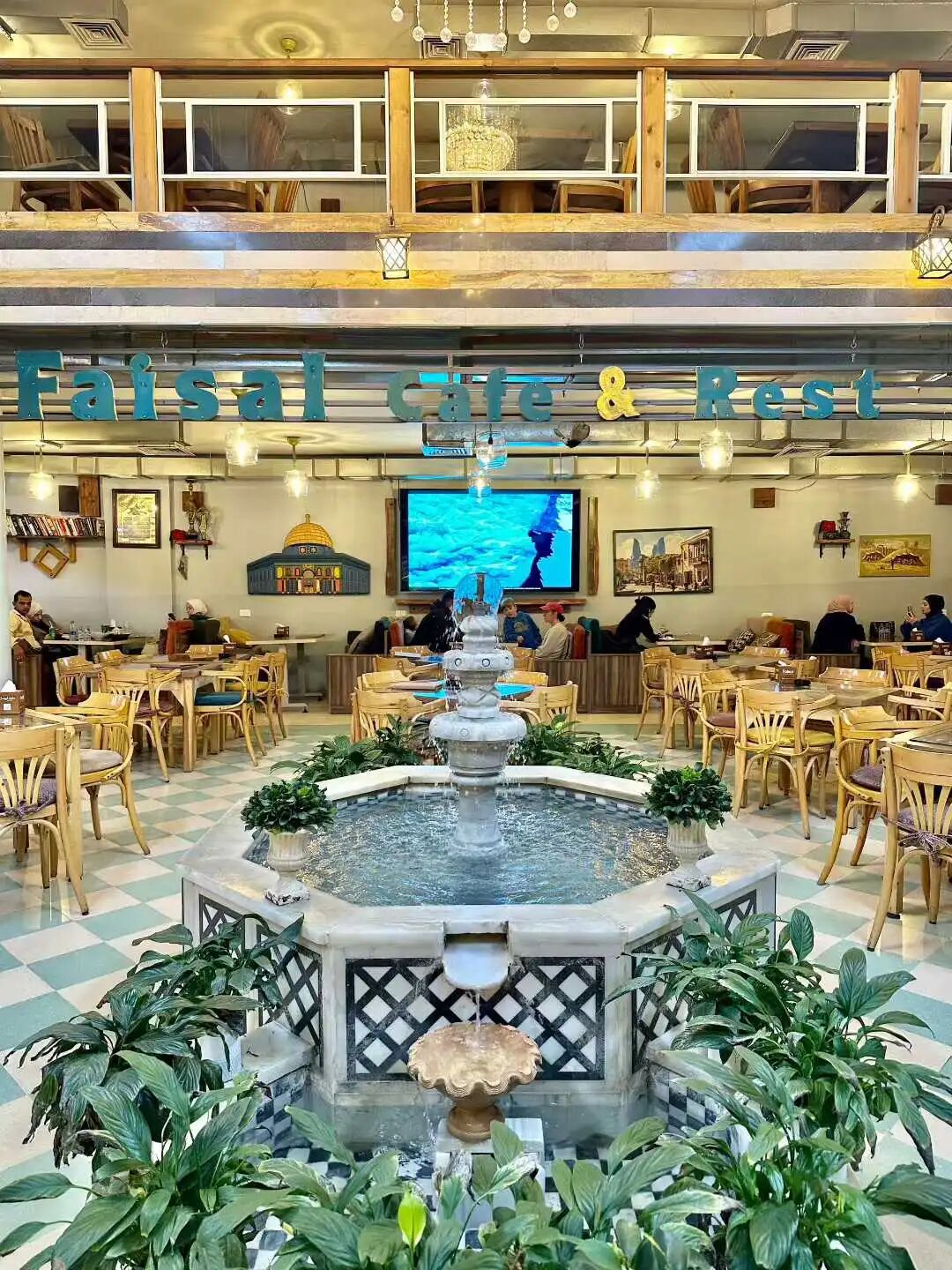
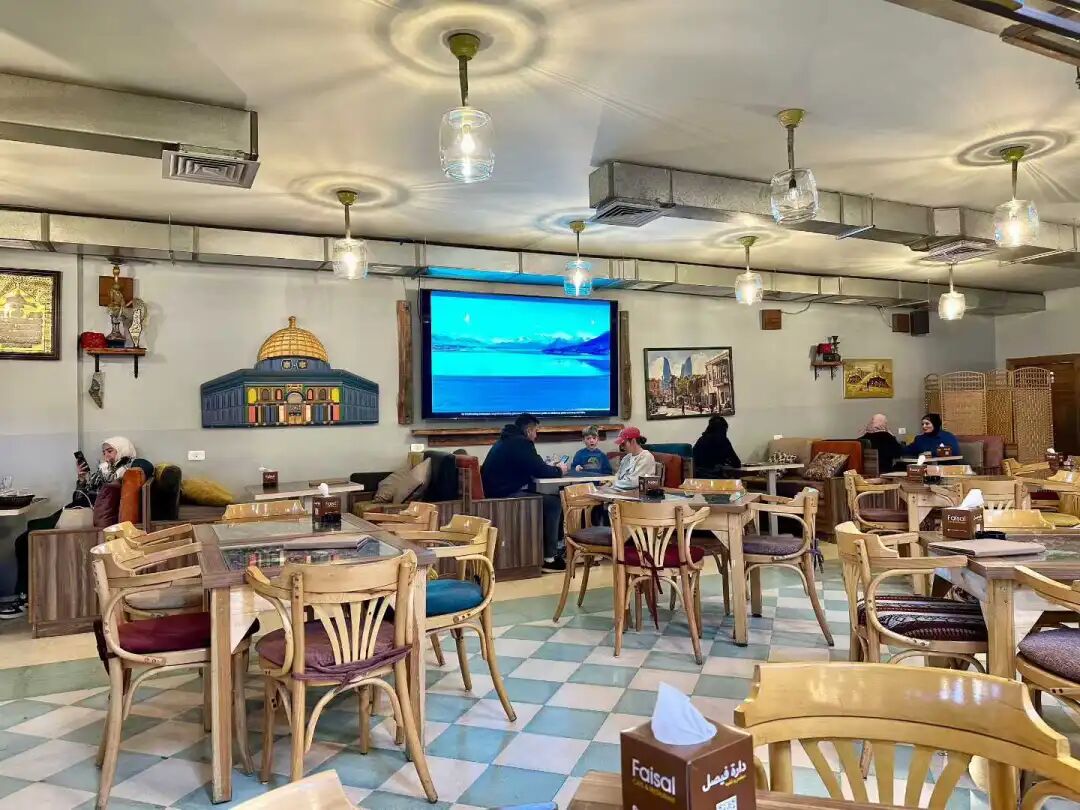
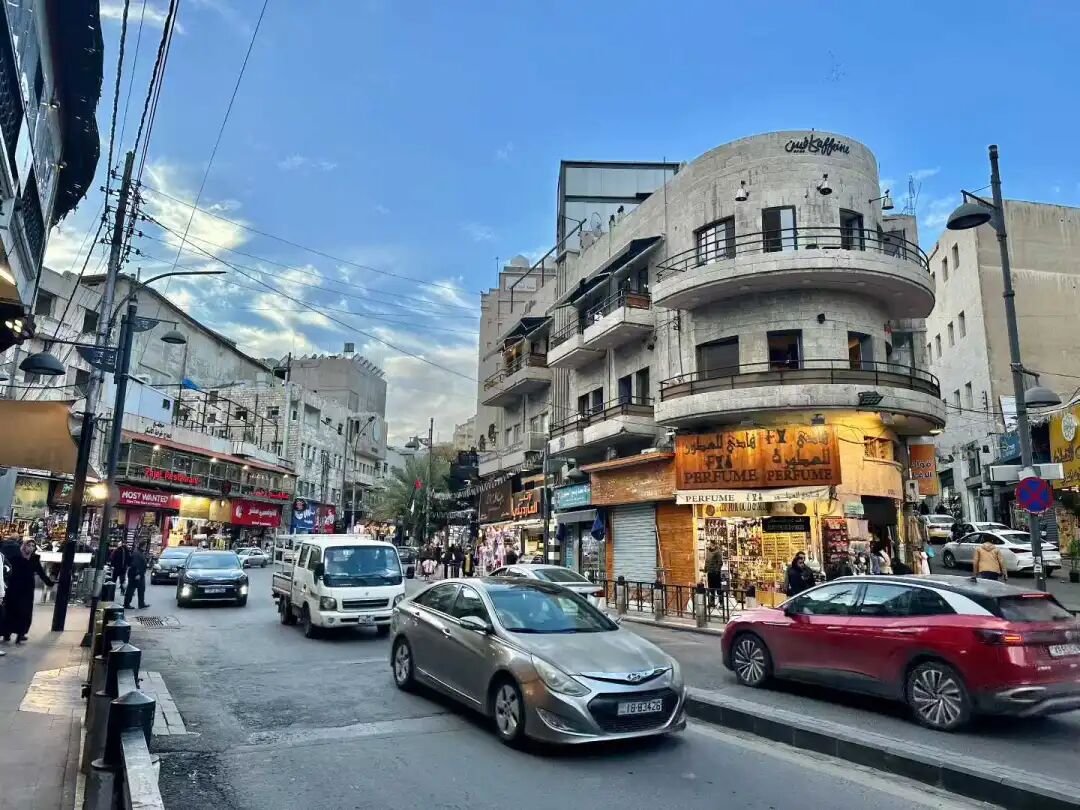
There is a small alley at the intersection of King Hussein Street and King Faisal Street in the old city of Amman. It is called "Coffee Shop Street" because of the many cafes there, and it is a place where young people in Amman love to hang out at night. I had dinner at Faisal Café & Restaurant on Coffee Shop Street. The atmosphere there is very nice, with a marble fountain in the middle and many decorations related to Jerusalem all around.
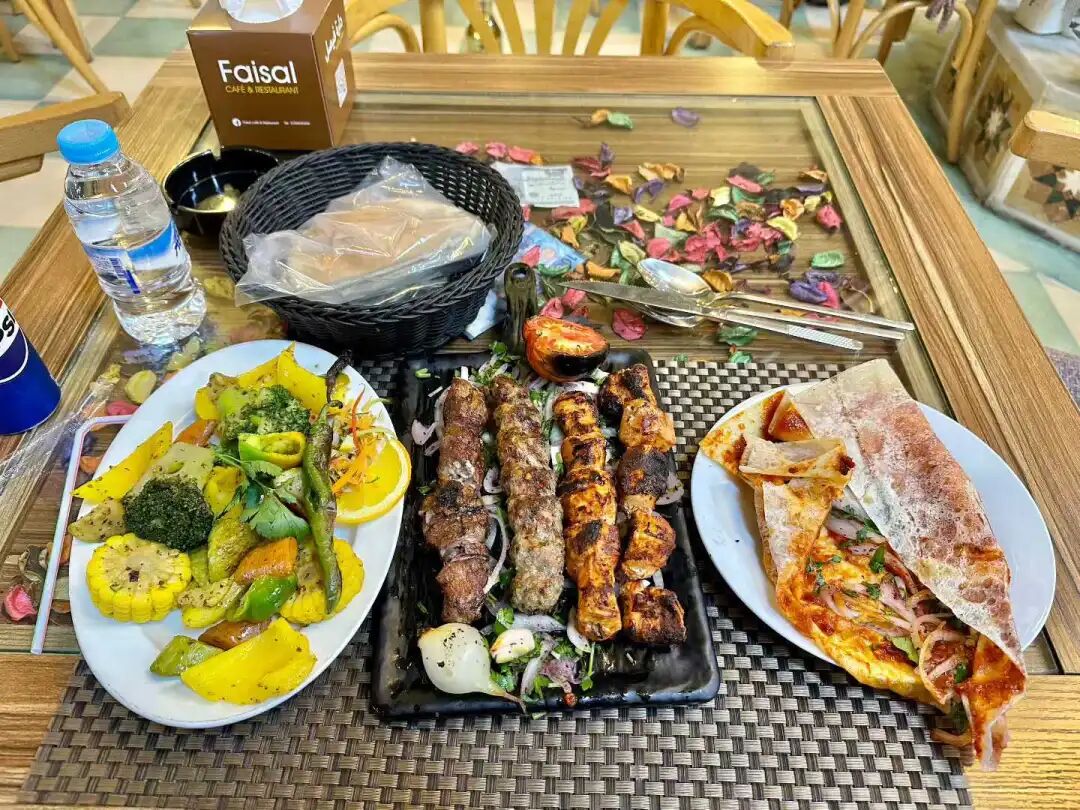
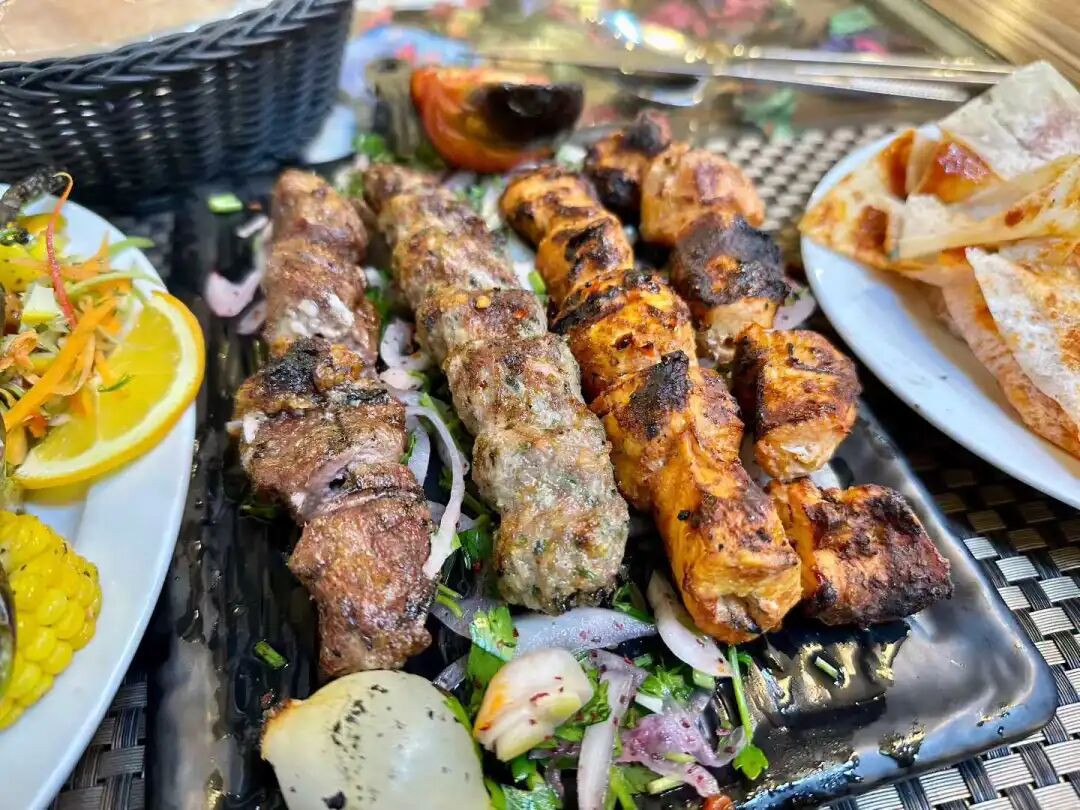
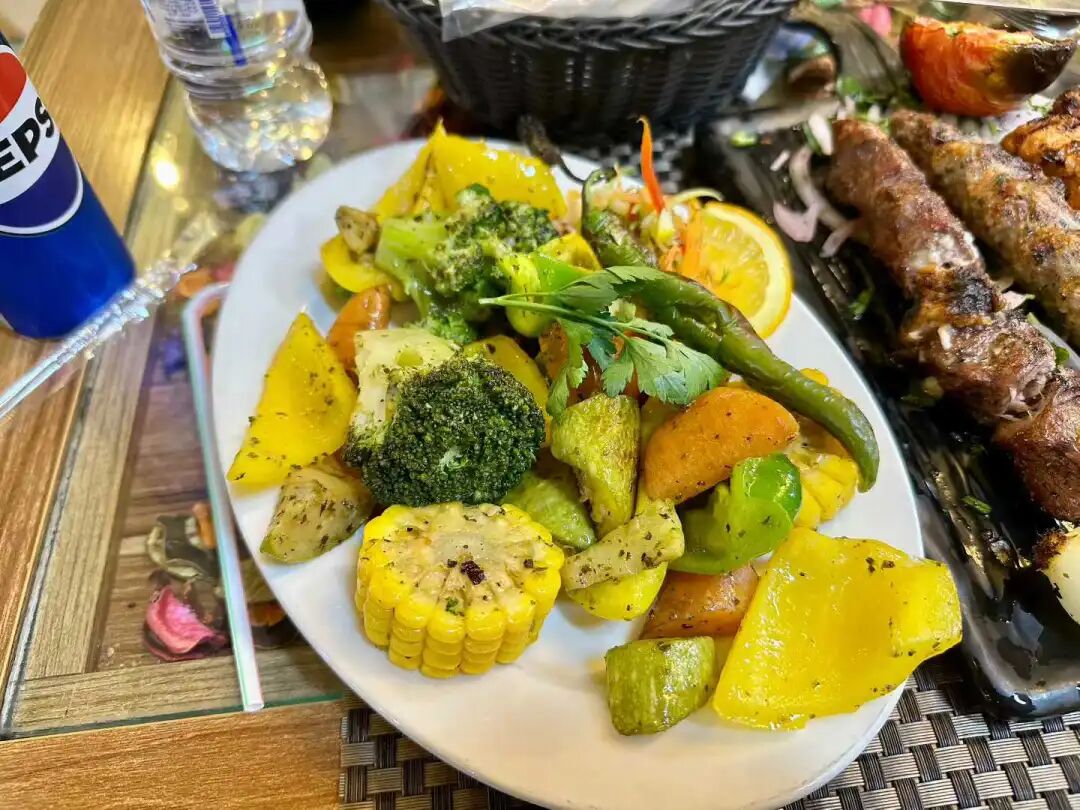
I ordered a mixed grill platter and stir-fried vegetables; it is quite rare to find stir-fried dishes in the Middle East. However, stir-fried dishes in the Middle East are relatively light, mainly highlighting the natural flavor of the vegetables. The grilled meat includes lamb, chicken, and a mix of beef and lamb, which is the classic Levantine style, and I never get tired of it.
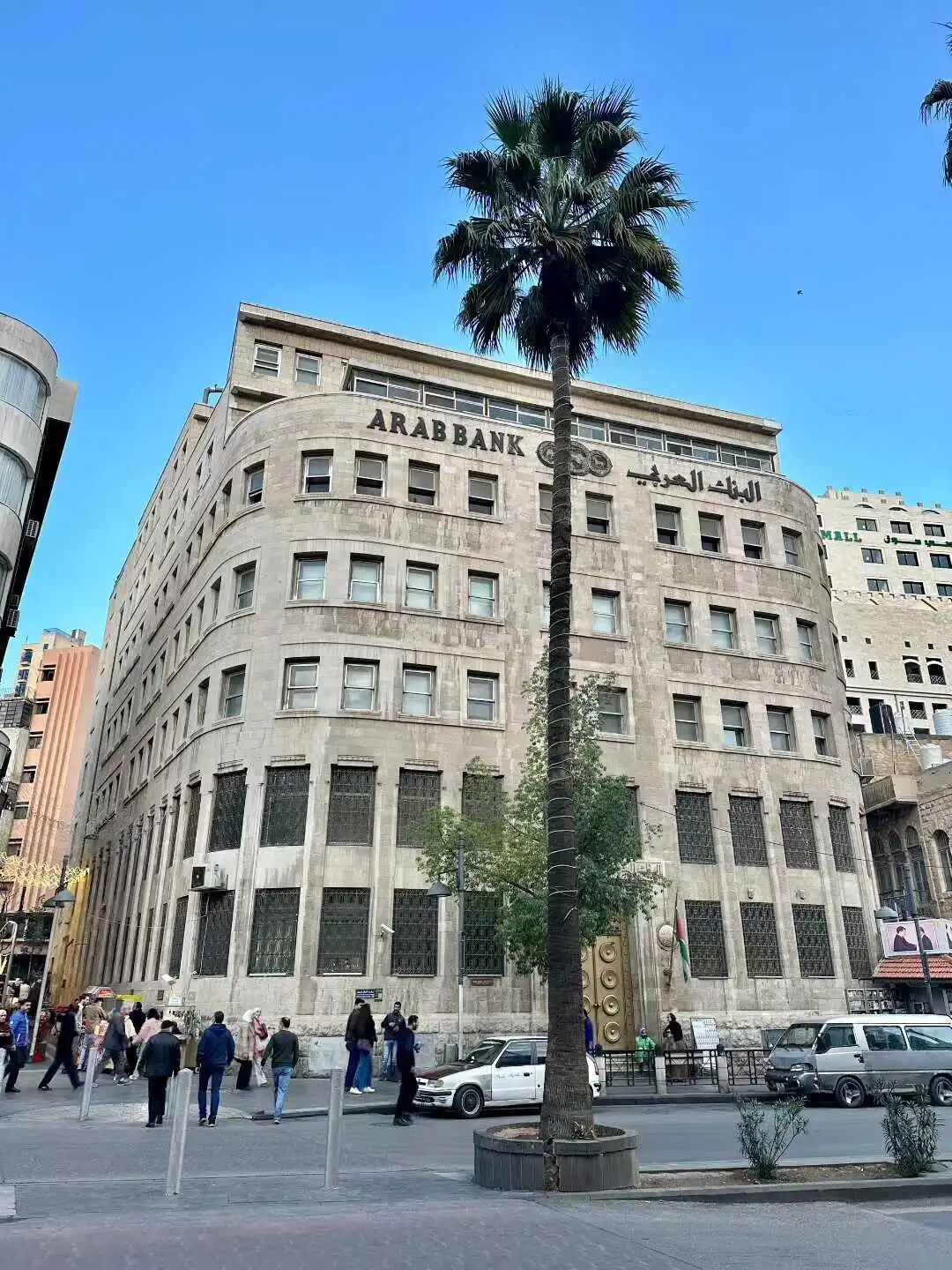
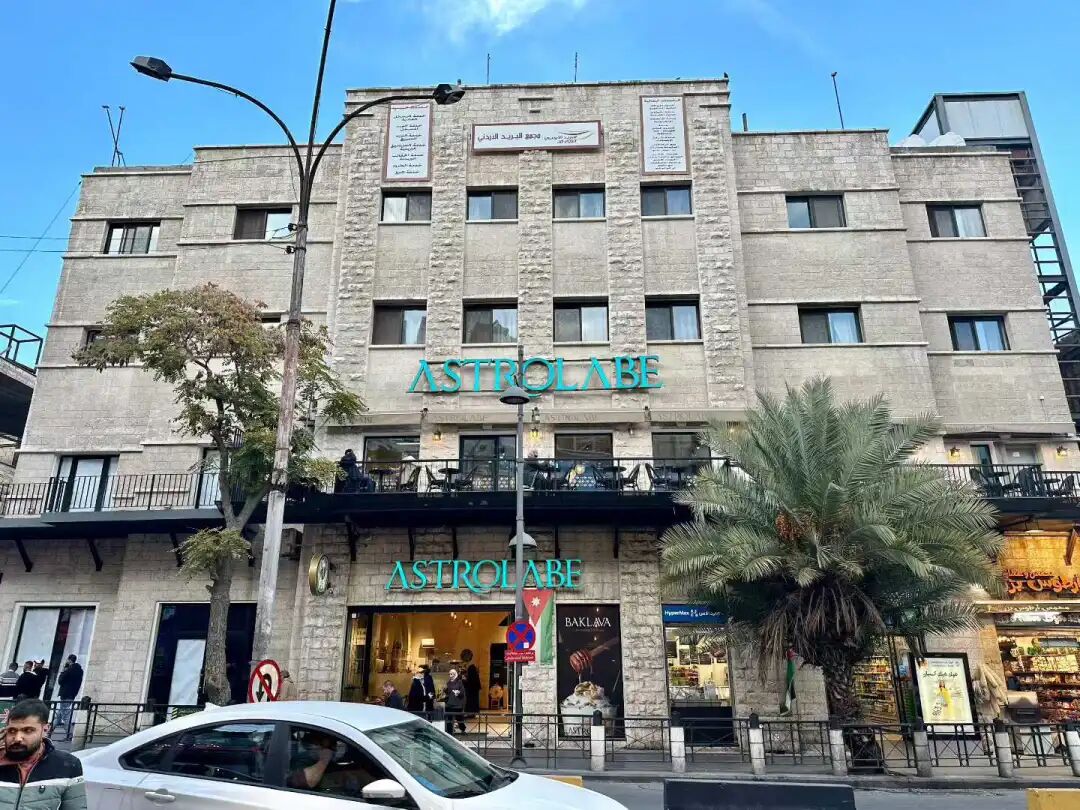
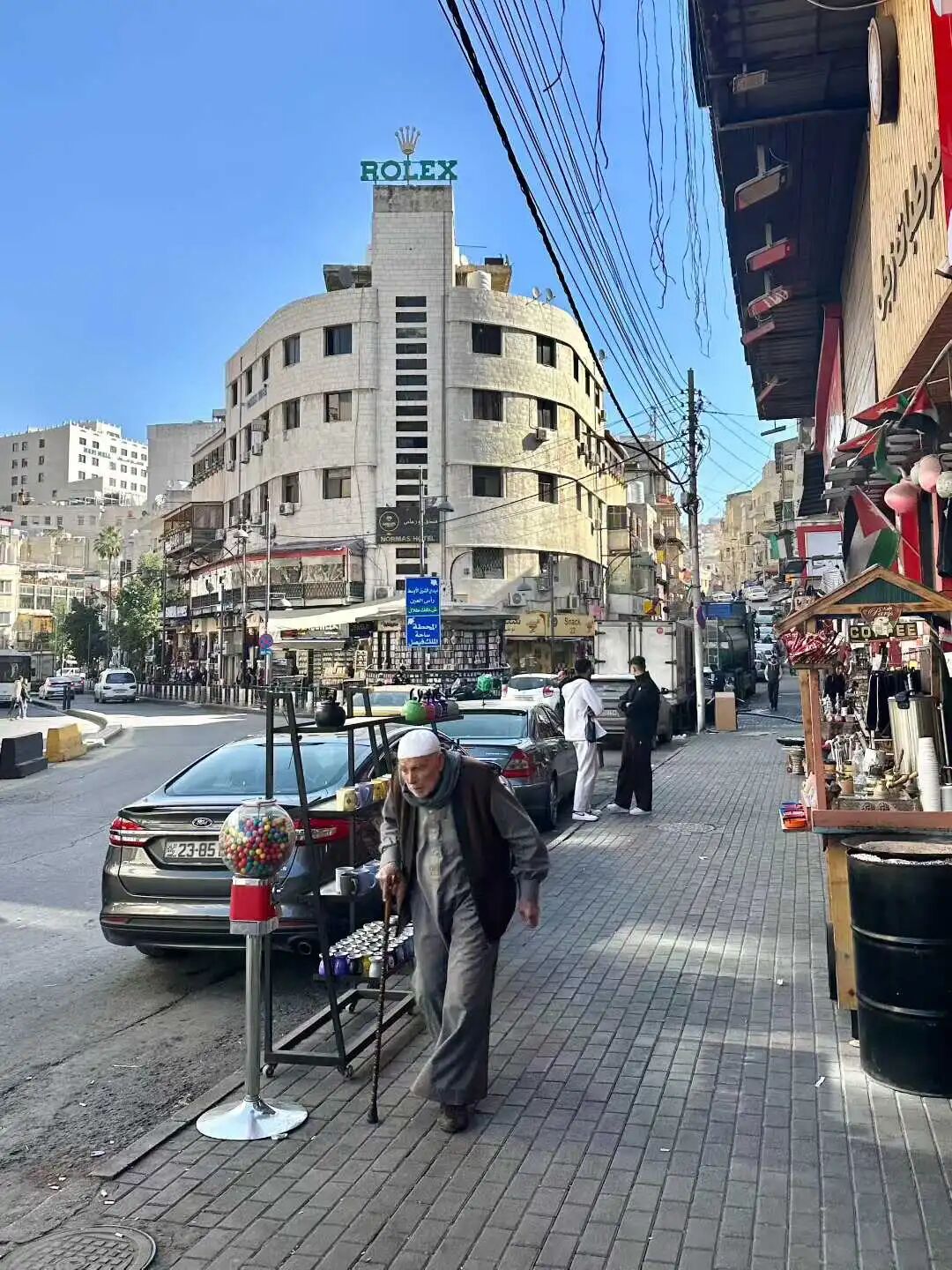
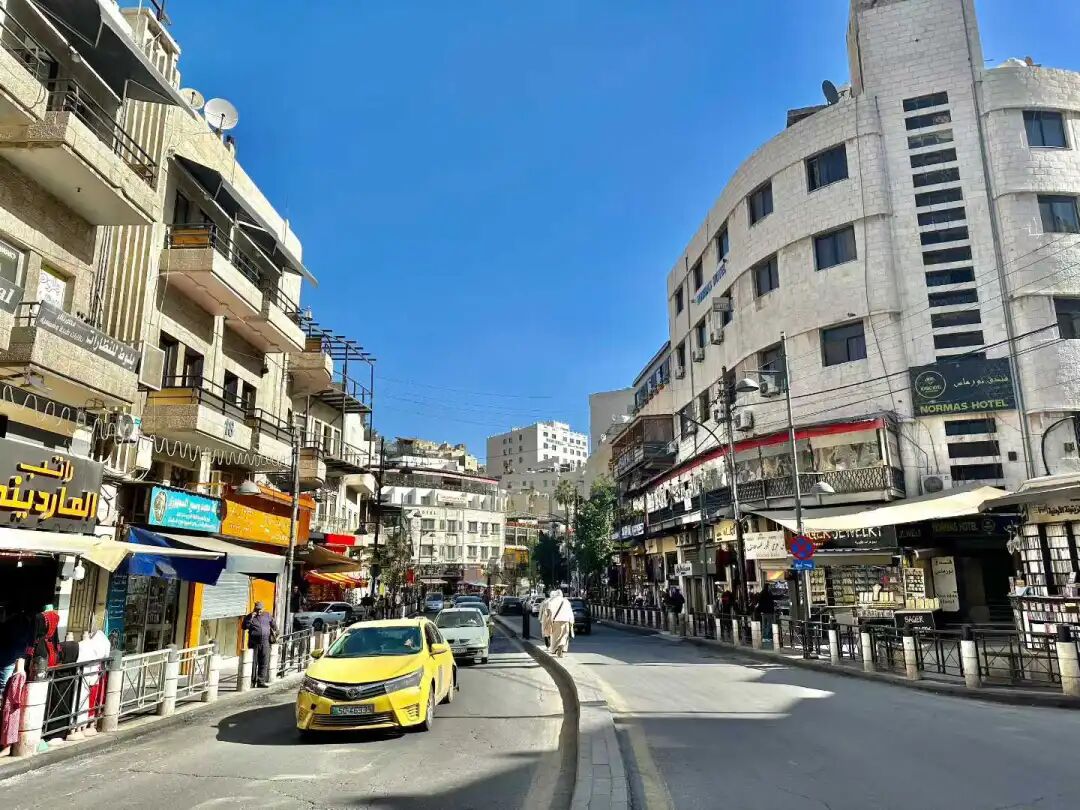
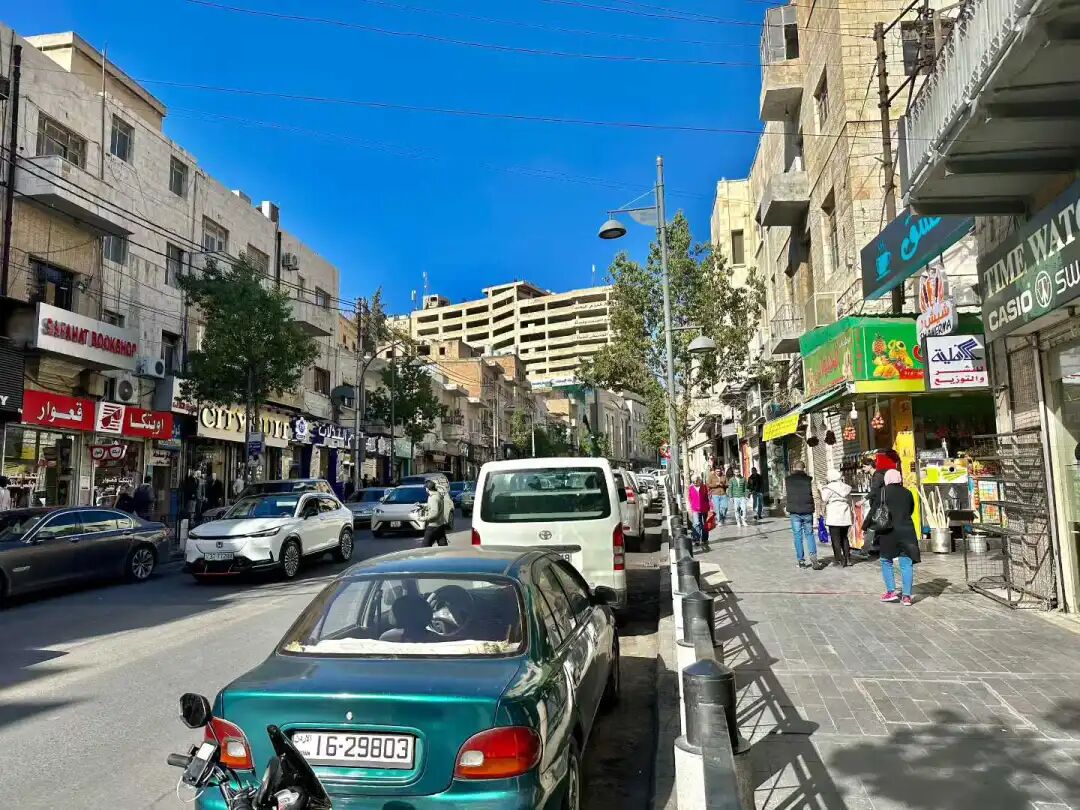
King Faisal Street is the main road in the old city of Amman and one of the busiest places in Amman. After Amman became a municipality in 1909, the first city hall building was built, and the street facing the building was named Municipality Street. After Amman became the capital of the Emirate of Transjordan in 1921, many hotels, cinemas, cafes, and restaurants were built near Municipality Street. It was later renamed King Faisal Street to commemorate King Faisal I of Iraq, who was also from the Hashemite family.
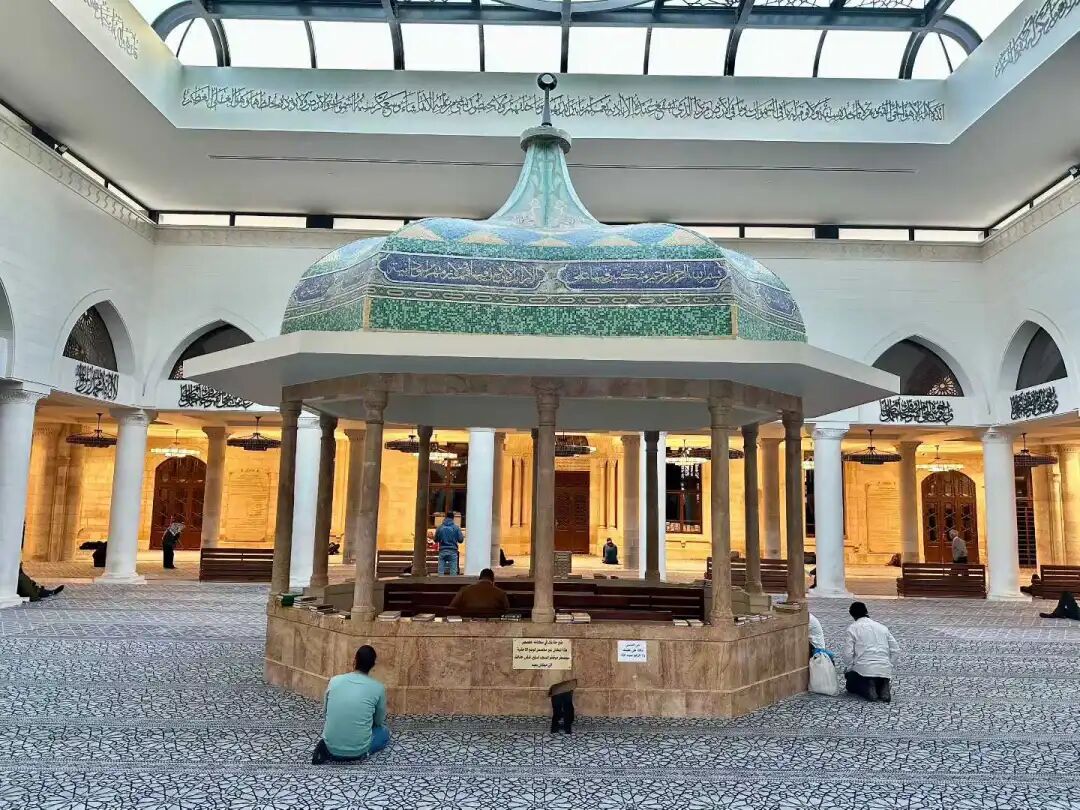
The Grand Husseini Mosque is a landmark building in the old city of Amman. It was built in 1924 by the then Emir of Transjordan, Abdullah I, to confirm the status of the Hashemite family in Jordan, and it was named after Abdullah I's father, King Hussein bin Ali of Hejaz.
The Grand Husseini Mosque was expanded after being damaged in the 1927 earthquake. A fountain for wudu (small ablution) was added in the 1940s, and it underwent renovations in 1986 and 2019, eventually taking on its current appearance.
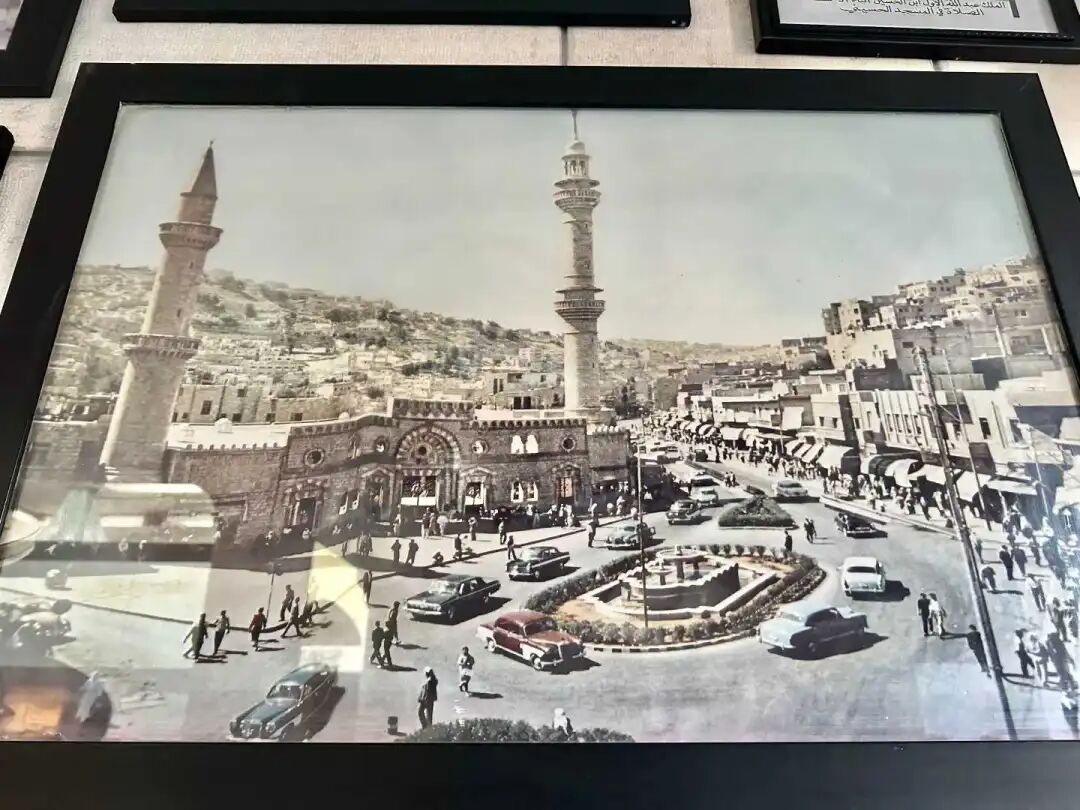
The site of the Grand Husseini Mosque originally held the Omari Mosque, which was built during the Umayyad period in the 7th century. At that time, the Omari Mosque was right next to the market and served as the main Friday mosque (Jumu'ah mosque) for Amman. Until the 19th century, the Omari Mosque still preserved a minaret and a wall. When the Grand Husseini Mosque was built in 1924, the remains of the Omari Mosque were completely demolished. The British sent the Director of the Department of Antiquities of Palestine to investigate, and it was ultimately determined that the wall had low historical and artistic value due to multiple destructions, so no intervention was taken.
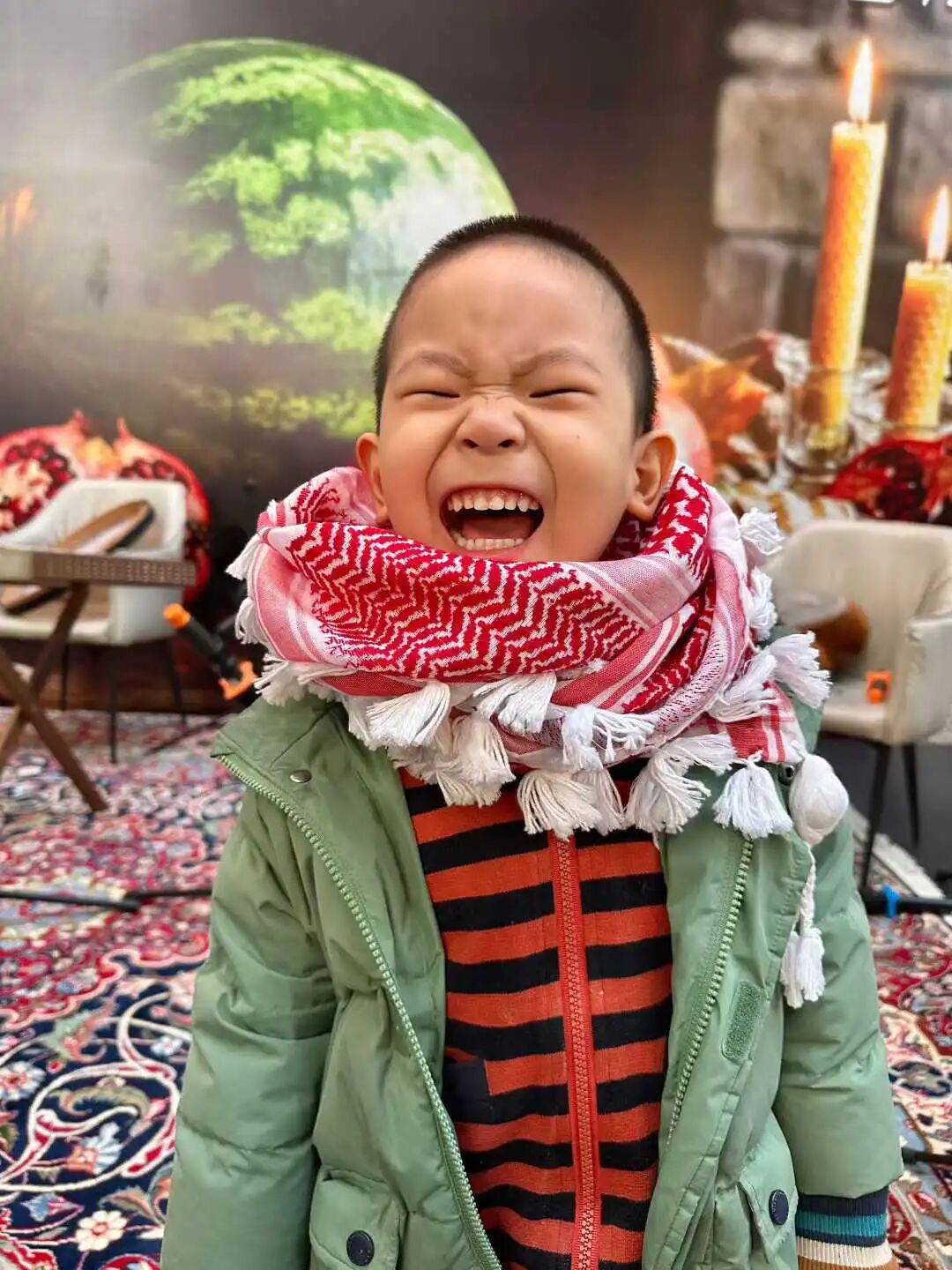
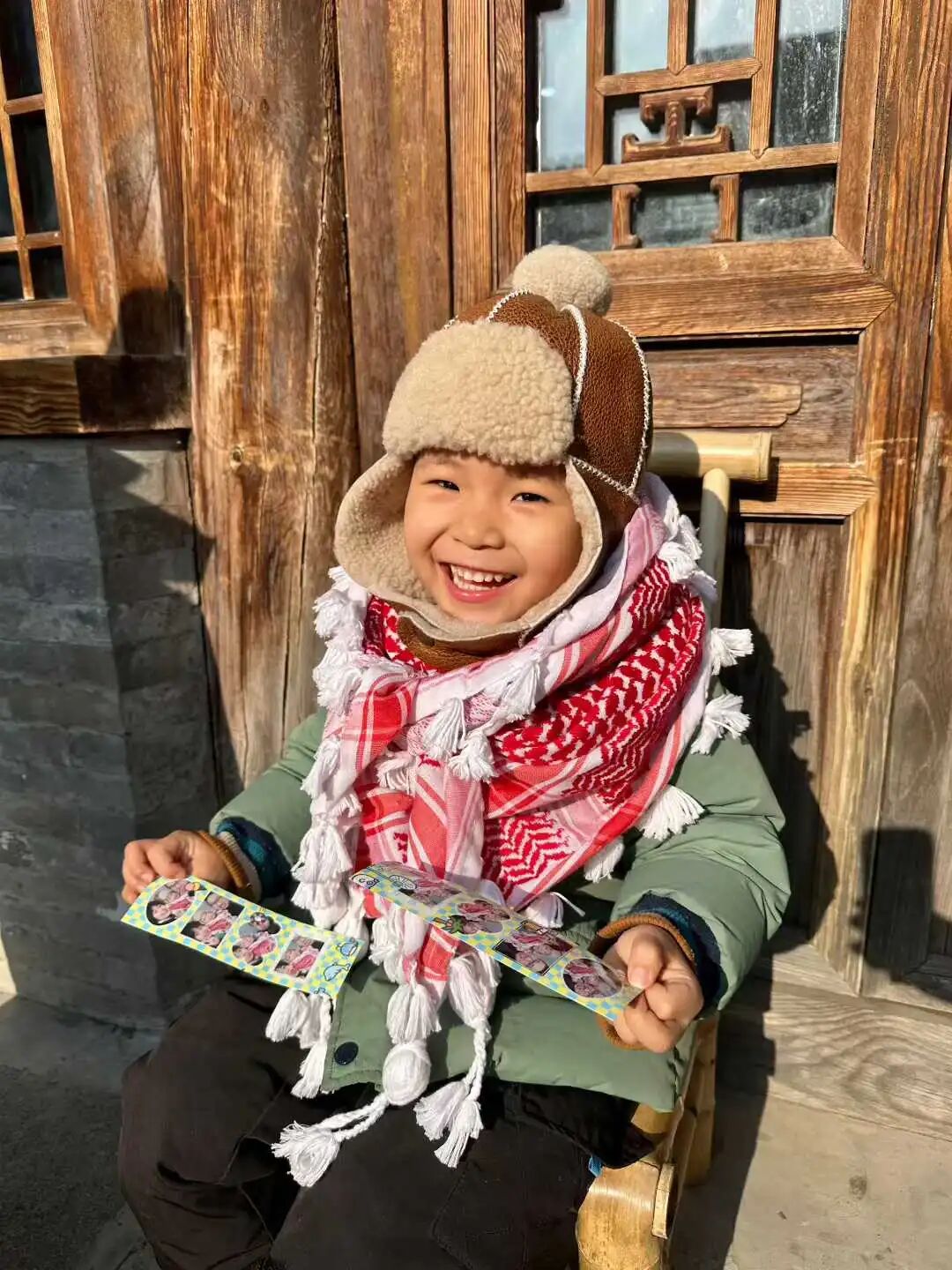
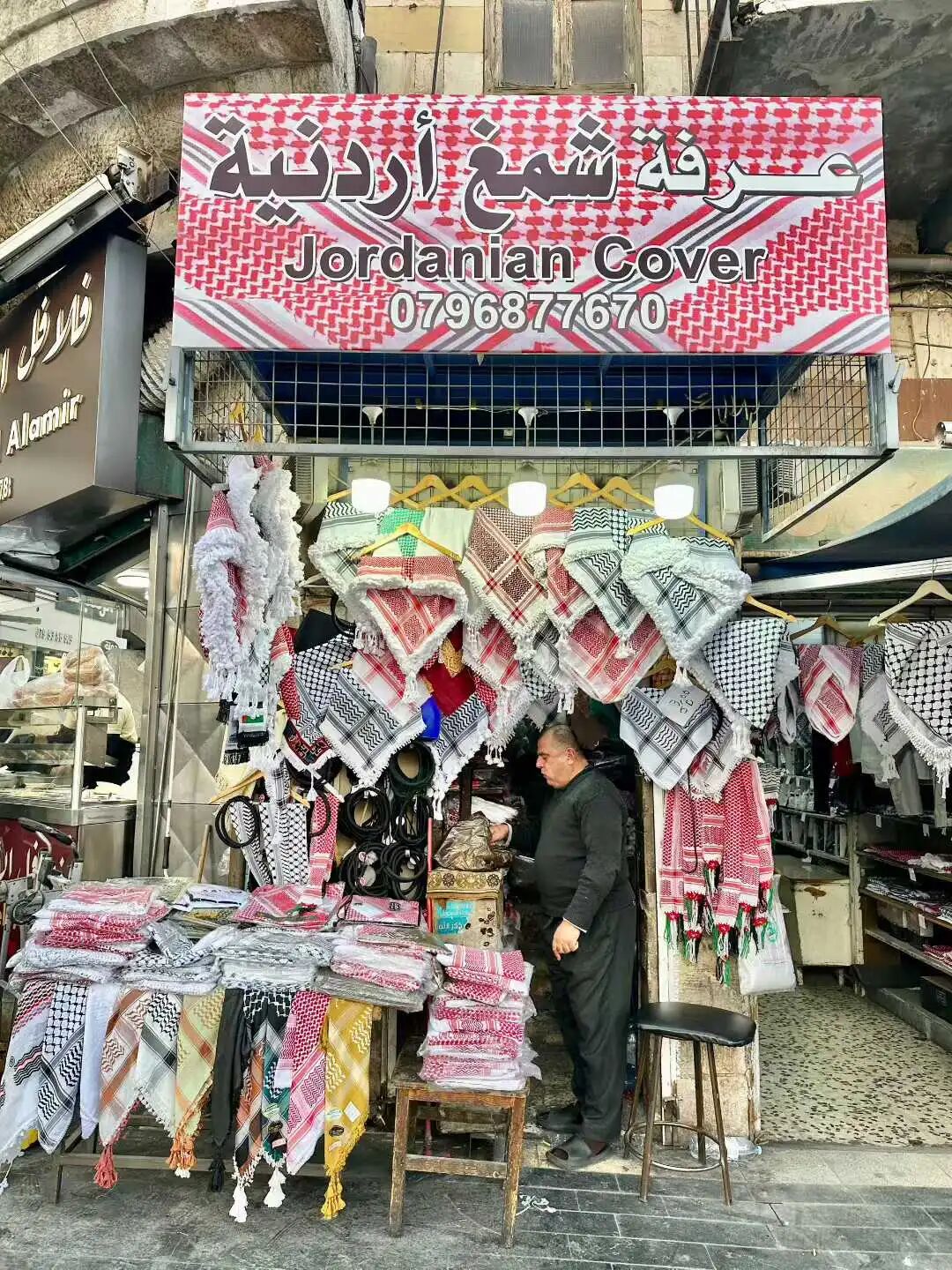
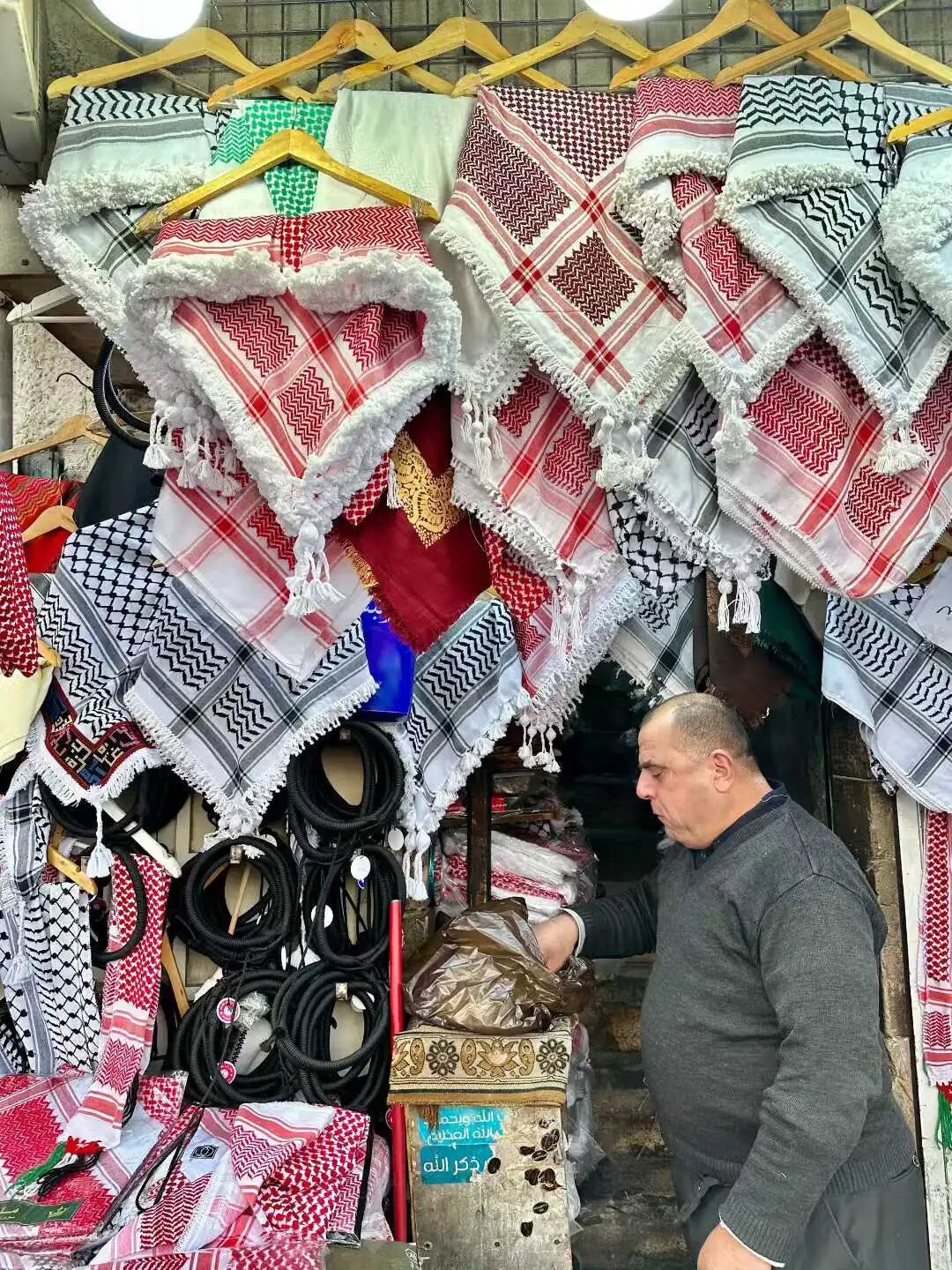
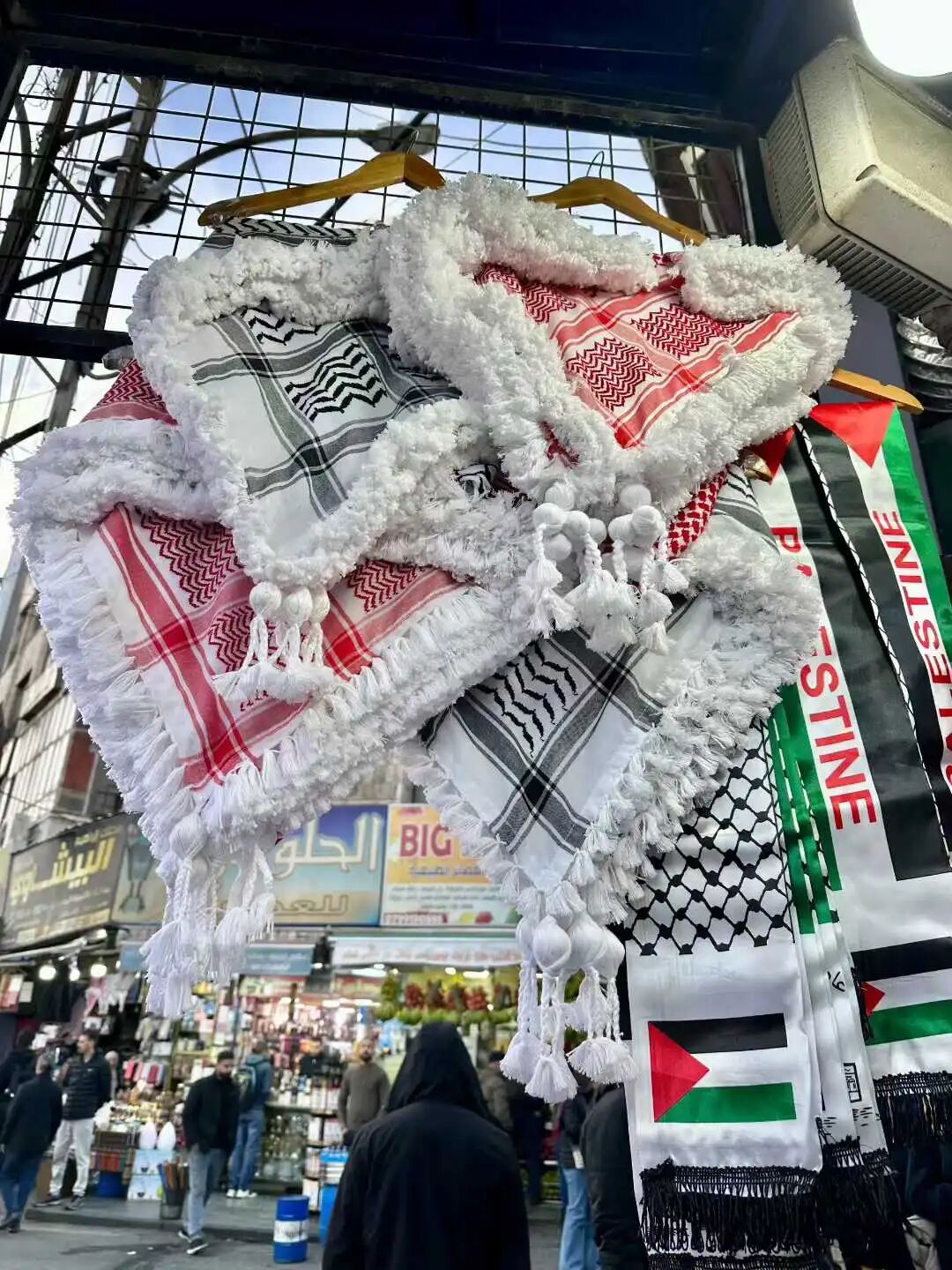
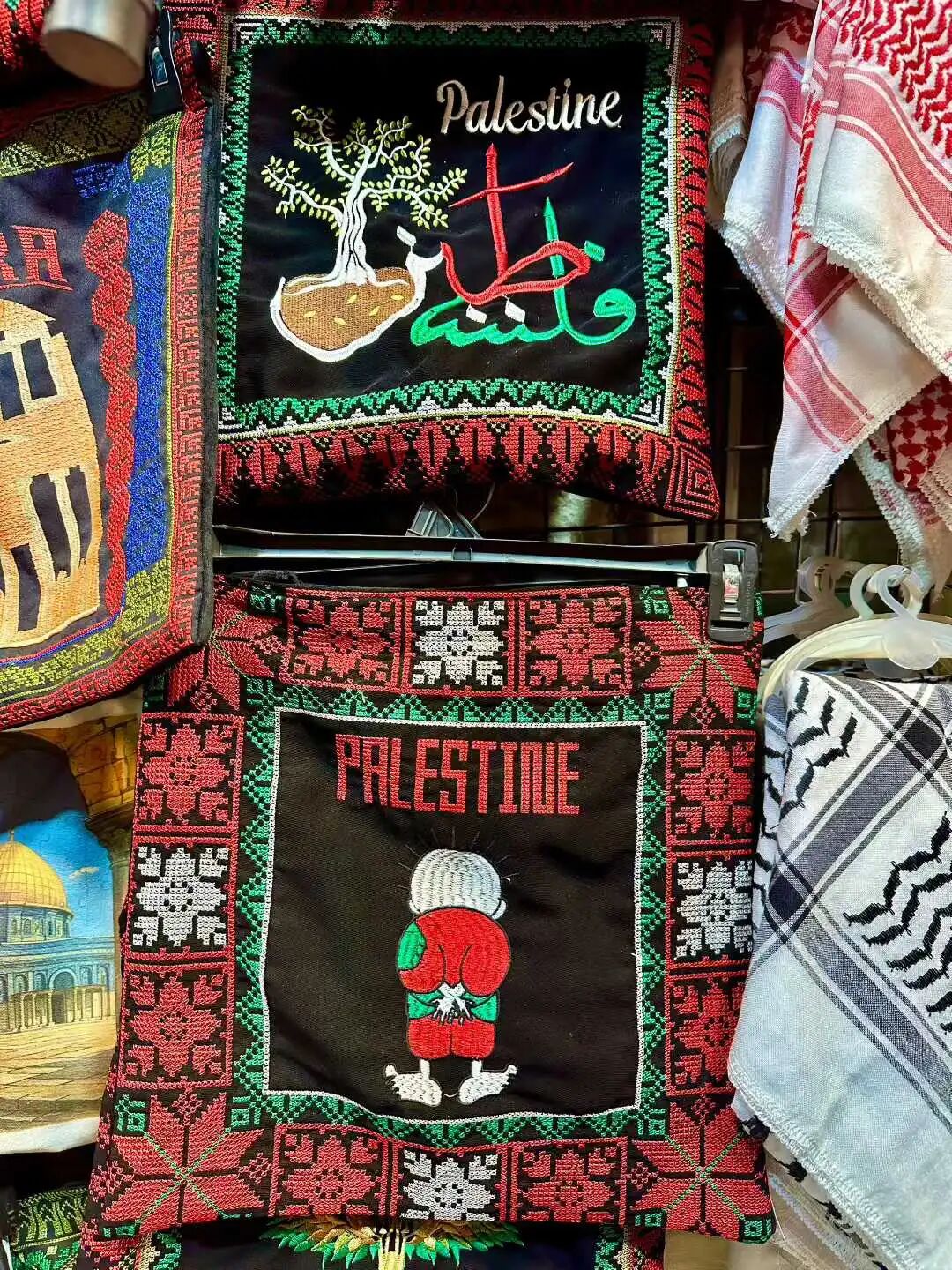
I bought the most traditional Jordanian Kufiyyeh headscarf opposite the Grand Husseini Mosque in Amman. The Jordanian headscarf is made of cotton, features a red and white checkered pattern, and has tassels. The larger the tassels, the higher the status of the wearer. The Kufiyyeh headscarf was originally worn by Bedouin herders. In 1931, the Emirate of Transjordan recruited Bedouins to form the Desert Patrol, making the Kufiyyeh headscarf part of the patrol's uniform. The Kufiyyeh headscarf then became popular in Jordan and has now become one of the symbols of the country.
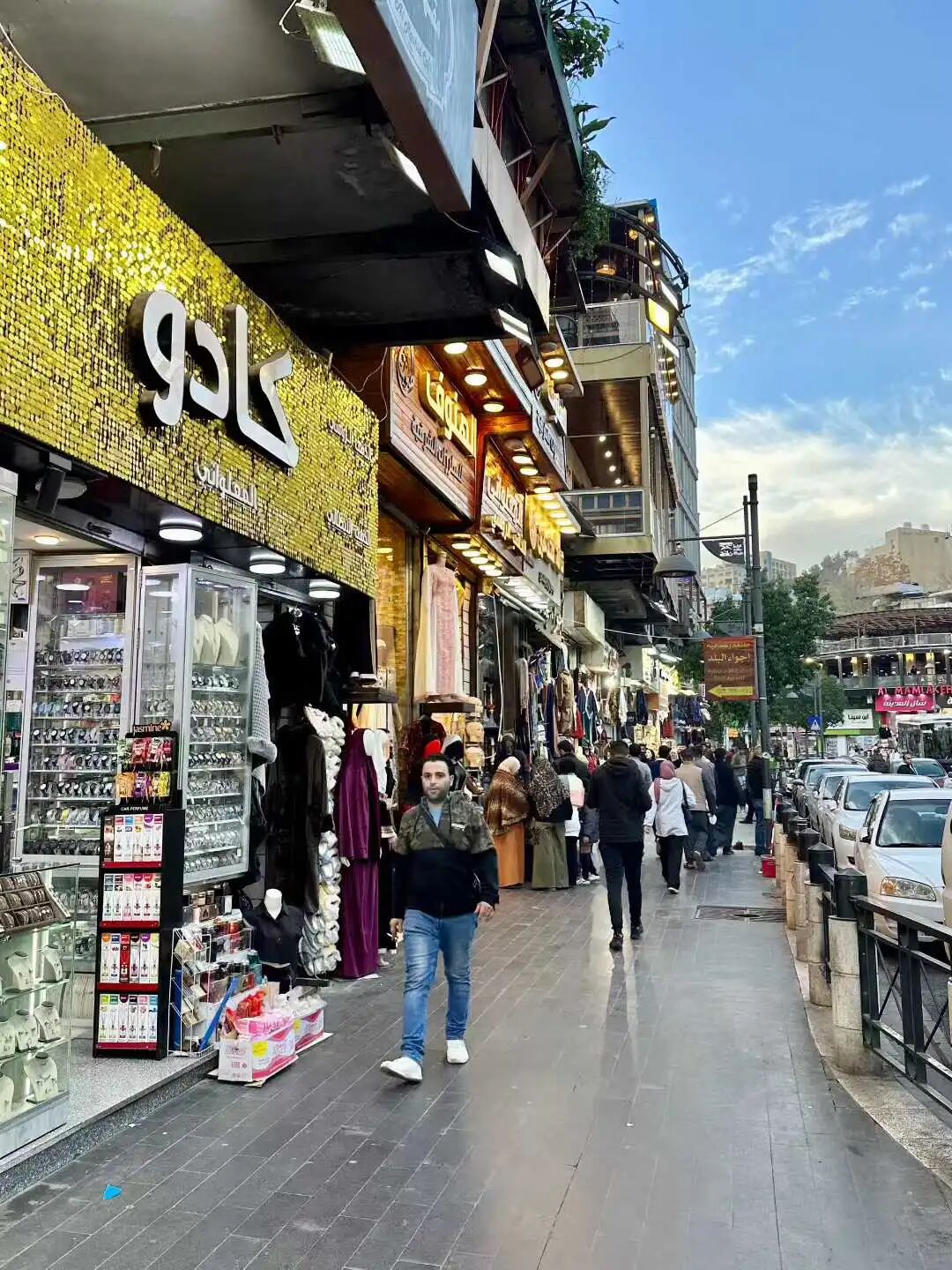
The road from the Grand Husseini Mosque to King Faisal Street is full of shops selling traditional Jordanian women's clothing, which looks very beautiful.
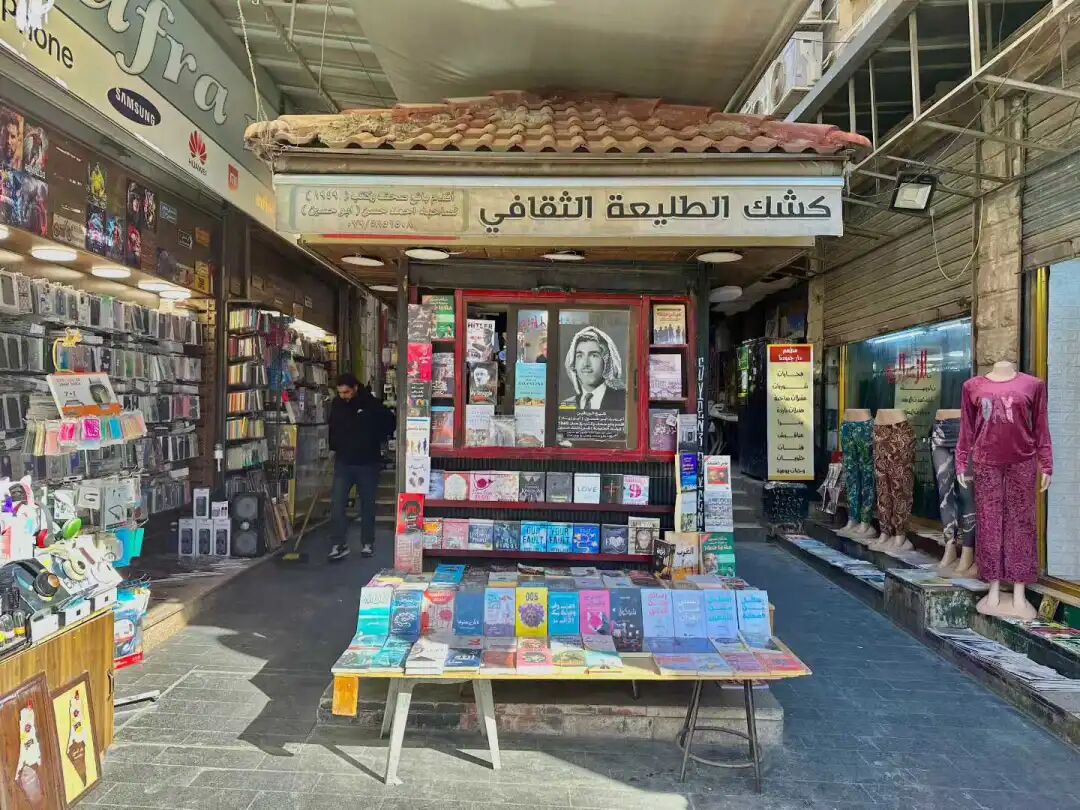
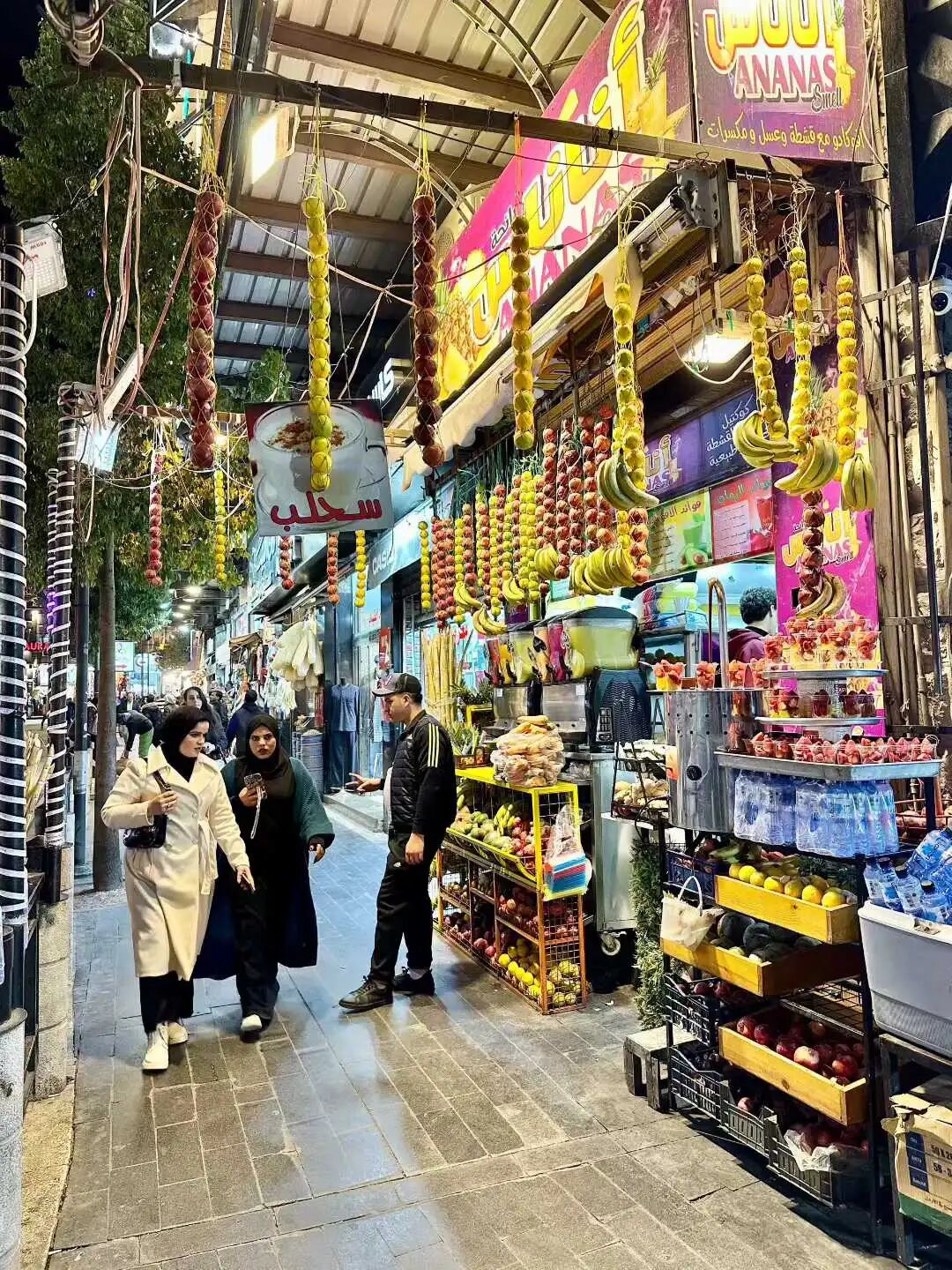
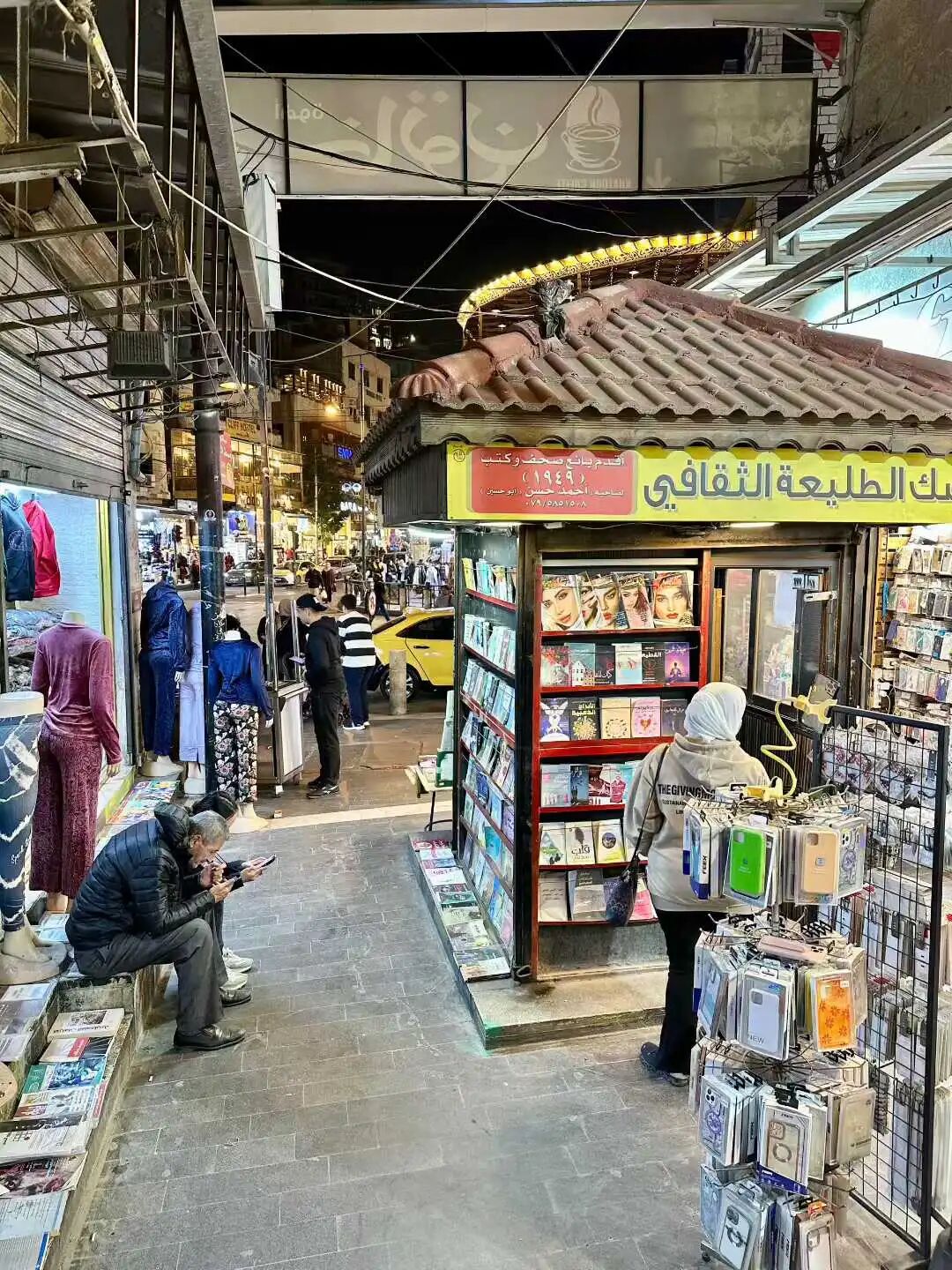
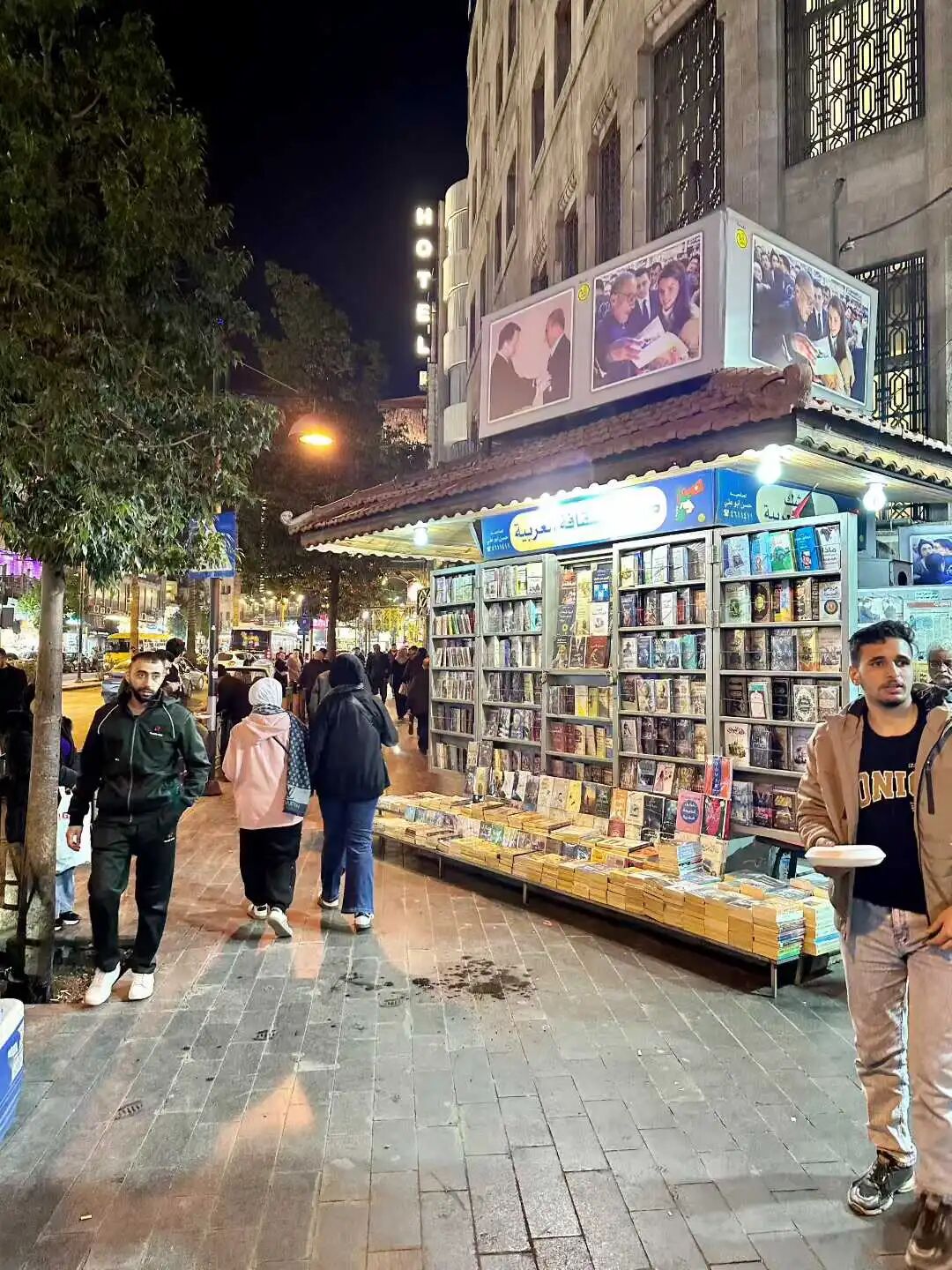
The night view of the old city in the Amman valley is beautiful, with rows of small shops that are great for browsing. Many book stalls stay open late into the night, which is quite rare in the Middle East. view all
Summary: Amman's old city food route includes Hashem Restaurant, Al Quds, Habibah Sweets, Faisal Cafe, and the Grand Husseini Mosque area. This article preserves the source's Palestinian restaurant histories, Mansaf and Kunafa details, Hashemite background, street context, and photographs.
The Umayyad dynasty built a massive urban complex on Amman Citadel Hill, but it slowly declined due to many earthquakes and natural disasters. A major earthquake in 749 turned Amman from a city into an ordinary town. Amman saw a brief revival during the Mamluk dynasty in the 14th century, but frequent land sales and divisions caused its importance to drop. By the 15th century, it had become a simple village again.
In 1878, Russia expelled the Circassians living in the North Caucasus. Tens of thousands of Circassian farmers then flooded into the Ottoman Empire as refugees. The Ottoman Empire settled some Circassians in Amman. They built houses in the valleys and on the slopes, and by 1908, there were 800 households.
After the Hejaz Railway was built in Amman in 1904, the town quickly turned from an agricultural village into a commercial hub. It attracted many Arab merchants from Damascus, Nablus, and Jerusalem, and Amman was officially established as a city in 1909. After the Ottoman Empire was defeated in 1918, Amman came under the rule of the Hashemite dynasty and officially became the capital of the Emirate of Transjordan in 1921. Amman later attracted many immigrants from the Levant and grew into the largest city on the east bank of the Jordan River.
The Hashemite family is named after the Prophet's great-grandfather, Hashim ibn Abd Manaf. They are also direct descendants of Imam Hasan, the son of Imam Ali. The Hashemite family ruled Mecca for a thousand years starting in the 10th century. They rebelled against the Ottoman Empire in 1916 and gained British support, which allowed them to rule the Kingdom of Hejaz (1916-1925), the Kingdom of Syria (1920), the Kingdom of Iraq (1921-1958), and Jordan (1921-present).
If you want to get close to the Hashemite family history in Amman, you can visit Hashem Restaurant on King Faisal Street. The restaurant is open 24 hours a day, making it a great place for breakfast if you are catching a bus to Damascus in the morning.
The owners of Hashem Restaurant are from Palestine, and they started their business in Jaffa in 1910. Jaffa was once a city with a Palestinian majority. When the United Nations created the partition plan for Palestine and Israel in 1947, it even designated Jaffa as a Palestinian enclave outside the Jewish residential areas in the north. In 1948, Zionist forces attacked Jaffa, causing many Palestinian civilian casualties and forcing most Palestinians to flee the city. The owners of Hashem Restaurant fled Palestine and finally reopened their restaurant in Amman in 1956. It has been open for 70 years now.
They specialize in classic Levantine hummus (hummus) and fava bean dip (foul). After you order, they serve pita bread (pita) and a vegetable platter. I ordered minced meat fatteh (fatteh) and fried chickpea balls (falafel). Fatteh means 'crushed' in Arabic. It is a snack from the southern Levant, found in Damascus, Beirut, Jordan, and Palestine, but not in the northern Levant. The main ingredient of fatteh is pieces of flatbread (khubz), topped with yogurt, steamed chickpeas, olive oil, and other ingredients, then sprinkled with cumin.
Although Circassians and Bedouins were the first to settle in the Amman valley, the main population of Amman today consists of Palestinians who have moved there over the last century. On King Hussein Street, there is a restaurant called Al Quds that opened in 1969. It is run by Palestinians from Jerusalem, and the shop is decorated with many photos of the Dome of the Rock and the Al-Aqsa Mosque.
Arabs have called Jerusalem 'Al Quds' since the 9th century, which is a literal translation of the Hebrew 'Ir HaKodesh' (Holy City). Before 1967, travel between Jerusalem and Amman was very easy. After Israel occupied Jerusalem and the West Bank in 1967, many Palestinians from Jerusalem fled to Jordan, and many settled in Amman.
Quds Restaurant specializes in the traditional Bedouin yogurt-stewed rice dish called Mansaf. It is Jordan's national dish and was added to the UNESCO Intangible Cultural Heritage list in 2022. Originally, Mansaf was just meat and clarified butter served with bread. Rice became common in northern Jordan in the 1920s, leading to the stewed rice version. Later, they added dried yogurt balls (Jameed) from settled Bedouin herders to create the yogurt-stewed rice we see today. When Bedouin tribes settle disputes, the leaders visit each other. The host serves a large platter of Mansaf as a symbol of reconciliation.
To make Amman-style Mansaf, lamb or camel meat is slow-cooked for hours in boiling yogurt soup. The rice is soaked in clarified butter (Samneh) and topped with nuts. The traditional yogurt soup uses dried yogurt balls (Jameed). To make them, sheep's milk is boiled, dried, and fermented. It is placed in fine cheesecloth and salted daily until it thickens into a round ball.
A century ago, Mansaf was served with thin flatbread (Khobz al-Shrak), a nearly translucent unleavened bread baked on a large iron griddle. Today, Mansaf is still served with thin flatbread, along with pickled olives and green chili peppers. It also comes with a bowl of yogurt soup that has a very rich, tangy, and meaty flavor, much like a traditional herder's meal.
Right next to Quds Restaurant is Habibah Sweets, which opened in 1951 and is still run by Palestinians. Habibah's founder, Hajj Mahmoud Habibah, was from Nablus, Palestine. He opened his first dessert shop in Jerusalem in 1947, but the first Middle East war broke out shortly after. Zionist forces attacked and expelled Palestinian civilians, carrying out dozens of massacres. The war displaced over 700,000 Palestinians, and Habibah was forced to move to Amman. Habibah reopened his dessert shop in Amman in 1951, and it has been running for 75 years now. Today, Habibah has five branches in Amman and three in Riyadh, Saudi Arabia, making it Jordan's most famous dessert shop.
Their most classic dessert is Kunafa. Legend says a doctor in the Umayyad or Fatimid Caliphate court invented Kunafa to satisfy the Caliph's hunger during Ramadan. Kunafa later became a classic Arab dessert for breaking the fast and even appeared in One Thousand and One Nights. Kunafa is made of buttery pastry, stretchy cheese, and crushed pistachios. You pour a syrup called Attar over it before eating. Although it has a thousand-year history, the current fried, stretchy style formed during the Ottoman period in the mid-15th century and spread across the Ottoman-ruled Middle East.
Old Amman has many long-standing restaurants, which shows that the city has developed steadily for over half a century. Right on King Hussein Street, next to Habibah Sweets, is Jabri Restaurant, which has desserts on the first floor and full meals on the second. Although the storefront is not very eye-catching, it opened in 1935 and has a 91-year history. I didn't have time to eat there this time, but it is worth sharing with you.
Founder Subhi Jabri opened his shop in Amman in 1935 and moved to the current King Hussein Street location in 1962. He provided catering services for King Hussein himself many times, and in 1990, the King awarded him the Order of Independence (Wisam al-Istiqlal).
There are many hotels in the old city of Amman, but unfortunately, there are no high-quality heritage hotels. I originally booked a heritage homestay on Airbnb that looked great, but because I had to catch a bus to Damascus early the next morning, I switched to the more conveniently located Philosophy Hotel. The environment is decent, it is only a 5-minute walk from King Faisal Street, and it is convenient for having breakfast at Hashem Restaurant in the morning.
There is a small alley at the intersection of King Hussein Street and King Faisal Street in the old city of Amman. It is called "Coffee Shop Street" because of the many cafes there, and it is a place where young people in Amman love to hang out at night. I had dinner at Faisal Café & Restaurant on Coffee Shop Street. The atmosphere there is very nice, with a marble fountain in the middle and many decorations related to Jerusalem all around.
I ordered a mixed grill platter and stir-fried vegetables; it is quite rare to find stir-fried dishes in the Middle East. However, stir-fried dishes in the Middle East are relatively light, mainly highlighting the natural flavor of the vegetables. The grilled meat includes lamb, chicken, and a mix of beef and lamb, which is the classic Levantine style, and I never get tired of it.
King Faisal Street is the main road in the old city of Amman and one of the busiest places in Amman. After Amman became a municipality in 1909, the first city hall building was built, and the street facing the building was named Municipality Street. After Amman became the capital of the Emirate of Transjordan in 1921, many hotels, cinemas, cafes, and restaurants were built near Municipality Street. It was later renamed King Faisal Street to commemorate King Faisal I of Iraq, who was also from the Hashemite family.
The Grand Husseini Mosque is a landmark building in the old city of Amman. It was built in 1924 by the then Emir of Transjordan, Abdullah I, to confirm the status of the Hashemite family in Jordan, and it was named after Abdullah I's father, King Hussein bin Ali of Hejaz.
The Grand Husseini Mosque was expanded after being damaged in the 1927 earthquake. A fountain for wudu (small ablution) was added in the 1940s, and it underwent renovations in 1986 and 2019, eventually taking on its current appearance.
The site of the Grand Husseini Mosque originally held the Omari Mosque, which was built during the Umayyad period in the 7th century. At that time, the Omari Mosque was right next to the market and served as the main Friday mosque (Jumu'ah mosque) for Amman. Until the 19th century, the Omari Mosque still preserved a minaret and a wall. When the Grand Husseini Mosque was built in 1924, the remains of the Omari Mosque were completely demolished. The British sent the Director of the Department of Antiquities of Palestine to investigate, and it was ultimately determined that the wall had low historical and artistic value due to multiple destructions, so no intervention was taken.
I bought the most traditional Jordanian Kufiyyeh headscarf opposite the Grand Husseini Mosque in Amman. The Jordanian headscarf is made of cotton, features a red and white checkered pattern, and has tassels. The larger the tassels, the higher the status of the wearer. The Kufiyyeh headscarf was originally worn by Bedouin herders. In 1931, the Emirate of Transjordan recruited Bedouins to form the Desert Patrol, making the Kufiyyeh headscarf part of the patrol's uniform. The Kufiyyeh headscarf then became popular in Jordan and has now become one of the symbols of the country.
The road from the Grand Husseini Mosque to King Faisal Street is full of shops selling traditional Jordanian women's clothing, which looks very beautiful.
The night view of the old city in the Amman valley is beautiful, with rows of small shops that are great for browsing. Many book stalls stay open late into the night, which is quite rare in the Middle East. view all
Reposted from the web
Summary: Amman's old city food route includes Hashem Restaurant, Al Quds, Habibah Sweets, Faisal Cafe, and the Grand Husseini Mosque area. This article preserves the source's Palestinian restaurant histories, Mansaf and Kunafa details, Hashemite background, street context, and photographs.
The Umayyad dynasty built a massive urban complex on Amman Citadel Hill, but it slowly declined due to many earthquakes and natural disasters. A major earthquake in 749 turned Amman from a city into an ordinary town. Amman saw a brief revival during the Mamluk dynasty in the 14th century, but frequent land sales and divisions caused its importance to drop. By the 15th century, it had become a simple village again.
In 1878, Russia expelled the Circassians living in the North Caucasus. Tens of thousands of Circassian farmers then flooded into the Ottoman Empire as refugees. The Ottoman Empire settled some Circassians in Amman. They built houses in the valleys and on the slopes, and by 1908, there were 800 households.
After the Hejaz Railway was built in Amman in 1904, the town quickly turned from an agricultural village into a commercial hub. It attracted many Arab merchants from Damascus, Nablus, and Jerusalem, and Amman was officially established as a city in 1909. After the Ottoman Empire was defeated in 1918, Amman came under the rule of the Hashemite dynasty and officially became the capital of the Emirate of Transjordan in 1921. Amman later attracted many immigrants from the Levant and grew into the largest city on the east bank of the Jordan River.
The Hashemite family is named after the Prophet's great-grandfather, Hashim ibn Abd Manaf. They are also direct descendants of Imam Hasan, the son of Imam Ali. The Hashemite family ruled Mecca for a thousand years starting in the 10th century. They rebelled against the Ottoman Empire in 1916 and gained British support, which allowed them to rule the Kingdom of Hejaz (1916-1925), the Kingdom of Syria (1920), the Kingdom of Iraq (1921-1958), and Jordan (1921-present).
If you want to get close to the Hashemite family history in Amman, you can visit Hashem Restaurant on King Faisal Street. The restaurant is open 24 hours a day, making it a great place for breakfast if you are catching a bus to Damascus in the morning.
The owners of Hashem Restaurant are from Palestine, and they started their business in Jaffa in 1910. Jaffa was once a city with a Palestinian majority. When the United Nations created the partition plan for Palestine and Israel in 1947, it even designated Jaffa as a Palestinian enclave outside the Jewish residential areas in the north. In 1948, Zionist forces attacked Jaffa, causing many Palestinian civilian casualties and forcing most Palestinians to flee the city. The owners of Hashem Restaurant fled Palestine and finally reopened their restaurant in Amman in 1956. It has been open for 70 years now.
They specialize in classic Levantine hummus (hummus) and fava bean dip (foul). After you order, they serve pita bread (pita) and a vegetable platter. I ordered minced meat fatteh (fatteh) and fried chickpea balls (falafel). Fatteh means 'crushed' in Arabic. It is a snack from the southern Levant, found in Damascus, Beirut, Jordan, and Palestine, but not in the northern Levant. The main ingredient of fatteh is pieces of flatbread (khubz), topped with yogurt, steamed chickpeas, olive oil, and other ingredients, then sprinkled with cumin.
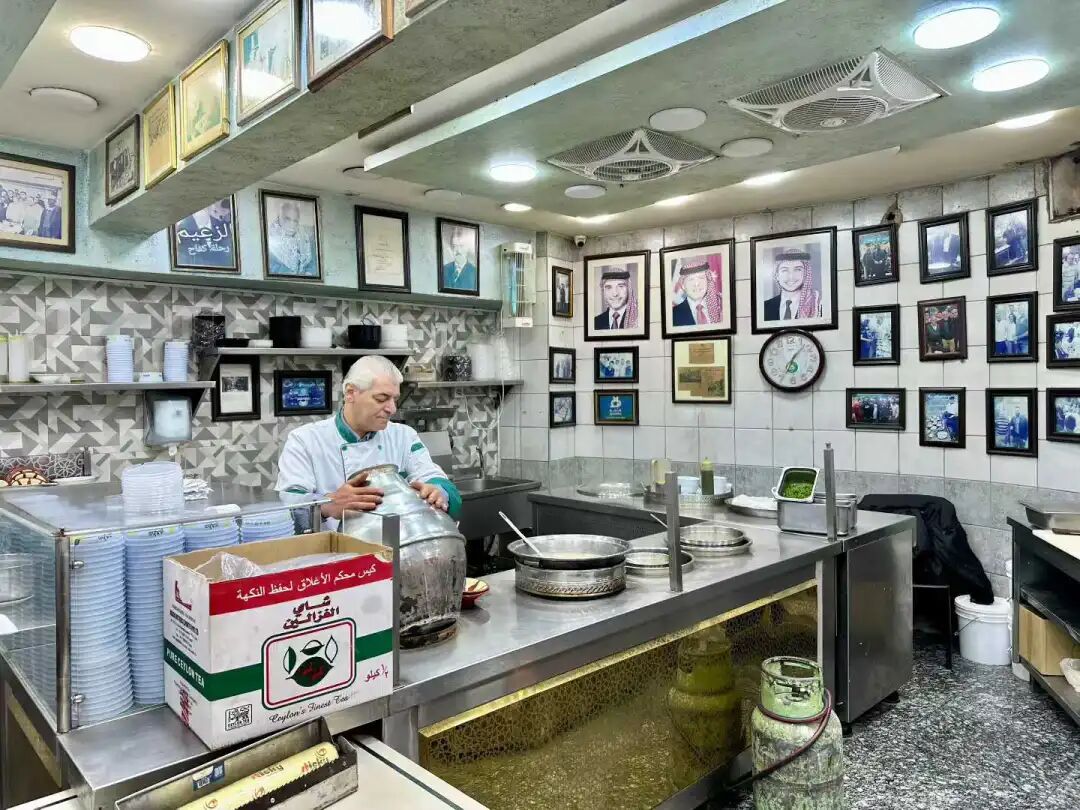
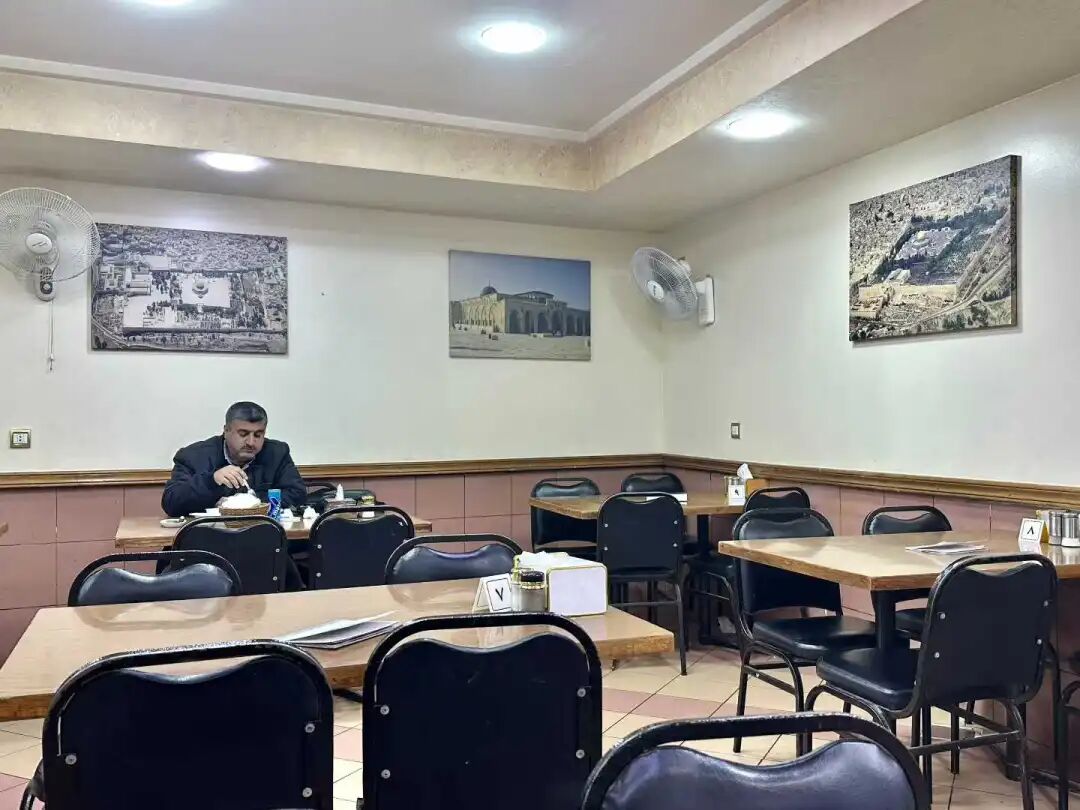
Although Circassians and Bedouins were the first to settle in the Amman valley, the main population of Amman today consists of Palestinians who have moved there over the last century. On King Hussein Street, there is a restaurant called Al Quds that opened in 1969. It is run by Palestinians from Jerusalem, and the shop is decorated with many photos of the Dome of the Rock and the Al-Aqsa Mosque.
Arabs have called Jerusalem 'Al Quds' since the 9th century, which is a literal translation of the Hebrew 'Ir HaKodesh' (Holy City). Before 1967, travel between Jerusalem and Amman was very easy. After Israel occupied Jerusalem and the West Bank in 1967, many Palestinians from Jerusalem fled to Jordan, and many settled in Amman.
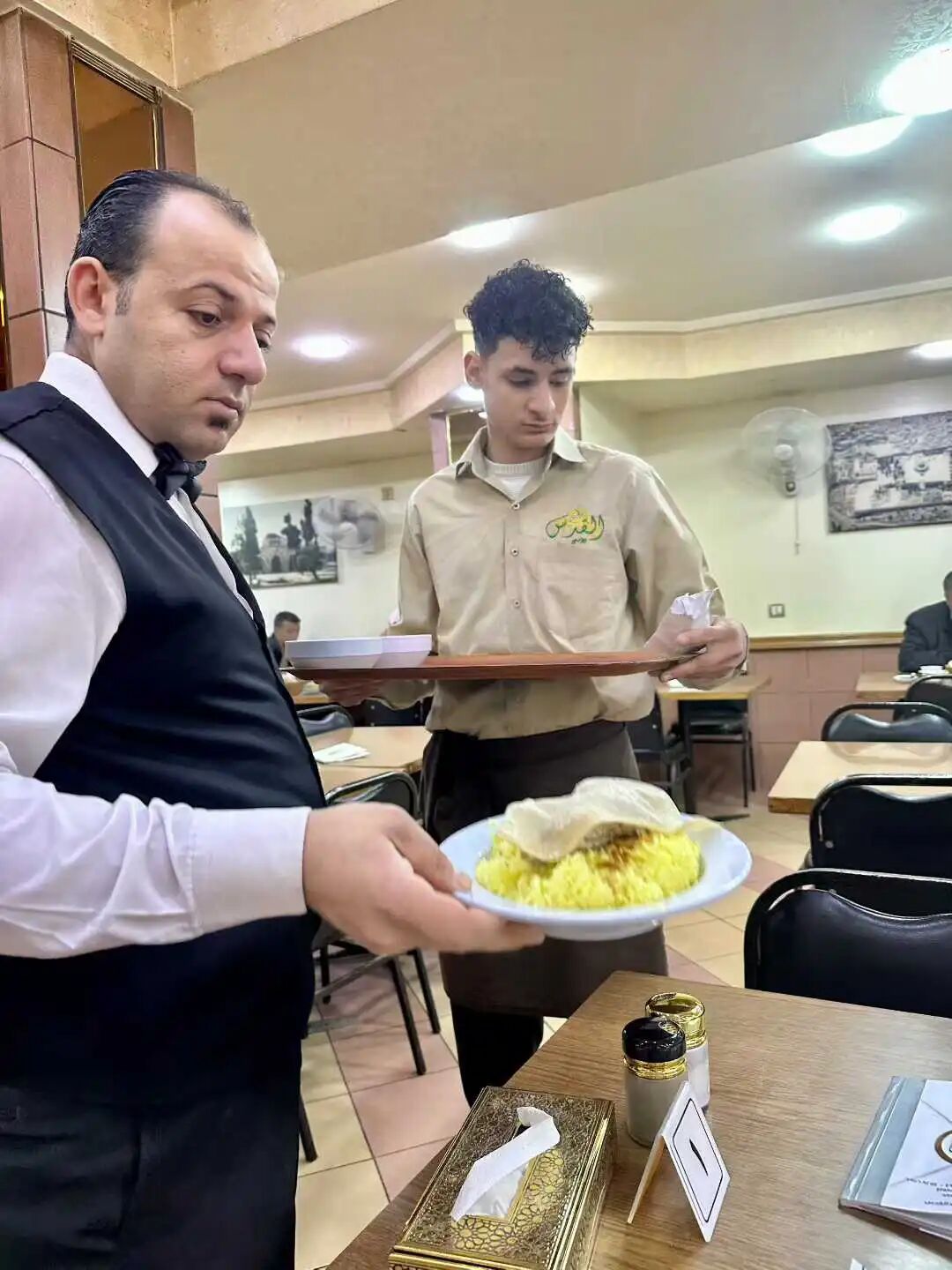
Quds Restaurant specializes in the traditional Bedouin yogurt-stewed rice dish called Mansaf. It is Jordan's national dish and was added to the UNESCO Intangible Cultural Heritage list in 2022. Originally, Mansaf was just meat and clarified butter served with bread. Rice became common in northern Jordan in the 1920s, leading to the stewed rice version. Later, they added dried yogurt balls (Jameed) from settled Bedouin herders to create the yogurt-stewed rice we see today. When Bedouin tribes settle disputes, the leaders visit each other. The host serves a large platter of Mansaf as a symbol of reconciliation.
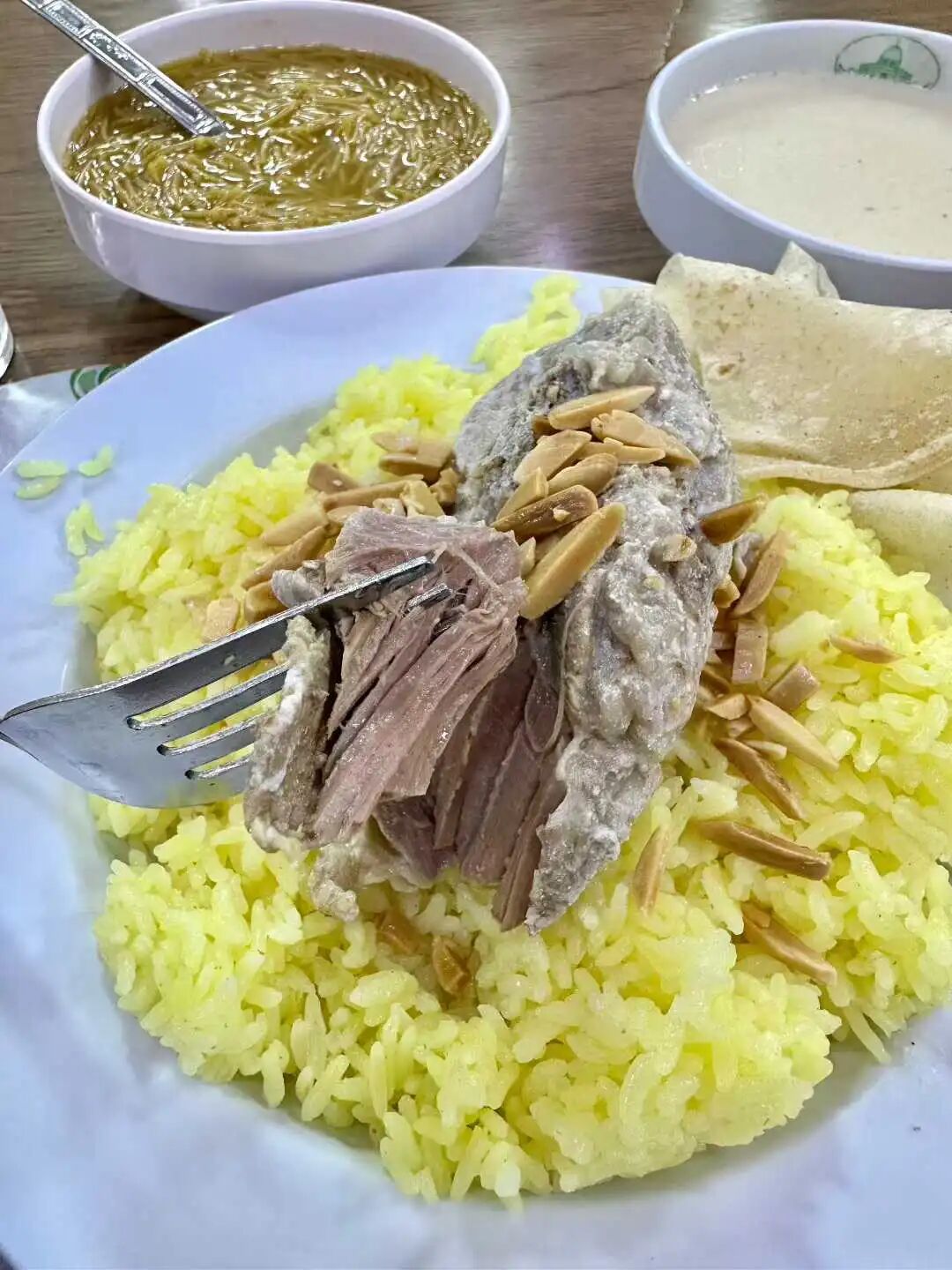
To make Amman-style Mansaf, lamb or camel meat is slow-cooked for hours in boiling yogurt soup. The rice is soaked in clarified butter (Samneh) and topped with nuts. The traditional yogurt soup uses dried yogurt balls (Jameed). To make them, sheep's milk is boiled, dried, and fermented. It is placed in fine cheesecloth and salted daily until it thickens into a round ball.
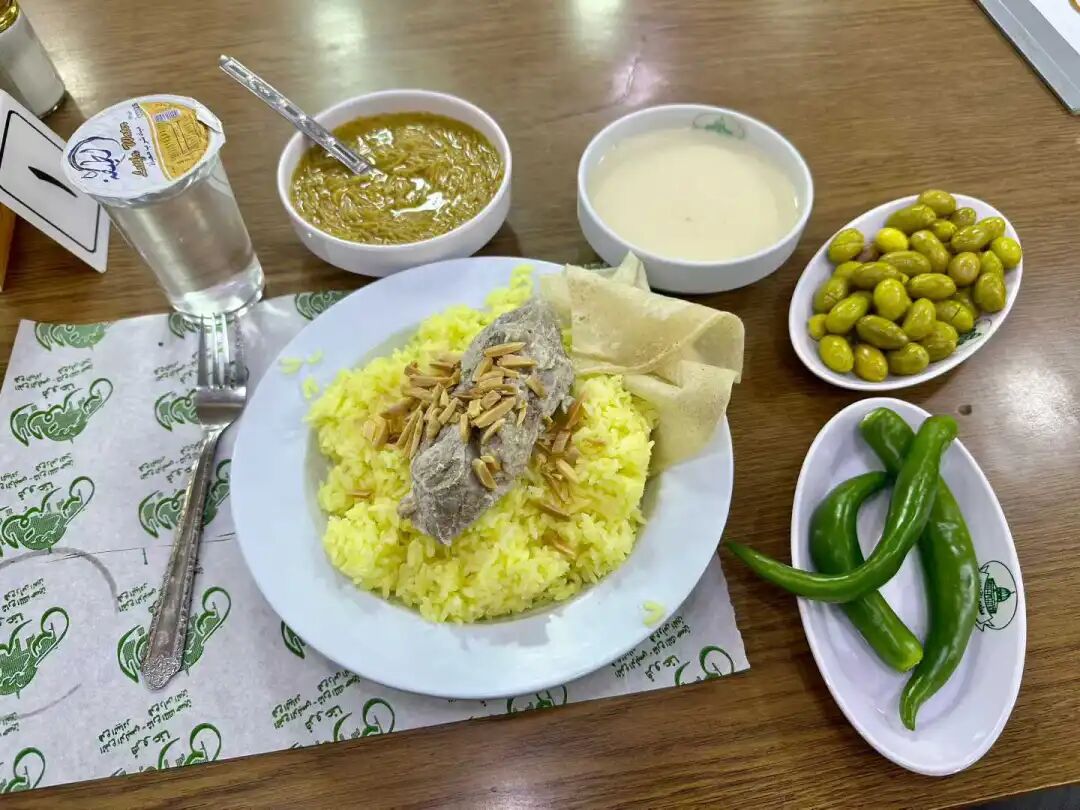
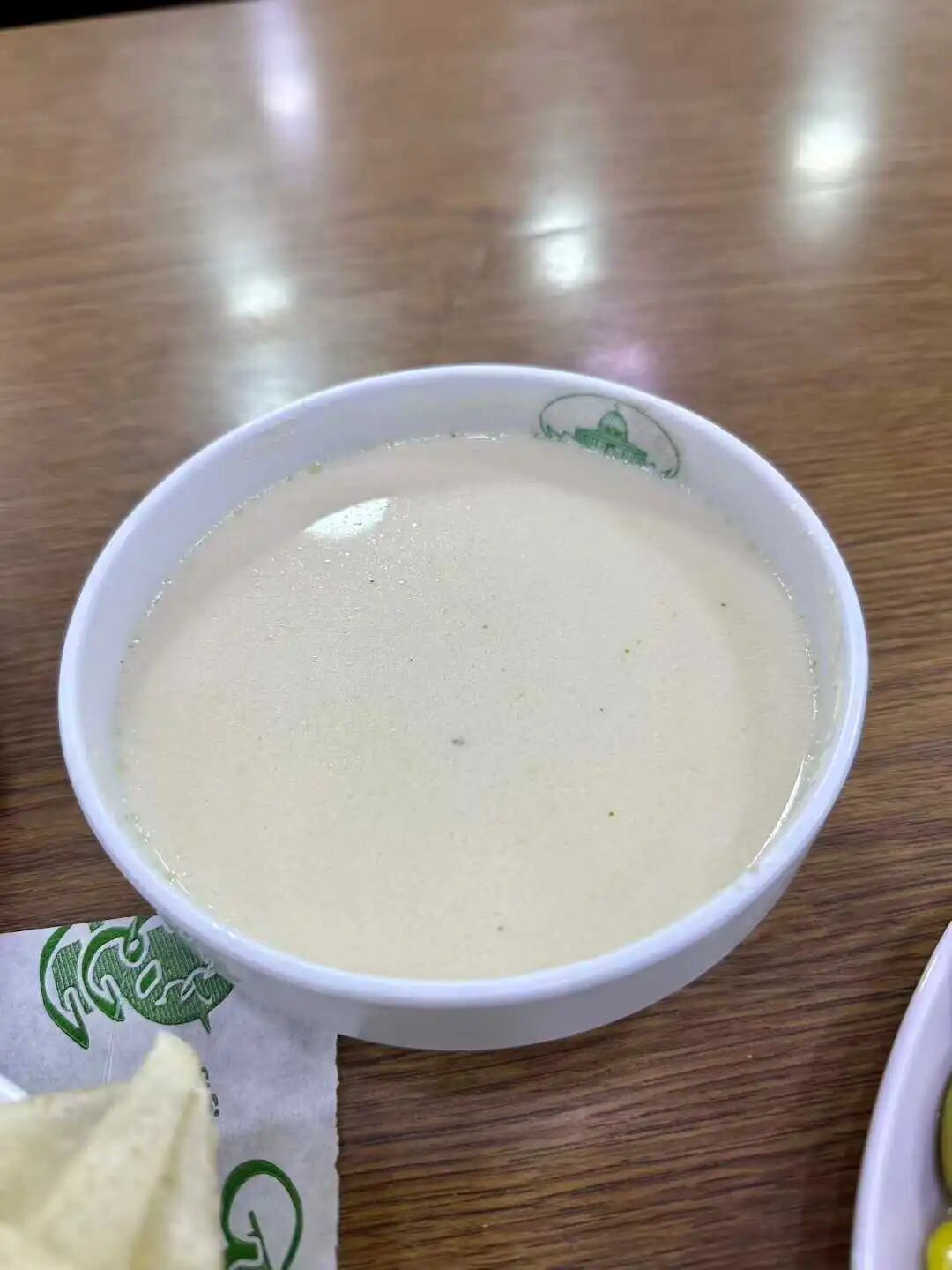
A century ago, Mansaf was served with thin flatbread (Khobz al-Shrak), a nearly translucent unleavened bread baked on a large iron griddle. Today, Mansaf is still served with thin flatbread, along with pickled olives and green chili peppers. It also comes with a bowl of yogurt soup that has a very rich, tangy, and meaty flavor, much like a traditional herder's meal.
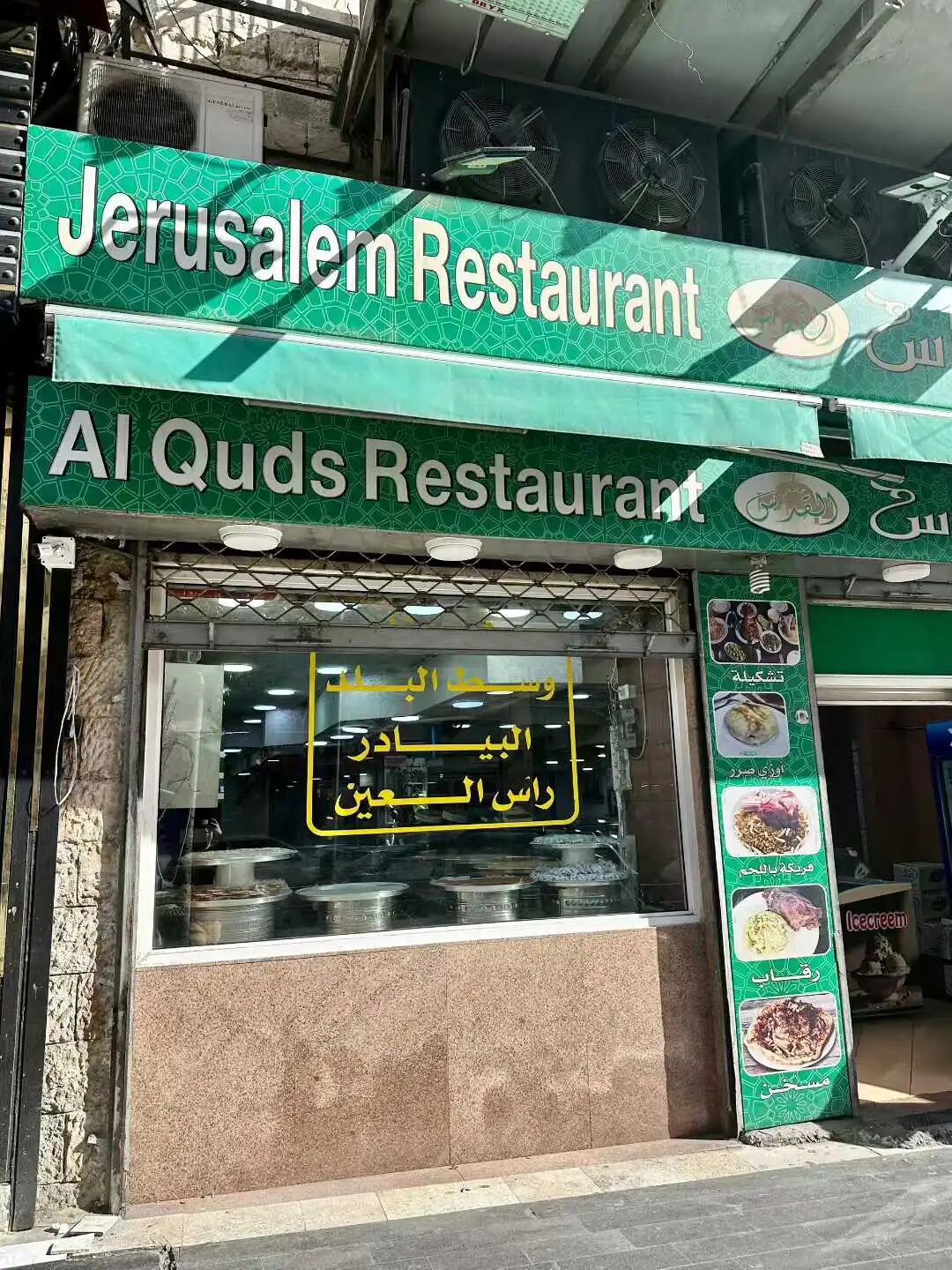
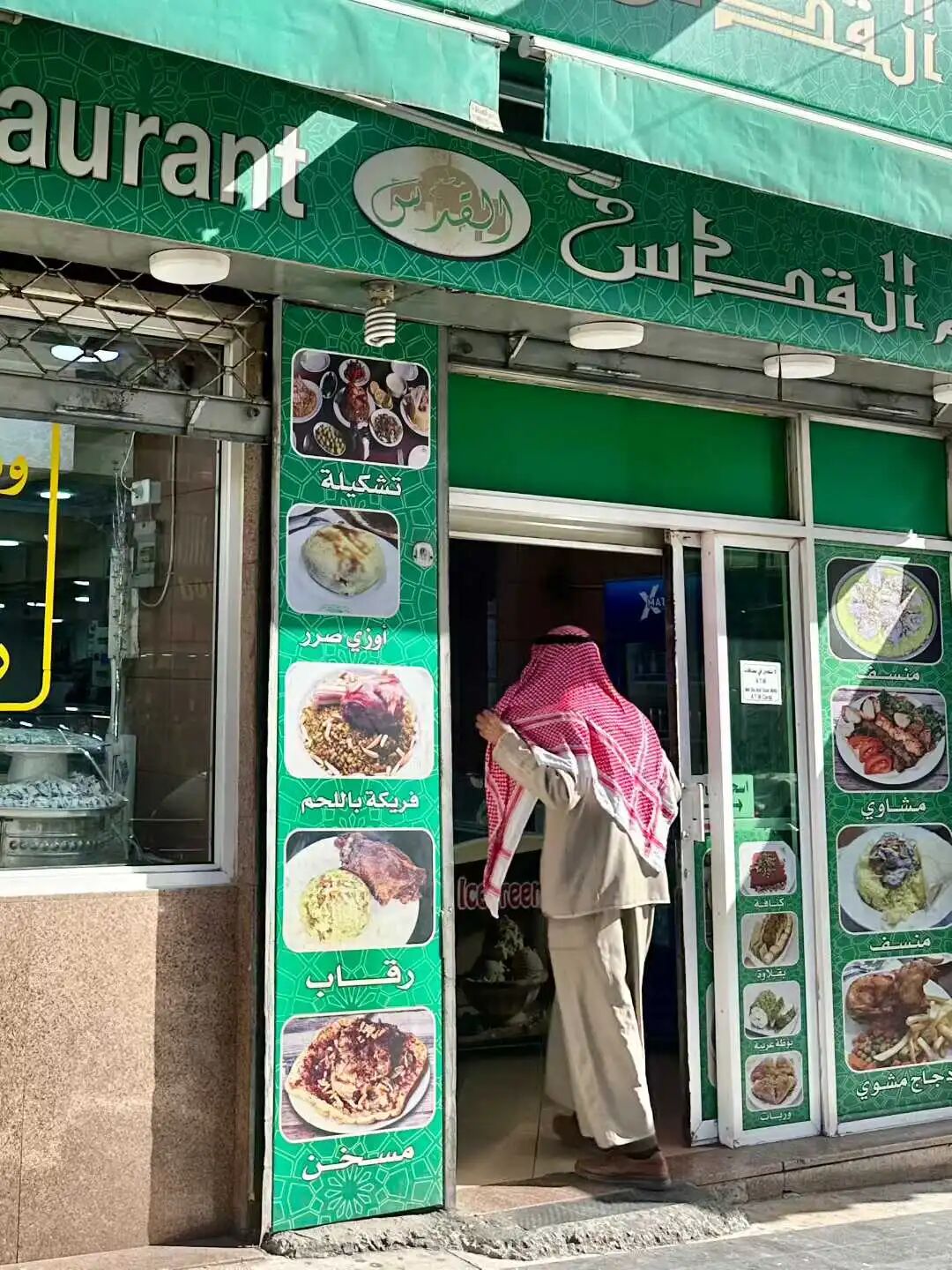
Right next to Quds Restaurant is Habibah Sweets, which opened in 1951 and is still run by Palestinians. Habibah's founder, Hajj Mahmoud Habibah, was from Nablus, Palestine. He opened his first dessert shop in Jerusalem in 1947, but the first Middle East war broke out shortly after. Zionist forces attacked and expelled Palestinian civilians, carrying out dozens of massacres. The war displaced over 700,000 Palestinians, and Habibah was forced to move to Amman. Habibah reopened his dessert shop in Amman in 1951, and it has been running for 75 years now. Today, Habibah has five branches in Amman and three in Riyadh, Saudi Arabia, making it Jordan's most famous dessert shop.
Their most classic dessert is Kunafa. Legend says a doctor in the Umayyad or Fatimid Caliphate court invented Kunafa to satisfy the Caliph's hunger during Ramadan. Kunafa later became a classic Arab dessert for breaking the fast and even appeared in One Thousand and One Nights. Kunafa is made of buttery pastry, stretchy cheese, and crushed pistachios. You pour a syrup called Attar over it before eating. Although it has a thousand-year history, the current fried, stretchy style formed during the Ottoman period in the mid-15th century and spread across the Ottoman-ruled Middle East.
Old Amman has many long-standing restaurants, which shows that the city has developed steadily for over half a century. Right on King Hussein Street, next to Habibah Sweets, is Jabri Restaurant, which has desserts on the first floor and full meals on the second. Although the storefront is not very eye-catching, it opened in 1935 and has a 91-year history. I didn't have time to eat there this time, but it is worth sharing with you.
Founder Subhi Jabri opened his shop in Amman in 1935 and moved to the current King Hussein Street location in 1962. He provided catering services for King Hussein himself many times, and in 1990, the King awarded him the Order of Independence (Wisam al-Istiqlal).
There are many hotels in the old city of Amman, but unfortunately, there are no high-quality heritage hotels. I originally booked a heritage homestay on Airbnb that looked great, but because I had to catch a bus to Damascus early the next morning, I switched to the more conveniently located Philosophy Hotel. The environment is decent, it is only a 5-minute walk from King Faisal Street, and it is convenient for having breakfast at Hashem Restaurant in the morning.
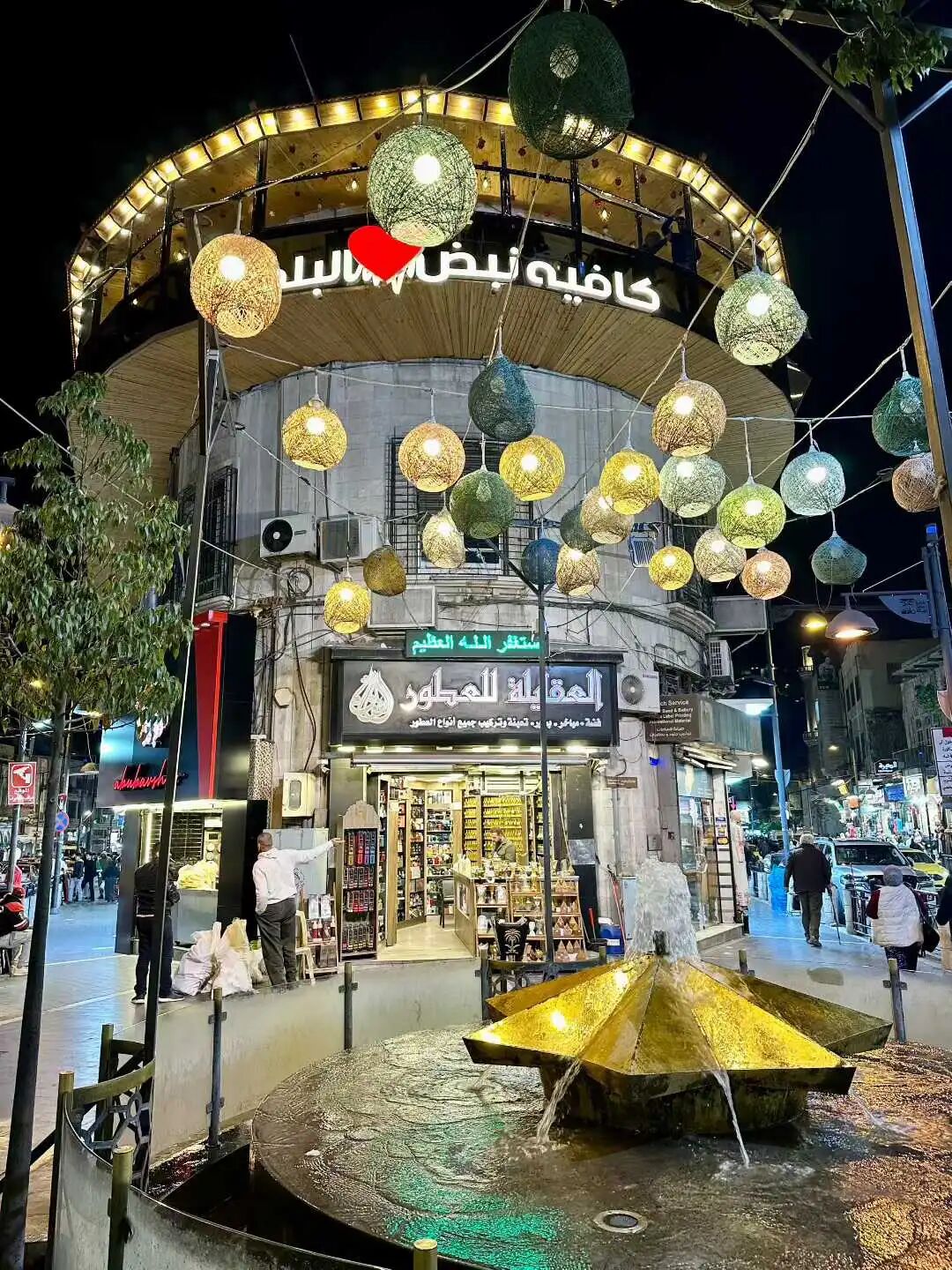
There is a small alley at the intersection of King Hussein Street and King Faisal Street in the old city of Amman. It is called "Coffee Shop Street" because of the many cafes there, and it is a place where young people in Amman love to hang out at night. I had dinner at Faisal Café & Restaurant on Coffee Shop Street. The atmosphere there is very nice, with a marble fountain in the middle and many decorations related to Jerusalem all around.
I ordered a mixed grill platter and stir-fried vegetables; it is quite rare to find stir-fried dishes in the Middle East. However, stir-fried dishes in the Middle East are relatively light, mainly highlighting the natural flavor of the vegetables. The grilled meat includes lamb, chicken, and a mix of beef and lamb, which is the classic Levantine style, and I never get tired of it.
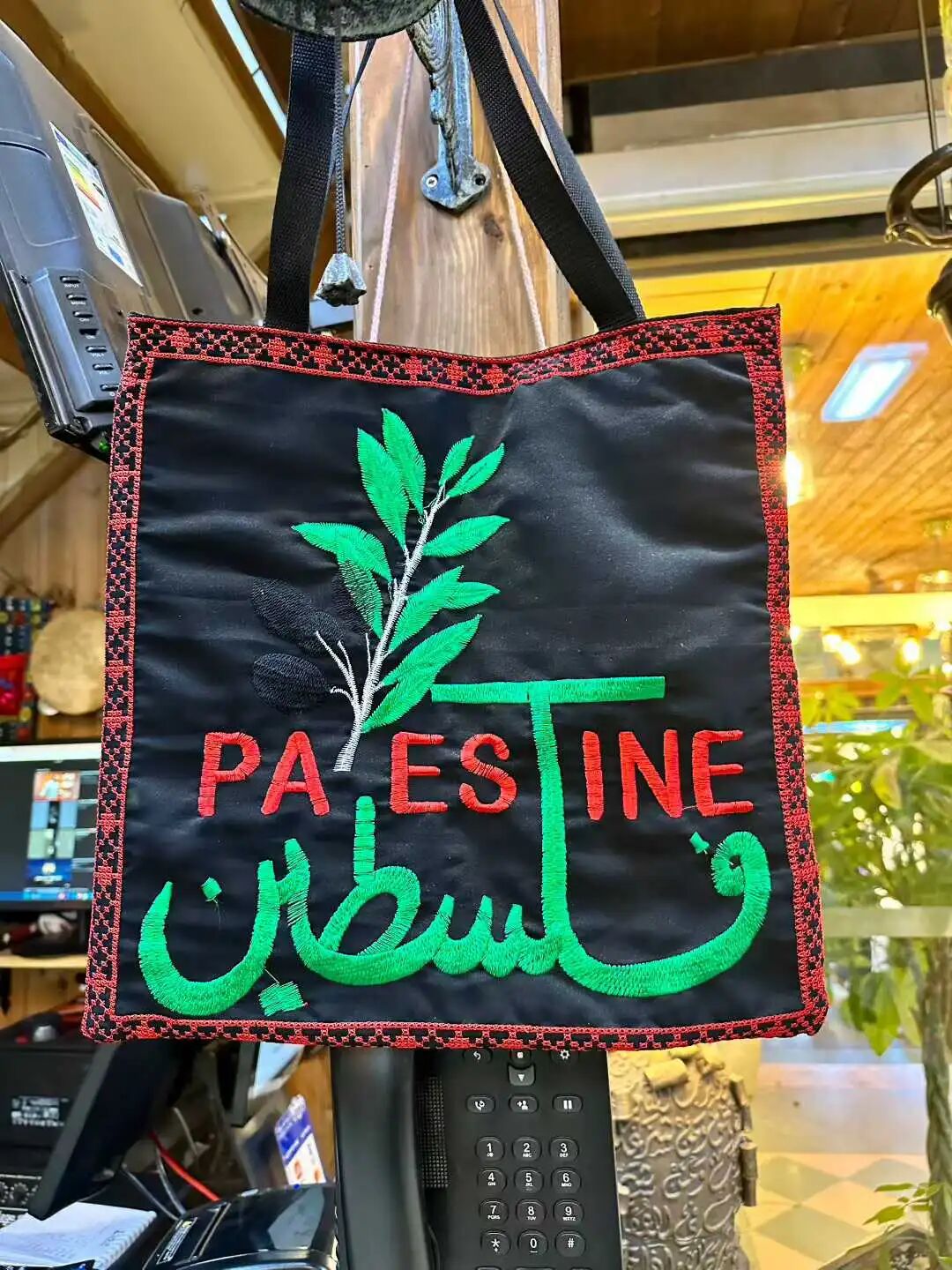
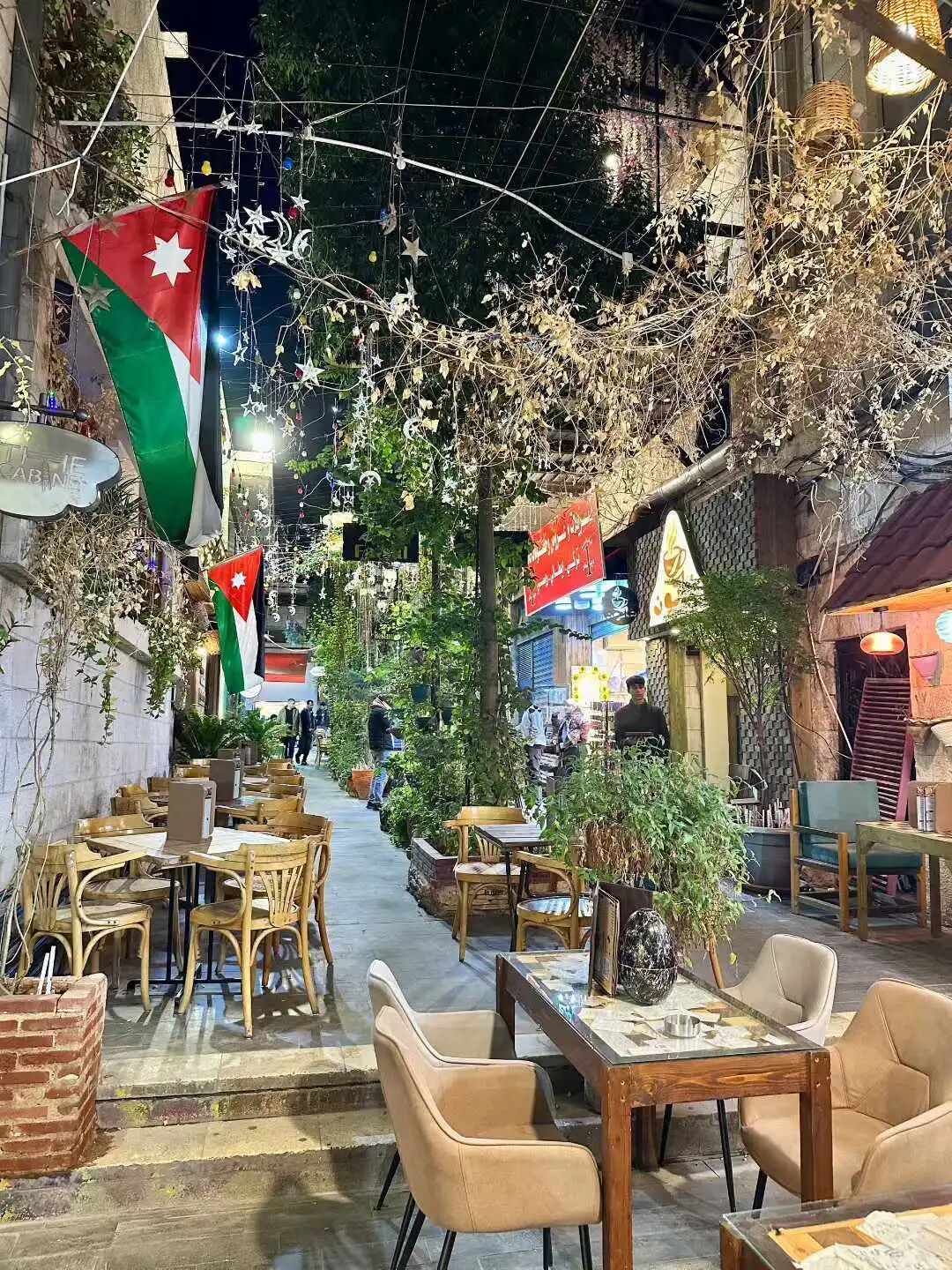
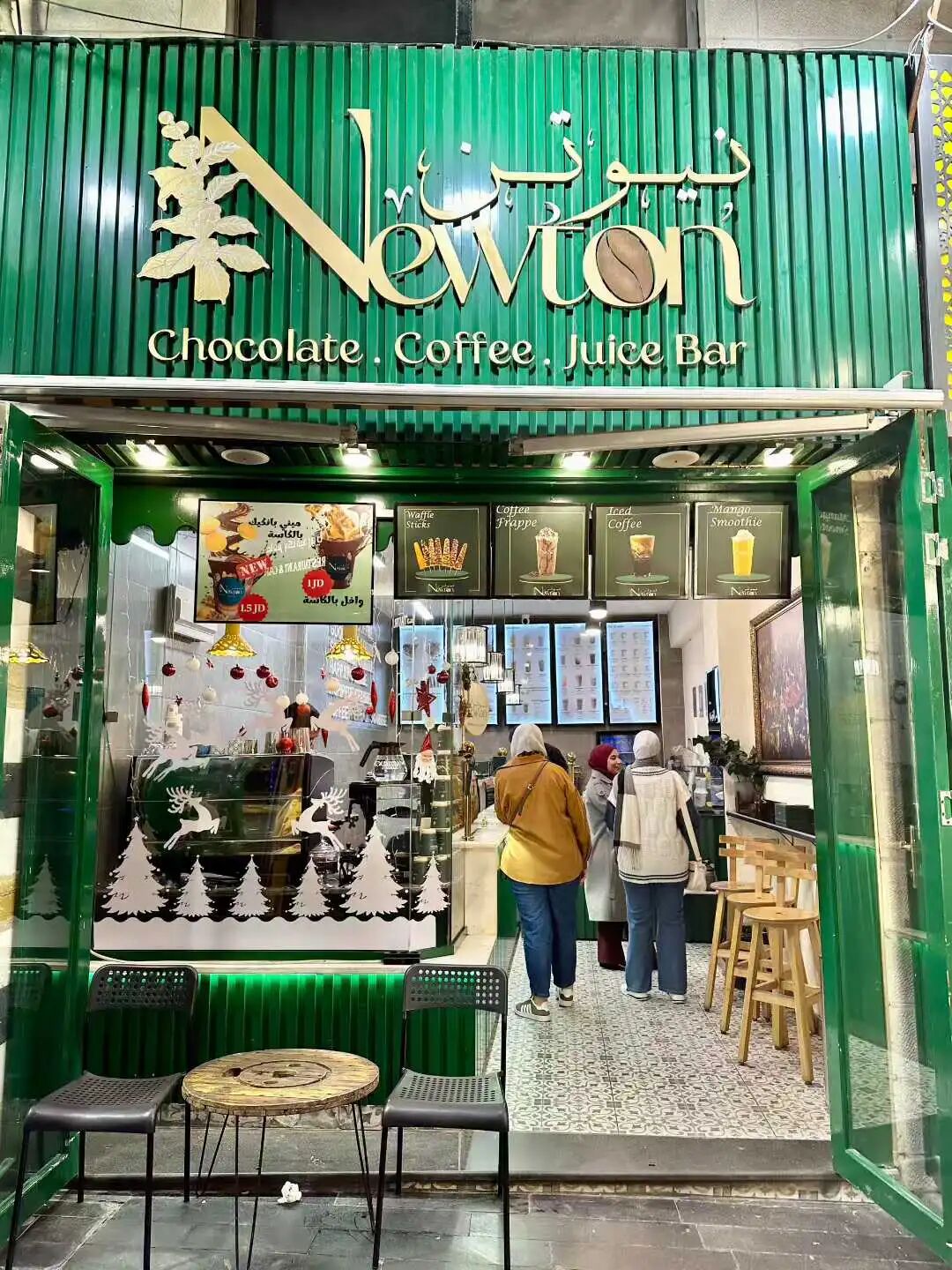
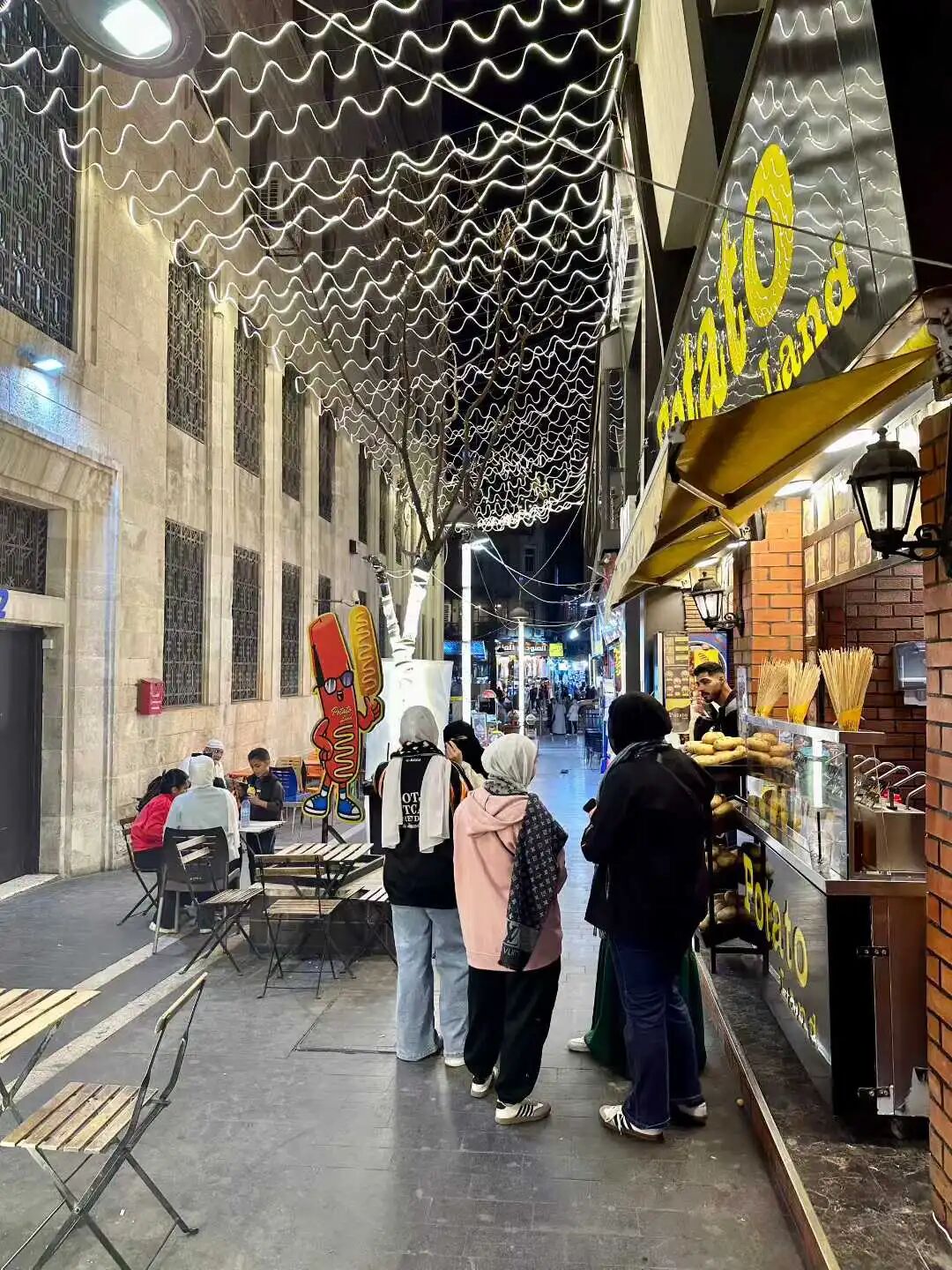
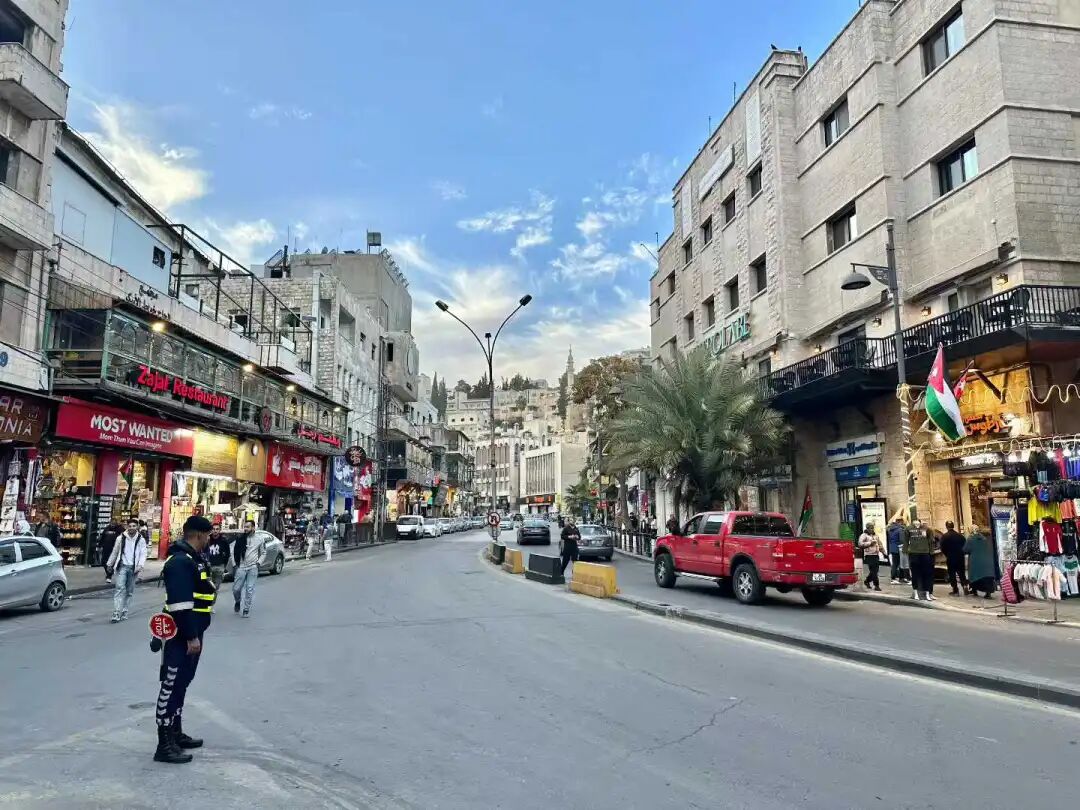
King Faisal Street is the main road in the old city of Amman and one of the busiest places in Amman. After Amman became a municipality in 1909, the first city hall building was built, and the street facing the building was named Municipality Street. After Amman became the capital of the Emirate of Transjordan in 1921, many hotels, cinemas, cafes, and restaurants were built near Municipality Street. It was later renamed King Faisal Street to commemorate King Faisal I of Iraq, who was also from the Hashemite family.
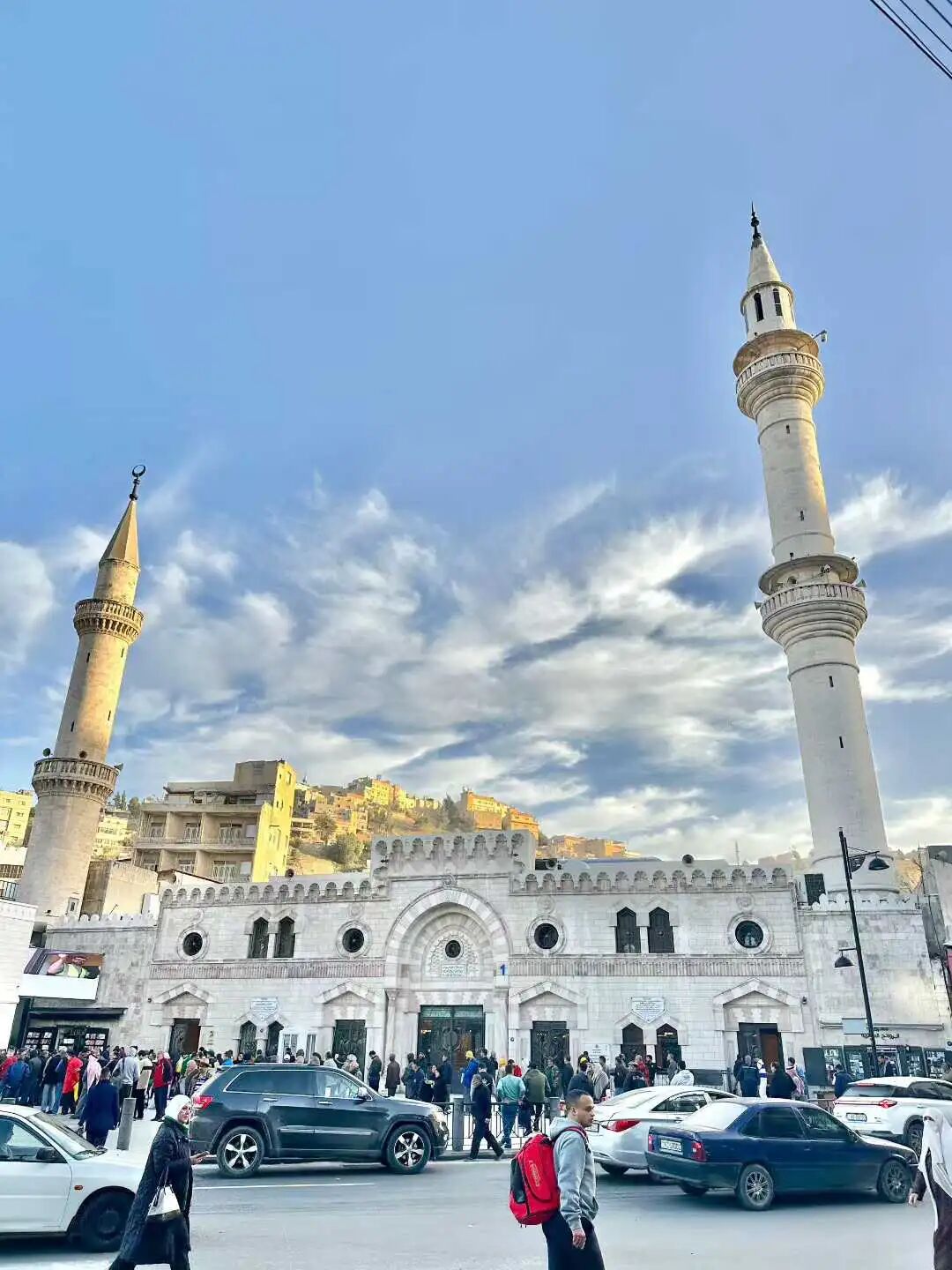
The Grand Husseini Mosque is a landmark building in the old city of Amman. It was built in 1924 by the then Emir of Transjordan, Abdullah I, to confirm the status of the Hashemite family in Jordan, and it was named after Abdullah I's father, King Hussein bin Ali of Hejaz.
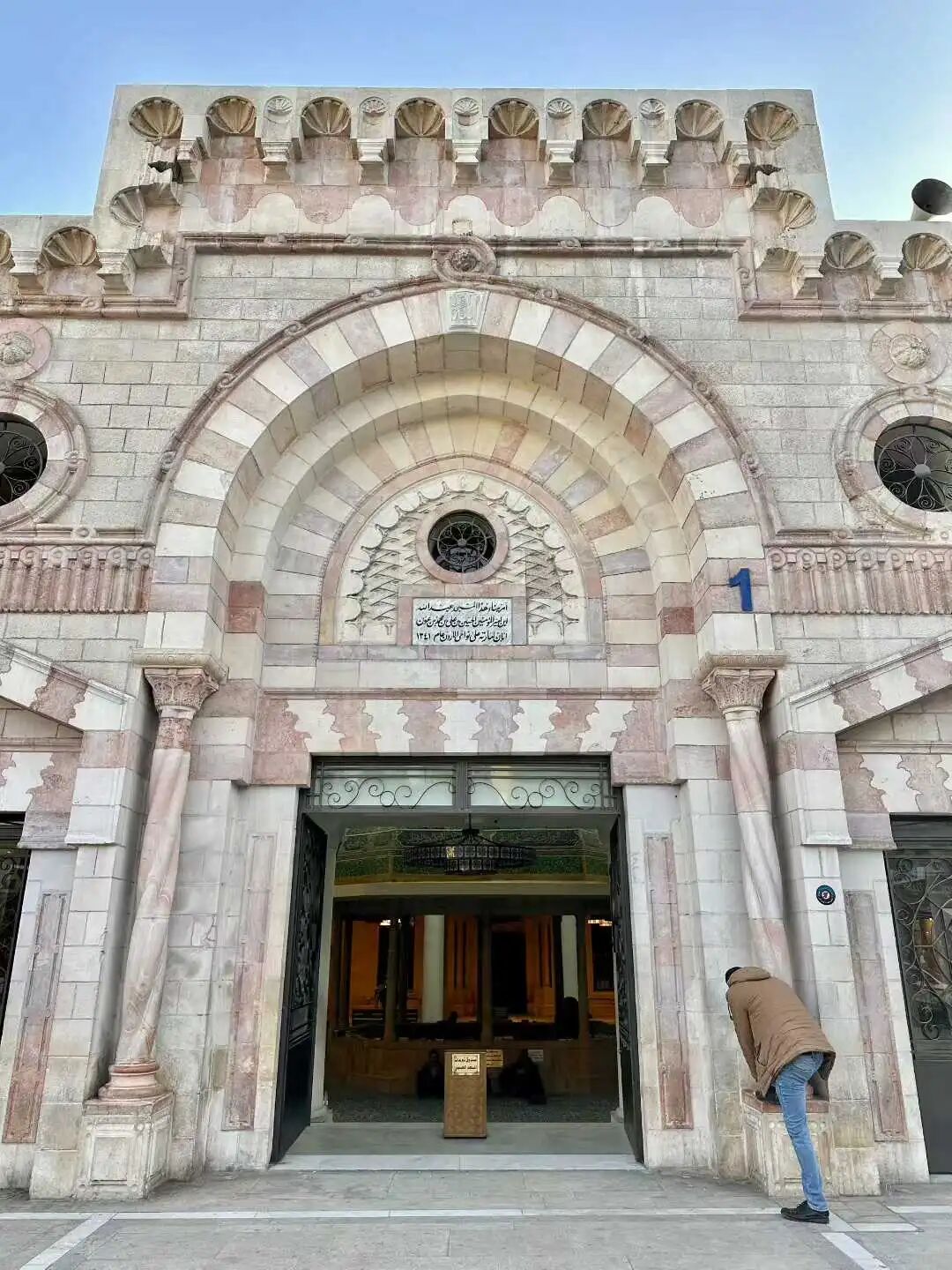
The Grand Husseini Mosque was expanded after being damaged in the 1927 earthquake. A fountain for wudu (small ablution) was added in the 1940s, and it underwent renovations in 1986 and 2019, eventually taking on its current appearance.
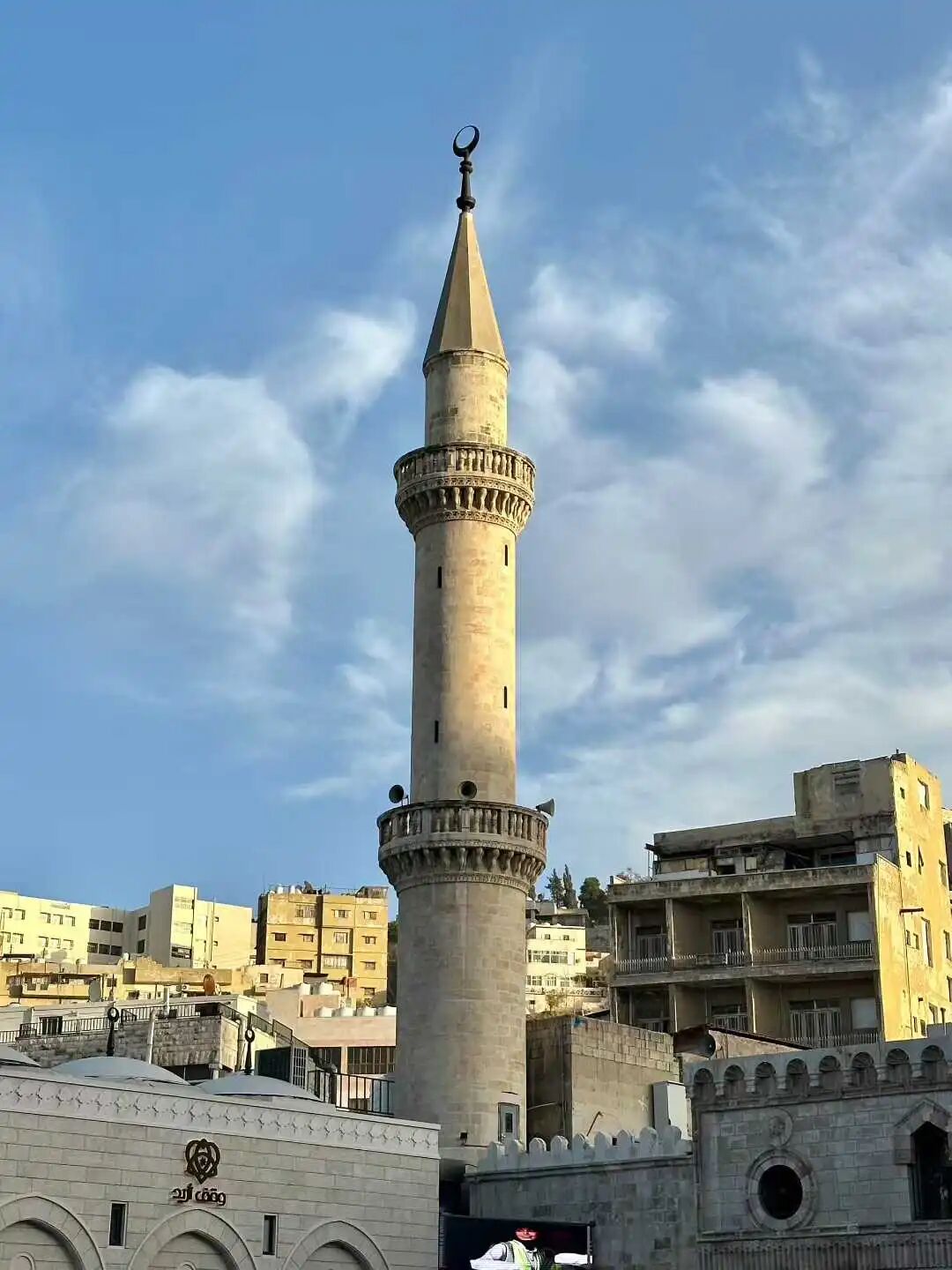
The site of the Grand Husseini Mosque originally held the Omari Mosque, which was built during the Umayyad period in the 7th century. At that time, the Omari Mosque was right next to the market and served as the main Friday mosque (Jumu'ah mosque) for Amman. Until the 19th century, the Omari Mosque still preserved a minaret and a wall. When the Grand Husseini Mosque was built in 1924, the remains of the Omari Mosque were completely demolished. The British sent the Director of the Department of Antiquities of Palestine to investigate, and it was ultimately determined that the wall had low historical and artistic value due to multiple destructions, so no intervention was taken.
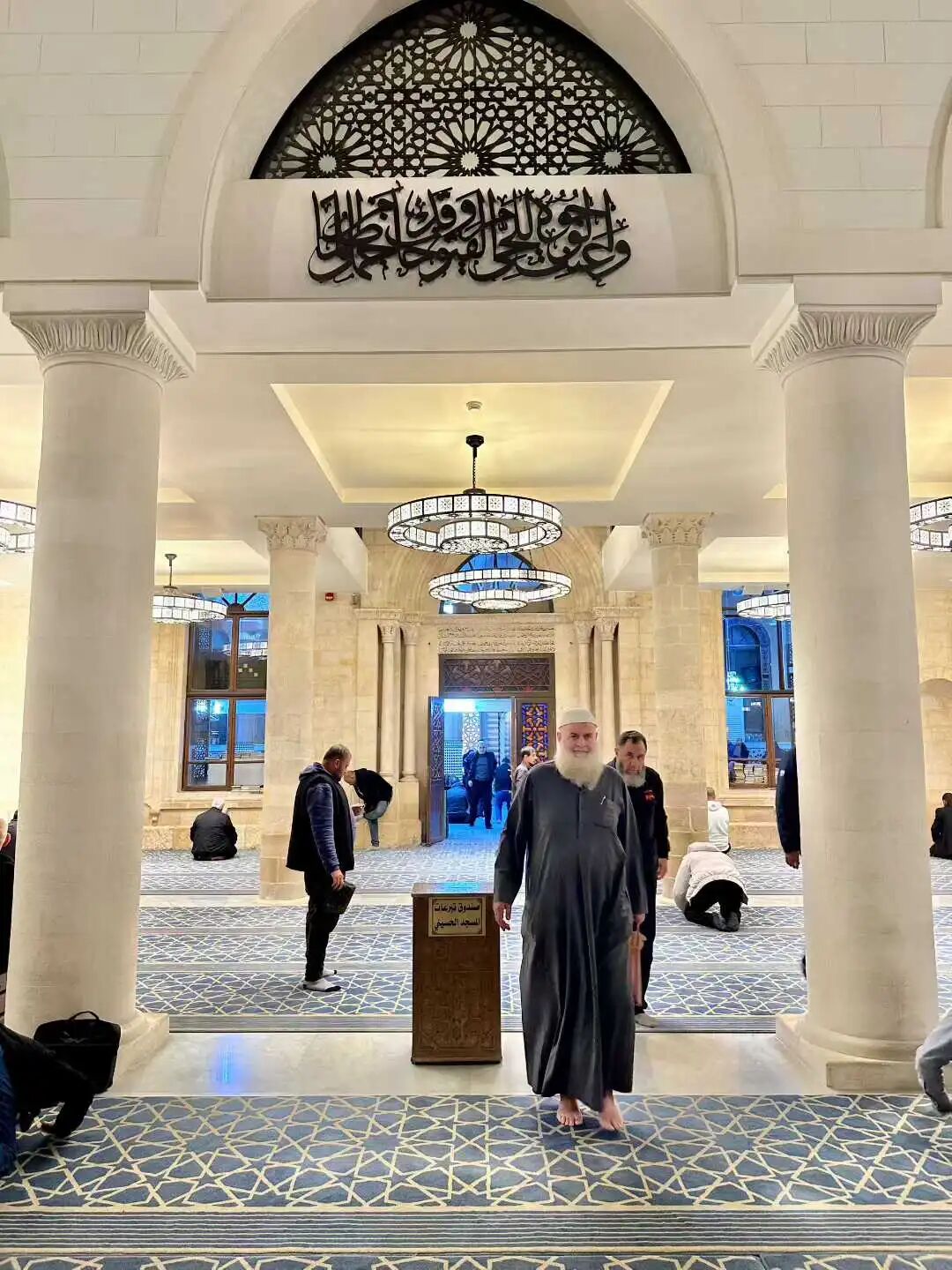
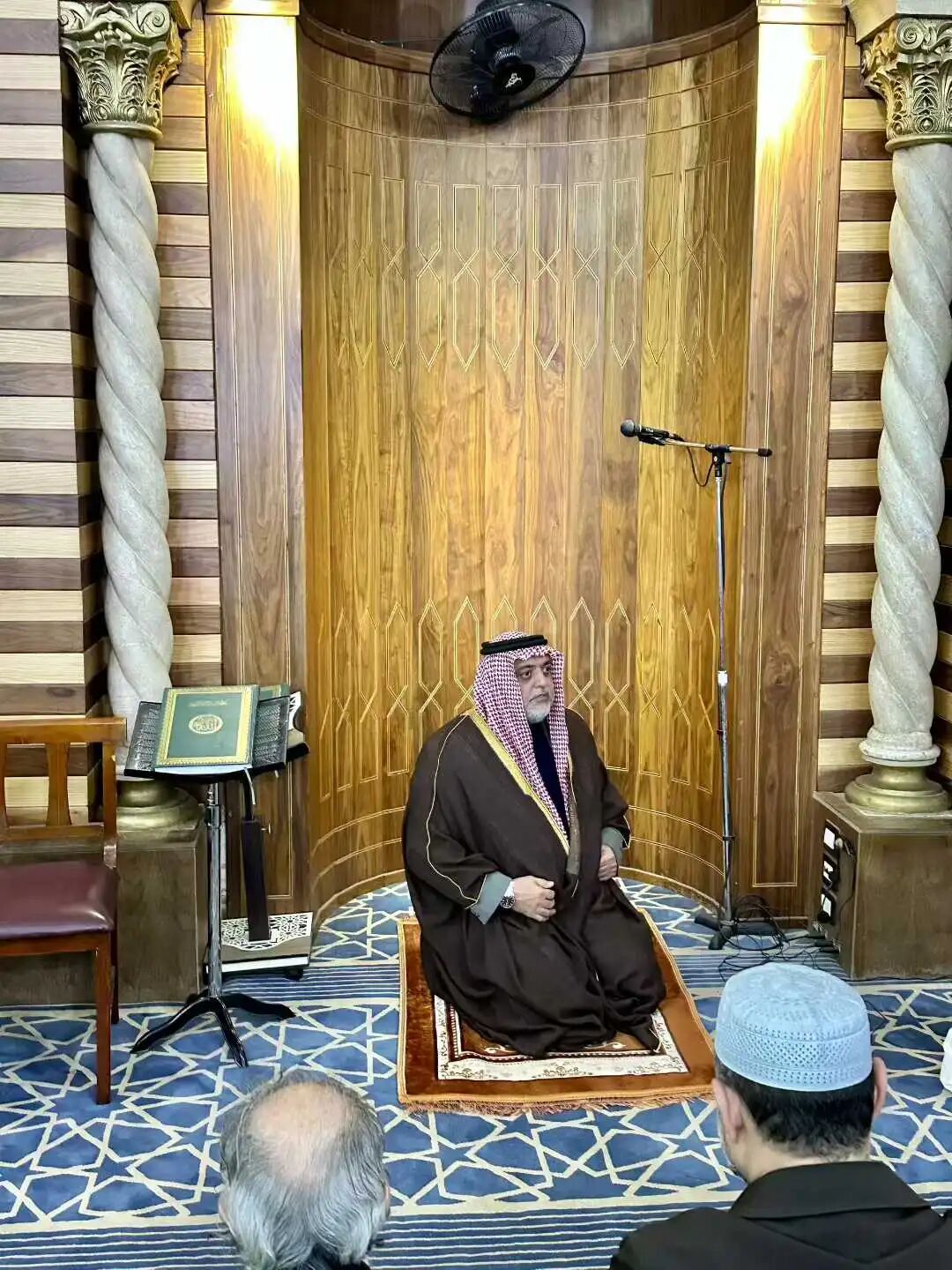
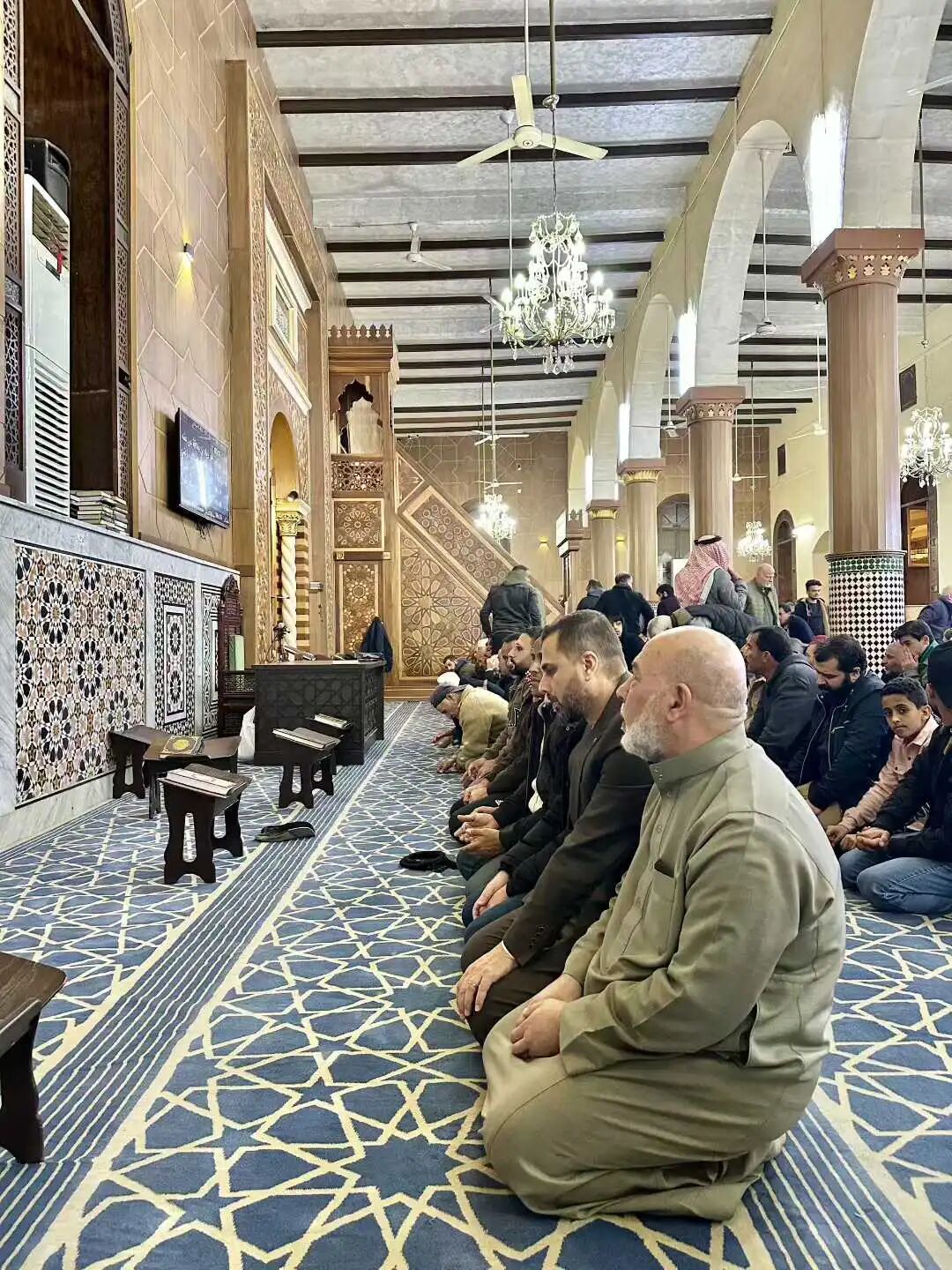
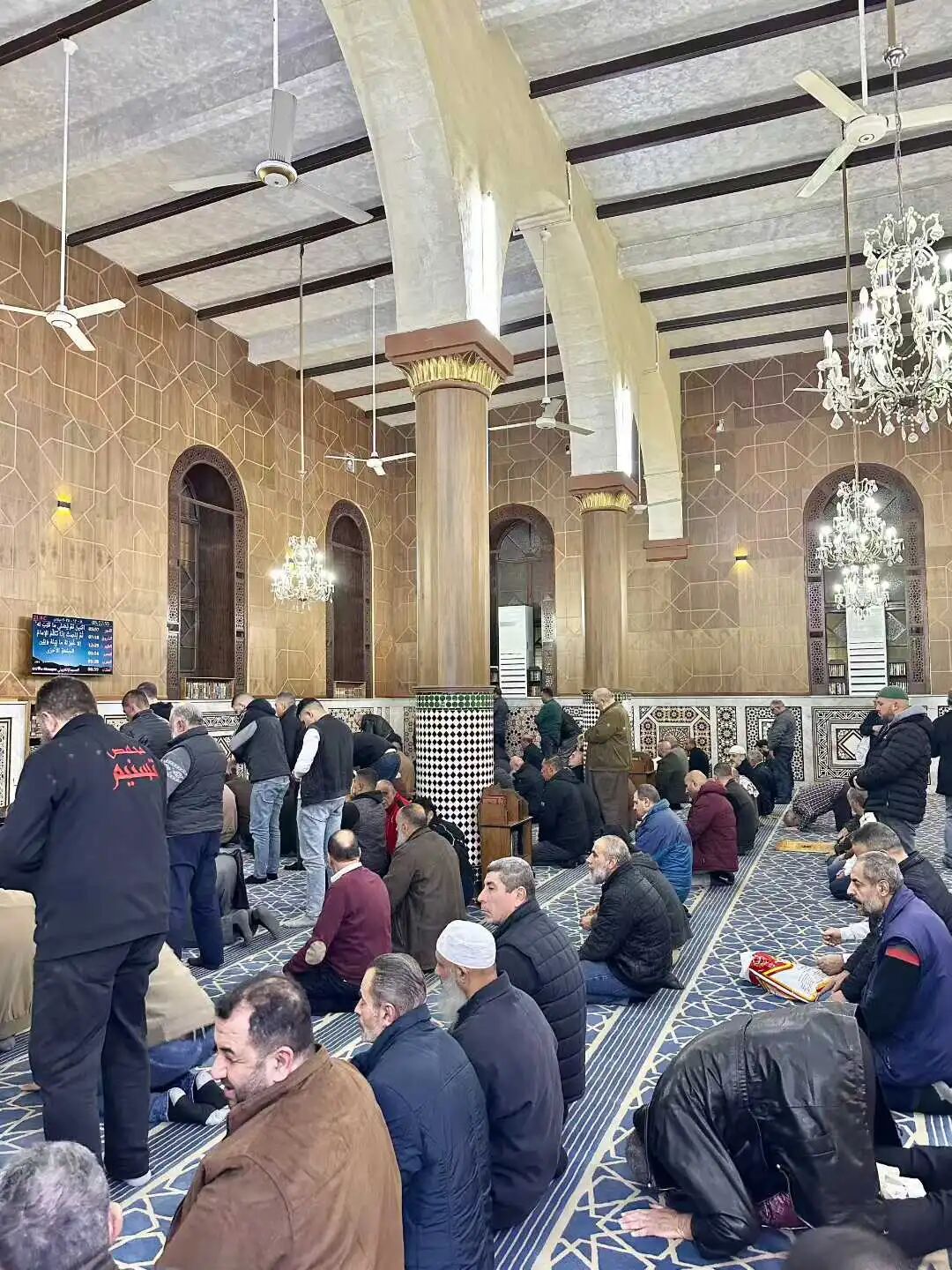
I bought the most traditional Jordanian Kufiyyeh headscarf opposite the Grand Husseini Mosque in Amman. The Jordanian headscarf is made of cotton, features a red and white checkered pattern, and has tassels. The larger the tassels, the higher the status of the wearer. The Kufiyyeh headscarf was originally worn by Bedouin herders. In 1931, the Emirate of Transjordan recruited Bedouins to form the Desert Patrol, making the Kufiyyeh headscarf part of the patrol's uniform. The Kufiyyeh headscarf then became popular in Jordan and has now become one of the symbols of the country.
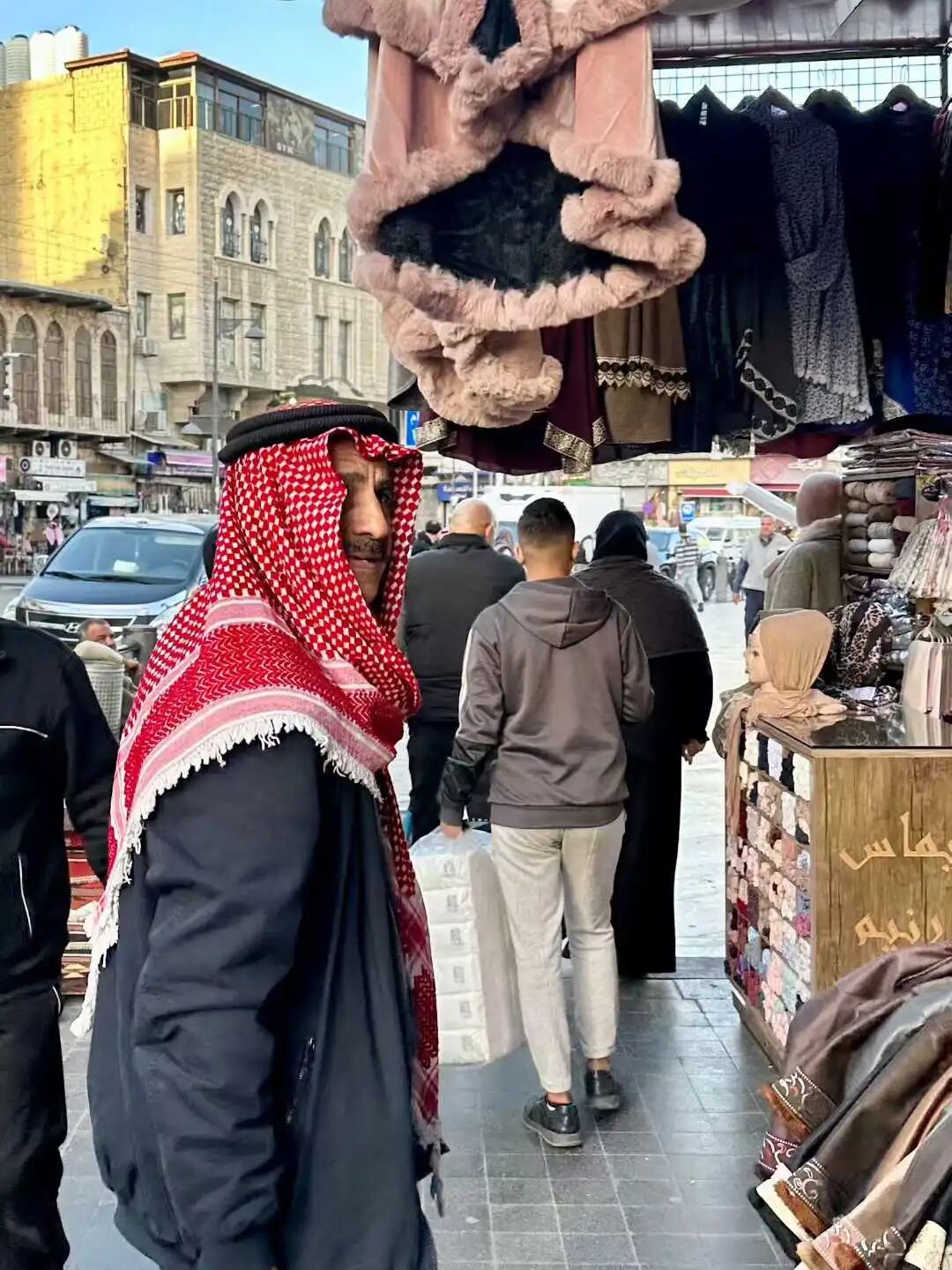
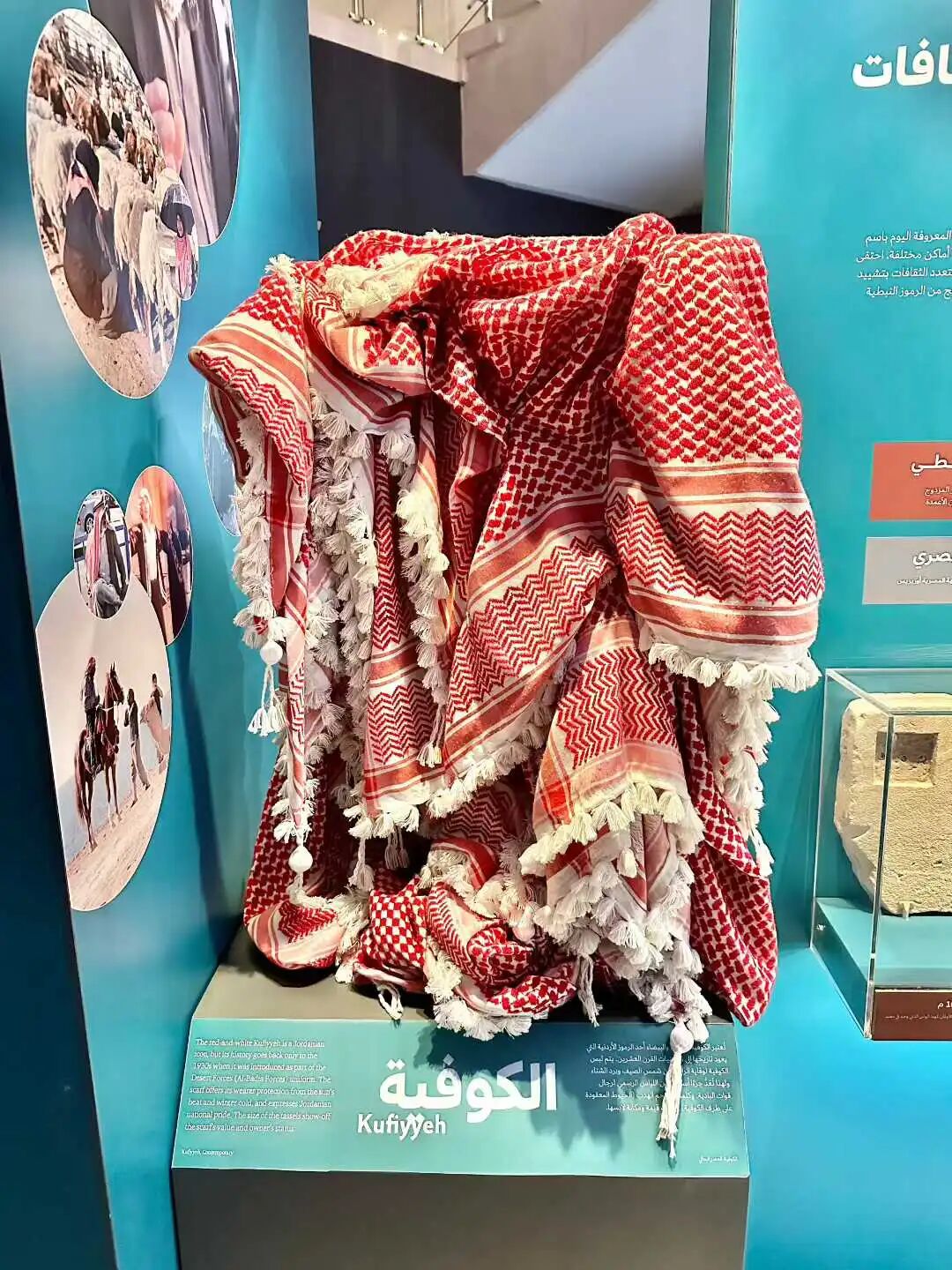
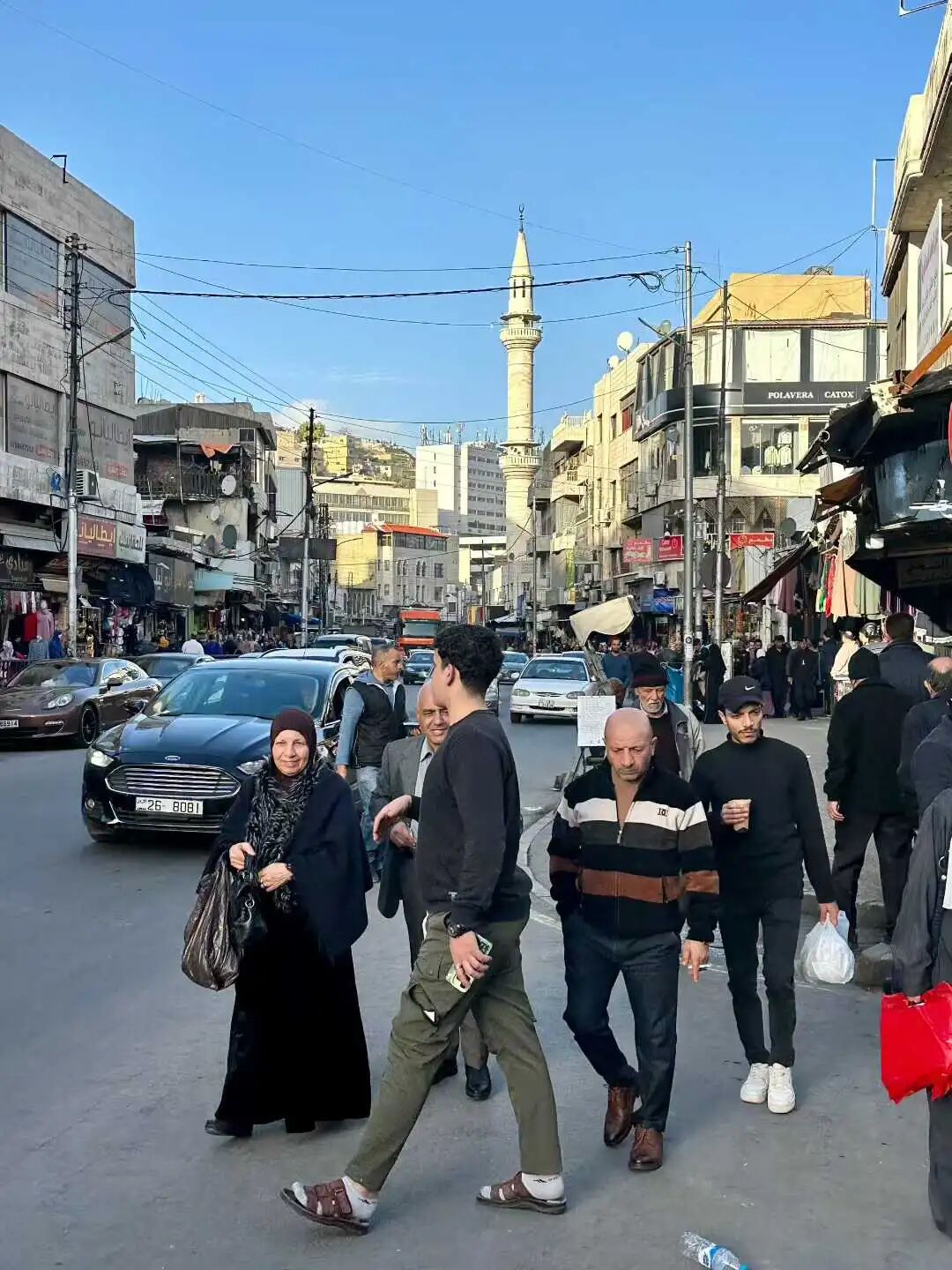
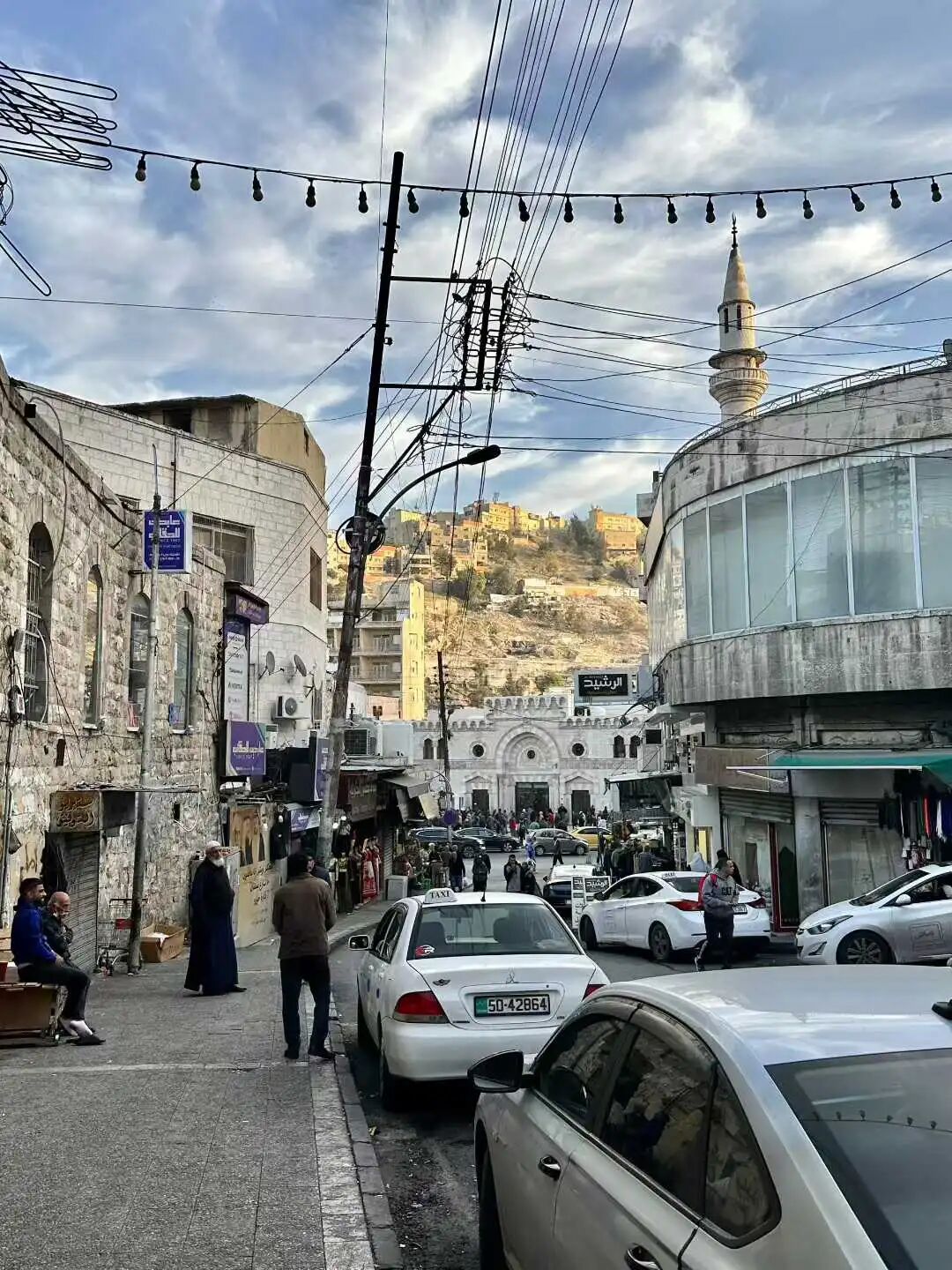
The road from the Grand Husseini Mosque to King Faisal Street is full of shops selling traditional Jordanian women's clothing, which looks very beautiful.
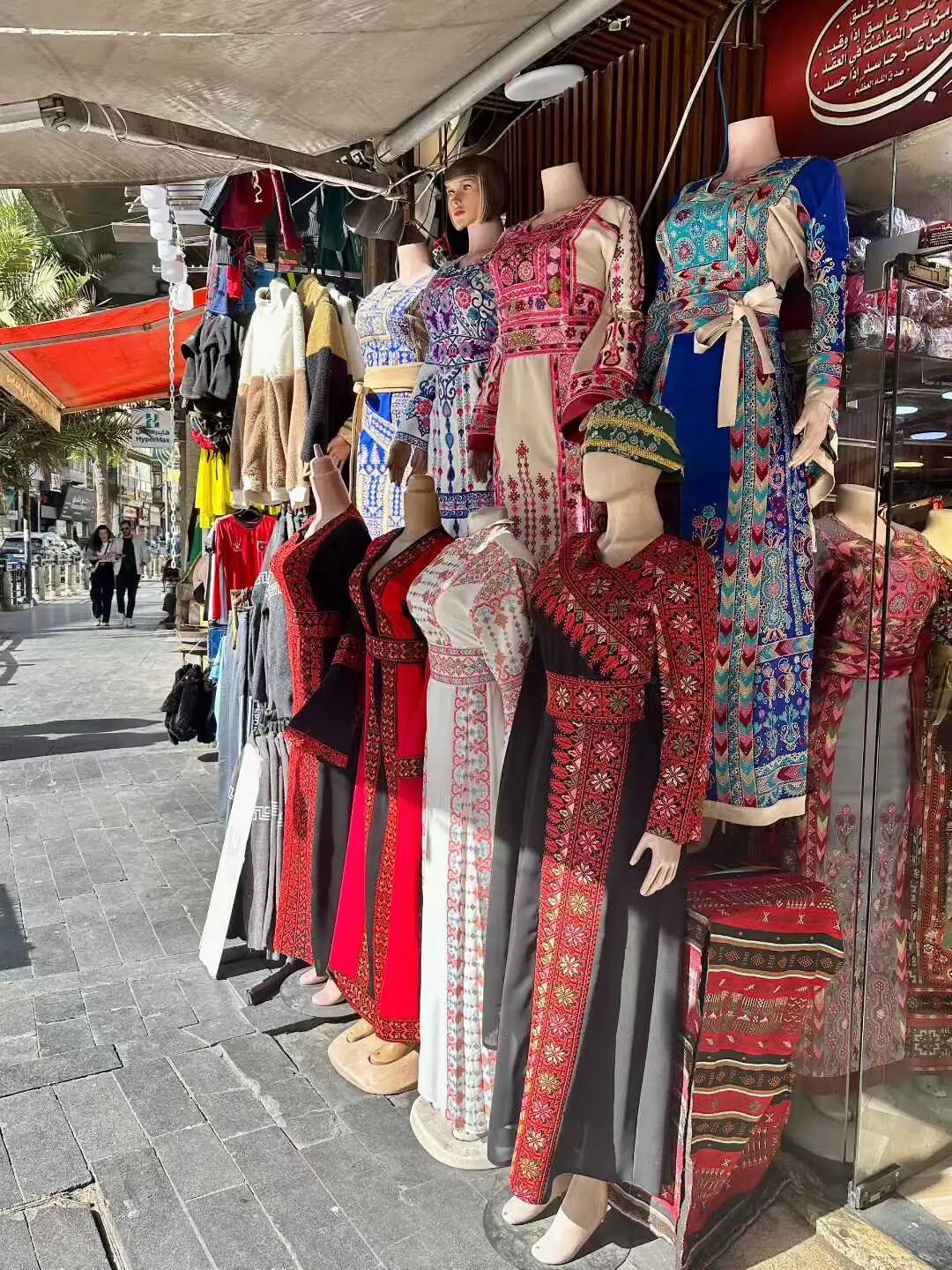
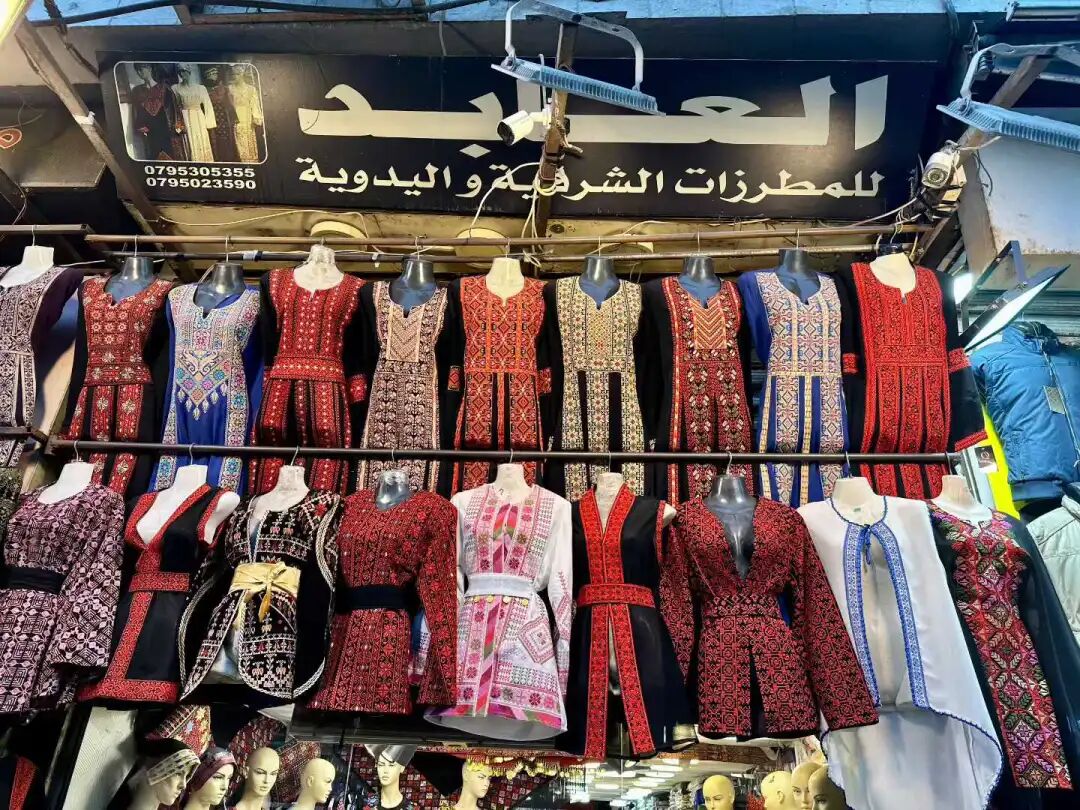
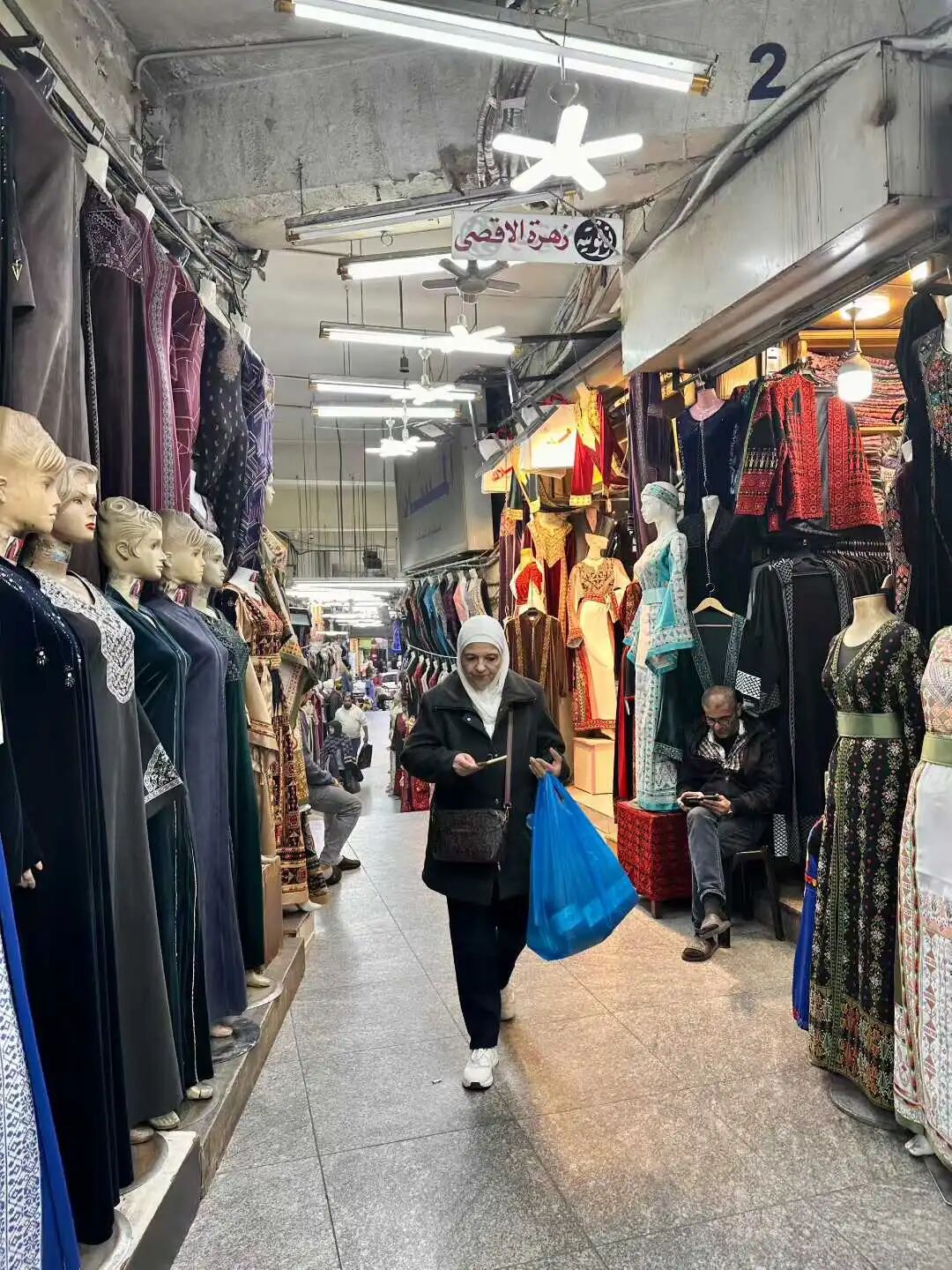
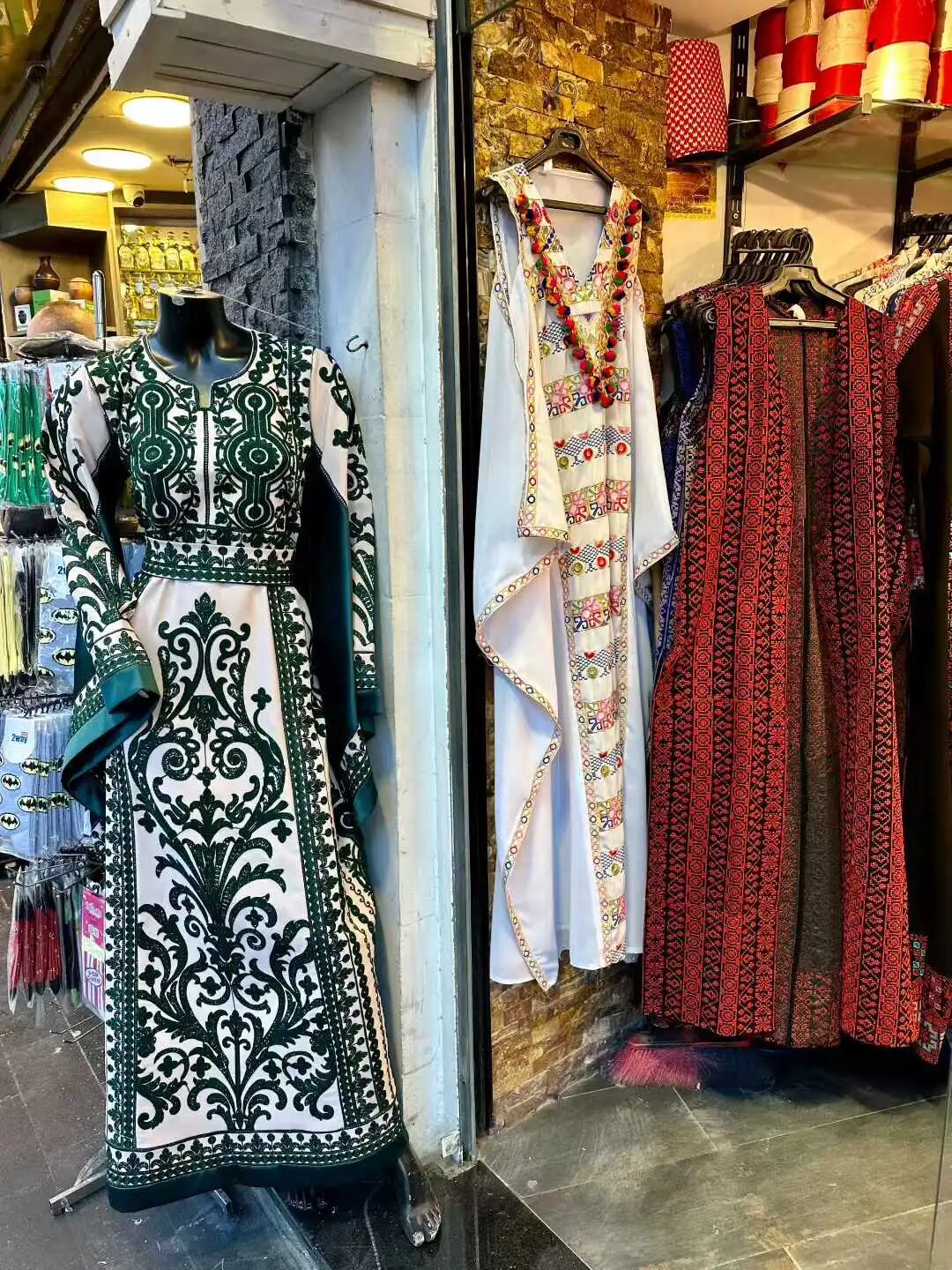
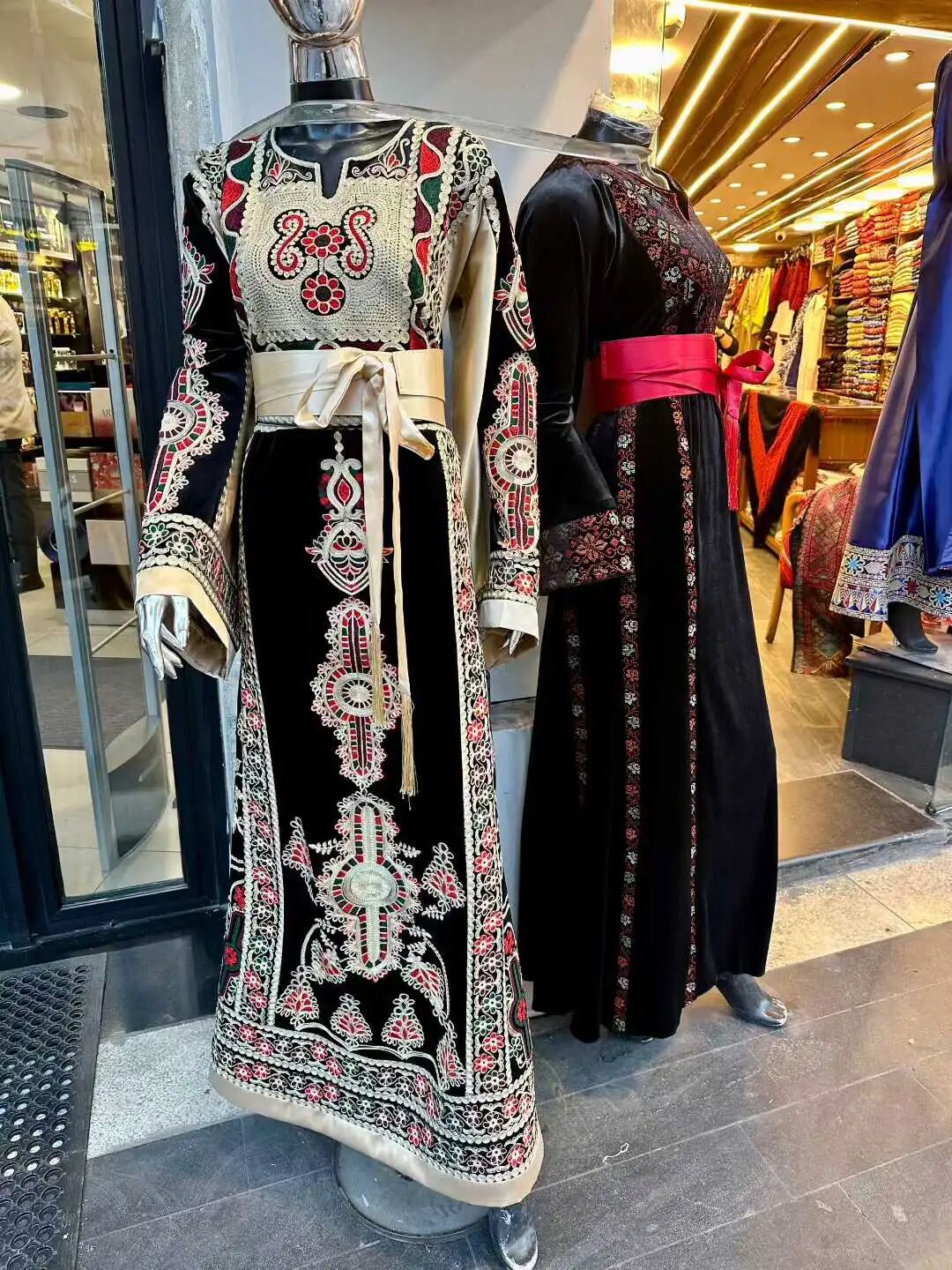
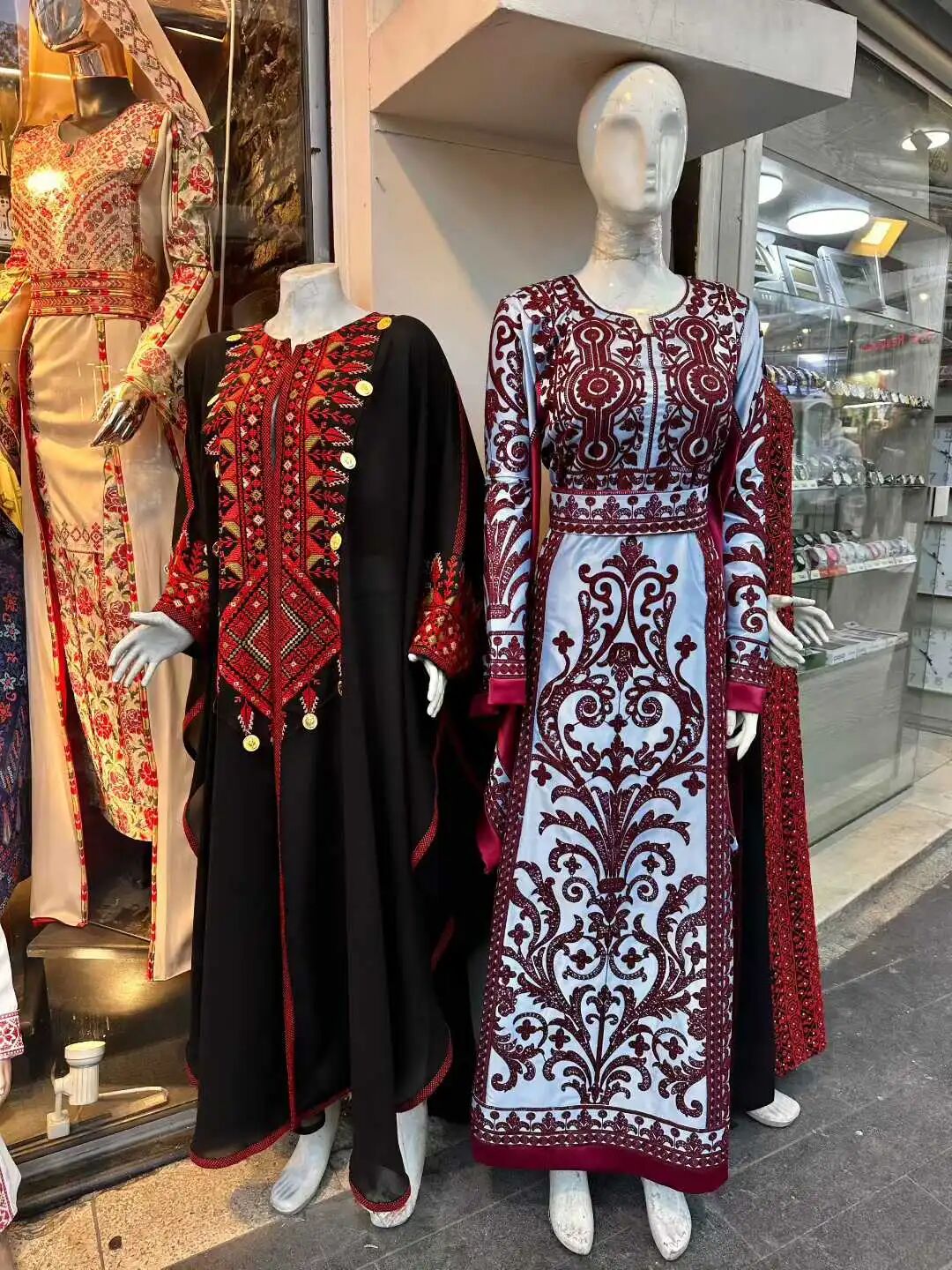
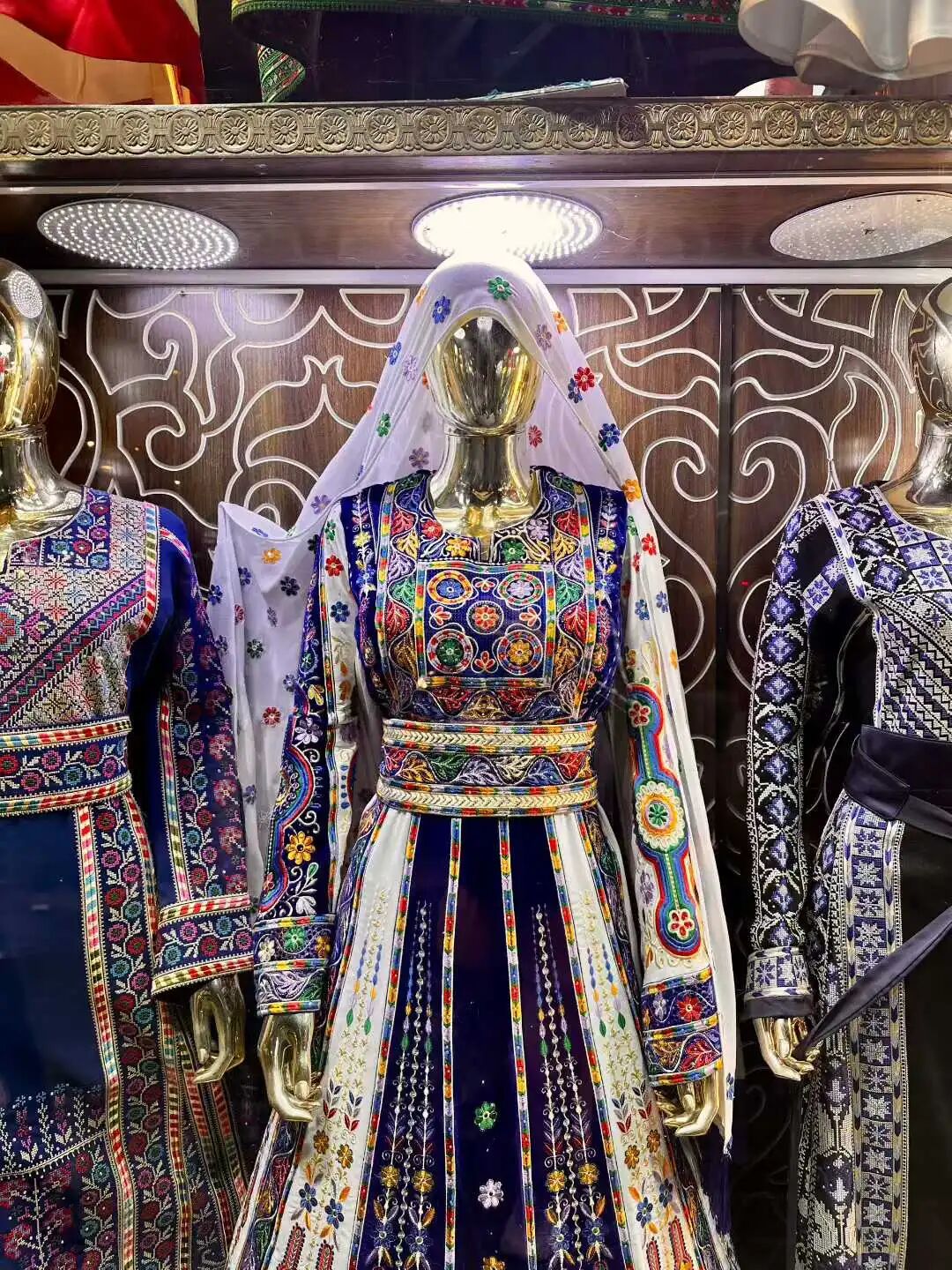
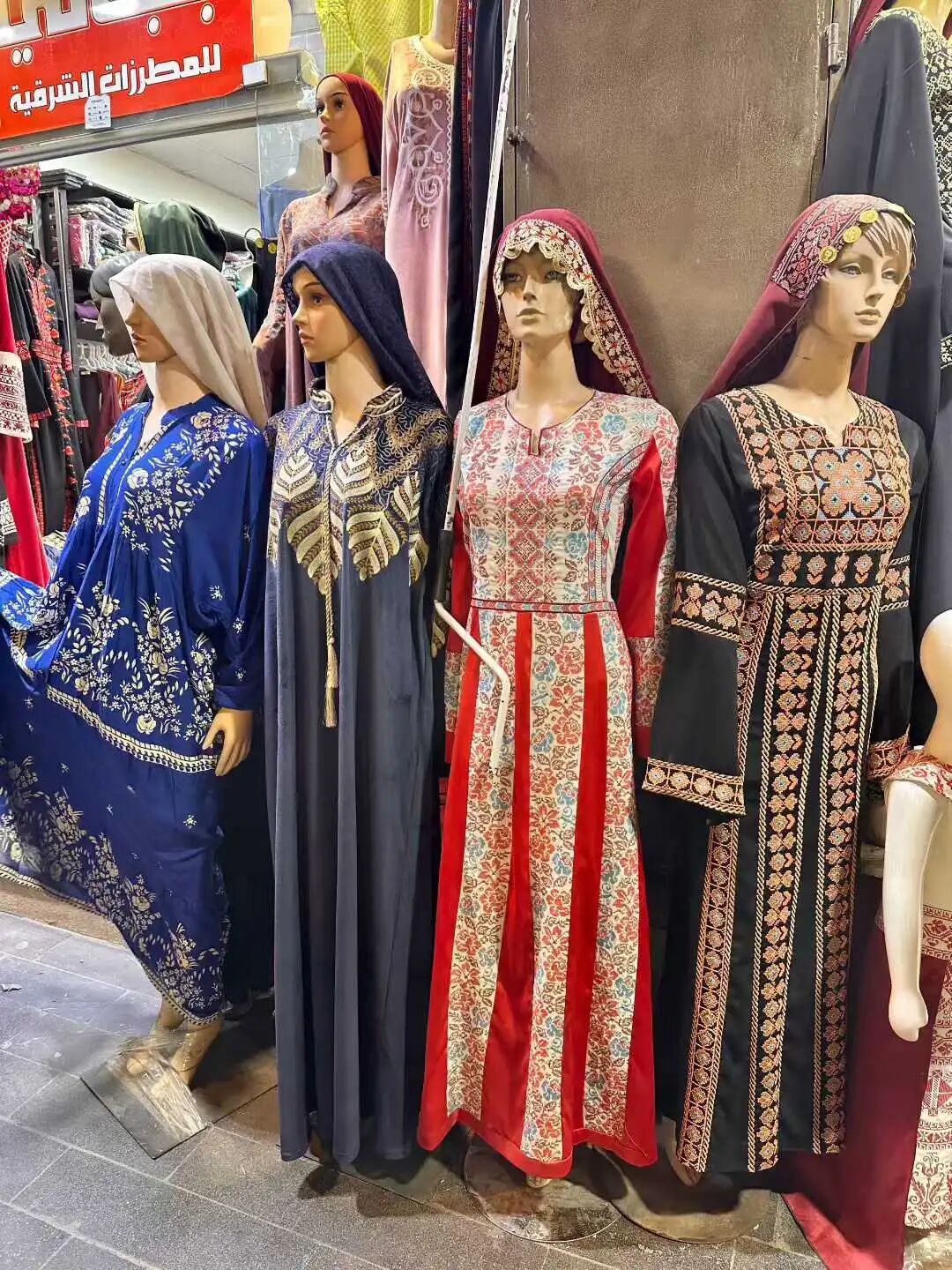
The night view of the old city in the Amman valley is beautiful, with rows of small shops that are great for browsing. Many book stalls stay open late into the night, which is quite rare in the Middle East.
Summary: Amman's old city food route includes Hashem Restaurant, Al Quds, Habibah Sweets, Faisal Cafe, and the Grand Husseini Mosque area. This article preserves the source's Palestinian restaurant histories, Mansaf and Kunafa details, Hashemite background, street context, and photographs.
The Umayyad dynasty built a massive urban complex on Amman Citadel Hill, but it slowly declined due to many earthquakes and natural disasters. A major earthquake in 749 turned Amman from a city into an ordinary town. Amman saw a brief revival during the Mamluk dynasty in the 14th century, but frequent land sales and divisions caused its importance to drop. By the 15th century, it had become a simple village again.
In 1878, Russia expelled the Circassians living in the North Caucasus. Tens of thousands of Circassian farmers then flooded into the Ottoman Empire as refugees. The Ottoman Empire settled some Circassians in Amman. They built houses in the valleys and on the slopes, and by 1908, there were 800 households.
After the Hejaz Railway was built in Amman in 1904, the town quickly turned from an agricultural village into a commercial hub. It attracted many Arab merchants from Damascus, Nablus, and Jerusalem, and Amman was officially established as a city in 1909. After the Ottoman Empire was defeated in 1918, Amman came under the rule of the Hashemite dynasty and officially became the capital of the Emirate of Transjordan in 1921. Amman later attracted many immigrants from the Levant and grew into the largest city on the east bank of the Jordan River.
The Hashemite family is named after the Prophet's great-grandfather, Hashim ibn Abd Manaf. They are also direct descendants of Imam Hasan, the son of Imam Ali. The Hashemite family ruled Mecca for a thousand years starting in the 10th century. They rebelled against the Ottoman Empire in 1916 and gained British support, which allowed them to rule the Kingdom of Hejaz (1916-1925), the Kingdom of Syria (1920), the Kingdom of Iraq (1921-1958), and Jordan (1921-present).
If you want to get close to the Hashemite family history in Amman, you can visit Hashem Restaurant on King Faisal Street. The restaurant is open 24 hours a day, making it a great place for breakfast if you are catching a bus to Damascus in the morning.
The owners of Hashem Restaurant are from Palestine, and they started their business in Jaffa in 1910. Jaffa was once a city with a Palestinian majority. When the United Nations created the partition plan for Palestine and Israel in 1947, it even designated Jaffa as a Palestinian enclave outside the Jewish residential areas in the north. In 1948, Zionist forces attacked Jaffa, causing many Palestinian civilian casualties and forcing most Palestinians to flee the city. The owners of Hashem Restaurant fled Palestine and finally reopened their restaurant in Amman in 1956. It has been open for 70 years now.
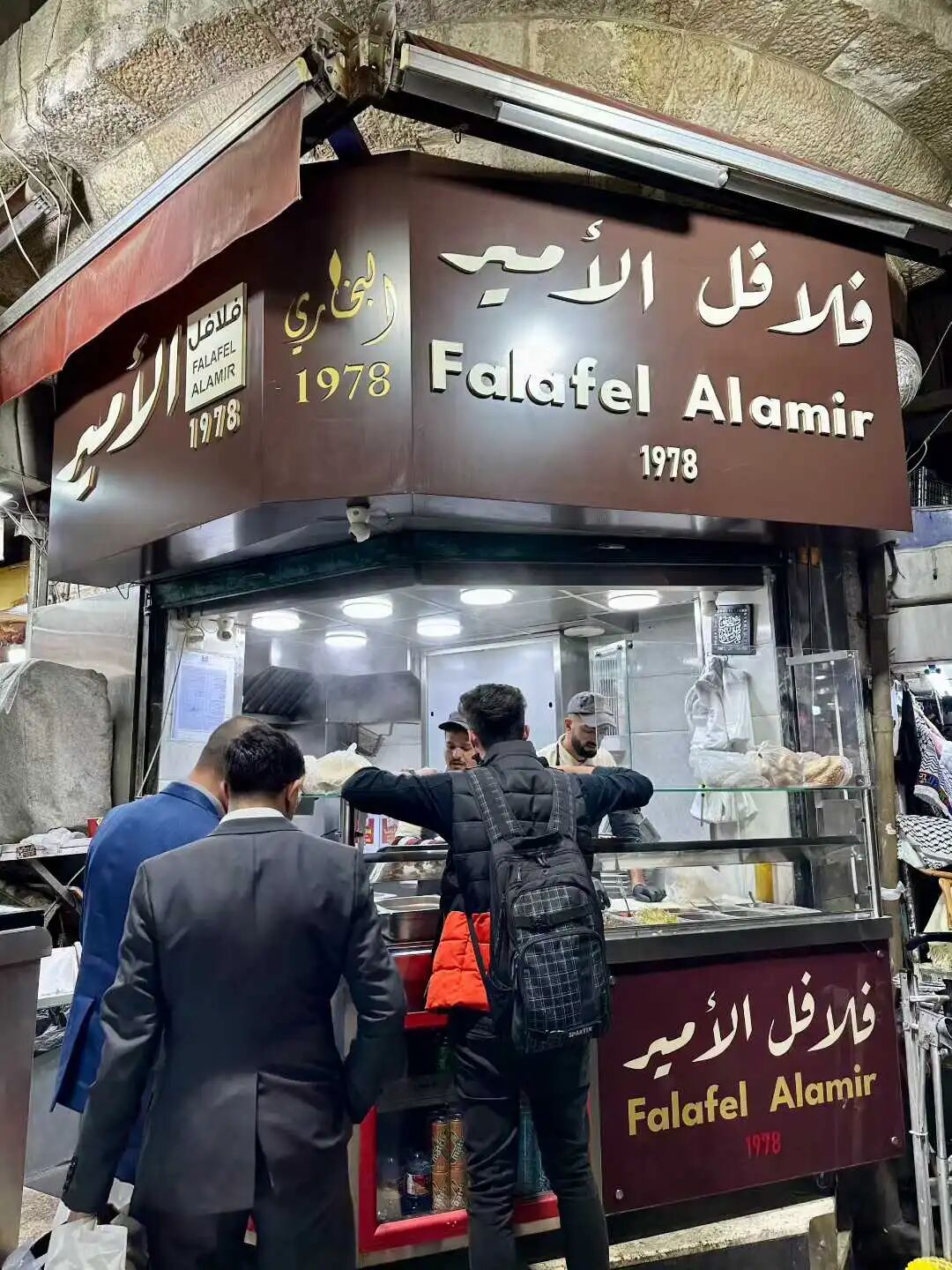
They specialize in classic Levantine hummus (hummus) and fava bean dip (foul). After you order, they serve pita bread (pita) and a vegetable platter. I ordered minced meat fatteh (fatteh) and fried chickpea balls (falafel). Fatteh means 'crushed' in Arabic. It is a snack from the southern Levant, found in Damascus, Beirut, Jordan, and Palestine, but not in the northern Levant. The main ingredient of fatteh is pieces of flatbread (khubz), topped with yogurt, steamed chickpeas, olive oil, and other ingredients, then sprinkled with cumin.
Although Circassians and Bedouins were the first to settle in the Amman valley, the main population of Amman today consists of Palestinians who have moved there over the last century. On King Hussein Street, there is a restaurant called Al Quds that opened in 1969. It is run by Palestinians from Jerusalem, and the shop is decorated with many photos of the Dome of the Rock and the Al-Aqsa Mosque.
Arabs have called Jerusalem 'Al Quds' since the 9th century, which is a literal translation of the Hebrew 'Ir HaKodesh' (Holy City). Before 1967, travel between Jerusalem and Amman was very easy. After Israel occupied Jerusalem and the West Bank in 1967, many Palestinians from Jerusalem fled to Jordan, and many settled in Amman.
Quds Restaurant specializes in the traditional Bedouin yogurt-stewed rice dish called Mansaf. It is Jordan's national dish and was added to the UNESCO Intangible Cultural Heritage list in 2022. Originally, Mansaf was just meat and clarified butter served with bread. Rice became common in northern Jordan in the 1920s, leading to the stewed rice version. Later, they added dried yogurt balls (Jameed) from settled Bedouin herders to create the yogurt-stewed rice we see today. When Bedouin tribes settle disputes, the leaders visit each other. The host serves a large platter of Mansaf as a symbol of reconciliation.
To make Amman-style Mansaf, lamb or camel meat is slow-cooked for hours in boiling yogurt soup. The rice is soaked in clarified butter (Samneh) and topped with nuts. The traditional yogurt soup uses dried yogurt balls (Jameed). To make them, sheep's milk is boiled, dried, and fermented. It is placed in fine cheesecloth and salted daily until it thickens into a round ball.
A century ago, Mansaf was served with thin flatbread (Khobz al-Shrak), a nearly translucent unleavened bread baked on a large iron griddle. Today, Mansaf is still served with thin flatbread, along with pickled olives and green chili peppers. It also comes with a bowl of yogurt soup that has a very rich, tangy, and meaty flavor, much like a traditional herder's meal.
Right next to Quds Restaurant is Habibah Sweets, which opened in 1951 and is still run by Palestinians. Habibah's founder, Hajj Mahmoud Habibah, was from Nablus, Palestine. He opened his first dessert shop in Jerusalem in 1947, but the first Middle East war broke out shortly after. Zionist forces attacked and expelled Palestinian civilians, carrying out dozens of massacres. The war displaced over 700,000 Palestinians, and Habibah was forced to move to Amman. Habibah reopened his dessert shop in Amman in 1951, and it has been running for 75 years now. Today, Habibah has five branches in Amman and three in Riyadh, Saudi Arabia, making it Jordan's most famous dessert shop.
Their most classic dessert is Kunafa. Legend says a doctor in the Umayyad or Fatimid Caliphate court invented Kunafa to satisfy the Caliph's hunger during Ramadan. Kunafa later became a classic Arab dessert for breaking the fast and even appeared in One Thousand and One Nights. Kunafa is made of buttery pastry, stretchy cheese, and crushed pistachios. You pour a syrup called Attar over it before eating. Although it has a thousand-year history, the current fried, stretchy style formed during the Ottoman period in the mid-15th century and spread across the Ottoman-ruled Middle East.
Old Amman has many long-standing restaurants, which shows that the city has developed steadily for over half a century. Right on King Hussein Street, next to Habibah Sweets, is Jabri Restaurant, which has desserts on the first floor and full meals on the second. Although the storefront is not very eye-catching, it opened in 1935 and has a 91-year history. I didn't have time to eat there this time, but it is worth sharing with you.
Founder Subhi Jabri opened his shop in Amman in 1935 and moved to the current King Hussein Street location in 1962. He provided catering services for King Hussein himself many times, and in 1990, the King awarded him the Order of Independence (Wisam al-Istiqlal).
There are many hotels in the old city of Amman, but unfortunately, there are no high-quality heritage hotels. I originally booked a heritage homestay on Airbnb that looked great, but because I had to catch a bus to Damascus early the next morning, I switched to the more conveniently located Philosophy Hotel. The environment is decent, it is only a 5-minute walk from King Faisal Street, and it is convenient for having breakfast at Hashem Restaurant in the morning.
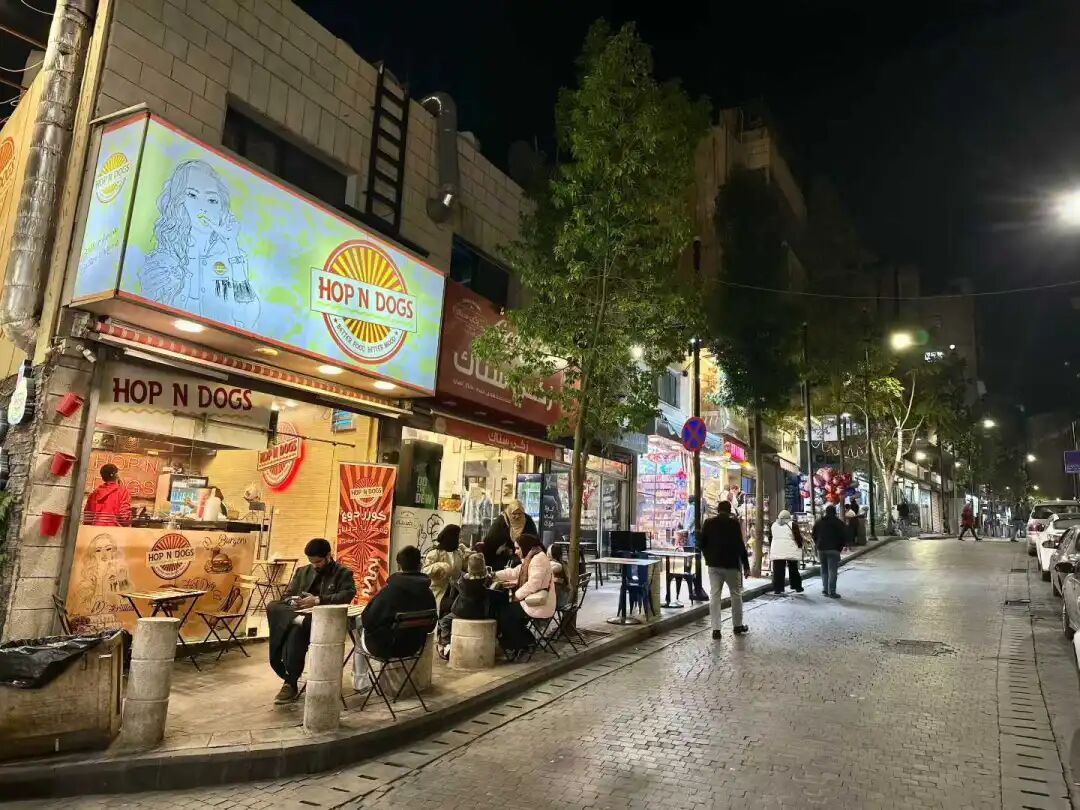
There is a small alley at the intersection of King Hussein Street and King Faisal Street in the old city of Amman. It is called "Coffee Shop Street" because of the many cafes there, and it is a place where young people in Amman love to hang out at night. I had dinner at Faisal Café & Restaurant on Coffee Shop Street. The atmosphere there is very nice, with a marble fountain in the middle and many decorations related to Jerusalem all around.
I ordered a mixed grill platter and stir-fried vegetables; it is quite rare to find stir-fried dishes in the Middle East. However, stir-fried dishes in the Middle East are relatively light, mainly highlighting the natural flavor of the vegetables. The grilled meat includes lamb, chicken, and a mix of beef and lamb, which is the classic Levantine style, and I never get tired of it.
King Faisal Street is the main road in the old city of Amman and one of the busiest places in Amman. After Amman became a municipality in 1909, the first city hall building was built, and the street facing the building was named Municipality Street. After Amman became the capital of the Emirate of Transjordan in 1921, many hotels, cinemas, cafes, and restaurants were built near Municipality Street. It was later renamed King Faisal Street to commemorate King Faisal I of Iraq, who was also from the Hashemite family.
The Grand Husseini Mosque is a landmark building in the old city of Amman. It was built in 1924 by the then Emir of Transjordan, Abdullah I, to confirm the status of the Hashemite family in Jordan, and it was named after Abdullah I's father, King Hussein bin Ali of Hejaz.
The Grand Husseini Mosque was expanded after being damaged in the 1927 earthquake. A fountain for wudu (small ablution) was added in the 1940s, and it underwent renovations in 1986 and 2019, eventually taking on its current appearance.
The site of the Grand Husseini Mosque originally held the Omari Mosque, which was built during the Umayyad period in the 7th century. At that time, the Omari Mosque was right next to the market and served as the main Friday mosque (Jumu'ah mosque) for Amman. Until the 19th century, the Omari Mosque still preserved a minaret and a wall. When the Grand Husseini Mosque was built in 1924, the remains of the Omari Mosque were completely demolished. The British sent the Director of the Department of Antiquities of Palestine to investigate, and it was ultimately determined that the wall had low historical and artistic value due to multiple destructions, so no intervention was taken.
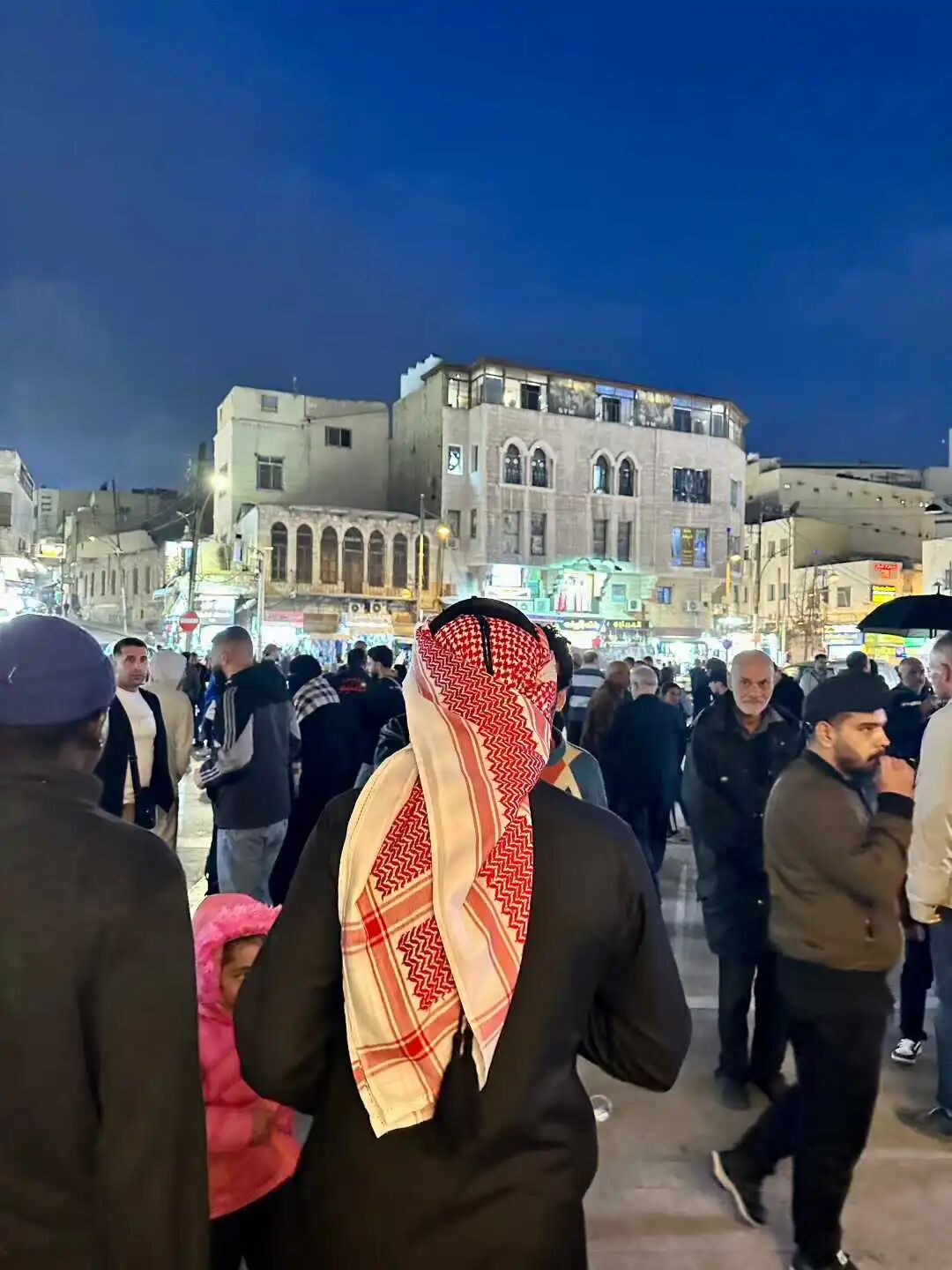
I bought the most traditional Jordanian Kufiyyeh headscarf opposite the Grand Husseini Mosque in Amman. The Jordanian headscarf is made of cotton, features a red and white checkered pattern, and has tassels. The larger the tassels, the higher the status of the wearer. The Kufiyyeh headscarf was originally worn by Bedouin herders. In 1931, the Emirate of Transjordan recruited Bedouins to form the Desert Patrol, making the Kufiyyeh headscarf part of the patrol's uniform. The Kufiyyeh headscarf then became popular in Jordan and has now become one of the symbols of the country.
The road from the Grand Husseini Mosque to King Faisal Street is full of shops selling traditional Jordanian women's clothing, which looks very beautiful.
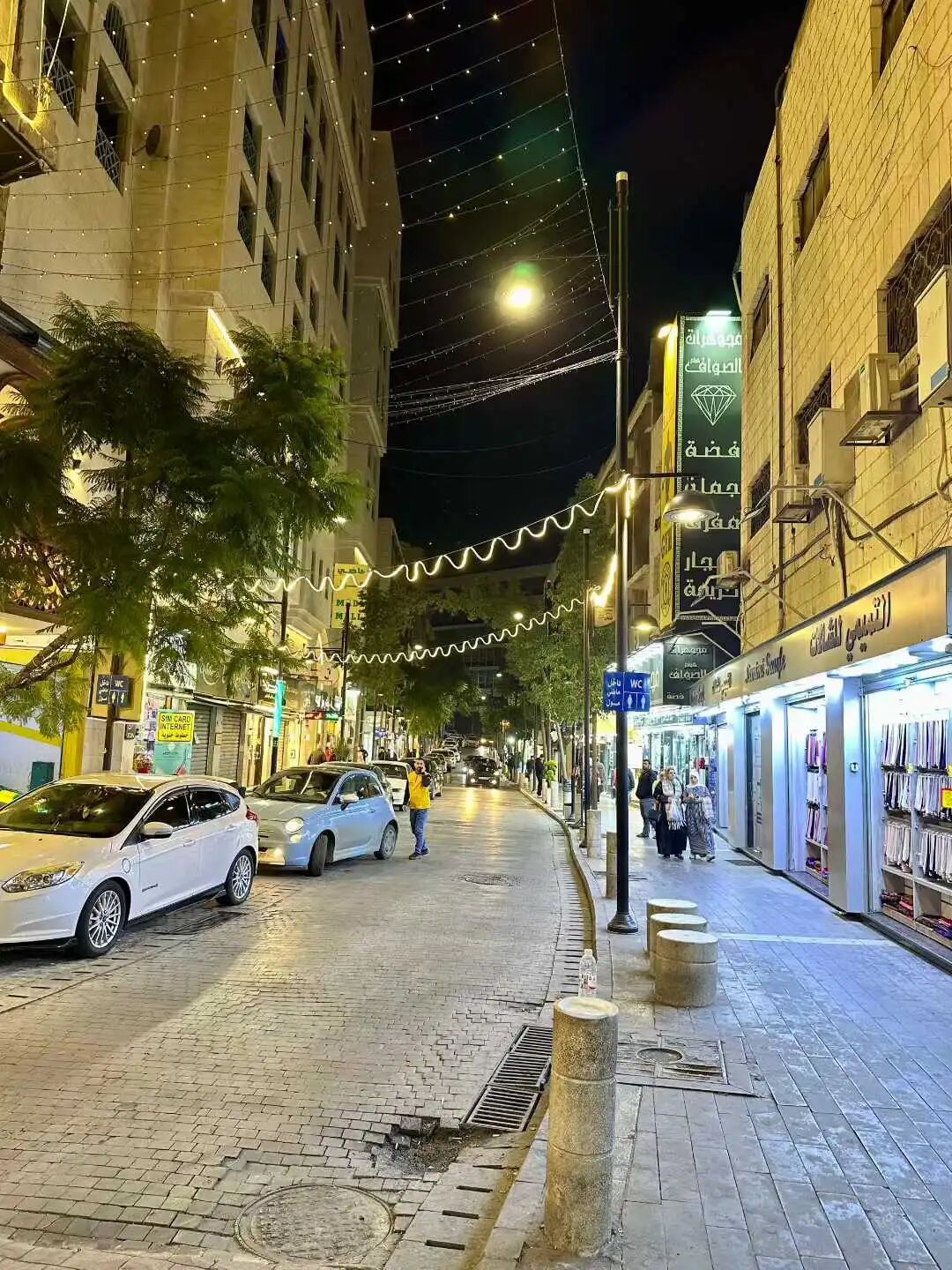
The night view of the old city in the Amman valley is beautiful, with rows of small shops that are great for browsing. Many book stalls stay open late into the night, which is quite rare in the Middle East.
Best Halal Food in Amman Old City: Hashem Hummus, Mansaf and Kunafa
Articles • ali2007fr posted the article • 0 comments • 188 views • 2026-05-21 06:21
Reposted from the web
Summary: Amman's old city food route includes Hashem Restaurant, Al Quds, Habibah Sweets, Faisal Cafe, and the Grand Husseini Mosque area. This article preserves the source's Palestinian restaurant histories, Mansaf and Kunafa details, Hashemite background, street context, and photographs.
The Umayyad dynasty built a massive urban complex on Amman Citadel Hill, but it slowly declined due to many earthquakes and natural disasters. A major earthquake in 749 turned Amman from a city into an ordinary town. Amman saw a brief revival during the Mamluk dynasty in the 14th century, but frequent land sales and divisions caused its importance to drop. By the 15th century, it had become a simple village again.
In 1878, Russia expelled the Circassians living in the North Caucasus. Tens of thousands of Circassian farmers then flooded into the Ottoman Empire as refugees. The Ottoman Empire settled some Circassians in Amman. They built houses in the valleys and on the slopes, and by 1908, there were 800 households.
After the Hejaz Railway was built in Amman in 1904, the town quickly turned from an agricultural village into a commercial hub. It attracted many Arab merchants from Damascus, Nablus, and Jerusalem, and Amman was officially established as a city in 1909. After the Ottoman Empire was defeated in 1918, Amman came under the rule of the Hashemite dynasty and officially became the capital of the Emirate of Transjordan in 1921. Amman later attracted many immigrants from the Levant and grew into the largest city on the east bank of the Jordan River.
The Hashemite family is named after the Prophet's great-grandfather, Hashim ibn Abd Manaf. They are also direct descendants of Imam Hasan, the son of Imam Ali. The Hashemite family ruled Mecca for a thousand years starting in the 10th century. They rebelled against the Ottoman Empire in 1916 and gained British support, which allowed them to rule the Kingdom of Hejaz (1916-1925), the Kingdom of Syria (1920), the Kingdom of Iraq (1921-1958), and Jordan (1921-present).
If you want to get close to the Hashemite family history in Amman, you can visit Hashem Restaurant on King Faisal Street. The restaurant is open 24 hours a day, making it a great place for breakfast if you are catching a bus to Damascus in the morning.
The owners of Hashem Restaurant are from Palestine, and they started their business in Jaffa in 1910. Jaffa was once a city with a Palestinian majority. When the United Nations created the partition plan for Palestine and Israel in 1947, it even designated Jaffa as a Palestinian enclave outside the Jewish residential areas in the north. In 1948, Zionist forces attacked Jaffa, causing many Palestinian civilian casualties and forcing most Palestinians to flee the city. The owners of Hashem Restaurant fled Palestine and finally reopened their restaurant in Amman in 1956. It has been open for 70 years now.
They specialize in classic Levantine hummus (hummus) and fava bean dip (foul). After you order, they serve pita bread (pita) and a vegetable platter. I ordered minced meat fatteh (fatteh) and fried chickpea balls (falafel). Fatteh means 'crushed' in Arabic. It is a snack from the southern Levant, found in Damascus, Beirut, Jordan, and Palestine, but not in the northern Levant. The main ingredient of fatteh is pieces of flatbread (khubz), topped with yogurt, steamed chickpeas, olive oil, and other ingredients, then sprinkled with cumin.
Although Circassians and Bedouins were the first to settle in the Amman valley, the main population of Amman today consists of Palestinians who have moved there over the last century. On King Hussein Street, there is a restaurant called Al Quds that opened in 1969. It is run by Palestinians from Jerusalem, and the shop is decorated with many photos of the Dome of the Rock and the Al-Aqsa Mosque.
Arabs have called Jerusalem 'Al Quds' since the 9th century, which is a literal translation of the Hebrew 'Ir HaKodesh' (Holy City). Before 1967, travel between Jerusalem and Amman was very easy. After Israel occupied Jerusalem and the West Bank in 1967, many Palestinians from Jerusalem fled to Jordan, and many settled in Amman.
Quds Restaurant specializes in the traditional Bedouin yogurt-stewed rice dish called Mansaf. It is Jordan's national dish and was added to the UNESCO Intangible Cultural Heritage list in 2022. Originally, Mansaf was just meat and clarified butter served with bread. Rice became common in northern Jordan in the 1920s, leading to the stewed rice version. Later, they added dried yogurt balls (Jameed) from settled Bedouin herders to create the yogurt-stewed rice we see today. When Bedouin tribes settle disputes, the leaders visit each other. The host serves a large platter of Mansaf as a symbol of reconciliation.
To make Amman-style Mansaf, lamb or camel meat is slow-cooked for hours in boiling yogurt soup. The rice is soaked in clarified butter (Samneh) and topped with nuts. The traditional yogurt soup uses dried yogurt balls (Jameed). To make them, sheep's milk is boiled, dried, and fermented. It is placed in fine cheesecloth and salted daily until it thickens into a round ball.
A century ago, Mansaf was served with thin flatbread (Khobz al-Shrak), a nearly translucent unleavened bread baked on a large iron griddle. Today, Mansaf is still served with thin flatbread, along with pickled olives and green chili peppers. It also comes with a bowl of yogurt soup that has a very rich, tangy, and meaty flavor, much like a traditional herder's meal.
Right next to Quds Restaurant is Habibah Sweets, which opened in 1951 and is still run by Palestinians. Habibah's founder, Hajj Mahmoud Habibah, was from Nablus, Palestine. He opened his first dessert shop in Jerusalem in 1947, but the first Middle East war broke out shortly after. Zionist forces attacked and expelled Palestinian civilians, carrying out dozens of massacres. The war displaced over 700,000 Palestinians, and Habibah was forced to move to Amman. Habibah reopened his dessert shop in Amman in 1951, and it has been running for 75 years now. Today, Habibah has five branches in Amman and three in Riyadh, Saudi Arabia, making it Jordan's most famous dessert shop.
Their most classic dessert is Kunafa. Legend says a doctor in the Umayyad or Fatimid Caliphate court invented Kunafa to satisfy the Caliph's hunger during Ramadan. Kunafa later became a classic Arab dessert for breaking the fast and even appeared in One Thousand and One Nights. Kunafa is made of buttery pastry, stretchy cheese, and crushed pistachios. You pour a syrup called Attar over it before eating. Although it has a thousand-year history, the current fried, stretchy style formed during the Ottoman period in the mid-15th century and spread across the Ottoman-ruled Middle East.
Old Amman has many long-standing restaurants, which shows that the city has developed steadily for over half a century. Right on King Hussein Street, next to Habibah Sweets, is Jabri Restaurant, which has desserts on the first floor and full meals on the second. Although the storefront is not very eye-catching, it opened in 1935 and has a 91-year history. I didn't have time to eat there this time, but it is worth sharing with you.
Founder Subhi Jabri opened his shop in Amman in 1935 and moved to the current King Hussein Street location in 1962. He provided catering services for King Hussein himself many times, and in 1990, the King awarded him the Order of Independence (Wisam al-Istiqlal).
There are many hotels in the old city of Amman, but unfortunately, there are no high-quality heritage hotels. I originally booked a heritage homestay on Airbnb that looked great, but because I had to catch a bus to Damascus early the next morning, I switched to the more conveniently located Philosophy Hotel. The environment is decent, it is only a 5-minute walk from King Faisal Street, and it is convenient for having breakfast at Hashem Restaurant in the morning.
There is a small alley at the intersection of King Hussein Street and King Faisal Street in the old city of Amman. It is called "Coffee Shop Street" because of the many cafes there, and it is a place where young people in Amman love to hang out at night. I had dinner at Faisal Café & Restaurant on Coffee Shop Street. The atmosphere there is very nice, with a marble fountain in the middle and many decorations related to Jerusalem all around.
I ordered a mixed grill platter and stir-fried vegetables; it is quite rare to find stir-fried dishes in the Middle East. However, stir-fried dishes in the Middle East are relatively light, mainly highlighting the natural flavor of the vegetables. The grilled meat includes lamb, chicken, and a mix of beef and lamb, which is the classic Levantine style, and I never get tired of it.
King Faisal Street is the main road in the old city of Amman and one of the busiest places in Amman. After Amman became a municipality in 1909, the first city hall building was built, and the street facing the building was named Municipality Street. After Amman became the capital of the Emirate of Transjordan in 1921, many hotels, cinemas, cafes, and restaurants were built near Municipality Street. It was later renamed King Faisal Street to commemorate King Faisal I of Iraq, who was also from the Hashemite family.
The Grand Husseini Mosque is a landmark building in the old city of Amman. It was built in 1924 by the then Emir of Transjordan, Abdullah I, to confirm the status of the Hashemite family in Jordan, and it was named after Abdullah I's father, King Hussein bin Ali of Hejaz.
The Grand Husseini Mosque was expanded after being damaged in the 1927 earthquake. A fountain for wudu (small ablution) was added in the 1940s, and it underwent renovations in 1986 and 2019, eventually taking on its current appearance.
The site of the Grand Husseini Mosque originally held the Omari Mosque, which was built during the Umayyad period in the 7th century. At that time, the Omari Mosque was right next to the market and served as the main Friday mosque (Jumu'ah mosque) for Amman. Until the 19th century, the Omari Mosque still preserved a minaret and a wall. When the Grand Husseini Mosque was built in 1924, the remains of the Omari Mosque were completely demolished. The British sent the Director of the Department of Antiquities of Palestine to investigate, and it was ultimately determined that the wall had low historical and artistic value due to multiple destructions, so no intervention was taken.
I bought the most traditional Jordanian Kufiyyeh headscarf opposite the Grand Husseini Mosque in Amman. The Jordanian headscarf is made of cotton, features a red and white checkered pattern, and has tassels. The larger the tassels, the higher the status of the wearer. The Kufiyyeh headscarf was originally worn by Bedouin herders. In 1931, the Emirate of Transjordan recruited Bedouins to form the Desert Patrol, making the Kufiyyeh headscarf part of the patrol's uniform. The Kufiyyeh headscarf then became popular in Jordan and has now become one of the symbols of the country.
The road from the Grand Husseini Mosque to King Faisal Street is full of shops selling traditional Jordanian women's clothing, which looks very beautiful.
The night view of the old city in the Amman valley is beautiful, with rows of small shops that are great for browsing. Many book stalls stay open late into the night, which is quite rare in the Middle East. view all
Summary: Amman's old city food route includes Hashem Restaurant, Al Quds, Habibah Sweets, Faisal Cafe, and the Grand Husseini Mosque area. This article preserves the source's Palestinian restaurant histories, Mansaf and Kunafa details, Hashemite background, street context, and photographs.
The Umayyad dynasty built a massive urban complex on Amman Citadel Hill, but it slowly declined due to many earthquakes and natural disasters. A major earthquake in 749 turned Amman from a city into an ordinary town. Amman saw a brief revival during the Mamluk dynasty in the 14th century, but frequent land sales and divisions caused its importance to drop. By the 15th century, it had become a simple village again.
In 1878, Russia expelled the Circassians living in the North Caucasus. Tens of thousands of Circassian farmers then flooded into the Ottoman Empire as refugees. The Ottoman Empire settled some Circassians in Amman. They built houses in the valleys and on the slopes, and by 1908, there were 800 households.
After the Hejaz Railway was built in Amman in 1904, the town quickly turned from an agricultural village into a commercial hub. It attracted many Arab merchants from Damascus, Nablus, and Jerusalem, and Amman was officially established as a city in 1909. After the Ottoman Empire was defeated in 1918, Amman came under the rule of the Hashemite dynasty and officially became the capital of the Emirate of Transjordan in 1921. Amman later attracted many immigrants from the Levant and grew into the largest city on the east bank of the Jordan River.
The Hashemite family is named after the Prophet's great-grandfather, Hashim ibn Abd Manaf. They are also direct descendants of Imam Hasan, the son of Imam Ali. The Hashemite family ruled Mecca for a thousand years starting in the 10th century. They rebelled against the Ottoman Empire in 1916 and gained British support, which allowed them to rule the Kingdom of Hejaz (1916-1925), the Kingdom of Syria (1920), the Kingdom of Iraq (1921-1958), and Jordan (1921-present).
If you want to get close to the Hashemite family history in Amman, you can visit Hashem Restaurant on King Faisal Street. The restaurant is open 24 hours a day, making it a great place for breakfast if you are catching a bus to Damascus in the morning.
The owners of Hashem Restaurant are from Palestine, and they started their business in Jaffa in 1910. Jaffa was once a city with a Palestinian majority. When the United Nations created the partition plan for Palestine and Israel in 1947, it even designated Jaffa as a Palestinian enclave outside the Jewish residential areas in the north. In 1948, Zionist forces attacked Jaffa, causing many Palestinian civilian casualties and forcing most Palestinians to flee the city. The owners of Hashem Restaurant fled Palestine and finally reopened their restaurant in Amman in 1956. It has been open for 70 years now.
They specialize in classic Levantine hummus (hummus) and fava bean dip (foul). After you order, they serve pita bread (pita) and a vegetable platter. I ordered minced meat fatteh (fatteh) and fried chickpea balls (falafel). Fatteh means 'crushed' in Arabic. It is a snack from the southern Levant, found in Damascus, Beirut, Jordan, and Palestine, but not in the northern Levant. The main ingredient of fatteh is pieces of flatbread (khubz), topped with yogurt, steamed chickpeas, olive oil, and other ingredients, then sprinkled with cumin.
Although Circassians and Bedouins were the first to settle in the Amman valley, the main population of Amman today consists of Palestinians who have moved there over the last century. On King Hussein Street, there is a restaurant called Al Quds that opened in 1969. It is run by Palestinians from Jerusalem, and the shop is decorated with many photos of the Dome of the Rock and the Al-Aqsa Mosque.
Arabs have called Jerusalem 'Al Quds' since the 9th century, which is a literal translation of the Hebrew 'Ir HaKodesh' (Holy City). Before 1967, travel between Jerusalem and Amman was very easy. After Israel occupied Jerusalem and the West Bank in 1967, many Palestinians from Jerusalem fled to Jordan, and many settled in Amman.
Quds Restaurant specializes in the traditional Bedouin yogurt-stewed rice dish called Mansaf. It is Jordan's national dish and was added to the UNESCO Intangible Cultural Heritage list in 2022. Originally, Mansaf was just meat and clarified butter served with bread. Rice became common in northern Jordan in the 1920s, leading to the stewed rice version. Later, they added dried yogurt balls (Jameed) from settled Bedouin herders to create the yogurt-stewed rice we see today. When Bedouin tribes settle disputes, the leaders visit each other. The host serves a large platter of Mansaf as a symbol of reconciliation.
To make Amman-style Mansaf, lamb or camel meat is slow-cooked for hours in boiling yogurt soup. The rice is soaked in clarified butter (Samneh) and topped with nuts. The traditional yogurt soup uses dried yogurt balls (Jameed). To make them, sheep's milk is boiled, dried, and fermented. It is placed in fine cheesecloth and salted daily until it thickens into a round ball.
A century ago, Mansaf was served with thin flatbread (Khobz al-Shrak), a nearly translucent unleavened bread baked on a large iron griddle. Today, Mansaf is still served with thin flatbread, along with pickled olives and green chili peppers. It also comes with a bowl of yogurt soup that has a very rich, tangy, and meaty flavor, much like a traditional herder's meal.
Right next to Quds Restaurant is Habibah Sweets, which opened in 1951 and is still run by Palestinians. Habibah's founder, Hajj Mahmoud Habibah, was from Nablus, Palestine. He opened his first dessert shop in Jerusalem in 1947, but the first Middle East war broke out shortly after. Zionist forces attacked and expelled Palestinian civilians, carrying out dozens of massacres. The war displaced over 700,000 Palestinians, and Habibah was forced to move to Amman. Habibah reopened his dessert shop in Amman in 1951, and it has been running for 75 years now. Today, Habibah has five branches in Amman and three in Riyadh, Saudi Arabia, making it Jordan's most famous dessert shop.
Their most classic dessert is Kunafa. Legend says a doctor in the Umayyad or Fatimid Caliphate court invented Kunafa to satisfy the Caliph's hunger during Ramadan. Kunafa later became a classic Arab dessert for breaking the fast and even appeared in One Thousand and One Nights. Kunafa is made of buttery pastry, stretchy cheese, and crushed pistachios. You pour a syrup called Attar over it before eating. Although it has a thousand-year history, the current fried, stretchy style formed during the Ottoman period in the mid-15th century and spread across the Ottoman-ruled Middle East.
Old Amman has many long-standing restaurants, which shows that the city has developed steadily for over half a century. Right on King Hussein Street, next to Habibah Sweets, is Jabri Restaurant, which has desserts on the first floor and full meals on the second. Although the storefront is not very eye-catching, it opened in 1935 and has a 91-year history. I didn't have time to eat there this time, but it is worth sharing with you.
Founder Subhi Jabri opened his shop in Amman in 1935 and moved to the current King Hussein Street location in 1962. He provided catering services for King Hussein himself many times, and in 1990, the King awarded him the Order of Independence (Wisam al-Istiqlal).
There are many hotels in the old city of Amman, but unfortunately, there are no high-quality heritage hotels. I originally booked a heritage homestay on Airbnb that looked great, but because I had to catch a bus to Damascus early the next morning, I switched to the more conveniently located Philosophy Hotel. The environment is decent, it is only a 5-minute walk from King Faisal Street, and it is convenient for having breakfast at Hashem Restaurant in the morning.
There is a small alley at the intersection of King Hussein Street and King Faisal Street in the old city of Amman. It is called "Coffee Shop Street" because of the many cafes there, and it is a place where young people in Amman love to hang out at night. I had dinner at Faisal Café & Restaurant on Coffee Shop Street. The atmosphere there is very nice, with a marble fountain in the middle and many decorations related to Jerusalem all around.
I ordered a mixed grill platter and stir-fried vegetables; it is quite rare to find stir-fried dishes in the Middle East. However, stir-fried dishes in the Middle East are relatively light, mainly highlighting the natural flavor of the vegetables. The grilled meat includes lamb, chicken, and a mix of beef and lamb, which is the classic Levantine style, and I never get tired of it.
King Faisal Street is the main road in the old city of Amman and one of the busiest places in Amman. After Amman became a municipality in 1909, the first city hall building was built, and the street facing the building was named Municipality Street. After Amman became the capital of the Emirate of Transjordan in 1921, many hotels, cinemas, cafes, and restaurants were built near Municipality Street. It was later renamed King Faisal Street to commemorate King Faisal I of Iraq, who was also from the Hashemite family.
The Grand Husseini Mosque is a landmark building in the old city of Amman. It was built in 1924 by the then Emir of Transjordan, Abdullah I, to confirm the status of the Hashemite family in Jordan, and it was named after Abdullah I's father, King Hussein bin Ali of Hejaz.
The Grand Husseini Mosque was expanded after being damaged in the 1927 earthquake. A fountain for wudu (small ablution) was added in the 1940s, and it underwent renovations in 1986 and 2019, eventually taking on its current appearance.
The site of the Grand Husseini Mosque originally held the Omari Mosque, which was built during the Umayyad period in the 7th century. At that time, the Omari Mosque was right next to the market and served as the main Friday mosque (Jumu'ah mosque) for Amman. Until the 19th century, the Omari Mosque still preserved a minaret and a wall. When the Grand Husseini Mosque was built in 1924, the remains of the Omari Mosque were completely demolished. The British sent the Director of the Department of Antiquities of Palestine to investigate, and it was ultimately determined that the wall had low historical and artistic value due to multiple destructions, so no intervention was taken.
I bought the most traditional Jordanian Kufiyyeh headscarf opposite the Grand Husseini Mosque in Amman. The Jordanian headscarf is made of cotton, features a red and white checkered pattern, and has tassels. The larger the tassels, the higher the status of the wearer. The Kufiyyeh headscarf was originally worn by Bedouin herders. In 1931, the Emirate of Transjordan recruited Bedouins to form the Desert Patrol, making the Kufiyyeh headscarf part of the patrol's uniform. The Kufiyyeh headscarf then became popular in Jordan and has now become one of the symbols of the country.
The road from the Grand Husseini Mosque to King Faisal Street is full of shops selling traditional Jordanian women's clothing, which looks very beautiful.
The night view of the old city in the Amman valley is beautiful, with rows of small shops that are great for browsing. Many book stalls stay open late into the night, which is quite rare in the Middle East. view all
Reposted from the web
Summary: Amman's old city food route includes Hashem Restaurant, Al Quds, Habibah Sweets, Faisal Cafe, and the Grand Husseini Mosque area. This article preserves the source's Palestinian restaurant histories, Mansaf and Kunafa details, Hashemite background, street context, and photographs.
The Umayyad dynasty built a massive urban complex on Amman Citadel Hill, but it slowly declined due to many earthquakes and natural disasters. A major earthquake in 749 turned Amman from a city into an ordinary town. Amman saw a brief revival during the Mamluk dynasty in the 14th century, but frequent land sales and divisions caused its importance to drop. By the 15th century, it had become a simple village again.
In 1878, Russia expelled the Circassians living in the North Caucasus. Tens of thousands of Circassian farmers then flooded into the Ottoman Empire as refugees. The Ottoman Empire settled some Circassians in Amman. They built houses in the valleys and on the slopes, and by 1908, there were 800 households.
After the Hejaz Railway was built in Amman in 1904, the town quickly turned from an agricultural village into a commercial hub. It attracted many Arab merchants from Damascus, Nablus, and Jerusalem, and Amman was officially established as a city in 1909. After the Ottoman Empire was defeated in 1918, Amman came under the rule of the Hashemite dynasty and officially became the capital of the Emirate of Transjordan in 1921. Amman later attracted many immigrants from the Levant and grew into the largest city on the east bank of the Jordan River.
The Hashemite family is named after the Prophet's great-grandfather, Hashim ibn Abd Manaf. They are also direct descendants of Imam Hasan, the son of Imam Ali. The Hashemite family ruled Mecca for a thousand years starting in the 10th century. They rebelled against the Ottoman Empire in 1916 and gained British support, which allowed them to rule the Kingdom of Hejaz (1916-1925), the Kingdom of Syria (1920), the Kingdom of Iraq (1921-1958), and Jordan (1921-present).
If you want to get close to the Hashemite family history in Amman, you can visit Hashem Restaurant on King Faisal Street. The restaurant is open 24 hours a day, making it a great place for breakfast if you are catching a bus to Damascus in the morning.
The owners of Hashem Restaurant are from Palestine, and they started their business in Jaffa in 1910. Jaffa was once a city with a Palestinian majority. When the United Nations created the partition plan for Palestine and Israel in 1947, it even designated Jaffa as a Palestinian enclave outside the Jewish residential areas in the north. In 1948, Zionist forces attacked Jaffa, causing many Palestinian civilian casualties and forcing most Palestinians to flee the city. The owners of Hashem Restaurant fled Palestine and finally reopened their restaurant in Amman in 1956. It has been open for 70 years now.
They specialize in classic Levantine hummus (hummus) and fava bean dip (foul). After you order, they serve pita bread (pita) and a vegetable platter. I ordered minced meat fatteh (fatteh) and fried chickpea balls (falafel). Fatteh means 'crushed' in Arabic. It is a snack from the southern Levant, found in Damascus, Beirut, Jordan, and Palestine, but not in the northern Levant. The main ingredient of fatteh is pieces of flatbread (khubz), topped with yogurt, steamed chickpeas, olive oil, and other ingredients, then sprinkled with cumin.
Although Circassians and Bedouins were the first to settle in the Amman valley, the main population of Amman today consists of Palestinians who have moved there over the last century. On King Hussein Street, there is a restaurant called Al Quds that opened in 1969. It is run by Palestinians from Jerusalem, and the shop is decorated with many photos of the Dome of the Rock and the Al-Aqsa Mosque.
Arabs have called Jerusalem 'Al Quds' since the 9th century, which is a literal translation of the Hebrew 'Ir HaKodesh' (Holy City). Before 1967, travel between Jerusalem and Amman was very easy. After Israel occupied Jerusalem and the West Bank in 1967, many Palestinians from Jerusalem fled to Jordan, and many settled in Amman.
Quds Restaurant specializes in the traditional Bedouin yogurt-stewed rice dish called Mansaf. It is Jordan's national dish and was added to the UNESCO Intangible Cultural Heritage list in 2022. Originally, Mansaf was just meat and clarified butter served with bread. Rice became common in northern Jordan in the 1920s, leading to the stewed rice version. Later, they added dried yogurt balls (Jameed) from settled Bedouin herders to create the yogurt-stewed rice we see today. When Bedouin tribes settle disputes, the leaders visit each other. The host serves a large platter of Mansaf as a symbol of reconciliation.
To make Amman-style Mansaf, lamb or camel meat is slow-cooked for hours in boiling yogurt soup. The rice is soaked in clarified butter (Samneh) and topped with nuts. The traditional yogurt soup uses dried yogurt balls (Jameed). To make them, sheep's milk is boiled, dried, and fermented. It is placed in fine cheesecloth and salted daily until it thickens into a round ball.
A century ago, Mansaf was served with thin flatbread (Khobz al-Shrak), a nearly translucent unleavened bread baked on a large iron griddle. Today, Mansaf is still served with thin flatbread, along with pickled olives and green chili peppers. It also comes with a bowl of yogurt soup that has a very rich, tangy, and meaty flavor, much like a traditional herder's meal.
Right next to Quds Restaurant is Habibah Sweets, which opened in 1951 and is still run by Palestinians. Habibah's founder, Hajj Mahmoud Habibah, was from Nablus, Palestine. He opened his first dessert shop in Jerusalem in 1947, but the first Middle East war broke out shortly after. Zionist forces attacked and expelled Palestinian civilians, carrying out dozens of massacres. The war displaced over 700,000 Palestinians, and Habibah was forced to move to Amman. Habibah reopened his dessert shop in Amman in 1951, and it has been running for 75 years now. Today, Habibah has five branches in Amman and three in Riyadh, Saudi Arabia, making it Jordan's most famous dessert shop.
Their most classic dessert is Kunafa. Legend says a doctor in the Umayyad or Fatimid Caliphate court invented Kunafa to satisfy the Caliph's hunger during Ramadan. Kunafa later became a classic Arab dessert for breaking the fast and even appeared in One Thousand and One Nights. Kunafa is made of buttery pastry, stretchy cheese, and crushed pistachios. You pour a syrup called Attar over it before eating. Although it has a thousand-year history, the current fried, stretchy style formed during the Ottoman period in the mid-15th century and spread across the Ottoman-ruled Middle East.
Old Amman has many long-standing restaurants, which shows that the city has developed steadily for over half a century. Right on King Hussein Street, next to Habibah Sweets, is Jabri Restaurant, which has desserts on the first floor and full meals on the second. Although the storefront is not very eye-catching, it opened in 1935 and has a 91-year history. I didn't have time to eat there this time, but it is worth sharing with you.
Founder Subhi Jabri opened his shop in Amman in 1935 and moved to the current King Hussein Street location in 1962. He provided catering services for King Hussein himself many times, and in 1990, the King awarded him the Order of Independence (Wisam al-Istiqlal).
There are many hotels in the old city of Amman, but unfortunately, there are no high-quality heritage hotels. I originally booked a heritage homestay on Airbnb that looked great, but because I had to catch a bus to Damascus early the next morning, I switched to the more conveniently located Philosophy Hotel. The environment is decent, it is only a 5-minute walk from King Faisal Street, and it is convenient for having breakfast at Hashem Restaurant in the morning.
There is a small alley at the intersection of King Hussein Street and King Faisal Street in the old city of Amman. It is called "Coffee Shop Street" because of the many cafes there, and it is a place where young people in Amman love to hang out at night. I had dinner at Faisal Café & Restaurant on Coffee Shop Street. The atmosphere there is very nice, with a marble fountain in the middle and many decorations related to Jerusalem all around.
I ordered a mixed grill platter and stir-fried vegetables; it is quite rare to find stir-fried dishes in the Middle East. However, stir-fried dishes in the Middle East are relatively light, mainly highlighting the natural flavor of the vegetables. The grilled meat includes lamb, chicken, and a mix of beef and lamb, which is the classic Levantine style, and I never get tired of it.
King Faisal Street is the main road in the old city of Amman and one of the busiest places in Amman. After Amman became a municipality in 1909, the first city hall building was built, and the street facing the building was named Municipality Street. After Amman became the capital of the Emirate of Transjordan in 1921, many hotels, cinemas, cafes, and restaurants were built near Municipality Street. It was later renamed King Faisal Street to commemorate King Faisal I of Iraq, who was also from the Hashemite family.
The Grand Husseini Mosque is a landmark building in the old city of Amman. It was built in 1924 by the then Emir of Transjordan, Abdullah I, to confirm the status of the Hashemite family in Jordan, and it was named after Abdullah I's father, King Hussein bin Ali of Hejaz.
The Grand Husseini Mosque was expanded after being damaged in the 1927 earthquake. A fountain for wudu (small ablution) was added in the 1940s, and it underwent renovations in 1986 and 2019, eventually taking on its current appearance.
The site of the Grand Husseini Mosque originally held the Omari Mosque, which was built during the Umayyad period in the 7th century. At that time, the Omari Mosque was right next to the market and served as the main Friday mosque (Jumu'ah mosque) for Amman. Until the 19th century, the Omari Mosque still preserved a minaret and a wall. When the Grand Husseini Mosque was built in 1924, the remains of the Omari Mosque were completely demolished. The British sent the Director of the Department of Antiquities of Palestine to investigate, and it was ultimately determined that the wall had low historical and artistic value due to multiple destructions, so no intervention was taken.
I bought the most traditional Jordanian Kufiyyeh headscarf opposite the Grand Husseini Mosque in Amman. The Jordanian headscarf is made of cotton, features a red and white checkered pattern, and has tassels. The larger the tassels, the higher the status of the wearer. The Kufiyyeh headscarf was originally worn by Bedouin herders. In 1931, the Emirate of Transjordan recruited Bedouins to form the Desert Patrol, making the Kufiyyeh headscarf part of the patrol's uniform. The Kufiyyeh headscarf then became popular in Jordan and has now become one of the symbols of the country.
The road from the Grand Husseini Mosque to King Faisal Street is full of shops selling traditional Jordanian women's clothing, which looks very beautiful.
The night view of the old city in the Amman valley is beautiful, with rows of small shops that are great for browsing. Many book stalls stay open late into the night, which is quite rare in the Middle East.
Summary: Amman's old city food route includes Hashem Restaurant, Al Quds, Habibah Sweets, Faisal Cafe, and the Grand Husseini Mosque area. This article preserves the source's Palestinian restaurant histories, Mansaf and Kunafa details, Hashemite background, street context, and photographs.
The Umayyad dynasty built a massive urban complex on Amman Citadel Hill, but it slowly declined due to many earthquakes and natural disasters. A major earthquake in 749 turned Amman from a city into an ordinary town. Amman saw a brief revival during the Mamluk dynasty in the 14th century, but frequent land sales and divisions caused its importance to drop. By the 15th century, it had become a simple village again.
In 1878, Russia expelled the Circassians living in the North Caucasus. Tens of thousands of Circassian farmers then flooded into the Ottoman Empire as refugees. The Ottoman Empire settled some Circassians in Amman. They built houses in the valleys and on the slopes, and by 1908, there were 800 households.
After the Hejaz Railway was built in Amman in 1904, the town quickly turned from an agricultural village into a commercial hub. It attracted many Arab merchants from Damascus, Nablus, and Jerusalem, and Amman was officially established as a city in 1909. After the Ottoman Empire was defeated in 1918, Amman came under the rule of the Hashemite dynasty and officially became the capital of the Emirate of Transjordan in 1921. Amman later attracted many immigrants from the Levant and grew into the largest city on the east bank of the Jordan River.
The Hashemite family is named after the Prophet's great-grandfather, Hashim ibn Abd Manaf. They are also direct descendants of Imam Hasan, the son of Imam Ali. The Hashemite family ruled Mecca for a thousand years starting in the 10th century. They rebelled against the Ottoman Empire in 1916 and gained British support, which allowed them to rule the Kingdom of Hejaz (1916-1925), the Kingdom of Syria (1920), the Kingdom of Iraq (1921-1958), and Jordan (1921-present).
If you want to get close to the Hashemite family history in Amman, you can visit Hashem Restaurant on King Faisal Street. The restaurant is open 24 hours a day, making it a great place for breakfast if you are catching a bus to Damascus in the morning.
The owners of Hashem Restaurant are from Palestine, and they started their business in Jaffa in 1910. Jaffa was once a city with a Palestinian majority. When the United Nations created the partition plan for Palestine and Israel in 1947, it even designated Jaffa as a Palestinian enclave outside the Jewish residential areas in the north. In 1948, Zionist forces attacked Jaffa, causing many Palestinian civilian casualties and forcing most Palestinians to flee the city. The owners of Hashem Restaurant fled Palestine and finally reopened their restaurant in Amman in 1956. It has been open for 70 years now.
They specialize in classic Levantine hummus (hummus) and fava bean dip (foul). After you order, they serve pita bread (pita) and a vegetable platter. I ordered minced meat fatteh (fatteh) and fried chickpea balls (falafel). Fatteh means 'crushed' in Arabic. It is a snack from the southern Levant, found in Damascus, Beirut, Jordan, and Palestine, but not in the northern Levant. The main ingredient of fatteh is pieces of flatbread (khubz), topped with yogurt, steamed chickpeas, olive oil, and other ingredients, then sprinkled with cumin.
Although Circassians and Bedouins were the first to settle in the Amman valley, the main population of Amman today consists of Palestinians who have moved there over the last century. On King Hussein Street, there is a restaurant called Al Quds that opened in 1969. It is run by Palestinians from Jerusalem, and the shop is decorated with many photos of the Dome of the Rock and the Al-Aqsa Mosque.
Arabs have called Jerusalem 'Al Quds' since the 9th century, which is a literal translation of the Hebrew 'Ir HaKodesh' (Holy City). Before 1967, travel between Jerusalem and Amman was very easy. After Israel occupied Jerusalem and the West Bank in 1967, many Palestinians from Jerusalem fled to Jordan, and many settled in Amman.
Quds Restaurant specializes in the traditional Bedouin yogurt-stewed rice dish called Mansaf. It is Jordan's national dish and was added to the UNESCO Intangible Cultural Heritage list in 2022. Originally, Mansaf was just meat and clarified butter served with bread. Rice became common in northern Jordan in the 1920s, leading to the stewed rice version. Later, they added dried yogurt balls (Jameed) from settled Bedouin herders to create the yogurt-stewed rice we see today. When Bedouin tribes settle disputes, the leaders visit each other. The host serves a large platter of Mansaf as a symbol of reconciliation.
To make Amman-style Mansaf, lamb or camel meat is slow-cooked for hours in boiling yogurt soup. The rice is soaked in clarified butter (Samneh) and topped with nuts. The traditional yogurt soup uses dried yogurt balls (Jameed). To make them, sheep's milk is boiled, dried, and fermented. It is placed in fine cheesecloth and salted daily until it thickens into a round ball.
A century ago, Mansaf was served with thin flatbread (Khobz al-Shrak), a nearly translucent unleavened bread baked on a large iron griddle. Today, Mansaf is still served with thin flatbread, along with pickled olives and green chili peppers. It also comes with a bowl of yogurt soup that has a very rich, tangy, and meaty flavor, much like a traditional herder's meal.
Right next to Quds Restaurant is Habibah Sweets, which opened in 1951 and is still run by Palestinians. Habibah's founder, Hajj Mahmoud Habibah, was from Nablus, Palestine. He opened his first dessert shop in Jerusalem in 1947, but the first Middle East war broke out shortly after. Zionist forces attacked and expelled Palestinian civilians, carrying out dozens of massacres. The war displaced over 700,000 Palestinians, and Habibah was forced to move to Amman. Habibah reopened his dessert shop in Amman in 1951, and it has been running for 75 years now. Today, Habibah has five branches in Amman and three in Riyadh, Saudi Arabia, making it Jordan's most famous dessert shop.
Their most classic dessert is Kunafa. Legend says a doctor in the Umayyad or Fatimid Caliphate court invented Kunafa to satisfy the Caliph's hunger during Ramadan. Kunafa later became a classic Arab dessert for breaking the fast and even appeared in One Thousand and One Nights. Kunafa is made of buttery pastry, stretchy cheese, and crushed pistachios. You pour a syrup called Attar over it before eating. Although it has a thousand-year history, the current fried, stretchy style formed during the Ottoman period in the mid-15th century and spread across the Ottoman-ruled Middle East.
Old Amman has many long-standing restaurants, which shows that the city has developed steadily for over half a century. Right on King Hussein Street, next to Habibah Sweets, is Jabri Restaurant, which has desserts on the first floor and full meals on the second. Although the storefront is not very eye-catching, it opened in 1935 and has a 91-year history. I didn't have time to eat there this time, but it is worth sharing with you.
Founder Subhi Jabri opened his shop in Amman in 1935 and moved to the current King Hussein Street location in 1962. He provided catering services for King Hussein himself many times, and in 1990, the King awarded him the Order of Independence (Wisam al-Istiqlal).
There are many hotels in the old city of Amman, but unfortunately, there are no high-quality heritage hotels. I originally booked a heritage homestay on Airbnb that looked great, but because I had to catch a bus to Damascus early the next morning, I switched to the more conveniently located Philosophy Hotel. The environment is decent, it is only a 5-minute walk from King Faisal Street, and it is convenient for having breakfast at Hashem Restaurant in the morning.
There is a small alley at the intersection of King Hussein Street and King Faisal Street in the old city of Amman. It is called "Coffee Shop Street" because of the many cafes there, and it is a place where young people in Amman love to hang out at night. I had dinner at Faisal Café & Restaurant on Coffee Shop Street. The atmosphere there is very nice, with a marble fountain in the middle and many decorations related to Jerusalem all around.
I ordered a mixed grill platter and stir-fried vegetables; it is quite rare to find stir-fried dishes in the Middle East. However, stir-fried dishes in the Middle East are relatively light, mainly highlighting the natural flavor of the vegetables. The grilled meat includes lamb, chicken, and a mix of beef and lamb, which is the classic Levantine style, and I never get tired of it.
King Faisal Street is the main road in the old city of Amman and one of the busiest places in Amman. After Amman became a municipality in 1909, the first city hall building was built, and the street facing the building was named Municipality Street. After Amman became the capital of the Emirate of Transjordan in 1921, many hotels, cinemas, cafes, and restaurants were built near Municipality Street. It was later renamed King Faisal Street to commemorate King Faisal I of Iraq, who was also from the Hashemite family.
The Grand Husseini Mosque is a landmark building in the old city of Amman. It was built in 1924 by the then Emir of Transjordan, Abdullah I, to confirm the status of the Hashemite family in Jordan, and it was named after Abdullah I's father, King Hussein bin Ali of Hejaz.
The Grand Husseini Mosque was expanded after being damaged in the 1927 earthquake. A fountain for wudu (small ablution) was added in the 1940s, and it underwent renovations in 1986 and 2019, eventually taking on its current appearance.
The site of the Grand Husseini Mosque originally held the Omari Mosque, which was built during the Umayyad period in the 7th century. At that time, the Omari Mosque was right next to the market and served as the main Friday mosque (Jumu'ah mosque) for Amman. Until the 19th century, the Omari Mosque still preserved a minaret and a wall. When the Grand Husseini Mosque was built in 1924, the remains of the Omari Mosque were completely demolished. The British sent the Director of the Department of Antiquities of Palestine to investigate, and it was ultimately determined that the wall had low historical and artistic value due to multiple destructions, so no intervention was taken.
I bought the most traditional Jordanian Kufiyyeh headscarf opposite the Grand Husseini Mosque in Amman. The Jordanian headscarf is made of cotton, features a red and white checkered pattern, and has tassels. The larger the tassels, the higher the status of the wearer. The Kufiyyeh headscarf was originally worn by Bedouin herders. In 1931, the Emirate of Transjordan recruited Bedouins to form the Desert Patrol, making the Kufiyyeh headscarf part of the patrol's uniform. The Kufiyyeh headscarf then became popular in Jordan and has now become one of the symbols of the country.
The road from the Grand Husseini Mosque to King Faisal Street is full of shops selling traditional Jordanian women's clothing, which looks very beautiful.
The night view of the old city in the Amman valley is beautiful, with rows of small shops that are great for browsing. Many book stalls stay open late into the night, which is quite rare in the Middle East.