

Ancient Ceramics
Islamic Art Guide: Ancient Ceramics at Tsinghua University Art Museum
Articles • ali2007fr posted the article • 0 comments • 155 views • 2026-05-19 08:53
Reposted from the web
Summary: Islamic Art Guide: Ancient Ceramics at Tsinghua University Art Museum is presented here as a firsthand travel account in clear, natural English. The account focuses on Tsinghua Museum, Ancient Ceramics, China Museums while preserving the names, places, food, photos, and historical details from the Chinese source.
The exhibition 'The Art of Clay: Ceramic Art in Ancient East-West Cultural Exchange' on the fourth floor of the Tsinghua University Art Museum displays 270 ancient ceramic pieces from the Ikuo Hirayama Silk Road Museum collection from March 22 to July 31.
First, let's look at pottery made in Saveh, Iran. Saveh is located southwest of Tehran and was an important city during the Ilkhanate period.
A 13th-century Mina'i ware flower-shaped long-necked vase. Mina'i ware (Mina'i) originated in Kashan, Iran, in the early 13th century and is the earliest type of overglaze enamel pottery in Iran.
A 12th-13th century lusterware vase with figure patterns. Lusterware (Lustreware) appeared in Iraq in the 9th century and spread to Syria and Iran in the 12th century. It is a low-temperature secondary firing technique that creates a shimmering metallic finish during the second firing.
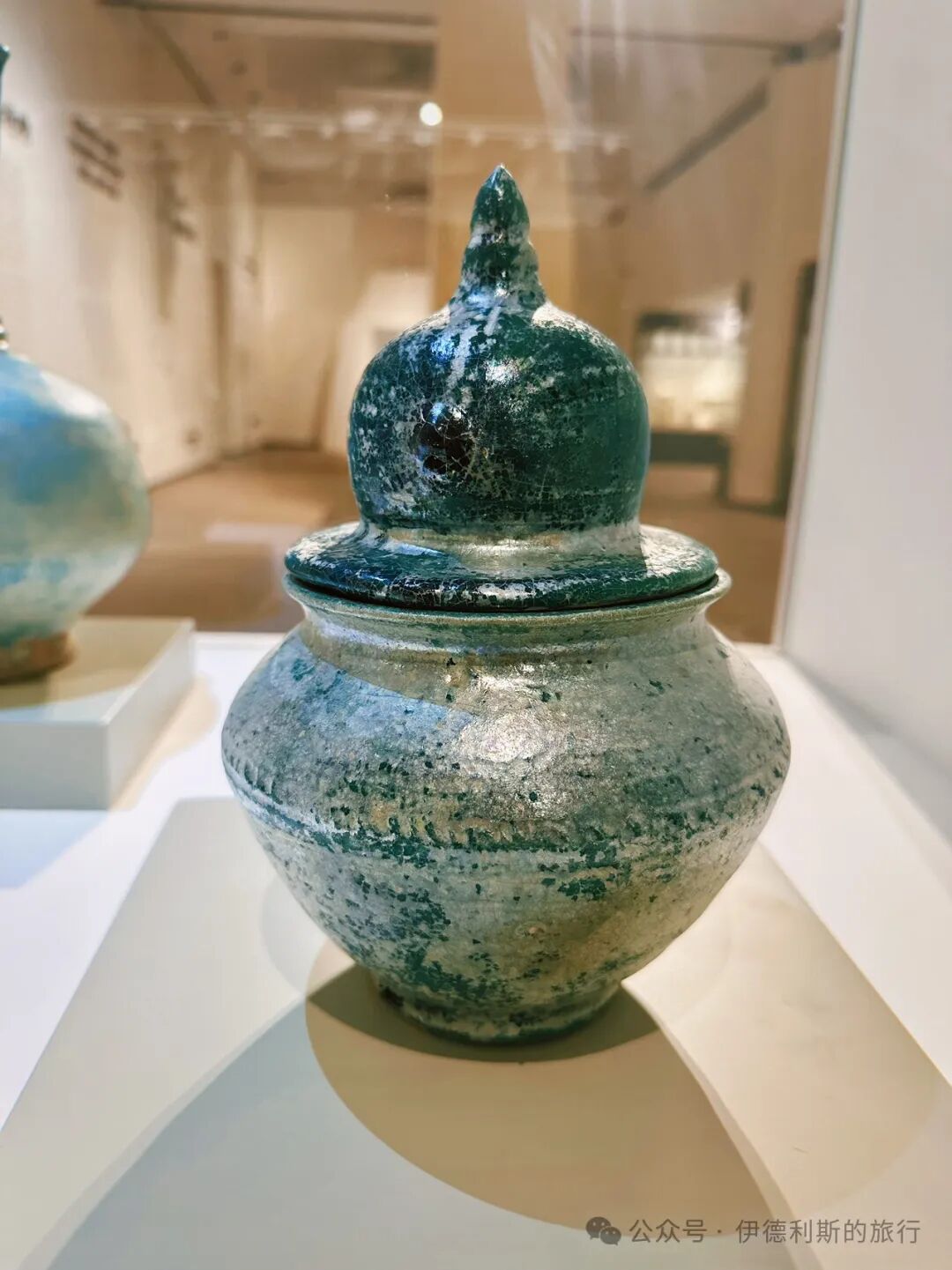
A 12th-13th century green-glazed pot with a lid.
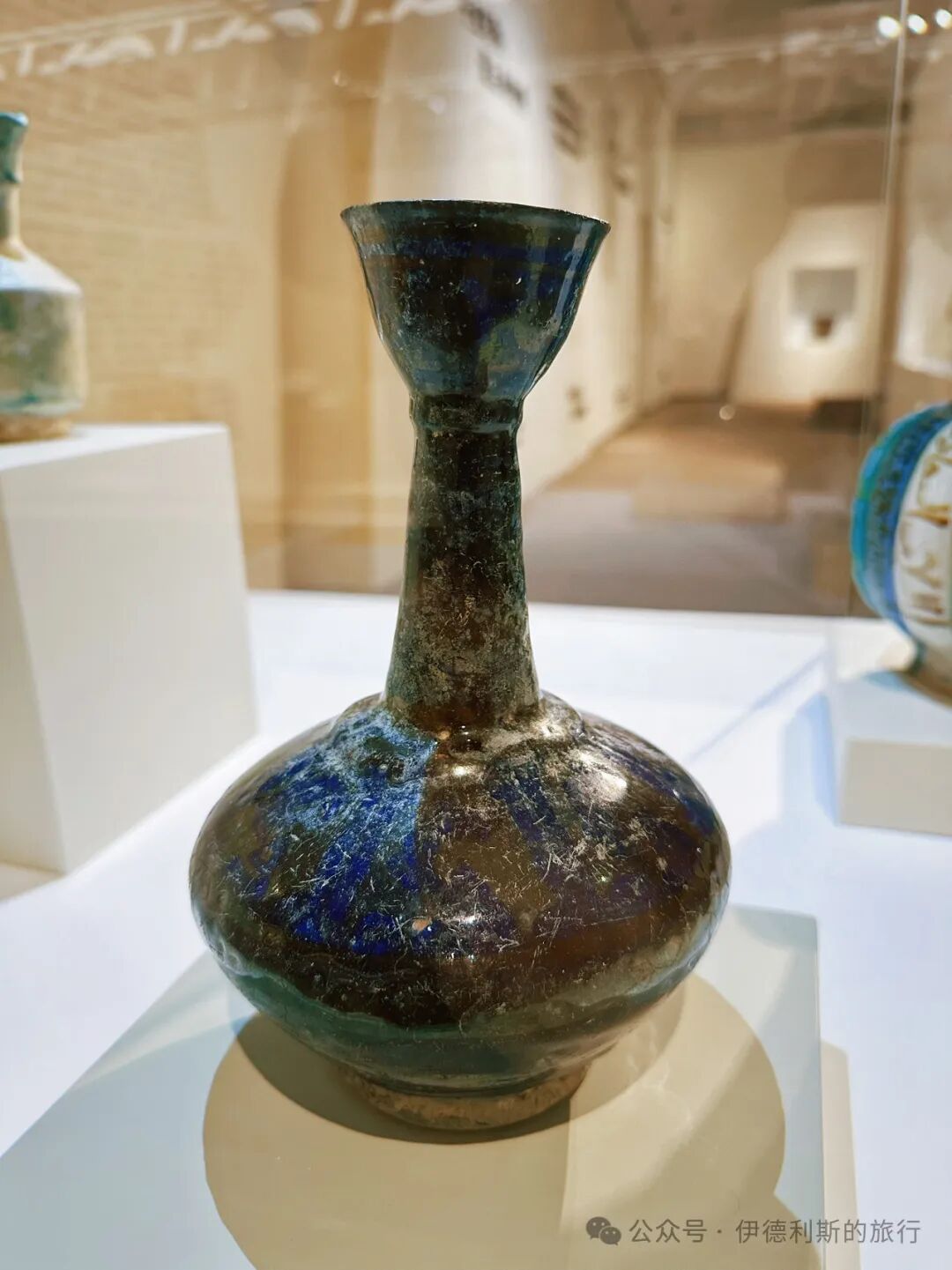
A 12th-13th century lusterware long-necked vase.
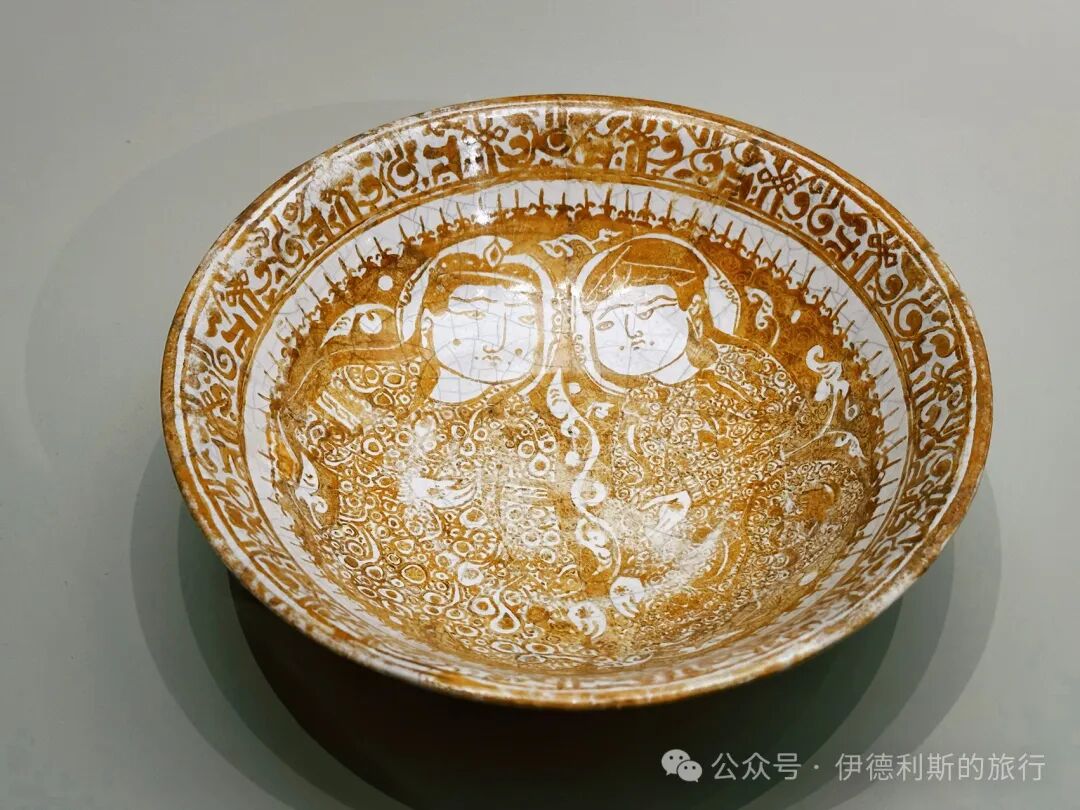
A 12th-13th century bowl with figure patterns.
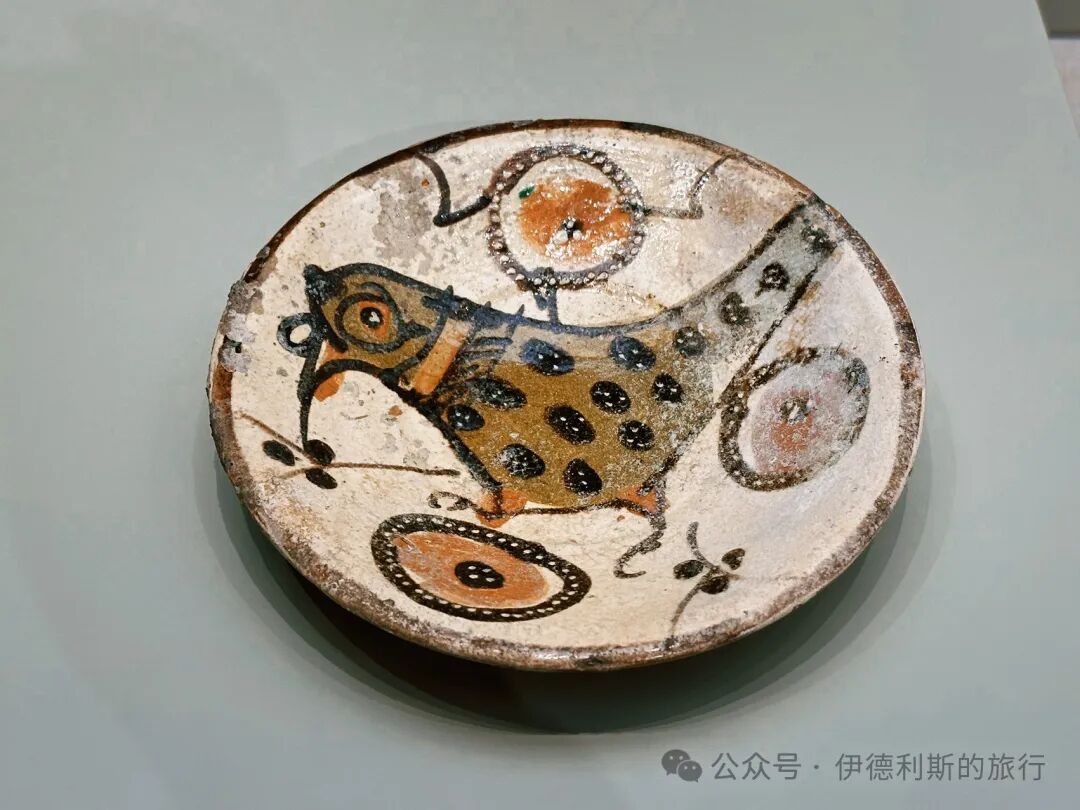
A 10th-11th century plate with bird patterns on a pale yellow background.
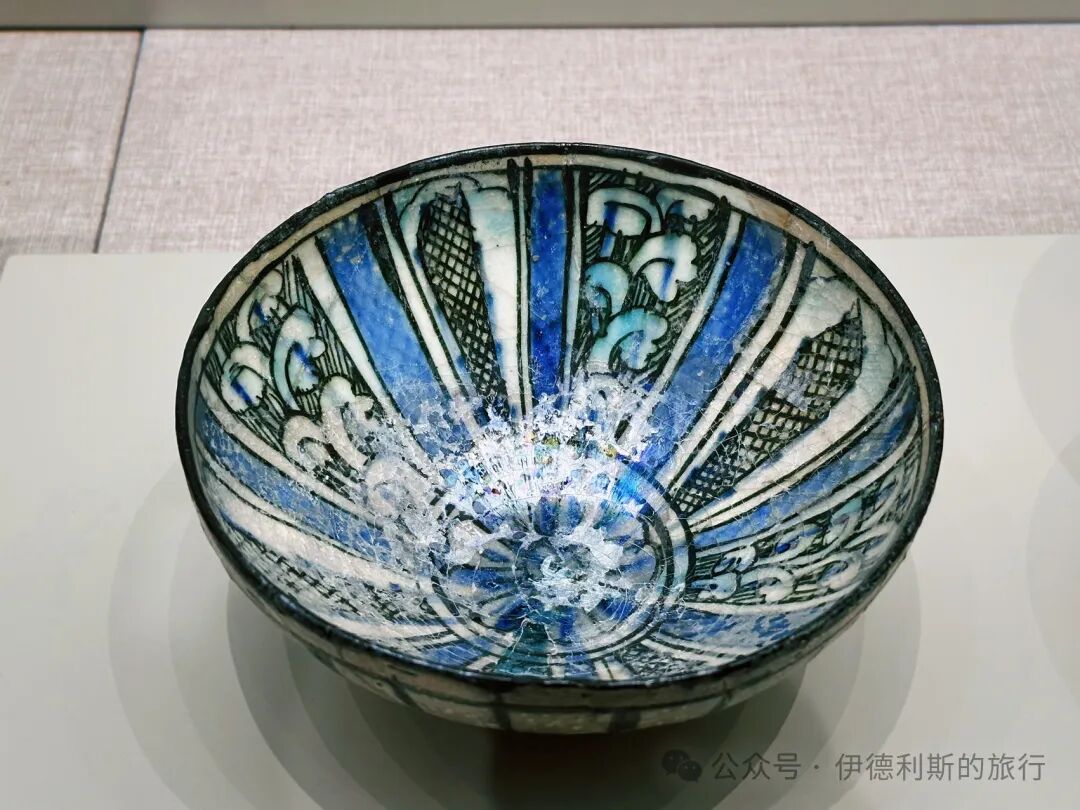
A 12th-13th century bowl with blue-glazed cart patterns.
A 13th-century lusterware octagonal star tile.
A 12th-13th century lusterware long-necked vase with floral patterns.
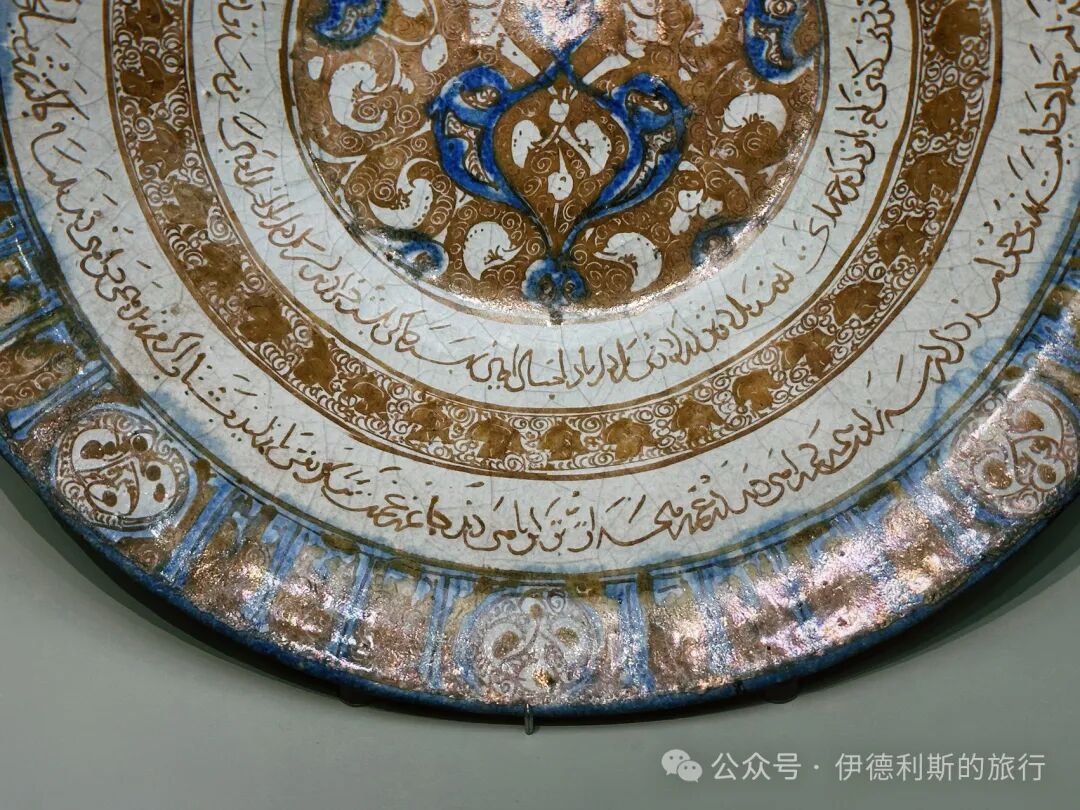
A 12th-century lusterware plate with plant patterns from Saveh, Iran.
A 12th-century blue-glazed water pitcher with a handle from Gorgan, Iran. Gorgan was an important city on the Caspian Sea coast during the Sasanian period. It was destroyed during the Mongol invasion in the 13th century, and the city moved to its current location during the Ilkhanate period.
A 12th-13th century blue-glazed black-painted four-handled jar from Gorgan, Iran.
A 13th-century luster-painted handled jug from Kashan, Iran. During the Seljuk and Ilkhanate rule from the 12th to 14th centuries, Kashan was a major center for producing high-quality glazed pottery in Iran. In modern Persian, the word for tile (kashi) comes from the name Kashan.
A 13th-century Minai-ware bowl with a horse-riding figure from Kashan, Iran. Minai-ware was popular in Kashan during the 13th century and is known as the most luxurious ceramic in the eastern Islamic world.
A 12th-13th century luster-painted bowl with figures from Kashan, Iran.
A 12th-13th century blue-glazed floral-patterned cockscomb-shaped jug from Kashan, Iran.
A 9th-10th century polychrome animal-patterned bowl from Nishapur, Iran. Nishapur is an ancient city on the Silk Road in northeastern Iran, once one of the four major cities of the Greater Khorasan region. Nishapur became the capital of the Persian Tahirid Dynasty in the 9th century, grew into an important cultural and commercial hub under the Persian Samanid Dynasty in the 10th century, and continued to thrive during the Seljuk Empire in the 11th century. Between the 9th and 11th centuries, trade routes from Transoxiana in Central Asia, China, Iraq, and Egypt met here. Glazed pottery produced in Nishapur at that time became a major trade commodity in the West, rivaling Baghdad and Cairo.
A 10th-11th century bowl with a painted horse pattern on a light yellow background from Nishapur, Iran.
A 10th-11th century three-color glazed bowl from Nishapur, Iran. Nishapur was a major production center for three-colored pottery and exported large quantities to the Transoxiana region in Central Asia.
A 10th-century bowl with painted designs on a white glazed background from Nishapur, Iran.
A 10th-11th century bowl with painted designs on a pale yellow background from Nishapur, Iran.
An 11th-12th century large plate with three-colored incised patterns from Yazd, Iran. Yazd is known as the City of Windcatchers. It was added to the World Heritage List in 2017 and is famous for its handicrafts.
An 11th-12th century bowl with incised green patterns on a pale yellow background from Amol, Iran. Amol sits on the coast of the Caspian Sea and was a major commercial hub in history.
A 12th-13th century blue-glazed pitcher with a handle and arabesque patterns from Afghanistan.
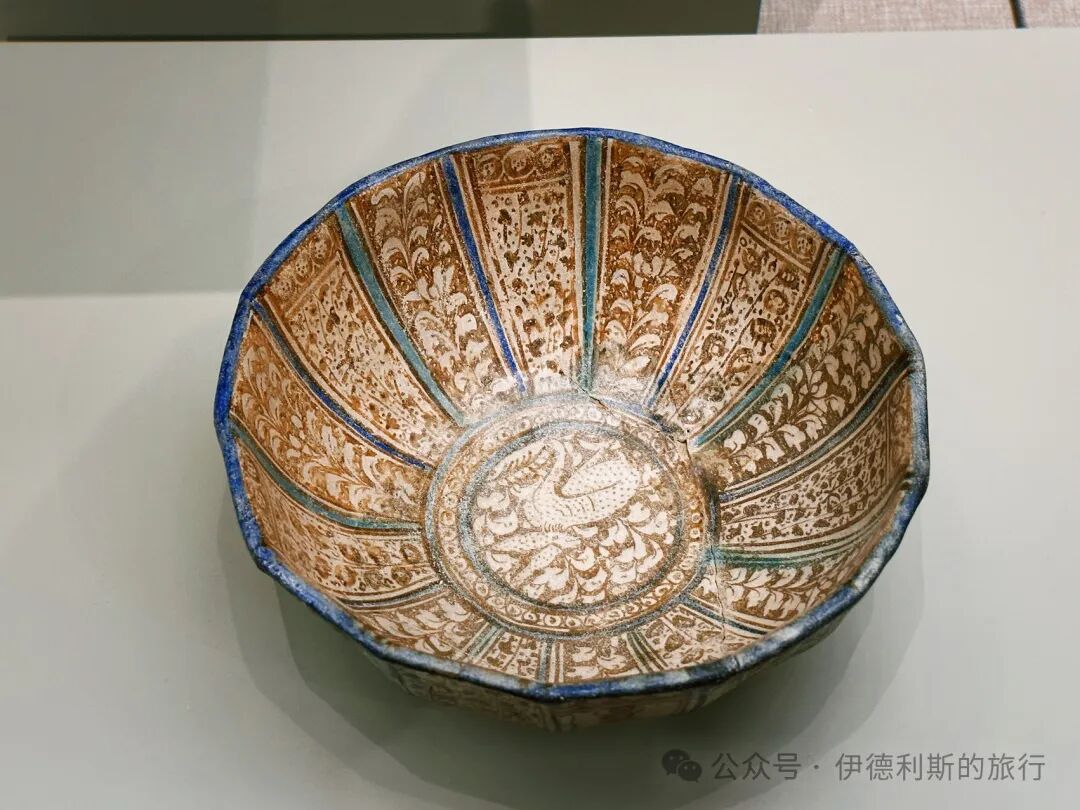
A 13th-century bowl with colorful painted floral patterns from Iran.
A 16th-17th century Iznik ceramic plate from the Ottoman dynasty. The ancient city of Iznik is located by Lake Iznik, 90 kilometers southeast of Istanbul. It became a production center for Ottoman underglaze ceramics in the late 15th century. Because Ottoman rulers loved Chinese blue and white porcelain, Iznik ceramics combined traditional Ottoman arabesque patterns with Chinese elements.
Early Iznik ceramics only used cobalt blue. After the 16th century, they gradually introduced sage green and lavender as soft color tones. In the late 16th century, the master architect Mimar Sinan used many Iznik tiles for Ottoman Empire buildings. He replaced sage green with bright green and lavender with bright red. In 1557, Kara Mehmed Çelebi became the chief painter for the Ottoman court. He introduced a floral style featuring tulips, carnations, roses, and hyacinths into Iznik ceramics, making the patterns look more natural. view all
Summary: Islamic Art Guide: Ancient Ceramics at Tsinghua University Art Museum is presented here as a firsthand travel account in clear, natural English. The account focuses on Tsinghua Museum, Ancient Ceramics, China Museums while preserving the names, places, food, photos, and historical details from the Chinese source.
The exhibition 'The Art of Clay: Ceramic Art in Ancient East-West Cultural Exchange' on the fourth floor of the Tsinghua University Art Museum displays 270 ancient ceramic pieces from the Ikuo Hirayama Silk Road Museum collection from March 22 to July 31.
First, let's look at pottery made in Saveh, Iran. Saveh is located southwest of Tehran and was an important city during the Ilkhanate period.
A 13th-century Mina'i ware flower-shaped long-necked vase. Mina'i ware (Mina'i) originated in Kashan, Iran, in the early 13th century and is the earliest type of overglaze enamel pottery in Iran.
A 12th-13th century lusterware vase with figure patterns. Lusterware (Lustreware) appeared in Iraq in the 9th century and spread to Syria and Iran in the 12th century. It is a low-temperature secondary firing technique that creates a shimmering metallic finish during the second firing.
A 12th-13th century green-glazed pot with a lid.
A 12th-13th century lusterware long-necked vase.
A 12th-13th century bowl with figure patterns.
A 10th-11th century plate with bird patterns on a pale yellow background.
A 12th-13th century bowl with blue-glazed cart patterns.
A 13th-century lusterware octagonal star tile.
A 12th-13th century lusterware long-necked vase with floral patterns.
A 12th-century lusterware plate with plant patterns from Saveh, Iran.
A 12th-century blue-glazed water pitcher with a handle from Gorgan, Iran. Gorgan was an important city on the Caspian Sea coast during the Sasanian period. It was destroyed during the Mongol invasion in the 13th century, and the city moved to its current location during the Ilkhanate period.
A 12th-13th century blue-glazed black-painted four-handled jar from Gorgan, Iran.
A 13th-century luster-painted handled jug from Kashan, Iran. During the Seljuk and Ilkhanate rule from the 12th to 14th centuries, Kashan was a major center for producing high-quality glazed pottery in Iran. In modern Persian, the word for tile (kashi) comes from the name Kashan.
A 13th-century Minai-ware bowl with a horse-riding figure from Kashan, Iran. Minai-ware was popular in Kashan during the 13th century and is known as the most luxurious ceramic in the eastern Islamic world.
A 12th-13th century luster-painted bowl with figures from Kashan, Iran.
A 12th-13th century blue-glazed floral-patterned cockscomb-shaped jug from Kashan, Iran.
A 9th-10th century polychrome animal-patterned bowl from Nishapur, Iran. Nishapur is an ancient city on the Silk Road in northeastern Iran, once one of the four major cities of the Greater Khorasan region. Nishapur became the capital of the Persian Tahirid Dynasty in the 9th century, grew into an important cultural and commercial hub under the Persian Samanid Dynasty in the 10th century, and continued to thrive during the Seljuk Empire in the 11th century. Between the 9th and 11th centuries, trade routes from Transoxiana in Central Asia, China, Iraq, and Egypt met here. Glazed pottery produced in Nishapur at that time became a major trade commodity in the West, rivaling Baghdad and Cairo.
A 10th-11th century bowl with a painted horse pattern on a light yellow background from Nishapur, Iran.
A 10th-11th century three-color glazed bowl from Nishapur, Iran. Nishapur was a major production center for three-colored pottery and exported large quantities to the Transoxiana region in Central Asia.
A 10th-century bowl with painted designs on a white glazed background from Nishapur, Iran.
A 10th-11th century bowl with painted designs on a pale yellow background from Nishapur, Iran.
An 11th-12th century large plate with three-colored incised patterns from Yazd, Iran. Yazd is known as the City of Windcatchers. It was added to the World Heritage List in 2017 and is famous for its handicrafts.
An 11th-12th century bowl with incised green patterns on a pale yellow background from Amol, Iran. Amol sits on the coast of the Caspian Sea and was a major commercial hub in history.
A 12th-13th century blue-glazed pitcher with a handle and arabesque patterns from Afghanistan.
A 13th-century bowl with colorful painted floral patterns from Iran.
A 16th-17th century Iznik ceramic plate from the Ottoman dynasty. The ancient city of Iznik is located by Lake Iznik, 90 kilometers southeast of Istanbul. It became a production center for Ottoman underglaze ceramics in the late 15th century. Because Ottoman rulers loved Chinese blue and white porcelain, Iznik ceramics combined traditional Ottoman arabesque patterns with Chinese elements.
Early Iznik ceramics only used cobalt blue. After the 16th century, they gradually introduced sage green and lavender as soft color tones. In the late 16th century, the master architect Mimar Sinan used many Iznik tiles for Ottoman Empire buildings. He replaced sage green with bright green and lavender with bright red. In 1557, Kara Mehmed Çelebi became the chief painter for the Ottoman court. He introduced a floral style featuring tulips, carnations, roses, and hyacinths into Iznik ceramics, making the patterns look more natural. view all
Reposted from the web
Summary: Islamic Art Guide: Ancient Ceramics at Tsinghua University Art Museum is presented here as a firsthand travel account in clear, natural English. The account focuses on Tsinghua Museum, Ancient Ceramics, China Museums while preserving the names, places, food, photos, and historical details from the Chinese source.
The exhibition 'The Art of Clay: Ceramic Art in Ancient East-West Cultural Exchange' on the fourth floor of the Tsinghua University Art Museum displays 270 ancient ceramic pieces from the Ikuo Hirayama Silk Road Museum collection from March 22 to July 31.
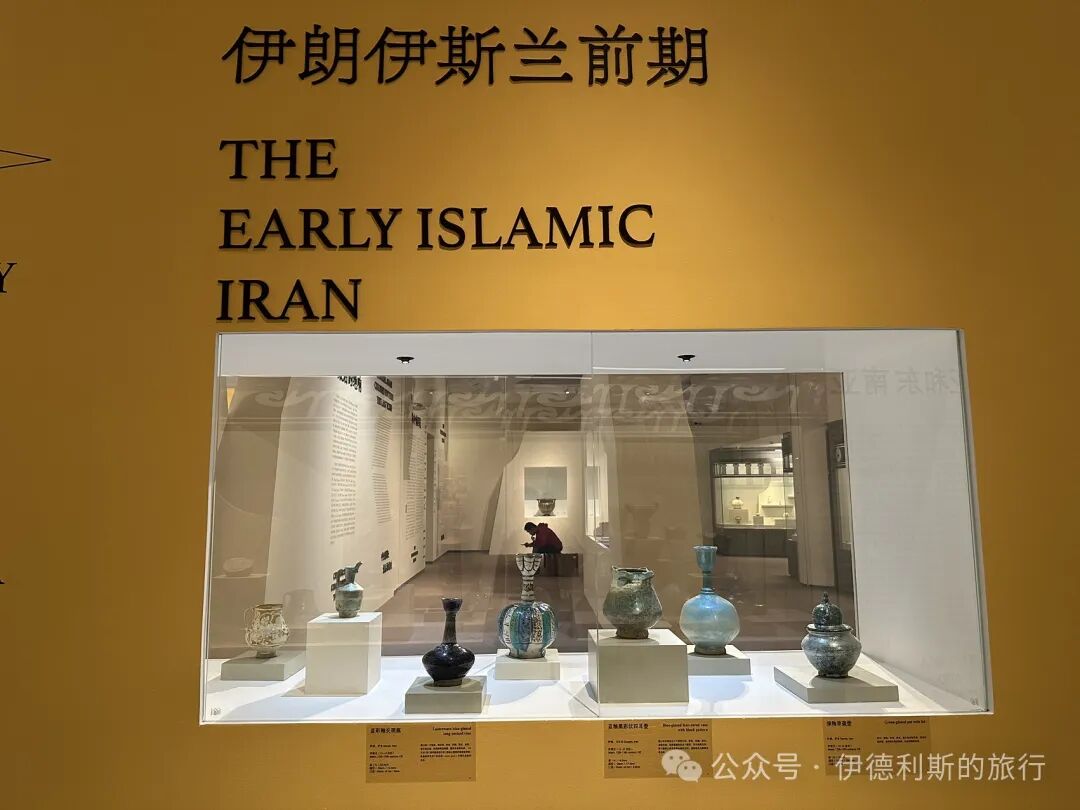
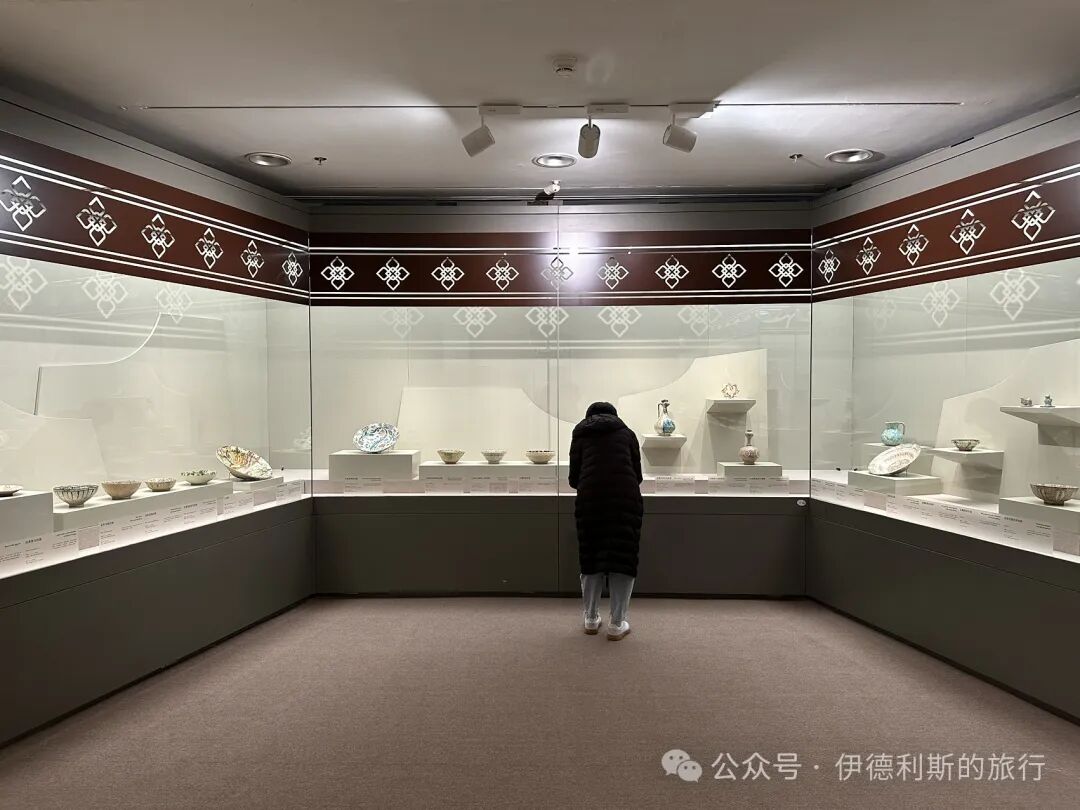
First, let's look at pottery made in Saveh, Iran. Saveh is located southwest of Tehran and was an important city during the Ilkhanate period.
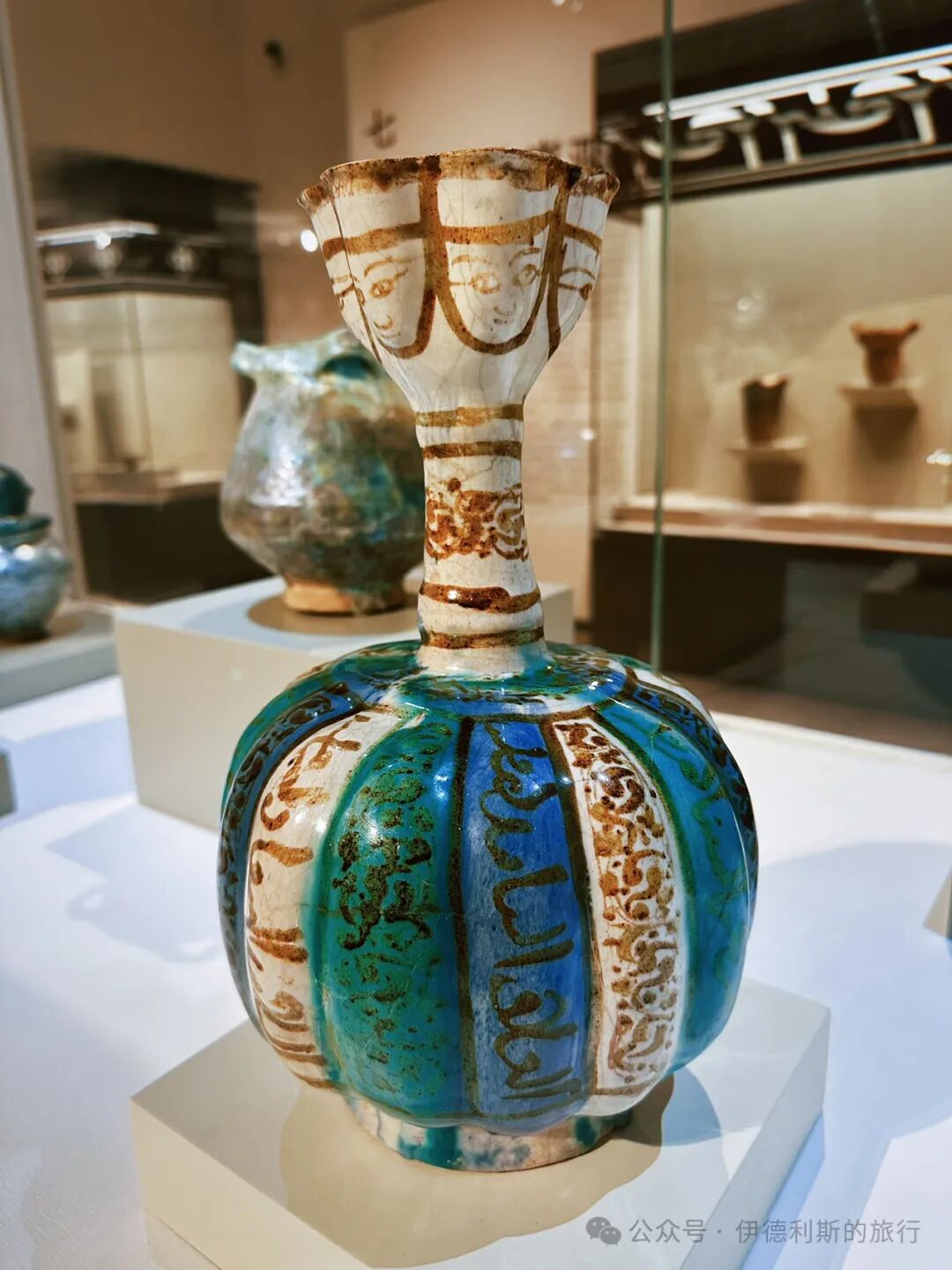
A 13th-century Mina'i ware flower-shaped long-necked vase. Mina'i ware (Mina'i) originated in Kashan, Iran, in the early 13th century and is the earliest type of overglaze enamel pottery in Iran.
A 12th-13th century lusterware vase with figure patterns. Lusterware (Lustreware) appeared in Iraq in the 9th century and spread to Syria and Iran in the 12th century. It is a low-temperature secondary firing technique that creates a shimmering metallic finish during the second firing.
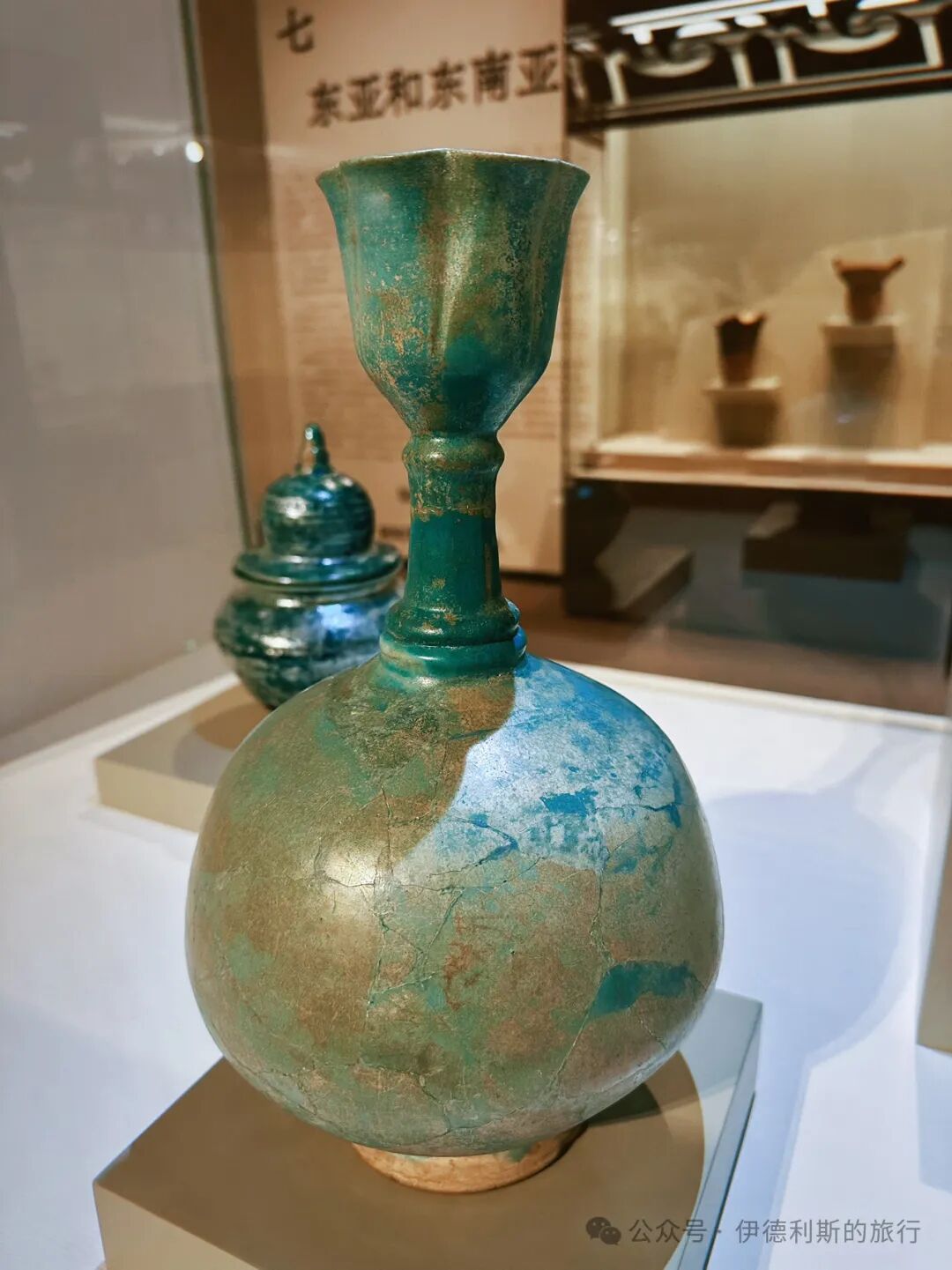
A 12th-13th century green-glazed pot with a lid.
A 12th-13th century lusterware long-necked vase.
A 12th-13th century bowl with figure patterns.
A 10th-11th century plate with bird patterns on a pale yellow background.
A 12th-13th century bowl with blue-glazed cart patterns.
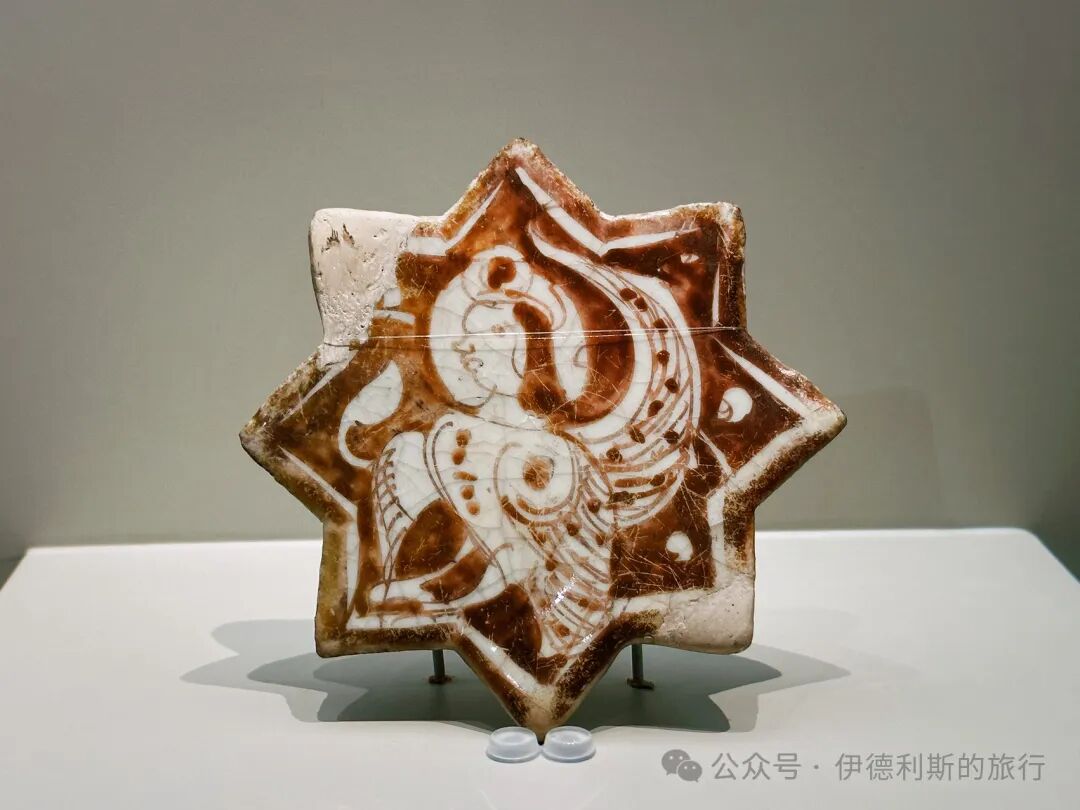
A 13th-century lusterware octagonal star tile.
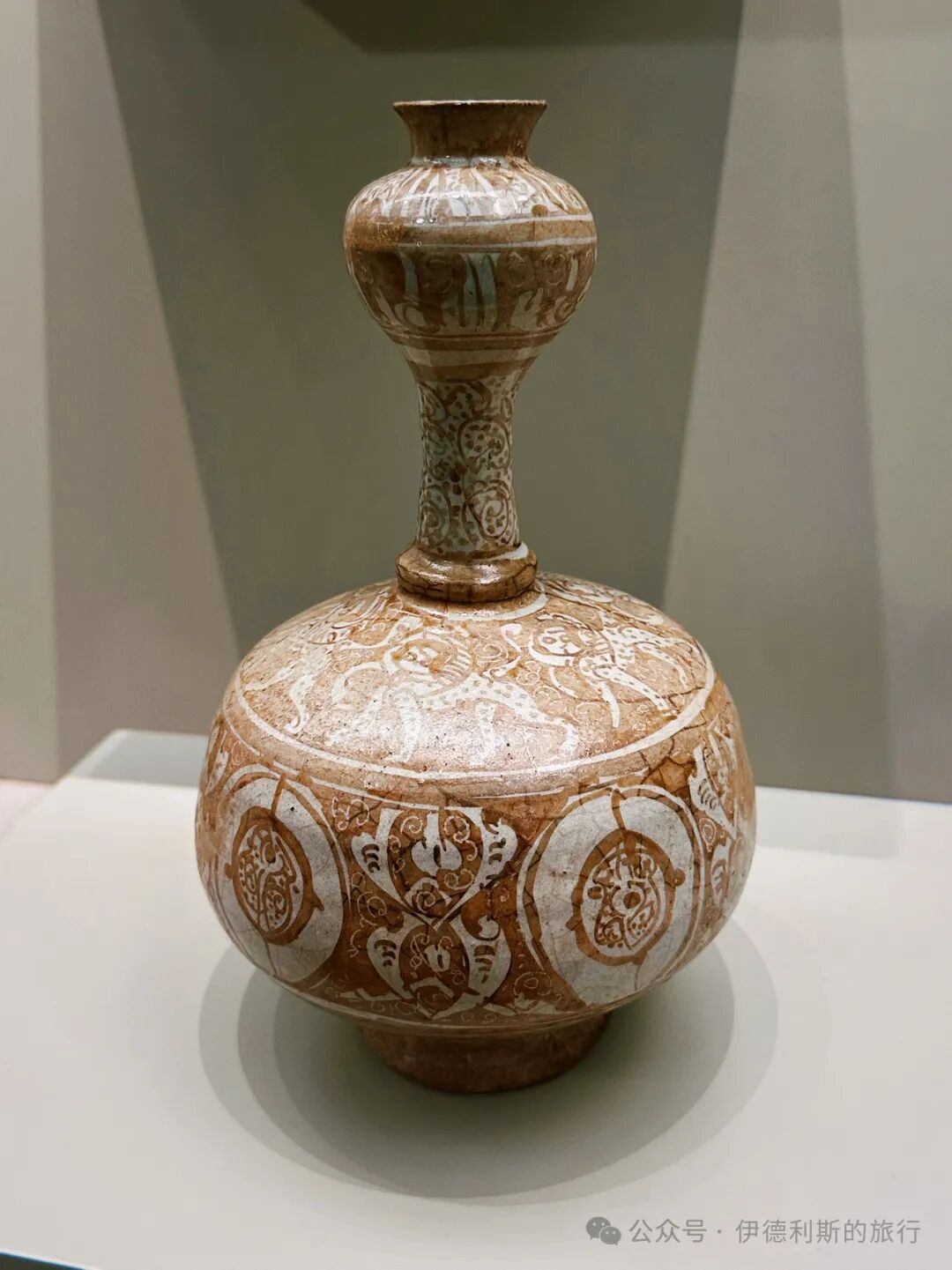
A 12th-13th century lusterware long-necked vase with floral patterns.
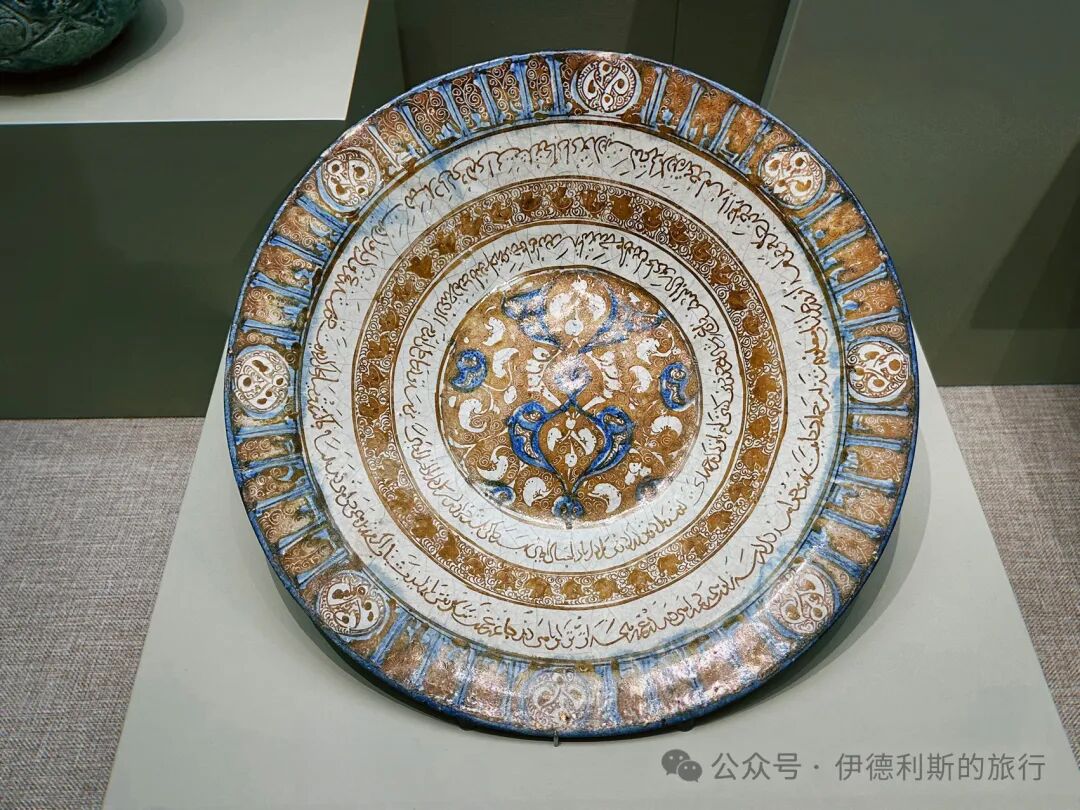
A 12th-century lusterware plate with plant patterns from Saveh, Iran.
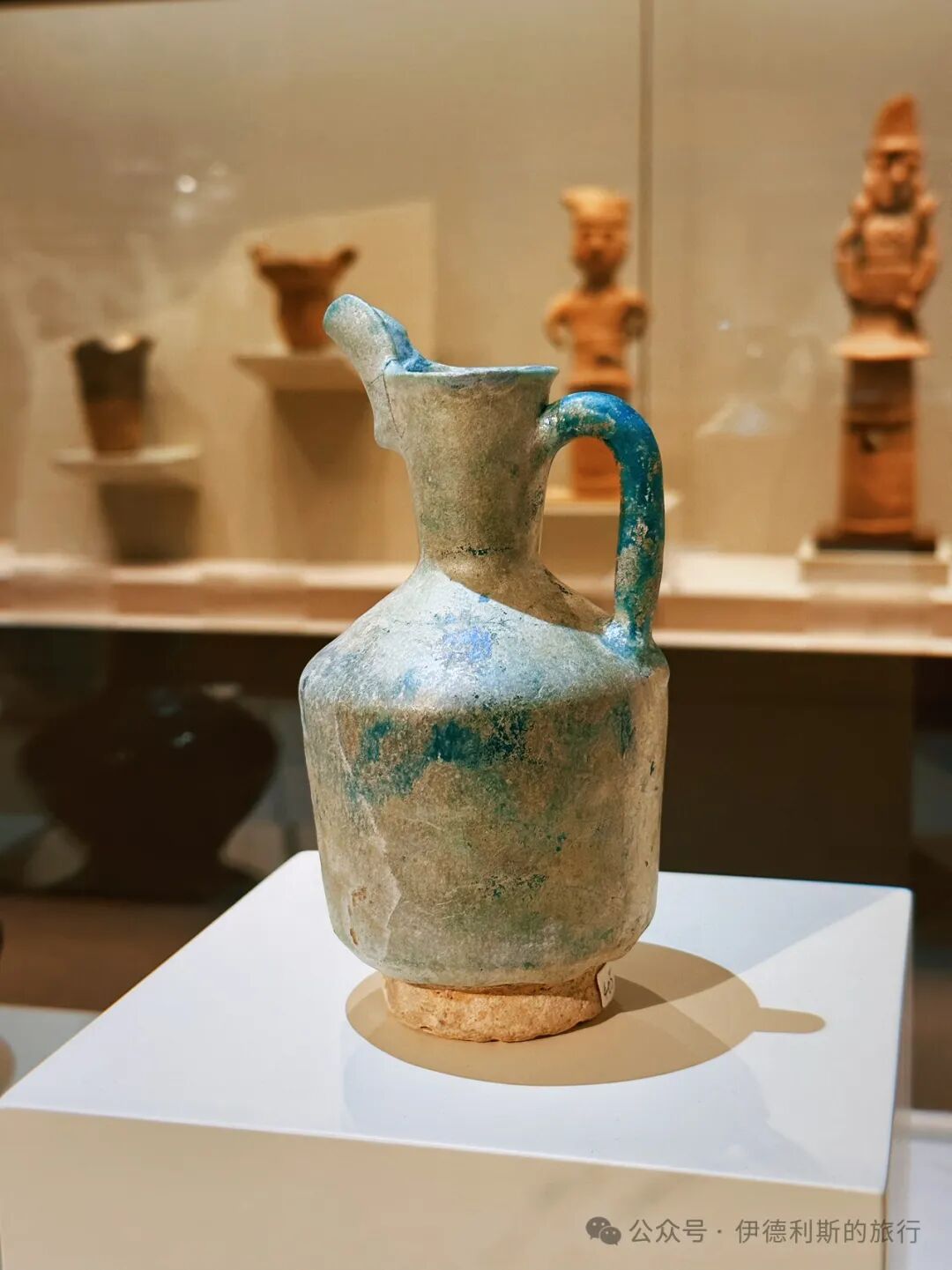
A 12th-century blue-glazed water pitcher with a handle from Gorgan, Iran. Gorgan was an important city on the Caspian Sea coast during the Sasanian period. It was destroyed during the Mongol invasion in the 13th century, and the city moved to its current location during the Ilkhanate period.
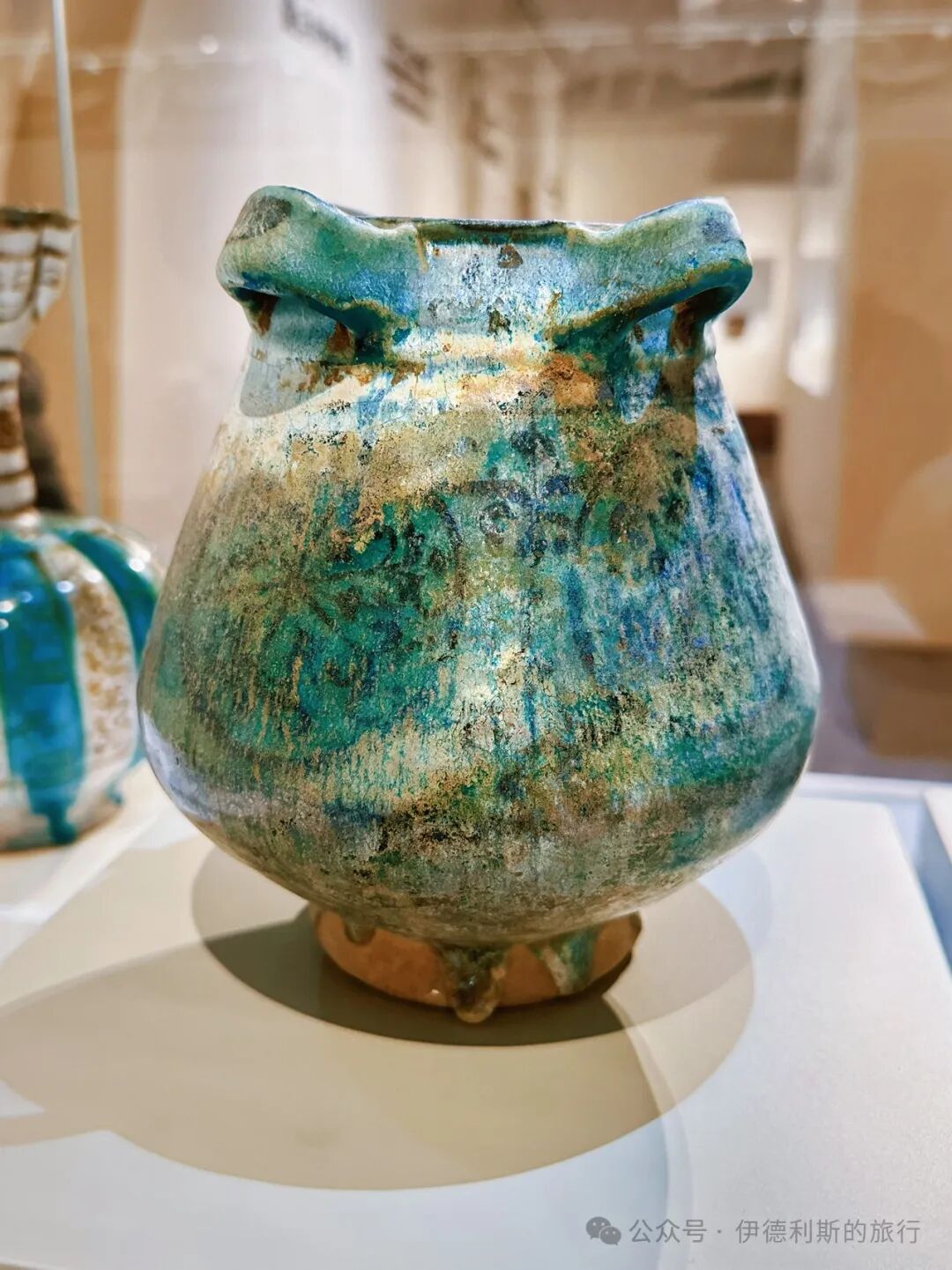
A 12th-13th century blue-glazed black-painted four-handled jar from Gorgan, Iran.
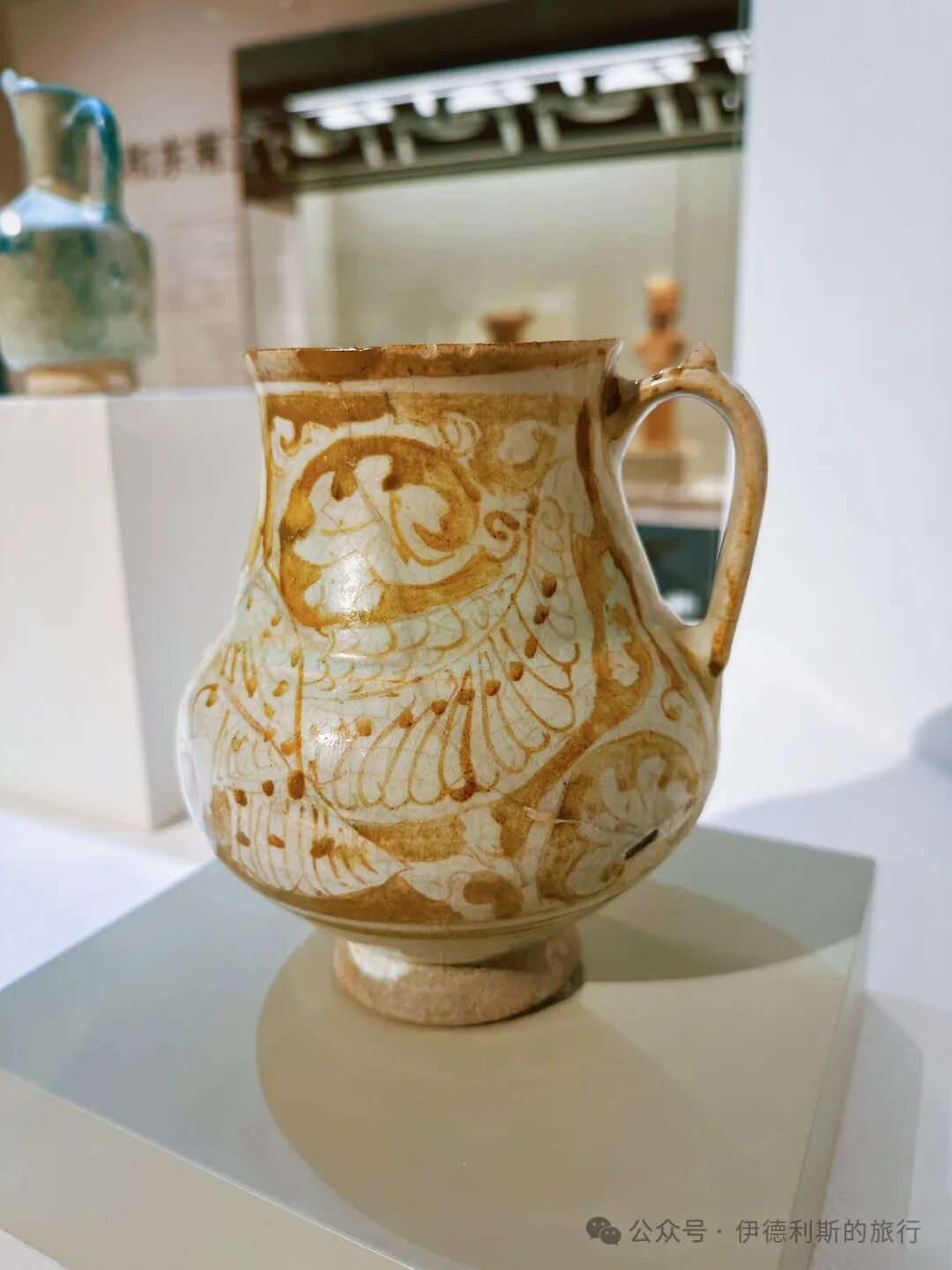
A 13th-century luster-painted handled jug from Kashan, Iran. During the Seljuk and Ilkhanate rule from the 12th to 14th centuries, Kashan was a major center for producing high-quality glazed pottery in Iran. In modern Persian, the word for tile (kashi) comes from the name Kashan.
A 13th-century Minai-ware bowl with a horse-riding figure from Kashan, Iran. Minai-ware was popular in Kashan during the 13th century and is known as the most luxurious ceramic in the eastern Islamic world.
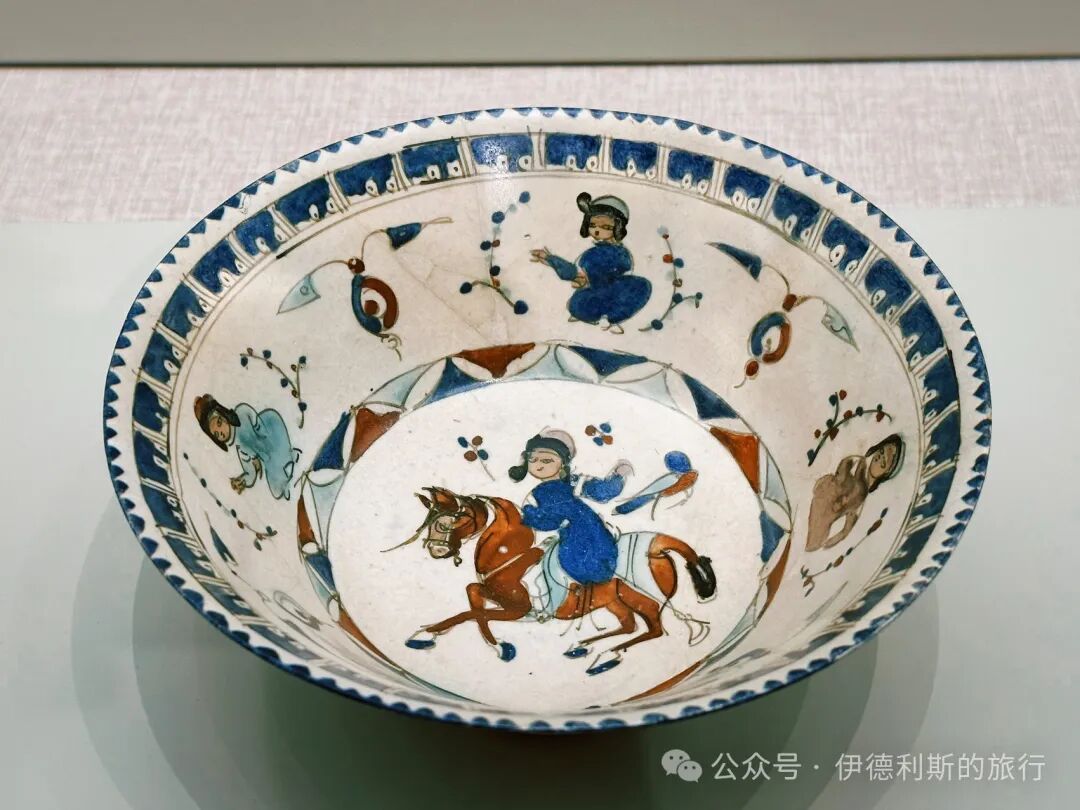
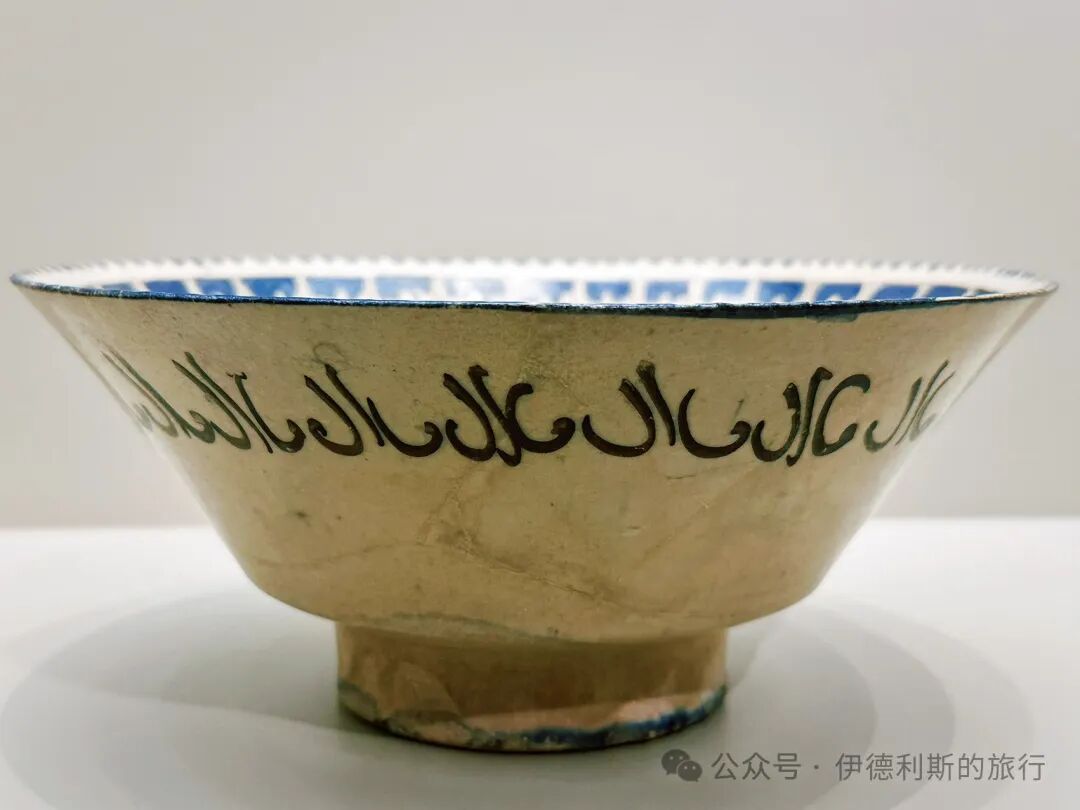
A 12th-13th century luster-painted bowl with figures from Kashan, Iran.
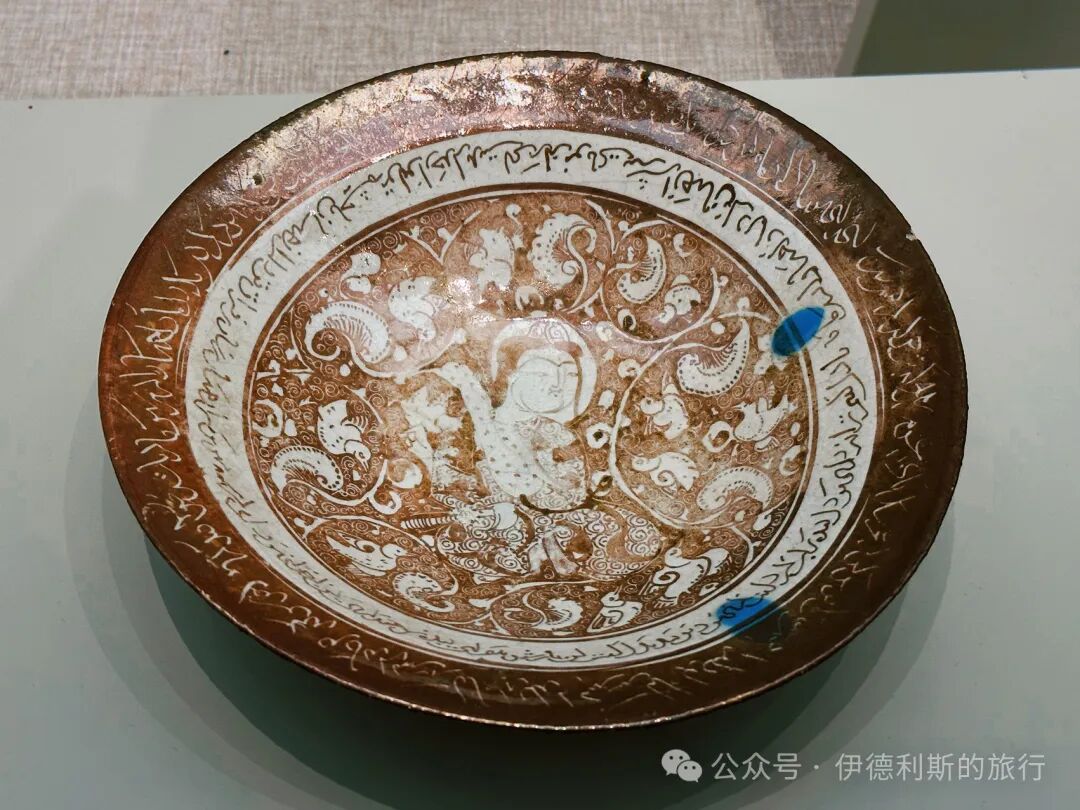
A 12th-13th century blue-glazed floral-patterned cockscomb-shaped jug from Kashan, Iran.
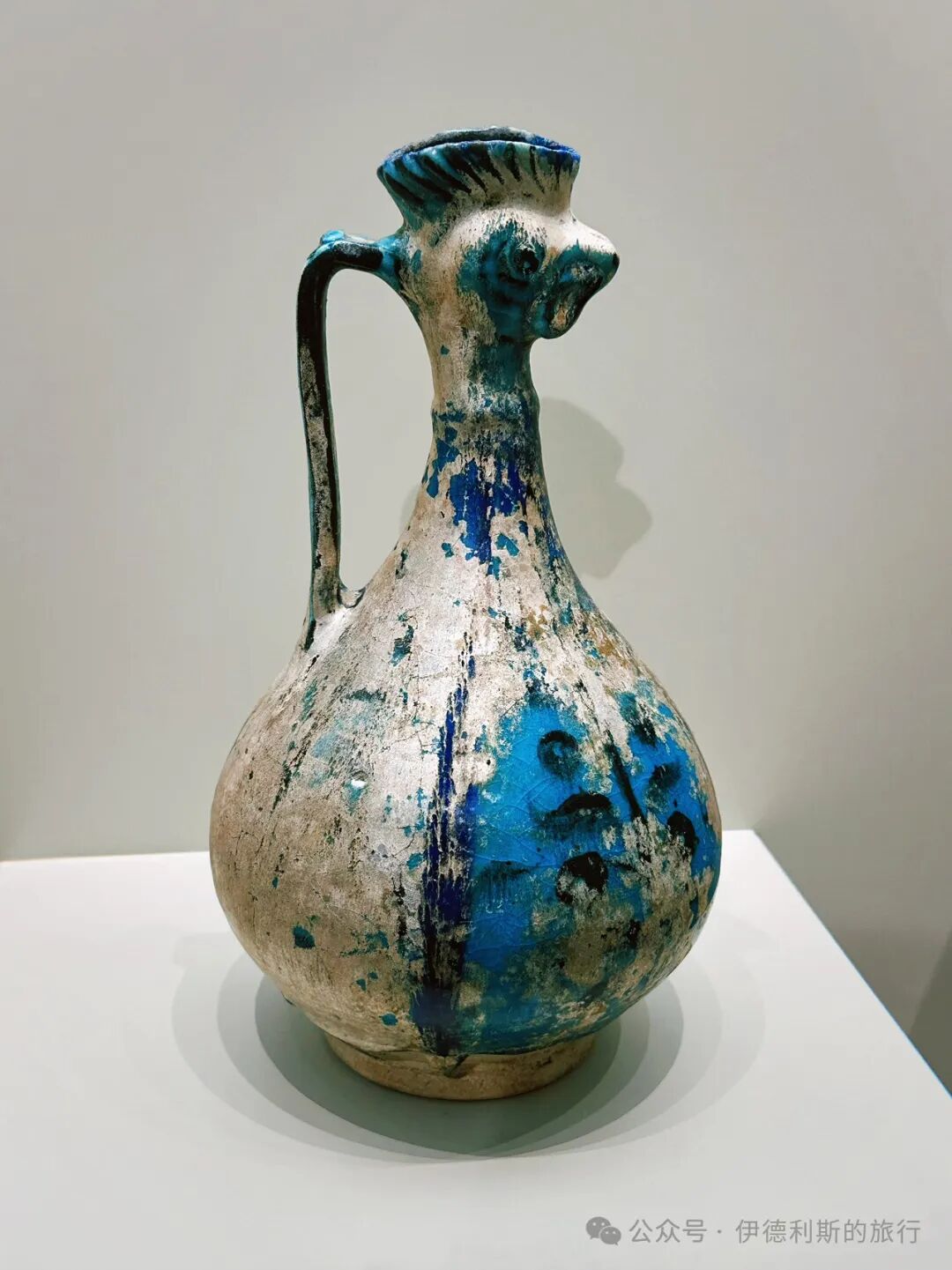
A 9th-10th century polychrome animal-patterned bowl from Nishapur, Iran. Nishapur is an ancient city on the Silk Road in northeastern Iran, once one of the four major cities of the Greater Khorasan region. Nishapur became the capital of the Persian Tahirid Dynasty in the 9th century, grew into an important cultural and commercial hub under the Persian Samanid Dynasty in the 10th century, and continued to thrive during the Seljuk Empire in the 11th century. Between the 9th and 11th centuries, trade routes from Transoxiana in Central Asia, China, Iraq, and Egypt met here. Glazed pottery produced in Nishapur at that time became a major trade commodity in the West, rivaling Baghdad and Cairo.
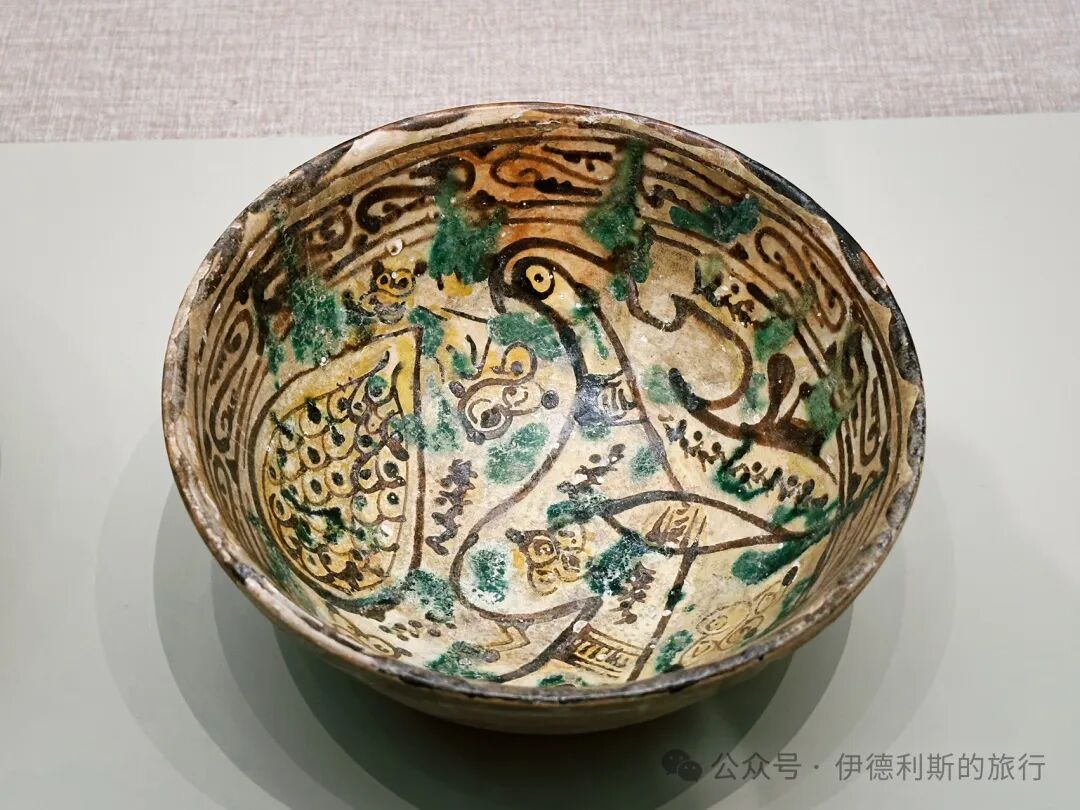
A 10th-11th century bowl with a painted horse pattern on a light yellow background from Nishapur, Iran.
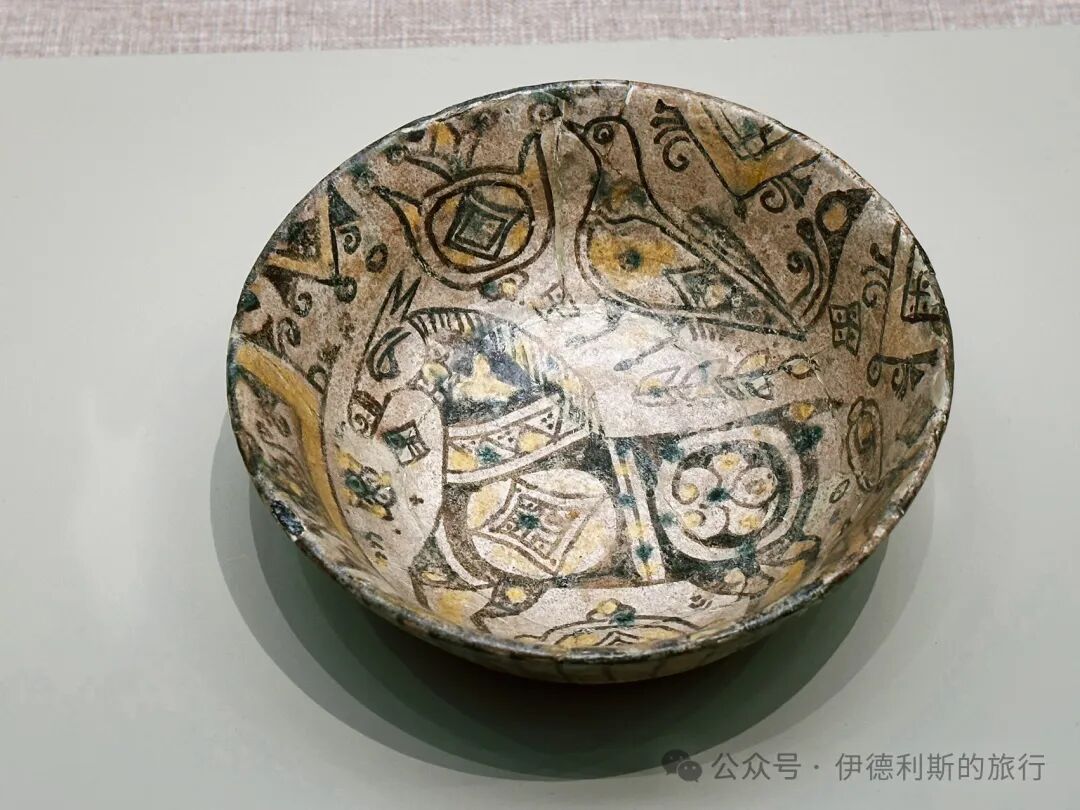
A 10th-11th century three-color glazed bowl from Nishapur, Iran. Nishapur was a major production center for three-colored pottery and exported large quantities to the Transoxiana region in Central Asia.
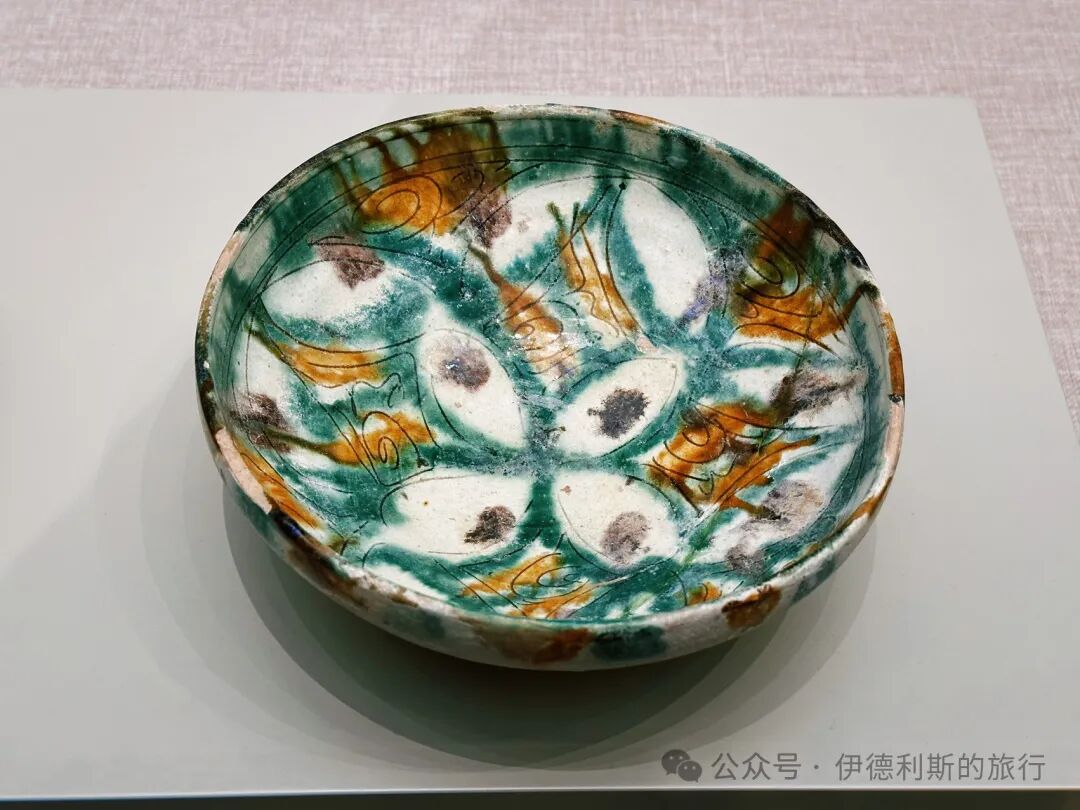
A 10th-century bowl with painted designs on a white glazed background from Nishapur, Iran.
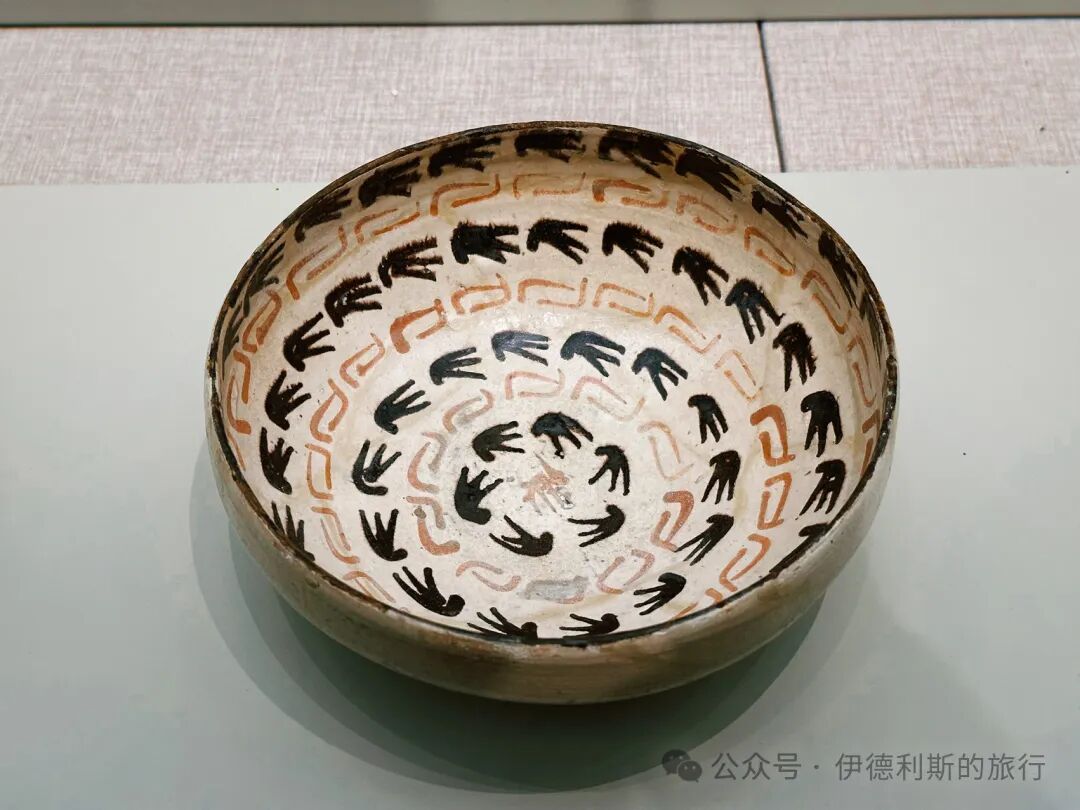
A 10th-11th century bowl with painted designs on a pale yellow background from Nishapur, Iran.
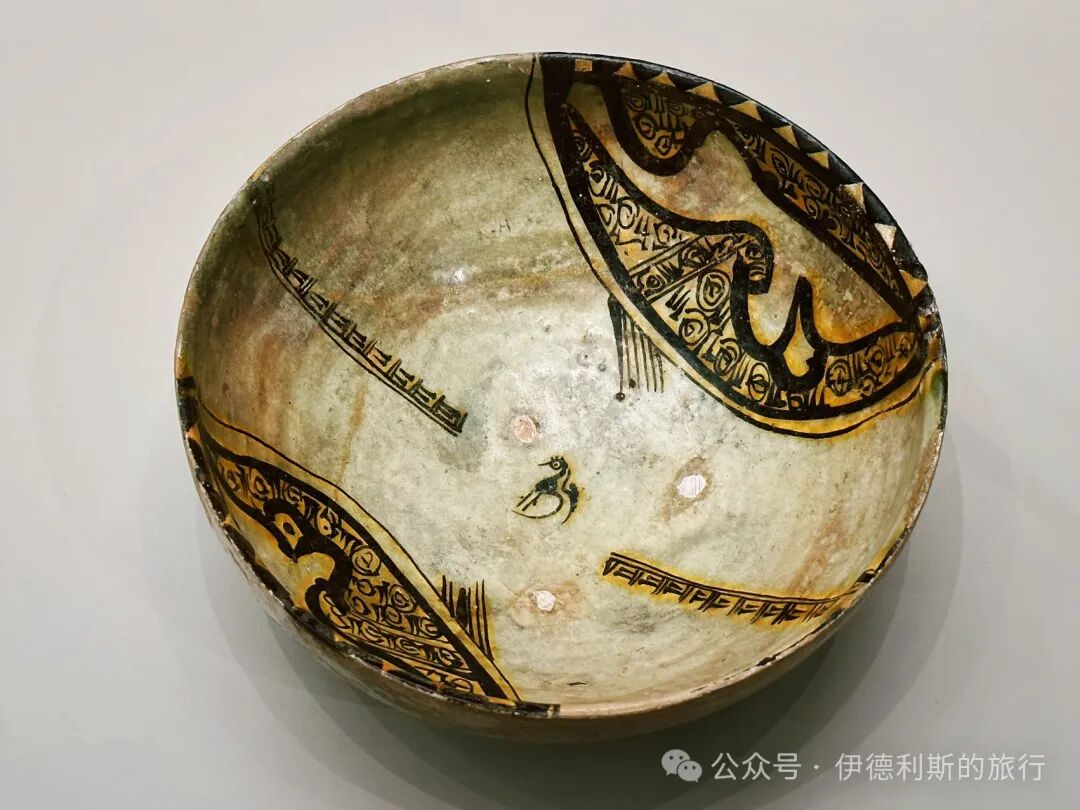
An 11th-12th century large plate with three-colored incised patterns from Yazd, Iran. Yazd is known as the City of Windcatchers. It was added to the World Heritage List in 2017 and is famous for its handicrafts.
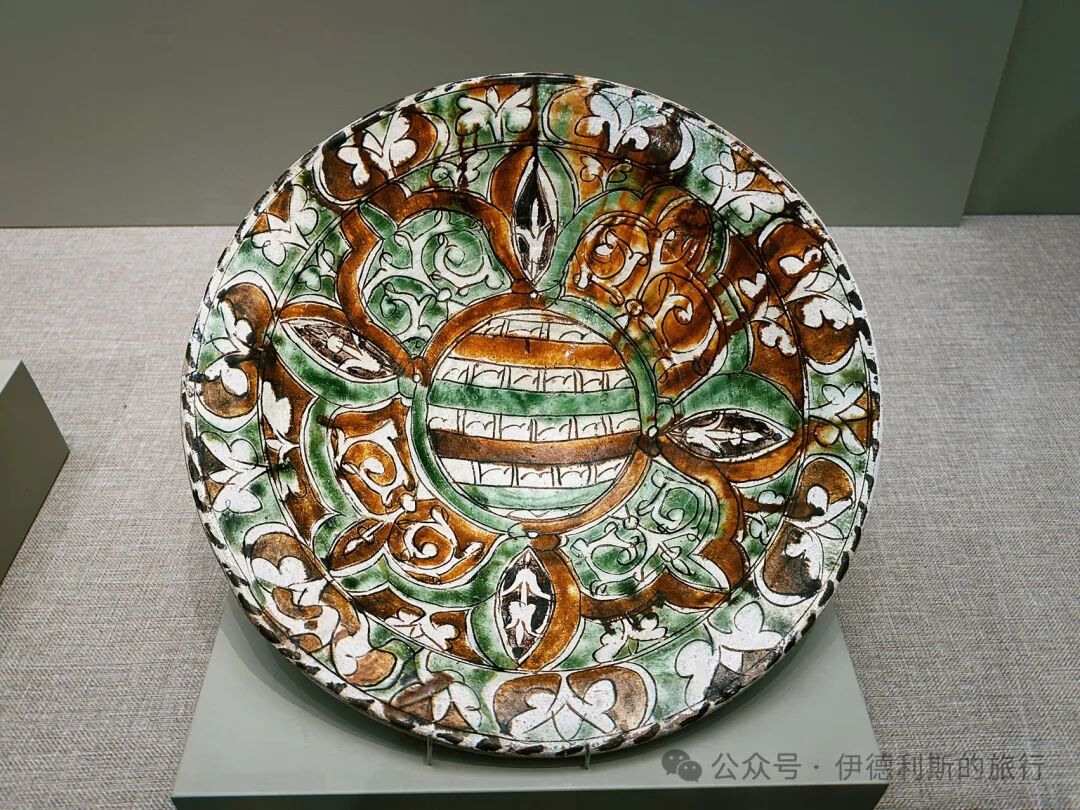
An 11th-12th century bowl with incised green patterns on a pale yellow background from Amol, Iran. Amol sits on the coast of the Caspian Sea and was a major commercial hub in history.
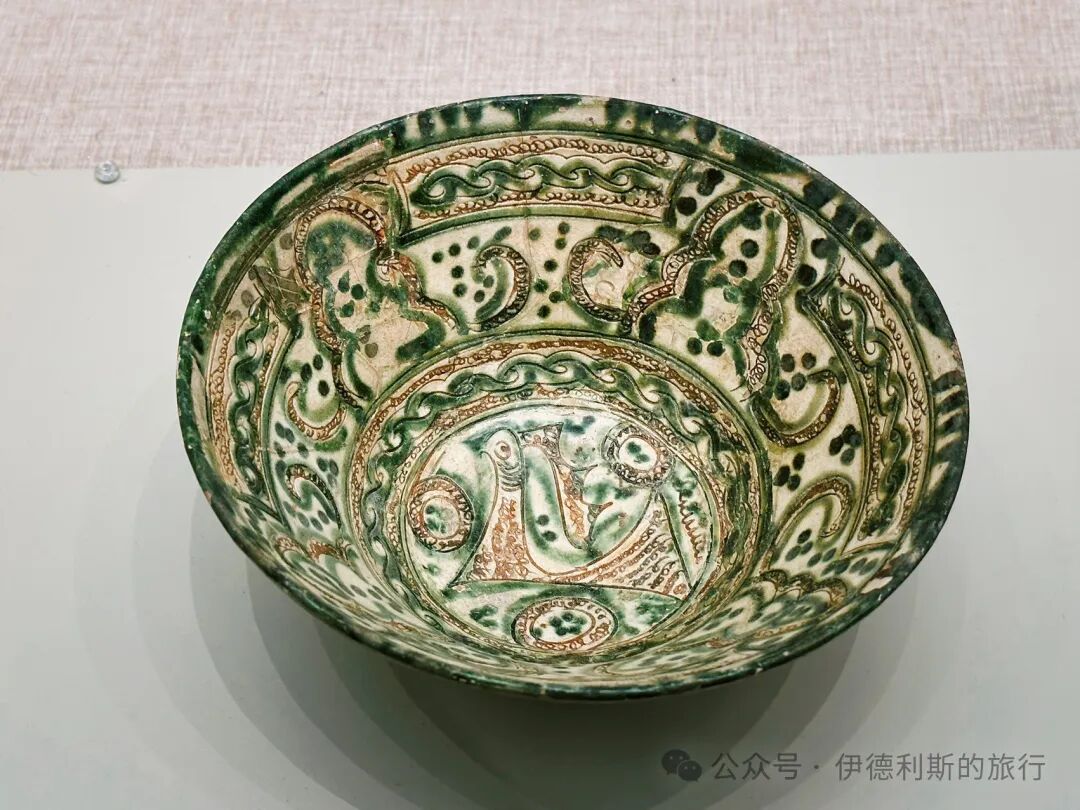
A 12th-13th century blue-glazed pitcher with a handle and arabesque patterns from Afghanistan.
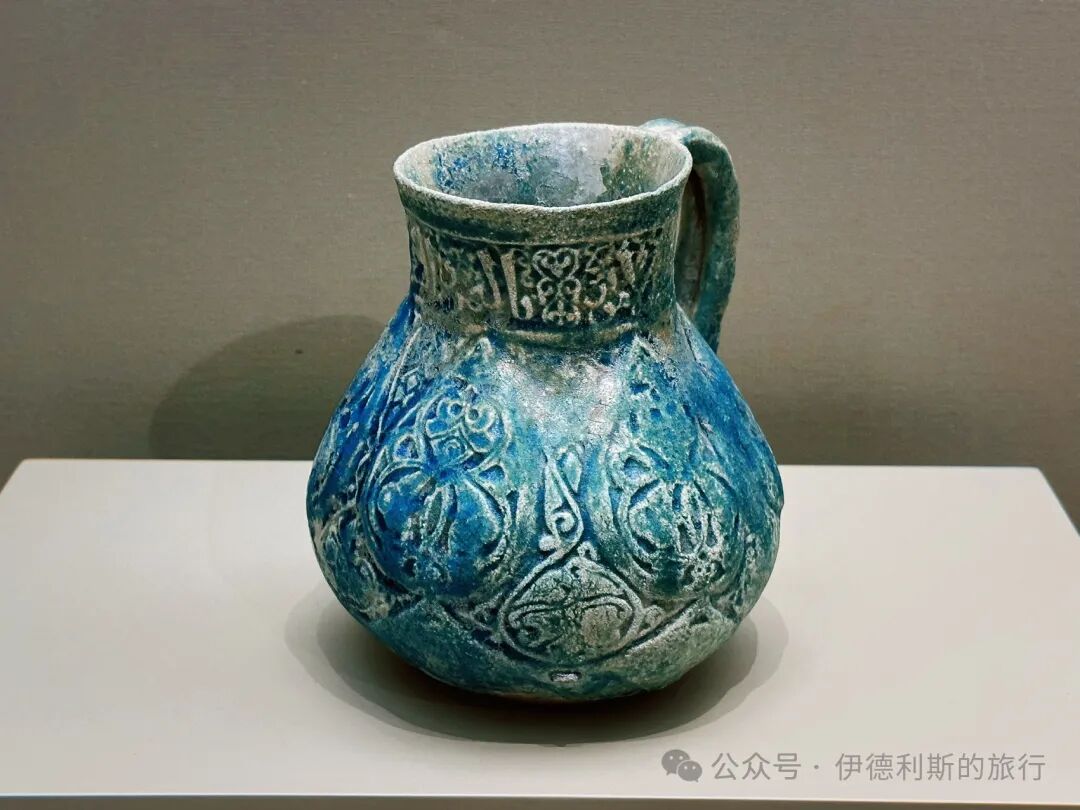
A 13th-century bowl with colorful painted floral patterns from Iran.
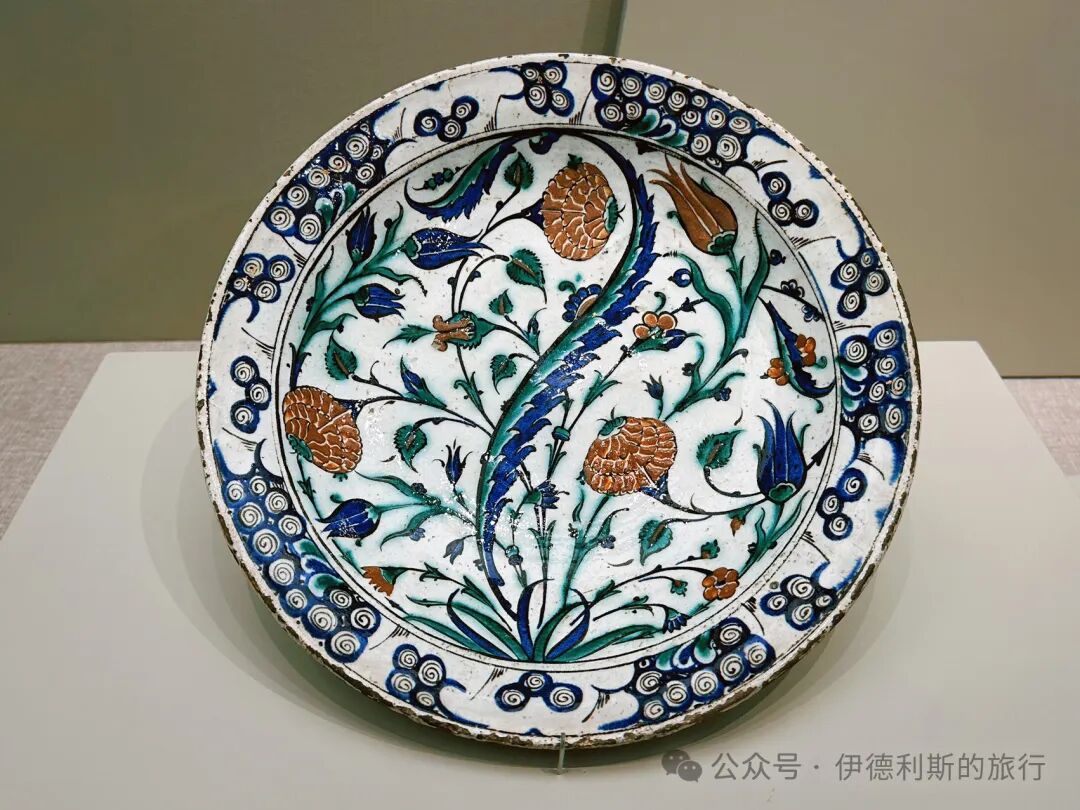
A 16th-17th century Iznik ceramic plate from the Ottoman dynasty. The ancient city of Iznik is located by Lake Iznik, 90 kilometers southeast of Istanbul. It became a production center for Ottoman underglaze ceramics in the late 15th century. Because Ottoman rulers loved Chinese blue and white porcelain, Iznik ceramics combined traditional Ottoman arabesque patterns with Chinese elements.
Early Iznik ceramics only used cobalt blue. After the 16th century, they gradually introduced sage green and lavender as soft color tones. In the late 16th century, the master architect Mimar Sinan used many Iznik tiles for Ottoman Empire buildings. He replaced sage green with bright green and lavender with bright red. In 1557, Kara Mehmed Çelebi became the chief painter for the Ottoman court. He introduced a floral style featuring tulips, carnations, roses, and hyacinths into Iznik ceramics, making the patterns look more natural.
Summary: Islamic Art Guide: Ancient Ceramics at Tsinghua University Art Museum is presented here as a firsthand travel account in clear, natural English. The account focuses on Tsinghua Museum, Ancient Ceramics, China Museums while preserving the names, places, food, photos, and historical details from the Chinese source.
The exhibition 'The Art of Clay: Ceramic Art in Ancient East-West Cultural Exchange' on the fourth floor of the Tsinghua University Art Museum displays 270 ancient ceramic pieces from the Ikuo Hirayama Silk Road Museum collection from March 22 to July 31.
First, let's look at pottery made in Saveh, Iran. Saveh is located southwest of Tehran and was an important city during the Ilkhanate period.
A 13th-century Mina'i ware flower-shaped long-necked vase. Mina'i ware (Mina'i) originated in Kashan, Iran, in the early 13th century and is the earliest type of overglaze enamel pottery in Iran.
A 12th-13th century lusterware vase with figure patterns. Lusterware (Lustreware) appeared in Iraq in the 9th century and spread to Syria and Iran in the 12th century. It is a low-temperature secondary firing technique that creates a shimmering metallic finish during the second firing.
A 12th-13th century green-glazed pot with a lid.
A 12th-13th century lusterware long-necked vase.
A 12th-13th century bowl with figure patterns.
A 10th-11th century plate with bird patterns on a pale yellow background.
A 12th-13th century bowl with blue-glazed cart patterns.
A 13th-century lusterware octagonal star tile.
A 12th-13th century lusterware long-necked vase with floral patterns.
A 12th-century lusterware plate with plant patterns from Saveh, Iran.
A 12th-century blue-glazed water pitcher with a handle from Gorgan, Iran. Gorgan was an important city on the Caspian Sea coast during the Sasanian period. It was destroyed during the Mongol invasion in the 13th century, and the city moved to its current location during the Ilkhanate period.
A 12th-13th century blue-glazed black-painted four-handled jar from Gorgan, Iran.
A 13th-century luster-painted handled jug from Kashan, Iran. During the Seljuk and Ilkhanate rule from the 12th to 14th centuries, Kashan was a major center for producing high-quality glazed pottery in Iran. In modern Persian, the word for tile (kashi) comes from the name Kashan.
A 13th-century Minai-ware bowl with a horse-riding figure from Kashan, Iran. Minai-ware was popular in Kashan during the 13th century and is known as the most luxurious ceramic in the eastern Islamic world.
A 12th-13th century luster-painted bowl with figures from Kashan, Iran.
A 12th-13th century blue-glazed floral-patterned cockscomb-shaped jug from Kashan, Iran.
A 9th-10th century polychrome animal-patterned bowl from Nishapur, Iran. Nishapur is an ancient city on the Silk Road in northeastern Iran, once one of the four major cities of the Greater Khorasan region. Nishapur became the capital of the Persian Tahirid Dynasty in the 9th century, grew into an important cultural and commercial hub under the Persian Samanid Dynasty in the 10th century, and continued to thrive during the Seljuk Empire in the 11th century. Between the 9th and 11th centuries, trade routes from Transoxiana in Central Asia, China, Iraq, and Egypt met here. Glazed pottery produced in Nishapur at that time became a major trade commodity in the West, rivaling Baghdad and Cairo.
A 10th-11th century bowl with a painted horse pattern on a light yellow background from Nishapur, Iran.
A 10th-11th century three-color glazed bowl from Nishapur, Iran. Nishapur was a major production center for three-colored pottery and exported large quantities to the Transoxiana region in Central Asia.
A 10th-century bowl with painted designs on a white glazed background from Nishapur, Iran.
A 10th-11th century bowl with painted designs on a pale yellow background from Nishapur, Iran.
An 11th-12th century large plate with three-colored incised patterns from Yazd, Iran. Yazd is known as the City of Windcatchers. It was added to the World Heritage List in 2017 and is famous for its handicrafts.
An 11th-12th century bowl with incised green patterns on a pale yellow background from Amol, Iran. Amol sits on the coast of the Caspian Sea and was a major commercial hub in history.
A 12th-13th century blue-glazed pitcher with a handle and arabesque patterns from Afghanistan.
A 13th-century bowl with colorful painted floral patterns from Iran.
A 16th-17th century Iznik ceramic plate from the Ottoman dynasty. The ancient city of Iznik is located by Lake Iznik, 90 kilometers southeast of Istanbul. It became a production center for Ottoman underglaze ceramics in the late 15th century. Because Ottoman rulers loved Chinese blue and white porcelain, Iznik ceramics combined traditional Ottoman arabesque patterns with Chinese elements.
Early Iznik ceramics only used cobalt blue. After the 16th century, they gradually introduced sage green and lavender as soft color tones. In the late 16th century, the master architect Mimar Sinan used many Iznik tiles for Ottoman Empire buildings. He replaced sage green with bright green and lavender with bright red. In 1557, Kara Mehmed Çelebi became the chief painter for the Ottoman court. He introduced a floral style featuring tulips, carnations, roses, and hyacinths into Iznik ceramics, making the patterns look more natural.
Islamic Art Guide: Ancient Ceramics at Tsinghua University Art Museum
Articles • ali2007fr posted the article • 0 comments • 155 views • 2026-05-19 08:53
Reposted from the web
Summary: Islamic Art Guide: Ancient Ceramics at Tsinghua University Art Museum is presented here as a firsthand travel account in clear, natural English. The account focuses on Tsinghua Museum, Ancient Ceramics, China Museums while preserving the names, places, food, photos, and historical details from the Chinese source.
The exhibition 'The Art of Clay: Ceramic Art in Ancient East-West Cultural Exchange' on the fourth floor of the Tsinghua University Art Museum displays 270 ancient ceramic pieces from the Ikuo Hirayama Silk Road Museum collection from March 22 to July 31.
First, let's look at pottery made in Saveh, Iran. Saveh is located southwest of Tehran and was an important city during the Ilkhanate period.
A 13th-century Mina'i ware flower-shaped long-necked vase. Mina'i ware (Mina'i) originated in Kashan, Iran, in the early 13th century and is the earliest type of overglaze enamel pottery in Iran.
A 12th-13th century lusterware vase with figure patterns. Lusterware (Lustreware) appeared in Iraq in the 9th century and spread to Syria and Iran in the 12th century. It is a low-temperature secondary firing technique that creates a shimmering metallic finish during the second firing.
A 12th-13th century green-glazed pot with a lid.
A 12th-13th century lusterware long-necked vase.
A 12th-13th century bowl with figure patterns.
A 10th-11th century plate with bird patterns on a pale yellow background.
A 12th-13th century bowl with blue-glazed cart patterns.
A 13th-century lusterware octagonal star tile.
A 12th-13th century lusterware long-necked vase with floral patterns.
A 12th-century lusterware plate with plant patterns from Saveh, Iran.
A 12th-century blue-glazed water pitcher with a handle from Gorgan, Iran. Gorgan was an important city on the Caspian Sea coast during the Sasanian period. It was destroyed during the Mongol invasion in the 13th century, and the city moved to its current location during the Ilkhanate period.
A 12th-13th century blue-glazed black-painted four-handled jar from Gorgan, Iran.
A 13th-century luster-painted handled jug from Kashan, Iran. During the Seljuk and Ilkhanate rule from the 12th to 14th centuries, Kashan was a major center for producing high-quality glazed pottery in Iran. In modern Persian, the word for tile (kashi) comes from the name Kashan.
A 13th-century Minai-ware bowl with a horse-riding figure from Kashan, Iran. Minai-ware was popular in Kashan during the 13th century and is known as the most luxurious ceramic in the eastern Islamic world.
A 12th-13th century luster-painted bowl with figures from Kashan, Iran.
A 12th-13th century blue-glazed floral-patterned cockscomb-shaped jug from Kashan, Iran.
A 9th-10th century polychrome animal-patterned bowl from Nishapur, Iran. Nishapur is an ancient city on the Silk Road in northeastern Iran, once one of the four major cities of the Greater Khorasan region. Nishapur became the capital of the Persian Tahirid Dynasty in the 9th century, grew into an important cultural and commercial hub under the Persian Samanid Dynasty in the 10th century, and continued to thrive during the Seljuk Empire in the 11th century. Between the 9th and 11th centuries, trade routes from Transoxiana in Central Asia, China, Iraq, and Egypt met here. Glazed pottery produced in Nishapur at that time became a major trade commodity in the West, rivaling Baghdad and Cairo.
A 10th-11th century bowl with a painted horse pattern on a light yellow background from Nishapur, Iran.
A 10th-11th century three-color glazed bowl from Nishapur, Iran. Nishapur was a major production center for three-colored pottery and exported large quantities to the Transoxiana region in Central Asia.
A 10th-century bowl with painted designs on a white glazed background from Nishapur, Iran.
A 10th-11th century bowl with painted designs on a pale yellow background from Nishapur, Iran.
An 11th-12th century large plate with three-colored incised patterns from Yazd, Iran. Yazd is known as the City of Windcatchers. It was added to the World Heritage List in 2017 and is famous for its handicrafts.
An 11th-12th century bowl with incised green patterns on a pale yellow background from Amol, Iran. Amol sits on the coast of the Caspian Sea and was a major commercial hub in history.
A 12th-13th century blue-glazed pitcher with a handle and arabesque patterns from Afghanistan.
A 13th-century bowl with colorful painted floral patterns from Iran.
A 16th-17th century Iznik ceramic plate from the Ottoman dynasty. The ancient city of Iznik is located by Lake Iznik, 90 kilometers southeast of Istanbul. It became a production center for Ottoman underglaze ceramics in the late 15th century. Because Ottoman rulers loved Chinese blue and white porcelain, Iznik ceramics combined traditional Ottoman arabesque patterns with Chinese elements.
Early Iznik ceramics only used cobalt blue. After the 16th century, they gradually introduced sage green and lavender as soft color tones. In the late 16th century, the master architect Mimar Sinan used many Iznik tiles for Ottoman Empire buildings. He replaced sage green with bright green and lavender with bright red. In 1557, Kara Mehmed Çelebi became the chief painter for the Ottoman court. He introduced a floral style featuring tulips, carnations, roses, and hyacinths into Iznik ceramics, making the patterns look more natural. view all
Summary: Islamic Art Guide: Ancient Ceramics at Tsinghua University Art Museum is presented here as a firsthand travel account in clear, natural English. The account focuses on Tsinghua Museum, Ancient Ceramics, China Museums while preserving the names, places, food, photos, and historical details from the Chinese source.
The exhibition 'The Art of Clay: Ceramic Art in Ancient East-West Cultural Exchange' on the fourth floor of the Tsinghua University Art Museum displays 270 ancient ceramic pieces from the Ikuo Hirayama Silk Road Museum collection from March 22 to July 31.
First, let's look at pottery made in Saveh, Iran. Saveh is located southwest of Tehran and was an important city during the Ilkhanate period.
A 13th-century Mina'i ware flower-shaped long-necked vase. Mina'i ware (Mina'i) originated in Kashan, Iran, in the early 13th century and is the earliest type of overglaze enamel pottery in Iran.
A 12th-13th century lusterware vase with figure patterns. Lusterware (Lustreware) appeared in Iraq in the 9th century and spread to Syria and Iran in the 12th century. It is a low-temperature secondary firing technique that creates a shimmering metallic finish during the second firing.
A 12th-13th century green-glazed pot with a lid.
A 12th-13th century lusterware long-necked vase.
A 12th-13th century bowl with figure patterns.
A 10th-11th century plate with bird patterns on a pale yellow background.
A 12th-13th century bowl with blue-glazed cart patterns.
A 13th-century lusterware octagonal star tile.
A 12th-13th century lusterware long-necked vase with floral patterns.
A 12th-century lusterware plate with plant patterns from Saveh, Iran.
A 12th-century blue-glazed water pitcher with a handle from Gorgan, Iran. Gorgan was an important city on the Caspian Sea coast during the Sasanian period. It was destroyed during the Mongol invasion in the 13th century, and the city moved to its current location during the Ilkhanate period.
A 12th-13th century blue-glazed black-painted four-handled jar from Gorgan, Iran.
A 13th-century luster-painted handled jug from Kashan, Iran. During the Seljuk and Ilkhanate rule from the 12th to 14th centuries, Kashan was a major center for producing high-quality glazed pottery in Iran. In modern Persian, the word for tile (kashi) comes from the name Kashan.
A 13th-century Minai-ware bowl with a horse-riding figure from Kashan, Iran. Minai-ware was popular in Kashan during the 13th century and is known as the most luxurious ceramic in the eastern Islamic world.
A 12th-13th century luster-painted bowl with figures from Kashan, Iran.
A 12th-13th century blue-glazed floral-patterned cockscomb-shaped jug from Kashan, Iran.
A 9th-10th century polychrome animal-patterned bowl from Nishapur, Iran. Nishapur is an ancient city on the Silk Road in northeastern Iran, once one of the four major cities of the Greater Khorasan region. Nishapur became the capital of the Persian Tahirid Dynasty in the 9th century, grew into an important cultural and commercial hub under the Persian Samanid Dynasty in the 10th century, and continued to thrive during the Seljuk Empire in the 11th century. Between the 9th and 11th centuries, trade routes from Transoxiana in Central Asia, China, Iraq, and Egypt met here. Glazed pottery produced in Nishapur at that time became a major trade commodity in the West, rivaling Baghdad and Cairo.
A 10th-11th century bowl with a painted horse pattern on a light yellow background from Nishapur, Iran.
A 10th-11th century three-color glazed bowl from Nishapur, Iran. Nishapur was a major production center for three-colored pottery and exported large quantities to the Transoxiana region in Central Asia.
A 10th-century bowl with painted designs on a white glazed background from Nishapur, Iran.
A 10th-11th century bowl with painted designs on a pale yellow background from Nishapur, Iran.
An 11th-12th century large plate with three-colored incised patterns from Yazd, Iran. Yazd is known as the City of Windcatchers. It was added to the World Heritage List in 2017 and is famous for its handicrafts.
An 11th-12th century bowl with incised green patterns on a pale yellow background from Amol, Iran. Amol sits on the coast of the Caspian Sea and was a major commercial hub in history.
A 12th-13th century blue-glazed pitcher with a handle and arabesque patterns from Afghanistan.
A 13th-century bowl with colorful painted floral patterns from Iran.
A 16th-17th century Iznik ceramic plate from the Ottoman dynasty. The ancient city of Iznik is located by Lake Iznik, 90 kilometers southeast of Istanbul. It became a production center for Ottoman underglaze ceramics in the late 15th century. Because Ottoman rulers loved Chinese blue and white porcelain, Iznik ceramics combined traditional Ottoman arabesque patterns with Chinese elements.
Early Iznik ceramics only used cobalt blue. After the 16th century, they gradually introduced sage green and lavender as soft color tones. In the late 16th century, the master architect Mimar Sinan used many Iznik tiles for Ottoman Empire buildings. He replaced sage green with bright green and lavender with bright red. In 1557, Kara Mehmed Çelebi became the chief painter for the Ottoman court. He introduced a floral style featuring tulips, carnations, roses, and hyacinths into Iznik ceramics, making the patterns look more natural. view all
Reposted from the web
Summary: Islamic Art Guide: Ancient Ceramics at Tsinghua University Art Museum is presented here as a firsthand travel account in clear, natural English. The account focuses on Tsinghua Museum, Ancient Ceramics, China Museums while preserving the names, places, food, photos, and historical details from the Chinese source.
The exhibition 'The Art of Clay: Ceramic Art in Ancient East-West Cultural Exchange' on the fourth floor of the Tsinghua University Art Museum displays 270 ancient ceramic pieces from the Ikuo Hirayama Silk Road Museum collection from March 22 to July 31.
First, let's look at pottery made in Saveh, Iran. Saveh is located southwest of Tehran and was an important city during the Ilkhanate period.
A 13th-century Mina'i ware flower-shaped long-necked vase. Mina'i ware (Mina'i) originated in Kashan, Iran, in the early 13th century and is the earliest type of overglaze enamel pottery in Iran.
A 12th-13th century lusterware vase with figure patterns. Lusterware (Lustreware) appeared in Iraq in the 9th century and spread to Syria and Iran in the 12th century. It is a low-temperature secondary firing technique that creates a shimmering metallic finish during the second firing.
A 12th-13th century green-glazed pot with a lid.
A 12th-13th century lusterware long-necked vase.
A 12th-13th century bowl with figure patterns.
A 10th-11th century plate with bird patterns on a pale yellow background.
A 12th-13th century bowl with blue-glazed cart patterns.
A 13th-century lusterware octagonal star tile.
A 12th-13th century lusterware long-necked vase with floral patterns.
A 12th-century lusterware plate with plant patterns from Saveh, Iran.
A 12th-century blue-glazed water pitcher with a handle from Gorgan, Iran. Gorgan was an important city on the Caspian Sea coast during the Sasanian period. It was destroyed during the Mongol invasion in the 13th century, and the city moved to its current location during the Ilkhanate period.
A 12th-13th century blue-glazed black-painted four-handled jar from Gorgan, Iran.
A 13th-century luster-painted handled jug from Kashan, Iran. During the Seljuk and Ilkhanate rule from the 12th to 14th centuries, Kashan was a major center for producing high-quality glazed pottery in Iran. In modern Persian, the word for tile (kashi) comes from the name Kashan.
A 13th-century Minai-ware bowl with a horse-riding figure from Kashan, Iran. Minai-ware was popular in Kashan during the 13th century and is known as the most luxurious ceramic in the eastern Islamic world.
A 12th-13th century luster-painted bowl with figures from Kashan, Iran.
A 12th-13th century blue-glazed floral-patterned cockscomb-shaped jug from Kashan, Iran.
A 9th-10th century polychrome animal-patterned bowl from Nishapur, Iran. Nishapur is an ancient city on the Silk Road in northeastern Iran, once one of the four major cities of the Greater Khorasan region. Nishapur became the capital of the Persian Tahirid Dynasty in the 9th century, grew into an important cultural and commercial hub under the Persian Samanid Dynasty in the 10th century, and continued to thrive during the Seljuk Empire in the 11th century. Between the 9th and 11th centuries, trade routes from Transoxiana in Central Asia, China, Iraq, and Egypt met here. Glazed pottery produced in Nishapur at that time became a major trade commodity in the West, rivaling Baghdad and Cairo.
A 10th-11th century bowl with a painted horse pattern on a light yellow background from Nishapur, Iran.
A 10th-11th century three-color glazed bowl from Nishapur, Iran. Nishapur was a major production center for three-colored pottery and exported large quantities to the Transoxiana region in Central Asia.
A 10th-century bowl with painted designs on a white glazed background from Nishapur, Iran.
A 10th-11th century bowl with painted designs on a pale yellow background from Nishapur, Iran.
An 11th-12th century large plate with three-colored incised patterns from Yazd, Iran. Yazd is known as the City of Windcatchers. It was added to the World Heritage List in 2017 and is famous for its handicrafts.
An 11th-12th century bowl with incised green patterns on a pale yellow background from Amol, Iran. Amol sits on the coast of the Caspian Sea and was a major commercial hub in history.
A 12th-13th century blue-glazed pitcher with a handle and arabesque patterns from Afghanistan.
A 13th-century bowl with colorful painted floral patterns from Iran.
A 16th-17th century Iznik ceramic plate from the Ottoman dynasty. The ancient city of Iznik is located by Lake Iznik, 90 kilometers southeast of Istanbul. It became a production center for Ottoman underglaze ceramics in the late 15th century. Because Ottoman rulers loved Chinese blue and white porcelain, Iznik ceramics combined traditional Ottoman arabesque patterns with Chinese elements.
Early Iznik ceramics only used cobalt blue. After the 16th century, they gradually introduced sage green and lavender as soft color tones. In the late 16th century, the master architect Mimar Sinan used many Iznik tiles for Ottoman Empire buildings. He replaced sage green with bright green and lavender with bright red. In 1557, Kara Mehmed Çelebi became the chief painter for the Ottoman court. He introduced a floral style featuring tulips, carnations, roses, and hyacinths into Iznik ceramics, making the patterns look more natural.
Summary: Islamic Art Guide: Ancient Ceramics at Tsinghua University Art Museum is presented here as a firsthand travel account in clear, natural English. The account focuses on Tsinghua Museum, Ancient Ceramics, China Museums while preserving the names, places, food, photos, and historical details from the Chinese source.
The exhibition 'The Art of Clay: Ceramic Art in Ancient East-West Cultural Exchange' on the fourth floor of the Tsinghua University Art Museum displays 270 ancient ceramic pieces from the Ikuo Hirayama Silk Road Museum collection from March 22 to July 31.
First, let's look at pottery made in Saveh, Iran. Saveh is located southwest of Tehran and was an important city during the Ilkhanate period.
A 13th-century Mina'i ware flower-shaped long-necked vase. Mina'i ware (Mina'i) originated in Kashan, Iran, in the early 13th century and is the earliest type of overglaze enamel pottery in Iran.
A 12th-13th century lusterware vase with figure patterns. Lusterware (Lustreware) appeared in Iraq in the 9th century and spread to Syria and Iran in the 12th century. It is a low-temperature secondary firing technique that creates a shimmering metallic finish during the second firing.
A 12th-13th century green-glazed pot with a lid.
A 12th-13th century lusterware long-necked vase.
A 12th-13th century bowl with figure patterns.
A 10th-11th century plate with bird patterns on a pale yellow background.
A 12th-13th century bowl with blue-glazed cart patterns.
A 13th-century lusterware octagonal star tile.
A 12th-13th century lusterware long-necked vase with floral patterns.
A 12th-century lusterware plate with plant patterns from Saveh, Iran.
A 12th-century blue-glazed water pitcher with a handle from Gorgan, Iran. Gorgan was an important city on the Caspian Sea coast during the Sasanian period. It was destroyed during the Mongol invasion in the 13th century, and the city moved to its current location during the Ilkhanate period.
A 12th-13th century blue-glazed black-painted four-handled jar from Gorgan, Iran.
A 13th-century luster-painted handled jug from Kashan, Iran. During the Seljuk and Ilkhanate rule from the 12th to 14th centuries, Kashan was a major center for producing high-quality glazed pottery in Iran. In modern Persian, the word for tile (kashi) comes from the name Kashan.
A 13th-century Minai-ware bowl with a horse-riding figure from Kashan, Iran. Minai-ware was popular in Kashan during the 13th century and is known as the most luxurious ceramic in the eastern Islamic world.
A 12th-13th century luster-painted bowl with figures from Kashan, Iran.
A 12th-13th century blue-glazed floral-patterned cockscomb-shaped jug from Kashan, Iran.
A 9th-10th century polychrome animal-patterned bowl from Nishapur, Iran. Nishapur is an ancient city on the Silk Road in northeastern Iran, once one of the four major cities of the Greater Khorasan region. Nishapur became the capital of the Persian Tahirid Dynasty in the 9th century, grew into an important cultural and commercial hub under the Persian Samanid Dynasty in the 10th century, and continued to thrive during the Seljuk Empire in the 11th century. Between the 9th and 11th centuries, trade routes from Transoxiana in Central Asia, China, Iraq, and Egypt met here. Glazed pottery produced in Nishapur at that time became a major trade commodity in the West, rivaling Baghdad and Cairo.
A 10th-11th century bowl with a painted horse pattern on a light yellow background from Nishapur, Iran.
A 10th-11th century three-color glazed bowl from Nishapur, Iran. Nishapur was a major production center for three-colored pottery and exported large quantities to the Transoxiana region in Central Asia.
A 10th-century bowl with painted designs on a white glazed background from Nishapur, Iran.
A 10th-11th century bowl with painted designs on a pale yellow background from Nishapur, Iran.
An 11th-12th century large plate with three-colored incised patterns from Yazd, Iran. Yazd is known as the City of Windcatchers. It was added to the World Heritage List in 2017 and is famous for its handicrafts.
An 11th-12th century bowl with incised green patterns on a pale yellow background from Amol, Iran. Amol sits on the coast of the Caspian Sea and was a major commercial hub in history.
A 12th-13th century blue-glazed pitcher with a handle and arabesque patterns from Afghanistan.
A 13th-century bowl with colorful painted floral patterns from Iran.
A 16th-17th century Iznik ceramic plate from the Ottoman dynasty. The ancient city of Iznik is located by Lake Iznik, 90 kilometers southeast of Istanbul. It became a production center for Ottoman underglaze ceramics in the late 15th century. Because Ottoman rulers loved Chinese blue and white porcelain, Iznik ceramics combined traditional Ottoman arabesque patterns with Chinese elements.
Early Iznik ceramics only used cobalt blue. After the 16th century, they gradually introduced sage green and lavender as soft color tones. In the late 16th century, the master architect Mimar Sinan used many Iznik tiles for Ottoman Empire buildings. He replaced sage green with bright green and lavender with bright red. In 1557, Kara Mehmed Çelebi became the chief painter for the Ottoman court. He introduced a floral style featuring tulips, carnations, roses, and hyacinths into Iznik ceramics, making the patterns look more natural.