

Ancient Towns
Halal Travel Guide: Dalian, Fuzhou Ancient City and Qingdui Ancient Town
Articles • ali2007fr posted the article • 0 comments • 237 views • 2026-05-19 10:05
Reposted from the web
Summary: Halal Travel Guide: Dalian, Fuzhou Ancient City and Qingdui Ancient Town is presented here as a firsthand travel account in clear, natural English. The account focuses on Dalian, Liaoning Travel, Ancient Towns while preserving the names, places, food, photos, and historical details from the Chinese source.
On the morning of June 8, we took a high-speed train from Shenyang Railway Station and arrived at Wafangdian West Station in Dalian in an hour and a half. After leaving the station, we shared a ride for 20 minutes to reach the ancient town of Fuzhou.
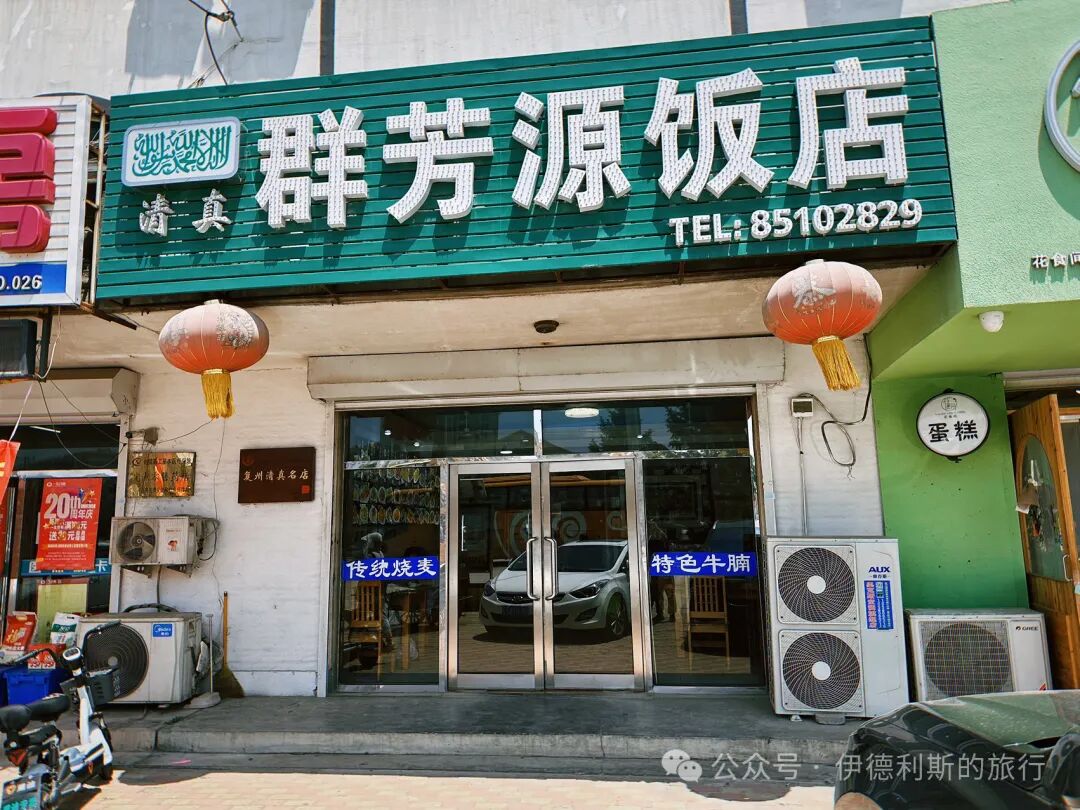
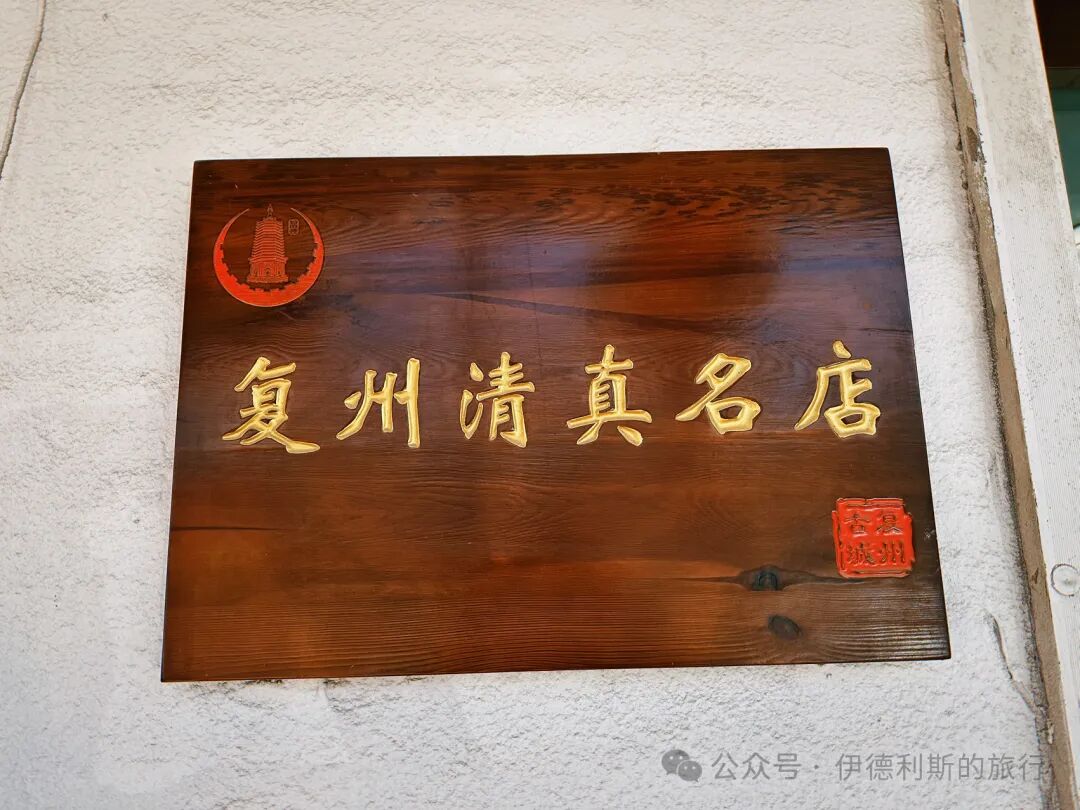
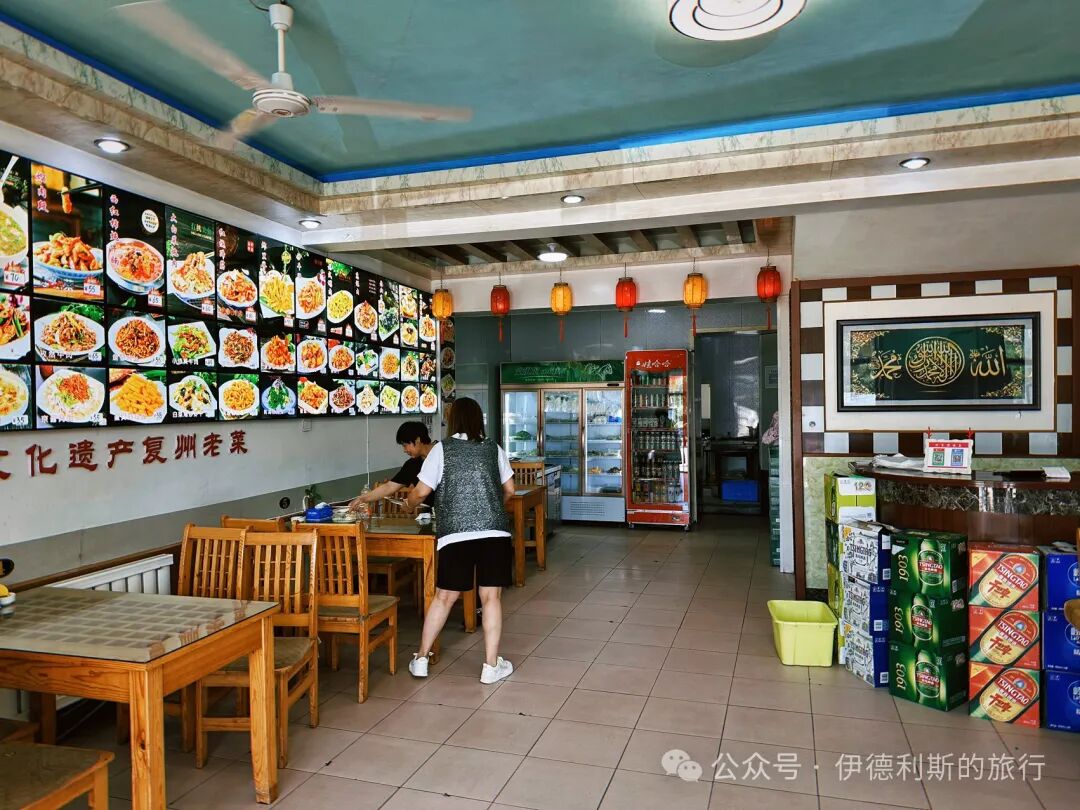
We first stopped at the Qunfangyuan Restaurant near the Fuzhou town roundabout to eat some traditional Fuzhou old-style dishes (Fuzhou laocai). Fuzhou is a thousand-year-old town established during the Liao Dynasty. Since the Ming and Qing dynasties, it has been a major commercial hub in southern Liaoning, attracting many merchants. It only began to lose its importance to Wafangdian along the railway line after the South Manchuria Railway was built in modern times. Around 1641, the sixth year of the Chongde reign of the Qing Dynasty, four Hui Muslim families—the Yin, Ma, Dai, and Hui families from Cangzhou, Hebei—moved to Fuzhou. Later, they worked with the local Manchu and Han people to develop the unique Fuzhou old-style dishes.
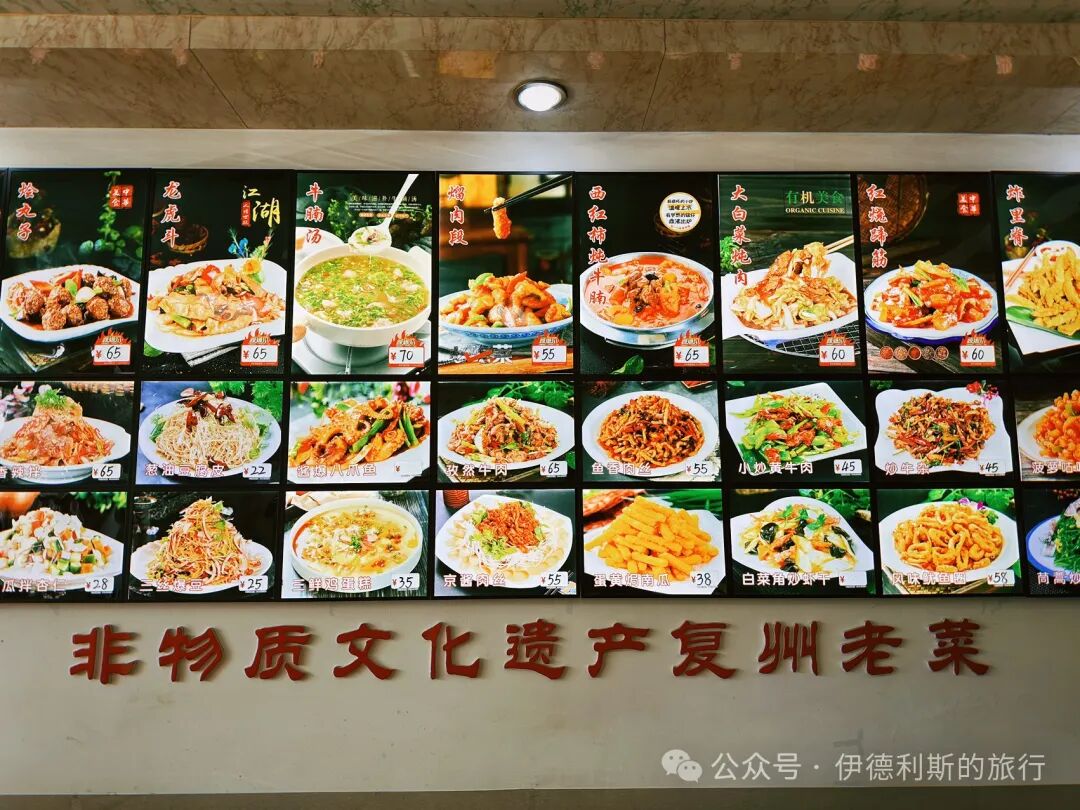
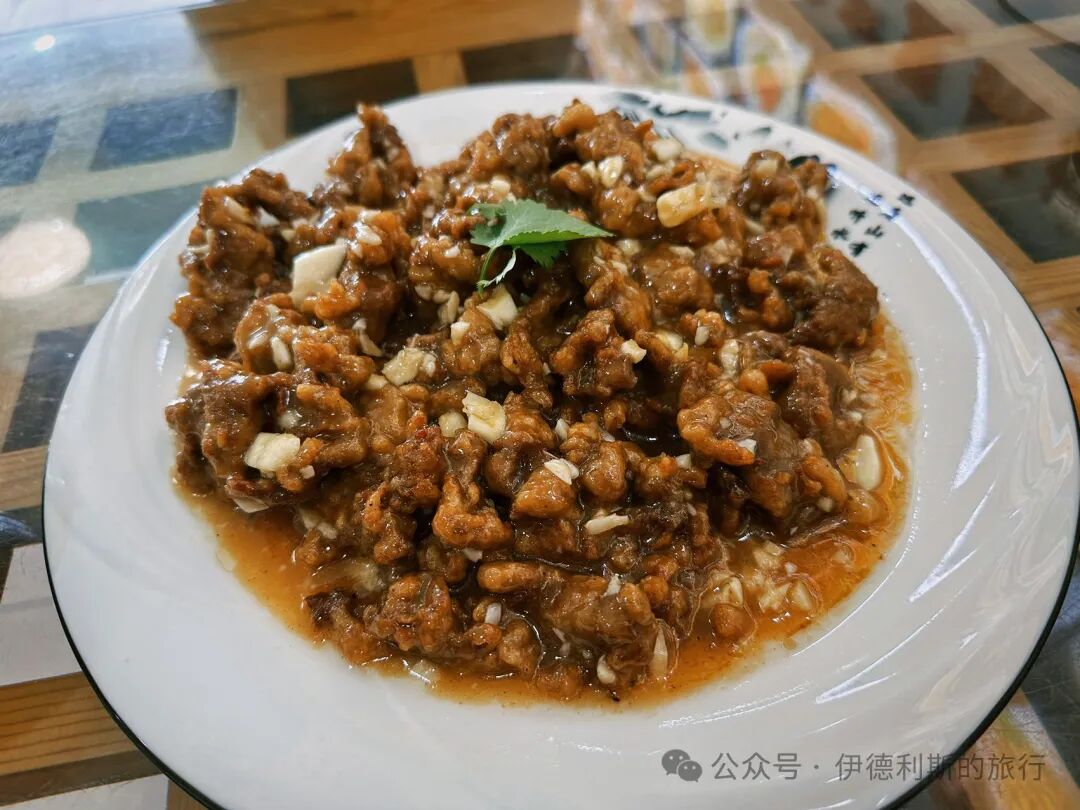
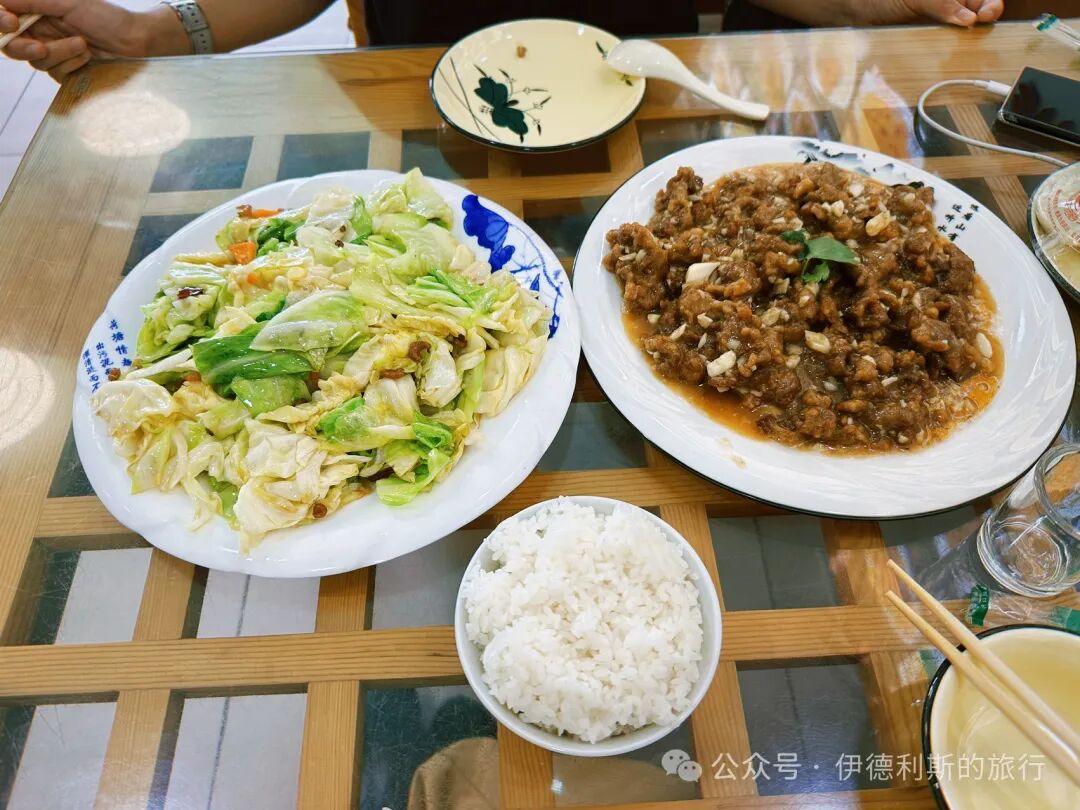
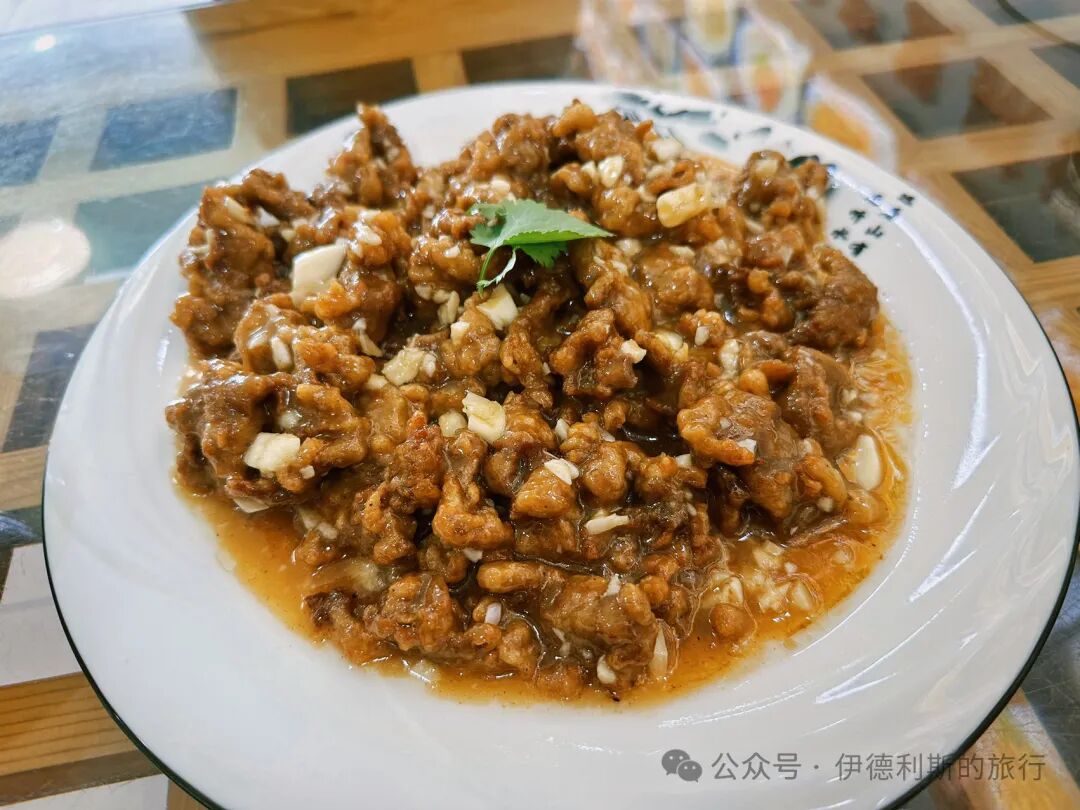
Fuzhou old-style dishes are known for their oil-fried meat (guoyourou), twice-cooked meat (huishaorou), braised meatballs (huiwanzi), dragon and tiger fight (longhudou), and fried crispy crackers (zhabaochui). Because portions of Northeast Chinese food are so large, we just ordered the most famous oil-fried meat to try. The Fuzhou version of oil-fried meat contains only meat with no side vegetables. It is seasoned with vinegar and garlic, giving it a salty, fresh, and sour taste that goes perfectly with rice.
Fuzhou oil-fried meat is also called the dish of ethnic unity. Legend has it that during the late Qing Dynasty, a soldier named Tuoerha from the Plain Blue Banner died in battle in southern Xinjiang, leaving his wife and children helpless in Fuzhou. One day, just before the Lunar New Year, a mother and her son were walking down the street. The boy was so drawn to the aroma from a restaurant that he refused to leave. The owner knew the boy's father had died for his country, so he invited them inside. He told the kitchen staff to prepare a dish of pure meat for them and to fry it an extra time. Because of this, double-fried meat (guoyourou) became a signature New Year dish for the people of Fuzhou.
After lunch, we went to Fuzhou Mosque (Fuzhou Si) to pray. The imam at Fuzhou Mosque is from Mengcun in Cangzhou, Hebei, which is a major tradition for the faith in Liaoning.
In the early Qing Dynasty, Hui Muslims with the surnames Yin, Dai, Ma, and Hui moved to Fuzhou from Cangzhou. In 1649 (the sixth year of the Shunzhi reign), they began building Fuzhou Mosque. By 1656 (the thirteenth year of the Shunzhi reign), they had finished three thatched rooms to serve as the main prayer hall. The main hall was rebuilt in 1774 (the thirty-ninth year of the Qianlong reign) and expanded again in 1880 (the sixth year of the Guangxu reign), though it still had a thatched roof. In 1920, the front porch and rear kiln-style hall were added, and the roof was changed to blue brick tiles, creating the structure seen today.
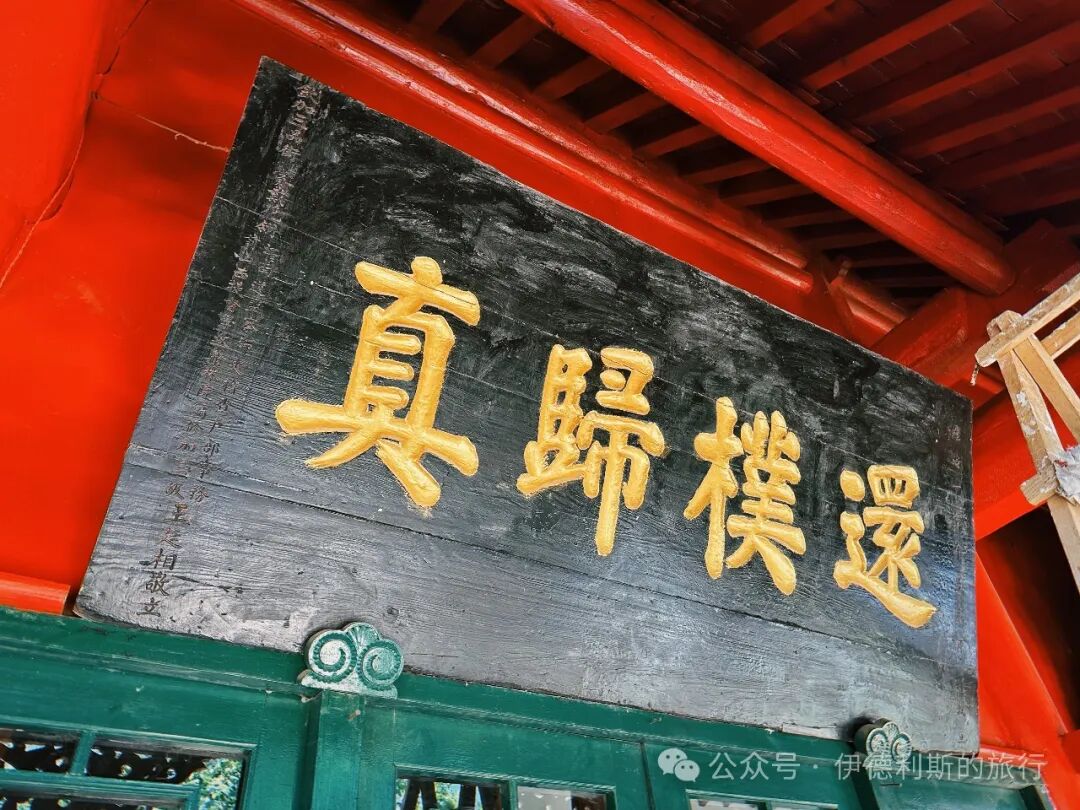
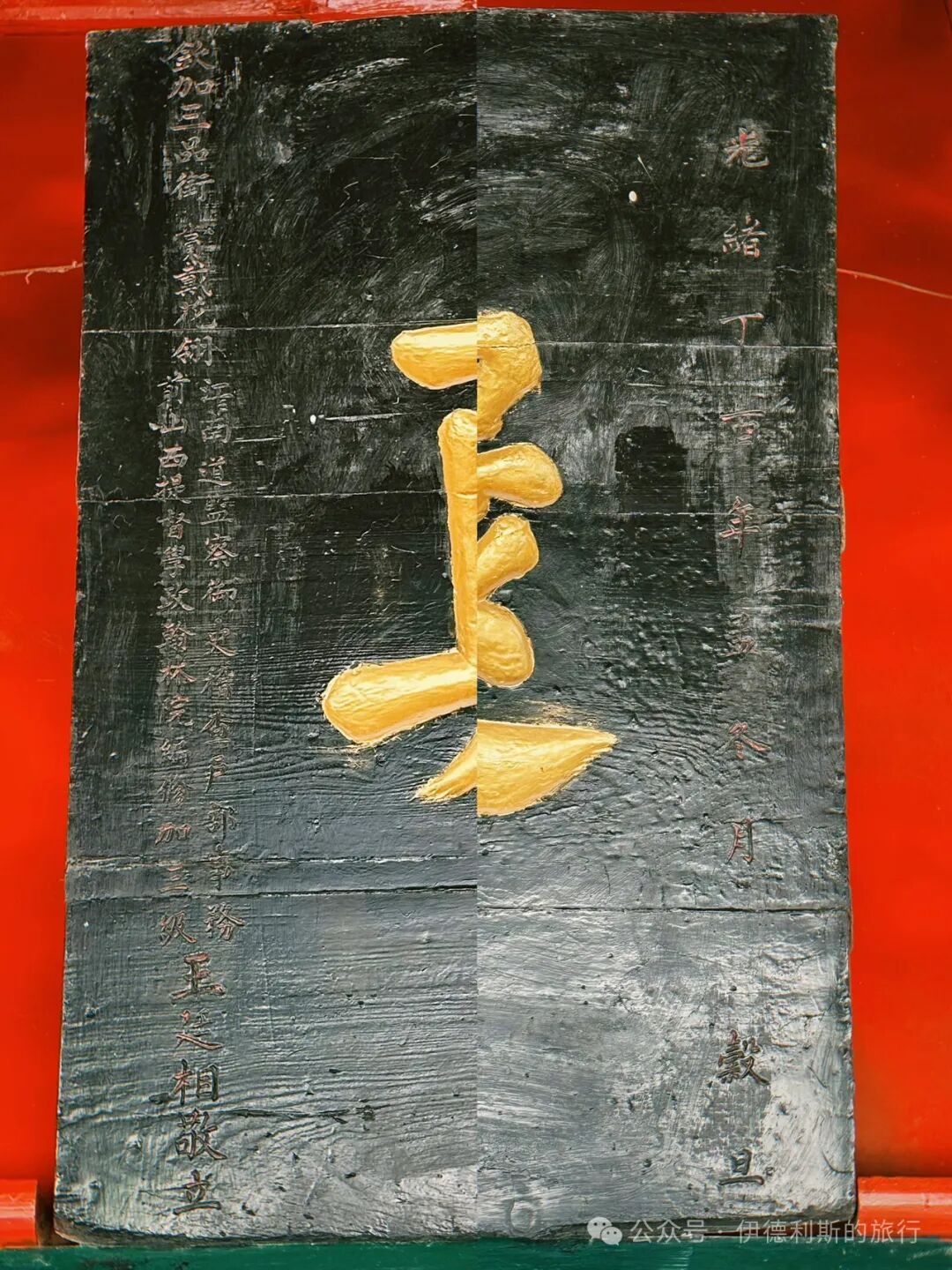
Hanging in front of the main hall of Fuzhou Mosque is a plaque that reads "Returning to Simplicity and Truth" (Huan Pu Gui Zhen). It was presented in 1897 (the twenty-third year of the Guangxu reign) by Wang Tingxiang, a third-rank official, imperial censor, and scholar of the Hanlin Academy.
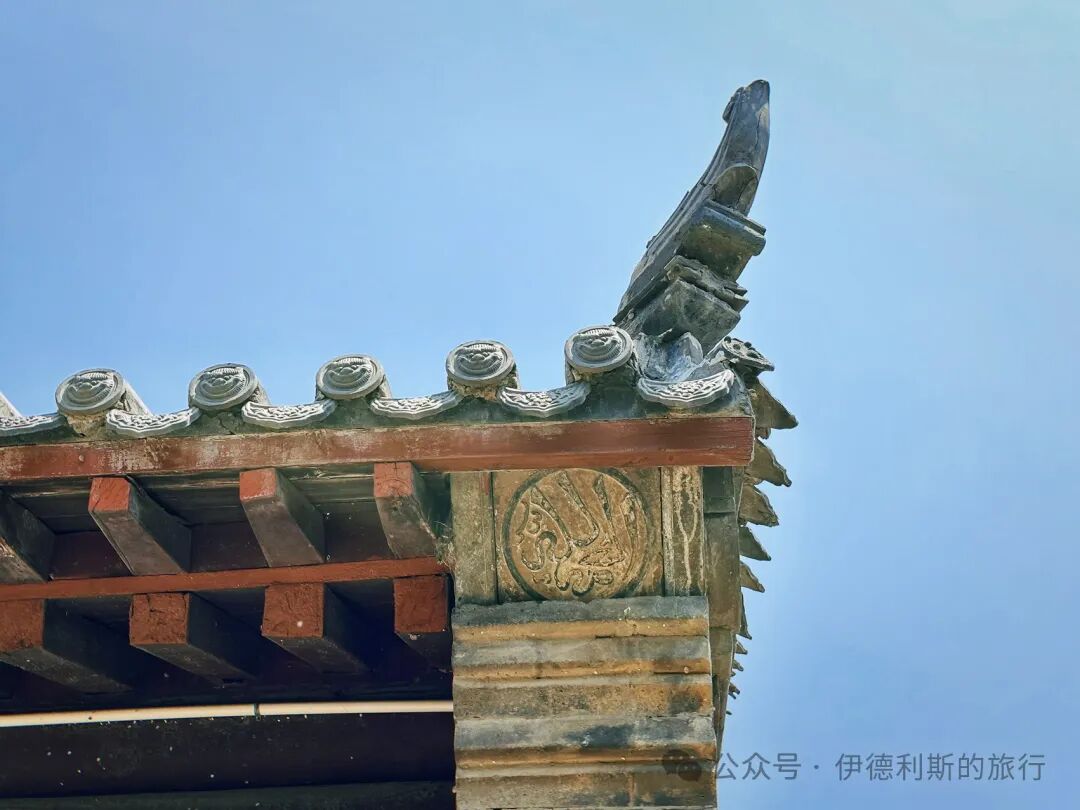
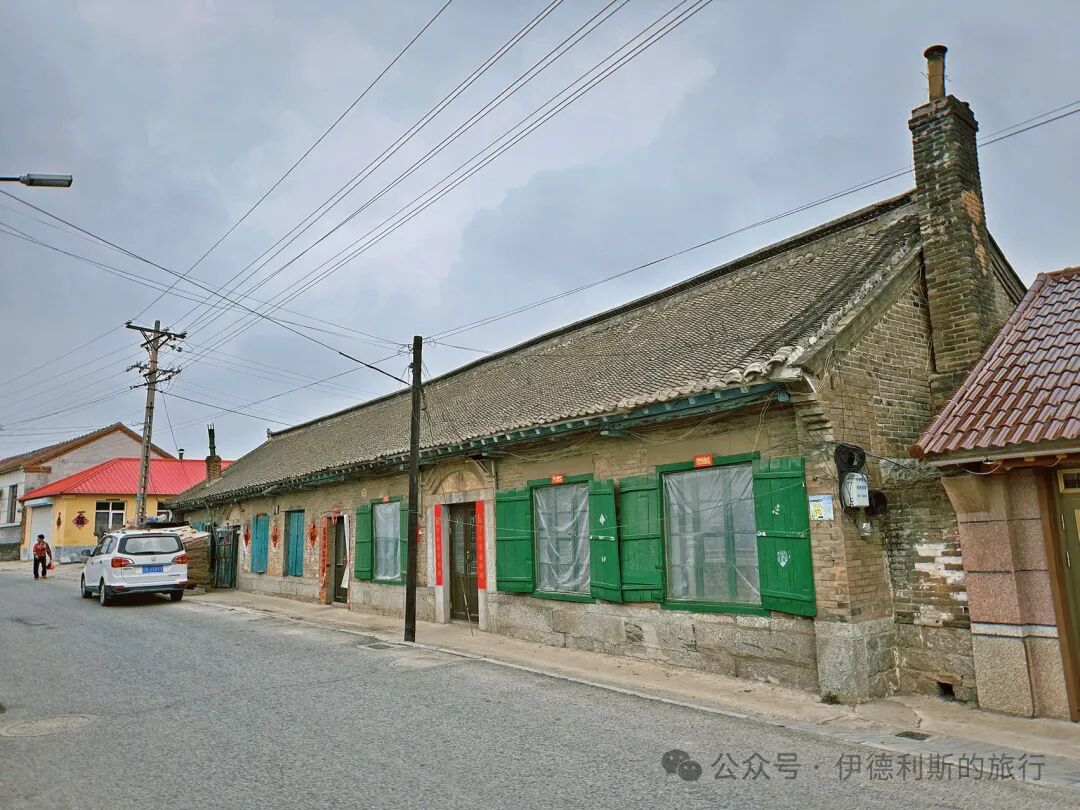
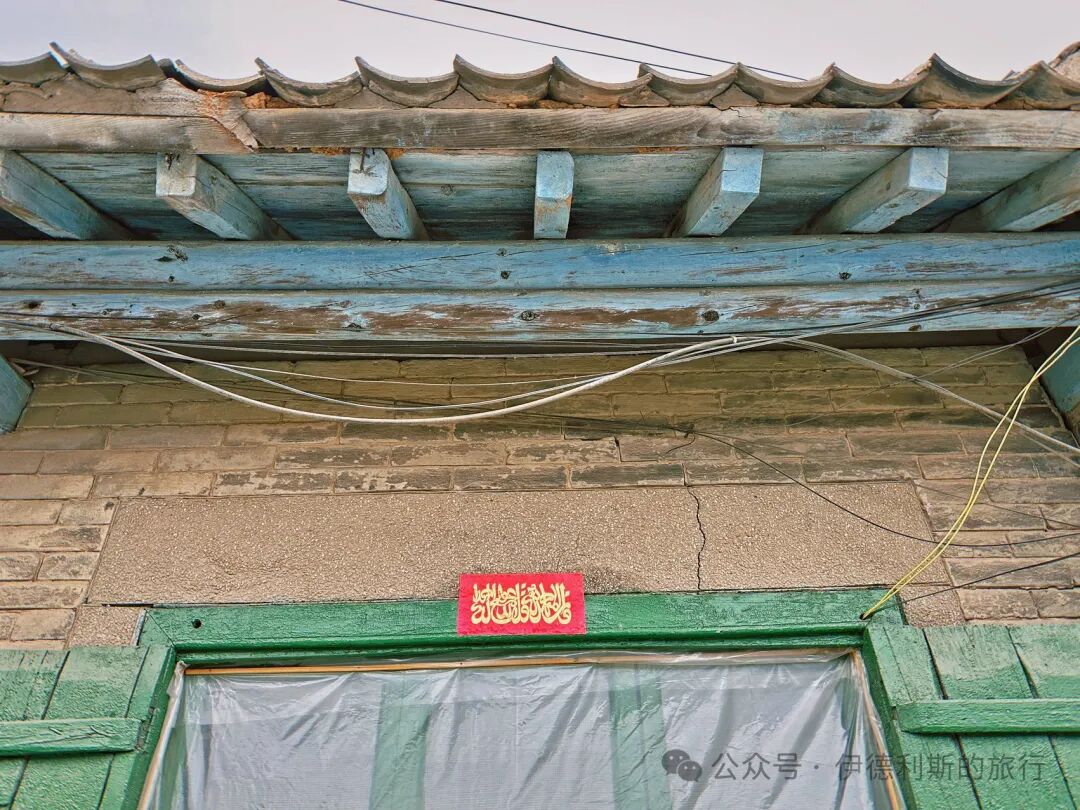
Additionally, the brick carvings on the wall ends feature traditional calligraphy of a dua.
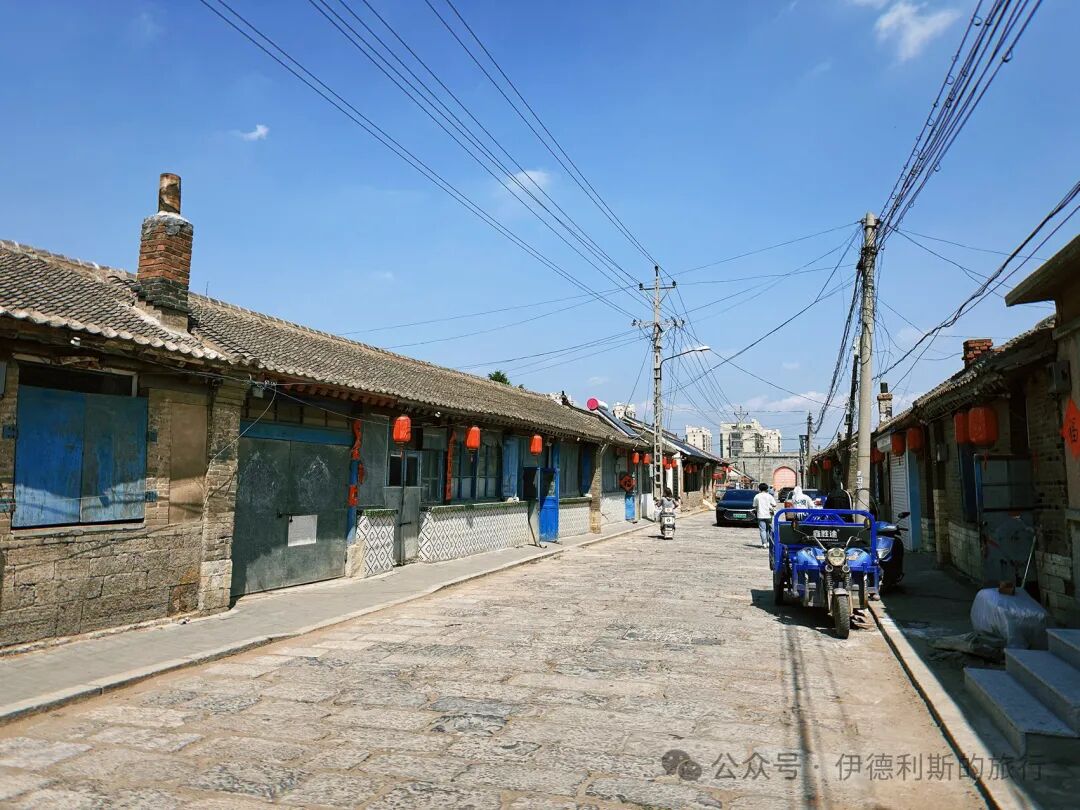
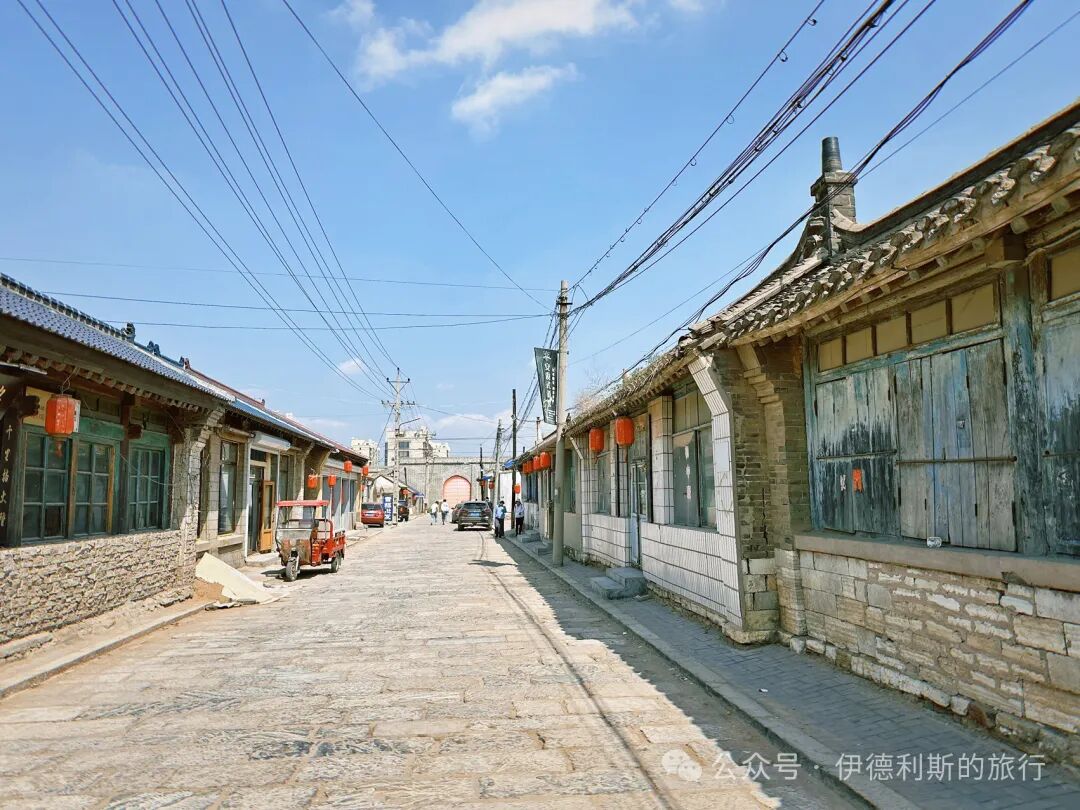
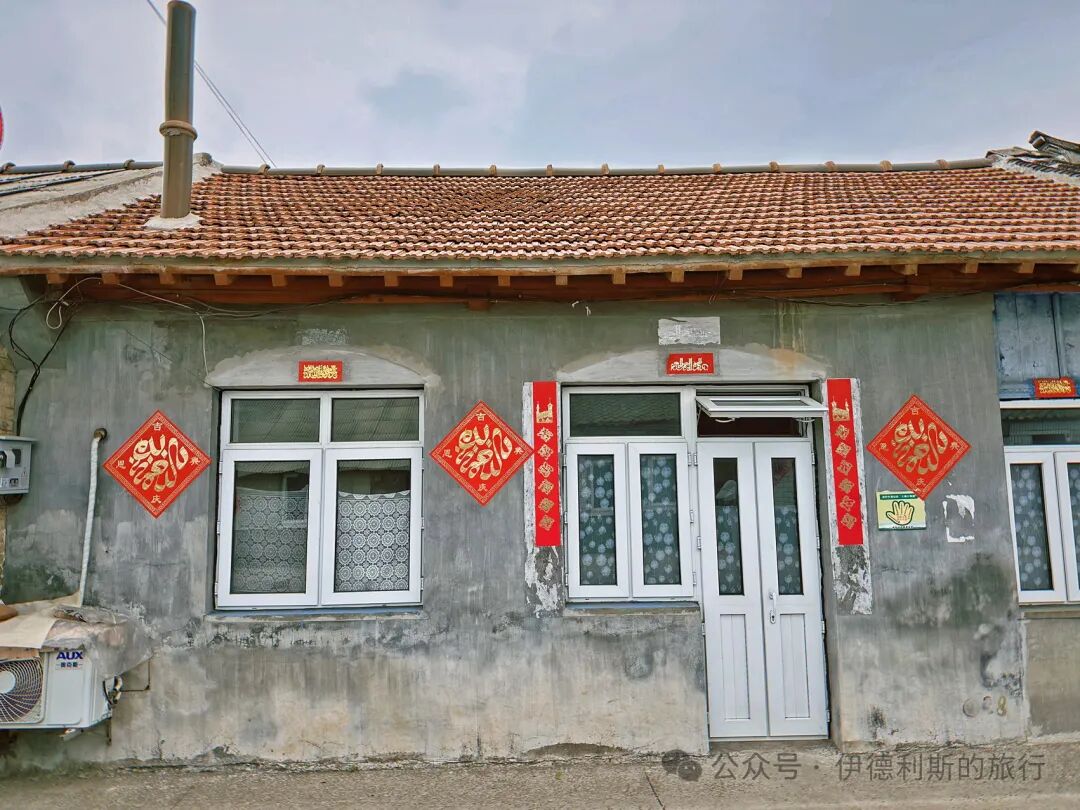
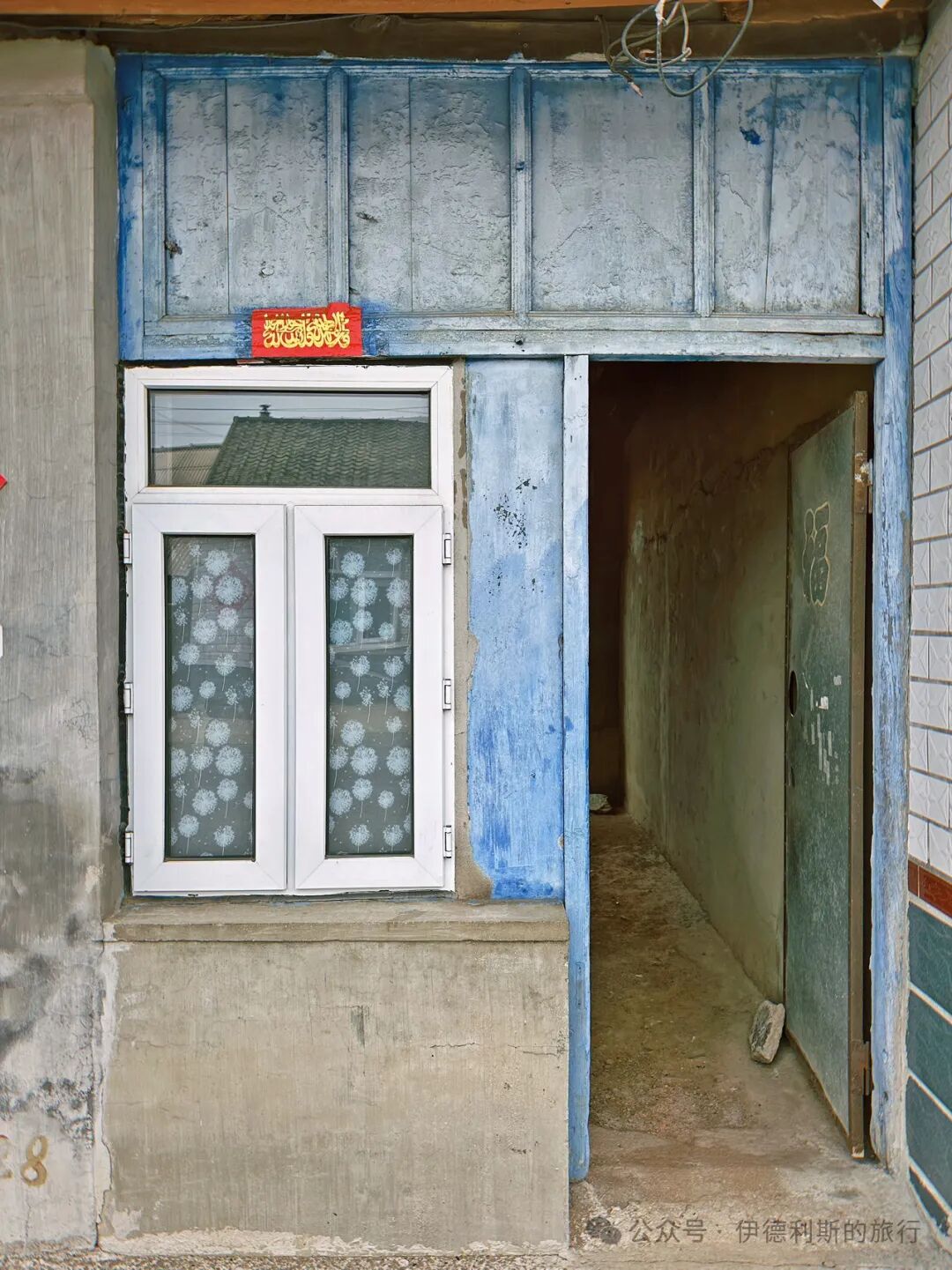
Hui Muslim homes inside Fuzhou City. The old street features blue bricks and dark roof tiles, with Arabic calligraphy (jingzi) and dua written on the walls, keeping the look of the past. Many people have moved to Wafangdian and Dalian to live, so the old street has become quiet.
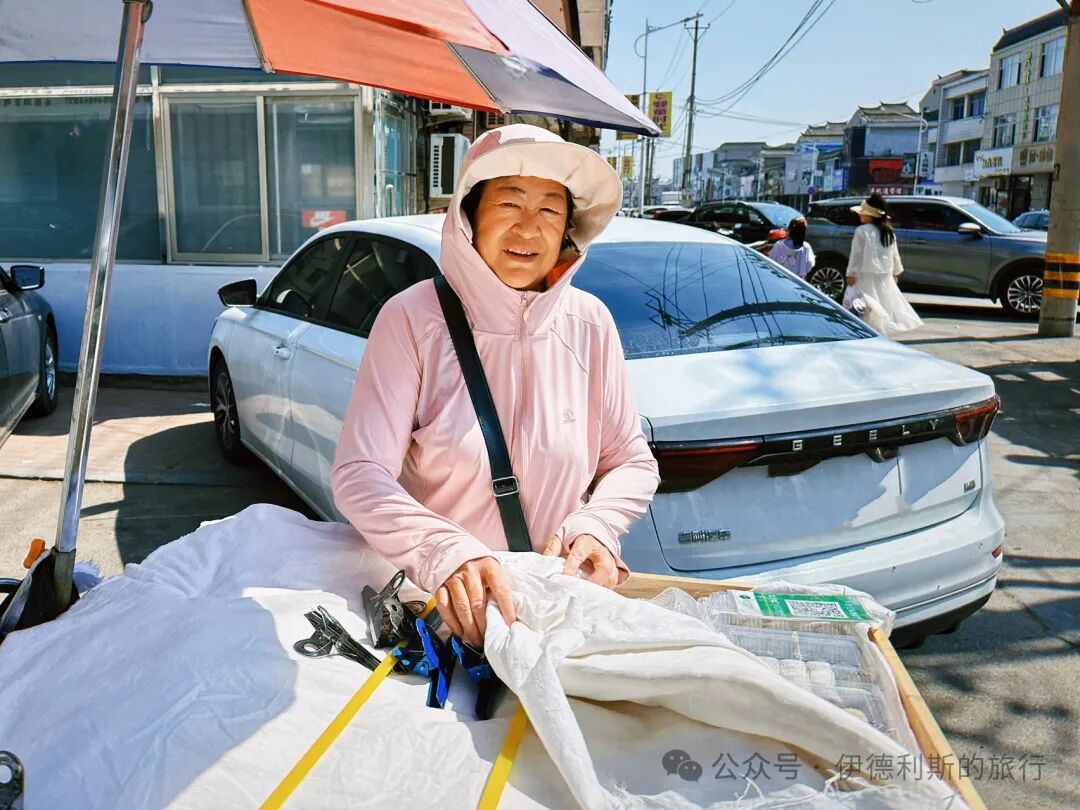
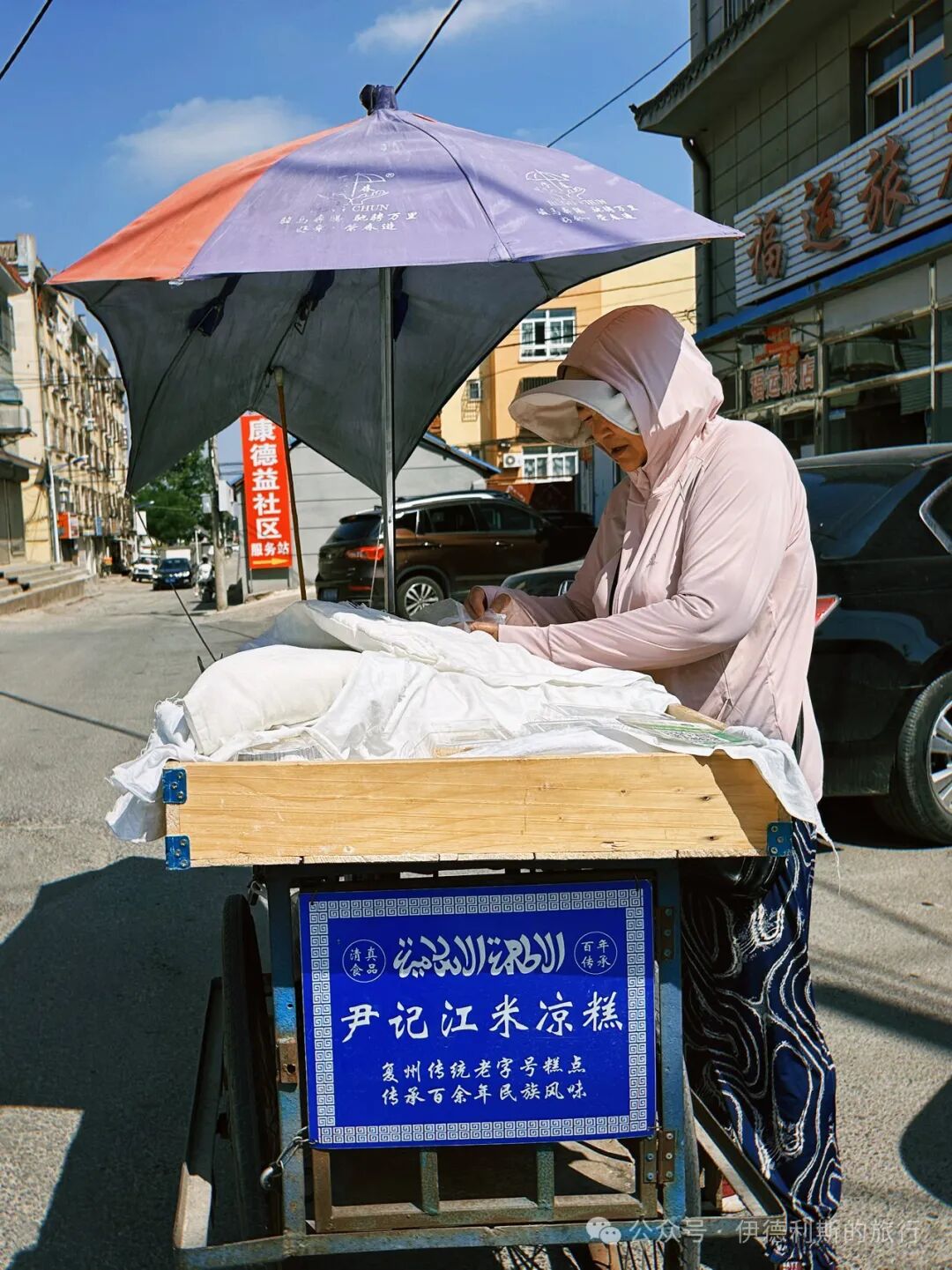
There is a legendary halal food spot in Fuzhou City, which is my friend's family business, Yin's sticky rice cake (jiangmi lianggao). The Yin family of Fuzhou originally came from Qing County in Cangzhou and settled in Fuzhou during the early Qing Dynasty. The sticky rice cake made by my friend's great-uncle, Yin Xiangzhou, was famous in Fuzhou a hundred years ago, and now my friend's mother pushes a small cart to sell it along the street every day. A loudspeaker plays, 'Sticky rice cake, fragrant and sweet.' Then everyone comes out to buy the sticky rice cake.
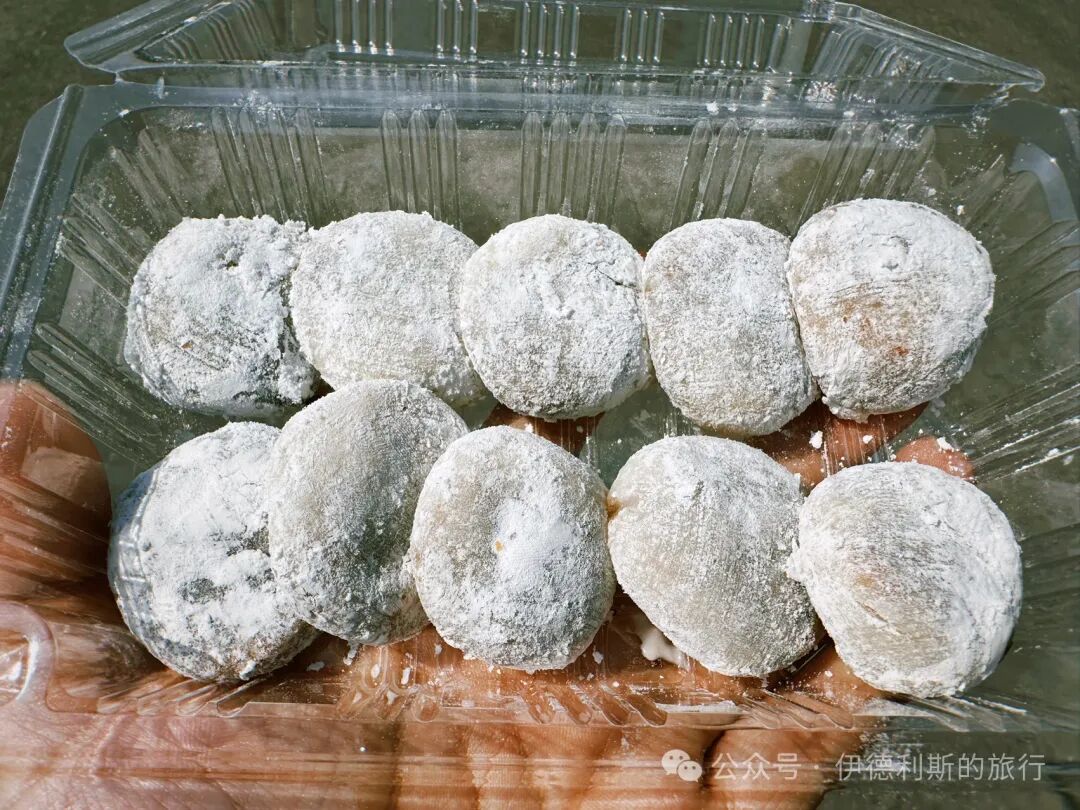
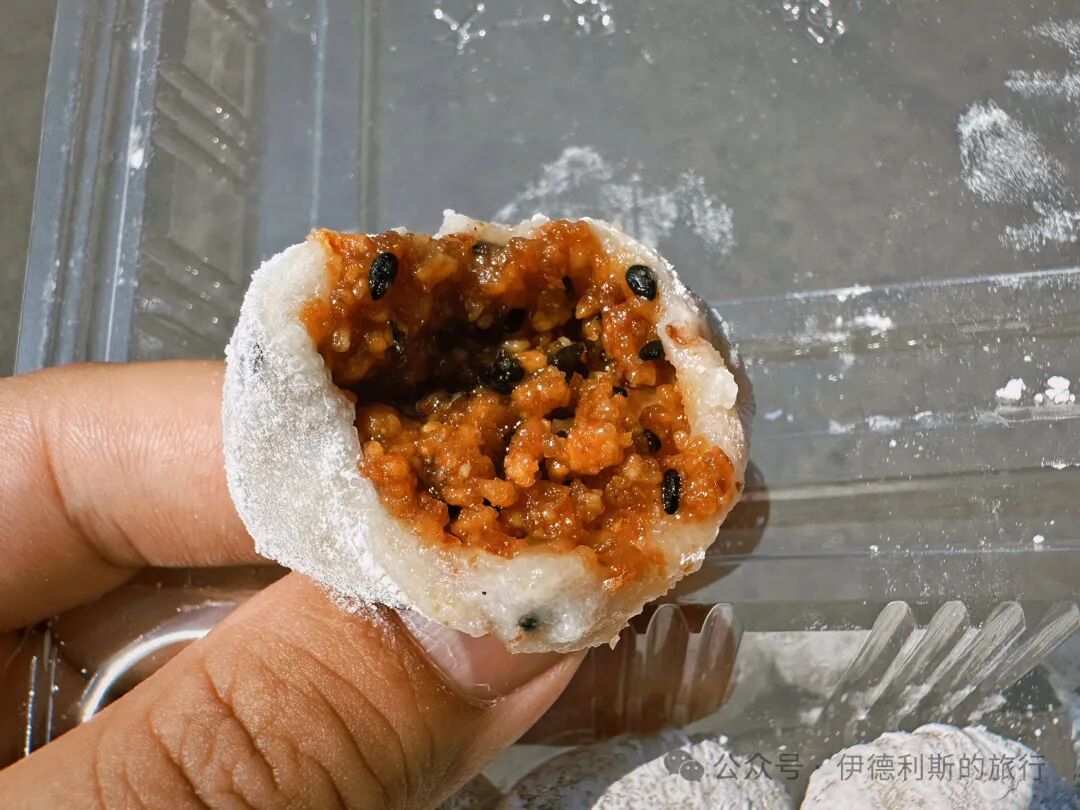
Sticky rice cake (jiangmi lianggao) is made by topping sticky rice with fillings like peanuts, sesame, and sugar. Traditionally, it included candied green and red fruit strips (qinghongsi), but these are now left out to suit younger tastes. Sticky rice cake is very refreshing in the summer, and it feels great on the stomach when paired with tea.
A quick tip: some people say the Yin family pushcart is hard to find. We spotted it at 2:15 p.m. at the intersection west of the Fuzhou Prefectural Office (Fuzhou Zhizhou Yashu). It then moves south along the main road, and you can hear the vendor calling out from far away.
We took the high-speed train from Wafangdian West Station at 3:30 p.m., arrived at Dalian North Station at 4:00 p.m., and then took a taxi to our accommodation to drop off our luggage.
We stayed at the No. 21 Mansion (Ershiyi Hao Gongguan) near the Russian Style Street. The hotel sits in a courtyard that is part of the Yantai Street Russian-style building complex, which includes 28 European-style villas and marks the starting point of Dalian's history. In 1898, Tsarist Russia leased Dalian Bay and began building Dalian city the following year. The first street built was called Engineer Street, which is now known as Russian Style Street. Soon after, Timov Street was built right next to Engineer Street, and it was renamed Yantai Street after 1946. Between the late 19th and early 20th centuries, Tsarist Russia hired German and Russian designers to build a series of European-style villas on Yantai Street, and 28 of them still stand today.
After the Russian-style building complex on Yantai Street was restored in 2011, several hotels and restaurants moved in. When we visited, several places were hosting weddings, which felt a bit like the Italian Style Street in Tianjin. Several villas in the courtyard belong to the Dalian Railway 1896 Garden Hotel, which you can stay in at any time. The No. 21 Mansion where we stayed is military property and only opens during holidays, but you can book it online.
Building No. 21 was built in 1903 and designed by the famous German architect Jan Hendel. In 1920, early labor movement leader and Manchurian Provincial Committee Secretary Wang Ligong lived here. The house we stayed in had windows on both the north and south sides, making the environment very pleasant. The courtyard was very quiet, which was a sharp contrast to the busy Russian-style street next door.
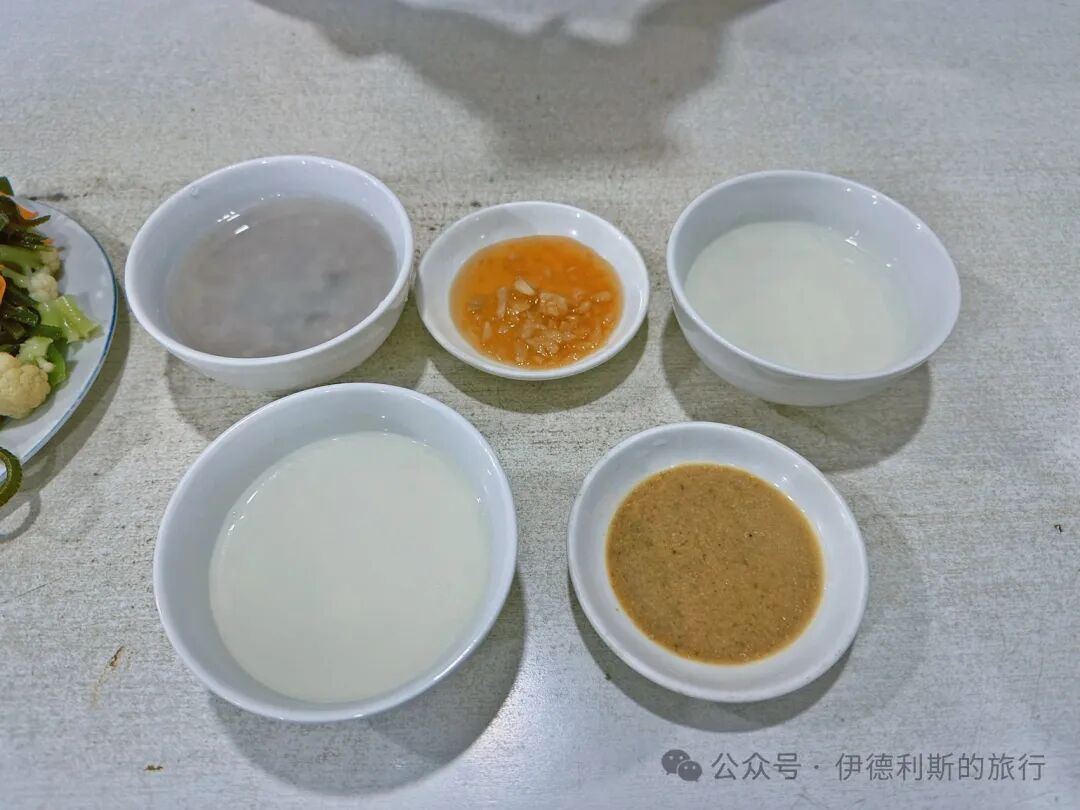
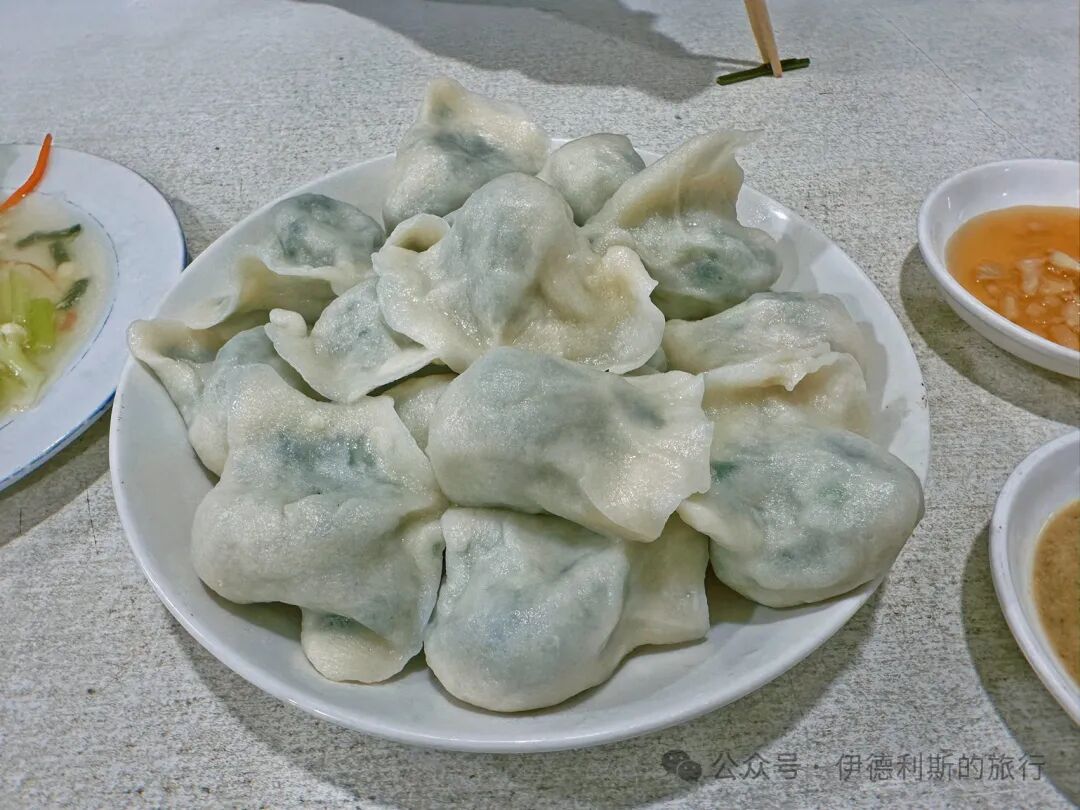
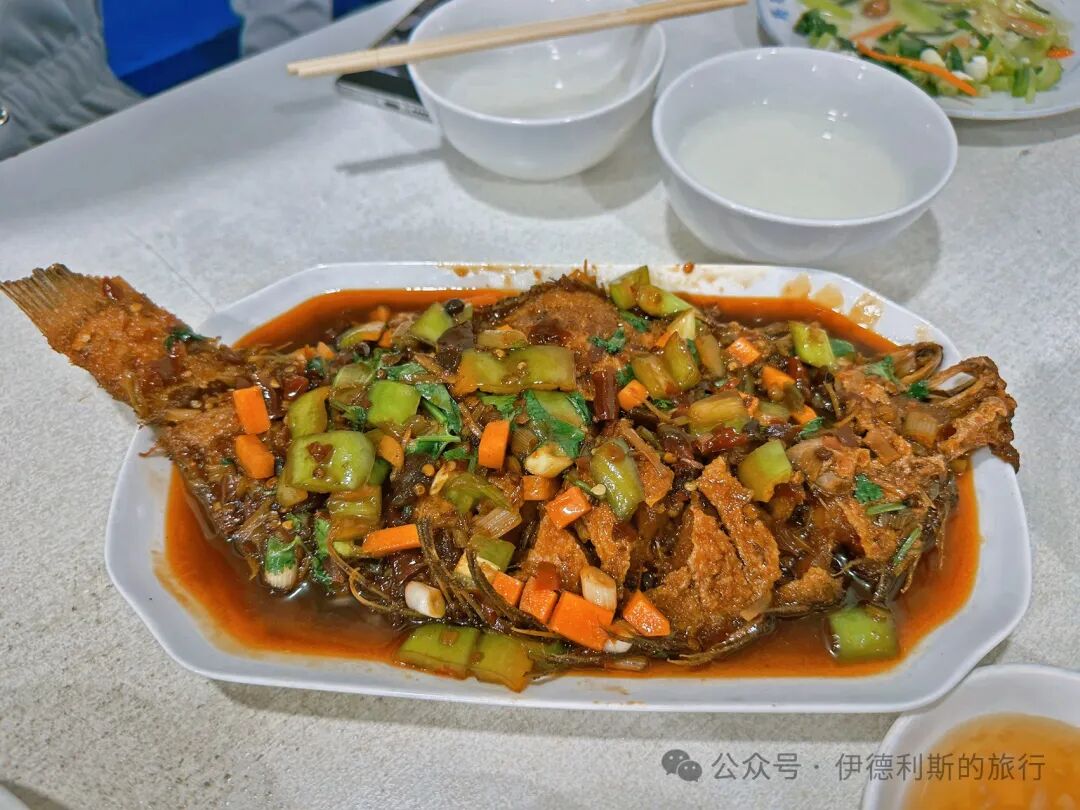
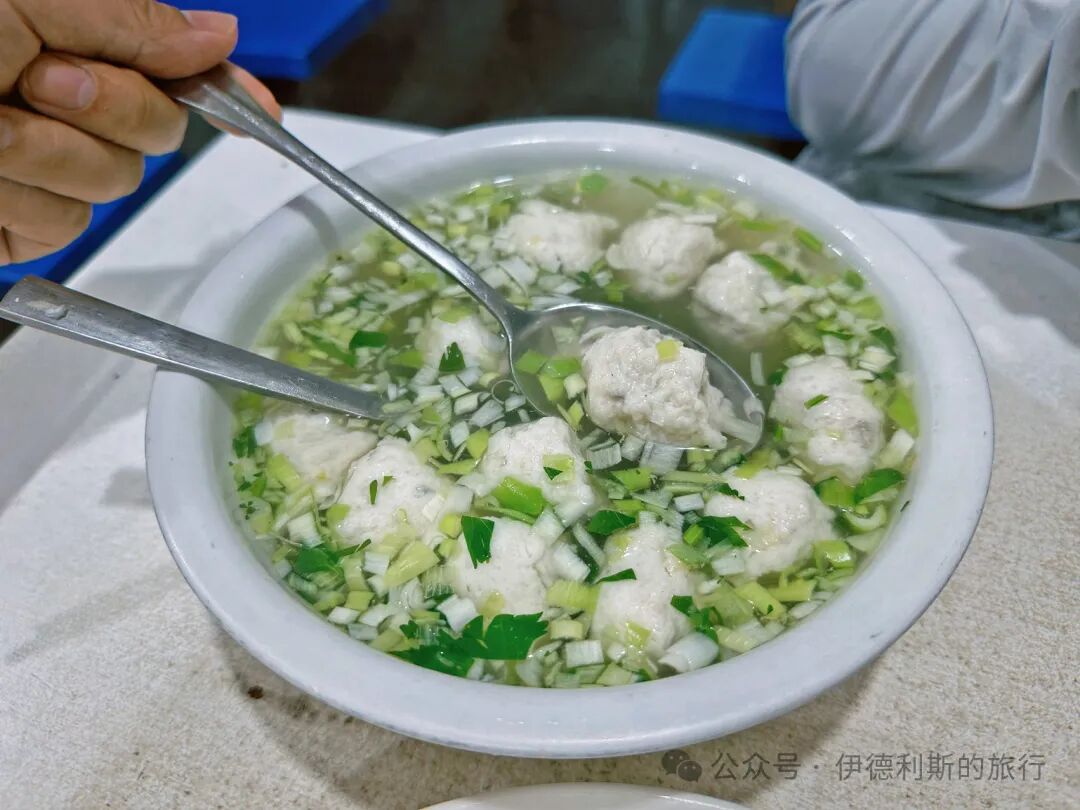
In the afternoon, we had dinner at the long-established Majia Dumpling Restaurant in front of Dalian Railway Station. We ordered sea snail and chive dumplings (haoluo jiucai jiaozi), mackerel ball soup (bayu wanzi tang), and dry-braised flatfish (gan shao piankou yu). Traditionally, Hui Muslims in North and Northeast China do not cook seafood; they focus on beef and lamb. They only started making seafood dumplings after the Reform and Opening-up, and it gradually became a local specialty. They serve dumplings with yellow mustard sauce, which is very unique and adds a great kick to the flavor. The dry-braised flatfish was also well-prepared, with a sweet and spicy taste that really whets the appetite. People who ate at their original shop say the dumplings were even better decades ago, and I can really understand that sense of nostalgia. But as travelers, we are already very happy to be able to eat these dumplings.
Ma Family Dumpling Restaurant (Ma Jia Jiaozi Guan) was the first halal dumpling shop in Dalian and one of the city's two earliest dumpling restaurants. It was opened in 1947 by Liu Yushan, Ma Baishi, and Zhao Fangchen at the Bo'ai Market in Xigang. It was originally called Ruixianghao Hui Muslim Dumpling Restaurant before changing its name to Ma Family Dumpling Restaurant. After the Reform and Opening-up, the restaurant moved to the former site of the Goubuli Steamed Bun Shop on Tianjin Street. It moved to its current location after the renovation of Tianjin Street in the early 21st century. At first, the restaurant only served beef dumplings. After the Reform and Opening-up, seafood dumplings appeared in Dalian, so the restaurant started making new varieties like mackerel dumplings (bayu jiaozi) and sea snail dumplings (hailuo jiaozi).
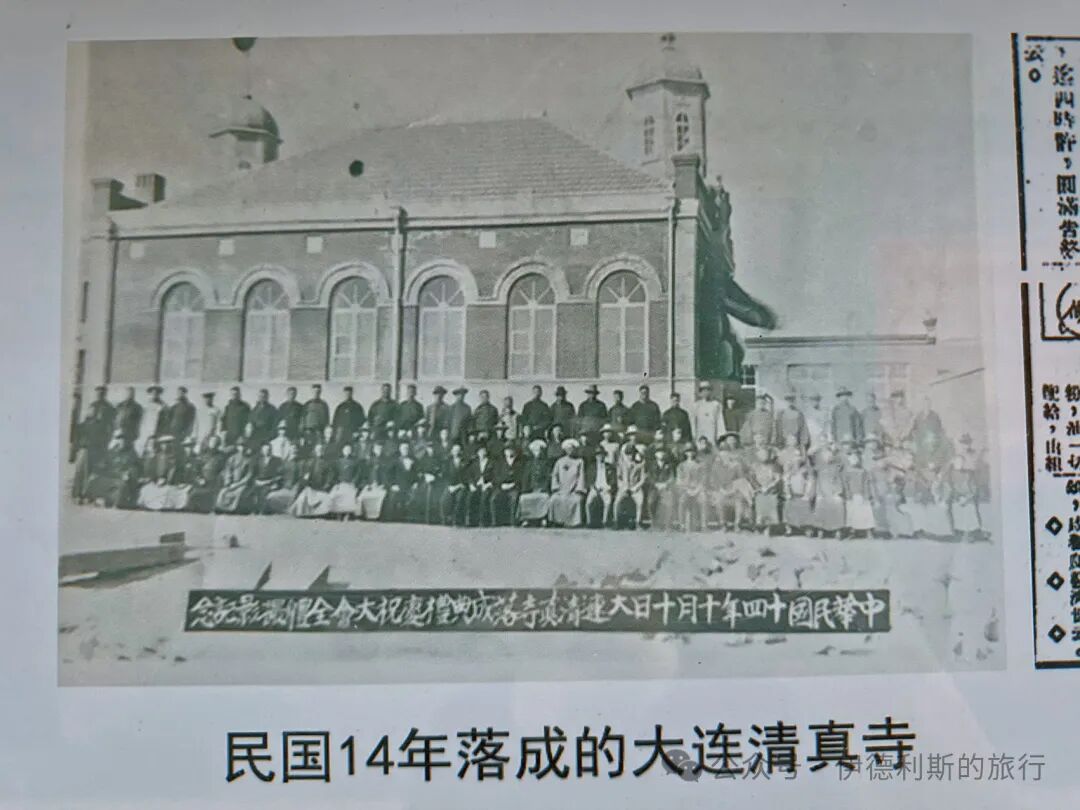
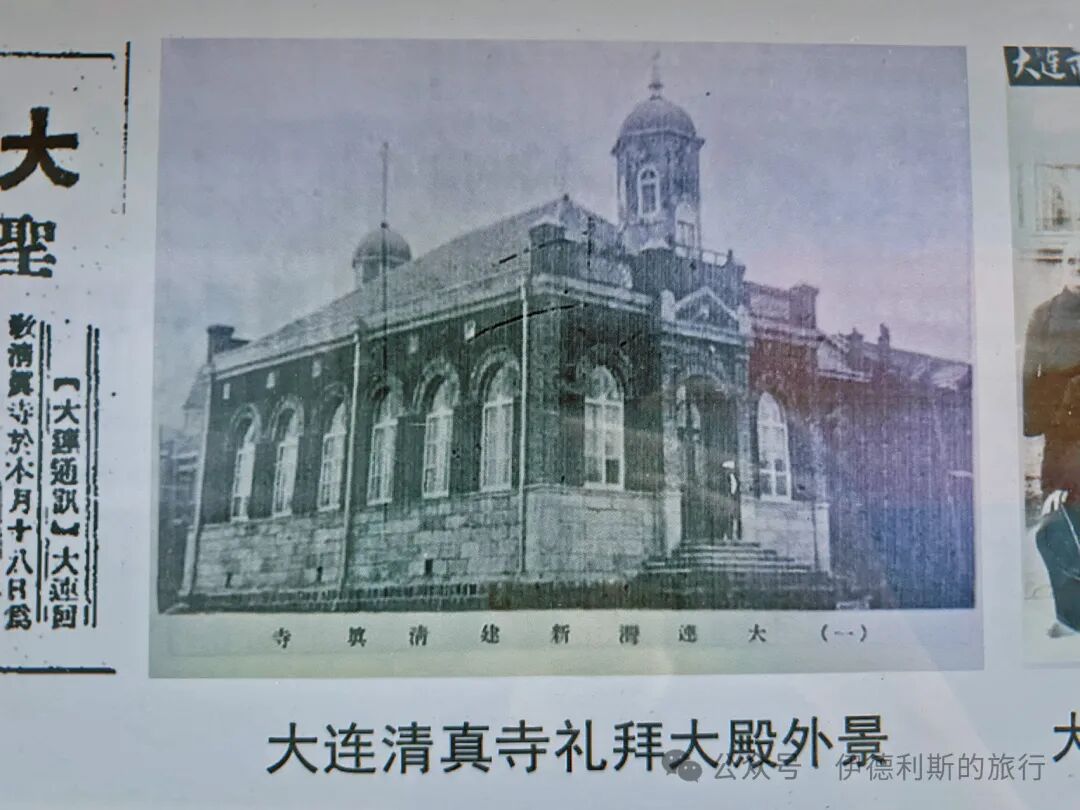
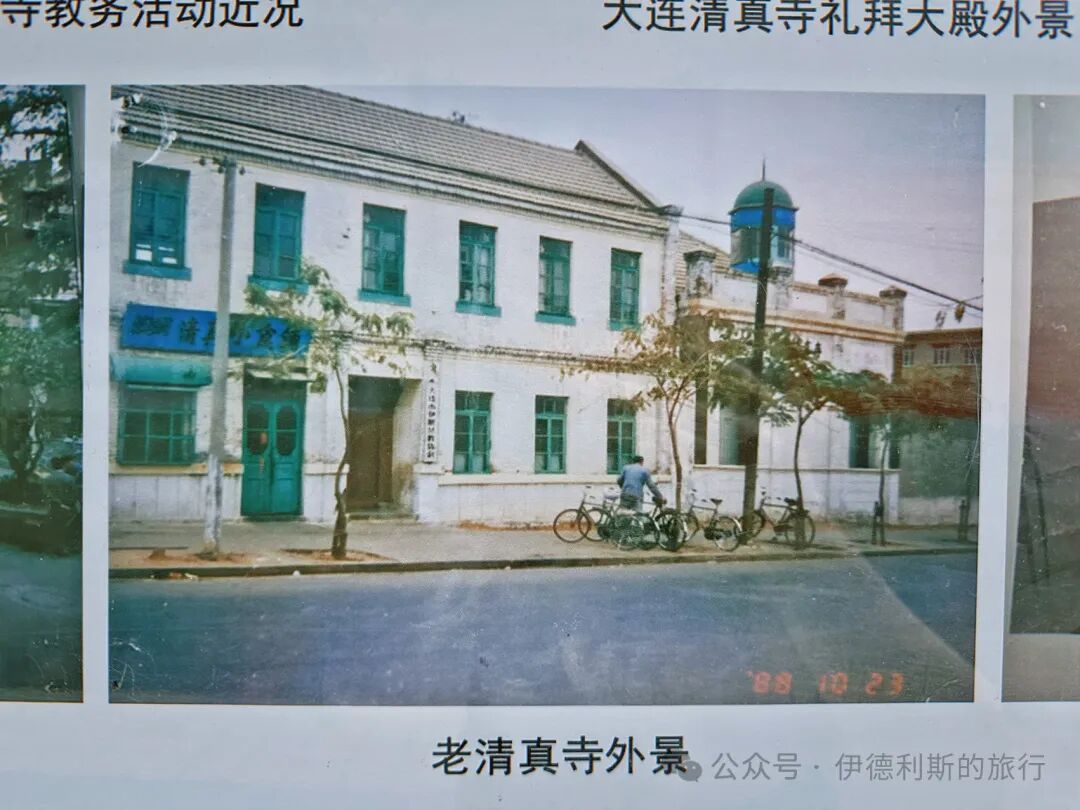
After dinner, we headed to the Dalian Mosque (Dalian Si) on Beijing Street. After Dalian opened as a port in 1897, Hui Muslims from places like Shandong and Hebei came here to make a living. Ma Xinglong, Wang Qifa, Jin Xiangchen, and others first rented a few small rooms on Dalong Street in Xigang to perform their prayers. In 1925, a Russian Muslim working for the South Manchuria Railway (Mantie) secured funding and land from the company to build the Dalian Mosque in a traditional Kazan Tatar style.
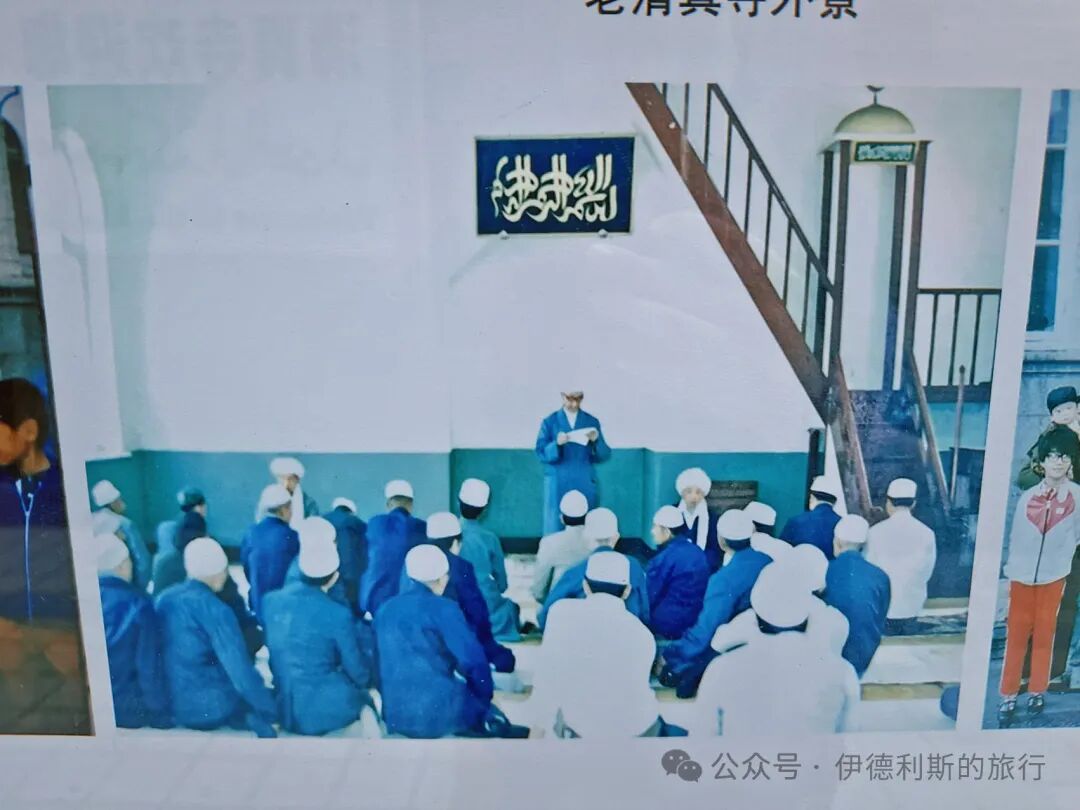
The original Dalian Mosque looked very similar to Tatar mosques in Kazan, Russia, featuring a neoclassical main hall and two minarets at the front and back. The minbar pulpit inside the main hall has stairs that lead directly to the minaret on the roof, which is very rare for a traditional mosque in China.
This Kazan Tatar-style Dalian Mosque stood for 64 years, was rebuilt in 1990, and finally expanded into its current structure in 2005.
I left Dalian Station at 6:20 on June 9, arrived at Qingdui Station at 8:00, and then took a taxi to the ancient town of Qingdui to visit Qingdui Mosque.
Qingdui Town is a thousand-year-old town that has served as a fishing port and commercial hub on the Liaodong Peninsula since the Tang Dynasty. Qingbu Port officially opened in 1743 (the eighth year of the Qianlong reign), making Qingdui Town an important transit point for people from Shandong and Hebei moving to Northeast China. During the late Qing Dynasty and the Republic of China era, Qingdui Town had over three hundred businesses, with shops lining the streets and bustling with activity. Today, Qingdui Town still keeps many old houses with grey bricks and dark tiles from the late Qing and Republican periods, and Qingdui Mosque is one of them.
Qingdui Mosque was first built during the Daoguang reign of the Qing Dynasty and started as just three thatched huts. The First Sino-Japanese War began in July 1894. Famous Hui Muslim general Zuo Baogui led his troops to Korea to fight the Japanese and passed by Qingdui Mosque (Qingdui Si). General Zuo Baogui and the imam of Qingdui Mosque, Zhang Chaozhen, got along very well. Later, the general donated money himself. Along with funds raised by his personal Hui Muslim guards and three local halal restaurants—Deshengyuan, Qingshengyuan, and Yongshengyuan—they prepared to expand the mosque. Sadly, before the expansion was finished, General Zuo Baogui died heroically while fighting the Japanese in Pyongyang.
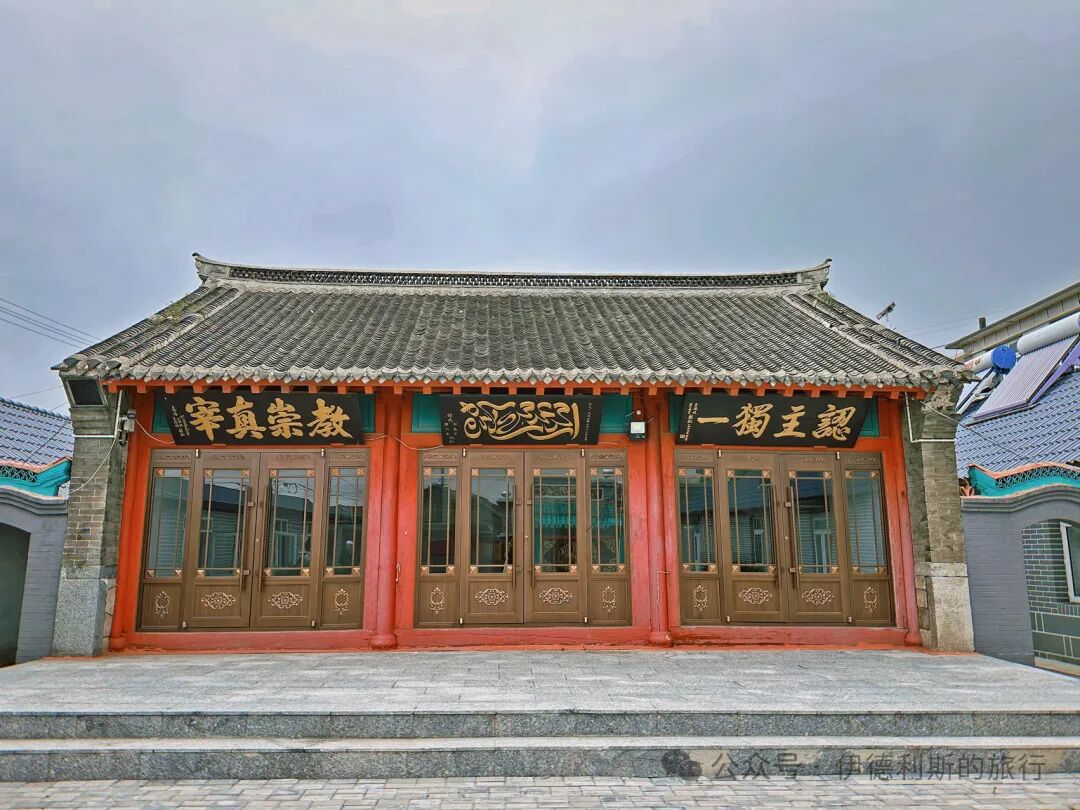
In 1895 (the 21st year of the Guangxu reign), Hui Wanchun, the elder in charge of Qingdui Mosque, oversaw the rebuilding of the main hall into the three-room green brick and tile structure seen today. In 1920 (the 9th year of the Republic of China), the gate tower was rebuilt and the lecture hall was expanded, giving the mosque its current size.
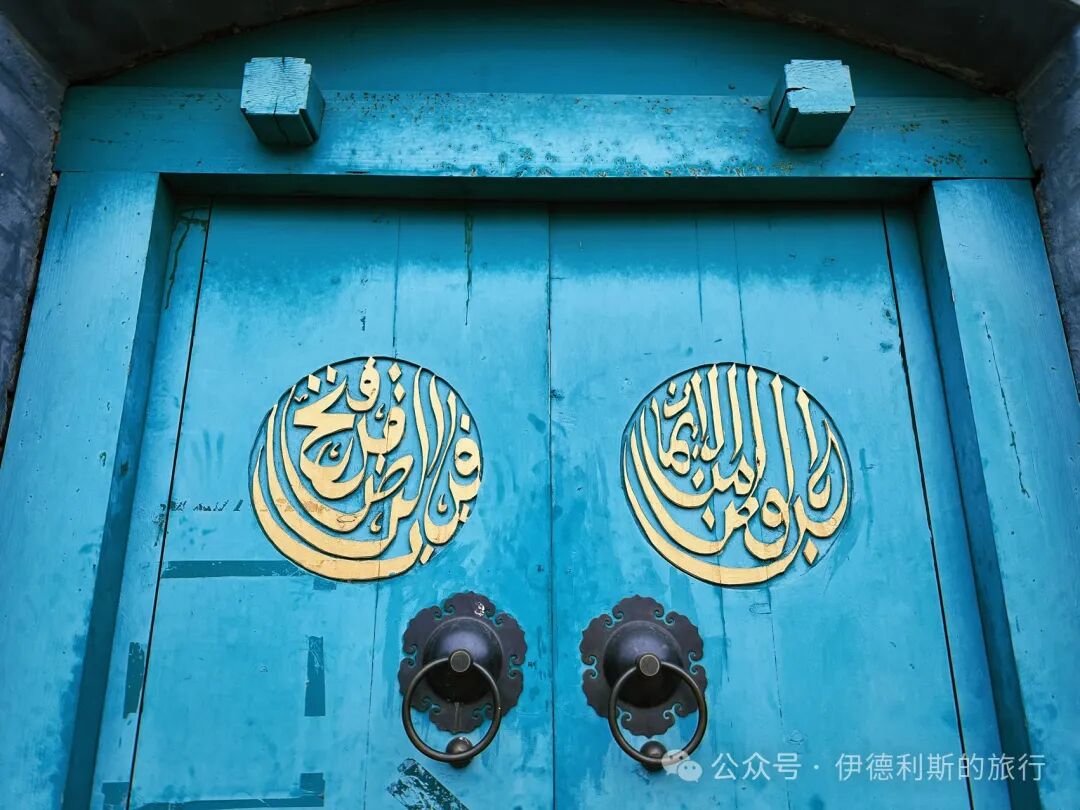
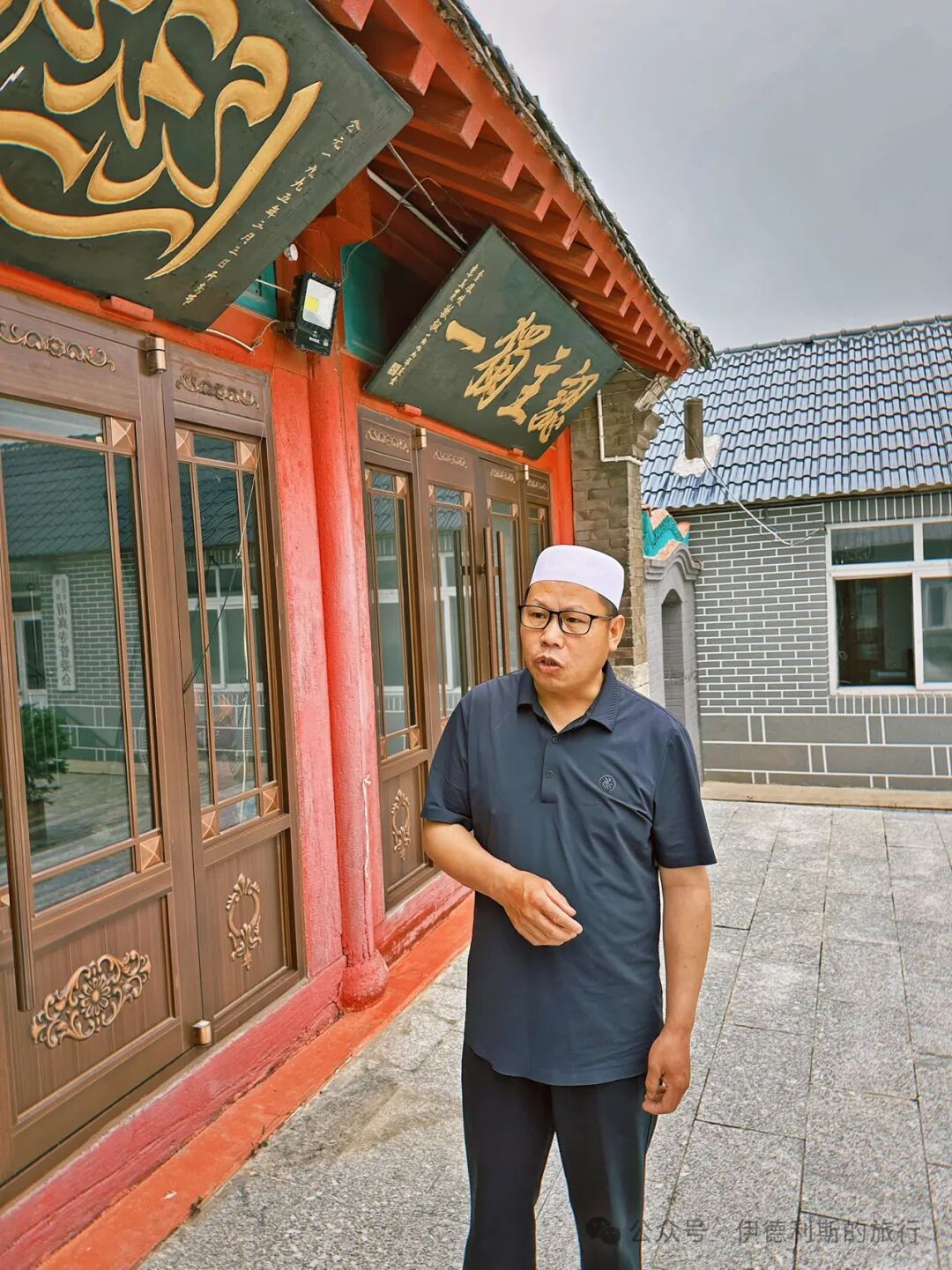
The gate of Qingdui Mosque features a brick-carved couplet that reads: 'The pure palace spreads the teachings of the Quran and the path of Muhammad; the true sage passes down scriptures that bring the grace of the Western Regions to this place.' This is a very precious piece of brick-carved calligraphy from the Republic of China era. The main gate is usually closed, so you must enter the mosque through the south wing where the imam lives. The imam came from Gansu and warmly told us about the situation at Qingdui Mosque (Qingdui Si). It is not easy for his family to stay and serve at this small community mosque (xiaofang).
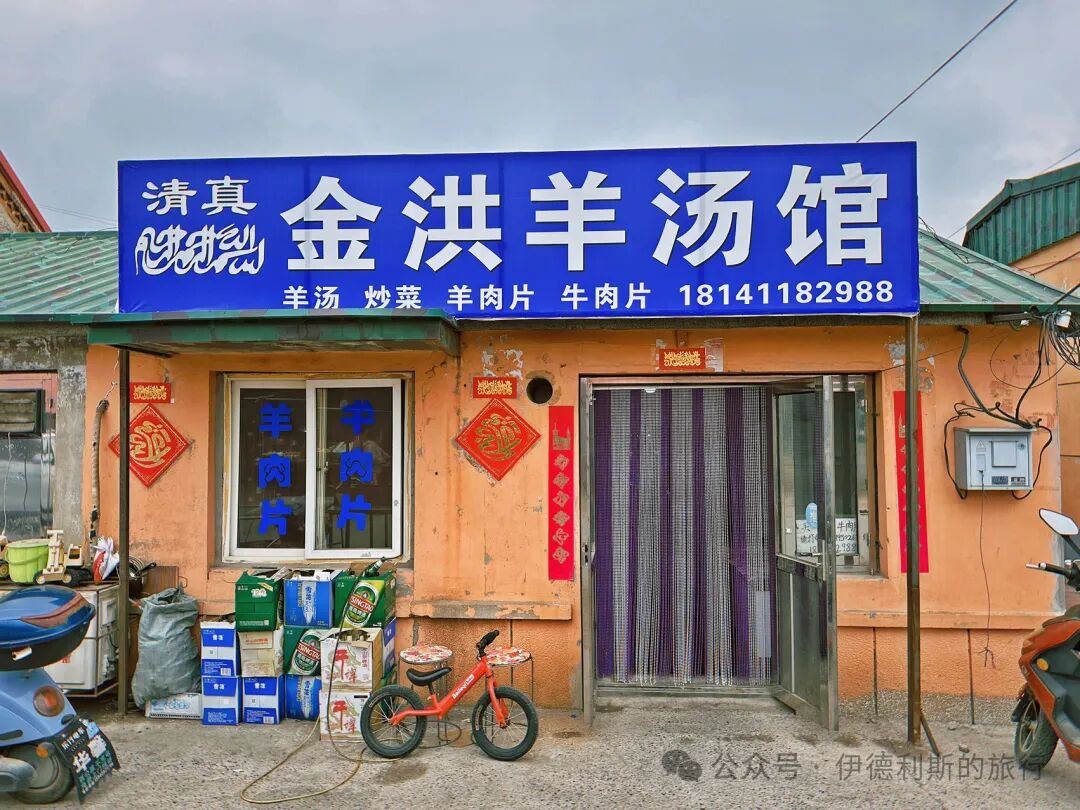
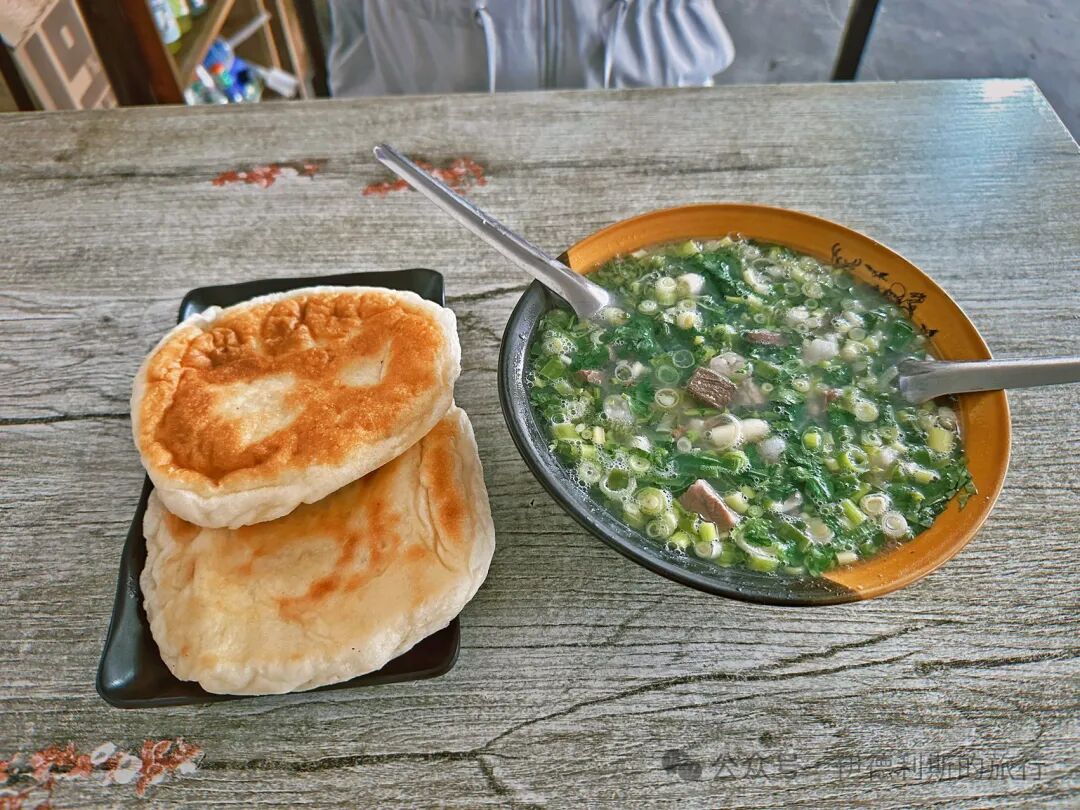
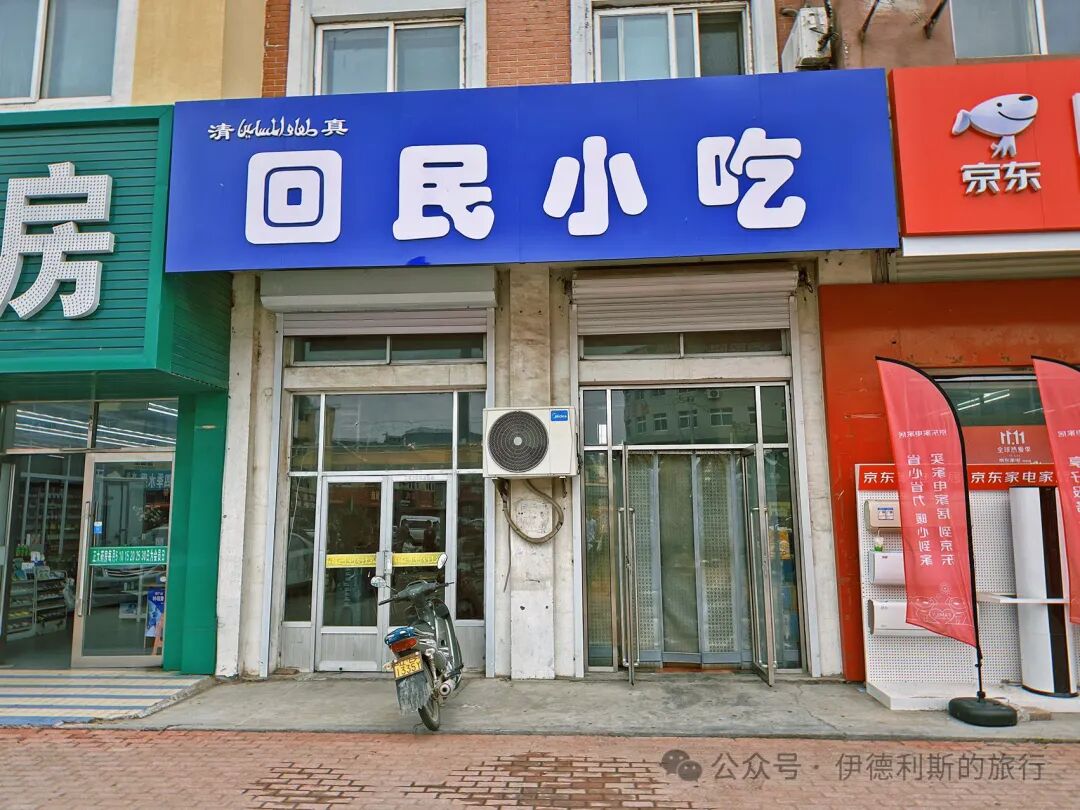
Hui Muslim homes in the ancient town of Qingdui. Because Qingbu Port silted up and closed, the ancient town of Qingdui gradually became quiet, and the town center moved to the area near the road to the north. There are a few halal restaurants in town. We ordered lamb soup at one of them, Jinhong Lamb Soup Restaurant (Jinhong Yangtang Guan), but when it arrived, we found it contained lamb blood. I had heard long ago that some halal restaurants in Shandong and Northeast China sell lamb blood, but this is the first time I have encountered it in years. We had no choice but to return the lamb soup and take a taxi to the train station to continue our trip to the next stop. view all
Summary: Halal Travel Guide: Dalian, Fuzhou Ancient City and Qingdui Ancient Town is presented here as a firsthand travel account in clear, natural English. The account focuses on Dalian, Liaoning Travel, Ancient Towns while preserving the names, places, food, photos, and historical details from the Chinese source.
On the morning of June 8, we took a high-speed train from Shenyang Railway Station and arrived at Wafangdian West Station in Dalian in an hour and a half. After leaving the station, we shared a ride for 20 minutes to reach the ancient town of Fuzhou.
We first stopped at the Qunfangyuan Restaurant near the Fuzhou town roundabout to eat some traditional Fuzhou old-style dishes (Fuzhou laocai). Fuzhou is a thousand-year-old town established during the Liao Dynasty. Since the Ming and Qing dynasties, it has been a major commercial hub in southern Liaoning, attracting many merchants. It only began to lose its importance to Wafangdian along the railway line after the South Manchuria Railway was built in modern times. Around 1641, the sixth year of the Chongde reign of the Qing Dynasty, four Hui Muslim families—the Yin, Ma, Dai, and Hui families from Cangzhou, Hebei—moved to Fuzhou. Later, they worked with the local Manchu and Han people to develop the unique Fuzhou old-style dishes.
Fuzhou old-style dishes are known for their oil-fried meat (guoyourou), twice-cooked meat (huishaorou), braised meatballs (huiwanzi), dragon and tiger fight (longhudou), and fried crispy crackers (zhabaochui). Because portions of Northeast Chinese food are so large, we just ordered the most famous oil-fried meat to try. The Fuzhou version of oil-fried meat contains only meat with no side vegetables. It is seasoned with vinegar and garlic, giving it a salty, fresh, and sour taste that goes perfectly with rice.
Fuzhou oil-fried meat is also called the dish of ethnic unity. Legend has it that during the late Qing Dynasty, a soldier named Tuoerha from the Plain Blue Banner died in battle in southern Xinjiang, leaving his wife and children helpless in Fuzhou. One day, just before the Lunar New Year, a mother and her son were walking down the street. The boy was so drawn to the aroma from a restaurant that he refused to leave. The owner knew the boy's father had died for his country, so he invited them inside. He told the kitchen staff to prepare a dish of pure meat for them and to fry it an extra time. Because of this, double-fried meat (guoyourou) became a signature New Year dish for the people of Fuzhou.
After lunch, we went to Fuzhou Mosque (Fuzhou Si) to pray. The imam at Fuzhou Mosque is from Mengcun in Cangzhou, Hebei, which is a major tradition for the faith in Liaoning.
In the early Qing Dynasty, Hui Muslims with the surnames Yin, Dai, Ma, and Hui moved to Fuzhou from Cangzhou. In 1649 (the sixth year of the Shunzhi reign), they began building Fuzhou Mosque. By 1656 (the thirteenth year of the Shunzhi reign), they had finished three thatched rooms to serve as the main prayer hall. The main hall was rebuilt in 1774 (the thirty-ninth year of the Qianlong reign) and expanded again in 1880 (the sixth year of the Guangxu reign), though it still had a thatched roof. In 1920, the front porch and rear kiln-style hall were added, and the roof was changed to blue brick tiles, creating the structure seen today.
Hanging in front of the main hall of Fuzhou Mosque is a plaque that reads "Returning to Simplicity and Truth" (Huan Pu Gui Zhen). It was presented in 1897 (the twenty-third year of the Guangxu reign) by Wang Tingxiang, a third-rank official, imperial censor, and scholar of the Hanlin Academy.
Additionally, the brick carvings on the wall ends feature traditional calligraphy of a dua.
Hui Muslim homes inside Fuzhou City. The old street features blue bricks and dark roof tiles, with Arabic calligraphy (jingzi) and dua written on the walls, keeping the look of the past. Many people have moved to Wafangdian and Dalian to live, so the old street has become quiet.
There is a legendary halal food spot in Fuzhou City, which is my friend's family business, Yin's sticky rice cake (jiangmi lianggao). The Yin family of Fuzhou originally came from Qing County in Cangzhou and settled in Fuzhou during the early Qing Dynasty. The sticky rice cake made by my friend's great-uncle, Yin Xiangzhou, was famous in Fuzhou a hundred years ago, and now my friend's mother pushes a small cart to sell it along the street every day. A loudspeaker plays, 'Sticky rice cake, fragrant and sweet.' Then everyone comes out to buy the sticky rice cake.
Sticky rice cake (jiangmi lianggao) is made by topping sticky rice with fillings like peanuts, sesame, and sugar. Traditionally, it included candied green and red fruit strips (qinghongsi), but these are now left out to suit younger tastes. Sticky rice cake is very refreshing in the summer, and it feels great on the stomach when paired with tea.
A quick tip: some people say the Yin family pushcart is hard to find. We spotted it at 2:15 p.m. at the intersection west of the Fuzhou Prefectural Office (Fuzhou Zhizhou Yashu). It then moves south along the main road, and you can hear the vendor calling out from far away.
We took the high-speed train from Wafangdian West Station at 3:30 p.m., arrived at Dalian North Station at 4:00 p.m., and then took a taxi to our accommodation to drop off our luggage.
We stayed at the No. 21 Mansion (Ershiyi Hao Gongguan) near the Russian Style Street. The hotel sits in a courtyard that is part of the Yantai Street Russian-style building complex, which includes 28 European-style villas and marks the starting point of Dalian's history. In 1898, Tsarist Russia leased Dalian Bay and began building Dalian city the following year. The first street built was called Engineer Street, which is now known as Russian Style Street. Soon after, Timov Street was built right next to Engineer Street, and it was renamed Yantai Street after 1946. Between the late 19th and early 20th centuries, Tsarist Russia hired German and Russian designers to build a series of European-style villas on Yantai Street, and 28 of them still stand today.
After the Russian-style building complex on Yantai Street was restored in 2011, several hotels and restaurants moved in. When we visited, several places were hosting weddings, which felt a bit like the Italian Style Street in Tianjin. Several villas in the courtyard belong to the Dalian Railway 1896 Garden Hotel, which you can stay in at any time. The No. 21 Mansion where we stayed is military property and only opens during holidays, but you can book it online.
Building No. 21 was built in 1903 and designed by the famous German architect Jan Hendel. In 1920, early labor movement leader and Manchurian Provincial Committee Secretary Wang Ligong lived here. The house we stayed in had windows on both the north and south sides, making the environment very pleasant. The courtyard was very quiet, which was a sharp contrast to the busy Russian-style street next door.
In the afternoon, we had dinner at the long-established Majia Dumpling Restaurant in front of Dalian Railway Station. We ordered sea snail and chive dumplings (haoluo jiucai jiaozi), mackerel ball soup (bayu wanzi tang), and dry-braised flatfish (gan shao piankou yu). Traditionally, Hui Muslims in North and Northeast China do not cook seafood; they focus on beef and lamb. They only started making seafood dumplings after the Reform and Opening-up, and it gradually became a local specialty. They serve dumplings with yellow mustard sauce, which is very unique and adds a great kick to the flavor. The dry-braised flatfish was also well-prepared, with a sweet and spicy taste that really whets the appetite. People who ate at their original shop say the dumplings were even better decades ago, and I can really understand that sense of nostalgia. But as travelers, we are already very happy to be able to eat these dumplings.
Ma Family Dumpling Restaurant (Ma Jia Jiaozi Guan) was the first halal dumpling shop in Dalian and one of the city's two earliest dumpling restaurants. It was opened in 1947 by Liu Yushan, Ma Baishi, and Zhao Fangchen at the Bo'ai Market in Xigang. It was originally called Ruixianghao Hui Muslim Dumpling Restaurant before changing its name to Ma Family Dumpling Restaurant. After the Reform and Opening-up, the restaurant moved to the former site of the Goubuli Steamed Bun Shop on Tianjin Street. It moved to its current location after the renovation of Tianjin Street in the early 21st century. At first, the restaurant only served beef dumplings. After the Reform and Opening-up, seafood dumplings appeared in Dalian, so the restaurant started making new varieties like mackerel dumplings (bayu jiaozi) and sea snail dumplings (hailuo jiaozi).
After dinner, we headed to the Dalian Mosque (Dalian Si) on Beijing Street. After Dalian opened as a port in 1897, Hui Muslims from places like Shandong and Hebei came here to make a living. Ma Xinglong, Wang Qifa, Jin Xiangchen, and others first rented a few small rooms on Dalong Street in Xigang to perform their prayers. In 1925, a Russian Muslim working for the South Manchuria Railway (Mantie) secured funding and land from the company to build the Dalian Mosque in a traditional Kazan Tatar style.
The original Dalian Mosque looked very similar to Tatar mosques in Kazan, Russia, featuring a neoclassical main hall and two minarets at the front and back. The minbar pulpit inside the main hall has stairs that lead directly to the minaret on the roof, which is very rare for a traditional mosque in China.
This Kazan Tatar-style Dalian Mosque stood for 64 years, was rebuilt in 1990, and finally expanded into its current structure in 2005.
I left Dalian Station at 6:20 on June 9, arrived at Qingdui Station at 8:00, and then took a taxi to the ancient town of Qingdui to visit Qingdui Mosque.
Qingdui Town is a thousand-year-old town that has served as a fishing port and commercial hub on the Liaodong Peninsula since the Tang Dynasty. Qingbu Port officially opened in 1743 (the eighth year of the Qianlong reign), making Qingdui Town an important transit point for people from Shandong and Hebei moving to Northeast China. During the late Qing Dynasty and the Republic of China era, Qingdui Town had over three hundred businesses, with shops lining the streets and bustling with activity. Today, Qingdui Town still keeps many old houses with grey bricks and dark tiles from the late Qing and Republican periods, and Qingdui Mosque is one of them.
Qingdui Mosque was first built during the Daoguang reign of the Qing Dynasty and started as just three thatched huts. The First Sino-Japanese War began in July 1894. Famous Hui Muslim general Zuo Baogui led his troops to Korea to fight the Japanese and passed by Qingdui Mosque (Qingdui Si). General Zuo Baogui and the imam of Qingdui Mosque, Zhang Chaozhen, got along very well. Later, the general donated money himself. Along with funds raised by his personal Hui Muslim guards and three local halal restaurants—Deshengyuan, Qingshengyuan, and Yongshengyuan—they prepared to expand the mosque. Sadly, before the expansion was finished, General Zuo Baogui died heroically while fighting the Japanese in Pyongyang.
In 1895 (the 21st year of the Guangxu reign), Hui Wanchun, the elder in charge of Qingdui Mosque, oversaw the rebuilding of the main hall into the three-room green brick and tile structure seen today. In 1920 (the 9th year of the Republic of China), the gate tower was rebuilt and the lecture hall was expanded, giving the mosque its current size.
The gate of Qingdui Mosque features a brick-carved couplet that reads: 'The pure palace spreads the teachings of the Quran and the path of Muhammad; the true sage passes down scriptures that bring the grace of the Western Regions to this place.' This is a very precious piece of brick-carved calligraphy from the Republic of China era. The main gate is usually closed, so you must enter the mosque through the south wing where the imam lives. The imam came from Gansu and warmly told us about the situation at Qingdui Mosque (Qingdui Si). It is not easy for his family to stay and serve at this small community mosque (xiaofang).
Hui Muslim homes in the ancient town of Qingdui. Because Qingbu Port silted up and closed, the ancient town of Qingdui gradually became quiet, and the town center moved to the area near the road to the north. There are a few halal restaurants in town. We ordered lamb soup at one of them, Jinhong Lamb Soup Restaurant (Jinhong Yangtang Guan), but when it arrived, we found it contained lamb blood. I had heard long ago that some halal restaurants in Shandong and Northeast China sell lamb blood, but this is the first time I have encountered it in years. We had no choice but to return the lamb soup and take a taxi to the train station to continue our trip to the next stop. view all
Reposted from the web
Summary: Halal Travel Guide: Dalian, Fuzhou Ancient City and Qingdui Ancient Town is presented here as a firsthand travel account in clear, natural English. The account focuses on Dalian, Liaoning Travel, Ancient Towns while preserving the names, places, food, photos, and historical details from the Chinese source.
On the morning of June 8, we took a high-speed train from Shenyang Railway Station and arrived at Wafangdian West Station in Dalian in an hour and a half. After leaving the station, we shared a ride for 20 minutes to reach the ancient town of Fuzhou.
We first stopped at the Qunfangyuan Restaurant near the Fuzhou town roundabout to eat some traditional Fuzhou old-style dishes (Fuzhou laocai). Fuzhou is a thousand-year-old town established during the Liao Dynasty. Since the Ming and Qing dynasties, it has been a major commercial hub in southern Liaoning, attracting many merchants. It only began to lose its importance to Wafangdian along the railway line after the South Manchuria Railway was built in modern times. Around 1641, the sixth year of the Chongde reign of the Qing Dynasty, four Hui Muslim families—the Yin, Ma, Dai, and Hui families from Cangzhou, Hebei—moved to Fuzhou. Later, they worked with the local Manchu and Han people to develop the unique Fuzhou old-style dishes.
Fuzhou old-style dishes are known for their oil-fried meat (guoyourou), twice-cooked meat (huishaorou), braised meatballs (huiwanzi), dragon and tiger fight (longhudou), and fried crispy crackers (zhabaochui). Because portions of Northeast Chinese food are so large, we just ordered the most famous oil-fried meat to try. The Fuzhou version of oil-fried meat contains only meat with no side vegetables. It is seasoned with vinegar and garlic, giving it a salty, fresh, and sour taste that goes perfectly with rice.
Fuzhou oil-fried meat is also called the dish of ethnic unity. Legend has it that during the late Qing Dynasty, a soldier named Tuoerha from the Plain Blue Banner died in battle in southern Xinjiang, leaving his wife and children helpless in Fuzhou. One day, just before the Lunar New Year, a mother and her son were walking down the street. The boy was so drawn to the aroma from a restaurant that he refused to leave. The owner knew the boy's father had died for his country, so he invited them inside. He told the kitchen staff to prepare a dish of pure meat for them and to fry it an extra time. Because of this, double-fried meat (guoyourou) became a signature New Year dish for the people of Fuzhou.
After lunch, we went to Fuzhou Mosque (Fuzhou Si) to pray. The imam at Fuzhou Mosque is from Mengcun in Cangzhou, Hebei, which is a major tradition for the faith in Liaoning.
In the early Qing Dynasty, Hui Muslims with the surnames Yin, Dai, Ma, and Hui moved to Fuzhou from Cangzhou. In 1649 (the sixth year of the Shunzhi reign), they began building Fuzhou Mosque. By 1656 (the thirteenth year of the Shunzhi reign), they had finished three thatched rooms to serve as the main prayer hall. The main hall was rebuilt in 1774 (the thirty-ninth year of the Qianlong reign) and expanded again in 1880 (the sixth year of the Guangxu reign), though it still had a thatched roof. In 1920, the front porch and rear kiln-style hall were added, and the roof was changed to blue brick tiles, creating the structure seen today.
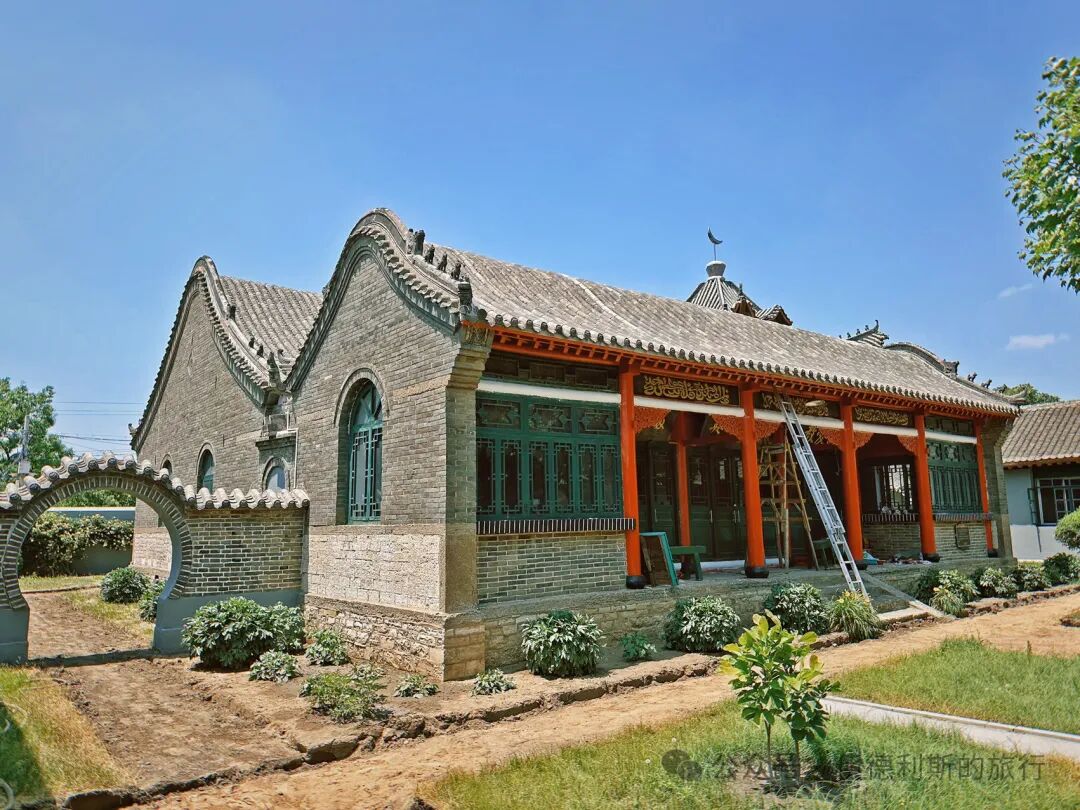
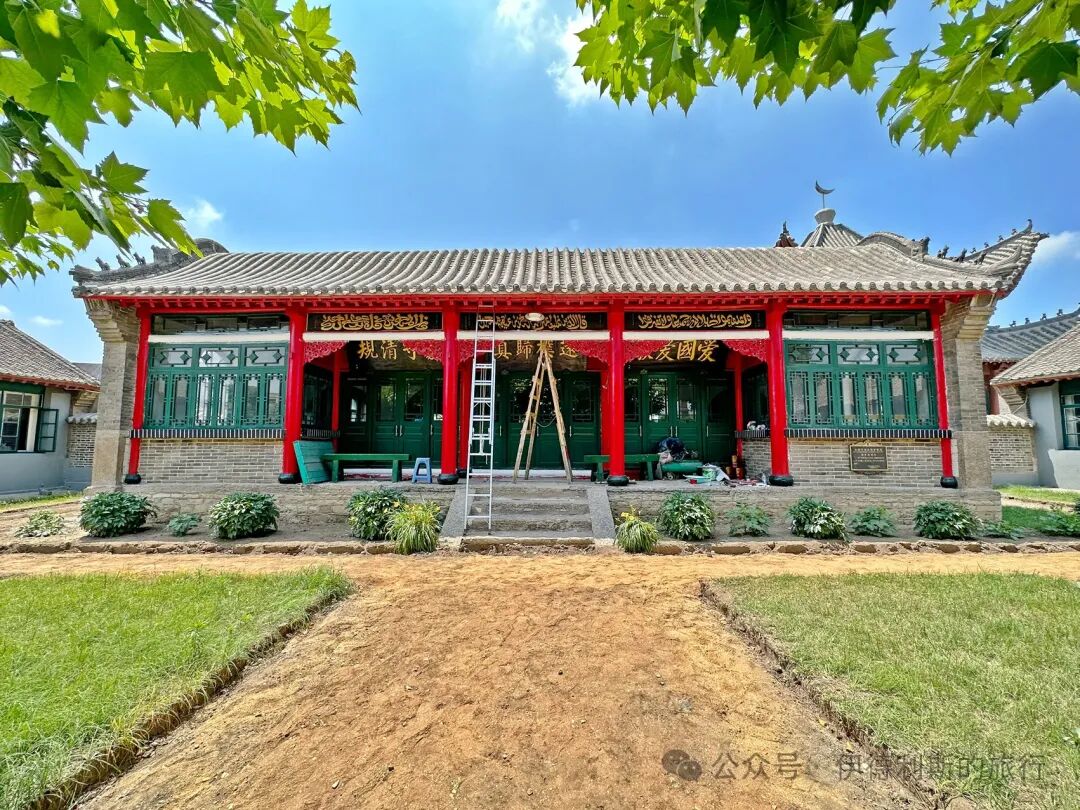
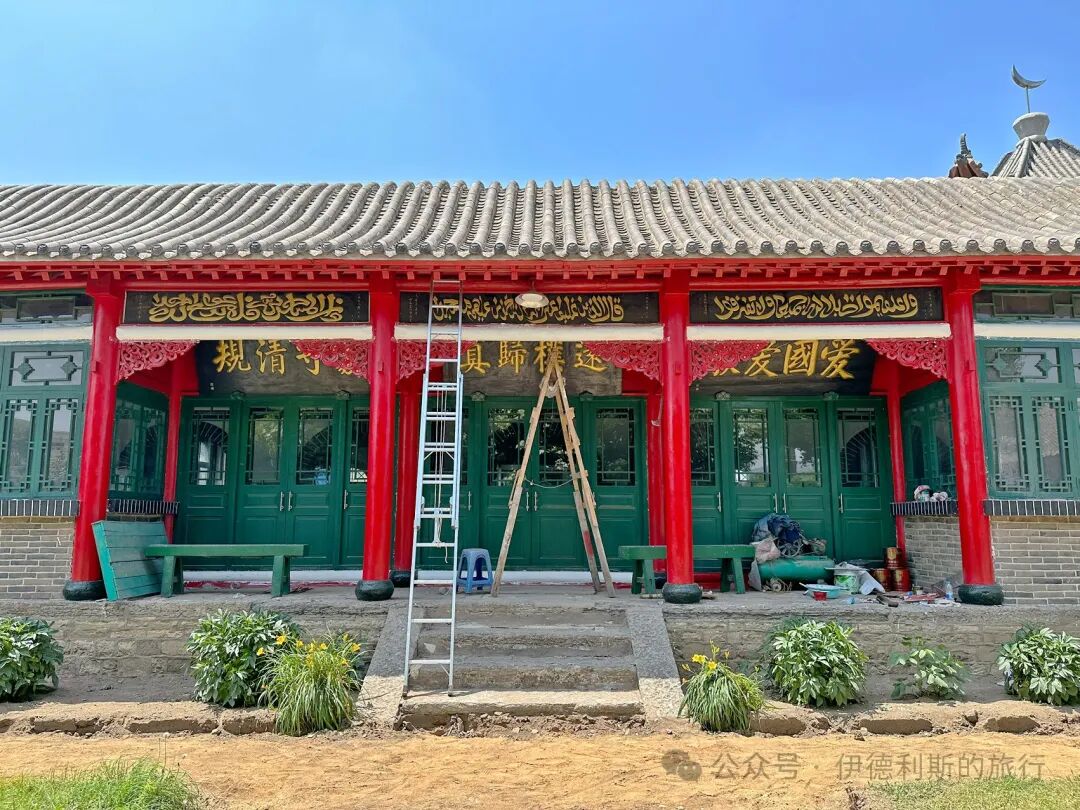
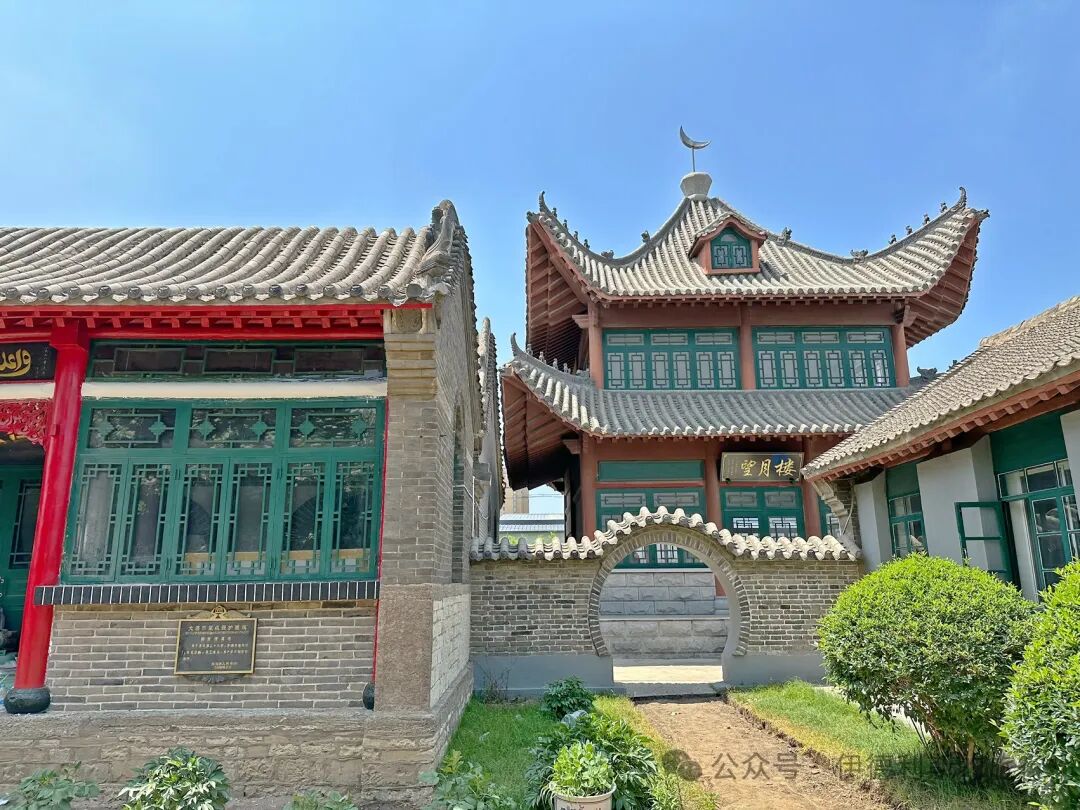
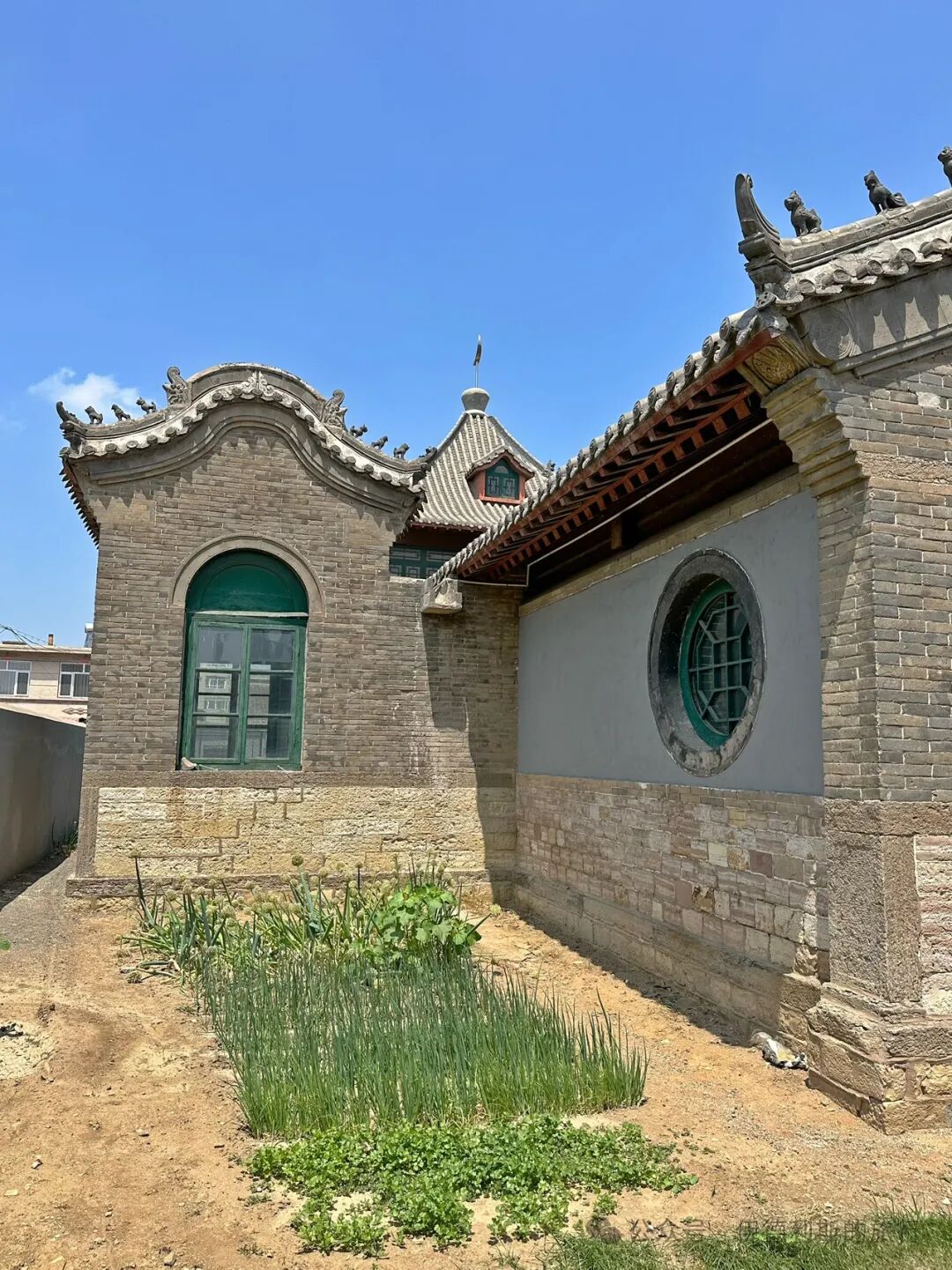
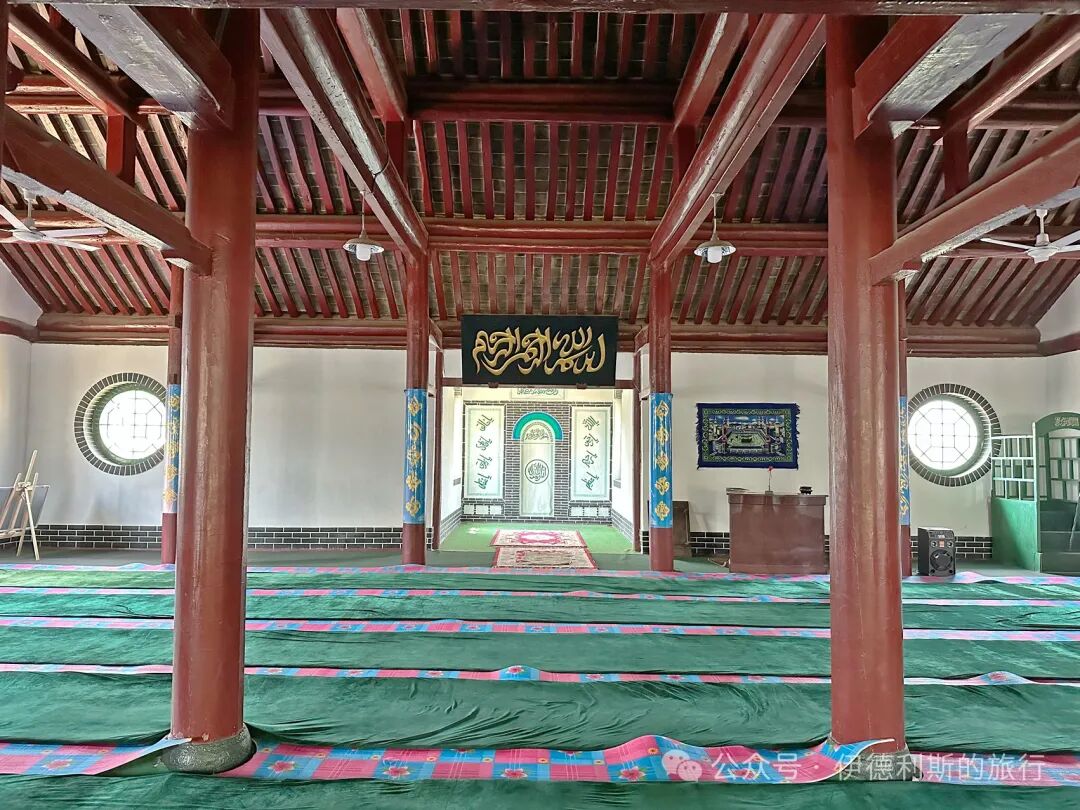
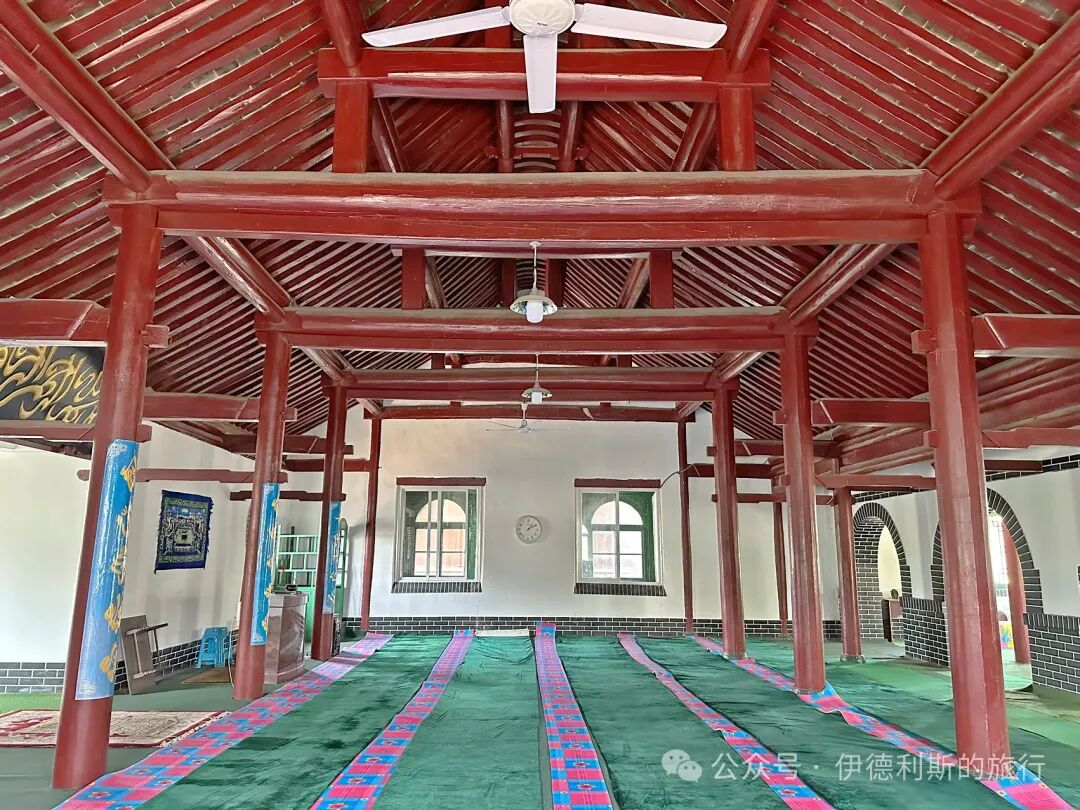
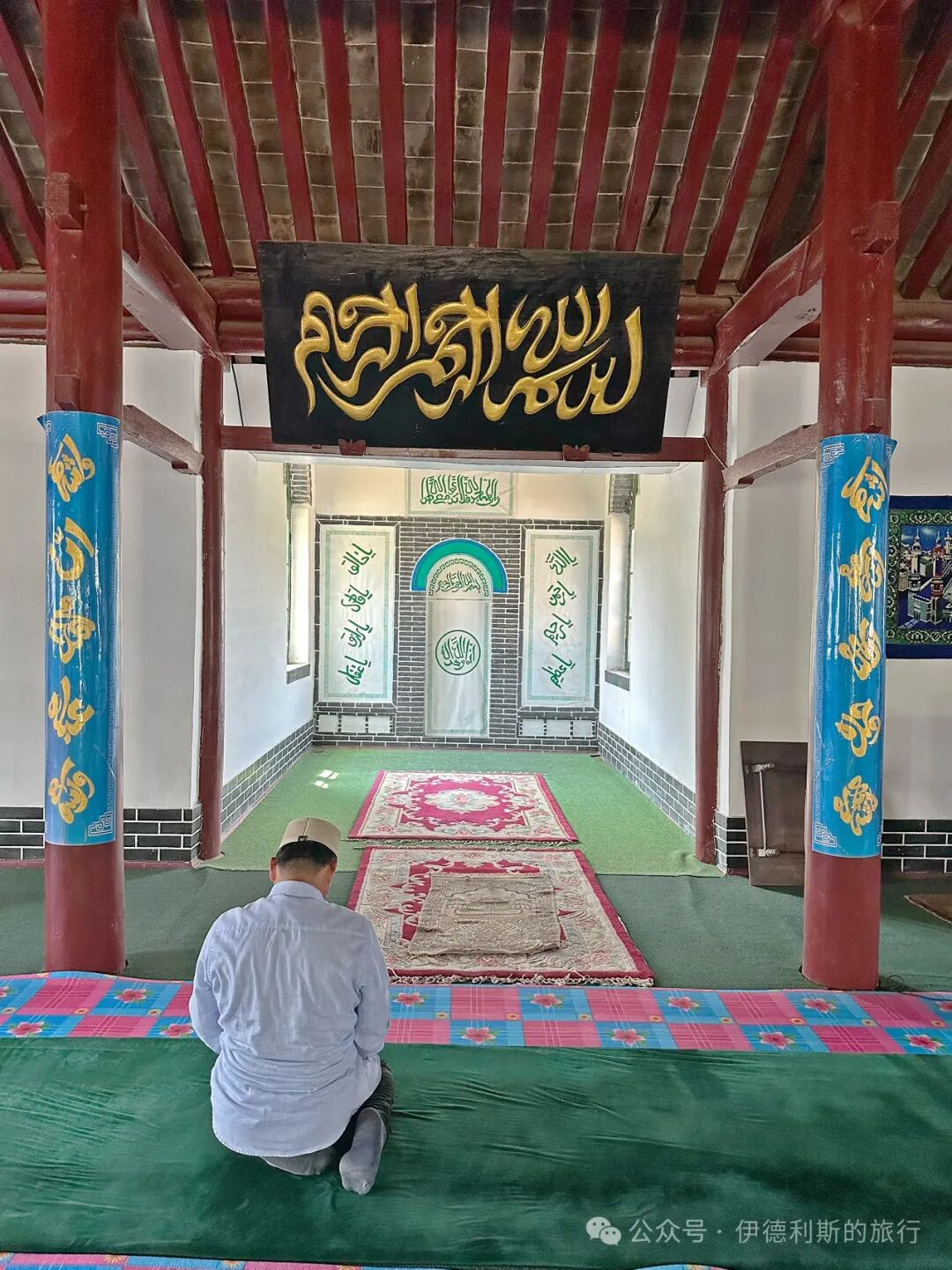
Hanging in front of the main hall of Fuzhou Mosque is a plaque that reads "Returning to Simplicity and Truth" (Huan Pu Gui Zhen). It was presented in 1897 (the twenty-third year of the Guangxu reign) by Wang Tingxiang, a third-rank official, imperial censor, and scholar of the Hanlin Academy.
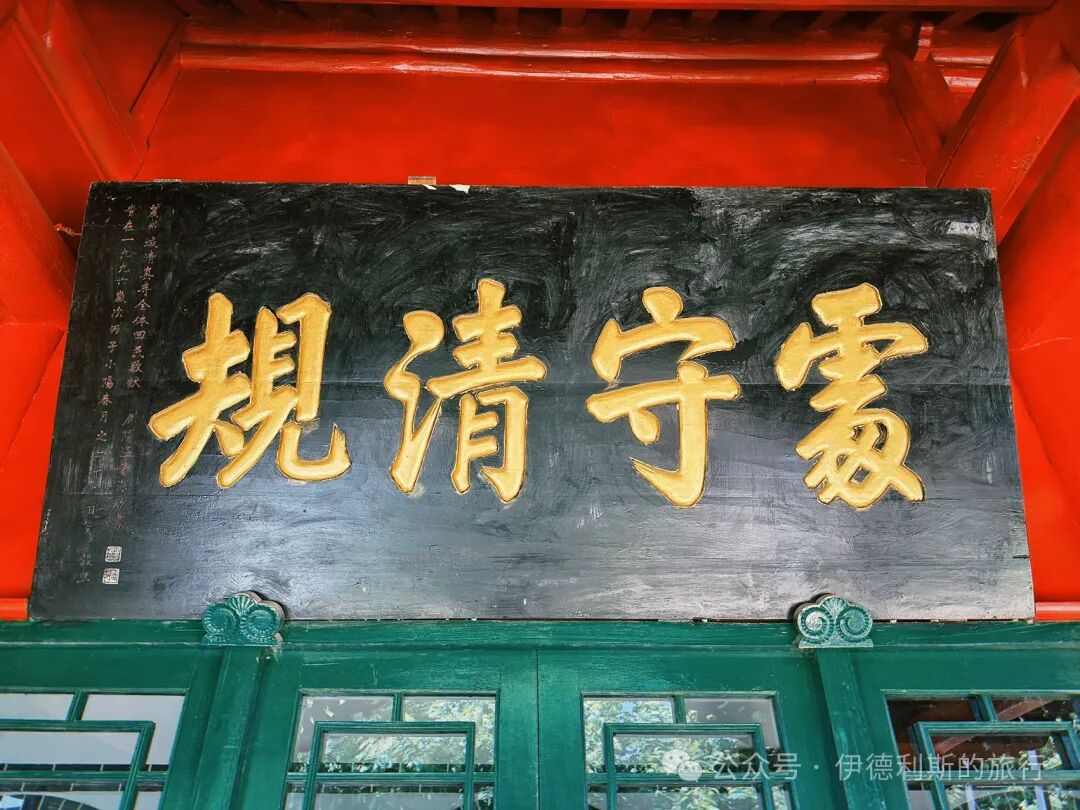
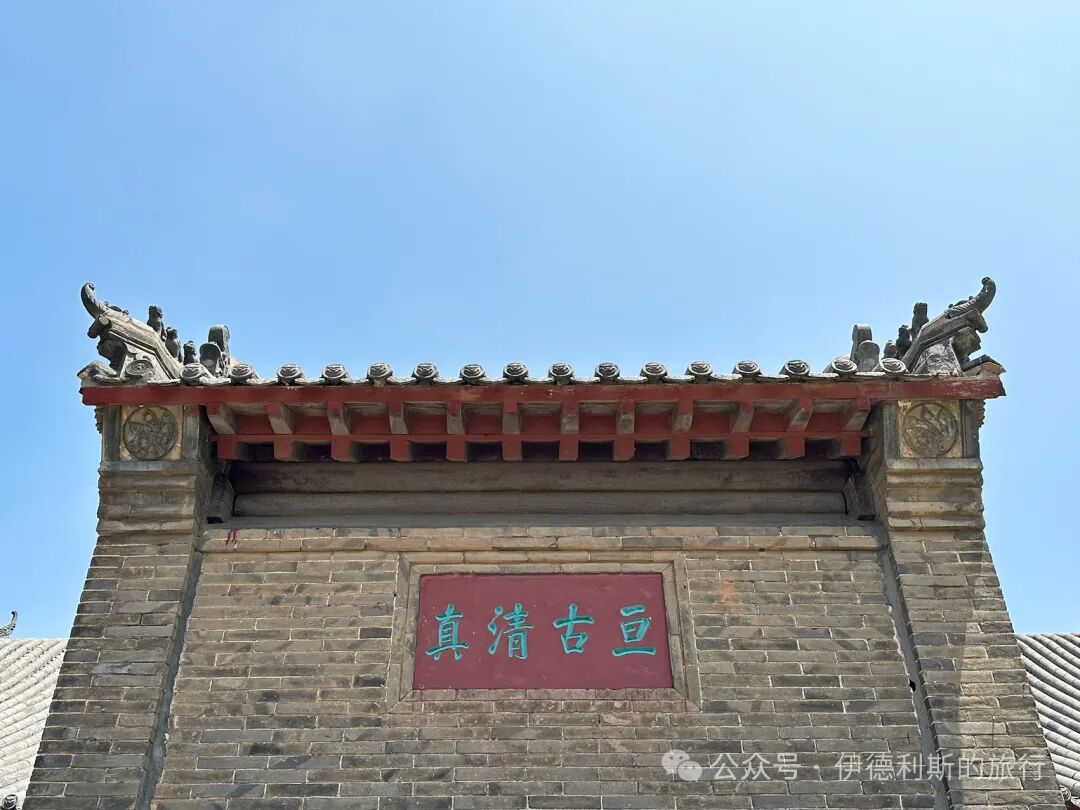
Additionally, the brick carvings on the wall ends feature traditional calligraphy of a dua.
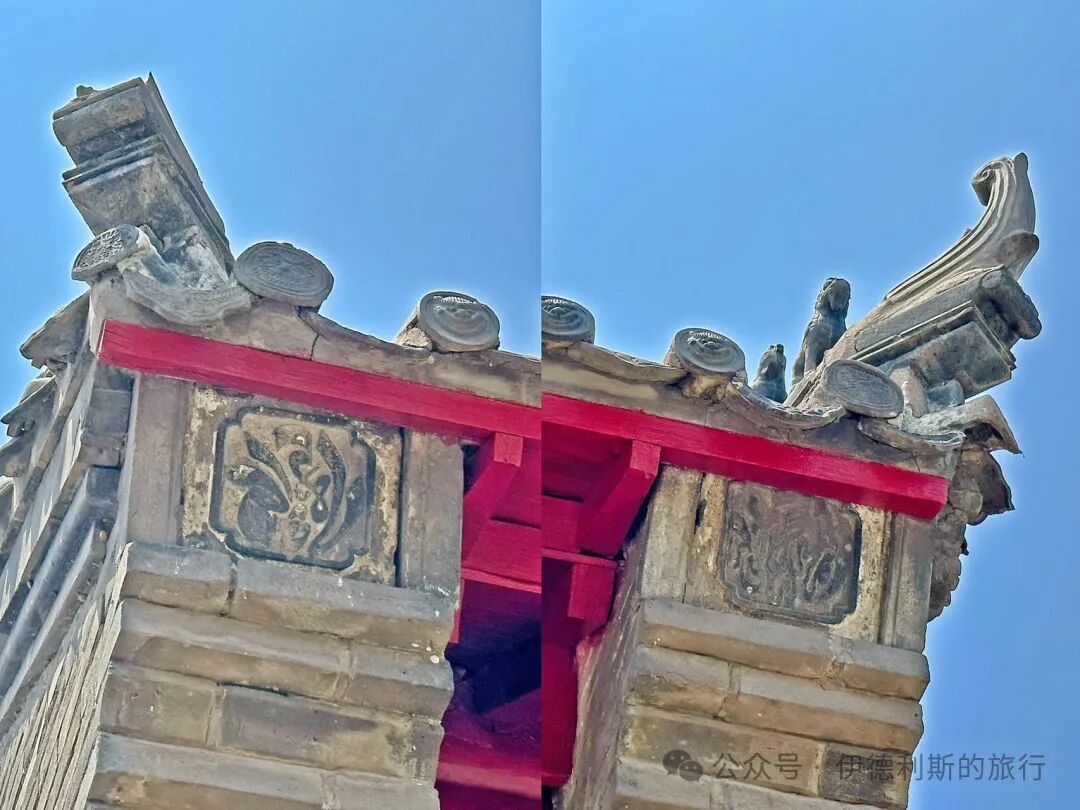
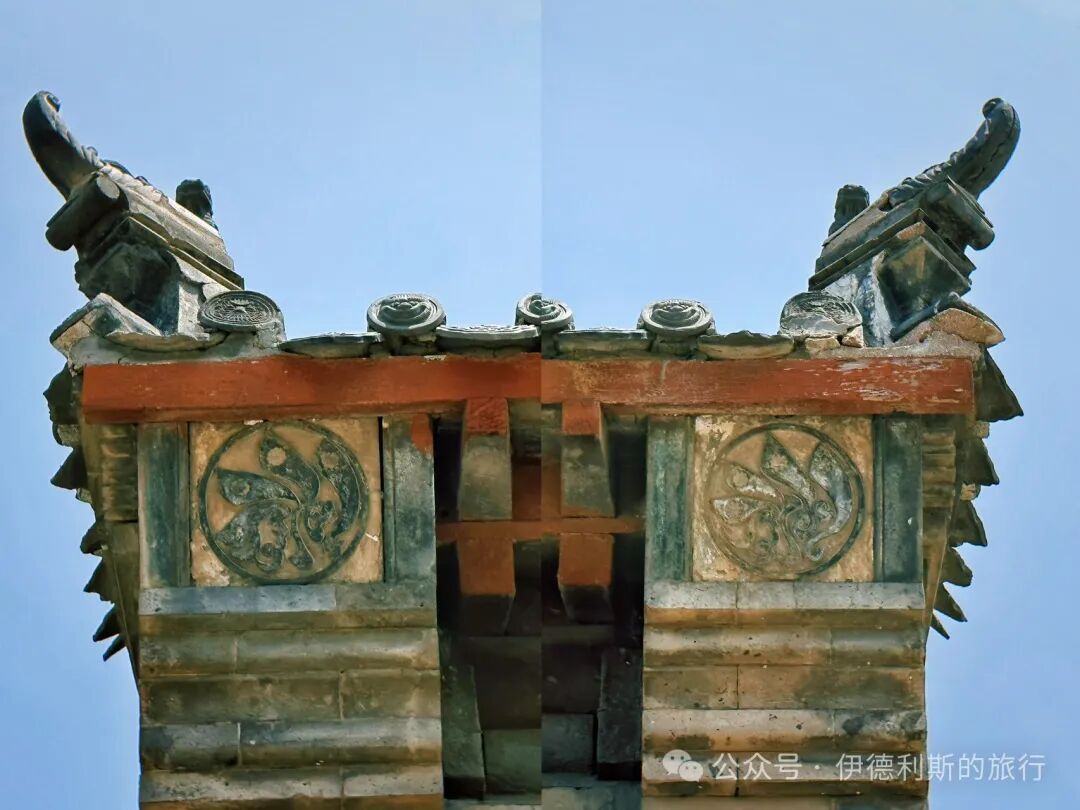
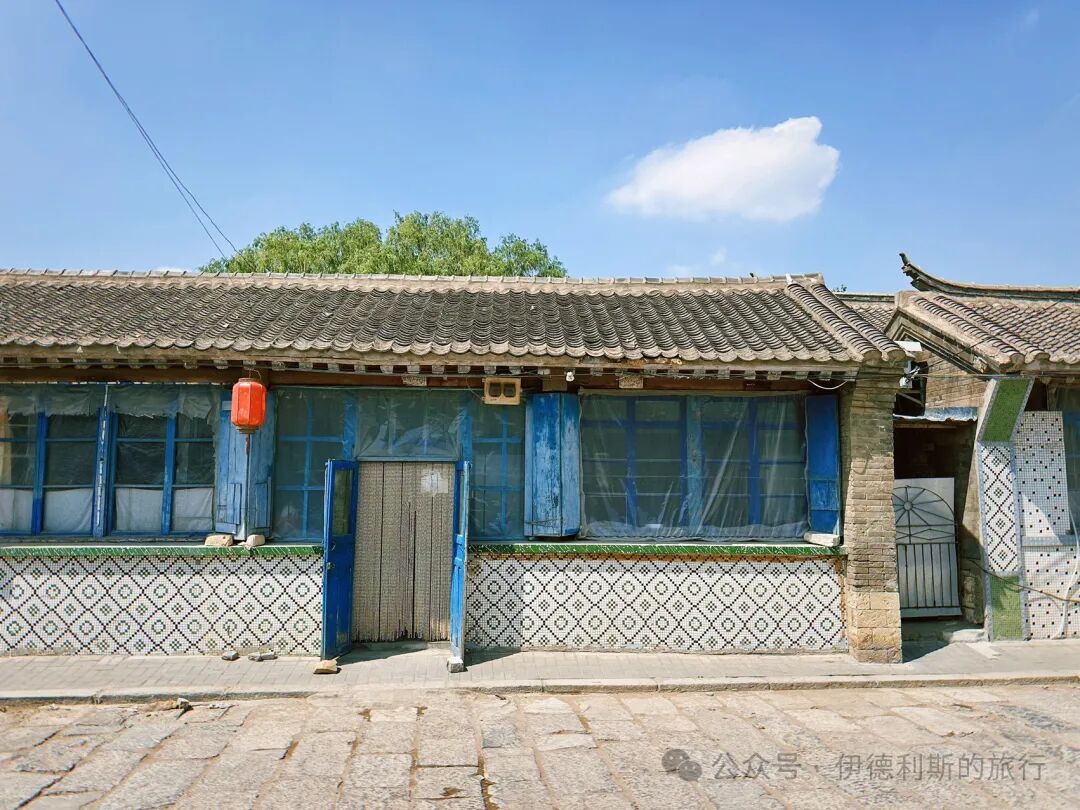
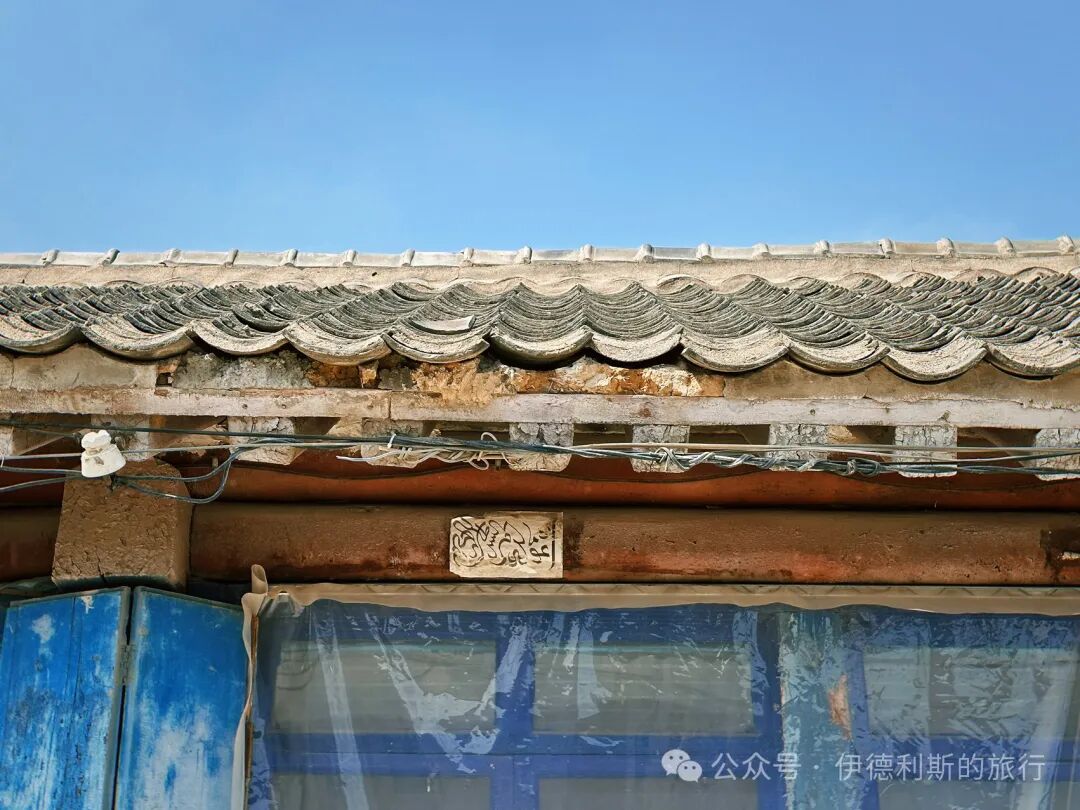
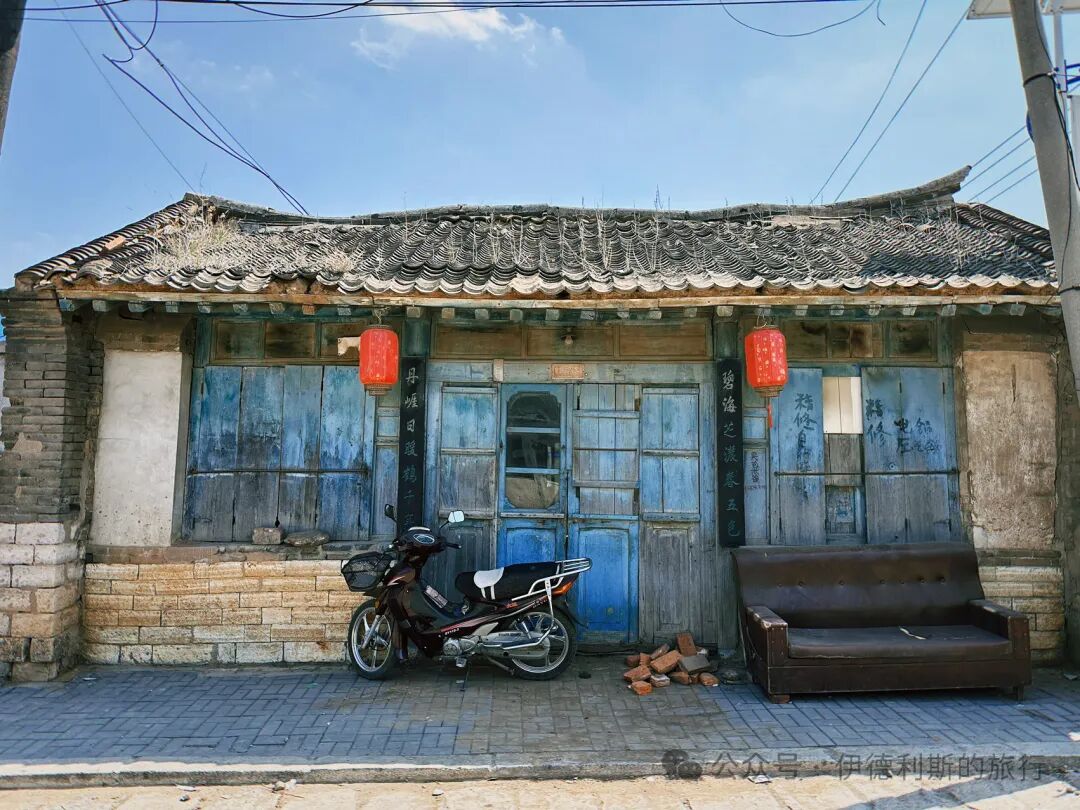
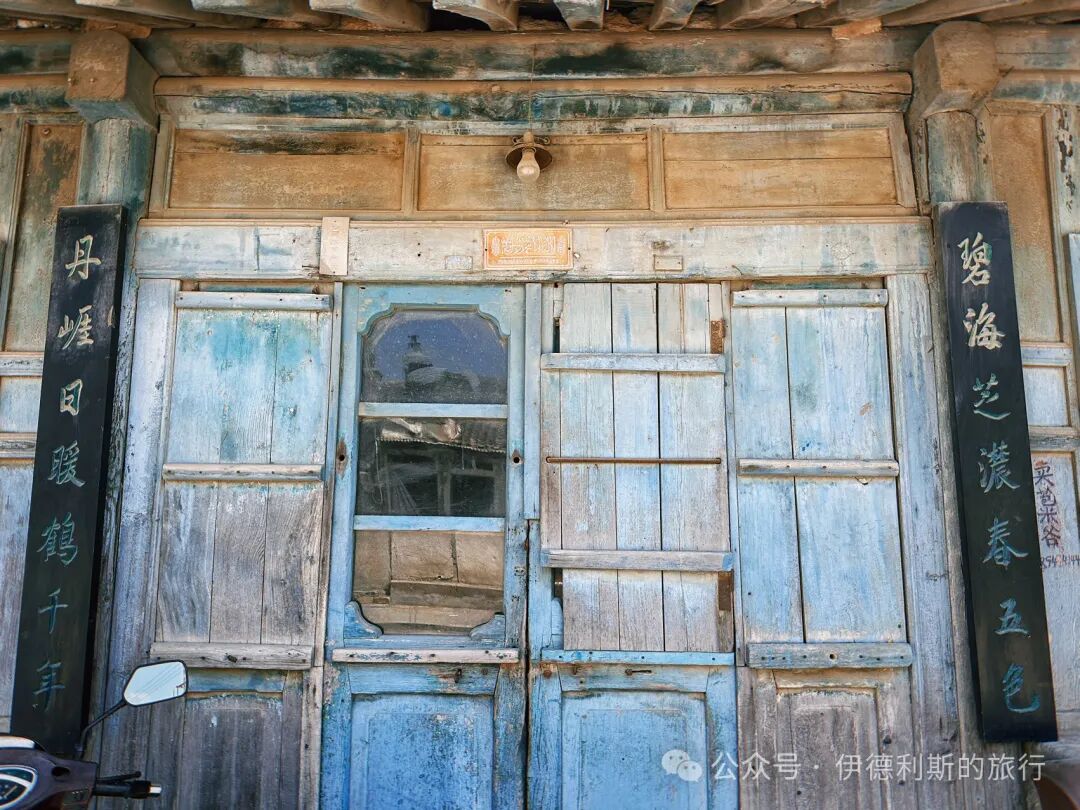
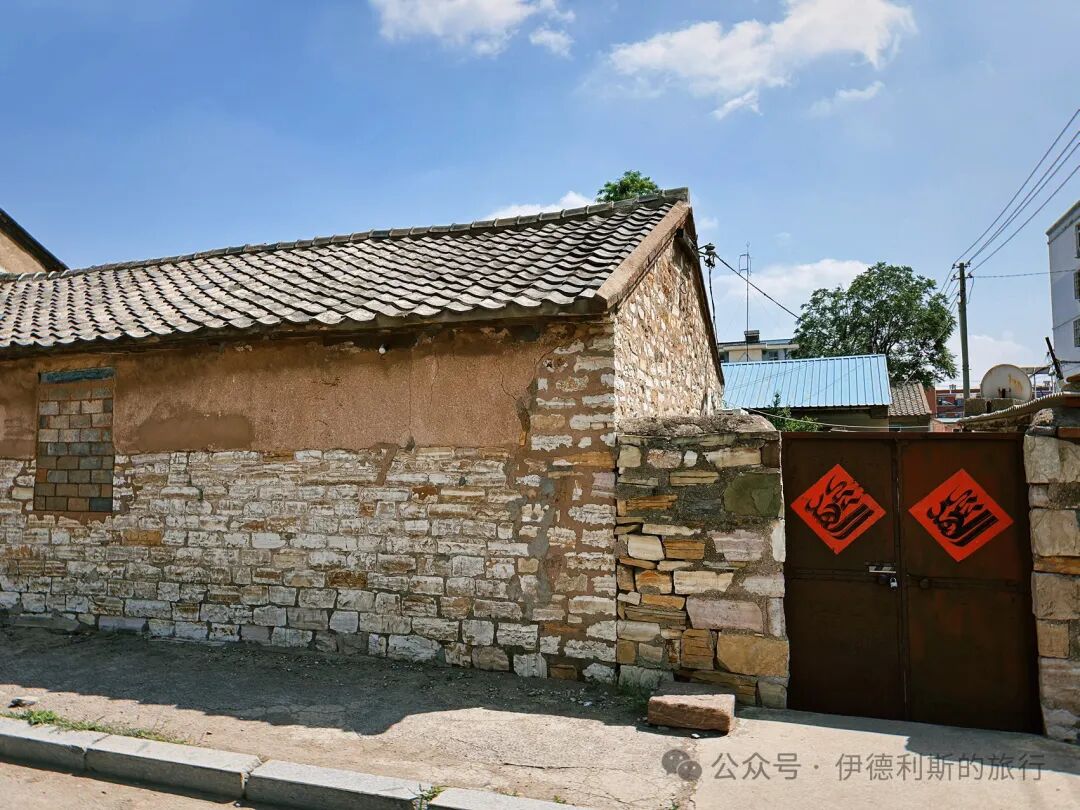
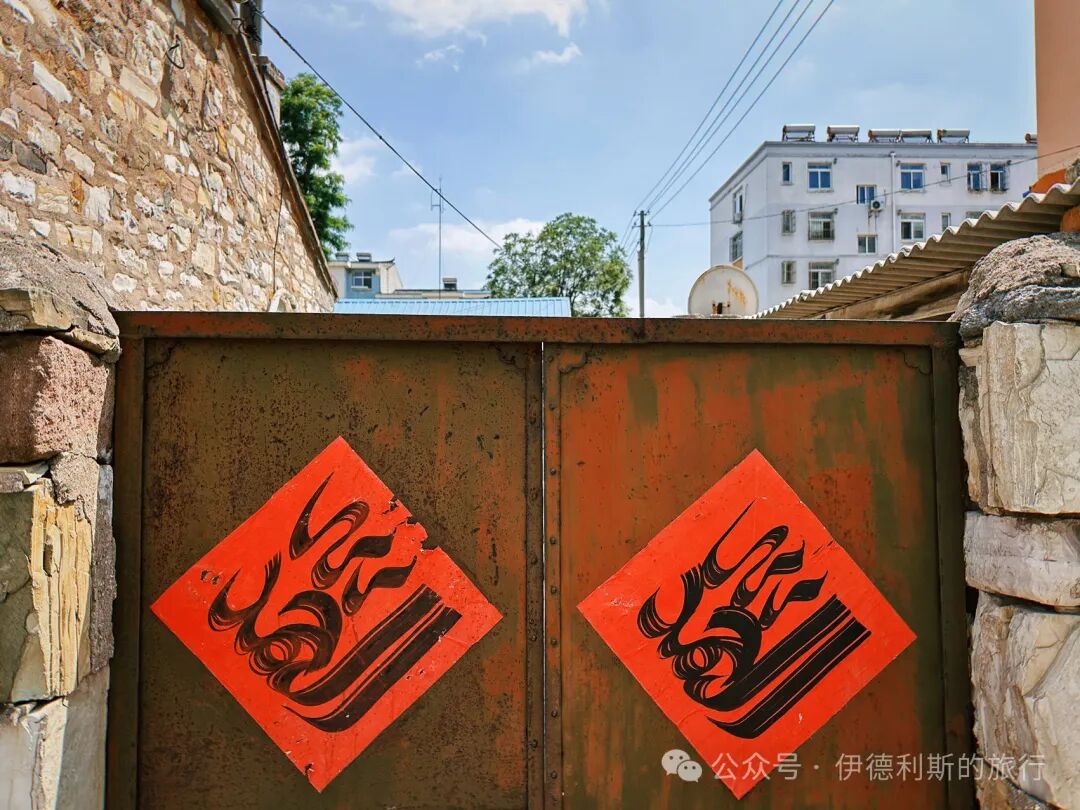
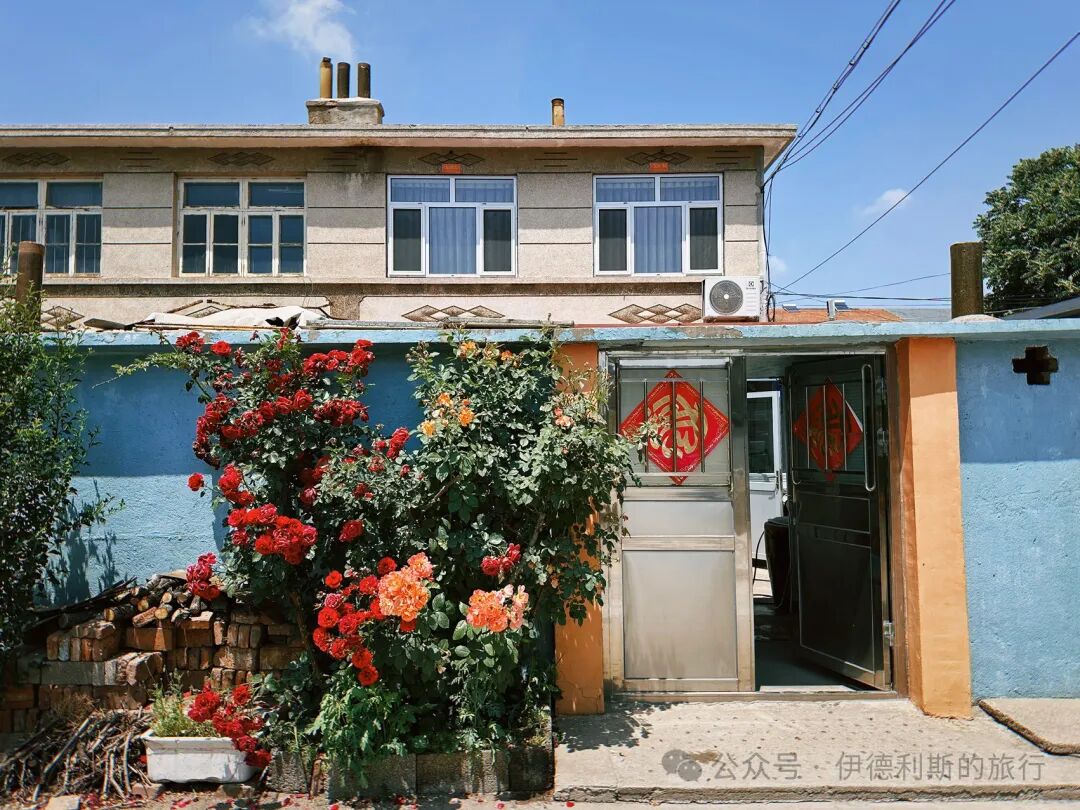
Hui Muslim homes inside Fuzhou City. The old street features blue bricks and dark roof tiles, with Arabic calligraphy (jingzi) and dua written on the walls, keeping the look of the past. Many people have moved to Wafangdian and Dalian to live, so the old street has become quiet.
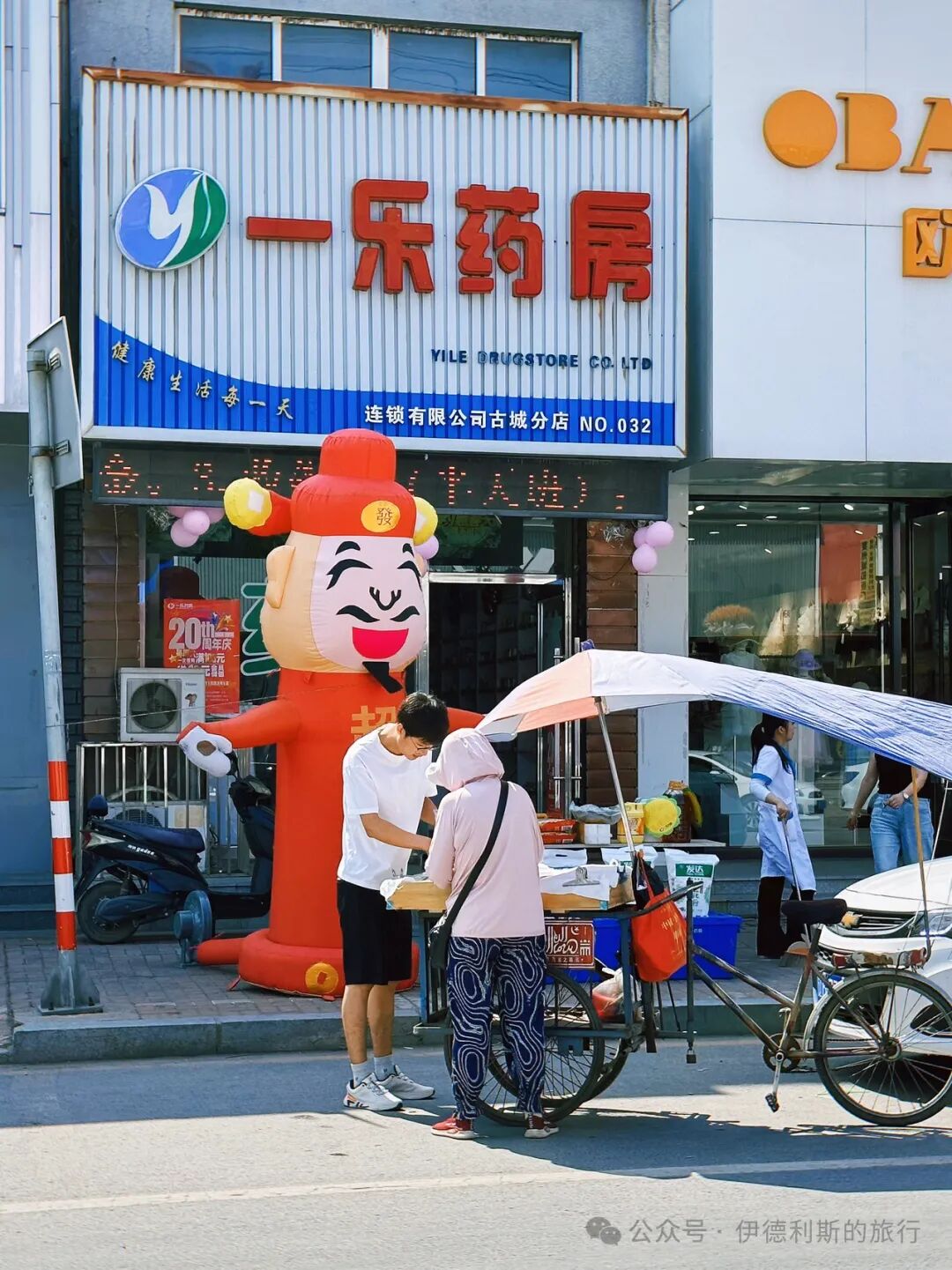
There is a legendary halal food spot in Fuzhou City, which is my friend's family business, Yin's sticky rice cake (jiangmi lianggao). The Yin family of Fuzhou originally came from Qing County in Cangzhou and settled in Fuzhou during the early Qing Dynasty. The sticky rice cake made by my friend's great-uncle, Yin Xiangzhou, was famous in Fuzhou a hundred years ago, and now my friend's mother pushes a small cart to sell it along the street every day. A loudspeaker plays, 'Sticky rice cake, fragrant and sweet.' Then everyone comes out to buy the sticky rice cake.
Sticky rice cake (jiangmi lianggao) is made by topping sticky rice with fillings like peanuts, sesame, and sugar. Traditionally, it included candied green and red fruit strips (qinghongsi), but these are now left out to suit younger tastes. Sticky rice cake is very refreshing in the summer, and it feels great on the stomach when paired with tea.
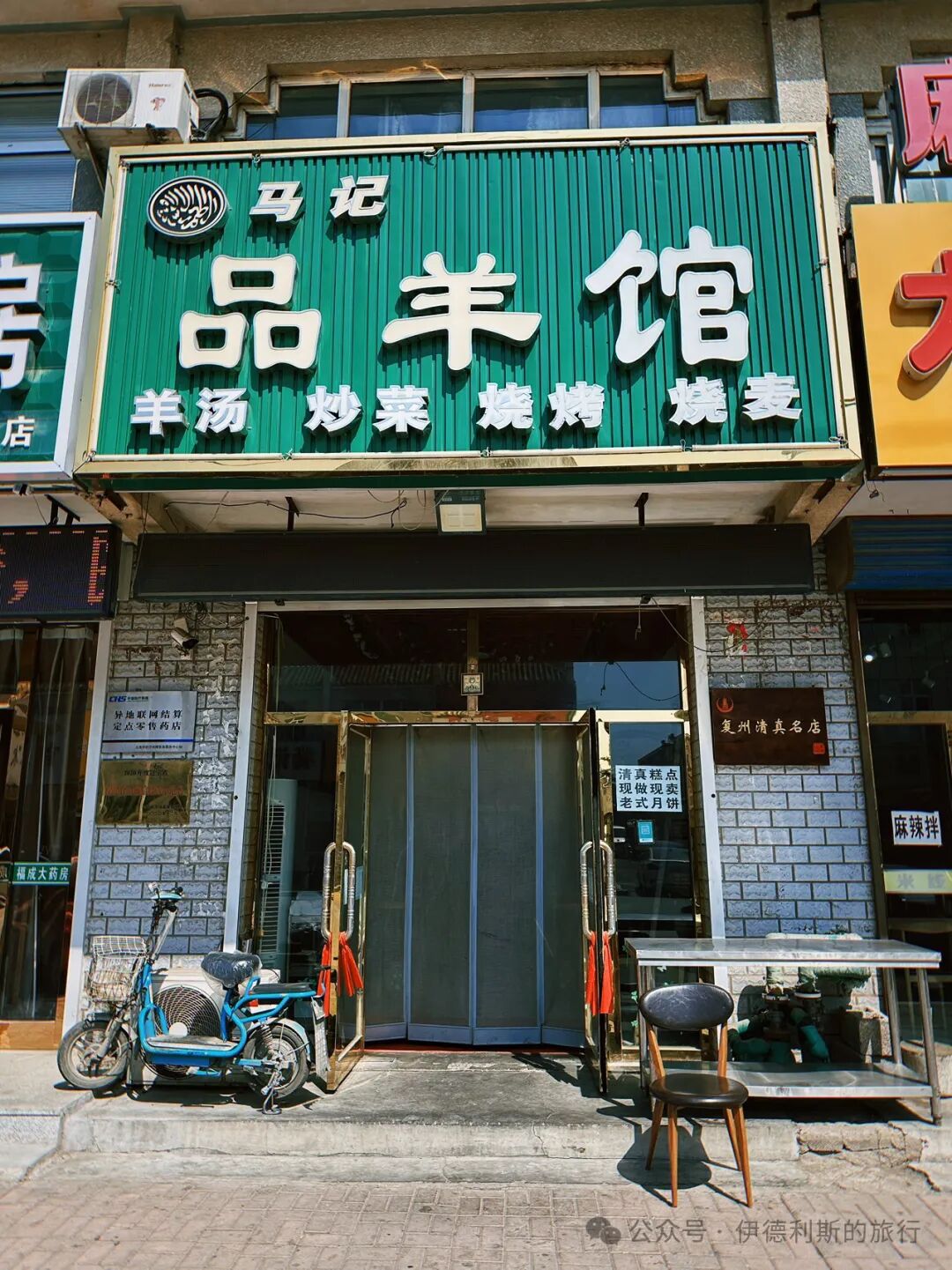
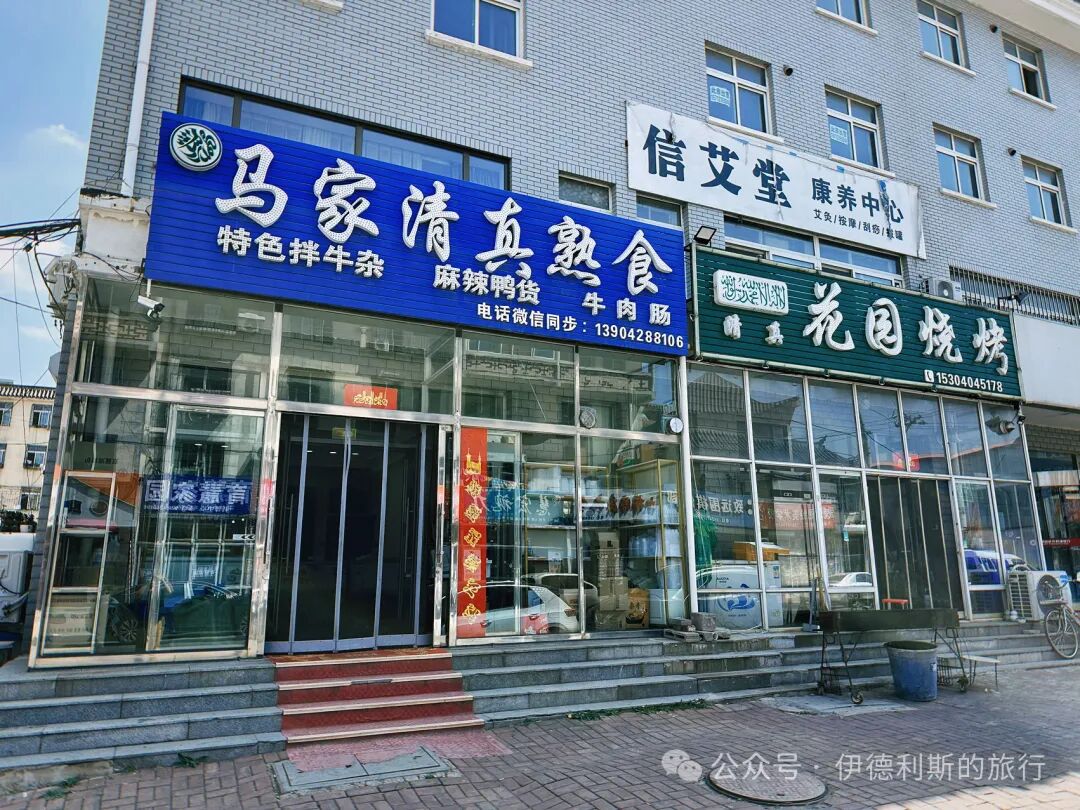
A quick tip: some people say the Yin family pushcart is hard to find. We spotted it at 2:15 p.m. at the intersection west of the Fuzhou Prefectural Office (Fuzhou Zhizhou Yashu). It then moves south along the main road, and you can hear the vendor calling out from far away.
We took the high-speed train from Wafangdian West Station at 3:30 p.m., arrived at Dalian North Station at 4:00 p.m., and then took a taxi to our accommodation to drop off our luggage.
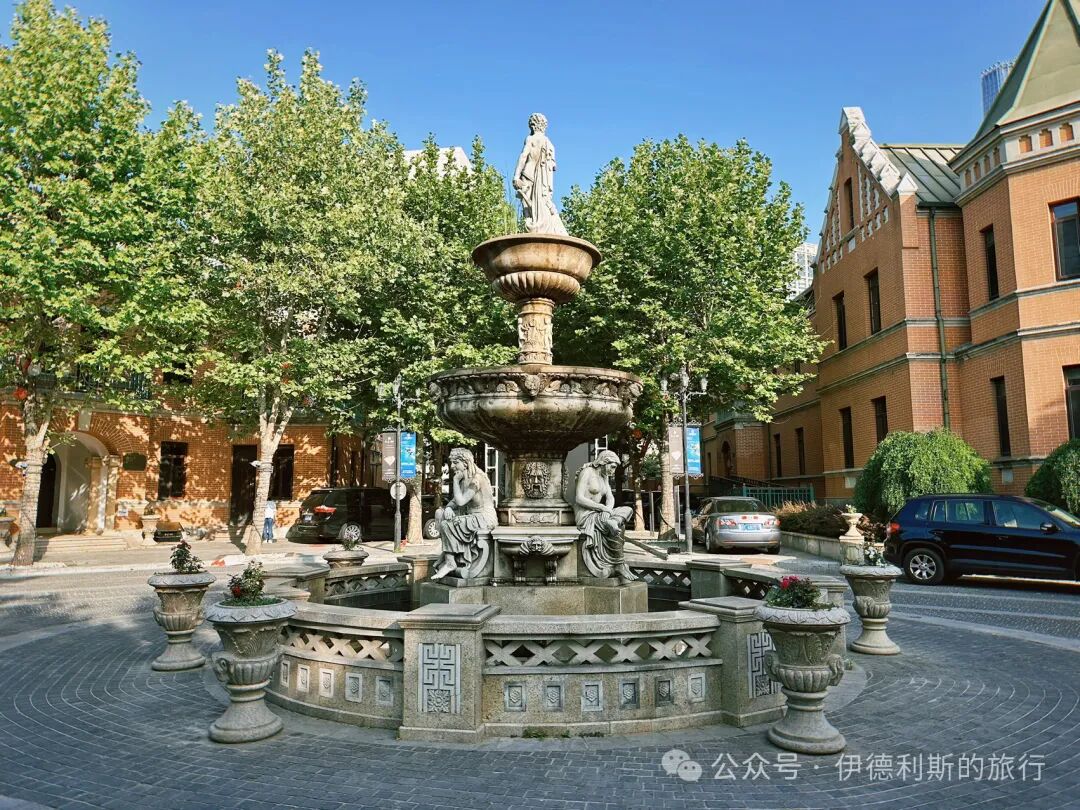
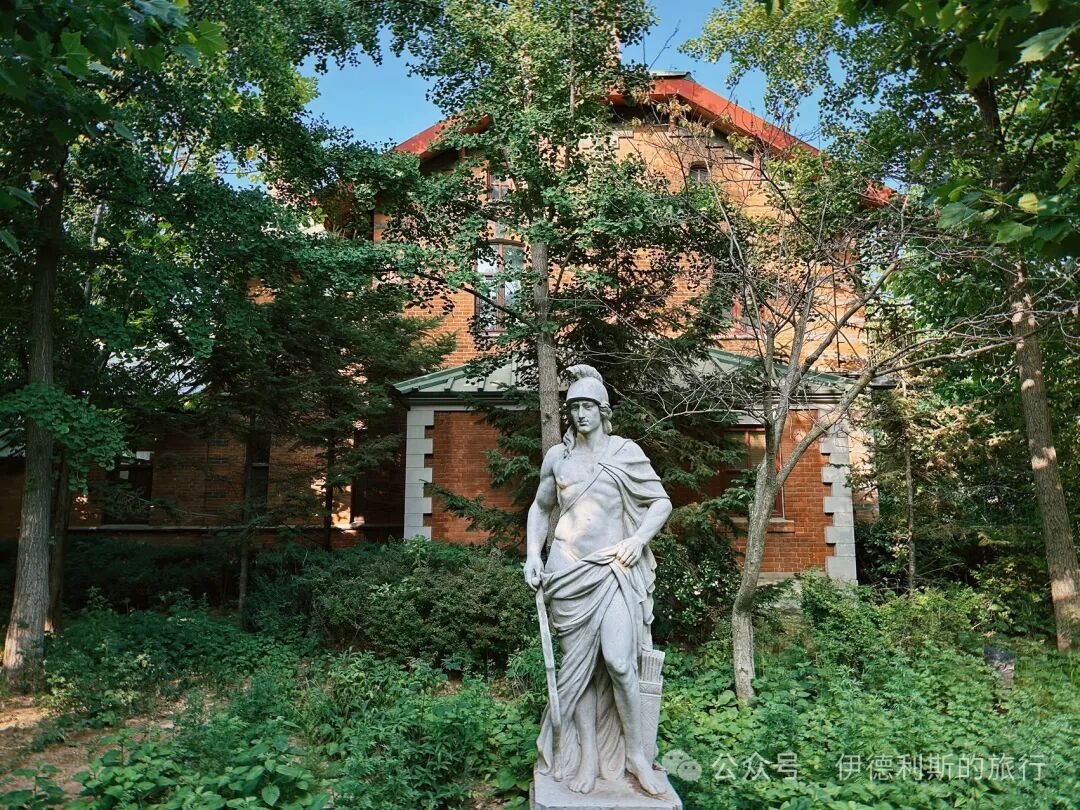
We stayed at the No. 21 Mansion (Ershiyi Hao Gongguan) near the Russian Style Street. The hotel sits in a courtyard that is part of the Yantai Street Russian-style building complex, which includes 28 European-style villas and marks the starting point of Dalian's history. In 1898, Tsarist Russia leased Dalian Bay and began building Dalian city the following year. The first street built was called Engineer Street, which is now known as Russian Style Street. Soon after, Timov Street was built right next to Engineer Street, and it was renamed Yantai Street after 1946. Between the late 19th and early 20th centuries, Tsarist Russia hired German and Russian designers to build a series of European-style villas on Yantai Street, and 28 of them still stand today.
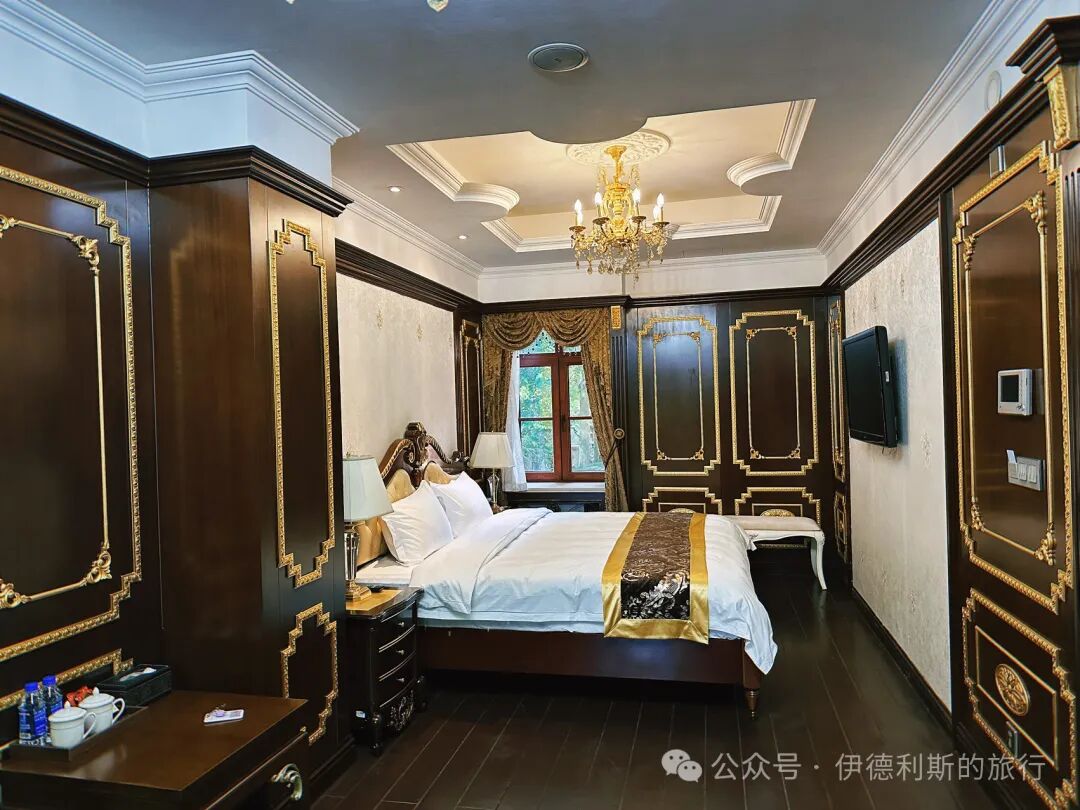
After the Russian-style building complex on Yantai Street was restored in 2011, several hotels and restaurants moved in. When we visited, several places were hosting weddings, which felt a bit like the Italian Style Street in Tianjin. Several villas in the courtyard belong to the Dalian Railway 1896 Garden Hotel, which you can stay in at any time. The No. 21 Mansion where we stayed is military property and only opens during holidays, but you can book it online.
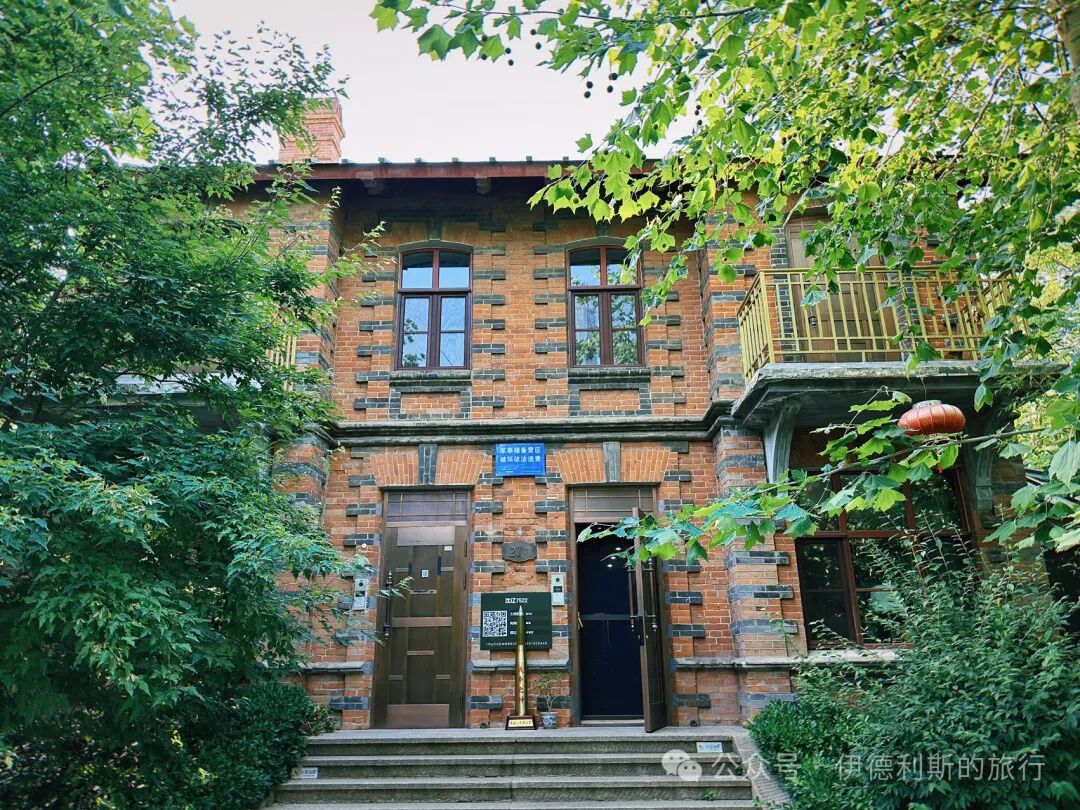
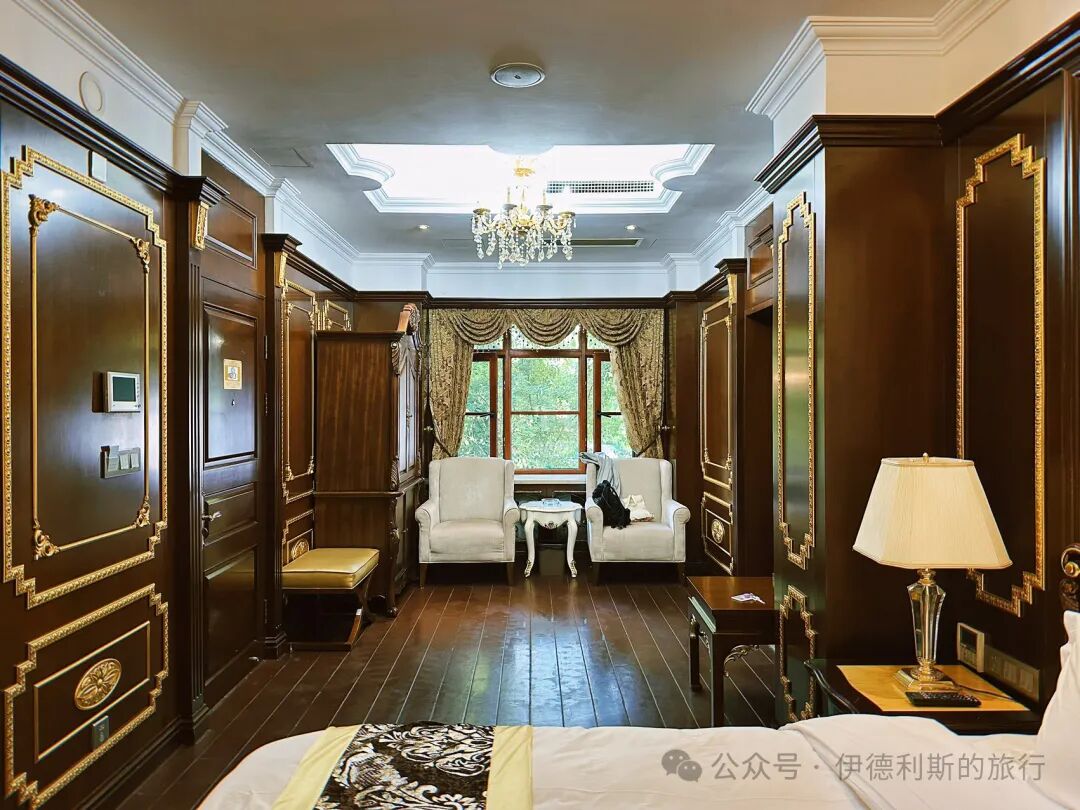
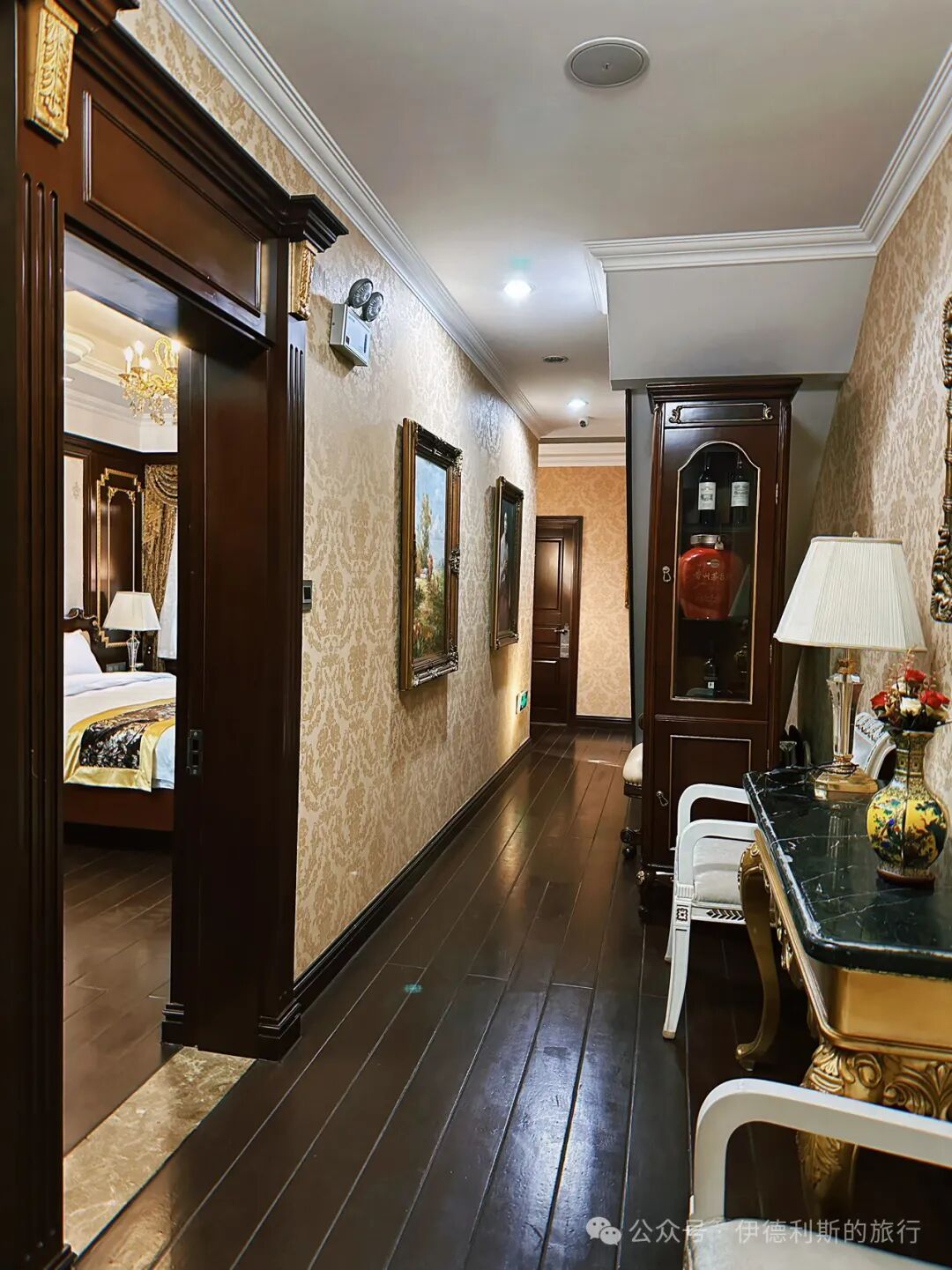
Building No. 21 was built in 1903 and designed by the famous German architect Jan Hendel. In 1920, early labor movement leader and Manchurian Provincial Committee Secretary Wang Ligong lived here. The house we stayed in had windows on both the north and south sides, making the environment very pleasant. The courtyard was very quiet, which was a sharp contrast to the busy Russian-style street next door.
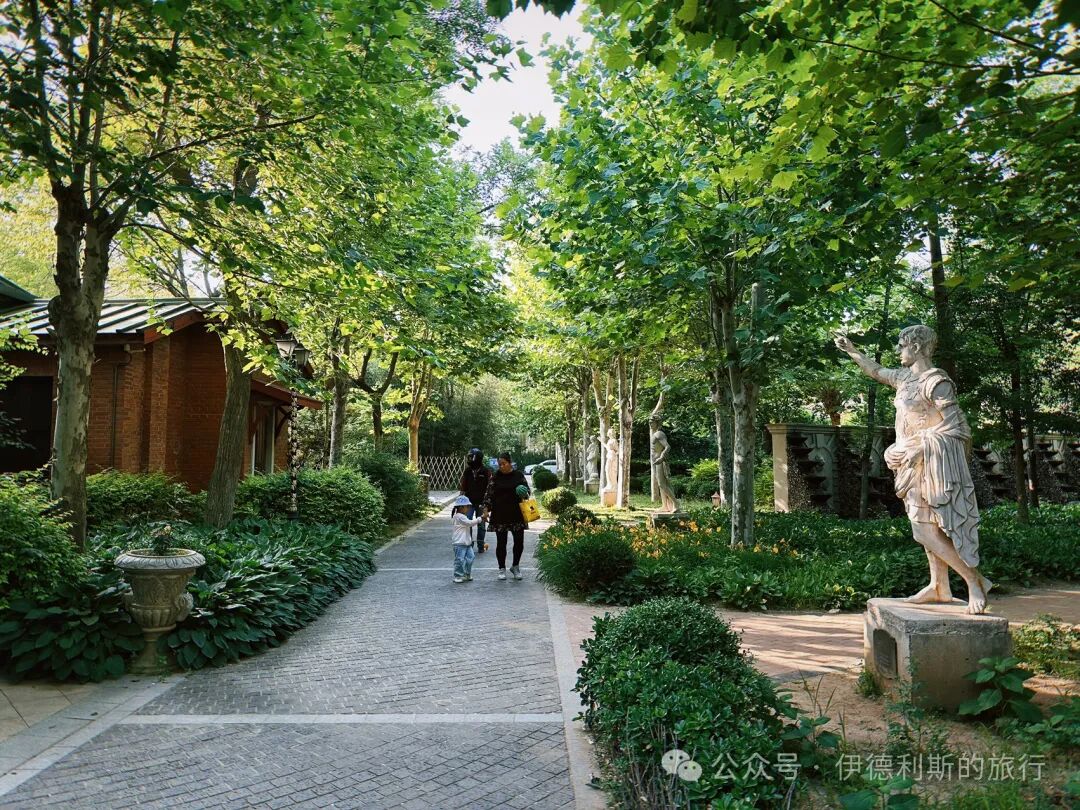
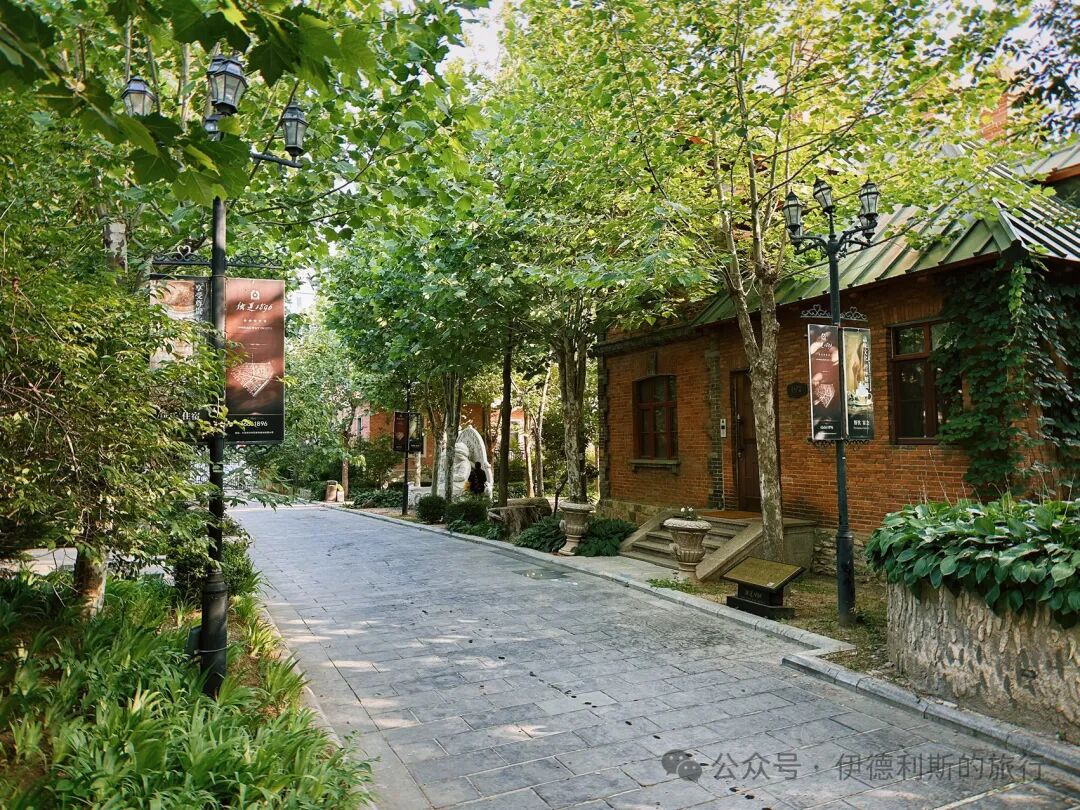
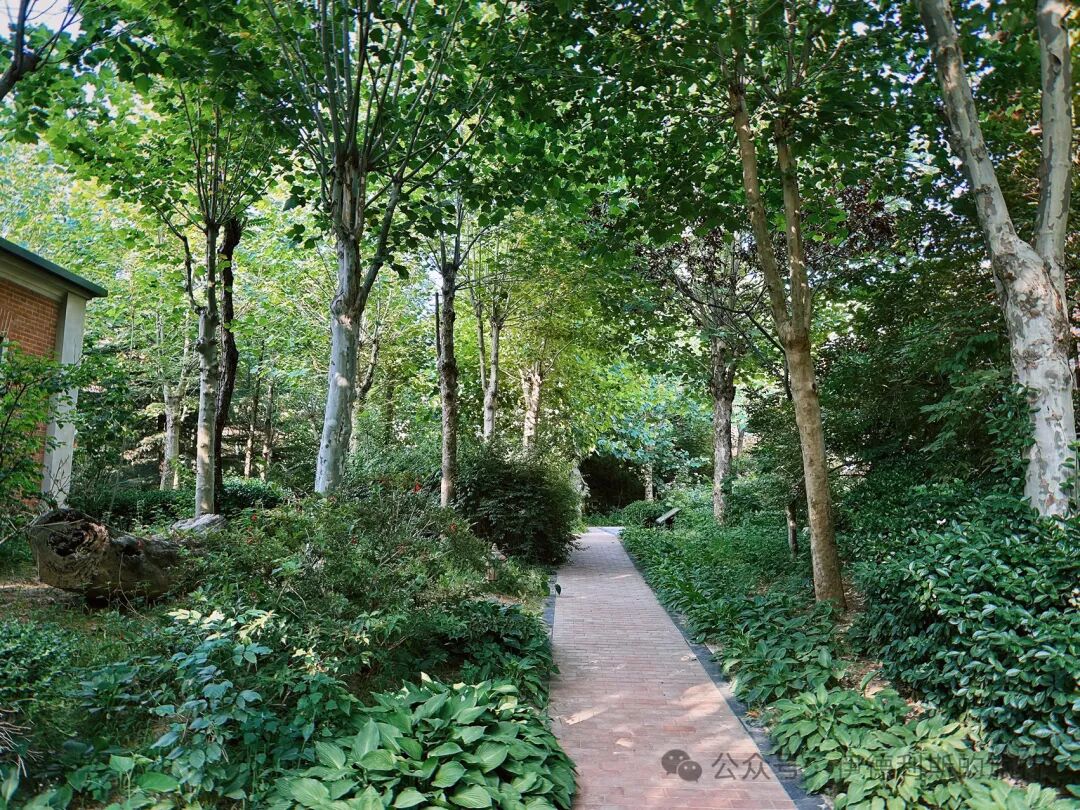
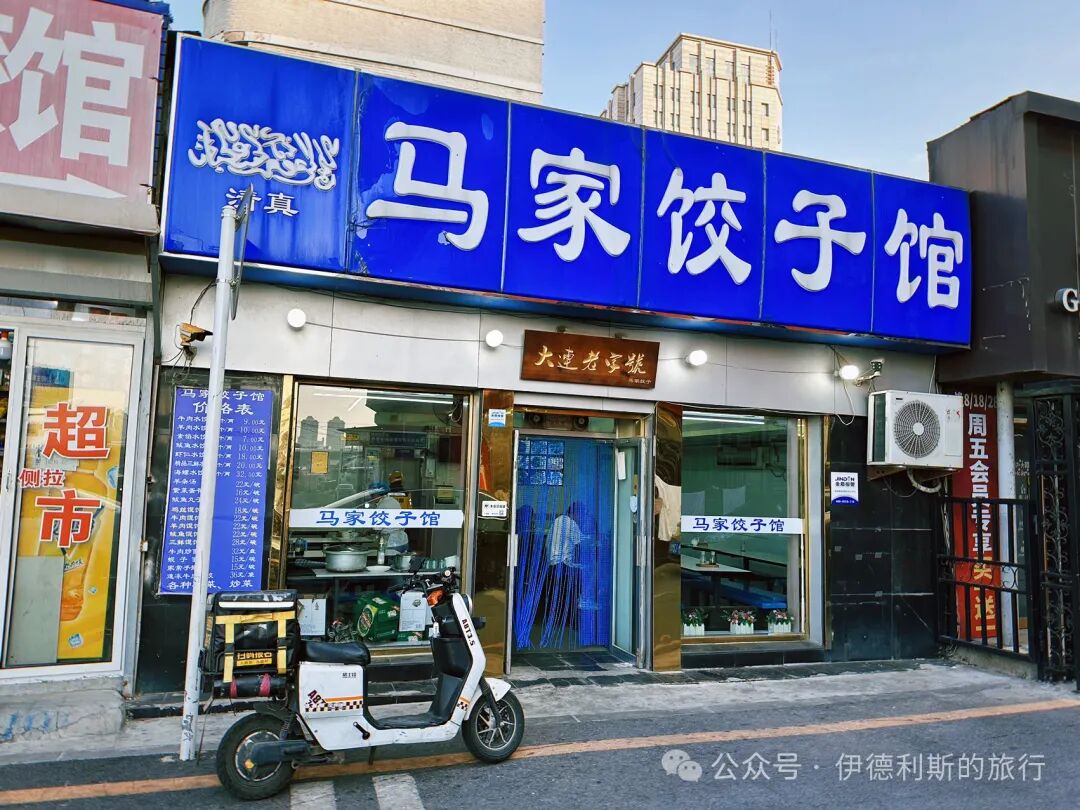
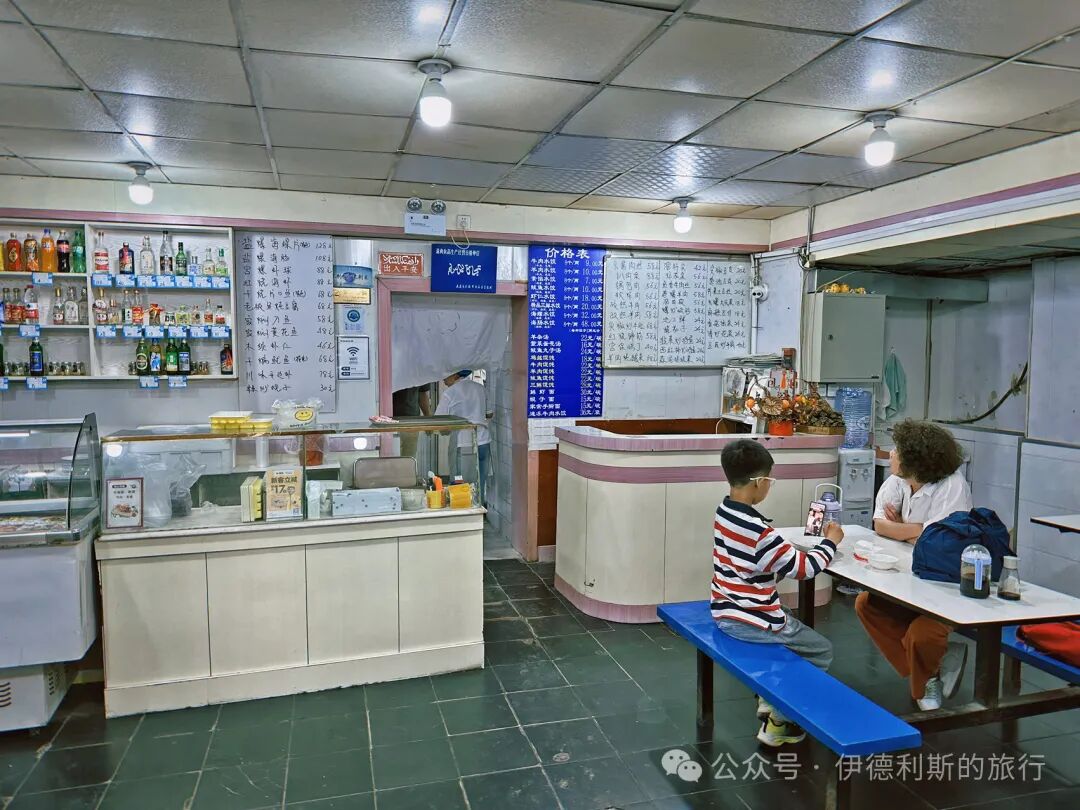
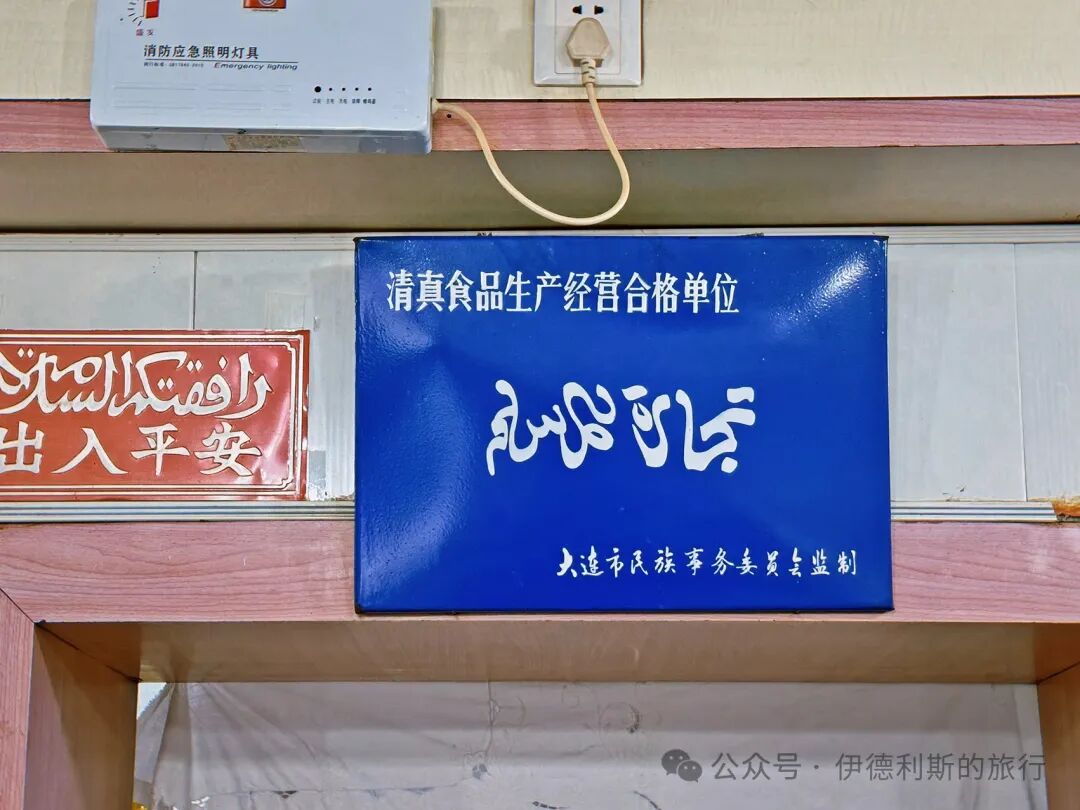
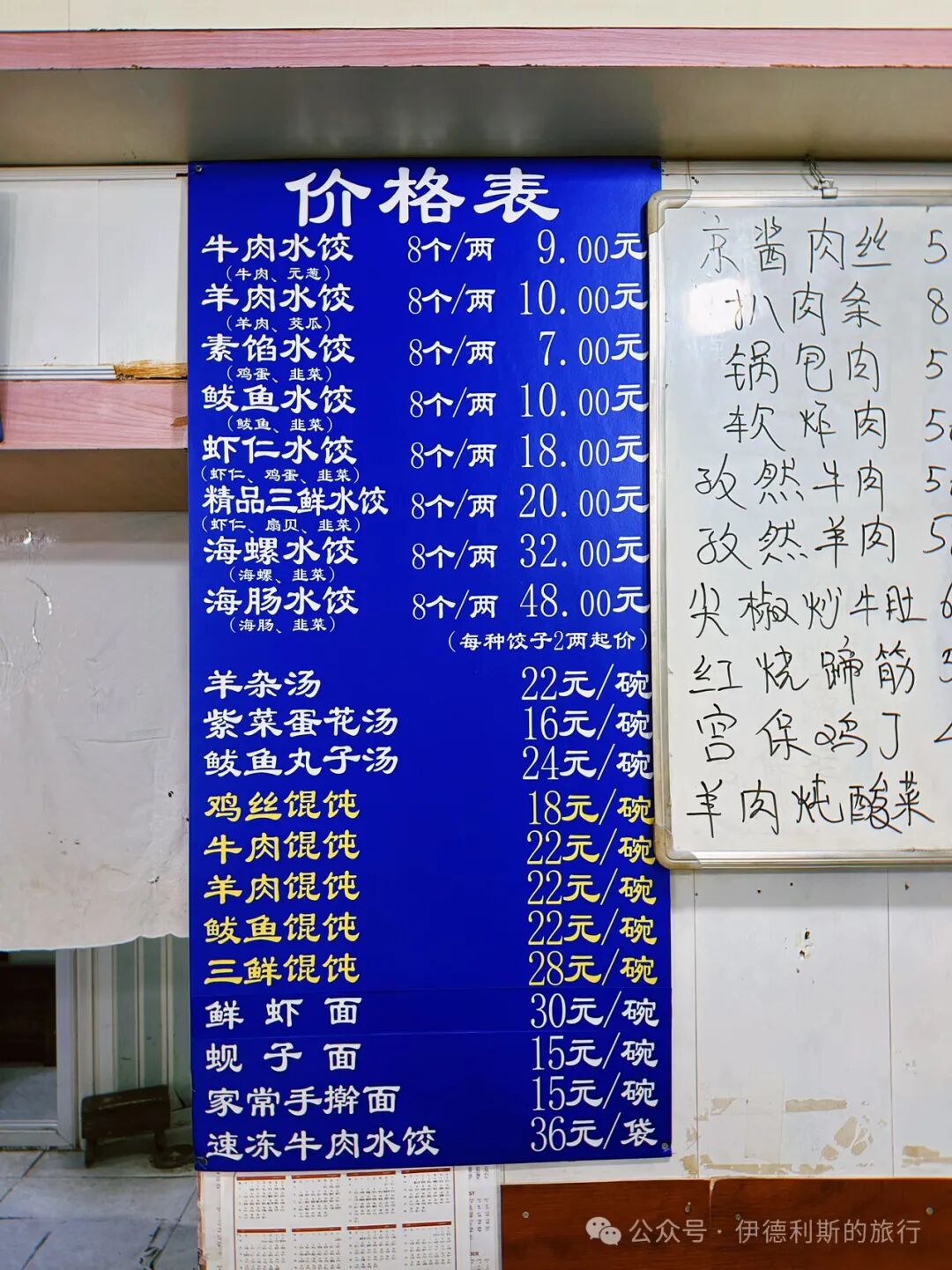
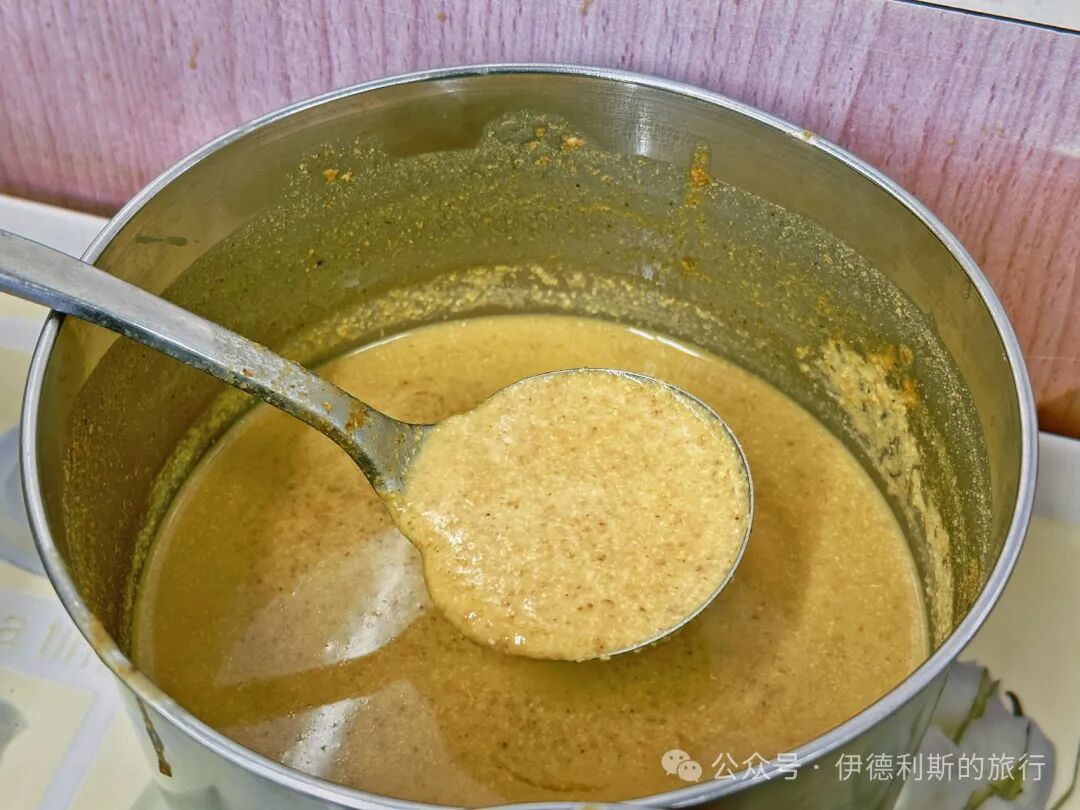
In the afternoon, we had dinner at the long-established Majia Dumpling Restaurant in front of Dalian Railway Station. We ordered sea snail and chive dumplings (haoluo jiucai jiaozi), mackerel ball soup (bayu wanzi tang), and dry-braised flatfish (gan shao piankou yu). Traditionally, Hui Muslims in North and Northeast China do not cook seafood; they focus on beef and lamb. They only started making seafood dumplings after the Reform and Opening-up, and it gradually became a local specialty. They serve dumplings with yellow mustard sauce, which is very unique and adds a great kick to the flavor. The dry-braised flatfish was also well-prepared, with a sweet and spicy taste that really whets the appetite. People who ate at their original shop say the dumplings were even better decades ago, and I can really understand that sense of nostalgia. But as travelers, we are already very happy to be able to eat these dumplings.
Ma Family Dumpling Restaurant (Ma Jia Jiaozi Guan) was the first halal dumpling shop in Dalian and one of the city's two earliest dumpling restaurants. It was opened in 1947 by Liu Yushan, Ma Baishi, and Zhao Fangchen at the Bo'ai Market in Xigang. It was originally called Ruixianghao Hui Muslim Dumpling Restaurant before changing its name to Ma Family Dumpling Restaurant. After the Reform and Opening-up, the restaurant moved to the former site of the Goubuli Steamed Bun Shop on Tianjin Street. It moved to its current location after the renovation of Tianjin Street in the early 21st century. At first, the restaurant only served beef dumplings. After the Reform and Opening-up, seafood dumplings appeared in Dalian, so the restaurant started making new varieties like mackerel dumplings (bayu jiaozi) and sea snail dumplings (hailuo jiaozi).
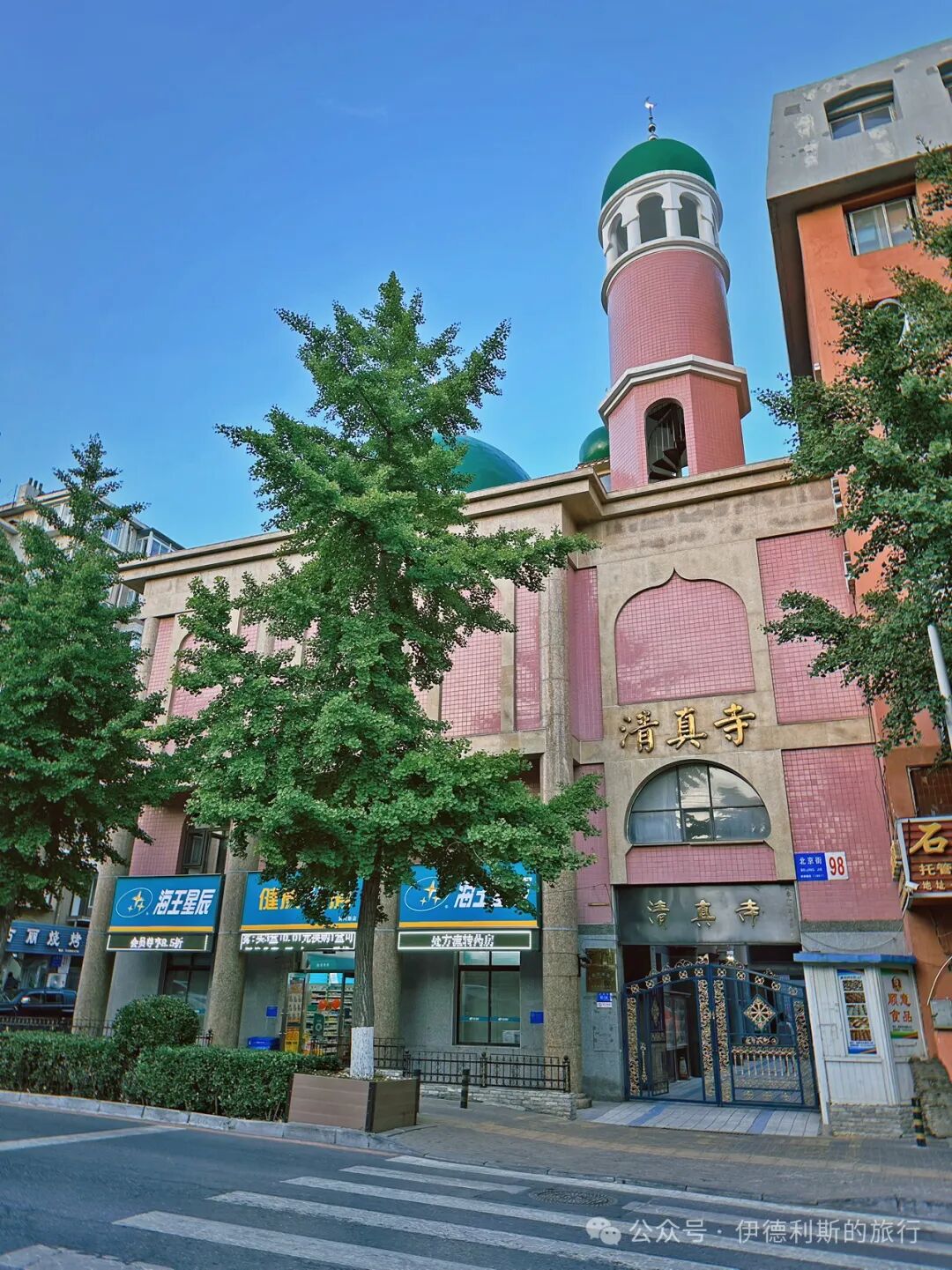
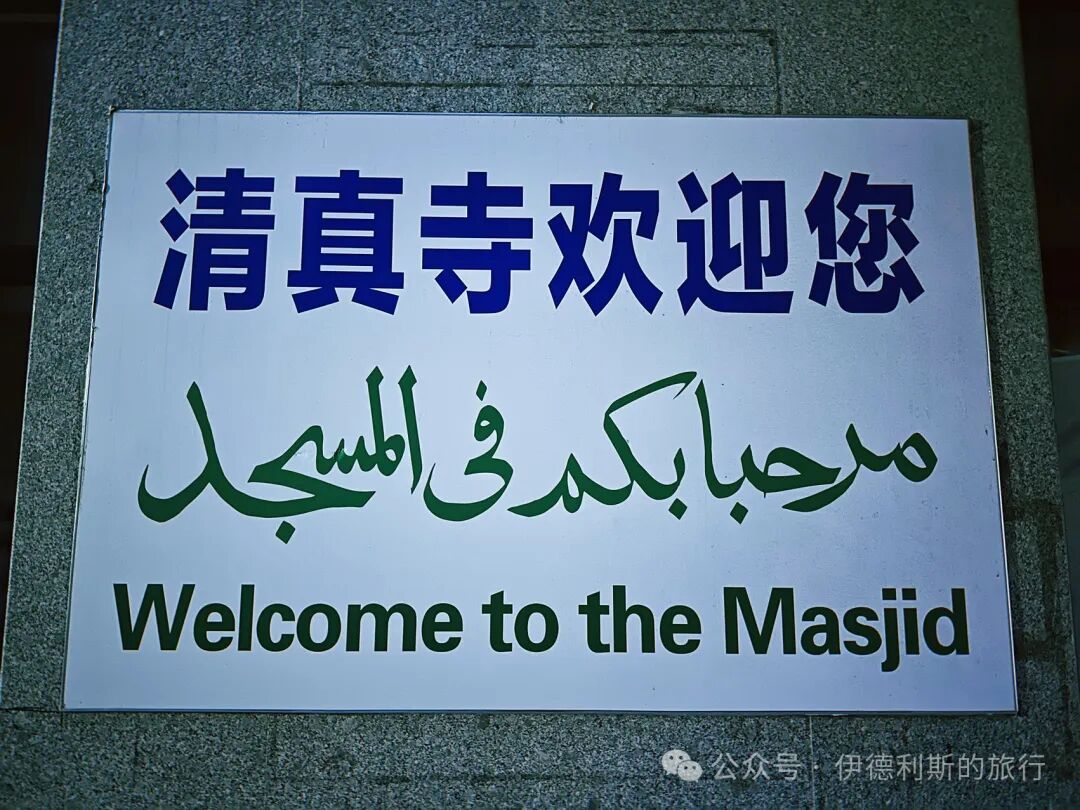
After dinner, we headed to the Dalian Mosque (Dalian Si) on Beijing Street. After Dalian opened as a port in 1897, Hui Muslims from places like Shandong and Hebei came here to make a living. Ma Xinglong, Wang Qifa, Jin Xiangchen, and others first rented a few small rooms on Dalong Street in Xigang to perform their prayers. In 1925, a Russian Muslim working for the South Manchuria Railway (Mantie) secured funding and land from the company to build the Dalian Mosque in a traditional Kazan Tatar style.
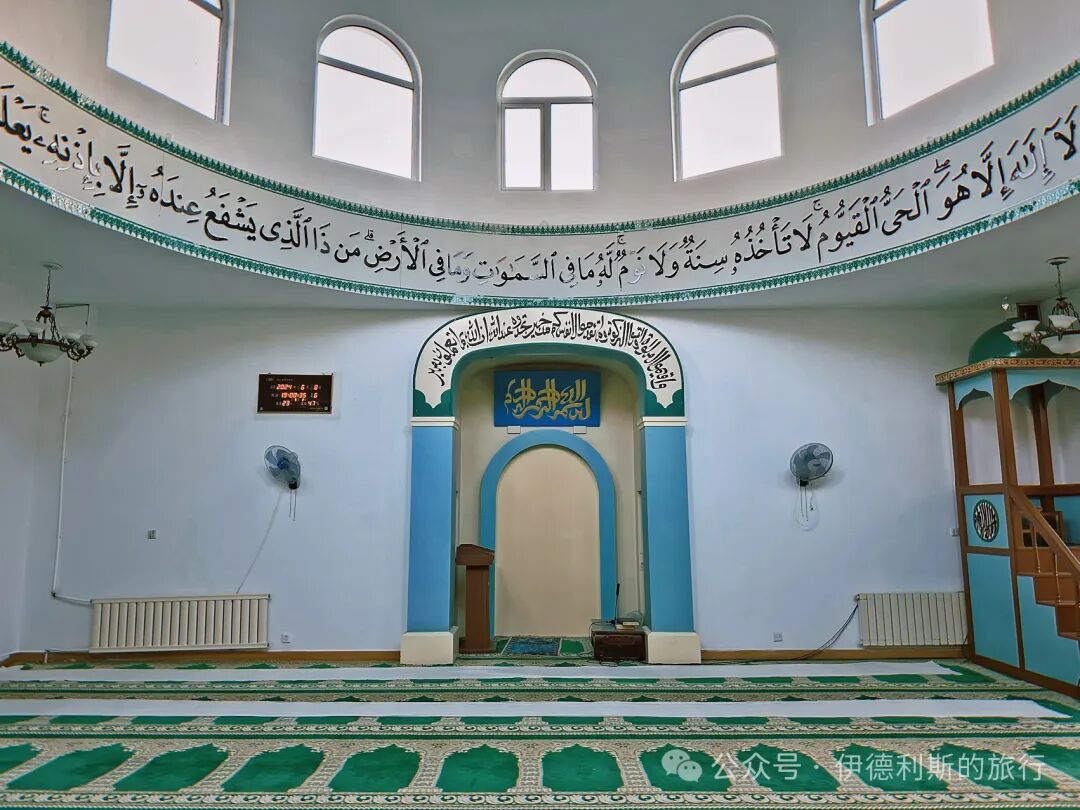
The original Dalian Mosque looked very similar to Tatar mosques in Kazan, Russia, featuring a neoclassical main hall and two minarets at the front and back. The minbar pulpit inside the main hall has stairs that lead directly to the minaret on the roof, which is very rare for a traditional mosque in China.
This Kazan Tatar-style Dalian Mosque stood for 64 years, was rebuilt in 1990, and finally expanded into its current structure in 2005.
I left Dalian Station at 6:20 on June 9, arrived at Qingdui Station at 8:00, and then took a taxi to the ancient town of Qingdui to visit Qingdui Mosque.
Qingdui Town is a thousand-year-old town that has served as a fishing port and commercial hub on the Liaodong Peninsula since the Tang Dynasty. Qingbu Port officially opened in 1743 (the eighth year of the Qianlong reign), making Qingdui Town an important transit point for people from Shandong and Hebei moving to Northeast China. During the late Qing Dynasty and the Republic of China era, Qingdui Town had over three hundred businesses, with shops lining the streets and bustling with activity. Today, Qingdui Town still keeps many old houses with grey bricks and dark tiles from the late Qing and Republican periods, and Qingdui Mosque is one of them.
Qingdui Mosque was first built during the Daoguang reign of the Qing Dynasty and started as just three thatched huts. The First Sino-Japanese War began in July 1894. Famous Hui Muslim general Zuo Baogui led his troops to Korea to fight the Japanese and passed by Qingdui Mosque (Qingdui Si). General Zuo Baogui and the imam of Qingdui Mosque, Zhang Chaozhen, got along very well. Later, the general donated money himself. Along with funds raised by his personal Hui Muslim guards and three local halal restaurants—Deshengyuan, Qingshengyuan, and Yongshengyuan—they prepared to expand the mosque. Sadly, before the expansion was finished, General Zuo Baogui died heroically while fighting the Japanese in Pyongyang.
In 1895 (the 21st year of the Guangxu reign), Hui Wanchun, the elder in charge of Qingdui Mosque, oversaw the rebuilding of the main hall into the three-room green brick and tile structure seen today. In 1920 (the 9th year of the Republic of China), the gate tower was rebuilt and the lecture hall was expanded, giving the mosque its current size.
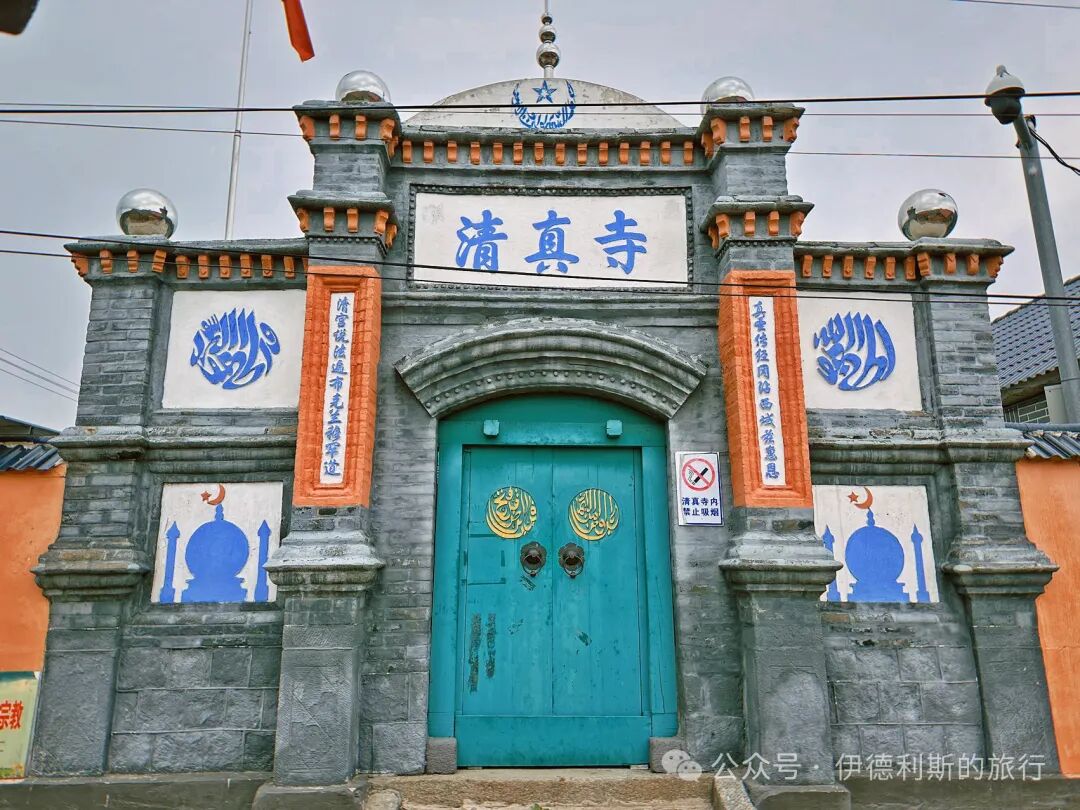
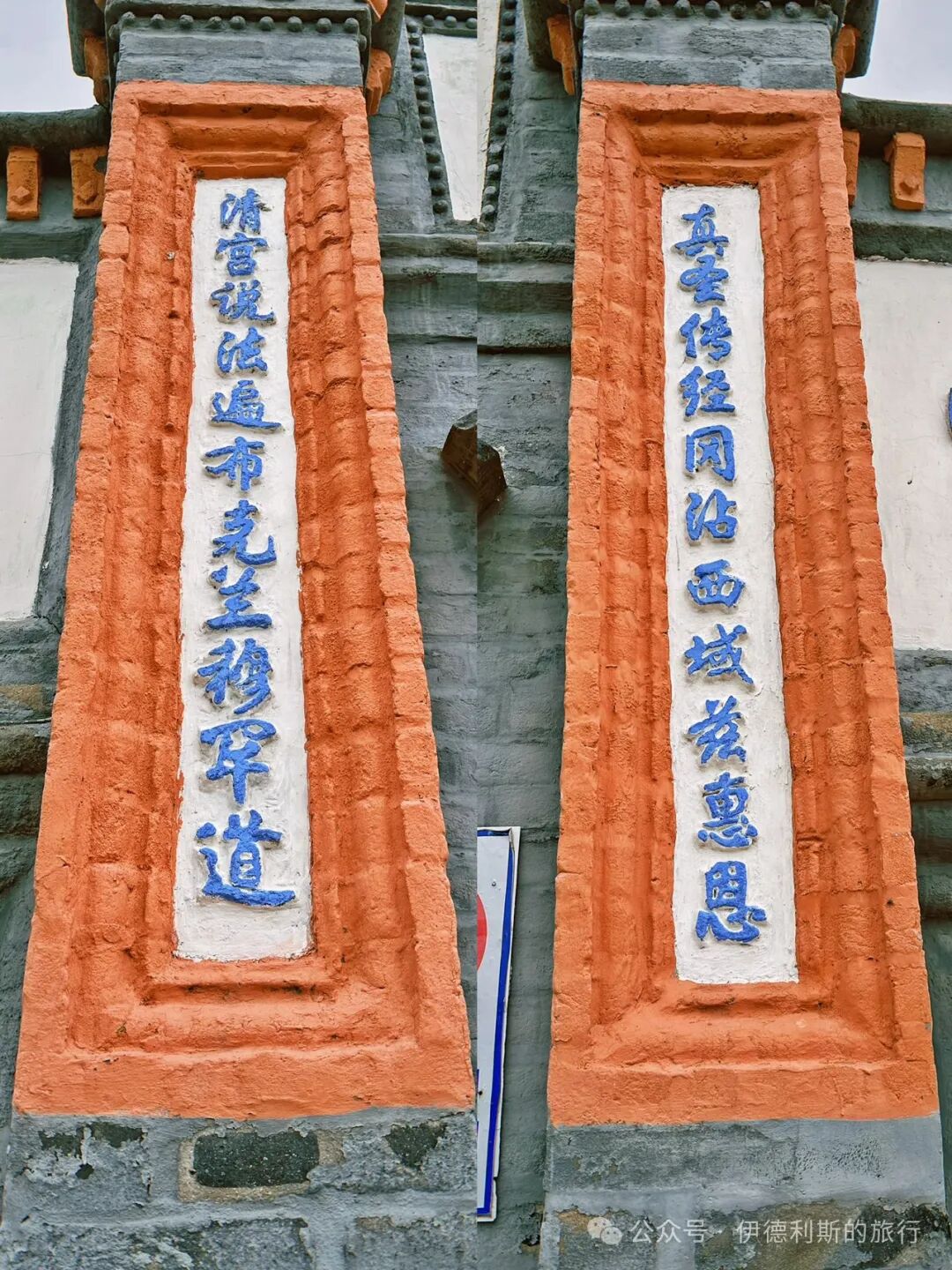
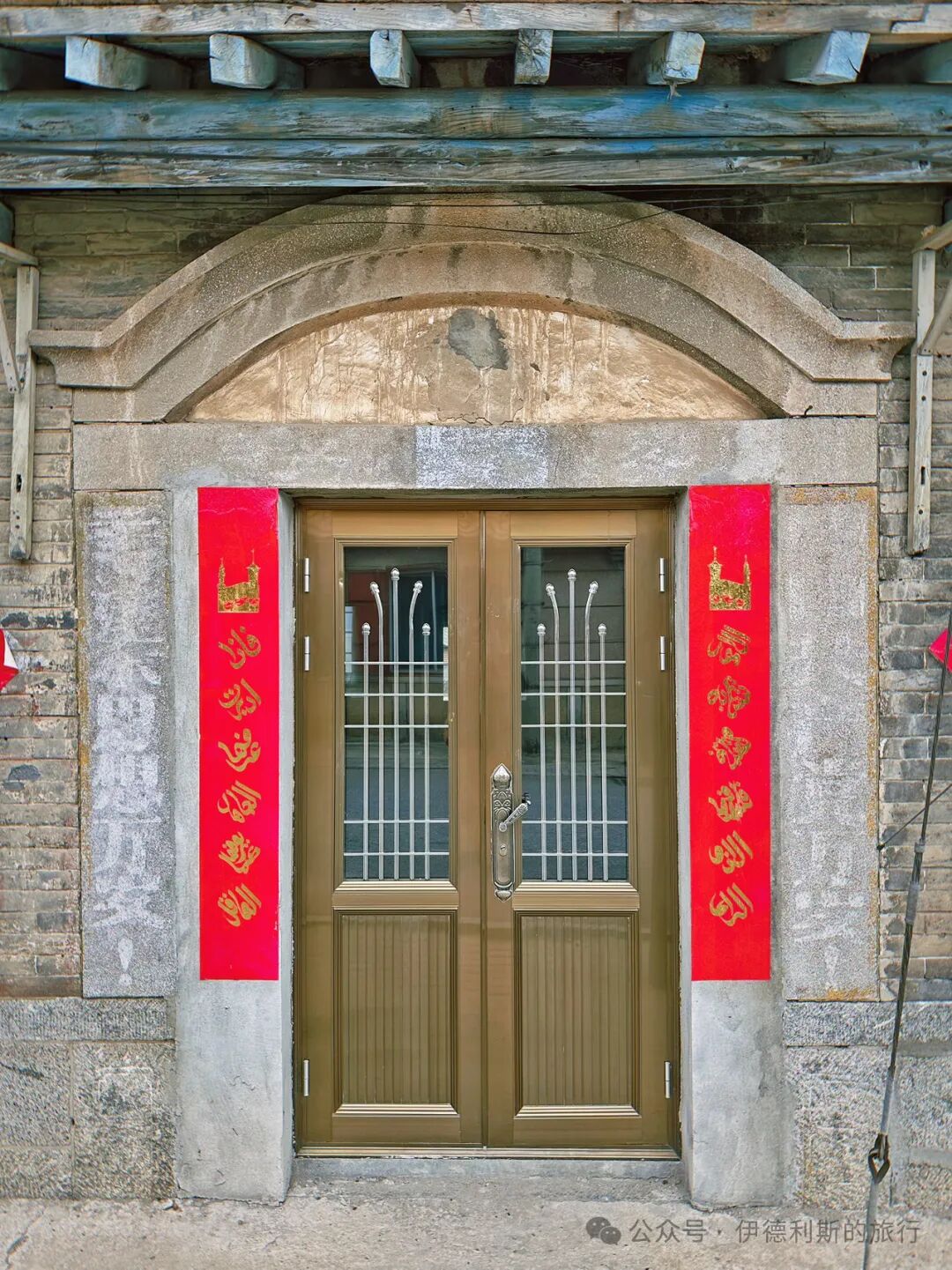
The gate of Qingdui Mosque features a brick-carved couplet that reads: 'The pure palace spreads the teachings of the Quran and the path of Muhammad; the true sage passes down scriptures that bring the grace of the Western Regions to this place.' This is a very precious piece of brick-carved calligraphy from the Republic of China era. The main gate is usually closed, so you must enter the mosque through the south wing where the imam lives. The imam came from Gansu and warmly told us about the situation at Qingdui Mosque (Qingdui Si). It is not easy for his family to stay and serve at this small community mosque (xiaofang).
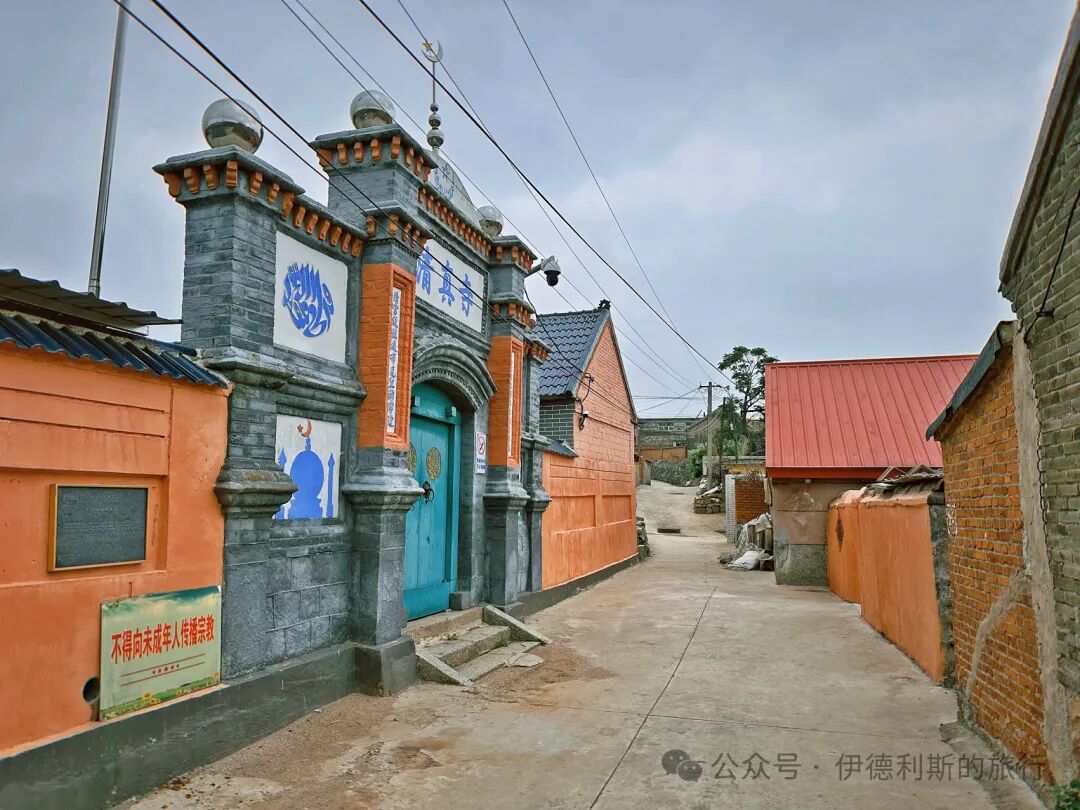
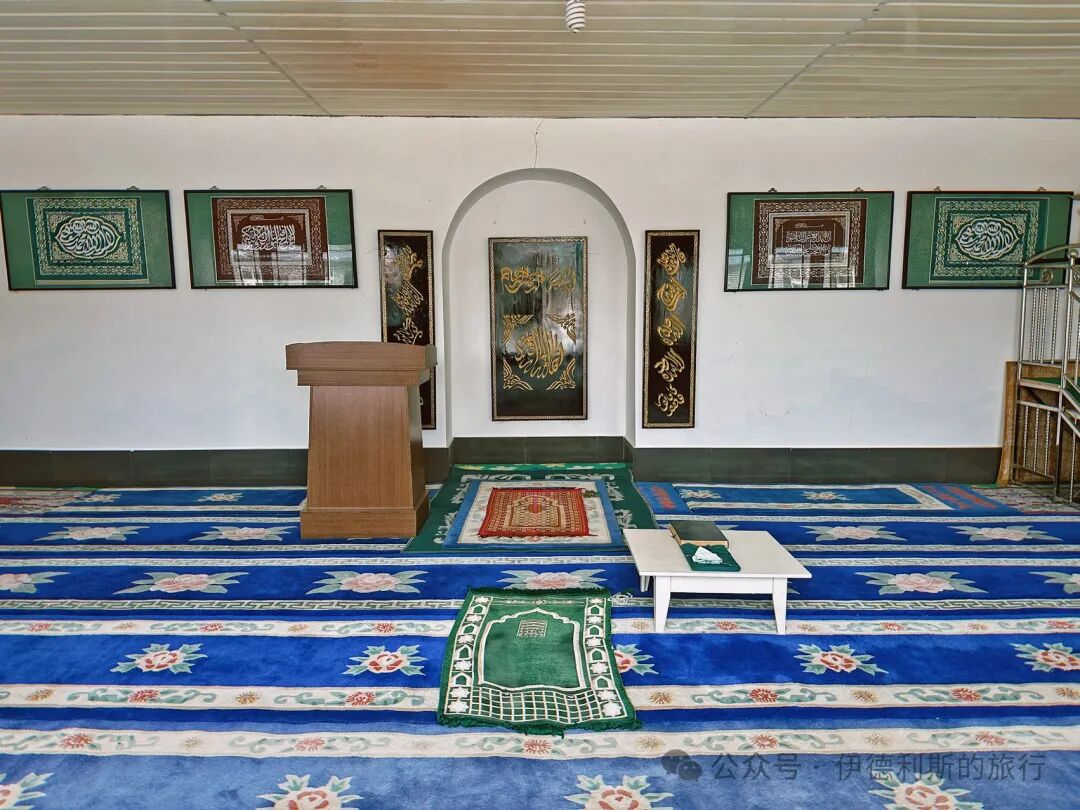
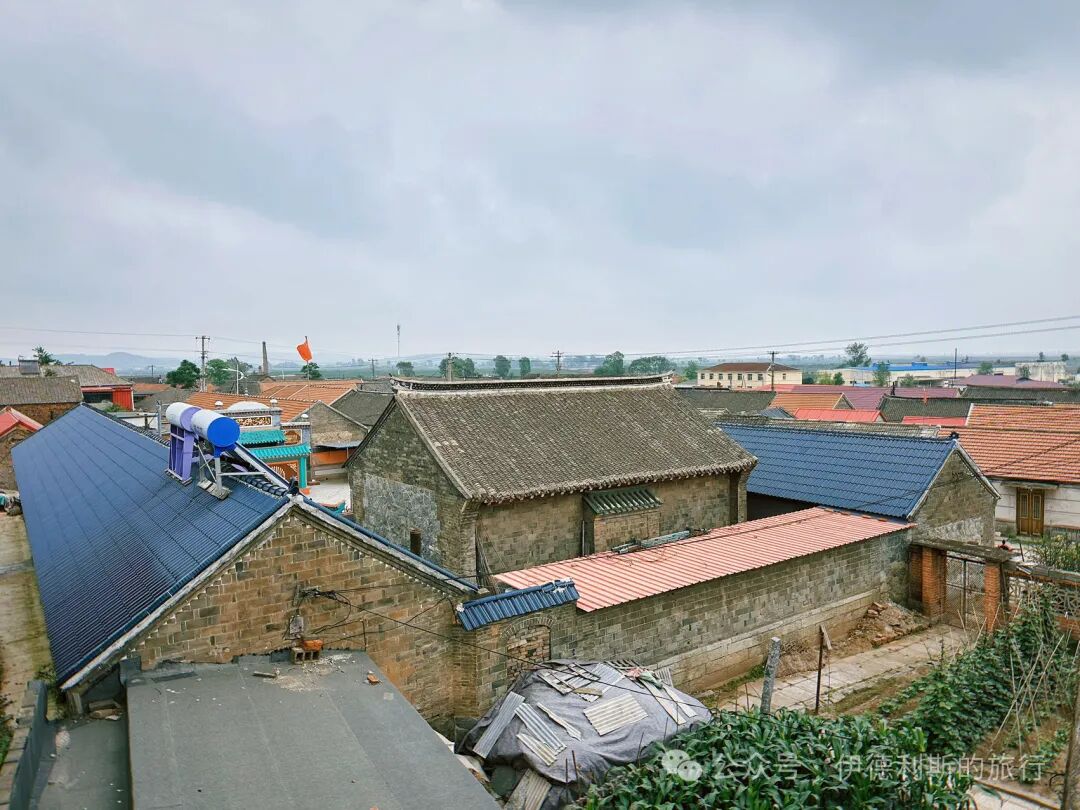
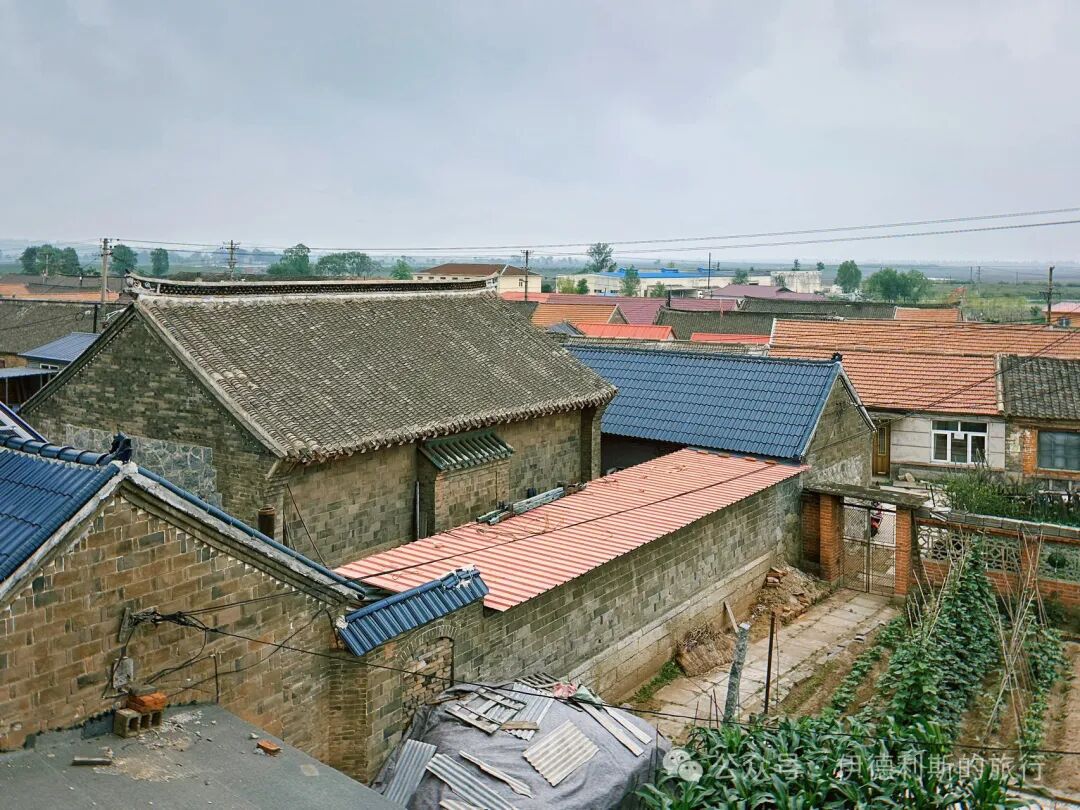
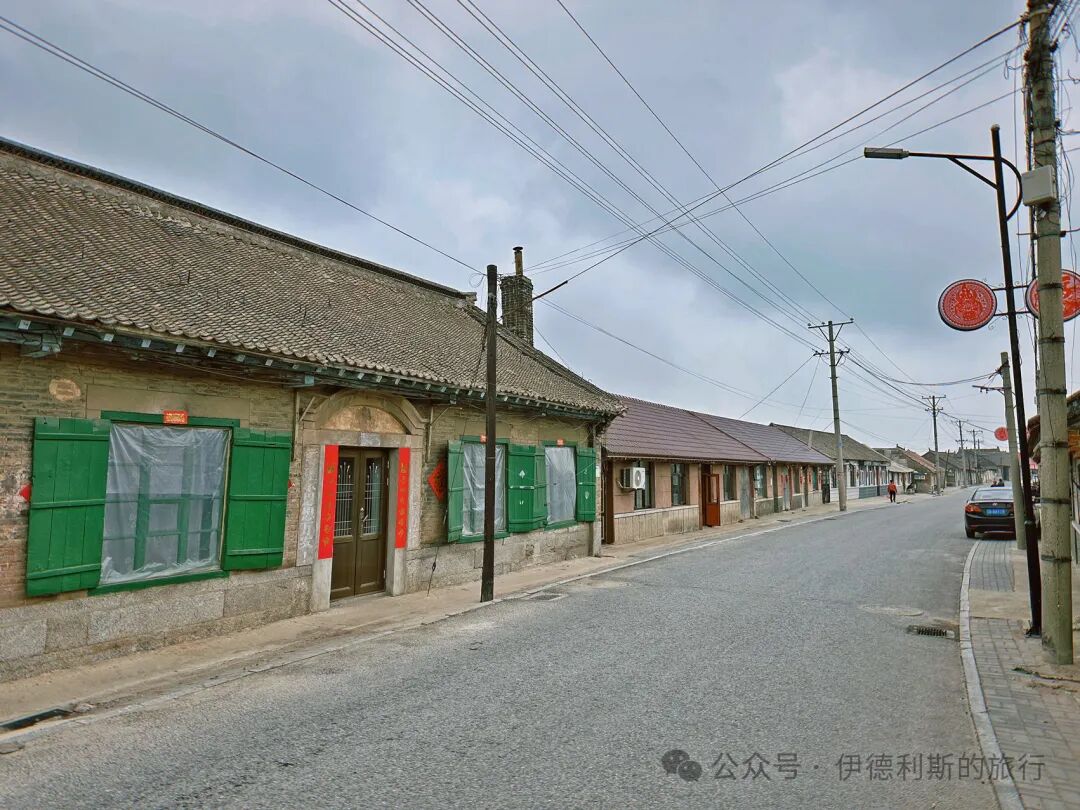
Hui Muslim homes in the ancient town of Qingdui. Because Qingbu Port silted up and closed, the ancient town of Qingdui gradually became quiet, and the town center moved to the area near the road to the north. There are a few halal restaurants in town. We ordered lamb soup at one of them, Jinhong Lamb Soup Restaurant (Jinhong Yangtang Guan), but when it arrived, we found it contained lamb blood. I had heard long ago that some halal restaurants in Shandong and Northeast China sell lamb blood, but this is the first time I have encountered it in years. We had no choice but to return the lamb soup and take a taxi to the train station to continue our trip to the next stop.
Summary: Halal Travel Guide: Dalian, Fuzhou Ancient City and Qingdui Ancient Town is presented here as a firsthand travel account in clear, natural English. The account focuses on Dalian, Liaoning Travel, Ancient Towns while preserving the names, places, food, photos, and historical details from the Chinese source.
On the morning of June 8, we took a high-speed train from Shenyang Railway Station and arrived at Wafangdian West Station in Dalian in an hour and a half. After leaving the station, we shared a ride for 20 minutes to reach the ancient town of Fuzhou.
We first stopped at the Qunfangyuan Restaurant near the Fuzhou town roundabout to eat some traditional Fuzhou old-style dishes (Fuzhou laocai). Fuzhou is a thousand-year-old town established during the Liao Dynasty. Since the Ming and Qing dynasties, it has been a major commercial hub in southern Liaoning, attracting many merchants. It only began to lose its importance to Wafangdian along the railway line after the South Manchuria Railway was built in modern times. Around 1641, the sixth year of the Chongde reign of the Qing Dynasty, four Hui Muslim families—the Yin, Ma, Dai, and Hui families from Cangzhou, Hebei—moved to Fuzhou. Later, they worked with the local Manchu and Han people to develop the unique Fuzhou old-style dishes.
Fuzhou old-style dishes are known for their oil-fried meat (guoyourou), twice-cooked meat (huishaorou), braised meatballs (huiwanzi), dragon and tiger fight (longhudou), and fried crispy crackers (zhabaochui). Because portions of Northeast Chinese food are so large, we just ordered the most famous oil-fried meat to try. The Fuzhou version of oil-fried meat contains only meat with no side vegetables. It is seasoned with vinegar and garlic, giving it a salty, fresh, and sour taste that goes perfectly with rice.
Fuzhou oil-fried meat is also called the dish of ethnic unity. Legend has it that during the late Qing Dynasty, a soldier named Tuoerha from the Plain Blue Banner died in battle in southern Xinjiang, leaving his wife and children helpless in Fuzhou. One day, just before the Lunar New Year, a mother and her son were walking down the street. The boy was so drawn to the aroma from a restaurant that he refused to leave. The owner knew the boy's father had died for his country, so he invited them inside. He told the kitchen staff to prepare a dish of pure meat for them and to fry it an extra time. Because of this, double-fried meat (guoyourou) became a signature New Year dish for the people of Fuzhou.
After lunch, we went to Fuzhou Mosque (Fuzhou Si) to pray. The imam at Fuzhou Mosque is from Mengcun in Cangzhou, Hebei, which is a major tradition for the faith in Liaoning.
In the early Qing Dynasty, Hui Muslims with the surnames Yin, Dai, Ma, and Hui moved to Fuzhou from Cangzhou. In 1649 (the sixth year of the Shunzhi reign), they began building Fuzhou Mosque. By 1656 (the thirteenth year of the Shunzhi reign), they had finished three thatched rooms to serve as the main prayer hall. The main hall was rebuilt in 1774 (the thirty-ninth year of the Qianlong reign) and expanded again in 1880 (the sixth year of the Guangxu reign), though it still had a thatched roof. In 1920, the front porch and rear kiln-style hall were added, and the roof was changed to blue brick tiles, creating the structure seen today.
Hanging in front of the main hall of Fuzhou Mosque is a plaque that reads "Returning to Simplicity and Truth" (Huan Pu Gui Zhen). It was presented in 1897 (the twenty-third year of the Guangxu reign) by Wang Tingxiang, a third-rank official, imperial censor, and scholar of the Hanlin Academy.
Additionally, the brick carvings on the wall ends feature traditional calligraphy of a dua.
Hui Muslim homes inside Fuzhou City. The old street features blue bricks and dark roof tiles, with Arabic calligraphy (jingzi) and dua written on the walls, keeping the look of the past. Many people have moved to Wafangdian and Dalian to live, so the old street has become quiet.
There is a legendary halal food spot in Fuzhou City, which is my friend's family business, Yin's sticky rice cake (jiangmi lianggao). The Yin family of Fuzhou originally came from Qing County in Cangzhou and settled in Fuzhou during the early Qing Dynasty. The sticky rice cake made by my friend's great-uncle, Yin Xiangzhou, was famous in Fuzhou a hundred years ago, and now my friend's mother pushes a small cart to sell it along the street every day. A loudspeaker plays, 'Sticky rice cake, fragrant and sweet.' Then everyone comes out to buy the sticky rice cake.
Sticky rice cake (jiangmi lianggao) is made by topping sticky rice with fillings like peanuts, sesame, and sugar. Traditionally, it included candied green and red fruit strips (qinghongsi), but these are now left out to suit younger tastes. Sticky rice cake is very refreshing in the summer, and it feels great on the stomach when paired with tea.
A quick tip: some people say the Yin family pushcart is hard to find. We spotted it at 2:15 p.m. at the intersection west of the Fuzhou Prefectural Office (Fuzhou Zhizhou Yashu). It then moves south along the main road, and you can hear the vendor calling out from far away.
We took the high-speed train from Wafangdian West Station at 3:30 p.m., arrived at Dalian North Station at 4:00 p.m., and then took a taxi to our accommodation to drop off our luggage.
We stayed at the No. 21 Mansion (Ershiyi Hao Gongguan) near the Russian Style Street. The hotel sits in a courtyard that is part of the Yantai Street Russian-style building complex, which includes 28 European-style villas and marks the starting point of Dalian's history. In 1898, Tsarist Russia leased Dalian Bay and began building Dalian city the following year. The first street built was called Engineer Street, which is now known as Russian Style Street. Soon after, Timov Street was built right next to Engineer Street, and it was renamed Yantai Street after 1946. Between the late 19th and early 20th centuries, Tsarist Russia hired German and Russian designers to build a series of European-style villas on Yantai Street, and 28 of them still stand today.
After the Russian-style building complex on Yantai Street was restored in 2011, several hotels and restaurants moved in. When we visited, several places were hosting weddings, which felt a bit like the Italian Style Street in Tianjin. Several villas in the courtyard belong to the Dalian Railway 1896 Garden Hotel, which you can stay in at any time. The No. 21 Mansion where we stayed is military property and only opens during holidays, but you can book it online.
Building No. 21 was built in 1903 and designed by the famous German architect Jan Hendel. In 1920, early labor movement leader and Manchurian Provincial Committee Secretary Wang Ligong lived here. The house we stayed in had windows on both the north and south sides, making the environment very pleasant. The courtyard was very quiet, which was a sharp contrast to the busy Russian-style street next door.
In the afternoon, we had dinner at the long-established Majia Dumpling Restaurant in front of Dalian Railway Station. We ordered sea snail and chive dumplings (haoluo jiucai jiaozi), mackerel ball soup (bayu wanzi tang), and dry-braised flatfish (gan shao piankou yu). Traditionally, Hui Muslims in North and Northeast China do not cook seafood; they focus on beef and lamb. They only started making seafood dumplings after the Reform and Opening-up, and it gradually became a local specialty. They serve dumplings with yellow mustard sauce, which is very unique and adds a great kick to the flavor. The dry-braised flatfish was also well-prepared, with a sweet and spicy taste that really whets the appetite. People who ate at their original shop say the dumplings were even better decades ago, and I can really understand that sense of nostalgia. But as travelers, we are already very happy to be able to eat these dumplings.
Ma Family Dumpling Restaurant (Ma Jia Jiaozi Guan) was the first halal dumpling shop in Dalian and one of the city's two earliest dumpling restaurants. It was opened in 1947 by Liu Yushan, Ma Baishi, and Zhao Fangchen at the Bo'ai Market in Xigang. It was originally called Ruixianghao Hui Muslim Dumpling Restaurant before changing its name to Ma Family Dumpling Restaurant. After the Reform and Opening-up, the restaurant moved to the former site of the Goubuli Steamed Bun Shop on Tianjin Street. It moved to its current location after the renovation of Tianjin Street in the early 21st century. At first, the restaurant only served beef dumplings. After the Reform and Opening-up, seafood dumplings appeared in Dalian, so the restaurant started making new varieties like mackerel dumplings (bayu jiaozi) and sea snail dumplings (hailuo jiaozi).
After dinner, we headed to the Dalian Mosque (Dalian Si) on Beijing Street. After Dalian opened as a port in 1897, Hui Muslims from places like Shandong and Hebei came here to make a living. Ma Xinglong, Wang Qifa, Jin Xiangchen, and others first rented a few small rooms on Dalong Street in Xigang to perform their prayers. In 1925, a Russian Muslim working for the South Manchuria Railway (Mantie) secured funding and land from the company to build the Dalian Mosque in a traditional Kazan Tatar style.
The original Dalian Mosque looked very similar to Tatar mosques in Kazan, Russia, featuring a neoclassical main hall and two minarets at the front and back. The minbar pulpit inside the main hall has stairs that lead directly to the minaret on the roof, which is very rare for a traditional mosque in China.
This Kazan Tatar-style Dalian Mosque stood for 64 years, was rebuilt in 1990, and finally expanded into its current structure in 2005.
I left Dalian Station at 6:20 on June 9, arrived at Qingdui Station at 8:00, and then took a taxi to the ancient town of Qingdui to visit Qingdui Mosque.
Qingdui Town is a thousand-year-old town that has served as a fishing port and commercial hub on the Liaodong Peninsula since the Tang Dynasty. Qingbu Port officially opened in 1743 (the eighth year of the Qianlong reign), making Qingdui Town an important transit point for people from Shandong and Hebei moving to Northeast China. During the late Qing Dynasty and the Republic of China era, Qingdui Town had over three hundred businesses, with shops lining the streets and bustling with activity. Today, Qingdui Town still keeps many old houses with grey bricks and dark tiles from the late Qing and Republican periods, and Qingdui Mosque is one of them.
Qingdui Mosque was first built during the Daoguang reign of the Qing Dynasty and started as just three thatched huts. The First Sino-Japanese War began in July 1894. Famous Hui Muslim general Zuo Baogui led his troops to Korea to fight the Japanese and passed by Qingdui Mosque (Qingdui Si). General Zuo Baogui and the imam of Qingdui Mosque, Zhang Chaozhen, got along very well. Later, the general donated money himself. Along with funds raised by his personal Hui Muslim guards and three local halal restaurants—Deshengyuan, Qingshengyuan, and Yongshengyuan—they prepared to expand the mosque. Sadly, before the expansion was finished, General Zuo Baogui died heroically while fighting the Japanese in Pyongyang.
In 1895 (the 21st year of the Guangxu reign), Hui Wanchun, the elder in charge of Qingdui Mosque, oversaw the rebuilding of the main hall into the three-room green brick and tile structure seen today. In 1920 (the 9th year of the Republic of China), the gate tower was rebuilt and the lecture hall was expanded, giving the mosque its current size.
The gate of Qingdui Mosque features a brick-carved couplet that reads: 'The pure palace spreads the teachings of the Quran and the path of Muhammad; the true sage passes down scriptures that bring the grace of the Western Regions to this place.' This is a very precious piece of brick-carved calligraphy from the Republic of China era. The main gate is usually closed, so you must enter the mosque through the south wing where the imam lives. The imam came from Gansu and warmly told us about the situation at Qingdui Mosque (Qingdui Si). It is not easy for his family to stay and serve at this small community mosque (xiaofang).
Hui Muslim homes in the ancient town of Qingdui. Because Qingbu Port silted up and closed, the ancient town of Qingdui gradually became quiet, and the town center moved to the area near the road to the north. There are a few halal restaurants in town. We ordered lamb soup at one of them, Jinhong Lamb Soup Restaurant (Jinhong Yangtang Guan), but when it arrived, we found it contained lamb blood. I had heard long ago that some halal restaurants in Shandong and Northeast China sell lamb blood, but this is the first time I have encountered it in years. We had no choice but to return the lamb soup and take a taxi to the train station to continue our trip to the next stop.
Halal Travel Guide: Dalian, Fuzhou Ancient City and Qingdui Ancient Town
Articles • ali2007fr posted the article • 0 comments • 237 views • 2026-05-19 10:05
Reposted from the web
Summary: Halal Travel Guide: Dalian, Fuzhou Ancient City and Qingdui Ancient Town is presented here as a firsthand travel account in clear, natural English. The account focuses on Dalian, Liaoning Travel, Ancient Towns while preserving the names, places, food, photos, and historical details from the Chinese source.
On the morning of June 8, we took a high-speed train from Shenyang Railway Station and arrived at Wafangdian West Station in Dalian in an hour and a half. After leaving the station, we shared a ride for 20 minutes to reach the ancient town of Fuzhou.
We first stopped at the Qunfangyuan Restaurant near the Fuzhou town roundabout to eat some traditional Fuzhou old-style dishes (Fuzhou laocai). Fuzhou is a thousand-year-old town established during the Liao Dynasty. Since the Ming and Qing dynasties, it has been a major commercial hub in southern Liaoning, attracting many merchants. It only began to lose its importance to Wafangdian along the railway line after the South Manchuria Railway was built in modern times. Around 1641, the sixth year of the Chongde reign of the Qing Dynasty, four Hui Muslim families—the Yin, Ma, Dai, and Hui families from Cangzhou, Hebei—moved to Fuzhou. Later, they worked with the local Manchu and Han people to develop the unique Fuzhou old-style dishes.
Fuzhou old-style dishes are known for their oil-fried meat (guoyourou), twice-cooked meat (huishaorou), braised meatballs (huiwanzi), dragon and tiger fight (longhudou), and fried crispy crackers (zhabaochui). Because portions of Northeast Chinese food are so large, we just ordered the most famous oil-fried meat to try. The Fuzhou version of oil-fried meat contains only meat with no side vegetables. It is seasoned with vinegar and garlic, giving it a salty, fresh, and sour taste that goes perfectly with rice.
Fuzhou oil-fried meat is also called the dish of ethnic unity. Legend has it that during the late Qing Dynasty, a soldier named Tuoerha from the Plain Blue Banner died in battle in southern Xinjiang, leaving his wife and children helpless in Fuzhou. One day, just before the Lunar New Year, a mother and her son were walking down the street. The boy was so drawn to the aroma from a restaurant that he refused to leave. The owner knew the boy's father had died for his country, so he invited them inside. He told the kitchen staff to prepare a dish of pure meat for them and to fry it an extra time. Because of this, double-fried meat (guoyourou) became a signature New Year dish for the people of Fuzhou.
After lunch, we went to Fuzhou Mosque (Fuzhou Si) to pray. The imam at Fuzhou Mosque is from Mengcun in Cangzhou, Hebei, which is a major tradition for the faith in Liaoning.
In the early Qing Dynasty, Hui Muslims with the surnames Yin, Dai, Ma, and Hui moved to Fuzhou from Cangzhou. In 1649 (the sixth year of the Shunzhi reign), they began building Fuzhou Mosque. By 1656 (the thirteenth year of the Shunzhi reign), they had finished three thatched rooms to serve as the main prayer hall. The main hall was rebuilt in 1774 (the thirty-ninth year of the Qianlong reign) and expanded again in 1880 (the sixth year of the Guangxu reign), though it still had a thatched roof. In 1920, the front porch and rear kiln-style hall were added, and the roof was changed to blue brick tiles, creating the structure seen today.
Hanging in front of the main hall of Fuzhou Mosque is a plaque that reads "Returning to Simplicity and Truth" (Huan Pu Gui Zhen). It was presented in 1897 (the twenty-third year of the Guangxu reign) by Wang Tingxiang, a third-rank official, imperial censor, and scholar of the Hanlin Academy.
Additionally, the brick carvings on the wall ends feature traditional calligraphy of a dua.
Hui Muslim homes inside Fuzhou City. The old street features blue bricks and dark roof tiles, with Arabic calligraphy (jingzi) and dua written on the walls, keeping the look of the past. Many people have moved to Wafangdian and Dalian to live, so the old street has become quiet.
There is a legendary halal food spot in Fuzhou City, which is my friend's family business, Yin's sticky rice cake (jiangmi lianggao). The Yin family of Fuzhou originally came from Qing County in Cangzhou and settled in Fuzhou during the early Qing Dynasty. The sticky rice cake made by my friend's great-uncle, Yin Xiangzhou, was famous in Fuzhou a hundred years ago, and now my friend's mother pushes a small cart to sell it along the street every day. A loudspeaker plays, 'Sticky rice cake, fragrant and sweet.' Then everyone comes out to buy the sticky rice cake.
Sticky rice cake (jiangmi lianggao) is made by topping sticky rice with fillings like peanuts, sesame, and sugar. Traditionally, it included candied green and red fruit strips (qinghongsi), but these are now left out to suit younger tastes. Sticky rice cake is very refreshing in the summer, and it feels great on the stomach when paired with tea.
A quick tip: some people say the Yin family pushcart is hard to find. We spotted it at 2:15 p.m. at the intersection west of the Fuzhou Prefectural Office (Fuzhou Zhizhou Yashu). It then moves south along the main road, and you can hear the vendor calling out from far away.
We took the high-speed train from Wafangdian West Station at 3:30 p.m., arrived at Dalian North Station at 4:00 p.m., and then took a taxi to our accommodation to drop off our luggage.
We stayed at the No. 21 Mansion (Ershiyi Hao Gongguan) near the Russian Style Street. The hotel sits in a courtyard that is part of the Yantai Street Russian-style building complex, which includes 28 European-style villas and marks the starting point of Dalian's history. In 1898, Tsarist Russia leased Dalian Bay and began building Dalian city the following year. The first street built was called Engineer Street, which is now known as Russian Style Street. Soon after, Timov Street was built right next to Engineer Street, and it was renamed Yantai Street after 1946. Between the late 19th and early 20th centuries, Tsarist Russia hired German and Russian designers to build a series of European-style villas on Yantai Street, and 28 of them still stand today.
After the Russian-style building complex on Yantai Street was restored in 2011, several hotels and restaurants moved in. When we visited, several places were hosting weddings, which felt a bit like the Italian Style Street in Tianjin. Several villas in the courtyard belong to the Dalian Railway 1896 Garden Hotel, which you can stay in at any time. The No. 21 Mansion where we stayed is military property and only opens during holidays, but you can book it online.
Building No. 21 was built in 1903 and designed by the famous German architect Jan Hendel. In 1920, early labor movement leader and Manchurian Provincial Committee Secretary Wang Ligong lived here. The house we stayed in had windows on both the north and south sides, making the environment very pleasant. The courtyard was very quiet, which was a sharp contrast to the busy Russian-style street next door.
In the afternoon, we had dinner at the long-established Majia Dumpling Restaurant in front of Dalian Railway Station. We ordered sea snail and chive dumplings (haoluo jiucai jiaozi), mackerel ball soup (bayu wanzi tang), and dry-braised flatfish (gan shao piankou yu). Traditionally, Hui Muslims in North and Northeast China do not cook seafood; they focus on beef and lamb. They only started making seafood dumplings after the Reform and Opening-up, and it gradually became a local specialty. They serve dumplings with yellow mustard sauce, which is very unique and adds a great kick to the flavor. The dry-braised flatfish was also well-prepared, with a sweet and spicy taste that really whets the appetite. People who ate at their original shop say the dumplings were even better decades ago, and I can really understand that sense of nostalgia. But as travelers, we are already very happy to be able to eat these dumplings.
Ma Family Dumpling Restaurant (Ma Jia Jiaozi Guan) was the first halal dumpling shop in Dalian and one of the city's two earliest dumpling restaurants. It was opened in 1947 by Liu Yushan, Ma Baishi, and Zhao Fangchen at the Bo'ai Market in Xigang. It was originally called Ruixianghao Hui Muslim Dumpling Restaurant before changing its name to Ma Family Dumpling Restaurant. After the Reform and Opening-up, the restaurant moved to the former site of the Goubuli Steamed Bun Shop on Tianjin Street. It moved to its current location after the renovation of Tianjin Street in the early 21st century. At first, the restaurant only served beef dumplings. After the Reform and Opening-up, seafood dumplings appeared in Dalian, so the restaurant started making new varieties like mackerel dumplings (bayu jiaozi) and sea snail dumplings (hailuo jiaozi).
After dinner, we headed to the Dalian Mosque (Dalian Si) on Beijing Street. After Dalian opened as a port in 1897, Hui Muslims from places like Shandong and Hebei came here to make a living. Ma Xinglong, Wang Qifa, Jin Xiangchen, and others first rented a few small rooms on Dalong Street in Xigang to perform their prayers. In 1925, a Russian Muslim working for the South Manchuria Railway (Mantie) secured funding and land from the company to build the Dalian Mosque in a traditional Kazan Tatar style.
The original Dalian Mosque looked very similar to Tatar mosques in Kazan, Russia, featuring a neoclassical main hall and two minarets at the front and back. The minbar pulpit inside the main hall has stairs that lead directly to the minaret on the roof, which is very rare for a traditional mosque in China.
This Kazan Tatar-style Dalian Mosque stood for 64 years, was rebuilt in 1990, and finally expanded into its current structure in 2005.
I left Dalian Station at 6:20 on June 9, arrived at Qingdui Station at 8:00, and then took a taxi to the ancient town of Qingdui to visit Qingdui Mosque.
Qingdui Town is a thousand-year-old town that has served as a fishing port and commercial hub on the Liaodong Peninsula since the Tang Dynasty. Qingbu Port officially opened in 1743 (the eighth year of the Qianlong reign), making Qingdui Town an important transit point for people from Shandong and Hebei moving to Northeast China. During the late Qing Dynasty and the Republic of China era, Qingdui Town had over three hundred businesses, with shops lining the streets and bustling with activity. Today, Qingdui Town still keeps many old houses with grey bricks and dark tiles from the late Qing and Republican periods, and Qingdui Mosque is one of them.
Qingdui Mosque was first built during the Daoguang reign of the Qing Dynasty and started as just three thatched huts. The First Sino-Japanese War began in July 1894. Famous Hui Muslim general Zuo Baogui led his troops to Korea to fight the Japanese and passed by Qingdui Mosque (Qingdui Si). General Zuo Baogui and the imam of Qingdui Mosque, Zhang Chaozhen, got along very well. Later, the general donated money himself. Along with funds raised by his personal Hui Muslim guards and three local halal restaurants—Deshengyuan, Qingshengyuan, and Yongshengyuan—they prepared to expand the mosque. Sadly, before the expansion was finished, General Zuo Baogui died heroically while fighting the Japanese in Pyongyang.
In 1895 (the 21st year of the Guangxu reign), Hui Wanchun, the elder in charge of Qingdui Mosque, oversaw the rebuilding of the main hall into the three-room green brick and tile structure seen today. In 1920 (the 9th year of the Republic of China), the gate tower was rebuilt and the lecture hall was expanded, giving the mosque its current size.
The gate of Qingdui Mosque features a brick-carved couplet that reads: 'The pure palace spreads the teachings of the Quran and the path of Muhammad; the true sage passes down scriptures that bring the grace of the Western Regions to this place.' This is a very precious piece of brick-carved calligraphy from the Republic of China era. The main gate is usually closed, so you must enter the mosque through the south wing where the imam lives. The imam came from Gansu and warmly told us about the situation at Qingdui Mosque (Qingdui Si). It is not easy for his family to stay and serve at this small community mosque (xiaofang).
Hui Muslim homes in the ancient town of Qingdui. Because Qingbu Port silted up and closed, the ancient town of Qingdui gradually became quiet, and the town center moved to the area near the road to the north. There are a few halal restaurants in town. We ordered lamb soup at one of them, Jinhong Lamb Soup Restaurant (Jinhong Yangtang Guan), but when it arrived, we found it contained lamb blood. I had heard long ago that some halal restaurants in Shandong and Northeast China sell lamb blood, but this is the first time I have encountered it in years. We had no choice but to return the lamb soup and take a taxi to the train station to continue our trip to the next stop. view all
Summary: Halal Travel Guide: Dalian, Fuzhou Ancient City and Qingdui Ancient Town is presented here as a firsthand travel account in clear, natural English. The account focuses on Dalian, Liaoning Travel, Ancient Towns while preserving the names, places, food, photos, and historical details from the Chinese source.
On the morning of June 8, we took a high-speed train from Shenyang Railway Station and arrived at Wafangdian West Station in Dalian in an hour and a half. After leaving the station, we shared a ride for 20 minutes to reach the ancient town of Fuzhou.
We first stopped at the Qunfangyuan Restaurant near the Fuzhou town roundabout to eat some traditional Fuzhou old-style dishes (Fuzhou laocai). Fuzhou is a thousand-year-old town established during the Liao Dynasty. Since the Ming and Qing dynasties, it has been a major commercial hub in southern Liaoning, attracting many merchants. It only began to lose its importance to Wafangdian along the railway line after the South Manchuria Railway was built in modern times. Around 1641, the sixth year of the Chongde reign of the Qing Dynasty, four Hui Muslim families—the Yin, Ma, Dai, and Hui families from Cangzhou, Hebei—moved to Fuzhou. Later, they worked with the local Manchu and Han people to develop the unique Fuzhou old-style dishes.
Fuzhou old-style dishes are known for their oil-fried meat (guoyourou), twice-cooked meat (huishaorou), braised meatballs (huiwanzi), dragon and tiger fight (longhudou), and fried crispy crackers (zhabaochui). Because portions of Northeast Chinese food are so large, we just ordered the most famous oil-fried meat to try. The Fuzhou version of oil-fried meat contains only meat with no side vegetables. It is seasoned with vinegar and garlic, giving it a salty, fresh, and sour taste that goes perfectly with rice.
Fuzhou oil-fried meat is also called the dish of ethnic unity. Legend has it that during the late Qing Dynasty, a soldier named Tuoerha from the Plain Blue Banner died in battle in southern Xinjiang, leaving his wife and children helpless in Fuzhou. One day, just before the Lunar New Year, a mother and her son were walking down the street. The boy was so drawn to the aroma from a restaurant that he refused to leave. The owner knew the boy's father had died for his country, so he invited them inside. He told the kitchen staff to prepare a dish of pure meat for them and to fry it an extra time. Because of this, double-fried meat (guoyourou) became a signature New Year dish for the people of Fuzhou.
After lunch, we went to Fuzhou Mosque (Fuzhou Si) to pray. The imam at Fuzhou Mosque is from Mengcun in Cangzhou, Hebei, which is a major tradition for the faith in Liaoning.
In the early Qing Dynasty, Hui Muslims with the surnames Yin, Dai, Ma, and Hui moved to Fuzhou from Cangzhou. In 1649 (the sixth year of the Shunzhi reign), they began building Fuzhou Mosque. By 1656 (the thirteenth year of the Shunzhi reign), they had finished three thatched rooms to serve as the main prayer hall. The main hall was rebuilt in 1774 (the thirty-ninth year of the Qianlong reign) and expanded again in 1880 (the sixth year of the Guangxu reign), though it still had a thatched roof. In 1920, the front porch and rear kiln-style hall were added, and the roof was changed to blue brick tiles, creating the structure seen today.
Hanging in front of the main hall of Fuzhou Mosque is a plaque that reads "Returning to Simplicity and Truth" (Huan Pu Gui Zhen). It was presented in 1897 (the twenty-third year of the Guangxu reign) by Wang Tingxiang, a third-rank official, imperial censor, and scholar of the Hanlin Academy.
Additionally, the brick carvings on the wall ends feature traditional calligraphy of a dua.
Hui Muslim homes inside Fuzhou City. The old street features blue bricks and dark roof tiles, with Arabic calligraphy (jingzi) and dua written on the walls, keeping the look of the past. Many people have moved to Wafangdian and Dalian to live, so the old street has become quiet.
There is a legendary halal food spot in Fuzhou City, which is my friend's family business, Yin's sticky rice cake (jiangmi lianggao). The Yin family of Fuzhou originally came from Qing County in Cangzhou and settled in Fuzhou during the early Qing Dynasty. The sticky rice cake made by my friend's great-uncle, Yin Xiangzhou, was famous in Fuzhou a hundred years ago, and now my friend's mother pushes a small cart to sell it along the street every day. A loudspeaker plays, 'Sticky rice cake, fragrant and sweet.' Then everyone comes out to buy the sticky rice cake.
Sticky rice cake (jiangmi lianggao) is made by topping sticky rice with fillings like peanuts, sesame, and sugar. Traditionally, it included candied green and red fruit strips (qinghongsi), but these are now left out to suit younger tastes. Sticky rice cake is very refreshing in the summer, and it feels great on the stomach when paired with tea.
A quick tip: some people say the Yin family pushcart is hard to find. We spotted it at 2:15 p.m. at the intersection west of the Fuzhou Prefectural Office (Fuzhou Zhizhou Yashu). It then moves south along the main road, and you can hear the vendor calling out from far away.
We took the high-speed train from Wafangdian West Station at 3:30 p.m., arrived at Dalian North Station at 4:00 p.m., and then took a taxi to our accommodation to drop off our luggage.
We stayed at the No. 21 Mansion (Ershiyi Hao Gongguan) near the Russian Style Street. The hotel sits in a courtyard that is part of the Yantai Street Russian-style building complex, which includes 28 European-style villas and marks the starting point of Dalian's history. In 1898, Tsarist Russia leased Dalian Bay and began building Dalian city the following year. The first street built was called Engineer Street, which is now known as Russian Style Street. Soon after, Timov Street was built right next to Engineer Street, and it was renamed Yantai Street after 1946. Between the late 19th and early 20th centuries, Tsarist Russia hired German and Russian designers to build a series of European-style villas on Yantai Street, and 28 of them still stand today.
After the Russian-style building complex on Yantai Street was restored in 2011, several hotels and restaurants moved in. When we visited, several places were hosting weddings, which felt a bit like the Italian Style Street in Tianjin. Several villas in the courtyard belong to the Dalian Railway 1896 Garden Hotel, which you can stay in at any time. The No. 21 Mansion where we stayed is military property and only opens during holidays, but you can book it online.
Building No. 21 was built in 1903 and designed by the famous German architect Jan Hendel. In 1920, early labor movement leader and Manchurian Provincial Committee Secretary Wang Ligong lived here. The house we stayed in had windows on both the north and south sides, making the environment very pleasant. The courtyard was very quiet, which was a sharp contrast to the busy Russian-style street next door.
In the afternoon, we had dinner at the long-established Majia Dumpling Restaurant in front of Dalian Railway Station. We ordered sea snail and chive dumplings (haoluo jiucai jiaozi), mackerel ball soup (bayu wanzi tang), and dry-braised flatfish (gan shao piankou yu). Traditionally, Hui Muslims in North and Northeast China do not cook seafood; they focus on beef and lamb. They only started making seafood dumplings after the Reform and Opening-up, and it gradually became a local specialty. They serve dumplings with yellow mustard sauce, which is very unique and adds a great kick to the flavor. The dry-braised flatfish was also well-prepared, with a sweet and spicy taste that really whets the appetite. People who ate at their original shop say the dumplings were even better decades ago, and I can really understand that sense of nostalgia. But as travelers, we are already very happy to be able to eat these dumplings.
Ma Family Dumpling Restaurant (Ma Jia Jiaozi Guan) was the first halal dumpling shop in Dalian and one of the city's two earliest dumpling restaurants. It was opened in 1947 by Liu Yushan, Ma Baishi, and Zhao Fangchen at the Bo'ai Market in Xigang. It was originally called Ruixianghao Hui Muslim Dumpling Restaurant before changing its name to Ma Family Dumpling Restaurant. After the Reform and Opening-up, the restaurant moved to the former site of the Goubuli Steamed Bun Shop on Tianjin Street. It moved to its current location after the renovation of Tianjin Street in the early 21st century. At first, the restaurant only served beef dumplings. After the Reform and Opening-up, seafood dumplings appeared in Dalian, so the restaurant started making new varieties like mackerel dumplings (bayu jiaozi) and sea snail dumplings (hailuo jiaozi).
After dinner, we headed to the Dalian Mosque (Dalian Si) on Beijing Street. After Dalian opened as a port in 1897, Hui Muslims from places like Shandong and Hebei came here to make a living. Ma Xinglong, Wang Qifa, Jin Xiangchen, and others first rented a few small rooms on Dalong Street in Xigang to perform their prayers. In 1925, a Russian Muslim working for the South Manchuria Railway (Mantie) secured funding and land from the company to build the Dalian Mosque in a traditional Kazan Tatar style.
The original Dalian Mosque looked very similar to Tatar mosques in Kazan, Russia, featuring a neoclassical main hall and two minarets at the front and back. The minbar pulpit inside the main hall has stairs that lead directly to the minaret on the roof, which is very rare for a traditional mosque in China.
This Kazan Tatar-style Dalian Mosque stood for 64 years, was rebuilt in 1990, and finally expanded into its current structure in 2005.
I left Dalian Station at 6:20 on June 9, arrived at Qingdui Station at 8:00, and then took a taxi to the ancient town of Qingdui to visit Qingdui Mosque.
Qingdui Town is a thousand-year-old town that has served as a fishing port and commercial hub on the Liaodong Peninsula since the Tang Dynasty. Qingbu Port officially opened in 1743 (the eighth year of the Qianlong reign), making Qingdui Town an important transit point for people from Shandong and Hebei moving to Northeast China. During the late Qing Dynasty and the Republic of China era, Qingdui Town had over three hundred businesses, with shops lining the streets and bustling with activity. Today, Qingdui Town still keeps many old houses with grey bricks and dark tiles from the late Qing and Republican periods, and Qingdui Mosque is one of them.
Qingdui Mosque was first built during the Daoguang reign of the Qing Dynasty and started as just three thatched huts. The First Sino-Japanese War began in July 1894. Famous Hui Muslim general Zuo Baogui led his troops to Korea to fight the Japanese and passed by Qingdui Mosque (Qingdui Si). General Zuo Baogui and the imam of Qingdui Mosque, Zhang Chaozhen, got along very well. Later, the general donated money himself. Along with funds raised by his personal Hui Muslim guards and three local halal restaurants—Deshengyuan, Qingshengyuan, and Yongshengyuan—they prepared to expand the mosque. Sadly, before the expansion was finished, General Zuo Baogui died heroically while fighting the Japanese in Pyongyang.
In 1895 (the 21st year of the Guangxu reign), Hui Wanchun, the elder in charge of Qingdui Mosque, oversaw the rebuilding of the main hall into the three-room green brick and tile structure seen today. In 1920 (the 9th year of the Republic of China), the gate tower was rebuilt and the lecture hall was expanded, giving the mosque its current size.
The gate of Qingdui Mosque features a brick-carved couplet that reads: 'The pure palace spreads the teachings of the Quran and the path of Muhammad; the true sage passes down scriptures that bring the grace of the Western Regions to this place.' This is a very precious piece of brick-carved calligraphy from the Republic of China era. The main gate is usually closed, so you must enter the mosque through the south wing where the imam lives. The imam came from Gansu and warmly told us about the situation at Qingdui Mosque (Qingdui Si). It is not easy for his family to stay and serve at this small community mosque (xiaofang).
Hui Muslim homes in the ancient town of Qingdui. Because Qingbu Port silted up and closed, the ancient town of Qingdui gradually became quiet, and the town center moved to the area near the road to the north. There are a few halal restaurants in town. We ordered lamb soup at one of them, Jinhong Lamb Soup Restaurant (Jinhong Yangtang Guan), but when it arrived, we found it contained lamb blood. I had heard long ago that some halal restaurants in Shandong and Northeast China sell lamb blood, but this is the first time I have encountered it in years. We had no choice but to return the lamb soup and take a taxi to the train station to continue our trip to the next stop. view all
Reposted from the web
Summary: Halal Travel Guide: Dalian, Fuzhou Ancient City and Qingdui Ancient Town is presented here as a firsthand travel account in clear, natural English. The account focuses on Dalian, Liaoning Travel, Ancient Towns while preserving the names, places, food, photos, and historical details from the Chinese source.
On the morning of June 8, we took a high-speed train from Shenyang Railway Station and arrived at Wafangdian West Station in Dalian in an hour and a half. After leaving the station, we shared a ride for 20 minutes to reach the ancient town of Fuzhou.
We first stopped at the Qunfangyuan Restaurant near the Fuzhou town roundabout to eat some traditional Fuzhou old-style dishes (Fuzhou laocai). Fuzhou is a thousand-year-old town established during the Liao Dynasty. Since the Ming and Qing dynasties, it has been a major commercial hub in southern Liaoning, attracting many merchants. It only began to lose its importance to Wafangdian along the railway line after the South Manchuria Railway was built in modern times. Around 1641, the sixth year of the Chongde reign of the Qing Dynasty, four Hui Muslim families—the Yin, Ma, Dai, and Hui families from Cangzhou, Hebei—moved to Fuzhou. Later, they worked with the local Manchu and Han people to develop the unique Fuzhou old-style dishes.
Fuzhou old-style dishes are known for their oil-fried meat (guoyourou), twice-cooked meat (huishaorou), braised meatballs (huiwanzi), dragon and tiger fight (longhudou), and fried crispy crackers (zhabaochui). Because portions of Northeast Chinese food are so large, we just ordered the most famous oil-fried meat to try. The Fuzhou version of oil-fried meat contains only meat with no side vegetables. It is seasoned with vinegar and garlic, giving it a salty, fresh, and sour taste that goes perfectly with rice.
Fuzhou oil-fried meat is also called the dish of ethnic unity. Legend has it that during the late Qing Dynasty, a soldier named Tuoerha from the Plain Blue Banner died in battle in southern Xinjiang, leaving his wife and children helpless in Fuzhou. One day, just before the Lunar New Year, a mother and her son were walking down the street. The boy was so drawn to the aroma from a restaurant that he refused to leave. The owner knew the boy's father had died for his country, so he invited them inside. He told the kitchen staff to prepare a dish of pure meat for them and to fry it an extra time. Because of this, double-fried meat (guoyourou) became a signature New Year dish for the people of Fuzhou.
After lunch, we went to Fuzhou Mosque (Fuzhou Si) to pray. The imam at Fuzhou Mosque is from Mengcun in Cangzhou, Hebei, which is a major tradition for the faith in Liaoning.
In the early Qing Dynasty, Hui Muslims with the surnames Yin, Dai, Ma, and Hui moved to Fuzhou from Cangzhou. In 1649 (the sixth year of the Shunzhi reign), they began building Fuzhou Mosque. By 1656 (the thirteenth year of the Shunzhi reign), they had finished three thatched rooms to serve as the main prayer hall. The main hall was rebuilt in 1774 (the thirty-ninth year of the Qianlong reign) and expanded again in 1880 (the sixth year of the Guangxu reign), though it still had a thatched roof. In 1920, the front porch and rear kiln-style hall were added, and the roof was changed to blue brick tiles, creating the structure seen today.
Hanging in front of the main hall of Fuzhou Mosque is a plaque that reads "Returning to Simplicity and Truth" (Huan Pu Gui Zhen). It was presented in 1897 (the twenty-third year of the Guangxu reign) by Wang Tingxiang, a third-rank official, imperial censor, and scholar of the Hanlin Academy.
Additionally, the brick carvings on the wall ends feature traditional calligraphy of a dua.
Hui Muslim homes inside Fuzhou City. The old street features blue bricks and dark roof tiles, with Arabic calligraphy (jingzi) and dua written on the walls, keeping the look of the past. Many people have moved to Wafangdian and Dalian to live, so the old street has become quiet.
There is a legendary halal food spot in Fuzhou City, which is my friend's family business, Yin's sticky rice cake (jiangmi lianggao). The Yin family of Fuzhou originally came from Qing County in Cangzhou and settled in Fuzhou during the early Qing Dynasty. The sticky rice cake made by my friend's great-uncle, Yin Xiangzhou, was famous in Fuzhou a hundred years ago, and now my friend's mother pushes a small cart to sell it along the street every day. A loudspeaker plays, 'Sticky rice cake, fragrant and sweet.' Then everyone comes out to buy the sticky rice cake.
Sticky rice cake (jiangmi lianggao) is made by topping sticky rice with fillings like peanuts, sesame, and sugar. Traditionally, it included candied green and red fruit strips (qinghongsi), but these are now left out to suit younger tastes. Sticky rice cake is very refreshing in the summer, and it feels great on the stomach when paired with tea.
A quick tip: some people say the Yin family pushcart is hard to find. We spotted it at 2:15 p.m. at the intersection west of the Fuzhou Prefectural Office (Fuzhou Zhizhou Yashu). It then moves south along the main road, and you can hear the vendor calling out from far away.
We took the high-speed train from Wafangdian West Station at 3:30 p.m., arrived at Dalian North Station at 4:00 p.m., and then took a taxi to our accommodation to drop off our luggage.
We stayed at the No. 21 Mansion (Ershiyi Hao Gongguan) near the Russian Style Street. The hotel sits in a courtyard that is part of the Yantai Street Russian-style building complex, which includes 28 European-style villas and marks the starting point of Dalian's history. In 1898, Tsarist Russia leased Dalian Bay and began building Dalian city the following year. The first street built was called Engineer Street, which is now known as Russian Style Street. Soon after, Timov Street was built right next to Engineer Street, and it was renamed Yantai Street after 1946. Between the late 19th and early 20th centuries, Tsarist Russia hired German and Russian designers to build a series of European-style villas on Yantai Street, and 28 of them still stand today.
After the Russian-style building complex on Yantai Street was restored in 2011, several hotels and restaurants moved in. When we visited, several places were hosting weddings, which felt a bit like the Italian Style Street in Tianjin. Several villas in the courtyard belong to the Dalian Railway 1896 Garden Hotel, which you can stay in at any time. The No. 21 Mansion where we stayed is military property and only opens during holidays, but you can book it online.
Building No. 21 was built in 1903 and designed by the famous German architect Jan Hendel. In 1920, early labor movement leader and Manchurian Provincial Committee Secretary Wang Ligong lived here. The house we stayed in had windows on both the north and south sides, making the environment very pleasant. The courtyard was very quiet, which was a sharp contrast to the busy Russian-style street next door.
In the afternoon, we had dinner at the long-established Majia Dumpling Restaurant in front of Dalian Railway Station. We ordered sea snail and chive dumplings (haoluo jiucai jiaozi), mackerel ball soup (bayu wanzi tang), and dry-braised flatfish (gan shao piankou yu). Traditionally, Hui Muslims in North and Northeast China do not cook seafood; they focus on beef and lamb. They only started making seafood dumplings after the Reform and Opening-up, and it gradually became a local specialty. They serve dumplings with yellow mustard sauce, which is very unique and adds a great kick to the flavor. The dry-braised flatfish was also well-prepared, with a sweet and spicy taste that really whets the appetite. People who ate at their original shop say the dumplings were even better decades ago, and I can really understand that sense of nostalgia. But as travelers, we are already very happy to be able to eat these dumplings.
Ma Family Dumpling Restaurant (Ma Jia Jiaozi Guan) was the first halal dumpling shop in Dalian and one of the city's two earliest dumpling restaurants. It was opened in 1947 by Liu Yushan, Ma Baishi, and Zhao Fangchen at the Bo'ai Market in Xigang. It was originally called Ruixianghao Hui Muslim Dumpling Restaurant before changing its name to Ma Family Dumpling Restaurant. After the Reform and Opening-up, the restaurant moved to the former site of the Goubuli Steamed Bun Shop on Tianjin Street. It moved to its current location after the renovation of Tianjin Street in the early 21st century. At first, the restaurant only served beef dumplings. After the Reform and Opening-up, seafood dumplings appeared in Dalian, so the restaurant started making new varieties like mackerel dumplings (bayu jiaozi) and sea snail dumplings (hailuo jiaozi).
After dinner, we headed to the Dalian Mosque (Dalian Si) on Beijing Street. After Dalian opened as a port in 1897, Hui Muslims from places like Shandong and Hebei came here to make a living. Ma Xinglong, Wang Qifa, Jin Xiangchen, and others first rented a few small rooms on Dalong Street in Xigang to perform their prayers. In 1925, a Russian Muslim working for the South Manchuria Railway (Mantie) secured funding and land from the company to build the Dalian Mosque in a traditional Kazan Tatar style.
The original Dalian Mosque looked very similar to Tatar mosques in Kazan, Russia, featuring a neoclassical main hall and two minarets at the front and back. The minbar pulpit inside the main hall has stairs that lead directly to the minaret on the roof, which is very rare for a traditional mosque in China.
This Kazan Tatar-style Dalian Mosque stood for 64 years, was rebuilt in 1990, and finally expanded into its current structure in 2005.
I left Dalian Station at 6:20 on June 9, arrived at Qingdui Station at 8:00, and then took a taxi to the ancient town of Qingdui to visit Qingdui Mosque.
Qingdui Town is a thousand-year-old town that has served as a fishing port and commercial hub on the Liaodong Peninsula since the Tang Dynasty. Qingbu Port officially opened in 1743 (the eighth year of the Qianlong reign), making Qingdui Town an important transit point for people from Shandong and Hebei moving to Northeast China. During the late Qing Dynasty and the Republic of China era, Qingdui Town had over three hundred businesses, with shops lining the streets and bustling with activity. Today, Qingdui Town still keeps many old houses with grey bricks and dark tiles from the late Qing and Republican periods, and Qingdui Mosque is one of them.
Qingdui Mosque was first built during the Daoguang reign of the Qing Dynasty and started as just three thatched huts. The First Sino-Japanese War began in July 1894. Famous Hui Muslim general Zuo Baogui led his troops to Korea to fight the Japanese and passed by Qingdui Mosque (Qingdui Si). General Zuo Baogui and the imam of Qingdui Mosque, Zhang Chaozhen, got along very well. Later, the general donated money himself. Along with funds raised by his personal Hui Muslim guards and three local halal restaurants—Deshengyuan, Qingshengyuan, and Yongshengyuan—they prepared to expand the mosque. Sadly, before the expansion was finished, General Zuo Baogui died heroically while fighting the Japanese in Pyongyang.
In 1895 (the 21st year of the Guangxu reign), Hui Wanchun, the elder in charge of Qingdui Mosque, oversaw the rebuilding of the main hall into the three-room green brick and tile structure seen today. In 1920 (the 9th year of the Republic of China), the gate tower was rebuilt and the lecture hall was expanded, giving the mosque its current size.
The gate of Qingdui Mosque features a brick-carved couplet that reads: 'The pure palace spreads the teachings of the Quran and the path of Muhammad; the true sage passes down scriptures that bring the grace of the Western Regions to this place.' This is a very precious piece of brick-carved calligraphy from the Republic of China era. The main gate is usually closed, so you must enter the mosque through the south wing where the imam lives. The imam came from Gansu and warmly told us about the situation at Qingdui Mosque (Qingdui Si). It is not easy for his family to stay and serve at this small community mosque (xiaofang).
Hui Muslim homes in the ancient town of Qingdui. Because Qingbu Port silted up and closed, the ancient town of Qingdui gradually became quiet, and the town center moved to the area near the road to the north. There are a few halal restaurants in town. We ordered lamb soup at one of them, Jinhong Lamb Soup Restaurant (Jinhong Yangtang Guan), but when it arrived, we found it contained lamb blood. I had heard long ago that some halal restaurants in Shandong and Northeast China sell lamb blood, but this is the first time I have encountered it in years. We had no choice but to return the lamb soup and take a taxi to the train station to continue our trip to the next stop.
Summary: Halal Travel Guide: Dalian, Fuzhou Ancient City and Qingdui Ancient Town is presented here as a firsthand travel account in clear, natural English. The account focuses on Dalian, Liaoning Travel, Ancient Towns while preserving the names, places, food, photos, and historical details from the Chinese source.
On the morning of June 8, we took a high-speed train from Shenyang Railway Station and arrived at Wafangdian West Station in Dalian in an hour and a half. After leaving the station, we shared a ride for 20 minutes to reach the ancient town of Fuzhou.
We first stopped at the Qunfangyuan Restaurant near the Fuzhou town roundabout to eat some traditional Fuzhou old-style dishes (Fuzhou laocai). Fuzhou is a thousand-year-old town established during the Liao Dynasty. Since the Ming and Qing dynasties, it has been a major commercial hub in southern Liaoning, attracting many merchants. It only began to lose its importance to Wafangdian along the railway line after the South Manchuria Railway was built in modern times. Around 1641, the sixth year of the Chongde reign of the Qing Dynasty, four Hui Muslim families—the Yin, Ma, Dai, and Hui families from Cangzhou, Hebei—moved to Fuzhou. Later, they worked with the local Manchu and Han people to develop the unique Fuzhou old-style dishes.
Fuzhou old-style dishes are known for their oil-fried meat (guoyourou), twice-cooked meat (huishaorou), braised meatballs (huiwanzi), dragon and tiger fight (longhudou), and fried crispy crackers (zhabaochui). Because portions of Northeast Chinese food are so large, we just ordered the most famous oil-fried meat to try. The Fuzhou version of oil-fried meat contains only meat with no side vegetables. It is seasoned with vinegar and garlic, giving it a salty, fresh, and sour taste that goes perfectly with rice.
Fuzhou oil-fried meat is also called the dish of ethnic unity. Legend has it that during the late Qing Dynasty, a soldier named Tuoerha from the Plain Blue Banner died in battle in southern Xinjiang, leaving his wife and children helpless in Fuzhou. One day, just before the Lunar New Year, a mother and her son were walking down the street. The boy was so drawn to the aroma from a restaurant that he refused to leave. The owner knew the boy's father had died for his country, so he invited them inside. He told the kitchen staff to prepare a dish of pure meat for them and to fry it an extra time. Because of this, double-fried meat (guoyourou) became a signature New Year dish for the people of Fuzhou.
After lunch, we went to Fuzhou Mosque (Fuzhou Si) to pray. The imam at Fuzhou Mosque is from Mengcun in Cangzhou, Hebei, which is a major tradition for the faith in Liaoning.
In the early Qing Dynasty, Hui Muslims with the surnames Yin, Dai, Ma, and Hui moved to Fuzhou from Cangzhou. In 1649 (the sixth year of the Shunzhi reign), they began building Fuzhou Mosque. By 1656 (the thirteenth year of the Shunzhi reign), they had finished three thatched rooms to serve as the main prayer hall. The main hall was rebuilt in 1774 (the thirty-ninth year of the Qianlong reign) and expanded again in 1880 (the sixth year of the Guangxu reign), though it still had a thatched roof. In 1920, the front porch and rear kiln-style hall were added, and the roof was changed to blue brick tiles, creating the structure seen today.
Hanging in front of the main hall of Fuzhou Mosque is a plaque that reads "Returning to Simplicity and Truth" (Huan Pu Gui Zhen). It was presented in 1897 (the twenty-third year of the Guangxu reign) by Wang Tingxiang, a third-rank official, imperial censor, and scholar of the Hanlin Academy.
Additionally, the brick carvings on the wall ends feature traditional calligraphy of a dua.
Hui Muslim homes inside Fuzhou City. The old street features blue bricks and dark roof tiles, with Arabic calligraphy (jingzi) and dua written on the walls, keeping the look of the past. Many people have moved to Wafangdian and Dalian to live, so the old street has become quiet.
There is a legendary halal food spot in Fuzhou City, which is my friend's family business, Yin's sticky rice cake (jiangmi lianggao). The Yin family of Fuzhou originally came from Qing County in Cangzhou and settled in Fuzhou during the early Qing Dynasty. The sticky rice cake made by my friend's great-uncle, Yin Xiangzhou, was famous in Fuzhou a hundred years ago, and now my friend's mother pushes a small cart to sell it along the street every day. A loudspeaker plays, 'Sticky rice cake, fragrant and sweet.' Then everyone comes out to buy the sticky rice cake.
Sticky rice cake (jiangmi lianggao) is made by topping sticky rice with fillings like peanuts, sesame, and sugar. Traditionally, it included candied green and red fruit strips (qinghongsi), but these are now left out to suit younger tastes. Sticky rice cake is very refreshing in the summer, and it feels great on the stomach when paired with tea.
A quick tip: some people say the Yin family pushcart is hard to find. We spotted it at 2:15 p.m. at the intersection west of the Fuzhou Prefectural Office (Fuzhou Zhizhou Yashu). It then moves south along the main road, and you can hear the vendor calling out from far away.
We took the high-speed train from Wafangdian West Station at 3:30 p.m., arrived at Dalian North Station at 4:00 p.m., and then took a taxi to our accommodation to drop off our luggage.
We stayed at the No. 21 Mansion (Ershiyi Hao Gongguan) near the Russian Style Street. The hotel sits in a courtyard that is part of the Yantai Street Russian-style building complex, which includes 28 European-style villas and marks the starting point of Dalian's history. In 1898, Tsarist Russia leased Dalian Bay and began building Dalian city the following year. The first street built was called Engineer Street, which is now known as Russian Style Street. Soon after, Timov Street was built right next to Engineer Street, and it was renamed Yantai Street after 1946. Between the late 19th and early 20th centuries, Tsarist Russia hired German and Russian designers to build a series of European-style villas on Yantai Street, and 28 of them still stand today.
After the Russian-style building complex on Yantai Street was restored in 2011, several hotels and restaurants moved in. When we visited, several places were hosting weddings, which felt a bit like the Italian Style Street in Tianjin. Several villas in the courtyard belong to the Dalian Railway 1896 Garden Hotel, which you can stay in at any time. The No. 21 Mansion where we stayed is military property and only opens during holidays, but you can book it online.
Building No. 21 was built in 1903 and designed by the famous German architect Jan Hendel. In 1920, early labor movement leader and Manchurian Provincial Committee Secretary Wang Ligong lived here. The house we stayed in had windows on both the north and south sides, making the environment very pleasant. The courtyard was very quiet, which was a sharp contrast to the busy Russian-style street next door.
In the afternoon, we had dinner at the long-established Majia Dumpling Restaurant in front of Dalian Railway Station. We ordered sea snail and chive dumplings (haoluo jiucai jiaozi), mackerel ball soup (bayu wanzi tang), and dry-braised flatfish (gan shao piankou yu). Traditionally, Hui Muslims in North and Northeast China do not cook seafood; they focus on beef and lamb. They only started making seafood dumplings after the Reform and Opening-up, and it gradually became a local specialty. They serve dumplings with yellow mustard sauce, which is very unique and adds a great kick to the flavor. The dry-braised flatfish was also well-prepared, with a sweet and spicy taste that really whets the appetite. People who ate at their original shop say the dumplings were even better decades ago, and I can really understand that sense of nostalgia. But as travelers, we are already very happy to be able to eat these dumplings.
Ma Family Dumpling Restaurant (Ma Jia Jiaozi Guan) was the first halal dumpling shop in Dalian and one of the city's two earliest dumpling restaurants. It was opened in 1947 by Liu Yushan, Ma Baishi, and Zhao Fangchen at the Bo'ai Market in Xigang. It was originally called Ruixianghao Hui Muslim Dumpling Restaurant before changing its name to Ma Family Dumpling Restaurant. After the Reform and Opening-up, the restaurant moved to the former site of the Goubuli Steamed Bun Shop on Tianjin Street. It moved to its current location after the renovation of Tianjin Street in the early 21st century. At first, the restaurant only served beef dumplings. After the Reform and Opening-up, seafood dumplings appeared in Dalian, so the restaurant started making new varieties like mackerel dumplings (bayu jiaozi) and sea snail dumplings (hailuo jiaozi).
After dinner, we headed to the Dalian Mosque (Dalian Si) on Beijing Street. After Dalian opened as a port in 1897, Hui Muslims from places like Shandong and Hebei came here to make a living. Ma Xinglong, Wang Qifa, Jin Xiangchen, and others first rented a few small rooms on Dalong Street in Xigang to perform their prayers. In 1925, a Russian Muslim working for the South Manchuria Railway (Mantie) secured funding and land from the company to build the Dalian Mosque in a traditional Kazan Tatar style.
The original Dalian Mosque looked very similar to Tatar mosques in Kazan, Russia, featuring a neoclassical main hall and two minarets at the front and back. The minbar pulpit inside the main hall has stairs that lead directly to the minaret on the roof, which is very rare for a traditional mosque in China.
This Kazan Tatar-style Dalian Mosque stood for 64 years, was rebuilt in 1990, and finally expanded into its current structure in 2005.
I left Dalian Station at 6:20 on June 9, arrived at Qingdui Station at 8:00, and then took a taxi to the ancient town of Qingdui to visit Qingdui Mosque.
Qingdui Town is a thousand-year-old town that has served as a fishing port and commercial hub on the Liaodong Peninsula since the Tang Dynasty. Qingbu Port officially opened in 1743 (the eighth year of the Qianlong reign), making Qingdui Town an important transit point for people from Shandong and Hebei moving to Northeast China. During the late Qing Dynasty and the Republic of China era, Qingdui Town had over three hundred businesses, with shops lining the streets and bustling with activity. Today, Qingdui Town still keeps many old houses with grey bricks and dark tiles from the late Qing and Republican periods, and Qingdui Mosque is one of them.
Qingdui Mosque was first built during the Daoguang reign of the Qing Dynasty and started as just three thatched huts. The First Sino-Japanese War began in July 1894. Famous Hui Muslim general Zuo Baogui led his troops to Korea to fight the Japanese and passed by Qingdui Mosque (Qingdui Si). General Zuo Baogui and the imam of Qingdui Mosque, Zhang Chaozhen, got along very well. Later, the general donated money himself. Along with funds raised by his personal Hui Muslim guards and three local halal restaurants—Deshengyuan, Qingshengyuan, and Yongshengyuan—they prepared to expand the mosque. Sadly, before the expansion was finished, General Zuo Baogui died heroically while fighting the Japanese in Pyongyang.
In 1895 (the 21st year of the Guangxu reign), Hui Wanchun, the elder in charge of Qingdui Mosque, oversaw the rebuilding of the main hall into the three-room green brick and tile structure seen today. In 1920 (the 9th year of the Republic of China), the gate tower was rebuilt and the lecture hall was expanded, giving the mosque its current size.
The gate of Qingdui Mosque features a brick-carved couplet that reads: 'The pure palace spreads the teachings of the Quran and the path of Muhammad; the true sage passes down scriptures that bring the grace of the Western Regions to this place.' This is a very precious piece of brick-carved calligraphy from the Republic of China era. The main gate is usually closed, so you must enter the mosque through the south wing where the imam lives. The imam came from Gansu and warmly told us about the situation at Qingdui Mosque (Qingdui Si). It is not easy for his family to stay and serve at this small community mosque (xiaofang).
Hui Muslim homes in the ancient town of Qingdui. Because Qingbu Port silted up and closed, the ancient town of Qingdui gradually became quiet, and the town center moved to the area near the road to the north. There are a few halal restaurants in town. We ordered lamb soup at one of them, Jinhong Lamb Soup Restaurant (Jinhong Yangtang Guan), but when it arrived, we found it contained lamb blood. I had heard long ago that some halal restaurants in Shandong and Northeast China sell lamb blood, but this is the first time I have encountered it in years. We had no choice but to return the lamb soup and take a taxi to the train station to continue our trip to the next stop.