

Anqing History
Discover Anqing Islamic Heritage: Nanguan Mosque & Hui Muslim History in Anhui
Articles • Hasan09 posted the article • 0 comments • 11 views • 6 hours ago
Explore the historic Hui Muslim enclave near the Dainanmen (Great South Gate) area, nestled under Shengtang Mountain by the Yangtze River in the ancient city of Anqing. Through four rare, authentic photographs, this piece records the towering feiyan dougong (traditional flying eaves and brackets) of the Ming Dynasty Nanguan Mosque and the adjacent Tanhua Di (Scholar's Residence) complex, showcasing 600 years of Hui Muslim history and Islamic heritage along the Yangtze River.
South of Anqing’s old city, tucked under Shengtang Mountain and along the banks of the Yangtze, lies the Dainanmen area—an old neighborhood where Hui Muslims have lived for generations. Deep in the alleyways, the roof ridge of the Nanguan Mosque rises toward the river, while the white walls and dark tiles of the nearby Tanhua Di stand in harmony. Their 600-year history is etched right into the eaves and plaques of these two Ming-era landmarks.
01 Settling in Yicheng: From Military Families to Yangtze River Locals
The roots of the Hui Muslim ethnic group in China can be traced back to the Tang Dynasty. Around 651 AD, Arab and Persian merchants traveled by sea to settle in Guangzhou, Quanzhou, Yangzhou, and Chang'an. Back then, they were known as fanke (foreign guests) and were considered the ancestors of today's Hui Muslims. By the Song and Yuan Dynasties, people from Central Asia, Persia, and Arabia were spread across the country as garrison soldiers, artisans, traders, scholars, officials, and religious leaders. By the Ming Dynasty, the Hui people had evolved into a new ethnic community, blending elements from Han, Uyghur, and Mongol backgrounds.
Hui Muslims began settling in Anqing no later than the end of the Yuan Dynasty. Historical records from the time mention semu people (a classification for various Central Asian groups) living in the city, such as the poet Sa Dula, the military commander Yu Que, and Anqing prefect Bai Jianu, all of whom were among the earliest 'Huihui' residents. The neighborhood layout seen today at Dainanmen was firmly established during the early Ming Dynasty.
One group was the descendants of Ma Yize, an astronomer who came to China in 961 AD at the invitation of Emperor Taizu of Song to help revise the calendar. Originally from Rumu (modern-day Turkey), he served as the head of the Bureau of Astronomy, and his descendants settled in China. During the Hongwu era, his descendant Ma Hazhi was reassigned to the Anqing Garrison and moved his family to the south of the city. Another group was led by the Datong general Ma Jucheng, who fought for Zhu Yuanzhang during the Ming rise to power. In 1381, he was assigned to defend the Anqing Garrison and appointed as a Mingwei General, with his descendants inheriting the duty of guarding the river and farming the local land.
Throughout the Ming Dynasty, the Ma family served as hereditary commanders of the Anqing Garrison and 'Superintendents of Grain Transport,' frequently navigating the turbulent waters of the Yangtze and Huai rivers to keep the national 'south-to-north grain' supply chain moving. After losing their official military status in the Qing Dynasty, many continued working in the family's traditional logistics business, gradually transforming from soldiers and administrators into permanent residents and builders of this land.
02 Nanguan Mosque: The Greatest Temple Along the Yangtze
Founded in 1469 during the Ming Dynasty by the hereditary General Ma Yi, the Nanguan Mosque was originally known as the Qingzhen Tang (Pure Truth Hall). With nearly 600 years of history, it stands as one of the 100 most famous mosques in China and was named a Major Historical and Cultural Site Protected at the National Level by the State Council in 2013.
The mosque sits in the Dainanmen Hui neighborhood, with Shengtang Mountain at its back and the Yangtze River at its front; during high tide, boatmen can see its soaring roof from a distance. The complex covers about 3,500 square meters and features intricate, well-organized architecture. The main prayer hall, also known as the Wuxiang Baodian (Hall of No Icons), covers 800 square meters and holds up to a thousand people for dua (prayer). It features three-sided corridors and dual-layered eaves. The stone steps at the front entrance are inlaid with an imperial-gifted white jade dragon carving. The interior contains structures like the Chuihua Gate, stone cave-style doors, and various halls dedicated to virtue and study. Inside, golden Arabic calligraphy on black lacquer glows under rows of palace lanterns, creating a grand, solemn atmosphere that blends Islamic principles with traditional Chinese design.
The mosque has seen its share of ups and downs. It was significantly expanded in the early Qing Dynasty by Ma Gongmei and others, but destroyed in the warfare of 1853. In 1876, 'fifteen trustees' led by Ma Minzhai rebuilt it on the original site, completing the project in 1897 after 20 years of work. Since 2000, it has undergone extensive renovations, including restoring the prayer hall's roof and floors, repainting the golden Arabic calligraphy, and rebuilding the gates and water rooms to match their original look.
In the early 1980s, renowned architectural experts like Shan Shiyuan, Zheng Xiaoxie, and Luo Zhewen visited the mosque and praised it as a 'national rarity.' The book *Chinese Islamic Architecture* describes it as 'beautiful and moving' and 'dignified and noble.' The mosque has earned numerous titles, including 'National Model for Harmonious Religious Venues' and 'Anhui Provincial Model Mosque.'
When Ma Yi built the mosque, he also established a school within the complex for Hui youth, marking the beginning of over 500 years of free education provided by the Nanguan Mosque. This place of faith also became a cornerstone of local education and culture.
03 Tanhua Di: From the Ma Family Home to a Cultural Museum
Tanhua Di was built during the Ming Dynasty as the residence for the Ma family of the Anqing Garrison. Originally named 'Qingzhen Dunyue Tang' (Hall of Pure Truth and Harmony), it stands right next to the Nanguan Mosque. In 1727, Ma Dayong, a descendant of the family, placed third in the national imperial martial arts examination. Emperor Yongzheng personally gifted him a plaque reading 'Tanhua Jidi' (Scholar's Residence), and the home became known as Tanhua Di, now a municipal-level protected cultural site.
The residence has served various functions over the years. It was fully renovated in 2006, named a 'National Education Base for Ethnic Unity and Progress' by the State Ethnic Affairs Commission in 2007, and renovated again in 2024 to become the 'Anqing Thematic Exhibition Hall for Forging a Strong Sense of Community for the Chinese Nation.' Covering about 860 to 1,073 square meters, the two-section hall showcases how the Chinese nation is a diverse yet unified family.
Since opening, the museum has hosted tens of thousands of visitors from home and abroad. It is widely praised by the public and has become a key window for promoting ethnic policies, celebrating Chinese culture, fostering unity, and showcasing Anqing’s image.
04 A Shared Destiny: Portraits of a Legacy
Over the past 500-plus years, Anqing’s Hui community has produced figures in military service, diplomacy, academia, education, medicine, and art, leading local records to describe them as the 'First Family of the Last 500 Years.' While we cannot detail every person here, a glance at their lives reveals their character.
Defending the Nation: Ma Yi pacified border conflicts and secured territory, eventually becoming a general; Ma Dayong excelled in both literature and martial arts, rising to become the Admiral of the Fujian Navy to fight pirates; Ma Chen followed Lin Zexu to Guangdong to curb the opium trade and fought bravely during the Opium Wars.
Diplomacy and Politics: In the late Qing period, Ma Jifu helped negotiate the withdrawal of British forces from Tibet; Yu Zeda served as one of China's first diplomats in New York; Republican-era general Ma Jidi refused collaboration with the Japanese, preserving his integrity; and Duanmu Jie took part in the 'Two Airlines' uprising, protecting massive assets for the people despite threats.
Academia and Education: Ma Yiyu authored *A History of Islam in China*, the first comprehensive study on the subject, while also documenting the contributions of Arab astronomy. Ma Yichen oversaw over a dozen schools in Anqing for 30 years, promoting new educational methods. Zong Weichen was a master of both Traditional Chinese Medicine and calligraphy, and his inscriptions can still be found at the Nanguan Mosque today.
Modern Heroes: Air Force pilot Li Liqiang shot down five Japanese planes during the early stages of the anti-Japanese war before dying in combat over the Yangtze in 1937. During the Yangtze River Crossing Campaign, 127 Hui sailors from the local area fought alongside the People's Liberation Army; many sacrificed their lives, and the flag awarded to them, embroidered with 'Hero of Islam,' is now housed in the Military Museum of the Chinese People's Revolution in Beijing.
05 One Big Family: Life Along the River
The traditional neighborhood of Dainanmen in the south of the city is now part of the Nanshui Hui Community in the Yingjiang District. In the past, there were also significant Hui settlements in Huaining’s Jiangjiazui, primarily among the Ma and Zong families. As times have changed, the Hui people of Anqing have spread to every corner of the city, writing new chapters in every industry.
For over 500 years, the Nanguan Mosque has remained committed to the Sinicization of Islam, upholding the philosophy that 'Hui and Han are one family' and that 'harmony is precious.' They promote traditional Chinese culture and encourage Muslims to live in peace with all other ethnic groups, contributing to Anqing’s development, unity, and social stability.
From Rumu in the West to the banks of the Yangtze, from military garrison duty to the promotion of education and culture, the history of Anqing’s Hui community is a microcosm of how all ethnic groups have worked together to develop the Yangtze valley and protect our shared homeland. The doors of the mosque and the residence still face each other, and the river keeps flowing; beneath those plaques, the life and legacy of these 600-year riverbank residents continue today. view all
Explore the historic Hui Muslim enclave near the Dainanmen (Great South Gate) area, nestled under Shengtang Mountain by the Yangtze River in the ancient city of Anqing. Through four rare, authentic photographs, this piece records the towering feiyan dougong (traditional flying eaves and brackets) of the Ming Dynasty Nanguan Mosque and the adjacent Tanhua Di (Scholar's Residence) complex, showcasing 600 years of Hui Muslim history and Islamic heritage along the Yangtze River.
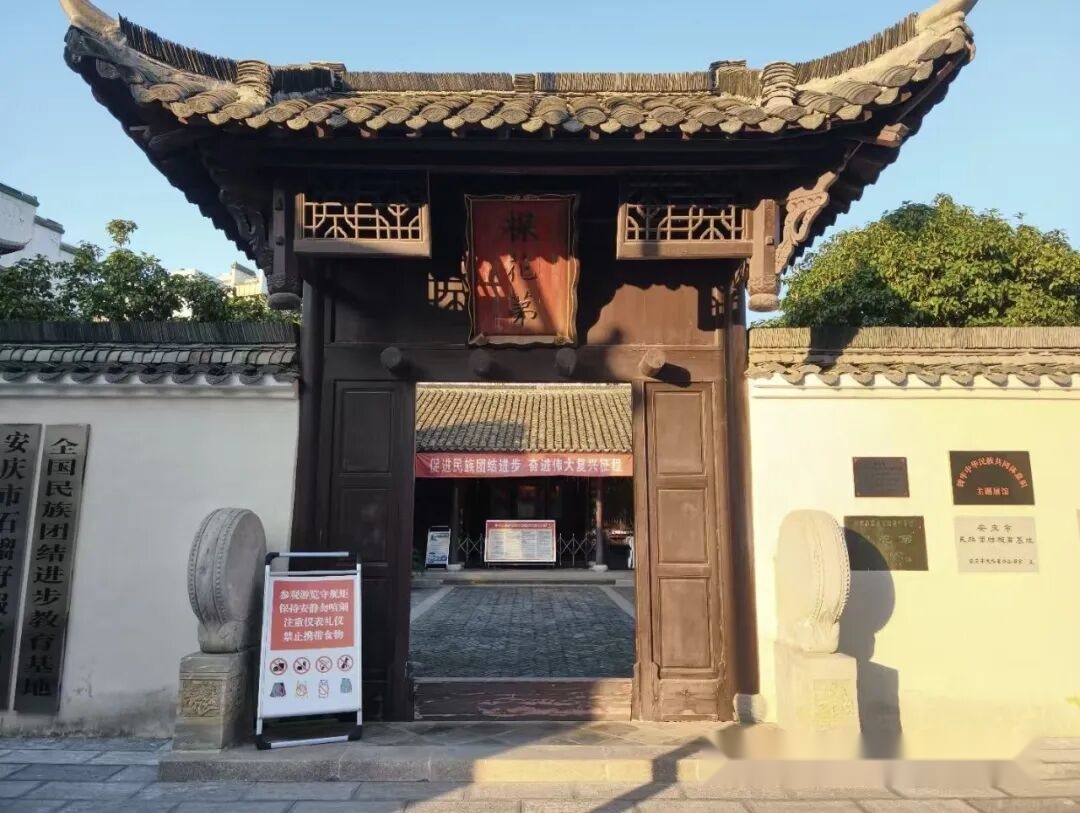
South of Anqing’s old city, tucked under Shengtang Mountain and along the banks of the Yangtze, lies the Dainanmen area—an old neighborhood where Hui Muslims have lived for generations. Deep in the alleyways, the roof ridge of the Nanguan Mosque rises toward the river, while the white walls and dark tiles of the nearby Tanhua Di stand in harmony. Their 600-year history is etched right into the eaves and plaques of these two Ming-era landmarks.
01 Settling in Yicheng: From Military Families to Yangtze River Locals
The roots of the Hui Muslim ethnic group in China can be traced back to the Tang Dynasty. Around 651 AD, Arab and Persian merchants traveled by sea to settle in Guangzhou, Quanzhou, Yangzhou, and Chang'an. Back then, they were known as fanke (foreign guests) and were considered the ancestors of today's Hui Muslims. By the Song and Yuan Dynasties, people from Central Asia, Persia, and Arabia were spread across the country as garrison soldiers, artisans, traders, scholars, officials, and religious leaders. By the Ming Dynasty, the Hui people had evolved into a new ethnic community, blending elements from Han, Uyghur, and Mongol backgrounds.
Hui Muslims began settling in Anqing no later than the end of the Yuan Dynasty. Historical records from the time mention semu people (a classification for various Central Asian groups) living in the city, such as the poet Sa Dula, the military commander Yu Que, and Anqing prefect Bai Jianu, all of whom were among the earliest 'Huihui' residents. The neighborhood layout seen today at Dainanmen was firmly established during the early Ming Dynasty.
One group was the descendants of Ma Yize, an astronomer who came to China in 961 AD at the invitation of Emperor Taizu of Song to help revise the calendar. Originally from Rumu (modern-day Turkey), he served as the head of the Bureau of Astronomy, and his descendants settled in China. During the Hongwu era, his descendant Ma Hazhi was reassigned to the Anqing Garrison and moved his family to the south of the city. Another group was led by the Datong general Ma Jucheng, who fought for Zhu Yuanzhang during the Ming rise to power. In 1381, he was assigned to defend the Anqing Garrison and appointed as a Mingwei General, with his descendants inheriting the duty of guarding the river and farming the local land.
Throughout the Ming Dynasty, the Ma family served as hereditary commanders of the Anqing Garrison and 'Superintendents of Grain Transport,' frequently navigating the turbulent waters of the Yangtze and Huai rivers to keep the national 'south-to-north grain' supply chain moving. After losing their official military status in the Qing Dynasty, many continued working in the family's traditional logistics business, gradually transforming from soldiers and administrators into permanent residents and builders of this land.
02 Nanguan Mosque: The Greatest Temple Along the Yangtze
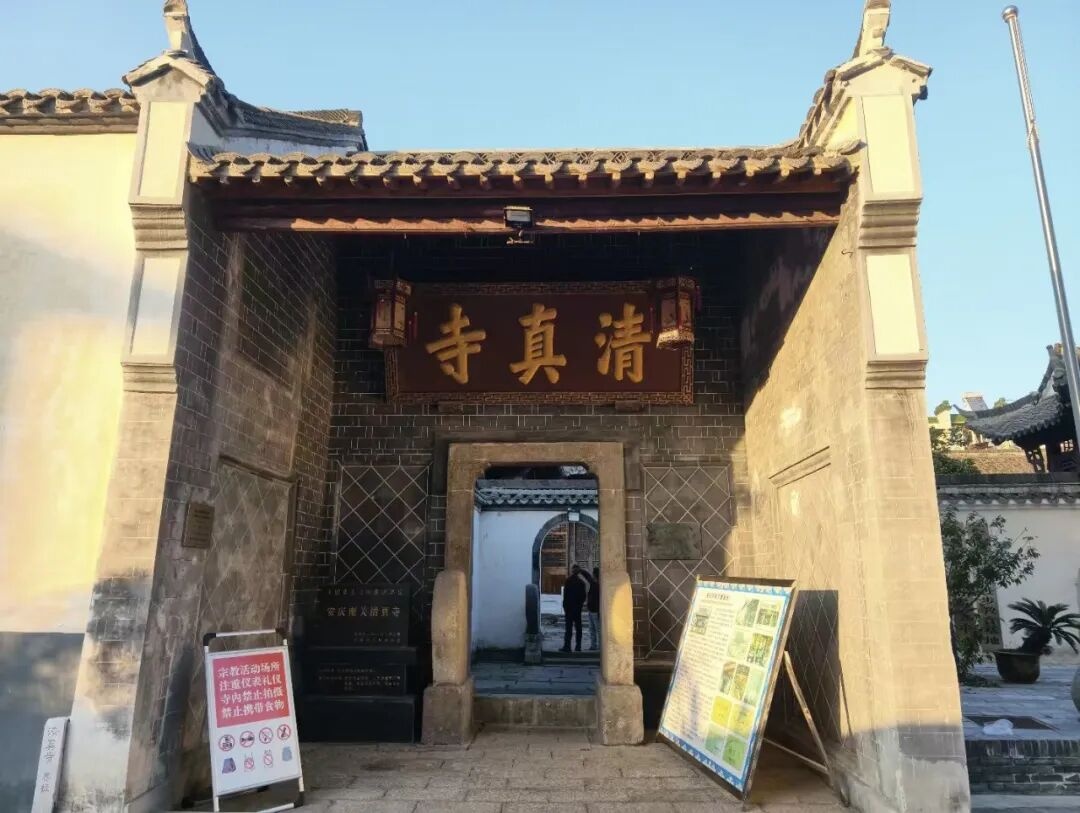
Founded in 1469 during the Ming Dynasty by the hereditary General Ma Yi, the Nanguan Mosque was originally known as the Qingzhen Tang (Pure Truth Hall). With nearly 600 years of history, it stands as one of the 100 most famous mosques in China and was named a Major Historical and Cultural Site Protected at the National Level by the State Council in 2013.
The mosque sits in the Dainanmen Hui neighborhood, with Shengtang Mountain at its back and the Yangtze River at its front; during high tide, boatmen can see its soaring roof from a distance. The complex covers about 3,500 square meters and features intricate, well-organized architecture. The main prayer hall, also known as the Wuxiang Baodian (Hall of No Icons), covers 800 square meters and holds up to a thousand people for dua (prayer). It features three-sided corridors and dual-layered eaves. The stone steps at the front entrance are inlaid with an imperial-gifted white jade dragon carving. The interior contains structures like the Chuihua Gate, stone cave-style doors, and various halls dedicated to virtue and study. Inside, golden Arabic calligraphy on black lacquer glows under rows of palace lanterns, creating a grand, solemn atmosphere that blends Islamic principles with traditional Chinese design.
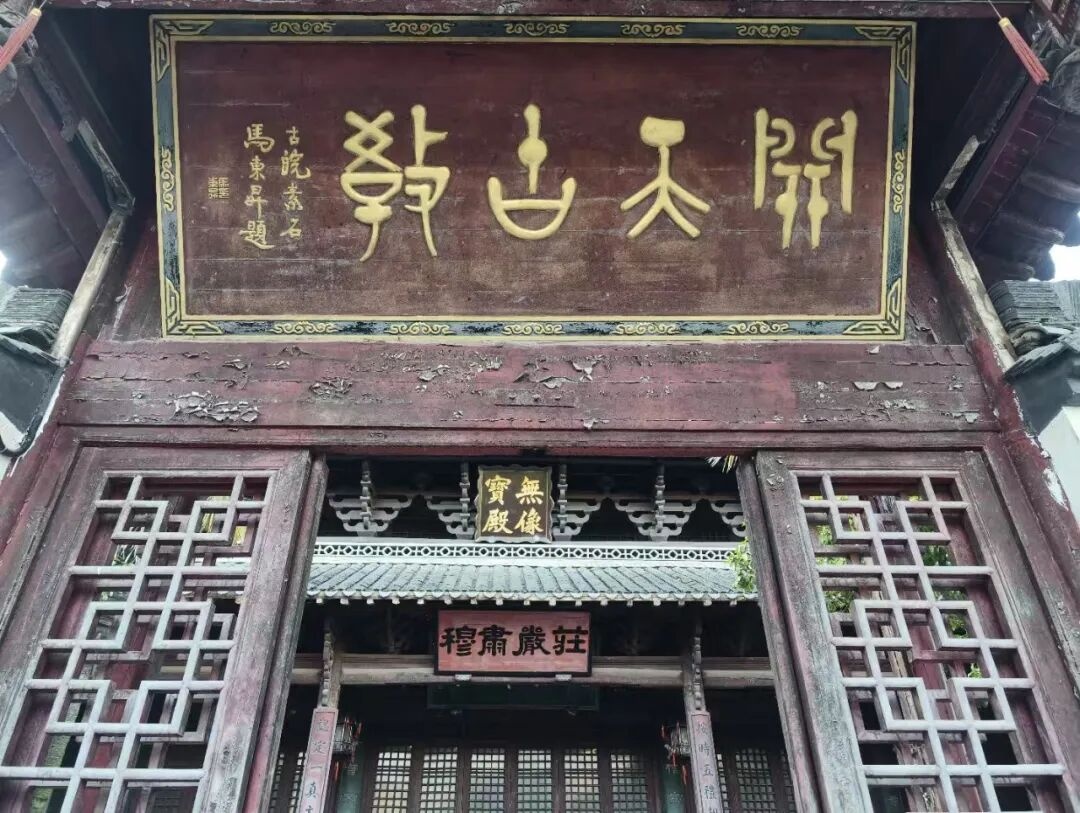
The mosque has seen its share of ups and downs. It was significantly expanded in the early Qing Dynasty by Ma Gongmei and others, but destroyed in the warfare of 1853. In 1876, 'fifteen trustees' led by Ma Minzhai rebuilt it on the original site, completing the project in 1897 after 20 years of work. Since 2000, it has undergone extensive renovations, including restoring the prayer hall's roof and floors, repainting the golden Arabic calligraphy, and rebuilding the gates and water rooms to match their original look.
In the early 1980s, renowned architectural experts like Shan Shiyuan, Zheng Xiaoxie, and Luo Zhewen visited the mosque and praised it as a 'national rarity.' The book *Chinese Islamic Architecture* describes it as 'beautiful and moving' and 'dignified and noble.' The mosque has earned numerous titles, including 'National Model for Harmonious Religious Venues' and 'Anhui Provincial Model Mosque.'
When Ma Yi built the mosque, he also established a school within the complex for Hui youth, marking the beginning of over 500 years of free education provided by the Nanguan Mosque. This place of faith also became a cornerstone of local education and culture.
03 Tanhua Di: From the Ma Family Home to a Cultural Museum
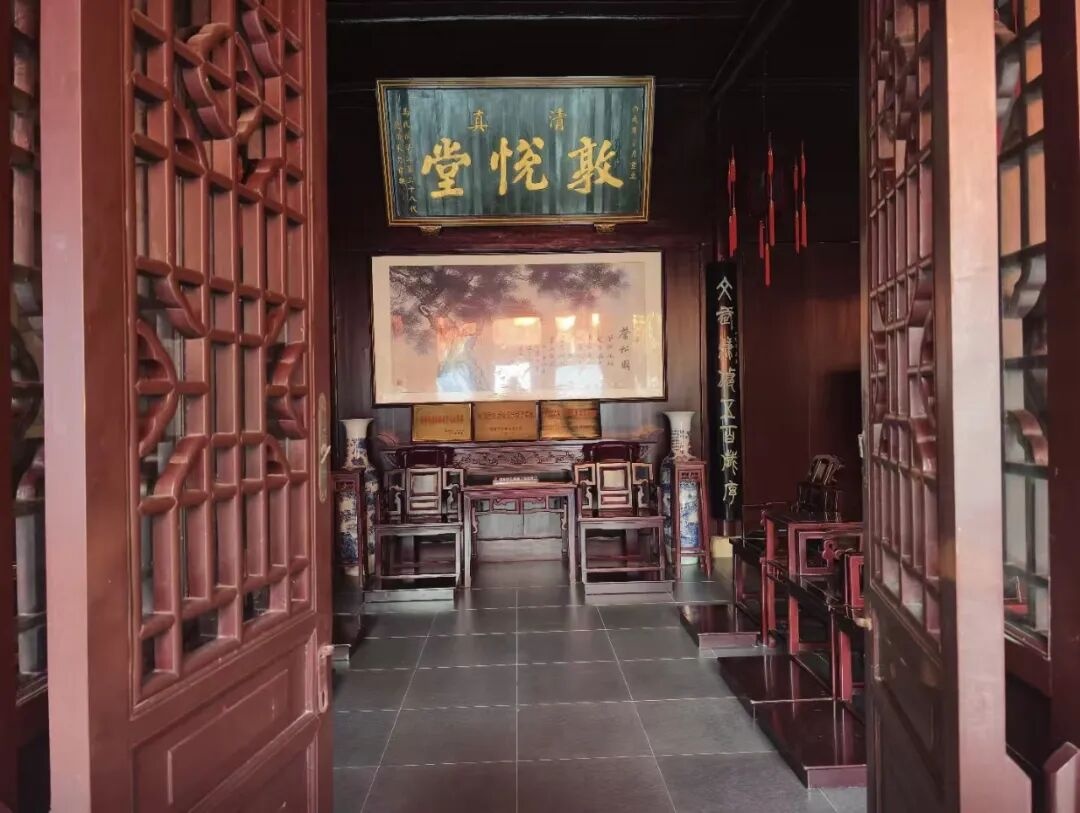
Tanhua Di was built during the Ming Dynasty as the residence for the Ma family of the Anqing Garrison. Originally named 'Qingzhen Dunyue Tang' (Hall of Pure Truth and Harmony), it stands right next to the Nanguan Mosque. In 1727, Ma Dayong, a descendant of the family, placed third in the national imperial martial arts examination. Emperor Yongzheng personally gifted him a plaque reading 'Tanhua Jidi' (Scholar's Residence), and the home became known as Tanhua Di, now a municipal-level protected cultural site.
The residence has served various functions over the years. It was fully renovated in 2006, named a 'National Education Base for Ethnic Unity and Progress' by the State Ethnic Affairs Commission in 2007, and renovated again in 2024 to become the 'Anqing Thematic Exhibition Hall for Forging a Strong Sense of Community for the Chinese Nation.' Covering about 860 to 1,073 square meters, the two-section hall showcases how the Chinese nation is a diverse yet unified family.
Since opening, the museum has hosted tens of thousands of visitors from home and abroad. It is widely praised by the public and has become a key window for promoting ethnic policies, celebrating Chinese culture, fostering unity, and showcasing Anqing’s image.
04 A Shared Destiny: Portraits of a Legacy
Over the past 500-plus years, Anqing’s Hui community has produced figures in military service, diplomacy, academia, education, medicine, and art, leading local records to describe them as the 'First Family of the Last 500 Years.' While we cannot detail every person here, a glance at their lives reveals their character.
Defending the Nation: Ma Yi pacified border conflicts and secured territory, eventually becoming a general; Ma Dayong excelled in both literature and martial arts, rising to become the Admiral of the Fujian Navy to fight pirates; Ma Chen followed Lin Zexu to Guangdong to curb the opium trade and fought bravely during the Opium Wars.
Diplomacy and Politics: In the late Qing period, Ma Jifu helped negotiate the withdrawal of British forces from Tibet; Yu Zeda served as one of China's first diplomats in New York; Republican-era general Ma Jidi refused collaboration with the Japanese, preserving his integrity; and Duanmu Jie took part in the 'Two Airlines' uprising, protecting massive assets for the people despite threats.
Academia and Education: Ma Yiyu authored *A History of Islam in China*, the first comprehensive study on the subject, while also documenting the contributions of Arab astronomy. Ma Yichen oversaw over a dozen schools in Anqing for 30 years, promoting new educational methods. Zong Weichen was a master of both Traditional Chinese Medicine and calligraphy, and his inscriptions can still be found at the Nanguan Mosque today.
Modern Heroes: Air Force pilot Li Liqiang shot down five Japanese planes during the early stages of the anti-Japanese war before dying in combat over the Yangtze in 1937. During the Yangtze River Crossing Campaign, 127 Hui sailors from the local area fought alongside the People's Liberation Army; many sacrificed their lives, and the flag awarded to them, embroidered with 'Hero of Islam,' is now housed in the Military Museum of the Chinese People's Revolution in Beijing.
05 One Big Family: Life Along the River
The traditional neighborhood of Dainanmen in the south of the city is now part of the Nanshui Hui Community in the Yingjiang District. In the past, there were also significant Hui settlements in Huaining’s Jiangjiazui, primarily among the Ma and Zong families. As times have changed, the Hui people of Anqing have spread to every corner of the city, writing new chapters in every industry.
For over 500 years, the Nanguan Mosque has remained committed to the Sinicization of Islam, upholding the philosophy that 'Hui and Han are one family' and that 'harmony is precious.' They promote traditional Chinese culture and encourage Muslims to live in peace with all other ethnic groups, contributing to Anqing’s development, unity, and social stability.
From Rumu in the West to the banks of the Yangtze, from military garrison duty to the promotion of education and culture, the history of Anqing’s Hui community is a microcosm of how all ethnic groups have worked together to develop the Yangtze valley and protect our shared homeland. The doors of the mosque and the residence still face each other, and the river keeps flowing; beneath those plaques, the life and legacy of these 600-year riverbank residents continue today.
South of Anqing’s old city, tucked under Shengtang Mountain and along the banks of the Yangtze, lies the Dainanmen area—an old neighborhood where Hui Muslims have lived for generations. Deep in the alleyways, the roof ridge of the Nanguan Mosque rises toward the river, while the white walls and dark tiles of the nearby Tanhua Di stand in harmony. Their 600-year history is etched right into the eaves and plaques of these two Ming-era landmarks.
01 Settling in Yicheng: From Military Families to Yangtze River Locals
The roots of the Hui Muslim ethnic group in China can be traced back to the Tang Dynasty. Around 651 AD, Arab and Persian merchants traveled by sea to settle in Guangzhou, Quanzhou, Yangzhou, and Chang'an. Back then, they were known as fanke (foreign guests) and were considered the ancestors of today's Hui Muslims. By the Song and Yuan Dynasties, people from Central Asia, Persia, and Arabia were spread across the country as garrison soldiers, artisans, traders, scholars, officials, and religious leaders. By the Ming Dynasty, the Hui people had evolved into a new ethnic community, blending elements from Han, Uyghur, and Mongol backgrounds.
Hui Muslims began settling in Anqing no later than the end of the Yuan Dynasty. Historical records from the time mention semu people (a classification for various Central Asian groups) living in the city, such as the poet Sa Dula, the military commander Yu Que, and Anqing prefect Bai Jianu, all of whom were among the earliest 'Huihui' residents. The neighborhood layout seen today at Dainanmen was firmly established during the early Ming Dynasty.
One group was the descendants of Ma Yize, an astronomer who came to China in 961 AD at the invitation of Emperor Taizu of Song to help revise the calendar. Originally from Rumu (modern-day Turkey), he served as the head of the Bureau of Astronomy, and his descendants settled in China. During the Hongwu era, his descendant Ma Hazhi was reassigned to the Anqing Garrison and moved his family to the south of the city. Another group was led by the Datong general Ma Jucheng, who fought for Zhu Yuanzhang during the Ming rise to power. In 1381, he was assigned to defend the Anqing Garrison and appointed as a Mingwei General, with his descendants inheriting the duty of guarding the river and farming the local land.
Throughout the Ming Dynasty, the Ma family served as hereditary commanders of the Anqing Garrison and 'Superintendents of Grain Transport,' frequently navigating the turbulent waters of the Yangtze and Huai rivers to keep the national 'south-to-north grain' supply chain moving. After losing their official military status in the Qing Dynasty, many continued working in the family's traditional logistics business, gradually transforming from soldiers and administrators into permanent residents and builders of this land.
02 Nanguan Mosque: The Greatest Temple Along the Yangtze
Founded in 1469 during the Ming Dynasty by the hereditary General Ma Yi, the Nanguan Mosque was originally known as the Qingzhen Tang (Pure Truth Hall). With nearly 600 years of history, it stands as one of the 100 most famous mosques in China and was named a Major Historical and Cultural Site Protected at the National Level by the State Council in 2013.
The mosque sits in the Dainanmen Hui neighborhood, with Shengtang Mountain at its back and the Yangtze River at its front; during high tide, boatmen can see its soaring roof from a distance. The complex covers about 3,500 square meters and features intricate, well-organized architecture. The main prayer hall, also known as the Wuxiang Baodian (Hall of No Icons), covers 800 square meters and holds up to a thousand people for dua (prayer). It features three-sided corridors and dual-layered eaves. The stone steps at the front entrance are inlaid with an imperial-gifted white jade dragon carving. The interior contains structures like the Chuihua Gate, stone cave-style doors, and various halls dedicated to virtue and study. Inside, golden Arabic calligraphy on black lacquer glows under rows of palace lanterns, creating a grand, solemn atmosphere that blends Islamic principles with traditional Chinese design.
The mosque has seen its share of ups and downs. It was significantly expanded in the early Qing Dynasty by Ma Gongmei and others, but destroyed in the warfare of 1853. In 1876, 'fifteen trustees' led by Ma Minzhai rebuilt it on the original site, completing the project in 1897 after 20 years of work. Since 2000, it has undergone extensive renovations, including restoring the prayer hall's roof and floors, repainting the golden Arabic calligraphy, and rebuilding the gates and water rooms to match their original look.
In the early 1980s, renowned architectural experts like Shan Shiyuan, Zheng Xiaoxie, and Luo Zhewen visited the mosque and praised it as a 'national rarity.' The book *Chinese Islamic Architecture* describes it as 'beautiful and moving' and 'dignified and noble.' The mosque has earned numerous titles, including 'National Model for Harmonious Religious Venues' and 'Anhui Provincial Model Mosque.'
When Ma Yi built the mosque, he also established a school within the complex for Hui youth, marking the beginning of over 500 years of free education provided by the Nanguan Mosque. This place of faith also became a cornerstone of local education and culture.
03 Tanhua Di: From the Ma Family Home to a Cultural Museum
Tanhua Di was built during the Ming Dynasty as the residence for the Ma family of the Anqing Garrison. Originally named 'Qingzhen Dunyue Tang' (Hall of Pure Truth and Harmony), it stands right next to the Nanguan Mosque. In 1727, Ma Dayong, a descendant of the family, placed third in the national imperial martial arts examination. Emperor Yongzheng personally gifted him a plaque reading 'Tanhua Jidi' (Scholar's Residence), and the home became known as Tanhua Di, now a municipal-level protected cultural site.
The residence has served various functions over the years. It was fully renovated in 2006, named a 'National Education Base for Ethnic Unity and Progress' by the State Ethnic Affairs Commission in 2007, and renovated again in 2024 to become the 'Anqing Thematic Exhibition Hall for Forging a Strong Sense of Community for the Chinese Nation.' Covering about 860 to 1,073 square meters, the two-section hall showcases how the Chinese nation is a diverse yet unified family.
Since opening, the museum has hosted tens of thousands of visitors from home and abroad. It is widely praised by the public and has become a key window for promoting ethnic policies, celebrating Chinese culture, fostering unity, and showcasing Anqing’s image.
04 A Shared Destiny: Portraits of a Legacy
Over the past 500-plus years, Anqing’s Hui community has produced figures in military service, diplomacy, academia, education, medicine, and art, leading local records to describe them as the 'First Family of the Last 500 Years.' While we cannot detail every person here, a glance at their lives reveals their character.
Defending the Nation: Ma Yi pacified border conflicts and secured territory, eventually becoming a general; Ma Dayong excelled in both literature and martial arts, rising to become the Admiral of the Fujian Navy to fight pirates; Ma Chen followed Lin Zexu to Guangdong to curb the opium trade and fought bravely during the Opium Wars.
Diplomacy and Politics: In the late Qing period, Ma Jifu helped negotiate the withdrawal of British forces from Tibet; Yu Zeda served as one of China's first diplomats in New York; Republican-era general Ma Jidi refused collaboration with the Japanese, preserving his integrity; and Duanmu Jie took part in the 'Two Airlines' uprising, protecting massive assets for the people despite threats.
Academia and Education: Ma Yiyu authored *A History of Islam in China*, the first comprehensive study on the subject, while also documenting the contributions of Arab astronomy. Ma Yichen oversaw over a dozen schools in Anqing for 30 years, promoting new educational methods. Zong Weichen was a master of both Traditional Chinese Medicine and calligraphy, and his inscriptions can still be found at the Nanguan Mosque today.
Modern Heroes: Air Force pilot Li Liqiang shot down five Japanese planes during the early stages of the anti-Japanese war before dying in combat over the Yangtze in 1937. During the Yangtze River Crossing Campaign, 127 Hui sailors from the local area fought alongside the People's Liberation Army; many sacrificed their lives, and the flag awarded to them, embroidered with 'Hero of Islam,' is now housed in the Military Museum of the Chinese People's Revolution in Beijing.
05 One Big Family: Life Along the River
The traditional neighborhood of Dainanmen in the south of the city is now part of the Nanshui Hui Community in the Yingjiang District. In the past, there were also significant Hui settlements in Huaining’s Jiangjiazui, primarily among the Ma and Zong families. As times have changed, the Hui people of Anqing have spread to every corner of the city, writing new chapters in every industry.
For over 500 years, the Nanguan Mosque has remained committed to the Sinicization of Islam, upholding the philosophy that 'Hui and Han are one family' and that 'harmony is precious.' They promote traditional Chinese culture and encourage Muslims to live in peace with all other ethnic groups, contributing to Anqing’s development, unity, and social stability.
From Rumu in the West to the banks of the Yangtze, from military garrison duty to the promotion of education and culture, the history of Anqing’s Hui community is a microcosm of how all ethnic groups have worked together to develop the Yangtze valley and protect our shared homeland. The doors of the mosque and the residence still face each other, and the river keeps flowing; beneath those plaques, the life and legacy of these 600-year riverbank residents continue today.
Discover Anqing Islamic Heritage: Nanguan Mosque & Hui Muslim History in Anhui
Articles • Hasan09 posted the article • 0 comments • 11 views • 6 hours ago
Explore the historic Hui Muslim enclave near the Dainanmen (Great South Gate) area, nestled under Shengtang Mountain by the Yangtze River in the ancient city of Anqing. Through four rare, authentic photographs, this piece records the towering feiyan dougong (traditional flying eaves and brackets) of the Ming Dynasty Nanguan Mosque and the adjacent Tanhua Di (Scholar's Residence) complex, showcasing 600 years of Hui Muslim history and Islamic heritage along the Yangtze River.
South of Anqing’s old city, tucked under Shengtang Mountain and along the banks of the Yangtze, lies the Dainanmen area—an old neighborhood where Hui Muslims have lived for generations. Deep in the alleyways, the roof ridge of the Nanguan Mosque rises toward the river, while the white walls and dark tiles of the nearby Tanhua Di stand in harmony. Their 600-year history is etched right into the eaves and plaques of these two Ming-era landmarks.
01 Settling in Yicheng: From Military Families to Yangtze River Locals
The roots of the Hui Muslim ethnic group in China can be traced back to the Tang Dynasty. Around 651 AD, Arab and Persian merchants traveled by sea to settle in Guangzhou, Quanzhou, Yangzhou, and Chang'an. Back then, they were known as fanke (foreign guests) and were considered the ancestors of today's Hui Muslims. By the Song and Yuan Dynasties, people from Central Asia, Persia, and Arabia were spread across the country as garrison soldiers, artisans, traders, scholars, officials, and religious leaders. By the Ming Dynasty, the Hui people had evolved into a new ethnic community, blending elements from Han, Uyghur, and Mongol backgrounds.
Hui Muslims began settling in Anqing no later than the end of the Yuan Dynasty. Historical records from the time mention semu people (a classification for various Central Asian groups) living in the city, such as the poet Sa Dula, the military commander Yu Que, and Anqing prefect Bai Jianu, all of whom were among the earliest 'Huihui' residents. The neighborhood layout seen today at Dainanmen was firmly established during the early Ming Dynasty.
One group was the descendants of Ma Yize, an astronomer who came to China in 961 AD at the invitation of Emperor Taizu of Song to help revise the calendar. Originally from Rumu (modern-day Turkey), he served as the head of the Bureau of Astronomy, and his descendants settled in China. During the Hongwu era, his descendant Ma Hazhi was reassigned to the Anqing Garrison and moved his family to the south of the city. Another group was led by the Datong general Ma Jucheng, who fought for Zhu Yuanzhang during the Ming rise to power. In 1381, he was assigned to defend the Anqing Garrison and appointed as a Mingwei General, with his descendants inheriting the duty of guarding the river and farming the local land.
Throughout the Ming Dynasty, the Ma family served as hereditary commanders of the Anqing Garrison and 'Superintendents of Grain Transport,' frequently navigating the turbulent waters of the Yangtze and Huai rivers to keep the national 'south-to-north grain' supply chain moving. After losing their official military status in the Qing Dynasty, many continued working in the family's traditional logistics business, gradually transforming from soldiers and administrators into permanent residents and builders of this land.
02 Nanguan Mosque: The Greatest Temple Along the Yangtze
Founded in 1469 during the Ming Dynasty by the hereditary General Ma Yi, the Nanguan Mosque was originally known as the Qingzhen Tang (Pure Truth Hall). With nearly 600 years of history, it stands as one of the 100 most famous mosques in China and was named a Major Historical and Cultural Site Protected at the National Level by the State Council in 2013.
The mosque sits in the Dainanmen Hui neighborhood, with Shengtang Mountain at its back and the Yangtze River at its front; during high tide, boatmen can see its soaring roof from a distance. The complex covers about 3,500 square meters and features intricate, well-organized architecture. The main prayer hall, also known as the Wuxiang Baodian (Hall of No Icons), covers 800 square meters and holds up to a thousand people for dua (prayer). It features three-sided corridors and dual-layered eaves. The stone steps at the front entrance are inlaid with an imperial-gifted white jade dragon carving. The interior contains structures like the Chuihua Gate, stone cave-style doors, and various halls dedicated to virtue and study. Inside, golden Arabic calligraphy on black lacquer glows under rows of palace lanterns, creating a grand, solemn atmosphere that blends Islamic principles with traditional Chinese design.
The mosque has seen its share of ups and downs. It was significantly expanded in the early Qing Dynasty by Ma Gongmei and others, but destroyed in the warfare of 1853. In 1876, 'fifteen trustees' led by Ma Minzhai rebuilt it on the original site, completing the project in 1897 after 20 years of work. Since 2000, it has undergone extensive renovations, including restoring the prayer hall's roof and floors, repainting the golden Arabic calligraphy, and rebuilding the gates and water rooms to match their original look.
In the early 1980s, renowned architectural experts like Shan Shiyuan, Zheng Xiaoxie, and Luo Zhewen visited the mosque and praised it as a 'national rarity.' The book *Chinese Islamic Architecture* describes it as 'beautiful and moving' and 'dignified and noble.' The mosque has earned numerous titles, including 'National Model for Harmonious Religious Venues' and 'Anhui Provincial Model Mosque.'
When Ma Yi built the mosque, he also established a school within the complex for Hui youth, marking the beginning of over 500 years of free education provided by the Nanguan Mosque. This place of faith also became a cornerstone of local education and culture.
03 Tanhua Di: From the Ma Family Home to a Cultural Museum
Tanhua Di was built during the Ming Dynasty as the residence for the Ma family of the Anqing Garrison. Originally named 'Qingzhen Dunyue Tang' (Hall of Pure Truth and Harmony), it stands right next to the Nanguan Mosque. In 1727, Ma Dayong, a descendant of the family, placed third in the national imperial martial arts examination. Emperor Yongzheng personally gifted him a plaque reading 'Tanhua Jidi' (Scholar's Residence), and the home became known as Tanhua Di, now a municipal-level protected cultural site.
The residence has served various functions over the years. It was fully renovated in 2006, named a 'National Education Base for Ethnic Unity and Progress' by the State Ethnic Affairs Commission in 2007, and renovated again in 2024 to become the 'Anqing Thematic Exhibition Hall for Forging a Strong Sense of Community for the Chinese Nation.' Covering about 860 to 1,073 square meters, the two-section hall showcases how the Chinese nation is a diverse yet unified family.
Since opening, the museum has hosted tens of thousands of visitors from home and abroad. It is widely praised by the public and has become a key window for promoting ethnic policies, celebrating Chinese culture, fostering unity, and showcasing Anqing’s image.
04 A Shared Destiny: Portraits of a Legacy
Over the past 500-plus years, Anqing’s Hui community has produced figures in military service, diplomacy, academia, education, medicine, and art, leading local records to describe them as the 'First Family of the Last 500 Years.' While we cannot detail every person here, a glance at their lives reveals their character.
Defending the Nation: Ma Yi pacified border conflicts and secured territory, eventually becoming a general; Ma Dayong excelled in both literature and martial arts, rising to become the Admiral of the Fujian Navy to fight pirates; Ma Chen followed Lin Zexu to Guangdong to curb the opium trade and fought bravely during the Opium Wars.
Diplomacy and Politics: In the late Qing period, Ma Jifu helped negotiate the withdrawal of British forces from Tibet; Yu Zeda served as one of China's first diplomats in New York; Republican-era general Ma Jidi refused collaboration with the Japanese, preserving his integrity; and Duanmu Jie took part in the 'Two Airlines' uprising, protecting massive assets for the people despite threats.
Academia and Education: Ma Yiyu authored *A History of Islam in China*, the first comprehensive study on the subject, while also documenting the contributions of Arab astronomy. Ma Yichen oversaw over a dozen schools in Anqing for 30 years, promoting new educational methods. Zong Weichen was a master of both Traditional Chinese Medicine and calligraphy, and his inscriptions can still be found at the Nanguan Mosque today.
Modern Heroes: Air Force pilot Li Liqiang shot down five Japanese planes during the early stages of the anti-Japanese war before dying in combat over the Yangtze in 1937. During the Yangtze River Crossing Campaign, 127 Hui sailors from the local area fought alongside the People's Liberation Army; many sacrificed their lives, and the flag awarded to them, embroidered with 'Hero of Islam,' is now housed in the Military Museum of the Chinese People's Revolution in Beijing.
05 One Big Family: Life Along the River
The traditional neighborhood of Dainanmen in the south of the city is now part of the Nanshui Hui Community in the Yingjiang District. In the past, there were also significant Hui settlements in Huaining’s Jiangjiazui, primarily among the Ma and Zong families. As times have changed, the Hui people of Anqing have spread to every corner of the city, writing new chapters in every industry.
For over 500 years, the Nanguan Mosque has remained committed to the Sinicization of Islam, upholding the philosophy that 'Hui and Han are one family' and that 'harmony is precious.' They promote traditional Chinese culture and encourage Muslims to live in peace with all other ethnic groups, contributing to Anqing’s development, unity, and social stability.
From Rumu in the West to the banks of the Yangtze, from military garrison duty to the promotion of education and culture, the history of Anqing’s Hui community is a microcosm of how all ethnic groups have worked together to develop the Yangtze valley and protect our shared homeland. The doors of the mosque and the residence still face each other, and the river keeps flowing; beneath those plaques, the life and legacy of these 600-year riverbank residents continue today. view all
South of Anqing’s old city, tucked under Shengtang Mountain and along the banks of the Yangtze, lies the Dainanmen area—an old neighborhood where Hui Muslims have lived for generations. Deep in the alleyways, the roof ridge of the Nanguan Mosque rises toward the river, while the white walls and dark tiles of the nearby Tanhua Di stand in harmony. Their 600-year history is etched right into the eaves and plaques of these two Ming-era landmarks.
01 Settling in Yicheng: From Military Families to Yangtze River Locals
The roots of the Hui Muslim ethnic group in China can be traced back to the Tang Dynasty. Around 651 AD, Arab and Persian merchants traveled by sea to settle in Guangzhou, Quanzhou, Yangzhou, and Chang'an. Back then, they were known as fanke (foreign guests) and were considered the ancestors of today's Hui Muslims. By the Song and Yuan Dynasties, people from Central Asia, Persia, and Arabia were spread across the country as garrison soldiers, artisans, traders, scholars, officials, and religious leaders. By the Ming Dynasty, the Hui people had evolved into a new ethnic community, blending elements from Han, Uyghur, and Mongol backgrounds.
Hui Muslims began settling in Anqing no later than the end of the Yuan Dynasty. Historical records from the time mention semu people (a classification for various Central Asian groups) living in the city, such as the poet Sa Dula, the military commander Yu Que, and Anqing prefect Bai Jianu, all of whom were among the earliest 'Huihui' residents. The neighborhood layout seen today at Dainanmen was firmly established during the early Ming Dynasty.
One group was the descendants of Ma Yize, an astronomer who came to China in 961 AD at the invitation of Emperor Taizu of Song to help revise the calendar. Originally from Rumu (modern-day Turkey), he served as the head of the Bureau of Astronomy, and his descendants settled in China. During the Hongwu era, his descendant Ma Hazhi was reassigned to the Anqing Garrison and moved his family to the south of the city. Another group was led by the Datong general Ma Jucheng, who fought for Zhu Yuanzhang during the Ming rise to power. In 1381, he was assigned to defend the Anqing Garrison and appointed as a Mingwei General, with his descendants inheriting the duty of guarding the river and farming the local land.
Throughout the Ming Dynasty, the Ma family served as hereditary commanders of the Anqing Garrison and 'Superintendents of Grain Transport,' frequently navigating the turbulent waters of the Yangtze and Huai rivers to keep the national 'south-to-north grain' supply chain moving. After losing their official military status in the Qing Dynasty, many continued working in the family's traditional logistics business, gradually transforming from soldiers and administrators into permanent residents and builders of this land.
02 Nanguan Mosque: The Greatest Temple Along the Yangtze
Founded in 1469 during the Ming Dynasty by the hereditary General Ma Yi, the Nanguan Mosque was originally known as the Qingzhen Tang (Pure Truth Hall). With nearly 600 years of history, it stands as one of the 100 most famous mosques in China and was named a Major Historical and Cultural Site Protected at the National Level by the State Council in 2013.
The mosque sits in the Dainanmen Hui neighborhood, with Shengtang Mountain at its back and the Yangtze River at its front; during high tide, boatmen can see its soaring roof from a distance. The complex covers about 3,500 square meters and features intricate, well-organized architecture. The main prayer hall, also known as the Wuxiang Baodian (Hall of No Icons), covers 800 square meters and holds up to a thousand people for dua (prayer). It features three-sided corridors and dual-layered eaves. The stone steps at the front entrance are inlaid with an imperial-gifted white jade dragon carving. The interior contains structures like the Chuihua Gate, stone cave-style doors, and various halls dedicated to virtue and study. Inside, golden Arabic calligraphy on black lacquer glows under rows of palace lanterns, creating a grand, solemn atmosphere that blends Islamic principles with traditional Chinese design.
The mosque has seen its share of ups and downs. It was significantly expanded in the early Qing Dynasty by Ma Gongmei and others, but destroyed in the warfare of 1853. In 1876, 'fifteen trustees' led by Ma Minzhai rebuilt it on the original site, completing the project in 1897 after 20 years of work. Since 2000, it has undergone extensive renovations, including restoring the prayer hall's roof and floors, repainting the golden Arabic calligraphy, and rebuilding the gates and water rooms to match their original look.
In the early 1980s, renowned architectural experts like Shan Shiyuan, Zheng Xiaoxie, and Luo Zhewen visited the mosque and praised it as a 'national rarity.' The book *Chinese Islamic Architecture* describes it as 'beautiful and moving' and 'dignified and noble.' The mosque has earned numerous titles, including 'National Model for Harmonious Religious Venues' and 'Anhui Provincial Model Mosque.'
When Ma Yi built the mosque, he also established a school within the complex for Hui youth, marking the beginning of over 500 years of free education provided by the Nanguan Mosque. This place of faith also became a cornerstone of local education and culture.
03 Tanhua Di: From the Ma Family Home to a Cultural Museum
Tanhua Di was built during the Ming Dynasty as the residence for the Ma family of the Anqing Garrison. Originally named 'Qingzhen Dunyue Tang' (Hall of Pure Truth and Harmony), it stands right next to the Nanguan Mosque. In 1727, Ma Dayong, a descendant of the family, placed third in the national imperial martial arts examination. Emperor Yongzheng personally gifted him a plaque reading 'Tanhua Jidi' (Scholar's Residence), and the home became known as Tanhua Di, now a municipal-level protected cultural site.
The residence has served various functions over the years. It was fully renovated in 2006, named a 'National Education Base for Ethnic Unity and Progress' by the State Ethnic Affairs Commission in 2007, and renovated again in 2024 to become the 'Anqing Thematic Exhibition Hall for Forging a Strong Sense of Community for the Chinese Nation.' Covering about 860 to 1,073 square meters, the two-section hall showcases how the Chinese nation is a diverse yet unified family.
Since opening, the museum has hosted tens of thousands of visitors from home and abroad. It is widely praised by the public and has become a key window for promoting ethnic policies, celebrating Chinese culture, fostering unity, and showcasing Anqing’s image.
04 A Shared Destiny: Portraits of a Legacy
Over the past 500-plus years, Anqing’s Hui community has produced figures in military service, diplomacy, academia, education, medicine, and art, leading local records to describe them as the 'First Family of the Last 500 Years.' While we cannot detail every person here, a glance at their lives reveals their character.
Defending the Nation: Ma Yi pacified border conflicts and secured territory, eventually becoming a general; Ma Dayong excelled in both literature and martial arts, rising to become the Admiral of the Fujian Navy to fight pirates; Ma Chen followed Lin Zexu to Guangdong to curb the opium trade and fought bravely during the Opium Wars.
Diplomacy and Politics: In the late Qing period, Ma Jifu helped negotiate the withdrawal of British forces from Tibet; Yu Zeda served as one of China's first diplomats in New York; Republican-era general Ma Jidi refused collaboration with the Japanese, preserving his integrity; and Duanmu Jie took part in the 'Two Airlines' uprising, protecting massive assets for the people despite threats.
Academia and Education: Ma Yiyu authored *A History of Islam in China*, the first comprehensive study on the subject, while also documenting the contributions of Arab astronomy. Ma Yichen oversaw over a dozen schools in Anqing for 30 years, promoting new educational methods. Zong Weichen was a master of both Traditional Chinese Medicine and calligraphy, and his inscriptions can still be found at the Nanguan Mosque today.
Modern Heroes: Air Force pilot Li Liqiang shot down five Japanese planes during the early stages of the anti-Japanese war before dying in combat over the Yangtze in 1937. During the Yangtze River Crossing Campaign, 127 Hui sailors from the local area fought alongside the People's Liberation Army; many sacrificed their lives, and the flag awarded to them, embroidered with 'Hero of Islam,' is now housed in the Military Museum of the Chinese People's Revolution in Beijing.
05 One Big Family: Life Along the River
The traditional neighborhood of Dainanmen in the south of the city is now part of the Nanshui Hui Community in the Yingjiang District. In the past, there were also significant Hui settlements in Huaining’s Jiangjiazui, primarily among the Ma and Zong families. As times have changed, the Hui people of Anqing have spread to every corner of the city, writing new chapters in every industry.
For over 500 years, the Nanguan Mosque has remained committed to the Sinicization of Islam, upholding the philosophy that 'Hui and Han are one family' and that 'harmony is precious.' They promote traditional Chinese culture and encourage Muslims to live in peace with all other ethnic groups, contributing to Anqing’s development, unity, and social stability.
From Rumu in the West to the banks of the Yangtze, from military garrison duty to the promotion of education and culture, the history of Anqing’s Hui community is a microcosm of how all ethnic groups have worked together to develop the Yangtze valley and protect our shared homeland. The doors of the mosque and the residence still face each other, and the river keeps flowing; beneath those plaques, the life and legacy of these 600-year riverbank residents continue today. view all
Explore the historic Hui Muslim enclave near the Dainanmen (Great South Gate) area, nestled under Shengtang Mountain by the Yangtze River in the ancient city of Anqing. Through four rare, authentic photographs, this piece records the towering feiyan dougong (traditional flying eaves and brackets) of the Ming Dynasty Nanguan Mosque and the adjacent Tanhua Di (Scholar's Residence) complex, showcasing 600 years of Hui Muslim history and Islamic heritage along the Yangtze River.
South of Anqing’s old city, tucked under Shengtang Mountain and along the banks of the Yangtze, lies the Dainanmen area—an old neighborhood where Hui Muslims have lived for generations. Deep in the alleyways, the roof ridge of the Nanguan Mosque rises toward the river, while the white walls and dark tiles of the nearby Tanhua Di stand in harmony. Their 600-year history is etched right into the eaves and plaques of these two Ming-era landmarks.
01 Settling in Yicheng: From Military Families to Yangtze River Locals
The roots of the Hui Muslim ethnic group in China can be traced back to the Tang Dynasty. Around 651 AD, Arab and Persian merchants traveled by sea to settle in Guangzhou, Quanzhou, Yangzhou, and Chang'an. Back then, they were known as fanke (foreign guests) and were considered the ancestors of today's Hui Muslims. By the Song and Yuan Dynasties, people from Central Asia, Persia, and Arabia were spread across the country as garrison soldiers, artisans, traders, scholars, officials, and religious leaders. By the Ming Dynasty, the Hui people had evolved into a new ethnic community, blending elements from Han, Uyghur, and Mongol backgrounds.
Hui Muslims began settling in Anqing no later than the end of the Yuan Dynasty. Historical records from the time mention semu people (a classification for various Central Asian groups) living in the city, such as the poet Sa Dula, the military commander Yu Que, and Anqing prefect Bai Jianu, all of whom were among the earliest 'Huihui' residents. The neighborhood layout seen today at Dainanmen was firmly established during the early Ming Dynasty.
One group was the descendants of Ma Yize, an astronomer who came to China in 961 AD at the invitation of Emperor Taizu of Song to help revise the calendar. Originally from Rumu (modern-day Turkey), he served as the head of the Bureau of Astronomy, and his descendants settled in China. During the Hongwu era, his descendant Ma Hazhi was reassigned to the Anqing Garrison and moved his family to the south of the city. Another group was led by the Datong general Ma Jucheng, who fought for Zhu Yuanzhang during the Ming rise to power. In 1381, he was assigned to defend the Anqing Garrison and appointed as a Mingwei General, with his descendants inheriting the duty of guarding the river and farming the local land.
Throughout the Ming Dynasty, the Ma family served as hereditary commanders of the Anqing Garrison and 'Superintendents of Grain Transport,' frequently navigating the turbulent waters of the Yangtze and Huai rivers to keep the national 'south-to-north grain' supply chain moving. After losing their official military status in the Qing Dynasty, many continued working in the family's traditional logistics business, gradually transforming from soldiers and administrators into permanent residents and builders of this land.
02 Nanguan Mosque: The Greatest Temple Along the Yangtze
Founded in 1469 during the Ming Dynasty by the hereditary General Ma Yi, the Nanguan Mosque was originally known as the Qingzhen Tang (Pure Truth Hall). With nearly 600 years of history, it stands as one of the 100 most famous mosques in China and was named a Major Historical and Cultural Site Protected at the National Level by the State Council in 2013.
The mosque sits in the Dainanmen Hui neighborhood, with Shengtang Mountain at its back and the Yangtze River at its front; during high tide, boatmen can see its soaring roof from a distance. The complex covers about 3,500 square meters and features intricate, well-organized architecture. The main prayer hall, also known as the Wuxiang Baodian (Hall of No Icons), covers 800 square meters and holds up to a thousand people for dua (prayer). It features three-sided corridors and dual-layered eaves. The stone steps at the front entrance are inlaid with an imperial-gifted white jade dragon carving. The interior contains structures like the Chuihua Gate, stone cave-style doors, and various halls dedicated to virtue and study. Inside, golden Arabic calligraphy on black lacquer glows under rows of palace lanterns, creating a grand, solemn atmosphere that blends Islamic principles with traditional Chinese design.
The mosque has seen its share of ups and downs. It was significantly expanded in the early Qing Dynasty by Ma Gongmei and others, but destroyed in the warfare of 1853. In 1876, 'fifteen trustees' led by Ma Minzhai rebuilt it on the original site, completing the project in 1897 after 20 years of work. Since 2000, it has undergone extensive renovations, including restoring the prayer hall's roof and floors, repainting the golden Arabic calligraphy, and rebuilding the gates and water rooms to match their original look.
In the early 1980s, renowned architectural experts like Shan Shiyuan, Zheng Xiaoxie, and Luo Zhewen visited the mosque and praised it as a 'national rarity.' The book *Chinese Islamic Architecture* describes it as 'beautiful and moving' and 'dignified and noble.' The mosque has earned numerous titles, including 'National Model for Harmonious Religious Venues' and 'Anhui Provincial Model Mosque.'
When Ma Yi built the mosque, he also established a school within the complex for Hui youth, marking the beginning of over 500 years of free education provided by the Nanguan Mosque. This place of faith also became a cornerstone of local education and culture.
03 Tanhua Di: From the Ma Family Home to a Cultural Museum
Tanhua Di was built during the Ming Dynasty as the residence for the Ma family of the Anqing Garrison. Originally named 'Qingzhen Dunyue Tang' (Hall of Pure Truth and Harmony), it stands right next to the Nanguan Mosque. In 1727, Ma Dayong, a descendant of the family, placed third in the national imperial martial arts examination. Emperor Yongzheng personally gifted him a plaque reading 'Tanhua Jidi' (Scholar's Residence), and the home became known as Tanhua Di, now a municipal-level protected cultural site.
The residence has served various functions over the years. It was fully renovated in 2006, named a 'National Education Base for Ethnic Unity and Progress' by the State Ethnic Affairs Commission in 2007, and renovated again in 2024 to become the 'Anqing Thematic Exhibition Hall for Forging a Strong Sense of Community for the Chinese Nation.' Covering about 860 to 1,073 square meters, the two-section hall showcases how the Chinese nation is a diverse yet unified family.
Since opening, the museum has hosted tens of thousands of visitors from home and abroad. It is widely praised by the public and has become a key window for promoting ethnic policies, celebrating Chinese culture, fostering unity, and showcasing Anqing’s image.
04 A Shared Destiny: Portraits of a Legacy
Over the past 500-plus years, Anqing’s Hui community has produced figures in military service, diplomacy, academia, education, medicine, and art, leading local records to describe them as the 'First Family of the Last 500 Years.' While we cannot detail every person here, a glance at their lives reveals their character.
Defending the Nation: Ma Yi pacified border conflicts and secured territory, eventually becoming a general; Ma Dayong excelled in both literature and martial arts, rising to become the Admiral of the Fujian Navy to fight pirates; Ma Chen followed Lin Zexu to Guangdong to curb the opium trade and fought bravely during the Opium Wars.
Diplomacy and Politics: In the late Qing period, Ma Jifu helped negotiate the withdrawal of British forces from Tibet; Yu Zeda served as one of China's first diplomats in New York; Republican-era general Ma Jidi refused collaboration with the Japanese, preserving his integrity; and Duanmu Jie took part in the 'Two Airlines' uprising, protecting massive assets for the people despite threats.
Academia and Education: Ma Yiyu authored *A History of Islam in China*, the first comprehensive study on the subject, while also documenting the contributions of Arab astronomy. Ma Yichen oversaw over a dozen schools in Anqing for 30 years, promoting new educational methods. Zong Weichen was a master of both Traditional Chinese Medicine and calligraphy, and his inscriptions can still be found at the Nanguan Mosque today.
Modern Heroes: Air Force pilot Li Liqiang shot down five Japanese planes during the early stages of the anti-Japanese war before dying in combat over the Yangtze in 1937. During the Yangtze River Crossing Campaign, 127 Hui sailors from the local area fought alongside the People's Liberation Army; many sacrificed their lives, and the flag awarded to them, embroidered with 'Hero of Islam,' is now housed in the Military Museum of the Chinese People's Revolution in Beijing.
05 One Big Family: Life Along the River
The traditional neighborhood of Dainanmen in the south of the city is now part of the Nanshui Hui Community in the Yingjiang District. In the past, there were also significant Hui settlements in Huaining’s Jiangjiazui, primarily among the Ma and Zong families. As times have changed, the Hui people of Anqing have spread to every corner of the city, writing new chapters in every industry.
For over 500 years, the Nanguan Mosque has remained committed to the Sinicization of Islam, upholding the philosophy that 'Hui and Han are one family' and that 'harmony is precious.' They promote traditional Chinese culture and encourage Muslims to live in peace with all other ethnic groups, contributing to Anqing’s development, unity, and social stability.
From Rumu in the West to the banks of the Yangtze, from military garrison duty to the promotion of education and culture, the history of Anqing’s Hui community is a microcosm of how all ethnic groups have worked together to develop the Yangtze valley and protect our shared homeland. The doors of the mosque and the residence still face each other, and the river keeps flowing; beneath those plaques, the life and legacy of these 600-year riverbank residents continue today.