

Ashura
Islamic Guide: Ashura - Meaning, History and the Victory of Musa
Articles • ali2007fr posted the article • 0 comments • 232 views • 2026-05-20 21:35
Summary: This article explains Ashura through the victory of Musa and the Children of Israel over Pharaoh and the reminder to trust Allah's help. It keeps the publication details and main source description while removing navigation, disclaimer, and original-link clutter.
On the day of Ashura, thousands of years ago, Musa (as) and the Children of Israel won a huge victory over the tyranny of Pharaoh. Remembering this event by fasting is a solemn reminder that Allah's help is always there for those who stay righteous and rely on His divine wisdom and mercy. Authored by Yaqeen Institute. Published: July 15, 2024, Muharram 9, 1446. Updated: February 13, 2026, Shaban 25, 1447. Read time: 7 minutes. view all
Summary: This article explains Ashura through the victory of Musa and the Children of Israel over Pharaoh and the reminder to trust Allah's help. It keeps the publication details and main source description while removing navigation, disclaimer, and original-link clutter.
On the day of Ashura, thousands of years ago, Musa (as) and the Children of Israel won a huge victory over the tyranny of Pharaoh. Remembering this event by fasting is a solemn reminder that Allah's help is always there for those who stay righteous and rely on His divine wisdom and mercy. Authored by Yaqeen Institute. Published: July 15, 2024, Muharram 9, 1446. Updated: February 13, 2026, Shaban 25, 1447. Read time: 7 minutes.
Muslim Culture Guide: Ashura Day - Fasting, Memory and Hui Muslim Traditions
Articles • ali2007fr posted the article • 0 comments • 245 views • 2026-05-19 10:23
Summary: Ashura Day - Fasting, Memory and Hui Muslim Traditions is presented as a clear English travel account for readers interested in Muslim life, halal food, mosques, and local history. The article keeps the original place names, food details, photographs, and cultural context while focusing on Ashura, Muslim Culture, Hui Muslims.
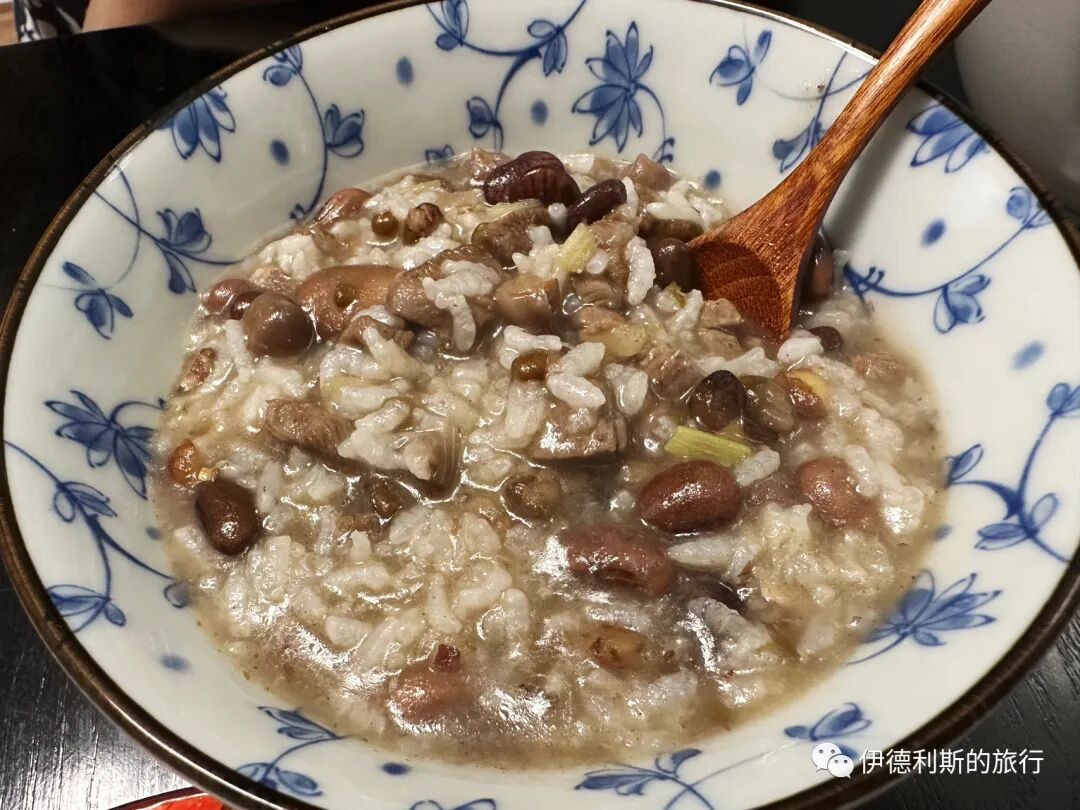
This Tuesday was the 10th of Muharram, the Day of Ashura. As usual, we made the Urumqi Hui Muslim version of Ashura bean rice (dou dou fan).
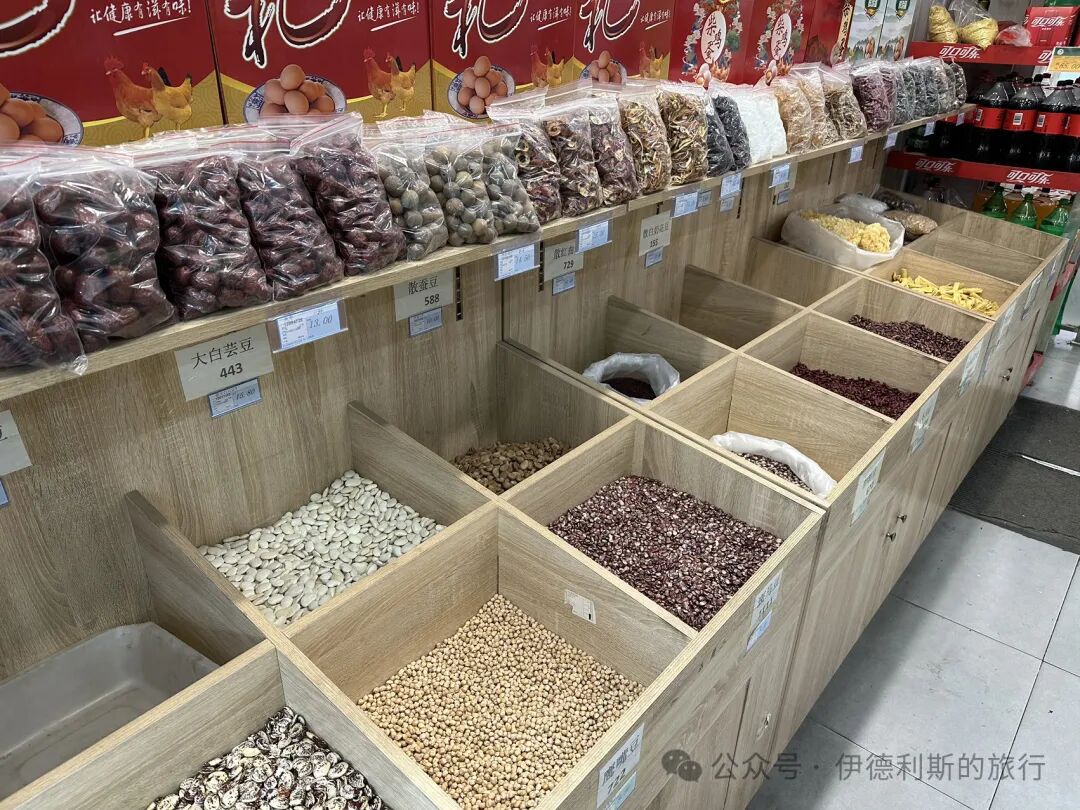
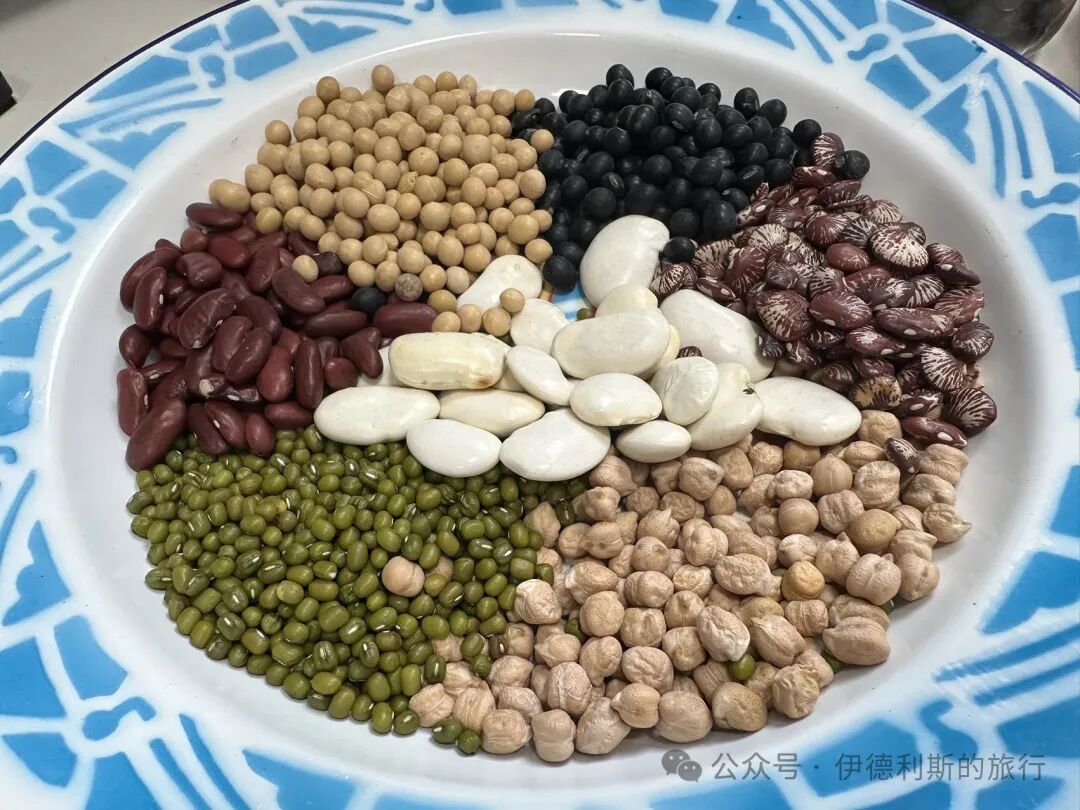
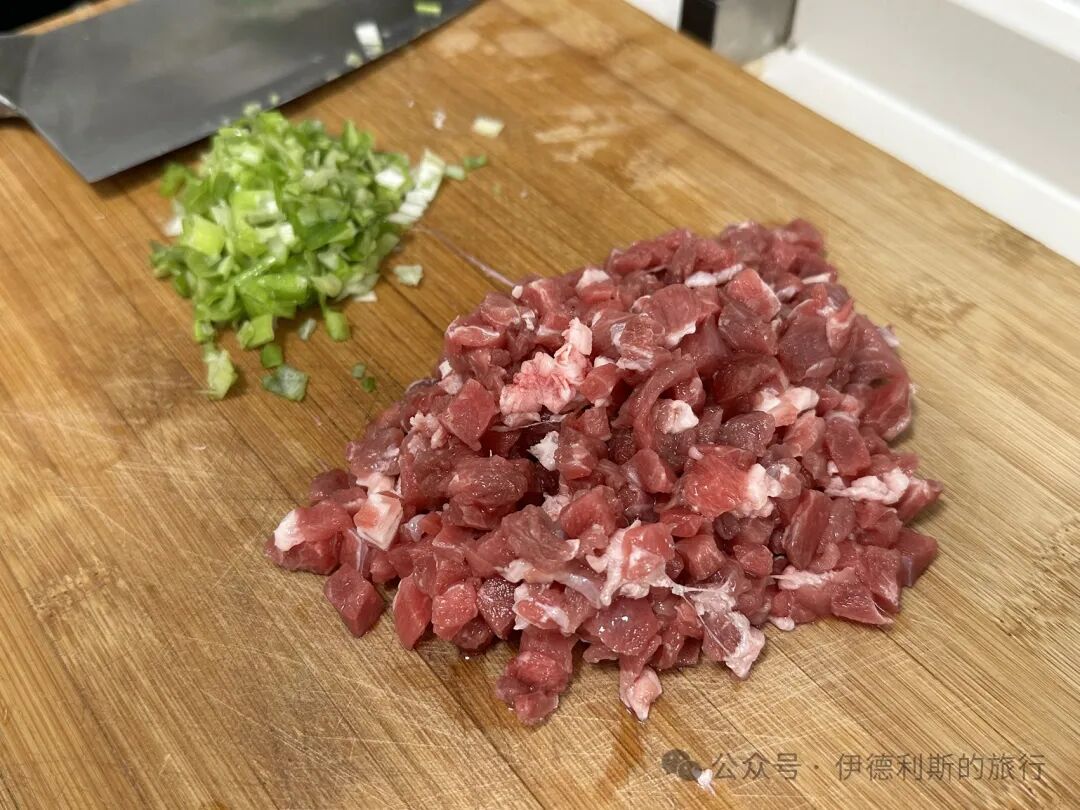
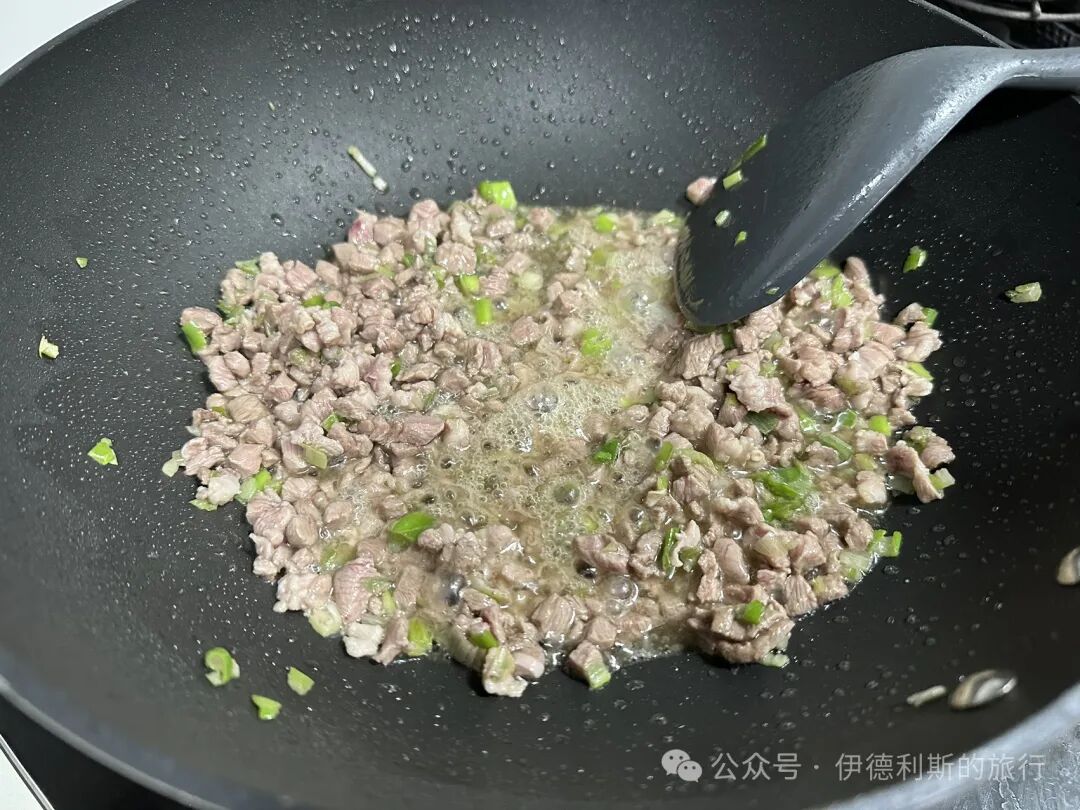
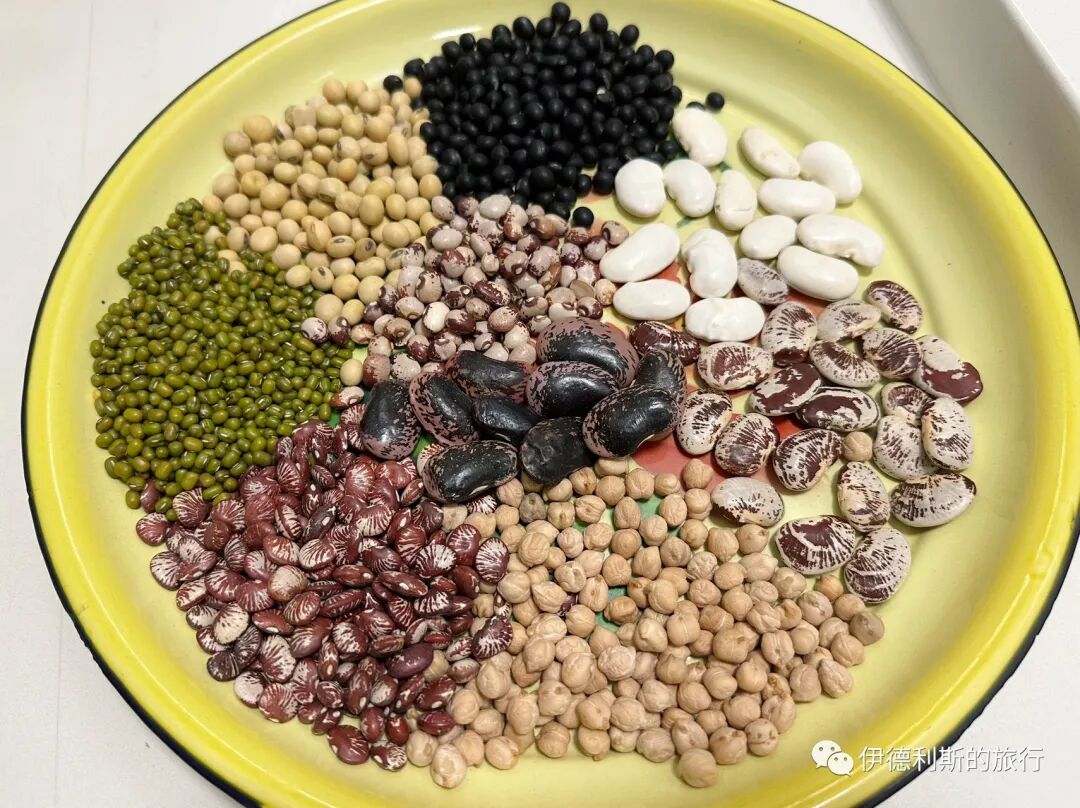
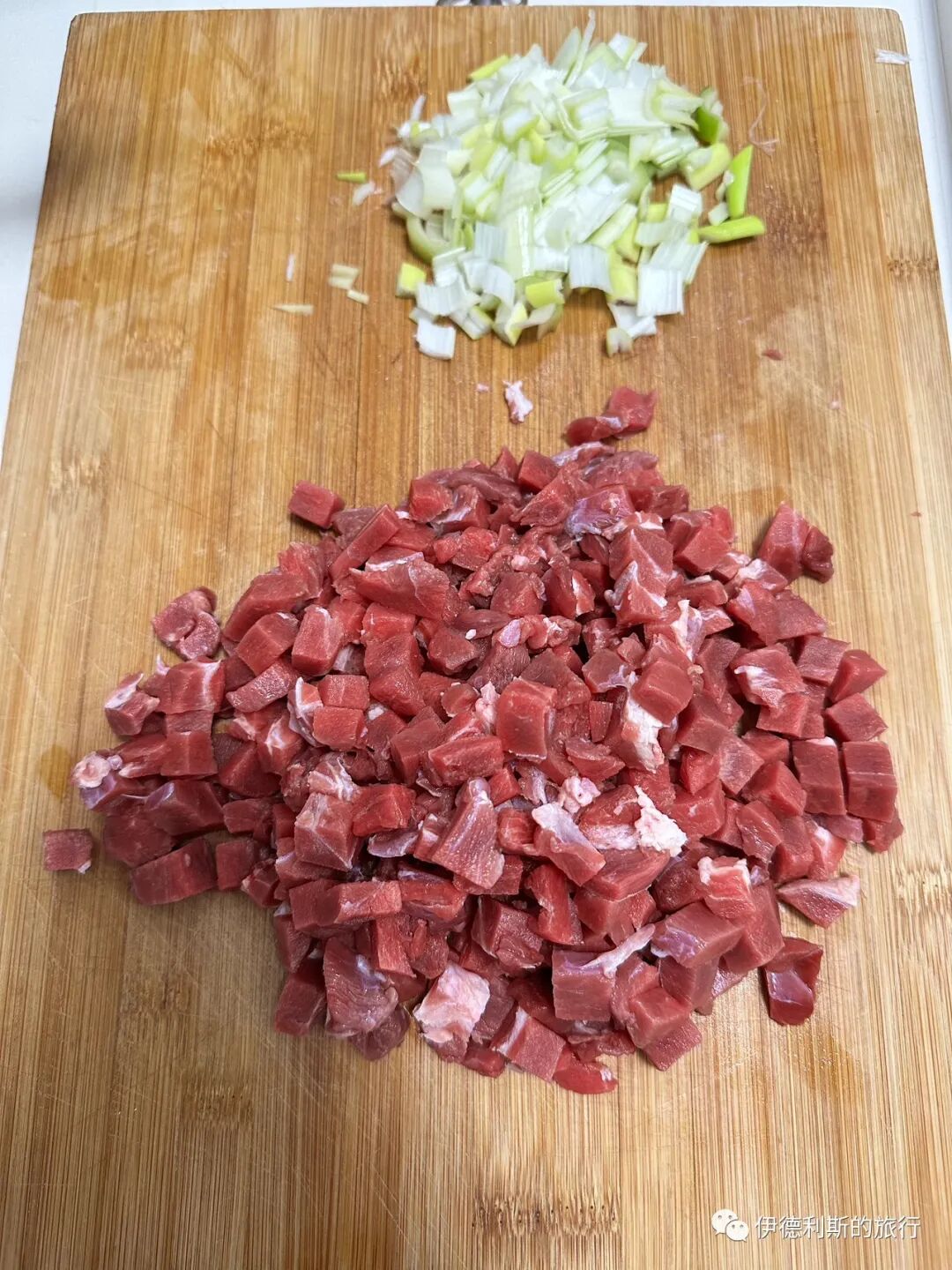
After work, I went to the supermarket to buy beans. This time I used seven kinds: soybeans, black beans, mung beans, red beans, chickpeas, white kidney beans, and lotus beans. First, I cooked the seven types of beans in a pressure cooker until soft. Then, I diced some Qurbani lamb and chopped green onions. I stir-fried the meat with the green onions, adding salt and Sichuan peppercorn powder. I added rice and sticky rice to the cooked beans, then mixed in the stir-fried meat. I set the pressure cooker to the rice cooking mode to finish it.
Since our pressure cooker wasn't big enough, the water boiled away a bit too much. After taking it out, we added more water to thin it out. Actually, the traditional way is to simmer it in a large pot for a long time.
Legend says that when the Great Flood receded and Prophet Nuh's ship reached land, he and his followers used the seven types of beans on the ship to make the first meal for humanity after the disaster. Across a vast region from Bosnia and Turkey in the west to China in the east, many friends (dostani) make Ashura bean porridge today to remember the landing of Noah's Ark.
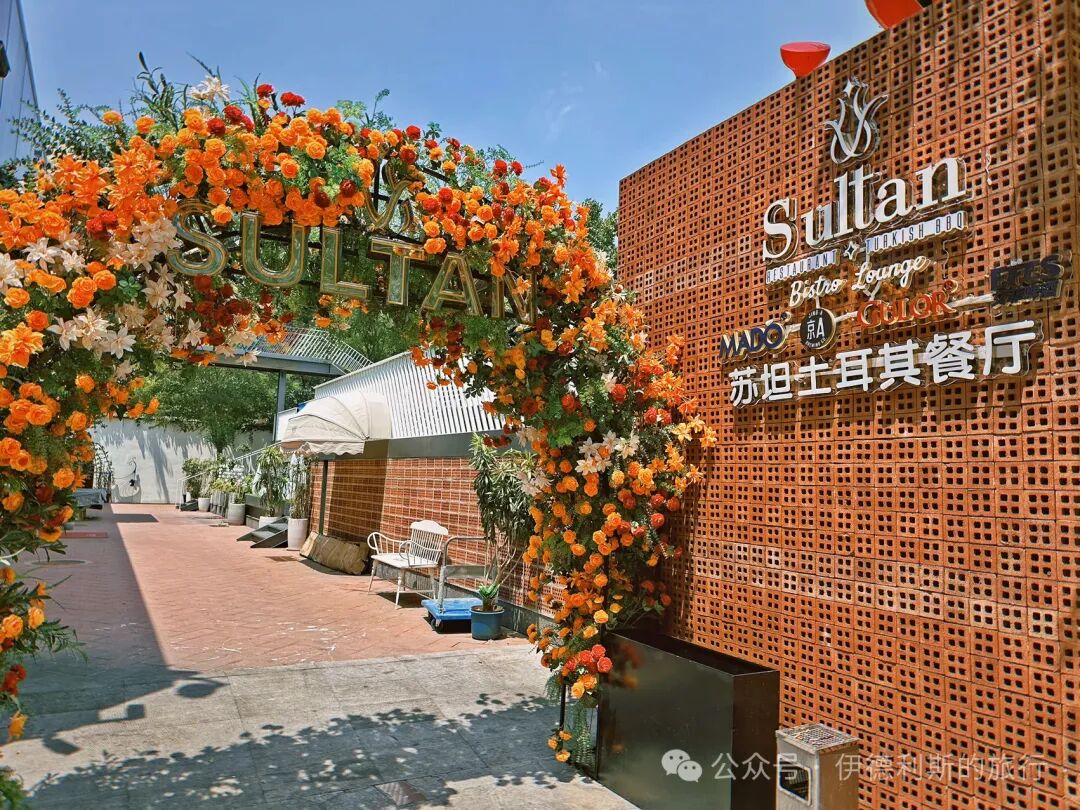
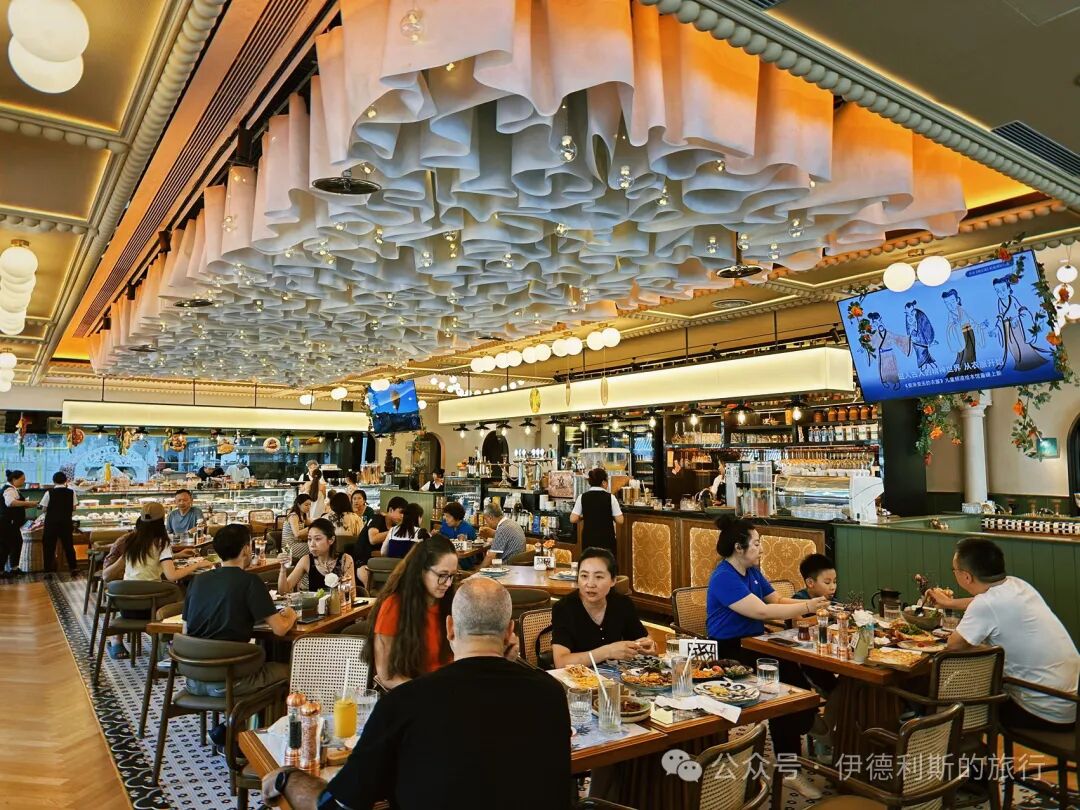
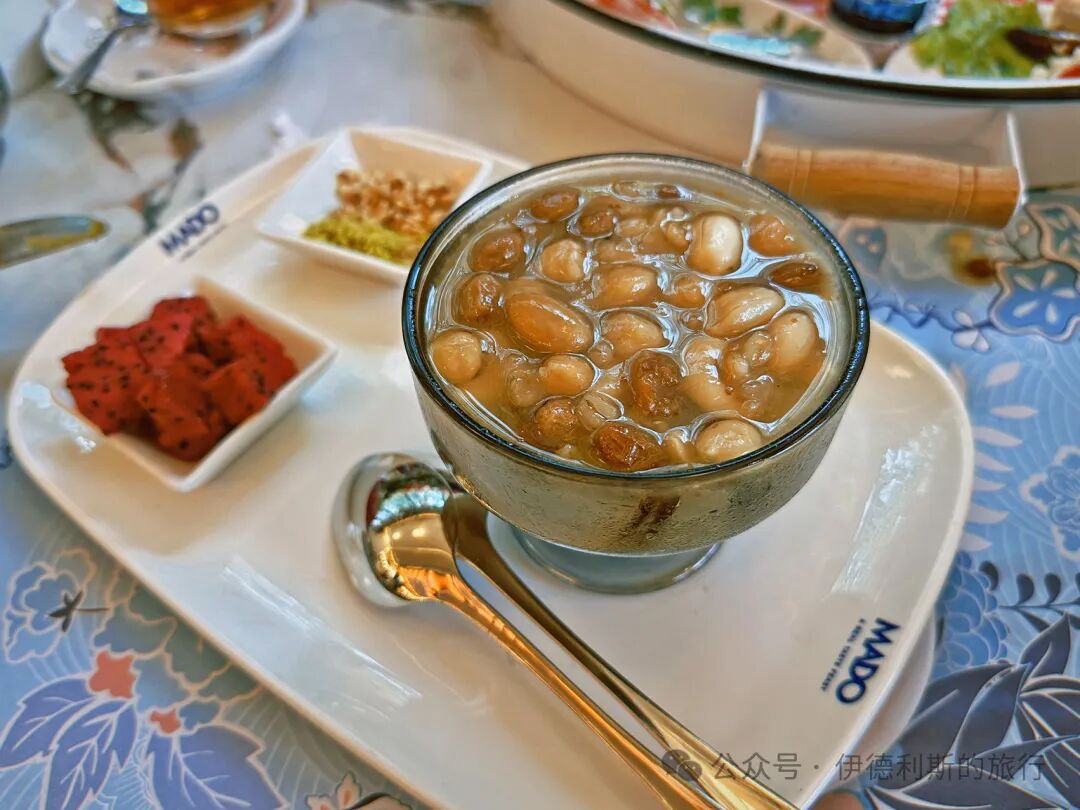
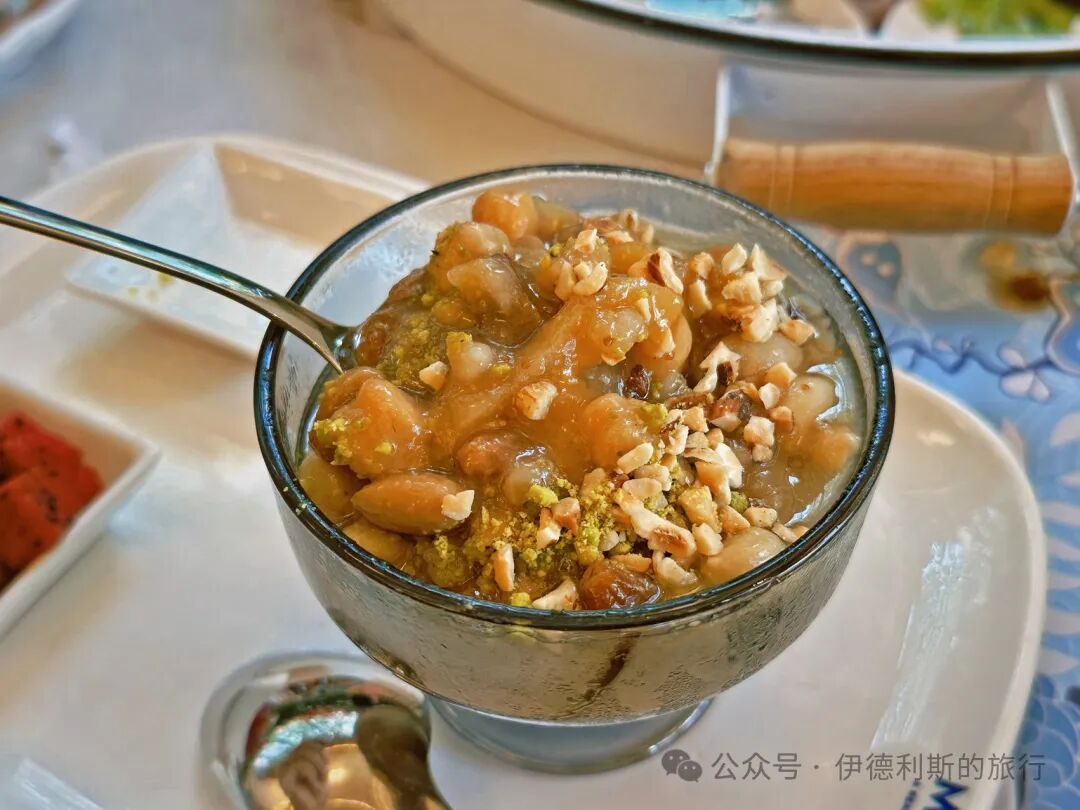
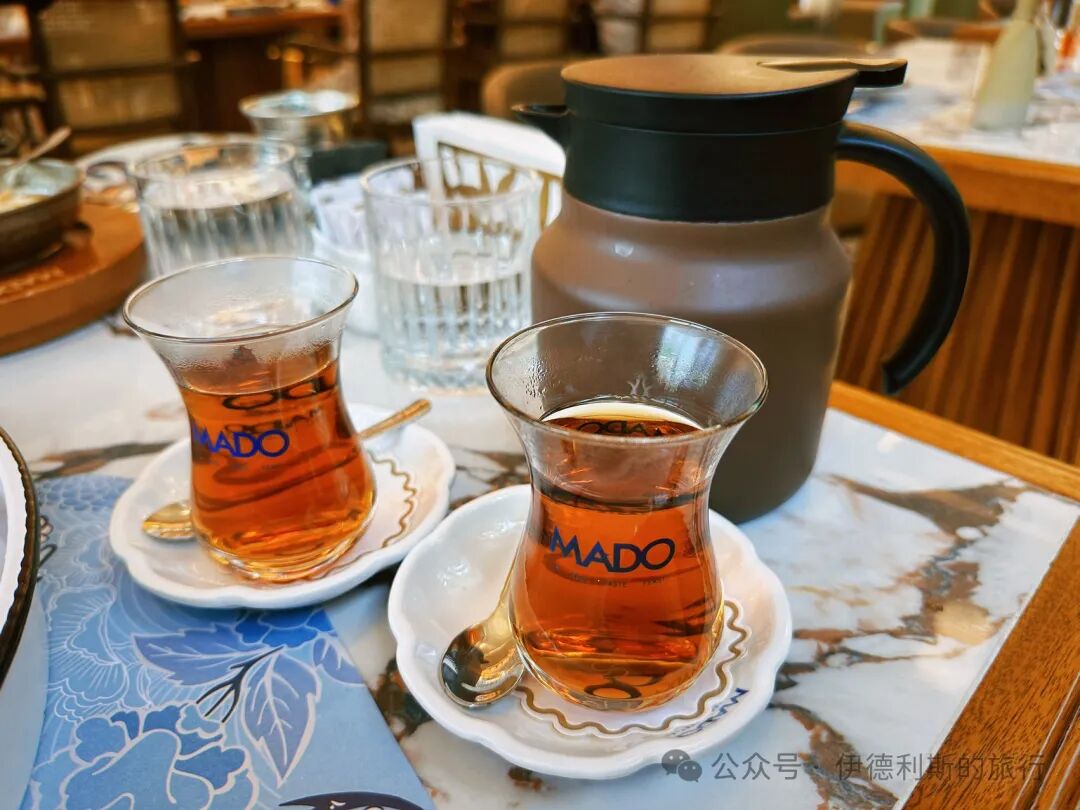
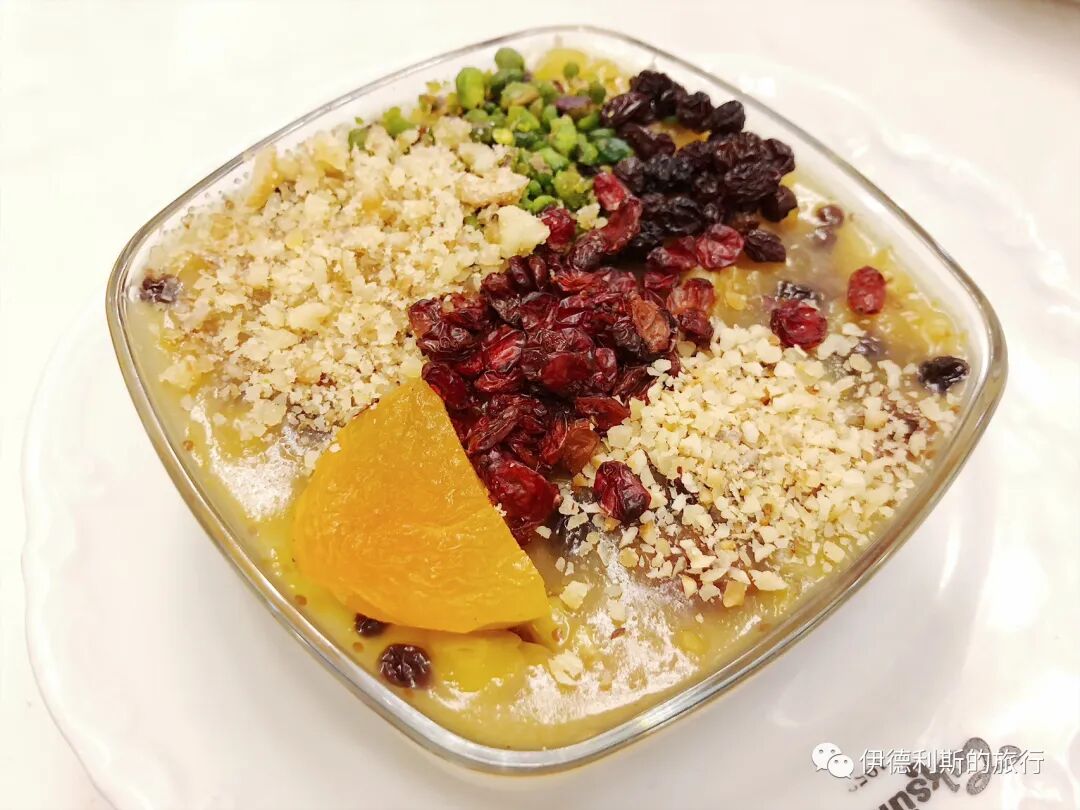
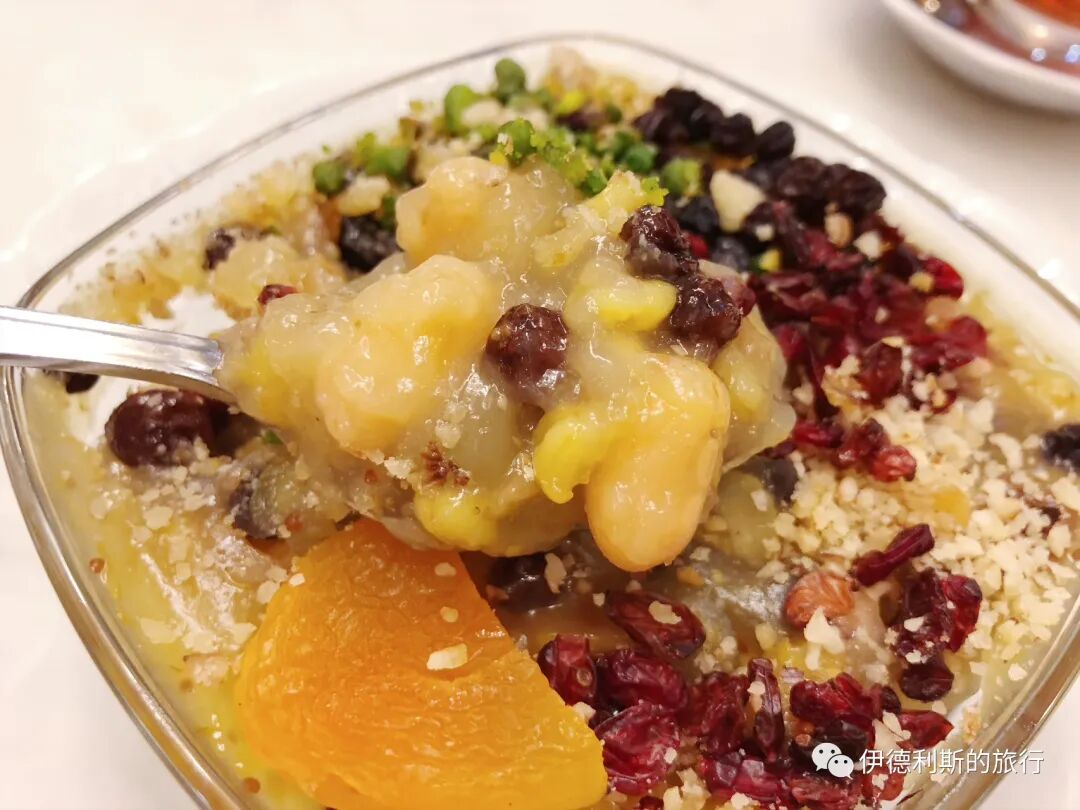
You can actually find Ashura bean porridge at the Sultan Turkish Restaurant in Beijing, but the Turkish version is more like a dessert and tastes quite different from the Chinese one.
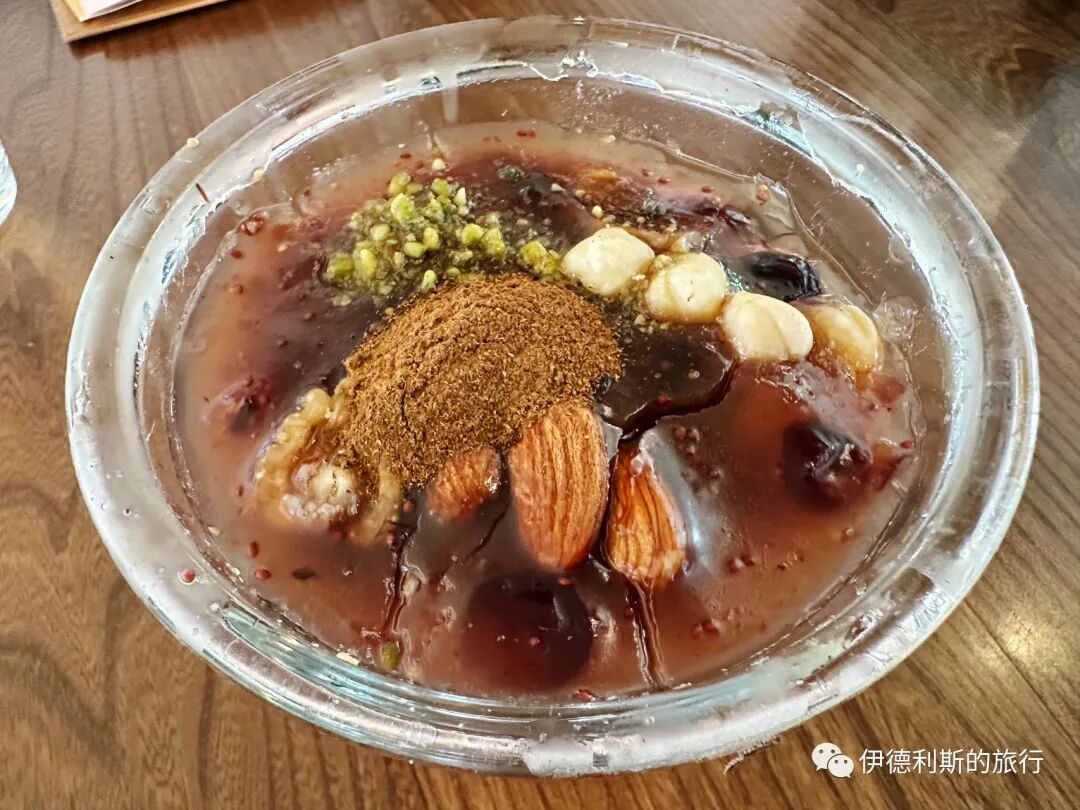
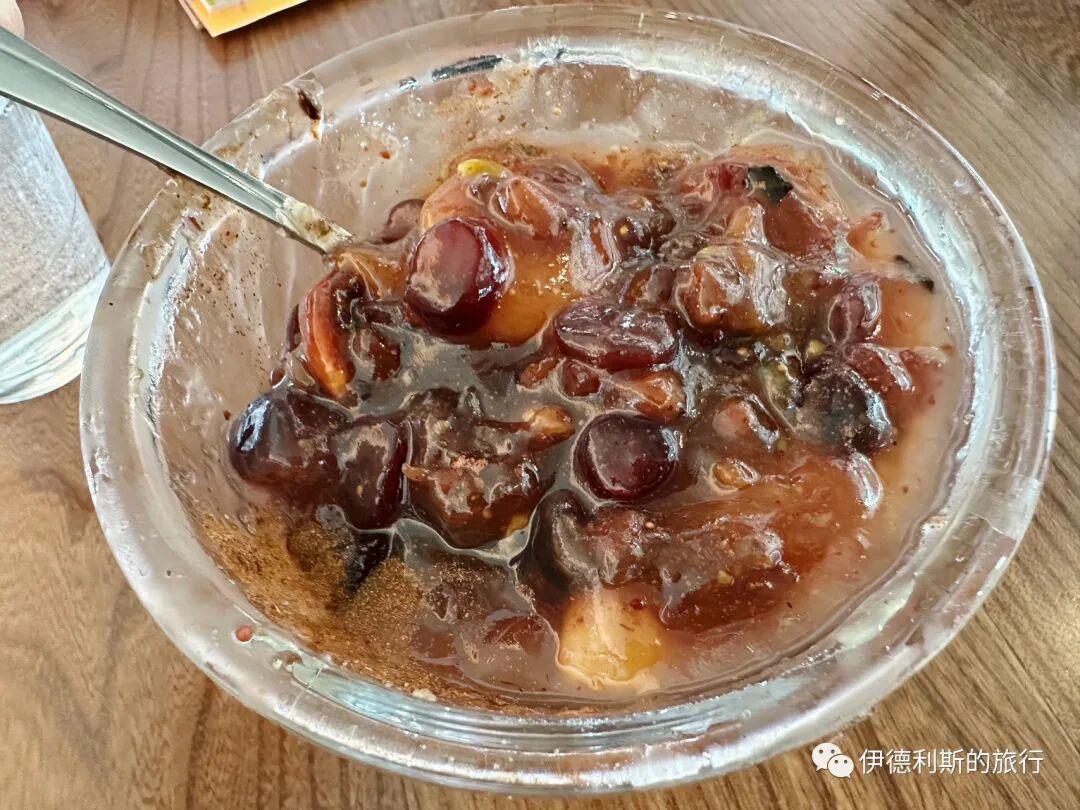
The Ottoman-style Ashure does not have a fixed recipe, as it changes based on the region and the habits of each family. Tradition says you should use at least seven ingredients, though some believe you should use ten to match the theme of the tenth day, while the Alevis always use twelve ingredients. Common ingredients include wheat, barley, rice, white kidney beans, chickpeas, grape molasses (pekmez), pomegranate molasses, beet juice, dates, raisins, currants, apricots, figs, apples, pistachios, almonds, hazelnuts, walnuts, pine nuts, and sesame seeds. You can decorate the finished Ashure with fennel seeds, black cumin seeds, plums, pomegranate, cardamom, cinnamon, cloves, and nutmeg.
Today, you can buy Ashure in dessert shops all year round in Turkey and the Balkans. However, on the Day of Ashura, people still prefer to make Ashure themselves and share it with the poor, relatives, neighbors, and friends. view all
Summary: Ashura Day - Fasting, Memory and Hui Muslim Traditions is presented as a clear English travel account for readers interested in Muslim life, halal food, mosques, and local history. The article keeps the original place names, food details, photographs, and cultural context while focusing on Ashura, Muslim Culture, Hui Muslims.
This Tuesday was the 10th of Muharram, the Day of Ashura. As usual, we made the Urumqi Hui Muslim version of Ashura bean rice (dou dou fan).
After work, I went to the supermarket to buy beans. This time I used seven kinds: soybeans, black beans, mung beans, red beans, chickpeas, white kidney beans, and lotus beans. First, I cooked the seven types of beans in a pressure cooker until soft. Then, I diced some Qurbani lamb and chopped green onions. I stir-fried the meat with the green onions, adding salt and Sichuan peppercorn powder. I added rice and sticky rice to the cooked beans, then mixed in the stir-fried meat. I set the pressure cooker to the rice cooking mode to finish it.
Since our pressure cooker wasn't big enough, the water boiled away a bit too much. After taking it out, we added more water to thin it out. Actually, the traditional way is to simmer it in a large pot for a long time.
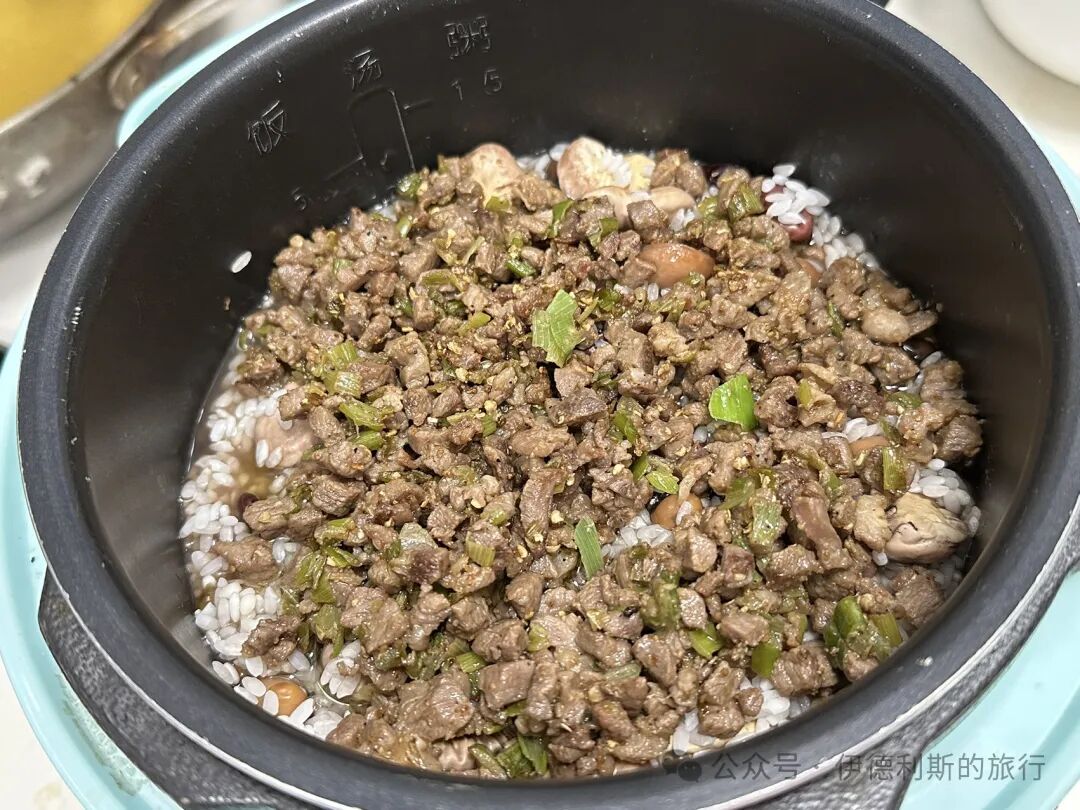
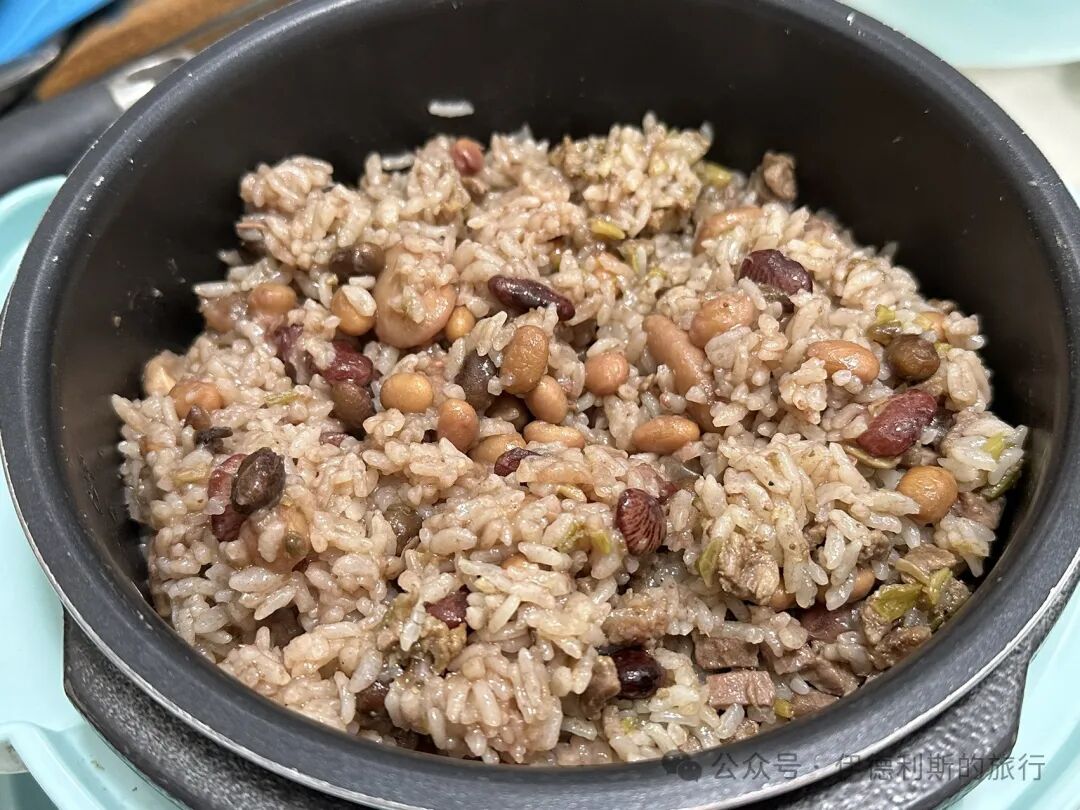
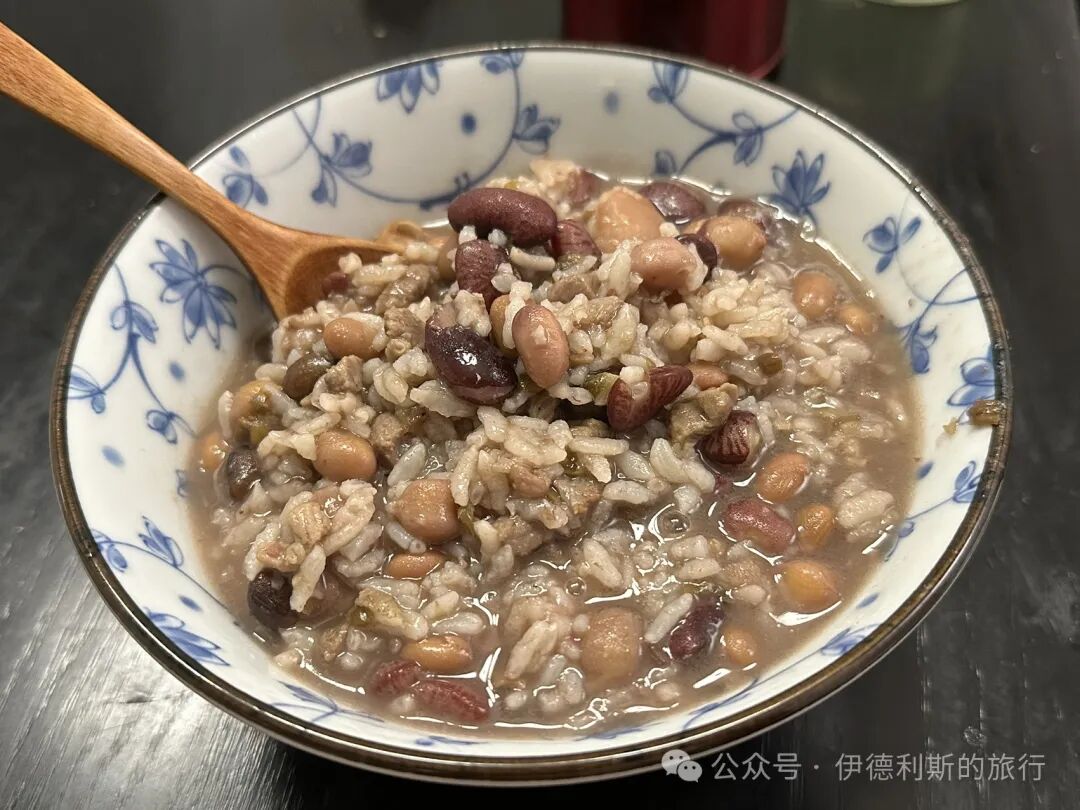
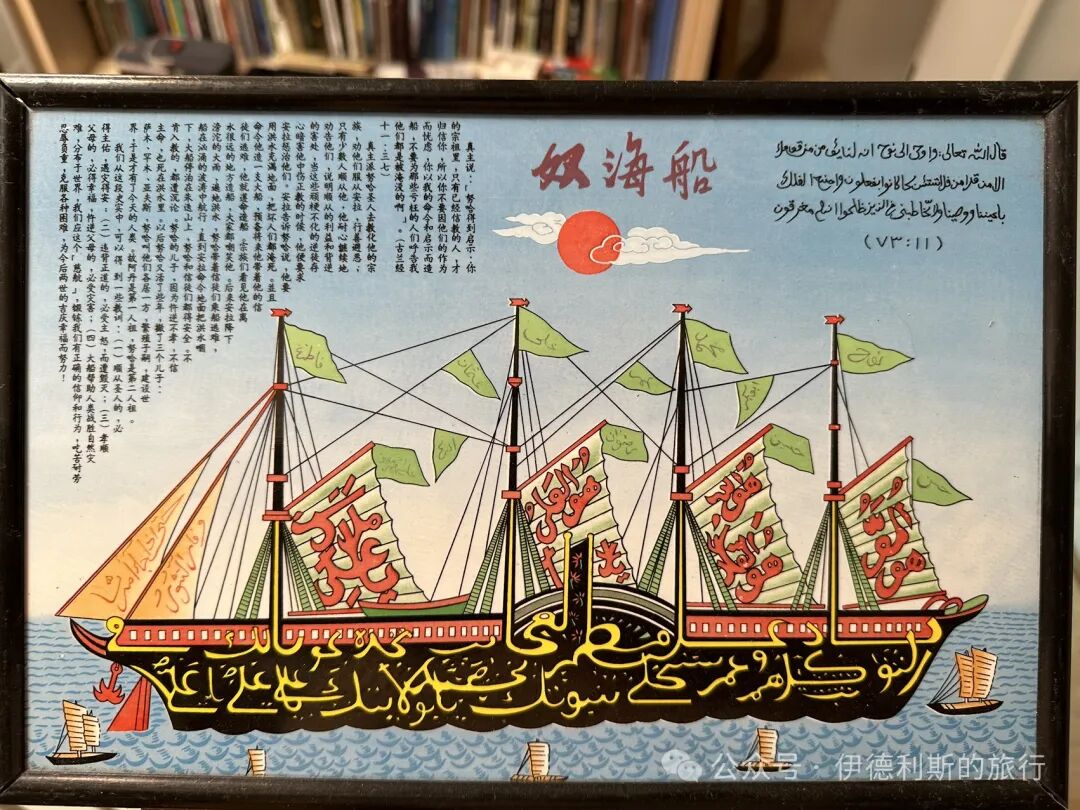
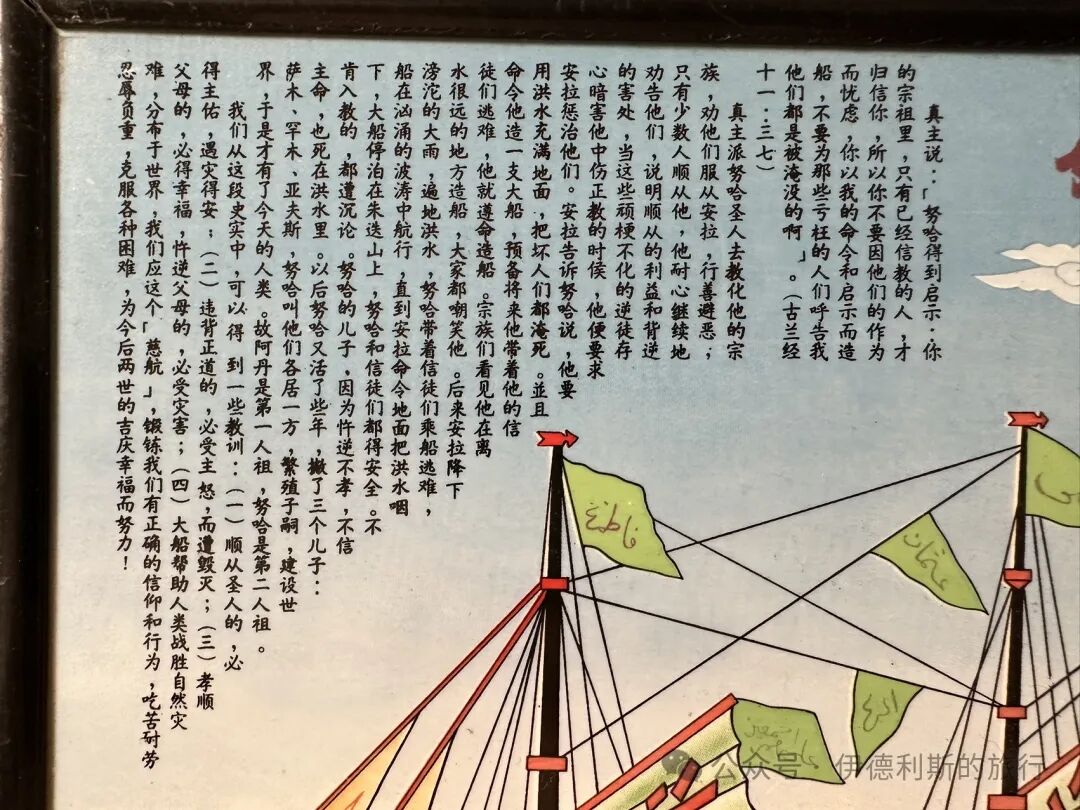
Legend says that when the Great Flood receded and Prophet Nuh's ship reached land, he and his followers used the seven types of beans on the ship to make the first meal for humanity after the disaster. Across a vast region from Bosnia and Turkey in the west to China in the east, many friends (dostani) make Ashura bean porridge today to remember the landing of Noah's Ark.
You can actually find Ashura bean porridge at the Sultan Turkish Restaurant in Beijing, but the Turkish version is more like a dessert and tastes quite different from the Chinese one.
The Ottoman-style Ashure does not have a fixed recipe, as it changes based on the region and the habits of each family. Tradition says you should use at least seven ingredients, though some believe you should use ten to match the theme of the tenth day, while the Alevis always use twelve ingredients. Common ingredients include wheat, barley, rice, white kidney beans, chickpeas, grape molasses (pekmez), pomegranate molasses, beet juice, dates, raisins, currants, apricots, figs, apples, pistachios, almonds, hazelnuts, walnuts, pine nuts, and sesame seeds. You can decorate the finished Ashure with fennel seeds, black cumin seeds, plums, pomegranate, cardamom, cinnamon, cloves, and nutmeg.
Today, you can buy Ashure in dessert shops all year round in Turkey and the Balkans. However, on the Day of Ashura, people still prefer to make Ashure themselves and share it with the poor, relatives, neighbors, and friends.

Halal Food Guide: Ashura Bean Porridge — Muslim Food Culture Across Eurasia
Articles • ali2007fr posted the article • 0 comments • 160 views • 2026-05-19 02:59
Summary: Ashura bean porridge is a Muslim food tradition that has traveled across Eurasia through faith, family memory, and local kitchens. This article explains the dish, its cultural setting, and its ingredients in natural English while preserving the original details.
The 10th day of the first month of the Islamic calendar is the honorable Day of Ashura. Besides fasting, Hui Muslims also have a tradition of making Ashura bean porridge to commemorate the day the Ark of Nuh (Noah's Ark) reached land. People say when the Prophet Nuh and his followers stepped off the boat, they had almost no food left. Everyone pooled together seeds of various foods to make the first meal for humanity after the Great Flood receded.
We came home from work yesterday and started making the Urumqi version of Ashura bean rice.
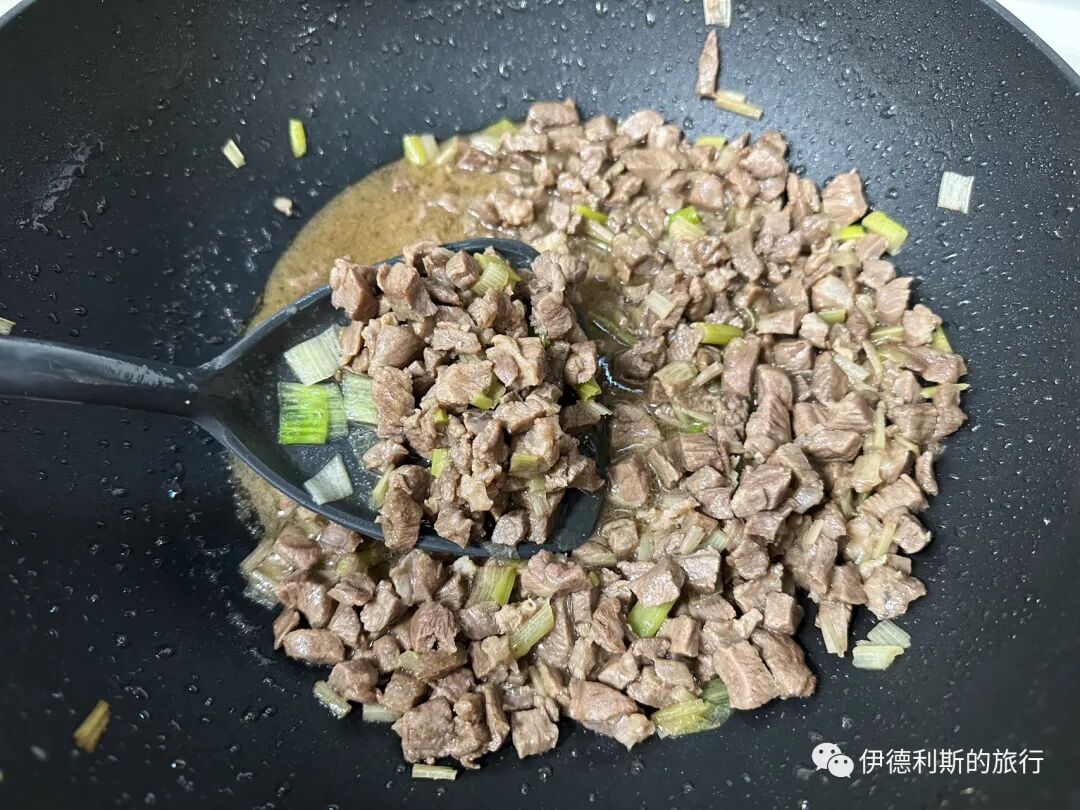
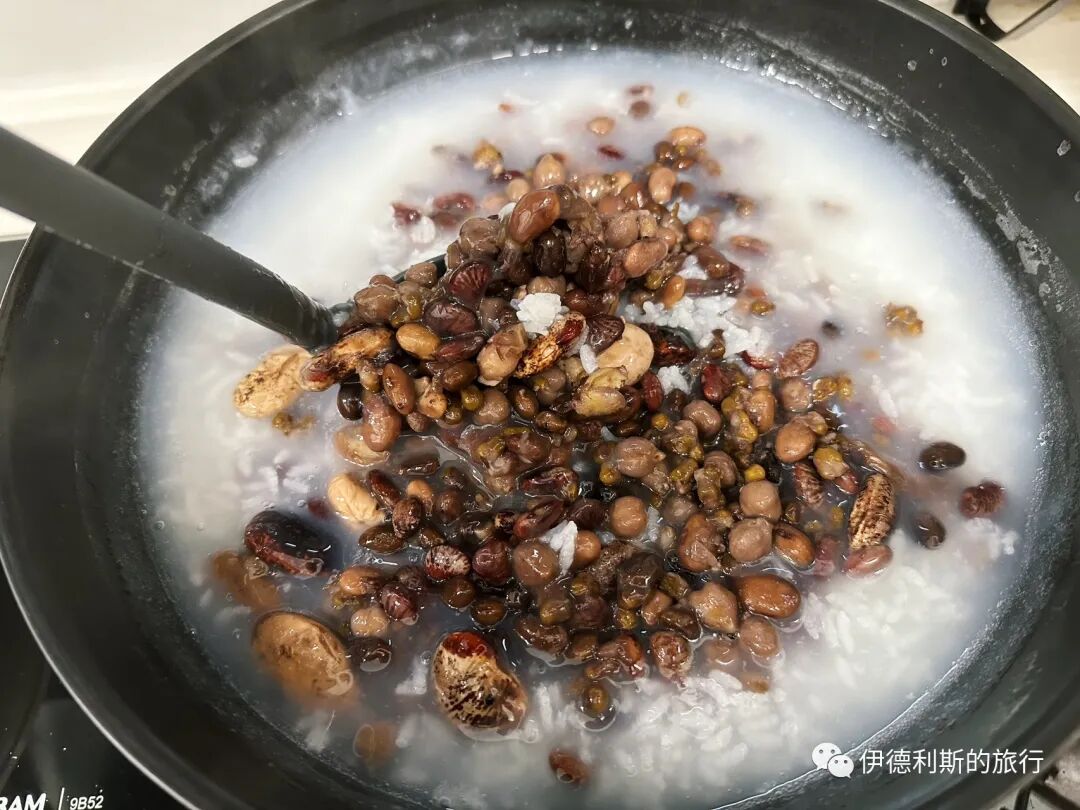
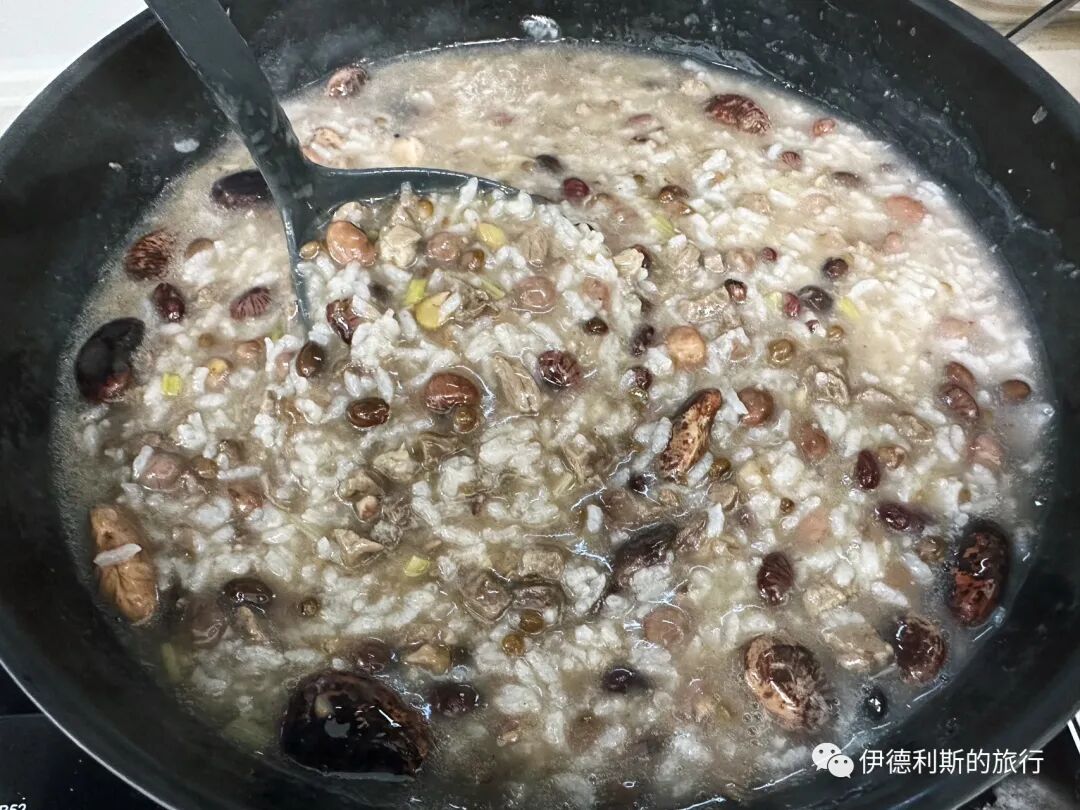
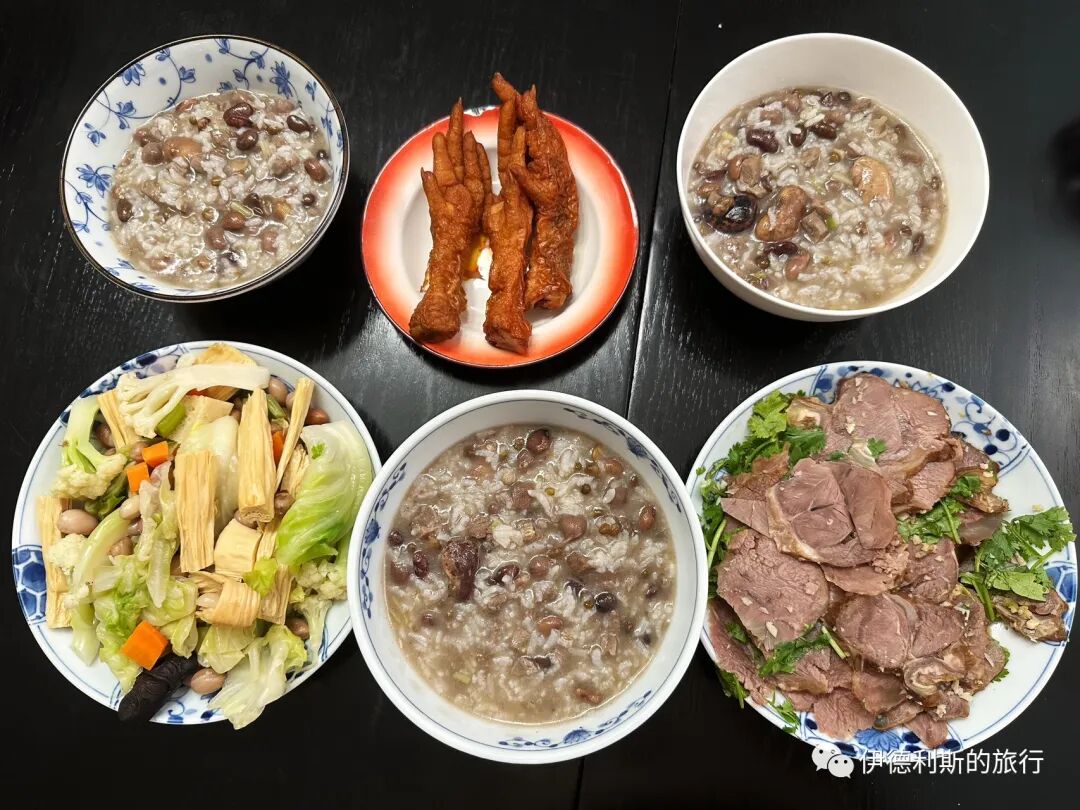
First, cut the Qurban lamb into small cubes and stir-fry them with chopped green onions. Make sure the Sichuan peppercorns (huajiao) and salt stand out in the flavor. Then, put a handful of glutinous rice and half a bowl of rice into half a pot of water. After it is cooked, add the nine types of beans that were boiled the day before, stir well, and then add the stir-fried lamb. The finished dish has both the fragrance of beans and the aroma of meat, and it is very meaningful.
Besides Hui Muslims, many Sunni Muslims in other regions also make Ashura bean porridge, with the most famous being the Ashure of the Ottoman Empire. In his 17th-century work, The Book of Travels (Seyahatname), the Ottoman traveler Evliya Celebi mentioned that Ashure is a type of porridge that should be cooked on the tenth day of the month of Muharram.
Ottoman Ashure does not have a fixed recipe, as it varies by region and the habits of each family. Traditionally, People say at least seven ingredients should be used, while others believe it should contain ten ingredients to match the theme of the tenth day. The Alevis always use twelve ingredients. Commonly used ingredients include wheat, barley, rice, white kidney beans, chickpeas, grape molasses (pekmez), pomegranate molasses, beet juice, dates, raisins, currants, apricots, figs, apples, pistachios, almonds, hazelnuts, walnuts, pine nuts, and sesame seeds. The finished Ashure can also be decorated with fennel seeds, black cumin seeds, plums, pomegranates, cardamom, cinnamon, cloves, and nutmeg.
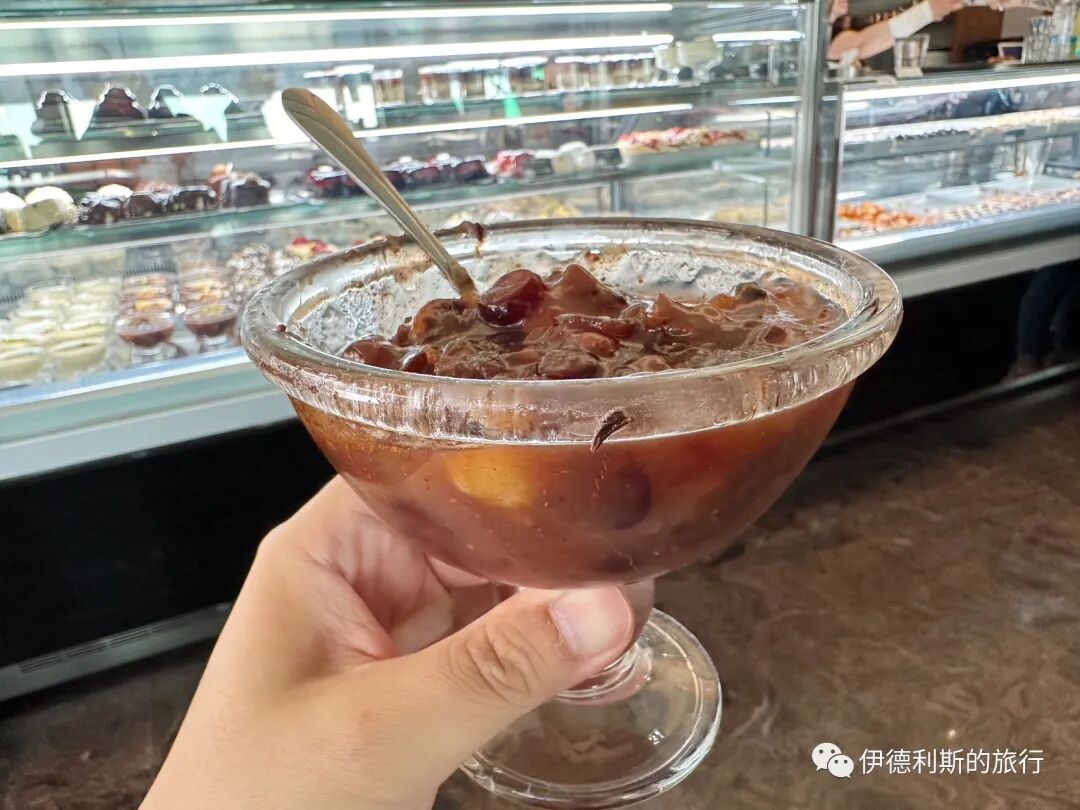
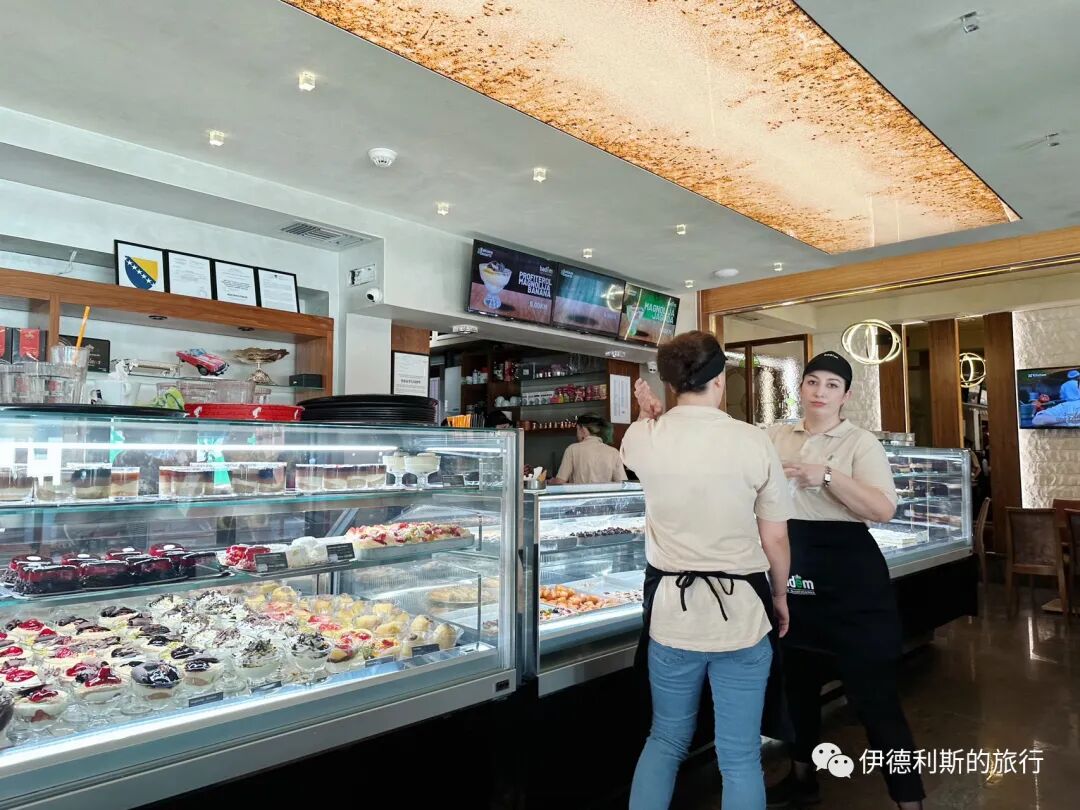
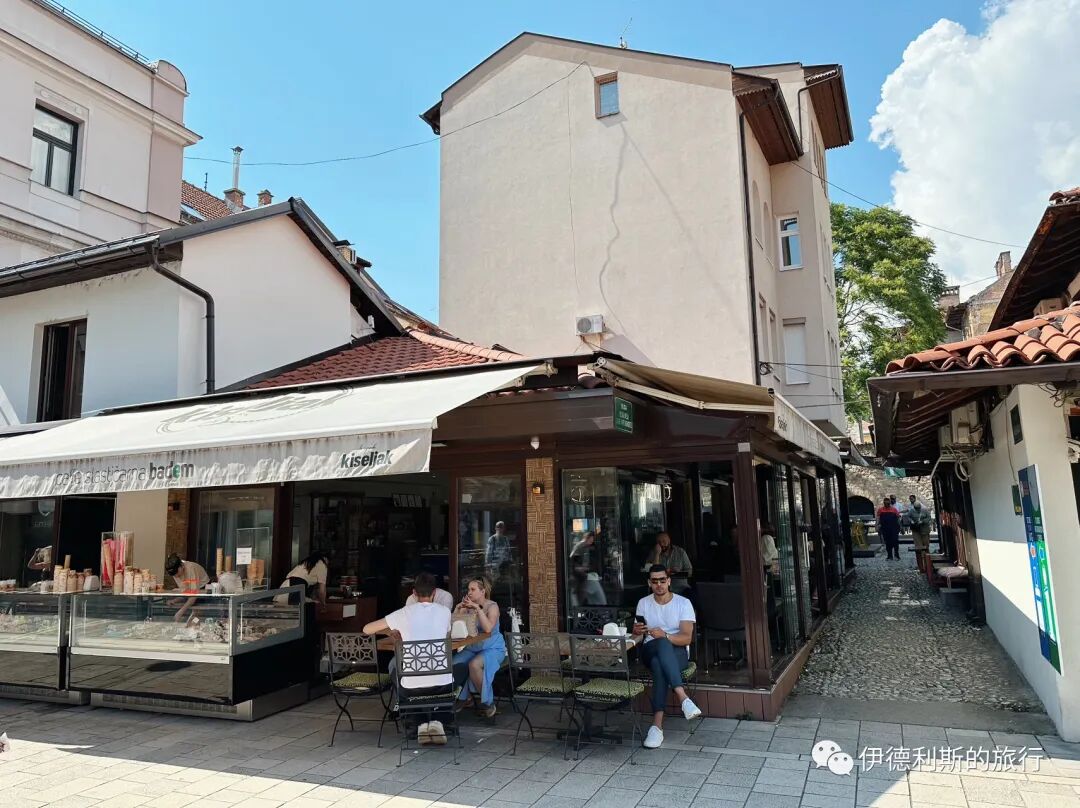
I first ate Ashure in Istanbul, and I had it again this year in Sarajevo. Today, you can buy Ashure in dessert shops all year round in Turkey and the Balkan region. However, on the Day of Ashura, people still prefer to make Ashure themselves and share it with the poor, relatives, neighbors, and friends. view all
Summary: Ashura bean porridge is a Muslim food tradition that has traveled across Eurasia through faith, family memory, and local kitchens. This article explains the dish, its cultural setting, and its ingredients in natural English while preserving the original details.
The 10th day of the first month of the Islamic calendar is the honorable Day of Ashura. Besides fasting, Hui Muslims also have a tradition of making Ashura bean porridge to commemorate the day the Ark of Nuh (Noah's Ark) reached land. People say when the Prophet Nuh and his followers stepped off the boat, they had almost no food left. Everyone pooled together seeds of various foods to make the first meal for humanity after the Great Flood receded.
We came home from work yesterday and started making the Urumqi version of Ashura bean rice.
First, cut the Qurban lamb into small cubes and stir-fry them with chopped green onions. Make sure the Sichuan peppercorns (huajiao) and salt stand out in the flavor. Then, put a handful of glutinous rice and half a bowl of rice into half a pot of water. After it is cooked, add the nine types of beans that were boiled the day before, stir well, and then add the stir-fried lamb. The finished dish has both the fragrance of beans and the aroma of meat, and it is very meaningful.
Besides Hui Muslims, many Sunni Muslims in other regions also make Ashura bean porridge, with the most famous being the Ashure of the Ottoman Empire. In his 17th-century work, The Book of Travels (Seyahatname), the Ottoman traveler Evliya Celebi mentioned that Ashure is a type of porridge that should be cooked on the tenth day of the month of Muharram.
Ottoman Ashure does not have a fixed recipe, as it varies by region and the habits of each family. Traditionally, People say at least seven ingredients should be used, while others believe it should contain ten ingredients to match the theme of the tenth day. The Alevis always use twelve ingredients. Commonly used ingredients include wheat, barley, rice, white kidney beans, chickpeas, grape molasses (pekmez), pomegranate molasses, beet juice, dates, raisins, currants, apricots, figs, apples, pistachios, almonds, hazelnuts, walnuts, pine nuts, and sesame seeds. The finished Ashure can also be decorated with fennel seeds, black cumin seeds, plums, pomegranates, cardamom, cinnamon, cloves, and nutmeg.
I first ate Ashure in Istanbul, and I had it again this year in Sarajevo. Today, you can buy Ashure in dessert shops all year round in Turkey and the Balkan region. However, on the Day of Ashura, people still prefer to make Ashure themselves and share it with the poor, relatives, neighbors, and friends.
Ashura in Tehran: a Muslim Travel Note on Faith, Rituals and City Life
Articles • ali2007fr posted the article • 0 comments • 189 views • 2026-05-17 07:35
Summary: This travel note introduces Ashura in Tehran: a Muslim Travel Note on Faith, Rituals and City Life. I went to Tehran during the Mid-Autumn Festival holiday in 2019, just in time for the various activities of Ashura, and truly felt the warmth of the Iranian people. It is useful for readers interested in Tehran Travel, Ashura, Muslim Culture.
I went to Tehran during the Mid-Autumn Festival holiday in 2019, just in time for the various activities of Ashura, and truly felt the warmth of the Iranian people.
Ashura originally means 'the tenth,' and the Day of Ashura refers to the tenth day of the first month of the Islamic calendar (Muharram). On the Day of Ashura in 680 AD, Imam Hussein, the grandson of the Prophet Muhammad, refused to pledge allegiance to the Umayyad Caliphate. While leading his family and followers from Mecca to Kufa, they were attacked by the Umayyad army, and Imam Hussein and all 72 of his companions were killed. Since then, Shia Muslims around the world have held activities every year during the month of Muharram to mourn Imam Hussein and his 72 companions, gradually forming the important Shia festival of Ashura.
During Ashura, Shia Muslims perform Azadari (mourning) rituals, including memorial services (majalis al-ta'ziya), mourning processions (al-mawakib al-husayniyya), theatrical performances (shabih), and flagellation (tatbir). Some Shia Muslims believe that participating in Ashura can cleanse their sins, and there is a saying that 'a tear shed for Hussein washes away a hundred sins.'
Grand Bazaar
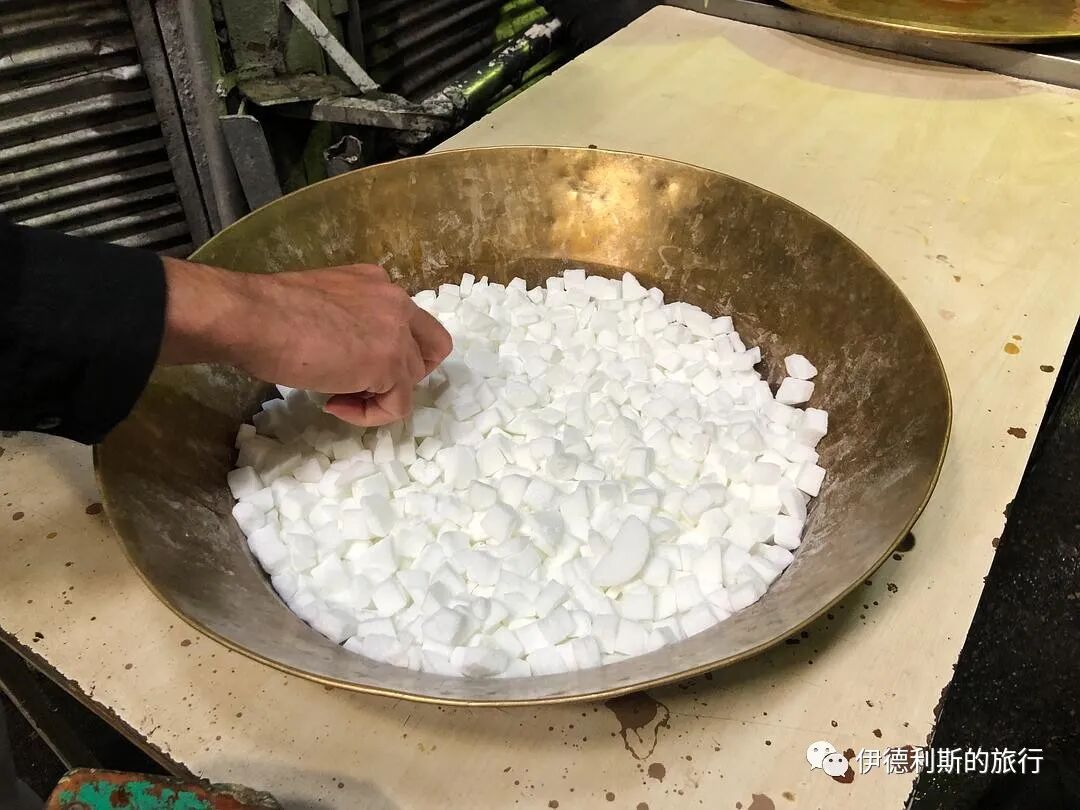
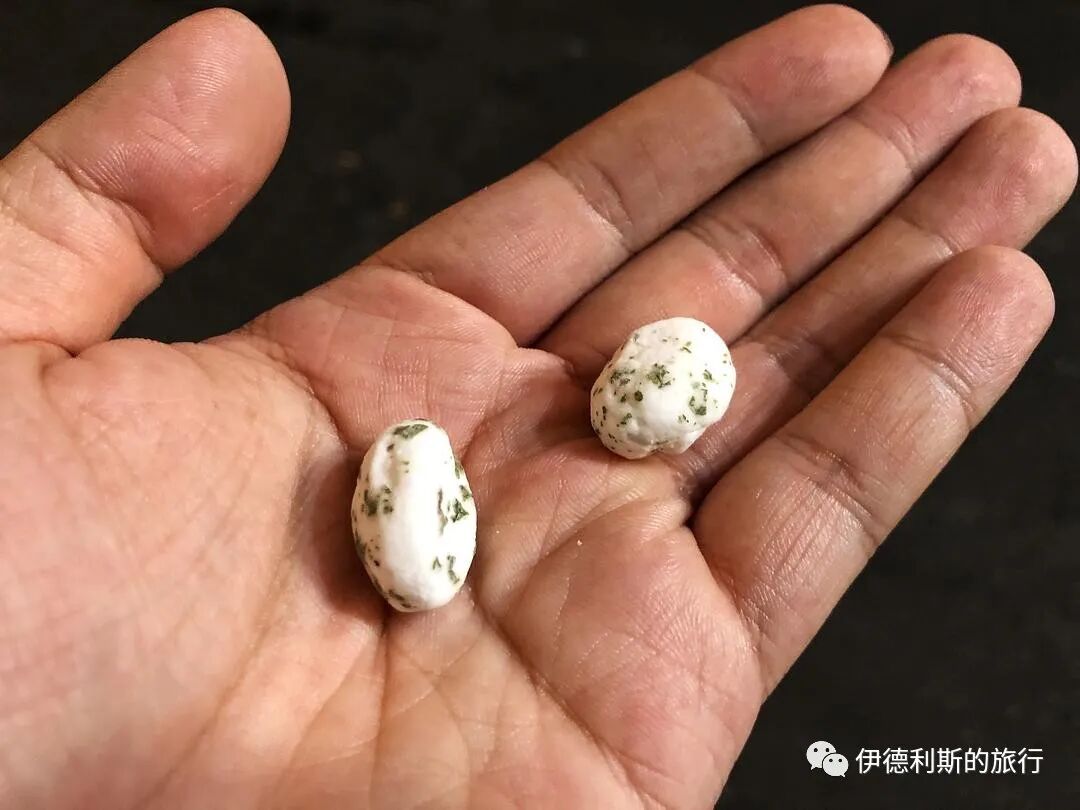
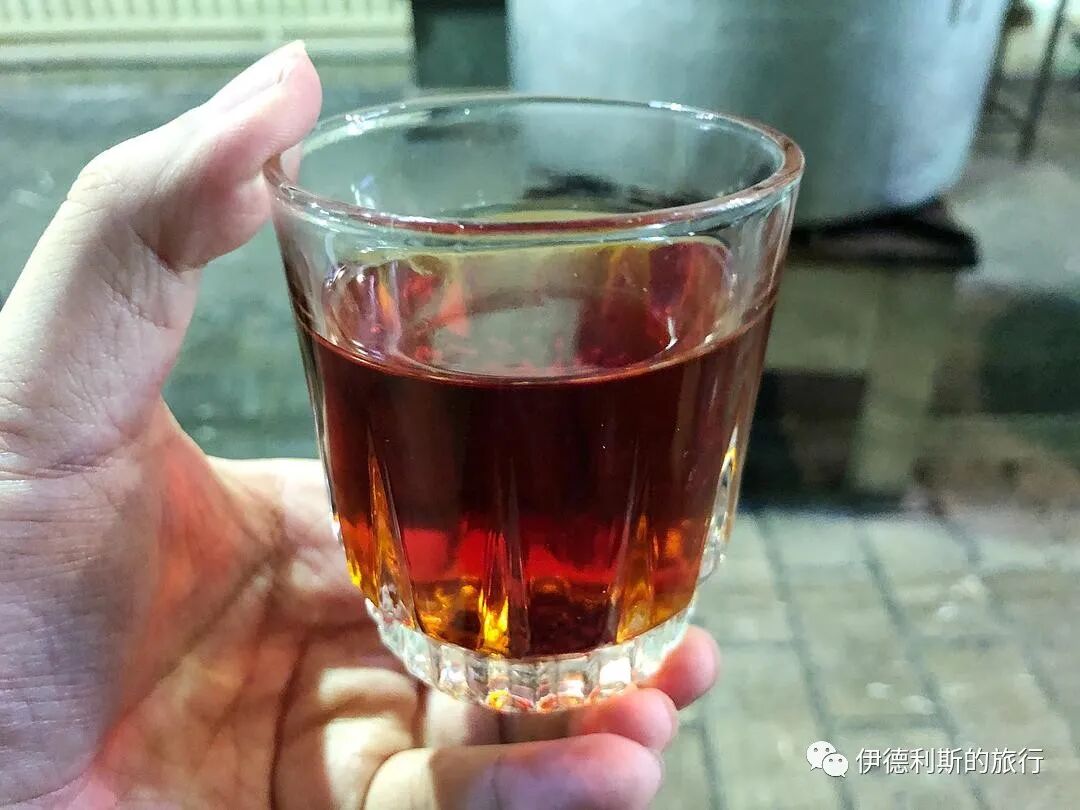
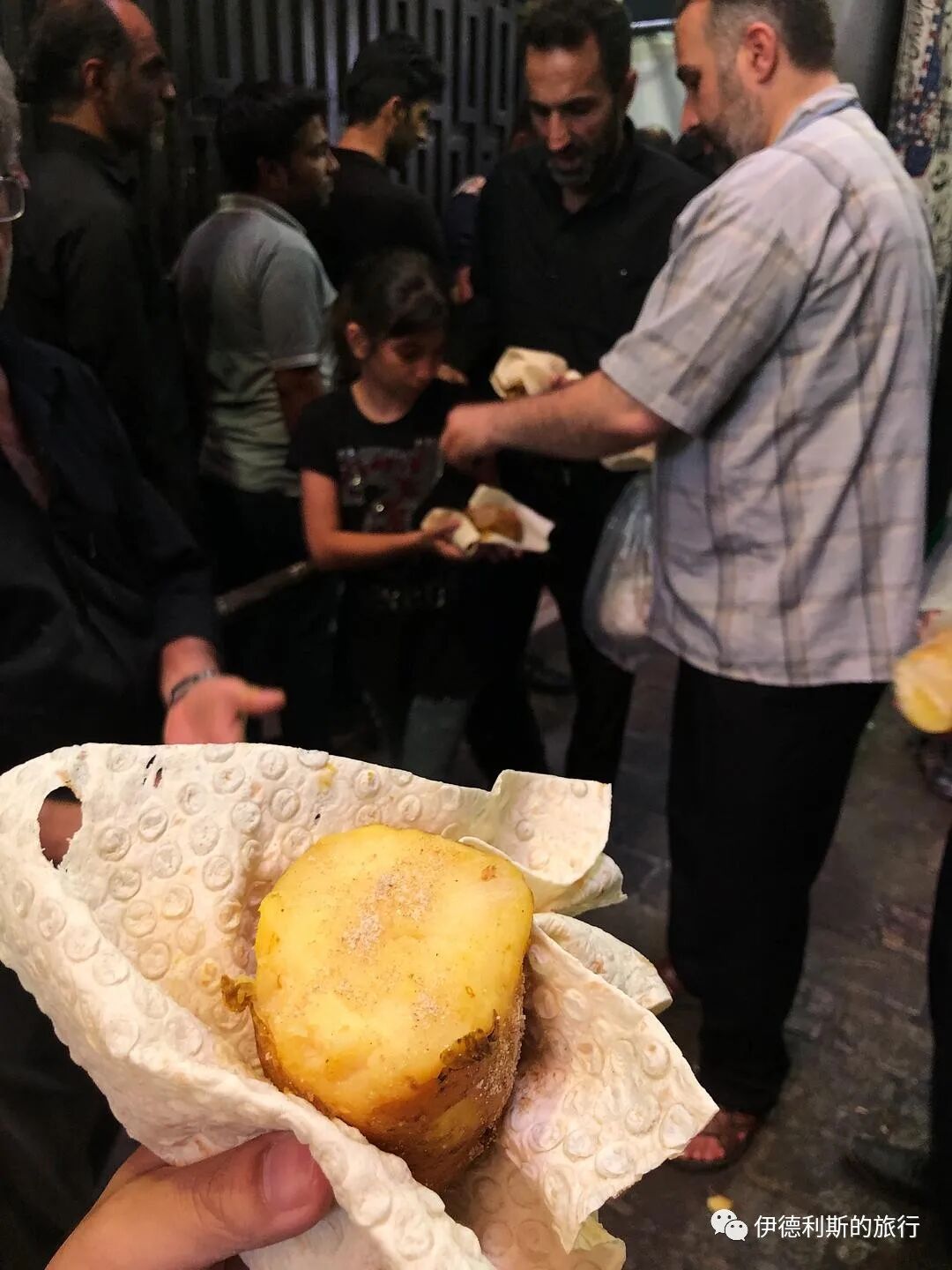
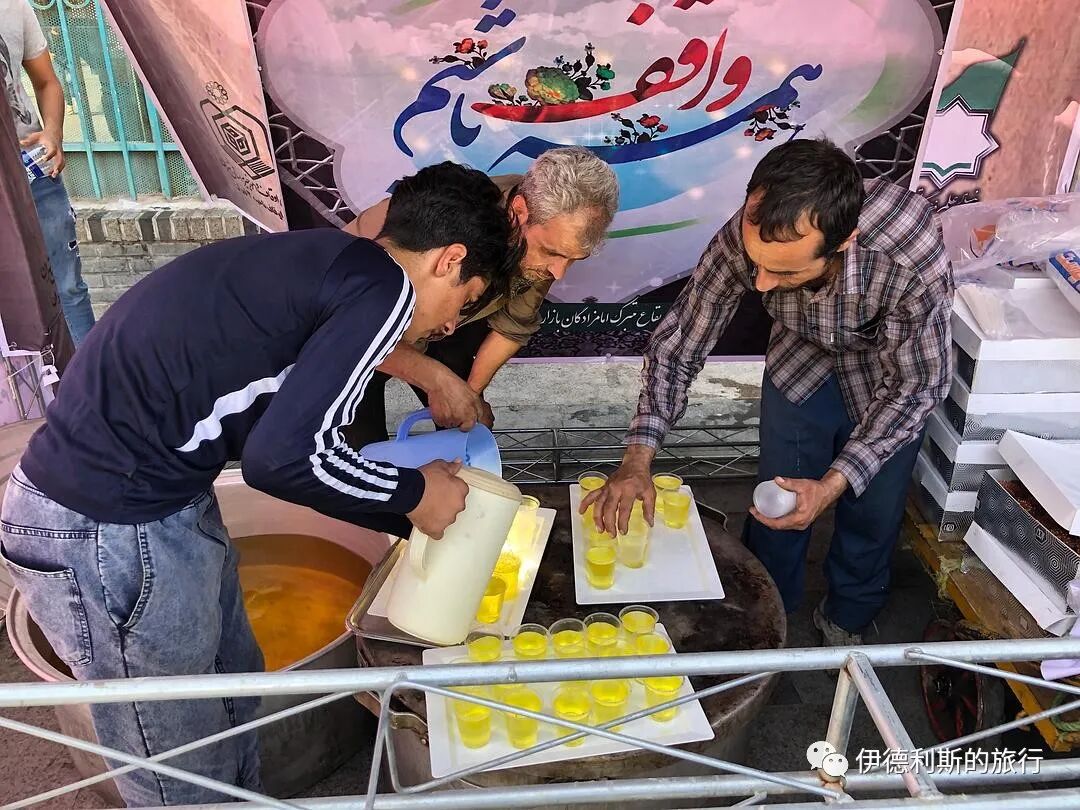
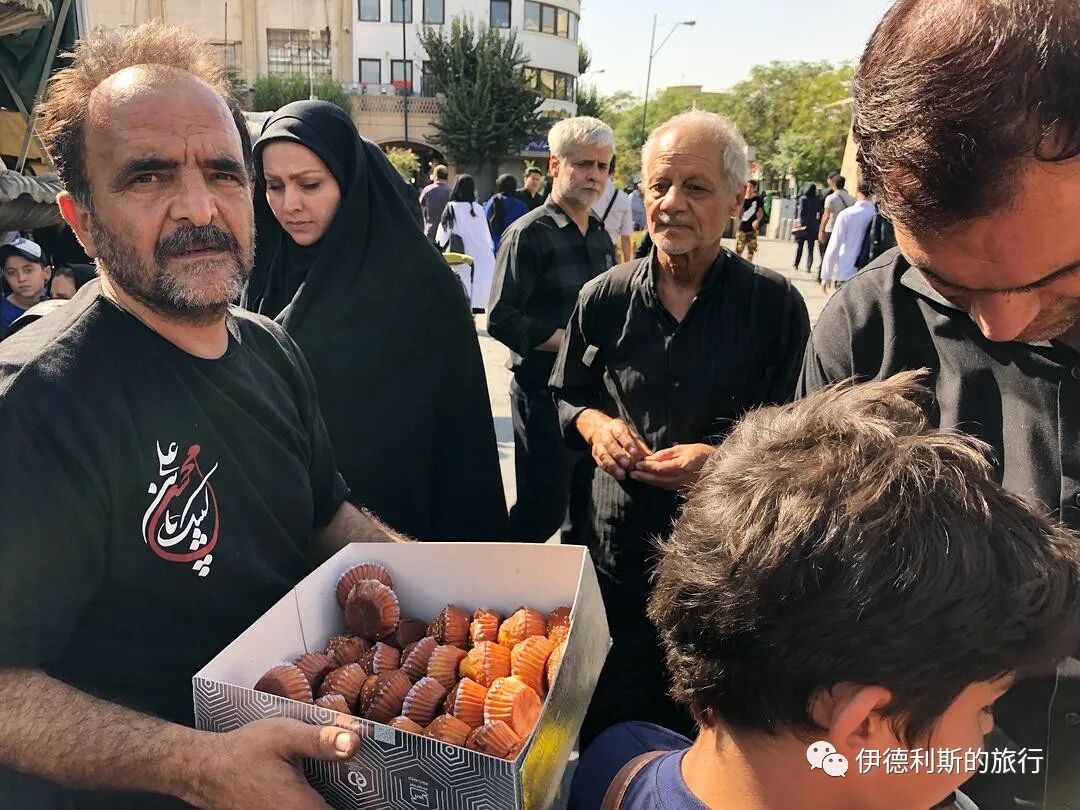
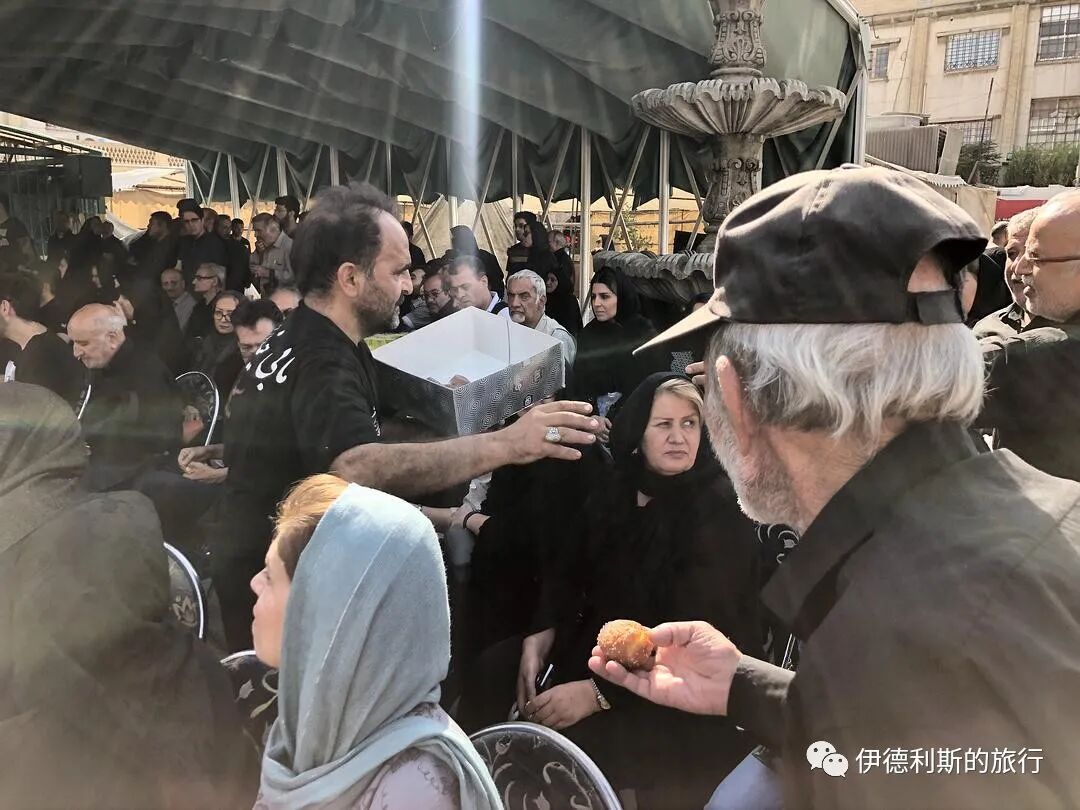
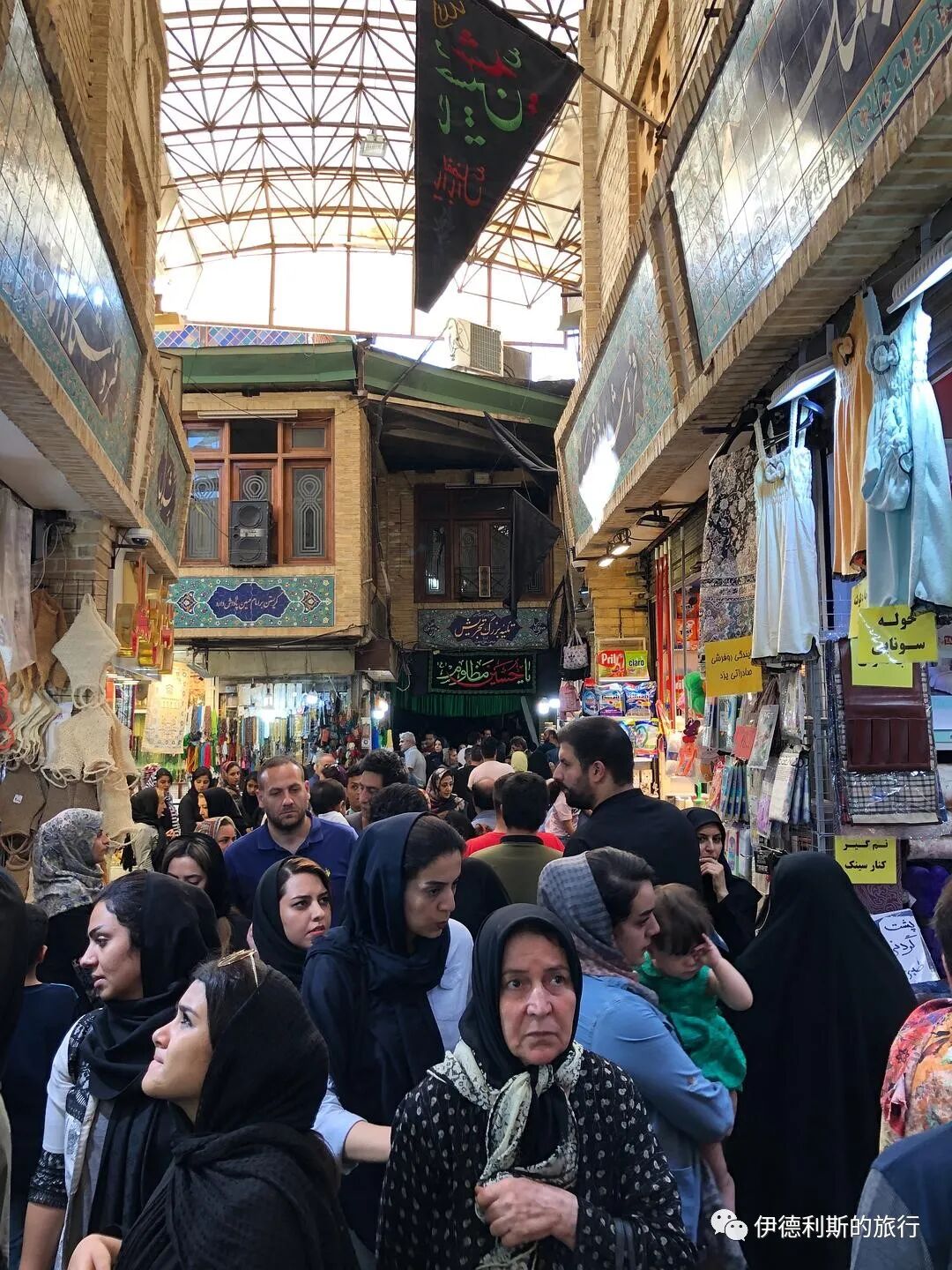
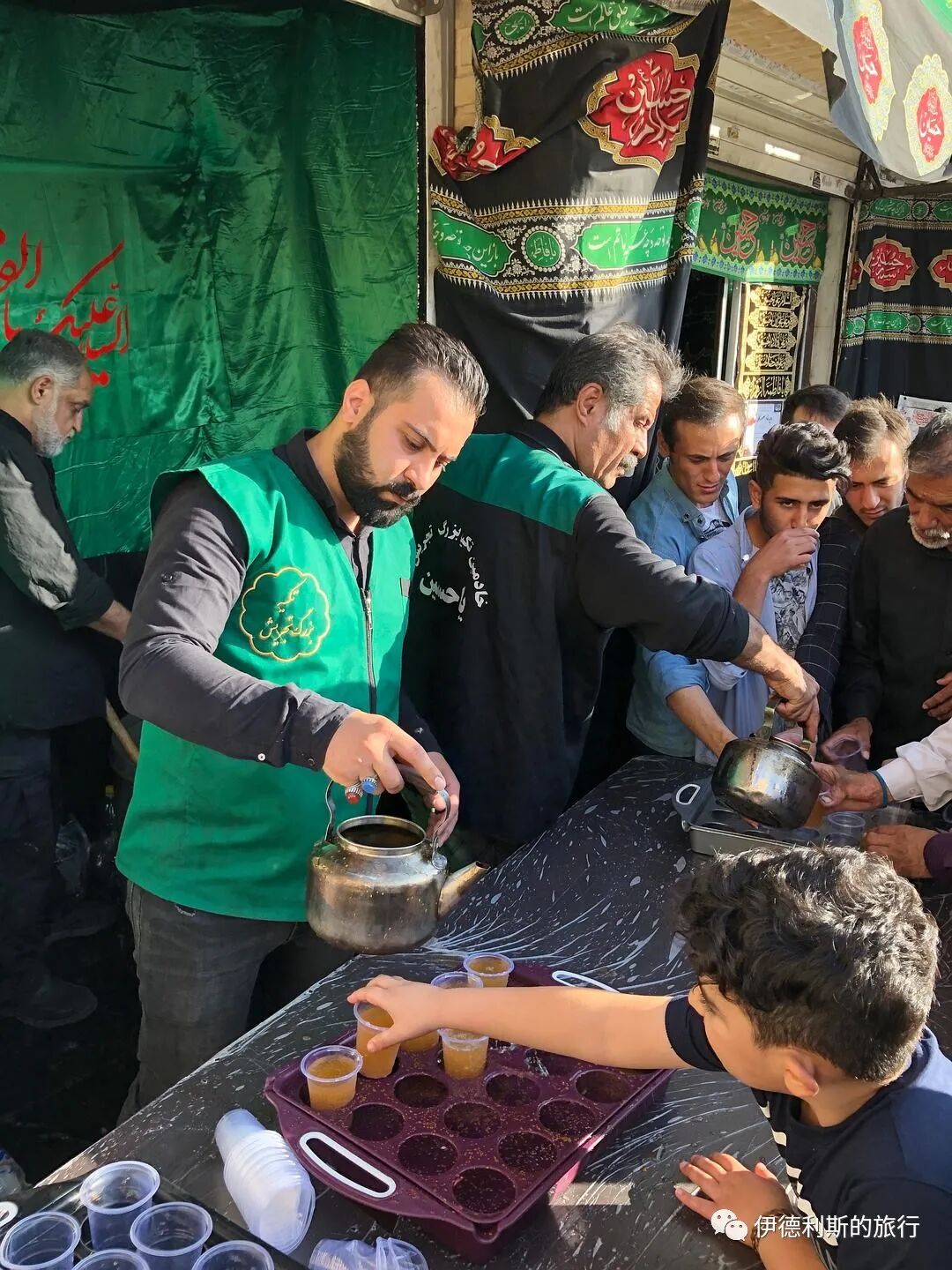
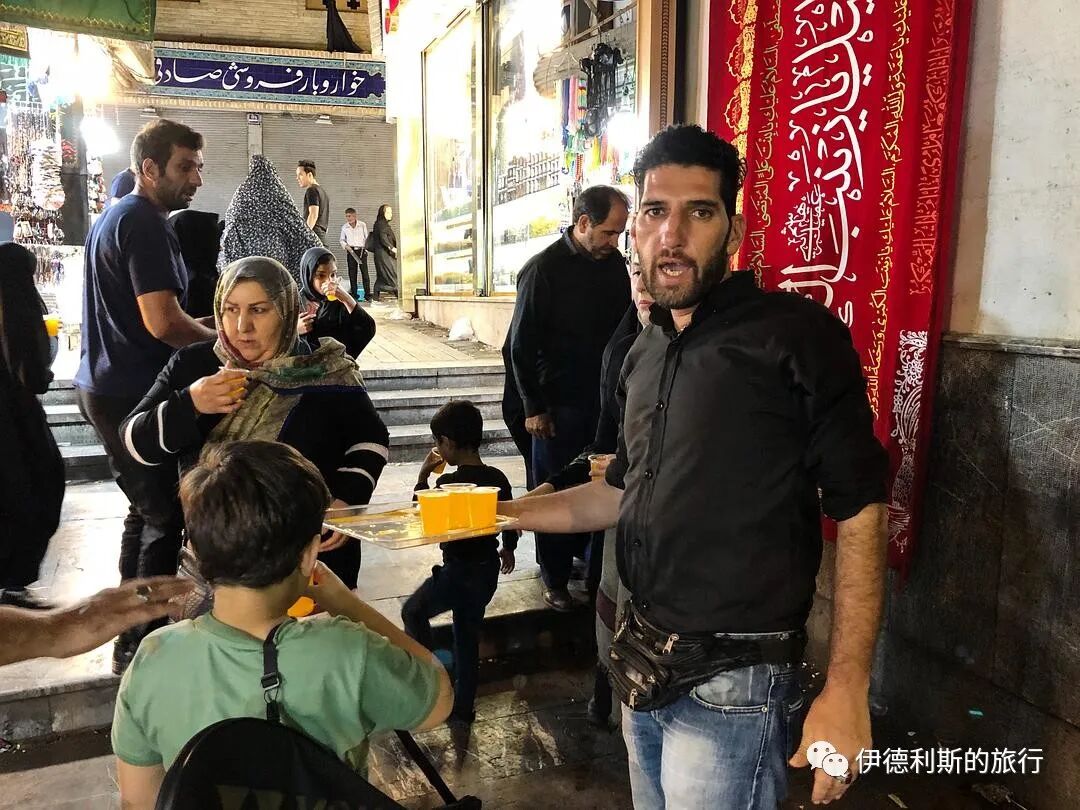
On ordinary days, the Tehran Grand Bazaar is a massive wholesale market selling small commodities from Yiwu, but it takes on a different look during Ashura. As soon as you reach the entrance, people are handing out free honey water, tea, and various snacks; sugar cubes are held in the mouth while sipping tea.
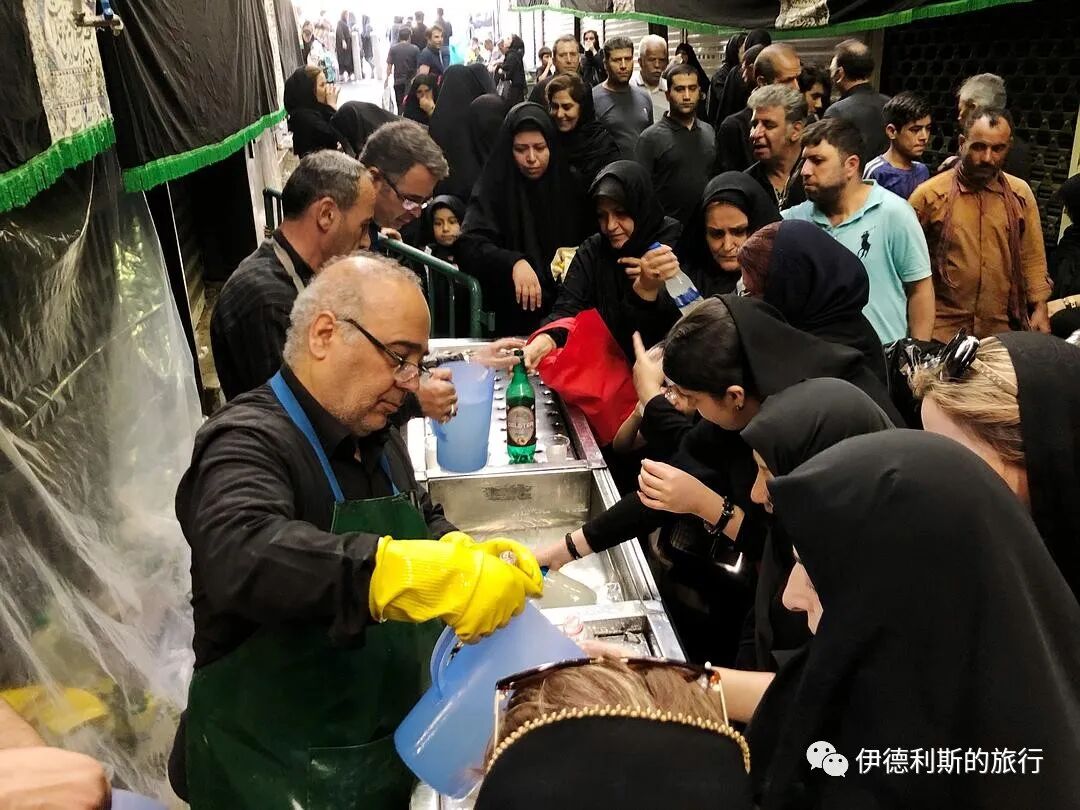
During Ashura, stalls are set up all over Tehran to provide free tea, drinks, and food, and an area near the north gate of the Grand Bazaar is specifically set aside for preparing drinks. A staff member, an older man, kindly invited me into the drink preparation area, offered me tea, and let me take photos.
This area is for distributing food for free.
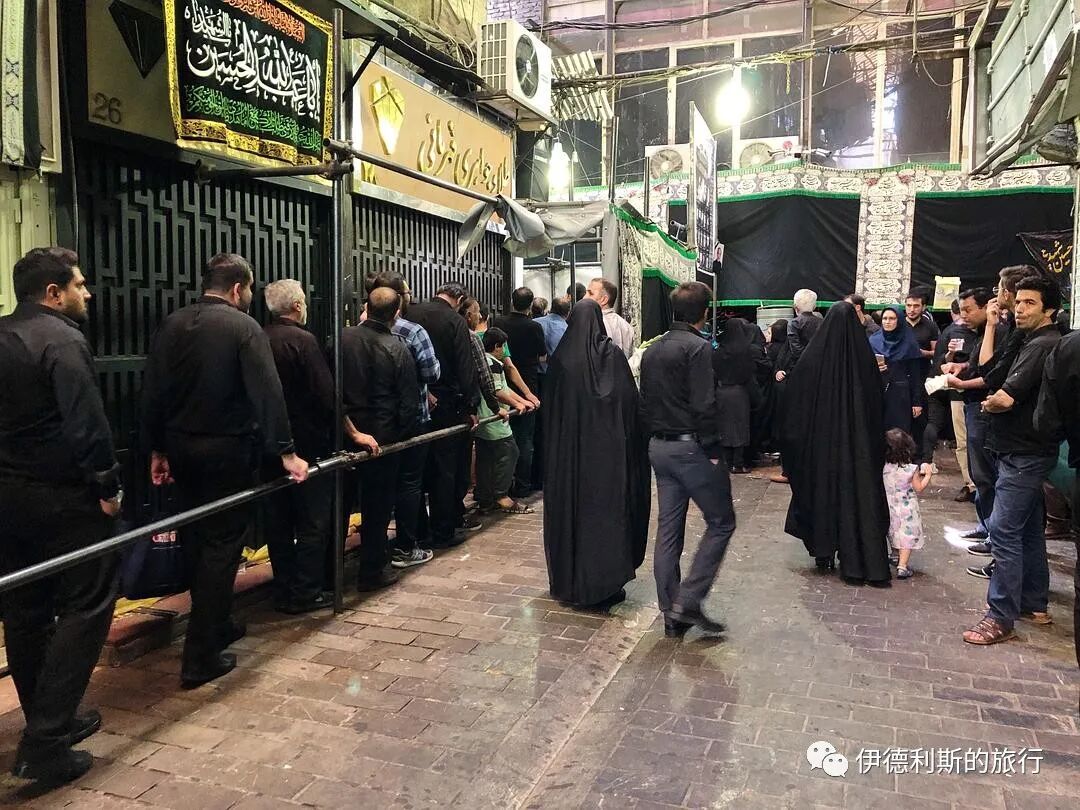
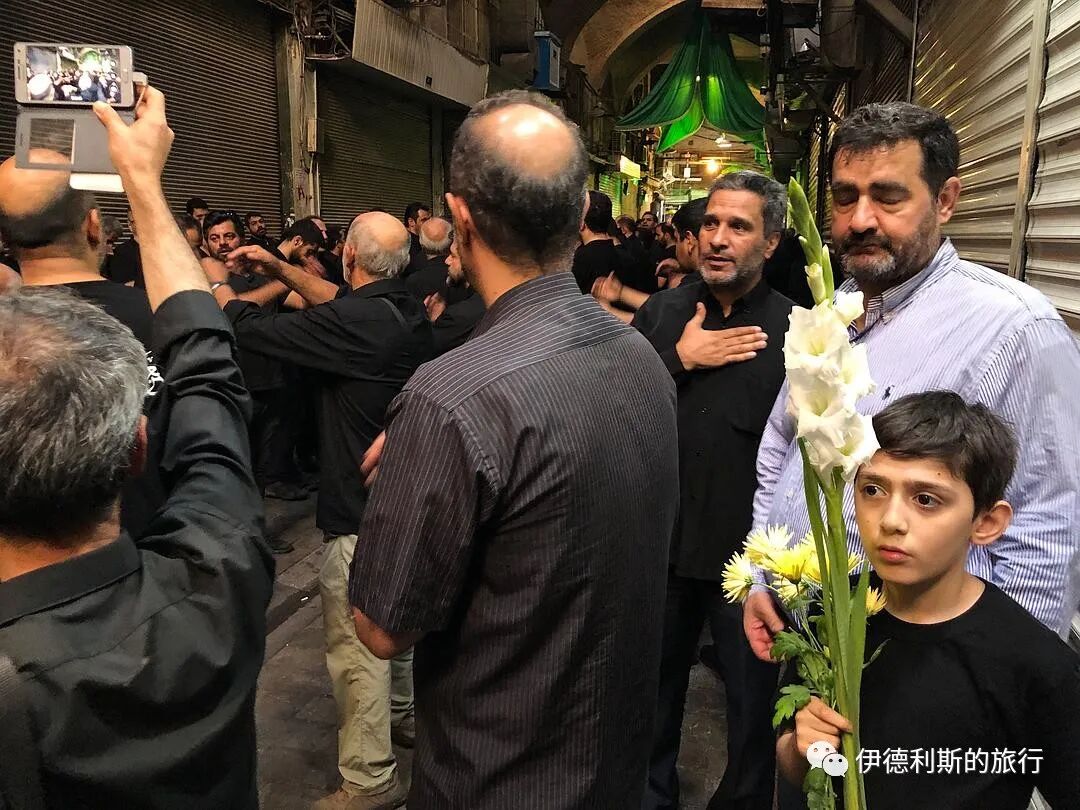
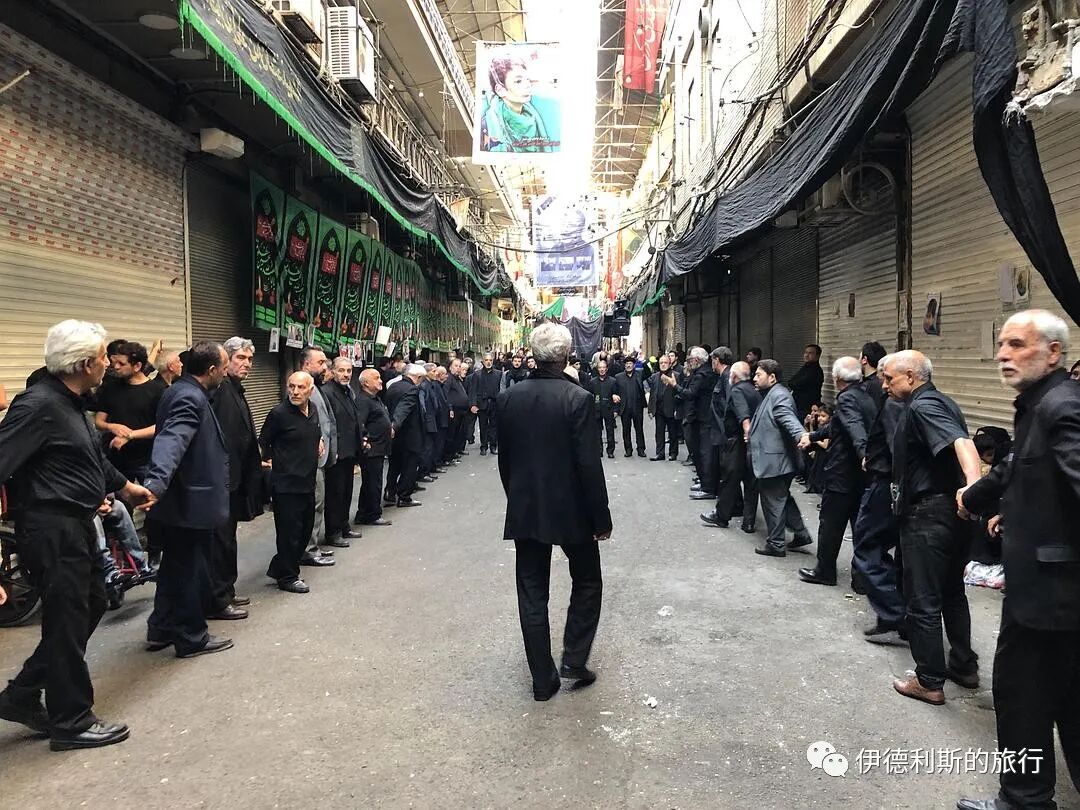
Walking further into the Grand Bazaar, you can see processions performing the Ashura mourning march (al-mawakib al-husayniyya), where everyone mourns together for Imam Hussein and his 72 companions who were killed by the Umayyad army on the Day of Ashura, singing rhythmically together.
During the procession, the group stops intermittently, and one person delivers a eulogy for Imam Hussein, while everyone cries and wails along, with many people weeping bitterly.
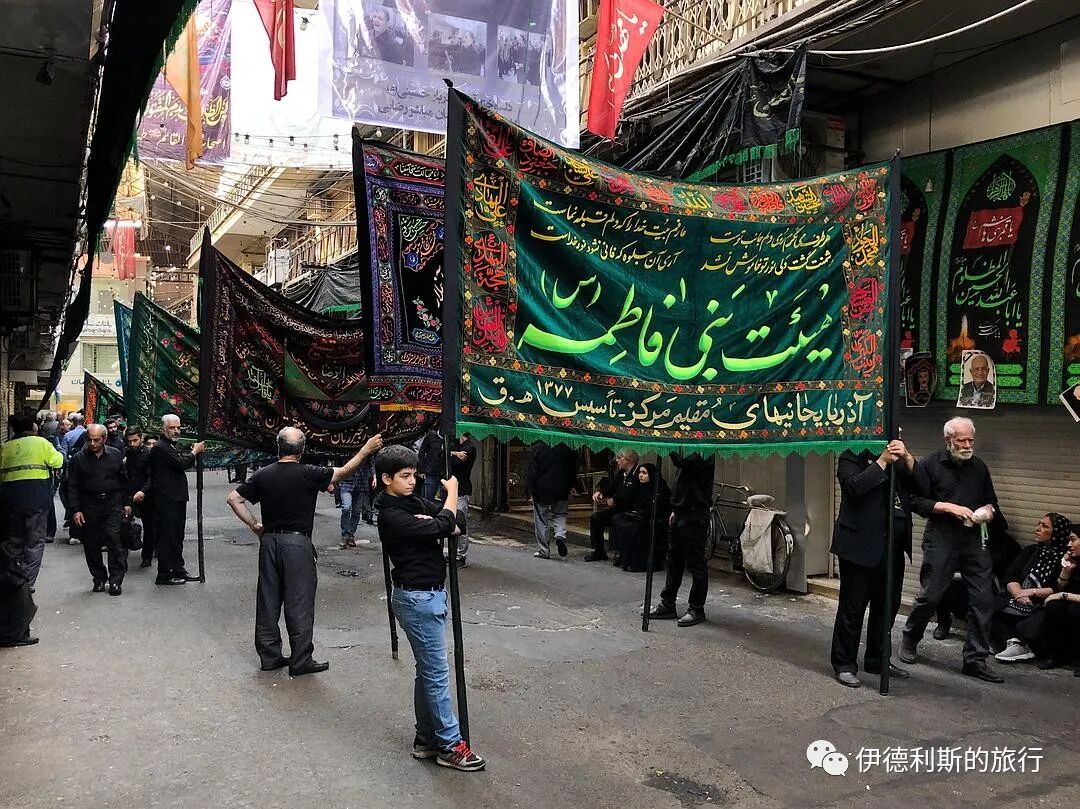
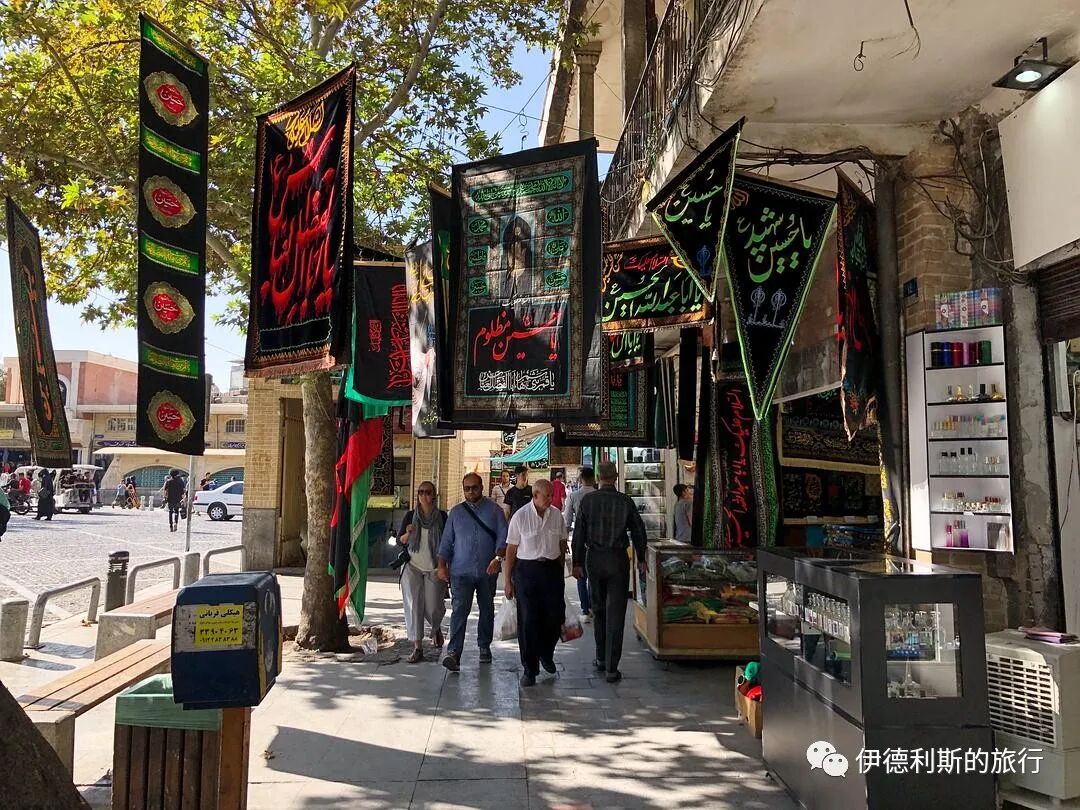
In addition to the singing, various flags are also very eye-catching.
This is a procession composed of hundreds or thousands of people holding hands, which is very spectacular.
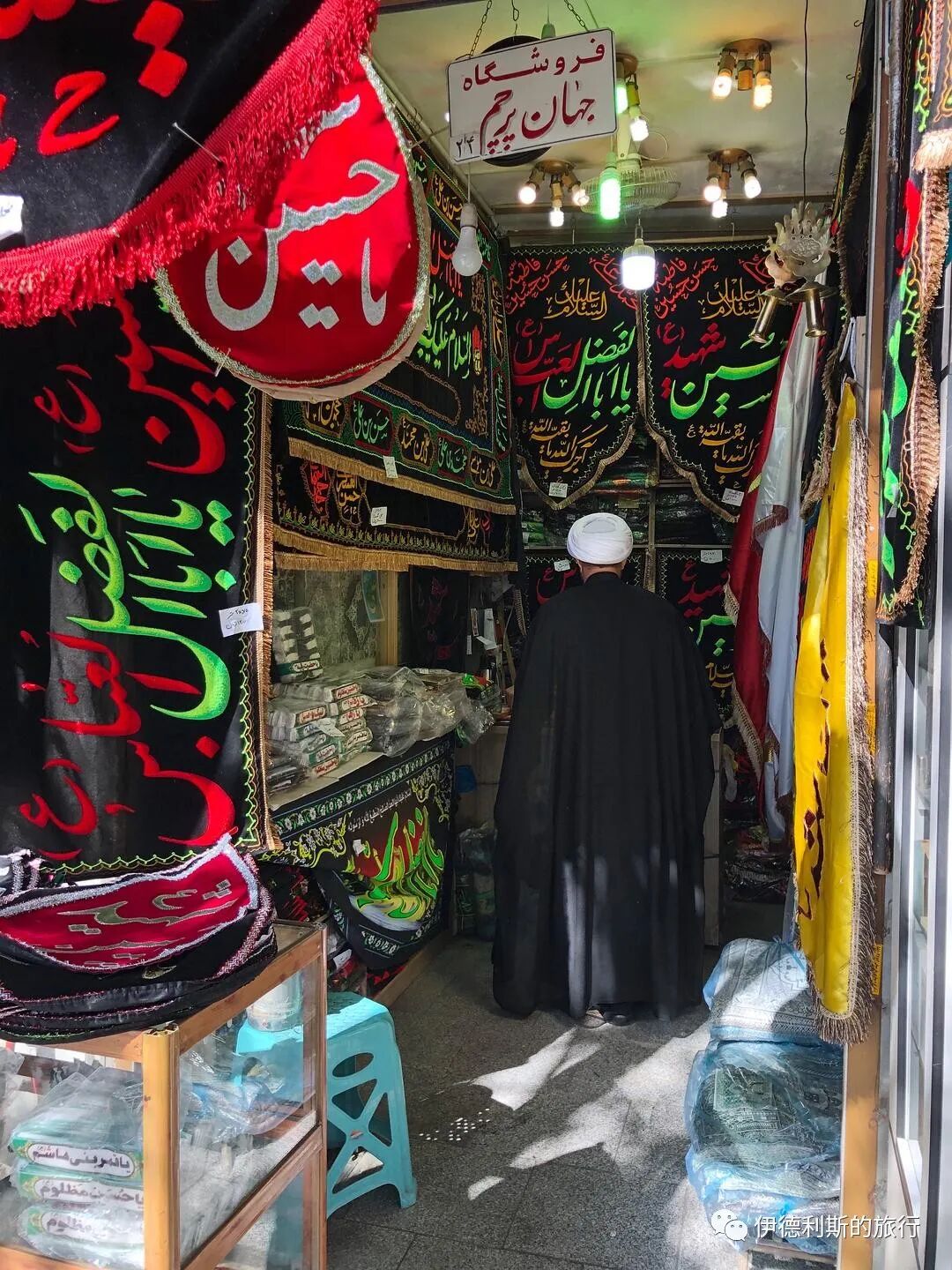
Outside the Grand Bazaar, there are also shops specifically selling Ashura flags.
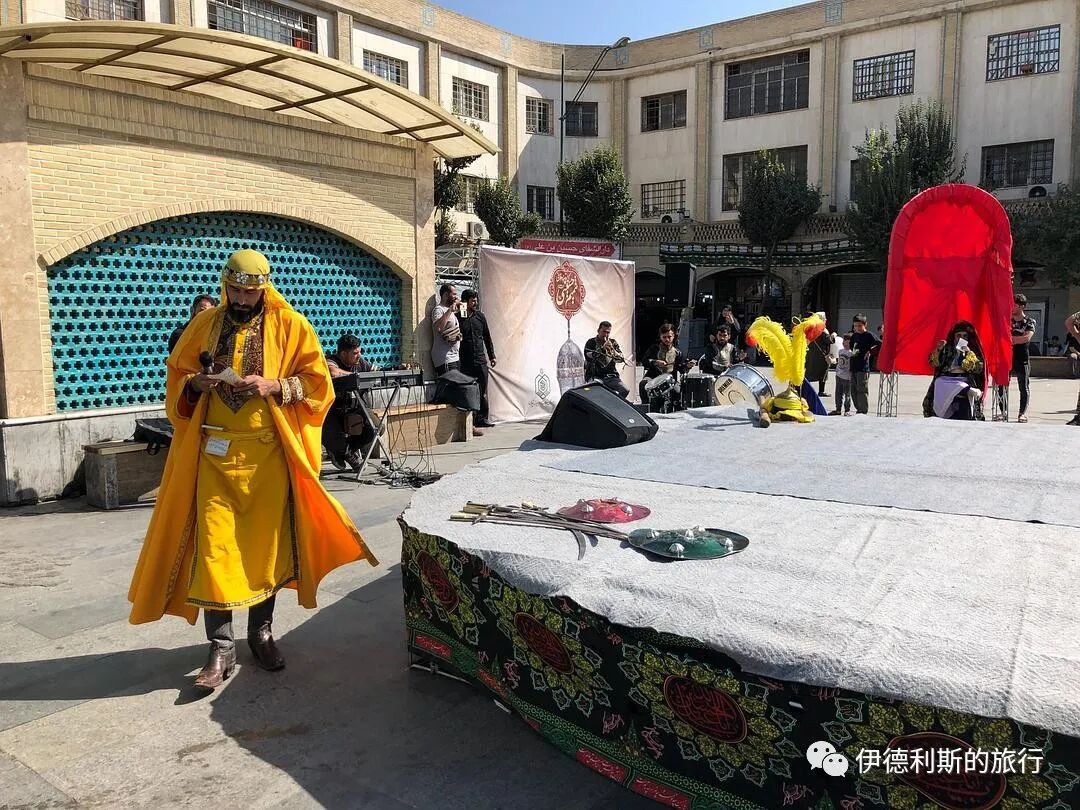
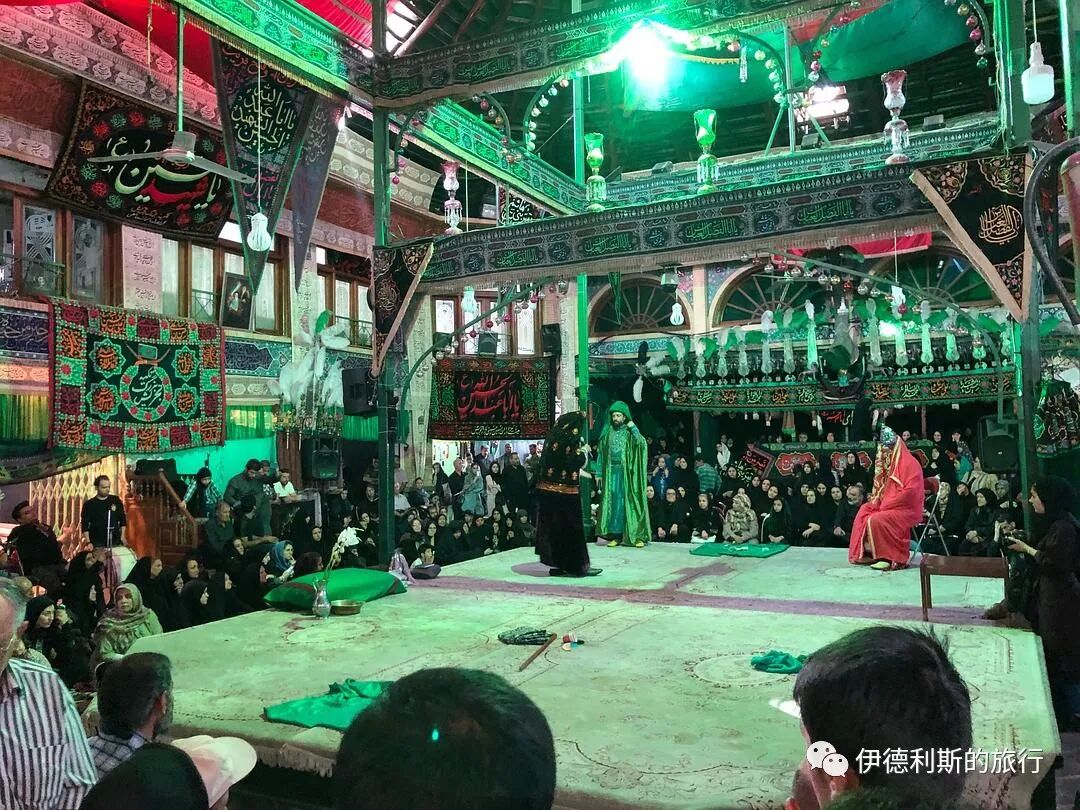
The area outside the north gate of the Grand Bazaar has been turned into a venue for performing Ta'zieh opera. Ta'zieh opera performance is an important part of Ashura activities. During the month of Muharram, numerous venues for performing Ta'zieh opera are set up in various squares in Tehran, and there are many spectators.
Ta'zieh opera formed in Iran in the late 17th century and is a type of traditional Persian theater; this form of expression can be traced back to the pre-Islamic era. During Ashura, Shia Muslims use Ta'zieh opera to recreate the scene of the Battle of Karbala on the Day of Ashura in 680 AD, when Imam Hussein and his 72 companions were all killed by the Umayyad army.
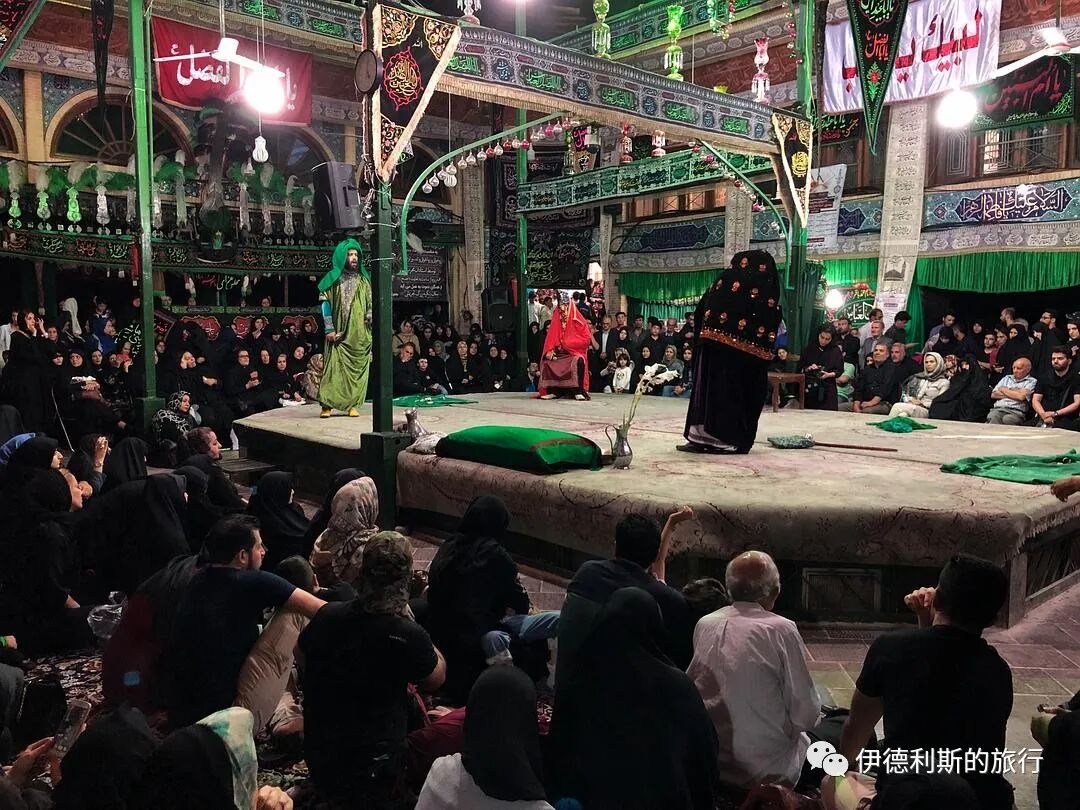
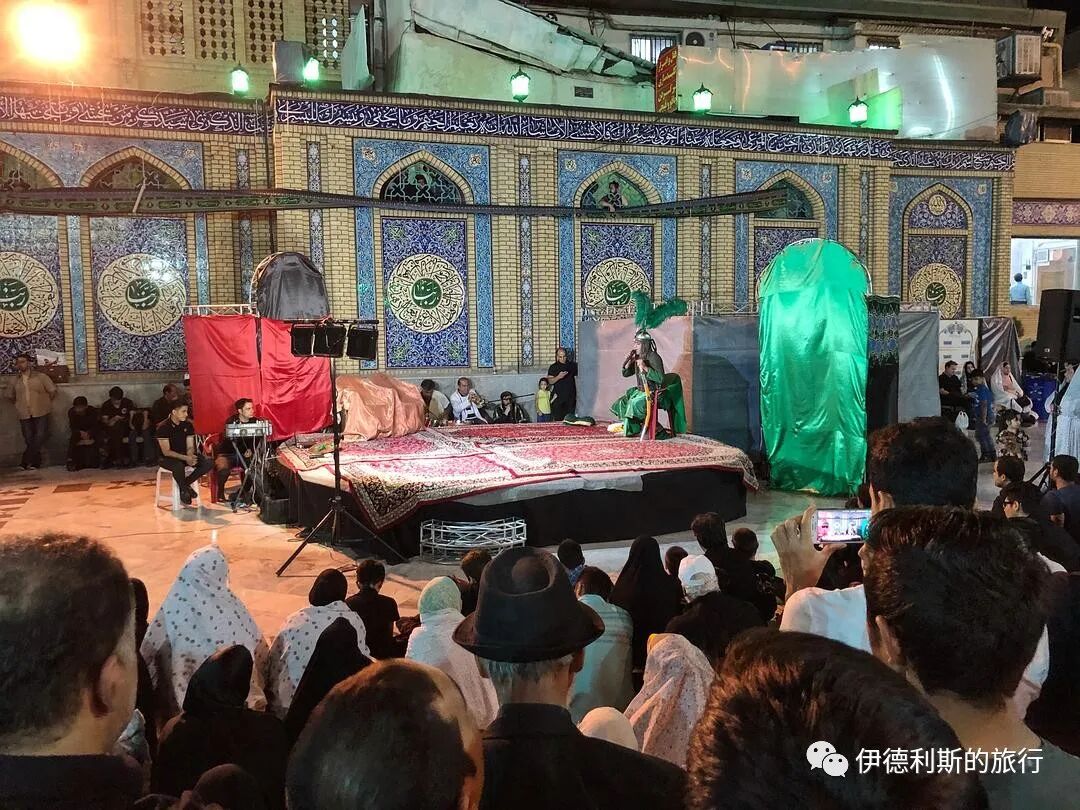
In the opera, the villains are the rulers of the Umayyad dynasty, and they wear red. The heroes are Imam Hussein and his family and companions; the male characters among them wear green, and change to white when they are about to die. All female characters are played by male actors dressed in all black. If a person walks in circles around the stage, it means they are on a long journey, usually between Mecca and Karbala.
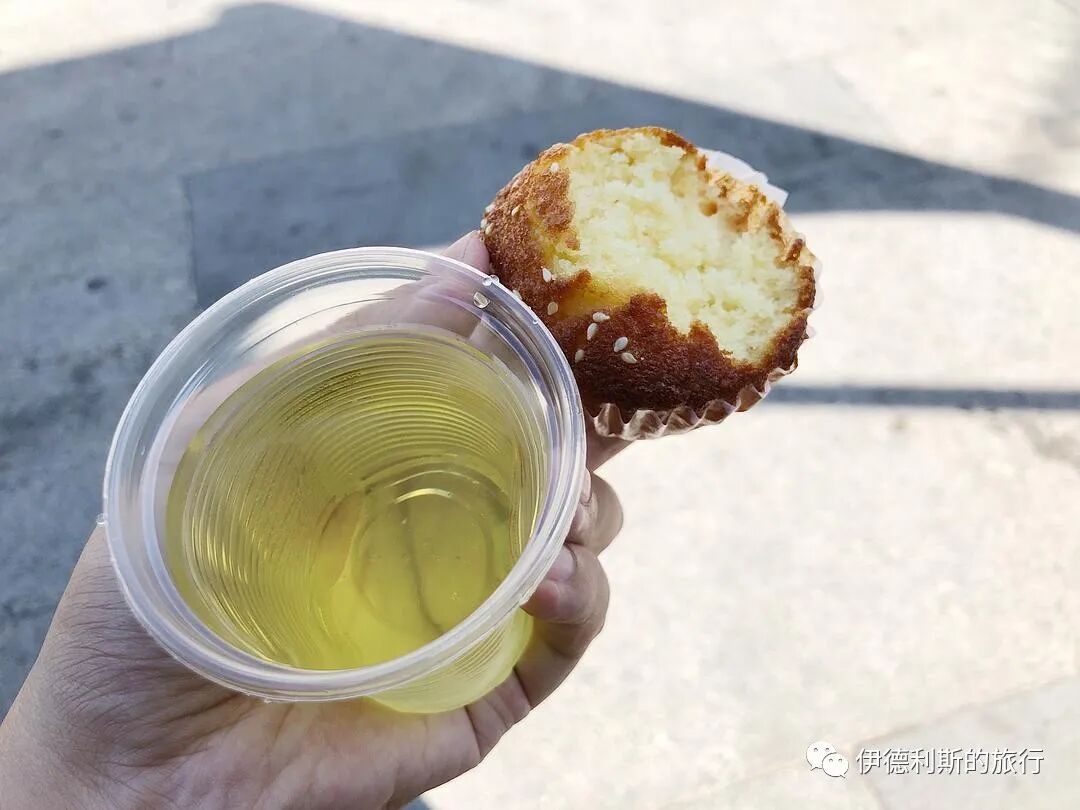
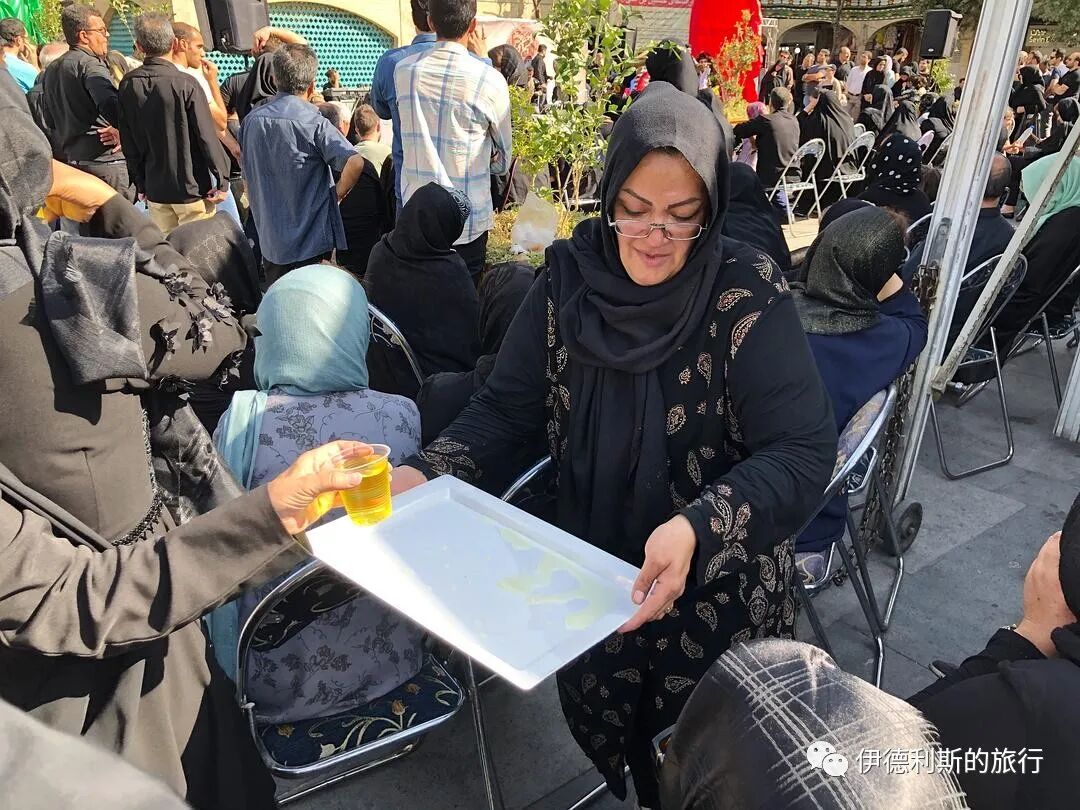
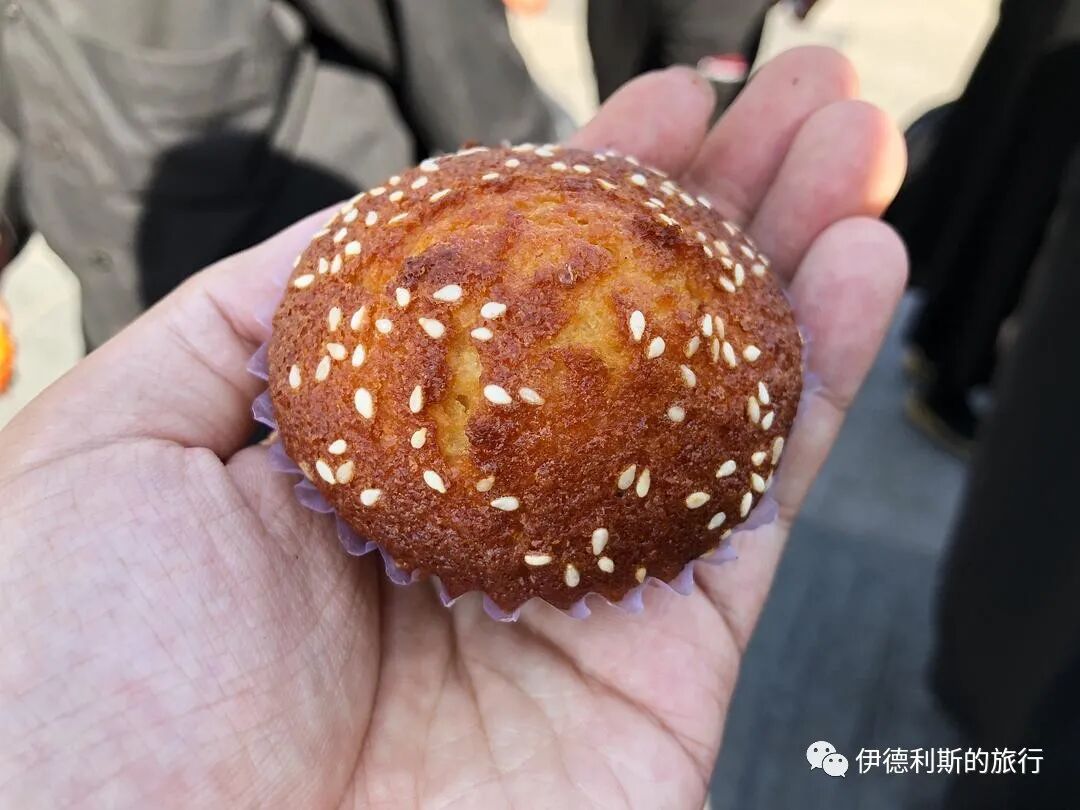
While watching the performance, you can eat honey cake and drink honey water freely.
Ashura memorial service (majalis al-ta'ziya) at Parvaz Park
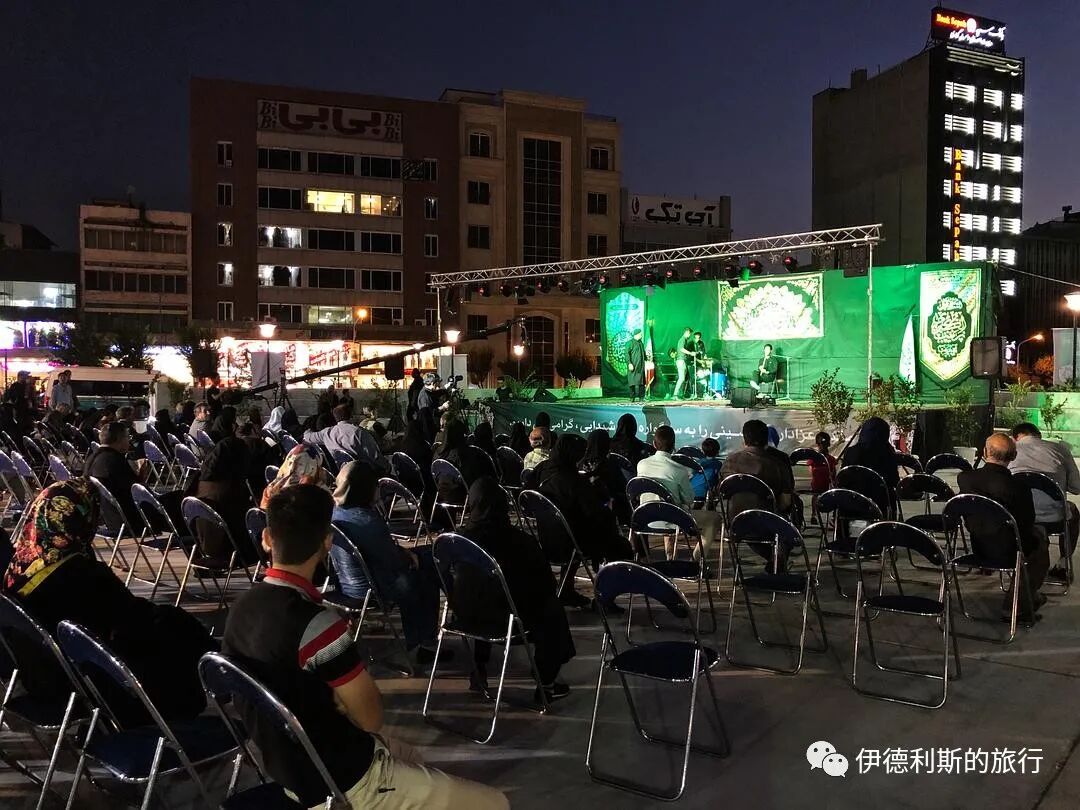
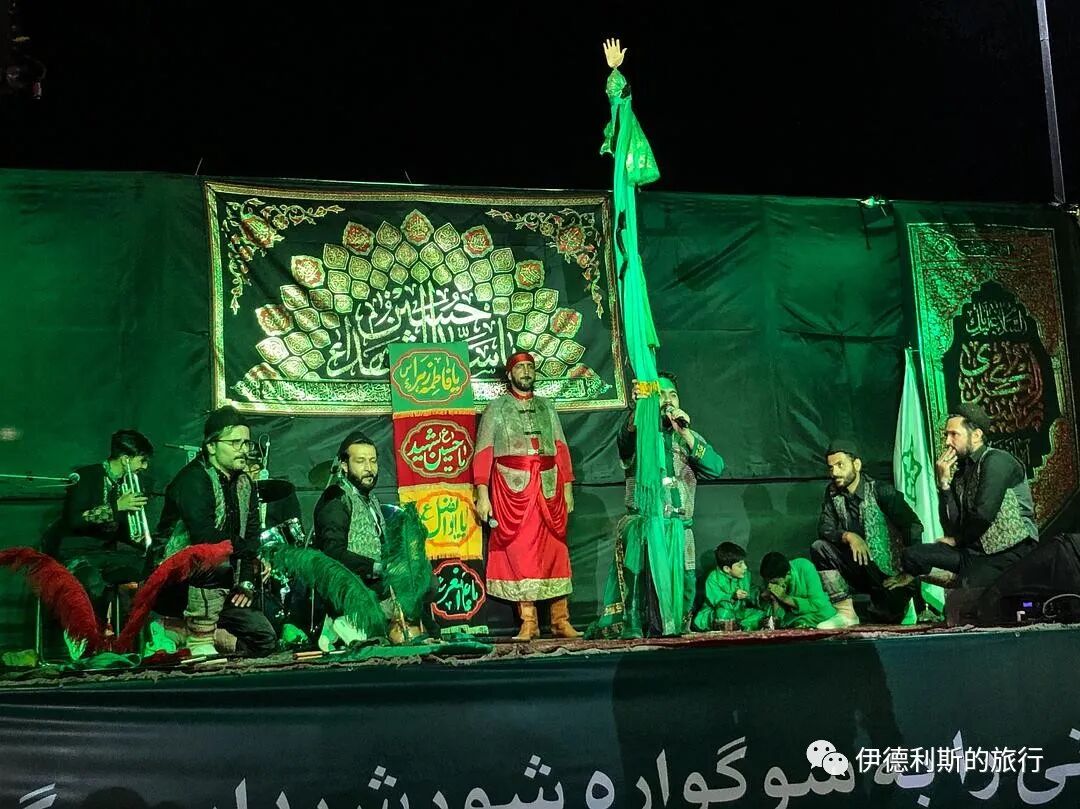
I attended an Ashura memorial service (majalis al-ta'ziya) at Parvaz Park in Tehran and experienced a wonderful Iranian Shia musical performance.
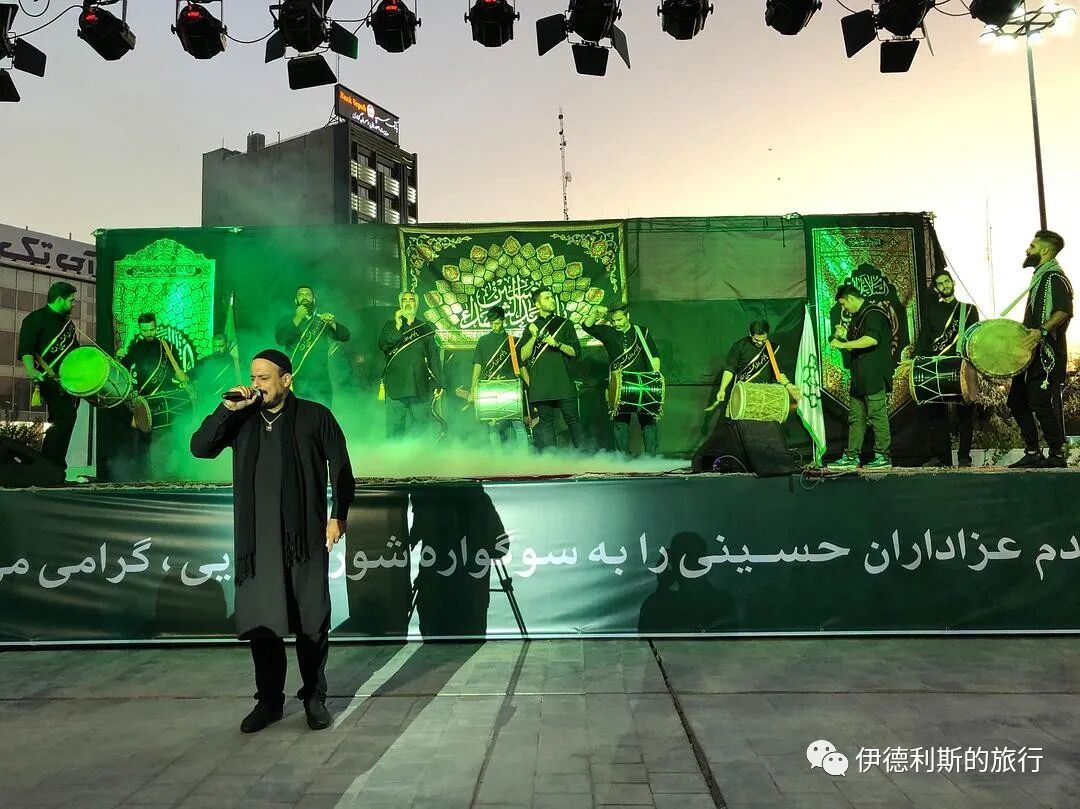
In the afternoon, tea stalls were already set up in the square, and Iranian black tea was available for free. Then, accompanied by the Ney (flute), the lead singer began to sing soothing songs. Amidst the singing, a bonfire was lit in the square, and baskets nearby were filled with various fragrant fruits. After a few soothing songs, a percussion ensemble consisting of drums and cymbals walked onto the stage while playing. The rhythm of the songs began to become more and more passionate, the atmosphere grew more intense, and it reached a climax accompanied by the sound of horns.
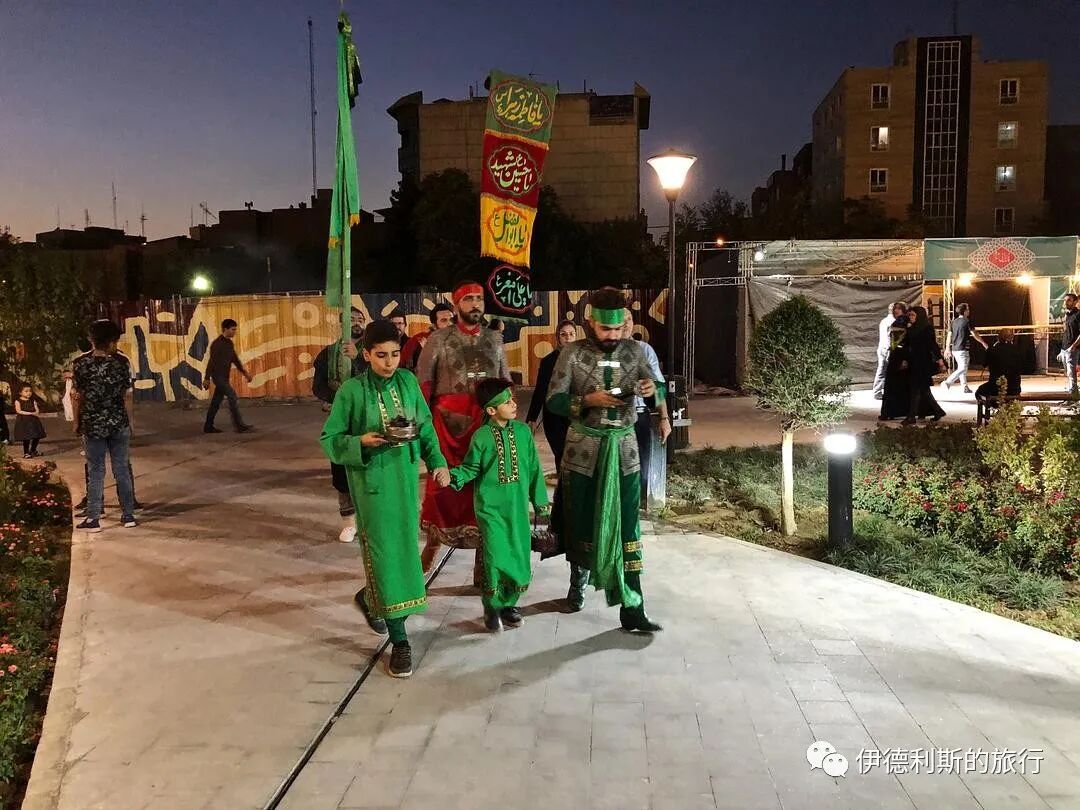
During the singing, a group of actors in costumes walked slowly toward the stage, led by two boys holding incense.
When they reached the stage, they began to perform the Ta'zieh play.
Tajrish Bazaar
At the end of Tajrish Bazaar in the north of Tehran, there is a Tekyeh. In the Shia tradition, a Tekyeh generally refers to a place specifically for commemorating Imam Hussein, especially for performing Ta'zieh opera during the month of Muharram. Tajrish Tekyeh can be traced back to the Qajar dynasty 220 years ago. It is a very old Tekyeh in Tehran, and the current layout is also very traditional, although the wooden pillars have been replaced by metal ones.
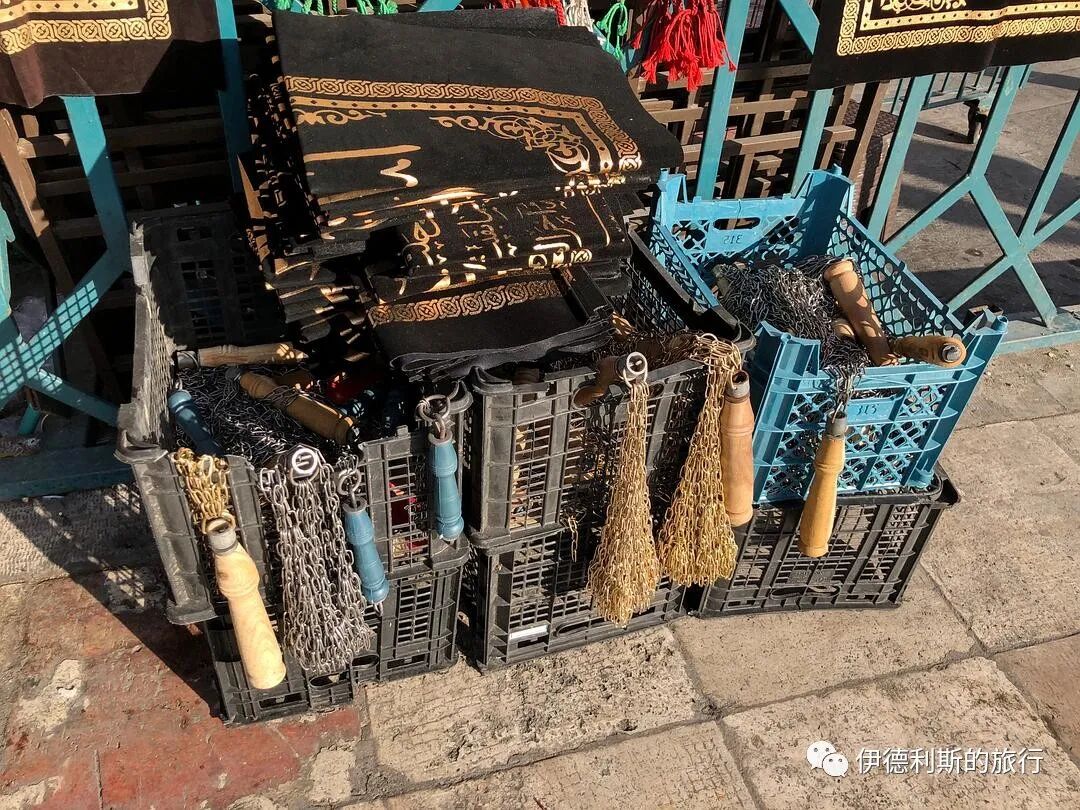
Outside the venue, there are some shops selling Shia supplies. The picture below shows the whips used during the flagellation (tatbir) ritual on Ashura, which recreates the scene of the Umayyad army whipping Imam Hussein's family. This ritual used to involve intense self-harm, but later, the Supreme Leader of Iran's Shia, Khamenei, publicly stated that during Ashura: 'Any act that harms the body is Haram (forbidden).' Therefore, you no longer see cases of self-harm during the festival in Tehran.
The red hat represents the villainous Umayyad dynasty, and the green hat represents the heroic Imam Hussein.
The lump of clay is called a Turbah, which symbolizes the earth; Shia Muslims must place their foreheads on it during prayer.
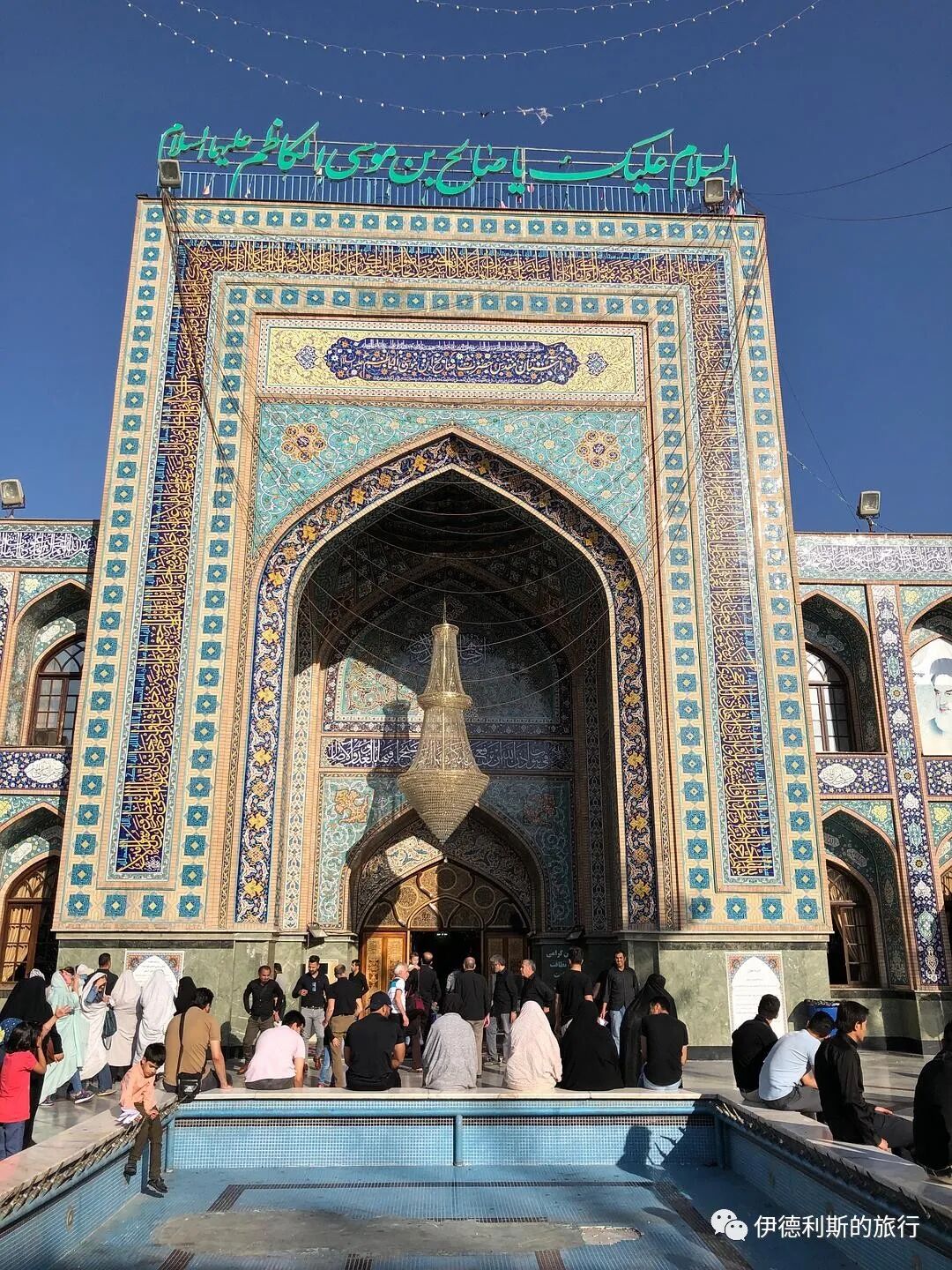
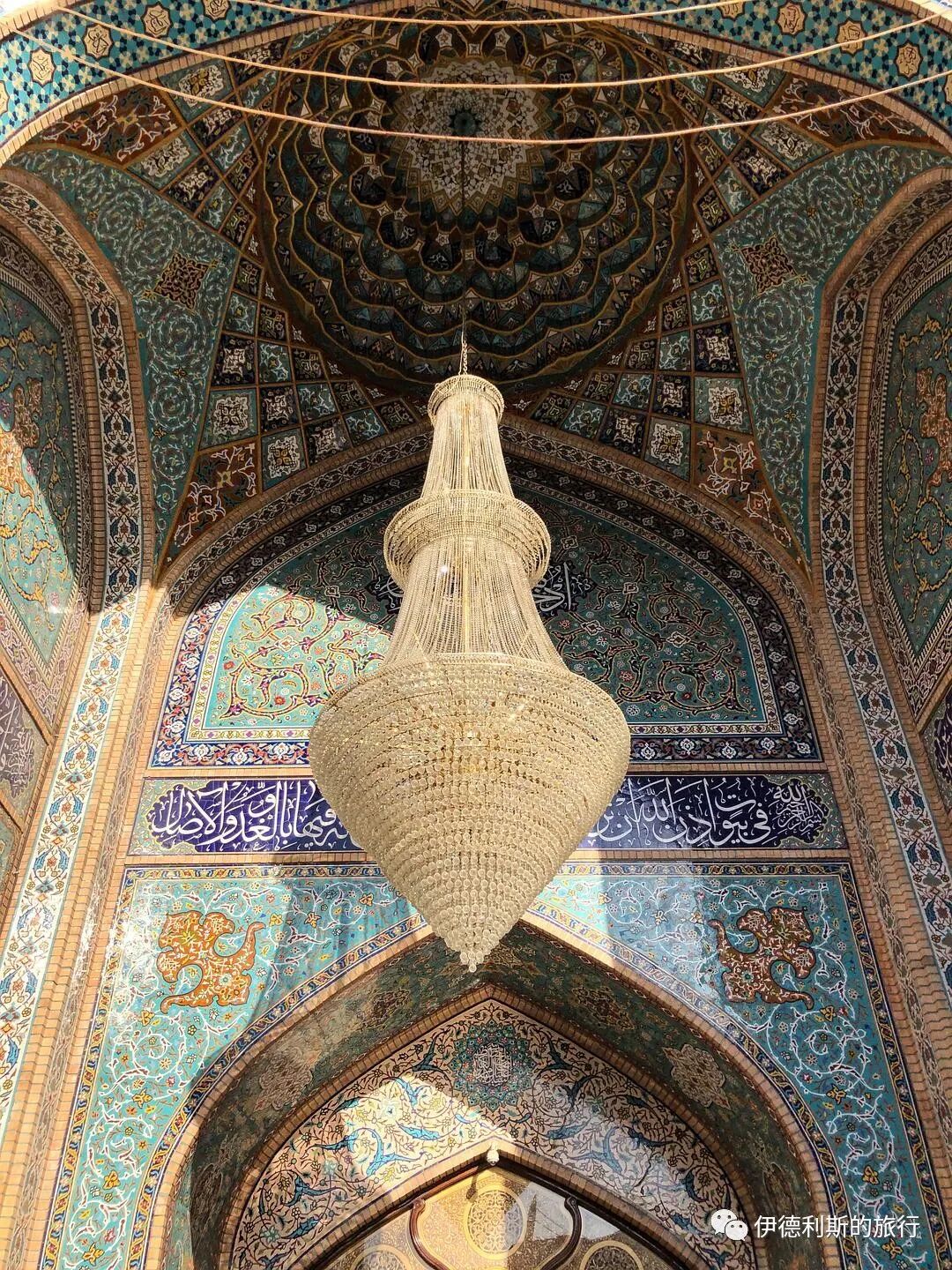
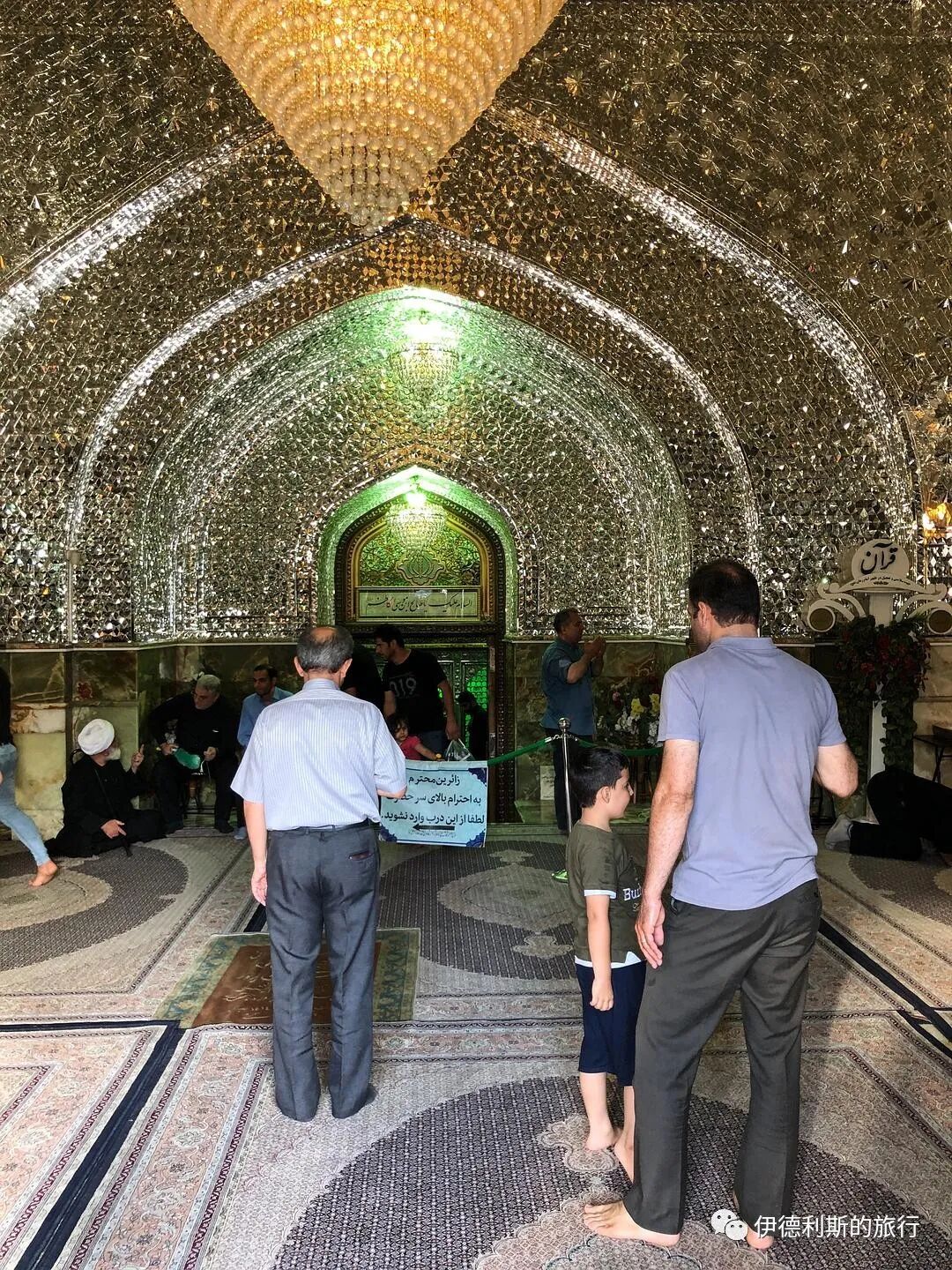
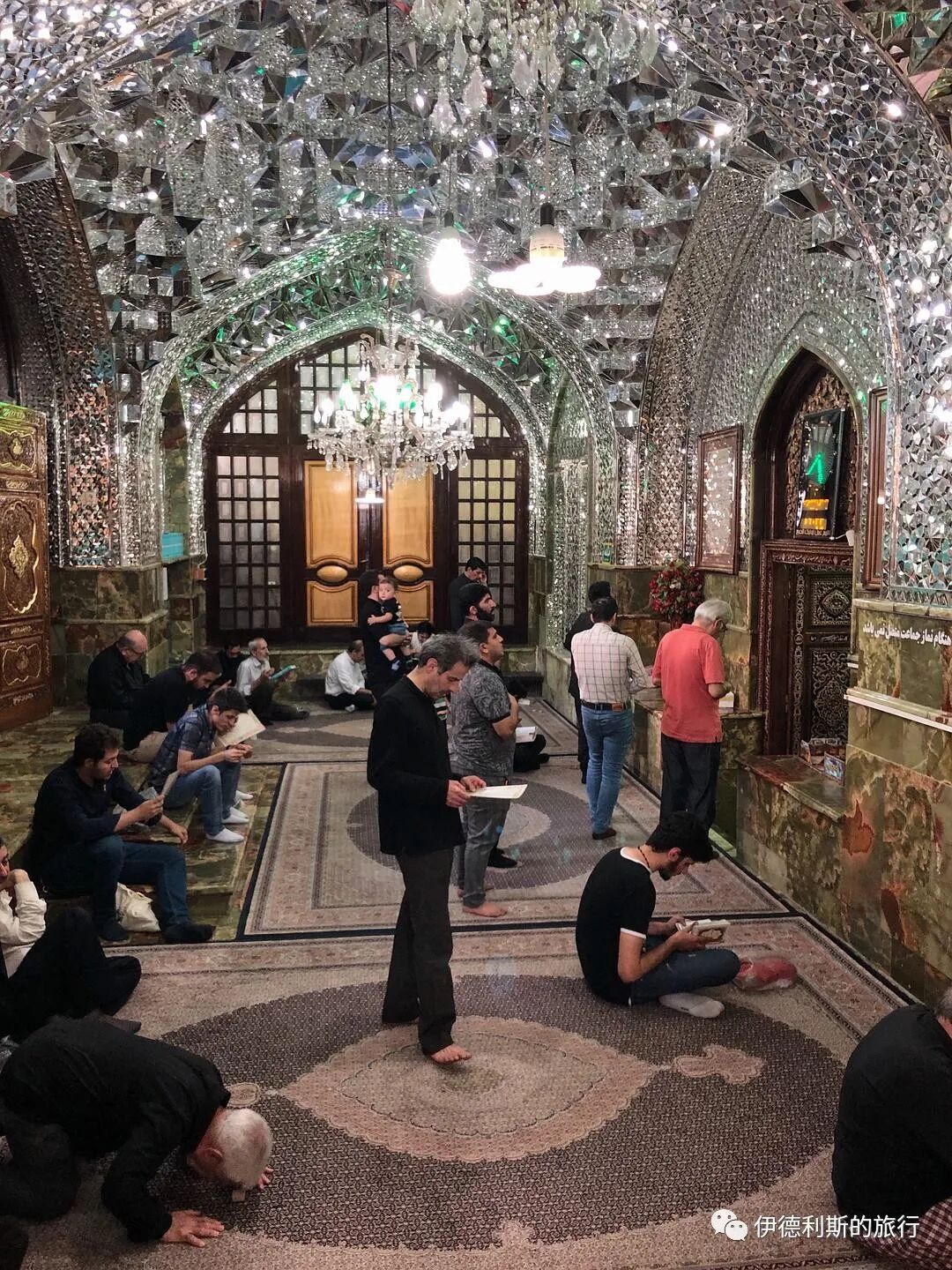
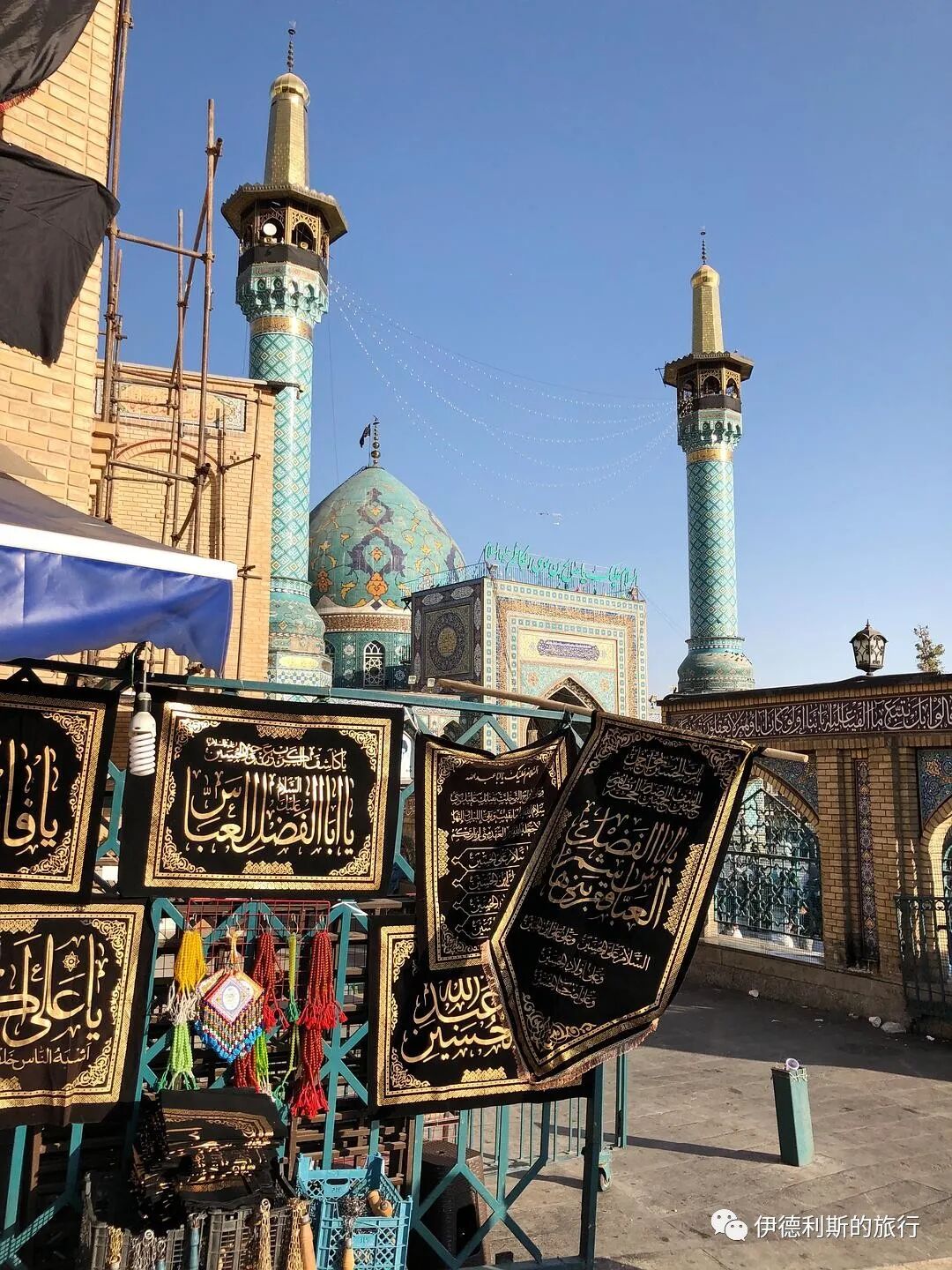
Turning out of Tajrish Bazaar, you reach the most important Shia shrine and mosque in northern Tehran, Imamzadeh Saleh, which houses the tomb of Saleh, the son of Musa al-Kadhim, the seventh Imam of the Twelver Shia. Today, the large wooden box inside the mausoleum dates back to the late Safavid dynasty to the Afsharid dynasty in the 18th century.
During the month of Muharram, Ta'zieh opera is also performed in the courtyard of Imamzadeh Saleh.
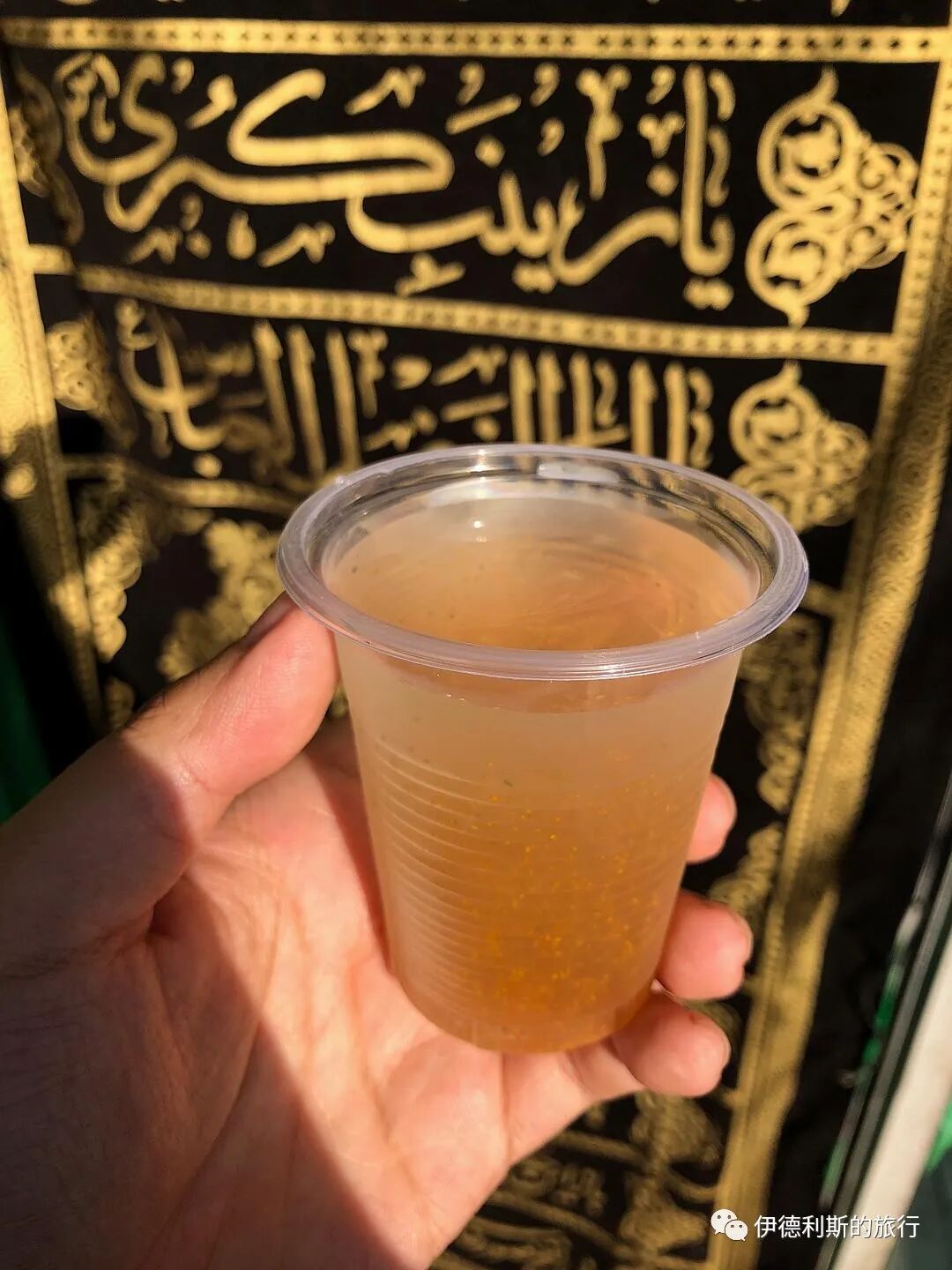
At the place where drinks are distributed for free at the entrance of Imamzadeh Saleh shrine and mosque, Khakshir (seeds of the Flixweed plant) is a very common drink in Iran during the summer to relieve heat and quench thirst.
Then, next to it, you can also see places selling various Shia supplies. view all
Summary: This travel note introduces Ashura in Tehran: a Muslim Travel Note on Faith, Rituals and City Life. I went to Tehran during the Mid-Autumn Festival holiday in 2019, just in time for the various activities of Ashura, and truly felt the warmth of the Iranian people. It is useful for readers interested in Tehran Travel, Ashura, Muslim Culture.
I went to Tehran during the Mid-Autumn Festival holiday in 2019, just in time for the various activities of Ashura, and truly felt the warmth of the Iranian people.
Ashura originally means 'the tenth,' and the Day of Ashura refers to the tenth day of the first month of the Islamic calendar (Muharram). On the Day of Ashura in 680 AD, Imam Hussein, the grandson of the Prophet Muhammad, refused to pledge allegiance to the Umayyad Caliphate. While leading his family and followers from Mecca to Kufa, they were attacked by the Umayyad army, and Imam Hussein and all 72 of his companions were killed. Since then, Shia Muslims around the world have held activities every year during the month of Muharram to mourn Imam Hussein and his 72 companions, gradually forming the important Shia festival of Ashura.
During Ashura, Shia Muslims perform Azadari (mourning) rituals, including memorial services (majalis al-ta'ziya), mourning processions (al-mawakib al-husayniyya), theatrical performances (shabih), and flagellation (tatbir). Some Shia Muslims believe that participating in Ashura can cleanse their sins, and there is a saying that 'a tear shed for Hussein washes away a hundred sins.'
Grand Bazaar
On ordinary days, the Tehran Grand Bazaar is a massive wholesale market selling small commodities from Yiwu, but it takes on a different look during Ashura. As soon as you reach the entrance, people are handing out free honey water, tea, and various snacks; sugar cubes are held in the mouth while sipping tea.
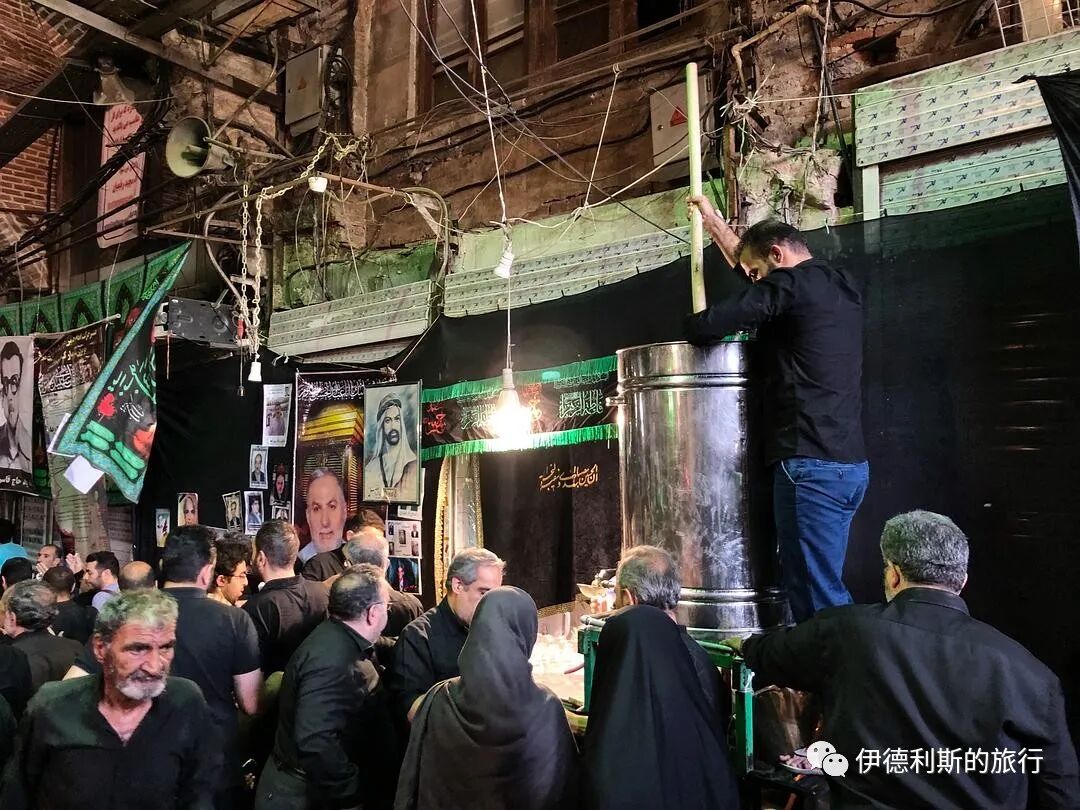
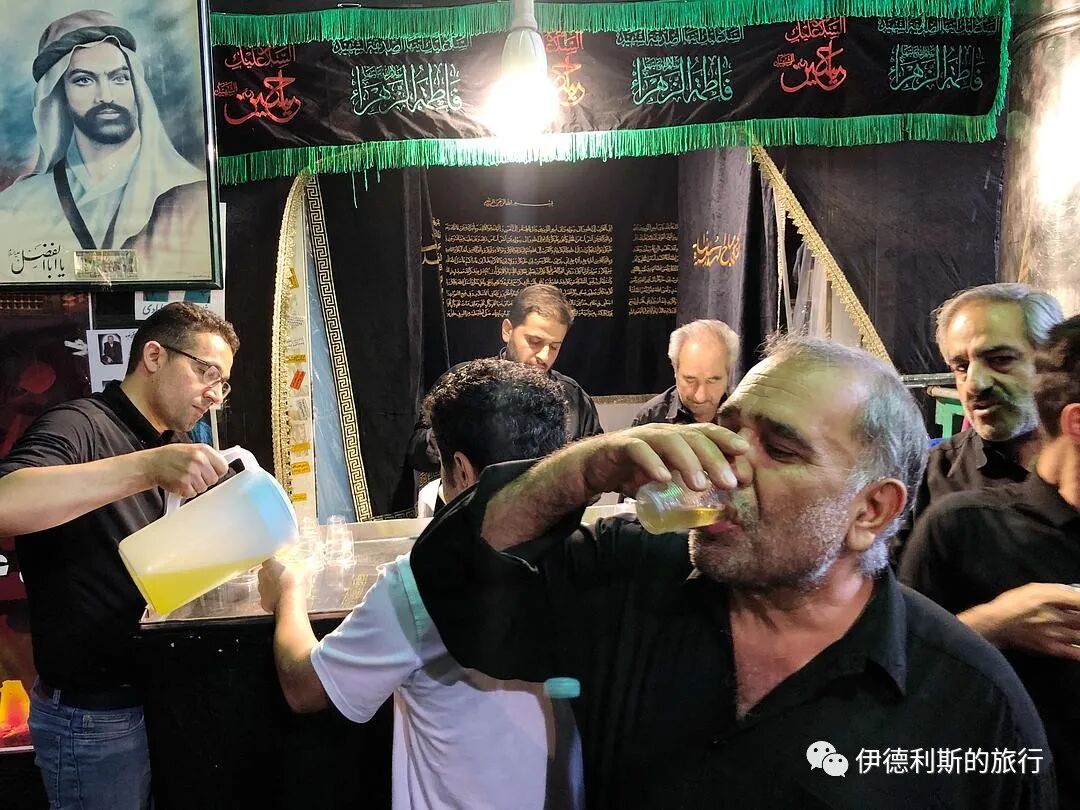
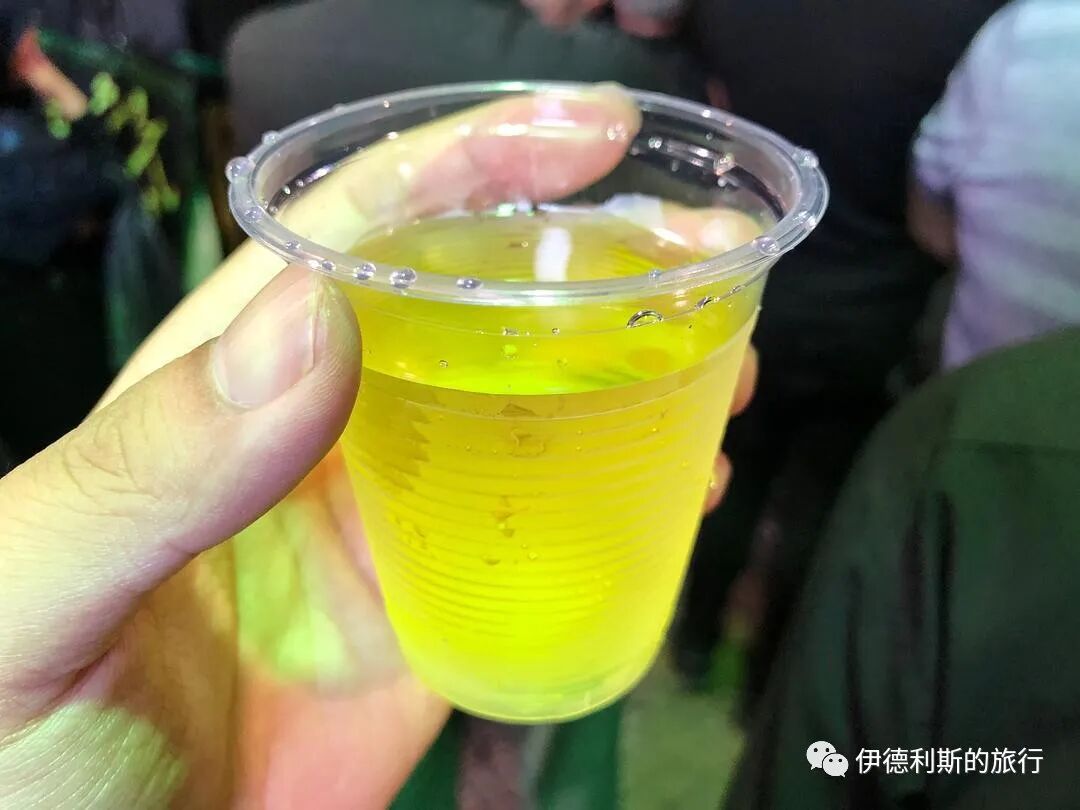
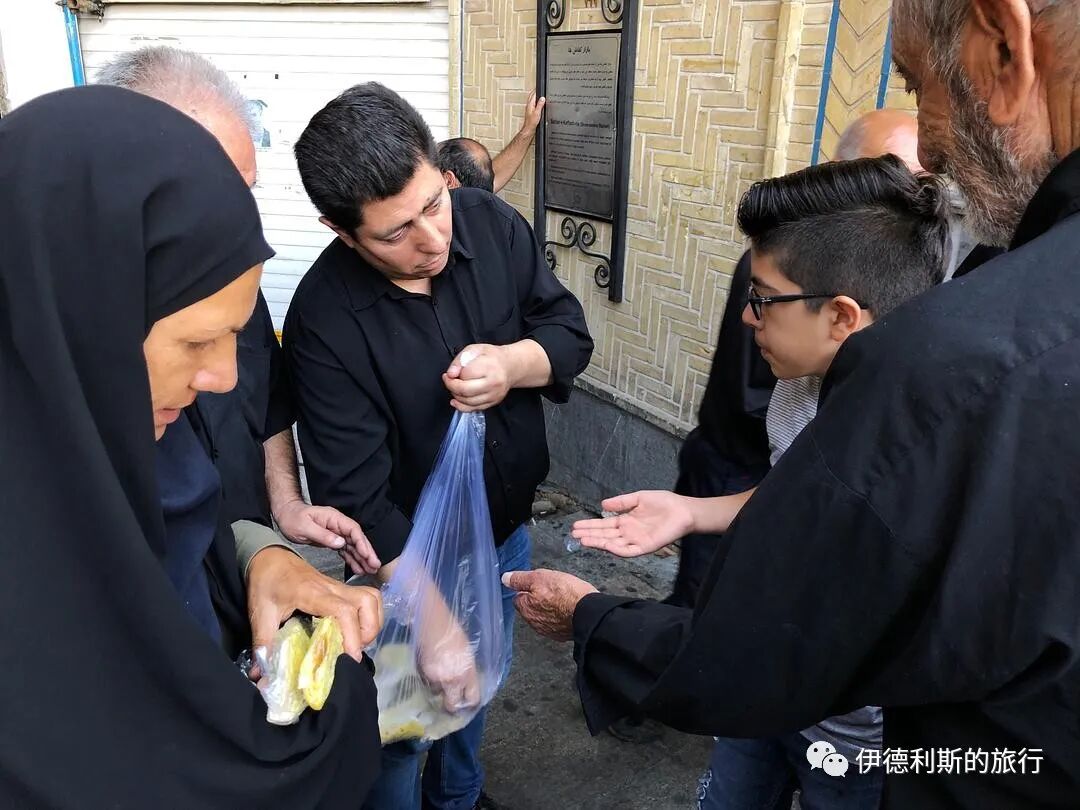
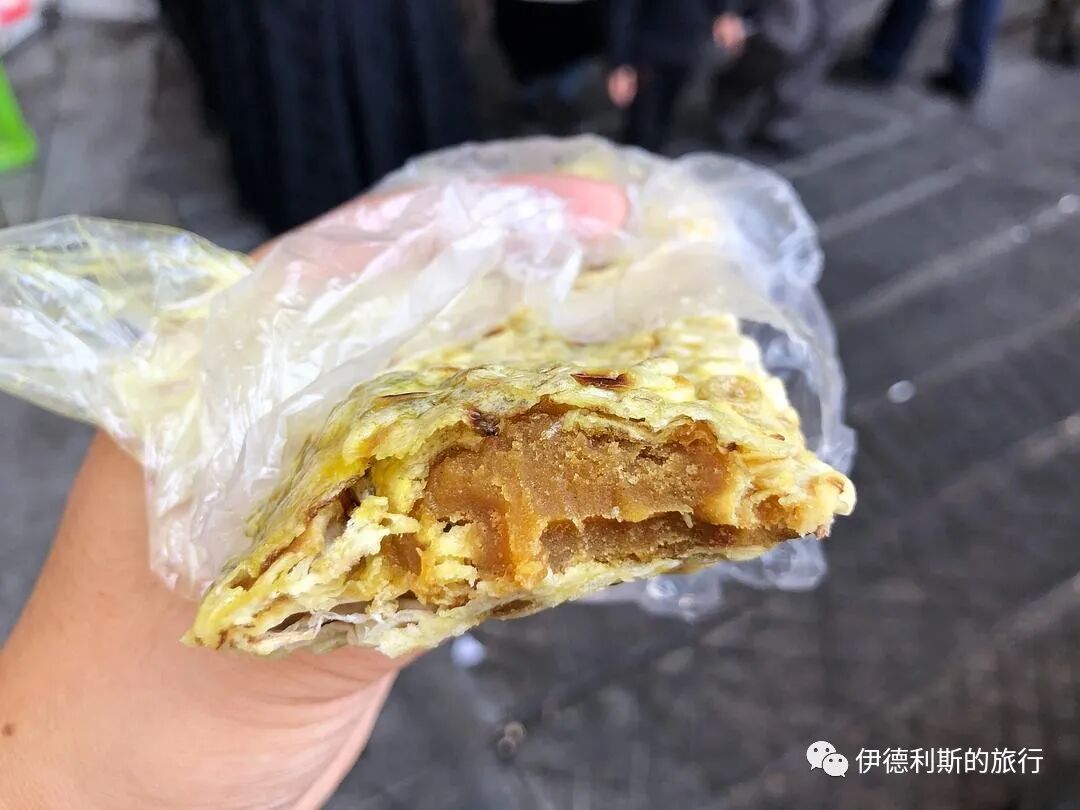
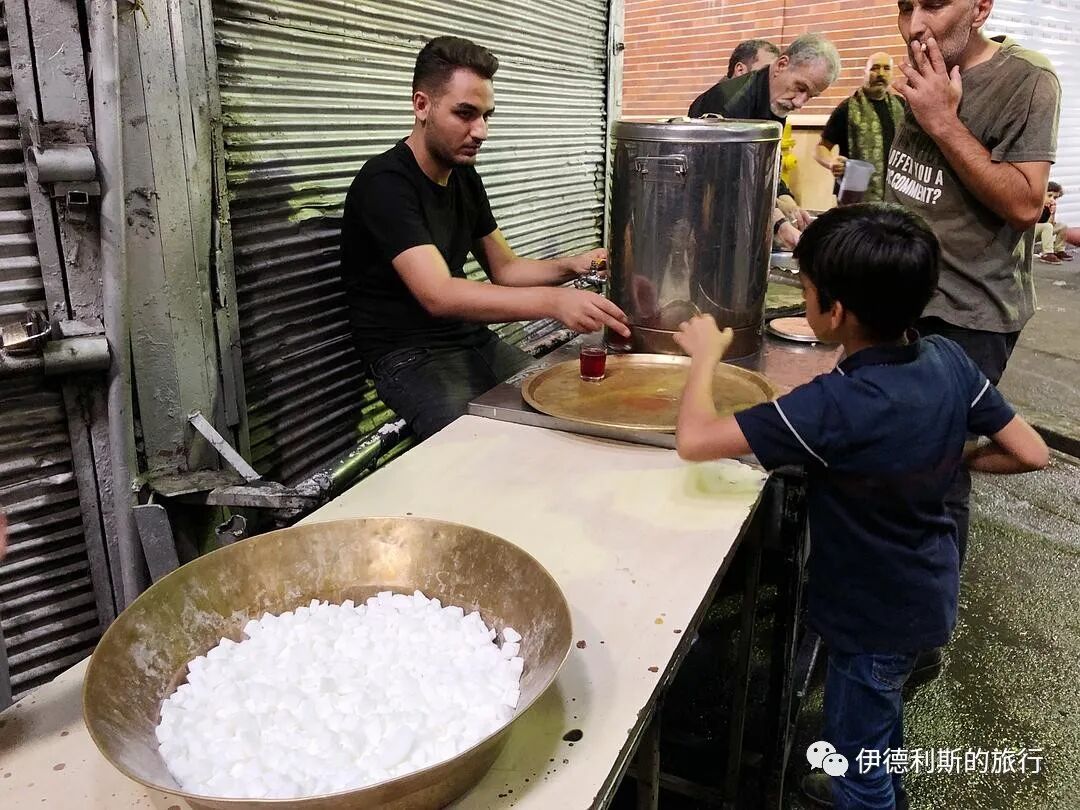
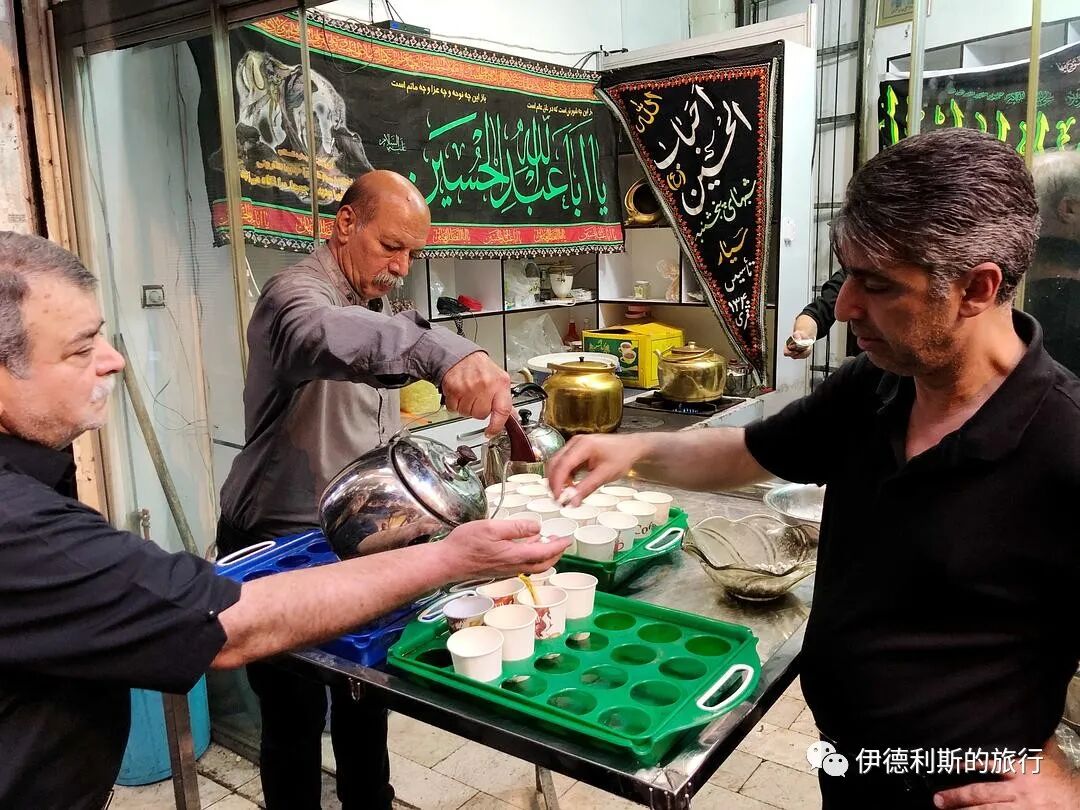
During Ashura, stalls are set up all over Tehran to provide free tea, drinks, and food, and an area near the north gate of the Grand Bazaar is specifically set aside for preparing drinks. A staff member, an older man, kindly invited me into the drink preparation area, offered me tea, and let me take photos.
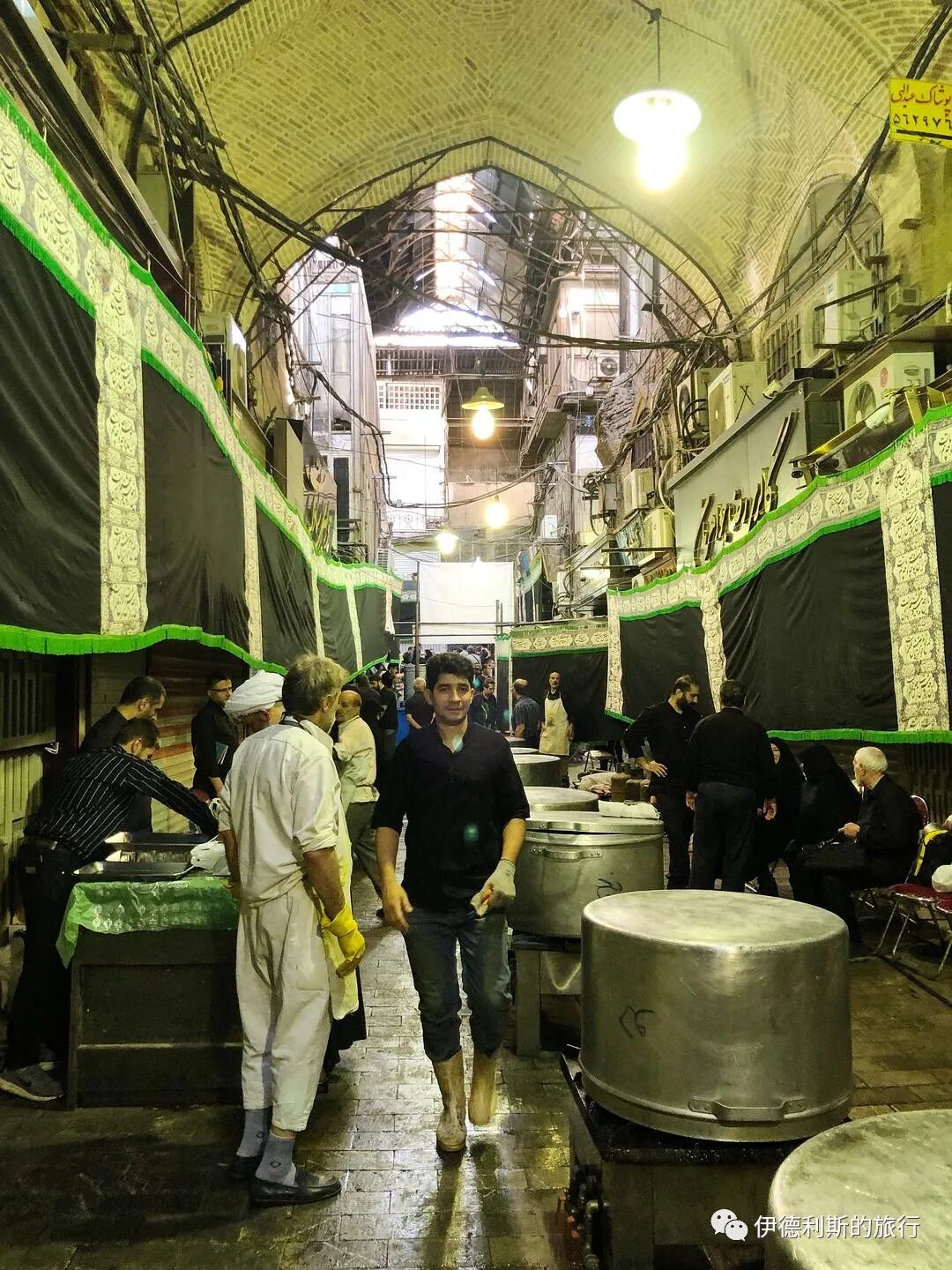
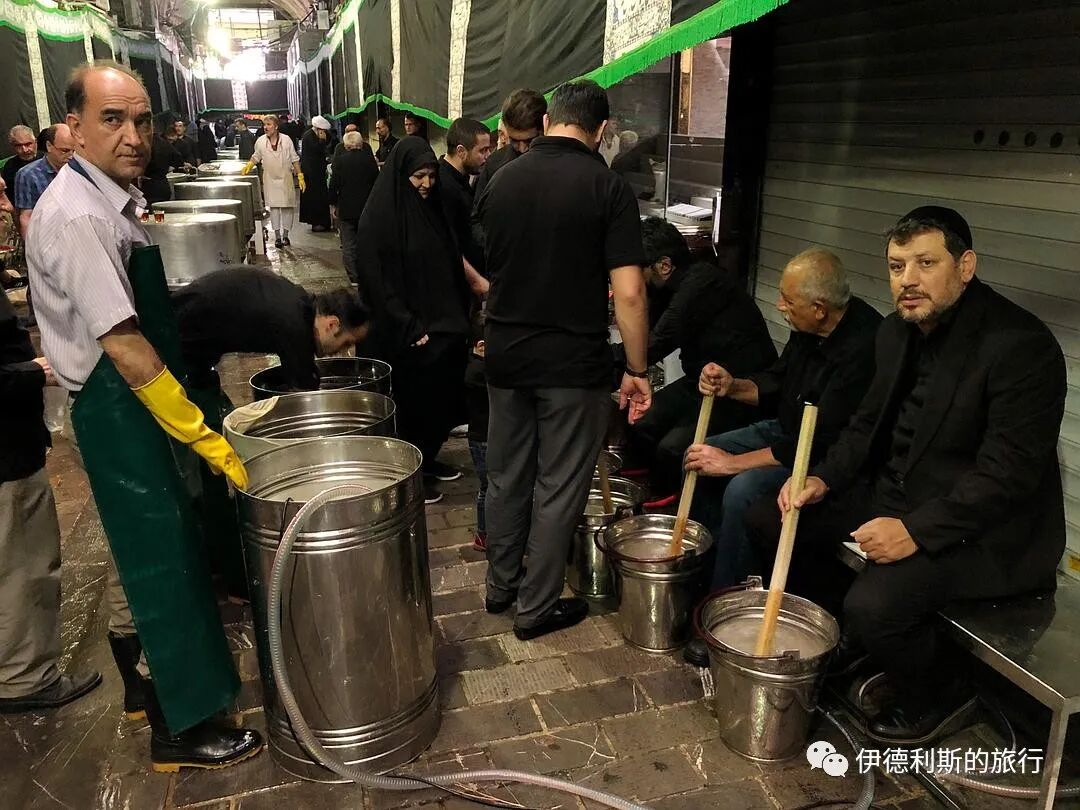
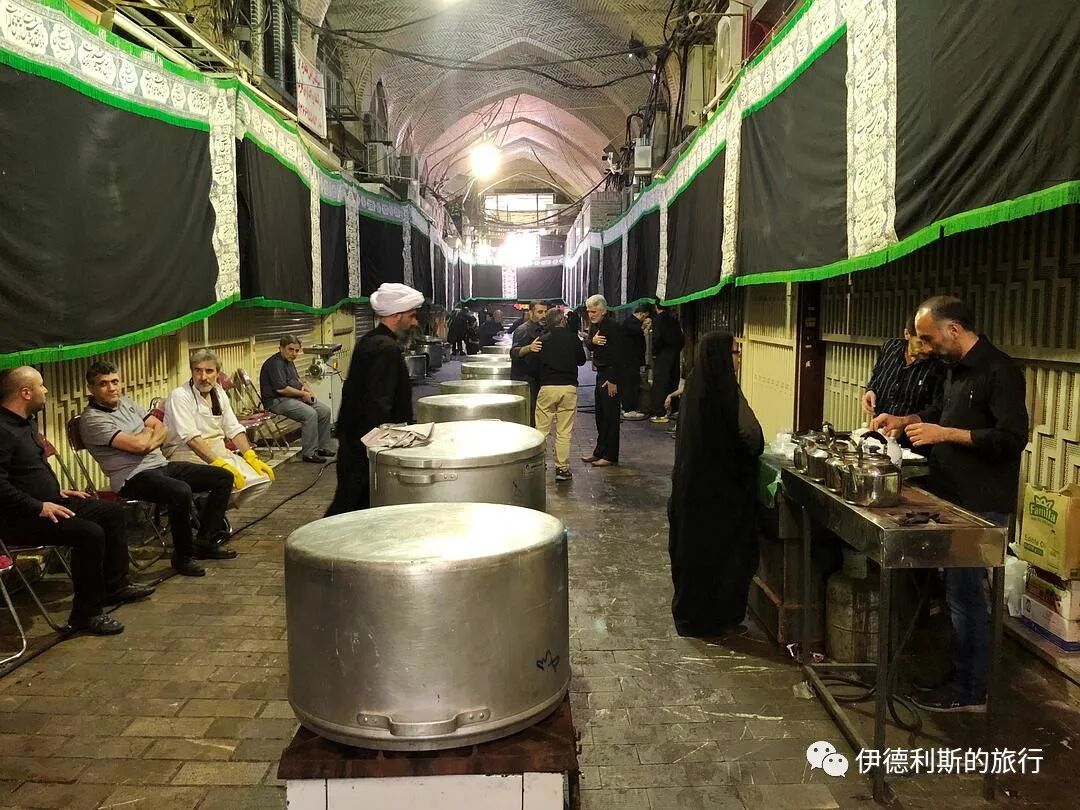
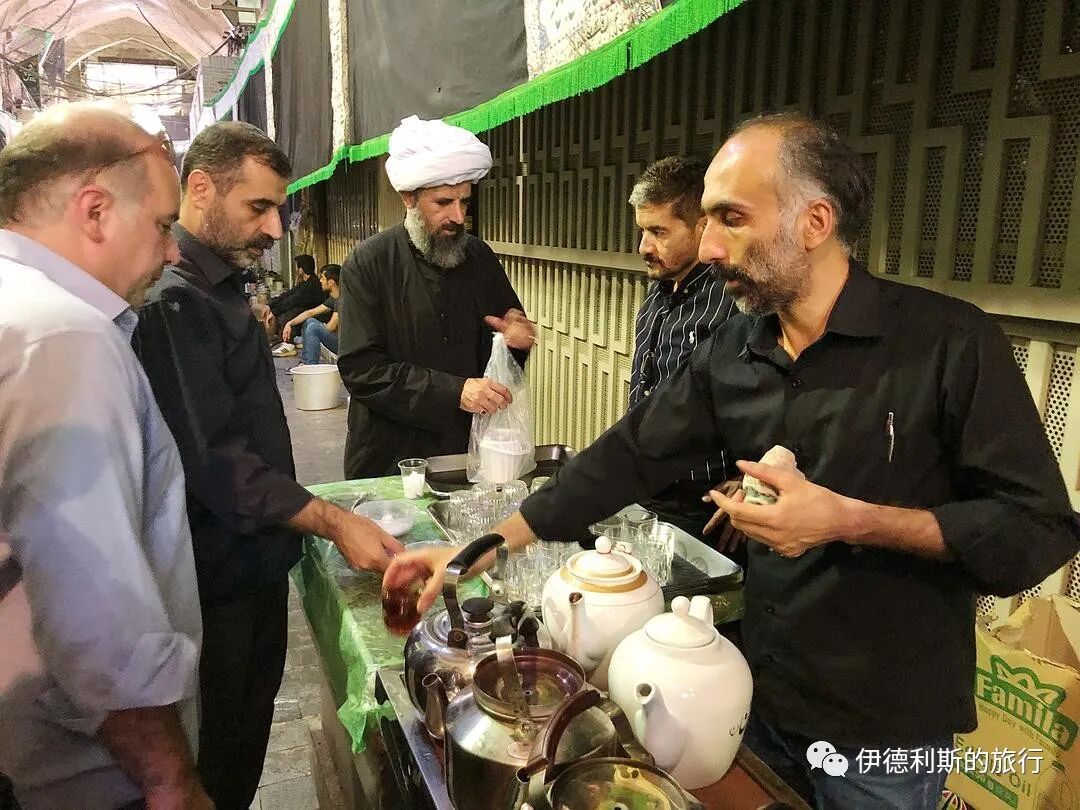

This area is for distributing food for free.
Walking further into the Grand Bazaar, you can see processions performing the Ashura mourning march (al-mawakib al-husayniyya), where everyone mourns together for Imam Hussein and his 72 companions who were killed by the Umayyad army on the Day of Ashura, singing rhythmically together.
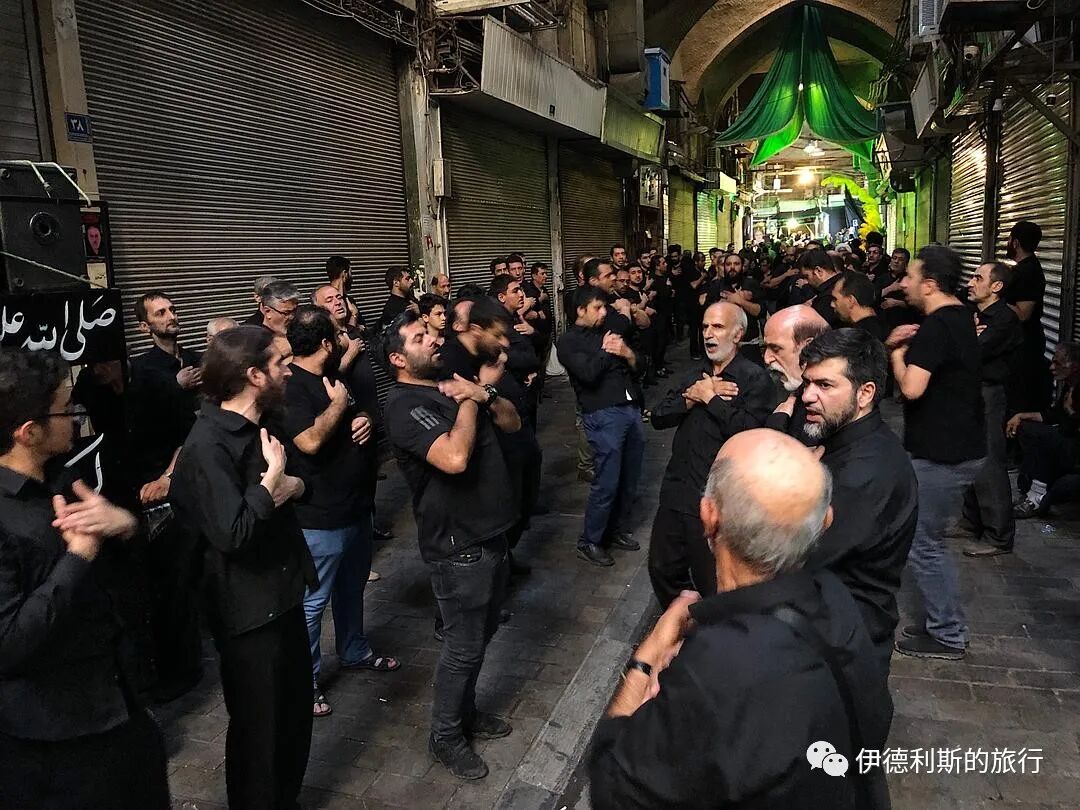
During the procession, the group stops intermittently, and one person delivers a eulogy for Imam Hussein, while everyone cries and wails along, with many people weeping bitterly.
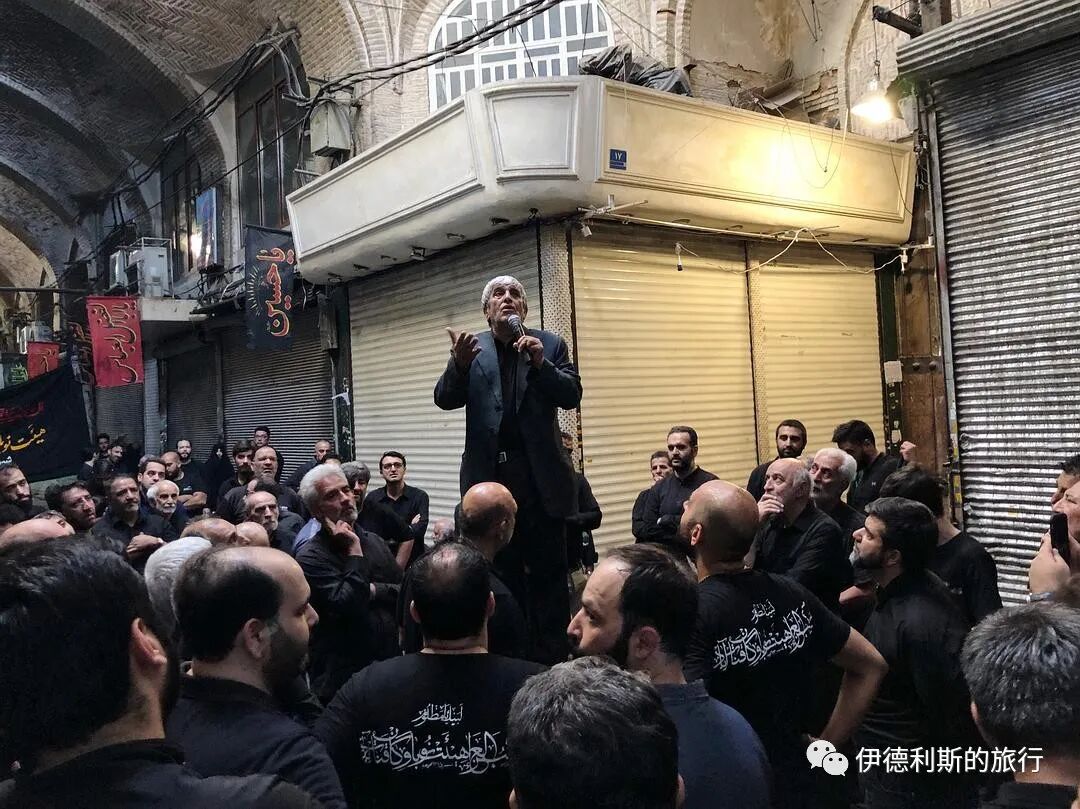
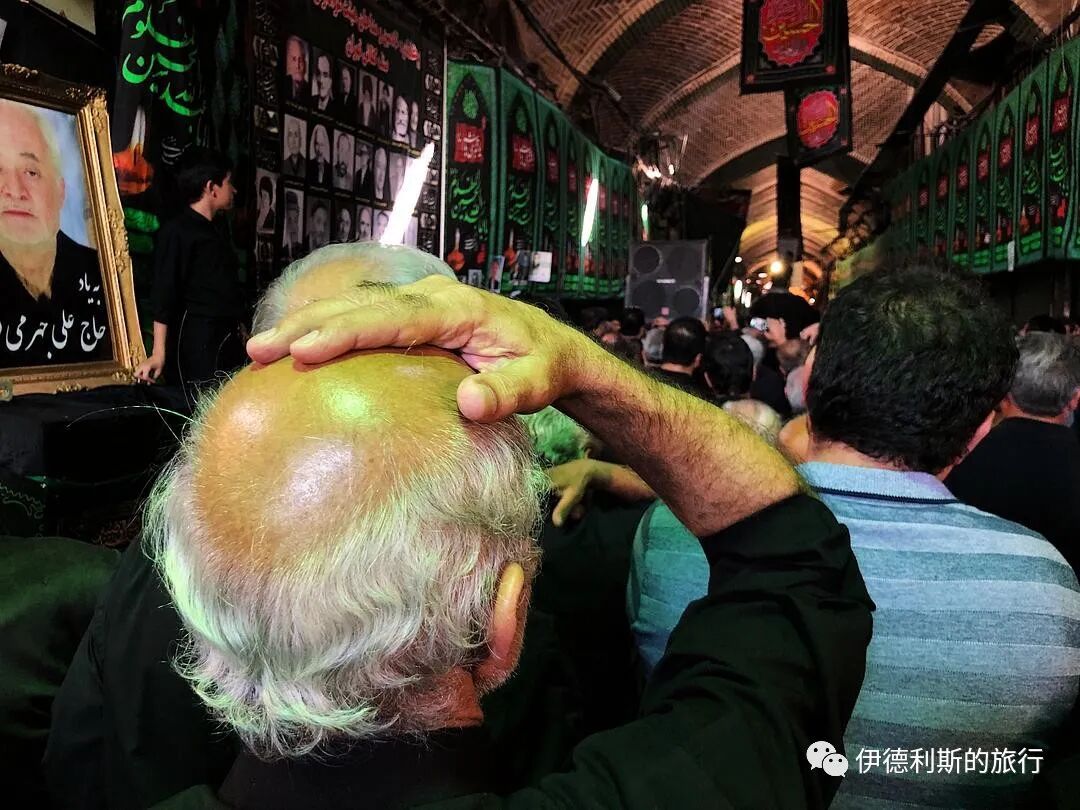
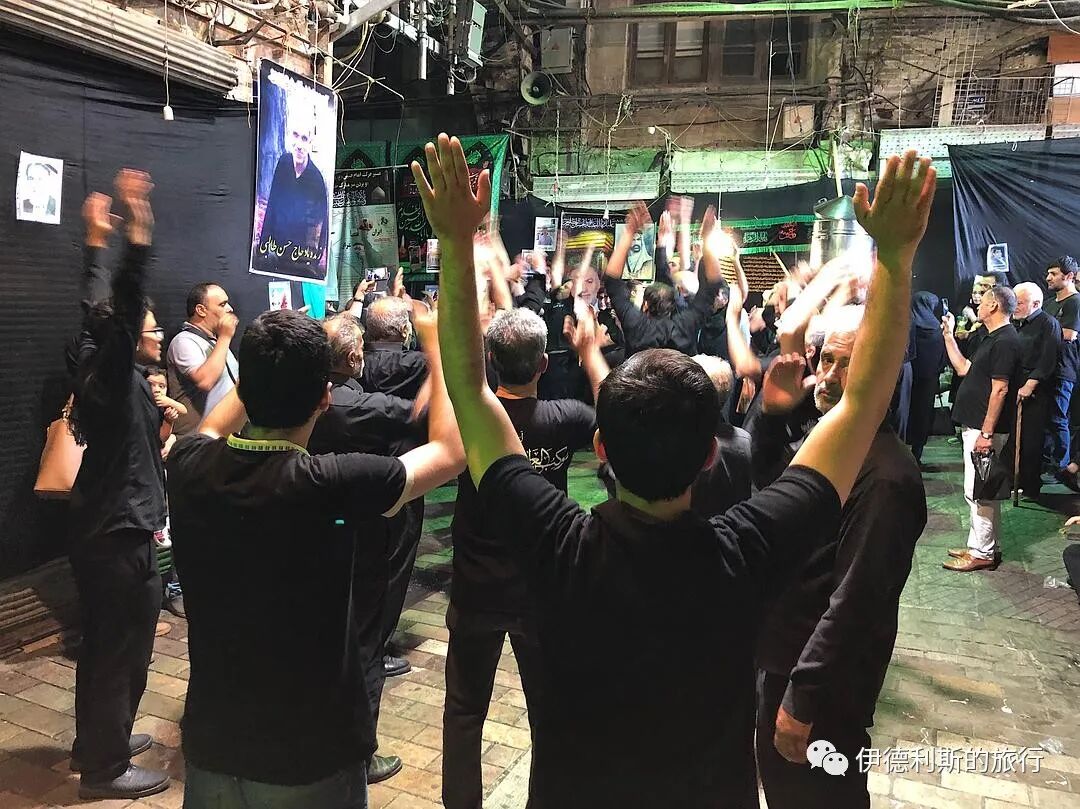
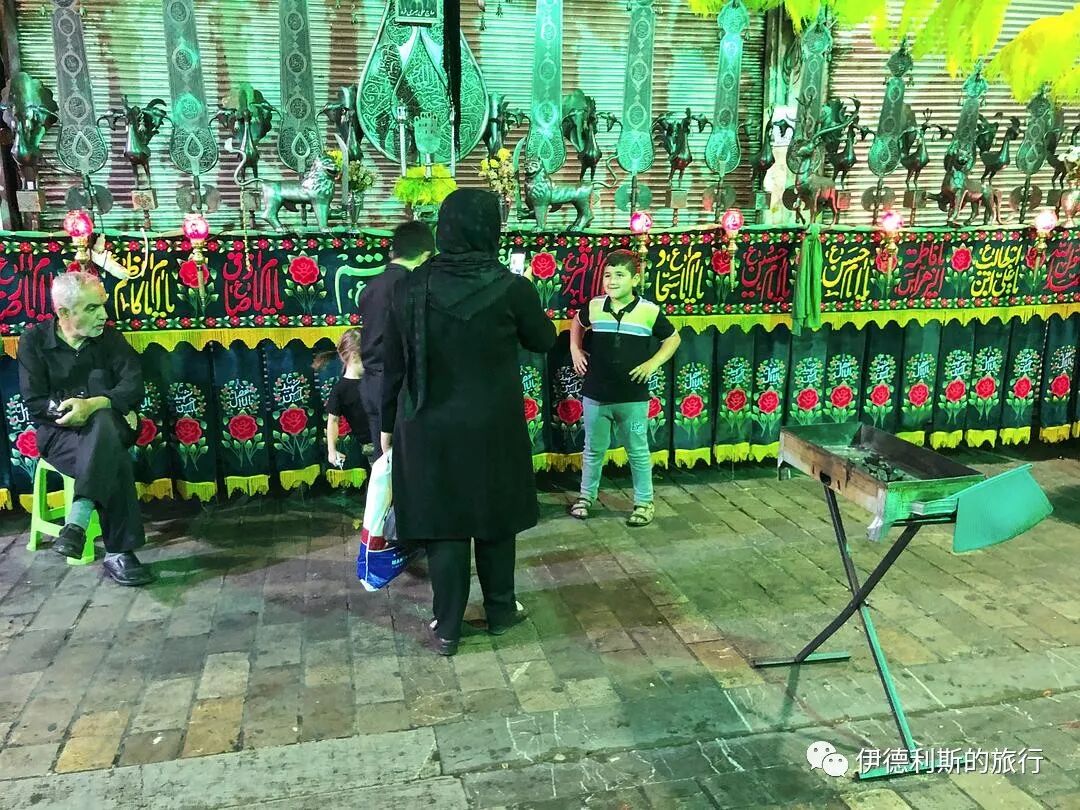
In addition to the singing, various flags are also very eye-catching.
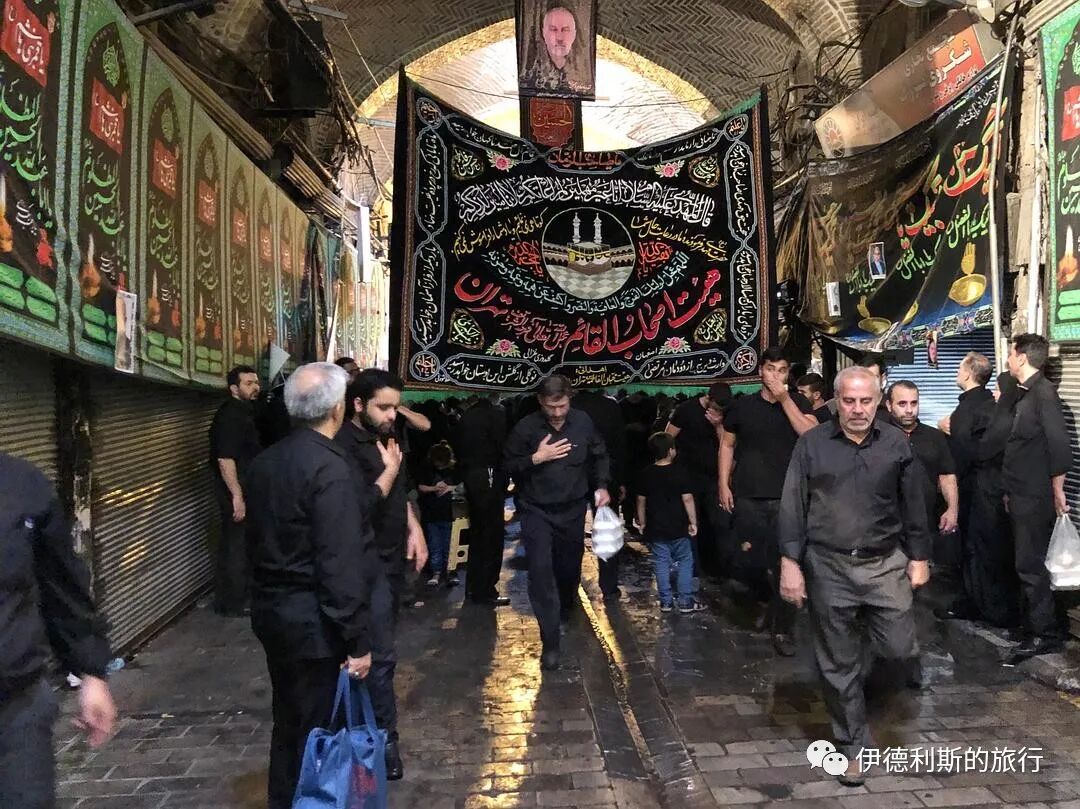
This is a procession composed of hundreds or thousands of people holding hands, which is very spectacular.
Outside the Grand Bazaar, there are also shops specifically selling Ashura flags.
The area outside the north gate of the Grand Bazaar has been turned into a venue for performing Ta'zieh opera. Ta'zieh opera performance is an important part of Ashura activities. During the month of Muharram, numerous venues for performing Ta'zieh opera are set up in various squares in Tehran, and there are many spectators.
Ta'zieh opera formed in Iran in the late 17th century and is a type of traditional Persian theater; this form of expression can be traced back to the pre-Islamic era. During Ashura, Shia Muslims use Ta'zieh opera to recreate the scene of the Battle of Karbala on the Day of Ashura in 680 AD, when Imam Hussein and his 72 companions were all killed by the Umayyad army.
In the opera, the villains are the rulers of the Umayyad dynasty, and they wear red. The heroes are Imam Hussein and his family and companions; the male characters among them wear green, and change to white when they are about to die. All female characters are played by male actors dressed in all black. If a person walks in circles around the stage, it means they are on a long journey, usually between Mecca and Karbala.
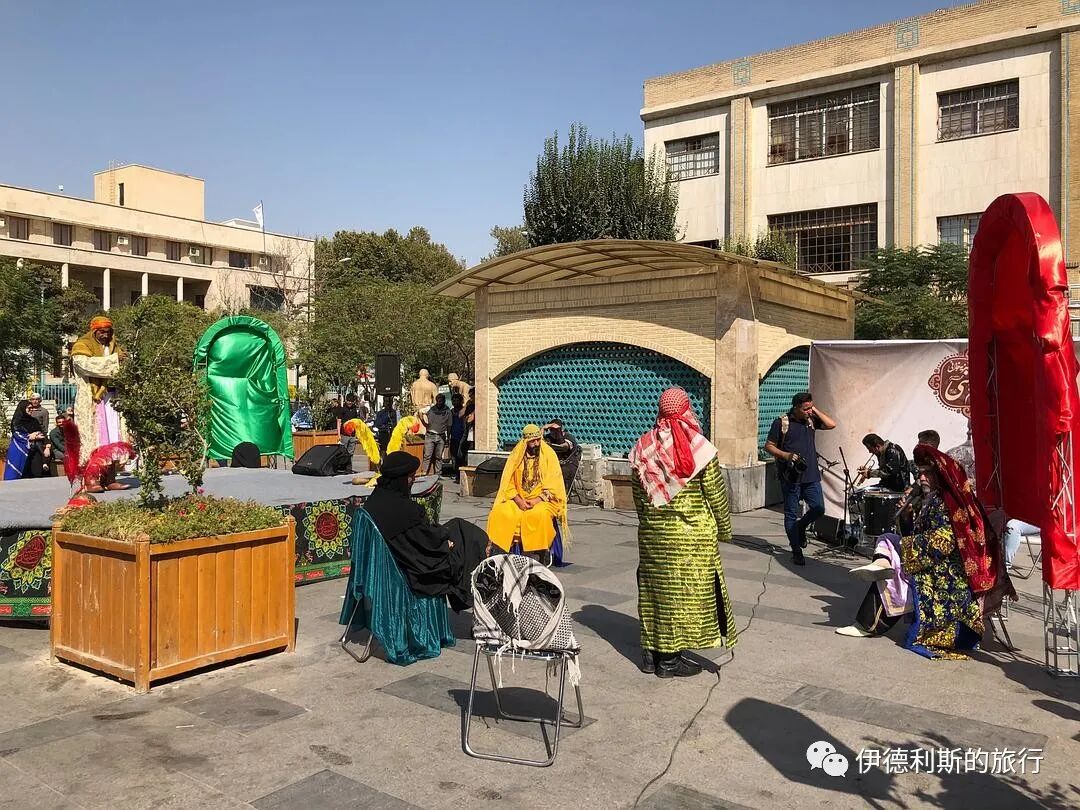
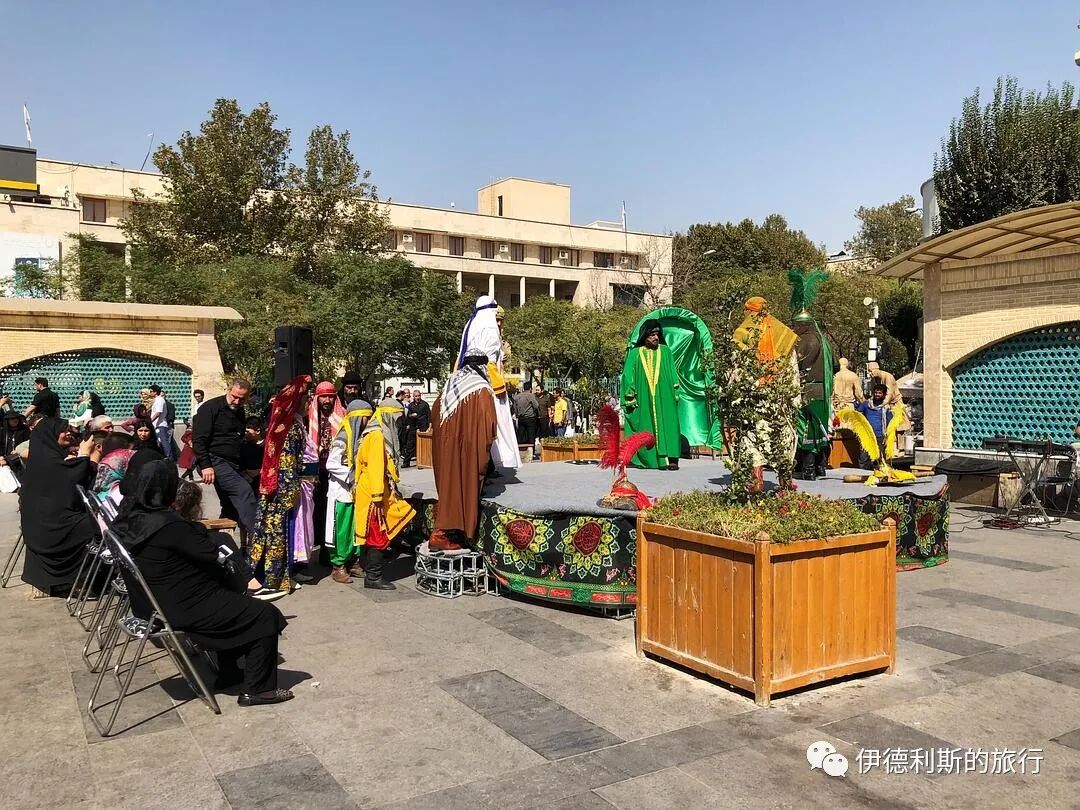
While watching the performance, you can eat honey cake and drink honey water freely.
Ashura memorial service (majalis al-ta'ziya) at Parvaz Park
I attended an Ashura memorial service (majalis al-ta'ziya) at Parvaz Park in Tehran and experienced a wonderful Iranian Shia musical performance.
In the afternoon, tea stalls were already set up in the square, and Iranian black tea was available for free. Then, accompanied by the Ney (flute), the lead singer began to sing soothing songs. Amidst the singing, a bonfire was lit in the square, and baskets nearby were filled with various fragrant fruits. After a few soothing songs, a percussion ensemble consisting of drums and cymbals walked onto the stage while playing. The rhythm of the songs began to become more and more passionate, the atmosphere grew more intense, and it reached a climax accompanied by the sound of horns.
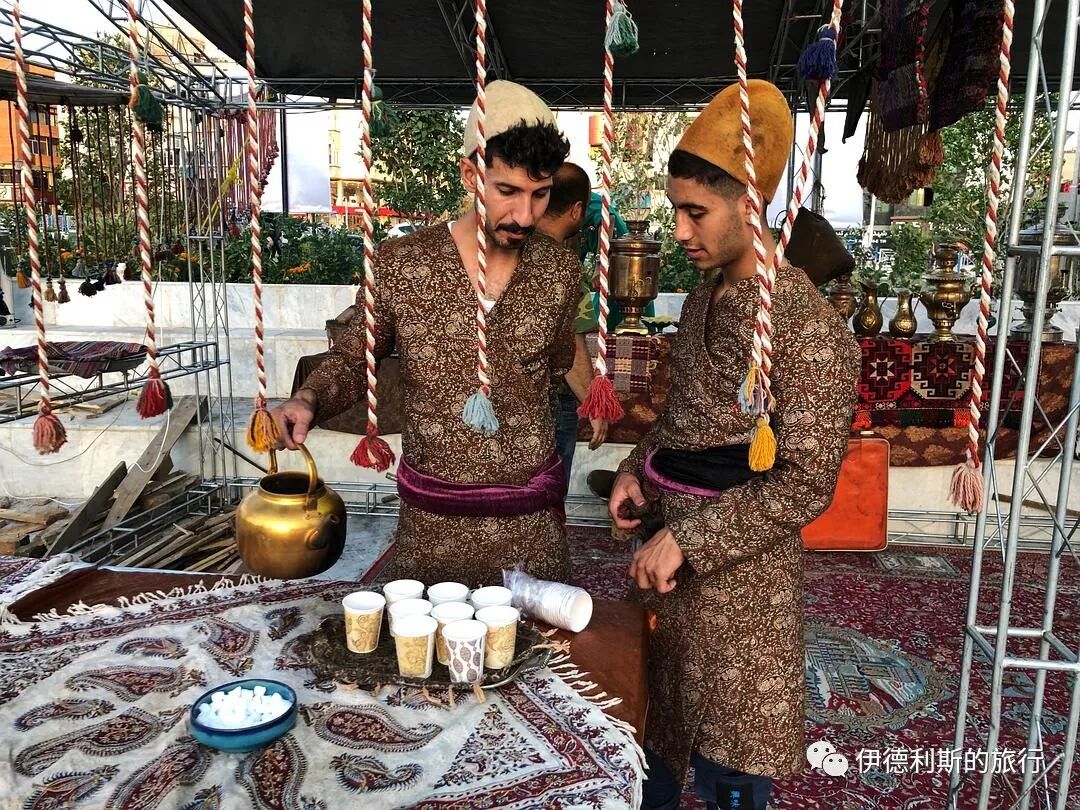
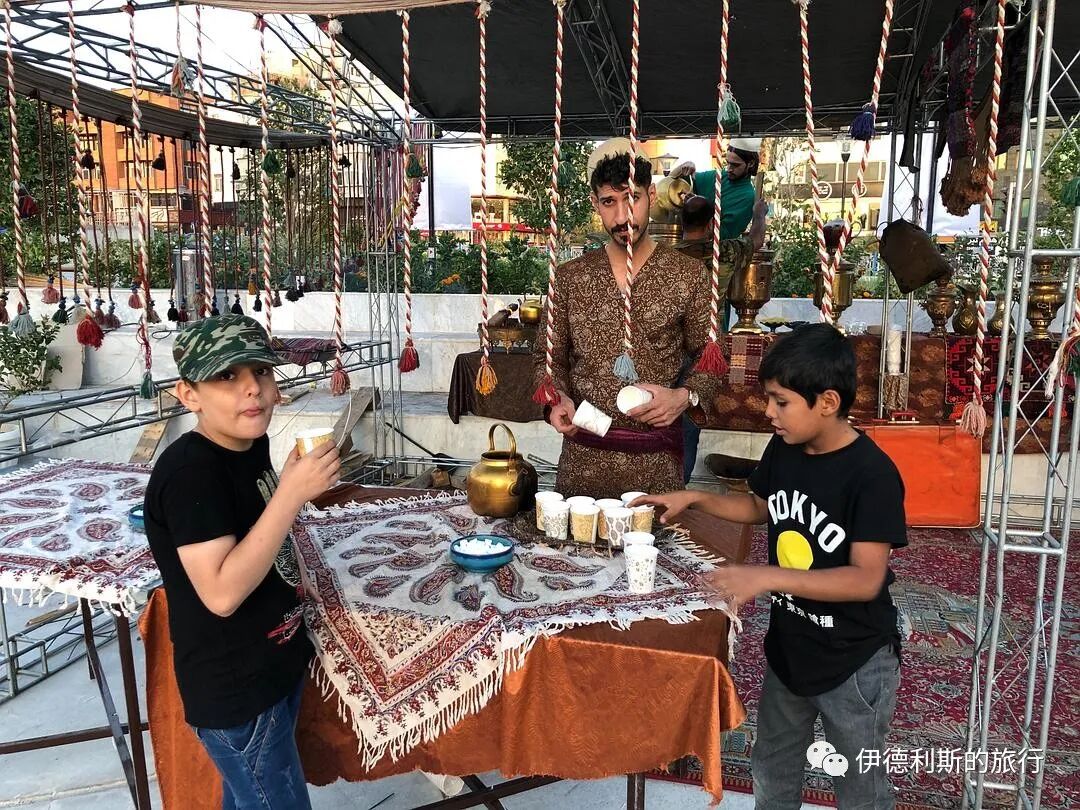
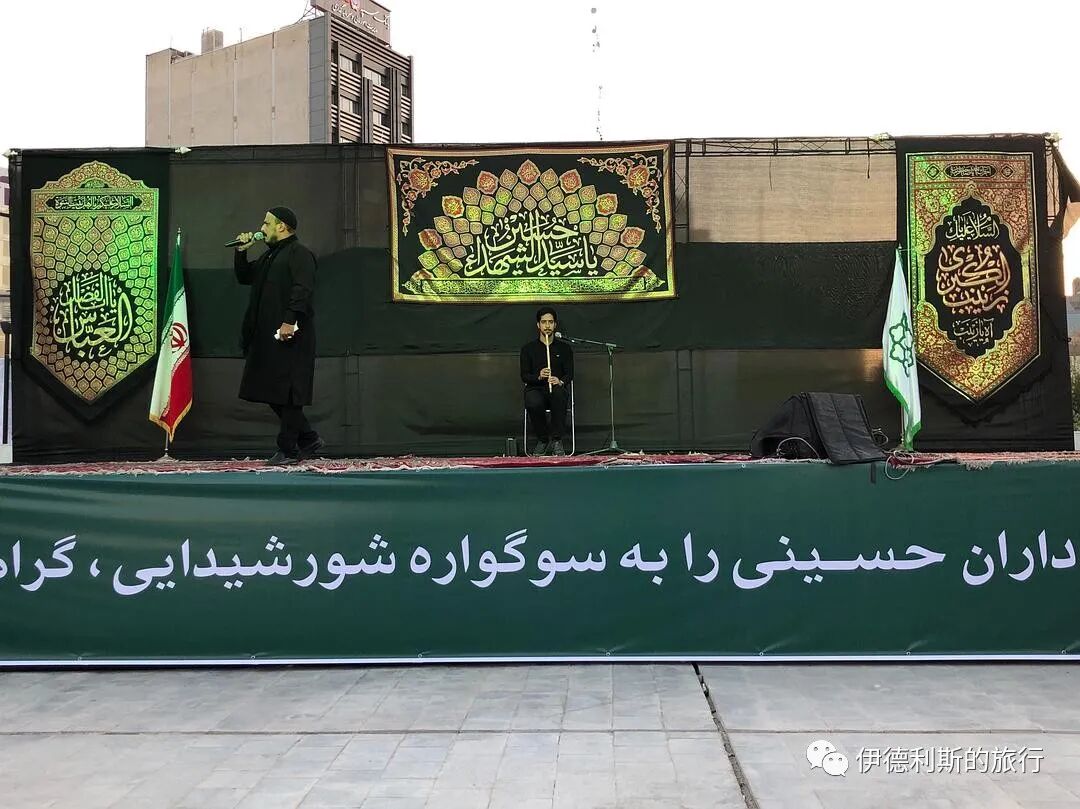
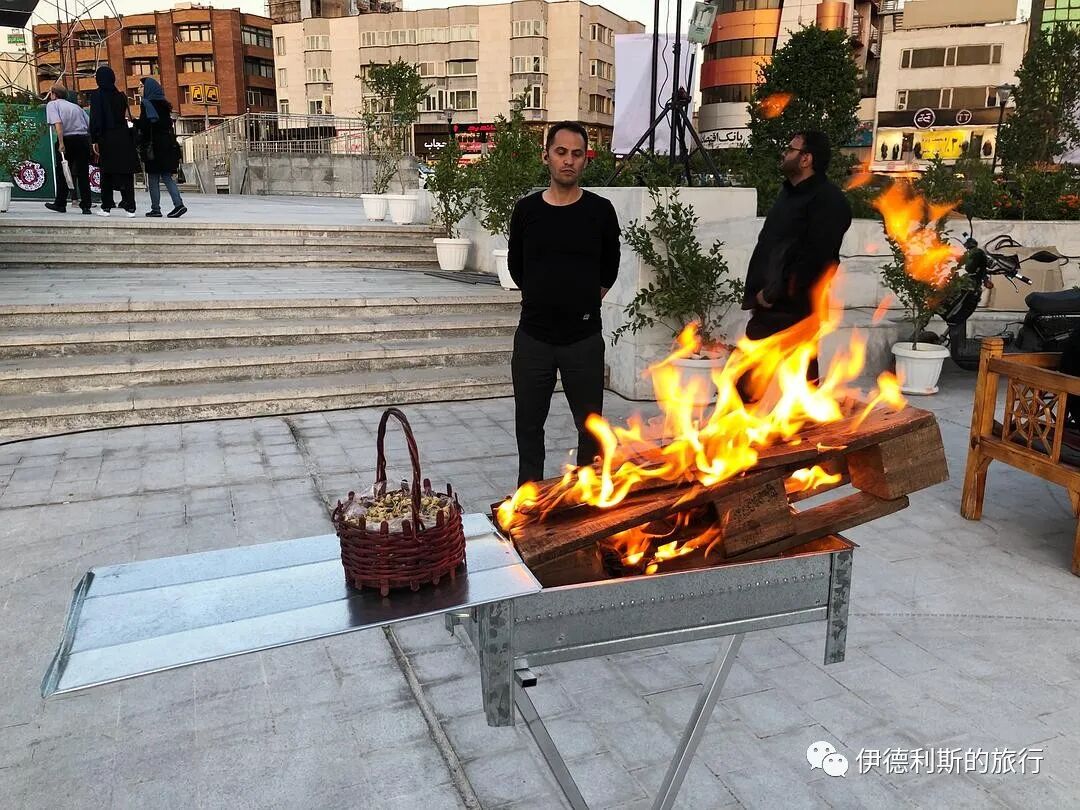
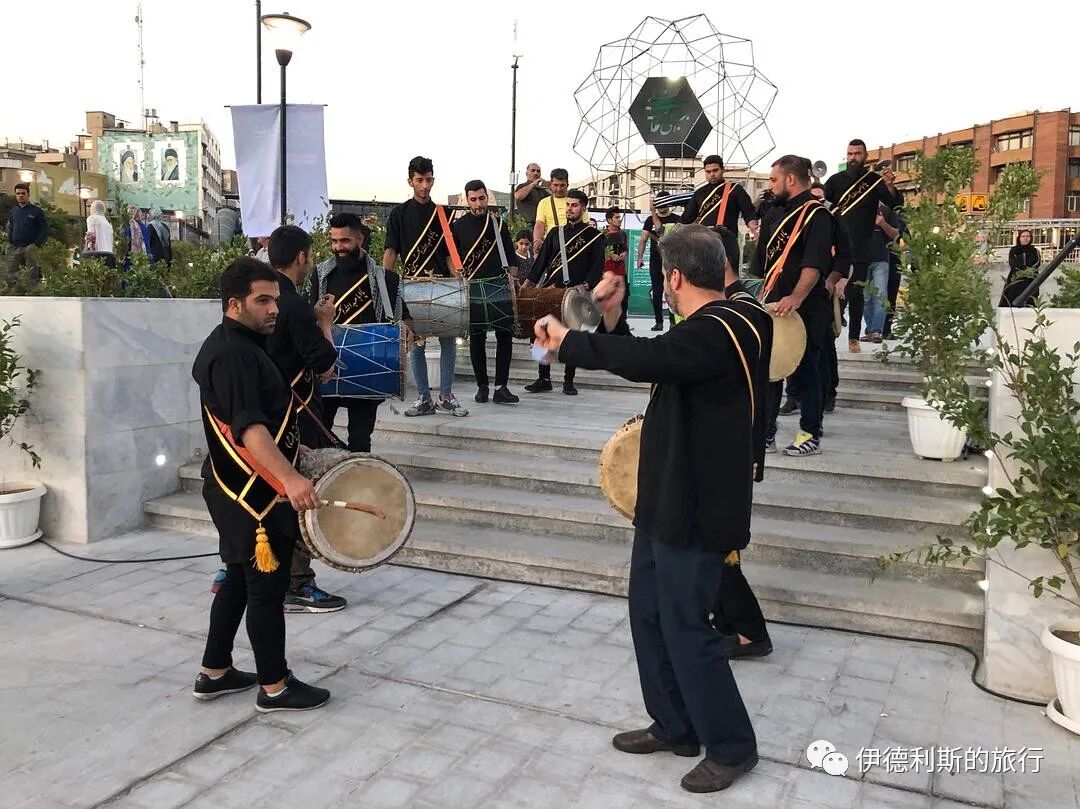
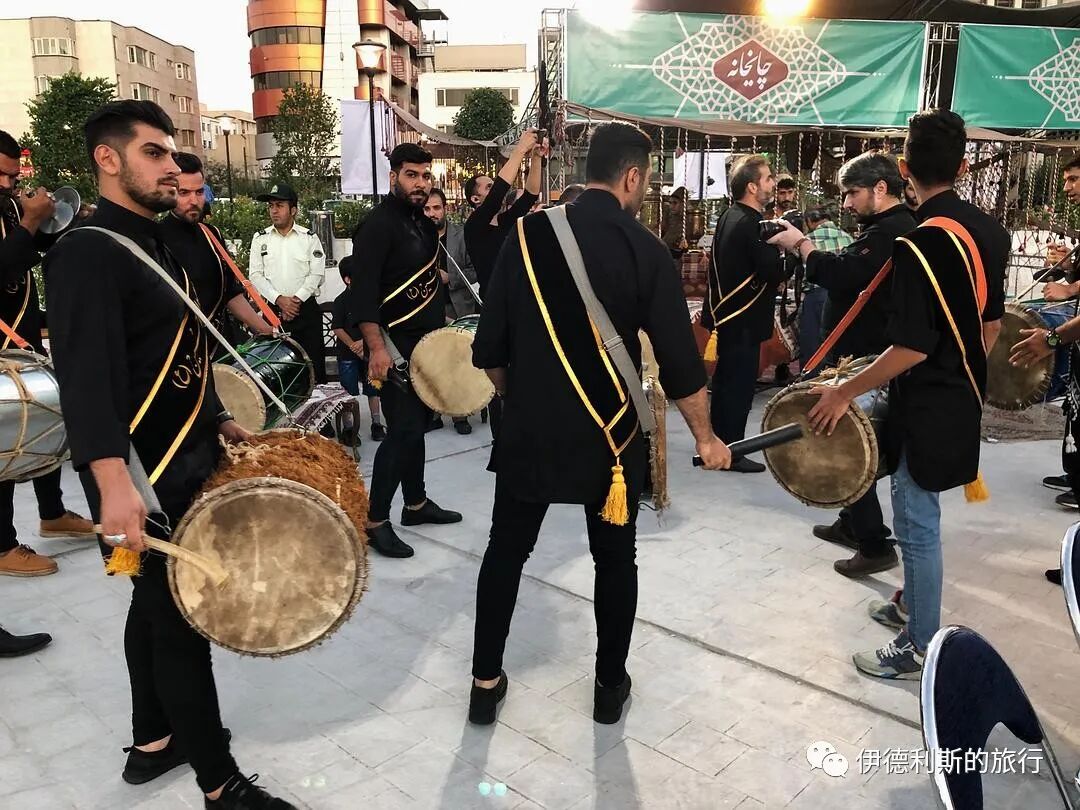
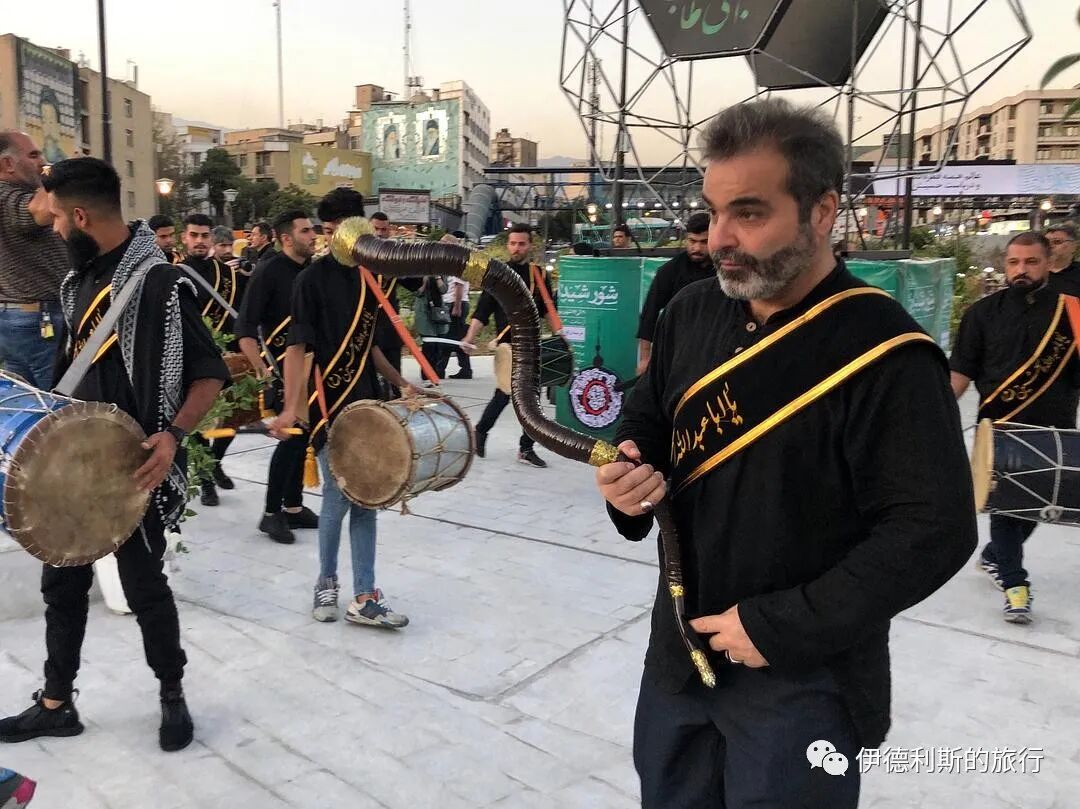
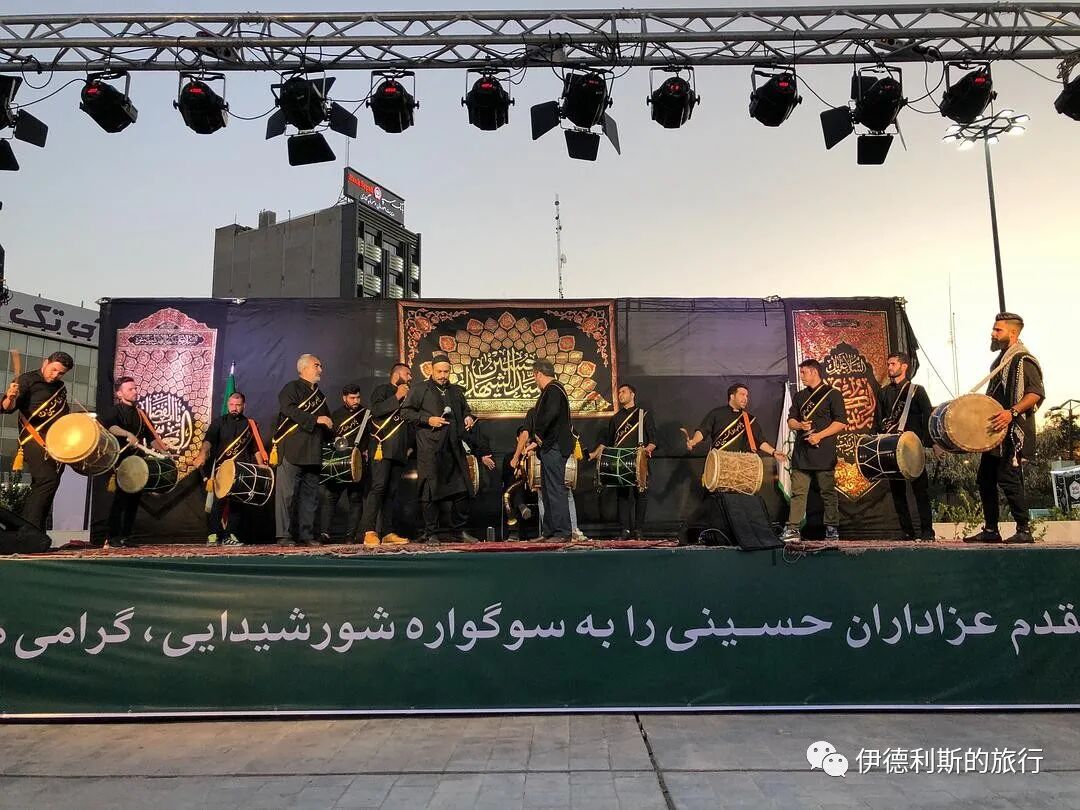
During the singing, a group of actors in costumes walked slowly toward the stage, led by two boys holding incense.
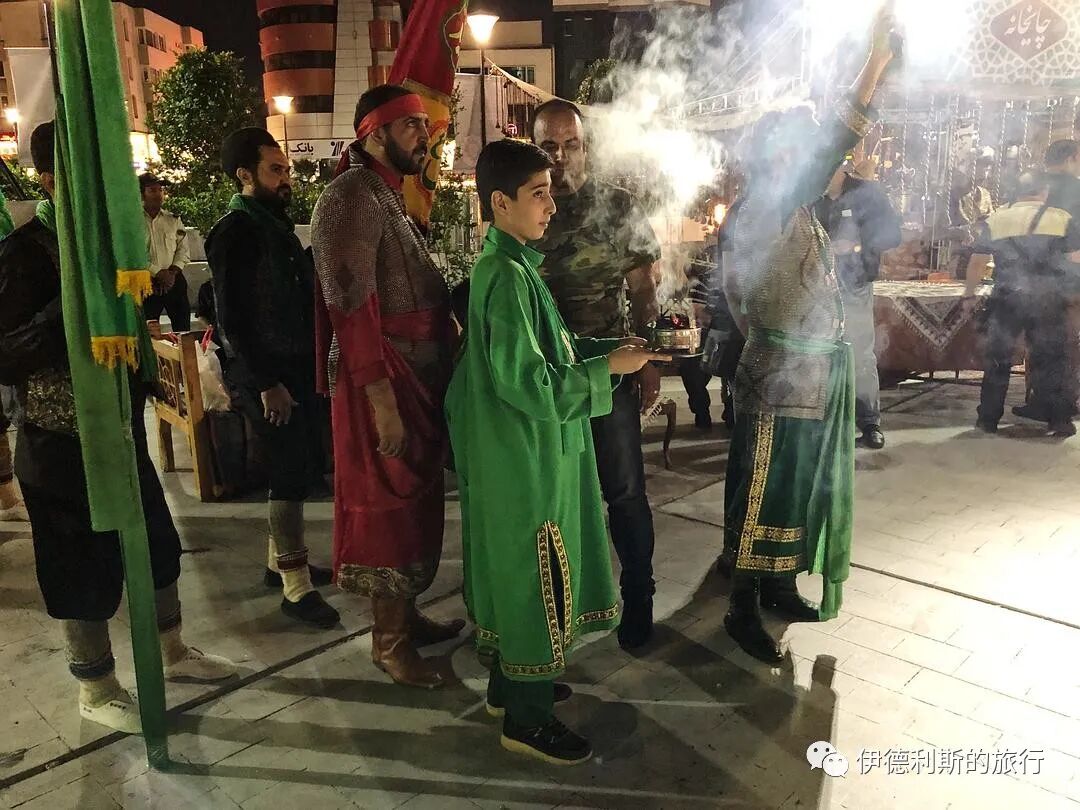
When they reached the stage, they began to perform the Ta'zieh play.
Tajrish Bazaar
At the end of Tajrish Bazaar in the north of Tehran, there is a Tekyeh. In the Shia tradition, a Tekyeh generally refers to a place specifically for commemorating Imam Hussein, especially for performing Ta'zieh opera during the month of Muharram. Tajrish Tekyeh can be traced back to the Qajar dynasty 220 years ago. It is a very old Tekyeh in Tehran, and the current layout is also very traditional, although the wooden pillars have been replaced by metal ones.
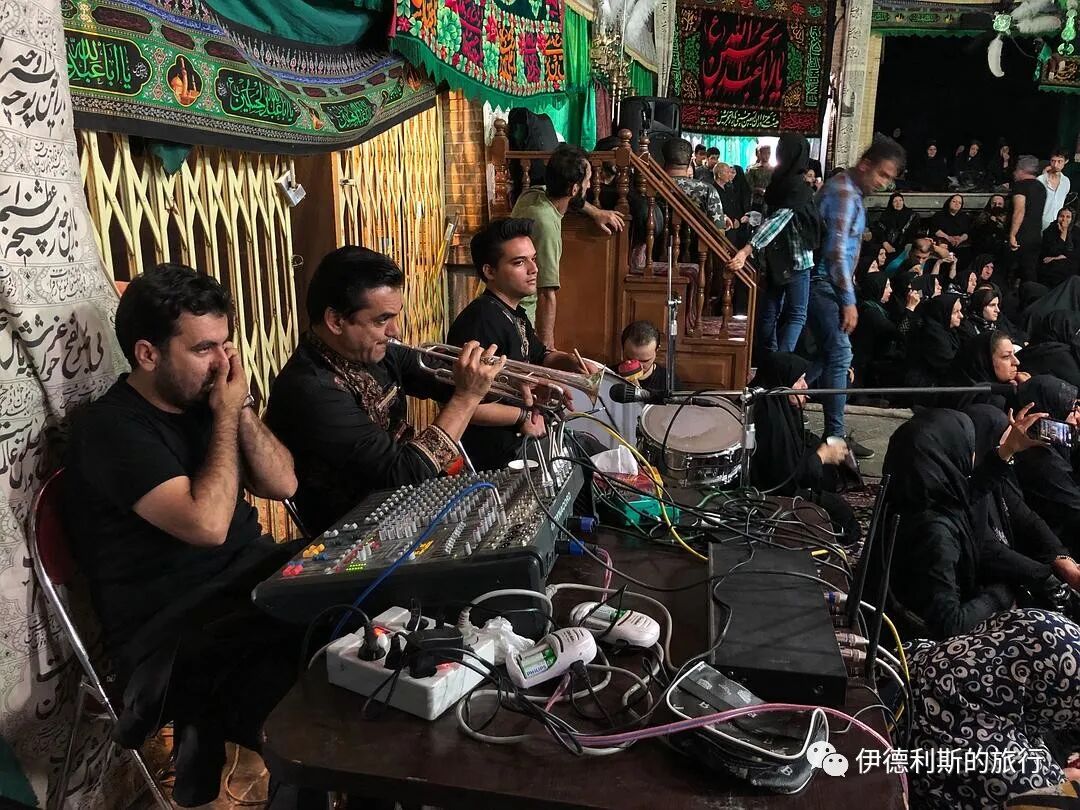
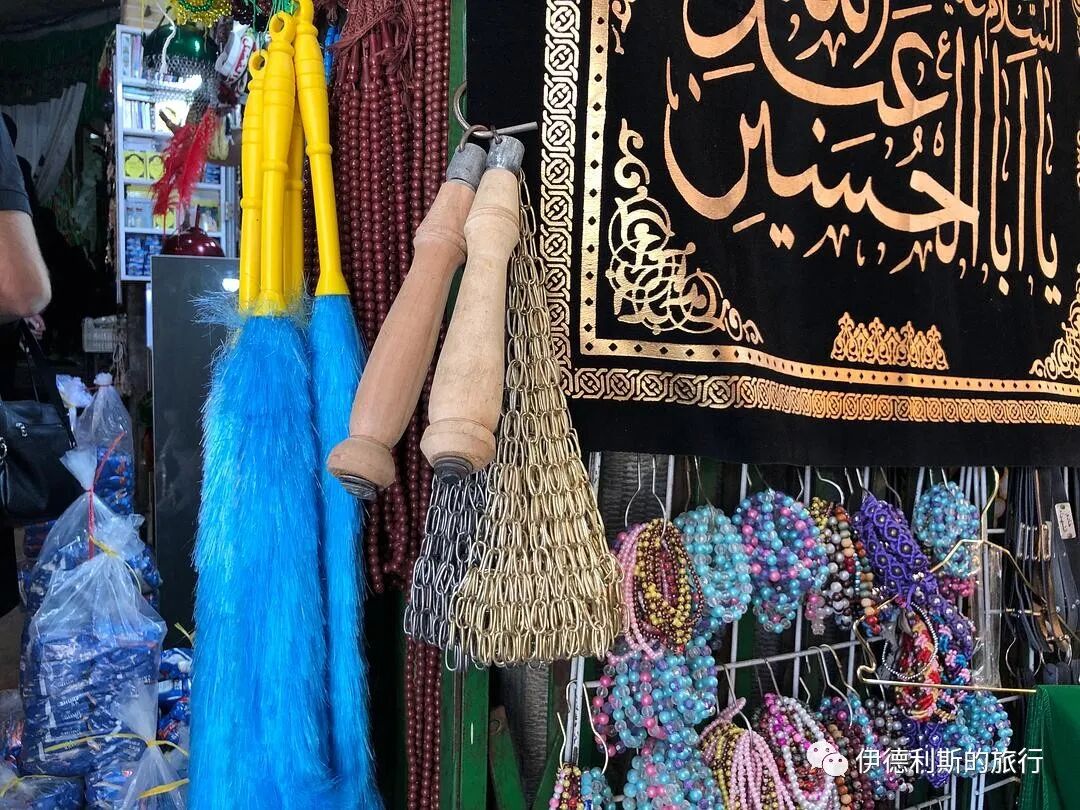
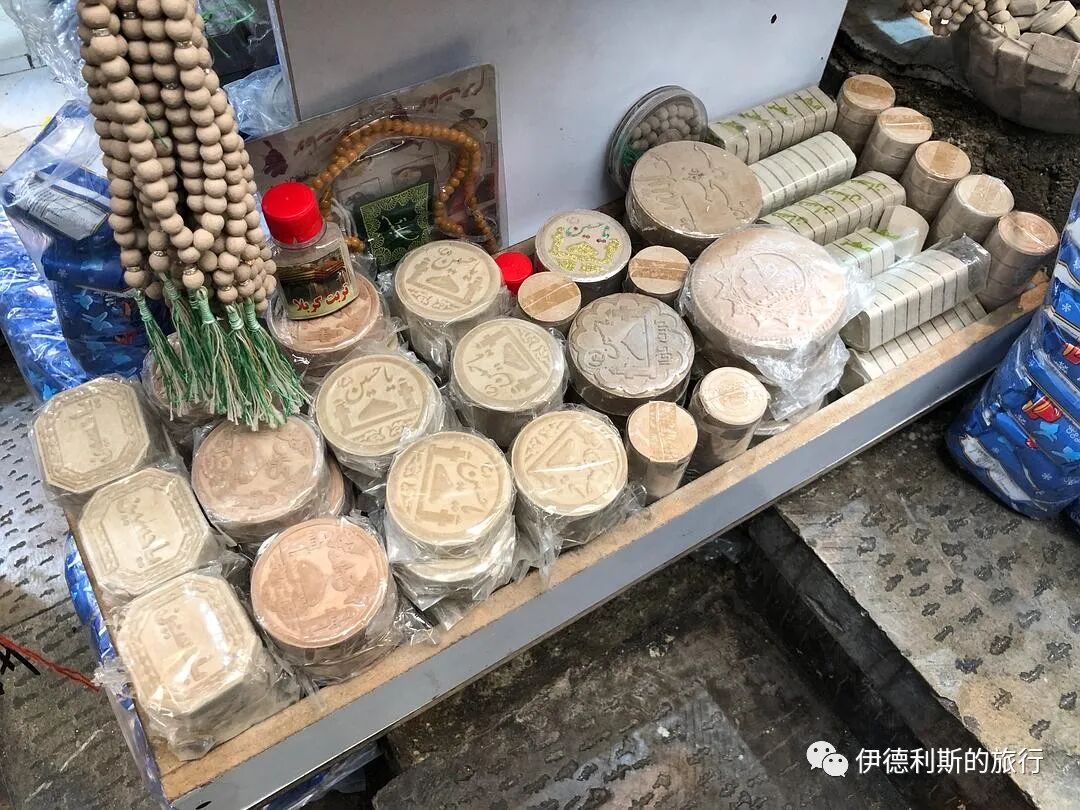
Outside the venue, there are some shops selling Shia supplies. The picture below shows the whips used during the flagellation (tatbir) ritual on Ashura, which recreates the scene of the Umayyad army whipping Imam Hussein's family. This ritual used to involve intense self-harm, but later, the Supreme Leader of Iran's Shia, Khamenei, publicly stated that during Ashura: 'Any act that harms the body is Haram (forbidden).' Therefore, you no longer see cases of self-harm during the festival in Tehran.
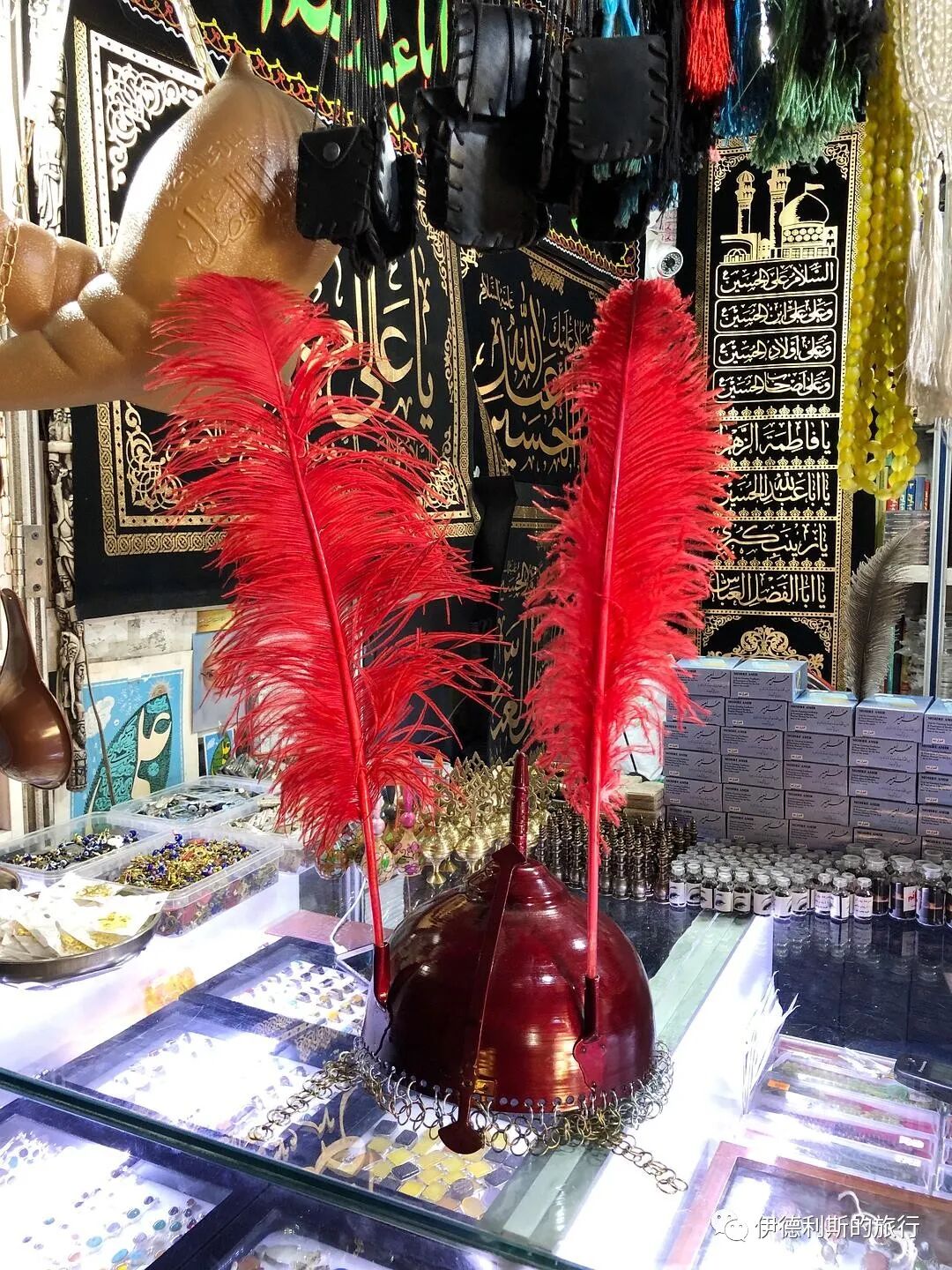
The red hat represents the villainous Umayyad dynasty, and the green hat represents the heroic Imam Hussein.
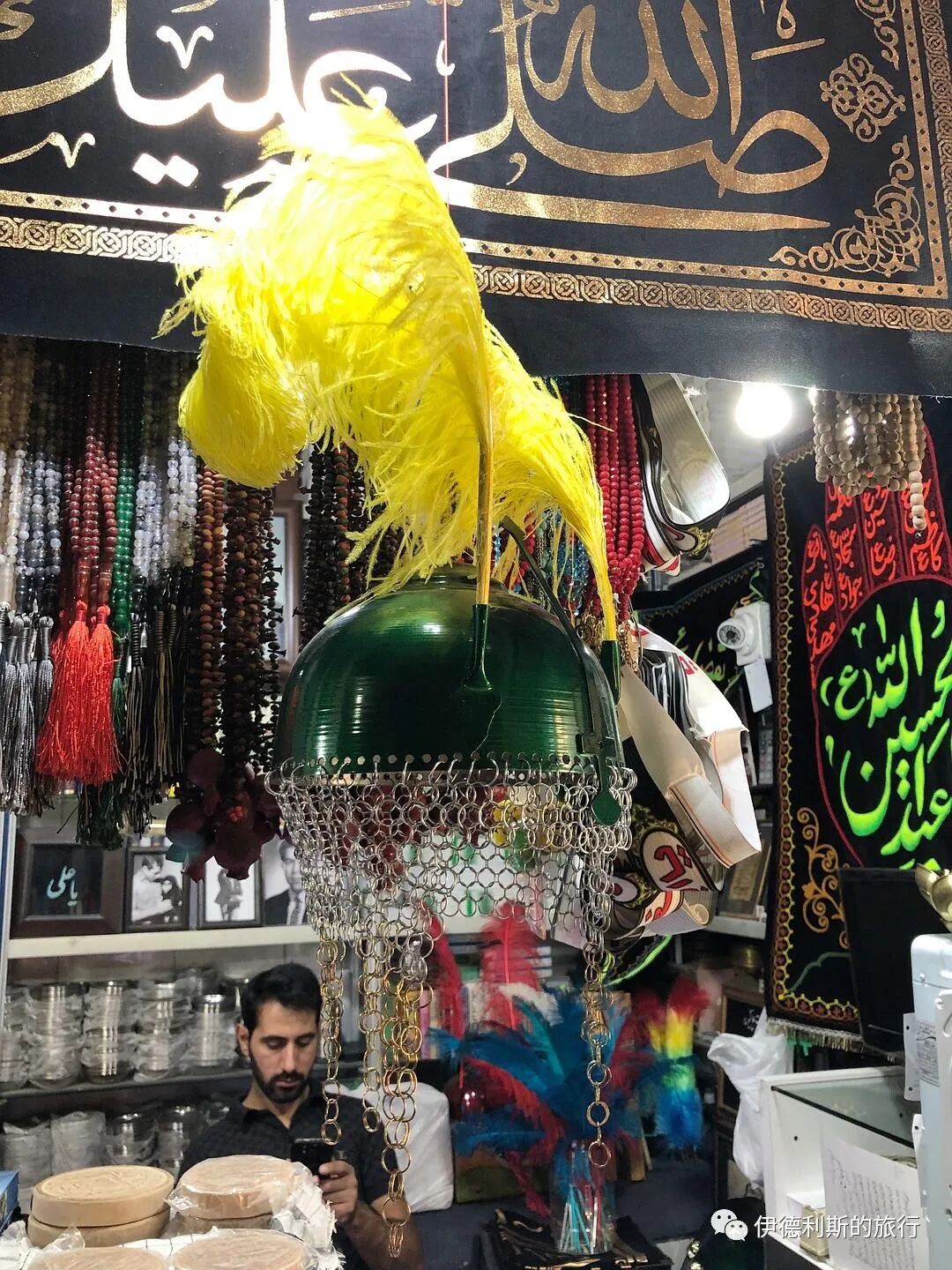
The lump of clay is called a Turbah, which symbolizes the earth; Shia Muslims must place their foreheads on it during prayer.
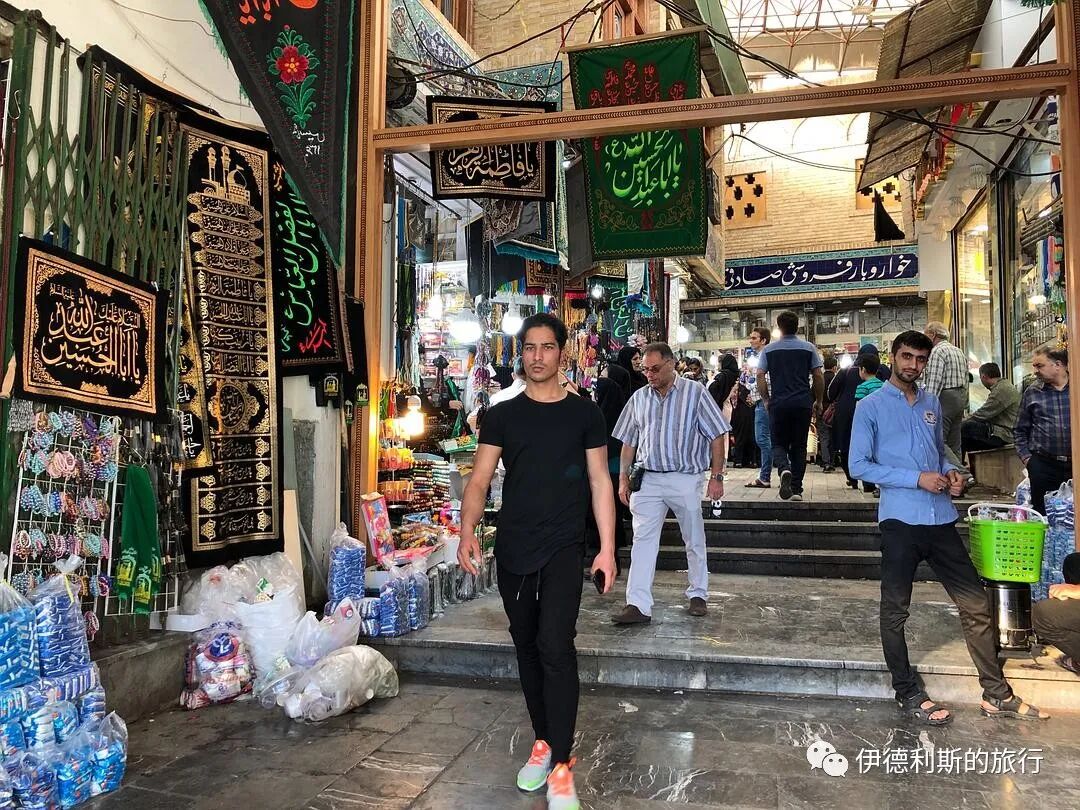
Turning out of Tajrish Bazaar, you reach the most important Shia shrine and mosque in northern Tehran, Imamzadeh Saleh, which houses the tomb of Saleh, the son of Musa al-Kadhim, the seventh Imam of the Twelver Shia. Today, the large wooden box inside the mausoleum dates back to the late Safavid dynasty to the Afsharid dynasty in the 18th century.
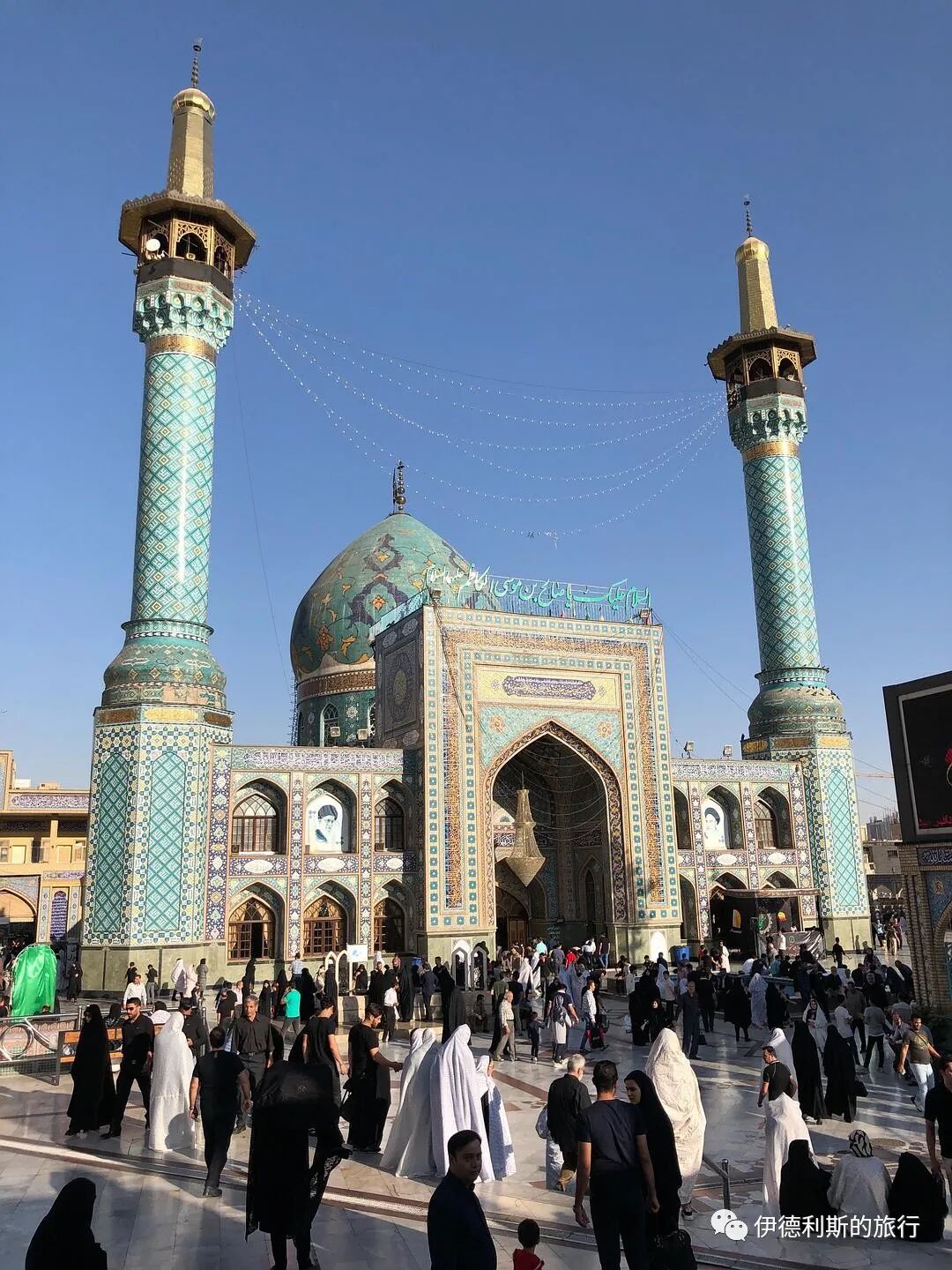
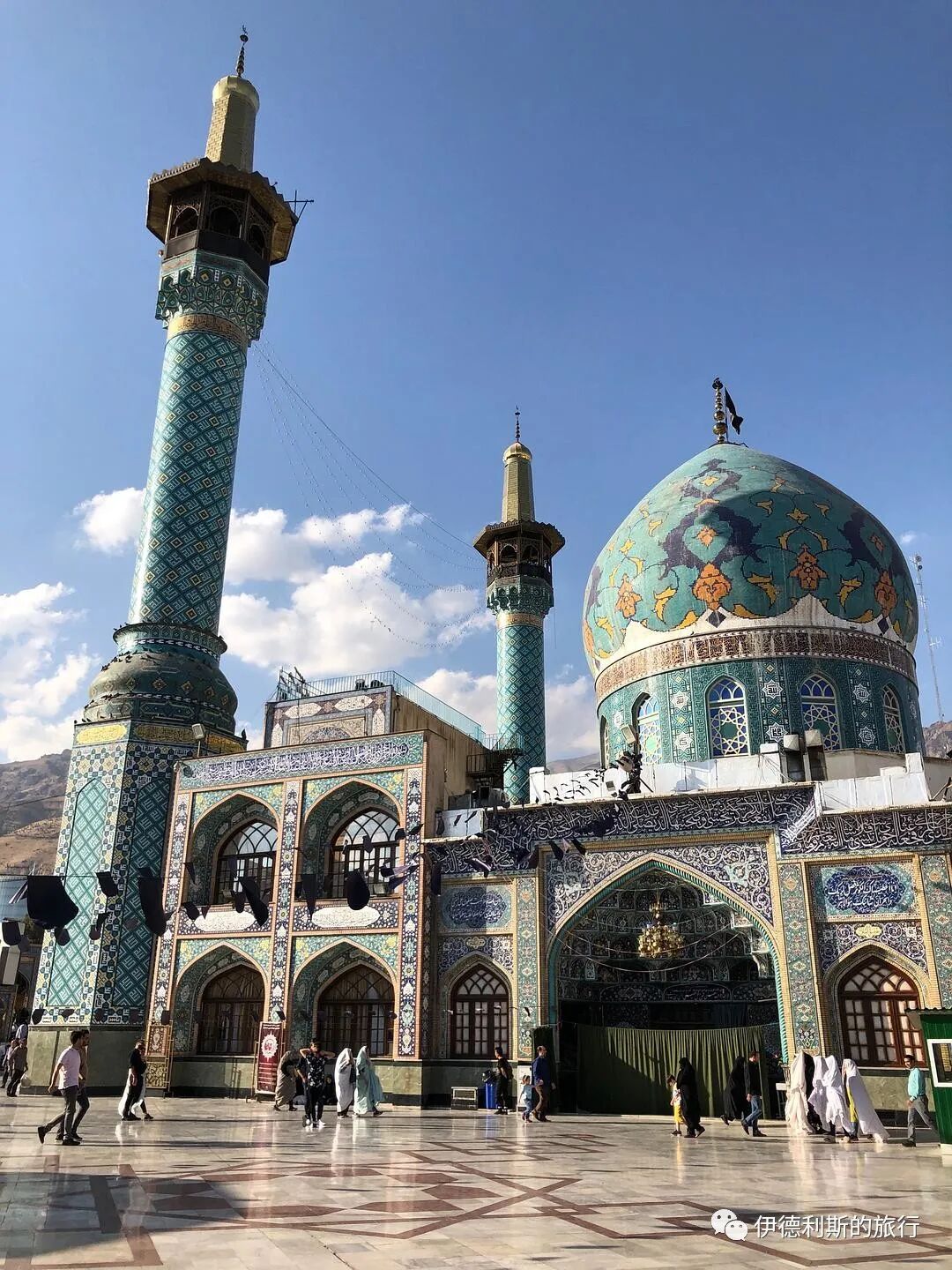
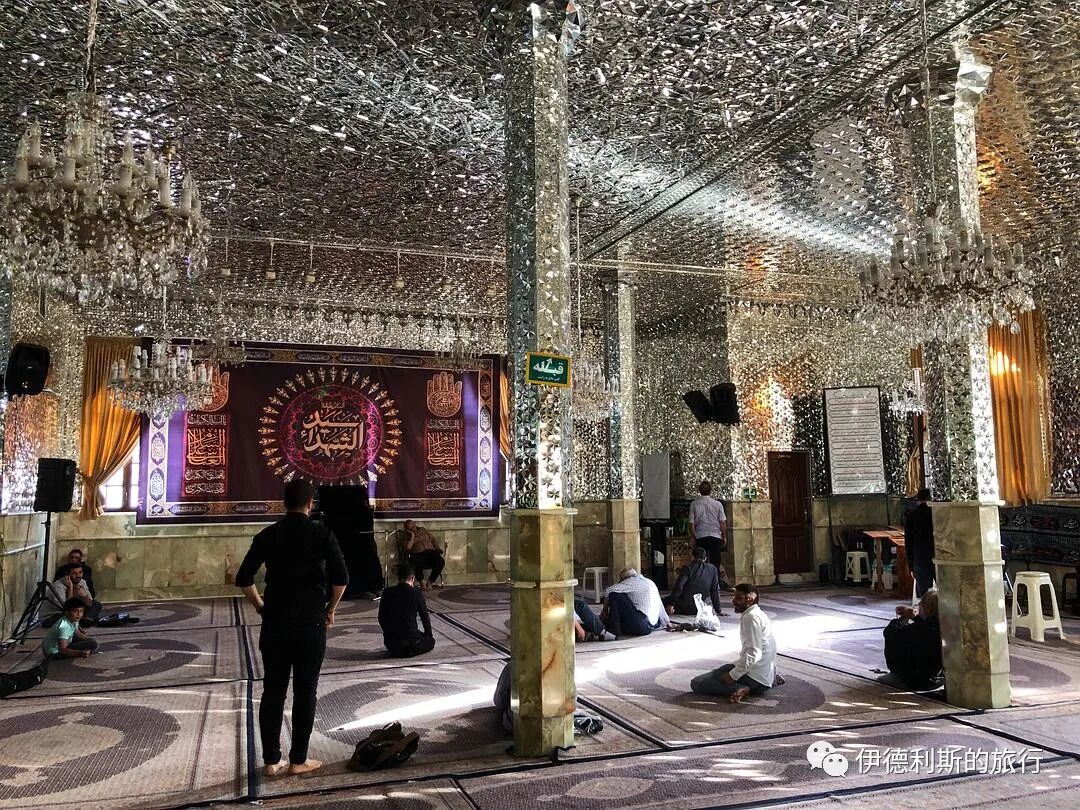
During the month of Muharram, Ta'zieh opera is also performed in the courtyard of Imamzadeh Saleh.
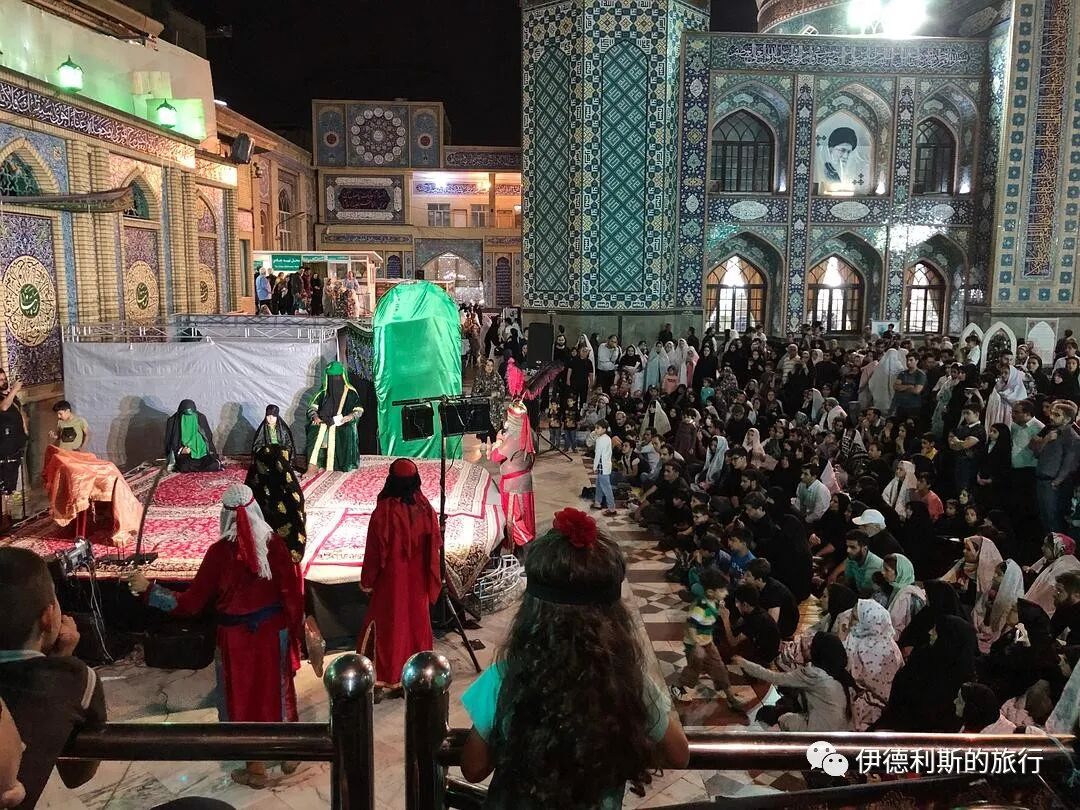
At the place where drinks are distributed for free at the entrance of Imamzadeh Saleh shrine and mosque, Khakshir (seeds of the Flixweed plant) is a very common drink in Iran during the summer to relieve heat and quench thirst.
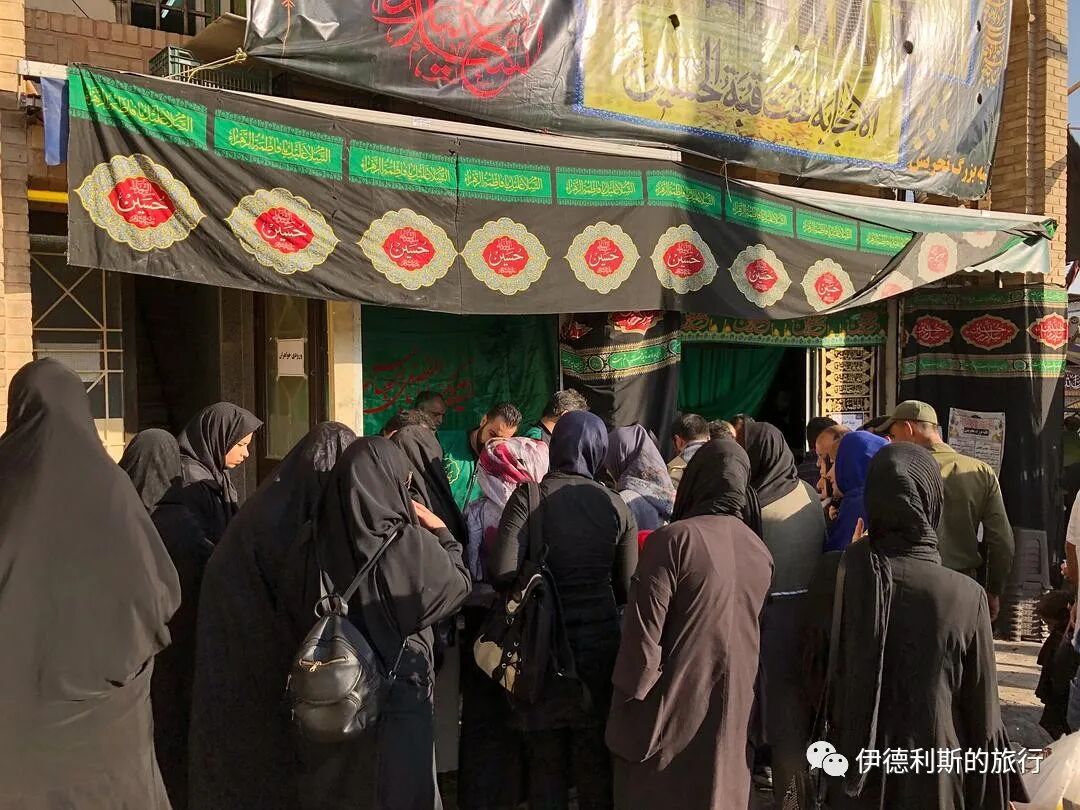
Then, next to it, you can also see places selling various Shia supplies.
Islamic Guide: Ashura - Meaning, History and the Victory of Musa
Articles • ali2007fr posted the article • 0 comments • 232 views • 2026-05-20 21:35
Summary: This article explains Ashura through the victory of Musa and the Children of Israel over Pharaoh and the reminder to trust Allah's help. It keeps the publication details and main source description while removing navigation, disclaimer, and original-link clutter.
On the day of Ashura, thousands of years ago, Musa (as) and the Children of Israel won a huge victory over the tyranny of Pharaoh. Remembering this event by fasting is a solemn reminder that Allah's help is always there for those who stay righteous and rely on His divine wisdom and mercy. Authored by Yaqeen Institute. Published: July 15, 2024, Muharram 9, 1446. Updated: February 13, 2026, Shaban 25, 1447. Read time: 7 minutes. view all
Summary: This article explains Ashura through the victory of Musa and the Children of Israel over Pharaoh and the reminder to trust Allah's help. It keeps the publication details and main source description while removing navigation, disclaimer, and original-link clutter.
On the day of Ashura, thousands of years ago, Musa (as) and the Children of Israel won a huge victory over the tyranny of Pharaoh. Remembering this event by fasting is a solemn reminder that Allah's help is always there for those who stay righteous and rely on His divine wisdom and mercy. Authored by Yaqeen Institute. Published: July 15, 2024, Muharram 9, 1446. Updated: February 13, 2026, Shaban 25, 1447. Read time: 7 minutes.
Muslim Culture Guide: Ashura Day - Fasting, Memory and Hui Muslim Traditions
Articles • ali2007fr posted the article • 0 comments • 245 views • 2026-05-19 10:23
Summary: Ashura Day - Fasting, Memory and Hui Muslim Traditions is presented as a clear English travel account for readers interested in Muslim life, halal food, mosques, and local history. The article keeps the original place names, food details, photographs, and cultural context while focusing on Ashura, Muslim Culture, Hui Muslims.
This Tuesday was the 10th of Muharram, the Day of Ashura. As usual, we made the Urumqi Hui Muslim version of Ashura bean rice (dou dou fan).
After work, I went to the supermarket to buy beans. This time I used seven kinds: soybeans, black beans, mung beans, red beans, chickpeas, white kidney beans, and lotus beans. First, I cooked the seven types of beans in a pressure cooker until soft. Then, I diced some Qurbani lamb and chopped green onions. I stir-fried the meat with the green onions, adding salt and Sichuan peppercorn powder. I added rice and sticky rice to the cooked beans, then mixed in the stir-fried meat. I set the pressure cooker to the rice cooking mode to finish it.
Since our pressure cooker wasn't big enough, the water boiled away a bit too much. After taking it out, we added more water to thin it out. Actually, the traditional way is to simmer it in a large pot for a long time.
Legend says that when the Great Flood receded and Prophet Nuh's ship reached land, he and his followers used the seven types of beans on the ship to make the first meal for humanity after the disaster. Across a vast region from Bosnia and Turkey in the west to China in the east, many friends (dostani) make Ashura bean porridge today to remember the landing of Noah's Ark.
You can actually find Ashura bean porridge at the Sultan Turkish Restaurant in Beijing, but the Turkish version is more like a dessert and tastes quite different from the Chinese one.
The Ottoman-style Ashure does not have a fixed recipe, as it changes based on the region and the habits of each family. Tradition says you should use at least seven ingredients, though some believe you should use ten to match the theme of the tenth day, while the Alevis always use twelve ingredients. Common ingredients include wheat, barley, rice, white kidney beans, chickpeas, grape molasses (pekmez), pomegranate molasses, beet juice, dates, raisins, currants, apricots, figs, apples, pistachios, almonds, hazelnuts, walnuts, pine nuts, and sesame seeds. You can decorate the finished Ashure with fennel seeds, black cumin seeds, plums, pomegranate, cardamom, cinnamon, cloves, and nutmeg.
Today, you can buy Ashure in dessert shops all year round in Turkey and the Balkans. However, on the Day of Ashura, people still prefer to make Ashure themselves and share it with the poor, relatives, neighbors, and friends. view all
Summary: Ashura Day - Fasting, Memory and Hui Muslim Traditions is presented as a clear English travel account for readers interested in Muslim life, halal food, mosques, and local history. The article keeps the original place names, food details, photographs, and cultural context while focusing on Ashura, Muslim Culture, Hui Muslims.
This Tuesday was the 10th of Muharram, the Day of Ashura. As usual, we made the Urumqi Hui Muslim version of Ashura bean rice (dou dou fan).
After work, I went to the supermarket to buy beans. This time I used seven kinds: soybeans, black beans, mung beans, red beans, chickpeas, white kidney beans, and lotus beans. First, I cooked the seven types of beans in a pressure cooker until soft. Then, I diced some Qurbani lamb and chopped green onions. I stir-fried the meat with the green onions, adding salt and Sichuan peppercorn powder. I added rice and sticky rice to the cooked beans, then mixed in the stir-fried meat. I set the pressure cooker to the rice cooking mode to finish it.
Since our pressure cooker wasn't big enough, the water boiled away a bit too much. After taking it out, we added more water to thin it out. Actually, the traditional way is to simmer it in a large pot for a long time.
Legend says that when the Great Flood receded and Prophet Nuh's ship reached land, he and his followers used the seven types of beans on the ship to make the first meal for humanity after the disaster. Across a vast region from Bosnia and Turkey in the west to China in the east, many friends (dostani) make Ashura bean porridge today to remember the landing of Noah's Ark.
You can actually find Ashura bean porridge at the Sultan Turkish Restaurant in Beijing, but the Turkish version is more like a dessert and tastes quite different from the Chinese one.
The Ottoman-style Ashure does not have a fixed recipe, as it changes based on the region and the habits of each family. Tradition says you should use at least seven ingredients, though some believe you should use ten to match the theme of the tenth day, while the Alevis always use twelve ingredients. Common ingredients include wheat, barley, rice, white kidney beans, chickpeas, grape molasses (pekmez), pomegranate molasses, beet juice, dates, raisins, currants, apricots, figs, apples, pistachios, almonds, hazelnuts, walnuts, pine nuts, and sesame seeds. You can decorate the finished Ashure with fennel seeds, black cumin seeds, plums, pomegranate, cardamom, cinnamon, cloves, and nutmeg.
Today, you can buy Ashure in dessert shops all year round in Turkey and the Balkans. However, on the Day of Ashura, people still prefer to make Ashure themselves and share it with the poor, relatives, neighbors, and friends.
Halal Food Guide: Ashura Bean Porridge — Muslim Food Culture Across Eurasia
Articles • ali2007fr posted the article • 0 comments • 160 views • 2026-05-19 02:59
Summary: Ashura bean porridge is a Muslim food tradition that has traveled across Eurasia through faith, family memory, and local kitchens. This article explains the dish, its cultural setting, and its ingredients in natural English while preserving the original details.
The 10th day of the first month of the Islamic calendar is the honorable Day of Ashura. Besides fasting, Hui Muslims also have a tradition of making Ashura bean porridge to commemorate the day the Ark of Nuh (Noah's Ark) reached land. People say when the Prophet Nuh and his followers stepped off the boat, they had almost no food left. Everyone pooled together seeds of various foods to make the first meal for humanity after the Great Flood receded.
We came home from work yesterday and started making the Urumqi version of Ashura bean rice.
First, cut the Qurban lamb into small cubes and stir-fry them with chopped green onions. Make sure the Sichuan peppercorns (huajiao) and salt stand out in the flavor. Then, put a handful of glutinous rice and half a bowl of rice into half a pot of water. After it is cooked, add the nine types of beans that were boiled the day before, stir well, and then add the stir-fried lamb. The finished dish has both the fragrance of beans and the aroma of meat, and it is very meaningful.
Besides Hui Muslims, many Sunni Muslims in other regions also make Ashura bean porridge, with the most famous being the Ashure of the Ottoman Empire. In his 17th-century work, The Book of Travels (Seyahatname), the Ottoman traveler Evliya Celebi mentioned that Ashure is a type of porridge that should be cooked on the tenth day of the month of Muharram.
Ottoman Ashure does not have a fixed recipe, as it varies by region and the habits of each family. Traditionally, People say at least seven ingredients should be used, while others believe it should contain ten ingredients to match the theme of the tenth day. The Alevis always use twelve ingredients. Commonly used ingredients include wheat, barley, rice, white kidney beans, chickpeas, grape molasses (pekmez), pomegranate molasses, beet juice, dates, raisins, currants, apricots, figs, apples, pistachios, almonds, hazelnuts, walnuts, pine nuts, and sesame seeds. The finished Ashure can also be decorated with fennel seeds, black cumin seeds, plums, pomegranates, cardamom, cinnamon, cloves, and nutmeg.
I first ate Ashure in Istanbul, and I had it again this year in Sarajevo. Today, you can buy Ashure in dessert shops all year round in Turkey and the Balkan region. However, on the Day of Ashura, people still prefer to make Ashure themselves and share it with the poor, relatives, neighbors, and friends. view all
Summary: Ashura bean porridge is a Muslim food tradition that has traveled across Eurasia through faith, family memory, and local kitchens. This article explains the dish, its cultural setting, and its ingredients in natural English while preserving the original details.
The 10th day of the first month of the Islamic calendar is the honorable Day of Ashura. Besides fasting, Hui Muslims also have a tradition of making Ashura bean porridge to commemorate the day the Ark of Nuh (Noah's Ark) reached land. People say when the Prophet Nuh and his followers stepped off the boat, they had almost no food left. Everyone pooled together seeds of various foods to make the first meal for humanity after the Great Flood receded.
We came home from work yesterday and started making the Urumqi version of Ashura bean rice.
First, cut the Qurban lamb into small cubes and stir-fry them with chopped green onions. Make sure the Sichuan peppercorns (huajiao) and salt stand out in the flavor. Then, put a handful of glutinous rice and half a bowl of rice into half a pot of water. After it is cooked, add the nine types of beans that were boiled the day before, stir well, and then add the stir-fried lamb. The finished dish has both the fragrance of beans and the aroma of meat, and it is very meaningful.
Besides Hui Muslims, many Sunni Muslims in other regions also make Ashura bean porridge, with the most famous being the Ashure of the Ottoman Empire. In his 17th-century work, The Book of Travels (Seyahatname), the Ottoman traveler Evliya Celebi mentioned that Ashure is a type of porridge that should be cooked on the tenth day of the month of Muharram.
Ottoman Ashure does not have a fixed recipe, as it varies by region and the habits of each family. Traditionally, People say at least seven ingredients should be used, while others believe it should contain ten ingredients to match the theme of the tenth day. The Alevis always use twelve ingredients. Commonly used ingredients include wheat, barley, rice, white kidney beans, chickpeas, grape molasses (pekmez), pomegranate molasses, beet juice, dates, raisins, currants, apricots, figs, apples, pistachios, almonds, hazelnuts, walnuts, pine nuts, and sesame seeds. The finished Ashure can also be decorated with fennel seeds, black cumin seeds, plums, pomegranates, cardamom, cinnamon, cloves, and nutmeg.
I first ate Ashure in Istanbul, and I had it again this year in Sarajevo. Today, you can buy Ashure in dessert shops all year round in Turkey and the Balkan region. However, on the Day of Ashura, people still prefer to make Ashure themselves and share it with the poor, relatives, neighbors, and friends.
Ashura in Tehran: a Muslim Travel Note on Faith, Rituals and City Life
Articles • ali2007fr posted the article • 0 comments • 189 views • 2026-05-17 07:35
Summary: This travel note introduces Ashura in Tehran: a Muslim Travel Note on Faith, Rituals and City Life. I went to Tehran during the Mid-Autumn Festival holiday in 2019, just in time for the various activities of Ashura, and truly felt the warmth of the Iranian people. It is useful for readers interested in Tehran Travel, Ashura, Muslim Culture.
I went to Tehran during the Mid-Autumn Festival holiday in 2019, just in time for the various activities of Ashura, and truly felt the warmth of the Iranian people.
Ashura originally means 'the tenth,' and the Day of Ashura refers to the tenth day of the first month of the Islamic calendar (Muharram). On the Day of Ashura in 680 AD, Imam Hussein, the grandson of the Prophet Muhammad, refused to pledge allegiance to the Umayyad Caliphate. While leading his family and followers from Mecca to Kufa, they were attacked by the Umayyad army, and Imam Hussein and all 72 of his companions were killed. Since then, Shia Muslims around the world have held activities every year during the month of Muharram to mourn Imam Hussein and his 72 companions, gradually forming the important Shia festival of Ashura.
During Ashura, Shia Muslims perform Azadari (mourning) rituals, including memorial services (majalis al-ta'ziya), mourning processions (al-mawakib al-husayniyya), theatrical performances (shabih), and flagellation (tatbir). Some Shia Muslims believe that participating in Ashura can cleanse their sins, and there is a saying that 'a tear shed for Hussein washes away a hundred sins.'
Grand Bazaar
On ordinary days, the Tehran Grand Bazaar is a massive wholesale market selling small commodities from Yiwu, but it takes on a different look during Ashura. As soon as you reach the entrance, people are handing out free honey water, tea, and various snacks; sugar cubes are held in the mouth while sipping tea.
During Ashura, stalls are set up all over Tehran to provide free tea, drinks, and food, and an area near the north gate of the Grand Bazaar is specifically set aside for preparing drinks. A staff member, an older man, kindly invited me into the drink preparation area, offered me tea, and let me take photos.
This area is for distributing food for free.
Walking further into the Grand Bazaar, you can see processions performing the Ashura mourning march (al-mawakib al-husayniyya), where everyone mourns together for Imam Hussein and his 72 companions who were killed by the Umayyad army on the Day of Ashura, singing rhythmically together.
During the procession, the group stops intermittently, and one person delivers a eulogy for Imam Hussein, while everyone cries and wails along, with many people weeping bitterly.
In addition to the singing, various flags are also very eye-catching.
This is a procession composed of hundreds or thousands of people holding hands, which is very spectacular.
Outside the Grand Bazaar, there are also shops specifically selling Ashura flags.
The area outside the north gate of the Grand Bazaar has been turned into a venue for performing Ta'zieh opera. Ta'zieh opera performance is an important part of Ashura activities. During the month of Muharram, numerous venues for performing Ta'zieh opera are set up in various squares in Tehran, and there are many spectators.
Ta'zieh opera formed in Iran in the late 17th century and is a type of traditional Persian theater; this form of expression can be traced back to the pre-Islamic era. During Ashura, Shia Muslims use Ta'zieh opera to recreate the scene of the Battle of Karbala on the Day of Ashura in 680 AD, when Imam Hussein and his 72 companions were all killed by the Umayyad army.
In the opera, the villains are the rulers of the Umayyad dynasty, and they wear red. The heroes are Imam Hussein and his family and companions; the male characters among them wear green, and change to white when they are about to die. All female characters are played by male actors dressed in all black. If a person walks in circles around the stage, it means they are on a long journey, usually between Mecca and Karbala.
While watching the performance, you can eat honey cake and drink honey water freely.
Ashura memorial service (majalis al-ta'ziya) at Parvaz Park
I attended an Ashura memorial service (majalis al-ta'ziya) at Parvaz Park in Tehran and experienced a wonderful Iranian Shia musical performance.
In the afternoon, tea stalls were already set up in the square, and Iranian black tea was available for free. Then, accompanied by the Ney (flute), the lead singer began to sing soothing songs. Amidst the singing, a bonfire was lit in the square, and baskets nearby were filled with various fragrant fruits. After a few soothing songs, a percussion ensemble consisting of drums and cymbals walked onto the stage while playing. The rhythm of the songs began to become more and more passionate, the atmosphere grew more intense, and it reached a climax accompanied by the sound of horns.
During the singing, a group of actors in costumes walked slowly toward the stage, led by two boys holding incense.
When they reached the stage, they began to perform the Ta'zieh play.
Tajrish Bazaar
At the end of Tajrish Bazaar in the north of Tehran, there is a Tekyeh. In the Shia tradition, a Tekyeh generally refers to a place specifically for commemorating Imam Hussein, especially for performing Ta'zieh opera during the month of Muharram. Tajrish Tekyeh can be traced back to the Qajar dynasty 220 years ago. It is a very old Tekyeh in Tehran, and the current layout is also very traditional, although the wooden pillars have been replaced by metal ones.
Outside the venue, there are some shops selling Shia supplies. The picture below shows the whips used during the flagellation (tatbir) ritual on Ashura, which recreates the scene of the Umayyad army whipping Imam Hussein's family. This ritual used to involve intense self-harm, but later, the Supreme Leader of Iran's Shia, Khamenei, publicly stated that during Ashura: 'Any act that harms the body is Haram (forbidden).' Therefore, you no longer see cases of self-harm during the festival in Tehran.
The red hat represents the villainous Umayyad dynasty, and the green hat represents the heroic Imam Hussein.
The lump of clay is called a Turbah, which symbolizes the earth; Shia Muslims must place their foreheads on it during prayer.
Turning out of Tajrish Bazaar, you reach the most important Shia shrine and mosque in northern Tehran, Imamzadeh Saleh, which houses the tomb of Saleh, the son of Musa al-Kadhim, the seventh Imam of the Twelver Shia. Today, the large wooden box inside the mausoleum dates back to the late Safavid dynasty to the Afsharid dynasty in the 18th century.
During the month of Muharram, Ta'zieh opera is also performed in the courtyard of Imamzadeh Saleh.
At the place where drinks are distributed for free at the entrance of Imamzadeh Saleh shrine and mosque, Khakshir (seeds of the Flixweed plant) is a very common drink in Iran during the summer to relieve heat and quench thirst.
Then, next to it, you can also see places selling various Shia supplies. view all
Summary: This travel note introduces Ashura in Tehran: a Muslim Travel Note on Faith, Rituals and City Life. I went to Tehran during the Mid-Autumn Festival holiday in 2019, just in time for the various activities of Ashura, and truly felt the warmth of the Iranian people. It is useful for readers interested in Tehran Travel, Ashura, Muslim Culture.
I went to Tehran during the Mid-Autumn Festival holiday in 2019, just in time for the various activities of Ashura, and truly felt the warmth of the Iranian people.
Ashura originally means 'the tenth,' and the Day of Ashura refers to the tenth day of the first month of the Islamic calendar (Muharram). On the Day of Ashura in 680 AD, Imam Hussein, the grandson of the Prophet Muhammad, refused to pledge allegiance to the Umayyad Caliphate. While leading his family and followers from Mecca to Kufa, they were attacked by the Umayyad army, and Imam Hussein and all 72 of his companions were killed. Since then, Shia Muslims around the world have held activities every year during the month of Muharram to mourn Imam Hussein and his 72 companions, gradually forming the important Shia festival of Ashura.
During Ashura, Shia Muslims perform Azadari (mourning) rituals, including memorial services (majalis al-ta'ziya), mourning processions (al-mawakib al-husayniyya), theatrical performances (shabih), and flagellation (tatbir). Some Shia Muslims believe that participating in Ashura can cleanse their sins, and there is a saying that 'a tear shed for Hussein washes away a hundred sins.'
Grand Bazaar
On ordinary days, the Tehran Grand Bazaar is a massive wholesale market selling small commodities from Yiwu, but it takes on a different look during Ashura. As soon as you reach the entrance, people are handing out free honey water, tea, and various snacks; sugar cubes are held in the mouth while sipping tea.
During Ashura, stalls are set up all over Tehran to provide free tea, drinks, and food, and an area near the north gate of the Grand Bazaar is specifically set aside for preparing drinks. A staff member, an older man, kindly invited me into the drink preparation area, offered me tea, and let me take photos.
This area is for distributing food for free.
Walking further into the Grand Bazaar, you can see processions performing the Ashura mourning march (al-mawakib al-husayniyya), where everyone mourns together for Imam Hussein and his 72 companions who were killed by the Umayyad army on the Day of Ashura, singing rhythmically together.
During the procession, the group stops intermittently, and one person delivers a eulogy for Imam Hussein, while everyone cries and wails along, with many people weeping bitterly.
In addition to the singing, various flags are also very eye-catching.
This is a procession composed of hundreds or thousands of people holding hands, which is very spectacular.
Outside the Grand Bazaar, there are also shops specifically selling Ashura flags.
The area outside the north gate of the Grand Bazaar has been turned into a venue for performing Ta'zieh opera. Ta'zieh opera performance is an important part of Ashura activities. During the month of Muharram, numerous venues for performing Ta'zieh opera are set up in various squares in Tehran, and there are many spectators.
Ta'zieh opera formed in Iran in the late 17th century and is a type of traditional Persian theater; this form of expression can be traced back to the pre-Islamic era. During Ashura, Shia Muslims use Ta'zieh opera to recreate the scene of the Battle of Karbala on the Day of Ashura in 680 AD, when Imam Hussein and his 72 companions were all killed by the Umayyad army.
In the opera, the villains are the rulers of the Umayyad dynasty, and they wear red. The heroes are Imam Hussein and his family and companions; the male characters among them wear green, and change to white when they are about to die. All female characters are played by male actors dressed in all black. If a person walks in circles around the stage, it means they are on a long journey, usually between Mecca and Karbala.
While watching the performance, you can eat honey cake and drink honey water freely.
Ashura memorial service (majalis al-ta'ziya) at Parvaz Park
I attended an Ashura memorial service (majalis al-ta'ziya) at Parvaz Park in Tehran and experienced a wonderful Iranian Shia musical performance.
In the afternoon, tea stalls were already set up in the square, and Iranian black tea was available for free. Then, accompanied by the Ney (flute), the lead singer began to sing soothing songs. Amidst the singing, a bonfire was lit in the square, and baskets nearby were filled with various fragrant fruits. After a few soothing songs, a percussion ensemble consisting of drums and cymbals walked onto the stage while playing. The rhythm of the songs began to become more and more passionate, the atmosphere grew more intense, and it reached a climax accompanied by the sound of horns.
During the singing, a group of actors in costumes walked slowly toward the stage, led by two boys holding incense.
When they reached the stage, they began to perform the Ta'zieh play.
Tajrish Bazaar
At the end of Tajrish Bazaar in the north of Tehran, there is a Tekyeh. In the Shia tradition, a Tekyeh generally refers to a place specifically for commemorating Imam Hussein, especially for performing Ta'zieh opera during the month of Muharram. Tajrish Tekyeh can be traced back to the Qajar dynasty 220 years ago. It is a very old Tekyeh in Tehran, and the current layout is also very traditional, although the wooden pillars have been replaced by metal ones.
Outside the venue, there are some shops selling Shia supplies. The picture below shows the whips used during the flagellation (tatbir) ritual on Ashura, which recreates the scene of the Umayyad army whipping Imam Hussein's family. This ritual used to involve intense self-harm, but later, the Supreme Leader of Iran's Shia, Khamenei, publicly stated that during Ashura: 'Any act that harms the body is Haram (forbidden).' Therefore, you no longer see cases of self-harm during the festival in Tehran.
The red hat represents the villainous Umayyad dynasty, and the green hat represents the heroic Imam Hussein.
The lump of clay is called a Turbah, which symbolizes the earth; Shia Muslims must place their foreheads on it during prayer.
Turning out of Tajrish Bazaar, you reach the most important Shia shrine and mosque in northern Tehran, Imamzadeh Saleh, which houses the tomb of Saleh, the son of Musa al-Kadhim, the seventh Imam of the Twelver Shia. Today, the large wooden box inside the mausoleum dates back to the late Safavid dynasty to the Afsharid dynasty in the 18th century.
During the month of Muharram, Ta'zieh opera is also performed in the courtyard of Imamzadeh Saleh.
At the place where drinks are distributed for free at the entrance of Imamzadeh Saleh shrine and mosque, Khakshir (seeds of the Flixweed plant) is a very common drink in Iran during the summer to relieve heat and quench thirst.
Then, next to it, you can also see places selling various Shia supplies.