

Bakhchisarai
Crimean Tatar Mountain Capital: Bakhchisarai, Mosques and Muslim Heritage
Articles • ali2007fr posted the article • 0 comments • 144 views • 2026-05-17 08:19
Reposted from the web
Summary: This travel note introduces Crimean Tatar Mountain Capital: Bakhchisarai, Mosques and Muslim Heritage. Chufut-Kale (Jewish Fortress) is a mountain fortress located on the Crimean Peninsula. It is useful for readers interested in Crimean Tatars, Bakhchisarai, Muslim Heritage.
Chufut-Kale (Jewish Fortress) is a mountain fortress located on the Crimean Peninsula. It was first built by the Byzantines in the 5th-6th centuries and was successively inhabited by Christian Alans, Muslim Tatars, and Karaite Jews, bearing witness to a millennium of Crimean history and culture.
In 1299, Chufut-Kale was captured by the Golden Horde. In 1441, Hacı I Giray (reigned 1441-1466) minted coins bearing his name at Chufut-Kale, officially establishing the Crimean Khanate (1441-1783).
Between the 13th and 17th centuries, Chufut-Kale was known as Kyrk-Or, meaning forty fortresses. After the mid-16th century, the Crimean Khan Sahib I Giray (reigned 1532-1551) moved the capital to Bakhchysarai in the valley west of the fortress, and the Tatars in the fortress gradually moved to Bakhchysarai. After the wells in the fortress dried up in the mid-17th century, all the Tatars left the fortress, and only the Karaite Jews continued to live there. After this, the fortress was gradually called the Jewish Fortress by the Crimean Tatars. After the 19th century, all the Karaite Jews also left, and the fortress eventually became a ruin.
Today, the fortress preserves many architectural ruins, including Christian caves, a mosque, a princess's mausoleum, and a synagogue. It has not been developed for tourism at all and is well worth a visit.
Table of Contents
I. Alan Christians
1. Caves
II. Tatar Muslims
1. South Wall and Middle Wall
2. Khan Jani Beg Mosque: 1455
3. Tomb of the Golden Horde Princess: 1437
4. Roads within the city
5. Gazi Mansur Qubba and Dervish Lodge: 1434
III. Karaite Jews
1. East Wall: 1396-1433
2. Karaite Kenesa: 14th century and late 18th century
3. Chaush-Cobass Caves: 16th century
4. Karaite Manors: 18th-19th centuries
5. Valley of Josaphat Karaite Cemetery
I. Alan Christians
1. Caves
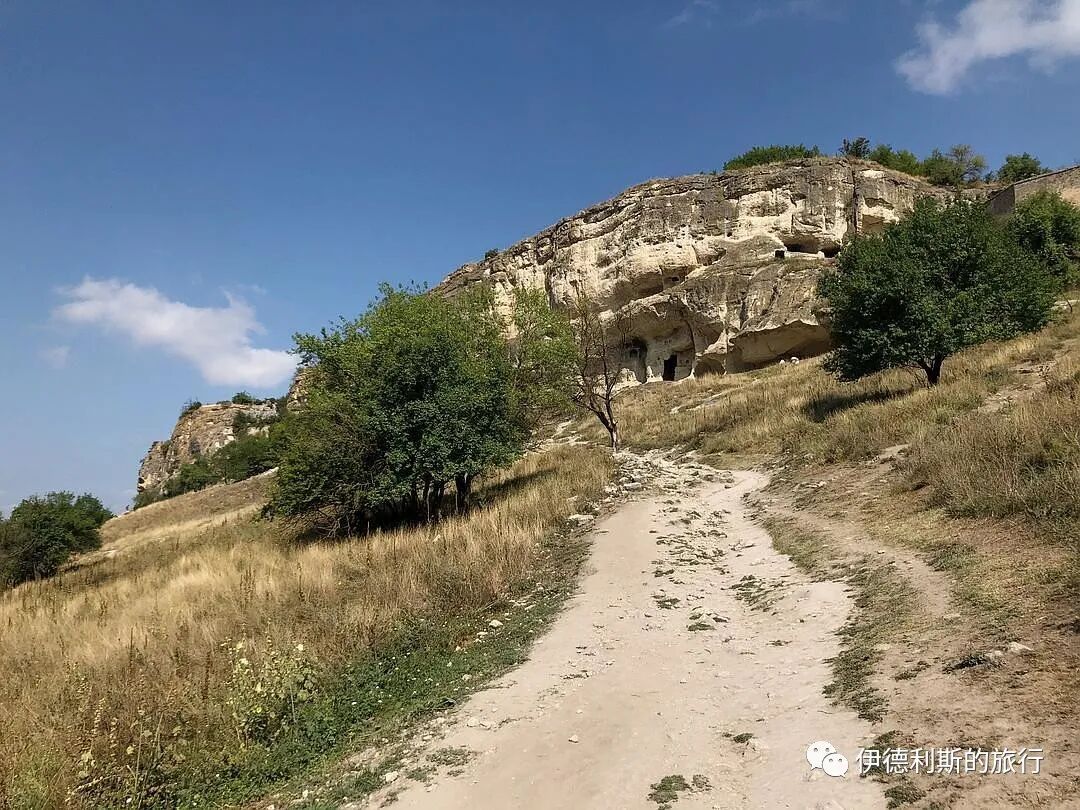
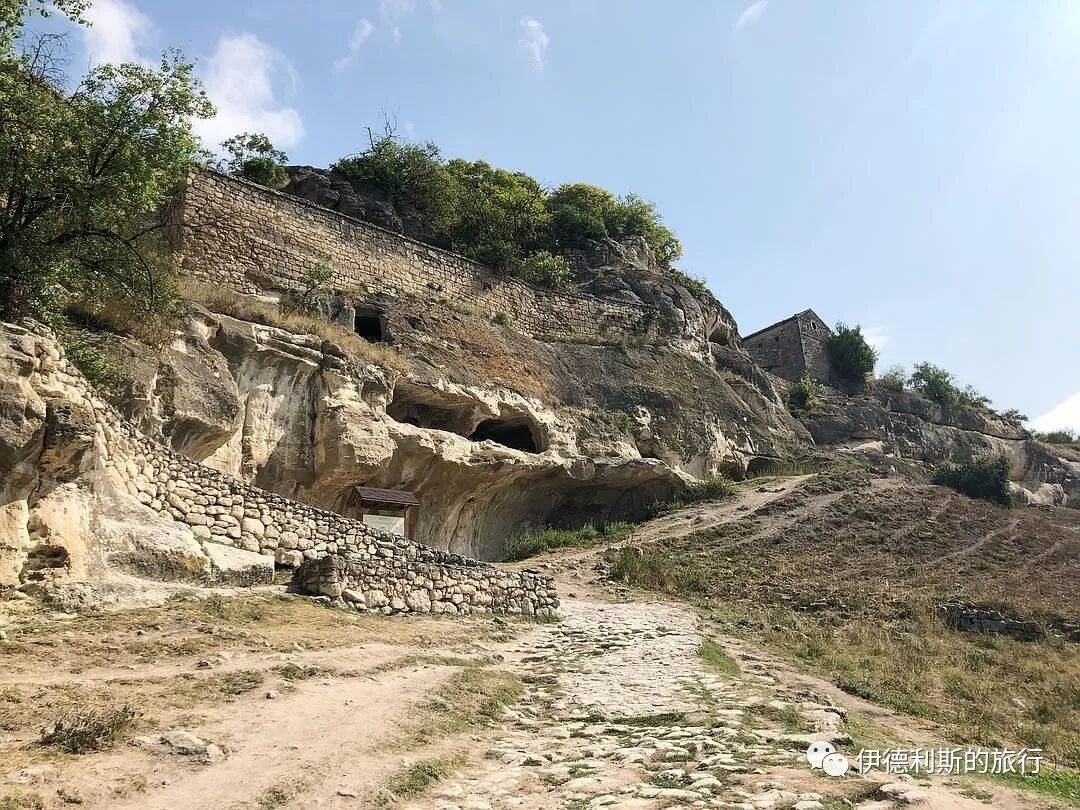
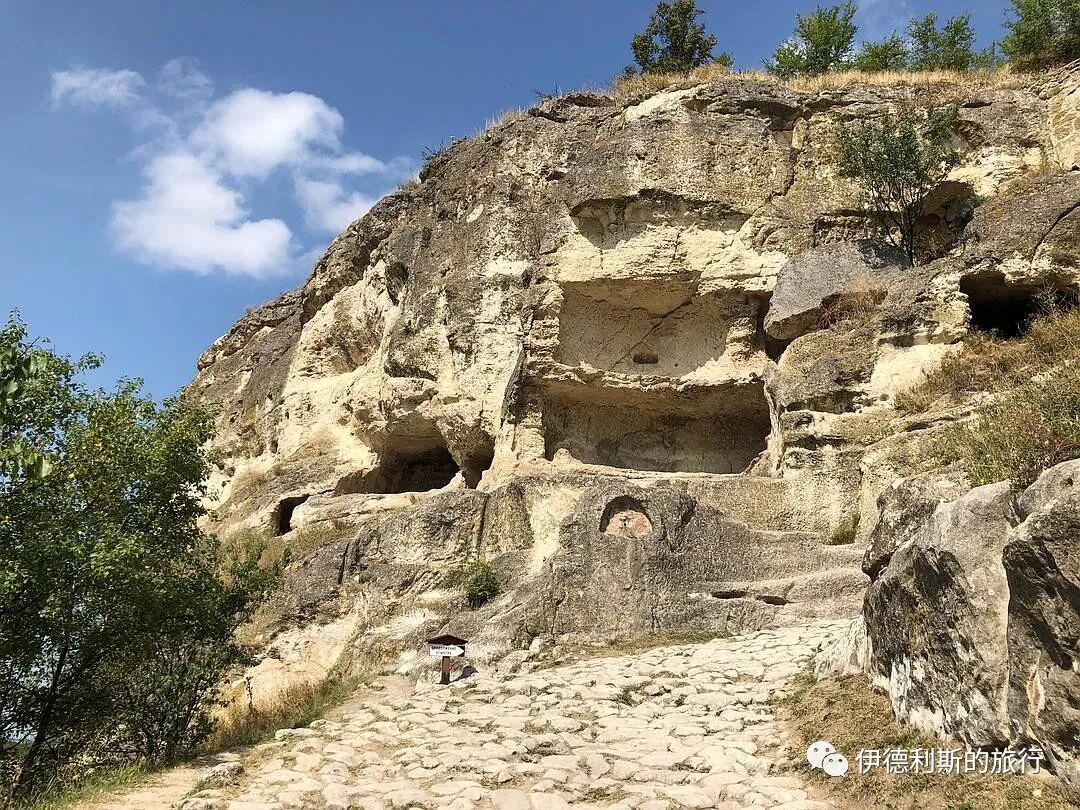
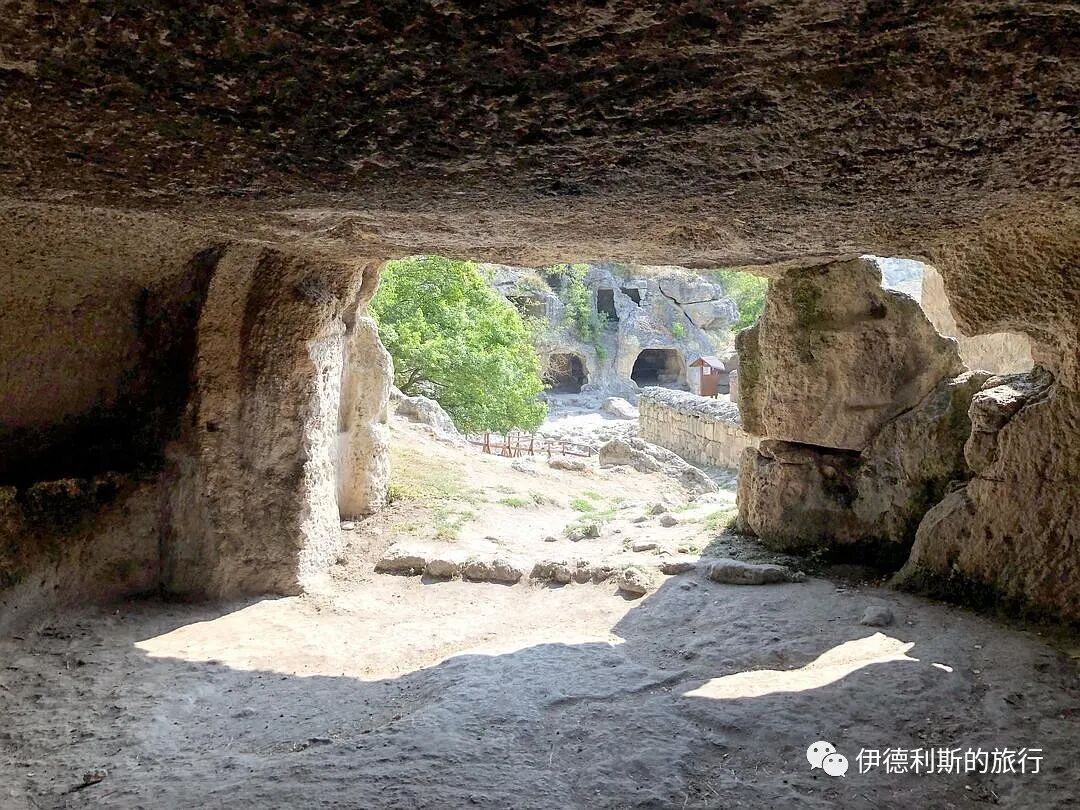
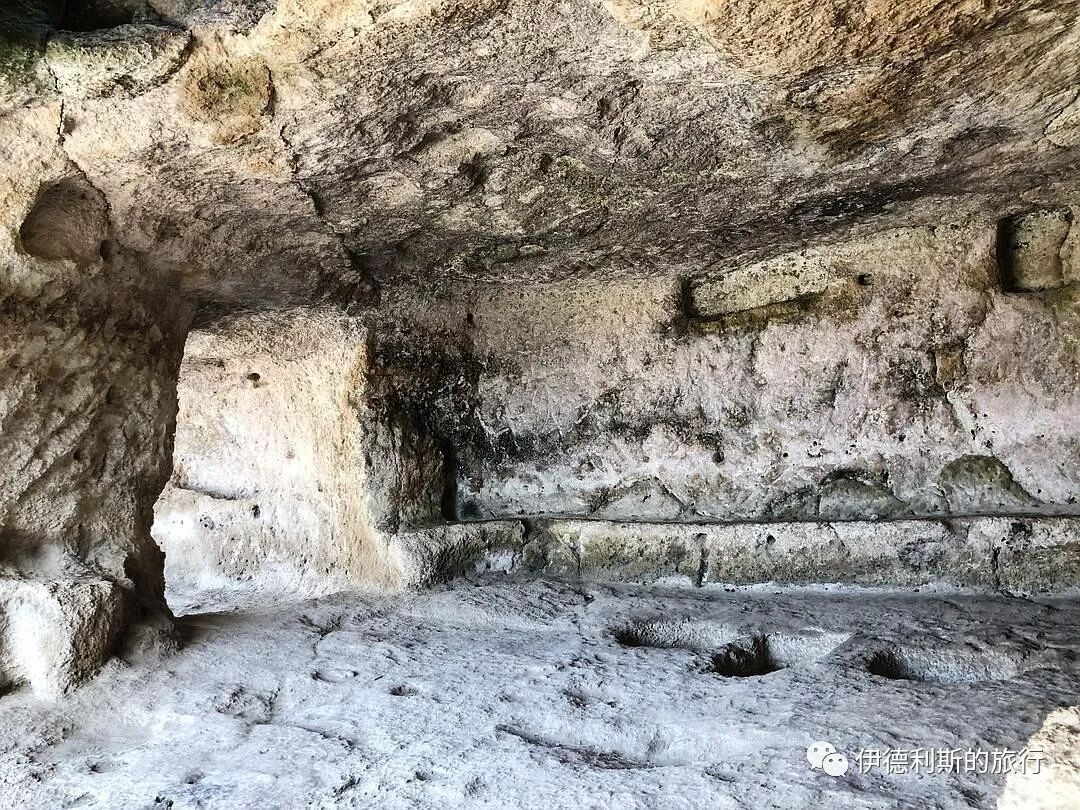
The earliest inhabitants of Chufut-Kale were the Alans. The Alans, anciently known as Yancai, were an Iranian-speaking Christian people and the ancestors of the modern North Caucasian Ossetians. The Alans began to enter the Crimean Peninsula in the 2nd century and began to believe in Christianity under Byzantine influence in the 4th-5th centuries. Today, near the south gate of Chufut-Kale, there are still caves built by Alan Christian monks in the 6th century, which are the oldest surviving relics of Chufut-Kale.
Near the south gate of Chufut-Kale, there are 10 caves on 3 levels and 32 niches. These caves once contained murals and tombs, but they are no longer visible. Scholars speculate that these caves were likely the ruins of an Alan church.
II. Tatar Muslims
The Crimean Tatars are a Turkic-speaking Muslim ethnic group that formed during the Golden Horde period in the 13th-14th centuries and established the Crimean Khanate in the 15th-18th centuries.
The founder of the Crimean Khanate was Hacı I Giray, a descendant of Tuka-Timur, the thirteenth son of Jochi, the eldest son of Genghis Khan. In the 1260s, the fifth Khan of the Golden Horde, Mengu Timur, handed Crimea to Hacı I Giray's ancestor, Uran Timur, to rule, and the family of Hacı I Giray settled in Crimea from then on.
In 1395, Hacı I Giray's grandfather was defeated by Tamerlane the Great and driven out of Crimea, and Tamerlane's father was forced into exile in Lithuania. In 1397, Hacı I Giray was born in the Grand Duchy of Lithuania. Shortly after, because he supported Tokhtamysh of the Golden Horde against Edigu, Hacı I Giray's father died in a war. It is said that after this, Hacı I Giray was hidden by one of his father's servants for six years.
In 1428, Hacı I Giray led an army to occupy Crimea with the support of Vytautas the Great of the Grand Duchy of Lithuania, but was subsequently driven away by Ulugh Muhammad, the founder of the Khanate of Kazan. In 1431, Hacı I Giray again led an army recruited from Lithuania back to Crimea, but was driven back to Lithuania by Ulugh Muhammad again in 1434.
In 1437, Ulugh Muhammad left Crimea for Kazan, and the new Crimean ruler was very unpopular. In 1440, welcomed by the local Crimean nobility, Hacı I Giray returned to Crimea for the third time. In 1441, the Genoese in Crimea called Hacı I Giray the new Khan. In the same year, Hacı I Giray minted coins with his name on them at Chufut-Kale. Therefore, 1441 is generally considered the date of the establishment of the Crimean Khanate, and Chufut-Kale is considered the birthplace of the Crimean Khanate.
Hacı I Giray carried out large-scale construction at Chufut-Kale and built his own residence in the city.
In the mid-16th century, as the capital of the Crimean Khanate was moved to Bakhchisarai in the valley west of the fortress, the Tatars in Chufut-Kale began to move to Bakhchisarai. After the wells in the city dried up in the mid-17th century, all the Tatars left the fortress.
1. South Wall and Middle Wall
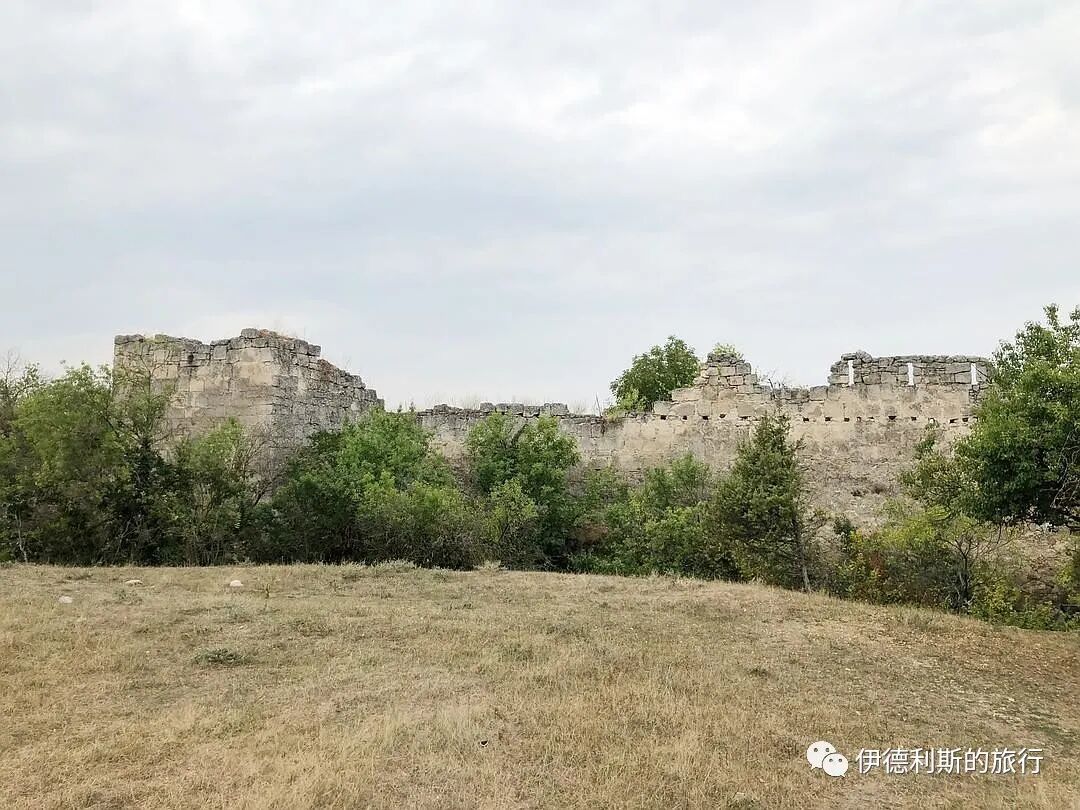
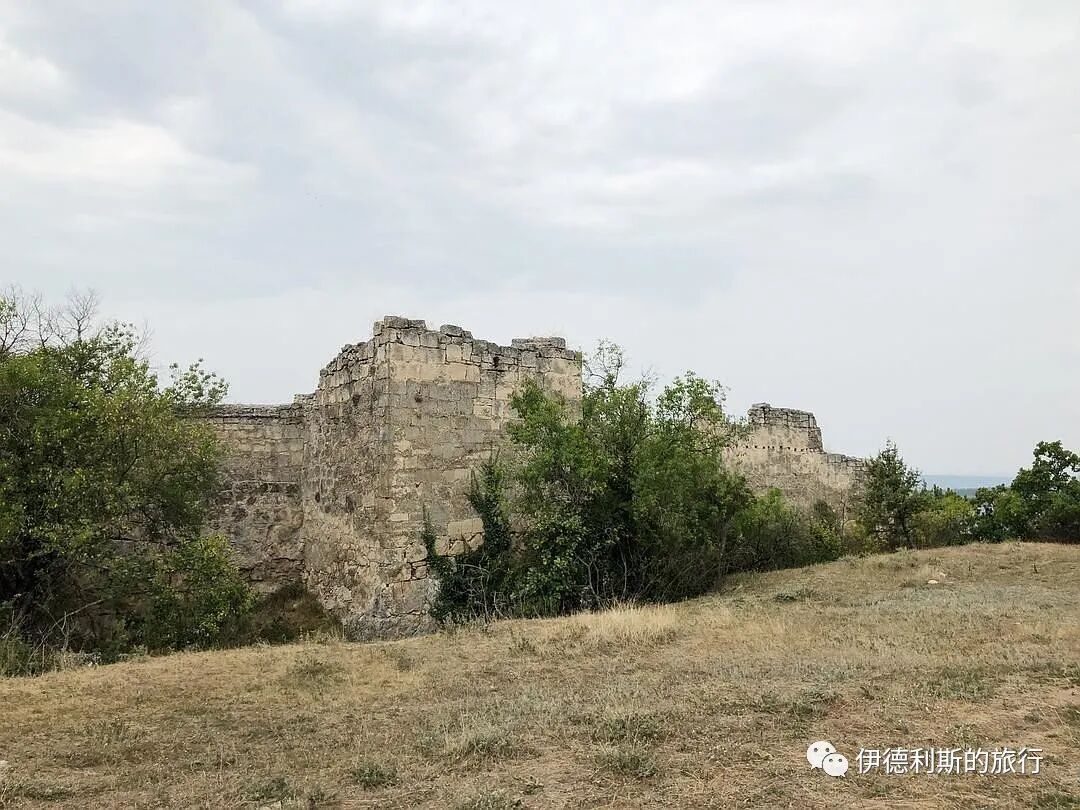
The walls of Chufut-Kale were built during the Byzantine period, with some saying they were built in the 5th-6th centuries and others in the 10th-11th centuries. In 1299, Nogai Khan, a general of the Golden Horde, led a Tatar army to attack the Crimean Peninsula. The Byzantine soldiers used the sturdy walls of Chufut-Kale to resist the attack of the Golden Horde. It is said that the Tatar soldiers played harsh music for three days and nights to disturb the Byzantine defenders in the city. Finally, on the fourth day, the exhausted Byzantine defenders could no longer resist the new round of siege, and Chufut-Kale was thus captured by the Tatars of the Golden Horde.
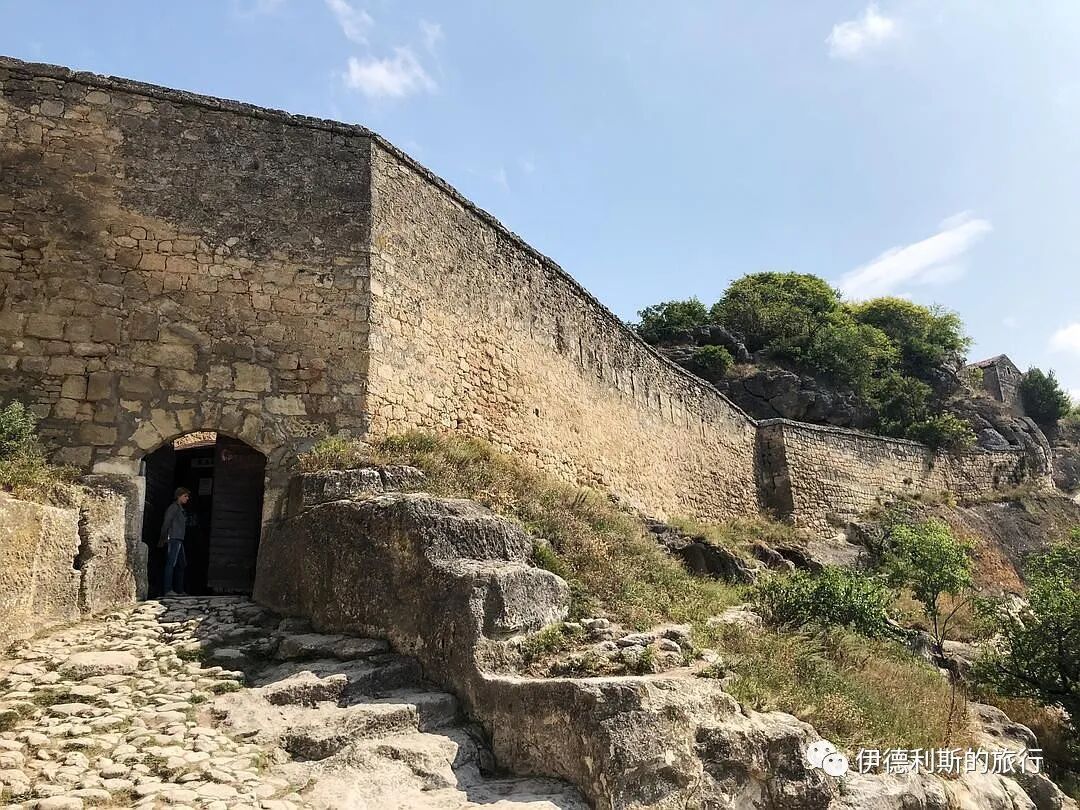
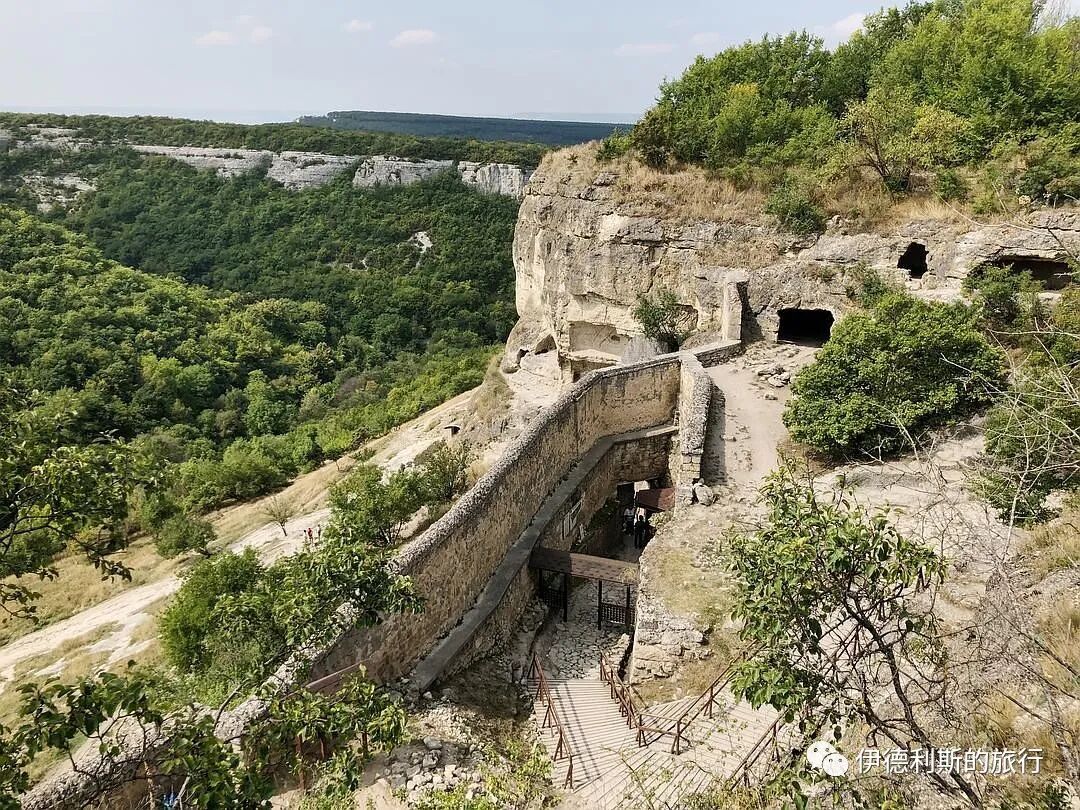
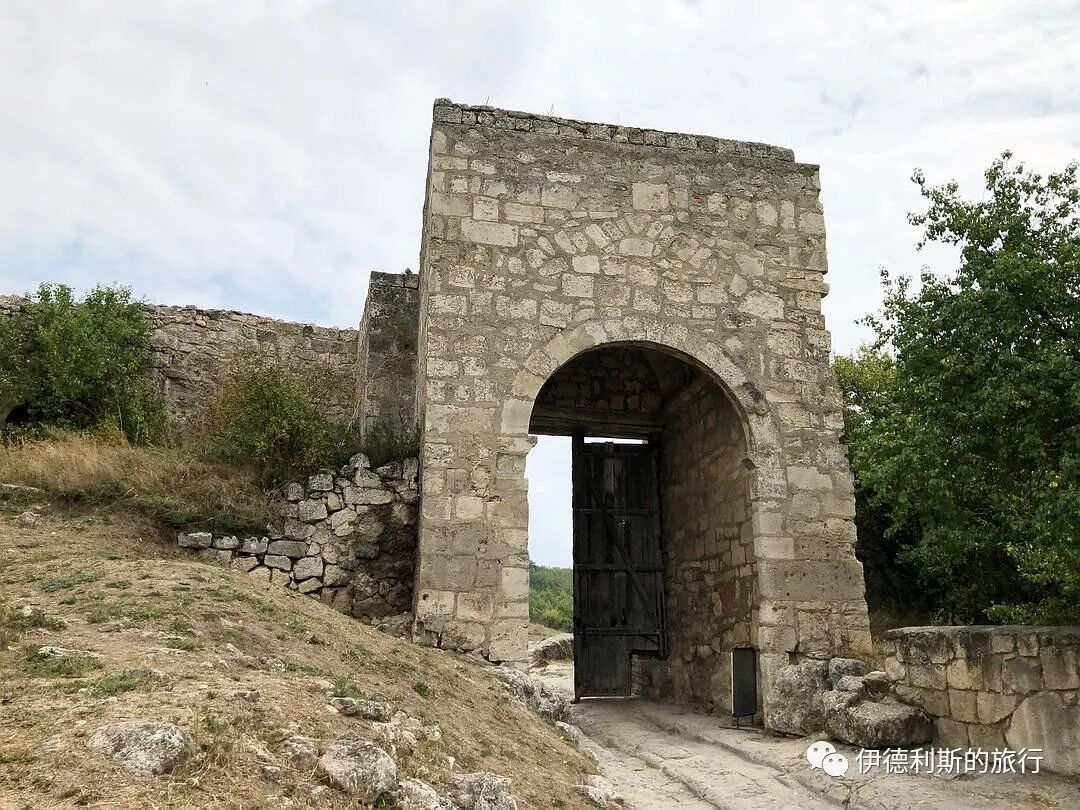
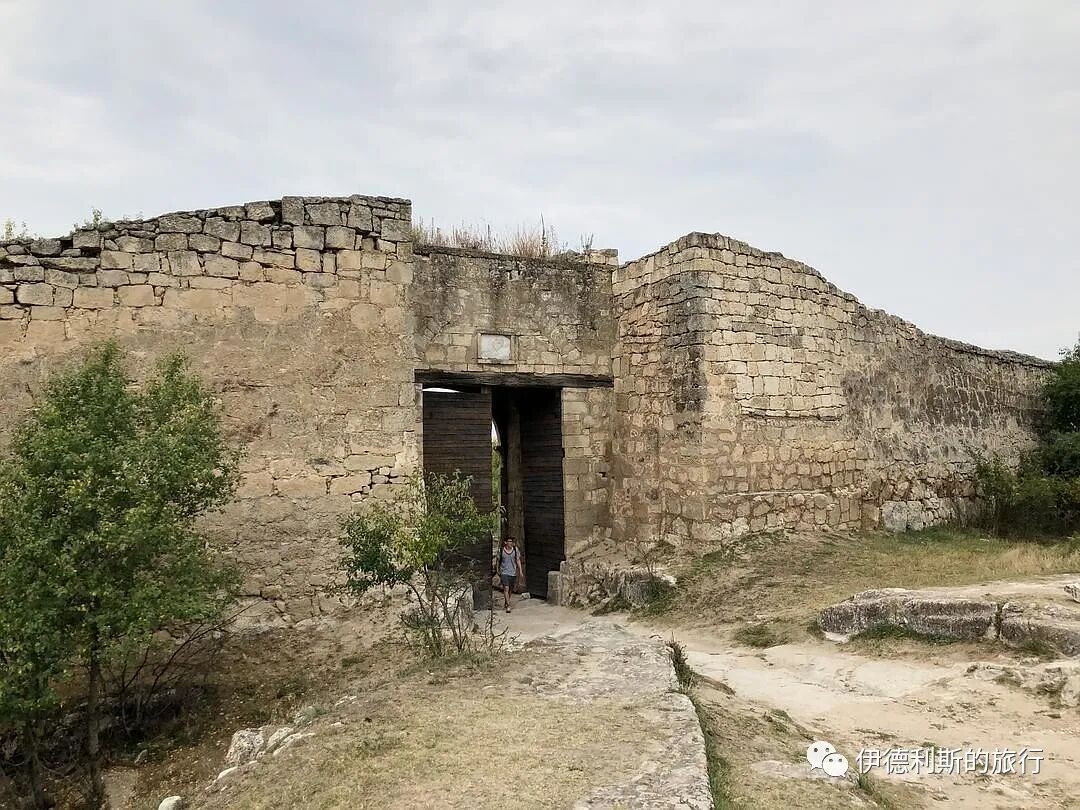
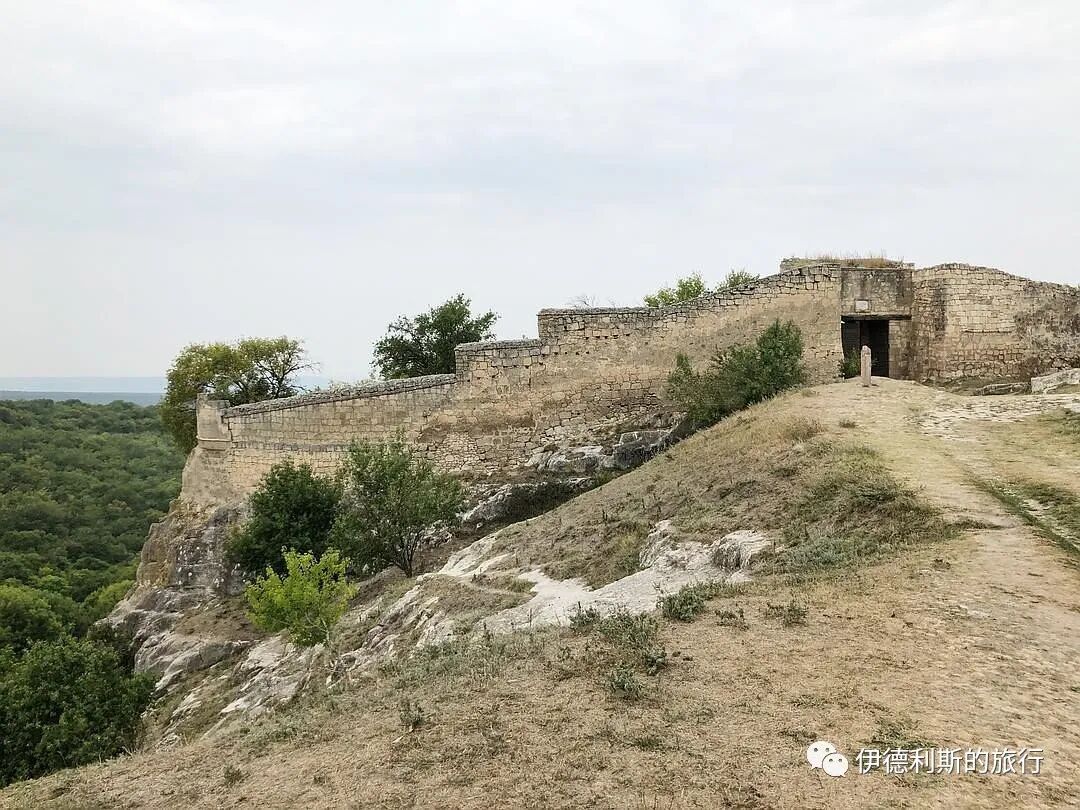
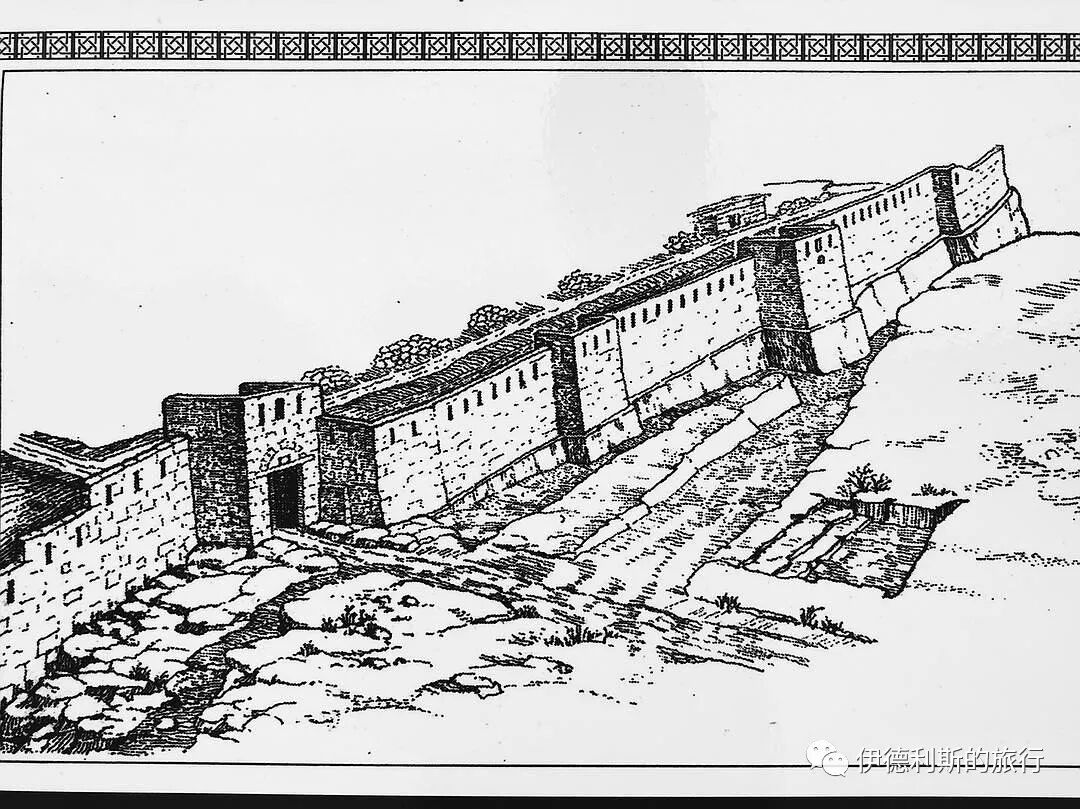
Currently, the original walls have two sections, the south wall and the middle wall, and two gates, the south gate and the middle gate. The south wall is built on the cliff in the south of the fortress, interspersed between the rocks. The south gate is built in a pocket shape, so that it can be besieged from top to bottom when the enemy breaks in. The middle wall runs across the north and south cliffs of the fortress and is a typical Byzantine-style wall structure.
South Wall
Middle Wall
The north cliff has no wall, but its steepness is comparable to a wall itself. It was very windy when I went, and I felt quite nervous standing on the edge of the cliff.
2. Khan Jani Beg Mosque: 1455
The Khan Jani Beg Mosque is located on the west side of Chufut-Kale and was built in 1346 during the reign of Khan Jani Beg (reigned 1342-1357) of the Golden Horde. Khan Jani Beg was the son of Öz Beg Khan. During his father's reign, the Golden Horde fully embraced Islam, and Khan Jani Beg continued to develop Islam within the Khanate. The Khan Jani Beg Mosque in Chufut-Kale is a testament to this.
In 1455, Hacı I Giray, the founding Khan of the Crimean Khanate, rebuilt the Khan Jani Beg Mosque. A reconstruction inscription was once carved above the mosque gate and was discovered during archaeological excavations in 1928. Another 17th-century Turkish traveler recorded that the mosque also had an Islamic madrasa (school) at that time.
After the mid-17th century, as all the Crimean Tatar Muslims moved from Chufut-Kale to Bakhchisarai, the mosque was eventually abandoned. Currently, only the remaining walls, the mihrab (prayer niche), and some stone carvings remain at the mosque site. From the existing ruins, it can be inferred that it was a relatively typical traditional Crimean mosque building.
3. Tomb of the Golden Horde Princess: 1437
The tomb of the Golden Horde princess Dzhanike Khanym was built in 1437 and is the best-preserved Muslim building in Chufut-Kale. The tomb owner was Dzhanike Khanym, the daughter of Tokhtamysh (reigned 1380-1397), the Khan of the Golden Horde. Tokhtamysh was the last Khan to unify the Golden Horde, but he was eventually defeated by Tamerlane the Great. After Tokhtamysh passed away, Dzhanike Khanym returned to her mother's hometown, Crimea.
The mausoleum is octagonal, and the door is decorated with the classic Seljuk knot, a classic pattern of the Golden Horde period.
4. Roads within the city
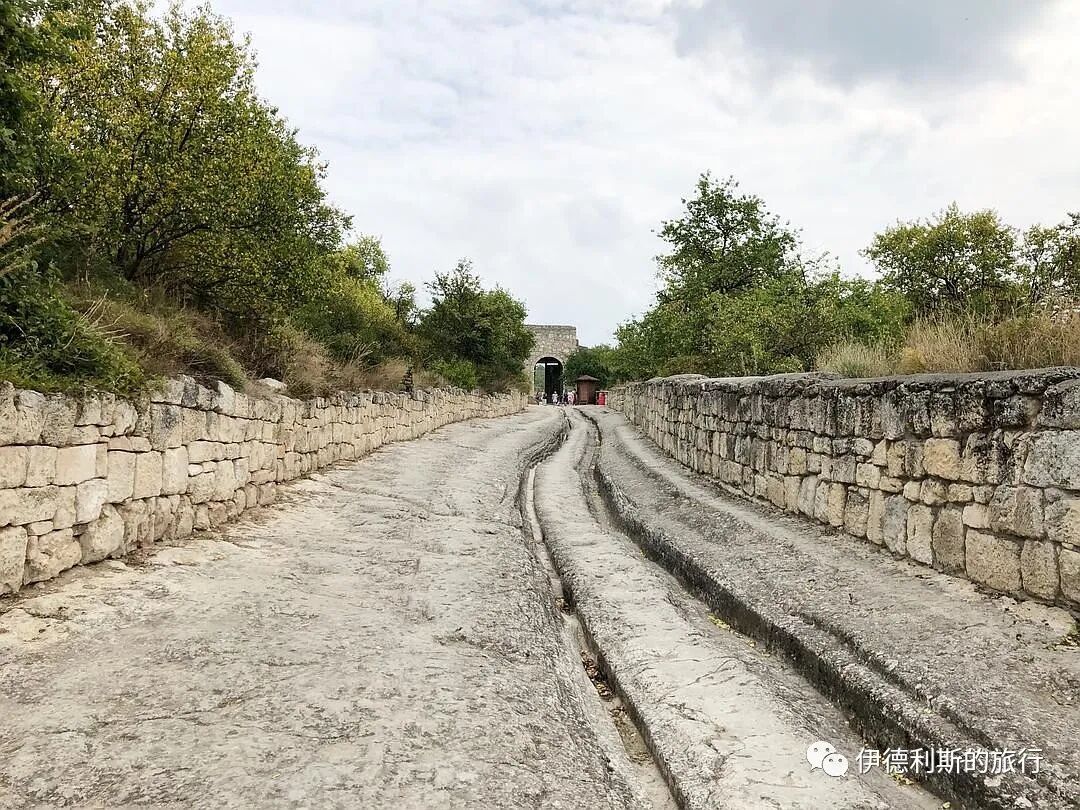
The roads in the fortress are wide and narrow, and you can see deep cart ruts on the main road.
Well
The well in the city. After the well dried up in the 17th century, the Tatars left one after another.
5. Gazi Mansur Qubba and Dervish Lodge: 1434
The Gazi Mansur Qubba and Dervish Lodge are located in the valley west of Chufut-Kale. There is also a legend about the establishment of the Qubba and the Dervish Lodge.
According to legend, Malik Ashter and Gazi Mansur, the first followers of the Prophet Muhammad, came to the Crimean Peninsula in the 7th century to spread Islam and lived in a valley at the foot of Chufut-Kale. Shortly after, Malik Ashter was killed by a giant, and Gazi Mansur sacrificed his life in the battle to defend Chufut-Kale. They were eventually buried at the foot of the city's mountain. They remained unknown for a long time until, hundreds of years later, a sheikh living in the ancient Central Asian city of Bukhara repeatedly dreamed of a narrow valley growing with shrubs. To solve his dream, the sheikh began a pilgrimage to the Crimean Peninsula under the inspiration of an elder.
The sheikh arrived in Crimea in 1434, recognized the valley in his dream at the foot of the Jewish mountain, and finally discovered the tomb of Gazi Mansur. Subsequently, the sheikh established a Qubba (mausoleum of an Islamic saint) and a Dervish Lodge (Sufi practice place) at the location of the tomb. Because of this legendary story, pilgrims flocked here, and it was even favored by the Crimean Khan.
The Gazi Mansur Qubba and Dervish Lodge were maintained until the 1930s, but were eventually destroyed in the Soviet era. Today, only broken walls and a few surviving tombstones remain.
III. Karaite Jews
The Karaites are a unique Turkic-speaking Jewish ethnic group living in Eastern Europe. They believe in Karaite Judaism, which is different from mainstream Judaism, and speak the Karaim language, which belongs to the Kipchak branch of the Turkic language family. There are currently only about 2,500 people, of whom more than 700 live in Crimea.
The Karaites have lived in Crimea for hundreds of years, but their origins remain controversial. After the 19th century, the Karaites began to refuse to admit that they were Jews and firmly believed that they were descendants of the Khazar Turkic people who converted to Karaite Judaism. The Khazars were a branch of the Turkic tribes who established the powerful Khazar Khanate in Eastern Europe and the North Caucasus from the 7th to the 10th centuries. The Khazar princes began to believe in Judaism in the mid-8th century AD. After the Khazars perished in the 11th century, most of them eventually merged into Turkic-speaking Muslims and Eastern European Jews.
However, most scholars currently question the claim that the Karaites came from the Khazars and tend to believe that the Karaites are descendants of Karaite Jews who settled in Crimea and only later began to speak a Turkic language. There are four main supporting points:
1. The Turkic language spoken by the Karaites belongs to the Kipchak branch, while the Turkic language of the Khazars belongs to the Bulgar branch. There is no obvious connection between these two languages.
2. According to existing historical materials, the Judaism believed by the Khazars recognized the Talmud, while Karaite Judaism does not recognize the Talmud.
3. The Khazars had completely disappeared by the 11th century, but the Karaites first appeared in the 14th century.
4. Molecular anthropology has confirmed that the genotype of the Karaites in Lithuania is very similar to that of the Karaite Jews in Egypt.
The Karaites had lived in Chufut-Kale since the 14th century. After the Tatars left in the 17th century, due to the Crimean Khanate's restrictions on Jewish residence, the Karaites could only continue to live in the fortress. In 1783, the Crimean Khanate was destroyed by Tsarist Russia, and the Karaites began to be ruled by Russia. In the 19th century, the Karaites constantly fought for their rights by insisting that they were Turkic people, not Jews. Eventually, the Tsar recognized that the Karaites had nothing to do with the Jews who killed Jesus, thereby exempting them from the harsh restrictions imposed by Russia on the Karaites.
In the mid-19th century, Russia finally lifted the residence restrictions on the Karaites, and the Karaites began to leave Chufut-Kale one after another. By the end of the 19th century, Chufut-Kale had become an empty city, with only the person guarding the fortress living in the A. S. Firkovich manor.
1. East Wall: 1396-1433
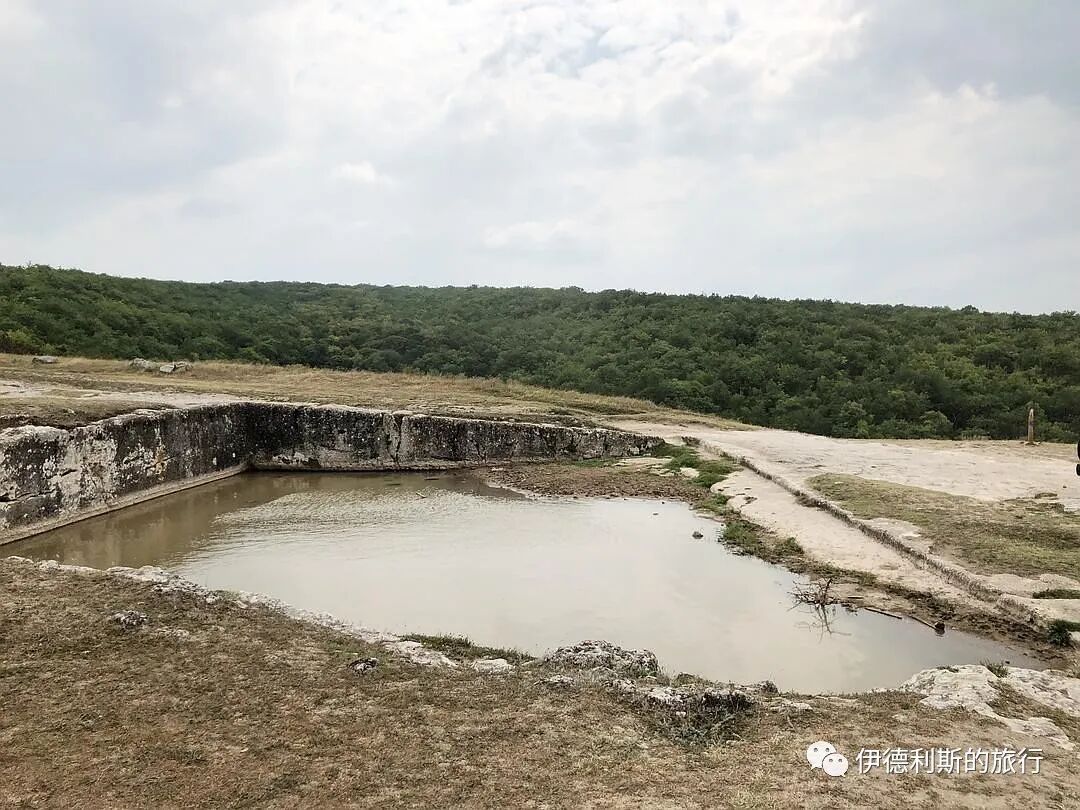
The east wall of Chufut-Kale was built between 1396 and 1433. At that time, the Karaites were constantly settling in the eastern part of the fortress, so the fortress was expanded to the east. After this, the east gate became the main gate of the fortress, and there was a lively bazaar outside the gate. Outside the east gate, a water collection area used by merchants to wash and water their livestock is still preserved. After the wells in the fortress dried up in the 17th century, this was still a passage for transporting water to the Karaites in the city.
2. Karaite Kenesa: 14th century and late 18th century
There are two Karaite Kenesas (synagogues) by the south wall in the western part of the old city of Chufut-Kale. The large synagogue on the left is presumed to have been built in the 14th century, and the small synagogue on the right was built in the late 18th century.
The Karaites had lived in Chufut-Kale since the Golden Horde period in the 14th century, and the large synagogue in the city was built during this period. In the 1790s, all the Karaites from another ancient Crimean city, Mangup, moved to Chufut-Kale to live, and the small synagogue in the fortress was built during this period.
The Karaite Kenesa is different from a general synagogue. The front is a vestibule for taking off shoes; shoes are not allowed in the Karaite synagogue. Then there is usually a bench for the elderly. Above the bench is a loft for women, which must be entered through a side door. Further inside is the main hall for worship. Traditional Karaite worship is performed kneeling, so the hall is usually covered with carpets. The innermost part is the altar.
3. Chaush-Cobass Caves: 16th century
A series of caves called Chaush-Cobass were carved into the cliff on the northeast side of the middle wall of the fortress. After the 16th century, a wealthy Karaite built a manor here and used the caves as a cellar.
4. Karaite Manors: 18th-19th centuries
There used to be many Karaite manors in the eastern part of Chufut-Kale, but now only two 18th-century manors have been preserved, belonging to A. S. Firkovich and Chal Boru, both in the traditional Crimean courtyard style.
Avraam Samuilovich Firkovich (1786-1874) was a Karaite writer, archaeologist, collector of ancient manuscripts, and Karaite Jewish clergyman who devoted his life to studying the history and culture of the Crimean Karaites.
Another 18th-century manor, with only one house left.
5. Valley of Josaphat Karaite Cemetery
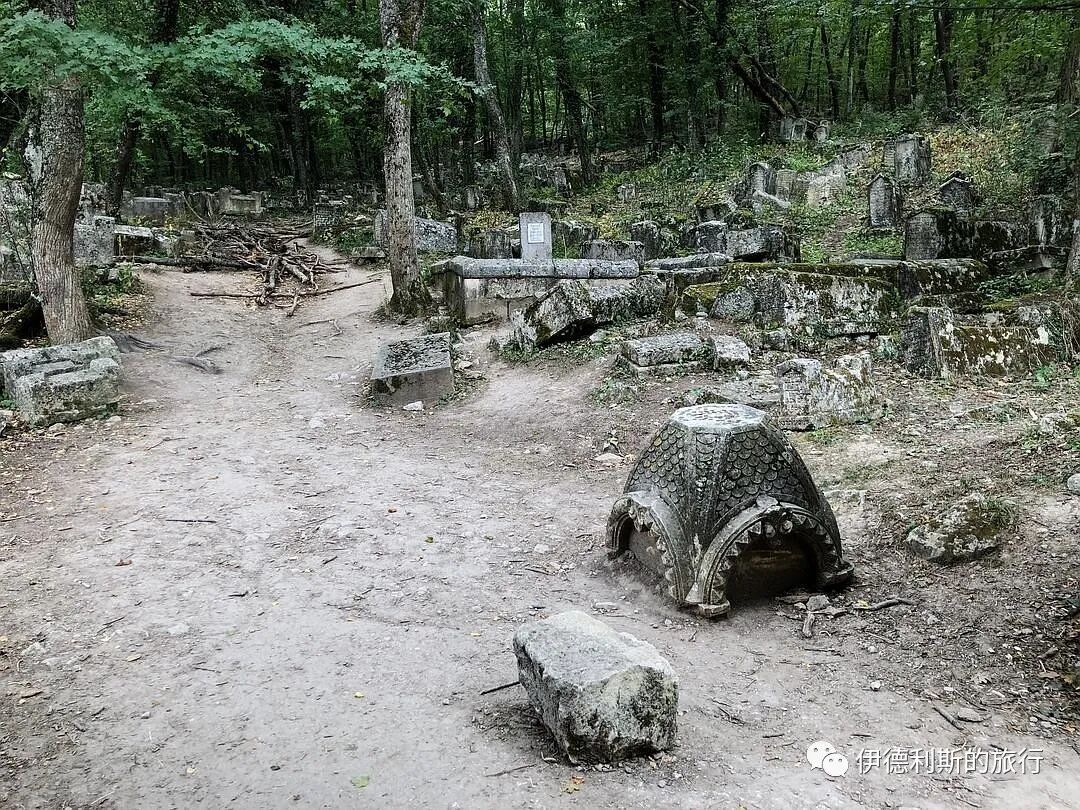
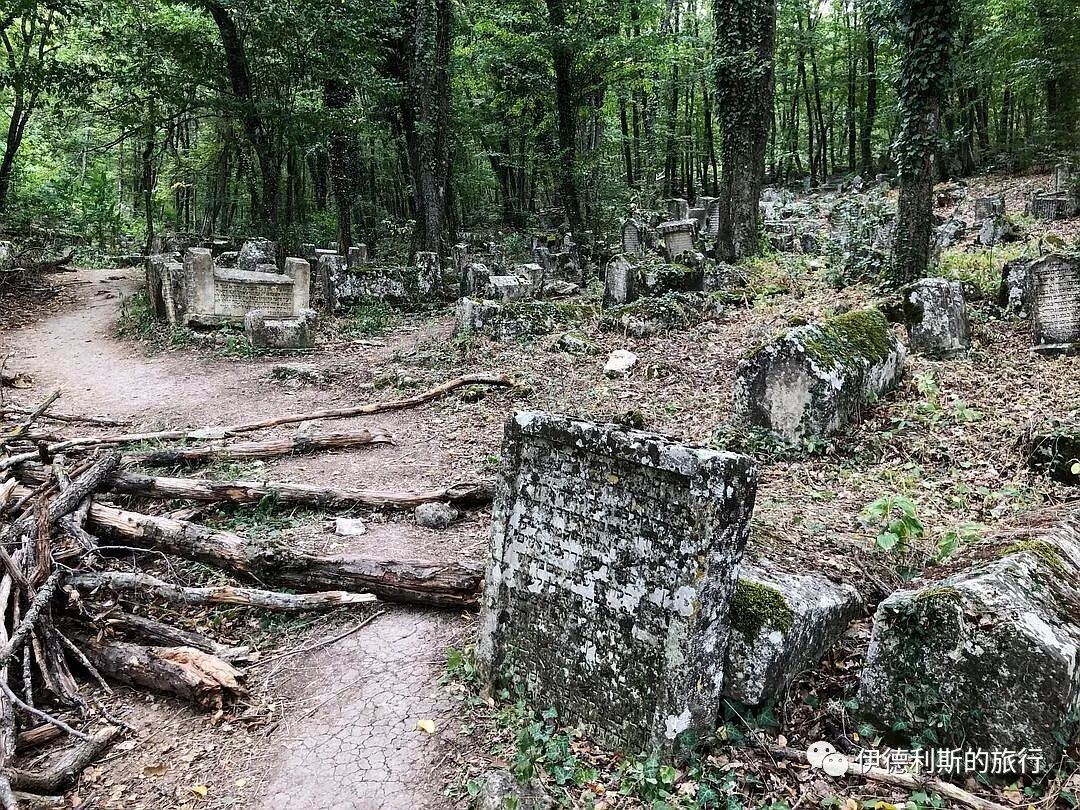
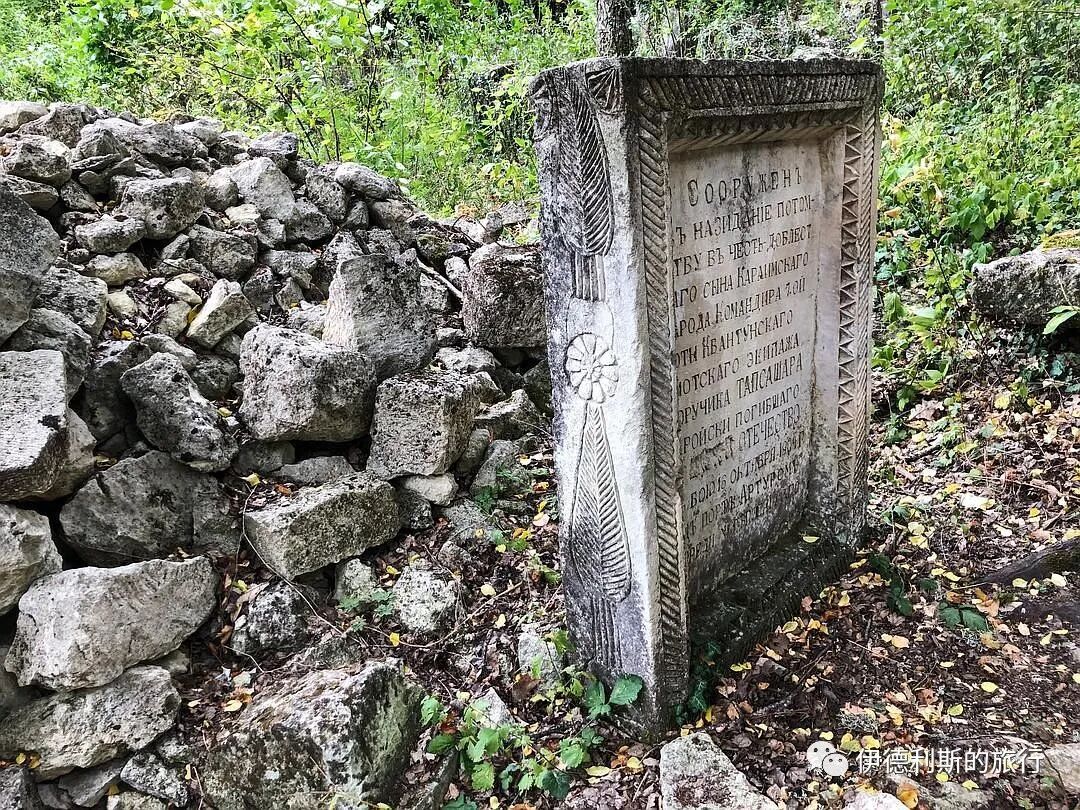
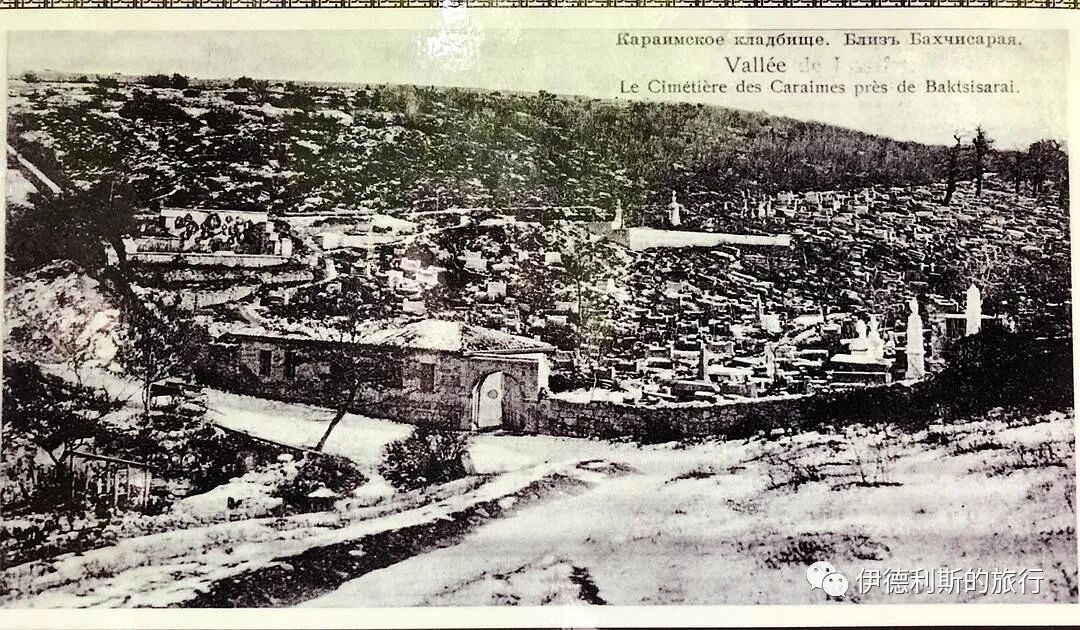
The Valley of Josaphat Karaite Cemetery is located in a valley outside the southeast of Chufut-Kale and was built in the 14th century. The name Valley of Josaphat comes from the Old Testament of the Bible, where Jehovah will conduct the final judgment on all nations. The local Karaites also call it "Balta Timez," which means "the axe will not touch," because the cemetery is planted with oak trees that are sacred to the Karaites.
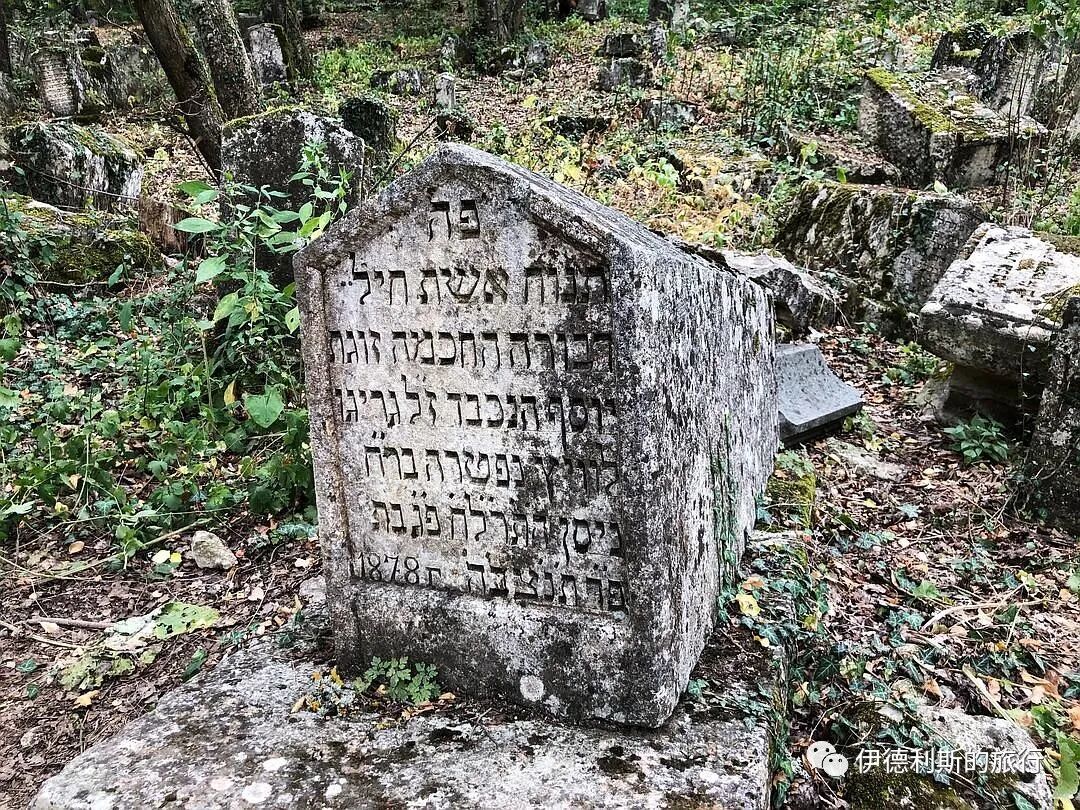
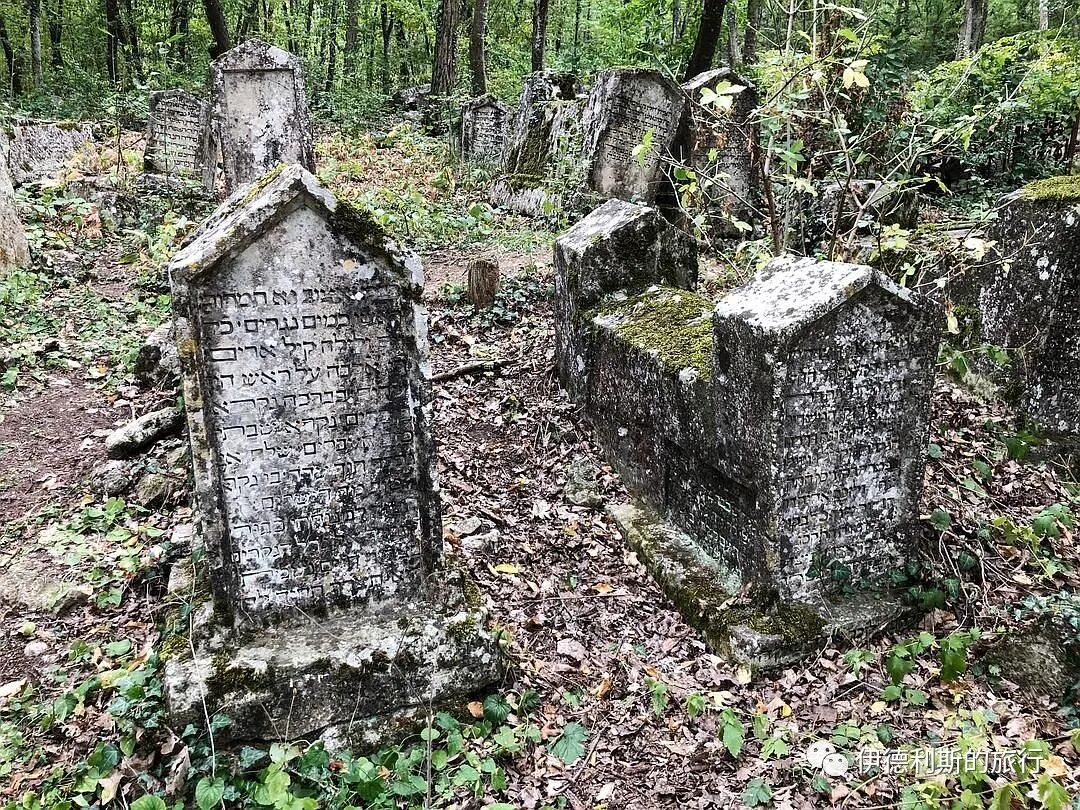
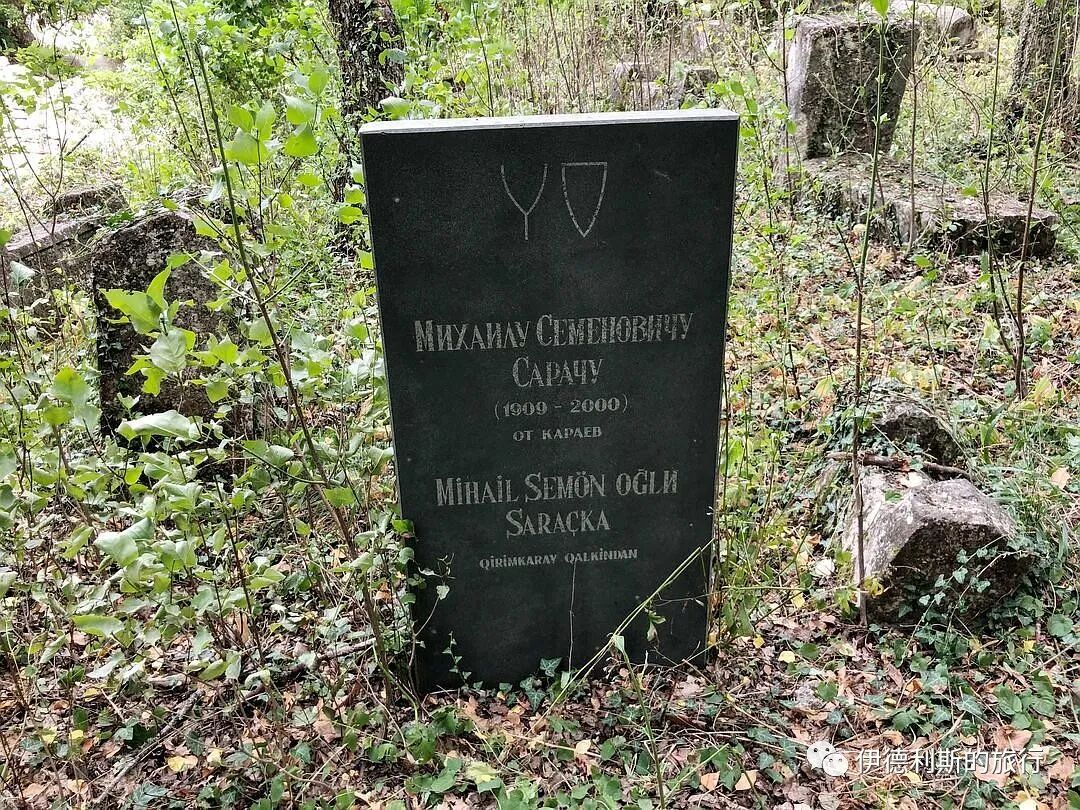
The cemetery preserves the entrance arch and the ruins of the gatehouse next to it. At its peak, there were 7,000 graves, but now only 1,000 remain. The Hebrew on the tombstones comes from the Old Testament of the Bible and the Karaite Turkic language. The content on the tombstones was organized and published in the 19th century by A. S. Firkovich, a famous person in Chufut-Kale.
After the Karaites left Chufut-Kale in the 19th century, this cemetery was not abandoned and continued to be a sacred place in the hearts of the Karaites. The Karaites who moved away would also be buried here after they passed away. view all
Summary: This travel note introduces Crimean Tatar Mountain Capital: Bakhchisarai, Mosques and Muslim Heritage. Chufut-Kale (Jewish Fortress) is a mountain fortress located on the Crimean Peninsula. It is useful for readers interested in Crimean Tatars, Bakhchisarai, Muslim Heritage.
Chufut-Kale (Jewish Fortress) is a mountain fortress located on the Crimean Peninsula. It was first built by the Byzantines in the 5th-6th centuries and was successively inhabited by Christian Alans, Muslim Tatars, and Karaite Jews, bearing witness to a millennium of Crimean history and culture.
In 1299, Chufut-Kale was captured by the Golden Horde. In 1441, Hacı I Giray (reigned 1441-1466) minted coins bearing his name at Chufut-Kale, officially establishing the Crimean Khanate (1441-1783).
Between the 13th and 17th centuries, Chufut-Kale was known as Kyrk-Or, meaning forty fortresses. After the mid-16th century, the Crimean Khan Sahib I Giray (reigned 1532-1551) moved the capital to Bakhchysarai in the valley west of the fortress, and the Tatars in the fortress gradually moved to Bakhchysarai. After the wells in the fortress dried up in the mid-17th century, all the Tatars left the fortress, and only the Karaite Jews continued to live there. After this, the fortress was gradually called the Jewish Fortress by the Crimean Tatars. After the 19th century, all the Karaite Jews also left, and the fortress eventually became a ruin.
Today, the fortress preserves many architectural ruins, including Christian caves, a mosque, a princess's mausoleum, and a synagogue. It has not been developed for tourism at all and is well worth a visit.
Table of Contents
I. Alan Christians
1. Caves
II. Tatar Muslims
1. South Wall and Middle Wall
2. Khan Jani Beg Mosque: 1455
3. Tomb of the Golden Horde Princess: 1437
4. Roads within the city
5. Gazi Mansur Qubba and Dervish Lodge: 1434
III. Karaite Jews
1. East Wall: 1396-1433
2. Karaite Kenesa: 14th century and late 18th century
3. Chaush-Cobass Caves: 16th century
4. Karaite Manors: 18th-19th centuries
5. Valley of Josaphat Karaite Cemetery
I. Alan Christians
1. Caves
The earliest inhabitants of Chufut-Kale were the Alans. The Alans, anciently known as Yancai, were an Iranian-speaking Christian people and the ancestors of the modern North Caucasian Ossetians. The Alans began to enter the Crimean Peninsula in the 2nd century and began to believe in Christianity under Byzantine influence in the 4th-5th centuries. Today, near the south gate of Chufut-Kale, there are still caves built by Alan Christian monks in the 6th century, which are the oldest surviving relics of Chufut-Kale.
Near the south gate of Chufut-Kale, there are 10 caves on 3 levels and 32 niches. These caves once contained murals and tombs, but they are no longer visible. Scholars speculate that these caves were likely the ruins of an Alan church.
II. Tatar Muslims
The Crimean Tatars are a Turkic-speaking Muslim ethnic group that formed during the Golden Horde period in the 13th-14th centuries and established the Crimean Khanate in the 15th-18th centuries.
The founder of the Crimean Khanate was Hacı I Giray, a descendant of Tuka-Timur, the thirteenth son of Jochi, the eldest son of Genghis Khan. In the 1260s, the fifth Khan of the Golden Horde, Mengu Timur, handed Crimea to Hacı I Giray's ancestor, Uran Timur, to rule, and the family of Hacı I Giray settled in Crimea from then on.
In 1395, Hacı I Giray's grandfather was defeated by Tamerlane the Great and driven out of Crimea, and Tamerlane's father was forced into exile in Lithuania. In 1397, Hacı I Giray was born in the Grand Duchy of Lithuania. Shortly after, because he supported Tokhtamysh of the Golden Horde against Edigu, Hacı I Giray's father died in a war. It is said that after this, Hacı I Giray was hidden by one of his father's servants for six years.
In 1428, Hacı I Giray led an army to occupy Crimea with the support of Vytautas the Great of the Grand Duchy of Lithuania, but was subsequently driven away by Ulugh Muhammad, the founder of the Khanate of Kazan. In 1431, Hacı I Giray again led an army recruited from Lithuania back to Crimea, but was driven back to Lithuania by Ulugh Muhammad again in 1434.
In 1437, Ulugh Muhammad left Crimea for Kazan, and the new Crimean ruler was very unpopular. In 1440, welcomed by the local Crimean nobility, Hacı I Giray returned to Crimea for the third time. In 1441, the Genoese in Crimea called Hacı I Giray the new Khan. In the same year, Hacı I Giray minted coins with his name on them at Chufut-Kale. Therefore, 1441 is generally considered the date of the establishment of the Crimean Khanate, and Chufut-Kale is considered the birthplace of the Crimean Khanate.
Hacı I Giray carried out large-scale construction at Chufut-Kale and built his own residence in the city.
In the mid-16th century, as the capital of the Crimean Khanate was moved to Bakhchisarai in the valley west of the fortress, the Tatars in Chufut-Kale began to move to Bakhchisarai. After the wells in the city dried up in the mid-17th century, all the Tatars left the fortress.
1. South Wall and Middle Wall
The walls of Chufut-Kale were built during the Byzantine period, with some saying they were built in the 5th-6th centuries and others in the 10th-11th centuries. In 1299, Nogai Khan, a general of the Golden Horde, led a Tatar army to attack the Crimean Peninsula. The Byzantine soldiers used the sturdy walls of Chufut-Kale to resist the attack of the Golden Horde. It is said that the Tatar soldiers played harsh music for three days and nights to disturb the Byzantine defenders in the city. Finally, on the fourth day, the exhausted Byzantine defenders could no longer resist the new round of siege, and Chufut-Kale was thus captured by the Tatars of the Golden Horde.
Currently, the original walls have two sections, the south wall and the middle wall, and two gates, the south gate and the middle gate. The south wall is built on the cliff in the south of the fortress, interspersed between the rocks. The south gate is built in a pocket shape, so that it can be besieged from top to bottom when the enemy breaks in. The middle wall runs across the north and south cliffs of the fortress and is a typical Byzantine-style wall structure.
South Wall
Middle Wall
The north cliff has no wall, but its steepness is comparable to a wall itself. It was very windy when I went, and I felt quite nervous standing on the edge of the cliff.
2. Khan Jani Beg Mosque: 1455
The Khan Jani Beg Mosque is located on the west side of Chufut-Kale and was built in 1346 during the reign of Khan Jani Beg (reigned 1342-1357) of the Golden Horde. Khan Jani Beg was the son of Öz Beg Khan. During his father's reign, the Golden Horde fully embraced Islam, and Khan Jani Beg continued to develop Islam within the Khanate. The Khan Jani Beg Mosque in Chufut-Kale is a testament to this.
In 1455, Hacı I Giray, the founding Khan of the Crimean Khanate, rebuilt the Khan Jani Beg Mosque. A reconstruction inscription was once carved above the mosque gate and was discovered during archaeological excavations in 1928. Another 17th-century Turkish traveler recorded that the mosque also had an Islamic madrasa (school) at that time.
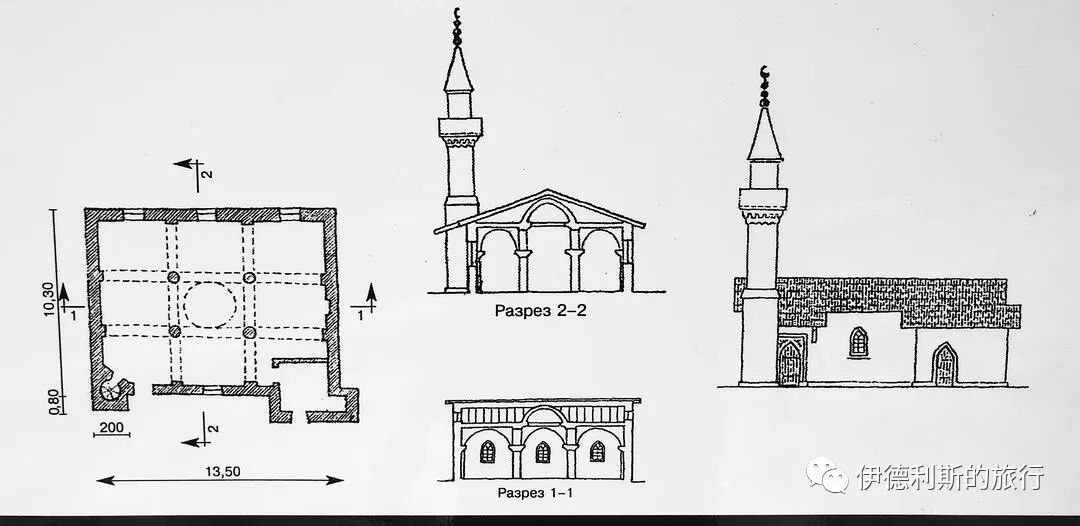
After the mid-17th century, as all the Crimean Tatar Muslims moved from Chufut-Kale to Bakhchisarai, the mosque was eventually abandoned. Currently, only the remaining walls, the mihrab (prayer niche), and some stone carvings remain at the mosque site. From the existing ruins, it can be inferred that it was a relatively typical traditional Crimean mosque building.
3. Tomb of the Golden Horde Princess: 1437
The tomb of the Golden Horde princess Dzhanike Khanym was built in 1437 and is the best-preserved Muslim building in Chufut-Kale. The tomb owner was Dzhanike Khanym, the daughter of Tokhtamysh (reigned 1380-1397), the Khan of the Golden Horde. Tokhtamysh was the last Khan to unify the Golden Horde, but he was eventually defeated by Tamerlane the Great. After Tokhtamysh passed away, Dzhanike Khanym returned to her mother's hometown, Crimea.
The mausoleum is octagonal, and the door is decorated with the classic Seljuk knot, a classic pattern of the Golden Horde period.
4. Roads within the city
The roads in the fortress are wide and narrow, and you can see deep cart ruts on the main road.
Well
The well in the city. After the well dried up in the 17th century, the Tatars left one after another.
5. Gazi Mansur Qubba and Dervish Lodge: 1434
The Gazi Mansur Qubba and Dervish Lodge are located in the valley west of Chufut-Kale. There is also a legend about the establishment of the Qubba and the Dervish Lodge.
According to legend, Malik Ashter and Gazi Mansur, the first followers of the Prophet Muhammad, came to the Crimean Peninsula in the 7th century to spread Islam and lived in a valley at the foot of Chufut-Kale. Shortly after, Malik Ashter was killed by a giant, and Gazi Mansur sacrificed his life in the battle to defend Chufut-Kale. They were eventually buried at the foot of the city's mountain. They remained unknown for a long time until, hundreds of years later, a sheikh living in the ancient Central Asian city of Bukhara repeatedly dreamed of a narrow valley growing with shrubs. To solve his dream, the sheikh began a pilgrimage to the Crimean Peninsula under the inspiration of an elder.
The sheikh arrived in Crimea in 1434, recognized the valley in his dream at the foot of the Jewish mountain, and finally discovered the tomb of Gazi Mansur. Subsequently, the sheikh established a Qubba (mausoleum of an Islamic saint) and a Dervish Lodge (Sufi practice place) at the location of the tomb. Because of this legendary story, pilgrims flocked here, and it was even favored by the Crimean Khan.
The Gazi Mansur Qubba and Dervish Lodge were maintained until the 1930s, but were eventually destroyed in the Soviet era. Today, only broken walls and a few surviving tombstones remain.
III. Karaite Jews
The Karaites are a unique Turkic-speaking Jewish ethnic group living in Eastern Europe. They believe in Karaite Judaism, which is different from mainstream Judaism, and speak the Karaim language, which belongs to the Kipchak branch of the Turkic language family. There are currently only about 2,500 people, of whom more than 700 live in Crimea.
The Karaites have lived in Crimea for hundreds of years, but their origins remain controversial. After the 19th century, the Karaites began to refuse to admit that they were Jews and firmly believed that they were descendants of the Khazar Turkic people who converted to Karaite Judaism. The Khazars were a branch of the Turkic tribes who established the powerful Khazar Khanate in Eastern Europe and the North Caucasus from the 7th to the 10th centuries. The Khazar princes began to believe in Judaism in the mid-8th century AD. After the Khazars perished in the 11th century, most of them eventually merged into Turkic-speaking Muslims and Eastern European Jews.
However, most scholars currently question the claim that the Karaites came from the Khazars and tend to believe that the Karaites are descendants of Karaite Jews who settled in Crimea and only later began to speak a Turkic language. There are four main supporting points:
1. The Turkic language spoken by the Karaites belongs to the Kipchak branch, while the Turkic language of the Khazars belongs to the Bulgar branch. There is no obvious connection between these two languages.
2. According to existing historical materials, the Judaism believed by the Khazars recognized the Talmud, while Karaite Judaism does not recognize the Talmud.
3. The Khazars had completely disappeared by the 11th century, but the Karaites first appeared in the 14th century.
4. Molecular anthropology has confirmed that the genotype of the Karaites in Lithuania is very similar to that of the Karaite Jews in Egypt.
The Karaites had lived in Chufut-Kale since the 14th century. After the Tatars left in the 17th century, due to the Crimean Khanate's restrictions on Jewish residence, the Karaites could only continue to live in the fortress. In 1783, the Crimean Khanate was destroyed by Tsarist Russia, and the Karaites began to be ruled by Russia. In the 19th century, the Karaites constantly fought for their rights by insisting that they were Turkic people, not Jews. Eventually, the Tsar recognized that the Karaites had nothing to do with the Jews who killed Jesus, thereby exempting them from the harsh restrictions imposed by Russia on the Karaites.
In the mid-19th century, Russia finally lifted the residence restrictions on the Karaites, and the Karaites began to leave Chufut-Kale one after another. By the end of the 19th century, Chufut-Kale had become an empty city, with only the person guarding the fortress living in the A. S. Firkovich manor.
1. East Wall: 1396-1433
The east wall of Chufut-Kale was built between 1396 and 1433. At that time, the Karaites were constantly settling in the eastern part of the fortress, so the fortress was expanded to the east. After this, the east gate became the main gate of the fortress, and there was a lively bazaar outside the gate. Outside the east gate, a water collection area used by merchants to wash and water their livestock is still preserved. After the wells in the fortress dried up in the 17th century, this was still a passage for transporting water to the Karaites in the city.
2. Karaite Kenesa: 14th century and late 18th century
There are two Karaite Kenesas (synagogues) by the south wall in the western part of the old city of Chufut-Kale. The large synagogue on the left is presumed to have been built in the 14th century, and the small synagogue on the right was built in the late 18th century.
The Karaites had lived in Chufut-Kale since the Golden Horde period in the 14th century, and the large synagogue in the city was built during this period. In the 1790s, all the Karaites from another ancient Crimean city, Mangup, moved to Chufut-Kale to live, and the small synagogue in the fortress was built during this period.
The Karaite Kenesa is different from a general synagogue. The front is a vestibule for taking off shoes; shoes are not allowed in the Karaite synagogue. Then there is usually a bench for the elderly. Above the bench is a loft for women, which must be entered through a side door. Further inside is the main hall for worship. Traditional Karaite worship is performed kneeling, so the hall is usually covered with carpets. The innermost part is the altar.
3. Chaush-Cobass Caves: 16th century
A series of caves called Chaush-Cobass were carved into the cliff on the northeast side of the middle wall of the fortress. After the 16th century, a wealthy Karaite built a manor here and used the caves as a cellar.
4. Karaite Manors: 18th-19th centuries
There used to be many Karaite manors in the eastern part of Chufut-Kale, but now only two 18th-century manors have been preserved, belonging to A. S. Firkovich and Chal Boru, both in the traditional Crimean courtyard style.
Avraam Samuilovich Firkovich (1786-1874) was a Karaite writer, archaeologist, collector of ancient manuscripts, and Karaite Jewish clergyman who devoted his life to studying the history and culture of the Crimean Karaites.
Another 18th-century manor, with only one house left.
5. Valley of Josaphat Karaite Cemetery
The Valley of Josaphat Karaite Cemetery is located in a valley outside the southeast of Chufut-Kale and was built in the 14th century. The name Valley of Josaphat comes from the Old Testament of the Bible, where Jehovah will conduct the final judgment on all nations. The local Karaites also call it "Balta Timez," which means "the axe will not touch," because the cemetery is planted with oak trees that are sacred to the Karaites.
The cemetery preserves the entrance arch and the ruins of the gatehouse next to it. At its peak, there were 7,000 graves, but now only 1,000 remain. The Hebrew on the tombstones comes from the Old Testament of the Bible and the Karaite Turkic language. The content on the tombstones was organized and published in the 19th century by A. S. Firkovich, a famous person in Chufut-Kale.
After the Karaites left Chufut-Kale in the 19th century, this cemetery was not abandoned and continued to be a sacred place in the hearts of the Karaites. The Karaites who moved away would also be buried here after they passed away. view all
Reposted from the web
Summary: This travel note introduces Crimean Tatar Mountain Capital: Bakhchisarai, Mosques and Muslim Heritage. Chufut-Kale (Jewish Fortress) is a mountain fortress located on the Crimean Peninsula. It is useful for readers interested in Crimean Tatars, Bakhchisarai, Muslim Heritage.
Chufut-Kale (Jewish Fortress) is a mountain fortress located on the Crimean Peninsula. It was first built by the Byzantines in the 5th-6th centuries and was successively inhabited by Christian Alans, Muslim Tatars, and Karaite Jews, bearing witness to a millennium of Crimean history and culture.
In 1299, Chufut-Kale was captured by the Golden Horde. In 1441, Hacı I Giray (reigned 1441-1466) minted coins bearing his name at Chufut-Kale, officially establishing the Crimean Khanate (1441-1783).
Between the 13th and 17th centuries, Chufut-Kale was known as Kyrk-Or, meaning forty fortresses. After the mid-16th century, the Crimean Khan Sahib I Giray (reigned 1532-1551) moved the capital to Bakhchysarai in the valley west of the fortress, and the Tatars in the fortress gradually moved to Bakhchysarai. After the wells in the fortress dried up in the mid-17th century, all the Tatars left the fortress, and only the Karaite Jews continued to live there. After this, the fortress was gradually called the Jewish Fortress by the Crimean Tatars. After the 19th century, all the Karaite Jews also left, and the fortress eventually became a ruin.
Today, the fortress preserves many architectural ruins, including Christian caves, a mosque, a princess's mausoleum, and a synagogue. It has not been developed for tourism at all and is well worth a visit.
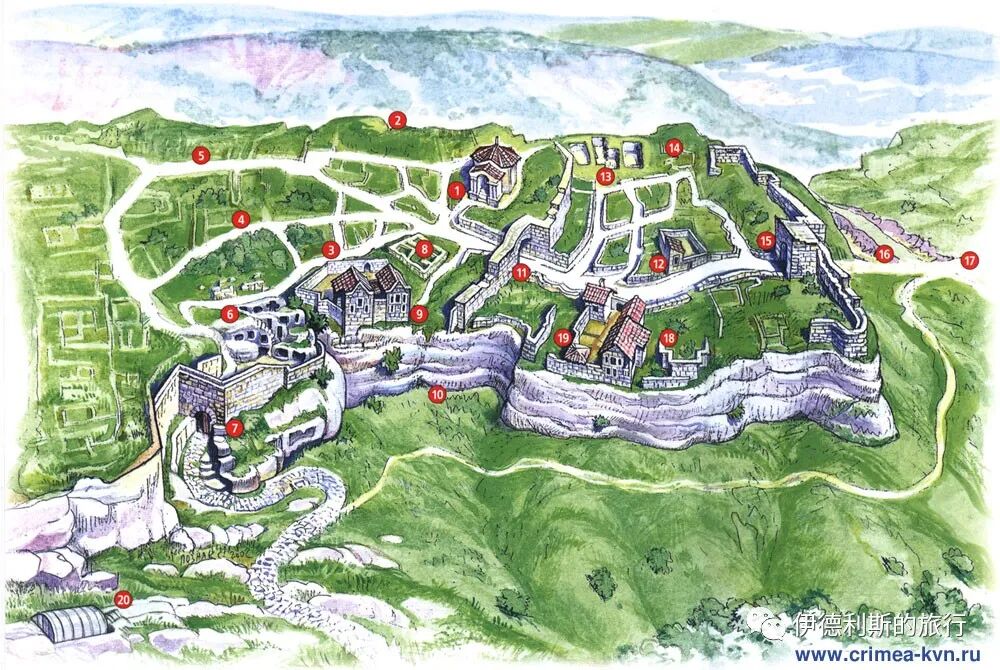
Table of Contents
I. Alan Christians
1. Caves
II. Tatar Muslims
1. South Wall and Middle Wall
2. Khan Jani Beg Mosque: 1455
3. Tomb of the Golden Horde Princess: 1437
4. Roads within the city
5. Gazi Mansur Qubba and Dervish Lodge: 1434
III. Karaite Jews
1. East Wall: 1396-1433
2. Karaite Kenesa: 14th century and late 18th century
3. Chaush-Cobass Caves: 16th century
4. Karaite Manors: 18th-19th centuries
5. Valley of Josaphat Karaite Cemetery
I. Alan Christians
1. Caves
The earliest inhabitants of Chufut-Kale were the Alans. The Alans, anciently known as Yancai, were an Iranian-speaking Christian people and the ancestors of the modern North Caucasian Ossetians. The Alans began to enter the Crimean Peninsula in the 2nd century and began to believe in Christianity under Byzantine influence in the 4th-5th centuries. Today, near the south gate of Chufut-Kale, there are still caves built by Alan Christian monks in the 6th century, which are the oldest surviving relics of Chufut-Kale.
Near the south gate of Chufut-Kale, there are 10 caves on 3 levels and 32 niches. These caves once contained murals and tombs, but they are no longer visible. Scholars speculate that these caves were likely the ruins of an Alan church.
II. Tatar Muslims
The Crimean Tatars are a Turkic-speaking Muslim ethnic group that formed during the Golden Horde period in the 13th-14th centuries and established the Crimean Khanate in the 15th-18th centuries.
The founder of the Crimean Khanate was Hacı I Giray, a descendant of Tuka-Timur, the thirteenth son of Jochi, the eldest son of Genghis Khan. In the 1260s, the fifth Khan of the Golden Horde, Mengu Timur, handed Crimea to Hacı I Giray's ancestor, Uran Timur, to rule, and the family of Hacı I Giray settled in Crimea from then on.
In 1395, Hacı I Giray's grandfather was defeated by Tamerlane the Great and driven out of Crimea, and Tamerlane's father was forced into exile in Lithuania. In 1397, Hacı I Giray was born in the Grand Duchy of Lithuania. Shortly after, because he supported Tokhtamysh of the Golden Horde against Edigu, Hacı I Giray's father died in a war. It is said that after this, Hacı I Giray was hidden by one of his father's servants for six years.
In 1428, Hacı I Giray led an army to occupy Crimea with the support of Vytautas the Great of the Grand Duchy of Lithuania, but was subsequently driven away by Ulugh Muhammad, the founder of the Khanate of Kazan. In 1431, Hacı I Giray again led an army recruited from Lithuania back to Crimea, but was driven back to Lithuania by Ulugh Muhammad again in 1434.
In 1437, Ulugh Muhammad left Crimea for Kazan, and the new Crimean ruler was very unpopular. In 1440, welcomed by the local Crimean nobility, Hacı I Giray returned to Crimea for the third time. In 1441, the Genoese in Crimea called Hacı I Giray the new Khan. In the same year, Hacı I Giray minted coins with his name on them at Chufut-Kale. Therefore, 1441 is generally considered the date of the establishment of the Crimean Khanate, and Chufut-Kale is considered the birthplace of the Crimean Khanate.
Hacı I Giray carried out large-scale construction at Chufut-Kale and built his own residence in the city.
In the mid-16th century, as the capital of the Crimean Khanate was moved to Bakhchisarai in the valley west of the fortress, the Tatars in Chufut-Kale began to move to Bakhchisarai. After the wells in the city dried up in the mid-17th century, all the Tatars left the fortress.
1. South Wall and Middle Wall
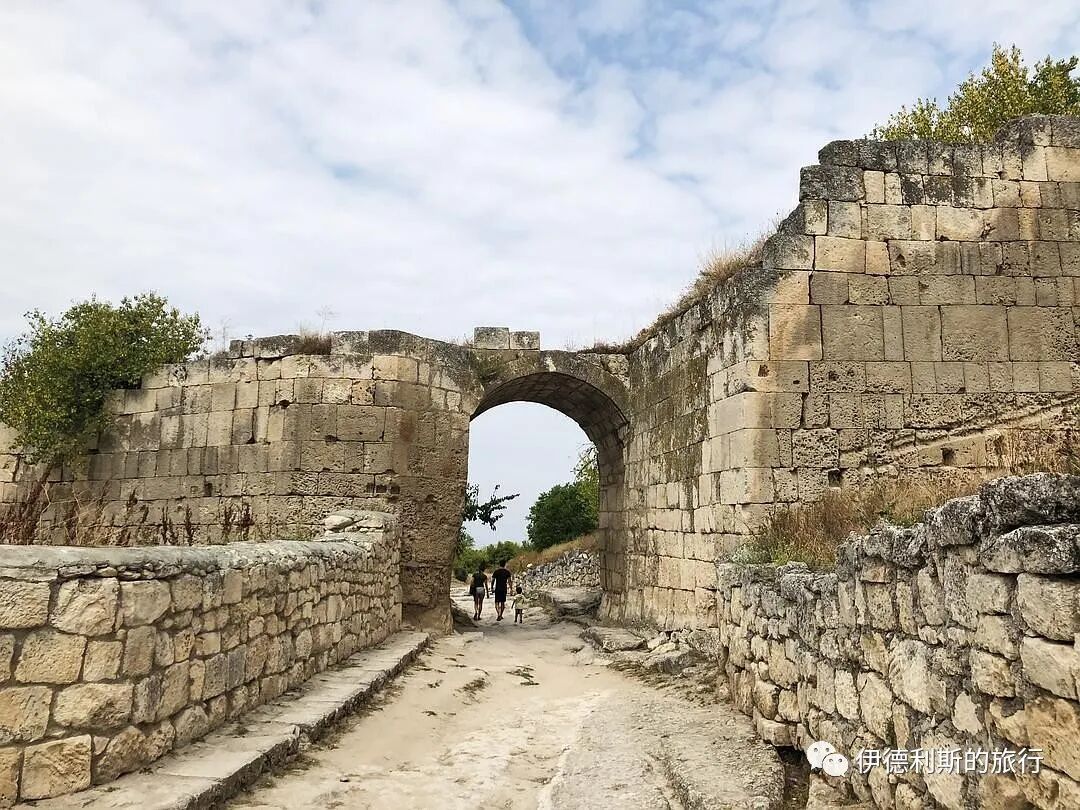
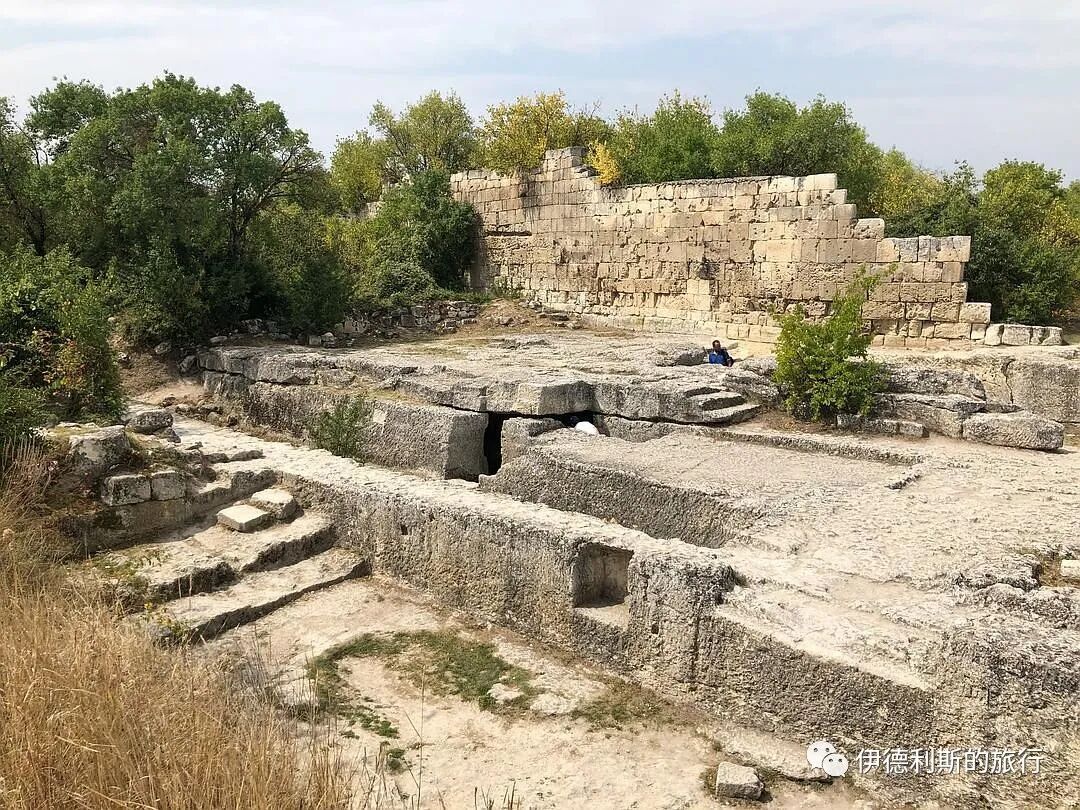
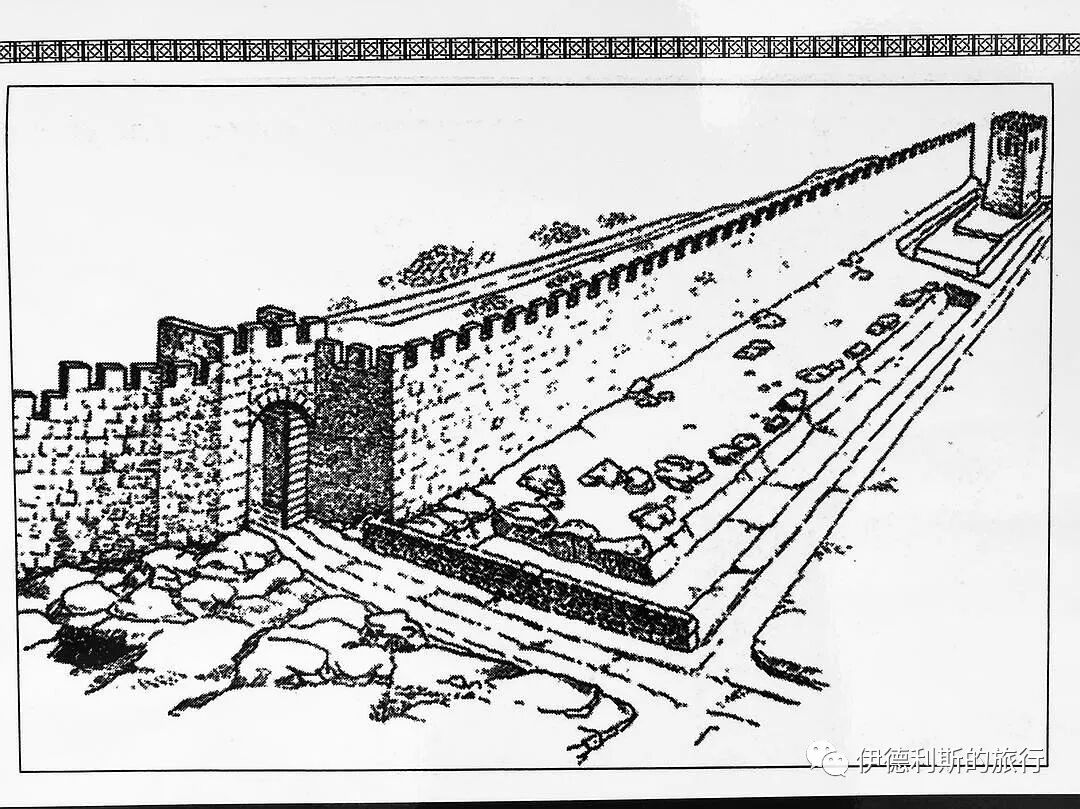
The walls of Chufut-Kale were built during the Byzantine period, with some saying they were built in the 5th-6th centuries and others in the 10th-11th centuries. In 1299, Nogai Khan, a general of the Golden Horde, led a Tatar army to attack the Crimean Peninsula. The Byzantine soldiers used the sturdy walls of Chufut-Kale to resist the attack of the Golden Horde. It is said that the Tatar soldiers played harsh music for three days and nights to disturb the Byzantine defenders in the city. Finally, on the fourth day, the exhausted Byzantine defenders could no longer resist the new round of siege, and Chufut-Kale was thus captured by the Tatars of the Golden Horde.
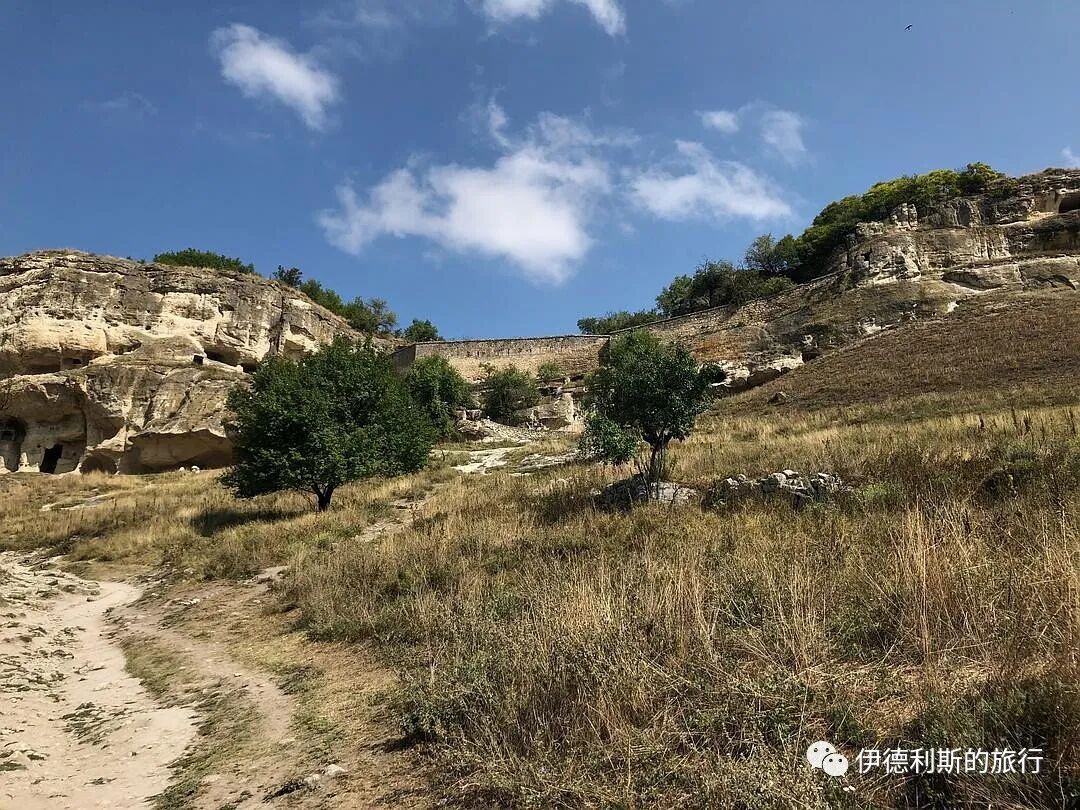
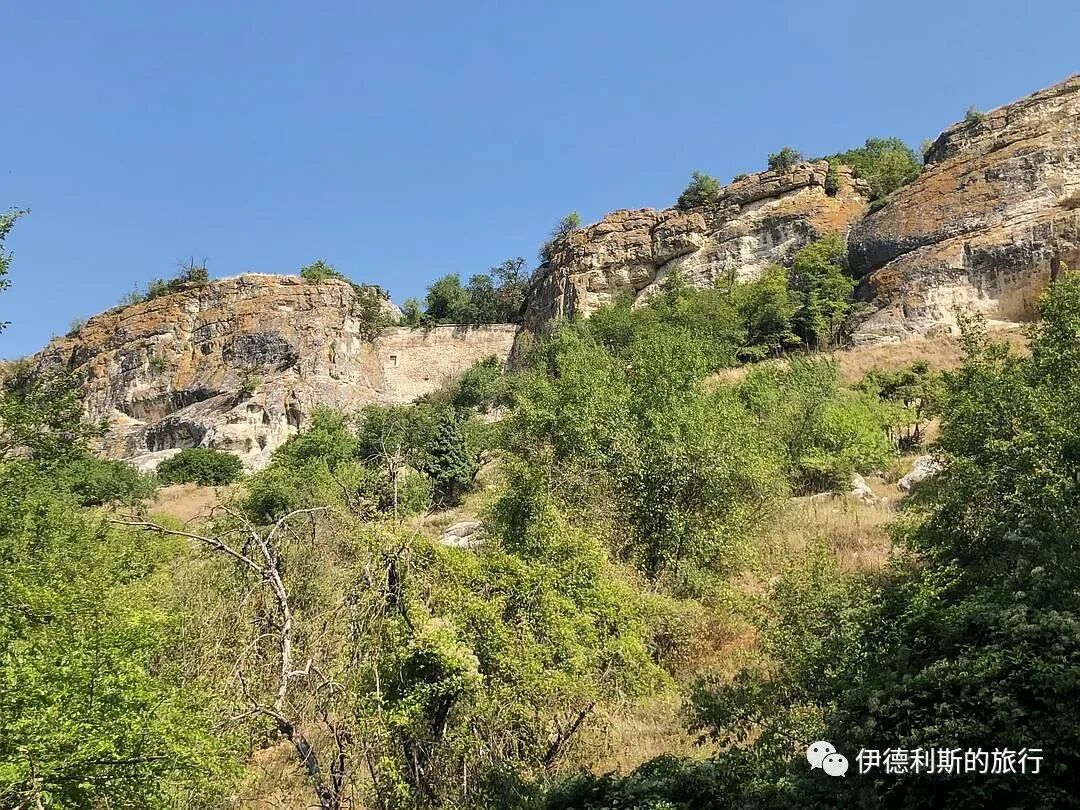
Currently, the original walls have two sections, the south wall and the middle wall, and two gates, the south gate and the middle gate. The south wall is built on the cliff in the south of the fortress, interspersed between the rocks. The south gate is built in a pocket shape, so that it can be besieged from top to bottom when the enemy breaks in. The middle wall runs across the north and south cliffs of the fortress and is a typical Byzantine-style wall structure.
South Wall
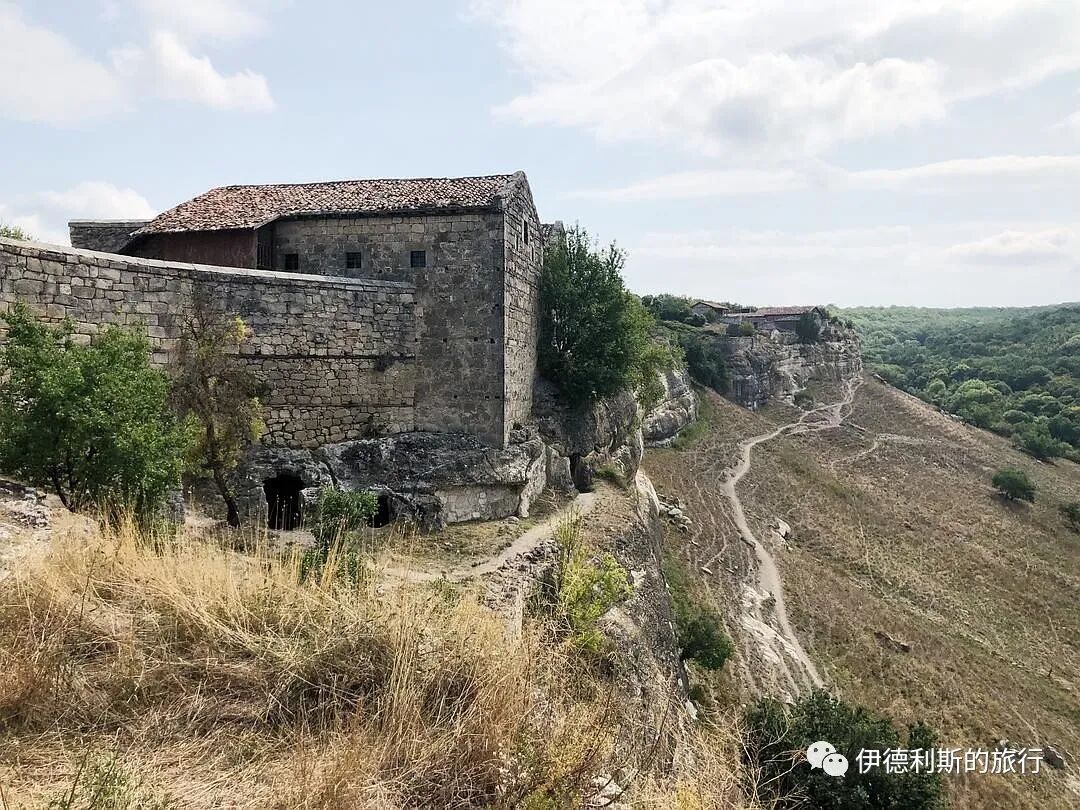
Middle Wall
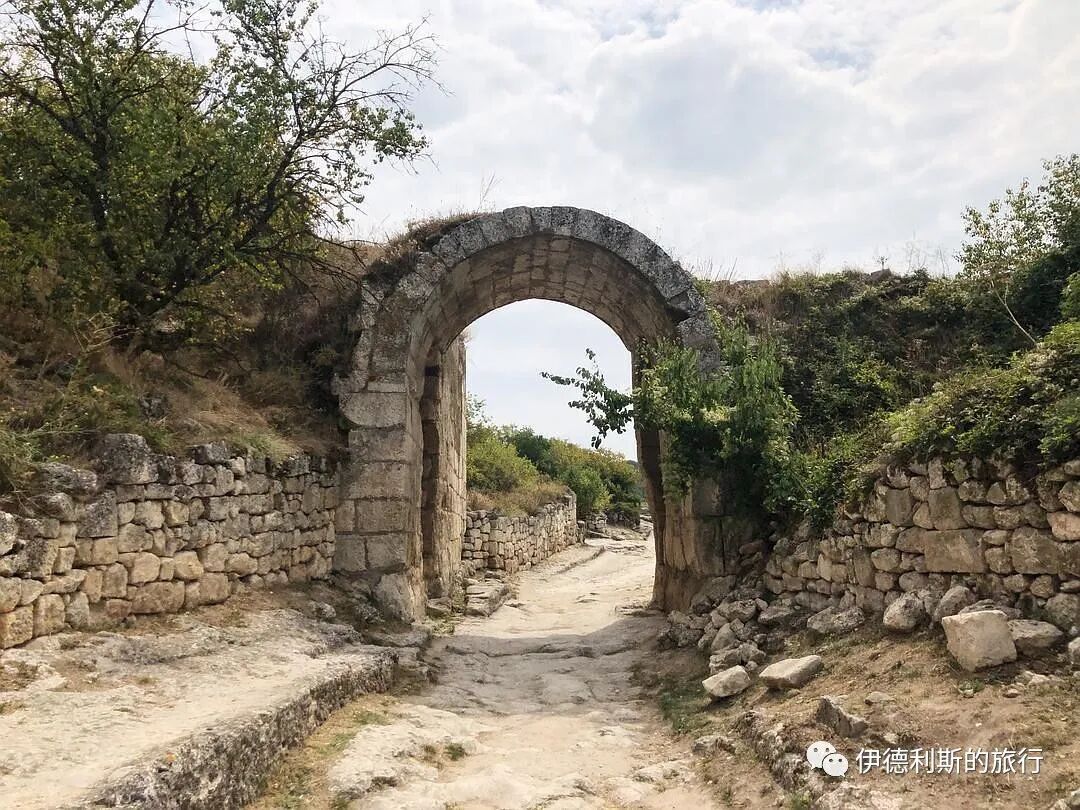
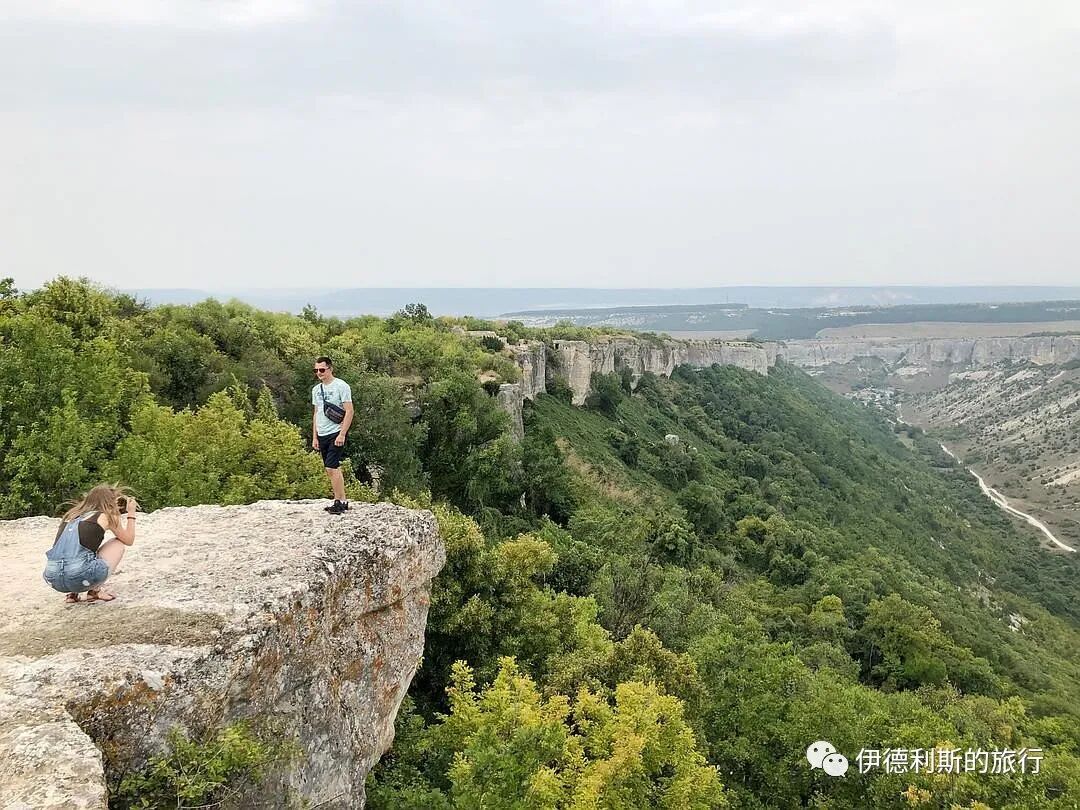
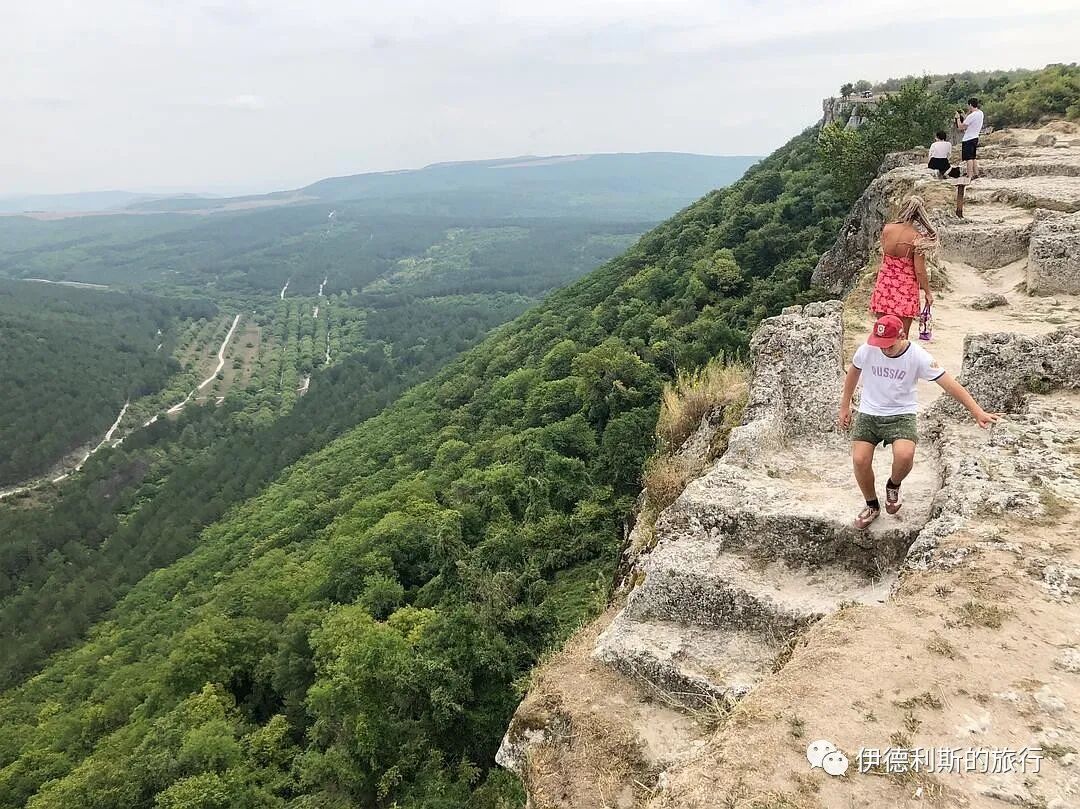
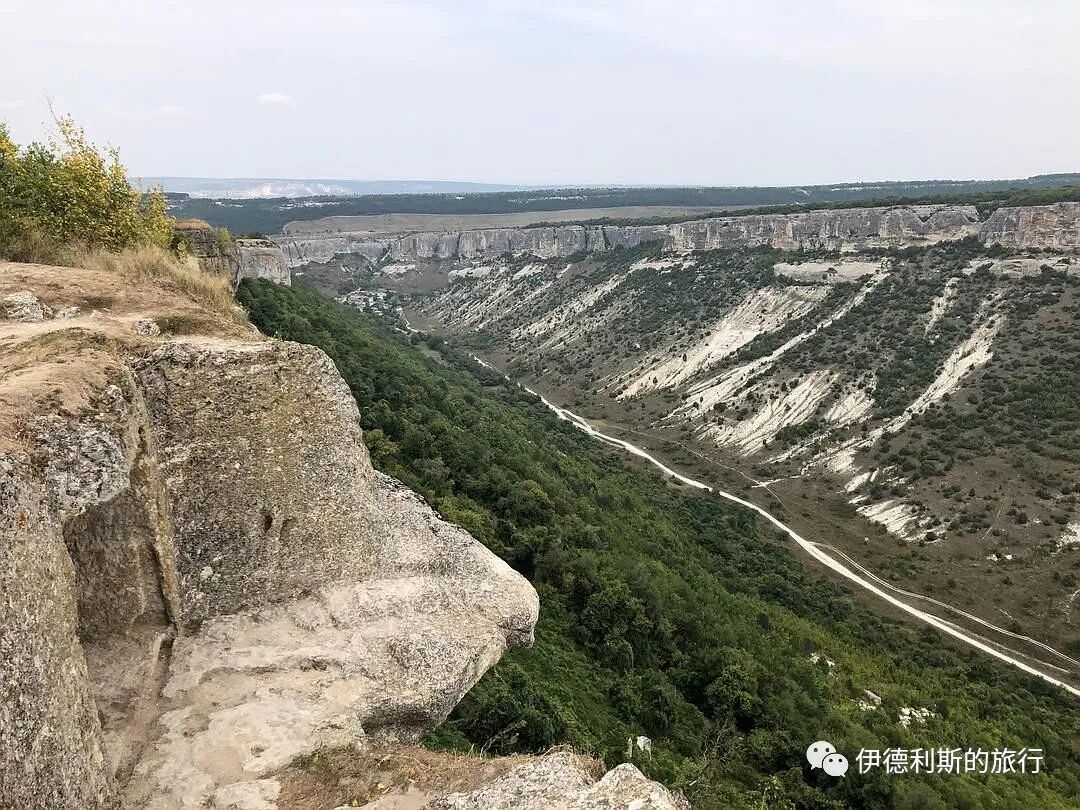
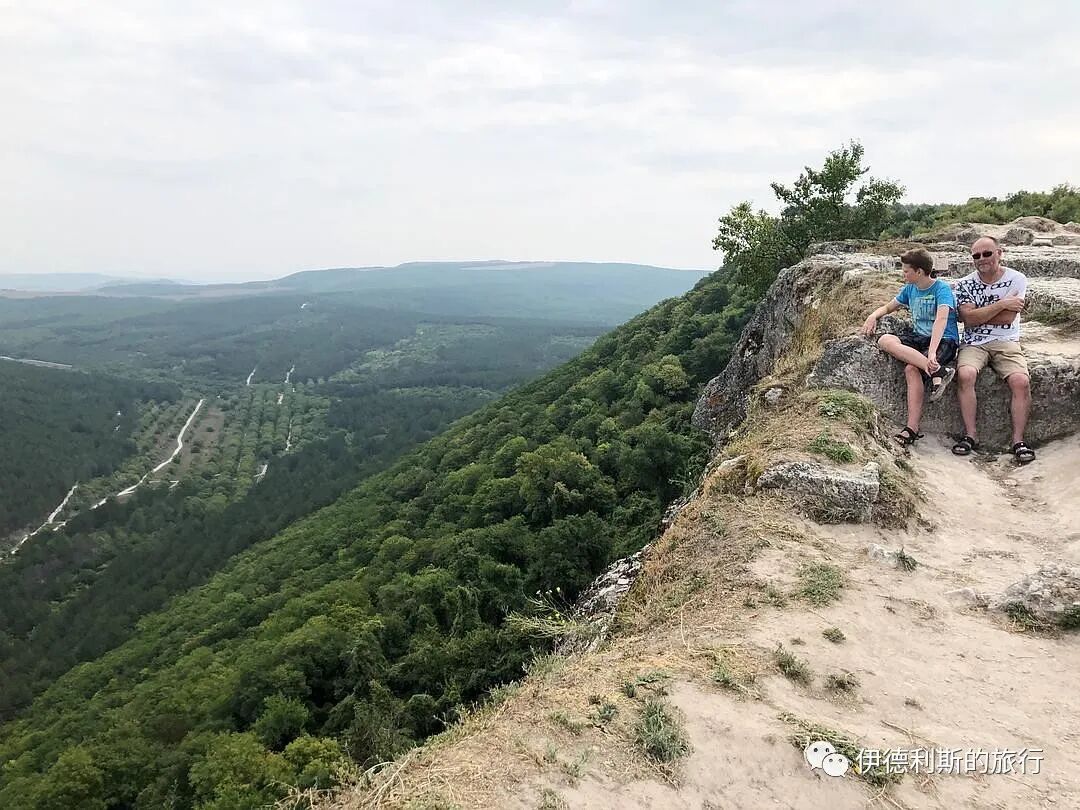
The north cliff has no wall, but its steepness is comparable to a wall itself. It was very windy when I went, and I felt quite nervous standing on the edge of the cliff.
2. Khan Jani Beg Mosque: 1455
The Khan Jani Beg Mosque is located on the west side of Chufut-Kale and was built in 1346 during the reign of Khan Jani Beg (reigned 1342-1357) of the Golden Horde. Khan Jani Beg was the son of Öz Beg Khan. During his father's reign, the Golden Horde fully embraced Islam, and Khan Jani Beg continued to develop Islam within the Khanate. The Khan Jani Beg Mosque in Chufut-Kale is a testament to this.
In 1455, Hacı I Giray, the founding Khan of the Crimean Khanate, rebuilt the Khan Jani Beg Mosque. A reconstruction inscription was once carved above the mosque gate and was discovered during archaeological excavations in 1928. Another 17th-century Turkish traveler recorded that the mosque also had an Islamic madrasa (school) at that time.
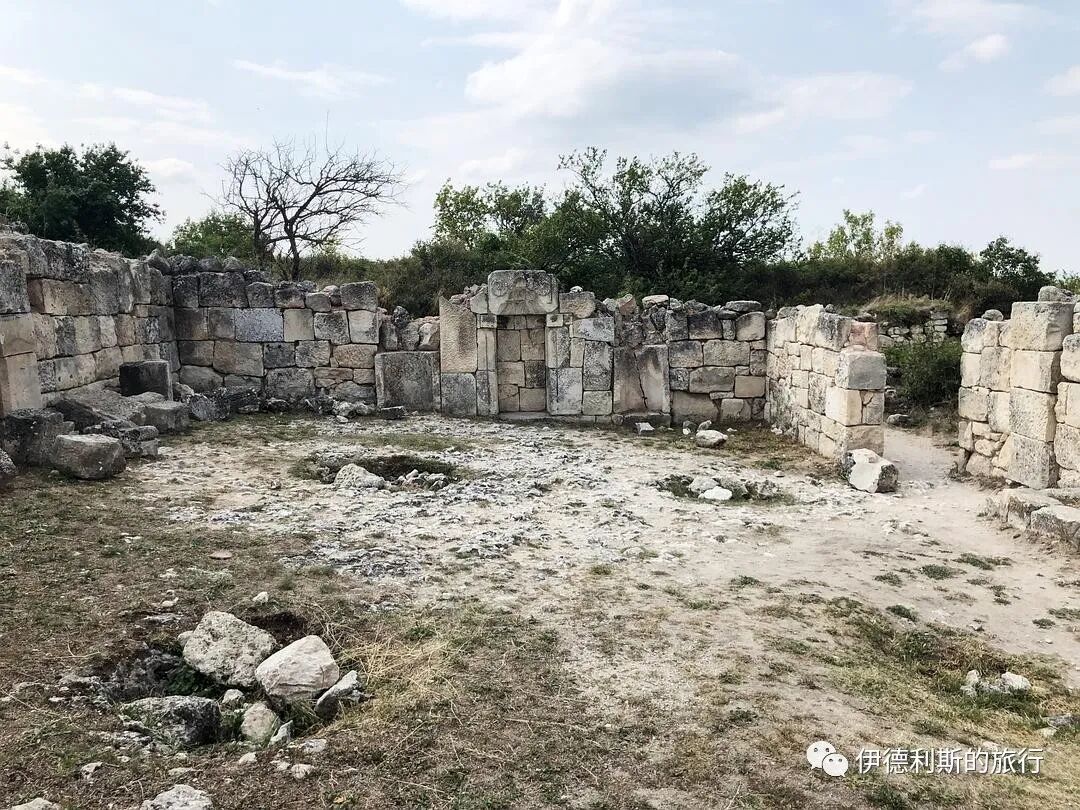
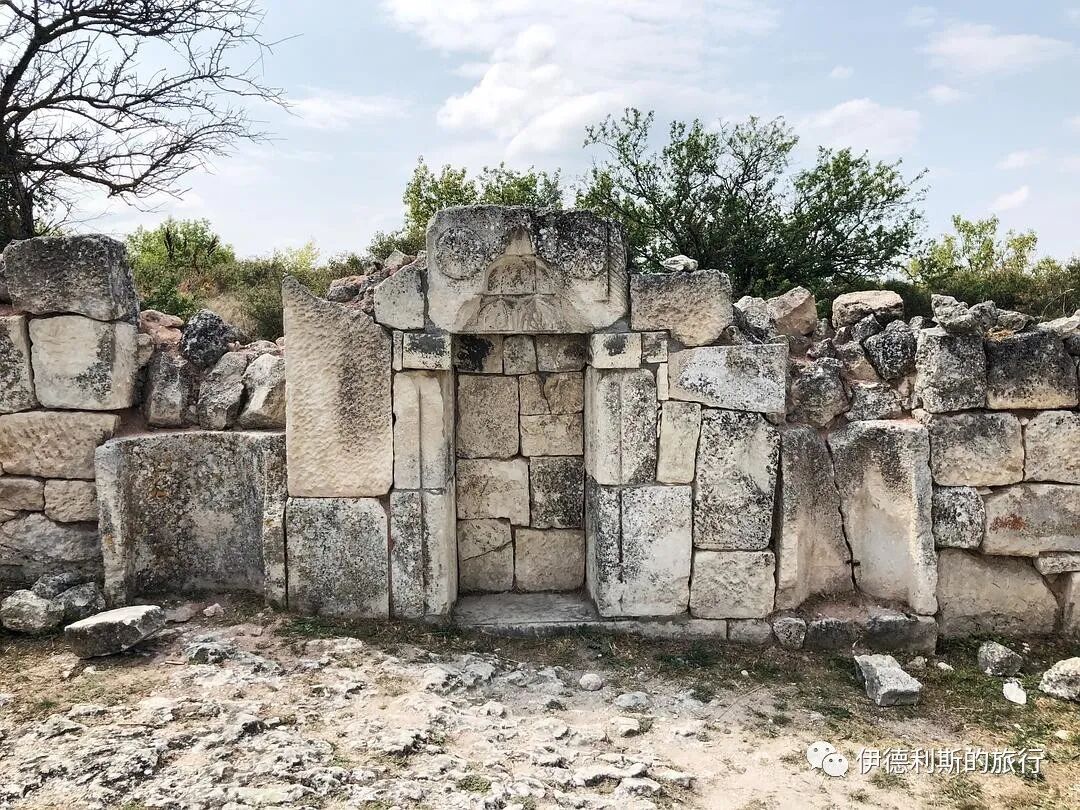
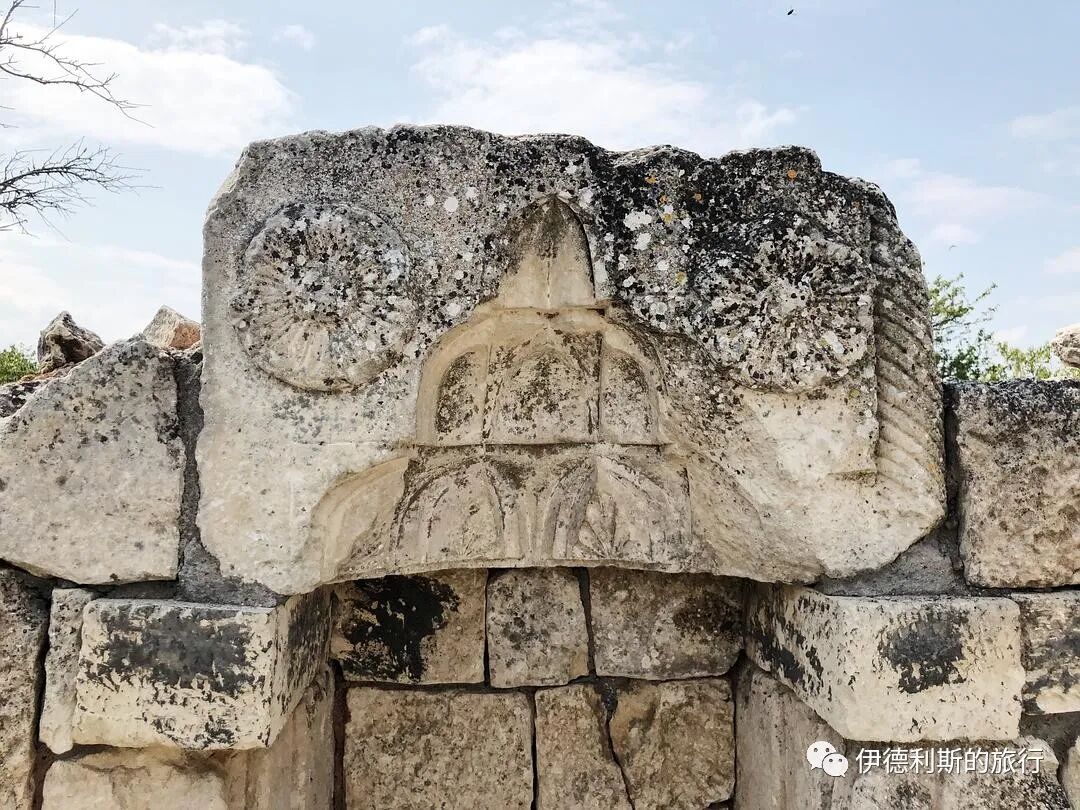
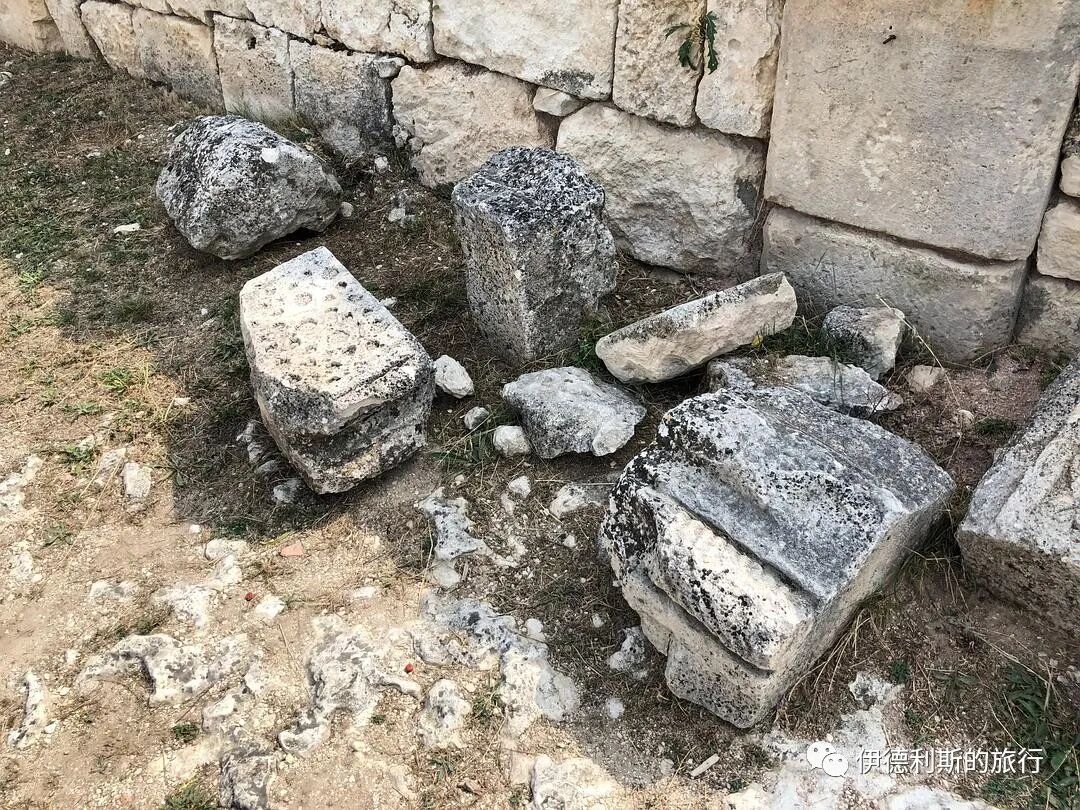
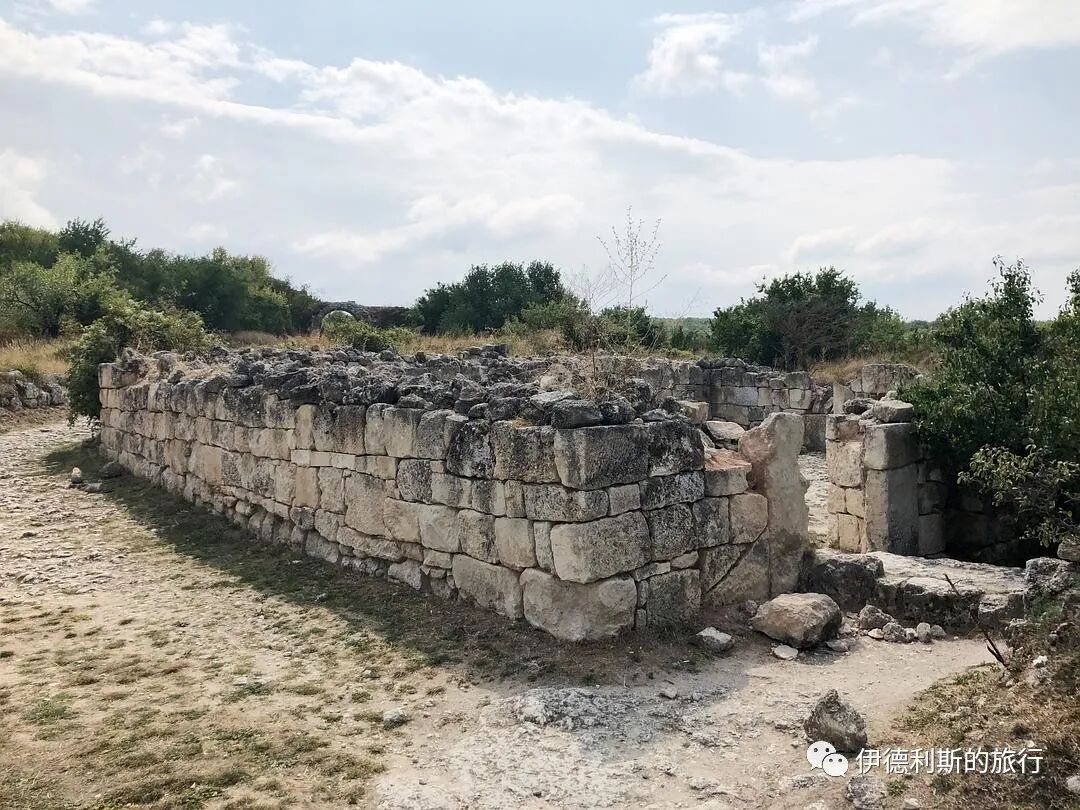
After the mid-17th century, as all the Crimean Tatar Muslims moved from Chufut-Kale to Bakhchisarai, the mosque was eventually abandoned. Currently, only the remaining walls, the mihrab (prayer niche), and some stone carvings remain at the mosque site. From the existing ruins, it can be inferred that it was a relatively typical traditional Crimean mosque building.
3. Tomb of the Golden Horde Princess: 1437
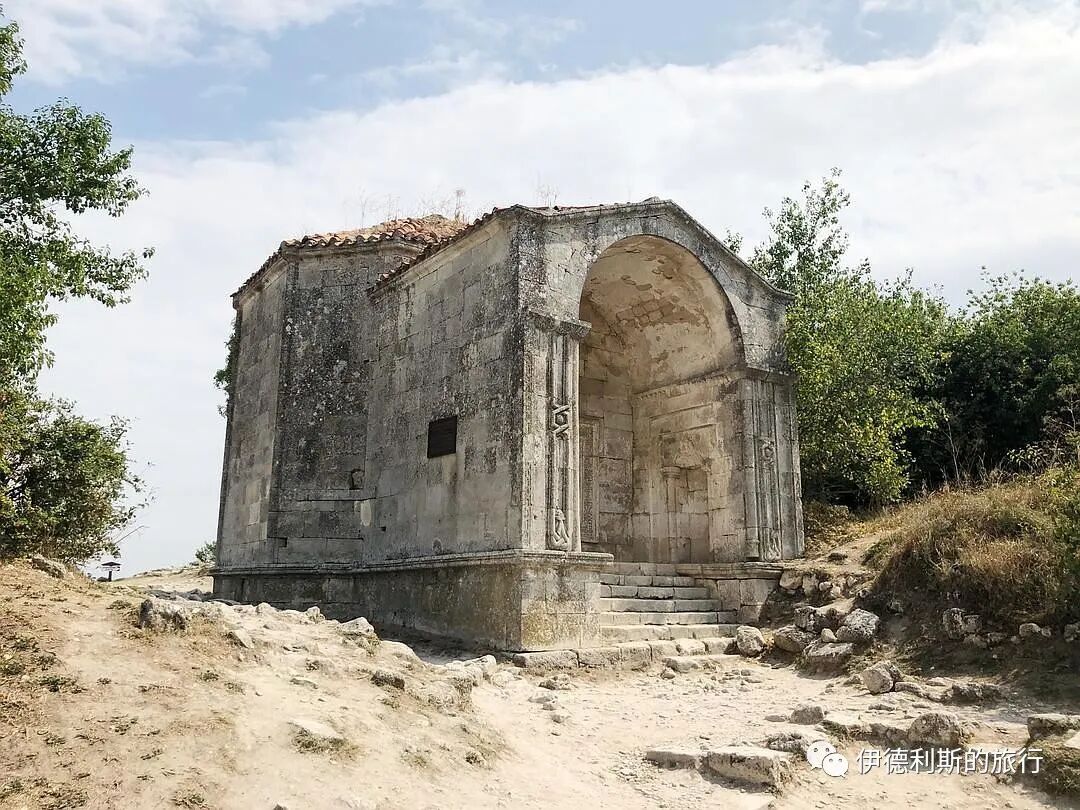
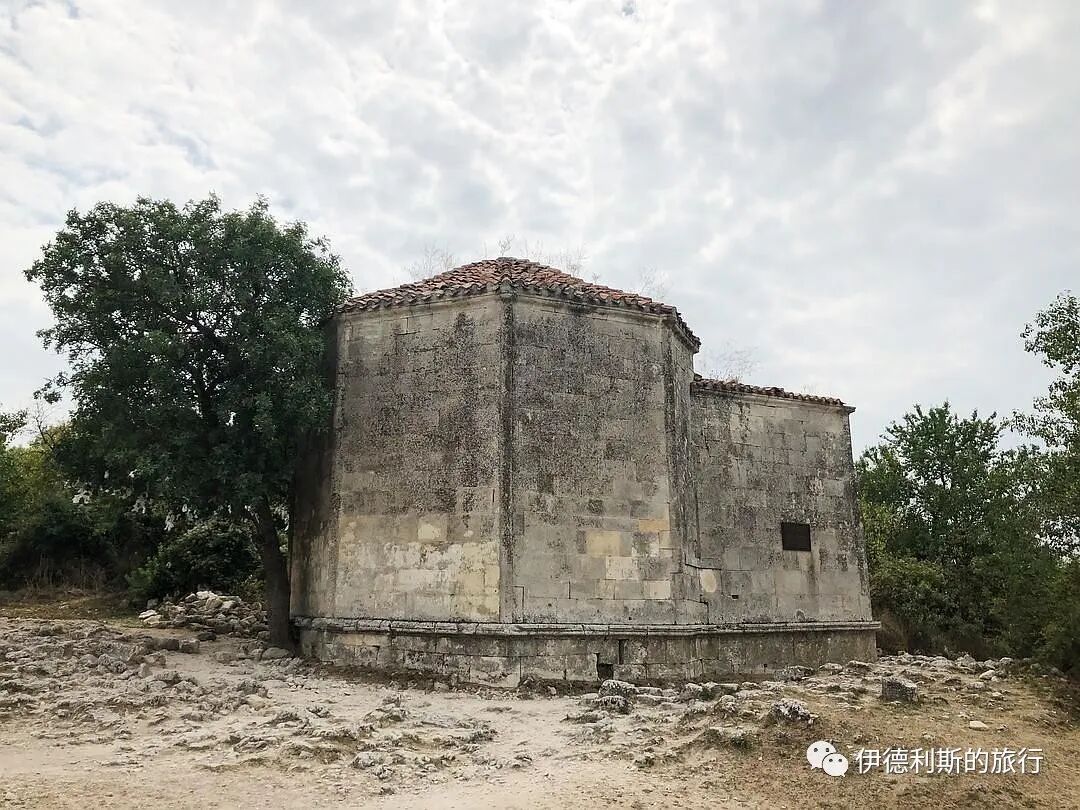
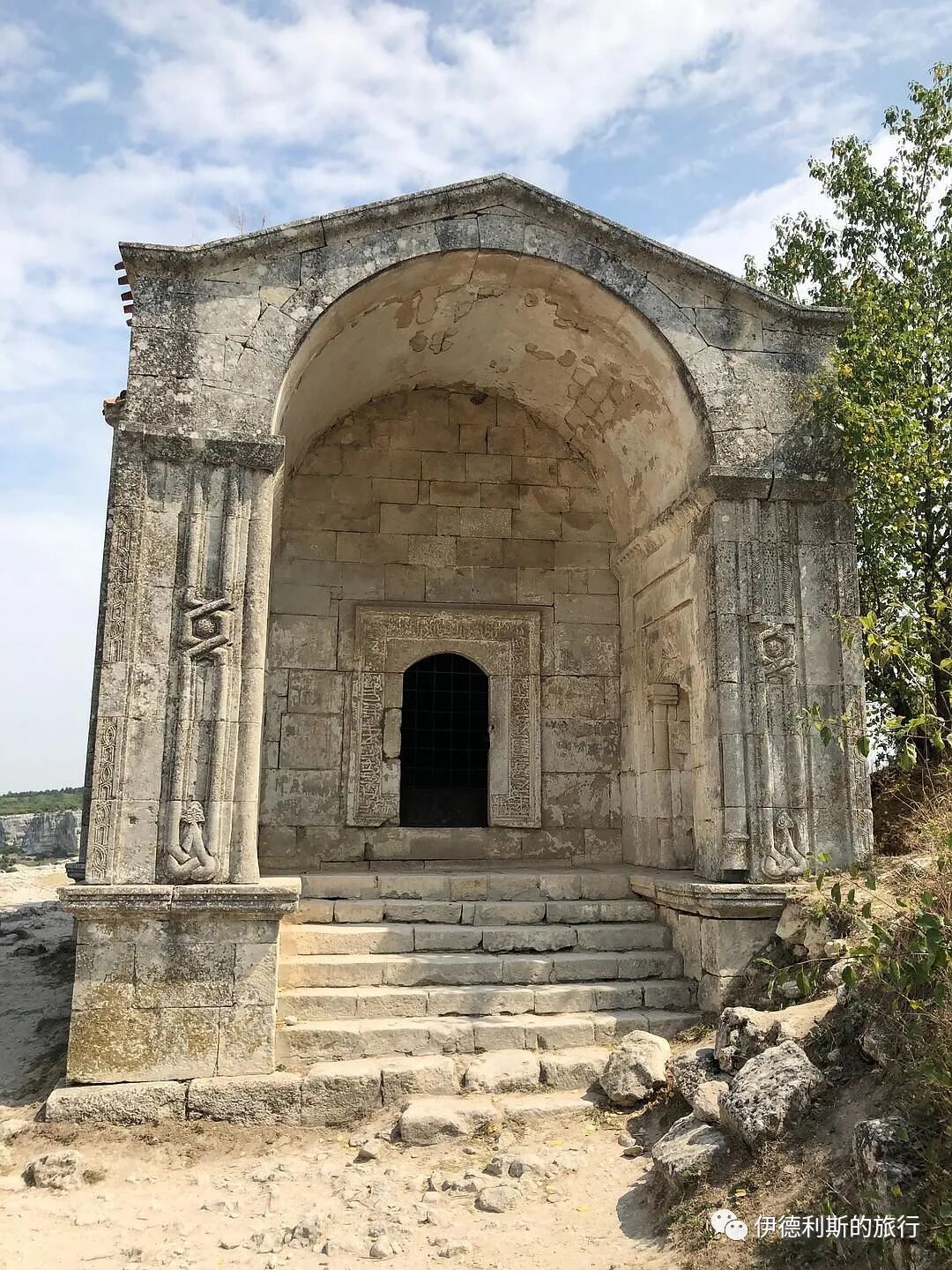
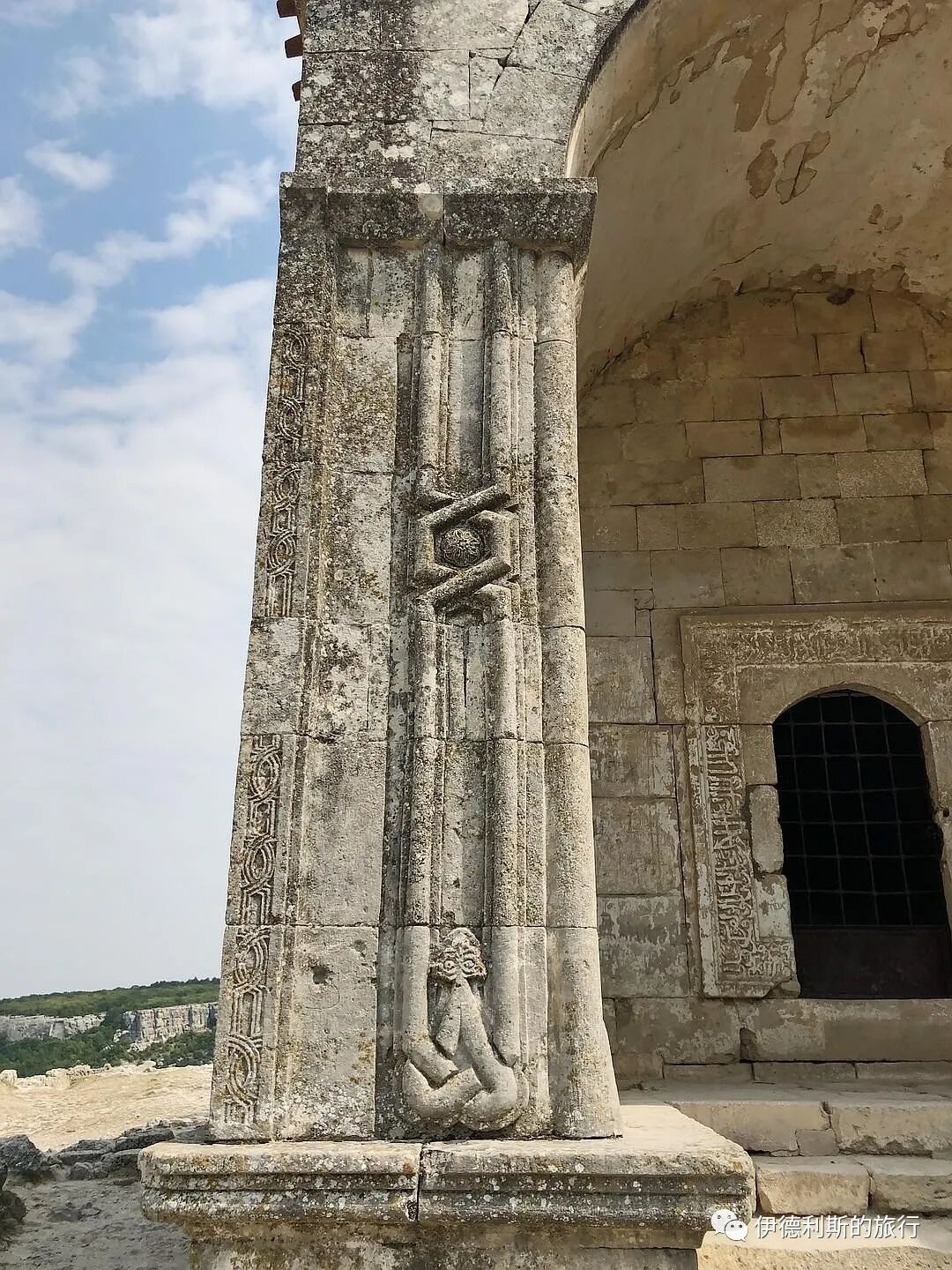
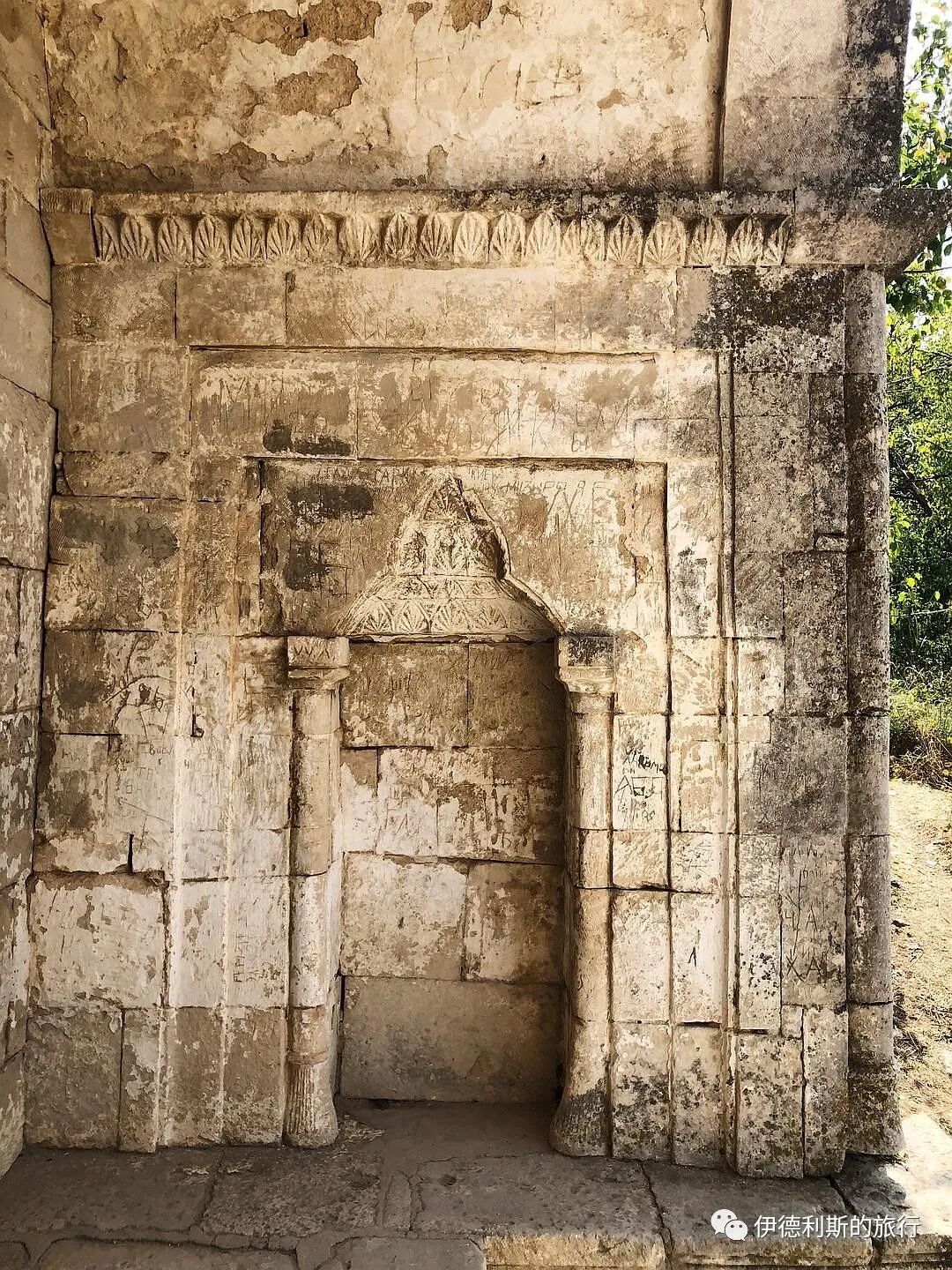
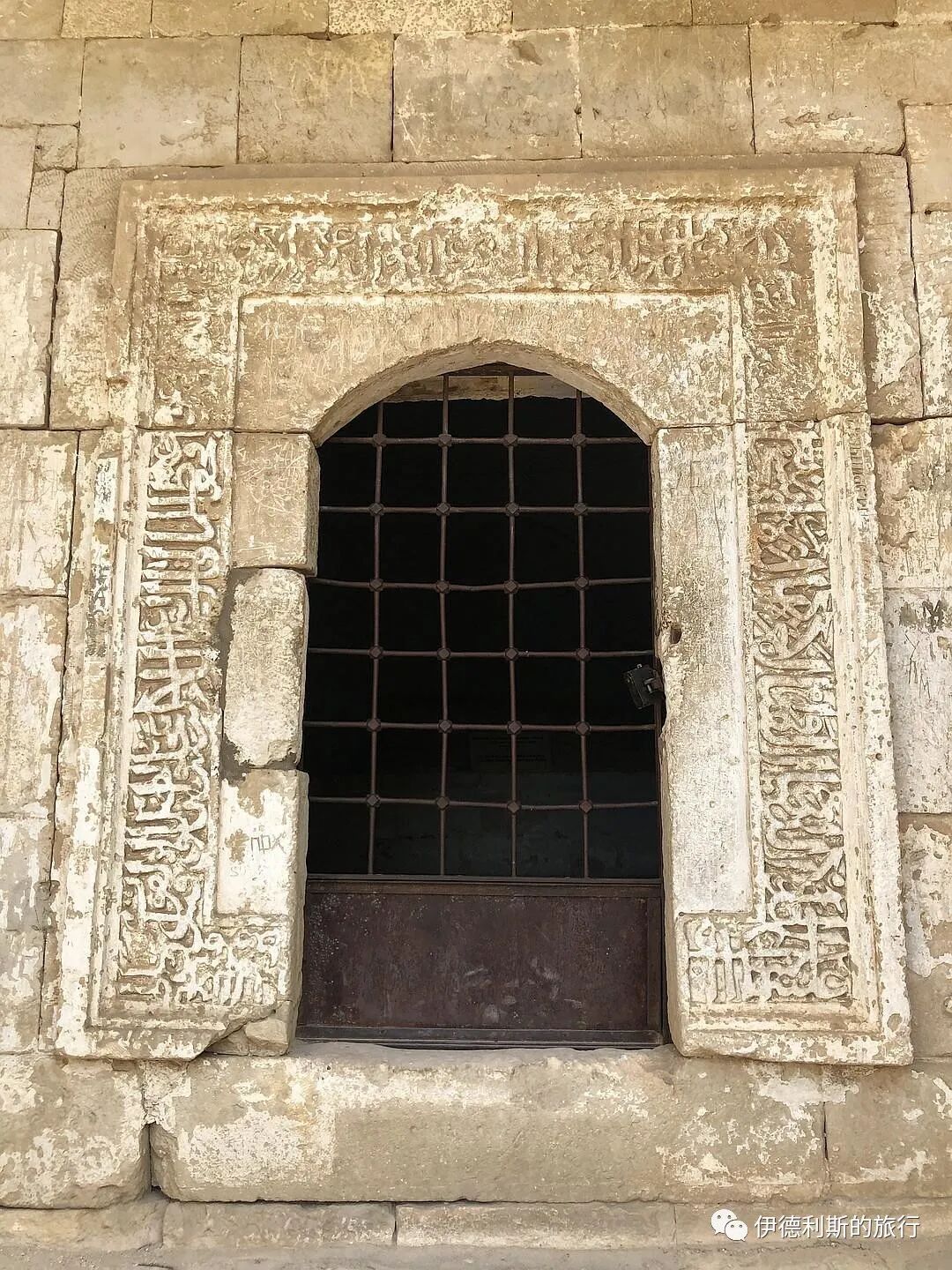
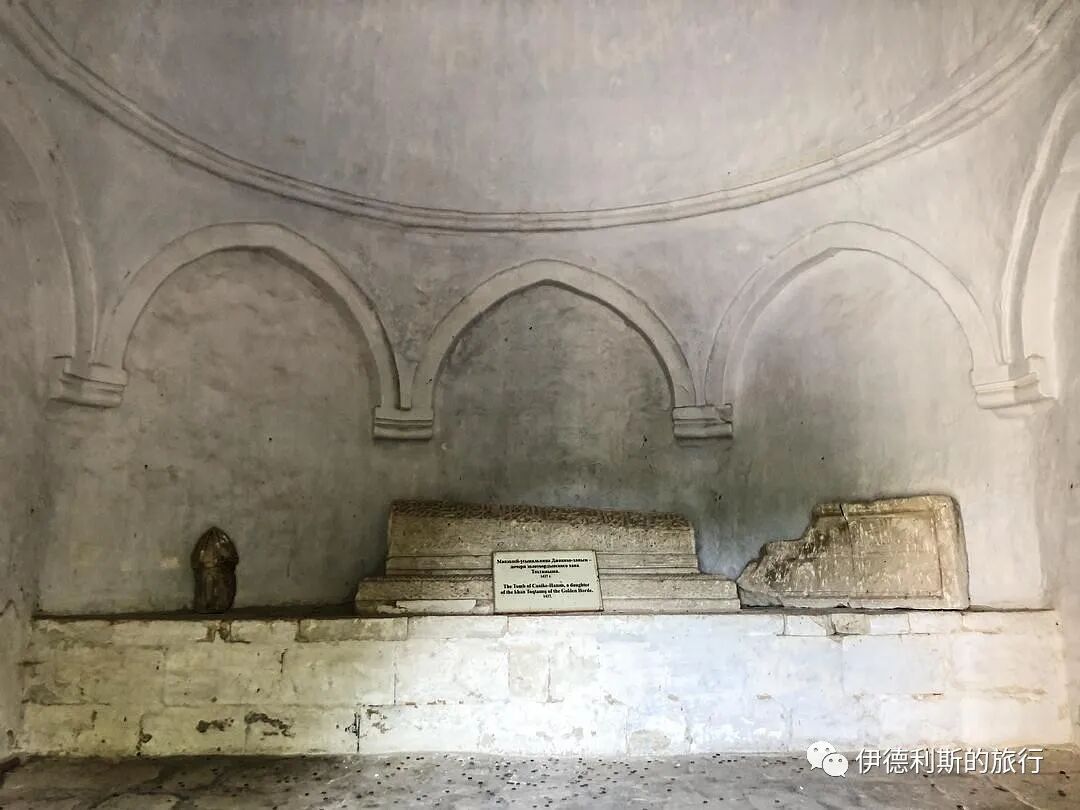
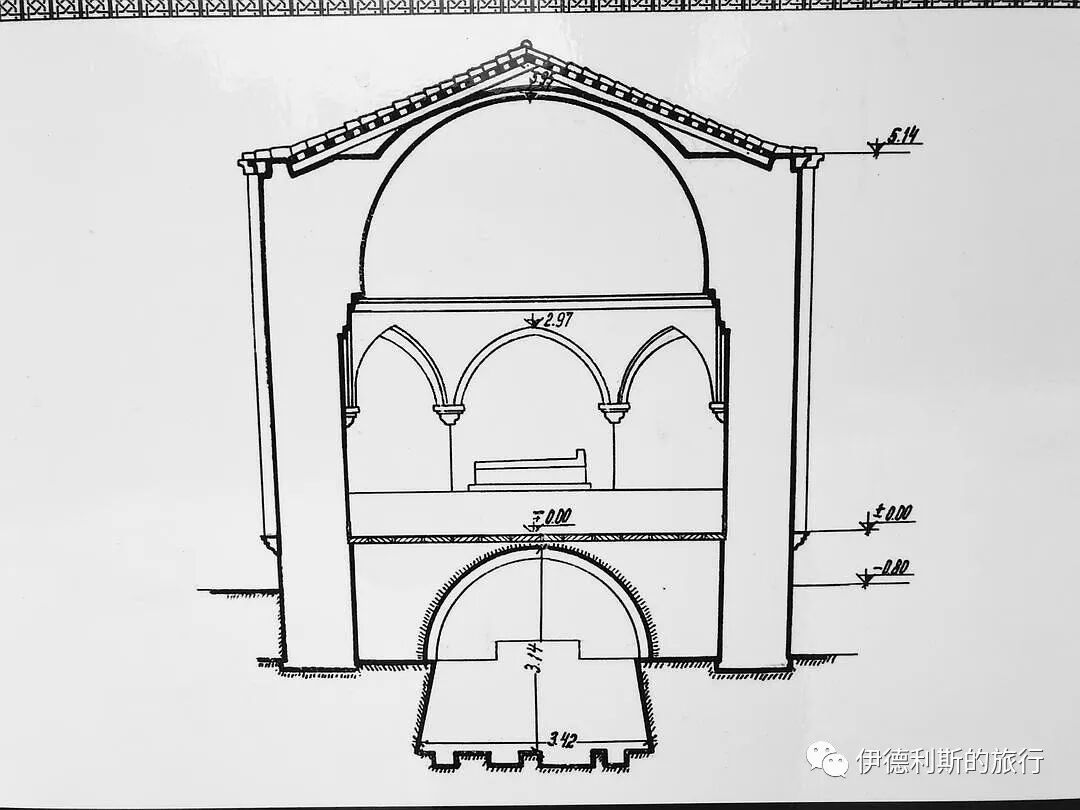
The tomb of the Golden Horde princess Dzhanike Khanym was built in 1437 and is the best-preserved Muslim building in Chufut-Kale. The tomb owner was Dzhanike Khanym, the daughter of Tokhtamysh (reigned 1380-1397), the Khan of the Golden Horde. Tokhtamysh was the last Khan to unify the Golden Horde, but he was eventually defeated by Tamerlane the Great. After Tokhtamysh passed away, Dzhanike Khanym returned to her mother's hometown, Crimea.
The mausoleum is octagonal, and the door is decorated with the classic Seljuk knot, a classic pattern of the Golden Horde period.
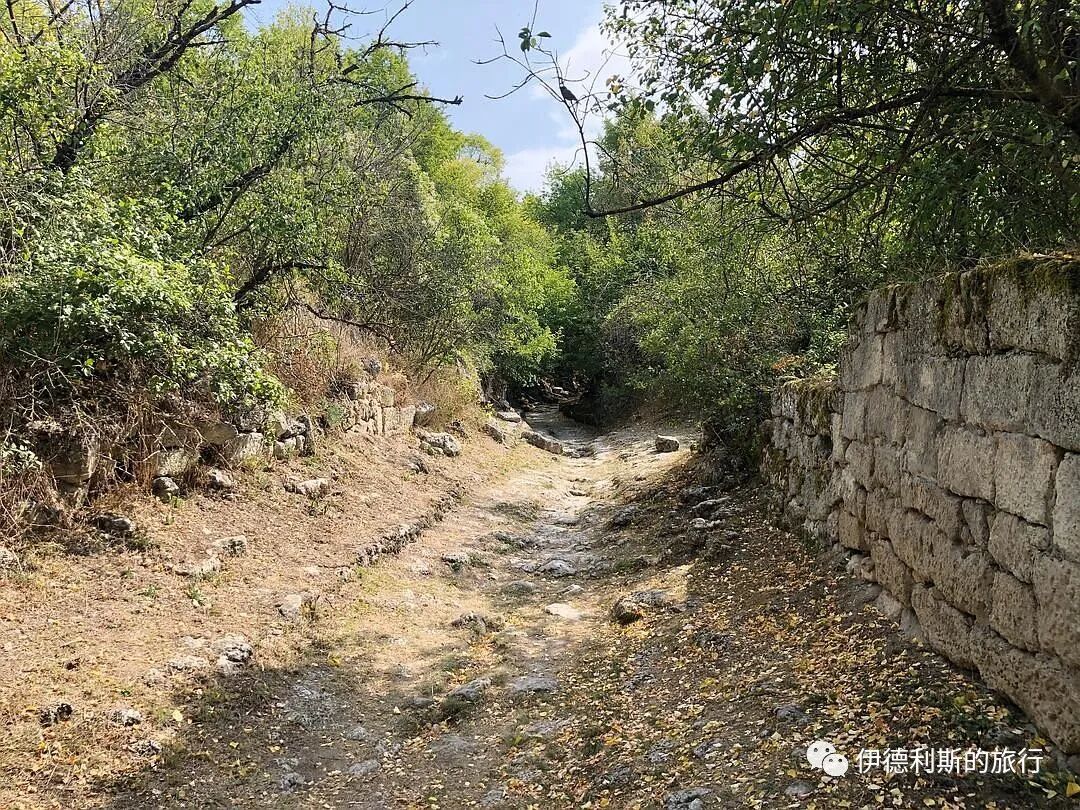
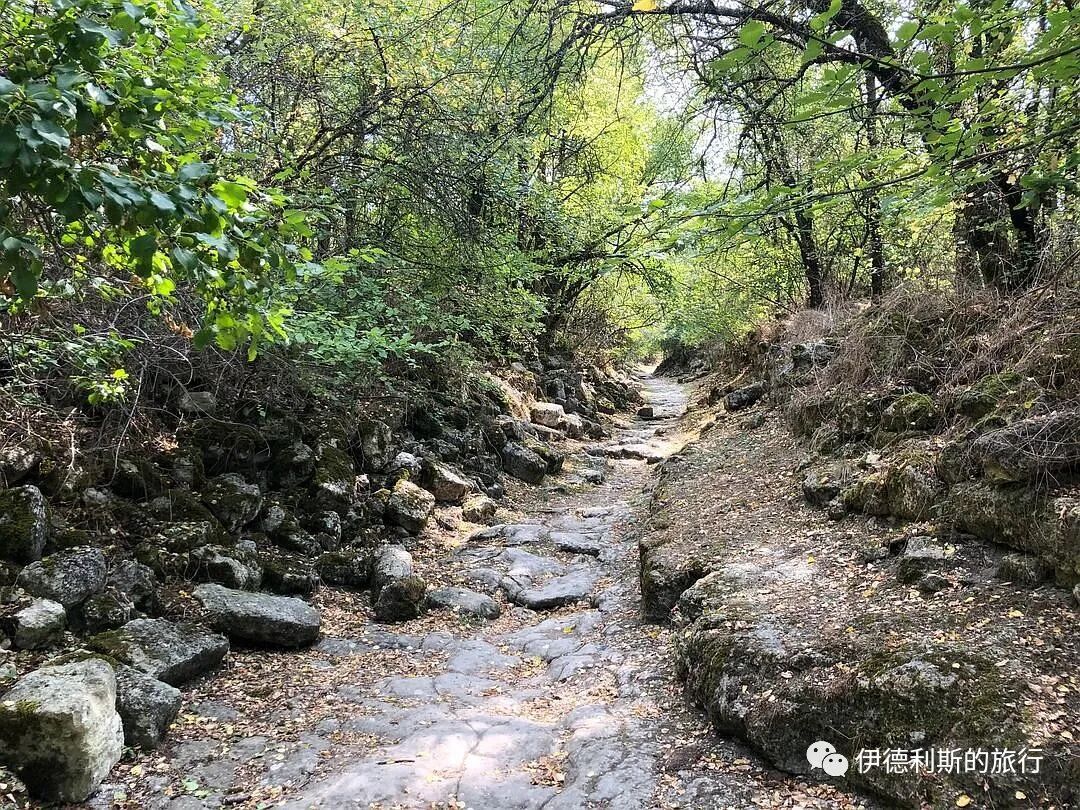
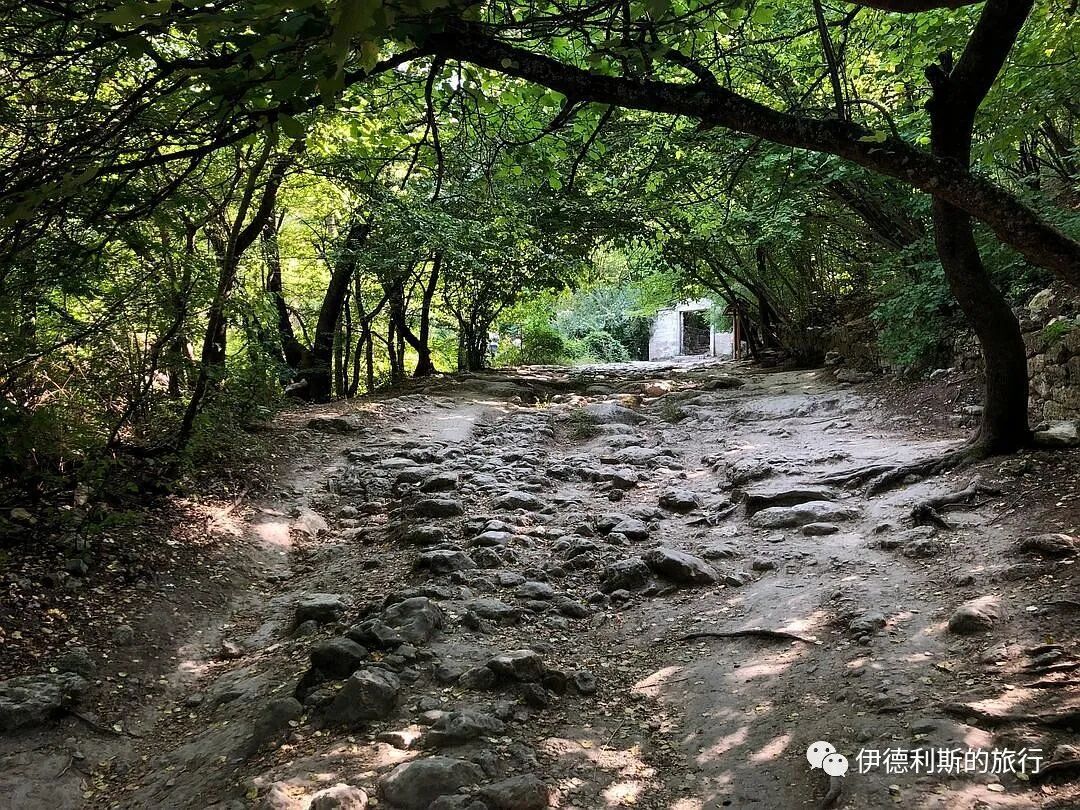
4. Roads within the city
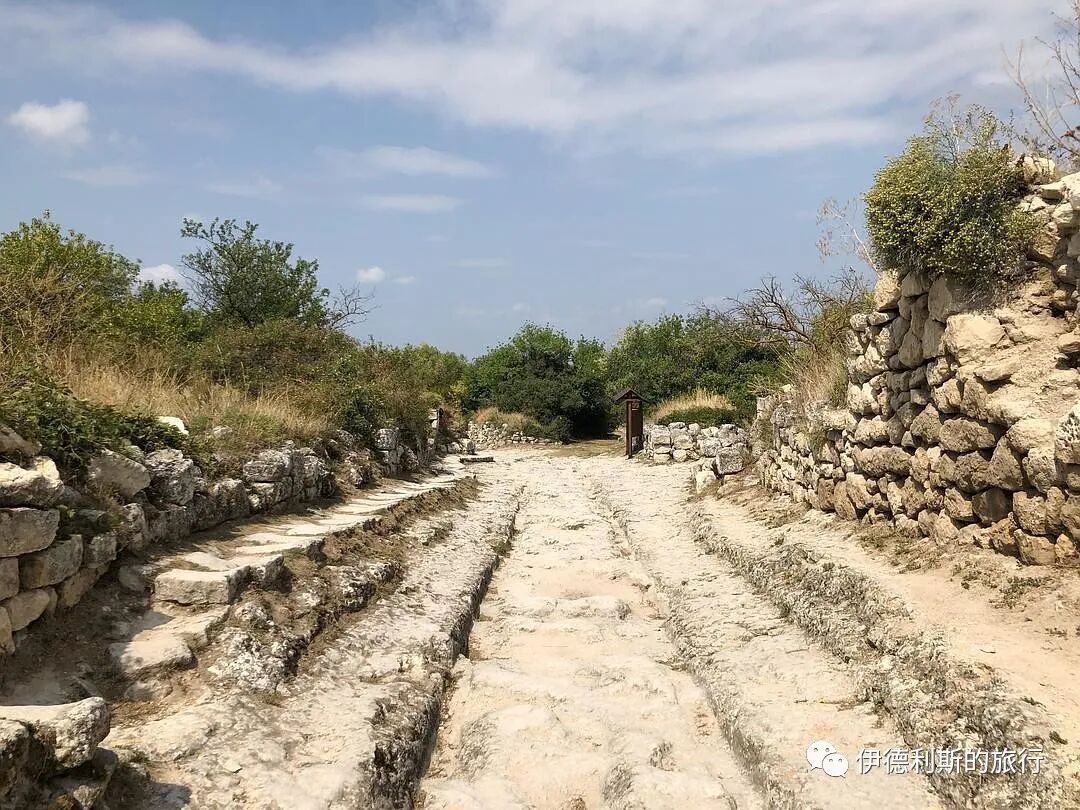
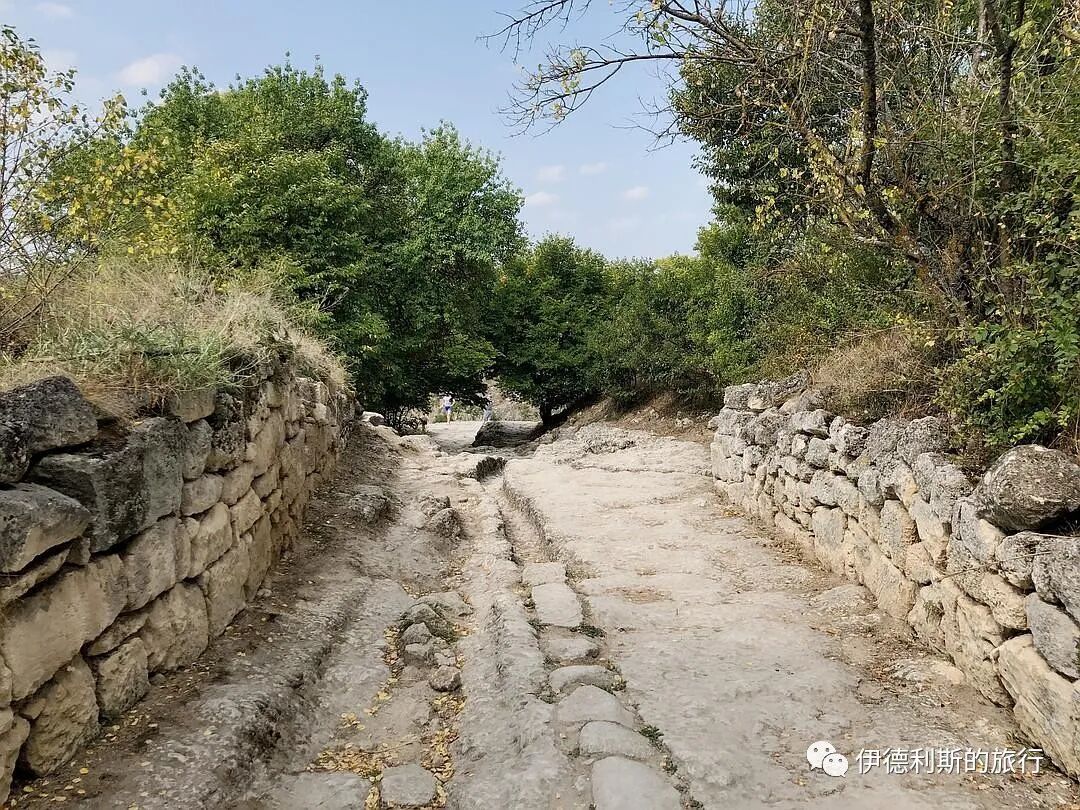
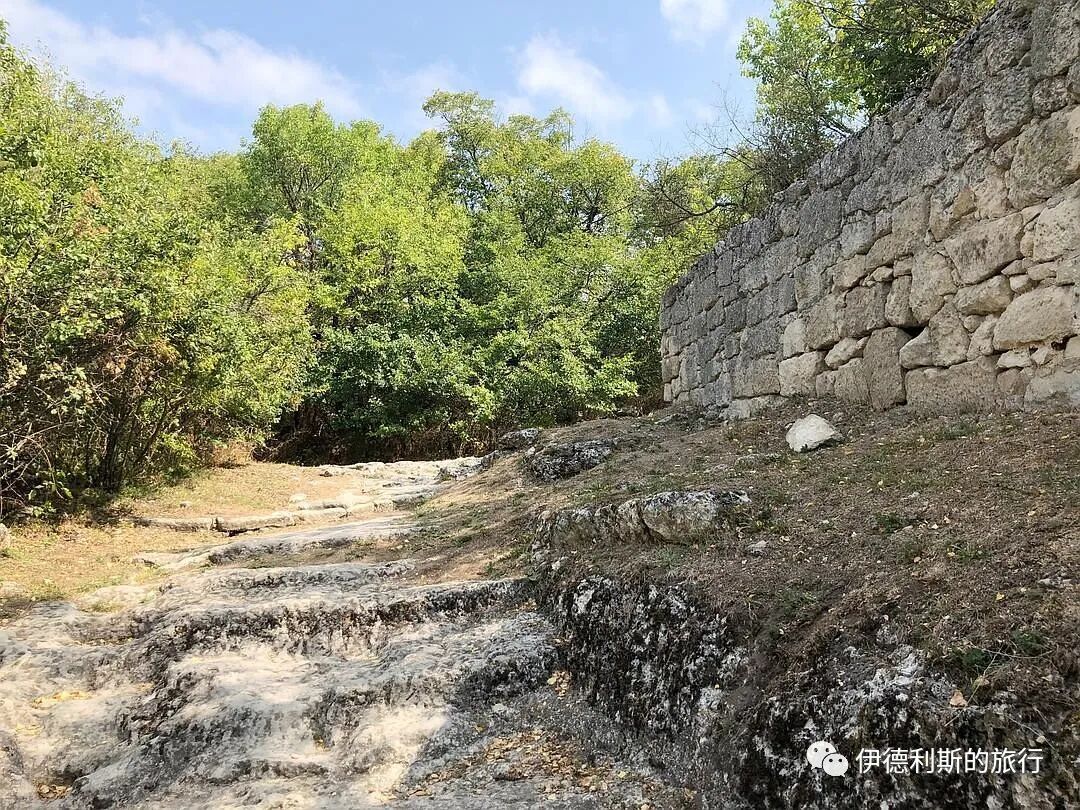
The roads in the fortress are wide and narrow, and you can see deep cart ruts on the main road.
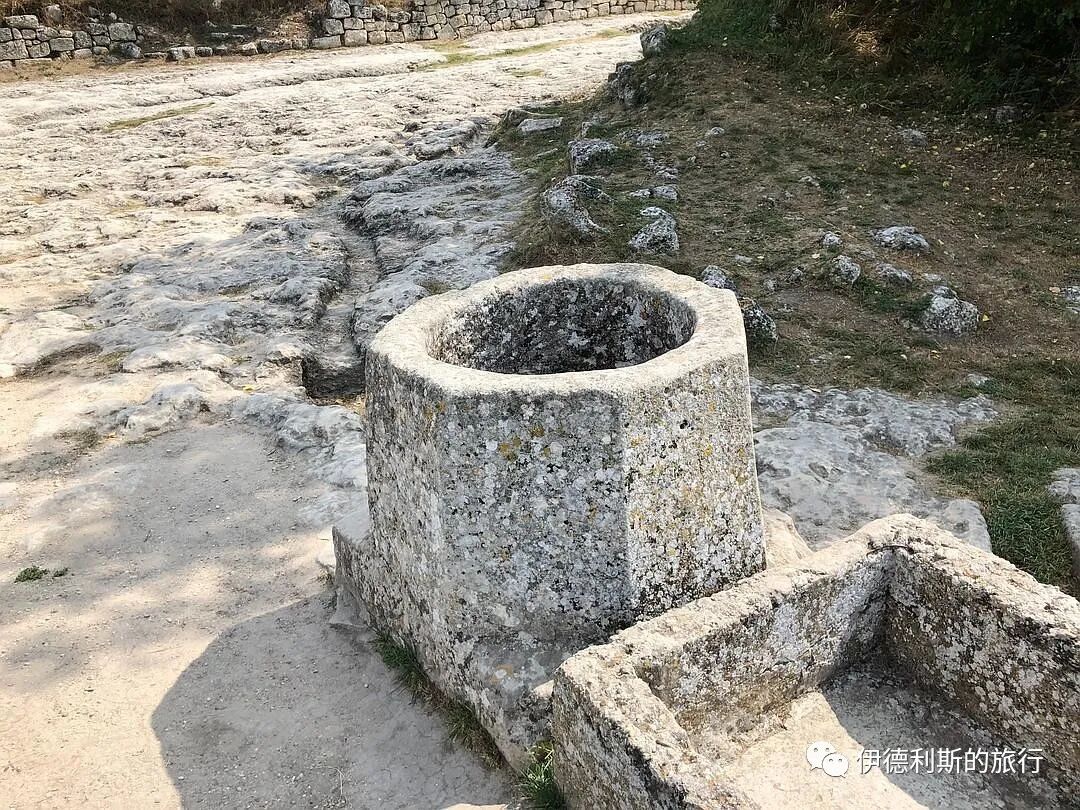
Well
The well in the city. After the well dried up in the 17th century, the Tatars left one after another.
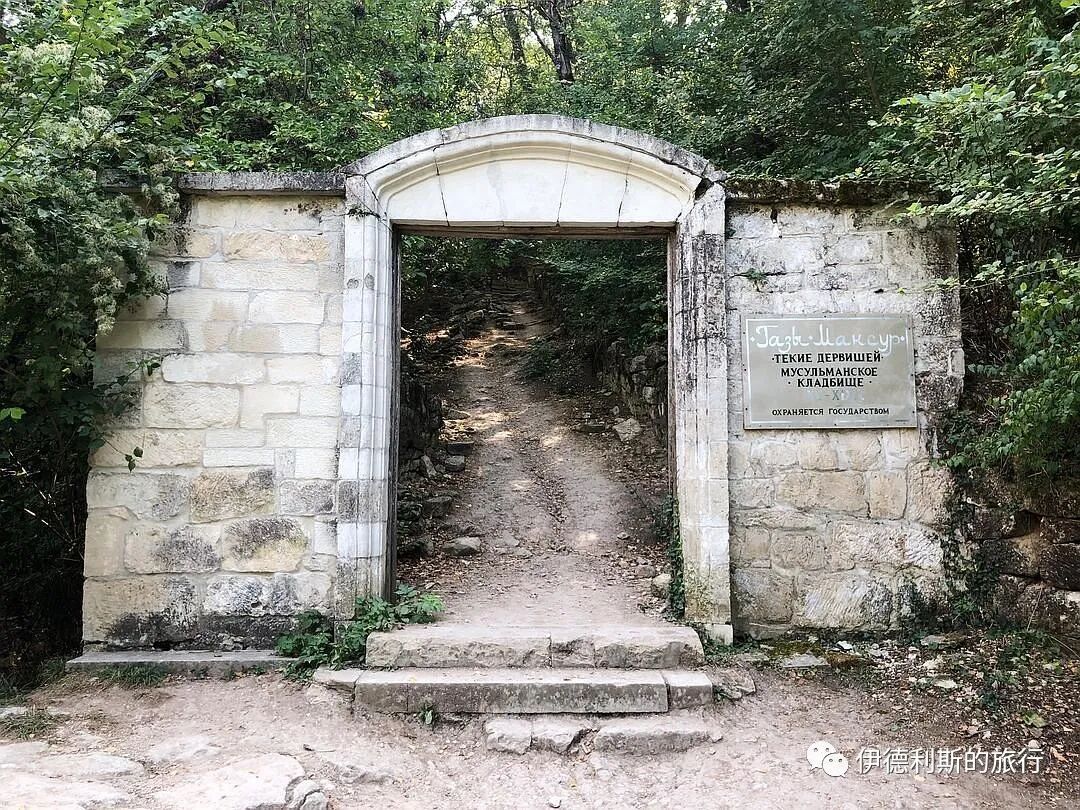
5. Gazi Mansur Qubba and Dervish Lodge: 1434
The Gazi Mansur Qubba and Dervish Lodge are located in the valley west of Chufut-Kale. There is also a legend about the establishment of the Qubba and the Dervish Lodge.
According to legend, Malik Ashter and Gazi Mansur, the first followers of the Prophet Muhammad, came to the Crimean Peninsula in the 7th century to spread Islam and lived in a valley at the foot of Chufut-Kale. Shortly after, Malik Ashter was killed by a giant, and Gazi Mansur sacrificed his life in the battle to defend Chufut-Kale. They were eventually buried at the foot of the city's mountain. They remained unknown for a long time until, hundreds of years later, a sheikh living in the ancient Central Asian city of Bukhara repeatedly dreamed of a narrow valley growing with shrubs. To solve his dream, the sheikh began a pilgrimage to the Crimean Peninsula under the inspiration of an elder.
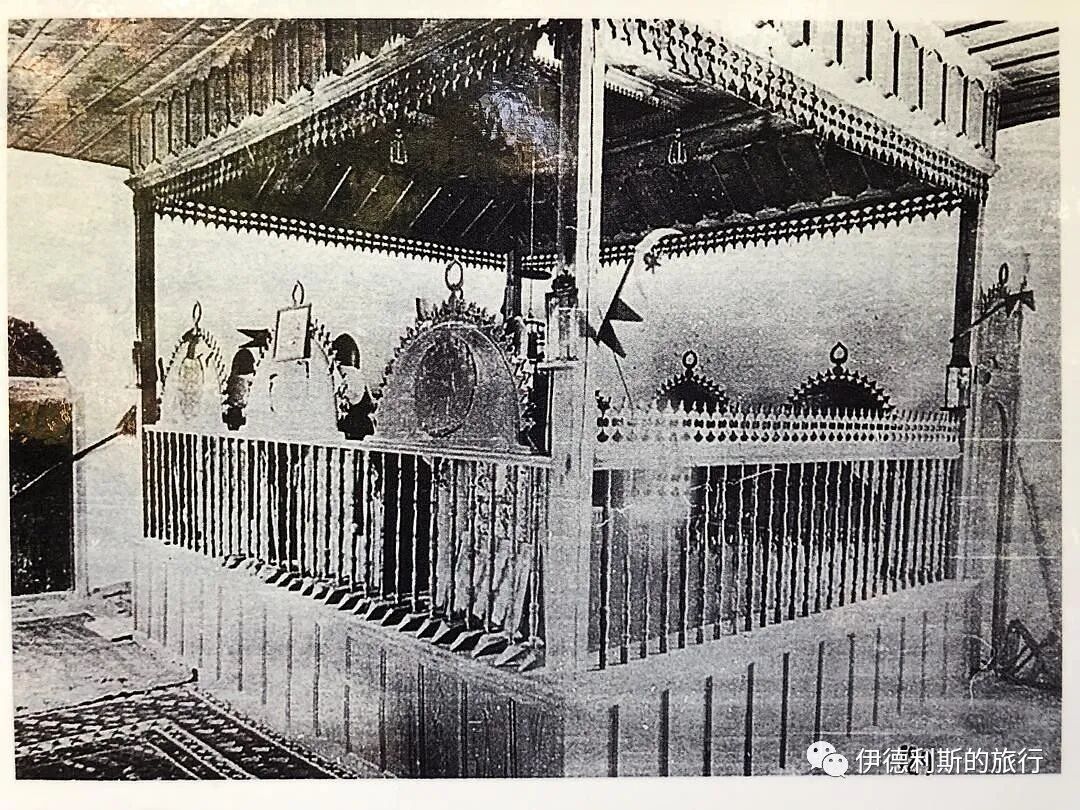
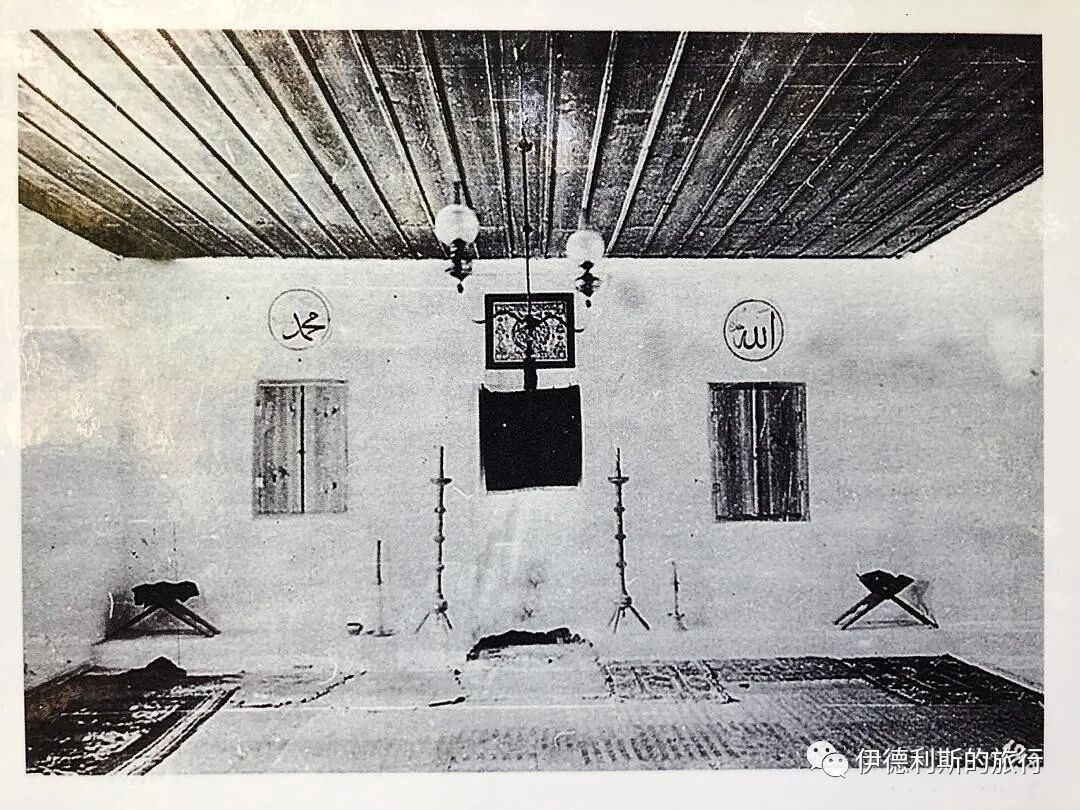
The sheikh arrived in Crimea in 1434, recognized the valley in his dream at the foot of the Jewish mountain, and finally discovered the tomb of Gazi Mansur. Subsequently, the sheikh established a Qubba (mausoleum of an Islamic saint) and a Dervish Lodge (Sufi practice place) at the location of the tomb. Because of this legendary story, pilgrims flocked here, and it was even favored by the Crimean Khan.
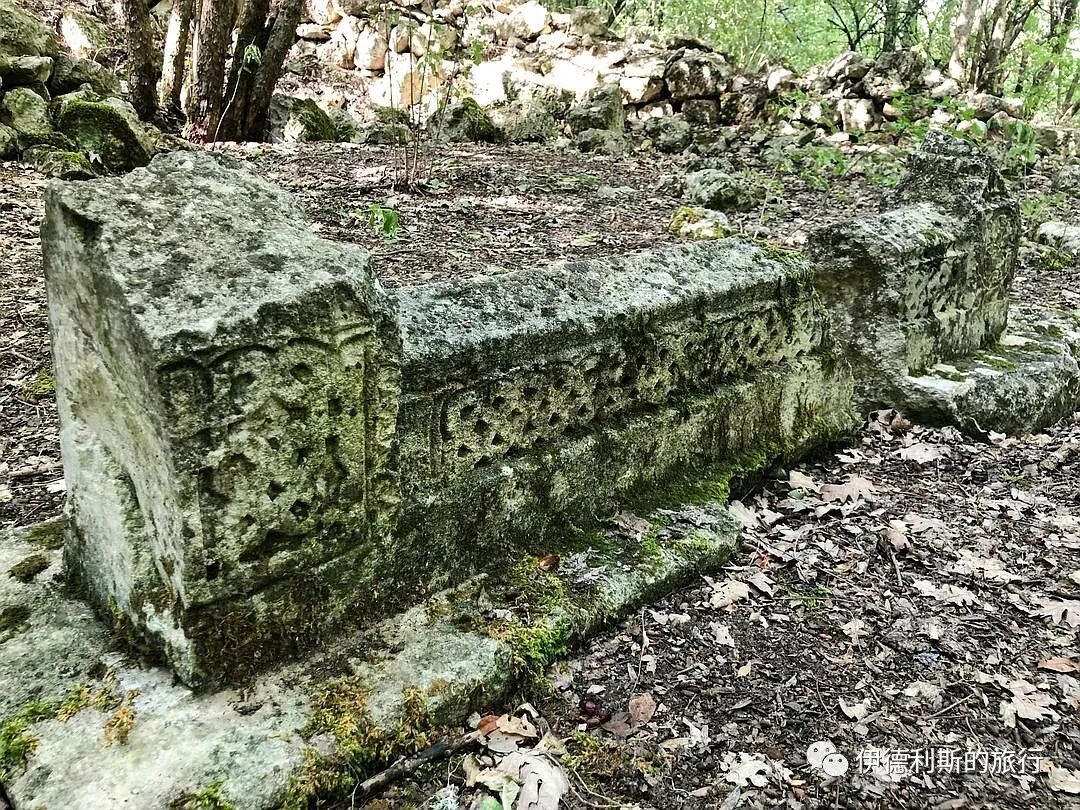
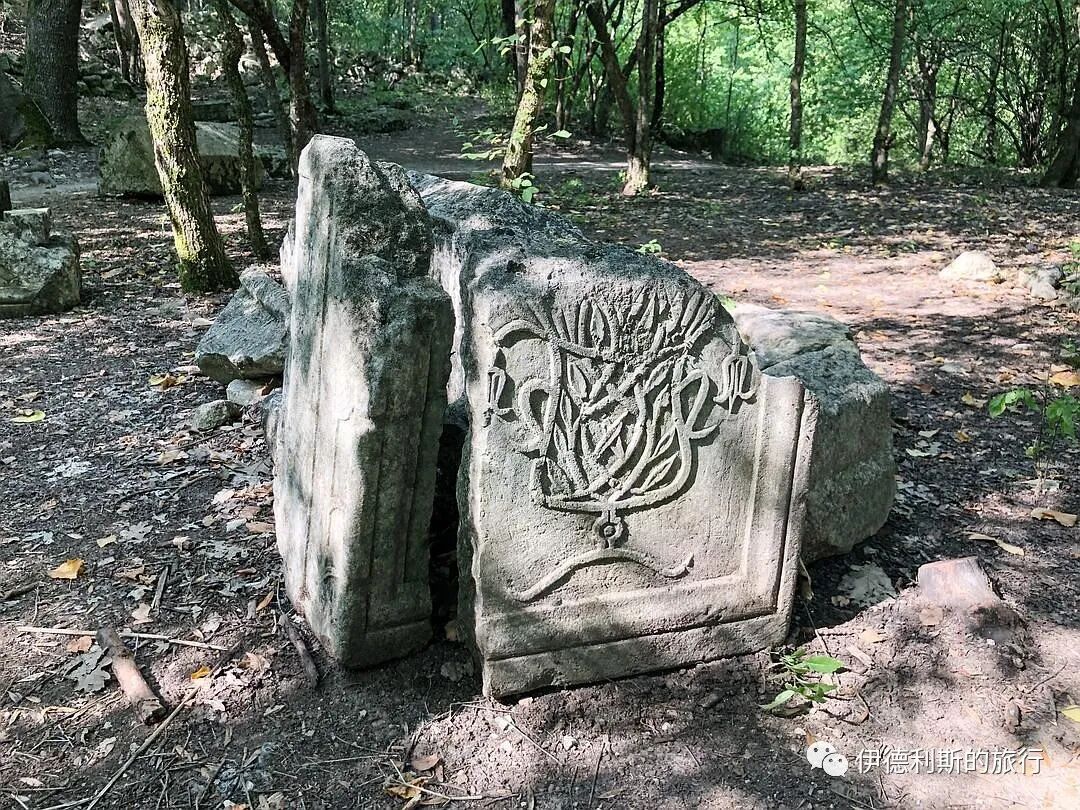
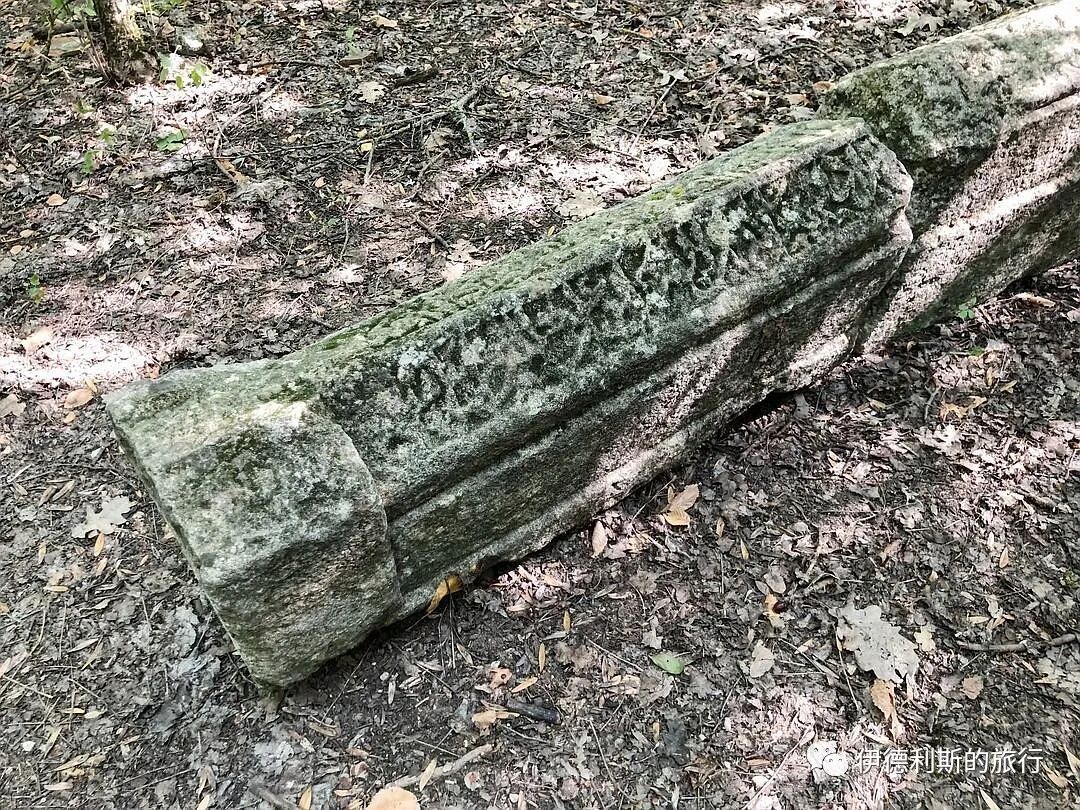
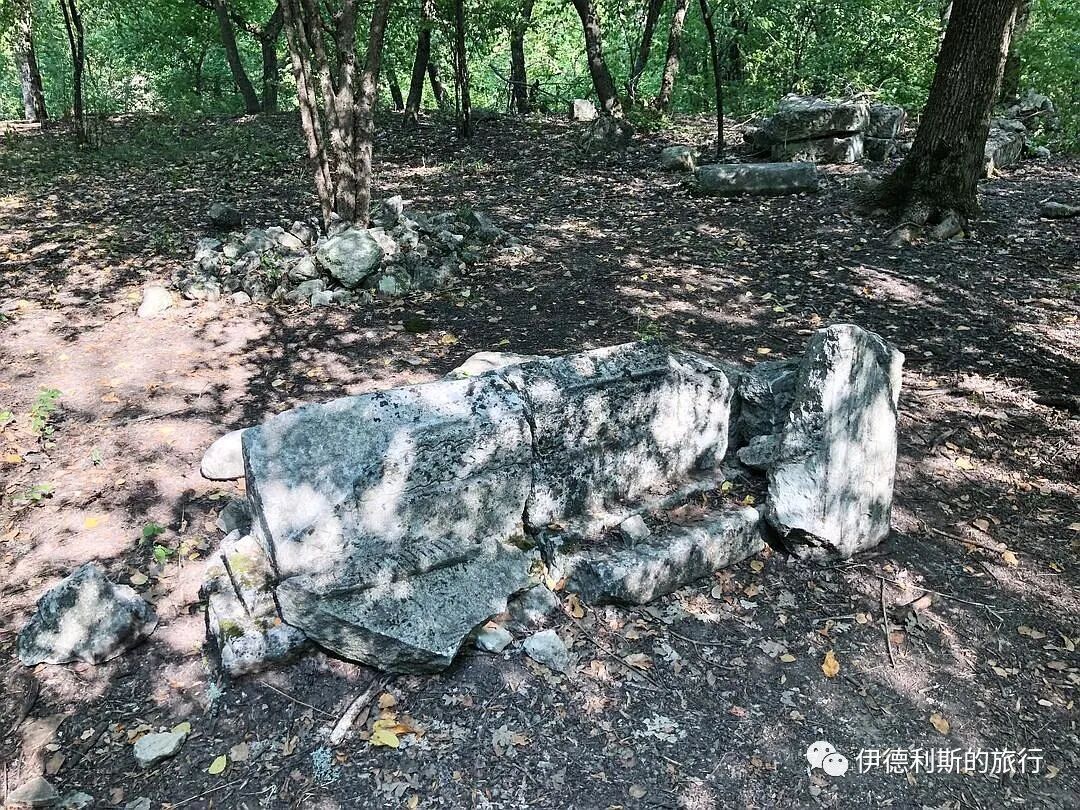
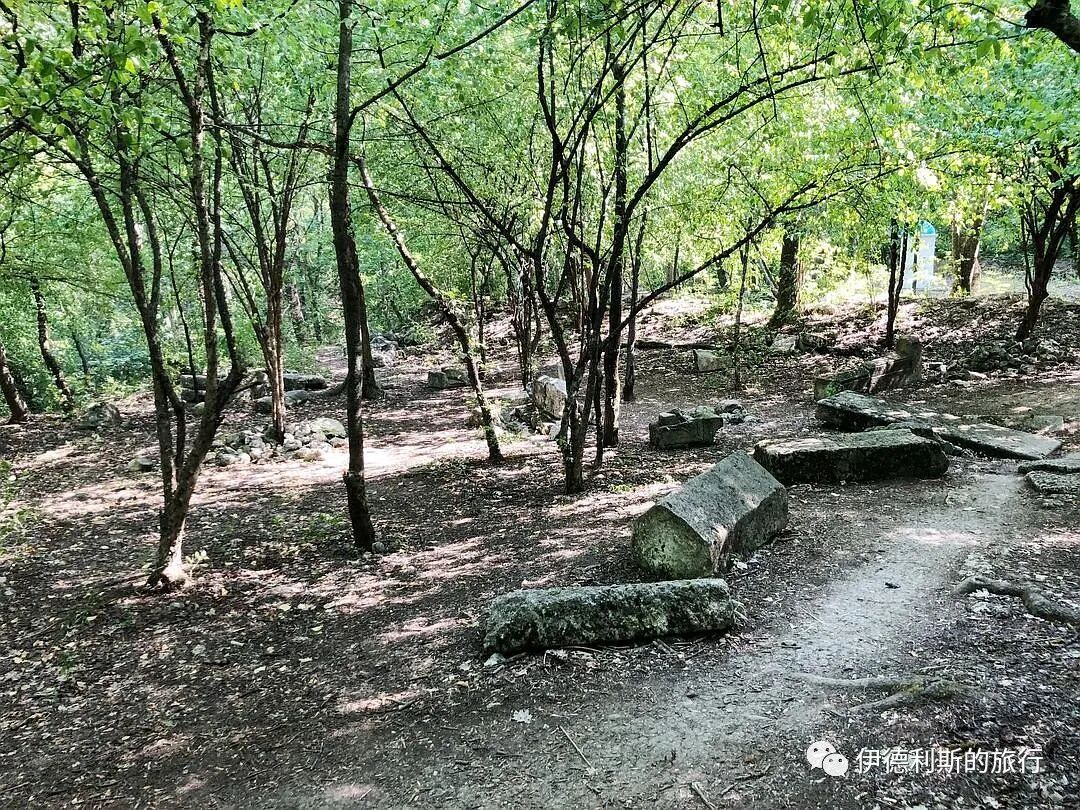
The Gazi Mansur Qubba and Dervish Lodge were maintained until the 1930s, but were eventually destroyed in the Soviet era. Today, only broken walls and a few surviving tombstones remain.
III. Karaite Jews
The Karaites are a unique Turkic-speaking Jewish ethnic group living in Eastern Europe. They believe in Karaite Judaism, which is different from mainstream Judaism, and speak the Karaim language, which belongs to the Kipchak branch of the Turkic language family. There are currently only about 2,500 people, of whom more than 700 live in Crimea.
The Karaites have lived in Crimea for hundreds of years, but their origins remain controversial. After the 19th century, the Karaites began to refuse to admit that they were Jews and firmly believed that they were descendants of the Khazar Turkic people who converted to Karaite Judaism. The Khazars were a branch of the Turkic tribes who established the powerful Khazar Khanate in Eastern Europe and the North Caucasus from the 7th to the 10th centuries. The Khazar princes began to believe in Judaism in the mid-8th century AD. After the Khazars perished in the 11th century, most of them eventually merged into Turkic-speaking Muslims and Eastern European Jews.
However, most scholars currently question the claim that the Karaites came from the Khazars and tend to believe that the Karaites are descendants of Karaite Jews who settled in Crimea and only later began to speak a Turkic language. There are four main supporting points:
1. The Turkic language spoken by the Karaites belongs to the Kipchak branch, while the Turkic language of the Khazars belongs to the Bulgar branch. There is no obvious connection between these two languages.
2. According to existing historical materials, the Judaism believed by the Khazars recognized the Talmud, while Karaite Judaism does not recognize the Talmud.
3. The Khazars had completely disappeared by the 11th century, but the Karaites first appeared in the 14th century.
4. Molecular anthropology has confirmed that the genotype of the Karaites in Lithuania is very similar to that of the Karaite Jews in Egypt.
The Karaites had lived in Chufut-Kale since the 14th century. After the Tatars left in the 17th century, due to the Crimean Khanate's restrictions on Jewish residence, the Karaites could only continue to live in the fortress. In 1783, the Crimean Khanate was destroyed by Tsarist Russia, and the Karaites began to be ruled by Russia. In the 19th century, the Karaites constantly fought for their rights by insisting that they were Turkic people, not Jews. Eventually, the Tsar recognized that the Karaites had nothing to do with the Jews who killed Jesus, thereby exempting them from the harsh restrictions imposed by Russia on the Karaites.
In the mid-19th century, Russia finally lifted the residence restrictions on the Karaites, and the Karaites began to leave Chufut-Kale one after another. By the end of the 19th century, Chufut-Kale had become an empty city, with only the person guarding the fortress living in the A. S. Firkovich manor.
1. East Wall: 1396-1433
The east wall of Chufut-Kale was built between 1396 and 1433. At that time, the Karaites were constantly settling in the eastern part of the fortress, so the fortress was expanded to the east. After this, the east gate became the main gate of the fortress, and there was a lively bazaar outside the gate. Outside the east gate, a water collection area used by merchants to wash and water their livestock is still preserved. After the wells in the fortress dried up in the 17th century, this was still a passage for transporting water to the Karaites in the city.
2. Karaite Kenesa: 14th century and late 18th century
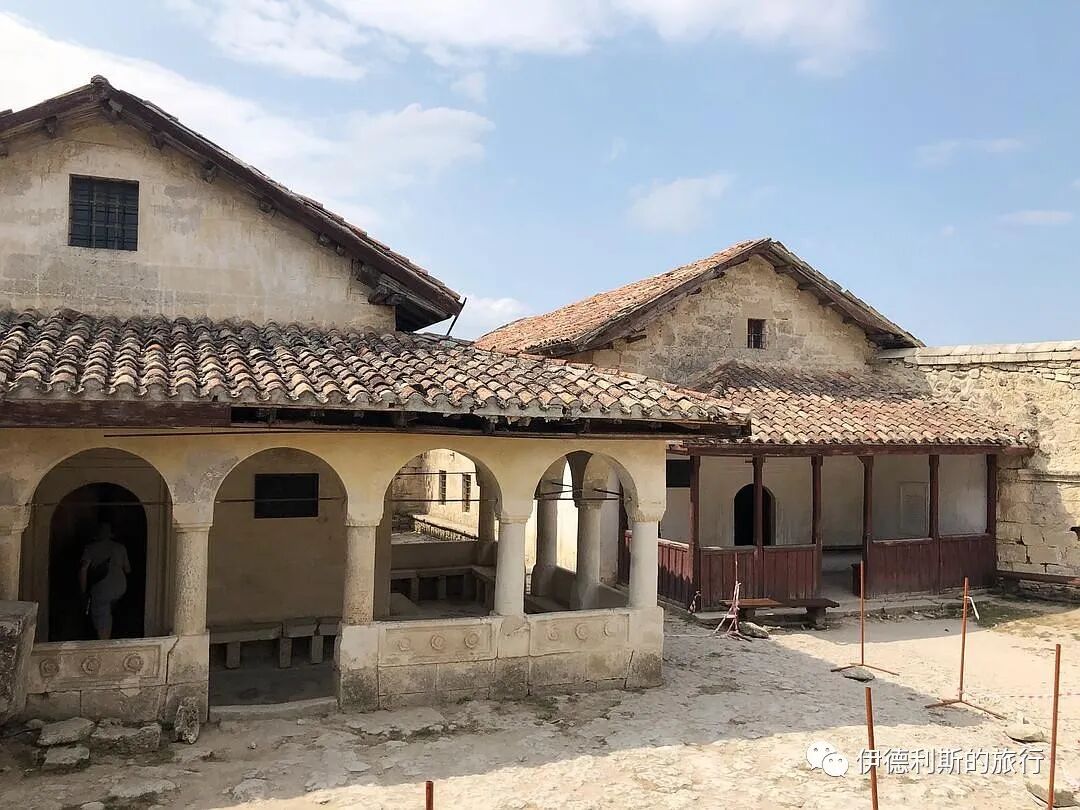
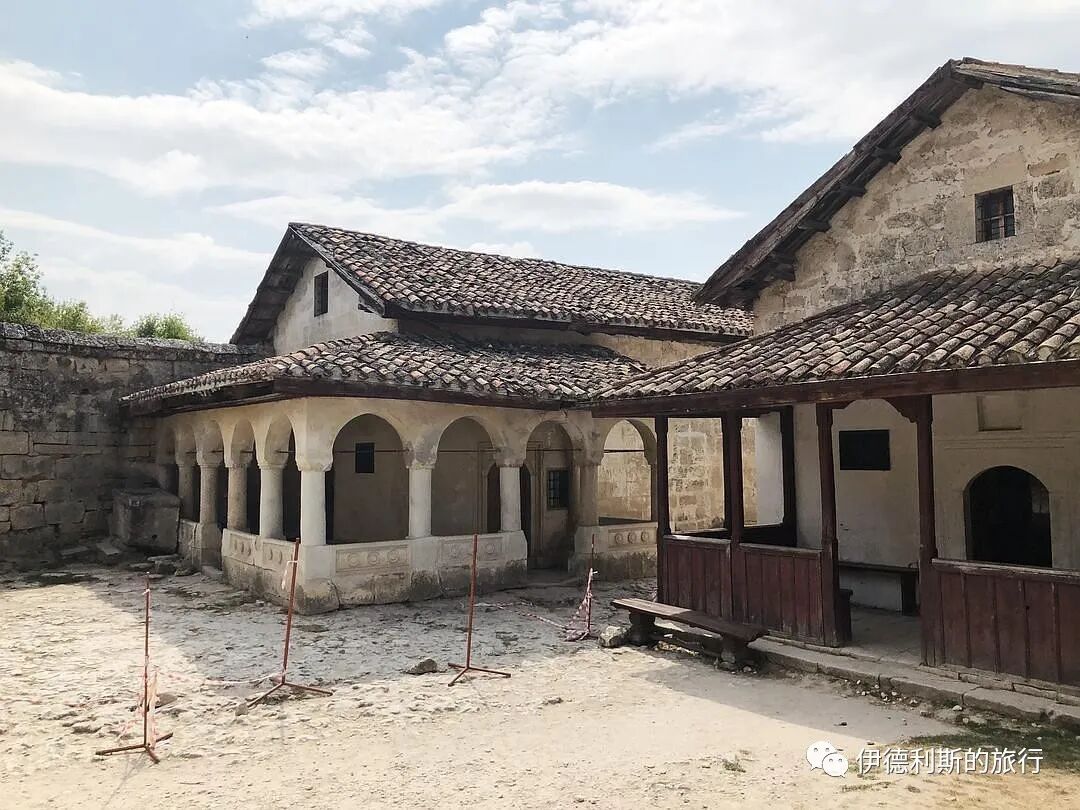
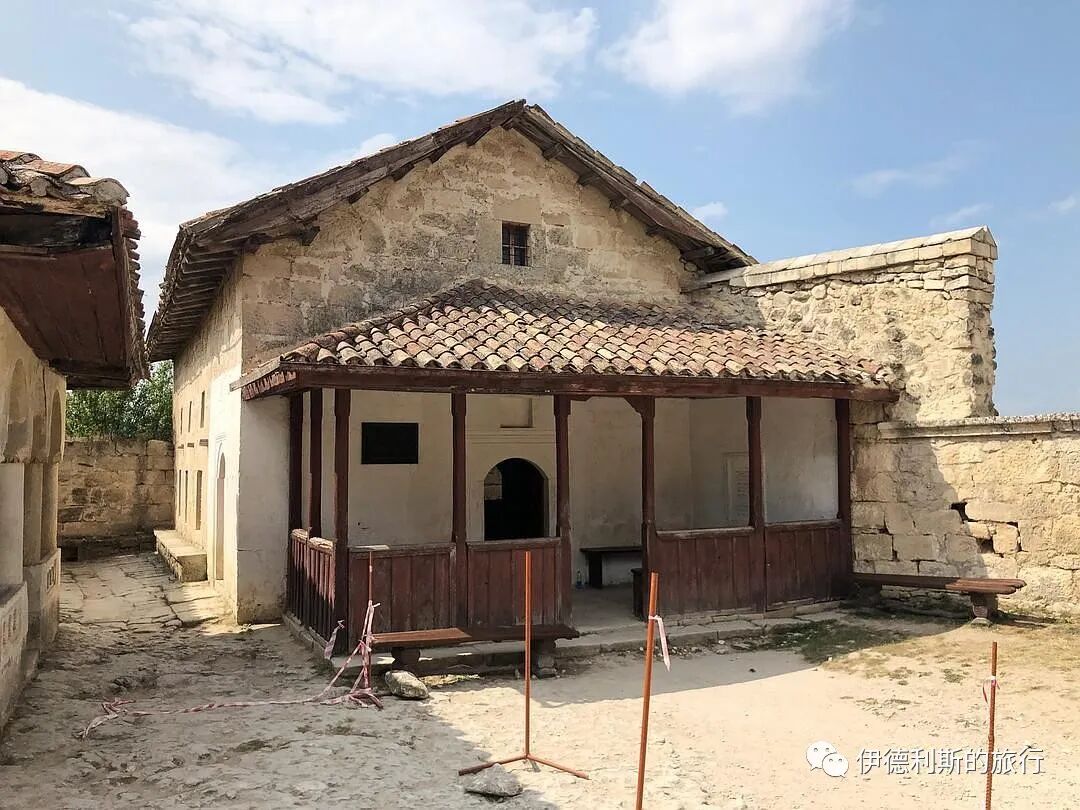
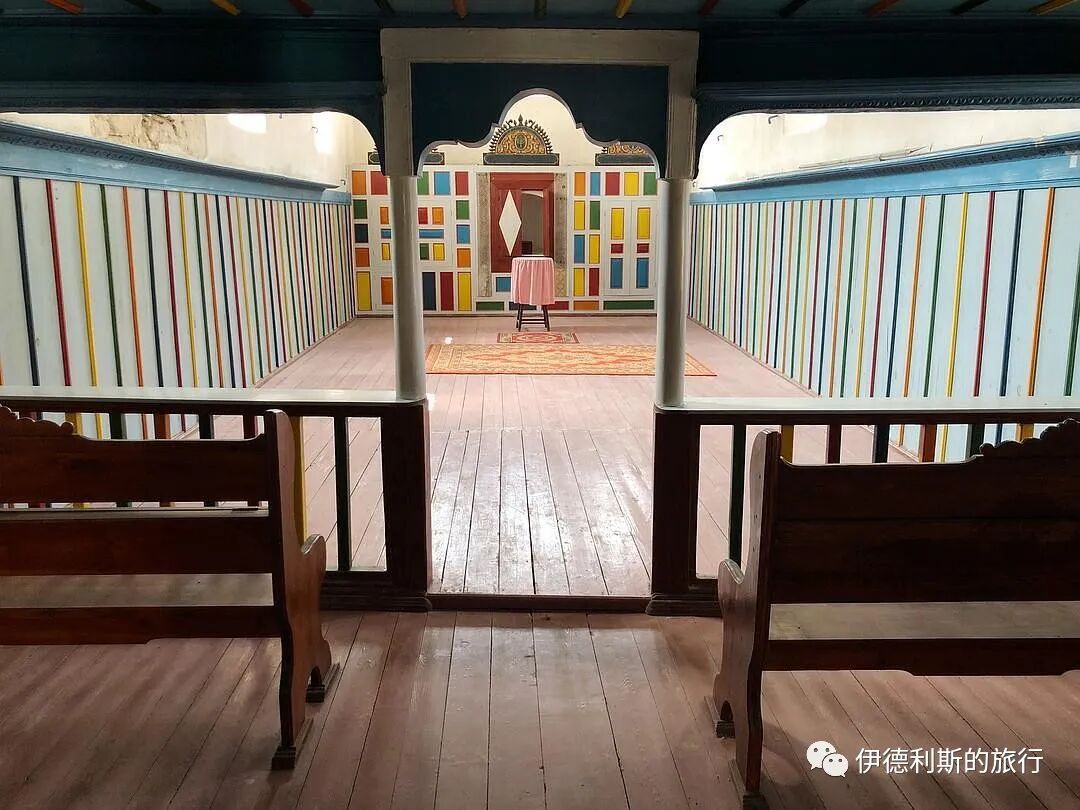
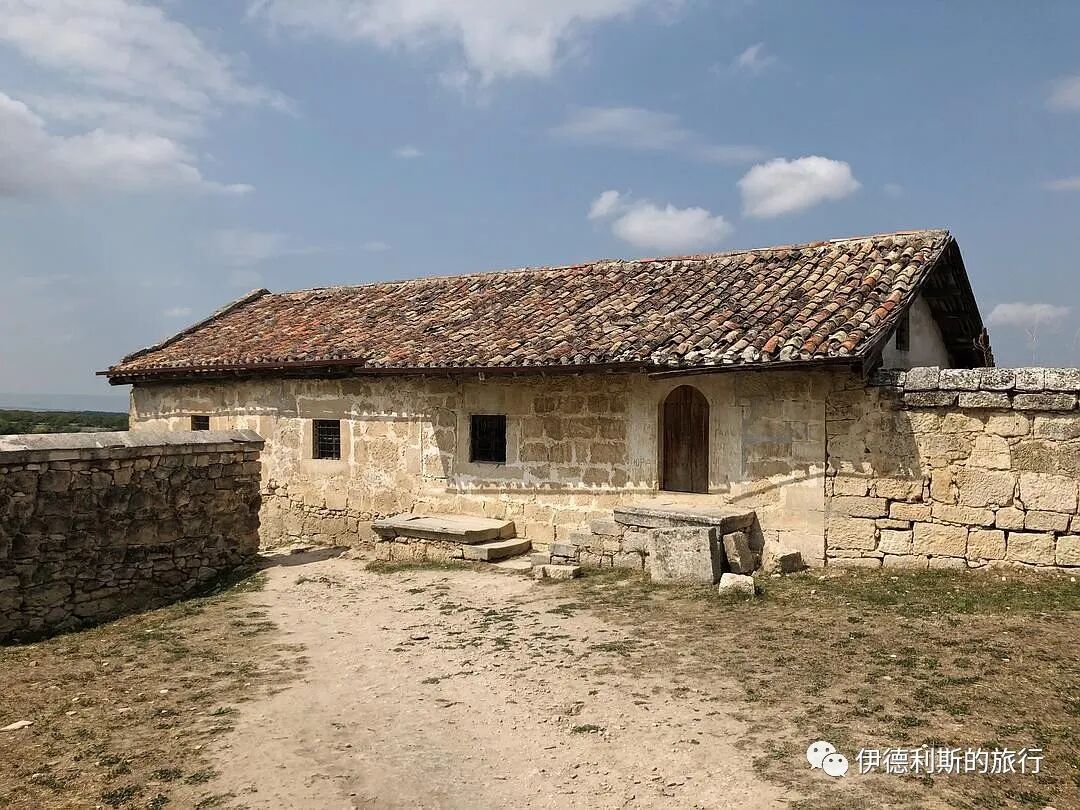
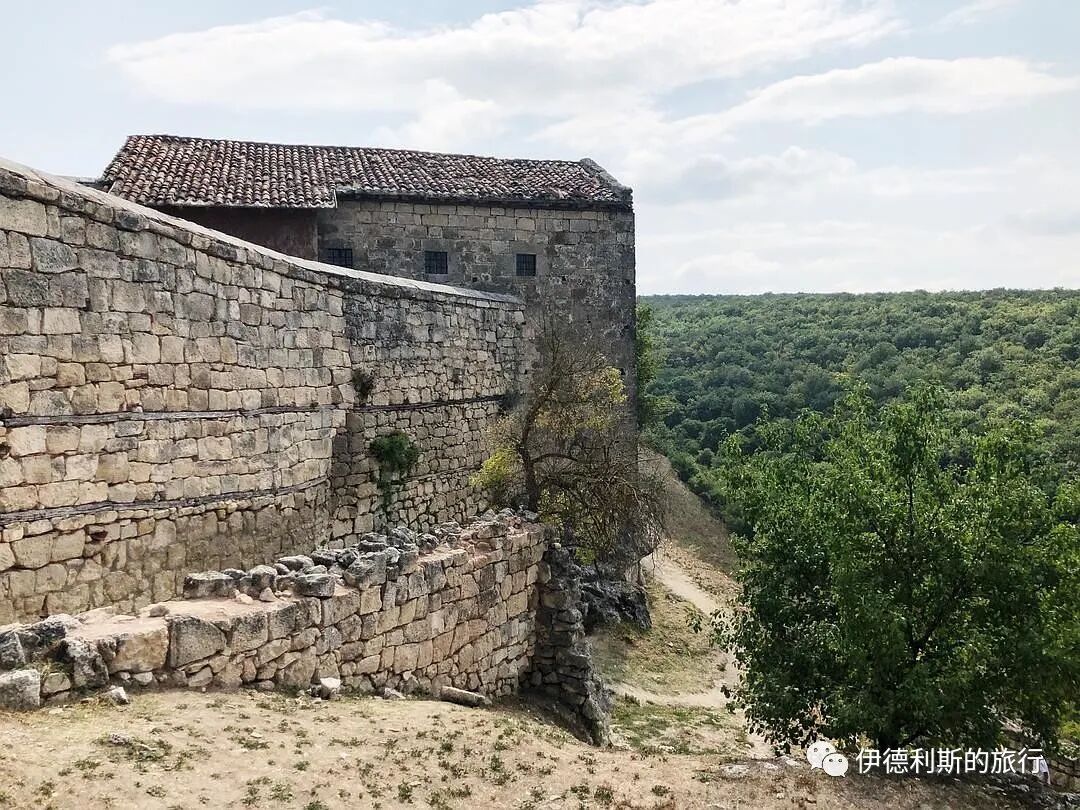
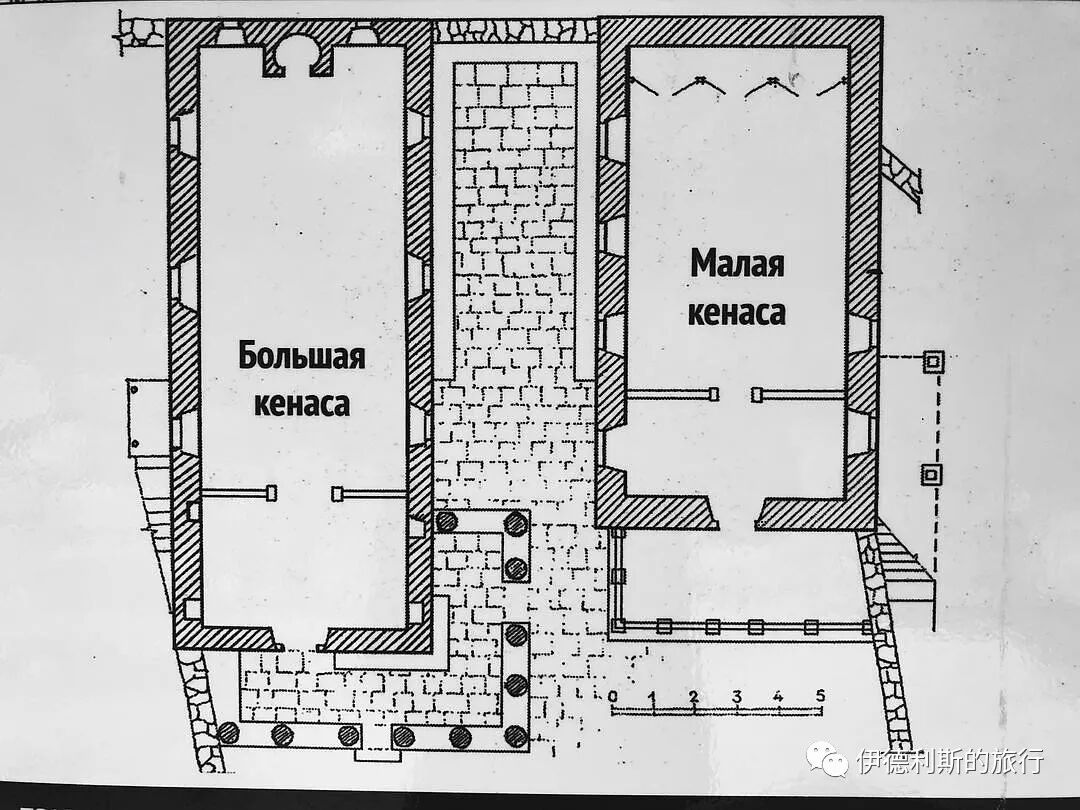
There are two Karaite Kenesas (synagogues) by the south wall in the western part of the old city of Chufut-Kale. The large synagogue on the left is presumed to have been built in the 14th century, and the small synagogue on the right was built in the late 18th century.
The Karaites had lived in Chufut-Kale since the Golden Horde period in the 14th century, and the large synagogue in the city was built during this period. In the 1790s, all the Karaites from another ancient Crimean city, Mangup, moved to Chufut-Kale to live, and the small synagogue in the fortress was built during this period.
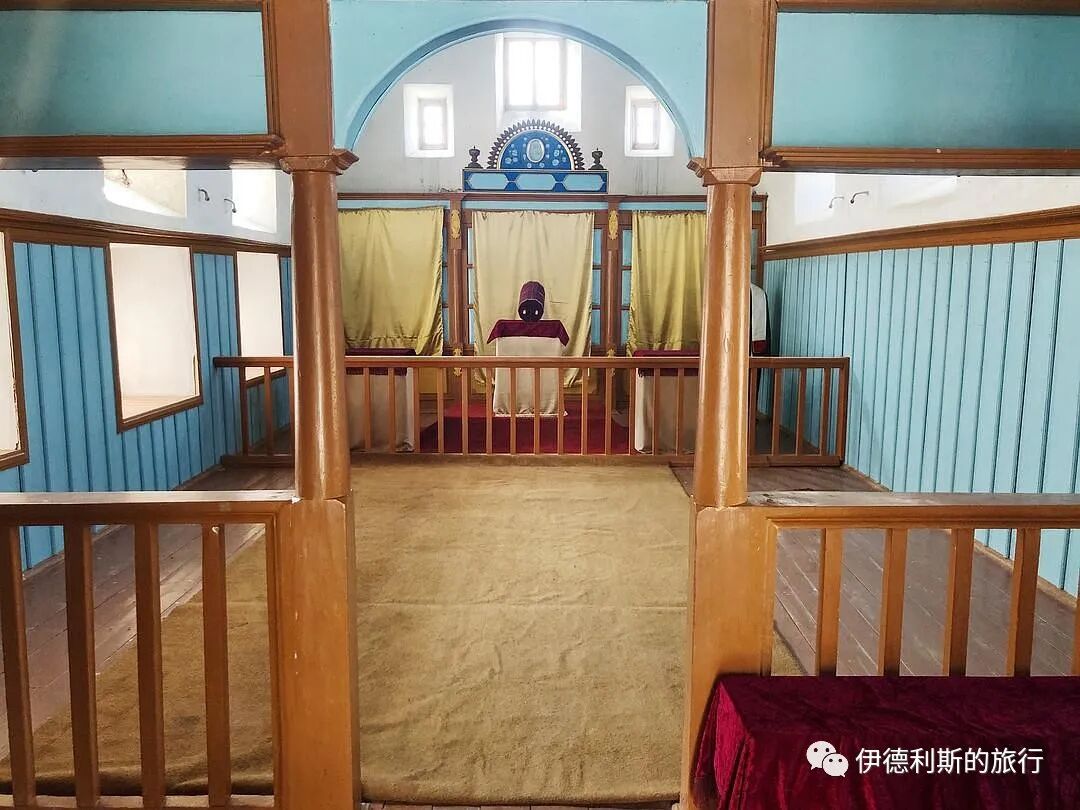
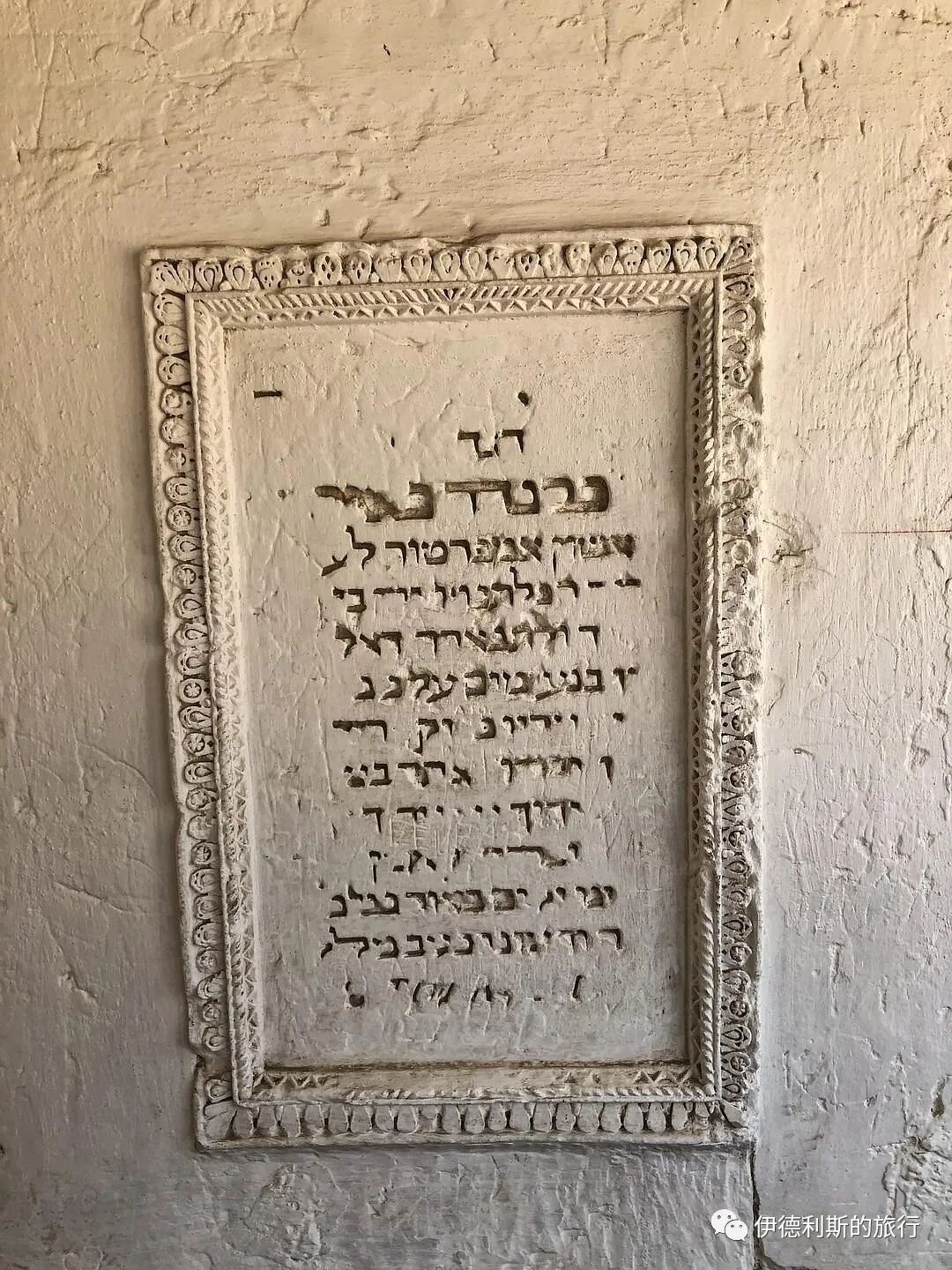
The Karaite Kenesa is different from a general synagogue. The front is a vestibule for taking off shoes; shoes are not allowed in the Karaite synagogue. Then there is usually a bench for the elderly. Above the bench is a loft for women, which must be entered through a side door. Further inside is the main hall for worship. Traditional Karaite worship is performed kneeling, so the hall is usually covered with carpets. The innermost part is the altar.
3. Chaush-Cobass Caves: 16th century
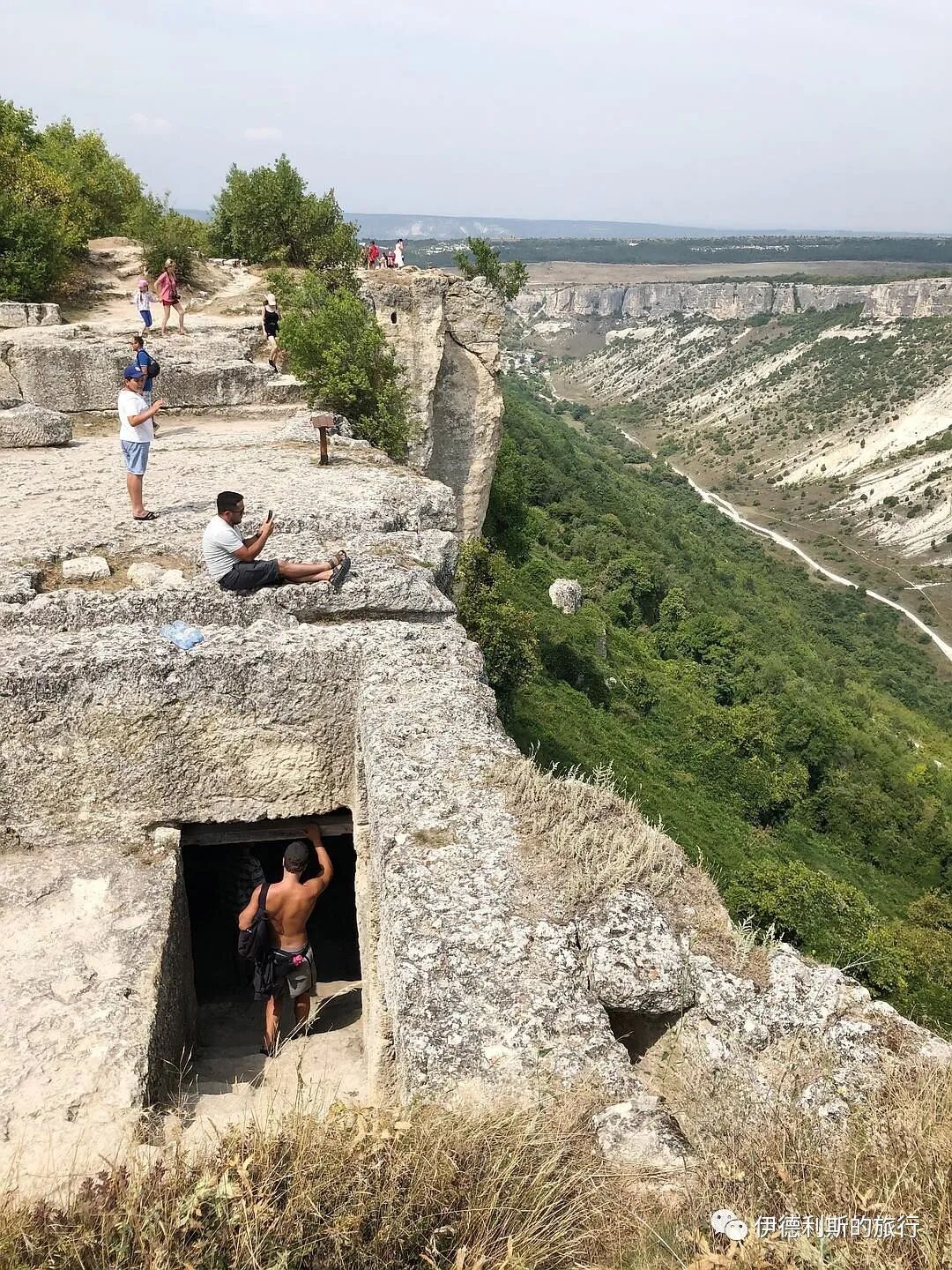
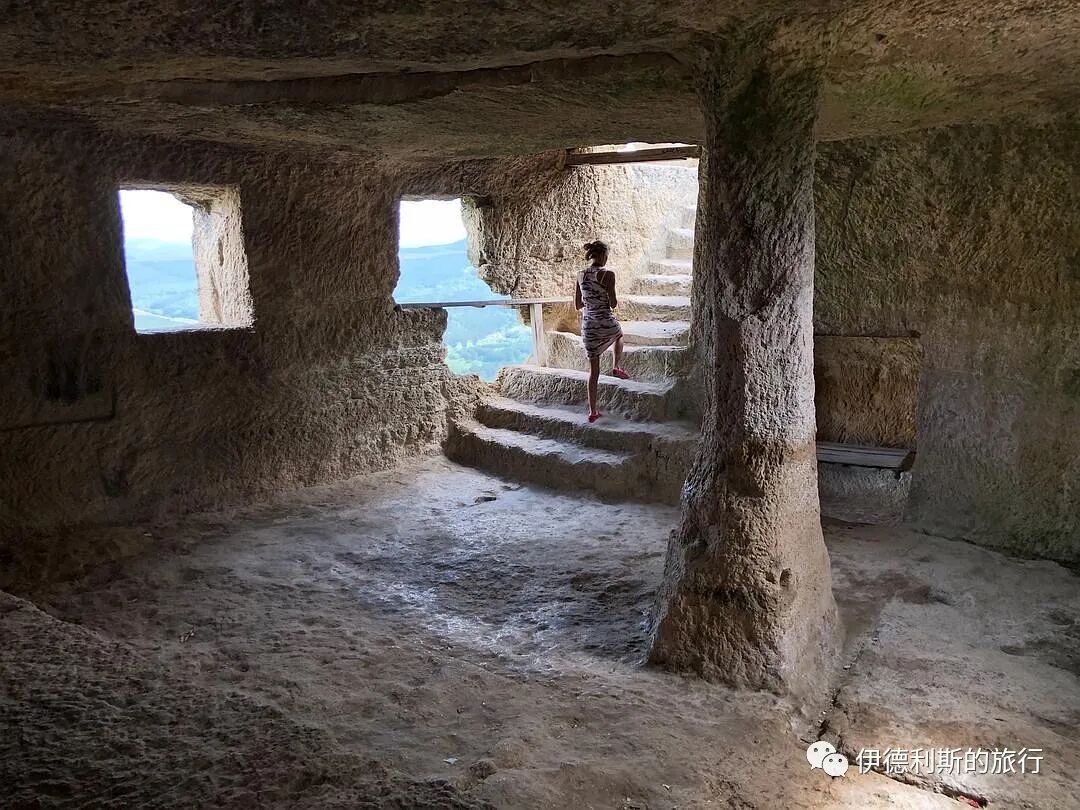
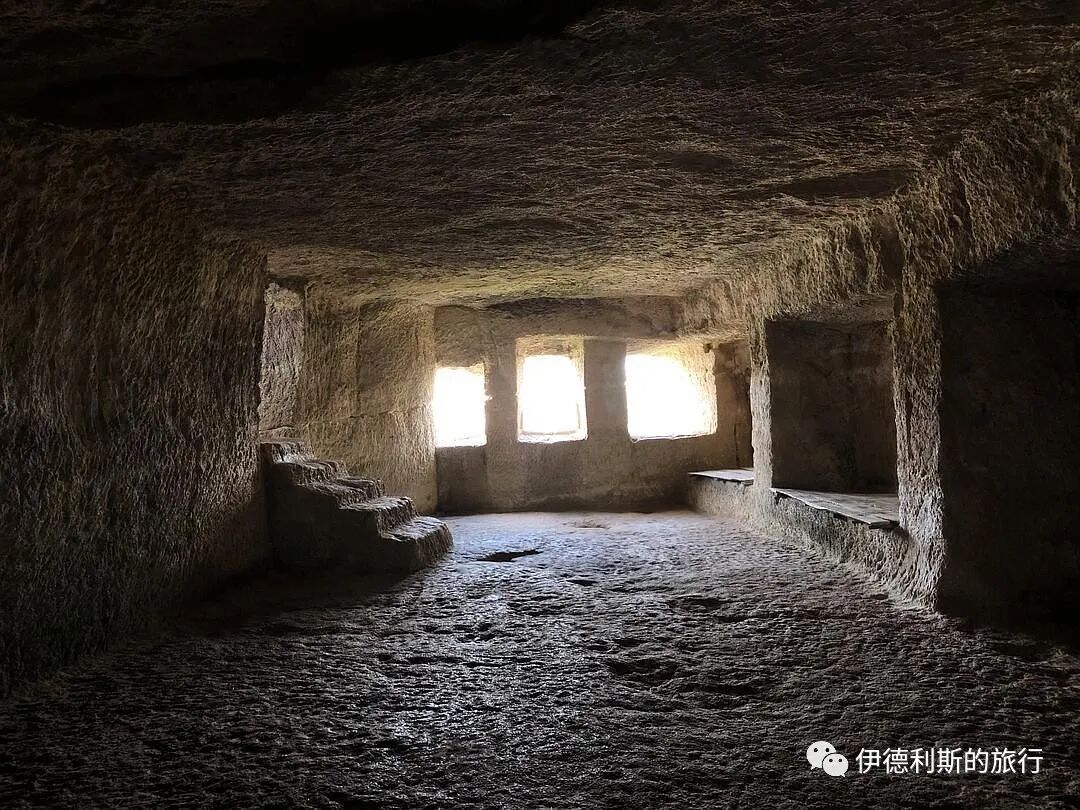
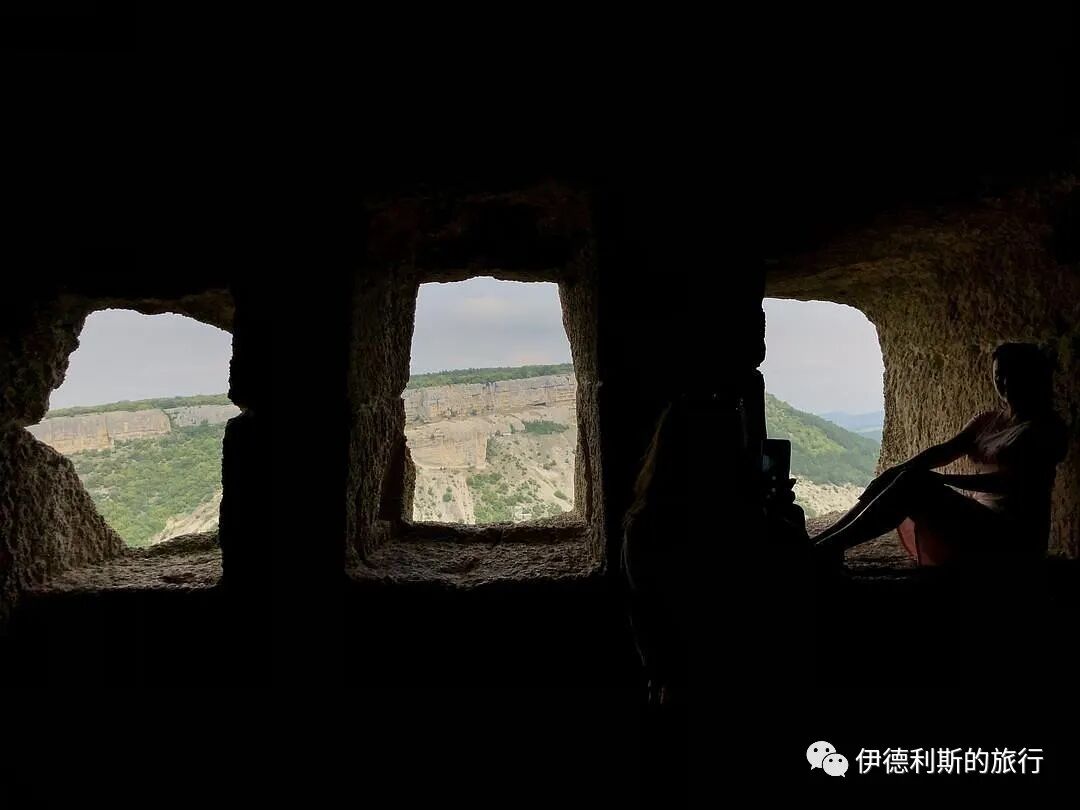
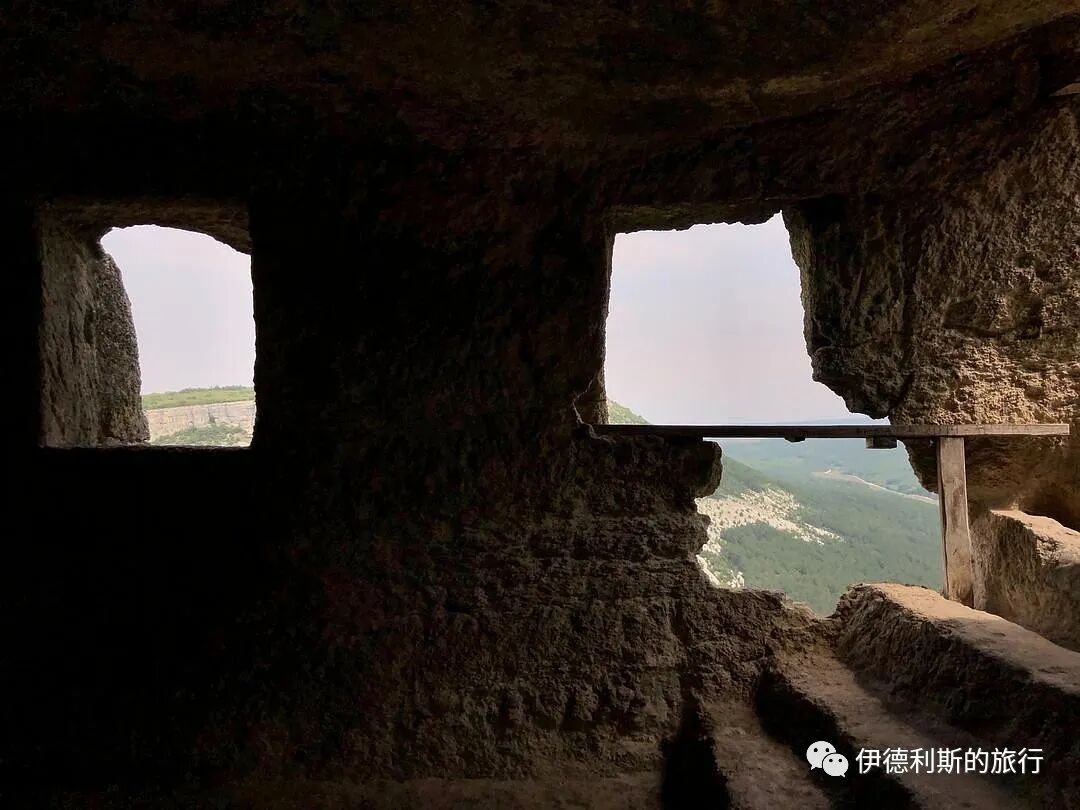
A series of caves called Chaush-Cobass were carved into the cliff on the northeast side of the middle wall of the fortress. After the 16th century, a wealthy Karaite built a manor here and used the caves as a cellar.
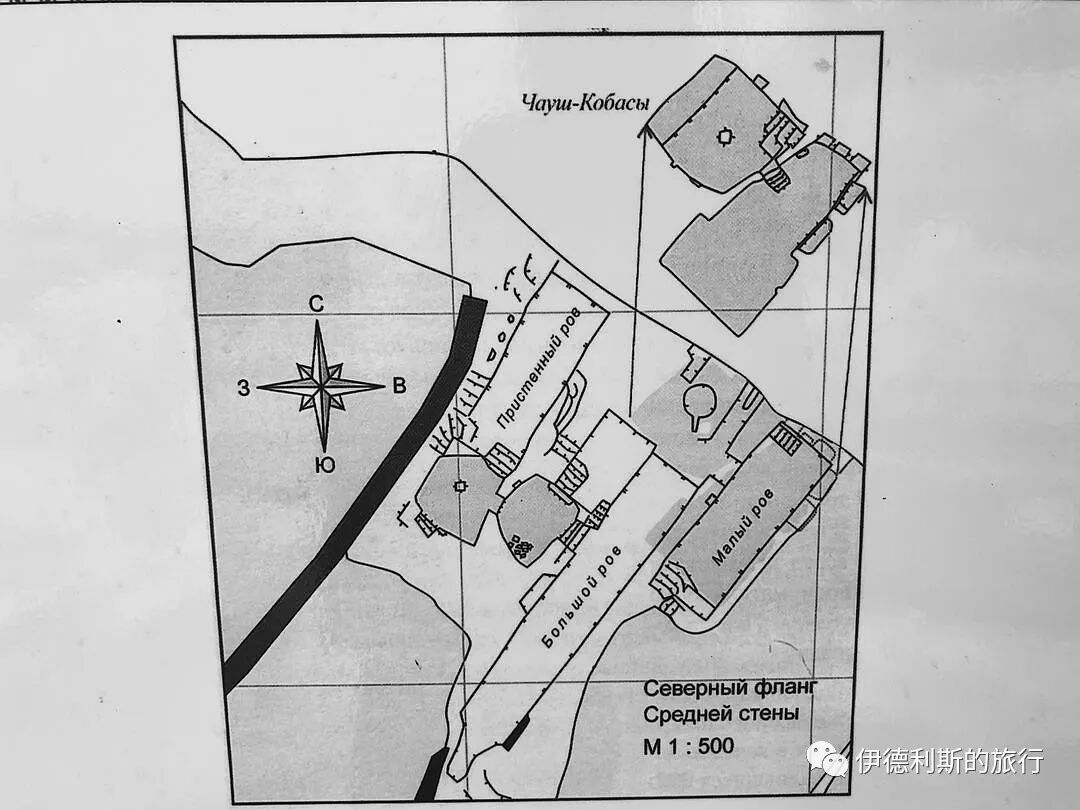
4. Karaite Manors: 18th-19th centuries
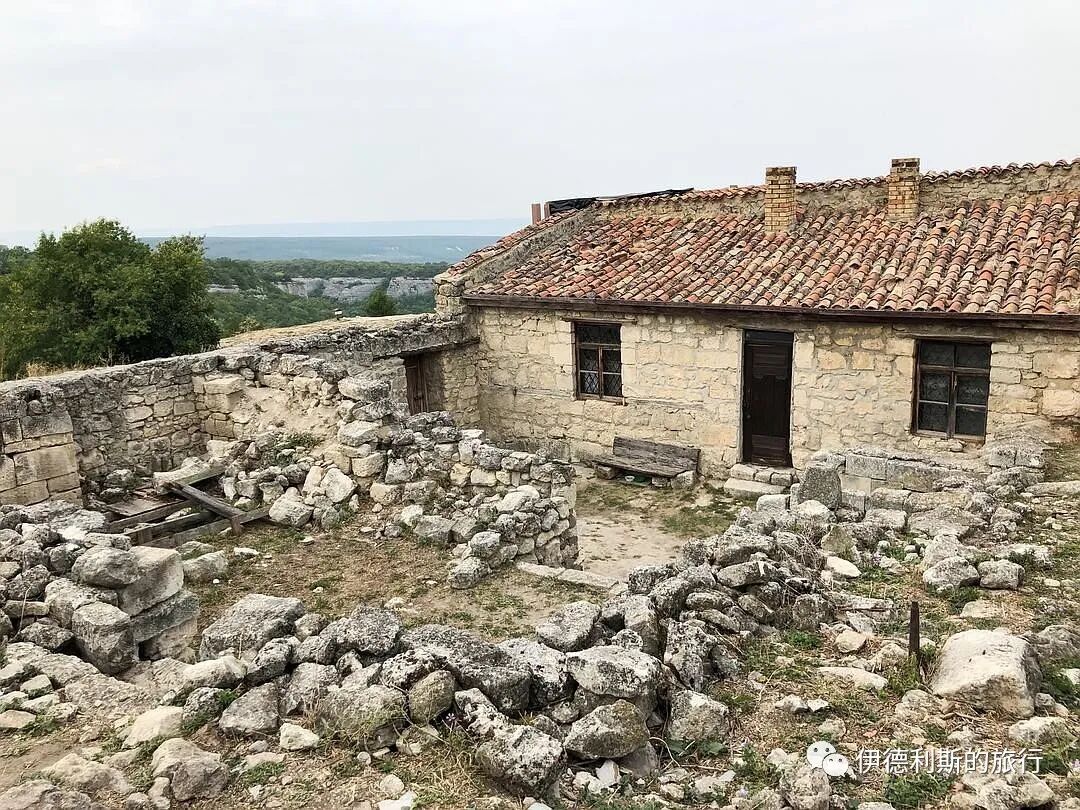
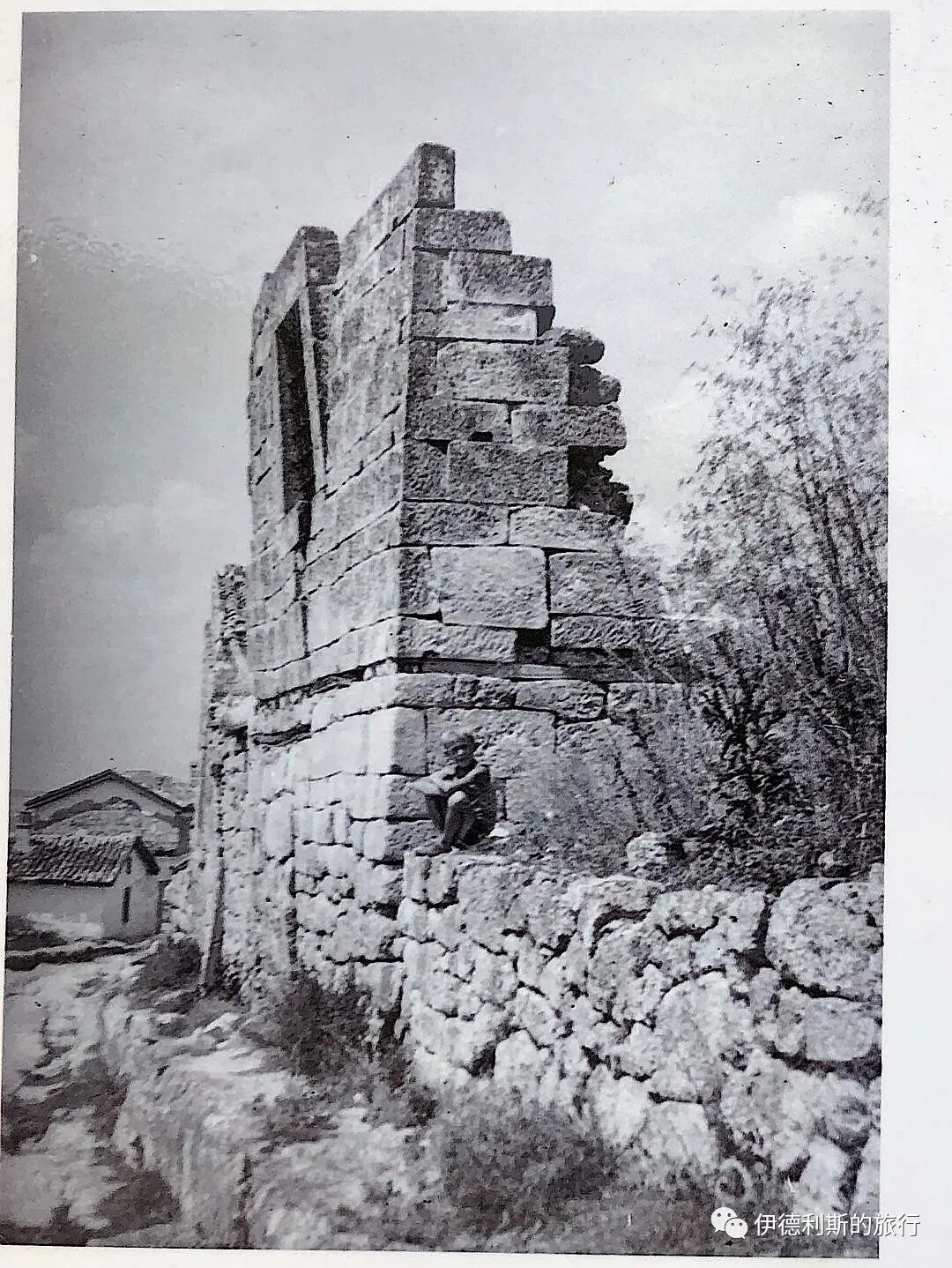
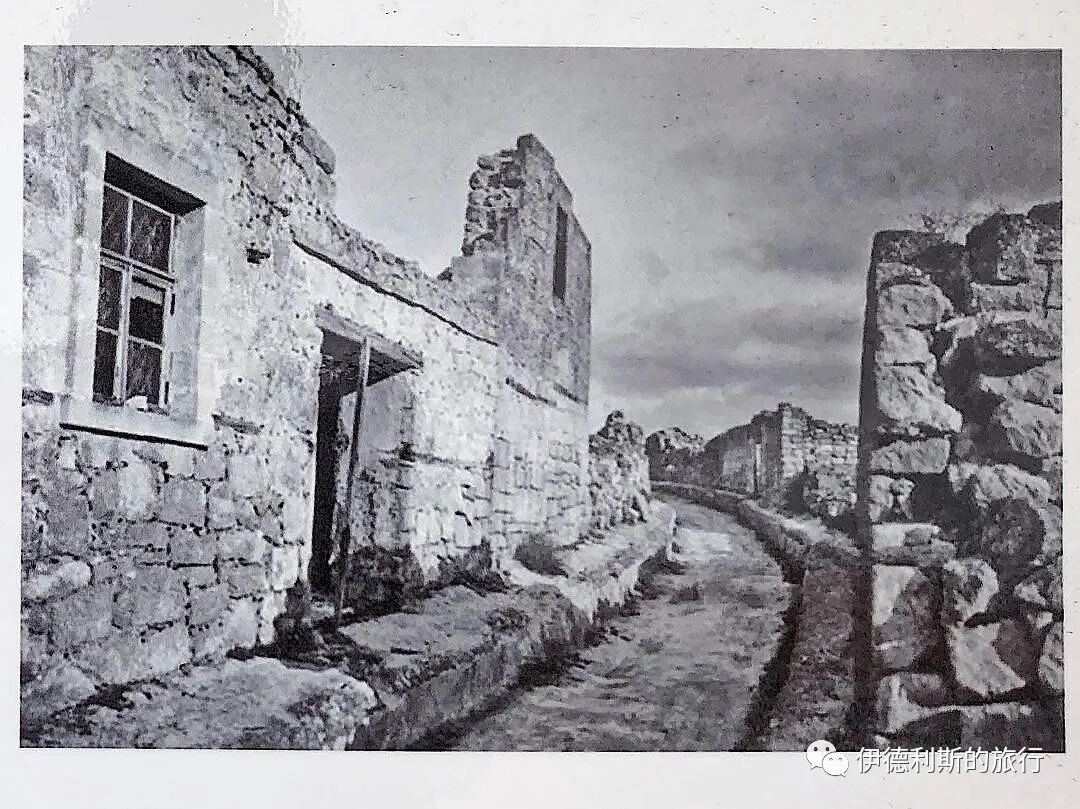
There used to be many Karaite manors in the eastern part of Chufut-Kale, but now only two 18th-century manors have been preserved, belonging to A. S. Firkovich and Chal Boru, both in the traditional Crimean courtyard style.
Avraam Samuilovich Firkovich (1786-1874) was a Karaite writer, archaeologist, collector of ancient manuscripts, and Karaite Jewish clergyman who devoted his life to studying the history and culture of the Crimean Karaites.
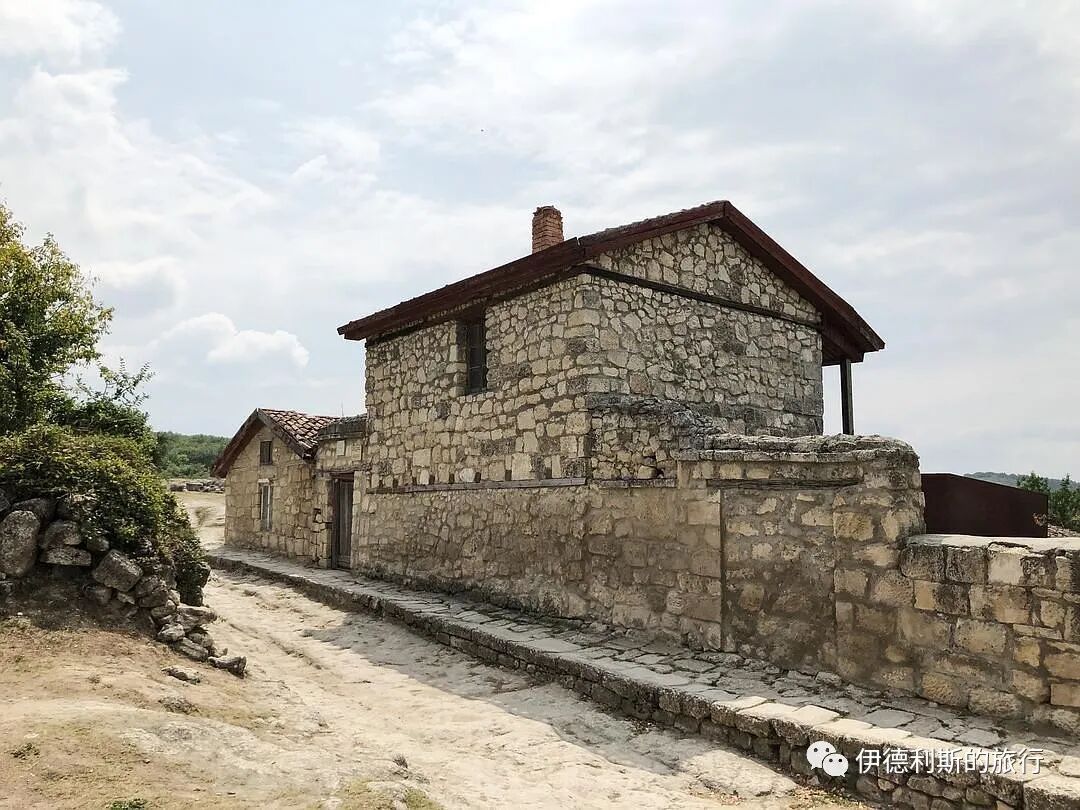
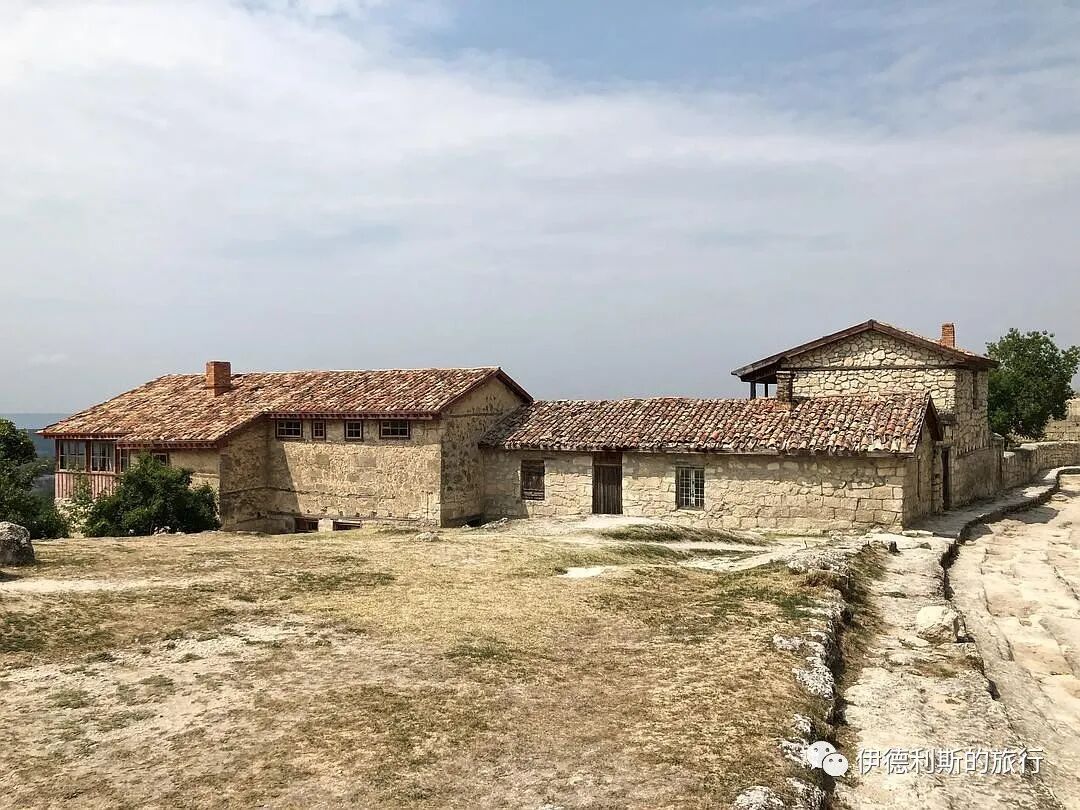
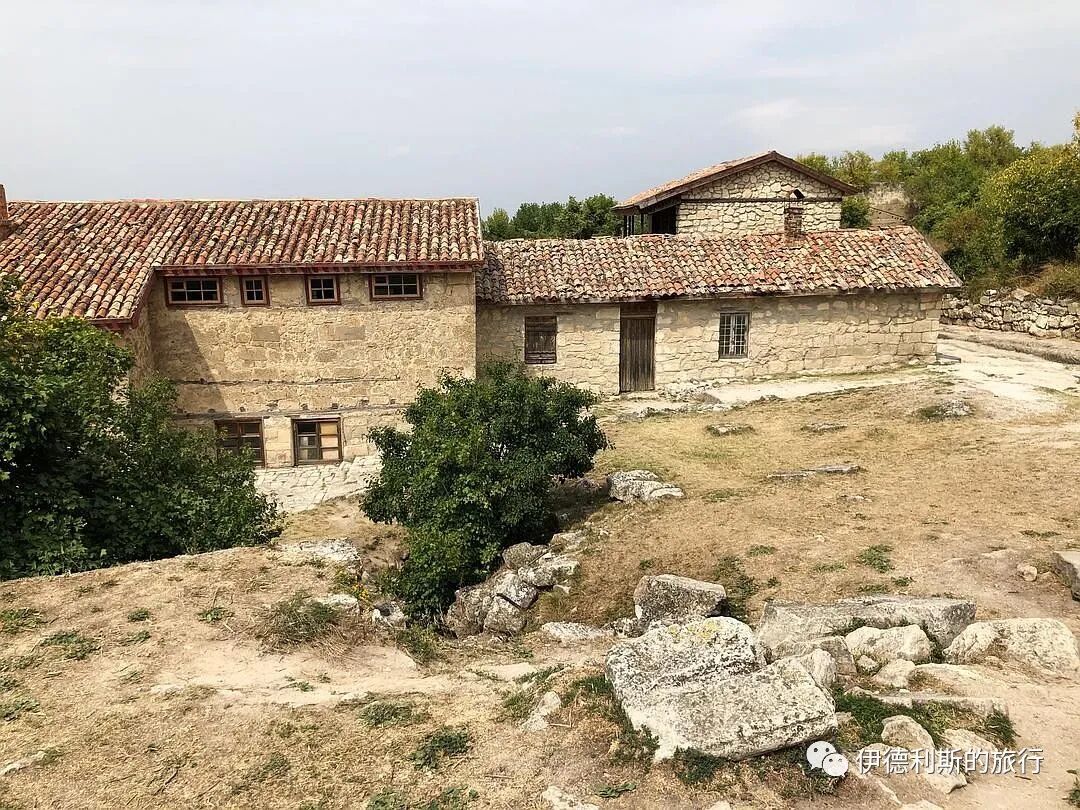
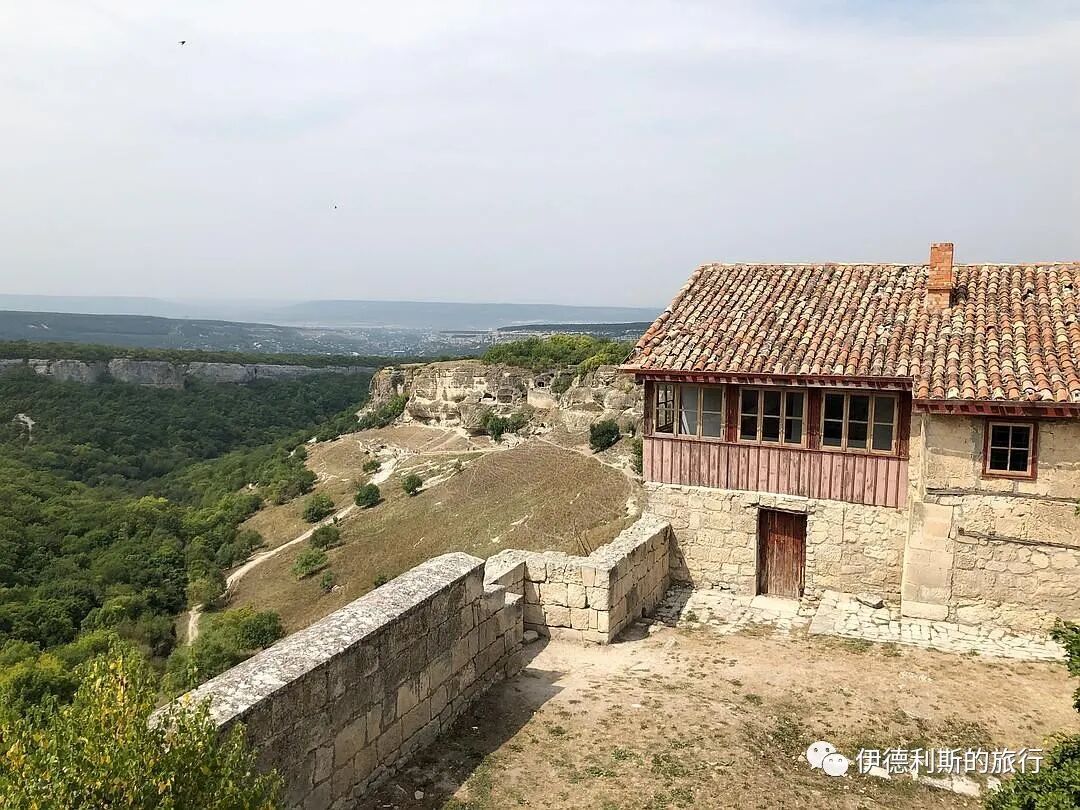
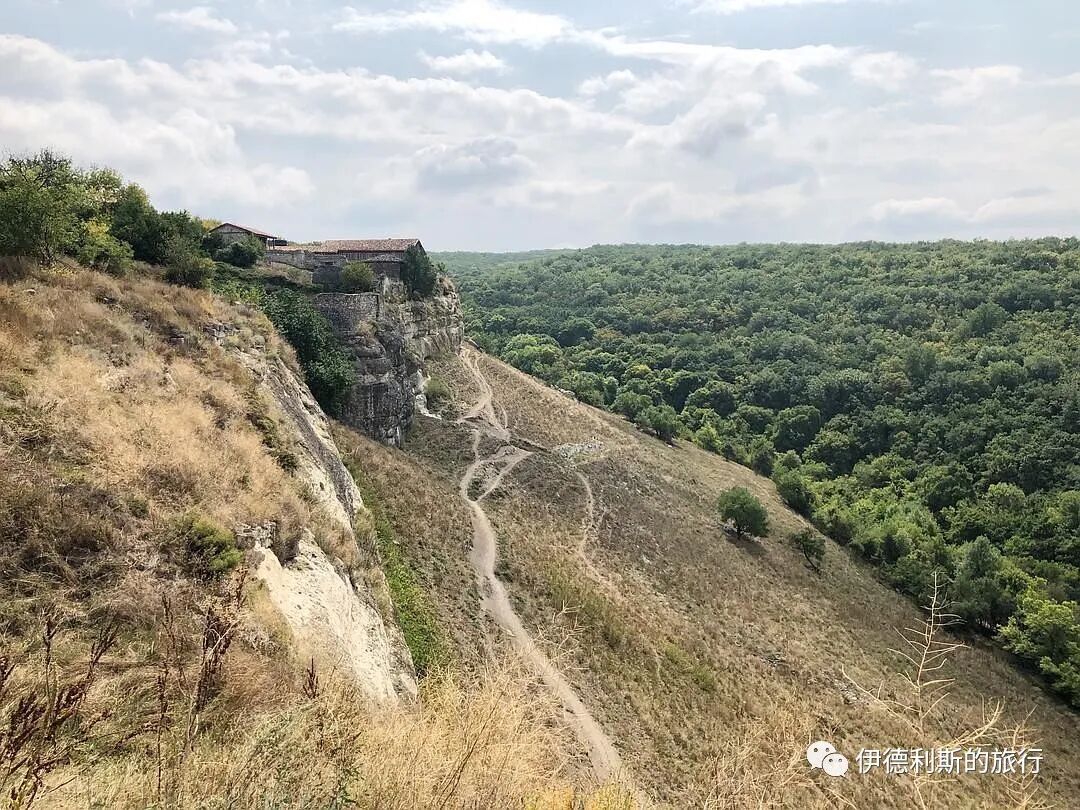
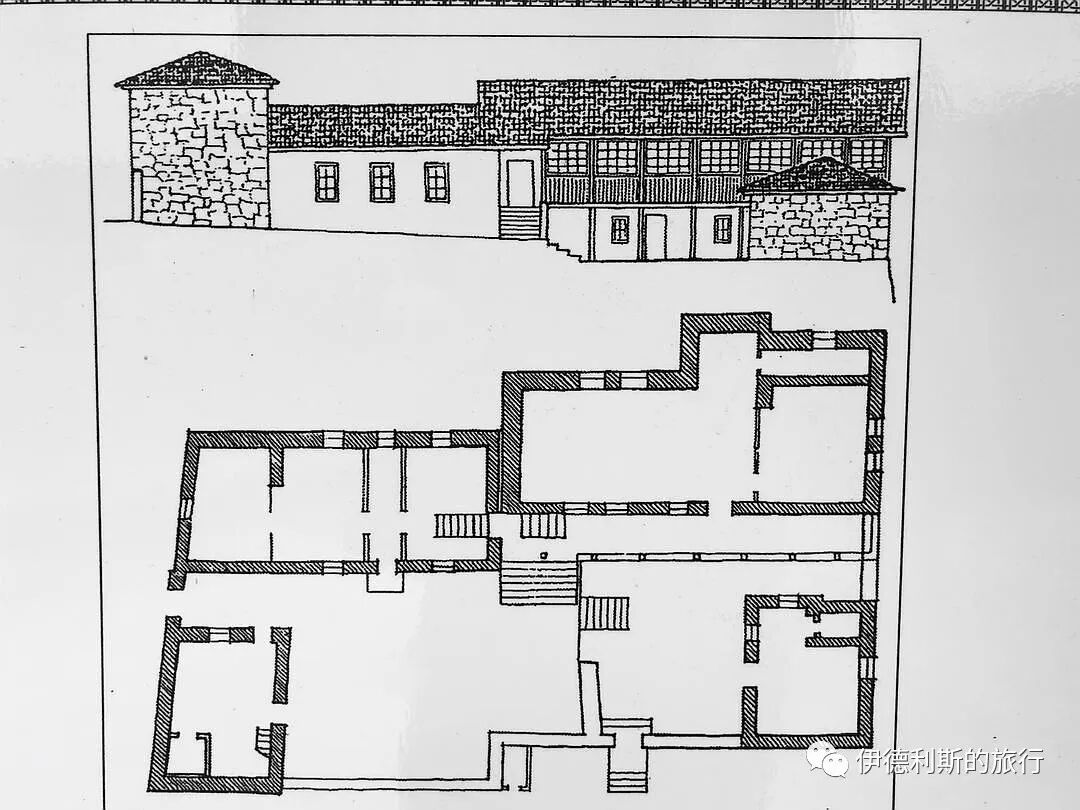
Another 18th-century manor, with only one house left.
5. Valley of Josaphat Karaite Cemetery
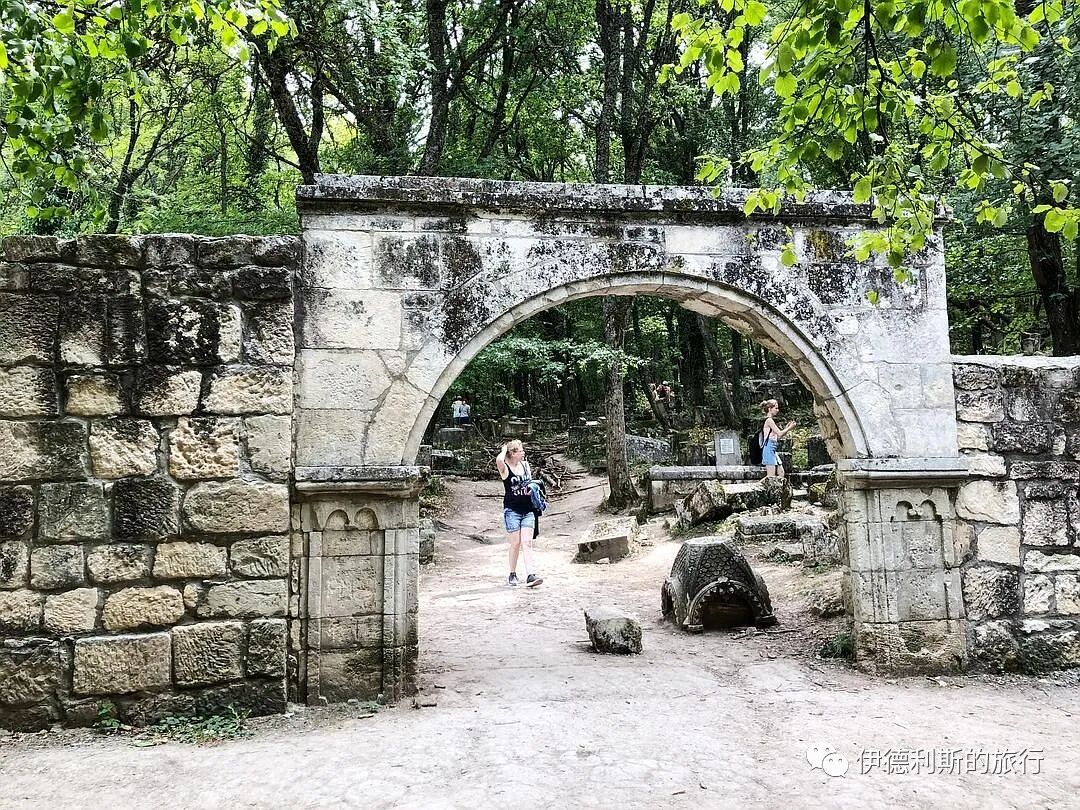
The Valley of Josaphat Karaite Cemetery is located in a valley outside the southeast of Chufut-Kale and was built in the 14th century. The name Valley of Josaphat comes from the Old Testament of the Bible, where Jehovah will conduct the final judgment on all nations. The local Karaites also call it "Balta Timez," which means "the axe will not touch," because the cemetery is planted with oak trees that are sacred to the Karaites.
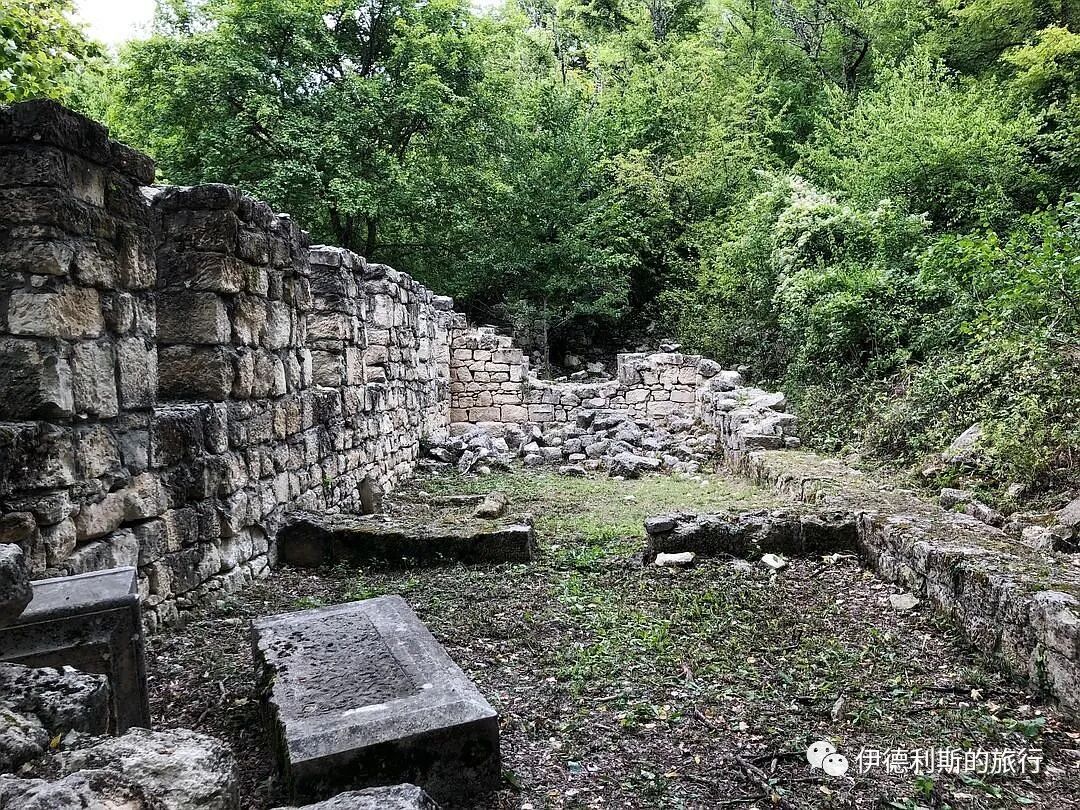
The cemetery preserves the entrance arch and the ruins of the gatehouse next to it. At its peak, there were 7,000 graves, but now only 1,000 remain. The Hebrew on the tombstones comes from the Old Testament of the Bible and the Karaite Turkic language. The content on the tombstones was organized and published in the 19th century by A. S. Firkovich, a famous person in Chufut-Kale.
After the Karaites left Chufut-Kale in the 19th century, this cemetery was not abandoned and continued to be a sacred place in the hearts of the Karaites. The Karaites who moved away would also be buried here after they passed away.
Summary: This travel note introduces Crimean Tatar Mountain Capital: Bakhchisarai, Mosques and Muslim Heritage. Chufut-Kale (Jewish Fortress) is a mountain fortress located on the Crimean Peninsula. It is useful for readers interested in Crimean Tatars, Bakhchisarai, Muslim Heritage.
Chufut-Kale (Jewish Fortress) is a mountain fortress located on the Crimean Peninsula. It was first built by the Byzantines in the 5th-6th centuries and was successively inhabited by Christian Alans, Muslim Tatars, and Karaite Jews, bearing witness to a millennium of Crimean history and culture.
In 1299, Chufut-Kale was captured by the Golden Horde. In 1441, Hacı I Giray (reigned 1441-1466) minted coins bearing his name at Chufut-Kale, officially establishing the Crimean Khanate (1441-1783).
Between the 13th and 17th centuries, Chufut-Kale was known as Kyrk-Or, meaning forty fortresses. After the mid-16th century, the Crimean Khan Sahib I Giray (reigned 1532-1551) moved the capital to Bakhchysarai in the valley west of the fortress, and the Tatars in the fortress gradually moved to Bakhchysarai. After the wells in the fortress dried up in the mid-17th century, all the Tatars left the fortress, and only the Karaite Jews continued to live there. After this, the fortress was gradually called the Jewish Fortress by the Crimean Tatars. After the 19th century, all the Karaite Jews also left, and the fortress eventually became a ruin.
Today, the fortress preserves many architectural ruins, including Christian caves, a mosque, a princess's mausoleum, and a synagogue. It has not been developed for tourism at all and is well worth a visit.
Table of Contents
I. Alan Christians
1. Caves
II. Tatar Muslims
1. South Wall and Middle Wall
2. Khan Jani Beg Mosque: 1455
3. Tomb of the Golden Horde Princess: 1437
4. Roads within the city
5. Gazi Mansur Qubba and Dervish Lodge: 1434
III. Karaite Jews
1. East Wall: 1396-1433
2. Karaite Kenesa: 14th century and late 18th century
3. Chaush-Cobass Caves: 16th century
4. Karaite Manors: 18th-19th centuries
5. Valley of Josaphat Karaite Cemetery
I. Alan Christians
1. Caves
The earliest inhabitants of Chufut-Kale were the Alans. The Alans, anciently known as Yancai, were an Iranian-speaking Christian people and the ancestors of the modern North Caucasian Ossetians. The Alans began to enter the Crimean Peninsula in the 2nd century and began to believe in Christianity under Byzantine influence in the 4th-5th centuries. Today, near the south gate of Chufut-Kale, there are still caves built by Alan Christian monks in the 6th century, which are the oldest surviving relics of Chufut-Kale.
Near the south gate of Chufut-Kale, there are 10 caves on 3 levels and 32 niches. These caves once contained murals and tombs, but they are no longer visible. Scholars speculate that these caves were likely the ruins of an Alan church.
II. Tatar Muslims
The Crimean Tatars are a Turkic-speaking Muslim ethnic group that formed during the Golden Horde period in the 13th-14th centuries and established the Crimean Khanate in the 15th-18th centuries.
The founder of the Crimean Khanate was Hacı I Giray, a descendant of Tuka-Timur, the thirteenth son of Jochi, the eldest son of Genghis Khan. In the 1260s, the fifth Khan of the Golden Horde, Mengu Timur, handed Crimea to Hacı I Giray's ancestor, Uran Timur, to rule, and the family of Hacı I Giray settled in Crimea from then on.
In 1395, Hacı I Giray's grandfather was defeated by Tamerlane the Great and driven out of Crimea, and Tamerlane's father was forced into exile in Lithuania. In 1397, Hacı I Giray was born in the Grand Duchy of Lithuania. Shortly after, because he supported Tokhtamysh of the Golden Horde against Edigu, Hacı I Giray's father died in a war. It is said that after this, Hacı I Giray was hidden by one of his father's servants for six years.
In 1428, Hacı I Giray led an army to occupy Crimea with the support of Vytautas the Great of the Grand Duchy of Lithuania, but was subsequently driven away by Ulugh Muhammad, the founder of the Khanate of Kazan. In 1431, Hacı I Giray again led an army recruited from Lithuania back to Crimea, but was driven back to Lithuania by Ulugh Muhammad again in 1434.
In 1437, Ulugh Muhammad left Crimea for Kazan, and the new Crimean ruler was very unpopular. In 1440, welcomed by the local Crimean nobility, Hacı I Giray returned to Crimea for the third time. In 1441, the Genoese in Crimea called Hacı I Giray the new Khan. In the same year, Hacı I Giray minted coins with his name on them at Chufut-Kale. Therefore, 1441 is generally considered the date of the establishment of the Crimean Khanate, and Chufut-Kale is considered the birthplace of the Crimean Khanate.
Hacı I Giray carried out large-scale construction at Chufut-Kale and built his own residence in the city.
In the mid-16th century, as the capital of the Crimean Khanate was moved to Bakhchisarai in the valley west of the fortress, the Tatars in Chufut-Kale began to move to Bakhchisarai. After the wells in the city dried up in the mid-17th century, all the Tatars left the fortress.
1. South Wall and Middle Wall
The walls of Chufut-Kale were built during the Byzantine period, with some saying they were built in the 5th-6th centuries and others in the 10th-11th centuries. In 1299, Nogai Khan, a general of the Golden Horde, led a Tatar army to attack the Crimean Peninsula. The Byzantine soldiers used the sturdy walls of Chufut-Kale to resist the attack of the Golden Horde. It is said that the Tatar soldiers played harsh music for three days and nights to disturb the Byzantine defenders in the city. Finally, on the fourth day, the exhausted Byzantine defenders could no longer resist the new round of siege, and Chufut-Kale was thus captured by the Tatars of the Golden Horde.
Currently, the original walls have two sections, the south wall and the middle wall, and two gates, the south gate and the middle gate. The south wall is built on the cliff in the south of the fortress, interspersed between the rocks. The south gate is built in a pocket shape, so that it can be besieged from top to bottom when the enemy breaks in. The middle wall runs across the north and south cliffs of the fortress and is a typical Byzantine-style wall structure.
South Wall
Middle Wall
The north cliff has no wall, but its steepness is comparable to a wall itself. It was very windy when I went, and I felt quite nervous standing on the edge of the cliff.
2. Khan Jani Beg Mosque: 1455
The Khan Jani Beg Mosque is located on the west side of Chufut-Kale and was built in 1346 during the reign of Khan Jani Beg (reigned 1342-1357) of the Golden Horde. Khan Jani Beg was the son of Öz Beg Khan. During his father's reign, the Golden Horde fully embraced Islam, and Khan Jani Beg continued to develop Islam within the Khanate. The Khan Jani Beg Mosque in Chufut-Kale is a testament to this.
In 1455, Hacı I Giray, the founding Khan of the Crimean Khanate, rebuilt the Khan Jani Beg Mosque. A reconstruction inscription was once carved above the mosque gate and was discovered during archaeological excavations in 1928. Another 17th-century Turkish traveler recorded that the mosque also had an Islamic madrasa (school) at that time.
After the mid-17th century, as all the Crimean Tatar Muslims moved from Chufut-Kale to Bakhchisarai, the mosque was eventually abandoned. Currently, only the remaining walls, the mihrab (prayer niche), and some stone carvings remain at the mosque site. From the existing ruins, it can be inferred that it was a relatively typical traditional Crimean mosque building.
3. Tomb of the Golden Horde Princess: 1437
The tomb of the Golden Horde princess Dzhanike Khanym was built in 1437 and is the best-preserved Muslim building in Chufut-Kale. The tomb owner was Dzhanike Khanym, the daughter of Tokhtamysh (reigned 1380-1397), the Khan of the Golden Horde. Tokhtamysh was the last Khan to unify the Golden Horde, but he was eventually defeated by Tamerlane the Great. After Tokhtamysh passed away, Dzhanike Khanym returned to her mother's hometown, Crimea.
The mausoleum is octagonal, and the door is decorated with the classic Seljuk knot, a classic pattern of the Golden Horde period.
4. Roads within the city
The roads in the fortress are wide and narrow, and you can see deep cart ruts on the main road.
Well
The well in the city. After the well dried up in the 17th century, the Tatars left one after another.
5. Gazi Mansur Qubba and Dervish Lodge: 1434
The Gazi Mansur Qubba and Dervish Lodge are located in the valley west of Chufut-Kale. There is also a legend about the establishment of the Qubba and the Dervish Lodge.
According to legend, Malik Ashter and Gazi Mansur, the first followers of the Prophet Muhammad, came to the Crimean Peninsula in the 7th century to spread Islam and lived in a valley at the foot of Chufut-Kale. Shortly after, Malik Ashter was killed by a giant, and Gazi Mansur sacrificed his life in the battle to defend Chufut-Kale. They were eventually buried at the foot of the city's mountain. They remained unknown for a long time until, hundreds of years later, a sheikh living in the ancient Central Asian city of Bukhara repeatedly dreamed of a narrow valley growing with shrubs. To solve his dream, the sheikh began a pilgrimage to the Crimean Peninsula under the inspiration of an elder.
The sheikh arrived in Crimea in 1434, recognized the valley in his dream at the foot of the Jewish mountain, and finally discovered the tomb of Gazi Mansur. Subsequently, the sheikh established a Qubba (mausoleum of an Islamic saint) and a Dervish Lodge (Sufi practice place) at the location of the tomb. Because of this legendary story, pilgrims flocked here, and it was even favored by the Crimean Khan.
The Gazi Mansur Qubba and Dervish Lodge were maintained until the 1930s, but were eventually destroyed in the Soviet era. Today, only broken walls and a few surviving tombstones remain.
III. Karaite Jews
The Karaites are a unique Turkic-speaking Jewish ethnic group living in Eastern Europe. They believe in Karaite Judaism, which is different from mainstream Judaism, and speak the Karaim language, which belongs to the Kipchak branch of the Turkic language family. There are currently only about 2,500 people, of whom more than 700 live in Crimea.
The Karaites have lived in Crimea for hundreds of years, but their origins remain controversial. After the 19th century, the Karaites began to refuse to admit that they were Jews and firmly believed that they were descendants of the Khazar Turkic people who converted to Karaite Judaism. The Khazars were a branch of the Turkic tribes who established the powerful Khazar Khanate in Eastern Europe and the North Caucasus from the 7th to the 10th centuries. The Khazar princes began to believe in Judaism in the mid-8th century AD. After the Khazars perished in the 11th century, most of them eventually merged into Turkic-speaking Muslims and Eastern European Jews.
However, most scholars currently question the claim that the Karaites came from the Khazars and tend to believe that the Karaites are descendants of Karaite Jews who settled in Crimea and only later began to speak a Turkic language. There are four main supporting points:
1. The Turkic language spoken by the Karaites belongs to the Kipchak branch, while the Turkic language of the Khazars belongs to the Bulgar branch. There is no obvious connection between these two languages.
2. According to existing historical materials, the Judaism believed by the Khazars recognized the Talmud, while Karaite Judaism does not recognize the Talmud.
3. The Khazars had completely disappeared by the 11th century, but the Karaites first appeared in the 14th century.
4. Molecular anthropology has confirmed that the genotype of the Karaites in Lithuania is very similar to that of the Karaite Jews in Egypt.
The Karaites had lived in Chufut-Kale since the 14th century. After the Tatars left in the 17th century, due to the Crimean Khanate's restrictions on Jewish residence, the Karaites could only continue to live in the fortress. In 1783, the Crimean Khanate was destroyed by Tsarist Russia, and the Karaites began to be ruled by Russia. In the 19th century, the Karaites constantly fought for their rights by insisting that they were Turkic people, not Jews. Eventually, the Tsar recognized that the Karaites had nothing to do with the Jews who killed Jesus, thereby exempting them from the harsh restrictions imposed by Russia on the Karaites.
In the mid-19th century, Russia finally lifted the residence restrictions on the Karaites, and the Karaites began to leave Chufut-Kale one after another. By the end of the 19th century, Chufut-Kale had become an empty city, with only the person guarding the fortress living in the A. S. Firkovich manor.
1. East Wall: 1396-1433
The east wall of Chufut-Kale was built between 1396 and 1433. At that time, the Karaites were constantly settling in the eastern part of the fortress, so the fortress was expanded to the east. After this, the east gate became the main gate of the fortress, and there was a lively bazaar outside the gate. Outside the east gate, a water collection area used by merchants to wash and water their livestock is still preserved. After the wells in the fortress dried up in the 17th century, this was still a passage for transporting water to the Karaites in the city.
2. Karaite Kenesa: 14th century and late 18th century
There are two Karaite Kenesas (synagogues) by the south wall in the western part of the old city of Chufut-Kale. The large synagogue on the left is presumed to have been built in the 14th century, and the small synagogue on the right was built in the late 18th century.
The Karaites had lived in Chufut-Kale since the Golden Horde period in the 14th century, and the large synagogue in the city was built during this period. In the 1790s, all the Karaites from another ancient Crimean city, Mangup, moved to Chufut-Kale to live, and the small synagogue in the fortress was built during this period.
The Karaite Kenesa is different from a general synagogue. The front is a vestibule for taking off shoes; shoes are not allowed in the Karaite synagogue. Then there is usually a bench for the elderly. Above the bench is a loft for women, which must be entered through a side door. Further inside is the main hall for worship. Traditional Karaite worship is performed kneeling, so the hall is usually covered with carpets. The innermost part is the altar.
3. Chaush-Cobass Caves: 16th century
A series of caves called Chaush-Cobass were carved into the cliff on the northeast side of the middle wall of the fortress. After the 16th century, a wealthy Karaite built a manor here and used the caves as a cellar.
4. Karaite Manors: 18th-19th centuries
There used to be many Karaite manors in the eastern part of Chufut-Kale, but now only two 18th-century manors have been preserved, belonging to A. S. Firkovich and Chal Boru, both in the traditional Crimean courtyard style.
Avraam Samuilovich Firkovich (1786-1874) was a Karaite writer, archaeologist, collector of ancient manuscripts, and Karaite Jewish clergyman who devoted his life to studying the history and culture of the Crimean Karaites.
Another 18th-century manor, with only one house left.
5. Valley of Josaphat Karaite Cemetery
The Valley of Josaphat Karaite Cemetery is located in a valley outside the southeast of Chufut-Kale and was built in the 14th century. The name Valley of Josaphat comes from the Old Testament of the Bible, where Jehovah will conduct the final judgment on all nations. The local Karaites also call it "Balta Timez," which means "the axe will not touch," because the cemetery is planted with oak trees that are sacred to the Karaites.
The cemetery preserves the entrance arch and the ruins of the gatehouse next to it. At its peak, there were 7,000 graves, but now only 1,000 remain. The Hebrew on the tombstones comes from the Old Testament of the Bible and the Karaite Turkic language. The content on the tombstones was organized and published in the 19th century by A. S. Firkovich, a famous person in Chufut-Kale.
After the Karaites left Chufut-Kale in the 19th century, this cemetery was not abandoned and continued to be a sacred place in the hearts of the Karaites. The Karaites who moved away would also be buried here after they passed away.
Crimean Tatar Mountain Capital: Bakhchisarai, Mosques and Muslim Heritage
Articles • ali2007fr posted the article • 0 comments • 144 views • 2026-05-17 08:19
Reposted from the web
Summary: This travel note introduces Crimean Tatar Mountain Capital: Bakhchisarai, Mosques and Muslim Heritage. Chufut-Kale (Jewish Fortress) is a mountain fortress located on the Crimean Peninsula. It is useful for readers interested in Crimean Tatars, Bakhchisarai, Muslim Heritage.
Chufut-Kale (Jewish Fortress) is a mountain fortress located on the Crimean Peninsula. It was first built by the Byzantines in the 5th-6th centuries and was successively inhabited by Christian Alans, Muslim Tatars, and Karaite Jews, bearing witness to a millennium of Crimean history and culture.
In 1299, Chufut-Kale was captured by the Golden Horde. In 1441, Hacı I Giray (reigned 1441-1466) minted coins bearing his name at Chufut-Kale, officially establishing the Crimean Khanate (1441-1783).
Between the 13th and 17th centuries, Chufut-Kale was known as Kyrk-Or, meaning forty fortresses. After the mid-16th century, the Crimean Khan Sahib I Giray (reigned 1532-1551) moved the capital to Bakhchysarai in the valley west of the fortress, and the Tatars in the fortress gradually moved to Bakhchysarai. After the wells in the fortress dried up in the mid-17th century, all the Tatars left the fortress, and only the Karaite Jews continued to live there. After this, the fortress was gradually called the Jewish Fortress by the Crimean Tatars. After the 19th century, all the Karaite Jews also left, and the fortress eventually became a ruin.
Today, the fortress preserves many architectural ruins, including Christian caves, a mosque, a princess's mausoleum, and a synagogue. It has not been developed for tourism at all and is well worth a visit.
Table of Contents
I. Alan Christians
1. Caves
II. Tatar Muslims
1. South Wall and Middle Wall
2. Khan Jani Beg Mosque: 1455
3. Tomb of the Golden Horde Princess: 1437
4. Roads within the city
5. Gazi Mansur Qubba and Dervish Lodge: 1434
III. Karaite Jews
1. East Wall: 1396-1433
2. Karaite Kenesa: 14th century and late 18th century
3. Chaush-Cobass Caves: 16th century
4. Karaite Manors: 18th-19th centuries
5. Valley of Josaphat Karaite Cemetery
I. Alan Christians
1. Caves
The earliest inhabitants of Chufut-Kale were the Alans. The Alans, anciently known as Yancai, were an Iranian-speaking Christian people and the ancestors of the modern North Caucasian Ossetians. The Alans began to enter the Crimean Peninsula in the 2nd century and began to believe in Christianity under Byzantine influence in the 4th-5th centuries. Today, near the south gate of Chufut-Kale, there are still caves built by Alan Christian monks in the 6th century, which are the oldest surviving relics of Chufut-Kale.
Near the south gate of Chufut-Kale, there are 10 caves on 3 levels and 32 niches. These caves once contained murals and tombs, but they are no longer visible. Scholars speculate that these caves were likely the ruins of an Alan church.
II. Tatar Muslims
The Crimean Tatars are a Turkic-speaking Muslim ethnic group that formed during the Golden Horde period in the 13th-14th centuries and established the Crimean Khanate in the 15th-18th centuries.
The founder of the Crimean Khanate was Hacı I Giray, a descendant of Tuka-Timur, the thirteenth son of Jochi, the eldest son of Genghis Khan. In the 1260s, the fifth Khan of the Golden Horde, Mengu Timur, handed Crimea to Hacı I Giray's ancestor, Uran Timur, to rule, and the family of Hacı I Giray settled in Crimea from then on.
In 1395, Hacı I Giray's grandfather was defeated by Tamerlane the Great and driven out of Crimea, and Tamerlane's father was forced into exile in Lithuania. In 1397, Hacı I Giray was born in the Grand Duchy of Lithuania. Shortly after, because he supported Tokhtamysh of the Golden Horde against Edigu, Hacı I Giray's father died in a war. It is said that after this, Hacı I Giray was hidden by one of his father's servants for six years.
In 1428, Hacı I Giray led an army to occupy Crimea with the support of Vytautas the Great of the Grand Duchy of Lithuania, but was subsequently driven away by Ulugh Muhammad, the founder of the Khanate of Kazan. In 1431, Hacı I Giray again led an army recruited from Lithuania back to Crimea, but was driven back to Lithuania by Ulugh Muhammad again in 1434.
In 1437, Ulugh Muhammad left Crimea for Kazan, and the new Crimean ruler was very unpopular. In 1440, welcomed by the local Crimean nobility, Hacı I Giray returned to Crimea for the third time. In 1441, the Genoese in Crimea called Hacı I Giray the new Khan. In the same year, Hacı I Giray minted coins with his name on them at Chufut-Kale. Therefore, 1441 is generally considered the date of the establishment of the Crimean Khanate, and Chufut-Kale is considered the birthplace of the Crimean Khanate.
Hacı I Giray carried out large-scale construction at Chufut-Kale and built his own residence in the city.
In the mid-16th century, as the capital of the Crimean Khanate was moved to Bakhchisarai in the valley west of the fortress, the Tatars in Chufut-Kale began to move to Bakhchisarai. After the wells in the city dried up in the mid-17th century, all the Tatars left the fortress.
1. South Wall and Middle Wall
The walls of Chufut-Kale were built during the Byzantine period, with some saying they were built in the 5th-6th centuries and others in the 10th-11th centuries. In 1299, Nogai Khan, a general of the Golden Horde, led a Tatar army to attack the Crimean Peninsula. The Byzantine soldiers used the sturdy walls of Chufut-Kale to resist the attack of the Golden Horde. It is said that the Tatar soldiers played harsh music for three days and nights to disturb the Byzantine defenders in the city. Finally, on the fourth day, the exhausted Byzantine defenders could no longer resist the new round of siege, and Chufut-Kale was thus captured by the Tatars of the Golden Horde.
Currently, the original walls have two sections, the south wall and the middle wall, and two gates, the south gate and the middle gate. The south wall is built on the cliff in the south of the fortress, interspersed between the rocks. The south gate is built in a pocket shape, so that it can be besieged from top to bottom when the enemy breaks in. The middle wall runs across the north and south cliffs of the fortress and is a typical Byzantine-style wall structure.
South Wall
Middle Wall
The north cliff has no wall, but its steepness is comparable to a wall itself. It was very windy when I went, and I felt quite nervous standing on the edge of the cliff.
2. Khan Jani Beg Mosque: 1455
The Khan Jani Beg Mosque is located on the west side of Chufut-Kale and was built in 1346 during the reign of Khan Jani Beg (reigned 1342-1357) of the Golden Horde. Khan Jani Beg was the son of Öz Beg Khan. During his father's reign, the Golden Horde fully embraced Islam, and Khan Jani Beg continued to develop Islam within the Khanate. The Khan Jani Beg Mosque in Chufut-Kale is a testament to this.
In 1455, Hacı I Giray, the founding Khan of the Crimean Khanate, rebuilt the Khan Jani Beg Mosque. A reconstruction inscription was once carved above the mosque gate and was discovered during archaeological excavations in 1928. Another 17th-century Turkish traveler recorded that the mosque also had an Islamic madrasa (school) at that time.
After the mid-17th century, as all the Crimean Tatar Muslims moved from Chufut-Kale to Bakhchisarai, the mosque was eventually abandoned. Currently, only the remaining walls, the mihrab (prayer niche), and some stone carvings remain at the mosque site. From the existing ruins, it can be inferred that it was a relatively typical traditional Crimean mosque building.
3. Tomb of the Golden Horde Princess: 1437
The tomb of the Golden Horde princess Dzhanike Khanym was built in 1437 and is the best-preserved Muslim building in Chufut-Kale. The tomb owner was Dzhanike Khanym, the daughter of Tokhtamysh (reigned 1380-1397), the Khan of the Golden Horde. Tokhtamysh was the last Khan to unify the Golden Horde, but he was eventually defeated by Tamerlane the Great. After Tokhtamysh passed away, Dzhanike Khanym returned to her mother's hometown, Crimea.
The mausoleum is octagonal, and the door is decorated with the classic Seljuk knot, a classic pattern of the Golden Horde period.
4. Roads within the city
The roads in the fortress are wide and narrow, and you can see deep cart ruts on the main road.
Well
The well in the city. After the well dried up in the 17th century, the Tatars left one after another.
5. Gazi Mansur Qubba and Dervish Lodge: 1434
The Gazi Mansur Qubba and Dervish Lodge are located in the valley west of Chufut-Kale. There is also a legend about the establishment of the Qubba and the Dervish Lodge.
According to legend, Malik Ashter and Gazi Mansur, the first followers of the Prophet Muhammad, came to the Crimean Peninsula in the 7th century to spread Islam and lived in a valley at the foot of Chufut-Kale. Shortly after, Malik Ashter was killed by a giant, and Gazi Mansur sacrificed his life in the battle to defend Chufut-Kale. They were eventually buried at the foot of the city's mountain. They remained unknown for a long time until, hundreds of years later, a sheikh living in the ancient Central Asian city of Bukhara repeatedly dreamed of a narrow valley growing with shrubs. To solve his dream, the sheikh began a pilgrimage to the Crimean Peninsula under the inspiration of an elder.
The sheikh arrived in Crimea in 1434, recognized the valley in his dream at the foot of the Jewish mountain, and finally discovered the tomb of Gazi Mansur. Subsequently, the sheikh established a Qubba (mausoleum of an Islamic saint) and a Dervish Lodge (Sufi practice place) at the location of the tomb. Because of this legendary story, pilgrims flocked here, and it was even favored by the Crimean Khan.
The Gazi Mansur Qubba and Dervish Lodge were maintained until the 1930s, but were eventually destroyed in the Soviet era. Today, only broken walls and a few surviving tombstones remain.
III. Karaite Jews
The Karaites are a unique Turkic-speaking Jewish ethnic group living in Eastern Europe. They believe in Karaite Judaism, which is different from mainstream Judaism, and speak the Karaim language, which belongs to the Kipchak branch of the Turkic language family. There are currently only about 2,500 people, of whom more than 700 live in Crimea.
The Karaites have lived in Crimea for hundreds of years, but their origins remain controversial. After the 19th century, the Karaites began to refuse to admit that they were Jews and firmly believed that they were descendants of the Khazar Turkic people who converted to Karaite Judaism. The Khazars were a branch of the Turkic tribes who established the powerful Khazar Khanate in Eastern Europe and the North Caucasus from the 7th to the 10th centuries. The Khazar princes began to believe in Judaism in the mid-8th century AD. After the Khazars perished in the 11th century, most of them eventually merged into Turkic-speaking Muslims and Eastern European Jews.
However, most scholars currently question the claim that the Karaites came from the Khazars and tend to believe that the Karaites are descendants of Karaite Jews who settled in Crimea and only later began to speak a Turkic language. There are four main supporting points:
1. The Turkic language spoken by the Karaites belongs to the Kipchak branch, while the Turkic language of the Khazars belongs to the Bulgar branch. There is no obvious connection between these two languages.
2. According to existing historical materials, the Judaism believed by the Khazars recognized the Talmud, while Karaite Judaism does not recognize the Talmud.
3. The Khazars had completely disappeared by the 11th century, but the Karaites first appeared in the 14th century.
4. Molecular anthropology has confirmed that the genotype of the Karaites in Lithuania is very similar to that of the Karaite Jews in Egypt.
The Karaites had lived in Chufut-Kale since the 14th century. After the Tatars left in the 17th century, due to the Crimean Khanate's restrictions on Jewish residence, the Karaites could only continue to live in the fortress. In 1783, the Crimean Khanate was destroyed by Tsarist Russia, and the Karaites began to be ruled by Russia. In the 19th century, the Karaites constantly fought for their rights by insisting that they were Turkic people, not Jews. Eventually, the Tsar recognized that the Karaites had nothing to do with the Jews who killed Jesus, thereby exempting them from the harsh restrictions imposed by Russia on the Karaites.
In the mid-19th century, Russia finally lifted the residence restrictions on the Karaites, and the Karaites began to leave Chufut-Kale one after another. By the end of the 19th century, Chufut-Kale had become an empty city, with only the person guarding the fortress living in the A. S. Firkovich manor.
1. East Wall: 1396-1433
The east wall of Chufut-Kale was built between 1396 and 1433. At that time, the Karaites were constantly settling in the eastern part of the fortress, so the fortress was expanded to the east. After this, the east gate became the main gate of the fortress, and there was a lively bazaar outside the gate. Outside the east gate, a water collection area used by merchants to wash and water their livestock is still preserved. After the wells in the fortress dried up in the 17th century, this was still a passage for transporting water to the Karaites in the city.
2. Karaite Kenesa: 14th century and late 18th century
There are two Karaite Kenesas (synagogues) by the south wall in the western part of the old city of Chufut-Kale. The large synagogue on the left is presumed to have been built in the 14th century, and the small synagogue on the right was built in the late 18th century.
The Karaites had lived in Chufut-Kale since the Golden Horde period in the 14th century, and the large synagogue in the city was built during this period. In the 1790s, all the Karaites from another ancient Crimean city, Mangup, moved to Chufut-Kale to live, and the small synagogue in the fortress was built during this period.
The Karaite Kenesa is different from a general synagogue. The front is a vestibule for taking off shoes; shoes are not allowed in the Karaite synagogue. Then there is usually a bench for the elderly. Above the bench is a loft for women, which must be entered through a side door. Further inside is the main hall for worship. Traditional Karaite worship is performed kneeling, so the hall is usually covered with carpets. The innermost part is the altar.
3. Chaush-Cobass Caves: 16th century
A series of caves called Chaush-Cobass were carved into the cliff on the northeast side of the middle wall of the fortress. After the 16th century, a wealthy Karaite built a manor here and used the caves as a cellar.
4. Karaite Manors: 18th-19th centuries
There used to be many Karaite manors in the eastern part of Chufut-Kale, but now only two 18th-century manors have been preserved, belonging to A. S. Firkovich and Chal Boru, both in the traditional Crimean courtyard style.
Avraam Samuilovich Firkovich (1786-1874) was a Karaite writer, archaeologist, collector of ancient manuscripts, and Karaite Jewish clergyman who devoted his life to studying the history and culture of the Crimean Karaites.
Another 18th-century manor, with only one house left.
5. Valley of Josaphat Karaite Cemetery
The Valley of Josaphat Karaite Cemetery is located in a valley outside the southeast of Chufut-Kale and was built in the 14th century. The name Valley of Josaphat comes from the Old Testament of the Bible, where Jehovah will conduct the final judgment on all nations. The local Karaites also call it "Balta Timez," which means "the axe will not touch," because the cemetery is planted with oak trees that are sacred to the Karaites.
The cemetery preserves the entrance arch and the ruins of the gatehouse next to it. At its peak, there were 7,000 graves, but now only 1,000 remain. The Hebrew on the tombstones comes from the Old Testament of the Bible and the Karaite Turkic language. The content on the tombstones was organized and published in the 19th century by A. S. Firkovich, a famous person in Chufut-Kale.
After the Karaites left Chufut-Kale in the 19th century, this cemetery was not abandoned and continued to be a sacred place in the hearts of the Karaites. The Karaites who moved away would also be buried here after they passed away. view all
Summary: This travel note introduces Crimean Tatar Mountain Capital: Bakhchisarai, Mosques and Muslim Heritage. Chufut-Kale (Jewish Fortress) is a mountain fortress located on the Crimean Peninsula. It is useful for readers interested in Crimean Tatars, Bakhchisarai, Muslim Heritage.
Chufut-Kale (Jewish Fortress) is a mountain fortress located on the Crimean Peninsula. It was first built by the Byzantines in the 5th-6th centuries and was successively inhabited by Christian Alans, Muslim Tatars, and Karaite Jews, bearing witness to a millennium of Crimean history and culture.
In 1299, Chufut-Kale was captured by the Golden Horde. In 1441, Hacı I Giray (reigned 1441-1466) minted coins bearing his name at Chufut-Kale, officially establishing the Crimean Khanate (1441-1783).
Between the 13th and 17th centuries, Chufut-Kale was known as Kyrk-Or, meaning forty fortresses. After the mid-16th century, the Crimean Khan Sahib I Giray (reigned 1532-1551) moved the capital to Bakhchysarai in the valley west of the fortress, and the Tatars in the fortress gradually moved to Bakhchysarai. After the wells in the fortress dried up in the mid-17th century, all the Tatars left the fortress, and only the Karaite Jews continued to live there. After this, the fortress was gradually called the Jewish Fortress by the Crimean Tatars. After the 19th century, all the Karaite Jews also left, and the fortress eventually became a ruin.
Today, the fortress preserves many architectural ruins, including Christian caves, a mosque, a princess's mausoleum, and a synagogue. It has not been developed for tourism at all and is well worth a visit.
Table of Contents
I. Alan Christians
1. Caves
II. Tatar Muslims
1. South Wall and Middle Wall
2. Khan Jani Beg Mosque: 1455
3. Tomb of the Golden Horde Princess: 1437
4. Roads within the city
5. Gazi Mansur Qubba and Dervish Lodge: 1434
III. Karaite Jews
1. East Wall: 1396-1433
2. Karaite Kenesa: 14th century and late 18th century
3. Chaush-Cobass Caves: 16th century
4. Karaite Manors: 18th-19th centuries
5. Valley of Josaphat Karaite Cemetery
I. Alan Christians
1. Caves
The earliest inhabitants of Chufut-Kale were the Alans. The Alans, anciently known as Yancai, were an Iranian-speaking Christian people and the ancestors of the modern North Caucasian Ossetians. The Alans began to enter the Crimean Peninsula in the 2nd century and began to believe in Christianity under Byzantine influence in the 4th-5th centuries. Today, near the south gate of Chufut-Kale, there are still caves built by Alan Christian monks in the 6th century, which are the oldest surviving relics of Chufut-Kale.
Near the south gate of Chufut-Kale, there are 10 caves on 3 levels and 32 niches. These caves once contained murals and tombs, but they are no longer visible. Scholars speculate that these caves were likely the ruins of an Alan church.
II. Tatar Muslims
The Crimean Tatars are a Turkic-speaking Muslim ethnic group that formed during the Golden Horde period in the 13th-14th centuries and established the Crimean Khanate in the 15th-18th centuries.
The founder of the Crimean Khanate was Hacı I Giray, a descendant of Tuka-Timur, the thirteenth son of Jochi, the eldest son of Genghis Khan. In the 1260s, the fifth Khan of the Golden Horde, Mengu Timur, handed Crimea to Hacı I Giray's ancestor, Uran Timur, to rule, and the family of Hacı I Giray settled in Crimea from then on.
In 1395, Hacı I Giray's grandfather was defeated by Tamerlane the Great and driven out of Crimea, and Tamerlane's father was forced into exile in Lithuania. In 1397, Hacı I Giray was born in the Grand Duchy of Lithuania. Shortly after, because he supported Tokhtamysh of the Golden Horde against Edigu, Hacı I Giray's father died in a war. It is said that after this, Hacı I Giray was hidden by one of his father's servants for six years.
In 1428, Hacı I Giray led an army to occupy Crimea with the support of Vytautas the Great of the Grand Duchy of Lithuania, but was subsequently driven away by Ulugh Muhammad, the founder of the Khanate of Kazan. In 1431, Hacı I Giray again led an army recruited from Lithuania back to Crimea, but was driven back to Lithuania by Ulugh Muhammad again in 1434.
In 1437, Ulugh Muhammad left Crimea for Kazan, and the new Crimean ruler was very unpopular. In 1440, welcomed by the local Crimean nobility, Hacı I Giray returned to Crimea for the third time. In 1441, the Genoese in Crimea called Hacı I Giray the new Khan. In the same year, Hacı I Giray minted coins with his name on them at Chufut-Kale. Therefore, 1441 is generally considered the date of the establishment of the Crimean Khanate, and Chufut-Kale is considered the birthplace of the Crimean Khanate.
Hacı I Giray carried out large-scale construction at Chufut-Kale and built his own residence in the city.
In the mid-16th century, as the capital of the Crimean Khanate was moved to Bakhchisarai in the valley west of the fortress, the Tatars in Chufut-Kale began to move to Bakhchisarai. After the wells in the city dried up in the mid-17th century, all the Tatars left the fortress.
1. South Wall and Middle Wall
The walls of Chufut-Kale were built during the Byzantine period, with some saying they were built in the 5th-6th centuries and others in the 10th-11th centuries. In 1299, Nogai Khan, a general of the Golden Horde, led a Tatar army to attack the Crimean Peninsula. The Byzantine soldiers used the sturdy walls of Chufut-Kale to resist the attack of the Golden Horde. It is said that the Tatar soldiers played harsh music for three days and nights to disturb the Byzantine defenders in the city. Finally, on the fourth day, the exhausted Byzantine defenders could no longer resist the new round of siege, and Chufut-Kale was thus captured by the Tatars of the Golden Horde.
Currently, the original walls have two sections, the south wall and the middle wall, and two gates, the south gate and the middle gate. The south wall is built on the cliff in the south of the fortress, interspersed between the rocks. The south gate is built in a pocket shape, so that it can be besieged from top to bottom when the enemy breaks in. The middle wall runs across the north and south cliffs of the fortress and is a typical Byzantine-style wall structure.
South Wall
Middle Wall
The north cliff has no wall, but its steepness is comparable to a wall itself. It was very windy when I went, and I felt quite nervous standing on the edge of the cliff.
2. Khan Jani Beg Mosque: 1455
The Khan Jani Beg Mosque is located on the west side of Chufut-Kale and was built in 1346 during the reign of Khan Jani Beg (reigned 1342-1357) of the Golden Horde. Khan Jani Beg was the son of Öz Beg Khan. During his father's reign, the Golden Horde fully embraced Islam, and Khan Jani Beg continued to develop Islam within the Khanate. The Khan Jani Beg Mosque in Chufut-Kale is a testament to this.
In 1455, Hacı I Giray, the founding Khan of the Crimean Khanate, rebuilt the Khan Jani Beg Mosque. A reconstruction inscription was once carved above the mosque gate and was discovered during archaeological excavations in 1928. Another 17th-century Turkish traveler recorded that the mosque also had an Islamic madrasa (school) at that time.
After the mid-17th century, as all the Crimean Tatar Muslims moved from Chufut-Kale to Bakhchisarai, the mosque was eventually abandoned. Currently, only the remaining walls, the mihrab (prayer niche), and some stone carvings remain at the mosque site. From the existing ruins, it can be inferred that it was a relatively typical traditional Crimean mosque building.
3. Tomb of the Golden Horde Princess: 1437
The tomb of the Golden Horde princess Dzhanike Khanym was built in 1437 and is the best-preserved Muslim building in Chufut-Kale. The tomb owner was Dzhanike Khanym, the daughter of Tokhtamysh (reigned 1380-1397), the Khan of the Golden Horde. Tokhtamysh was the last Khan to unify the Golden Horde, but he was eventually defeated by Tamerlane the Great. After Tokhtamysh passed away, Dzhanike Khanym returned to her mother's hometown, Crimea.
The mausoleum is octagonal, and the door is decorated with the classic Seljuk knot, a classic pattern of the Golden Horde period.
4. Roads within the city
The roads in the fortress are wide and narrow, and you can see deep cart ruts on the main road.
Well
The well in the city. After the well dried up in the 17th century, the Tatars left one after another.
5. Gazi Mansur Qubba and Dervish Lodge: 1434
The Gazi Mansur Qubba and Dervish Lodge are located in the valley west of Chufut-Kale. There is also a legend about the establishment of the Qubba and the Dervish Lodge.
According to legend, Malik Ashter and Gazi Mansur, the first followers of the Prophet Muhammad, came to the Crimean Peninsula in the 7th century to spread Islam and lived in a valley at the foot of Chufut-Kale. Shortly after, Malik Ashter was killed by a giant, and Gazi Mansur sacrificed his life in the battle to defend Chufut-Kale. They were eventually buried at the foot of the city's mountain. They remained unknown for a long time until, hundreds of years later, a sheikh living in the ancient Central Asian city of Bukhara repeatedly dreamed of a narrow valley growing with shrubs. To solve his dream, the sheikh began a pilgrimage to the Crimean Peninsula under the inspiration of an elder.
The sheikh arrived in Crimea in 1434, recognized the valley in his dream at the foot of the Jewish mountain, and finally discovered the tomb of Gazi Mansur. Subsequently, the sheikh established a Qubba (mausoleum of an Islamic saint) and a Dervish Lodge (Sufi practice place) at the location of the tomb. Because of this legendary story, pilgrims flocked here, and it was even favored by the Crimean Khan.
The Gazi Mansur Qubba and Dervish Lodge were maintained until the 1930s, but were eventually destroyed in the Soviet era. Today, only broken walls and a few surviving tombstones remain.
III. Karaite Jews
The Karaites are a unique Turkic-speaking Jewish ethnic group living in Eastern Europe. They believe in Karaite Judaism, which is different from mainstream Judaism, and speak the Karaim language, which belongs to the Kipchak branch of the Turkic language family. There are currently only about 2,500 people, of whom more than 700 live in Crimea.
The Karaites have lived in Crimea for hundreds of years, but their origins remain controversial. After the 19th century, the Karaites began to refuse to admit that they were Jews and firmly believed that they were descendants of the Khazar Turkic people who converted to Karaite Judaism. The Khazars were a branch of the Turkic tribes who established the powerful Khazar Khanate in Eastern Europe and the North Caucasus from the 7th to the 10th centuries. The Khazar princes began to believe in Judaism in the mid-8th century AD. After the Khazars perished in the 11th century, most of them eventually merged into Turkic-speaking Muslims and Eastern European Jews.
However, most scholars currently question the claim that the Karaites came from the Khazars and tend to believe that the Karaites are descendants of Karaite Jews who settled in Crimea and only later began to speak a Turkic language. There are four main supporting points:
1. The Turkic language spoken by the Karaites belongs to the Kipchak branch, while the Turkic language of the Khazars belongs to the Bulgar branch. There is no obvious connection between these two languages.
2. According to existing historical materials, the Judaism believed by the Khazars recognized the Talmud, while Karaite Judaism does not recognize the Talmud.
3. The Khazars had completely disappeared by the 11th century, but the Karaites first appeared in the 14th century.
4. Molecular anthropology has confirmed that the genotype of the Karaites in Lithuania is very similar to that of the Karaite Jews in Egypt.
The Karaites had lived in Chufut-Kale since the 14th century. After the Tatars left in the 17th century, due to the Crimean Khanate's restrictions on Jewish residence, the Karaites could only continue to live in the fortress. In 1783, the Crimean Khanate was destroyed by Tsarist Russia, and the Karaites began to be ruled by Russia. In the 19th century, the Karaites constantly fought for their rights by insisting that they were Turkic people, not Jews. Eventually, the Tsar recognized that the Karaites had nothing to do with the Jews who killed Jesus, thereby exempting them from the harsh restrictions imposed by Russia on the Karaites.
In the mid-19th century, Russia finally lifted the residence restrictions on the Karaites, and the Karaites began to leave Chufut-Kale one after another. By the end of the 19th century, Chufut-Kale had become an empty city, with only the person guarding the fortress living in the A. S. Firkovich manor.
1. East Wall: 1396-1433
The east wall of Chufut-Kale was built between 1396 and 1433. At that time, the Karaites were constantly settling in the eastern part of the fortress, so the fortress was expanded to the east. After this, the east gate became the main gate of the fortress, and there was a lively bazaar outside the gate. Outside the east gate, a water collection area used by merchants to wash and water their livestock is still preserved. After the wells in the fortress dried up in the 17th century, this was still a passage for transporting water to the Karaites in the city.
2. Karaite Kenesa: 14th century and late 18th century
There are two Karaite Kenesas (synagogues) by the south wall in the western part of the old city of Chufut-Kale. The large synagogue on the left is presumed to have been built in the 14th century, and the small synagogue on the right was built in the late 18th century.
The Karaites had lived in Chufut-Kale since the Golden Horde period in the 14th century, and the large synagogue in the city was built during this period. In the 1790s, all the Karaites from another ancient Crimean city, Mangup, moved to Chufut-Kale to live, and the small synagogue in the fortress was built during this period.
The Karaite Kenesa is different from a general synagogue. The front is a vestibule for taking off shoes; shoes are not allowed in the Karaite synagogue. Then there is usually a bench for the elderly. Above the bench is a loft for women, which must be entered through a side door. Further inside is the main hall for worship. Traditional Karaite worship is performed kneeling, so the hall is usually covered with carpets. The innermost part is the altar.
3. Chaush-Cobass Caves: 16th century
A series of caves called Chaush-Cobass were carved into the cliff on the northeast side of the middle wall of the fortress. After the 16th century, a wealthy Karaite built a manor here and used the caves as a cellar.
4. Karaite Manors: 18th-19th centuries
There used to be many Karaite manors in the eastern part of Chufut-Kale, but now only two 18th-century manors have been preserved, belonging to A. S. Firkovich and Chal Boru, both in the traditional Crimean courtyard style.
Avraam Samuilovich Firkovich (1786-1874) was a Karaite writer, archaeologist, collector of ancient manuscripts, and Karaite Jewish clergyman who devoted his life to studying the history and culture of the Crimean Karaites.
Another 18th-century manor, with only one house left.
5. Valley of Josaphat Karaite Cemetery
The Valley of Josaphat Karaite Cemetery is located in a valley outside the southeast of Chufut-Kale and was built in the 14th century. The name Valley of Josaphat comes from the Old Testament of the Bible, where Jehovah will conduct the final judgment on all nations. The local Karaites also call it "Balta Timez," which means "the axe will not touch," because the cemetery is planted with oak trees that are sacred to the Karaites.
The cemetery preserves the entrance arch and the ruins of the gatehouse next to it. At its peak, there were 7,000 graves, but now only 1,000 remain. The Hebrew on the tombstones comes from the Old Testament of the Bible and the Karaite Turkic language. The content on the tombstones was organized and published in the 19th century by A. S. Firkovich, a famous person in Chufut-Kale.
After the Karaites left Chufut-Kale in the 19th century, this cemetery was not abandoned and continued to be a sacred place in the hearts of the Karaites. The Karaites who moved away would also be buried here after they passed away. view all
Reposted from the web
Summary: This travel note introduces Crimean Tatar Mountain Capital: Bakhchisarai, Mosques and Muslim Heritage. Chufut-Kale (Jewish Fortress) is a mountain fortress located on the Crimean Peninsula. It is useful for readers interested in Crimean Tatars, Bakhchisarai, Muslim Heritage.
Chufut-Kale (Jewish Fortress) is a mountain fortress located on the Crimean Peninsula. It was first built by the Byzantines in the 5th-6th centuries and was successively inhabited by Christian Alans, Muslim Tatars, and Karaite Jews, bearing witness to a millennium of Crimean history and culture.
In 1299, Chufut-Kale was captured by the Golden Horde. In 1441, Hacı I Giray (reigned 1441-1466) minted coins bearing his name at Chufut-Kale, officially establishing the Crimean Khanate (1441-1783).
Between the 13th and 17th centuries, Chufut-Kale was known as Kyrk-Or, meaning forty fortresses. After the mid-16th century, the Crimean Khan Sahib I Giray (reigned 1532-1551) moved the capital to Bakhchysarai in the valley west of the fortress, and the Tatars in the fortress gradually moved to Bakhchysarai. After the wells in the fortress dried up in the mid-17th century, all the Tatars left the fortress, and only the Karaite Jews continued to live there. After this, the fortress was gradually called the Jewish Fortress by the Crimean Tatars. After the 19th century, all the Karaite Jews also left, and the fortress eventually became a ruin.
Today, the fortress preserves many architectural ruins, including Christian caves, a mosque, a princess's mausoleum, and a synagogue. It has not been developed for tourism at all and is well worth a visit.
Table of Contents
I. Alan Christians
1. Caves
II. Tatar Muslims
1. South Wall and Middle Wall
2. Khan Jani Beg Mosque: 1455
3. Tomb of the Golden Horde Princess: 1437
4. Roads within the city
5. Gazi Mansur Qubba and Dervish Lodge: 1434
III. Karaite Jews
1. East Wall: 1396-1433
2. Karaite Kenesa: 14th century and late 18th century
3. Chaush-Cobass Caves: 16th century
4. Karaite Manors: 18th-19th centuries
5. Valley of Josaphat Karaite Cemetery
I. Alan Christians
1. Caves
The earliest inhabitants of Chufut-Kale were the Alans. The Alans, anciently known as Yancai, were an Iranian-speaking Christian people and the ancestors of the modern North Caucasian Ossetians. The Alans began to enter the Crimean Peninsula in the 2nd century and began to believe in Christianity under Byzantine influence in the 4th-5th centuries. Today, near the south gate of Chufut-Kale, there are still caves built by Alan Christian monks in the 6th century, which are the oldest surviving relics of Chufut-Kale.
Near the south gate of Chufut-Kale, there are 10 caves on 3 levels and 32 niches. These caves once contained murals and tombs, but they are no longer visible. Scholars speculate that these caves were likely the ruins of an Alan church.
II. Tatar Muslims
The Crimean Tatars are a Turkic-speaking Muslim ethnic group that formed during the Golden Horde period in the 13th-14th centuries and established the Crimean Khanate in the 15th-18th centuries.
The founder of the Crimean Khanate was Hacı I Giray, a descendant of Tuka-Timur, the thirteenth son of Jochi, the eldest son of Genghis Khan. In the 1260s, the fifth Khan of the Golden Horde, Mengu Timur, handed Crimea to Hacı I Giray's ancestor, Uran Timur, to rule, and the family of Hacı I Giray settled in Crimea from then on.
In 1395, Hacı I Giray's grandfather was defeated by Tamerlane the Great and driven out of Crimea, and Tamerlane's father was forced into exile in Lithuania. In 1397, Hacı I Giray was born in the Grand Duchy of Lithuania. Shortly after, because he supported Tokhtamysh of the Golden Horde against Edigu, Hacı I Giray's father died in a war. It is said that after this, Hacı I Giray was hidden by one of his father's servants for six years.
In 1428, Hacı I Giray led an army to occupy Crimea with the support of Vytautas the Great of the Grand Duchy of Lithuania, but was subsequently driven away by Ulugh Muhammad, the founder of the Khanate of Kazan. In 1431, Hacı I Giray again led an army recruited from Lithuania back to Crimea, but was driven back to Lithuania by Ulugh Muhammad again in 1434.
In 1437, Ulugh Muhammad left Crimea for Kazan, and the new Crimean ruler was very unpopular. In 1440, welcomed by the local Crimean nobility, Hacı I Giray returned to Crimea for the third time. In 1441, the Genoese in Crimea called Hacı I Giray the new Khan. In the same year, Hacı I Giray minted coins with his name on them at Chufut-Kale. Therefore, 1441 is generally considered the date of the establishment of the Crimean Khanate, and Chufut-Kale is considered the birthplace of the Crimean Khanate.
Hacı I Giray carried out large-scale construction at Chufut-Kale and built his own residence in the city.
In the mid-16th century, as the capital of the Crimean Khanate was moved to Bakhchisarai in the valley west of the fortress, the Tatars in Chufut-Kale began to move to Bakhchisarai. After the wells in the city dried up in the mid-17th century, all the Tatars left the fortress.
1. South Wall and Middle Wall
The walls of Chufut-Kale were built during the Byzantine period, with some saying they were built in the 5th-6th centuries and others in the 10th-11th centuries. In 1299, Nogai Khan, a general of the Golden Horde, led a Tatar army to attack the Crimean Peninsula. The Byzantine soldiers used the sturdy walls of Chufut-Kale to resist the attack of the Golden Horde. It is said that the Tatar soldiers played harsh music for three days and nights to disturb the Byzantine defenders in the city. Finally, on the fourth day, the exhausted Byzantine defenders could no longer resist the new round of siege, and Chufut-Kale was thus captured by the Tatars of the Golden Horde.
Currently, the original walls have two sections, the south wall and the middle wall, and two gates, the south gate and the middle gate. The south wall is built on the cliff in the south of the fortress, interspersed between the rocks. The south gate is built in a pocket shape, so that it can be besieged from top to bottom when the enemy breaks in. The middle wall runs across the north and south cliffs of the fortress and is a typical Byzantine-style wall structure.
South Wall
Middle Wall
The north cliff has no wall, but its steepness is comparable to a wall itself. It was very windy when I went, and I felt quite nervous standing on the edge of the cliff.
2. Khan Jani Beg Mosque: 1455
The Khan Jani Beg Mosque is located on the west side of Chufut-Kale and was built in 1346 during the reign of Khan Jani Beg (reigned 1342-1357) of the Golden Horde. Khan Jani Beg was the son of Öz Beg Khan. During his father's reign, the Golden Horde fully embraced Islam, and Khan Jani Beg continued to develop Islam within the Khanate. The Khan Jani Beg Mosque in Chufut-Kale is a testament to this.
In 1455, Hacı I Giray, the founding Khan of the Crimean Khanate, rebuilt the Khan Jani Beg Mosque. A reconstruction inscription was once carved above the mosque gate and was discovered during archaeological excavations in 1928. Another 17th-century Turkish traveler recorded that the mosque also had an Islamic madrasa (school) at that time.
After the mid-17th century, as all the Crimean Tatar Muslims moved from Chufut-Kale to Bakhchisarai, the mosque was eventually abandoned. Currently, only the remaining walls, the mihrab (prayer niche), and some stone carvings remain at the mosque site. From the existing ruins, it can be inferred that it was a relatively typical traditional Crimean mosque building.
3. Tomb of the Golden Horde Princess: 1437
The tomb of the Golden Horde princess Dzhanike Khanym was built in 1437 and is the best-preserved Muslim building in Chufut-Kale. The tomb owner was Dzhanike Khanym, the daughter of Tokhtamysh (reigned 1380-1397), the Khan of the Golden Horde. Tokhtamysh was the last Khan to unify the Golden Horde, but he was eventually defeated by Tamerlane the Great. After Tokhtamysh passed away, Dzhanike Khanym returned to her mother's hometown, Crimea.
The mausoleum is octagonal, and the door is decorated with the classic Seljuk knot, a classic pattern of the Golden Horde period.
4. Roads within the city
The roads in the fortress are wide and narrow, and you can see deep cart ruts on the main road.
Well
The well in the city. After the well dried up in the 17th century, the Tatars left one after another.
5. Gazi Mansur Qubba and Dervish Lodge: 1434
The Gazi Mansur Qubba and Dervish Lodge are located in the valley west of Chufut-Kale. There is also a legend about the establishment of the Qubba and the Dervish Lodge.
According to legend, Malik Ashter and Gazi Mansur, the first followers of the Prophet Muhammad, came to the Crimean Peninsula in the 7th century to spread Islam and lived in a valley at the foot of Chufut-Kale. Shortly after, Malik Ashter was killed by a giant, and Gazi Mansur sacrificed his life in the battle to defend Chufut-Kale. They were eventually buried at the foot of the city's mountain. They remained unknown for a long time until, hundreds of years later, a sheikh living in the ancient Central Asian city of Bukhara repeatedly dreamed of a narrow valley growing with shrubs. To solve his dream, the sheikh began a pilgrimage to the Crimean Peninsula under the inspiration of an elder.
The sheikh arrived in Crimea in 1434, recognized the valley in his dream at the foot of the Jewish mountain, and finally discovered the tomb of Gazi Mansur. Subsequently, the sheikh established a Qubba (mausoleum of an Islamic saint) and a Dervish Lodge (Sufi practice place) at the location of the tomb. Because of this legendary story, pilgrims flocked here, and it was even favored by the Crimean Khan.
The Gazi Mansur Qubba and Dervish Lodge were maintained until the 1930s, but were eventually destroyed in the Soviet era. Today, only broken walls and a few surviving tombstones remain.
III. Karaite Jews
The Karaites are a unique Turkic-speaking Jewish ethnic group living in Eastern Europe. They believe in Karaite Judaism, which is different from mainstream Judaism, and speak the Karaim language, which belongs to the Kipchak branch of the Turkic language family. There are currently only about 2,500 people, of whom more than 700 live in Crimea.
The Karaites have lived in Crimea for hundreds of years, but their origins remain controversial. After the 19th century, the Karaites began to refuse to admit that they were Jews and firmly believed that they were descendants of the Khazar Turkic people who converted to Karaite Judaism. The Khazars were a branch of the Turkic tribes who established the powerful Khazar Khanate in Eastern Europe and the North Caucasus from the 7th to the 10th centuries. The Khazar princes began to believe in Judaism in the mid-8th century AD. After the Khazars perished in the 11th century, most of them eventually merged into Turkic-speaking Muslims and Eastern European Jews.
However, most scholars currently question the claim that the Karaites came from the Khazars and tend to believe that the Karaites are descendants of Karaite Jews who settled in Crimea and only later began to speak a Turkic language. There are four main supporting points:
1. The Turkic language spoken by the Karaites belongs to the Kipchak branch, while the Turkic language of the Khazars belongs to the Bulgar branch. There is no obvious connection between these two languages.
2. According to existing historical materials, the Judaism believed by the Khazars recognized the Talmud, while Karaite Judaism does not recognize the Talmud.
3. The Khazars had completely disappeared by the 11th century, but the Karaites first appeared in the 14th century.
4. Molecular anthropology has confirmed that the genotype of the Karaites in Lithuania is very similar to that of the Karaite Jews in Egypt.
The Karaites had lived in Chufut-Kale since the 14th century. After the Tatars left in the 17th century, due to the Crimean Khanate's restrictions on Jewish residence, the Karaites could only continue to live in the fortress. In 1783, the Crimean Khanate was destroyed by Tsarist Russia, and the Karaites began to be ruled by Russia. In the 19th century, the Karaites constantly fought for their rights by insisting that they were Turkic people, not Jews. Eventually, the Tsar recognized that the Karaites had nothing to do with the Jews who killed Jesus, thereby exempting them from the harsh restrictions imposed by Russia on the Karaites.
In the mid-19th century, Russia finally lifted the residence restrictions on the Karaites, and the Karaites began to leave Chufut-Kale one after another. By the end of the 19th century, Chufut-Kale had become an empty city, with only the person guarding the fortress living in the A. S. Firkovich manor.
1. East Wall: 1396-1433
The east wall of Chufut-Kale was built between 1396 and 1433. At that time, the Karaites were constantly settling in the eastern part of the fortress, so the fortress was expanded to the east. After this, the east gate became the main gate of the fortress, and there was a lively bazaar outside the gate. Outside the east gate, a water collection area used by merchants to wash and water their livestock is still preserved. After the wells in the fortress dried up in the 17th century, this was still a passage for transporting water to the Karaites in the city.
2. Karaite Kenesa: 14th century and late 18th century
There are two Karaite Kenesas (synagogues) by the south wall in the western part of the old city of Chufut-Kale. The large synagogue on the left is presumed to have been built in the 14th century, and the small synagogue on the right was built in the late 18th century.
The Karaites had lived in Chufut-Kale since the Golden Horde period in the 14th century, and the large synagogue in the city was built during this period. In the 1790s, all the Karaites from another ancient Crimean city, Mangup, moved to Chufut-Kale to live, and the small synagogue in the fortress was built during this period.
The Karaite Kenesa is different from a general synagogue. The front is a vestibule for taking off shoes; shoes are not allowed in the Karaite synagogue. Then there is usually a bench for the elderly. Above the bench is a loft for women, which must be entered through a side door. Further inside is the main hall for worship. Traditional Karaite worship is performed kneeling, so the hall is usually covered with carpets. The innermost part is the altar.
3. Chaush-Cobass Caves: 16th century
A series of caves called Chaush-Cobass were carved into the cliff on the northeast side of the middle wall of the fortress. After the 16th century, a wealthy Karaite built a manor here and used the caves as a cellar.
4. Karaite Manors: 18th-19th centuries
There used to be many Karaite manors in the eastern part of Chufut-Kale, but now only two 18th-century manors have been preserved, belonging to A. S. Firkovich and Chal Boru, both in the traditional Crimean courtyard style.
Avraam Samuilovich Firkovich (1786-1874) was a Karaite writer, archaeologist, collector of ancient manuscripts, and Karaite Jewish clergyman who devoted his life to studying the history and culture of the Crimean Karaites.
Another 18th-century manor, with only one house left.
5. Valley of Josaphat Karaite Cemetery
The Valley of Josaphat Karaite Cemetery is located in a valley outside the southeast of Chufut-Kale and was built in the 14th century. The name Valley of Josaphat comes from the Old Testament of the Bible, where Jehovah will conduct the final judgment on all nations. The local Karaites also call it "Balta Timez," which means "the axe will not touch," because the cemetery is planted with oak trees that are sacred to the Karaites.
The cemetery preserves the entrance arch and the ruins of the gatehouse next to it. At its peak, there were 7,000 graves, but now only 1,000 remain. The Hebrew on the tombstones comes from the Old Testament of the Bible and the Karaite Turkic language. The content on the tombstones was organized and published in the 19th century by A. S. Firkovich, a famous person in Chufut-Kale.
After the Karaites left Chufut-Kale in the 19th century, this cemetery was not abandoned and continued to be a sacred place in the hearts of the Karaites. The Karaites who moved away would also be buried here after they passed away.
Summary: This travel note introduces Crimean Tatar Mountain Capital: Bakhchisarai, Mosques and Muslim Heritage. Chufut-Kale (Jewish Fortress) is a mountain fortress located on the Crimean Peninsula. It is useful for readers interested in Crimean Tatars, Bakhchisarai, Muslim Heritage.
Chufut-Kale (Jewish Fortress) is a mountain fortress located on the Crimean Peninsula. It was first built by the Byzantines in the 5th-6th centuries and was successively inhabited by Christian Alans, Muslim Tatars, and Karaite Jews, bearing witness to a millennium of Crimean history and culture.
In 1299, Chufut-Kale was captured by the Golden Horde. In 1441, Hacı I Giray (reigned 1441-1466) minted coins bearing his name at Chufut-Kale, officially establishing the Crimean Khanate (1441-1783).
Between the 13th and 17th centuries, Chufut-Kale was known as Kyrk-Or, meaning forty fortresses. After the mid-16th century, the Crimean Khan Sahib I Giray (reigned 1532-1551) moved the capital to Bakhchysarai in the valley west of the fortress, and the Tatars in the fortress gradually moved to Bakhchysarai. After the wells in the fortress dried up in the mid-17th century, all the Tatars left the fortress, and only the Karaite Jews continued to live there. After this, the fortress was gradually called the Jewish Fortress by the Crimean Tatars. After the 19th century, all the Karaite Jews also left, and the fortress eventually became a ruin.
Today, the fortress preserves many architectural ruins, including Christian caves, a mosque, a princess's mausoleum, and a synagogue. It has not been developed for tourism at all and is well worth a visit.
Table of Contents
I. Alan Christians
1. Caves
II. Tatar Muslims
1. South Wall and Middle Wall
2. Khan Jani Beg Mosque: 1455
3. Tomb of the Golden Horde Princess: 1437
4. Roads within the city
5. Gazi Mansur Qubba and Dervish Lodge: 1434
III. Karaite Jews
1. East Wall: 1396-1433
2. Karaite Kenesa: 14th century and late 18th century
3. Chaush-Cobass Caves: 16th century
4. Karaite Manors: 18th-19th centuries
5. Valley of Josaphat Karaite Cemetery
I. Alan Christians
1. Caves
The earliest inhabitants of Chufut-Kale were the Alans. The Alans, anciently known as Yancai, were an Iranian-speaking Christian people and the ancestors of the modern North Caucasian Ossetians. The Alans began to enter the Crimean Peninsula in the 2nd century and began to believe in Christianity under Byzantine influence in the 4th-5th centuries. Today, near the south gate of Chufut-Kale, there are still caves built by Alan Christian monks in the 6th century, which are the oldest surviving relics of Chufut-Kale.
Near the south gate of Chufut-Kale, there are 10 caves on 3 levels and 32 niches. These caves once contained murals and tombs, but they are no longer visible. Scholars speculate that these caves were likely the ruins of an Alan church.
II. Tatar Muslims
The Crimean Tatars are a Turkic-speaking Muslim ethnic group that formed during the Golden Horde period in the 13th-14th centuries and established the Crimean Khanate in the 15th-18th centuries.
The founder of the Crimean Khanate was Hacı I Giray, a descendant of Tuka-Timur, the thirteenth son of Jochi, the eldest son of Genghis Khan. In the 1260s, the fifth Khan of the Golden Horde, Mengu Timur, handed Crimea to Hacı I Giray's ancestor, Uran Timur, to rule, and the family of Hacı I Giray settled in Crimea from then on.
In 1395, Hacı I Giray's grandfather was defeated by Tamerlane the Great and driven out of Crimea, and Tamerlane's father was forced into exile in Lithuania. In 1397, Hacı I Giray was born in the Grand Duchy of Lithuania. Shortly after, because he supported Tokhtamysh of the Golden Horde against Edigu, Hacı I Giray's father died in a war. It is said that after this, Hacı I Giray was hidden by one of his father's servants for six years.
In 1428, Hacı I Giray led an army to occupy Crimea with the support of Vytautas the Great of the Grand Duchy of Lithuania, but was subsequently driven away by Ulugh Muhammad, the founder of the Khanate of Kazan. In 1431, Hacı I Giray again led an army recruited from Lithuania back to Crimea, but was driven back to Lithuania by Ulugh Muhammad again in 1434.
In 1437, Ulugh Muhammad left Crimea for Kazan, and the new Crimean ruler was very unpopular. In 1440, welcomed by the local Crimean nobility, Hacı I Giray returned to Crimea for the third time. In 1441, the Genoese in Crimea called Hacı I Giray the new Khan. In the same year, Hacı I Giray minted coins with his name on them at Chufut-Kale. Therefore, 1441 is generally considered the date of the establishment of the Crimean Khanate, and Chufut-Kale is considered the birthplace of the Crimean Khanate.
Hacı I Giray carried out large-scale construction at Chufut-Kale and built his own residence in the city.
In the mid-16th century, as the capital of the Crimean Khanate was moved to Bakhchisarai in the valley west of the fortress, the Tatars in Chufut-Kale began to move to Bakhchisarai. After the wells in the city dried up in the mid-17th century, all the Tatars left the fortress.
1. South Wall and Middle Wall
The walls of Chufut-Kale were built during the Byzantine period, with some saying they were built in the 5th-6th centuries and others in the 10th-11th centuries. In 1299, Nogai Khan, a general of the Golden Horde, led a Tatar army to attack the Crimean Peninsula. The Byzantine soldiers used the sturdy walls of Chufut-Kale to resist the attack of the Golden Horde. It is said that the Tatar soldiers played harsh music for three days and nights to disturb the Byzantine defenders in the city. Finally, on the fourth day, the exhausted Byzantine defenders could no longer resist the new round of siege, and Chufut-Kale was thus captured by the Tatars of the Golden Horde.
Currently, the original walls have two sections, the south wall and the middle wall, and two gates, the south gate and the middle gate. The south wall is built on the cliff in the south of the fortress, interspersed between the rocks. The south gate is built in a pocket shape, so that it can be besieged from top to bottom when the enemy breaks in. The middle wall runs across the north and south cliffs of the fortress and is a typical Byzantine-style wall structure.
South Wall
Middle Wall
The north cliff has no wall, but its steepness is comparable to a wall itself. It was very windy when I went, and I felt quite nervous standing on the edge of the cliff.
2. Khan Jani Beg Mosque: 1455
The Khan Jani Beg Mosque is located on the west side of Chufut-Kale and was built in 1346 during the reign of Khan Jani Beg (reigned 1342-1357) of the Golden Horde. Khan Jani Beg was the son of Öz Beg Khan. During his father's reign, the Golden Horde fully embraced Islam, and Khan Jani Beg continued to develop Islam within the Khanate. The Khan Jani Beg Mosque in Chufut-Kale is a testament to this.
In 1455, Hacı I Giray, the founding Khan of the Crimean Khanate, rebuilt the Khan Jani Beg Mosque. A reconstruction inscription was once carved above the mosque gate and was discovered during archaeological excavations in 1928. Another 17th-century Turkish traveler recorded that the mosque also had an Islamic madrasa (school) at that time.
After the mid-17th century, as all the Crimean Tatar Muslims moved from Chufut-Kale to Bakhchisarai, the mosque was eventually abandoned. Currently, only the remaining walls, the mihrab (prayer niche), and some stone carvings remain at the mosque site. From the existing ruins, it can be inferred that it was a relatively typical traditional Crimean mosque building.
3. Tomb of the Golden Horde Princess: 1437
The tomb of the Golden Horde princess Dzhanike Khanym was built in 1437 and is the best-preserved Muslim building in Chufut-Kale. The tomb owner was Dzhanike Khanym, the daughter of Tokhtamysh (reigned 1380-1397), the Khan of the Golden Horde. Tokhtamysh was the last Khan to unify the Golden Horde, but he was eventually defeated by Tamerlane the Great. After Tokhtamysh passed away, Dzhanike Khanym returned to her mother's hometown, Crimea.
The mausoleum is octagonal, and the door is decorated with the classic Seljuk knot, a classic pattern of the Golden Horde period.
4. Roads within the city
The roads in the fortress are wide and narrow, and you can see deep cart ruts on the main road.
Well
The well in the city. After the well dried up in the 17th century, the Tatars left one after another.
5. Gazi Mansur Qubba and Dervish Lodge: 1434
The Gazi Mansur Qubba and Dervish Lodge are located in the valley west of Chufut-Kale. There is also a legend about the establishment of the Qubba and the Dervish Lodge.
According to legend, Malik Ashter and Gazi Mansur, the first followers of the Prophet Muhammad, came to the Crimean Peninsula in the 7th century to spread Islam and lived in a valley at the foot of Chufut-Kale. Shortly after, Malik Ashter was killed by a giant, and Gazi Mansur sacrificed his life in the battle to defend Chufut-Kale. They were eventually buried at the foot of the city's mountain. They remained unknown for a long time until, hundreds of years later, a sheikh living in the ancient Central Asian city of Bukhara repeatedly dreamed of a narrow valley growing with shrubs. To solve his dream, the sheikh began a pilgrimage to the Crimean Peninsula under the inspiration of an elder.
The sheikh arrived in Crimea in 1434, recognized the valley in his dream at the foot of the Jewish mountain, and finally discovered the tomb of Gazi Mansur. Subsequently, the sheikh established a Qubba (mausoleum of an Islamic saint) and a Dervish Lodge (Sufi practice place) at the location of the tomb. Because of this legendary story, pilgrims flocked here, and it was even favored by the Crimean Khan.
The Gazi Mansur Qubba and Dervish Lodge were maintained until the 1930s, but were eventually destroyed in the Soviet era. Today, only broken walls and a few surviving tombstones remain.
III. Karaite Jews
The Karaites are a unique Turkic-speaking Jewish ethnic group living in Eastern Europe. They believe in Karaite Judaism, which is different from mainstream Judaism, and speak the Karaim language, which belongs to the Kipchak branch of the Turkic language family. There are currently only about 2,500 people, of whom more than 700 live in Crimea.
The Karaites have lived in Crimea for hundreds of years, but their origins remain controversial. After the 19th century, the Karaites began to refuse to admit that they were Jews and firmly believed that they were descendants of the Khazar Turkic people who converted to Karaite Judaism. The Khazars were a branch of the Turkic tribes who established the powerful Khazar Khanate in Eastern Europe and the North Caucasus from the 7th to the 10th centuries. The Khazar princes began to believe in Judaism in the mid-8th century AD. After the Khazars perished in the 11th century, most of them eventually merged into Turkic-speaking Muslims and Eastern European Jews.
However, most scholars currently question the claim that the Karaites came from the Khazars and tend to believe that the Karaites are descendants of Karaite Jews who settled in Crimea and only later began to speak a Turkic language. There are four main supporting points:
1. The Turkic language spoken by the Karaites belongs to the Kipchak branch, while the Turkic language of the Khazars belongs to the Bulgar branch. There is no obvious connection between these two languages.
2. According to existing historical materials, the Judaism believed by the Khazars recognized the Talmud, while Karaite Judaism does not recognize the Talmud.
3. The Khazars had completely disappeared by the 11th century, but the Karaites first appeared in the 14th century.
4. Molecular anthropology has confirmed that the genotype of the Karaites in Lithuania is very similar to that of the Karaite Jews in Egypt.
The Karaites had lived in Chufut-Kale since the 14th century. After the Tatars left in the 17th century, due to the Crimean Khanate's restrictions on Jewish residence, the Karaites could only continue to live in the fortress. In 1783, the Crimean Khanate was destroyed by Tsarist Russia, and the Karaites began to be ruled by Russia. In the 19th century, the Karaites constantly fought for their rights by insisting that they were Turkic people, not Jews. Eventually, the Tsar recognized that the Karaites had nothing to do with the Jews who killed Jesus, thereby exempting them from the harsh restrictions imposed by Russia on the Karaites.
In the mid-19th century, Russia finally lifted the residence restrictions on the Karaites, and the Karaites began to leave Chufut-Kale one after another. By the end of the 19th century, Chufut-Kale had become an empty city, with only the person guarding the fortress living in the A. S. Firkovich manor.
1. East Wall: 1396-1433
The east wall of Chufut-Kale was built between 1396 and 1433. At that time, the Karaites were constantly settling in the eastern part of the fortress, so the fortress was expanded to the east. After this, the east gate became the main gate of the fortress, and there was a lively bazaar outside the gate. Outside the east gate, a water collection area used by merchants to wash and water their livestock is still preserved. After the wells in the fortress dried up in the 17th century, this was still a passage for transporting water to the Karaites in the city.
2. Karaite Kenesa: 14th century and late 18th century
There are two Karaite Kenesas (synagogues) by the south wall in the western part of the old city of Chufut-Kale. The large synagogue on the left is presumed to have been built in the 14th century, and the small synagogue on the right was built in the late 18th century.
The Karaites had lived in Chufut-Kale since the Golden Horde period in the 14th century, and the large synagogue in the city was built during this period. In the 1790s, all the Karaites from another ancient Crimean city, Mangup, moved to Chufut-Kale to live, and the small synagogue in the fortress was built during this period.
The Karaite Kenesa is different from a general synagogue. The front is a vestibule for taking off shoes; shoes are not allowed in the Karaite synagogue. Then there is usually a bench for the elderly. Above the bench is a loft for women, which must be entered through a side door. Further inside is the main hall for worship. Traditional Karaite worship is performed kneeling, so the hall is usually covered with carpets. The innermost part is the altar.
3. Chaush-Cobass Caves: 16th century
A series of caves called Chaush-Cobass were carved into the cliff on the northeast side of the middle wall of the fortress. After the 16th century, a wealthy Karaite built a manor here and used the caves as a cellar.
4. Karaite Manors: 18th-19th centuries
There used to be many Karaite manors in the eastern part of Chufut-Kale, but now only two 18th-century manors have been preserved, belonging to A. S. Firkovich and Chal Boru, both in the traditional Crimean courtyard style.
Avraam Samuilovich Firkovich (1786-1874) was a Karaite writer, archaeologist, collector of ancient manuscripts, and Karaite Jewish clergyman who devoted his life to studying the history and culture of the Crimean Karaites.
Another 18th-century manor, with only one house left.
5. Valley of Josaphat Karaite Cemetery
The Valley of Josaphat Karaite Cemetery is located in a valley outside the southeast of Chufut-Kale and was built in the 14th century. The name Valley of Josaphat comes from the Old Testament of the Bible, where Jehovah will conduct the final judgment on all nations. The local Karaites also call it "Balta Timez," which means "the axe will not touch," because the cemetery is planted with oak trees that are sacred to the Karaites.
The cemetery preserves the entrance arch and the ruins of the gatehouse next to it. At its peak, there were 7,000 graves, but now only 1,000 remain. The Hebrew on the tombstones comes from the Old Testament of the Bible and the Karaite Turkic language. The content on the tombstones was organized and published in the 19th century by A. S. Firkovich, a famous person in Chufut-Kale.
After the Karaites left Chufut-Kale in the 19th century, this cemetery was not abandoned and continued to be a sacred place in the hearts of the Karaites. The Karaites who moved away would also be buried here after they passed away.