

Bangkok
Halal Travel Guide: Bangkok Arab Street - Muslim Food, Hotels and Mosque Life
Articles • ali2007fr posted the article • 0 comments • 255 views • 2026-05-20 22:08
Reposted from the web
Summary: Bangkok's Arab Street sits beside the Nana area and serves Arab and South Asian Muslim travelers with halal restaurants, hotels, breakfast shops, and prayer spaces. This account keeps the source's route, food, hotel, mosque, and street details in clear English.
I only learned this year that Bangkok has an Arab neighborhood called Arab Alley (Soi Arab), and it is separated from Nana, Bangkok's most famous red-light district, by just one light rail line. On this trip to Bangkok, we stayed at a hotel near Arab Alley that is popular with Arab guests, just to experience the atmosphere of the area.
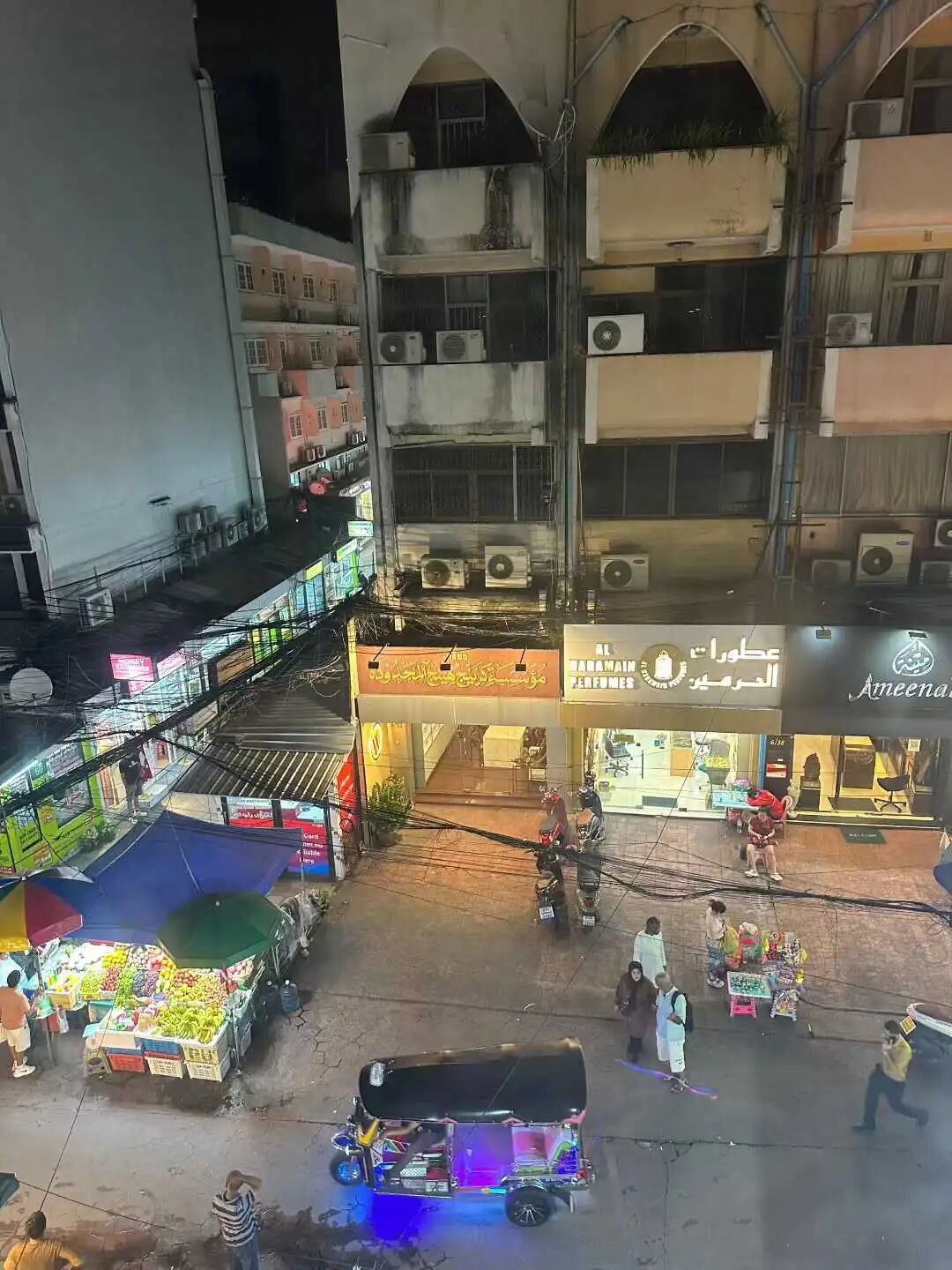
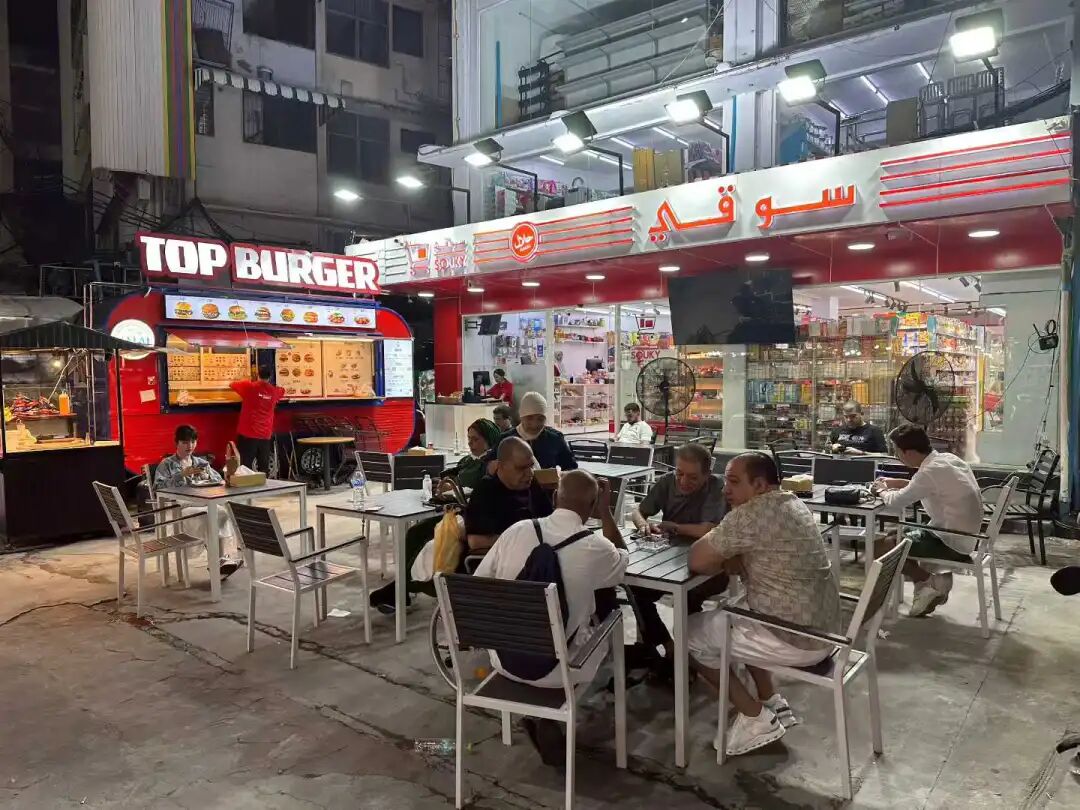
Stepping out of the Nana light rail station, you can see an interesting pattern: Europeans head south to the bars and nightclubs of Nana, while Arabs and other friends (dosti) head north to the Middle Eastern restaurants, agarwood shops, and import supermarkets of Arab Alley. At night, Arab Alley is brightly lit. Tourists from the Middle East and Africa keep their home routines, drinking tea, smoking shisha, and chatting late into the night, while many others shop for fruit and agarwood. The Middle Eastern restaurants in Arab Alley do not sell alcohol and are brightly lit. Many people visit with their whole families, which is a sharp contrast to Nana to the south.
The rise of Bangkok's Arab Alley started with the Grace Hotel. The Grace Hotel opened in 1966 and was a famous luxury hotel in early Bangkok. It was popular with expats, tourists, and American soldiers who had just left the Vietnam War, and many Arab tourists also chose to stay here when visiting Bangkok. In 1983, the Egyptian restaurant Shahrazad officially opened in Arab Alley. Afterward, more and more Middle Eastern restaurants opened, and Arab Alley officially became the first stop for Arab tourists visiting Bangkok. People come here to exchange money, buy SIM cards, and eat Middle Eastern breakfast to start their day of travel.
As the first Arab restaurant in Bangkok, Shahrazad on Arab Alley is definitely worth a try. This Egyptian restaurant, which opened in 1983, still keeps its 1980s decor. The storefront is low-key, the interior is clean, the waiters wear uniforms, and the Arab staff greeting guests are all smiles.
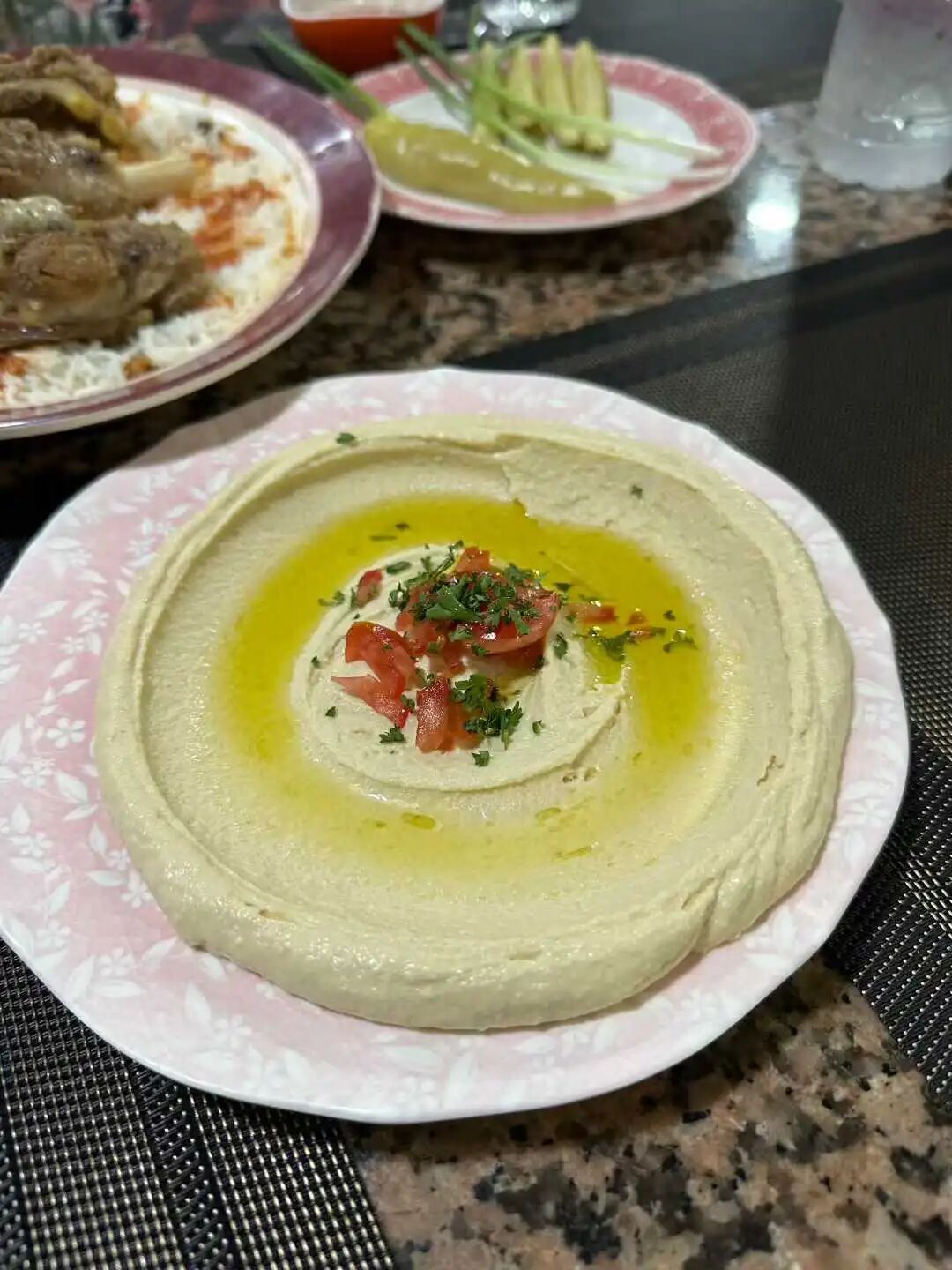
I ordered their lamb trotter soup, Egyptian lamb rice (Fatteh), and hummus (hummus), all of which were delicious. The white broth of the lamb trotter soup was very fresh; the meat must have been flown in. Lamb rice (Fatteh) is a classic holiday dish from the eastern Arab region. It mixes rice, flatbread, and chickpeas, and the lamb is fried until it smells amazing. It was so good I couldn't stop eating. Their hummus was very refreshing and easy for non-Arabs to enjoy.
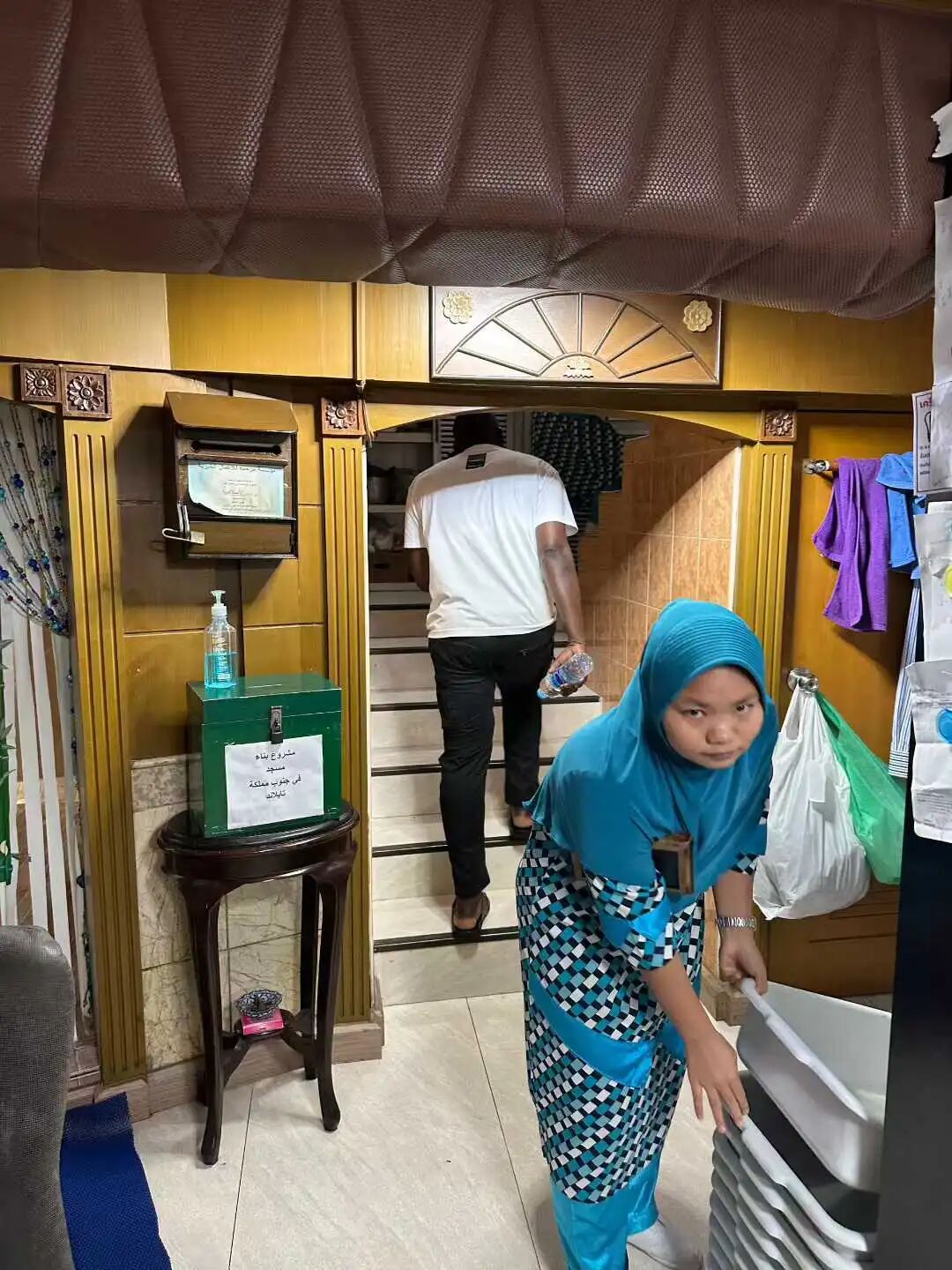
Above the Shahrazad restaurant is the Nana Mosque, one of the two mosques in Arab Alley. You have to go up a staircase next to the restaurant kitchen to reach the Nana Mosque. The location is hidden, but it is said to be very crowded during Jumu'ah.
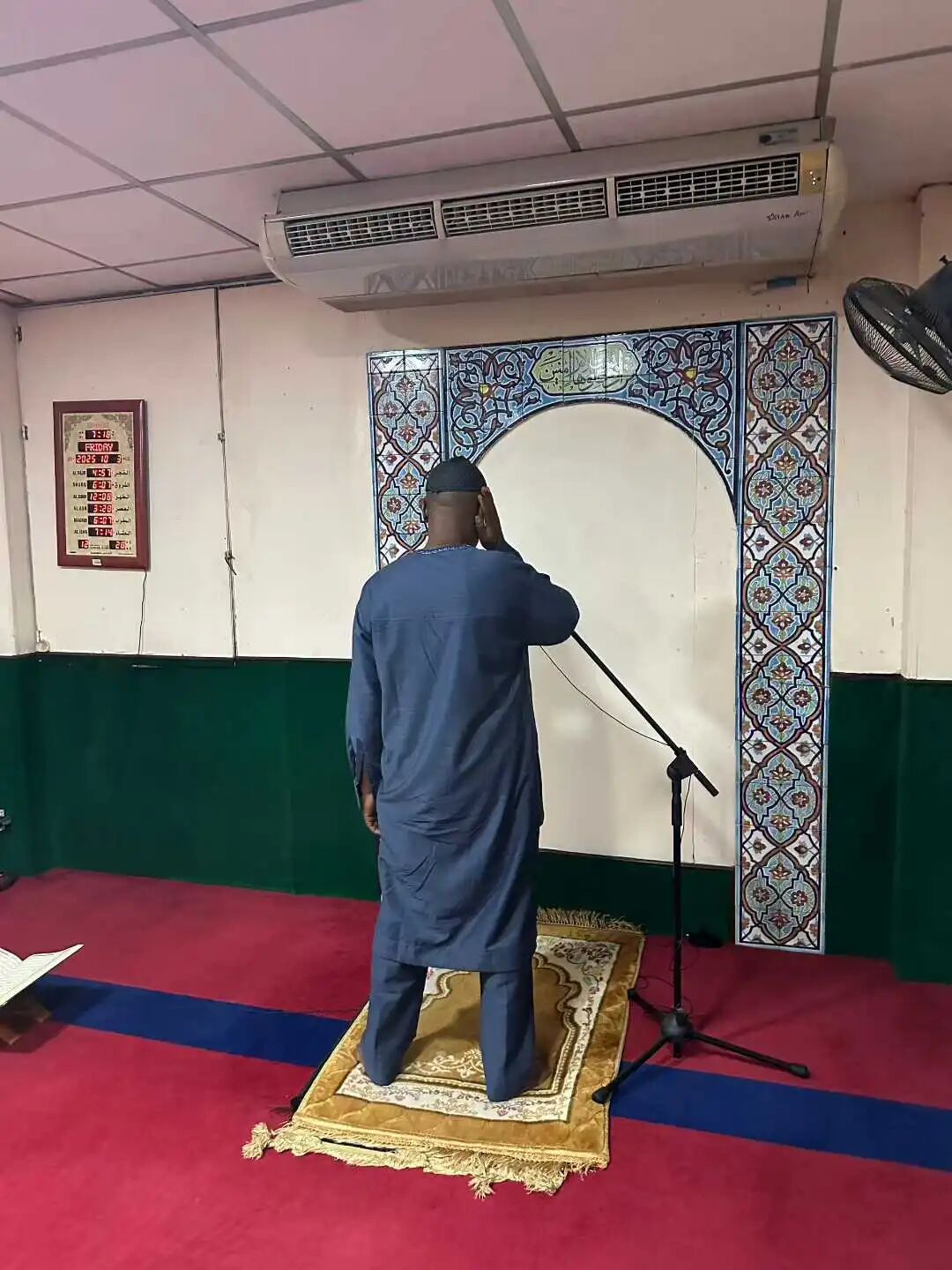
The other mosque in Arab Alley is the Sukhumvit Road Mosque, located above the Middle East Hotel. Sukhumvit Road is the main road extending southeast from Bangkok, and Arab Alley is right next to it. The Sukhumvit Road Mosque is larger than the Nana Mosque and has more people. When I went, I caught the prayer (salah). After the congregation (jama'ah) finished, those who arrived late spontaneously formed another jama'ah, which is quite rare in East and Southeast Asia. After the prayer, there were dates (tamr) given out as charity (sadaqah).
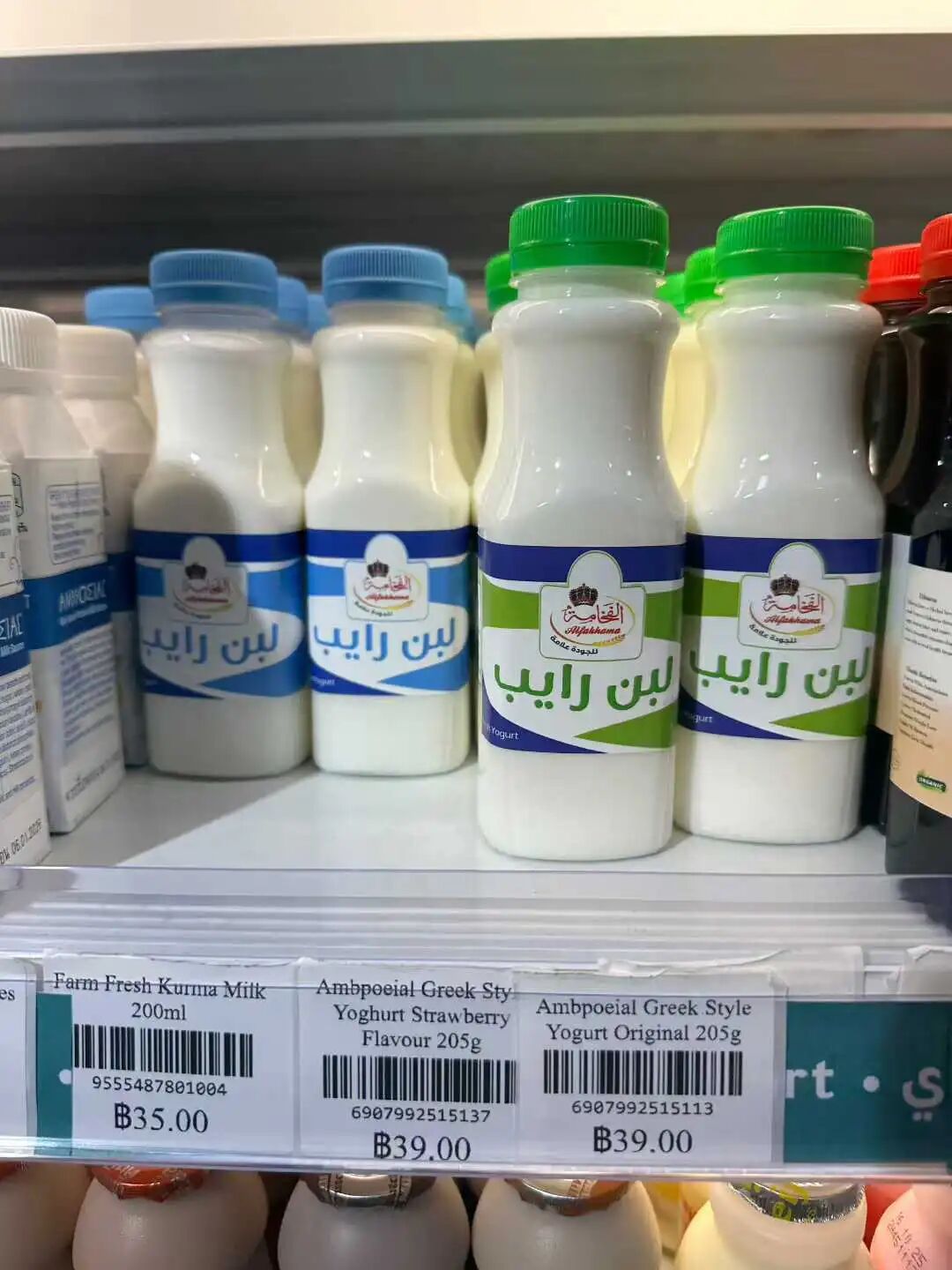
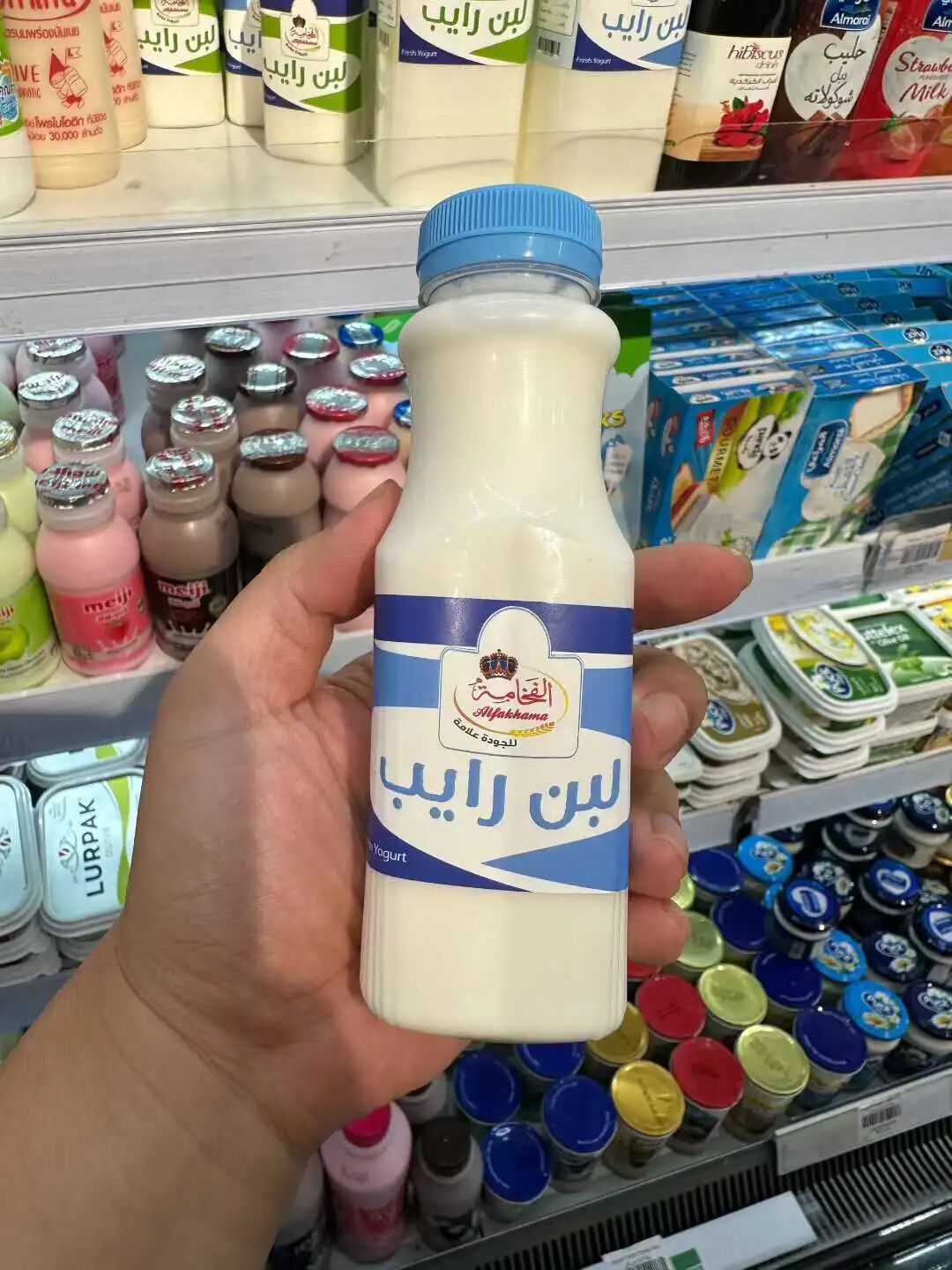
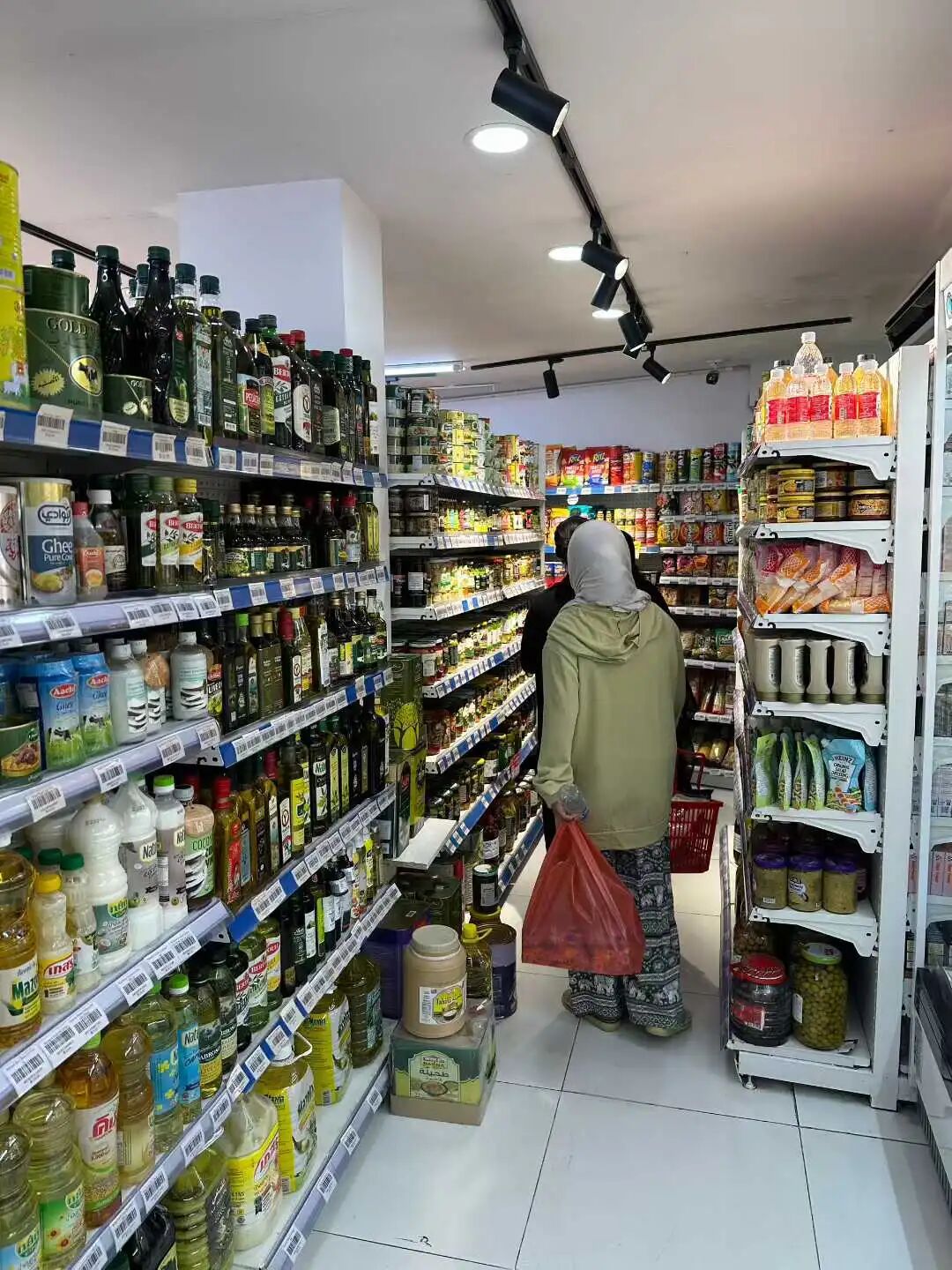
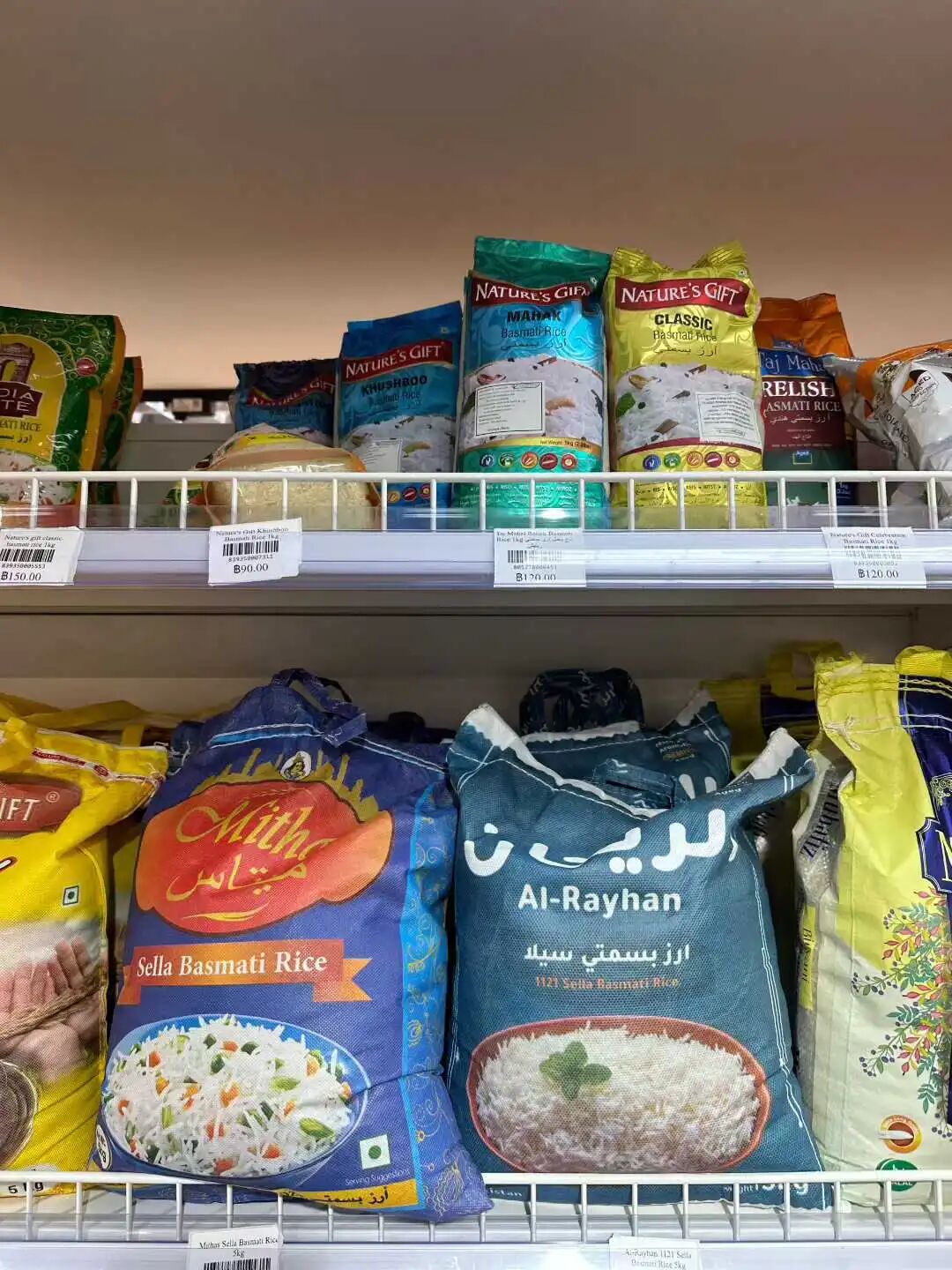
Arab Alley has several Middle Eastern import supermarkets where you can buy almost all the ingredients and spices for Arab food. You can also buy authentic, unsweetened yogurt with a strong sour taste, whereas in other Thai supermarkets, you can basically only find sweet yogurt.
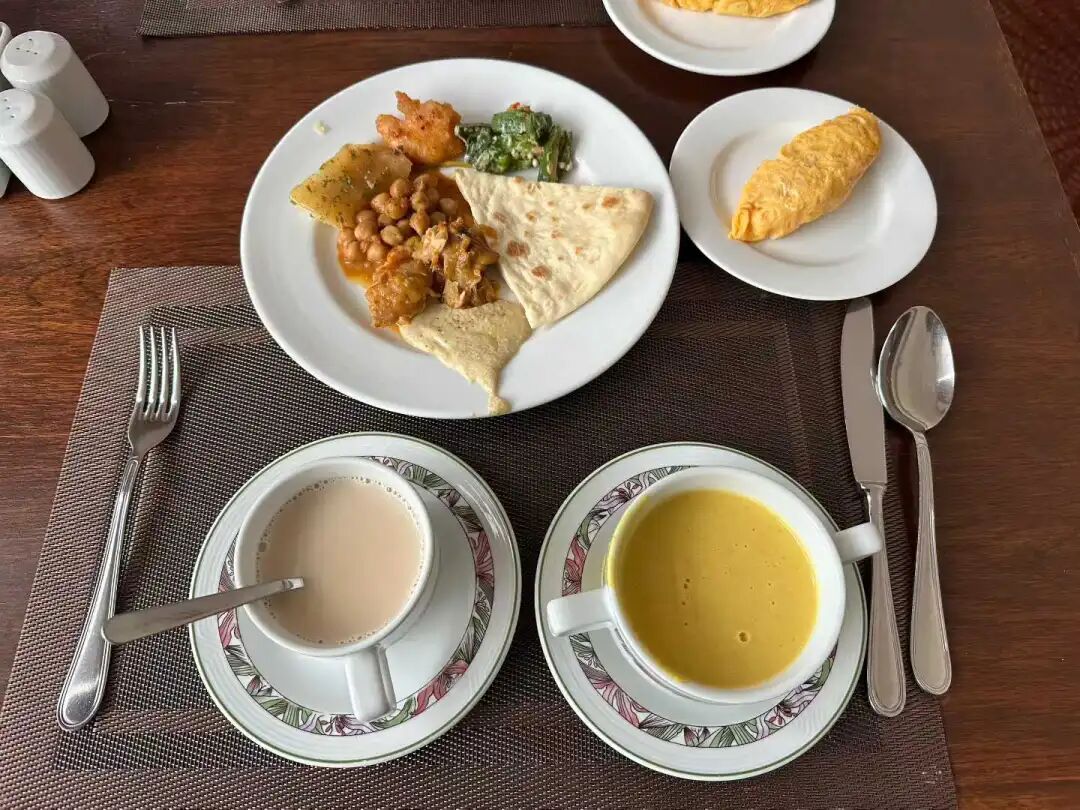
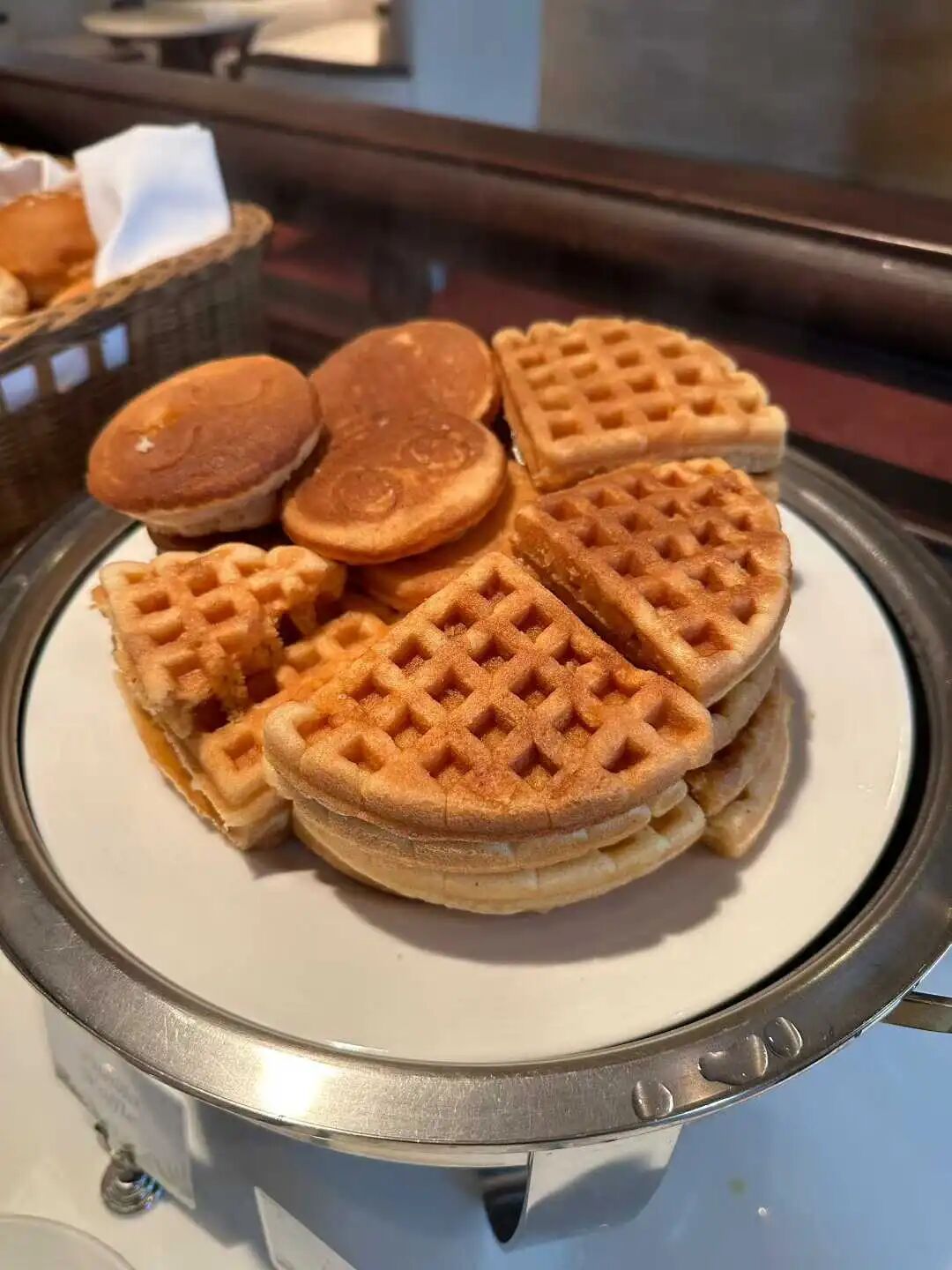
We stayed at the Zenith Sukhumvit Hotel near Arab Alley. There is a light rail to the south and a canal boat to the north, though the road in front is often congested. Their halal breakfast focuses on Arab and South Asian styles, catering to the Arab and South Asian tourists staying in Arab Alley. Breakfast includes hummus (humusi) and naan bread with curry. You can order eggs made to order, and the omelet (omelette) is packed with ingredients. Although omelets are found in many countries, they actually originated in ancient Persia and spread everywhere through Eurasian trade routes.
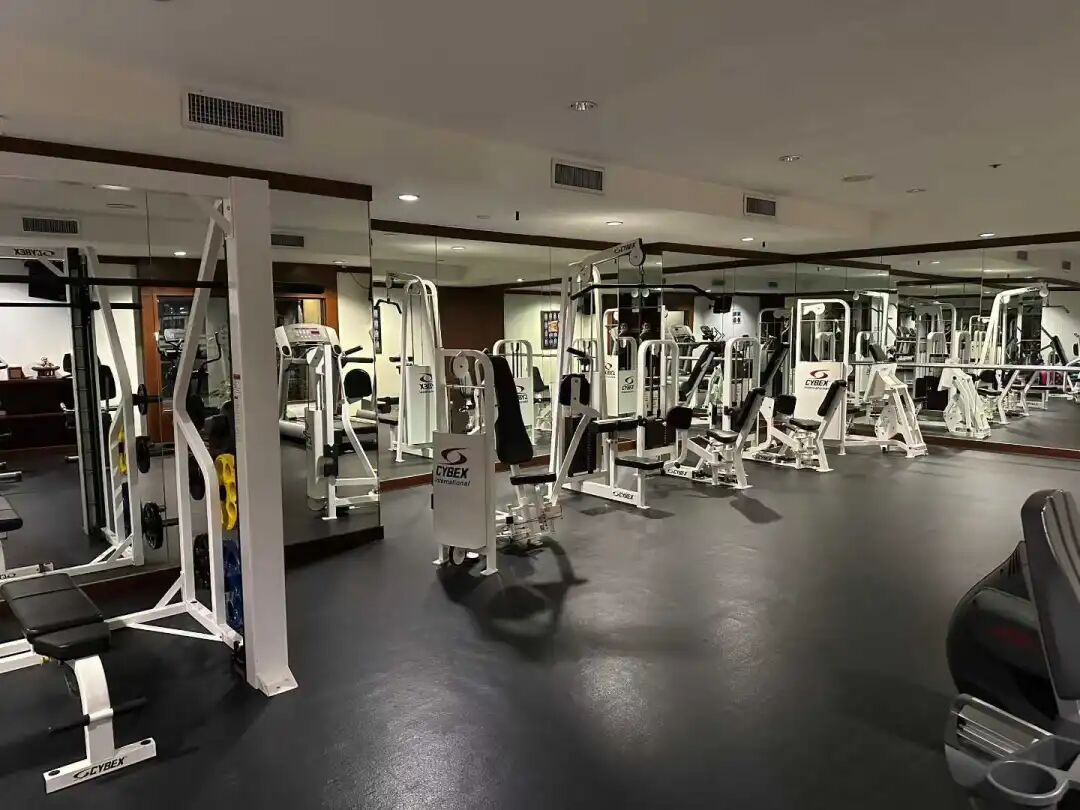
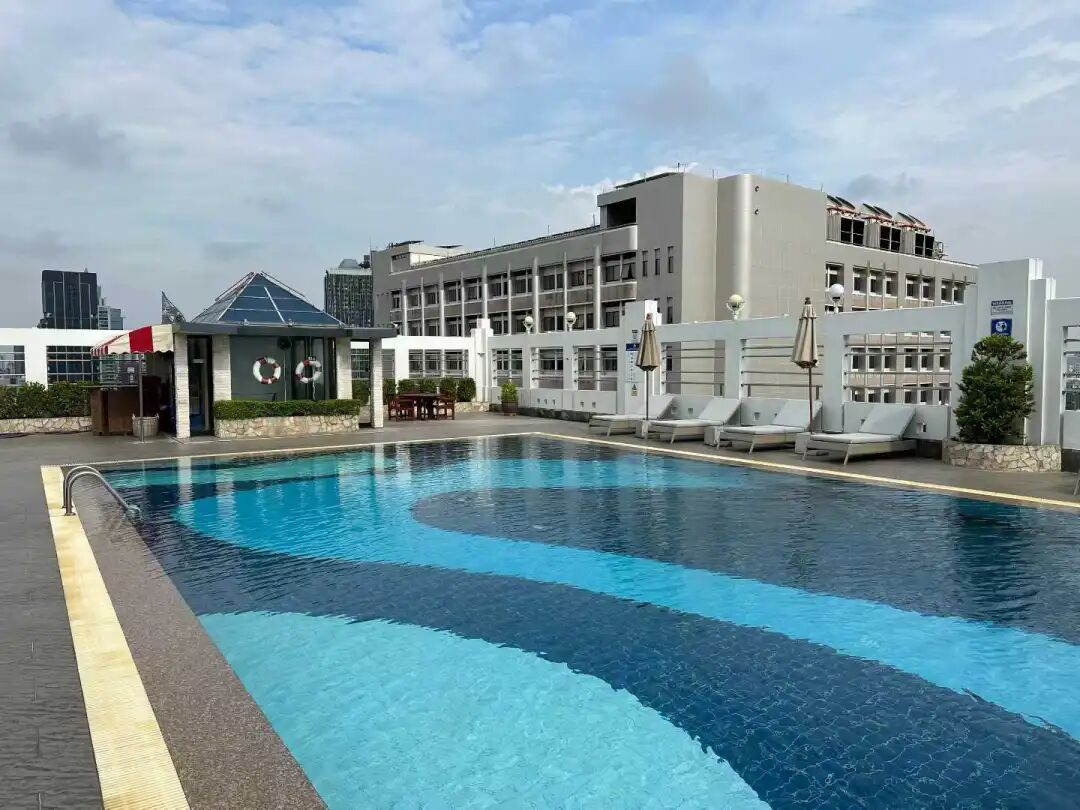
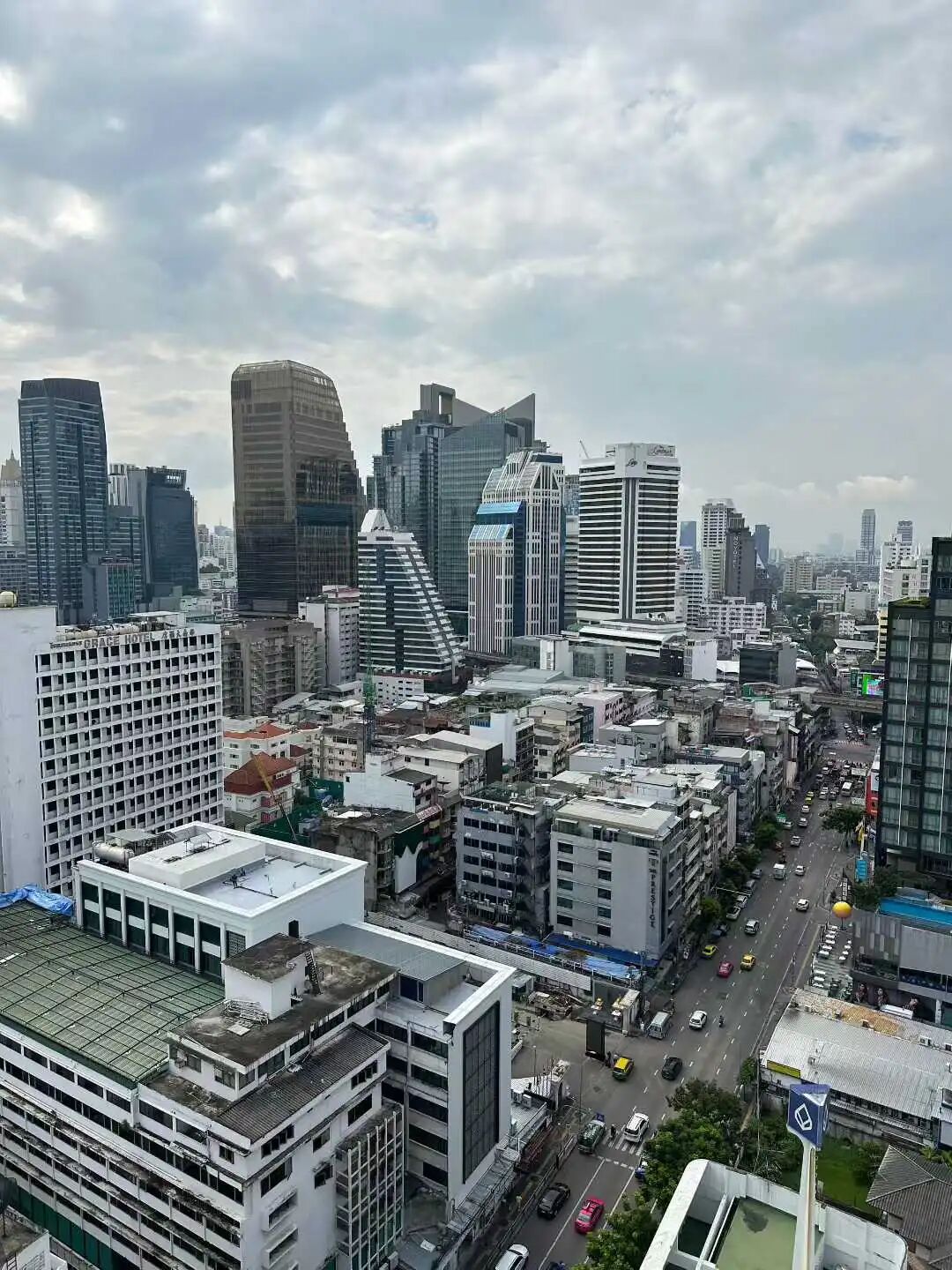
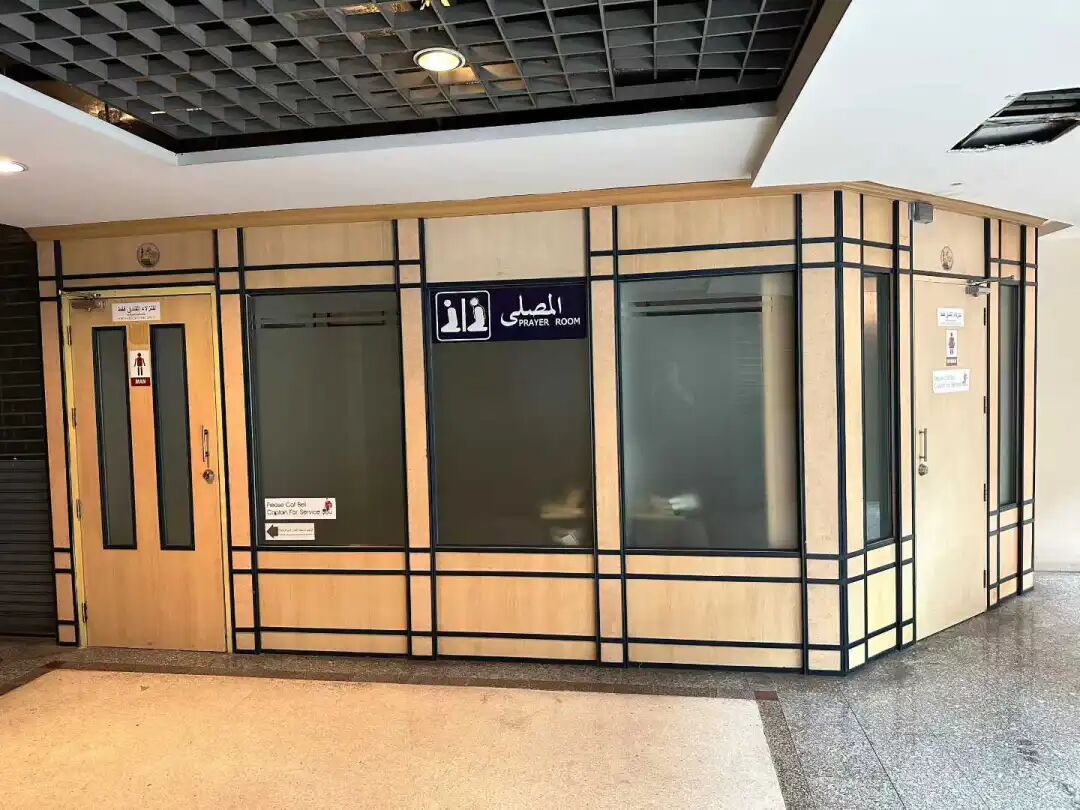
The Shengli Hotel has a gym and a rooftop pool. From the pool, you can look down over the entire Arab Street and see the Nana red-light district in the distance. The hotel has a private prayer room on the first floor. You need to ask the front desk staff to help you open it. view all
Summary: Bangkok's Arab Street sits beside the Nana area and serves Arab and South Asian Muslim travelers with halal restaurants, hotels, breakfast shops, and prayer spaces. This account keeps the source's route, food, hotel, mosque, and street details in clear English.
I only learned this year that Bangkok has an Arab neighborhood called Arab Alley (Soi Arab), and it is separated from Nana, Bangkok's most famous red-light district, by just one light rail line. On this trip to Bangkok, we stayed at a hotel near Arab Alley that is popular with Arab guests, just to experience the atmosphere of the area.
Stepping out of the Nana light rail station, you can see an interesting pattern: Europeans head south to the bars and nightclubs of Nana, while Arabs and other friends (dosti) head north to the Middle Eastern restaurants, agarwood shops, and import supermarkets of Arab Alley. At night, Arab Alley is brightly lit. Tourists from the Middle East and Africa keep their home routines, drinking tea, smoking shisha, and chatting late into the night, while many others shop for fruit and agarwood. The Middle Eastern restaurants in Arab Alley do not sell alcohol and are brightly lit. Many people visit with their whole families, which is a sharp contrast to Nana to the south.
The rise of Bangkok's Arab Alley started with the Grace Hotel. The Grace Hotel opened in 1966 and was a famous luxury hotel in early Bangkok. It was popular with expats, tourists, and American soldiers who had just left the Vietnam War, and many Arab tourists also chose to stay here when visiting Bangkok. In 1983, the Egyptian restaurant Shahrazad officially opened in Arab Alley. Afterward, more and more Middle Eastern restaurants opened, and Arab Alley officially became the first stop for Arab tourists visiting Bangkok. People come here to exchange money, buy SIM cards, and eat Middle Eastern breakfast to start their day of travel.
As the first Arab restaurant in Bangkok, Shahrazad on Arab Alley is definitely worth a try. This Egyptian restaurant, which opened in 1983, still keeps its 1980s decor. The storefront is low-key, the interior is clean, the waiters wear uniforms, and the Arab staff greeting guests are all smiles.
I ordered their lamb trotter soup, Egyptian lamb rice (Fatteh), and hummus (hummus), all of which were delicious. The white broth of the lamb trotter soup was very fresh; the meat must have been flown in. Lamb rice (Fatteh) is a classic holiday dish from the eastern Arab region. It mixes rice, flatbread, and chickpeas, and the lamb is fried until it smells amazing. It was so good I couldn't stop eating. Their hummus was very refreshing and easy for non-Arabs to enjoy.
Above the Shahrazad restaurant is the Nana Mosque, one of the two mosques in Arab Alley. You have to go up a staircase next to the restaurant kitchen to reach the Nana Mosque. The location is hidden, but it is said to be very crowded during Jumu'ah.
The other mosque in Arab Alley is the Sukhumvit Road Mosque, located above the Middle East Hotel. Sukhumvit Road is the main road extending southeast from Bangkok, and Arab Alley is right next to it. The Sukhumvit Road Mosque is larger than the Nana Mosque and has more people. When I went, I caught the prayer (salah). After the congregation (jama'ah) finished, those who arrived late spontaneously formed another jama'ah, which is quite rare in East and Southeast Asia. After the prayer, there were dates (tamr) given out as charity (sadaqah).
Arab Alley has several Middle Eastern import supermarkets where you can buy almost all the ingredients and spices for Arab food. You can also buy authentic, unsweetened yogurt with a strong sour taste, whereas in other Thai supermarkets, you can basically only find sweet yogurt.
We stayed at the Zenith Sukhumvit Hotel near Arab Alley. There is a light rail to the south and a canal boat to the north, though the road in front is often congested. Their halal breakfast focuses on Arab and South Asian styles, catering to the Arab and South Asian tourists staying in Arab Alley. Breakfast includes hummus (humusi) and naan bread with curry. You can order eggs made to order, and the omelet (omelette) is packed with ingredients. Although omelets are found in many countries, they actually originated in ancient Persia and spread everywhere through Eurasian trade routes.
The Shengli Hotel has a gym and a rooftop pool. From the pool, you can look down over the entire Arab Street and see the Nana red-light district in the distance. The hotel has a private prayer room on the first floor. You need to ask the front desk staff to help you open it. view all
Reposted from the web
Summary: Bangkok's Arab Street sits beside the Nana area and serves Arab and South Asian Muslim travelers with halal restaurants, hotels, breakfast shops, and prayer spaces. This account keeps the source's route, food, hotel, mosque, and street details in clear English.
I only learned this year that Bangkok has an Arab neighborhood called Arab Alley (Soi Arab), and it is separated from Nana, Bangkok's most famous red-light district, by just one light rail line. On this trip to Bangkok, we stayed at a hotel near Arab Alley that is popular with Arab guests, just to experience the atmosphere of the area.
Stepping out of the Nana light rail station, you can see an interesting pattern: Europeans head south to the bars and nightclubs of Nana, while Arabs and other friends (dosti) head north to the Middle Eastern restaurants, agarwood shops, and import supermarkets of Arab Alley. At night, Arab Alley is brightly lit. Tourists from the Middle East and Africa keep their home routines, drinking tea, smoking shisha, and chatting late into the night, while many others shop for fruit and agarwood. The Middle Eastern restaurants in Arab Alley do not sell alcohol and are brightly lit. Many people visit with their whole families, which is a sharp contrast to Nana to the south.
The rise of Bangkok's Arab Alley started with the Grace Hotel. The Grace Hotel opened in 1966 and was a famous luxury hotel in early Bangkok. It was popular with expats, tourists, and American soldiers who had just left the Vietnam War, and many Arab tourists also chose to stay here when visiting Bangkok. In 1983, the Egyptian restaurant Shahrazad officially opened in Arab Alley. Afterward, more and more Middle Eastern restaurants opened, and Arab Alley officially became the first stop for Arab tourists visiting Bangkok. People come here to exchange money, buy SIM cards, and eat Middle Eastern breakfast to start their day of travel.
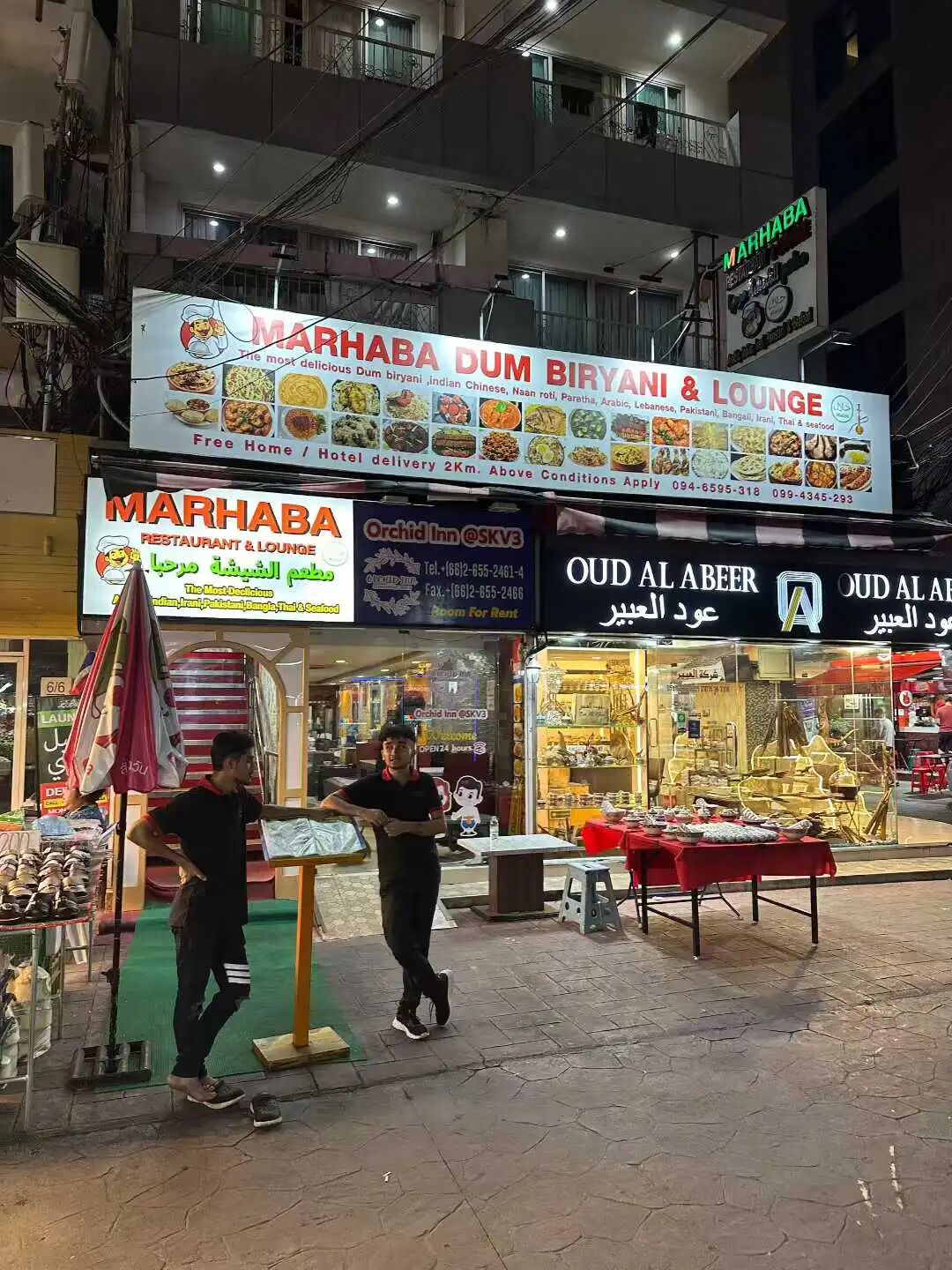
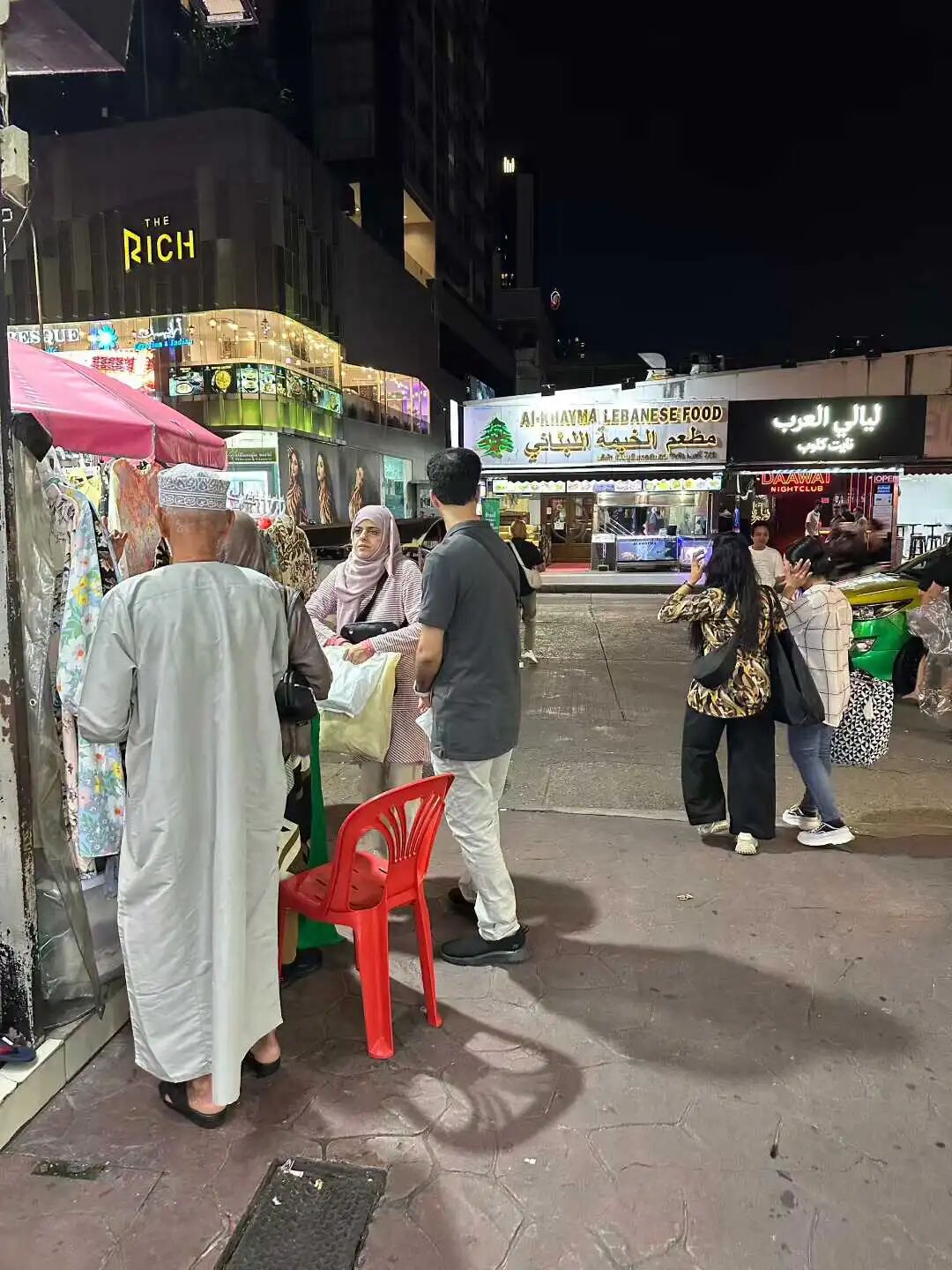
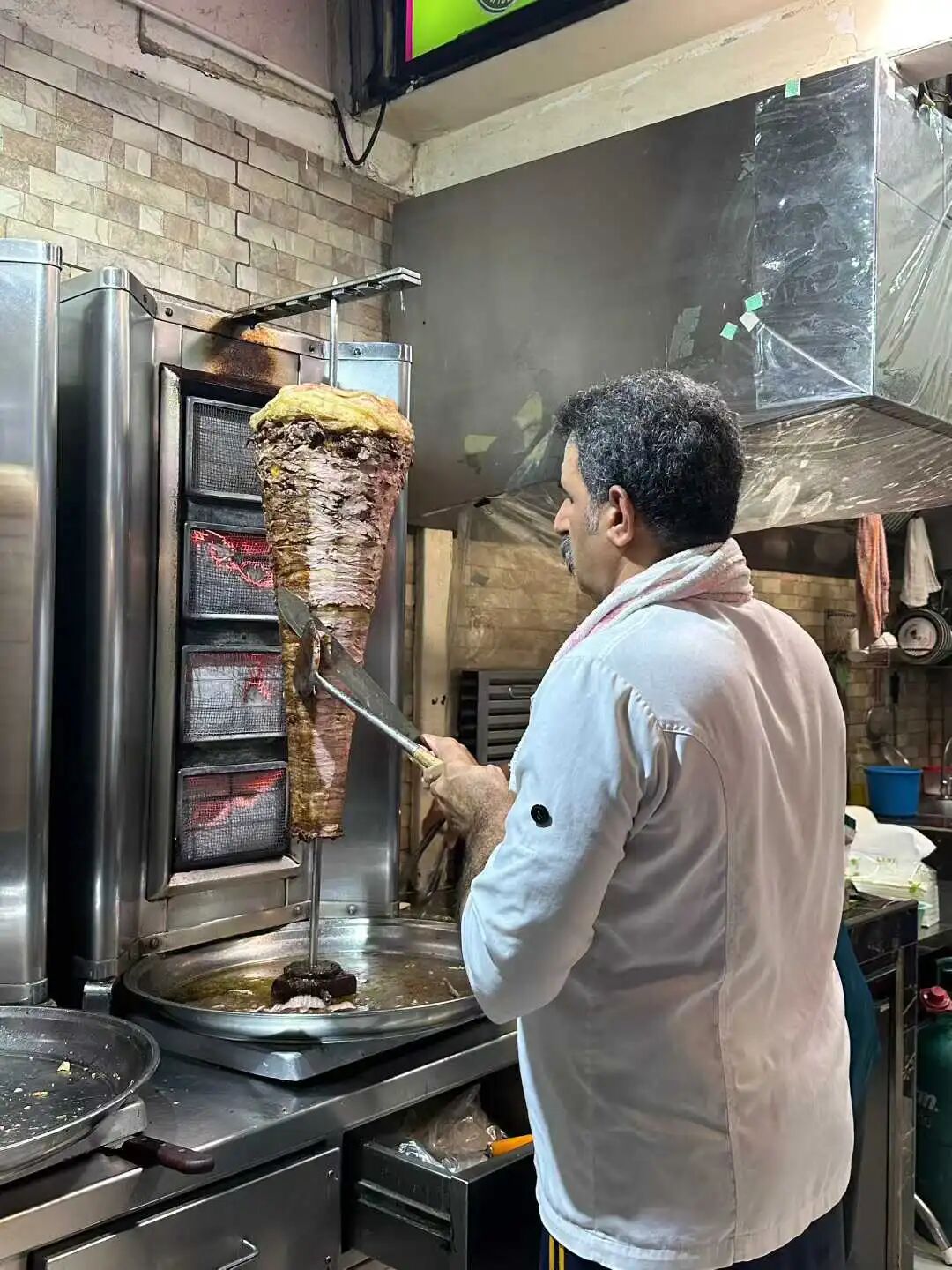
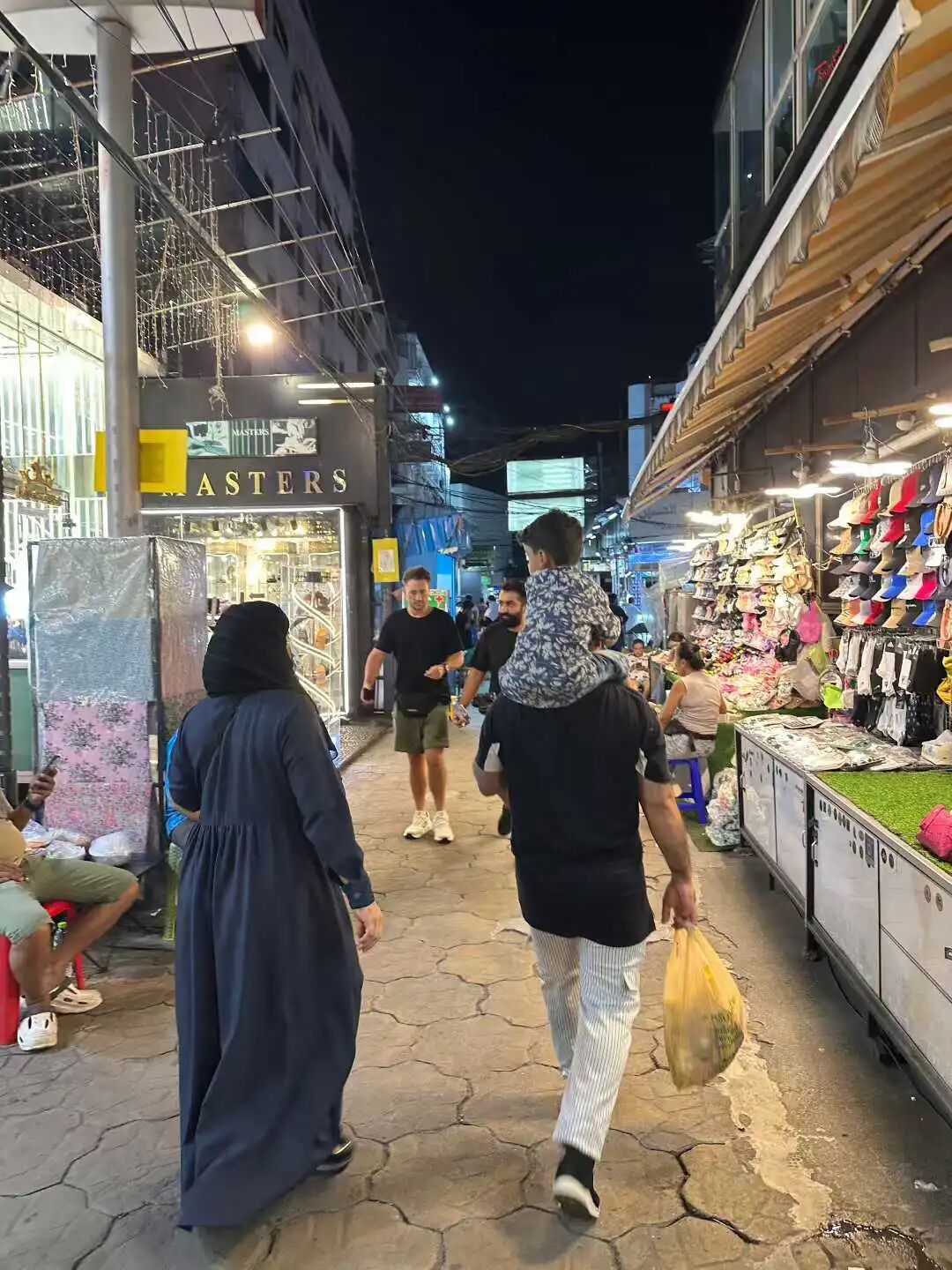
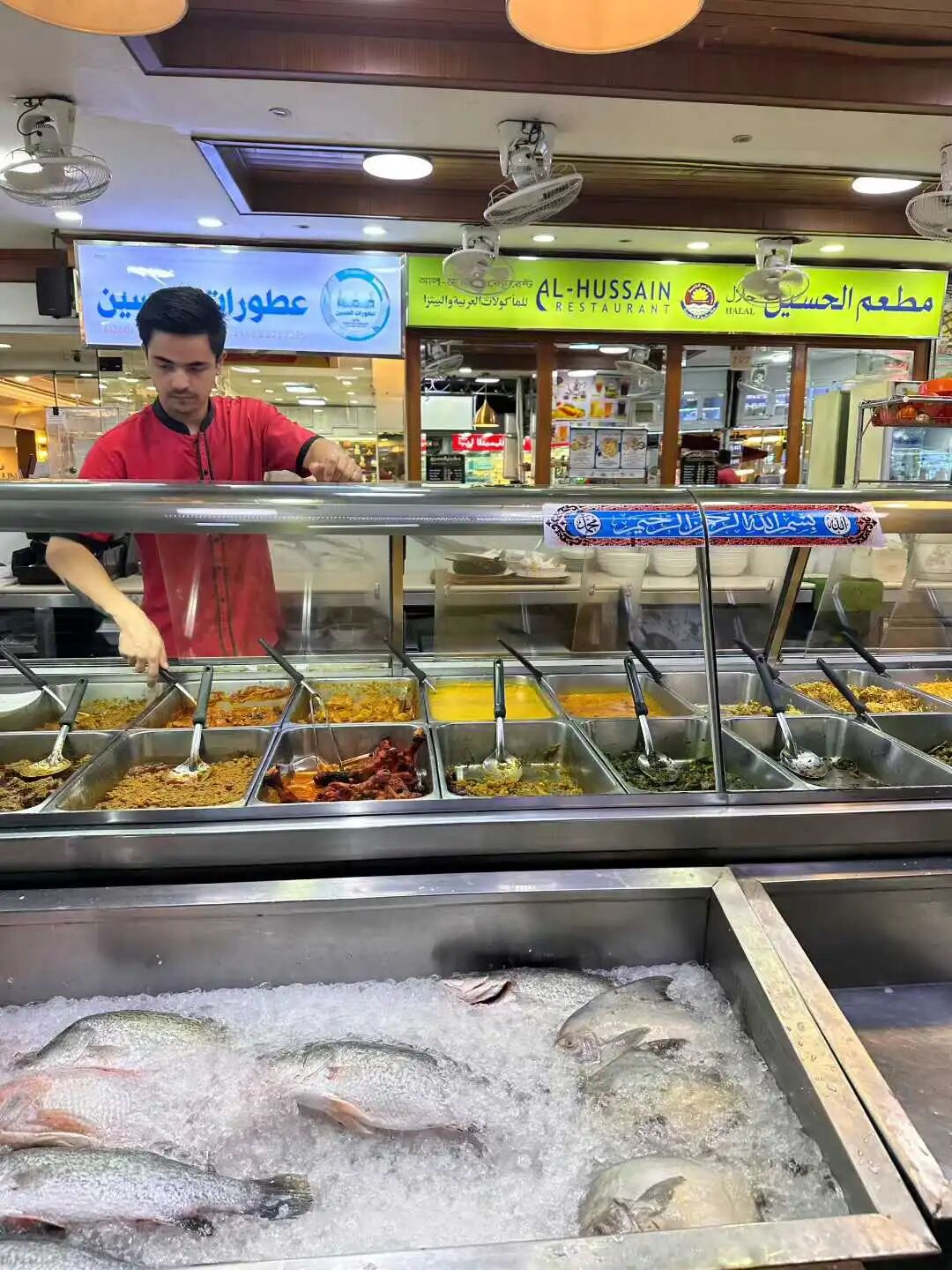
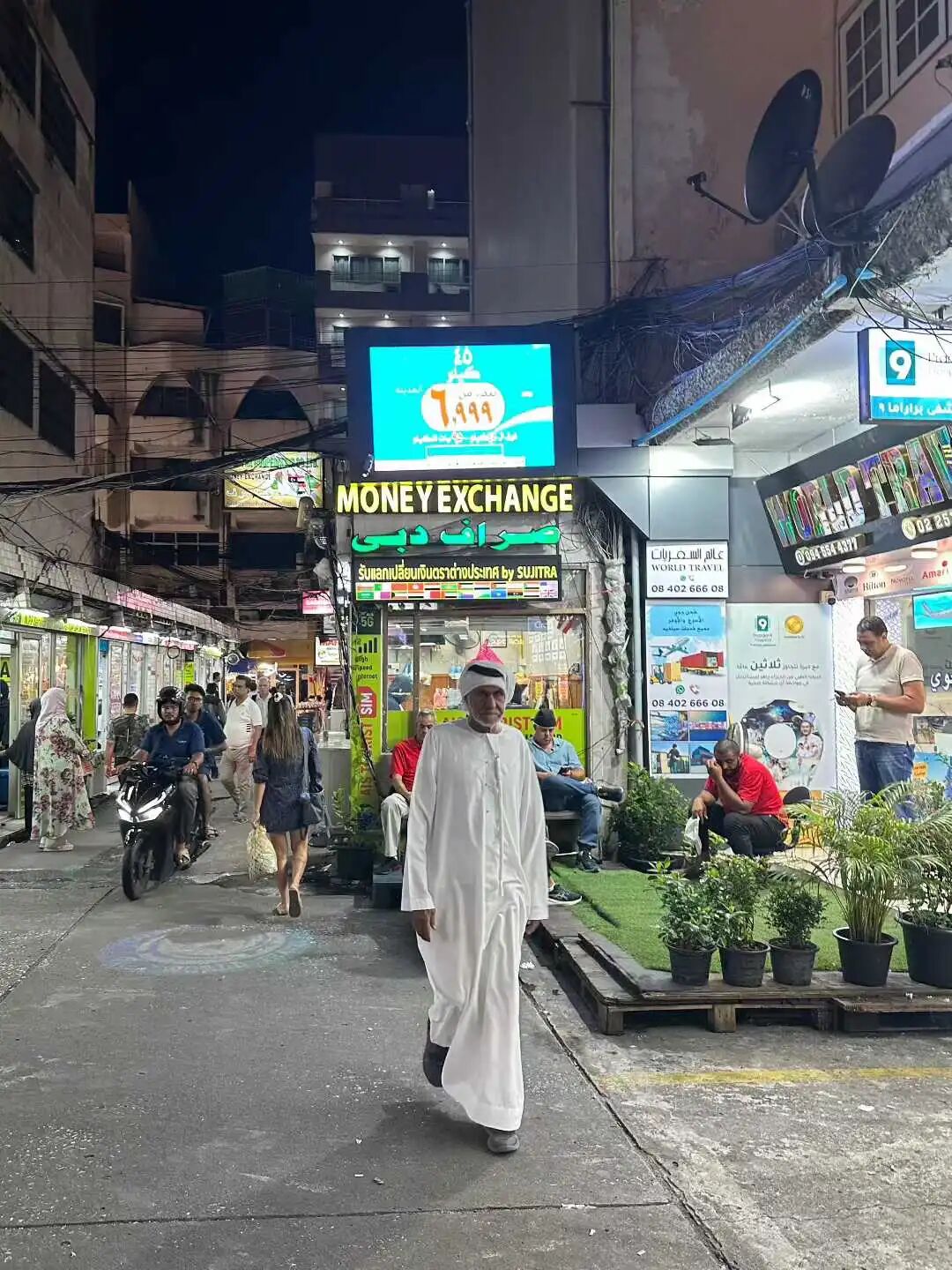
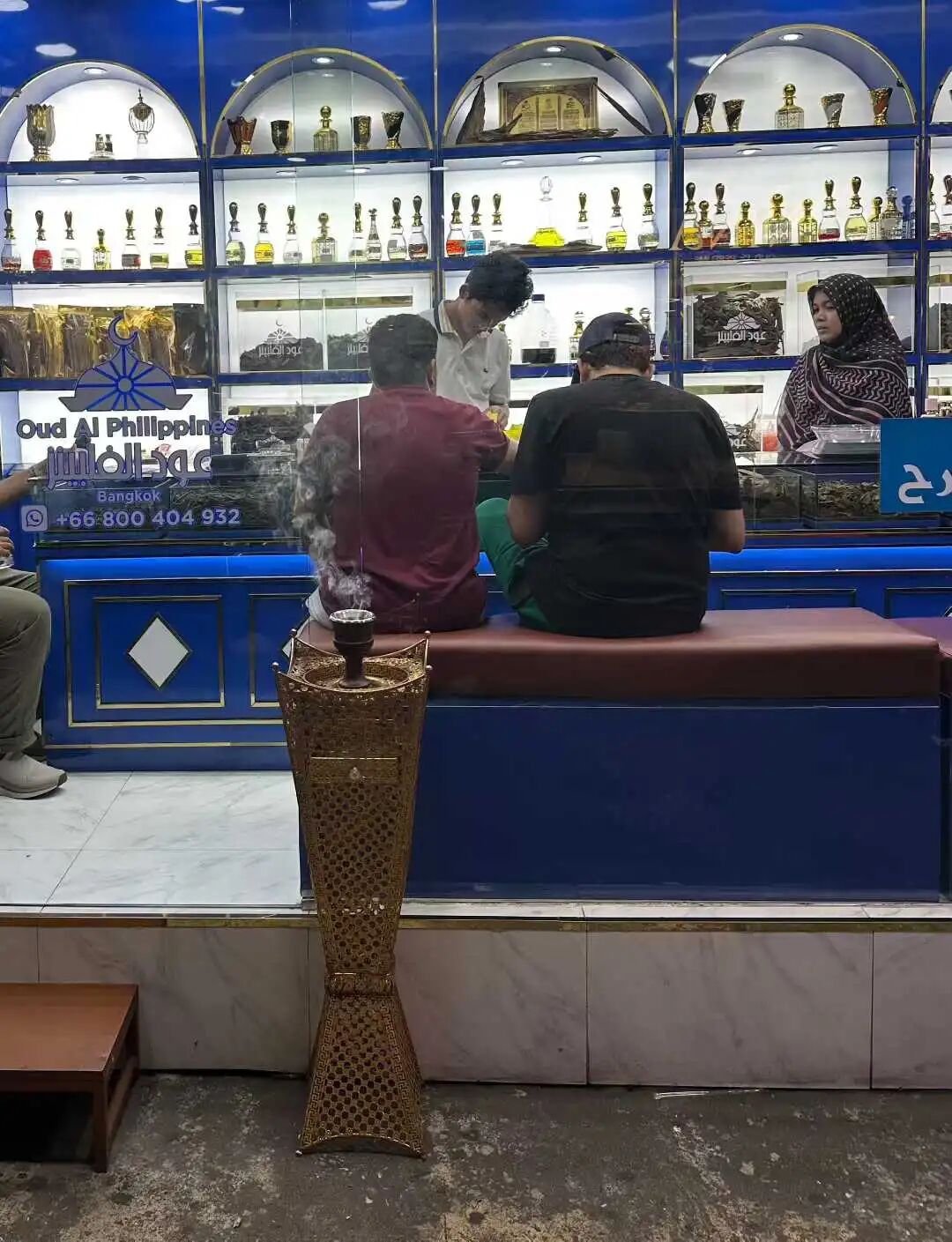
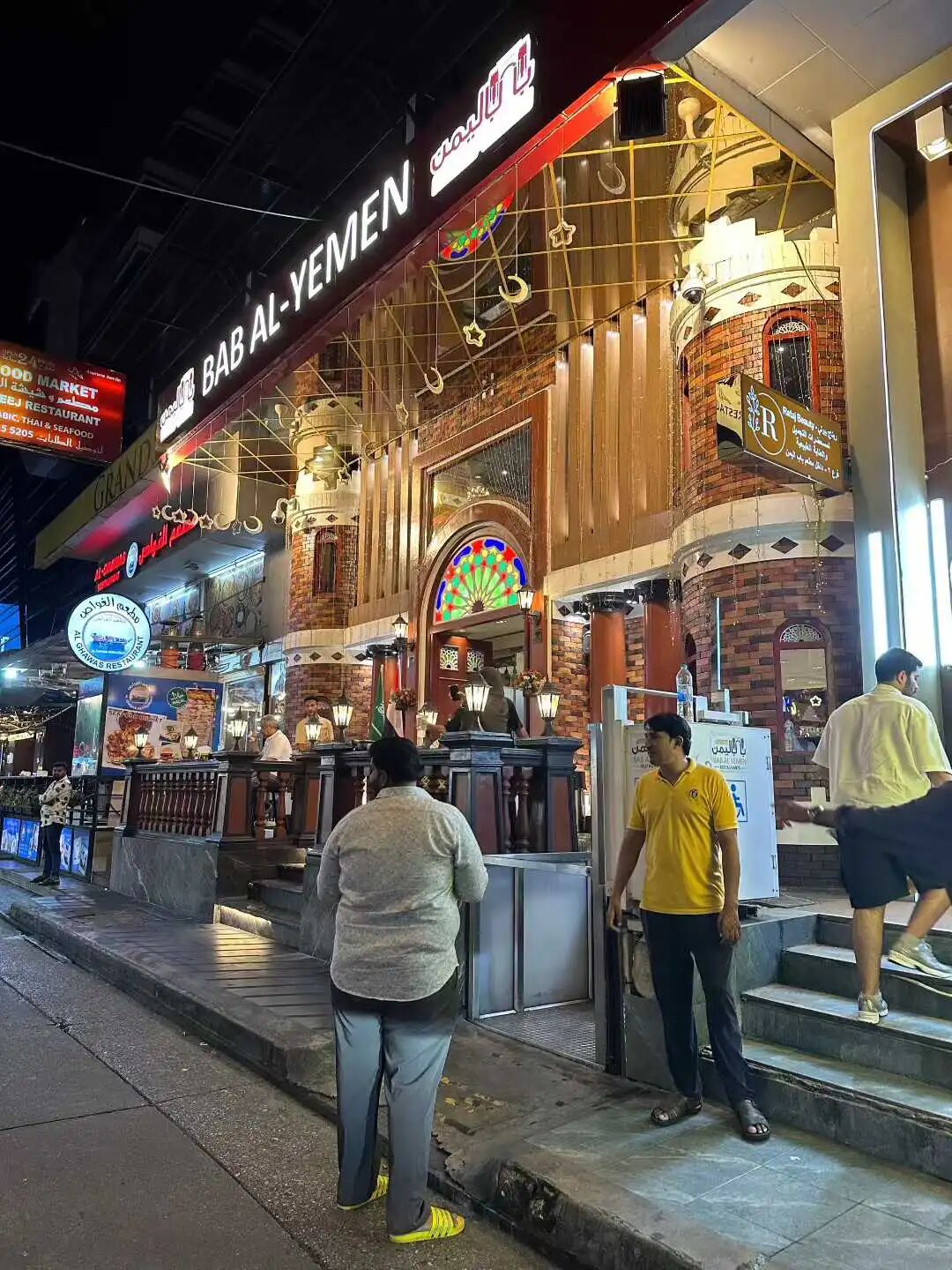
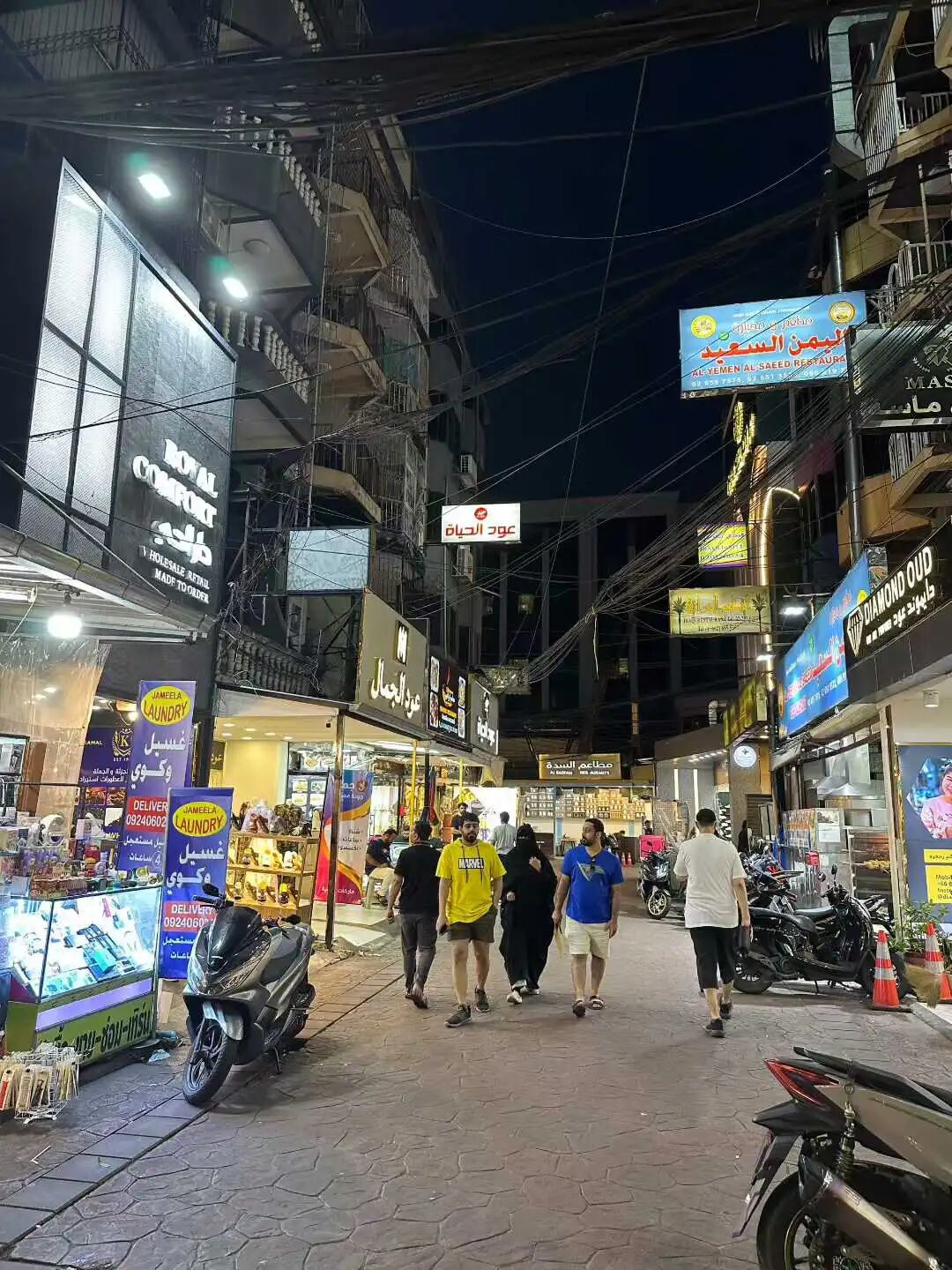
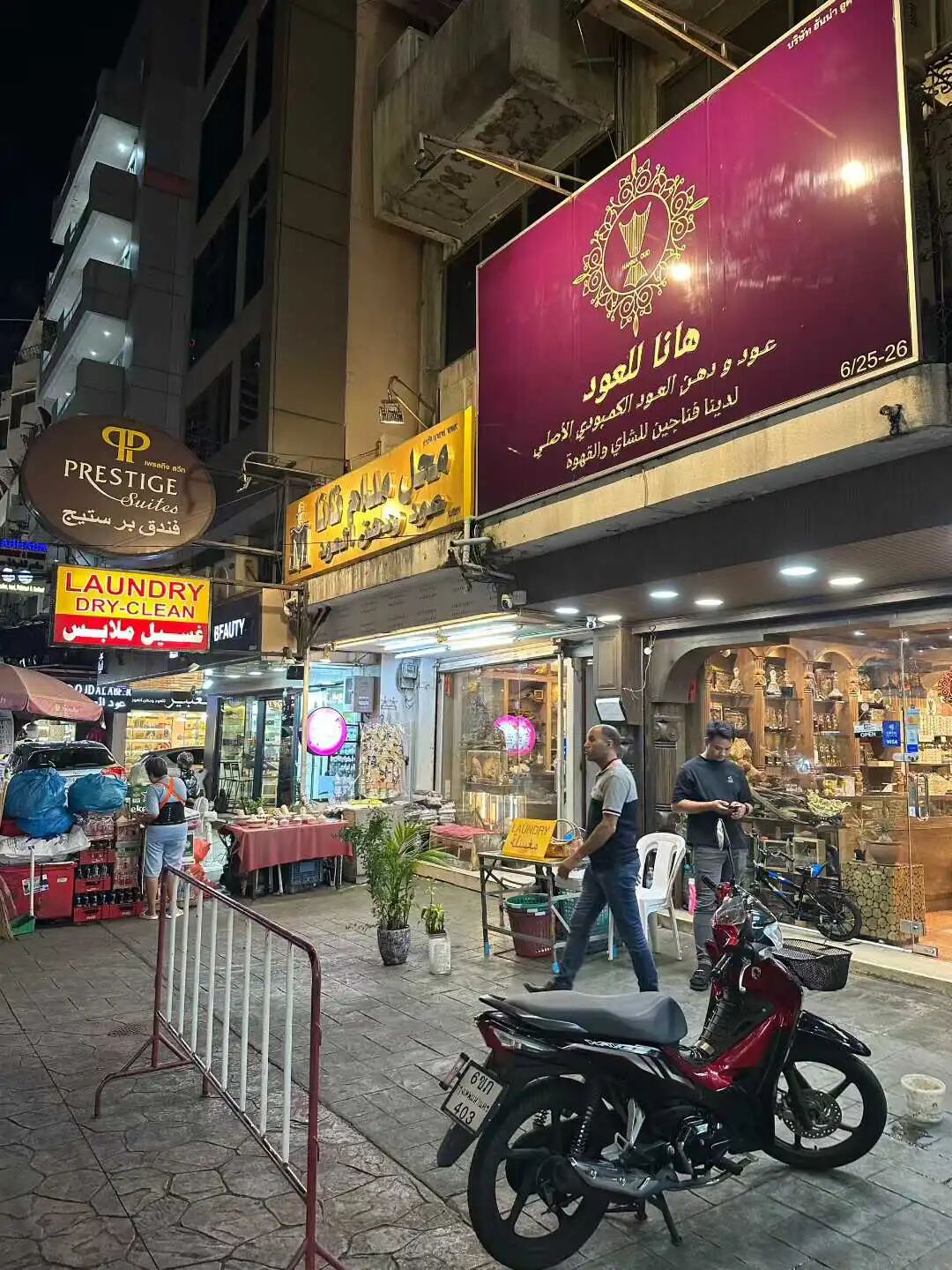
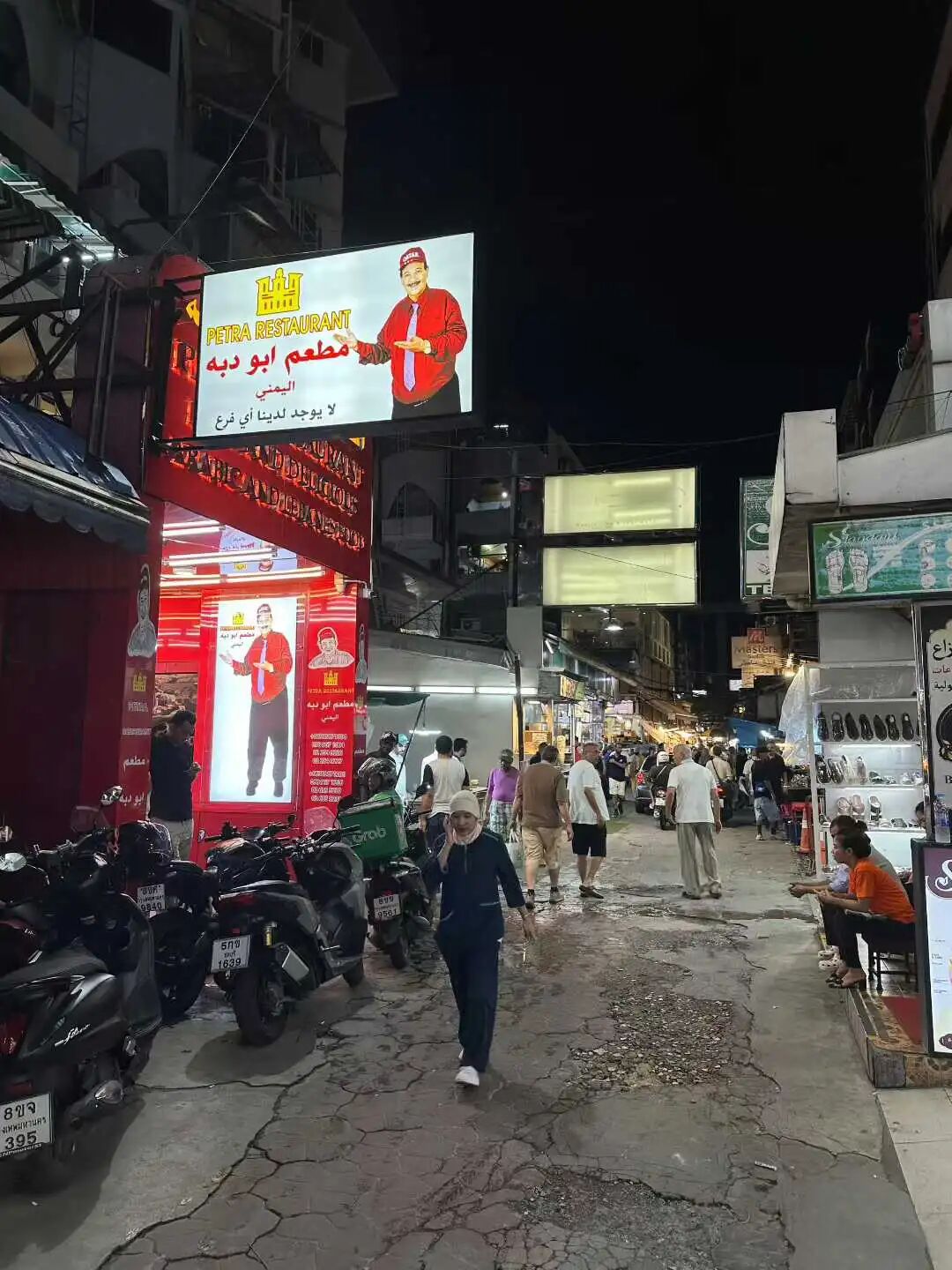
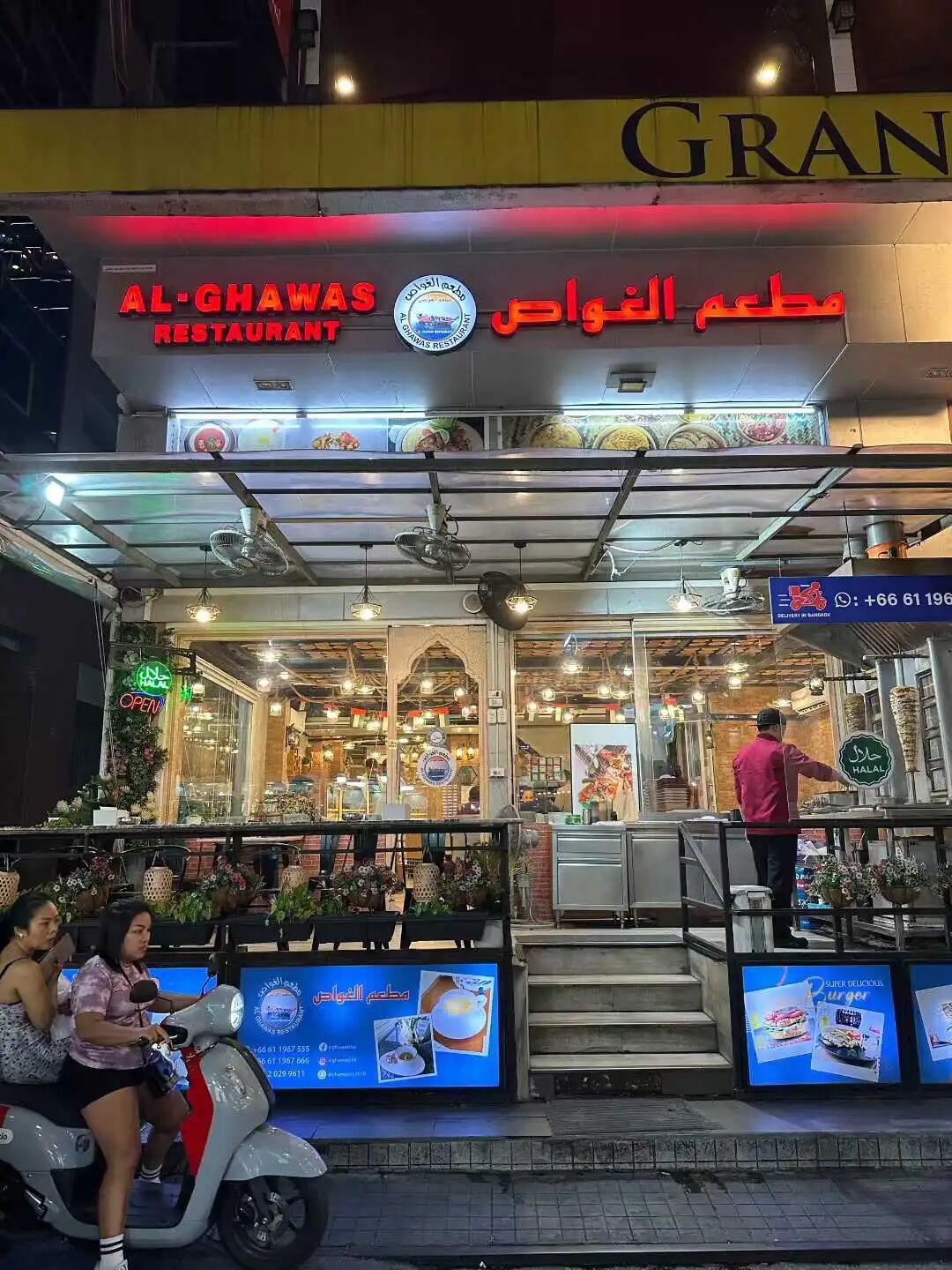
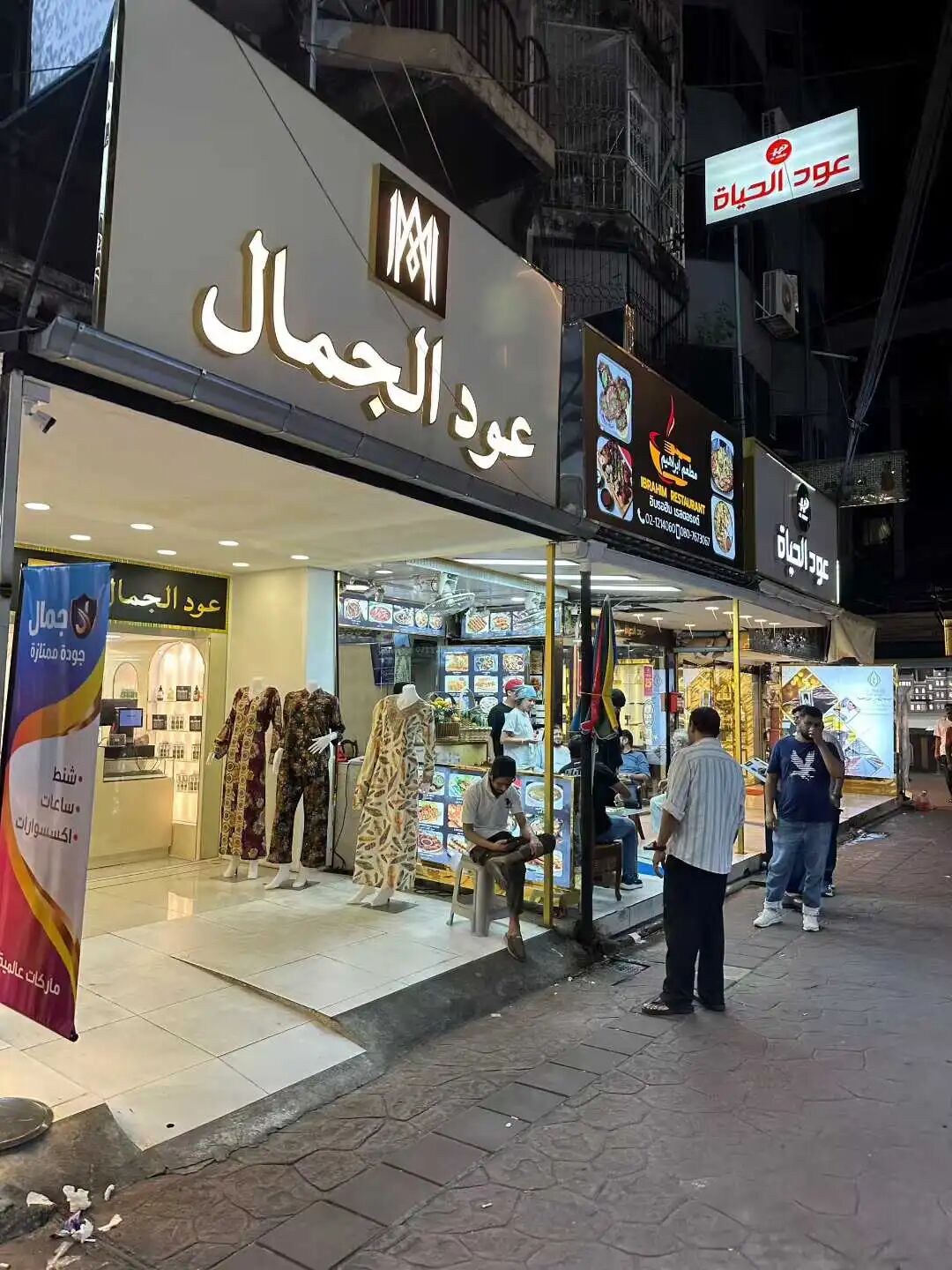
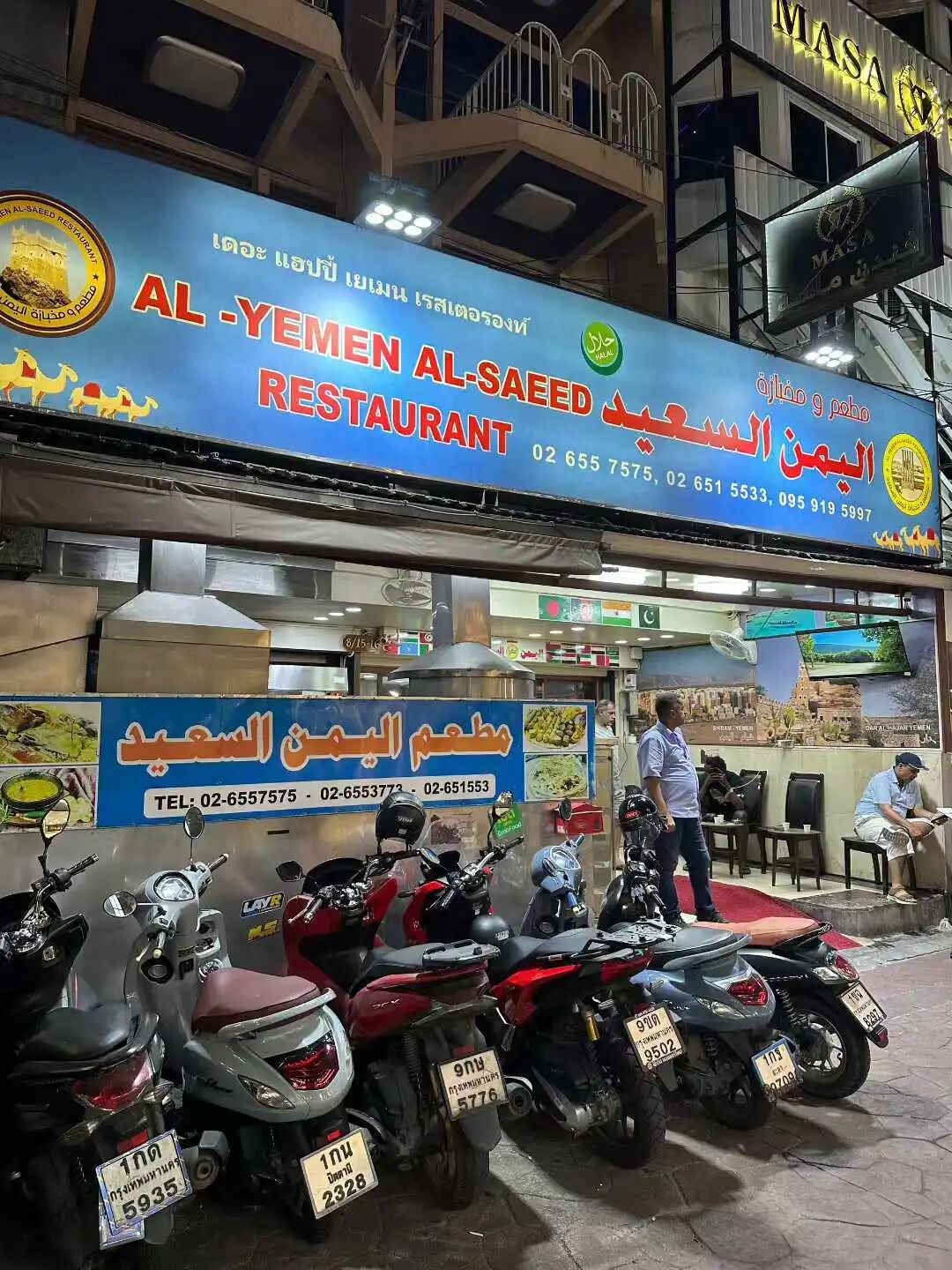
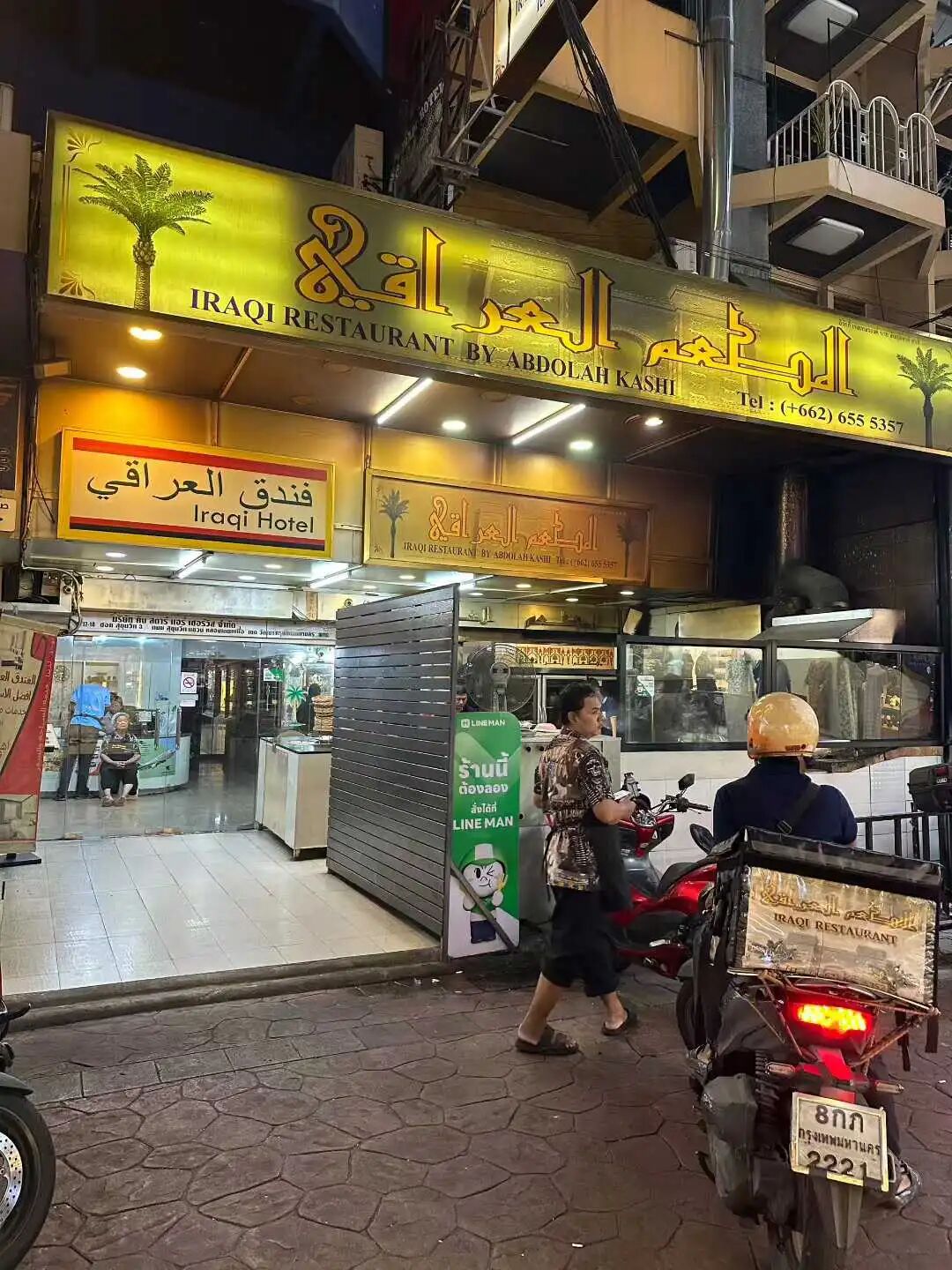
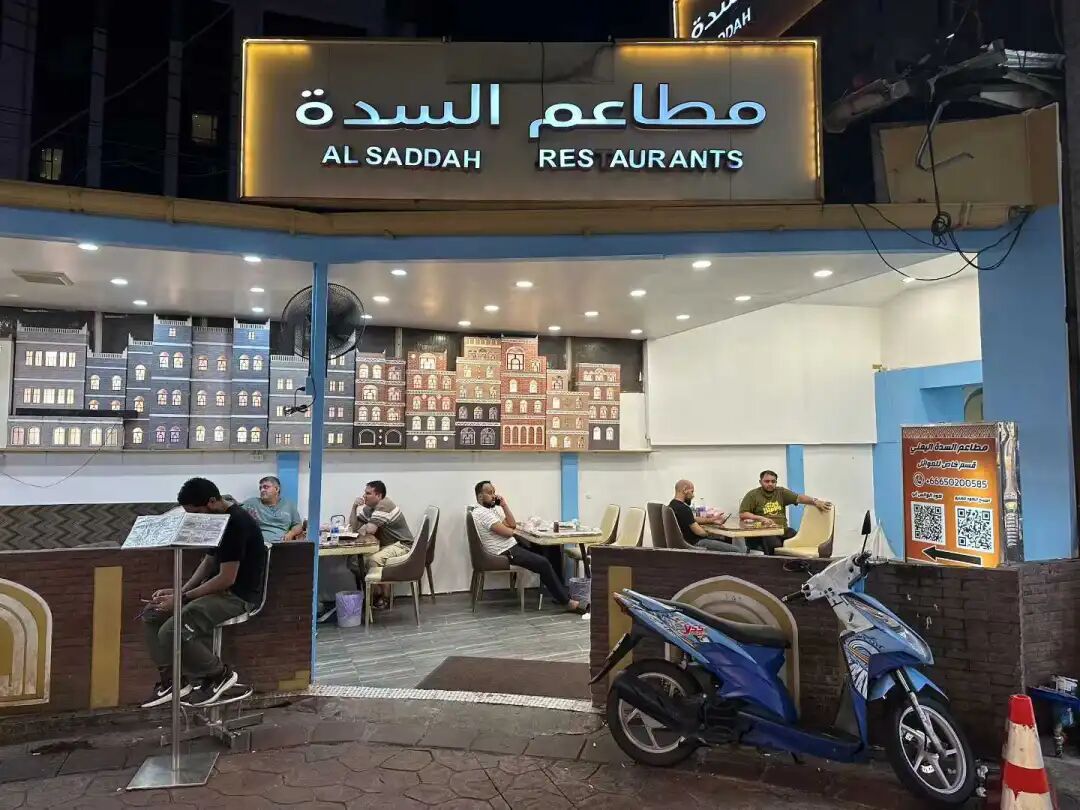
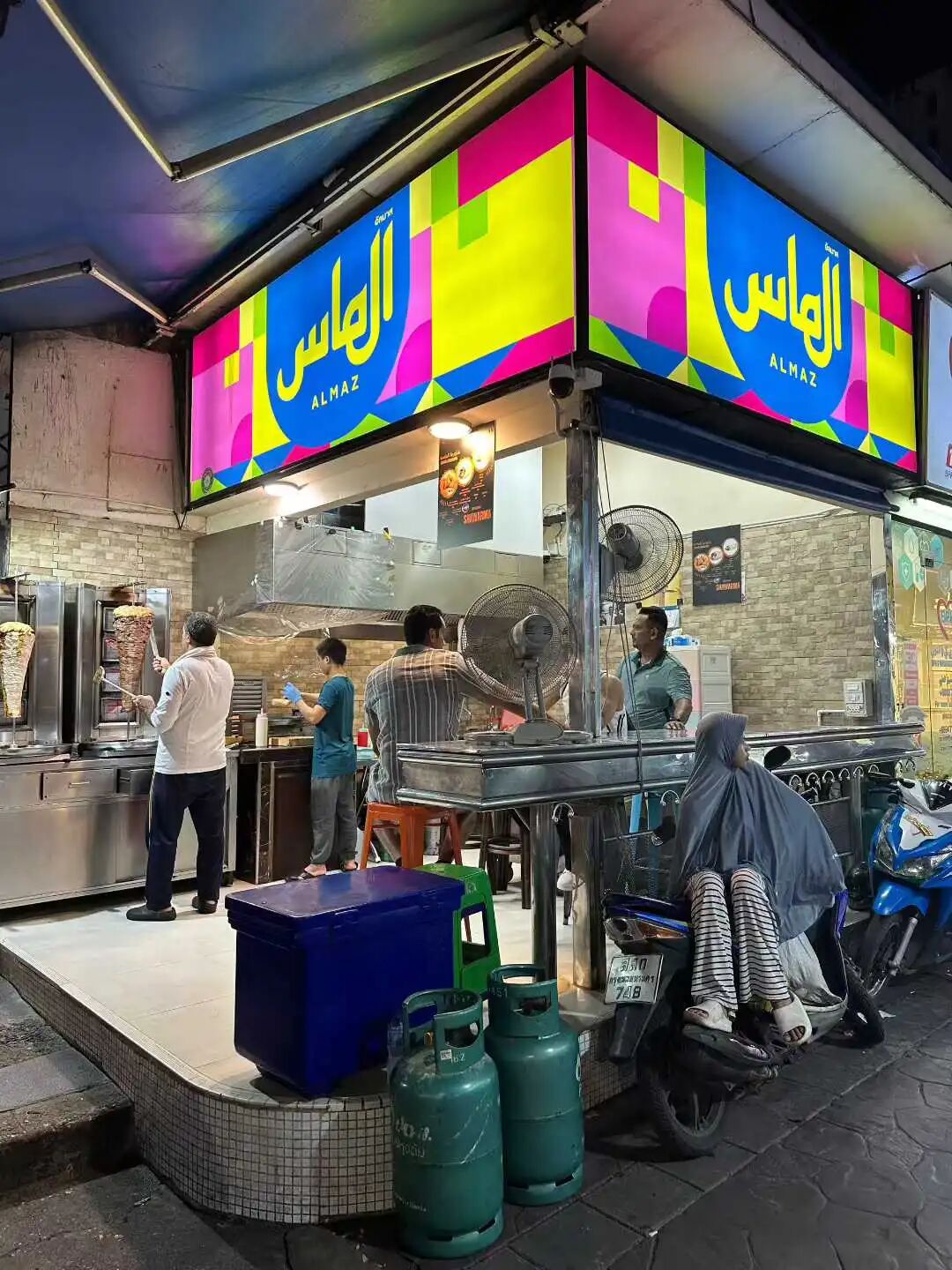
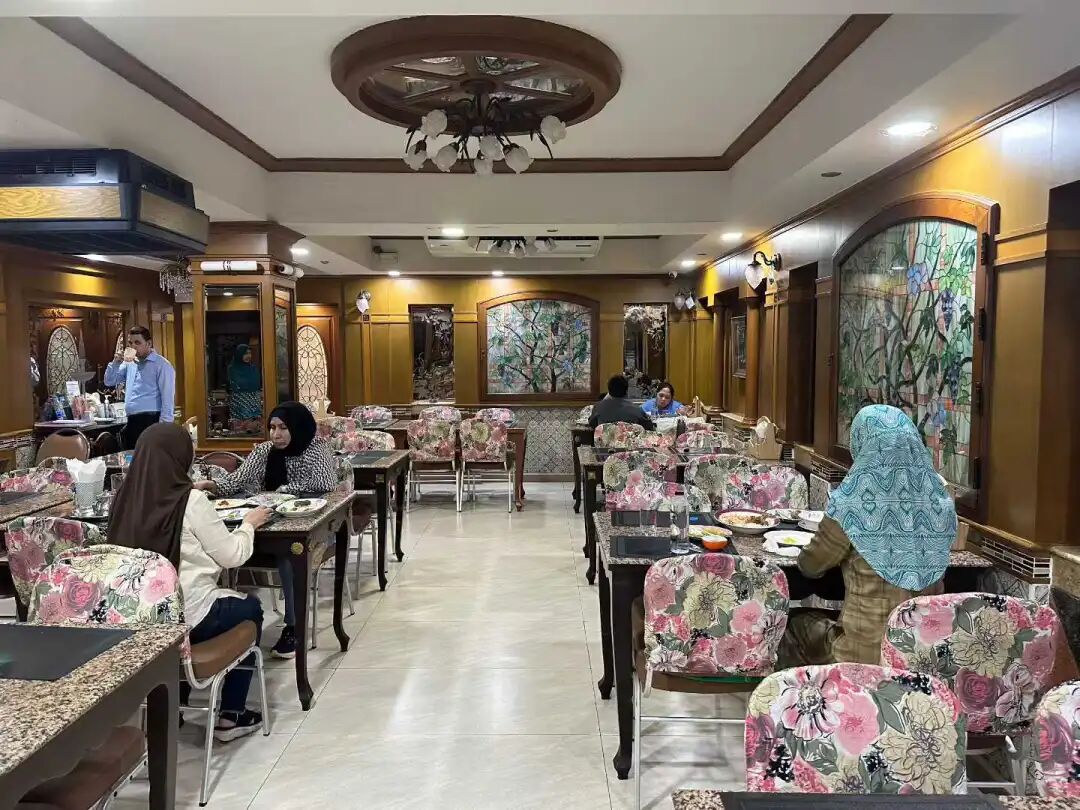
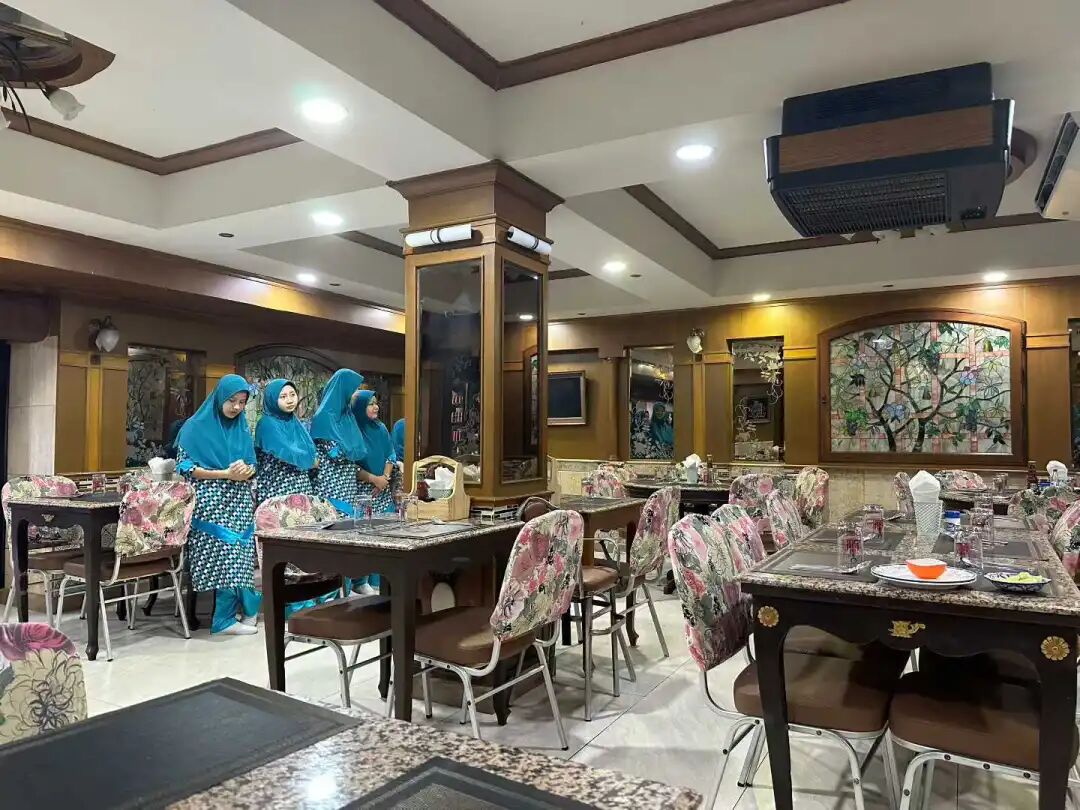
As the first Arab restaurant in Bangkok, Shahrazad on Arab Alley is definitely worth a try. This Egyptian restaurant, which opened in 1983, still keeps its 1980s decor. The storefront is low-key, the interior is clean, the waiters wear uniforms, and the Arab staff greeting guests are all smiles.
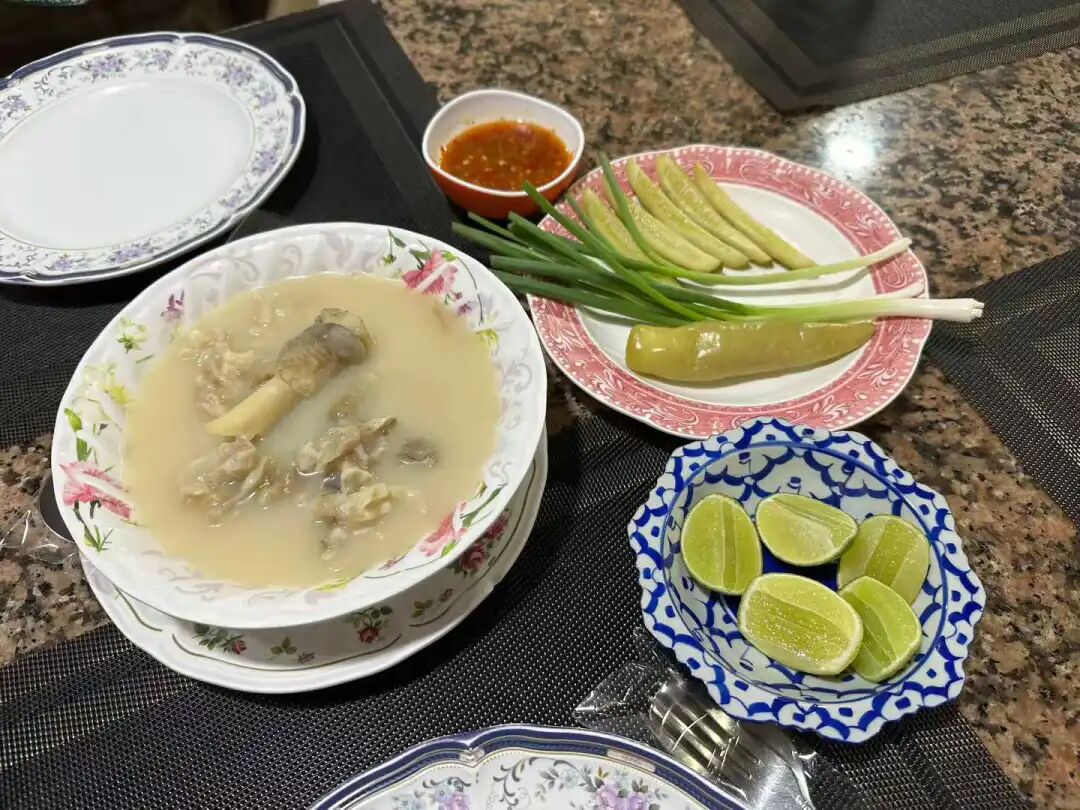
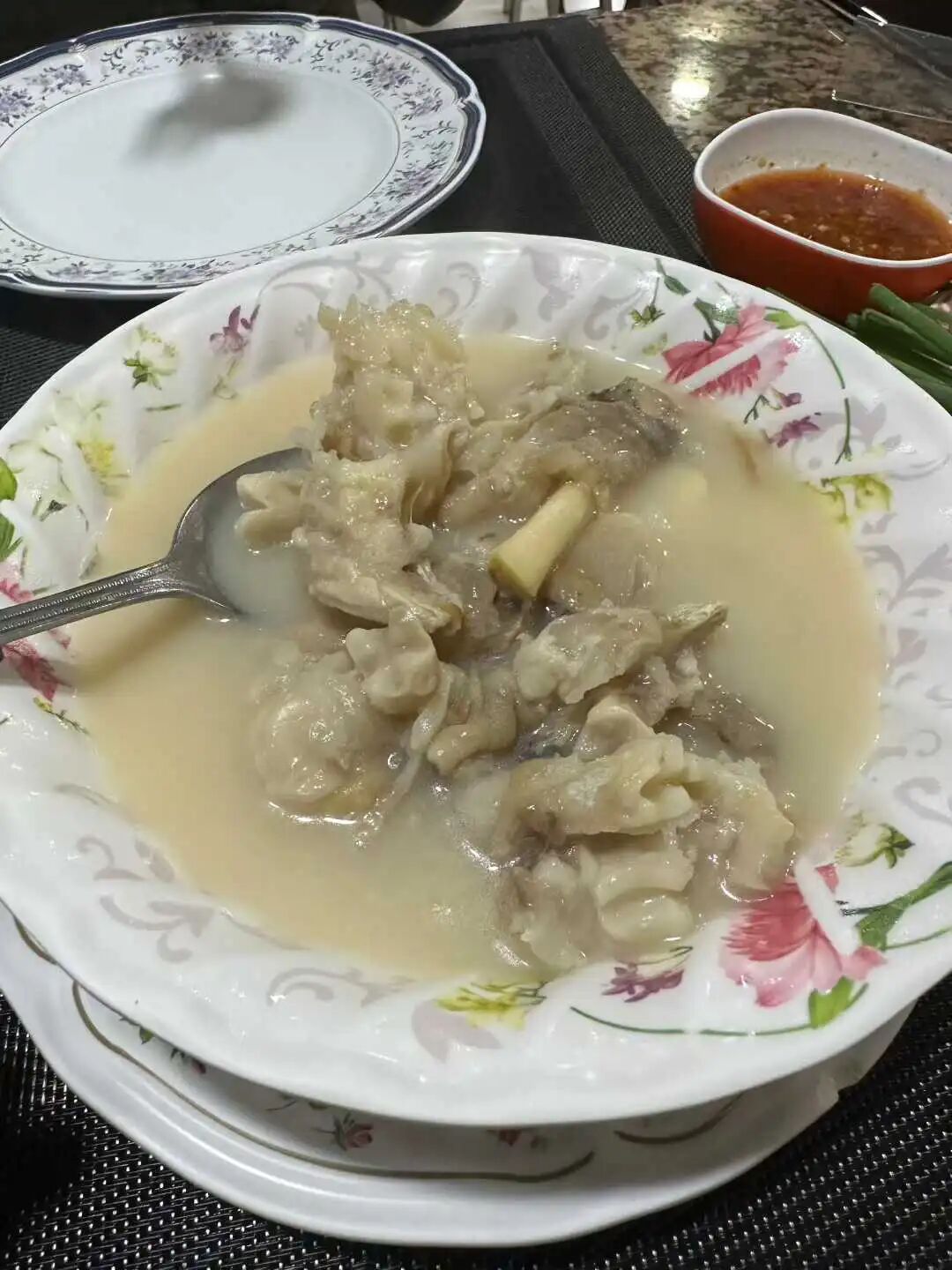
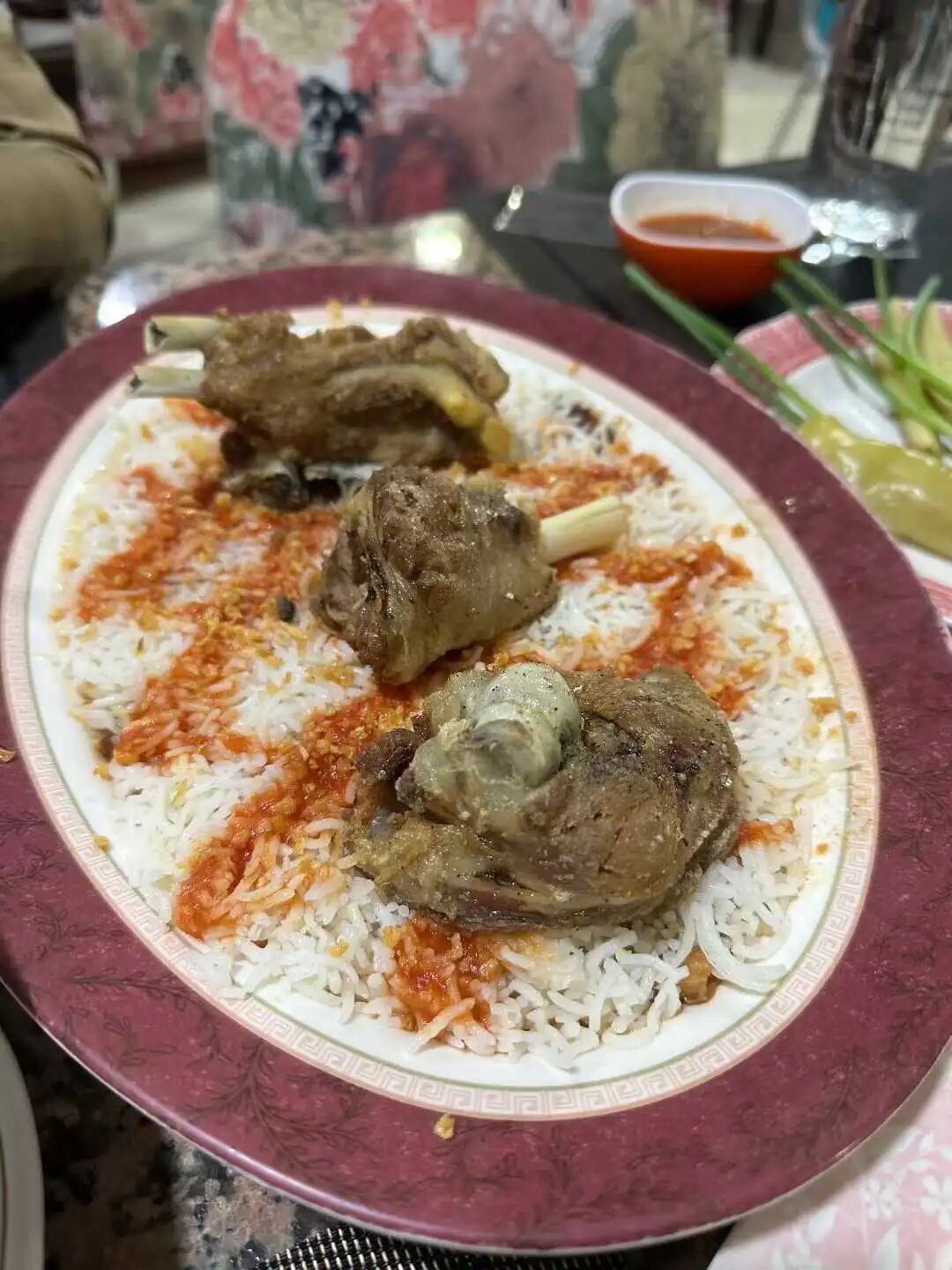
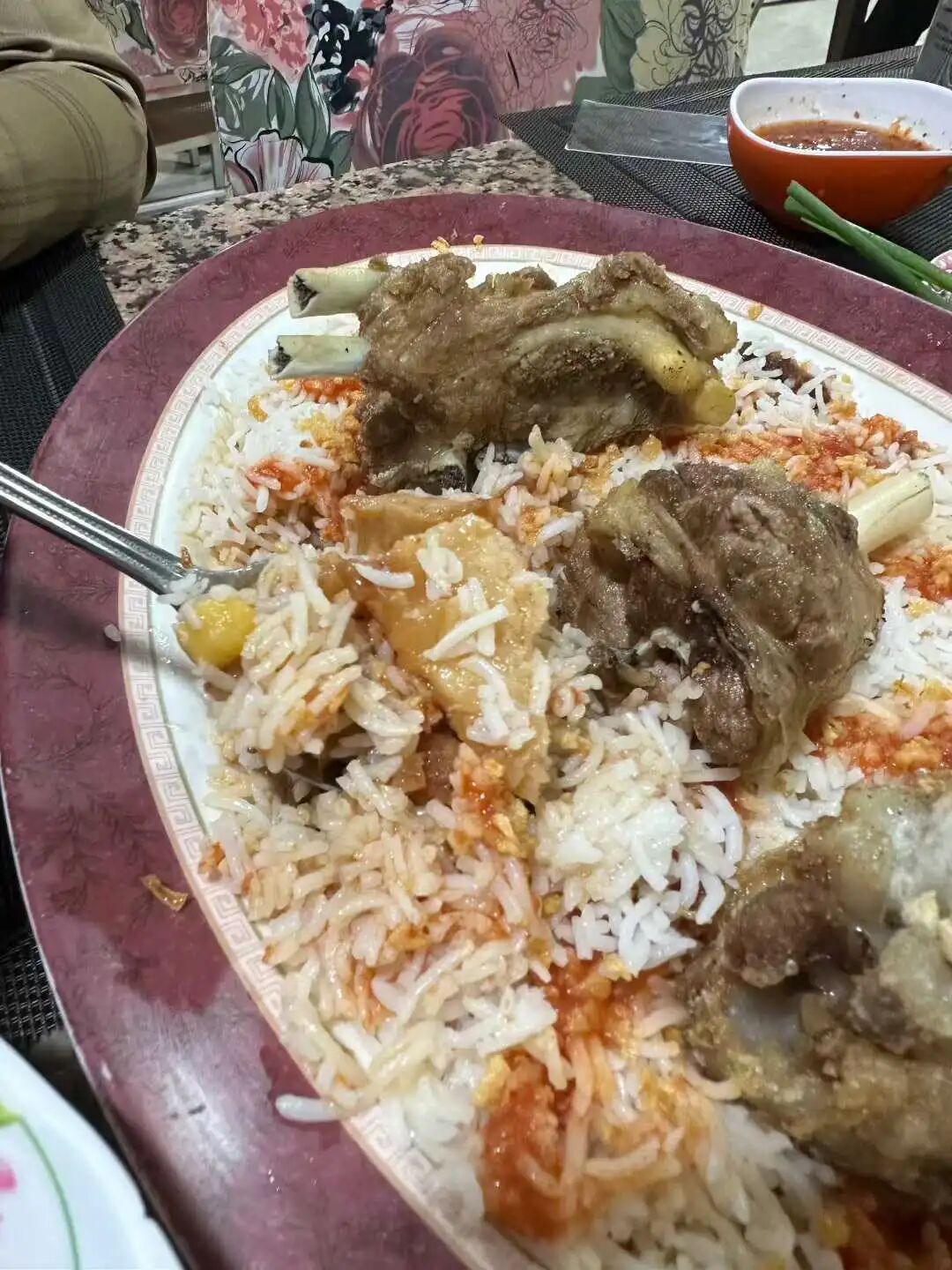
I ordered their lamb trotter soup, Egyptian lamb rice (Fatteh), and hummus (hummus), all of which were delicious. The white broth of the lamb trotter soup was very fresh; the meat must have been flown in. Lamb rice (Fatteh) is a classic holiday dish from the eastern Arab region. It mixes rice, flatbread, and chickpeas, and the lamb is fried until it smells amazing. It was so good I couldn't stop eating. Their hummus was very refreshing and easy for non-Arabs to enjoy.
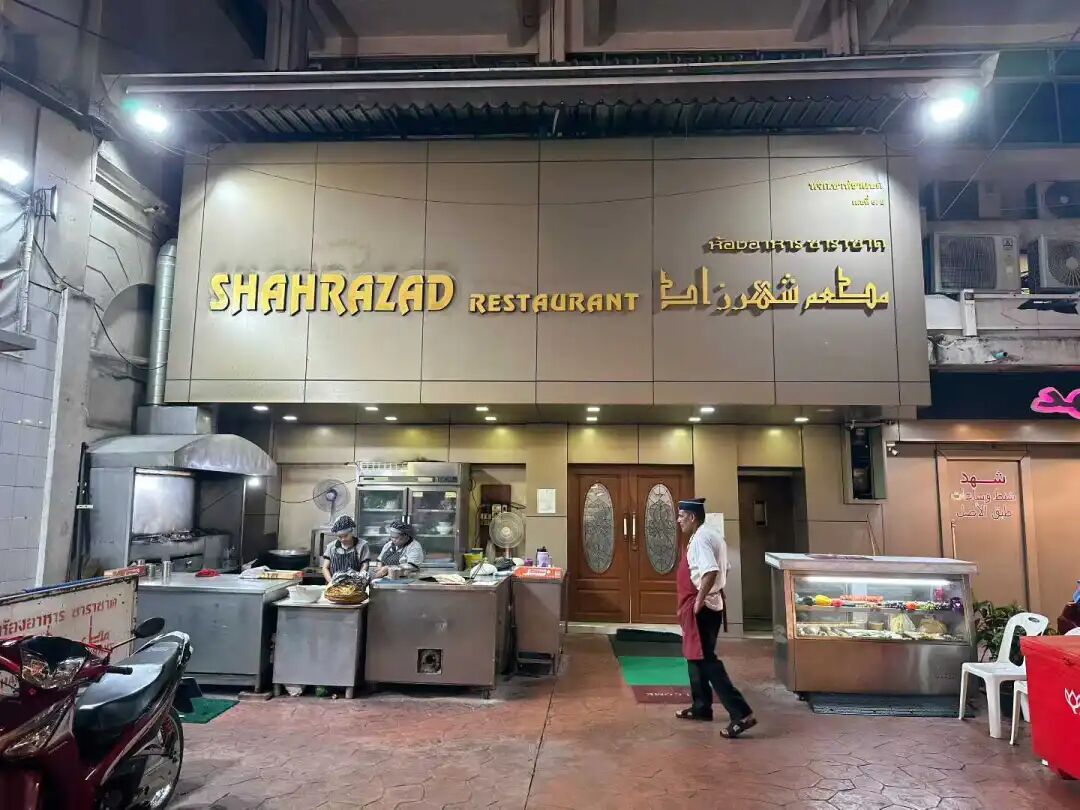
Above the Shahrazad restaurant is the Nana Mosque, one of the two mosques in Arab Alley. You have to go up a staircase next to the restaurant kitchen to reach the Nana Mosque. The location is hidden, but it is said to be very crowded during Jumu'ah.
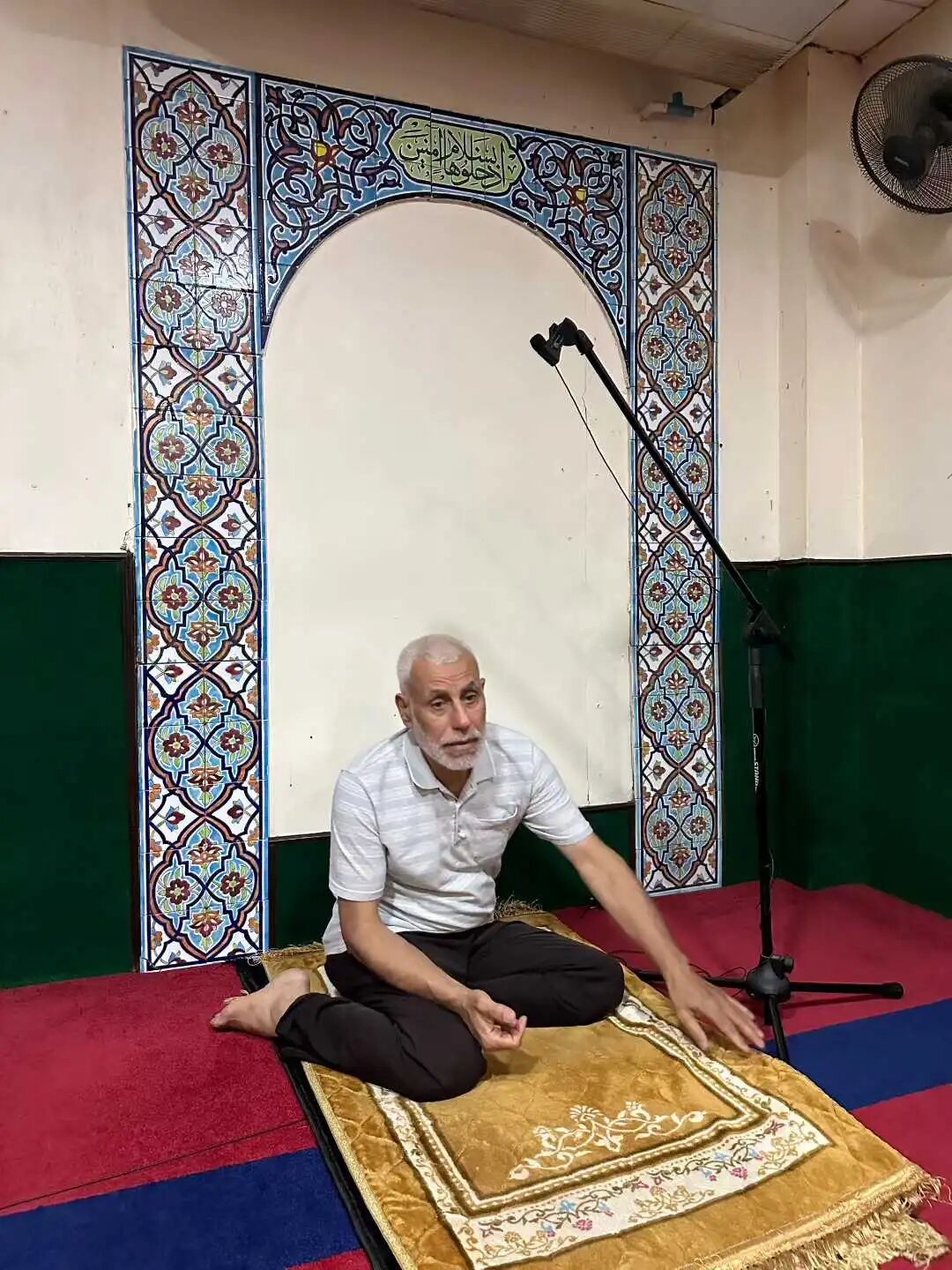
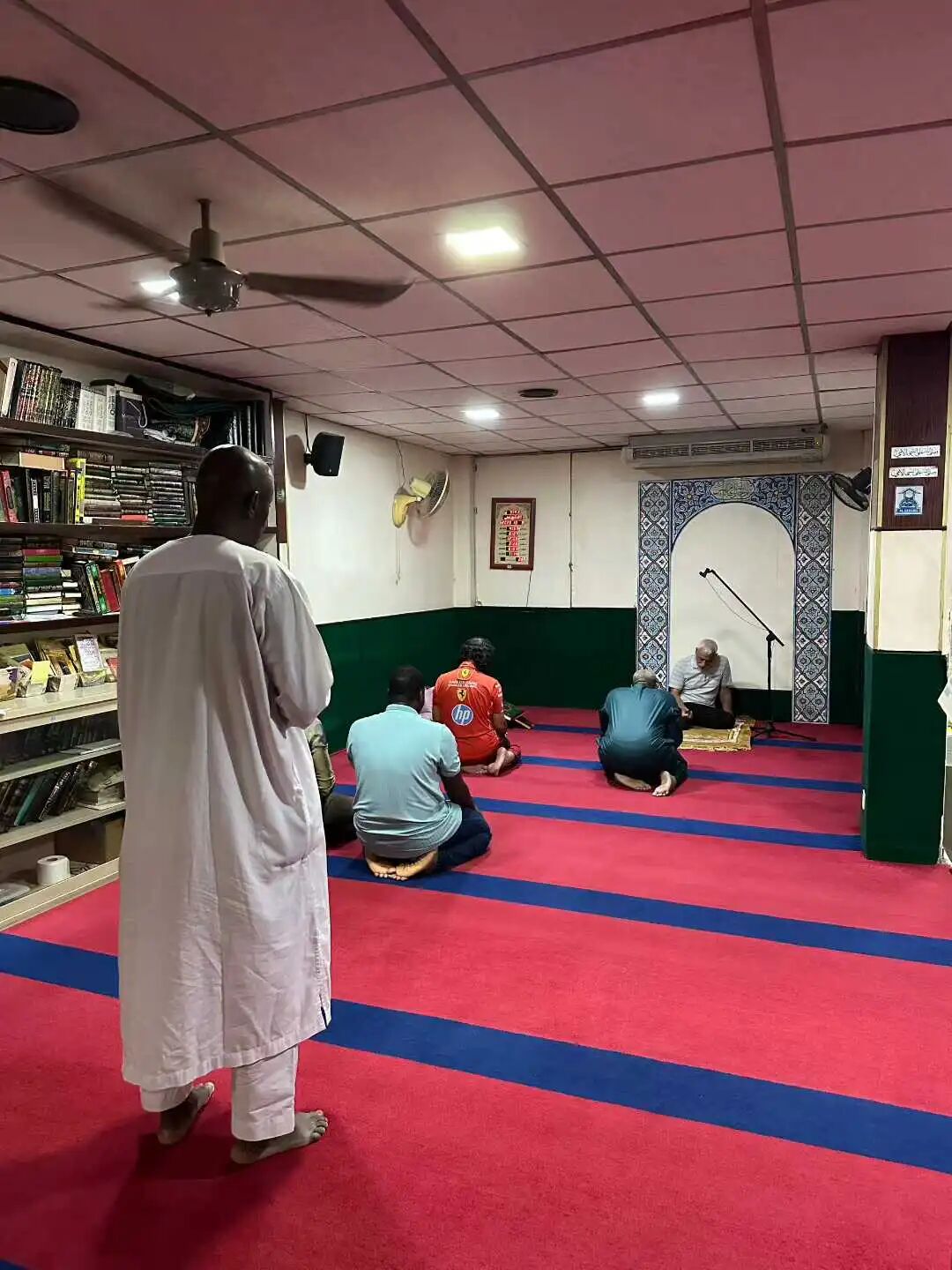
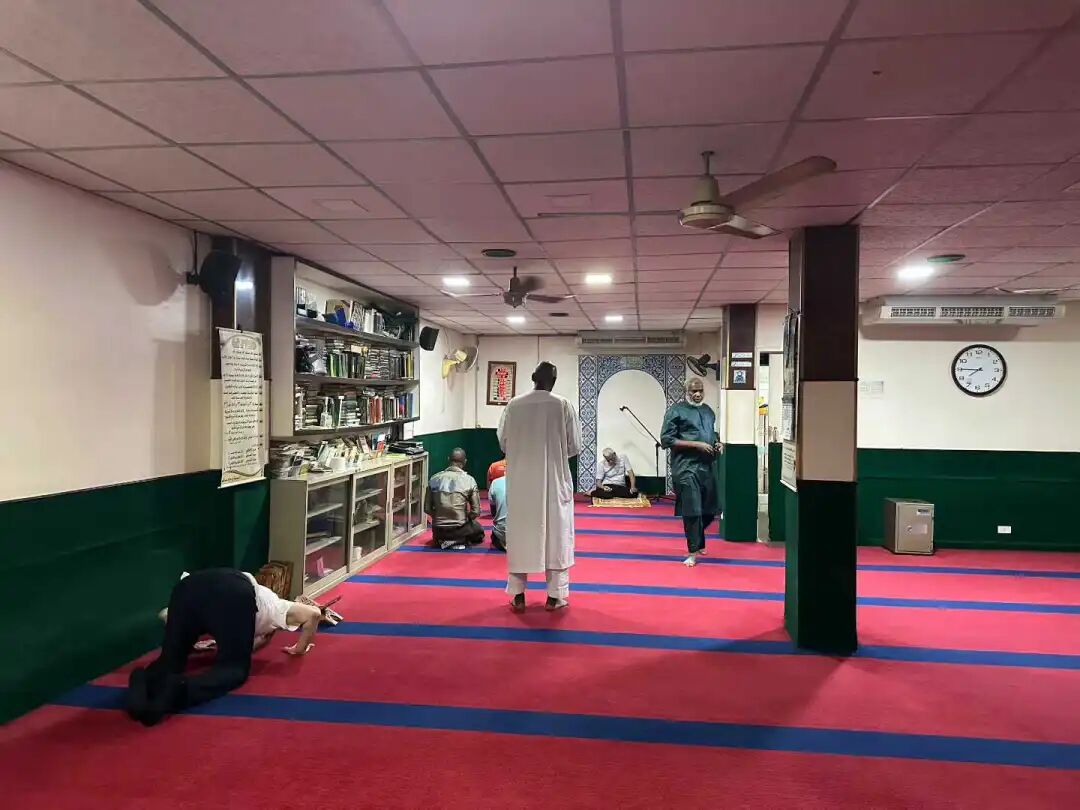
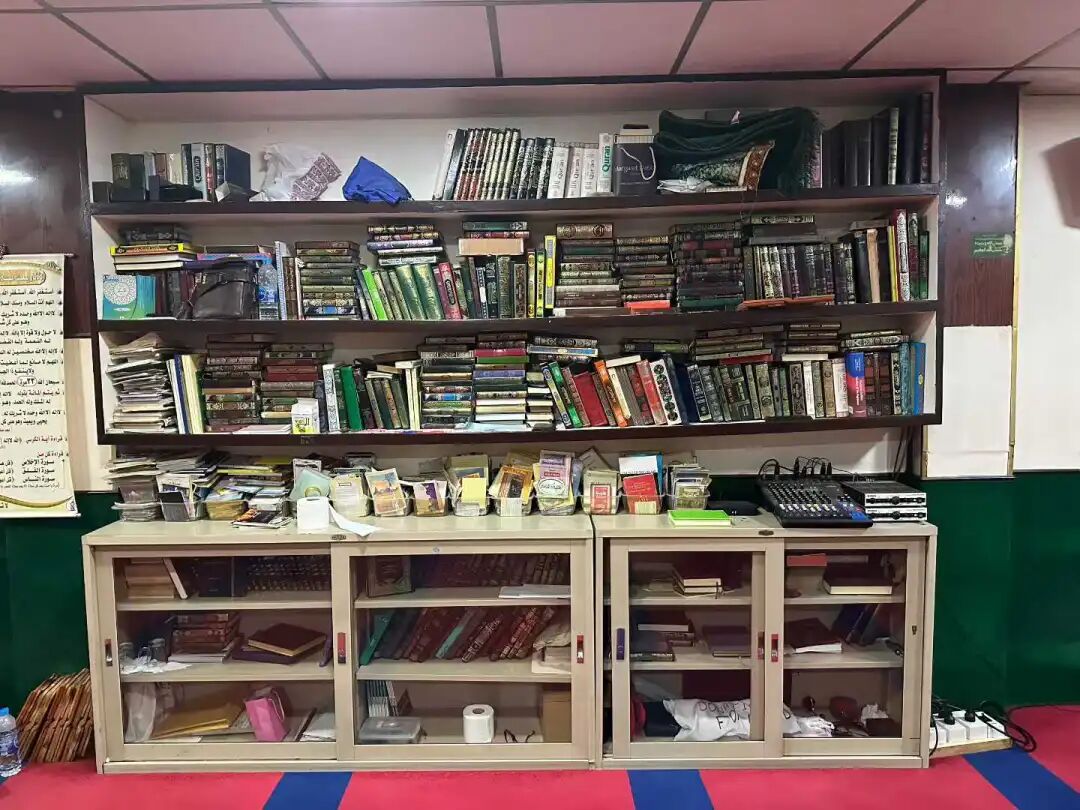
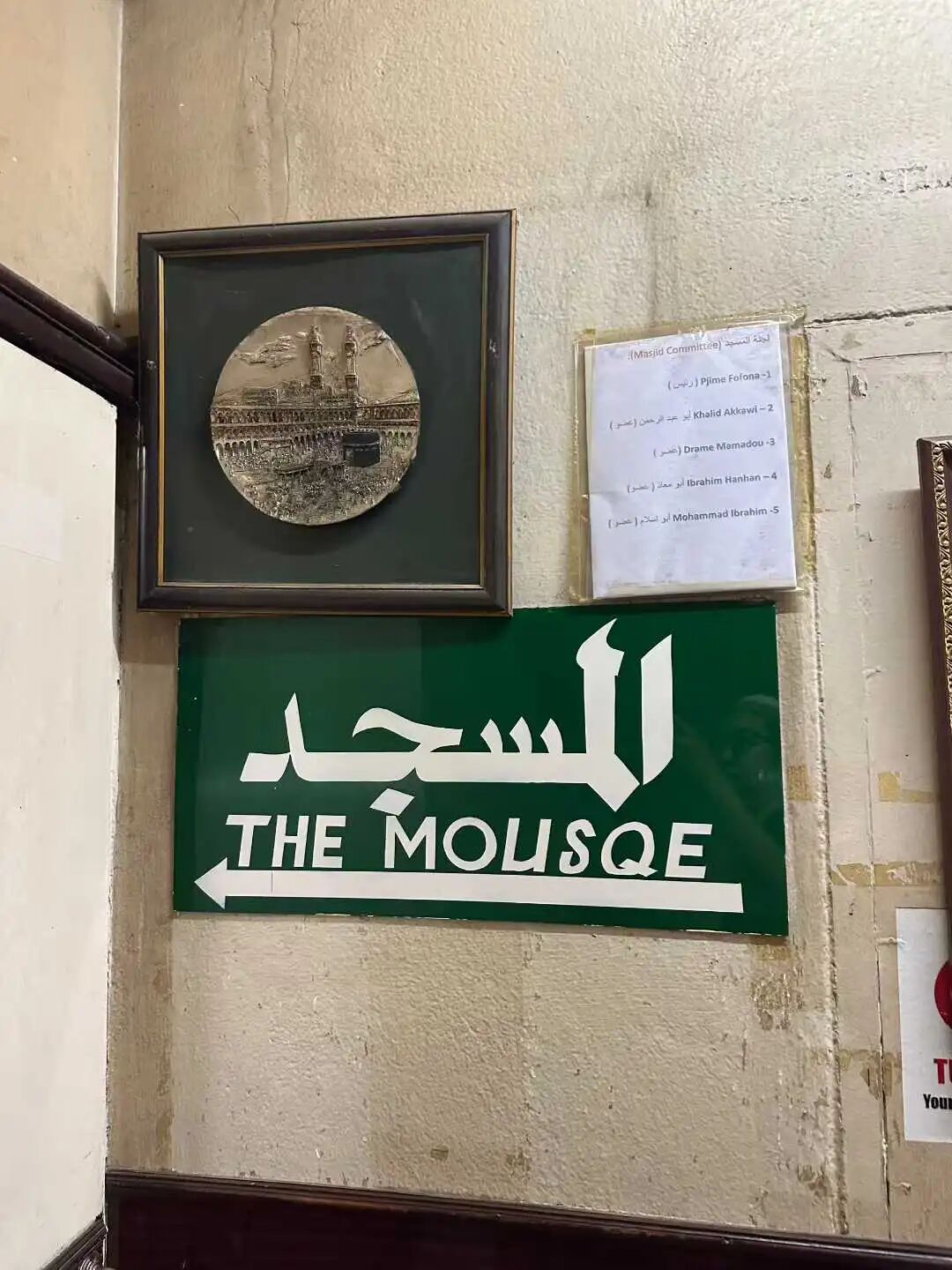
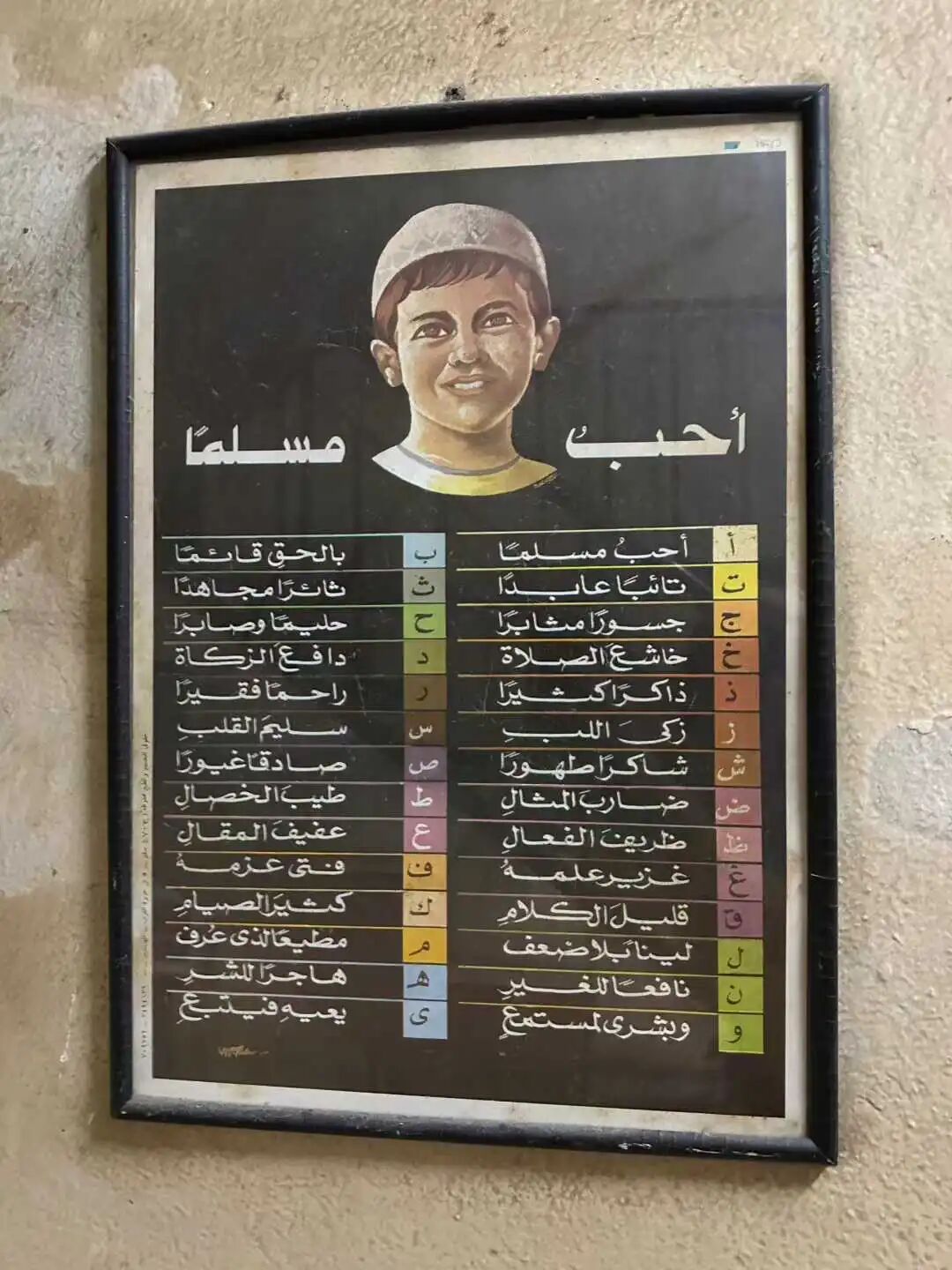
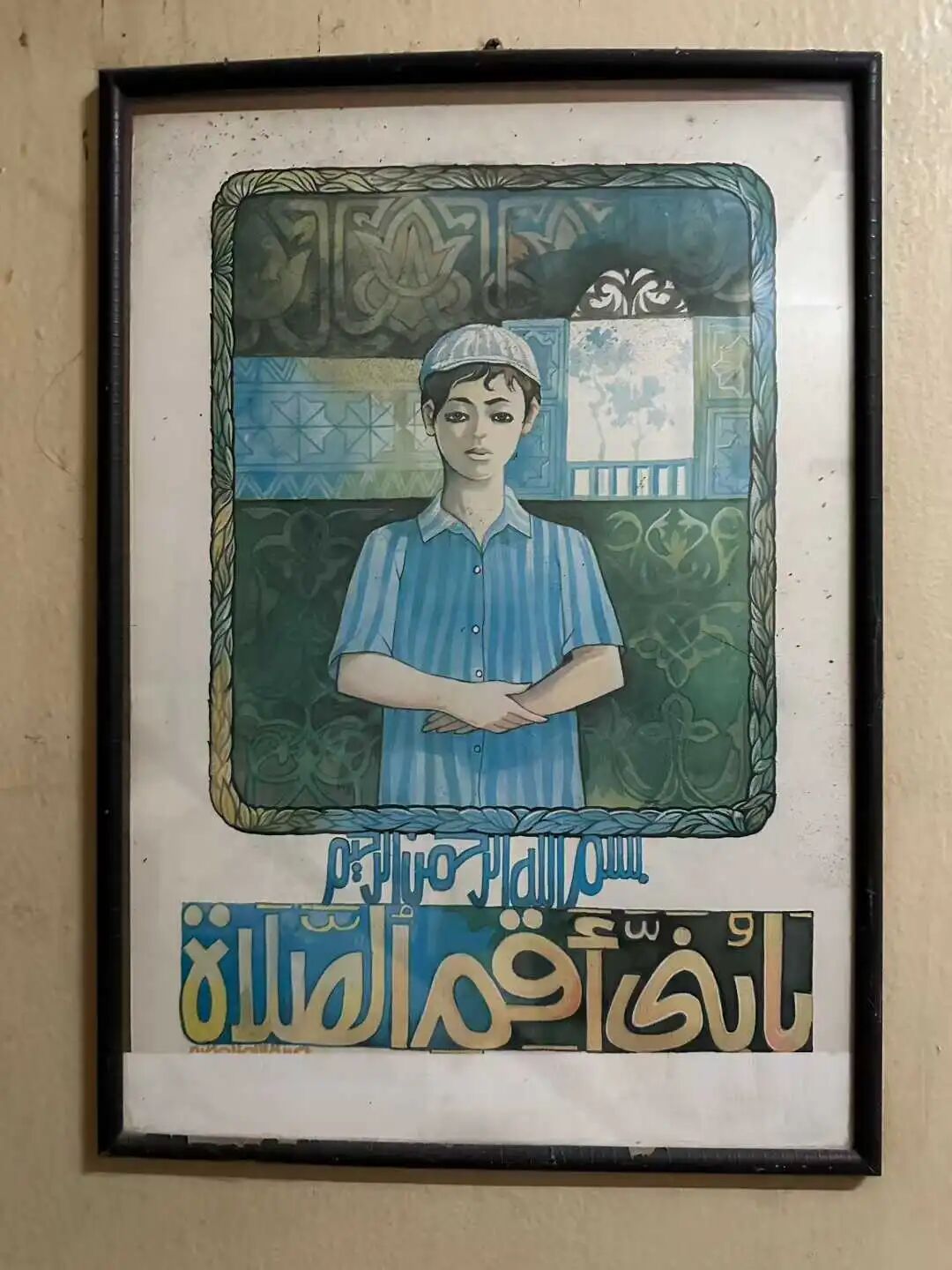
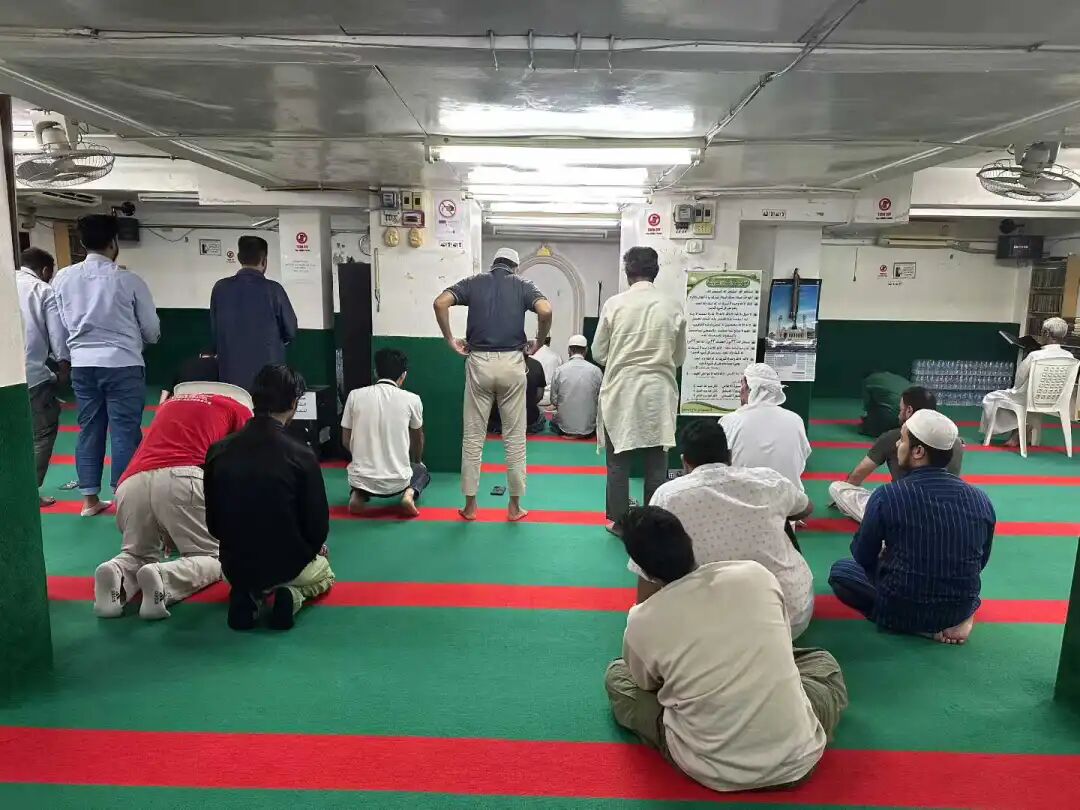
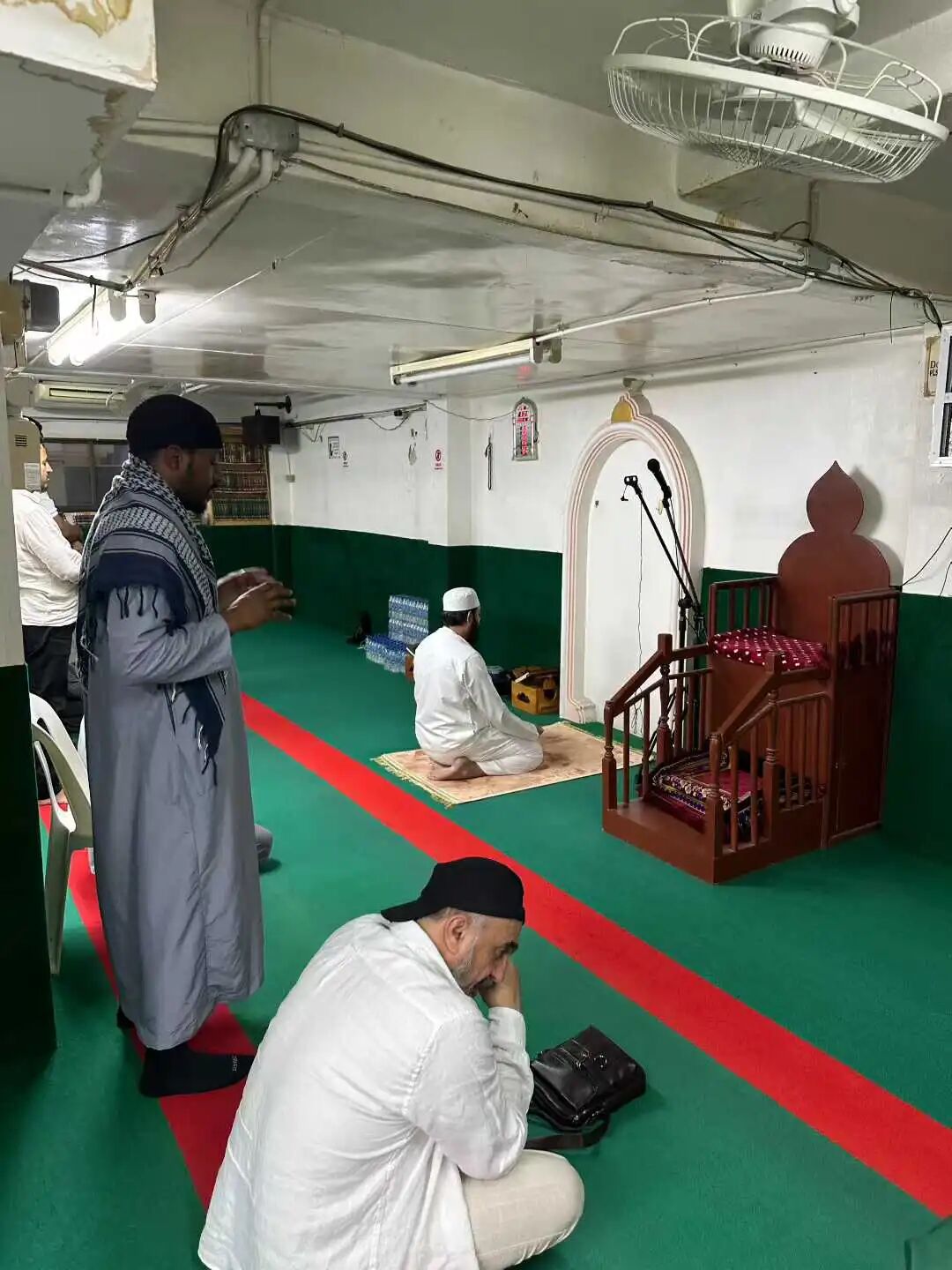
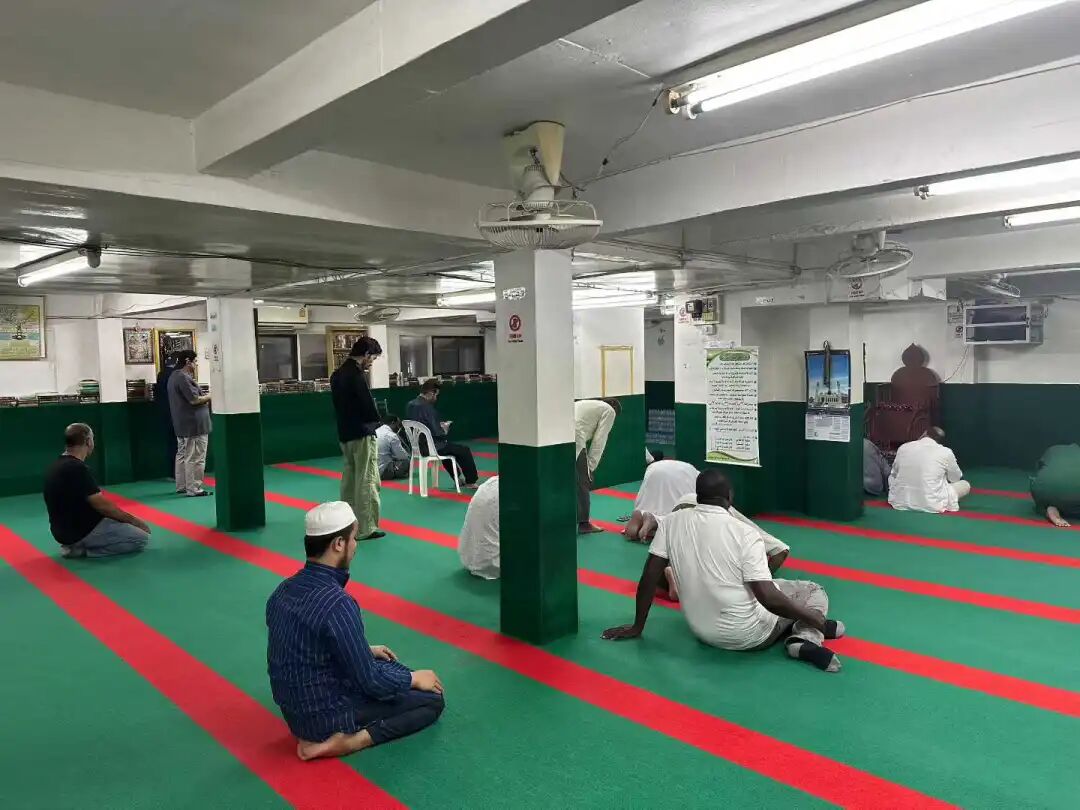
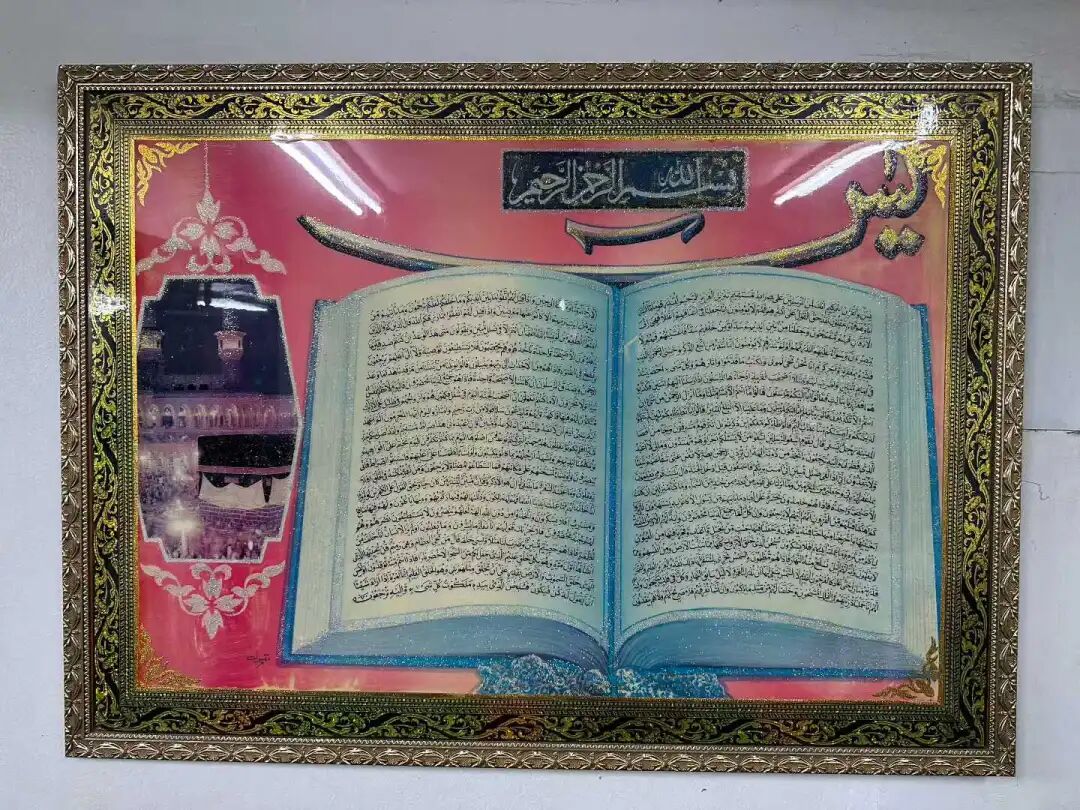
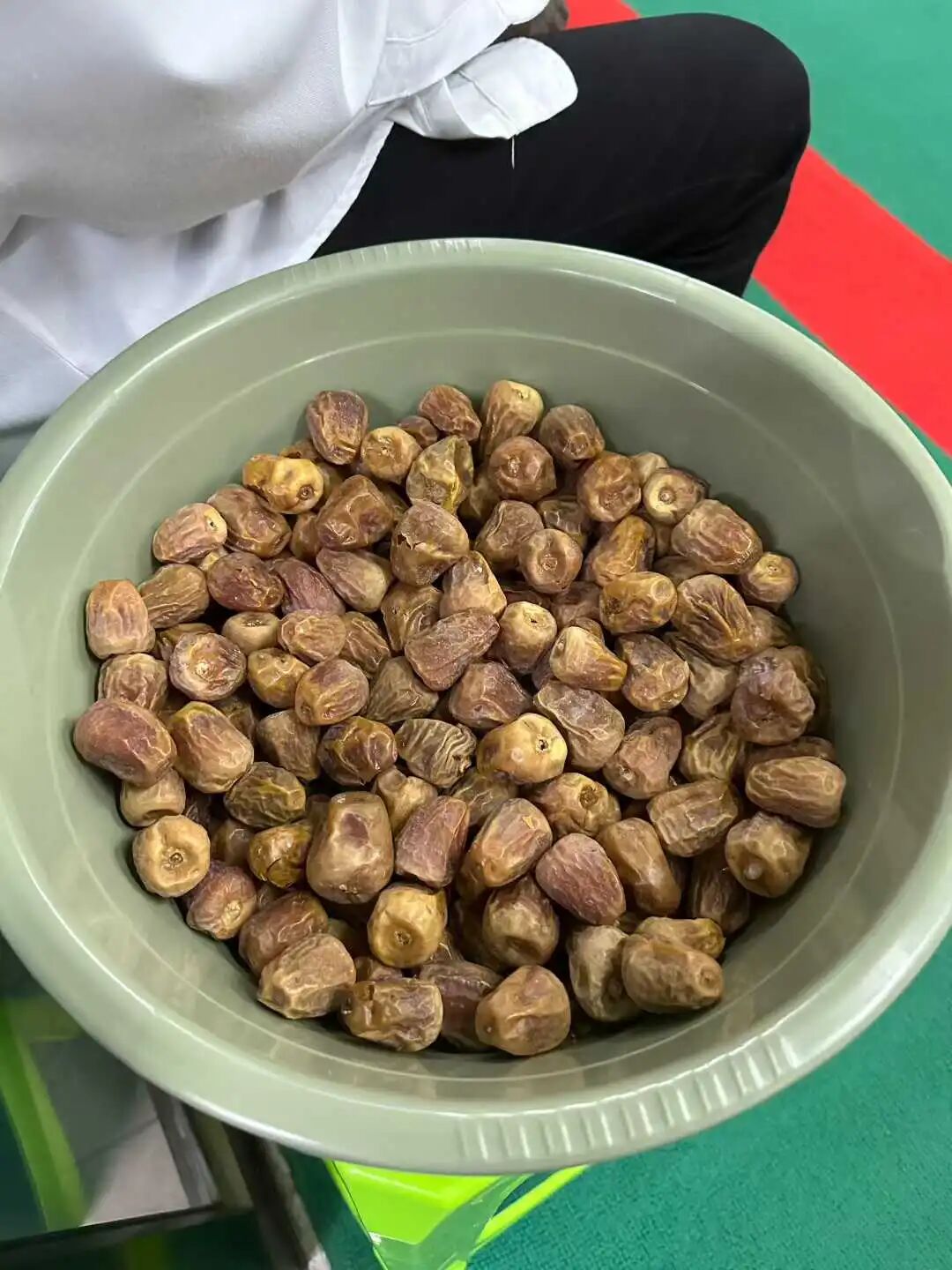
The other mosque in Arab Alley is the Sukhumvit Road Mosque, located above the Middle East Hotel. Sukhumvit Road is the main road extending southeast from Bangkok, and Arab Alley is right next to it. The Sukhumvit Road Mosque is larger than the Nana Mosque and has more people. When I went, I caught the prayer (salah). After the congregation (jama'ah) finished, those who arrived late spontaneously formed another jama'ah, which is quite rare in East and Southeast Asia. After the prayer, there were dates (tamr) given out as charity (sadaqah).
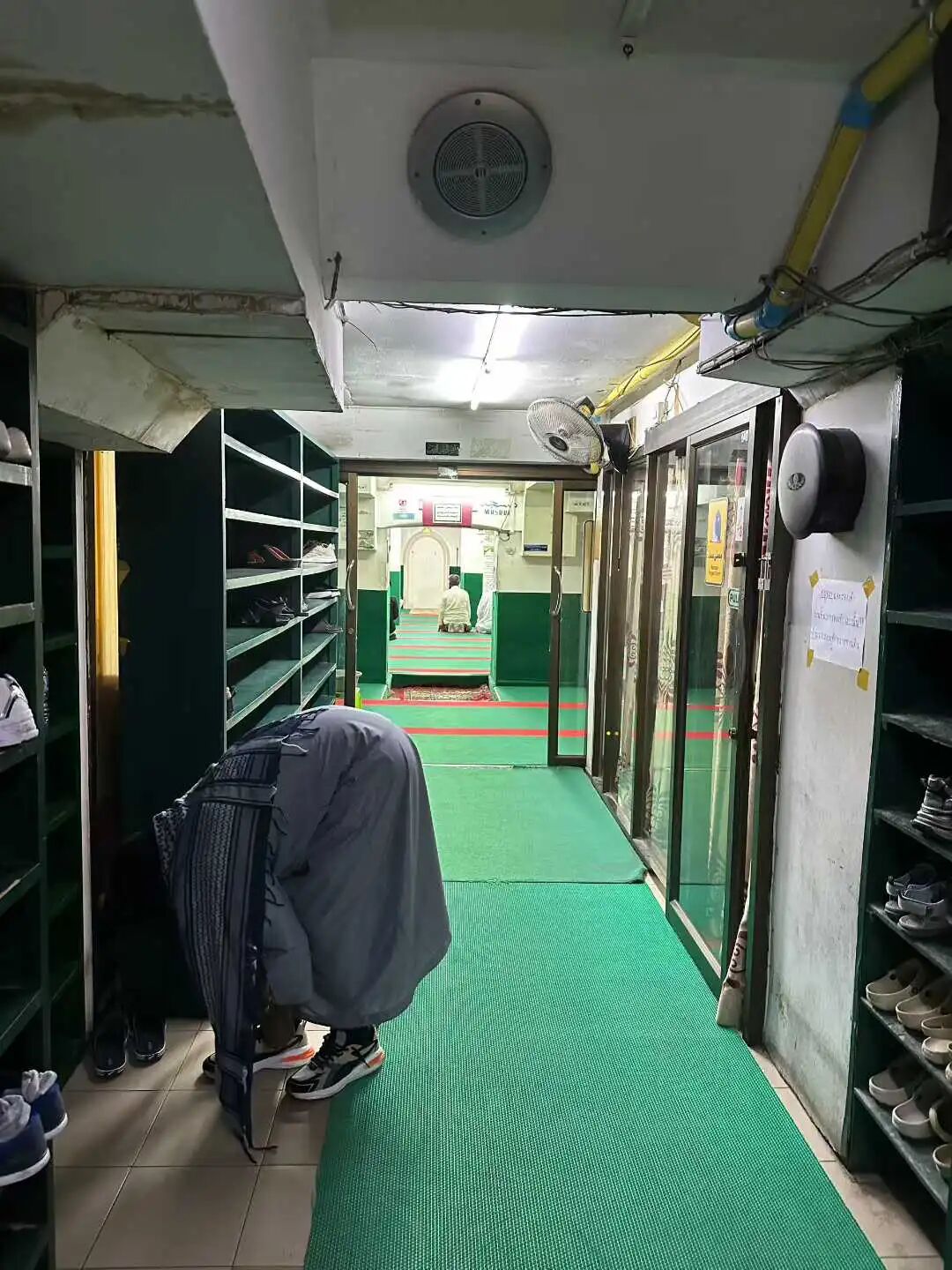
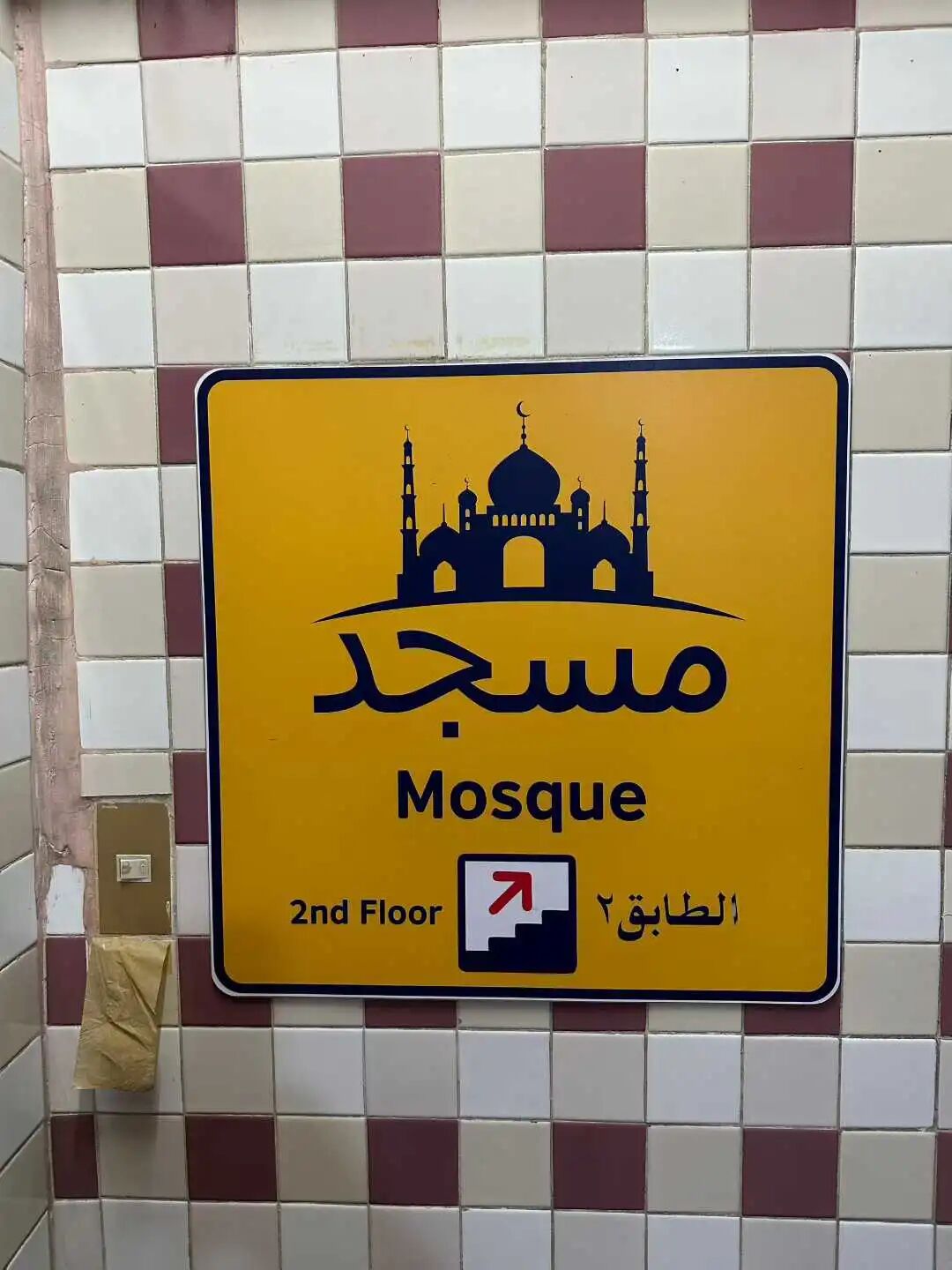
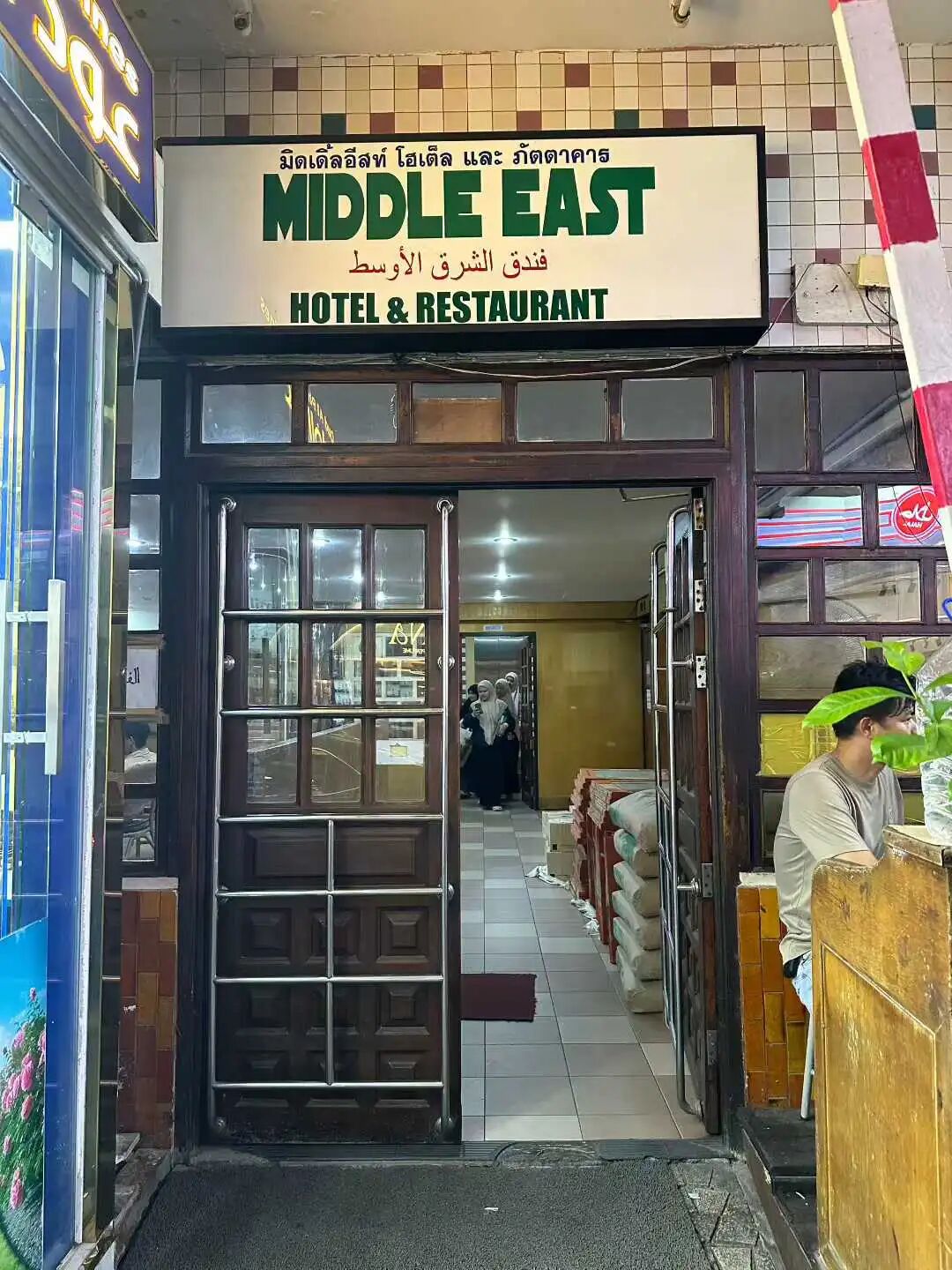
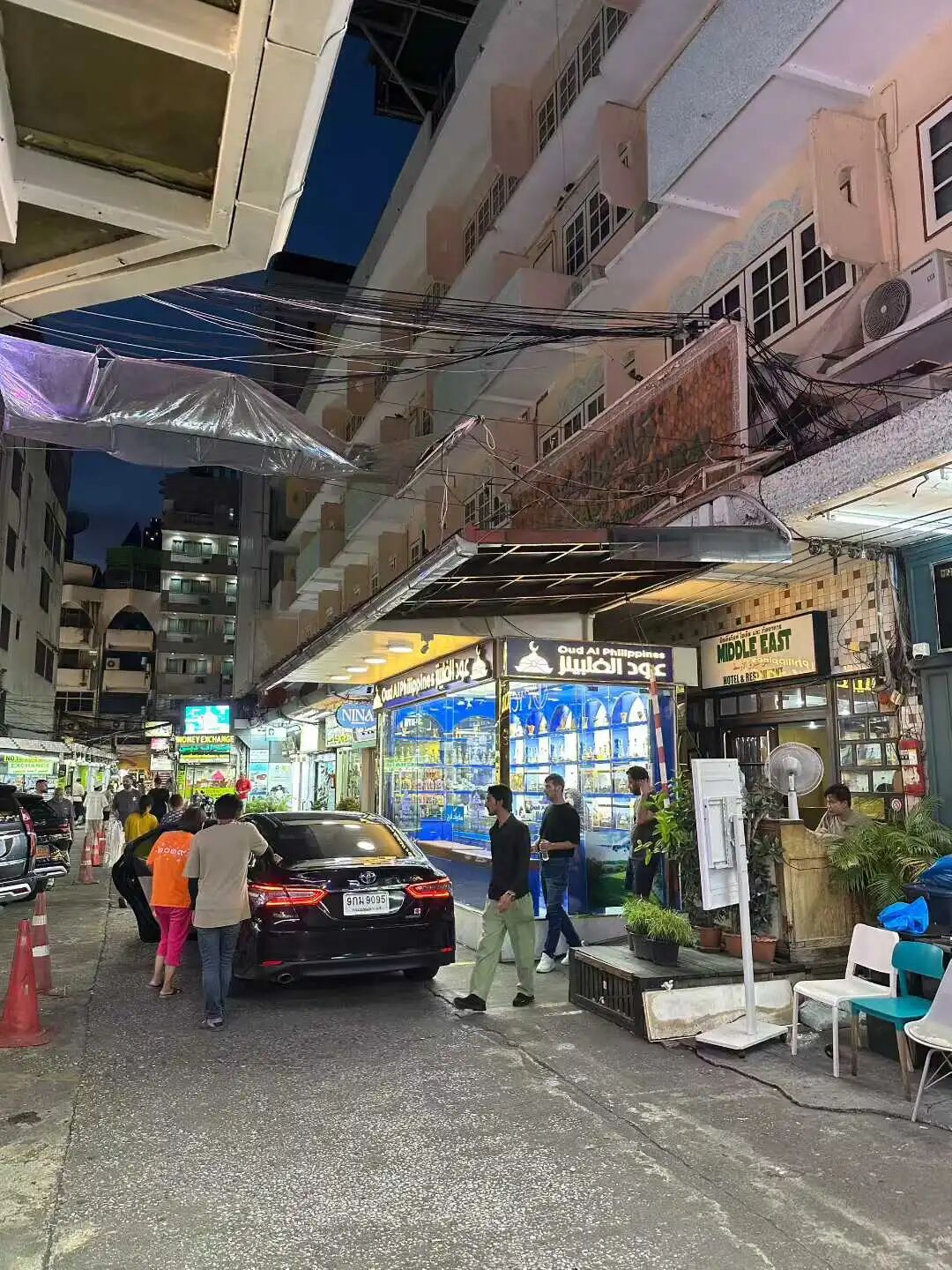
Arab Alley has several Middle Eastern import supermarkets where you can buy almost all the ingredients and spices for Arab food. You can also buy authentic, unsweetened yogurt with a strong sour taste, whereas in other Thai supermarkets, you can basically only find sweet yogurt.
We stayed at the Zenith Sukhumvit Hotel near Arab Alley. There is a light rail to the south and a canal boat to the north, though the road in front is often congested. Their halal breakfast focuses on Arab and South Asian styles, catering to the Arab and South Asian tourists staying in Arab Alley. Breakfast includes hummus (humusi) and naan bread with curry. You can order eggs made to order, and the omelet (omelette) is packed with ingredients. Although omelets are found in many countries, they actually originated in ancient Persia and spread everywhere through Eurasian trade routes.
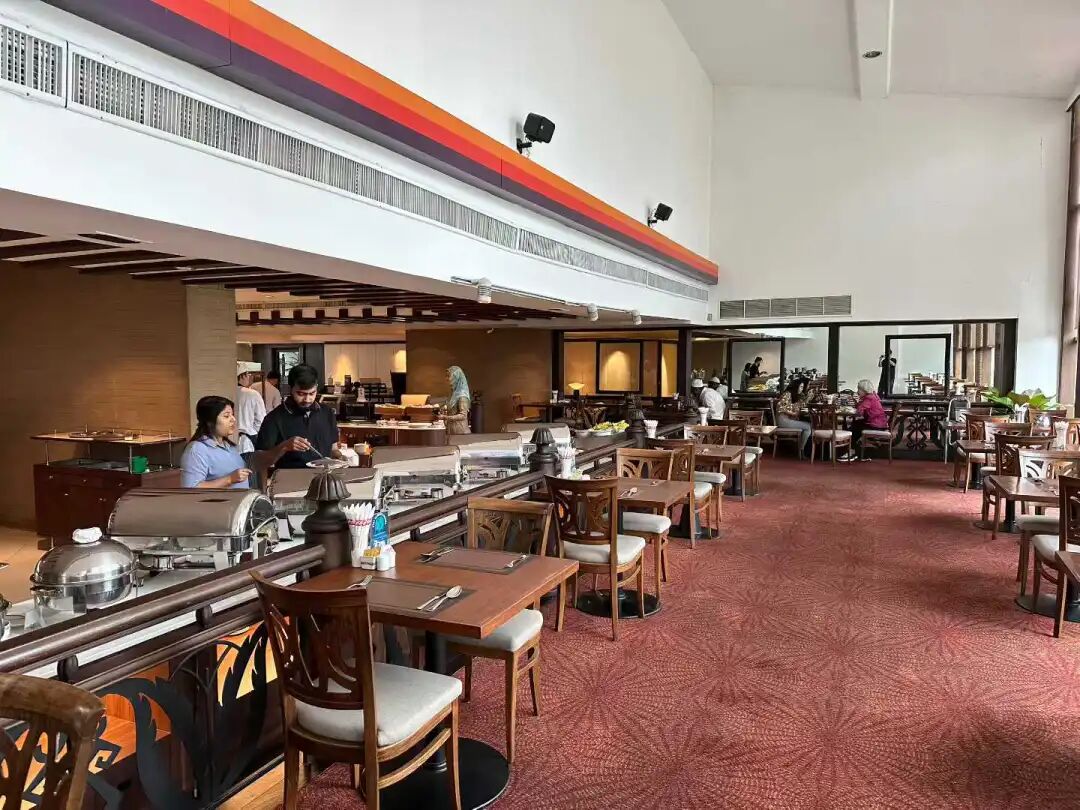
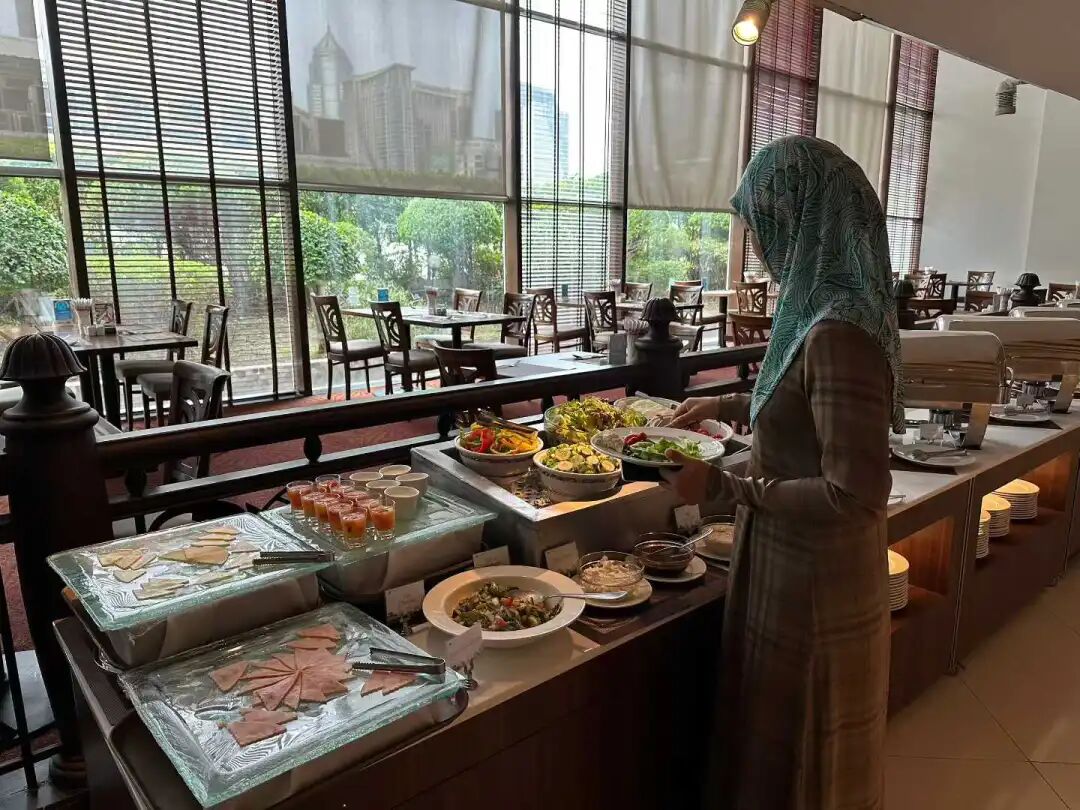
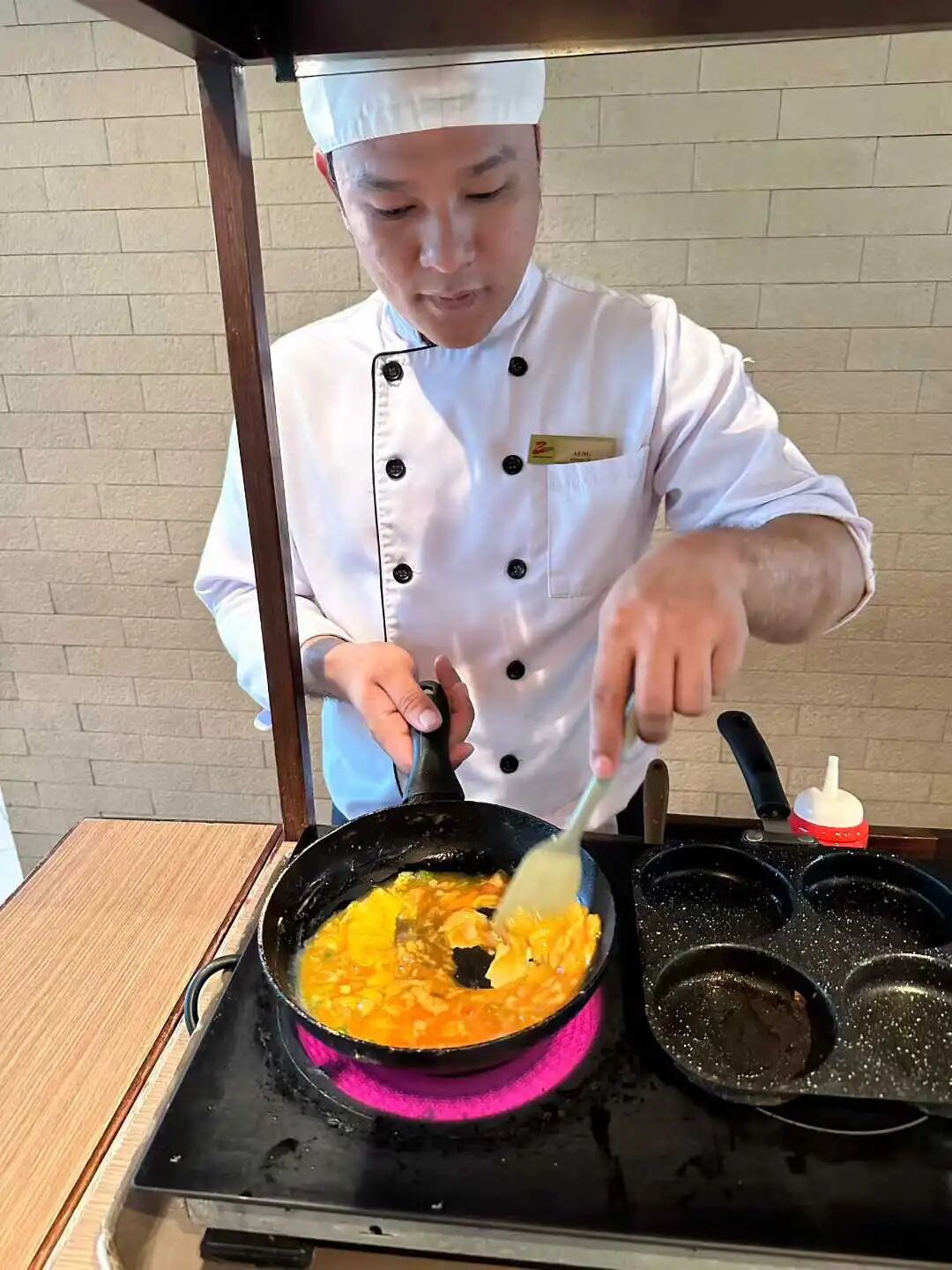
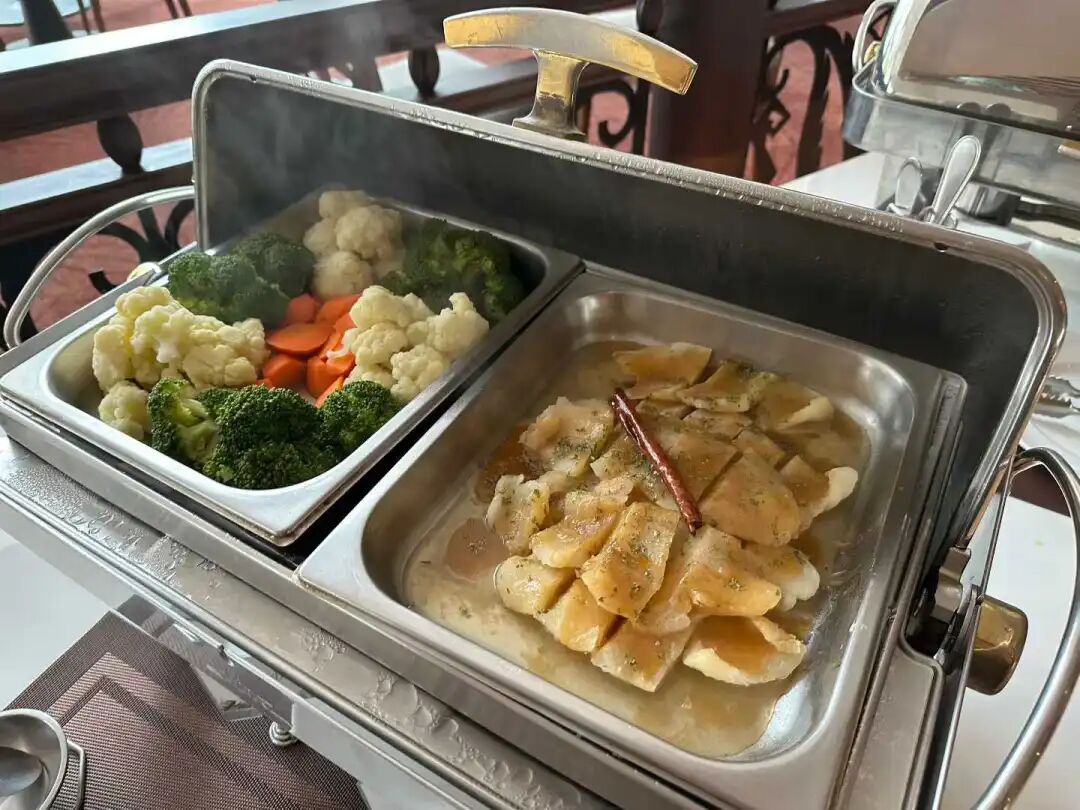
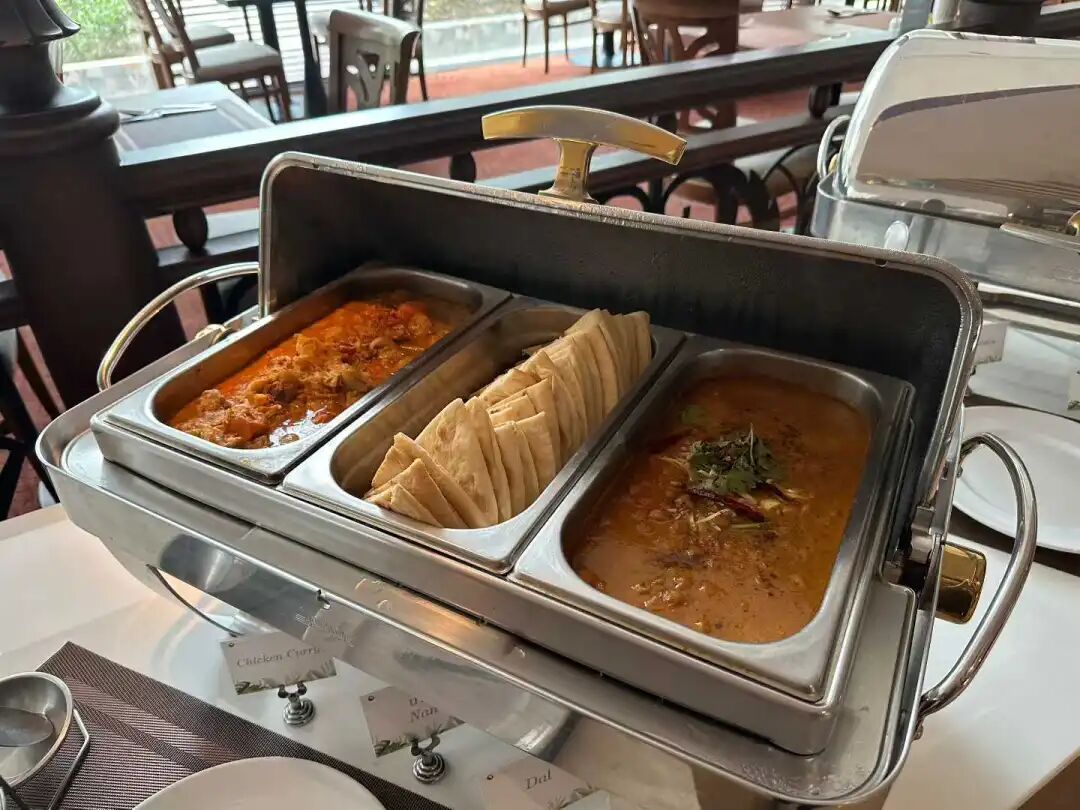
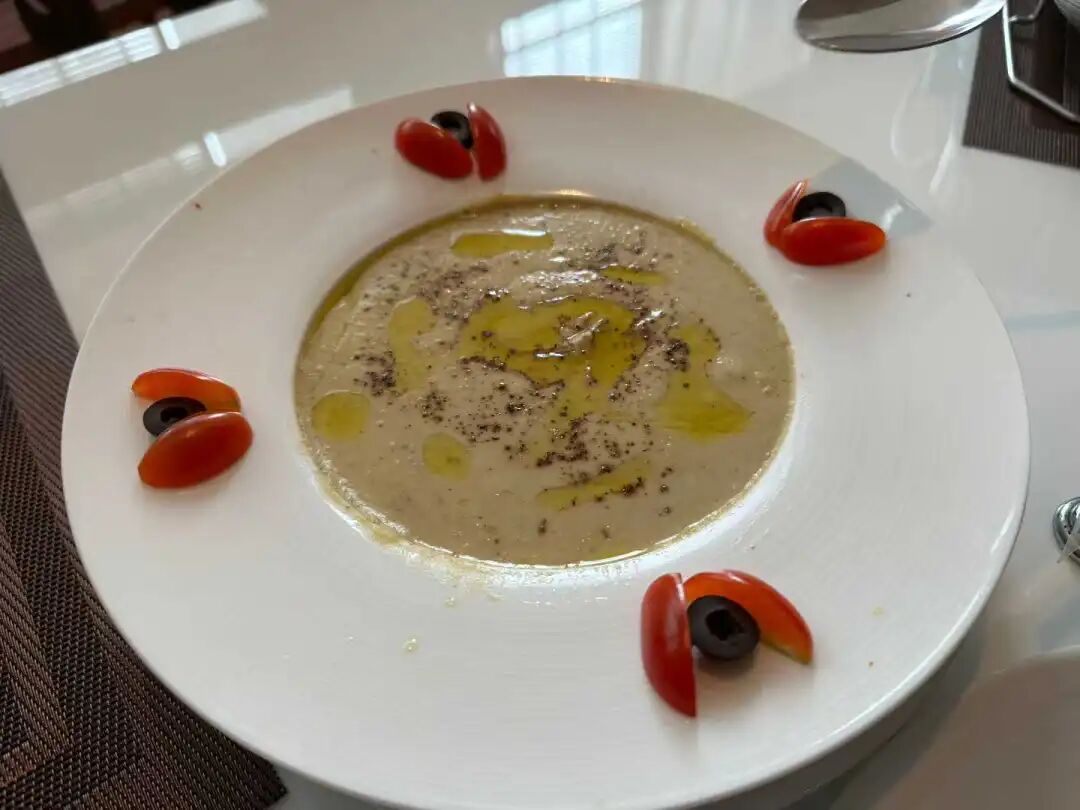
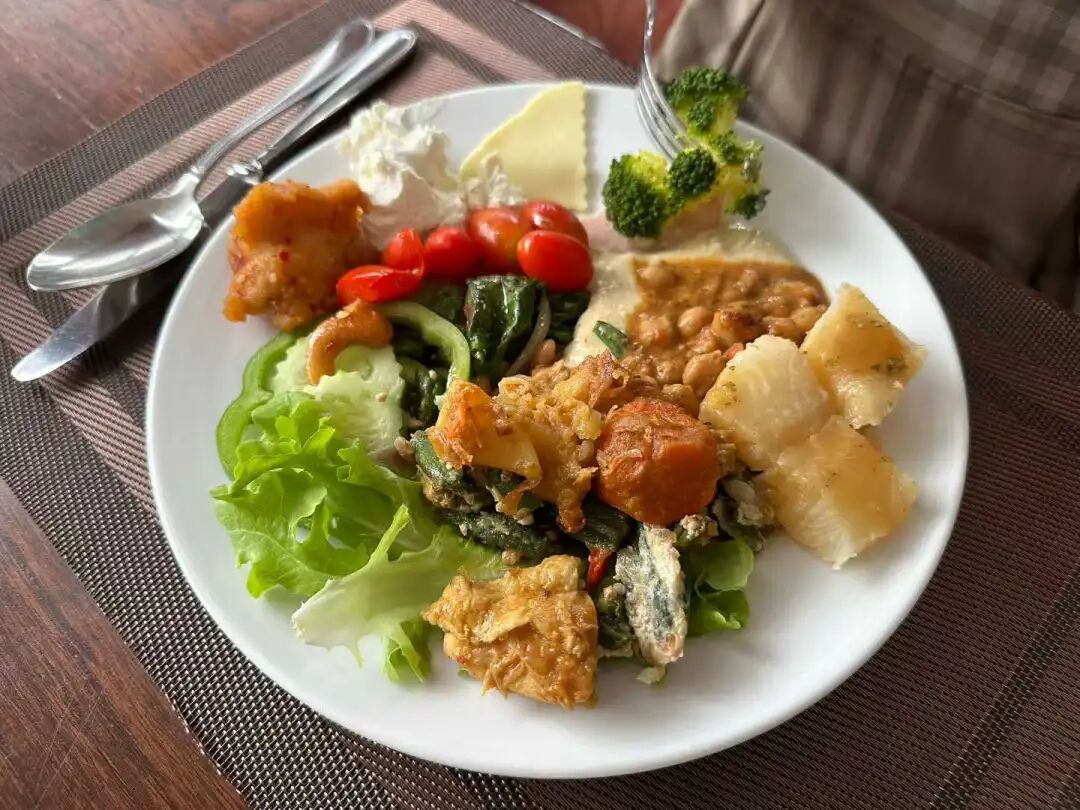
The Shengli Hotel has a gym and a rooftop pool. From the pool, you can look down over the entire Arab Street and see the Nana red-light district in the distance. The hotel has a private prayer room on the first floor. You need to ask the front desk staff to help you open it.
Summary: Bangkok's Arab Street sits beside the Nana area and serves Arab and South Asian Muslim travelers with halal restaurants, hotels, breakfast shops, and prayer spaces. This account keeps the source's route, food, hotel, mosque, and street details in clear English.
I only learned this year that Bangkok has an Arab neighborhood called Arab Alley (Soi Arab), and it is separated from Nana, Bangkok's most famous red-light district, by just one light rail line. On this trip to Bangkok, we stayed at a hotel near Arab Alley that is popular with Arab guests, just to experience the atmosphere of the area.
Stepping out of the Nana light rail station, you can see an interesting pattern: Europeans head south to the bars and nightclubs of Nana, while Arabs and other friends (dosti) head north to the Middle Eastern restaurants, agarwood shops, and import supermarkets of Arab Alley. At night, Arab Alley is brightly lit. Tourists from the Middle East and Africa keep their home routines, drinking tea, smoking shisha, and chatting late into the night, while many others shop for fruit and agarwood. The Middle Eastern restaurants in Arab Alley do not sell alcohol and are brightly lit. Many people visit with their whole families, which is a sharp contrast to Nana to the south.
The rise of Bangkok's Arab Alley started with the Grace Hotel. The Grace Hotel opened in 1966 and was a famous luxury hotel in early Bangkok. It was popular with expats, tourists, and American soldiers who had just left the Vietnam War, and many Arab tourists also chose to stay here when visiting Bangkok. In 1983, the Egyptian restaurant Shahrazad officially opened in Arab Alley. Afterward, more and more Middle Eastern restaurants opened, and Arab Alley officially became the first stop for Arab tourists visiting Bangkok. People come here to exchange money, buy SIM cards, and eat Middle Eastern breakfast to start their day of travel.
As the first Arab restaurant in Bangkok, Shahrazad on Arab Alley is definitely worth a try. This Egyptian restaurant, which opened in 1983, still keeps its 1980s decor. The storefront is low-key, the interior is clean, the waiters wear uniforms, and the Arab staff greeting guests are all smiles.
I ordered their lamb trotter soup, Egyptian lamb rice (Fatteh), and hummus (hummus), all of which were delicious. The white broth of the lamb trotter soup was very fresh; the meat must have been flown in. Lamb rice (Fatteh) is a classic holiday dish from the eastern Arab region. It mixes rice, flatbread, and chickpeas, and the lamb is fried until it smells amazing. It was so good I couldn't stop eating. Their hummus was very refreshing and easy for non-Arabs to enjoy.
Above the Shahrazad restaurant is the Nana Mosque, one of the two mosques in Arab Alley. You have to go up a staircase next to the restaurant kitchen to reach the Nana Mosque. The location is hidden, but it is said to be very crowded during Jumu'ah.
The other mosque in Arab Alley is the Sukhumvit Road Mosque, located above the Middle East Hotel. Sukhumvit Road is the main road extending southeast from Bangkok, and Arab Alley is right next to it. The Sukhumvit Road Mosque is larger than the Nana Mosque and has more people. When I went, I caught the prayer (salah). After the congregation (jama'ah) finished, those who arrived late spontaneously formed another jama'ah, which is quite rare in East and Southeast Asia. After the prayer, there were dates (tamr) given out as charity (sadaqah).
Arab Alley has several Middle Eastern import supermarkets where you can buy almost all the ingredients and spices for Arab food. You can also buy authentic, unsweetened yogurt with a strong sour taste, whereas in other Thai supermarkets, you can basically only find sweet yogurt.
We stayed at the Zenith Sukhumvit Hotel near Arab Alley. There is a light rail to the south and a canal boat to the north, though the road in front is often congested. Their halal breakfast focuses on Arab and South Asian styles, catering to the Arab and South Asian tourists staying in Arab Alley. Breakfast includes hummus (humusi) and naan bread with curry. You can order eggs made to order, and the omelet (omelette) is packed with ingredients. Although omelets are found in many countries, they actually originated in ancient Persia and spread everywhere through Eurasian trade routes.
The Shengli Hotel has a gym and a rooftop pool. From the pool, you can look down over the entire Arab Street and see the Nana red-light district in the distance. The hotel has a private prayer room on the first floor. You need to ask the front desk staff to help you open it.
Halal Travel Guide: Bangkok Chinatown - Hui Cemetery, Mosque and History
Articles • ali2007fr posted the article • 0 comments • 306 views • 2026-05-20 22:08
Reposted from the web
Summary: Bangkok's Chinatown contains a Yunnan Hui Muslim cemetery inside Luang Kocha Itsahak Mosque on Song Wat Road. This account connects the Ma family of Tonghai, Yunnan, the old caravan trade, the mosque's royal translator history, and the Muslim life around Yaowarat.
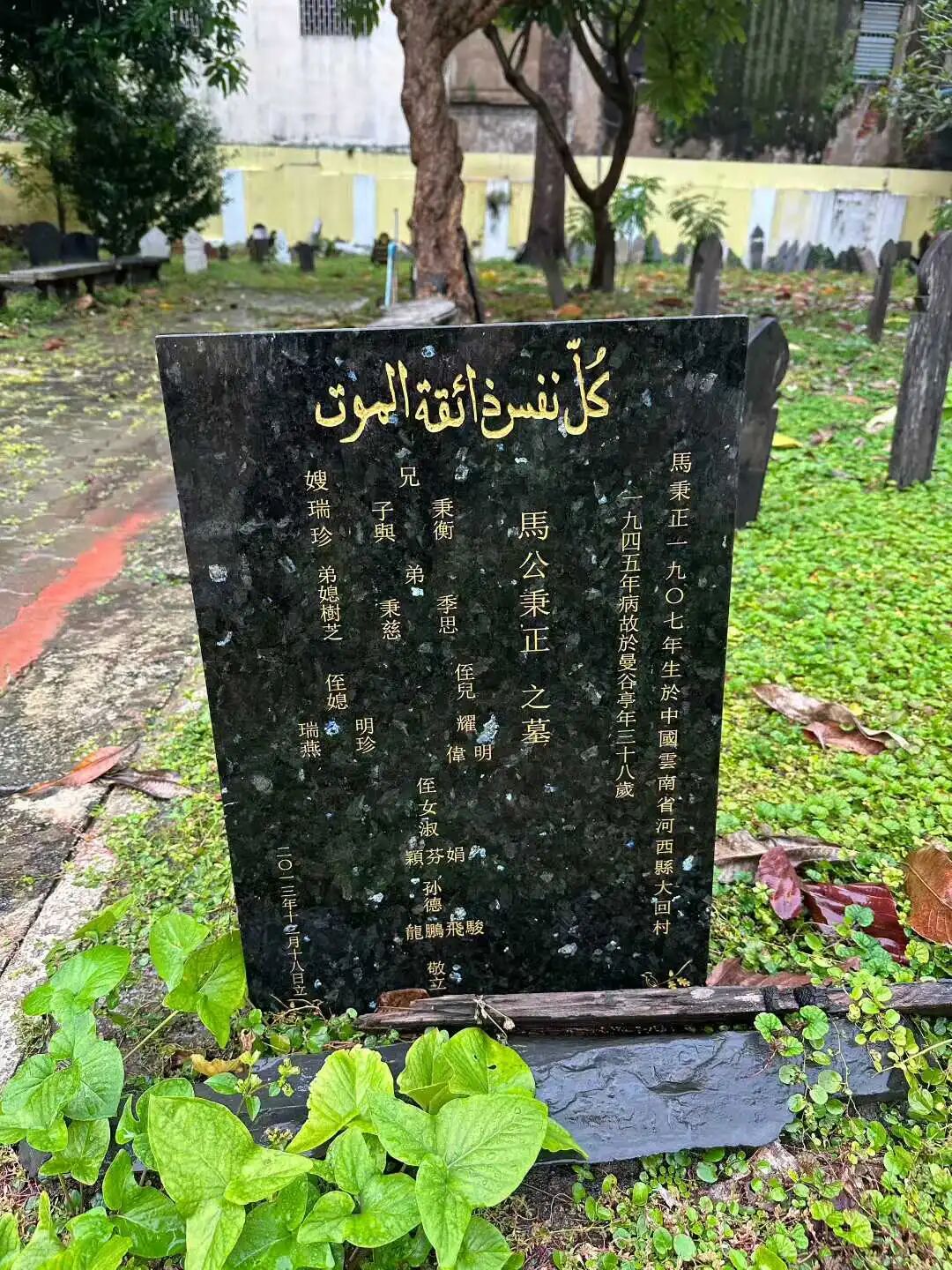
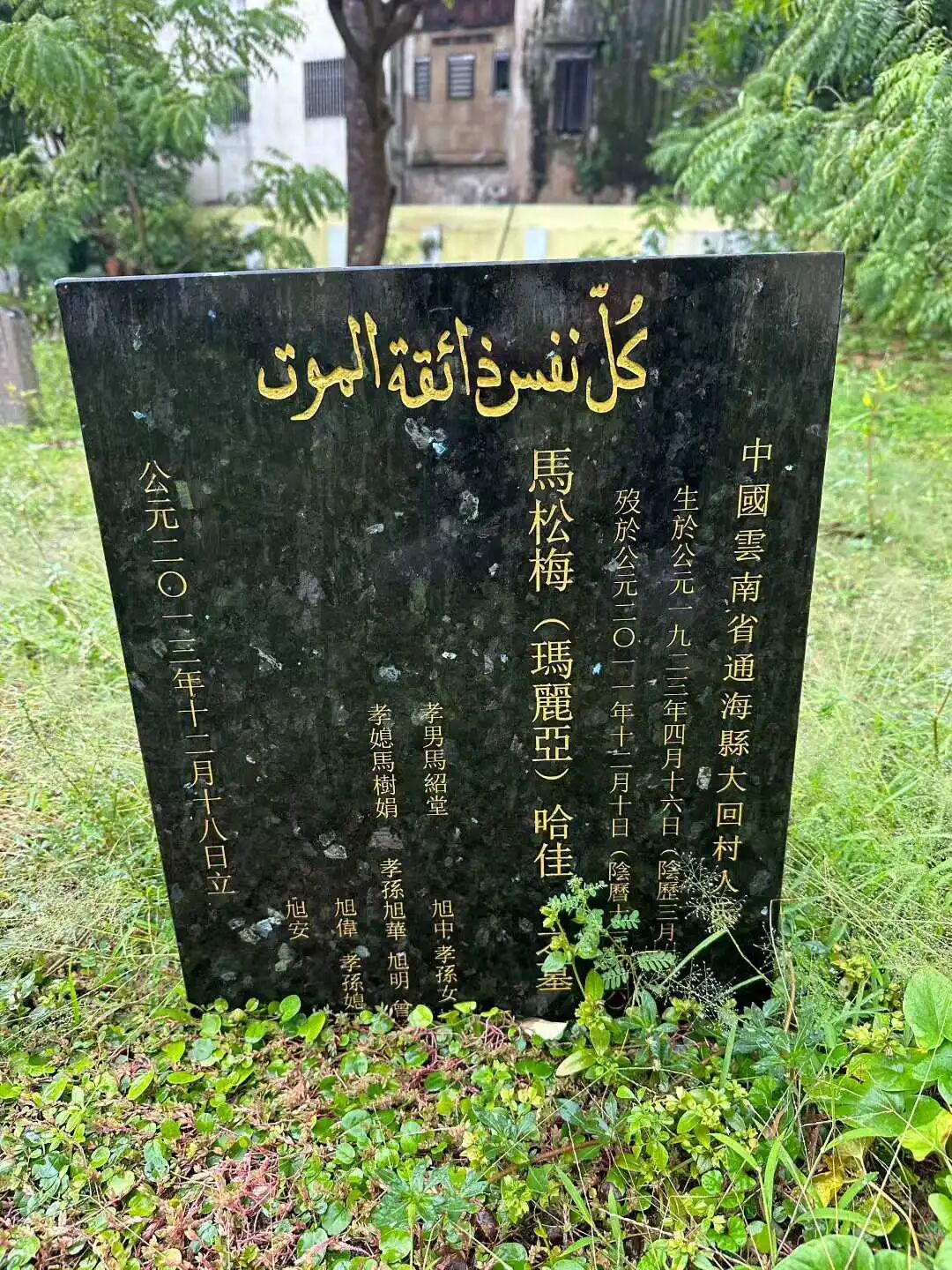
This year, I unexpectedly found a graveyard for Hui Muslims from Yunnan in Bangkok's Chinatown, located inside the Luang Kocha Itsahak mosque on Song Wat Road. Some of these tombstones state that the people came from the Ma family in the Great Hui Village (Da Hui Cun) of Tonghai, Yunnan. The Great Hui Village was originally called Hexi Dadonggou and is home to thousands of Hui Muslims, with the Ma family being the largest clan. According to the Hexi County Annals, the Ma family was originally from Nanjing and moved to Yunnan with the army in the early Ming Dynasty. Tombstone records also state that the Ma family were from Liushuwan Gaoshikan in Nanjing Yingtian Prefecture and moved to Yunnan for business.
The head of the Ma family, Ma Yuanwu, originally made a living by farming. During the Guangxu reign of the Qing Dynasty, he sent his eldest son, Ma Tongzhu, to lead a horse caravan. After saving some money, he sent his eldest grandson, Ma Bingzhong, to open a soy sauce workshop. The Ma family used their horse caravan to transport brown sugar to Kunming for sale and brought salt back, gradually growing their business this way. In 1918, the Ma family sold the soy sauce workshop and opened the Yuanxinzhai trading firm in Mojiang. They switched to selling cotton yarn, cloth, silk, and satin, while also buying mountain goods and medicinal herbs like tea, shellac (zijie), cowhide, deerskin, and deer antler (lurong). Later, they also processed deer glue, expanding their reach from China to Thailand and Myanmar. In 1921, the Ma family renamed Yuanxinzhai to Yuanxinchang in Kunming. They mainly traded ivory, deer antler, tiger bone, otter and cat fur, tea, cloth, silk, and dyes. They also shipped Chinese medicinal herbs like saffron, sweet flag (cangchangpu), musk, and fritillaria (beimu) to Thailand.
In the 1930s, besides running their horse caravan business, the Ma family set up branches in central and southern Yunnan, Kengtung and Mong Hsat in Myanmar, and Lampang, Chiang Mai, and Bangkok in Thailand. Because they kept their word and managed their business well, the Ma family became very wealthy in southern Yunnan during the Republic of China era. During the middle and late Republic of China era, the Ma family built three large family compounds in their hometown of Great Hui Village, which still stand today.
See "Heading South from Kunming (Part 2): Witness to the Yunnan Horse Caravans—The Ma Family Compound in Tonghai."
Luang Kocha Itsahak Mosque is the only mosque in Bangkok's Chinatown area. It was built at the end of the 19th century with funds donated by the Siamese royal translator, Luang Kocha Itsahak.
Luang Kocha Itsahak was of mixed Malay and Chinese descent. His father came to Bangkok from Kedah, Malaysia, to do business, served under King Rama III, and married a Chinese wife. Luang Kocha Itsahak himself worked in the Siamese Department of Western Trade (Krom Tha Khwa), serving as a translator for Malay rulers visiting the Siamese court and managing trade between Siam and various Malay states.
After Siam made Bangkok its capital in 1782, it granted a piece of land between the Sam Peng Mosque canal and the Sam Peng canal to the Chinese. As trade between China and Thailand grew, the Sam Peng Chinatown gradually became an import and trade district dominated by Teochew merchants. Before Don Mueang Airport was built in 1914, people wanting to travel from Bangkok to India, the Middle East, or Europe had to take a steamship from the Gonghang Pier in Chinatown to Singapore or Penang, then transfer to a cruise ship to continue west. Because of this, the Gonghang Pier was crowded with merchants from all over the world in the 19th century, and many Indian, Malay, and Yunnanese Hui Muslims worked in nearby warehouses and trading companies.
Since there was no mosque in the Chinatown area, the friends (dost) working nearby had to take a ferry to a mosque on the south bank of the Chao Phraya River for their prayers, which was very inconvenient. After discussing it, everyone decided to have the highest-ranking royal translator at the time, Luang Kocha Itsahak, lead the effort to buy land near Gonghang and build a mosque.
In 1892, a fire broke out in Chinatown, damaging many houses, so King Rama V decided to build a new main road, Song Wat Road, in Chinatown. Luang Kocha bought land along Songwat Road and had his children take apart the bricks and stones from a house he owned across the river in Thonburi to build this neoclassical-style mosque. Today, the Luang Kocha Mosque is still owned by his descendants and serves as a convenient place for fellow Muslims (dosti) working or visiting near Bangkok's Chinatown.
The ablution room (shuifang) was built in 1949.
Daily prayers (namaz) are held on the first floor, with men in front and women in the back, separated by a curtain.
The second floor only opens for Friday prayers (Jumu'ah), and the decoration of the mihrab features a distinct Thai style.
On Yaowarat Road in Bangkok's Chinatown stands a century-old house that was once the stage for a Muslim version of Romeo and Juliet; it is now open as a hotel and cafe.
This house was first built in 1916 by a Shia merchant named Abdul Rahim who worked in Chinatown, and it was later sold to a Sunni merchant named Adam. Adam arrived in Bangkok's Chinatown by boat from India to work. He started with nothing and eventually bought this house. Since Adam had no children, after he passed away, his wife brought her brother's family to live with her, and her brother's son, Payoon, became the young master of the house.
Surprisingly, Payoon fell in love with Sara, a descendant of the house's first owner, Abdul Rahim. Although they both came from wealthy Muslim families, one belonged to the Sunni sect and the other to the Shia sect, which was still not accepted by everyone a hundred years ago. This Muslim version of Romeo and Juliet had a happy ending. They married and had three sons, and the eldest son, Parpatipya, inherited the house.
The house was later rented by a Chinese printing factory and a newspaper office. After renovations in 2017, it became the Baan 2459 hotel and Chata cafe.
After the great fire in Bangkok's Chinatown in 1892, King Rama V built a large number of shophouses along Sampeng Lane, the oldest road in Chinatown, which later became a bustling commercial market. Besides the Chinese, Indian and Malay Muslims (dosti) also opened shops on Sampeng Lane, with many working in the jewelry trade. 130 years later, many descendants of these Muslims (dosti) still operate jewelry businesses in the shophouses on Sampeng Lane, serving as a living historical memory of Bangkok's Chinatown.
This shop is marked as being from Pattani Province in southern Thailand, which is a Malay-populated area.
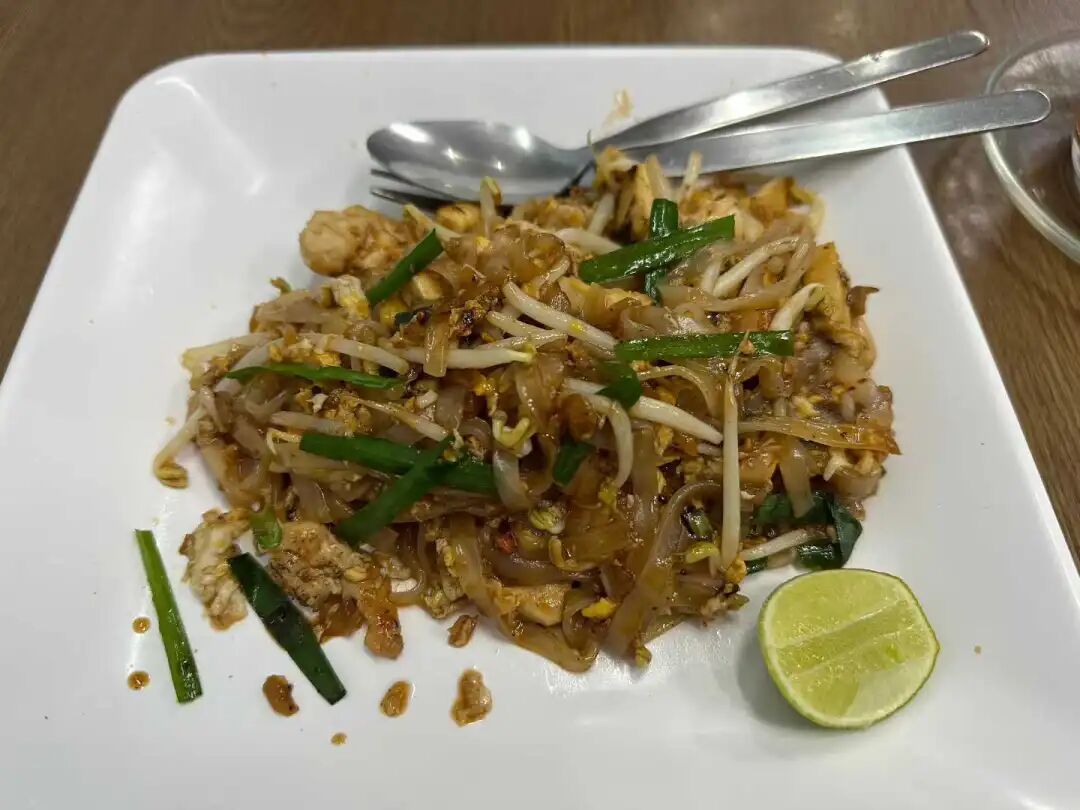
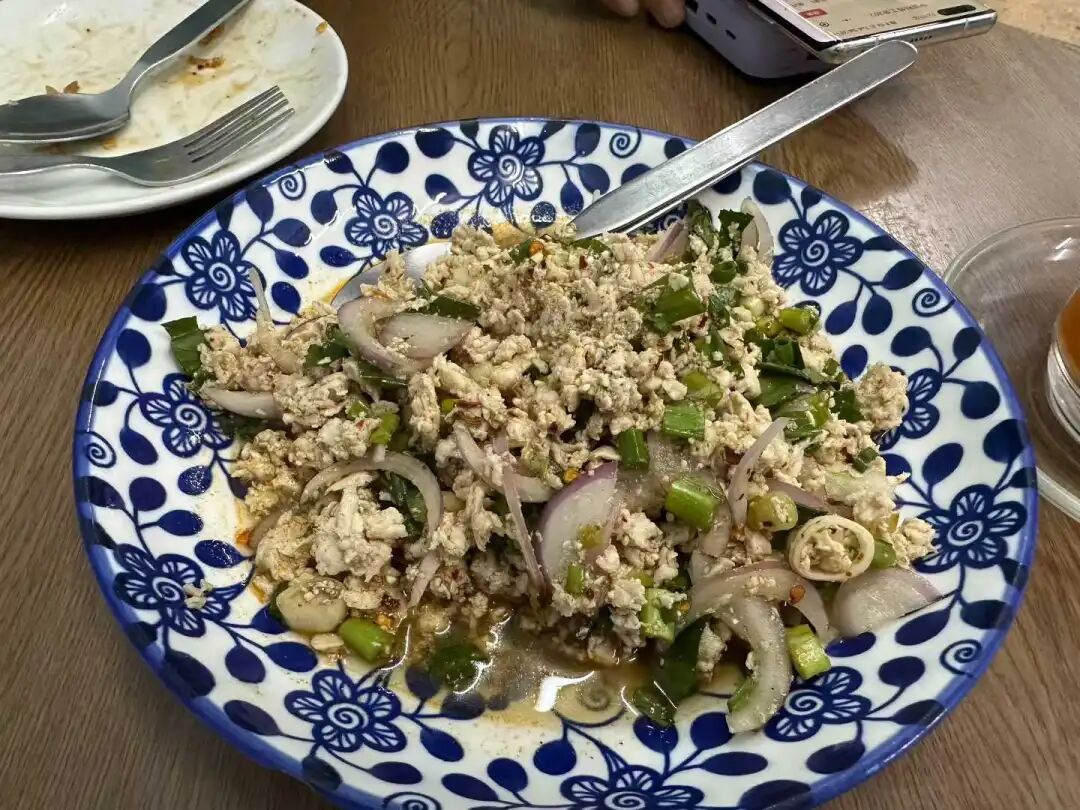
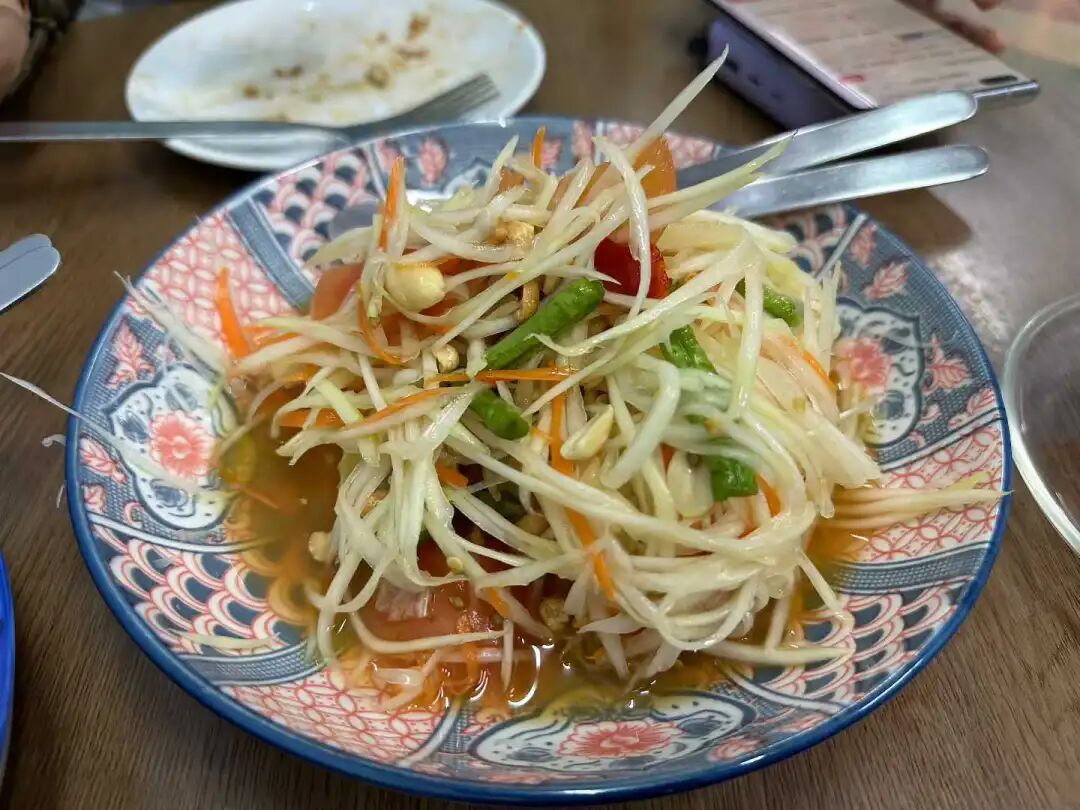
There are relatively few halal restaurants in the Bangkok Chinatown area. I recommend Zara Restaurant on Yaowarat Road, a family-run place serving local Thai food and various coffees. We ordered Thai red milk tea, spicy minced chicken salad (Larb Gai), green papaya salad, and stir-fried rice noodles (Pad Thai). Overall, the taste was very authentic, and the stir-fried rice noodles were especially delicious. However, Thai food is the spiciest I have ever eaten in Southeast Asia. If you are a Muslim (dosti) who cannot handle spice, be sure to say so in advance, or your mouth will feel like it is burning for a long time.
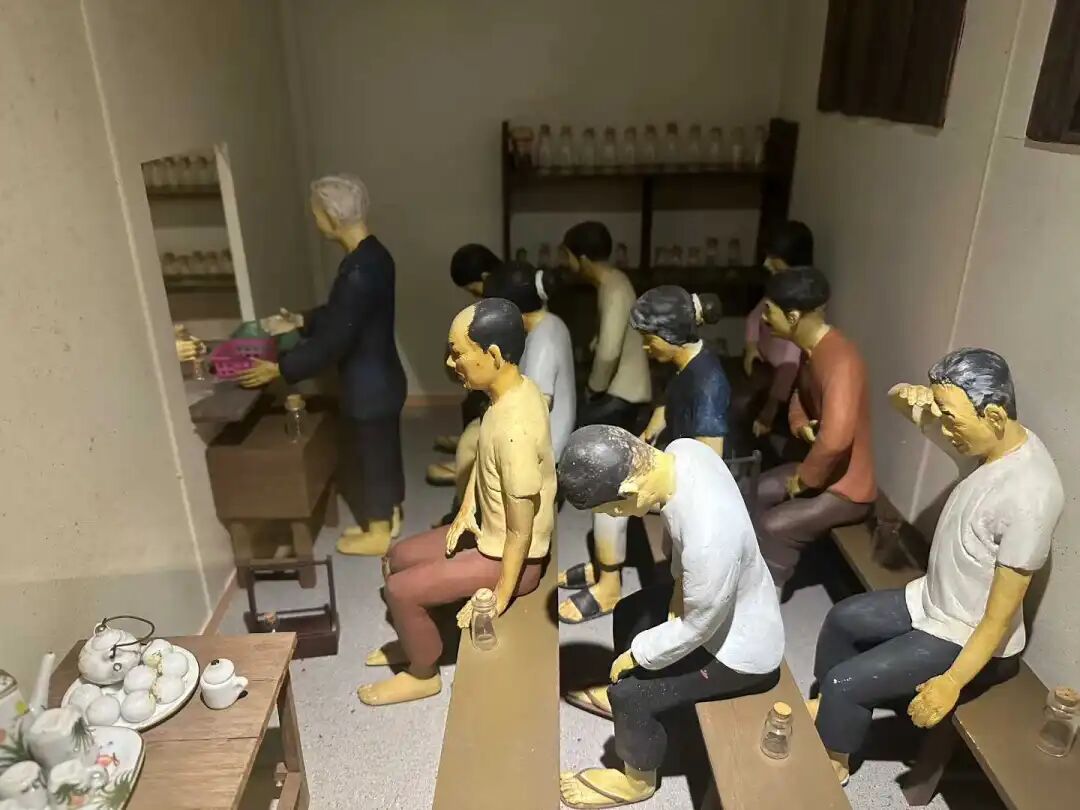
The second floor of the Wat Traimit mosque in Bangkok's Chinatown houses the Yaowarat Chinatown Heritage Center. It offers a very intuitive introduction to Bangkok's Chinatown. At the ticket office, just say you only want to see the exhibition and buy a 100-baht ticket. The exhibition hall introduces how the Chinese came to Bangkok to make a living and displays the atmosphere of Chinatown during the Qing Dynasty.
Life scenes recreated inside the Yaowarat Chinatown Heritage Center in Bangkok:
Haitianlou on Shipa Road was built in 1934, and its three-story banquet hall is a key place for Chinese community gatherings.
Longweiye Market sells a variety of dried goods, fruits, and ready-to-eat foods.
The theater performs the traditional Teochew opening play, 'Six Kingdoms Conferring the Prime Minister' (Liuguo Fengxiang).
Remittance houses (piguan) handle the delivery of letters and money back to the home country.
Many shops gather in the square in front of Longlian Mosque.
Tea and snack shops sell crispy, sweet Chinese-style pastries, perfect for eating while drinking tea.
Gold and silver jewelry sold at gold shops is a major way for Chinese people to save money; they often buy gold to keep after receiving lucky money (yasuiqian) during the Lunar New Year.
Several Chinese-language newspaper offices in Yaowarat post their daily papers on the wall, so people can read the 'wall news' without having to buy a copy.
Tianhua Hospital opened in 1905; it uses various dialects to communicate with patients and provides free medical treatment to the poor.
Bangkok's Chinatown in the rain. view all
Summary: Bangkok's Chinatown contains a Yunnan Hui Muslim cemetery inside Luang Kocha Itsahak Mosque on Song Wat Road. This account connects the Ma family of Tonghai, Yunnan, the old caravan trade, the mosque's royal translator history, and the Muslim life around Yaowarat.
This year, I unexpectedly found a graveyard for Hui Muslims from Yunnan in Bangkok's Chinatown, located inside the Luang Kocha Itsahak mosque on Song Wat Road. Some of these tombstones state that the people came from the Ma family in the Great Hui Village (Da Hui Cun) of Tonghai, Yunnan. The Great Hui Village was originally called Hexi Dadonggou and is home to thousands of Hui Muslims, with the Ma family being the largest clan. According to the Hexi County Annals, the Ma family was originally from Nanjing and moved to Yunnan with the army in the early Ming Dynasty. Tombstone records also state that the Ma family were from Liushuwan Gaoshikan in Nanjing Yingtian Prefecture and moved to Yunnan for business.
The head of the Ma family, Ma Yuanwu, originally made a living by farming. During the Guangxu reign of the Qing Dynasty, he sent his eldest son, Ma Tongzhu, to lead a horse caravan. After saving some money, he sent his eldest grandson, Ma Bingzhong, to open a soy sauce workshop. The Ma family used their horse caravan to transport brown sugar to Kunming for sale and brought salt back, gradually growing their business this way. In 1918, the Ma family sold the soy sauce workshop and opened the Yuanxinzhai trading firm in Mojiang. They switched to selling cotton yarn, cloth, silk, and satin, while also buying mountain goods and medicinal herbs like tea, shellac (zijie), cowhide, deerskin, and deer antler (lurong). Later, they also processed deer glue, expanding their reach from China to Thailand and Myanmar. In 1921, the Ma family renamed Yuanxinzhai to Yuanxinchang in Kunming. They mainly traded ivory, deer antler, tiger bone, otter and cat fur, tea, cloth, silk, and dyes. They also shipped Chinese medicinal herbs like saffron, sweet flag (cangchangpu), musk, and fritillaria (beimu) to Thailand.
In the 1930s, besides running their horse caravan business, the Ma family set up branches in central and southern Yunnan, Kengtung and Mong Hsat in Myanmar, and Lampang, Chiang Mai, and Bangkok in Thailand. Because they kept their word and managed their business well, the Ma family became very wealthy in southern Yunnan during the Republic of China era. During the middle and late Republic of China era, the Ma family built three large family compounds in their hometown of Great Hui Village, which still stand today.
See "Heading South from Kunming (Part 2): Witness to the Yunnan Horse Caravans—The Ma Family Compound in Tonghai."
Luang Kocha Itsahak Mosque is the only mosque in Bangkok's Chinatown area. It was built at the end of the 19th century with funds donated by the Siamese royal translator, Luang Kocha Itsahak.
Luang Kocha Itsahak was of mixed Malay and Chinese descent. His father came to Bangkok from Kedah, Malaysia, to do business, served under King Rama III, and married a Chinese wife. Luang Kocha Itsahak himself worked in the Siamese Department of Western Trade (Krom Tha Khwa), serving as a translator for Malay rulers visiting the Siamese court and managing trade between Siam and various Malay states.
After Siam made Bangkok its capital in 1782, it granted a piece of land between the Sam Peng Mosque canal and the Sam Peng canal to the Chinese. As trade between China and Thailand grew, the Sam Peng Chinatown gradually became an import and trade district dominated by Teochew merchants. Before Don Mueang Airport was built in 1914, people wanting to travel from Bangkok to India, the Middle East, or Europe had to take a steamship from the Gonghang Pier in Chinatown to Singapore or Penang, then transfer to a cruise ship to continue west. Because of this, the Gonghang Pier was crowded with merchants from all over the world in the 19th century, and many Indian, Malay, and Yunnanese Hui Muslims worked in nearby warehouses and trading companies.
Since there was no mosque in the Chinatown area, the friends (dost) working nearby had to take a ferry to a mosque on the south bank of the Chao Phraya River for their prayers, which was very inconvenient. After discussing it, everyone decided to have the highest-ranking royal translator at the time, Luang Kocha Itsahak, lead the effort to buy land near Gonghang and build a mosque.
In 1892, a fire broke out in Chinatown, damaging many houses, so King Rama V decided to build a new main road, Song Wat Road, in Chinatown. Luang Kocha bought land along Songwat Road and had his children take apart the bricks and stones from a house he owned across the river in Thonburi to build this neoclassical-style mosque. Today, the Luang Kocha Mosque is still owned by his descendants and serves as a convenient place for fellow Muslims (dosti) working or visiting near Bangkok's Chinatown.
The ablution room (shuifang) was built in 1949.
Daily prayers (namaz) are held on the first floor, with men in front and women in the back, separated by a curtain.
The second floor only opens for Friday prayers (Jumu'ah), and the decoration of the mihrab features a distinct Thai style.
On Yaowarat Road in Bangkok's Chinatown stands a century-old house that was once the stage for a Muslim version of Romeo and Juliet; it is now open as a hotel and cafe.
This house was first built in 1916 by a Shia merchant named Abdul Rahim who worked in Chinatown, and it was later sold to a Sunni merchant named Adam. Adam arrived in Bangkok's Chinatown by boat from India to work. He started with nothing and eventually bought this house. Since Adam had no children, after he passed away, his wife brought her brother's family to live with her, and her brother's son, Payoon, became the young master of the house.
Surprisingly, Payoon fell in love with Sara, a descendant of the house's first owner, Abdul Rahim. Although they both came from wealthy Muslim families, one belonged to the Sunni sect and the other to the Shia sect, which was still not accepted by everyone a hundred years ago. This Muslim version of Romeo and Juliet had a happy ending. They married and had three sons, and the eldest son, Parpatipya, inherited the house.
The house was later rented by a Chinese printing factory and a newspaper office. After renovations in 2017, it became the Baan 2459 hotel and Chata cafe.
After the great fire in Bangkok's Chinatown in 1892, King Rama V built a large number of shophouses along Sampeng Lane, the oldest road in Chinatown, which later became a bustling commercial market. Besides the Chinese, Indian and Malay Muslims (dosti) also opened shops on Sampeng Lane, with many working in the jewelry trade. 130 years later, many descendants of these Muslims (dosti) still operate jewelry businesses in the shophouses on Sampeng Lane, serving as a living historical memory of Bangkok's Chinatown.
This shop is marked as being from Pattani Province in southern Thailand, which is a Malay-populated area.
There are relatively few halal restaurants in the Bangkok Chinatown area. I recommend Zara Restaurant on Yaowarat Road, a family-run place serving local Thai food and various coffees. We ordered Thai red milk tea, spicy minced chicken salad (Larb Gai), green papaya salad, and stir-fried rice noodles (Pad Thai). Overall, the taste was very authentic, and the stir-fried rice noodles were especially delicious. However, Thai food is the spiciest I have ever eaten in Southeast Asia. If you are a Muslim (dosti) who cannot handle spice, be sure to say so in advance, or your mouth will feel like it is burning for a long time.
The second floor of the Wat Traimit mosque in Bangkok's Chinatown houses the Yaowarat Chinatown Heritage Center. It offers a very intuitive introduction to Bangkok's Chinatown. At the ticket office, just say you only want to see the exhibition and buy a 100-baht ticket. The exhibition hall introduces how the Chinese came to Bangkok to make a living and displays the atmosphere of Chinatown during the Qing Dynasty.
Life scenes recreated inside the Yaowarat Chinatown Heritage Center in Bangkok:
Haitianlou on Shipa Road was built in 1934, and its three-story banquet hall is a key place for Chinese community gatherings.
Longweiye Market sells a variety of dried goods, fruits, and ready-to-eat foods.
The theater performs the traditional Teochew opening play, 'Six Kingdoms Conferring the Prime Minister' (Liuguo Fengxiang).
Remittance houses (piguan) handle the delivery of letters and money back to the home country.
Many shops gather in the square in front of Longlian Mosque.
Tea and snack shops sell crispy, sweet Chinese-style pastries, perfect for eating while drinking tea.
Gold and silver jewelry sold at gold shops is a major way for Chinese people to save money; they often buy gold to keep after receiving lucky money (yasuiqian) during the Lunar New Year.
Several Chinese-language newspaper offices in Yaowarat post their daily papers on the wall, so people can read the 'wall news' without having to buy a copy.
Tianhua Hospital opened in 1905; it uses various dialects to communicate with patients and provides free medical treatment to the poor.
Bangkok's Chinatown in the rain. view all
Reposted from the web
Summary: Bangkok's Chinatown contains a Yunnan Hui Muslim cemetery inside Luang Kocha Itsahak Mosque on Song Wat Road. This account connects the Ma family of Tonghai, Yunnan, the old caravan trade, the mosque's royal translator history, and the Muslim life around Yaowarat.
This year, I unexpectedly found a graveyard for Hui Muslims from Yunnan in Bangkok's Chinatown, located inside the Luang Kocha Itsahak mosque on Song Wat Road. Some of these tombstones state that the people came from the Ma family in the Great Hui Village (Da Hui Cun) of Tonghai, Yunnan. The Great Hui Village was originally called Hexi Dadonggou and is home to thousands of Hui Muslims, with the Ma family being the largest clan. According to the Hexi County Annals, the Ma family was originally from Nanjing and moved to Yunnan with the army in the early Ming Dynasty. Tombstone records also state that the Ma family were from Liushuwan Gaoshikan in Nanjing Yingtian Prefecture and moved to Yunnan for business.
The head of the Ma family, Ma Yuanwu, originally made a living by farming. During the Guangxu reign of the Qing Dynasty, he sent his eldest son, Ma Tongzhu, to lead a horse caravan. After saving some money, he sent his eldest grandson, Ma Bingzhong, to open a soy sauce workshop. The Ma family used their horse caravan to transport brown sugar to Kunming for sale and brought salt back, gradually growing their business this way. In 1918, the Ma family sold the soy sauce workshop and opened the Yuanxinzhai trading firm in Mojiang. They switched to selling cotton yarn, cloth, silk, and satin, while also buying mountain goods and medicinal herbs like tea, shellac (zijie), cowhide, deerskin, and deer antler (lurong). Later, they also processed deer glue, expanding their reach from China to Thailand and Myanmar. In 1921, the Ma family renamed Yuanxinzhai to Yuanxinchang in Kunming. They mainly traded ivory, deer antler, tiger bone, otter and cat fur, tea, cloth, silk, and dyes. They also shipped Chinese medicinal herbs like saffron, sweet flag (cangchangpu), musk, and fritillaria (beimu) to Thailand.
In the 1930s, besides running their horse caravan business, the Ma family set up branches in central and southern Yunnan, Kengtung and Mong Hsat in Myanmar, and Lampang, Chiang Mai, and Bangkok in Thailand. Because they kept their word and managed their business well, the Ma family became very wealthy in southern Yunnan during the Republic of China era. During the middle and late Republic of China era, the Ma family built three large family compounds in their hometown of Great Hui Village, which still stand today.
See "Heading South from Kunming (Part 2): Witness to the Yunnan Horse Caravans—The Ma Family Compound in Tonghai."
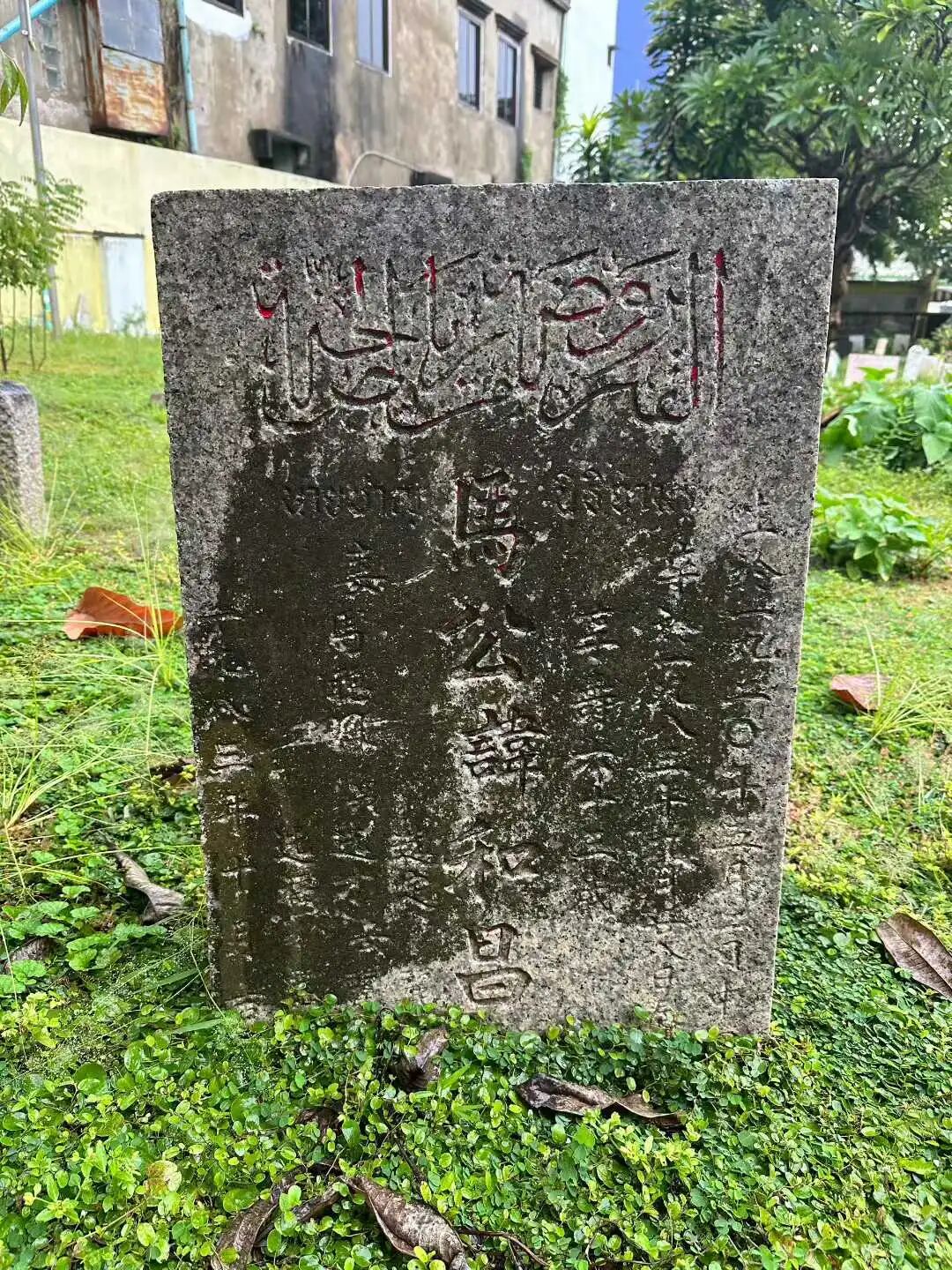
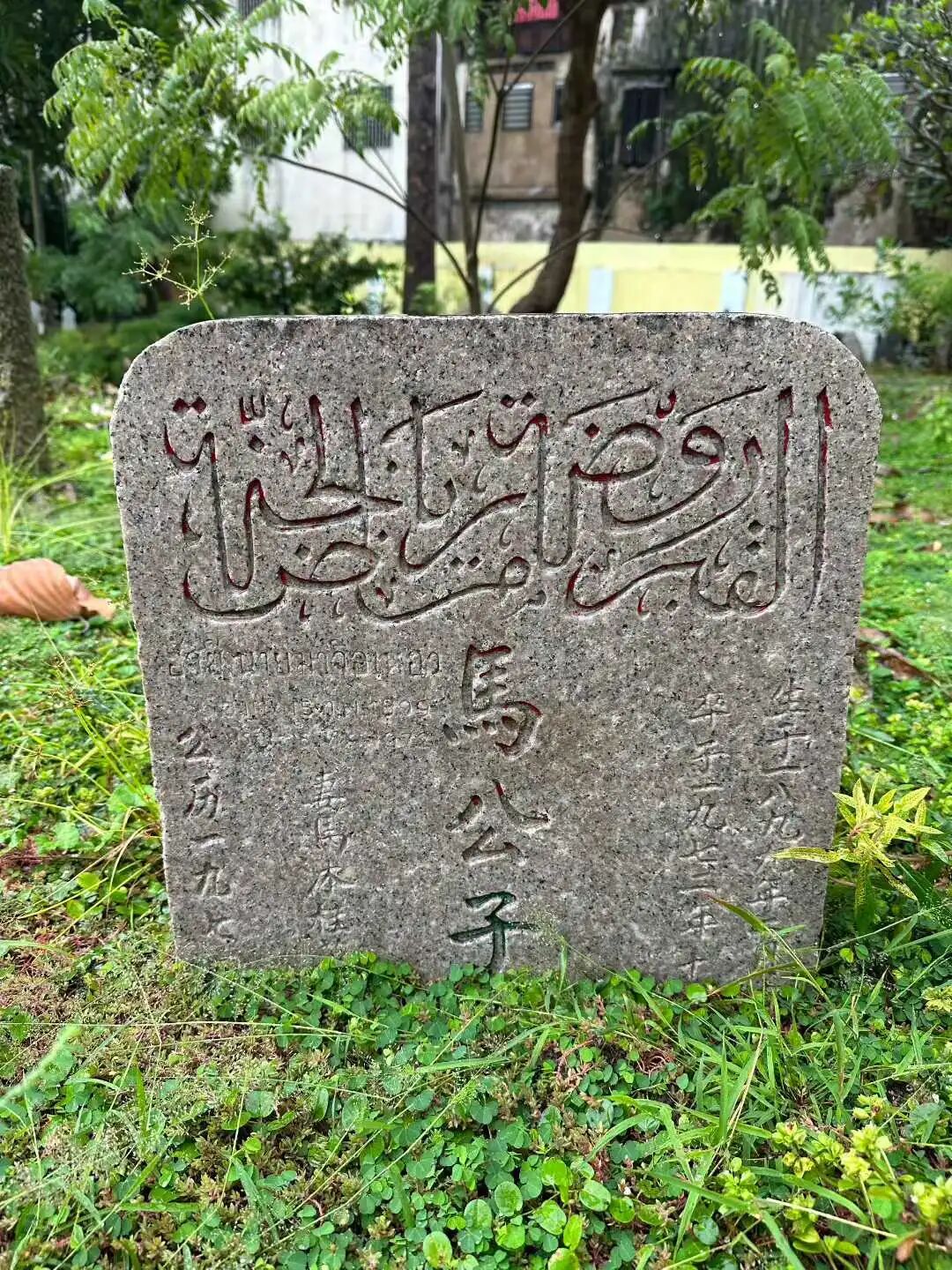
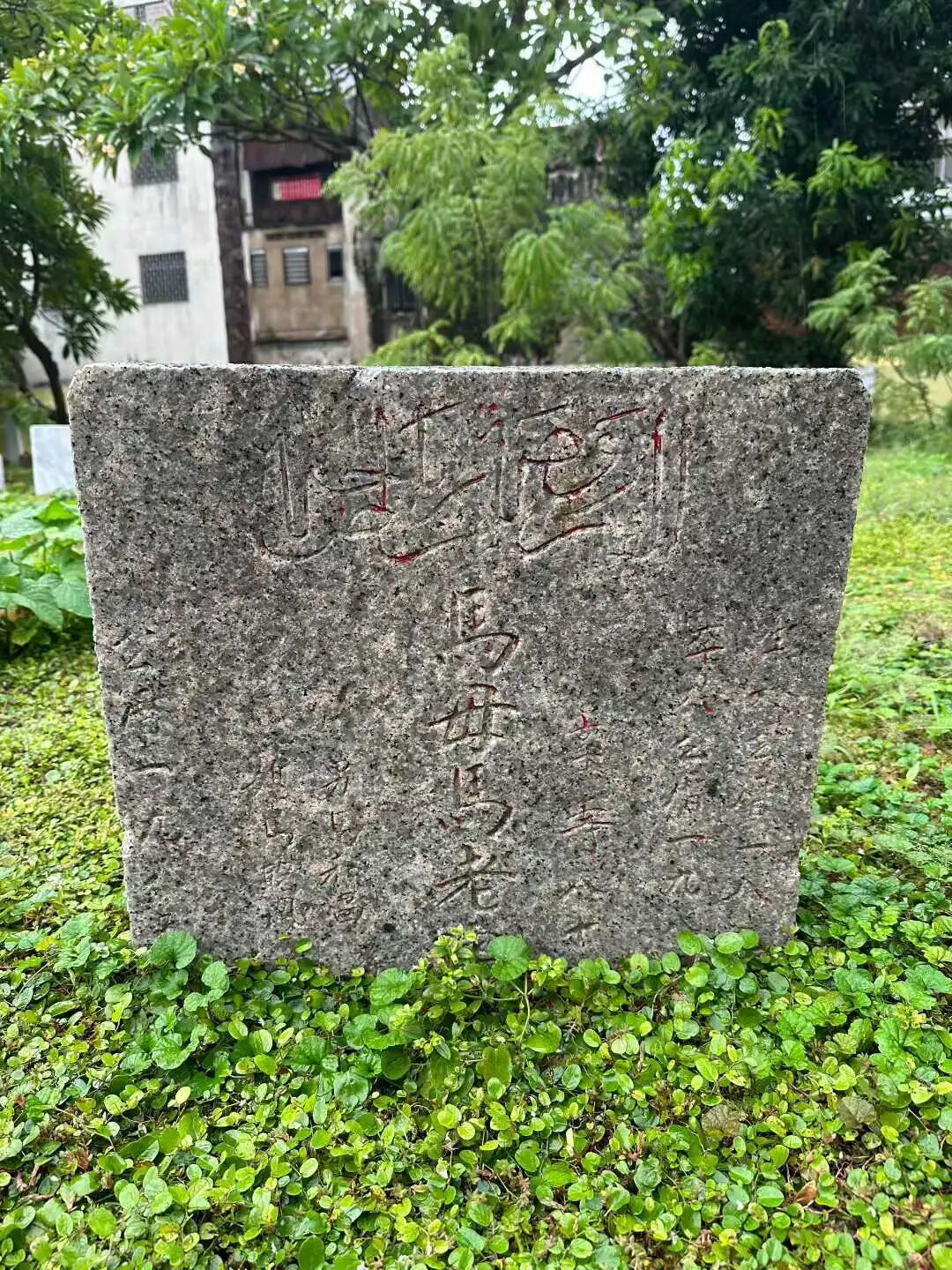
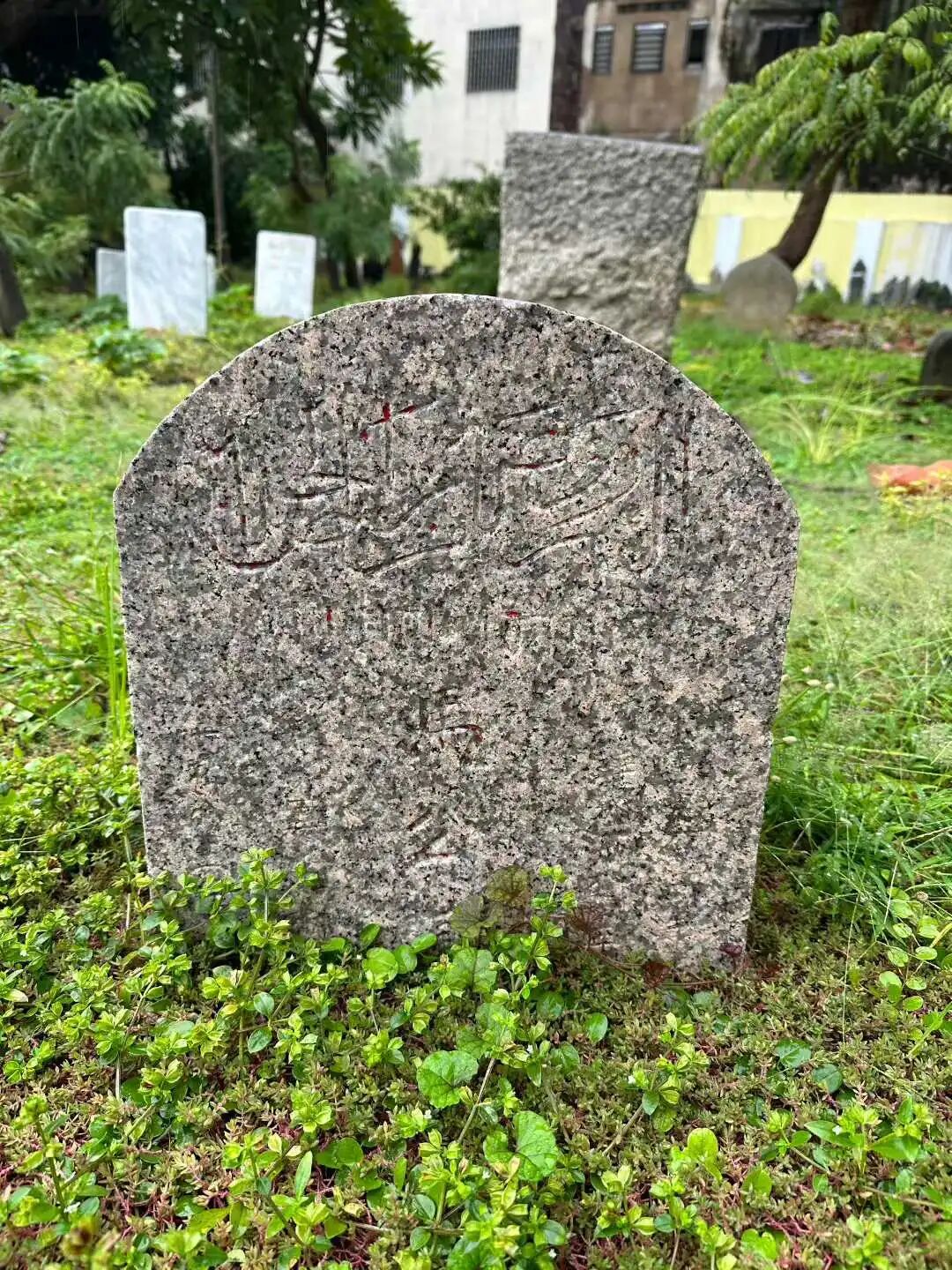
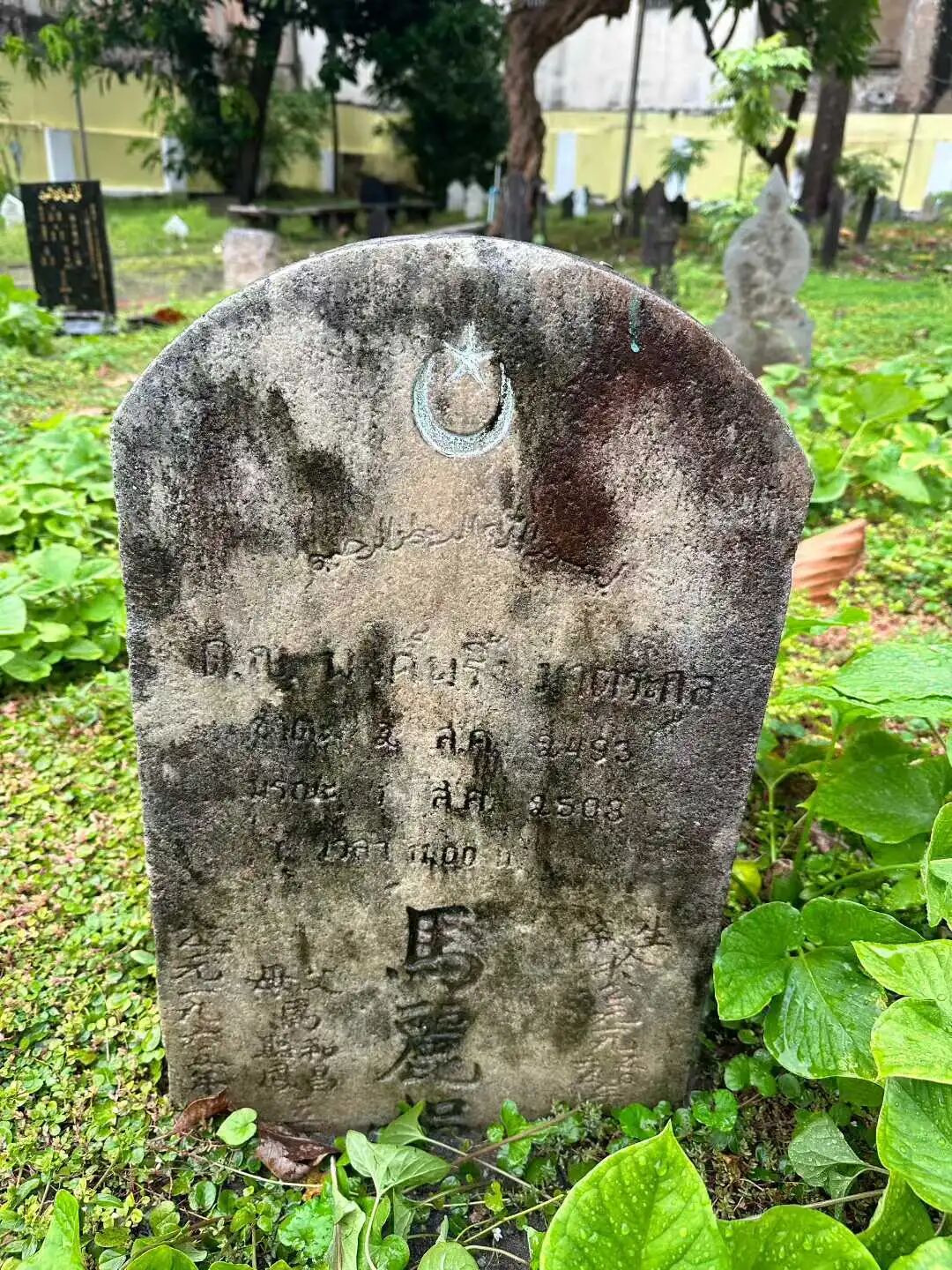
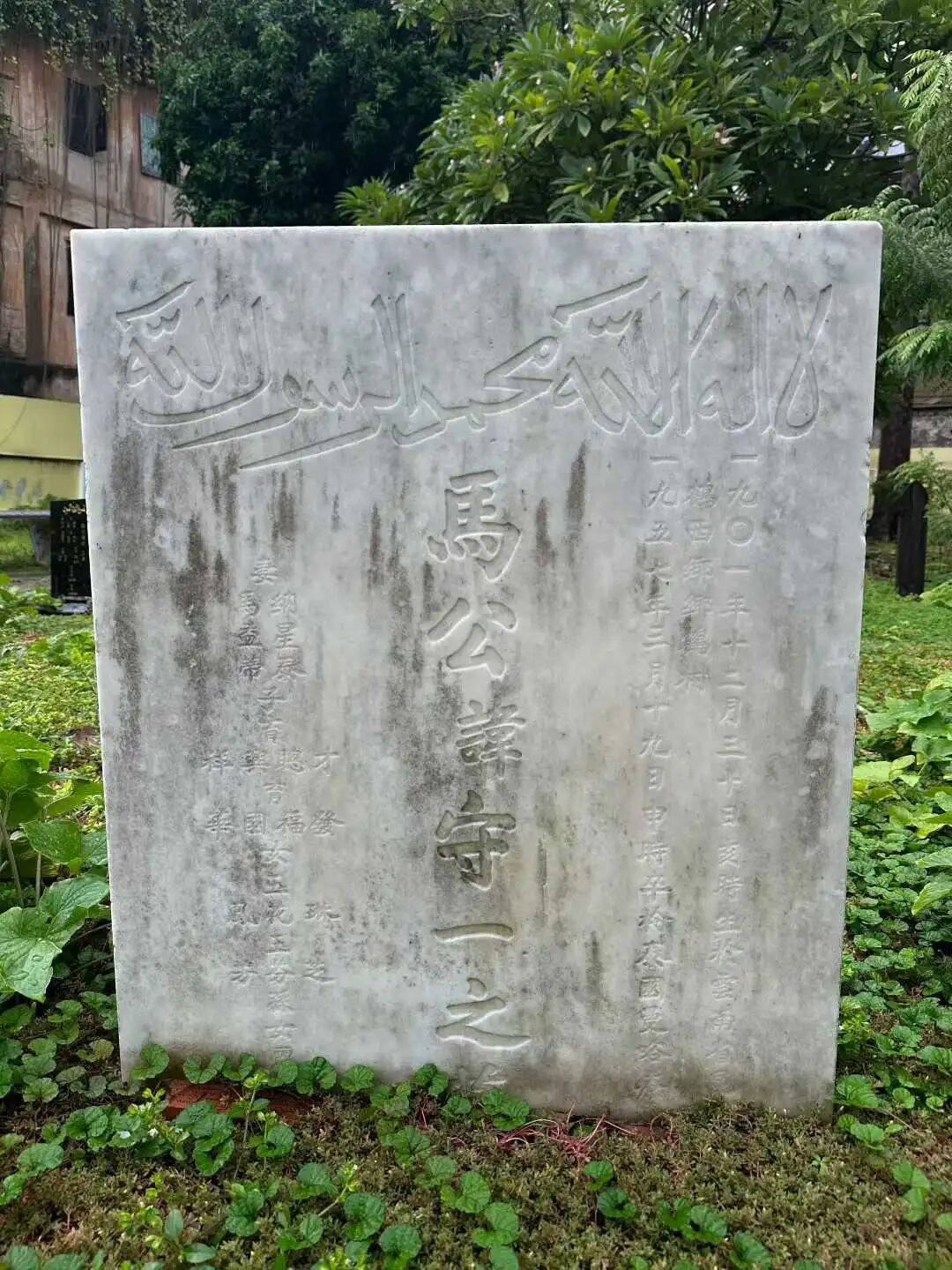
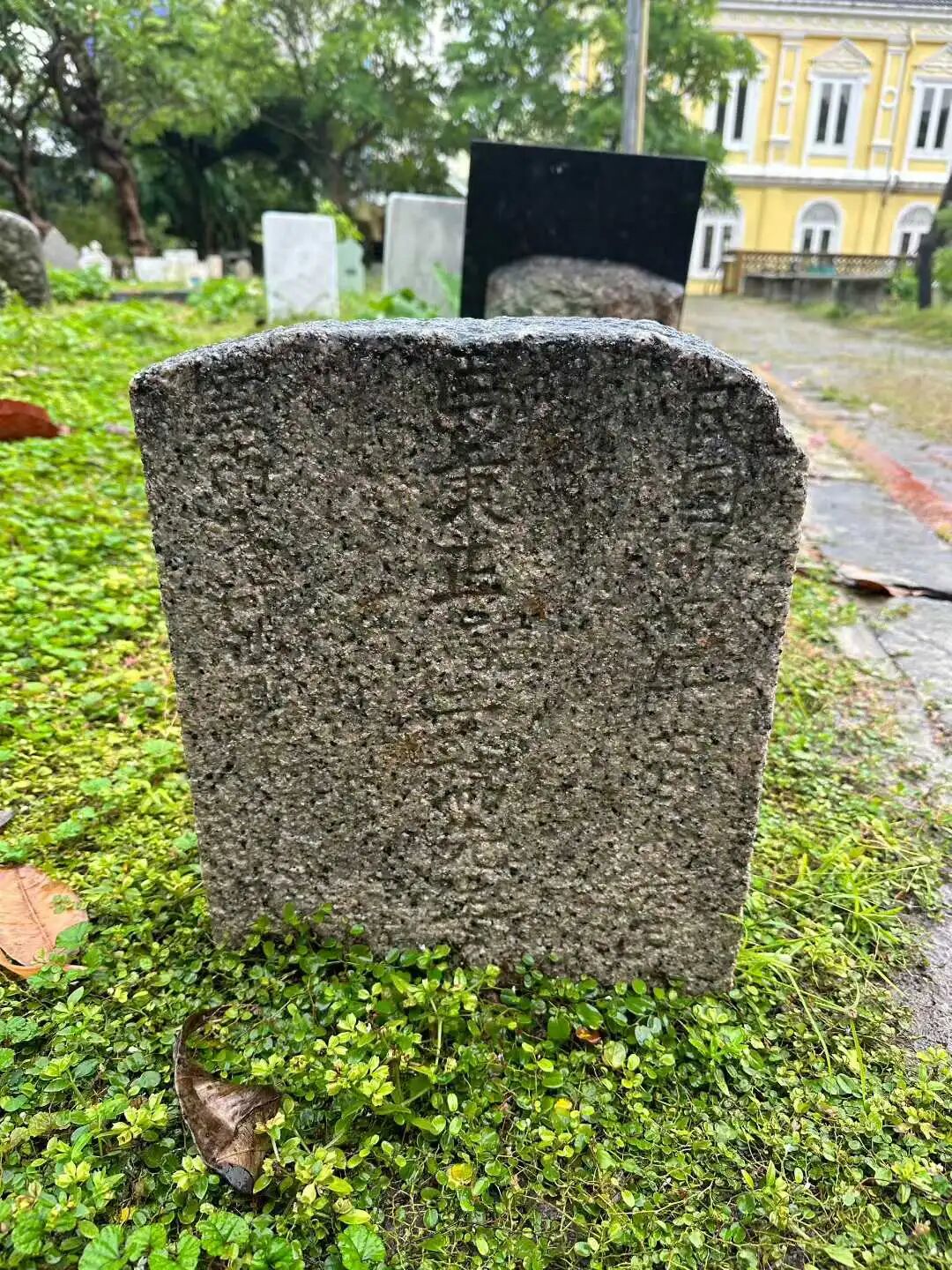
Luang Kocha Itsahak Mosque is the only mosque in Bangkok's Chinatown area. It was built at the end of the 19th century with funds donated by the Siamese royal translator, Luang Kocha Itsahak.
Luang Kocha Itsahak was of mixed Malay and Chinese descent. His father came to Bangkok from Kedah, Malaysia, to do business, served under King Rama III, and married a Chinese wife. Luang Kocha Itsahak himself worked in the Siamese Department of Western Trade (Krom Tha Khwa), serving as a translator for Malay rulers visiting the Siamese court and managing trade between Siam and various Malay states.
After Siam made Bangkok its capital in 1782, it granted a piece of land between the Sam Peng Mosque canal and the Sam Peng canal to the Chinese. As trade between China and Thailand grew, the Sam Peng Chinatown gradually became an import and trade district dominated by Teochew merchants. Before Don Mueang Airport was built in 1914, people wanting to travel from Bangkok to India, the Middle East, or Europe had to take a steamship from the Gonghang Pier in Chinatown to Singapore or Penang, then transfer to a cruise ship to continue west. Because of this, the Gonghang Pier was crowded with merchants from all over the world in the 19th century, and many Indian, Malay, and Yunnanese Hui Muslims worked in nearby warehouses and trading companies.
Since there was no mosque in the Chinatown area, the friends (dost) working nearby had to take a ferry to a mosque on the south bank of the Chao Phraya River for their prayers, which was very inconvenient. After discussing it, everyone decided to have the highest-ranking royal translator at the time, Luang Kocha Itsahak, lead the effort to buy land near Gonghang and build a mosque.
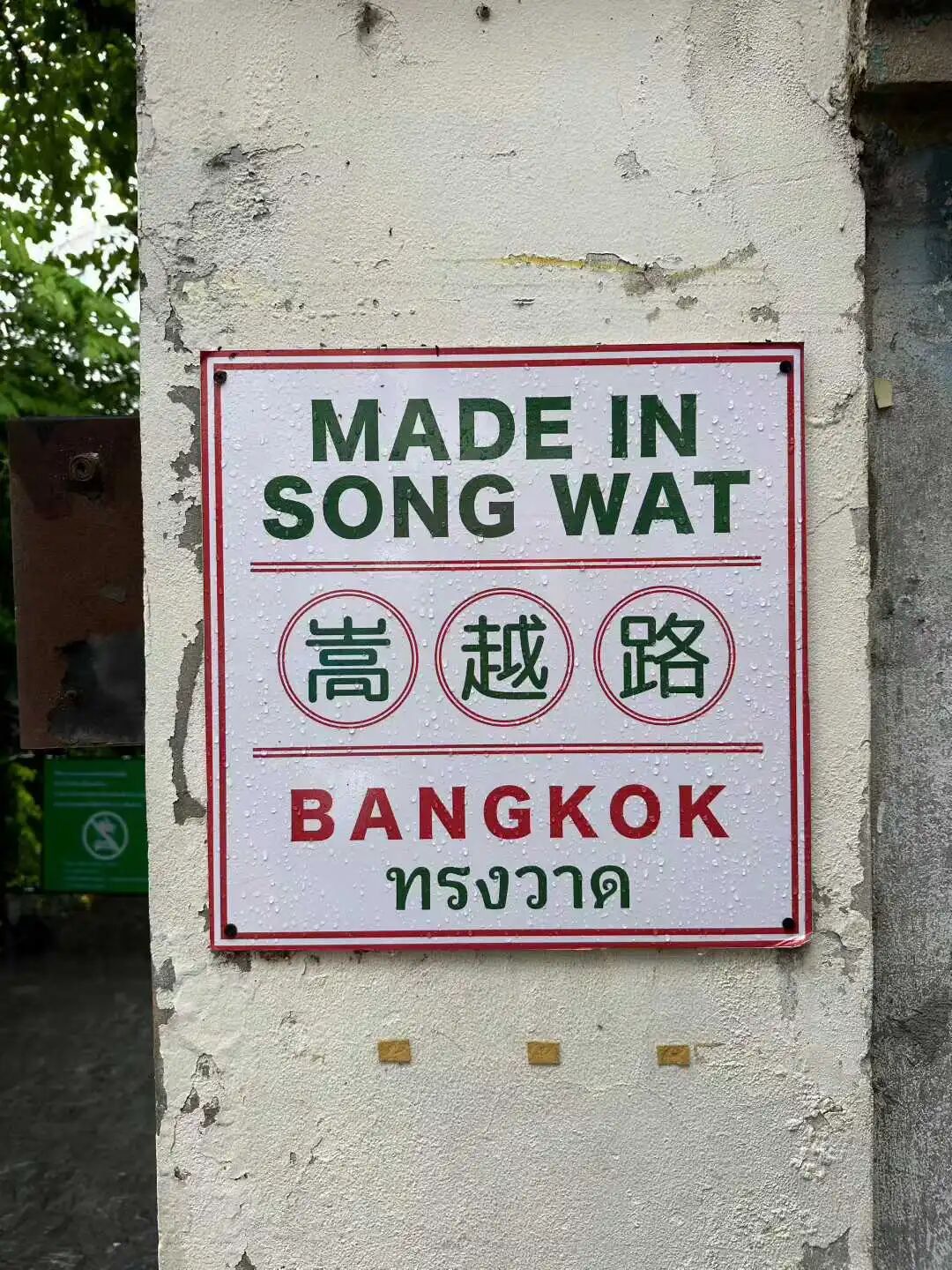
In 1892, a fire broke out in Chinatown, damaging many houses, so King Rama V decided to build a new main road, Song Wat Road, in Chinatown. Luang Kocha bought land along Songwat Road and had his children take apart the bricks and stones from a house he owned across the river in Thonburi to build this neoclassical-style mosque. Today, the Luang Kocha Mosque is still owned by his descendants and serves as a convenient place for fellow Muslims (dosti) working or visiting near Bangkok's Chinatown.
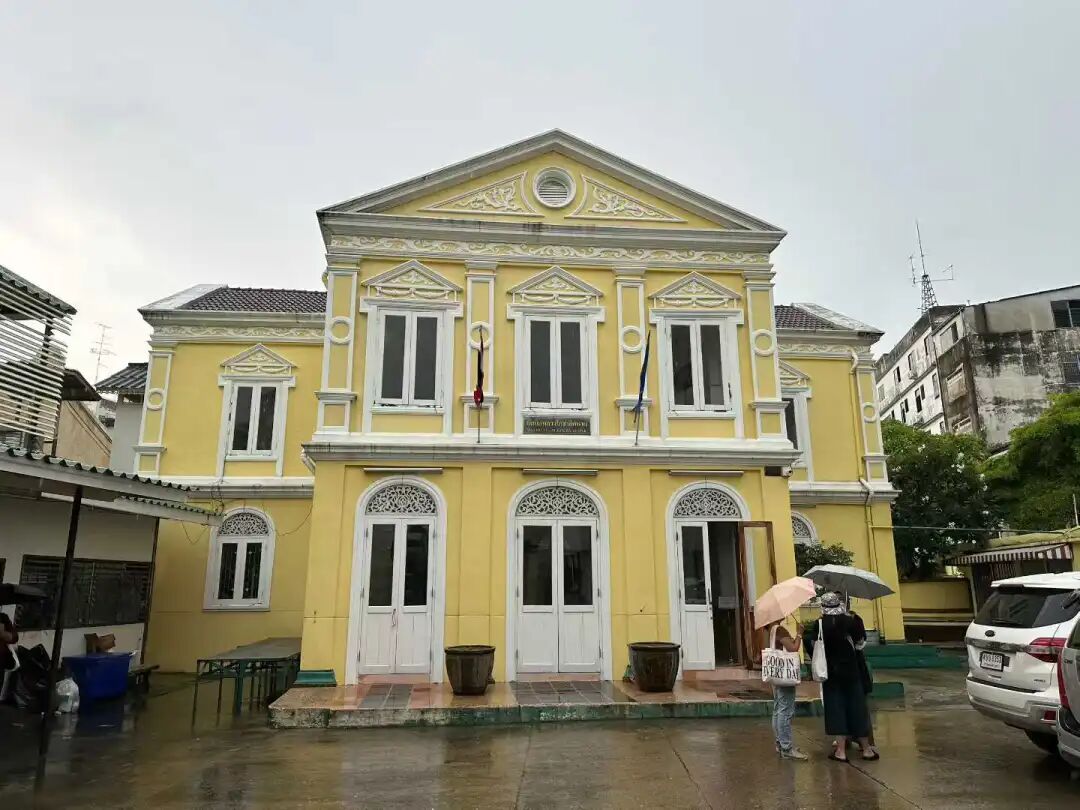
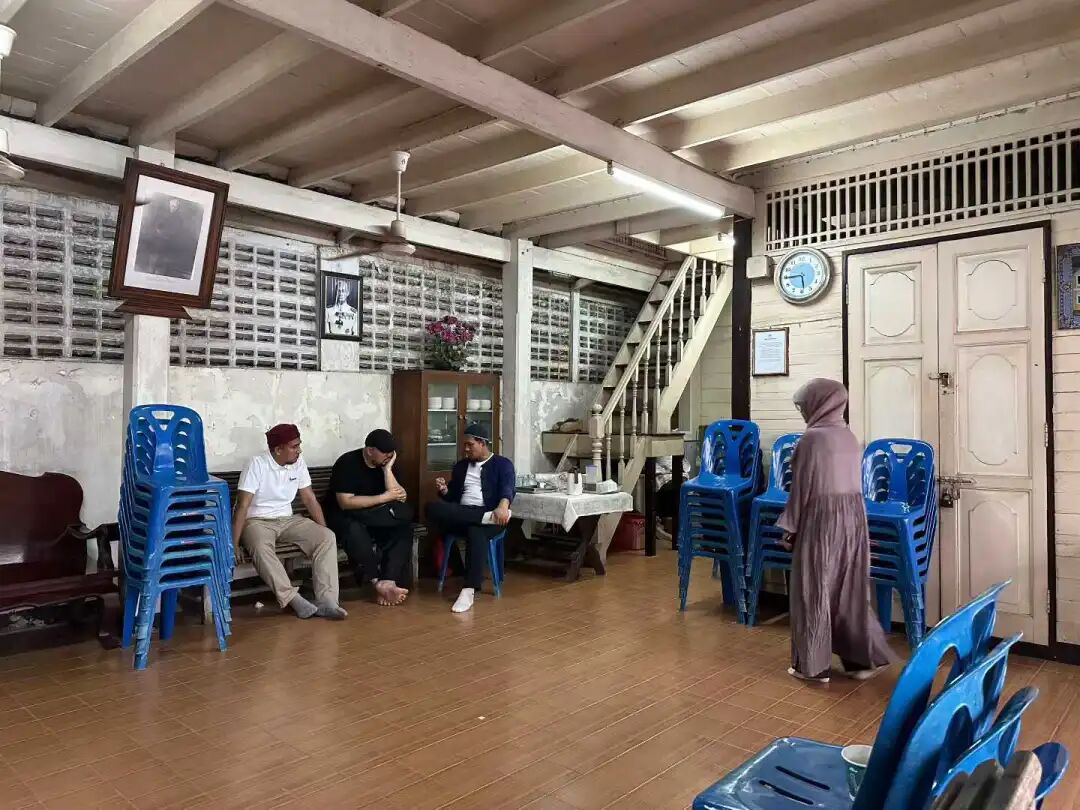
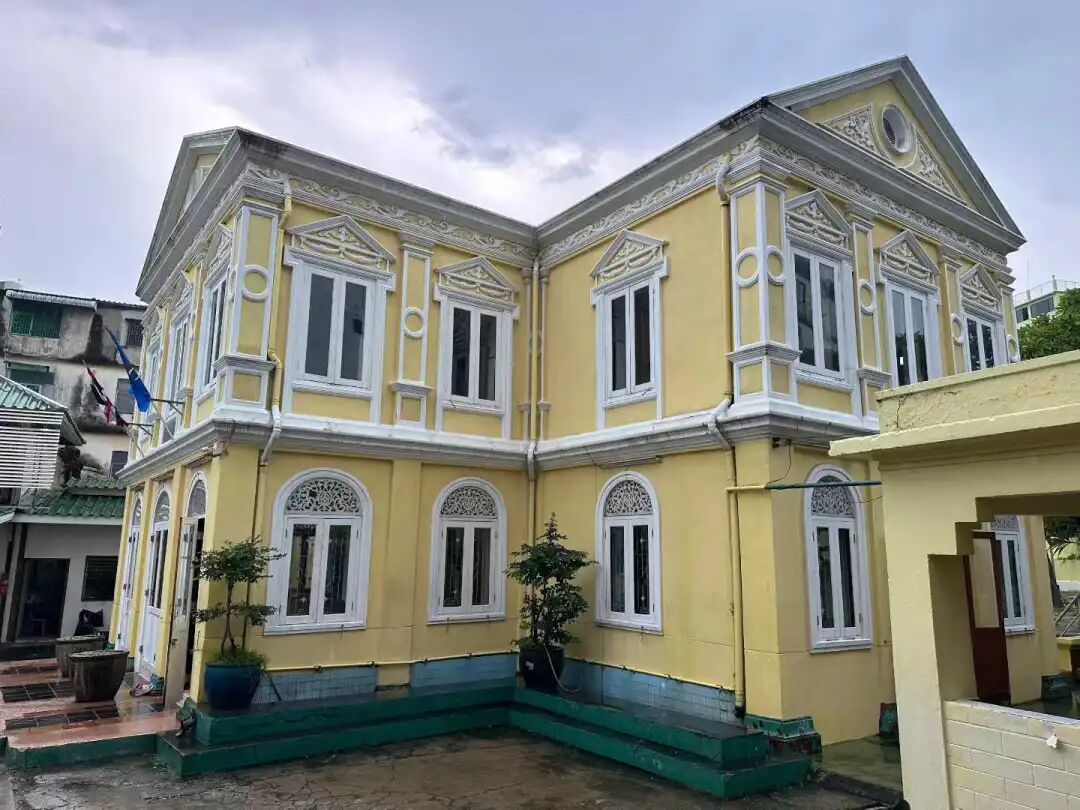
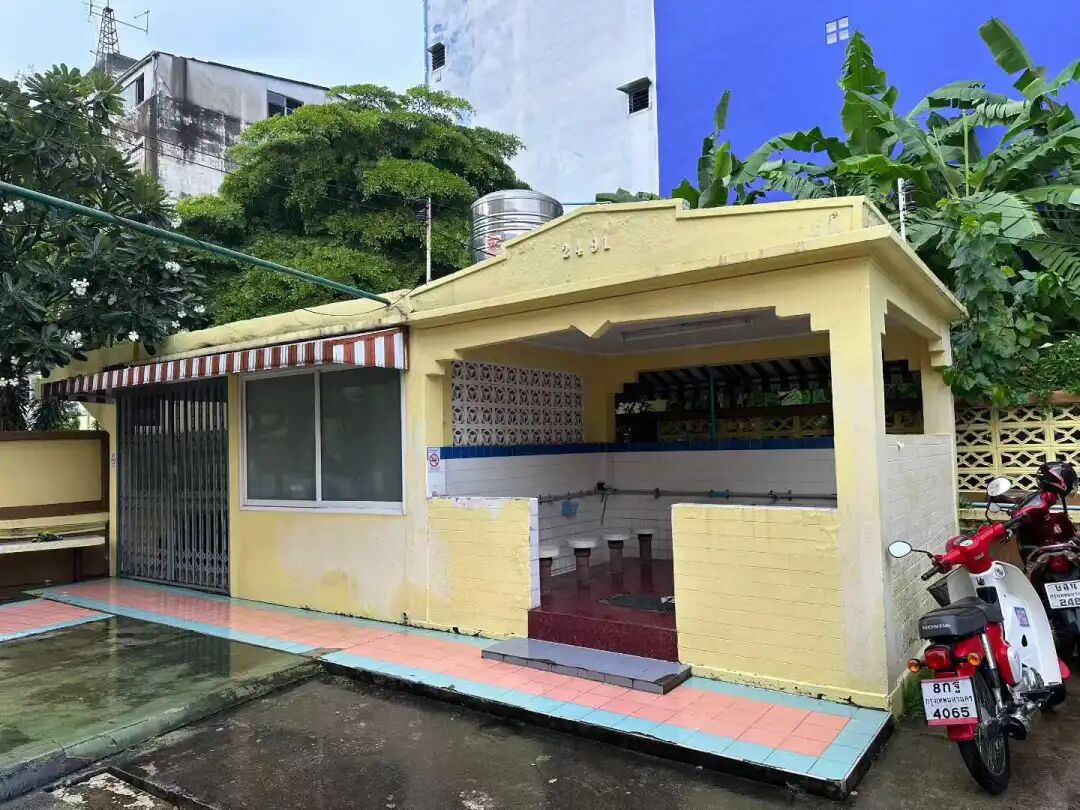
The ablution room (shuifang) was built in 1949.
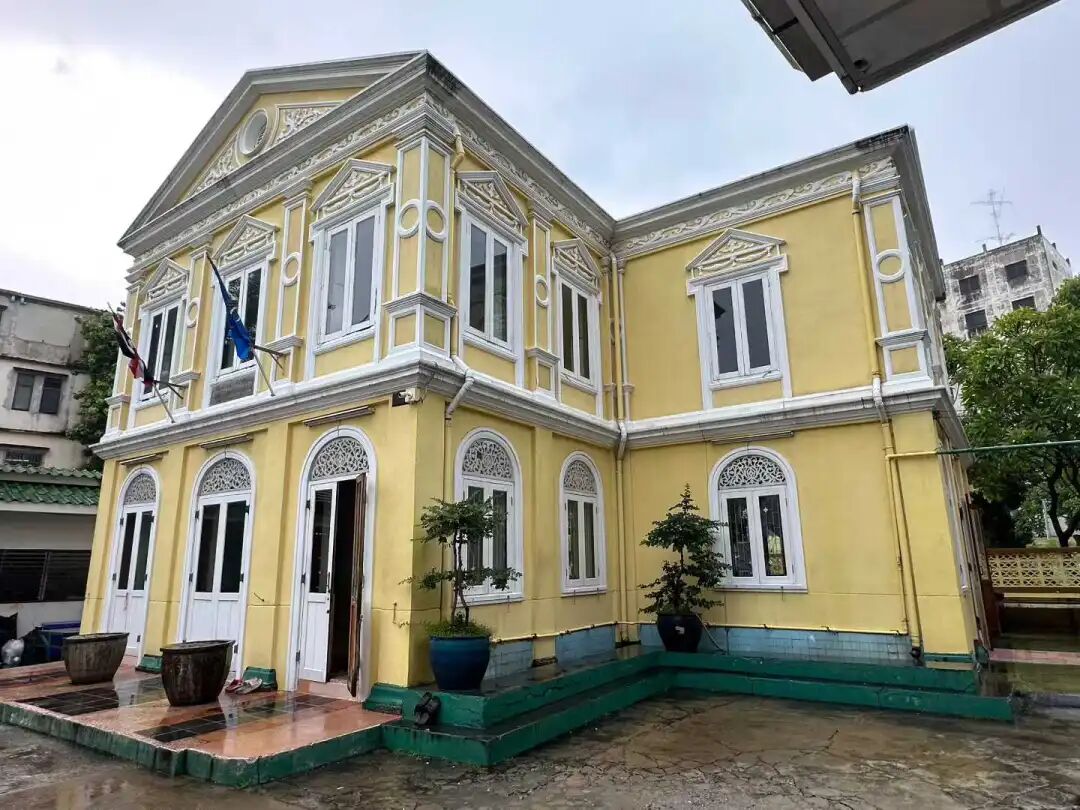
Daily prayers (namaz) are held on the first floor, with men in front and women in the back, separated by a curtain.
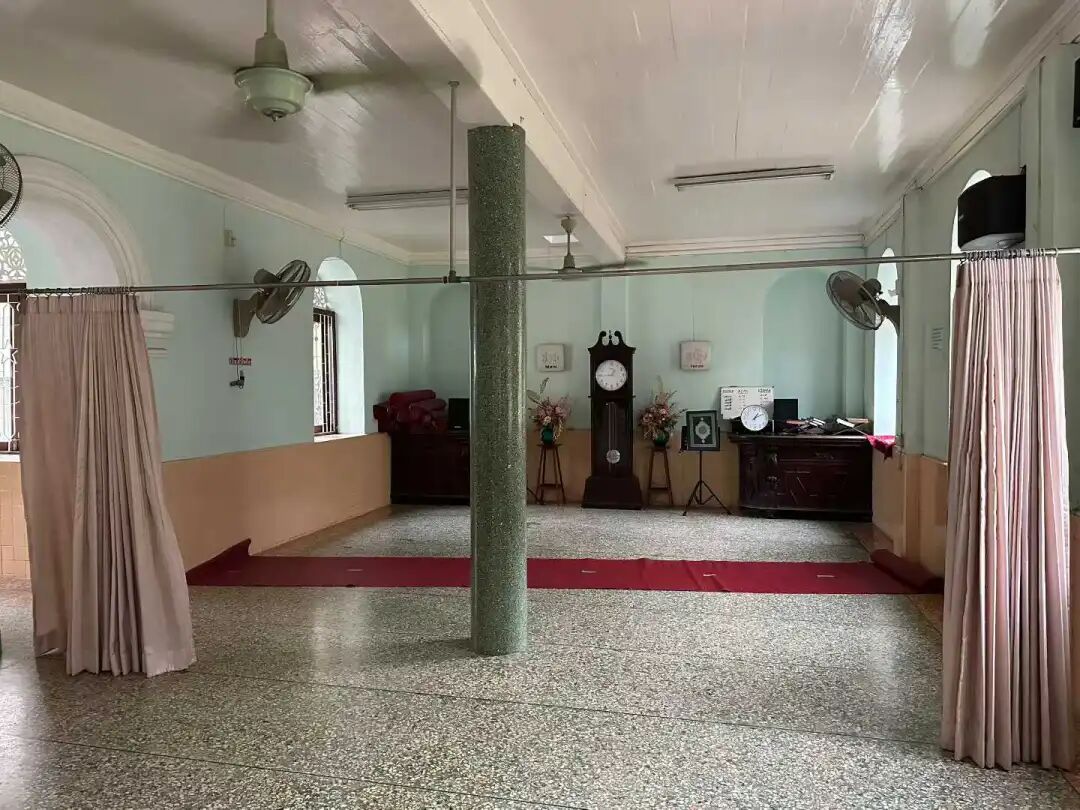
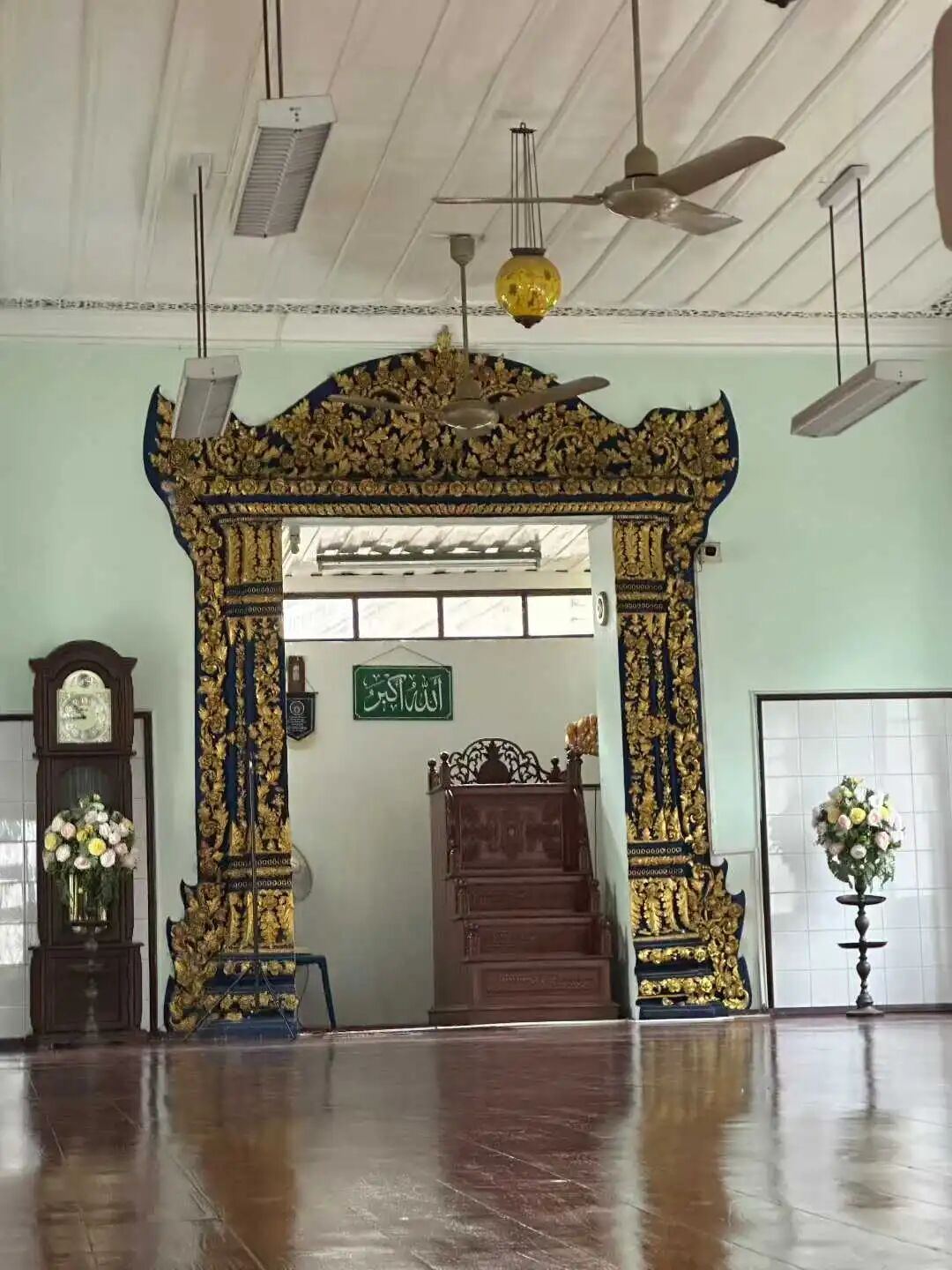
The second floor only opens for Friday prayers (Jumu'ah), and the decoration of the mihrab features a distinct Thai style.
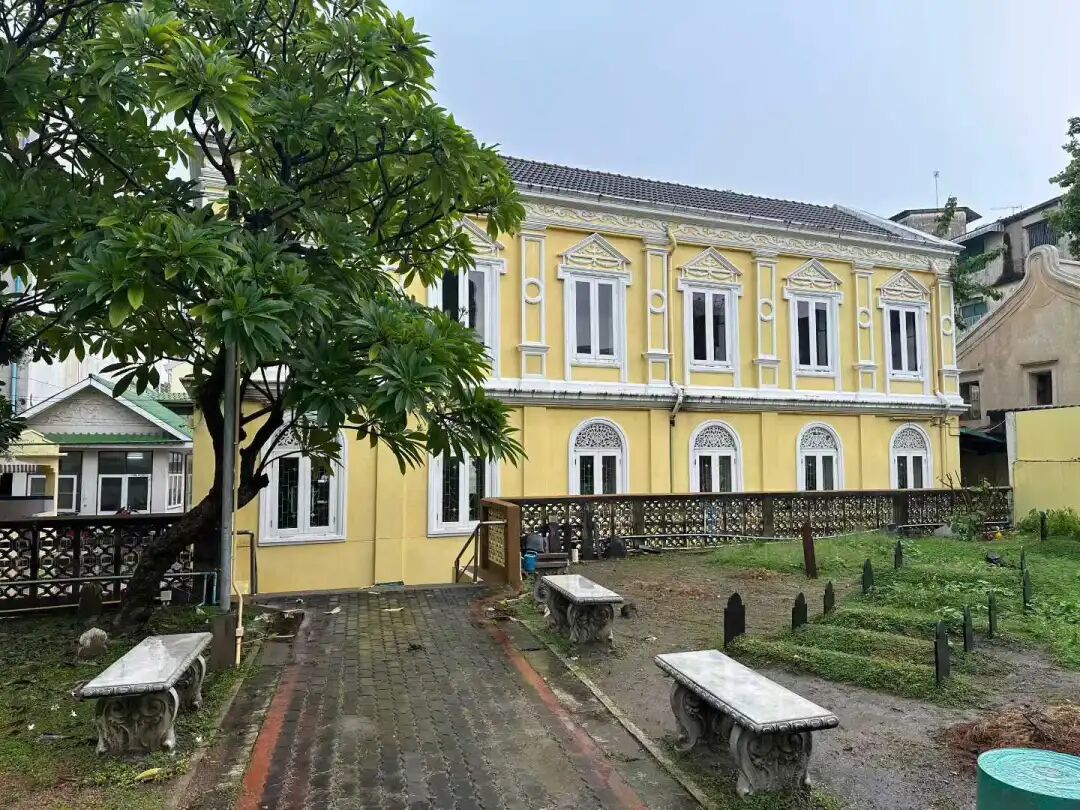
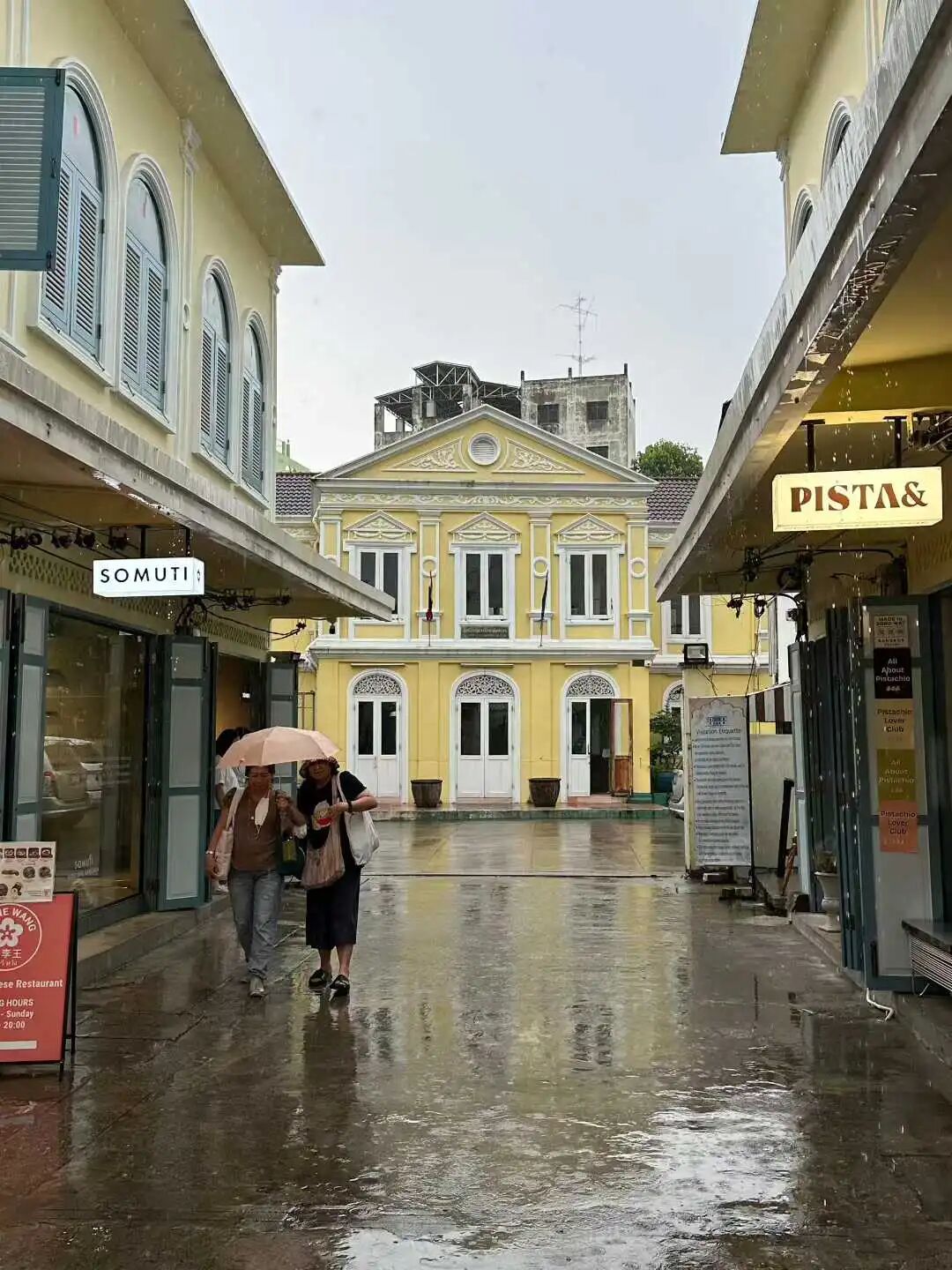
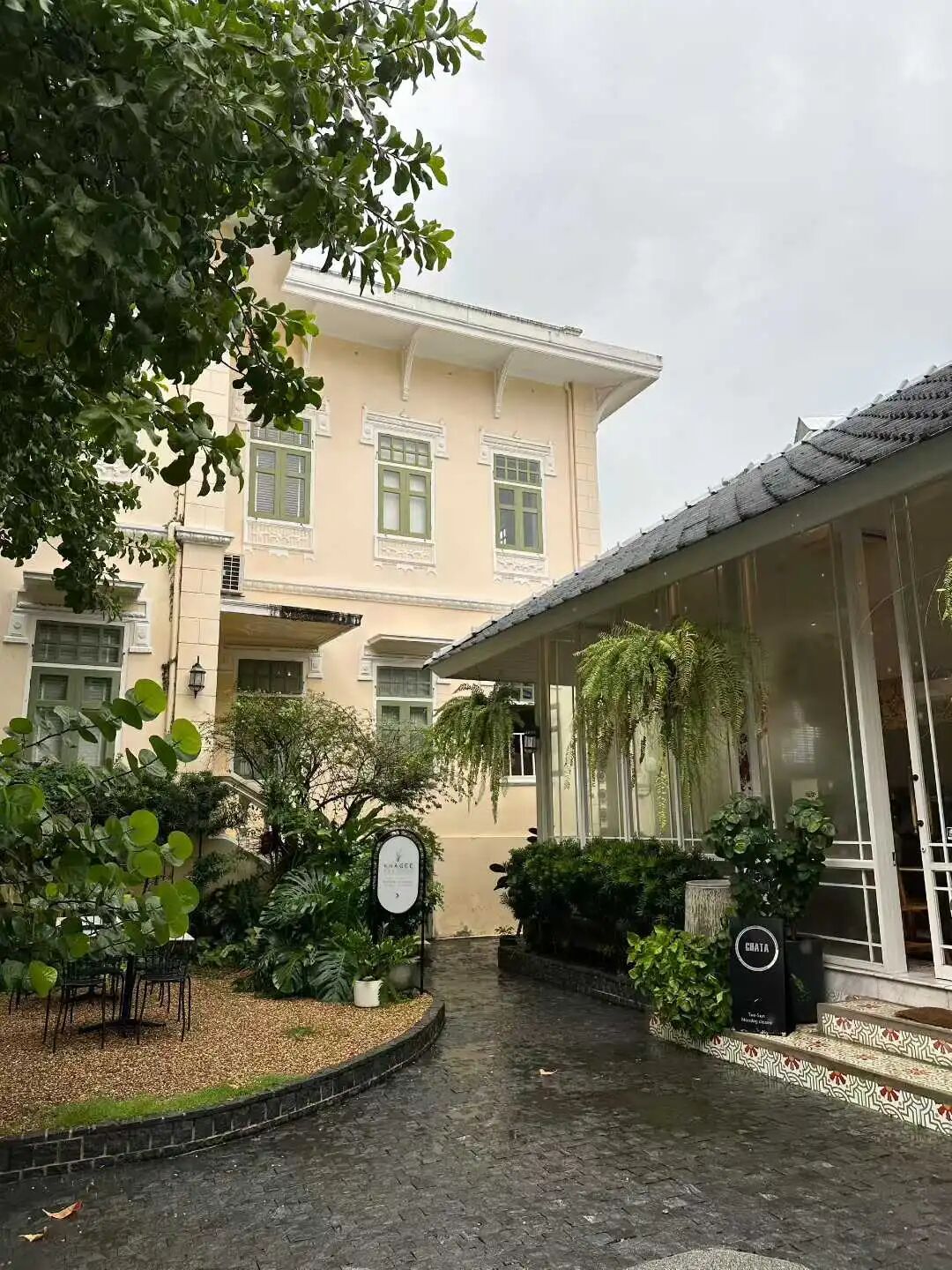
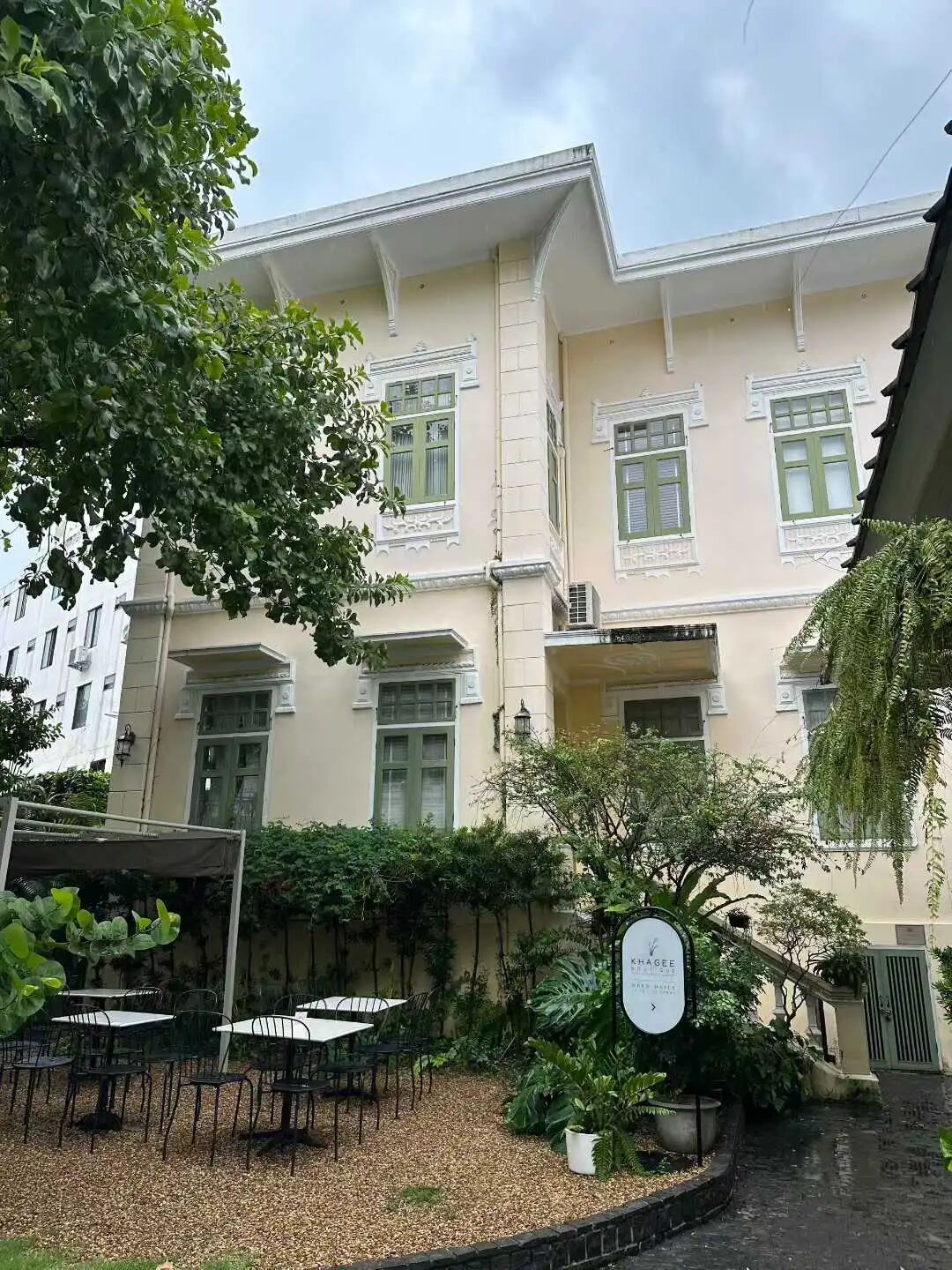
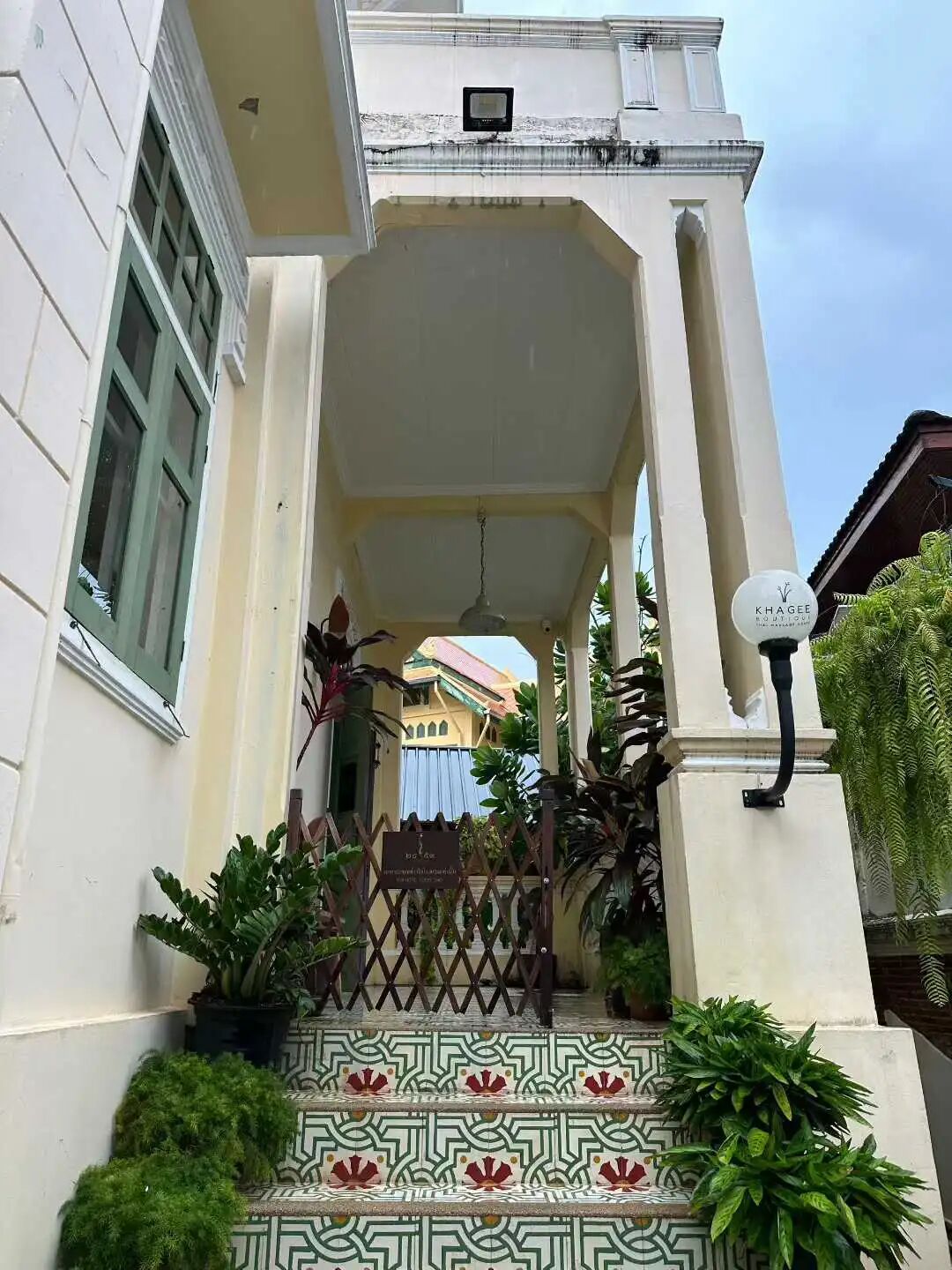
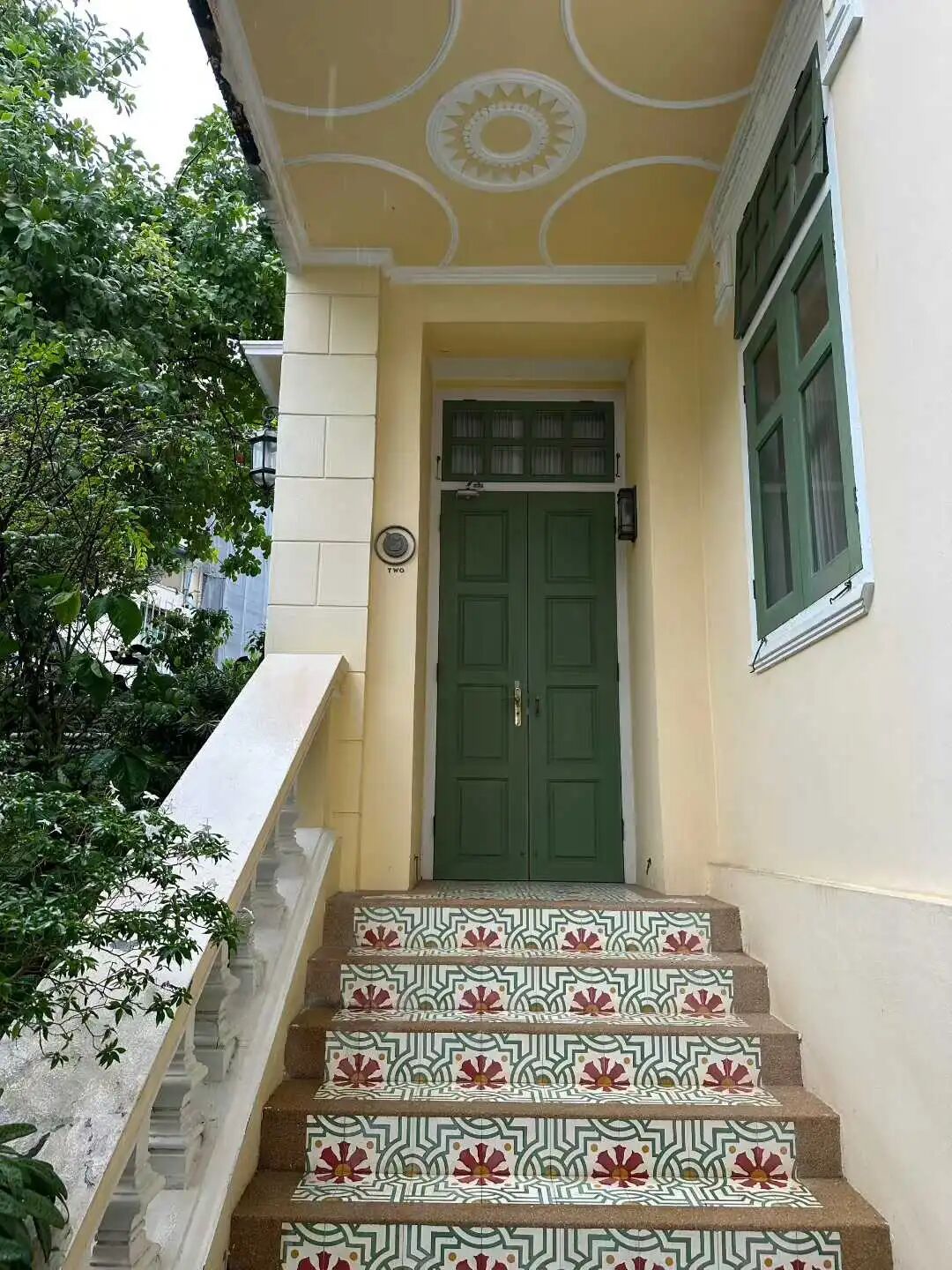
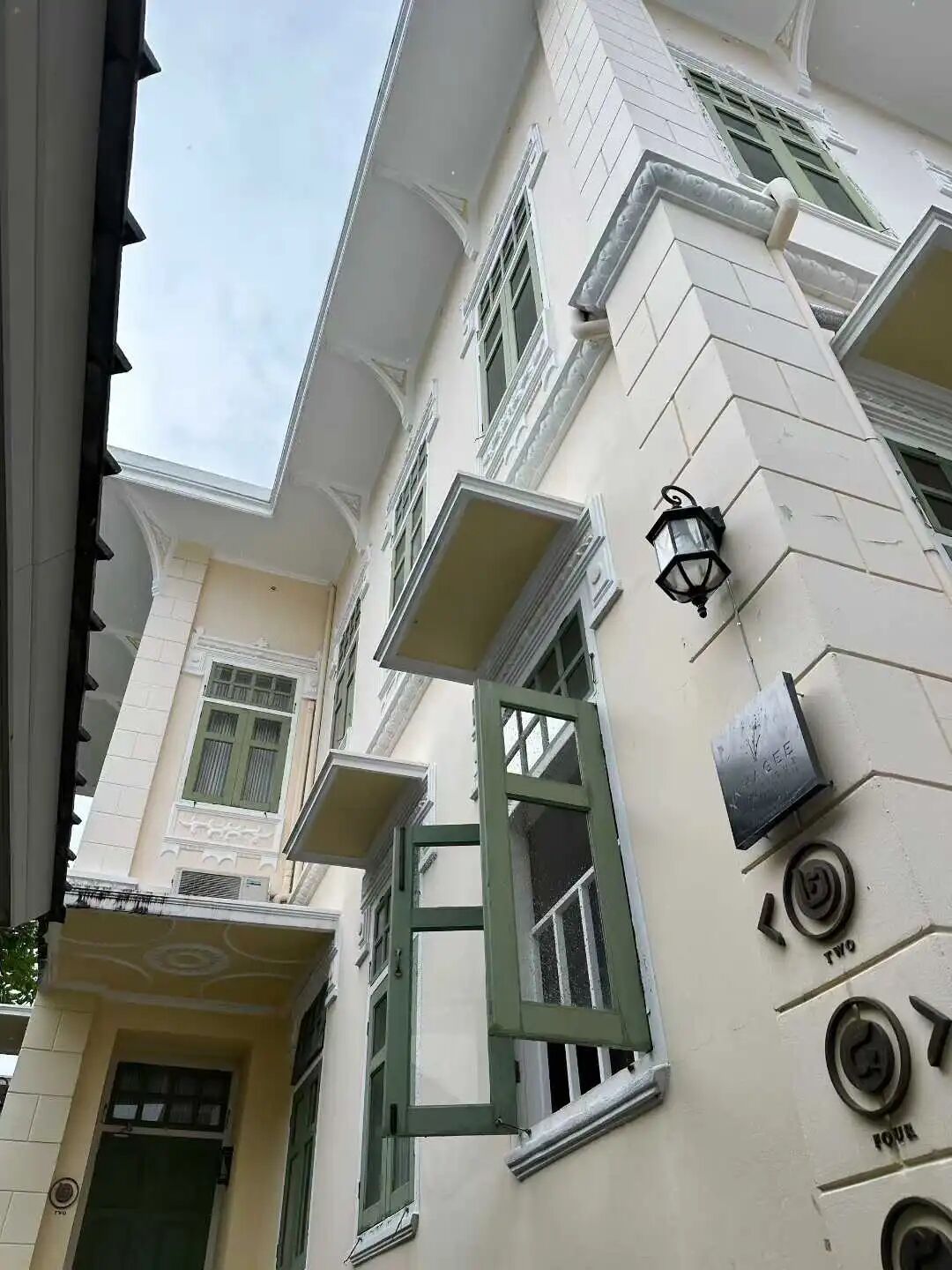
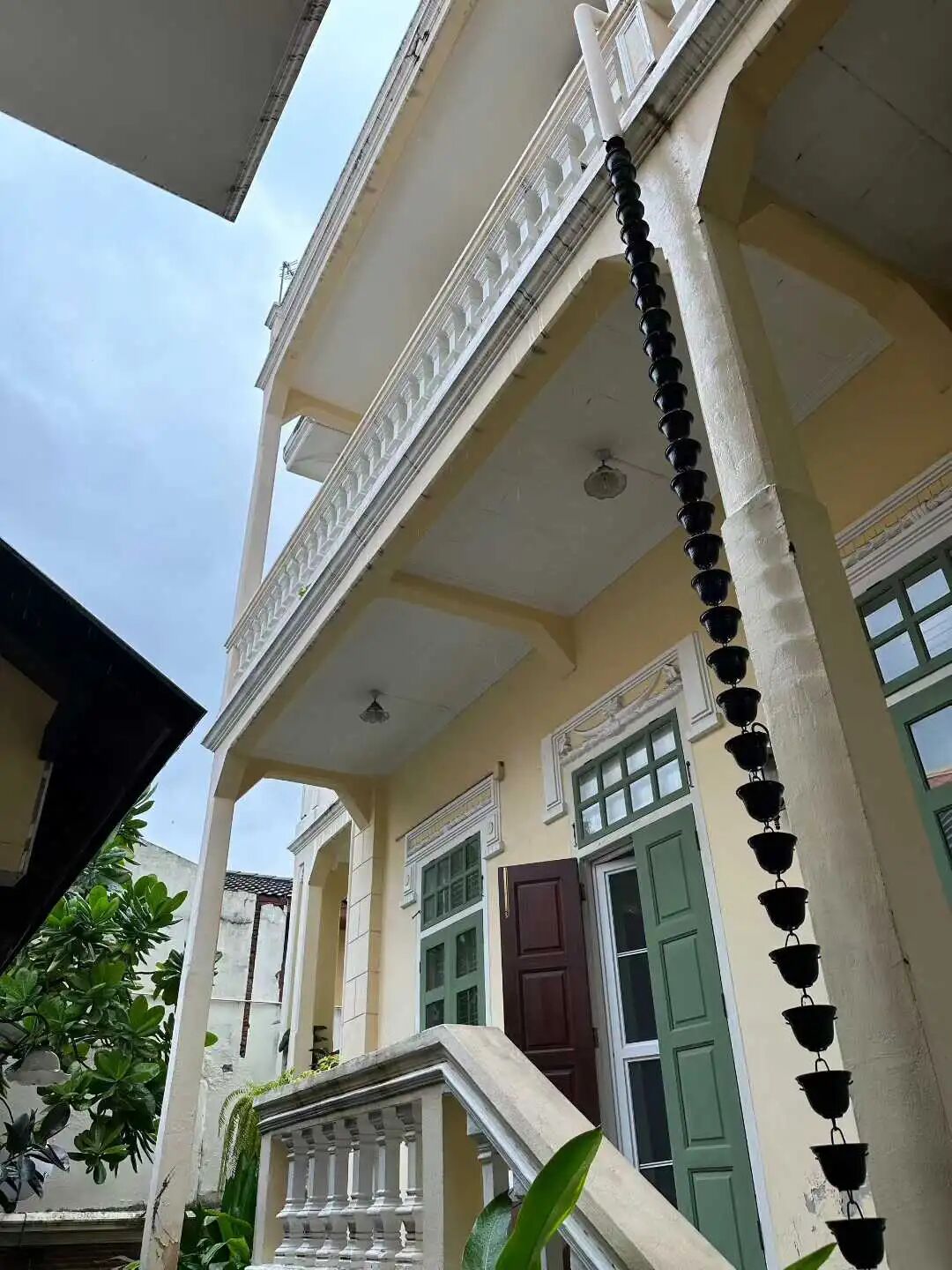
On Yaowarat Road in Bangkok's Chinatown stands a century-old house that was once the stage for a Muslim version of Romeo and Juliet; it is now open as a hotel and cafe.
This house was first built in 1916 by a Shia merchant named Abdul Rahim who worked in Chinatown, and it was later sold to a Sunni merchant named Adam. Adam arrived in Bangkok's Chinatown by boat from India to work. He started with nothing and eventually bought this house. Since Adam had no children, after he passed away, his wife brought her brother's family to live with her, and her brother's son, Payoon, became the young master of the house.
Surprisingly, Payoon fell in love with Sara, a descendant of the house's first owner, Abdul Rahim. Although they both came from wealthy Muslim families, one belonged to the Sunni sect and the other to the Shia sect, which was still not accepted by everyone a hundred years ago. This Muslim version of Romeo and Juliet had a happy ending. They married and had three sons, and the eldest son, Parpatipya, inherited the house.
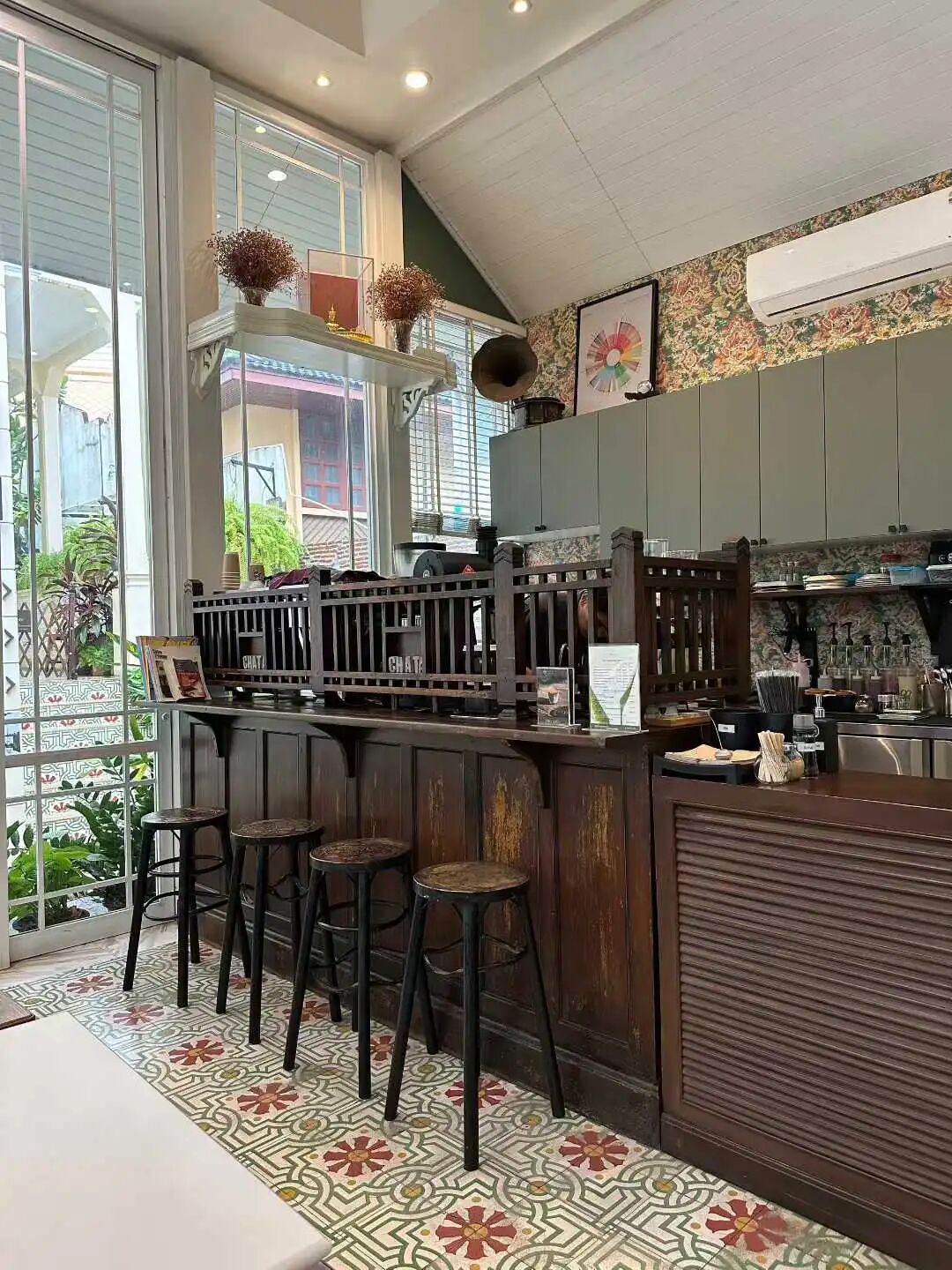
The house was later rented by a Chinese printing factory and a newspaper office. After renovations in 2017, it became the Baan 2459 hotel and Chata cafe.
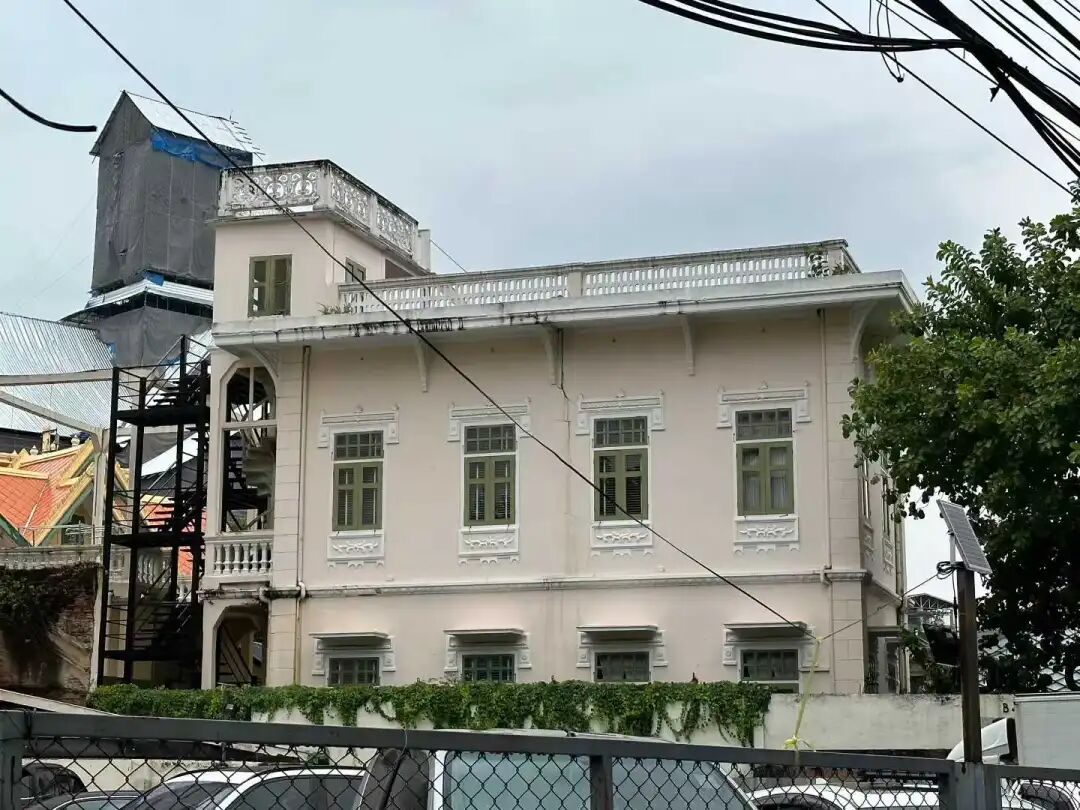
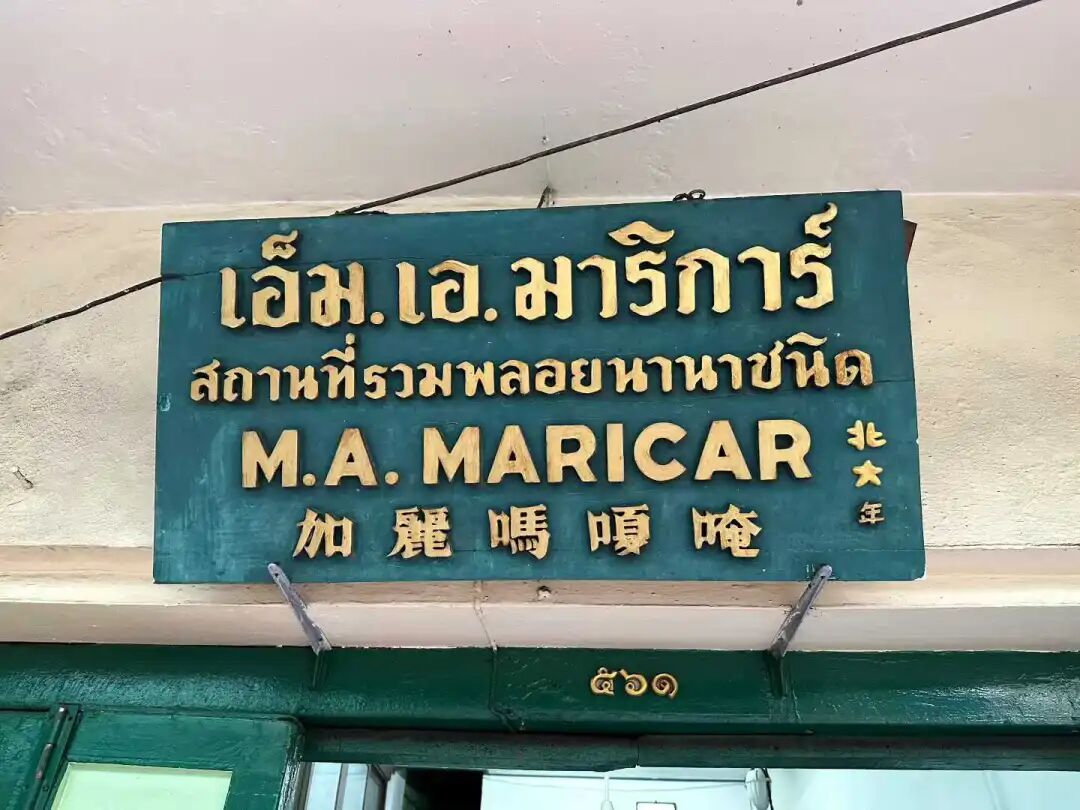
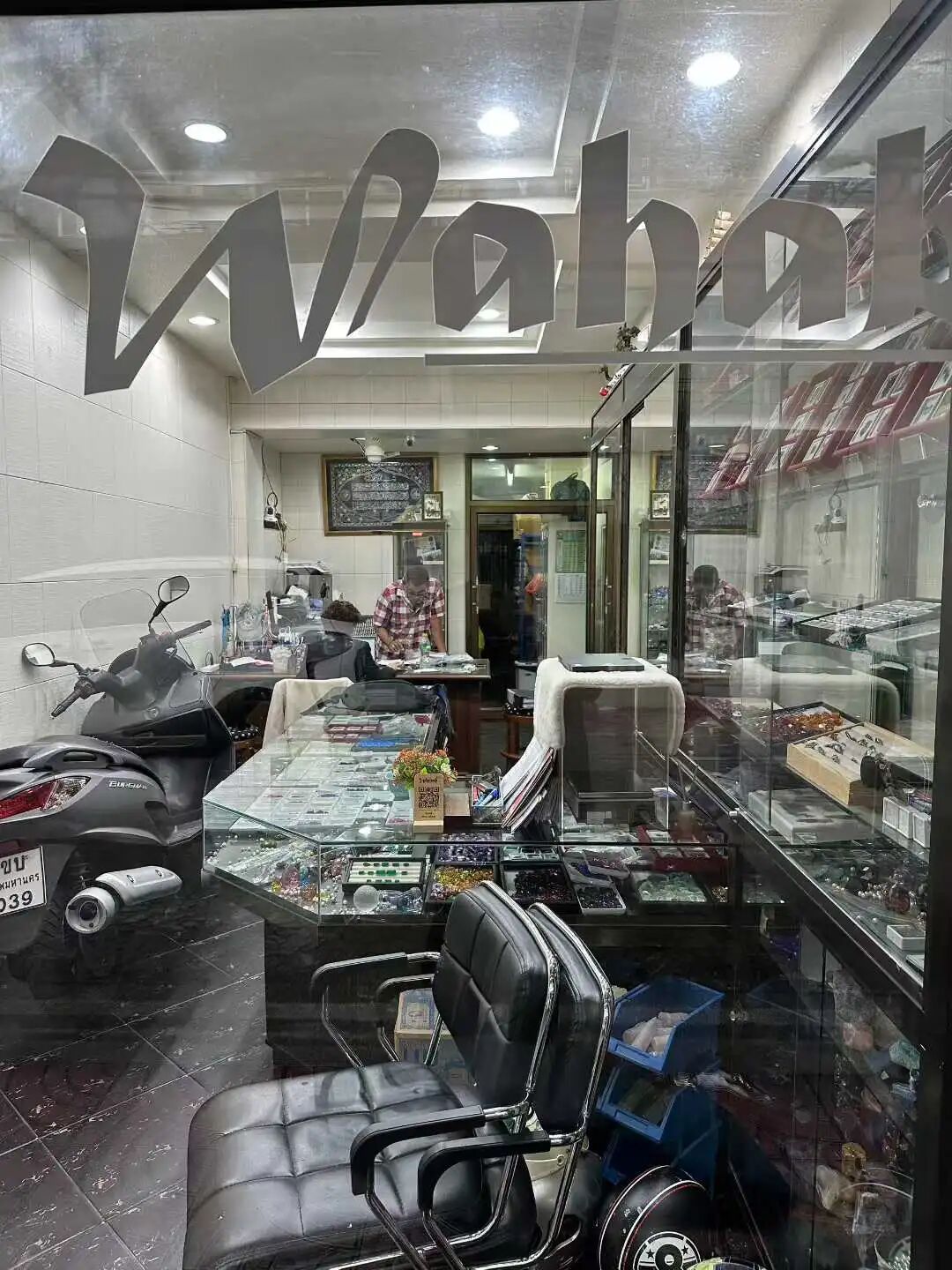
After the great fire in Bangkok's Chinatown in 1892, King Rama V built a large number of shophouses along Sampeng Lane, the oldest road in Chinatown, which later became a bustling commercial market. Besides the Chinese, Indian and Malay Muslims (dosti) also opened shops on Sampeng Lane, with many working in the jewelry trade. 130 years later, many descendants of these Muslims (dosti) still operate jewelry businesses in the shophouses on Sampeng Lane, serving as a living historical memory of Bangkok's Chinatown.
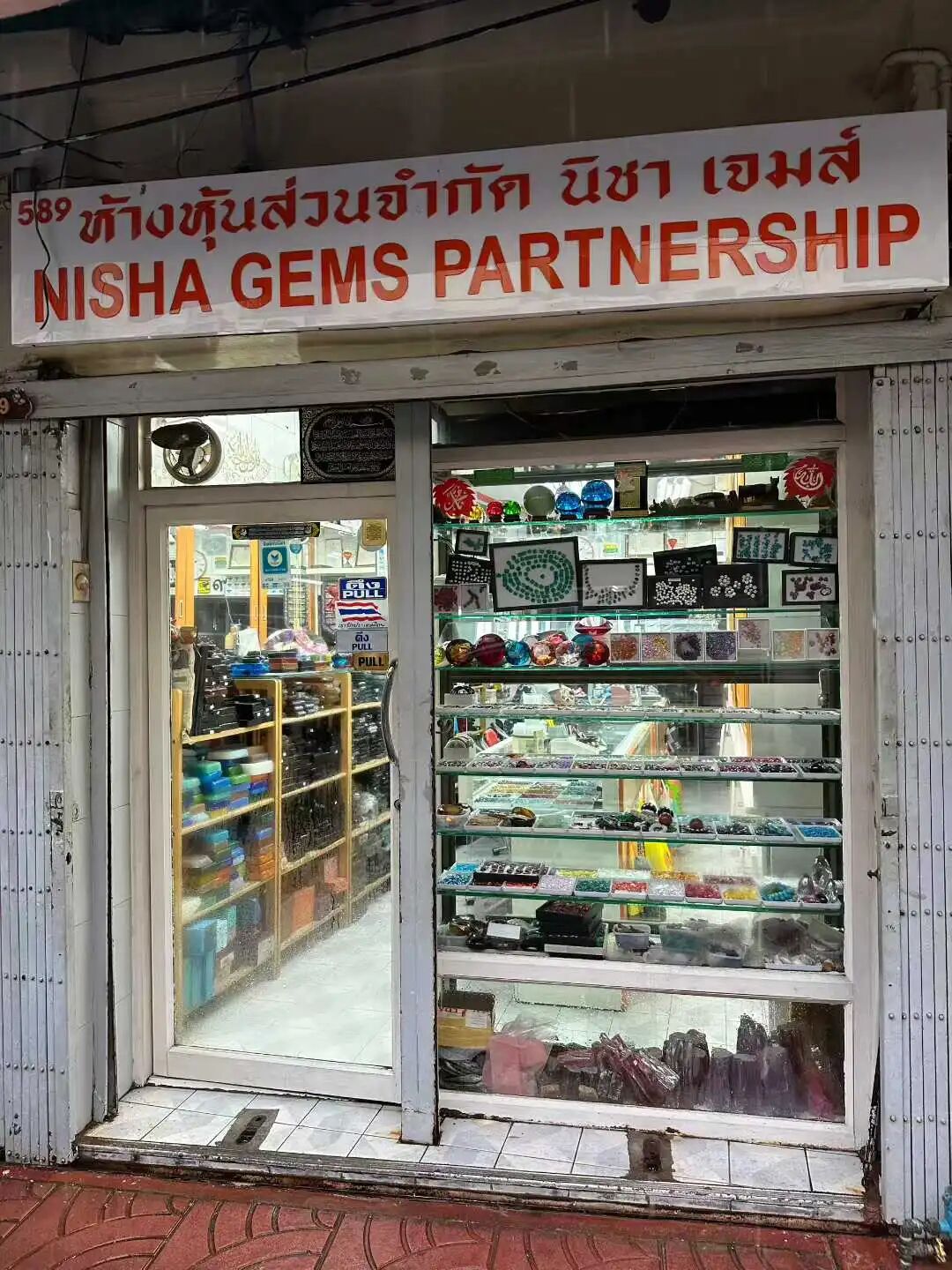
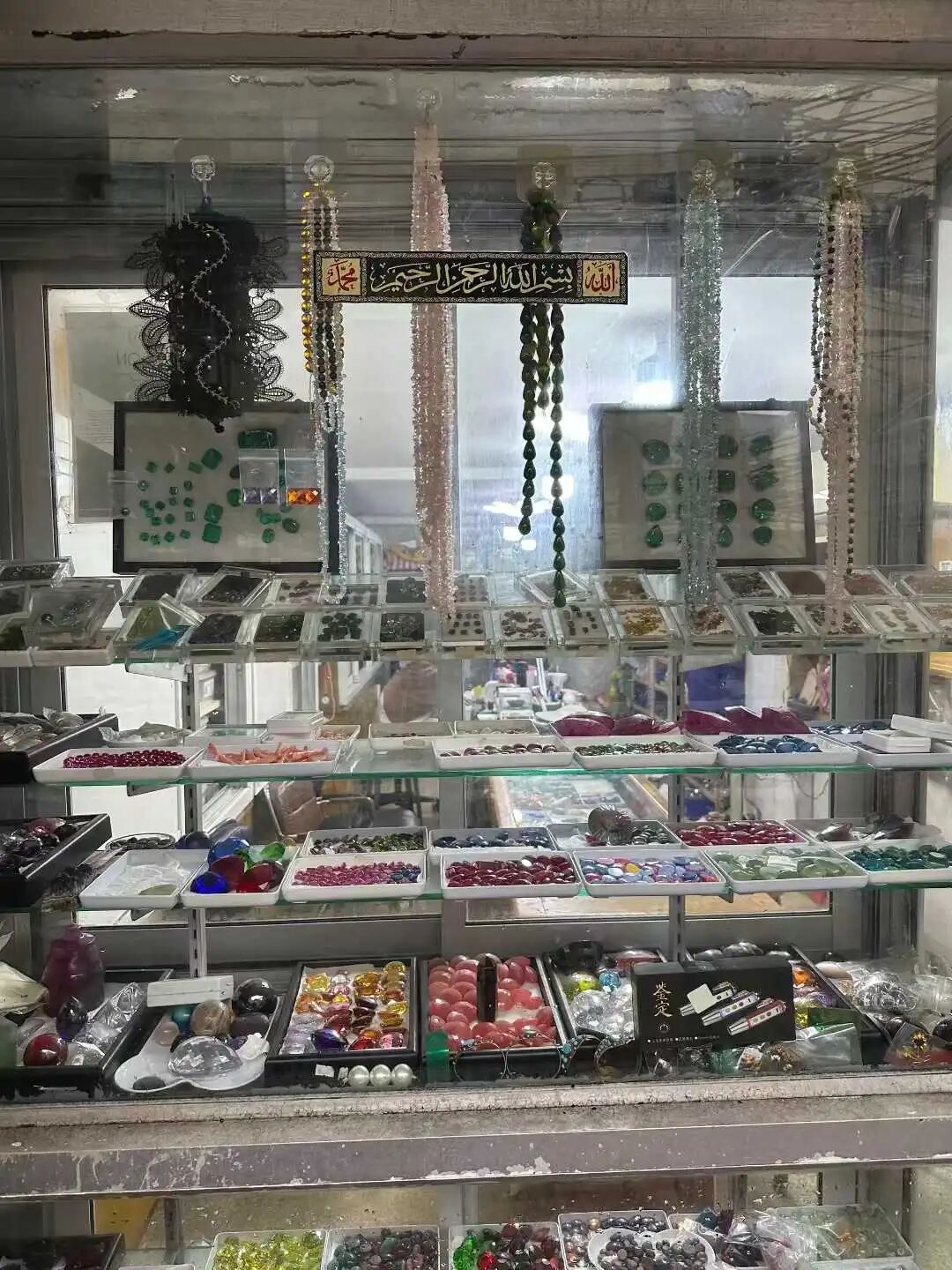
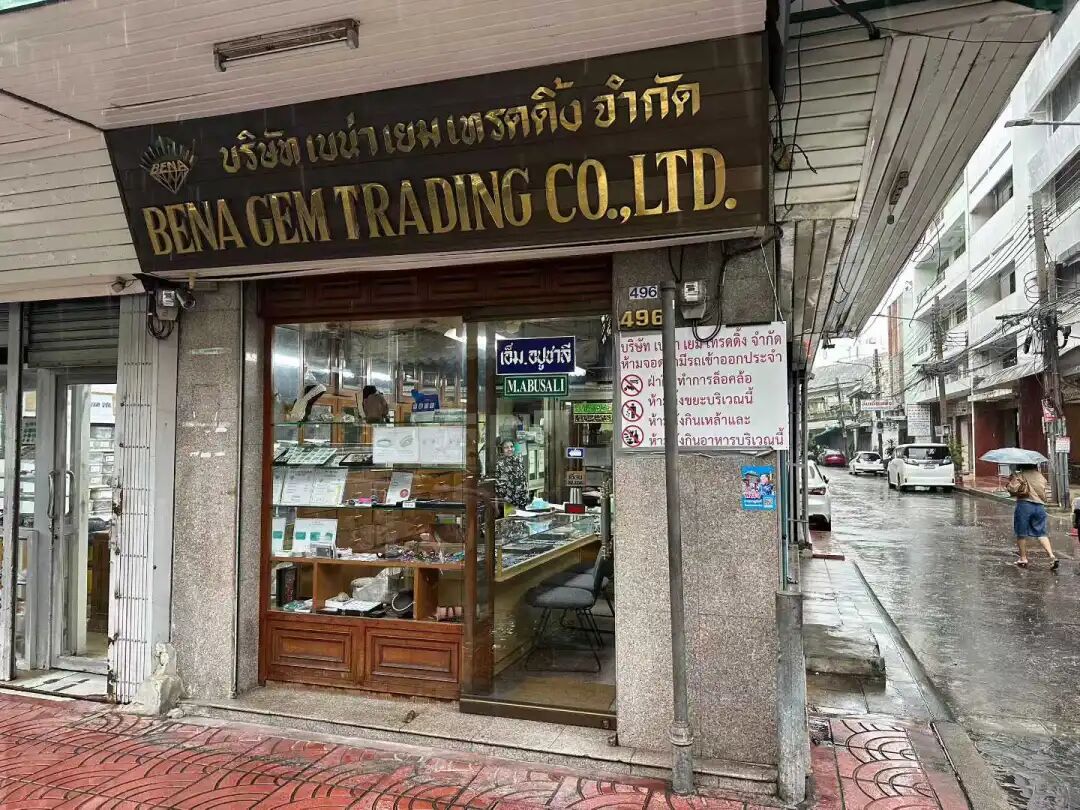
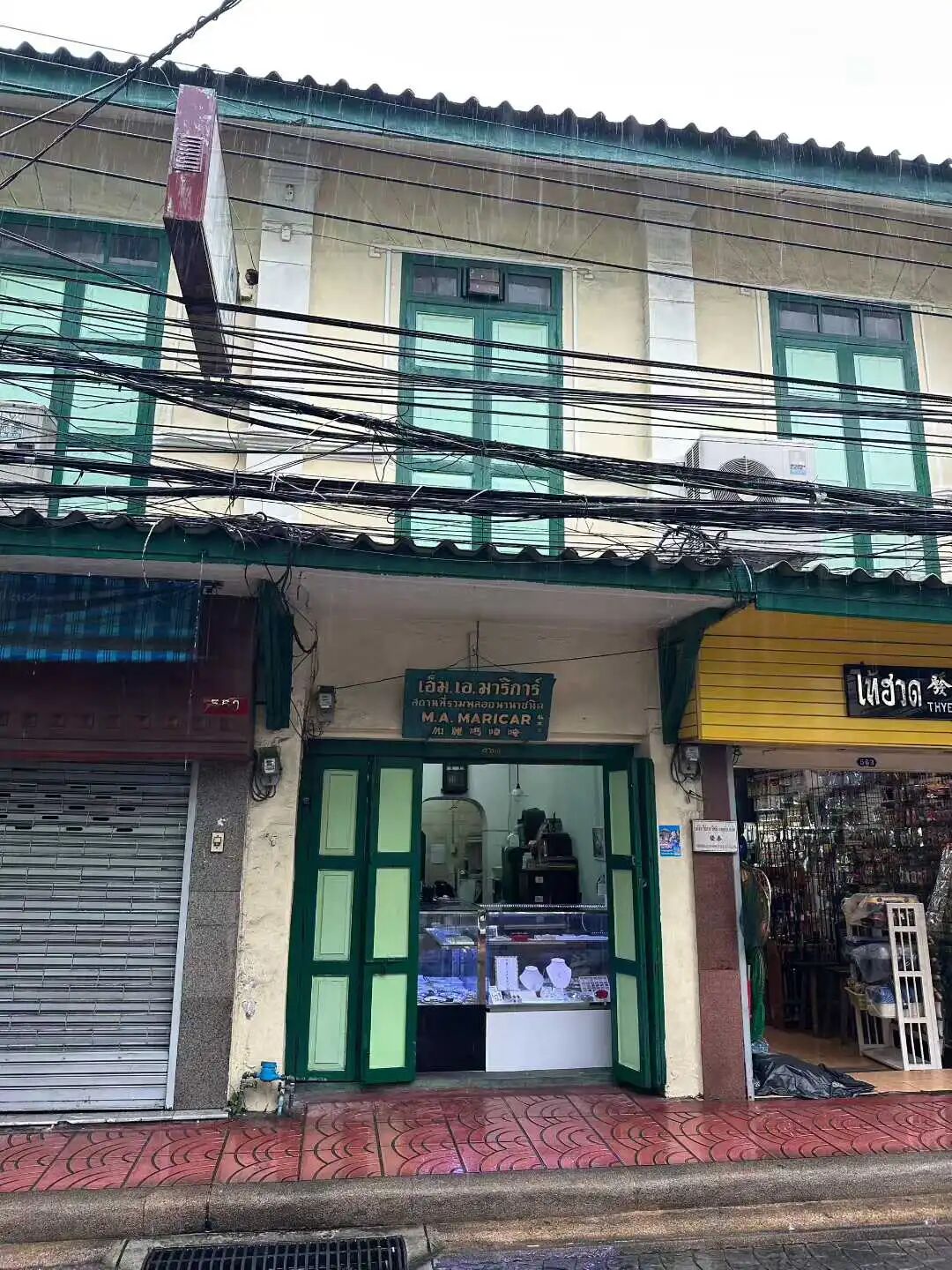
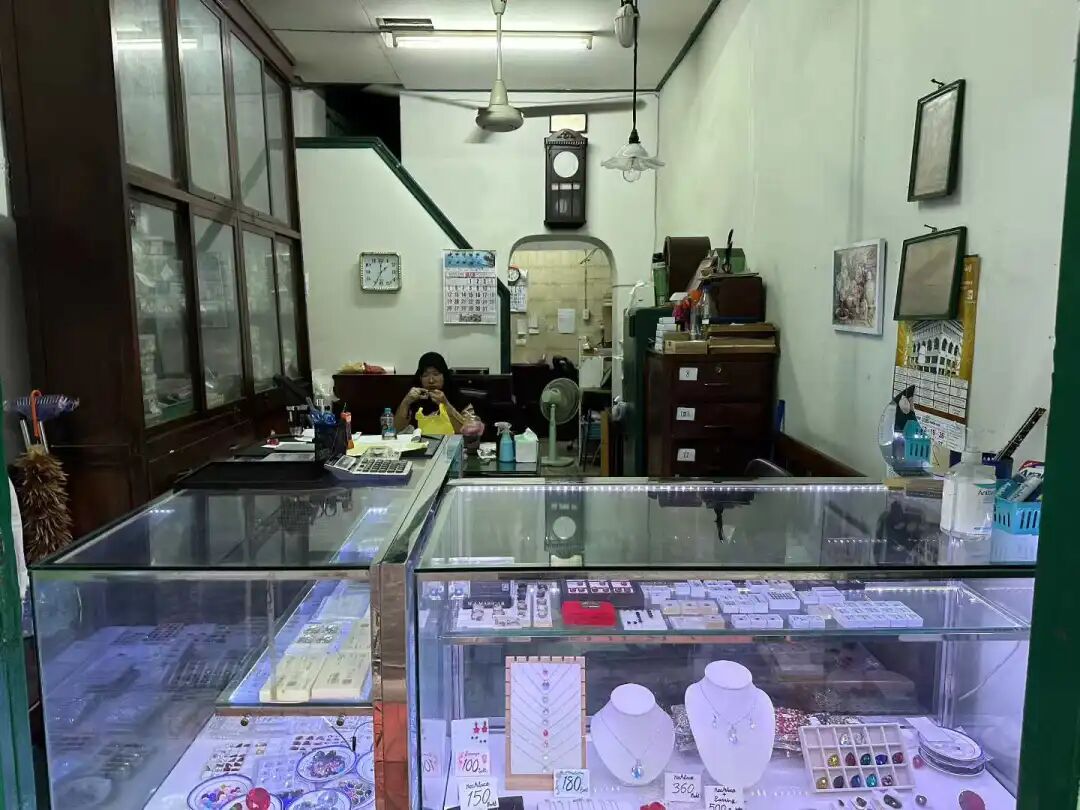
This shop is marked as being from Pattani Province in southern Thailand, which is a Malay-populated area.
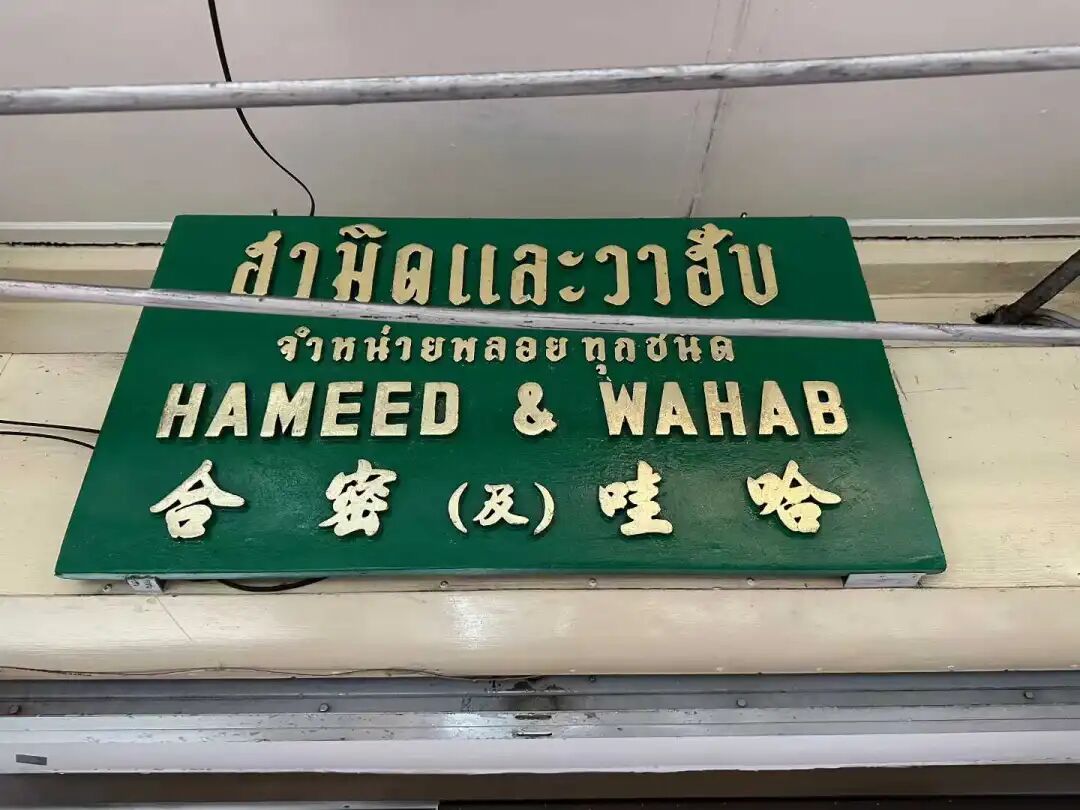
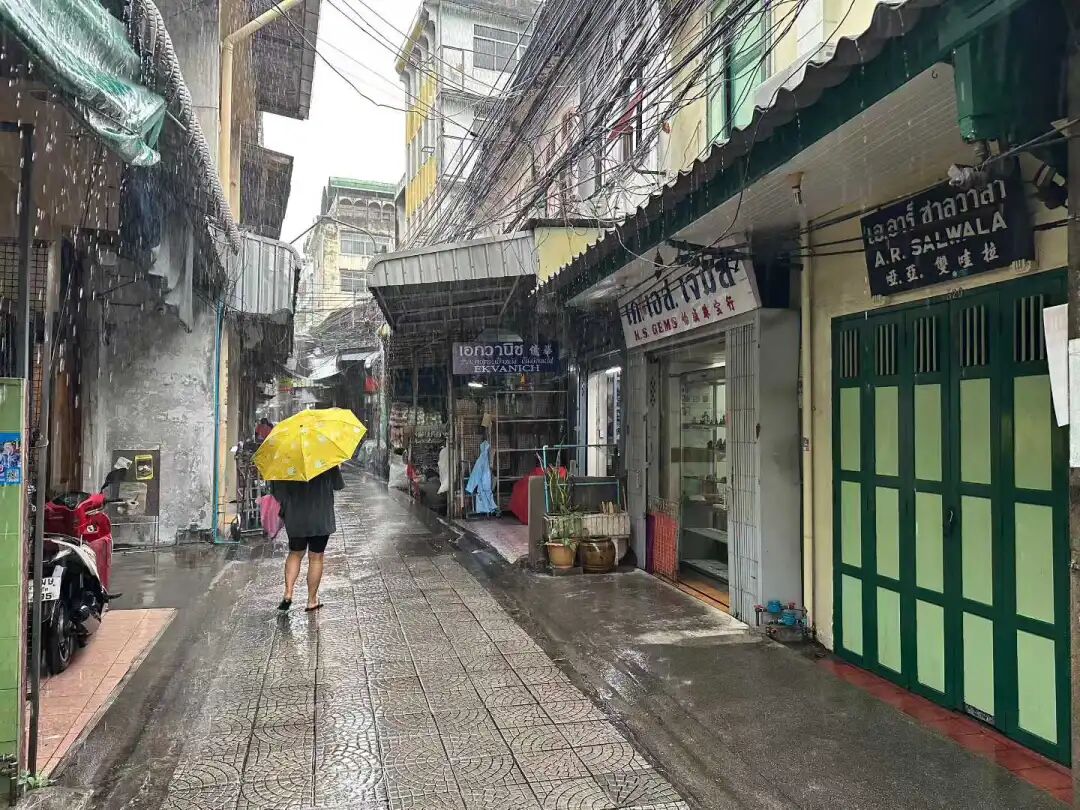
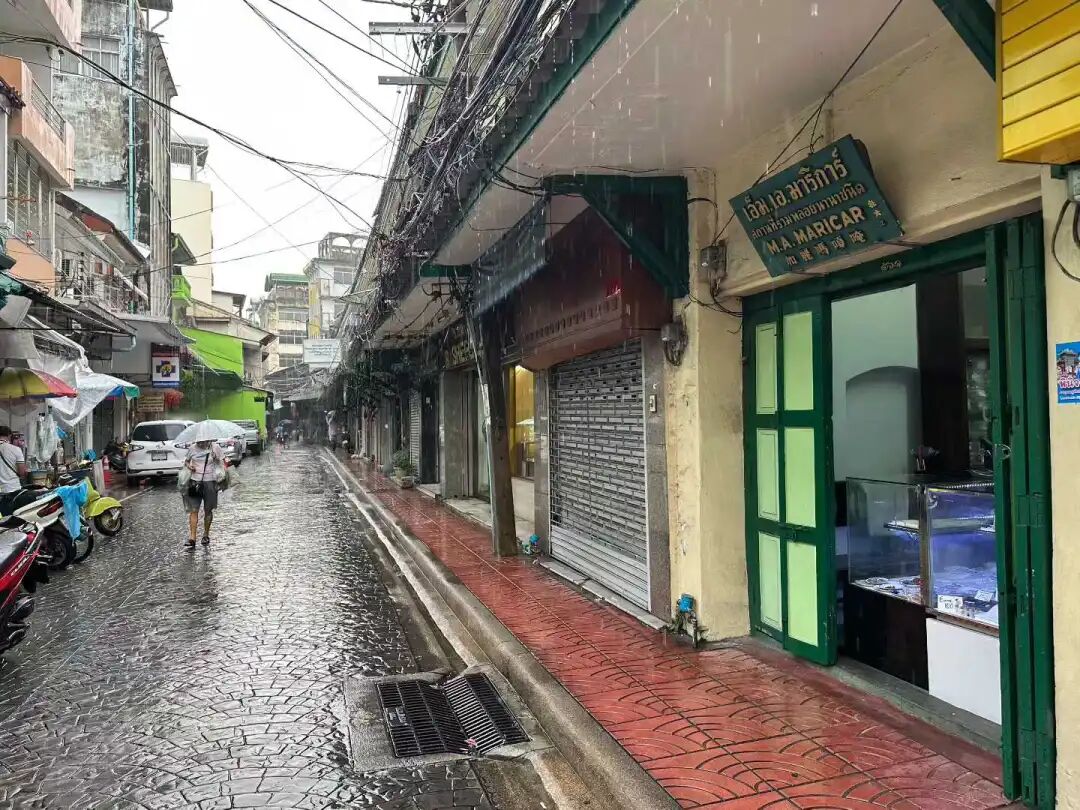
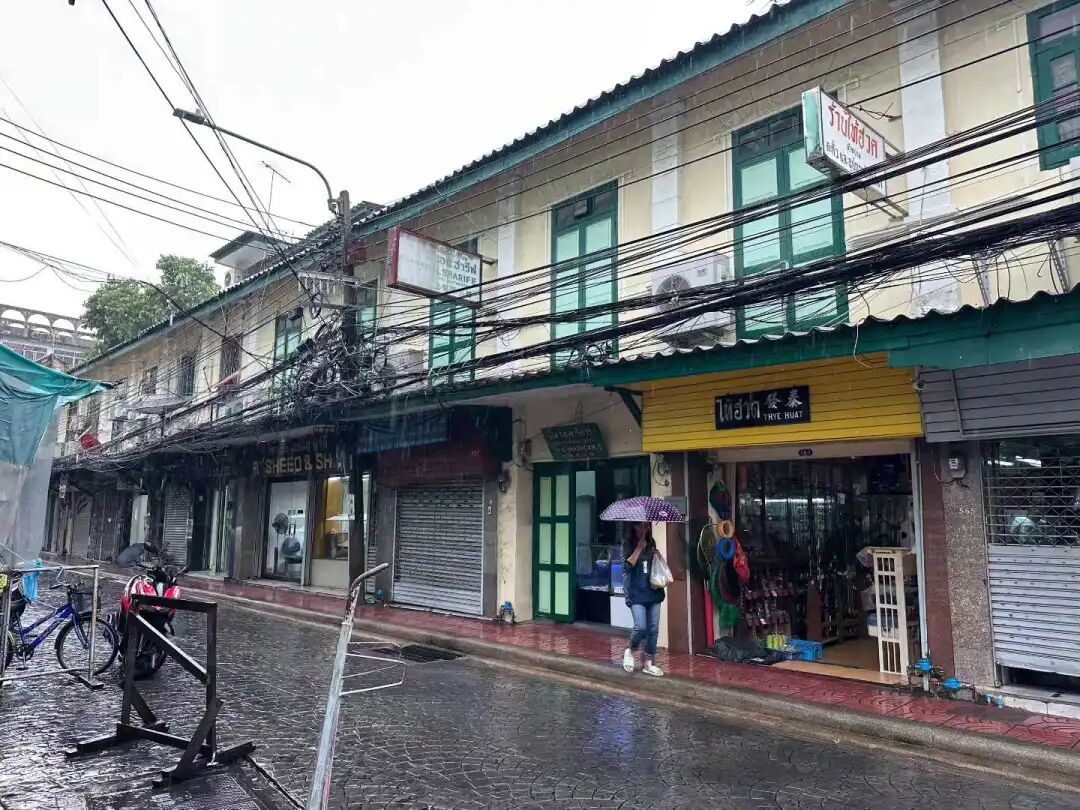
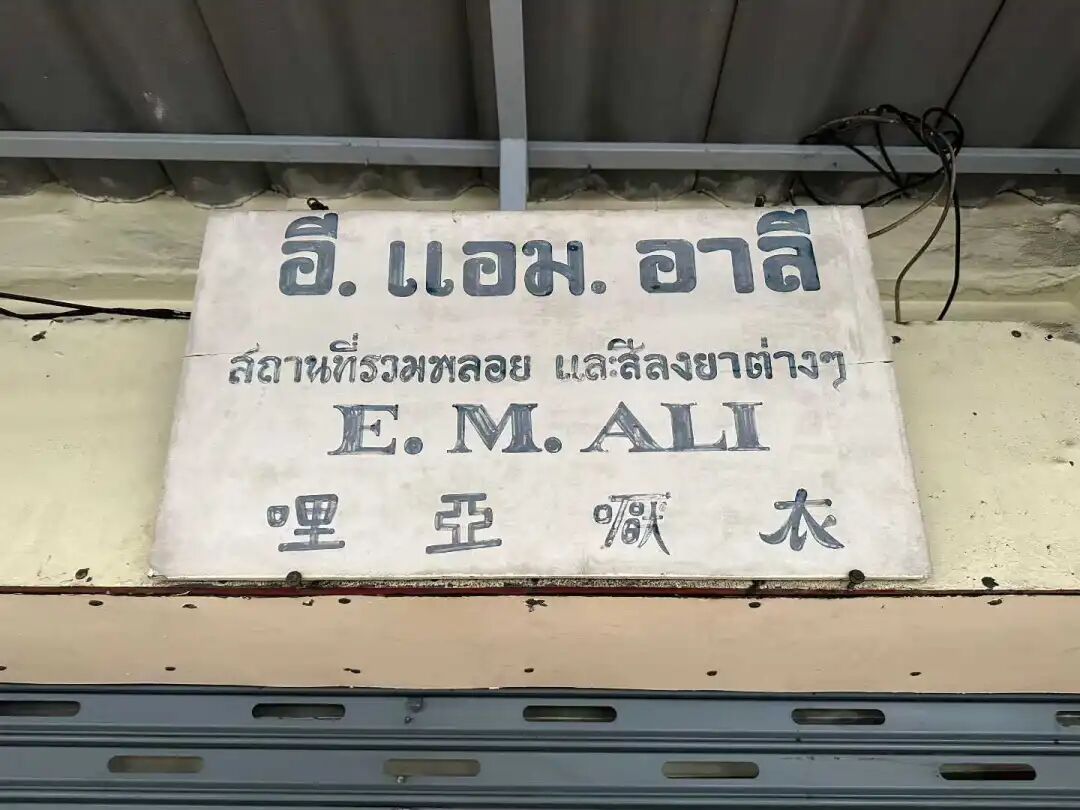
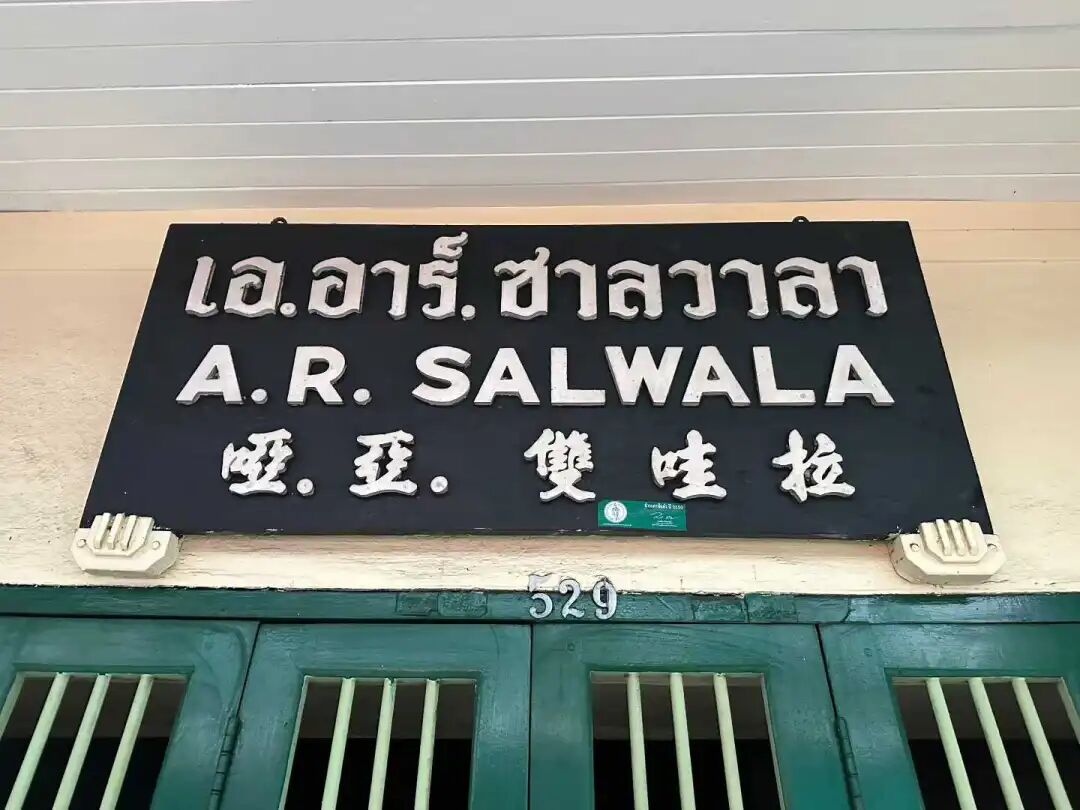
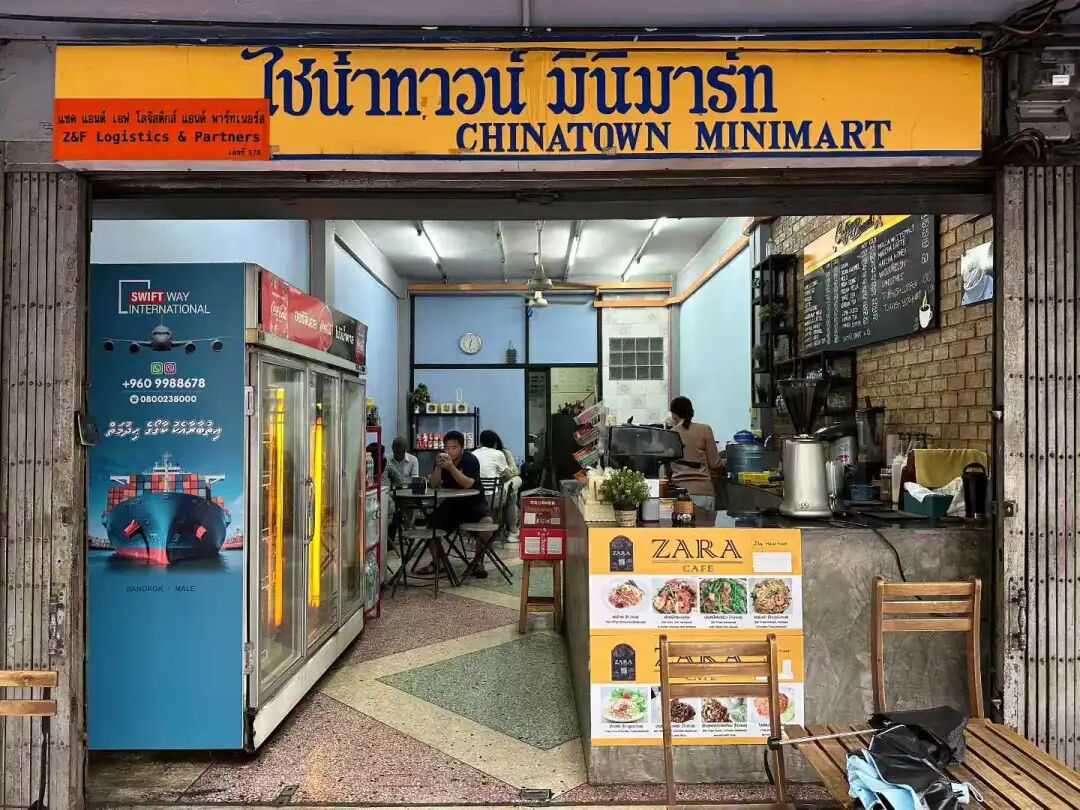
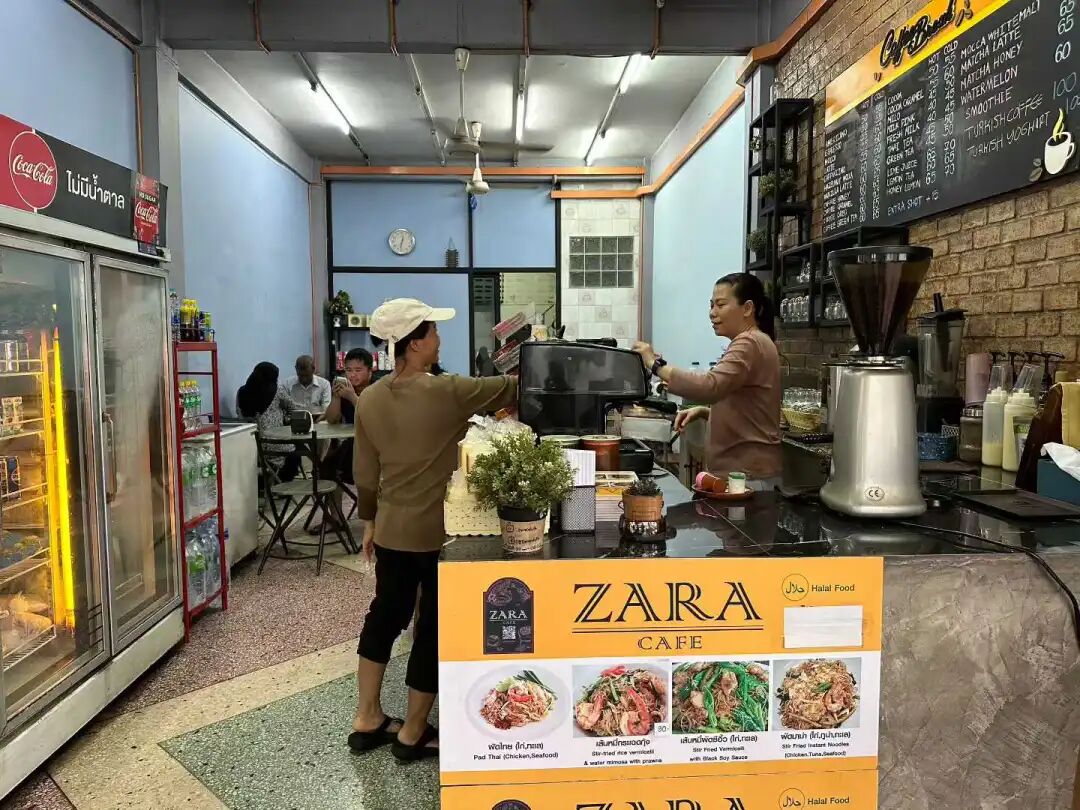
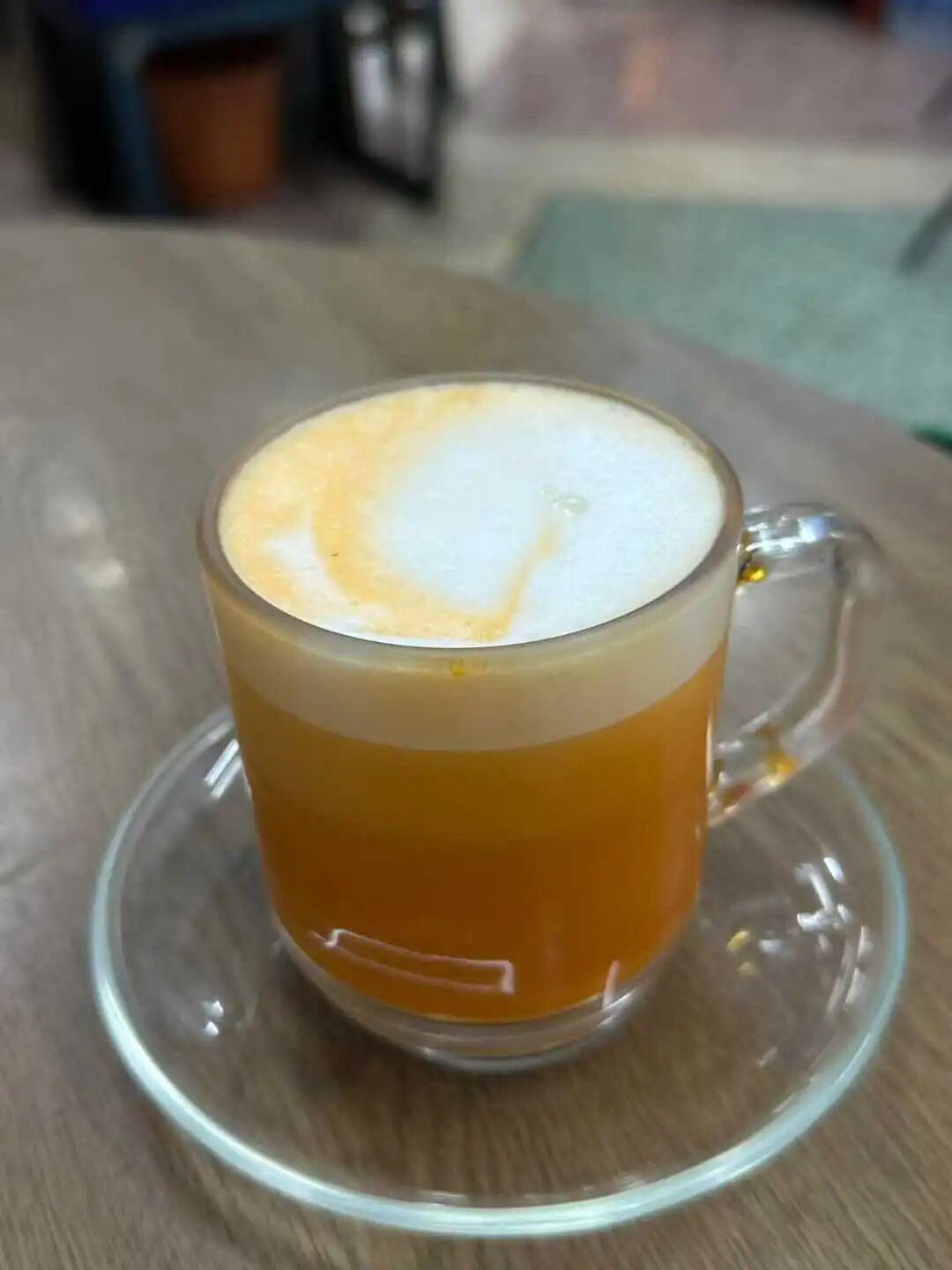
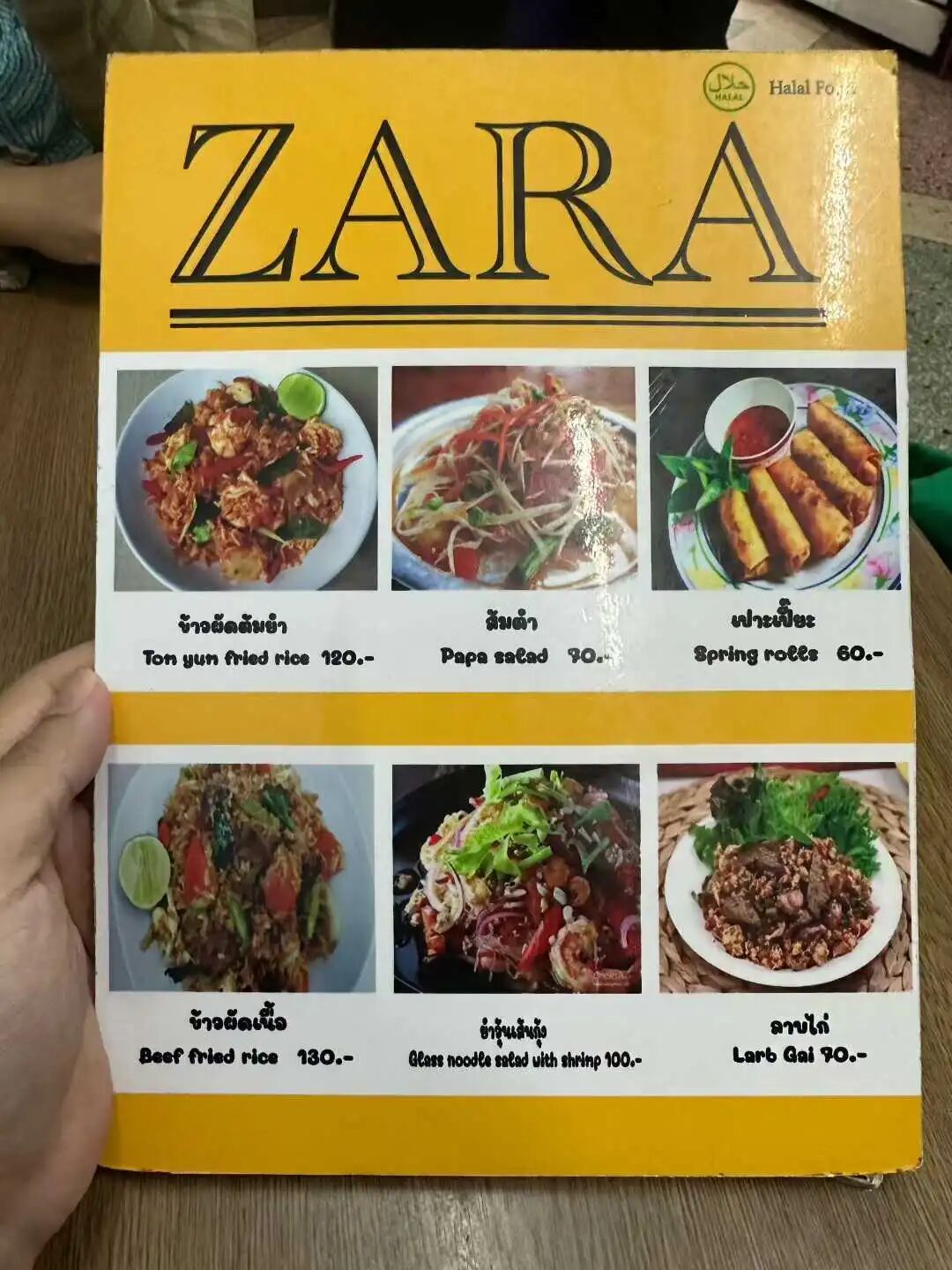
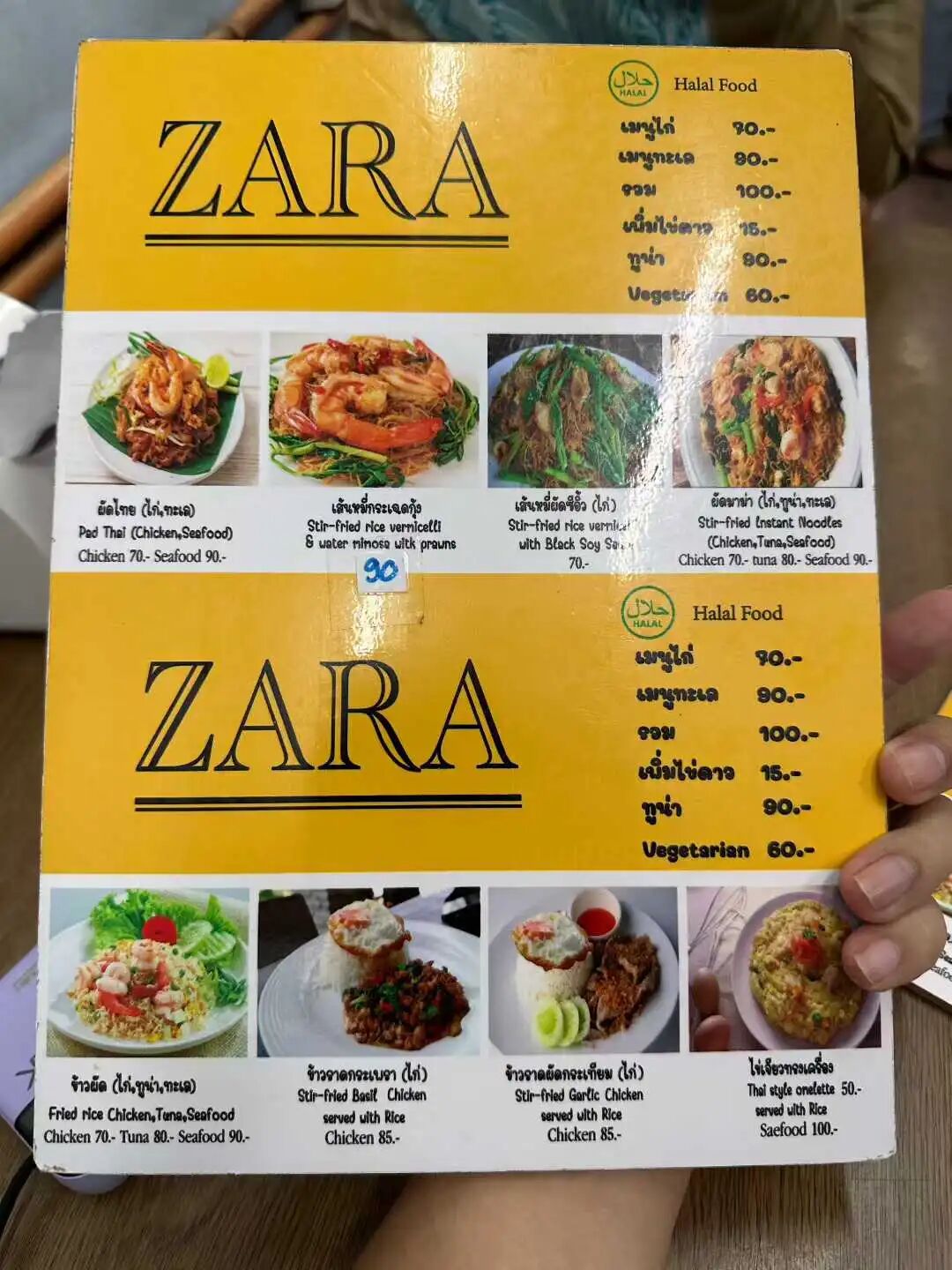
There are relatively few halal restaurants in the Bangkok Chinatown area. I recommend Zara Restaurant on Yaowarat Road, a family-run place serving local Thai food and various coffees. We ordered Thai red milk tea, spicy minced chicken salad (Larb Gai), green papaya salad, and stir-fried rice noodles (Pad Thai). Overall, the taste was very authentic, and the stir-fried rice noodles were especially delicious. However, Thai food is the spiciest I have ever eaten in Southeast Asia. If you are a Muslim (dosti) who cannot handle spice, be sure to say so in advance, or your mouth will feel like it is burning for a long time.
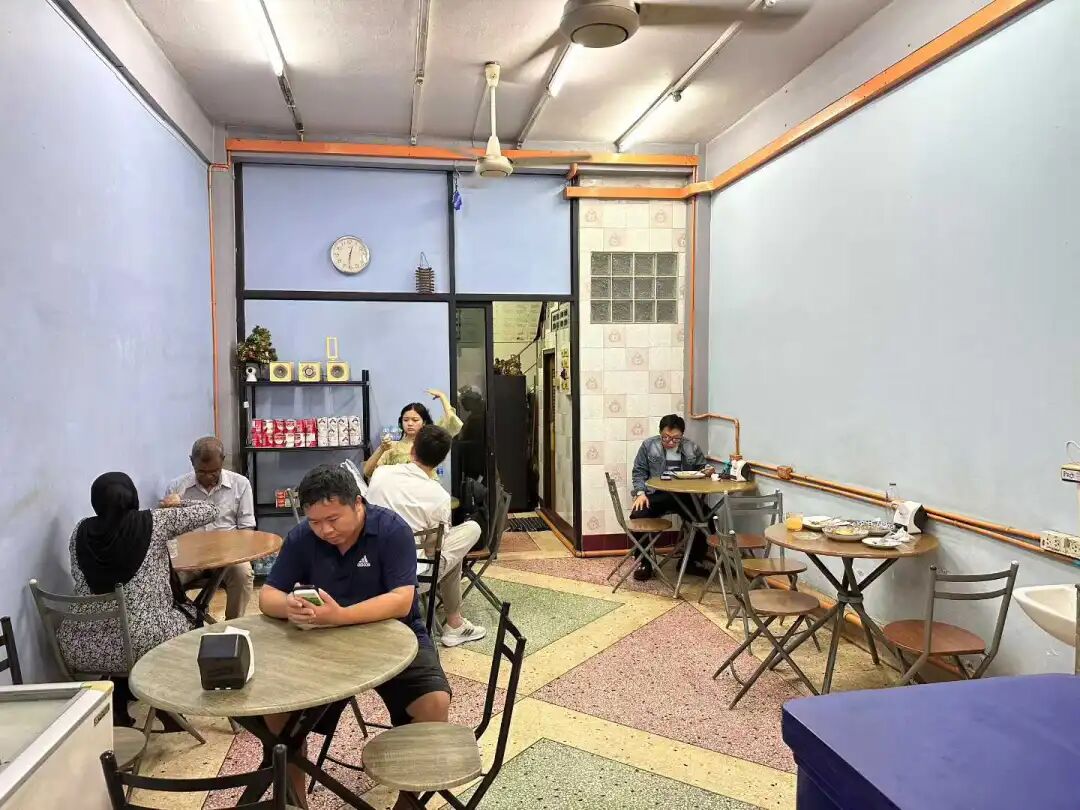
The second floor of the Wat Traimit mosque in Bangkok's Chinatown houses the Yaowarat Chinatown Heritage Center. It offers a very intuitive introduction to Bangkok's Chinatown. At the ticket office, just say you only want to see the exhibition and buy a 100-baht ticket. The exhibition hall introduces how the Chinese came to Bangkok to make a living and displays the atmosphere of Chinatown during the Qing Dynasty.
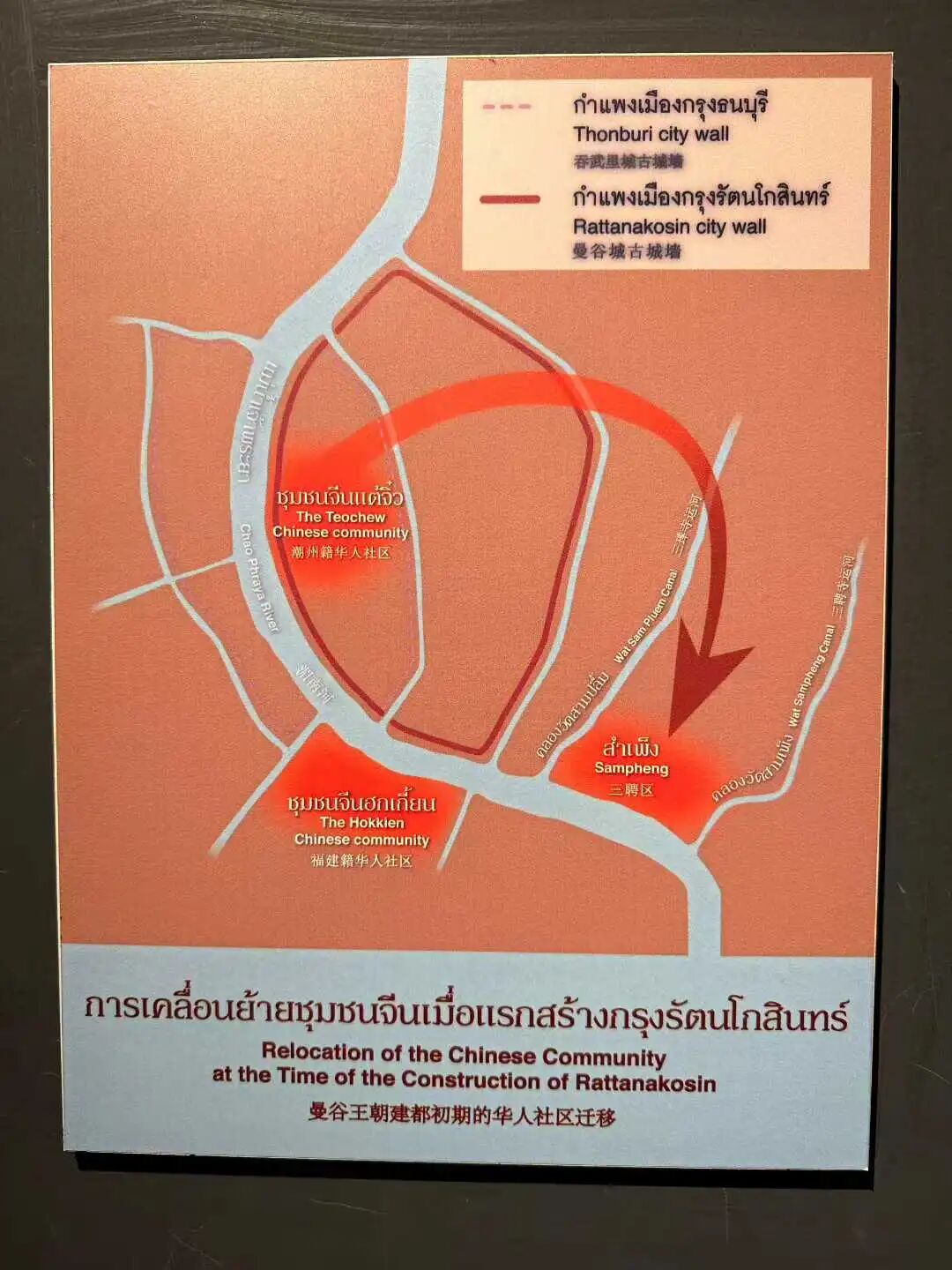
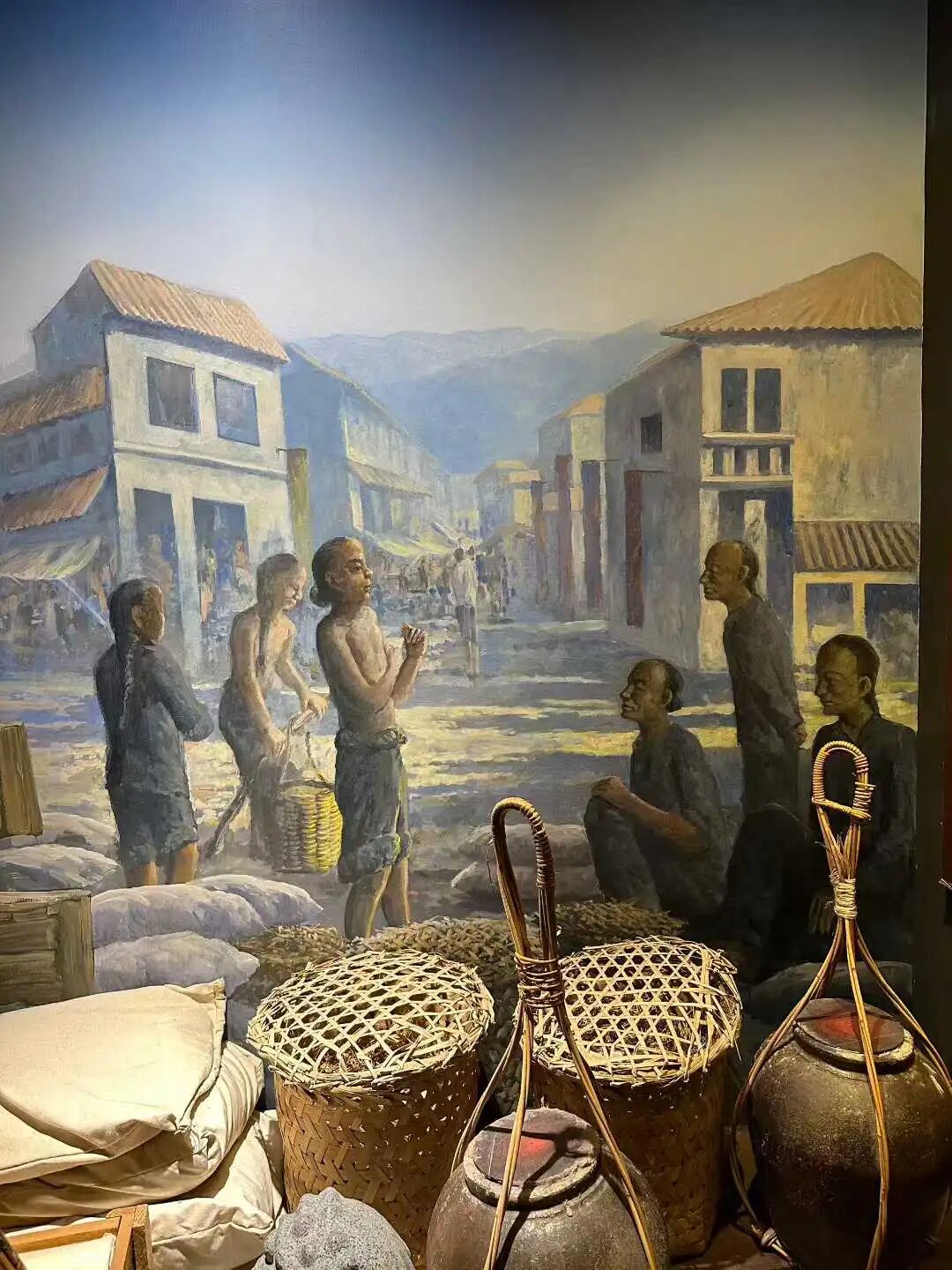
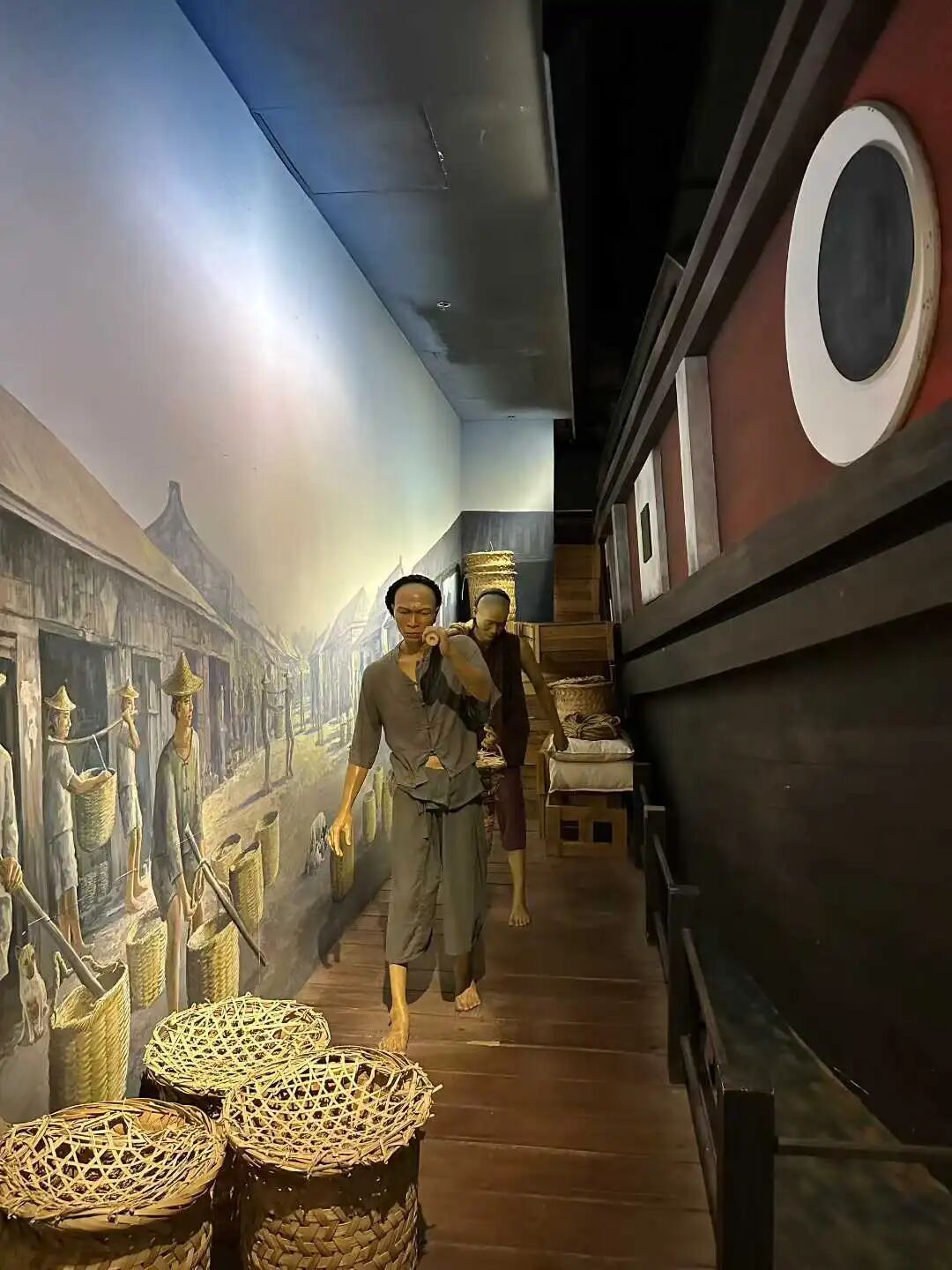
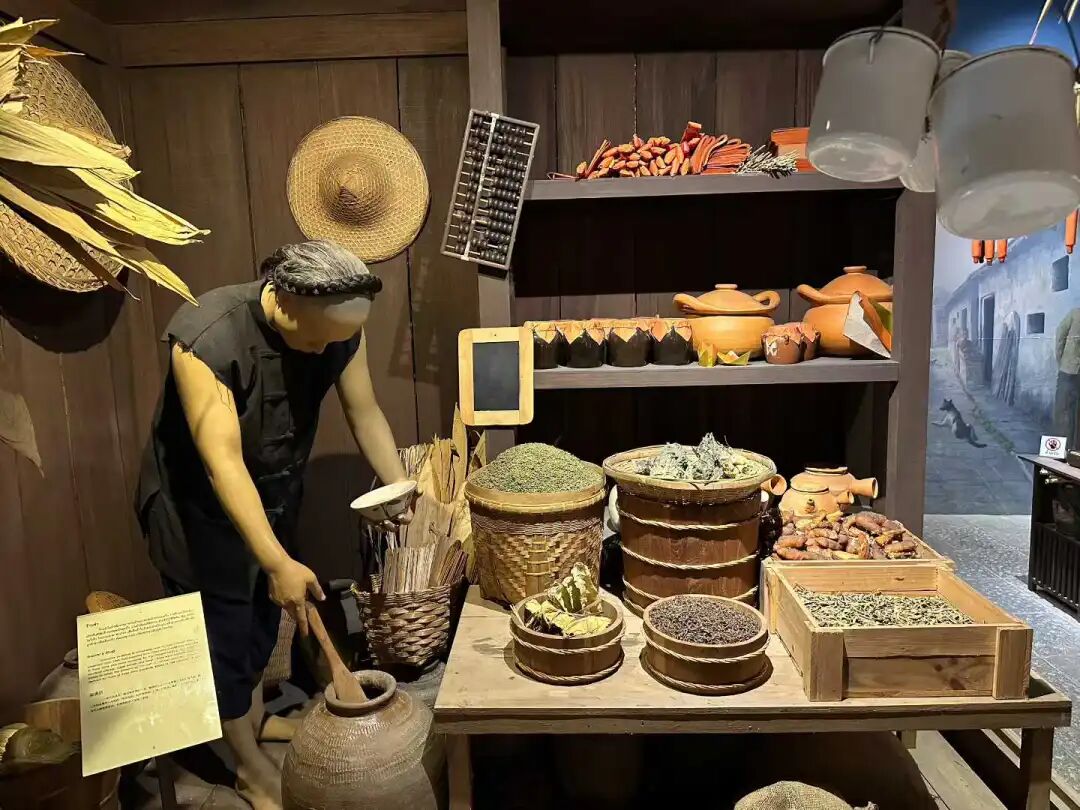
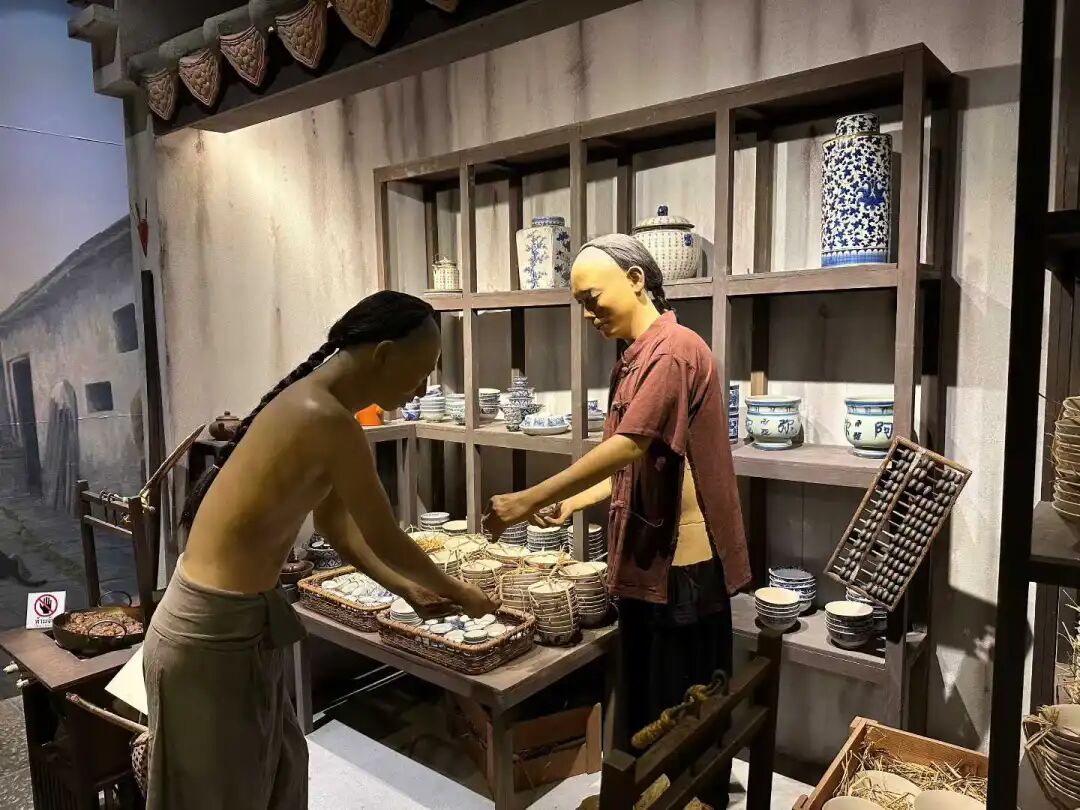
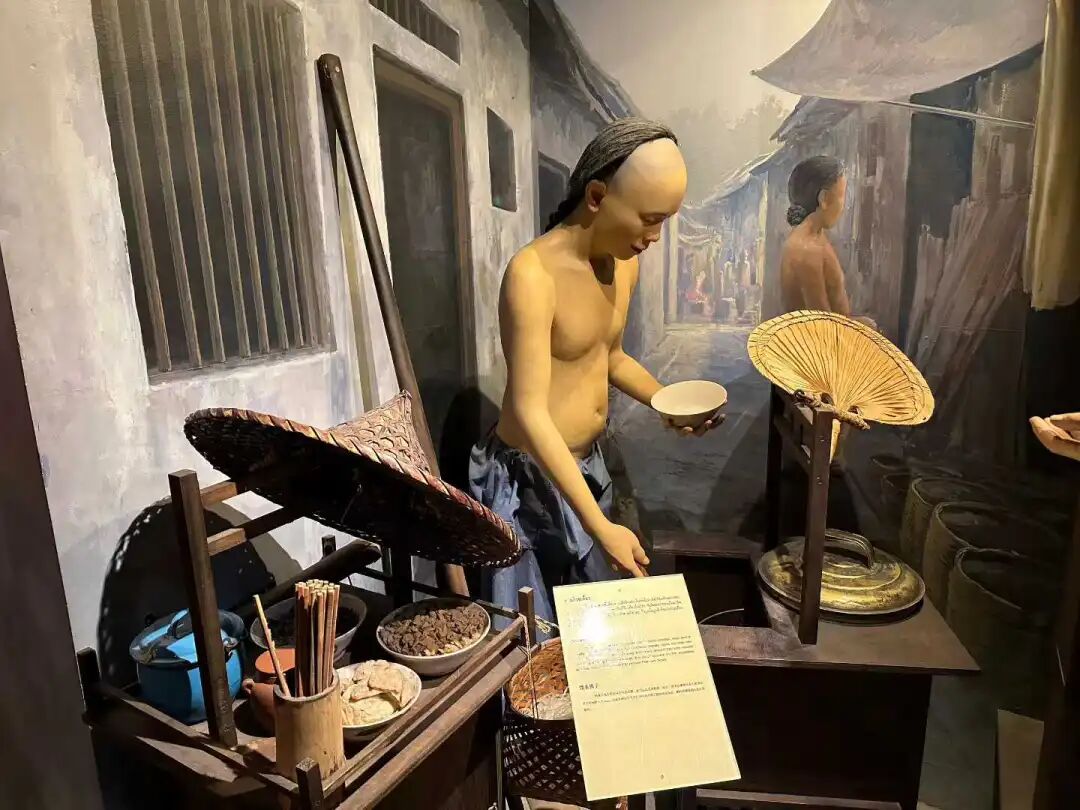
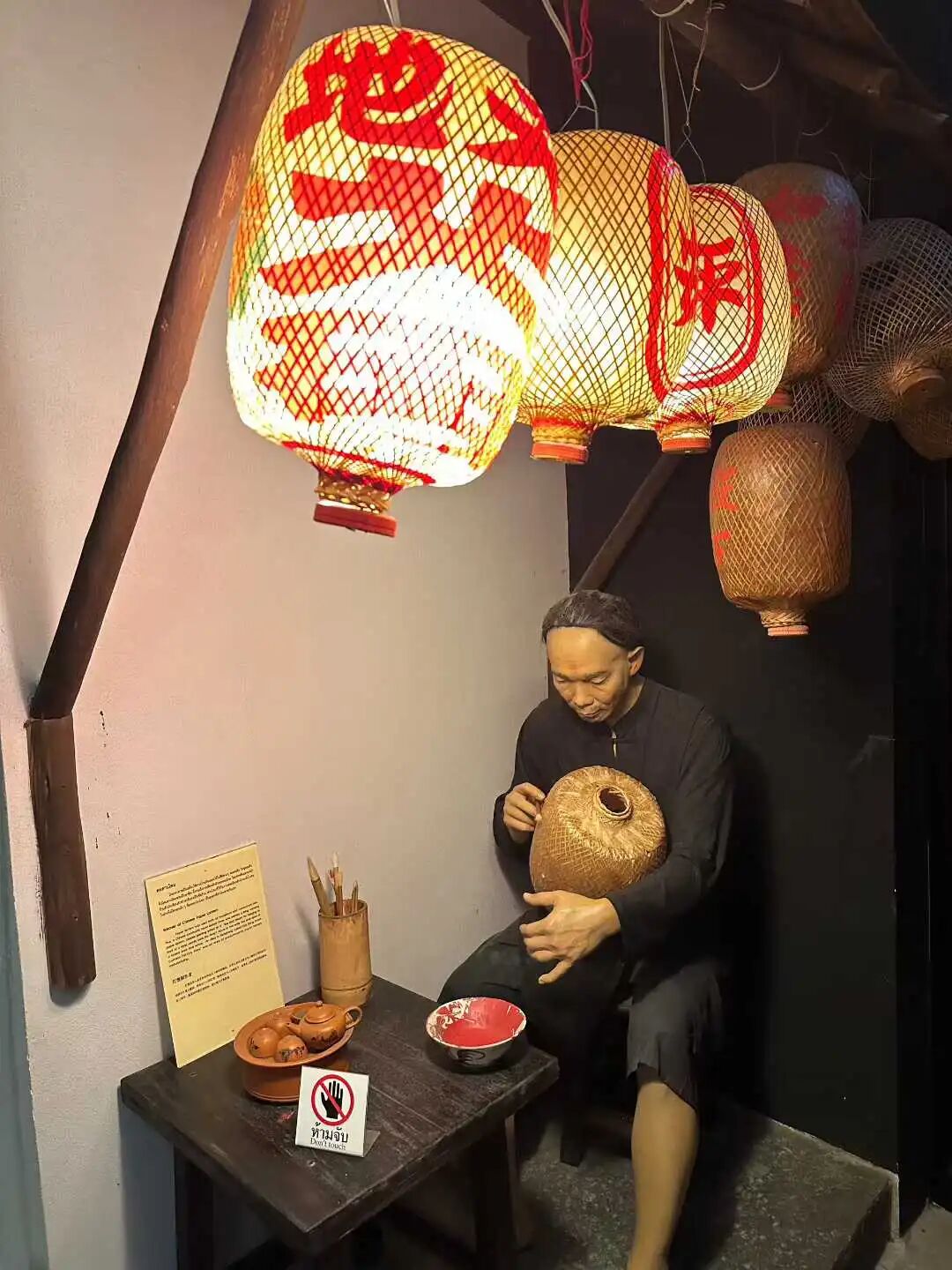
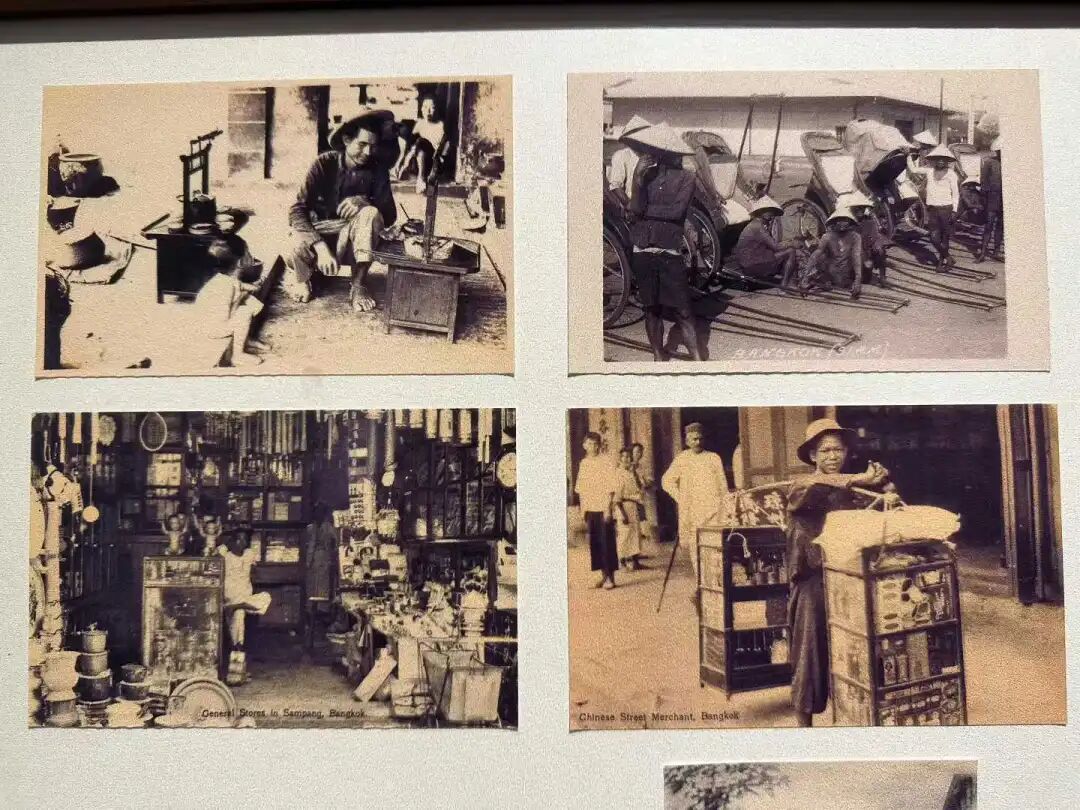
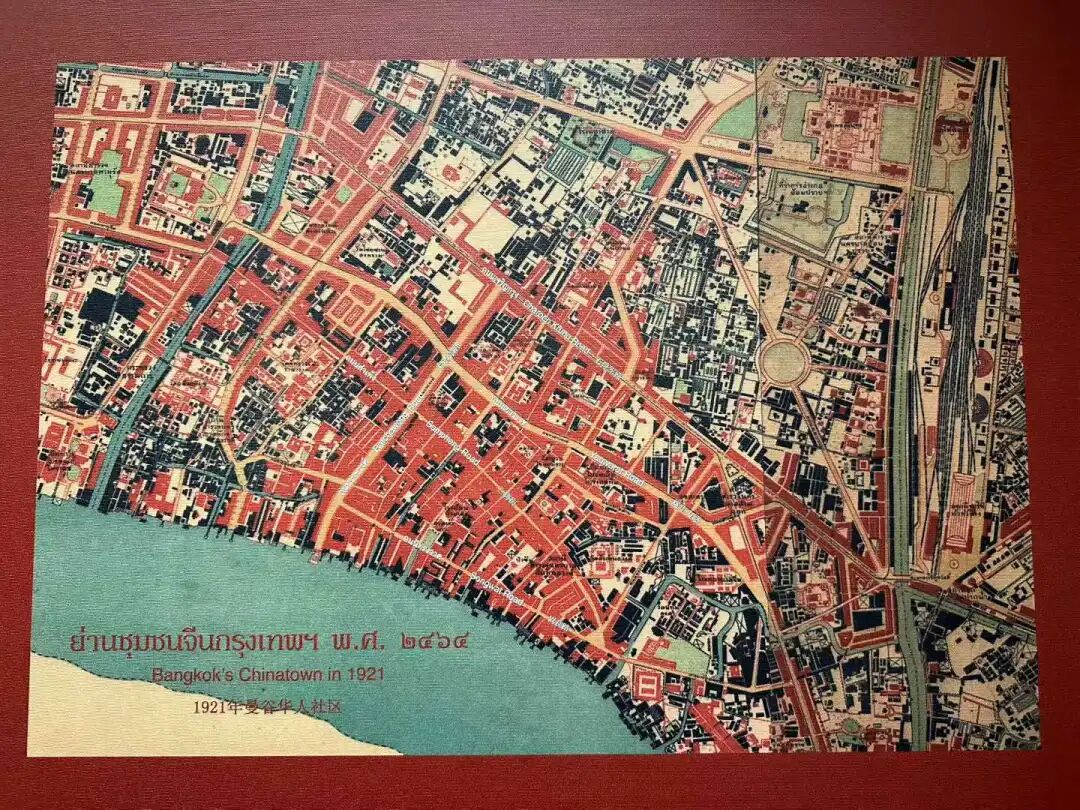
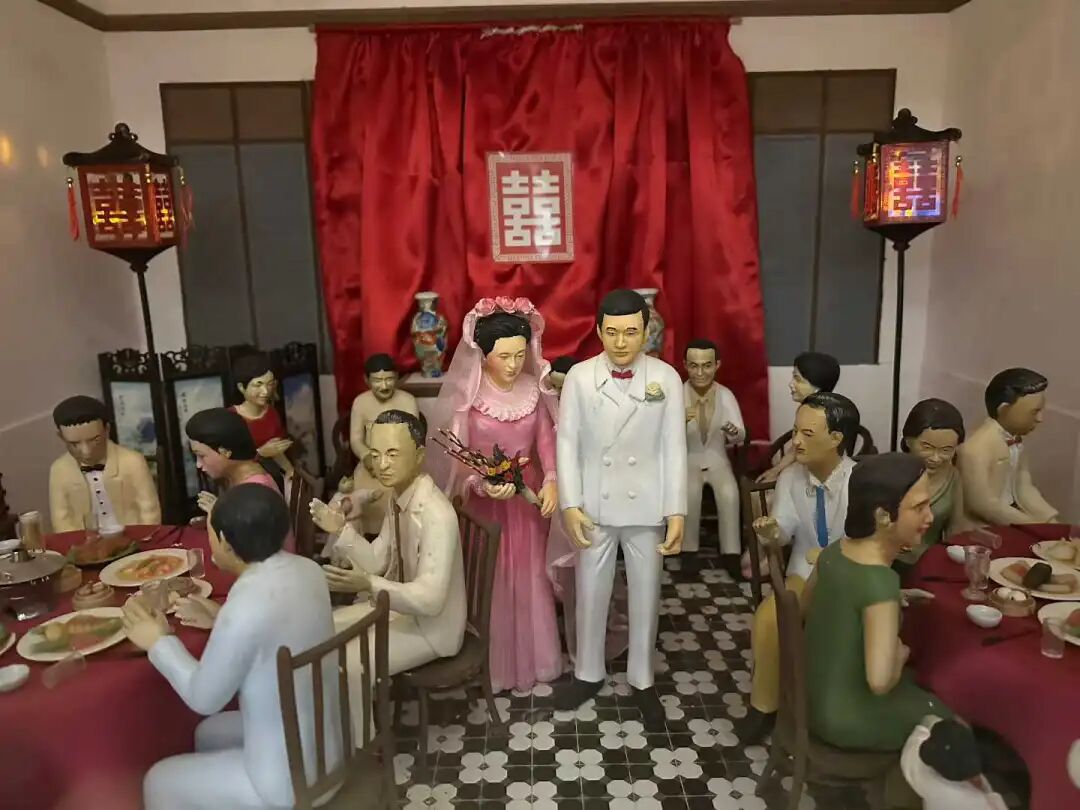
Life scenes recreated inside the Yaowarat Chinatown Heritage Center in Bangkok:
Haitianlou on Shipa Road was built in 1934, and its three-story banquet hall is a key place for Chinese community gatherings.
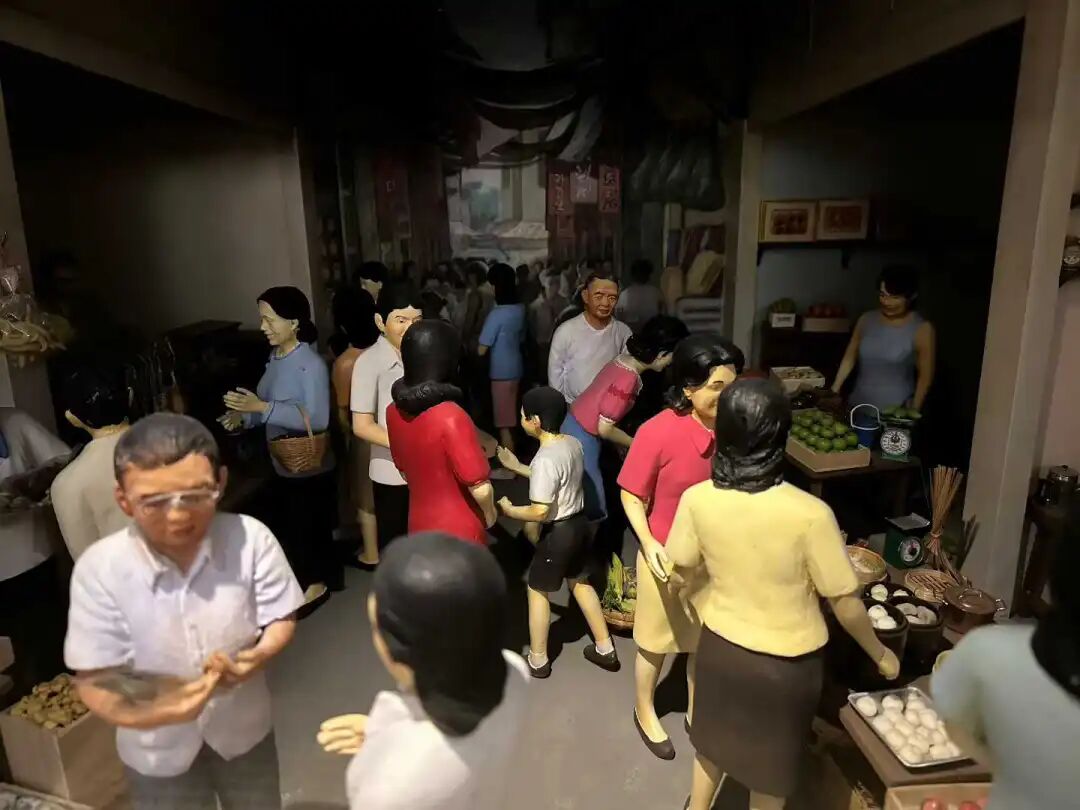
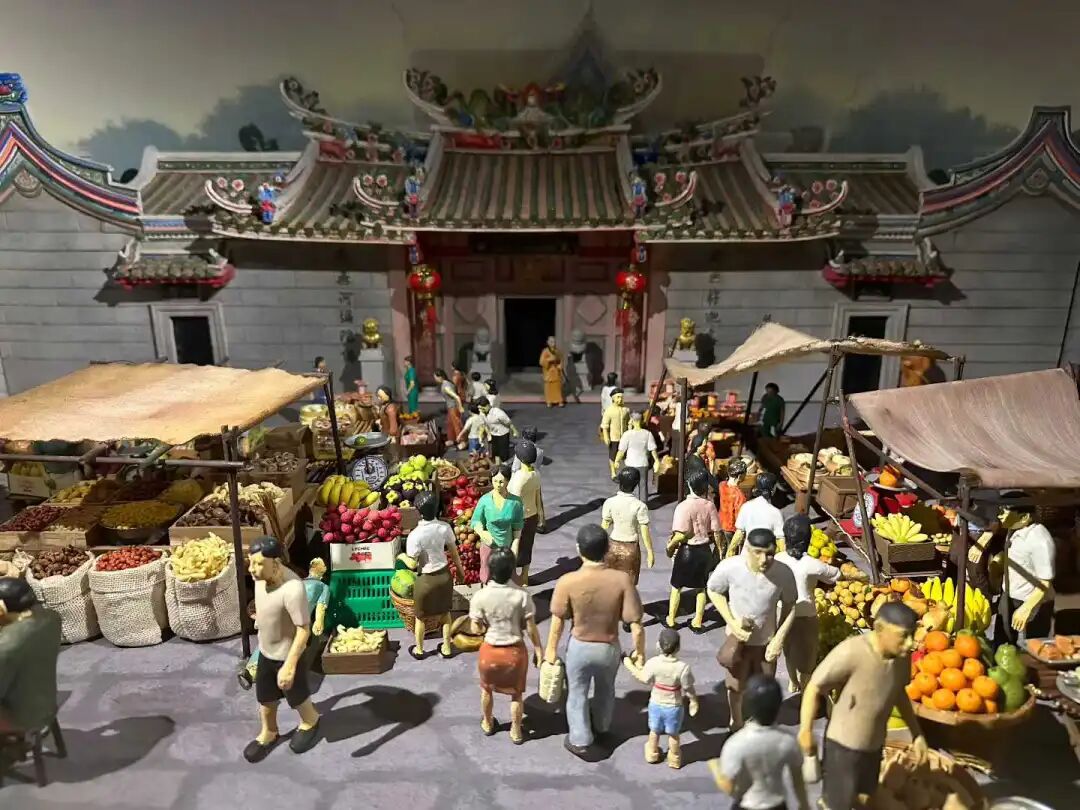
Longweiye Market sells a variety of dried goods, fruits, and ready-to-eat foods.
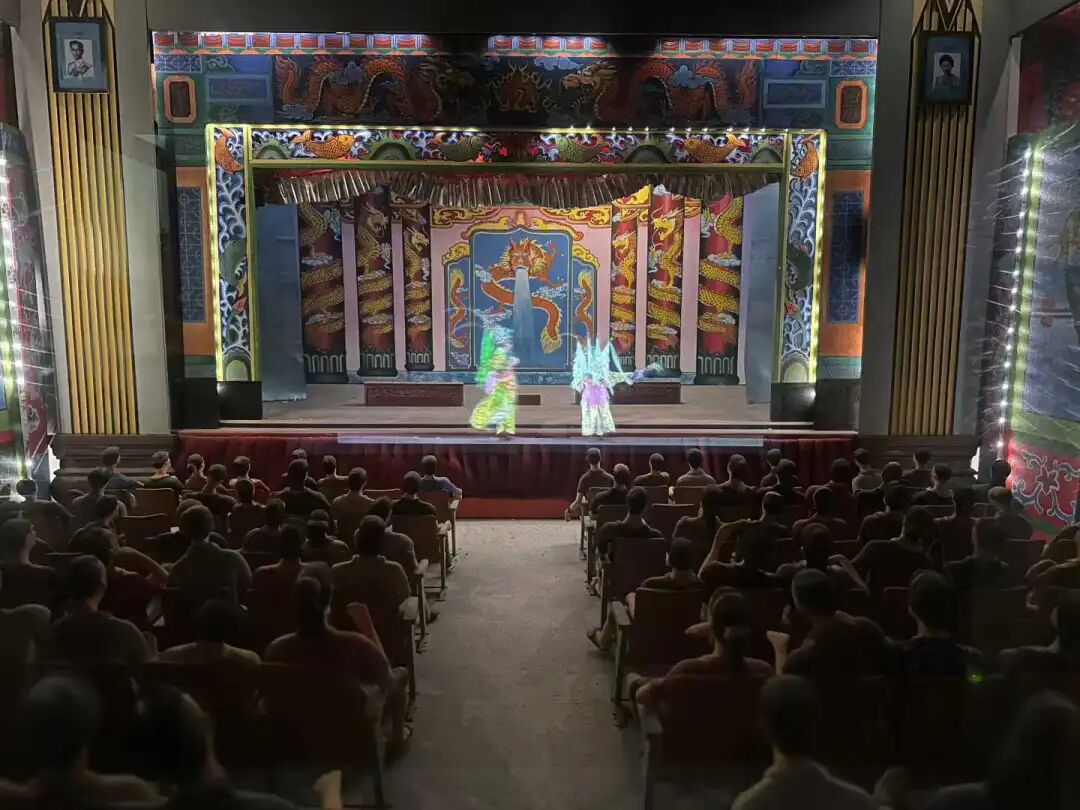
The theater performs the traditional Teochew opening play, 'Six Kingdoms Conferring the Prime Minister' (Liuguo Fengxiang).
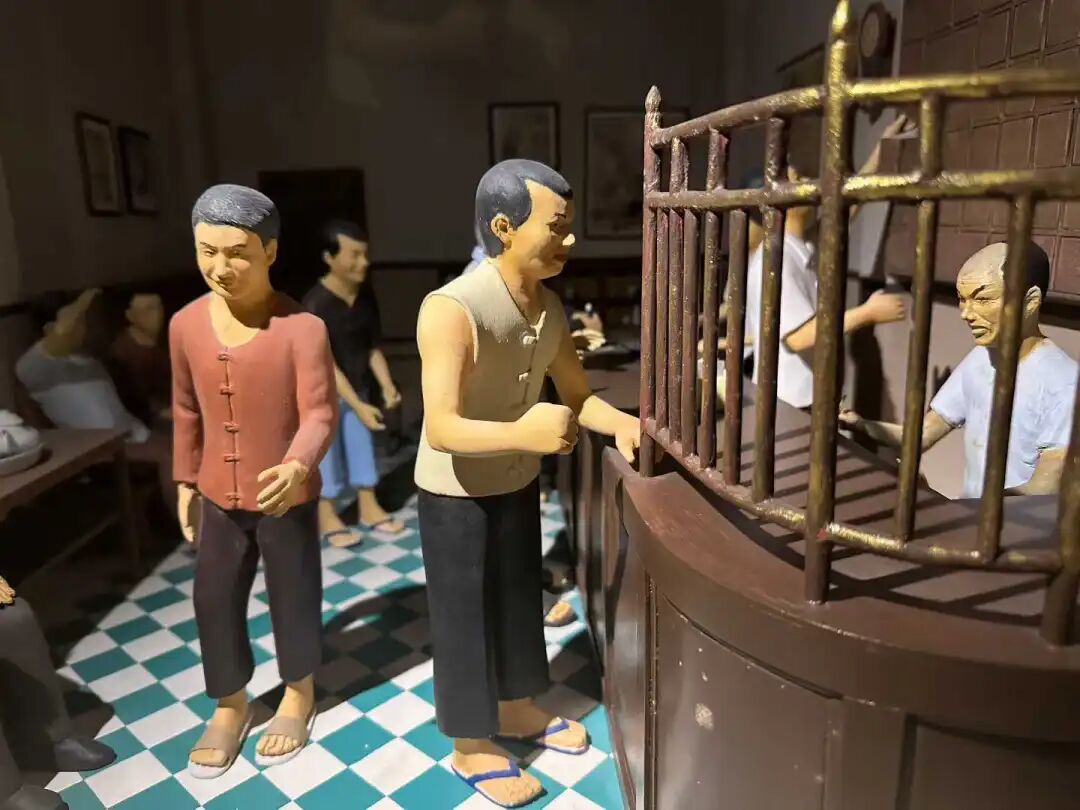
Remittance houses (piguan) handle the delivery of letters and money back to the home country.
Many shops gather in the square in front of Longlian Mosque.
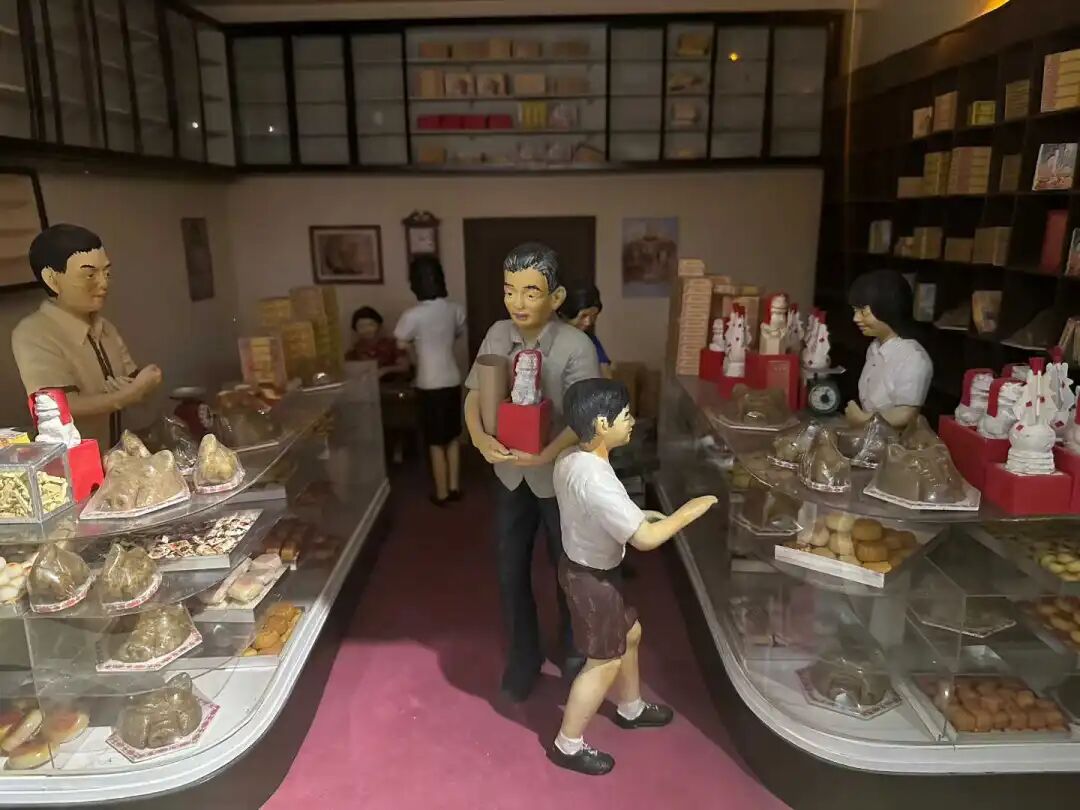
Tea and snack shops sell crispy, sweet Chinese-style pastries, perfect for eating while drinking tea.
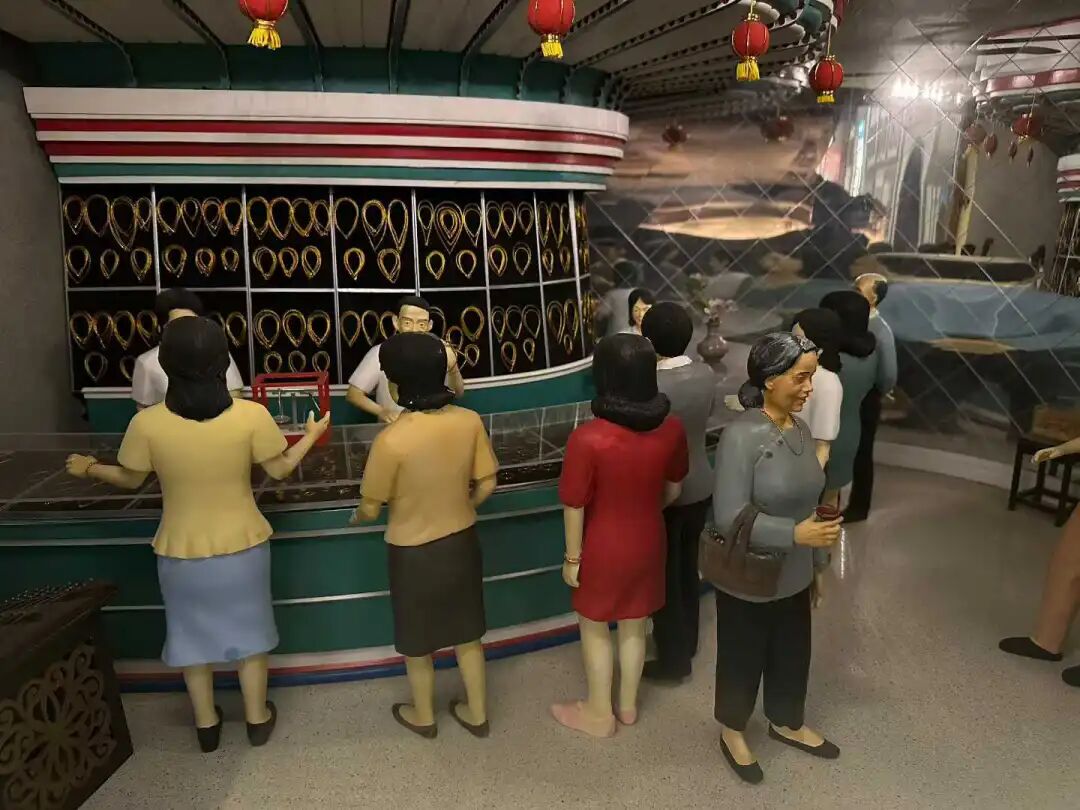
Gold and silver jewelry sold at gold shops is a major way for Chinese people to save money; they often buy gold to keep after receiving lucky money (yasuiqian) during the Lunar New Year.
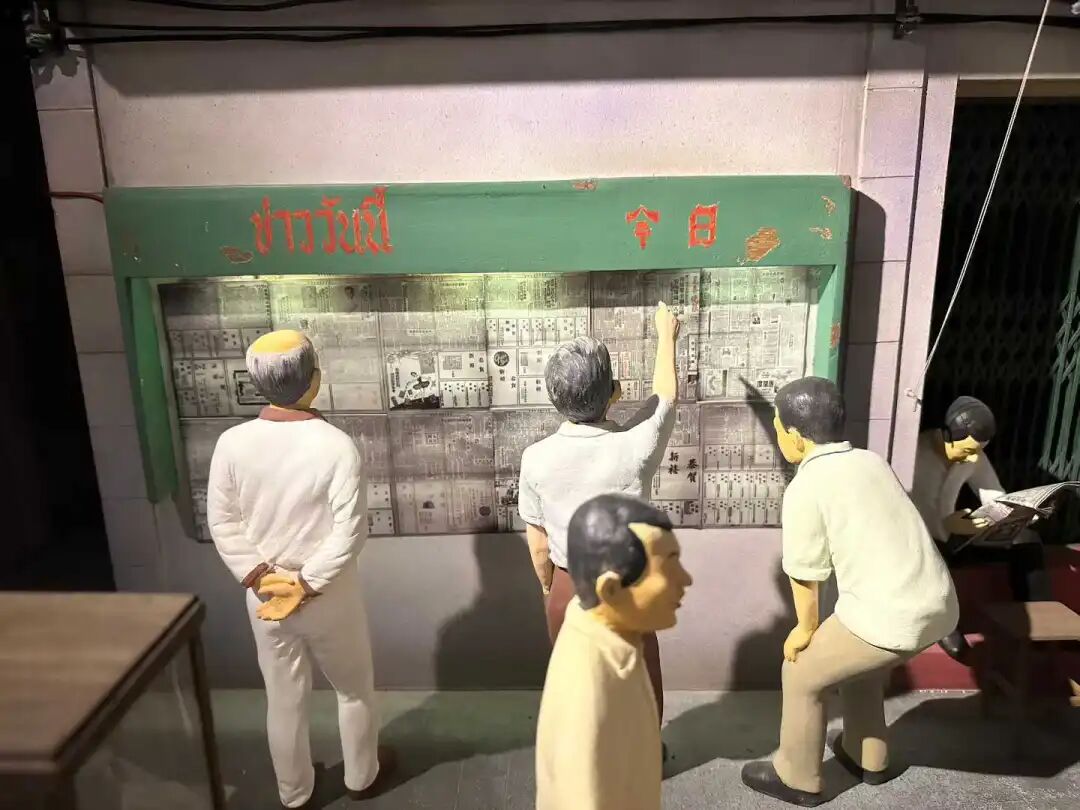
Several Chinese-language newspaper offices in Yaowarat post their daily papers on the wall, so people can read the 'wall news' without having to buy a copy.
Tianhua Hospital opened in 1905; it uses various dialects to communicate with patients and provides free medical treatment to the poor.
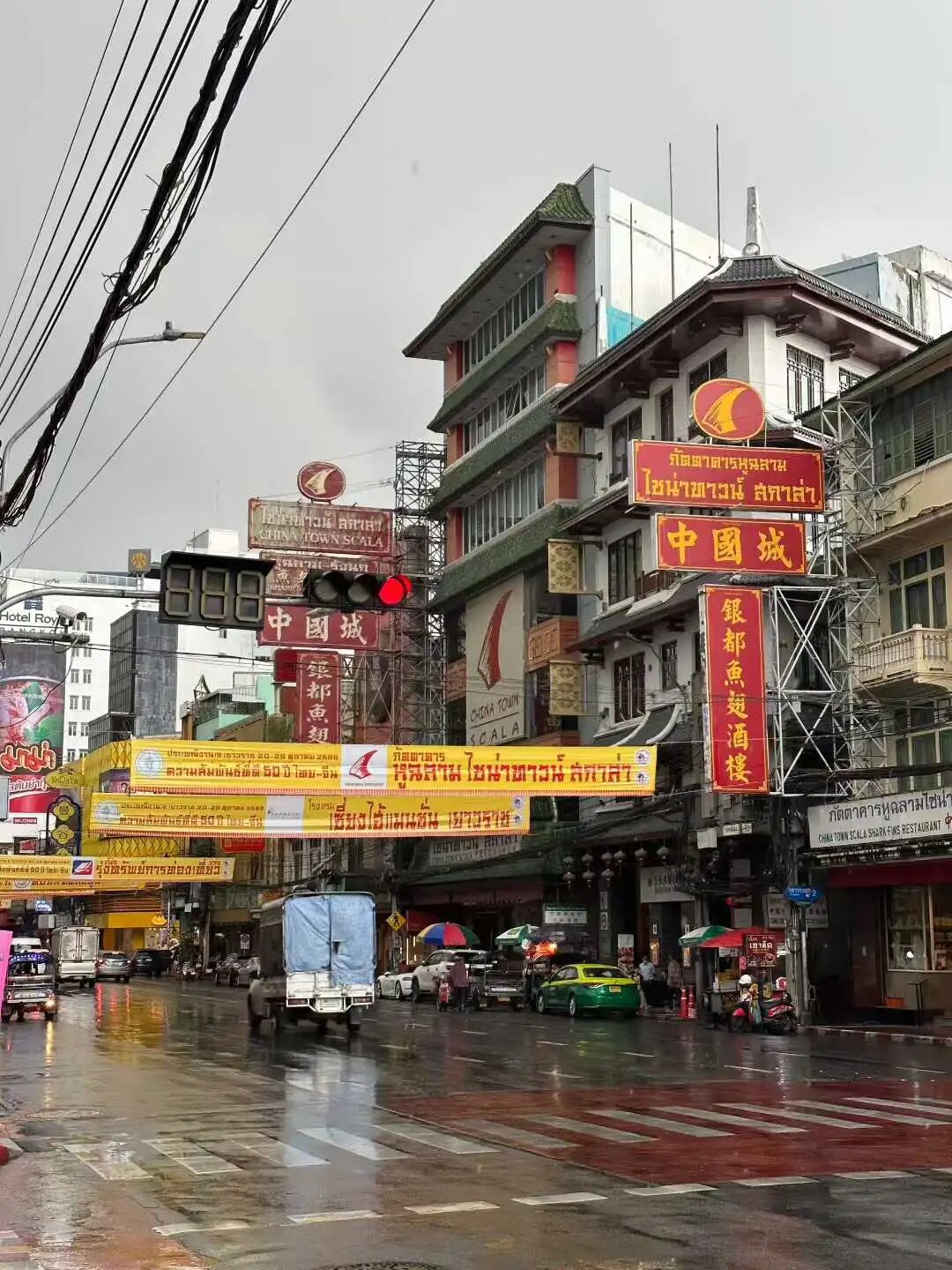
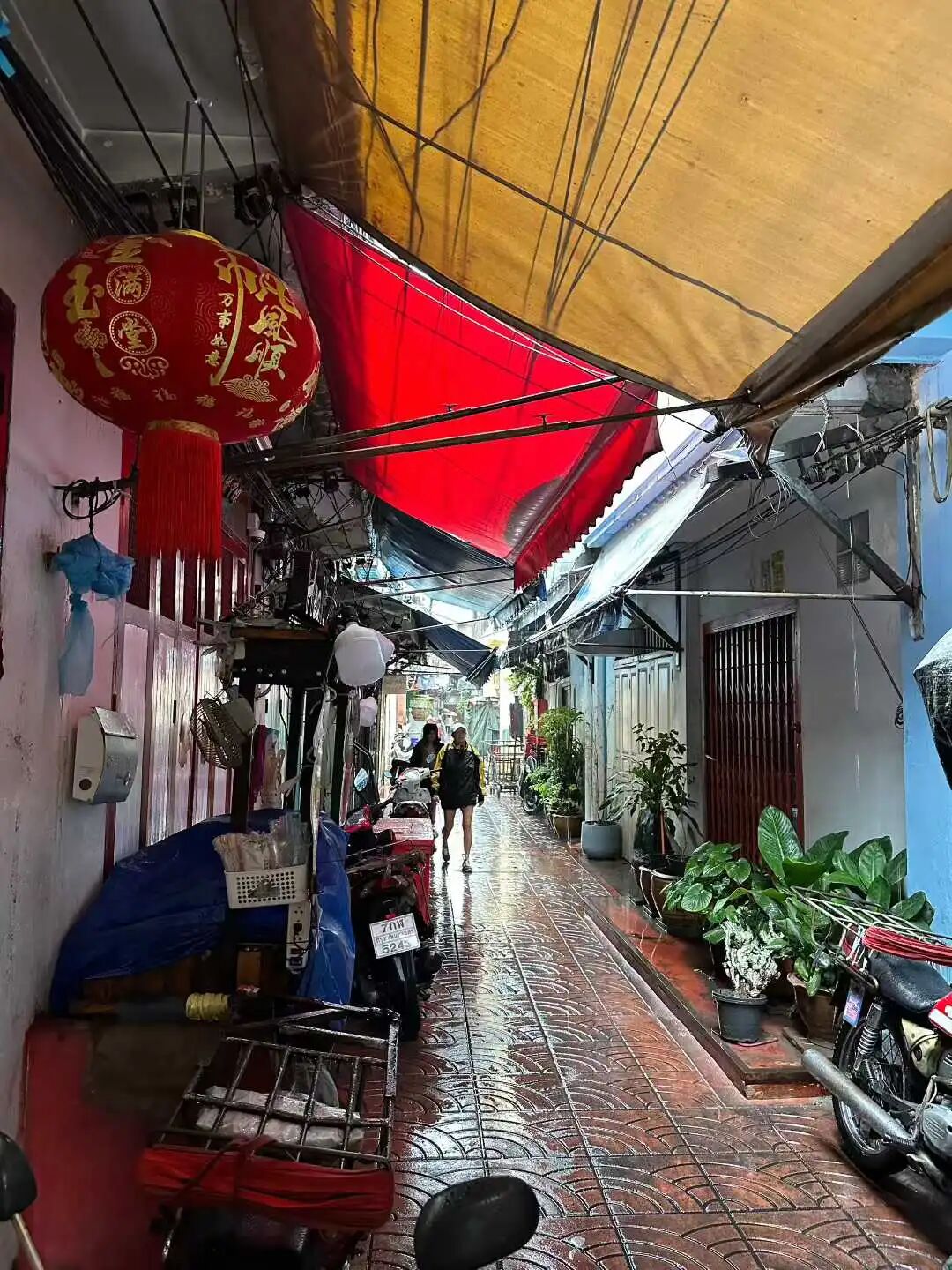
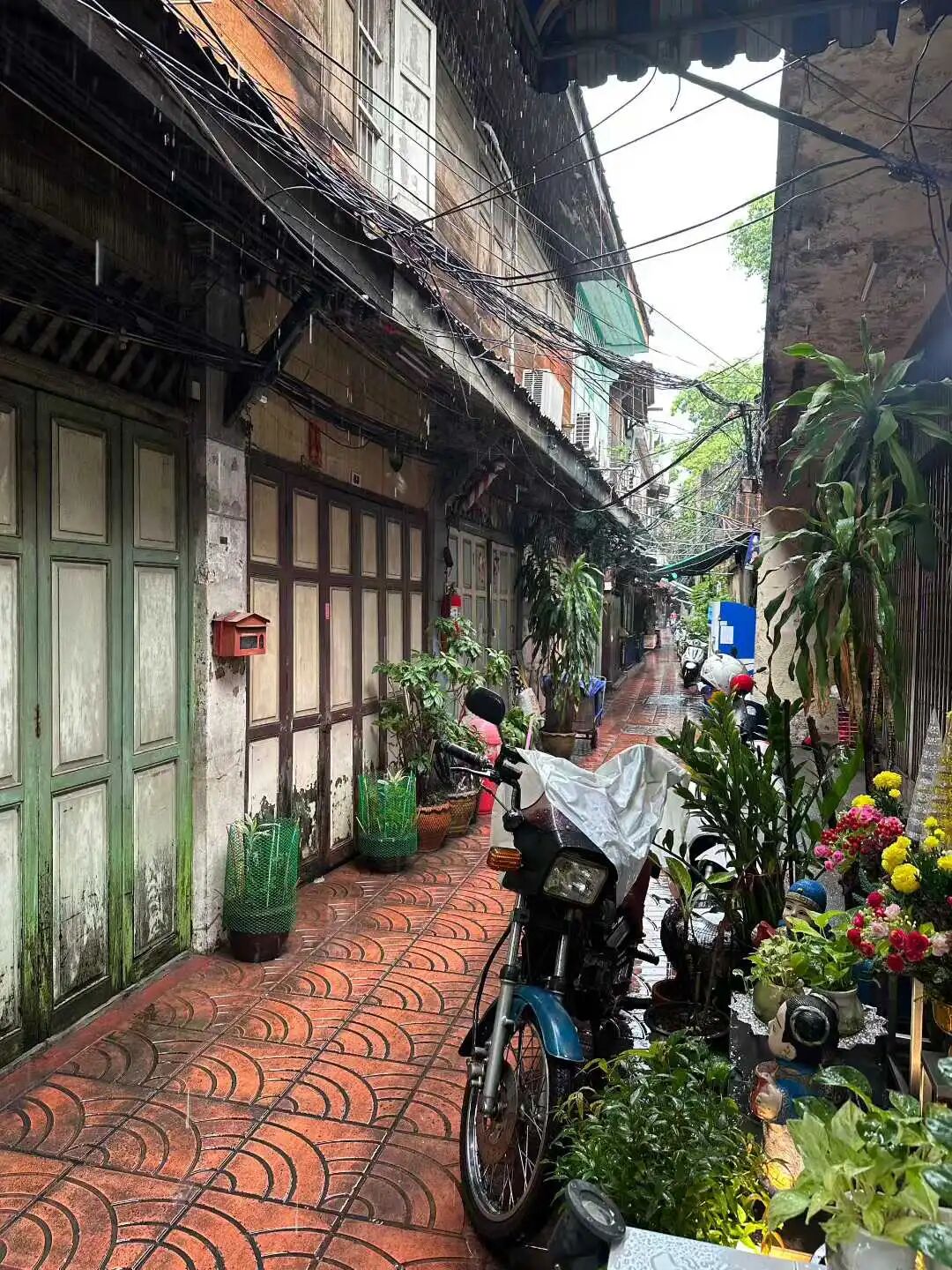
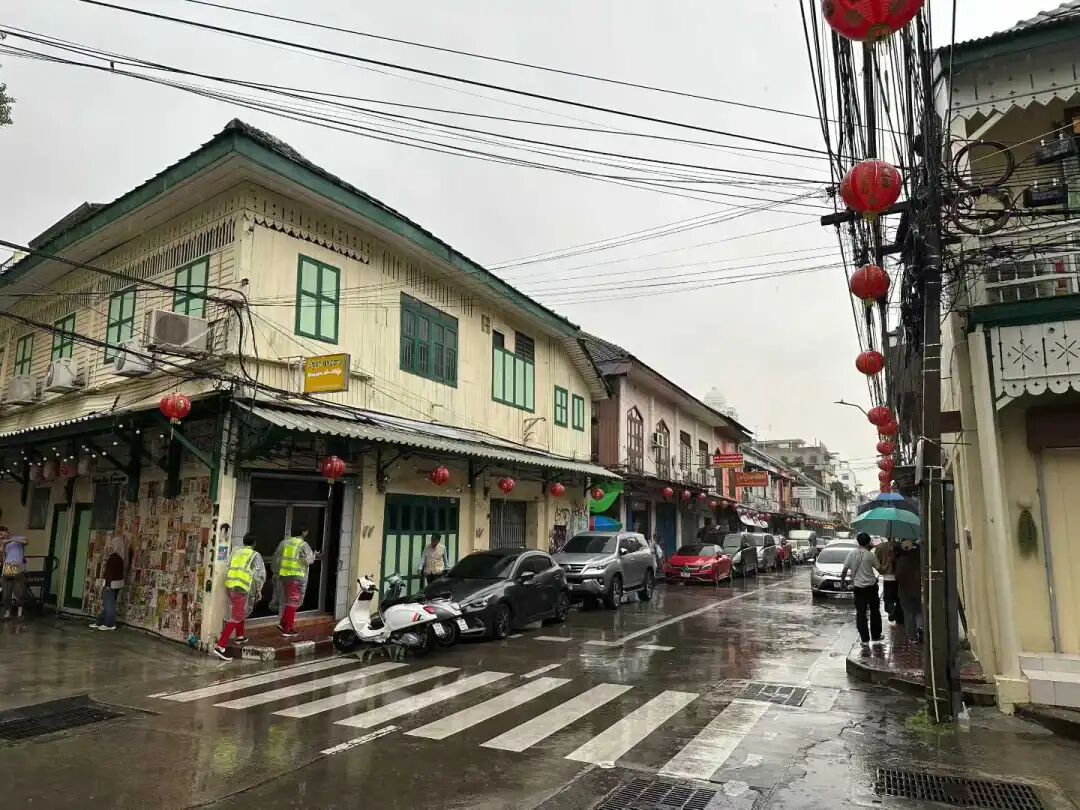
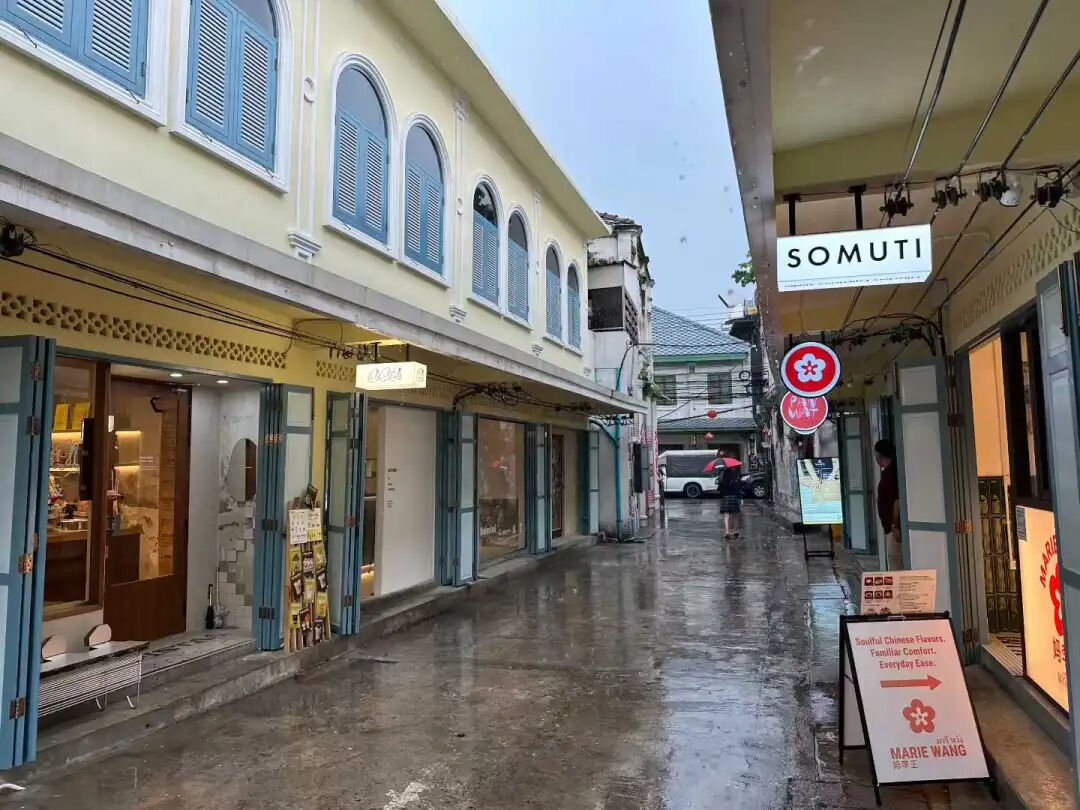
Bangkok's Chinatown in the rain.
Summary: Bangkok's Chinatown contains a Yunnan Hui Muslim cemetery inside Luang Kocha Itsahak Mosque on Song Wat Road. This account connects the Ma family of Tonghai, Yunnan, the old caravan trade, the mosque's royal translator history, and the Muslim life around Yaowarat.
This year, I unexpectedly found a graveyard for Hui Muslims from Yunnan in Bangkok's Chinatown, located inside the Luang Kocha Itsahak mosque on Song Wat Road. Some of these tombstones state that the people came from the Ma family in the Great Hui Village (Da Hui Cun) of Tonghai, Yunnan. The Great Hui Village was originally called Hexi Dadonggou and is home to thousands of Hui Muslims, with the Ma family being the largest clan. According to the Hexi County Annals, the Ma family was originally from Nanjing and moved to Yunnan with the army in the early Ming Dynasty. Tombstone records also state that the Ma family were from Liushuwan Gaoshikan in Nanjing Yingtian Prefecture and moved to Yunnan for business.
The head of the Ma family, Ma Yuanwu, originally made a living by farming. During the Guangxu reign of the Qing Dynasty, he sent his eldest son, Ma Tongzhu, to lead a horse caravan. After saving some money, he sent his eldest grandson, Ma Bingzhong, to open a soy sauce workshop. The Ma family used their horse caravan to transport brown sugar to Kunming for sale and brought salt back, gradually growing their business this way. In 1918, the Ma family sold the soy sauce workshop and opened the Yuanxinzhai trading firm in Mojiang. They switched to selling cotton yarn, cloth, silk, and satin, while also buying mountain goods and medicinal herbs like tea, shellac (zijie), cowhide, deerskin, and deer antler (lurong). Later, they also processed deer glue, expanding their reach from China to Thailand and Myanmar. In 1921, the Ma family renamed Yuanxinzhai to Yuanxinchang in Kunming. They mainly traded ivory, deer antler, tiger bone, otter and cat fur, tea, cloth, silk, and dyes. They also shipped Chinese medicinal herbs like saffron, sweet flag (cangchangpu), musk, and fritillaria (beimu) to Thailand.
In the 1930s, besides running their horse caravan business, the Ma family set up branches in central and southern Yunnan, Kengtung and Mong Hsat in Myanmar, and Lampang, Chiang Mai, and Bangkok in Thailand. Because they kept their word and managed their business well, the Ma family became very wealthy in southern Yunnan during the Republic of China era. During the middle and late Republic of China era, the Ma family built three large family compounds in their hometown of Great Hui Village, which still stand today.
See "Heading South from Kunming (Part 2): Witness to the Yunnan Horse Caravans—The Ma Family Compound in Tonghai."
Luang Kocha Itsahak Mosque is the only mosque in Bangkok's Chinatown area. It was built at the end of the 19th century with funds donated by the Siamese royal translator, Luang Kocha Itsahak.
Luang Kocha Itsahak was of mixed Malay and Chinese descent. His father came to Bangkok from Kedah, Malaysia, to do business, served under King Rama III, and married a Chinese wife. Luang Kocha Itsahak himself worked in the Siamese Department of Western Trade (Krom Tha Khwa), serving as a translator for Malay rulers visiting the Siamese court and managing trade between Siam and various Malay states.
After Siam made Bangkok its capital in 1782, it granted a piece of land between the Sam Peng Mosque canal and the Sam Peng canal to the Chinese. As trade between China and Thailand grew, the Sam Peng Chinatown gradually became an import and trade district dominated by Teochew merchants. Before Don Mueang Airport was built in 1914, people wanting to travel from Bangkok to India, the Middle East, or Europe had to take a steamship from the Gonghang Pier in Chinatown to Singapore or Penang, then transfer to a cruise ship to continue west. Because of this, the Gonghang Pier was crowded with merchants from all over the world in the 19th century, and many Indian, Malay, and Yunnanese Hui Muslims worked in nearby warehouses and trading companies.
Since there was no mosque in the Chinatown area, the friends (dost) working nearby had to take a ferry to a mosque on the south bank of the Chao Phraya River for their prayers, which was very inconvenient. After discussing it, everyone decided to have the highest-ranking royal translator at the time, Luang Kocha Itsahak, lead the effort to buy land near Gonghang and build a mosque.
In 1892, a fire broke out in Chinatown, damaging many houses, so King Rama V decided to build a new main road, Song Wat Road, in Chinatown. Luang Kocha bought land along Songwat Road and had his children take apart the bricks and stones from a house he owned across the river in Thonburi to build this neoclassical-style mosque. Today, the Luang Kocha Mosque is still owned by his descendants and serves as a convenient place for fellow Muslims (dosti) working or visiting near Bangkok's Chinatown.
The ablution room (shuifang) was built in 1949.
Daily prayers (namaz) are held on the first floor, with men in front and women in the back, separated by a curtain.
The second floor only opens for Friday prayers (Jumu'ah), and the decoration of the mihrab features a distinct Thai style.
On Yaowarat Road in Bangkok's Chinatown stands a century-old house that was once the stage for a Muslim version of Romeo and Juliet; it is now open as a hotel and cafe.
This house was first built in 1916 by a Shia merchant named Abdul Rahim who worked in Chinatown, and it was later sold to a Sunni merchant named Adam. Adam arrived in Bangkok's Chinatown by boat from India to work. He started with nothing and eventually bought this house. Since Adam had no children, after he passed away, his wife brought her brother's family to live with her, and her brother's son, Payoon, became the young master of the house.
Surprisingly, Payoon fell in love with Sara, a descendant of the house's first owner, Abdul Rahim. Although they both came from wealthy Muslim families, one belonged to the Sunni sect and the other to the Shia sect, which was still not accepted by everyone a hundred years ago. This Muslim version of Romeo and Juliet had a happy ending. They married and had three sons, and the eldest son, Parpatipya, inherited the house.
The house was later rented by a Chinese printing factory and a newspaper office. After renovations in 2017, it became the Baan 2459 hotel and Chata cafe.
After the great fire in Bangkok's Chinatown in 1892, King Rama V built a large number of shophouses along Sampeng Lane, the oldest road in Chinatown, which later became a bustling commercial market. Besides the Chinese, Indian and Malay Muslims (dosti) also opened shops on Sampeng Lane, with many working in the jewelry trade. 130 years later, many descendants of these Muslims (dosti) still operate jewelry businesses in the shophouses on Sampeng Lane, serving as a living historical memory of Bangkok's Chinatown.
This shop is marked as being from Pattani Province in southern Thailand, which is a Malay-populated area.
There are relatively few halal restaurants in the Bangkok Chinatown area. I recommend Zara Restaurant on Yaowarat Road, a family-run place serving local Thai food and various coffees. We ordered Thai red milk tea, spicy minced chicken salad (Larb Gai), green papaya salad, and stir-fried rice noodles (Pad Thai). Overall, the taste was very authentic, and the stir-fried rice noodles were especially delicious. However, Thai food is the spiciest I have ever eaten in Southeast Asia. If you are a Muslim (dosti) who cannot handle spice, be sure to say so in advance, or your mouth will feel like it is burning for a long time.
The second floor of the Wat Traimit mosque in Bangkok's Chinatown houses the Yaowarat Chinatown Heritage Center. It offers a very intuitive introduction to Bangkok's Chinatown. At the ticket office, just say you only want to see the exhibition and buy a 100-baht ticket. The exhibition hall introduces how the Chinese came to Bangkok to make a living and displays the atmosphere of Chinatown during the Qing Dynasty.
Life scenes recreated inside the Yaowarat Chinatown Heritage Center in Bangkok:
Haitianlou on Shipa Road was built in 1934, and its three-story banquet hall is a key place for Chinese community gatherings.
Longweiye Market sells a variety of dried goods, fruits, and ready-to-eat foods.
The theater performs the traditional Teochew opening play, 'Six Kingdoms Conferring the Prime Minister' (Liuguo Fengxiang).
Remittance houses (piguan) handle the delivery of letters and money back to the home country.
Many shops gather in the square in front of Longlian Mosque.
Tea and snack shops sell crispy, sweet Chinese-style pastries, perfect for eating while drinking tea.
Gold and silver jewelry sold at gold shops is a major way for Chinese people to save money; they often buy gold to keep after receiving lucky money (yasuiqian) during the Lunar New Year.
Several Chinese-language newspaper offices in Yaowarat post their daily papers on the wall, so people can read the 'wall news' without having to buy a copy.
Tianhua Hospital opened in 1905; it uses various dialects to communicate with patients and provides free medical treatment to the poor.
Bangkok's Chinatown in the rain.
I visited 16 mosques across Northern Thailand | Muslim travel in Thailand and halal restaurants in Bangkok
Articles • ahmedla posted the article • 0 comments • 296 views • 2026-01-22 10:35
My Halal Trip to Bangkok — Food and Stay
I headed to Thailand for the May Day holiday this year—my first trip abroad in three years, Alhamdulillah. Even though it’s the peak of summer and the heat is intense, everyone’s spirits were high. You could hear Chinese voices all over the streets of Bangkok. On this trip, I visited 9 Yunnanese Muslim mosques and 7 Indian mosques in Northern Thailand, as well as 9 different Muslim communities in Bangkok. I’ll be sharing more about those soon, Insha'Allah. In this post, I want to start by sharing the street food I found at Halal stalls in Bangkok and the Muslim hotel where I stayed.
The Foundation of the Islamic Centre of Thailand
We started our morning with breakfast at the Foundation of the Islamic Centre of Thailand. It’s a beautiful modernist building designed by a young Bengali Muslim architect, Paichit Pongpunluk. Construction began in 1970 and took 11 years to finish because of funding—but once it was done, it became a true landmark and hub for the community.
We picked up some Basil Chicken Rice (Pad Krapow), grilled chicken skewers, and Thai red tea. "Pad Krapow" uses Holy Basil, which grows all over Southeast Asia; stir-frying it with meat makes for a perfect meal. The Thai tea is made with Ceylon tea, condensed milk, sugar, and milk. You can have it hot for breakfast, but usually, people drink it iced. There are plenty of Halal stalls downstairs, though not all were open since we arrived early. Besides the food, they have books, clothing, and community events—it’s definitely worth a visit.
Street Food Stalls at Haroon Mosque
After praying Asr, we went for lunch at the stalls right outside Haroon Mosque by the Chao Phraya River. The mosque is named after Toh Haroon Bafaden, an Indonesian merchant who came to Bangkok with his father in the 1820s or 30s. He settled down, got married, and built the mosque, and a Muslim neighborhood grew around it.
First, we had the beef and chicken ball glass noodles. The beef was so incredibly flavorful—Zainab and I both agreed it was the best meal we had in Bangkok! Then we had the Basil Chicken with meatballs and chicken liver over rice. After that, we tried a bowl of braised chicken feet. They were so tender and soaked up all the flavor, though the soup was super spicy, haha!
In the Bangkok summer heat, there are two things you absolutely need for street food: a powerful electric fan and an ice-cold drink! Otherwise, you’d have no appetite at all.
We also had the classic Pad Thai. It’s made with rice noodles, stir-fried eggs, bean sprouts, crushed peanuts, and fresh shrimp, served with lime and chives. While Chinese immigrants brought the concept of stir-fried noodles here centuries ago, it only became the "national dish" in the mid-20th century. During WWII, when rice was scarce, the government promoted these noodles to help the country get through the shortage.
If Pad Thai is what people first think of when they think of Thai food, then "Roti" is definitely the first thing people think of for Thai Halal food. You’ll find a Muslim brother or sister with a Roti cart at almost every night market, and they’re always popular.
ICONSIAM Food Court
For any brothers and sisters (Dosty) visiting Bangkok in the summer, I highly recommend SOOKSIAM on the ground floor of the ICONSIAM mall. It brings together snacks from all over Thailand and has many Muslim stalls, many run by Malay Muslims from the South. Best of all, the AC is great—you won't want to leave!
We started with the steamed egg crab. It was full of roe and tasted amazing with the spicy and sour "Nam Chim" dipping sauce. They also have shrimp, squid, and all kinds of seafood. Our Malay Muslim brothers from the South are experts at cooking seafood.
Next, we had the classic Thai Muslim street snack: Roti with Thai milk tea. "Roti" actually comes from the Sanskrit word for bread, brought here by South Asian and Malay Muslims. Unlike in South Asia, Thai Roti is sweet—you can add bananas, eggs, and chocolate, and it’s topped with sweetened condensed milk.
We also tried the Thai chicken sausage with lotus root salad and the green mango oyster salad (Tam Mamuang). They use raw long beans in their salads here, unlike back home where we usually blanch them. These salads are all about that spicy and sour kick from lime and bird’s eye chilies. If you can’t handle heat, you definitely need to ask for "no spice" or "little spice."
The green mango salad belongs to the "Tam" category, which means "pounded." The most famous version is green papaya salad. They pound the mango with garlic, chilies, dried shrimp, and fish sauce to bring out the aroma, then add palm sugar and lime juice.
Finally, for the main course, we chose Chicken Rice (Khao Man Gai). This dish came from Hainanese immigrants in the late 19th century. The rice is cooked in chicken broth and is so fragrant. Unlike the version in Singapore or Malaysia, the Thai style uses a paste made of ginger, garlic, cilantro, and oil to braise the chicken, and it's served with "Nam Phrik," a sweet and spicy sauce.
Mango Sticky Rice at Suvarnabhumi Airport
Right before we left, I grabbed some traditional Mango Sticky Rice (Khao Niao Mamuang) from a Halal fast-food spot at the airport. It’s the perfect snack for the plane. During mango season in April and May, everyone loves this. The sticky rice is mixed with coconut milk and palm sugar, usually served with the sweet Nam Dok Mai or Ok Rong mango varieties. This dessert goes back centuries to the Ayutthaya period and is now famous all over Southeast Asia.
Al Meroz Muslim Hotel
This time in Bangkok, we stayed at the best Muslim hotel in town, the Al Meroz. It’s near the Ramkhamhaeng station on the Airport Rail Link—only 20 minutes from Suvarnabhumi Airport. There’s a canal boat nearby that takes you straight to the Old City so you can skip the traffic. The Foundation of the Islamic Centre of Thailand is right across the street, so you can really feel the local Muslim atmosphere.
The hotel has three high-end Halal restaurants and a bakery. The buffet breakfast is amazing—you can try Malay, South Asian, and local Thai Halal flavors all in one place.
The Ramadan buffet ad, the prayer hall (Musalla), the wudu area, and the rooftop pool at the Al Meroz Hotel. view all
I headed to Thailand for the May Day holiday this year—my first trip abroad in three years, Alhamdulillah. Even though it’s the peak of summer and the heat is intense, everyone’s spirits were high. You could hear Chinese voices all over the streets of Bangkok. On this trip, I visited 9 Yunnanese Muslim mosques and 7 Indian mosques in Northern Thailand, as well as 9 different Muslim communities in Bangkok. I’ll be sharing more about those soon, Insha'Allah. In this post, I want to start by sharing the street food I found at Halal stalls in Bangkok and the Muslim hotel where I stayed.
The Foundation of the Islamic Centre of Thailand
We started our morning with breakfast at the Foundation of the Islamic Centre of Thailand. It’s a beautiful modernist building designed by a young Bengali Muslim architect, Paichit Pongpunluk. Construction began in 1970 and took 11 years to finish because of funding—but once it was done, it became a true landmark and hub for the community.
We picked up some Basil Chicken Rice (Pad Krapow), grilled chicken skewers, and Thai red tea. "Pad Krapow" uses Holy Basil, which grows all over Southeast Asia; stir-frying it with meat makes for a perfect meal. The Thai tea is made with Ceylon tea, condensed milk, sugar, and milk. You can have it hot for breakfast, but usually, people drink it iced. There are plenty of Halal stalls downstairs, though not all were open since we arrived early. Besides the food, they have books, clothing, and community events—it’s definitely worth a visit.
Street Food Stalls at Haroon Mosque
After praying Asr, we went for lunch at the stalls right outside Haroon Mosque by the Chao Phraya River. The mosque is named after Toh Haroon Bafaden, an Indonesian merchant who came to Bangkok with his father in the 1820s or 30s. He settled down, got married, and built the mosque, and a Muslim neighborhood grew around it.
First, we had the beef and chicken ball glass noodles. The beef was so incredibly flavorful—Zainab and I both agreed it was the best meal we had in Bangkok! Then we had the Basil Chicken with meatballs and chicken liver over rice. After that, we tried a bowl of braised chicken feet. They were so tender and soaked up all the flavor, though the soup was super spicy, haha!
In the Bangkok summer heat, there are two things you absolutely need for street food: a powerful electric fan and an ice-cold drink! Otherwise, you’d have no appetite at all.
We also had the classic Pad Thai. It’s made with rice noodles, stir-fried eggs, bean sprouts, crushed peanuts, and fresh shrimp, served with lime and chives. While Chinese immigrants brought the concept of stir-fried noodles here centuries ago, it only became the "national dish" in the mid-20th century. During WWII, when rice was scarce, the government promoted these noodles to help the country get through the shortage.
If Pad Thai is what people first think of when they think of Thai food, then "Roti" is definitely the first thing people think of for Thai Halal food. You’ll find a Muslim brother or sister with a Roti cart at almost every night market, and they’re always popular.
ICONSIAM Food Court
For any brothers and sisters (Dosty) visiting Bangkok in the summer, I highly recommend SOOKSIAM on the ground floor of the ICONSIAM mall. It brings together snacks from all over Thailand and has many Muslim stalls, many run by Malay Muslims from the South. Best of all, the AC is great—you won't want to leave!
We started with the steamed egg crab. It was full of roe and tasted amazing with the spicy and sour "Nam Chim" dipping sauce. They also have shrimp, squid, and all kinds of seafood. Our Malay Muslim brothers from the South are experts at cooking seafood.
Next, we had the classic Thai Muslim street snack: Roti with Thai milk tea. "Roti" actually comes from the Sanskrit word for bread, brought here by South Asian and Malay Muslims. Unlike in South Asia, Thai Roti is sweet—you can add bananas, eggs, and chocolate, and it’s topped with sweetened condensed milk.
We also tried the Thai chicken sausage with lotus root salad and the green mango oyster salad (Tam Mamuang). They use raw long beans in their salads here, unlike back home where we usually blanch them. These salads are all about that spicy and sour kick from lime and bird’s eye chilies. If you can’t handle heat, you definitely need to ask for "no spice" or "little spice."
The green mango salad belongs to the "Tam" category, which means "pounded." The most famous version is green papaya salad. They pound the mango with garlic, chilies, dried shrimp, and fish sauce to bring out the aroma, then add palm sugar and lime juice.
Finally, for the main course, we chose Chicken Rice (Khao Man Gai). This dish came from Hainanese immigrants in the late 19th century. The rice is cooked in chicken broth and is so fragrant. Unlike the version in Singapore or Malaysia, the Thai style uses a paste made of ginger, garlic, cilantro, and oil to braise the chicken, and it's served with "Nam Phrik," a sweet and spicy sauce.
Mango Sticky Rice at Suvarnabhumi Airport
Right before we left, I grabbed some traditional Mango Sticky Rice (Khao Niao Mamuang) from a Halal fast-food spot at the airport. It’s the perfect snack for the plane. During mango season in April and May, everyone loves this. The sticky rice is mixed with coconut milk and palm sugar, usually served with the sweet Nam Dok Mai or Ok Rong mango varieties. This dessert goes back centuries to the Ayutthaya period and is now famous all over Southeast Asia.
Al Meroz Muslim Hotel
This time in Bangkok, we stayed at the best Muslim hotel in town, the Al Meroz. It’s near the Ramkhamhaeng station on the Airport Rail Link—only 20 minutes from Suvarnabhumi Airport. There’s a canal boat nearby that takes you straight to the Old City so you can skip the traffic. The Foundation of the Islamic Centre of Thailand is right across the street, so you can really feel the local Muslim atmosphere.
The hotel has three high-end Halal restaurants and a bakery. The buffet breakfast is amazing—you can try Malay, South Asian, and local Thai Halal flavors all in one place.
The Ramadan buffet ad, the prayer hall (Musalla), the wudu area, and the rooftop pool at the Al Meroz Hotel. view all
My Halal Trip to Bangkok — Food and Stay
I headed to Thailand for the May Day holiday this year—my first trip abroad in three years, Alhamdulillah. Even though it’s the peak of summer and the heat is intense, everyone’s spirits were high. You could hear Chinese voices all over the streets of Bangkok. On this trip, I visited 9 Yunnanese Muslim mosques and 7 Indian mosques in Northern Thailand, as well as 9 different Muslim communities in Bangkok. I’ll be sharing more about those soon, Insha'Allah. In this post, I want to start by sharing the street food I found at Halal stalls in Bangkok and the Muslim hotel where I stayed.
The Foundation of the Islamic Centre of Thailand
We started our morning with breakfast at the Foundation of the Islamic Centre of Thailand. It’s a beautiful modernist building designed by a young Bengali Muslim architect, Paichit Pongpunluk. Construction began in 1970 and took 11 years to finish because of funding—but once it was done, it became a true landmark and hub for the community.
We picked up some Basil Chicken Rice (Pad Krapow), grilled chicken skewers, and Thai red tea. "Pad Krapow" uses Holy Basil, which grows all over Southeast Asia; stir-frying it with meat makes for a perfect meal. The Thai tea is made with Ceylon tea, condensed milk, sugar, and milk. You can have it hot for breakfast, but usually, people drink it iced. There are plenty of Halal stalls downstairs, though not all were open since we arrived early. Besides the food, they have books, clothing, and community events—it’s definitely worth a visit.
Street Food Stalls at Haroon Mosque
After praying Asr, we went for lunch at the stalls right outside Haroon Mosque by the Chao Phraya River. The mosque is named after Toh Haroon Bafaden, an Indonesian merchant who came to Bangkok with his father in the 1820s or 30s. He settled down, got married, and built the mosque, and a Muslim neighborhood grew around it.
First, we had the beef and chicken ball glass noodles. The beef was so incredibly flavorful—Zainab and I both agreed it was the best meal we had in Bangkok! Then we had the Basil Chicken with meatballs and chicken liver over rice. After that, we tried a bowl of braised chicken feet. They were so tender and soaked up all the flavor, though the soup was super spicy, haha!
In the Bangkok summer heat, there are two things you absolutely need for street food: a powerful electric fan and an ice-cold drink! Otherwise, you’d have no appetite at all.
We also had the classic Pad Thai. It’s made with rice noodles, stir-fried eggs, bean sprouts, crushed peanuts, and fresh shrimp, served with lime and chives. While Chinese immigrants brought the concept of stir-fried noodles here centuries ago, it only became the "national dish" in the mid-20th century. During WWII, when rice was scarce, the government promoted these noodles to help the country get through the shortage.
If Pad Thai is what people first think of when they think of Thai food, then "Roti" is definitely the first thing people think of for Thai Halal food. You’ll find a Muslim brother or sister with a Roti cart at almost every night market, and they’re always popular.
ICONSIAM Food Court
For any brothers and sisters (Dosty) visiting Bangkok in the summer, I highly recommend SOOKSIAM on the ground floor of the ICONSIAM mall. It brings together snacks from all over Thailand and has many Muslim stalls, many run by Malay Muslims from the South. Best of all, the AC is great—you won't want to leave!
We started with the steamed egg crab. It was full of roe and tasted amazing with the spicy and sour "Nam Chim" dipping sauce. They also have shrimp, squid, and all kinds of seafood. Our Malay Muslim brothers from the South are experts at cooking seafood.
Next, we had the classic Thai Muslim street snack: Roti with Thai milk tea. "Roti" actually comes from the Sanskrit word for bread, brought here by South Asian and Malay Muslims. Unlike in South Asia, Thai Roti is sweet—you can add bananas, eggs, and chocolate, and it’s topped with sweetened condensed milk.
We also tried the Thai chicken sausage with lotus root salad and the green mango oyster salad (Tam Mamuang). They use raw long beans in their salads here, unlike back home where we usually blanch them. These salads are all about that spicy and sour kick from lime and bird’s eye chilies. If you can’t handle heat, you definitely need to ask for "no spice" or "little spice."
The green mango salad belongs to the "Tam" category, which means "pounded." The most famous version is green papaya salad. They pound the mango with garlic, chilies, dried shrimp, and fish sauce to bring out the aroma, then add palm sugar and lime juice.
Finally, for the main course, we chose Chicken Rice (Khao Man Gai). This dish came from Hainanese immigrants in the late 19th century. The rice is cooked in chicken broth and is so fragrant. Unlike the version in Singapore or Malaysia, the Thai style uses a paste made of ginger, garlic, cilantro, and oil to braise the chicken, and it's served with "Nam Phrik," a sweet and spicy sauce.
Mango Sticky Rice at Suvarnabhumi Airport
Right before we left, I grabbed some traditional Mango Sticky Rice (Khao Niao Mamuang) from a Halal fast-food spot at the airport. It’s the perfect snack for the plane. During mango season in April and May, everyone loves this. The sticky rice is mixed with coconut milk and palm sugar, usually served with the sweet Nam Dok Mai or Ok Rong mango varieties. This dessert goes back centuries to the Ayutthaya period and is now famous all over Southeast Asia.
Al Meroz Muslim Hotel
This time in Bangkok, we stayed at the best Muslim hotel in town, the Al Meroz. It’s near the Ramkhamhaeng station on the Airport Rail Link—only 20 minutes from Suvarnabhumi Airport. There’s a canal boat nearby that takes you straight to the Old City so you can skip the traffic. The Foundation of the Islamic Centre of Thailand is right across the street, so you can really feel the local Muslim atmosphere.
The hotel has three high-end Halal restaurants and a bakery. The buffet breakfast is amazing—you can try Malay, South Asian, and local Thai Halal flavors all in one place.
The Ramadan buffet ad, the prayer hall (Musalla), the wudu area, and the rooftop pool at the Al Meroz Hotel.
I headed to Thailand for the May Day holiday this year—my first trip abroad in three years, Alhamdulillah. Even though it’s the peak of summer and the heat is intense, everyone’s spirits were high. You could hear Chinese voices all over the streets of Bangkok. On this trip, I visited 9 Yunnanese Muslim mosques and 7 Indian mosques in Northern Thailand, as well as 9 different Muslim communities in Bangkok. I’ll be sharing more about those soon, Insha'Allah. In this post, I want to start by sharing the street food I found at Halal stalls in Bangkok and the Muslim hotel where I stayed.
The Foundation of the Islamic Centre of Thailand
We started our morning with breakfast at the Foundation of the Islamic Centre of Thailand. It’s a beautiful modernist building designed by a young Bengali Muslim architect, Paichit Pongpunluk. Construction began in 1970 and took 11 years to finish because of funding—but once it was done, it became a true landmark and hub for the community.
We picked up some Basil Chicken Rice (Pad Krapow), grilled chicken skewers, and Thai red tea. "Pad Krapow" uses Holy Basil, which grows all over Southeast Asia; stir-frying it with meat makes for a perfect meal. The Thai tea is made with Ceylon tea, condensed milk, sugar, and milk. You can have it hot for breakfast, but usually, people drink it iced. There are plenty of Halal stalls downstairs, though not all were open since we arrived early. Besides the food, they have books, clothing, and community events—it’s definitely worth a visit.
Street Food Stalls at Haroon Mosque
After praying Asr, we went for lunch at the stalls right outside Haroon Mosque by the Chao Phraya River. The mosque is named after Toh Haroon Bafaden, an Indonesian merchant who came to Bangkok with his father in the 1820s or 30s. He settled down, got married, and built the mosque, and a Muslim neighborhood grew around it.
First, we had the beef and chicken ball glass noodles. The beef was so incredibly flavorful—Zainab and I both agreed it was the best meal we had in Bangkok! Then we had the Basil Chicken with meatballs and chicken liver over rice. After that, we tried a bowl of braised chicken feet. They were so tender and soaked up all the flavor, though the soup was super spicy, haha!
In the Bangkok summer heat, there are two things you absolutely need for street food: a powerful electric fan and an ice-cold drink! Otherwise, you’d have no appetite at all.
We also had the classic Pad Thai. It’s made with rice noodles, stir-fried eggs, bean sprouts, crushed peanuts, and fresh shrimp, served with lime and chives. While Chinese immigrants brought the concept of stir-fried noodles here centuries ago, it only became the "national dish" in the mid-20th century. During WWII, when rice was scarce, the government promoted these noodles to help the country get through the shortage.
If Pad Thai is what people first think of when they think of Thai food, then "Roti" is definitely the first thing people think of for Thai Halal food. You’ll find a Muslim brother or sister with a Roti cart at almost every night market, and they’re always popular.
ICONSIAM Food Court
For any brothers and sisters (Dosty) visiting Bangkok in the summer, I highly recommend SOOKSIAM on the ground floor of the ICONSIAM mall. It brings together snacks from all over Thailand and has many Muslim stalls, many run by Malay Muslims from the South. Best of all, the AC is great—you won't want to leave!
We started with the steamed egg crab. It was full of roe and tasted amazing with the spicy and sour "Nam Chim" dipping sauce. They also have shrimp, squid, and all kinds of seafood. Our Malay Muslim brothers from the South are experts at cooking seafood.
Next, we had the classic Thai Muslim street snack: Roti with Thai milk tea. "Roti" actually comes from the Sanskrit word for bread, brought here by South Asian and Malay Muslims. Unlike in South Asia, Thai Roti is sweet—you can add bananas, eggs, and chocolate, and it’s topped with sweetened condensed milk.
We also tried the Thai chicken sausage with lotus root salad and the green mango oyster salad (Tam Mamuang). They use raw long beans in their salads here, unlike back home where we usually blanch them. These salads are all about that spicy and sour kick from lime and bird’s eye chilies. If you can’t handle heat, you definitely need to ask for "no spice" or "little spice."
The green mango salad belongs to the "Tam" category, which means "pounded." The most famous version is green papaya salad. They pound the mango with garlic, chilies, dried shrimp, and fish sauce to bring out the aroma, then add palm sugar and lime juice.
Finally, for the main course, we chose Chicken Rice (Khao Man Gai). This dish came from Hainanese immigrants in the late 19th century. The rice is cooked in chicken broth and is so fragrant. Unlike the version in Singapore or Malaysia, the Thai style uses a paste made of ginger, garlic, cilantro, and oil to braise the chicken, and it's served with "Nam Phrik," a sweet and spicy sauce.
Mango Sticky Rice at Suvarnabhumi Airport
Right before we left, I grabbed some traditional Mango Sticky Rice (Khao Niao Mamuang) from a Halal fast-food spot at the airport. It’s the perfect snack for the plane. During mango season in April and May, everyone loves this. The sticky rice is mixed with coconut milk and palm sugar, usually served with the sweet Nam Dok Mai or Ok Rong mango varieties. This dessert goes back centuries to the Ayutthaya period and is now famous all over Southeast Asia.
Al Meroz Muslim Hotel
This time in Bangkok, we stayed at the best Muslim hotel in town, the Al Meroz. It’s near the Ramkhamhaeng station on the Airport Rail Link—only 20 minutes from Suvarnabhumi Airport. There’s a canal boat nearby that takes you straight to the Old City so you can skip the traffic. The Foundation of the Islamic Centre of Thailand is right across the street, so you can really feel the local Muslim atmosphere.
The hotel has three high-end Halal restaurants and a bakery. The buffet breakfast is amazing—you can try Malay, South Asian, and local Thai Halal flavors all in one place.
The Ramadan buffet ad, the prayer hall (Musalla), the wudu area, and the rooftop pool at the Al Meroz Hotel.
Halal Travel Guide: Bangkok Arab Street - Muslim Food, Hotels and Mosque Life
Articles • ali2007fr posted the article • 0 comments • 255 views • 2026-05-20 22:08
Reposted from the web
Summary: Bangkok's Arab Street sits beside the Nana area and serves Arab and South Asian Muslim travelers with halal restaurants, hotels, breakfast shops, and prayer spaces. This account keeps the source's route, food, hotel, mosque, and street details in clear English.
I only learned this year that Bangkok has an Arab neighborhood called Arab Alley (Soi Arab), and it is separated from Nana, Bangkok's most famous red-light district, by just one light rail line. On this trip to Bangkok, we stayed at a hotel near Arab Alley that is popular with Arab guests, just to experience the atmosphere of the area.
Stepping out of the Nana light rail station, you can see an interesting pattern: Europeans head south to the bars and nightclubs of Nana, while Arabs and other friends (dosti) head north to the Middle Eastern restaurants, agarwood shops, and import supermarkets of Arab Alley. At night, Arab Alley is brightly lit. Tourists from the Middle East and Africa keep their home routines, drinking tea, smoking shisha, and chatting late into the night, while many others shop for fruit and agarwood. The Middle Eastern restaurants in Arab Alley do not sell alcohol and are brightly lit. Many people visit with their whole families, which is a sharp contrast to Nana to the south.
The rise of Bangkok's Arab Alley started with the Grace Hotel. The Grace Hotel opened in 1966 and was a famous luxury hotel in early Bangkok. It was popular with expats, tourists, and American soldiers who had just left the Vietnam War, and many Arab tourists also chose to stay here when visiting Bangkok. In 1983, the Egyptian restaurant Shahrazad officially opened in Arab Alley. Afterward, more and more Middle Eastern restaurants opened, and Arab Alley officially became the first stop for Arab tourists visiting Bangkok. People come here to exchange money, buy SIM cards, and eat Middle Eastern breakfast to start their day of travel.
As the first Arab restaurant in Bangkok, Shahrazad on Arab Alley is definitely worth a try. This Egyptian restaurant, which opened in 1983, still keeps its 1980s decor. The storefront is low-key, the interior is clean, the waiters wear uniforms, and the Arab staff greeting guests are all smiles.
I ordered their lamb trotter soup, Egyptian lamb rice (Fatteh), and hummus (hummus), all of which were delicious. The white broth of the lamb trotter soup was very fresh; the meat must have been flown in. Lamb rice (Fatteh) is a classic holiday dish from the eastern Arab region. It mixes rice, flatbread, and chickpeas, and the lamb is fried until it smells amazing. It was so good I couldn't stop eating. Their hummus was very refreshing and easy for non-Arabs to enjoy.
Above the Shahrazad restaurant is the Nana Mosque, one of the two mosques in Arab Alley. You have to go up a staircase next to the restaurant kitchen to reach the Nana Mosque. The location is hidden, but it is said to be very crowded during Jumu'ah.
The other mosque in Arab Alley is the Sukhumvit Road Mosque, located above the Middle East Hotel. Sukhumvit Road is the main road extending southeast from Bangkok, and Arab Alley is right next to it. The Sukhumvit Road Mosque is larger than the Nana Mosque and has more people. When I went, I caught the prayer (salah). After the congregation (jama'ah) finished, those who arrived late spontaneously formed another jama'ah, which is quite rare in East and Southeast Asia. After the prayer, there were dates (tamr) given out as charity (sadaqah).
Arab Alley has several Middle Eastern import supermarkets where you can buy almost all the ingredients and spices for Arab food. You can also buy authentic, unsweetened yogurt with a strong sour taste, whereas in other Thai supermarkets, you can basically only find sweet yogurt.
We stayed at the Zenith Sukhumvit Hotel near Arab Alley. There is a light rail to the south and a canal boat to the north, though the road in front is often congested. Their halal breakfast focuses on Arab and South Asian styles, catering to the Arab and South Asian tourists staying in Arab Alley. Breakfast includes hummus (humusi) and naan bread with curry. You can order eggs made to order, and the omelet (omelette) is packed with ingredients. Although omelets are found in many countries, they actually originated in ancient Persia and spread everywhere through Eurasian trade routes.
The Shengli Hotel has a gym and a rooftop pool. From the pool, you can look down over the entire Arab Street and see the Nana red-light district in the distance. The hotel has a private prayer room on the first floor. You need to ask the front desk staff to help you open it. view all
Summary: Bangkok's Arab Street sits beside the Nana area and serves Arab and South Asian Muslim travelers with halal restaurants, hotels, breakfast shops, and prayer spaces. This account keeps the source's route, food, hotel, mosque, and street details in clear English.
I only learned this year that Bangkok has an Arab neighborhood called Arab Alley (Soi Arab), and it is separated from Nana, Bangkok's most famous red-light district, by just one light rail line. On this trip to Bangkok, we stayed at a hotel near Arab Alley that is popular with Arab guests, just to experience the atmosphere of the area.
Stepping out of the Nana light rail station, you can see an interesting pattern: Europeans head south to the bars and nightclubs of Nana, while Arabs and other friends (dosti) head north to the Middle Eastern restaurants, agarwood shops, and import supermarkets of Arab Alley. At night, Arab Alley is brightly lit. Tourists from the Middle East and Africa keep their home routines, drinking tea, smoking shisha, and chatting late into the night, while many others shop for fruit and agarwood. The Middle Eastern restaurants in Arab Alley do not sell alcohol and are brightly lit. Many people visit with their whole families, which is a sharp contrast to Nana to the south.
The rise of Bangkok's Arab Alley started with the Grace Hotel. The Grace Hotel opened in 1966 and was a famous luxury hotel in early Bangkok. It was popular with expats, tourists, and American soldiers who had just left the Vietnam War, and many Arab tourists also chose to stay here when visiting Bangkok. In 1983, the Egyptian restaurant Shahrazad officially opened in Arab Alley. Afterward, more and more Middle Eastern restaurants opened, and Arab Alley officially became the first stop for Arab tourists visiting Bangkok. People come here to exchange money, buy SIM cards, and eat Middle Eastern breakfast to start their day of travel.
As the first Arab restaurant in Bangkok, Shahrazad on Arab Alley is definitely worth a try. This Egyptian restaurant, which opened in 1983, still keeps its 1980s decor. The storefront is low-key, the interior is clean, the waiters wear uniforms, and the Arab staff greeting guests are all smiles.
I ordered their lamb trotter soup, Egyptian lamb rice (Fatteh), and hummus (hummus), all of which were delicious. The white broth of the lamb trotter soup was very fresh; the meat must have been flown in. Lamb rice (Fatteh) is a classic holiday dish from the eastern Arab region. It mixes rice, flatbread, and chickpeas, and the lamb is fried until it smells amazing. It was so good I couldn't stop eating. Their hummus was very refreshing and easy for non-Arabs to enjoy.
Above the Shahrazad restaurant is the Nana Mosque, one of the two mosques in Arab Alley. You have to go up a staircase next to the restaurant kitchen to reach the Nana Mosque. The location is hidden, but it is said to be very crowded during Jumu'ah.
The other mosque in Arab Alley is the Sukhumvit Road Mosque, located above the Middle East Hotel. Sukhumvit Road is the main road extending southeast from Bangkok, and Arab Alley is right next to it. The Sukhumvit Road Mosque is larger than the Nana Mosque and has more people. When I went, I caught the prayer (salah). After the congregation (jama'ah) finished, those who arrived late spontaneously formed another jama'ah, which is quite rare in East and Southeast Asia. After the prayer, there were dates (tamr) given out as charity (sadaqah).
Arab Alley has several Middle Eastern import supermarkets where you can buy almost all the ingredients and spices for Arab food. You can also buy authentic, unsweetened yogurt with a strong sour taste, whereas in other Thai supermarkets, you can basically only find sweet yogurt.
We stayed at the Zenith Sukhumvit Hotel near Arab Alley. There is a light rail to the south and a canal boat to the north, though the road in front is often congested. Their halal breakfast focuses on Arab and South Asian styles, catering to the Arab and South Asian tourists staying in Arab Alley. Breakfast includes hummus (humusi) and naan bread with curry. You can order eggs made to order, and the omelet (omelette) is packed with ingredients. Although omelets are found in many countries, they actually originated in ancient Persia and spread everywhere through Eurasian trade routes.
The Shengli Hotel has a gym and a rooftop pool. From the pool, you can look down over the entire Arab Street and see the Nana red-light district in the distance. The hotel has a private prayer room on the first floor. You need to ask the front desk staff to help you open it. view all
Reposted from the web
Summary: Bangkok's Arab Street sits beside the Nana area and serves Arab and South Asian Muslim travelers with halal restaurants, hotels, breakfast shops, and prayer spaces. This account keeps the source's route, food, hotel, mosque, and street details in clear English.
I only learned this year that Bangkok has an Arab neighborhood called Arab Alley (Soi Arab), and it is separated from Nana, Bangkok's most famous red-light district, by just one light rail line. On this trip to Bangkok, we stayed at a hotel near Arab Alley that is popular with Arab guests, just to experience the atmosphere of the area.
Stepping out of the Nana light rail station, you can see an interesting pattern: Europeans head south to the bars and nightclubs of Nana, while Arabs and other friends (dosti) head north to the Middle Eastern restaurants, agarwood shops, and import supermarkets of Arab Alley. At night, Arab Alley is brightly lit. Tourists from the Middle East and Africa keep their home routines, drinking tea, smoking shisha, and chatting late into the night, while many others shop for fruit and agarwood. The Middle Eastern restaurants in Arab Alley do not sell alcohol and are brightly lit. Many people visit with their whole families, which is a sharp contrast to Nana to the south.
The rise of Bangkok's Arab Alley started with the Grace Hotel. The Grace Hotel opened in 1966 and was a famous luxury hotel in early Bangkok. It was popular with expats, tourists, and American soldiers who had just left the Vietnam War, and many Arab tourists also chose to stay here when visiting Bangkok. In 1983, the Egyptian restaurant Shahrazad officially opened in Arab Alley. Afterward, more and more Middle Eastern restaurants opened, and Arab Alley officially became the first stop for Arab tourists visiting Bangkok. People come here to exchange money, buy SIM cards, and eat Middle Eastern breakfast to start their day of travel.
As the first Arab restaurant in Bangkok, Shahrazad on Arab Alley is definitely worth a try. This Egyptian restaurant, which opened in 1983, still keeps its 1980s decor. The storefront is low-key, the interior is clean, the waiters wear uniforms, and the Arab staff greeting guests are all smiles.
I ordered their lamb trotter soup, Egyptian lamb rice (Fatteh), and hummus (hummus), all of which were delicious. The white broth of the lamb trotter soup was very fresh; the meat must have been flown in. Lamb rice (Fatteh) is a classic holiday dish from the eastern Arab region. It mixes rice, flatbread, and chickpeas, and the lamb is fried until it smells amazing. It was so good I couldn't stop eating. Their hummus was very refreshing and easy for non-Arabs to enjoy.
Above the Shahrazad restaurant is the Nana Mosque, one of the two mosques in Arab Alley. You have to go up a staircase next to the restaurant kitchen to reach the Nana Mosque. The location is hidden, but it is said to be very crowded during Jumu'ah.
The other mosque in Arab Alley is the Sukhumvit Road Mosque, located above the Middle East Hotel. Sukhumvit Road is the main road extending southeast from Bangkok, and Arab Alley is right next to it. The Sukhumvit Road Mosque is larger than the Nana Mosque and has more people. When I went, I caught the prayer (salah). After the congregation (jama'ah) finished, those who arrived late spontaneously formed another jama'ah, which is quite rare in East and Southeast Asia. After the prayer, there were dates (tamr) given out as charity (sadaqah).
Arab Alley has several Middle Eastern import supermarkets where you can buy almost all the ingredients and spices for Arab food. You can also buy authentic, unsweetened yogurt with a strong sour taste, whereas in other Thai supermarkets, you can basically only find sweet yogurt.
We stayed at the Zenith Sukhumvit Hotel near Arab Alley. There is a light rail to the south and a canal boat to the north, though the road in front is often congested. Their halal breakfast focuses on Arab and South Asian styles, catering to the Arab and South Asian tourists staying in Arab Alley. Breakfast includes hummus (humusi) and naan bread with curry. You can order eggs made to order, and the omelet (omelette) is packed with ingredients. Although omelets are found in many countries, they actually originated in ancient Persia and spread everywhere through Eurasian trade routes.
The Shengli Hotel has a gym and a rooftop pool. From the pool, you can look down over the entire Arab Street and see the Nana red-light district in the distance. The hotel has a private prayer room on the first floor. You need to ask the front desk staff to help you open it.
Summary: Bangkok's Arab Street sits beside the Nana area and serves Arab and South Asian Muslim travelers with halal restaurants, hotels, breakfast shops, and prayer spaces. This account keeps the source's route, food, hotel, mosque, and street details in clear English.
I only learned this year that Bangkok has an Arab neighborhood called Arab Alley (Soi Arab), and it is separated from Nana, Bangkok's most famous red-light district, by just one light rail line. On this trip to Bangkok, we stayed at a hotel near Arab Alley that is popular with Arab guests, just to experience the atmosphere of the area.
Stepping out of the Nana light rail station, you can see an interesting pattern: Europeans head south to the bars and nightclubs of Nana, while Arabs and other friends (dosti) head north to the Middle Eastern restaurants, agarwood shops, and import supermarkets of Arab Alley. At night, Arab Alley is brightly lit. Tourists from the Middle East and Africa keep their home routines, drinking tea, smoking shisha, and chatting late into the night, while many others shop for fruit and agarwood. The Middle Eastern restaurants in Arab Alley do not sell alcohol and are brightly lit. Many people visit with their whole families, which is a sharp contrast to Nana to the south.
The rise of Bangkok's Arab Alley started with the Grace Hotel. The Grace Hotel opened in 1966 and was a famous luxury hotel in early Bangkok. It was popular with expats, tourists, and American soldiers who had just left the Vietnam War, and many Arab tourists also chose to stay here when visiting Bangkok. In 1983, the Egyptian restaurant Shahrazad officially opened in Arab Alley. Afterward, more and more Middle Eastern restaurants opened, and Arab Alley officially became the first stop for Arab tourists visiting Bangkok. People come here to exchange money, buy SIM cards, and eat Middle Eastern breakfast to start their day of travel.
As the first Arab restaurant in Bangkok, Shahrazad on Arab Alley is definitely worth a try. This Egyptian restaurant, which opened in 1983, still keeps its 1980s decor. The storefront is low-key, the interior is clean, the waiters wear uniforms, and the Arab staff greeting guests are all smiles.
I ordered their lamb trotter soup, Egyptian lamb rice (Fatteh), and hummus (hummus), all of which were delicious. The white broth of the lamb trotter soup was very fresh; the meat must have been flown in. Lamb rice (Fatteh) is a classic holiday dish from the eastern Arab region. It mixes rice, flatbread, and chickpeas, and the lamb is fried until it smells amazing. It was so good I couldn't stop eating. Their hummus was very refreshing and easy for non-Arabs to enjoy.
Above the Shahrazad restaurant is the Nana Mosque, one of the two mosques in Arab Alley. You have to go up a staircase next to the restaurant kitchen to reach the Nana Mosque. The location is hidden, but it is said to be very crowded during Jumu'ah.
The other mosque in Arab Alley is the Sukhumvit Road Mosque, located above the Middle East Hotel. Sukhumvit Road is the main road extending southeast from Bangkok, and Arab Alley is right next to it. The Sukhumvit Road Mosque is larger than the Nana Mosque and has more people. When I went, I caught the prayer (salah). After the congregation (jama'ah) finished, those who arrived late spontaneously formed another jama'ah, which is quite rare in East and Southeast Asia. After the prayer, there were dates (tamr) given out as charity (sadaqah).
Arab Alley has several Middle Eastern import supermarkets where you can buy almost all the ingredients and spices for Arab food. You can also buy authentic, unsweetened yogurt with a strong sour taste, whereas in other Thai supermarkets, you can basically only find sweet yogurt.
We stayed at the Zenith Sukhumvit Hotel near Arab Alley. There is a light rail to the south and a canal boat to the north, though the road in front is often congested. Their halal breakfast focuses on Arab and South Asian styles, catering to the Arab and South Asian tourists staying in Arab Alley. Breakfast includes hummus (humusi) and naan bread with curry. You can order eggs made to order, and the omelet (omelette) is packed with ingredients. Although omelets are found in many countries, they actually originated in ancient Persia and spread everywhere through Eurasian trade routes.
The Shengli Hotel has a gym and a rooftop pool. From the pool, you can look down over the entire Arab Street and see the Nana red-light district in the distance. The hotel has a private prayer room on the first floor. You need to ask the front desk staff to help you open it.
Halal Travel Guide: Bangkok Chinatown - Hui Cemetery, Mosque and History
Articles • ali2007fr posted the article • 0 comments • 306 views • 2026-05-20 22:08
Reposted from the web
Summary: Bangkok's Chinatown contains a Yunnan Hui Muslim cemetery inside Luang Kocha Itsahak Mosque on Song Wat Road. This account connects the Ma family of Tonghai, Yunnan, the old caravan trade, the mosque's royal translator history, and the Muslim life around Yaowarat.
This year, I unexpectedly found a graveyard for Hui Muslims from Yunnan in Bangkok's Chinatown, located inside the Luang Kocha Itsahak mosque on Song Wat Road. Some of these tombstones state that the people came from the Ma family in the Great Hui Village (Da Hui Cun) of Tonghai, Yunnan. The Great Hui Village was originally called Hexi Dadonggou and is home to thousands of Hui Muslims, with the Ma family being the largest clan. According to the Hexi County Annals, the Ma family was originally from Nanjing and moved to Yunnan with the army in the early Ming Dynasty. Tombstone records also state that the Ma family were from Liushuwan Gaoshikan in Nanjing Yingtian Prefecture and moved to Yunnan for business.
The head of the Ma family, Ma Yuanwu, originally made a living by farming. During the Guangxu reign of the Qing Dynasty, he sent his eldest son, Ma Tongzhu, to lead a horse caravan. After saving some money, he sent his eldest grandson, Ma Bingzhong, to open a soy sauce workshop. The Ma family used their horse caravan to transport brown sugar to Kunming for sale and brought salt back, gradually growing their business this way. In 1918, the Ma family sold the soy sauce workshop and opened the Yuanxinzhai trading firm in Mojiang. They switched to selling cotton yarn, cloth, silk, and satin, while also buying mountain goods and medicinal herbs like tea, shellac (zijie), cowhide, deerskin, and deer antler (lurong). Later, they also processed deer glue, expanding their reach from China to Thailand and Myanmar. In 1921, the Ma family renamed Yuanxinzhai to Yuanxinchang in Kunming. They mainly traded ivory, deer antler, tiger bone, otter and cat fur, tea, cloth, silk, and dyes. They also shipped Chinese medicinal herbs like saffron, sweet flag (cangchangpu), musk, and fritillaria (beimu) to Thailand.
In the 1930s, besides running their horse caravan business, the Ma family set up branches in central and southern Yunnan, Kengtung and Mong Hsat in Myanmar, and Lampang, Chiang Mai, and Bangkok in Thailand. Because they kept their word and managed their business well, the Ma family became very wealthy in southern Yunnan during the Republic of China era. During the middle and late Republic of China era, the Ma family built three large family compounds in their hometown of Great Hui Village, which still stand today.
See "Heading South from Kunming (Part 2): Witness to the Yunnan Horse Caravans—The Ma Family Compound in Tonghai."
Luang Kocha Itsahak Mosque is the only mosque in Bangkok's Chinatown area. It was built at the end of the 19th century with funds donated by the Siamese royal translator, Luang Kocha Itsahak.
Luang Kocha Itsahak was of mixed Malay and Chinese descent. His father came to Bangkok from Kedah, Malaysia, to do business, served under King Rama III, and married a Chinese wife. Luang Kocha Itsahak himself worked in the Siamese Department of Western Trade (Krom Tha Khwa), serving as a translator for Malay rulers visiting the Siamese court and managing trade between Siam and various Malay states.
After Siam made Bangkok its capital in 1782, it granted a piece of land between the Sam Peng Mosque canal and the Sam Peng canal to the Chinese. As trade between China and Thailand grew, the Sam Peng Chinatown gradually became an import and trade district dominated by Teochew merchants. Before Don Mueang Airport was built in 1914, people wanting to travel from Bangkok to India, the Middle East, or Europe had to take a steamship from the Gonghang Pier in Chinatown to Singapore or Penang, then transfer to a cruise ship to continue west. Because of this, the Gonghang Pier was crowded with merchants from all over the world in the 19th century, and many Indian, Malay, and Yunnanese Hui Muslims worked in nearby warehouses and trading companies.
Since there was no mosque in the Chinatown area, the friends (dost) working nearby had to take a ferry to a mosque on the south bank of the Chao Phraya River for their prayers, which was very inconvenient. After discussing it, everyone decided to have the highest-ranking royal translator at the time, Luang Kocha Itsahak, lead the effort to buy land near Gonghang and build a mosque.
In 1892, a fire broke out in Chinatown, damaging many houses, so King Rama V decided to build a new main road, Song Wat Road, in Chinatown. Luang Kocha bought land along Songwat Road and had his children take apart the bricks and stones from a house he owned across the river in Thonburi to build this neoclassical-style mosque. Today, the Luang Kocha Mosque is still owned by his descendants and serves as a convenient place for fellow Muslims (dosti) working or visiting near Bangkok's Chinatown.
The ablution room (shuifang) was built in 1949.
Daily prayers (namaz) are held on the first floor, with men in front and women in the back, separated by a curtain.
The second floor only opens for Friday prayers (Jumu'ah), and the decoration of the mihrab features a distinct Thai style.
On Yaowarat Road in Bangkok's Chinatown stands a century-old house that was once the stage for a Muslim version of Romeo and Juliet; it is now open as a hotel and cafe.
This house was first built in 1916 by a Shia merchant named Abdul Rahim who worked in Chinatown, and it was later sold to a Sunni merchant named Adam. Adam arrived in Bangkok's Chinatown by boat from India to work. He started with nothing and eventually bought this house. Since Adam had no children, after he passed away, his wife brought her brother's family to live with her, and her brother's son, Payoon, became the young master of the house.
Surprisingly, Payoon fell in love with Sara, a descendant of the house's first owner, Abdul Rahim. Although they both came from wealthy Muslim families, one belonged to the Sunni sect and the other to the Shia sect, which was still not accepted by everyone a hundred years ago. This Muslim version of Romeo and Juliet had a happy ending. They married and had three sons, and the eldest son, Parpatipya, inherited the house.
The house was later rented by a Chinese printing factory and a newspaper office. After renovations in 2017, it became the Baan 2459 hotel and Chata cafe.
After the great fire in Bangkok's Chinatown in 1892, King Rama V built a large number of shophouses along Sampeng Lane, the oldest road in Chinatown, which later became a bustling commercial market. Besides the Chinese, Indian and Malay Muslims (dosti) also opened shops on Sampeng Lane, with many working in the jewelry trade. 130 years later, many descendants of these Muslims (dosti) still operate jewelry businesses in the shophouses on Sampeng Lane, serving as a living historical memory of Bangkok's Chinatown.
This shop is marked as being from Pattani Province in southern Thailand, which is a Malay-populated area.
There are relatively few halal restaurants in the Bangkok Chinatown area. I recommend Zara Restaurant on Yaowarat Road, a family-run place serving local Thai food and various coffees. We ordered Thai red milk tea, spicy minced chicken salad (Larb Gai), green papaya salad, and stir-fried rice noodles (Pad Thai). Overall, the taste was very authentic, and the stir-fried rice noodles were especially delicious. However, Thai food is the spiciest I have ever eaten in Southeast Asia. If you are a Muslim (dosti) who cannot handle spice, be sure to say so in advance, or your mouth will feel like it is burning for a long time.
The second floor of the Wat Traimit mosque in Bangkok's Chinatown houses the Yaowarat Chinatown Heritage Center. It offers a very intuitive introduction to Bangkok's Chinatown. At the ticket office, just say you only want to see the exhibition and buy a 100-baht ticket. The exhibition hall introduces how the Chinese came to Bangkok to make a living and displays the atmosphere of Chinatown during the Qing Dynasty.
Life scenes recreated inside the Yaowarat Chinatown Heritage Center in Bangkok:
Haitianlou on Shipa Road was built in 1934, and its three-story banquet hall is a key place for Chinese community gatherings.
Longweiye Market sells a variety of dried goods, fruits, and ready-to-eat foods.
The theater performs the traditional Teochew opening play, 'Six Kingdoms Conferring the Prime Minister' (Liuguo Fengxiang).
Remittance houses (piguan) handle the delivery of letters and money back to the home country.
Many shops gather in the square in front of Longlian Mosque.
Tea and snack shops sell crispy, sweet Chinese-style pastries, perfect for eating while drinking tea.
Gold and silver jewelry sold at gold shops is a major way for Chinese people to save money; they often buy gold to keep after receiving lucky money (yasuiqian) during the Lunar New Year.
Several Chinese-language newspaper offices in Yaowarat post their daily papers on the wall, so people can read the 'wall news' without having to buy a copy.
Tianhua Hospital opened in 1905; it uses various dialects to communicate with patients and provides free medical treatment to the poor.
Bangkok's Chinatown in the rain. view all
Summary: Bangkok's Chinatown contains a Yunnan Hui Muslim cemetery inside Luang Kocha Itsahak Mosque on Song Wat Road. This account connects the Ma family of Tonghai, Yunnan, the old caravan trade, the mosque's royal translator history, and the Muslim life around Yaowarat.
This year, I unexpectedly found a graveyard for Hui Muslims from Yunnan in Bangkok's Chinatown, located inside the Luang Kocha Itsahak mosque on Song Wat Road. Some of these tombstones state that the people came from the Ma family in the Great Hui Village (Da Hui Cun) of Tonghai, Yunnan. The Great Hui Village was originally called Hexi Dadonggou and is home to thousands of Hui Muslims, with the Ma family being the largest clan. According to the Hexi County Annals, the Ma family was originally from Nanjing and moved to Yunnan with the army in the early Ming Dynasty. Tombstone records also state that the Ma family were from Liushuwan Gaoshikan in Nanjing Yingtian Prefecture and moved to Yunnan for business.
The head of the Ma family, Ma Yuanwu, originally made a living by farming. During the Guangxu reign of the Qing Dynasty, he sent his eldest son, Ma Tongzhu, to lead a horse caravan. After saving some money, he sent his eldest grandson, Ma Bingzhong, to open a soy sauce workshop. The Ma family used their horse caravan to transport brown sugar to Kunming for sale and brought salt back, gradually growing their business this way. In 1918, the Ma family sold the soy sauce workshop and opened the Yuanxinzhai trading firm in Mojiang. They switched to selling cotton yarn, cloth, silk, and satin, while also buying mountain goods and medicinal herbs like tea, shellac (zijie), cowhide, deerskin, and deer antler (lurong). Later, they also processed deer glue, expanding their reach from China to Thailand and Myanmar. In 1921, the Ma family renamed Yuanxinzhai to Yuanxinchang in Kunming. They mainly traded ivory, deer antler, tiger bone, otter and cat fur, tea, cloth, silk, and dyes. They also shipped Chinese medicinal herbs like saffron, sweet flag (cangchangpu), musk, and fritillaria (beimu) to Thailand.
In the 1930s, besides running their horse caravan business, the Ma family set up branches in central and southern Yunnan, Kengtung and Mong Hsat in Myanmar, and Lampang, Chiang Mai, and Bangkok in Thailand. Because they kept their word and managed their business well, the Ma family became very wealthy in southern Yunnan during the Republic of China era. During the middle and late Republic of China era, the Ma family built three large family compounds in their hometown of Great Hui Village, which still stand today.
See "Heading South from Kunming (Part 2): Witness to the Yunnan Horse Caravans—The Ma Family Compound in Tonghai."
Luang Kocha Itsahak Mosque is the only mosque in Bangkok's Chinatown area. It was built at the end of the 19th century with funds donated by the Siamese royal translator, Luang Kocha Itsahak.
Luang Kocha Itsahak was of mixed Malay and Chinese descent. His father came to Bangkok from Kedah, Malaysia, to do business, served under King Rama III, and married a Chinese wife. Luang Kocha Itsahak himself worked in the Siamese Department of Western Trade (Krom Tha Khwa), serving as a translator for Malay rulers visiting the Siamese court and managing trade between Siam and various Malay states.
After Siam made Bangkok its capital in 1782, it granted a piece of land between the Sam Peng Mosque canal and the Sam Peng canal to the Chinese. As trade between China and Thailand grew, the Sam Peng Chinatown gradually became an import and trade district dominated by Teochew merchants. Before Don Mueang Airport was built in 1914, people wanting to travel from Bangkok to India, the Middle East, or Europe had to take a steamship from the Gonghang Pier in Chinatown to Singapore or Penang, then transfer to a cruise ship to continue west. Because of this, the Gonghang Pier was crowded with merchants from all over the world in the 19th century, and many Indian, Malay, and Yunnanese Hui Muslims worked in nearby warehouses and trading companies.
Since there was no mosque in the Chinatown area, the friends (dost) working nearby had to take a ferry to a mosque on the south bank of the Chao Phraya River for their prayers, which was very inconvenient. After discussing it, everyone decided to have the highest-ranking royal translator at the time, Luang Kocha Itsahak, lead the effort to buy land near Gonghang and build a mosque.
In 1892, a fire broke out in Chinatown, damaging many houses, so King Rama V decided to build a new main road, Song Wat Road, in Chinatown. Luang Kocha bought land along Songwat Road and had his children take apart the bricks and stones from a house he owned across the river in Thonburi to build this neoclassical-style mosque. Today, the Luang Kocha Mosque is still owned by his descendants and serves as a convenient place for fellow Muslims (dosti) working or visiting near Bangkok's Chinatown.
The ablution room (shuifang) was built in 1949.
Daily prayers (namaz) are held on the first floor, with men in front and women in the back, separated by a curtain.
The second floor only opens for Friday prayers (Jumu'ah), and the decoration of the mihrab features a distinct Thai style.
On Yaowarat Road in Bangkok's Chinatown stands a century-old house that was once the stage for a Muslim version of Romeo and Juliet; it is now open as a hotel and cafe.
This house was first built in 1916 by a Shia merchant named Abdul Rahim who worked in Chinatown, and it was later sold to a Sunni merchant named Adam. Adam arrived in Bangkok's Chinatown by boat from India to work. He started with nothing and eventually bought this house. Since Adam had no children, after he passed away, his wife brought her brother's family to live with her, and her brother's son, Payoon, became the young master of the house.
Surprisingly, Payoon fell in love with Sara, a descendant of the house's first owner, Abdul Rahim. Although they both came from wealthy Muslim families, one belonged to the Sunni sect and the other to the Shia sect, which was still not accepted by everyone a hundred years ago. This Muslim version of Romeo and Juliet had a happy ending. They married and had three sons, and the eldest son, Parpatipya, inherited the house.
The house was later rented by a Chinese printing factory and a newspaper office. After renovations in 2017, it became the Baan 2459 hotel and Chata cafe.
After the great fire in Bangkok's Chinatown in 1892, King Rama V built a large number of shophouses along Sampeng Lane, the oldest road in Chinatown, which later became a bustling commercial market. Besides the Chinese, Indian and Malay Muslims (dosti) also opened shops on Sampeng Lane, with many working in the jewelry trade. 130 years later, many descendants of these Muslims (dosti) still operate jewelry businesses in the shophouses on Sampeng Lane, serving as a living historical memory of Bangkok's Chinatown.
This shop is marked as being from Pattani Province in southern Thailand, which is a Malay-populated area.
There are relatively few halal restaurants in the Bangkok Chinatown area. I recommend Zara Restaurant on Yaowarat Road, a family-run place serving local Thai food and various coffees. We ordered Thai red milk tea, spicy minced chicken salad (Larb Gai), green papaya salad, and stir-fried rice noodles (Pad Thai). Overall, the taste was very authentic, and the stir-fried rice noodles were especially delicious. However, Thai food is the spiciest I have ever eaten in Southeast Asia. If you are a Muslim (dosti) who cannot handle spice, be sure to say so in advance, or your mouth will feel like it is burning for a long time.
The second floor of the Wat Traimit mosque in Bangkok's Chinatown houses the Yaowarat Chinatown Heritage Center. It offers a very intuitive introduction to Bangkok's Chinatown. At the ticket office, just say you only want to see the exhibition and buy a 100-baht ticket. The exhibition hall introduces how the Chinese came to Bangkok to make a living and displays the atmosphere of Chinatown during the Qing Dynasty.
Life scenes recreated inside the Yaowarat Chinatown Heritage Center in Bangkok:
Haitianlou on Shipa Road was built in 1934, and its three-story banquet hall is a key place for Chinese community gatherings.
Longweiye Market sells a variety of dried goods, fruits, and ready-to-eat foods.
The theater performs the traditional Teochew opening play, 'Six Kingdoms Conferring the Prime Minister' (Liuguo Fengxiang).
Remittance houses (piguan) handle the delivery of letters and money back to the home country.
Many shops gather in the square in front of Longlian Mosque.
Tea and snack shops sell crispy, sweet Chinese-style pastries, perfect for eating while drinking tea.
Gold and silver jewelry sold at gold shops is a major way for Chinese people to save money; they often buy gold to keep after receiving lucky money (yasuiqian) during the Lunar New Year.
Several Chinese-language newspaper offices in Yaowarat post their daily papers on the wall, so people can read the 'wall news' without having to buy a copy.
Tianhua Hospital opened in 1905; it uses various dialects to communicate with patients and provides free medical treatment to the poor.
Bangkok's Chinatown in the rain. view all
Reposted from the web
Summary: Bangkok's Chinatown contains a Yunnan Hui Muslim cemetery inside Luang Kocha Itsahak Mosque on Song Wat Road. This account connects the Ma family of Tonghai, Yunnan, the old caravan trade, the mosque's royal translator history, and the Muslim life around Yaowarat.
This year, I unexpectedly found a graveyard for Hui Muslims from Yunnan in Bangkok's Chinatown, located inside the Luang Kocha Itsahak mosque on Song Wat Road. Some of these tombstones state that the people came from the Ma family in the Great Hui Village (Da Hui Cun) of Tonghai, Yunnan. The Great Hui Village was originally called Hexi Dadonggou and is home to thousands of Hui Muslims, with the Ma family being the largest clan. According to the Hexi County Annals, the Ma family was originally from Nanjing and moved to Yunnan with the army in the early Ming Dynasty. Tombstone records also state that the Ma family were from Liushuwan Gaoshikan in Nanjing Yingtian Prefecture and moved to Yunnan for business.
The head of the Ma family, Ma Yuanwu, originally made a living by farming. During the Guangxu reign of the Qing Dynasty, he sent his eldest son, Ma Tongzhu, to lead a horse caravan. After saving some money, he sent his eldest grandson, Ma Bingzhong, to open a soy sauce workshop. The Ma family used their horse caravan to transport brown sugar to Kunming for sale and brought salt back, gradually growing their business this way. In 1918, the Ma family sold the soy sauce workshop and opened the Yuanxinzhai trading firm in Mojiang. They switched to selling cotton yarn, cloth, silk, and satin, while also buying mountain goods and medicinal herbs like tea, shellac (zijie), cowhide, deerskin, and deer antler (lurong). Later, they also processed deer glue, expanding their reach from China to Thailand and Myanmar. In 1921, the Ma family renamed Yuanxinzhai to Yuanxinchang in Kunming. They mainly traded ivory, deer antler, tiger bone, otter and cat fur, tea, cloth, silk, and dyes. They also shipped Chinese medicinal herbs like saffron, sweet flag (cangchangpu), musk, and fritillaria (beimu) to Thailand.
In the 1930s, besides running their horse caravan business, the Ma family set up branches in central and southern Yunnan, Kengtung and Mong Hsat in Myanmar, and Lampang, Chiang Mai, and Bangkok in Thailand. Because they kept their word and managed their business well, the Ma family became very wealthy in southern Yunnan during the Republic of China era. During the middle and late Republic of China era, the Ma family built three large family compounds in their hometown of Great Hui Village, which still stand today.
See "Heading South from Kunming (Part 2): Witness to the Yunnan Horse Caravans—The Ma Family Compound in Tonghai."
Luang Kocha Itsahak Mosque is the only mosque in Bangkok's Chinatown area. It was built at the end of the 19th century with funds donated by the Siamese royal translator, Luang Kocha Itsahak.
Luang Kocha Itsahak was of mixed Malay and Chinese descent. His father came to Bangkok from Kedah, Malaysia, to do business, served under King Rama III, and married a Chinese wife. Luang Kocha Itsahak himself worked in the Siamese Department of Western Trade (Krom Tha Khwa), serving as a translator for Malay rulers visiting the Siamese court and managing trade between Siam and various Malay states.
After Siam made Bangkok its capital in 1782, it granted a piece of land between the Sam Peng Mosque canal and the Sam Peng canal to the Chinese. As trade between China and Thailand grew, the Sam Peng Chinatown gradually became an import and trade district dominated by Teochew merchants. Before Don Mueang Airport was built in 1914, people wanting to travel from Bangkok to India, the Middle East, or Europe had to take a steamship from the Gonghang Pier in Chinatown to Singapore or Penang, then transfer to a cruise ship to continue west. Because of this, the Gonghang Pier was crowded with merchants from all over the world in the 19th century, and many Indian, Malay, and Yunnanese Hui Muslims worked in nearby warehouses and trading companies.
Since there was no mosque in the Chinatown area, the friends (dost) working nearby had to take a ferry to a mosque on the south bank of the Chao Phraya River for their prayers, which was very inconvenient. After discussing it, everyone decided to have the highest-ranking royal translator at the time, Luang Kocha Itsahak, lead the effort to buy land near Gonghang and build a mosque.
In 1892, a fire broke out in Chinatown, damaging many houses, so King Rama V decided to build a new main road, Song Wat Road, in Chinatown. Luang Kocha bought land along Songwat Road and had his children take apart the bricks and stones from a house he owned across the river in Thonburi to build this neoclassical-style mosque. Today, the Luang Kocha Mosque is still owned by his descendants and serves as a convenient place for fellow Muslims (dosti) working or visiting near Bangkok's Chinatown.
The ablution room (shuifang) was built in 1949.
Daily prayers (namaz) are held on the first floor, with men in front and women in the back, separated by a curtain.
The second floor only opens for Friday prayers (Jumu'ah), and the decoration of the mihrab features a distinct Thai style.
On Yaowarat Road in Bangkok's Chinatown stands a century-old house that was once the stage for a Muslim version of Romeo and Juliet; it is now open as a hotel and cafe.
This house was first built in 1916 by a Shia merchant named Abdul Rahim who worked in Chinatown, and it was later sold to a Sunni merchant named Adam. Adam arrived in Bangkok's Chinatown by boat from India to work. He started with nothing and eventually bought this house. Since Adam had no children, after he passed away, his wife brought her brother's family to live with her, and her brother's son, Payoon, became the young master of the house.
Surprisingly, Payoon fell in love with Sara, a descendant of the house's first owner, Abdul Rahim. Although they both came from wealthy Muslim families, one belonged to the Sunni sect and the other to the Shia sect, which was still not accepted by everyone a hundred years ago. This Muslim version of Romeo and Juliet had a happy ending. They married and had three sons, and the eldest son, Parpatipya, inherited the house.
The house was later rented by a Chinese printing factory and a newspaper office. After renovations in 2017, it became the Baan 2459 hotel and Chata cafe.
After the great fire in Bangkok's Chinatown in 1892, King Rama V built a large number of shophouses along Sampeng Lane, the oldest road in Chinatown, which later became a bustling commercial market. Besides the Chinese, Indian and Malay Muslims (dosti) also opened shops on Sampeng Lane, with many working in the jewelry trade. 130 years later, many descendants of these Muslims (dosti) still operate jewelry businesses in the shophouses on Sampeng Lane, serving as a living historical memory of Bangkok's Chinatown.
This shop is marked as being from Pattani Province in southern Thailand, which is a Malay-populated area.
There are relatively few halal restaurants in the Bangkok Chinatown area. I recommend Zara Restaurant on Yaowarat Road, a family-run place serving local Thai food and various coffees. We ordered Thai red milk tea, spicy minced chicken salad (Larb Gai), green papaya salad, and stir-fried rice noodles (Pad Thai). Overall, the taste was very authentic, and the stir-fried rice noodles were especially delicious. However, Thai food is the spiciest I have ever eaten in Southeast Asia. If you are a Muslim (dosti) who cannot handle spice, be sure to say so in advance, or your mouth will feel like it is burning for a long time.
The second floor of the Wat Traimit mosque in Bangkok's Chinatown houses the Yaowarat Chinatown Heritage Center. It offers a very intuitive introduction to Bangkok's Chinatown. At the ticket office, just say you only want to see the exhibition and buy a 100-baht ticket. The exhibition hall introduces how the Chinese came to Bangkok to make a living and displays the atmosphere of Chinatown during the Qing Dynasty.
Life scenes recreated inside the Yaowarat Chinatown Heritage Center in Bangkok:
Haitianlou on Shipa Road was built in 1934, and its three-story banquet hall is a key place for Chinese community gatherings.
Longweiye Market sells a variety of dried goods, fruits, and ready-to-eat foods.
The theater performs the traditional Teochew opening play, 'Six Kingdoms Conferring the Prime Minister' (Liuguo Fengxiang).
Remittance houses (piguan) handle the delivery of letters and money back to the home country.
Many shops gather in the square in front of Longlian Mosque.
Tea and snack shops sell crispy, sweet Chinese-style pastries, perfect for eating while drinking tea.
Gold and silver jewelry sold at gold shops is a major way for Chinese people to save money; they often buy gold to keep after receiving lucky money (yasuiqian) during the Lunar New Year.
Several Chinese-language newspaper offices in Yaowarat post their daily papers on the wall, so people can read the 'wall news' without having to buy a copy.
Tianhua Hospital opened in 1905; it uses various dialects to communicate with patients and provides free medical treatment to the poor.
Bangkok's Chinatown in the rain.
Summary: Bangkok's Chinatown contains a Yunnan Hui Muslim cemetery inside Luang Kocha Itsahak Mosque on Song Wat Road. This account connects the Ma family of Tonghai, Yunnan, the old caravan trade, the mosque's royal translator history, and the Muslim life around Yaowarat.
This year, I unexpectedly found a graveyard for Hui Muslims from Yunnan in Bangkok's Chinatown, located inside the Luang Kocha Itsahak mosque on Song Wat Road. Some of these tombstones state that the people came from the Ma family in the Great Hui Village (Da Hui Cun) of Tonghai, Yunnan. The Great Hui Village was originally called Hexi Dadonggou and is home to thousands of Hui Muslims, with the Ma family being the largest clan. According to the Hexi County Annals, the Ma family was originally from Nanjing and moved to Yunnan with the army in the early Ming Dynasty. Tombstone records also state that the Ma family were from Liushuwan Gaoshikan in Nanjing Yingtian Prefecture and moved to Yunnan for business.
The head of the Ma family, Ma Yuanwu, originally made a living by farming. During the Guangxu reign of the Qing Dynasty, he sent his eldest son, Ma Tongzhu, to lead a horse caravan. After saving some money, he sent his eldest grandson, Ma Bingzhong, to open a soy sauce workshop. The Ma family used their horse caravan to transport brown sugar to Kunming for sale and brought salt back, gradually growing their business this way. In 1918, the Ma family sold the soy sauce workshop and opened the Yuanxinzhai trading firm in Mojiang. They switched to selling cotton yarn, cloth, silk, and satin, while also buying mountain goods and medicinal herbs like tea, shellac (zijie), cowhide, deerskin, and deer antler (lurong). Later, they also processed deer glue, expanding their reach from China to Thailand and Myanmar. In 1921, the Ma family renamed Yuanxinzhai to Yuanxinchang in Kunming. They mainly traded ivory, deer antler, tiger bone, otter and cat fur, tea, cloth, silk, and dyes. They also shipped Chinese medicinal herbs like saffron, sweet flag (cangchangpu), musk, and fritillaria (beimu) to Thailand.
In the 1930s, besides running their horse caravan business, the Ma family set up branches in central and southern Yunnan, Kengtung and Mong Hsat in Myanmar, and Lampang, Chiang Mai, and Bangkok in Thailand. Because they kept their word and managed their business well, the Ma family became very wealthy in southern Yunnan during the Republic of China era. During the middle and late Republic of China era, the Ma family built three large family compounds in their hometown of Great Hui Village, which still stand today.
See "Heading South from Kunming (Part 2): Witness to the Yunnan Horse Caravans—The Ma Family Compound in Tonghai."
Luang Kocha Itsahak Mosque is the only mosque in Bangkok's Chinatown area. It was built at the end of the 19th century with funds donated by the Siamese royal translator, Luang Kocha Itsahak.
Luang Kocha Itsahak was of mixed Malay and Chinese descent. His father came to Bangkok from Kedah, Malaysia, to do business, served under King Rama III, and married a Chinese wife. Luang Kocha Itsahak himself worked in the Siamese Department of Western Trade (Krom Tha Khwa), serving as a translator for Malay rulers visiting the Siamese court and managing trade between Siam and various Malay states.
After Siam made Bangkok its capital in 1782, it granted a piece of land between the Sam Peng Mosque canal and the Sam Peng canal to the Chinese. As trade between China and Thailand grew, the Sam Peng Chinatown gradually became an import and trade district dominated by Teochew merchants. Before Don Mueang Airport was built in 1914, people wanting to travel from Bangkok to India, the Middle East, or Europe had to take a steamship from the Gonghang Pier in Chinatown to Singapore or Penang, then transfer to a cruise ship to continue west. Because of this, the Gonghang Pier was crowded with merchants from all over the world in the 19th century, and many Indian, Malay, and Yunnanese Hui Muslims worked in nearby warehouses and trading companies.
Since there was no mosque in the Chinatown area, the friends (dost) working nearby had to take a ferry to a mosque on the south bank of the Chao Phraya River for their prayers, which was very inconvenient. After discussing it, everyone decided to have the highest-ranking royal translator at the time, Luang Kocha Itsahak, lead the effort to buy land near Gonghang and build a mosque.
In 1892, a fire broke out in Chinatown, damaging many houses, so King Rama V decided to build a new main road, Song Wat Road, in Chinatown. Luang Kocha bought land along Songwat Road and had his children take apart the bricks and stones from a house he owned across the river in Thonburi to build this neoclassical-style mosque. Today, the Luang Kocha Mosque is still owned by his descendants and serves as a convenient place for fellow Muslims (dosti) working or visiting near Bangkok's Chinatown.
The ablution room (shuifang) was built in 1949.
Daily prayers (namaz) are held on the first floor, with men in front and women in the back, separated by a curtain.
The second floor only opens for Friday prayers (Jumu'ah), and the decoration of the mihrab features a distinct Thai style.
On Yaowarat Road in Bangkok's Chinatown stands a century-old house that was once the stage for a Muslim version of Romeo and Juliet; it is now open as a hotel and cafe.
This house was first built in 1916 by a Shia merchant named Abdul Rahim who worked in Chinatown, and it was later sold to a Sunni merchant named Adam. Adam arrived in Bangkok's Chinatown by boat from India to work. He started with nothing and eventually bought this house. Since Adam had no children, after he passed away, his wife brought her brother's family to live with her, and her brother's son, Payoon, became the young master of the house.
Surprisingly, Payoon fell in love with Sara, a descendant of the house's first owner, Abdul Rahim. Although they both came from wealthy Muslim families, one belonged to the Sunni sect and the other to the Shia sect, which was still not accepted by everyone a hundred years ago. This Muslim version of Romeo and Juliet had a happy ending. They married and had three sons, and the eldest son, Parpatipya, inherited the house.
The house was later rented by a Chinese printing factory and a newspaper office. After renovations in 2017, it became the Baan 2459 hotel and Chata cafe.
After the great fire in Bangkok's Chinatown in 1892, King Rama V built a large number of shophouses along Sampeng Lane, the oldest road in Chinatown, which later became a bustling commercial market. Besides the Chinese, Indian and Malay Muslims (dosti) also opened shops on Sampeng Lane, with many working in the jewelry trade. 130 years later, many descendants of these Muslims (dosti) still operate jewelry businesses in the shophouses on Sampeng Lane, serving as a living historical memory of Bangkok's Chinatown.
This shop is marked as being from Pattani Province in southern Thailand, which is a Malay-populated area.
There are relatively few halal restaurants in the Bangkok Chinatown area. I recommend Zara Restaurant on Yaowarat Road, a family-run place serving local Thai food and various coffees. We ordered Thai red milk tea, spicy minced chicken salad (Larb Gai), green papaya salad, and stir-fried rice noodles (Pad Thai). Overall, the taste was very authentic, and the stir-fried rice noodles were especially delicious. However, Thai food is the spiciest I have ever eaten in Southeast Asia. If you are a Muslim (dosti) who cannot handle spice, be sure to say so in advance, or your mouth will feel like it is burning for a long time.
The second floor of the Wat Traimit mosque in Bangkok's Chinatown houses the Yaowarat Chinatown Heritage Center. It offers a very intuitive introduction to Bangkok's Chinatown. At the ticket office, just say you only want to see the exhibition and buy a 100-baht ticket. The exhibition hall introduces how the Chinese came to Bangkok to make a living and displays the atmosphere of Chinatown during the Qing Dynasty.
Life scenes recreated inside the Yaowarat Chinatown Heritage Center in Bangkok:
Haitianlou on Shipa Road was built in 1934, and its three-story banquet hall is a key place for Chinese community gatherings.
Longweiye Market sells a variety of dried goods, fruits, and ready-to-eat foods.
The theater performs the traditional Teochew opening play, 'Six Kingdoms Conferring the Prime Minister' (Liuguo Fengxiang).
Remittance houses (piguan) handle the delivery of letters and money back to the home country.
Many shops gather in the square in front of Longlian Mosque.
Tea and snack shops sell crispy, sweet Chinese-style pastries, perfect for eating while drinking tea.
Gold and silver jewelry sold at gold shops is a major way for Chinese people to save money; they often buy gold to keep after receiving lucky money (yasuiqian) during the Lunar New Year.
Several Chinese-language newspaper offices in Yaowarat post their daily papers on the wall, so people can read the 'wall news' without having to buy a copy.
Tianhua Hospital opened in 1905; it uses various dialects to communicate with patients and provides free medical treatment to the poor.
Bangkok's Chinatown in the rain.
I visited 16 mosques across Northern Thailand | Muslim travel in Thailand and halal restaurants in Bangkok
Articles • ahmedla posted the article • 0 comments • 296 views • 2026-01-22 10:35
My Halal Trip to Bangkok — Food and Stay
I headed to Thailand for the May Day holiday this year—my first trip abroad in three years, Alhamdulillah. Even though it’s the peak of summer and the heat is intense, everyone’s spirits were high. You could hear Chinese voices all over the streets of Bangkok. On this trip, I visited 9 Yunnanese Muslim mosques and 7 Indian mosques in Northern Thailand, as well as 9 different Muslim communities in Bangkok. I’ll be sharing more about those soon, Insha'Allah. In this post, I want to start by sharing the street food I found at Halal stalls in Bangkok and the Muslim hotel where I stayed.
The Foundation of the Islamic Centre of Thailand
We started our morning with breakfast at the Foundation of the Islamic Centre of Thailand. It’s a beautiful modernist building designed by a young Bengali Muslim architect, Paichit Pongpunluk. Construction began in 1970 and took 11 years to finish because of funding—but once it was done, it became a true landmark and hub for the community.
We picked up some Basil Chicken Rice (Pad Krapow), grilled chicken skewers, and Thai red tea. "Pad Krapow" uses Holy Basil, which grows all over Southeast Asia; stir-frying it with meat makes for a perfect meal. The Thai tea is made with Ceylon tea, condensed milk, sugar, and milk. You can have it hot for breakfast, but usually, people drink it iced. There are plenty of Halal stalls downstairs, though not all were open since we arrived early. Besides the food, they have books, clothing, and community events—it’s definitely worth a visit.
Street Food Stalls at Haroon Mosque
After praying Asr, we went for lunch at the stalls right outside Haroon Mosque by the Chao Phraya River. The mosque is named after Toh Haroon Bafaden, an Indonesian merchant who came to Bangkok with his father in the 1820s or 30s. He settled down, got married, and built the mosque, and a Muslim neighborhood grew around it.
First, we had the beef and chicken ball glass noodles. The beef was so incredibly flavorful—Zainab and I both agreed it was the best meal we had in Bangkok! Then we had the Basil Chicken with meatballs and chicken liver over rice. After that, we tried a bowl of braised chicken feet. They were so tender and soaked up all the flavor, though the soup was super spicy, haha!
In the Bangkok summer heat, there are two things you absolutely need for street food: a powerful electric fan and an ice-cold drink! Otherwise, you’d have no appetite at all.
We also had the classic Pad Thai. It’s made with rice noodles, stir-fried eggs, bean sprouts, crushed peanuts, and fresh shrimp, served with lime and chives. While Chinese immigrants brought the concept of stir-fried noodles here centuries ago, it only became the "national dish" in the mid-20th century. During WWII, when rice was scarce, the government promoted these noodles to help the country get through the shortage.
If Pad Thai is what people first think of when they think of Thai food, then "Roti" is definitely the first thing people think of for Thai Halal food. You’ll find a Muslim brother or sister with a Roti cart at almost every night market, and they’re always popular.
ICONSIAM Food Court
For any brothers and sisters (Dosty) visiting Bangkok in the summer, I highly recommend SOOKSIAM on the ground floor of the ICONSIAM mall. It brings together snacks from all over Thailand and has many Muslim stalls, many run by Malay Muslims from the South. Best of all, the AC is great—you won't want to leave!
We started with the steamed egg crab. It was full of roe and tasted amazing with the spicy and sour "Nam Chim" dipping sauce. They also have shrimp, squid, and all kinds of seafood. Our Malay Muslim brothers from the South are experts at cooking seafood.
Next, we had the classic Thai Muslim street snack: Roti with Thai milk tea. "Roti" actually comes from the Sanskrit word for bread, brought here by South Asian and Malay Muslims. Unlike in South Asia, Thai Roti is sweet—you can add bananas, eggs, and chocolate, and it’s topped with sweetened condensed milk.
We also tried the Thai chicken sausage with lotus root salad and the green mango oyster salad (Tam Mamuang). They use raw long beans in their salads here, unlike back home where we usually blanch them. These salads are all about that spicy and sour kick from lime and bird’s eye chilies. If you can’t handle heat, you definitely need to ask for "no spice" or "little spice."
The green mango salad belongs to the "Tam" category, which means "pounded." The most famous version is green papaya salad. They pound the mango with garlic, chilies, dried shrimp, and fish sauce to bring out the aroma, then add palm sugar and lime juice.
Finally, for the main course, we chose Chicken Rice (Khao Man Gai). This dish came from Hainanese immigrants in the late 19th century. The rice is cooked in chicken broth and is so fragrant. Unlike the version in Singapore or Malaysia, the Thai style uses a paste made of ginger, garlic, cilantro, and oil to braise the chicken, and it's served with "Nam Phrik," a sweet and spicy sauce.
Mango Sticky Rice at Suvarnabhumi Airport
Right before we left, I grabbed some traditional Mango Sticky Rice (Khao Niao Mamuang) from a Halal fast-food spot at the airport. It’s the perfect snack for the plane. During mango season in April and May, everyone loves this. The sticky rice is mixed with coconut milk and palm sugar, usually served with the sweet Nam Dok Mai or Ok Rong mango varieties. This dessert goes back centuries to the Ayutthaya period and is now famous all over Southeast Asia.
Al Meroz Muslim Hotel
This time in Bangkok, we stayed at the best Muslim hotel in town, the Al Meroz. It’s near the Ramkhamhaeng station on the Airport Rail Link—only 20 minutes from Suvarnabhumi Airport. There’s a canal boat nearby that takes you straight to the Old City so you can skip the traffic. The Foundation of the Islamic Centre of Thailand is right across the street, so you can really feel the local Muslim atmosphere.
The hotel has three high-end Halal restaurants and a bakery. The buffet breakfast is amazing—you can try Malay, South Asian, and local Thai Halal flavors all in one place.
The Ramadan buffet ad, the prayer hall (Musalla), the wudu area, and the rooftop pool at the Al Meroz Hotel. view all
I headed to Thailand for the May Day holiday this year—my first trip abroad in three years, Alhamdulillah. Even though it’s the peak of summer and the heat is intense, everyone’s spirits were high. You could hear Chinese voices all over the streets of Bangkok. On this trip, I visited 9 Yunnanese Muslim mosques and 7 Indian mosques in Northern Thailand, as well as 9 different Muslim communities in Bangkok. I’ll be sharing more about those soon, Insha'Allah. In this post, I want to start by sharing the street food I found at Halal stalls in Bangkok and the Muslim hotel where I stayed.
The Foundation of the Islamic Centre of Thailand
We started our morning with breakfast at the Foundation of the Islamic Centre of Thailand. It’s a beautiful modernist building designed by a young Bengali Muslim architect, Paichit Pongpunluk. Construction began in 1970 and took 11 years to finish because of funding—but once it was done, it became a true landmark and hub for the community.
We picked up some Basil Chicken Rice (Pad Krapow), grilled chicken skewers, and Thai red tea. "Pad Krapow" uses Holy Basil, which grows all over Southeast Asia; stir-frying it with meat makes for a perfect meal. The Thai tea is made with Ceylon tea, condensed milk, sugar, and milk. You can have it hot for breakfast, but usually, people drink it iced. There are plenty of Halal stalls downstairs, though not all were open since we arrived early. Besides the food, they have books, clothing, and community events—it’s definitely worth a visit.
Street Food Stalls at Haroon Mosque
After praying Asr, we went for lunch at the stalls right outside Haroon Mosque by the Chao Phraya River. The mosque is named after Toh Haroon Bafaden, an Indonesian merchant who came to Bangkok with his father in the 1820s or 30s. He settled down, got married, and built the mosque, and a Muslim neighborhood grew around it.
First, we had the beef and chicken ball glass noodles. The beef was so incredibly flavorful—Zainab and I both agreed it was the best meal we had in Bangkok! Then we had the Basil Chicken with meatballs and chicken liver over rice. After that, we tried a bowl of braised chicken feet. They were so tender and soaked up all the flavor, though the soup was super spicy, haha!
In the Bangkok summer heat, there are two things you absolutely need for street food: a powerful electric fan and an ice-cold drink! Otherwise, you’d have no appetite at all.
We also had the classic Pad Thai. It’s made with rice noodles, stir-fried eggs, bean sprouts, crushed peanuts, and fresh shrimp, served with lime and chives. While Chinese immigrants brought the concept of stir-fried noodles here centuries ago, it only became the "national dish" in the mid-20th century. During WWII, when rice was scarce, the government promoted these noodles to help the country get through the shortage.
If Pad Thai is what people first think of when they think of Thai food, then "Roti" is definitely the first thing people think of for Thai Halal food. You’ll find a Muslim brother or sister with a Roti cart at almost every night market, and they’re always popular.
ICONSIAM Food Court
For any brothers and sisters (Dosty) visiting Bangkok in the summer, I highly recommend SOOKSIAM on the ground floor of the ICONSIAM mall. It brings together snacks from all over Thailand and has many Muslim stalls, many run by Malay Muslims from the South. Best of all, the AC is great—you won't want to leave!
We started with the steamed egg crab. It was full of roe and tasted amazing with the spicy and sour "Nam Chim" dipping sauce. They also have shrimp, squid, and all kinds of seafood. Our Malay Muslim brothers from the South are experts at cooking seafood.
Next, we had the classic Thai Muslim street snack: Roti with Thai milk tea. "Roti" actually comes from the Sanskrit word for bread, brought here by South Asian and Malay Muslims. Unlike in South Asia, Thai Roti is sweet—you can add bananas, eggs, and chocolate, and it’s topped with sweetened condensed milk.
We also tried the Thai chicken sausage with lotus root salad and the green mango oyster salad (Tam Mamuang). They use raw long beans in their salads here, unlike back home where we usually blanch them. These salads are all about that spicy and sour kick from lime and bird’s eye chilies. If you can’t handle heat, you definitely need to ask for "no spice" or "little spice."
The green mango salad belongs to the "Tam" category, which means "pounded." The most famous version is green papaya salad. They pound the mango with garlic, chilies, dried shrimp, and fish sauce to bring out the aroma, then add palm sugar and lime juice.
Finally, for the main course, we chose Chicken Rice (Khao Man Gai). This dish came from Hainanese immigrants in the late 19th century. The rice is cooked in chicken broth and is so fragrant. Unlike the version in Singapore or Malaysia, the Thai style uses a paste made of ginger, garlic, cilantro, and oil to braise the chicken, and it's served with "Nam Phrik," a sweet and spicy sauce.
Mango Sticky Rice at Suvarnabhumi Airport
Right before we left, I grabbed some traditional Mango Sticky Rice (Khao Niao Mamuang) from a Halal fast-food spot at the airport. It’s the perfect snack for the plane. During mango season in April and May, everyone loves this. The sticky rice is mixed with coconut milk and palm sugar, usually served with the sweet Nam Dok Mai or Ok Rong mango varieties. This dessert goes back centuries to the Ayutthaya period and is now famous all over Southeast Asia.
Al Meroz Muslim Hotel
This time in Bangkok, we stayed at the best Muslim hotel in town, the Al Meroz. It’s near the Ramkhamhaeng station on the Airport Rail Link—only 20 minutes from Suvarnabhumi Airport. There’s a canal boat nearby that takes you straight to the Old City so you can skip the traffic. The Foundation of the Islamic Centre of Thailand is right across the street, so you can really feel the local Muslim atmosphere.
The hotel has three high-end Halal restaurants and a bakery. The buffet breakfast is amazing—you can try Malay, South Asian, and local Thai Halal flavors all in one place.
The Ramadan buffet ad, the prayer hall (Musalla), the wudu area, and the rooftop pool at the Al Meroz Hotel. view all
My Halal Trip to Bangkok — Food and Stay
I headed to Thailand for the May Day holiday this year—my first trip abroad in three years, Alhamdulillah. Even though it’s the peak of summer and the heat is intense, everyone’s spirits were high. You could hear Chinese voices all over the streets of Bangkok. On this trip, I visited 9 Yunnanese Muslim mosques and 7 Indian mosques in Northern Thailand, as well as 9 different Muslim communities in Bangkok. I’ll be sharing more about those soon, Insha'Allah. In this post, I want to start by sharing the street food I found at Halal stalls in Bangkok and the Muslim hotel where I stayed.
The Foundation of the Islamic Centre of Thailand
We started our morning with breakfast at the Foundation of the Islamic Centre of Thailand. It’s a beautiful modernist building designed by a young Bengali Muslim architect, Paichit Pongpunluk. Construction began in 1970 and took 11 years to finish because of funding—but once it was done, it became a true landmark and hub for the community.
We picked up some Basil Chicken Rice (Pad Krapow), grilled chicken skewers, and Thai red tea. "Pad Krapow" uses Holy Basil, which grows all over Southeast Asia; stir-frying it with meat makes for a perfect meal. The Thai tea is made with Ceylon tea, condensed milk, sugar, and milk. You can have it hot for breakfast, but usually, people drink it iced. There are plenty of Halal stalls downstairs, though not all were open since we arrived early. Besides the food, they have books, clothing, and community events—it’s definitely worth a visit.
Street Food Stalls at Haroon Mosque
After praying Asr, we went for lunch at the stalls right outside Haroon Mosque by the Chao Phraya River. The mosque is named after Toh Haroon Bafaden, an Indonesian merchant who came to Bangkok with his father in the 1820s or 30s. He settled down, got married, and built the mosque, and a Muslim neighborhood grew around it.
First, we had the beef and chicken ball glass noodles. The beef was so incredibly flavorful—Zainab and I both agreed it was the best meal we had in Bangkok! Then we had the Basil Chicken with meatballs and chicken liver over rice. After that, we tried a bowl of braised chicken feet. They were so tender and soaked up all the flavor, though the soup was super spicy, haha!
In the Bangkok summer heat, there are two things you absolutely need for street food: a powerful electric fan and an ice-cold drink! Otherwise, you’d have no appetite at all.
We also had the classic Pad Thai. It’s made with rice noodles, stir-fried eggs, bean sprouts, crushed peanuts, and fresh shrimp, served with lime and chives. While Chinese immigrants brought the concept of stir-fried noodles here centuries ago, it only became the "national dish" in the mid-20th century. During WWII, when rice was scarce, the government promoted these noodles to help the country get through the shortage.
If Pad Thai is what people first think of when they think of Thai food, then "Roti" is definitely the first thing people think of for Thai Halal food. You’ll find a Muslim brother or sister with a Roti cart at almost every night market, and they’re always popular.
ICONSIAM Food Court
For any brothers and sisters (Dosty) visiting Bangkok in the summer, I highly recommend SOOKSIAM on the ground floor of the ICONSIAM mall. It brings together snacks from all over Thailand and has many Muslim stalls, many run by Malay Muslims from the South. Best of all, the AC is great—you won't want to leave!
We started with the steamed egg crab. It was full of roe and tasted amazing with the spicy and sour "Nam Chim" dipping sauce. They also have shrimp, squid, and all kinds of seafood. Our Malay Muslim brothers from the South are experts at cooking seafood.
Next, we had the classic Thai Muslim street snack: Roti with Thai milk tea. "Roti" actually comes from the Sanskrit word for bread, brought here by South Asian and Malay Muslims. Unlike in South Asia, Thai Roti is sweet—you can add bananas, eggs, and chocolate, and it’s topped with sweetened condensed milk.
We also tried the Thai chicken sausage with lotus root salad and the green mango oyster salad (Tam Mamuang). They use raw long beans in their salads here, unlike back home where we usually blanch them. These salads are all about that spicy and sour kick from lime and bird’s eye chilies. If you can’t handle heat, you definitely need to ask for "no spice" or "little spice."
The green mango salad belongs to the "Tam" category, which means "pounded." The most famous version is green papaya salad. They pound the mango with garlic, chilies, dried shrimp, and fish sauce to bring out the aroma, then add palm sugar and lime juice.
Finally, for the main course, we chose Chicken Rice (Khao Man Gai). This dish came from Hainanese immigrants in the late 19th century. The rice is cooked in chicken broth and is so fragrant. Unlike the version in Singapore or Malaysia, the Thai style uses a paste made of ginger, garlic, cilantro, and oil to braise the chicken, and it's served with "Nam Phrik," a sweet and spicy sauce.
Mango Sticky Rice at Suvarnabhumi Airport
Right before we left, I grabbed some traditional Mango Sticky Rice (Khao Niao Mamuang) from a Halal fast-food spot at the airport. It’s the perfect snack for the plane. During mango season in April and May, everyone loves this. The sticky rice is mixed with coconut milk and palm sugar, usually served with the sweet Nam Dok Mai or Ok Rong mango varieties. This dessert goes back centuries to the Ayutthaya period and is now famous all over Southeast Asia.
Al Meroz Muslim Hotel
This time in Bangkok, we stayed at the best Muslim hotel in town, the Al Meroz. It’s near the Ramkhamhaeng station on the Airport Rail Link—only 20 minutes from Suvarnabhumi Airport. There’s a canal boat nearby that takes you straight to the Old City so you can skip the traffic. The Foundation of the Islamic Centre of Thailand is right across the street, so you can really feel the local Muslim atmosphere.
The hotel has three high-end Halal restaurants and a bakery. The buffet breakfast is amazing—you can try Malay, South Asian, and local Thai Halal flavors all in one place.
The Ramadan buffet ad, the prayer hall (Musalla), the wudu area, and the rooftop pool at the Al Meroz Hotel.
I headed to Thailand for the May Day holiday this year—my first trip abroad in three years, Alhamdulillah. Even though it’s the peak of summer and the heat is intense, everyone’s spirits were high. You could hear Chinese voices all over the streets of Bangkok. On this trip, I visited 9 Yunnanese Muslim mosques and 7 Indian mosques in Northern Thailand, as well as 9 different Muslim communities in Bangkok. I’ll be sharing more about those soon, Insha'Allah. In this post, I want to start by sharing the street food I found at Halal stalls in Bangkok and the Muslim hotel where I stayed.
The Foundation of the Islamic Centre of Thailand
We started our morning with breakfast at the Foundation of the Islamic Centre of Thailand. It’s a beautiful modernist building designed by a young Bengali Muslim architect, Paichit Pongpunluk. Construction began in 1970 and took 11 years to finish because of funding—but once it was done, it became a true landmark and hub for the community.
We picked up some Basil Chicken Rice (Pad Krapow), grilled chicken skewers, and Thai red tea. "Pad Krapow" uses Holy Basil, which grows all over Southeast Asia; stir-frying it with meat makes for a perfect meal. The Thai tea is made with Ceylon tea, condensed milk, sugar, and milk. You can have it hot for breakfast, but usually, people drink it iced. There are plenty of Halal stalls downstairs, though not all were open since we arrived early. Besides the food, they have books, clothing, and community events—it’s definitely worth a visit.
Street Food Stalls at Haroon Mosque
After praying Asr, we went for lunch at the stalls right outside Haroon Mosque by the Chao Phraya River. The mosque is named after Toh Haroon Bafaden, an Indonesian merchant who came to Bangkok with his father in the 1820s or 30s. He settled down, got married, and built the mosque, and a Muslim neighborhood grew around it.
First, we had the beef and chicken ball glass noodles. The beef was so incredibly flavorful—Zainab and I both agreed it was the best meal we had in Bangkok! Then we had the Basil Chicken with meatballs and chicken liver over rice. After that, we tried a bowl of braised chicken feet. They were so tender and soaked up all the flavor, though the soup was super spicy, haha!
In the Bangkok summer heat, there are two things you absolutely need for street food: a powerful electric fan and an ice-cold drink! Otherwise, you’d have no appetite at all.
We also had the classic Pad Thai. It’s made with rice noodles, stir-fried eggs, bean sprouts, crushed peanuts, and fresh shrimp, served with lime and chives. While Chinese immigrants brought the concept of stir-fried noodles here centuries ago, it only became the "national dish" in the mid-20th century. During WWII, when rice was scarce, the government promoted these noodles to help the country get through the shortage.
If Pad Thai is what people first think of when they think of Thai food, then "Roti" is definitely the first thing people think of for Thai Halal food. You’ll find a Muslim brother or sister with a Roti cart at almost every night market, and they’re always popular.
ICONSIAM Food Court
For any brothers and sisters (Dosty) visiting Bangkok in the summer, I highly recommend SOOKSIAM on the ground floor of the ICONSIAM mall. It brings together snacks from all over Thailand and has many Muslim stalls, many run by Malay Muslims from the South. Best of all, the AC is great—you won't want to leave!
We started with the steamed egg crab. It was full of roe and tasted amazing with the spicy and sour "Nam Chim" dipping sauce. They also have shrimp, squid, and all kinds of seafood. Our Malay Muslim brothers from the South are experts at cooking seafood.
Next, we had the classic Thai Muslim street snack: Roti with Thai milk tea. "Roti" actually comes from the Sanskrit word for bread, brought here by South Asian and Malay Muslims. Unlike in South Asia, Thai Roti is sweet—you can add bananas, eggs, and chocolate, and it’s topped with sweetened condensed milk.
We also tried the Thai chicken sausage with lotus root salad and the green mango oyster salad (Tam Mamuang). They use raw long beans in their salads here, unlike back home where we usually blanch them. These salads are all about that spicy and sour kick from lime and bird’s eye chilies. If you can’t handle heat, you definitely need to ask for "no spice" or "little spice."
The green mango salad belongs to the "Tam" category, which means "pounded." The most famous version is green papaya salad. They pound the mango with garlic, chilies, dried shrimp, and fish sauce to bring out the aroma, then add palm sugar and lime juice.
Finally, for the main course, we chose Chicken Rice (Khao Man Gai). This dish came from Hainanese immigrants in the late 19th century. The rice is cooked in chicken broth and is so fragrant. Unlike the version in Singapore or Malaysia, the Thai style uses a paste made of ginger, garlic, cilantro, and oil to braise the chicken, and it's served with "Nam Phrik," a sweet and spicy sauce.
Mango Sticky Rice at Suvarnabhumi Airport
Right before we left, I grabbed some traditional Mango Sticky Rice (Khao Niao Mamuang) from a Halal fast-food spot at the airport. It’s the perfect snack for the plane. During mango season in April and May, everyone loves this. The sticky rice is mixed with coconut milk and palm sugar, usually served with the sweet Nam Dok Mai or Ok Rong mango varieties. This dessert goes back centuries to the Ayutthaya period and is now famous all over Southeast Asia.
Al Meroz Muslim Hotel
This time in Bangkok, we stayed at the best Muslim hotel in town, the Al Meroz. It’s near the Ramkhamhaeng station on the Airport Rail Link—only 20 minutes from Suvarnabhumi Airport. There’s a canal boat nearby that takes you straight to the Old City so you can skip the traffic. The Foundation of the Islamic Centre of Thailand is right across the street, so you can really feel the local Muslim atmosphere.
The hotel has three high-end Halal restaurants and a bakery. The buffet breakfast is amazing—you can try Malay, South Asian, and local Thai Halal flavors all in one place.
The Ramadan buffet ad, the prayer hall (Musalla), the wudu area, and the rooftop pool at the Al Meroz Hotel.