

Bardo Museum
Museum Guide: Tunis Bardo National Museum - Palace, Mosaics and History
Articles • ali2007fr posted the article • 0 comments • 252 views • 2026-05-19 22:20
Reposted from the web
Summary: This article visits the Bardo National Museum in Tunis, a major museum set inside a former palace and known for its historical collections and mosaics. It keeps the original museum details, photographs, object notes, and travel observations for readers interested in Tunisia's cultural heritage.
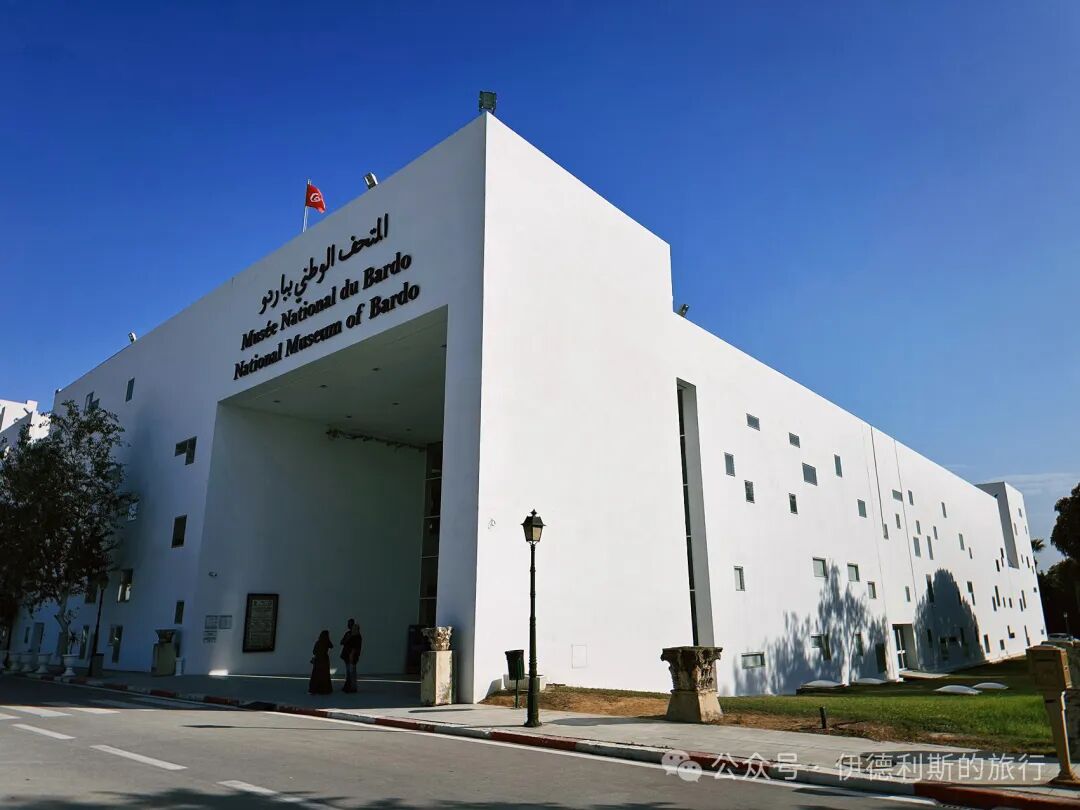
The National Museum of Tunisia is located inside the Bardo Palace, 4 kilometers west of the old Medina. The palace was first built in the 15th century. After the Ottoman dynasty took over in the 16th century, it was rebuilt and expanded many times, eventually becoming the main residence of the Husainid Beys (1705-1957).
The Husainid dynasty was a Beylik nominally under the Ottoman Empire. Its founder, Husain, was an Ottoman officer of Greek Cretan descent. He was granted the title of Bey by the Ottoman Sultan in 1705 and began his rule over Tunisia. After the 19th century, the Husainid dynasty began trading heavily with European merchants, and in 1861, they issued the first constitution in the Arab world. However, economic decline and social unrest in the late 19th century led to Tunisia becoming a French protectorate in 1881.
In 1882, Tunisia and France jointly established the Tunisian Office of Antiquities and Arts, which immediately began converting the old harem of the Bardo Palace into a museum. After six years of restoration and collecting, the museum officially opened in 1888.
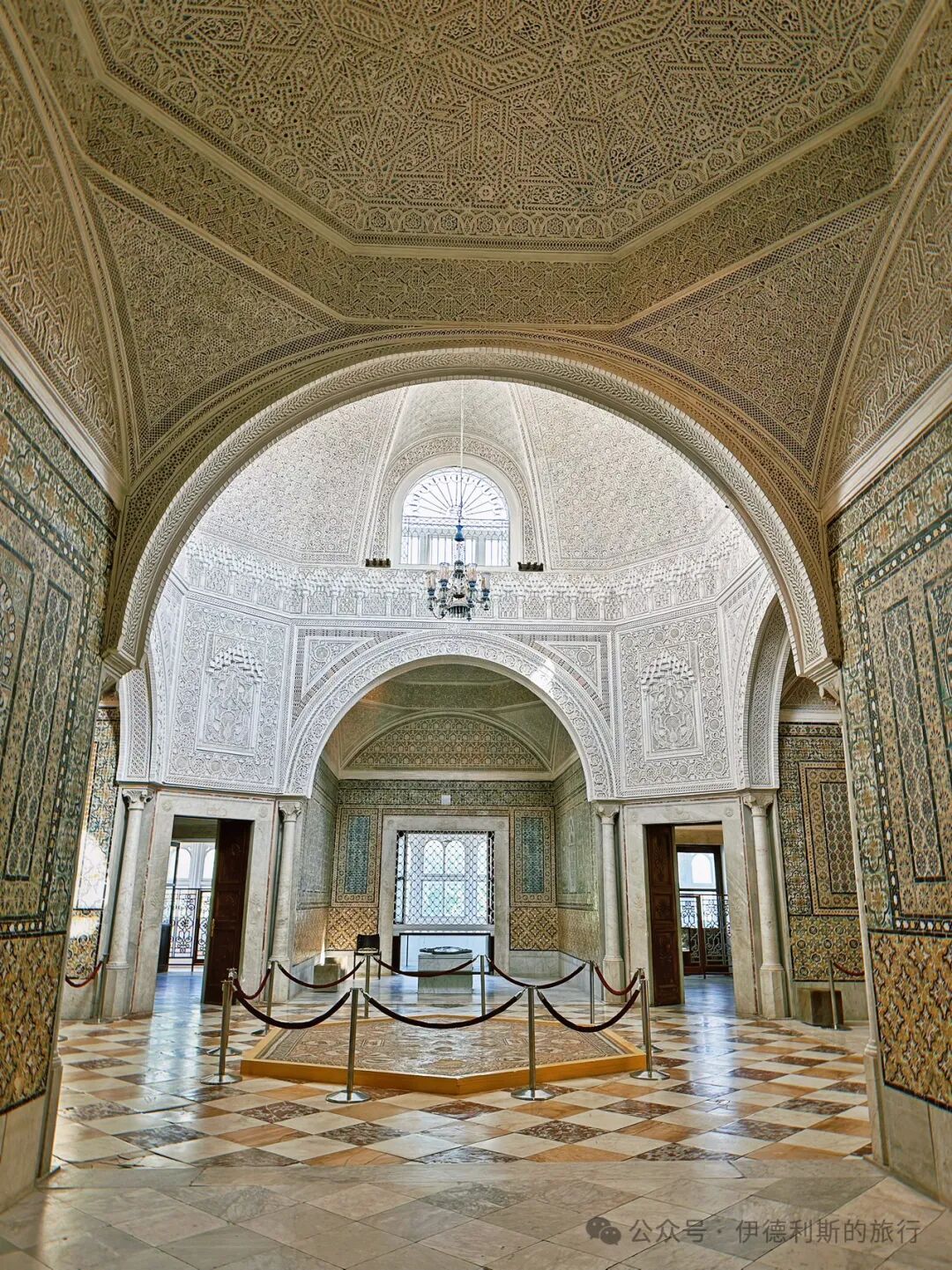
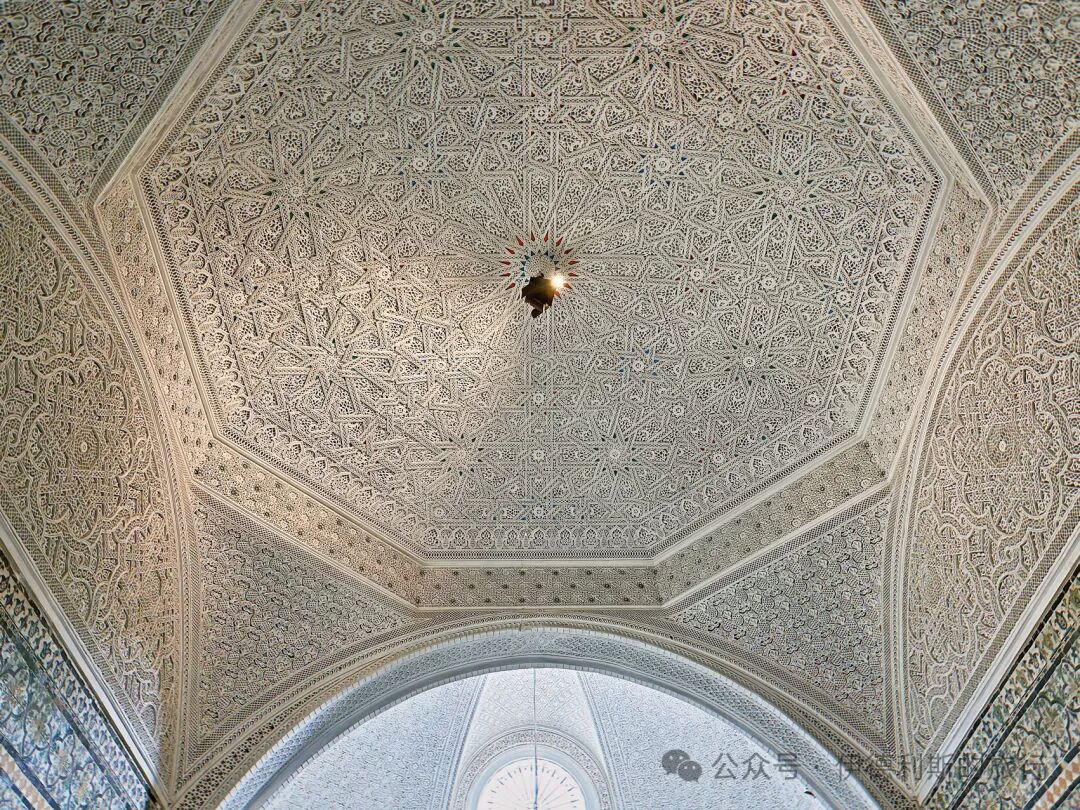
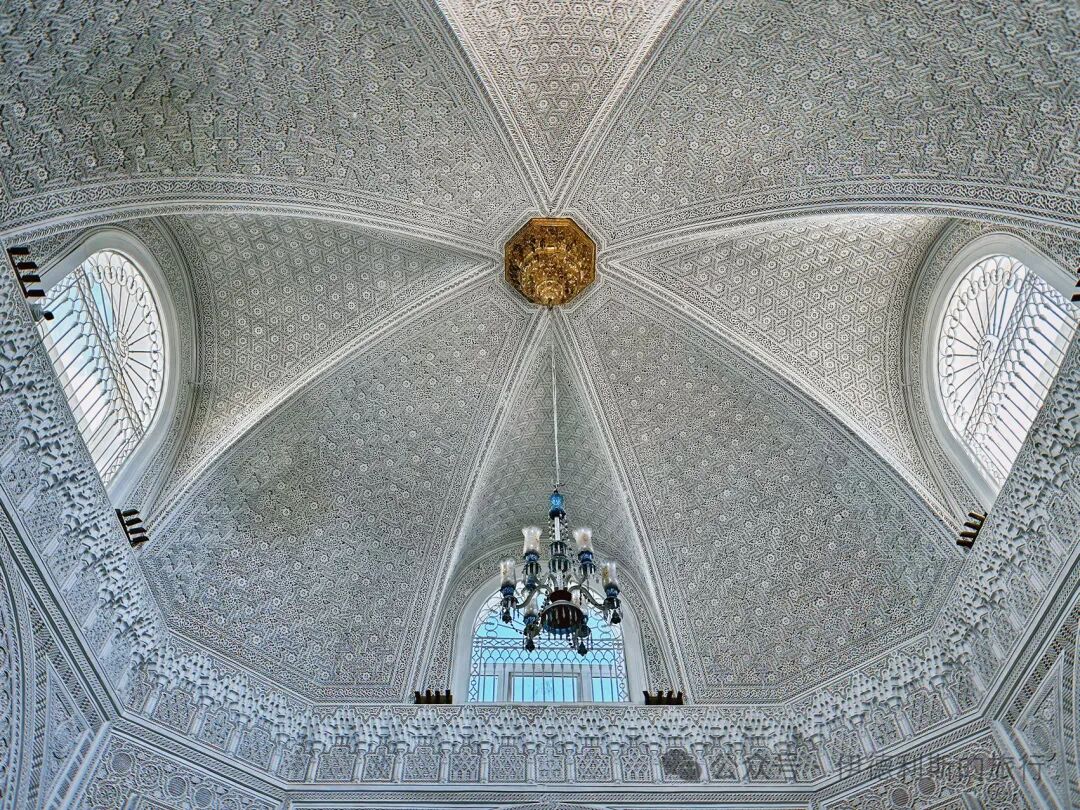
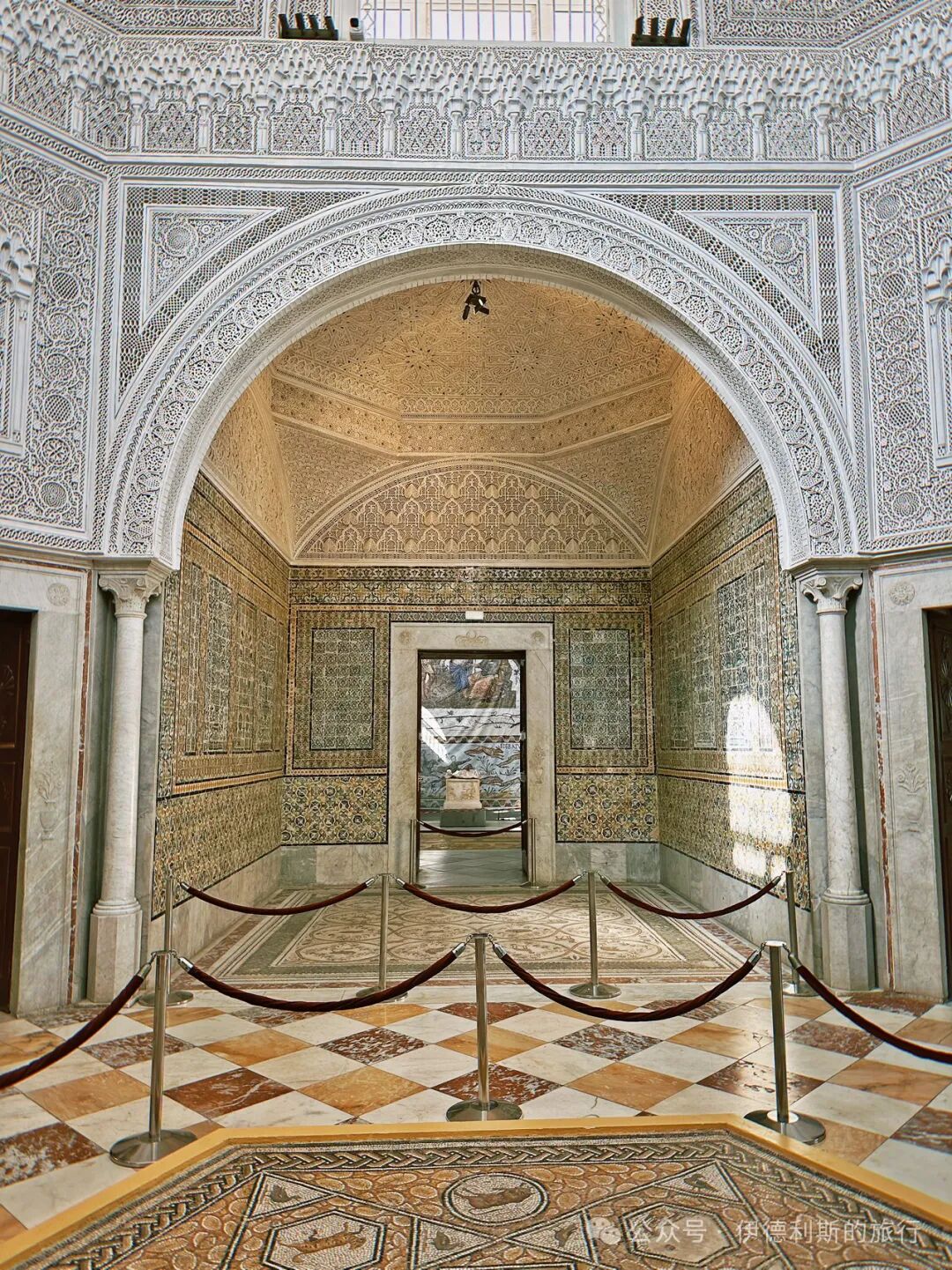
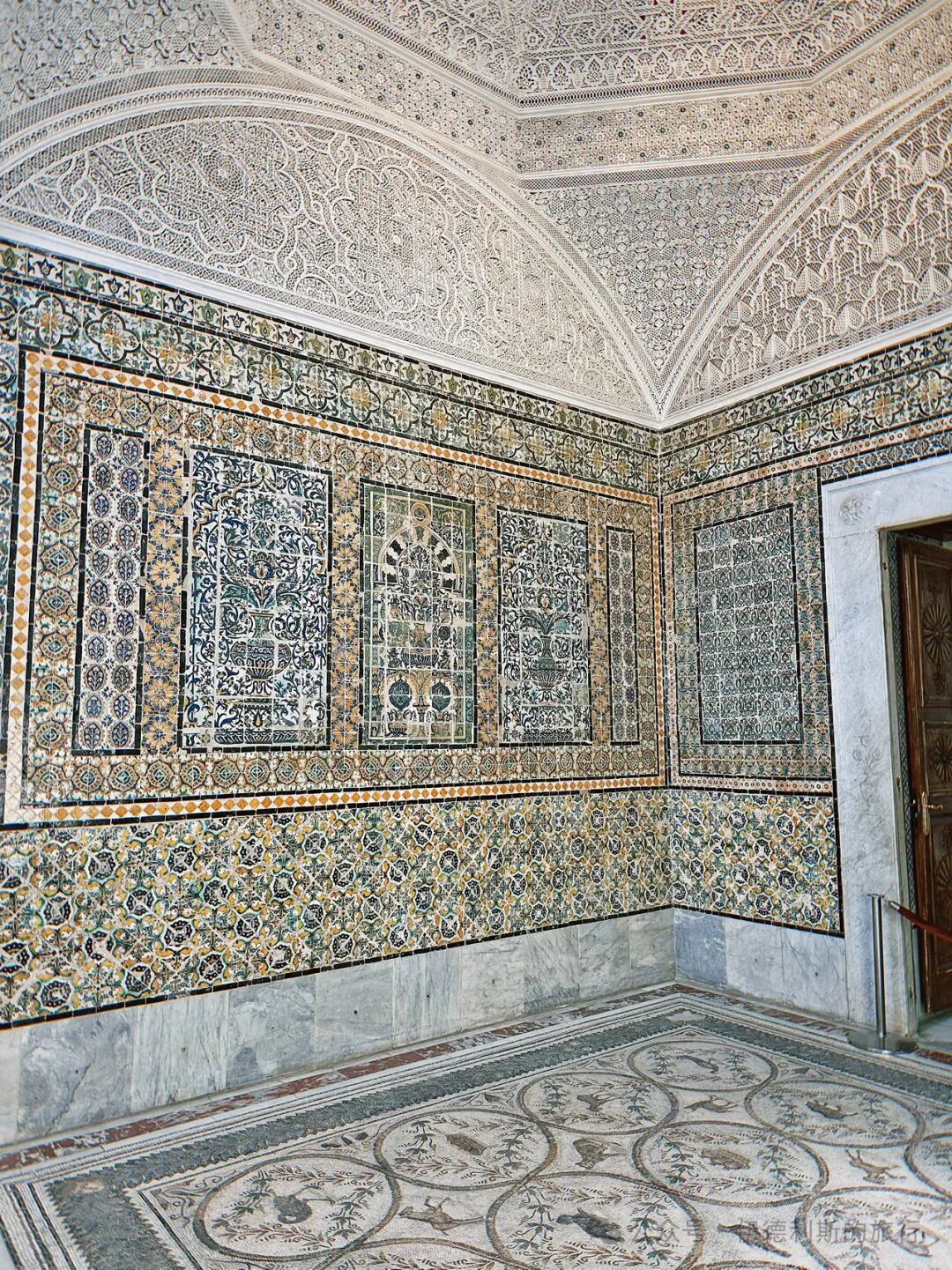
The museum houses the Small Palace, built by Husain II Bey between 1824 and 1835. The palace was built in the Andalusian Moorish style, featuring a T-shaped main hall and a central courtyard with a pool.
Tile and plaster decorations inside the Small Palace of Husain II.
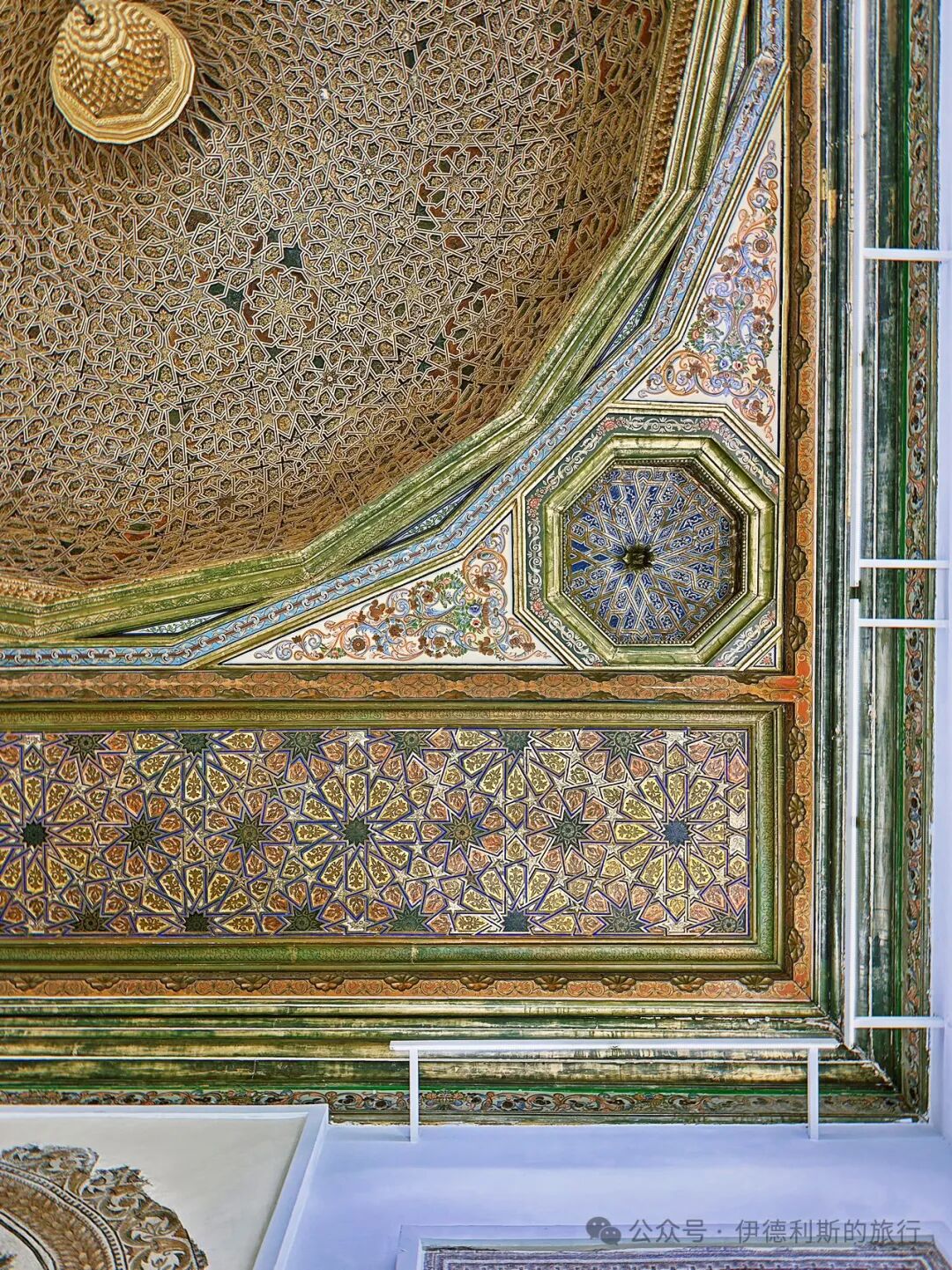
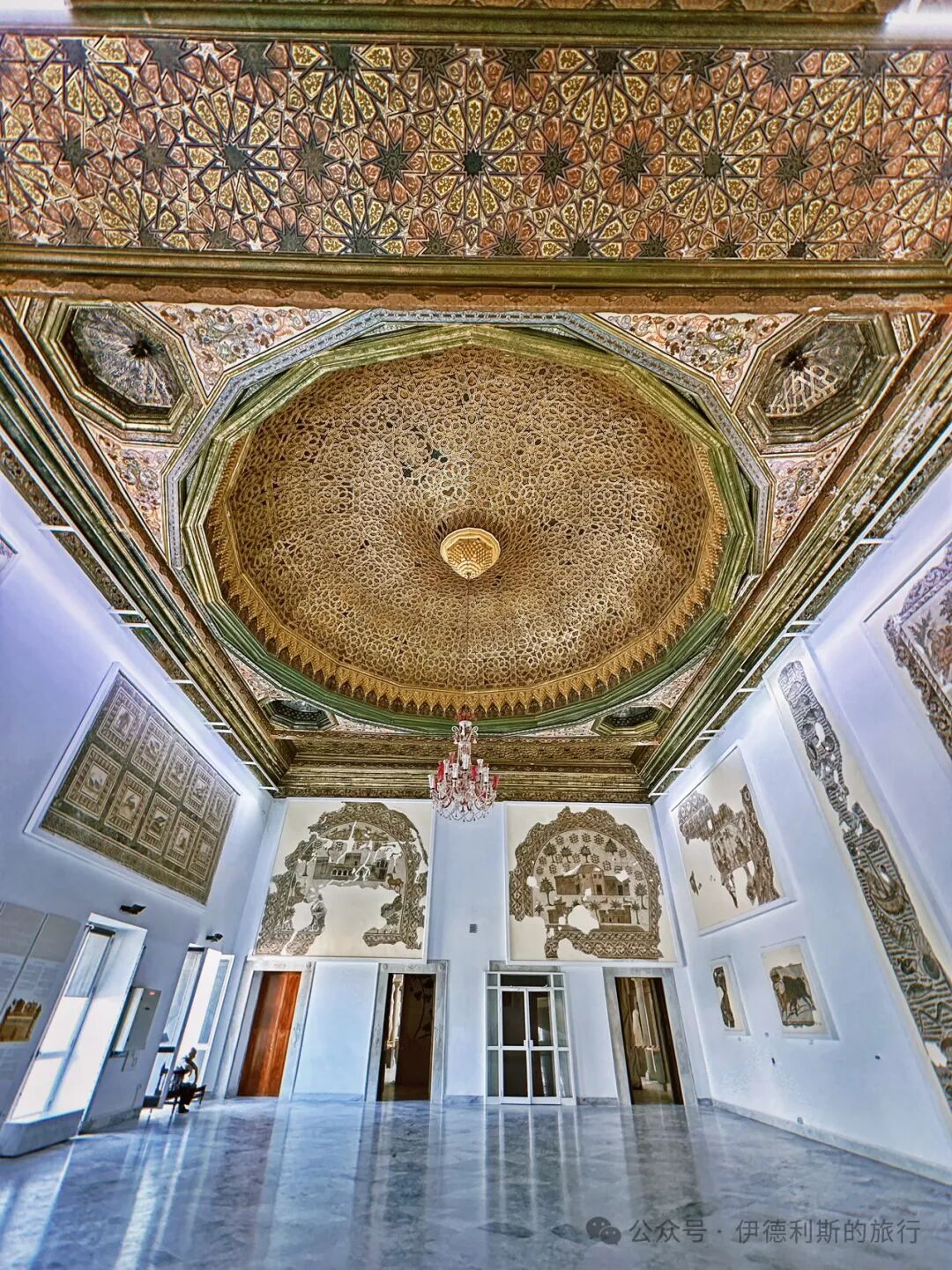
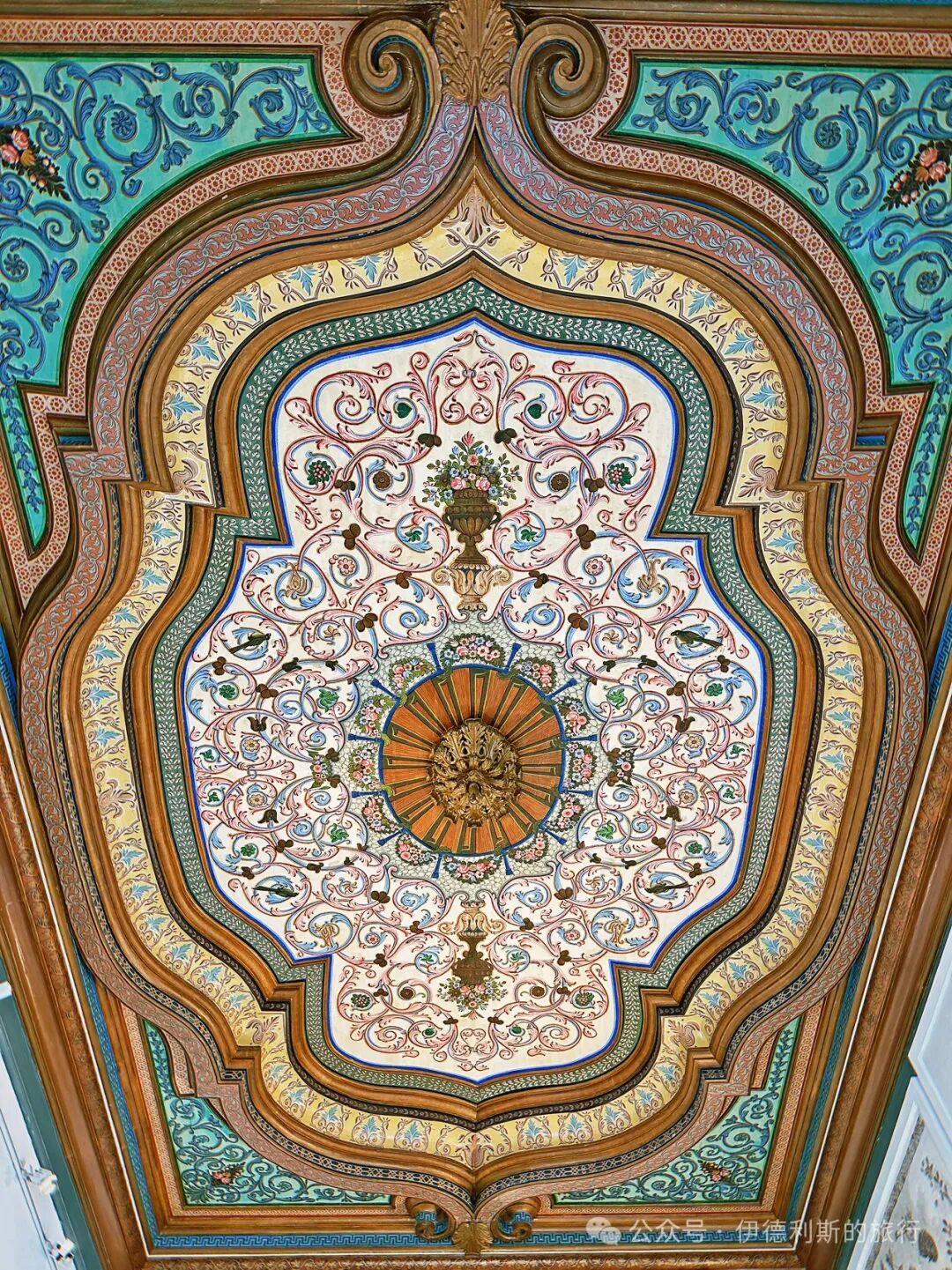
The reception hall and harem built by Muhammad III Bey between 1859 and 1864 feature both Italian and Tunisian styles.
Muhammad III Bey issued the first written constitution in the Arab world in 1861, which separated executive, legislative, and judicial powers and guaranteed equal rights for Muslims, Christians, and Jews. After the new constitution was issued, European merchants and secular schools began to appear in Tunisia.
The Blue Quran manuscript in the National Museum of Tunisia is a very famous religious manuscript in the world. This scripture uses parchment dyed with indigo, with ink outlining the text and gold leaf applied on top. The calligraphy is in the early Kufic script, which lacks sharp angles and vowel marks.
The origin of the Blue Quran is still highly debated, with theories pointing to Kairouan in Tunisia, Cordoba in Spain, Mashhad in Iran, or Iraq, dating back to the 9th or 10th century. The records say the Blue Quran was kept in the Great Mosque of Kairouan after the 14th century. It was broken up during the Ottoman period, but most of it remains in Kairouan, while other parts are held by major museums and collectors.
Quran manuscripts from the 8th to 12th centuries held by the Great Mosque of Kairouan in Tunisia.
The library of the Great Mosque of Kairouan holds a large number of manuscripts and established a catalog as early as the 13th century. to scriptures, these manuscripts include books related to the Maliki school of thought, which are also the oldest documents of the Maliki school.
Tunisian Qallaline tiles from the 17th and 18th centuries. These tiles are named after the Qallaline region of Tunisia. They were influenced by Ottoman tile art but developed their own unique style.
A marble carving from the 10th-century Fatimid period in Mahdia, Tunisia, depicting a Fatimid prince. A glazed bowl with Kufic script from the Fatimid dynasty period in Mahdia.
The ancient city of Mahdia was built by the Fatimid dynasty between 916 and 921, and it became the capital of the Tunisia region after its completion. Before this, the capital of the Tunisia region was Kairouan, which was dominated by Sunnis. Because of this, the Shia Fatimid dynasty built a new capital on the Mediterranean coast, far away from Kairouan. Once finished, Mahdia included thick city walls, palaces, a harbor, and a great mosque. Unfortunately, none of the surface buildings survived. Now, you can only see artifacts unearthed through archaeological excavations in museums.
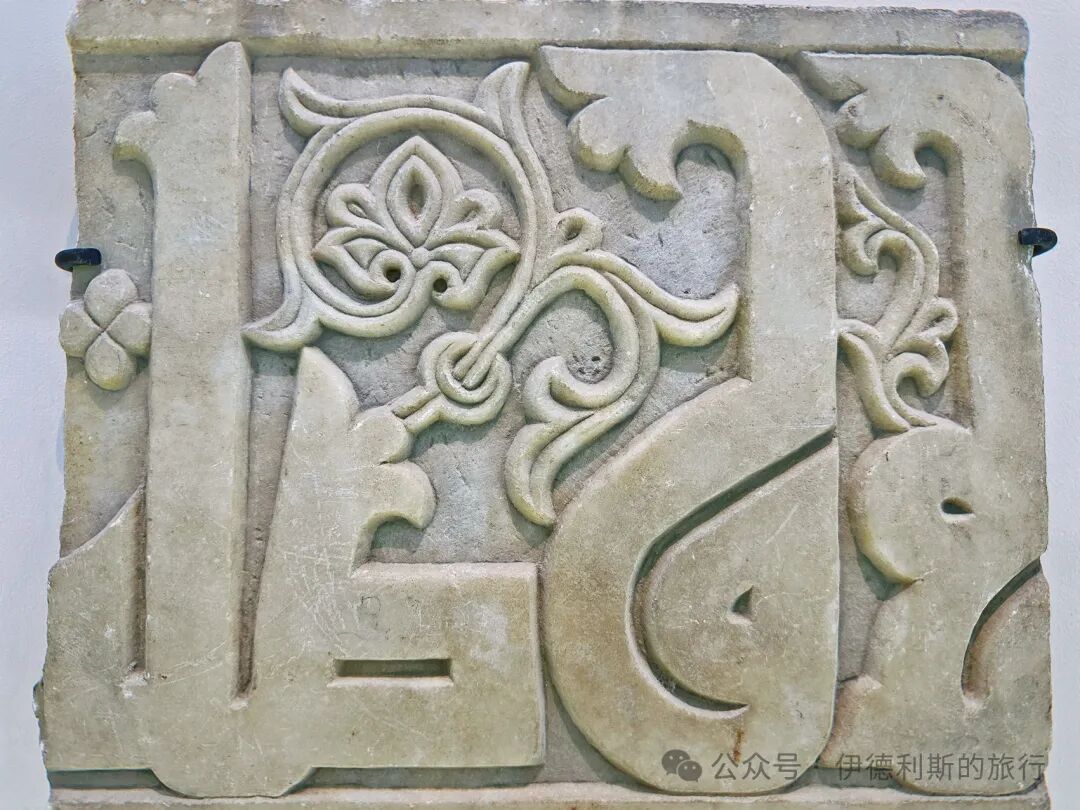
Exquisite 11th-century marble carvings with Kufic script.
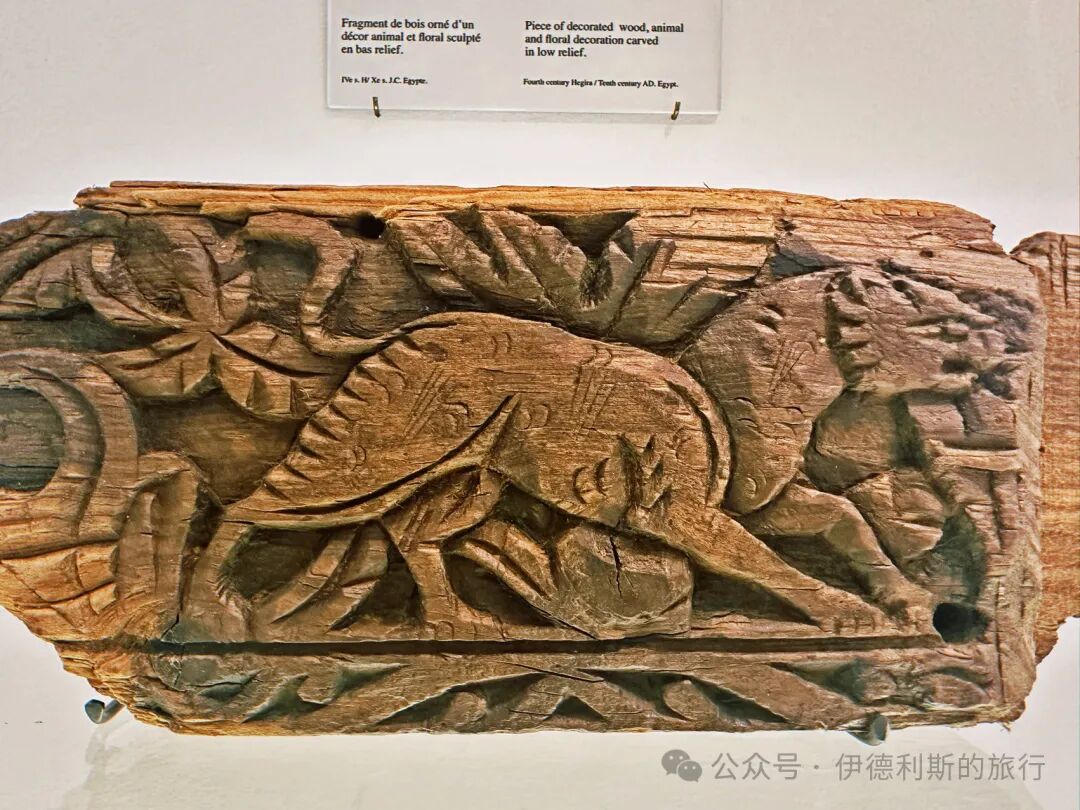
A 10th-century wood carving from Egypt.
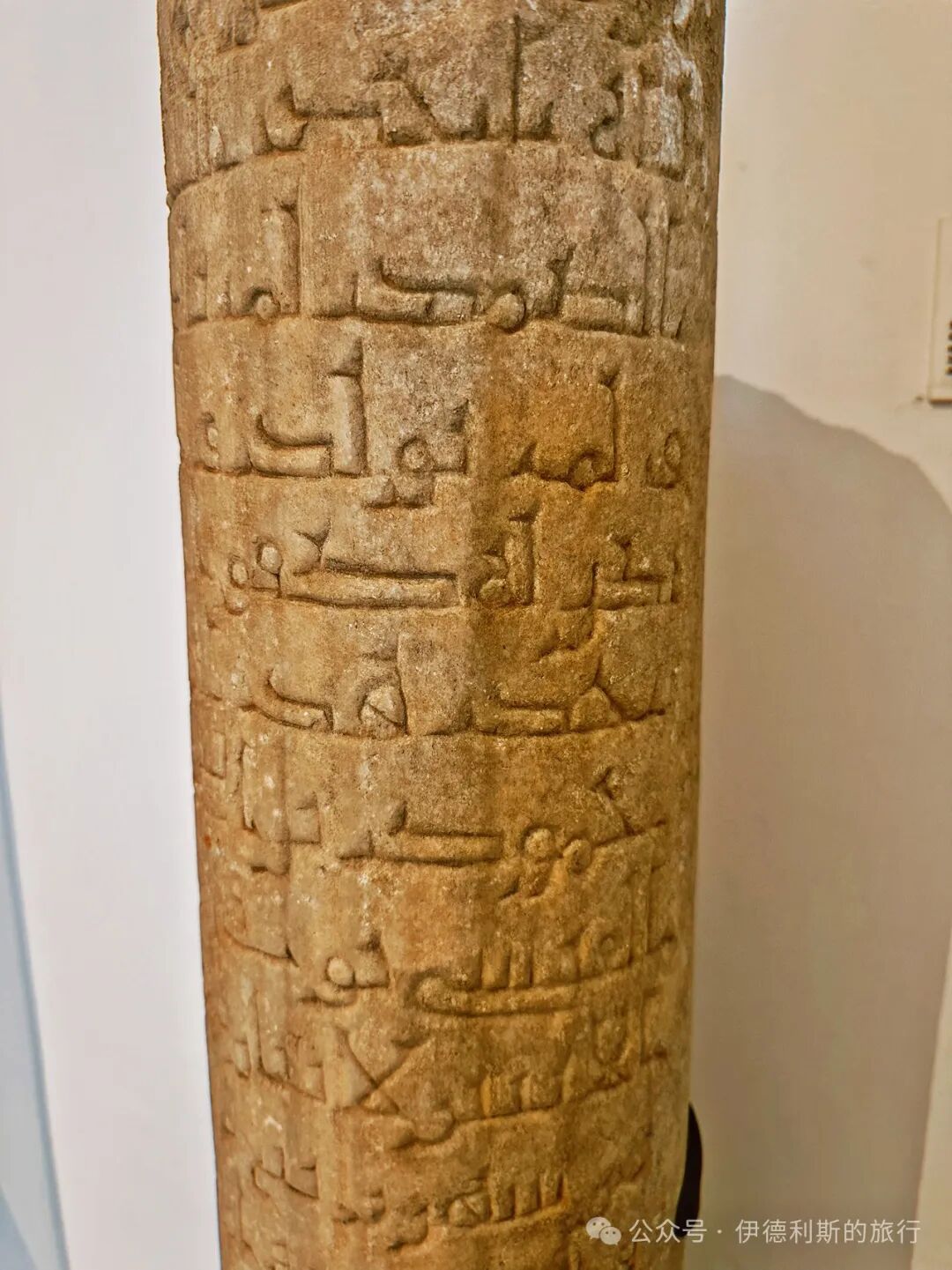
A 13th to 16th-century tombstone from Tunisia where you can see the local style of Arabic calligraphy.
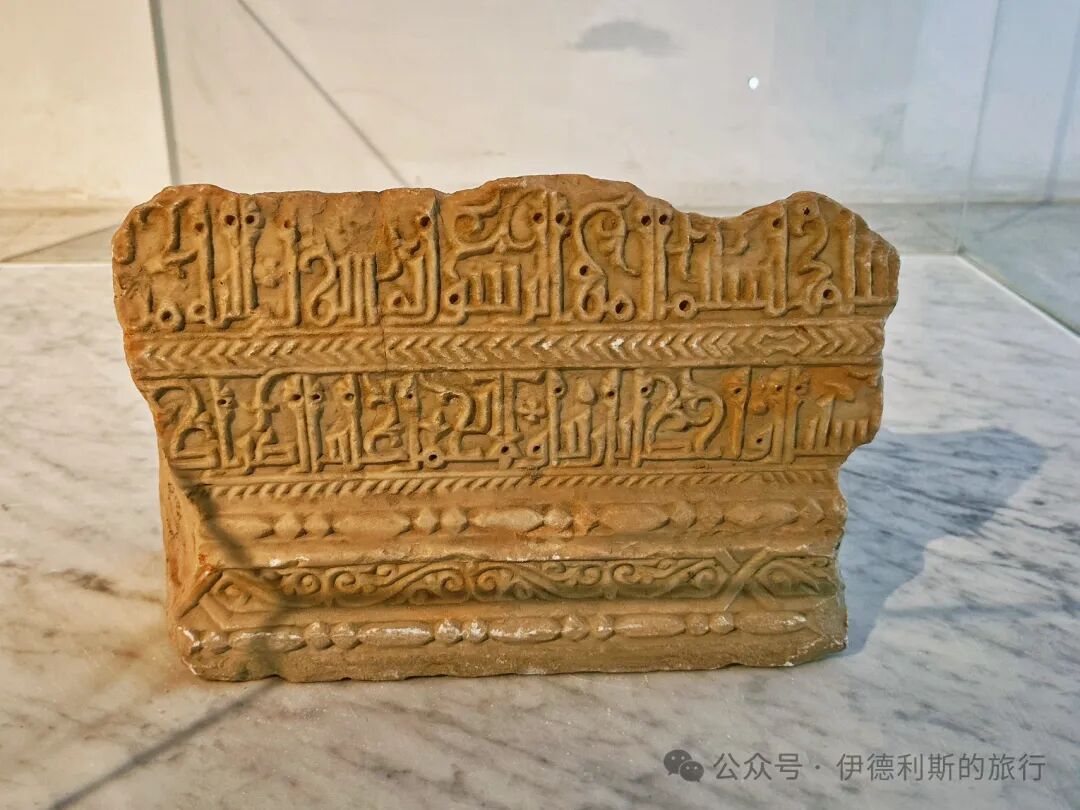
A traditional Tunisian women's headpiece. view all
Summary: This article visits the Bardo National Museum in Tunis, a major museum set inside a former palace and known for its historical collections and mosaics. It keeps the original museum details, photographs, object notes, and travel observations for readers interested in Tunisia's cultural heritage.
The National Museum of Tunisia is located inside the Bardo Palace, 4 kilometers west of the old Medina. The palace was first built in the 15th century. After the Ottoman dynasty took over in the 16th century, it was rebuilt and expanded many times, eventually becoming the main residence of the Husainid Beys (1705-1957).
The Husainid dynasty was a Beylik nominally under the Ottoman Empire. Its founder, Husain, was an Ottoman officer of Greek Cretan descent. He was granted the title of Bey by the Ottoman Sultan in 1705 and began his rule over Tunisia. After the 19th century, the Husainid dynasty began trading heavily with European merchants, and in 1861, they issued the first constitution in the Arab world. However, economic decline and social unrest in the late 19th century led to Tunisia becoming a French protectorate in 1881.
In 1882, Tunisia and France jointly established the Tunisian Office of Antiquities and Arts, which immediately began converting the old harem of the Bardo Palace into a museum. After six years of restoration and collecting, the museum officially opened in 1888.
The museum houses the Small Palace, built by Husain II Bey between 1824 and 1835. The palace was built in the Andalusian Moorish style, featuring a T-shaped main hall and a central courtyard with a pool.
Tile and plaster decorations inside the Small Palace of Husain II.
The reception hall and harem built by Muhammad III Bey between 1859 and 1864 feature both Italian and Tunisian styles.
Muhammad III Bey issued the first written constitution in the Arab world in 1861, which separated executive, legislative, and judicial powers and guaranteed equal rights for Muslims, Christians, and Jews. After the new constitution was issued, European merchants and secular schools began to appear in Tunisia.
The Blue Quran manuscript in the National Museum of Tunisia is a very famous religious manuscript in the world. This scripture uses parchment dyed with indigo, with ink outlining the text and gold leaf applied on top. The calligraphy is in the early Kufic script, which lacks sharp angles and vowel marks.
The origin of the Blue Quran is still highly debated, with theories pointing to Kairouan in Tunisia, Cordoba in Spain, Mashhad in Iran, or Iraq, dating back to the 9th or 10th century. The records say the Blue Quran was kept in the Great Mosque of Kairouan after the 14th century. It was broken up during the Ottoman period, but most of it remains in Kairouan, while other parts are held by major museums and collectors.
Quran manuscripts from the 8th to 12th centuries held by the Great Mosque of Kairouan in Tunisia.
The library of the Great Mosque of Kairouan holds a large number of manuscripts and established a catalog as early as the 13th century. to scriptures, these manuscripts include books related to the Maliki school of thought, which are also the oldest documents of the Maliki school.
Tunisian Qallaline tiles from the 17th and 18th centuries. These tiles are named after the Qallaline region of Tunisia. They were influenced by Ottoman tile art but developed their own unique style.
A marble carving from the 10th-century Fatimid period in Mahdia, Tunisia, depicting a Fatimid prince. A glazed bowl with Kufic script from the Fatimid dynasty period in Mahdia.
The ancient city of Mahdia was built by the Fatimid dynasty between 916 and 921, and it became the capital of the Tunisia region after its completion. Before this, the capital of the Tunisia region was Kairouan, which was dominated by Sunnis. Because of this, the Shia Fatimid dynasty built a new capital on the Mediterranean coast, far away from Kairouan. Once finished, Mahdia included thick city walls, palaces, a harbor, and a great mosque. Unfortunately, none of the surface buildings survived. Now, you can only see artifacts unearthed through archaeological excavations in museums.
Exquisite 11th-century marble carvings with Kufic script.
A 10th-century wood carving from Egypt.
A 13th to 16th-century tombstone from Tunisia where you can see the local style of Arabic calligraphy.
A traditional Tunisian women's headpiece. view all
Reposted from the web
Summary: This article visits the Bardo National Museum in Tunis, a major museum set inside a former palace and known for its historical collections and mosaics. It keeps the original museum details, photographs, object notes, and travel observations for readers interested in Tunisia's cultural heritage.
The National Museum of Tunisia is located inside the Bardo Palace, 4 kilometers west of the old Medina. The palace was first built in the 15th century. After the Ottoman dynasty took over in the 16th century, it was rebuilt and expanded many times, eventually becoming the main residence of the Husainid Beys (1705-1957).
The Husainid dynasty was a Beylik nominally under the Ottoman Empire. Its founder, Husain, was an Ottoman officer of Greek Cretan descent. He was granted the title of Bey by the Ottoman Sultan in 1705 and began his rule over Tunisia. After the 19th century, the Husainid dynasty began trading heavily with European merchants, and in 1861, they issued the first constitution in the Arab world. However, economic decline and social unrest in the late 19th century led to Tunisia becoming a French protectorate in 1881.
In 1882, Tunisia and France jointly established the Tunisian Office of Antiquities and Arts, which immediately began converting the old harem of the Bardo Palace into a museum. After six years of restoration and collecting, the museum officially opened in 1888.
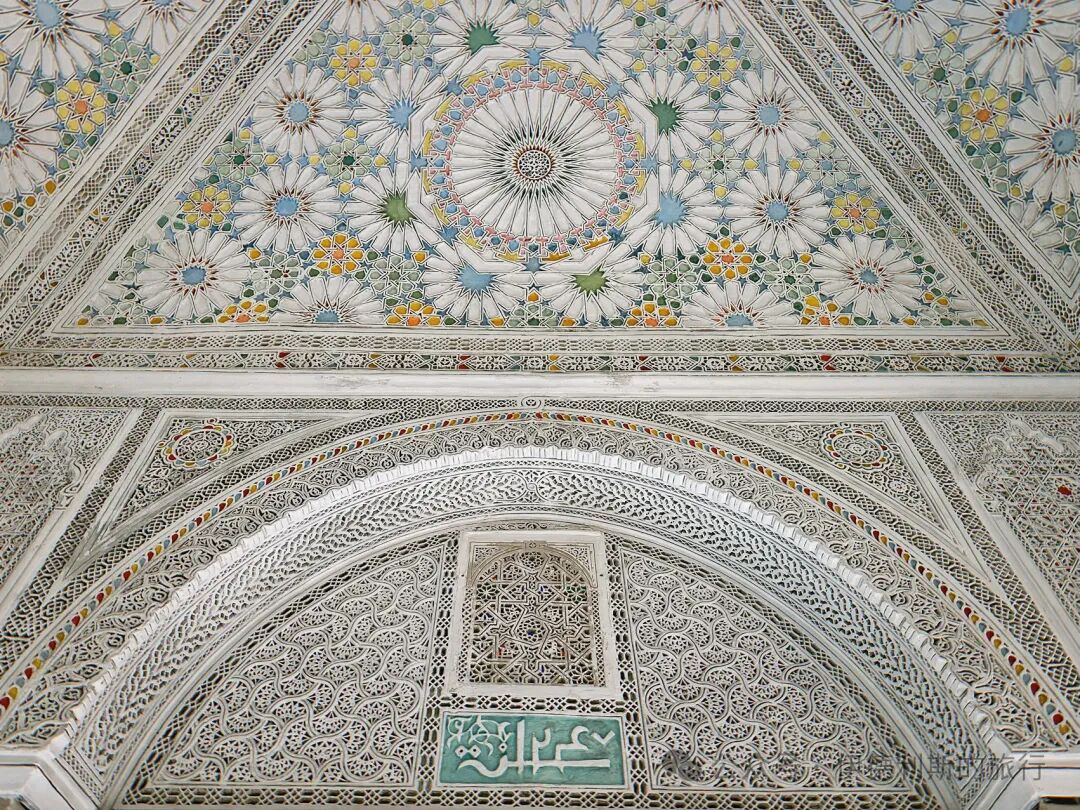
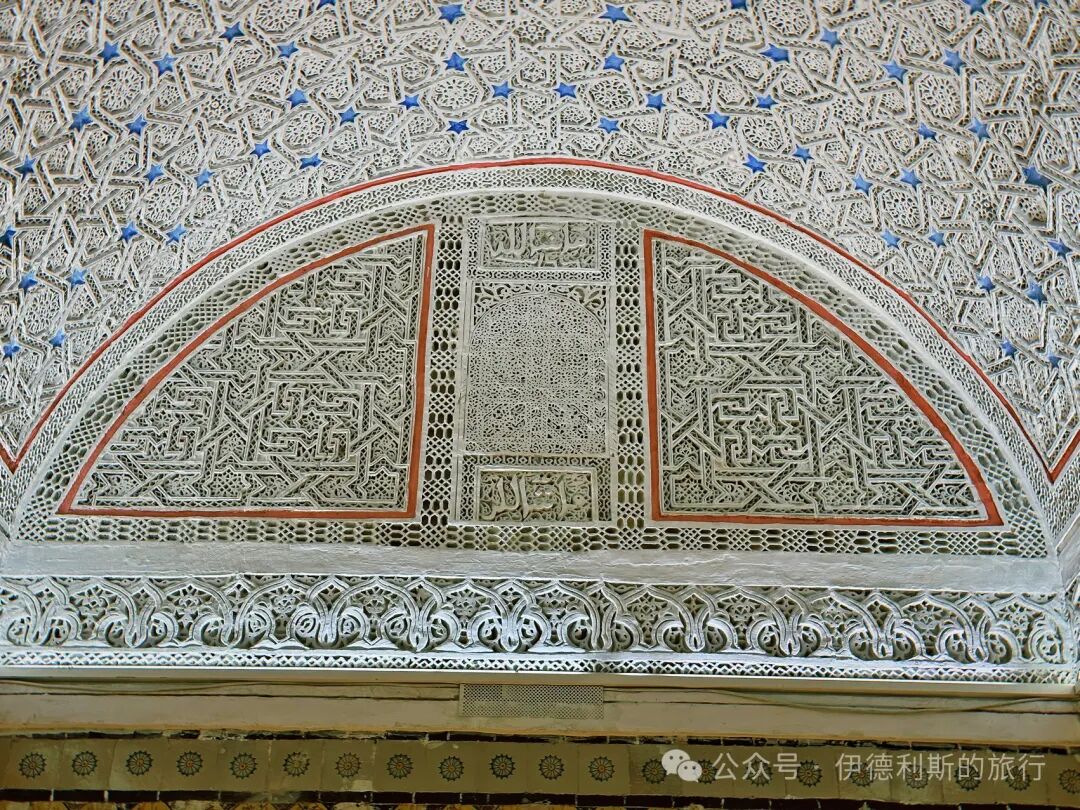
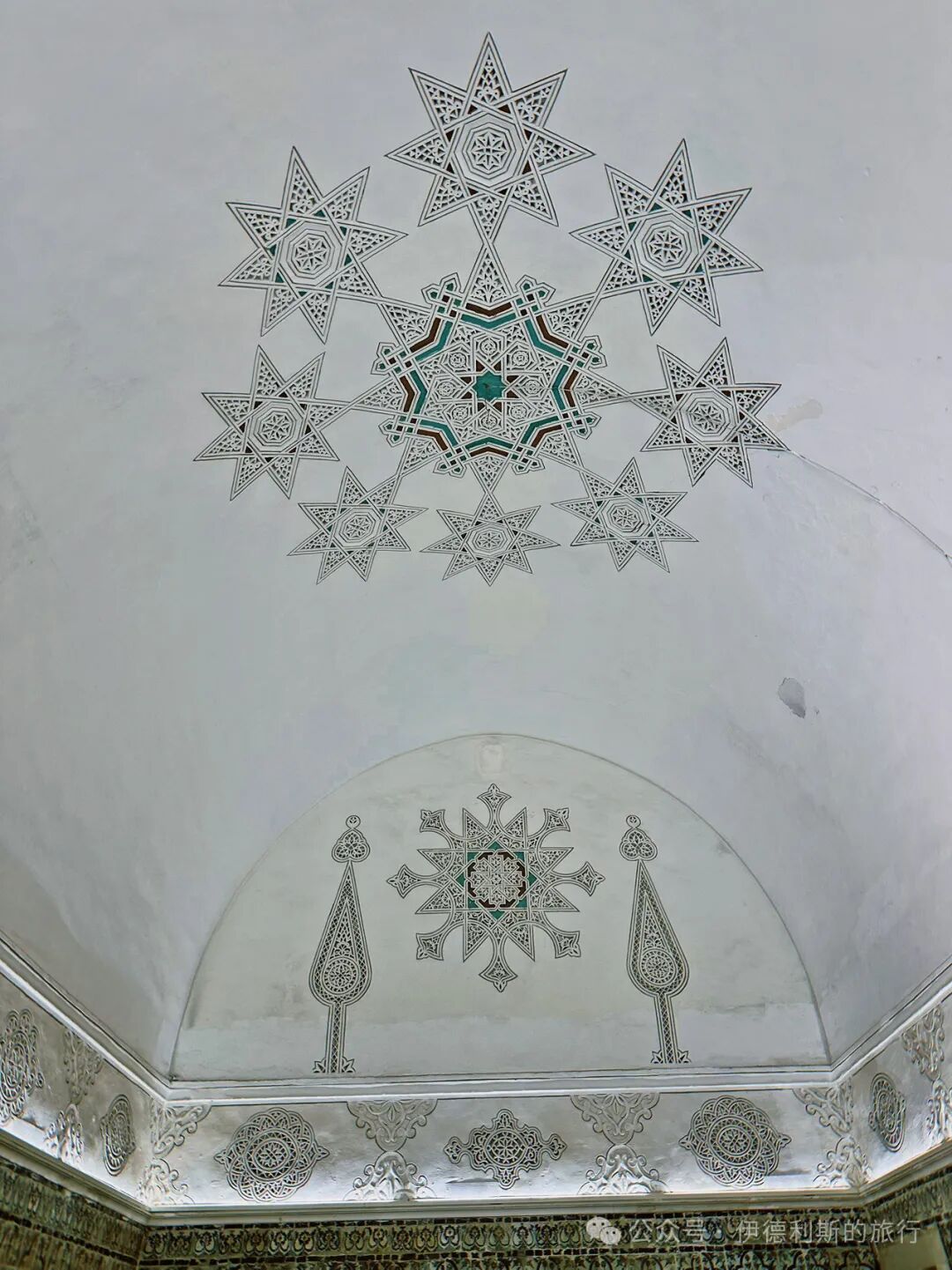
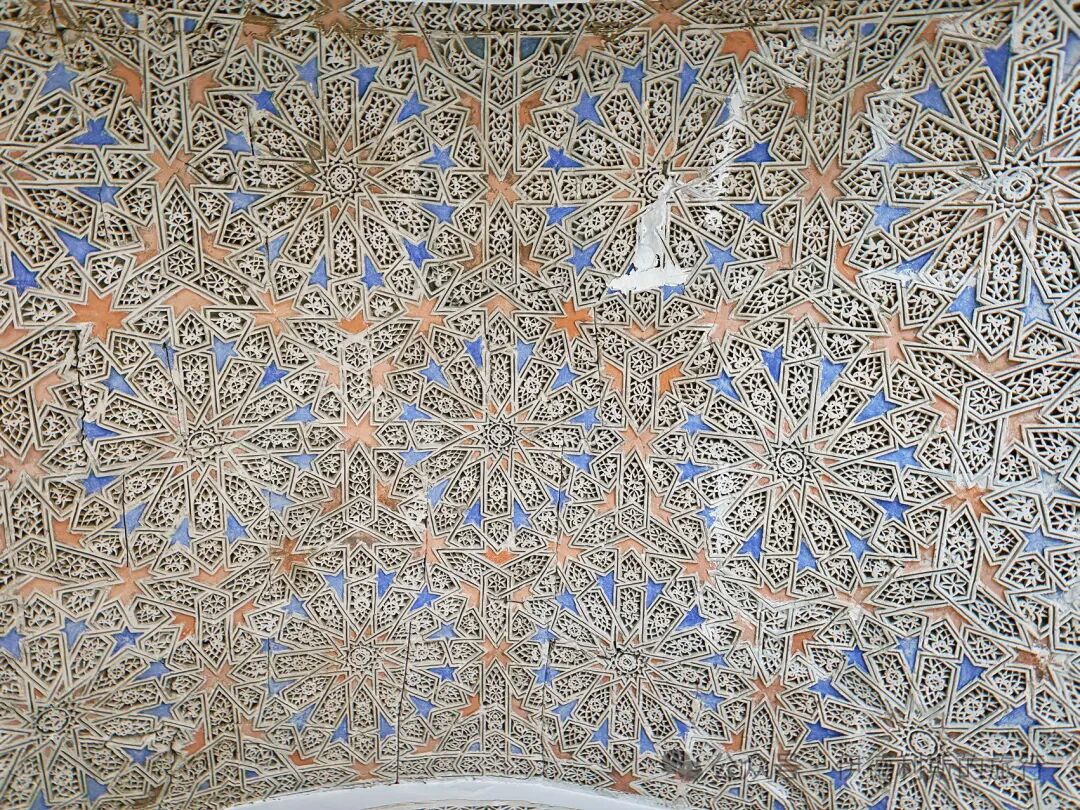
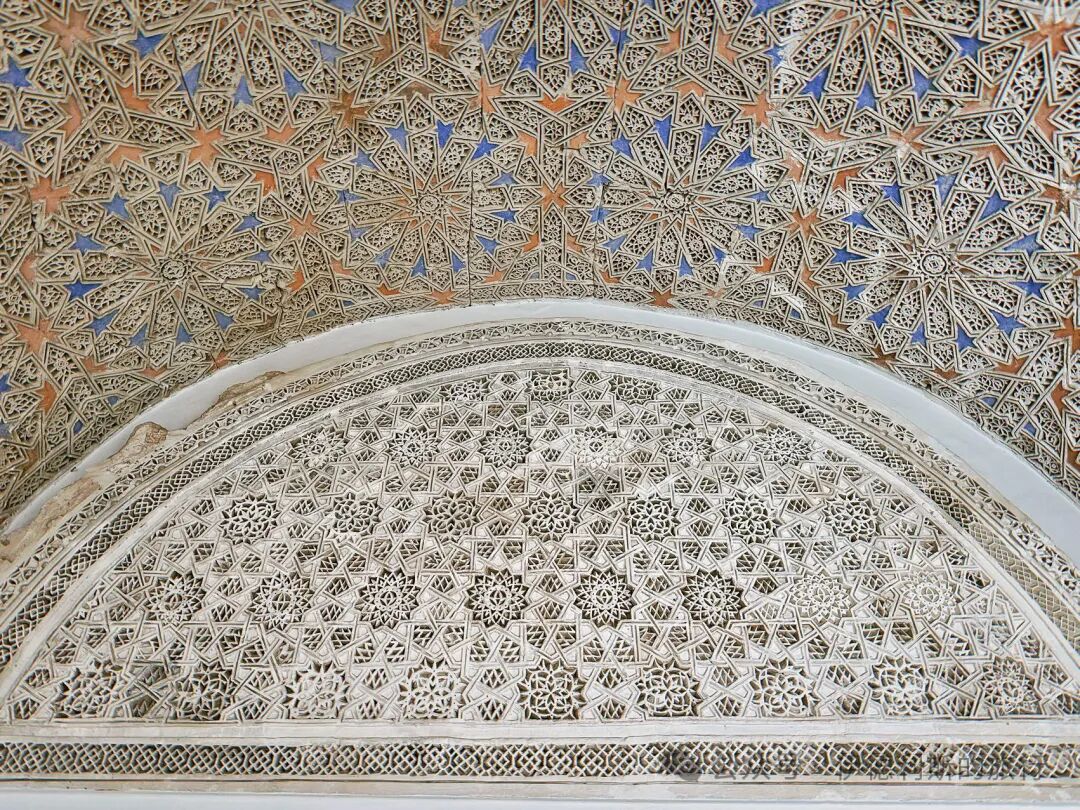
The museum houses the Small Palace, built by Husain II Bey between 1824 and 1835. The palace was built in the Andalusian Moorish style, featuring a T-shaped main hall and a central courtyard with a pool.
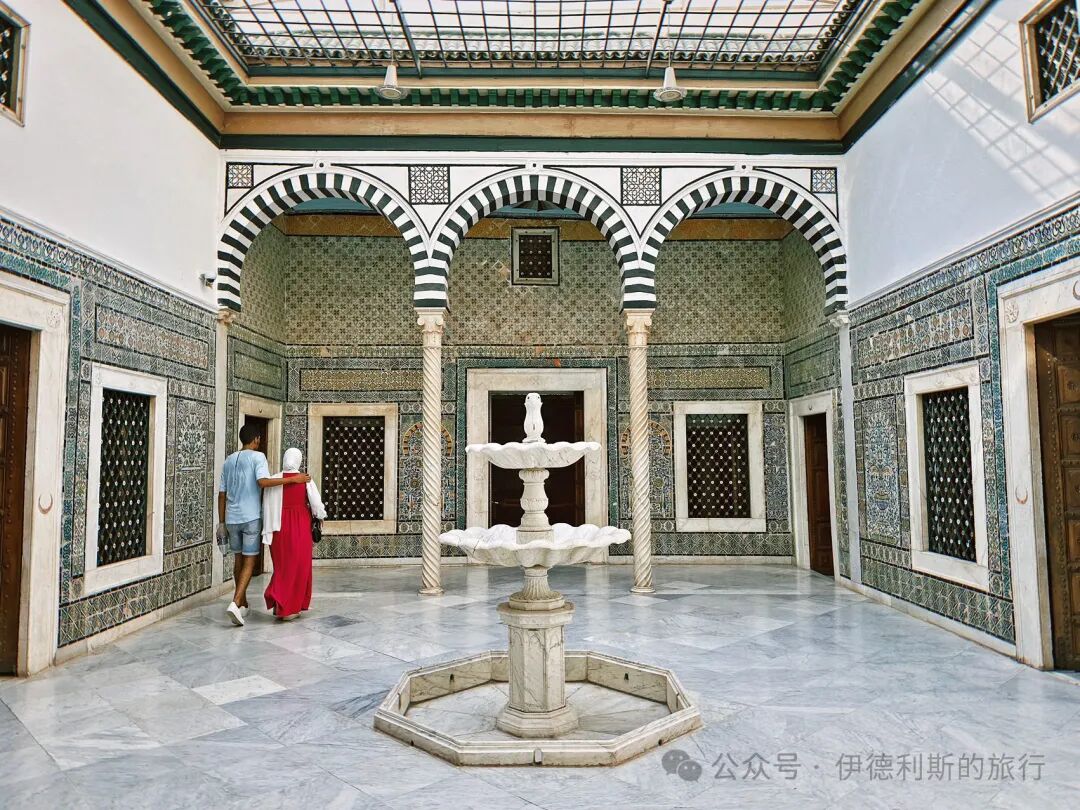
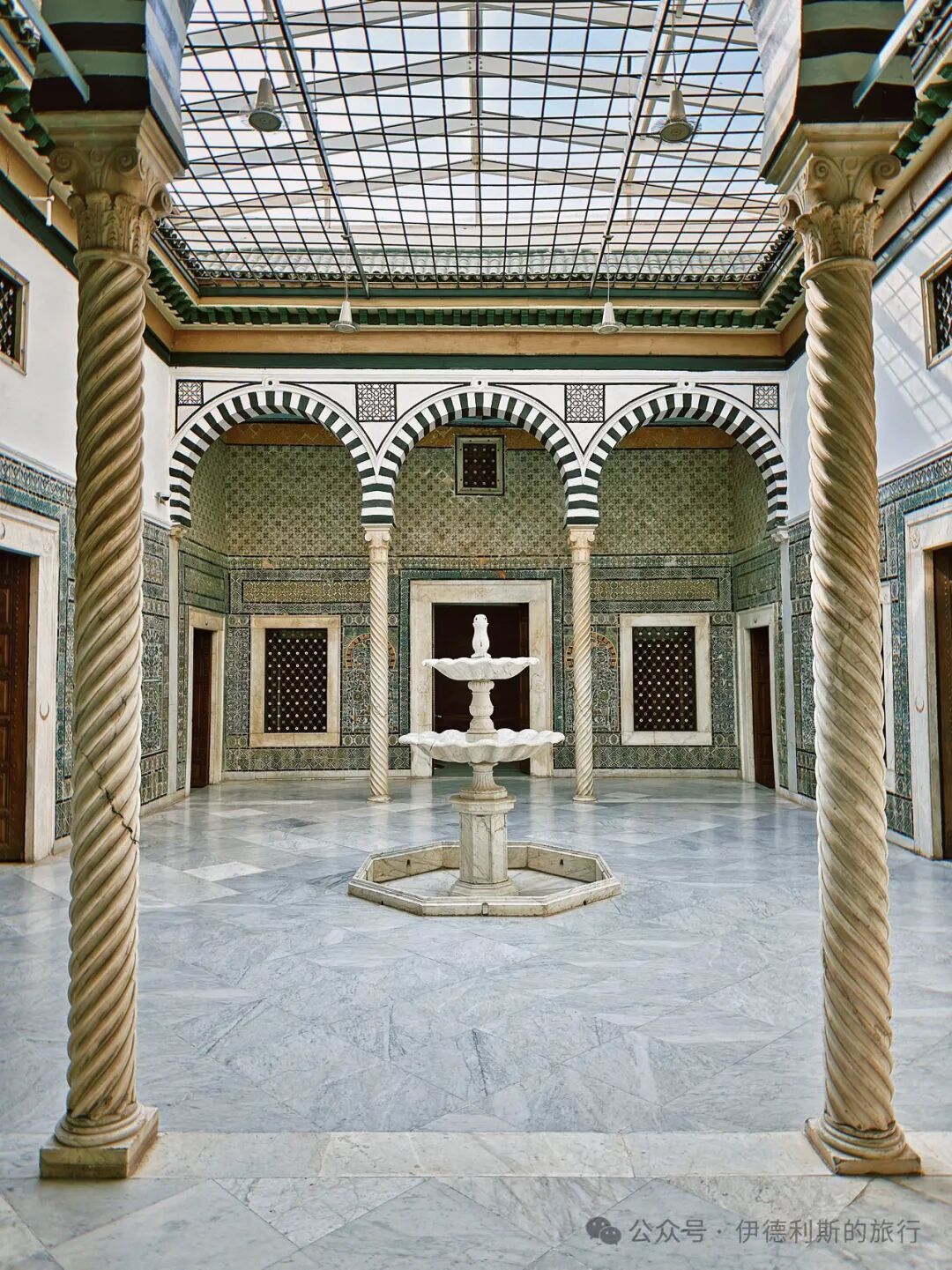
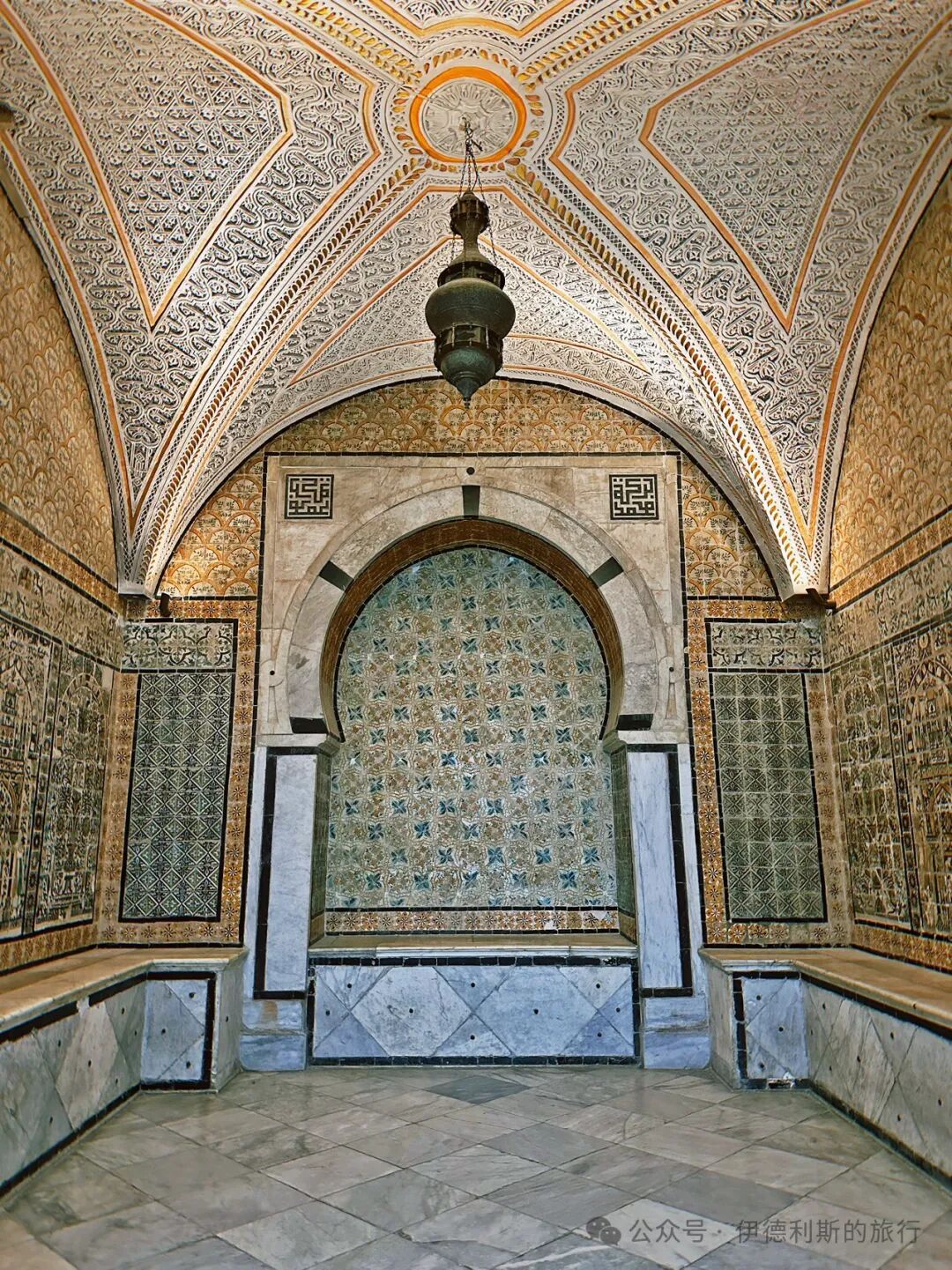
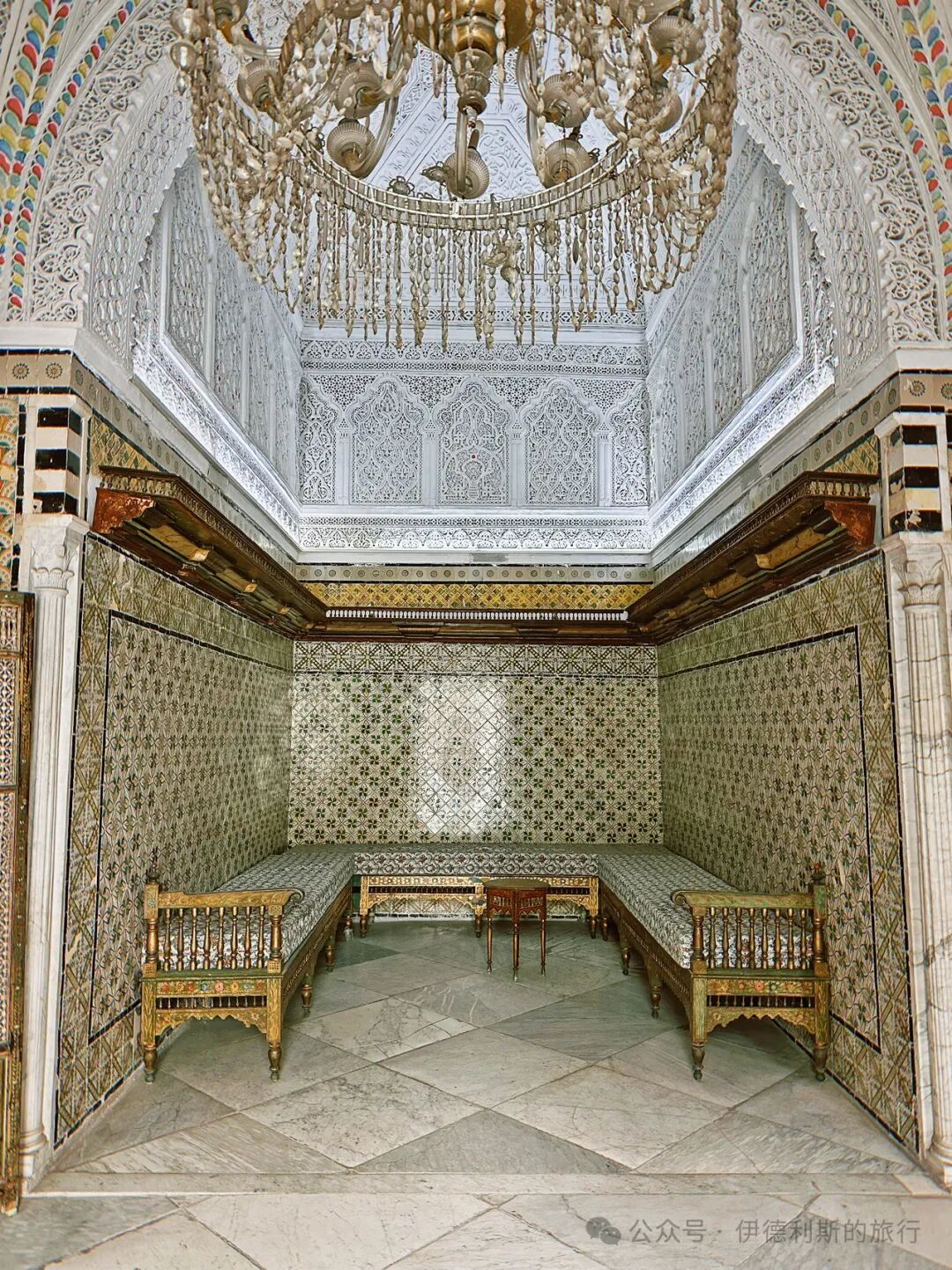
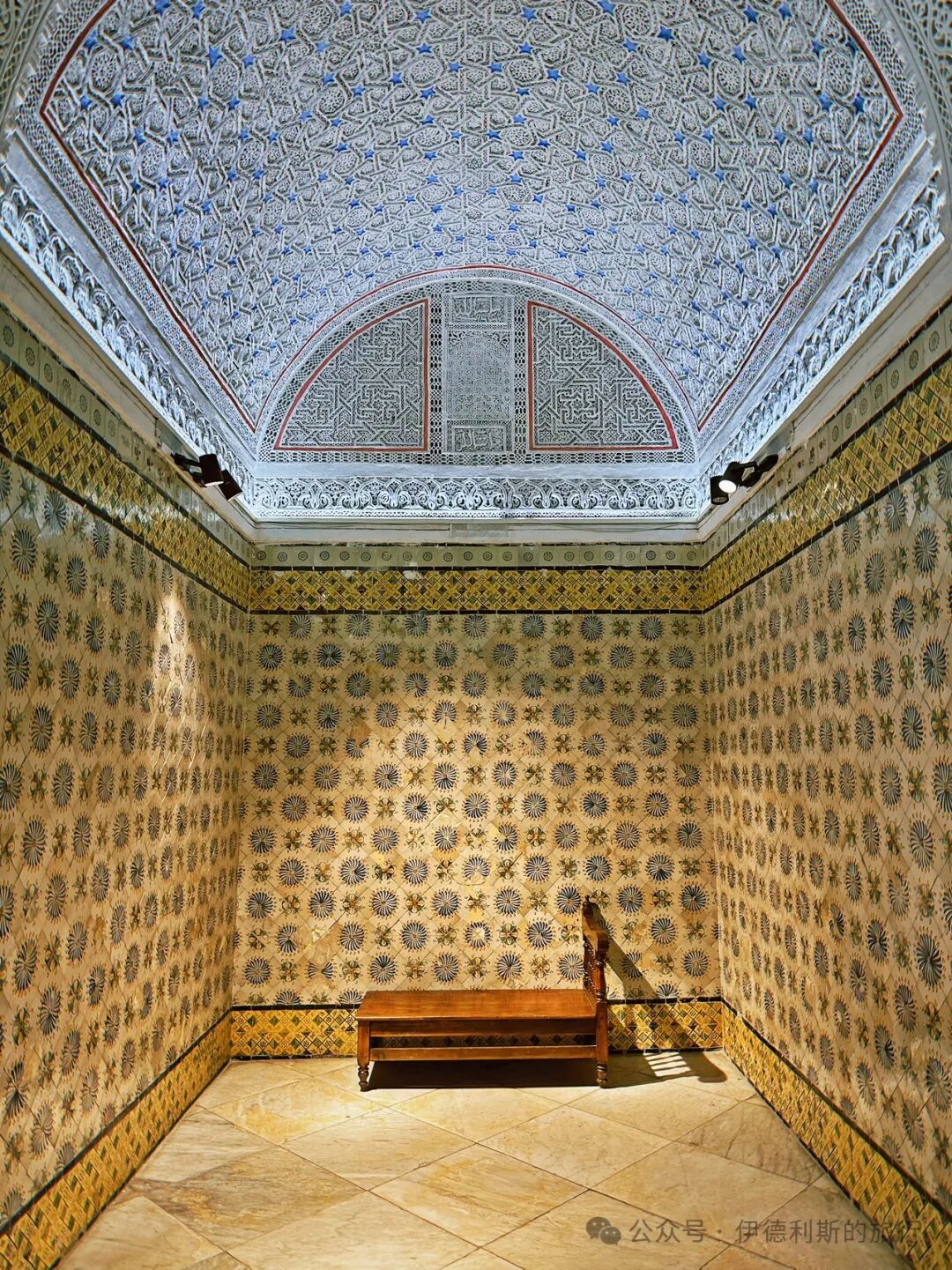
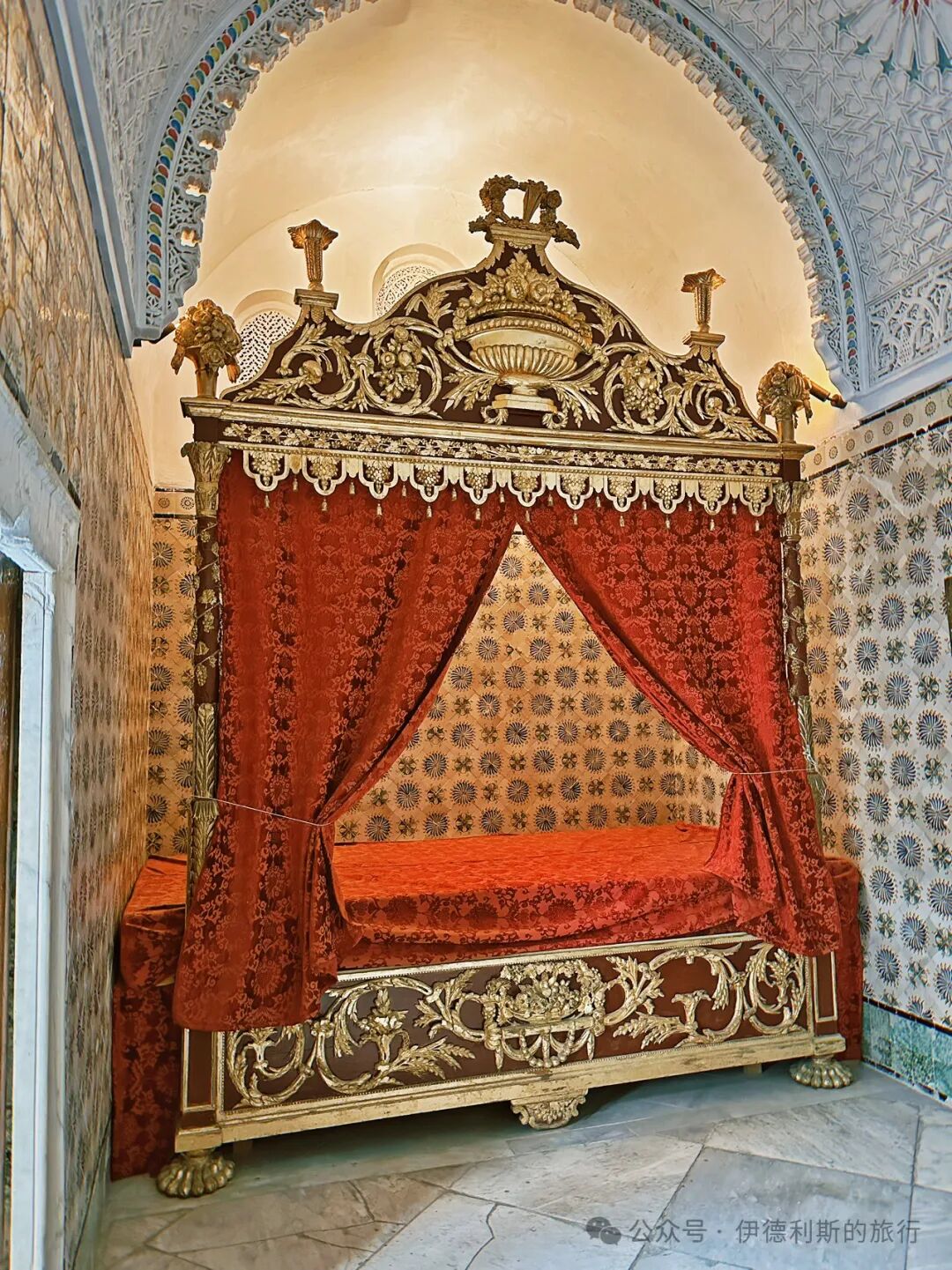
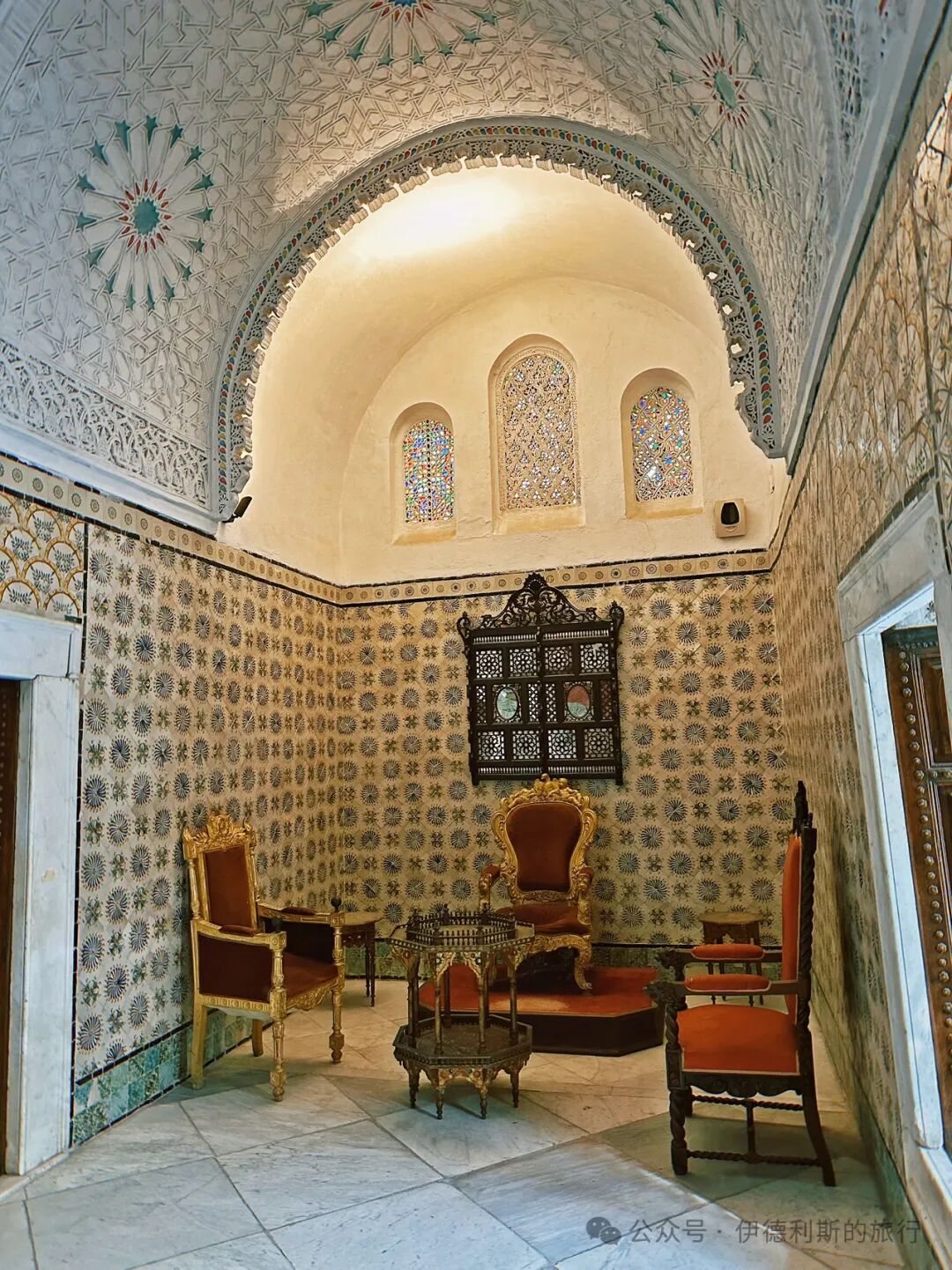
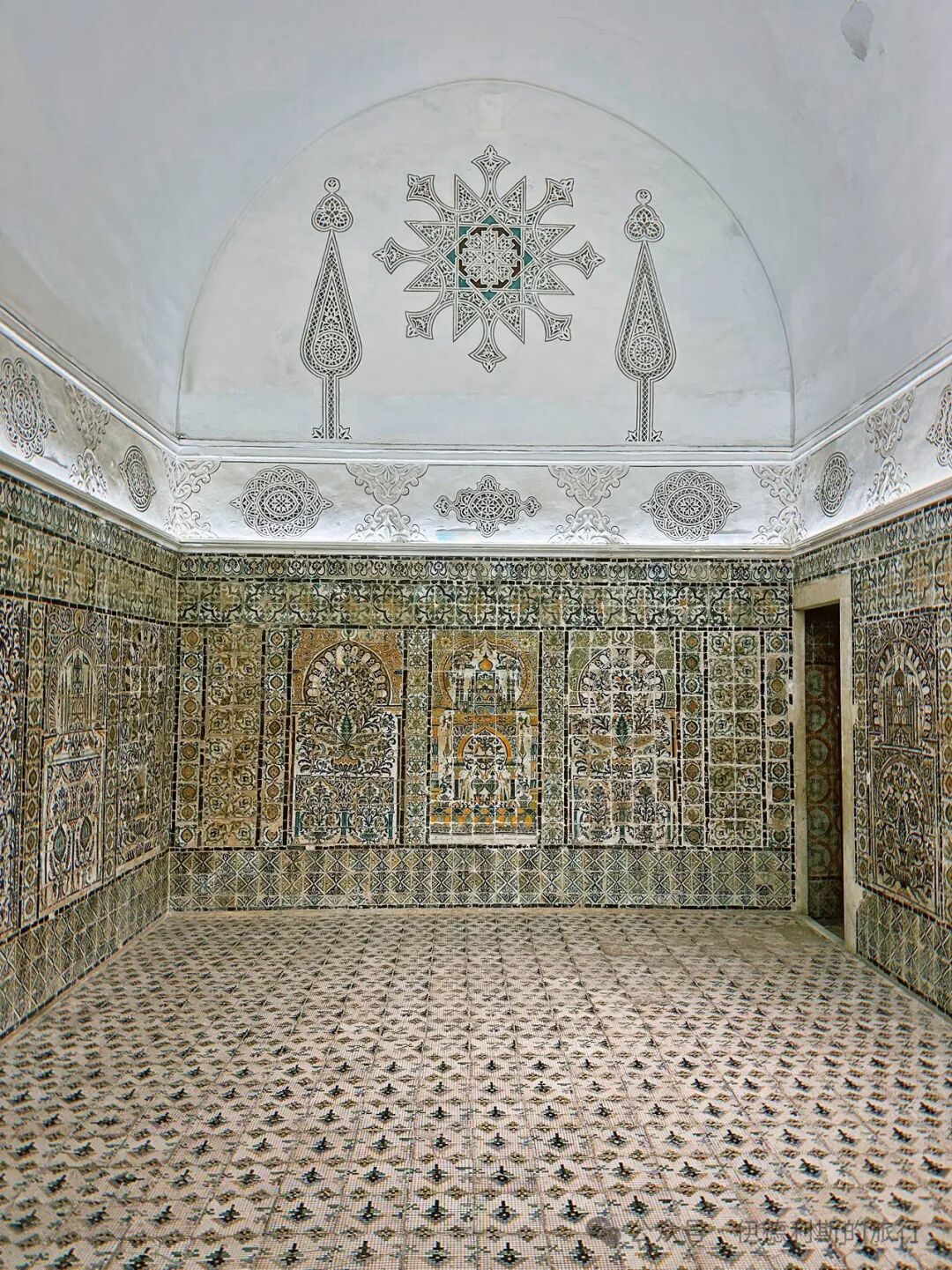
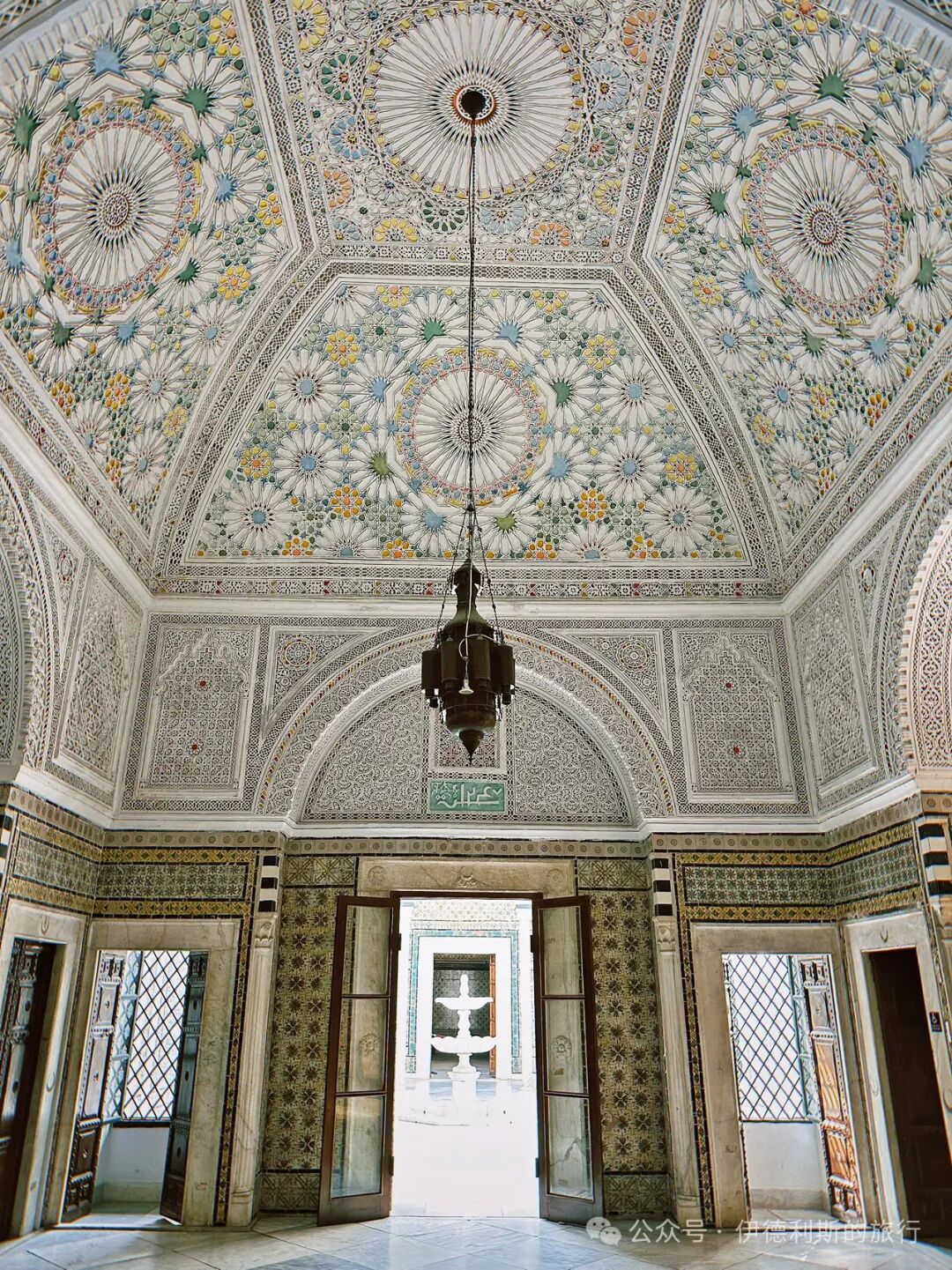
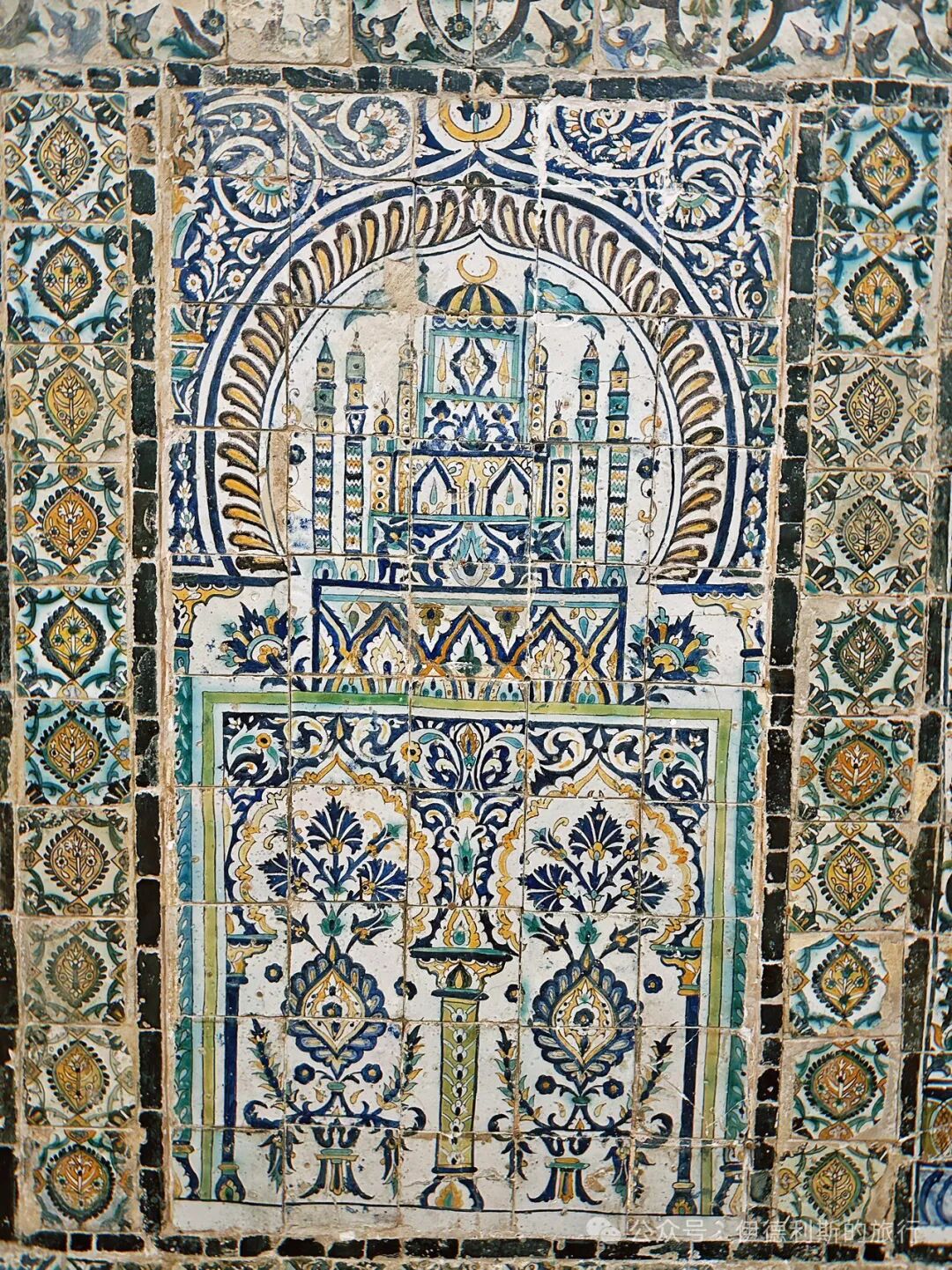
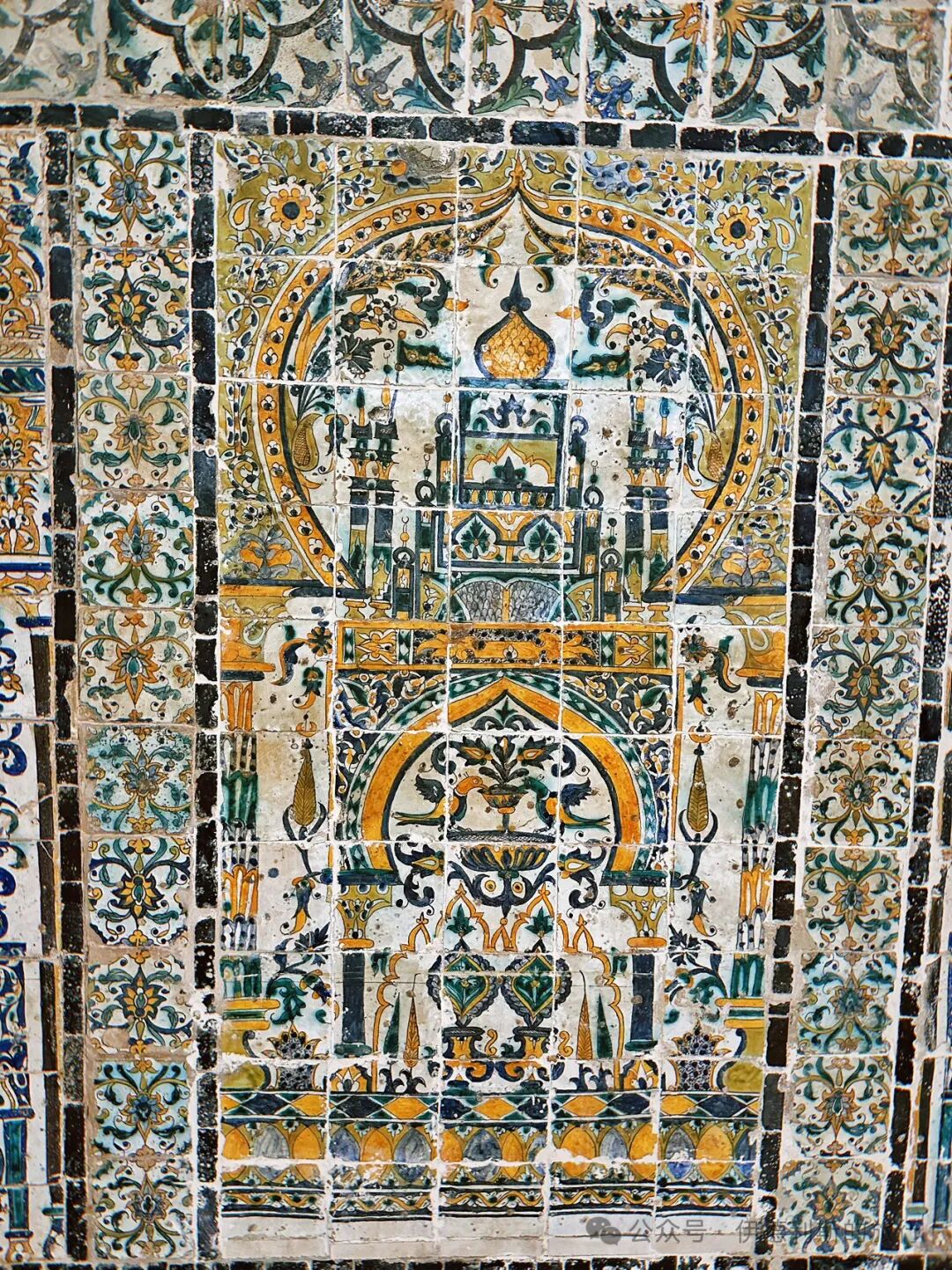
Tile and plaster decorations inside the Small Palace of Husain II.
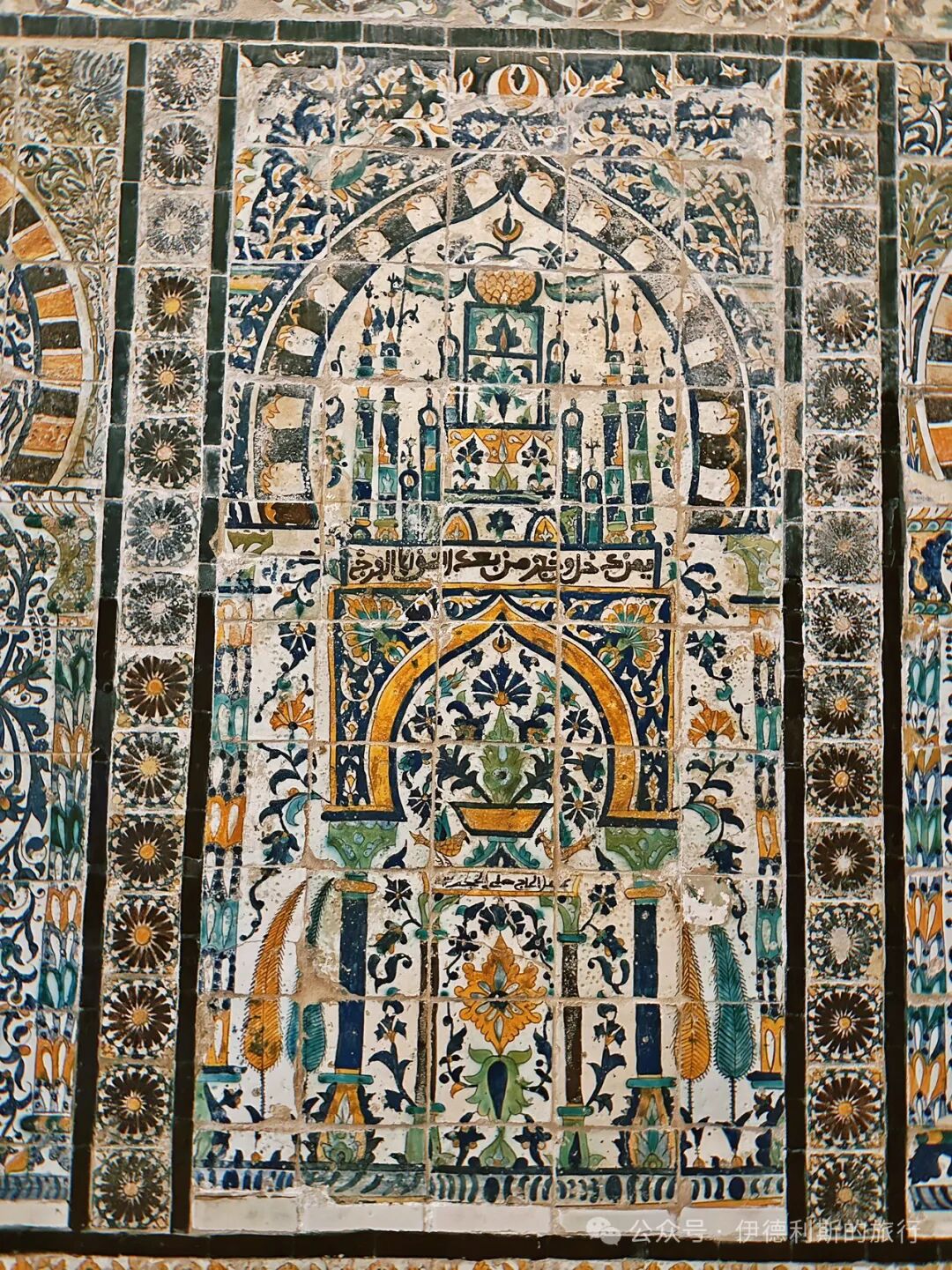
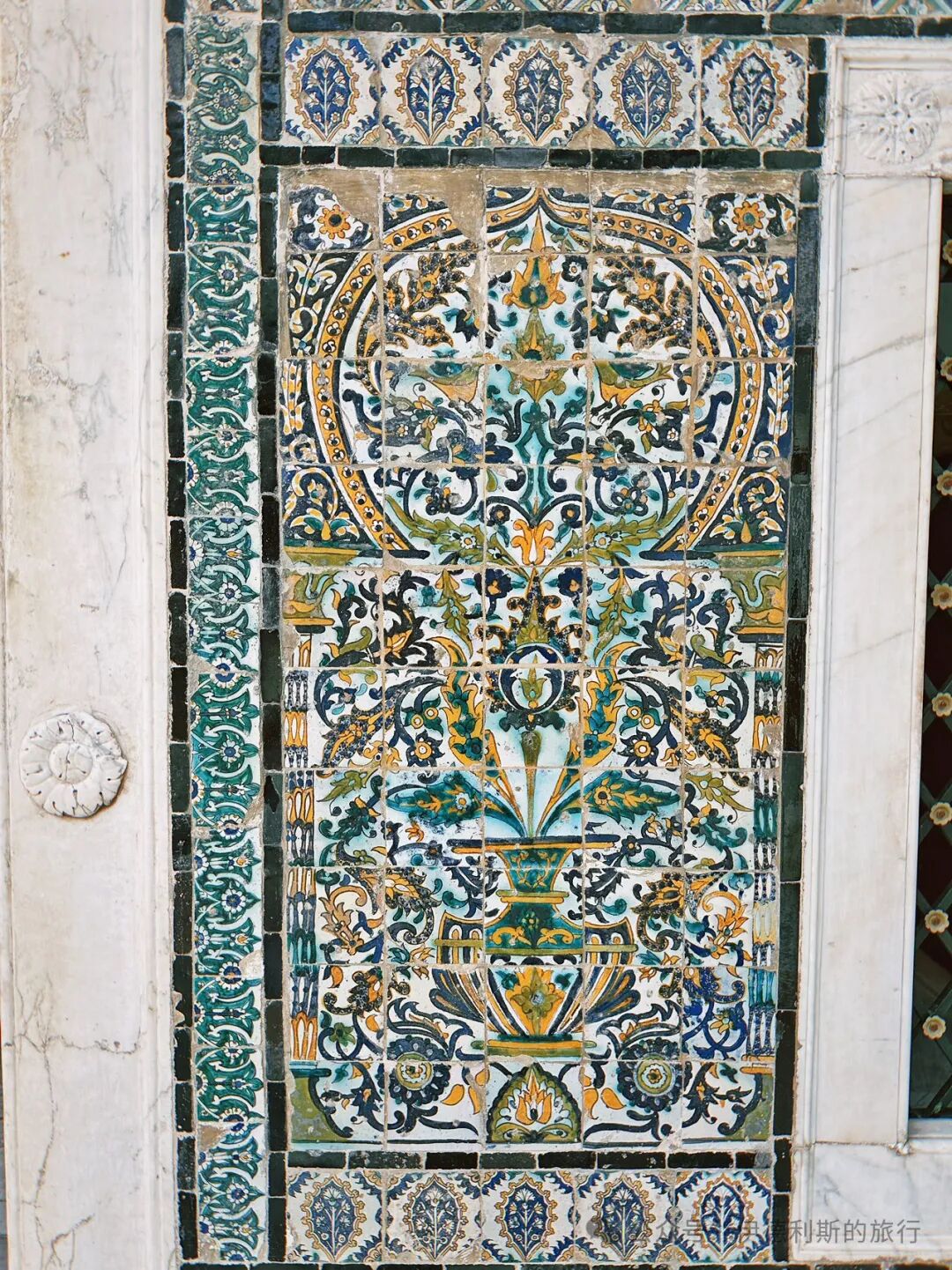
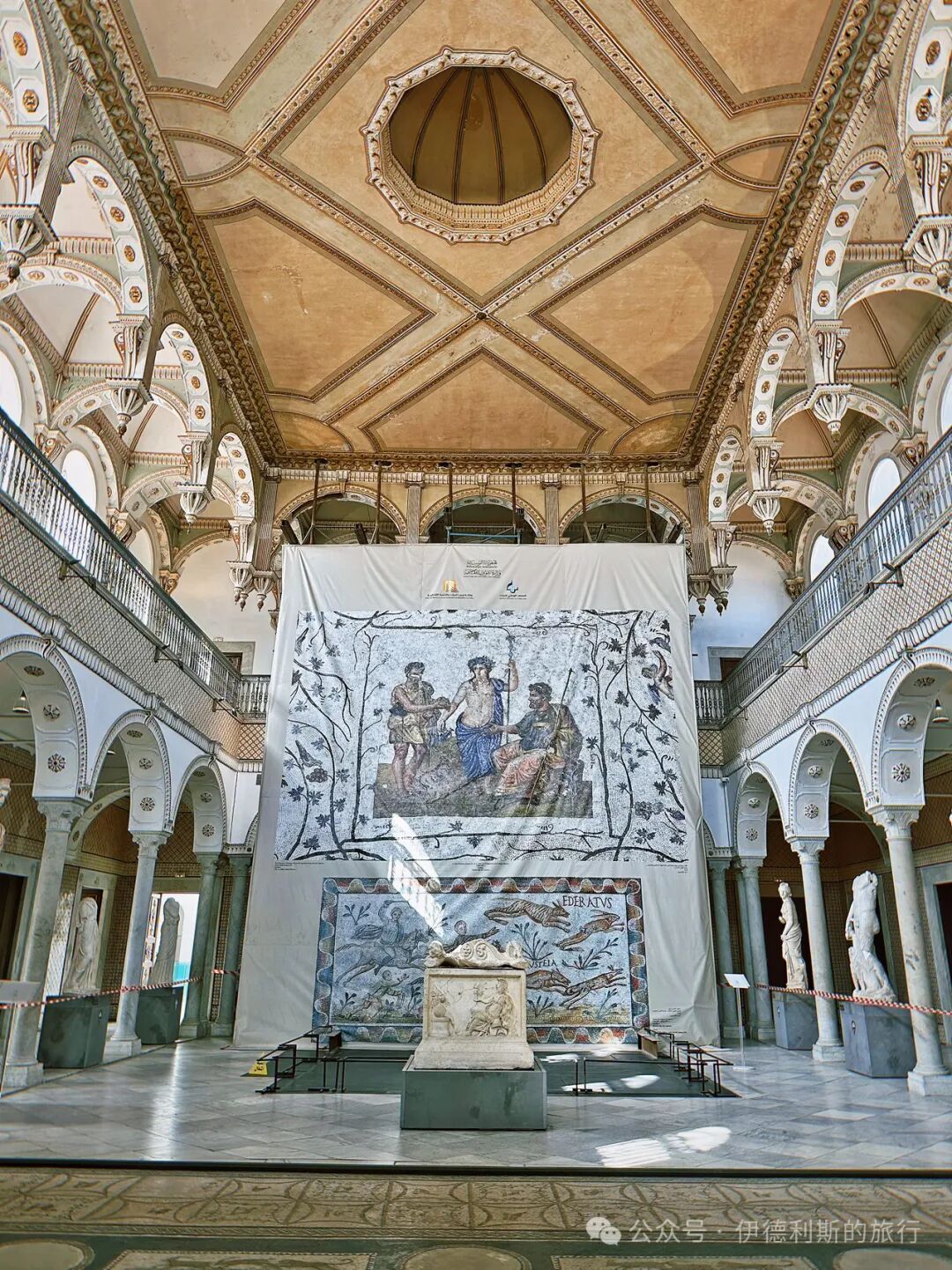
The reception hall and harem built by Muhammad III Bey between 1859 and 1864 feature both Italian and Tunisian styles.
Muhammad III Bey issued the first written constitution in the Arab world in 1861, which separated executive, legislative, and judicial powers and guaranteed equal rights for Muslims, Christians, and Jews. After the new constitution was issued, European merchants and secular schools began to appear in Tunisia.
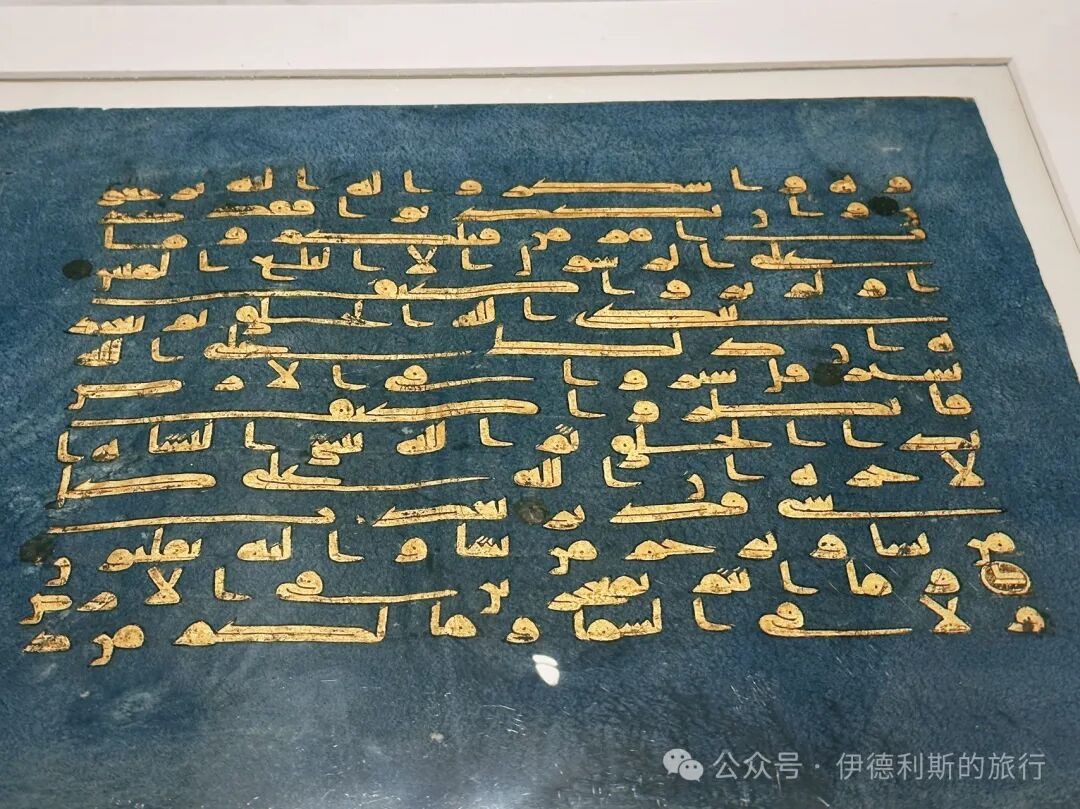
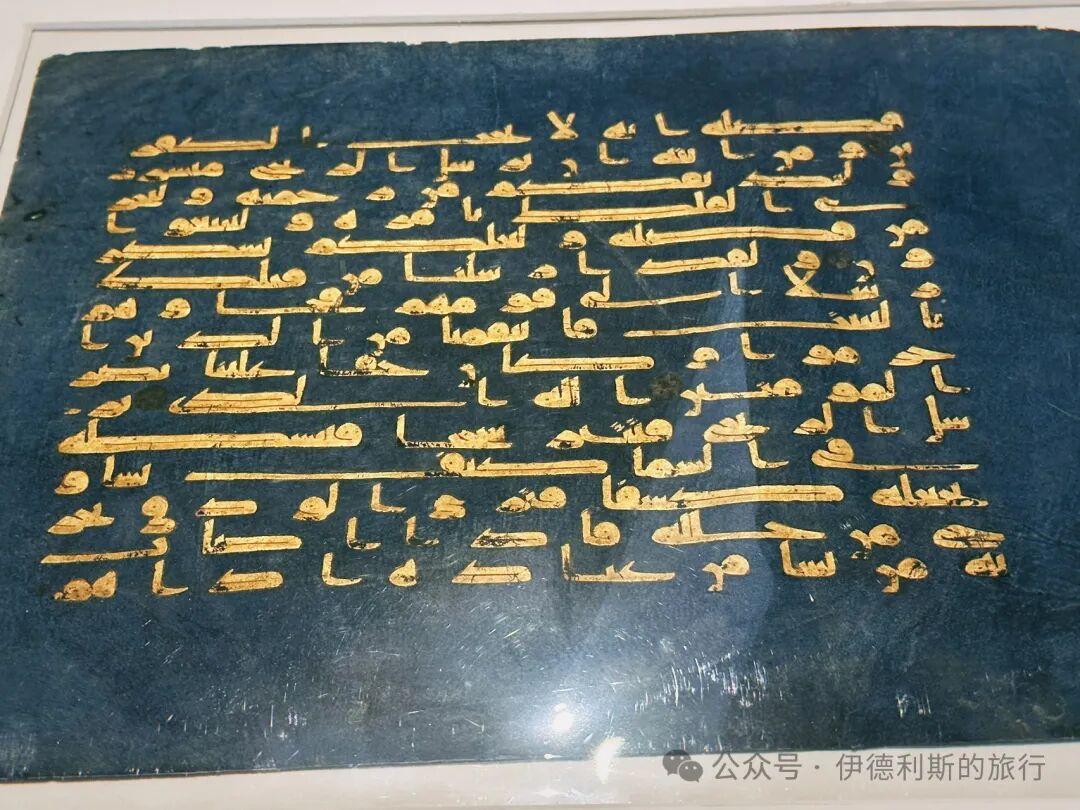
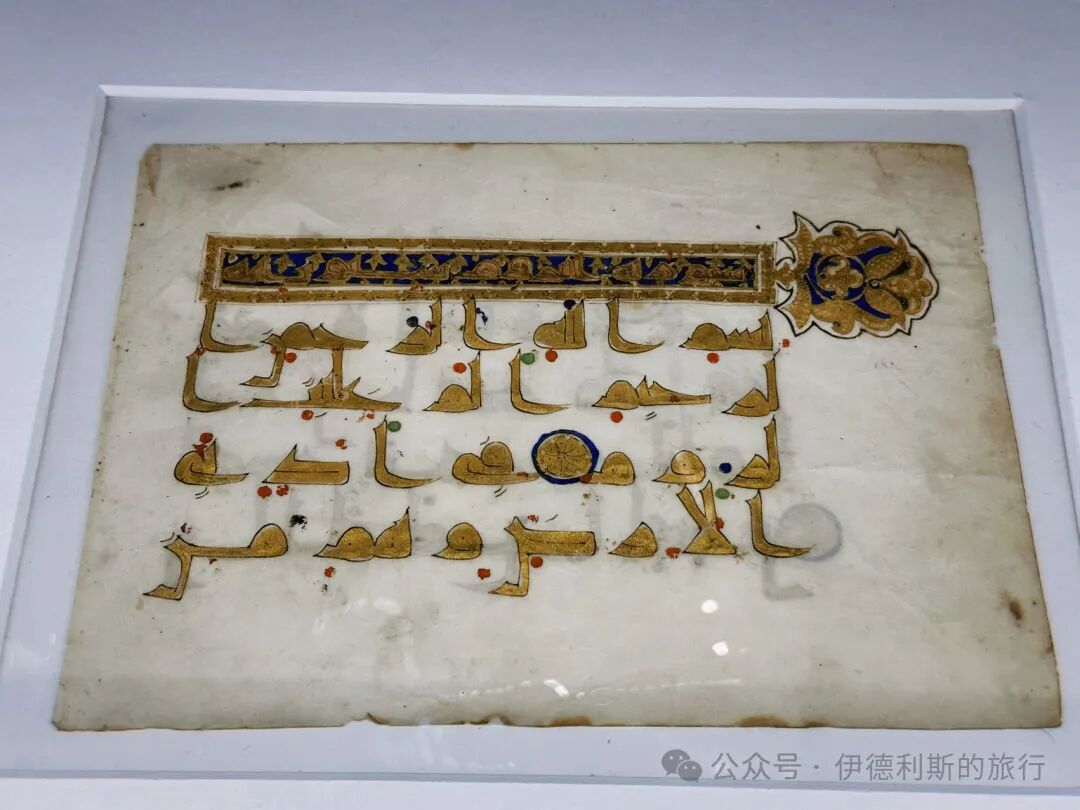
The Blue Quran manuscript in the National Museum of Tunisia is a very famous religious manuscript in the world. This scripture uses parchment dyed with indigo, with ink outlining the text and gold leaf applied on top. The calligraphy is in the early Kufic script, which lacks sharp angles and vowel marks.
The origin of the Blue Quran is still highly debated, with theories pointing to Kairouan in Tunisia, Cordoba in Spain, Mashhad in Iran, or Iraq, dating back to the 9th or 10th century. The records say the Blue Quran was kept in the Great Mosque of Kairouan after the 14th century. It was broken up during the Ottoman period, but most of it remains in Kairouan, while other parts are held by major museums and collectors.
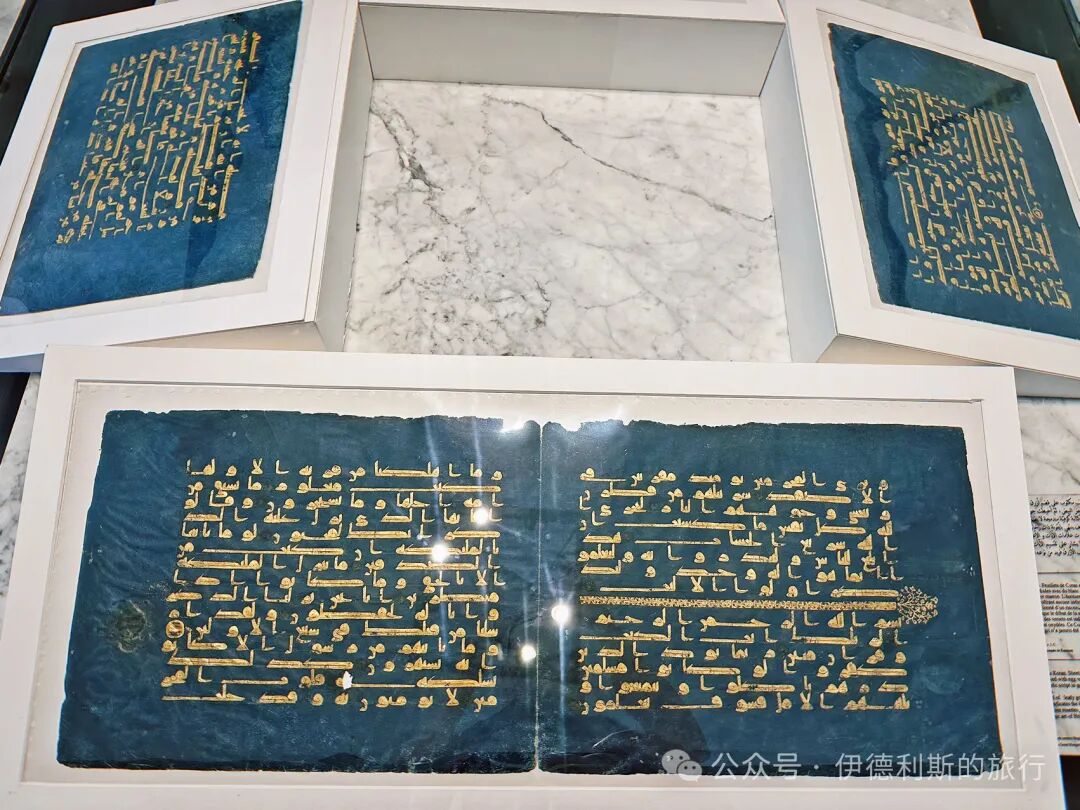
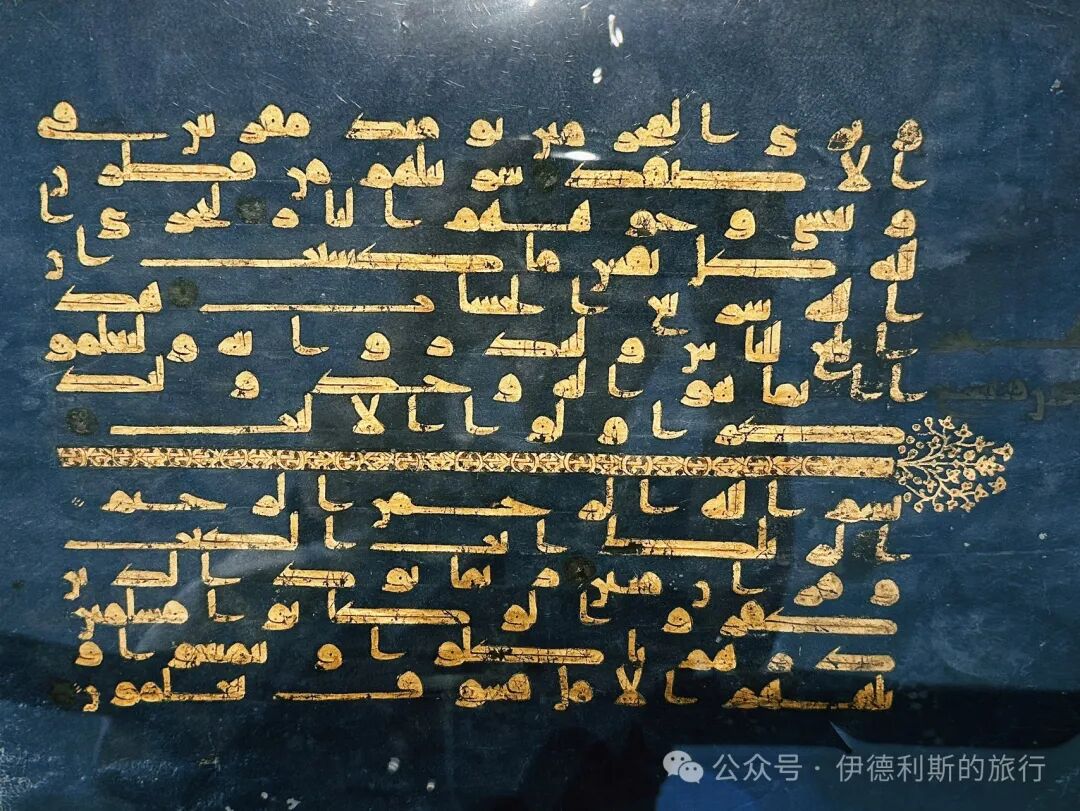
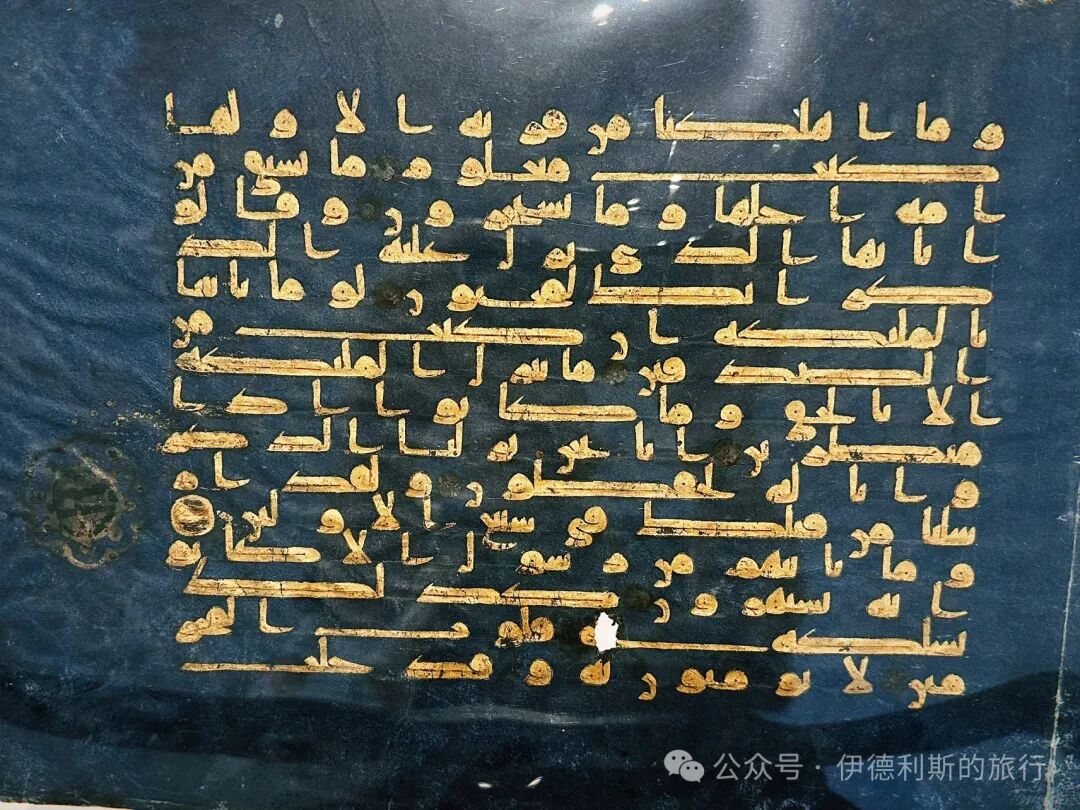
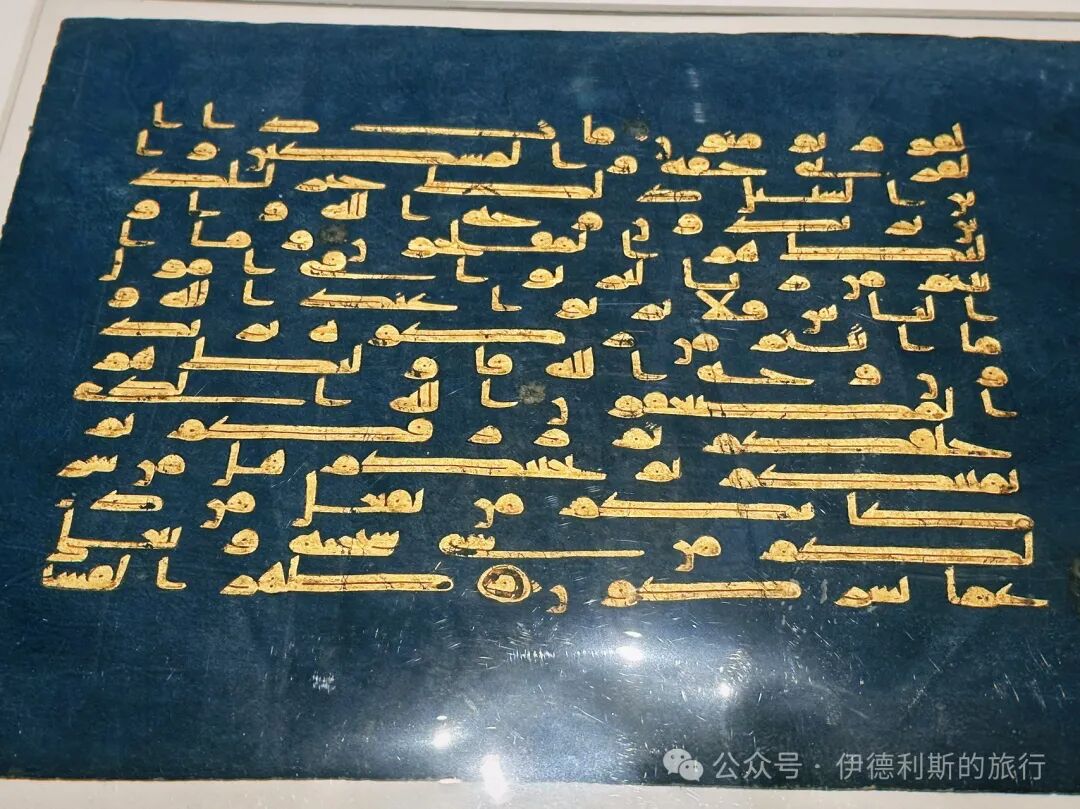
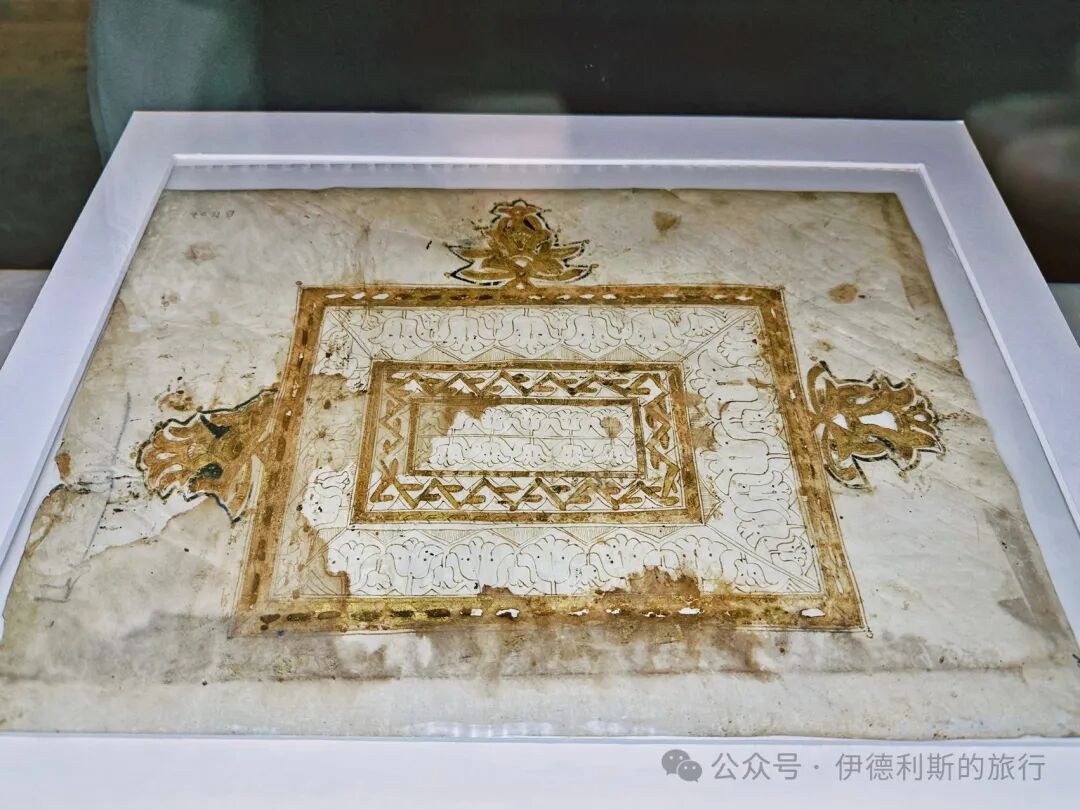
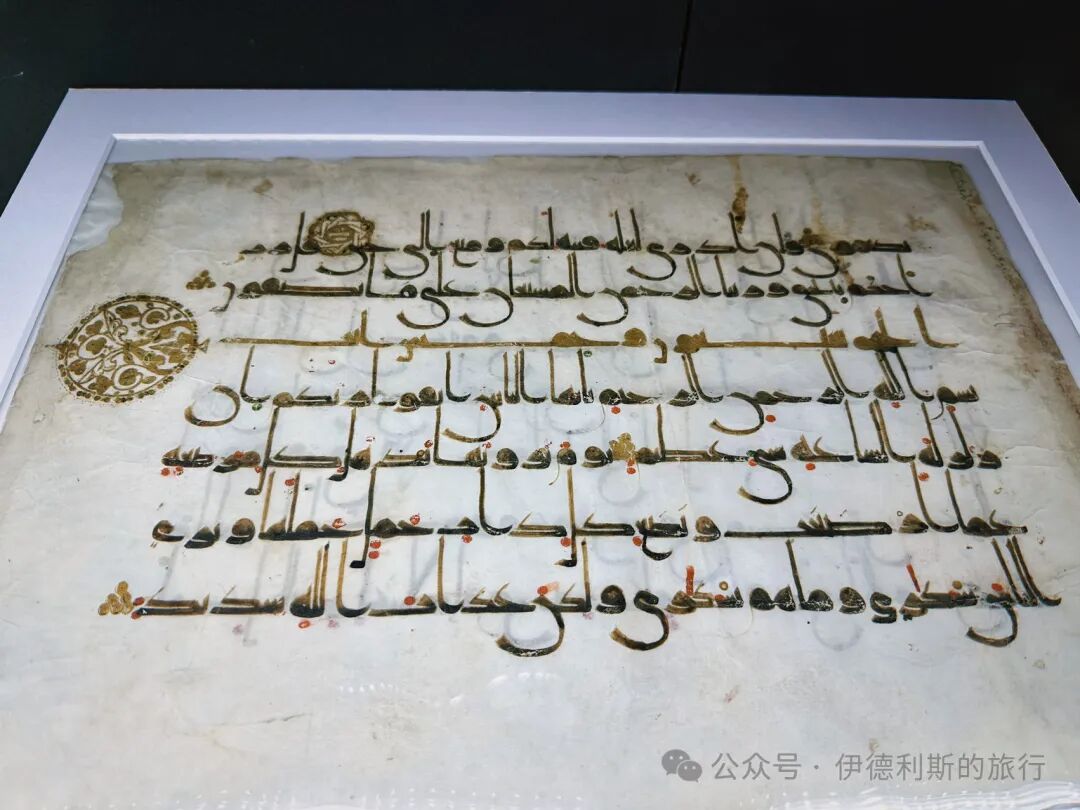
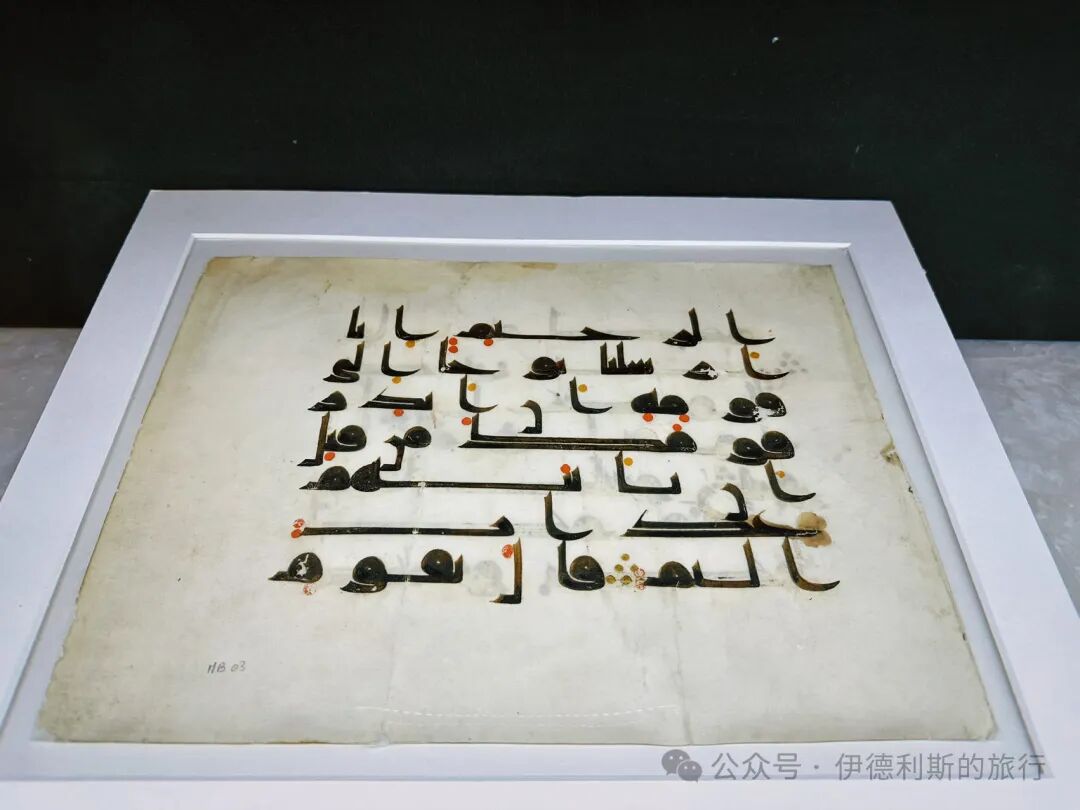
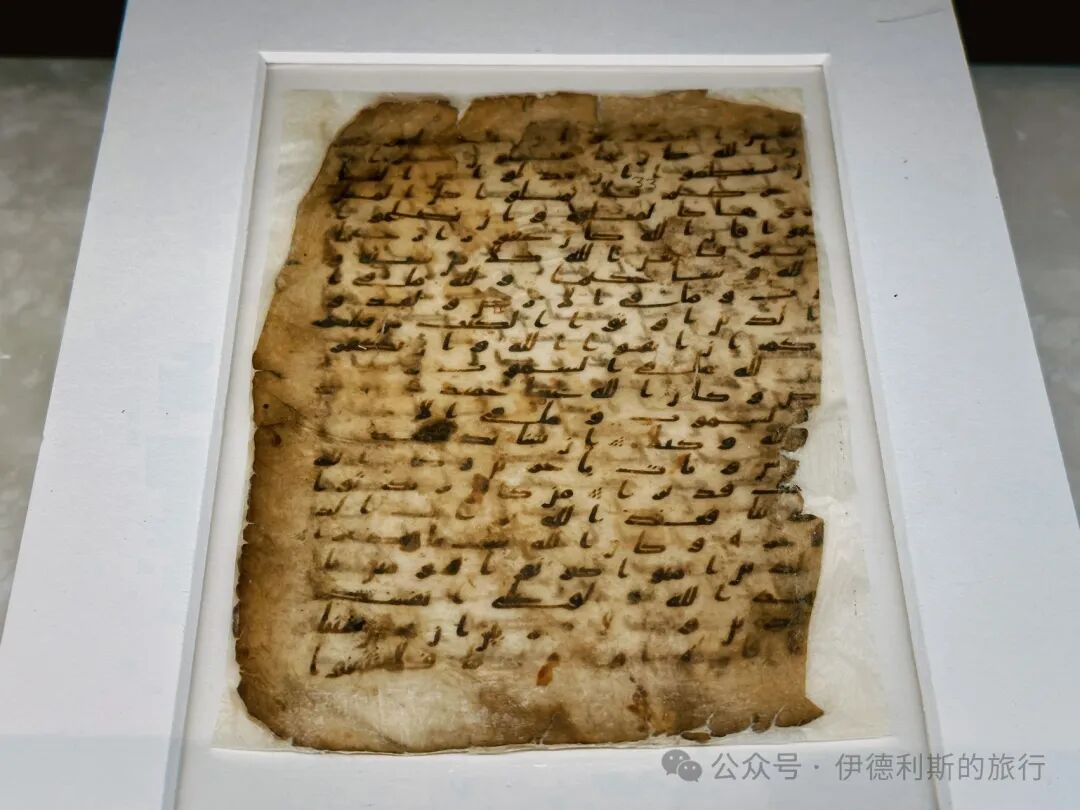
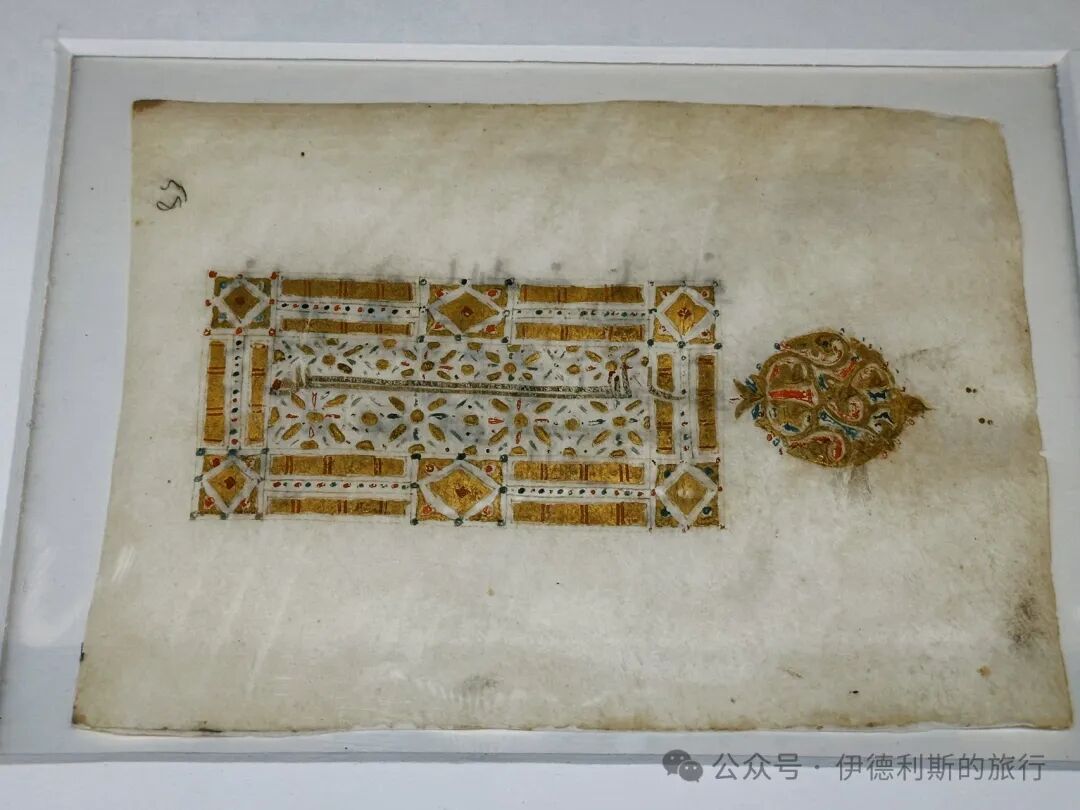
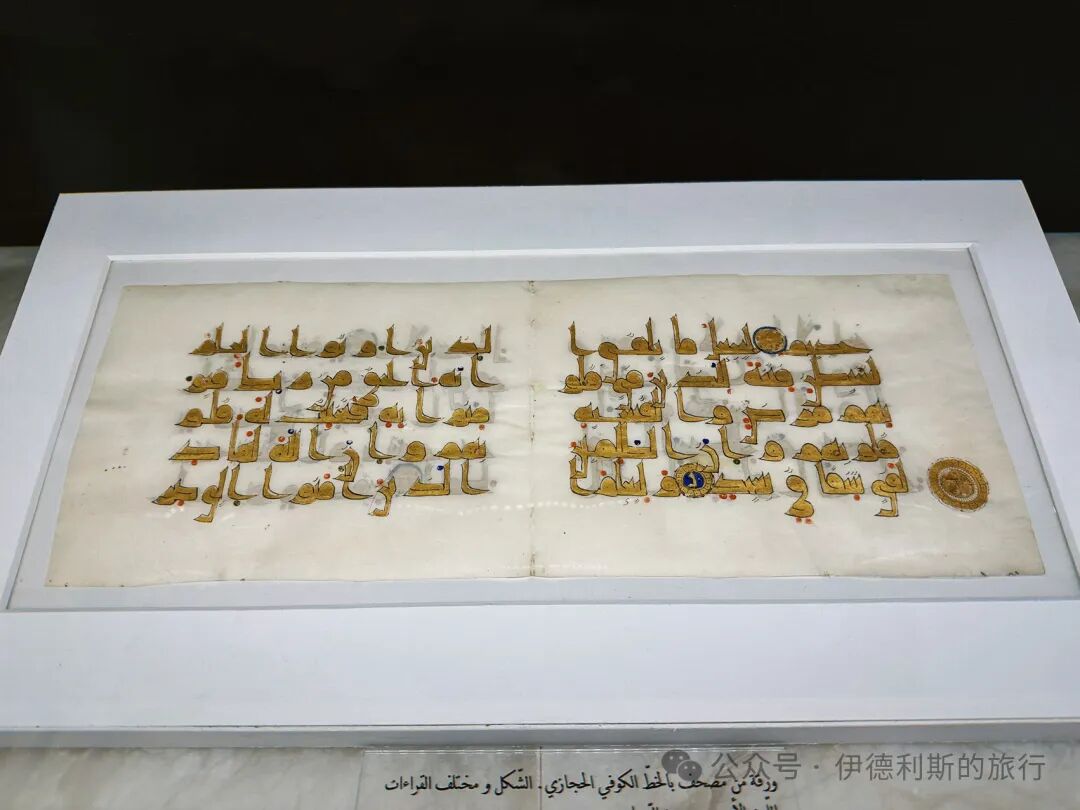
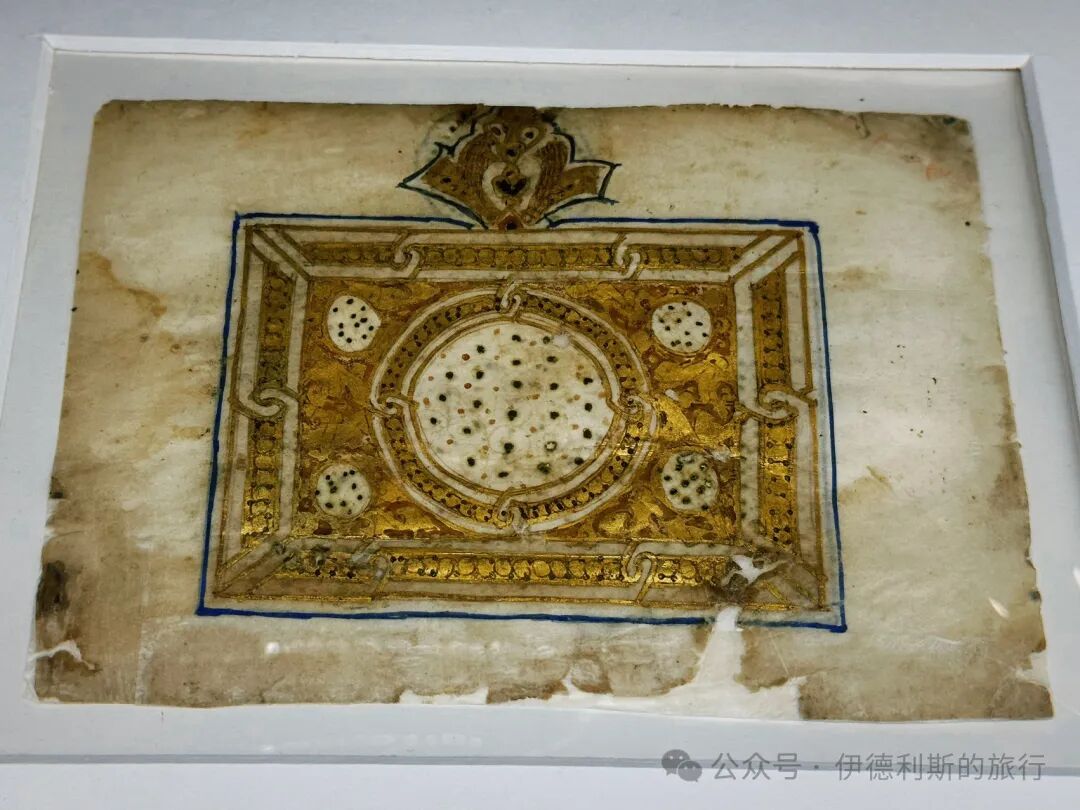
Quran manuscripts from the 8th to 12th centuries held by the Great Mosque of Kairouan in Tunisia.
The library of the Great Mosque of Kairouan holds a large number of manuscripts and established a catalog as early as the 13th century. to scriptures, these manuscripts include books related to the Maliki school of thought, which are also the oldest documents of the Maliki school.
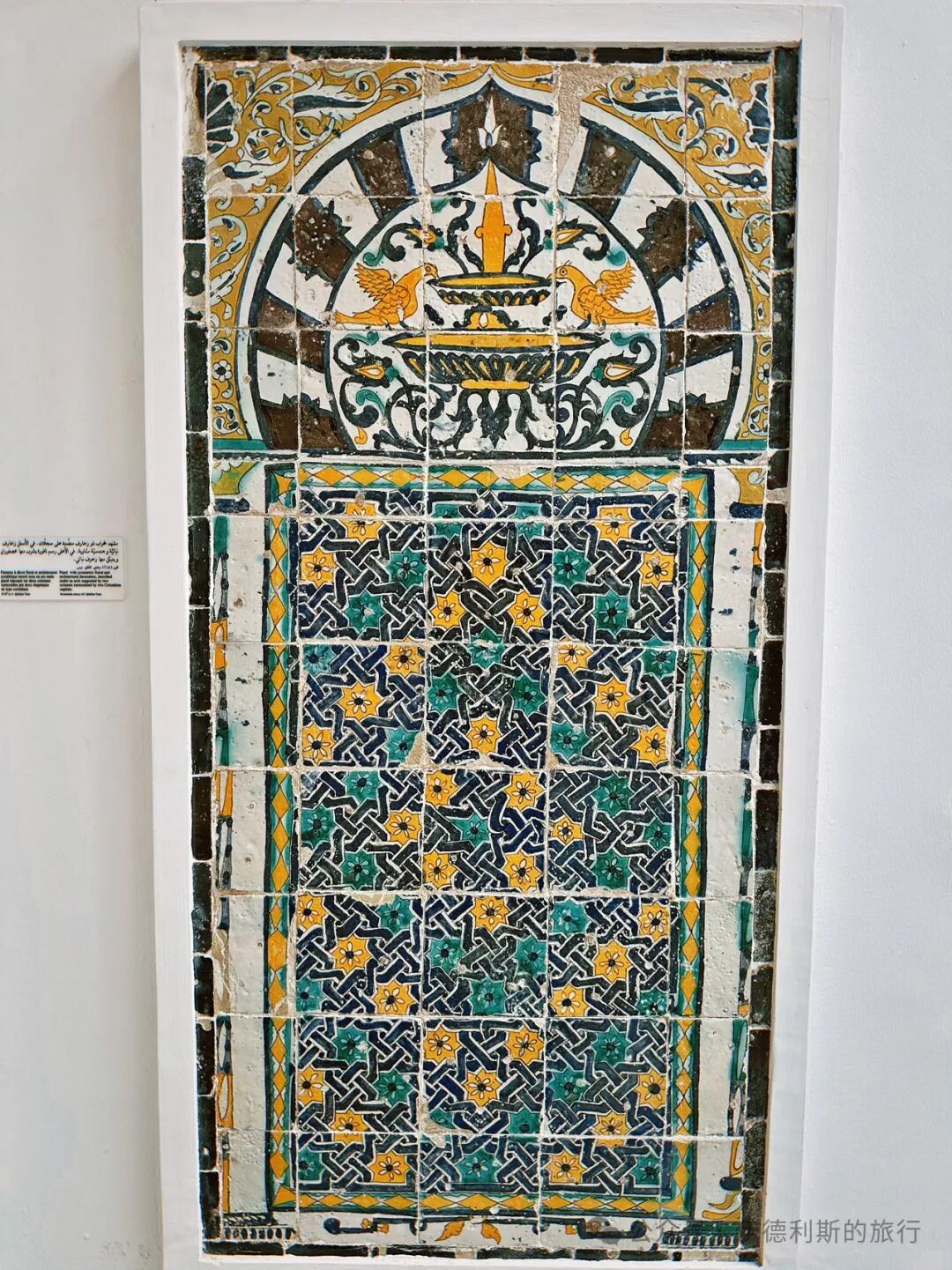
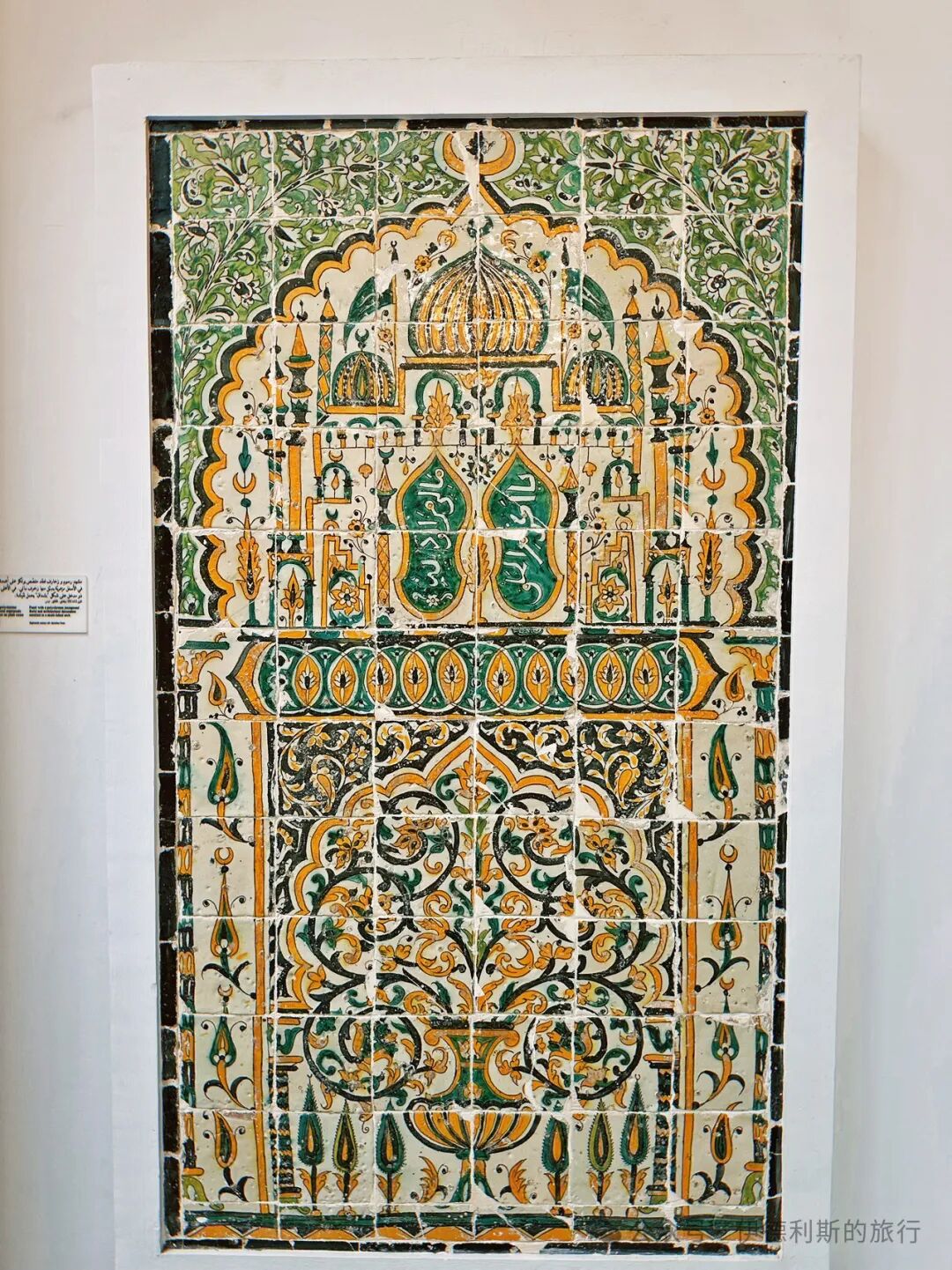
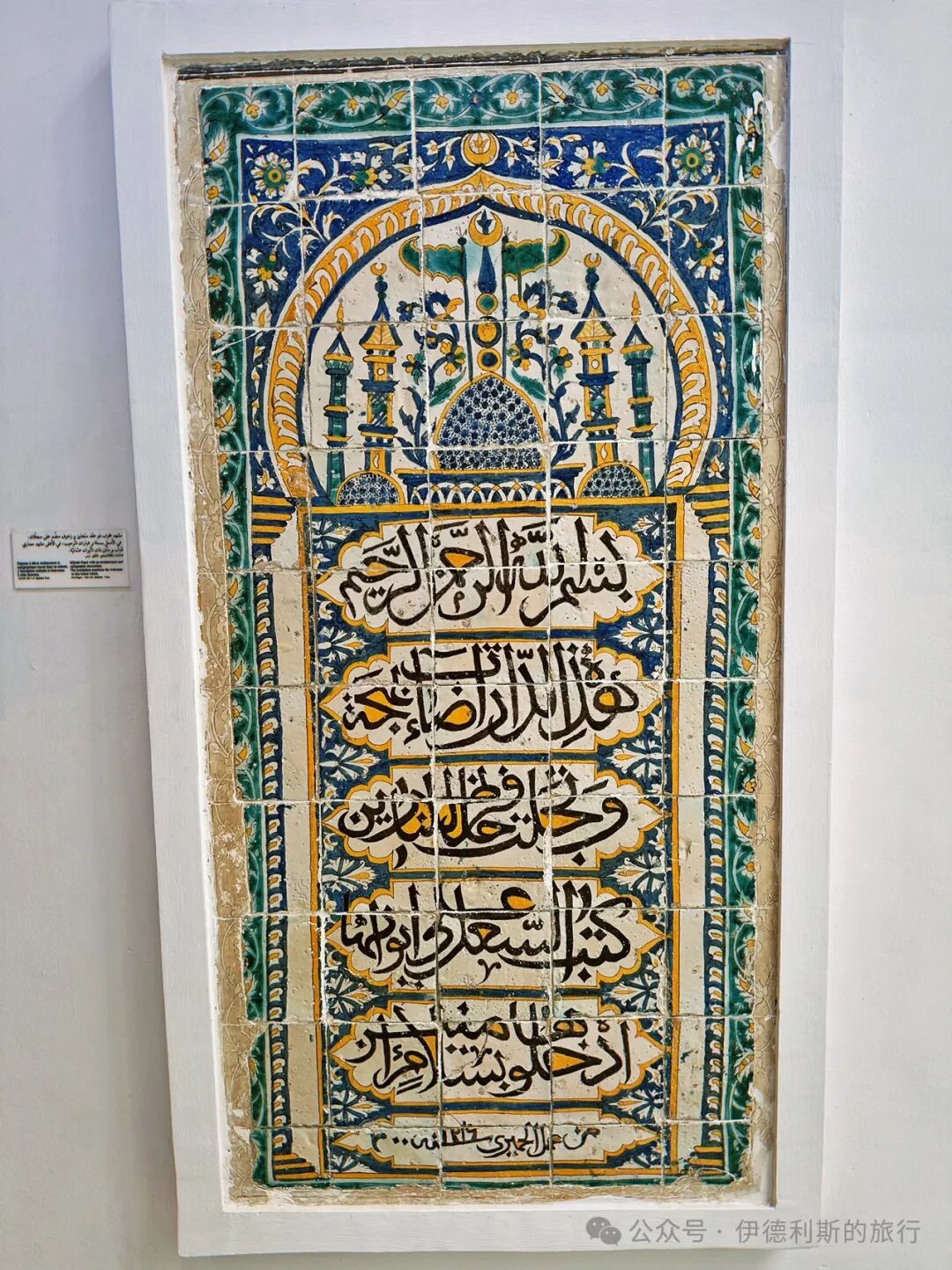
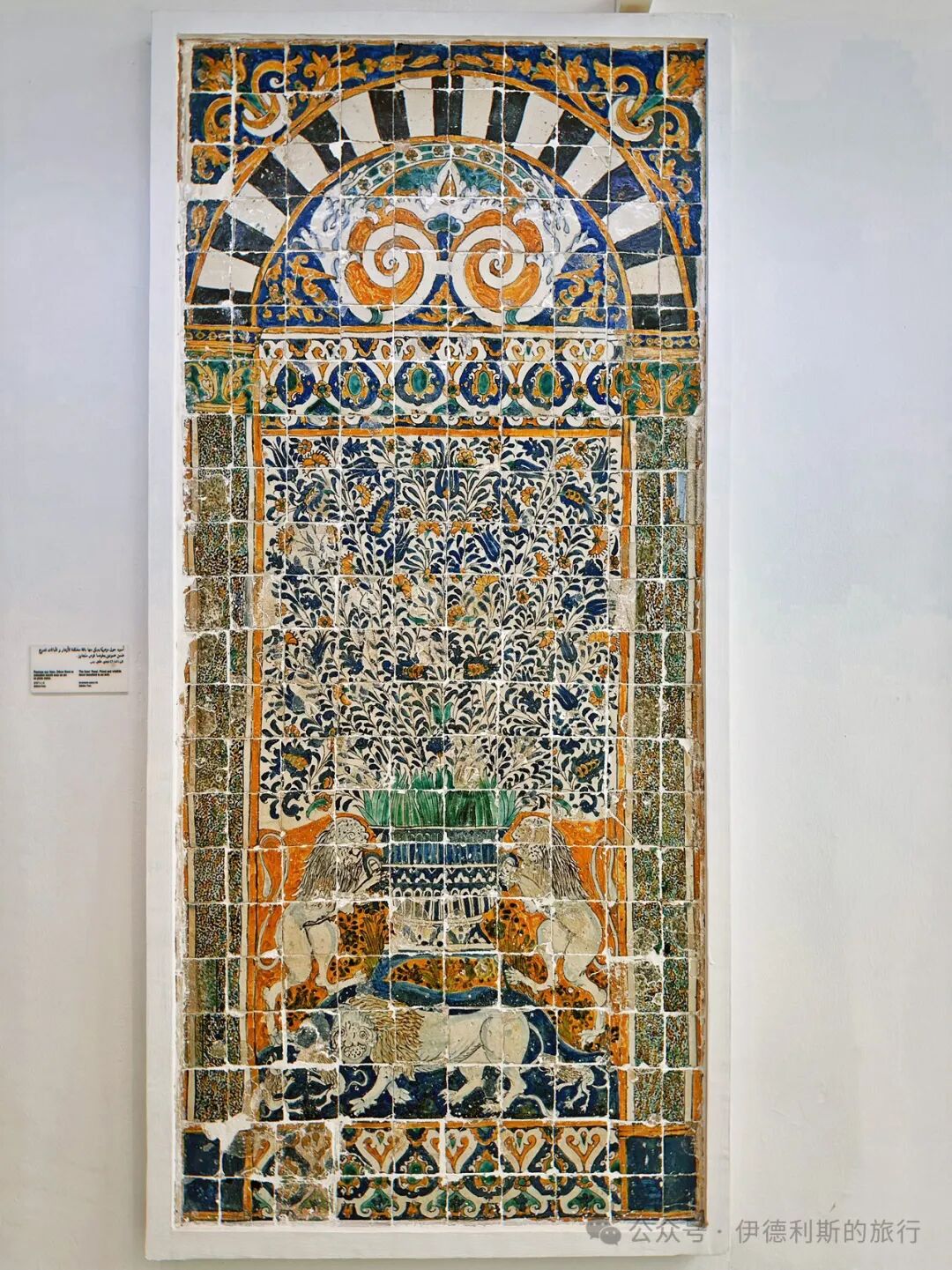
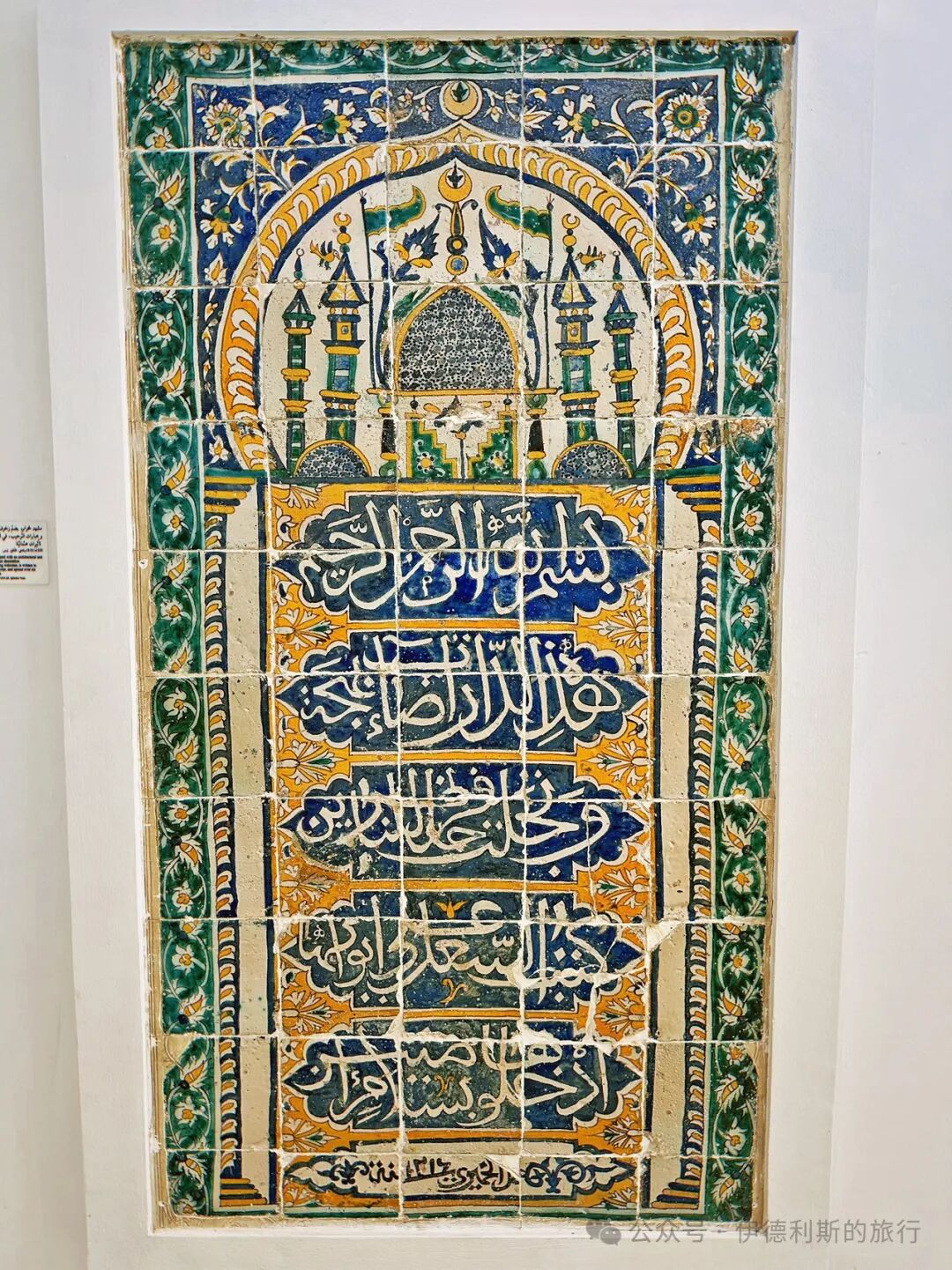
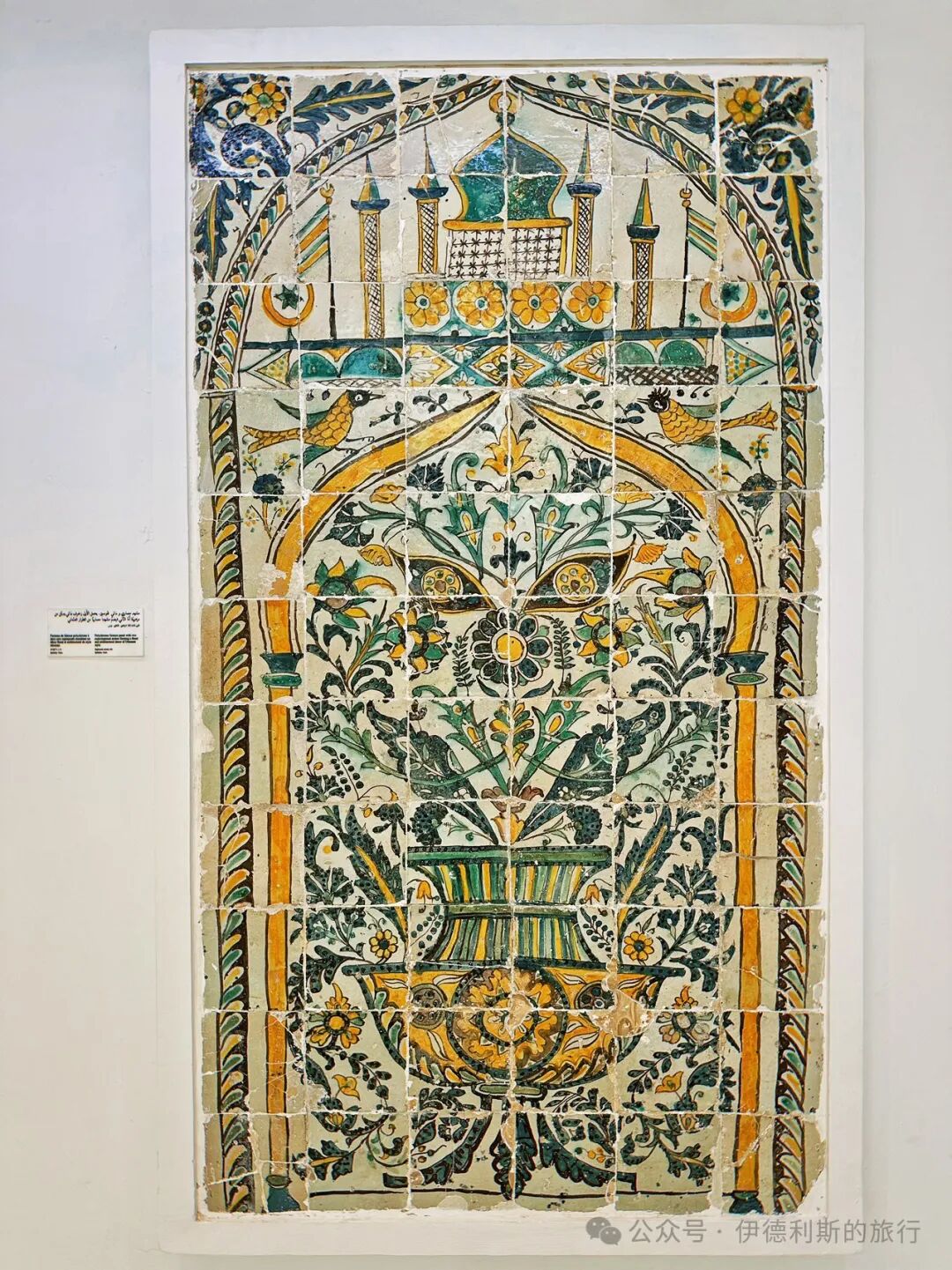
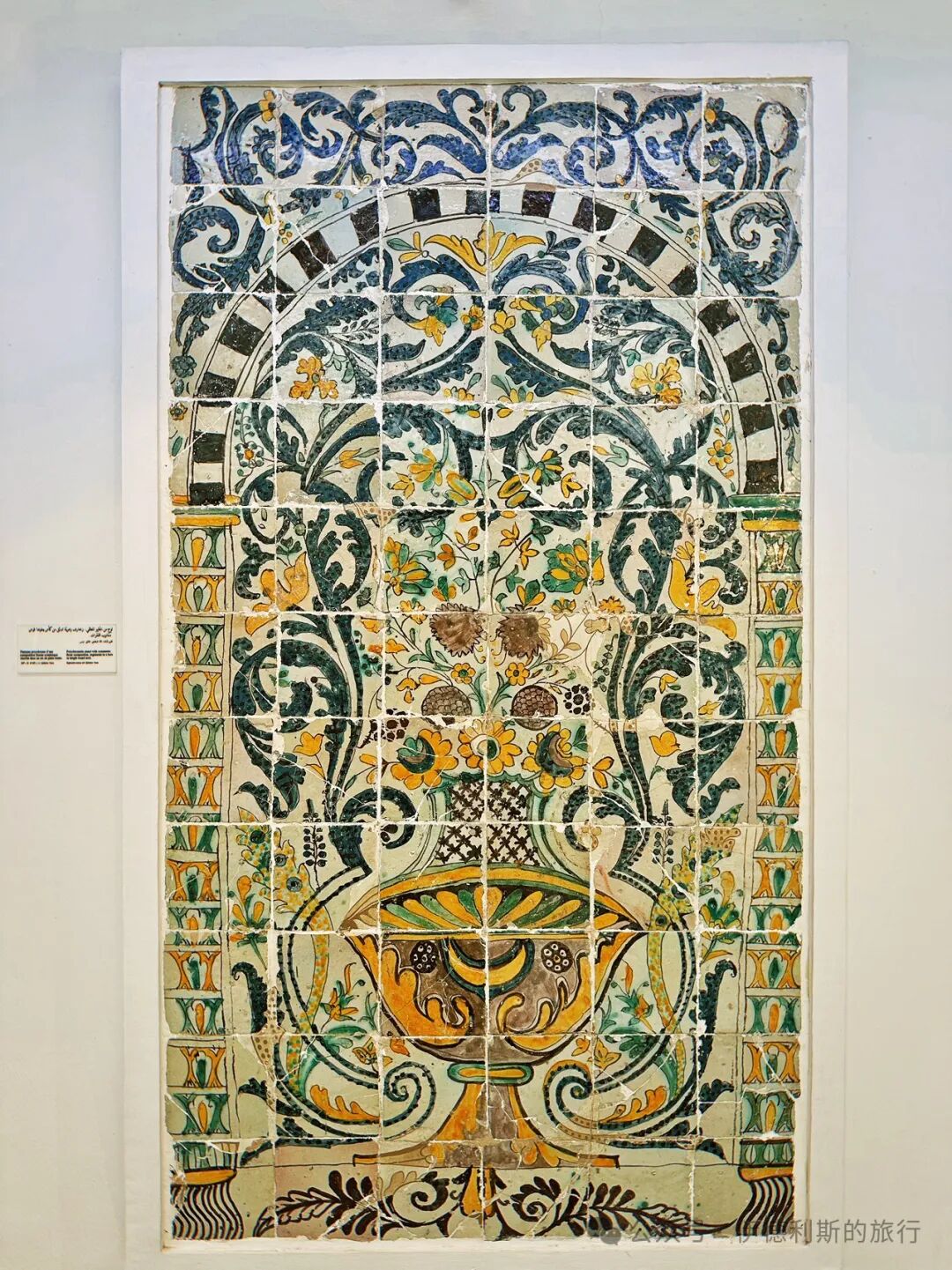
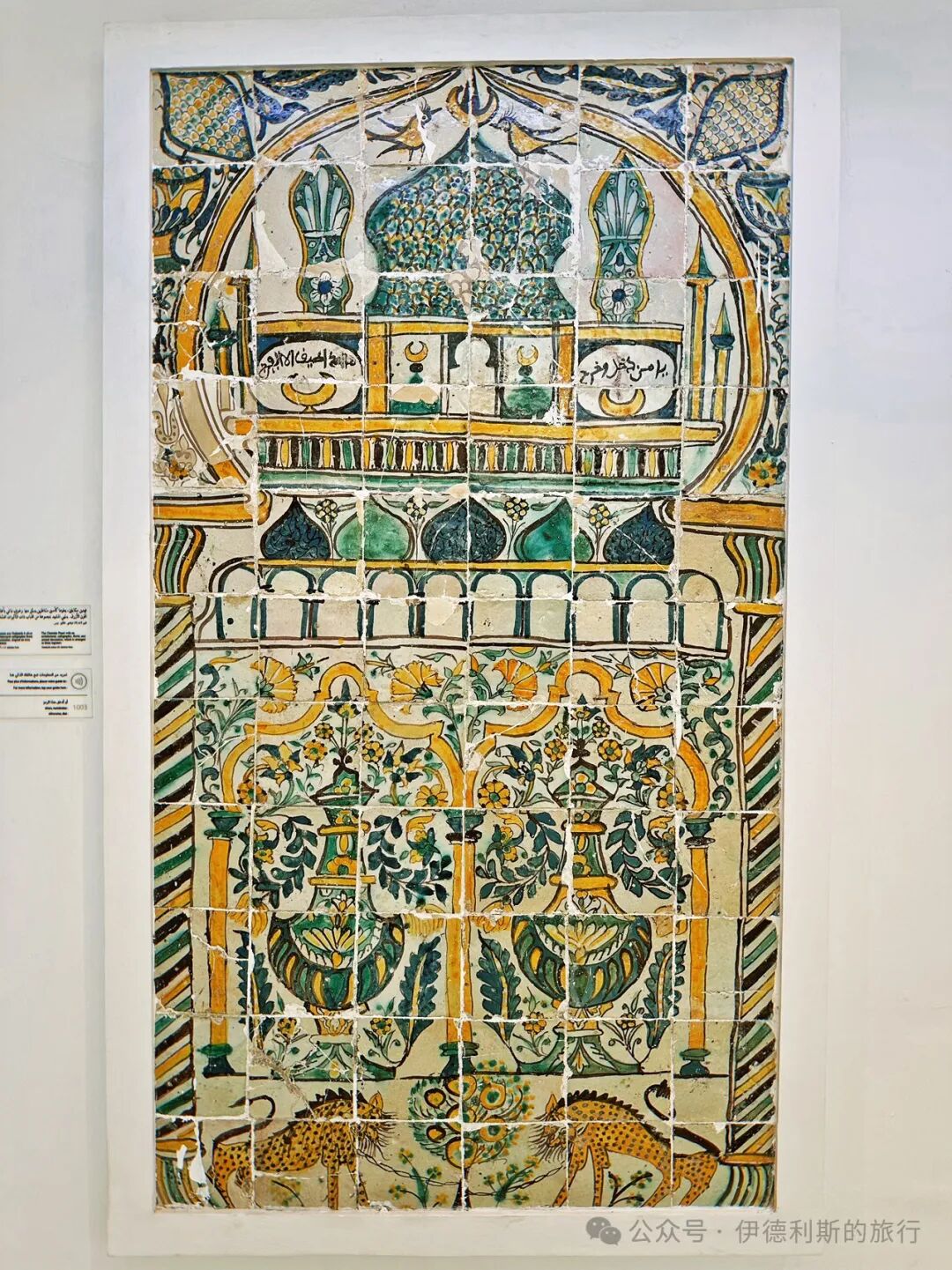
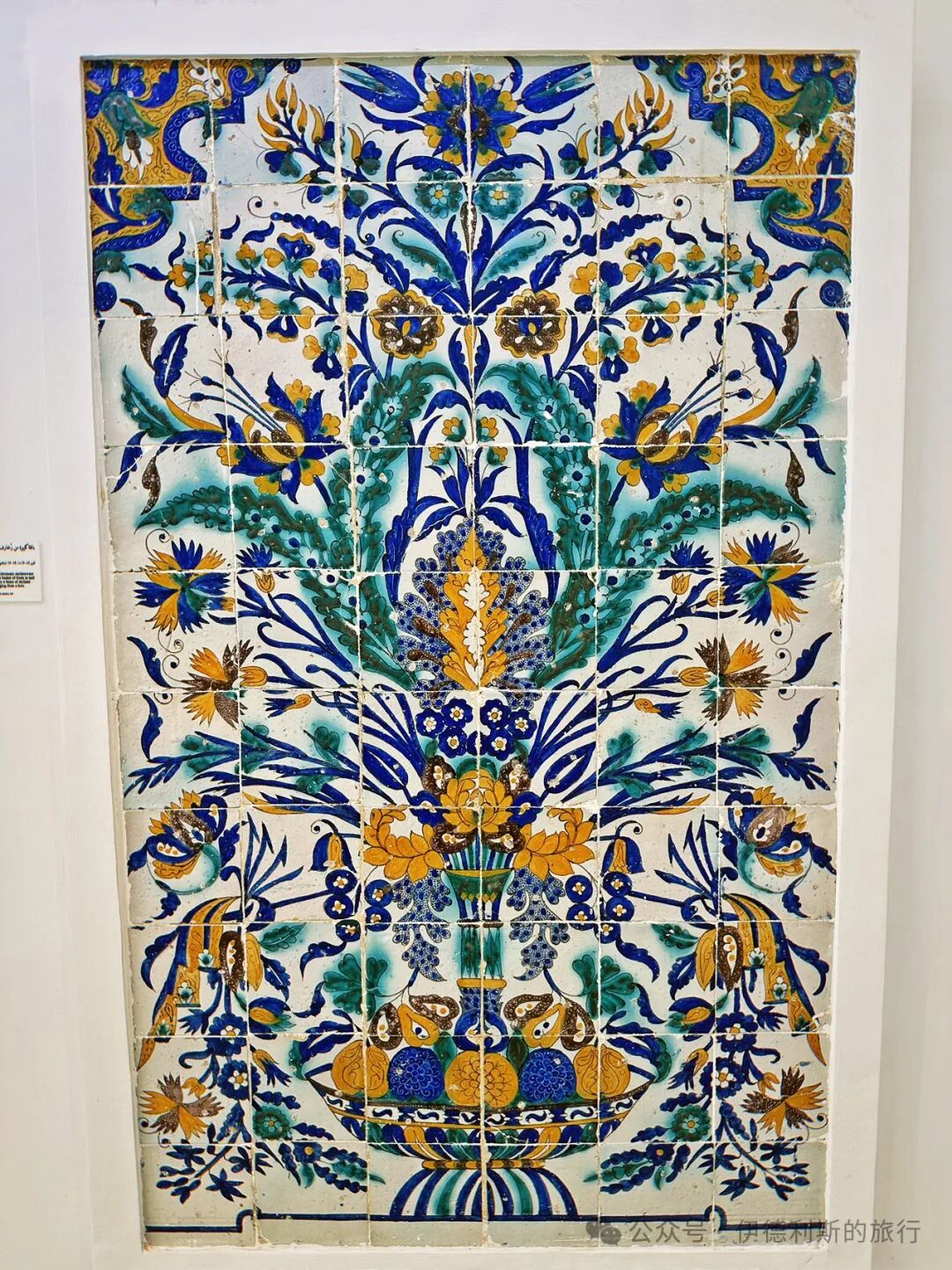
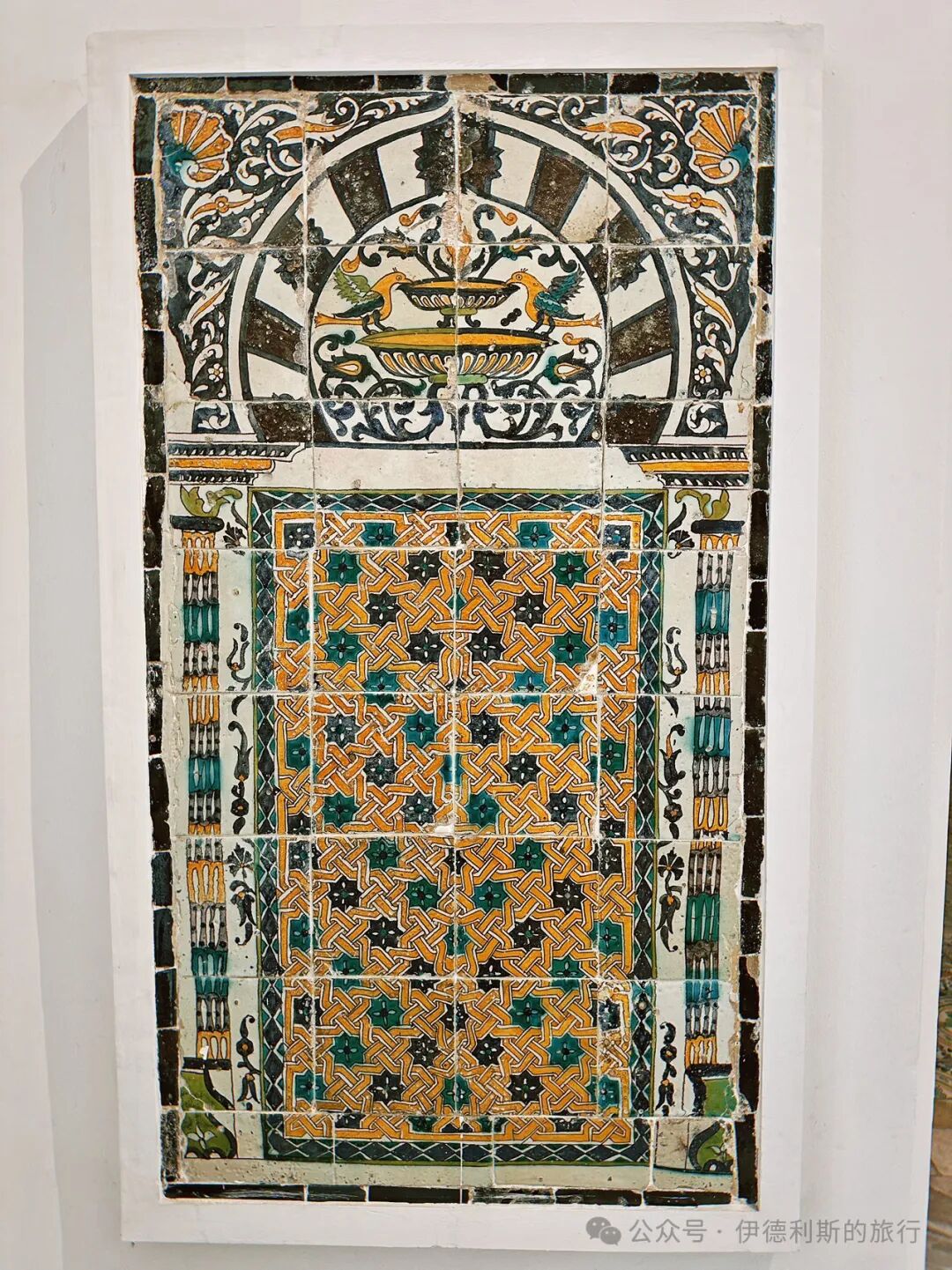
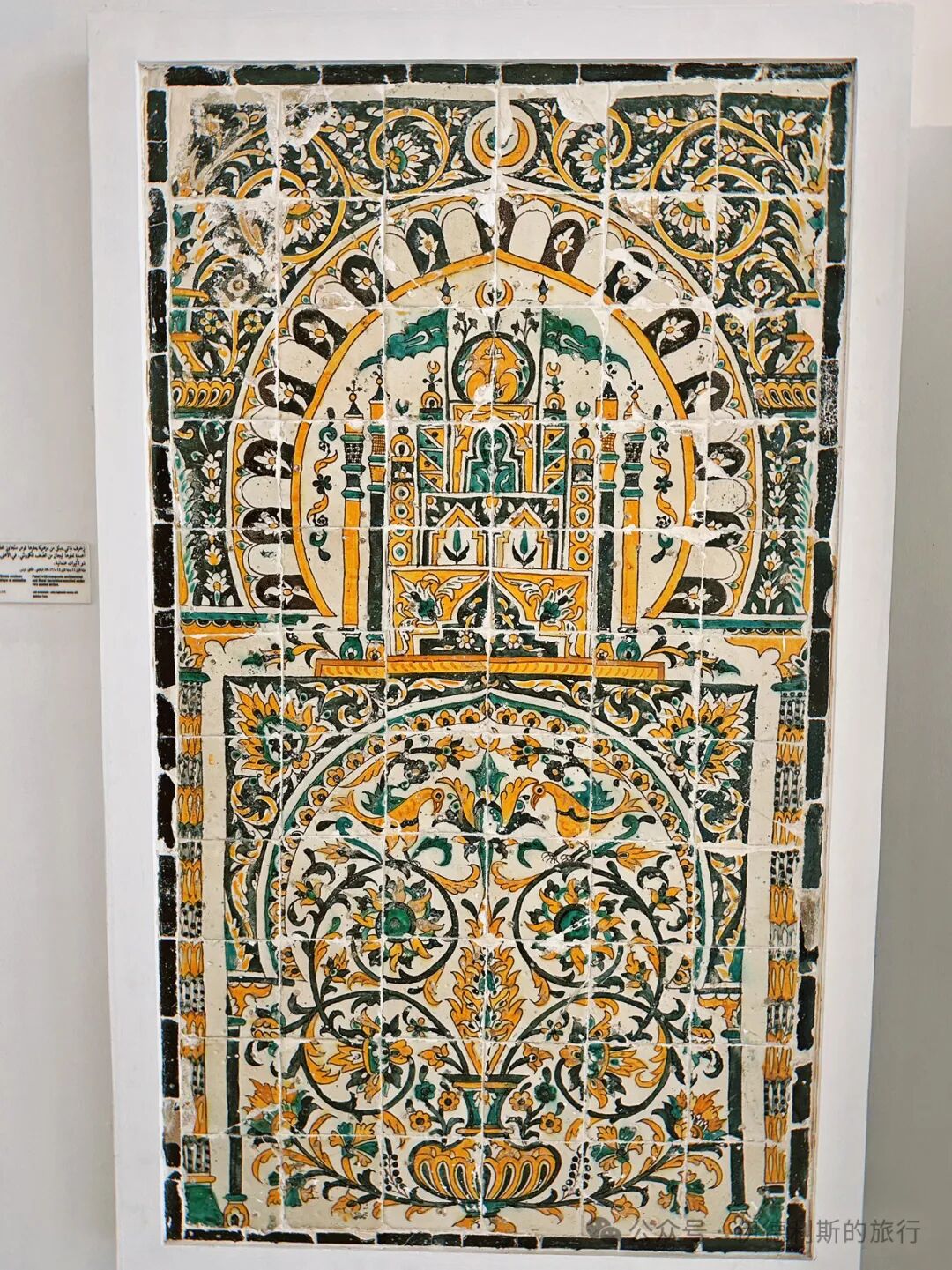
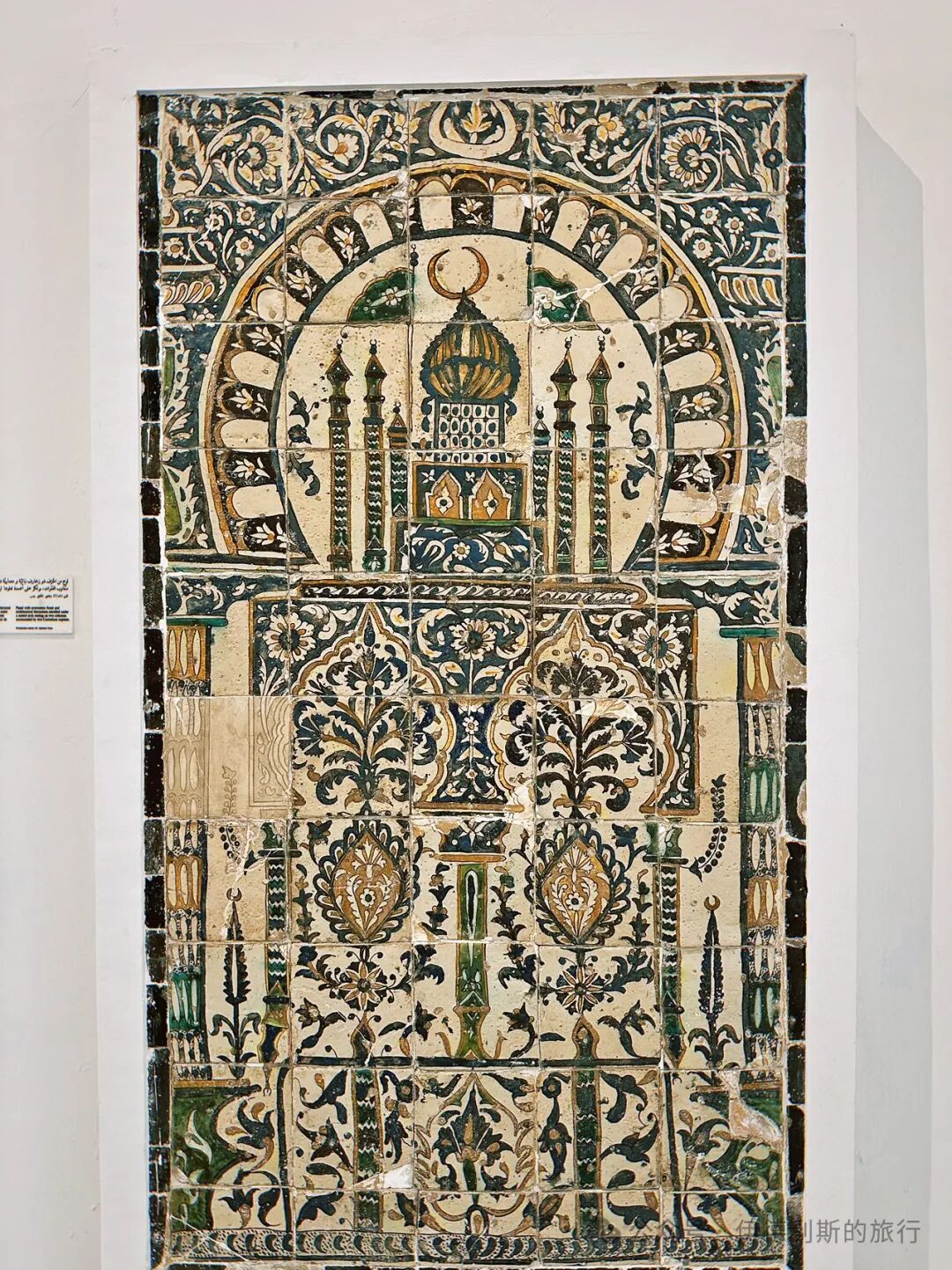
Tunisian Qallaline tiles from the 17th and 18th centuries. These tiles are named after the Qallaline region of Tunisia. They were influenced by Ottoman tile art but developed their own unique style.
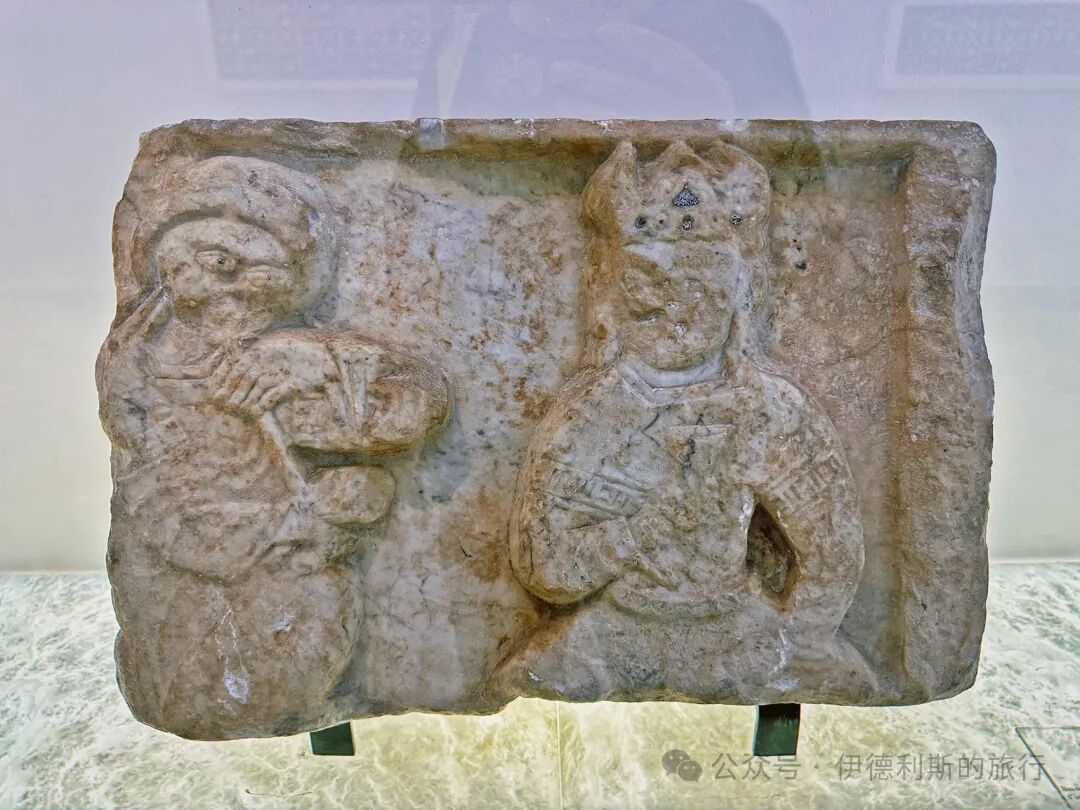
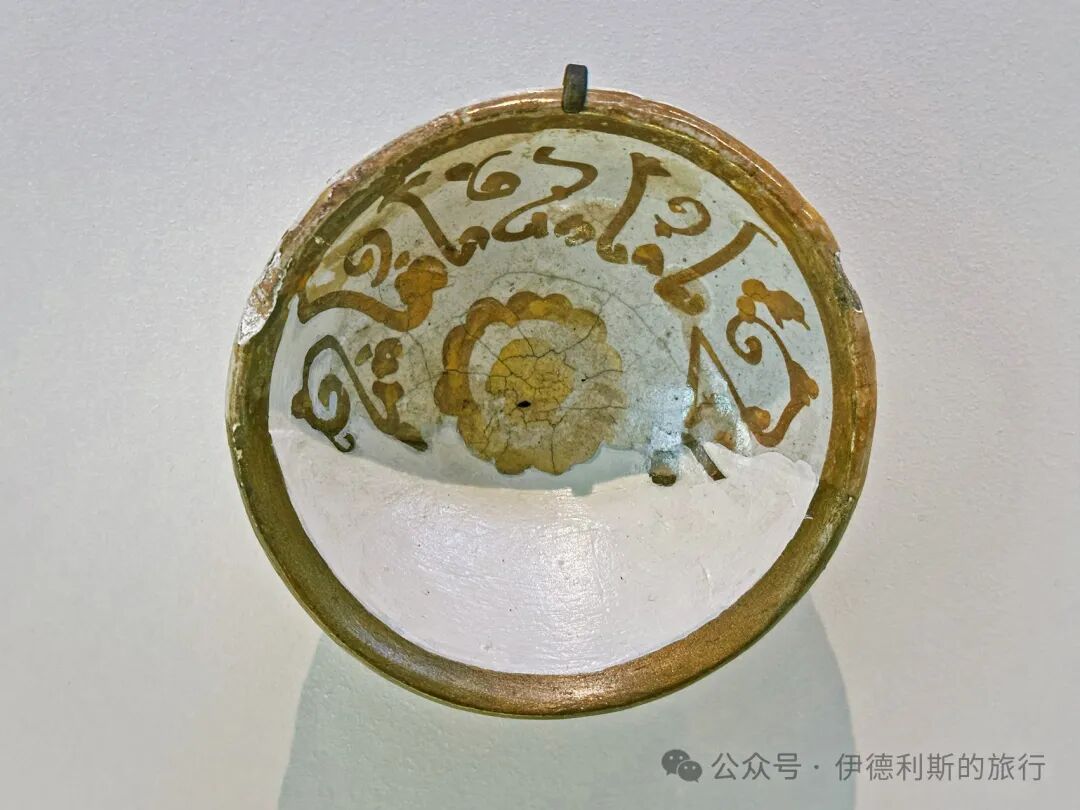
A marble carving from the 10th-century Fatimid period in Mahdia, Tunisia, depicting a Fatimid prince. A glazed bowl with Kufic script from the Fatimid dynasty period in Mahdia.
The ancient city of Mahdia was built by the Fatimid dynasty between 916 and 921, and it became the capital of the Tunisia region after its completion. Before this, the capital of the Tunisia region was Kairouan, which was dominated by Sunnis. Because of this, the Shia Fatimid dynasty built a new capital on the Mediterranean coast, far away from Kairouan. Once finished, Mahdia included thick city walls, palaces, a harbor, and a great mosque. Unfortunately, none of the surface buildings survived. Now, you can only see artifacts unearthed through archaeological excavations in museums.
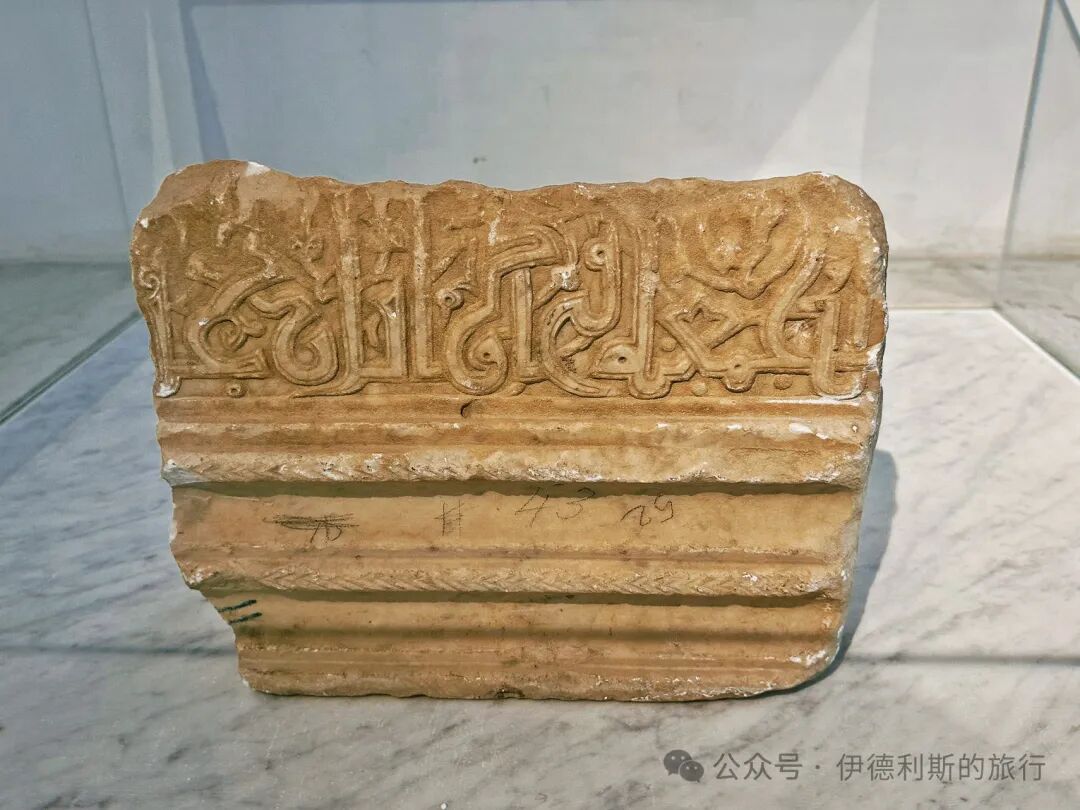
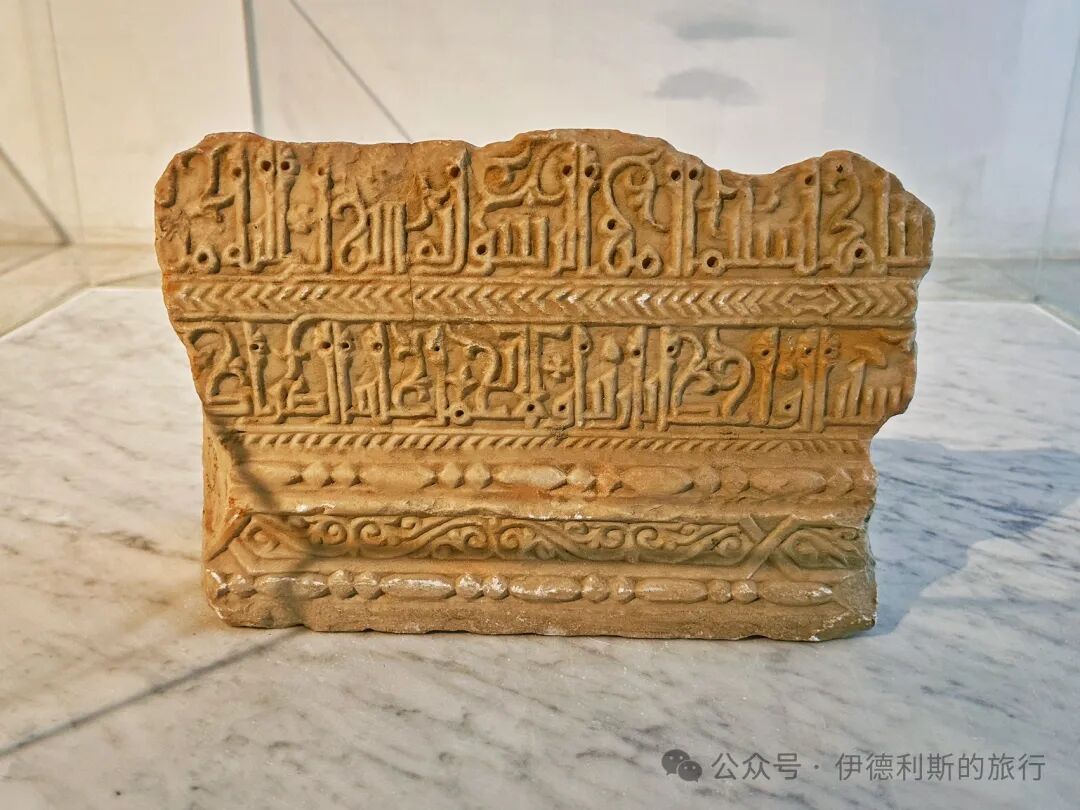
Exquisite 11th-century marble carvings with Kufic script.
A 10th-century wood carving from Egypt.
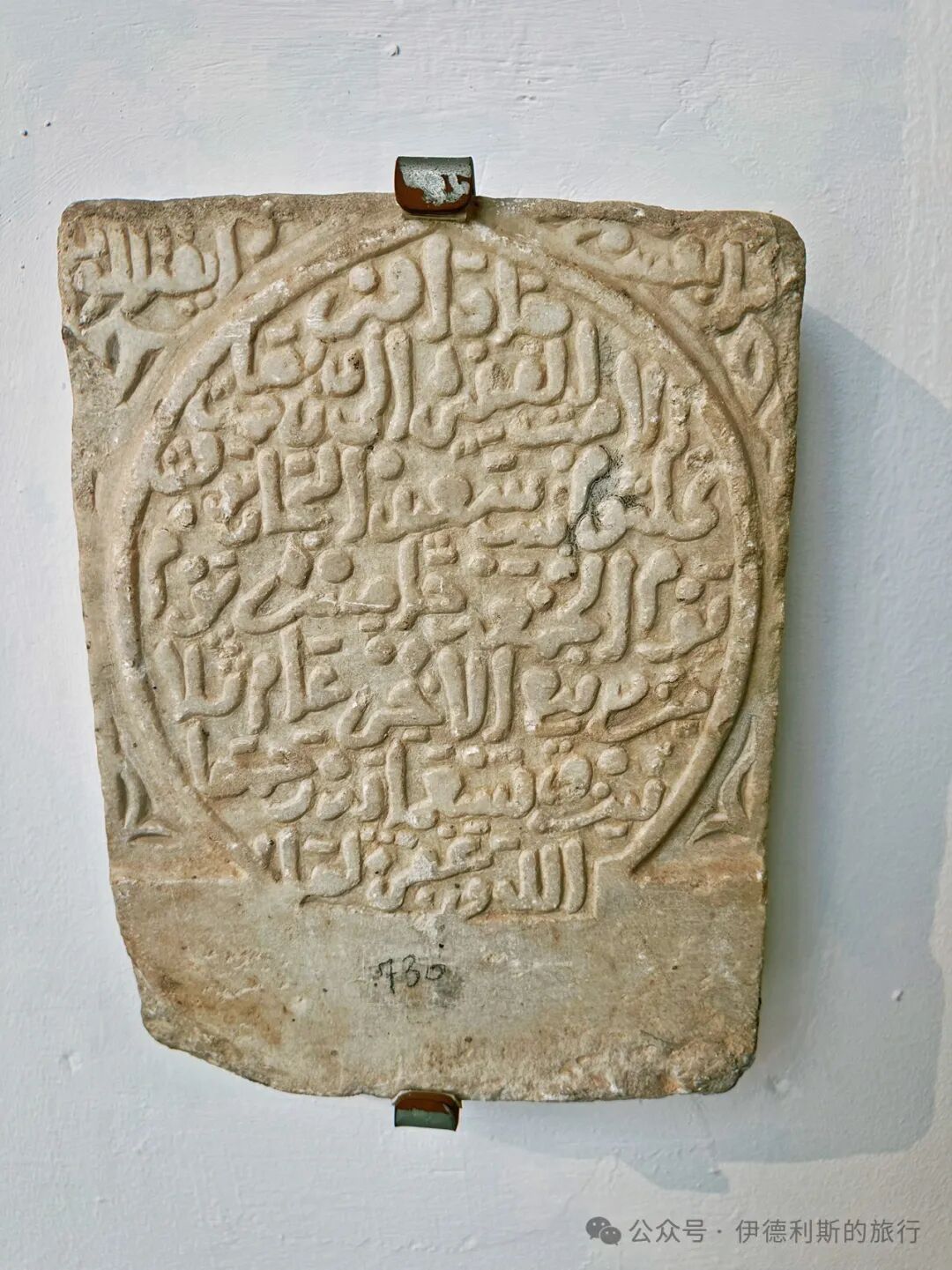
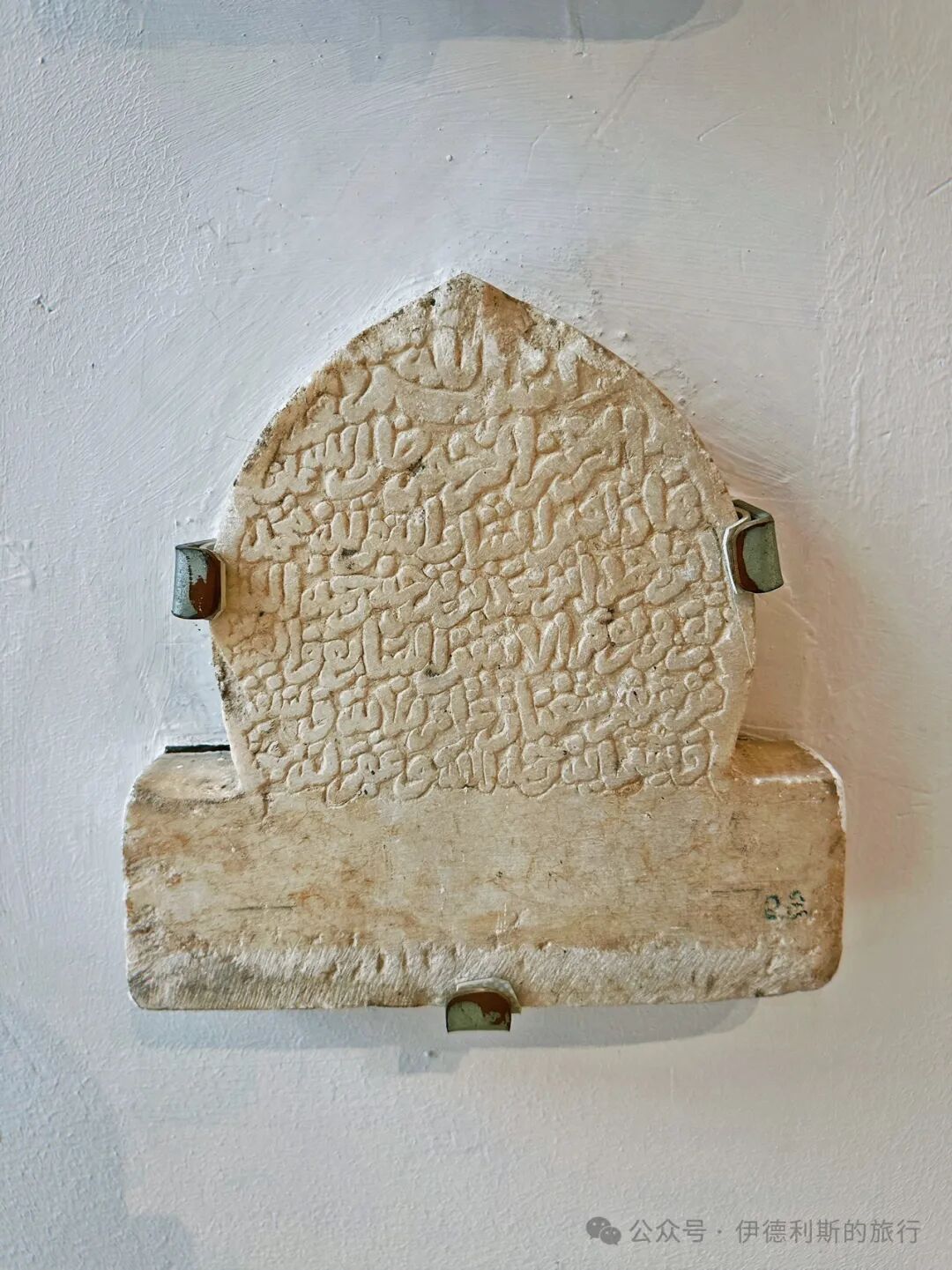
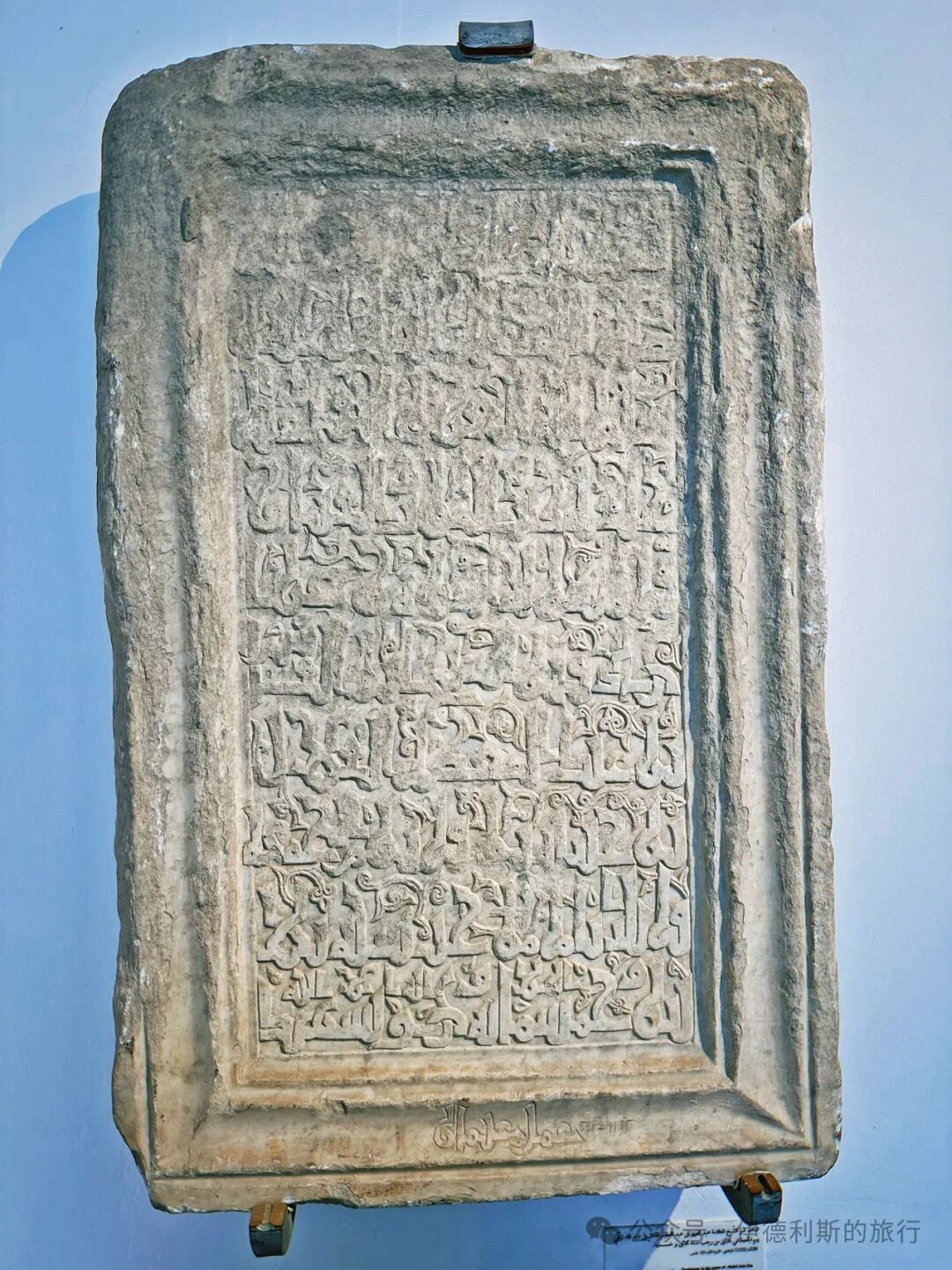
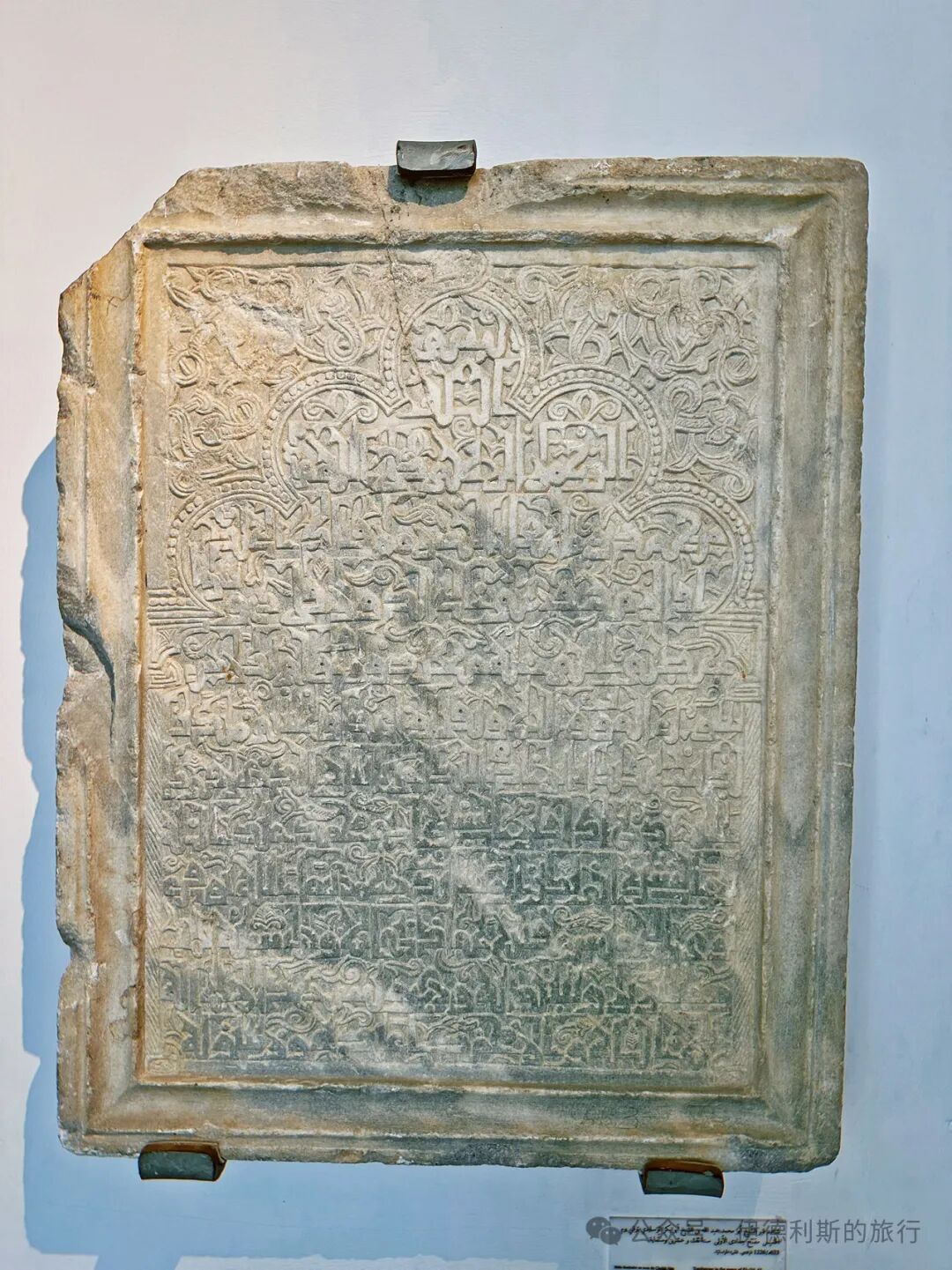
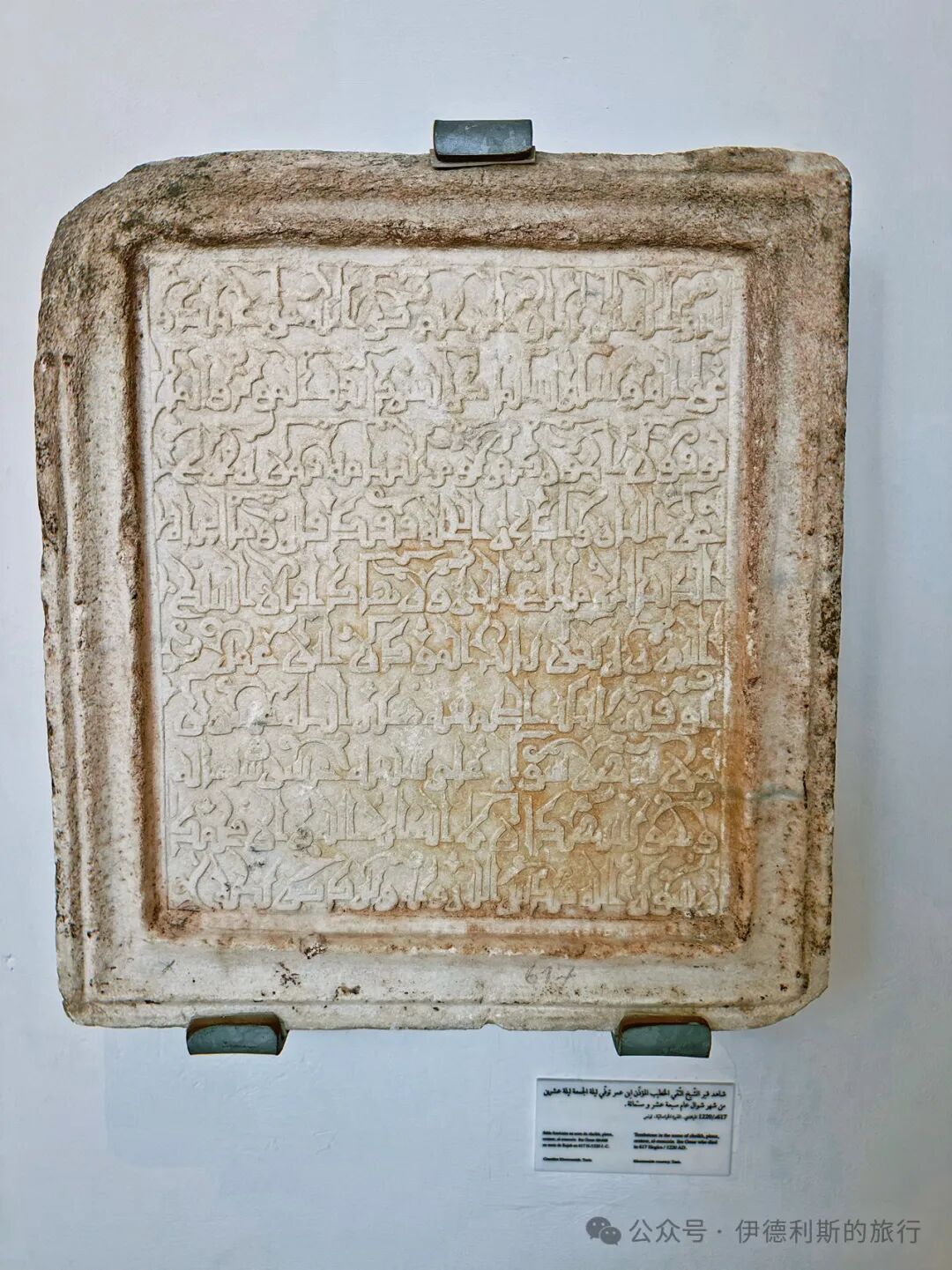
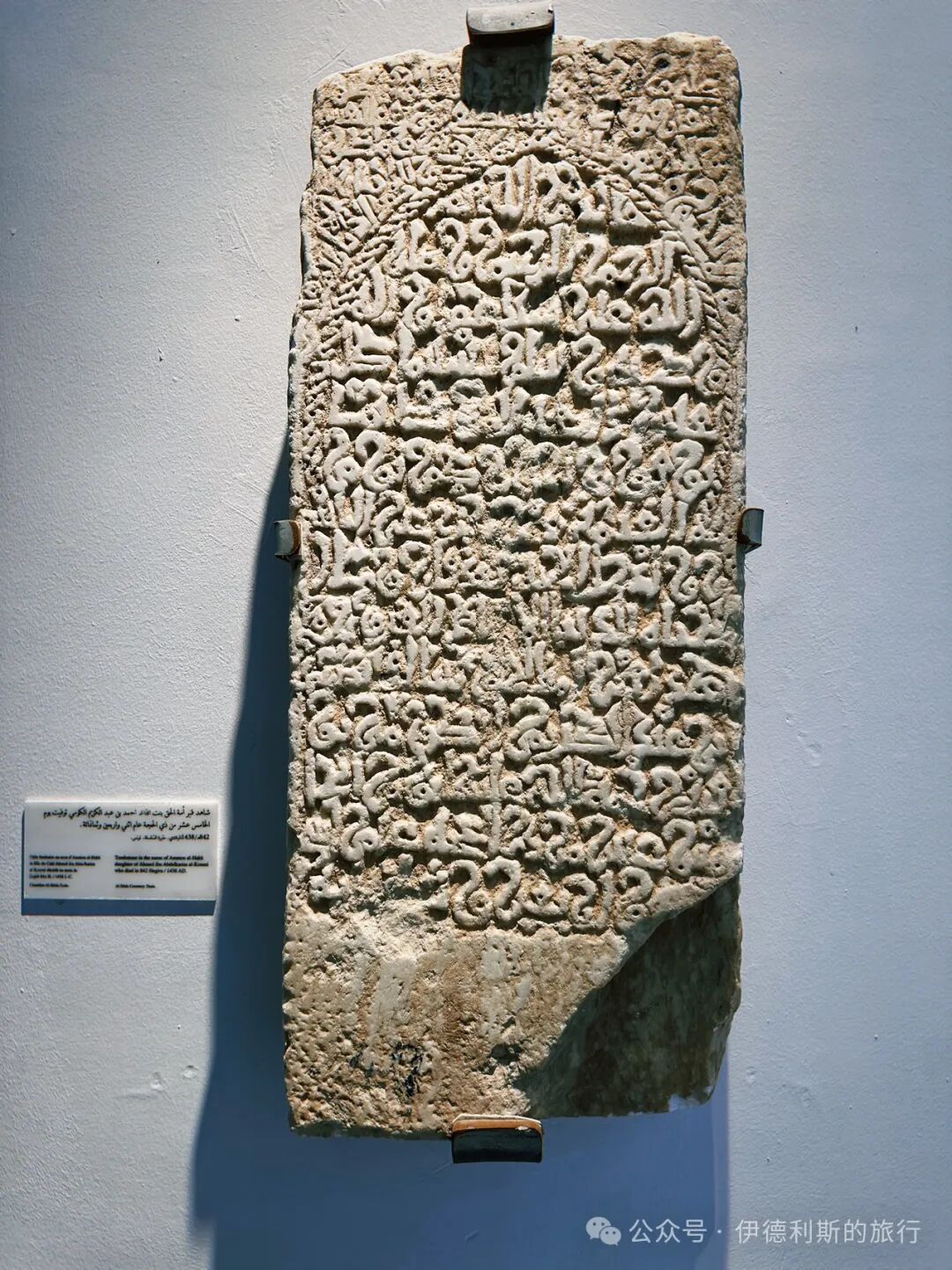
A 13th to 16th-century tombstone from Tunisia where you can see the local style of Arabic calligraphy.
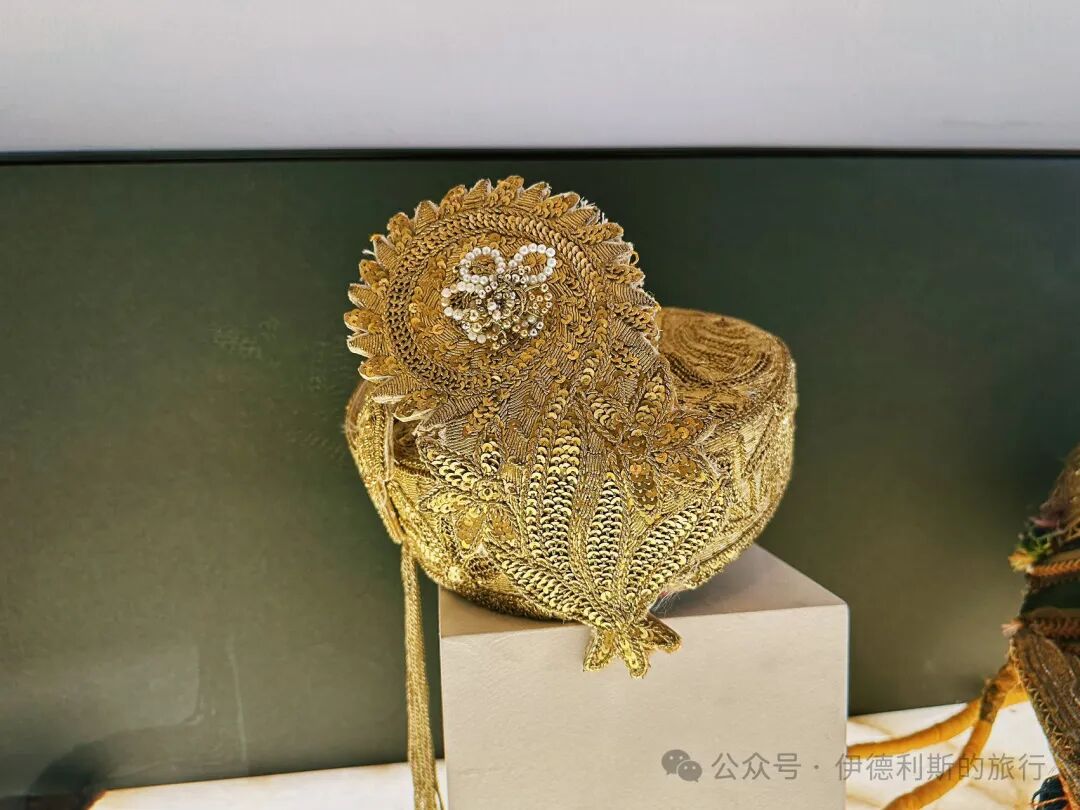
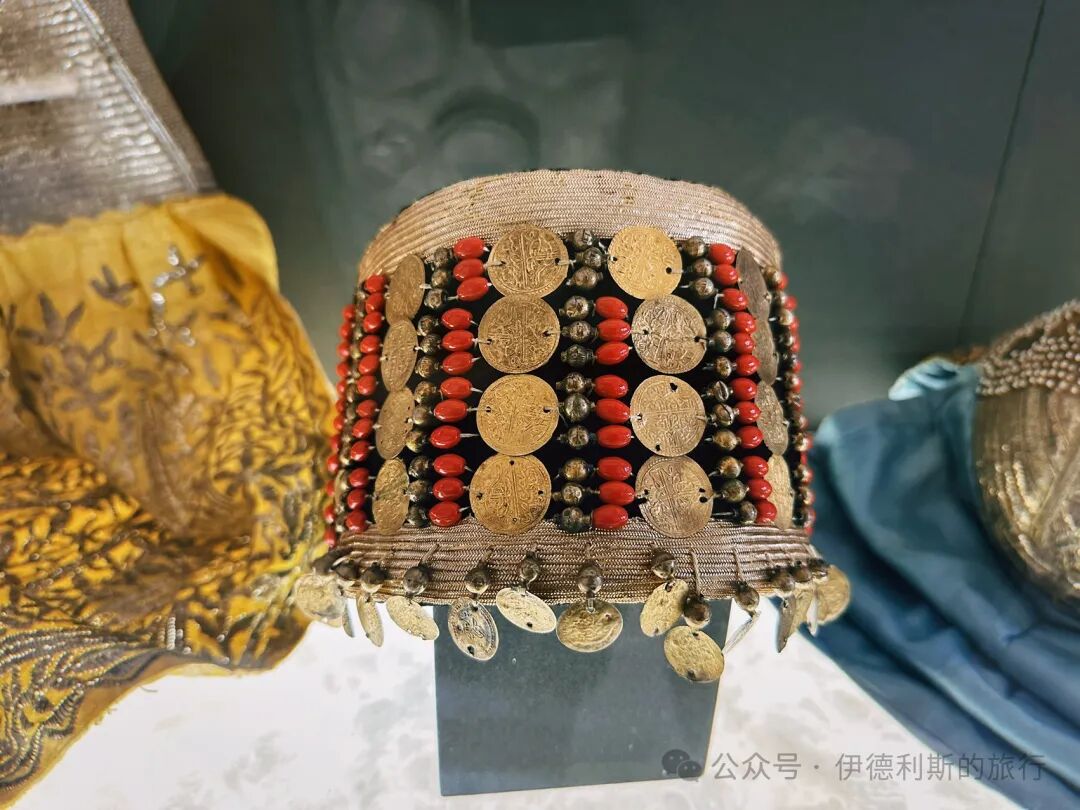
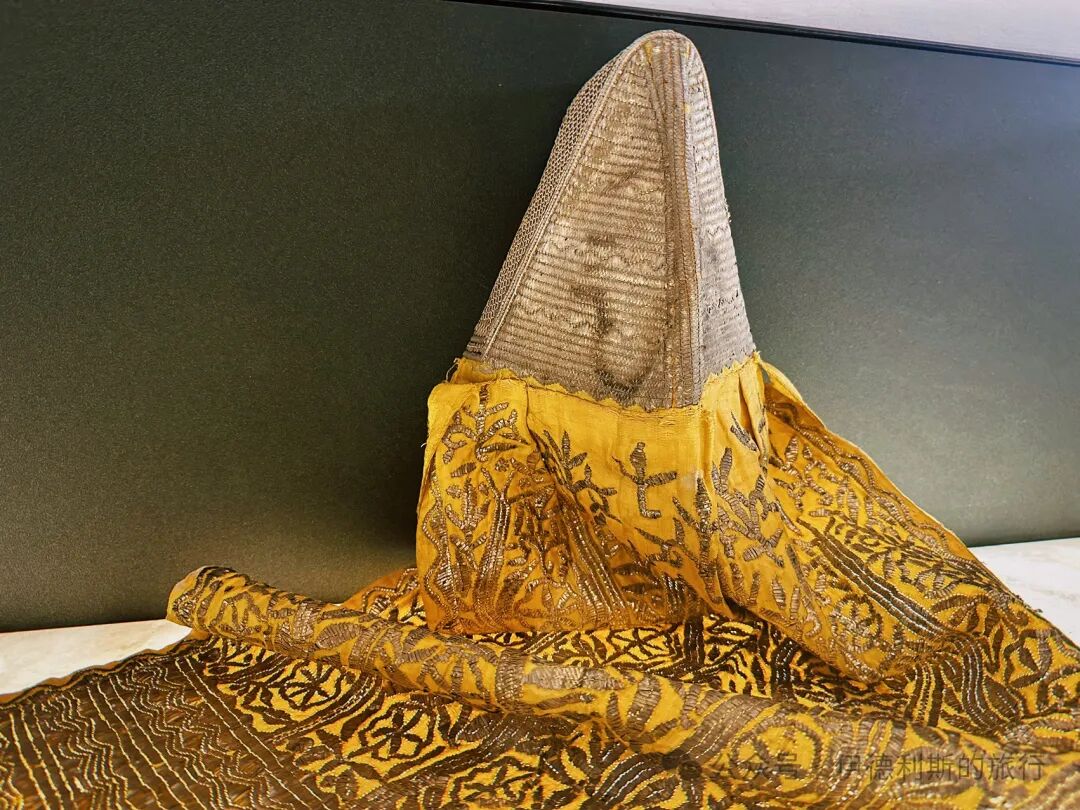
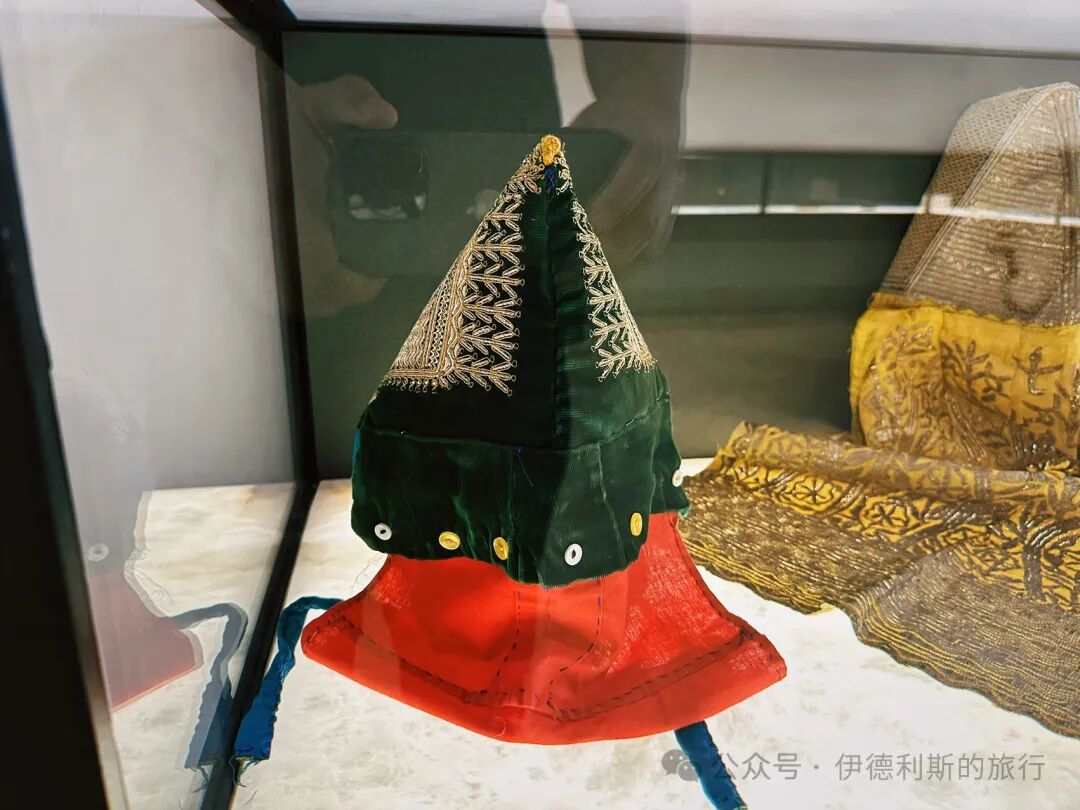
A traditional Tunisian women's headpiece.
Summary: This article visits the Bardo National Museum in Tunis, a major museum set inside a former palace and known for its historical collections and mosaics. It keeps the original museum details, photographs, object notes, and travel observations for readers interested in Tunisia's cultural heritage.
The National Museum of Tunisia is located inside the Bardo Palace, 4 kilometers west of the old Medina. The palace was first built in the 15th century. After the Ottoman dynasty took over in the 16th century, it was rebuilt and expanded many times, eventually becoming the main residence of the Husainid Beys (1705-1957).
The Husainid dynasty was a Beylik nominally under the Ottoman Empire. Its founder, Husain, was an Ottoman officer of Greek Cretan descent. He was granted the title of Bey by the Ottoman Sultan in 1705 and began his rule over Tunisia. After the 19th century, the Husainid dynasty began trading heavily with European merchants, and in 1861, they issued the first constitution in the Arab world. However, economic decline and social unrest in the late 19th century led to Tunisia becoming a French protectorate in 1881.
In 1882, Tunisia and France jointly established the Tunisian Office of Antiquities and Arts, which immediately began converting the old harem of the Bardo Palace into a museum. After six years of restoration and collecting, the museum officially opened in 1888.
The museum houses the Small Palace, built by Husain II Bey between 1824 and 1835. The palace was built in the Andalusian Moorish style, featuring a T-shaped main hall and a central courtyard with a pool.
Tile and plaster decorations inside the Small Palace of Husain II.
The reception hall and harem built by Muhammad III Bey between 1859 and 1864 feature both Italian and Tunisian styles.
Muhammad III Bey issued the first written constitution in the Arab world in 1861, which separated executive, legislative, and judicial powers and guaranteed equal rights for Muslims, Christians, and Jews. After the new constitution was issued, European merchants and secular schools began to appear in Tunisia.
The Blue Quran manuscript in the National Museum of Tunisia is a very famous religious manuscript in the world. This scripture uses parchment dyed with indigo, with ink outlining the text and gold leaf applied on top. The calligraphy is in the early Kufic script, which lacks sharp angles and vowel marks.
The origin of the Blue Quran is still highly debated, with theories pointing to Kairouan in Tunisia, Cordoba in Spain, Mashhad in Iran, or Iraq, dating back to the 9th or 10th century. The records say the Blue Quran was kept in the Great Mosque of Kairouan after the 14th century. It was broken up during the Ottoman period, but most of it remains in Kairouan, while other parts are held by major museums and collectors.
Quran manuscripts from the 8th to 12th centuries held by the Great Mosque of Kairouan in Tunisia.
The library of the Great Mosque of Kairouan holds a large number of manuscripts and established a catalog as early as the 13th century. to scriptures, these manuscripts include books related to the Maliki school of thought, which are also the oldest documents of the Maliki school.
Tunisian Qallaline tiles from the 17th and 18th centuries. These tiles are named after the Qallaline region of Tunisia. They were influenced by Ottoman tile art but developed their own unique style.
A marble carving from the 10th-century Fatimid period in Mahdia, Tunisia, depicting a Fatimid prince. A glazed bowl with Kufic script from the Fatimid dynasty period in Mahdia.
The ancient city of Mahdia was built by the Fatimid dynasty between 916 and 921, and it became the capital of the Tunisia region after its completion. Before this, the capital of the Tunisia region was Kairouan, which was dominated by Sunnis. Because of this, the Shia Fatimid dynasty built a new capital on the Mediterranean coast, far away from Kairouan. Once finished, Mahdia included thick city walls, palaces, a harbor, and a great mosque. Unfortunately, none of the surface buildings survived. Now, you can only see artifacts unearthed through archaeological excavations in museums.
Exquisite 11th-century marble carvings with Kufic script.
A 10th-century wood carving from Egypt.
A 13th to 16th-century tombstone from Tunisia where you can see the local style of Arabic calligraphy.
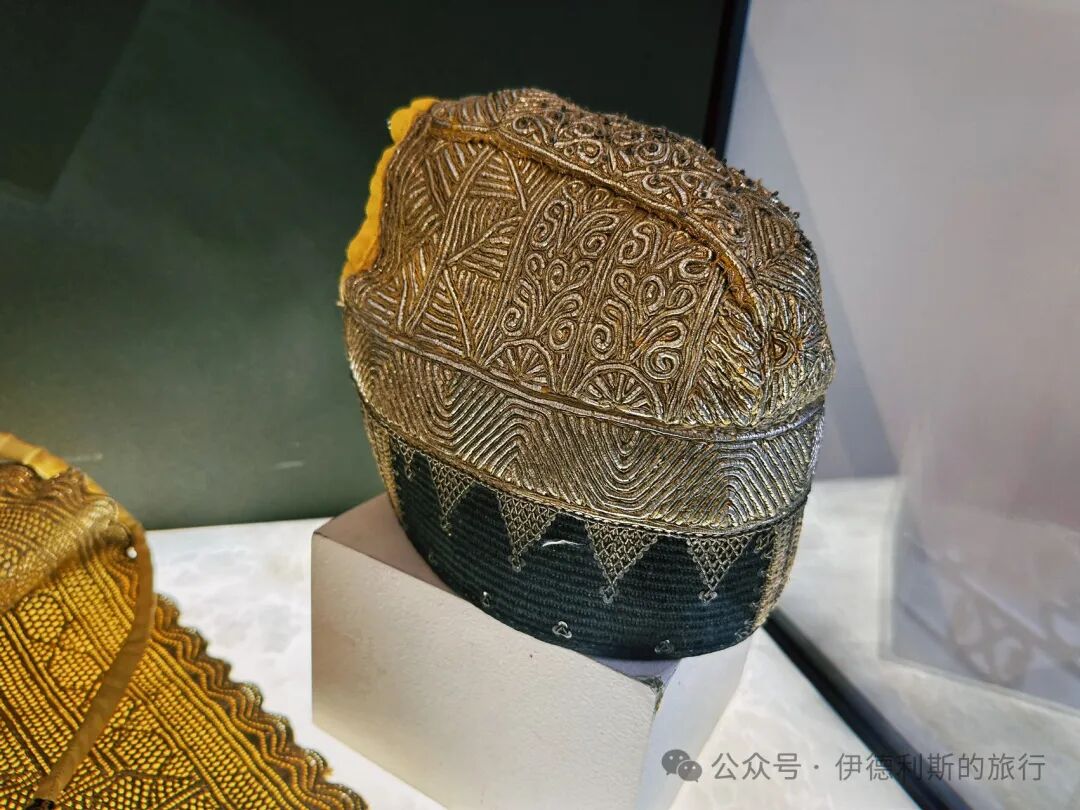
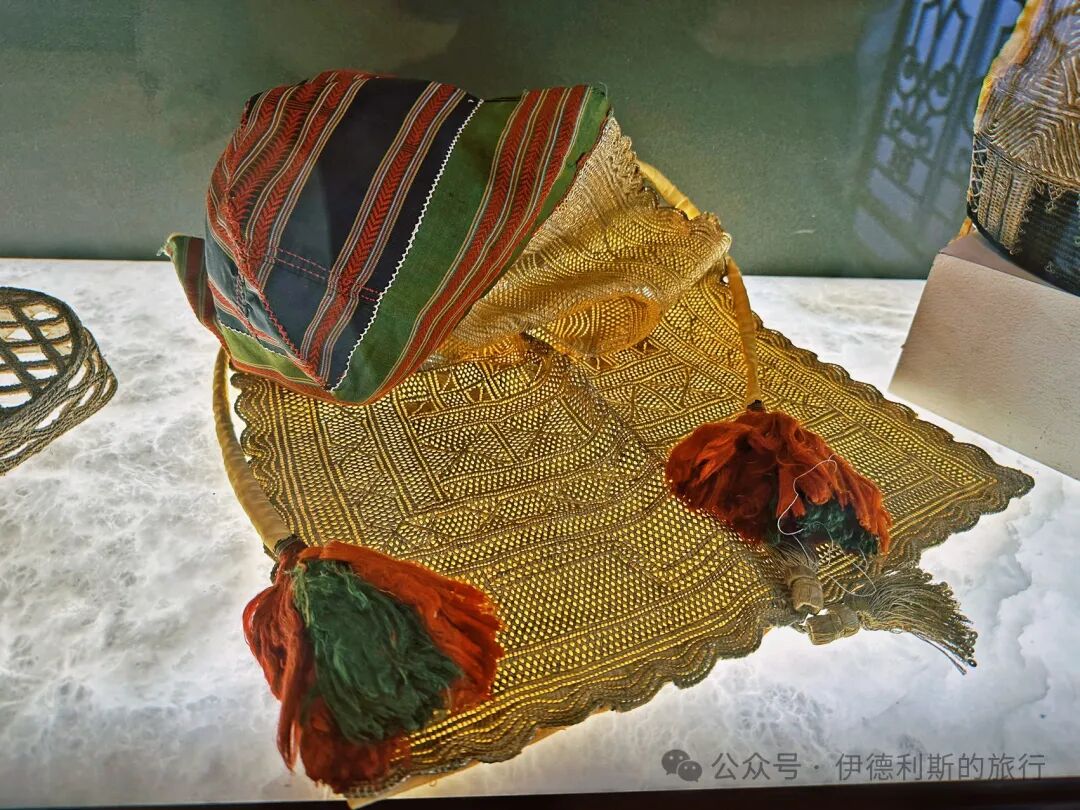
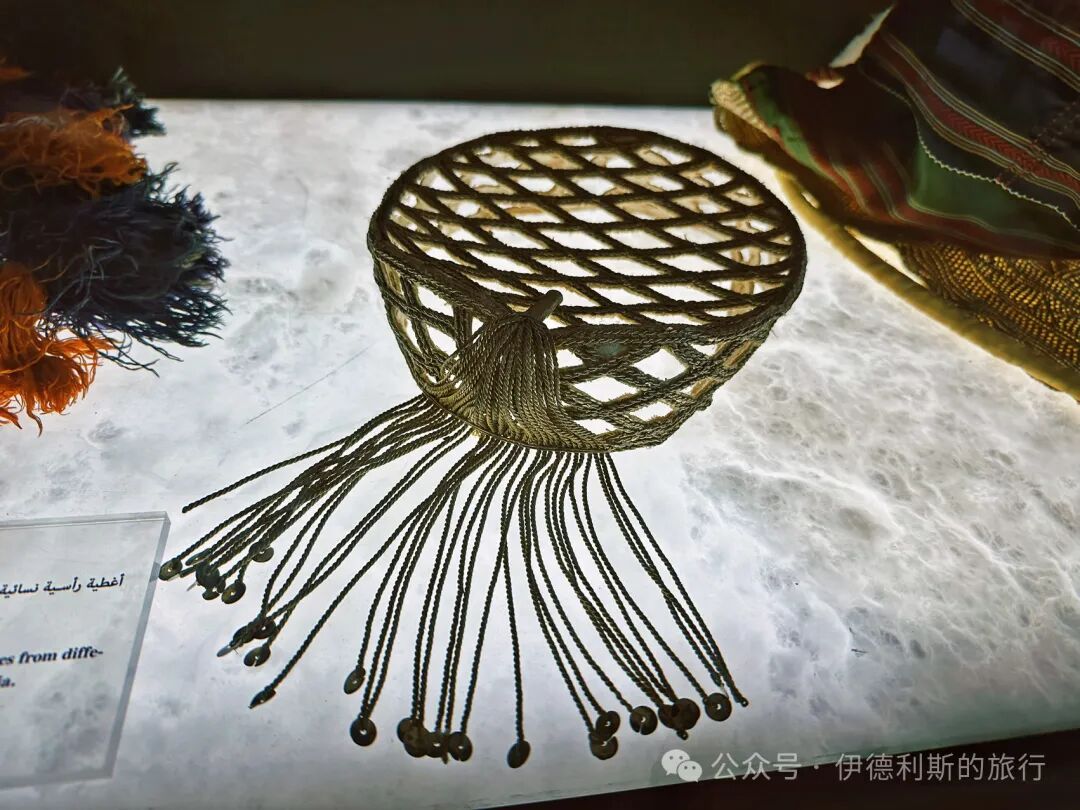
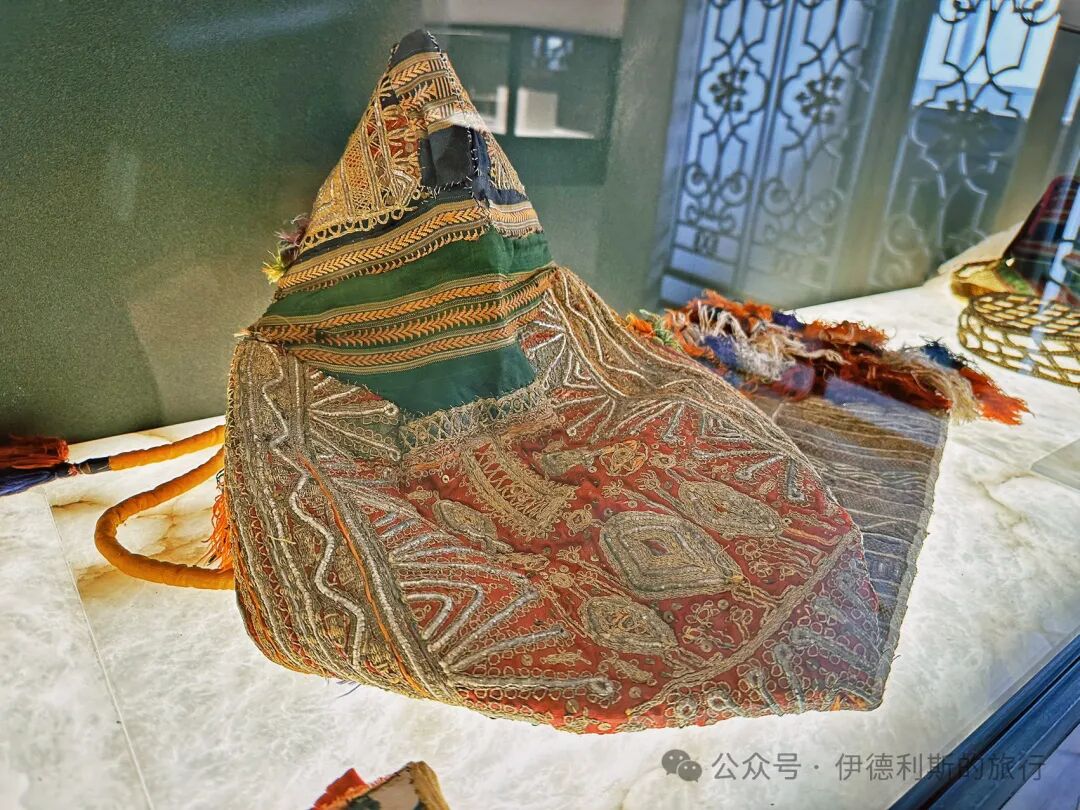
A traditional Tunisian women's headpiece.
Museum Guide: Tunis Bardo National Museum - Palace, Mosaics and History
Articles • ali2007fr posted the article • 0 comments • 252 views • 2026-05-19 22:20
Reposted from the web
Summary: This article visits the Bardo National Museum in Tunis, a major museum set inside a former palace and known for its historical collections and mosaics. It keeps the original museum details, photographs, object notes, and travel observations for readers interested in Tunisia's cultural heritage.
The National Museum of Tunisia is located inside the Bardo Palace, 4 kilometers west of the old Medina. The palace was first built in the 15th century. After the Ottoman dynasty took over in the 16th century, it was rebuilt and expanded many times, eventually becoming the main residence of the Husainid Beys (1705-1957).
The Husainid dynasty was a Beylik nominally under the Ottoman Empire. Its founder, Husain, was an Ottoman officer of Greek Cretan descent. He was granted the title of Bey by the Ottoman Sultan in 1705 and began his rule over Tunisia. After the 19th century, the Husainid dynasty began trading heavily with European merchants, and in 1861, they issued the first constitution in the Arab world. However, economic decline and social unrest in the late 19th century led to Tunisia becoming a French protectorate in 1881.
In 1882, Tunisia and France jointly established the Tunisian Office of Antiquities and Arts, which immediately began converting the old harem of the Bardo Palace into a museum. After six years of restoration and collecting, the museum officially opened in 1888.
The museum houses the Small Palace, built by Husain II Bey between 1824 and 1835. The palace was built in the Andalusian Moorish style, featuring a T-shaped main hall and a central courtyard with a pool.
Tile and plaster decorations inside the Small Palace of Husain II.
The reception hall and harem built by Muhammad III Bey between 1859 and 1864 feature both Italian and Tunisian styles.
Muhammad III Bey issued the first written constitution in the Arab world in 1861, which separated executive, legislative, and judicial powers and guaranteed equal rights for Muslims, Christians, and Jews. After the new constitution was issued, European merchants and secular schools began to appear in Tunisia.
The Blue Quran manuscript in the National Museum of Tunisia is a very famous religious manuscript in the world. This scripture uses parchment dyed with indigo, with ink outlining the text and gold leaf applied on top. The calligraphy is in the early Kufic script, which lacks sharp angles and vowel marks.
The origin of the Blue Quran is still highly debated, with theories pointing to Kairouan in Tunisia, Cordoba in Spain, Mashhad in Iran, or Iraq, dating back to the 9th or 10th century. The records say the Blue Quran was kept in the Great Mosque of Kairouan after the 14th century. It was broken up during the Ottoman period, but most of it remains in Kairouan, while other parts are held by major museums and collectors.
Quran manuscripts from the 8th to 12th centuries held by the Great Mosque of Kairouan in Tunisia.
The library of the Great Mosque of Kairouan holds a large number of manuscripts and established a catalog as early as the 13th century. to scriptures, these manuscripts include books related to the Maliki school of thought, which are also the oldest documents of the Maliki school.
Tunisian Qallaline tiles from the 17th and 18th centuries. These tiles are named after the Qallaline region of Tunisia. They were influenced by Ottoman tile art but developed their own unique style.
A marble carving from the 10th-century Fatimid period in Mahdia, Tunisia, depicting a Fatimid prince. A glazed bowl with Kufic script from the Fatimid dynasty period in Mahdia.
The ancient city of Mahdia was built by the Fatimid dynasty between 916 and 921, and it became the capital of the Tunisia region after its completion. Before this, the capital of the Tunisia region was Kairouan, which was dominated by Sunnis. Because of this, the Shia Fatimid dynasty built a new capital on the Mediterranean coast, far away from Kairouan. Once finished, Mahdia included thick city walls, palaces, a harbor, and a great mosque. Unfortunately, none of the surface buildings survived. Now, you can only see artifacts unearthed through archaeological excavations in museums.
Exquisite 11th-century marble carvings with Kufic script.
A 10th-century wood carving from Egypt.
A 13th to 16th-century tombstone from Tunisia where you can see the local style of Arabic calligraphy.
A traditional Tunisian women's headpiece. view all
Summary: This article visits the Bardo National Museum in Tunis, a major museum set inside a former palace and known for its historical collections and mosaics. It keeps the original museum details, photographs, object notes, and travel observations for readers interested in Tunisia's cultural heritage.
The National Museum of Tunisia is located inside the Bardo Palace, 4 kilometers west of the old Medina. The palace was first built in the 15th century. After the Ottoman dynasty took over in the 16th century, it was rebuilt and expanded many times, eventually becoming the main residence of the Husainid Beys (1705-1957).
The Husainid dynasty was a Beylik nominally under the Ottoman Empire. Its founder, Husain, was an Ottoman officer of Greek Cretan descent. He was granted the title of Bey by the Ottoman Sultan in 1705 and began his rule over Tunisia. After the 19th century, the Husainid dynasty began trading heavily with European merchants, and in 1861, they issued the first constitution in the Arab world. However, economic decline and social unrest in the late 19th century led to Tunisia becoming a French protectorate in 1881.
In 1882, Tunisia and France jointly established the Tunisian Office of Antiquities and Arts, which immediately began converting the old harem of the Bardo Palace into a museum. After six years of restoration and collecting, the museum officially opened in 1888.
The museum houses the Small Palace, built by Husain II Bey between 1824 and 1835. The palace was built in the Andalusian Moorish style, featuring a T-shaped main hall and a central courtyard with a pool.
Tile and plaster decorations inside the Small Palace of Husain II.
The reception hall and harem built by Muhammad III Bey between 1859 and 1864 feature both Italian and Tunisian styles.
Muhammad III Bey issued the first written constitution in the Arab world in 1861, which separated executive, legislative, and judicial powers and guaranteed equal rights for Muslims, Christians, and Jews. After the new constitution was issued, European merchants and secular schools began to appear in Tunisia.
The Blue Quran manuscript in the National Museum of Tunisia is a very famous religious manuscript in the world. This scripture uses parchment dyed with indigo, with ink outlining the text and gold leaf applied on top. The calligraphy is in the early Kufic script, which lacks sharp angles and vowel marks.
The origin of the Blue Quran is still highly debated, with theories pointing to Kairouan in Tunisia, Cordoba in Spain, Mashhad in Iran, or Iraq, dating back to the 9th or 10th century. The records say the Blue Quran was kept in the Great Mosque of Kairouan after the 14th century. It was broken up during the Ottoman period, but most of it remains in Kairouan, while other parts are held by major museums and collectors.
Quran manuscripts from the 8th to 12th centuries held by the Great Mosque of Kairouan in Tunisia.
The library of the Great Mosque of Kairouan holds a large number of manuscripts and established a catalog as early as the 13th century. to scriptures, these manuscripts include books related to the Maliki school of thought, which are also the oldest documents of the Maliki school.
Tunisian Qallaline tiles from the 17th and 18th centuries. These tiles are named after the Qallaline region of Tunisia. They were influenced by Ottoman tile art but developed their own unique style.
A marble carving from the 10th-century Fatimid period in Mahdia, Tunisia, depicting a Fatimid prince. A glazed bowl with Kufic script from the Fatimid dynasty period in Mahdia.
The ancient city of Mahdia was built by the Fatimid dynasty between 916 and 921, and it became the capital of the Tunisia region after its completion. Before this, the capital of the Tunisia region was Kairouan, which was dominated by Sunnis. Because of this, the Shia Fatimid dynasty built a new capital on the Mediterranean coast, far away from Kairouan. Once finished, Mahdia included thick city walls, palaces, a harbor, and a great mosque. Unfortunately, none of the surface buildings survived. Now, you can only see artifacts unearthed through archaeological excavations in museums.
Exquisite 11th-century marble carvings with Kufic script.
A 10th-century wood carving from Egypt.
A 13th to 16th-century tombstone from Tunisia where you can see the local style of Arabic calligraphy.
A traditional Tunisian women's headpiece. view all
Reposted from the web
Summary: This article visits the Bardo National Museum in Tunis, a major museum set inside a former palace and known for its historical collections and mosaics. It keeps the original museum details, photographs, object notes, and travel observations for readers interested in Tunisia's cultural heritage.
The National Museum of Tunisia is located inside the Bardo Palace, 4 kilometers west of the old Medina. The palace was first built in the 15th century. After the Ottoman dynasty took over in the 16th century, it was rebuilt and expanded many times, eventually becoming the main residence of the Husainid Beys (1705-1957).
The Husainid dynasty was a Beylik nominally under the Ottoman Empire. Its founder, Husain, was an Ottoman officer of Greek Cretan descent. He was granted the title of Bey by the Ottoman Sultan in 1705 and began his rule over Tunisia. After the 19th century, the Husainid dynasty began trading heavily with European merchants, and in 1861, they issued the first constitution in the Arab world. However, economic decline and social unrest in the late 19th century led to Tunisia becoming a French protectorate in 1881.
In 1882, Tunisia and France jointly established the Tunisian Office of Antiquities and Arts, which immediately began converting the old harem of the Bardo Palace into a museum. After six years of restoration and collecting, the museum officially opened in 1888.
The museum houses the Small Palace, built by Husain II Bey between 1824 and 1835. The palace was built in the Andalusian Moorish style, featuring a T-shaped main hall and a central courtyard with a pool.
Tile and plaster decorations inside the Small Palace of Husain II.
The reception hall and harem built by Muhammad III Bey between 1859 and 1864 feature both Italian and Tunisian styles.
Muhammad III Bey issued the first written constitution in the Arab world in 1861, which separated executive, legislative, and judicial powers and guaranteed equal rights for Muslims, Christians, and Jews. After the new constitution was issued, European merchants and secular schools began to appear in Tunisia.
The Blue Quran manuscript in the National Museum of Tunisia is a very famous religious manuscript in the world. This scripture uses parchment dyed with indigo, with ink outlining the text and gold leaf applied on top. The calligraphy is in the early Kufic script, which lacks sharp angles and vowel marks.
The origin of the Blue Quran is still highly debated, with theories pointing to Kairouan in Tunisia, Cordoba in Spain, Mashhad in Iran, or Iraq, dating back to the 9th or 10th century. The records say the Blue Quran was kept in the Great Mosque of Kairouan after the 14th century. It was broken up during the Ottoman period, but most of it remains in Kairouan, while other parts are held by major museums and collectors.
Quran manuscripts from the 8th to 12th centuries held by the Great Mosque of Kairouan in Tunisia.
The library of the Great Mosque of Kairouan holds a large number of manuscripts and established a catalog as early as the 13th century. to scriptures, these manuscripts include books related to the Maliki school of thought, which are also the oldest documents of the Maliki school.
Tunisian Qallaline tiles from the 17th and 18th centuries. These tiles are named after the Qallaline region of Tunisia. They were influenced by Ottoman tile art but developed their own unique style.
A marble carving from the 10th-century Fatimid period in Mahdia, Tunisia, depicting a Fatimid prince. A glazed bowl with Kufic script from the Fatimid dynasty period in Mahdia.
The ancient city of Mahdia was built by the Fatimid dynasty between 916 and 921, and it became the capital of the Tunisia region after its completion. Before this, the capital of the Tunisia region was Kairouan, which was dominated by Sunnis. Because of this, the Shia Fatimid dynasty built a new capital on the Mediterranean coast, far away from Kairouan. Once finished, Mahdia included thick city walls, palaces, a harbor, and a great mosque. Unfortunately, none of the surface buildings survived. Now, you can only see artifacts unearthed through archaeological excavations in museums.
Exquisite 11th-century marble carvings with Kufic script.
A 10th-century wood carving from Egypt.
A 13th to 16th-century tombstone from Tunisia where you can see the local style of Arabic calligraphy.
A traditional Tunisian women's headpiece.
Summary: This article visits the Bardo National Museum in Tunis, a major museum set inside a former palace and known for its historical collections and mosaics. It keeps the original museum details, photographs, object notes, and travel observations for readers interested in Tunisia's cultural heritage.
The National Museum of Tunisia is located inside the Bardo Palace, 4 kilometers west of the old Medina. The palace was first built in the 15th century. After the Ottoman dynasty took over in the 16th century, it was rebuilt and expanded many times, eventually becoming the main residence of the Husainid Beys (1705-1957).
The Husainid dynasty was a Beylik nominally under the Ottoman Empire. Its founder, Husain, was an Ottoman officer of Greek Cretan descent. He was granted the title of Bey by the Ottoman Sultan in 1705 and began his rule over Tunisia. After the 19th century, the Husainid dynasty began trading heavily with European merchants, and in 1861, they issued the first constitution in the Arab world. However, economic decline and social unrest in the late 19th century led to Tunisia becoming a French protectorate in 1881.
In 1882, Tunisia and France jointly established the Tunisian Office of Antiquities and Arts, which immediately began converting the old harem of the Bardo Palace into a museum. After six years of restoration and collecting, the museum officially opened in 1888.
The museum houses the Small Palace, built by Husain II Bey between 1824 and 1835. The palace was built in the Andalusian Moorish style, featuring a T-shaped main hall and a central courtyard with a pool.
Tile and plaster decorations inside the Small Palace of Husain II.
The reception hall and harem built by Muhammad III Bey between 1859 and 1864 feature both Italian and Tunisian styles.
Muhammad III Bey issued the first written constitution in the Arab world in 1861, which separated executive, legislative, and judicial powers and guaranteed equal rights for Muslims, Christians, and Jews. After the new constitution was issued, European merchants and secular schools began to appear in Tunisia.
The Blue Quran manuscript in the National Museum of Tunisia is a very famous religious manuscript in the world. This scripture uses parchment dyed with indigo, with ink outlining the text and gold leaf applied on top. The calligraphy is in the early Kufic script, which lacks sharp angles and vowel marks.
The origin of the Blue Quran is still highly debated, with theories pointing to Kairouan in Tunisia, Cordoba in Spain, Mashhad in Iran, or Iraq, dating back to the 9th or 10th century. The records say the Blue Quran was kept in the Great Mosque of Kairouan after the 14th century. It was broken up during the Ottoman period, but most of it remains in Kairouan, while other parts are held by major museums and collectors.
Quran manuscripts from the 8th to 12th centuries held by the Great Mosque of Kairouan in Tunisia.
The library of the Great Mosque of Kairouan holds a large number of manuscripts and established a catalog as early as the 13th century. to scriptures, these manuscripts include books related to the Maliki school of thought, which are also the oldest documents of the Maliki school.
Tunisian Qallaline tiles from the 17th and 18th centuries. These tiles are named after the Qallaline region of Tunisia. They were influenced by Ottoman tile art but developed their own unique style.
A marble carving from the 10th-century Fatimid period in Mahdia, Tunisia, depicting a Fatimid prince. A glazed bowl with Kufic script from the Fatimid dynasty period in Mahdia.
The ancient city of Mahdia was built by the Fatimid dynasty between 916 and 921, and it became the capital of the Tunisia region after its completion. Before this, the capital of the Tunisia region was Kairouan, which was dominated by Sunnis. Because of this, the Shia Fatimid dynasty built a new capital on the Mediterranean coast, far away from Kairouan. Once finished, Mahdia included thick city walls, palaces, a harbor, and a great mosque. Unfortunately, none of the surface buildings survived. Now, you can only see artifacts unearthed through archaeological excavations in museums.
Exquisite 11th-century marble carvings with Kufic script.
A 10th-century wood carving from Egypt.
A 13th to 16th-century tombstone from Tunisia where you can see the local style of Arabic calligraphy.
A traditional Tunisian women's headpiece.