

Beijing Muslim Heritage
Ten Hui and Islamic Historic Sites in Beijing: A Muslim Heritage Walking Guide
Articles • ali2007fr posted the article • 0 comments • 158 views • 2026-05-17 08:19
Reposted from the web
Summary: This travel note introduces Ten Hui and Islamic Historic Sites in Beijing: A Muslim Heritage Walking Guide. Unable to leave Beijing for a year, I was finally able to take a good look at the old Hui Muslim historical sites scattered throughout the city. Below, I share ten of them with you. It is useful for readers interested in Beijing Muslim Heritage, Hui Muslims, Historic Sites.
Unable to leave Beijing for a year, I was finally able to take a good look at the old Hui Muslim historical sites scattered throughout the city. Below, I share ten of them with you.
1. Yuanshun Biaoju (Escort Agency) on Xibanbi Street, Zhushikou, outside Qianmen.
2. The stone stele of the Sanlihe Mosque inside Wuta Mosque.
3. The Salar ethnic group minaret from the Qing Dynasty inside the Museum of Chinese Ethnic Cultures.
4. The former residence of Ma Fuxiang on Xisi North Third Alley.
5. The mosque in the Old Summer Palace (Yuanmingyuan).
6. The Western-style building of the Mishi Hutong Mosque.
7. The storefront of the Jian'tang Wang Huihui Plaster Shop on Yangmeizhu Slanting Street, outside Qianmen.
8. The gate tower of the Qingzhen Yipinxian Bathhouse on Zongshu Slanting Street, outside Qianmen.
9. The storefront of the Ma Yinglong Eye Ointment Shop on Xiheyuan, outside Qianmen.
10. The brick-carved dua (supplication) on Jiaozihutong, Niujie.
1. Yuanshun Biaoju (Escort Agency) on Xibanbi Street, Zhushikou, outside Qianmen.
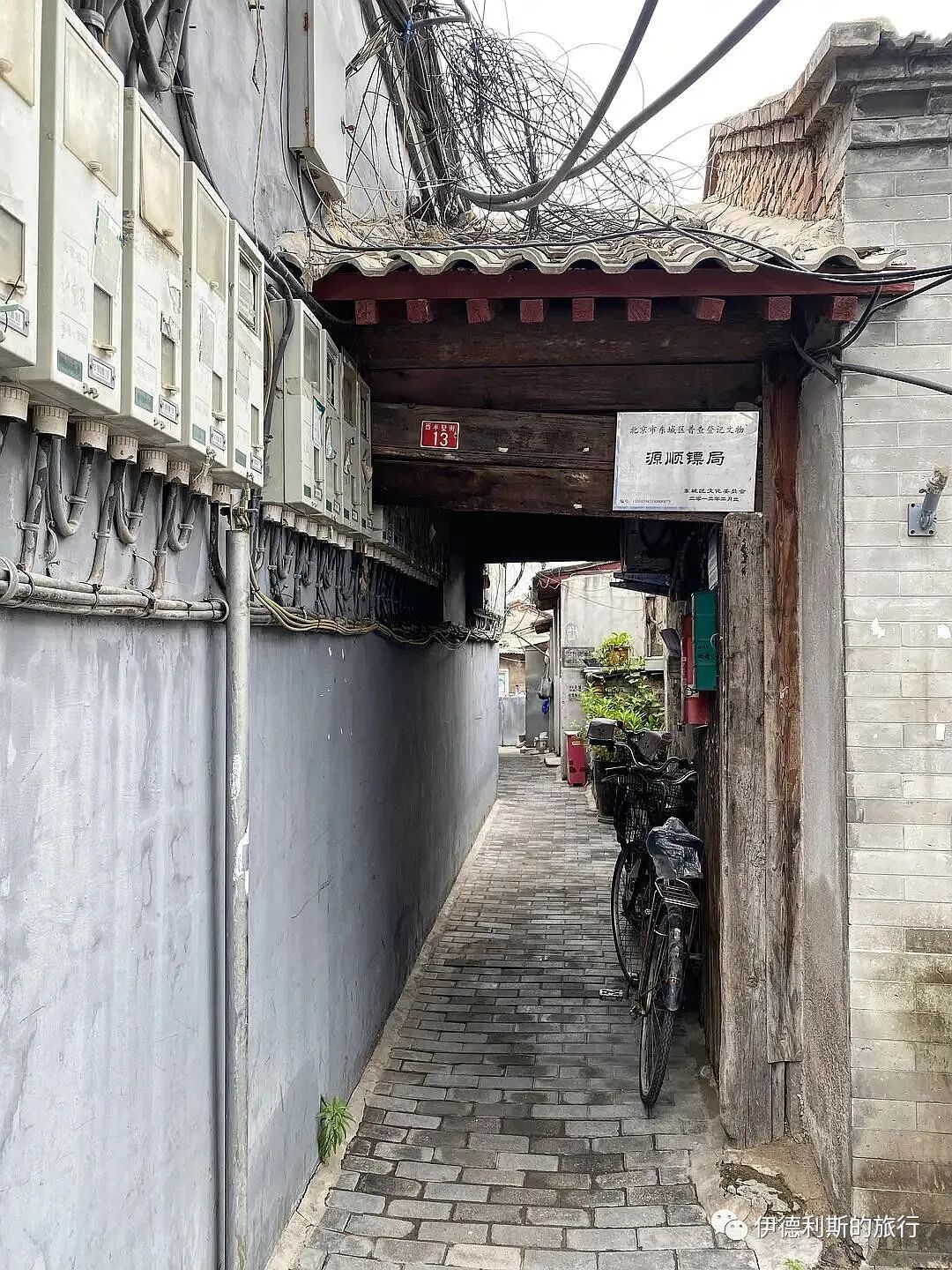
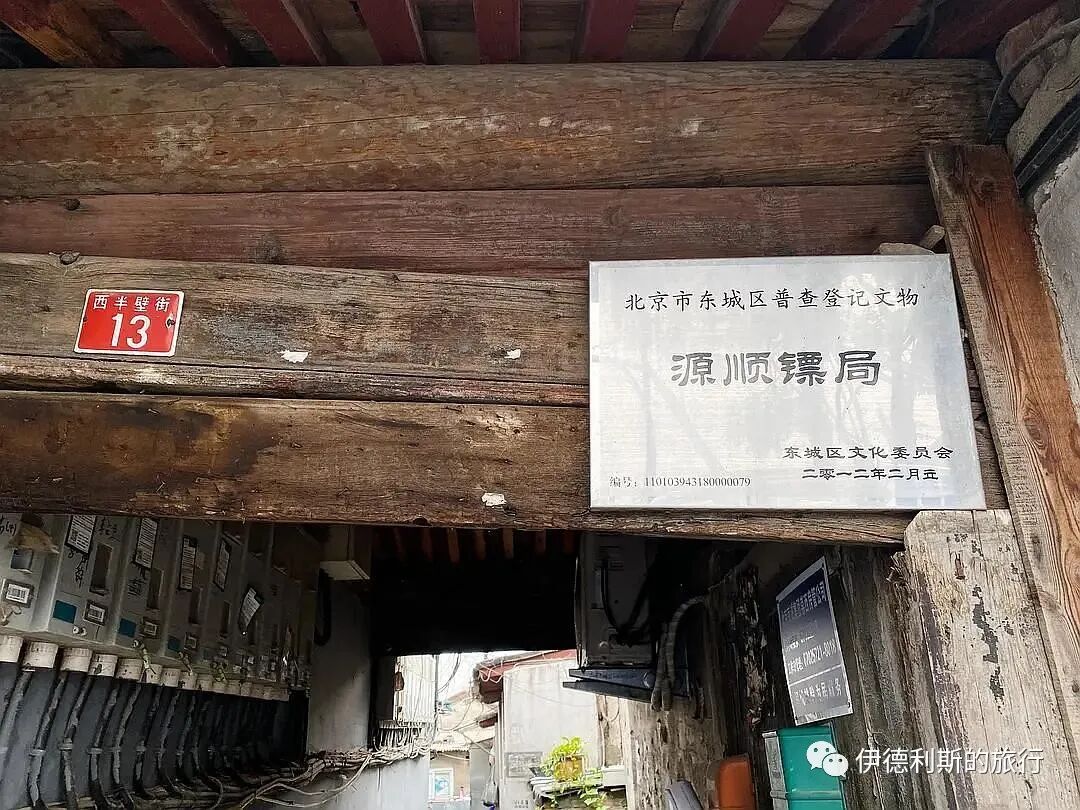
The Yuanshun Biaoju (Escort Agency) opened by the famous late Qing chivalrous hero Dadao Wang Wu at No. 13 Xibanbi Street, Zhushikou, outside Qianmen in Beijing.
Dadao Wang Wu, whose real name was Wang Zibin (1844-1900) and courtesy name was Zhengyi, was a Han Chinese from Cangzhou, Hebei. He loved martial arts from a young age and greatly admired Li Fenggang, the manager of the Chengxing Biaoju in Cangzhou. The Li family came from a Hui Muslim military household background during the Ming dynasty, having moved from Nanjing to settle in Cangzhou during the Yongle reign while 'escorting the emperor,' and their tradition of practicing martial arts has never been interrupted since. During the Tongzhi reign of the Qing Dynasty, Li Fenggang's uncle, Li Guanming, learned the Liuhe Quan (Six Harmonies Boxing) from the Cao family, a Hui Muslim family in Botou, and founded the 'Liuhe Men' (Six Harmonies School) in Cangzhou. Later, the Liuhe Men developed into the largest martial arts school in Cangzhou. Li Guanming opened the Chengxing Biaoju outside the south gate of Cangzhou, enjoyed high prestige in the martial arts world, and almost never lost an escort. Li Guanming later passed the escort agency to his nephew, Li Fenggang, who had followed his uncle to learn Liuhe boxing and weaponry since childhood and was skilled with double sabers, earning him the nickname 'Shuangdao Jiang' (General of the Double Sabers).
Wang Wu very much wanted to become Li Fenggang's student, but according to the school's rules, the Li family's Liuhe Men only taught those of the Islamic faith. Wang Wu was determined to convert to Islam, but his mother did not agree. According to the 1933 'Cang County Gazetteer,' it is recorded: 'Zhengyi's teacher was Li Fenggang. Fenggang was a follower of Islam, and Zhengyi wanted to study under him. Fenggang would not teach him because he was not of the faith. Zhengyi wanted to join the faith to prove his sincerity, but his mother would not allow it. Zhengyi knelt and pleaded with her repeatedly for over ten years before his mother finally agreed. He then learned everything from Fenggang before going to the capital, where he was initially called Little Wang Wu.' ”
In the early years of the Guangxu reign, at the age of thirty, Wang Wu set up his own business and opened the Yuanshun Biaoju at Zhushikou outside Qianmen in Beijing. According to Liang Qichao's 'Yinbingshi Shihua' (Poetry Talks from the Ice-Drinker's Studio): 'Wang Wu was a chivalrous hero of Youyan who made his living as an escort.' His sphere of influence reached as far north as Shanhaiguan and as far south as Qingjiangpu, and he spent his life helping the weak and punishing the strong. ” The Yuanshun Biaoju gradually became one of the eight major escort agencies in the capital, and Wang Wu became known as 'Dadao Wang Wu' (Big Saber Wang Wu) because of his skill with the single saber. Pingjiang Buxiaosheng's 'Modern Chivalrous Hero Biography,' serialized starting in 1923, is the pioneering work of modern Chinese martial arts novels. The novel features Dadao Wang Wu and Huo Yuanjia as the main characters. Through the depiction of the deep friendship between Wang Wu and Tan Sitong, his chivalrous actions to save Tan Sitong, and his heroic sacrifice during the invasion of China by the Eight-Nation Alliance, the heroic image of Dadao Wang Wu became deeply rooted in people's hearts.
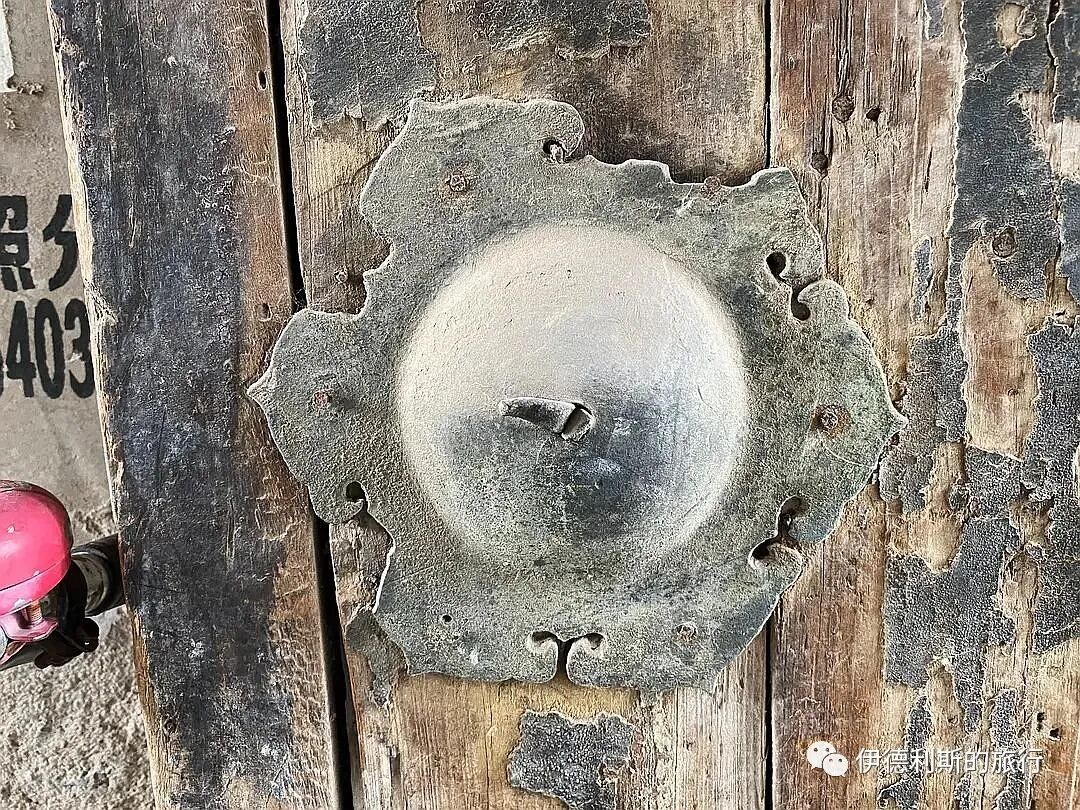
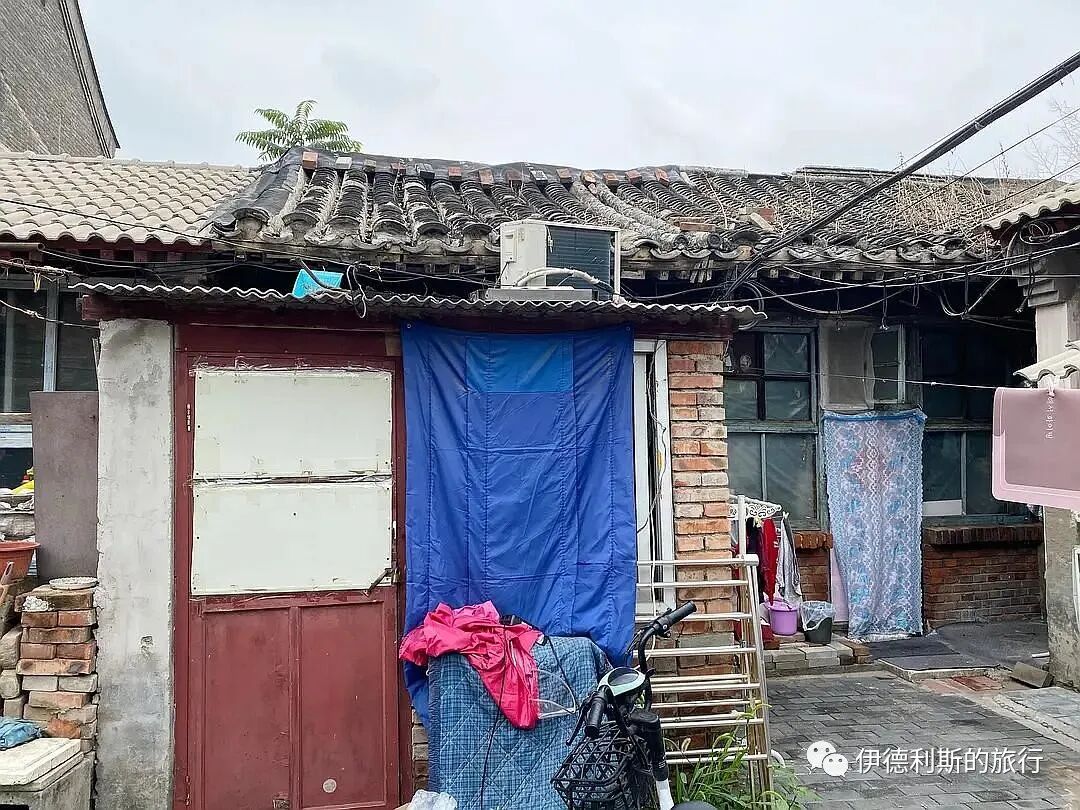
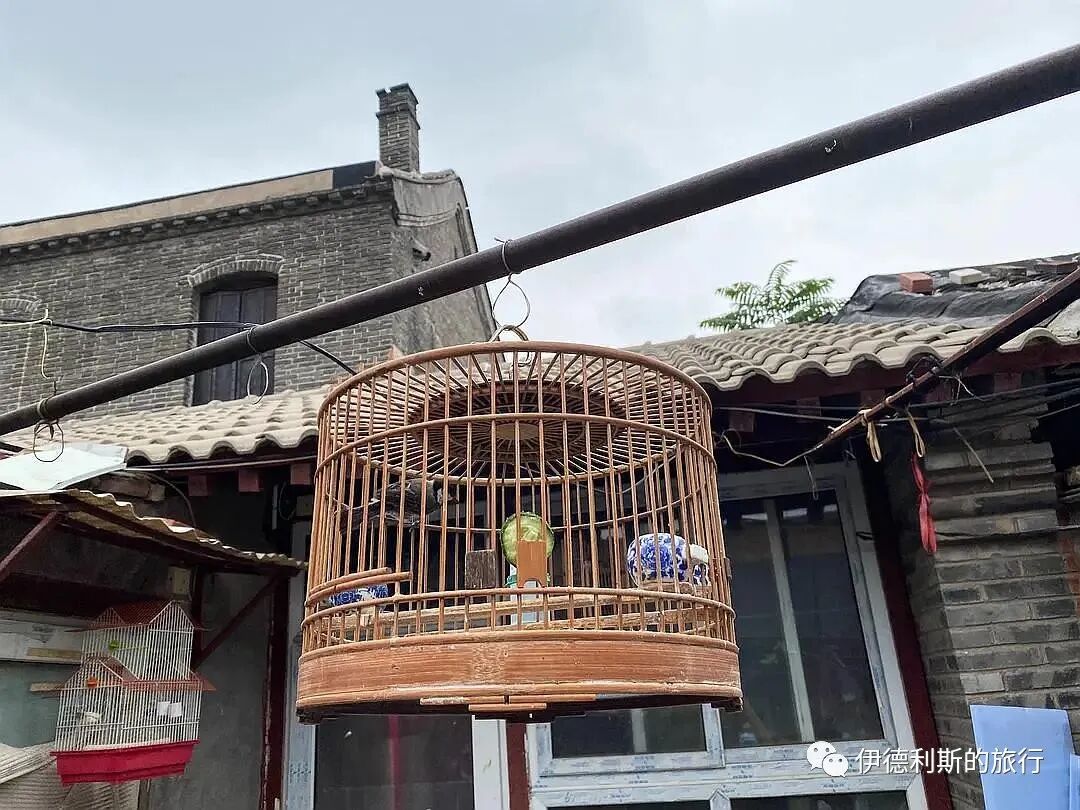
The Yuanshun Biaoju faces south, and the main gate was originally very spacious to allow escort carriages to pass through, but now most of it is occupied by a restroom. Only the western half of the original gate remains, and the door knocker on it is the one that Tan Sitong knocked on when he came to visit Dadao Wang Wu.
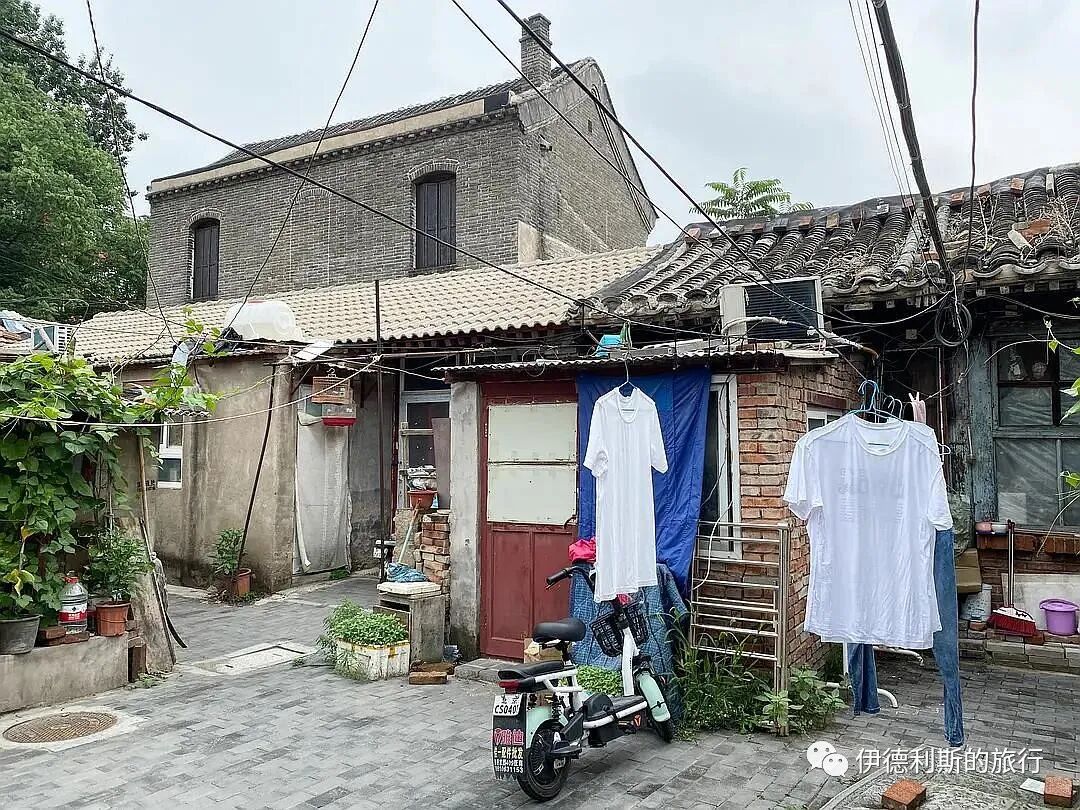
After entering the courtyard, there was originally a place to park escort carriages and horses. On the west side, there are three courtyards: the first was where Wang Wu performed his ritual washing and dua (prayer), the second and third were the living quarters for the escort guards, and the back courtyard contained the inner office, the storage room for escorted goods, and guest rooms. After the public-private partnership in the 1950s, the descendants of the Wang family only kept the south and north rooms of the back courtyard. The front courtyard became public housing, and after renovations by the housing management office, it is difficult to distinguish the original structure.
2. The stone stele of the Sanlihe Mosque inside Wuta Mosque.
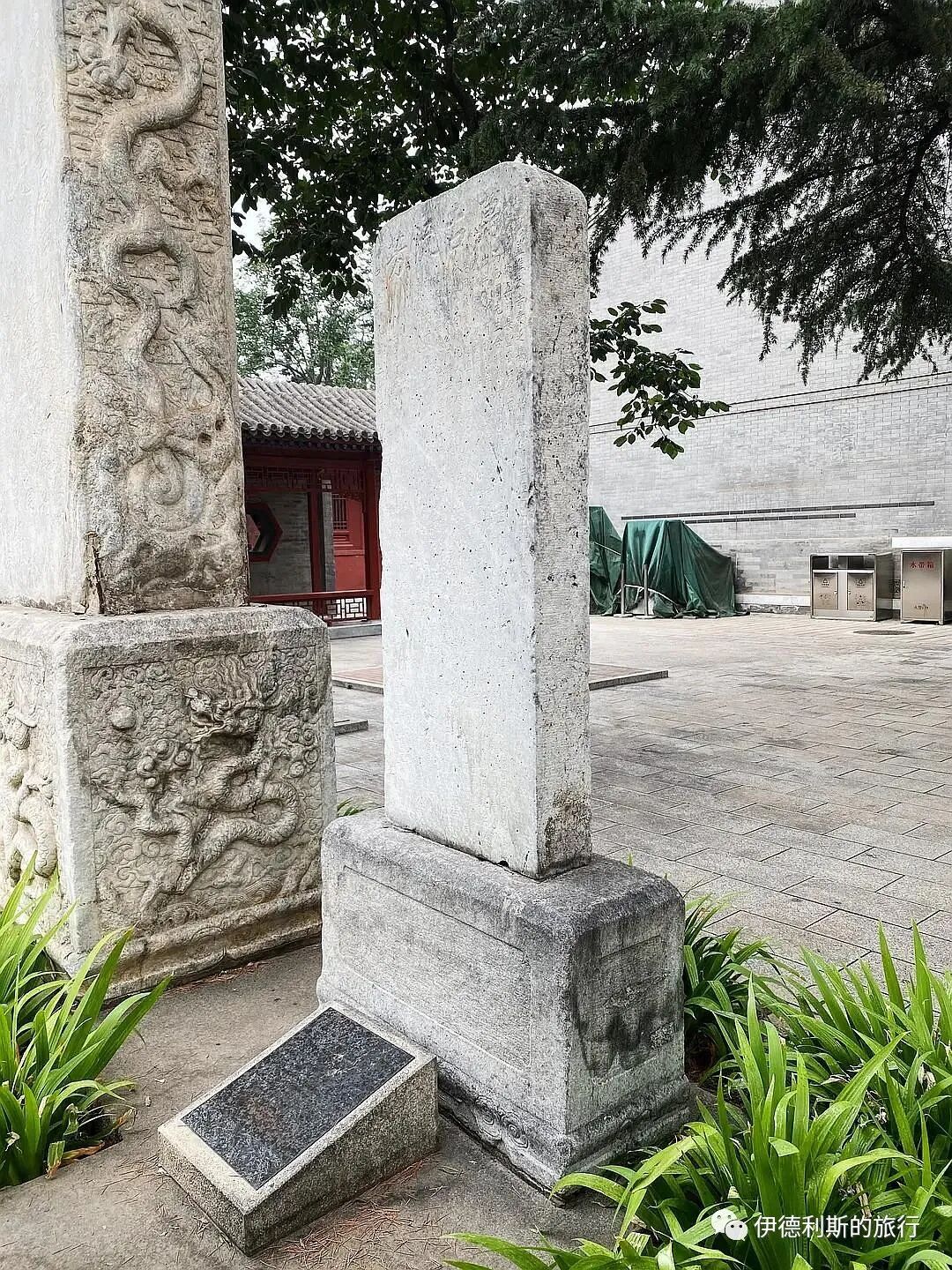
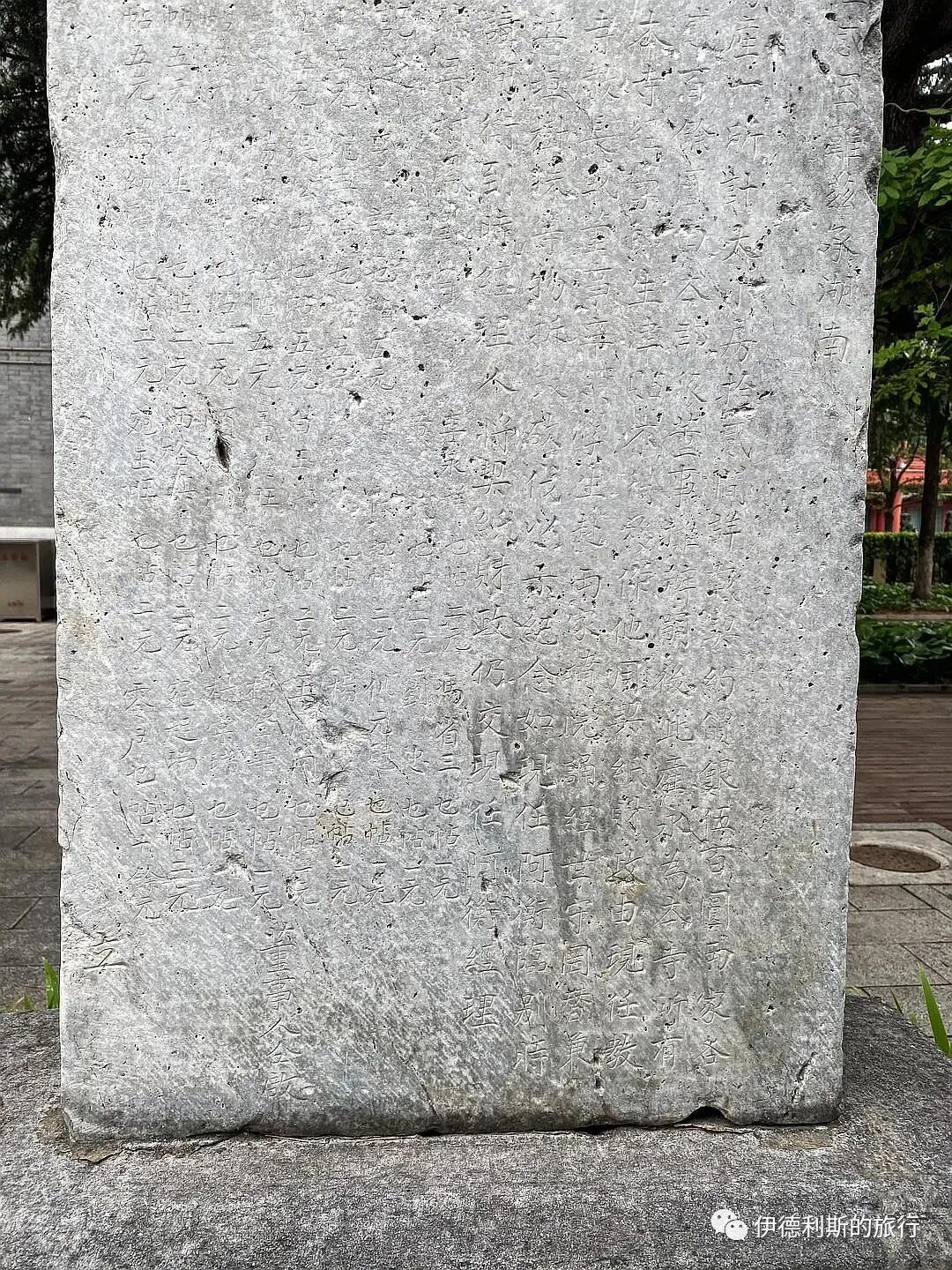
The Beijing Stone Carving Art Museum at Wuta Mosque houses a precious stele from the Republic of China era, recording how in 1934, the famous educator Ma Linyi and Ma Xiyuan, the father of the famous Peking Opera master Ma Lianliang, funded the students and teachers of the Sanlihe Mosque outside Fuchengmen, Beijing.
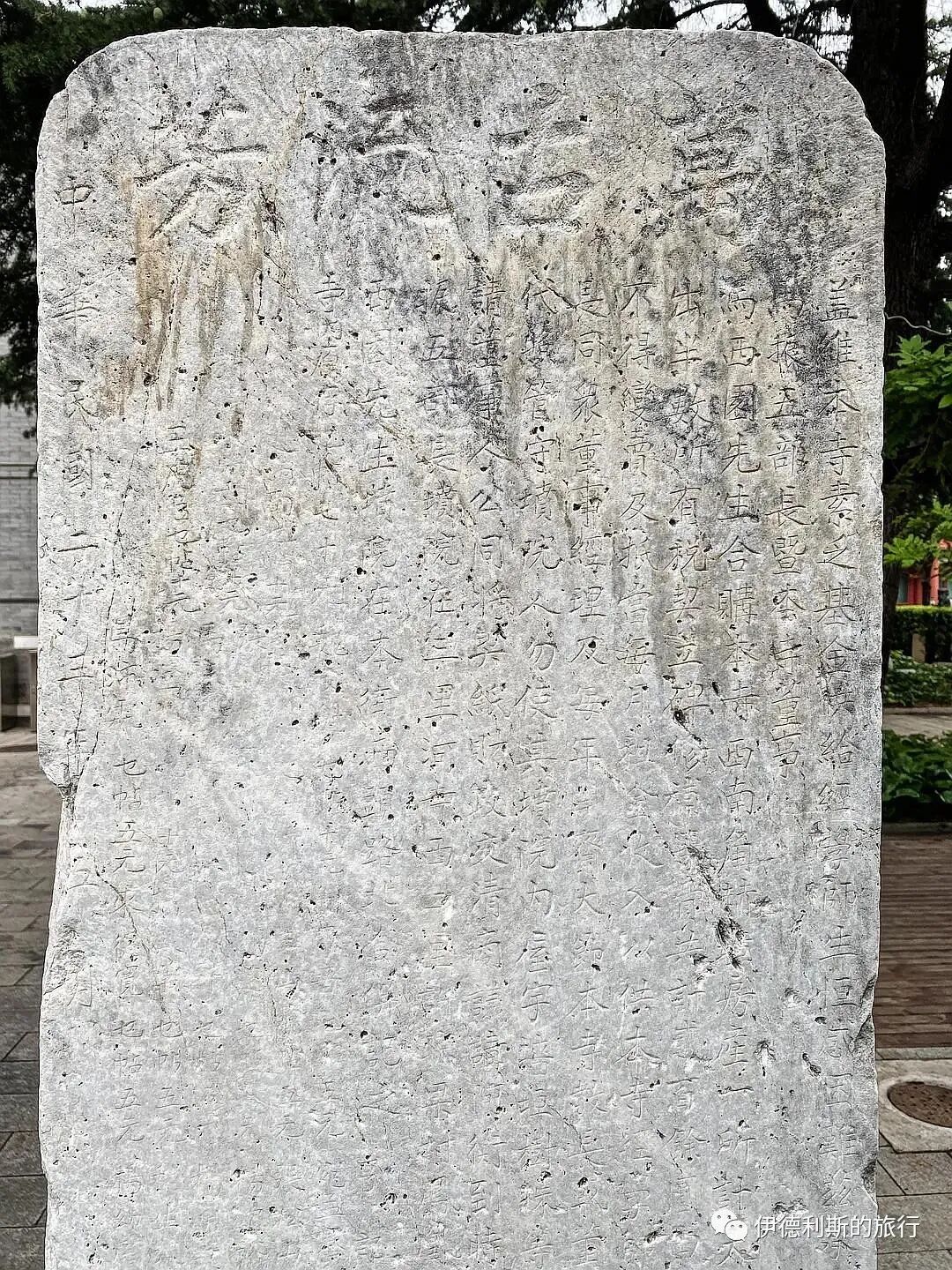
I looked up some information and found that most articles introducing the Sanlihe Mosque do not seem to mention this stele. I also do not know why this stele was not kept in the mosque but was moved to the museum. I will transcribe the inscription here to share with everyone. There are a few characters I cannot see clearly, so I ask for your help in identifying them:
Because this mosque has long lacked funds to support the students and teachers of Islamic studies, it has always felt the hardship. Now, thanks to Minister Ma Zhenwu of Hunan and Mr. Ma Xiyuan, a board member of this mosque, they have jointly purchased a property at the southwest corner of this mosque, totaling twelve rooms, as detailed in the contract. The price was five hundred yuan, with both parties paying half. All taxes, stele carving, and repair costs, totaling over two hundred yuan, were shared by the board members of this community. Henceforth, this property shall forever belong to this mosque and may not be sold or mortgaged. The monthly rental income shall be used to provide stipends for the mosque's students and teachers and may not be used for other purposes. The contract and finances shall be managed by the current Imam and the board members. Every year during the Eid al-Fitr festival, the Imam or board members of this mosque shall lead the students to recite the Quran at the two families' cemeteries, a tradition to be kept forever. The board members have collectively settled the contract and finances and agreed to invite an Ahong (Imam). When the time comes, the manager shall hand over the contract and finances to the current Ahong.
Minister Zhenwu's cemetery is in Fenghuang [location] in [location] village, about two li west of the Sanlihe Mosque. Mr. Xiyuan's cemetery is at the north side of the road at the west end of this street, recorded here.
Original donations within the mosque: 70 yuan... Hengji mietie (donation) 5 yuan... Zhang Songshan mietie 5 yuan... Ma Peilin mietie 5 yuan... Wan Yuwang mietie 2 yuan, Xi Yuxing mietie 2 yuan, Ma Dewang mietie 2 yuan, Li Yongxiang mietie 2 yuan, Feng Shengshan mietie 1 yuan, Liu Zhong mietie 1 yuan, Cang Yuan[X] mietie 1 yuan, Yang Denghua mietie 1 yuan, Yang Tangrui mietie 1 yuan, Wan Qirui mietie 3 yuan, individual small donations totaling over 10 yuan. Signed by the board members.
Erected in May of the 23rd year of the Republic of China.
The 'Minister Ma Zhenwu of Hunan' mentioned in the stele is the famous educator Ma Linyi. Ma Linyi was born in Shaoyang, Hunan, in 1864. His father was the great Islamic scholar Ahong Ma Yanxi. He passed the imperial examination in 1902 and was sent to Japan for study in 1904. After returning to Hunan, he actively promoted education. In 1906, he founded the Qingzhen Xiejin Primary School in Shaoyang, and later added the Xiejin Middle School, which were the earliest modern schools for Hui Muslims in Hunan.
In 1908, Ma Linyi was transferred to the Ministry of Education of the Qing court as a secretary, and thus came to Beijing. In 1908, Wang Kuan founded the Jingshi Qingzhen First Primary School inside the Niujie Mosque. Ma Linyi actively planned it and served as the supervisor. He applied for subsidies from the Beijing Education Bureau in the name of the school and was finally approved to receive 40 taels per month as operating funds. In 1909, Ma Linyi again assisted Wang Kuan in reporting to the Beijing Education Supervision Bureau to establish the Islamic Education Association.
In 1912, while serving as Vice Minister of Education, Ma Linyi founded the China Islamic Progressive Association with the support of Sun Yat-sen and served as its president. He changed his courtesy name from 'Zhenwu' to 'Zhenwu' (using a different character for 'wu'), meaning 'revitalizing the five ethnic groups'. Between 1912 and 1919, Ma Linyi worked in education in Gansu for 7 years, founding over 100 Hui Muslim schools and cultivating a large number of talents. In 1919, he was transferred to be the Director of the Zhili Education Department, where he secured 300,000 yuan for the Hui Muslim education fund, making a huge contribution.
In the 1920s, Ma Linyi held various positions in the Nationalist Government, including Minister of Education. After the success of the Northern Expedition in 1928, Hui Muslim intellectuals in Beijing were determined to establish their own middle school so that Hui Muslim youth could continue their studies after graduating from primary school. In the same year, Ma Linyi participated in the founding of the Islamic Middle School on the site of the old Niujie Garrison Office and served as vice chairman, receiving support from various Nationalist Party figures in Beijing. In 1929, Ma Linyi served as a board member of the Beiping Chengda Normal School, actively updating the curriculum and improving teaching methods, which helped Chengda Normal School develop into a modern school. In his later years, Ma Linyi devoted himself to the faith and served as an advisor to Wang Jingzhai for his translation of the Quran. In 1938, Ma Linyi passed away in Beiping and was buried in the Sanlihe Hui Muslim cemetery.
The 'Mr. Ma Xiyuan, a board member of this mosque' mentioned in the stele is the father of the Peking Opera master Ma Lianliang. Ma Xiyuan was born in 1868, with ancestral roots in Shandong. His father, Ma Yongxiang, settled in Beijing during the Xianfeng reign and opened a teahouse opposite the Fuchengmen Arrow Tower, known as the 'Men Ma Teahouse'. The Men Ma Teahouse had a stage for music, and Peking Opera fans and famous performers often came to sing. It was very lively and a famous Peking Opera venue. Influenced by Peking Opera, Ma Xiyuan sent his son Ma Lianliang to the Xiliancheng training school to learn opera, which eventually made Ma Lianliang a master of his generation, the founder of the Ma school of old men (laosheng), and the head of the 'Four Great Male Leads'.
Ma Xiyuan himself was very pious, never missing his five daily prayers, and sent his son Ma Lianliang to the Sanlihe Mosque to study the Quran when he was 5 years old. In 1930, Ma Lianliang bought the entire courtyard at No. 7 Dongdoufu Lane, outside Chongwenmen, and renovated the west room of the front courtyard into a prayer hall for Ma Xiyuan's five daily prayers, which was very rare in Hui Muslim families at that time.
Ma Xiyuan was enthusiastic about religious charity and was known as 'Ma the Kind'. In 1908, he participated in the founding of the Qingzhen Public Fifth Primary School inside the Huashi Mosque outside Chongwenmen. It was renamed Qingzhen Culture Primary School in 1912 and Beiping Qingzhen Second Primary School in 1929. Ma Xiyuan actively donated money and served as chairman. In 1928, Hui Muslim youth in the Niujie area founded the private Zhongcai Primary School in Majia Hutong. It was praised and supported by Ma Xiyuan, who served as a school board member and lent his long-cherished organ to the school for music teaching. Every Jumu'ah (Friday), Ma Xiyuan would cook porridge at his doorstep to give to poor Hui Muslims, and he would also give out warm clothes in winter. In 1935, Ma Xiyuan passed away due to illness and was buried in the Sanlihe Hui Muslim cemetery.
3. The Salar ethnic group minaret from the Qing Dynasty inside the Museum of Chinese Ethnic Cultures.
Surprisingly, there is a Qing Dynasty Salar minaret in the Museum of Chinese Ethnic Cultures. The museum's introduction says it was moved from Shangbaizhuang Village, Baizhuang Township, Xunhua in 2003.
Next to it is a Qing Dynasty Salar fence-style building also moved from Mengda Village, Xunhua in 2003, along with its furniture. Now the west side is the original building, and the east side is a new construction modeled after the west side. However, placing a tangping (water kettle for ablution) on the table is a bit out of place; the table should have an incense burner and a Quran box.
4. The former residence of Ma Fuxiang on Xisi North Third Alley.
The former residence of Ma Fuxiang is located at No. 11 Xisi North Third Alley (formerly No. 5 Baozi Hutong), with the residence on the west side and a garden on the east side. The garden features rockeries, climbing corridors, an embroidered building, and an octagonal pavilion. It is a cultural relic protection unit in Beijing.
Ma Fuxiang, courtesy name Yunting, was born in Hanjiaji, west of Hezhou City, Gansu, in 1876. He practiced martial arts with his brother from a young age, joined the army at 19, and passed the military examination at 21. In 1900, at the age of 24, Ma Fuxiang fought fiercely against the Eight-Nation Alliance at Zhengyangmen in Beijing, and five of his clansmen were killed in action. In 1912, Ma Fuxiang supported the Republic and served as the Ningxia Town General. Ma Fuxiang and his son and nephew, Ma Hongbin and Ma Hongkui, subsequently ruled Ningxia for 37 years and were known as the 'Ningxia Ma'.
In 1924, Feng Yuxiang launched the Beijing coup and led the National Army into the Northwest. To control Suiyuan, he transferred Ma Fuxiang, who had been in charge of Suiyuan for five years, to the position of Northwest Border Defense Assistant, which was actually just a nominal position. Because he feared Feng Yuxiang's strength, Ma Fuxiang had to move from Suiyuan to Beijing, where he bought the residence at No. 5 Baozi Hutong and converted it into his mansion.
During his time in Beijing, Ma Fuxiang devoted himself to studying Islamic classics. He proofread the manuscript of Wang Daiyu's 'Xizhen Zhengda' (True Answers to Real Truths), entrusted the Beiping Islamic Book and Newspaper Society to publish it, and later wrote a preface for 'Qingzhen Zhinan Yaoyan' (Essential Words of the Islamic Guide) and donated funds for its publication.
In 1928, Bai Chongxi, Ma Fuxiang, and local Niujie gentry jointly planned the first Hui Muslim middle school in Niujie, named Beiping Islamic Middle School, later renamed Northwest Public School. Bai Chongxi served as chairman, and Ma Fuxiang served as vice chairman. In 1929, Ma Fuxiang donated 6,000 yuan for the expansion of the school.
In 1928, the Chengda Normal School in Jinan was having difficulties. When Ma Fuxiang heard about it, he insisted on moving Chengda Normal School to Beiping and donated dozens of rooms he had purchased in the backyard of the Dongsi Mosque for the purpose of building an Islamic university to be used as school buildings. In 1929, Chengda Normal School officially moved to the Dongsi Mosque in Beiping. Ma Fuxiang served as chairman, donated 500 yuan as startup funds, and invested 40,000 yuan as capital into the Yongbaozhai Jade Factory opened by Hui Muslim entrepreneur Chang Zichun, using the dividends to maintain the operation of Chengda Normal School. As the most famous Islamic normal school during the Republic of China, Chengda Normal School cultivated a large number of Islamic talents.
After Chengda Normal School moved to Beiping, Ma Fuxiang invited the school's main leaders to the Ma Mansion in Baozi Hutong to discuss and decide to launch the Islamic newspaper 'Yuehua' (Moonlight). In November 1929, 'Yuehua' was officially published, becoming the most influential Islamic publication during the Republic of China. From its inception until his passing in 1932, Ma Fuxiang donated over 100 yuan to 'Yuehua' and Chengda Normal School every month. Sometimes, if he missed a donation due to busy government affairs, he would definitely make it up the following month.
In 1930, Ma Fuxiang was appointed Chairman of the Mongolian and Tibetan Affairs Commission and moved to Nanjing. In 1932, Chengda Normal School decided to send 4 graduates to Al-Azhar University in Egypt for further studies. When Ma Fuxiang heard this, he immediately decided to go to Beiping to discuss the candidates and provided half of the expenses. Unfortunately, Ma Fuxiang soon fell ill. While being escorted by his son Ma Hongkui to the Peking Union Medical College Hospital for treatment, he passed away when the train reached Liulihe, south of Beijing, at the age of 57. At the end of 1932, Ahong Ma Songting led the Chengda Normal School graduates to Cairo. Ma Hongkui, honoring his father's wishes, funded half of the travel expenses.
After 1949, the Ma Mansion in Baozi Hutong was used by the Education Bureau. After the policy was implemented, it was returned to the Ma family descendants, who donated it for public welfare. It later became the Xisi North Kindergarten, which it remains today.
5. The mosque in the Old Summer Palace (Yuanmingyuan).
Fangwaiguan (View from Afar) is part of the Western-style building complex in the Old Summer Palace. It was originally called the 'Three-Story Water Fountain Hall' and was built between 1756 and 1759 (the 21st to 24th year of the Qianlong reign). It was mainly designed by the Italian court painter Giuseppe Castiglione and constructed by Chinese craftsmen, belonging to the late Renaissance Italian Baroque style. In 1760, Qianlong summoned the Hui Muslim figures who had contributed to suppressing the rebellion of the White Mountain Sect's Great and Small Khojas to Beijing, conferred the title of First-Class Taiji on the meritorious official Tu'erduo Khoja, and conferred the title of He Guiren (Noble Lady He) on his sister. In 1761, the Khoja lady was promoted to Rongpin (Concubine Rong) and later to Rongfei (Consort Rong). Qianlong then converted Fangwaiguan into a prayer hall specifically for the Khoja lady's prayers. After that, the Khoja lady lived in the palace for 28 years until she passed away in the Old Summer Palace in 1788.
Fangwaiguan has two floors and a hip-and-gable roof. The main body consists of four giant square pillars, and there are circular stairs on the left and right outside the building that lead directly to the second floor. In 1920, the Frenchman Yaleyuan, after visiting the site, recorded in his book 'A Study of the Old Summer Palace Projects by 18th-Century Jesuits' that there were two white marble Arabic stone steles inside Fangwaiguan, engraved with the honorable names of the third and fourth Caliphs, Uthman and Ali. It is speculated that Fangwaiguan originally also had stone steles with the honorable names of the first and second Caliphs, Abu Bakr and Umar, but they have been lost.
When the Old Summer Palace was burned in 1860, Fangwaiguan was the only Western-style building that remained intact, but in the following hundred years, its components were gradually stolen and destroyed. Now only the four main stone pillars remain. The two sets of stone bridges outside Fangwaiguan were transported to Yenching University during the Republic of China era. Now one set is in the grass inside the west gate of Peking University, and the other is on the north side of the island in Weiming Lake. For detailed information about Fangwaiguan, I recommend reading the new book 'Emperor Qianlong's European-style Garden' by Mr. Liu Yang, published in 2022.
6. The Western-style building of the Mishi Hutong Mosque.
Today, amidst a large construction site next to the Caishikou subway station in Beijing, two historical buildings remain from the Daji area demolition 10 years ago. One is the famous former residence of Kang Youwei. The other is the two-story building of the old Bianyifang Restaurant in Mishi Hutong, which opened in the 14th year of the Yongle reign of the Ming Dynasty (1416). In 1937, the old Bianyifang closed due to the war. Soon after, Hui Muslims from the five northwestern provinces living in Beijing raised over 10,000 yuan to buy the building. After renovation, it officially became the Mishi Hutong Mosque on January 1, 1940, and also served as the office for the Association of Fellow Townsmen from the Five Northwestern Provinces.
The building where the Mishi Hutong Mosque is located was originally built in the mid-to-late Qing Dynasty. It was initially an 'L-shaped' structure consisting of three north rooms and four west rooms, with a hard-mountain roof and a hanging-mountain open corridor structure. On the east side was a garden.
The former Mishi Hutong has now been completely leveled, with only the mosque building remaining.
Looking at the mosque from the north, the north building is on the left and the west building is on the right. You can see the simple gray brick walls and arched windows.
In the connecting structure of the north building, you can see exquisite hanging eaves, wooden railings, and brick carvings.
When it was converted into a mosque in 1940, three south rooms were added, changing the 'L-shaped' layout into a 'U-shaped' layout. At the same time, a two-story flat-roofed open hall was added in the recessed area, connecting with the south rooms to form a semi-enclosed open space on the second floor as the main prayer hall. After the renovation, the building only left a small courtyard on the east side, and one must pass through the open hall to enter each room, which has the typical characteristics of southern architecture.
Looking at the mosque from south to north, the west building is on the left, and the south open hall added in 1940 is on the right.
Looking at the mosque from east to west, the south open hall is on the left, and the north building with the connecting structure is on the right.
The flat-roofed open hall added in 1940.
The exquisite wooden lattice partitions and door lintel wood carvings on the first floor of the mosque, as well as the abandoned rooms. You can see that time stopped in April 2012, exactly 10 years ago.
In the 1940s, the Mishi Hutong Mosque became the activity center for northwestern Hui Muslims in Beijing, with Ahong Ye Liangpu serving as the first Imam. At that time, the Mishi Hutong Mosque and the Tianqiao Mosque, also built during the Republic of China, were brother mosques, and the two mosques would invite each other's Ahongs.
After the 1960s, the Mishi Hutong Mosque was converted into a dormitory for a toy factory and later became a residential compound.
After the demolition of the Daji area southeast of Caishikou, more than 30 guild halls, various temples, shops, and former residences of famous people were turned into ruins one after another. Ultimately, by 2012, only the former residence of Kang Youwei and the Mishi Hutong Mosque were preserved as historical buildings. It is a pity that the original gate of the Mishi Hutong Mosque, which had traditional Arabic calligraphy, has been demolished, leaving only the two-story building inside. It is said that the Mishi Hutong Mosque and the former residence of Kang Youwei will both be renovated and used for other purposes. I don't know what this place will become by then.
The second floor of the mosque was initially a private room of the old Bianyifang Restaurant, later became the office of the Association of Fellow Townsmen from the Five Northwestern Provinces and the main prayer hall of the mosque, then became a dormitory for a toy factory and a crowded residential compound, and finally became a ruin.
The gate of the mosque.
7. The storefront of the Jian'tang Wang Huihui Plaster Shop on Yangmeizhu Slanting Street, outside Qianmen.
The Jian'tang Wang Huihui Plaster Shop is located on Yangmeizhu Slanting Street outside Qianmen. The Wang family has operated the Jian'tang Wang Huihui Plaster Shop since the Wanli reign of the Ming Dynasty. It has been 400 years now and is a district-level intangible cultural heritage. In the old days, Jian'tang had a shop in the front and a factory in the back, and several generations lived and operated here. Now, various cultural relics of the old Jian'tang shop are displayed in the street-facing storefront. The most precious is the wooden plaque from that year, which is preserved on the second-floor terrace.
After the public-private partnership in 1956, Jian'tang was merged into Tongrentang. The plaster shop on Yangmeizhu Slanting Street was closed and converted into staff dormitories, and the Wang family also became employees of Tongrentang. After the 1960s, the Jian'tang storefront was reclaimed. Through unremitting efforts, the Wang family successfully retrieved it in 1997. After renovation, the Wang family reopened the old storefront as a bookstore in 2004, naming it Jian'zhai. In 2014, Yangmeizhu Slanting Street became a pilot for the 'Beijing Design Week'. Jian'zhai took this opportunity to upgrade into a coffee bookstore, which is still in business today. The landlady is the 21st-generation descendant of Jian'tang.
The shop sign of the plaster shop from back then, which is of great historical significance.
Eating youxiang (fried dough) made by the Wang family descendants here during Eid al-Fitr in 2021.
Tangjuanguo (sugar-rolled fruit).
Stewed beef.
8. The gate tower of the Qingzhen Yipinxian Bathhouse on Zongshu Slanting Street, outside Qianmen.
The Qingzhen Yipinxian Bathhouse is located on Zongshu Slanting Street outside Qianmen. Zongshu Slanting Street was originally called Wang Guafu Slanting Street and Wang Guangfu Slanting Street. It belongs to the 'Eight Great Hutongs' and was famous for its 'Qingyin Xiaoban' (high-class courtesan houses) during the Republic of China era. There were also various restaurants and bathhouses on Wang Guangfu Slanting Street, and Yipinxian was the most famous one.
Peking Opera master Ma Lianliang loved to soak in the bath at Yipinxian. Zhang Yihe wrote in 'Past Events of Opera Performers': Ma Lianliang liked to soak in the bath. As long as there was a performance in the evening, he would definitely go to the bathhouse in the afternoon. First it was 'Yipinxian' outside Qianmen, and later he changed to 'Qinghuachi' in Xizhushikou. Later, he often went to 'Qinghuayuan' in Bamiancao. After soaking in the bath, he would also ask a special master to do a pedicure. This was because he wore boots all year round while performing, which caused corns. Every time he went to the bathhouse, Ma Lianliang would bring some cigarettes and tea to give to the masters and workers.
Besides soaking by himself, Ma Lianliang also often went to Yipinxian to soak with the 'King of Drum Singing' Liu Baoquan. Ma Lianliang wrote about this in 'Remembering Mr. Liu Baoquan', the time was probably the 1920s: After some more days, introduced by the late famous Peking Opera actor Mr. Wang Yaoqing, I met Mr. Liu Baoquan. We hit it off immediately and soon became close friends. After that, for more than five years, we were together day and night, inseparable. Every day I went to his home in Mianhua Ninth Alley to find him. We would stroll and walk together, and then go to the 'Yipinxian' bathhouse to take a bath. In the afternoon, we would go to 'Liangyixuan' to eat together. After eating, we would go to the theater together to watch the performances of Yu Shuyan and Yang Xiaolou. This was almost our daily routine.
Yipinxian Bathhouse also developed continuously during the Republic of China era. Comparing the 'Revised Practical Beijing Guide' published by the Commercial Press in the 12th year of the Republic of China and the 'Beijing Travel Guide' published by Xinhua Bookstore in the 30th year of the Republic of China, you can see it.
In the 12th year of the Republic of China, Yipinxian was not yet a first-class bathhouse and could only be ranked as a 'slightly inferior' second-class, using cement basins and vat basins for bathing: The slightly inferior ones are Yipinxian, Huayuan, Wenyayuan, Yuqing, Qingquan, Dongxing, Yuhua, Qihua, Xinhuachi, Baoquan, Yihe, etc. Most of their equipment were cement basins and vat basins, with occasional Western-style basins. The bath price ranged from four jiao, three jiao, two jiao, to one jiao. The cost for back scrubbing and haircuts was two jiao or one jiao.
By the 30th year of the Republic of China, Yipinxian was already the most famous bathhouse in Beijing, on par with the Qinghuachi we are familiar with. At that time, the downstairs of the bathhouse was built with 'warm five pools' made of white ceramic tiles, and upstairs were individual Western-style porcelain bathtubs. At the same time, Yipinxian had the most popular pedicure masters in Beijing at that time, specializing in treating athlete's foot: There are currently 123 bathhouses operating in the city. In recent years, it has developed day by day with the progress of the times. Because human evolution has made everyone aware of cleanliness, those in this industry also know how to adapt to the times and make improvements at any time. Most of the pools have been changed to warm five pools, and they are built with white ceramic tiles. The pools are wide and the water is deep, which actually surpasses those in Shanghai, Wuhan, and Nanjing. The washbasins were also changed from wooden tubs to enamel ones, which are much cleaner and more beautiful than before. The best-equipped ones include Qinghuayuan, Yiheyuan in the East City, Huabaoyuan, Yuhuayuan in the West City, and Qinghuachi, Yipixiang, etc., in the Outer City. Their businesses are all very prosperous, and the prices are divided by guanpen (official basin), yazuo (elegant seating), upstairs, and downstairs... The foot scraper at Yipixiang is named Wei Wenxi, who has long been famous in this field, and all the bathhouses compete to hire him. Southerners living in Beijing who suffer from beriberi all seek out little Wei, because once he scrapes their feet, they feel as if a heavy burden has been lifted. For this reason, little Wei is often overwhelmed with customers.
In addition, according to the "Beijing Industry and Commerce Guide" edited by the Zhengfeng Economic Society in the 28th year of the Republic of China (1939), the owner of Yipixiang was named Wang Houqi, a native of Wanping, Hebei (which includes the western part of Beijing, including the current Xicheng District). However, I have not yet been able to find more information about Wang Houqi, and I hope there will be new discoveries in the future.
9. The storefront of the Ma Yinglong Eye Ointment Shop on Xiheyuan, outside Qianmen.
In 1875 (the first year of the Guangxu reign of the Qing Dynasty), Ma Wanxing, a Hui Muslim from Dingzhou, Hebei, moved the Ma family eye medicine shop from Dingzhou to Beijing and opened the "Beijing Ma Yinglong Eye Medicine Shop" outside Qianmen on Xiheyan. "Ma Yinglong" was his father's name.
In 1923, Ma Wanxing's third son, Ma Liting, inherited the pharmacy and officially built the current Republic of China-style storefront on Xiheyan, Qianmen. There is a "Ma Yinglong" plaque on the storefront, and the words "eye medicine" are also on the right, obscured by an air conditioner. The person who inscribed the plaque was Ma Liang, a Beiyang warlord and a Hui Muslim from Qingyuan, Hebei (now Qingyuan District, Baoding).
After the 1930s, Ma Yinglong successively set up branches across the country and expanded sales through mail order, even selling as far away as Europe. After the public-private partnership in 1957, Ma Liting served as the deputy section chief of the processing department of the Beijing Medicinal Materials Company. In 1966, the whole family was sent back to their ancestral home in Dingzhou, and Beijing Ma Yinglong gradually withdrew from the historical stage.
In 1919, Ma Wanxing's grand-nephew Ma Qiaoshan opened a Ma Yinglong branch on Hanzheng Street in Hankou, and later established the Ma Yinglong Shengji Pharmaceutical Factory. After the 1980s, he began to focus on hemorrhoid ointment, continuing the Ma Yinglong brand to this day.
10. The brick-carved dua (supplication) on Jiaozihutong, Niujie.
The home of Mr. Mai in Jiaozihu Tong, Niujie, is the only traditional Hui Muslim courtyard remaining in Beijing, and the main gate features the only remaining residential brick carving of a dua (dua) in Beijing. In order to protect the cultural relics, Mr. Mai spent years writing letters and making phone calls, but in the end, all his efforts were in vain.
According to records, the Mai family previously operated the "Shunxing" fish shop at Guang'anmen Market, known as the "Fish Mais," and built this siheyuan (courtyard house) in 1931. In the 1960s, the Mai family painted the brick carvings with grey lime to preserve them. After the lime was removed in 2008, the brick carvings, which had been sealed for more than 40 years, were able to see the light of day again. view all
Summary: This travel note introduces Ten Hui and Islamic Historic Sites in Beijing: A Muslim Heritage Walking Guide. Unable to leave Beijing for a year, I was finally able to take a good look at the old Hui Muslim historical sites scattered throughout the city. Below, I share ten of them with you. It is useful for readers interested in Beijing Muslim Heritage, Hui Muslims, Historic Sites.
Unable to leave Beijing for a year, I was finally able to take a good look at the old Hui Muslim historical sites scattered throughout the city. Below, I share ten of them with you.
1. Yuanshun Biaoju (Escort Agency) on Xibanbi Street, Zhushikou, outside Qianmen.
2. The stone stele of the Sanlihe Mosque inside Wuta Mosque.
3. The Salar ethnic group minaret from the Qing Dynasty inside the Museum of Chinese Ethnic Cultures.
4. The former residence of Ma Fuxiang on Xisi North Third Alley.
5. The mosque in the Old Summer Palace (Yuanmingyuan).
6. The Western-style building of the Mishi Hutong Mosque.
7. The storefront of the Jian'tang Wang Huihui Plaster Shop on Yangmeizhu Slanting Street, outside Qianmen.
8. The gate tower of the Qingzhen Yipinxian Bathhouse on Zongshu Slanting Street, outside Qianmen.
9. The storefront of the Ma Yinglong Eye Ointment Shop on Xiheyuan, outside Qianmen.
10. The brick-carved dua (supplication) on Jiaozihutong, Niujie.
1. Yuanshun Biaoju (Escort Agency) on Xibanbi Street, Zhushikou, outside Qianmen.
The Yuanshun Biaoju (Escort Agency) opened by the famous late Qing chivalrous hero Dadao Wang Wu at No. 13 Xibanbi Street, Zhushikou, outside Qianmen in Beijing.
Dadao Wang Wu, whose real name was Wang Zibin (1844-1900) and courtesy name was Zhengyi, was a Han Chinese from Cangzhou, Hebei. He loved martial arts from a young age and greatly admired Li Fenggang, the manager of the Chengxing Biaoju in Cangzhou. The Li family came from a Hui Muslim military household background during the Ming dynasty, having moved from Nanjing to settle in Cangzhou during the Yongle reign while 'escorting the emperor,' and their tradition of practicing martial arts has never been interrupted since. During the Tongzhi reign of the Qing Dynasty, Li Fenggang's uncle, Li Guanming, learned the Liuhe Quan (Six Harmonies Boxing) from the Cao family, a Hui Muslim family in Botou, and founded the 'Liuhe Men' (Six Harmonies School) in Cangzhou. Later, the Liuhe Men developed into the largest martial arts school in Cangzhou. Li Guanming opened the Chengxing Biaoju outside the south gate of Cangzhou, enjoyed high prestige in the martial arts world, and almost never lost an escort. Li Guanming later passed the escort agency to his nephew, Li Fenggang, who had followed his uncle to learn Liuhe boxing and weaponry since childhood and was skilled with double sabers, earning him the nickname 'Shuangdao Jiang' (General of the Double Sabers).
Wang Wu very much wanted to become Li Fenggang's student, but according to the school's rules, the Li family's Liuhe Men only taught those of the Islamic faith. Wang Wu was determined to convert to Islam, but his mother did not agree. According to the 1933 'Cang County Gazetteer,' it is recorded: 'Zhengyi's teacher was Li Fenggang. Fenggang was a follower of Islam, and Zhengyi wanted to study under him. Fenggang would not teach him because he was not of the faith. Zhengyi wanted to join the faith to prove his sincerity, but his mother would not allow it. Zhengyi knelt and pleaded with her repeatedly for over ten years before his mother finally agreed. He then learned everything from Fenggang before going to the capital, where he was initially called Little Wang Wu.' ”
In the early years of the Guangxu reign, at the age of thirty, Wang Wu set up his own business and opened the Yuanshun Biaoju at Zhushikou outside Qianmen in Beijing. According to Liang Qichao's 'Yinbingshi Shihua' (Poetry Talks from the Ice-Drinker's Studio): 'Wang Wu was a chivalrous hero of Youyan who made his living as an escort.' His sphere of influence reached as far north as Shanhaiguan and as far south as Qingjiangpu, and he spent his life helping the weak and punishing the strong. ” The Yuanshun Biaoju gradually became one of the eight major escort agencies in the capital, and Wang Wu became known as 'Dadao Wang Wu' (Big Saber Wang Wu) because of his skill with the single saber. Pingjiang Buxiaosheng's 'Modern Chivalrous Hero Biography,' serialized starting in 1923, is the pioneering work of modern Chinese martial arts novels. The novel features Dadao Wang Wu and Huo Yuanjia as the main characters. Through the depiction of the deep friendship between Wang Wu and Tan Sitong, his chivalrous actions to save Tan Sitong, and his heroic sacrifice during the invasion of China by the Eight-Nation Alliance, the heroic image of Dadao Wang Wu became deeply rooted in people's hearts.
The Yuanshun Biaoju faces south, and the main gate was originally very spacious to allow escort carriages to pass through, but now most of it is occupied by a restroom. Only the western half of the original gate remains, and the door knocker on it is the one that Tan Sitong knocked on when he came to visit Dadao Wang Wu.
After entering the courtyard, there was originally a place to park escort carriages and horses. On the west side, there are three courtyards: the first was where Wang Wu performed his ritual washing and dua (prayer), the second and third were the living quarters for the escort guards, and the back courtyard contained the inner office, the storage room for escorted goods, and guest rooms. After the public-private partnership in the 1950s, the descendants of the Wang family only kept the south and north rooms of the back courtyard. The front courtyard became public housing, and after renovations by the housing management office, it is difficult to distinguish the original structure.
2. The stone stele of the Sanlihe Mosque inside Wuta Mosque.
The Beijing Stone Carving Art Museum at Wuta Mosque houses a precious stele from the Republic of China era, recording how in 1934, the famous educator Ma Linyi and Ma Xiyuan, the father of the famous Peking Opera master Ma Lianliang, funded the students and teachers of the Sanlihe Mosque outside Fuchengmen, Beijing.
I looked up some information and found that most articles introducing the Sanlihe Mosque do not seem to mention this stele. I also do not know why this stele was not kept in the mosque but was moved to the museum. I will transcribe the inscription here to share with everyone. There are a few characters I cannot see clearly, so I ask for your help in identifying them:
Because this mosque has long lacked funds to support the students and teachers of Islamic studies, it has always felt the hardship. Now, thanks to Minister Ma Zhenwu of Hunan and Mr. Ma Xiyuan, a board member of this mosque, they have jointly purchased a property at the southwest corner of this mosque, totaling twelve rooms, as detailed in the contract. The price was five hundred yuan, with both parties paying half. All taxes, stele carving, and repair costs, totaling over two hundred yuan, were shared by the board members of this community. Henceforth, this property shall forever belong to this mosque and may not be sold or mortgaged. The monthly rental income shall be used to provide stipends for the mosque's students and teachers and may not be used for other purposes. The contract and finances shall be managed by the current Imam and the board members. Every year during the Eid al-Fitr festival, the Imam or board members of this mosque shall lead the students to recite the Quran at the two families' cemeteries, a tradition to be kept forever. The board members have collectively settled the contract and finances and agreed to invite an Ahong (Imam). When the time comes, the manager shall hand over the contract and finances to the current Ahong.
Minister Zhenwu's cemetery is in Fenghuang [location] in [location] village, about two li west of the Sanlihe Mosque. Mr. Xiyuan's cemetery is at the north side of the road at the west end of this street, recorded here.
Original donations within the mosque: 70 yuan... Hengji mietie (donation) 5 yuan... Zhang Songshan mietie 5 yuan... Ma Peilin mietie 5 yuan... Wan Yuwang mietie 2 yuan, Xi Yuxing mietie 2 yuan, Ma Dewang mietie 2 yuan, Li Yongxiang mietie 2 yuan, Feng Shengshan mietie 1 yuan, Liu Zhong mietie 1 yuan, Cang Yuan[X] mietie 1 yuan, Yang Denghua mietie 1 yuan, Yang Tangrui mietie 1 yuan, Wan Qirui mietie 3 yuan, individual small donations totaling over 10 yuan. Signed by the board members.
Erected in May of the 23rd year of the Republic of China.
The 'Minister Ma Zhenwu of Hunan' mentioned in the stele is the famous educator Ma Linyi. Ma Linyi was born in Shaoyang, Hunan, in 1864. His father was the great Islamic scholar Ahong Ma Yanxi. He passed the imperial examination in 1902 and was sent to Japan for study in 1904. After returning to Hunan, he actively promoted education. In 1906, he founded the Qingzhen Xiejin Primary School in Shaoyang, and later added the Xiejin Middle School, which were the earliest modern schools for Hui Muslims in Hunan.
In 1908, Ma Linyi was transferred to the Ministry of Education of the Qing court as a secretary, and thus came to Beijing. In 1908, Wang Kuan founded the Jingshi Qingzhen First Primary School inside the Niujie Mosque. Ma Linyi actively planned it and served as the supervisor. He applied for subsidies from the Beijing Education Bureau in the name of the school and was finally approved to receive 40 taels per month as operating funds. In 1909, Ma Linyi again assisted Wang Kuan in reporting to the Beijing Education Supervision Bureau to establish the Islamic Education Association.
In 1912, while serving as Vice Minister of Education, Ma Linyi founded the China Islamic Progressive Association with the support of Sun Yat-sen and served as its president. He changed his courtesy name from 'Zhenwu' to 'Zhenwu' (using a different character for 'wu'), meaning 'revitalizing the five ethnic groups'. Between 1912 and 1919, Ma Linyi worked in education in Gansu for 7 years, founding over 100 Hui Muslim schools and cultivating a large number of talents. In 1919, he was transferred to be the Director of the Zhili Education Department, where he secured 300,000 yuan for the Hui Muslim education fund, making a huge contribution.
In the 1920s, Ma Linyi held various positions in the Nationalist Government, including Minister of Education. After the success of the Northern Expedition in 1928, Hui Muslim intellectuals in Beijing were determined to establish their own middle school so that Hui Muslim youth could continue their studies after graduating from primary school. In the same year, Ma Linyi participated in the founding of the Islamic Middle School on the site of the old Niujie Garrison Office and served as vice chairman, receiving support from various Nationalist Party figures in Beijing. In 1929, Ma Linyi served as a board member of the Beiping Chengda Normal School, actively updating the curriculum and improving teaching methods, which helped Chengda Normal School develop into a modern school. In his later years, Ma Linyi devoted himself to the faith and served as an advisor to Wang Jingzhai for his translation of the Quran. In 1938, Ma Linyi passed away in Beiping and was buried in the Sanlihe Hui Muslim cemetery.
The 'Mr. Ma Xiyuan, a board member of this mosque' mentioned in the stele is the father of the Peking Opera master Ma Lianliang. Ma Xiyuan was born in 1868, with ancestral roots in Shandong. His father, Ma Yongxiang, settled in Beijing during the Xianfeng reign and opened a teahouse opposite the Fuchengmen Arrow Tower, known as the 'Men Ma Teahouse'. The Men Ma Teahouse had a stage for music, and Peking Opera fans and famous performers often came to sing. It was very lively and a famous Peking Opera venue. Influenced by Peking Opera, Ma Xiyuan sent his son Ma Lianliang to the Xiliancheng training school to learn opera, which eventually made Ma Lianliang a master of his generation, the founder of the Ma school of old men (laosheng), and the head of the 'Four Great Male Leads'.
Ma Xiyuan himself was very pious, never missing his five daily prayers, and sent his son Ma Lianliang to the Sanlihe Mosque to study the Quran when he was 5 years old. In 1930, Ma Lianliang bought the entire courtyard at No. 7 Dongdoufu Lane, outside Chongwenmen, and renovated the west room of the front courtyard into a prayer hall for Ma Xiyuan's five daily prayers, which was very rare in Hui Muslim families at that time.
Ma Xiyuan was enthusiastic about religious charity and was known as 'Ma the Kind'. In 1908, he participated in the founding of the Qingzhen Public Fifth Primary School inside the Huashi Mosque outside Chongwenmen. It was renamed Qingzhen Culture Primary School in 1912 and Beiping Qingzhen Second Primary School in 1929. Ma Xiyuan actively donated money and served as chairman. In 1928, Hui Muslim youth in the Niujie area founded the private Zhongcai Primary School in Majia Hutong. It was praised and supported by Ma Xiyuan, who served as a school board member and lent his long-cherished organ to the school for music teaching. Every Jumu'ah (Friday), Ma Xiyuan would cook porridge at his doorstep to give to poor Hui Muslims, and he would also give out warm clothes in winter. In 1935, Ma Xiyuan passed away due to illness and was buried in the Sanlihe Hui Muslim cemetery.
3. The Salar ethnic group minaret from the Qing Dynasty inside the Museum of Chinese Ethnic Cultures.
Surprisingly, there is a Qing Dynasty Salar minaret in the Museum of Chinese Ethnic Cultures. The museum's introduction says it was moved from Shangbaizhuang Village, Baizhuang Township, Xunhua in 2003.
Next to it is a Qing Dynasty Salar fence-style building also moved from Mengda Village, Xunhua in 2003, along with its furniture. Now the west side is the original building, and the east side is a new construction modeled after the west side. However, placing a tangping (water kettle for ablution) on the table is a bit out of place; the table should have an incense burner and a Quran box.
4. The former residence of Ma Fuxiang on Xisi North Third Alley.
The former residence of Ma Fuxiang is located at No. 11 Xisi North Third Alley (formerly No. 5 Baozi Hutong), with the residence on the west side and a garden on the east side. The garden features rockeries, climbing corridors, an embroidered building, and an octagonal pavilion. It is a cultural relic protection unit in Beijing.
Ma Fuxiang, courtesy name Yunting, was born in Hanjiaji, west of Hezhou City, Gansu, in 1876. He practiced martial arts with his brother from a young age, joined the army at 19, and passed the military examination at 21. In 1900, at the age of 24, Ma Fuxiang fought fiercely against the Eight-Nation Alliance at Zhengyangmen in Beijing, and five of his clansmen were killed in action. In 1912, Ma Fuxiang supported the Republic and served as the Ningxia Town General. Ma Fuxiang and his son and nephew, Ma Hongbin and Ma Hongkui, subsequently ruled Ningxia for 37 years and were known as the 'Ningxia Ma'.
In 1924, Feng Yuxiang launched the Beijing coup and led the National Army into the Northwest. To control Suiyuan, he transferred Ma Fuxiang, who had been in charge of Suiyuan for five years, to the position of Northwest Border Defense Assistant, which was actually just a nominal position. Because he feared Feng Yuxiang's strength, Ma Fuxiang had to move from Suiyuan to Beijing, where he bought the residence at No. 5 Baozi Hutong and converted it into his mansion.
During his time in Beijing, Ma Fuxiang devoted himself to studying Islamic classics. He proofread the manuscript of Wang Daiyu's 'Xizhen Zhengda' (True Answers to Real Truths), entrusted the Beiping Islamic Book and Newspaper Society to publish it, and later wrote a preface for 'Qingzhen Zhinan Yaoyan' (Essential Words of the Islamic Guide) and donated funds for its publication.
In 1928, Bai Chongxi, Ma Fuxiang, and local Niujie gentry jointly planned the first Hui Muslim middle school in Niujie, named Beiping Islamic Middle School, later renamed Northwest Public School. Bai Chongxi served as chairman, and Ma Fuxiang served as vice chairman. In 1929, Ma Fuxiang donated 6,000 yuan for the expansion of the school.
In 1928, the Chengda Normal School in Jinan was having difficulties. When Ma Fuxiang heard about it, he insisted on moving Chengda Normal School to Beiping and donated dozens of rooms he had purchased in the backyard of the Dongsi Mosque for the purpose of building an Islamic university to be used as school buildings. In 1929, Chengda Normal School officially moved to the Dongsi Mosque in Beiping. Ma Fuxiang served as chairman, donated 500 yuan as startup funds, and invested 40,000 yuan as capital into the Yongbaozhai Jade Factory opened by Hui Muslim entrepreneur Chang Zichun, using the dividends to maintain the operation of Chengda Normal School. As the most famous Islamic normal school during the Republic of China, Chengda Normal School cultivated a large number of Islamic talents.
After Chengda Normal School moved to Beiping, Ma Fuxiang invited the school's main leaders to the Ma Mansion in Baozi Hutong to discuss and decide to launch the Islamic newspaper 'Yuehua' (Moonlight). In November 1929, 'Yuehua' was officially published, becoming the most influential Islamic publication during the Republic of China. From its inception until his passing in 1932, Ma Fuxiang donated over 100 yuan to 'Yuehua' and Chengda Normal School every month. Sometimes, if he missed a donation due to busy government affairs, he would definitely make it up the following month.
In 1930, Ma Fuxiang was appointed Chairman of the Mongolian and Tibetan Affairs Commission and moved to Nanjing. In 1932, Chengda Normal School decided to send 4 graduates to Al-Azhar University in Egypt for further studies. When Ma Fuxiang heard this, he immediately decided to go to Beiping to discuss the candidates and provided half of the expenses. Unfortunately, Ma Fuxiang soon fell ill. While being escorted by his son Ma Hongkui to the Peking Union Medical College Hospital for treatment, he passed away when the train reached Liulihe, south of Beijing, at the age of 57. At the end of 1932, Ahong Ma Songting led the Chengda Normal School graduates to Cairo. Ma Hongkui, honoring his father's wishes, funded half of the travel expenses.
After 1949, the Ma Mansion in Baozi Hutong was used by the Education Bureau. After the policy was implemented, it was returned to the Ma family descendants, who donated it for public welfare. It later became the Xisi North Kindergarten, which it remains today.
5. The mosque in the Old Summer Palace (Yuanmingyuan).
Fangwaiguan (View from Afar) is part of the Western-style building complex in the Old Summer Palace. It was originally called the 'Three-Story Water Fountain Hall' and was built between 1756 and 1759 (the 21st to 24th year of the Qianlong reign). It was mainly designed by the Italian court painter Giuseppe Castiglione and constructed by Chinese craftsmen, belonging to the late Renaissance Italian Baroque style. In 1760, Qianlong summoned the Hui Muslim figures who had contributed to suppressing the rebellion of the White Mountain Sect's Great and Small Khojas to Beijing, conferred the title of First-Class Taiji on the meritorious official Tu'erduo Khoja, and conferred the title of He Guiren (Noble Lady He) on his sister. In 1761, the Khoja lady was promoted to Rongpin (Concubine Rong) and later to Rongfei (Consort Rong). Qianlong then converted Fangwaiguan into a prayer hall specifically for the Khoja lady's prayers. After that, the Khoja lady lived in the palace for 28 years until she passed away in the Old Summer Palace in 1788.
Fangwaiguan has two floors and a hip-and-gable roof. The main body consists of four giant square pillars, and there are circular stairs on the left and right outside the building that lead directly to the second floor. In 1920, the Frenchman Yaleyuan, after visiting the site, recorded in his book 'A Study of the Old Summer Palace Projects by 18th-Century Jesuits' that there were two white marble Arabic stone steles inside Fangwaiguan, engraved with the honorable names of the third and fourth Caliphs, Uthman and Ali. It is speculated that Fangwaiguan originally also had stone steles with the honorable names of the first and second Caliphs, Abu Bakr and Umar, but they have been lost.
When the Old Summer Palace was burned in 1860, Fangwaiguan was the only Western-style building that remained intact, but in the following hundred years, its components were gradually stolen and destroyed. Now only the four main stone pillars remain. The two sets of stone bridges outside Fangwaiguan were transported to Yenching University during the Republic of China era. Now one set is in the grass inside the west gate of Peking University, and the other is on the north side of the island in Weiming Lake. For detailed information about Fangwaiguan, I recommend reading the new book 'Emperor Qianlong's European-style Garden' by Mr. Liu Yang, published in 2022.
6. The Western-style building of the Mishi Hutong Mosque.
Today, amidst a large construction site next to the Caishikou subway station in Beijing, two historical buildings remain from the Daji area demolition 10 years ago. One is the famous former residence of Kang Youwei. The other is the two-story building of the old Bianyifang Restaurant in Mishi Hutong, which opened in the 14th year of the Yongle reign of the Ming Dynasty (1416). In 1937, the old Bianyifang closed due to the war. Soon after, Hui Muslims from the five northwestern provinces living in Beijing raised over 10,000 yuan to buy the building. After renovation, it officially became the Mishi Hutong Mosque on January 1, 1940, and also served as the office for the Association of Fellow Townsmen from the Five Northwestern Provinces.
The building where the Mishi Hutong Mosque is located was originally built in the mid-to-late Qing Dynasty. It was initially an 'L-shaped' structure consisting of three north rooms and four west rooms, with a hard-mountain roof and a hanging-mountain open corridor structure. On the east side was a garden.
The former Mishi Hutong has now been completely leveled, with only the mosque building remaining.
Looking at the mosque from the north, the north building is on the left and the west building is on the right. You can see the simple gray brick walls and arched windows.
In the connecting structure of the north building, you can see exquisite hanging eaves, wooden railings, and brick carvings.
When it was converted into a mosque in 1940, three south rooms were added, changing the 'L-shaped' layout into a 'U-shaped' layout. At the same time, a two-story flat-roofed open hall was added in the recessed area, connecting with the south rooms to form a semi-enclosed open space on the second floor as the main prayer hall. After the renovation, the building only left a small courtyard on the east side, and one must pass through the open hall to enter each room, which has the typical characteristics of southern architecture.
Looking at the mosque from south to north, the west building is on the left, and the south open hall added in 1940 is on the right.
Looking at the mosque from east to west, the south open hall is on the left, and the north building with the connecting structure is on the right.
The flat-roofed open hall added in 1940.
The exquisite wooden lattice partitions and door lintel wood carvings on the first floor of the mosque, as well as the abandoned rooms. You can see that time stopped in April 2012, exactly 10 years ago.
In the 1940s, the Mishi Hutong Mosque became the activity center for northwestern Hui Muslims in Beijing, with Ahong Ye Liangpu serving as the first Imam. At that time, the Mishi Hutong Mosque and the Tianqiao Mosque, also built during the Republic of China, were brother mosques, and the two mosques would invite each other's Ahongs.
After the 1960s, the Mishi Hutong Mosque was converted into a dormitory for a toy factory and later became a residential compound.
After the demolition of the Daji area southeast of Caishikou, more than 30 guild halls, various temples, shops, and former residences of famous people were turned into ruins one after another. Ultimately, by 2012, only the former residence of Kang Youwei and the Mishi Hutong Mosque were preserved as historical buildings. It is a pity that the original gate of the Mishi Hutong Mosque, which had traditional Arabic calligraphy, has been demolished, leaving only the two-story building inside. It is said that the Mishi Hutong Mosque and the former residence of Kang Youwei will both be renovated and used for other purposes. I don't know what this place will become by then.
The second floor of the mosque was initially a private room of the old Bianyifang Restaurant, later became the office of the Association of Fellow Townsmen from the Five Northwestern Provinces and the main prayer hall of the mosque, then became a dormitory for a toy factory and a crowded residential compound, and finally became a ruin.
The gate of the mosque.
7. The storefront of the Jian'tang Wang Huihui Plaster Shop on Yangmeizhu Slanting Street, outside Qianmen.
The Jian'tang Wang Huihui Plaster Shop is located on Yangmeizhu Slanting Street outside Qianmen. The Wang family has operated the Jian'tang Wang Huihui Plaster Shop since the Wanli reign of the Ming Dynasty. It has been 400 years now and is a district-level intangible cultural heritage. In the old days, Jian'tang had a shop in the front and a factory in the back, and several generations lived and operated here. Now, various cultural relics of the old Jian'tang shop are displayed in the street-facing storefront. The most precious is the wooden plaque from that year, which is preserved on the second-floor terrace.
After the public-private partnership in 1956, Jian'tang was merged into Tongrentang. The plaster shop on Yangmeizhu Slanting Street was closed and converted into staff dormitories, and the Wang family also became employees of Tongrentang. After the 1960s, the Jian'tang storefront was reclaimed. Through unremitting efforts, the Wang family successfully retrieved it in 1997. After renovation, the Wang family reopened the old storefront as a bookstore in 2004, naming it Jian'zhai. In 2014, Yangmeizhu Slanting Street became a pilot for the 'Beijing Design Week'. Jian'zhai took this opportunity to upgrade into a coffee bookstore, which is still in business today. The landlady is the 21st-generation descendant of Jian'tang.
The shop sign of the plaster shop from back then, which is of great historical significance.
Eating youxiang (fried dough) made by the Wang family descendants here during Eid al-Fitr in 2021.
Tangjuanguo (sugar-rolled fruit).
Stewed beef.
8. The gate tower of the Qingzhen Yipinxian Bathhouse on Zongshu Slanting Street, outside Qianmen.
The Qingzhen Yipinxian Bathhouse is located on Zongshu Slanting Street outside Qianmen. Zongshu Slanting Street was originally called Wang Guafu Slanting Street and Wang Guangfu Slanting Street. It belongs to the 'Eight Great Hutongs' and was famous for its 'Qingyin Xiaoban' (high-class courtesan houses) during the Republic of China era. There were also various restaurants and bathhouses on Wang Guangfu Slanting Street, and Yipinxian was the most famous one.
Peking Opera master Ma Lianliang loved to soak in the bath at Yipinxian. Zhang Yihe wrote in 'Past Events of Opera Performers': Ma Lianliang liked to soak in the bath. As long as there was a performance in the evening, he would definitely go to the bathhouse in the afternoon. First it was 'Yipinxian' outside Qianmen, and later he changed to 'Qinghuachi' in Xizhushikou. Later, he often went to 'Qinghuayuan' in Bamiancao. After soaking in the bath, he would also ask a special master to do a pedicure. This was because he wore boots all year round while performing, which caused corns. Every time he went to the bathhouse, Ma Lianliang would bring some cigarettes and tea to give to the masters and workers.
Besides soaking by himself, Ma Lianliang also often went to Yipinxian to soak with the 'King of Drum Singing' Liu Baoquan. Ma Lianliang wrote about this in 'Remembering Mr. Liu Baoquan', the time was probably the 1920s: After some more days, introduced by the late famous Peking Opera actor Mr. Wang Yaoqing, I met Mr. Liu Baoquan. We hit it off immediately and soon became close friends. After that, for more than five years, we were together day and night, inseparable. Every day I went to his home in Mianhua Ninth Alley to find him. We would stroll and walk together, and then go to the 'Yipinxian' bathhouse to take a bath. In the afternoon, we would go to 'Liangyixuan' to eat together. After eating, we would go to the theater together to watch the performances of Yu Shuyan and Yang Xiaolou. This was almost our daily routine.
Yipinxian Bathhouse also developed continuously during the Republic of China era. Comparing the 'Revised Practical Beijing Guide' published by the Commercial Press in the 12th year of the Republic of China and the 'Beijing Travel Guide' published by Xinhua Bookstore in the 30th year of the Republic of China, you can see it.
In the 12th year of the Republic of China, Yipinxian was not yet a first-class bathhouse and could only be ranked as a 'slightly inferior' second-class, using cement basins and vat basins for bathing: The slightly inferior ones are Yipinxian, Huayuan, Wenyayuan, Yuqing, Qingquan, Dongxing, Yuhua, Qihua, Xinhuachi, Baoquan, Yihe, etc. Most of their equipment were cement basins and vat basins, with occasional Western-style basins. The bath price ranged from four jiao, three jiao, two jiao, to one jiao. The cost for back scrubbing and haircuts was two jiao or one jiao.
By the 30th year of the Republic of China, Yipinxian was already the most famous bathhouse in Beijing, on par with the Qinghuachi we are familiar with. At that time, the downstairs of the bathhouse was built with 'warm five pools' made of white ceramic tiles, and upstairs were individual Western-style porcelain bathtubs. At the same time, Yipinxian had the most popular pedicure masters in Beijing at that time, specializing in treating athlete's foot: There are currently 123 bathhouses operating in the city. In recent years, it has developed day by day with the progress of the times. Because human evolution has made everyone aware of cleanliness, those in this industry also know how to adapt to the times and make improvements at any time. Most of the pools have been changed to warm five pools, and they are built with white ceramic tiles. The pools are wide and the water is deep, which actually surpasses those in Shanghai, Wuhan, and Nanjing. The washbasins were also changed from wooden tubs to enamel ones, which are much cleaner and more beautiful than before. The best-equipped ones include Qinghuayuan, Yiheyuan in the East City, Huabaoyuan, Yuhuayuan in the West City, and Qinghuachi, Yipixiang, etc., in the Outer City. Their businesses are all very prosperous, and the prices are divided by guanpen (official basin), yazuo (elegant seating), upstairs, and downstairs... The foot scraper at Yipixiang is named Wei Wenxi, who has long been famous in this field, and all the bathhouses compete to hire him. Southerners living in Beijing who suffer from beriberi all seek out little Wei, because once he scrapes their feet, they feel as if a heavy burden has been lifted. For this reason, little Wei is often overwhelmed with customers.
In addition, according to the "Beijing Industry and Commerce Guide" edited by the Zhengfeng Economic Society in the 28th year of the Republic of China (1939), the owner of Yipixiang was named Wang Houqi, a native of Wanping, Hebei (which includes the western part of Beijing, including the current Xicheng District). However, I have not yet been able to find more information about Wang Houqi, and I hope there will be new discoveries in the future.
9. The storefront of the Ma Yinglong Eye Ointment Shop on Xiheyuan, outside Qianmen.
In 1875 (the first year of the Guangxu reign of the Qing Dynasty), Ma Wanxing, a Hui Muslim from Dingzhou, Hebei, moved the Ma family eye medicine shop from Dingzhou to Beijing and opened the "Beijing Ma Yinglong Eye Medicine Shop" outside Qianmen on Xiheyan. "Ma Yinglong" was his father's name.
In 1923, Ma Wanxing's third son, Ma Liting, inherited the pharmacy and officially built the current Republic of China-style storefront on Xiheyan, Qianmen. There is a "Ma Yinglong" plaque on the storefront, and the words "eye medicine" are also on the right, obscured by an air conditioner. The person who inscribed the plaque was Ma Liang, a Beiyang warlord and a Hui Muslim from Qingyuan, Hebei (now Qingyuan District, Baoding).
After the 1930s, Ma Yinglong successively set up branches across the country and expanded sales through mail order, even selling as far away as Europe. After the public-private partnership in 1957, Ma Liting served as the deputy section chief of the processing department of the Beijing Medicinal Materials Company. In 1966, the whole family was sent back to their ancestral home in Dingzhou, and Beijing Ma Yinglong gradually withdrew from the historical stage.
In 1919, Ma Wanxing's grand-nephew Ma Qiaoshan opened a Ma Yinglong branch on Hanzheng Street in Hankou, and later established the Ma Yinglong Shengji Pharmaceutical Factory. After the 1980s, he began to focus on hemorrhoid ointment, continuing the Ma Yinglong brand to this day.
10. The brick-carved dua (supplication) on Jiaozihutong, Niujie.
The home of Mr. Mai in Jiaozihu Tong, Niujie, is the only traditional Hui Muslim courtyard remaining in Beijing, and the main gate features the only remaining residential brick carving of a dua (dua) in Beijing. In order to protect the cultural relics, Mr. Mai spent years writing letters and making phone calls, but in the end, all his efforts were in vain.
According to records, the Mai family previously operated the "Shunxing" fish shop at Guang'anmen Market, known as the "Fish Mais," and built this siheyuan (courtyard house) in 1931. In the 1960s, the Mai family painted the brick carvings with grey lime to preserve them. After the lime was removed in 2008, the brick carvings, which had been sealed for more than 40 years, were able to see the light of day again. view all
Reposted from the web
Summary: This travel note introduces Ten Hui and Islamic Historic Sites in Beijing: A Muslim Heritage Walking Guide. Unable to leave Beijing for a year, I was finally able to take a good look at the old Hui Muslim historical sites scattered throughout the city. Below, I share ten of them with you. It is useful for readers interested in Beijing Muslim Heritage, Hui Muslims, Historic Sites.
Unable to leave Beijing for a year, I was finally able to take a good look at the old Hui Muslim historical sites scattered throughout the city. Below, I share ten of them with you.
1. Yuanshun Biaoju (Escort Agency) on Xibanbi Street, Zhushikou, outside Qianmen.
2. The stone stele of the Sanlihe Mosque inside Wuta Mosque.
3. The Salar ethnic group minaret from the Qing Dynasty inside the Museum of Chinese Ethnic Cultures.
4. The former residence of Ma Fuxiang on Xisi North Third Alley.
5. The mosque in the Old Summer Palace (Yuanmingyuan).
6. The Western-style building of the Mishi Hutong Mosque.
7. The storefront of the Jian'tang Wang Huihui Plaster Shop on Yangmeizhu Slanting Street, outside Qianmen.
8. The gate tower of the Qingzhen Yipinxian Bathhouse on Zongshu Slanting Street, outside Qianmen.
9. The storefront of the Ma Yinglong Eye Ointment Shop on Xiheyuan, outside Qianmen.
10. The brick-carved dua (supplication) on Jiaozihutong, Niujie.
1. Yuanshun Biaoju (Escort Agency) on Xibanbi Street, Zhushikou, outside Qianmen.
The Yuanshun Biaoju (Escort Agency) opened by the famous late Qing chivalrous hero Dadao Wang Wu at No. 13 Xibanbi Street, Zhushikou, outside Qianmen in Beijing.
Dadao Wang Wu, whose real name was Wang Zibin (1844-1900) and courtesy name was Zhengyi, was a Han Chinese from Cangzhou, Hebei. He loved martial arts from a young age and greatly admired Li Fenggang, the manager of the Chengxing Biaoju in Cangzhou. The Li family came from a Hui Muslim military household background during the Ming dynasty, having moved from Nanjing to settle in Cangzhou during the Yongle reign while 'escorting the emperor,' and their tradition of practicing martial arts has never been interrupted since. During the Tongzhi reign of the Qing Dynasty, Li Fenggang's uncle, Li Guanming, learned the Liuhe Quan (Six Harmonies Boxing) from the Cao family, a Hui Muslim family in Botou, and founded the 'Liuhe Men' (Six Harmonies School) in Cangzhou. Later, the Liuhe Men developed into the largest martial arts school in Cangzhou. Li Guanming opened the Chengxing Biaoju outside the south gate of Cangzhou, enjoyed high prestige in the martial arts world, and almost never lost an escort. Li Guanming later passed the escort agency to his nephew, Li Fenggang, who had followed his uncle to learn Liuhe boxing and weaponry since childhood and was skilled with double sabers, earning him the nickname 'Shuangdao Jiang' (General of the Double Sabers).
Wang Wu very much wanted to become Li Fenggang's student, but according to the school's rules, the Li family's Liuhe Men only taught those of the Islamic faith. Wang Wu was determined to convert to Islam, but his mother did not agree. According to the 1933 'Cang County Gazetteer,' it is recorded: 'Zhengyi's teacher was Li Fenggang. Fenggang was a follower of Islam, and Zhengyi wanted to study under him. Fenggang would not teach him because he was not of the faith. Zhengyi wanted to join the faith to prove his sincerity, but his mother would not allow it. Zhengyi knelt and pleaded with her repeatedly for over ten years before his mother finally agreed. He then learned everything from Fenggang before going to the capital, where he was initially called Little Wang Wu.' ”
In the early years of the Guangxu reign, at the age of thirty, Wang Wu set up his own business and opened the Yuanshun Biaoju at Zhushikou outside Qianmen in Beijing. According to Liang Qichao's 'Yinbingshi Shihua' (Poetry Talks from the Ice-Drinker's Studio): 'Wang Wu was a chivalrous hero of Youyan who made his living as an escort.' His sphere of influence reached as far north as Shanhaiguan and as far south as Qingjiangpu, and he spent his life helping the weak and punishing the strong. ” The Yuanshun Biaoju gradually became one of the eight major escort agencies in the capital, and Wang Wu became known as 'Dadao Wang Wu' (Big Saber Wang Wu) because of his skill with the single saber. Pingjiang Buxiaosheng's 'Modern Chivalrous Hero Biography,' serialized starting in 1923, is the pioneering work of modern Chinese martial arts novels. The novel features Dadao Wang Wu and Huo Yuanjia as the main characters. Through the depiction of the deep friendship between Wang Wu and Tan Sitong, his chivalrous actions to save Tan Sitong, and his heroic sacrifice during the invasion of China by the Eight-Nation Alliance, the heroic image of Dadao Wang Wu became deeply rooted in people's hearts.
The Yuanshun Biaoju faces south, and the main gate was originally very spacious to allow escort carriages to pass through, but now most of it is occupied by a restroom. Only the western half of the original gate remains, and the door knocker on it is the one that Tan Sitong knocked on when he came to visit Dadao Wang Wu.
After entering the courtyard, there was originally a place to park escort carriages and horses. On the west side, there are three courtyards: the first was where Wang Wu performed his ritual washing and dua (prayer), the second and third were the living quarters for the escort guards, and the back courtyard contained the inner office, the storage room for escorted goods, and guest rooms. After the public-private partnership in the 1950s, the descendants of the Wang family only kept the south and north rooms of the back courtyard. The front courtyard became public housing, and after renovations by the housing management office, it is difficult to distinguish the original structure.
2. The stone stele of the Sanlihe Mosque inside Wuta Mosque.
The Beijing Stone Carving Art Museum at Wuta Mosque houses a precious stele from the Republic of China era, recording how in 1934, the famous educator Ma Linyi and Ma Xiyuan, the father of the famous Peking Opera master Ma Lianliang, funded the students and teachers of the Sanlihe Mosque outside Fuchengmen, Beijing.
I looked up some information and found that most articles introducing the Sanlihe Mosque do not seem to mention this stele. I also do not know why this stele was not kept in the mosque but was moved to the museum. I will transcribe the inscription here to share with everyone. There are a few characters I cannot see clearly, so I ask for your help in identifying them:
Because this mosque has long lacked funds to support the students and teachers of Islamic studies, it has always felt the hardship. Now, thanks to Minister Ma Zhenwu of Hunan and Mr. Ma Xiyuan, a board member of this mosque, they have jointly purchased a property at the southwest corner of this mosque, totaling twelve rooms, as detailed in the contract. The price was five hundred yuan, with both parties paying half. All taxes, stele carving, and repair costs, totaling over two hundred yuan, were shared by the board members of this community. Henceforth, this property shall forever belong to this mosque and may not be sold or mortgaged. The monthly rental income shall be used to provide stipends for the mosque's students and teachers and may not be used for other purposes. The contract and finances shall be managed by the current Imam and the board members. Every year during the Eid al-Fitr festival, the Imam or board members of this mosque shall lead the students to recite the Quran at the two families' cemeteries, a tradition to be kept forever. The board members have collectively settled the contract and finances and agreed to invite an Ahong (Imam). When the time comes, the manager shall hand over the contract and finances to the current Ahong.
Minister Zhenwu's cemetery is in Fenghuang [location] in [location] village, about two li west of the Sanlihe Mosque. Mr. Xiyuan's cemetery is at the north side of the road at the west end of this street, recorded here.
Original donations within the mosque: 70 yuan... Hengji mietie (donation) 5 yuan... Zhang Songshan mietie 5 yuan... Ma Peilin mietie 5 yuan... Wan Yuwang mietie 2 yuan, Xi Yuxing mietie 2 yuan, Ma Dewang mietie 2 yuan, Li Yongxiang mietie 2 yuan, Feng Shengshan mietie 1 yuan, Liu Zhong mietie 1 yuan, Cang Yuan[X] mietie 1 yuan, Yang Denghua mietie 1 yuan, Yang Tangrui mietie 1 yuan, Wan Qirui mietie 3 yuan, individual small donations totaling over 10 yuan. Signed by the board members.
Erected in May of the 23rd year of the Republic of China.
The 'Minister Ma Zhenwu of Hunan' mentioned in the stele is the famous educator Ma Linyi. Ma Linyi was born in Shaoyang, Hunan, in 1864. His father was the great Islamic scholar Ahong Ma Yanxi. He passed the imperial examination in 1902 and was sent to Japan for study in 1904. After returning to Hunan, he actively promoted education. In 1906, he founded the Qingzhen Xiejin Primary School in Shaoyang, and later added the Xiejin Middle School, which were the earliest modern schools for Hui Muslims in Hunan.
In 1908, Ma Linyi was transferred to the Ministry of Education of the Qing court as a secretary, and thus came to Beijing. In 1908, Wang Kuan founded the Jingshi Qingzhen First Primary School inside the Niujie Mosque. Ma Linyi actively planned it and served as the supervisor. He applied for subsidies from the Beijing Education Bureau in the name of the school and was finally approved to receive 40 taels per month as operating funds. In 1909, Ma Linyi again assisted Wang Kuan in reporting to the Beijing Education Supervision Bureau to establish the Islamic Education Association.
In 1912, while serving as Vice Minister of Education, Ma Linyi founded the China Islamic Progressive Association with the support of Sun Yat-sen and served as its president. He changed his courtesy name from 'Zhenwu' to 'Zhenwu' (using a different character for 'wu'), meaning 'revitalizing the five ethnic groups'. Between 1912 and 1919, Ma Linyi worked in education in Gansu for 7 years, founding over 100 Hui Muslim schools and cultivating a large number of talents. In 1919, he was transferred to be the Director of the Zhili Education Department, where he secured 300,000 yuan for the Hui Muslim education fund, making a huge contribution.
In the 1920s, Ma Linyi held various positions in the Nationalist Government, including Minister of Education. After the success of the Northern Expedition in 1928, Hui Muslim intellectuals in Beijing were determined to establish their own middle school so that Hui Muslim youth could continue their studies after graduating from primary school. In the same year, Ma Linyi participated in the founding of the Islamic Middle School on the site of the old Niujie Garrison Office and served as vice chairman, receiving support from various Nationalist Party figures in Beijing. In 1929, Ma Linyi served as a board member of the Beiping Chengda Normal School, actively updating the curriculum and improving teaching methods, which helped Chengda Normal School develop into a modern school. In his later years, Ma Linyi devoted himself to the faith and served as an advisor to Wang Jingzhai for his translation of the Quran. In 1938, Ma Linyi passed away in Beiping and was buried in the Sanlihe Hui Muslim cemetery.
The 'Mr. Ma Xiyuan, a board member of this mosque' mentioned in the stele is the father of the Peking Opera master Ma Lianliang. Ma Xiyuan was born in 1868, with ancestral roots in Shandong. His father, Ma Yongxiang, settled in Beijing during the Xianfeng reign and opened a teahouse opposite the Fuchengmen Arrow Tower, known as the 'Men Ma Teahouse'. The Men Ma Teahouse had a stage for music, and Peking Opera fans and famous performers often came to sing. It was very lively and a famous Peking Opera venue. Influenced by Peking Opera, Ma Xiyuan sent his son Ma Lianliang to the Xiliancheng training school to learn opera, which eventually made Ma Lianliang a master of his generation, the founder of the Ma school of old men (laosheng), and the head of the 'Four Great Male Leads'.
Ma Xiyuan himself was very pious, never missing his five daily prayers, and sent his son Ma Lianliang to the Sanlihe Mosque to study the Quran when he was 5 years old. In 1930, Ma Lianliang bought the entire courtyard at No. 7 Dongdoufu Lane, outside Chongwenmen, and renovated the west room of the front courtyard into a prayer hall for Ma Xiyuan's five daily prayers, which was very rare in Hui Muslim families at that time.
Ma Xiyuan was enthusiastic about religious charity and was known as 'Ma the Kind'. In 1908, he participated in the founding of the Qingzhen Public Fifth Primary School inside the Huashi Mosque outside Chongwenmen. It was renamed Qingzhen Culture Primary School in 1912 and Beiping Qingzhen Second Primary School in 1929. Ma Xiyuan actively donated money and served as chairman. In 1928, Hui Muslim youth in the Niujie area founded the private Zhongcai Primary School in Majia Hutong. It was praised and supported by Ma Xiyuan, who served as a school board member and lent his long-cherished organ to the school for music teaching. Every Jumu'ah (Friday), Ma Xiyuan would cook porridge at his doorstep to give to poor Hui Muslims, and he would also give out warm clothes in winter. In 1935, Ma Xiyuan passed away due to illness and was buried in the Sanlihe Hui Muslim cemetery.
3. The Salar ethnic group minaret from the Qing Dynasty inside the Museum of Chinese Ethnic Cultures.
Surprisingly, there is a Qing Dynasty Salar minaret in the Museum of Chinese Ethnic Cultures. The museum's introduction says it was moved from Shangbaizhuang Village, Baizhuang Township, Xunhua in 2003.
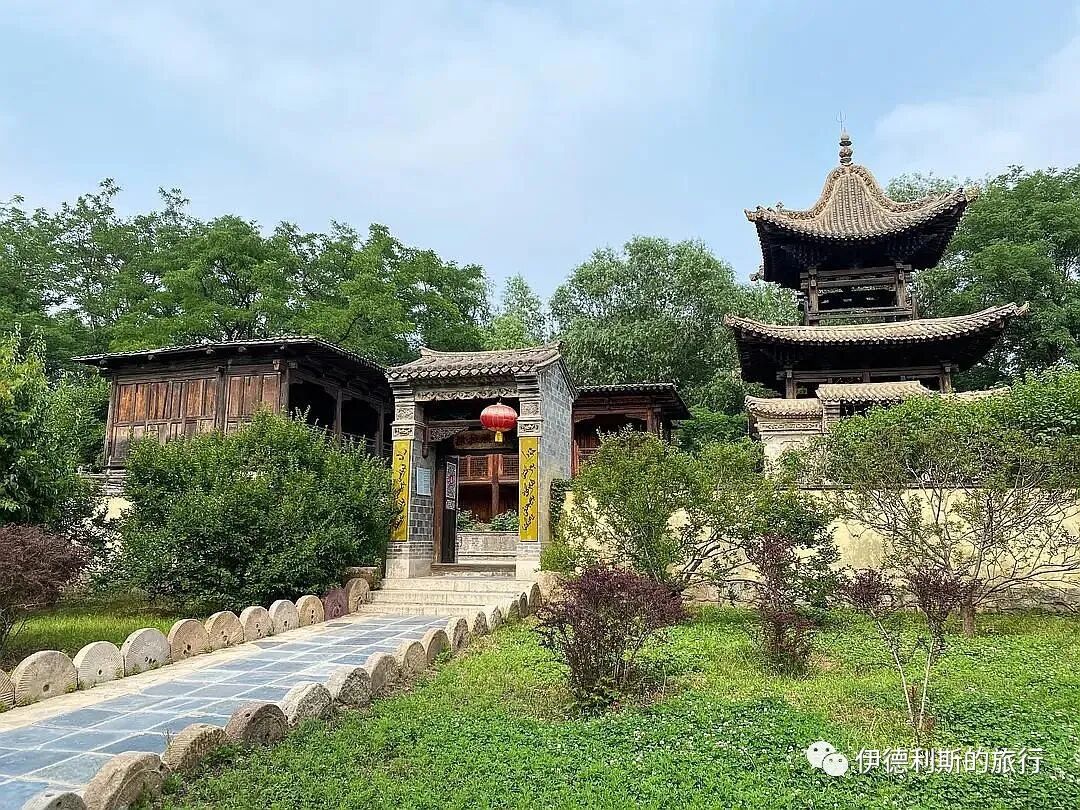
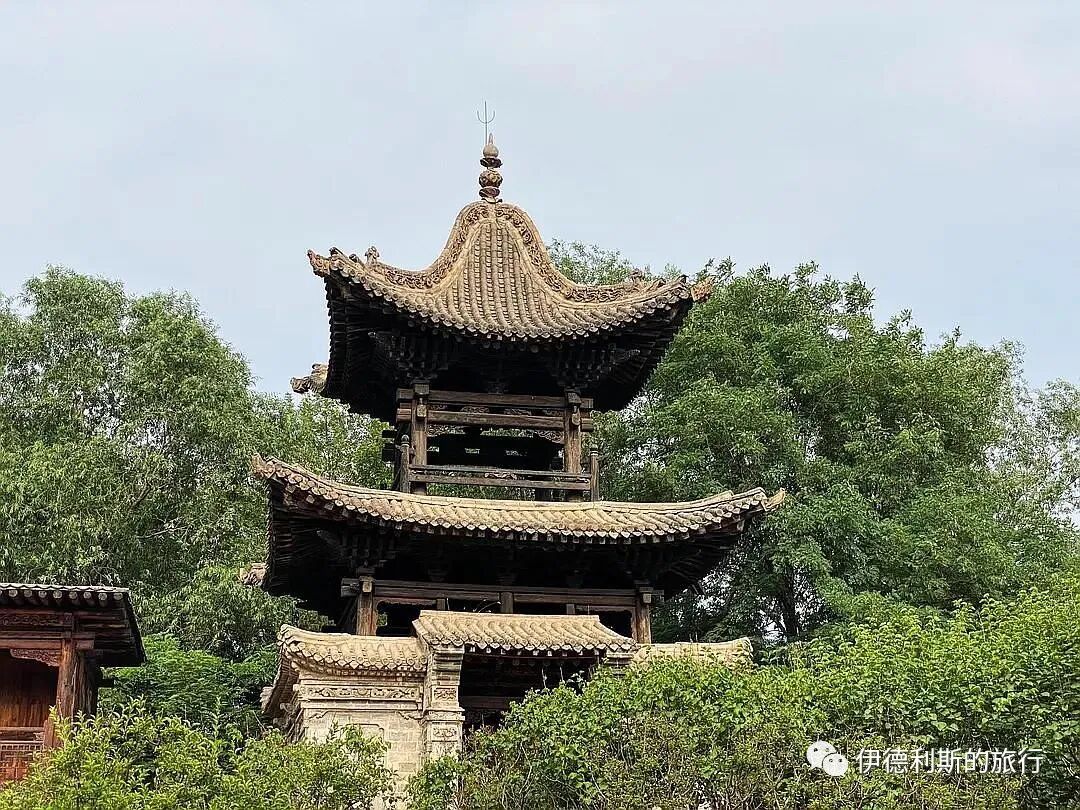
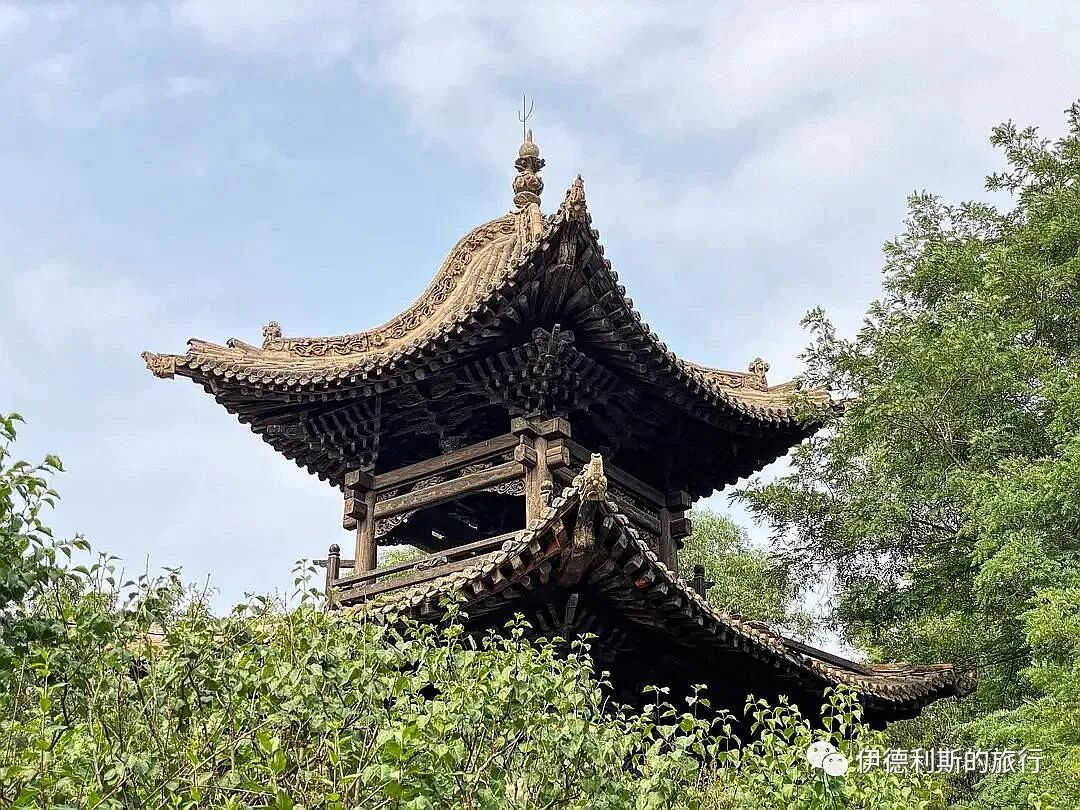
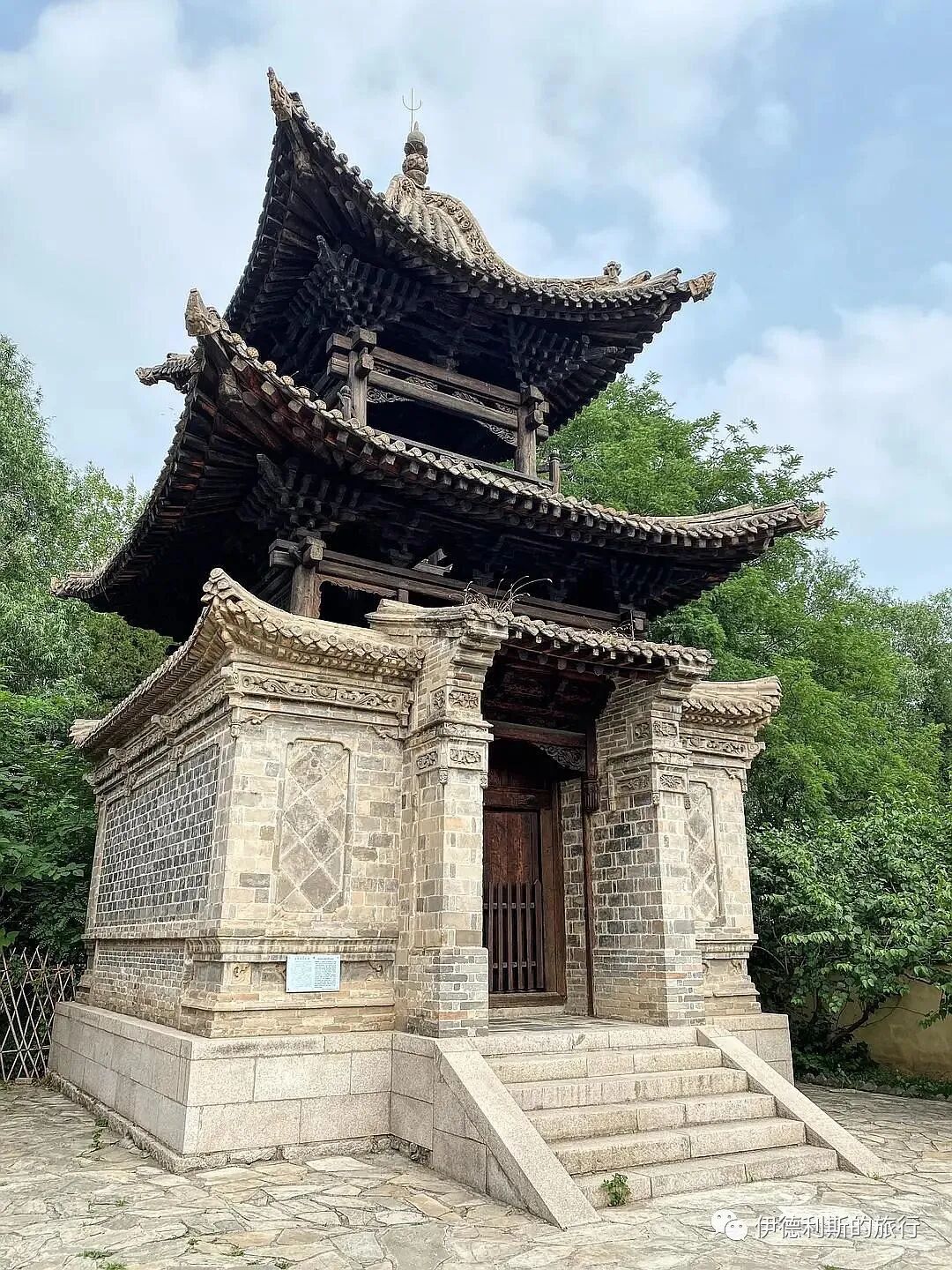
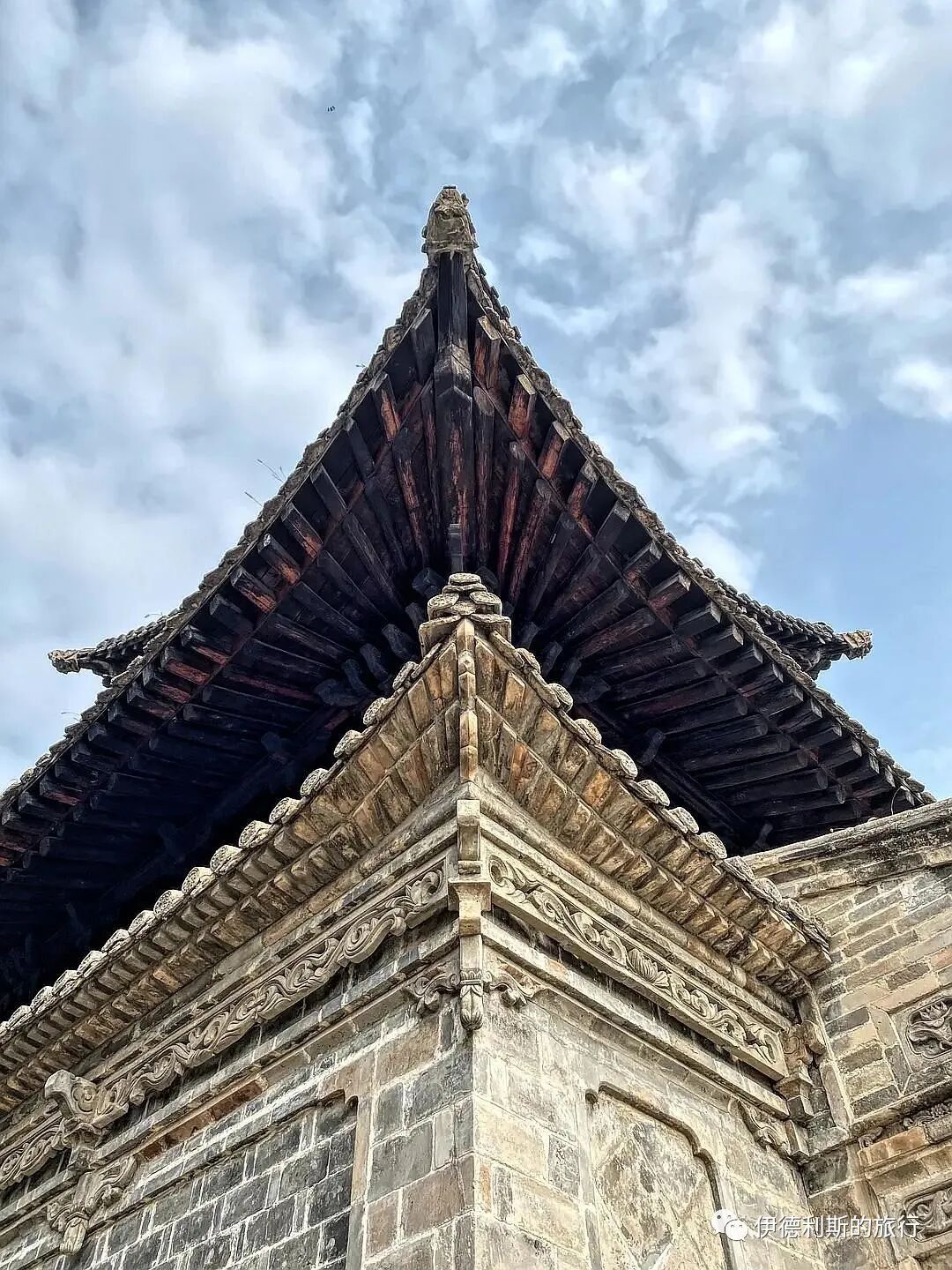
Next to it is a Qing Dynasty Salar fence-style building also moved from Mengda Village, Xunhua in 2003, along with its furniture. Now the west side is the original building, and the east side is a new construction modeled after the west side. However, placing a tangping (water kettle for ablution) on the table is a bit out of place; the table should have an incense burner and a Quran box.
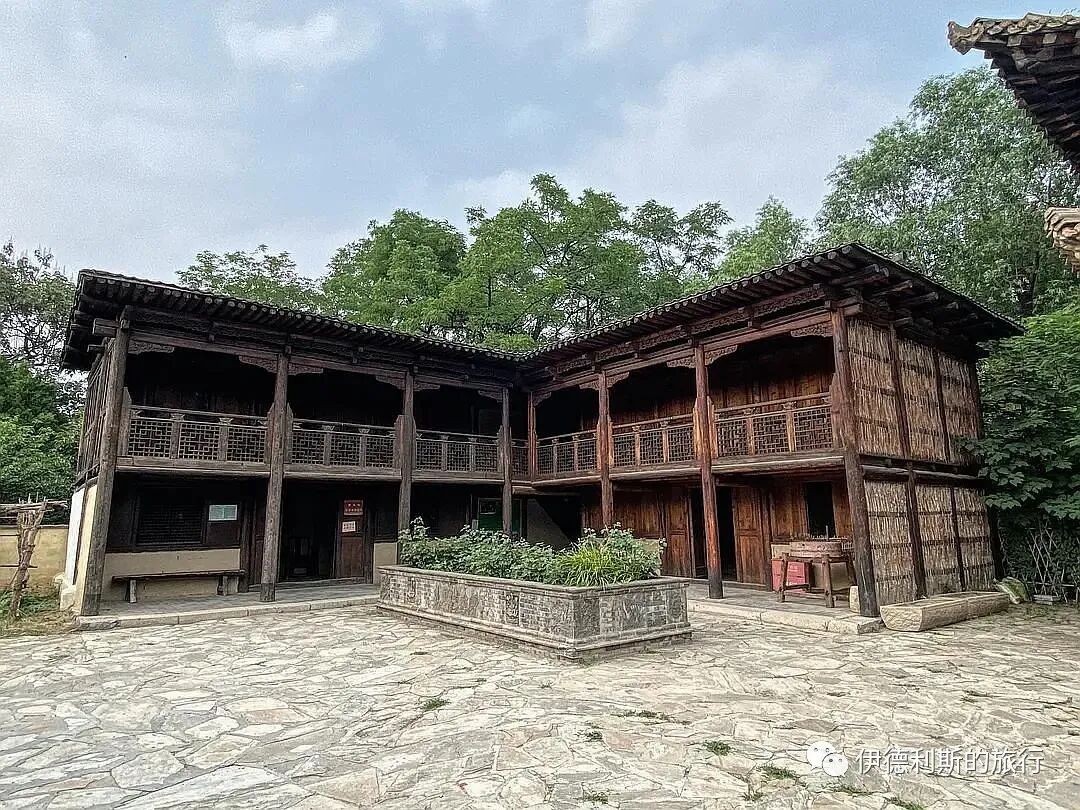
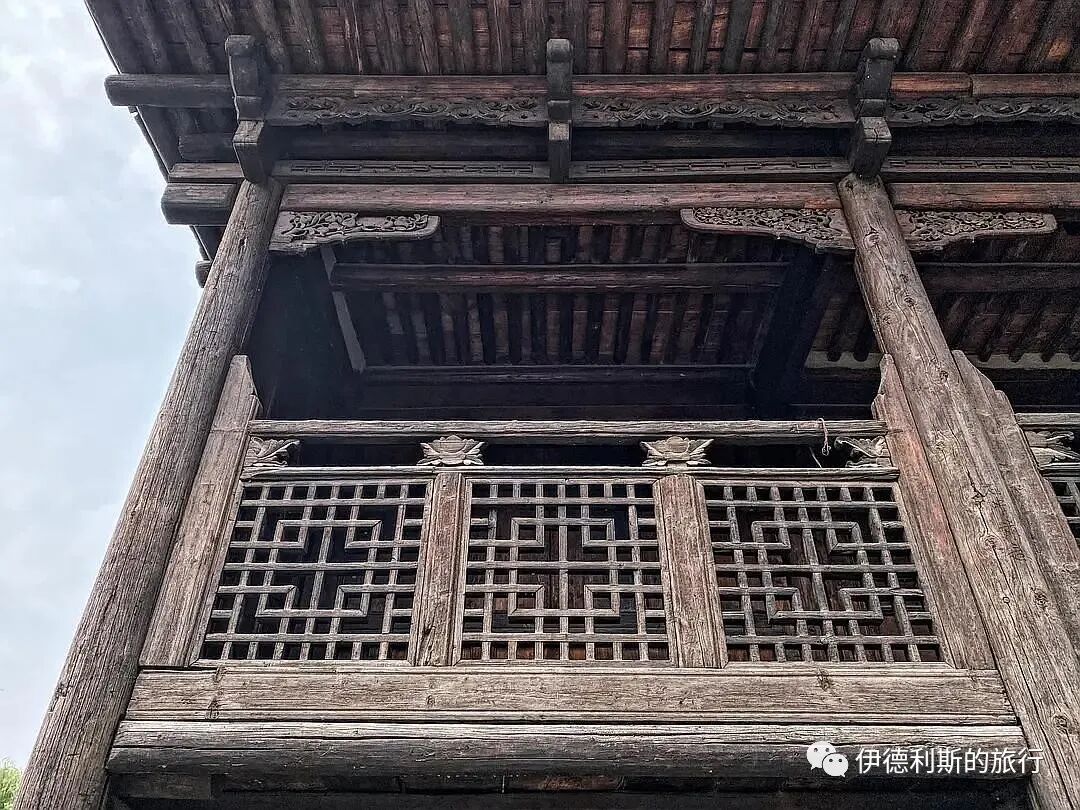
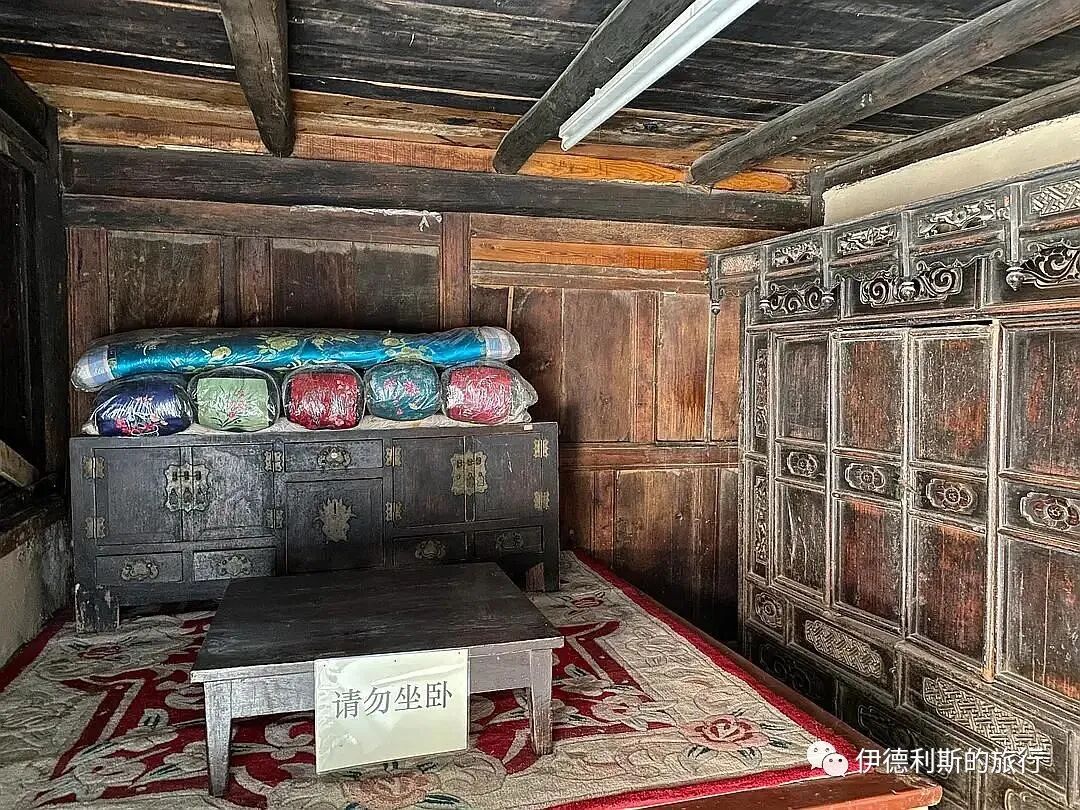
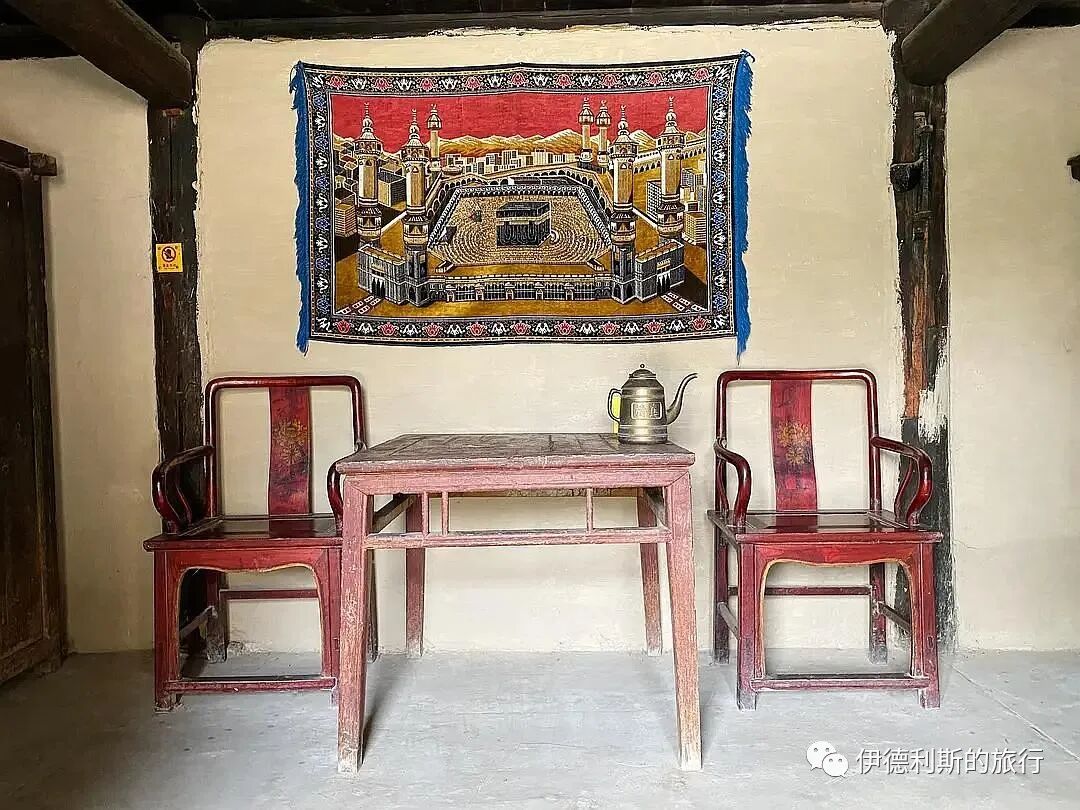
4. The former residence of Ma Fuxiang on Xisi North Third Alley.
The former residence of Ma Fuxiang is located at No. 11 Xisi North Third Alley (formerly No. 5 Baozi Hutong), with the residence on the west side and a garden on the east side. The garden features rockeries, climbing corridors, an embroidered building, and an octagonal pavilion. It is a cultural relic protection unit in Beijing.
Ma Fuxiang, courtesy name Yunting, was born in Hanjiaji, west of Hezhou City, Gansu, in 1876. He practiced martial arts with his brother from a young age, joined the army at 19, and passed the military examination at 21. In 1900, at the age of 24, Ma Fuxiang fought fiercely against the Eight-Nation Alliance at Zhengyangmen in Beijing, and five of his clansmen were killed in action. In 1912, Ma Fuxiang supported the Republic and served as the Ningxia Town General. Ma Fuxiang and his son and nephew, Ma Hongbin and Ma Hongkui, subsequently ruled Ningxia for 37 years and were known as the 'Ningxia Ma'.
In 1924, Feng Yuxiang launched the Beijing coup and led the National Army into the Northwest. To control Suiyuan, he transferred Ma Fuxiang, who had been in charge of Suiyuan for five years, to the position of Northwest Border Defense Assistant, which was actually just a nominal position. Because he feared Feng Yuxiang's strength, Ma Fuxiang had to move from Suiyuan to Beijing, where he bought the residence at No. 5 Baozi Hutong and converted it into his mansion.
During his time in Beijing, Ma Fuxiang devoted himself to studying Islamic classics. He proofread the manuscript of Wang Daiyu's 'Xizhen Zhengda' (True Answers to Real Truths), entrusted the Beiping Islamic Book and Newspaper Society to publish it, and later wrote a preface for 'Qingzhen Zhinan Yaoyan' (Essential Words of the Islamic Guide) and donated funds for its publication.
In 1928, Bai Chongxi, Ma Fuxiang, and local Niujie gentry jointly planned the first Hui Muslim middle school in Niujie, named Beiping Islamic Middle School, later renamed Northwest Public School. Bai Chongxi served as chairman, and Ma Fuxiang served as vice chairman. In 1929, Ma Fuxiang donated 6,000 yuan for the expansion of the school.
In 1928, the Chengda Normal School in Jinan was having difficulties. When Ma Fuxiang heard about it, he insisted on moving Chengda Normal School to Beiping and donated dozens of rooms he had purchased in the backyard of the Dongsi Mosque for the purpose of building an Islamic university to be used as school buildings. In 1929, Chengda Normal School officially moved to the Dongsi Mosque in Beiping. Ma Fuxiang served as chairman, donated 500 yuan as startup funds, and invested 40,000 yuan as capital into the Yongbaozhai Jade Factory opened by Hui Muslim entrepreneur Chang Zichun, using the dividends to maintain the operation of Chengda Normal School. As the most famous Islamic normal school during the Republic of China, Chengda Normal School cultivated a large number of Islamic talents.
After Chengda Normal School moved to Beiping, Ma Fuxiang invited the school's main leaders to the Ma Mansion in Baozi Hutong to discuss and decide to launch the Islamic newspaper 'Yuehua' (Moonlight). In November 1929, 'Yuehua' was officially published, becoming the most influential Islamic publication during the Republic of China. From its inception until his passing in 1932, Ma Fuxiang donated over 100 yuan to 'Yuehua' and Chengda Normal School every month. Sometimes, if he missed a donation due to busy government affairs, he would definitely make it up the following month.
In 1930, Ma Fuxiang was appointed Chairman of the Mongolian and Tibetan Affairs Commission and moved to Nanjing. In 1932, Chengda Normal School decided to send 4 graduates to Al-Azhar University in Egypt for further studies. When Ma Fuxiang heard this, he immediately decided to go to Beiping to discuss the candidates and provided half of the expenses. Unfortunately, Ma Fuxiang soon fell ill. While being escorted by his son Ma Hongkui to the Peking Union Medical College Hospital for treatment, he passed away when the train reached Liulihe, south of Beijing, at the age of 57. At the end of 1932, Ahong Ma Songting led the Chengda Normal School graduates to Cairo. Ma Hongkui, honoring his father's wishes, funded half of the travel expenses.
After 1949, the Ma Mansion in Baozi Hutong was used by the Education Bureau. After the policy was implemented, it was returned to the Ma family descendants, who donated it for public welfare. It later became the Xisi North Kindergarten, which it remains today.
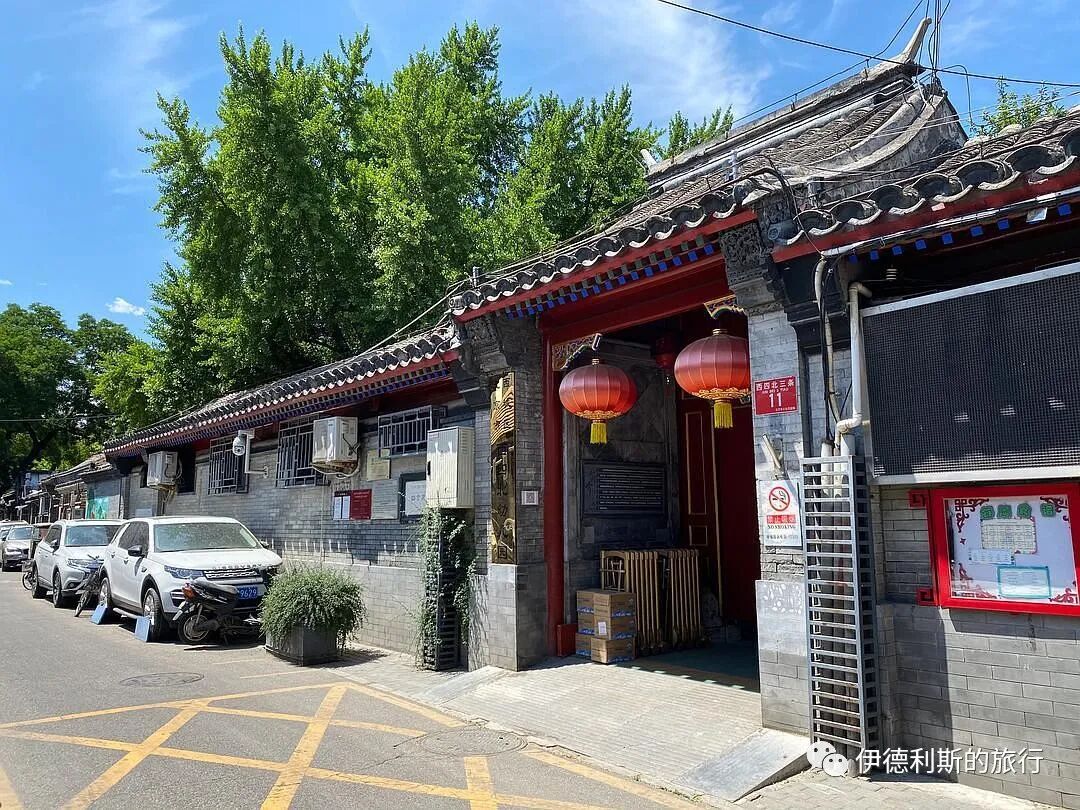
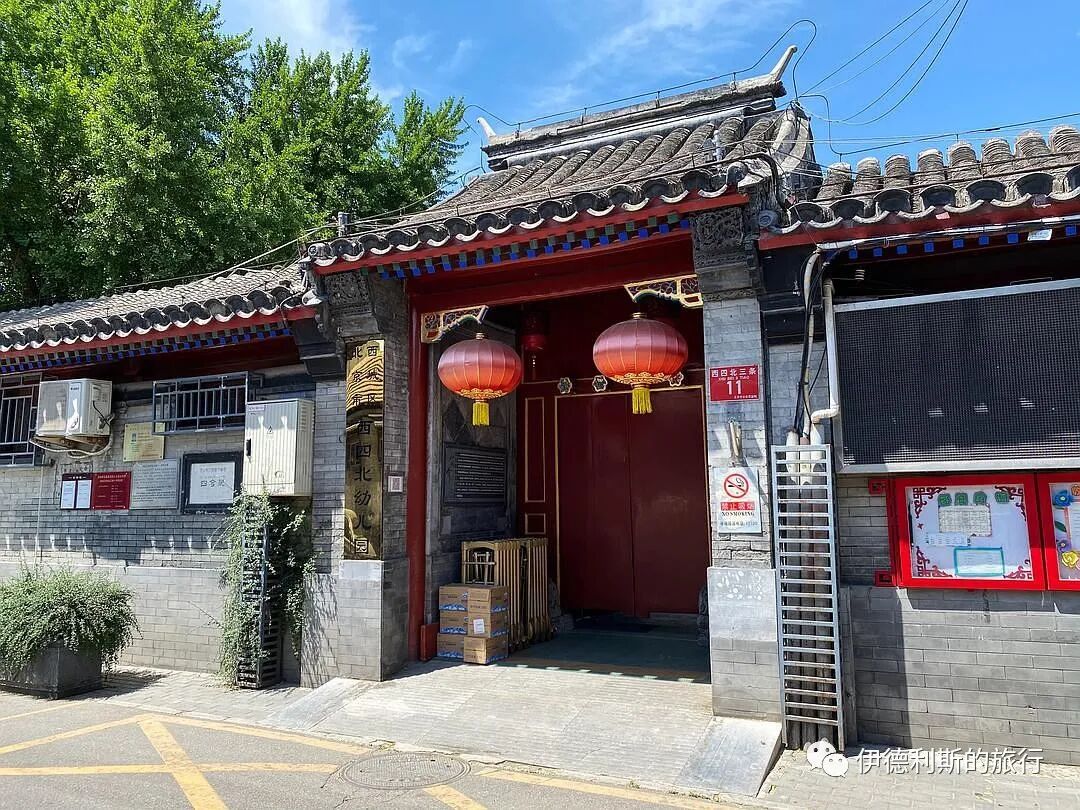
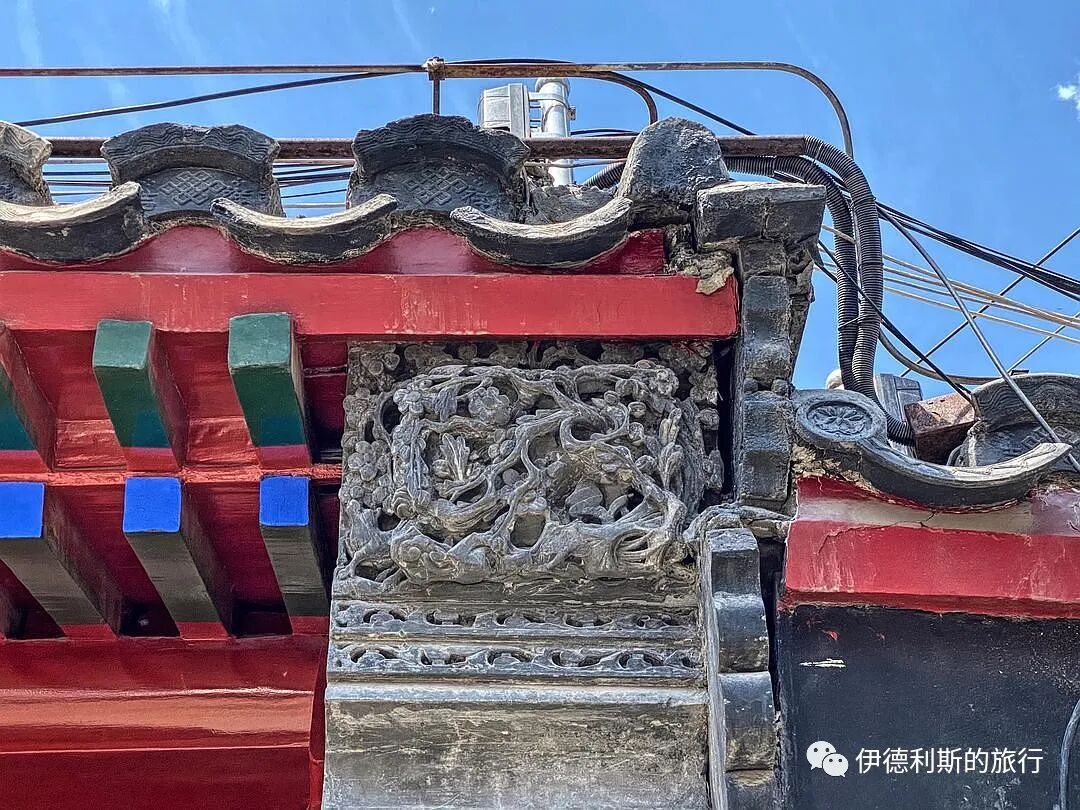
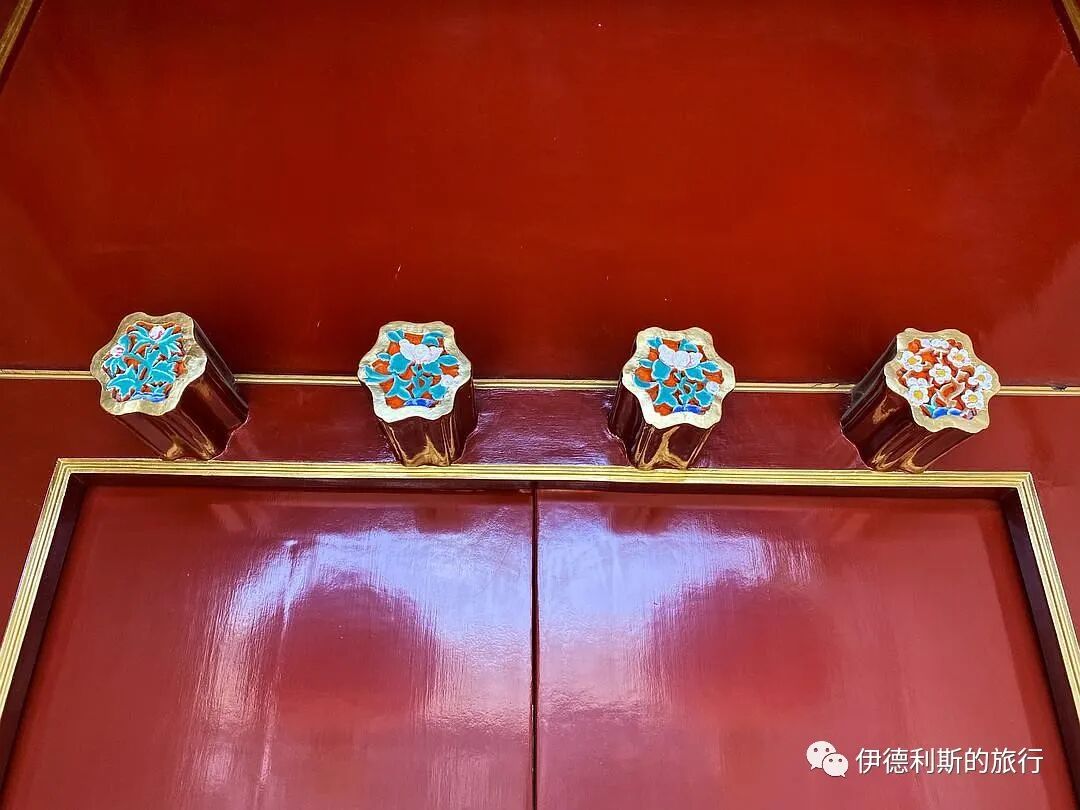
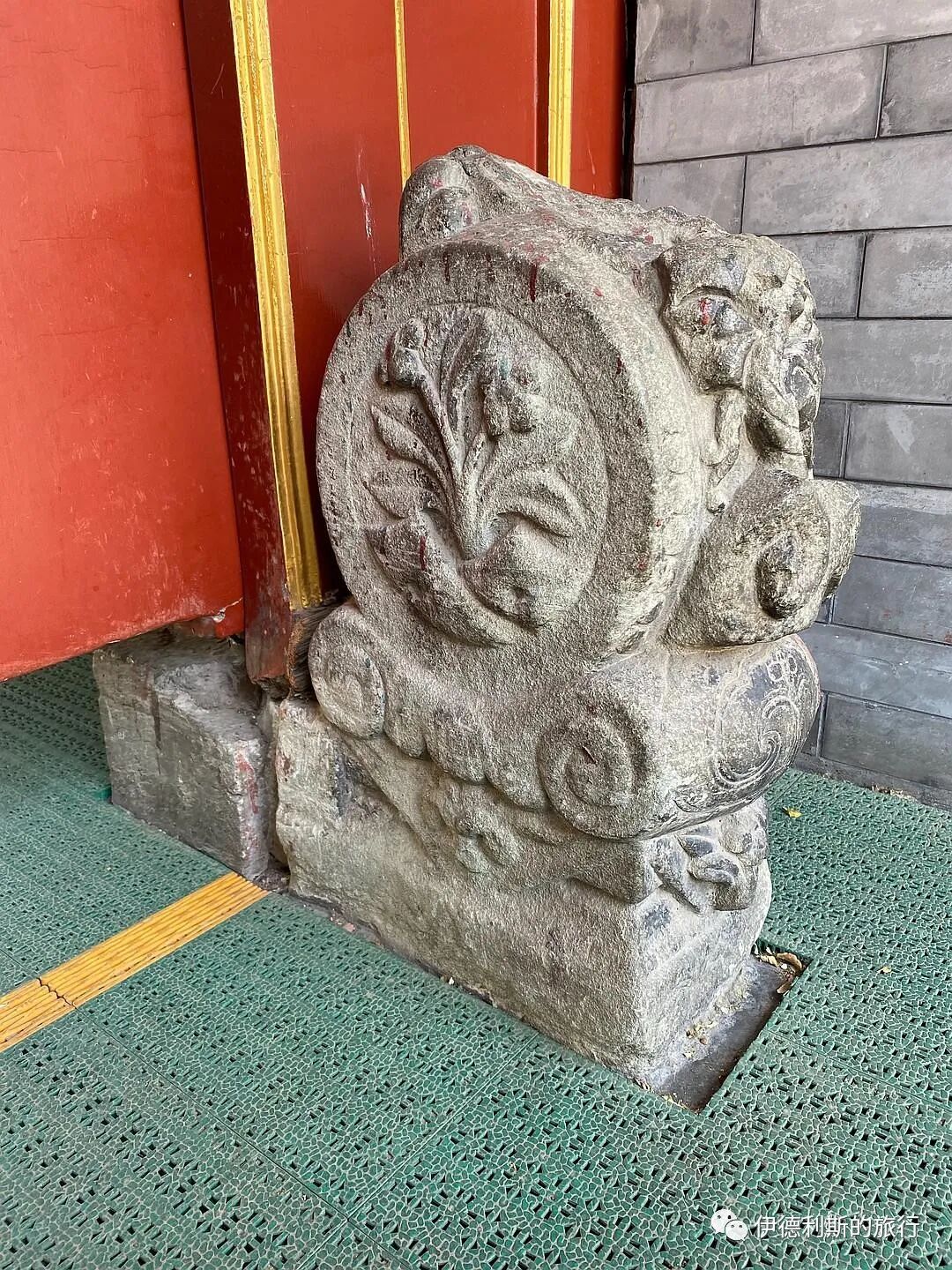
5. The mosque in the Old Summer Palace (Yuanmingyuan).
Fangwaiguan (View from Afar) is part of the Western-style building complex in the Old Summer Palace. It was originally called the 'Three-Story Water Fountain Hall' and was built between 1756 and 1759 (the 21st to 24th year of the Qianlong reign). It was mainly designed by the Italian court painter Giuseppe Castiglione and constructed by Chinese craftsmen, belonging to the late Renaissance Italian Baroque style. In 1760, Qianlong summoned the Hui Muslim figures who had contributed to suppressing the rebellion of the White Mountain Sect's Great and Small Khojas to Beijing, conferred the title of First-Class Taiji on the meritorious official Tu'erduo Khoja, and conferred the title of He Guiren (Noble Lady He) on his sister. In 1761, the Khoja lady was promoted to Rongpin (Concubine Rong) and later to Rongfei (Consort Rong). Qianlong then converted Fangwaiguan into a prayer hall specifically for the Khoja lady's prayers. After that, the Khoja lady lived in the palace for 28 years until she passed away in the Old Summer Palace in 1788.
Fangwaiguan has two floors and a hip-and-gable roof. The main body consists of four giant square pillars, and there are circular stairs on the left and right outside the building that lead directly to the second floor. In 1920, the Frenchman Yaleyuan, after visiting the site, recorded in his book 'A Study of the Old Summer Palace Projects by 18th-Century Jesuits' that there were two white marble Arabic stone steles inside Fangwaiguan, engraved with the honorable names of the third and fourth Caliphs, Uthman and Ali. It is speculated that Fangwaiguan originally also had stone steles with the honorable names of the first and second Caliphs, Abu Bakr and Umar, but they have been lost.
When the Old Summer Palace was burned in 1860, Fangwaiguan was the only Western-style building that remained intact, but in the following hundred years, its components were gradually stolen and destroyed. Now only the four main stone pillars remain. The two sets of stone bridges outside Fangwaiguan were transported to Yenching University during the Republic of China era. Now one set is in the grass inside the west gate of Peking University, and the other is on the north side of the island in Weiming Lake. For detailed information about Fangwaiguan, I recommend reading the new book 'Emperor Qianlong's European-style Garden' by Mr. Liu Yang, published in 2022.
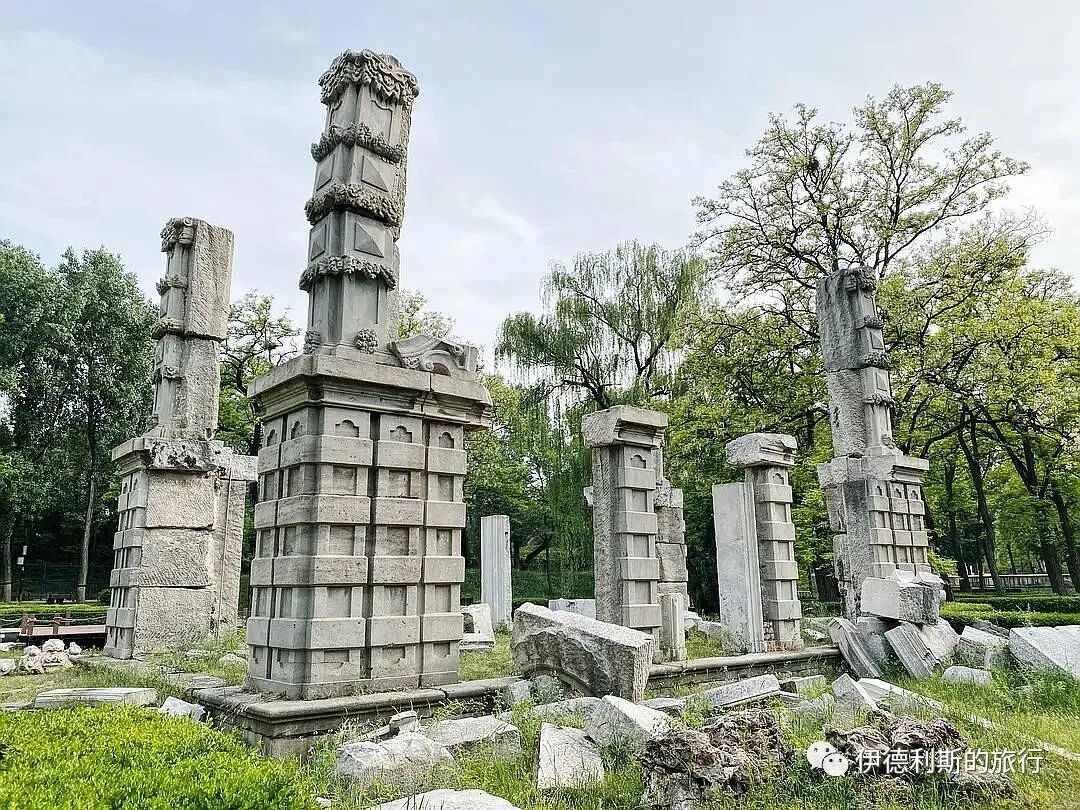
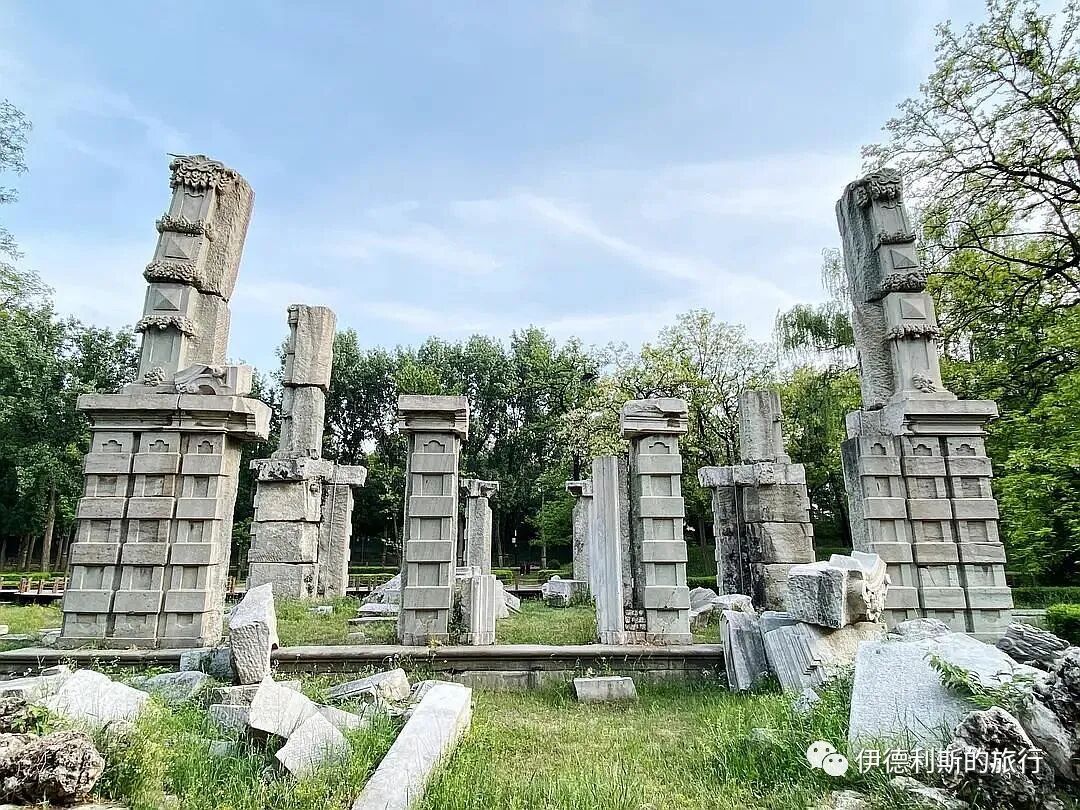
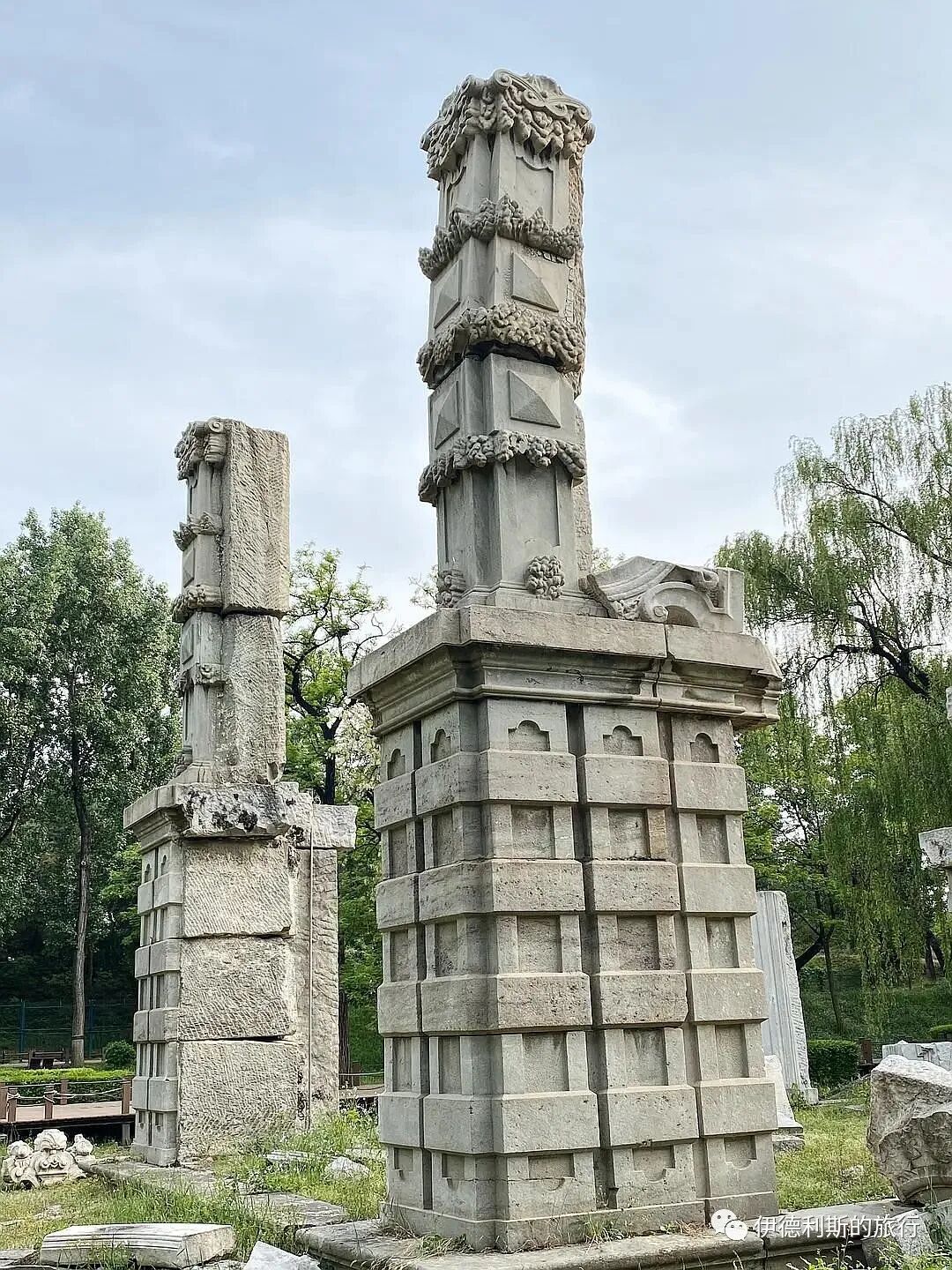
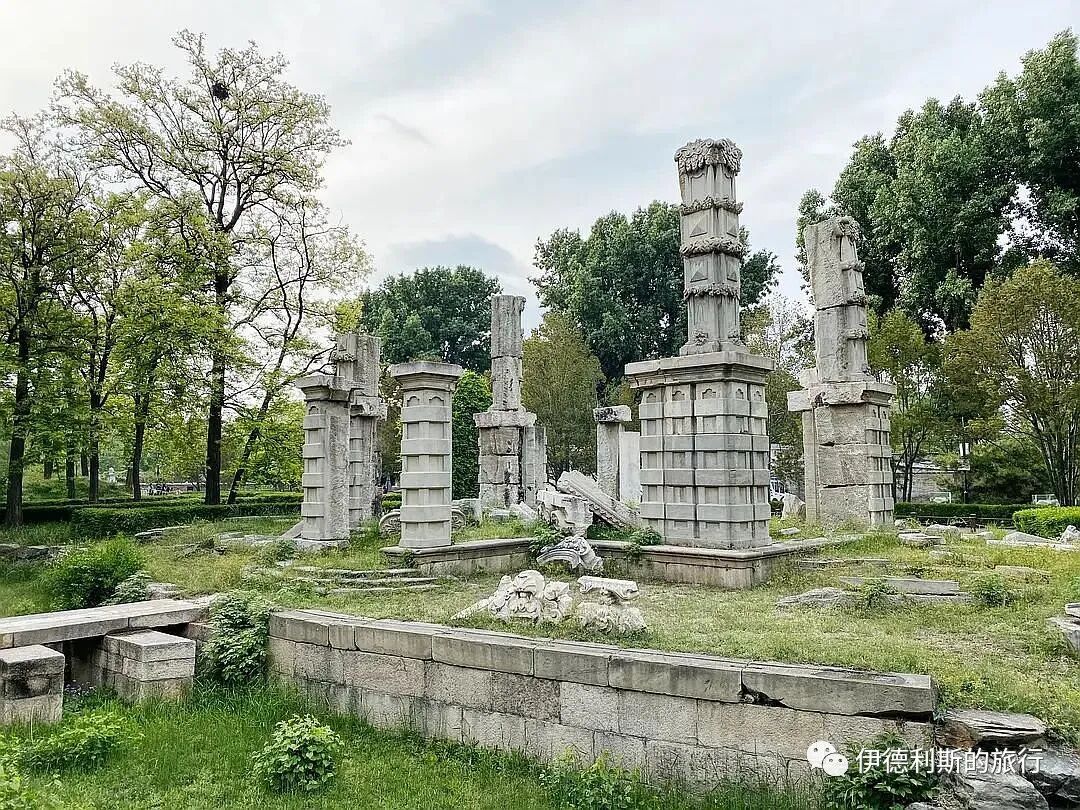
6. The Western-style building of the Mishi Hutong Mosque.
Today, amidst a large construction site next to the Caishikou subway station in Beijing, two historical buildings remain from the Daji area demolition 10 years ago. One is the famous former residence of Kang Youwei. The other is the two-story building of the old Bianyifang Restaurant in Mishi Hutong, which opened in the 14th year of the Yongle reign of the Ming Dynasty (1416). In 1937, the old Bianyifang closed due to the war. Soon after, Hui Muslims from the five northwestern provinces living in Beijing raised over 10,000 yuan to buy the building. After renovation, it officially became the Mishi Hutong Mosque on January 1, 1940, and also served as the office for the Association of Fellow Townsmen from the Five Northwestern Provinces.
The building where the Mishi Hutong Mosque is located was originally built in the mid-to-late Qing Dynasty. It was initially an 'L-shaped' structure consisting of three north rooms and four west rooms, with a hard-mountain roof and a hanging-mountain open corridor structure. On the east side was a garden.
The former Mishi Hutong has now been completely leveled, with only the mosque building remaining.
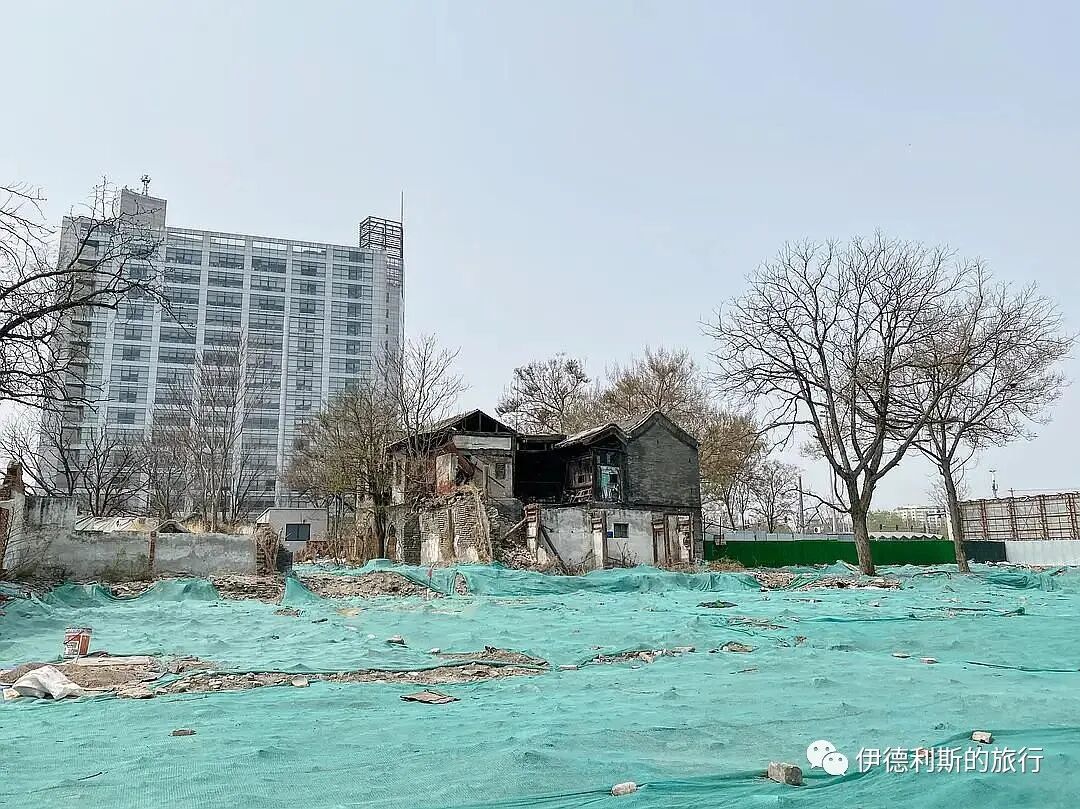
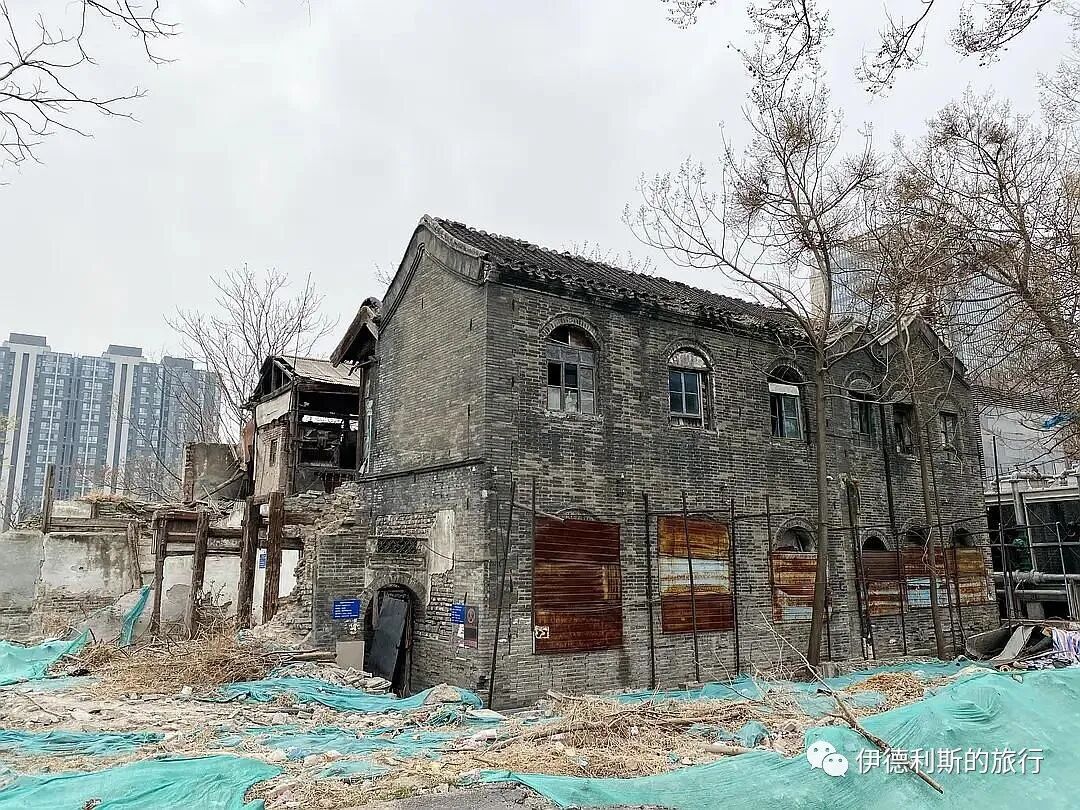
Looking at the mosque from the north, the north building is on the left and the west building is on the right. You can see the simple gray brick walls and arched windows.
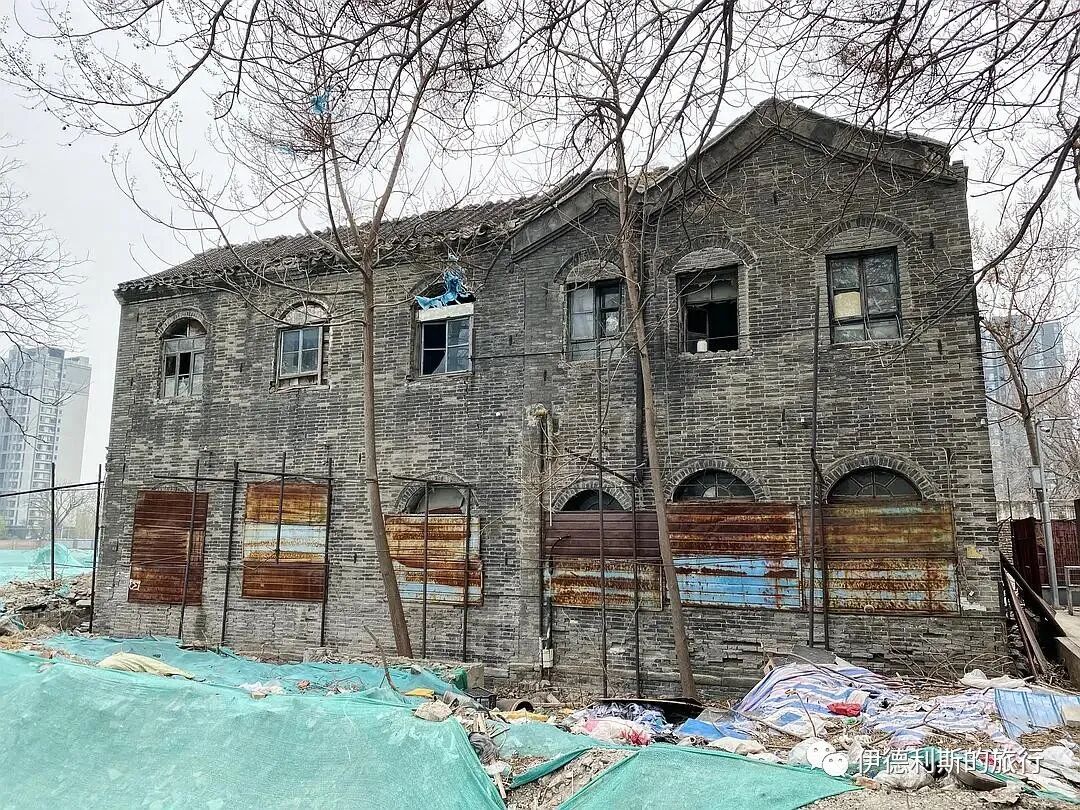
In the connecting structure of the north building, you can see exquisite hanging eaves, wooden railings, and brick carvings.
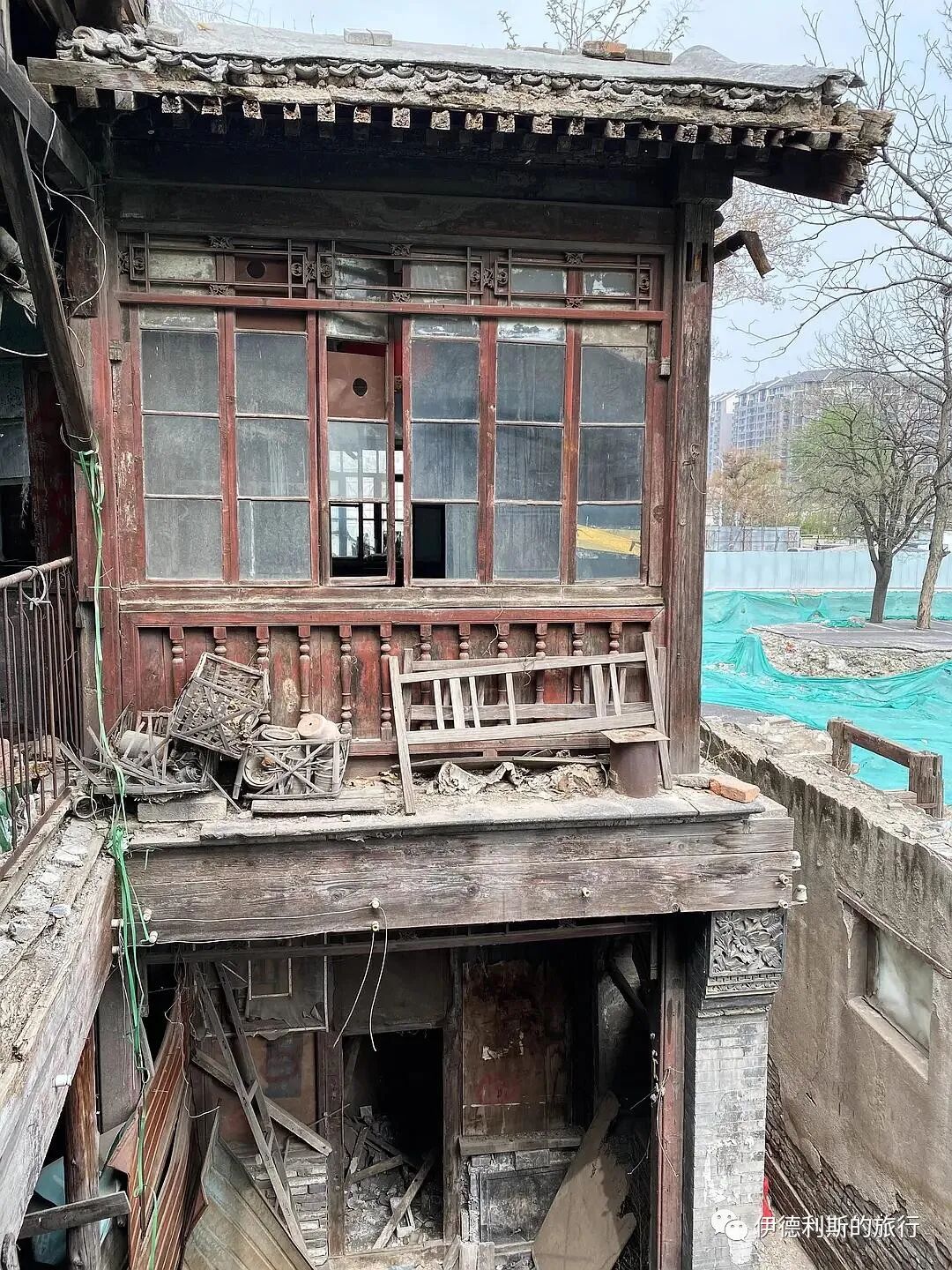
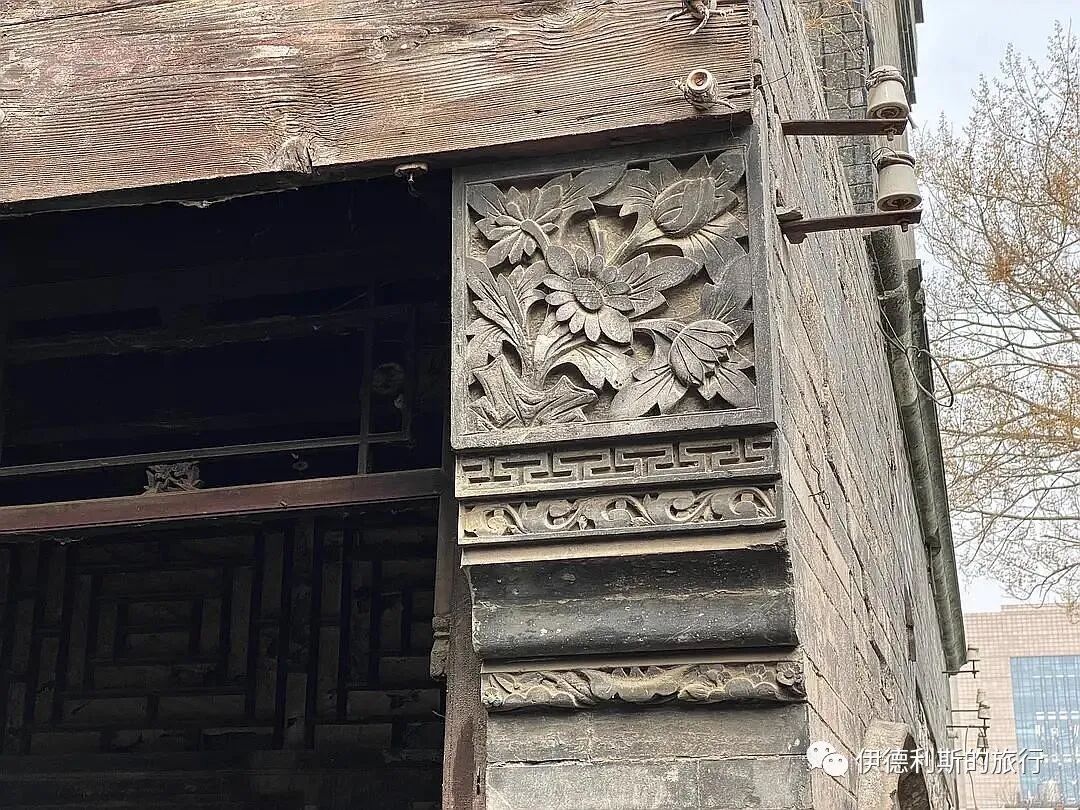
When it was converted into a mosque in 1940, three south rooms were added, changing the 'L-shaped' layout into a 'U-shaped' layout. At the same time, a two-story flat-roofed open hall was added in the recessed area, connecting with the south rooms to form a semi-enclosed open space on the second floor as the main prayer hall. After the renovation, the building only left a small courtyard on the east side, and one must pass through the open hall to enter each room, which has the typical characteristics of southern architecture.
Looking at the mosque from south to north, the west building is on the left, and the south open hall added in 1940 is on the right.
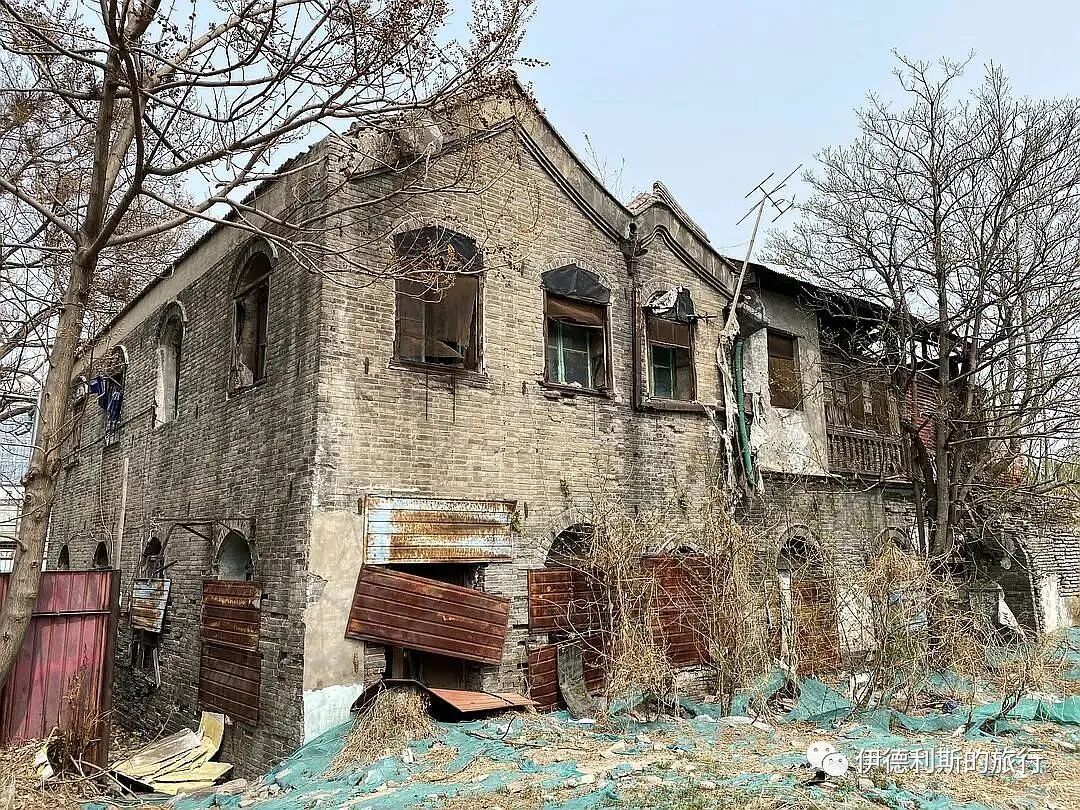
Looking at the mosque from east to west, the south open hall is on the left, and the north building with the connecting structure is on the right.
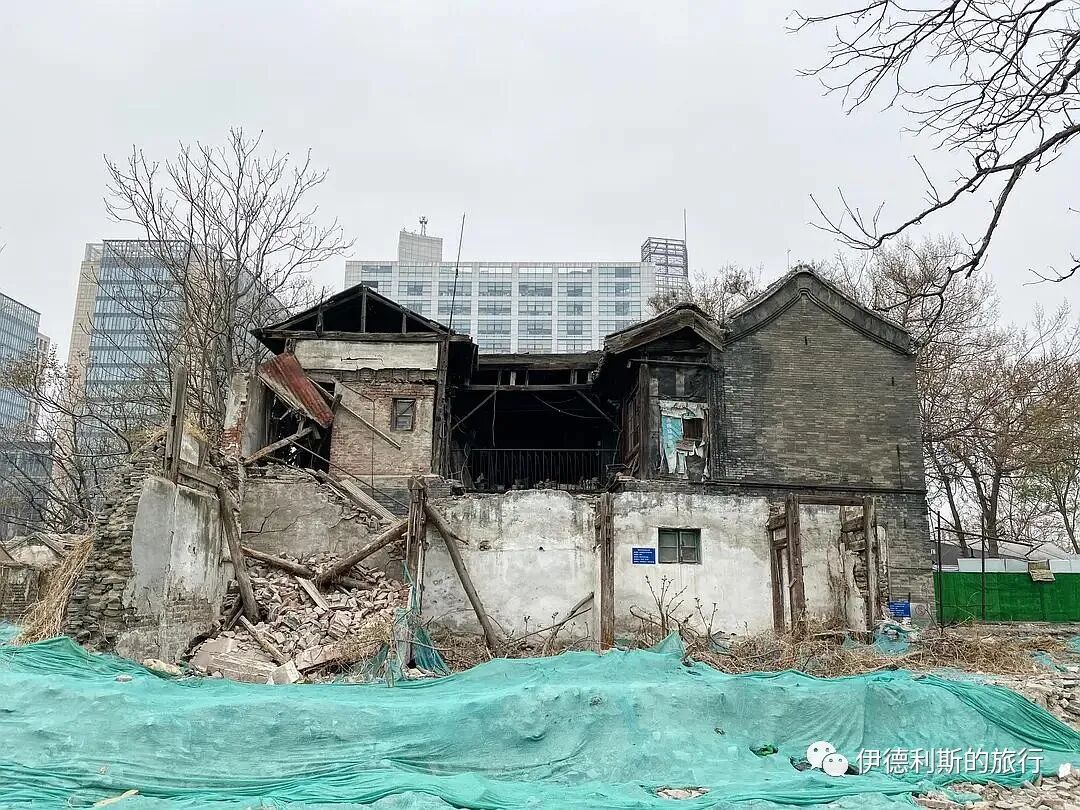
The flat-roofed open hall added in 1940.
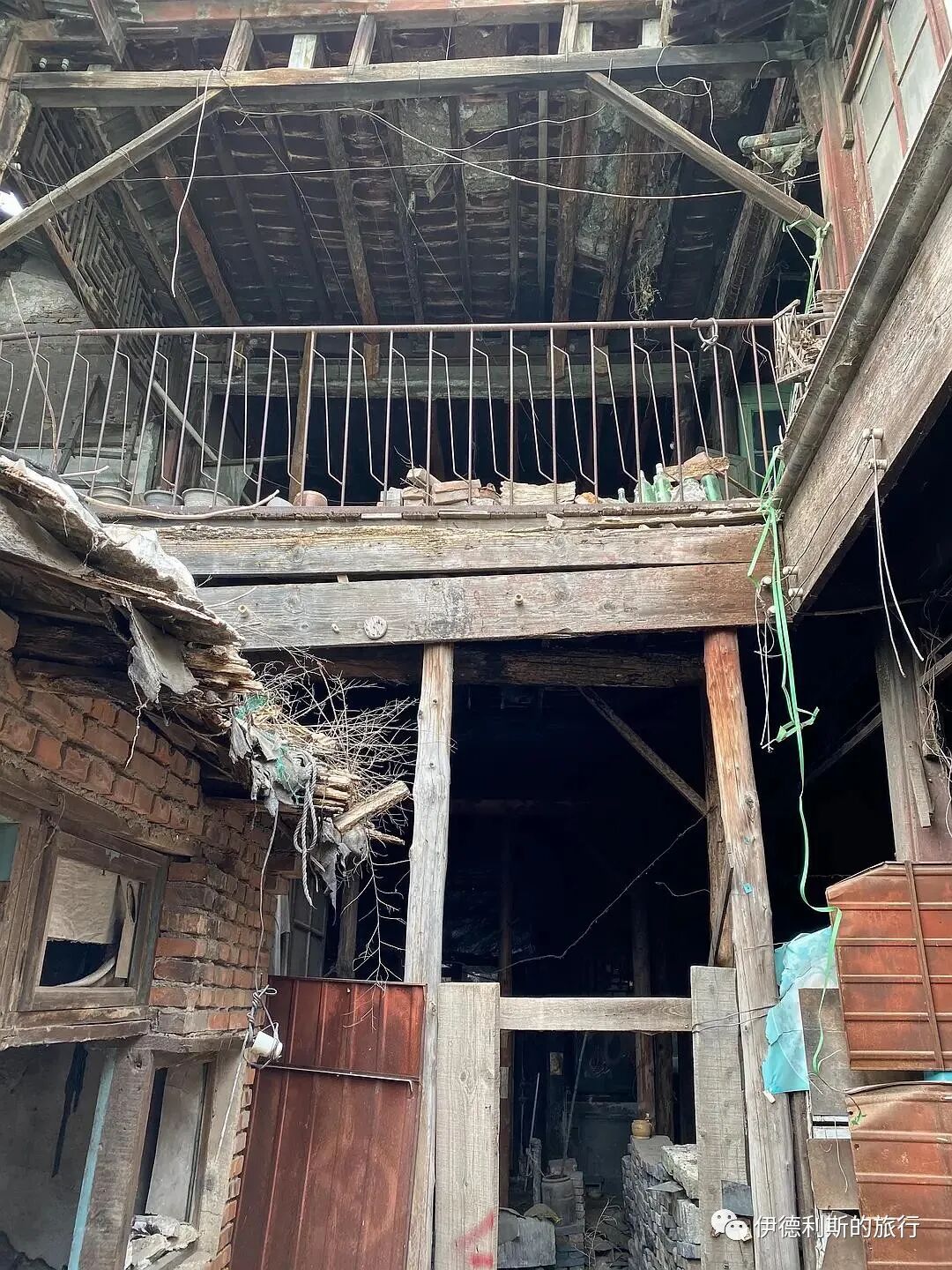
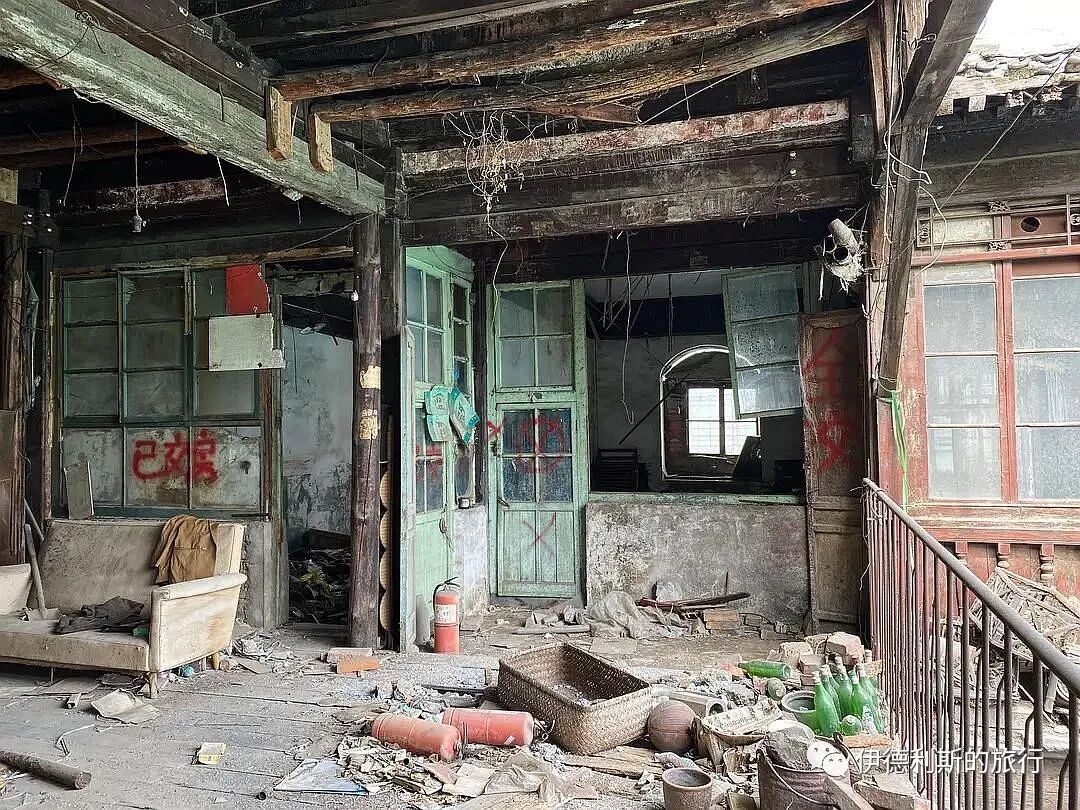
The exquisite wooden lattice partitions and door lintel wood carvings on the first floor of the mosque, as well as the abandoned rooms. You can see that time stopped in April 2012, exactly 10 years ago.
In the 1940s, the Mishi Hutong Mosque became the activity center for northwestern Hui Muslims in Beijing, with Ahong Ye Liangpu serving as the first Imam. At that time, the Mishi Hutong Mosque and the Tianqiao Mosque, also built during the Republic of China, were brother mosques, and the two mosques would invite each other's Ahongs.
After the 1960s, the Mishi Hutong Mosque was converted into a dormitory for a toy factory and later became a residential compound.
After the demolition of the Daji area southeast of Caishikou, more than 30 guild halls, various temples, shops, and former residences of famous people were turned into ruins one after another. Ultimately, by 2012, only the former residence of Kang Youwei and the Mishi Hutong Mosque were preserved as historical buildings. It is a pity that the original gate of the Mishi Hutong Mosque, which had traditional Arabic calligraphy, has been demolished, leaving only the two-story building inside. It is said that the Mishi Hutong Mosque and the former residence of Kang Youwei will both be renovated and used for other purposes. I don't know what this place will become by then.
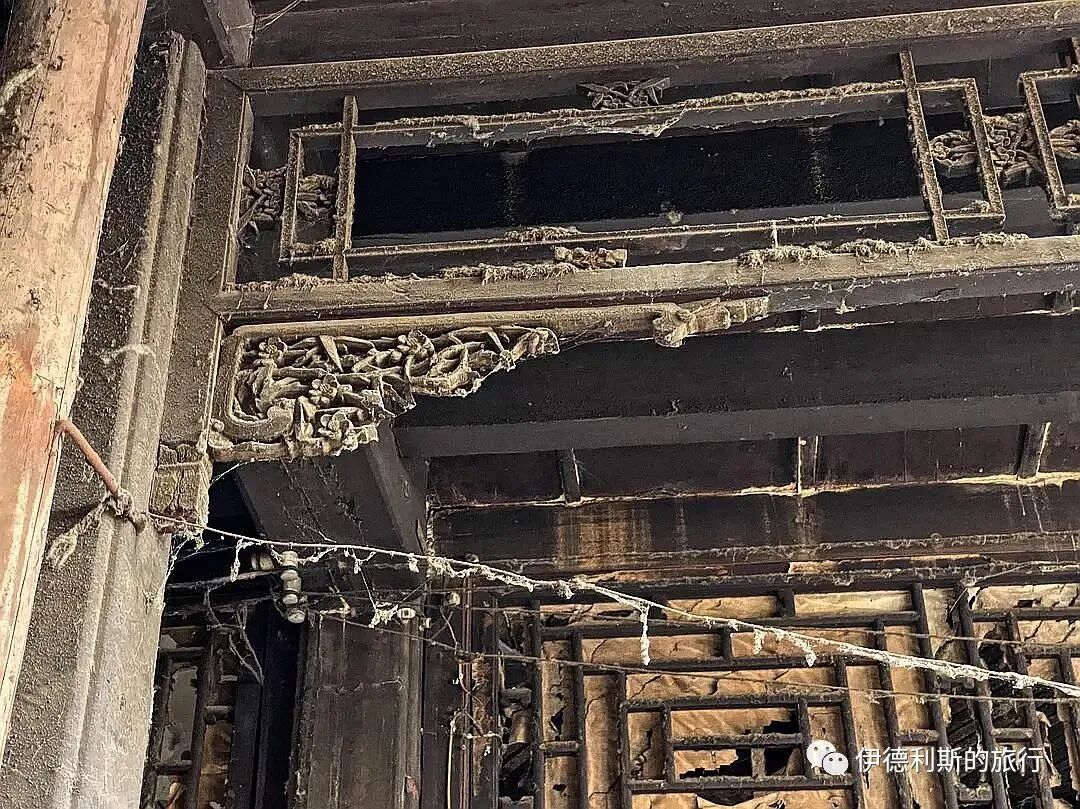
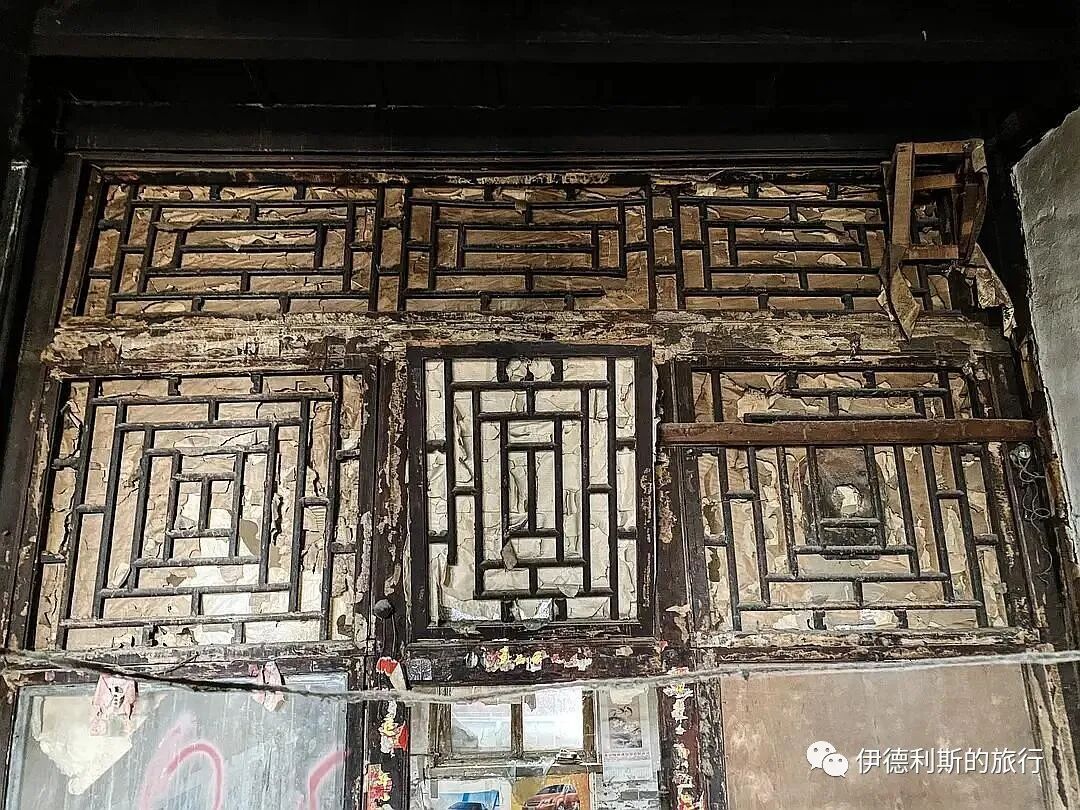
The second floor of the mosque was initially a private room of the old Bianyifang Restaurant, later became the office of the Association of Fellow Townsmen from the Five Northwestern Provinces and the main prayer hall of the mosque, then became a dormitory for a toy factory and a crowded residential compound, and finally became a ruin.
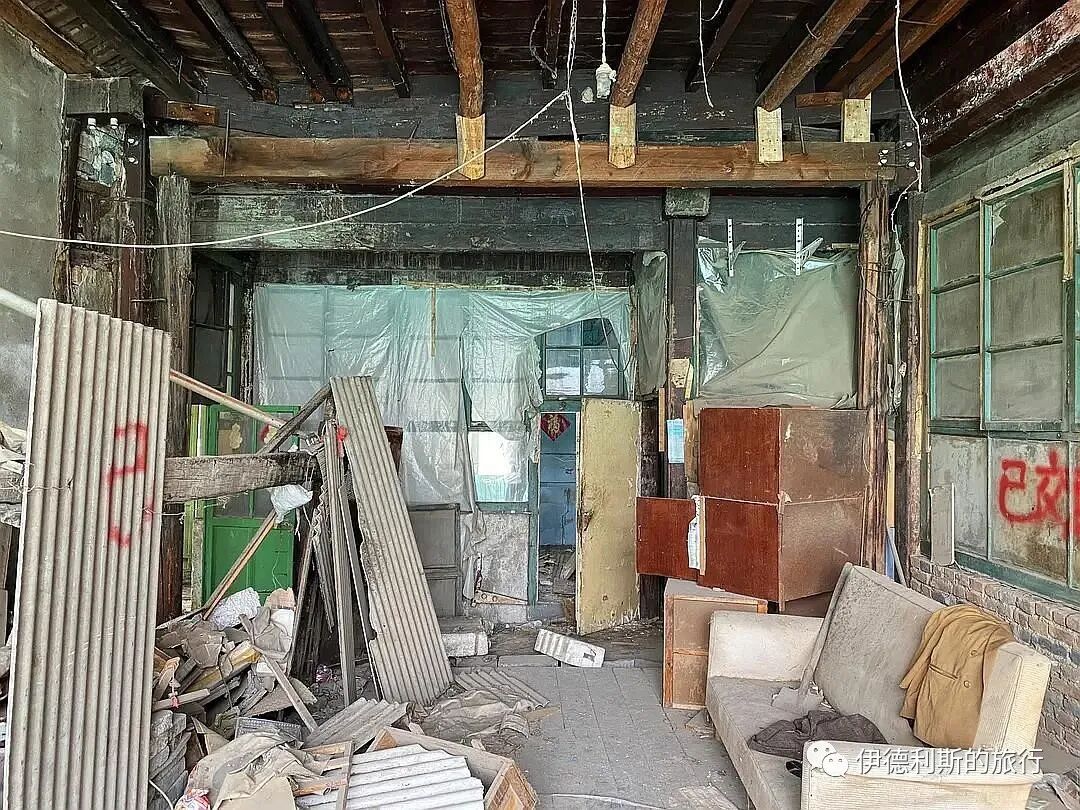
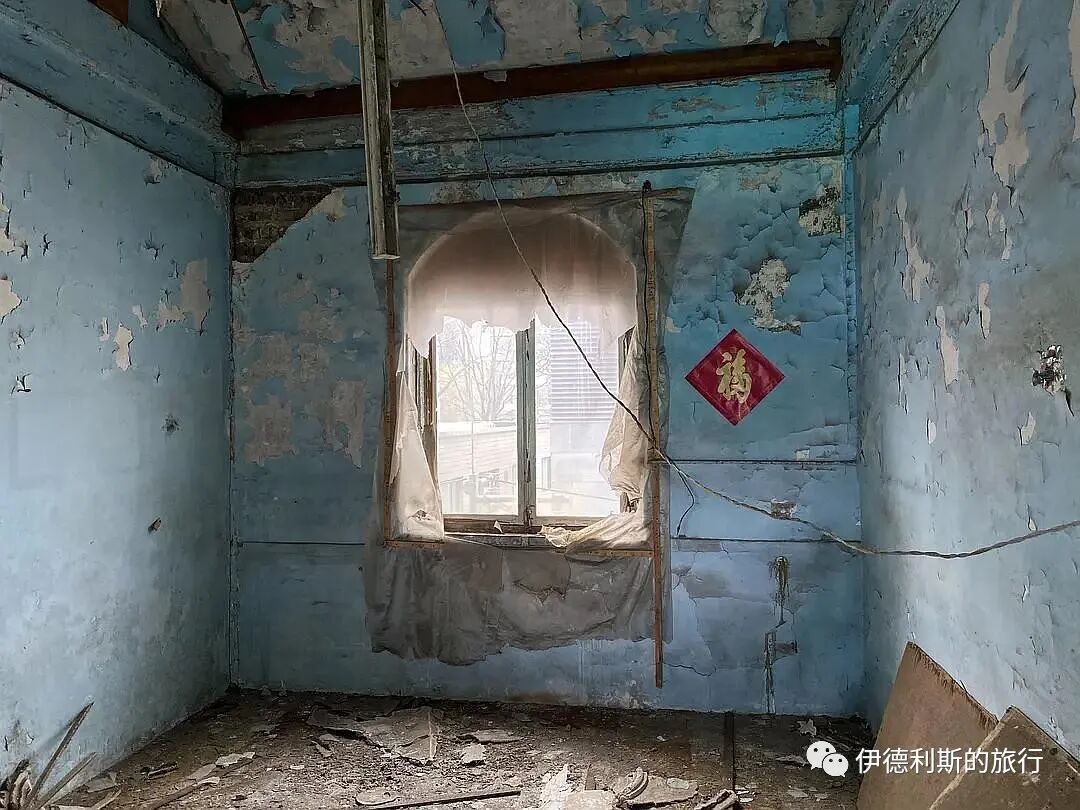
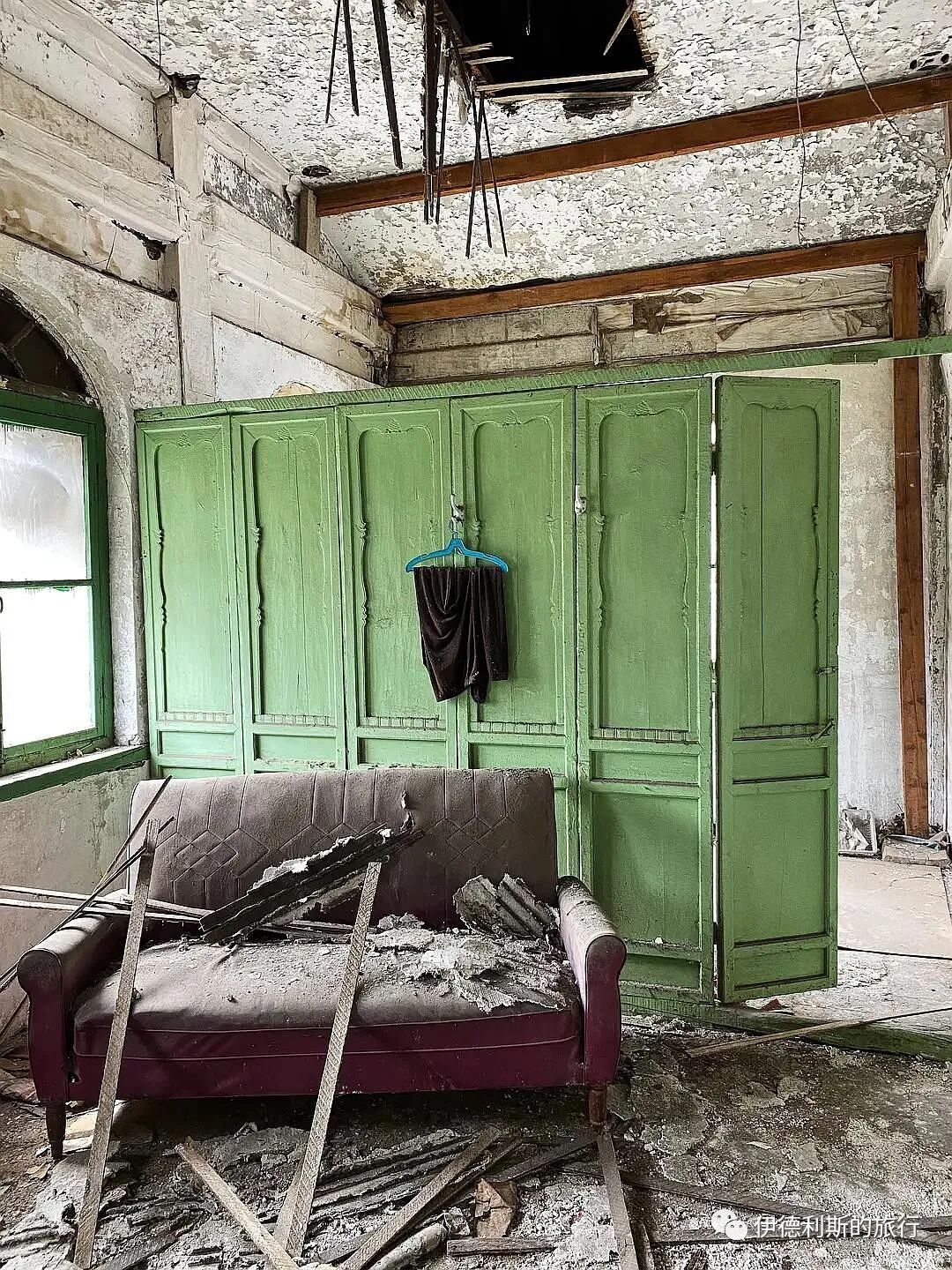
The gate of the mosque.
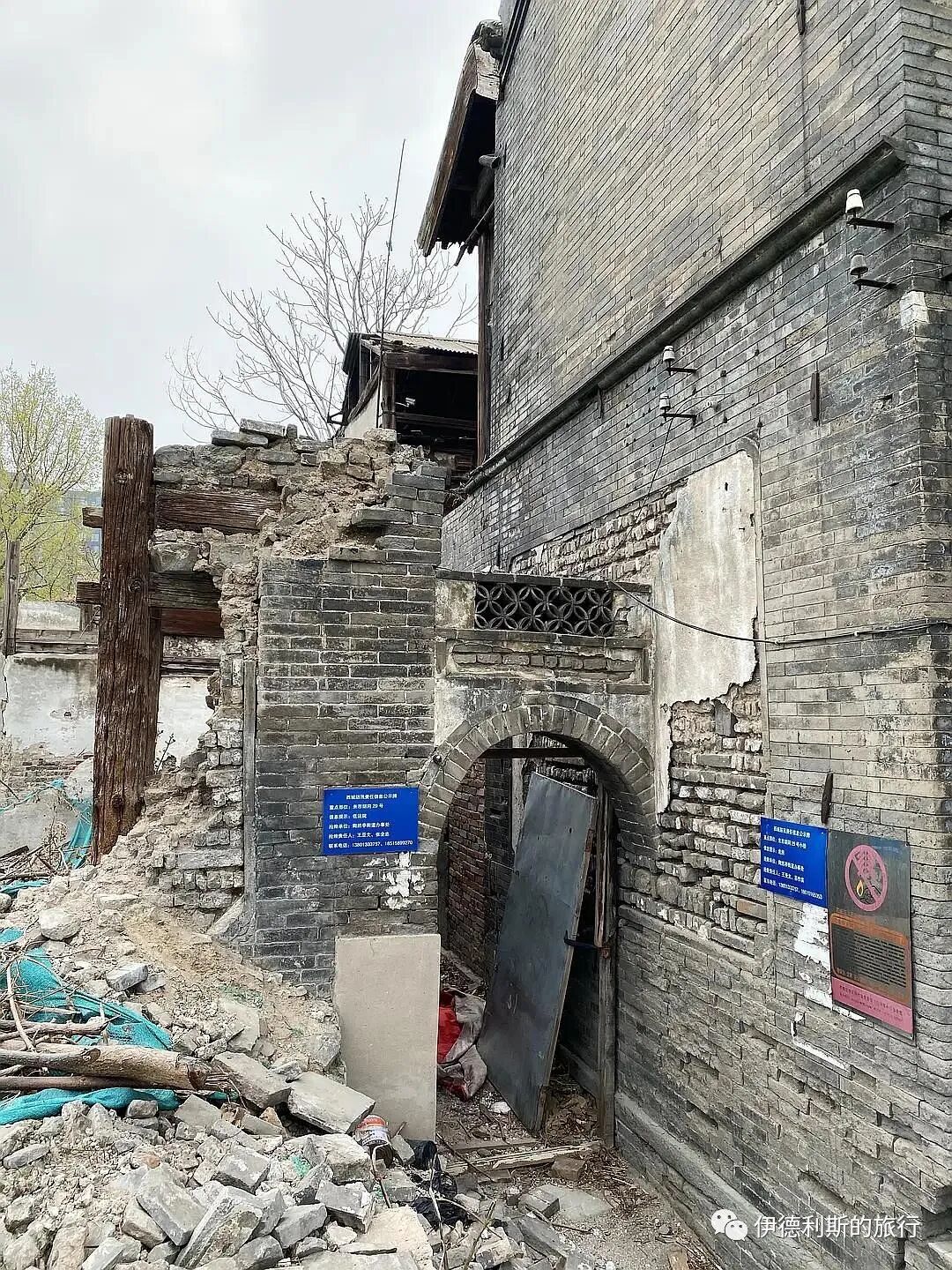
7. The storefront of the Jian'tang Wang Huihui Plaster Shop on Yangmeizhu Slanting Street, outside Qianmen.
The Jian'tang Wang Huihui Plaster Shop is located on Yangmeizhu Slanting Street outside Qianmen. The Wang family has operated the Jian'tang Wang Huihui Plaster Shop since the Wanli reign of the Ming Dynasty. It has been 400 years now and is a district-level intangible cultural heritage. In the old days, Jian'tang had a shop in the front and a factory in the back, and several generations lived and operated here. Now, various cultural relics of the old Jian'tang shop are displayed in the street-facing storefront. The most precious is the wooden plaque from that year, which is preserved on the second-floor terrace.
After the public-private partnership in 1956, Jian'tang was merged into Tongrentang. The plaster shop on Yangmeizhu Slanting Street was closed and converted into staff dormitories, and the Wang family also became employees of Tongrentang. After the 1960s, the Jian'tang storefront was reclaimed. Through unremitting efforts, the Wang family successfully retrieved it in 1997. After renovation, the Wang family reopened the old storefront as a bookstore in 2004, naming it Jian'zhai. In 2014, Yangmeizhu Slanting Street became a pilot for the 'Beijing Design Week'. Jian'zhai took this opportunity to upgrade into a coffee bookstore, which is still in business today. The landlady is the 21st-generation descendant of Jian'tang.
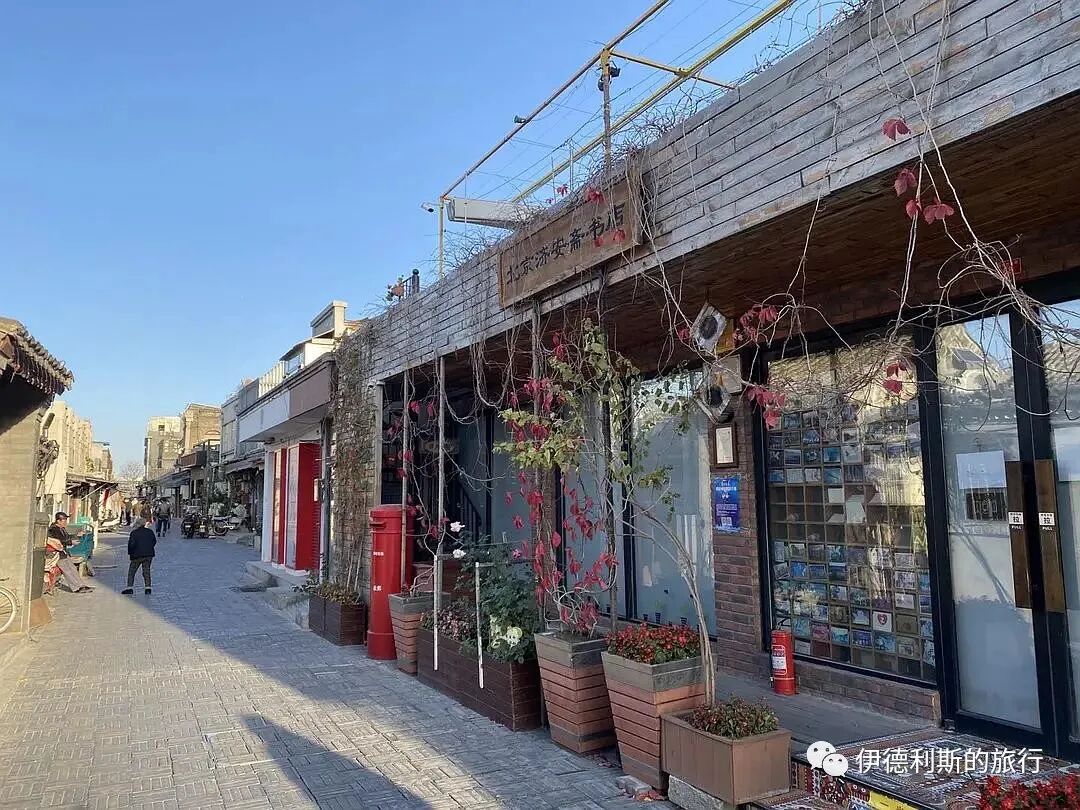
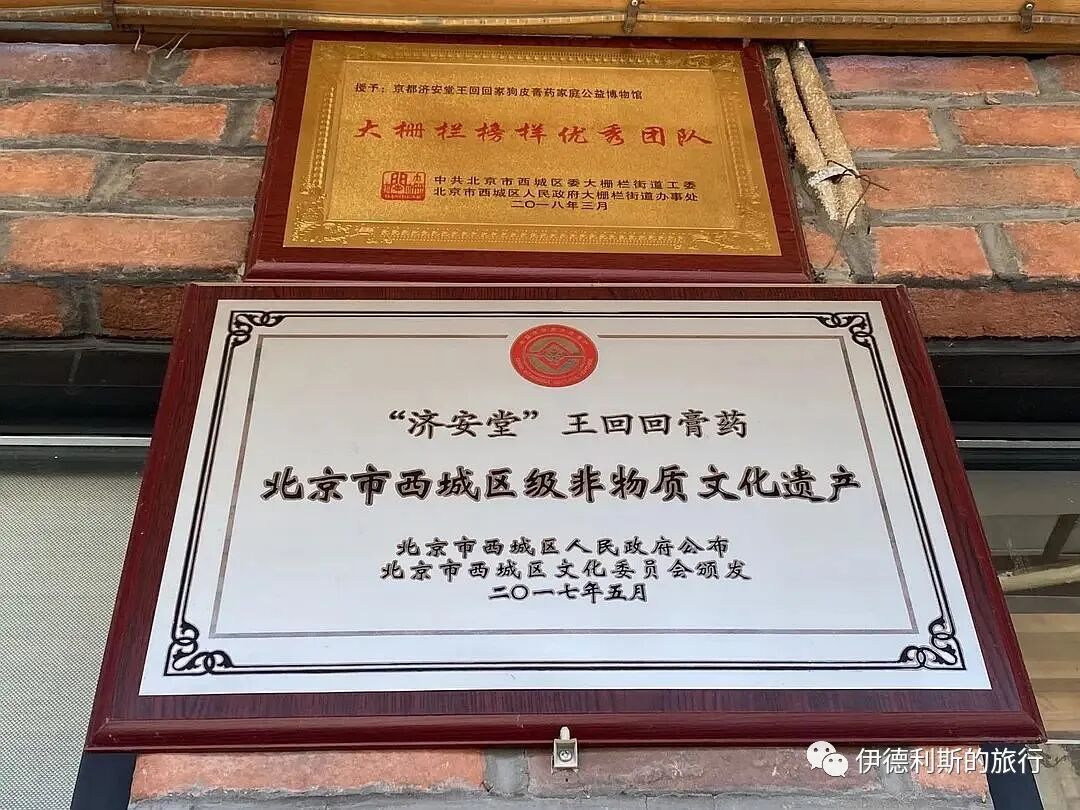
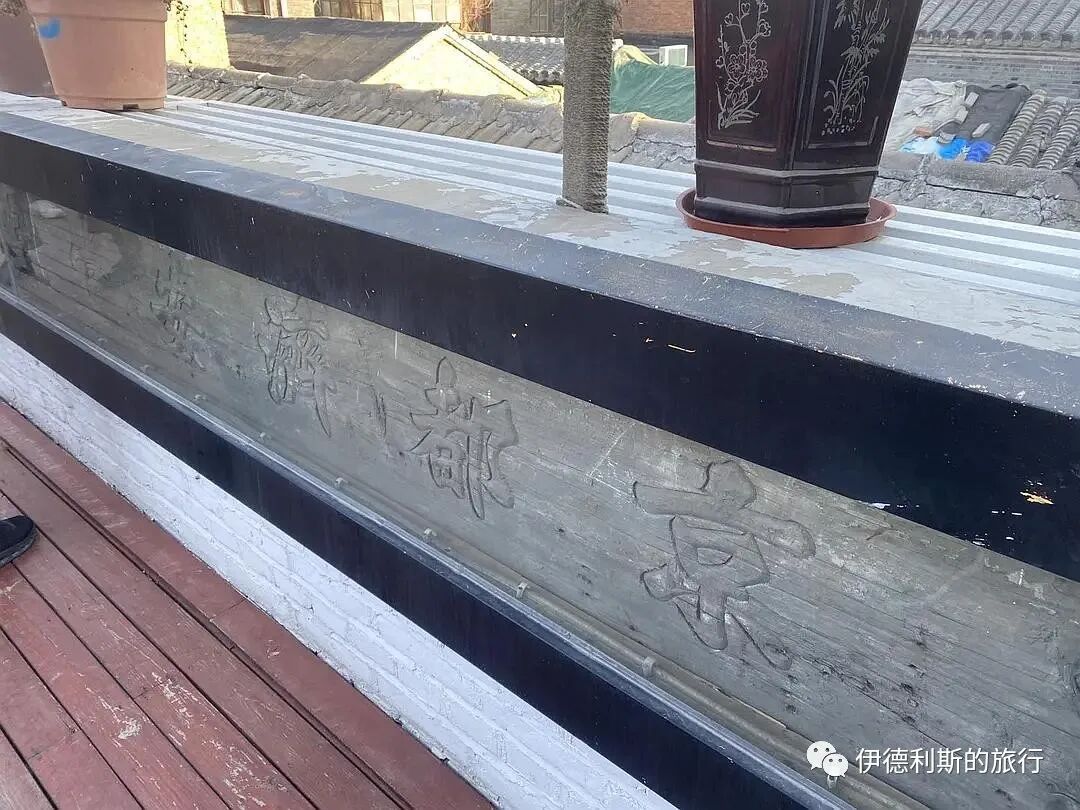
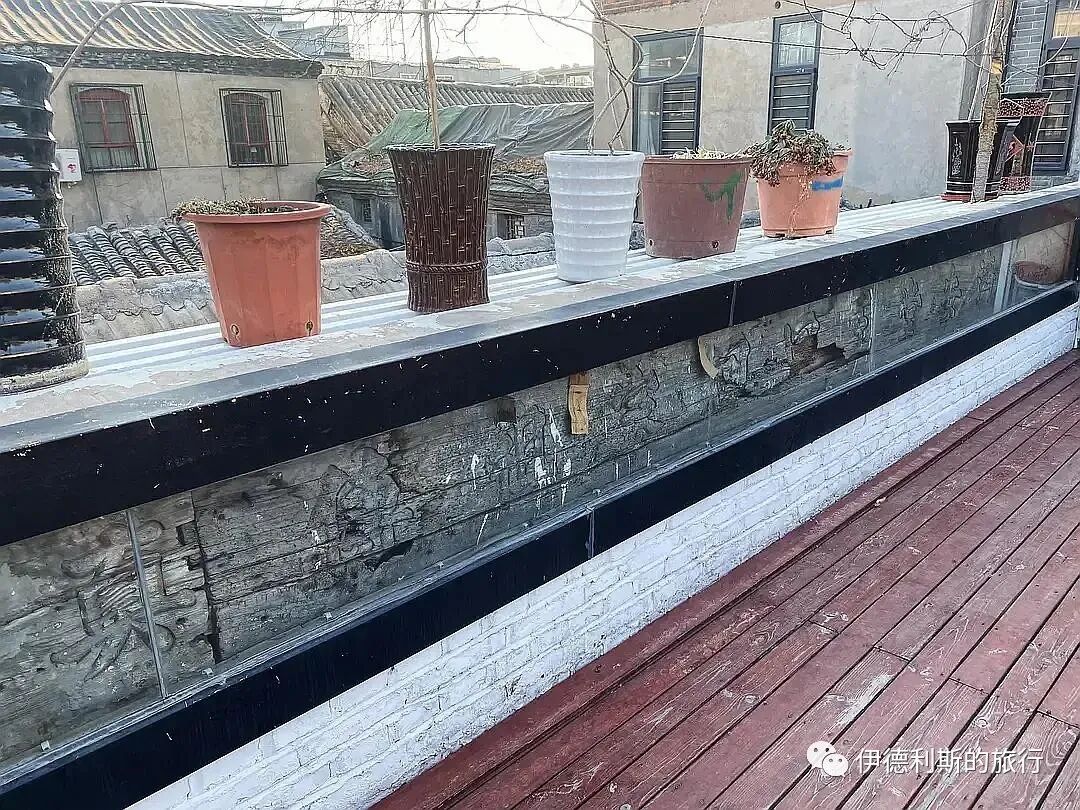
The shop sign of the plaster shop from back then, which is of great historical significance.
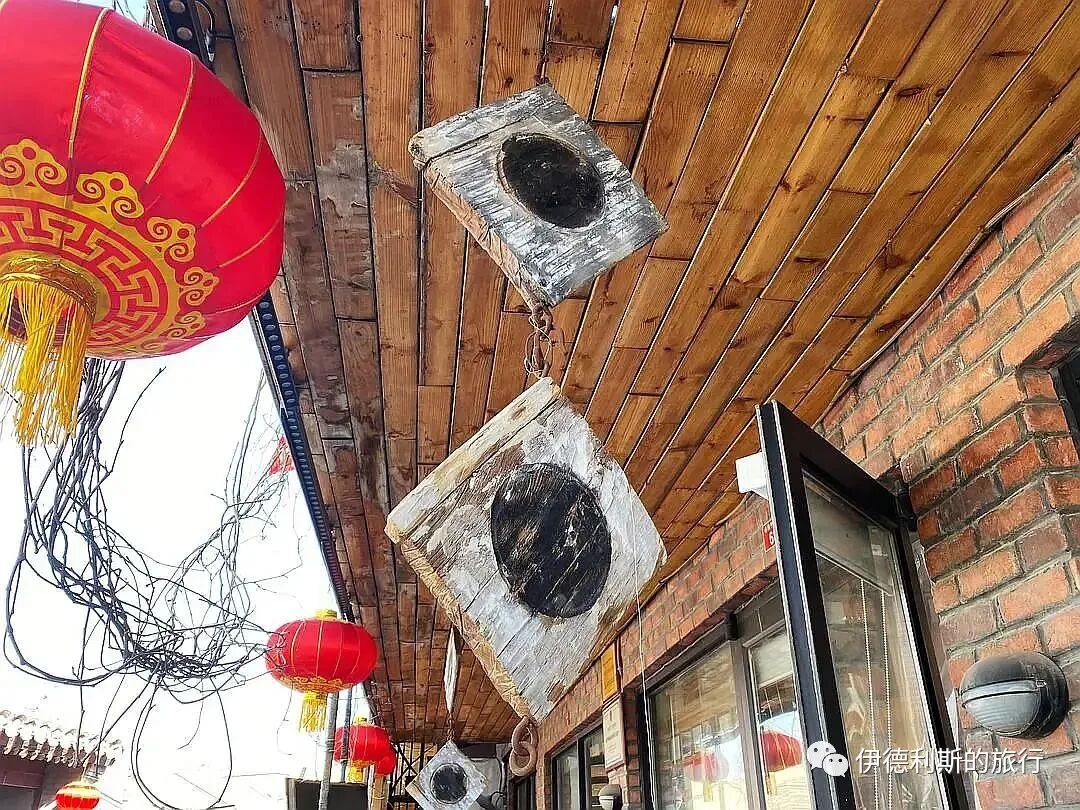
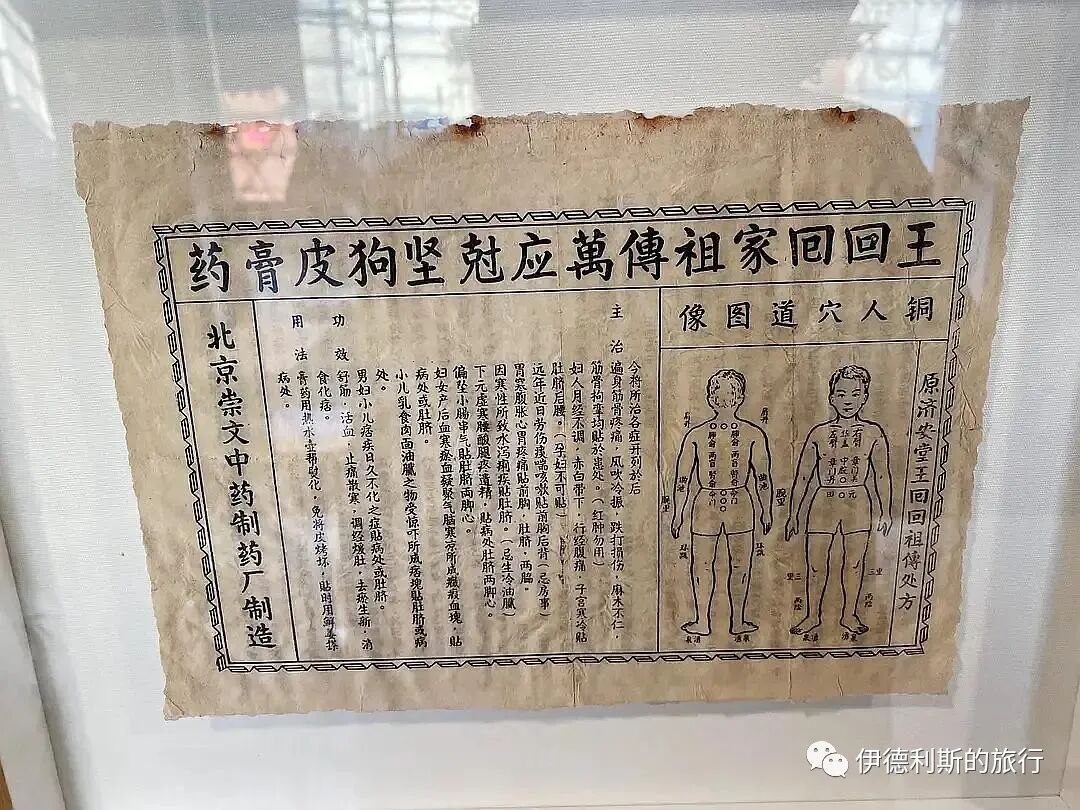
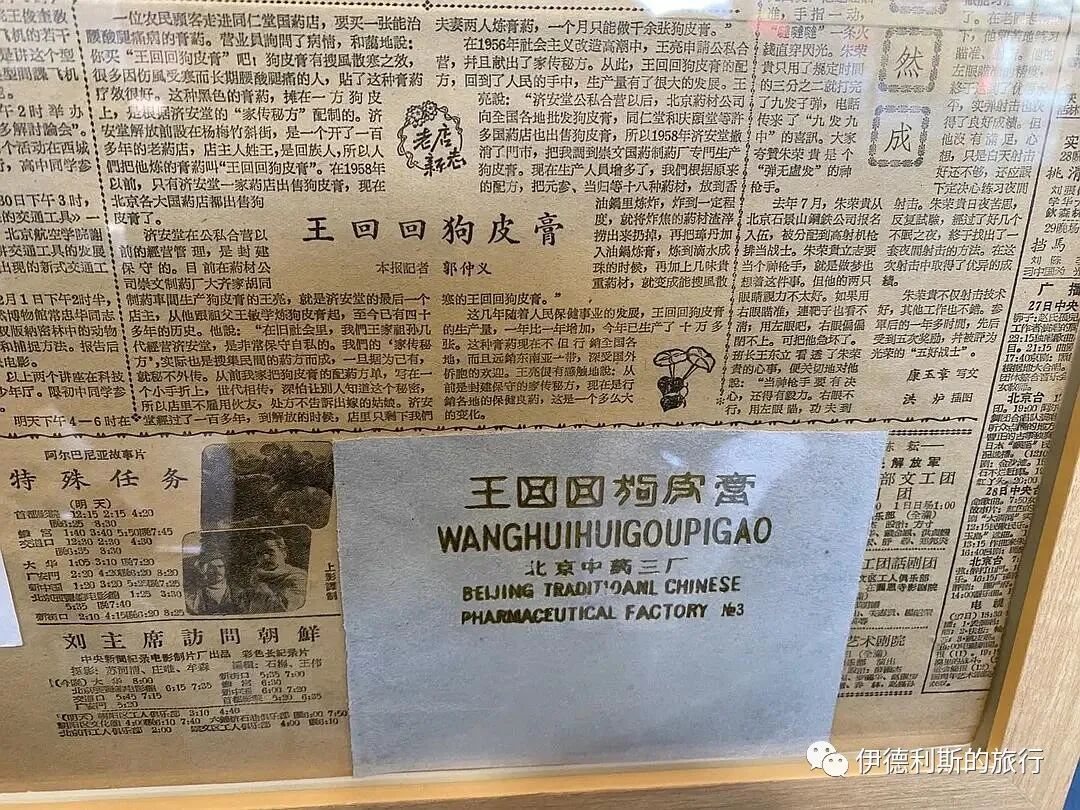
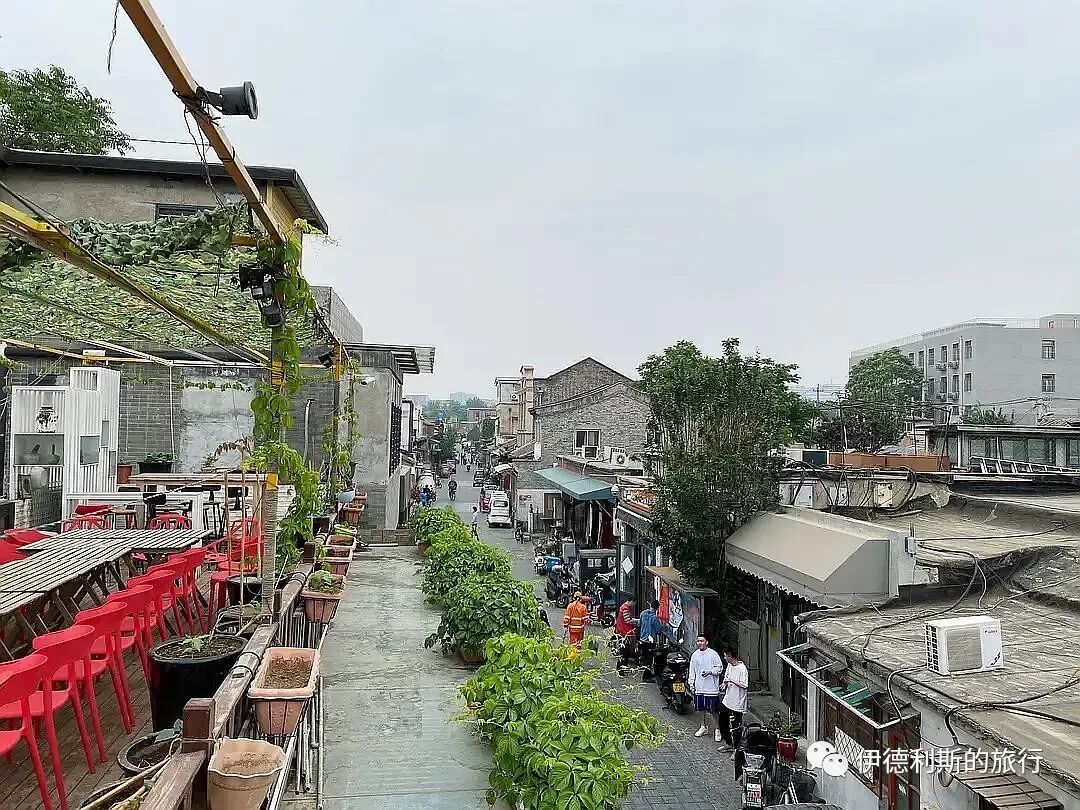
Eating youxiang (fried dough) made by the Wang family descendants here during Eid al-Fitr in 2021.
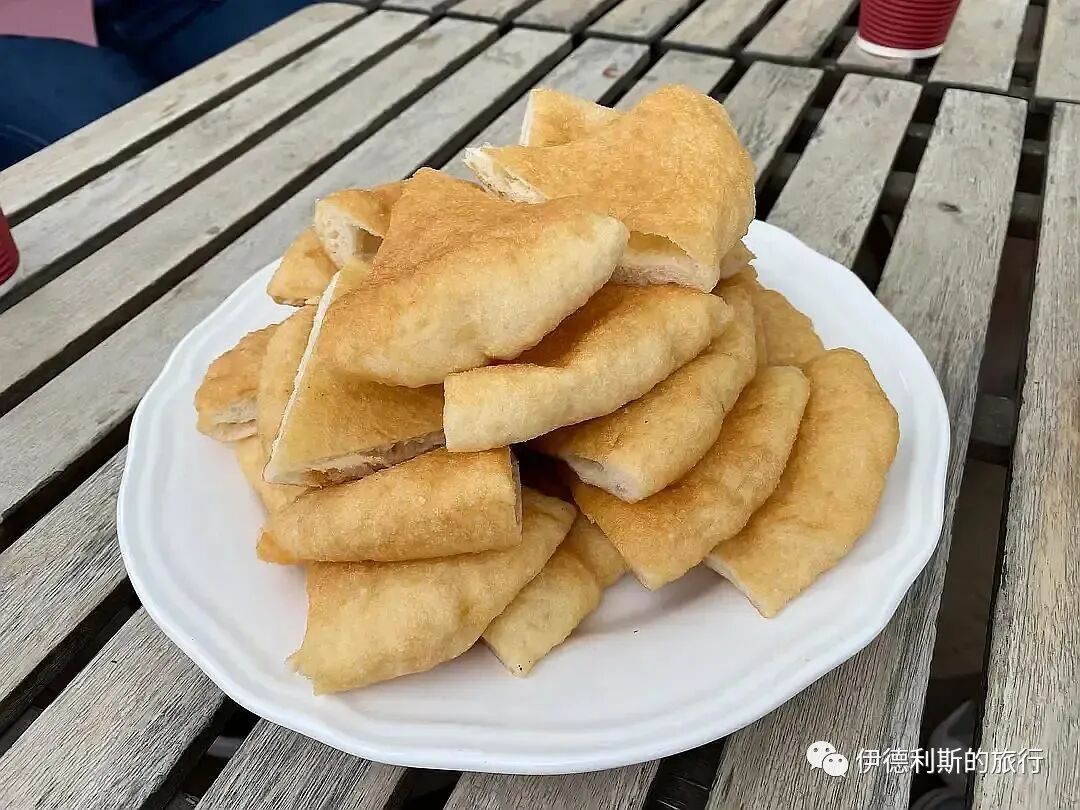
Tangjuanguo (sugar-rolled fruit).
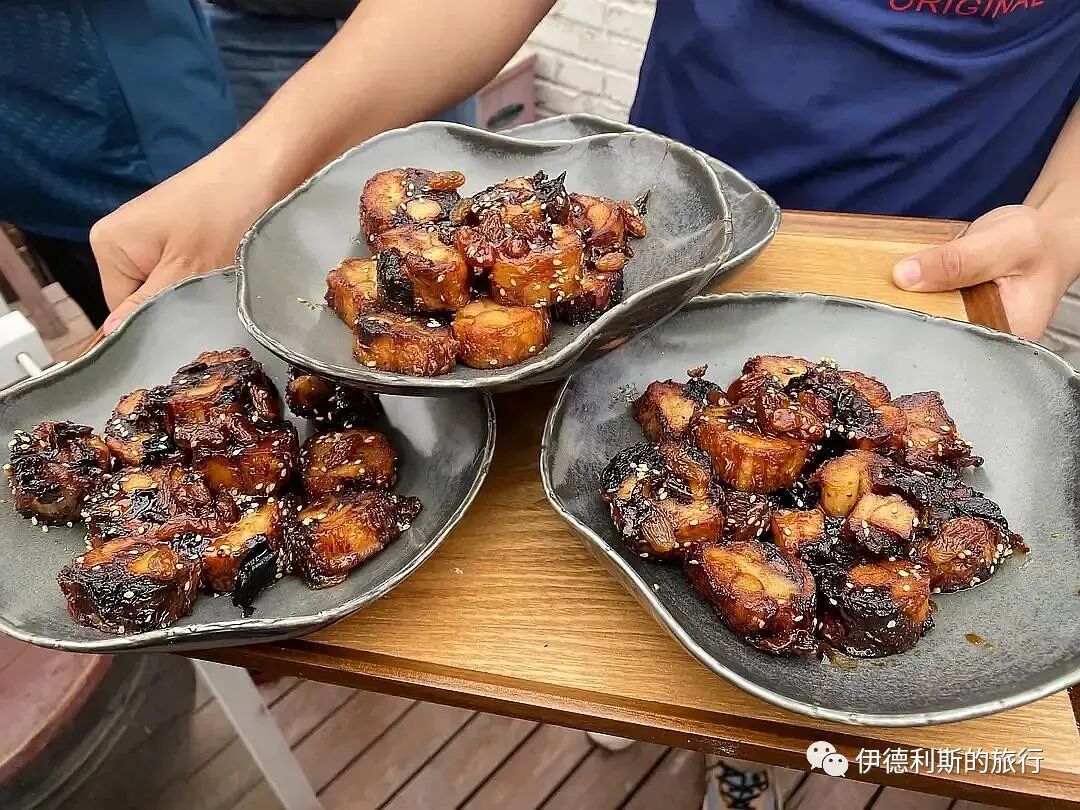
Stewed beef.
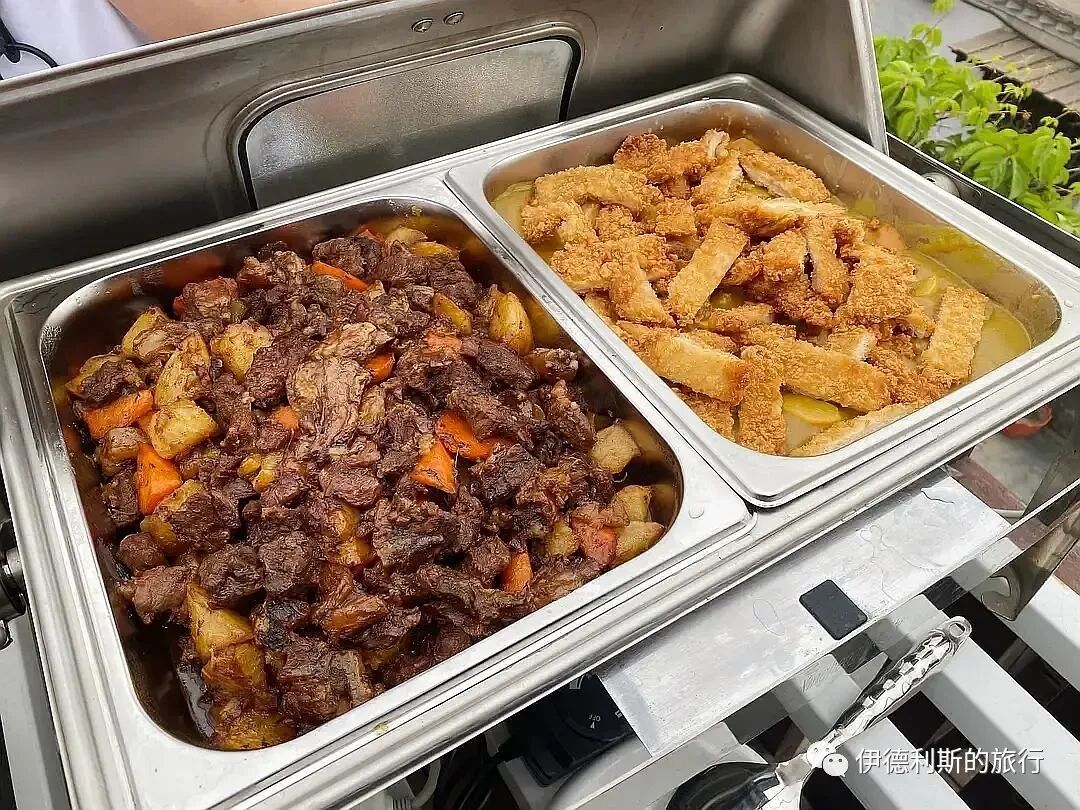
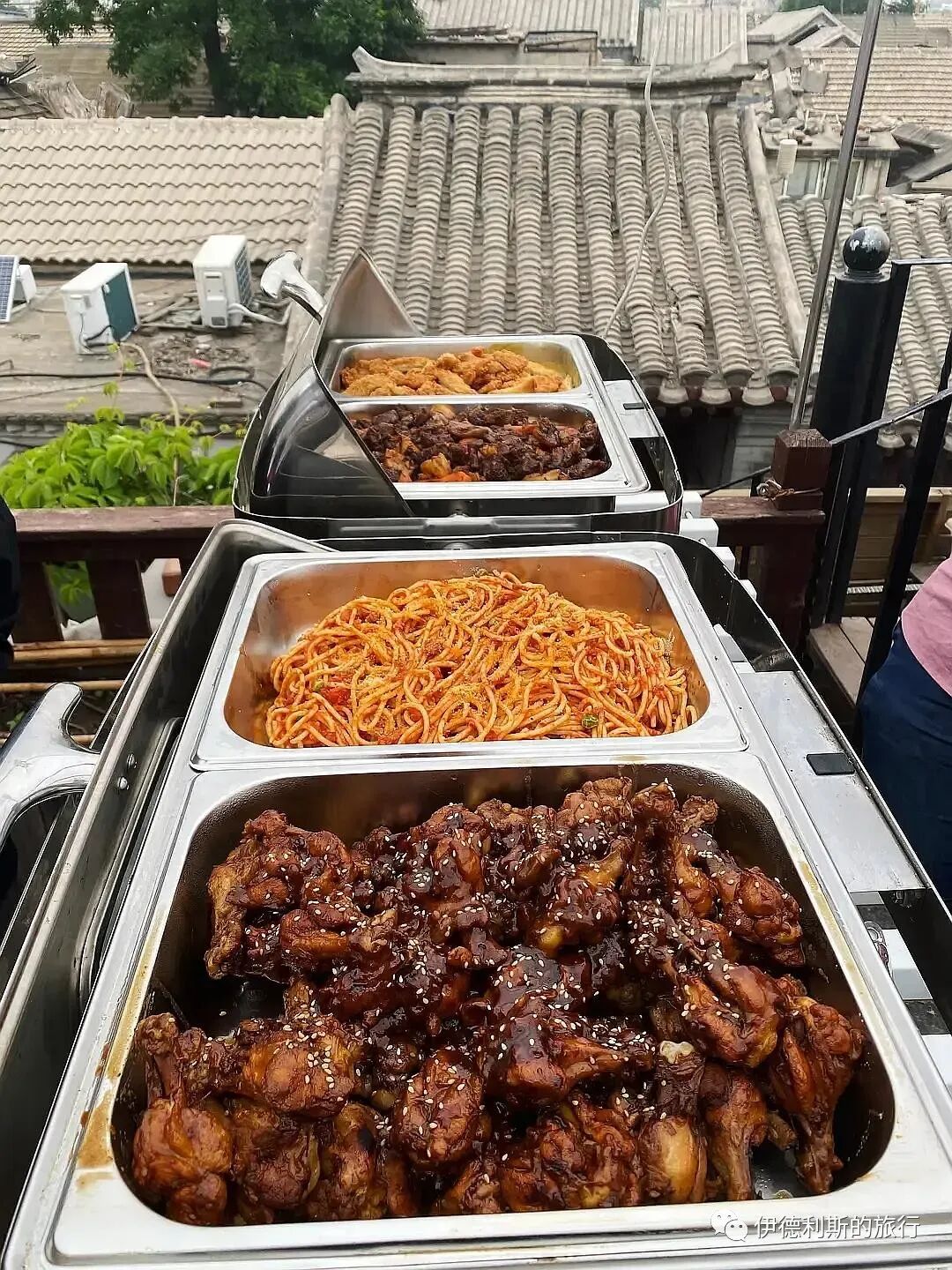
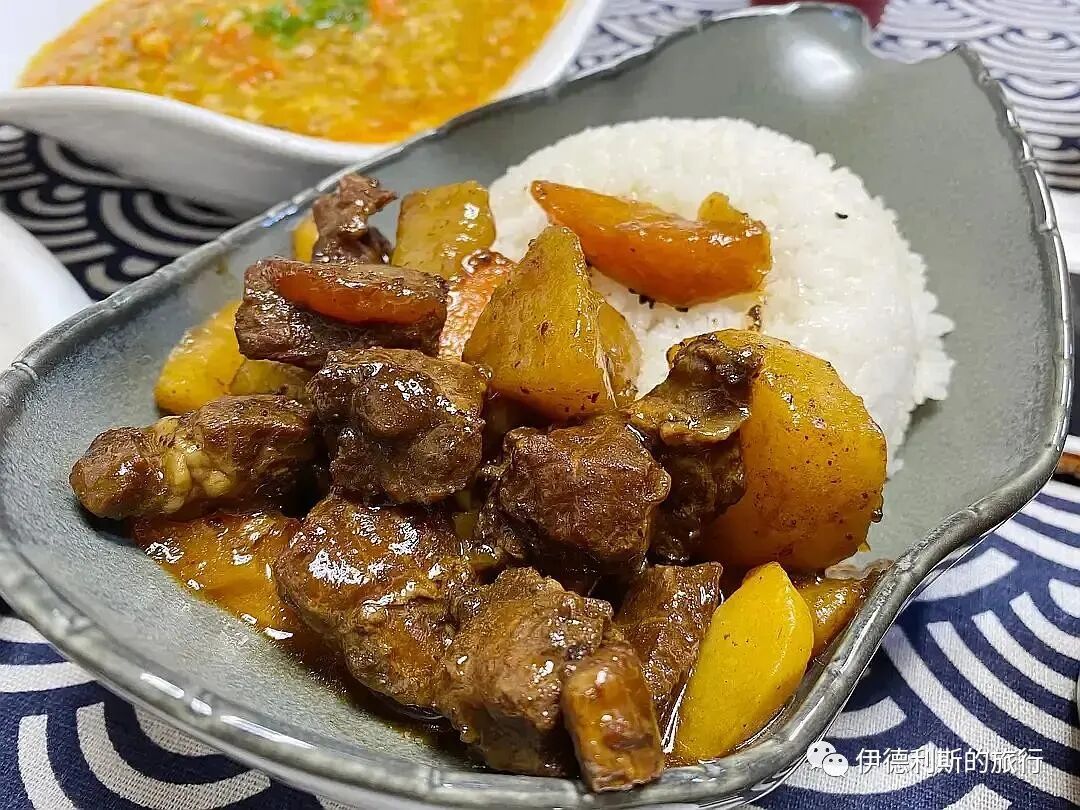
8. The gate tower of the Qingzhen Yipinxian Bathhouse on Zongshu Slanting Street, outside Qianmen.
The Qingzhen Yipinxian Bathhouse is located on Zongshu Slanting Street outside Qianmen. Zongshu Slanting Street was originally called Wang Guafu Slanting Street and Wang Guangfu Slanting Street. It belongs to the 'Eight Great Hutongs' and was famous for its 'Qingyin Xiaoban' (high-class courtesan houses) during the Republic of China era. There were also various restaurants and bathhouses on Wang Guangfu Slanting Street, and Yipinxian was the most famous one.
Peking Opera master Ma Lianliang loved to soak in the bath at Yipinxian. Zhang Yihe wrote in 'Past Events of Opera Performers': Ma Lianliang liked to soak in the bath. As long as there was a performance in the evening, he would definitely go to the bathhouse in the afternoon. First it was 'Yipinxian' outside Qianmen, and later he changed to 'Qinghuachi' in Xizhushikou. Later, he often went to 'Qinghuayuan' in Bamiancao. After soaking in the bath, he would also ask a special master to do a pedicure. This was because he wore boots all year round while performing, which caused corns. Every time he went to the bathhouse, Ma Lianliang would bring some cigarettes and tea to give to the masters and workers.
Besides soaking by himself, Ma Lianliang also often went to Yipinxian to soak with the 'King of Drum Singing' Liu Baoquan. Ma Lianliang wrote about this in 'Remembering Mr. Liu Baoquan', the time was probably the 1920s: After some more days, introduced by the late famous Peking Opera actor Mr. Wang Yaoqing, I met Mr. Liu Baoquan. We hit it off immediately and soon became close friends. After that, for more than five years, we were together day and night, inseparable. Every day I went to his home in Mianhua Ninth Alley to find him. We would stroll and walk together, and then go to the 'Yipinxian' bathhouse to take a bath. In the afternoon, we would go to 'Liangyixuan' to eat together. After eating, we would go to the theater together to watch the performances of Yu Shuyan and Yang Xiaolou. This was almost our daily routine.
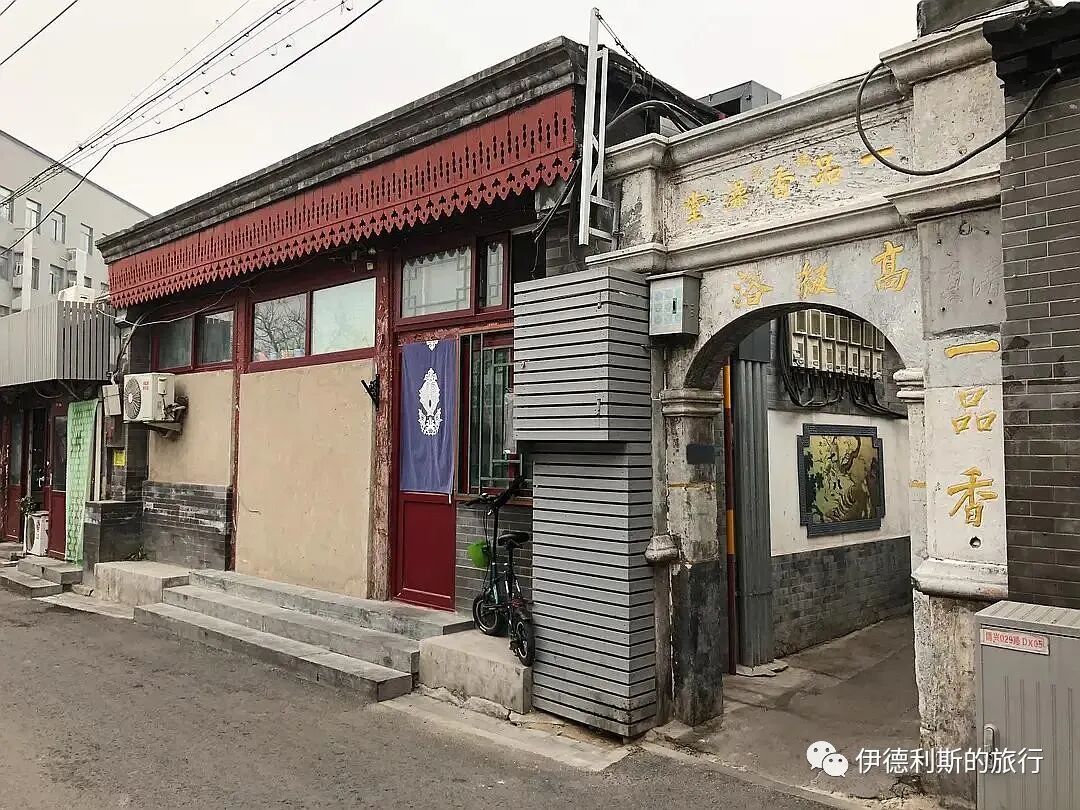
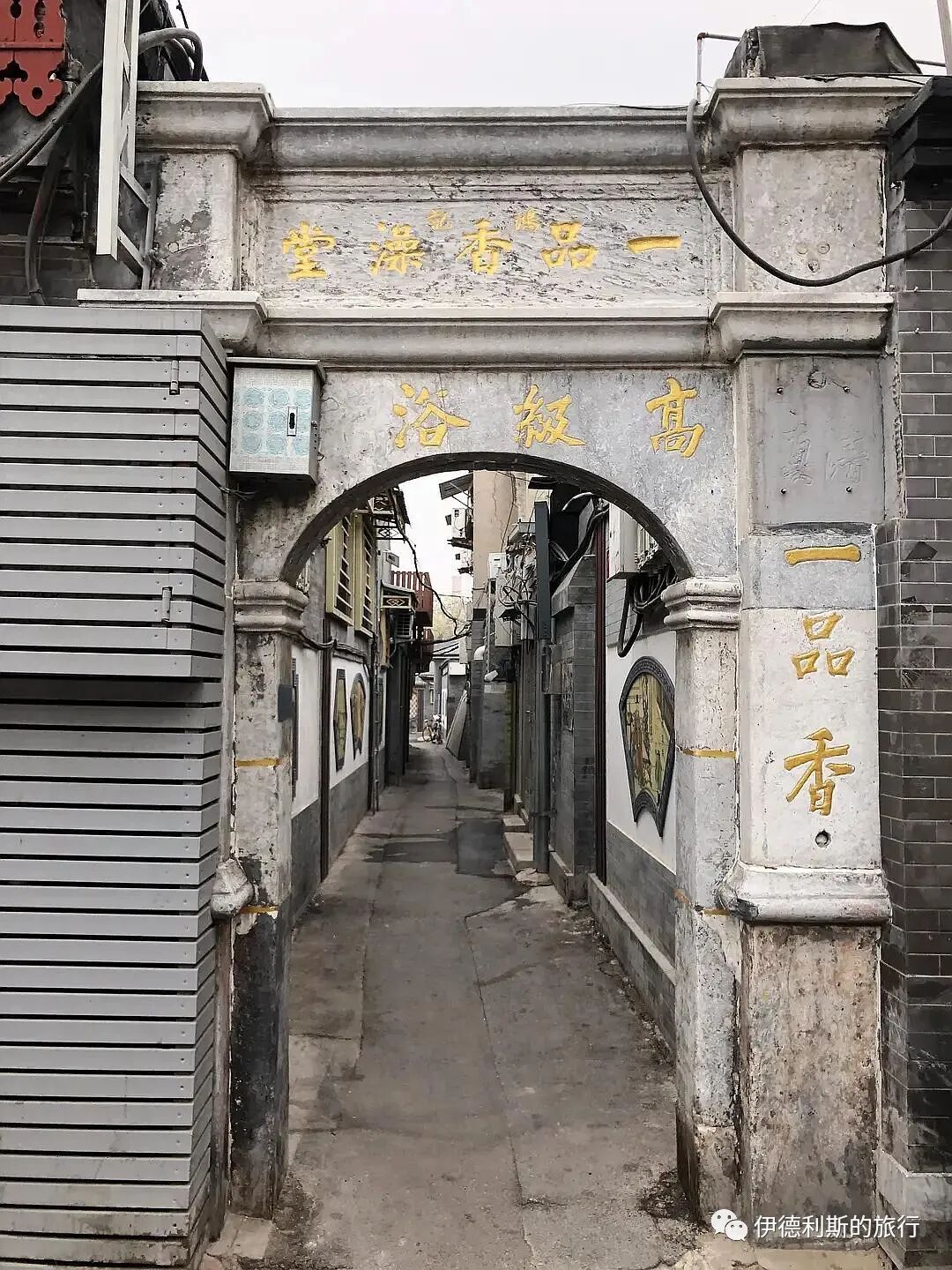
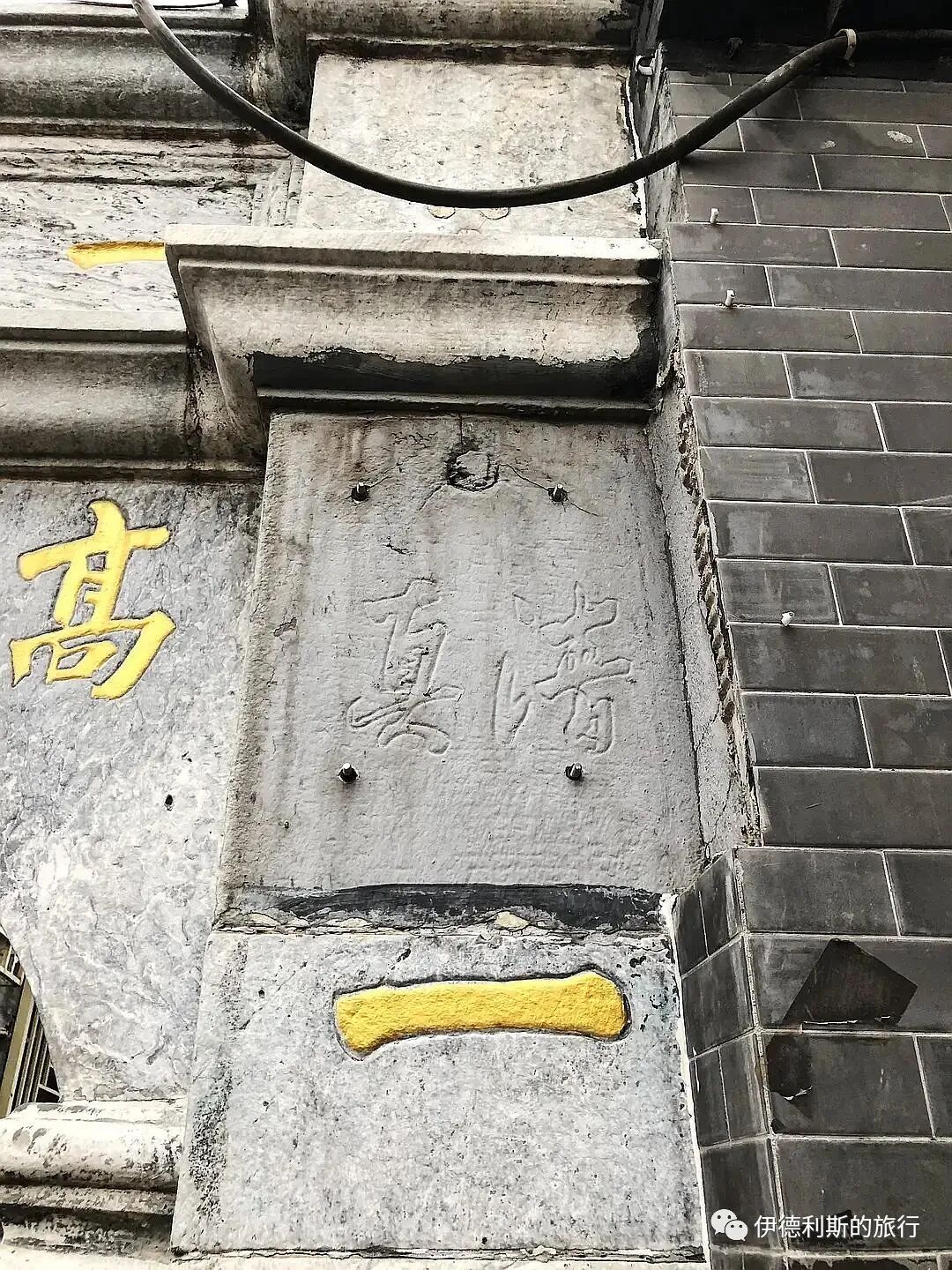
Yipinxian Bathhouse also developed continuously during the Republic of China era. Comparing the 'Revised Practical Beijing Guide' published by the Commercial Press in the 12th year of the Republic of China and the 'Beijing Travel Guide' published by Xinhua Bookstore in the 30th year of the Republic of China, you can see it.
In the 12th year of the Republic of China, Yipinxian was not yet a first-class bathhouse and could only be ranked as a 'slightly inferior' second-class, using cement basins and vat basins for bathing: The slightly inferior ones are Yipinxian, Huayuan, Wenyayuan, Yuqing, Qingquan, Dongxing, Yuhua, Qihua, Xinhuachi, Baoquan, Yihe, etc. Most of their equipment were cement basins and vat basins, with occasional Western-style basins. The bath price ranged from four jiao, three jiao, two jiao, to one jiao. The cost for back scrubbing and haircuts was two jiao or one jiao.
By the 30th year of the Republic of China, Yipinxian was already the most famous bathhouse in Beijing, on par with the Qinghuachi we are familiar with. At that time, the downstairs of the bathhouse was built with 'warm five pools' made of white ceramic tiles, and upstairs were individual Western-style porcelain bathtubs. At the same time, Yipinxian had the most popular pedicure masters in Beijing at that time, specializing in treating athlete's foot: There are currently 123 bathhouses operating in the city. In recent years, it has developed day by day with the progress of the times. Because human evolution has made everyone aware of cleanliness, those in this industry also know how to adapt to the times and make improvements at any time. Most of the pools have been changed to warm five pools, and they are built with white ceramic tiles. The pools are wide and the water is deep, which actually surpasses those in Shanghai, Wuhan, and Nanjing. The washbasins were also changed from wooden tubs to enamel ones, which are much cleaner and more beautiful than before. The best-equipped ones include Qinghuayuan, Yiheyuan in the East City, Huabaoyuan, Yuhuayuan in the West City, and Qinghuachi, Yipixiang, etc., in the Outer City. Their businesses are all very prosperous, and the prices are divided by guanpen (official basin), yazuo (elegant seating), upstairs, and downstairs... The foot scraper at Yipixiang is named Wei Wenxi, who has long been famous in this field, and all the bathhouses compete to hire him. Southerners living in Beijing who suffer from beriberi all seek out little Wei, because once he scrapes their feet, they feel as if a heavy burden has been lifted. For this reason, little Wei is often overwhelmed with customers.
In addition, according to the "Beijing Industry and Commerce Guide" edited by the Zhengfeng Economic Society in the 28th year of the Republic of China (1939), the owner of Yipixiang was named Wang Houqi, a native of Wanping, Hebei (which includes the western part of Beijing, including the current Xicheng District). However, I have not yet been able to find more information about Wang Houqi, and I hope there will be new discoveries in the future.
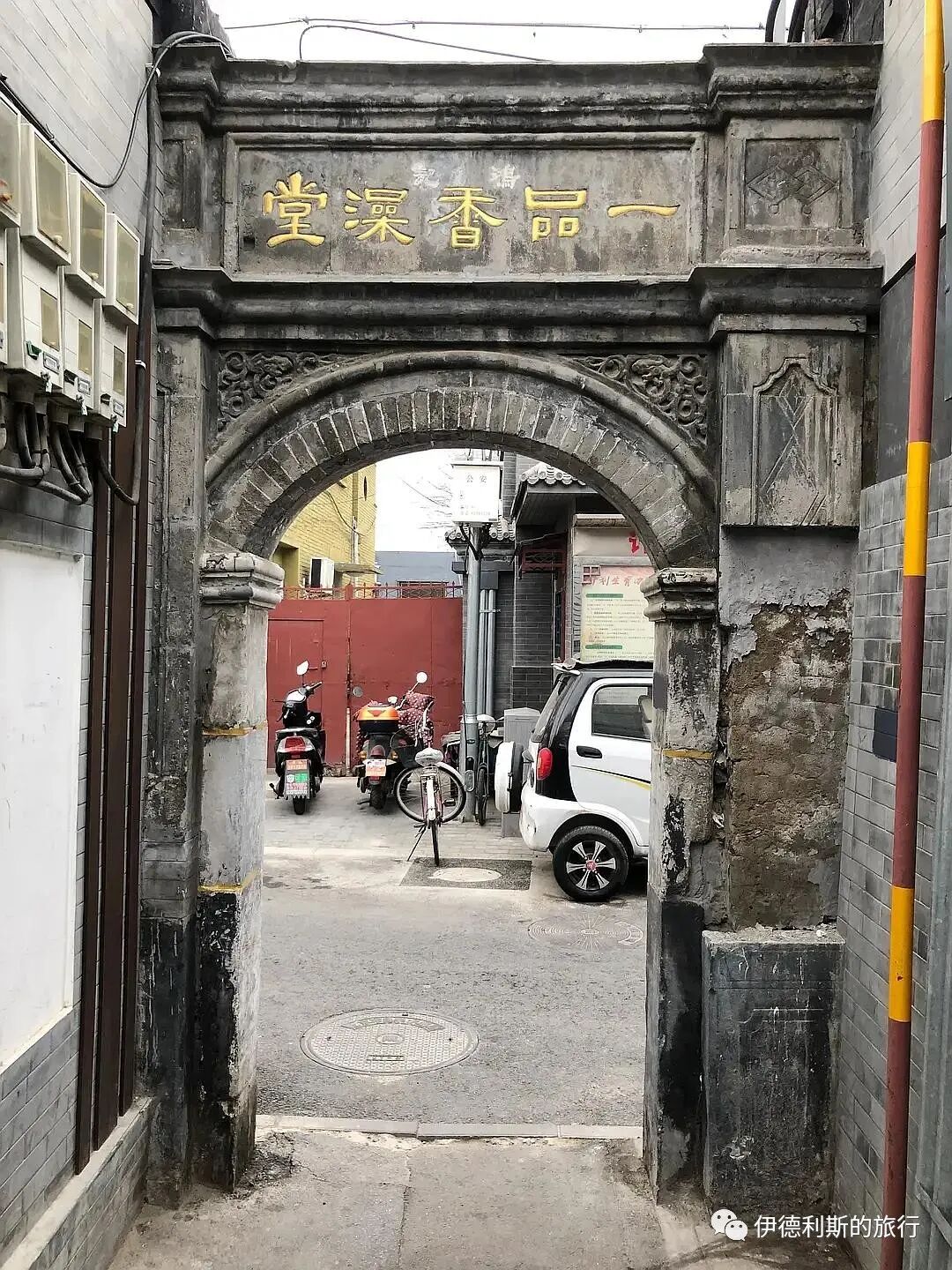
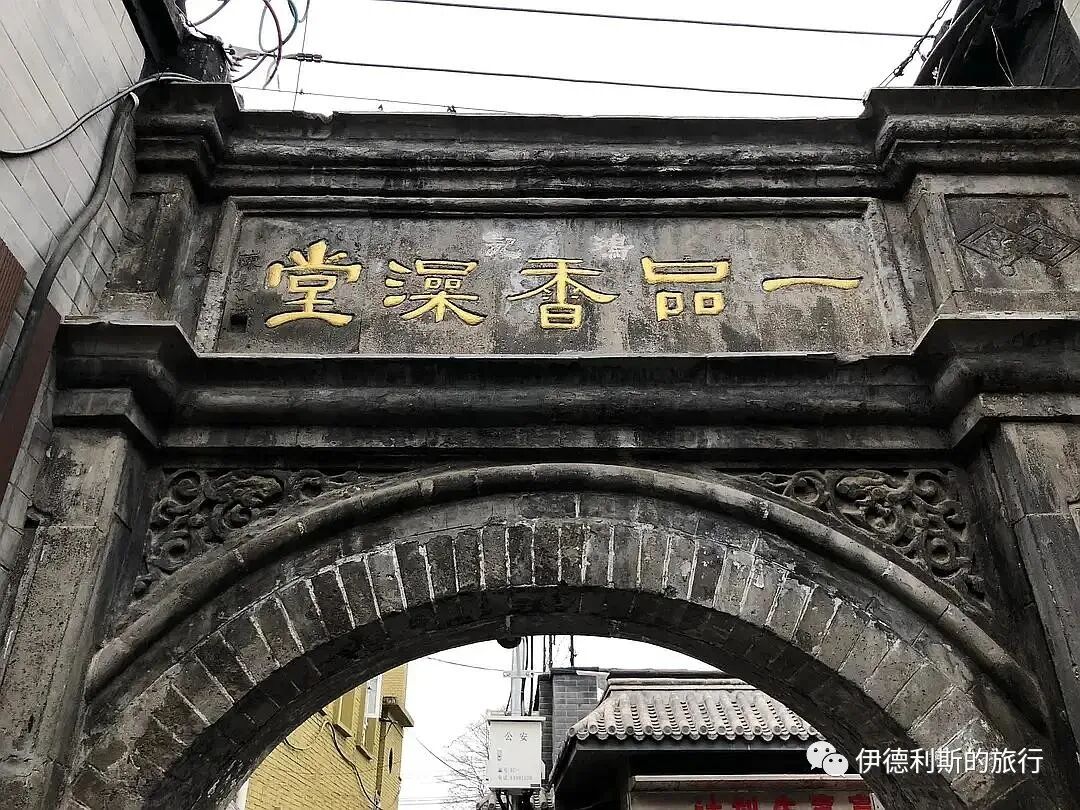
9. The storefront of the Ma Yinglong Eye Ointment Shop on Xiheyuan, outside Qianmen.
In 1875 (the first year of the Guangxu reign of the Qing Dynasty), Ma Wanxing, a Hui Muslim from Dingzhou, Hebei, moved the Ma family eye medicine shop from Dingzhou to Beijing and opened the "Beijing Ma Yinglong Eye Medicine Shop" outside Qianmen on Xiheyan. "Ma Yinglong" was his father's name.
In 1923, Ma Wanxing's third son, Ma Liting, inherited the pharmacy and officially built the current Republic of China-style storefront on Xiheyan, Qianmen. There is a "Ma Yinglong" plaque on the storefront, and the words "eye medicine" are also on the right, obscured by an air conditioner. The person who inscribed the plaque was Ma Liang, a Beiyang warlord and a Hui Muslim from Qingyuan, Hebei (now Qingyuan District, Baoding).
After the 1930s, Ma Yinglong successively set up branches across the country and expanded sales through mail order, even selling as far away as Europe. After the public-private partnership in 1957, Ma Liting served as the deputy section chief of the processing department of the Beijing Medicinal Materials Company. In 1966, the whole family was sent back to their ancestral home in Dingzhou, and Beijing Ma Yinglong gradually withdrew from the historical stage.
In 1919, Ma Wanxing's grand-nephew Ma Qiaoshan opened a Ma Yinglong branch on Hanzheng Street in Hankou, and later established the Ma Yinglong Shengji Pharmaceutical Factory. After the 1980s, he began to focus on hemorrhoid ointment, continuing the Ma Yinglong brand to this day.
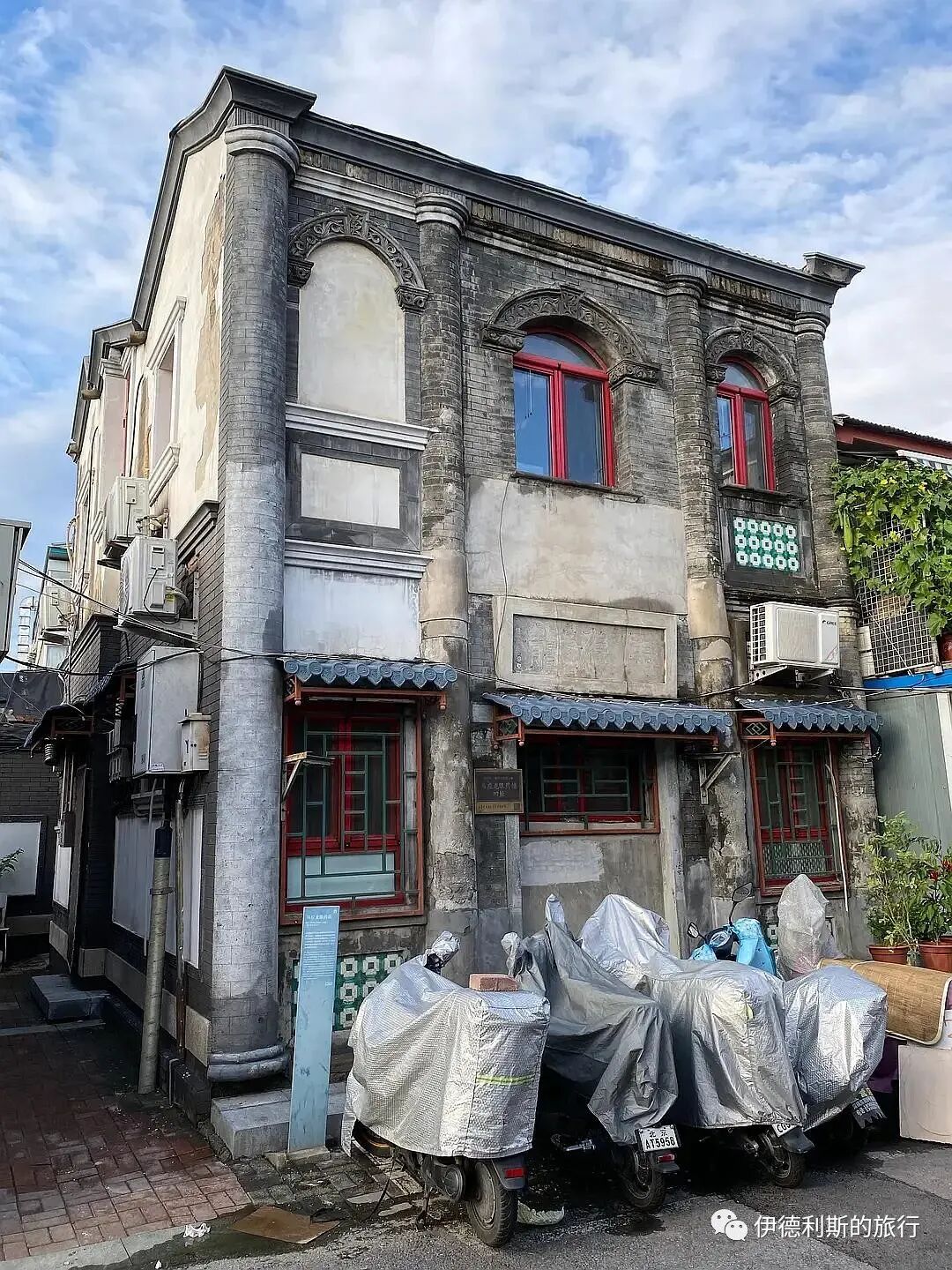
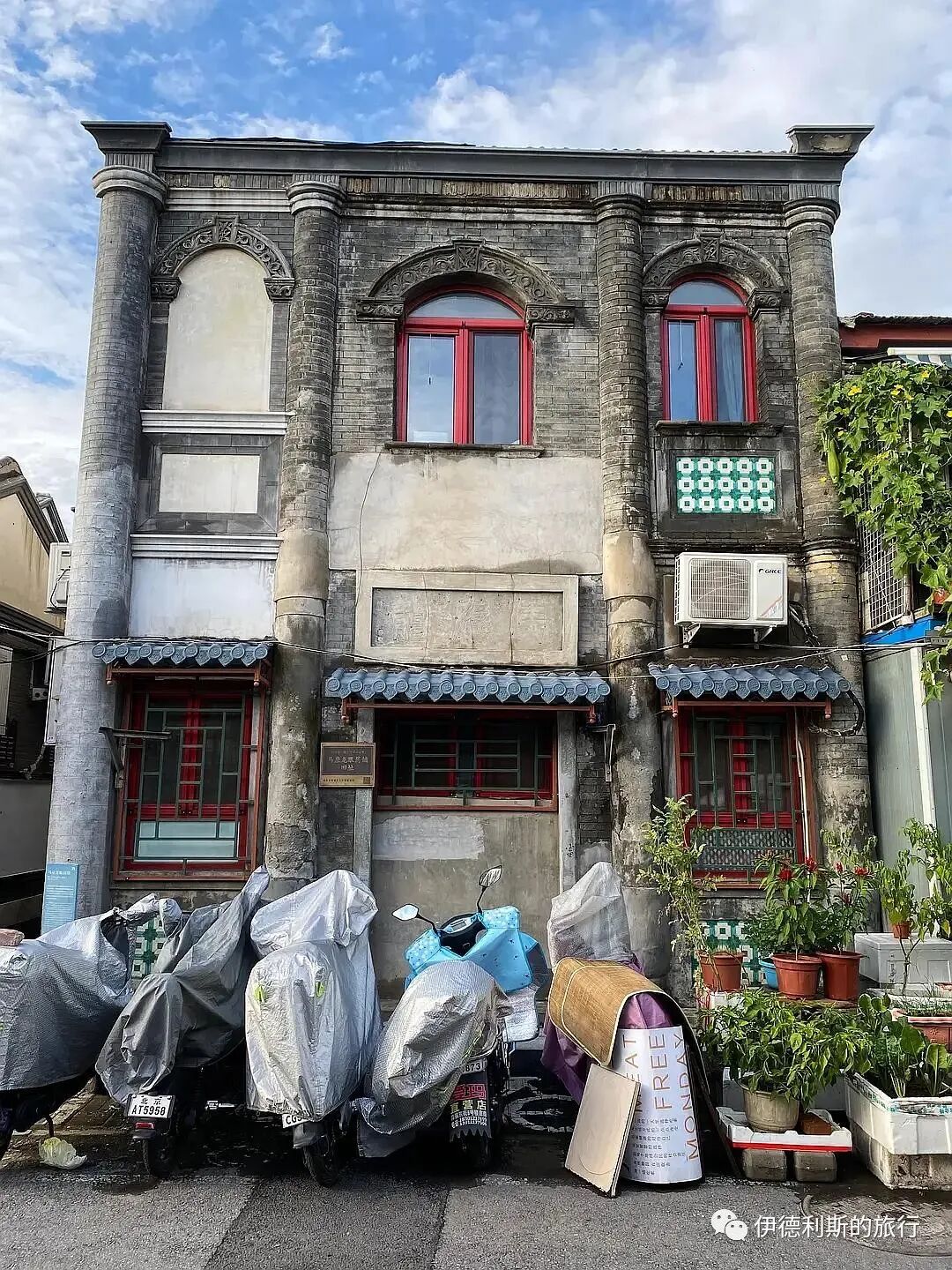
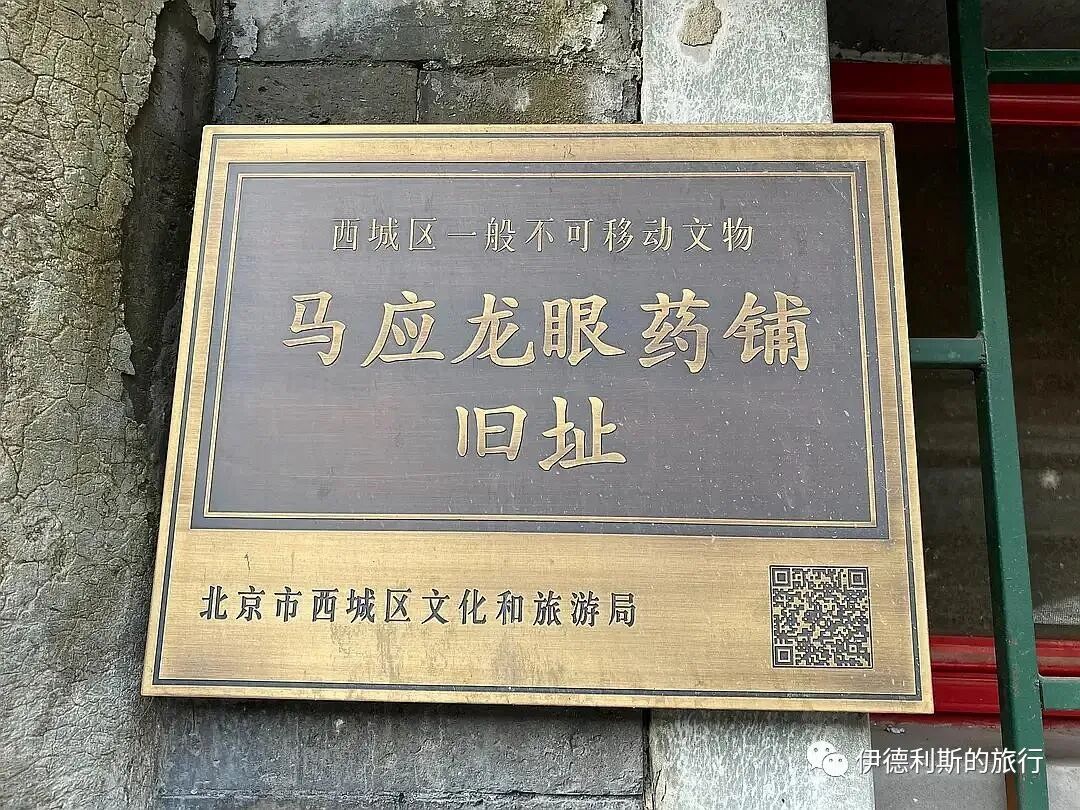
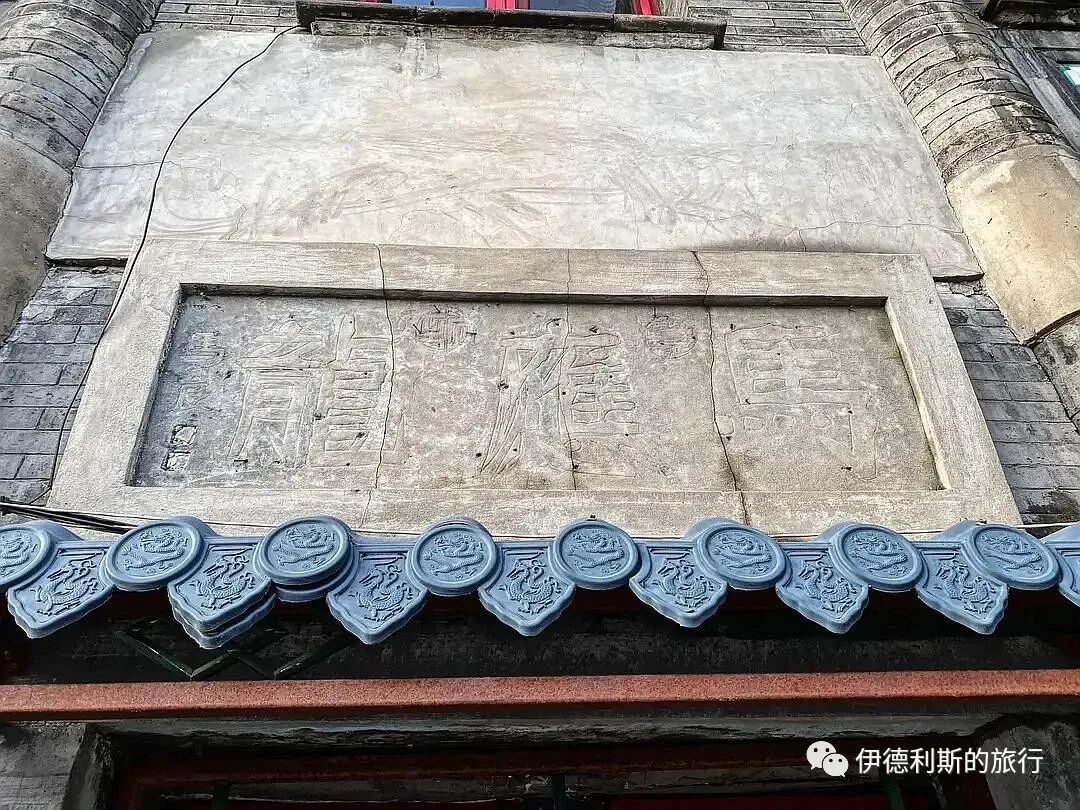
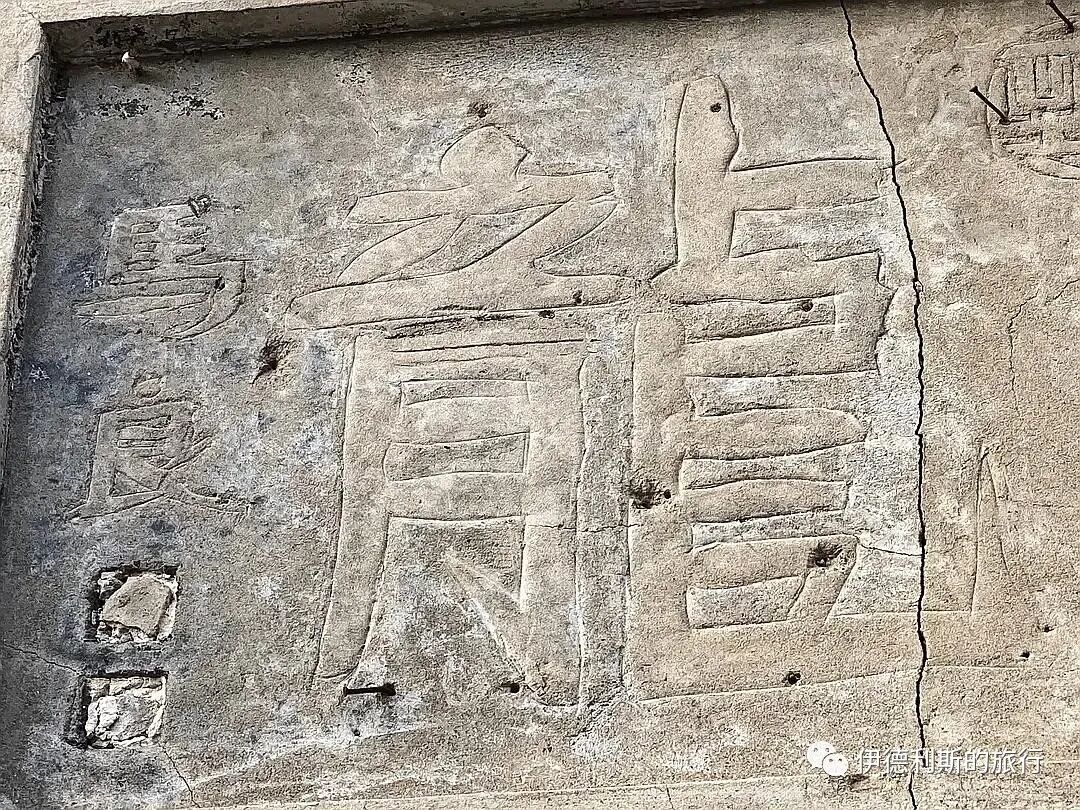
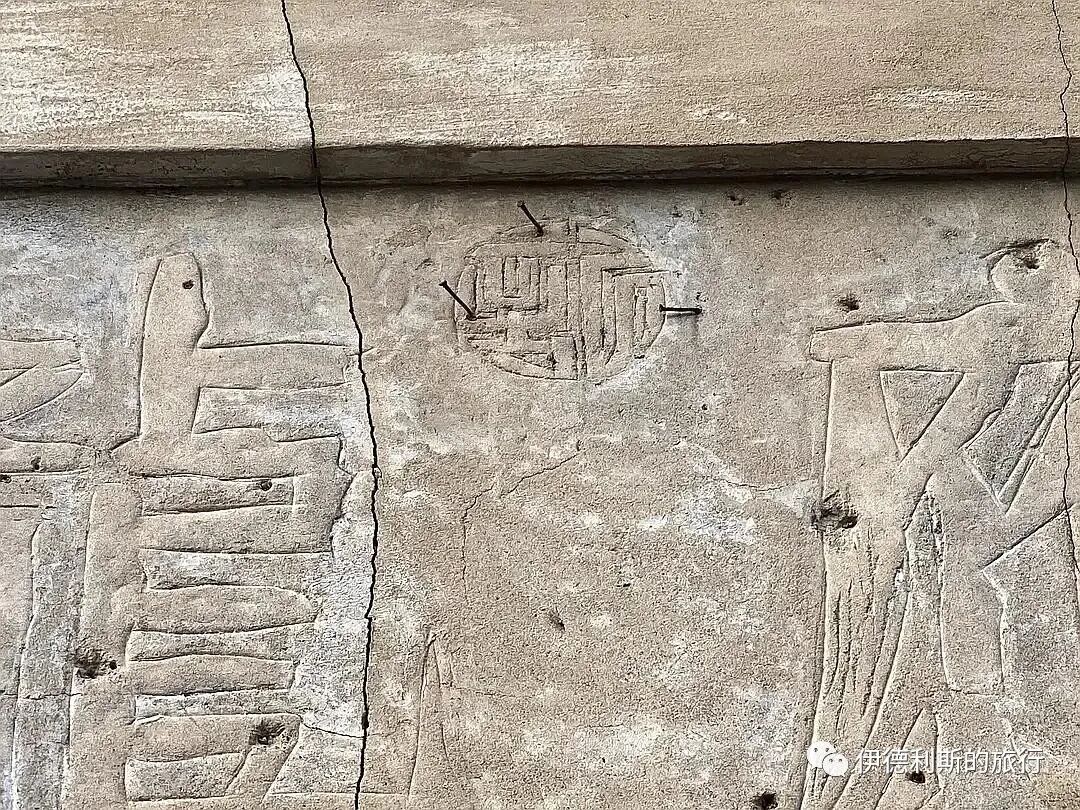
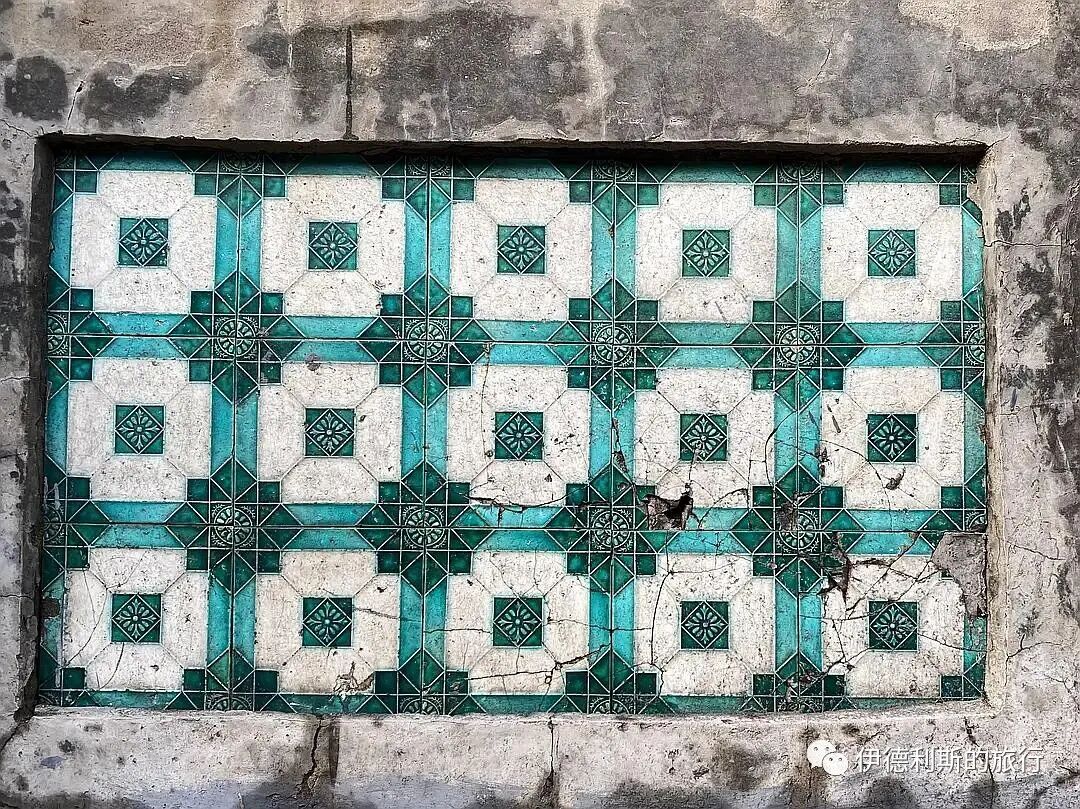
10. The brick-carved dua (supplication) on Jiaozihutong, Niujie.
The home of Mr. Mai in Jiaozihu Tong, Niujie, is the only traditional Hui Muslim courtyard remaining in Beijing, and the main gate features the only remaining residential brick carving of a dua (dua) in Beijing. In order to protect the cultural relics, Mr. Mai spent years writing letters and making phone calls, but in the end, all his efforts were in vain.
According to records, the Mai family previously operated the "Shunxing" fish shop at Guang'anmen Market, known as the "Fish Mais," and built this siheyuan (courtyard house) in 1931. In the 1960s, the Mai family painted the brick carvings with grey lime to preserve them. After the lime was removed in 2008, the brick carvings, which had been sealed for more than 40 years, were able to see the light of day again.
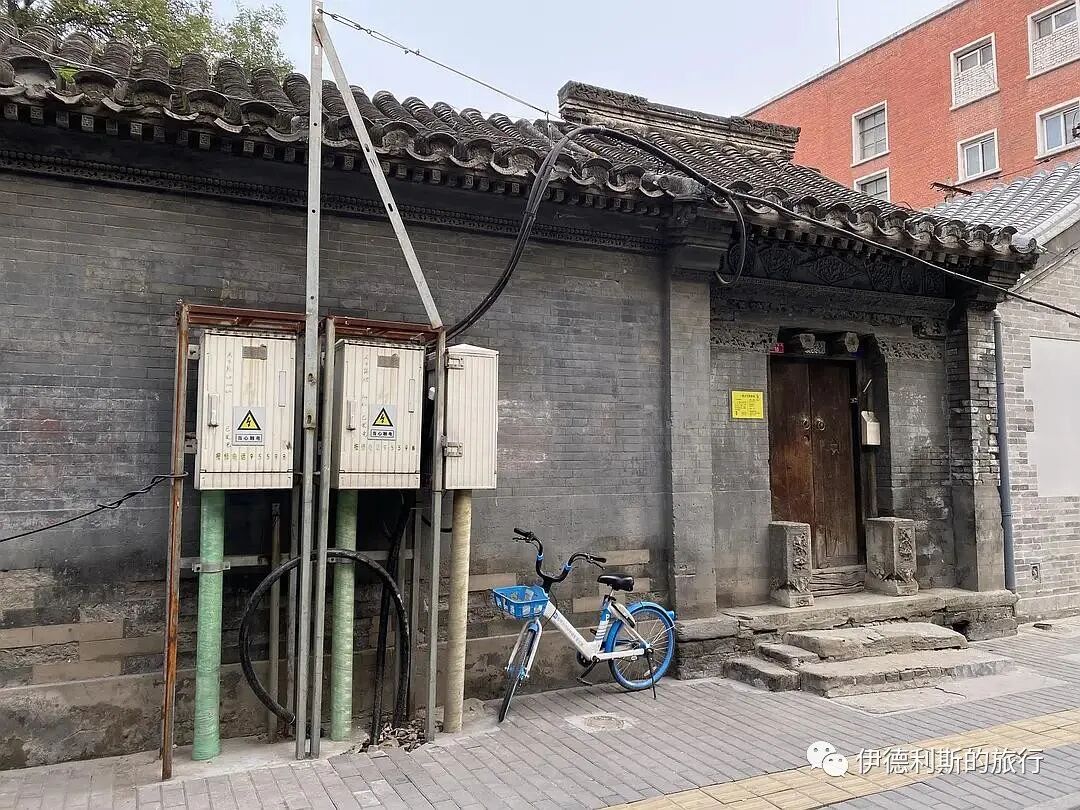
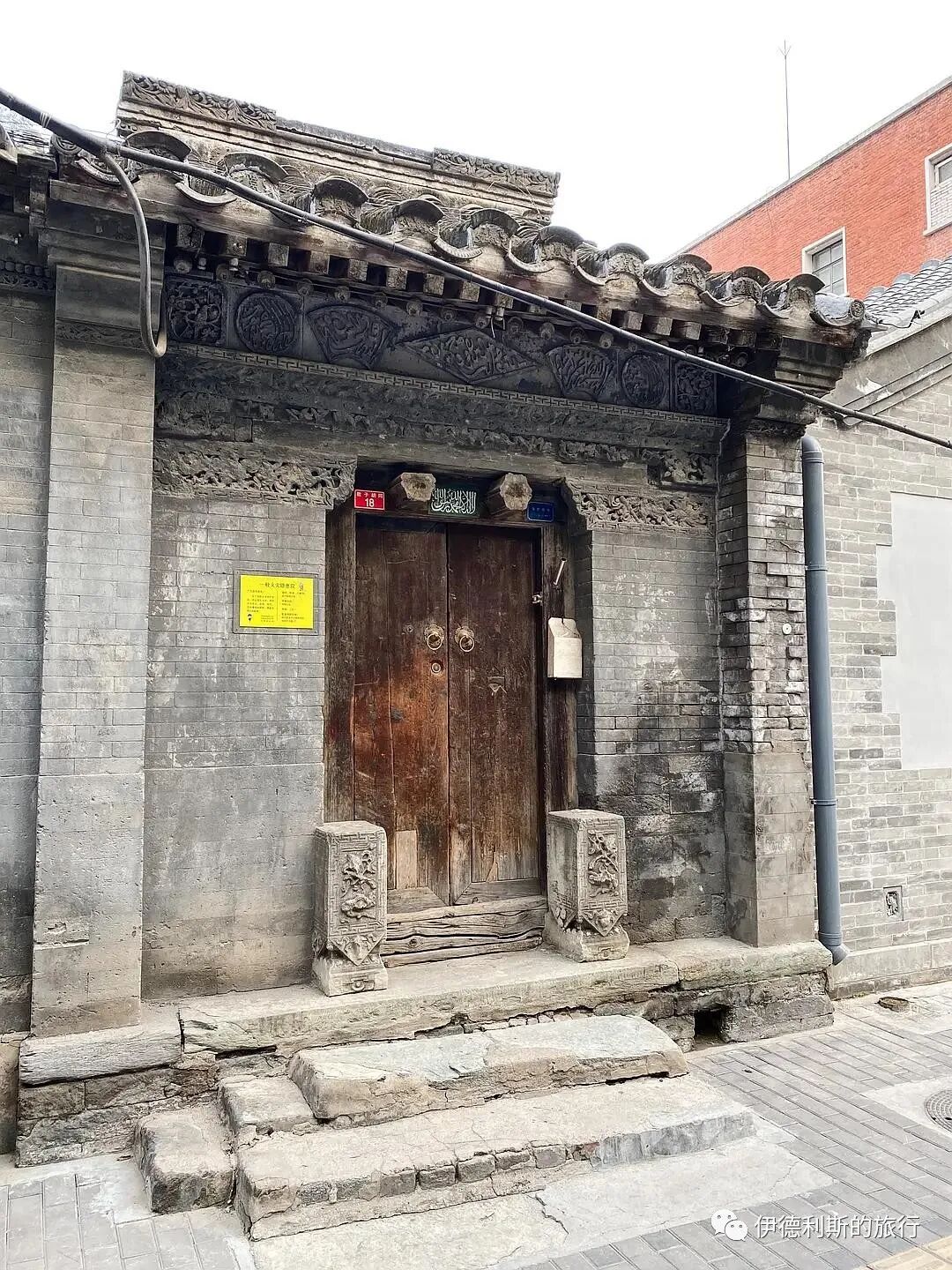
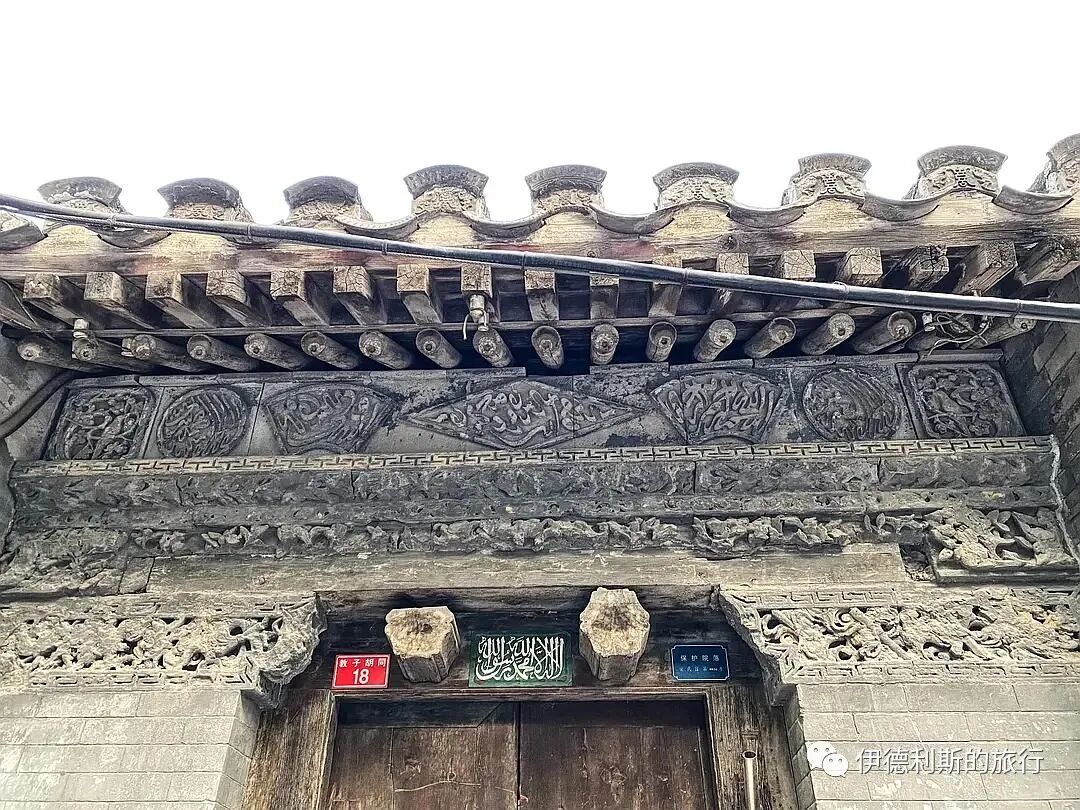
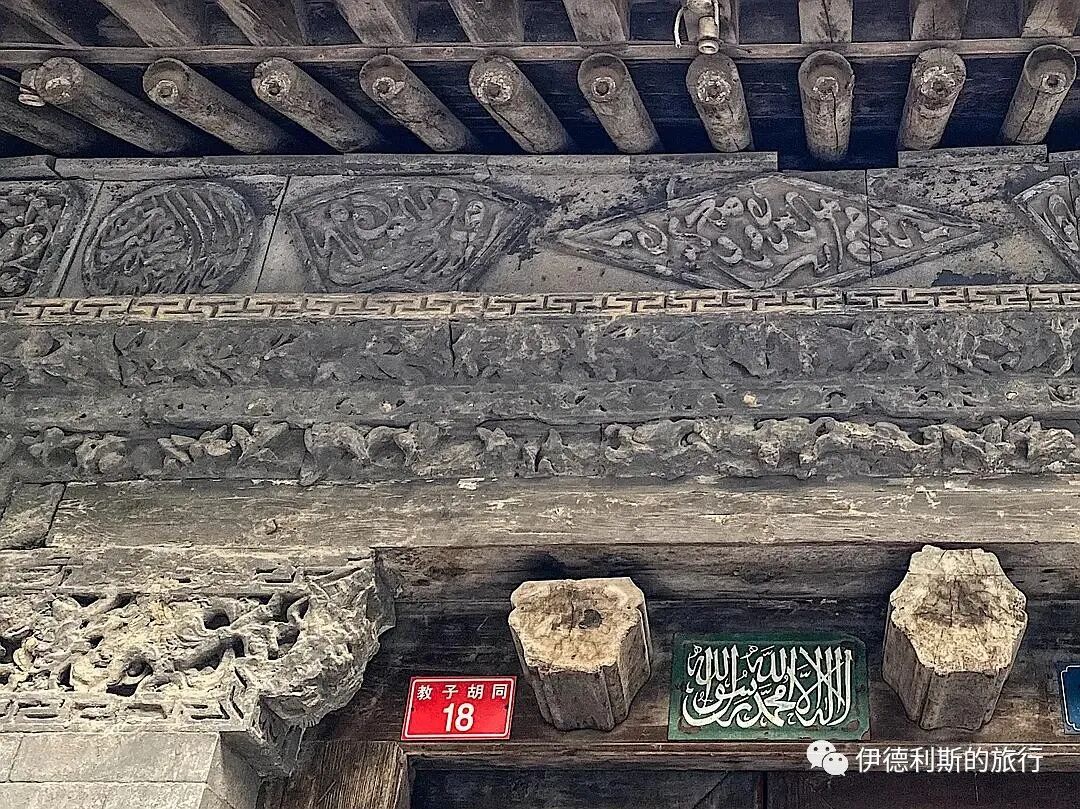
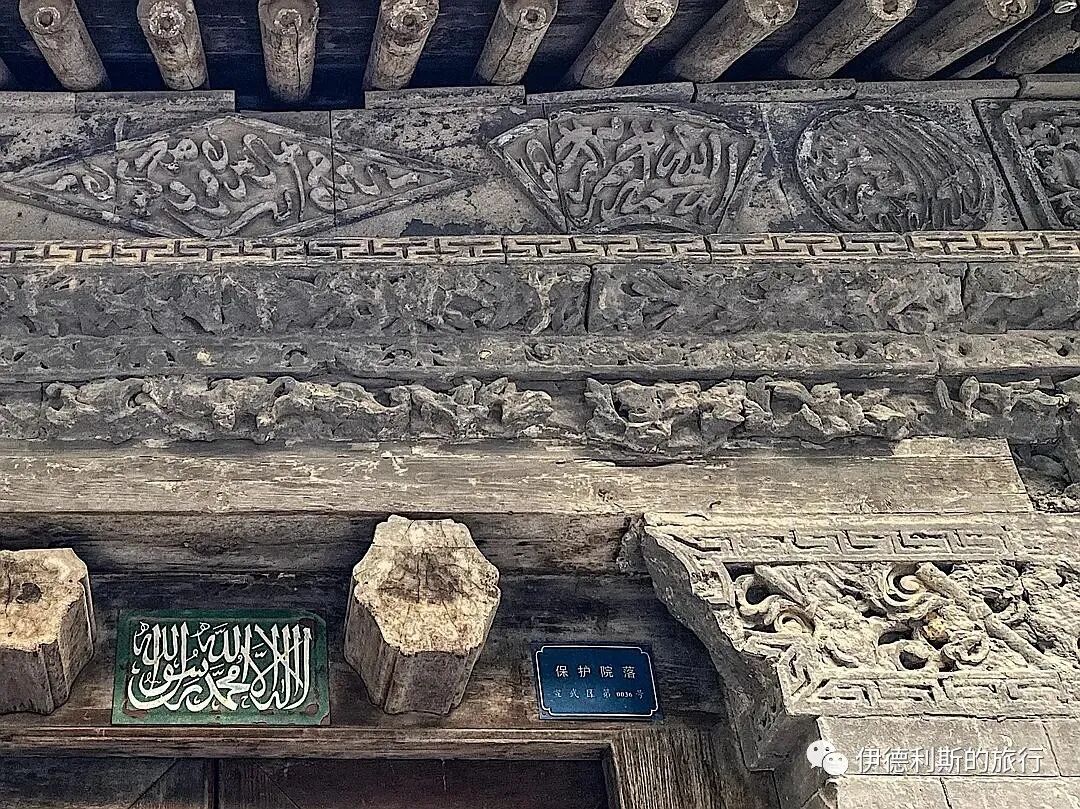
Summary: This travel note introduces Ten Hui and Islamic Historic Sites in Beijing: A Muslim Heritage Walking Guide. Unable to leave Beijing for a year, I was finally able to take a good look at the old Hui Muslim historical sites scattered throughout the city. Below, I share ten of them with you. It is useful for readers interested in Beijing Muslim Heritage, Hui Muslims, Historic Sites.
Unable to leave Beijing for a year, I was finally able to take a good look at the old Hui Muslim historical sites scattered throughout the city. Below, I share ten of them with you.
1. Yuanshun Biaoju (Escort Agency) on Xibanbi Street, Zhushikou, outside Qianmen.
2. The stone stele of the Sanlihe Mosque inside Wuta Mosque.
3. The Salar ethnic group minaret from the Qing Dynasty inside the Museum of Chinese Ethnic Cultures.
4. The former residence of Ma Fuxiang on Xisi North Third Alley.
5. The mosque in the Old Summer Palace (Yuanmingyuan).
6. The Western-style building of the Mishi Hutong Mosque.
7. The storefront of the Jian'tang Wang Huihui Plaster Shop on Yangmeizhu Slanting Street, outside Qianmen.
8. The gate tower of the Qingzhen Yipinxian Bathhouse on Zongshu Slanting Street, outside Qianmen.
9. The storefront of the Ma Yinglong Eye Ointment Shop on Xiheyuan, outside Qianmen.
10. The brick-carved dua (supplication) on Jiaozihutong, Niujie.
1. Yuanshun Biaoju (Escort Agency) on Xibanbi Street, Zhushikou, outside Qianmen.
The Yuanshun Biaoju (Escort Agency) opened by the famous late Qing chivalrous hero Dadao Wang Wu at No. 13 Xibanbi Street, Zhushikou, outside Qianmen in Beijing.
Dadao Wang Wu, whose real name was Wang Zibin (1844-1900) and courtesy name was Zhengyi, was a Han Chinese from Cangzhou, Hebei. He loved martial arts from a young age and greatly admired Li Fenggang, the manager of the Chengxing Biaoju in Cangzhou. The Li family came from a Hui Muslim military household background during the Ming dynasty, having moved from Nanjing to settle in Cangzhou during the Yongle reign while 'escorting the emperor,' and their tradition of practicing martial arts has never been interrupted since. During the Tongzhi reign of the Qing Dynasty, Li Fenggang's uncle, Li Guanming, learned the Liuhe Quan (Six Harmonies Boxing) from the Cao family, a Hui Muslim family in Botou, and founded the 'Liuhe Men' (Six Harmonies School) in Cangzhou. Later, the Liuhe Men developed into the largest martial arts school in Cangzhou. Li Guanming opened the Chengxing Biaoju outside the south gate of Cangzhou, enjoyed high prestige in the martial arts world, and almost never lost an escort. Li Guanming later passed the escort agency to his nephew, Li Fenggang, who had followed his uncle to learn Liuhe boxing and weaponry since childhood and was skilled with double sabers, earning him the nickname 'Shuangdao Jiang' (General of the Double Sabers).
Wang Wu very much wanted to become Li Fenggang's student, but according to the school's rules, the Li family's Liuhe Men only taught those of the Islamic faith. Wang Wu was determined to convert to Islam, but his mother did not agree. According to the 1933 'Cang County Gazetteer,' it is recorded: 'Zhengyi's teacher was Li Fenggang. Fenggang was a follower of Islam, and Zhengyi wanted to study under him. Fenggang would not teach him because he was not of the faith. Zhengyi wanted to join the faith to prove his sincerity, but his mother would not allow it. Zhengyi knelt and pleaded with her repeatedly for over ten years before his mother finally agreed. He then learned everything from Fenggang before going to the capital, where he was initially called Little Wang Wu.' ”
In the early years of the Guangxu reign, at the age of thirty, Wang Wu set up his own business and opened the Yuanshun Biaoju at Zhushikou outside Qianmen in Beijing. According to Liang Qichao's 'Yinbingshi Shihua' (Poetry Talks from the Ice-Drinker's Studio): 'Wang Wu was a chivalrous hero of Youyan who made his living as an escort.' His sphere of influence reached as far north as Shanhaiguan and as far south as Qingjiangpu, and he spent his life helping the weak and punishing the strong. ” The Yuanshun Biaoju gradually became one of the eight major escort agencies in the capital, and Wang Wu became known as 'Dadao Wang Wu' (Big Saber Wang Wu) because of his skill with the single saber. Pingjiang Buxiaosheng's 'Modern Chivalrous Hero Biography,' serialized starting in 1923, is the pioneering work of modern Chinese martial arts novels. The novel features Dadao Wang Wu and Huo Yuanjia as the main characters. Through the depiction of the deep friendship between Wang Wu and Tan Sitong, his chivalrous actions to save Tan Sitong, and his heroic sacrifice during the invasion of China by the Eight-Nation Alliance, the heroic image of Dadao Wang Wu became deeply rooted in people's hearts.
The Yuanshun Biaoju faces south, and the main gate was originally very spacious to allow escort carriages to pass through, but now most of it is occupied by a restroom. Only the western half of the original gate remains, and the door knocker on it is the one that Tan Sitong knocked on when he came to visit Dadao Wang Wu.
After entering the courtyard, there was originally a place to park escort carriages and horses. On the west side, there are three courtyards: the first was where Wang Wu performed his ritual washing and dua (prayer), the second and third were the living quarters for the escort guards, and the back courtyard contained the inner office, the storage room for escorted goods, and guest rooms. After the public-private partnership in the 1950s, the descendants of the Wang family only kept the south and north rooms of the back courtyard. The front courtyard became public housing, and after renovations by the housing management office, it is difficult to distinguish the original structure.
2. The stone stele of the Sanlihe Mosque inside Wuta Mosque.
The Beijing Stone Carving Art Museum at Wuta Mosque houses a precious stele from the Republic of China era, recording how in 1934, the famous educator Ma Linyi and Ma Xiyuan, the father of the famous Peking Opera master Ma Lianliang, funded the students and teachers of the Sanlihe Mosque outside Fuchengmen, Beijing.
I looked up some information and found that most articles introducing the Sanlihe Mosque do not seem to mention this stele. I also do not know why this stele was not kept in the mosque but was moved to the museum. I will transcribe the inscription here to share with everyone. There are a few characters I cannot see clearly, so I ask for your help in identifying them:
Because this mosque has long lacked funds to support the students and teachers of Islamic studies, it has always felt the hardship. Now, thanks to Minister Ma Zhenwu of Hunan and Mr. Ma Xiyuan, a board member of this mosque, they have jointly purchased a property at the southwest corner of this mosque, totaling twelve rooms, as detailed in the contract. The price was five hundred yuan, with both parties paying half. All taxes, stele carving, and repair costs, totaling over two hundred yuan, were shared by the board members of this community. Henceforth, this property shall forever belong to this mosque and may not be sold or mortgaged. The monthly rental income shall be used to provide stipends for the mosque's students and teachers and may not be used for other purposes. The contract and finances shall be managed by the current Imam and the board members. Every year during the Eid al-Fitr festival, the Imam or board members of this mosque shall lead the students to recite the Quran at the two families' cemeteries, a tradition to be kept forever. The board members have collectively settled the contract and finances and agreed to invite an Ahong (Imam). When the time comes, the manager shall hand over the contract and finances to the current Ahong.
Minister Zhenwu's cemetery is in Fenghuang [location] in [location] village, about two li west of the Sanlihe Mosque. Mr. Xiyuan's cemetery is at the north side of the road at the west end of this street, recorded here.
Original donations within the mosque: 70 yuan... Hengji mietie (donation) 5 yuan... Zhang Songshan mietie 5 yuan... Ma Peilin mietie 5 yuan... Wan Yuwang mietie 2 yuan, Xi Yuxing mietie 2 yuan, Ma Dewang mietie 2 yuan, Li Yongxiang mietie 2 yuan, Feng Shengshan mietie 1 yuan, Liu Zhong mietie 1 yuan, Cang Yuan[X] mietie 1 yuan, Yang Denghua mietie 1 yuan, Yang Tangrui mietie 1 yuan, Wan Qirui mietie 3 yuan, individual small donations totaling over 10 yuan. Signed by the board members.
Erected in May of the 23rd year of the Republic of China.
The 'Minister Ma Zhenwu of Hunan' mentioned in the stele is the famous educator Ma Linyi. Ma Linyi was born in Shaoyang, Hunan, in 1864. His father was the great Islamic scholar Ahong Ma Yanxi. He passed the imperial examination in 1902 and was sent to Japan for study in 1904. After returning to Hunan, he actively promoted education. In 1906, he founded the Qingzhen Xiejin Primary School in Shaoyang, and later added the Xiejin Middle School, which were the earliest modern schools for Hui Muslims in Hunan.
In 1908, Ma Linyi was transferred to the Ministry of Education of the Qing court as a secretary, and thus came to Beijing. In 1908, Wang Kuan founded the Jingshi Qingzhen First Primary School inside the Niujie Mosque. Ma Linyi actively planned it and served as the supervisor. He applied for subsidies from the Beijing Education Bureau in the name of the school and was finally approved to receive 40 taels per month as operating funds. In 1909, Ma Linyi again assisted Wang Kuan in reporting to the Beijing Education Supervision Bureau to establish the Islamic Education Association.
In 1912, while serving as Vice Minister of Education, Ma Linyi founded the China Islamic Progressive Association with the support of Sun Yat-sen and served as its president. He changed his courtesy name from 'Zhenwu' to 'Zhenwu' (using a different character for 'wu'), meaning 'revitalizing the five ethnic groups'. Between 1912 and 1919, Ma Linyi worked in education in Gansu for 7 years, founding over 100 Hui Muslim schools and cultivating a large number of talents. In 1919, he was transferred to be the Director of the Zhili Education Department, where he secured 300,000 yuan for the Hui Muslim education fund, making a huge contribution.
In the 1920s, Ma Linyi held various positions in the Nationalist Government, including Minister of Education. After the success of the Northern Expedition in 1928, Hui Muslim intellectuals in Beijing were determined to establish their own middle school so that Hui Muslim youth could continue their studies after graduating from primary school. In the same year, Ma Linyi participated in the founding of the Islamic Middle School on the site of the old Niujie Garrison Office and served as vice chairman, receiving support from various Nationalist Party figures in Beijing. In 1929, Ma Linyi served as a board member of the Beiping Chengda Normal School, actively updating the curriculum and improving teaching methods, which helped Chengda Normal School develop into a modern school. In his later years, Ma Linyi devoted himself to the faith and served as an advisor to Wang Jingzhai for his translation of the Quran. In 1938, Ma Linyi passed away in Beiping and was buried in the Sanlihe Hui Muslim cemetery.
The 'Mr. Ma Xiyuan, a board member of this mosque' mentioned in the stele is the father of the Peking Opera master Ma Lianliang. Ma Xiyuan was born in 1868, with ancestral roots in Shandong. His father, Ma Yongxiang, settled in Beijing during the Xianfeng reign and opened a teahouse opposite the Fuchengmen Arrow Tower, known as the 'Men Ma Teahouse'. The Men Ma Teahouse had a stage for music, and Peking Opera fans and famous performers often came to sing. It was very lively and a famous Peking Opera venue. Influenced by Peking Opera, Ma Xiyuan sent his son Ma Lianliang to the Xiliancheng training school to learn opera, which eventually made Ma Lianliang a master of his generation, the founder of the Ma school of old men (laosheng), and the head of the 'Four Great Male Leads'.
Ma Xiyuan himself was very pious, never missing his five daily prayers, and sent his son Ma Lianliang to the Sanlihe Mosque to study the Quran when he was 5 years old. In 1930, Ma Lianliang bought the entire courtyard at No. 7 Dongdoufu Lane, outside Chongwenmen, and renovated the west room of the front courtyard into a prayer hall for Ma Xiyuan's five daily prayers, which was very rare in Hui Muslim families at that time.
Ma Xiyuan was enthusiastic about religious charity and was known as 'Ma the Kind'. In 1908, he participated in the founding of the Qingzhen Public Fifth Primary School inside the Huashi Mosque outside Chongwenmen. It was renamed Qingzhen Culture Primary School in 1912 and Beiping Qingzhen Second Primary School in 1929. Ma Xiyuan actively donated money and served as chairman. In 1928, Hui Muslim youth in the Niujie area founded the private Zhongcai Primary School in Majia Hutong. It was praised and supported by Ma Xiyuan, who served as a school board member and lent his long-cherished organ to the school for music teaching. Every Jumu'ah (Friday), Ma Xiyuan would cook porridge at his doorstep to give to poor Hui Muslims, and he would also give out warm clothes in winter. In 1935, Ma Xiyuan passed away due to illness and was buried in the Sanlihe Hui Muslim cemetery.
3. The Salar ethnic group minaret from the Qing Dynasty inside the Museum of Chinese Ethnic Cultures.
Surprisingly, there is a Qing Dynasty Salar minaret in the Museum of Chinese Ethnic Cultures. The museum's introduction says it was moved from Shangbaizhuang Village, Baizhuang Township, Xunhua in 2003.
Next to it is a Qing Dynasty Salar fence-style building also moved from Mengda Village, Xunhua in 2003, along with its furniture. Now the west side is the original building, and the east side is a new construction modeled after the west side. However, placing a tangping (water kettle for ablution) on the table is a bit out of place; the table should have an incense burner and a Quran box.
4. The former residence of Ma Fuxiang on Xisi North Third Alley.
The former residence of Ma Fuxiang is located at No. 11 Xisi North Third Alley (formerly No. 5 Baozi Hutong), with the residence on the west side and a garden on the east side. The garden features rockeries, climbing corridors, an embroidered building, and an octagonal pavilion. It is a cultural relic protection unit in Beijing.
Ma Fuxiang, courtesy name Yunting, was born in Hanjiaji, west of Hezhou City, Gansu, in 1876. He practiced martial arts with his brother from a young age, joined the army at 19, and passed the military examination at 21. In 1900, at the age of 24, Ma Fuxiang fought fiercely against the Eight-Nation Alliance at Zhengyangmen in Beijing, and five of his clansmen were killed in action. In 1912, Ma Fuxiang supported the Republic and served as the Ningxia Town General. Ma Fuxiang and his son and nephew, Ma Hongbin and Ma Hongkui, subsequently ruled Ningxia for 37 years and were known as the 'Ningxia Ma'.
In 1924, Feng Yuxiang launched the Beijing coup and led the National Army into the Northwest. To control Suiyuan, he transferred Ma Fuxiang, who had been in charge of Suiyuan for five years, to the position of Northwest Border Defense Assistant, which was actually just a nominal position. Because he feared Feng Yuxiang's strength, Ma Fuxiang had to move from Suiyuan to Beijing, where he bought the residence at No. 5 Baozi Hutong and converted it into his mansion.
During his time in Beijing, Ma Fuxiang devoted himself to studying Islamic classics. He proofread the manuscript of Wang Daiyu's 'Xizhen Zhengda' (True Answers to Real Truths), entrusted the Beiping Islamic Book and Newspaper Society to publish it, and later wrote a preface for 'Qingzhen Zhinan Yaoyan' (Essential Words of the Islamic Guide) and donated funds for its publication.
In 1928, Bai Chongxi, Ma Fuxiang, and local Niujie gentry jointly planned the first Hui Muslim middle school in Niujie, named Beiping Islamic Middle School, later renamed Northwest Public School. Bai Chongxi served as chairman, and Ma Fuxiang served as vice chairman. In 1929, Ma Fuxiang donated 6,000 yuan for the expansion of the school.
In 1928, the Chengda Normal School in Jinan was having difficulties. When Ma Fuxiang heard about it, he insisted on moving Chengda Normal School to Beiping and donated dozens of rooms he had purchased in the backyard of the Dongsi Mosque for the purpose of building an Islamic university to be used as school buildings. In 1929, Chengda Normal School officially moved to the Dongsi Mosque in Beiping. Ma Fuxiang served as chairman, donated 500 yuan as startup funds, and invested 40,000 yuan as capital into the Yongbaozhai Jade Factory opened by Hui Muslim entrepreneur Chang Zichun, using the dividends to maintain the operation of Chengda Normal School. As the most famous Islamic normal school during the Republic of China, Chengda Normal School cultivated a large number of Islamic talents.
After Chengda Normal School moved to Beiping, Ma Fuxiang invited the school's main leaders to the Ma Mansion in Baozi Hutong to discuss and decide to launch the Islamic newspaper 'Yuehua' (Moonlight). In November 1929, 'Yuehua' was officially published, becoming the most influential Islamic publication during the Republic of China. From its inception until his passing in 1932, Ma Fuxiang donated over 100 yuan to 'Yuehua' and Chengda Normal School every month. Sometimes, if he missed a donation due to busy government affairs, he would definitely make it up the following month.
In 1930, Ma Fuxiang was appointed Chairman of the Mongolian and Tibetan Affairs Commission and moved to Nanjing. In 1932, Chengda Normal School decided to send 4 graduates to Al-Azhar University in Egypt for further studies. When Ma Fuxiang heard this, he immediately decided to go to Beiping to discuss the candidates and provided half of the expenses. Unfortunately, Ma Fuxiang soon fell ill. While being escorted by his son Ma Hongkui to the Peking Union Medical College Hospital for treatment, he passed away when the train reached Liulihe, south of Beijing, at the age of 57. At the end of 1932, Ahong Ma Songting led the Chengda Normal School graduates to Cairo. Ma Hongkui, honoring his father's wishes, funded half of the travel expenses.
After 1949, the Ma Mansion in Baozi Hutong was used by the Education Bureau. After the policy was implemented, it was returned to the Ma family descendants, who donated it for public welfare. It later became the Xisi North Kindergarten, which it remains today.
5. The mosque in the Old Summer Palace (Yuanmingyuan).
Fangwaiguan (View from Afar) is part of the Western-style building complex in the Old Summer Palace. It was originally called the 'Three-Story Water Fountain Hall' and was built between 1756 and 1759 (the 21st to 24th year of the Qianlong reign). It was mainly designed by the Italian court painter Giuseppe Castiglione and constructed by Chinese craftsmen, belonging to the late Renaissance Italian Baroque style. In 1760, Qianlong summoned the Hui Muslim figures who had contributed to suppressing the rebellion of the White Mountain Sect's Great and Small Khojas to Beijing, conferred the title of First-Class Taiji on the meritorious official Tu'erduo Khoja, and conferred the title of He Guiren (Noble Lady He) on his sister. In 1761, the Khoja lady was promoted to Rongpin (Concubine Rong) and later to Rongfei (Consort Rong). Qianlong then converted Fangwaiguan into a prayer hall specifically for the Khoja lady's prayers. After that, the Khoja lady lived in the palace for 28 years until she passed away in the Old Summer Palace in 1788.
Fangwaiguan has two floors and a hip-and-gable roof. The main body consists of four giant square pillars, and there are circular stairs on the left and right outside the building that lead directly to the second floor. In 1920, the Frenchman Yaleyuan, after visiting the site, recorded in his book 'A Study of the Old Summer Palace Projects by 18th-Century Jesuits' that there were two white marble Arabic stone steles inside Fangwaiguan, engraved with the honorable names of the third and fourth Caliphs, Uthman and Ali. It is speculated that Fangwaiguan originally also had stone steles with the honorable names of the first and second Caliphs, Abu Bakr and Umar, but they have been lost.
When the Old Summer Palace was burned in 1860, Fangwaiguan was the only Western-style building that remained intact, but in the following hundred years, its components were gradually stolen and destroyed. Now only the four main stone pillars remain. The two sets of stone bridges outside Fangwaiguan were transported to Yenching University during the Republic of China era. Now one set is in the grass inside the west gate of Peking University, and the other is on the north side of the island in Weiming Lake. For detailed information about Fangwaiguan, I recommend reading the new book 'Emperor Qianlong's European-style Garden' by Mr. Liu Yang, published in 2022.
6. The Western-style building of the Mishi Hutong Mosque.
Today, amidst a large construction site next to the Caishikou subway station in Beijing, two historical buildings remain from the Daji area demolition 10 years ago. One is the famous former residence of Kang Youwei. The other is the two-story building of the old Bianyifang Restaurant in Mishi Hutong, which opened in the 14th year of the Yongle reign of the Ming Dynasty (1416). In 1937, the old Bianyifang closed due to the war. Soon after, Hui Muslims from the five northwestern provinces living in Beijing raised over 10,000 yuan to buy the building. After renovation, it officially became the Mishi Hutong Mosque on January 1, 1940, and also served as the office for the Association of Fellow Townsmen from the Five Northwestern Provinces.
The building where the Mishi Hutong Mosque is located was originally built in the mid-to-late Qing Dynasty. It was initially an 'L-shaped' structure consisting of three north rooms and four west rooms, with a hard-mountain roof and a hanging-mountain open corridor structure. On the east side was a garden.
The former Mishi Hutong has now been completely leveled, with only the mosque building remaining.
Looking at the mosque from the north, the north building is on the left and the west building is on the right. You can see the simple gray brick walls and arched windows.
In the connecting structure of the north building, you can see exquisite hanging eaves, wooden railings, and brick carvings.
When it was converted into a mosque in 1940, three south rooms were added, changing the 'L-shaped' layout into a 'U-shaped' layout. At the same time, a two-story flat-roofed open hall was added in the recessed area, connecting with the south rooms to form a semi-enclosed open space on the second floor as the main prayer hall. After the renovation, the building only left a small courtyard on the east side, and one must pass through the open hall to enter each room, which has the typical characteristics of southern architecture.
Looking at the mosque from south to north, the west building is on the left, and the south open hall added in 1940 is on the right.
Looking at the mosque from east to west, the south open hall is on the left, and the north building with the connecting structure is on the right.
The flat-roofed open hall added in 1940.
The exquisite wooden lattice partitions and door lintel wood carvings on the first floor of the mosque, as well as the abandoned rooms. You can see that time stopped in April 2012, exactly 10 years ago.
In the 1940s, the Mishi Hutong Mosque became the activity center for northwestern Hui Muslims in Beijing, with Ahong Ye Liangpu serving as the first Imam. At that time, the Mishi Hutong Mosque and the Tianqiao Mosque, also built during the Republic of China, were brother mosques, and the two mosques would invite each other's Ahongs.
After the 1960s, the Mishi Hutong Mosque was converted into a dormitory for a toy factory and later became a residential compound.
After the demolition of the Daji area southeast of Caishikou, more than 30 guild halls, various temples, shops, and former residences of famous people were turned into ruins one after another. Ultimately, by 2012, only the former residence of Kang Youwei and the Mishi Hutong Mosque were preserved as historical buildings. It is a pity that the original gate of the Mishi Hutong Mosque, which had traditional Arabic calligraphy, has been demolished, leaving only the two-story building inside. It is said that the Mishi Hutong Mosque and the former residence of Kang Youwei will both be renovated and used for other purposes. I don't know what this place will become by then.
The second floor of the mosque was initially a private room of the old Bianyifang Restaurant, later became the office of the Association of Fellow Townsmen from the Five Northwestern Provinces and the main prayer hall of the mosque, then became a dormitory for a toy factory and a crowded residential compound, and finally became a ruin.
The gate of the mosque.
7. The storefront of the Jian'tang Wang Huihui Plaster Shop on Yangmeizhu Slanting Street, outside Qianmen.
The Jian'tang Wang Huihui Plaster Shop is located on Yangmeizhu Slanting Street outside Qianmen. The Wang family has operated the Jian'tang Wang Huihui Plaster Shop since the Wanli reign of the Ming Dynasty. It has been 400 years now and is a district-level intangible cultural heritage. In the old days, Jian'tang had a shop in the front and a factory in the back, and several generations lived and operated here. Now, various cultural relics of the old Jian'tang shop are displayed in the street-facing storefront. The most precious is the wooden plaque from that year, which is preserved on the second-floor terrace.
After the public-private partnership in 1956, Jian'tang was merged into Tongrentang. The plaster shop on Yangmeizhu Slanting Street was closed and converted into staff dormitories, and the Wang family also became employees of Tongrentang. After the 1960s, the Jian'tang storefront was reclaimed. Through unremitting efforts, the Wang family successfully retrieved it in 1997. After renovation, the Wang family reopened the old storefront as a bookstore in 2004, naming it Jian'zhai. In 2014, Yangmeizhu Slanting Street became a pilot for the 'Beijing Design Week'. Jian'zhai took this opportunity to upgrade into a coffee bookstore, which is still in business today. The landlady is the 21st-generation descendant of Jian'tang.
The shop sign of the plaster shop from back then, which is of great historical significance.
Eating youxiang (fried dough) made by the Wang family descendants here during Eid al-Fitr in 2021.
Tangjuanguo (sugar-rolled fruit).
Stewed beef.
8. The gate tower of the Qingzhen Yipinxian Bathhouse on Zongshu Slanting Street, outside Qianmen.
The Qingzhen Yipinxian Bathhouse is located on Zongshu Slanting Street outside Qianmen. Zongshu Slanting Street was originally called Wang Guafu Slanting Street and Wang Guangfu Slanting Street. It belongs to the 'Eight Great Hutongs' and was famous for its 'Qingyin Xiaoban' (high-class courtesan houses) during the Republic of China era. There were also various restaurants and bathhouses on Wang Guangfu Slanting Street, and Yipinxian was the most famous one.
Peking Opera master Ma Lianliang loved to soak in the bath at Yipinxian. Zhang Yihe wrote in 'Past Events of Opera Performers': Ma Lianliang liked to soak in the bath. As long as there was a performance in the evening, he would definitely go to the bathhouse in the afternoon. First it was 'Yipinxian' outside Qianmen, and later he changed to 'Qinghuachi' in Xizhushikou. Later, he often went to 'Qinghuayuan' in Bamiancao. After soaking in the bath, he would also ask a special master to do a pedicure. This was because he wore boots all year round while performing, which caused corns. Every time he went to the bathhouse, Ma Lianliang would bring some cigarettes and tea to give to the masters and workers.
Besides soaking by himself, Ma Lianliang also often went to Yipinxian to soak with the 'King of Drum Singing' Liu Baoquan. Ma Lianliang wrote about this in 'Remembering Mr. Liu Baoquan', the time was probably the 1920s: After some more days, introduced by the late famous Peking Opera actor Mr. Wang Yaoqing, I met Mr. Liu Baoquan. We hit it off immediately and soon became close friends. After that, for more than five years, we were together day and night, inseparable. Every day I went to his home in Mianhua Ninth Alley to find him. We would stroll and walk together, and then go to the 'Yipinxian' bathhouse to take a bath. In the afternoon, we would go to 'Liangyixuan' to eat together. After eating, we would go to the theater together to watch the performances of Yu Shuyan and Yang Xiaolou. This was almost our daily routine.
Yipinxian Bathhouse also developed continuously during the Republic of China era. Comparing the 'Revised Practical Beijing Guide' published by the Commercial Press in the 12th year of the Republic of China and the 'Beijing Travel Guide' published by Xinhua Bookstore in the 30th year of the Republic of China, you can see it.
In the 12th year of the Republic of China, Yipinxian was not yet a first-class bathhouse and could only be ranked as a 'slightly inferior' second-class, using cement basins and vat basins for bathing: The slightly inferior ones are Yipinxian, Huayuan, Wenyayuan, Yuqing, Qingquan, Dongxing, Yuhua, Qihua, Xinhuachi, Baoquan, Yihe, etc. Most of their equipment were cement basins and vat basins, with occasional Western-style basins. The bath price ranged from four jiao, three jiao, two jiao, to one jiao. The cost for back scrubbing and haircuts was two jiao or one jiao.
By the 30th year of the Republic of China, Yipinxian was already the most famous bathhouse in Beijing, on par with the Qinghuachi we are familiar with. At that time, the downstairs of the bathhouse was built with 'warm five pools' made of white ceramic tiles, and upstairs were individual Western-style porcelain bathtubs. At the same time, Yipinxian had the most popular pedicure masters in Beijing at that time, specializing in treating athlete's foot: There are currently 123 bathhouses operating in the city. In recent years, it has developed day by day with the progress of the times. Because human evolution has made everyone aware of cleanliness, those in this industry also know how to adapt to the times and make improvements at any time. Most of the pools have been changed to warm five pools, and they are built with white ceramic tiles. The pools are wide and the water is deep, which actually surpasses those in Shanghai, Wuhan, and Nanjing. The washbasins were also changed from wooden tubs to enamel ones, which are much cleaner and more beautiful than before. The best-equipped ones include Qinghuayuan, Yiheyuan in the East City, Huabaoyuan, Yuhuayuan in the West City, and Qinghuachi, Yipixiang, etc., in the Outer City. Their businesses are all very prosperous, and the prices are divided by guanpen (official basin), yazuo (elegant seating), upstairs, and downstairs... The foot scraper at Yipixiang is named Wei Wenxi, who has long been famous in this field, and all the bathhouses compete to hire him. Southerners living in Beijing who suffer from beriberi all seek out little Wei, because once he scrapes their feet, they feel as if a heavy burden has been lifted. For this reason, little Wei is often overwhelmed with customers.
In addition, according to the "Beijing Industry and Commerce Guide" edited by the Zhengfeng Economic Society in the 28th year of the Republic of China (1939), the owner of Yipixiang was named Wang Houqi, a native of Wanping, Hebei (which includes the western part of Beijing, including the current Xicheng District). However, I have not yet been able to find more information about Wang Houqi, and I hope there will be new discoveries in the future.
9. The storefront of the Ma Yinglong Eye Ointment Shop on Xiheyuan, outside Qianmen.
In 1875 (the first year of the Guangxu reign of the Qing Dynasty), Ma Wanxing, a Hui Muslim from Dingzhou, Hebei, moved the Ma family eye medicine shop from Dingzhou to Beijing and opened the "Beijing Ma Yinglong Eye Medicine Shop" outside Qianmen on Xiheyan. "Ma Yinglong" was his father's name.
In 1923, Ma Wanxing's third son, Ma Liting, inherited the pharmacy and officially built the current Republic of China-style storefront on Xiheyan, Qianmen. There is a "Ma Yinglong" plaque on the storefront, and the words "eye medicine" are also on the right, obscured by an air conditioner. The person who inscribed the plaque was Ma Liang, a Beiyang warlord and a Hui Muslim from Qingyuan, Hebei (now Qingyuan District, Baoding).
After the 1930s, Ma Yinglong successively set up branches across the country and expanded sales through mail order, even selling as far away as Europe. After the public-private partnership in 1957, Ma Liting served as the deputy section chief of the processing department of the Beijing Medicinal Materials Company. In 1966, the whole family was sent back to their ancestral home in Dingzhou, and Beijing Ma Yinglong gradually withdrew from the historical stage.
In 1919, Ma Wanxing's grand-nephew Ma Qiaoshan opened a Ma Yinglong branch on Hanzheng Street in Hankou, and later established the Ma Yinglong Shengji Pharmaceutical Factory. After the 1980s, he began to focus on hemorrhoid ointment, continuing the Ma Yinglong brand to this day.
10. The brick-carved dua (supplication) on Jiaozihutong, Niujie.
The home of Mr. Mai in Jiaozihu Tong, Niujie, is the only traditional Hui Muslim courtyard remaining in Beijing, and the main gate features the only remaining residential brick carving of a dua (dua) in Beijing. In order to protect the cultural relics, Mr. Mai spent years writing letters and making phone calls, but in the end, all his efforts were in vain.
According to records, the Mai family previously operated the "Shunxing" fish shop at Guang'anmen Market, known as the "Fish Mais," and built this siheyuan (courtyard house) in 1931. In the 1960s, the Mai family painted the brick carvings with grey lime to preserve them. After the lime was removed in 2008, the brick carvings, which had been sealed for more than 40 years, were able to see the light of day again.
Ten Hui and Islamic Historic Sites in Beijing: A Muslim Heritage Walking Guide
Articles • ali2007fr posted the article • 0 comments • 158 views • 2026-05-17 08:19
Reposted from the web
Summary: This travel note introduces Ten Hui and Islamic Historic Sites in Beijing: A Muslim Heritage Walking Guide. Unable to leave Beijing for a year, I was finally able to take a good look at the old Hui Muslim historical sites scattered throughout the city. Below, I share ten of them with you. It is useful for readers interested in Beijing Muslim Heritage, Hui Muslims, Historic Sites.
Unable to leave Beijing for a year, I was finally able to take a good look at the old Hui Muslim historical sites scattered throughout the city. Below, I share ten of them with you.
1. Yuanshun Biaoju (Escort Agency) on Xibanbi Street, Zhushikou, outside Qianmen.
2. The stone stele of the Sanlihe Mosque inside Wuta Mosque.
3. The Salar ethnic group minaret from the Qing Dynasty inside the Museum of Chinese Ethnic Cultures.
4. The former residence of Ma Fuxiang on Xisi North Third Alley.
5. The mosque in the Old Summer Palace (Yuanmingyuan).
6. The Western-style building of the Mishi Hutong Mosque.
7. The storefront of the Jian'tang Wang Huihui Plaster Shop on Yangmeizhu Slanting Street, outside Qianmen.
8. The gate tower of the Qingzhen Yipinxian Bathhouse on Zongshu Slanting Street, outside Qianmen.
9. The storefront of the Ma Yinglong Eye Ointment Shop on Xiheyuan, outside Qianmen.
10. The brick-carved dua (supplication) on Jiaozihutong, Niujie.
1. Yuanshun Biaoju (Escort Agency) on Xibanbi Street, Zhushikou, outside Qianmen.
The Yuanshun Biaoju (Escort Agency) opened by the famous late Qing chivalrous hero Dadao Wang Wu at No. 13 Xibanbi Street, Zhushikou, outside Qianmen in Beijing.
Dadao Wang Wu, whose real name was Wang Zibin (1844-1900) and courtesy name was Zhengyi, was a Han Chinese from Cangzhou, Hebei. He loved martial arts from a young age and greatly admired Li Fenggang, the manager of the Chengxing Biaoju in Cangzhou. The Li family came from a Hui Muslim military household background during the Ming dynasty, having moved from Nanjing to settle in Cangzhou during the Yongle reign while 'escorting the emperor,' and their tradition of practicing martial arts has never been interrupted since. During the Tongzhi reign of the Qing Dynasty, Li Fenggang's uncle, Li Guanming, learned the Liuhe Quan (Six Harmonies Boxing) from the Cao family, a Hui Muslim family in Botou, and founded the 'Liuhe Men' (Six Harmonies School) in Cangzhou. Later, the Liuhe Men developed into the largest martial arts school in Cangzhou. Li Guanming opened the Chengxing Biaoju outside the south gate of Cangzhou, enjoyed high prestige in the martial arts world, and almost never lost an escort. Li Guanming later passed the escort agency to his nephew, Li Fenggang, who had followed his uncle to learn Liuhe boxing and weaponry since childhood and was skilled with double sabers, earning him the nickname 'Shuangdao Jiang' (General of the Double Sabers).
Wang Wu very much wanted to become Li Fenggang's student, but according to the school's rules, the Li family's Liuhe Men only taught those of the Islamic faith. Wang Wu was determined to convert to Islam, but his mother did not agree. According to the 1933 'Cang County Gazetteer,' it is recorded: 'Zhengyi's teacher was Li Fenggang. Fenggang was a follower of Islam, and Zhengyi wanted to study under him. Fenggang would not teach him because he was not of the faith. Zhengyi wanted to join the faith to prove his sincerity, but his mother would not allow it. Zhengyi knelt and pleaded with her repeatedly for over ten years before his mother finally agreed. He then learned everything from Fenggang before going to the capital, where he was initially called Little Wang Wu.' ”
In the early years of the Guangxu reign, at the age of thirty, Wang Wu set up his own business and opened the Yuanshun Biaoju at Zhushikou outside Qianmen in Beijing. According to Liang Qichao's 'Yinbingshi Shihua' (Poetry Talks from the Ice-Drinker's Studio): 'Wang Wu was a chivalrous hero of Youyan who made his living as an escort.' His sphere of influence reached as far north as Shanhaiguan and as far south as Qingjiangpu, and he spent his life helping the weak and punishing the strong. ” The Yuanshun Biaoju gradually became one of the eight major escort agencies in the capital, and Wang Wu became known as 'Dadao Wang Wu' (Big Saber Wang Wu) because of his skill with the single saber. Pingjiang Buxiaosheng's 'Modern Chivalrous Hero Biography,' serialized starting in 1923, is the pioneering work of modern Chinese martial arts novels. The novel features Dadao Wang Wu and Huo Yuanjia as the main characters. Through the depiction of the deep friendship between Wang Wu and Tan Sitong, his chivalrous actions to save Tan Sitong, and his heroic sacrifice during the invasion of China by the Eight-Nation Alliance, the heroic image of Dadao Wang Wu became deeply rooted in people's hearts.
The Yuanshun Biaoju faces south, and the main gate was originally very spacious to allow escort carriages to pass through, but now most of it is occupied by a restroom. Only the western half of the original gate remains, and the door knocker on it is the one that Tan Sitong knocked on when he came to visit Dadao Wang Wu.
After entering the courtyard, there was originally a place to park escort carriages and horses. On the west side, there are three courtyards: the first was where Wang Wu performed his ritual washing and dua (prayer), the second and third were the living quarters for the escort guards, and the back courtyard contained the inner office, the storage room for escorted goods, and guest rooms. After the public-private partnership in the 1950s, the descendants of the Wang family only kept the south and north rooms of the back courtyard. The front courtyard became public housing, and after renovations by the housing management office, it is difficult to distinguish the original structure.
2. The stone stele of the Sanlihe Mosque inside Wuta Mosque.
The Beijing Stone Carving Art Museum at Wuta Mosque houses a precious stele from the Republic of China era, recording how in 1934, the famous educator Ma Linyi and Ma Xiyuan, the father of the famous Peking Opera master Ma Lianliang, funded the students and teachers of the Sanlihe Mosque outside Fuchengmen, Beijing.
I looked up some information and found that most articles introducing the Sanlihe Mosque do not seem to mention this stele. I also do not know why this stele was not kept in the mosque but was moved to the museum. I will transcribe the inscription here to share with everyone. There are a few characters I cannot see clearly, so I ask for your help in identifying them:
Because this mosque has long lacked funds to support the students and teachers of Islamic studies, it has always felt the hardship. Now, thanks to Minister Ma Zhenwu of Hunan and Mr. Ma Xiyuan, a board member of this mosque, they have jointly purchased a property at the southwest corner of this mosque, totaling twelve rooms, as detailed in the contract. The price was five hundred yuan, with both parties paying half. All taxes, stele carving, and repair costs, totaling over two hundred yuan, were shared by the board members of this community. Henceforth, this property shall forever belong to this mosque and may not be sold or mortgaged. The monthly rental income shall be used to provide stipends for the mosque's students and teachers and may not be used for other purposes. The contract and finances shall be managed by the current Imam and the board members. Every year during the Eid al-Fitr festival, the Imam or board members of this mosque shall lead the students to recite the Quran at the two families' cemeteries, a tradition to be kept forever. The board members have collectively settled the contract and finances and agreed to invite an Ahong (Imam). When the time comes, the manager shall hand over the contract and finances to the current Ahong.
Minister Zhenwu's cemetery is in Fenghuang [location] in [location] village, about two li west of the Sanlihe Mosque. Mr. Xiyuan's cemetery is at the north side of the road at the west end of this street, recorded here.
Original donations within the mosque: 70 yuan... Hengji mietie (donation) 5 yuan... Zhang Songshan mietie 5 yuan... Ma Peilin mietie 5 yuan... Wan Yuwang mietie 2 yuan, Xi Yuxing mietie 2 yuan, Ma Dewang mietie 2 yuan, Li Yongxiang mietie 2 yuan, Feng Shengshan mietie 1 yuan, Liu Zhong mietie 1 yuan, Cang Yuan[X] mietie 1 yuan, Yang Denghua mietie 1 yuan, Yang Tangrui mietie 1 yuan, Wan Qirui mietie 3 yuan, individual small donations totaling over 10 yuan. Signed by the board members.
Erected in May of the 23rd year of the Republic of China.
The 'Minister Ma Zhenwu of Hunan' mentioned in the stele is the famous educator Ma Linyi. Ma Linyi was born in Shaoyang, Hunan, in 1864. His father was the great Islamic scholar Ahong Ma Yanxi. He passed the imperial examination in 1902 and was sent to Japan for study in 1904. After returning to Hunan, he actively promoted education. In 1906, he founded the Qingzhen Xiejin Primary School in Shaoyang, and later added the Xiejin Middle School, which were the earliest modern schools for Hui Muslims in Hunan.
In 1908, Ma Linyi was transferred to the Ministry of Education of the Qing court as a secretary, and thus came to Beijing. In 1908, Wang Kuan founded the Jingshi Qingzhen First Primary School inside the Niujie Mosque. Ma Linyi actively planned it and served as the supervisor. He applied for subsidies from the Beijing Education Bureau in the name of the school and was finally approved to receive 40 taels per month as operating funds. In 1909, Ma Linyi again assisted Wang Kuan in reporting to the Beijing Education Supervision Bureau to establish the Islamic Education Association.
In 1912, while serving as Vice Minister of Education, Ma Linyi founded the China Islamic Progressive Association with the support of Sun Yat-sen and served as its president. He changed his courtesy name from 'Zhenwu' to 'Zhenwu' (using a different character for 'wu'), meaning 'revitalizing the five ethnic groups'. Between 1912 and 1919, Ma Linyi worked in education in Gansu for 7 years, founding over 100 Hui Muslim schools and cultivating a large number of talents. In 1919, he was transferred to be the Director of the Zhili Education Department, where he secured 300,000 yuan for the Hui Muslim education fund, making a huge contribution.
In the 1920s, Ma Linyi held various positions in the Nationalist Government, including Minister of Education. After the success of the Northern Expedition in 1928, Hui Muslim intellectuals in Beijing were determined to establish their own middle school so that Hui Muslim youth could continue their studies after graduating from primary school. In the same year, Ma Linyi participated in the founding of the Islamic Middle School on the site of the old Niujie Garrison Office and served as vice chairman, receiving support from various Nationalist Party figures in Beijing. In 1929, Ma Linyi served as a board member of the Beiping Chengda Normal School, actively updating the curriculum and improving teaching methods, which helped Chengda Normal School develop into a modern school. In his later years, Ma Linyi devoted himself to the faith and served as an advisor to Wang Jingzhai for his translation of the Quran. In 1938, Ma Linyi passed away in Beiping and was buried in the Sanlihe Hui Muslim cemetery.
The 'Mr. Ma Xiyuan, a board member of this mosque' mentioned in the stele is the father of the Peking Opera master Ma Lianliang. Ma Xiyuan was born in 1868, with ancestral roots in Shandong. His father, Ma Yongxiang, settled in Beijing during the Xianfeng reign and opened a teahouse opposite the Fuchengmen Arrow Tower, known as the 'Men Ma Teahouse'. The Men Ma Teahouse had a stage for music, and Peking Opera fans and famous performers often came to sing. It was very lively and a famous Peking Opera venue. Influenced by Peking Opera, Ma Xiyuan sent his son Ma Lianliang to the Xiliancheng training school to learn opera, which eventually made Ma Lianliang a master of his generation, the founder of the Ma school of old men (laosheng), and the head of the 'Four Great Male Leads'.
Ma Xiyuan himself was very pious, never missing his five daily prayers, and sent his son Ma Lianliang to the Sanlihe Mosque to study the Quran when he was 5 years old. In 1930, Ma Lianliang bought the entire courtyard at No. 7 Dongdoufu Lane, outside Chongwenmen, and renovated the west room of the front courtyard into a prayer hall for Ma Xiyuan's five daily prayers, which was very rare in Hui Muslim families at that time.
Ma Xiyuan was enthusiastic about religious charity and was known as 'Ma the Kind'. In 1908, he participated in the founding of the Qingzhen Public Fifth Primary School inside the Huashi Mosque outside Chongwenmen. It was renamed Qingzhen Culture Primary School in 1912 and Beiping Qingzhen Second Primary School in 1929. Ma Xiyuan actively donated money and served as chairman. In 1928, Hui Muslim youth in the Niujie area founded the private Zhongcai Primary School in Majia Hutong. It was praised and supported by Ma Xiyuan, who served as a school board member and lent his long-cherished organ to the school for music teaching. Every Jumu'ah (Friday), Ma Xiyuan would cook porridge at his doorstep to give to poor Hui Muslims, and he would also give out warm clothes in winter. In 1935, Ma Xiyuan passed away due to illness and was buried in the Sanlihe Hui Muslim cemetery.
3. The Salar ethnic group minaret from the Qing Dynasty inside the Museum of Chinese Ethnic Cultures.
Surprisingly, there is a Qing Dynasty Salar minaret in the Museum of Chinese Ethnic Cultures. The museum's introduction says it was moved from Shangbaizhuang Village, Baizhuang Township, Xunhua in 2003.
Next to it is a Qing Dynasty Salar fence-style building also moved from Mengda Village, Xunhua in 2003, along with its furniture. Now the west side is the original building, and the east side is a new construction modeled after the west side. However, placing a tangping (water kettle for ablution) on the table is a bit out of place; the table should have an incense burner and a Quran box.
4. The former residence of Ma Fuxiang on Xisi North Third Alley.
The former residence of Ma Fuxiang is located at No. 11 Xisi North Third Alley (formerly No. 5 Baozi Hutong), with the residence on the west side and a garden on the east side. The garden features rockeries, climbing corridors, an embroidered building, and an octagonal pavilion. It is a cultural relic protection unit in Beijing.
Ma Fuxiang, courtesy name Yunting, was born in Hanjiaji, west of Hezhou City, Gansu, in 1876. He practiced martial arts with his brother from a young age, joined the army at 19, and passed the military examination at 21. In 1900, at the age of 24, Ma Fuxiang fought fiercely against the Eight-Nation Alliance at Zhengyangmen in Beijing, and five of his clansmen were killed in action. In 1912, Ma Fuxiang supported the Republic and served as the Ningxia Town General. Ma Fuxiang and his son and nephew, Ma Hongbin and Ma Hongkui, subsequently ruled Ningxia for 37 years and were known as the 'Ningxia Ma'.
In 1924, Feng Yuxiang launched the Beijing coup and led the National Army into the Northwest. To control Suiyuan, he transferred Ma Fuxiang, who had been in charge of Suiyuan for five years, to the position of Northwest Border Defense Assistant, which was actually just a nominal position. Because he feared Feng Yuxiang's strength, Ma Fuxiang had to move from Suiyuan to Beijing, where he bought the residence at No. 5 Baozi Hutong and converted it into his mansion.
During his time in Beijing, Ma Fuxiang devoted himself to studying Islamic classics. He proofread the manuscript of Wang Daiyu's 'Xizhen Zhengda' (True Answers to Real Truths), entrusted the Beiping Islamic Book and Newspaper Society to publish it, and later wrote a preface for 'Qingzhen Zhinan Yaoyan' (Essential Words of the Islamic Guide) and donated funds for its publication.
In 1928, Bai Chongxi, Ma Fuxiang, and local Niujie gentry jointly planned the first Hui Muslim middle school in Niujie, named Beiping Islamic Middle School, later renamed Northwest Public School. Bai Chongxi served as chairman, and Ma Fuxiang served as vice chairman. In 1929, Ma Fuxiang donated 6,000 yuan for the expansion of the school.
In 1928, the Chengda Normal School in Jinan was having difficulties. When Ma Fuxiang heard about it, he insisted on moving Chengda Normal School to Beiping and donated dozens of rooms he had purchased in the backyard of the Dongsi Mosque for the purpose of building an Islamic university to be used as school buildings. In 1929, Chengda Normal School officially moved to the Dongsi Mosque in Beiping. Ma Fuxiang served as chairman, donated 500 yuan as startup funds, and invested 40,000 yuan as capital into the Yongbaozhai Jade Factory opened by Hui Muslim entrepreneur Chang Zichun, using the dividends to maintain the operation of Chengda Normal School. As the most famous Islamic normal school during the Republic of China, Chengda Normal School cultivated a large number of Islamic talents.
After Chengda Normal School moved to Beiping, Ma Fuxiang invited the school's main leaders to the Ma Mansion in Baozi Hutong to discuss and decide to launch the Islamic newspaper 'Yuehua' (Moonlight). In November 1929, 'Yuehua' was officially published, becoming the most influential Islamic publication during the Republic of China. From its inception until his passing in 1932, Ma Fuxiang donated over 100 yuan to 'Yuehua' and Chengda Normal School every month. Sometimes, if he missed a donation due to busy government affairs, he would definitely make it up the following month.
In 1930, Ma Fuxiang was appointed Chairman of the Mongolian and Tibetan Affairs Commission and moved to Nanjing. In 1932, Chengda Normal School decided to send 4 graduates to Al-Azhar University in Egypt for further studies. When Ma Fuxiang heard this, he immediately decided to go to Beiping to discuss the candidates and provided half of the expenses. Unfortunately, Ma Fuxiang soon fell ill. While being escorted by his son Ma Hongkui to the Peking Union Medical College Hospital for treatment, he passed away when the train reached Liulihe, south of Beijing, at the age of 57. At the end of 1932, Ahong Ma Songting led the Chengda Normal School graduates to Cairo. Ma Hongkui, honoring his father's wishes, funded half of the travel expenses.
After 1949, the Ma Mansion in Baozi Hutong was used by the Education Bureau. After the policy was implemented, it was returned to the Ma family descendants, who donated it for public welfare. It later became the Xisi North Kindergarten, which it remains today.
5. The mosque in the Old Summer Palace (Yuanmingyuan).
Fangwaiguan (View from Afar) is part of the Western-style building complex in the Old Summer Palace. It was originally called the 'Three-Story Water Fountain Hall' and was built between 1756 and 1759 (the 21st to 24th year of the Qianlong reign). It was mainly designed by the Italian court painter Giuseppe Castiglione and constructed by Chinese craftsmen, belonging to the late Renaissance Italian Baroque style. In 1760, Qianlong summoned the Hui Muslim figures who had contributed to suppressing the rebellion of the White Mountain Sect's Great and Small Khojas to Beijing, conferred the title of First-Class Taiji on the meritorious official Tu'erduo Khoja, and conferred the title of He Guiren (Noble Lady He) on his sister. In 1761, the Khoja lady was promoted to Rongpin (Concubine Rong) and later to Rongfei (Consort Rong). Qianlong then converted Fangwaiguan into a prayer hall specifically for the Khoja lady's prayers. After that, the Khoja lady lived in the palace for 28 years until she passed away in the Old Summer Palace in 1788.
Fangwaiguan has two floors and a hip-and-gable roof. The main body consists of four giant square pillars, and there are circular stairs on the left and right outside the building that lead directly to the second floor. In 1920, the Frenchman Yaleyuan, after visiting the site, recorded in his book 'A Study of the Old Summer Palace Projects by 18th-Century Jesuits' that there were two white marble Arabic stone steles inside Fangwaiguan, engraved with the honorable names of the third and fourth Caliphs, Uthman and Ali. It is speculated that Fangwaiguan originally also had stone steles with the honorable names of the first and second Caliphs, Abu Bakr and Umar, but they have been lost.
When the Old Summer Palace was burned in 1860, Fangwaiguan was the only Western-style building that remained intact, but in the following hundred years, its components were gradually stolen and destroyed. Now only the four main stone pillars remain. The two sets of stone bridges outside Fangwaiguan were transported to Yenching University during the Republic of China era. Now one set is in the grass inside the west gate of Peking University, and the other is on the north side of the island in Weiming Lake. For detailed information about Fangwaiguan, I recommend reading the new book 'Emperor Qianlong's European-style Garden' by Mr. Liu Yang, published in 2022.
6. The Western-style building of the Mishi Hutong Mosque.
Today, amidst a large construction site next to the Caishikou subway station in Beijing, two historical buildings remain from the Daji area demolition 10 years ago. One is the famous former residence of Kang Youwei. The other is the two-story building of the old Bianyifang Restaurant in Mishi Hutong, which opened in the 14th year of the Yongle reign of the Ming Dynasty (1416). In 1937, the old Bianyifang closed due to the war. Soon after, Hui Muslims from the five northwestern provinces living in Beijing raised over 10,000 yuan to buy the building. After renovation, it officially became the Mishi Hutong Mosque on January 1, 1940, and also served as the office for the Association of Fellow Townsmen from the Five Northwestern Provinces.
The building where the Mishi Hutong Mosque is located was originally built in the mid-to-late Qing Dynasty. It was initially an 'L-shaped' structure consisting of three north rooms and four west rooms, with a hard-mountain roof and a hanging-mountain open corridor structure. On the east side was a garden.
The former Mishi Hutong has now been completely leveled, with only the mosque building remaining.
Looking at the mosque from the north, the north building is on the left and the west building is on the right. You can see the simple gray brick walls and arched windows.
In the connecting structure of the north building, you can see exquisite hanging eaves, wooden railings, and brick carvings.
When it was converted into a mosque in 1940, three south rooms were added, changing the 'L-shaped' layout into a 'U-shaped' layout. At the same time, a two-story flat-roofed open hall was added in the recessed area, connecting with the south rooms to form a semi-enclosed open space on the second floor as the main prayer hall. After the renovation, the building only left a small courtyard on the east side, and one must pass through the open hall to enter each room, which has the typical characteristics of southern architecture.
Looking at the mosque from south to north, the west building is on the left, and the south open hall added in 1940 is on the right.
Looking at the mosque from east to west, the south open hall is on the left, and the north building with the connecting structure is on the right.
The flat-roofed open hall added in 1940.
The exquisite wooden lattice partitions and door lintel wood carvings on the first floor of the mosque, as well as the abandoned rooms. You can see that time stopped in April 2012, exactly 10 years ago.
In the 1940s, the Mishi Hutong Mosque became the activity center for northwestern Hui Muslims in Beijing, with Ahong Ye Liangpu serving as the first Imam. At that time, the Mishi Hutong Mosque and the Tianqiao Mosque, also built during the Republic of China, were brother mosques, and the two mosques would invite each other's Ahongs.
After the 1960s, the Mishi Hutong Mosque was converted into a dormitory for a toy factory and later became a residential compound.
After the demolition of the Daji area southeast of Caishikou, more than 30 guild halls, various temples, shops, and former residences of famous people were turned into ruins one after another. Ultimately, by 2012, only the former residence of Kang Youwei and the Mishi Hutong Mosque were preserved as historical buildings. It is a pity that the original gate of the Mishi Hutong Mosque, which had traditional Arabic calligraphy, has been demolished, leaving only the two-story building inside. It is said that the Mishi Hutong Mosque and the former residence of Kang Youwei will both be renovated and used for other purposes. I don't know what this place will become by then.
The second floor of the mosque was initially a private room of the old Bianyifang Restaurant, later became the office of the Association of Fellow Townsmen from the Five Northwestern Provinces and the main prayer hall of the mosque, then became a dormitory for a toy factory and a crowded residential compound, and finally became a ruin.
The gate of the mosque.
7. The storefront of the Jian'tang Wang Huihui Plaster Shop on Yangmeizhu Slanting Street, outside Qianmen.
The Jian'tang Wang Huihui Plaster Shop is located on Yangmeizhu Slanting Street outside Qianmen. The Wang family has operated the Jian'tang Wang Huihui Plaster Shop since the Wanli reign of the Ming Dynasty. It has been 400 years now and is a district-level intangible cultural heritage. In the old days, Jian'tang had a shop in the front and a factory in the back, and several generations lived and operated here. Now, various cultural relics of the old Jian'tang shop are displayed in the street-facing storefront. The most precious is the wooden plaque from that year, which is preserved on the second-floor terrace.
After the public-private partnership in 1956, Jian'tang was merged into Tongrentang. The plaster shop on Yangmeizhu Slanting Street was closed and converted into staff dormitories, and the Wang family also became employees of Tongrentang. After the 1960s, the Jian'tang storefront was reclaimed. Through unremitting efforts, the Wang family successfully retrieved it in 1997. After renovation, the Wang family reopened the old storefront as a bookstore in 2004, naming it Jian'zhai. In 2014, Yangmeizhu Slanting Street became a pilot for the 'Beijing Design Week'. Jian'zhai took this opportunity to upgrade into a coffee bookstore, which is still in business today. The landlady is the 21st-generation descendant of Jian'tang.
The shop sign of the plaster shop from back then, which is of great historical significance.
Eating youxiang (fried dough) made by the Wang family descendants here during Eid al-Fitr in 2021.
Tangjuanguo (sugar-rolled fruit).
Stewed beef.
8. The gate tower of the Qingzhen Yipinxian Bathhouse on Zongshu Slanting Street, outside Qianmen.
The Qingzhen Yipinxian Bathhouse is located on Zongshu Slanting Street outside Qianmen. Zongshu Slanting Street was originally called Wang Guafu Slanting Street and Wang Guangfu Slanting Street. It belongs to the 'Eight Great Hutongs' and was famous for its 'Qingyin Xiaoban' (high-class courtesan houses) during the Republic of China era. There were also various restaurants and bathhouses on Wang Guangfu Slanting Street, and Yipinxian was the most famous one.
Peking Opera master Ma Lianliang loved to soak in the bath at Yipinxian. Zhang Yihe wrote in 'Past Events of Opera Performers': Ma Lianliang liked to soak in the bath. As long as there was a performance in the evening, he would definitely go to the bathhouse in the afternoon. First it was 'Yipinxian' outside Qianmen, and later he changed to 'Qinghuachi' in Xizhushikou. Later, he often went to 'Qinghuayuan' in Bamiancao. After soaking in the bath, he would also ask a special master to do a pedicure. This was because he wore boots all year round while performing, which caused corns. Every time he went to the bathhouse, Ma Lianliang would bring some cigarettes and tea to give to the masters and workers.
Besides soaking by himself, Ma Lianliang also often went to Yipinxian to soak with the 'King of Drum Singing' Liu Baoquan. Ma Lianliang wrote about this in 'Remembering Mr. Liu Baoquan', the time was probably the 1920s: After some more days, introduced by the late famous Peking Opera actor Mr. Wang Yaoqing, I met Mr. Liu Baoquan. We hit it off immediately and soon became close friends. After that, for more than five years, we were together day and night, inseparable. Every day I went to his home in Mianhua Ninth Alley to find him. We would stroll and walk together, and then go to the 'Yipinxian' bathhouse to take a bath. In the afternoon, we would go to 'Liangyixuan' to eat together. After eating, we would go to the theater together to watch the performances of Yu Shuyan and Yang Xiaolou. This was almost our daily routine.
Yipinxian Bathhouse also developed continuously during the Republic of China era. Comparing the 'Revised Practical Beijing Guide' published by the Commercial Press in the 12th year of the Republic of China and the 'Beijing Travel Guide' published by Xinhua Bookstore in the 30th year of the Republic of China, you can see it.
In the 12th year of the Republic of China, Yipinxian was not yet a first-class bathhouse and could only be ranked as a 'slightly inferior' second-class, using cement basins and vat basins for bathing: The slightly inferior ones are Yipinxian, Huayuan, Wenyayuan, Yuqing, Qingquan, Dongxing, Yuhua, Qihua, Xinhuachi, Baoquan, Yihe, etc. Most of their equipment were cement basins and vat basins, with occasional Western-style basins. The bath price ranged from four jiao, three jiao, two jiao, to one jiao. The cost for back scrubbing and haircuts was two jiao or one jiao.
By the 30th year of the Republic of China, Yipinxian was already the most famous bathhouse in Beijing, on par with the Qinghuachi we are familiar with. At that time, the downstairs of the bathhouse was built with 'warm five pools' made of white ceramic tiles, and upstairs were individual Western-style porcelain bathtubs. At the same time, Yipinxian had the most popular pedicure masters in Beijing at that time, specializing in treating athlete's foot: There are currently 123 bathhouses operating in the city. In recent years, it has developed day by day with the progress of the times. Because human evolution has made everyone aware of cleanliness, those in this industry also know how to adapt to the times and make improvements at any time. Most of the pools have been changed to warm five pools, and they are built with white ceramic tiles. The pools are wide and the water is deep, which actually surpasses those in Shanghai, Wuhan, and Nanjing. The washbasins were also changed from wooden tubs to enamel ones, which are much cleaner and more beautiful than before. The best-equipped ones include Qinghuayuan, Yiheyuan in the East City, Huabaoyuan, Yuhuayuan in the West City, and Qinghuachi, Yipixiang, etc., in the Outer City. Their businesses are all very prosperous, and the prices are divided by guanpen (official basin), yazuo (elegant seating), upstairs, and downstairs... The foot scraper at Yipixiang is named Wei Wenxi, who has long been famous in this field, and all the bathhouses compete to hire him. Southerners living in Beijing who suffer from beriberi all seek out little Wei, because once he scrapes their feet, they feel as if a heavy burden has been lifted. For this reason, little Wei is often overwhelmed with customers.
In addition, according to the "Beijing Industry and Commerce Guide" edited by the Zhengfeng Economic Society in the 28th year of the Republic of China (1939), the owner of Yipixiang was named Wang Houqi, a native of Wanping, Hebei (which includes the western part of Beijing, including the current Xicheng District). However, I have not yet been able to find more information about Wang Houqi, and I hope there will be new discoveries in the future.
9. The storefront of the Ma Yinglong Eye Ointment Shop on Xiheyuan, outside Qianmen.
In 1875 (the first year of the Guangxu reign of the Qing Dynasty), Ma Wanxing, a Hui Muslim from Dingzhou, Hebei, moved the Ma family eye medicine shop from Dingzhou to Beijing and opened the "Beijing Ma Yinglong Eye Medicine Shop" outside Qianmen on Xiheyan. "Ma Yinglong" was his father's name.
In 1923, Ma Wanxing's third son, Ma Liting, inherited the pharmacy and officially built the current Republic of China-style storefront on Xiheyan, Qianmen. There is a "Ma Yinglong" plaque on the storefront, and the words "eye medicine" are also on the right, obscured by an air conditioner. The person who inscribed the plaque was Ma Liang, a Beiyang warlord and a Hui Muslim from Qingyuan, Hebei (now Qingyuan District, Baoding).
After the 1930s, Ma Yinglong successively set up branches across the country and expanded sales through mail order, even selling as far away as Europe. After the public-private partnership in 1957, Ma Liting served as the deputy section chief of the processing department of the Beijing Medicinal Materials Company. In 1966, the whole family was sent back to their ancestral home in Dingzhou, and Beijing Ma Yinglong gradually withdrew from the historical stage.
In 1919, Ma Wanxing's grand-nephew Ma Qiaoshan opened a Ma Yinglong branch on Hanzheng Street in Hankou, and later established the Ma Yinglong Shengji Pharmaceutical Factory. After the 1980s, he began to focus on hemorrhoid ointment, continuing the Ma Yinglong brand to this day.
10. The brick-carved dua (supplication) on Jiaozihutong, Niujie.
The home of Mr. Mai in Jiaozihu Tong, Niujie, is the only traditional Hui Muslim courtyard remaining in Beijing, and the main gate features the only remaining residential brick carving of a dua (dua) in Beijing. In order to protect the cultural relics, Mr. Mai spent years writing letters and making phone calls, but in the end, all his efforts were in vain.
According to records, the Mai family previously operated the "Shunxing" fish shop at Guang'anmen Market, known as the "Fish Mais," and built this siheyuan (courtyard house) in 1931. In the 1960s, the Mai family painted the brick carvings with grey lime to preserve them. After the lime was removed in 2008, the brick carvings, which had been sealed for more than 40 years, were able to see the light of day again. view all
Summary: This travel note introduces Ten Hui and Islamic Historic Sites in Beijing: A Muslim Heritage Walking Guide. Unable to leave Beijing for a year, I was finally able to take a good look at the old Hui Muslim historical sites scattered throughout the city. Below, I share ten of them with you. It is useful for readers interested in Beijing Muslim Heritage, Hui Muslims, Historic Sites.
Unable to leave Beijing for a year, I was finally able to take a good look at the old Hui Muslim historical sites scattered throughout the city. Below, I share ten of them with you.
1. Yuanshun Biaoju (Escort Agency) on Xibanbi Street, Zhushikou, outside Qianmen.
2. The stone stele of the Sanlihe Mosque inside Wuta Mosque.
3. The Salar ethnic group minaret from the Qing Dynasty inside the Museum of Chinese Ethnic Cultures.
4. The former residence of Ma Fuxiang on Xisi North Third Alley.
5. The mosque in the Old Summer Palace (Yuanmingyuan).
6. The Western-style building of the Mishi Hutong Mosque.
7. The storefront of the Jian'tang Wang Huihui Plaster Shop on Yangmeizhu Slanting Street, outside Qianmen.
8. The gate tower of the Qingzhen Yipinxian Bathhouse on Zongshu Slanting Street, outside Qianmen.
9. The storefront of the Ma Yinglong Eye Ointment Shop on Xiheyuan, outside Qianmen.
10. The brick-carved dua (supplication) on Jiaozihutong, Niujie.
1. Yuanshun Biaoju (Escort Agency) on Xibanbi Street, Zhushikou, outside Qianmen.
The Yuanshun Biaoju (Escort Agency) opened by the famous late Qing chivalrous hero Dadao Wang Wu at No. 13 Xibanbi Street, Zhushikou, outside Qianmen in Beijing.
Dadao Wang Wu, whose real name was Wang Zibin (1844-1900) and courtesy name was Zhengyi, was a Han Chinese from Cangzhou, Hebei. He loved martial arts from a young age and greatly admired Li Fenggang, the manager of the Chengxing Biaoju in Cangzhou. The Li family came from a Hui Muslim military household background during the Ming dynasty, having moved from Nanjing to settle in Cangzhou during the Yongle reign while 'escorting the emperor,' and their tradition of practicing martial arts has never been interrupted since. During the Tongzhi reign of the Qing Dynasty, Li Fenggang's uncle, Li Guanming, learned the Liuhe Quan (Six Harmonies Boxing) from the Cao family, a Hui Muslim family in Botou, and founded the 'Liuhe Men' (Six Harmonies School) in Cangzhou. Later, the Liuhe Men developed into the largest martial arts school in Cangzhou. Li Guanming opened the Chengxing Biaoju outside the south gate of Cangzhou, enjoyed high prestige in the martial arts world, and almost never lost an escort. Li Guanming later passed the escort agency to his nephew, Li Fenggang, who had followed his uncle to learn Liuhe boxing and weaponry since childhood and was skilled with double sabers, earning him the nickname 'Shuangdao Jiang' (General of the Double Sabers).
Wang Wu very much wanted to become Li Fenggang's student, but according to the school's rules, the Li family's Liuhe Men only taught those of the Islamic faith. Wang Wu was determined to convert to Islam, but his mother did not agree. According to the 1933 'Cang County Gazetteer,' it is recorded: 'Zhengyi's teacher was Li Fenggang. Fenggang was a follower of Islam, and Zhengyi wanted to study under him. Fenggang would not teach him because he was not of the faith. Zhengyi wanted to join the faith to prove his sincerity, but his mother would not allow it. Zhengyi knelt and pleaded with her repeatedly for over ten years before his mother finally agreed. He then learned everything from Fenggang before going to the capital, where he was initially called Little Wang Wu.' ”
In the early years of the Guangxu reign, at the age of thirty, Wang Wu set up his own business and opened the Yuanshun Biaoju at Zhushikou outside Qianmen in Beijing. According to Liang Qichao's 'Yinbingshi Shihua' (Poetry Talks from the Ice-Drinker's Studio): 'Wang Wu was a chivalrous hero of Youyan who made his living as an escort.' His sphere of influence reached as far north as Shanhaiguan and as far south as Qingjiangpu, and he spent his life helping the weak and punishing the strong. ” The Yuanshun Biaoju gradually became one of the eight major escort agencies in the capital, and Wang Wu became known as 'Dadao Wang Wu' (Big Saber Wang Wu) because of his skill with the single saber. Pingjiang Buxiaosheng's 'Modern Chivalrous Hero Biography,' serialized starting in 1923, is the pioneering work of modern Chinese martial arts novels. The novel features Dadao Wang Wu and Huo Yuanjia as the main characters. Through the depiction of the deep friendship between Wang Wu and Tan Sitong, his chivalrous actions to save Tan Sitong, and his heroic sacrifice during the invasion of China by the Eight-Nation Alliance, the heroic image of Dadao Wang Wu became deeply rooted in people's hearts.
The Yuanshun Biaoju faces south, and the main gate was originally very spacious to allow escort carriages to pass through, but now most of it is occupied by a restroom. Only the western half of the original gate remains, and the door knocker on it is the one that Tan Sitong knocked on when he came to visit Dadao Wang Wu.
After entering the courtyard, there was originally a place to park escort carriages and horses. On the west side, there are three courtyards: the first was where Wang Wu performed his ritual washing and dua (prayer), the second and third were the living quarters for the escort guards, and the back courtyard contained the inner office, the storage room for escorted goods, and guest rooms. After the public-private partnership in the 1950s, the descendants of the Wang family only kept the south and north rooms of the back courtyard. The front courtyard became public housing, and after renovations by the housing management office, it is difficult to distinguish the original structure.
2. The stone stele of the Sanlihe Mosque inside Wuta Mosque.
The Beijing Stone Carving Art Museum at Wuta Mosque houses a precious stele from the Republic of China era, recording how in 1934, the famous educator Ma Linyi and Ma Xiyuan, the father of the famous Peking Opera master Ma Lianliang, funded the students and teachers of the Sanlihe Mosque outside Fuchengmen, Beijing.
I looked up some information and found that most articles introducing the Sanlihe Mosque do not seem to mention this stele. I also do not know why this stele was not kept in the mosque but was moved to the museum. I will transcribe the inscription here to share with everyone. There are a few characters I cannot see clearly, so I ask for your help in identifying them:
Because this mosque has long lacked funds to support the students and teachers of Islamic studies, it has always felt the hardship. Now, thanks to Minister Ma Zhenwu of Hunan and Mr. Ma Xiyuan, a board member of this mosque, they have jointly purchased a property at the southwest corner of this mosque, totaling twelve rooms, as detailed in the contract. The price was five hundred yuan, with both parties paying half. All taxes, stele carving, and repair costs, totaling over two hundred yuan, were shared by the board members of this community. Henceforth, this property shall forever belong to this mosque and may not be sold or mortgaged. The monthly rental income shall be used to provide stipends for the mosque's students and teachers and may not be used for other purposes. The contract and finances shall be managed by the current Imam and the board members. Every year during the Eid al-Fitr festival, the Imam or board members of this mosque shall lead the students to recite the Quran at the two families' cemeteries, a tradition to be kept forever. The board members have collectively settled the contract and finances and agreed to invite an Ahong (Imam). When the time comes, the manager shall hand over the contract and finances to the current Ahong.
Minister Zhenwu's cemetery is in Fenghuang [location] in [location] village, about two li west of the Sanlihe Mosque. Mr. Xiyuan's cemetery is at the north side of the road at the west end of this street, recorded here.
Original donations within the mosque: 70 yuan... Hengji mietie (donation) 5 yuan... Zhang Songshan mietie 5 yuan... Ma Peilin mietie 5 yuan... Wan Yuwang mietie 2 yuan, Xi Yuxing mietie 2 yuan, Ma Dewang mietie 2 yuan, Li Yongxiang mietie 2 yuan, Feng Shengshan mietie 1 yuan, Liu Zhong mietie 1 yuan, Cang Yuan[X] mietie 1 yuan, Yang Denghua mietie 1 yuan, Yang Tangrui mietie 1 yuan, Wan Qirui mietie 3 yuan, individual small donations totaling over 10 yuan. Signed by the board members.
Erected in May of the 23rd year of the Republic of China.
The 'Minister Ma Zhenwu of Hunan' mentioned in the stele is the famous educator Ma Linyi. Ma Linyi was born in Shaoyang, Hunan, in 1864. His father was the great Islamic scholar Ahong Ma Yanxi. He passed the imperial examination in 1902 and was sent to Japan for study in 1904. After returning to Hunan, he actively promoted education. In 1906, he founded the Qingzhen Xiejin Primary School in Shaoyang, and later added the Xiejin Middle School, which were the earliest modern schools for Hui Muslims in Hunan.
In 1908, Ma Linyi was transferred to the Ministry of Education of the Qing court as a secretary, and thus came to Beijing. In 1908, Wang Kuan founded the Jingshi Qingzhen First Primary School inside the Niujie Mosque. Ma Linyi actively planned it and served as the supervisor. He applied for subsidies from the Beijing Education Bureau in the name of the school and was finally approved to receive 40 taels per month as operating funds. In 1909, Ma Linyi again assisted Wang Kuan in reporting to the Beijing Education Supervision Bureau to establish the Islamic Education Association.
In 1912, while serving as Vice Minister of Education, Ma Linyi founded the China Islamic Progressive Association with the support of Sun Yat-sen and served as its president. He changed his courtesy name from 'Zhenwu' to 'Zhenwu' (using a different character for 'wu'), meaning 'revitalizing the five ethnic groups'. Between 1912 and 1919, Ma Linyi worked in education in Gansu for 7 years, founding over 100 Hui Muslim schools and cultivating a large number of talents. In 1919, he was transferred to be the Director of the Zhili Education Department, where he secured 300,000 yuan for the Hui Muslim education fund, making a huge contribution.
In the 1920s, Ma Linyi held various positions in the Nationalist Government, including Minister of Education. After the success of the Northern Expedition in 1928, Hui Muslim intellectuals in Beijing were determined to establish their own middle school so that Hui Muslim youth could continue their studies after graduating from primary school. In the same year, Ma Linyi participated in the founding of the Islamic Middle School on the site of the old Niujie Garrison Office and served as vice chairman, receiving support from various Nationalist Party figures in Beijing. In 1929, Ma Linyi served as a board member of the Beiping Chengda Normal School, actively updating the curriculum and improving teaching methods, which helped Chengda Normal School develop into a modern school. In his later years, Ma Linyi devoted himself to the faith and served as an advisor to Wang Jingzhai for his translation of the Quran. In 1938, Ma Linyi passed away in Beiping and was buried in the Sanlihe Hui Muslim cemetery.
The 'Mr. Ma Xiyuan, a board member of this mosque' mentioned in the stele is the father of the Peking Opera master Ma Lianliang. Ma Xiyuan was born in 1868, with ancestral roots in Shandong. His father, Ma Yongxiang, settled in Beijing during the Xianfeng reign and opened a teahouse opposite the Fuchengmen Arrow Tower, known as the 'Men Ma Teahouse'. The Men Ma Teahouse had a stage for music, and Peking Opera fans and famous performers often came to sing. It was very lively and a famous Peking Opera venue. Influenced by Peking Opera, Ma Xiyuan sent his son Ma Lianliang to the Xiliancheng training school to learn opera, which eventually made Ma Lianliang a master of his generation, the founder of the Ma school of old men (laosheng), and the head of the 'Four Great Male Leads'.
Ma Xiyuan himself was very pious, never missing his five daily prayers, and sent his son Ma Lianliang to the Sanlihe Mosque to study the Quran when he was 5 years old. In 1930, Ma Lianliang bought the entire courtyard at No. 7 Dongdoufu Lane, outside Chongwenmen, and renovated the west room of the front courtyard into a prayer hall for Ma Xiyuan's five daily prayers, which was very rare in Hui Muslim families at that time.
Ma Xiyuan was enthusiastic about religious charity and was known as 'Ma the Kind'. In 1908, he participated in the founding of the Qingzhen Public Fifth Primary School inside the Huashi Mosque outside Chongwenmen. It was renamed Qingzhen Culture Primary School in 1912 and Beiping Qingzhen Second Primary School in 1929. Ma Xiyuan actively donated money and served as chairman. In 1928, Hui Muslim youth in the Niujie area founded the private Zhongcai Primary School in Majia Hutong. It was praised and supported by Ma Xiyuan, who served as a school board member and lent his long-cherished organ to the school for music teaching. Every Jumu'ah (Friday), Ma Xiyuan would cook porridge at his doorstep to give to poor Hui Muslims, and he would also give out warm clothes in winter. In 1935, Ma Xiyuan passed away due to illness and was buried in the Sanlihe Hui Muslim cemetery.
3. The Salar ethnic group minaret from the Qing Dynasty inside the Museum of Chinese Ethnic Cultures.
Surprisingly, there is a Qing Dynasty Salar minaret in the Museum of Chinese Ethnic Cultures. The museum's introduction says it was moved from Shangbaizhuang Village, Baizhuang Township, Xunhua in 2003.
Next to it is a Qing Dynasty Salar fence-style building also moved from Mengda Village, Xunhua in 2003, along with its furniture. Now the west side is the original building, and the east side is a new construction modeled after the west side. However, placing a tangping (water kettle for ablution) on the table is a bit out of place; the table should have an incense burner and a Quran box.
4. The former residence of Ma Fuxiang on Xisi North Third Alley.
The former residence of Ma Fuxiang is located at No. 11 Xisi North Third Alley (formerly No. 5 Baozi Hutong), with the residence on the west side and a garden on the east side. The garden features rockeries, climbing corridors, an embroidered building, and an octagonal pavilion. It is a cultural relic protection unit in Beijing.
Ma Fuxiang, courtesy name Yunting, was born in Hanjiaji, west of Hezhou City, Gansu, in 1876. He practiced martial arts with his brother from a young age, joined the army at 19, and passed the military examination at 21. In 1900, at the age of 24, Ma Fuxiang fought fiercely against the Eight-Nation Alliance at Zhengyangmen in Beijing, and five of his clansmen were killed in action. In 1912, Ma Fuxiang supported the Republic and served as the Ningxia Town General. Ma Fuxiang and his son and nephew, Ma Hongbin and Ma Hongkui, subsequently ruled Ningxia for 37 years and were known as the 'Ningxia Ma'.
In 1924, Feng Yuxiang launched the Beijing coup and led the National Army into the Northwest. To control Suiyuan, he transferred Ma Fuxiang, who had been in charge of Suiyuan for five years, to the position of Northwest Border Defense Assistant, which was actually just a nominal position. Because he feared Feng Yuxiang's strength, Ma Fuxiang had to move from Suiyuan to Beijing, where he bought the residence at No. 5 Baozi Hutong and converted it into his mansion.
During his time in Beijing, Ma Fuxiang devoted himself to studying Islamic classics. He proofread the manuscript of Wang Daiyu's 'Xizhen Zhengda' (True Answers to Real Truths), entrusted the Beiping Islamic Book and Newspaper Society to publish it, and later wrote a preface for 'Qingzhen Zhinan Yaoyan' (Essential Words of the Islamic Guide) and donated funds for its publication.
In 1928, Bai Chongxi, Ma Fuxiang, and local Niujie gentry jointly planned the first Hui Muslim middle school in Niujie, named Beiping Islamic Middle School, later renamed Northwest Public School. Bai Chongxi served as chairman, and Ma Fuxiang served as vice chairman. In 1929, Ma Fuxiang donated 6,000 yuan for the expansion of the school.
In 1928, the Chengda Normal School in Jinan was having difficulties. When Ma Fuxiang heard about it, he insisted on moving Chengda Normal School to Beiping and donated dozens of rooms he had purchased in the backyard of the Dongsi Mosque for the purpose of building an Islamic university to be used as school buildings. In 1929, Chengda Normal School officially moved to the Dongsi Mosque in Beiping. Ma Fuxiang served as chairman, donated 500 yuan as startup funds, and invested 40,000 yuan as capital into the Yongbaozhai Jade Factory opened by Hui Muslim entrepreneur Chang Zichun, using the dividends to maintain the operation of Chengda Normal School. As the most famous Islamic normal school during the Republic of China, Chengda Normal School cultivated a large number of Islamic talents.
After Chengda Normal School moved to Beiping, Ma Fuxiang invited the school's main leaders to the Ma Mansion in Baozi Hutong to discuss and decide to launch the Islamic newspaper 'Yuehua' (Moonlight). In November 1929, 'Yuehua' was officially published, becoming the most influential Islamic publication during the Republic of China. From its inception until his passing in 1932, Ma Fuxiang donated over 100 yuan to 'Yuehua' and Chengda Normal School every month. Sometimes, if he missed a donation due to busy government affairs, he would definitely make it up the following month.
In 1930, Ma Fuxiang was appointed Chairman of the Mongolian and Tibetan Affairs Commission and moved to Nanjing. In 1932, Chengda Normal School decided to send 4 graduates to Al-Azhar University in Egypt for further studies. When Ma Fuxiang heard this, he immediately decided to go to Beiping to discuss the candidates and provided half of the expenses. Unfortunately, Ma Fuxiang soon fell ill. While being escorted by his son Ma Hongkui to the Peking Union Medical College Hospital for treatment, he passed away when the train reached Liulihe, south of Beijing, at the age of 57. At the end of 1932, Ahong Ma Songting led the Chengda Normal School graduates to Cairo. Ma Hongkui, honoring his father's wishes, funded half of the travel expenses.
After 1949, the Ma Mansion in Baozi Hutong was used by the Education Bureau. After the policy was implemented, it was returned to the Ma family descendants, who donated it for public welfare. It later became the Xisi North Kindergarten, which it remains today.
5. The mosque in the Old Summer Palace (Yuanmingyuan).
Fangwaiguan (View from Afar) is part of the Western-style building complex in the Old Summer Palace. It was originally called the 'Three-Story Water Fountain Hall' and was built between 1756 and 1759 (the 21st to 24th year of the Qianlong reign). It was mainly designed by the Italian court painter Giuseppe Castiglione and constructed by Chinese craftsmen, belonging to the late Renaissance Italian Baroque style. In 1760, Qianlong summoned the Hui Muslim figures who had contributed to suppressing the rebellion of the White Mountain Sect's Great and Small Khojas to Beijing, conferred the title of First-Class Taiji on the meritorious official Tu'erduo Khoja, and conferred the title of He Guiren (Noble Lady He) on his sister. In 1761, the Khoja lady was promoted to Rongpin (Concubine Rong) and later to Rongfei (Consort Rong). Qianlong then converted Fangwaiguan into a prayer hall specifically for the Khoja lady's prayers. After that, the Khoja lady lived in the palace for 28 years until she passed away in the Old Summer Palace in 1788.
Fangwaiguan has two floors and a hip-and-gable roof. The main body consists of four giant square pillars, and there are circular stairs on the left and right outside the building that lead directly to the second floor. In 1920, the Frenchman Yaleyuan, after visiting the site, recorded in his book 'A Study of the Old Summer Palace Projects by 18th-Century Jesuits' that there were two white marble Arabic stone steles inside Fangwaiguan, engraved with the honorable names of the third and fourth Caliphs, Uthman and Ali. It is speculated that Fangwaiguan originally also had stone steles with the honorable names of the first and second Caliphs, Abu Bakr and Umar, but they have been lost.
When the Old Summer Palace was burned in 1860, Fangwaiguan was the only Western-style building that remained intact, but in the following hundred years, its components were gradually stolen and destroyed. Now only the four main stone pillars remain. The two sets of stone bridges outside Fangwaiguan were transported to Yenching University during the Republic of China era. Now one set is in the grass inside the west gate of Peking University, and the other is on the north side of the island in Weiming Lake. For detailed information about Fangwaiguan, I recommend reading the new book 'Emperor Qianlong's European-style Garden' by Mr. Liu Yang, published in 2022.
6. The Western-style building of the Mishi Hutong Mosque.
Today, amidst a large construction site next to the Caishikou subway station in Beijing, two historical buildings remain from the Daji area demolition 10 years ago. One is the famous former residence of Kang Youwei. The other is the two-story building of the old Bianyifang Restaurant in Mishi Hutong, which opened in the 14th year of the Yongle reign of the Ming Dynasty (1416). In 1937, the old Bianyifang closed due to the war. Soon after, Hui Muslims from the five northwestern provinces living in Beijing raised over 10,000 yuan to buy the building. After renovation, it officially became the Mishi Hutong Mosque on January 1, 1940, and also served as the office for the Association of Fellow Townsmen from the Five Northwestern Provinces.
The building where the Mishi Hutong Mosque is located was originally built in the mid-to-late Qing Dynasty. It was initially an 'L-shaped' structure consisting of three north rooms and four west rooms, with a hard-mountain roof and a hanging-mountain open corridor structure. On the east side was a garden.
The former Mishi Hutong has now been completely leveled, with only the mosque building remaining.
Looking at the mosque from the north, the north building is on the left and the west building is on the right. You can see the simple gray brick walls and arched windows.
In the connecting structure of the north building, you can see exquisite hanging eaves, wooden railings, and brick carvings.
When it was converted into a mosque in 1940, three south rooms were added, changing the 'L-shaped' layout into a 'U-shaped' layout. At the same time, a two-story flat-roofed open hall was added in the recessed area, connecting with the south rooms to form a semi-enclosed open space on the second floor as the main prayer hall. After the renovation, the building only left a small courtyard on the east side, and one must pass through the open hall to enter each room, which has the typical characteristics of southern architecture.
Looking at the mosque from south to north, the west building is on the left, and the south open hall added in 1940 is on the right.
Looking at the mosque from east to west, the south open hall is on the left, and the north building with the connecting structure is on the right.
The flat-roofed open hall added in 1940.
The exquisite wooden lattice partitions and door lintel wood carvings on the first floor of the mosque, as well as the abandoned rooms. You can see that time stopped in April 2012, exactly 10 years ago.
In the 1940s, the Mishi Hutong Mosque became the activity center for northwestern Hui Muslims in Beijing, with Ahong Ye Liangpu serving as the first Imam. At that time, the Mishi Hutong Mosque and the Tianqiao Mosque, also built during the Republic of China, were brother mosques, and the two mosques would invite each other's Ahongs.
After the 1960s, the Mishi Hutong Mosque was converted into a dormitory for a toy factory and later became a residential compound.
After the demolition of the Daji area southeast of Caishikou, more than 30 guild halls, various temples, shops, and former residences of famous people were turned into ruins one after another. Ultimately, by 2012, only the former residence of Kang Youwei and the Mishi Hutong Mosque were preserved as historical buildings. It is a pity that the original gate of the Mishi Hutong Mosque, which had traditional Arabic calligraphy, has been demolished, leaving only the two-story building inside. It is said that the Mishi Hutong Mosque and the former residence of Kang Youwei will both be renovated and used for other purposes. I don't know what this place will become by then.
The second floor of the mosque was initially a private room of the old Bianyifang Restaurant, later became the office of the Association of Fellow Townsmen from the Five Northwestern Provinces and the main prayer hall of the mosque, then became a dormitory for a toy factory and a crowded residential compound, and finally became a ruin.
The gate of the mosque.
7. The storefront of the Jian'tang Wang Huihui Plaster Shop on Yangmeizhu Slanting Street, outside Qianmen.
The Jian'tang Wang Huihui Plaster Shop is located on Yangmeizhu Slanting Street outside Qianmen. The Wang family has operated the Jian'tang Wang Huihui Plaster Shop since the Wanli reign of the Ming Dynasty. It has been 400 years now and is a district-level intangible cultural heritage. In the old days, Jian'tang had a shop in the front and a factory in the back, and several generations lived and operated here. Now, various cultural relics of the old Jian'tang shop are displayed in the street-facing storefront. The most precious is the wooden plaque from that year, which is preserved on the second-floor terrace.
After the public-private partnership in 1956, Jian'tang was merged into Tongrentang. The plaster shop on Yangmeizhu Slanting Street was closed and converted into staff dormitories, and the Wang family also became employees of Tongrentang. After the 1960s, the Jian'tang storefront was reclaimed. Through unremitting efforts, the Wang family successfully retrieved it in 1997. After renovation, the Wang family reopened the old storefront as a bookstore in 2004, naming it Jian'zhai. In 2014, Yangmeizhu Slanting Street became a pilot for the 'Beijing Design Week'. Jian'zhai took this opportunity to upgrade into a coffee bookstore, which is still in business today. The landlady is the 21st-generation descendant of Jian'tang.
The shop sign of the plaster shop from back then, which is of great historical significance.
Eating youxiang (fried dough) made by the Wang family descendants here during Eid al-Fitr in 2021.
Tangjuanguo (sugar-rolled fruit).
Stewed beef.
8. The gate tower of the Qingzhen Yipinxian Bathhouse on Zongshu Slanting Street, outside Qianmen.
The Qingzhen Yipinxian Bathhouse is located on Zongshu Slanting Street outside Qianmen. Zongshu Slanting Street was originally called Wang Guafu Slanting Street and Wang Guangfu Slanting Street. It belongs to the 'Eight Great Hutongs' and was famous for its 'Qingyin Xiaoban' (high-class courtesan houses) during the Republic of China era. There were also various restaurants and bathhouses on Wang Guangfu Slanting Street, and Yipinxian was the most famous one.
Peking Opera master Ma Lianliang loved to soak in the bath at Yipinxian. Zhang Yihe wrote in 'Past Events of Opera Performers': Ma Lianliang liked to soak in the bath. As long as there was a performance in the evening, he would definitely go to the bathhouse in the afternoon. First it was 'Yipinxian' outside Qianmen, and later he changed to 'Qinghuachi' in Xizhushikou. Later, he often went to 'Qinghuayuan' in Bamiancao. After soaking in the bath, he would also ask a special master to do a pedicure. This was because he wore boots all year round while performing, which caused corns. Every time he went to the bathhouse, Ma Lianliang would bring some cigarettes and tea to give to the masters and workers.
Besides soaking by himself, Ma Lianliang also often went to Yipinxian to soak with the 'King of Drum Singing' Liu Baoquan. Ma Lianliang wrote about this in 'Remembering Mr. Liu Baoquan', the time was probably the 1920s: After some more days, introduced by the late famous Peking Opera actor Mr. Wang Yaoqing, I met Mr. Liu Baoquan. We hit it off immediately and soon became close friends. After that, for more than five years, we were together day and night, inseparable. Every day I went to his home in Mianhua Ninth Alley to find him. We would stroll and walk together, and then go to the 'Yipinxian' bathhouse to take a bath. In the afternoon, we would go to 'Liangyixuan' to eat together. After eating, we would go to the theater together to watch the performances of Yu Shuyan and Yang Xiaolou. This was almost our daily routine.
Yipinxian Bathhouse also developed continuously during the Republic of China era. Comparing the 'Revised Practical Beijing Guide' published by the Commercial Press in the 12th year of the Republic of China and the 'Beijing Travel Guide' published by Xinhua Bookstore in the 30th year of the Republic of China, you can see it.
In the 12th year of the Republic of China, Yipinxian was not yet a first-class bathhouse and could only be ranked as a 'slightly inferior' second-class, using cement basins and vat basins for bathing: The slightly inferior ones are Yipinxian, Huayuan, Wenyayuan, Yuqing, Qingquan, Dongxing, Yuhua, Qihua, Xinhuachi, Baoquan, Yihe, etc. Most of their equipment were cement basins and vat basins, with occasional Western-style basins. The bath price ranged from four jiao, three jiao, two jiao, to one jiao. The cost for back scrubbing and haircuts was two jiao or one jiao.
By the 30th year of the Republic of China, Yipinxian was already the most famous bathhouse in Beijing, on par with the Qinghuachi we are familiar with. At that time, the downstairs of the bathhouse was built with 'warm five pools' made of white ceramic tiles, and upstairs were individual Western-style porcelain bathtubs. At the same time, Yipinxian had the most popular pedicure masters in Beijing at that time, specializing in treating athlete's foot: There are currently 123 bathhouses operating in the city. In recent years, it has developed day by day with the progress of the times. Because human evolution has made everyone aware of cleanliness, those in this industry also know how to adapt to the times and make improvements at any time. Most of the pools have been changed to warm five pools, and they are built with white ceramic tiles. The pools are wide and the water is deep, which actually surpasses those in Shanghai, Wuhan, and Nanjing. The washbasins were also changed from wooden tubs to enamel ones, which are much cleaner and more beautiful than before. The best-equipped ones include Qinghuayuan, Yiheyuan in the East City, Huabaoyuan, Yuhuayuan in the West City, and Qinghuachi, Yipixiang, etc., in the Outer City. Their businesses are all very prosperous, and the prices are divided by guanpen (official basin), yazuo (elegant seating), upstairs, and downstairs... The foot scraper at Yipixiang is named Wei Wenxi, who has long been famous in this field, and all the bathhouses compete to hire him. Southerners living in Beijing who suffer from beriberi all seek out little Wei, because once he scrapes their feet, they feel as if a heavy burden has been lifted. For this reason, little Wei is often overwhelmed with customers.
In addition, according to the "Beijing Industry and Commerce Guide" edited by the Zhengfeng Economic Society in the 28th year of the Republic of China (1939), the owner of Yipixiang was named Wang Houqi, a native of Wanping, Hebei (which includes the western part of Beijing, including the current Xicheng District). However, I have not yet been able to find more information about Wang Houqi, and I hope there will be new discoveries in the future.
9. The storefront of the Ma Yinglong Eye Ointment Shop on Xiheyuan, outside Qianmen.
In 1875 (the first year of the Guangxu reign of the Qing Dynasty), Ma Wanxing, a Hui Muslim from Dingzhou, Hebei, moved the Ma family eye medicine shop from Dingzhou to Beijing and opened the "Beijing Ma Yinglong Eye Medicine Shop" outside Qianmen on Xiheyan. "Ma Yinglong" was his father's name.
In 1923, Ma Wanxing's third son, Ma Liting, inherited the pharmacy and officially built the current Republic of China-style storefront on Xiheyan, Qianmen. There is a "Ma Yinglong" plaque on the storefront, and the words "eye medicine" are also on the right, obscured by an air conditioner. The person who inscribed the plaque was Ma Liang, a Beiyang warlord and a Hui Muslim from Qingyuan, Hebei (now Qingyuan District, Baoding).
After the 1930s, Ma Yinglong successively set up branches across the country and expanded sales through mail order, even selling as far away as Europe. After the public-private partnership in 1957, Ma Liting served as the deputy section chief of the processing department of the Beijing Medicinal Materials Company. In 1966, the whole family was sent back to their ancestral home in Dingzhou, and Beijing Ma Yinglong gradually withdrew from the historical stage.
In 1919, Ma Wanxing's grand-nephew Ma Qiaoshan opened a Ma Yinglong branch on Hanzheng Street in Hankou, and later established the Ma Yinglong Shengji Pharmaceutical Factory. After the 1980s, he began to focus on hemorrhoid ointment, continuing the Ma Yinglong brand to this day.
10. The brick-carved dua (supplication) on Jiaozihutong, Niujie.
The home of Mr. Mai in Jiaozihu Tong, Niujie, is the only traditional Hui Muslim courtyard remaining in Beijing, and the main gate features the only remaining residential brick carving of a dua (dua) in Beijing. In order to protect the cultural relics, Mr. Mai spent years writing letters and making phone calls, but in the end, all his efforts were in vain.
According to records, the Mai family previously operated the "Shunxing" fish shop at Guang'anmen Market, known as the "Fish Mais," and built this siheyuan (courtyard house) in 1931. In the 1960s, the Mai family painted the brick carvings with grey lime to preserve them. After the lime was removed in 2008, the brick carvings, which had been sealed for more than 40 years, were able to see the light of day again. view all
Reposted from the web
Summary: This travel note introduces Ten Hui and Islamic Historic Sites in Beijing: A Muslim Heritage Walking Guide. Unable to leave Beijing for a year, I was finally able to take a good look at the old Hui Muslim historical sites scattered throughout the city. Below, I share ten of them with you. It is useful for readers interested in Beijing Muslim Heritage, Hui Muslims, Historic Sites.
Unable to leave Beijing for a year, I was finally able to take a good look at the old Hui Muslim historical sites scattered throughout the city. Below, I share ten of them with you.
1. Yuanshun Biaoju (Escort Agency) on Xibanbi Street, Zhushikou, outside Qianmen.
2. The stone stele of the Sanlihe Mosque inside Wuta Mosque.
3. The Salar ethnic group minaret from the Qing Dynasty inside the Museum of Chinese Ethnic Cultures.
4. The former residence of Ma Fuxiang on Xisi North Third Alley.
5. The mosque in the Old Summer Palace (Yuanmingyuan).
6. The Western-style building of the Mishi Hutong Mosque.
7. The storefront of the Jian'tang Wang Huihui Plaster Shop on Yangmeizhu Slanting Street, outside Qianmen.
8. The gate tower of the Qingzhen Yipinxian Bathhouse on Zongshu Slanting Street, outside Qianmen.
9. The storefront of the Ma Yinglong Eye Ointment Shop on Xiheyuan, outside Qianmen.
10. The brick-carved dua (supplication) on Jiaozihutong, Niujie.
1. Yuanshun Biaoju (Escort Agency) on Xibanbi Street, Zhushikou, outside Qianmen.
The Yuanshun Biaoju (Escort Agency) opened by the famous late Qing chivalrous hero Dadao Wang Wu at No. 13 Xibanbi Street, Zhushikou, outside Qianmen in Beijing.
Dadao Wang Wu, whose real name was Wang Zibin (1844-1900) and courtesy name was Zhengyi, was a Han Chinese from Cangzhou, Hebei. He loved martial arts from a young age and greatly admired Li Fenggang, the manager of the Chengxing Biaoju in Cangzhou. The Li family came from a Hui Muslim military household background during the Ming dynasty, having moved from Nanjing to settle in Cangzhou during the Yongle reign while 'escorting the emperor,' and their tradition of practicing martial arts has never been interrupted since. During the Tongzhi reign of the Qing Dynasty, Li Fenggang's uncle, Li Guanming, learned the Liuhe Quan (Six Harmonies Boxing) from the Cao family, a Hui Muslim family in Botou, and founded the 'Liuhe Men' (Six Harmonies School) in Cangzhou. Later, the Liuhe Men developed into the largest martial arts school in Cangzhou. Li Guanming opened the Chengxing Biaoju outside the south gate of Cangzhou, enjoyed high prestige in the martial arts world, and almost never lost an escort. Li Guanming later passed the escort agency to his nephew, Li Fenggang, who had followed his uncle to learn Liuhe boxing and weaponry since childhood and was skilled with double sabers, earning him the nickname 'Shuangdao Jiang' (General of the Double Sabers).
Wang Wu very much wanted to become Li Fenggang's student, but according to the school's rules, the Li family's Liuhe Men only taught those of the Islamic faith. Wang Wu was determined to convert to Islam, but his mother did not agree. According to the 1933 'Cang County Gazetteer,' it is recorded: 'Zhengyi's teacher was Li Fenggang. Fenggang was a follower of Islam, and Zhengyi wanted to study under him. Fenggang would not teach him because he was not of the faith. Zhengyi wanted to join the faith to prove his sincerity, but his mother would not allow it. Zhengyi knelt and pleaded with her repeatedly for over ten years before his mother finally agreed. He then learned everything from Fenggang before going to the capital, where he was initially called Little Wang Wu.' ”
In the early years of the Guangxu reign, at the age of thirty, Wang Wu set up his own business and opened the Yuanshun Biaoju at Zhushikou outside Qianmen in Beijing. According to Liang Qichao's 'Yinbingshi Shihua' (Poetry Talks from the Ice-Drinker's Studio): 'Wang Wu was a chivalrous hero of Youyan who made his living as an escort.' His sphere of influence reached as far north as Shanhaiguan and as far south as Qingjiangpu, and he spent his life helping the weak and punishing the strong. ” The Yuanshun Biaoju gradually became one of the eight major escort agencies in the capital, and Wang Wu became known as 'Dadao Wang Wu' (Big Saber Wang Wu) because of his skill with the single saber. Pingjiang Buxiaosheng's 'Modern Chivalrous Hero Biography,' serialized starting in 1923, is the pioneering work of modern Chinese martial arts novels. The novel features Dadao Wang Wu and Huo Yuanjia as the main characters. Through the depiction of the deep friendship between Wang Wu and Tan Sitong, his chivalrous actions to save Tan Sitong, and his heroic sacrifice during the invasion of China by the Eight-Nation Alliance, the heroic image of Dadao Wang Wu became deeply rooted in people's hearts.
The Yuanshun Biaoju faces south, and the main gate was originally very spacious to allow escort carriages to pass through, but now most of it is occupied by a restroom. Only the western half of the original gate remains, and the door knocker on it is the one that Tan Sitong knocked on when he came to visit Dadao Wang Wu.
After entering the courtyard, there was originally a place to park escort carriages and horses. On the west side, there are three courtyards: the first was where Wang Wu performed his ritual washing and dua (prayer), the second and third were the living quarters for the escort guards, and the back courtyard contained the inner office, the storage room for escorted goods, and guest rooms. After the public-private partnership in the 1950s, the descendants of the Wang family only kept the south and north rooms of the back courtyard. The front courtyard became public housing, and after renovations by the housing management office, it is difficult to distinguish the original structure.
2. The stone stele of the Sanlihe Mosque inside Wuta Mosque.
The Beijing Stone Carving Art Museum at Wuta Mosque houses a precious stele from the Republic of China era, recording how in 1934, the famous educator Ma Linyi and Ma Xiyuan, the father of the famous Peking Opera master Ma Lianliang, funded the students and teachers of the Sanlihe Mosque outside Fuchengmen, Beijing.
I looked up some information and found that most articles introducing the Sanlihe Mosque do not seem to mention this stele. I also do not know why this stele was not kept in the mosque but was moved to the museum. I will transcribe the inscription here to share with everyone. There are a few characters I cannot see clearly, so I ask for your help in identifying them:
Because this mosque has long lacked funds to support the students and teachers of Islamic studies, it has always felt the hardship. Now, thanks to Minister Ma Zhenwu of Hunan and Mr. Ma Xiyuan, a board member of this mosque, they have jointly purchased a property at the southwest corner of this mosque, totaling twelve rooms, as detailed in the contract. The price was five hundred yuan, with both parties paying half. All taxes, stele carving, and repair costs, totaling over two hundred yuan, were shared by the board members of this community. Henceforth, this property shall forever belong to this mosque and may not be sold or mortgaged. The monthly rental income shall be used to provide stipends for the mosque's students and teachers and may not be used for other purposes. The contract and finances shall be managed by the current Imam and the board members. Every year during the Eid al-Fitr festival, the Imam or board members of this mosque shall lead the students to recite the Quran at the two families' cemeteries, a tradition to be kept forever. The board members have collectively settled the contract and finances and agreed to invite an Ahong (Imam). When the time comes, the manager shall hand over the contract and finances to the current Ahong.
Minister Zhenwu's cemetery is in Fenghuang [location] in [location] village, about two li west of the Sanlihe Mosque. Mr. Xiyuan's cemetery is at the north side of the road at the west end of this street, recorded here.
Original donations within the mosque: 70 yuan... Hengji mietie (donation) 5 yuan... Zhang Songshan mietie 5 yuan... Ma Peilin mietie 5 yuan... Wan Yuwang mietie 2 yuan, Xi Yuxing mietie 2 yuan, Ma Dewang mietie 2 yuan, Li Yongxiang mietie 2 yuan, Feng Shengshan mietie 1 yuan, Liu Zhong mietie 1 yuan, Cang Yuan[X] mietie 1 yuan, Yang Denghua mietie 1 yuan, Yang Tangrui mietie 1 yuan, Wan Qirui mietie 3 yuan, individual small donations totaling over 10 yuan. Signed by the board members.
Erected in May of the 23rd year of the Republic of China.
The 'Minister Ma Zhenwu of Hunan' mentioned in the stele is the famous educator Ma Linyi. Ma Linyi was born in Shaoyang, Hunan, in 1864. His father was the great Islamic scholar Ahong Ma Yanxi. He passed the imperial examination in 1902 and was sent to Japan for study in 1904. After returning to Hunan, he actively promoted education. In 1906, he founded the Qingzhen Xiejin Primary School in Shaoyang, and later added the Xiejin Middle School, which were the earliest modern schools for Hui Muslims in Hunan.
In 1908, Ma Linyi was transferred to the Ministry of Education of the Qing court as a secretary, and thus came to Beijing. In 1908, Wang Kuan founded the Jingshi Qingzhen First Primary School inside the Niujie Mosque. Ma Linyi actively planned it and served as the supervisor. He applied for subsidies from the Beijing Education Bureau in the name of the school and was finally approved to receive 40 taels per month as operating funds. In 1909, Ma Linyi again assisted Wang Kuan in reporting to the Beijing Education Supervision Bureau to establish the Islamic Education Association.
In 1912, while serving as Vice Minister of Education, Ma Linyi founded the China Islamic Progressive Association with the support of Sun Yat-sen and served as its president. He changed his courtesy name from 'Zhenwu' to 'Zhenwu' (using a different character for 'wu'), meaning 'revitalizing the five ethnic groups'. Between 1912 and 1919, Ma Linyi worked in education in Gansu for 7 years, founding over 100 Hui Muslim schools and cultivating a large number of talents. In 1919, he was transferred to be the Director of the Zhili Education Department, where he secured 300,000 yuan for the Hui Muslim education fund, making a huge contribution.
In the 1920s, Ma Linyi held various positions in the Nationalist Government, including Minister of Education. After the success of the Northern Expedition in 1928, Hui Muslim intellectuals in Beijing were determined to establish their own middle school so that Hui Muslim youth could continue their studies after graduating from primary school. In the same year, Ma Linyi participated in the founding of the Islamic Middle School on the site of the old Niujie Garrison Office and served as vice chairman, receiving support from various Nationalist Party figures in Beijing. In 1929, Ma Linyi served as a board member of the Beiping Chengda Normal School, actively updating the curriculum and improving teaching methods, which helped Chengda Normal School develop into a modern school. In his later years, Ma Linyi devoted himself to the faith and served as an advisor to Wang Jingzhai for his translation of the Quran. In 1938, Ma Linyi passed away in Beiping and was buried in the Sanlihe Hui Muslim cemetery.
The 'Mr. Ma Xiyuan, a board member of this mosque' mentioned in the stele is the father of the Peking Opera master Ma Lianliang. Ma Xiyuan was born in 1868, with ancestral roots in Shandong. His father, Ma Yongxiang, settled in Beijing during the Xianfeng reign and opened a teahouse opposite the Fuchengmen Arrow Tower, known as the 'Men Ma Teahouse'. The Men Ma Teahouse had a stage for music, and Peking Opera fans and famous performers often came to sing. It was very lively and a famous Peking Opera venue. Influenced by Peking Opera, Ma Xiyuan sent his son Ma Lianliang to the Xiliancheng training school to learn opera, which eventually made Ma Lianliang a master of his generation, the founder of the Ma school of old men (laosheng), and the head of the 'Four Great Male Leads'.
Ma Xiyuan himself was very pious, never missing his five daily prayers, and sent his son Ma Lianliang to the Sanlihe Mosque to study the Quran when he was 5 years old. In 1930, Ma Lianliang bought the entire courtyard at No. 7 Dongdoufu Lane, outside Chongwenmen, and renovated the west room of the front courtyard into a prayer hall for Ma Xiyuan's five daily prayers, which was very rare in Hui Muslim families at that time.
Ma Xiyuan was enthusiastic about religious charity and was known as 'Ma the Kind'. In 1908, he participated in the founding of the Qingzhen Public Fifth Primary School inside the Huashi Mosque outside Chongwenmen. It was renamed Qingzhen Culture Primary School in 1912 and Beiping Qingzhen Second Primary School in 1929. Ma Xiyuan actively donated money and served as chairman. In 1928, Hui Muslim youth in the Niujie area founded the private Zhongcai Primary School in Majia Hutong. It was praised and supported by Ma Xiyuan, who served as a school board member and lent his long-cherished organ to the school for music teaching. Every Jumu'ah (Friday), Ma Xiyuan would cook porridge at his doorstep to give to poor Hui Muslims, and he would also give out warm clothes in winter. In 1935, Ma Xiyuan passed away due to illness and was buried in the Sanlihe Hui Muslim cemetery.
3. The Salar ethnic group minaret from the Qing Dynasty inside the Museum of Chinese Ethnic Cultures.
Surprisingly, there is a Qing Dynasty Salar minaret in the Museum of Chinese Ethnic Cultures. The museum's introduction says it was moved from Shangbaizhuang Village, Baizhuang Township, Xunhua in 2003.
Next to it is a Qing Dynasty Salar fence-style building also moved from Mengda Village, Xunhua in 2003, along with its furniture. Now the west side is the original building, and the east side is a new construction modeled after the west side. However, placing a tangping (water kettle for ablution) on the table is a bit out of place; the table should have an incense burner and a Quran box.
4. The former residence of Ma Fuxiang on Xisi North Third Alley.
The former residence of Ma Fuxiang is located at No. 11 Xisi North Third Alley (formerly No. 5 Baozi Hutong), with the residence on the west side and a garden on the east side. The garden features rockeries, climbing corridors, an embroidered building, and an octagonal pavilion. It is a cultural relic protection unit in Beijing.
Ma Fuxiang, courtesy name Yunting, was born in Hanjiaji, west of Hezhou City, Gansu, in 1876. He practiced martial arts with his brother from a young age, joined the army at 19, and passed the military examination at 21. In 1900, at the age of 24, Ma Fuxiang fought fiercely against the Eight-Nation Alliance at Zhengyangmen in Beijing, and five of his clansmen were killed in action. In 1912, Ma Fuxiang supported the Republic and served as the Ningxia Town General. Ma Fuxiang and his son and nephew, Ma Hongbin and Ma Hongkui, subsequently ruled Ningxia for 37 years and were known as the 'Ningxia Ma'.
In 1924, Feng Yuxiang launched the Beijing coup and led the National Army into the Northwest. To control Suiyuan, he transferred Ma Fuxiang, who had been in charge of Suiyuan for five years, to the position of Northwest Border Defense Assistant, which was actually just a nominal position. Because he feared Feng Yuxiang's strength, Ma Fuxiang had to move from Suiyuan to Beijing, where he bought the residence at No. 5 Baozi Hutong and converted it into his mansion.
During his time in Beijing, Ma Fuxiang devoted himself to studying Islamic classics. He proofread the manuscript of Wang Daiyu's 'Xizhen Zhengda' (True Answers to Real Truths), entrusted the Beiping Islamic Book and Newspaper Society to publish it, and later wrote a preface for 'Qingzhen Zhinan Yaoyan' (Essential Words of the Islamic Guide) and donated funds for its publication.
In 1928, Bai Chongxi, Ma Fuxiang, and local Niujie gentry jointly planned the first Hui Muslim middle school in Niujie, named Beiping Islamic Middle School, later renamed Northwest Public School. Bai Chongxi served as chairman, and Ma Fuxiang served as vice chairman. In 1929, Ma Fuxiang donated 6,000 yuan for the expansion of the school.
In 1928, the Chengda Normal School in Jinan was having difficulties. When Ma Fuxiang heard about it, he insisted on moving Chengda Normal School to Beiping and donated dozens of rooms he had purchased in the backyard of the Dongsi Mosque for the purpose of building an Islamic university to be used as school buildings. In 1929, Chengda Normal School officially moved to the Dongsi Mosque in Beiping. Ma Fuxiang served as chairman, donated 500 yuan as startup funds, and invested 40,000 yuan as capital into the Yongbaozhai Jade Factory opened by Hui Muslim entrepreneur Chang Zichun, using the dividends to maintain the operation of Chengda Normal School. As the most famous Islamic normal school during the Republic of China, Chengda Normal School cultivated a large number of Islamic talents.
After Chengda Normal School moved to Beiping, Ma Fuxiang invited the school's main leaders to the Ma Mansion in Baozi Hutong to discuss and decide to launch the Islamic newspaper 'Yuehua' (Moonlight). In November 1929, 'Yuehua' was officially published, becoming the most influential Islamic publication during the Republic of China. From its inception until his passing in 1932, Ma Fuxiang donated over 100 yuan to 'Yuehua' and Chengda Normal School every month. Sometimes, if he missed a donation due to busy government affairs, he would definitely make it up the following month.
In 1930, Ma Fuxiang was appointed Chairman of the Mongolian and Tibetan Affairs Commission and moved to Nanjing. In 1932, Chengda Normal School decided to send 4 graduates to Al-Azhar University in Egypt for further studies. When Ma Fuxiang heard this, he immediately decided to go to Beiping to discuss the candidates and provided half of the expenses. Unfortunately, Ma Fuxiang soon fell ill. While being escorted by his son Ma Hongkui to the Peking Union Medical College Hospital for treatment, he passed away when the train reached Liulihe, south of Beijing, at the age of 57. At the end of 1932, Ahong Ma Songting led the Chengda Normal School graduates to Cairo. Ma Hongkui, honoring his father's wishes, funded half of the travel expenses.
After 1949, the Ma Mansion in Baozi Hutong was used by the Education Bureau. After the policy was implemented, it was returned to the Ma family descendants, who donated it for public welfare. It later became the Xisi North Kindergarten, which it remains today.
5. The mosque in the Old Summer Palace (Yuanmingyuan).
Fangwaiguan (View from Afar) is part of the Western-style building complex in the Old Summer Palace. It was originally called the 'Three-Story Water Fountain Hall' and was built between 1756 and 1759 (the 21st to 24th year of the Qianlong reign). It was mainly designed by the Italian court painter Giuseppe Castiglione and constructed by Chinese craftsmen, belonging to the late Renaissance Italian Baroque style. In 1760, Qianlong summoned the Hui Muslim figures who had contributed to suppressing the rebellion of the White Mountain Sect's Great and Small Khojas to Beijing, conferred the title of First-Class Taiji on the meritorious official Tu'erduo Khoja, and conferred the title of He Guiren (Noble Lady He) on his sister. In 1761, the Khoja lady was promoted to Rongpin (Concubine Rong) and later to Rongfei (Consort Rong). Qianlong then converted Fangwaiguan into a prayer hall specifically for the Khoja lady's prayers. After that, the Khoja lady lived in the palace for 28 years until she passed away in the Old Summer Palace in 1788.
Fangwaiguan has two floors and a hip-and-gable roof. The main body consists of four giant square pillars, and there are circular stairs on the left and right outside the building that lead directly to the second floor. In 1920, the Frenchman Yaleyuan, after visiting the site, recorded in his book 'A Study of the Old Summer Palace Projects by 18th-Century Jesuits' that there were two white marble Arabic stone steles inside Fangwaiguan, engraved with the honorable names of the third and fourth Caliphs, Uthman and Ali. It is speculated that Fangwaiguan originally also had stone steles with the honorable names of the first and second Caliphs, Abu Bakr and Umar, but they have been lost.
When the Old Summer Palace was burned in 1860, Fangwaiguan was the only Western-style building that remained intact, but in the following hundred years, its components were gradually stolen and destroyed. Now only the four main stone pillars remain. The two sets of stone bridges outside Fangwaiguan were transported to Yenching University during the Republic of China era. Now one set is in the grass inside the west gate of Peking University, and the other is on the north side of the island in Weiming Lake. For detailed information about Fangwaiguan, I recommend reading the new book 'Emperor Qianlong's European-style Garden' by Mr. Liu Yang, published in 2022.
6. The Western-style building of the Mishi Hutong Mosque.
Today, amidst a large construction site next to the Caishikou subway station in Beijing, two historical buildings remain from the Daji area demolition 10 years ago. One is the famous former residence of Kang Youwei. The other is the two-story building of the old Bianyifang Restaurant in Mishi Hutong, which opened in the 14th year of the Yongle reign of the Ming Dynasty (1416). In 1937, the old Bianyifang closed due to the war. Soon after, Hui Muslims from the five northwestern provinces living in Beijing raised over 10,000 yuan to buy the building. After renovation, it officially became the Mishi Hutong Mosque on January 1, 1940, and also served as the office for the Association of Fellow Townsmen from the Five Northwestern Provinces.
The building where the Mishi Hutong Mosque is located was originally built in the mid-to-late Qing Dynasty. It was initially an 'L-shaped' structure consisting of three north rooms and four west rooms, with a hard-mountain roof and a hanging-mountain open corridor structure. On the east side was a garden.
The former Mishi Hutong has now been completely leveled, with only the mosque building remaining.
Looking at the mosque from the north, the north building is on the left and the west building is on the right. You can see the simple gray brick walls and arched windows.
In the connecting structure of the north building, you can see exquisite hanging eaves, wooden railings, and brick carvings.
When it was converted into a mosque in 1940, three south rooms were added, changing the 'L-shaped' layout into a 'U-shaped' layout. At the same time, a two-story flat-roofed open hall was added in the recessed area, connecting with the south rooms to form a semi-enclosed open space on the second floor as the main prayer hall. After the renovation, the building only left a small courtyard on the east side, and one must pass through the open hall to enter each room, which has the typical characteristics of southern architecture.
Looking at the mosque from south to north, the west building is on the left, and the south open hall added in 1940 is on the right.
Looking at the mosque from east to west, the south open hall is on the left, and the north building with the connecting structure is on the right.
The flat-roofed open hall added in 1940.
The exquisite wooden lattice partitions and door lintel wood carvings on the first floor of the mosque, as well as the abandoned rooms. You can see that time stopped in April 2012, exactly 10 years ago.
In the 1940s, the Mishi Hutong Mosque became the activity center for northwestern Hui Muslims in Beijing, with Ahong Ye Liangpu serving as the first Imam. At that time, the Mishi Hutong Mosque and the Tianqiao Mosque, also built during the Republic of China, were brother mosques, and the two mosques would invite each other's Ahongs.
After the 1960s, the Mishi Hutong Mosque was converted into a dormitory for a toy factory and later became a residential compound.
After the demolition of the Daji area southeast of Caishikou, more than 30 guild halls, various temples, shops, and former residences of famous people were turned into ruins one after another. Ultimately, by 2012, only the former residence of Kang Youwei and the Mishi Hutong Mosque were preserved as historical buildings. It is a pity that the original gate of the Mishi Hutong Mosque, which had traditional Arabic calligraphy, has been demolished, leaving only the two-story building inside. It is said that the Mishi Hutong Mosque and the former residence of Kang Youwei will both be renovated and used for other purposes. I don't know what this place will become by then.
The second floor of the mosque was initially a private room of the old Bianyifang Restaurant, later became the office of the Association of Fellow Townsmen from the Five Northwestern Provinces and the main prayer hall of the mosque, then became a dormitory for a toy factory and a crowded residential compound, and finally became a ruin.
The gate of the mosque.
7. The storefront of the Jian'tang Wang Huihui Plaster Shop on Yangmeizhu Slanting Street, outside Qianmen.
The Jian'tang Wang Huihui Plaster Shop is located on Yangmeizhu Slanting Street outside Qianmen. The Wang family has operated the Jian'tang Wang Huihui Plaster Shop since the Wanli reign of the Ming Dynasty. It has been 400 years now and is a district-level intangible cultural heritage. In the old days, Jian'tang had a shop in the front and a factory in the back, and several generations lived and operated here. Now, various cultural relics of the old Jian'tang shop are displayed in the street-facing storefront. The most precious is the wooden plaque from that year, which is preserved on the second-floor terrace.
After the public-private partnership in 1956, Jian'tang was merged into Tongrentang. The plaster shop on Yangmeizhu Slanting Street was closed and converted into staff dormitories, and the Wang family also became employees of Tongrentang. After the 1960s, the Jian'tang storefront was reclaimed. Through unremitting efforts, the Wang family successfully retrieved it in 1997. After renovation, the Wang family reopened the old storefront as a bookstore in 2004, naming it Jian'zhai. In 2014, Yangmeizhu Slanting Street became a pilot for the 'Beijing Design Week'. Jian'zhai took this opportunity to upgrade into a coffee bookstore, which is still in business today. The landlady is the 21st-generation descendant of Jian'tang.
The shop sign of the plaster shop from back then, which is of great historical significance.
Eating youxiang (fried dough) made by the Wang family descendants here during Eid al-Fitr in 2021.
Tangjuanguo (sugar-rolled fruit).
Stewed beef.
8. The gate tower of the Qingzhen Yipinxian Bathhouse on Zongshu Slanting Street, outside Qianmen.
The Qingzhen Yipinxian Bathhouse is located on Zongshu Slanting Street outside Qianmen. Zongshu Slanting Street was originally called Wang Guafu Slanting Street and Wang Guangfu Slanting Street. It belongs to the 'Eight Great Hutongs' and was famous for its 'Qingyin Xiaoban' (high-class courtesan houses) during the Republic of China era. There were also various restaurants and bathhouses on Wang Guangfu Slanting Street, and Yipinxian was the most famous one.
Peking Opera master Ma Lianliang loved to soak in the bath at Yipinxian. Zhang Yihe wrote in 'Past Events of Opera Performers': Ma Lianliang liked to soak in the bath. As long as there was a performance in the evening, he would definitely go to the bathhouse in the afternoon. First it was 'Yipinxian' outside Qianmen, and later he changed to 'Qinghuachi' in Xizhushikou. Later, he often went to 'Qinghuayuan' in Bamiancao. After soaking in the bath, he would also ask a special master to do a pedicure. This was because he wore boots all year round while performing, which caused corns. Every time he went to the bathhouse, Ma Lianliang would bring some cigarettes and tea to give to the masters and workers.
Besides soaking by himself, Ma Lianliang also often went to Yipinxian to soak with the 'King of Drum Singing' Liu Baoquan. Ma Lianliang wrote about this in 'Remembering Mr. Liu Baoquan', the time was probably the 1920s: After some more days, introduced by the late famous Peking Opera actor Mr. Wang Yaoqing, I met Mr. Liu Baoquan. We hit it off immediately and soon became close friends. After that, for more than five years, we were together day and night, inseparable. Every day I went to his home in Mianhua Ninth Alley to find him. We would stroll and walk together, and then go to the 'Yipinxian' bathhouse to take a bath. In the afternoon, we would go to 'Liangyixuan' to eat together. After eating, we would go to the theater together to watch the performances of Yu Shuyan and Yang Xiaolou. This was almost our daily routine.
Yipinxian Bathhouse also developed continuously during the Republic of China era. Comparing the 'Revised Practical Beijing Guide' published by the Commercial Press in the 12th year of the Republic of China and the 'Beijing Travel Guide' published by Xinhua Bookstore in the 30th year of the Republic of China, you can see it.
In the 12th year of the Republic of China, Yipinxian was not yet a first-class bathhouse and could only be ranked as a 'slightly inferior' second-class, using cement basins and vat basins for bathing: The slightly inferior ones are Yipinxian, Huayuan, Wenyayuan, Yuqing, Qingquan, Dongxing, Yuhua, Qihua, Xinhuachi, Baoquan, Yihe, etc. Most of their equipment were cement basins and vat basins, with occasional Western-style basins. The bath price ranged from four jiao, three jiao, two jiao, to one jiao. The cost for back scrubbing and haircuts was two jiao or one jiao.
By the 30th year of the Republic of China, Yipinxian was already the most famous bathhouse in Beijing, on par with the Qinghuachi we are familiar with. At that time, the downstairs of the bathhouse was built with 'warm five pools' made of white ceramic tiles, and upstairs were individual Western-style porcelain bathtubs. At the same time, Yipinxian had the most popular pedicure masters in Beijing at that time, specializing in treating athlete's foot: There are currently 123 bathhouses operating in the city. In recent years, it has developed day by day with the progress of the times. Because human evolution has made everyone aware of cleanliness, those in this industry also know how to adapt to the times and make improvements at any time. Most of the pools have been changed to warm five pools, and they are built with white ceramic tiles. The pools are wide and the water is deep, which actually surpasses those in Shanghai, Wuhan, and Nanjing. The washbasins were also changed from wooden tubs to enamel ones, which are much cleaner and more beautiful than before. The best-equipped ones include Qinghuayuan, Yiheyuan in the East City, Huabaoyuan, Yuhuayuan in the West City, and Qinghuachi, Yipixiang, etc., in the Outer City. Their businesses are all very prosperous, and the prices are divided by guanpen (official basin), yazuo (elegant seating), upstairs, and downstairs... The foot scraper at Yipixiang is named Wei Wenxi, who has long been famous in this field, and all the bathhouses compete to hire him. Southerners living in Beijing who suffer from beriberi all seek out little Wei, because once he scrapes their feet, they feel as if a heavy burden has been lifted. For this reason, little Wei is often overwhelmed with customers.
In addition, according to the "Beijing Industry and Commerce Guide" edited by the Zhengfeng Economic Society in the 28th year of the Republic of China (1939), the owner of Yipixiang was named Wang Houqi, a native of Wanping, Hebei (which includes the western part of Beijing, including the current Xicheng District). However, I have not yet been able to find more information about Wang Houqi, and I hope there will be new discoveries in the future.
9. The storefront of the Ma Yinglong Eye Ointment Shop on Xiheyuan, outside Qianmen.
In 1875 (the first year of the Guangxu reign of the Qing Dynasty), Ma Wanxing, a Hui Muslim from Dingzhou, Hebei, moved the Ma family eye medicine shop from Dingzhou to Beijing and opened the "Beijing Ma Yinglong Eye Medicine Shop" outside Qianmen on Xiheyan. "Ma Yinglong" was his father's name.
In 1923, Ma Wanxing's third son, Ma Liting, inherited the pharmacy and officially built the current Republic of China-style storefront on Xiheyan, Qianmen. There is a "Ma Yinglong" plaque on the storefront, and the words "eye medicine" are also on the right, obscured by an air conditioner. The person who inscribed the plaque was Ma Liang, a Beiyang warlord and a Hui Muslim from Qingyuan, Hebei (now Qingyuan District, Baoding).
After the 1930s, Ma Yinglong successively set up branches across the country and expanded sales through mail order, even selling as far away as Europe. After the public-private partnership in 1957, Ma Liting served as the deputy section chief of the processing department of the Beijing Medicinal Materials Company. In 1966, the whole family was sent back to their ancestral home in Dingzhou, and Beijing Ma Yinglong gradually withdrew from the historical stage.
In 1919, Ma Wanxing's grand-nephew Ma Qiaoshan opened a Ma Yinglong branch on Hanzheng Street in Hankou, and later established the Ma Yinglong Shengji Pharmaceutical Factory. After the 1980s, he began to focus on hemorrhoid ointment, continuing the Ma Yinglong brand to this day.
10. The brick-carved dua (supplication) on Jiaozihutong, Niujie.
The home of Mr. Mai in Jiaozihu Tong, Niujie, is the only traditional Hui Muslim courtyard remaining in Beijing, and the main gate features the only remaining residential brick carving of a dua (dua) in Beijing. In order to protect the cultural relics, Mr. Mai spent years writing letters and making phone calls, but in the end, all his efforts were in vain.
According to records, the Mai family previously operated the "Shunxing" fish shop at Guang'anmen Market, known as the "Fish Mais," and built this siheyuan (courtyard house) in 1931. In the 1960s, the Mai family painted the brick carvings with grey lime to preserve them. After the lime was removed in 2008, the brick carvings, which had been sealed for more than 40 years, were able to see the light of day again.
Summary: This travel note introduces Ten Hui and Islamic Historic Sites in Beijing: A Muslim Heritage Walking Guide. Unable to leave Beijing for a year, I was finally able to take a good look at the old Hui Muslim historical sites scattered throughout the city. Below, I share ten of them with you. It is useful for readers interested in Beijing Muslim Heritage, Hui Muslims, Historic Sites.
Unable to leave Beijing for a year, I was finally able to take a good look at the old Hui Muslim historical sites scattered throughout the city. Below, I share ten of them with you.
1. Yuanshun Biaoju (Escort Agency) on Xibanbi Street, Zhushikou, outside Qianmen.
2. The stone stele of the Sanlihe Mosque inside Wuta Mosque.
3. The Salar ethnic group minaret from the Qing Dynasty inside the Museum of Chinese Ethnic Cultures.
4. The former residence of Ma Fuxiang on Xisi North Third Alley.
5. The mosque in the Old Summer Palace (Yuanmingyuan).
6. The Western-style building of the Mishi Hutong Mosque.
7. The storefront of the Jian'tang Wang Huihui Plaster Shop on Yangmeizhu Slanting Street, outside Qianmen.
8. The gate tower of the Qingzhen Yipinxian Bathhouse on Zongshu Slanting Street, outside Qianmen.
9. The storefront of the Ma Yinglong Eye Ointment Shop on Xiheyuan, outside Qianmen.
10. The brick-carved dua (supplication) on Jiaozihutong, Niujie.
1. Yuanshun Biaoju (Escort Agency) on Xibanbi Street, Zhushikou, outside Qianmen.
The Yuanshun Biaoju (Escort Agency) opened by the famous late Qing chivalrous hero Dadao Wang Wu at No. 13 Xibanbi Street, Zhushikou, outside Qianmen in Beijing.
Dadao Wang Wu, whose real name was Wang Zibin (1844-1900) and courtesy name was Zhengyi, was a Han Chinese from Cangzhou, Hebei. He loved martial arts from a young age and greatly admired Li Fenggang, the manager of the Chengxing Biaoju in Cangzhou. The Li family came from a Hui Muslim military household background during the Ming dynasty, having moved from Nanjing to settle in Cangzhou during the Yongle reign while 'escorting the emperor,' and their tradition of practicing martial arts has never been interrupted since. During the Tongzhi reign of the Qing Dynasty, Li Fenggang's uncle, Li Guanming, learned the Liuhe Quan (Six Harmonies Boxing) from the Cao family, a Hui Muslim family in Botou, and founded the 'Liuhe Men' (Six Harmonies School) in Cangzhou. Later, the Liuhe Men developed into the largest martial arts school in Cangzhou. Li Guanming opened the Chengxing Biaoju outside the south gate of Cangzhou, enjoyed high prestige in the martial arts world, and almost never lost an escort. Li Guanming later passed the escort agency to his nephew, Li Fenggang, who had followed his uncle to learn Liuhe boxing and weaponry since childhood and was skilled with double sabers, earning him the nickname 'Shuangdao Jiang' (General of the Double Sabers).
Wang Wu very much wanted to become Li Fenggang's student, but according to the school's rules, the Li family's Liuhe Men only taught those of the Islamic faith. Wang Wu was determined to convert to Islam, but his mother did not agree. According to the 1933 'Cang County Gazetteer,' it is recorded: 'Zhengyi's teacher was Li Fenggang. Fenggang was a follower of Islam, and Zhengyi wanted to study under him. Fenggang would not teach him because he was not of the faith. Zhengyi wanted to join the faith to prove his sincerity, but his mother would not allow it. Zhengyi knelt and pleaded with her repeatedly for over ten years before his mother finally agreed. He then learned everything from Fenggang before going to the capital, where he was initially called Little Wang Wu.' ”
In the early years of the Guangxu reign, at the age of thirty, Wang Wu set up his own business and opened the Yuanshun Biaoju at Zhushikou outside Qianmen in Beijing. According to Liang Qichao's 'Yinbingshi Shihua' (Poetry Talks from the Ice-Drinker's Studio): 'Wang Wu was a chivalrous hero of Youyan who made his living as an escort.' His sphere of influence reached as far north as Shanhaiguan and as far south as Qingjiangpu, and he spent his life helping the weak and punishing the strong. ” The Yuanshun Biaoju gradually became one of the eight major escort agencies in the capital, and Wang Wu became known as 'Dadao Wang Wu' (Big Saber Wang Wu) because of his skill with the single saber. Pingjiang Buxiaosheng's 'Modern Chivalrous Hero Biography,' serialized starting in 1923, is the pioneering work of modern Chinese martial arts novels. The novel features Dadao Wang Wu and Huo Yuanjia as the main characters. Through the depiction of the deep friendship between Wang Wu and Tan Sitong, his chivalrous actions to save Tan Sitong, and his heroic sacrifice during the invasion of China by the Eight-Nation Alliance, the heroic image of Dadao Wang Wu became deeply rooted in people's hearts.
The Yuanshun Biaoju faces south, and the main gate was originally very spacious to allow escort carriages to pass through, but now most of it is occupied by a restroom. Only the western half of the original gate remains, and the door knocker on it is the one that Tan Sitong knocked on when he came to visit Dadao Wang Wu.
After entering the courtyard, there was originally a place to park escort carriages and horses. On the west side, there are three courtyards: the first was where Wang Wu performed his ritual washing and dua (prayer), the second and third were the living quarters for the escort guards, and the back courtyard contained the inner office, the storage room for escorted goods, and guest rooms. After the public-private partnership in the 1950s, the descendants of the Wang family only kept the south and north rooms of the back courtyard. The front courtyard became public housing, and after renovations by the housing management office, it is difficult to distinguish the original structure.
2. The stone stele of the Sanlihe Mosque inside Wuta Mosque.
The Beijing Stone Carving Art Museum at Wuta Mosque houses a precious stele from the Republic of China era, recording how in 1934, the famous educator Ma Linyi and Ma Xiyuan, the father of the famous Peking Opera master Ma Lianliang, funded the students and teachers of the Sanlihe Mosque outside Fuchengmen, Beijing.
I looked up some information and found that most articles introducing the Sanlihe Mosque do not seem to mention this stele. I also do not know why this stele was not kept in the mosque but was moved to the museum. I will transcribe the inscription here to share with everyone. There are a few characters I cannot see clearly, so I ask for your help in identifying them:
Because this mosque has long lacked funds to support the students and teachers of Islamic studies, it has always felt the hardship. Now, thanks to Minister Ma Zhenwu of Hunan and Mr. Ma Xiyuan, a board member of this mosque, they have jointly purchased a property at the southwest corner of this mosque, totaling twelve rooms, as detailed in the contract. The price was five hundred yuan, with both parties paying half. All taxes, stele carving, and repair costs, totaling over two hundred yuan, were shared by the board members of this community. Henceforth, this property shall forever belong to this mosque and may not be sold or mortgaged. The monthly rental income shall be used to provide stipends for the mosque's students and teachers and may not be used for other purposes. The contract and finances shall be managed by the current Imam and the board members. Every year during the Eid al-Fitr festival, the Imam or board members of this mosque shall lead the students to recite the Quran at the two families' cemeteries, a tradition to be kept forever. The board members have collectively settled the contract and finances and agreed to invite an Ahong (Imam). When the time comes, the manager shall hand over the contract and finances to the current Ahong.
Minister Zhenwu's cemetery is in Fenghuang [location] in [location] village, about two li west of the Sanlihe Mosque. Mr. Xiyuan's cemetery is at the north side of the road at the west end of this street, recorded here.
Original donations within the mosque: 70 yuan... Hengji mietie (donation) 5 yuan... Zhang Songshan mietie 5 yuan... Ma Peilin mietie 5 yuan... Wan Yuwang mietie 2 yuan, Xi Yuxing mietie 2 yuan, Ma Dewang mietie 2 yuan, Li Yongxiang mietie 2 yuan, Feng Shengshan mietie 1 yuan, Liu Zhong mietie 1 yuan, Cang Yuan[X] mietie 1 yuan, Yang Denghua mietie 1 yuan, Yang Tangrui mietie 1 yuan, Wan Qirui mietie 3 yuan, individual small donations totaling over 10 yuan. Signed by the board members.
Erected in May of the 23rd year of the Republic of China.
The 'Minister Ma Zhenwu of Hunan' mentioned in the stele is the famous educator Ma Linyi. Ma Linyi was born in Shaoyang, Hunan, in 1864. His father was the great Islamic scholar Ahong Ma Yanxi. He passed the imperial examination in 1902 and was sent to Japan for study in 1904. After returning to Hunan, he actively promoted education. In 1906, he founded the Qingzhen Xiejin Primary School in Shaoyang, and later added the Xiejin Middle School, which were the earliest modern schools for Hui Muslims in Hunan.
In 1908, Ma Linyi was transferred to the Ministry of Education of the Qing court as a secretary, and thus came to Beijing. In 1908, Wang Kuan founded the Jingshi Qingzhen First Primary School inside the Niujie Mosque. Ma Linyi actively planned it and served as the supervisor. He applied for subsidies from the Beijing Education Bureau in the name of the school and was finally approved to receive 40 taels per month as operating funds. In 1909, Ma Linyi again assisted Wang Kuan in reporting to the Beijing Education Supervision Bureau to establish the Islamic Education Association.
In 1912, while serving as Vice Minister of Education, Ma Linyi founded the China Islamic Progressive Association with the support of Sun Yat-sen and served as its president. He changed his courtesy name from 'Zhenwu' to 'Zhenwu' (using a different character for 'wu'), meaning 'revitalizing the five ethnic groups'. Between 1912 and 1919, Ma Linyi worked in education in Gansu for 7 years, founding over 100 Hui Muslim schools and cultivating a large number of talents. In 1919, he was transferred to be the Director of the Zhili Education Department, where he secured 300,000 yuan for the Hui Muslim education fund, making a huge contribution.
In the 1920s, Ma Linyi held various positions in the Nationalist Government, including Minister of Education. After the success of the Northern Expedition in 1928, Hui Muslim intellectuals in Beijing were determined to establish their own middle school so that Hui Muslim youth could continue their studies after graduating from primary school. In the same year, Ma Linyi participated in the founding of the Islamic Middle School on the site of the old Niujie Garrison Office and served as vice chairman, receiving support from various Nationalist Party figures in Beijing. In 1929, Ma Linyi served as a board member of the Beiping Chengda Normal School, actively updating the curriculum and improving teaching methods, which helped Chengda Normal School develop into a modern school. In his later years, Ma Linyi devoted himself to the faith and served as an advisor to Wang Jingzhai for his translation of the Quran. In 1938, Ma Linyi passed away in Beiping and was buried in the Sanlihe Hui Muslim cemetery.
The 'Mr. Ma Xiyuan, a board member of this mosque' mentioned in the stele is the father of the Peking Opera master Ma Lianliang. Ma Xiyuan was born in 1868, with ancestral roots in Shandong. His father, Ma Yongxiang, settled in Beijing during the Xianfeng reign and opened a teahouse opposite the Fuchengmen Arrow Tower, known as the 'Men Ma Teahouse'. The Men Ma Teahouse had a stage for music, and Peking Opera fans and famous performers often came to sing. It was very lively and a famous Peking Opera venue. Influenced by Peking Opera, Ma Xiyuan sent his son Ma Lianliang to the Xiliancheng training school to learn opera, which eventually made Ma Lianliang a master of his generation, the founder of the Ma school of old men (laosheng), and the head of the 'Four Great Male Leads'.
Ma Xiyuan himself was very pious, never missing his five daily prayers, and sent his son Ma Lianliang to the Sanlihe Mosque to study the Quran when he was 5 years old. In 1930, Ma Lianliang bought the entire courtyard at No. 7 Dongdoufu Lane, outside Chongwenmen, and renovated the west room of the front courtyard into a prayer hall for Ma Xiyuan's five daily prayers, which was very rare in Hui Muslim families at that time.
Ma Xiyuan was enthusiastic about religious charity and was known as 'Ma the Kind'. In 1908, he participated in the founding of the Qingzhen Public Fifth Primary School inside the Huashi Mosque outside Chongwenmen. It was renamed Qingzhen Culture Primary School in 1912 and Beiping Qingzhen Second Primary School in 1929. Ma Xiyuan actively donated money and served as chairman. In 1928, Hui Muslim youth in the Niujie area founded the private Zhongcai Primary School in Majia Hutong. It was praised and supported by Ma Xiyuan, who served as a school board member and lent his long-cherished organ to the school for music teaching. Every Jumu'ah (Friday), Ma Xiyuan would cook porridge at his doorstep to give to poor Hui Muslims, and he would also give out warm clothes in winter. In 1935, Ma Xiyuan passed away due to illness and was buried in the Sanlihe Hui Muslim cemetery.
3. The Salar ethnic group minaret from the Qing Dynasty inside the Museum of Chinese Ethnic Cultures.
Surprisingly, there is a Qing Dynasty Salar minaret in the Museum of Chinese Ethnic Cultures. The museum's introduction says it was moved from Shangbaizhuang Village, Baizhuang Township, Xunhua in 2003.
Next to it is a Qing Dynasty Salar fence-style building also moved from Mengda Village, Xunhua in 2003, along with its furniture. Now the west side is the original building, and the east side is a new construction modeled after the west side. However, placing a tangping (water kettle for ablution) on the table is a bit out of place; the table should have an incense burner and a Quran box.
4. The former residence of Ma Fuxiang on Xisi North Third Alley.
The former residence of Ma Fuxiang is located at No. 11 Xisi North Third Alley (formerly No. 5 Baozi Hutong), with the residence on the west side and a garden on the east side. The garden features rockeries, climbing corridors, an embroidered building, and an octagonal pavilion. It is a cultural relic protection unit in Beijing.
Ma Fuxiang, courtesy name Yunting, was born in Hanjiaji, west of Hezhou City, Gansu, in 1876. He practiced martial arts with his brother from a young age, joined the army at 19, and passed the military examination at 21. In 1900, at the age of 24, Ma Fuxiang fought fiercely against the Eight-Nation Alliance at Zhengyangmen in Beijing, and five of his clansmen were killed in action. In 1912, Ma Fuxiang supported the Republic and served as the Ningxia Town General. Ma Fuxiang and his son and nephew, Ma Hongbin and Ma Hongkui, subsequently ruled Ningxia for 37 years and were known as the 'Ningxia Ma'.
In 1924, Feng Yuxiang launched the Beijing coup and led the National Army into the Northwest. To control Suiyuan, he transferred Ma Fuxiang, who had been in charge of Suiyuan for five years, to the position of Northwest Border Defense Assistant, which was actually just a nominal position. Because he feared Feng Yuxiang's strength, Ma Fuxiang had to move from Suiyuan to Beijing, where he bought the residence at No. 5 Baozi Hutong and converted it into his mansion.
During his time in Beijing, Ma Fuxiang devoted himself to studying Islamic classics. He proofread the manuscript of Wang Daiyu's 'Xizhen Zhengda' (True Answers to Real Truths), entrusted the Beiping Islamic Book and Newspaper Society to publish it, and later wrote a preface for 'Qingzhen Zhinan Yaoyan' (Essential Words of the Islamic Guide) and donated funds for its publication.
In 1928, Bai Chongxi, Ma Fuxiang, and local Niujie gentry jointly planned the first Hui Muslim middle school in Niujie, named Beiping Islamic Middle School, later renamed Northwest Public School. Bai Chongxi served as chairman, and Ma Fuxiang served as vice chairman. In 1929, Ma Fuxiang donated 6,000 yuan for the expansion of the school.
In 1928, the Chengda Normal School in Jinan was having difficulties. When Ma Fuxiang heard about it, he insisted on moving Chengda Normal School to Beiping and donated dozens of rooms he had purchased in the backyard of the Dongsi Mosque for the purpose of building an Islamic university to be used as school buildings. In 1929, Chengda Normal School officially moved to the Dongsi Mosque in Beiping. Ma Fuxiang served as chairman, donated 500 yuan as startup funds, and invested 40,000 yuan as capital into the Yongbaozhai Jade Factory opened by Hui Muslim entrepreneur Chang Zichun, using the dividends to maintain the operation of Chengda Normal School. As the most famous Islamic normal school during the Republic of China, Chengda Normal School cultivated a large number of Islamic talents.
After Chengda Normal School moved to Beiping, Ma Fuxiang invited the school's main leaders to the Ma Mansion in Baozi Hutong to discuss and decide to launch the Islamic newspaper 'Yuehua' (Moonlight). In November 1929, 'Yuehua' was officially published, becoming the most influential Islamic publication during the Republic of China. From its inception until his passing in 1932, Ma Fuxiang donated over 100 yuan to 'Yuehua' and Chengda Normal School every month. Sometimes, if he missed a donation due to busy government affairs, he would definitely make it up the following month.
In 1930, Ma Fuxiang was appointed Chairman of the Mongolian and Tibetan Affairs Commission and moved to Nanjing. In 1932, Chengda Normal School decided to send 4 graduates to Al-Azhar University in Egypt for further studies. When Ma Fuxiang heard this, he immediately decided to go to Beiping to discuss the candidates and provided half of the expenses. Unfortunately, Ma Fuxiang soon fell ill. While being escorted by his son Ma Hongkui to the Peking Union Medical College Hospital for treatment, he passed away when the train reached Liulihe, south of Beijing, at the age of 57. At the end of 1932, Ahong Ma Songting led the Chengda Normal School graduates to Cairo. Ma Hongkui, honoring his father's wishes, funded half of the travel expenses.
After 1949, the Ma Mansion in Baozi Hutong was used by the Education Bureau. After the policy was implemented, it was returned to the Ma family descendants, who donated it for public welfare. It later became the Xisi North Kindergarten, which it remains today.
5. The mosque in the Old Summer Palace (Yuanmingyuan).
Fangwaiguan (View from Afar) is part of the Western-style building complex in the Old Summer Palace. It was originally called the 'Three-Story Water Fountain Hall' and was built between 1756 and 1759 (the 21st to 24th year of the Qianlong reign). It was mainly designed by the Italian court painter Giuseppe Castiglione and constructed by Chinese craftsmen, belonging to the late Renaissance Italian Baroque style. In 1760, Qianlong summoned the Hui Muslim figures who had contributed to suppressing the rebellion of the White Mountain Sect's Great and Small Khojas to Beijing, conferred the title of First-Class Taiji on the meritorious official Tu'erduo Khoja, and conferred the title of He Guiren (Noble Lady He) on his sister. In 1761, the Khoja lady was promoted to Rongpin (Concubine Rong) and later to Rongfei (Consort Rong). Qianlong then converted Fangwaiguan into a prayer hall specifically for the Khoja lady's prayers. After that, the Khoja lady lived in the palace for 28 years until she passed away in the Old Summer Palace in 1788.
Fangwaiguan has two floors and a hip-and-gable roof. The main body consists of four giant square pillars, and there are circular stairs on the left and right outside the building that lead directly to the second floor. In 1920, the Frenchman Yaleyuan, after visiting the site, recorded in his book 'A Study of the Old Summer Palace Projects by 18th-Century Jesuits' that there were two white marble Arabic stone steles inside Fangwaiguan, engraved with the honorable names of the third and fourth Caliphs, Uthman and Ali. It is speculated that Fangwaiguan originally also had stone steles with the honorable names of the first and second Caliphs, Abu Bakr and Umar, but they have been lost.
When the Old Summer Palace was burned in 1860, Fangwaiguan was the only Western-style building that remained intact, but in the following hundred years, its components were gradually stolen and destroyed. Now only the four main stone pillars remain. The two sets of stone bridges outside Fangwaiguan were transported to Yenching University during the Republic of China era. Now one set is in the grass inside the west gate of Peking University, and the other is on the north side of the island in Weiming Lake. For detailed information about Fangwaiguan, I recommend reading the new book 'Emperor Qianlong's European-style Garden' by Mr. Liu Yang, published in 2022.
6. The Western-style building of the Mishi Hutong Mosque.
Today, amidst a large construction site next to the Caishikou subway station in Beijing, two historical buildings remain from the Daji area demolition 10 years ago. One is the famous former residence of Kang Youwei. The other is the two-story building of the old Bianyifang Restaurant in Mishi Hutong, which opened in the 14th year of the Yongle reign of the Ming Dynasty (1416). In 1937, the old Bianyifang closed due to the war. Soon after, Hui Muslims from the five northwestern provinces living in Beijing raised over 10,000 yuan to buy the building. After renovation, it officially became the Mishi Hutong Mosque on January 1, 1940, and also served as the office for the Association of Fellow Townsmen from the Five Northwestern Provinces.
The building where the Mishi Hutong Mosque is located was originally built in the mid-to-late Qing Dynasty. It was initially an 'L-shaped' structure consisting of three north rooms and four west rooms, with a hard-mountain roof and a hanging-mountain open corridor structure. On the east side was a garden.
The former Mishi Hutong has now been completely leveled, with only the mosque building remaining.
Looking at the mosque from the north, the north building is on the left and the west building is on the right. You can see the simple gray brick walls and arched windows.
In the connecting structure of the north building, you can see exquisite hanging eaves, wooden railings, and brick carvings.
When it was converted into a mosque in 1940, three south rooms were added, changing the 'L-shaped' layout into a 'U-shaped' layout. At the same time, a two-story flat-roofed open hall was added in the recessed area, connecting with the south rooms to form a semi-enclosed open space on the second floor as the main prayer hall. After the renovation, the building only left a small courtyard on the east side, and one must pass through the open hall to enter each room, which has the typical characteristics of southern architecture.
Looking at the mosque from south to north, the west building is on the left, and the south open hall added in 1940 is on the right.
Looking at the mosque from east to west, the south open hall is on the left, and the north building with the connecting structure is on the right.
The flat-roofed open hall added in 1940.
The exquisite wooden lattice partitions and door lintel wood carvings on the first floor of the mosque, as well as the abandoned rooms. You can see that time stopped in April 2012, exactly 10 years ago.
In the 1940s, the Mishi Hutong Mosque became the activity center for northwestern Hui Muslims in Beijing, with Ahong Ye Liangpu serving as the first Imam. At that time, the Mishi Hutong Mosque and the Tianqiao Mosque, also built during the Republic of China, were brother mosques, and the two mosques would invite each other's Ahongs.
After the 1960s, the Mishi Hutong Mosque was converted into a dormitory for a toy factory and later became a residential compound.
After the demolition of the Daji area southeast of Caishikou, more than 30 guild halls, various temples, shops, and former residences of famous people were turned into ruins one after another. Ultimately, by 2012, only the former residence of Kang Youwei and the Mishi Hutong Mosque were preserved as historical buildings. It is a pity that the original gate of the Mishi Hutong Mosque, which had traditional Arabic calligraphy, has been demolished, leaving only the two-story building inside. It is said that the Mishi Hutong Mosque and the former residence of Kang Youwei will both be renovated and used for other purposes. I don't know what this place will become by then.
The second floor of the mosque was initially a private room of the old Bianyifang Restaurant, later became the office of the Association of Fellow Townsmen from the Five Northwestern Provinces and the main prayer hall of the mosque, then became a dormitory for a toy factory and a crowded residential compound, and finally became a ruin.
The gate of the mosque.
7. The storefront of the Jian'tang Wang Huihui Plaster Shop on Yangmeizhu Slanting Street, outside Qianmen.
The Jian'tang Wang Huihui Plaster Shop is located on Yangmeizhu Slanting Street outside Qianmen. The Wang family has operated the Jian'tang Wang Huihui Plaster Shop since the Wanli reign of the Ming Dynasty. It has been 400 years now and is a district-level intangible cultural heritage. In the old days, Jian'tang had a shop in the front and a factory in the back, and several generations lived and operated here. Now, various cultural relics of the old Jian'tang shop are displayed in the street-facing storefront. The most precious is the wooden plaque from that year, which is preserved on the second-floor terrace.
After the public-private partnership in 1956, Jian'tang was merged into Tongrentang. The plaster shop on Yangmeizhu Slanting Street was closed and converted into staff dormitories, and the Wang family also became employees of Tongrentang. After the 1960s, the Jian'tang storefront was reclaimed. Through unremitting efforts, the Wang family successfully retrieved it in 1997. After renovation, the Wang family reopened the old storefront as a bookstore in 2004, naming it Jian'zhai. In 2014, Yangmeizhu Slanting Street became a pilot for the 'Beijing Design Week'. Jian'zhai took this opportunity to upgrade into a coffee bookstore, which is still in business today. The landlady is the 21st-generation descendant of Jian'tang.
The shop sign of the plaster shop from back then, which is of great historical significance.
Eating youxiang (fried dough) made by the Wang family descendants here during Eid al-Fitr in 2021.
Tangjuanguo (sugar-rolled fruit).
Stewed beef.
8. The gate tower of the Qingzhen Yipinxian Bathhouse on Zongshu Slanting Street, outside Qianmen.
The Qingzhen Yipinxian Bathhouse is located on Zongshu Slanting Street outside Qianmen. Zongshu Slanting Street was originally called Wang Guafu Slanting Street and Wang Guangfu Slanting Street. It belongs to the 'Eight Great Hutongs' and was famous for its 'Qingyin Xiaoban' (high-class courtesan houses) during the Republic of China era. There were also various restaurants and bathhouses on Wang Guangfu Slanting Street, and Yipinxian was the most famous one.
Peking Opera master Ma Lianliang loved to soak in the bath at Yipinxian. Zhang Yihe wrote in 'Past Events of Opera Performers': Ma Lianliang liked to soak in the bath. As long as there was a performance in the evening, he would definitely go to the bathhouse in the afternoon. First it was 'Yipinxian' outside Qianmen, and later he changed to 'Qinghuachi' in Xizhushikou. Later, he often went to 'Qinghuayuan' in Bamiancao. After soaking in the bath, he would also ask a special master to do a pedicure. This was because he wore boots all year round while performing, which caused corns. Every time he went to the bathhouse, Ma Lianliang would bring some cigarettes and tea to give to the masters and workers.
Besides soaking by himself, Ma Lianliang also often went to Yipinxian to soak with the 'King of Drum Singing' Liu Baoquan. Ma Lianliang wrote about this in 'Remembering Mr. Liu Baoquan', the time was probably the 1920s: After some more days, introduced by the late famous Peking Opera actor Mr. Wang Yaoqing, I met Mr. Liu Baoquan. We hit it off immediately and soon became close friends. After that, for more than five years, we were together day and night, inseparable. Every day I went to his home in Mianhua Ninth Alley to find him. We would stroll and walk together, and then go to the 'Yipinxian' bathhouse to take a bath. In the afternoon, we would go to 'Liangyixuan' to eat together. After eating, we would go to the theater together to watch the performances of Yu Shuyan and Yang Xiaolou. This was almost our daily routine.
Yipinxian Bathhouse also developed continuously during the Republic of China era. Comparing the 'Revised Practical Beijing Guide' published by the Commercial Press in the 12th year of the Republic of China and the 'Beijing Travel Guide' published by Xinhua Bookstore in the 30th year of the Republic of China, you can see it.
In the 12th year of the Republic of China, Yipinxian was not yet a first-class bathhouse and could only be ranked as a 'slightly inferior' second-class, using cement basins and vat basins for bathing: The slightly inferior ones are Yipinxian, Huayuan, Wenyayuan, Yuqing, Qingquan, Dongxing, Yuhua, Qihua, Xinhuachi, Baoquan, Yihe, etc. Most of their equipment were cement basins and vat basins, with occasional Western-style basins. The bath price ranged from four jiao, three jiao, two jiao, to one jiao. The cost for back scrubbing and haircuts was two jiao or one jiao.
By the 30th year of the Republic of China, Yipinxian was already the most famous bathhouse in Beijing, on par with the Qinghuachi we are familiar with. At that time, the downstairs of the bathhouse was built with 'warm five pools' made of white ceramic tiles, and upstairs were individual Western-style porcelain bathtubs. At the same time, Yipinxian had the most popular pedicure masters in Beijing at that time, specializing in treating athlete's foot: There are currently 123 bathhouses operating in the city. In recent years, it has developed day by day with the progress of the times. Because human evolution has made everyone aware of cleanliness, those in this industry also know how to adapt to the times and make improvements at any time. Most of the pools have been changed to warm five pools, and they are built with white ceramic tiles. The pools are wide and the water is deep, which actually surpasses those in Shanghai, Wuhan, and Nanjing. The washbasins were also changed from wooden tubs to enamel ones, which are much cleaner and more beautiful than before. The best-equipped ones include Qinghuayuan, Yiheyuan in the East City, Huabaoyuan, Yuhuayuan in the West City, and Qinghuachi, Yipixiang, etc., in the Outer City. Their businesses are all very prosperous, and the prices are divided by guanpen (official basin), yazuo (elegant seating), upstairs, and downstairs... The foot scraper at Yipixiang is named Wei Wenxi, who has long been famous in this field, and all the bathhouses compete to hire him. Southerners living in Beijing who suffer from beriberi all seek out little Wei, because once he scrapes their feet, they feel as if a heavy burden has been lifted. For this reason, little Wei is often overwhelmed with customers.
In addition, according to the "Beijing Industry and Commerce Guide" edited by the Zhengfeng Economic Society in the 28th year of the Republic of China (1939), the owner of Yipixiang was named Wang Houqi, a native of Wanping, Hebei (which includes the western part of Beijing, including the current Xicheng District). However, I have not yet been able to find more information about Wang Houqi, and I hope there will be new discoveries in the future.
9. The storefront of the Ma Yinglong Eye Ointment Shop on Xiheyuan, outside Qianmen.
In 1875 (the first year of the Guangxu reign of the Qing Dynasty), Ma Wanxing, a Hui Muslim from Dingzhou, Hebei, moved the Ma family eye medicine shop from Dingzhou to Beijing and opened the "Beijing Ma Yinglong Eye Medicine Shop" outside Qianmen on Xiheyan. "Ma Yinglong" was his father's name.
In 1923, Ma Wanxing's third son, Ma Liting, inherited the pharmacy and officially built the current Republic of China-style storefront on Xiheyan, Qianmen. There is a "Ma Yinglong" plaque on the storefront, and the words "eye medicine" are also on the right, obscured by an air conditioner. The person who inscribed the plaque was Ma Liang, a Beiyang warlord and a Hui Muslim from Qingyuan, Hebei (now Qingyuan District, Baoding).
After the 1930s, Ma Yinglong successively set up branches across the country and expanded sales through mail order, even selling as far away as Europe. After the public-private partnership in 1957, Ma Liting served as the deputy section chief of the processing department of the Beijing Medicinal Materials Company. In 1966, the whole family was sent back to their ancestral home in Dingzhou, and Beijing Ma Yinglong gradually withdrew from the historical stage.
In 1919, Ma Wanxing's grand-nephew Ma Qiaoshan opened a Ma Yinglong branch on Hanzheng Street in Hankou, and later established the Ma Yinglong Shengji Pharmaceutical Factory. After the 1980s, he began to focus on hemorrhoid ointment, continuing the Ma Yinglong brand to this day.
10. The brick-carved dua (supplication) on Jiaozihutong, Niujie.
The home of Mr. Mai in Jiaozihu Tong, Niujie, is the only traditional Hui Muslim courtyard remaining in Beijing, and the main gate features the only remaining residential brick carving of a dua (dua) in Beijing. In order to protect the cultural relics, Mr. Mai spent years writing letters and making phone calls, but in the end, all his efforts were in vain.
According to records, the Mai family previously operated the "Shunxing" fish shop at Guang'anmen Market, known as the "Fish Mais," and built this siheyuan (courtyard house) in 1931. In the 1960s, the Mai family painted the brick carvings with grey lime to preserve them. After the lime was removed in 2008, the brick carvings, which had been sealed for more than 40 years, were able to see the light of day again.