

Bosniak Food
Halal Food Guide: Sarajevo — Bosniak Cuisine, Burek and Muslim Food Culture
Articles • ali2007fr posted the article • 0 comments • 171 views • 2026-05-19 03:44
Reposted from the web
Summary: Sarajevo Bosniak cuisine reflects the citys Muslim food culture through dishes such as burek, grilled meats, stews, and everyday bakery food. This food-focused account preserves the original meals, places, photos, and local details in natural English.
Bosniaks (Bošnjaci) are a Slavic-speaking Muslim ethnic group living in the Bosnia region of the Balkan Peninsula. They migrated from northeastern Europe to Bosnia as early as the 6th century. From 1463 to 1878, they were under Ottoman rule for over four hundred years, which strongly influenced their cultural customs and led them to become Muslims.
The identity of the Bosniaks emerged quite late. Although the Austro-Hungarian Empire began promoting a Bosniak identity in the late 19th century, the vast majority of Bosniaks identified only as Muslims until the early 1990s. After the breakup of Yugoslavia in 1992, the Bosniak identity began to shift rapidly as they sought to strengthen their connection to the state of Bosnia and Herzegovina. On September 27, 1993, representatives from all walks of life among Bosnian Muslims held a meeting and officially adopted the Bosniak ethnic identity.
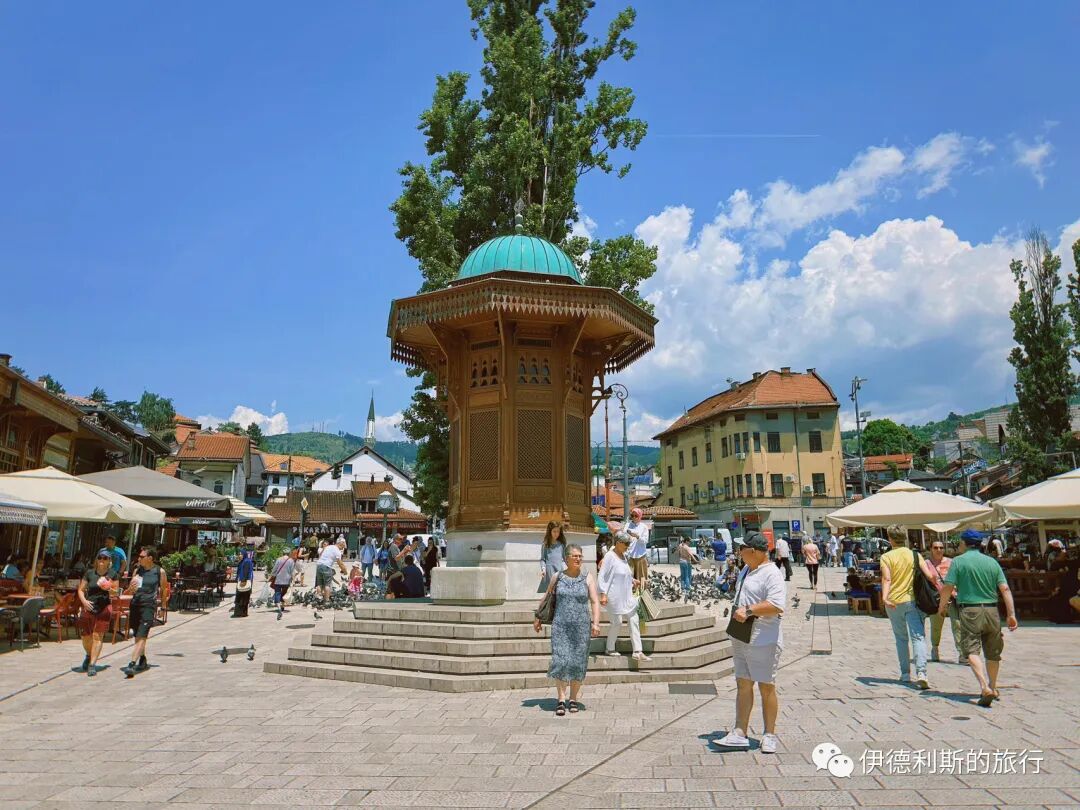
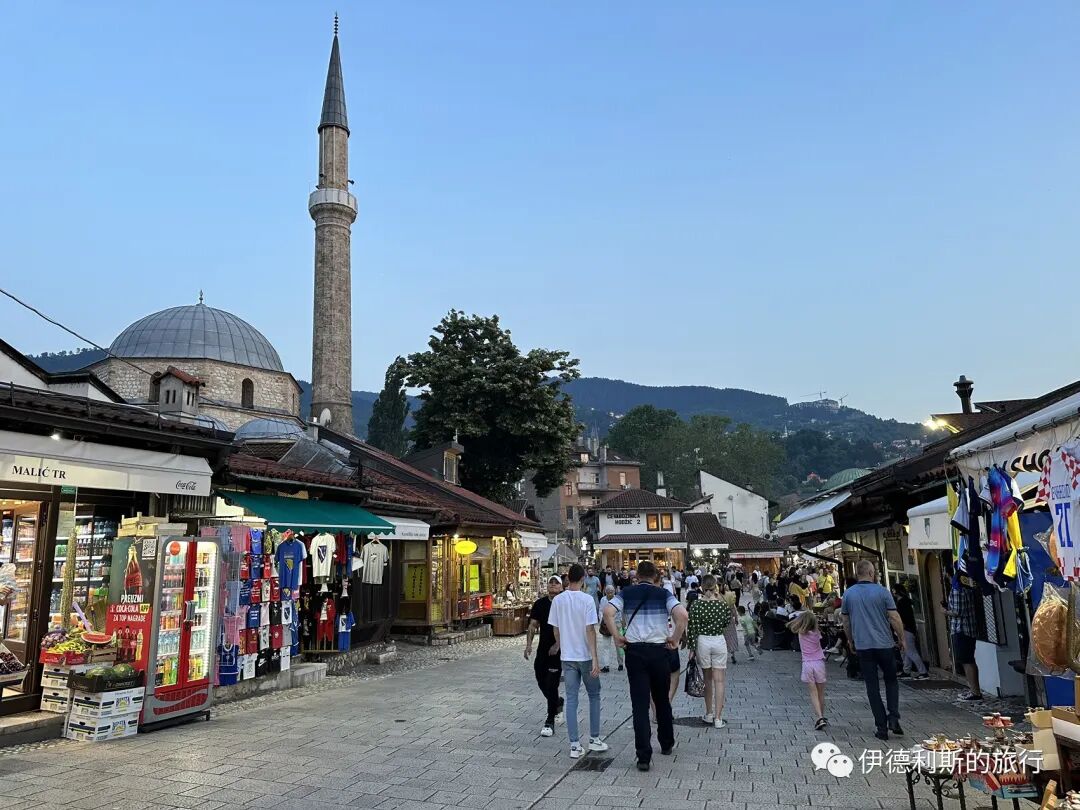
After arriving in Sarajevo, we first went to the old town bazaar (Baščaršija) for lunch. This area was built in 1462 by Isa-Beg Ishaković, the first Ottoman governor of Bosnia. It has been a residential area for Bosniaks ever since and is full of halal restaurants.
We went to the famous restaurant Ćevabdžinica Petica Ferhatović near the eastern entrance. This shop was opened by the Ferhatović family during the 1984 Sarajevo Winter Olympics, though they had already started running restaurants in the old town of Sarajevo as early as 1957.
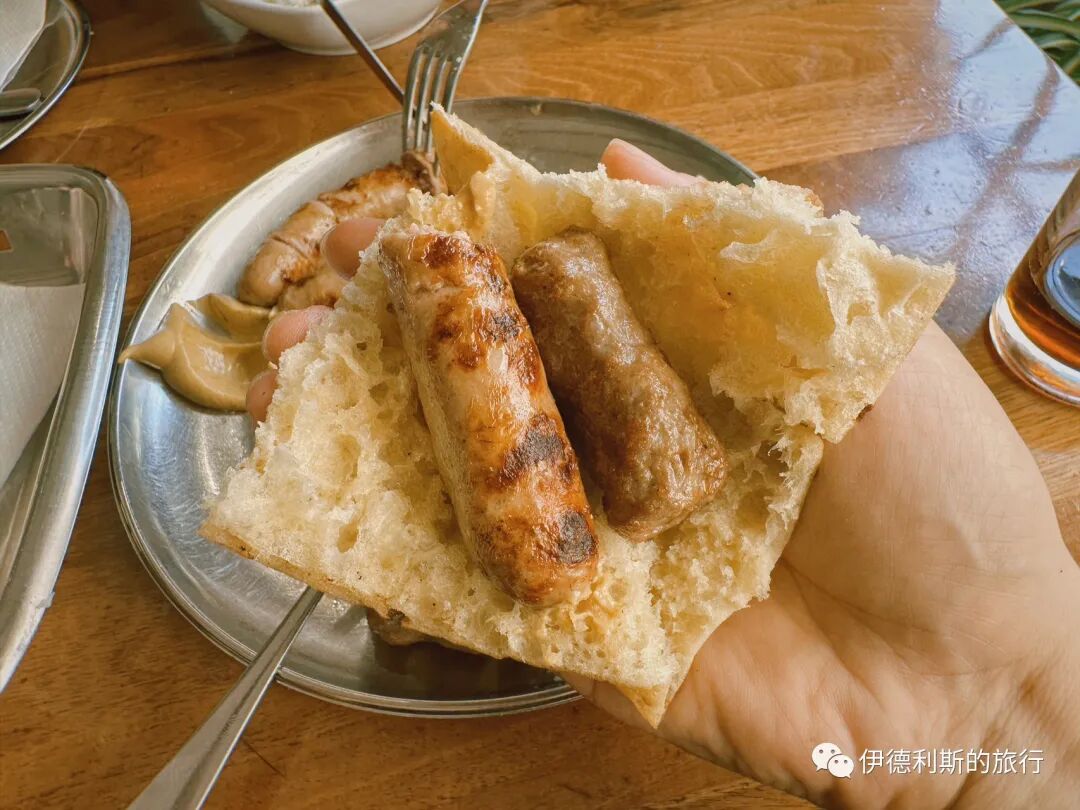
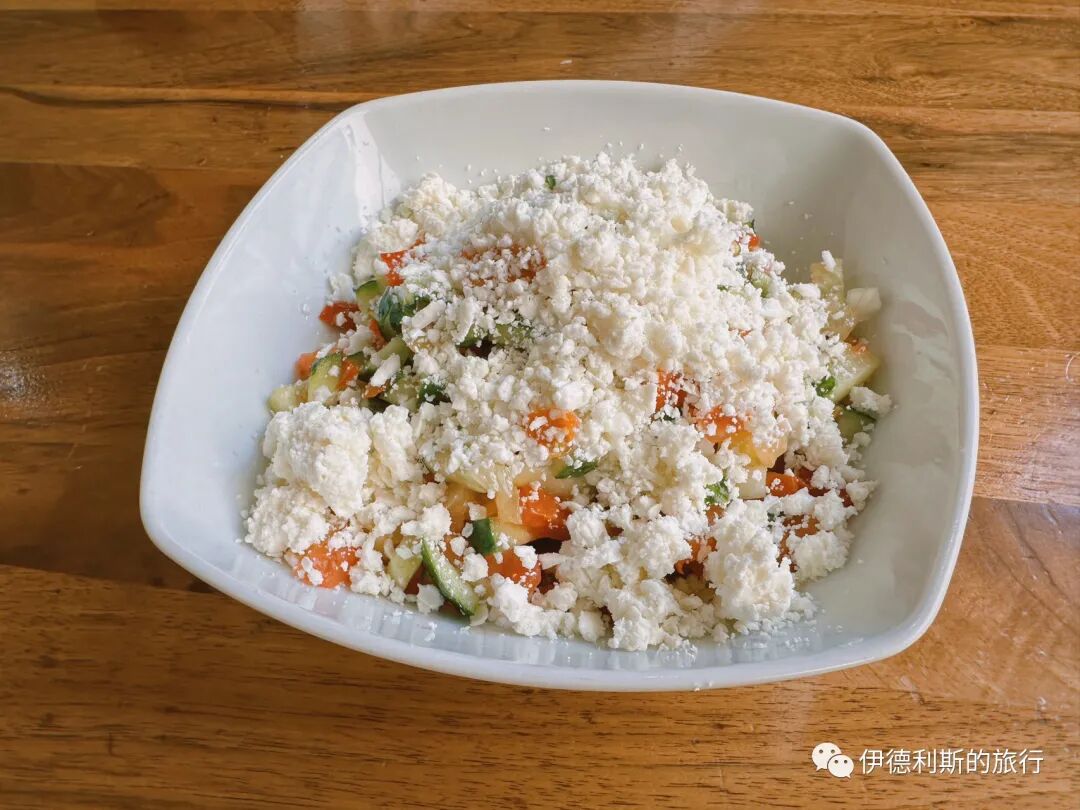
We ordered the Bosnian specialty of finger-shaped minced beef kebabs (Ćevapčići) and spicy beef sausage (Sudžuk) served with flatbread (Somun), along with side dishes of onions and cream cheese (Kajmak). We also ordered a cheese salad (Šopska salata).
The word Ćevapčići comes from the Ottoman Turkish word for grilled meat (Kevap) and the Slavic suffix "-čići" used to denote something small. It developed from Turkish kebabs in the 16th century. The version made in the Baščaršija area of Sarajevo is the most famous, and it holds an important place in Bosniak food culture.
Spicy beef sausage (Sudžuk) is a dish widely found in Central Asia, the Middle East, and the Balkans. It was first mentioned in the Compendium of the Turkic Dialects (Dīwān Lughāt al-Turk) written in the 1070s, and was later brought to Bosnia by the Ottoman Empire. To make it, beef, beef fat, and various spices are ground together, stuffed into casings, tied tightly, and then fermented and dried.
Flatbread (Somun) is similar to the pita bread of the Levant region and is a classic pairing for Bosniaks when eating grilled meats.
Cheese salad (Šopska salata) is made with tomatoes, cucumbers, onions, peppers, and brine cheese (Sirene), and its name comes from the Shopluk region in the far west of Bulgaria. Because its colors match the Bulgarian flag, this dish became a promotional food for Bulgarian tourism after 1956 and later spread widely across the former Yugoslavia.
Gazi Husrev Bey was an Ottoman governor of Bosnia in the 16th century. He was born into Bosnian nobility and, starting in 1530, funded many important buildings in Sarajevo while dedicating his wealth to support welfare and educational institutions.
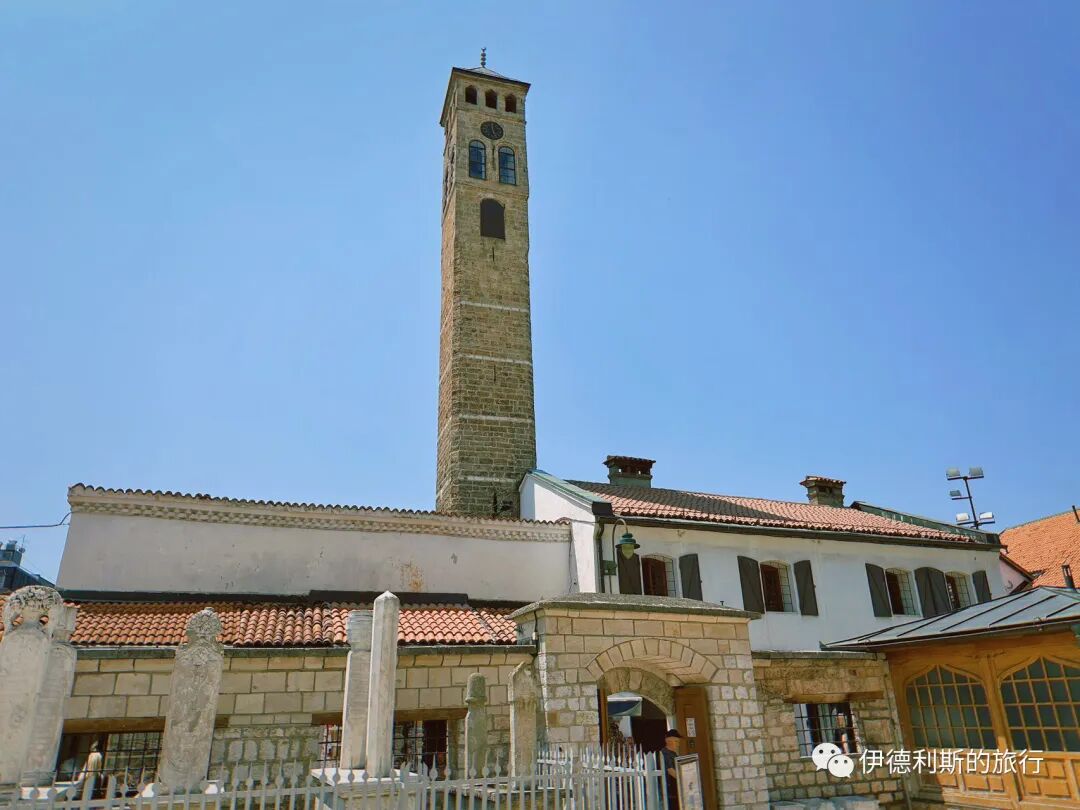
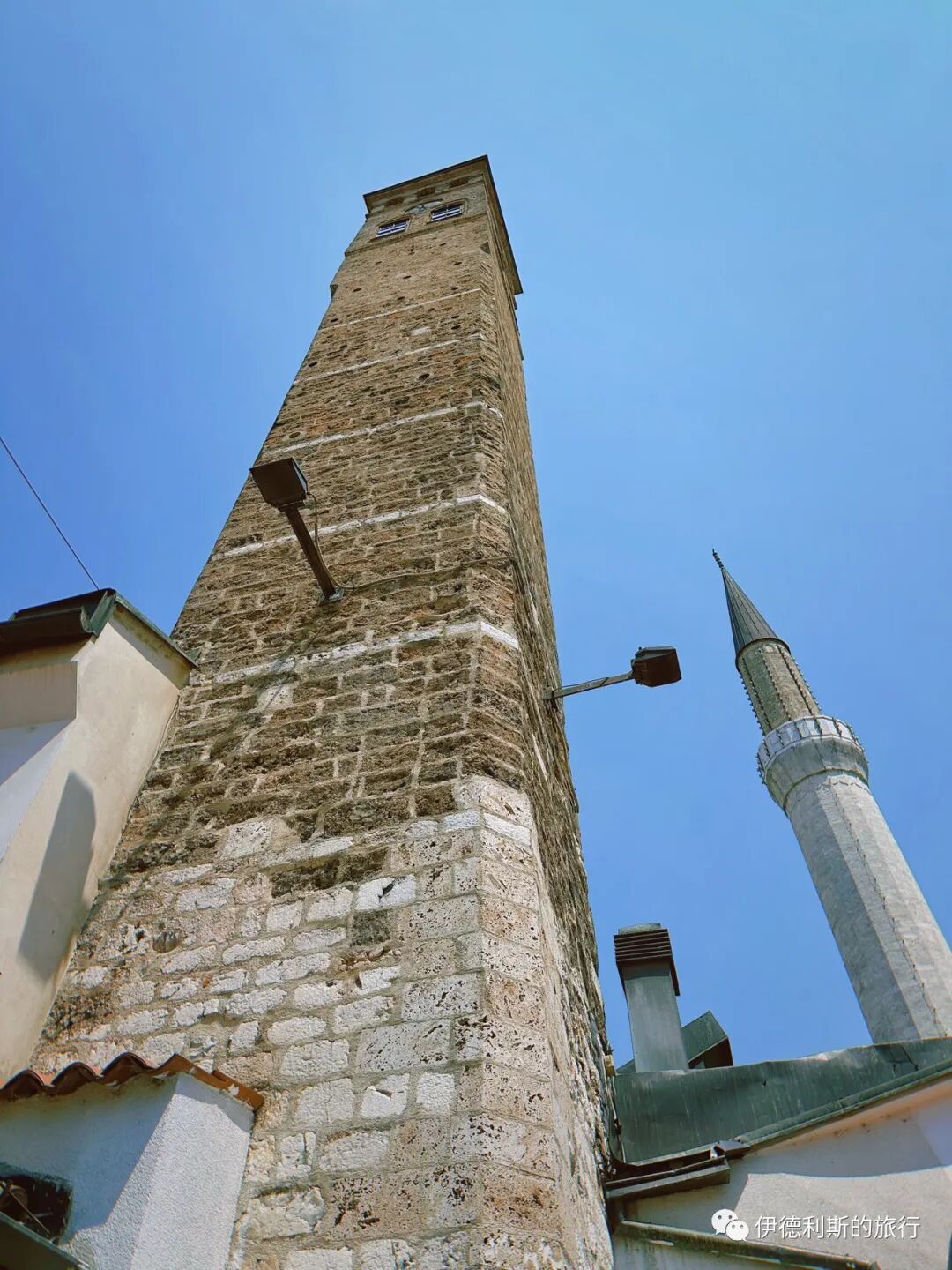
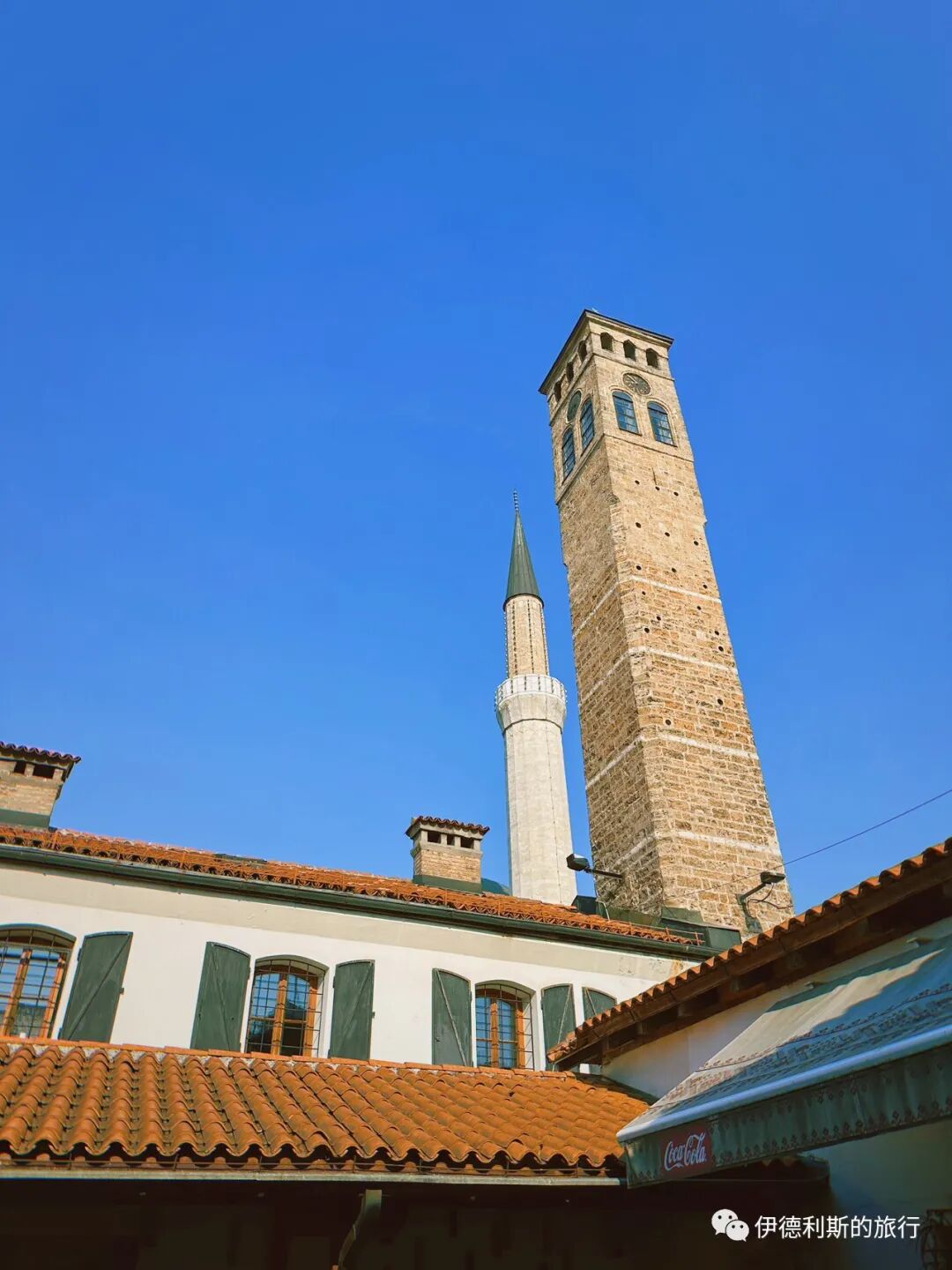
To the west of the Gazi Husrev-beg Mosque stands a clock tower built in the 16th century, though the current structure was rebuilt in the 18th century. This 30-meter-tall clock tower is the highest of the 21 clock towers built by the Ottoman Empire in Bosnia and Herzegovina. It follows the Islamic calendar, where sunset is set as 12 o'clock. An official called a Muvekit, who determines the prayer times and the five daily namaz, is responsible for adjusting the clock. The current clock mechanism was made by the London-based company Gillett & Johnston in 1875. To make sure the clock was clearly visible, the top of the tower was modified during installation.
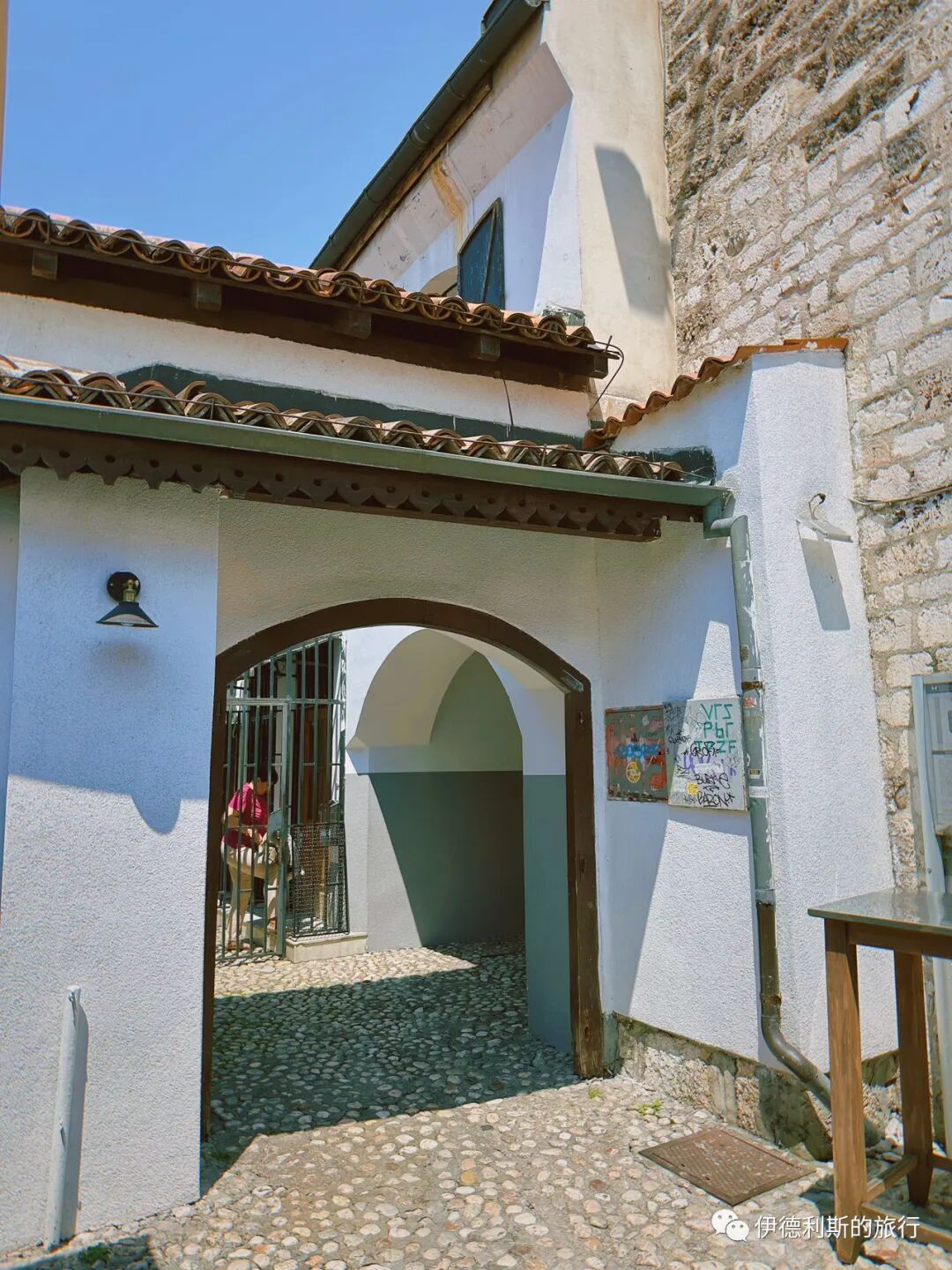
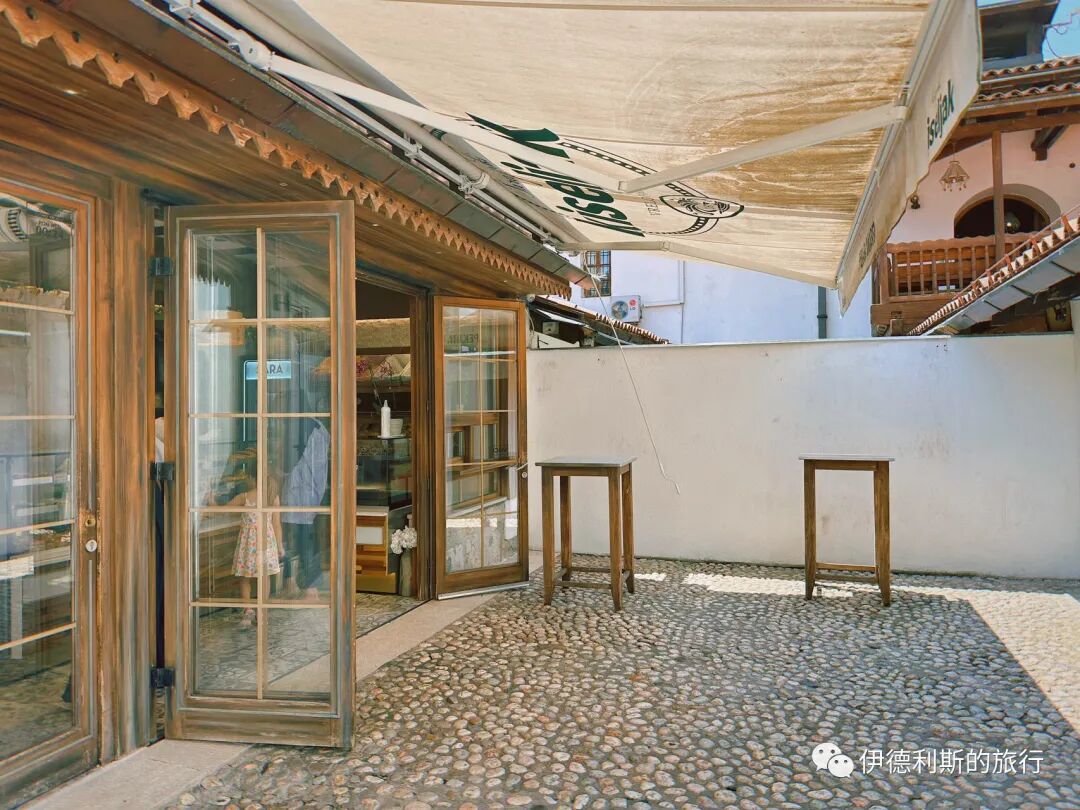
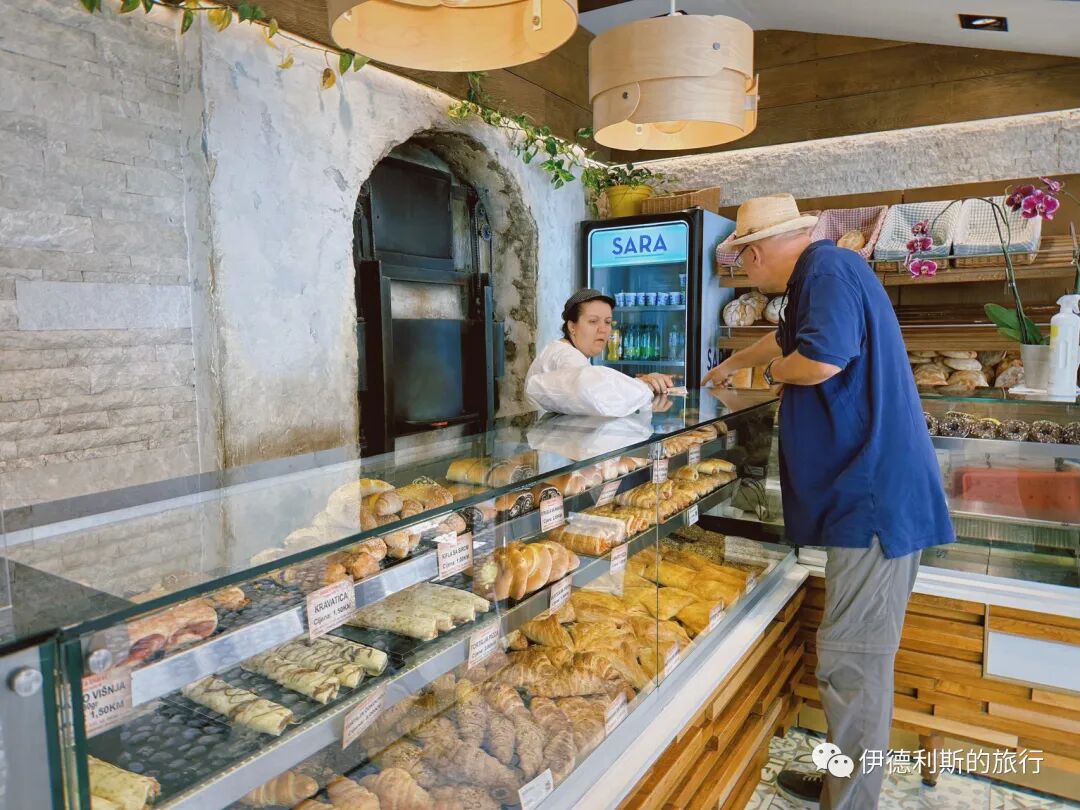
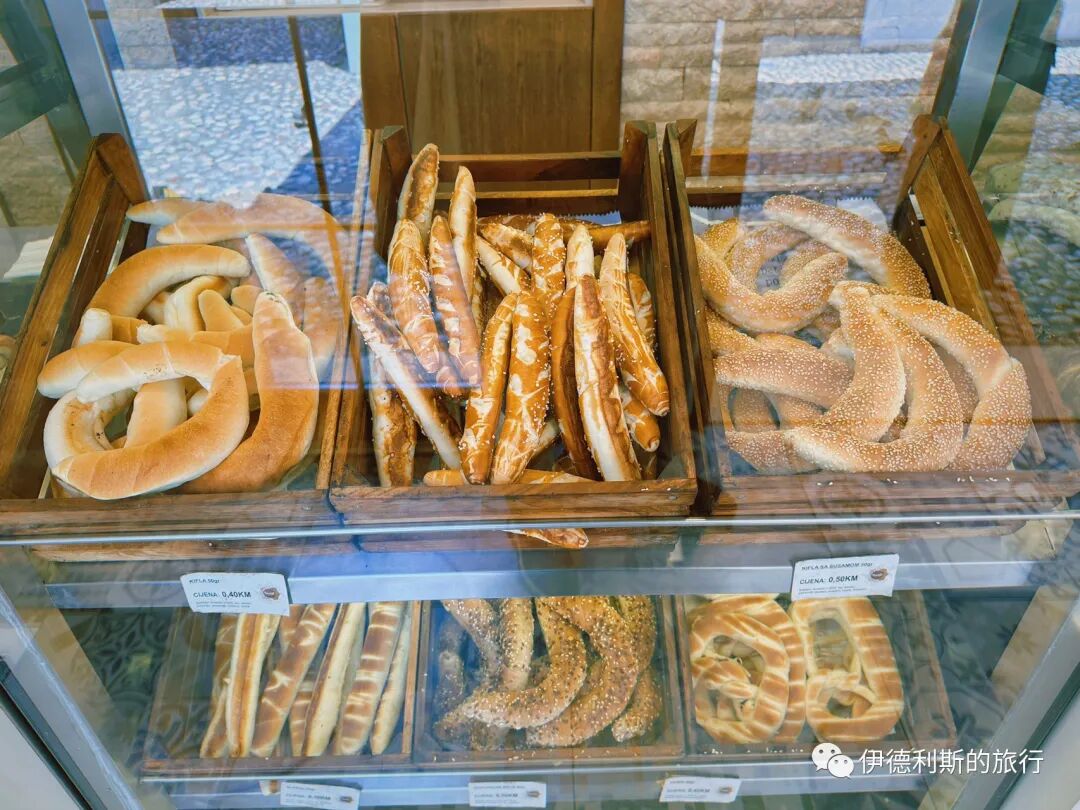
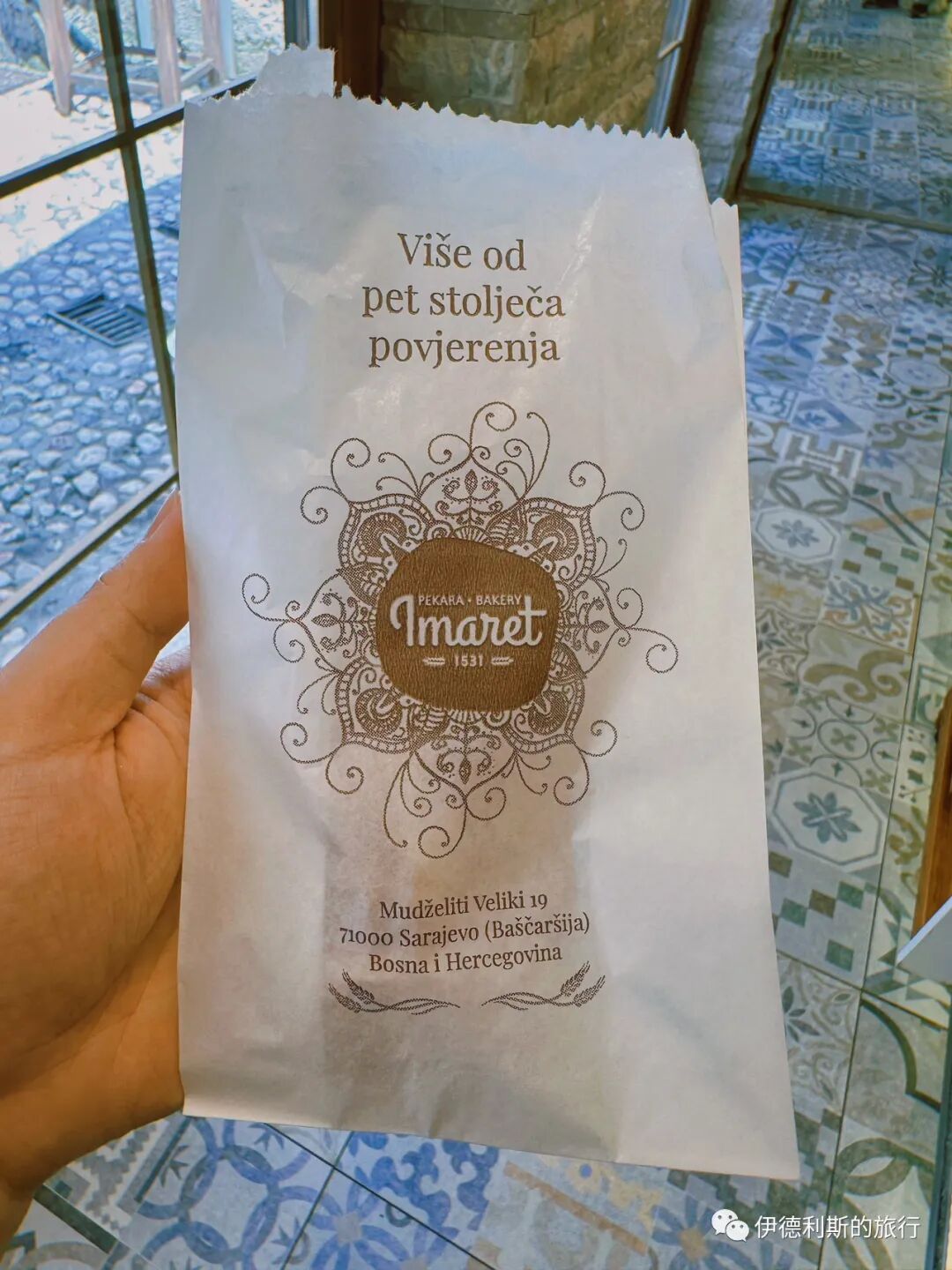
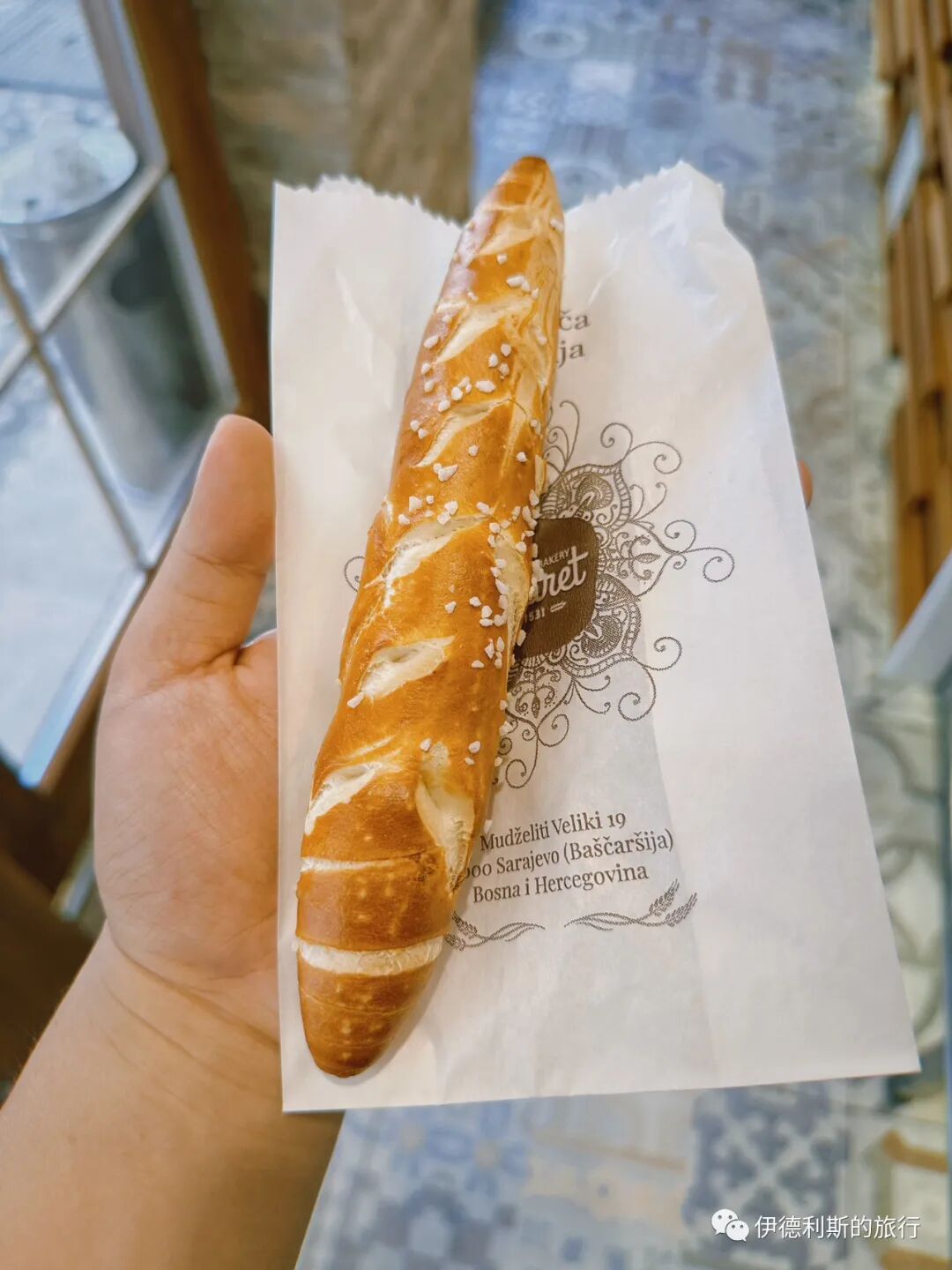
Below the clock tower is a public canteen (Imaret) established in 1531, which was originally managed by a foundation (Waqf) to distribute free food to the poor. Today, this place is a very famous bakery, and the fresh bread baked on-site is very popular with the locals. Their signature item is the Kifla bread, which costs 2 yuan each and comes in various flavors with a rich wheat aroma. Kifla is a small bread popular in Central Europe and the Balkans with a history of hundreds of years. The French croissant actually evolved from the Kifla.
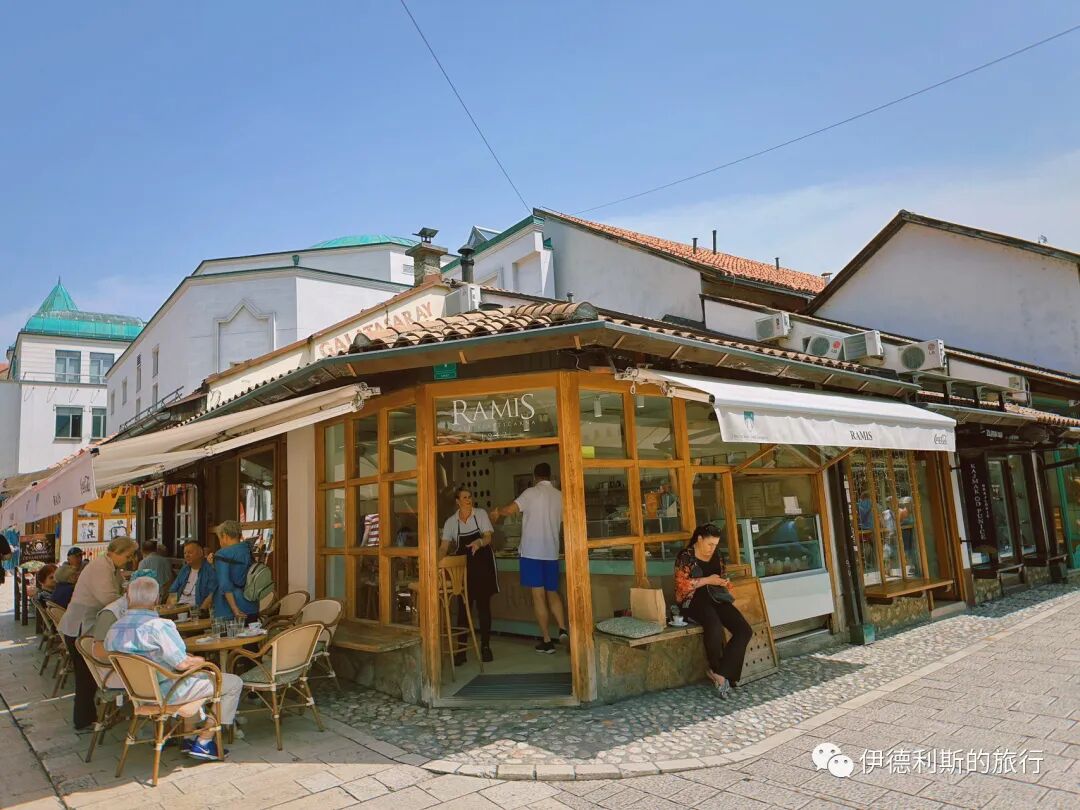
The best drink to cool off in the old bazaar of Sarajevo is Boza! I drink it several times every day. Boza is a very ancient fermented malt drink. It was recorded as early as the 1070s in the Compendium of the Turkic Dialects (Divânu Lügati't-Türk). It was very popular among Turkic peoples in Central Asia at the time and spread to the Balkans with the Ottoman Empire.
Before the 16th century, Boza could be consumed freely. However, the rise of a version called Tartar Boza, which contained opium, angered the rulers at the time. By the 17th century, Sultan Mehmed IV ordered all Boza shops to close and banned people from drinking it. Since then, this ban has been tightened and relaxed many times. By the 19th century, the sweet, non-alcoholic drink boza became popular again in the Ottoman Empire.
Today, boza is an essential summer cooling drink in Bulgaria and the former Yugoslavia.
I ate Ashure pudding (ashure) in the old bazaar of Sarajevo. Ashura refers to the 10th day of the first month of the Islamic calendar. Legend says that after the Great Flood receded, the Prophet Nuh and his followers stepped off the ark on this day. They had almost no food left, so everyone pooled together seeds of various foods to make the first meal for humanity after the flood.
In his 17th-century work Book of Travels (Seyahatname), Ottoman traveler Evliya Celebi mentioned that Ashure is a porridge that should be cooked on the tenth day of the month of Muharram. Ottoman-era Ashure had no fixed recipe, as preparation varied by region and family tradition. Traditionally, People say at least seven ingredients should be used, though some believe ten ingredients should be included to match the theme of the tenth day. Common ingredients include wheat, barley, rice, white kidney beans, chickpeas, grape molasses (pekmez), pomegranate molasses, beet juice, dates, raisins, currants, apricots, figs, apples, pistachios, almonds, hazelnuts, walnuts, pine nuts, and sesame seeds. Finished Ashure can be garnished with fennel seeds, black cumin seeds, plums, pomegranate, cardamom, cinnamon, cloves, and nutmeg.
Today, you can buy Ashure in dessert shops throughout Turkey and the Balkans all year round. However, on the Day of Ashura, people still prefer to make it themselves and share it with the poor, relatives, neighbors, and friends.
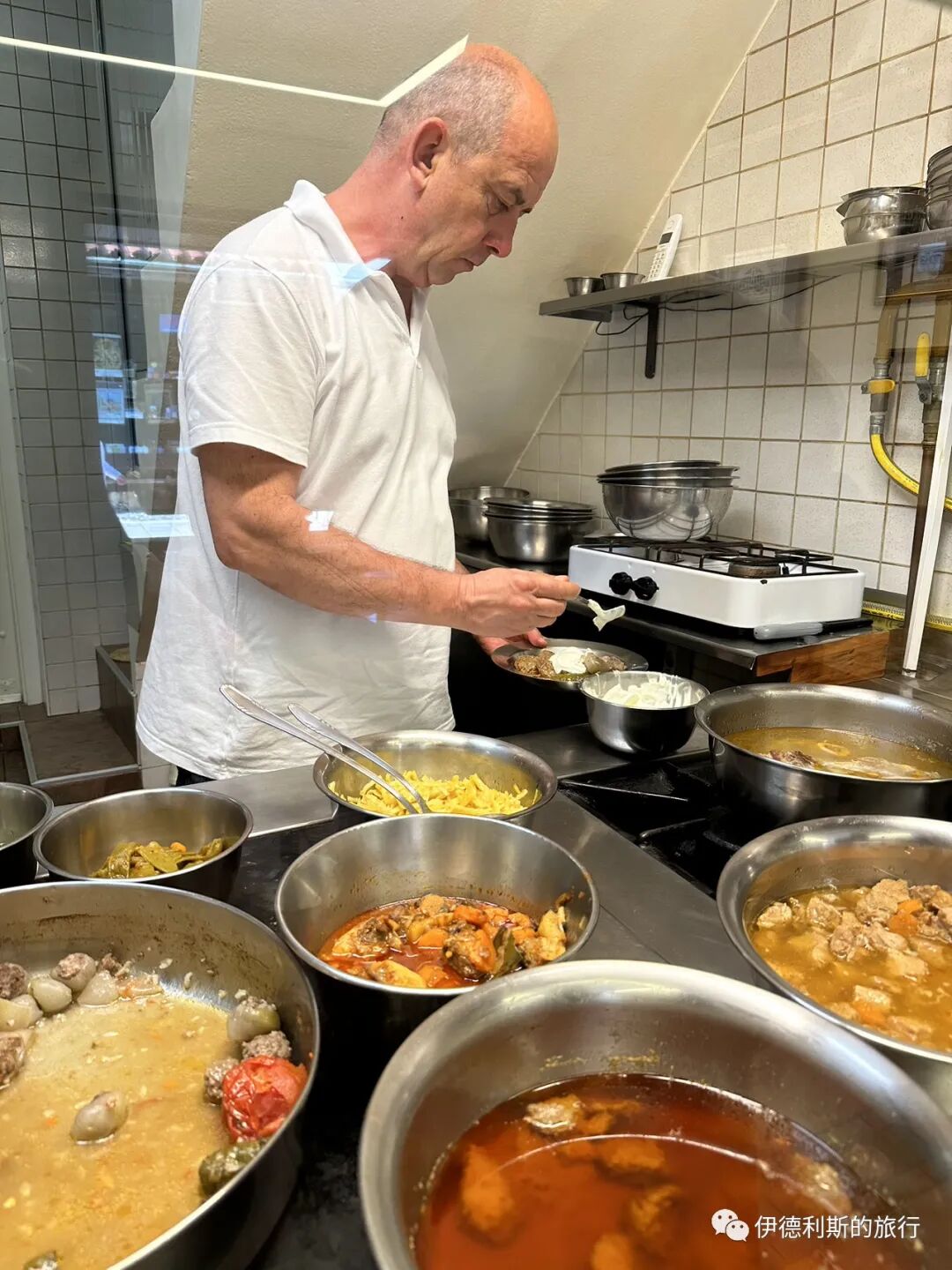
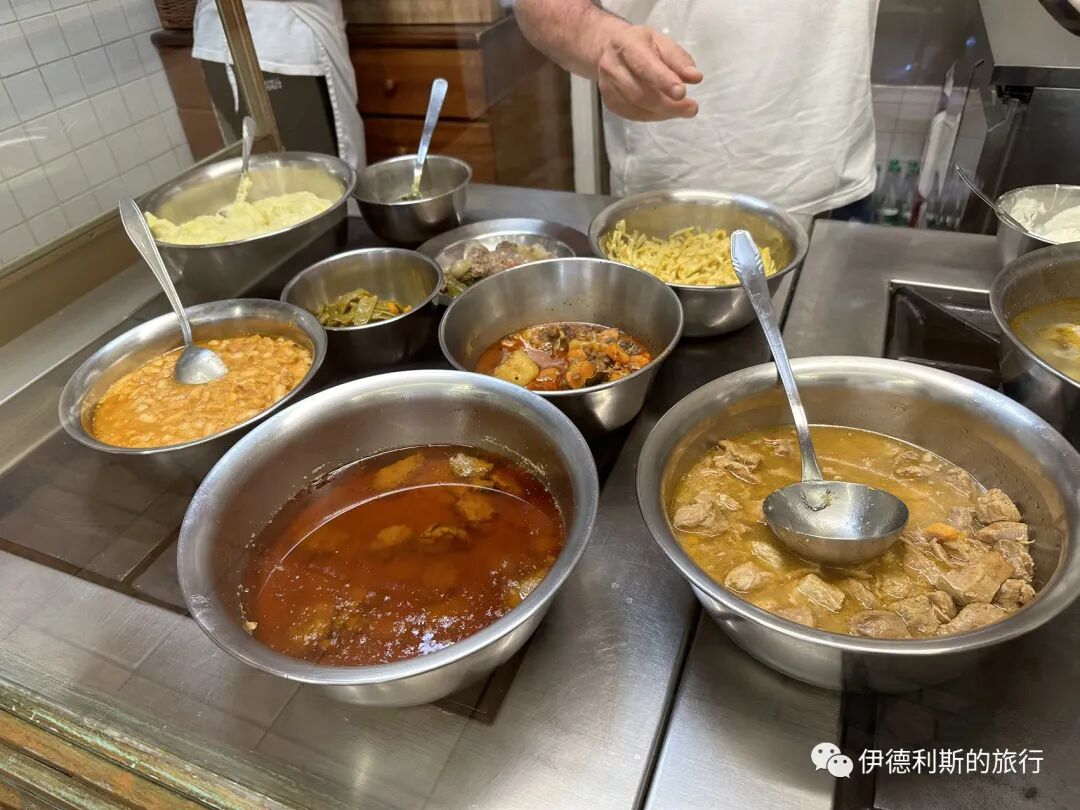
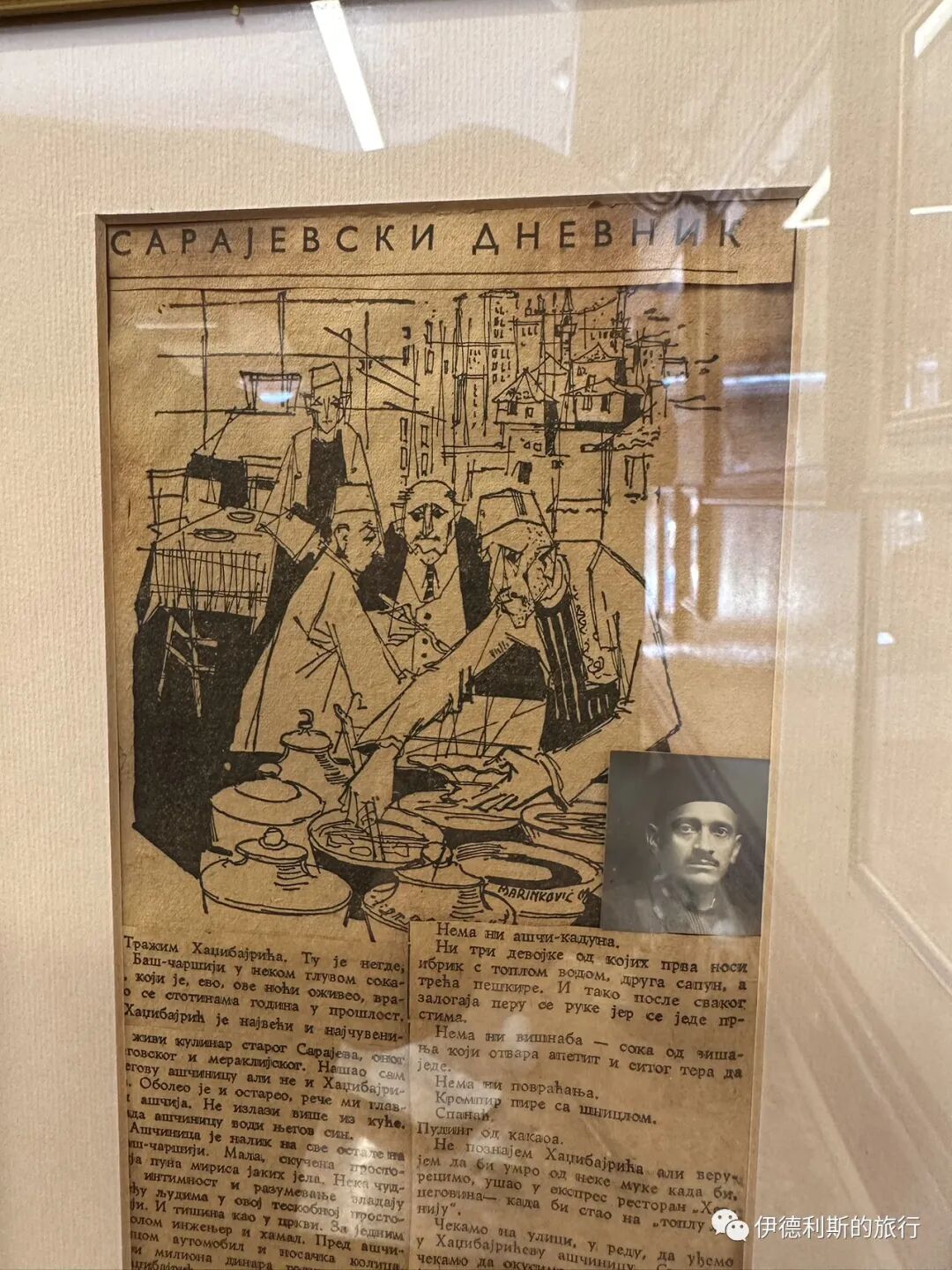
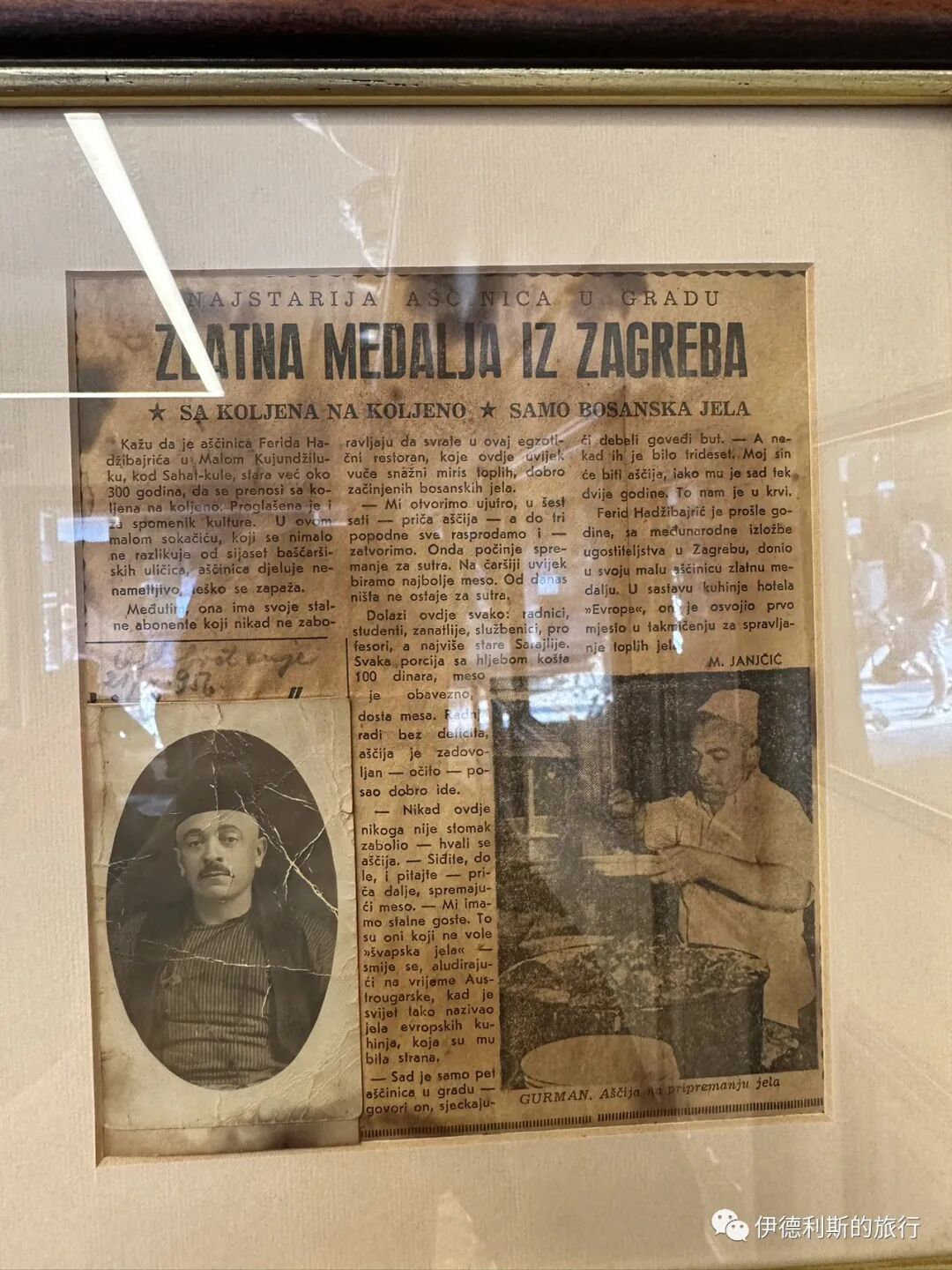
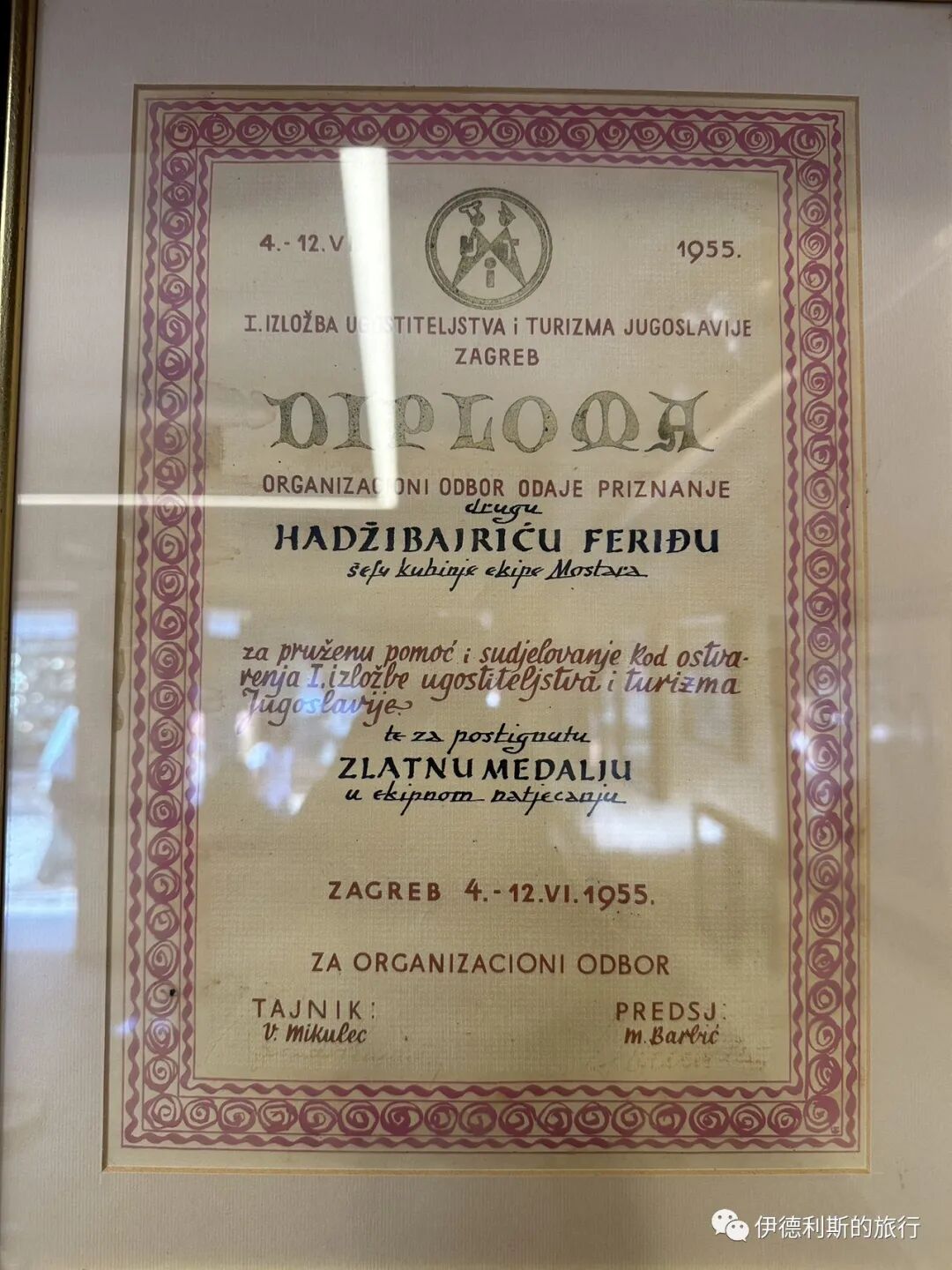
In the afternoon, I ate Bosnian stew (bosanski lonac) at Aščinica Hadžibajrić F. Namika in the old bazaar of Sarajevo. The word Aščinica here means an old-fashioned Bosnian restaurant. The Hadžibajrić family has run this traditional Bosnian restaurant for over a hundred years. The current owner, Namik, stands behind the counter and serves the food you point to.
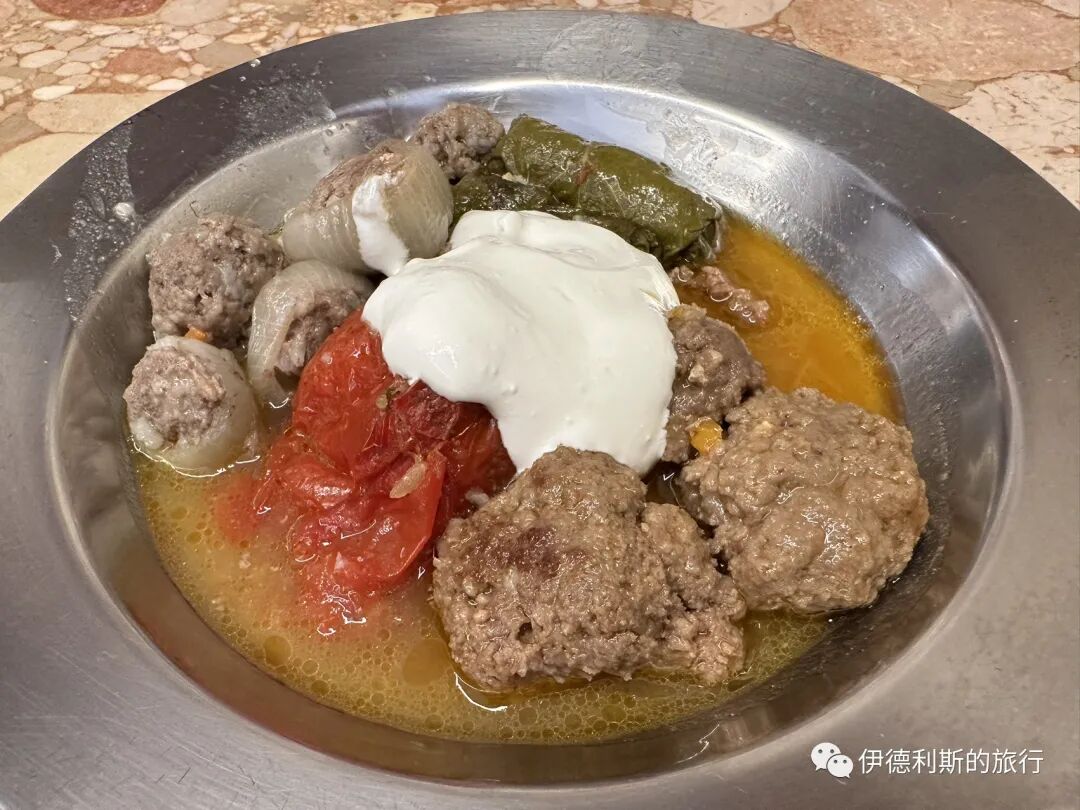
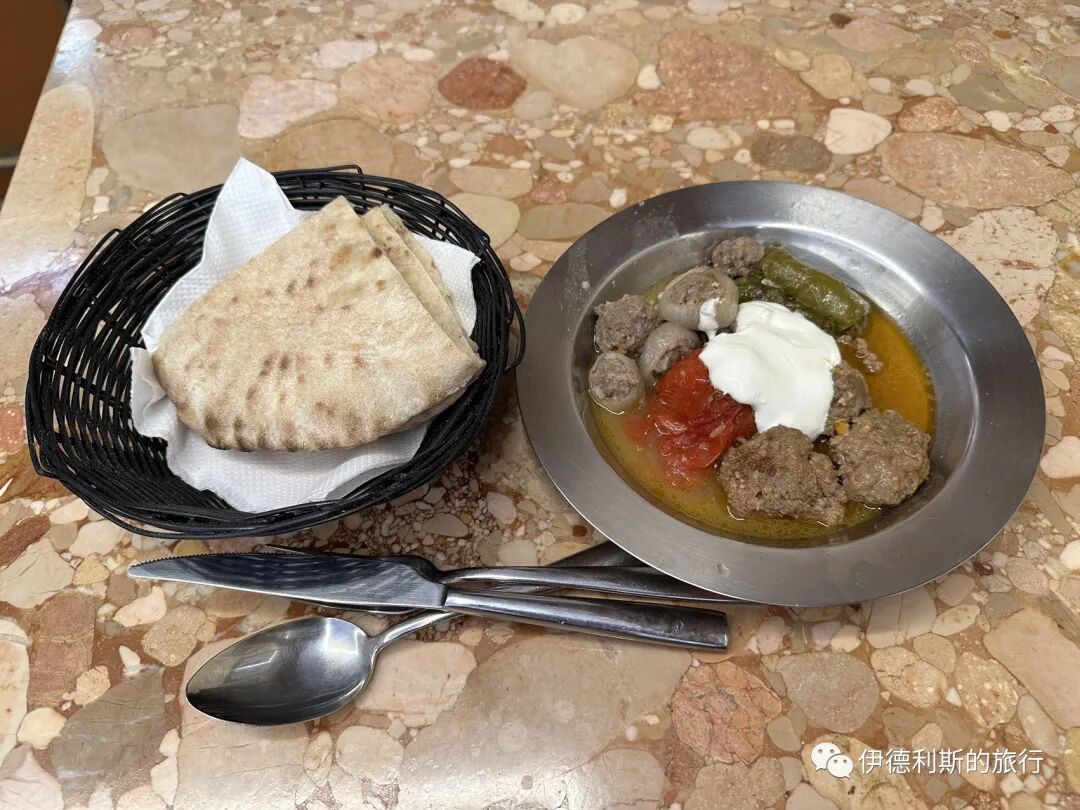
Bosnian stew dates back to the Middle Ages. It started as a home-cooked meal for Bosnian workers and later became popular with all social classes. It can be made by stewing beef, lamb, or meatballs with cabbage, potatoes, tomatoes, and carrots. When stewing, layer the meat and vegetables in the pot, then add garlic and whole peppercorns for seasoning. They also serve various stuffed vegetables (sarma), including stuffed tomatoes, stuffed grape leaves, stuffed onions, and stuffed pickled cabbage leaves. Sarma means "wrapped" in Turkish, referring to vegetables stuffed with filling and then stewed.
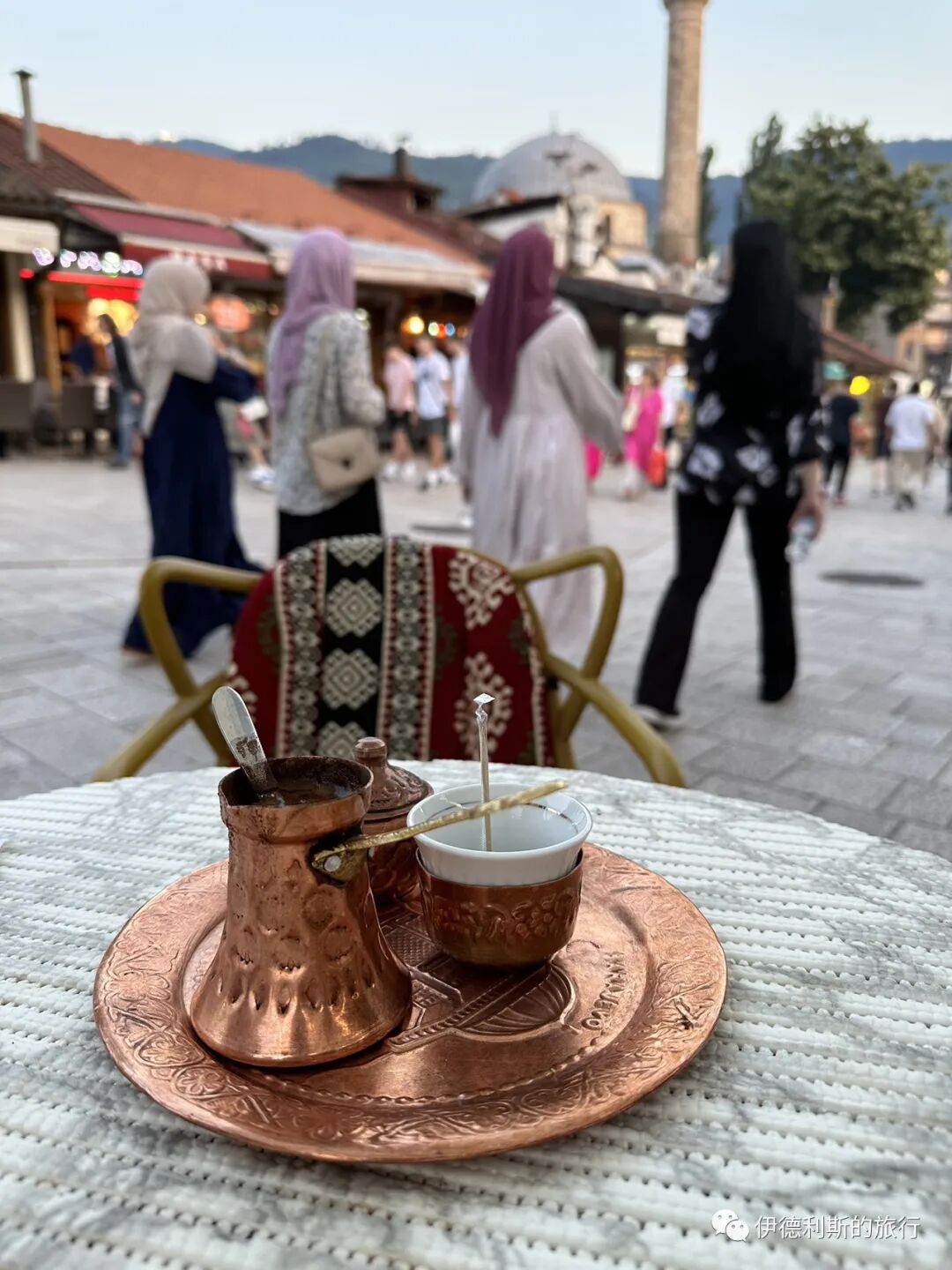
Drink traditional Bosnian coffee (Bosanska Kahva) in the old bazaar of Sarajevo. Coffee first arrived in the Balkan Peninsula under Ottoman rule from the Arab world in the 16th century. Sarajevo was one of the first European cities to open coffee houses, over a hundred years before cities in Western Europe.
Coffee houses are an important part of Ottoman culture. People go there to hear the day's main news, discuss daily gossip, and watch impromptu performances like shadow puppetry. Coffee houses allow people to express more ideas outside of work and worship (namaz), and they are also a great opportunity to meet like-minded friends.
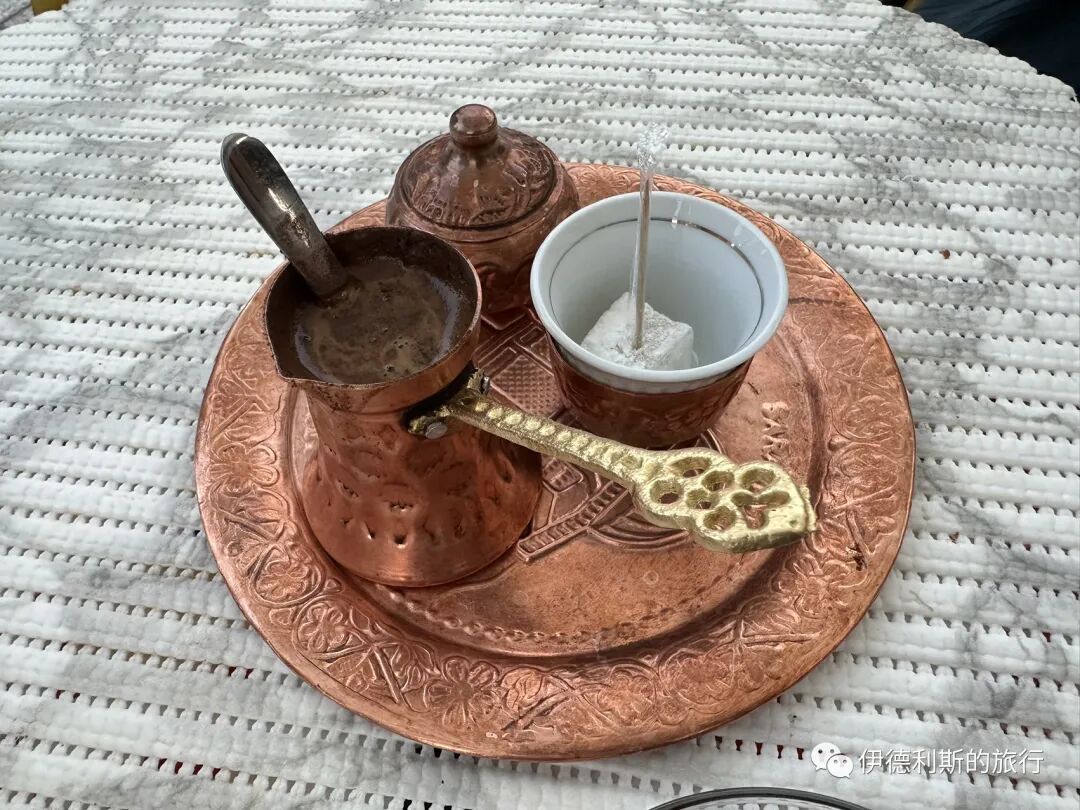
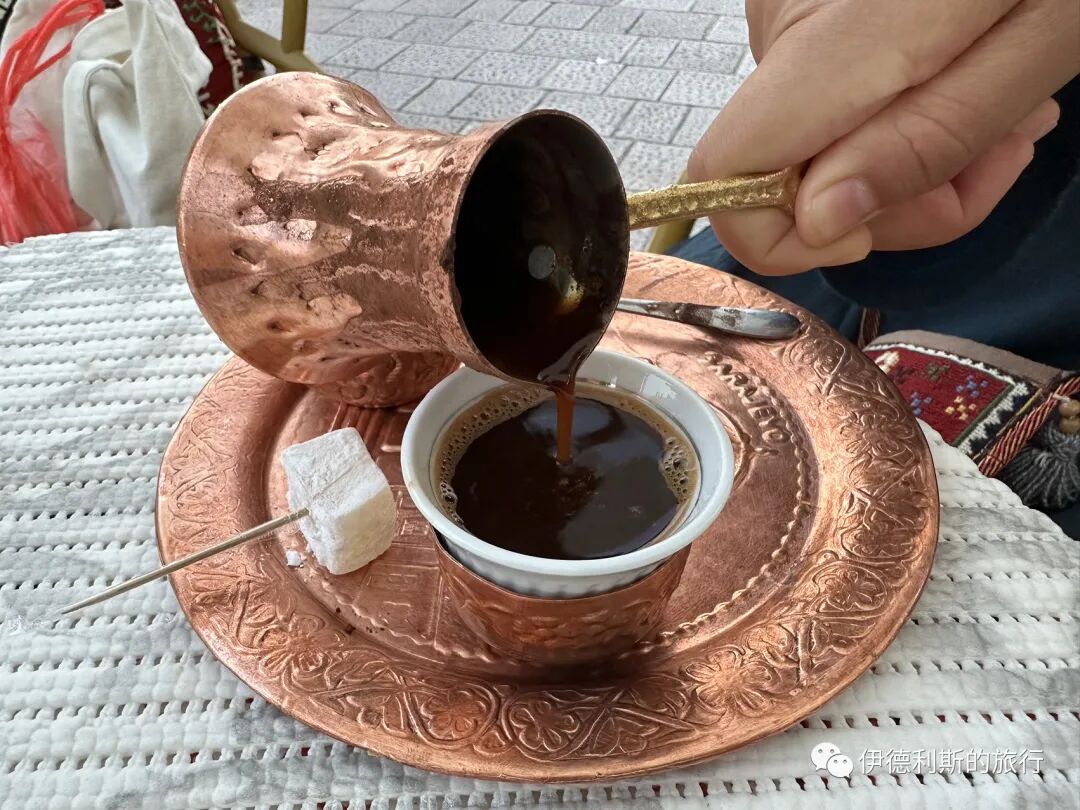
Like Turkish coffee, Bosnian coffee is made by grinding roasted coffee beans into a fine powder and brewing them in a long-handled copper pot called a Džezva (known as Cezve in Turkish). However, while Turkish coffee can be brewed with cold water, Bosnian coffee must be brewed with boiling water. You can add sugar to Turkish coffee while it brews, but you cannot add sugar to Bosnian coffee. Turkish coffee is poured into a cup and served to the customer, while Bosnian coffee is served by placing the copper brewing pot and the cup together on a tray for the customer to pour themselves.
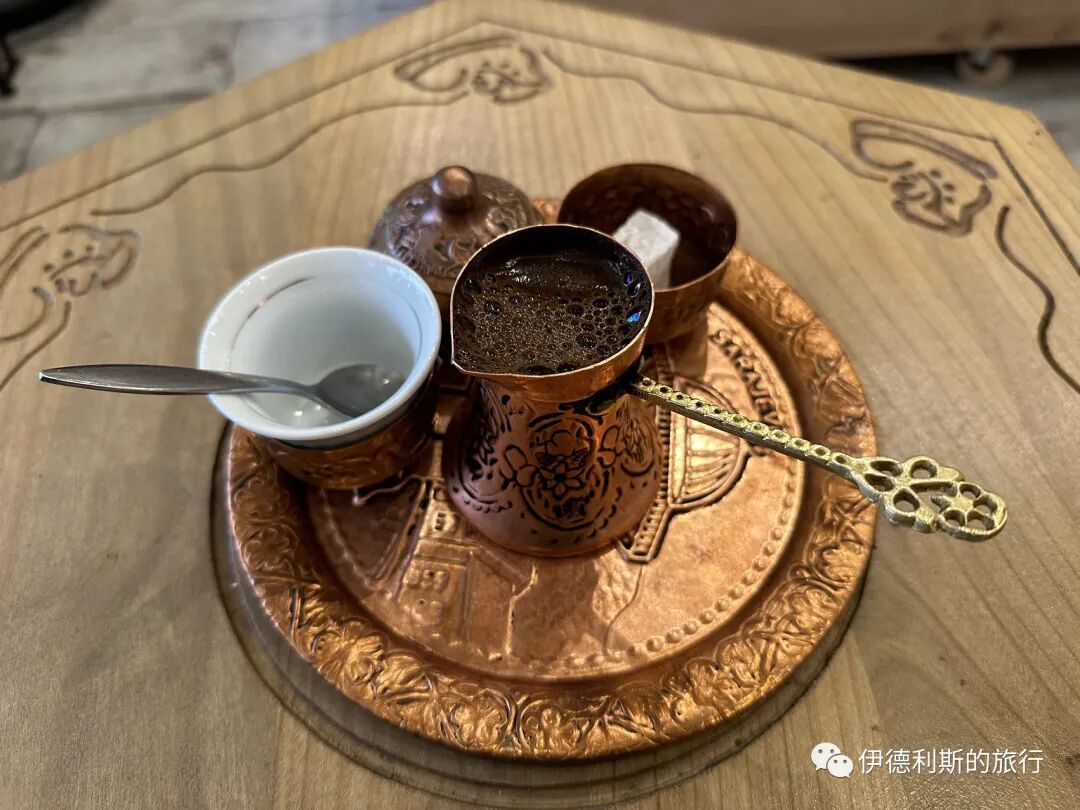
The classic Bosnian coffee set includes a copper pot, a porcelain cup with a copper base, a copper tray, a copper container for sugar cubes, and Turkish delight (Rahat Lokum). To drink it, first bite off a piece of a sugar cube and hold it under your tongue, letting the sugar melt on its own, then drink the coffee. Bosnian Turkish delight (Rahat Lokum) comes from Turkish delight (Lokum). The yellow ones are made with vanilla and the red ones are made with rose petals; you can eat them at any time while drinking coffee.
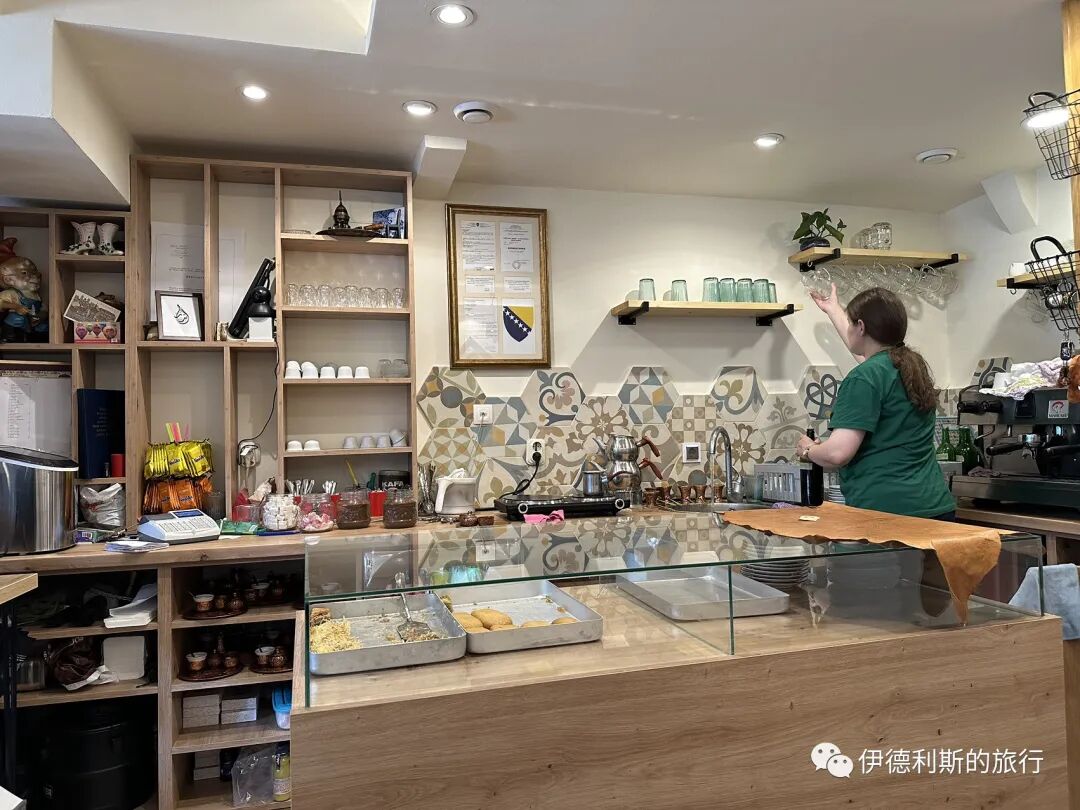
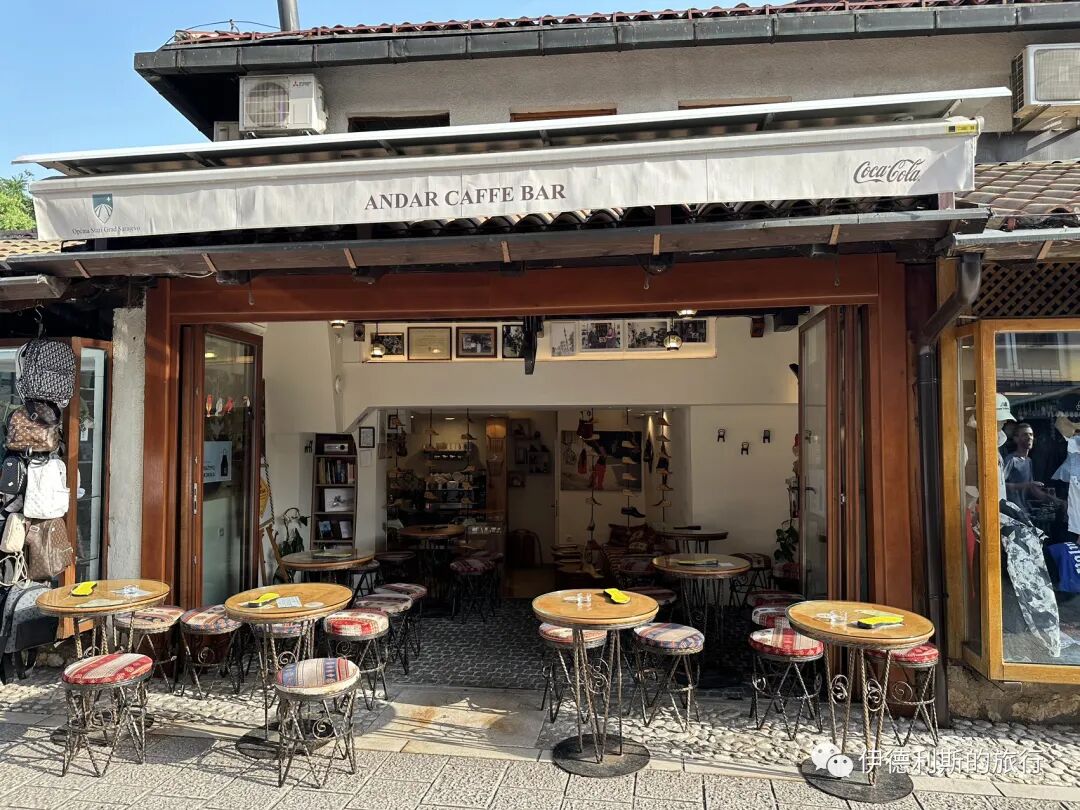
One of the coffee houses I visited is called Andar Caffe Bar. The owner Maida's grandfather, Muharem, opened a handmade shoe shop in the old bazaar of Sarajevo in 1933, which was later taken over by Maida's father, Osman. After Osman retired in 2010, Maida took over the shop. But by then, handmade shoes were no longer in demand as people bought shoes in stores, so Maida turned the shoe shop into the current coffee house while keeping many shoe-related elements inside.
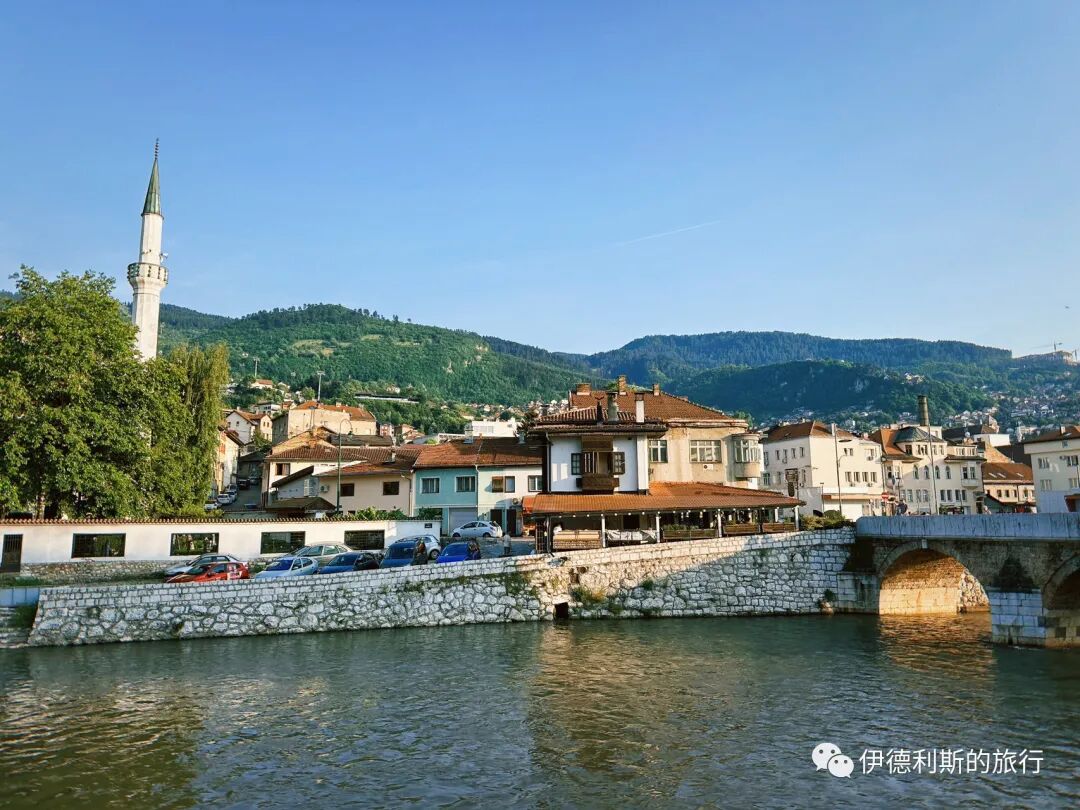
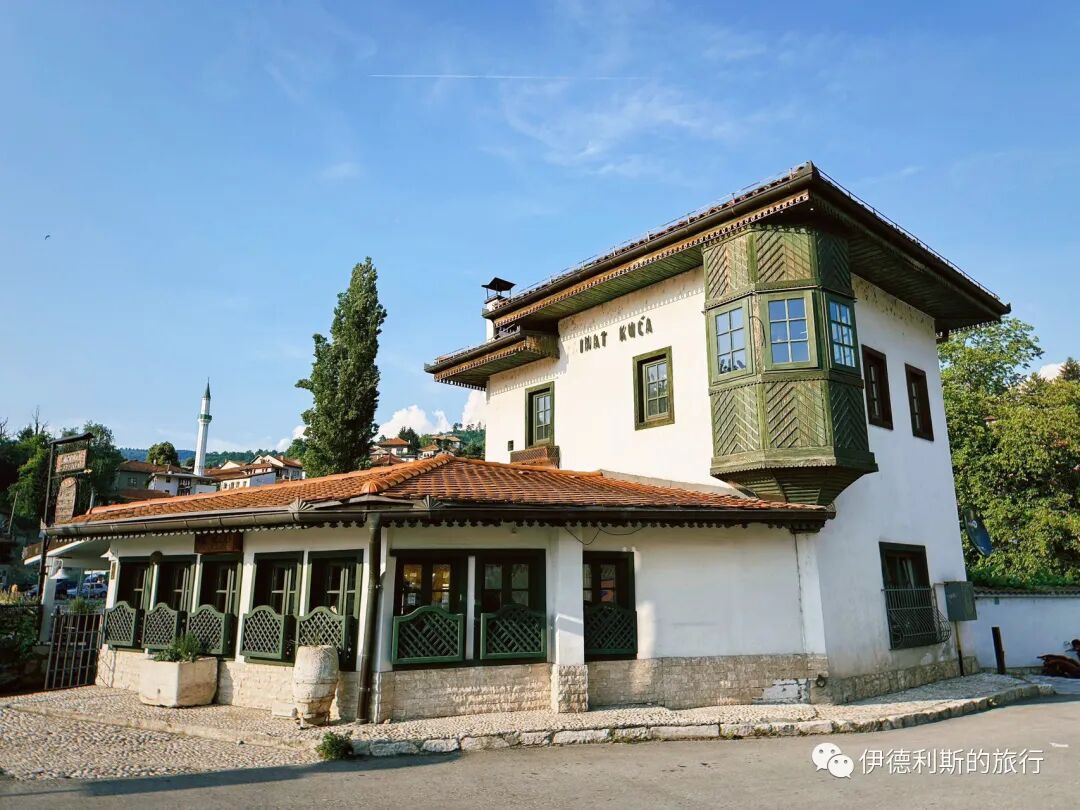
There is a very famous Bosnian restaurant called Inat kuća across from the Sarajevo City Hall (Vijećnica). The traditional Bosnian house where the restaurant is located was built in the mid-17th century, originally next to the current City Hall. In 1892, when the Austro-Hungarian Empire built the City Hall and a tram station, they wanted to take over the land, but the owner, an old man named Benderija, did not want to move. After long negotiations, the old man finally agreed to move a few years later only if they gave him a bag of gold and moved his house brick by brick to the other side of the river. The Austro-Hungarian Empire had no choice but to move the house to its current location. People say during the move, the old man sat on the nearby bridge every day, carefully watching the workers move every single brick to the other side of the river.
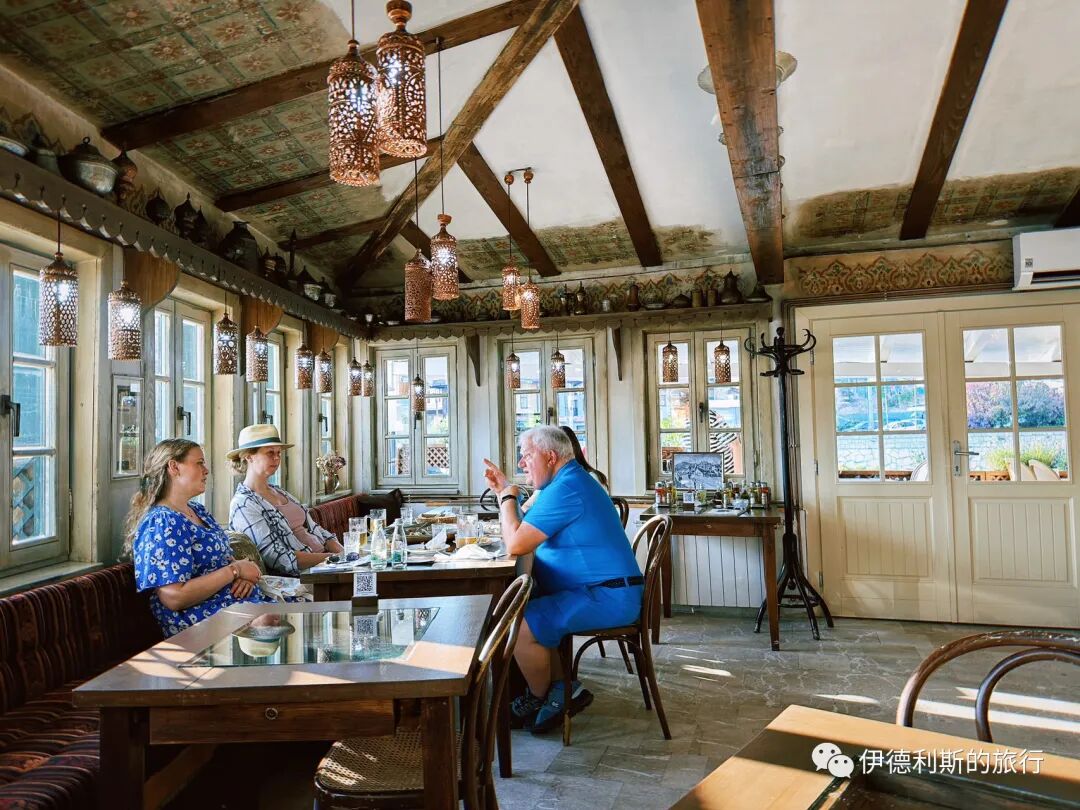
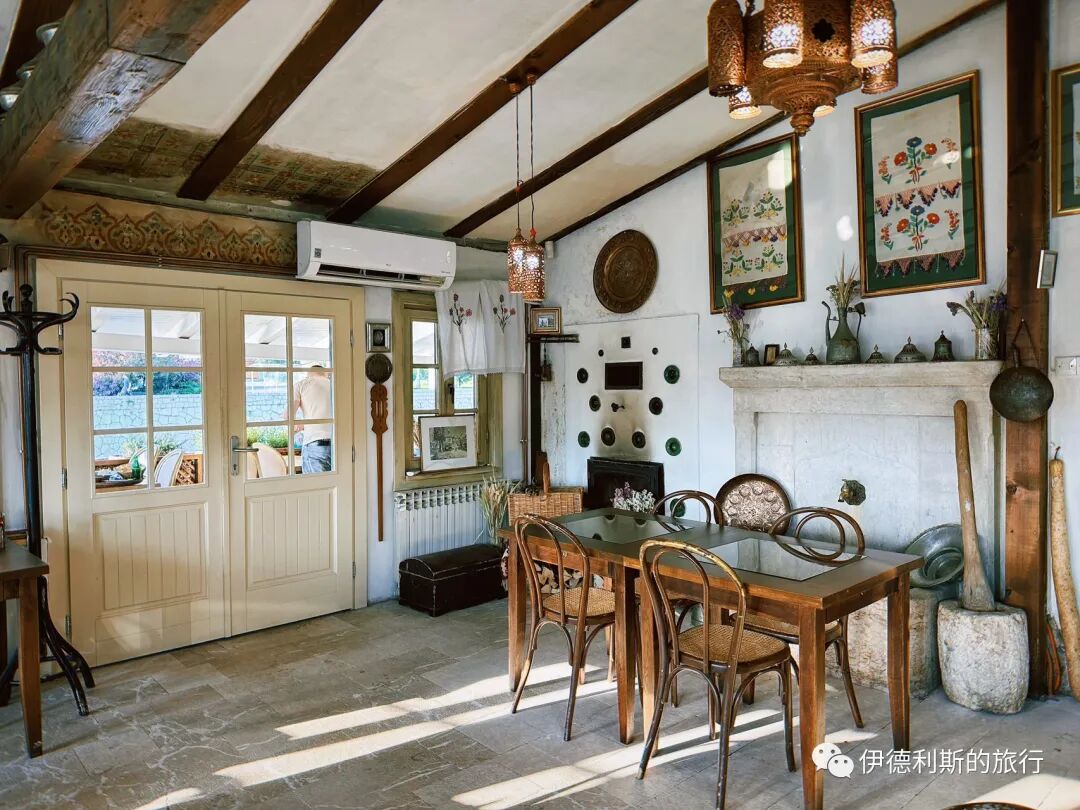
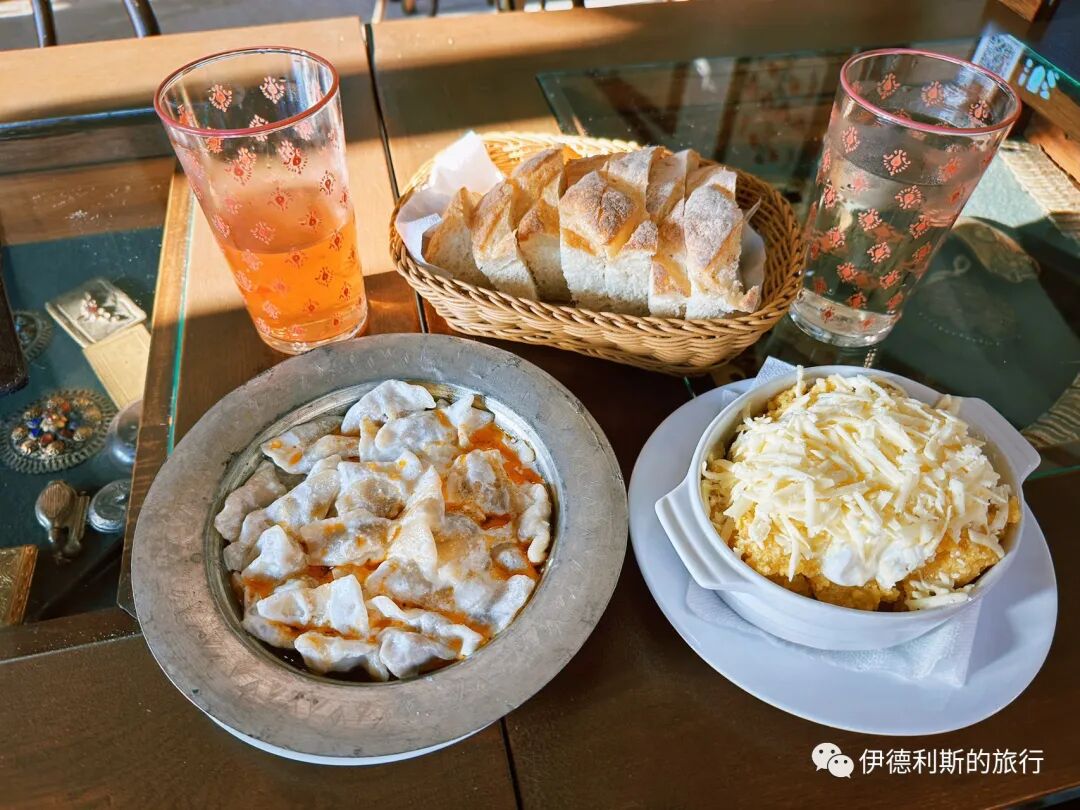
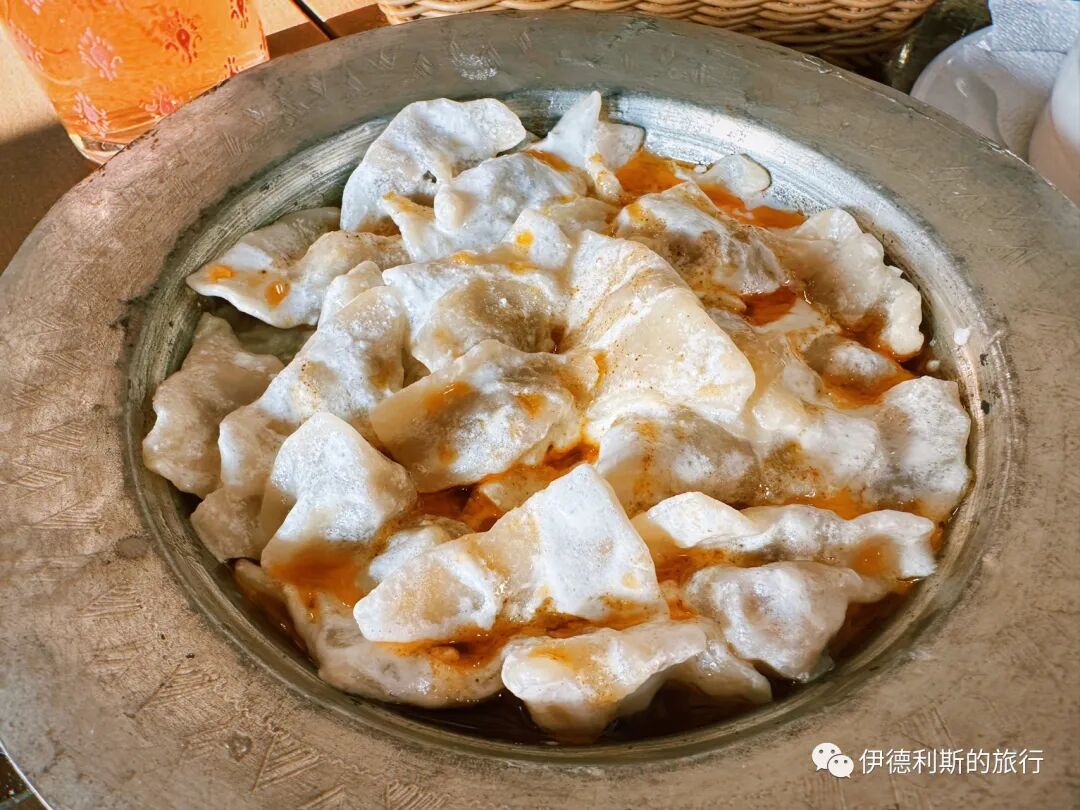
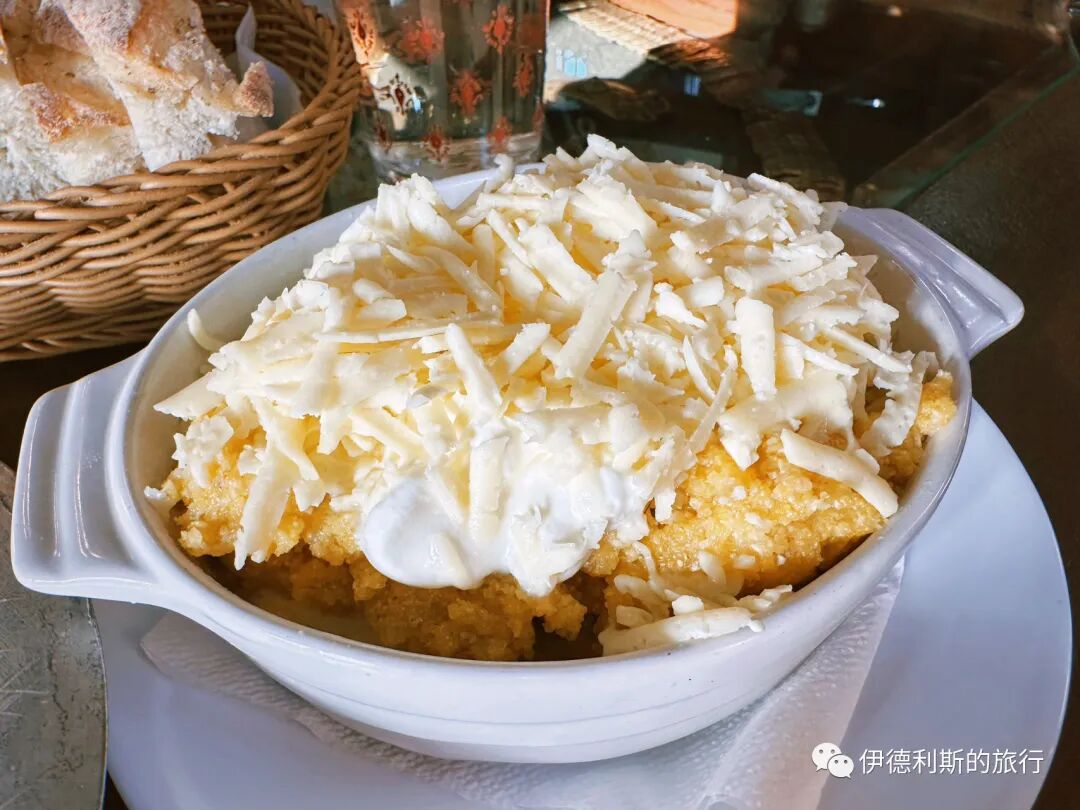
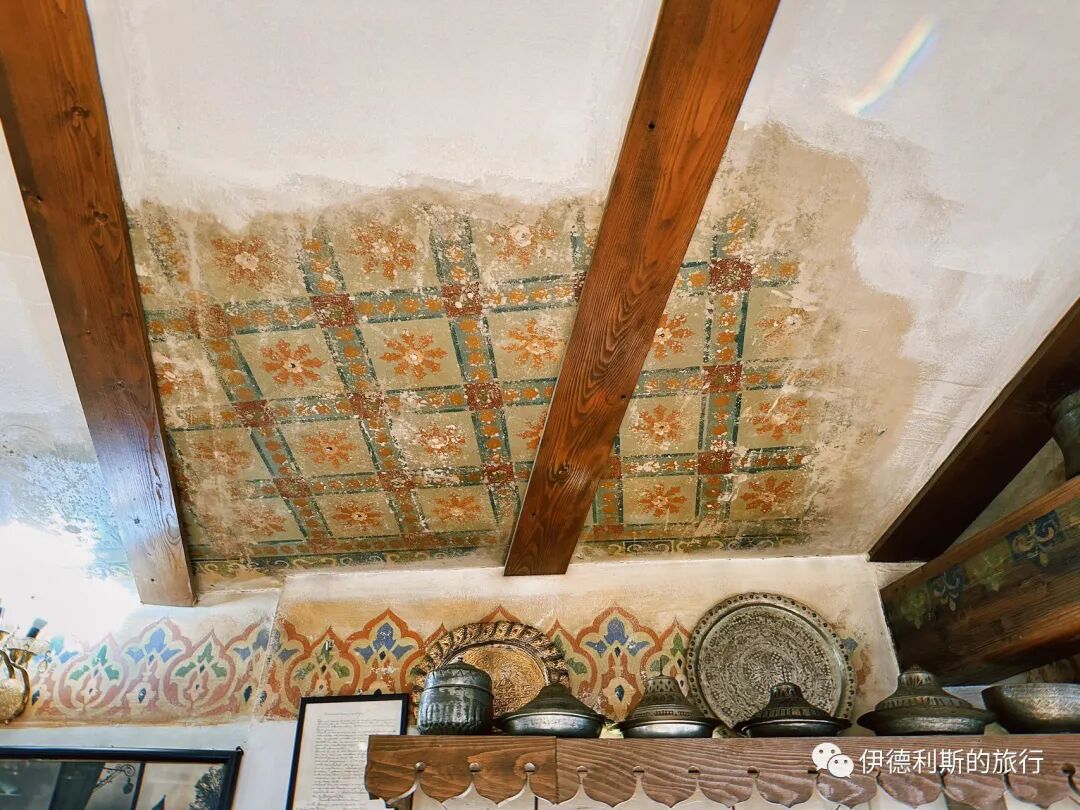
After 1997, Inat kuća became a Bosnian restaurant where you can enjoy Bosnian cuisine and see the traditional Bosnian interior design. We ordered traditional Bosnian dumplings (klepe), cornmeal porridge (pura), rose water, and elderflower (zova) water. Klepe is made by kneading flour, eggs, and salt for the dough, and mixing minced meat, onions, salt, and pepper for the filling. The dumplings are boiled for 10 minutes, then topped with yogurt, garlic powder, and chili powder before being baked. Pura is a porridge made from cornmeal, butter, cheese, and yogurt, and it is one of the favorite breakfasts for Bosniaks.
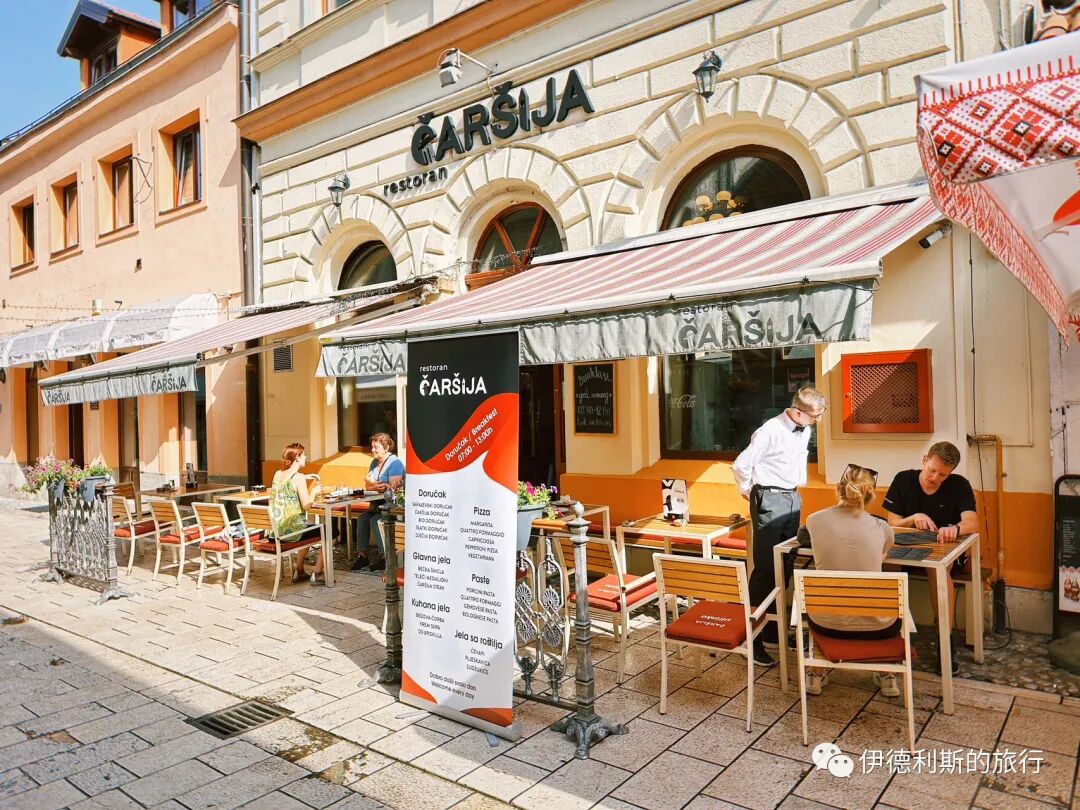
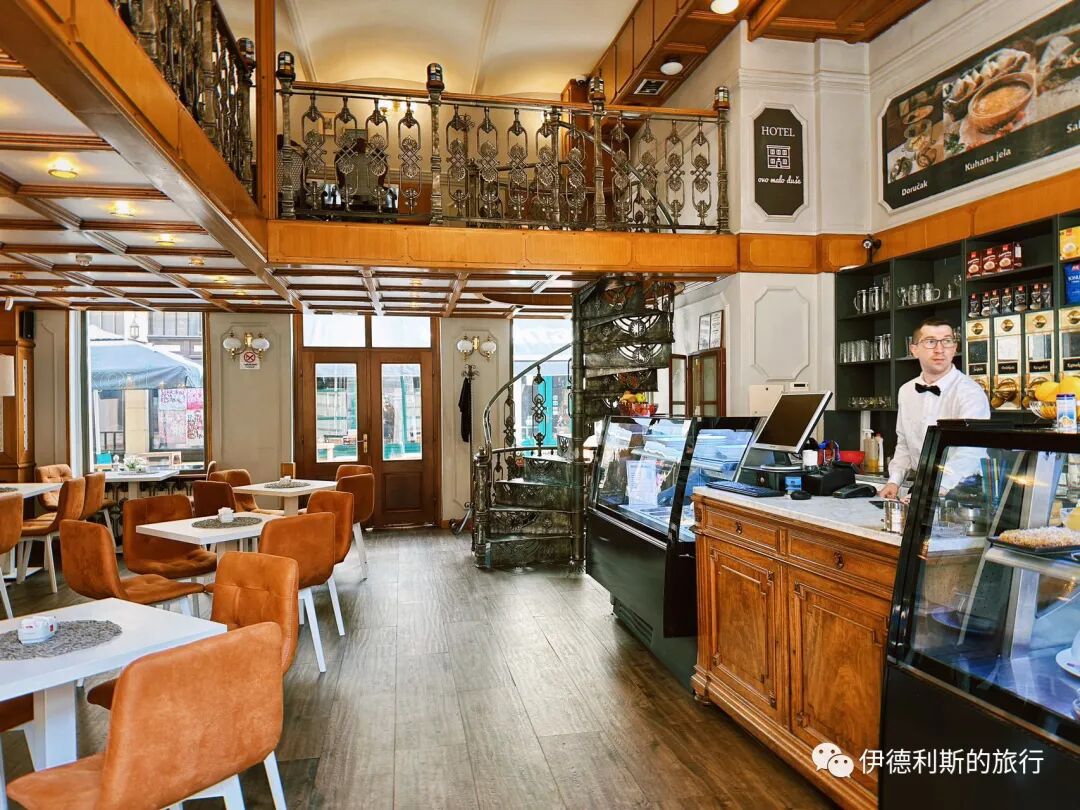
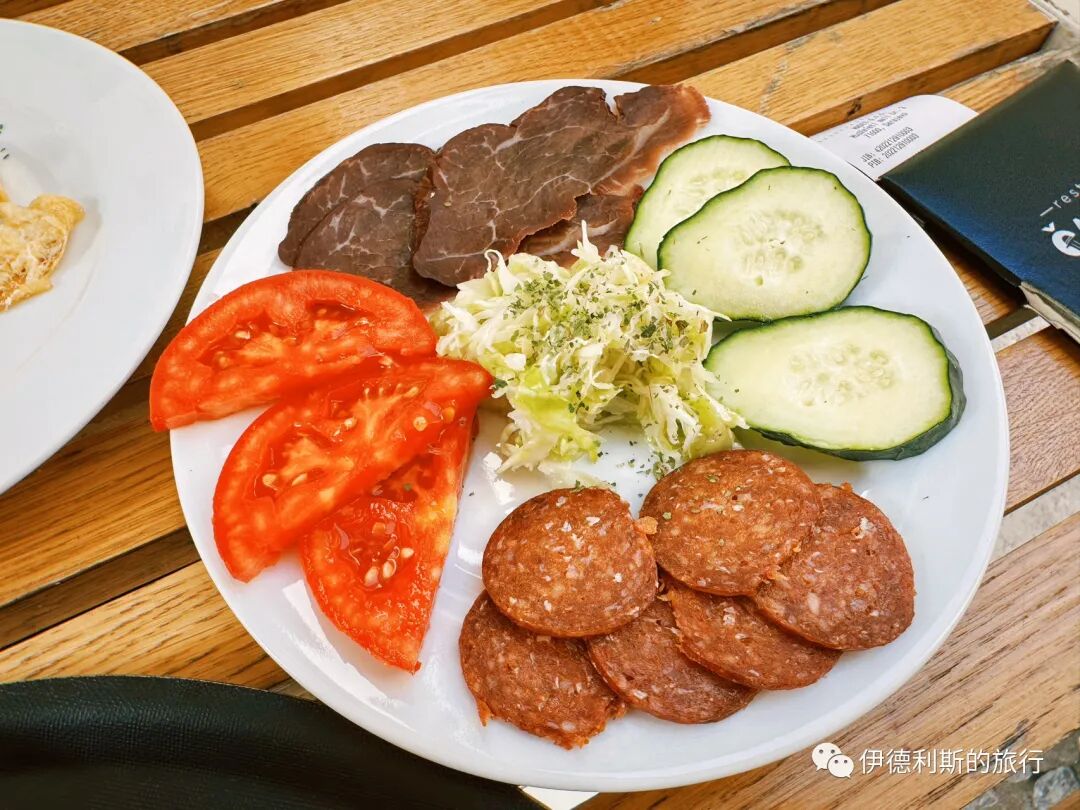
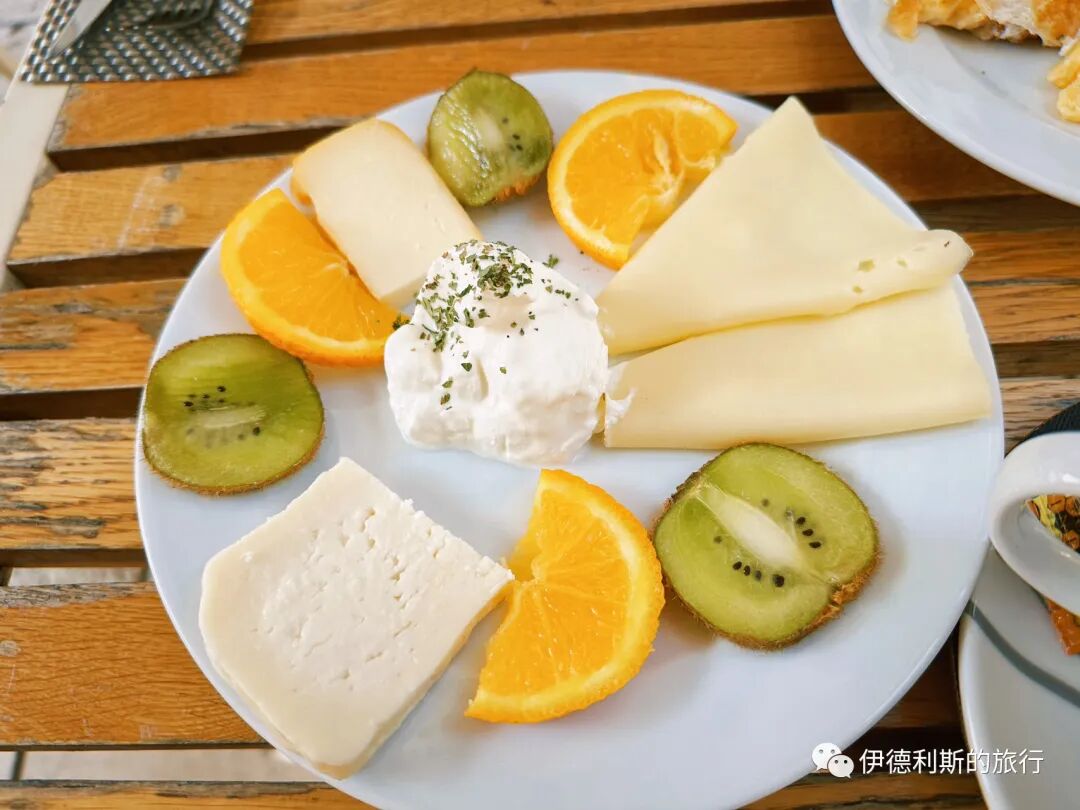
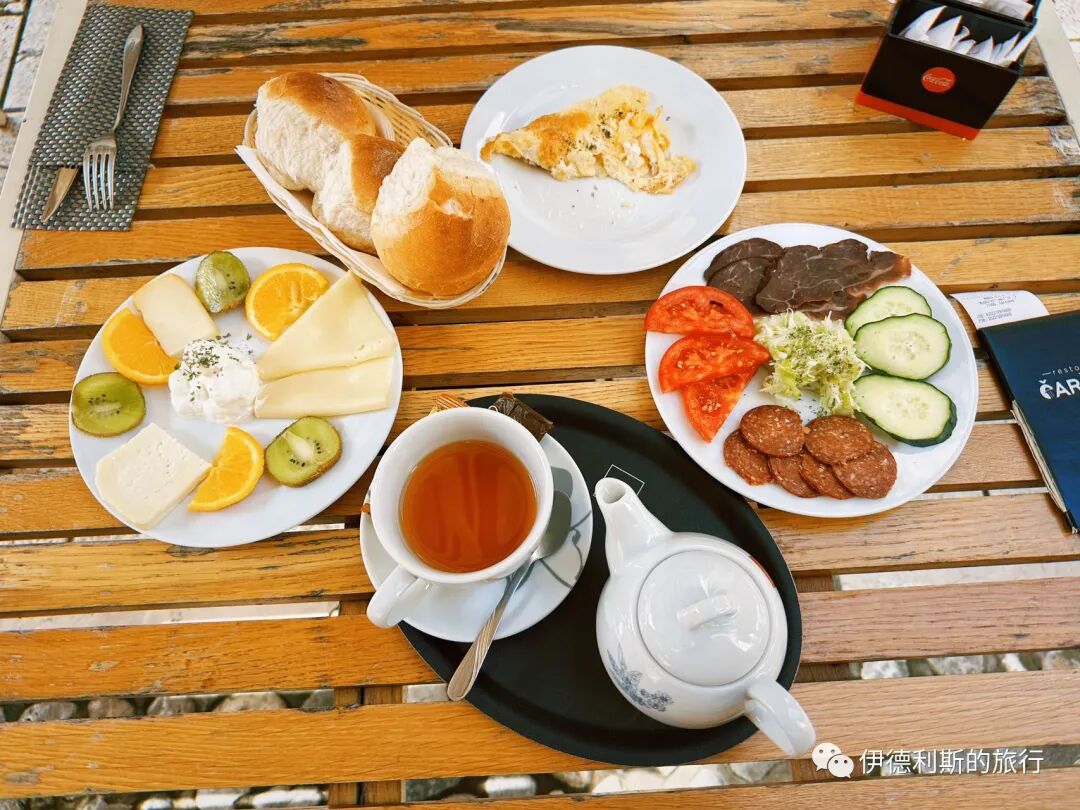
In the morning, we had a traditional Bosnian breakfast at Restoran Čaršija, west of the Gazi Husrev-beg Mosque in Sarajevo's old town, featuring Travnik cheese, smoked cheese, cream cheese, smoked meat, spicy beef sausage (sujuk), vegetables, fruit, fried eggs, and black tea. Travnik cheese is a specialty sheep's milk cheese from Bosnia and Herzegovina, originating from the mountains of Travnik in central Bosnia. It is made by soaking fresh sheep's milk in brine for two to three months, and after draining, it tastes slightly salty and is low in fat.
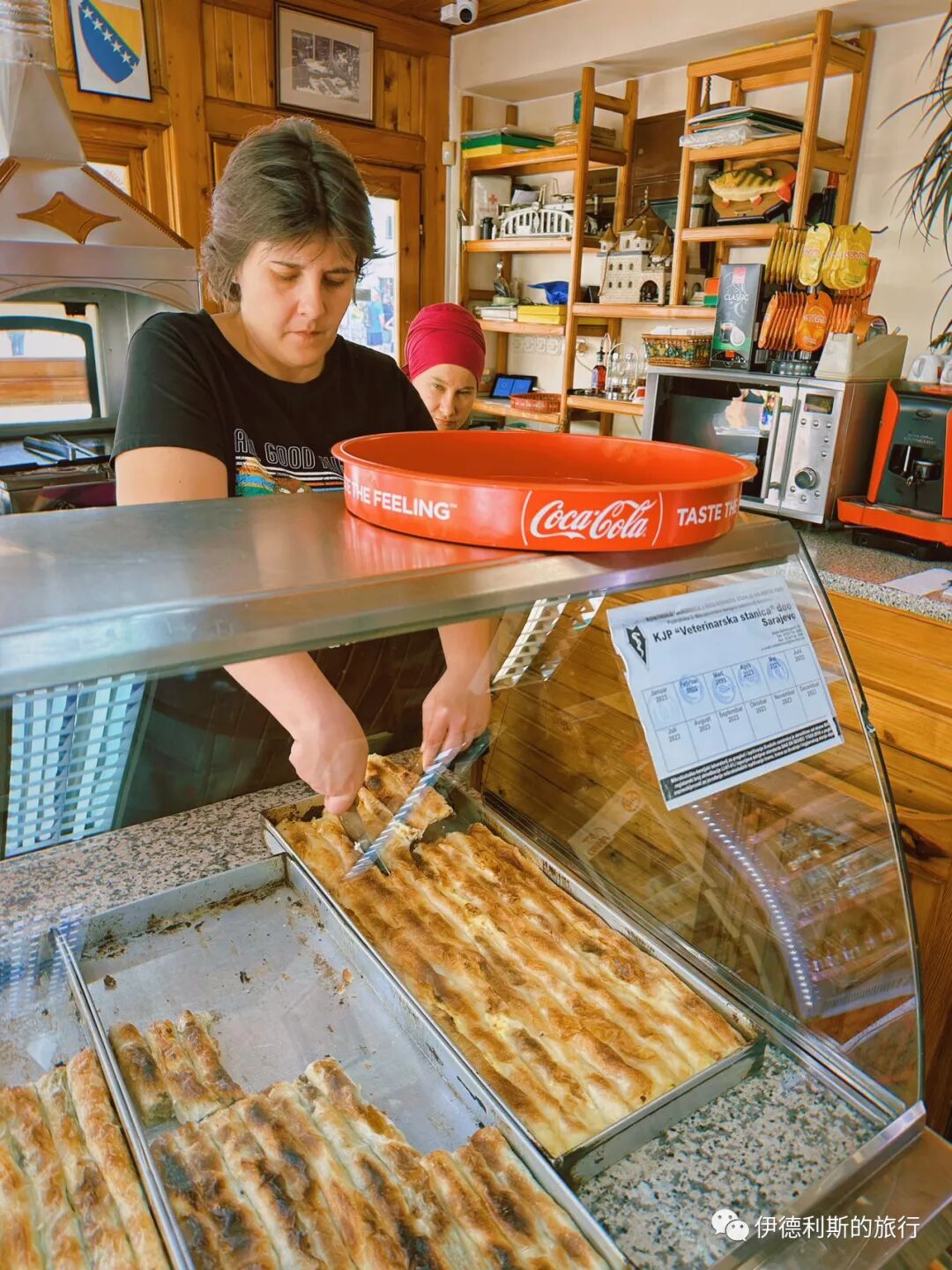
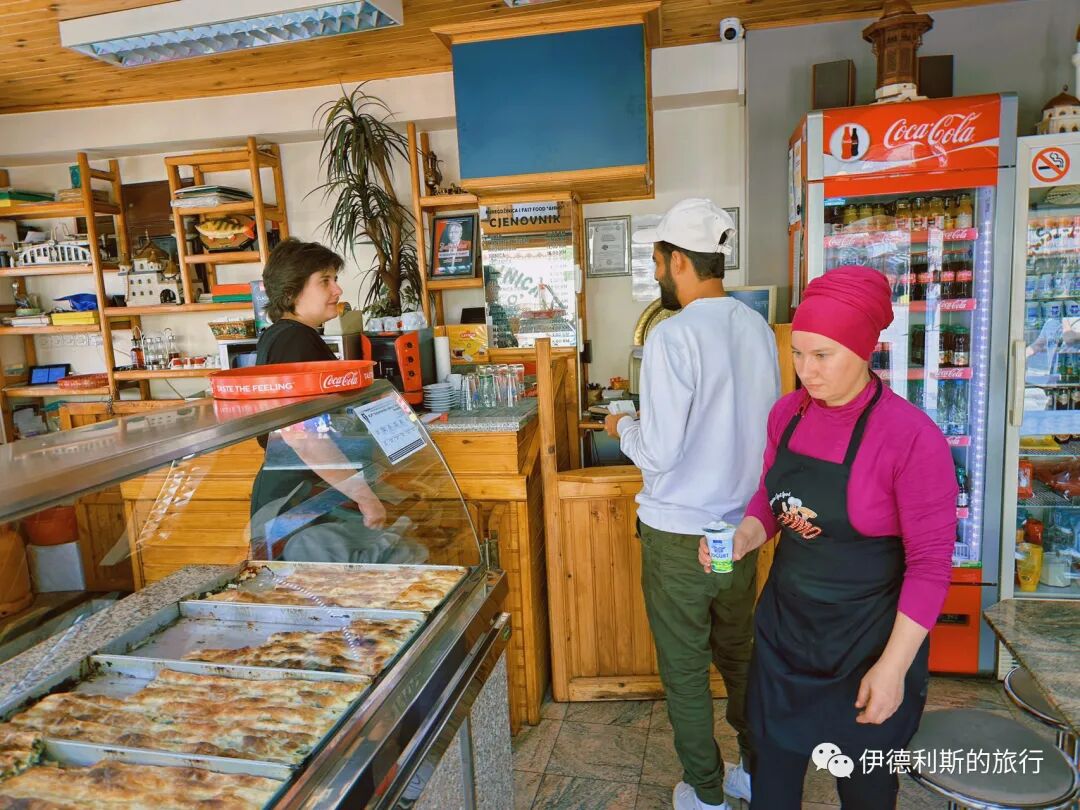
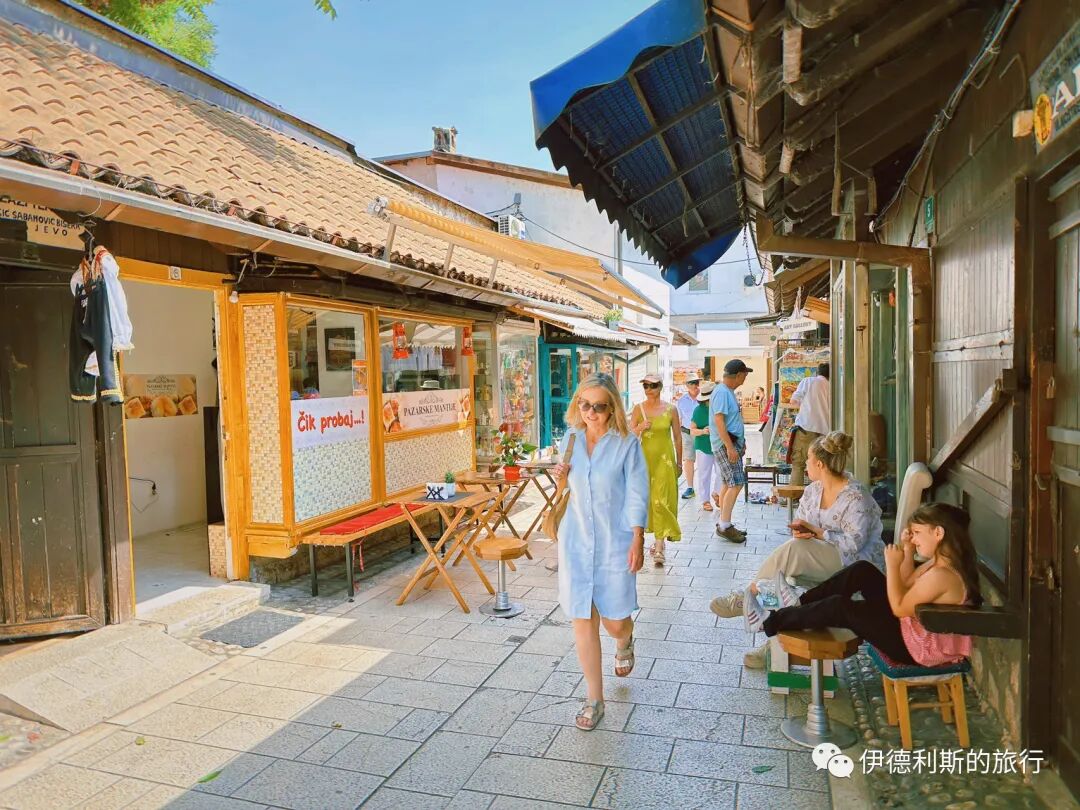
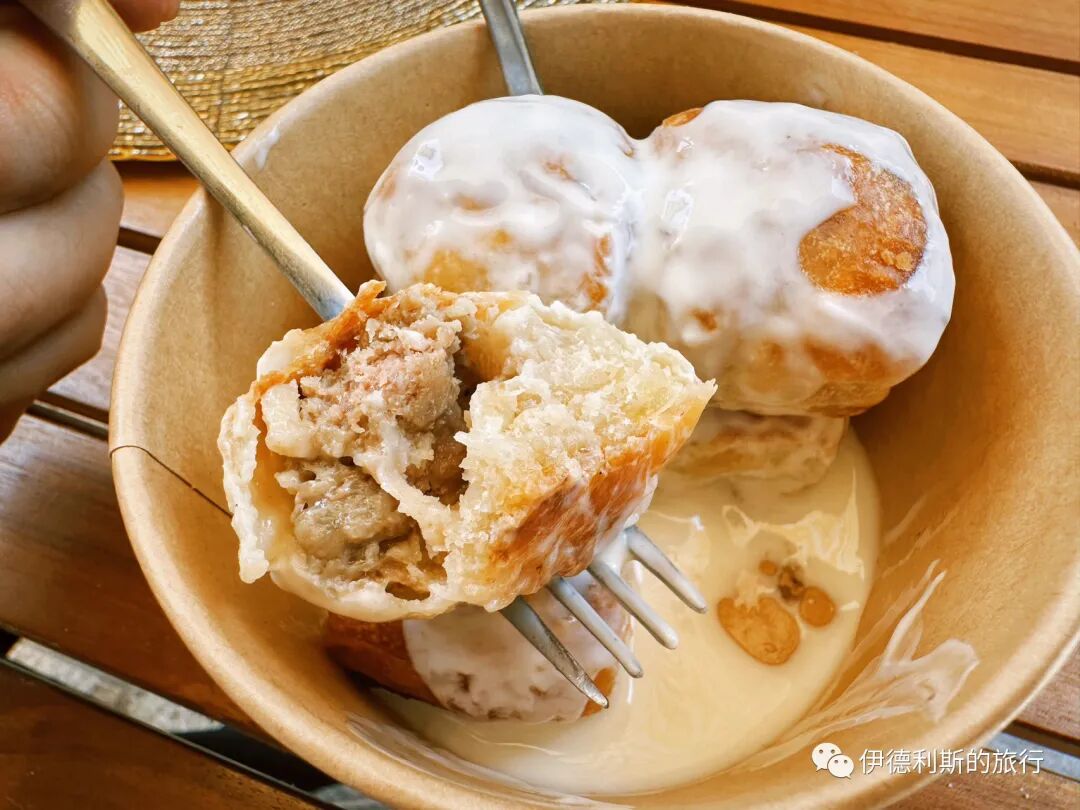
We ate classic Bosnian snacks, flaky meat pie (burek) and small meat dumplings (mantije), on the streets of the old bazaar in Sarajevo. Burek is a classic Ottoman dish. People say this snack was brought from Central Asia to the Anatolian Peninsula by Turkic peoples as they migrated west, later taking its final form in the Ottoman court before spreading to the Balkan Peninsula under Ottoman rule. In Bosnia, Burek is generally called pita. Only the meat-filled version is called Burek, while the white cheese version is called Sirnica, the spinach and cheese version is called Zeljanica, and the potato version is called Krompiruša.
The word Mantije comes from the Chinese word for steamed bun (mantou). After the 13th century, it was brought along the Silk Road through Central Asia to Anatolia by Turkic peoples and Mongols, spreading throughout the Ottoman Empire, where it is known in Turkish as Manti. Before the term baozi appeared in the Northern Song Dynasty, the Chinese word mantou could refer to any stuffed flour pastry. Today, the Wu dialect still uses the term meat mantou (rou mantou), and the Manti found in West and Central Asia also refers to stuffed flour pastries.
The earliest record of Ottoman Manti appears in a cookbook written by Muhammed bin Mahmud Shirvani in the 15th century. It notes that Manti at the time was filled with lamb and chickpeas, seasoned with cinnamon and vinegar, and topped with sumac and garlic yogurt sauce. Modern Manti is mostly filled with lamb and onions. Unlike the steamed thin-skinned buns (Manti) of Central Asia, Manti in Turkey and Bosnia are usually boiled or baked and are smaller in size. Bosnian Mantije are packed tightly together, looking a bit like a baked version of pan-fried buns (shuijianbao).
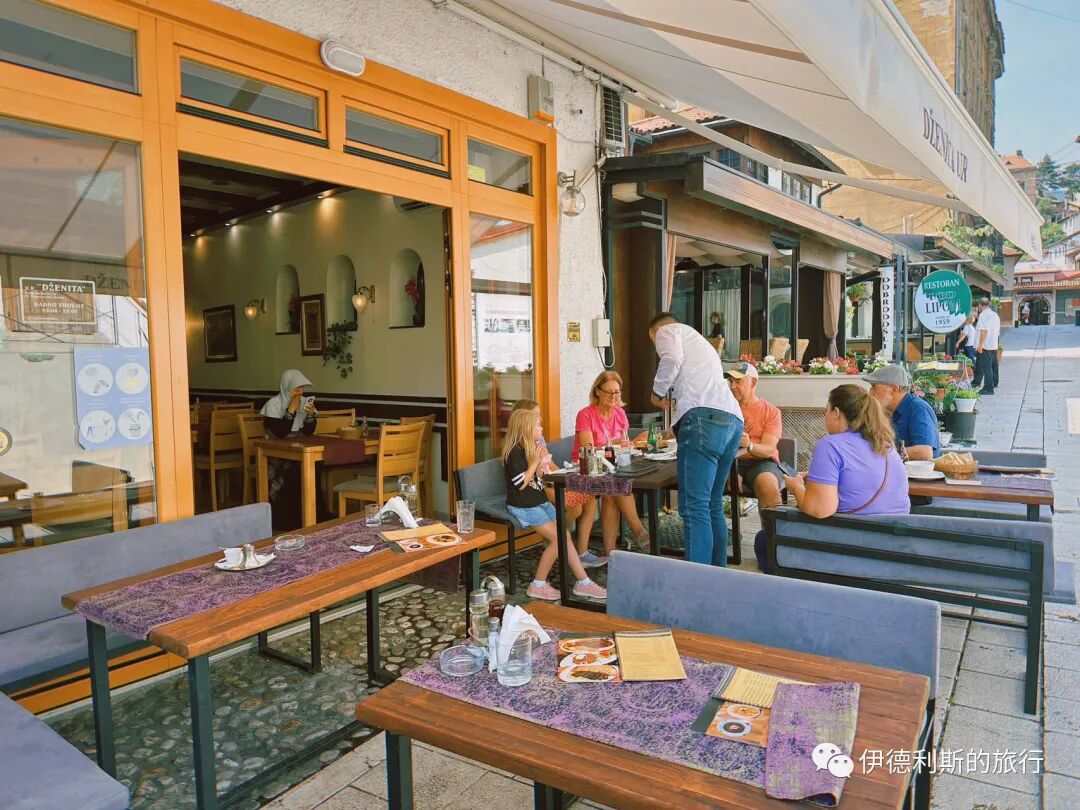
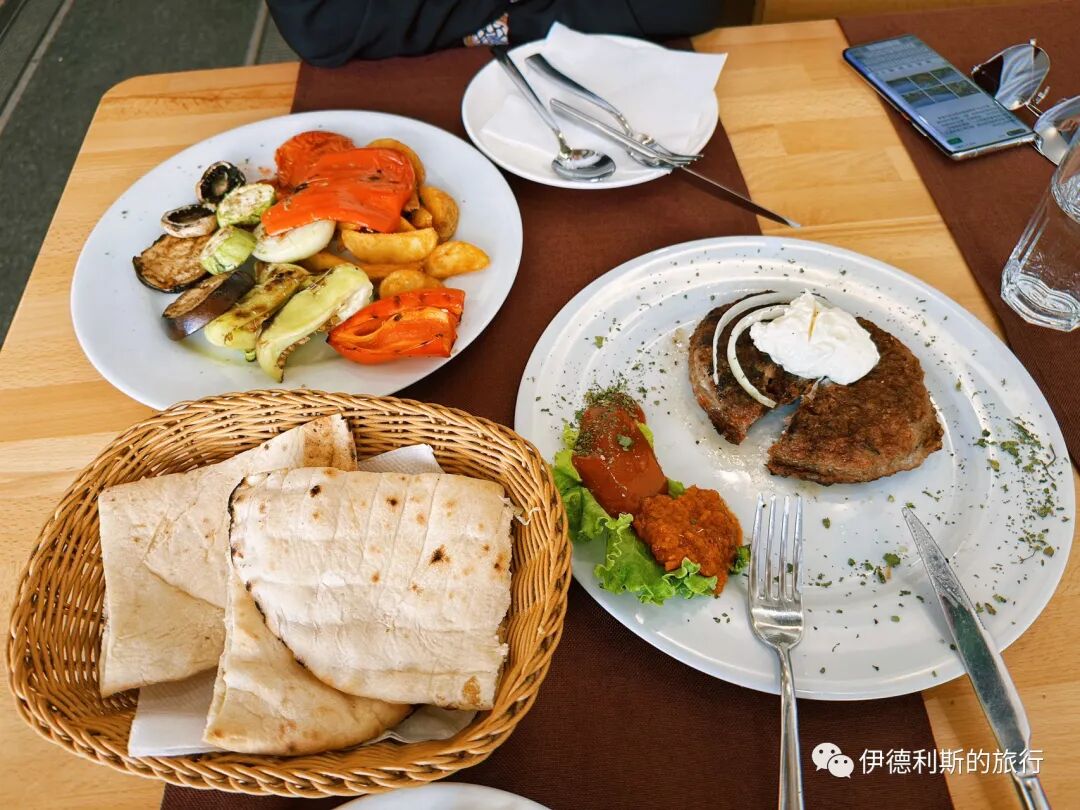
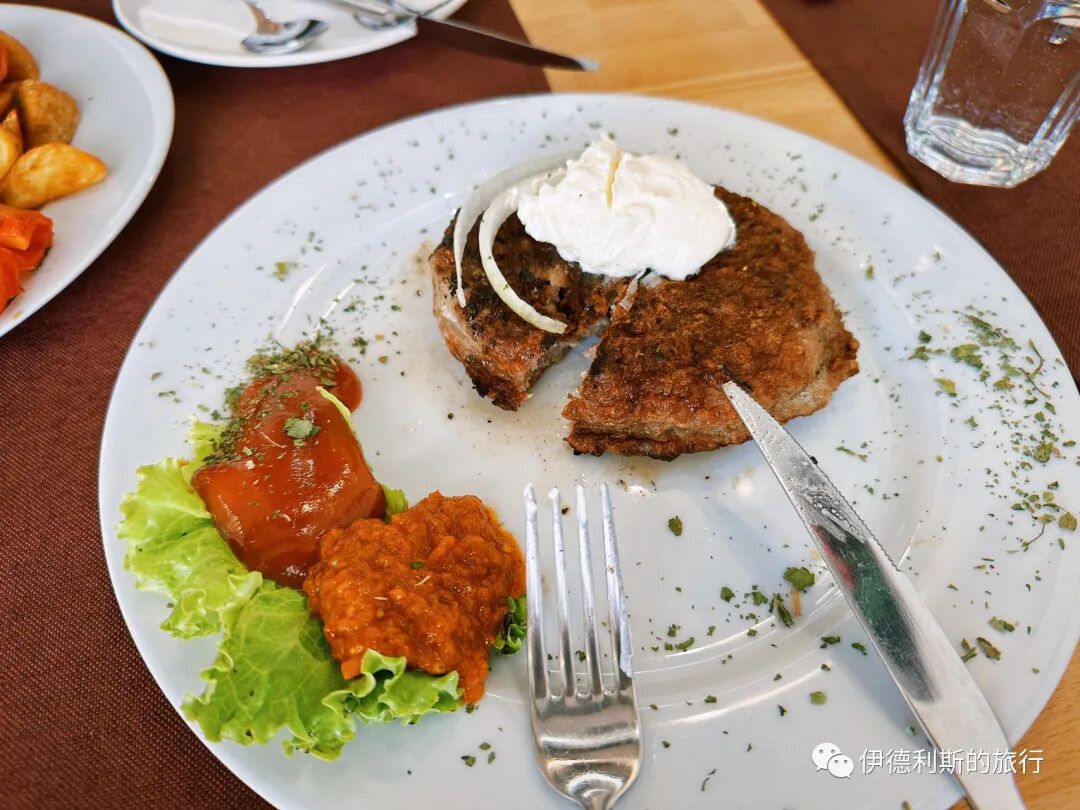
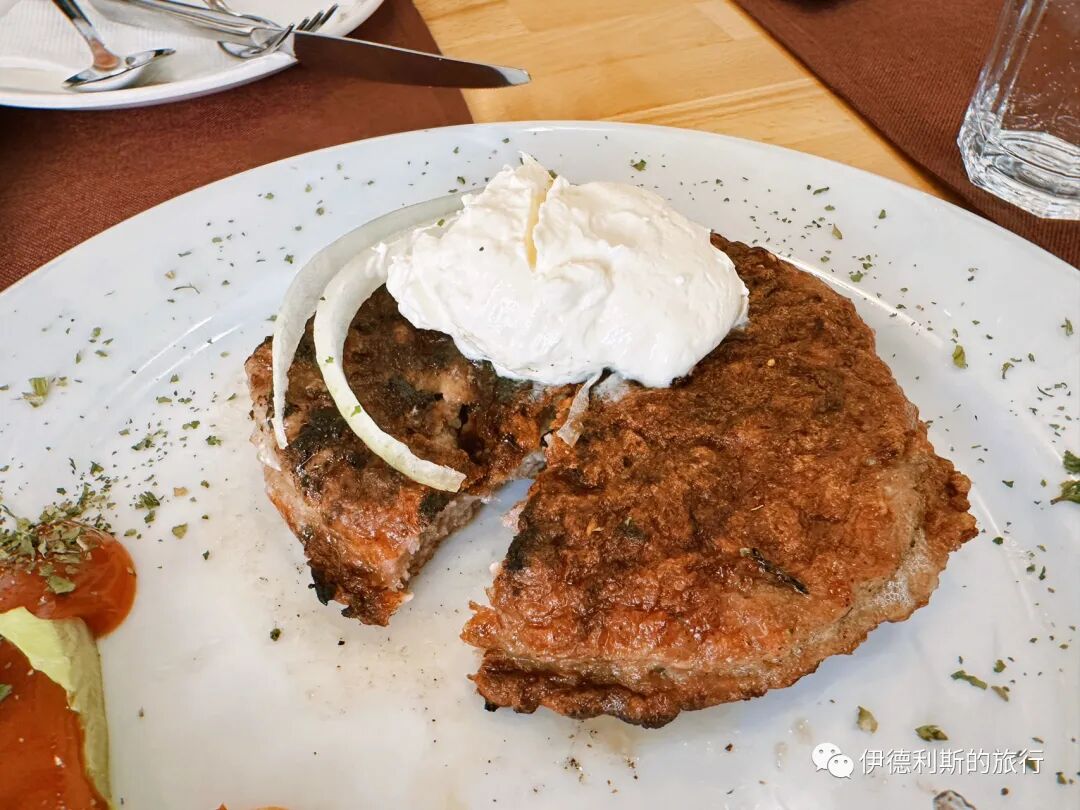
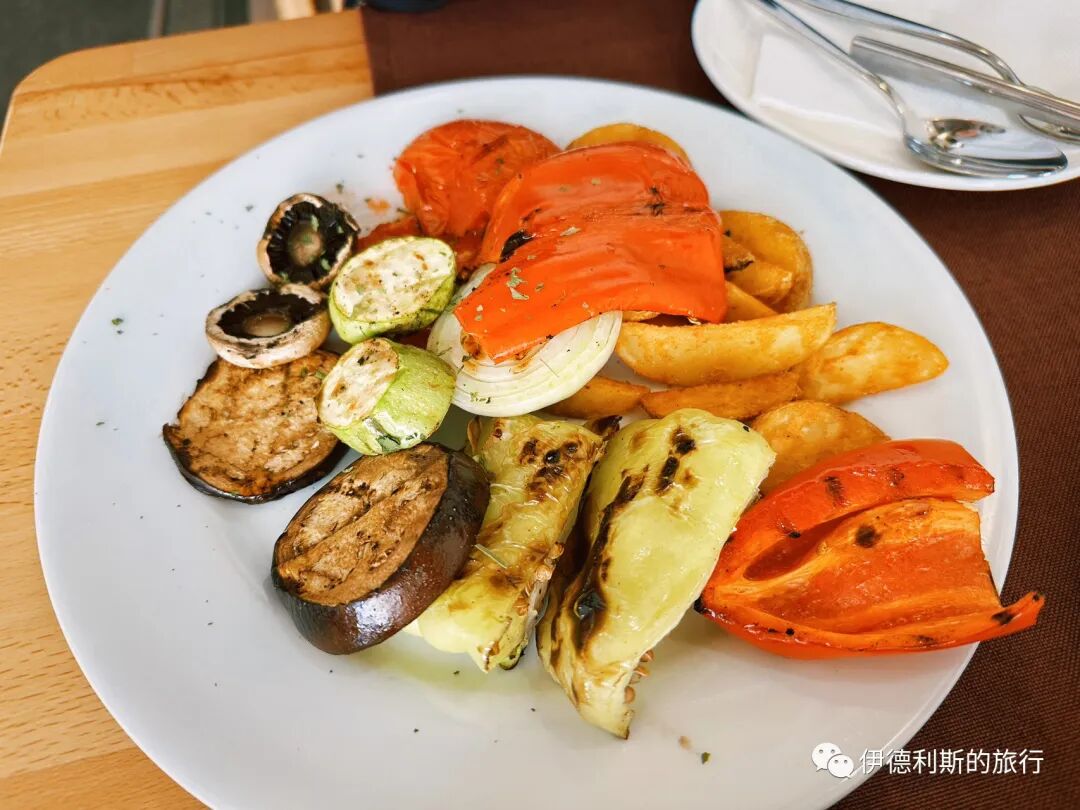
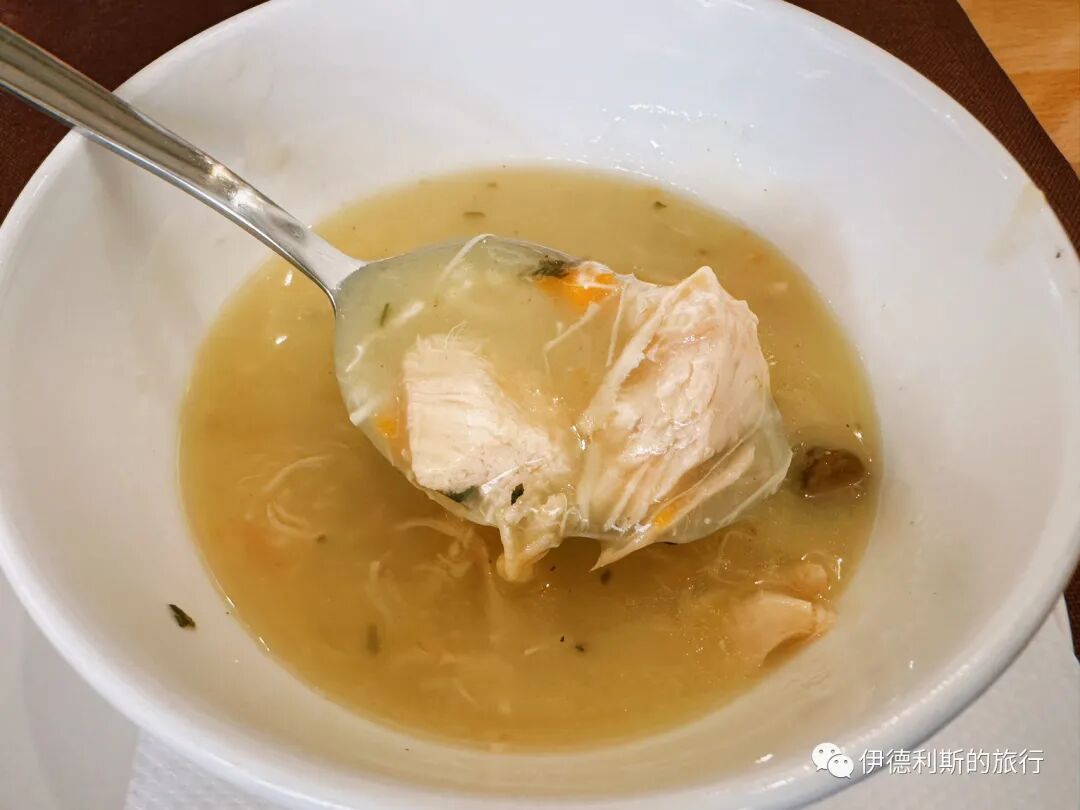
I had dinner at the Old Bazaar in Sarajevo. I ordered the Bosnian specialty chicken soup (Begova Čorba), a grilled vegetable platter, and Balkan-style grilled veal patties (Teleća pljeskavica). Everything was delicious. The grilled meat here tastes much better when paired with yogurt cheese. view all
Summary: Sarajevo Bosniak cuisine reflects the citys Muslim food culture through dishes such as burek, grilled meats, stews, and everyday bakery food. This food-focused account preserves the original meals, places, photos, and local details in natural English.
Bosniaks (Bošnjaci) are a Slavic-speaking Muslim ethnic group living in the Bosnia region of the Balkan Peninsula. They migrated from northeastern Europe to Bosnia as early as the 6th century. From 1463 to 1878, they were under Ottoman rule for over four hundred years, which strongly influenced their cultural customs and led them to become Muslims.
The identity of the Bosniaks emerged quite late. Although the Austro-Hungarian Empire began promoting a Bosniak identity in the late 19th century, the vast majority of Bosniaks identified only as Muslims until the early 1990s. After the breakup of Yugoslavia in 1992, the Bosniak identity began to shift rapidly as they sought to strengthen their connection to the state of Bosnia and Herzegovina. On September 27, 1993, representatives from all walks of life among Bosnian Muslims held a meeting and officially adopted the Bosniak ethnic identity.
After arriving in Sarajevo, we first went to the old town bazaar (Baščaršija) for lunch. This area was built in 1462 by Isa-Beg Ishaković, the first Ottoman governor of Bosnia. It has been a residential area for Bosniaks ever since and is full of halal restaurants.
We went to the famous restaurant Ćevabdžinica Petica Ferhatović near the eastern entrance. This shop was opened by the Ferhatović family during the 1984 Sarajevo Winter Olympics, though they had already started running restaurants in the old town of Sarajevo as early as 1957.
We ordered the Bosnian specialty of finger-shaped minced beef kebabs (Ćevapčići) and spicy beef sausage (Sudžuk) served with flatbread (Somun), along with side dishes of onions and cream cheese (Kajmak). We also ordered a cheese salad (Šopska salata).
The word Ćevapčići comes from the Ottoman Turkish word for grilled meat (Kevap) and the Slavic suffix "-čići" used to denote something small. It developed from Turkish kebabs in the 16th century. The version made in the Baščaršija area of Sarajevo is the most famous, and it holds an important place in Bosniak food culture.
Spicy beef sausage (Sudžuk) is a dish widely found in Central Asia, the Middle East, and the Balkans. It was first mentioned in the Compendium of the Turkic Dialects (Dīwān Lughāt al-Turk) written in the 1070s, and was later brought to Bosnia by the Ottoman Empire. To make it, beef, beef fat, and various spices are ground together, stuffed into casings, tied tightly, and then fermented and dried.
Flatbread (Somun) is similar to the pita bread of the Levant region and is a classic pairing for Bosniaks when eating grilled meats.
Cheese salad (Šopska salata) is made with tomatoes, cucumbers, onions, peppers, and brine cheese (Sirene), and its name comes from the Shopluk region in the far west of Bulgaria. Because its colors match the Bulgarian flag, this dish became a promotional food for Bulgarian tourism after 1956 and later spread widely across the former Yugoslavia.
Gazi Husrev Bey was an Ottoman governor of Bosnia in the 16th century. He was born into Bosnian nobility and, starting in 1530, funded many important buildings in Sarajevo while dedicating his wealth to support welfare and educational institutions.
To the west of the Gazi Husrev-beg Mosque stands a clock tower built in the 16th century, though the current structure was rebuilt in the 18th century. This 30-meter-tall clock tower is the highest of the 21 clock towers built by the Ottoman Empire in Bosnia and Herzegovina. It follows the Islamic calendar, where sunset is set as 12 o'clock. An official called a Muvekit, who determines the prayer times and the five daily namaz, is responsible for adjusting the clock. The current clock mechanism was made by the London-based company Gillett & Johnston in 1875. To make sure the clock was clearly visible, the top of the tower was modified during installation.
Below the clock tower is a public canteen (Imaret) established in 1531, which was originally managed by a foundation (Waqf) to distribute free food to the poor. Today, this place is a very famous bakery, and the fresh bread baked on-site is very popular with the locals. Their signature item is the Kifla bread, which costs 2 yuan each and comes in various flavors with a rich wheat aroma. Kifla is a small bread popular in Central Europe and the Balkans with a history of hundreds of years. The French croissant actually evolved from the Kifla.
The best drink to cool off in the old bazaar of Sarajevo is Boza! I drink it several times every day. Boza is a very ancient fermented malt drink. It was recorded as early as the 1070s in the Compendium of the Turkic Dialects (Divânu Lügati't-Türk). It was very popular among Turkic peoples in Central Asia at the time and spread to the Balkans with the Ottoman Empire.
Before the 16th century, Boza could be consumed freely. However, the rise of a version called Tartar Boza, which contained opium, angered the rulers at the time. By the 17th century, Sultan Mehmed IV ordered all Boza shops to close and banned people from drinking it. Since then, this ban has been tightened and relaxed many times. By the 19th century, the sweet, non-alcoholic drink boza became popular again in the Ottoman Empire.
Today, boza is an essential summer cooling drink in Bulgaria and the former Yugoslavia.
I ate Ashure pudding (ashure) in the old bazaar of Sarajevo. Ashura refers to the 10th day of the first month of the Islamic calendar. Legend says that after the Great Flood receded, the Prophet Nuh and his followers stepped off the ark on this day. They had almost no food left, so everyone pooled together seeds of various foods to make the first meal for humanity after the flood.
In his 17th-century work Book of Travels (Seyahatname), Ottoman traveler Evliya Celebi mentioned that Ashure is a porridge that should be cooked on the tenth day of the month of Muharram. Ottoman-era Ashure had no fixed recipe, as preparation varied by region and family tradition. Traditionally, People say at least seven ingredients should be used, though some believe ten ingredients should be included to match the theme of the tenth day. Common ingredients include wheat, barley, rice, white kidney beans, chickpeas, grape molasses (pekmez), pomegranate molasses, beet juice, dates, raisins, currants, apricots, figs, apples, pistachios, almonds, hazelnuts, walnuts, pine nuts, and sesame seeds. Finished Ashure can be garnished with fennel seeds, black cumin seeds, plums, pomegranate, cardamom, cinnamon, cloves, and nutmeg.
Today, you can buy Ashure in dessert shops throughout Turkey and the Balkans all year round. However, on the Day of Ashura, people still prefer to make it themselves and share it with the poor, relatives, neighbors, and friends.
In the afternoon, I ate Bosnian stew (bosanski lonac) at Aščinica Hadžibajrić F. Namika in the old bazaar of Sarajevo. The word Aščinica here means an old-fashioned Bosnian restaurant. The Hadžibajrić family has run this traditional Bosnian restaurant for over a hundred years. The current owner, Namik, stands behind the counter and serves the food you point to.
Bosnian stew dates back to the Middle Ages. It started as a home-cooked meal for Bosnian workers and later became popular with all social classes. It can be made by stewing beef, lamb, or meatballs with cabbage, potatoes, tomatoes, and carrots. When stewing, layer the meat and vegetables in the pot, then add garlic and whole peppercorns for seasoning. They also serve various stuffed vegetables (sarma), including stuffed tomatoes, stuffed grape leaves, stuffed onions, and stuffed pickled cabbage leaves. Sarma means "wrapped" in Turkish, referring to vegetables stuffed with filling and then stewed.
Drink traditional Bosnian coffee (Bosanska Kahva) in the old bazaar of Sarajevo. Coffee first arrived in the Balkan Peninsula under Ottoman rule from the Arab world in the 16th century. Sarajevo was one of the first European cities to open coffee houses, over a hundred years before cities in Western Europe.
Coffee houses are an important part of Ottoman culture. People go there to hear the day's main news, discuss daily gossip, and watch impromptu performances like shadow puppetry. Coffee houses allow people to express more ideas outside of work and worship (namaz), and they are also a great opportunity to meet like-minded friends.
Like Turkish coffee, Bosnian coffee is made by grinding roasted coffee beans into a fine powder and brewing them in a long-handled copper pot called a Džezva (known as Cezve in Turkish). However, while Turkish coffee can be brewed with cold water, Bosnian coffee must be brewed with boiling water. You can add sugar to Turkish coffee while it brews, but you cannot add sugar to Bosnian coffee. Turkish coffee is poured into a cup and served to the customer, while Bosnian coffee is served by placing the copper brewing pot and the cup together on a tray for the customer to pour themselves.
The classic Bosnian coffee set includes a copper pot, a porcelain cup with a copper base, a copper tray, a copper container for sugar cubes, and Turkish delight (Rahat Lokum). To drink it, first bite off a piece of a sugar cube and hold it under your tongue, letting the sugar melt on its own, then drink the coffee. Bosnian Turkish delight (Rahat Lokum) comes from Turkish delight (Lokum). The yellow ones are made with vanilla and the red ones are made with rose petals; you can eat them at any time while drinking coffee.
One of the coffee houses I visited is called Andar Caffe Bar. The owner Maida's grandfather, Muharem, opened a handmade shoe shop in the old bazaar of Sarajevo in 1933, which was later taken over by Maida's father, Osman. After Osman retired in 2010, Maida took over the shop. But by then, handmade shoes were no longer in demand as people bought shoes in stores, so Maida turned the shoe shop into the current coffee house while keeping many shoe-related elements inside.
There is a very famous Bosnian restaurant called Inat kuća across from the Sarajevo City Hall (Vijećnica). The traditional Bosnian house where the restaurant is located was built in the mid-17th century, originally next to the current City Hall. In 1892, when the Austro-Hungarian Empire built the City Hall and a tram station, they wanted to take over the land, but the owner, an old man named Benderija, did not want to move. After long negotiations, the old man finally agreed to move a few years later only if they gave him a bag of gold and moved his house brick by brick to the other side of the river. The Austro-Hungarian Empire had no choice but to move the house to its current location. People say during the move, the old man sat on the nearby bridge every day, carefully watching the workers move every single brick to the other side of the river.
After 1997, Inat kuća became a Bosnian restaurant where you can enjoy Bosnian cuisine and see the traditional Bosnian interior design. We ordered traditional Bosnian dumplings (klepe), cornmeal porridge (pura), rose water, and elderflower (zova) water. Klepe is made by kneading flour, eggs, and salt for the dough, and mixing minced meat, onions, salt, and pepper for the filling. The dumplings are boiled for 10 minutes, then topped with yogurt, garlic powder, and chili powder before being baked. Pura is a porridge made from cornmeal, butter, cheese, and yogurt, and it is one of the favorite breakfasts for Bosniaks.
In the morning, we had a traditional Bosnian breakfast at Restoran Čaršija, west of the Gazi Husrev-beg Mosque in Sarajevo's old town, featuring Travnik cheese, smoked cheese, cream cheese, smoked meat, spicy beef sausage (sujuk), vegetables, fruit, fried eggs, and black tea. Travnik cheese is a specialty sheep's milk cheese from Bosnia and Herzegovina, originating from the mountains of Travnik in central Bosnia. It is made by soaking fresh sheep's milk in brine for two to three months, and after draining, it tastes slightly salty and is low in fat.
We ate classic Bosnian snacks, flaky meat pie (burek) and small meat dumplings (mantije), on the streets of the old bazaar in Sarajevo. Burek is a classic Ottoman dish. People say this snack was brought from Central Asia to the Anatolian Peninsula by Turkic peoples as they migrated west, later taking its final form in the Ottoman court before spreading to the Balkan Peninsula under Ottoman rule. In Bosnia, Burek is generally called pita. Only the meat-filled version is called Burek, while the white cheese version is called Sirnica, the spinach and cheese version is called Zeljanica, and the potato version is called Krompiruša.
The word Mantije comes from the Chinese word for steamed bun (mantou). After the 13th century, it was brought along the Silk Road through Central Asia to Anatolia by Turkic peoples and Mongols, spreading throughout the Ottoman Empire, where it is known in Turkish as Manti. Before the term baozi appeared in the Northern Song Dynasty, the Chinese word mantou could refer to any stuffed flour pastry. Today, the Wu dialect still uses the term meat mantou (rou mantou), and the Manti found in West and Central Asia also refers to stuffed flour pastries.
The earliest record of Ottoman Manti appears in a cookbook written by Muhammed bin Mahmud Shirvani in the 15th century. It notes that Manti at the time was filled with lamb and chickpeas, seasoned with cinnamon and vinegar, and topped with sumac and garlic yogurt sauce. Modern Manti is mostly filled with lamb and onions. Unlike the steamed thin-skinned buns (Manti) of Central Asia, Manti in Turkey and Bosnia are usually boiled or baked and are smaller in size. Bosnian Mantije are packed tightly together, looking a bit like a baked version of pan-fried buns (shuijianbao).
I had dinner at the Old Bazaar in Sarajevo. I ordered the Bosnian specialty chicken soup (Begova Čorba), a grilled vegetable platter, and Balkan-style grilled veal patties (Teleća pljeskavica). Everything was delicious. The grilled meat here tastes much better when paired with yogurt cheese. view all
Reposted from the web
Summary: Sarajevo Bosniak cuisine reflects the citys Muslim food culture through dishes such as burek, grilled meats, stews, and everyday bakery food. This food-focused account preserves the original meals, places, photos, and local details in natural English.
Bosniaks (Bošnjaci) are a Slavic-speaking Muslim ethnic group living in the Bosnia region of the Balkan Peninsula. They migrated from northeastern Europe to Bosnia as early as the 6th century. From 1463 to 1878, they were under Ottoman rule for over four hundred years, which strongly influenced their cultural customs and led them to become Muslims.
The identity of the Bosniaks emerged quite late. Although the Austro-Hungarian Empire began promoting a Bosniak identity in the late 19th century, the vast majority of Bosniaks identified only as Muslims until the early 1990s. After the breakup of Yugoslavia in 1992, the Bosniak identity began to shift rapidly as they sought to strengthen their connection to the state of Bosnia and Herzegovina. On September 27, 1993, representatives from all walks of life among Bosnian Muslims held a meeting and officially adopted the Bosniak ethnic identity.
After arriving in Sarajevo, we first went to the old town bazaar (Baščaršija) for lunch. This area was built in 1462 by Isa-Beg Ishaković, the first Ottoman governor of Bosnia. It has been a residential area for Bosniaks ever since and is full of halal restaurants.
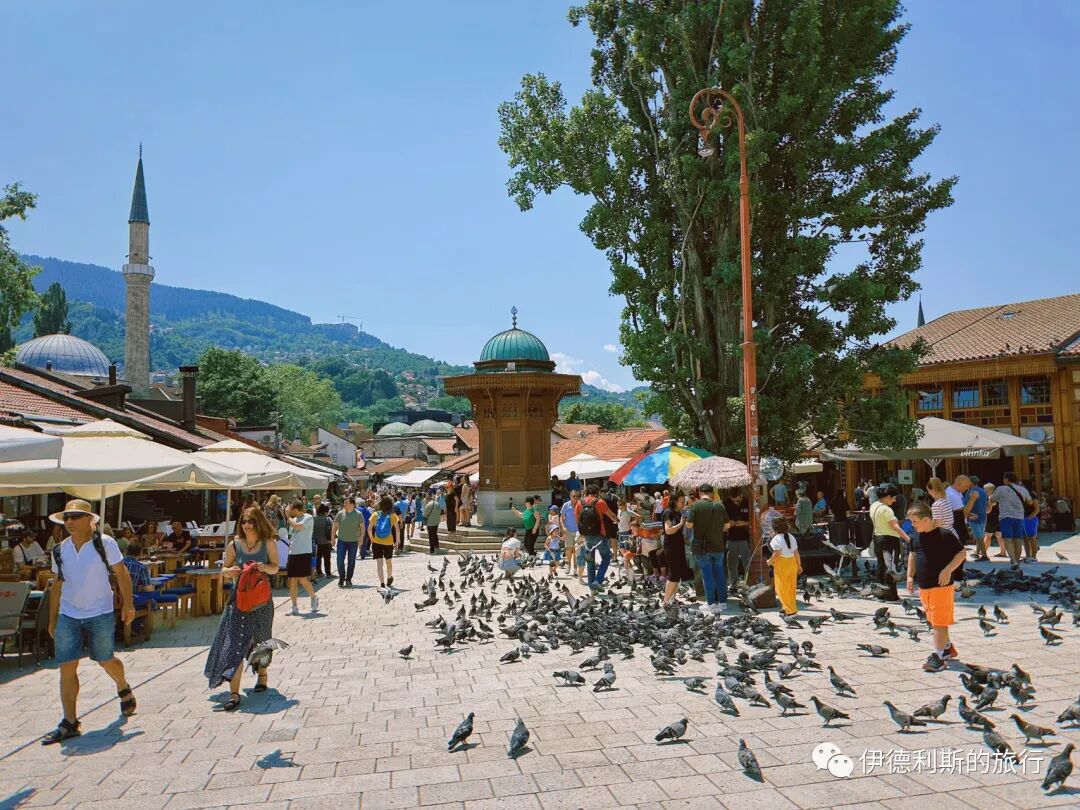
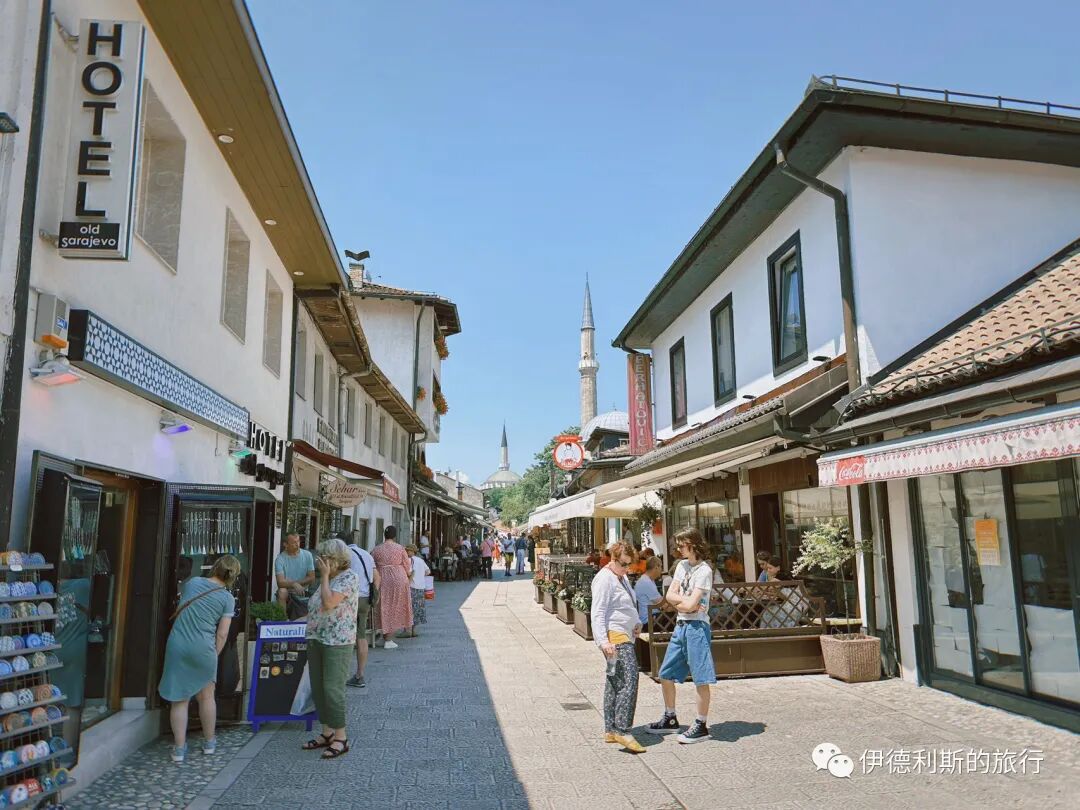
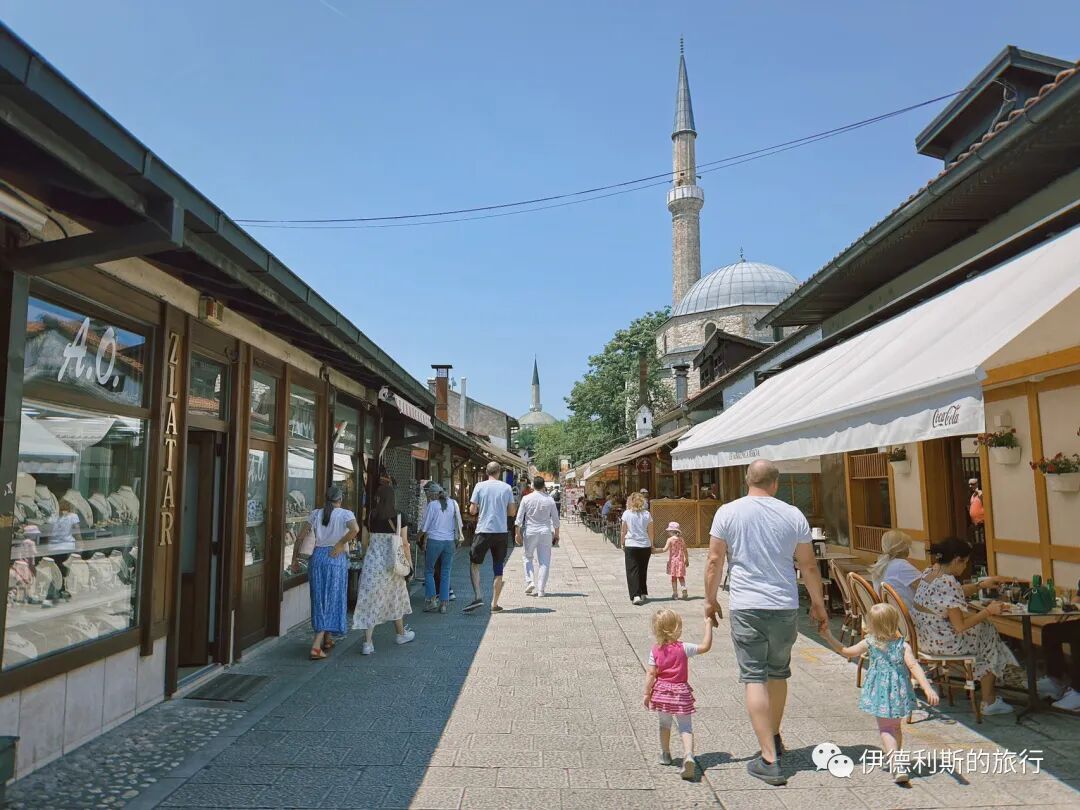
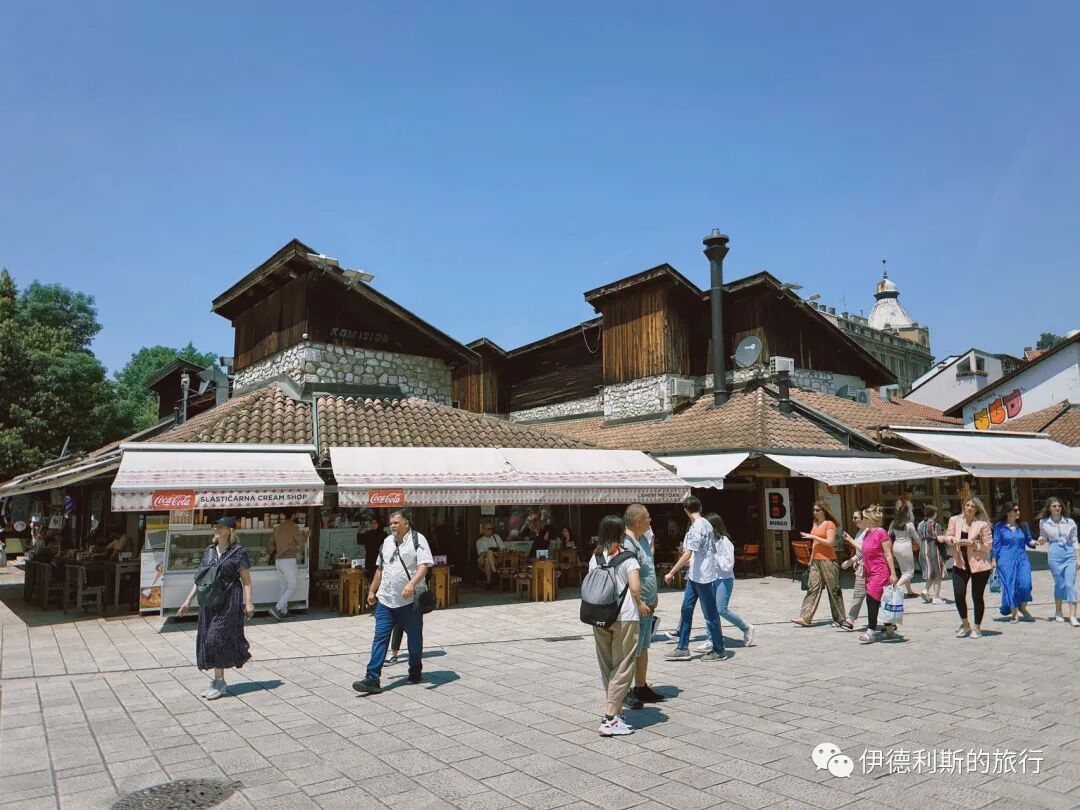
We went to the famous restaurant Ćevabdžinica Petica Ferhatović near the eastern entrance. This shop was opened by the Ferhatović family during the 1984 Sarajevo Winter Olympics, though they had already started running restaurants in the old town of Sarajevo as early as 1957.
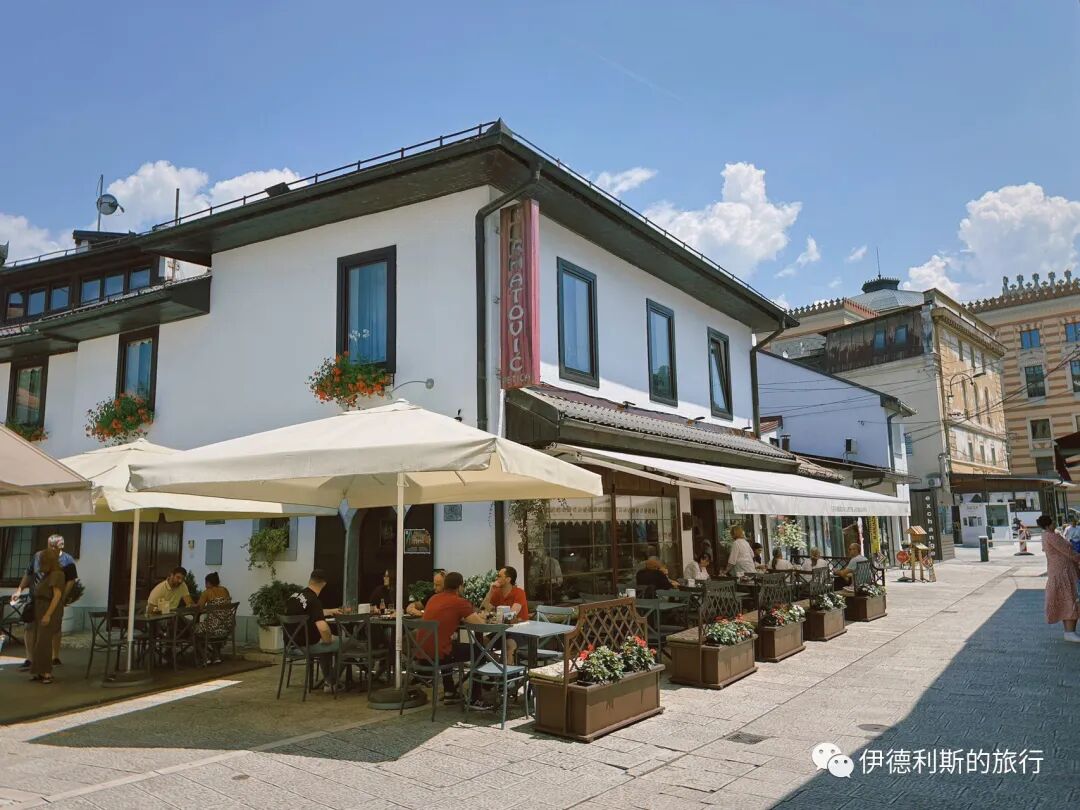
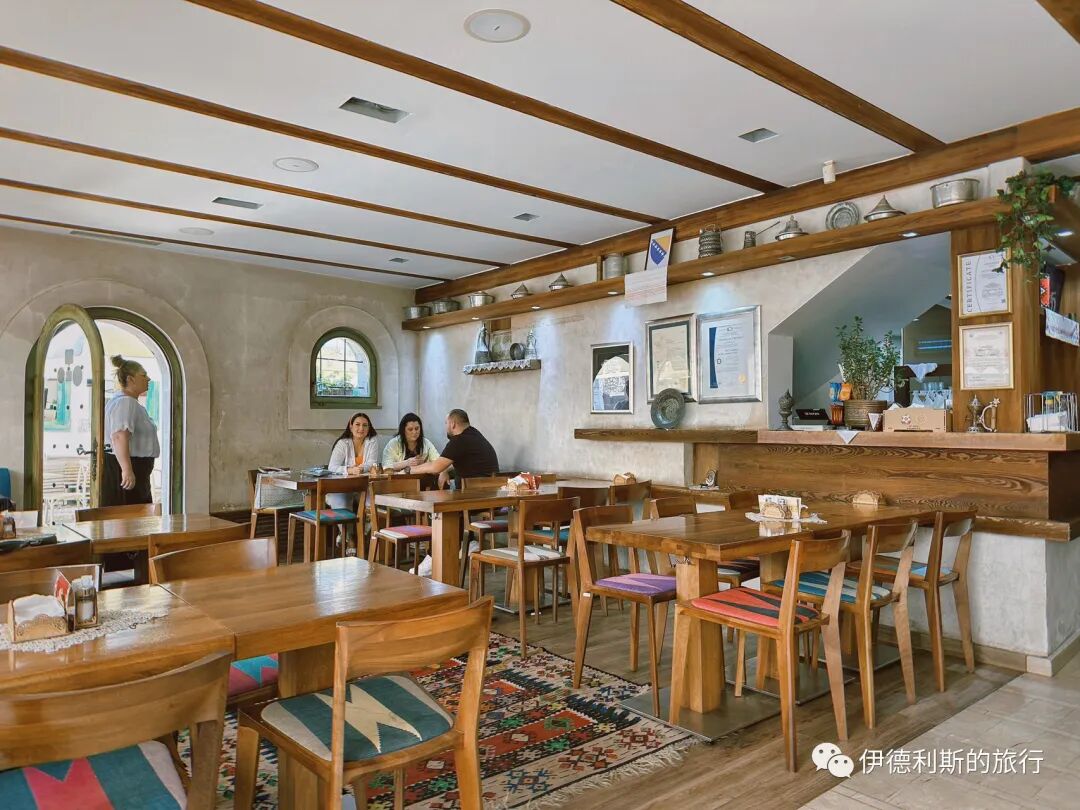
We ordered the Bosnian specialty of finger-shaped minced beef kebabs (Ćevapčići) and spicy beef sausage (Sudžuk) served with flatbread (Somun), along with side dishes of onions and cream cheese (Kajmak). We also ordered a cheese salad (Šopska salata).
The word Ćevapčići comes from the Ottoman Turkish word for grilled meat (Kevap) and the Slavic suffix "-čići" used to denote something small. It developed from Turkish kebabs in the 16th century. The version made in the Baščaršija area of Sarajevo is the most famous, and it holds an important place in Bosniak food culture.
Spicy beef sausage (Sudžuk) is a dish widely found in Central Asia, the Middle East, and the Balkans. It was first mentioned in the Compendium of the Turkic Dialects (Dīwān Lughāt al-Turk) written in the 1070s, and was later brought to Bosnia by the Ottoman Empire. To make it, beef, beef fat, and various spices are ground together, stuffed into casings, tied tightly, and then fermented and dried.
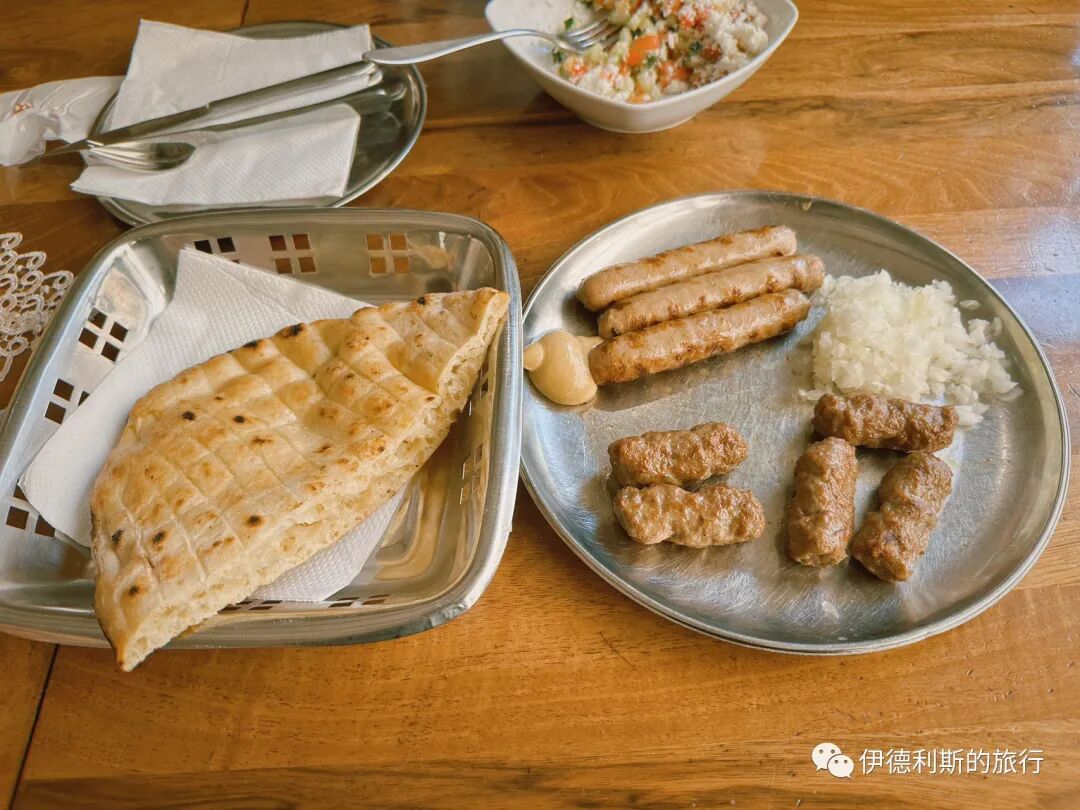
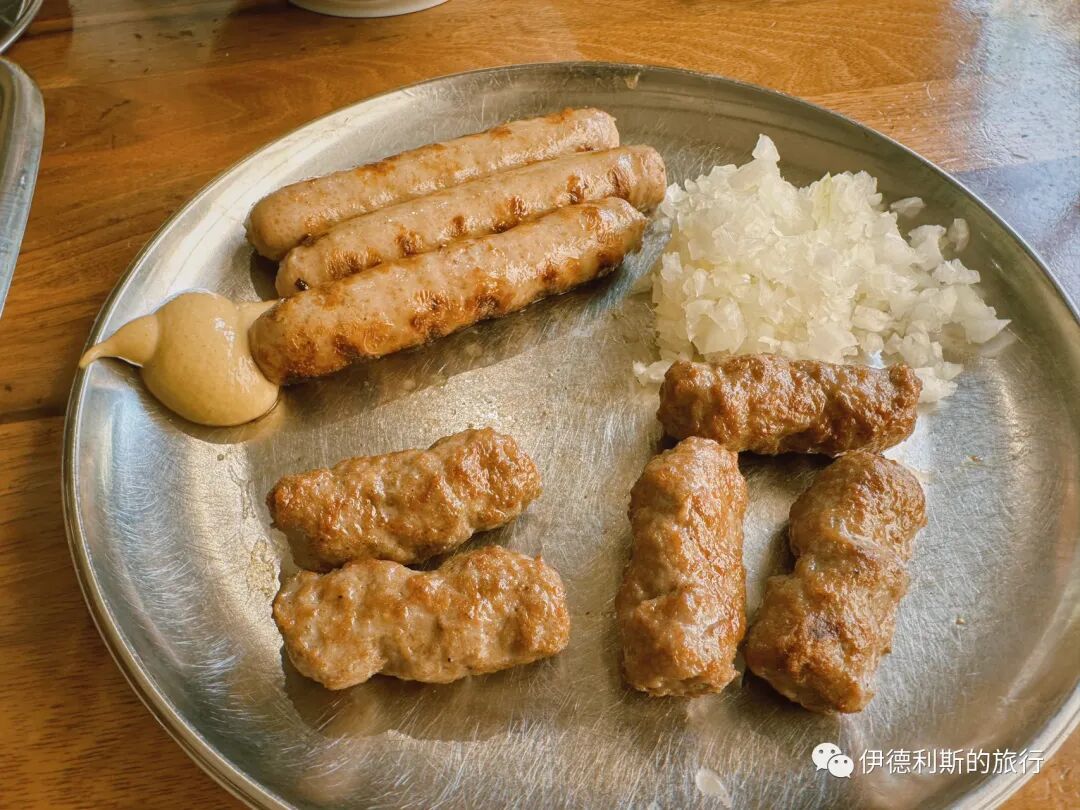
Flatbread (Somun) is similar to the pita bread of the Levant region and is a classic pairing for Bosniaks when eating grilled meats.
Cheese salad (Šopska salata) is made with tomatoes, cucumbers, onions, peppers, and brine cheese (Sirene), and its name comes from the Shopluk region in the far west of Bulgaria. Because its colors match the Bulgarian flag, this dish became a promotional food for Bulgarian tourism after 1956 and later spread widely across the former Yugoslavia.
Gazi Husrev Bey was an Ottoman governor of Bosnia in the 16th century. He was born into Bosnian nobility and, starting in 1530, funded many important buildings in Sarajevo while dedicating his wealth to support welfare and educational institutions.
To the west of the Gazi Husrev-beg Mosque stands a clock tower built in the 16th century, though the current structure was rebuilt in the 18th century. This 30-meter-tall clock tower is the highest of the 21 clock towers built by the Ottoman Empire in Bosnia and Herzegovina. It follows the Islamic calendar, where sunset is set as 12 o'clock. An official called a Muvekit, who determines the prayer times and the five daily namaz, is responsible for adjusting the clock. The current clock mechanism was made by the London-based company Gillett & Johnston in 1875. To make sure the clock was clearly visible, the top of the tower was modified during installation.
Below the clock tower is a public canteen (Imaret) established in 1531, which was originally managed by a foundation (Waqf) to distribute free food to the poor. Today, this place is a very famous bakery, and the fresh bread baked on-site is very popular with the locals. Their signature item is the Kifla bread, which costs 2 yuan each and comes in various flavors with a rich wheat aroma. Kifla is a small bread popular in Central Europe and the Balkans with a history of hundreds of years. The French croissant actually evolved from the Kifla.
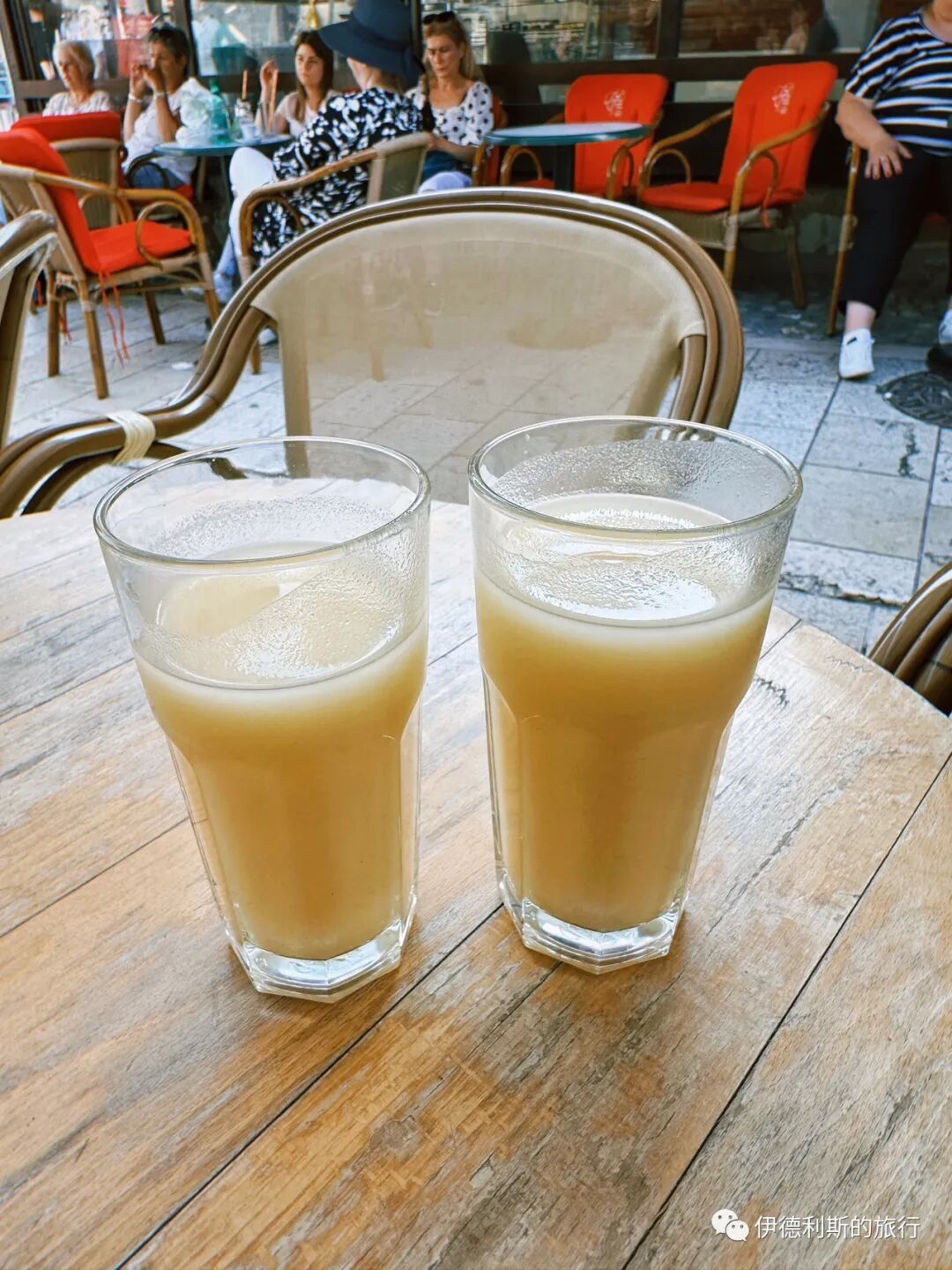
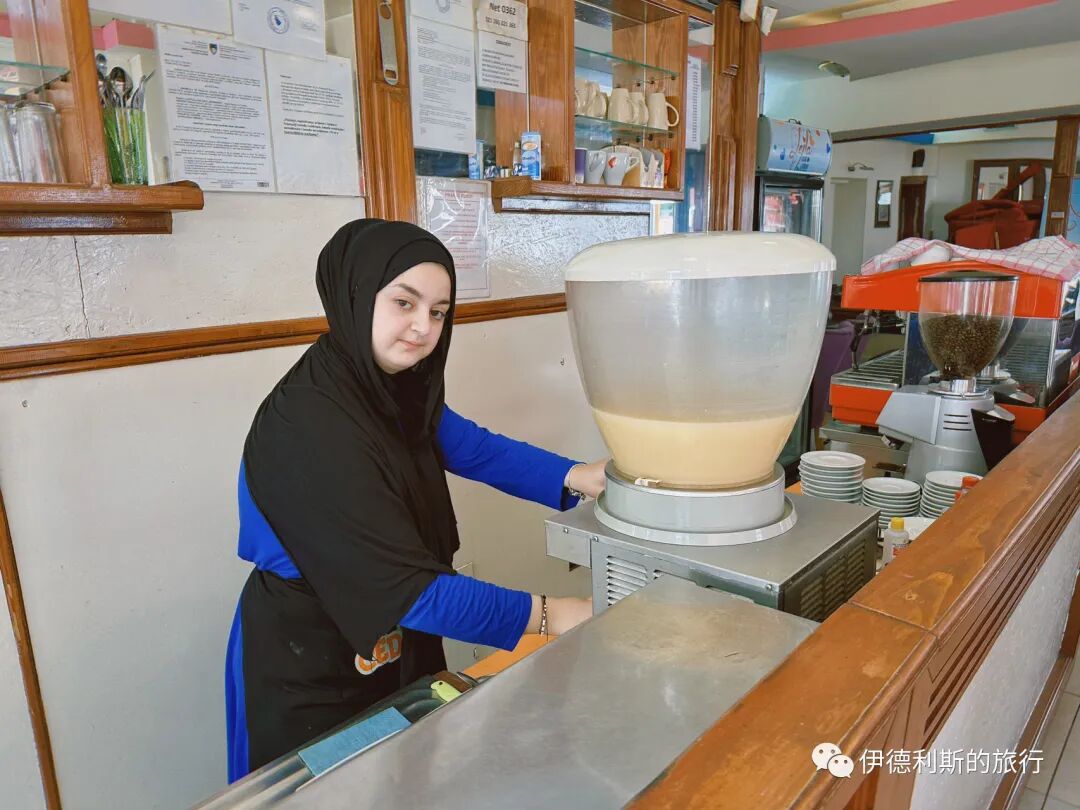
The best drink to cool off in the old bazaar of Sarajevo is Boza! I drink it several times every day. Boza is a very ancient fermented malt drink. It was recorded as early as the 1070s in the Compendium of the Turkic Dialects (Divânu Lügati't-Türk). It was very popular among Turkic peoples in Central Asia at the time and spread to the Balkans with the Ottoman Empire.
Before the 16th century, Boza could be consumed freely. However, the rise of a version called Tartar Boza, which contained opium, angered the rulers at the time. By the 17th century, Sultan Mehmed IV ordered all Boza shops to close and banned people from drinking it. Since then, this ban has been tightened and relaxed many times. By the 19th century, the sweet, non-alcoholic drink boza became popular again in the Ottoman Empire.
Today, boza is an essential summer cooling drink in Bulgaria and the former Yugoslavia.
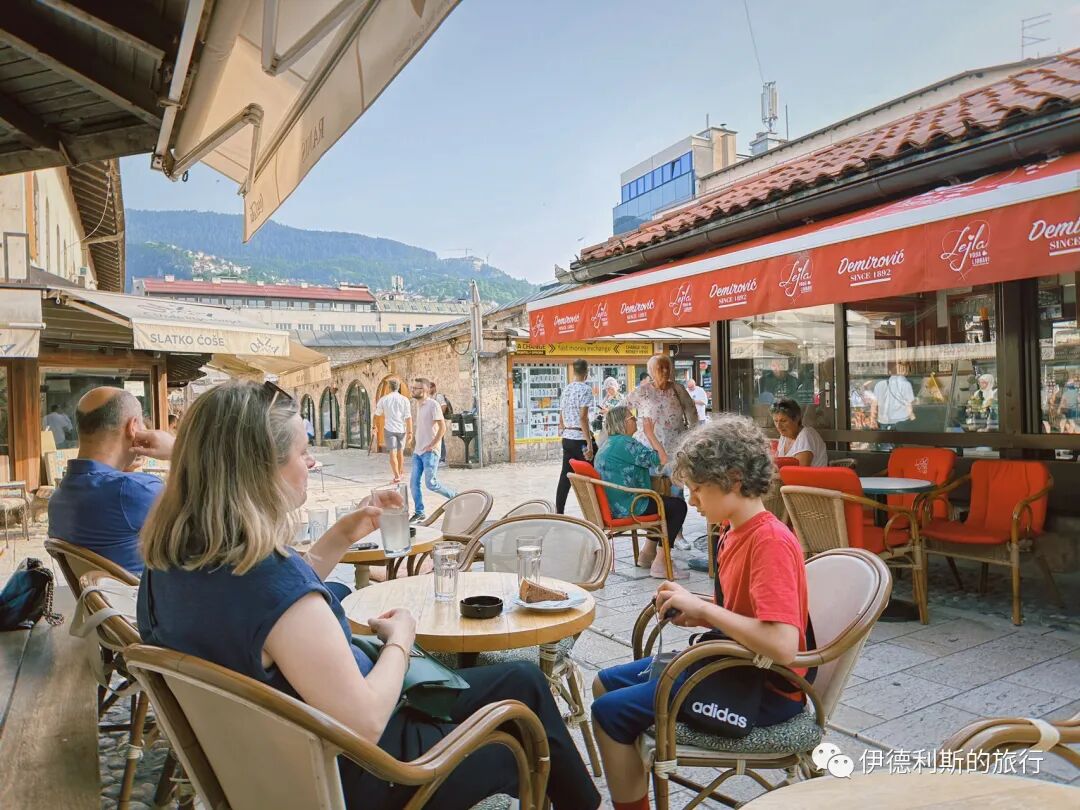
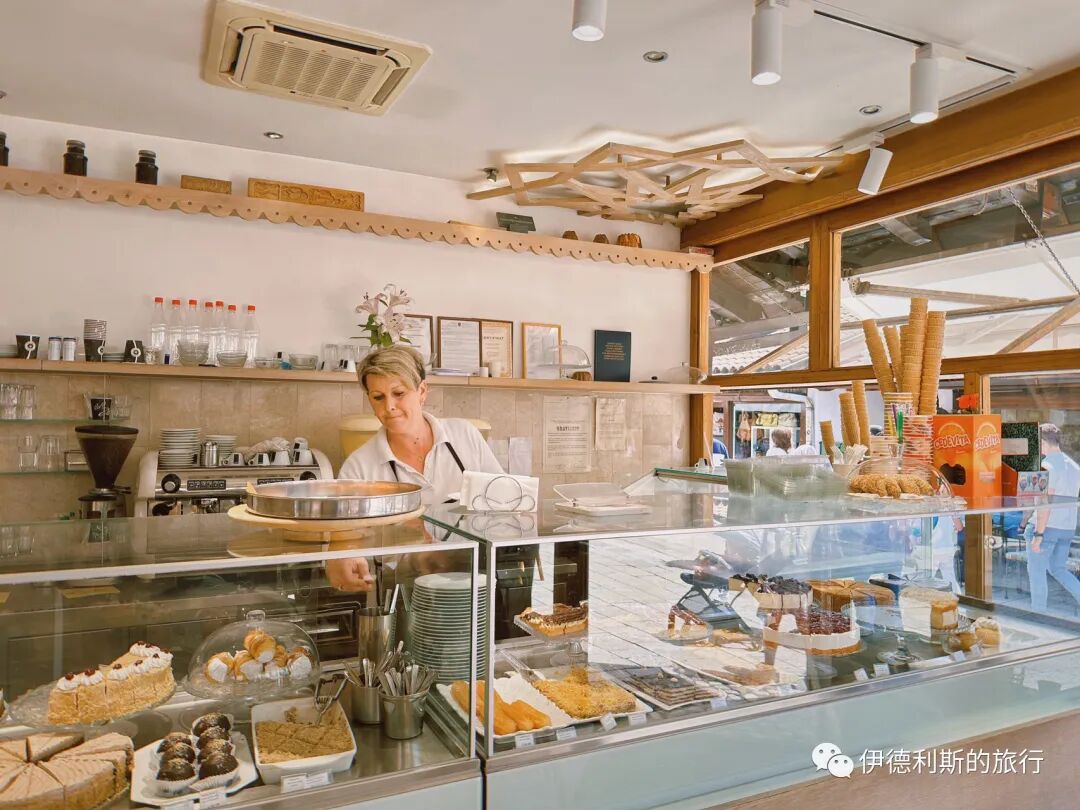
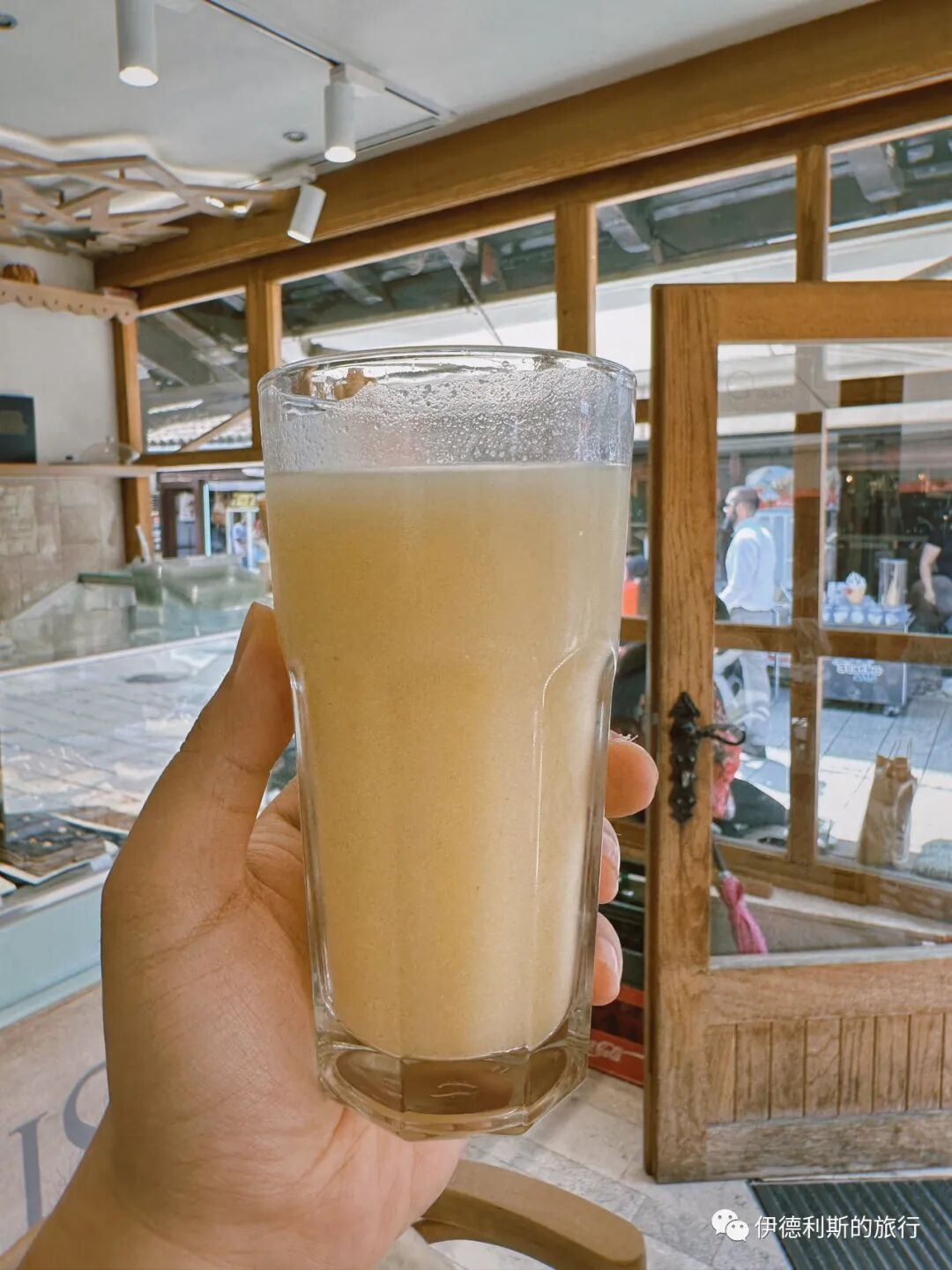
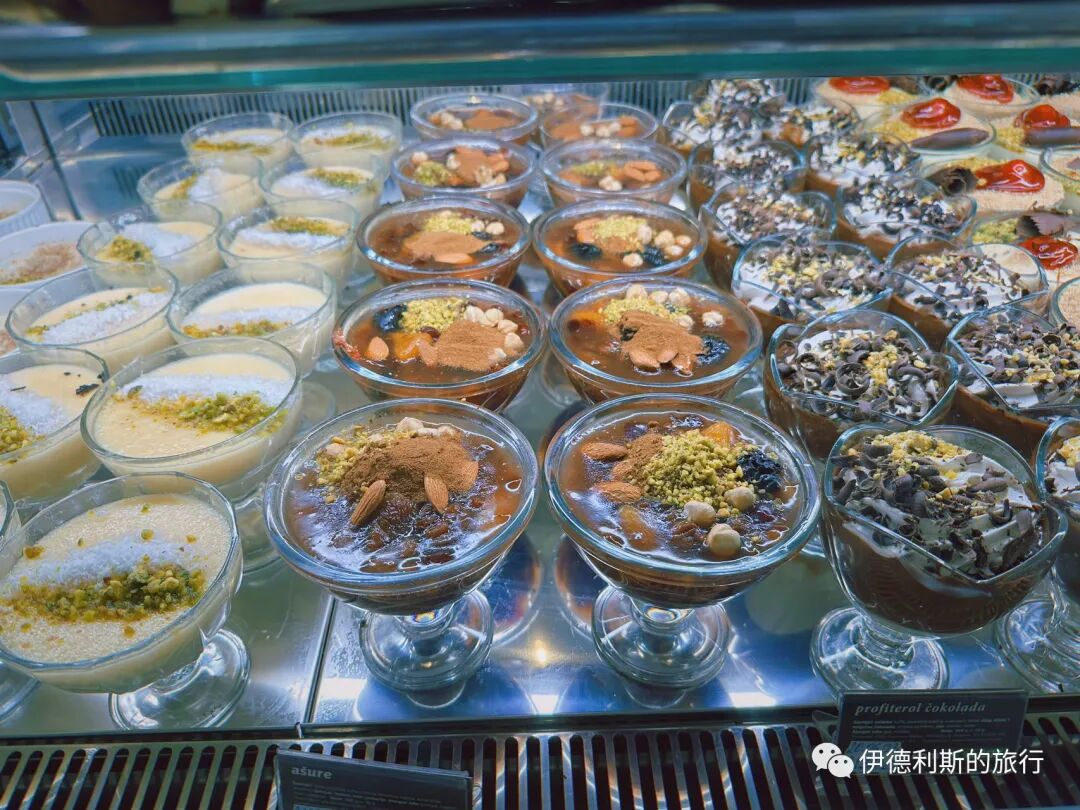
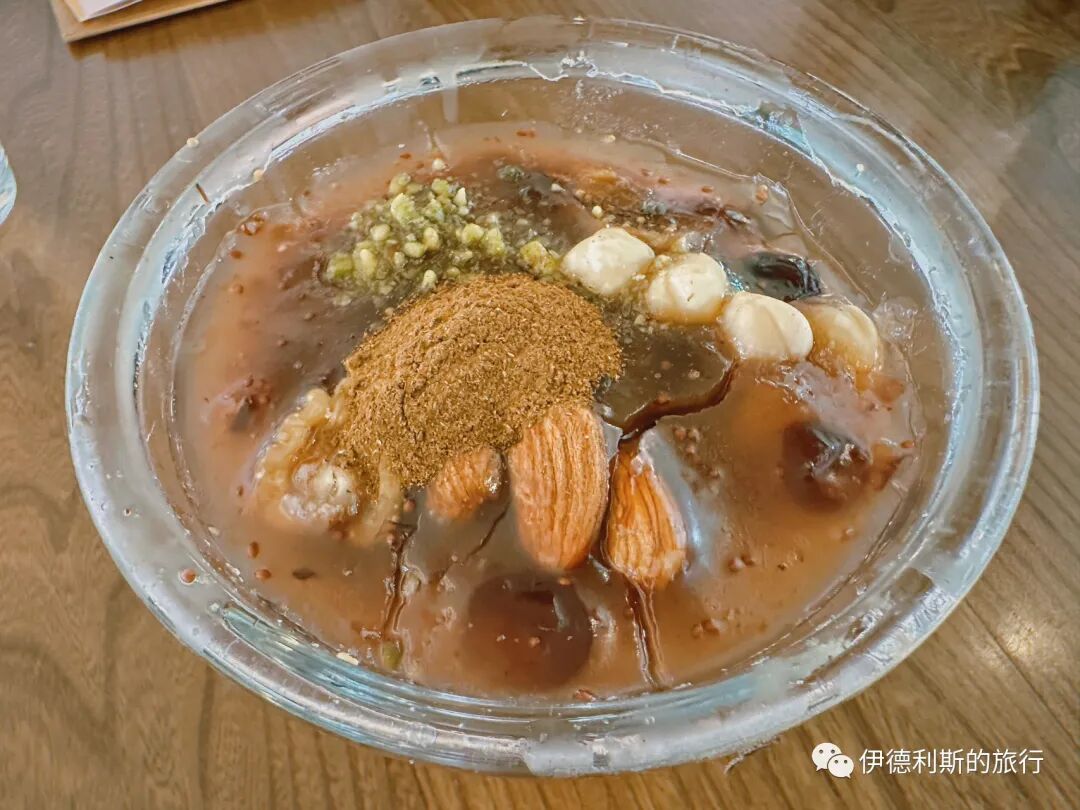
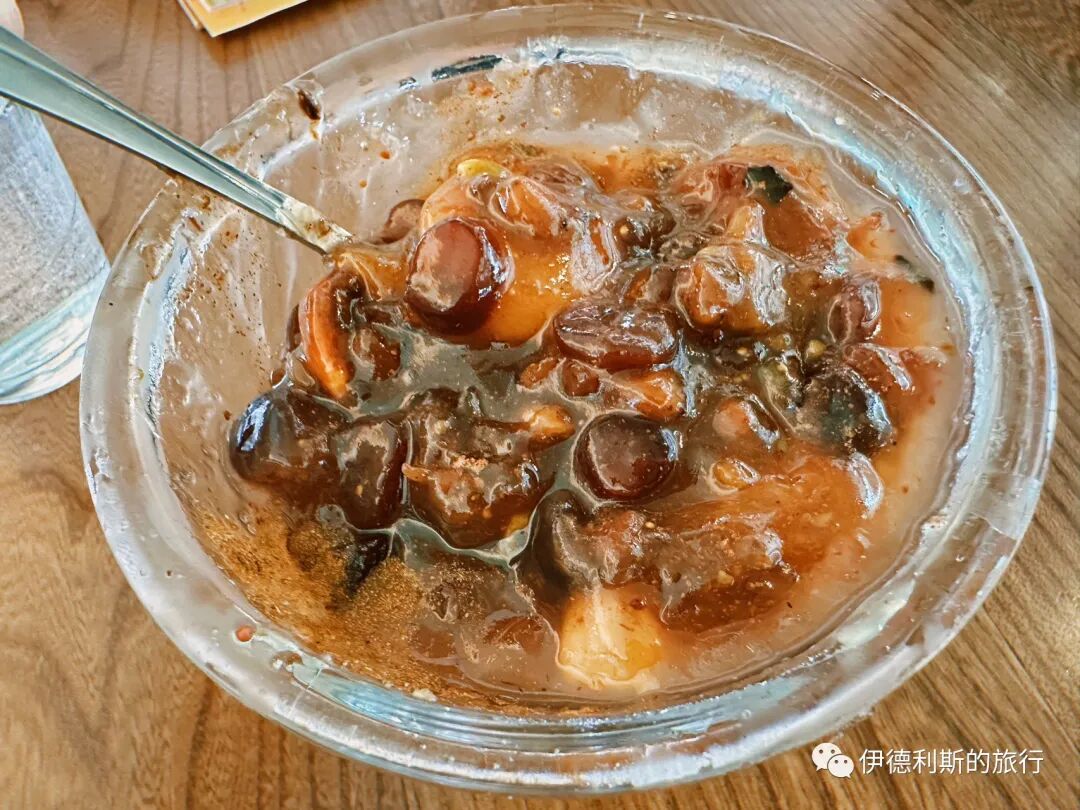
I ate Ashure pudding (ashure) in the old bazaar of Sarajevo. Ashura refers to the 10th day of the first month of the Islamic calendar. Legend says that after the Great Flood receded, the Prophet Nuh and his followers stepped off the ark on this day. They had almost no food left, so everyone pooled together seeds of various foods to make the first meal for humanity after the flood.
In his 17th-century work Book of Travels (Seyahatname), Ottoman traveler Evliya Celebi mentioned that Ashure is a porridge that should be cooked on the tenth day of the month of Muharram. Ottoman-era Ashure had no fixed recipe, as preparation varied by region and family tradition. Traditionally, People say at least seven ingredients should be used, though some believe ten ingredients should be included to match the theme of the tenth day. Common ingredients include wheat, barley, rice, white kidney beans, chickpeas, grape molasses (pekmez), pomegranate molasses, beet juice, dates, raisins, currants, apricots, figs, apples, pistachios, almonds, hazelnuts, walnuts, pine nuts, and sesame seeds. Finished Ashure can be garnished with fennel seeds, black cumin seeds, plums, pomegranate, cardamom, cinnamon, cloves, and nutmeg.
Today, you can buy Ashure in dessert shops throughout Turkey and the Balkans all year round. However, on the Day of Ashura, people still prefer to make it themselves and share it with the poor, relatives, neighbors, and friends.
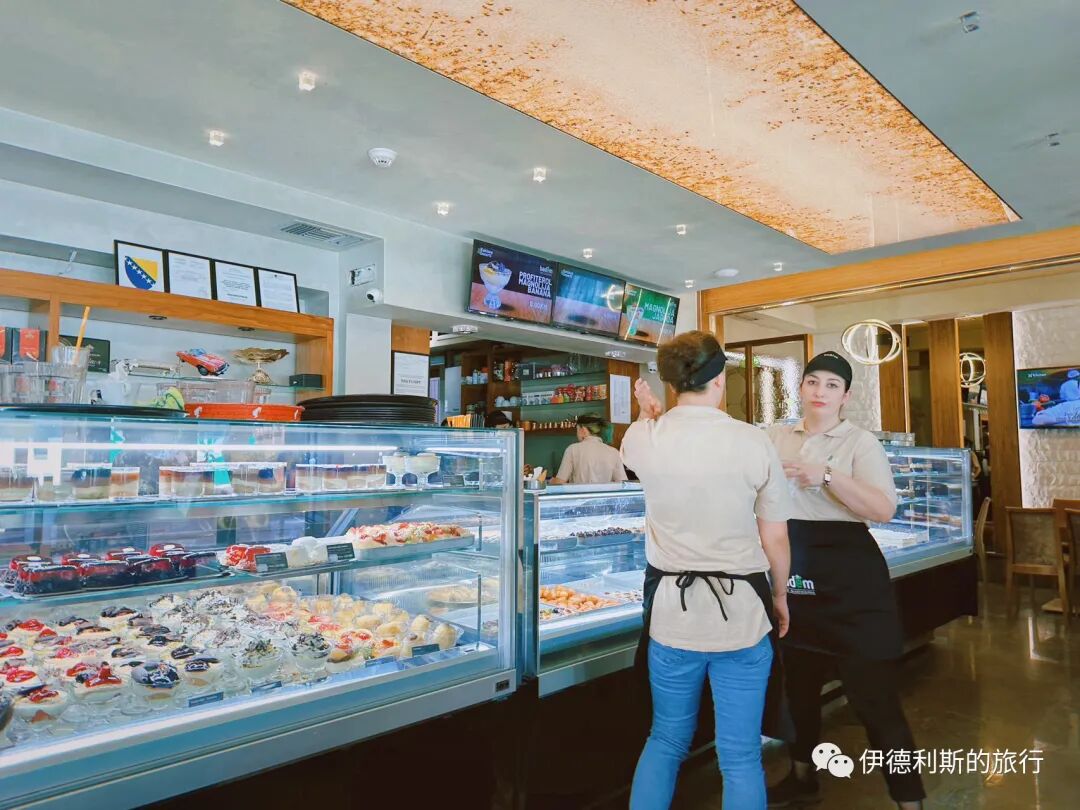
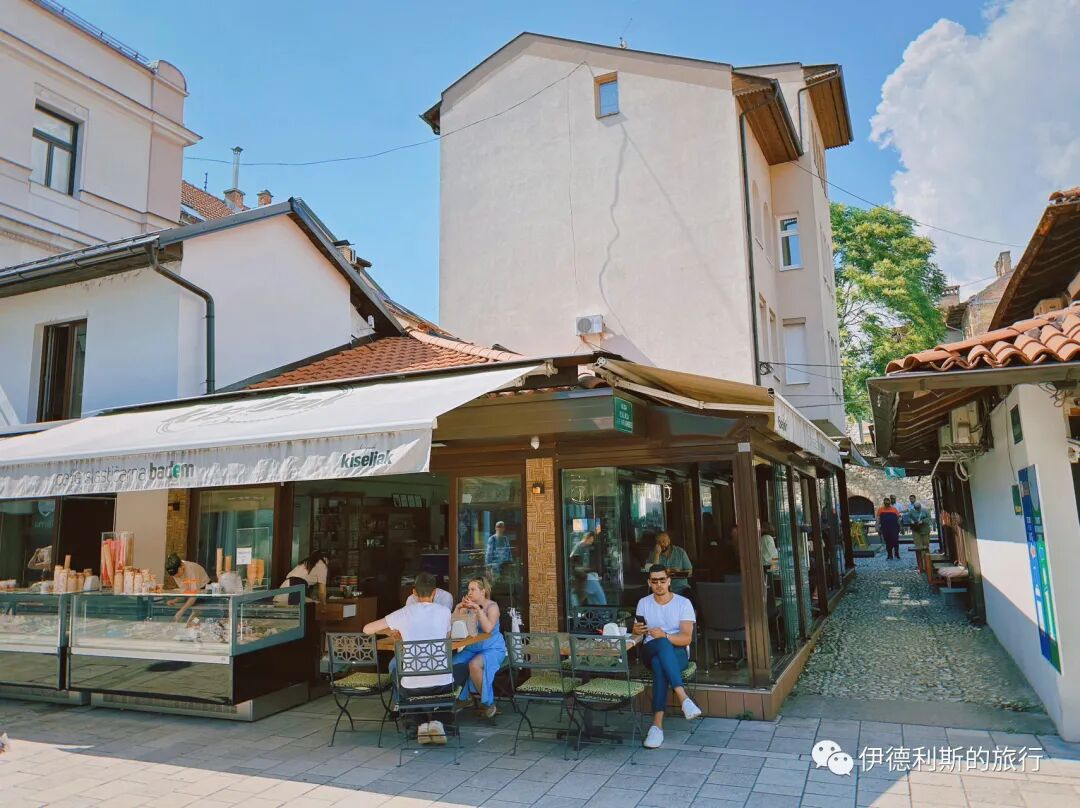
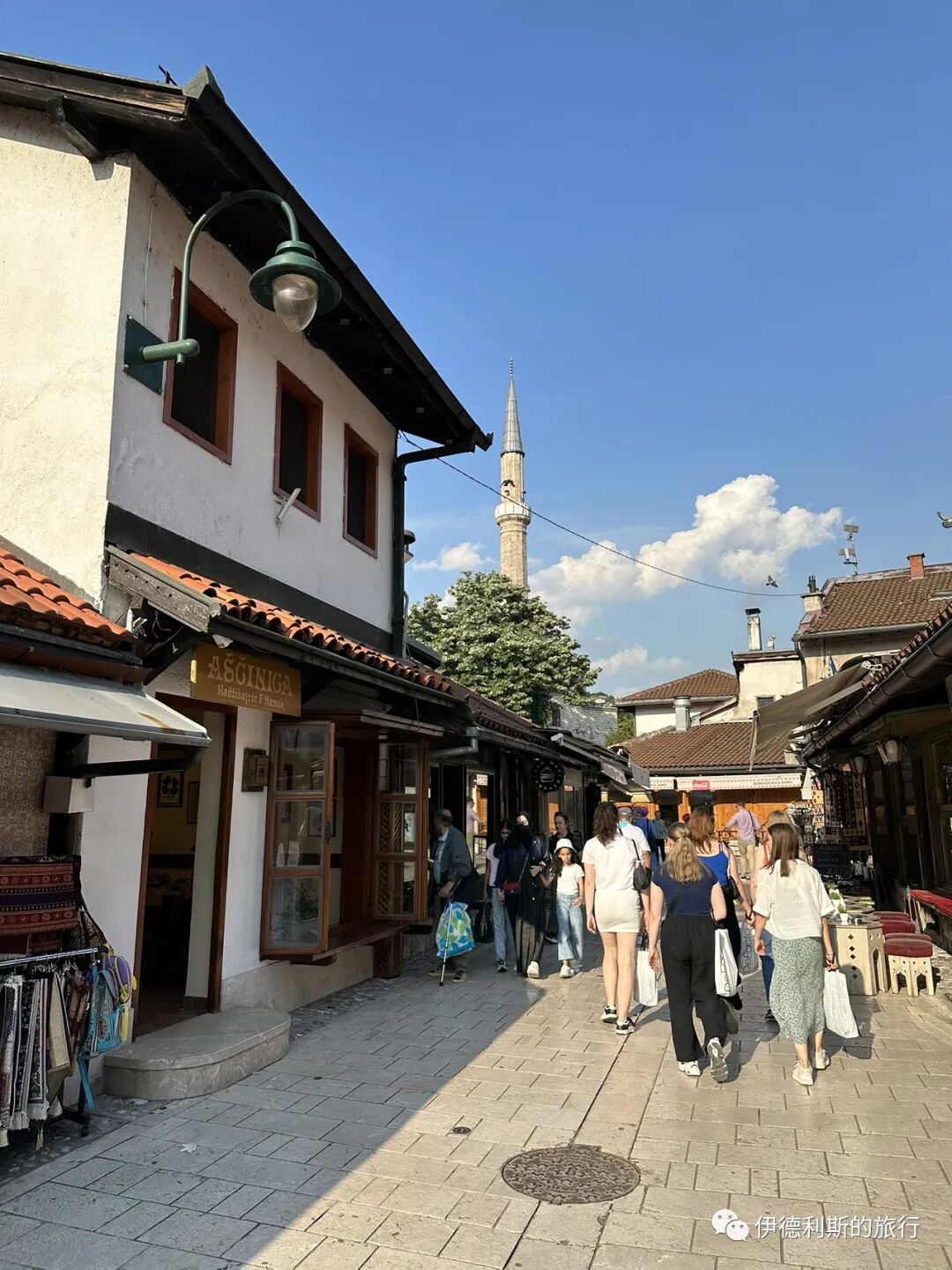
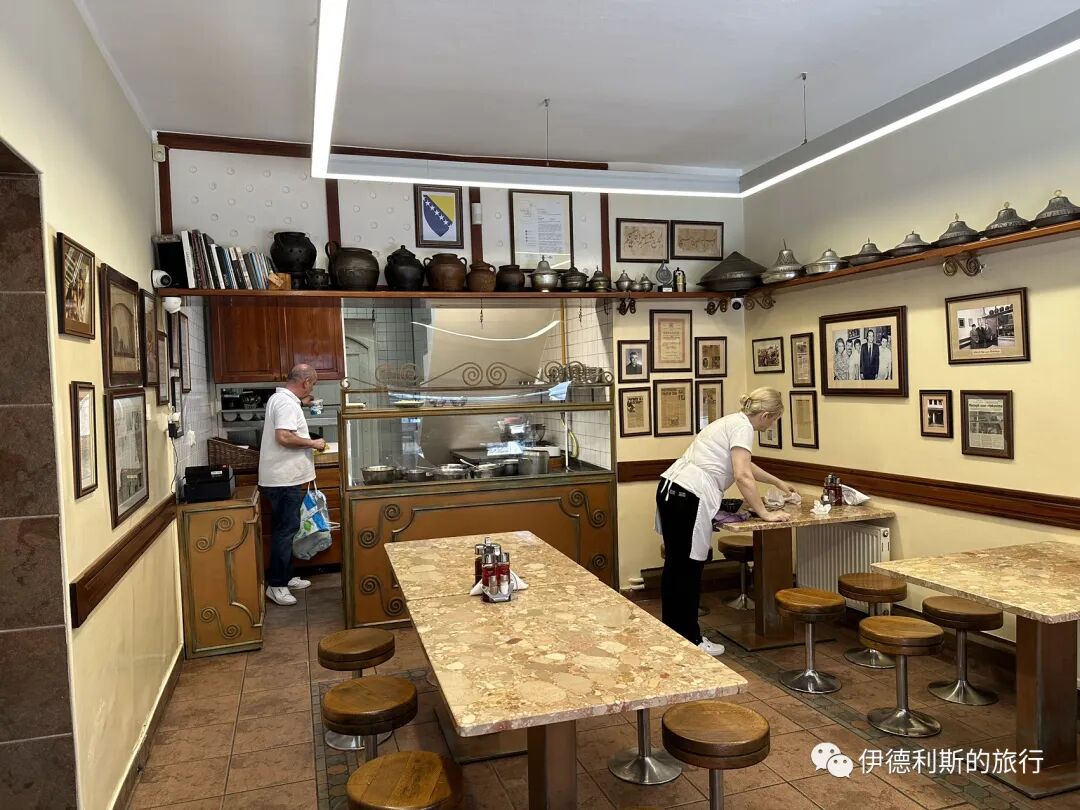
In the afternoon, I ate Bosnian stew (bosanski lonac) at Aščinica Hadžibajrić F. Namika in the old bazaar of Sarajevo. The word Aščinica here means an old-fashioned Bosnian restaurant. The Hadžibajrić family has run this traditional Bosnian restaurant for over a hundred years. The current owner, Namik, stands behind the counter and serves the food you point to.
Bosnian stew dates back to the Middle Ages. It started as a home-cooked meal for Bosnian workers and later became popular with all social classes. It can be made by stewing beef, lamb, or meatballs with cabbage, potatoes, tomatoes, and carrots. When stewing, layer the meat and vegetables in the pot, then add garlic and whole peppercorns for seasoning. They also serve various stuffed vegetables (sarma), including stuffed tomatoes, stuffed grape leaves, stuffed onions, and stuffed pickled cabbage leaves. Sarma means "wrapped" in Turkish, referring to vegetables stuffed with filling and then stewed.
Drink traditional Bosnian coffee (Bosanska Kahva) in the old bazaar of Sarajevo. Coffee first arrived in the Balkan Peninsula under Ottoman rule from the Arab world in the 16th century. Sarajevo was one of the first European cities to open coffee houses, over a hundred years before cities in Western Europe.
Coffee houses are an important part of Ottoman culture. People go there to hear the day's main news, discuss daily gossip, and watch impromptu performances like shadow puppetry. Coffee houses allow people to express more ideas outside of work and worship (namaz), and they are also a great opportunity to meet like-minded friends.
Like Turkish coffee, Bosnian coffee is made by grinding roasted coffee beans into a fine powder and brewing them in a long-handled copper pot called a Džezva (known as Cezve in Turkish). However, while Turkish coffee can be brewed with cold water, Bosnian coffee must be brewed with boiling water. You can add sugar to Turkish coffee while it brews, but you cannot add sugar to Bosnian coffee. Turkish coffee is poured into a cup and served to the customer, while Bosnian coffee is served by placing the copper brewing pot and the cup together on a tray for the customer to pour themselves.
The classic Bosnian coffee set includes a copper pot, a porcelain cup with a copper base, a copper tray, a copper container for sugar cubes, and Turkish delight (Rahat Lokum). To drink it, first bite off a piece of a sugar cube and hold it under your tongue, letting the sugar melt on its own, then drink the coffee. Bosnian Turkish delight (Rahat Lokum) comes from Turkish delight (Lokum). The yellow ones are made with vanilla and the red ones are made with rose petals; you can eat them at any time while drinking coffee.
One of the coffee houses I visited is called Andar Caffe Bar. The owner Maida's grandfather, Muharem, opened a handmade shoe shop in the old bazaar of Sarajevo in 1933, which was later taken over by Maida's father, Osman. After Osman retired in 2010, Maida took over the shop. But by then, handmade shoes were no longer in demand as people bought shoes in stores, so Maida turned the shoe shop into the current coffee house while keeping many shoe-related elements inside.
There is a very famous Bosnian restaurant called Inat kuća across from the Sarajevo City Hall (Vijećnica). The traditional Bosnian house where the restaurant is located was built in the mid-17th century, originally next to the current City Hall. In 1892, when the Austro-Hungarian Empire built the City Hall and a tram station, they wanted to take over the land, but the owner, an old man named Benderija, did not want to move. After long negotiations, the old man finally agreed to move a few years later only if they gave him a bag of gold and moved his house brick by brick to the other side of the river. The Austro-Hungarian Empire had no choice but to move the house to its current location. People say during the move, the old man sat on the nearby bridge every day, carefully watching the workers move every single brick to the other side of the river.
After 1997, Inat kuća became a Bosnian restaurant where you can enjoy Bosnian cuisine and see the traditional Bosnian interior design. We ordered traditional Bosnian dumplings (klepe), cornmeal porridge (pura), rose water, and elderflower (zova) water. Klepe is made by kneading flour, eggs, and salt for the dough, and mixing minced meat, onions, salt, and pepper for the filling. The dumplings are boiled for 10 minutes, then topped with yogurt, garlic powder, and chili powder before being baked. Pura is a porridge made from cornmeal, butter, cheese, and yogurt, and it is one of the favorite breakfasts for Bosniaks.
In the morning, we had a traditional Bosnian breakfast at Restoran Čaršija, west of the Gazi Husrev-beg Mosque in Sarajevo's old town, featuring Travnik cheese, smoked cheese, cream cheese, smoked meat, spicy beef sausage (sujuk), vegetables, fruit, fried eggs, and black tea. Travnik cheese is a specialty sheep's milk cheese from Bosnia and Herzegovina, originating from the mountains of Travnik in central Bosnia. It is made by soaking fresh sheep's milk in brine for two to three months, and after draining, it tastes slightly salty and is low in fat.
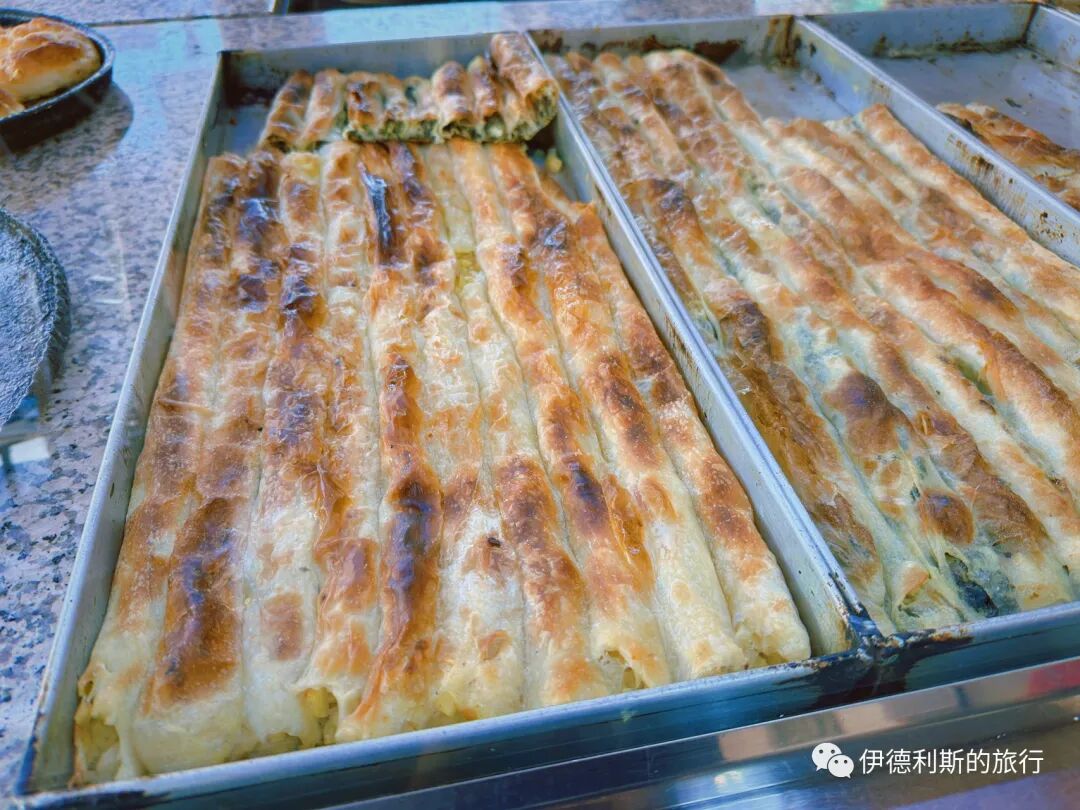
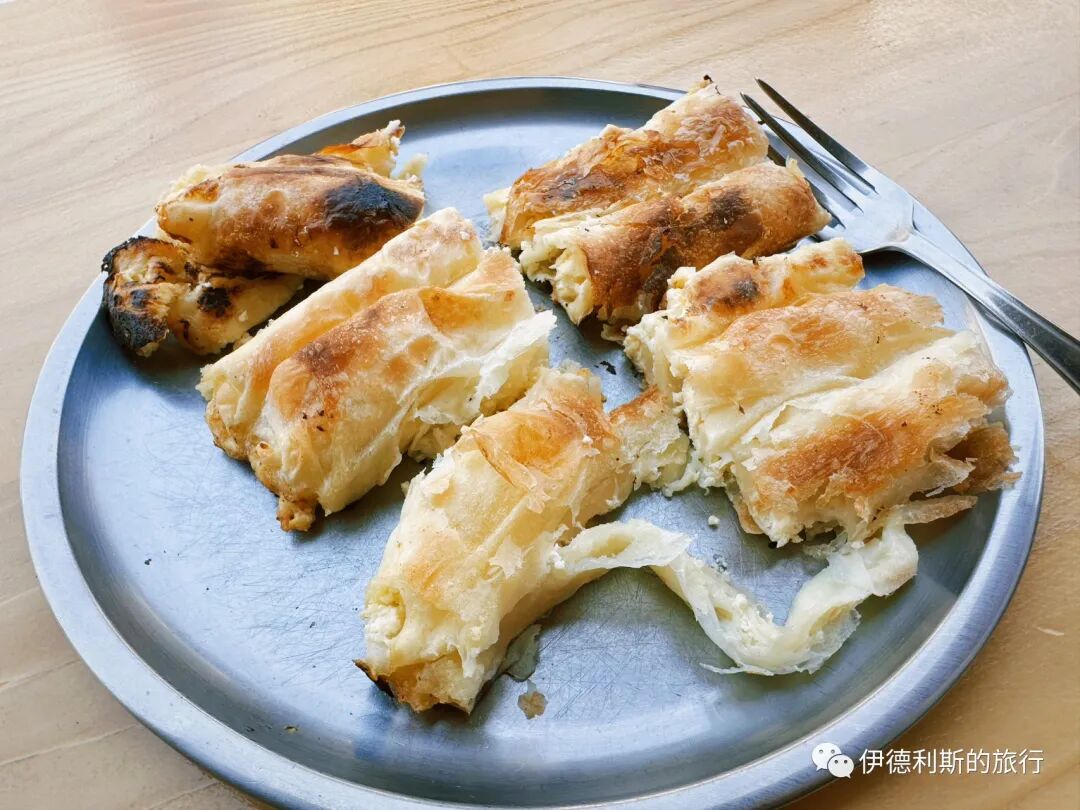
We ate classic Bosnian snacks, flaky meat pie (burek) and small meat dumplings (mantije), on the streets of the old bazaar in Sarajevo. Burek is a classic Ottoman dish. People say this snack was brought from Central Asia to the Anatolian Peninsula by Turkic peoples as they migrated west, later taking its final form in the Ottoman court before spreading to the Balkan Peninsula under Ottoman rule. In Bosnia, Burek is generally called pita. Only the meat-filled version is called Burek, while the white cheese version is called Sirnica, the spinach and cheese version is called Zeljanica, and the potato version is called Krompiruša.
The word Mantije comes from the Chinese word for steamed bun (mantou). After the 13th century, it was brought along the Silk Road through Central Asia to Anatolia by Turkic peoples and Mongols, spreading throughout the Ottoman Empire, where it is known in Turkish as Manti. Before the term baozi appeared in the Northern Song Dynasty, the Chinese word mantou could refer to any stuffed flour pastry. Today, the Wu dialect still uses the term meat mantou (rou mantou), and the Manti found in West and Central Asia also refers to stuffed flour pastries.
The earliest record of Ottoman Manti appears in a cookbook written by Muhammed bin Mahmud Shirvani in the 15th century. It notes that Manti at the time was filled with lamb and chickpeas, seasoned with cinnamon and vinegar, and topped with sumac and garlic yogurt sauce. Modern Manti is mostly filled with lamb and onions. Unlike the steamed thin-skinned buns (Manti) of Central Asia, Manti in Turkey and Bosnia are usually boiled or baked and are smaller in size. Bosnian Mantije are packed tightly together, looking a bit like a baked version of pan-fried buns (shuijianbao).

I had dinner at the Old Bazaar in Sarajevo. I ordered the Bosnian specialty chicken soup (Begova Čorba), a grilled vegetable platter, and Balkan-style grilled veal patties (Teleća pljeskavica). Everything was delicious. The grilled meat here tastes much better when paired with yogurt cheese.
Summary: Sarajevo Bosniak cuisine reflects the citys Muslim food culture through dishes such as burek, grilled meats, stews, and everyday bakery food. This food-focused account preserves the original meals, places, photos, and local details in natural English.
Bosniaks (Bošnjaci) are a Slavic-speaking Muslim ethnic group living in the Bosnia region of the Balkan Peninsula. They migrated from northeastern Europe to Bosnia as early as the 6th century. From 1463 to 1878, they were under Ottoman rule for over four hundred years, which strongly influenced their cultural customs and led them to become Muslims.
The identity of the Bosniaks emerged quite late. Although the Austro-Hungarian Empire began promoting a Bosniak identity in the late 19th century, the vast majority of Bosniaks identified only as Muslims until the early 1990s. After the breakup of Yugoslavia in 1992, the Bosniak identity began to shift rapidly as they sought to strengthen their connection to the state of Bosnia and Herzegovina. On September 27, 1993, representatives from all walks of life among Bosnian Muslims held a meeting and officially adopted the Bosniak ethnic identity.
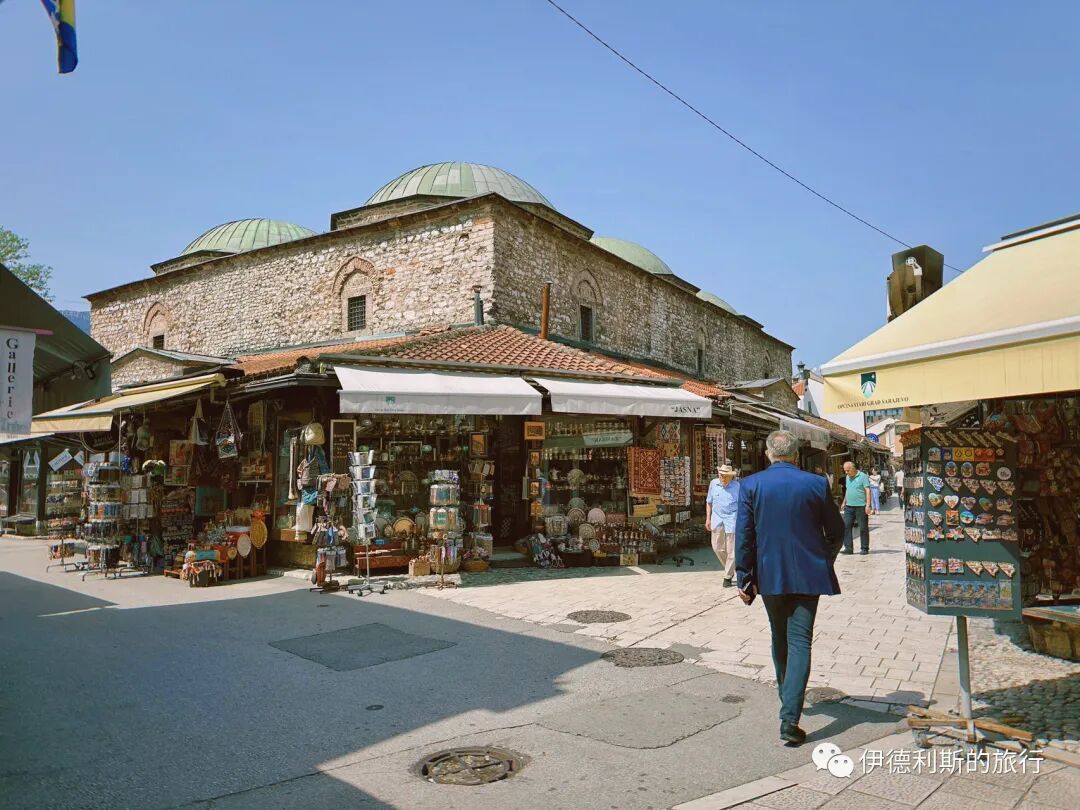
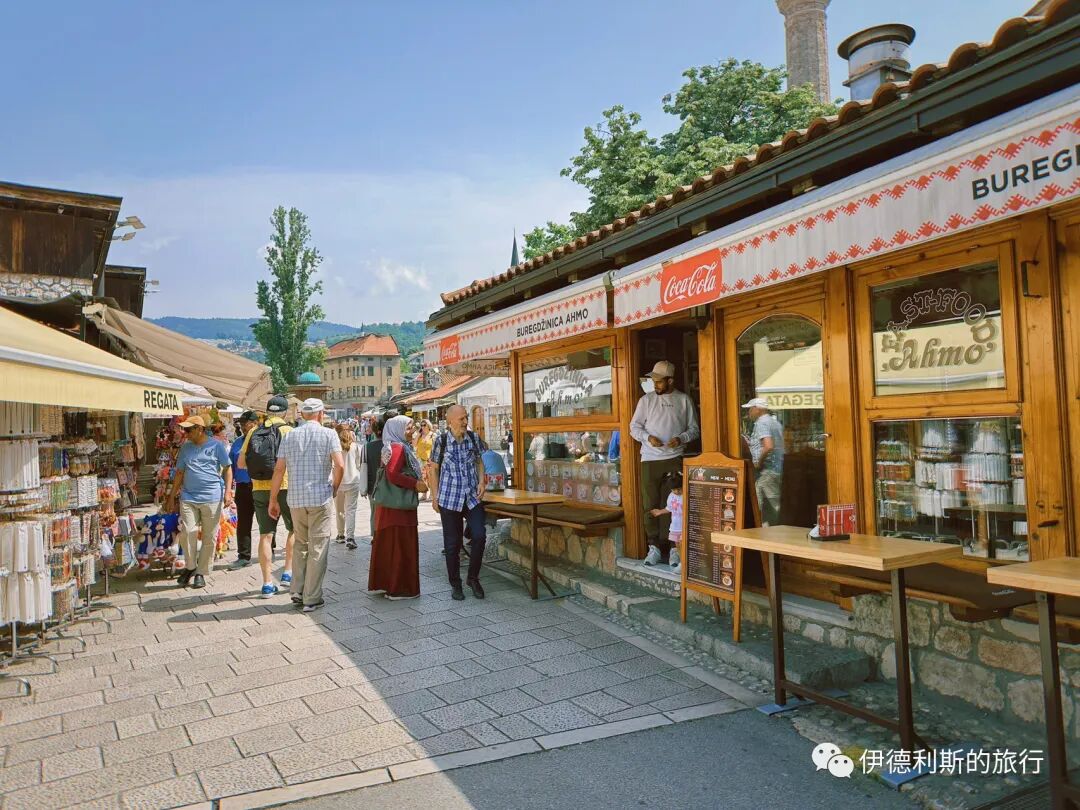
After arriving in Sarajevo, we first went to the old town bazaar (Baščaršija) for lunch. This area was built in 1462 by Isa-Beg Ishaković, the first Ottoman governor of Bosnia. It has been a residential area for Bosniaks ever since and is full of halal restaurants.
We went to the famous restaurant Ćevabdžinica Petica Ferhatović near the eastern entrance. This shop was opened by the Ferhatović family during the 1984 Sarajevo Winter Olympics, though they had already started running restaurants in the old town of Sarajevo as early as 1957.
We ordered the Bosnian specialty of finger-shaped minced beef kebabs (Ćevapčići) and spicy beef sausage (Sudžuk) served with flatbread (Somun), along with side dishes of onions and cream cheese (Kajmak). We also ordered a cheese salad (Šopska salata).
The word Ćevapčići comes from the Ottoman Turkish word for grilled meat (Kevap) and the Slavic suffix "-čići" used to denote something small. It developed from Turkish kebabs in the 16th century. The version made in the Baščaršija area of Sarajevo is the most famous, and it holds an important place in Bosniak food culture.
Spicy beef sausage (Sudžuk) is a dish widely found in Central Asia, the Middle East, and the Balkans. It was first mentioned in the Compendium of the Turkic Dialects (Dīwān Lughāt al-Turk) written in the 1070s, and was later brought to Bosnia by the Ottoman Empire. To make it, beef, beef fat, and various spices are ground together, stuffed into casings, tied tightly, and then fermented and dried.
Flatbread (Somun) is similar to the pita bread of the Levant region and is a classic pairing for Bosniaks when eating grilled meats.
Cheese salad (Šopska salata) is made with tomatoes, cucumbers, onions, peppers, and brine cheese (Sirene), and its name comes from the Shopluk region in the far west of Bulgaria. Because its colors match the Bulgarian flag, this dish became a promotional food for Bulgarian tourism after 1956 and later spread widely across the former Yugoslavia.
Gazi Husrev Bey was an Ottoman governor of Bosnia in the 16th century. He was born into Bosnian nobility and, starting in 1530, funded many important buildings in Sarajevo while dedicating his wealth to support welfare and educational institutions.
To the west of the Gazi Husrev-beg Mosque stands a clock tower built in the 16th century, though the current structure was rebuilt in the 18th century. This 30-meter-tall clock tower is the highest of the 21 clock towers built by the Ottoman Empire in Bosnia and Herzegovina. It follows the Islamic calendar, where sunset is set as 12 o'clock. An official called a Muvekit, who determines the prayer times and the five daily namaz, is responsible for adjusting the clock. The current clock mechanism was made by the London-based company Gillett & Johnston in 1875. To make sure the clock was clearly visible, the top of the tower was modified during installation.
Below the clock tower is a public canteen (Imaret) established in 1531, which was originally managed by a foundation (Waqf) to distribute free food to the poor. Today, this place is a very famous bakery, and the fresh bread baked on-site is very popular with the locals. Their signature item is the Kifla bread, which costs 2 yuan each and comes in various flavors with a rich wheat aroma. Kifla is a small bread popular in Central Europe and the Balkans with a history of hundreds of years. The French croissant actually evolved from the Kifla.
The best drink to cool off in the old bazaar of Sarajevo is Boza! I drink it several times every day. Boza is a very ancient fermented malt drink. It was recorded as early as the 1070s in the Compendium of the Turkic Dialects (Divânu Lügati't-Türk). It was very popular among Turkic peoples in Central Asia at the time and spread to the Balkans with the Ottoman Empire.
Before the 16th century, Boza could be consumed freely. However, the rise of a version called Tartar Boza, which contained opium, angered the rulers at the time. By the 17th century, Sultan Mehmed IV ordered all Boza shops to close and banned people from drinking it. Since then, this ban has been tightened and relaxed many times. By the 19th century, the sweet, non-alcoholic drink boza became popular again in the Ottoman Empire.
Today, boza is an essential summer cooling drink in Bulgaria and the former Yugoslavia.
I ate Ashure pudding (ashure) in the old bazaar of Sarajevo. Ashura refers to the 10th day of the first month of the Islamic calendar. Legend says that after the Great Flood receded, the Prophet Nuh and his followers stepped off the ark on this day. They had almost no food left, so everyone pooled together seeds of various foods to make the first meal for humanity after the flood.
In his 17th-century work Book of Travels (Seyahatname), Ottoman traveler Evliya Celebi mentioned that Ashure is a porridge that should be cooked on the tenth day of the month of Muharram. Ottoman-era Ashure had no fixed recipe, as preparation varied by region and family tradition. Traditionally, People say at least seven ingredients should be used, though some believe ten ingredients should be included to match the theme of the tenth day. Common ingredients include wheat, barley, rice, white kidney beans, chickpeas, grape molasses (pekmez), pomegranate molasses, beet juice, dates, raisins, currants, apricots, figs, apples, pistachios, almonds, hazelnuts, walnuts, pine nuts, and sesame seeds. Finished Ashure can be garnished with fennel seeds, black cumin seeds, plums, pomegranate, cardamom, cinnamon, cloves, and nutmeg.
Today, you can buy Ashure in dessert shops throughout Turkey and the Balkans all year round. However, on the Day of Ashura, people still prefer to make it themselves and share it with the poor, relatives, neighbors, and friends.
In the afternoon, I ate Bosnian stew (bosanski lonac) at Aščinica Hadžibajrić F. Namika in the old bazaar of Sarajevo. The word Aščinica here means an old-fashioned Bosnian restaurant. The Hadžibajrić family has run this traditional Bosnian restaurant for over a hundred years. The current owner, Namik, stands behind the counter and serves the food you point to.
Bosnian stew dates back to the Middle Ages. It started as a home-cooked meal for Bosnian workers and later became popular with all social classes. It can be made by stewing beef, lamb, or meatballs with cabbage, potatoes, tomatoes, and carrots. When stewing, layer the meat and vegetables in the pot, then add garlic and whole peppercorns for seasoning. They also serve various stuffed vegetables (sarma), including stuffed tomatoes, stuffed grape leaves, stuffed onions, and stuffed pickled cabbage leaves. Sarma means "wrapped" in Turkish, referring to vegetables stuffed with filling and then stewed.
Drink traditional Bosnian coffee (Bosanska Kahva) in the old bazaar of Sarajevo. Coffee first arrived in the Balkan Peninsula under Ottoman rule from the Arab world in the 16th century. Sarajevo was one of the first European cities to open coffee houses, over a hundred years before cities in Western Europe.
Coffee houses are an important part of Ottoman culture. People go there to hear the day's main news, discuss daily gossip, and watch impromptu performances like shadow puppetry. Coffee houses allow people to express more ideas outside of work and worship (namaz), and they are also a great opportunity to meet like-minded friends.
Like Turkish coffee, Bosnian coffee is made by grinding roasted coffee beans into a fine powder and brewing them in a long-handled copper pot called a Džezva (known as Cezve in Turkish). However, while Turkish coffee can be brewed with cold water, Bosnian coffee must be brewed with boiling water. You can add sugar to Turkish coffee while it brews, but you cannot add sugar to Bosnian coffee. Turkish coffee is poured into a cup and served to the customer, while Bosnian coffee is served by placing the copper brewing pot and the cup together on a tray for the customer to pour themselves.
The classic Bosnian coffee set includes a copper pot, a porcelain cup with a copper base, a copper tray, a copper container for sugar cubes, and Turkish delight (Rahat Lokum). To drink it, first bite off a piece of a sugar cube and hold it under your tongue, letting the sugar melt on its own, then drink the coffee. Bosnian Turkish delight (Rahat Lokum) comes from Turkish delight (Lokum). The yellow ones are made with vanilla and the red ones are made with rose petals; you can eat them at any time while drinking coffee.
One of the coffee houses I visited is called Andar Caffe Bar. The owner Maida's grandfather, Muharem, opened a handmade shoe shop in the old bazaar of Sarajevo in 1933, which was later taken over by Maida's father, Osman. After Osman retired in 2010, Maida took over the shop. But by then, handmade shoes were no longer in demand as people bought shoes in stores, so Maida turned the shoe shop into the current coffee house while keeping many shoe-related elements inside.
There is a very famous Bosnian restaurant called Inat kuća across from the Sarajevo City Hall (Vijećnica). The traditional Bosnian house where the restaurant is located was built in the mid-17th century, originally next to the current City Hall. In 1892, when the Austro-Hungarian Empire built the City Hall and a tram station, they wanted to take over the land, but the owner, an old man named Benderija, did not want to move. After long negotiations, the old man finally agreed to move a few years later only if they gave him a bag of gold and moved his house brick by brick to the other side of the river. The Austro-Hungarian Empire had no choice but to move the house to its current location. People say during the move, the old man sat on the nearby bridge every day, carefully watching the workers move every single brick to the other side of the river.
After 1997, Inat kuća became a Bosnian restaurant where you can enjoy Bosnian cuisine and see the traditional Bosnian interior design. We ordered traditional Bosnian dumplings (klepe), cornmeal porridge (pura), rose water, and elderflower (zova) water. Klepe is made by kneading flour, eggs, and salt for the dough, and mixing minced meat, onions, salt, and pepper for the filling. The dumplings are boiled for 10 minutes, then topped with yogurt, garlic powder, and chili powder before being baked. Pura is a porridge made from cornmeal, butter, cheese, and yogurt, and it is one of the favorite breakfasts for Bosniaks.
In the morning, we had a traditional Bosnian breakfast at Restoran Čaršija, west of the Gazi Husrev-beg Mosque in Sarajevo's old town, featuring Travnik cheese, smoked cheese, cream cheese, smoked meat, spicy beef sausage (sujuk), vegetables, fruit, fried eggs, and black tea. Travnik cheese is a specialty sheep's milk cheese from Bosnia and Herzegovina, originating from the mountains of Travnik in central Bosnia. It is made by soaking fresh sheep's milk in brine for two to three months, and after draining, it tastes slightly salty and is low in fat.
We ate classic Bosnian snacks, flaky meat pie (burek) and small meat dumplings (mantije), on the streets of the old bazaar in Sarajevo. Burek is a classic Ottoman dish. People say this snack was brought from Central Asia to the Anatolian Peninsula by Turkic peoples as they migrated west, later taking its final form in the Ottoman court before spreading to the Balkan Peninsula under Ottoman rule. In Bosnia, Burek is generally called pita. Only the meat-filled version is called Burek, while the white cheese version is called Sirnica, the spinach and cheese version is called Zeljanica, and the potato version is called Krompiruša.
The word Mantije comes from the Chinese word for steamed bun (mantou). After the 13th century, it was brought along the Silk Road through Central Asia to Anatolia by Turkic peoples and Mongols, spreading throughout the Ottoman Empire, where it is known in Turkish as Manti. Before the term baozi appeared in the Northern Song Dynasty, the Chinese word mantou could refer to any stuffed flour pastry. Today, the Wu dialect still uses the term meat mantou (rou mantou), and the Manti found in West and Central Asia also refers to stuffed flour pastries.
The earliest record of Ottoman Manti appears in a cookbook written by Muhammed bin Mahmud Shirvani in the 15th century. It notes that Manti at the time was filled with lamb and chickpeas, seasoned with cinnamon and vinegar, and topped with sumac and garlic yogurt sauce. Modern Manti is mostly filled with lamb and onions. Unlike the steamed thin-skinned buns (Manti) of Central Asia, Manti in Turkey and Bosnia are usually boiled or baked and are smaller in size. Bosnian Mantije are packed tightly together, looking a bit like a baked version of pan-fried buns (shuijianbao).
I had dinner at the Old Bazaar in Sarajevo. I ordered the Bosnian specialty chicken soup (Begova Čorba), a grilled vegetable platter, and Balkan-style grilled veal patties (Teleća pljeskavica). Everything was delicious. The grilled meat here tastes much better when paired with yogurt cheese.
Halal Food Guide: Sarajevo — Bosniak Cuisine, Burek and Muslim Food Culture
Articles • ali2007fr posted the article • 0 comments • 171 views • 2026-05-19 03:44
Reposted from the web
Summary: Sarajevo Bosniak cuisine reflects the citys Muslim food culture through dishes such as burek, grilled meats, stews, and everyday bakery food. This food-focused account preserves the original meals, places, photos, and local details in natural English.
Bosniaks (Bošnjaci) are a Slavic-speaking Muslim ethnic group living in the Bosnia region of the Balkan Peninsula. They migrated from northeastern Europe to Bosnia as early as the 6th century. From 1463 to 1878, they were under Ottoman rule for over four hundred years, which strongly influenced their cultural customs and led them to become Muslims.
The identity of the Bosniaks emerged quite late. Although the Austro-Hungarian Empire began promoting a Bosniak identity in the late 19th century, the vast majority of Bosniaks identified only as Muslims until the early 1990s. After the breakup of Yugoslavia in 1992, the Bosniak identity began to shift rapidly as they sought to strengthen their connection to the state of Bosnia and Herzegovina. On September 27, 1993, representatives from all walks of life among Bosnian Muslims held a meeting and officially adopted the Bosniak ethnic identity.
After arriving in Sarajevo, we first went to the old town bazaar (Baščaršija) for lunch. This area was built in 1462 by Isa-Beg Ishaković, the first Ottoman governor of Bosnia. It has been a residential area for Bosniaks ever since and is full of halal restaurants.
We went to the famous restaurant Ćevabdžinica Petica Ferhatović near the eastern entrance. This shop was opened by the Ferhatović family during the 1984 Sarajevo Winter Olympics, though they had already started running restaurants in the old town of Sarajevo as early as 1957.
We ordered the Bosnian specialty of finger-shaped minced beef kebabs (Ćevapčići) and spicy beef sausage (Sudžuk) served with flatbread (Somun), along with side dishes of onions and cream cheese (Kajmak). We also ordered a cheese salad (Šopska salata).
The word Ćevapčići comes from the Ottoman Turkish word for grilled meat (Kevap) and the Slavic suffix "-čići" used to denote something small. It developed from Turkish kebabs in the 16th century. The version made in the Baščaršija area of Sarajevo is the most famous, and it holds an important place in Bosniak food culture.
Spicy beef sausage (Sudžuk) is a dish widely found in Central Asia, the Middle East, and the Balkans. It was first mentioned in the Compendium of the Turkic Dialects (Dīwān Lughāt al-Turk) written in the 1070s, and was later brought to Bosnia by the Ottoman Empire. To make it, beef, beef fat, and various spices are ground together, stuffed into casings, tied tightly, and then fermented and dried.
Flatbread (Somun) is similar to the pita bread of the Levant region and is a classic pairing for Bosniaks when eating grilled meats.
Cheese salad (Šopska salata) is made with tomatoes, cucumbers, onions, peppers, and brine cheese (Sirene), and its name comes from the Shopluk region in the far west of Bulgaria. Because its colors match the Bulgarian flag, this dish became a promotional food for Bulgarian tourism after 1956 and later spread widely across the former Yugoslavia.
Gazi Husrev Bey was an Ottoman governor of Bosnia in the 16th century. He was born into Bosnian nobility and, starting in 1530, funded many important buildings in Sarajevo while dedicating his wealth to support welfare and educational institutions.
To the west of the Gazi Husrev-beg Mosque stands a clock tower built in the 16th century, though the current structure was rebuilt in the 18th century. This 30-meter-tall clock tower is the highest of the 21 clock towers built by the Ottoman Empire in Bosnia and Herzegovina. It follows the Islamic calendar, where sunset is set as 12 o'clock. An official called a Muvekit, who determines the prayer times and the five daily namaz, is responsible for adjusting the clock. The current clock mechanism was made by the London-based company Gillett & Johnston in 1875. To make sure the clock was clearly visible, the top of the tower was modified during installation.
Below the clock tower is a public canteen (Imaret) established in 1531, which was originally managed by a foundation (Waqf) to distribute free food to the poor. Today, this place is a very famous bakery, and the fresh bread baked on-site is very popular with the locals. Their signature item is the Kifla bread, which costs 2 yuan each and comes in various flavors with a rich wheat aroma. Kifla is a small bread popular in Central Europe and the Balkans with a history of hundreds of years. The French croissant actually evolved from the Kifla.
The best drink to cool off in the old bazaar of Sarajevo is Boza! I drink it several times every day. Boza is a very ancient fermented malt drink. It was recorded as early as the 1070s in the Compendium of the Turkic Dialects (Divânu Lügati't-Türk). It was very popular among Turkic peoples in Central Asia at the time and spread to the Balkans with the Ottoman Empire.
Before the 16th century, Boza could be consumed freely. However, the rise of a version called Tartar Boza, which contained opium, angered the rulers at the time. By the 17th century, Sultan Mehmed IV ordered all Boza shops to close and banned people from drinking it. Since then, this ban has been tightened and relaxed many times. By the 19th century, the sweet, non-alcoholic drink boza became popular again in the Ottoman Empire.
Today, boza is an essential summer cooling drink in Bulgaria and the former Yugoslavia.
I ate Ashure pudding (ashure) in the old bazaar of Sarajevo. Ashura refers to the 10th day of the first month of the Islamic calendar. Legend says that after the Great Flood receded, the Prophet Nuh and his followers stepped off the ark on this day. They had almost no food left, so everyone pooled together seeds of various foods to make the first meal for humanity after the flood.
In his 17th-century work Book of Travels (Seyahatname), Ottoman traveler Evliya Celebi mentioned that Ashure is a porridge that should be cooked on the tenth day of the month of Muharram. Ottoman-era Ashure had no fixed recipe, as preparation varied by region and family tradition. Traditionally, People say at least seven ingredients should be used, though some believe ten ingredients should be included to match the theme of the tenth day. Common ingredients include wheat, barley, rice, white kidney beans, chickpeas, grape molasses (pekmez), pomegranate molasses, beet juice, dates, raisins, currants, apricots, figs, apples, pistachios, almonds, hazelnuts, walnuts, pine nuts, and sesame seeds. Finished Ashure can be garnished with fennel seeds, black cumin seeds, plums, pomegranate, cardamom, cinnamon, cloves, and nutmeg.
Today, you can buy Ashure in dessert shops throughout Turkey and the Balkans all year round. However, on the Day of Ashura, people still prefer to make it themselves and share it with the poor, relatives, neighbors, and friends.
In the afternoon, I ate Bosnian stew (bosanski lonac) at Aščinica Hadžibajrić F. Namika in the old bazaar of Sarajevo. The word Aščinica here means an old-fashioned Bosnian restaurant. The Hadžibajrić family has run this traditional Bosnian restaurant for over a hundred years. The current owner, Namik, stands behind the counter and serves the food you point to.
Bosnian stew dates back to the Middle Ages. It started as a home-cooked meal for Bosnian workers and later became popular with all social classes. It can be made by stewing beef, lamb, or meatballs with cabbage, potatoes, tomatoes, and carrots. When stewing, layer the meat and vegetables in the pot, then add garlic and whole peppercorns for seasoning. They also serve various stuffed vegetables (sarma), including stuffed tomatoes, stuffed grape leaves, stuffed onions, and stuffed pickled cabbage leaves. Sarma means "wrapped" in Turkish, referring to vegetables stuffed with filling and then stewed.
Drink traditional Bosnian coffee (Bosanska Kahva) in the old bazaar of Sarajevo. Coffee first arrived in the Balkan Peninsula under Ottoman rule from the Arab world in the 16th century. Sarajevo was one of the first European cities to open coffee houses, over a hundred years before cities in Western Europe.
Coffee houses are an important part of Ottoman culture. People go there to hear the day's main news, discuss daily gossip, and watch impromptu performances like shadow puppetry. Coffee houses allow people to express more ideas outside of work and worship (namaz), and they are also a great opportunity to meet like-minded friends.
Like Turkish coffee, Bosnian coffee is made by grinding roasted coffee beans into a fine powder and brewing them in a long-handled copper pot called a Džezva (known as Cezve in Turkish). However, while Turkish coffee can be brewed with cold water, Bosnian coffee must be brewed with boiling water. You can add sugar to Turkish coffee while it brews, but you cannot add sugar to Bosnian coffee. Turkish coffee is poured into a cup and served to the customer, while Bosnian coffee is served by placing the copper brewing pot and the cup together on a tray for the customer to pour themselves.
The classic Bosnian coffee set includes a copper pot, a porcelain cup with a copper base, a copper tray, a copper container for sugar cubes, and Turkish delight (Rahat Lokum). To drink it, first bite off a piece of a sugar cube and hold it under your tongue, letting the sugar melt on its own, then drink the coffee. Bosnian Turkish delight (Rahat Lokum) comes from Turkish delight (Lokum). The yellow ones are made with vanilla and the red ones are made with rose petals; you can eat them at any time while drinking coffee.
One of the coffee houses I visited is called Andar Caffe Bar. The owner Maida's grandfather, Muharem, opened a handmade shoe shop in the old bazaar of Sarajevo in 1933, which was later taken over by Maida's father, Osman. After Osman retired in 2010, Maida took over the shop. But by then, handmade shoes were no longer in demand as people bought shoes in stores, so Maida turned the shoe shop into the current coffee house while keeping many shoe-related elements inside.
There is a very famous Bosnian restaurant called Inat kuća across from the Sarajevo City Hall (Vijećnica). The traditional Bosnian house where the restaurant is located was built in the mid-17th century, originally next to the current City Hall. In 1892, when the Austro-Hungarian Empire built the City Hall and a tram station, they wanted to take over the land, but the owner, an old man named Benderija, did not want to move. After long negotiations, the old man finally agreed to move a few years later only if they gave him a bag of gold and moved his house brick by brick to the other side of the river. The Austro-Hungarian Empire had no choice but to move the house to its current location. People say during the move, the old man sat on the nearby bridge every day, carefully watching the workers move every single brick to the other side of the river.
After 1997, Inat kuća became a Bosnian restaurant where you can enjoy Bosnian cuisine and see the traditional Bosnian interior design. We ordered traditional Bosnian dumplings (klepe), cornmeal porridge (pura), rose water, and elderflower (zova) water. Klepe is made by kneading flour, eggs, and salt for the dough, and mixing minced meat, onions, salt, and pepper for the filling. The dumplings are boiled for 10 minutes, then topped with yogurt, garlic powder, and chili powder before being baked. Pura is a porridge made from cornmeal, butter, cheese, and yogurt, and it is one of the favorite breakfasts for Bosniaks.
In the morning, we had a traditional Bosnian breakfast at Restoran Čaršija, west of the Gazi Husrev-beg Mosque in Sarajevo's old town, featuring Travnik cheese, smoked cheese, cream cheese, smoked meat, spicy beef sausage (sujuk), vegetables, fruit, fried eggs, and black tea. Travnik cheese is a specialty sheep's milk cheese from Bosnia and Herzegovina, originating from the mountains of Travnik in central Bosnia. It is made by soaking fresh sheep's milk in brine for two to three months, and after draining, it tastes slightly salty and is low in fat.
We ate classic Bosnian snacks, flaky meat pie (burek) and small meat dumplings (mantije), on the streets of the old bazaar in Sarajevo. Burek is a classic Ottoman dish. People say this snack was brought from Central Asia to the Anatolian Peninsula by Turkic peoples as they migrated west, later taking its final form in the Ottoman court before spreading to the Balkan Peninsula under Ottoman rule. In Bosnia, Burek is generally called pita. Only the meat-filled version is called Burek, while the white cheese version is called Sirnica, the spinach and cheese version is called Zeljanica, and the potato version is called Krompiruša.
The word Mantije comes from the Chinese word for steamed bun (mantou). After the 13th century, it was brought along the Silk Road through Central Asia to Anatolia by Turkic peoples and Mongols, spreading throughout the Ottoman Empire, where it is known in Turkish as Manti. Before the term baozi appeared in the Northern Song Dynasty, the Chinese word mantou could refer to any stuffed flour pastry. Today, the Wu dialect still uses the term meat mantou (rou mantou), and the Manti found in West and Central Asia also refers to stuffed flour pastries.
The earliest record of Ottoman Manti appears in a cookbook written by Muhammed bin Mahmud Shirvani in the 15th century. It notes that Manti at the time was filled with lamb and chickpeas, seasoned with cinnamon and vinegar, and topped with sumac and garlic yogurt sauce. Modern Manti is mostly filled with lamb and onions. Unlike the steamed thin-skinned buns (Manti) of Central Asia, Manti in Turkey and Bosnia are usually boiled or baked and are smaller in size. Bosnian Mantije are packed tightly together, looking a bit like a baked version of pan-fried buns (shuijianbao).
I had dinner at the Old Bazaar in Sarajevo. I ordered the Bosnian specialty chicken soup (Begova Čorba), a grilled vegetable platter, and Balkan-style grilled veal patties (Teleća pljeskavica). Everything was delicious. The grilled meat here tastes much better when paired with yogurt cheese. view all
Summary: Sarajevo Bosniak cuisine reflects the citys Muslim food culture through dishes such as burek, grilled meats, stews, and everyday bakery food. This food-focused account preserves the original meals, places, photos, and local details in natural English.
Bosniaks (Bošnjaci) are a Slavic-speaking Muslim ethnic group living in the Bosnia region of the Balkan Peninsula. They migrated from northeastern Europe to Bosnia as early as the 6th century. From 1463 to 1878, they were under Ottoman rule for over four hundred years, which strongly influenced their cultural customs and led them to become Muslims.
The identity of the Bosniaks emerged quite late. Although the Austro-Hungarian Empire began promoting a Bosniak identity in the late 19th century, the vast majority of Bosniaks identified only as Muslims until the early 1990s. After the breakup of Yugoslavia in 1992, the Bosniak identity began to shift rapidly as they sought to strengthen their connection to the state of Bosnia and Herzegovina. On September 27, 1993, representatives from all walks of life among Bosnian Muslims held a meeting and officially adopted the Bosniak ethnic identity.
After arriving in Sarajevo, we first went to the old town bazaar (Baščaršija) for lunch. This area was built in 1462 by Isa-Beg Ishaković, the first Ottoman governor of Bosnia. It has been a residential area for Bosniaks ever since and is full of halal restaurants.
We went to the famous restaurant Ćevabdžinica Petica Ferhatović near the eastern entrance. This shop was opened by the Ferhatović family during the 1984 Sarajevo Winter Olympics, though they had already started running restaurants in the old town of Sarajevo as early as 1957.
We ordered the Bosnian specialty of finger-shaped minced beef kebabs (Ćevapčići) and spicy beef sausage (Sudžuk) served with flatbread (Somun), along with side dishes of onions and cream cheese (Kajmak). We also ordered a cheese salad (Šopska salata).
The word Ćevapčići comes from the Ottoman Turkish word for grilled meat (Kevap) and the Slavic suffix "-čići" used to denote something small. It developed from Turkish kebabs in the 16th century. The version made in the Baščaršija area of Sarajevo is the most famous, and it holds an important place in Bosniak food culture.
Spicy beef sausage (Sudžuk) is a dish widely found in Central Asia, the Middle East, and the Balkans. It was first mentioned in the Compendium of the Turkic Dialects (Dīwān Lughāt al-Turk) written in the 1070s, and was later brought to Bosnia by the Ottoman Empire. To make it, beef, beef fat, and various spices are ground together, stuffed into casings, tied tightly, and then fermented and dried.
Flatbread (Somun) is similar to the pita bread of the Levant region and is a classic pairing for Bosniaks when eating grilled meats.
Cheese salad (Šopska salata) is made with tomatoes, cucumbers, onions, peppers, and brine cheese (Sirene), and its name comes from the Shopluk region in the far west of Bulgaria. Because its colors match the Bulgarian flag, this dish became a promotional food for Bulgarian tourism after 1956 and later spread widely across the former Yugoslavia.
Gazi Husrev Bey was an Ottoman governor of Bosnia in the 16th century. He was born into Bosnian nobility and, starting in 1530, funded many important buildings in Sarajevo while dedicating his wealth to support welfare and educational institutions.
To the west of the Gazi Husrev-beg Mosque stands a clock tower built in the 16th century, though the current structure was rebuilt in the 18th century. This 30-meter-tall clock tower is the highest of the 21 clock towers built by the Ottoman Empire in Bosnia and Herzegovina. It follows the Islamic calendar, where sunset is set as 12 o'clock. An official called a Muvekit, who determines the prayer times and the five daily namaz, is responsible for adjusting the clock. The current clock mechanism was made by the London-based company Gillett & Johnston in 1875. To make sure the clock was clearly visible, the top of the tower was modified during installation.
Below the clock tower is a public canteen (Imaret) established in 1531, which was originally managed by a foundation (Waqf) to distribute free food to the poor. Today, this place is a very famous bakery, and the fresh bread baked on-site is very popular with the locals. Their signature item is the Kifla bread, which costs 2 yuan each and comes in various flavors with a rich wheat aroma. Kifla is a small bread popular in Central Europe and the Balkans with a history of hundreds of years. The French croissant actually evolved from the Kifla.
The best drink to cool off in the old bazaar of Sarajevo is Boza! I drink it several times every day. Boza is a very ancient fermented malt drink. It was recorded as early as the 1070s in the Compendium of the Turkic Dialects (Divânu Lügati't-Türk). It was very popular among Turkic peoples in Central Asia at the time and spread to the Balkans with the Ottoman Empire.
Before the 16th century, Boza could be consumed freely. However, the rise of a version called Tartar Boza, which contained opium, angered the rulers at the time. By the 17th century, Sultan Mehmed IV ordered all Boza shops to close and banned people from drinking it. Since then, this ban has been tightened and relaxed many times. By the 19th century, the sweet, non-alcoholic drink boza became popular again in the Ottoman Empire.
Today, boza is an essential summer cooling drink in Bulgaria and the former Yugoslavia.
I ate Ashure pudding (ashure) in the old bazaar of Sarajevo. Ashura refers to the 10th day of the first month of the Islamic calendar. Legend says that after the Great Flood receded, the Prophet Nuh and his followers stepped off the ark on this day. They had almost no food left, so everyone pooled together seeds of various foods to make the first meal for humanity after the flood.
In his 17th-century work Book of Travels (Seyahatname), Ottoman traveler Evliya Celebi mentioned that Ashure is a porridge that should be cooked on the tenth day of the month of Muharram. Ottoman-era Ashure had no fixed recipe, as preparation varied by region and family tradition. Traditionally, People say at least seven ingredients should be used, though some believe ten ingredients should be included to match the theme of the tenth day. Common ingredients include wheat, barley, rice, white kidney beans, chickpeas, grape molasses (pekmez), pomegranate molasses, beet juice, dates, raisins, currants, apricots, figs, apples, pistachios, almonds, hazelnuts, walnuts, pine nuts, and sesame seeds. Finished Ashure can be garnished with fennel seeds, black cumin seeds, plums, pomegranate, cardamom, cinnamon, cloves, and nutmeg.
Today, you can buy Ashure in dessert shops throughout Turkey and the Balkans all year round. However, on the Day of Ashura, people still prefer to make it themselves and share it with the poor, relatives, neighbors, and friends.
In the afternoon, I ate Bosnian stew (bosanski lonac) at Aščinica Hadžibajrić F. Namika in the old bazaar of Sarajevo. The word Aščinica here means an old-fashioned Bosnian restaurant. The Hadžibajrić family has run this traditional Bosnian restaurant for over a hundred years. The current owner, Namik, stands behind the counter and serves the food you point to.
Bosnian stew dates back to the Middle Ages. It started as a home-cooked meal for Bosnian workers and later became popular with all social classes. It can be made by stewing beef, lamb, or meatballs with cabbage, potatoes, tomatoes, and carrots. When stewing, layer the meat and vegetables in the pot, then add garlic and whole peppercorns for seasoning. They also serve various stuffed vegetables (sarma), including stuffed tomatoes, stuffed grape leaves, stuffed onions, and stuffed pickled cabbage leaves. Sarma means "wrapped" in Turkish, referring to vegetables stuffed with filling and then stewed.
Drink traditional Bosnian coffee (Bosanska Kahva) in the old bazaar of Sarajevo. Coffee first arrived in the Balkan Peninsula under Ottoman rule from the Arab world in the 16th century. Sarajevo was one of the first European cities to open coffee houses, over a hundred years before cities in Western Europe.
Coffee houses are an important part of Ottoman culture. People go there to hear the day's main news, discuss daily gossip, and watch impromptu performances like shadow puppetry. Coffee houses allow people to express more ideas outside of work and worship (namaz), and they are also a great opportunity to meet like-minded friends.
Like Turkish coffee, Bosnian coffee is made by grinding roasted coffee beans into a fine powder and brewing them in a long-handled copper pot called a Džezva (known as Cezve in Turkish). However, while Turkish coffee can be brewed with cold water, Bosnian coffee must be brewed with boiling water. You can add sugar to Turkish coffee while it brews, but you cannot add sugar to Bosnian coffee. Turkish coffee is poured into a cup and served to the customer, while Bosnian coffee is served by placing the copper brewing pot and the cup together on a tray for the customer to pour themselves.
The classic Bosnian coffee set includes a copper pot, a porcelain cup with a copper base, a copper tray, a copper container for sugar cubes, and Turkish delight (Rahat Lokum). To drink it, first bite off a piece of a sugar cube and hold it under your tongue, letting the sugar melt on its own, then drink the coffee. Bosnian Turkish delight (Rahat Lokum) comes from Turkish delight (Lokum). The yellow ones are made with vanilla and the red ones are made with rose petals; you can eat them at any time while drinking coffee.
One of the coffee houses I visited is called Andar Caffe Bar. The owner Maida's grandfather, Muharem, opened a handmade shoe shop in the old bazaar of Sarajevo in 1933, which was later taken over by Maida's father, Osman. After Osman retired in 2010, Maida took over the shop. But by then, handmade shoes were no longer in demand as people bought shoes in stores, so Maida turned the shoe shop into the current coffee house while keeping many shoe-related elements inside.
There is a very famous Bosnian restaurant called Inat kuća across from the Sarajevo City Hall (Vijećnica). The traditional Bosnian house where the restaurant is located was built in the mid-17th century, originally next to the current City Hall. In 1892, when the Austro-Hungarian Empire built the City Hall and a tram station, they wanted to take over the land, but the owner, an old man named Benderija, did not want to move. After long negotiations, the old man finally agreed to move a few years later only if they gave him a bag of gold and moved his house brick by brick to the other side of the river. The Austro-Hungarian Empire had no choice but to move the house to its current location. People say during the move, the old man sat on the nearby bridge every day, carefully watching the workers move every single brick to the other side of the river.
After 1997, Inat kuća became a Bosnian restaurant where you can enjoy Bosnian cuisine and see the traditional Bosnian interior design. We ordered traditional Bosnian dumplings (klepe), cornmeal porridge (pura), rose water, and elderflower (zova) water. Klepe is made by kneading flour, eggs, and salt for the dough, and mixing minced meat, onions, salt, and pepper for the filling. The dumplings are boiled for 10 minutes, then topped with yogurt, garlic powder, and chili powder before being baked. Pura is a porridge made from cornmeal, butter, cheese, and yogurt, and it is one of the favorite breakfasts for Bosniaks.
In the morning, we had a traditional Bosnian breakfast at Restoran Čaršija, west of the Gazi Husrev-beg Mosque in Sarajevo's old town, featuring Travnik cheese, smoked cheese, cream cheese, smoked meat, spicy beef sausage (sujuk), vegetables, fruit, fried eggs, and black tea. Travnik cheese is a specialty sheep's milk cheese from Bosnia and Herzegovina, originating from the mountains of Travnik in central Bosnia. It is made by soaking fresh sheep's milk in brine for two to three months, and after draining, it tastes slightly salty and is low in fat.
We ate classic Bosnian snacks, flaky meat pie (burek) and small meat dumplings (mantije), on the streets of the old bazaar in Sarajevo. Burek is a classic Ottoman dish. People say this snack was brought from Central Asia to the Anatolian Peninsula by Turkic peoples as they migrated west, later taking its final form in the Ottoman court before spreading to the Balkan Peninsula under Ottoman rule. In Bosnia, Burek is generally called pita. Only the meat-filled version is called Burek, while the white cheese version is called Sirnica, the spinach and cheese version is called Zeljanica, and the potato version is called Krompiruša.
The word Mantije comes from the Chinese word for steamed bun (mantou). After the 13th century, it was brought along the Silk Road through Central Asia to Anatolia by Turkic peoples and Mongols, spreading throughout the Ottoman Empire, where it is known in Turkish as Manti. Before the term baozi appeared in the Northern Song Dynasty, the Chinese word mantou could refer to any stuffed flour pastry. Today, the Wu dialect still uses the term meat mantou (rou mantou), and the Manti found in West and Central Asia also refers to stuffed flour pastries.
The earliest record of Ottoman Manti appears in a cookbook written by Muhammed bin Mahmud Shirvani in the 15th century. It notes that Manti at the time was filled with lamb and chickpeas, seasoned with cinnamon and vinegar, and topped with sumac and garlic yogurt sauce. Modern Manti is mostly filled with lamb and onions. Unlike the steamed thin-skinned buns (Manti) of Central Asia, Manti in Turkey and Bosnia are usually boiled or baked and are smaller in size. Bosnian Mantije are packed tightly together, looking a bit like a baked version of pan-fried buns (shuijianbao).
I had dinner at the Old Bazaar in Sarajevo. I ordered the Bosnian specialty chicken soup (Begova Čorba), a grilled vegetable platter, and Balkan-style grilled veal patties (Teleća pljeskavica). Everything was delicious. The grilled meat here tastes much better when paired with yogurt cheese. view all
Reposted from the web
Summary: Sarajevo Bosniak cuisine reflects the citys Muslim food culture through dishes such as burek, grilled meats, stews, and everyday bakery food. This food-focused account preserves the original meals, places, photos, and local details in natural English.
Bosniaks (Bošnjaci) are a Slavic-speaking Muslim ethnic group living in the Bosnia region of the Balkan Peninsula. They migrated from northeastern Europe to Bosnia as early as the 6th century. From 1463 to 1878, they were under Ottoman rule for over four hundred years, which strongly influenced their cultural customs and led them to become Muslims.
The identity of the Bosniaks emerged quite late. Although the Austro-Hungarian Empire began promoting a Bosniak identity in the late 19th century, the vast majority of Bosniaks identified only as Muslims until the early 1990s. After the breakup of Yugoslavia in 1992, the Bosniak identity began to shift rapidly as they sought to strengthen their connection to the state of Bosnia and Herzegovina. On September 27, 1993, representatives from all walks of life among Bosnian Muslims held a meeting and officially adopted the Bosniak ethnic identity.
After arriving in Sarajevo, we first went to the old town bazaar (Baščaršija) for lunch. This area was built in 1462 by Isa-Beg Ishaković, the first Ottoman governor of Bosnia. It has been a residential area for Bosniaks ever since and is full of halal restaurants.
We went to the famous restaurant Ćevabdžinica Petica Ferhatović near the eastern entrance. This shop was opened by the Ferhatović family during the 1984 Sarajevo Winter Olympics, though they had already started running restaurants in the old town of Sarajevo as early as 1957.
We ordered the Bosnian specialty of finger-shaped minced beef kebabs (Ćevapčići) and spicy beef sausage (Sudžuk) served with flatbread (Somun), along with side dishes of onions and cream cheese (Kajmak). We also ordered a cheese salad (Šopska salata).
The word Ćevapčići comes from the Ottoman Turkish word for grilled meat (Kevap) and the Slavic suffix "-čići" used to denote something small. It developed from Turkish kebabs in the 16th century. The version made in the Baščaršija area of Sarajevo is the most famous, and it holds an important place in Bosniak food culture.
Spicy beef sausage (Sudžuk) is a dish widely found in Central Asia, the Middle East, and the Balkans. It was first mentioned in the Compendium of the Turkic Dialects (Dīwān Lughāt al-Turk) written in the 1070s, and was later brought to Bosnia by the Ottoman Empire. To make it, beef, beef fat, and various spices are ground together, stuffed into casings, tied tightly, and then fermented and dried.
Flatbread (Somun) is similar to the pita bread of the Levant region and is a classic pairing for Bosniaks when eating grilled meats.
Cheese salad (Šopska salata) is made with tomatoes, cucumbers, onions, peppers, and brine cheese (Sirene), and its name comes from the Shopluk region in the far west of Bulgaria. Because its colors match the Bulgarian flag, this dish became a promotional food for Bulgarian tourism after 1956 and later spread widely across the former Yugoslavia.
Gazi Husrev Bey was an Ottoman governor of Bosnia in the 16th century. He was born into Bosnian nobility and, starting in 1530, funded many important buildings in Sarajevo while dedicating his wealth to support welfare and educational institutions.
To the west of the Gazi Husrev-beg Mosque stands a clock tower built in the 16th century, though the current structure was rebuilt in the 18th century. This 30-meter-tall clock tower is the highest of the 21 clock towers built by the Ottoman Empire in Bosnia and Herzegovina. It follows the Islamic calendar, where sunset is set as 12 o'clock. An official called a Muvekit, who determines the prayer times and the five daily namaz, is responsible for adjusting the clock. The current clock mechanism was made by the London-based company Gillett & Johnston in 1875. To make sure the clock was clearly visible, the top of the tower was modified during installation.
Below the clock tower is a public canteen (Imaret) established in 1531, which was originally managed by a foundation (Waqf) to distribute free food to the poor. Today, this place is a very famous bakery, and the fresh bread baked on-site is very popular with the locals. Their signature item is the Kifla bread, which costs 2 yuan each and comes in various flavors with a rich wheat aroma. Kifla is a small bread popular in Central Europe and the Balkans with a history of hundreds of years. The French croissant actually evolved from the Kifla.
The best drink to cool off in the old bazaar of Sarajevo is Boza! I drink it several times every day. Boza is a very ancient fermented malt drink. It was recorded as early as the 1070s in the Compendium of the Turkic Dialects (Divânu Lügati't-Türk). It was very popular among Turkic peoples in Central Asia at the time and spread to the Balkans with the Ottoman Empire.
Before the 16th century, Boza could be consumed freely. However, the rise of a version called Tartar Boza, which contained opium, angered the rulers at the time. By the 17th century, Sultan Mehmed IV ordered all Boza shops to close and banned people from drinking it. Since then, this ban has been tightened and relaxed many times. By the 19th century, the sweet, non-alcoholic drink boza became popular again in the Ottoman Empire.
Today, boza is an essential summer cooling drink in Bulgaria and the former Yugoslavia.
I ate Ashure pudding (ashure) in the old bazaar of Sarajevo. Ashura refers to the 10th day of the first month of the Islamic calendar. Legend says that after the Great Flood receded, the Prophet Nuh and his followers stepped off the ark on this day. They had almost no food left, so everyone pooled together seeds of various foods to make the first meal for humanity after the flood.
In his 17th-century work Book of Travels (Seyahatname), Ottoman traveler Evliya Celebi mentioned that Ashure is a porridge that should be cooked on the tenth day of the month of Muharram. Ottoman-era Ashure had no fixed recipe, as preparation varied by region and family tradition. Traditionally, People say at least seven ingredients should be used, though some believe ten ingredients should be included to match the theme of the tenth day. Common ingredients include wheat, barley, rice, white kidney beans, chickpeas, grape molasses (pekmez), pomegranate molasses, beet juice, dates, raisins, currants, apricots, figs, apples, pistachios, almonds, hazelnuts, walnuts, pine nuts, and sesame seeds. Finished Ashure can be garnished with fennel seeds, black cumin seeds, plums, pomegranate, cardamom, cinnamon, cloves, and nutmeg.
Today, you can buy Ashure in dessert shops throughout Turkey and the Balkans all year round. However, on the Day of Ashura, people still prefer to make it themselves and share it with the poor, relatives, neighbors, and friends.
In the afternoon, I ate Bosnian stew (bosanski lonac) at Aščinica Hadžibajrić F. Namika in the old bazaar of Sarajevo. The word Aščinica here means an old-fashioned Bosnian restaurant. The Hadžibajrić family has run this traditional Bosnian restaurant for over a hundred years. The current owner, Namik, stands behind the counter and serves the food you point to.
Bosnian stew dates back to the Middle Ages. It started as a home-cooked meal for Bosnian workers and later became popular with all social classes. It can be made by stewing beef, lamb, or meatballs with cabbage, potatoes, tomatoes, and carrots. When stewing, layer the meat and vegetables in the pot, then add garlic and whole peppercorns for seasoning. They also serve various stuffed vegetables (sarma), including stuffed tomatoes, stuffed grape leaves, stuffed onions, and stuffed pickled cabbage leaves. Sarma means "wrapped" in Turkish, referring to vegetables stuffed with filling and then stewed.
Drink traditional Bosnian coffee (Bosanska Kahva) in the old bazaar of Sarajevo. Coffee first arrived in the Balkan Peninsula under Ottoman rule from the Arab world in the 16th century. Sarajevo was one of the first European cities to open coffee houses, over a hundred years before cities in Western Europe.
Coffee houses are an important part of Ottoman culture. People go there to hear the day's main news, discuss daily gossip, and watch impromptu performances like shadow puppetry. Coffee houses allow people to express more ideas outside of work and worship (namaz), and they are also a great opportunity to meet like-minded friends.
Like Turkish coffee, Bosnian coffee is made by grinding roasted coffee beans into a fine powder and brewing them in a long-handled copper pot called a Džezva (known as Cezve in Turkish). However, while Turkish coffee can be brewed with cold water, Bosnian coffee must be brewed with boiling water. You can add sugar to Turkish coffee while it brews, but you cannot add sugar to Bosnian coffee. Turkish coffee is poured into a cup and served to the customer, while Bosnian coffee is served by placing the copper brewing pot and the cup together on a tray for the customer to pour themselves.
The classic Bosnian coffee set includes a copper pot, a porcelain cup with a copper base, a copper tray, a copper container for sugar cubes, and Turkish delight (Rahat Lokum). To drink it, first bite off a piece of a sugar cube and hold it under your tongue, letting the sugar melt on its own, then drink the coffee. Bosnian Turkish delight (Rahat Lokum) comes from Turkish delight (Lokum). The yellow ones are made with vanilla and the red ones are made with rose petals; you can eat them at any time while drinking coffee.
One of the coffee houses I visited is called Andar Caffe Bar. The owner Maida's grandfather, Muharem, opened a handmade shoe shop in the old bazaar of Sarajevo in 1933, which was later taken over by Maida's father, Osman. After Osman retired in 2010, Maida took over the shop. But by then, handmade shoes were no longer in demand as people bought shoes in stores, so Maida turned the shoe shop into the current coffee house while keeping many shoe-related elements inside.
There is a very famous Bosnian restaurant called Inat kuća across from the Sarajevo City Hall (Vijećnica). The traditional Bosnian house where the restaurant is located was built in the mid-17th century, originally next to the current City Hall. In 1892, when the Austro-Hungarian Empire built the City Hall and a tram station, they wanted to take over the land, but the owner, an old man named Benderija, did not want to move. After long negotiations, the old man finally agreed to move a few years later only if they gave him a bag of gold and moved his house brick by brick to the other side of the river. The Austro-Hungarian Empire had no choice but to move the house to its current location. People say during the move, the old man sat on the nearby bridge every day, carefully watching the workers move every single brick to the other side of the river.
After 1997, Inat kuća became a Bosnian restaurant where you can enjoy Bosnian cuisine and see the traditional Bosnian interior design. We ordered traditional Bosnian dumplings (klepe), cornmeal porridge (pura), rose water, and elderflower (zova) water. Klepe is made by kneading flour, eggs, and salt for the dough, and mixing minced meat, onions, salt, and pepper for the filling. The dumplings are boiled for 10 minutes, then topped with yogurt, garlic powder, and chili powder before being baked. Pura is a porridge made from cornmeal, butter, cheese, and yogurt, and it is one of the favorite breakfasts for Bosniaks.
In the morning, we had a traditional Bosnian breakfast at Restoran Čaršija, west of the Gazi Husrev-beg Mosque in Sarajevo's old town, featuring Travnik cheese, smoked cheese, cream cheese, smoked meat, spicy beef sausage (sujuk), vegetables, fruit, fried eggs, and black tea. Travnik cheese is a specialty sheep's milk cheese from Bosnia and Herzegovina, originating from the mountains of Travnik in central Bosnia. It is made by soaking fresh sheep's milk in brine for two to three months, and after draining, it tastes slightly salty and is low in fat.
We ate classic Bosnian snacks, flaky meat pie (burek) and small meat dumplings (mantije), on the streets of the old bazaar in Sarajevo. Burek is a classic Ottoman dish. People say this snack was brought from Central Asia to the Anatolian Peninsula by Turkic peoples as they migrated west, later taking its final form in the Ottoman court before spreading to the Balkan Peninsula under Ottoman rule. In Bosnia, Burek is generally called pita. Only the meat-filled version is called Burek, while the white cheese version is called Sirnica, the spinach and cheese version is called Zeljanica, and the potato version is called Krompiruša.
The word Mantije comes from the Chinese word for steamed bun (mantou). After the 13th century, it was brought along the Silk Road through Central Asia to Anatolia by Turkic peoples and Mongols, spreading throughout the Ottoman Empire, where it is known in Turkish as Manti. Before the term baozi appeared in the Northern Song Dynasty, the Chinese word mantou could refer to any stuffed flour pastry. Today, the Wu dialect still uses the term meat mantou (rou mantou), and the Manti found in West and Central Asia also refers to stuffed flour pastries.
The earliest record of Ottoman Manti appears in a cookbook written by Muhammed bin Mahmud Shirvani in the 15th century. It notes that Manti at the time was filled with lamb and chickpeas, seasoned with cinnamon and vinegar, and topped with sumac and garlic yogurt sauce. Modern Manti is mostly filled with lamb and onions. Unlike the steamed thin-skinned buns (Manti) of Central Asia, Manti in Turkey and Bosnia are usually boiled or baked and are smaller in size. Bosnian Mantije are packed tightly together, looking a bit like a baked version of pan-fried buns (shuijianbao).
I had dinner at the Old Bazaar in Sarajevo. I ordered the Bosnian specialty chicken soup (Begova Čorba), a grilled vegetable platter, and Balkan-style grilled veal patties (Teleća pljeskavica). Everything was delicious. The grilled meat here tastes much better when paired with yogurt cheese.
Summary: Sarajevo Bosniak cuisine reflects the citys Muslim food culture through dishes such as burek, grilled meats, stews, and everyday bakery food. This food-focused account preserves the original meals, places, photos, and local details in natural English.
Bosniaks (Bošnjaci) are a Slavic-speaking Muslim ethnic group living in the Bosnia region of the Balkan Peninsula. They migrated from northeastern Europe to Bosnia as early as the 6th century. From 1463 to 1878, they were under Ottoman rule for over four hundred years, which strongly influenced their cultural customs and led them to become Muslims.
The identity of the Bosniaks emerged quite late. Although the Austro-Hungarian Empire began promoting a Bosniak identity in the late 19th century, the vast majority of Bosniaks identified only as Muslims until the early 1990s. After the breakup of Yugoslavia in 1992, the Bosniak identity began to shift rapidly as they sought to strengthen their connection to the state of Bosnia and Herzegovina. On September 27, 1993, representatives from all walks of life among Bosnian Muslims held a meeting and officially adopted the Bosniak ethnic identity.
After arriving in Sarajevo, we first went to the old town bazaar (Baščaršija) for lunch. This area was built in 1462 by Isa-Beg Ishaković, the first Ottoman governor of Bosnia. It has been a residential area for Bosniaks ever since and is full of halal restaurants.
We went to the famous restaurant Ćevabdžinica Petica Ferhatović near the eastern entrance. This shop was opened by the Ferhatović family during the 1984 Sarajevo Winter Olympics, though they had already started running restaurants in the old town of Sarajevo as early as 1957.
We ordered the Bosnian specialty of finger-shaped minced beef kebabs (Ćevapčići) and spicy beef sausage (Sudžuk) served with flatbread (Somun), along with side dishes of onions and cream cheese (Kajmak). We also ordered a cheese salad (Šopska salata).
The word Ćevapčići comes from the Ottoman Turkish word for grilled meat (Kevap) and the Slavic suffix "-čići" used to denote something small. It developed from Turkish kebabs in the 16th century. The version made in the Baščaršija area of Sarajevo is the most famous, and it holds an important place in Bosniak food culture.
Spicy beef sausage (Sudžuk) is a dish widely found in Central Asia, the Middle East, and the Balkans. It was first mentioned in the Compendium of the Turkic Dialects (Dīwān Lughāt al-Turk) written in the 1070s, and was later brought to Bosnia by the Ottoman Empire. To make it, beef, beef fat, and various spices are ground together, stuffed into casings, tied tightly, and then fermented and dried.
Flatbread (Somun) is similar to the pita bread of the Levant region and is a classic pairing for Bosniaks when eating grilled meats.
Cheese salad (Šopska salata) is made with tomatoes, cucumbers, onions, peppers, and brine cheese (Sirene), and its name comes from the Shopluk region in the far west of Bulgaria. Because its colors match the Bulgarian flag, this dish became a promotional food for Bulgarian tourism after 1956 and later spread widely across the former Yugoslavia.
Gazi Husrev Bey was an Ottoman governor of Bosnia in the 16th century. He was born into Bosnian nobility and, starting in 1530, funded many important buildings in Sarajevo while dedicating his wealth to support welfare and educational institutions.
To the west of the Gazi Husrev-beg Mosque stands a clock tower built in the 16th century, though the current structure was rebuilt in the 18th century. This 30-meter-tall clock tower is the highest of the 21 clock towers built by the Ottoman Empire in Bosnia and Herzegovina. It follows the Islamic calendar, where sunset is set as 12 o'clock. An official called a Muvekit, who determines the prayer times and the five daily namaz, is responsible for adjusting the clock. The current clock mechanism was made by the London-based company Gillett & Johnston in 1875. To make sure the clock was clearly visible, the top of the tower was modified during installation.
Below the clock tower is a public canteen (Imaret) established in 1531, which was originally managed by a foundation (Waqf) to distribute free food to the poor. Today, this place is a very famous bakery, and the fresh bread baked on-site is very popular with the locals. Their signature item is the Kifla bread, which costs 2 yuan each and comes in various flavors with a rich wheat aroma. Kifla is a small bread popular in Central Europe and the Balkans with a history of hundreds of years. The French croissant actually evolved from the Kifla.
The best drink to cool off in the old bazaar of Sarajevo is Boza! I drink it several times every day. Boza is a very ancient fermented malt drink. It was recorded as early as the 1070s in the Compendium of the Turkic Dialects (Divânu Lügati't-Türk). It was very popular among Turkic peoples in Central Asia at the time and spread to the Balkans with the Ottoman Empire.
Before the 16th century, Boza could be consumed freely. However, the rise of a version called Tartar Boza, which contained opium, angered the rulers at the time. By the 17th century, Sultan Mehmed IV ordered all Boza shops to close and banned people from drinking it. Since then, this ban has been tightened and relaxed many times. By the 19th century, the sweet, non-alcoholic drink boza became popular again in the Ottoman Empire.
Today, boza is an essential summer cooling drink in Bulgaria and the former Yugoslavia.
I ate Ashure pudding (ashure) in the old bazaar of Sarajevo. Ashura refers to the 10th day of the first month of the Islamic calendar. Legend says that after the Great Flood receded, the Prophet Nuh and his followers stepped off the ark on this day. They had almost no food left, so everyone pooled together seeds of various foods to make the first meal for humanity after the flood.
In his 17th-century work Book of Travels (Seyahatname), Ottoman traveler Evliya Celebi mentioned that Ashure is a porridge that should be cooked on the tenth day of the month of Muharram. Ottoman-era Ashure had no fixed recipe, as preparation varied by region and family tradition. Traditionally, People say at least seven ingredients should be used, though some believe ten ingredients should be included to match the theme of the tenth day. Common ingredients include wheat, barley, rice, white kidney beans, chickpeas, grape molasses (pekmez), pomegranate molasses, beet juice, dates, raisins, currants, apricots, figs, apples, pistachios, almonds, hazelnuts, walnuts, pine nuts, and sesame seeds. Finished Ashure can be garnished with fennel seeds, black cumin seeds, plums, pomegranate, cardamom, cinnamon, cloves, and nutmeg.
Today, you can buy Ashure in dessert shops throughout Turkey and the Balkans all year round. However, on the Day of Ashura, people still prefer to make it themselves and share it with the poor, relatives, neighbors, and friends.
In the afternoon, I ate Bosnian stew (bosanski lonac) at Aščinica Hadžibajrić F. Namika in the old bazaar of Sarajevo. The word Aščinica here means an old-fashioned Bosnian restaurant. The Hadžibajrić family has run this traditional Bosnian restaurant for over a hundred years. The current owner, Namik, stands behind the counter and serves the food you point to.
Bosnian stew dates back to the Middle Ages. It started as a home-cooked meal for Bosnian workers and later became popular with all social classes. It can be made by stewing beef, lamb, or meatballs with cabbage, potatoes, tomatoes, and carrots. When stewing, layer the meat and vegetables in the pot, then add garlic and whole peppercorns for seasoning. They also serve various stuffed vegetables (sarma), including stuffed tomatoes, stuffed grape leaves, stuffed onions, and stuffed pickled cabbage leaves. Sarma means "wrapped" in Turkish, referring to vegetables stuffed with filling and then stewed.
Drink traditional Bosnian coffee (Bosanska Kahva) in the old bazaar of Sarajevo. Coffee first arrived in the Balkan Peninsula under Ottoman rule from the Arab world in the 16th century. Sarajevo was one of the first European cities to open coffee houses, over a hundred years before cities in Western Europe.
Coffee houses are an important part of Ottoman culture. People go there to hear the day's main news, discuss daily gossip, and watch impromptu performances like shadow puppetry. Coffee houses allow people to express more ideas outside of work and worship (namaz), and they are also a great opportunity to meet like-minded friends.
Like Turkish coffee, Bosnian coffee is made by grinding roasted coffee beans into a fine powder and brewing them in a long-handled copper pot called a Džezva (known as Cezve in Turkish). However, while Turkish coffee can be brewed with cold water, Bosnian coffee must be brewed with boiling water. You can add sugar to Turkish coffee while it brews, but you cannot add sugar to Bosnian coffee. Turkish coffee is poured into a cup and served to the customer, while Bosnian coffee is served by placing the copper brewing pot and the cup together on a tray for the customer to pour themselves.
The classic Bosnian coffee set includes a copper pot, a porcelain cup with a copper base, a copper tray, a copper container for sugar cubes, and Turkish delight (Rahat Lokum). To drink it, first bite off a piece of a sugar cube and hold it under your tongue, letting the sugar melt on its own, then drink the coffee. Bosnian Turkish delight (Rahat Lokum) comes from Turkish delight (Lokum). The yellow ones are made with vanilla and the red ones are made with rose petals; you can eat them at any time while drinking coffee.
One of the coffee houses I visited is called Andar Caffe Bar. The owner Maida's grandfather, Muharem, opened a handmade shoe shop in the old bazaar of Sarajevo in 1933, which was later taken over by Maida's father, Osman. After Osman retired in 2010, Maida took over the shop. But by then, handmade shoes were no longer in demand as people bought shoes in stores, so Maida turned the shoe shop into the current coffee house while keeping many shoe-related elements inside.
There is a very famous Bosnian restaurant called Inat kuća across from the Sarajevo City Hall (Vijećnica). The traditional Bosnian house where the restaurant is located was built in the mid-17th century, originally next to the current City Hall. In 1892, when the Austro-Hungarian Empire built the City Hall and a tram station, they wanted to take over the land, but the owner, an old man named Benderija, did not want to move. After long negotiations, the old man finally agreed to move a few years later only if they gave him a bag of gold and moved his house brick by brick to the other side of the river. The Austro-Hungarian Empire had no choice but to move the house to its current location. People say during the move, the old man sat on the nearby bridge every day, carefully watching the workers move every single brick to the other side of the river.
After 1997, Inat kuća became a Bosnian restaurant where you can enjoy Bosnian cuisine and see the traditional Bosnian interior design. We ordered traditional Bosnian dumplings (klepe), cornmeal porridge (pura), rose water, and elderflower (zova) water. Klepe is made by kneading flour, eggs, and salt for the dough, and mixing minced meat, onions, salt, and pepper for the filling. The dumplings are boiled for 10 minutes, then topped with yogurt, garlic powder, and chili powder before being baked. Pura is a porridge made from cornmeal, butter, cheese, and yogurt, and it is one of the favorite breakfasts for Bosniaks.
In the morning, we had a traditional Bosnian breakfast at Restoran Čaršija, west of the Gazi Husrev-beg Mosque in Sarajevo's old town, featuring Travnik cheese, smoked cheese, cream cheese, smoked meat, spicy beef sausage (sujuk), vegetables, fruit, fried eggs, and black tea. Travnik cheese is a specialty sheep's milk cheese from Bosnia and Herzegovina, originating from the mountains of Travnik in central Bosnia. It is made by soaking fresh sheep's milk in brine for two to three months, and after draining, it tastes slightly salty and is low in fat.
We ate classic Bosnian snacks, flaky meat pie (burek) and small meat dumplings (mantije), on the streets of the old bazaar in Sarajevo. Burek is a classic Ottoman dish. People say this snack was brought from Central Asia to the Anatolian Peninsula by Turkic peoples as they migrated west, later taking its final form in the Ottoman court before spreading to the Balkan Peninsula under Ottoman rule. In Bosnia, Burek is generally called pita. Only the meat-filled version is called Burek, while the white cheese version is called Sirnica, the spinach and cheese version is called Zeljanica, and the potato version is called Krompiruša.
The word Mantije comes from the Chinese word for steamed bun (mantou). After the 13th century, it was brought along the Silk Road through Central Asia to Anatolia by Turkic peoples and Mongols, spreading throughout the Ottoman Empire, where it is known in Turkish as Manti. Before the term baozi appeared in the Northern Song Dynasty, the Chinese word mantou could refer to any stuffed flour pastry. Today, the Wu dialect still uses the term meat mantou (rou mantou), and the Manti found in West and Central Asia also refers to stuffed flour pastries.
The earliest record of Ottoman Manti appears in a cookbook written by Muhammed bin Mahmud Shirvani in the 15th century. It notes that Manti at the time was filled with lamb and chickpeas, seasoned with cinnamon and vinegar, and topped with sumac and garlic yogurt sauce. Modern Manti is mostly filled with lamb and onions. Unlike the steamed thin-skinned buns (Manti) of Central Asia, Manti in Turkey and Bosnia are usually boiled or baked and are smaller in size. Bosnian Mantije are packed tightly together, looking a bit like a baked version of pan-fried buns (shuijianbao).
I had dinner at the Old Bazaar in Sarajevo. I ordered the Bosnian specialty chicken soup (Begova Čorba), a grilled vegetable platter, and Balkan-style grilled veal patties (Teleća pljeskavica). Everything was delicious. The grilled meat here tastes much better when paired with yogurt cheese.