

Bukhara Heritage
Bolo Hauz Mosque Uzbekistan: 18th Century Wood Carving Marvel with 20 Intricate Columns
Articles • Hasan09 posted the article • 0 comments • 6 views • 3 hours ago
Check out these 19 super high-definition photos giving you an in-depth look at Bukhara's famous old city landmark, the Bolo Hauz Mosque (Bolo Hauz Mosque). Built in 1712, these detailed shots capture the 20 intricately carved, brightly painted wooden columns, each unique and standing 12 meters tall, along with the wooden carved ceiling, the serene reflecting pool in front, and the octagonal minaret, showcasing the ultimate mastery of Islamic wood carving art.
After seeing so many traditional mosques in Bukhara, stepping up to the Bolo Hauz Mosque is a total game-changer. You can immediately tell its architectural style is completely different. Unlike other Bukhara mosques famous for their blue tiled domes, the Bolo Hauz Mosque's most striking features are its 20 tall carved wooden columns at the front, the vibrantly colored wooden ceiling, and the ancient pool in front that mirrors the mosque.
The mosque is located directly across from the Bukhara Citadel and was built in the early 18th century, showing strong Persian influences up close. The first thing you'll notice is the pool, which used to be for storing water back in the day. Standing on the opposite side of the pool to admire the full view of the building is amazing, especially at dusk when the soft sunlight hits the wooden columns and ceiling, and the water reflects the entire mosque – it's truly beautiful.
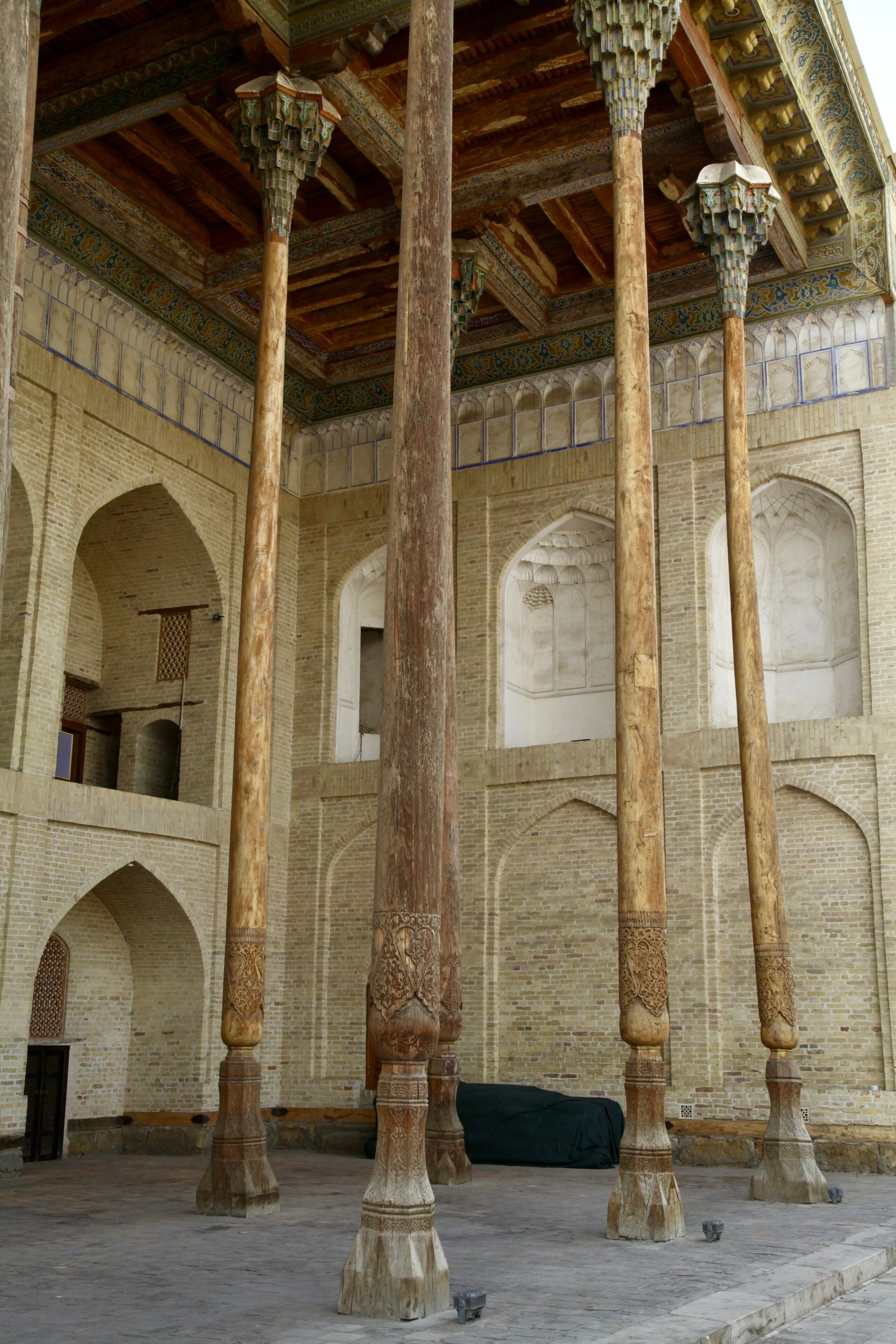
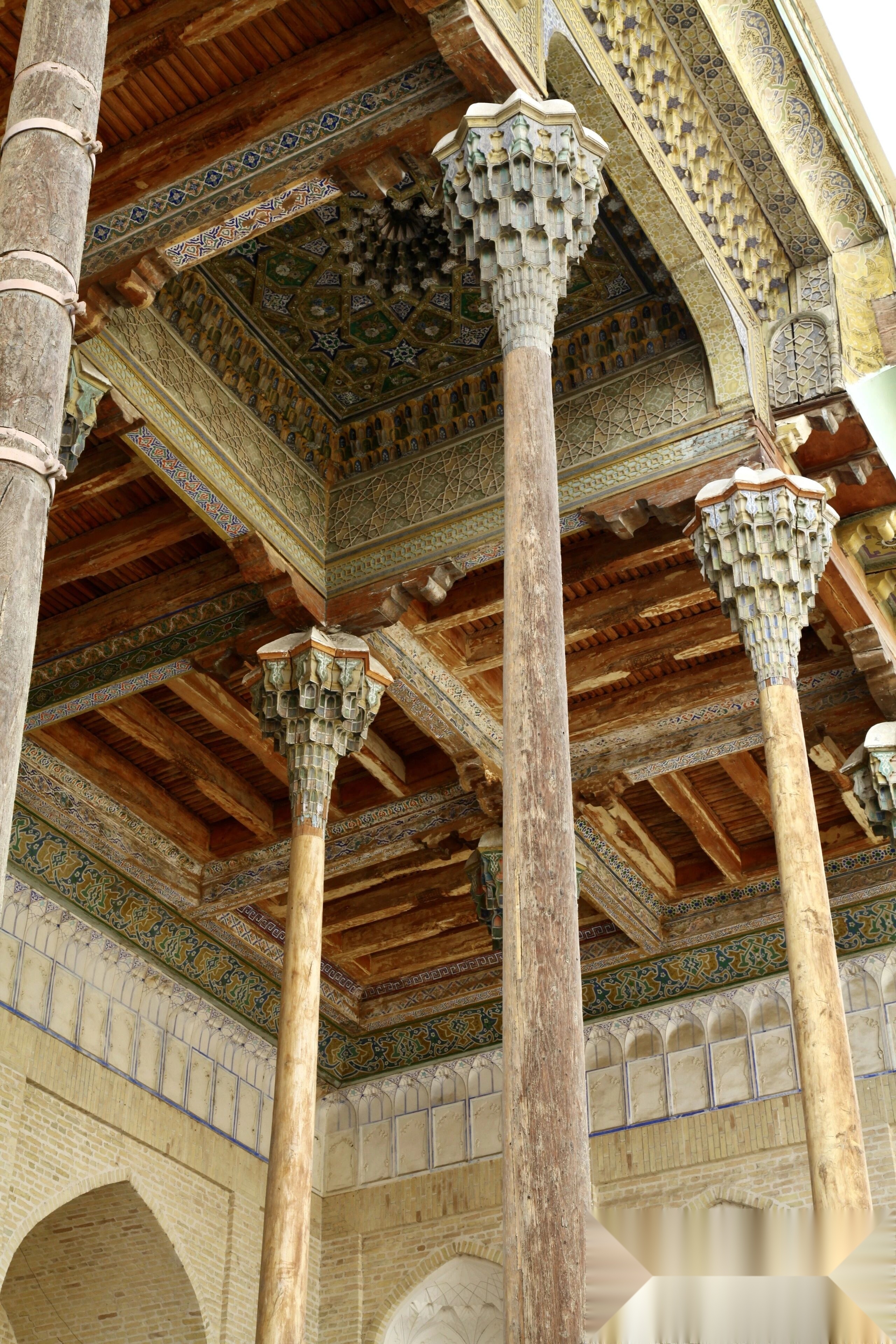
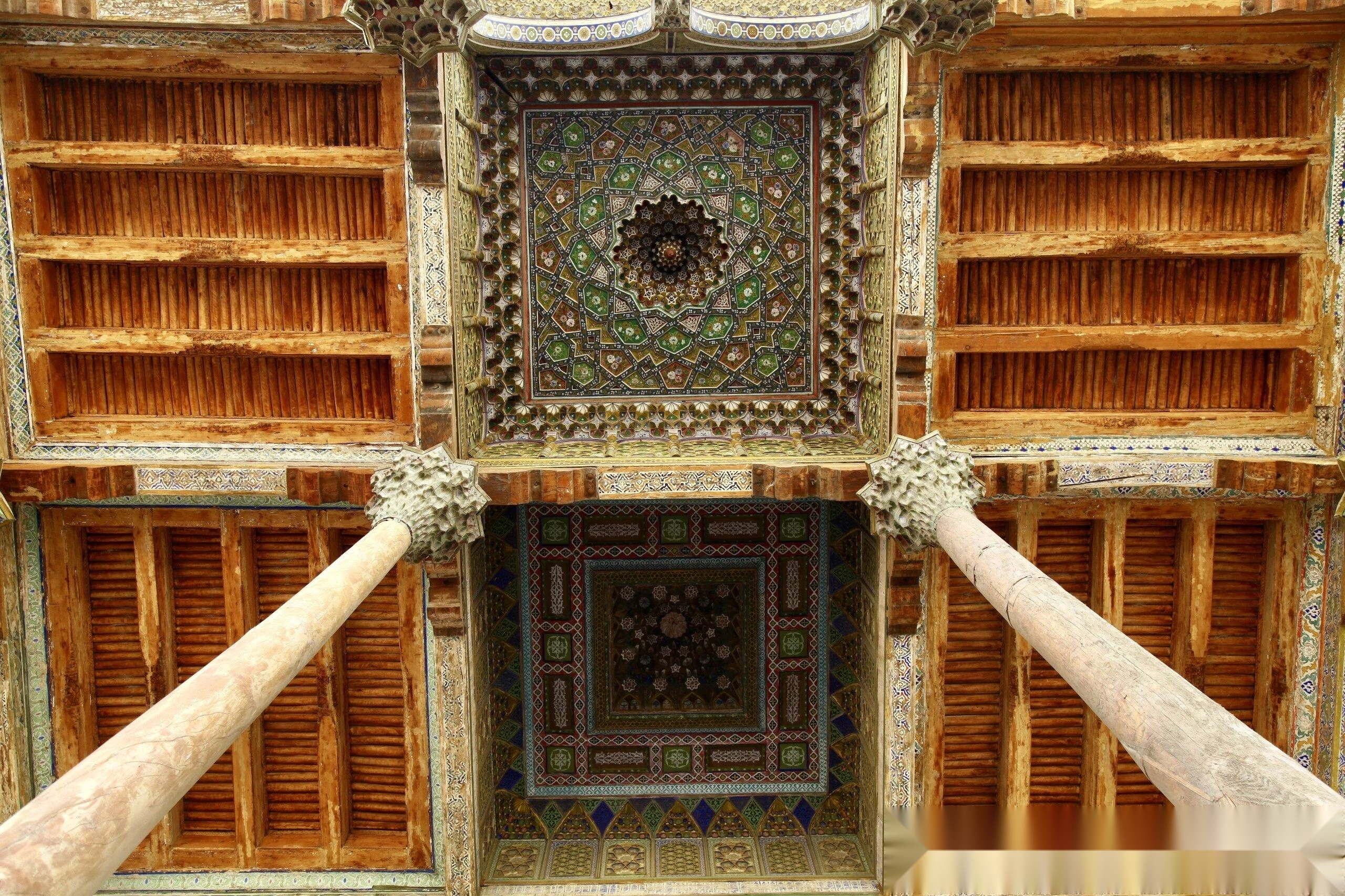
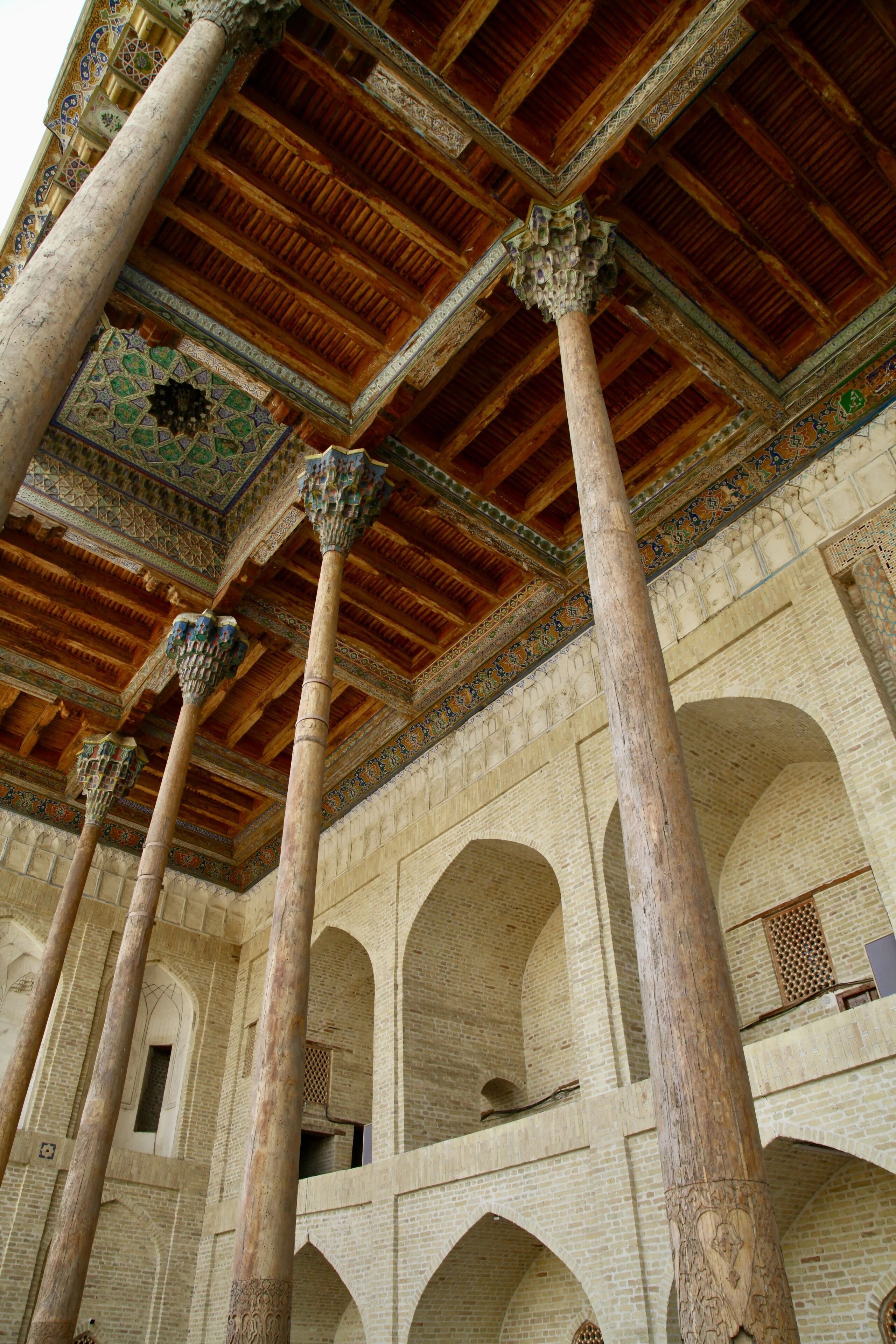
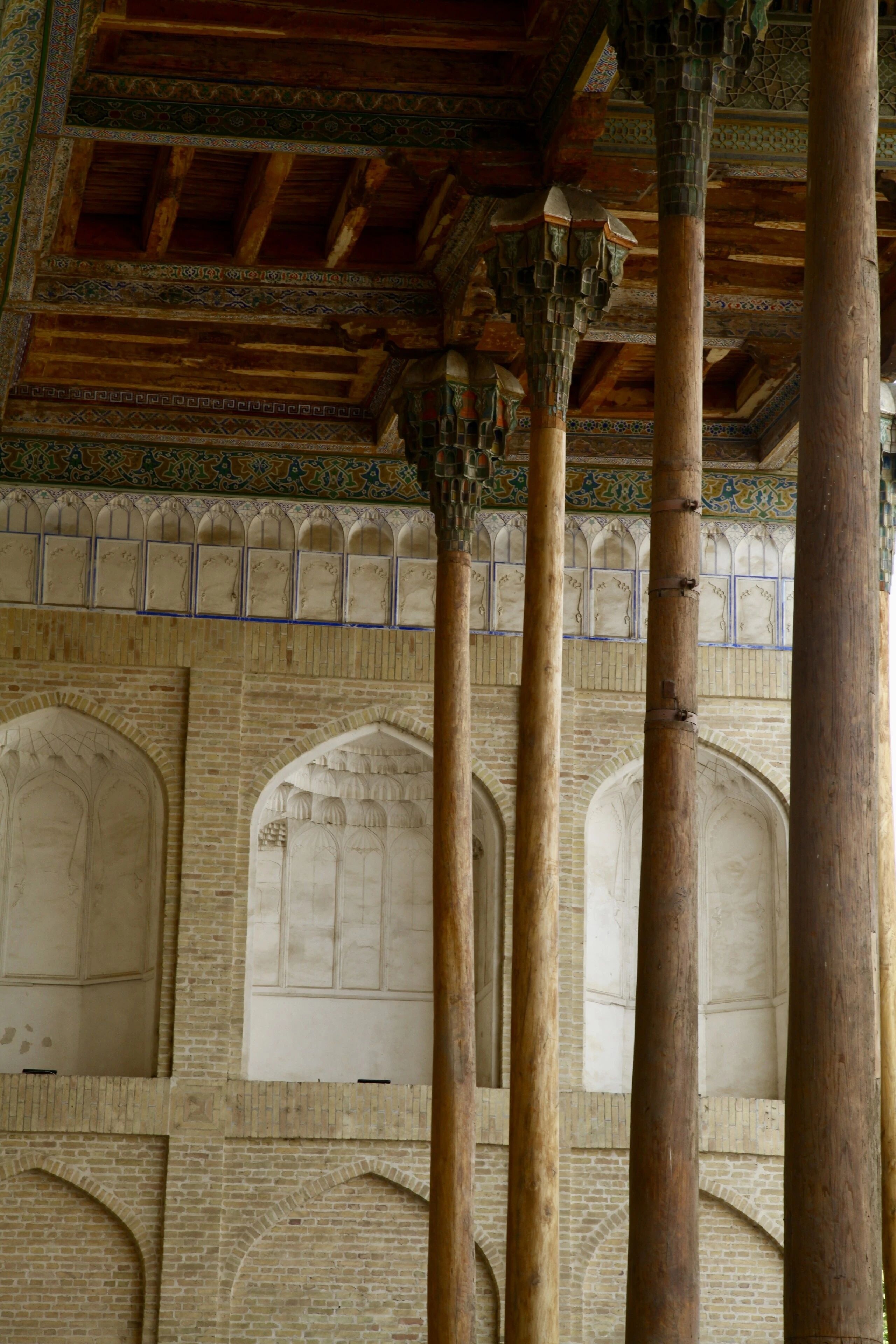
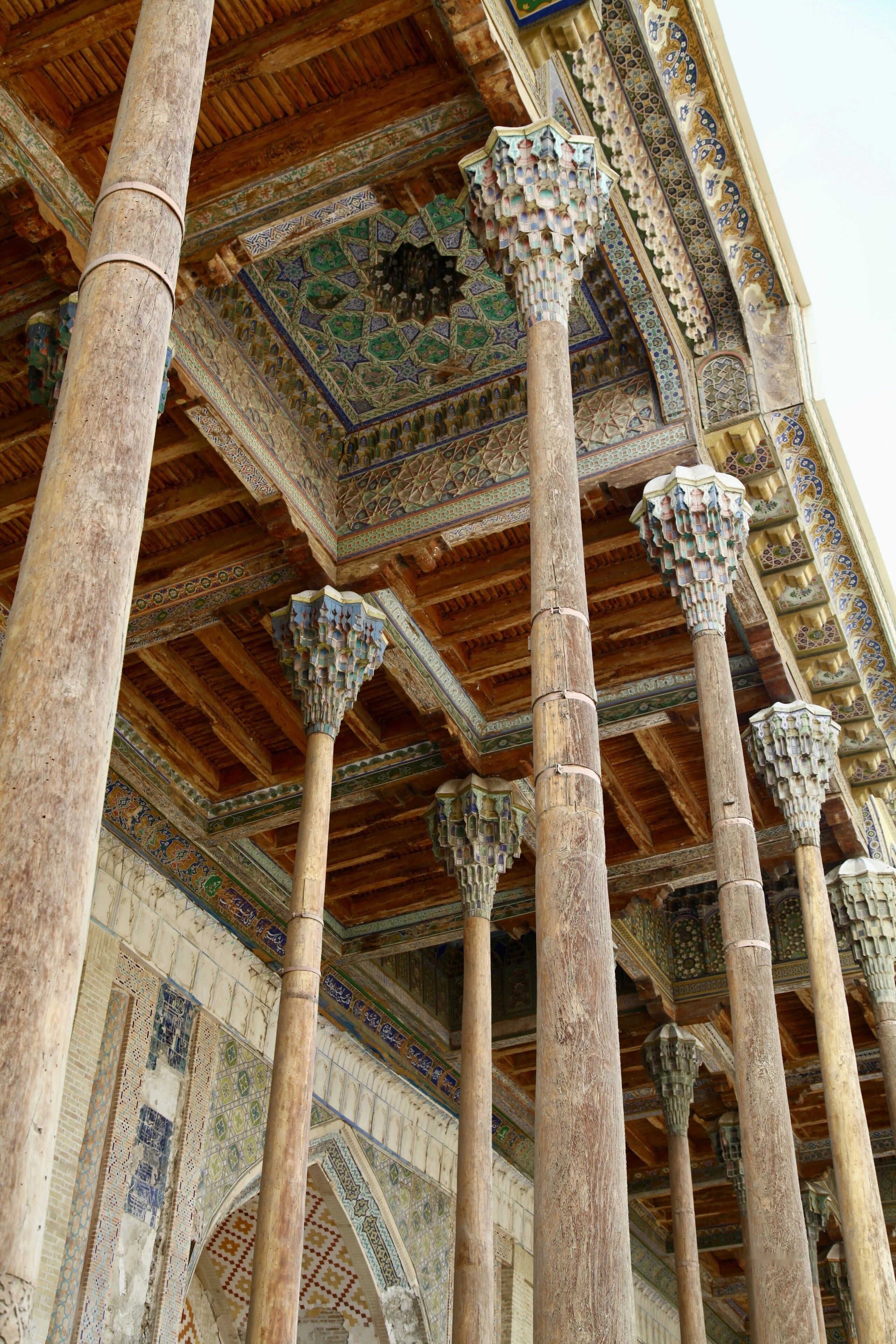
Even though you can't go inside the mosque, just checking out the 20 wooden columns and the ceiling from the outside is a feast for the eyes. The colonnade is supported by 20 slender wooden columns, which are tall and delicate with beautiful proportions and fine carvings. The surfaces are decorated with plant motifs, geometric patterns, and continuous carved designs, some featuring spiral or segmented decorations. The column capitals have muqarnas decorations resembling stalactites. Looking up, you'll see complex geometric patterns made of red, blue, green, and gold colors, where the wood carving and painting complement each other, creating a powerful decorative effect that demonstrates the superb level of Bukhara's traditional wood carving and painting craftsmanship.
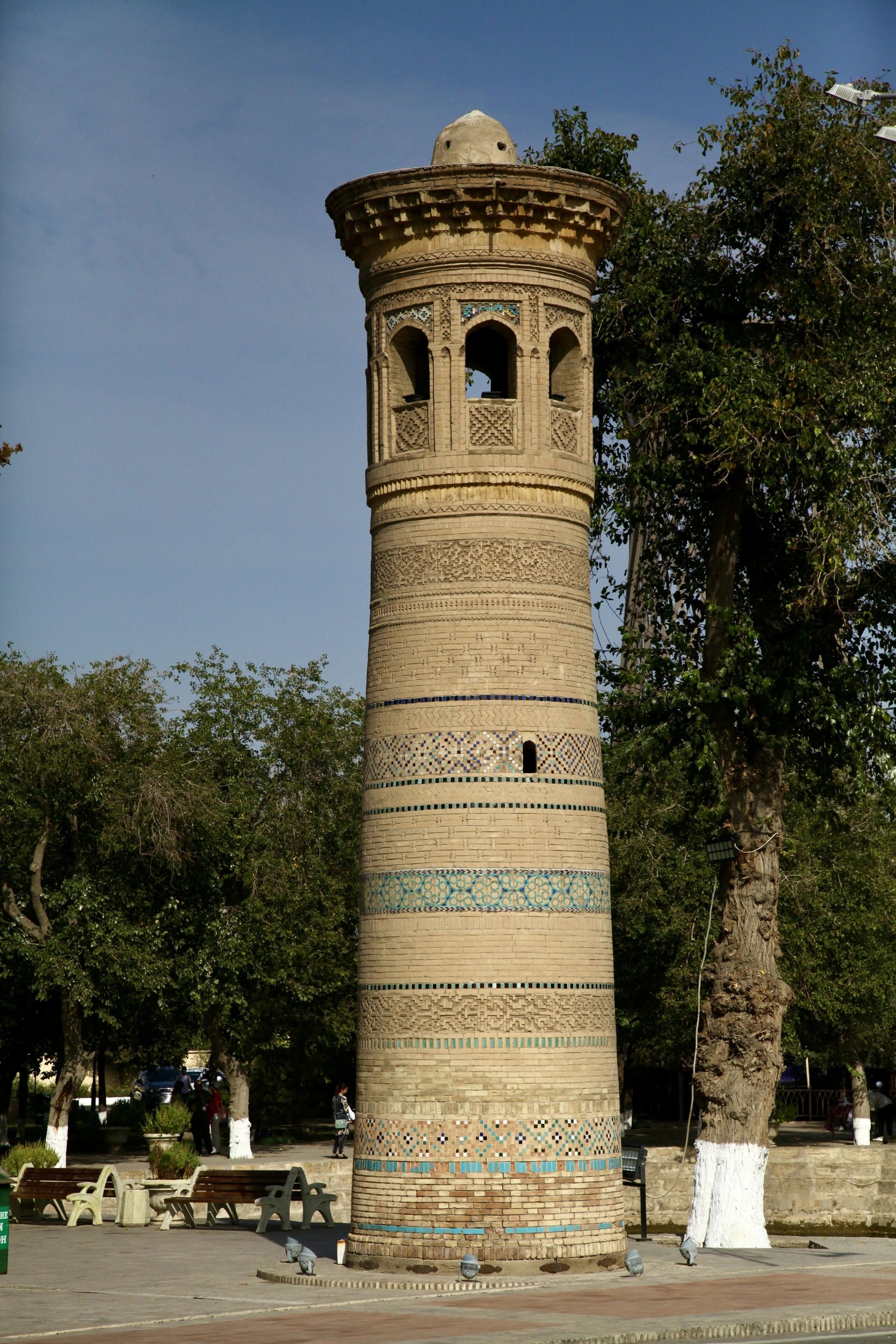
When the water's surface is calm, the reflections of the 20 wooden columns in the water make it look like there are 40 columns, which is why locals call it the 'Forty Column Mosque'. Next to the mosque, there's also a small minaret, built around 1917. The mosque, the pool, and the minaret together form a complete architectural ensemble. view all
Check out these 19 super high-definition photos giving you an in-depth look at Bukhara's famous old city landmark, the Bolo Hauz Mosque (Bolo Hauz Mosque). Built in 1712, these detailed shots capture the 20 intricately carved, brightly painted wooden columns, each unique and standing 12 meters tall, along with the wooden carved ceiling, the serene reflecting pool in front, and the octagonal minaret, showcasing the ultimate mastery of Islamic wood carving art.
After seeing so many traditional mosques in Bukhara, stepping up to the Bolo Hauz Mosque is a total game-changer. You can immediately tell its architectural style is completely different. Unlike other Bukhara mosques famous for their blue tiled domes, the Bolo Hauz Mosque's most striking features are its 20 tall carved wooden columns at the front, the vibrantly colored wooden ceiling, and the ancient pool in front that mirrors the mosque.
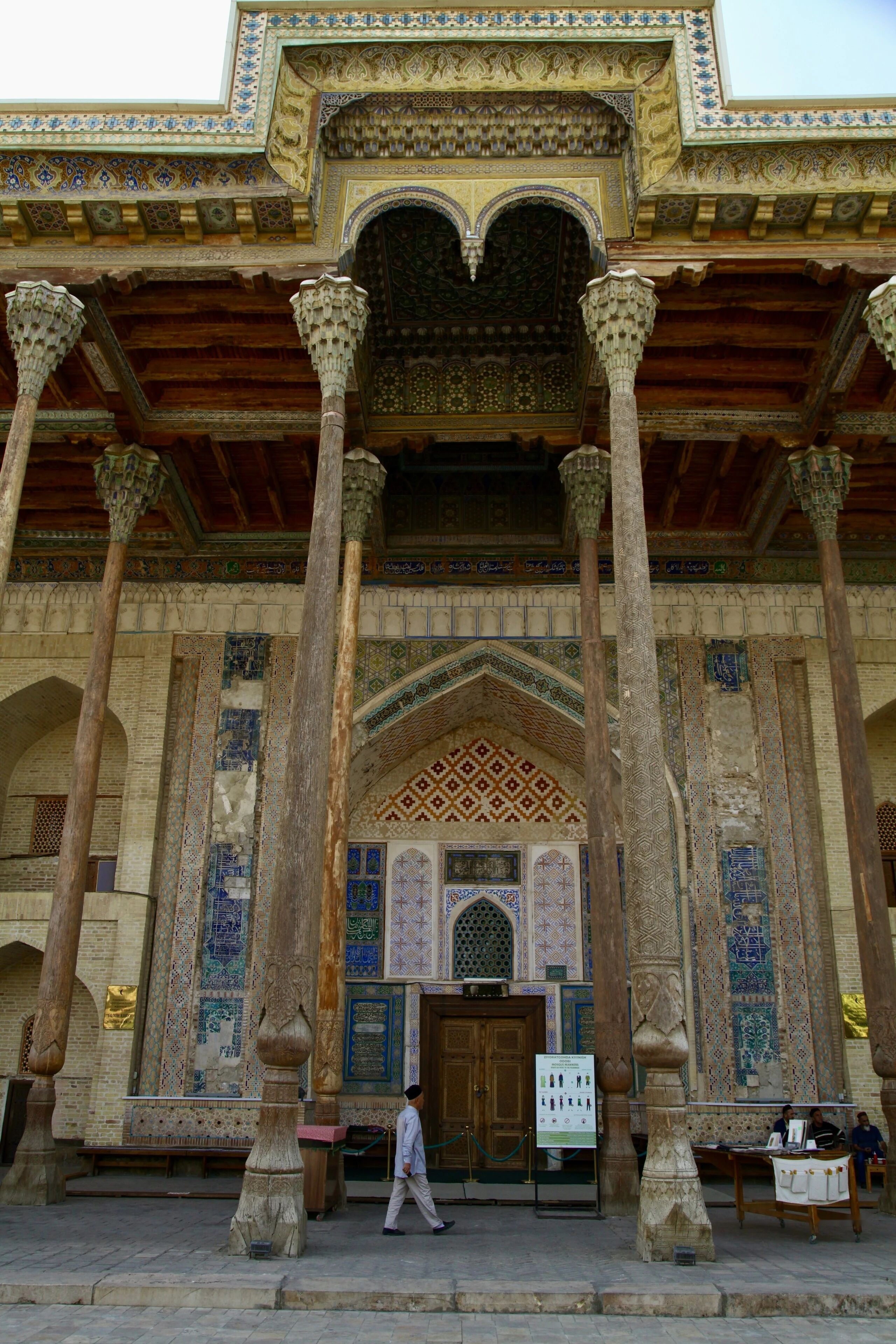
The mosque is located directly across from the Bukhara Citadel and was built in the early 18th century, showing strong Persian influences up close. The first thing you'll notice is the pool, which used to be for storing water back in the day. Standing on the opposite side of the pool to admire the full view of the building is amazing, especially at dusk when the soft sunlight hits the wooden columns and ceiling, and the water reflects the entire mosque – it's truly beautiful.
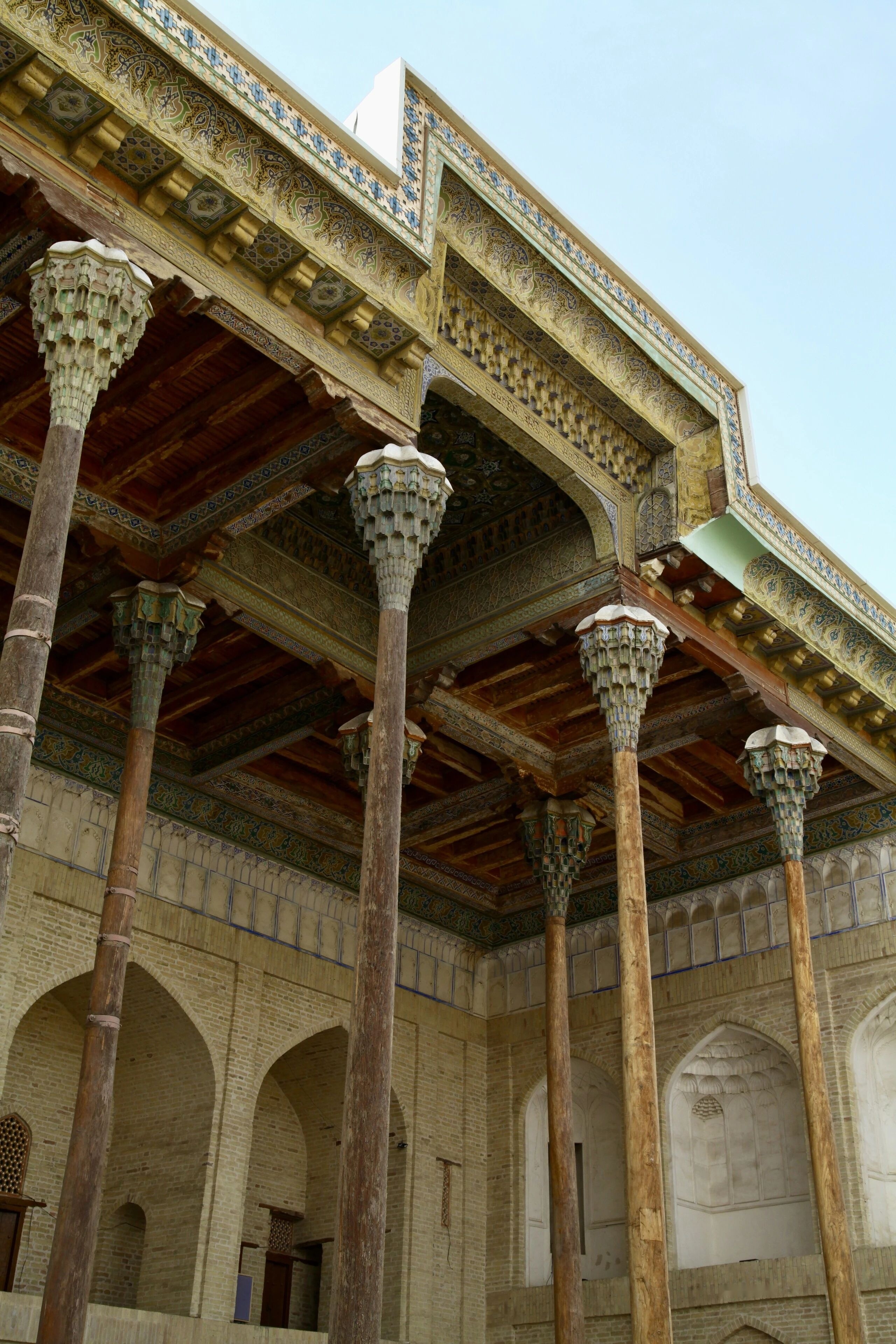
Even though you can't go inside the mosque, just checking out the 20 wooden columns and the ceiling from the outside is a feast for the eyes. The colonnade is supported by 20 slender wooden columns, which are tall and delicate with beautiful proportions and fine carvings. The surfaces are decorated with plant motifs, geometric patterns, and continuous carved designs, some featuring spiral or segmented decorations. The column capitals have muqarnas decorations resembling stalactites. Looking up, you'll see complex geometric patterns made of red, blue, green, and gold colors, where the wood carving and painting complement each other, creating a powerful decorative effect that demonstrates the superb level of Bukhara's traditional wood carving and painting craftsmanship.
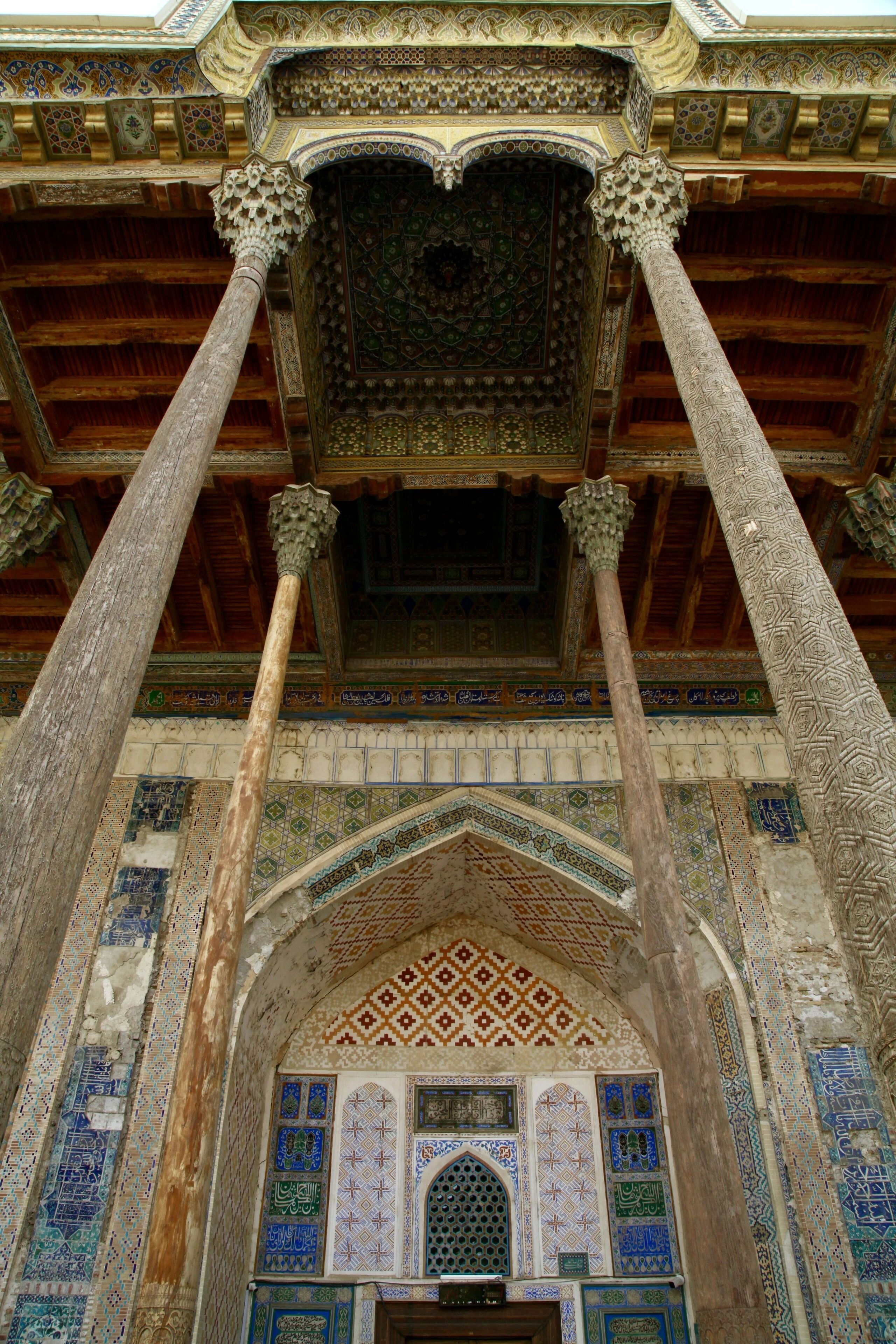
When the water's surface is calm, the reflections of the 20 wooden columns in the water make it look like there are 40 columns, which is why locals call it the 'Forty Column Mosque'. Next to the mosque, there's also a small minaret, built around 1917. The mosque, the pool, and the minaret together form a complete architectural ensemble.
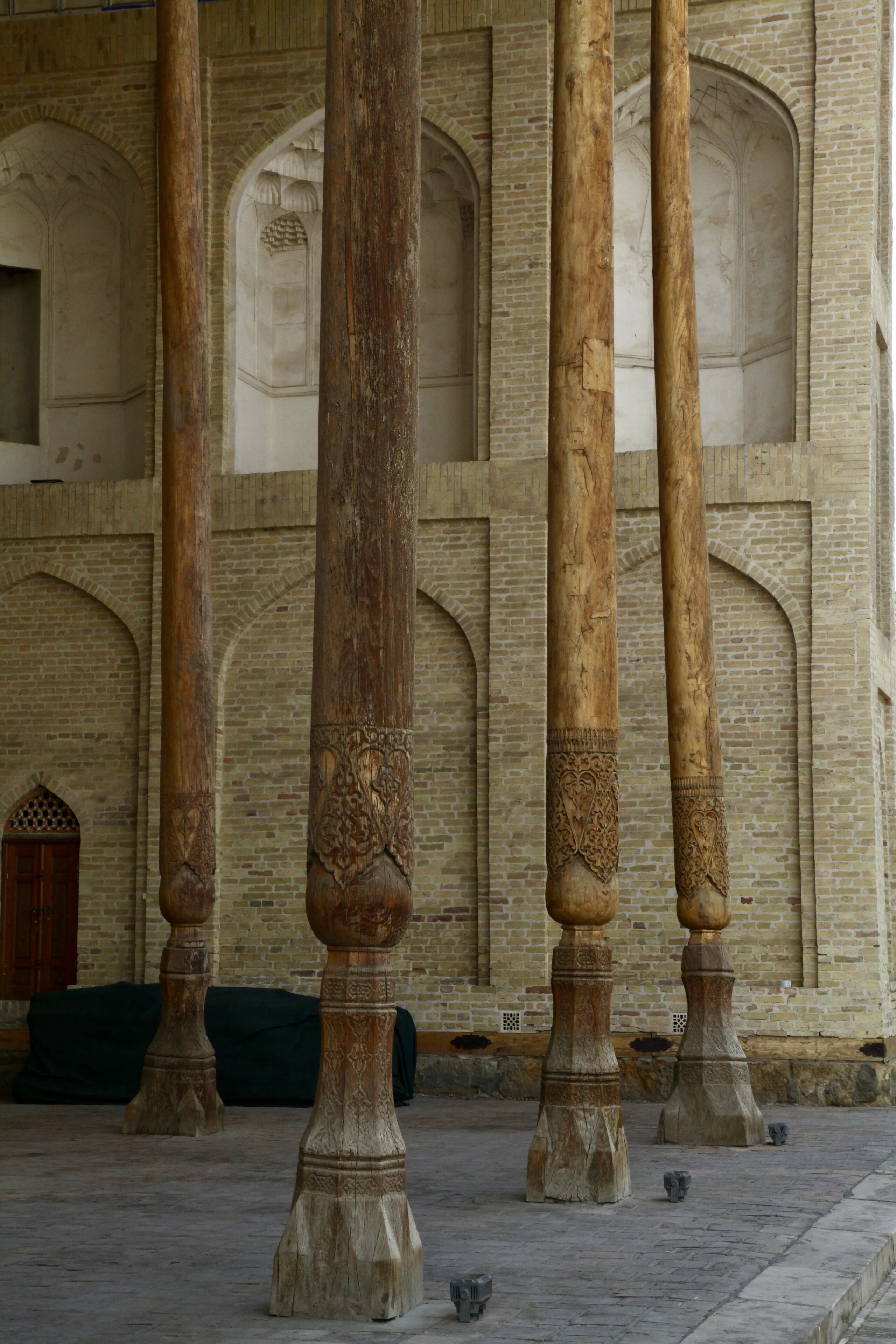


After seeing so many traditional mosques in Bukhara, stepping up to the Bolo Hauz Mosque is a total game-changer. You can immediately tell its architectural style is completely different. Unlike other Bukhara mosques famous for their blue tiled domes, the Bolo Hauz Mosque's most striking features are its 20 tall carved wooden columns at the front, the vibrantly colored wooden ceiling, and the ancient pool in front that mirrors the mosque.
The mosque is located directly across from the Bukhara Citadel and was built in the early 18th century, showing strong Persian influences up close. The first thing you'll notice is the pool, which used to be for storing water back in the day. Standing on the opposite side of the pool to admire the full view of the building is amazing, especially at dusk when the soft sunlight hits the wooden columns and ceiling, and the water reflects the entire mosque – it's truly beautiful.
Even though you can't go inside the mosque, just checking out the 20 wooden columns and the ceiling from the outside is a feast for the eyes. The colonnade is supported by 20 slender wooden columns, which are tall and delicate with beautiful proportions and fine carvings. The surfaces are decorated with plant motifs, geometric patterns, and continuous carved designs, some featuring spiral or segmented decorations. The column capitals have muqarnas decorations resembling stalactites. Looking up, you'll see complex geometric patterns made of red, blue, green, and gold colors, where the wood carving and painting complement each other, creating a powerful decorative effect that demonstrates the superb level of Bukhara's traditional wood carving and painting craftsmanship.
When the water's surface is calm, the reflections of the 20 wooden columns in the water make it look like there are 40 columns, which is why locals call it the 'Forty Column Mosque'. Next to the mosque, there's also a small minaret, built around 1917. The mosque, the pool, and the minaret together form a complete architectural ensemble.
Bolo Hauz Mosque Uzbekistan: 18th Century Wood Carving Marvel with 20 Intricate Columns
Articles • Hasan09 posted the article • 0 comments • 6 views • 3 hours ago
Check out these 19 super high-definition photos giving you an in-depth look at Bukhara's famous old city landmark, the Bolo Hauz Mosque (Bolo Hauz Mosque). Built in 1712, these detailed shots capture the 20 intricately carved, brightly painted wooden columns, each unique and standing 12 meters tall, along with the wooden carved ceiling, the serene reflecting pool in front, and the octagonal minaret, showcasing the ultimate mastery of Islamic wood carving art.
After seeing so many traditional mosques in Bukhara, stepping up to the Bolo Hauz Mosque is a total game-changer. You can immediately tell its architectural style is completely different. Unlike other Bukhara mosques famous for their blue tiled domes, the Bolo Hauz Mosque's most striking features are its 20 tall carved wooden columns at the front, the vibrantly colored wooden ceiling, and the ancient pool in front that mirrors the mosque.
The mosque is located directly across from the Bukhara Citadel and was built in the early 18th century, showing strong Persian influences up close. The first thing you'll notice is the pool, which used to be for storing water back in the day. Standing on the opposite side of the pool to admire the full view of the building is amazing, especially at dusk when the soft sunlight hits the wooden columns and ceiling, and the water reflects the entire mosque – it's truly beautiful.
Even though you can't go inside the mosque, just checking out the 20 wooden columns and the ceiling from the outside is a feast for the eyes. The colonnade is supported by 20 slender wooden columns, which are tall and delicate with beautiful proportions and fine carvings. The surfaces are decorated with plant motifs, geometric patterns, and continuous carved designs, some featuring spiral or segmented decorations. The column capitals have muqarnas decorations resembling stalactites. Looking up, you'll see complex geometric patterns made of red, blue, green, and gold colors, where the wood carving and painting complement each other, creating a powerful decorative effect that demonstrates the superb level of Bukhara's traditional wood carving and painting craftsmanship.
When the water's surface is calm, the reflections of the 20 wooden columns in the water make it look like there are 40 columns, which is why locals call it the 'Forty Column Mosque'. Next to the mosque, there's also a small minaret, built around 1917. The mosque, the pool, and the minaret together form a complete architectural ensemble. view all
After seeing so many traditional mosques in Bukhara, stepping up to the Bolo Hauz Mosque is a total game-changer. You can immediately tell its architectural style is completely different. Unlike other Bukhara mosques famous for their blue tiled domes, the Bolo Hauz Mosque's most striking features are its 20 tall carved wooden columns at the front, the vibrantly colored wooden ceiling, and the ancient pool in front that mirrors the mosque.
The mosque is located directly across from the Bukhara Citadel and was built in the early 18th century, showing strong Persian influences up close. The first thing you'll notice is the pool, which used to be for storing water back in the day. Standing on the opposite side of the pool to admire the full view of the building is amazing, especially at dusk when the soft sunlight hits the wooden columns and ceiling, and the water reflects the entire mosque – it's truly beautiful.
Even though you can't go inside the mosque, just checking out the 20 wooden columns and the ceiling from the outside is a feast for the eyes. The colonnade is supported by 20 slender wooden columns, which are tall and delicate with beautiful proportions and fine carvings. The surfaces are decorated with plant motifs, geometric patterns, and continuous carved designs, some featuring spiral or segmented decorations. The column capitals have muqarnas decorations resembling stalactites. Looking up, you'll see complex geometric patterns made of red, blue, green, and gold colors, where the wood carving and painting complement each other, creating a powerful decorative effect that demonstrates the superb level of Bukhara's traditional wood carving and painting craftsmanship.
When the water's surface is calm, the reflections of the 20 wooden columns in the water make it look like there are 40 columns, which is why locals call it the 'Forty Column Mosque'. Next to the mosque, there's also a small minaret, built around 1917. The mosque, the pool, and the minaret together form a complete architectural ensemble. view all
Check out these 19 super high-definition photos giving you an in-depth look at Bukhara's famous old city landmark, the Bolo Hauz Mosque (Bolo Hauz Mosque). Built in 1712, these detailed shots capture the 20 intricately carved, brightly painted wooden columns, each unique and standing 12 meters tall, along with the wooden carved ceiling, the serene reflecting pool in front, and the octagonal minaret, showcasing the ultimate mastery of Islamic wood carving art.
After seeing so many traditional mosques in Bukhara, stepping up to the Bolo Hauz Mosque is a total game-changer. You can immediately tell its architectural style is completely different. Unlike other Bukhara mosques famous for their blue tiled domes, the Bolo Hauz Mosque's most striking features are its 20 tall carved wooden columns at the front, the vibrantly colored wooden ceiling, and the ancient pool in front that mirrors the mosque.
The mosque is located directly across from the Bukhara Citadel and was built in the early 18th century, showing strong Persian influences up close. The first thing you'll notice is the pool, which used to be for storing water back in the day. Standing on the opposite side of the pool to admire the full view of the building is amazing, especially at dusk when the soft sunlight hits the wooden columns and ceiling, and the water reflects the entire mosque – it's truly beautiful.
Even though you can't go inside the mosque, just checking out the 20 wooden columns and the ceiling from the outside is a feast for the eyes. The colonnade is supported by 20 slender wooden columns, which are tall and delicate with beautiful proportions and fine carvings. The surfaces are decorated with plant motifs, geometric patterns, and continuous carved designs, some featuring spiral or segmented decorations. The column capitals have muqarnas decorations resembling stalactites. Looking up, you'll see complex geometric patterns made of red, blue, green, and gold colors, where the wood carving and painting complement each other, creating a powerful decorative effect that demonstrates the superb level of Bukhara's traditional wood carving and painting craftsmanship.
When the water's surface is calm, the reflections of the 20 wooden columns in the water make it look like there are 40 columns, which is why locals call it the 'Forty Column Mosque'. Next to the mosque, there's also a small minaret, built around 1917. The mosque, the pool, and the minaret together form a complete architectural ensemble.