

Busan Mosque
Muslim Travel Guide Korea Busan: Busan Mosque, Turkish Imam, Friday Prayer and Muslim Community
Articles • yusuf908 posted the article • 0 comments • 235 views • 2026-05-23 22:23
Reposted from the web
Summary: This Korea Muslim travel guide visits Busan Mosque, describing the quiet neighborhood, Turkish-style interior, TIKA renovation note, conversations with the imam from Turkiye, Friday prayer, Muslims from Uzbekistan, Korean converts, and a later stop by the sea.
After staying in Seoul for about eight days, I planned to visit other places in Korea. I took a train from Seoul Station and arrived in Busan, the second largest city in Korea, in a few hours. Although it is the second largest, there is indeed a lot of difference between the second largest and the first largest.
Busan does not look very big, it can only be said to be a medium-sized city. If Seoul is equivalent to Beijing or Shanghai, then Busan can only be said to be equivalent to Qingdao.
I checked into a hotel in downtown Busan. At the same price, the accommodation environment was much better than in Seoul. After that, I set off to the largest mosque in Busan. This mosque is a little far from the actual city. In fact, there are mosques in Busan city, but they are very small.
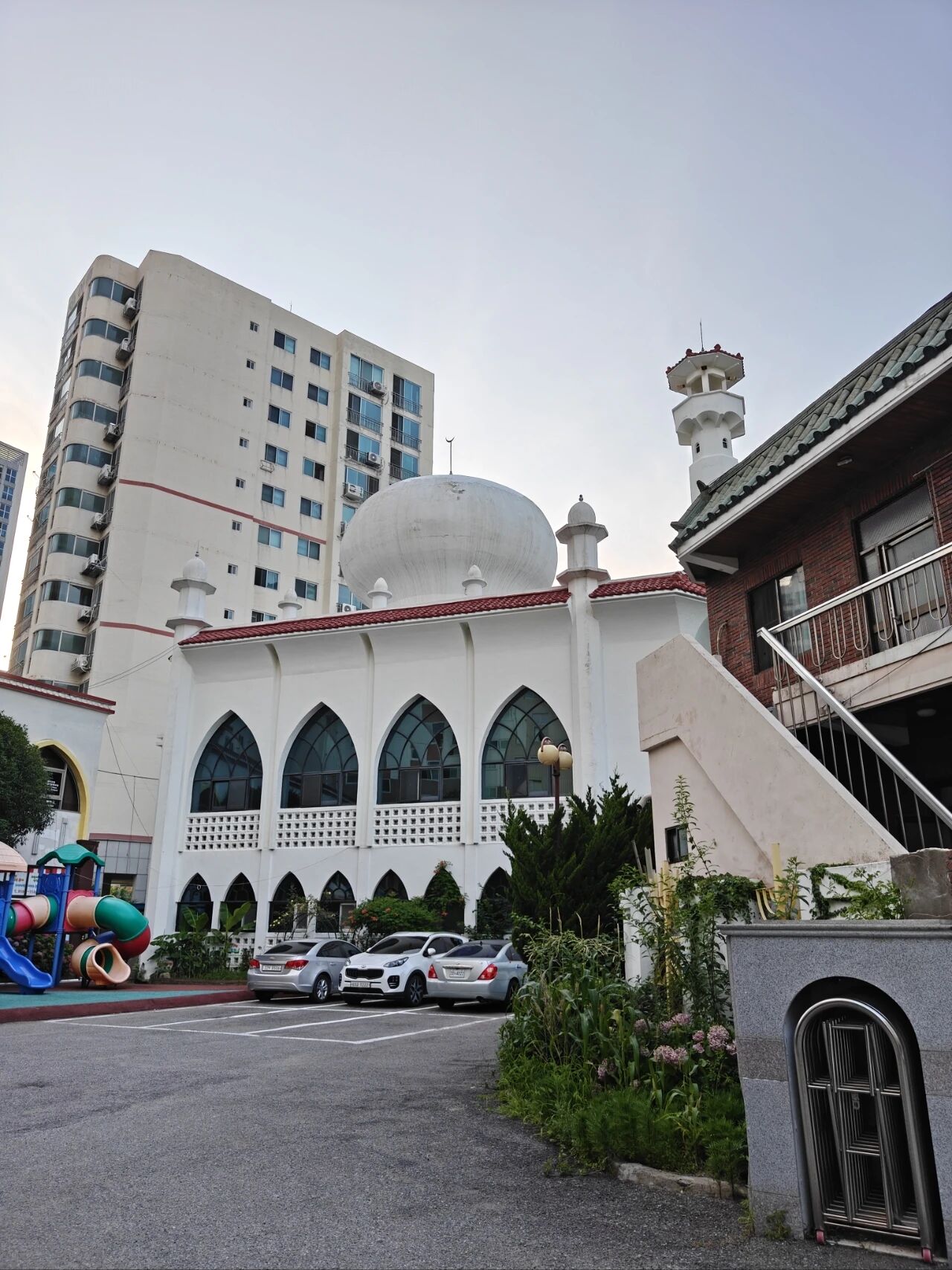
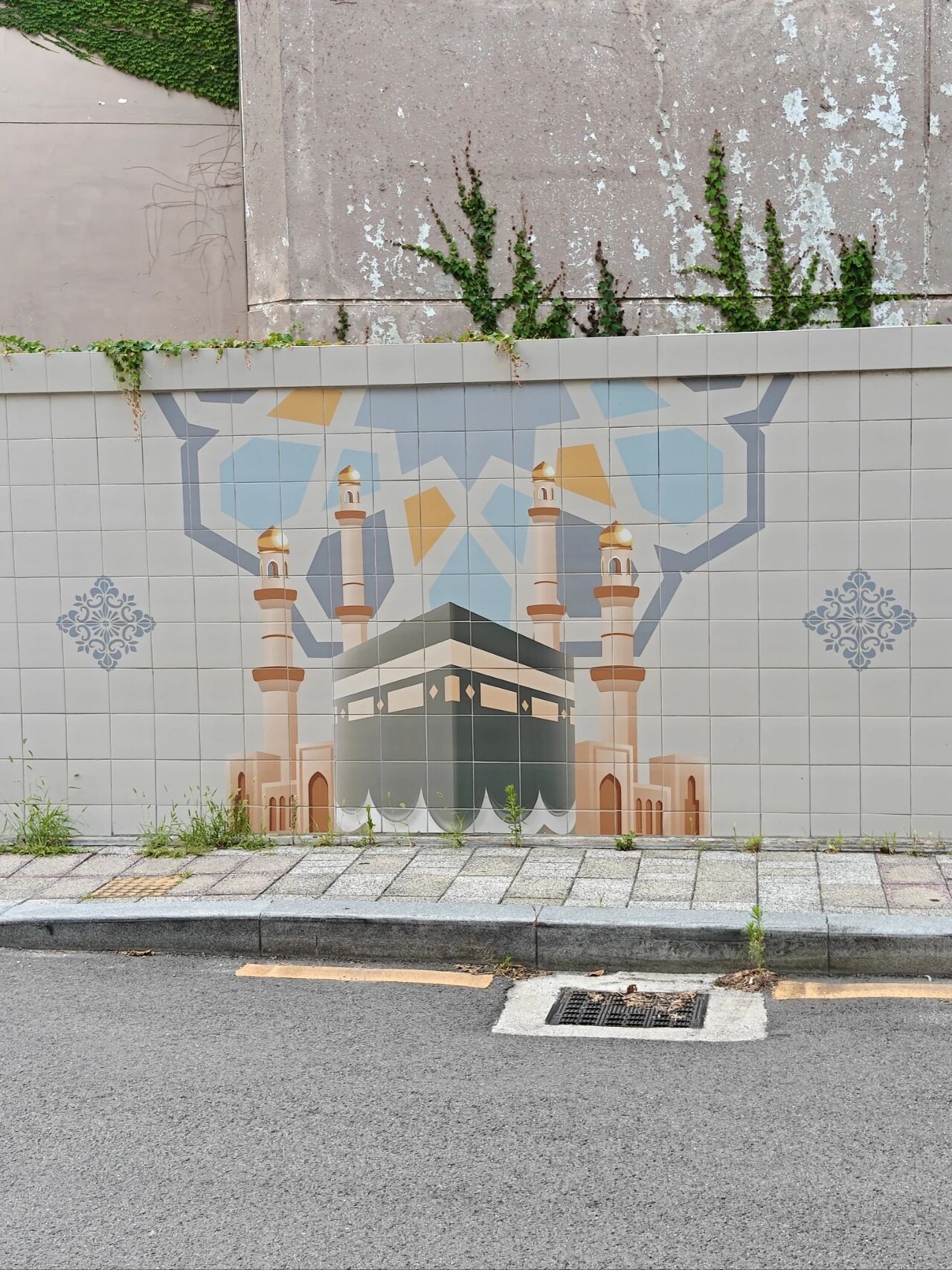
After taking the subway for several stops, we almost arrived at the Busan Mosque. The environment here is quiet and quiet, without the hustle and bustle of the city. You can also see Islamic-themed wall paintings around the mosque (picture 2). There is also a kindergarten in the courtyard of the mosque, but I later learned that it has nothing to do with the mosque.
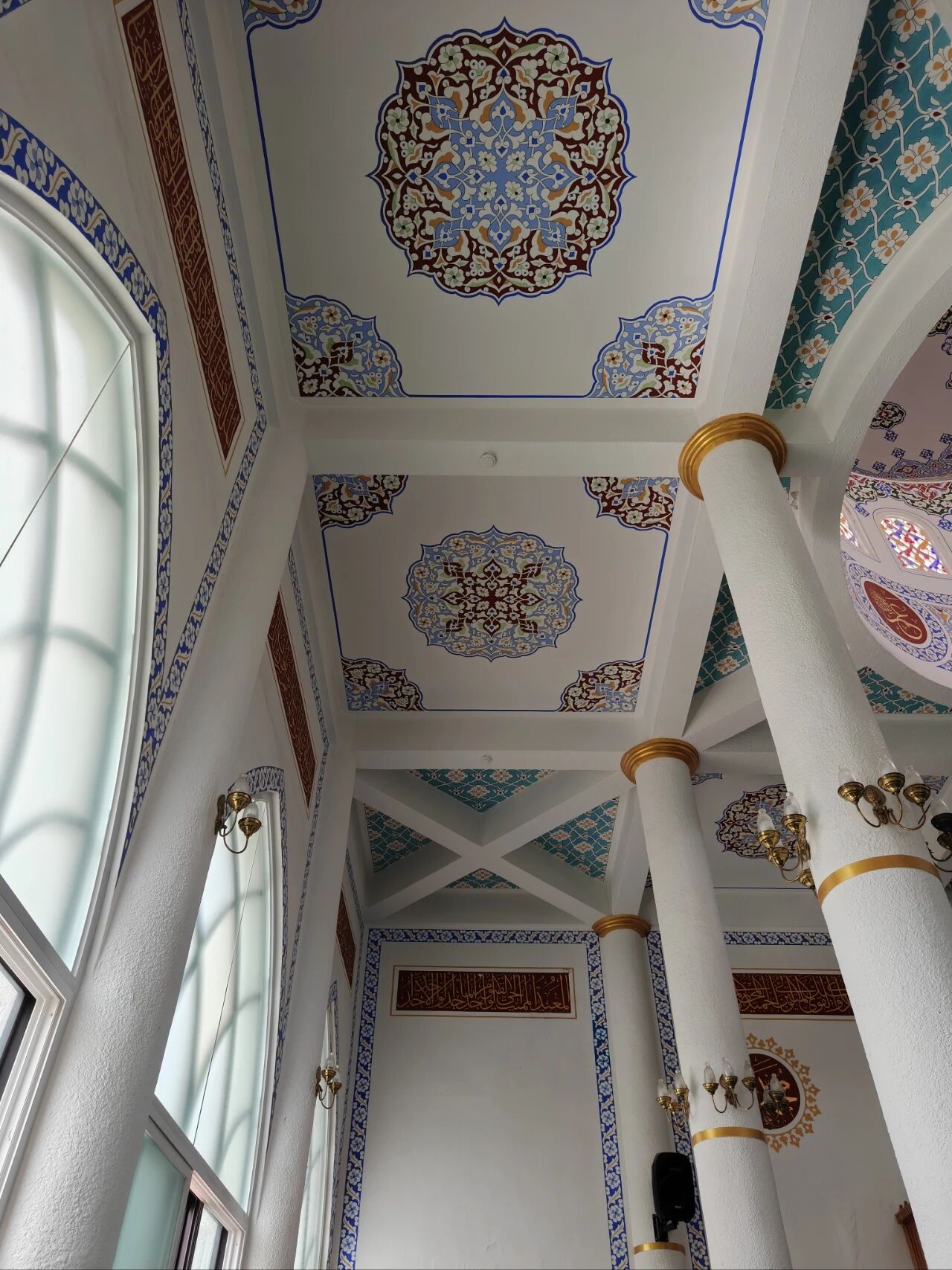
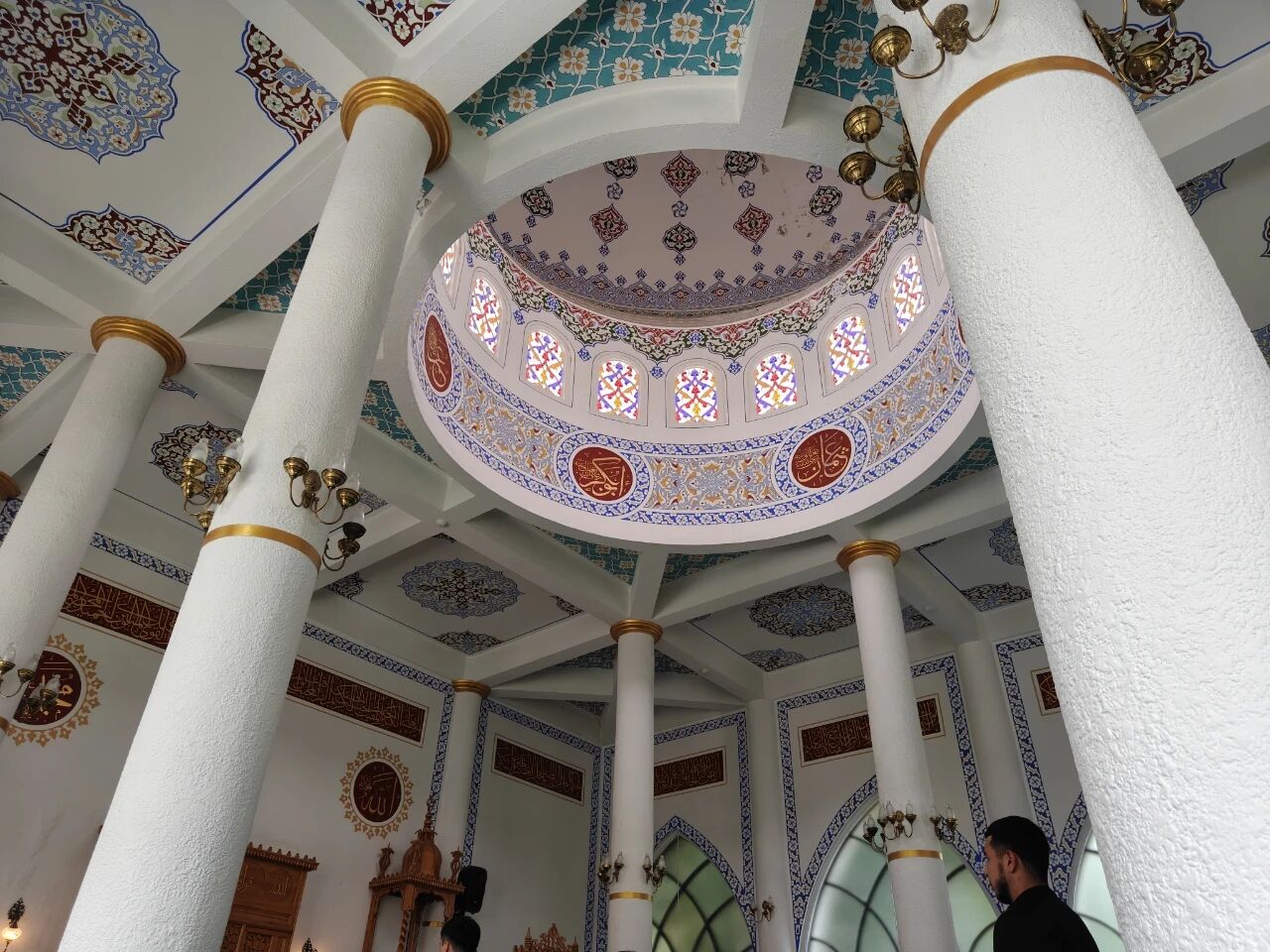
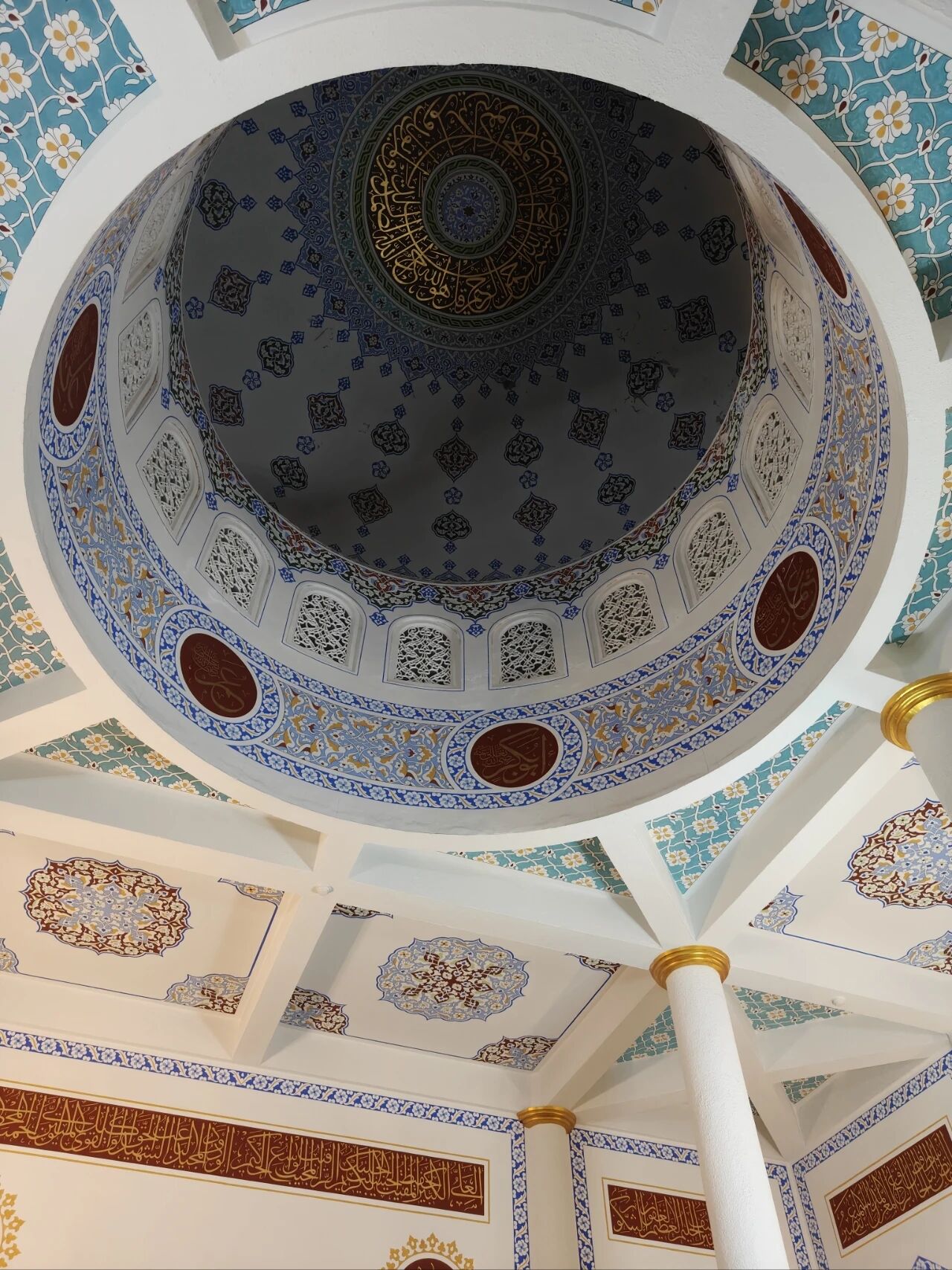
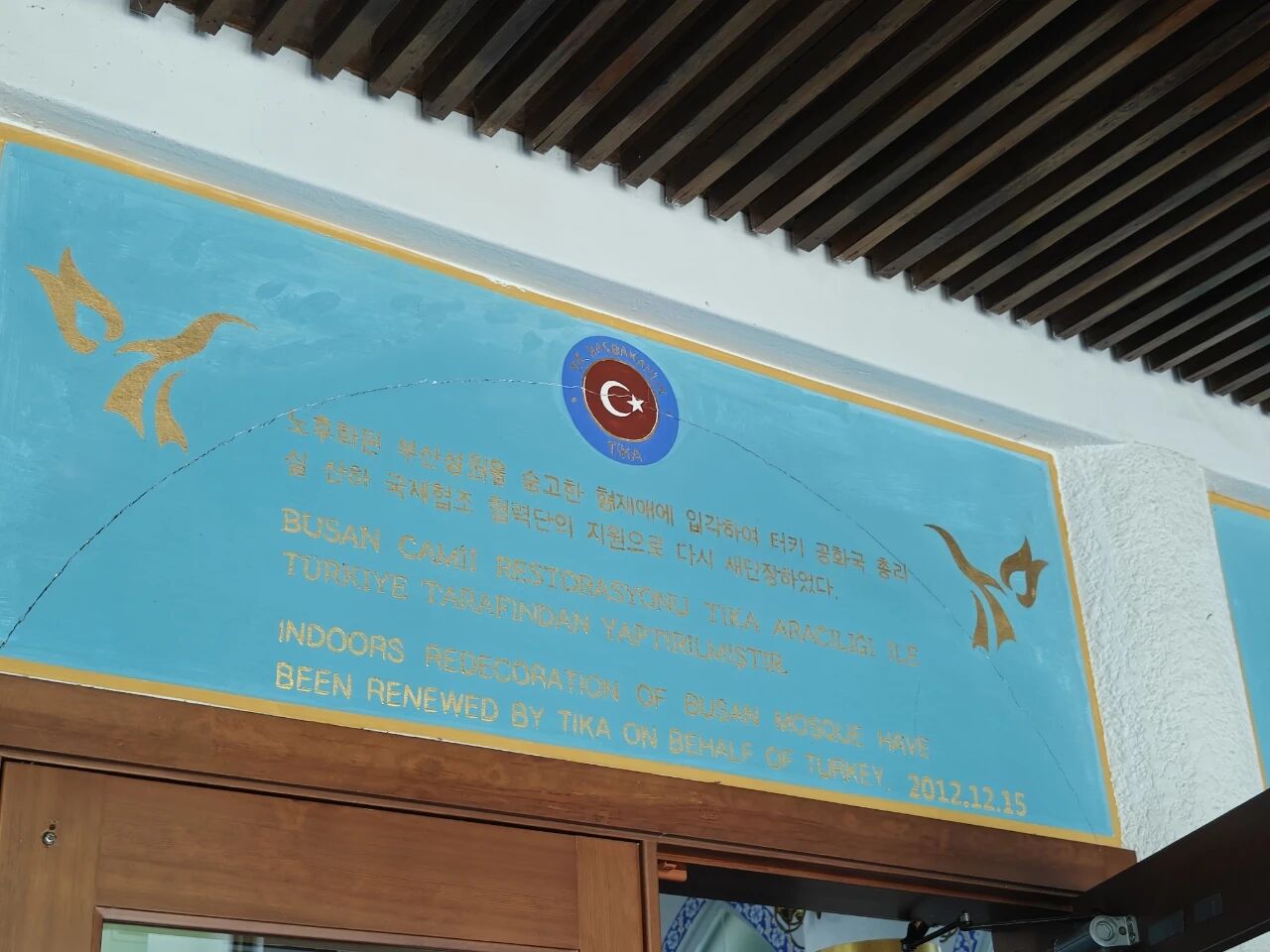
The wudu area and toilet are on the first floor, just below the steps from the mosque into the prayer hall. the prayer hall is also painted in Turkish style. On the door of the prayer hall, it is written in Korean, Turkish and English that "TIKA maintains and updates the interior decoration of the Busan Mosque on behalf of Turkiye."
So what kind of organization is this TIKA? I found out it was the Turkish Cooperation and Coordination Agency, which is Turkiye's overseas aid organization.
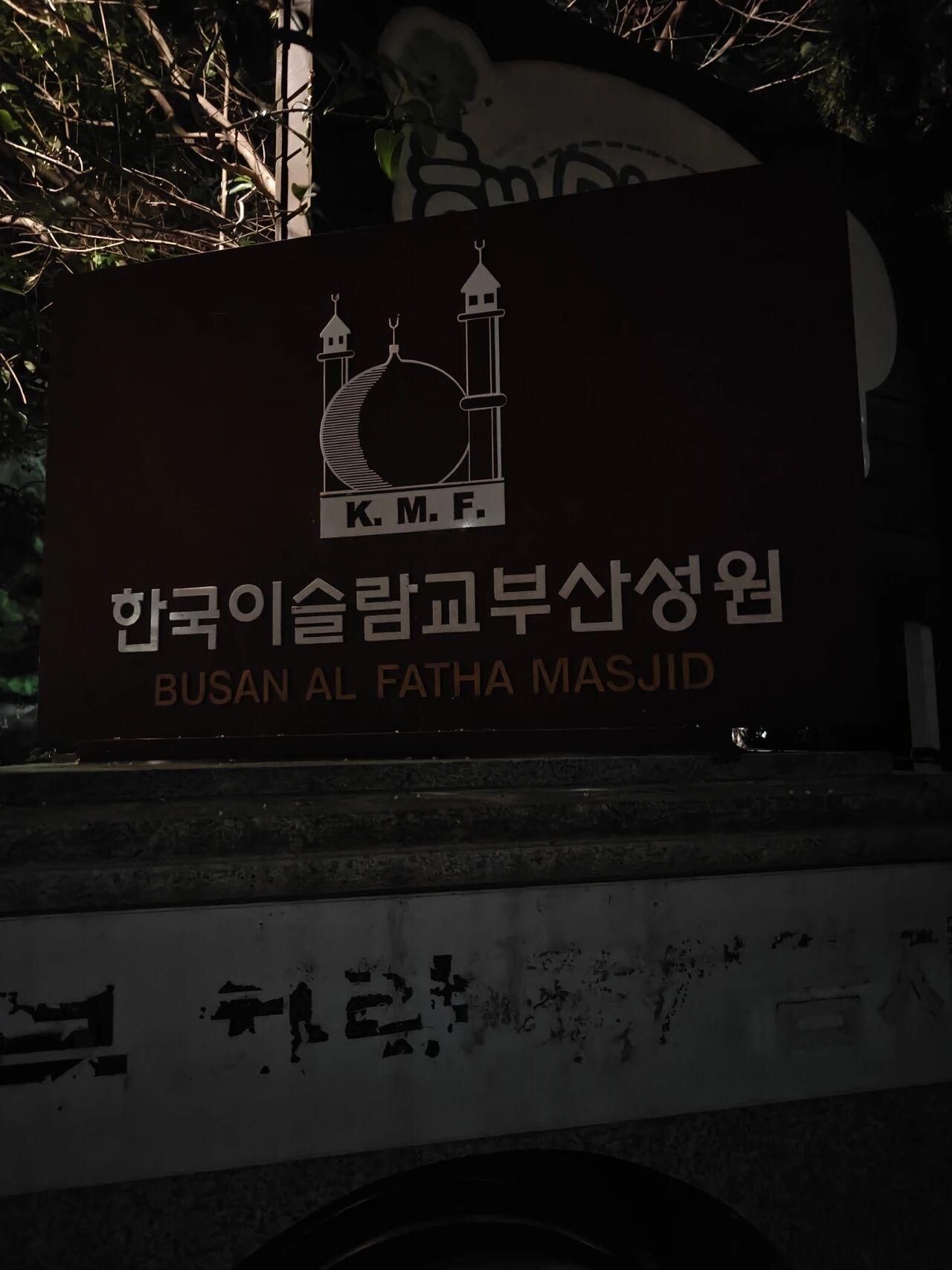
The full name of the place is also written on the door of the mosque (Picture 8): Busan Fateh (Beginning) Mosque.
There were not many people in the prayer hall, except for a Korean uncle, and most of them did not have East Asian faces, so I seemed a bit conspicuous. The imam who was born in Turkiye asked me where I was from, and I answered China. After salah he asked me to sit in his office for a while.
When we arrived at the office, we started chatting using translation software. As we chatted about politics, the imam said that there are two big countries in the world, one is the United States and the other is China, and China is gaining the upper hand.
Then the imam asked me some information about China, such as the average salary in Shanghai. He said it turned out to be similar to Turkiye. Maybe he thought the Chinese earned higher wages than the Turks. It was getting late at that time, and we separated after chatting for more than an hour.
The next day was Friday prayer day, and I came to the Busan Mosque again. Because it was a gathering day, there were many people in the prayer hall. The imam said that most of the people who came here were from Uzbekistan and other countries. There are some Koreans who have accepted Islam, but not many.
After the prayer, I left the Busan Mosque and went to the famous Mipo in Busan to watch the sea. view all
Summary: This Korea Muslim travel guide visits Busan Mosque, describing the quiet neighborhood, Turkish-style interior, TIKA renovation note, conversations with the imam from Turkiye, Friday prayer, Muslims from Uzbekistan, Korean converts, and a later stop by the sea.
After staying in Seoul for about eight days, I planned to visit other places in Korea. I took a train from Seoul Station and arrived in Busan, the second largest city in Korea, in a few hours. Although it is the second largest, there is indeed a lot of difference between the second largest and the first largest.
Busan does not look very big, it can only be said to be a medium-sized city. If Seoul is equivalent to Beijing or Shanghai, then Busan can only be said to be equivalent to Qingdao.
I checked into a hotel in downtown Busan. At the same price, the accommodation environment was much better than in Seoul. After that, I set off to the largest mosque in Busan. This mosque is a little far from the actual city. In fact, there are mosques in Busan city, but they are very small.
After taking the subway for several stops, we almost arrived at the Busan Mosque. The environment here is quiet and quiet, without the hustle and bustle of the city. You can also see Islamic-themed wall paintings around the mosque (picture 2). There is also a kindergarten in the courtyard of the mosque, but I later learned that it has nothing to do with the mosque.
The wudu area and toilet are on the first floor, just below the steps from the mosque into the prayer hall. the prayer hall is also painted in Turkish style. On the door of the prayer hall, it is written in Korean, Turkish and English that "TIKA maintains and updates the interior decoration of the Busan Mosque on behalf of Turkiye."
So what kind of organization is this TIKA? I found out it was the Turkish Cooperation and Coordination Agency, which is Turkiye's overseas aid organization.
The full name of the place is also written on the door of the mosque (Picture 8): Busan Fateh (Beginning) Mosque.
There were not many people in the prayer hall, except for a Korean uncle, and most of them did not have East Asian faces, so I seemed a bit conspicuous. The imam who was born in Turkiye asked me where I was from, and I answered China. After salah he asked me to sit in his office for a while.
When we arrived at the office, we started chatting using translation software. As we chatted about politics, the imam said that there are two big countries in the world, one is the United States and the other is China, and China is gaining the upper hand.
Then the imam asked me some information about China, such as the average salary in Shanghai. He said it turned out to be similar to Turkiye. Maybe he thought the Chinese earned higher wages than the Turks. It was getting late at that time, and we separated after chatting for more than an hour.
The next day was Friday prayer day, and I came to the Busan Mosque again. Because it was a gathering day, there were many people in the prayer hall. The imam said that most of the people who came here were from Uzbekistan and other countries. There are some Koreans who have accepted Islam, but not many.
After the prayer, I left the Busan Mosque and went to the famous Mipo in Busan to watch the sea. view all
Reposted from the web
Summary: This Korea Muslim travel guide visits Busan Mosque, describing the quiet neighborhood, Turkish-style interior, TIKA renovation note, conversations with the imam from Turkiye, Friday prayer, Muslims from Uzbekistan, Korean converts, and a later stop by the sea.
After staying in Seoul for about eight days, I planned to visit other places in Korea. I took a train from Seoul Station and arrived in Busan, the second largest city in Korea, in a few hours. Although it is the second largest, there is indeed a lot of difference between the second largest and the first largest.
Busan does not look very big, it can only be said to be a medium-sized city. If Seoul is equivalent to Beijing or Shanghai, then Busan can only be said to be equivalent to Qingdao.
I checked into a hotel in downtown Busan. At the same price, the accommodation environment was much better than in Seoul. After that, I set off to the largest mosque in Busan. This mosque is a little far from the actual city. In fact, there are mosques in Busan city, but they are very small.
After taking the subway for several stops, we almost arrived at the Busan Mosque. The environment here is quiet and quiet, without the hustle and bustle of the city. You can also see Islamic-themed wall paintings around the mosque (picture 2). There is also a kindergarten in the courtyard of the mosque, but I later learned that it has nothing to do with the mosque.
The wudu area and toilet are on the first floor, just below the steps from the mosque into the prayer hall. the prayer hall is also painted in Turkish style. On the door of the prayer hall, it is written in Korean, Turkish and English that "TIKA maintains and updates the interior decoration of the Busan Mosque on behalf of Turkiye."
So what kind of organization is this TIKA? I found out it was the Turkish Cooperation and Coordination Agency, which is Turkiye's overseas aid organization.
The full name of the place is also written on the door of the mosque (Picture 8): Busan Fateh (Beginning) Mosque.
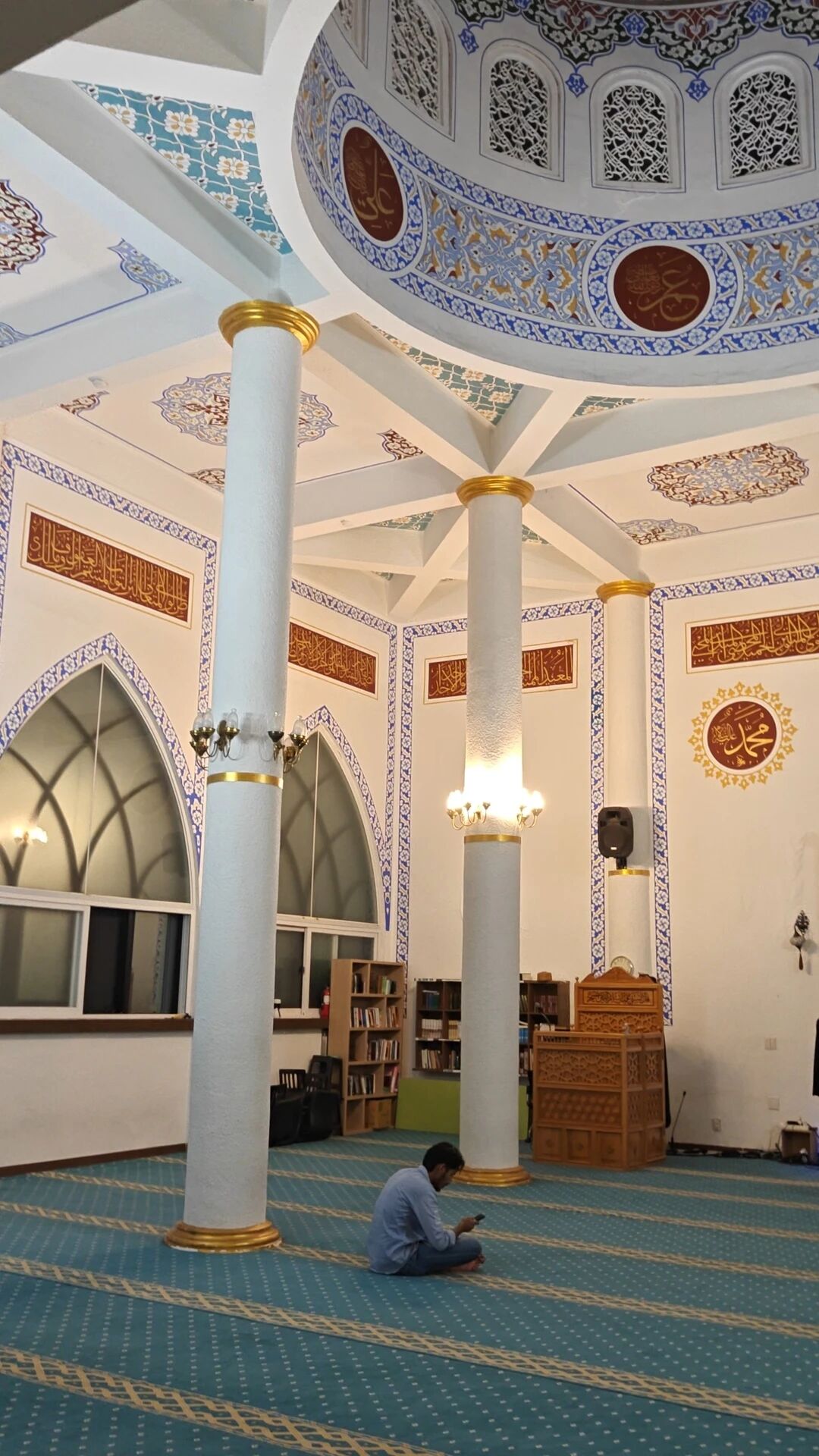
There were not many people in the prayer hall, except for a Korean uncle, and most of them did not have East Asian faces, so I seemed a bit conspicuous. The imam who was born in Turkiye asked me where I was from, and I answered China. After salah he asked me to sit in his office for a while.
When we arrived at the office, we started chatting using translation software. As we chatted about politics, the imam said that there are two big countries in the world, one is the United States and the other is China, and China is gaining the upper hand.
Then the imam asked me some information about China, such as the average salary in Shanghai. He said it turned out to be similar to Turkiye. Maybe he thought the Chinese earned higher wages than the Turks. It was getting late at that time, and we separated after chatting for more than an hour.
The next day was Friday prayer day, and I came to the Busan Mosque again. Because it was a gathering day, there were many people in the prayer hall. The imam said that most of the people who came here were from Uzbekistan and other countries. There are some Koreans who have accepted Islam, but not many.
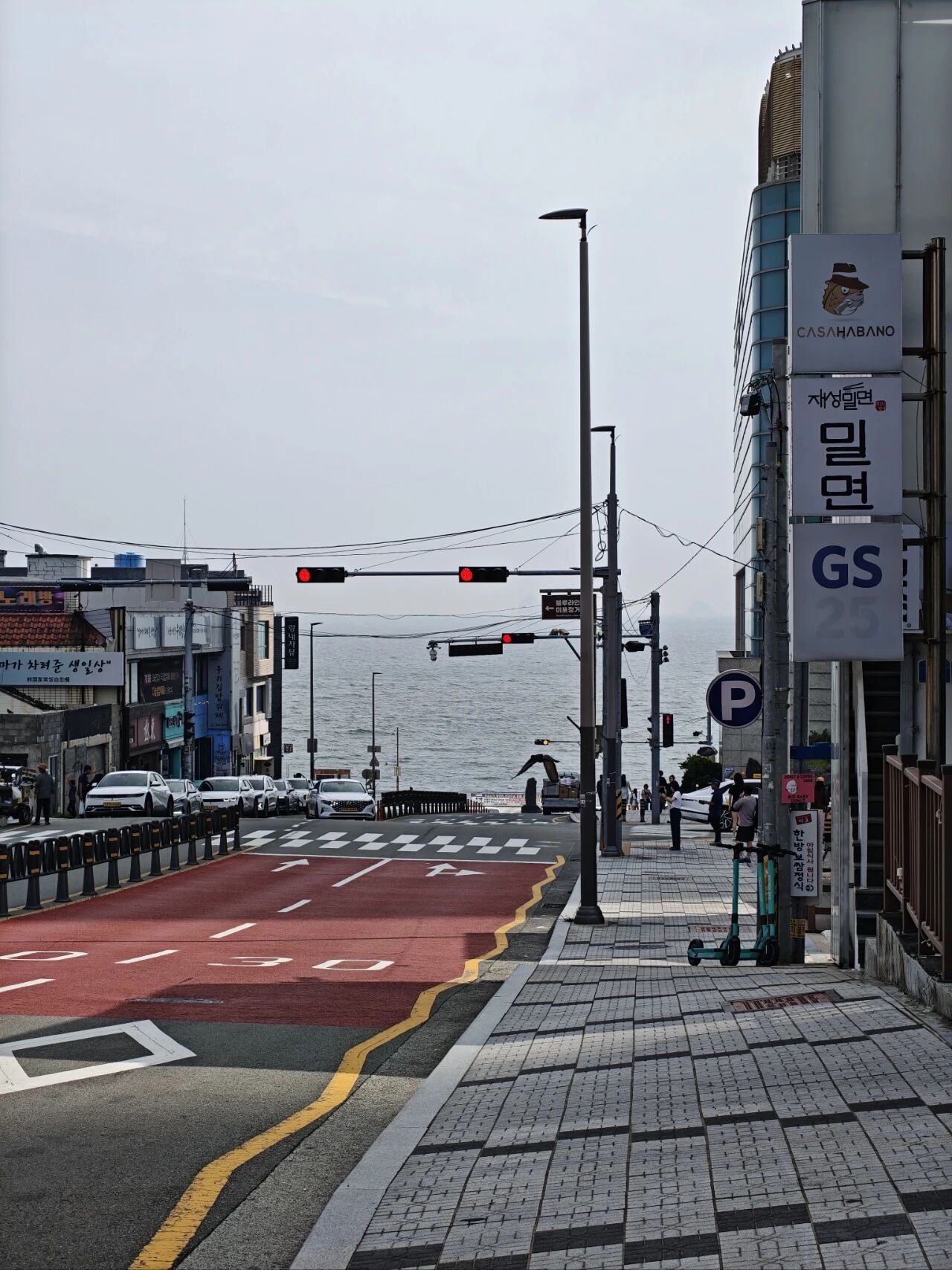
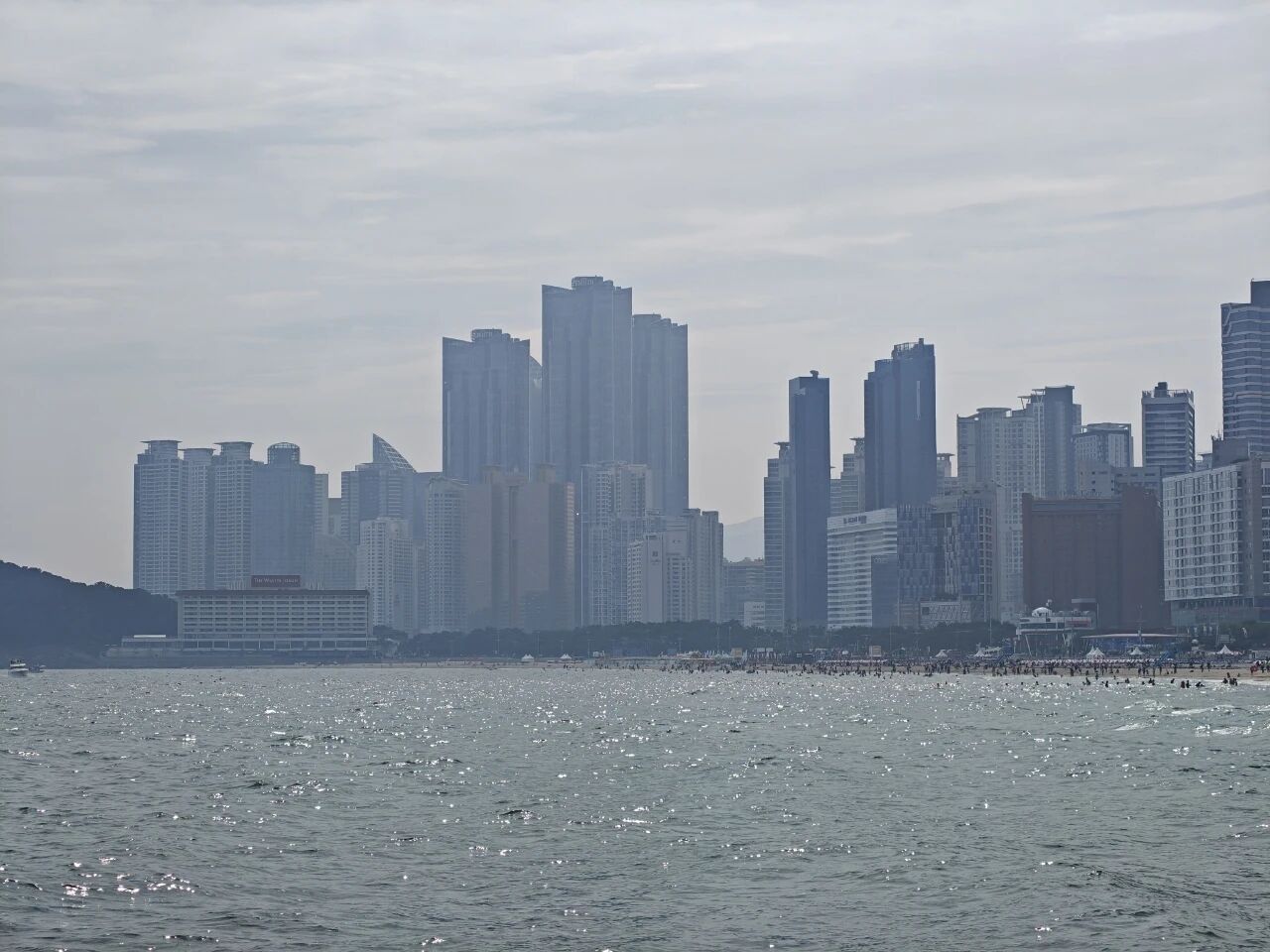
After the prayer, I left the Busan Mosque and went to the famous Mipo in Busan to watch the sea.
Summary: This Korea Muslim travel guide visits Busan Mosque, describing the quiet neighborhood, Turkish-style interior, TIKA renovation note, conversations with the imam from Turkiye, Friday prayer, Muslims from Uzbekistan, Korean converts, and a later stop by the sea.
After staying in Seoul for about eight days, I planned to visit other places in Korea. I took a train from Seoul Station and arrived in Busan, the second largest city in Korea, in a few hours. Although it is the second largest, there is indeed a lot of difference between the second largest and the first largest.
Busan does not look very big, it can only be said to be a medium-sized city. If Seoul is equivalent to Beijing or Shanghai, then Busan can only be said to be equivalent to Qingdao.
I checked into a hotel in downtown Busan. At the same price, the accommodation environment was much better than in Seoul. After that, I set off to the largest mosque in Busan. This mosque is a little far from the actual city. In fact, there are mosques in Busan city, but they are very small.
After taking the subway for several stops, we almost arrived at the Busan Mosque. The environment here is quiet and quiet, without the hustle and bustle of the city. You can also see Islamic-themed wall paintings around the mosque (picture 2). There is also a kindergarten in the courtyard of the mosque, but I later learned that it has nothing to do with the mosque.
The wudu area and toilet are on the first floor, just below the steps from the mosque into the prayer hall. the prayer hall is also painted in Turkish style. On the door of the prayer hall, it is written in Korean, Turkish and English that "TIKA maintains and updates the interior decoration of the Busan Mosque on behalf of Turkiye."
So what kind of organization is this TIKA? I found out it was the Turkish Cooperation and Coordination Agency, which is Turkiye's overseas aid organization.
The full name of the place is also written on the door of the mosque (Picture 8): Busan Fateh (Beginning) Mosque.
There were not many people in the prayer hall, except for a Korean uncle, and most of them did not have East Asian faces, so I seemed a bit conspicuous. The imam who was born in Turkiye asked me where I was from, and I answered China. After salah he asked me to sit in his office for a while.
When we arrived at the office, we started chatting using translation software. As we chatted about politics, the imam said that there are two big countries in the world, one is the United States and the other is China, and China is gaining the upper hand.
Then the imam asked me some information about China, such as the average salary in Shanghai. He said it turned out to be similar to Turkiye. Maybe he thought the Chinese earned higher wages than the Turks. It was getting late at that time, and we separated after chatting for more than an hour.
The next day was Friday prayer day, and I came to the Busan Mosque again. Because it was a gathering day, there were many people in the prayer hall. The imam said that most of the people who came here were from Uzbekistan and other countries. There are some Koreans who have accepted Islam, but not many.
After the prayer, I left the Busan Mosque and went to the famous Mipo in Busan to watch the sea.
Muslim Travel Guide Korea Busan: Busan Mosque, Turkish Imam, Friday Prayer and Muslim Community
Articles • yusuf908 posted the article • 0 comments • 235 views • 2026-05-23 22:23
Reposted from the web
Summary: This Korea Muslim travel guide visits Busan Mosque, describing the quiet neighborhood, Turkish-style interior, TIKA renovation note, conversations with the imam from Turkiye, Friday prayer, Muslims from Uzbekistan, Korean converts, and a later stop by the sea.
After staying in Seoul for about eight days, I planned to visit other places in Korea. I took a train from Seoul Station and arrived in Busan, the second largest city in Korea, in a few hours. Although it is the second largest, there is indeed a lot of difference between the second largest and the first largest.
Busan does not look very big, it can only be said to be a medium-sized city. If Seoul is equivalent to Beijing or Shanghai, then Busan can only be said to be equivalent to Qingdao.
I checked into a hotel in downtown Busan. At the same price, the accommodation environment was much better than in Seoul. After that, I set off to the largest mosque in Busan. This mosque is a little far from the actual city. In fact, there are mosques in Busan city, but they are very small.
After taking the subway for several stops, we almost arrived at the Busan Mosque. The environment here is quiet and quiet, without the hustle and bustle of the city. You can also see Islamic-themed wall paintings around the mosque (picture 2). There is also a kindergarten in the courtyard of the mosque, but I later learned that it has nothing to do with the mosque.
The wudu area and toilet are on the first floor, just below the steps from the mosque into the prayer hall. the prayer hall is also painted in Turkish style. On the door of the prayer hall, it is written in Korean, Turkish and English that "TIKA maintains and updates the interior decoration of the Busan Mosque on behalf of Turkiye."
So what kind of organization is this TIKA? I found out it was the Turkish Cooperation and Coordination Agency, which is Turkiye's overseas aid organization.
The full name of the place is also written on the door of the mosque (Picture 8): Busan Fateh (Beginning) Mosque.
There were not many people in the prayer hall, except for a Korean uncle, and most of them did not have East Asian faces, so I seemed a bit conspicuous. The imam who was born in Turkiye asked me where I was from, and I answered China. After salah he asked me to sit in his office for a while.
When we arrived at the office, we started chatting using translation software. As we chatted about politics, the imam said that there are two big countries in the world, one is the United States and the other is China, and China is gaining the upper hand.
Then the imam asked me some information about China, such as the average salary in Shanghai. He said it turned out to be similar to Turkiye. Maybe he thought the Chinese earned higher wages than the Turks. It was getting late at that time, and we separated after chatting for more than an hour.
The next day was Friday prayer day, and I came to the Busan Mosque again. Because it was a gathering day, there were many people in the prayer hall. The imam said that most of the people who came here were from Uzbekistan and other countries. There are some Koreans who have accepted Islam, but not many.
After the prayer, I left the Busan Mosque and went to the famous Mipo in Busan to watch the sea. view all
Summary: This Korea Muslim travel guide visits Busan Mosque, describing the quiet neighborhood, Turkish-style interior, TIKA renovation note, conversations with the imam from Turkiye, Friday prayer, Muslims from Uzbekistan, Korean converts, and a later stop by the sea.
After staying in Seoul for about eight days, I planned to visit other places in Korea. I took a train from Seoul Station and arrived in Busan, the second largest city in Korea, in a few hours. Although it is the second largest, there is indeed a lot of difference between the second largest and the first largest.
Busan does not look very big, it can only be said to be a medium-sized city. If Seoul is equivalent to Beijing or Shanghai, then Busan can only be said to be equivalent to Qingdao.
I checked into a hotel in downtown Busan. At the same price, the accommodation environment was much better than in Seoul. After that, I set off to the largest mosque in Busan. This mosque is a little far from the actual city. In fact, there are mosques in Busan city, but they are very small.
After taking the subway for several stops, we almost arrived at the Busan Mosque. The environment here is quiet and quiet, without the hustle and bustle of the city. You can also see Islamic-themed wall paintings around the mosque (picture 2). There is also a kindergarten in the courtyard of the mosque, but I later learned that it has nothing to do with the mosque.
The wudu area and toilet are on the first floor, just below the steps from the mosque into the prayer hall. the prayer hall is also painted in Turkish style. On the door of the prayer hall, it is written in Korean, Turkish and English that "TIKA maintains and updates the interior decoration of the Busan Mosque on behalf of Turkiye."
So what kind of organization is this TIKA? I found out it was the Turkish Cooperation and Coordination Agency, which is Turkiye's overseas aid organization.
The full name of the place is also written on the door of the mosque (Picture 8): Busan Fateh (Beginning) Mosque.
There were not many people in the prayer hall, except for a Korean uncle, and most of them did not have East Asian faces, so I seemed a bit conspicuous. The imam who was born in Turkiye asked me where I was from, and I answered China. After salah he asked me to sit in his office for a while.
When we arrived at the office, we started chatting using translation software. As we chatted about politics, the imam said that there are two big countries in the world, one is the United States and the other is China, and China is gaining the upper hand.
Then the imam asked me some information about China, such as the average salary in Shanghai. He said it turned out to be similar to Turkiye. Maybe he thought the Chinese earned higher wages than the Turks. It was getting late at that time, and we separated after chatting for more than an hour.
The next day was Friday prayer day, and I came to the Busan Mosque again. Because it was a gathering day, there were many people in the prayer hall. The imam said that most of the people who came here were from Uzbekistan and other countries. There are some Koreans who have accepted Islam, but not many.
After the prayer, I left the Busan Mosque and went to the famous Mipo in Busan to watch the sea. view all
Reposted from the web
Summary: This Korea Muslim travel guide visits Busan Mosque, describing the quiet neighborhood, Turkish-style interior, TIKA renovation note, conversations with the imam from Turkiye, Friday prayer, Muslims from Uzbekistan, Korean converts, and a later stop by the sea.
After staying in Seoul for about eight days, I planned to visit other places in Korea. I took a train from Seoul Station and arrived in Busan, the second largest city in Korea, in a few hours. Although it is the second largest, there is indeed a lot of difference between the second largest and the first largest.
Busan does not look very big, it can only be said to be a medium-sized city. If Seoul is equivalent to Beijing or Shanghai, then Busan can only be said to be equivalent to Qingdao.
I checked into a hotel in downtown Busan. At the same price, the accommodation environment was much better than in Seoul. After that, I set off to the largest mosque in Busan. This mosque is a little far from the actual city. In fact, there are mosques in Busan city, but they are very small.
After taking the subway for several stops, we almost arrived at the Busan Mosque. The environment here is quiet and quiet, without the hustle and bustle of the city. You can also see Islamic-themed wall paintings around the mosque (picture 2). There is also a kindergarten in the courtyard of the mosque, but I later learned that it has nothing to do with the mosque.
The wudu area and toilet are on the first floor, just below the steps from the mosque into the prayer hall. the prayer hall is also painted in Turkish style. On the door of the prayer hall, it is written in Korean, Turkish and English that "TIKA maintains and updates the interior decoration of the Busan Mosque on behalf of Turkiye."
So what kind of organization is this TIKA? I found out it was the Turkish Cooperation and Coordination Agency, which is Turkiye's overseas aid organization.
The full name of the place is also written on the door of the mosque (Picture 8): Busan Fateh (Beginning) Mosque.
There were not many people in the prayer hall, except for a Korean uncle, and most of them did not have East Asian faces, so I seemed a bit conspicuous. The imam who was born in Turkiye asked me where I was from, and I answered China. After salah he asked me to sit in his office for a while.
When we arrived at the office, we started chatting using translation software. As we chatted about politics, the imam said that there are two big countries in the world, one is the United States and the other is China, and China is gaining the upper hand.
Then the imam asked me some information about China, such as the average salary in Shanghai. He said it turned out to be similar to Turkiye. Maybe he thought the Chinese earned higher wages than the Turks. It was getting late at that time, and we separated after chatting for more than an hour.
The next day was Friday prayer day, and I came to the Busan Mosque again. Because it was a gathering day, there were many people in the prayer hall. The imam said that most of the people who came here were from Uzbekistan and other countries. There are some Koreans who have accepted Islam, but not many.
After the prayer, I left the Busan Mosque and went to the famous Mipo in Busan to watch the sea.
Summary: This Korea Muslim travel guide visits Busan Mosque, describing the quiet neighborhood, Turkish-style interior, TIKA renovation note, conversations with the imam from Turkiye, Friday prayer, Muslims from Uzbekistan, Korean converts, and a later stop by the sea.
After staying in Seoul for about eight days, I planned to visit other places in Korea. I took a train from Seoul Station and arrived in Busan, the second largest city in Korea, in a few hours. Although it is the second largest, there is indeed a lot of difference between the second largest and the first largest.
Busan does not look very big, it can only be said to be a medium-sized city. If Seoul is equivalent to Beijing or Shanghai, then Busan can only be said to be equivalent to Qingdao.
I checked into a hotel in downtown Busan. At the same price, the accommodation environment was much better than in Seoul. After that, I set off to the largest mosque in Busan. This mosque is a little far from the actual city. In fact, there are mosques in Busan city, but they are very small.
After taking the subway for several stops, we almost arrived at the Busan Mosque. The environment here is quiet and quiet, without the hustle and bustle of the city. You can also see Islamic-themed wall paintings around the mosque (picture 2). There is also a kindergarten in the courtyard of the mosque, but I later learned that it has nothing to do with the mosque.
The wudu area and toilet are on the first floor, just below the steps from the mosque into the prayer hall. the prayer hall is also painted in Turkish style. On the door of the prayer hall, it is written in Korean, Turkish and English that "TIKA maintains and updates the interior decoration of the Busan Mosque on behalf of Turkiye."
So what kind of organization is this TIKA? I found out it was the Turkish Cooperation and Coordination Agency, which is Turkiye's overseas aid organization.
The full name of the place is also written on the door of the mosque (Picture 8): Busan Fateh (Beginning) Mosque.
There were not many people in the prayer hall, except for a Korean uncle, and most of them did not have East Asian faces, so I seemed a bit conspicuous. The imam who was born in Turkiye asked me where I was from, and I answered China. After salah he asked me to sit in his office for a while.
When we arrived at the office, we started chatting using translation software. As we chatted about politics, the imam said that there are two big countries in the world, one is the United States and the other is China, and China is gaining the upper hand.
Then the imam asked me some information about China, such as the average salary in Shanghai. He said it turned out to be similar to Turkiye. Maybe he thought the Chinese earned higher wages than the Turks. It was getting late at that time, and we separated after chatting for more than an hour.
The next day was Friday prayer day, and I came to the Busan Mosque again. Because it was a gathering day, there were many people in the prayer hall. The imam said that most of the people who came here were from Uzbekistan and other countries. There are some Koreans who have accepted Islam, but not many.
After the prayer, I left the Busan Mosque and went to the famous Mipo in Busan to watch the sea.