

Changchun
Halal Travel Guide: Changchun — Nanguan Noodles and Changtong Road Mosque
Articles • ali2007fr posted the article • 0 comments • 126 views • 2026-05-19 03:00
Reposted from the web
Summary: Changchun Nanguan has a Hui Muslim food scene centered on hand-pulled noodles and mosque community life. This account covers local halal food, Changtong Road Mosque, and the surrounding streets with the original facts and photos preserved.
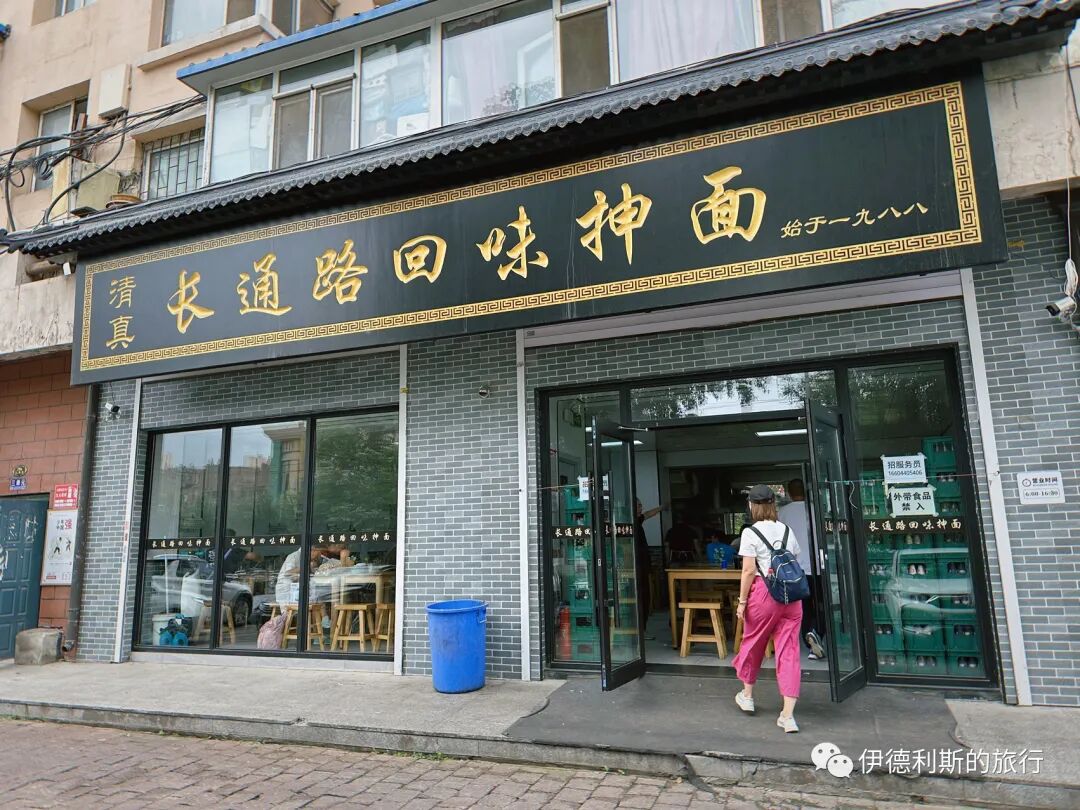
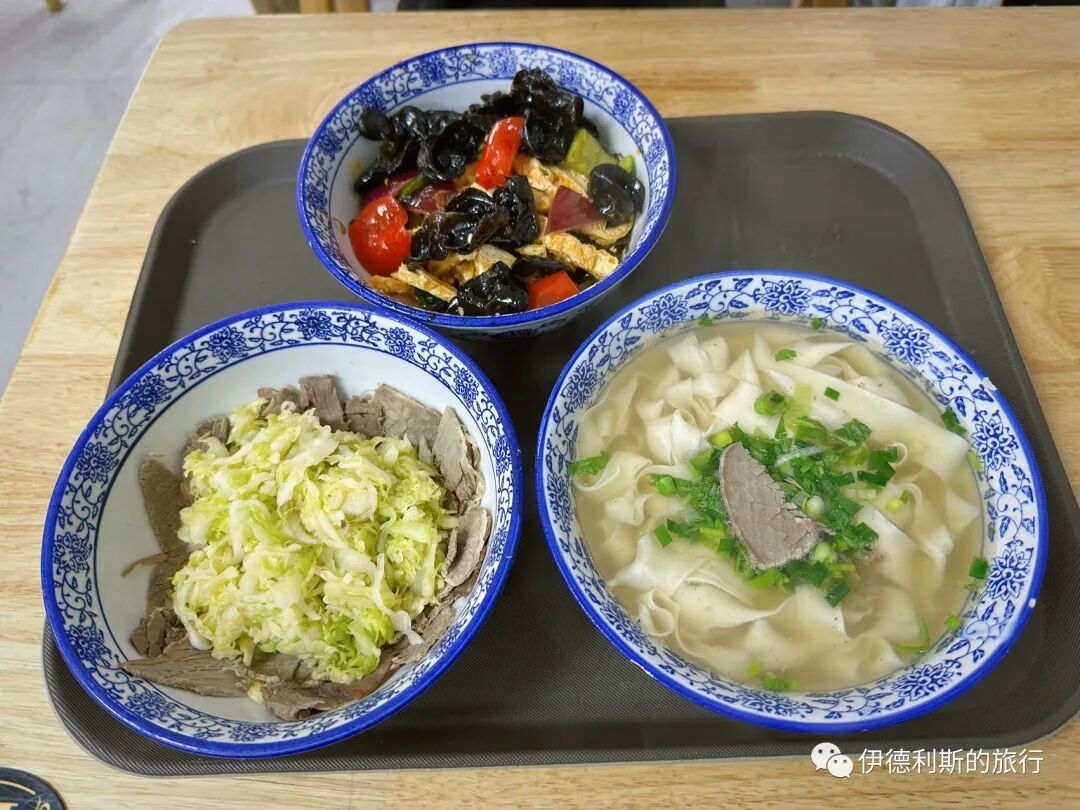
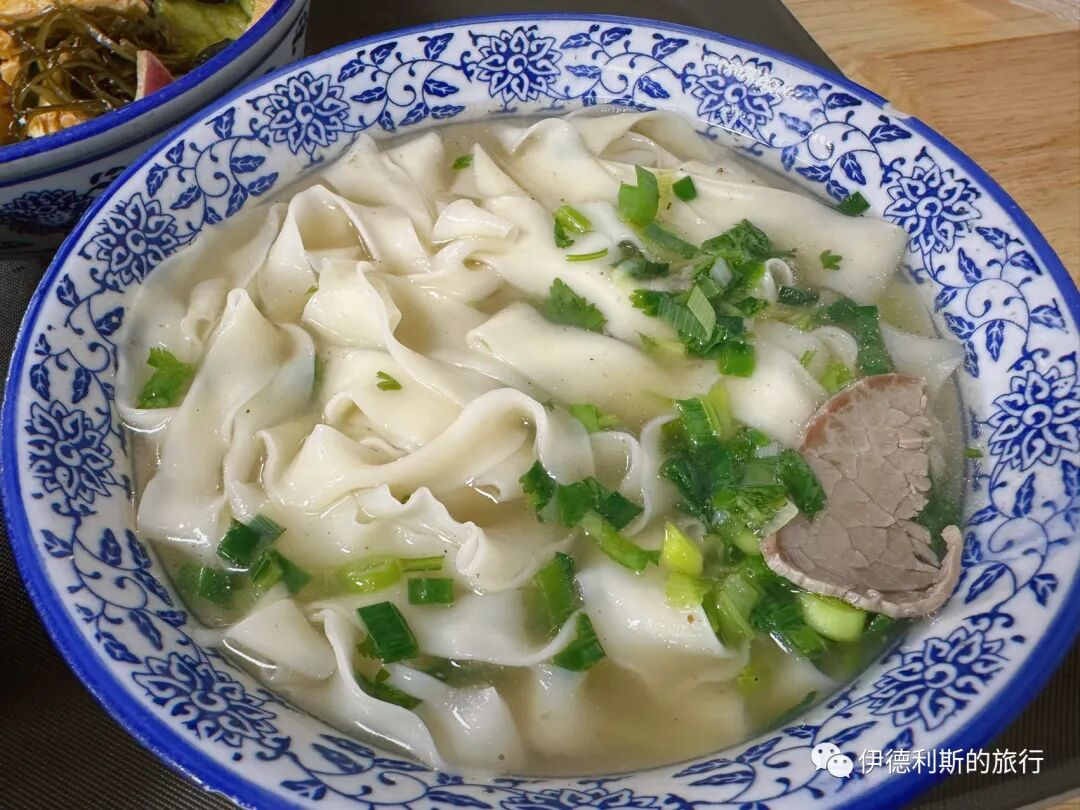
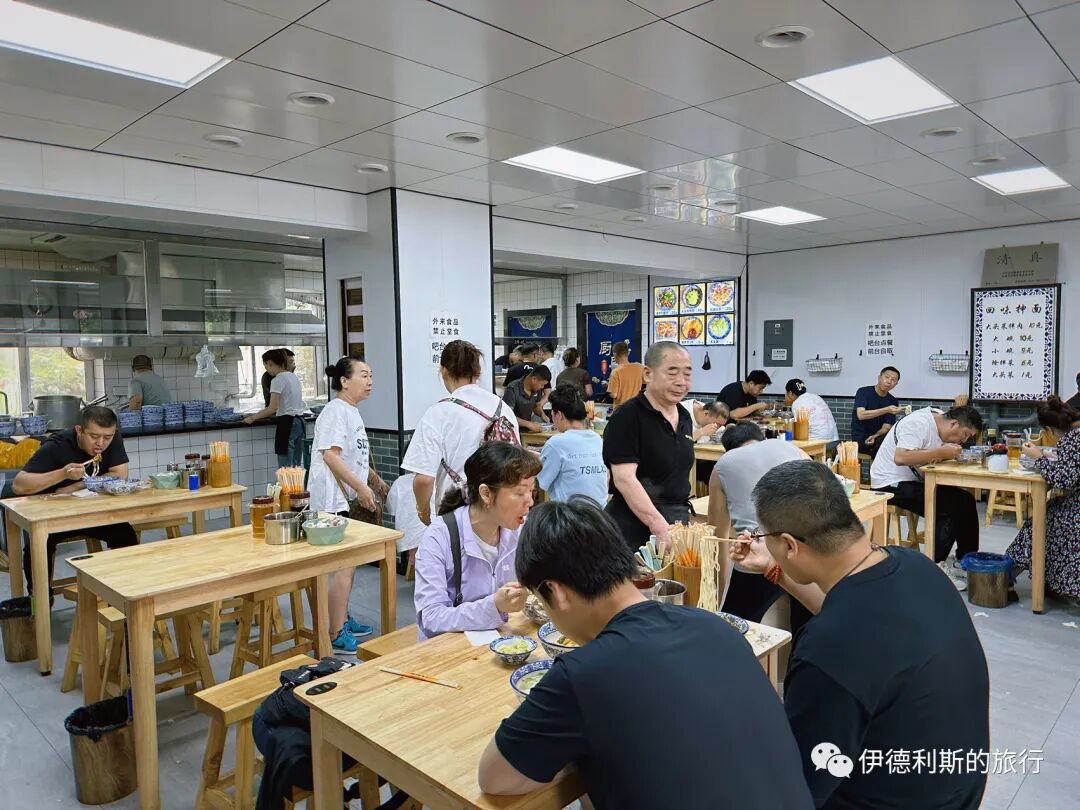
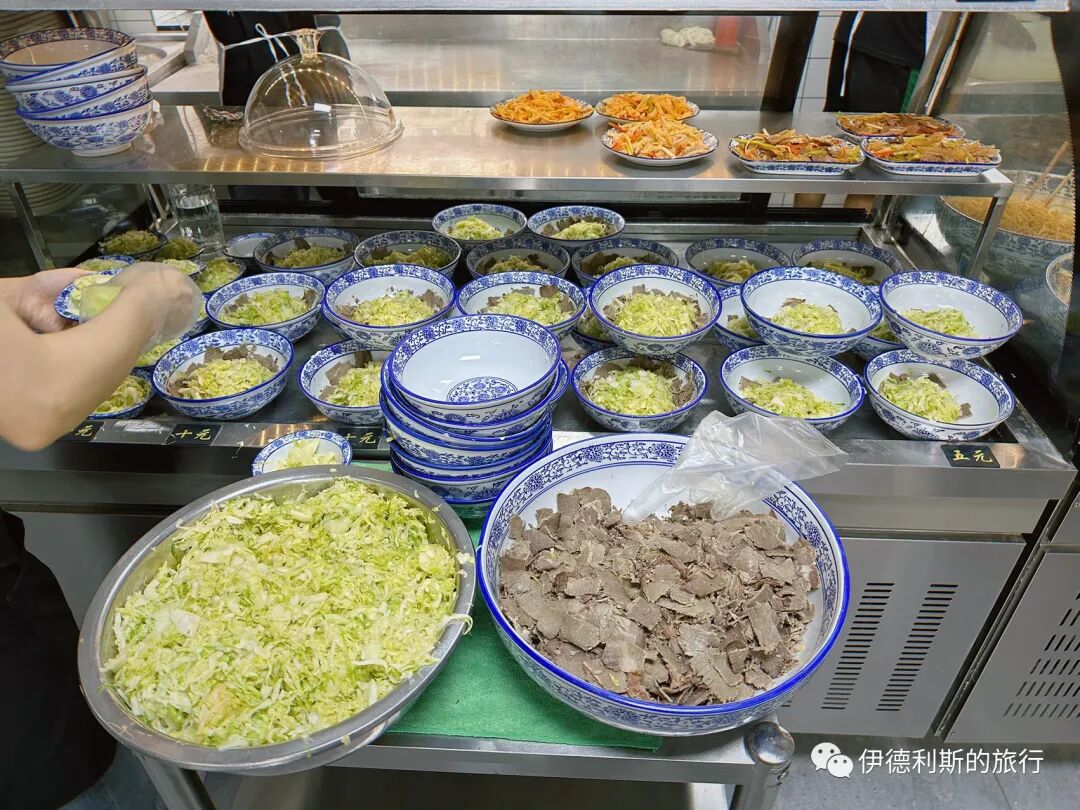
I had hand-pulled noodles (chenmian) for breakfast across from the Changtong Road Mosque in Changchun. I ordered a small bowl of wide noodles with a side of pickled mustard greens with meat (datoucai banrou) and three types of cold-tossed vegetables (qiangban cai). It was very affordable. This is the most popular breakfast spot in the Hui Muslim community of Changchun. It has been busy since it opened at six in the morning, and the noodle chef was working non-stop. The service here is incredibly fast. It only took one minute from ordering to having all the food on the table.
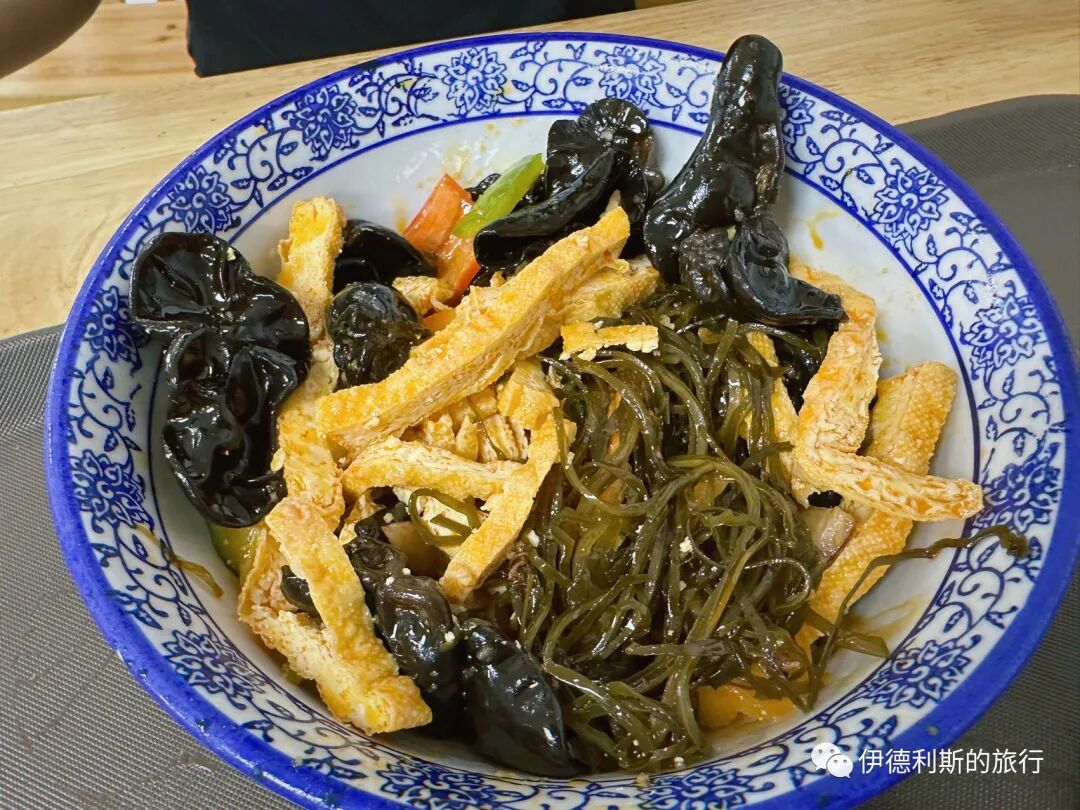
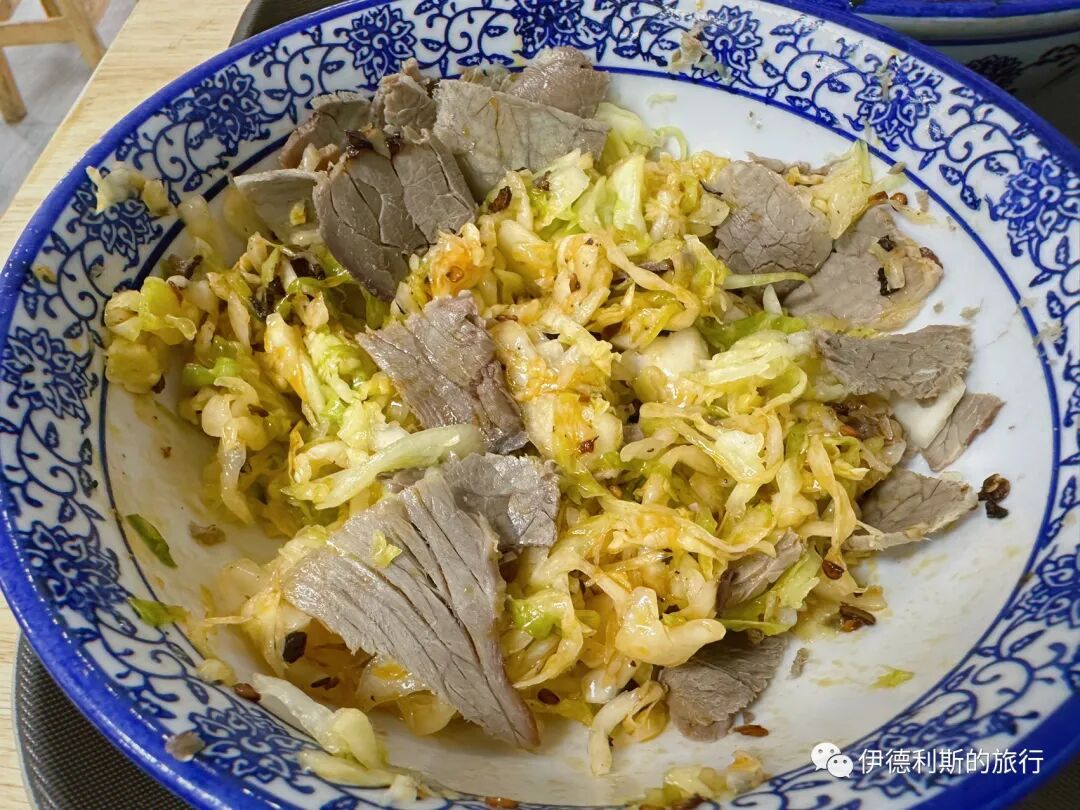
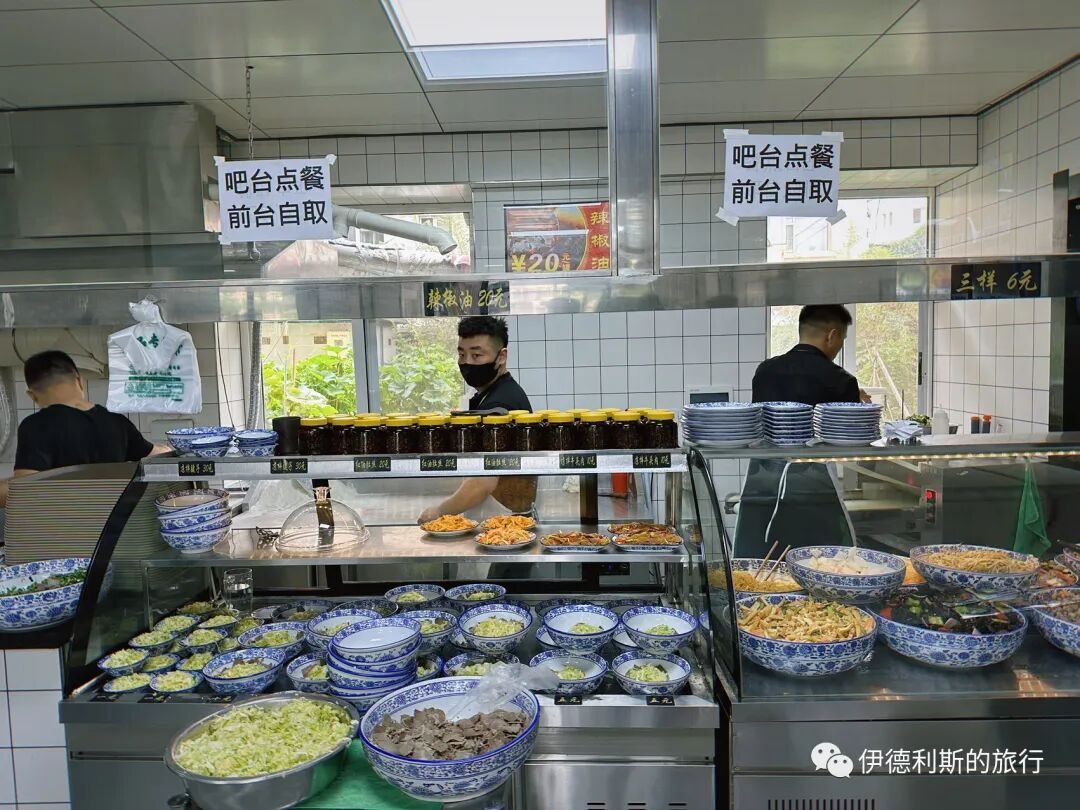
Their signature item is the chili oil. It is not very spicy but very fragrant, and it really brings out the flavor when added to the pickled mustard greens with meat. Changchun is famous for its soybeans, and their fried tofu (youdoufu) is delicious.
The Changtong Road Mosque was first built in 1824 (the fourth year of the Daoguang reign). It was originally located inside the East Gate of Dongsandao Street. In 1852 (the second year of the Xianfeng reign), elder Han Xuecheng donated a house and elder Shi Xuecheng donated trees to move the mosque to its current location in Tielingtun. In 1864 (the third year of the Tongzhi reign), Imam Han Dengqing and others raised funds to expand the mosque, building the current five-room main hall and the three-story kiln hall (yaodian). During repairs to the kiln hall in 1986, an inscription was found inside that read: 'Flying Dragon, third year of Tongzhi, Jiazi year, 21st day of the second lunar month (March 28, 1864), reconstruction began, the new main hall and porch were completed on an auspicious day.' In 1889 (the 15th year of the Guangxu reign), Imam Han Laixiang bought land from the Xu family in front of the mosque to build the main gate tower, east and west side rooms, the north lecture hall, the east reception hall, and the main hall porch. It was expanded several more times during the Republic of China era.
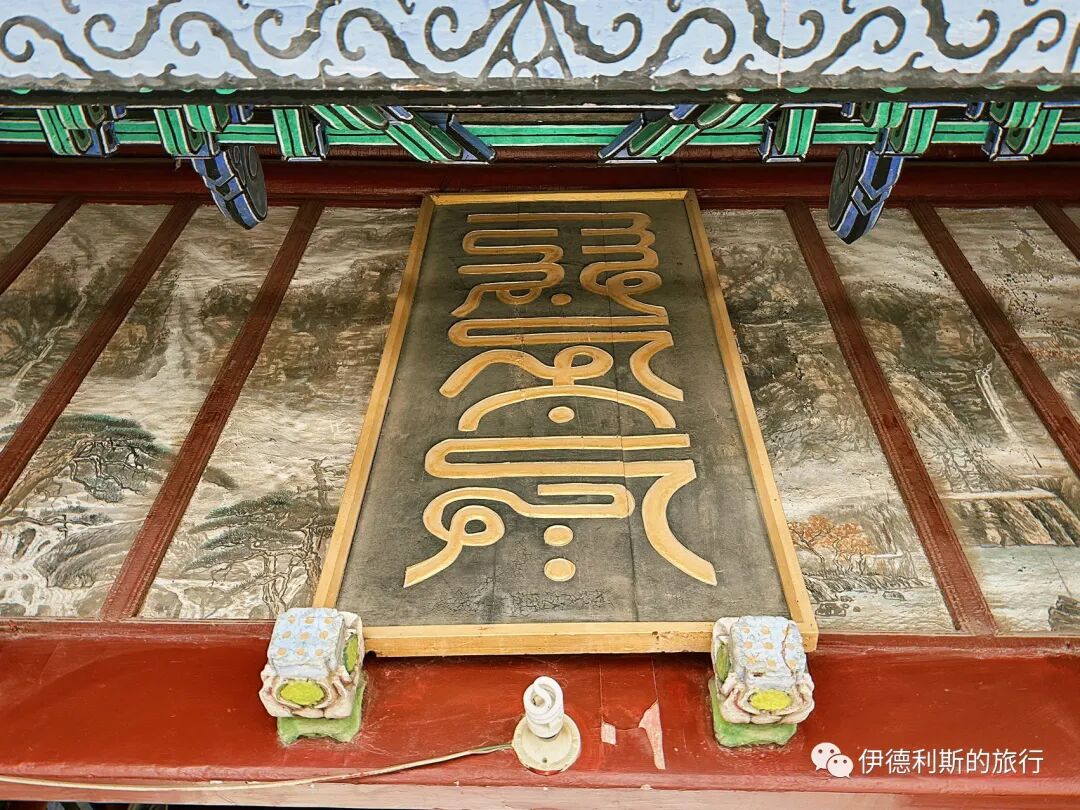
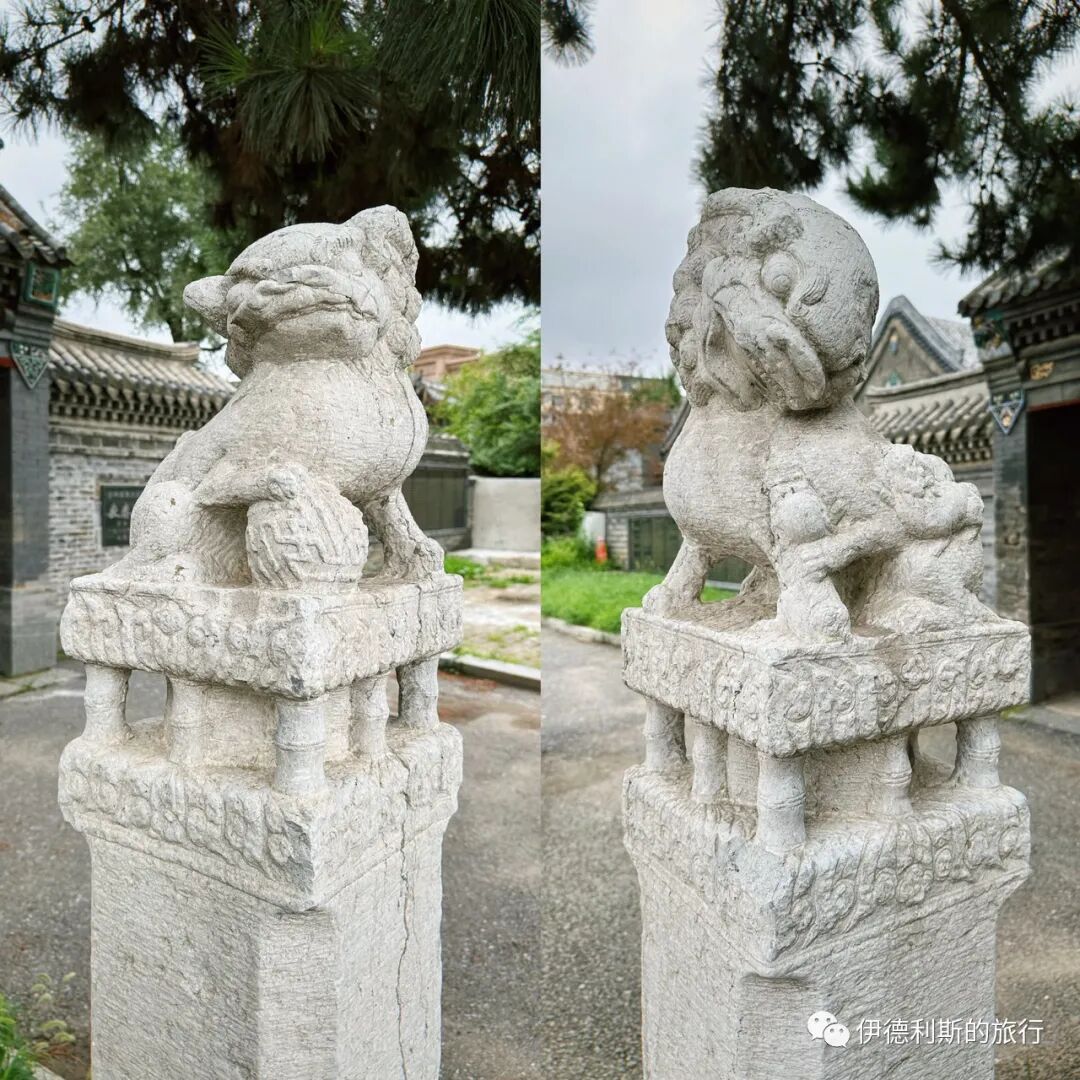
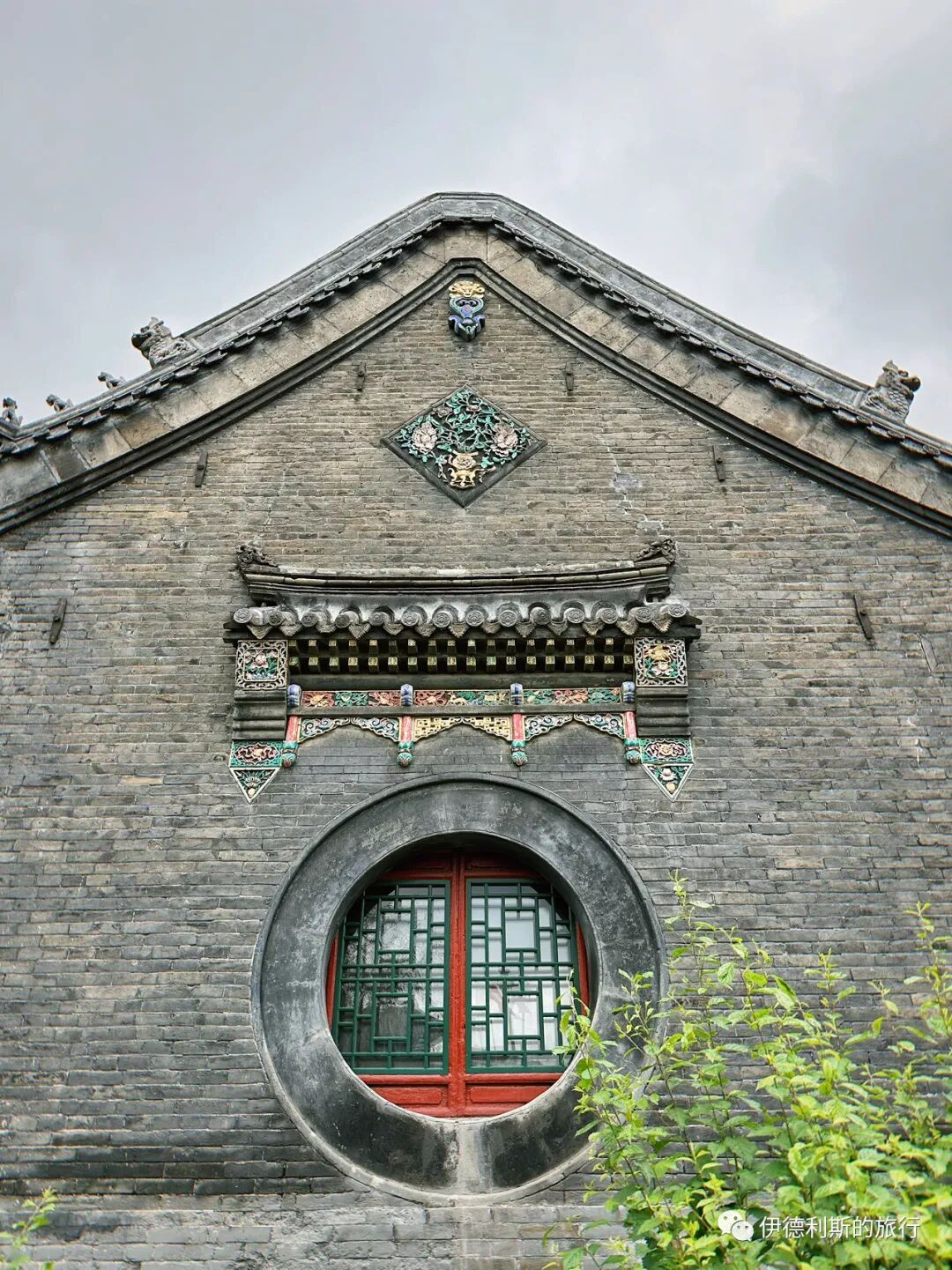
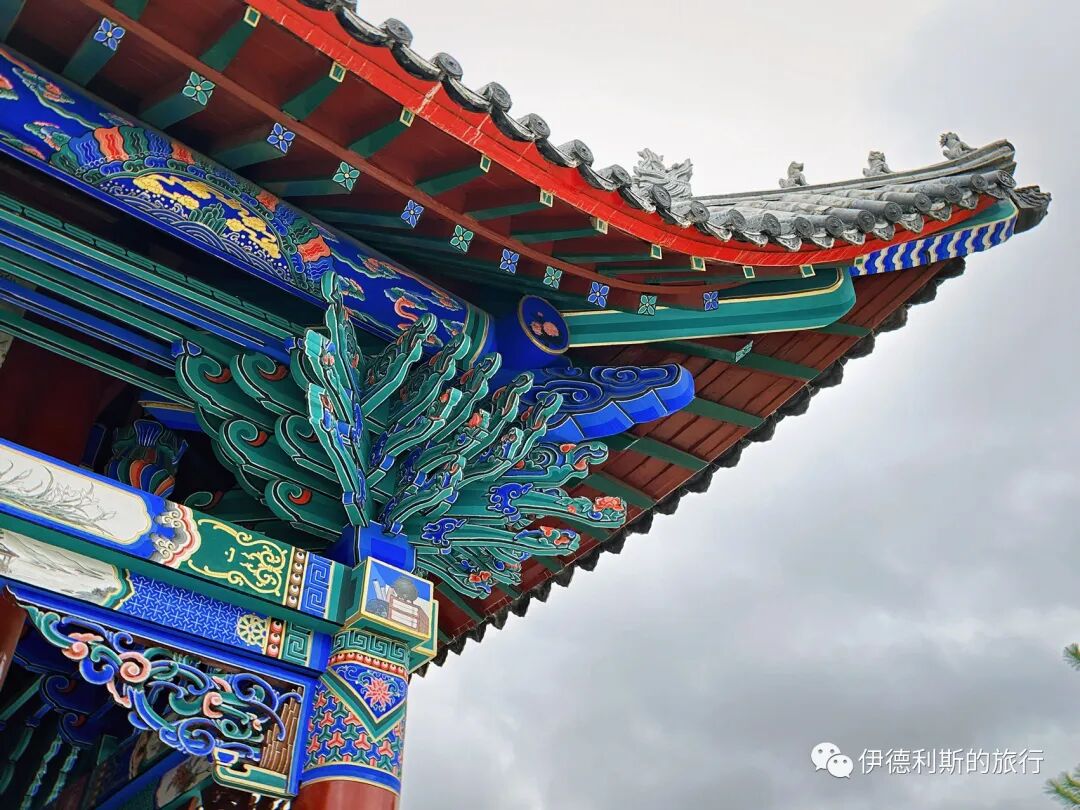
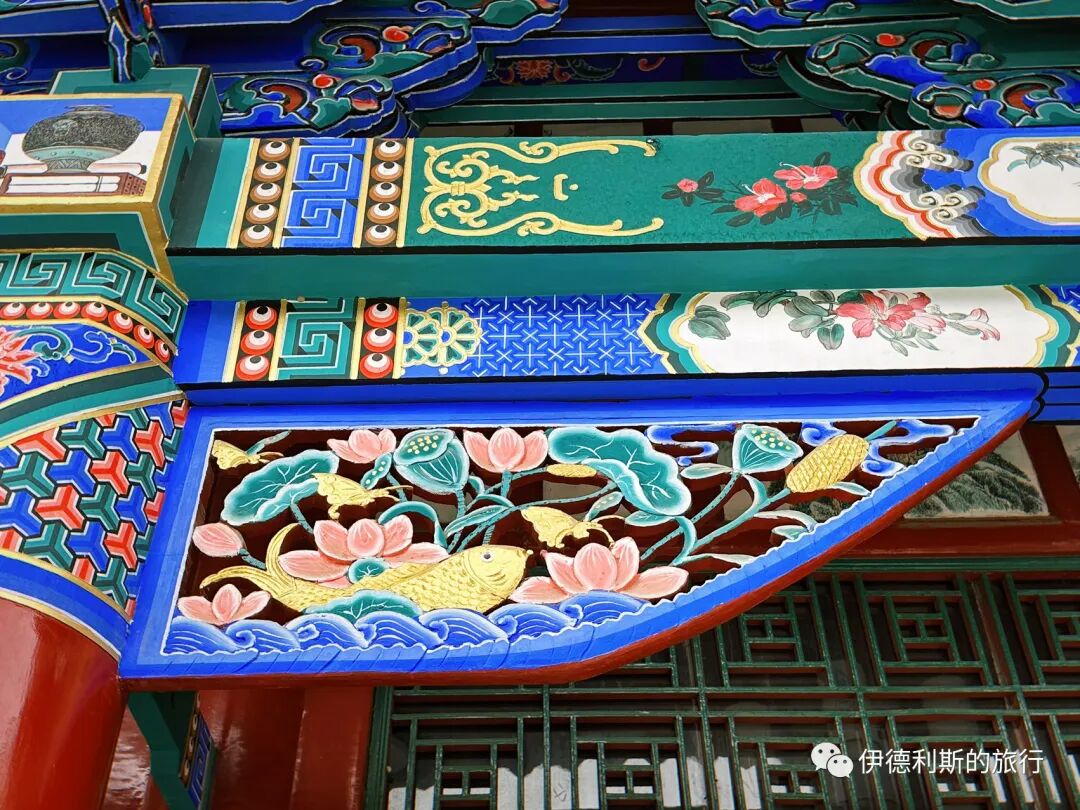
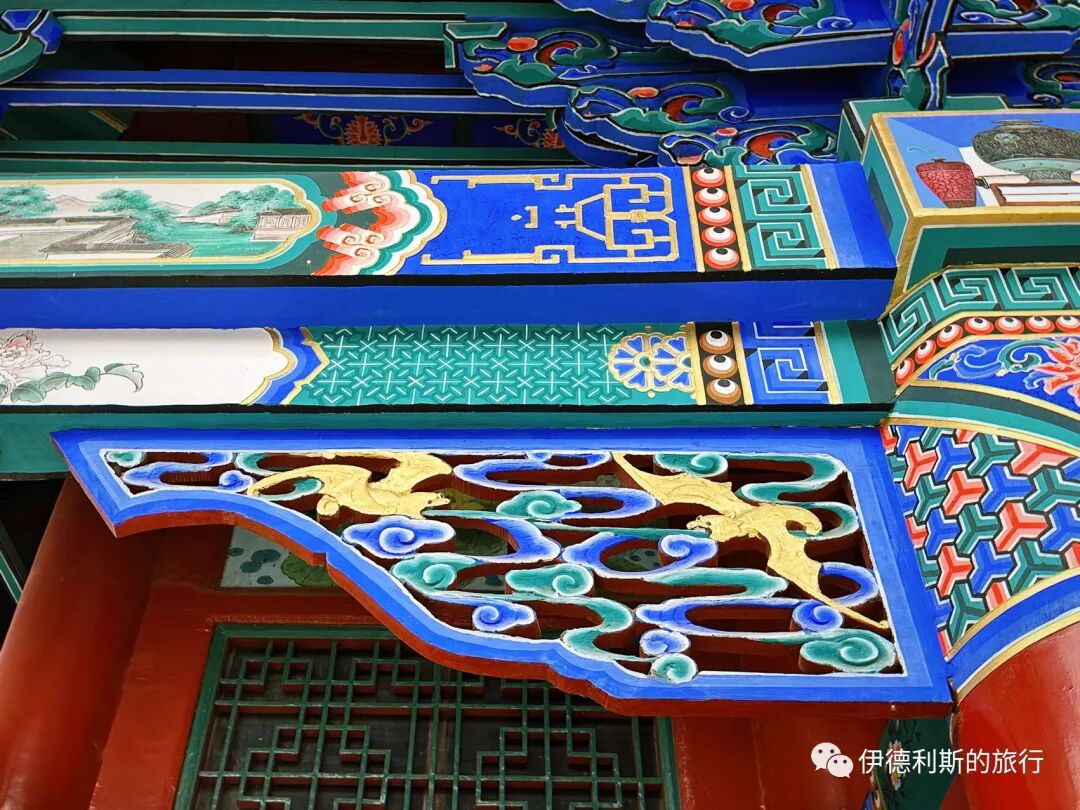
The main gate features a plaque with the Basmala (tasimi) written in a style imitating seal script, which is very unique. In front of the gate are stone lions and horse-tethering posts. The gable walls (chitou) are carved with brick dragons and qilin, while the side hanging fish (xuanyu) decorations feature bats, lotus flowers, and water birds, all full of traditional Chinese cultural charm.
The main hall features exquisite wood and brick carvings on its gable walls, hanging fish, and bracket sets (dougong). The north and south lecture halls are also decorated with brick carvings of traditional patterns.
There is also a blank stele standing next to the main hall. In 1933, the Japanese Kwantung Army sent Kawamura Kyodo to station at the Changtong Road Mosque and established the 'Manchurian Islamic Association' there to manage religious affairs throughout the puppet state of Manchukuo. Kawamura Kyodo forced the local Hui Muslims at the mosque to erect a monument for him, but the craftsmen delayed the work by claiming it needed fine carving. The inscription was never started by the time Japan surrendered. After Japan surrendered, the local people buried the stone tablet underground. It was only rediscovered during repairs in 1987.
I have two postcards from around 1935 showing the Changtong Road Mosque in Changchun. If you look closely at the first one, you can see a 'No Smoking' sign on the platform and faint traces of a couplet on the main prayer hall. The second one shows the electrical wires strung up in the mosque and the horse-tethering posts at the entrance.
These postcards were issued by Taisho Hato from Wakayama Prefecture, Japan. Their logo features a dove standing on the characters for 'Taisho.' It is different from the eagle logo of Taisho Pharmaceutical. This was a very famous postcard brand during the Taisho era in Japan, and they released many postcards related to the Manchukuo period.
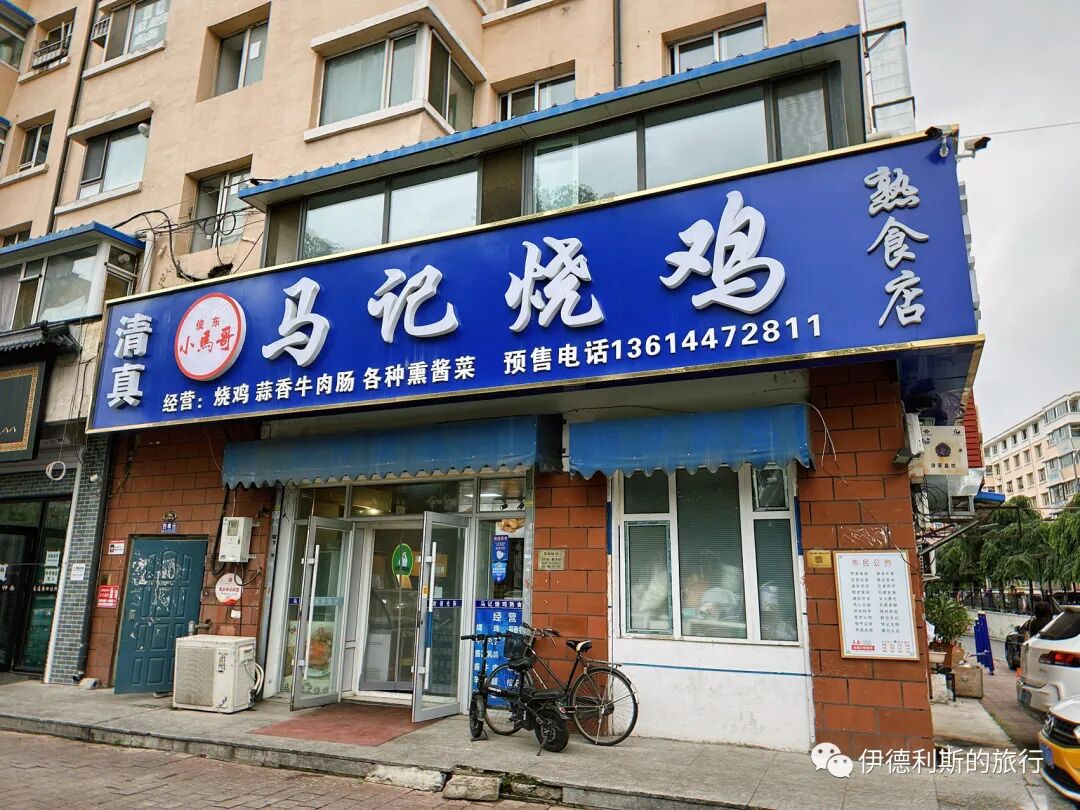
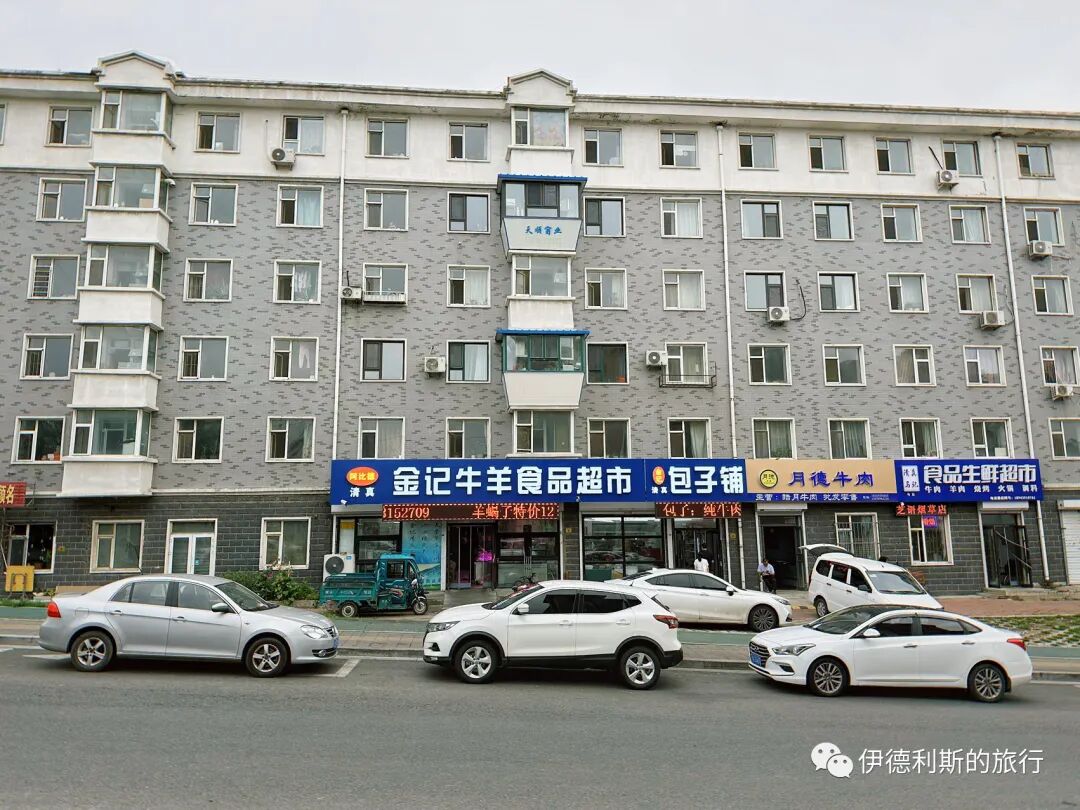
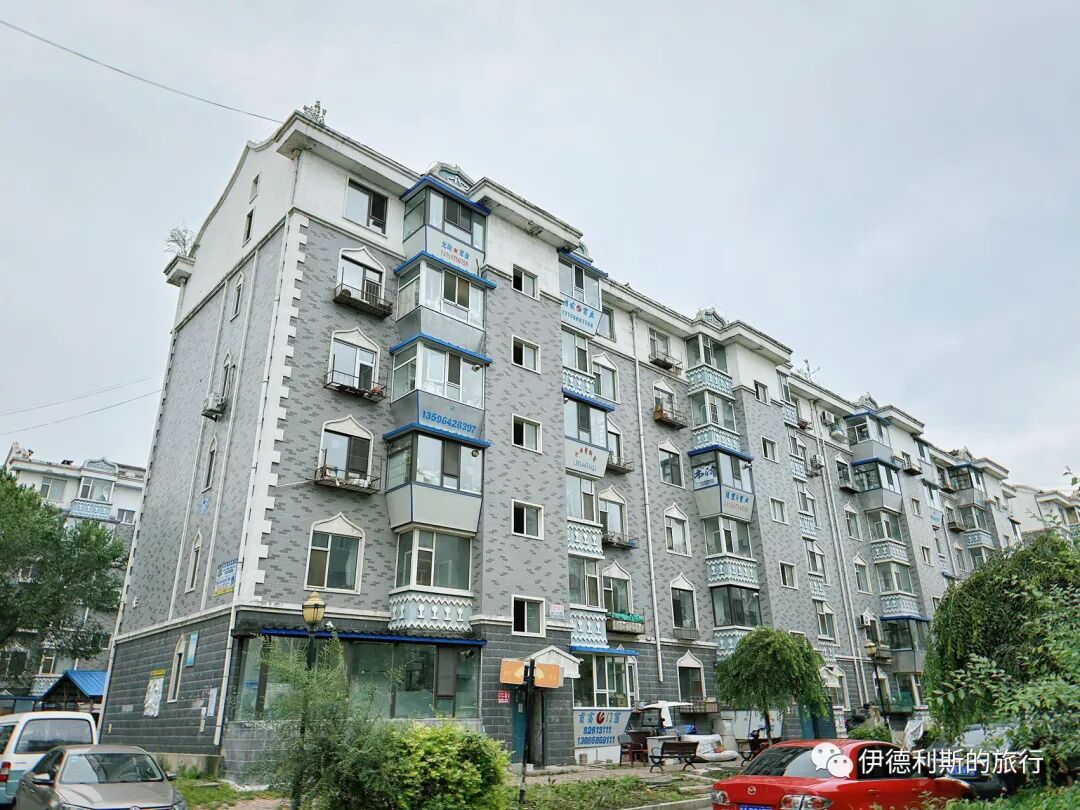
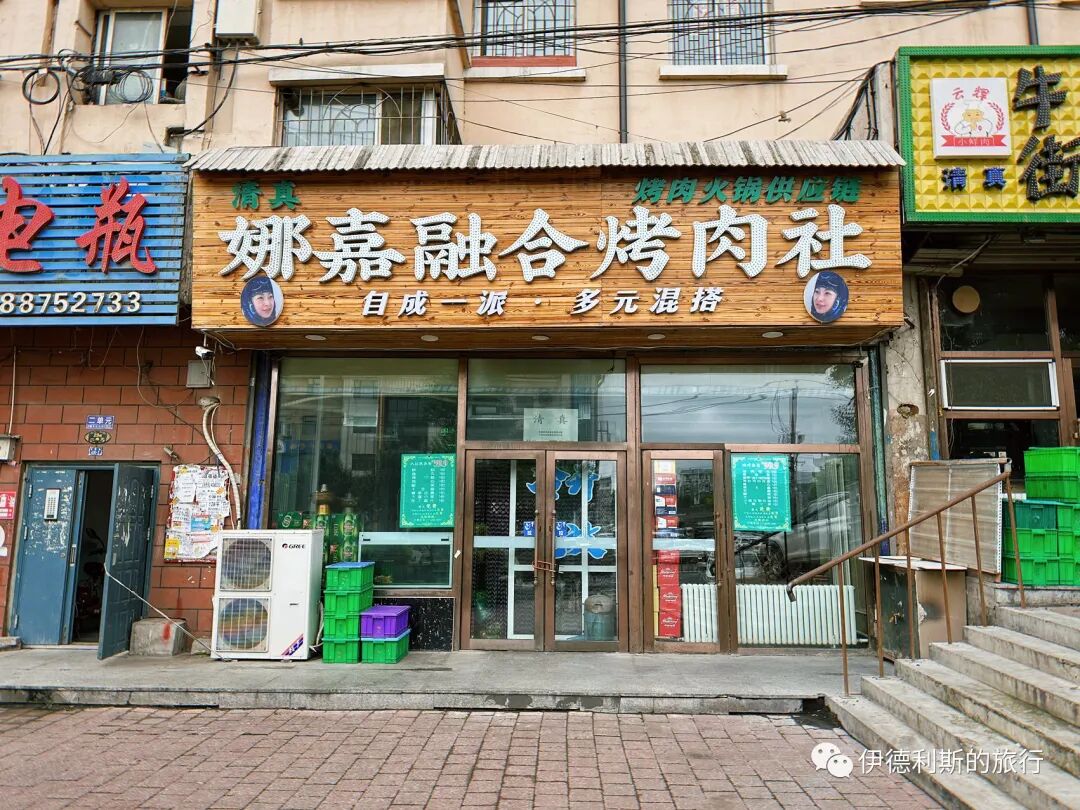
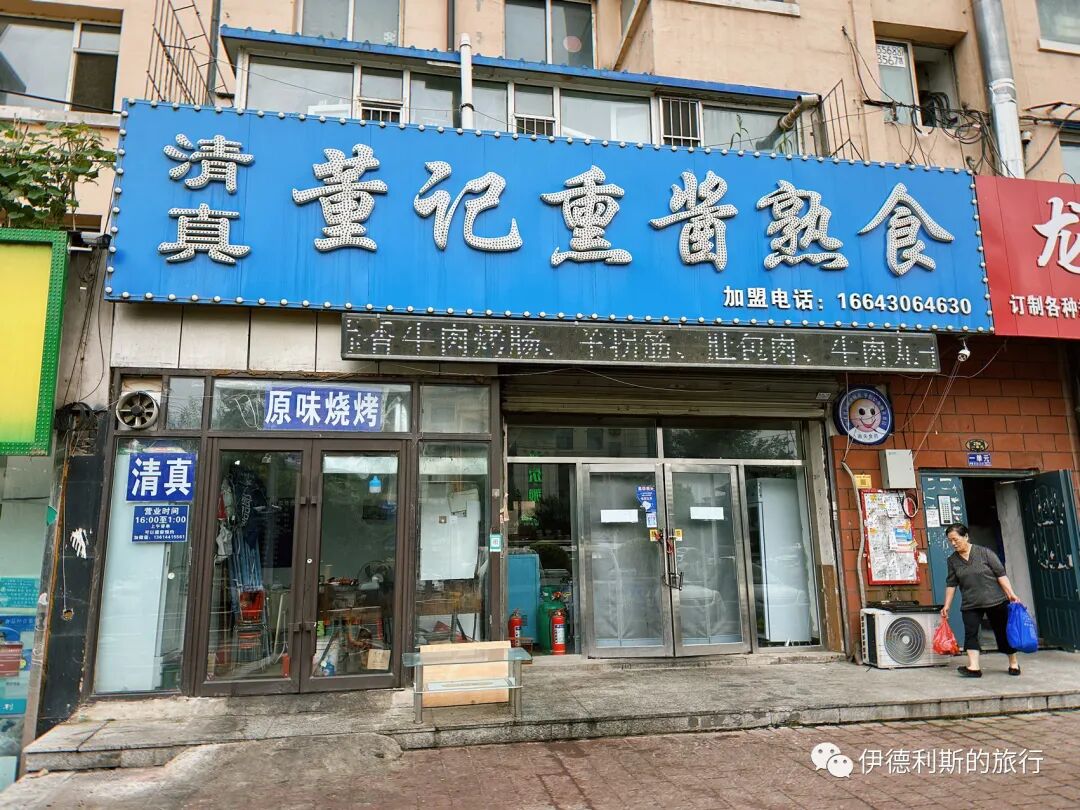
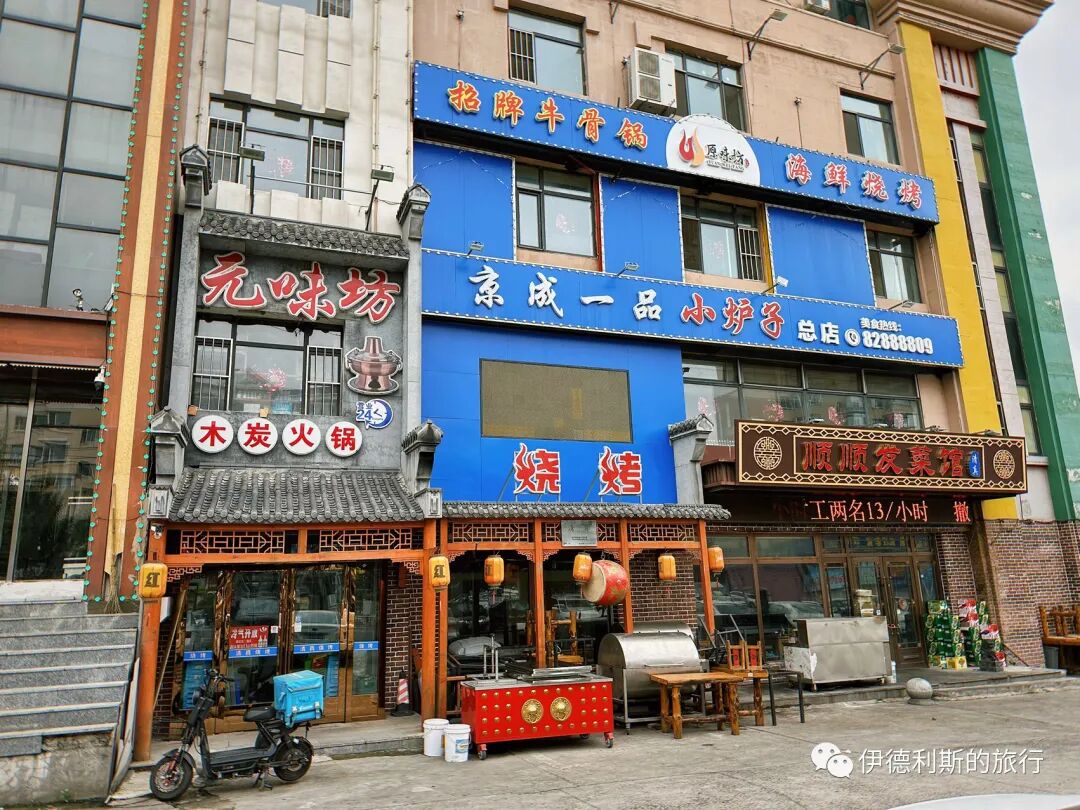
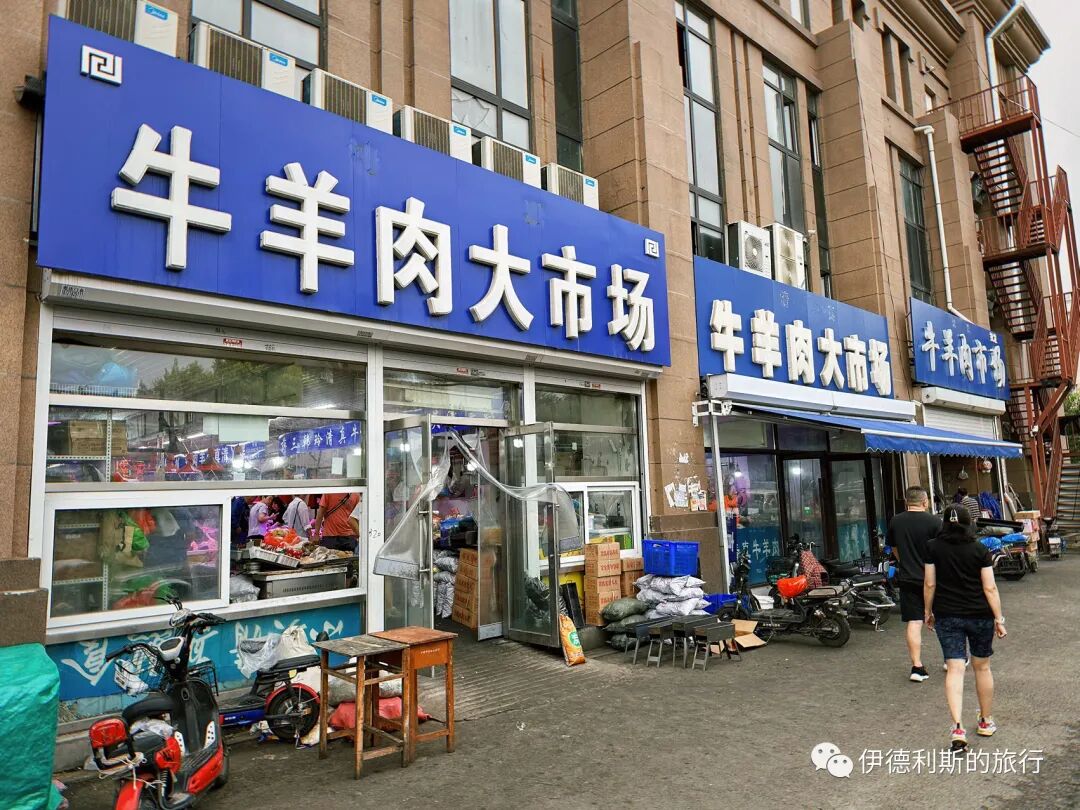
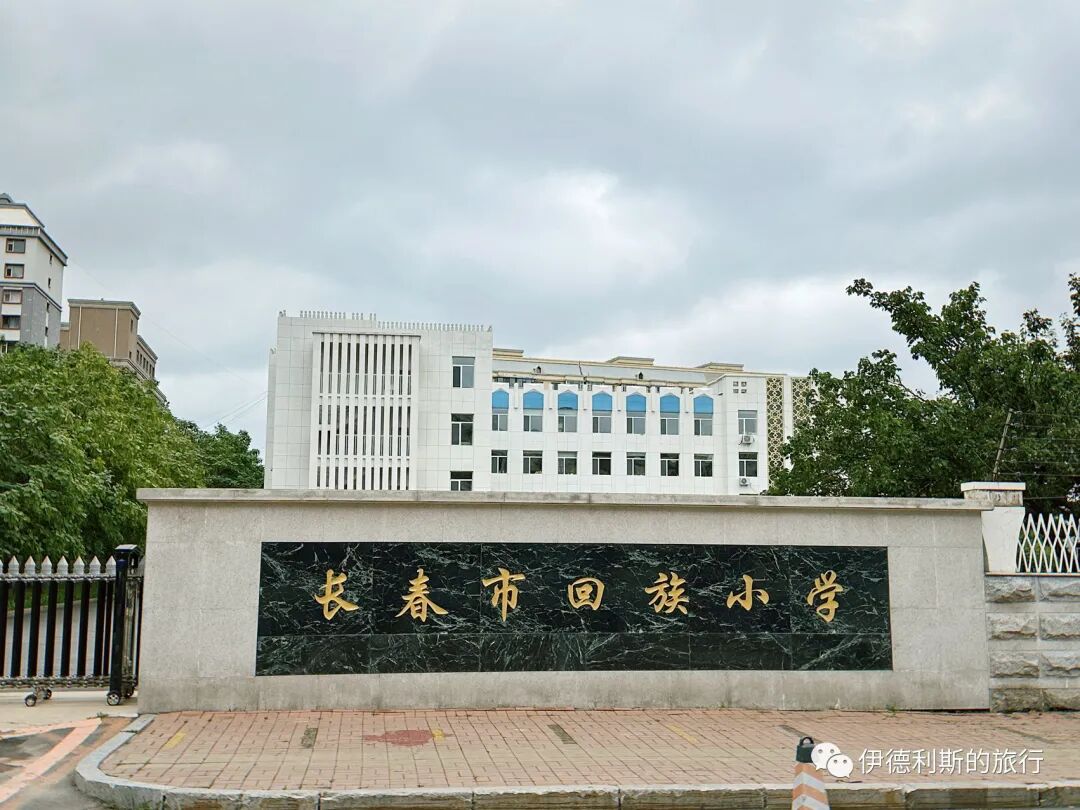
The Hui Muslim community near the Changtong Road Mosque.
In the early 19th century, during the Jiaqing reign of the Qing Dynasty, the ban on Jilin began to relax, and restrictions on refugees traveling there were eased. In 1800 (the fifth year of Jiaqing), the Changchun Office was established at Changchun Fort. Hui Muslims began moving to Changchun at this time. Because most of them came from Shandong, they were known as the 'Shandong Group'.
The first person to settle in Changchun Fort was Han Qishan from Hanjiachai in Tai'an, Shandong. Later, people with the surname Li from Hanjiachai also came to Changchun to work as small vendors. After the Changchun Office moved to Kuanchengzi (now Nanguan, Changchun) in 1825 (the fifth year of Daoguang), the Han family and other Hui Muslim families with the surnames Yin, Ma, Dai, and Hui moved into the city together.
In 1898, Li Jincheng, whose ancestral home was Hanjiachai, founded the Taihezhai pastry shop in Changchun. It became famous throughout the city for its halal pastries (guoxia). The Hui Baozhen family came to Northeast China from Xinji, Qing County, Hebei in 1902. They moved to Changchun in 1924 and opened the Huiji Dumpling Restaurant in Xinmin Alley. At its peak, they sold over 300 jin of flour a day. The Hui family from Changchun had their ancestral home in Qing County, Hebei. They arrived in Changchun in 1914 and opened the Sanheshun Halal Restaurant in 1920. They created their signature Sanheshun braised flatbread (menbing) by borrowing features from Tianjin-style flatbread (dabing) and braised flatbread (huibing), cooking the flatbread with cabbage, vermicelli, and raw beef strips. view all
Summary: Changchun Nanguan has a Hui Muslim food scene centered on hand-pulled noodles and mosque community life. This account covers local halal food, Changtong Road Mosque, and the surrounding streets with the original facts and photos preserved.
I had hand-pulled noodles (chenmian) for breakfast across from the Changtong Road Mosque in Changchun. I ordered a small bowl of wide noodles with a side of pickled mustard greens with meat (datoucai banrou) and three types of cold-tossed vegetables (qiangban cai). It was very affordable. This is the most popular breakfast spot in the Hui Muslim community of Changchun. It has been busy since it opened at six in the morning, and the noodle chef was working non-stop. The service here is incredibly fast. It only took one minute from ordering to having all the food on the table.
Their signature item is the chili oil. It is not very spicy but very fragrant, and it really brings out the flavor when added to the pickled mustard greens with meat. Changchun is famous for its soybeans, and their fried tofu (youdoufu) is delicious.
The Changtong Road Mosque was first built in 1824 (the fourth year of the Daoguang reign). It was originally located inside the East Gate of Dongsandao Street. In 1852 (the second year of the Xianfeng reign), elder Han Xuecheng donated a house and elder Shi Xuecheng donated trees to move the mosque to its current location in Tielingtun. In 1864 (the third year of the Tongzhi reign), Imam Han Dengqing and others raised funds to expand the mosque, building the current five-room main hall and the three-story kiln hall (yaodian). During repairs to the kiln hall in 1986, an inscription was found inside that read: 'Flying Dragon, third year of Tongzhi, Jiazi year, 21st day of the second lunar month (March 28, 1864), reconstruction began, the new main hall and porch were completed on an auspicious day.' In 1889 (the 15th year of the Guangxu reign), Imam Han Laixiang bought land from the Xu family in front of the mosque to build the main gate tower, east and west side rooms, the north lecture hall, the east reception hall, and the main hall porch. It was expanded several more times during the Republic of China era.
The main gate features a plaque with the Basmala (tasimi) written in a style imitating seal script, which is very unique. In front of the gate are stone lions and horse-tethering posts. The gable walls (chitou) are carved with brick dragons and qilin, while the side hanging fish (xuanyu) decorations feature bats, lotus flowers, and water birds, all full of traditional Chinese cultural charm.
The main hall features exquisite wood and brick carvings on its gable walls, hanging fish, and bracket sets (dougong). The north and south lecture halls are also decorated with brick carvings of traditional patterns.
There is also a blank stele standing next to the main hall. In 1933, the Japanese Kwantung Army sent Kawamura Kyodo to station at the Changtong Road Mosque and established the 'Manchurian Islamic Association' there to manage religious affairs throughout the puppet state of Manchukuo. Kawamura Kyodo forced the local Hui Muslims at the mosque to erect a monument for him, but the craftsmen delayed the work by claiming it needed fine carving. The inscription was never started by the time Japan surrendered. After Japan surrendered, the local people buried the stone tablet underground. It was only rediscovered during repairs in 1987.
I have two postcards from around 1935 showing the Changtong Road Mosque in Changchun. If you look closely at the first one, you can see a 'No Smoking' sign on the platform and faint traces of a couplet on the main prayer hall. The second one shows the electrical wires strung up in the mosque and the horse-tethering posts at the entrance.
These postcards were issued by Taisho Hato from Wakayama Prefecture, Japan. Their logo features a dove standing on the characters for 'Taisho.' It is different from the eagle logo of Taisho Pharmaceutical. This was a very famous postcard brand during the Taisho era in Japan, and they released many postcards related to the Manchukuo period.
The Hui Muslim community near the Changtong Road Mosque.
In the early 19th century, during the Jiaqing reign of the Qing Dynasty, the ban on Jilin began to relax, and restrictions on refugees traveling there were eased. In 1800 (the fifth year of Jiaqing), the Changchun Office was established at Changchun Fort. Hui Muslims began moving to Changchun at this time. Because most of them came from Shandong, they were known as the 'Shandong Group'.
The first person to settle in Changchun Fort was Han Qishan from Hanjiachai in Tai'an, Shandong. Later, people with the surname Li from Hanjiachai also came to Changchun to work as small vendors. After the Changchun Office moved to Kuanchengzi (now Nanguan, Changchun) in 1825 (the fifth year of Daoguang), the Han family and other Hui Muslim families with the surnames Yin, Ma, Dai, and Hui moved into the city together.
In 1898, Li Jincheng, whose ancestral home was Hanjiachai, founded the Taihezhai pastry shop in Changchun. It became famous throughout the city for its halal pastries (guoxia). The Hui Baozhen family came to Northeast China from Xinji, Qing County, Hebei in 1902. They moved to Changchun in 1924 and opened the Huiji Dumpling Restaurant in Xinmin Alley. At its peak, they sold over 300 jin of flour a day. The Hui family from Changchun had their ancestral home in Qing County, Hebei. They arrived in Changchun in 1914 and opened the Sanheshun Halal Restaurant in 1920. They created their signature Sanheshun braised flatbread (menbing) by borrowing features from Tianjin-style flatbread (dabing) and braised flatbread (huibing), cooking the flatbread with cabbage, vermicelli, and raw beef strips. view all
Reposted from the web
Summary: Changchun Nanguan has a Hui Muslim food scene centered on hand-pulled noodles and mosque community life. This account covers local halal food, Changtong Road Mosque, and the surrounding streets with the original facts and photos preserved.
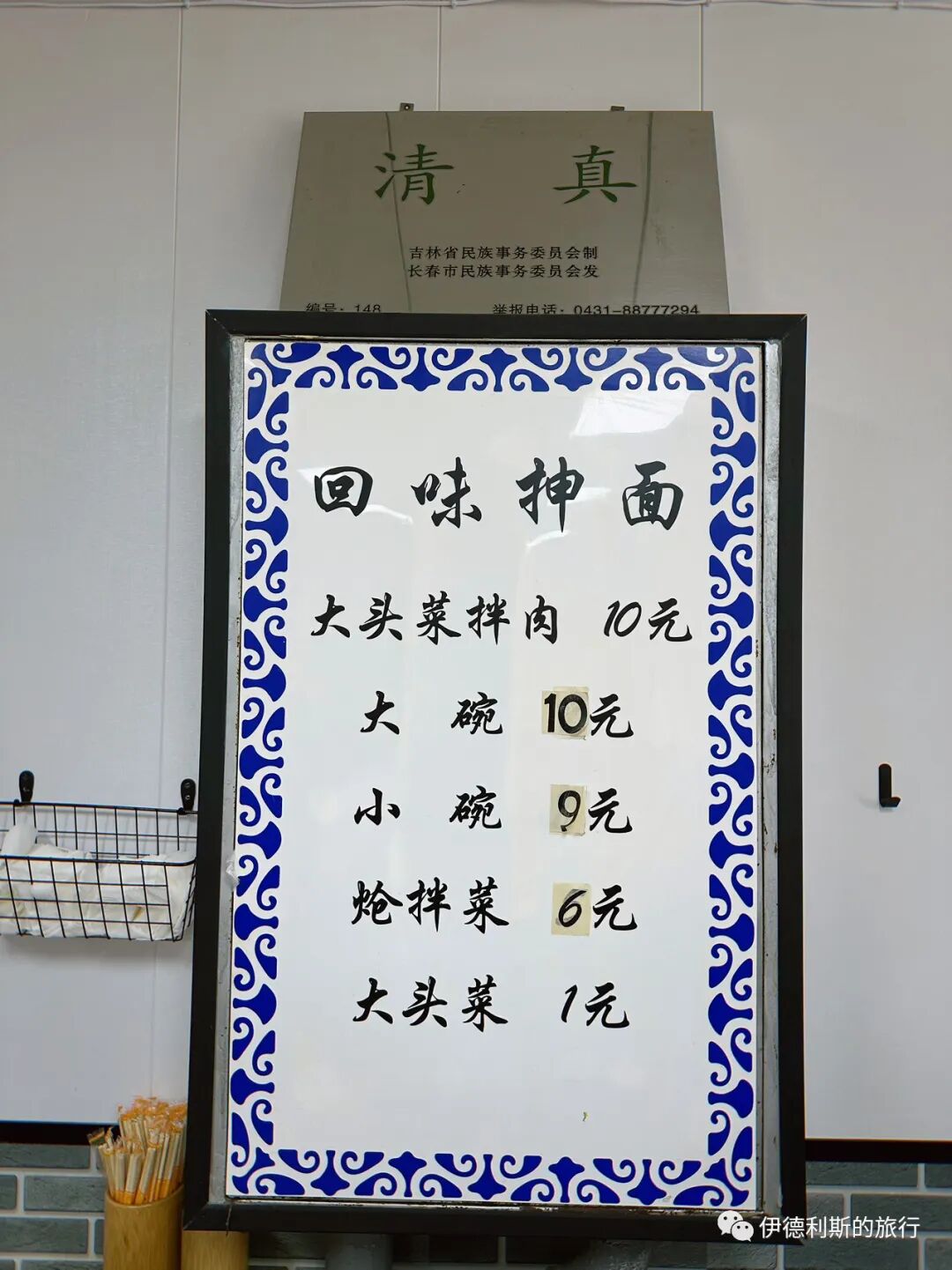
I had hand-pulled noodles (chenmian) for breakfast across from the Changtong Road Mosque in Changchun. I ordered a small bowl of wide noodles with a side of pickled mustard greens with meat (datoucai banrou) and three types of cold-tossed vegetables (qiangban cai). It was very affordable. This is the most popular breakfast spot in the Hui Muslim community of Changchun. It has been busy since it opened at six in the morning, and the noodle chef was working non-stop. The service here is incredibly fast. It only took one minute from ordering to having all the food on the table.
Their signature item is the chili oil. It is not very spicy but very fragrant, and it really brings out the flavor when added to the pickled mustard greens with meat. Changchun is famous for its soybeans, and their fried tofu (youdoufu) is delicious.
The Changtong Road Mosque was first built in 1824 (the fourth year of the Daoguang reign). It was originally located inside the East Gate of Dongsandao Street. In 1852 (the second year of the Xianfeng reign), elder Han Xuecheng donated a house and elder Shi Xuecheng donated trees to move the mosque to its current location in Tielingtun. In 1864 (the third year of the Tongzhi reign), Imam Han Dengqing and others raised funds to expand the mosque, building the current five-room main hall and the three-story kiln hall (yaodian). During repairs to the kiln hall in 1986, an inscription was found inside that read: 'Flying Dragon, third year of Tongzhi, Jiazi year, 21st day of the second lunar month (March 28, 1864), reconstruction began, the new main hall and porch were completed on an auspicious day.' In 1889 (the 15th year of the Guangxu reign), Imam Han Laixiang bought land from the Xu family in front of the mosque to build the main gate tower, east and west side rooms, the north lecture hall, the east reception hall, and the main hall porch. It was expanded several more times during the Republic of China era.
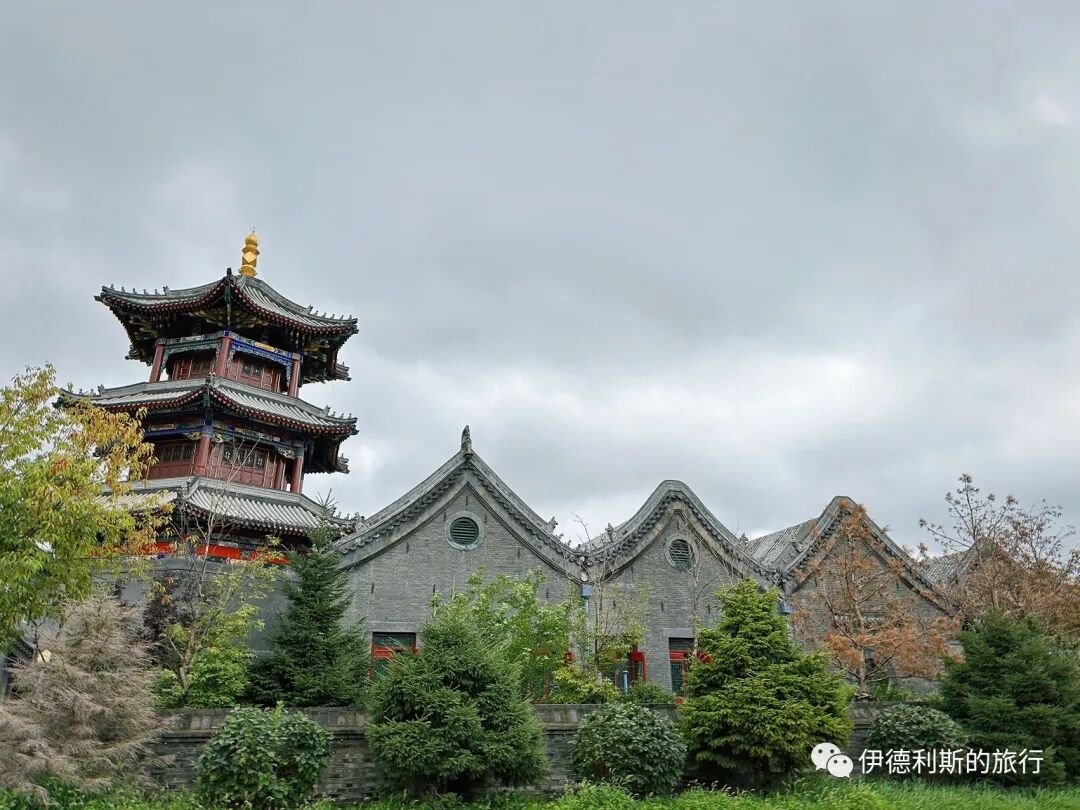
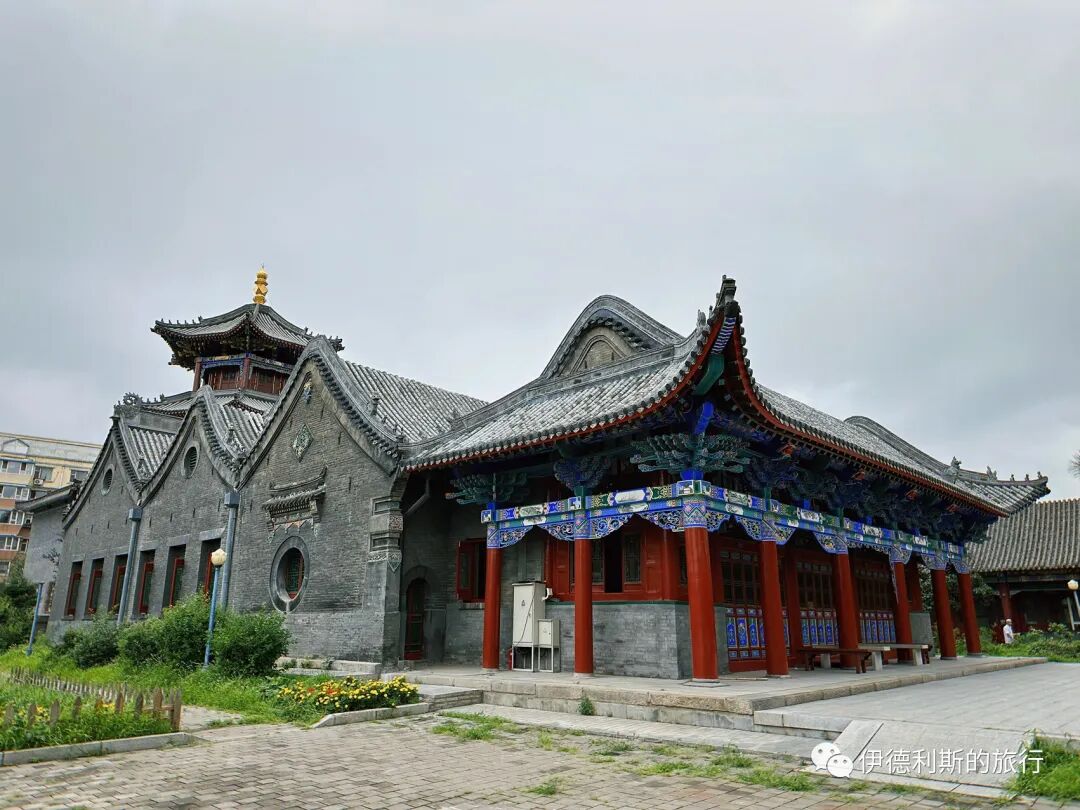
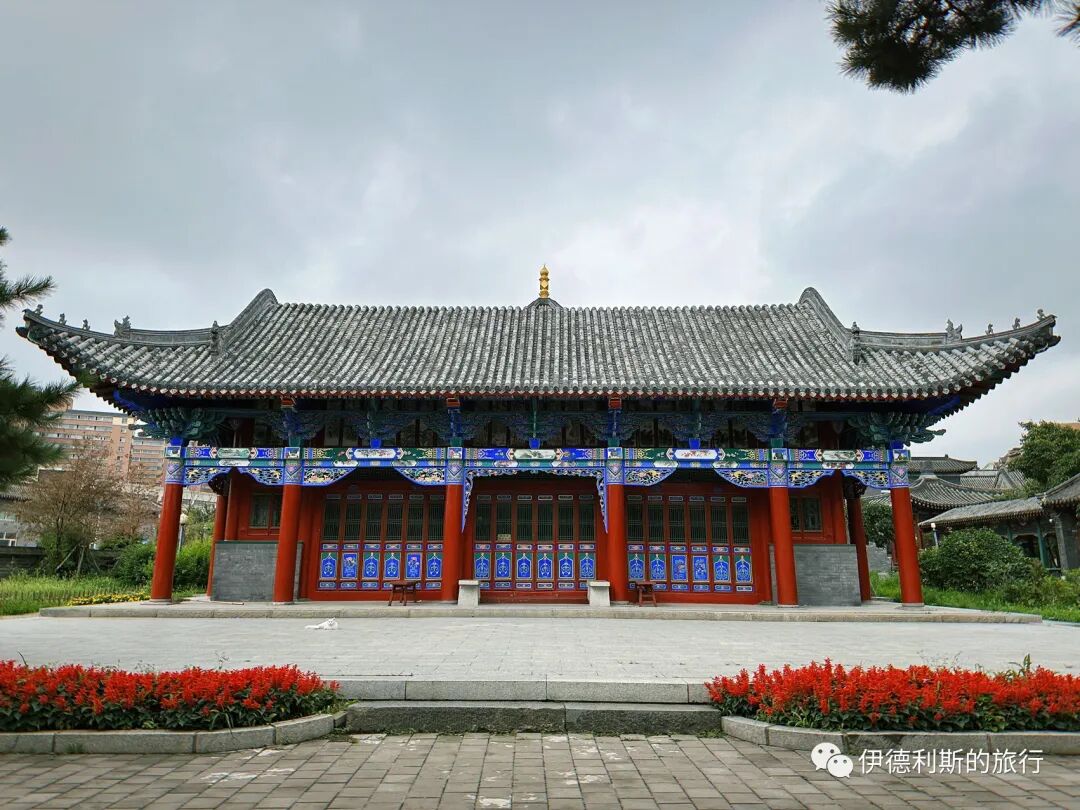
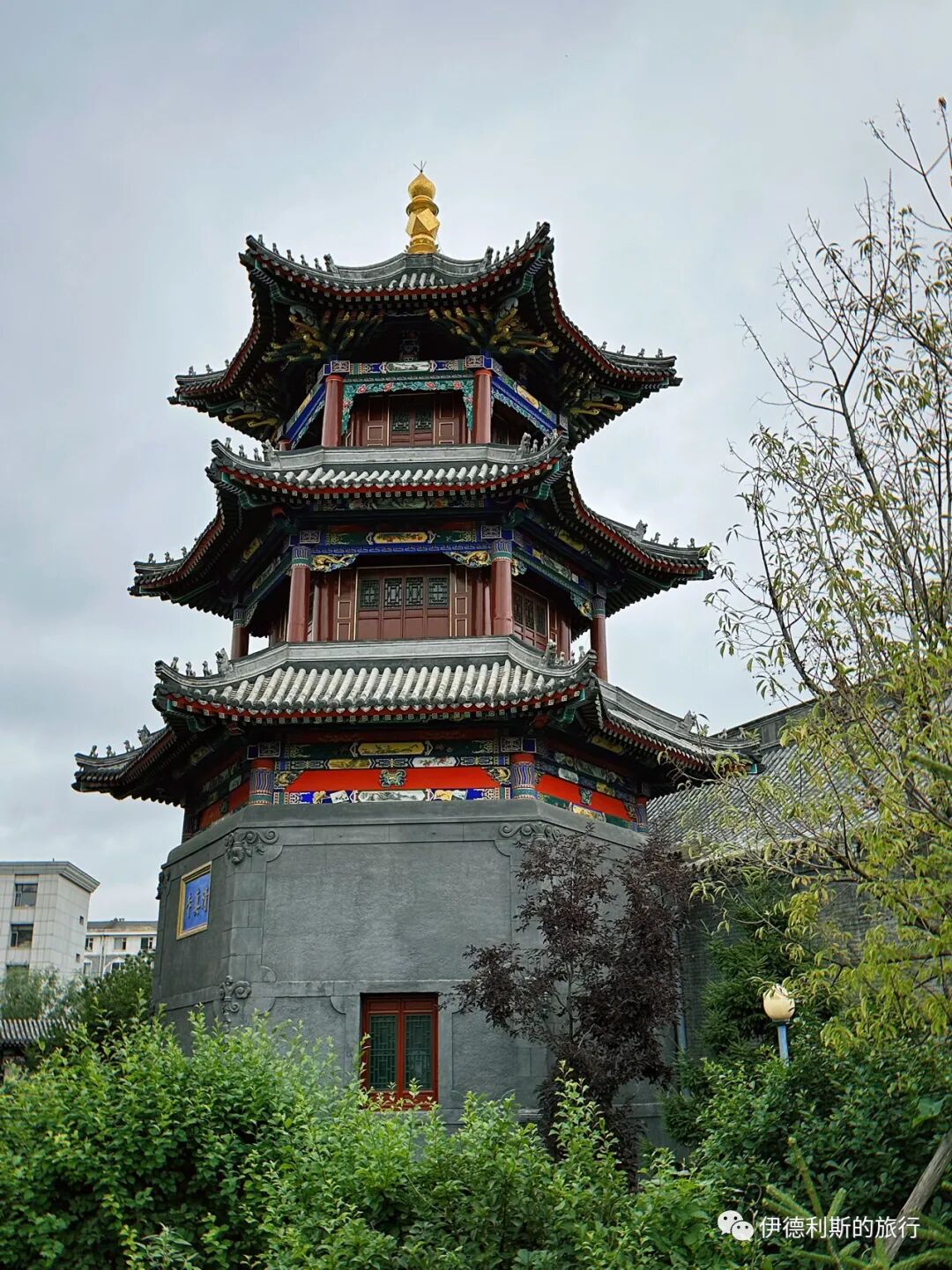
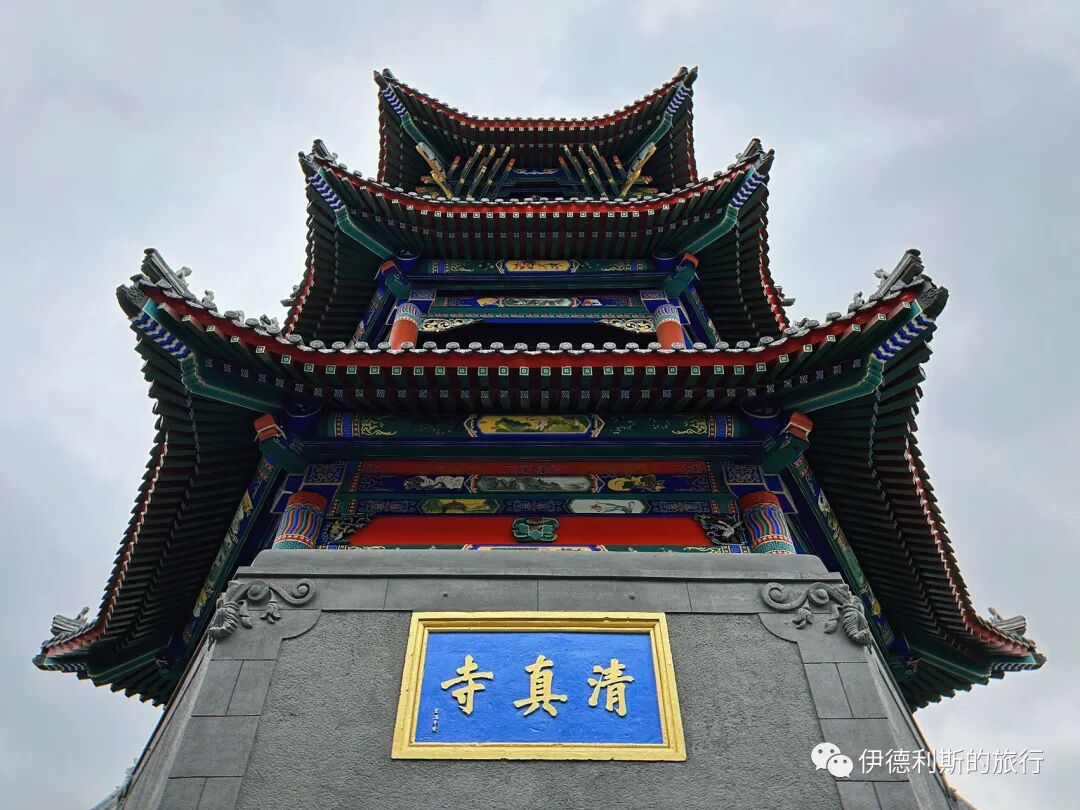
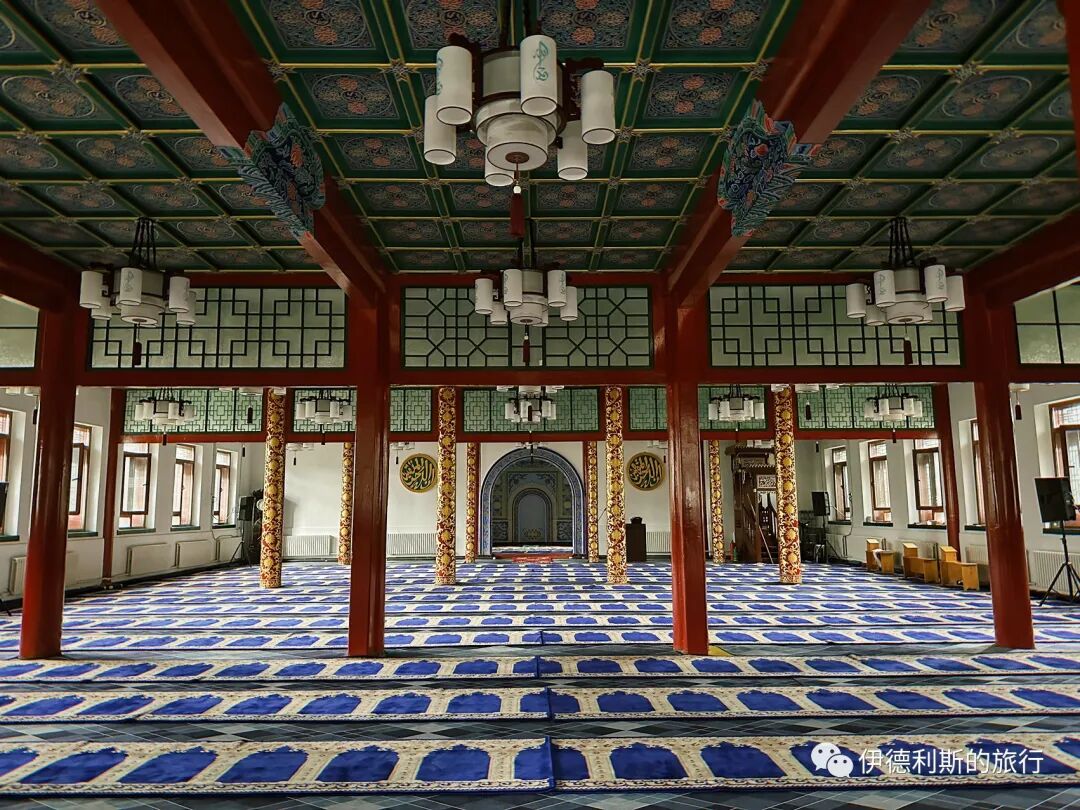
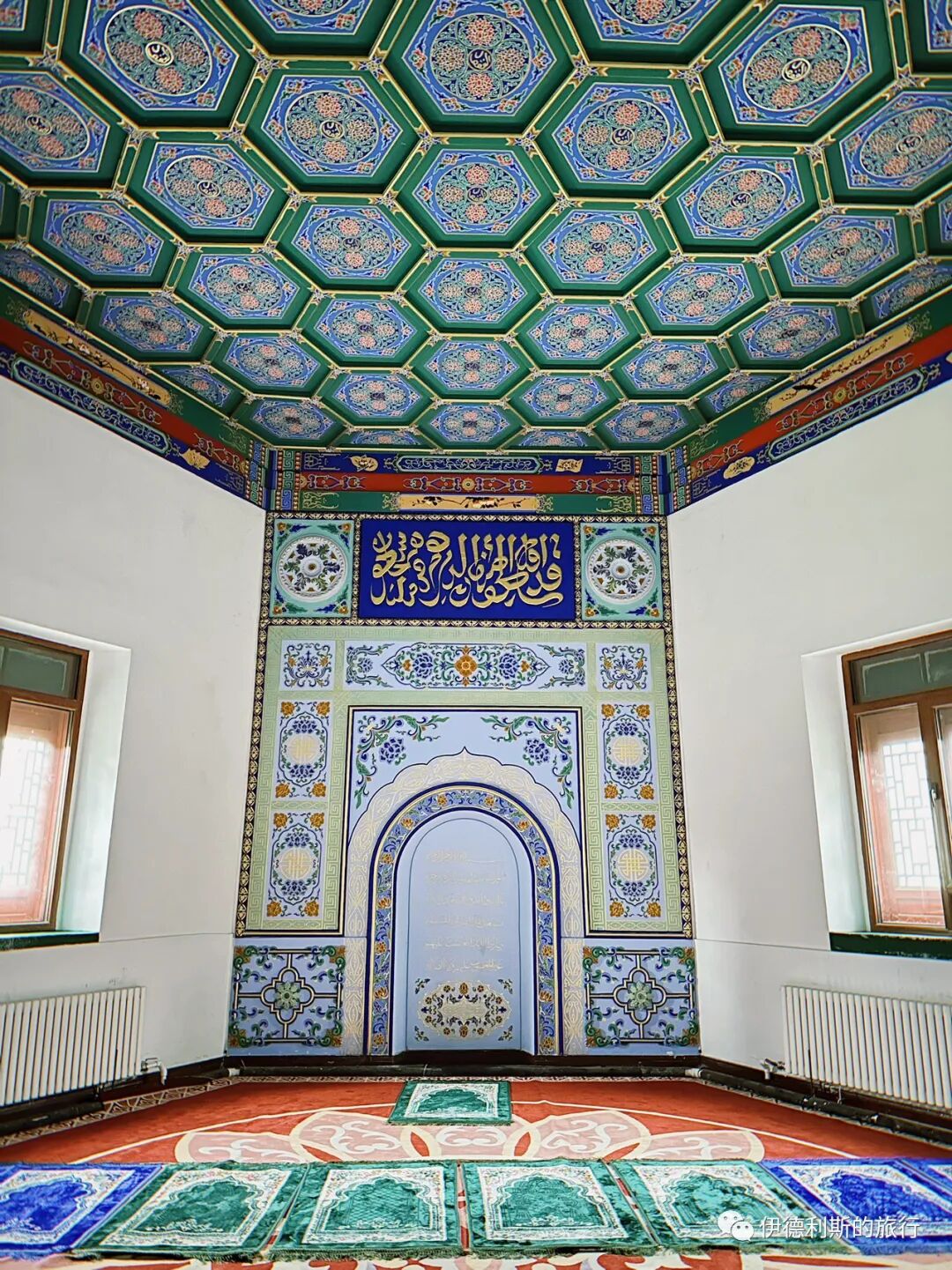
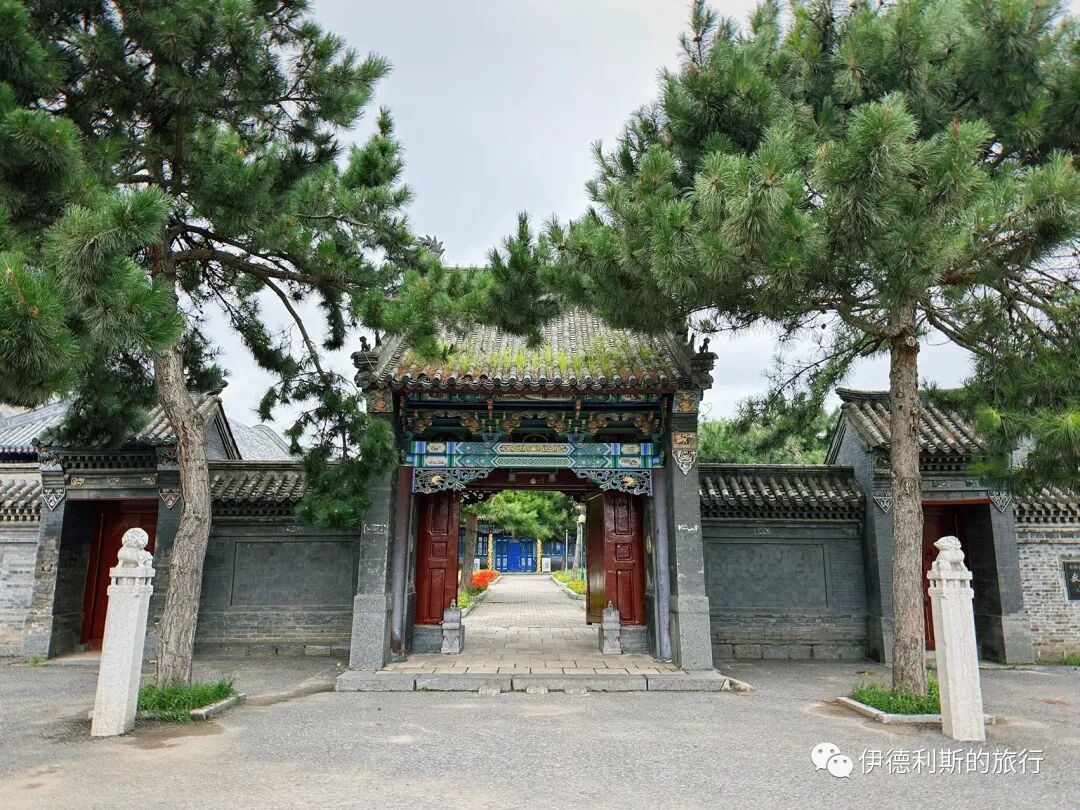
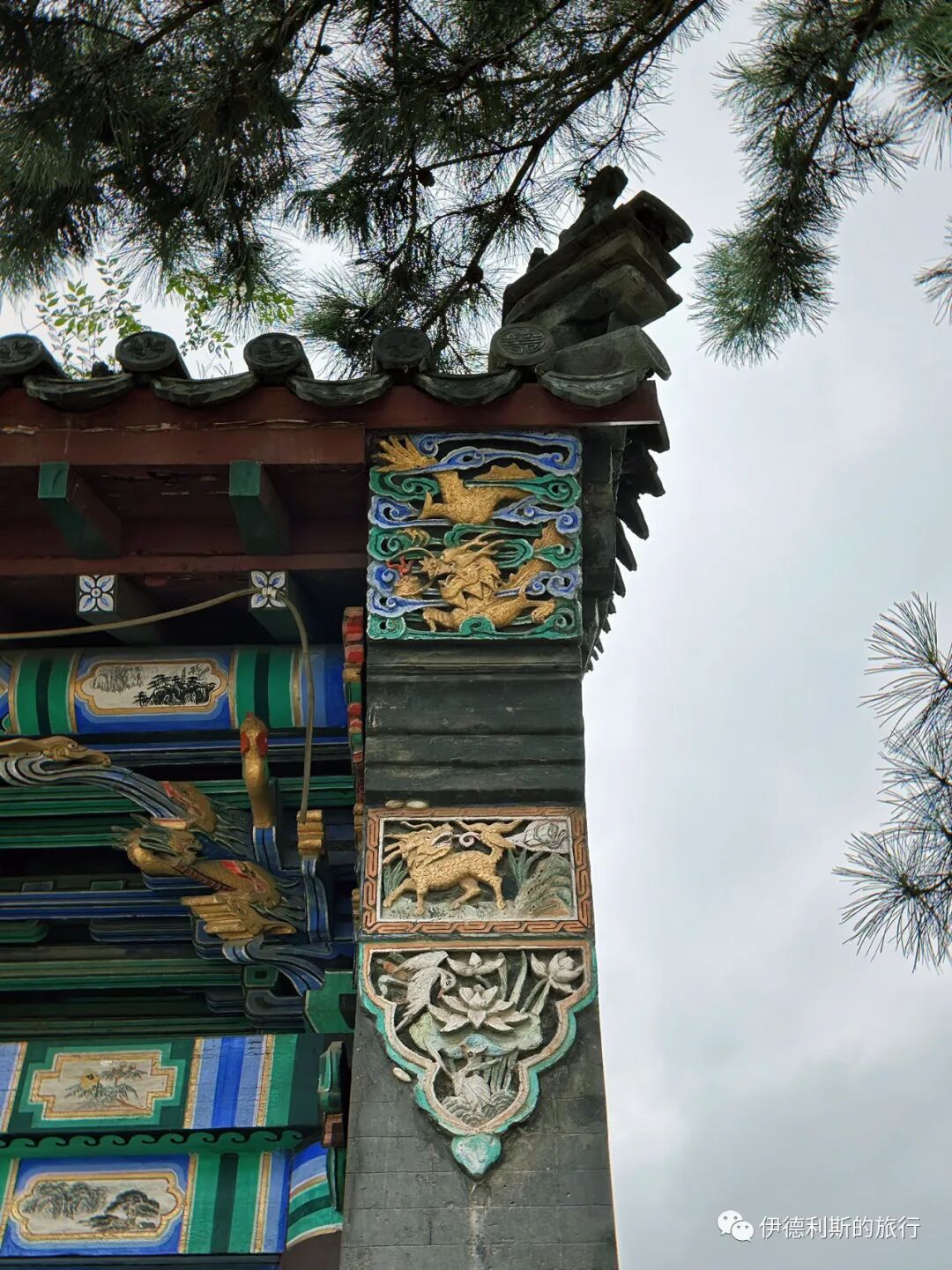
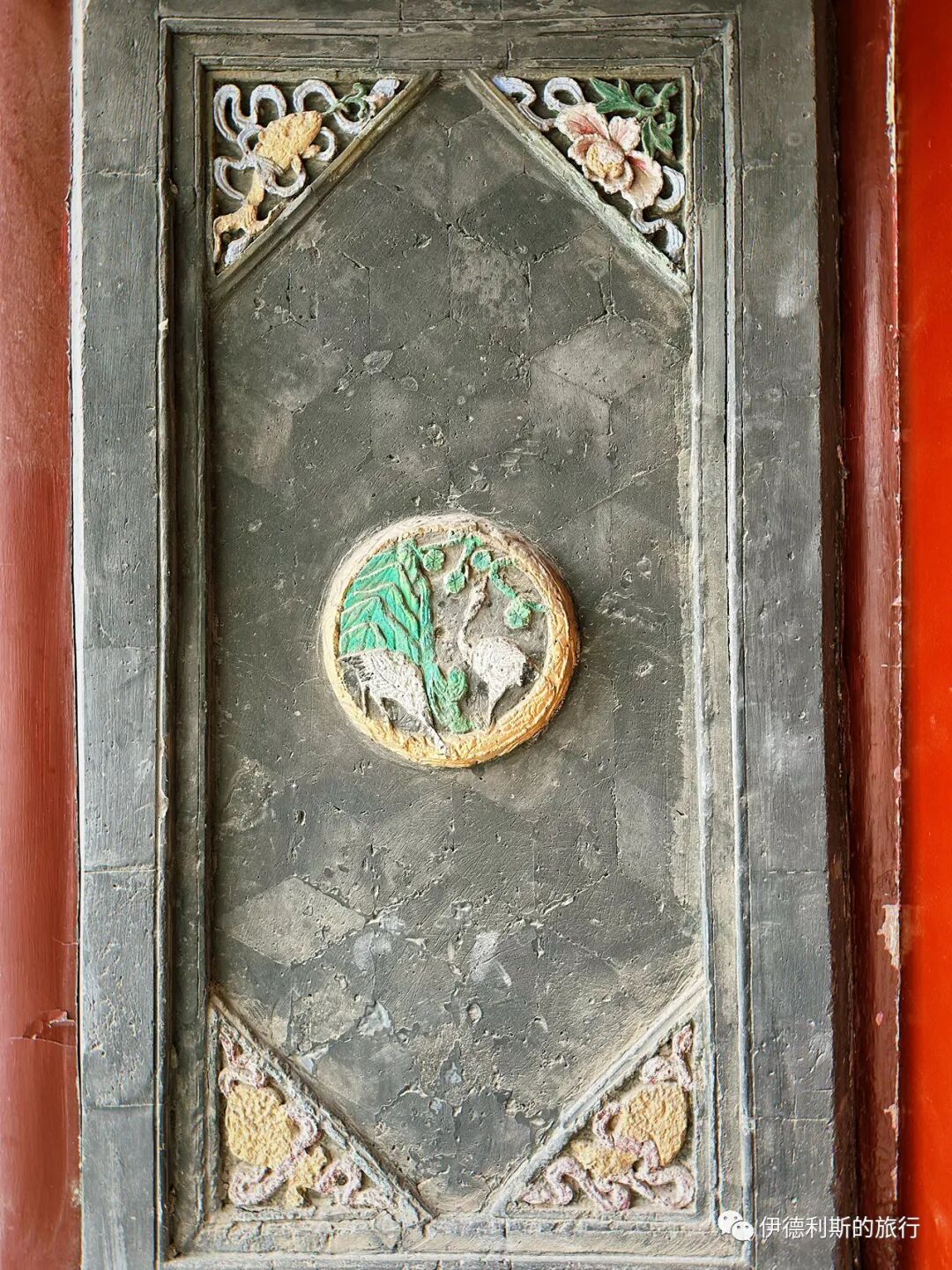
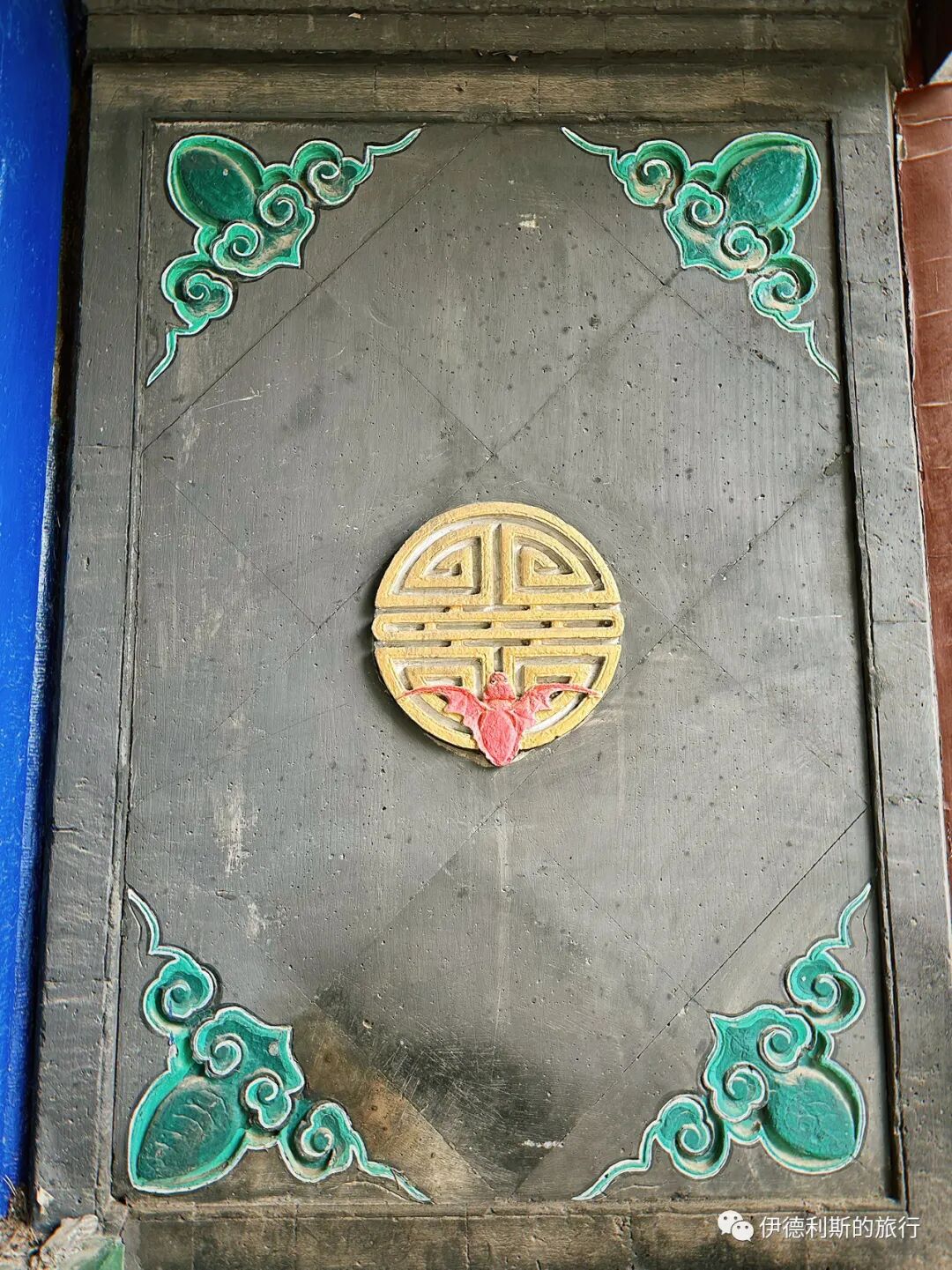
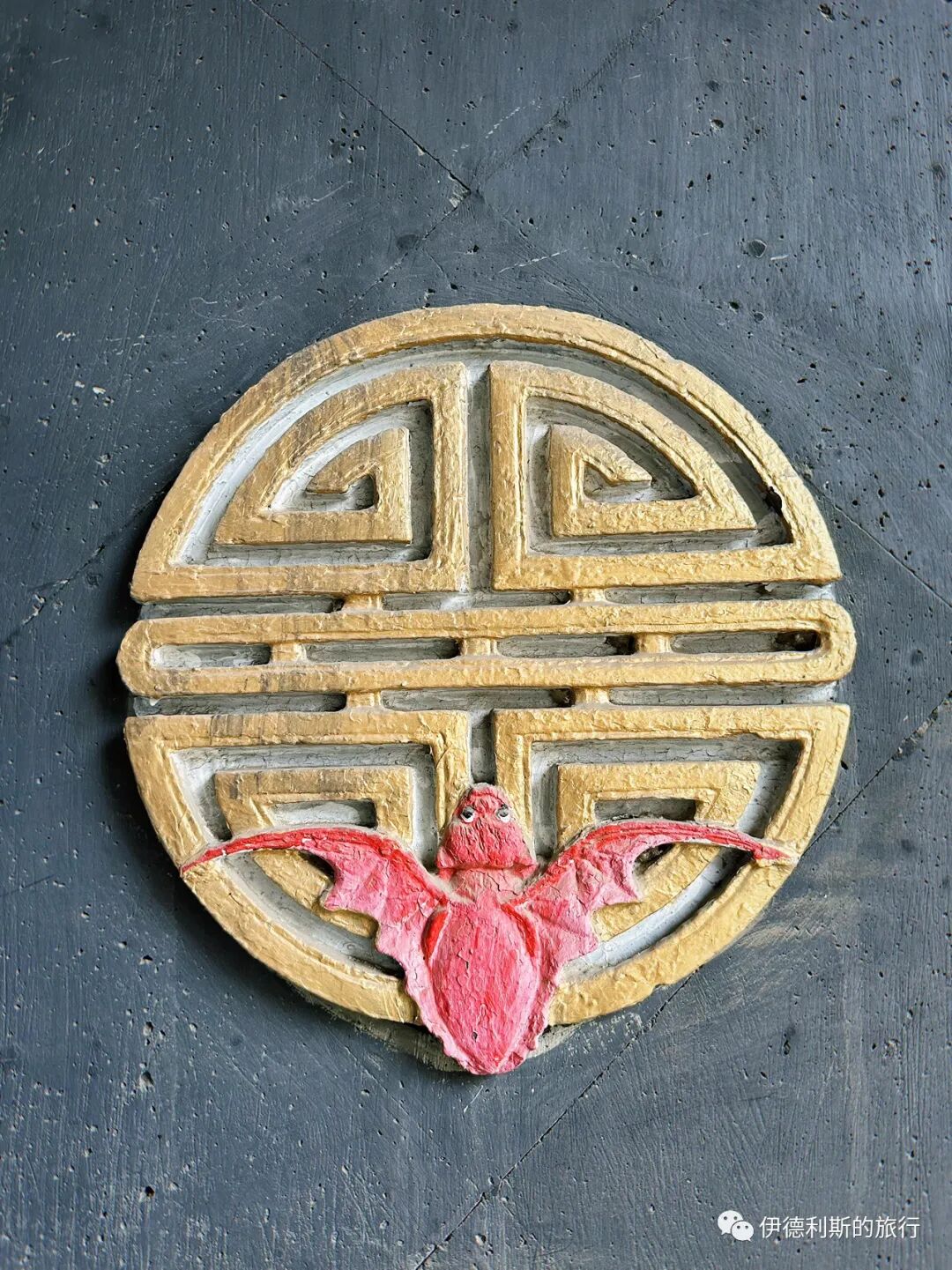
The main gate features a plaque with the Basmala (tasimi) written in a style imitating seal script, which is very unique. In front of the gate are stone lions and horse-tethering posts. The gable walls (chitou) are carved with brick dragons and qilin, while the side hanging fish (xuanyu) decorations feature bats, lotus flowers, and water birds, all full of traditional Chinese cultural charm.
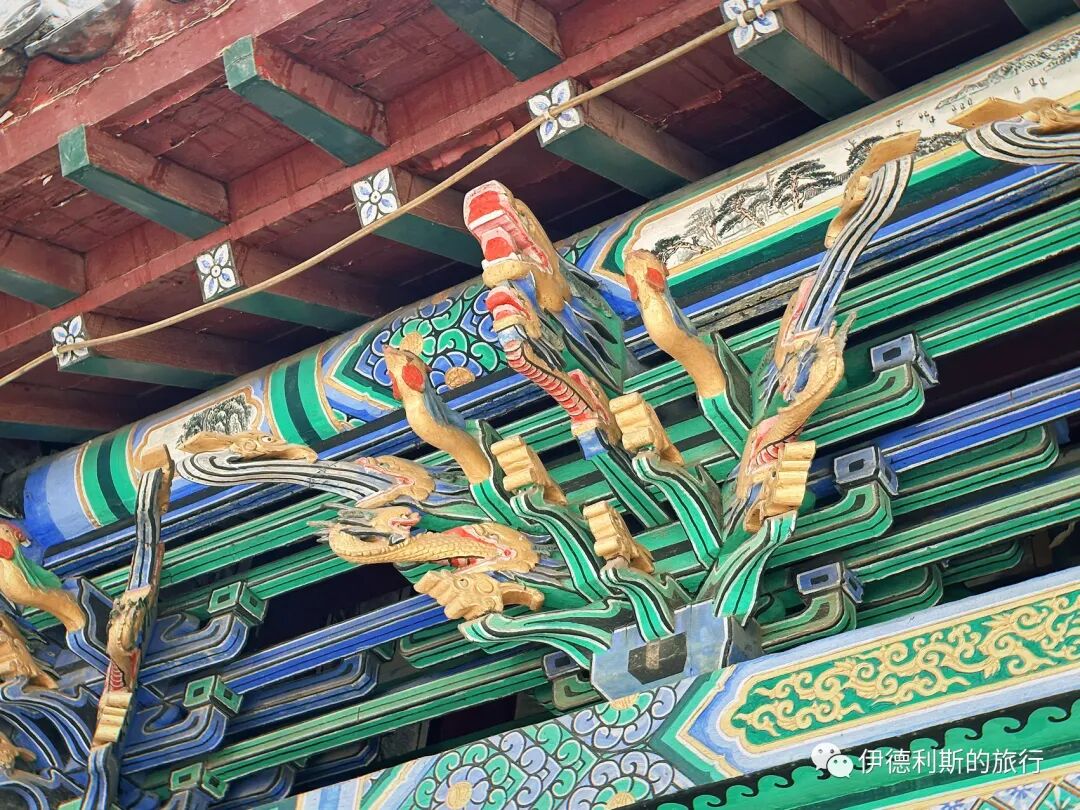
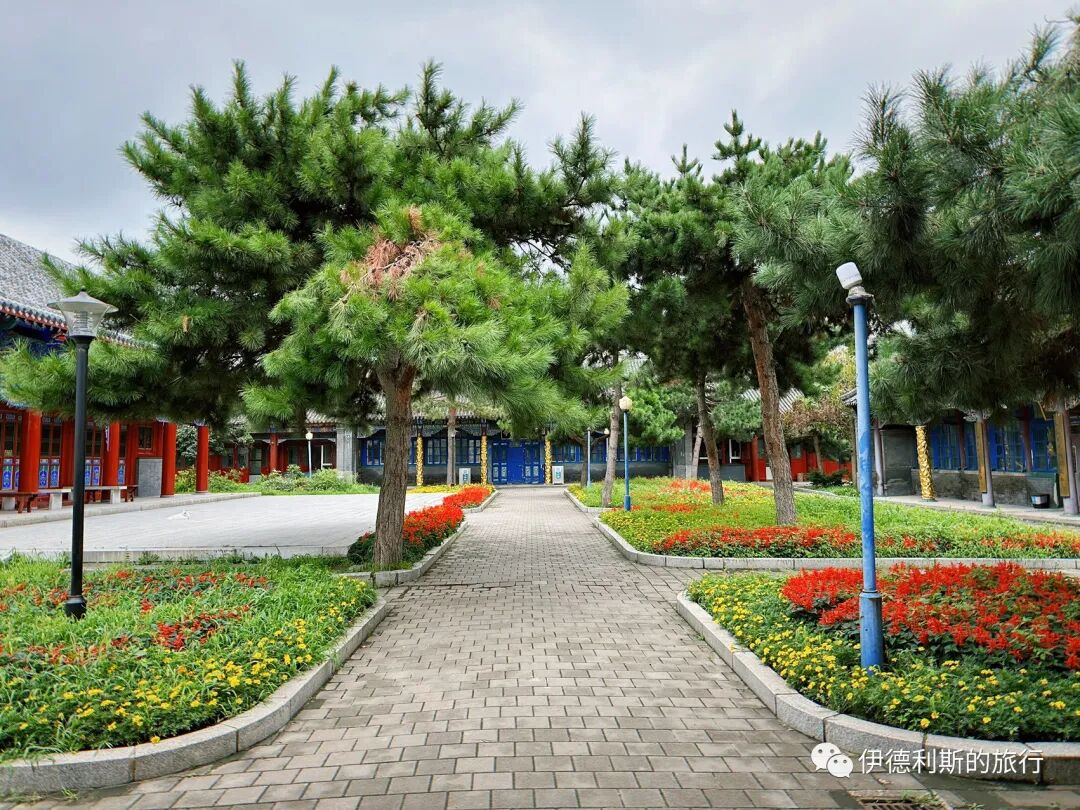
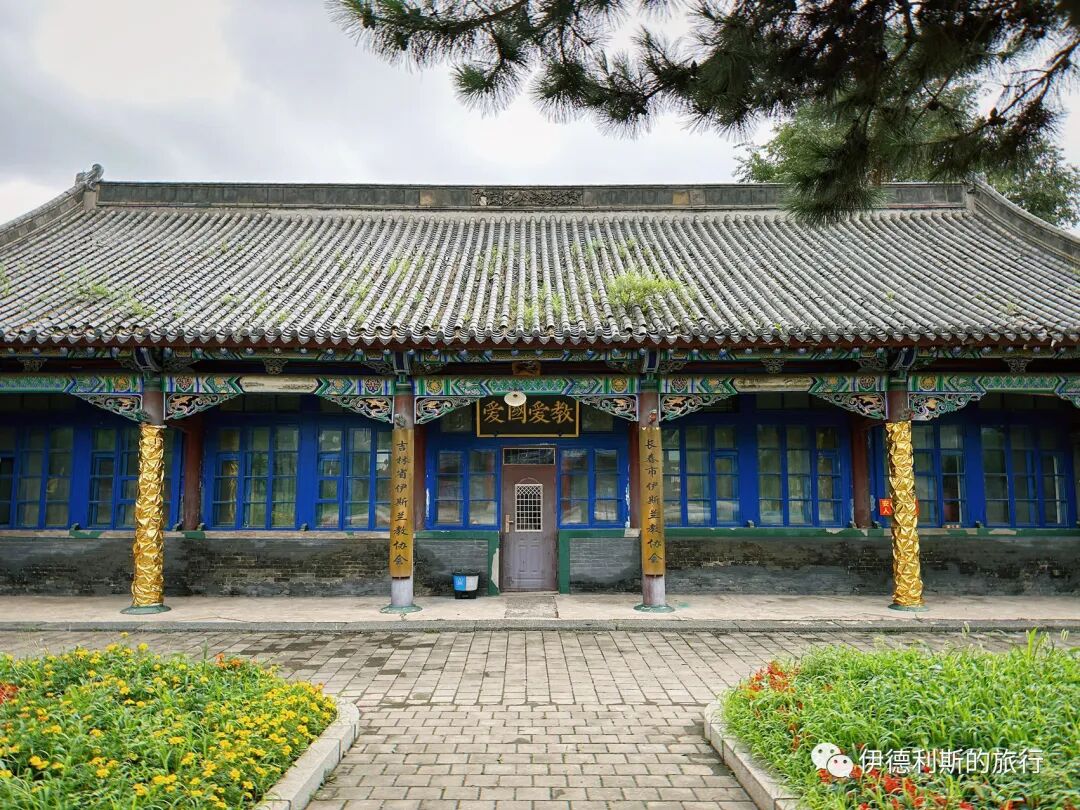
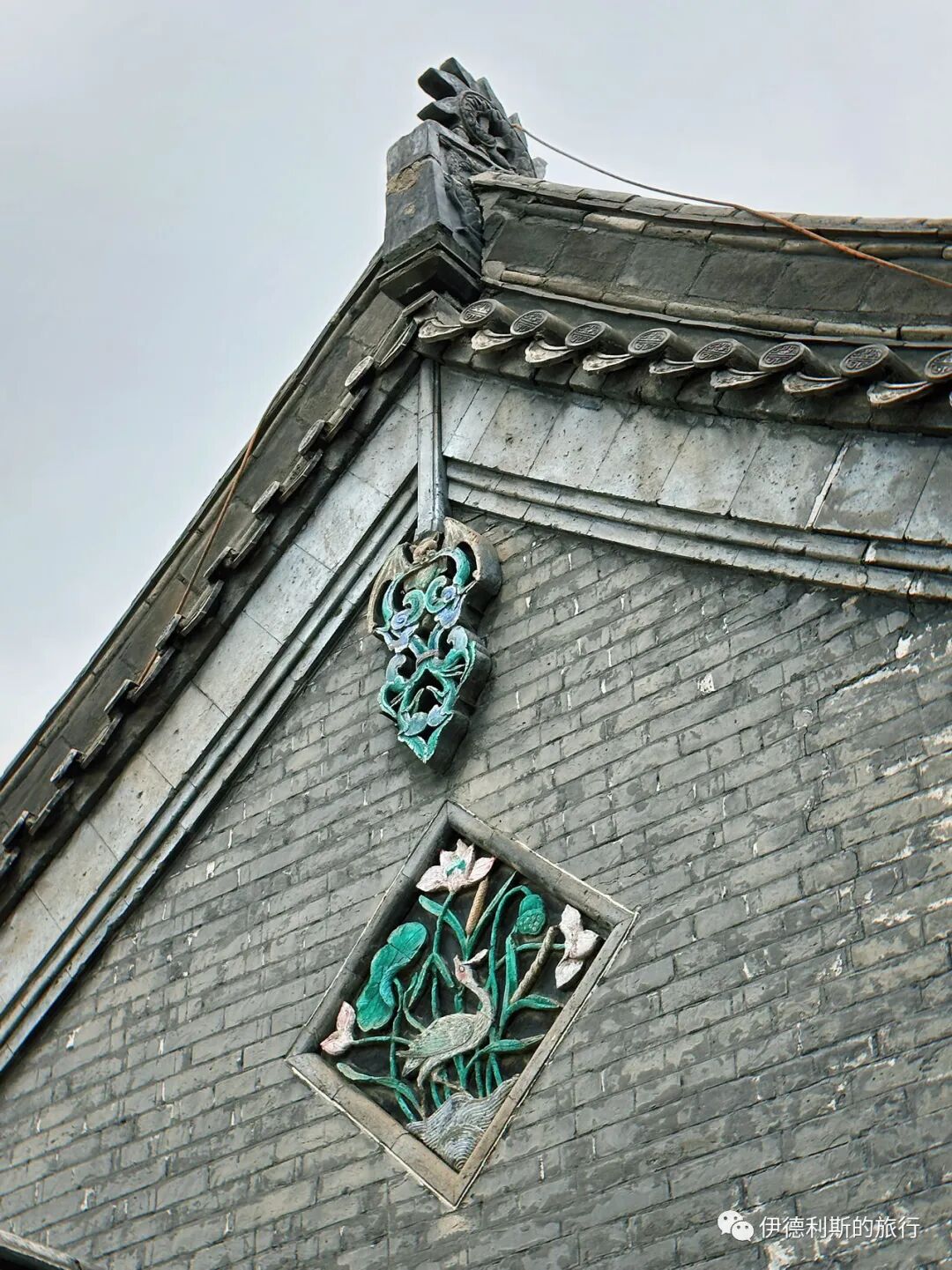
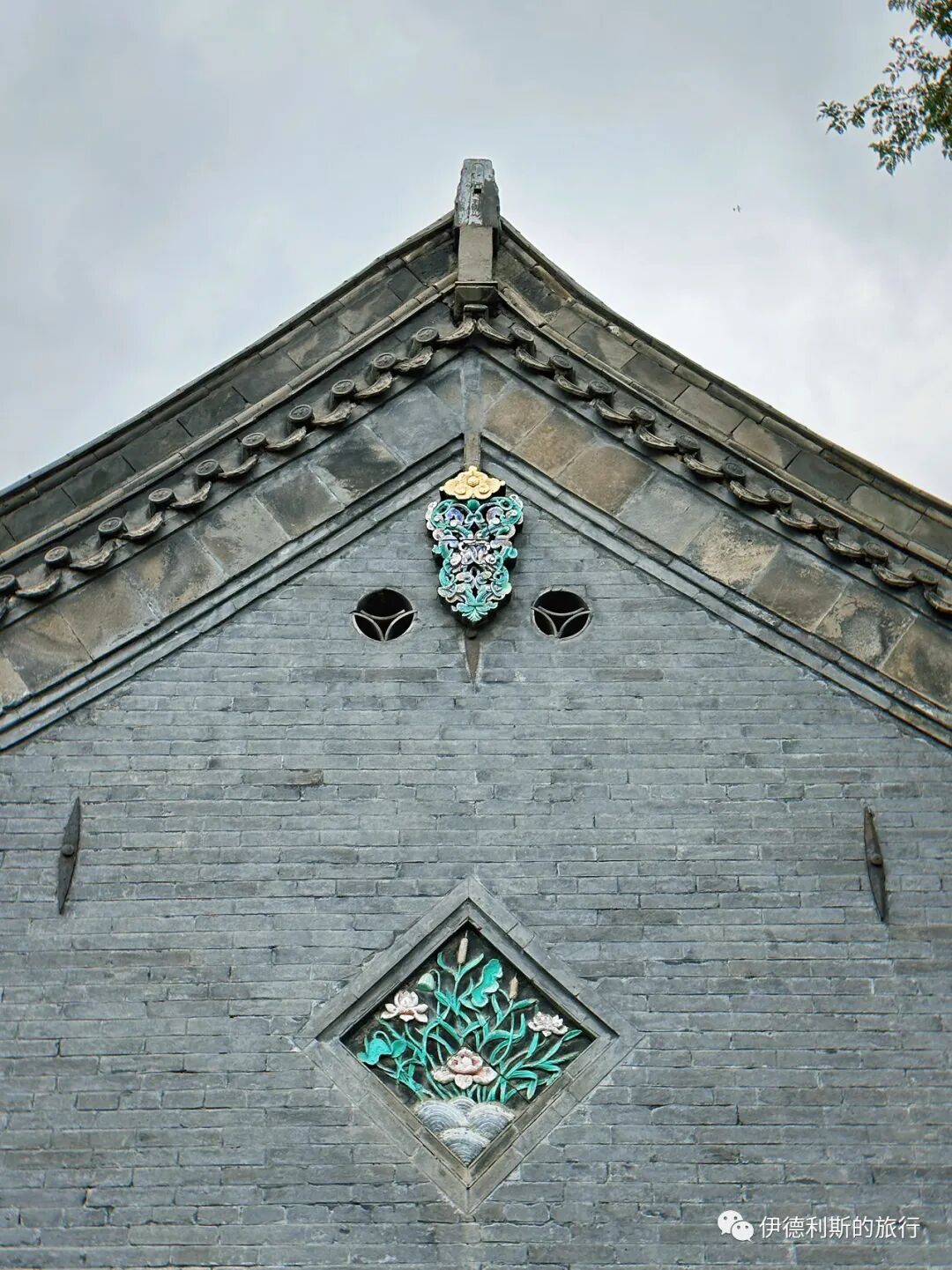
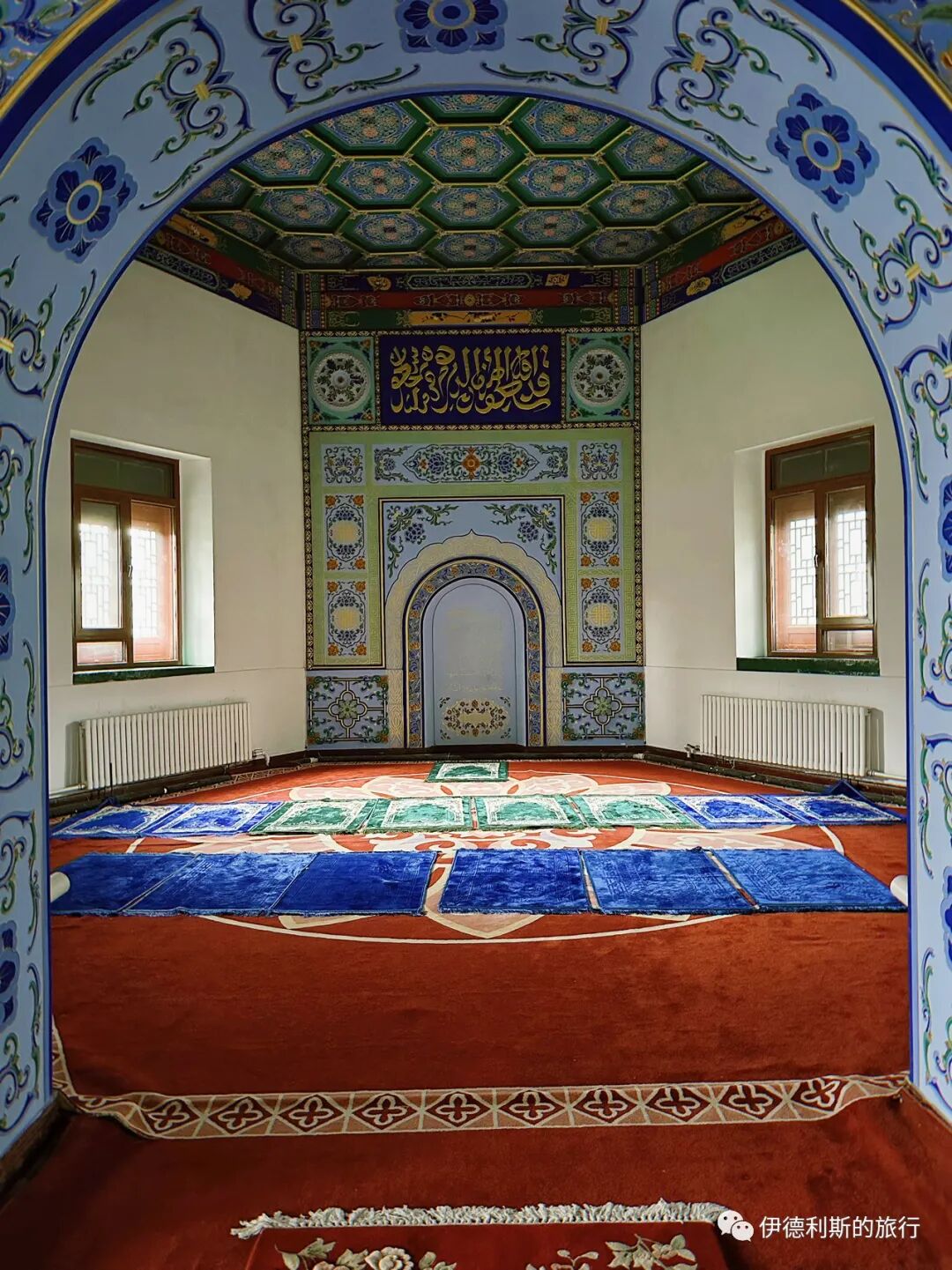
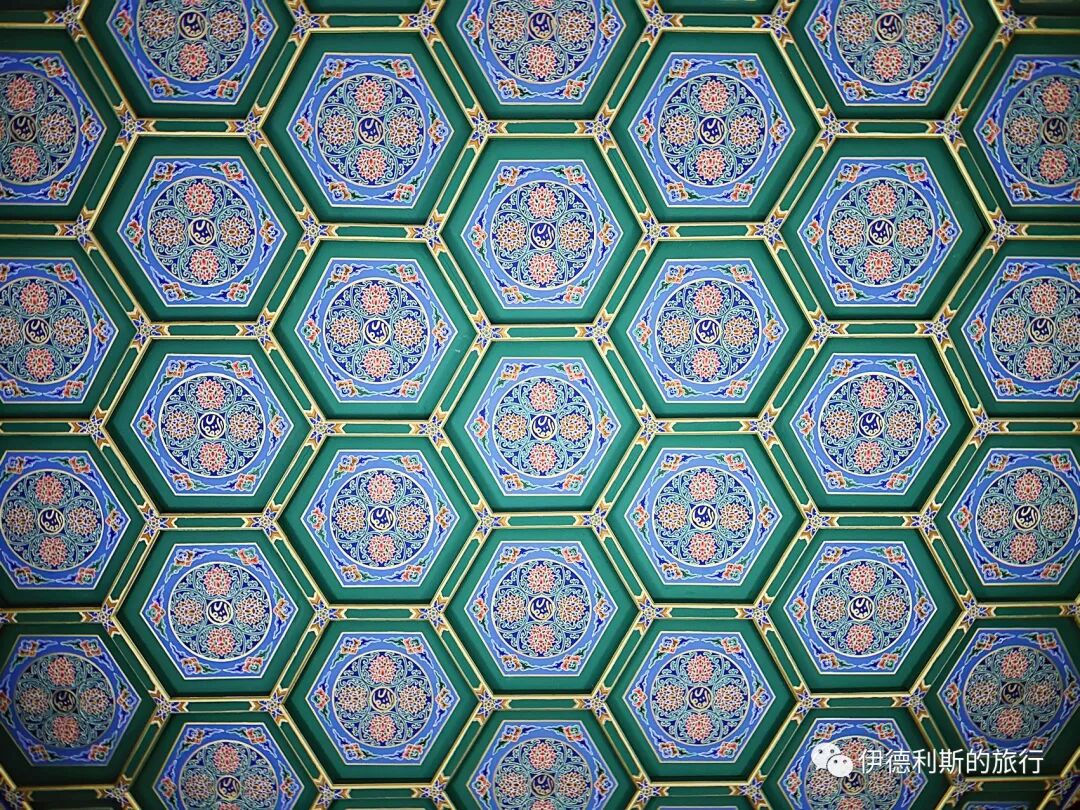
The main hall features exquisite wood and brick carvings on its gable walls, hanging fish, and bracket sets (dougong). The north and south lecture halls are also decorated with brick carvings of traditional patterns.
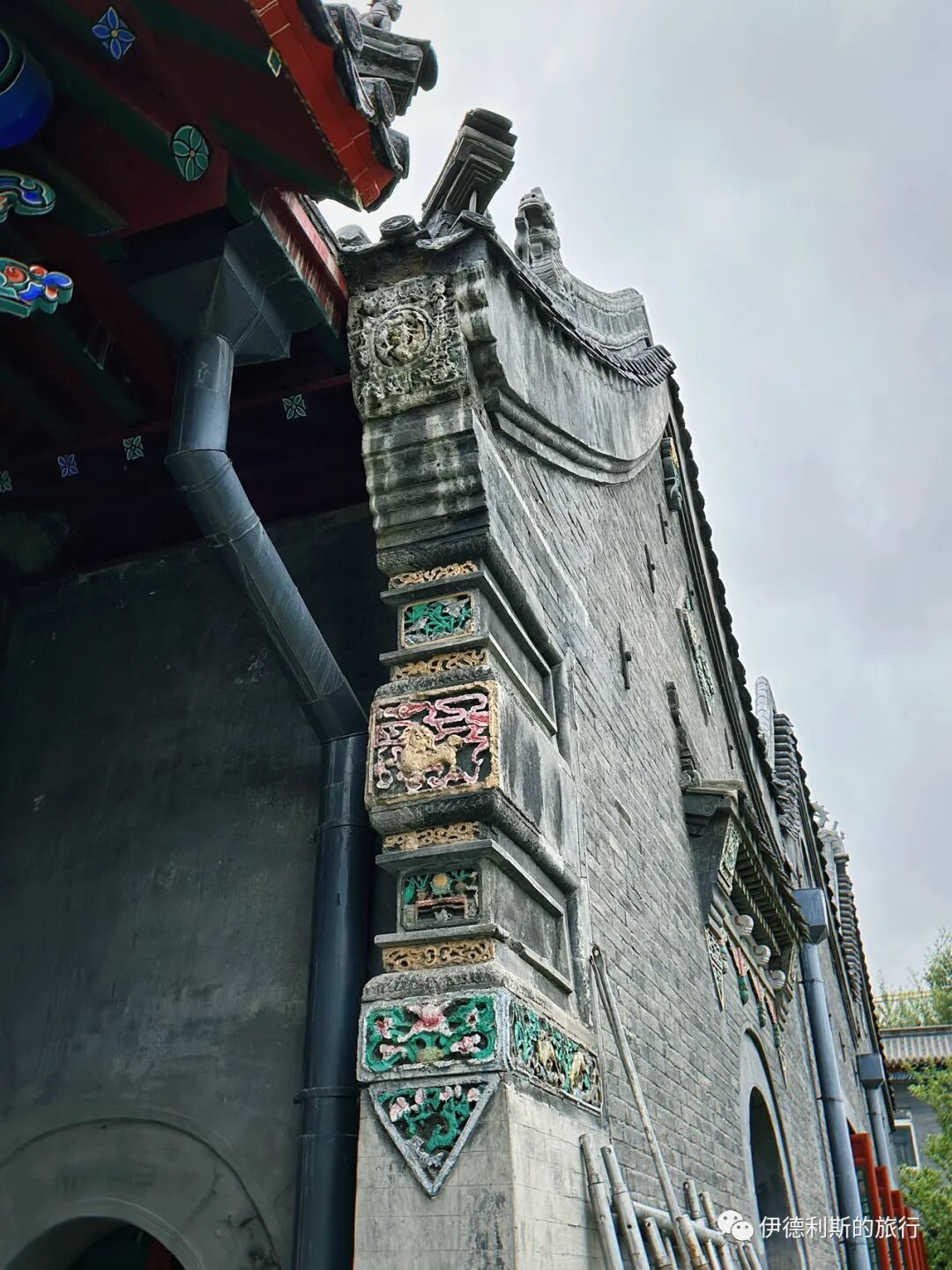
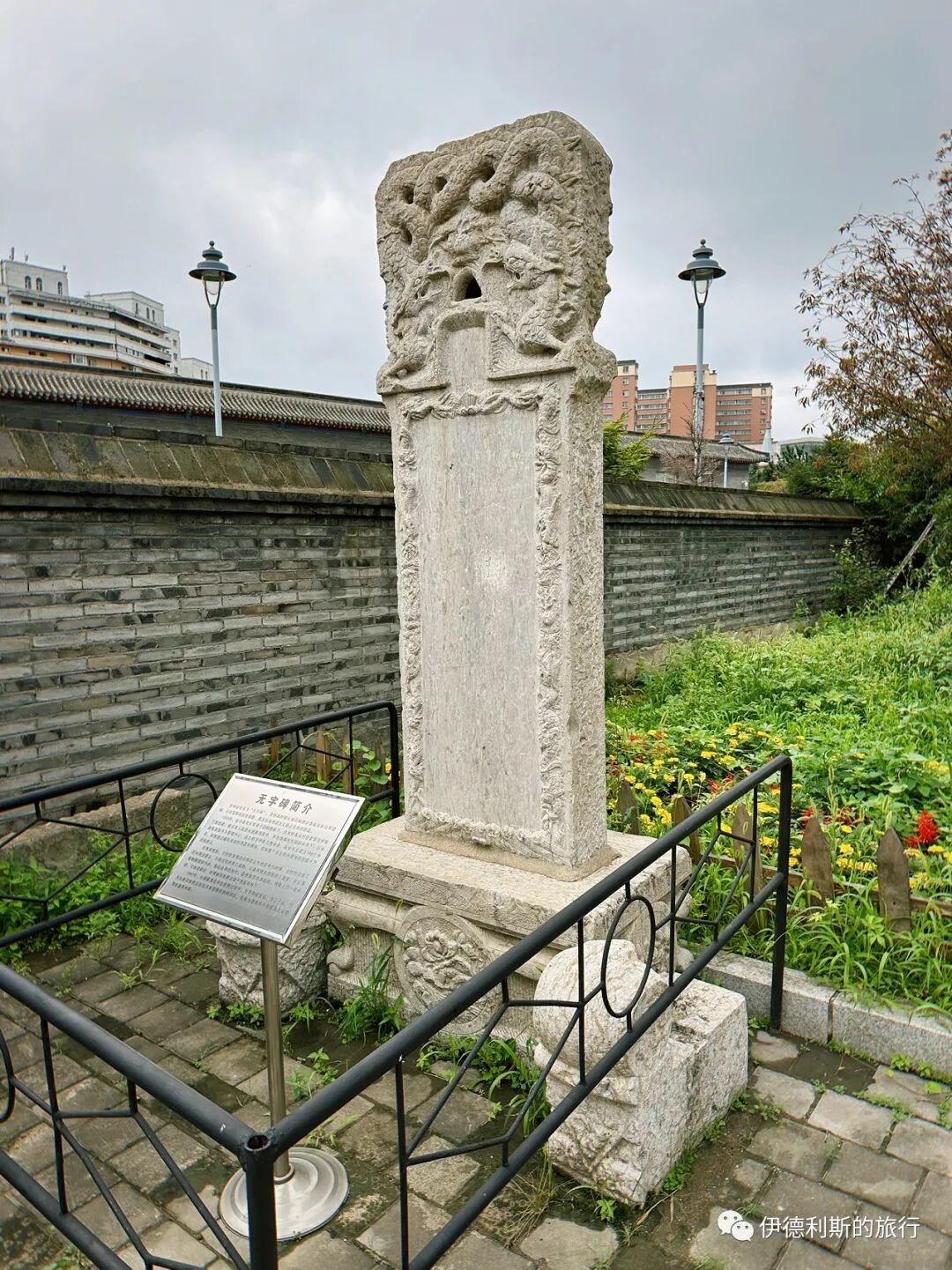
There is also a blank stele standing next to the main hall. In 1933, the Japanese Kwantung Army sent Kawamura Kyodo to station at the Changtong Road Mosque and established the 'Manchurian Islamic Association' there to manage religious affairs throughout the puppet state of Manchukuo. Kawamura Kyodo forced the local Hui Muslims at the mosque to erect a monument for him, but the craftsmen delayed the work by claiming it needed fine carving. The inscription was never started by the time Japan surrendered. After Japan surrendered, the local people buried the stone tablet underground. It was only rediscovered during repairs in 1987.
I have two postcards from around 1935 showing the Changtong Road Mosque in Changchun. If you look closely at the first one, you can see a 'No Smoking' sign on the platform and faint traces of a couplet on the main prayer hall. The second one shows the electrical wires strung up in the mosque and the horse-tethering posts at the entrance.
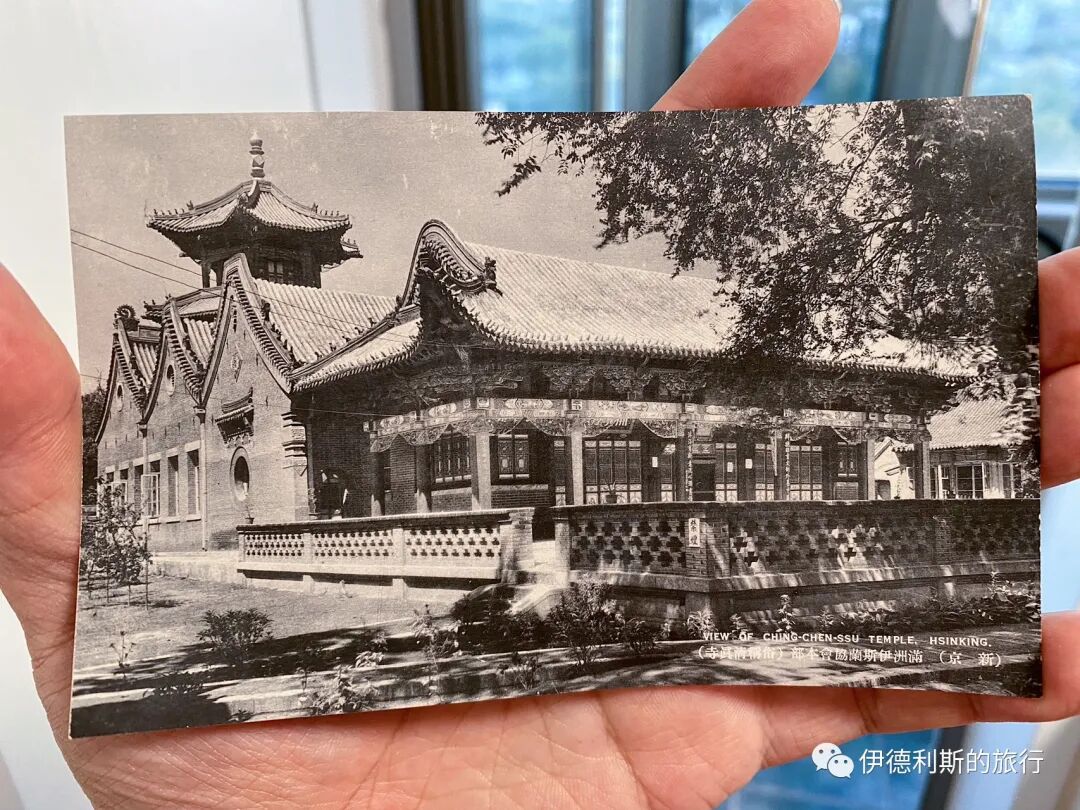
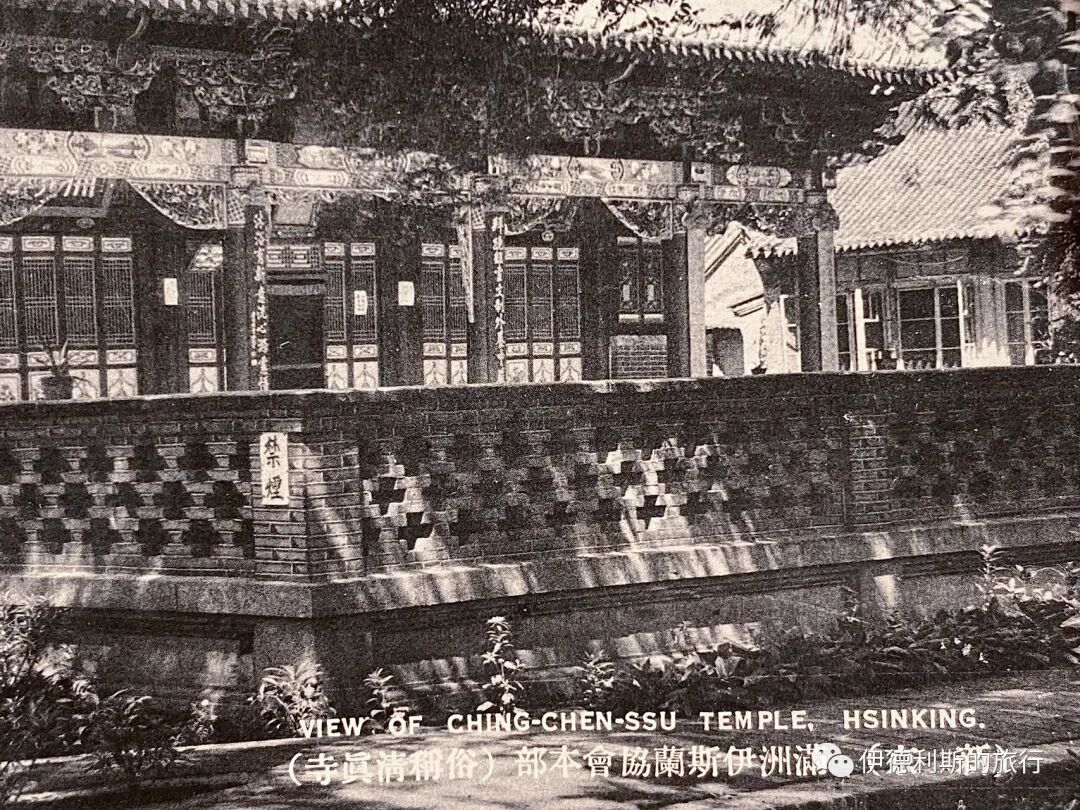
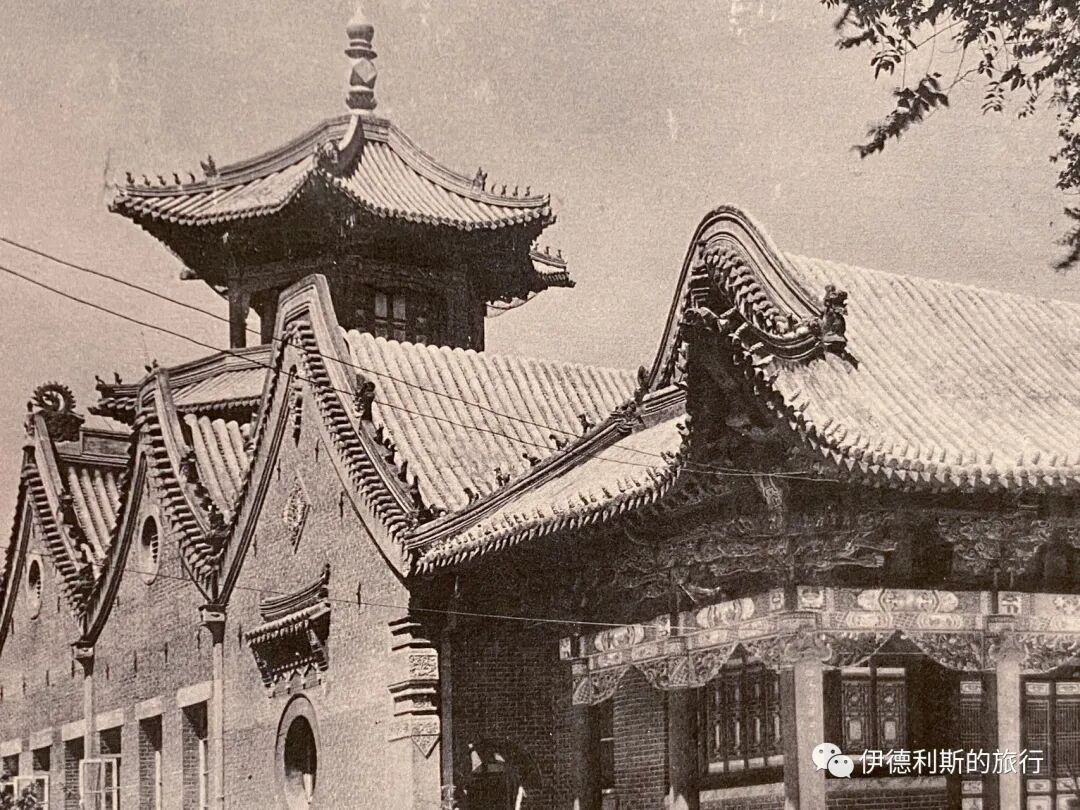
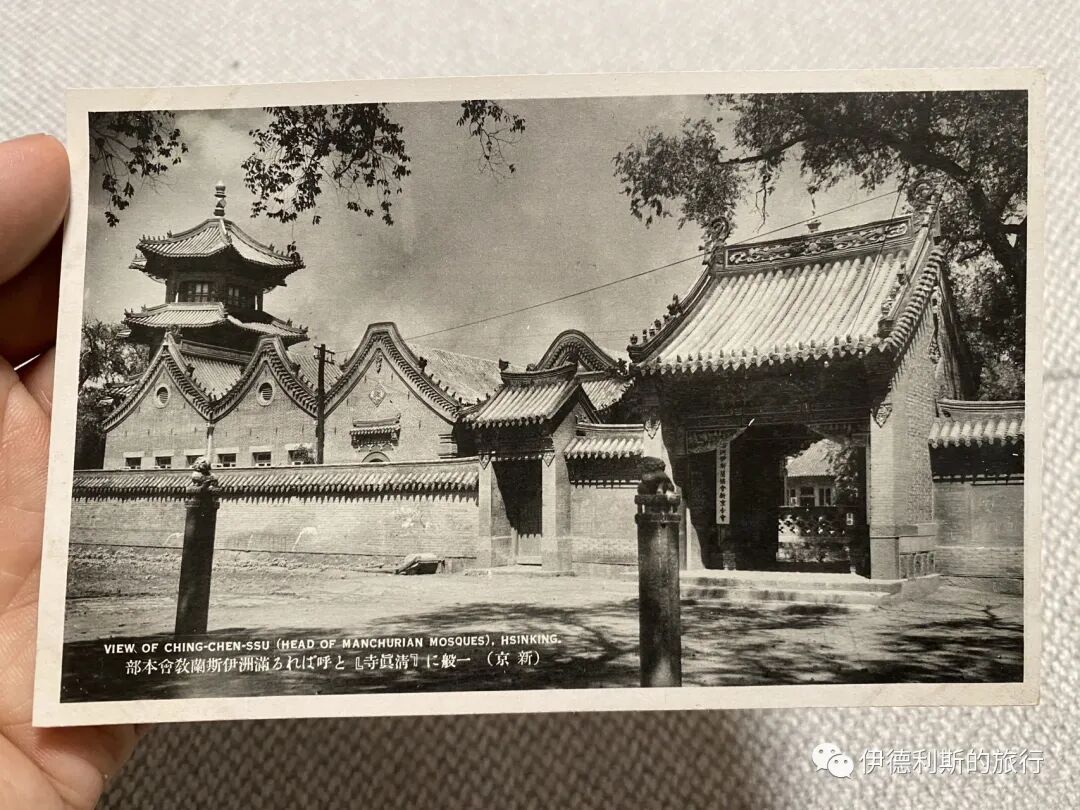
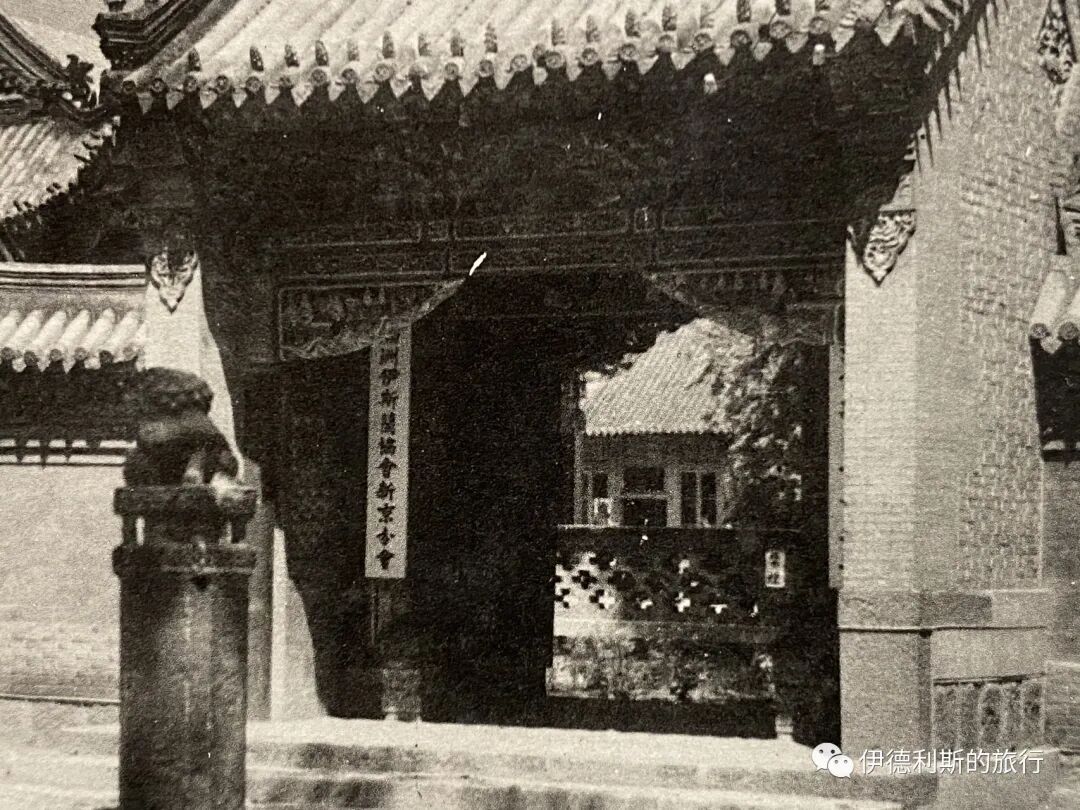
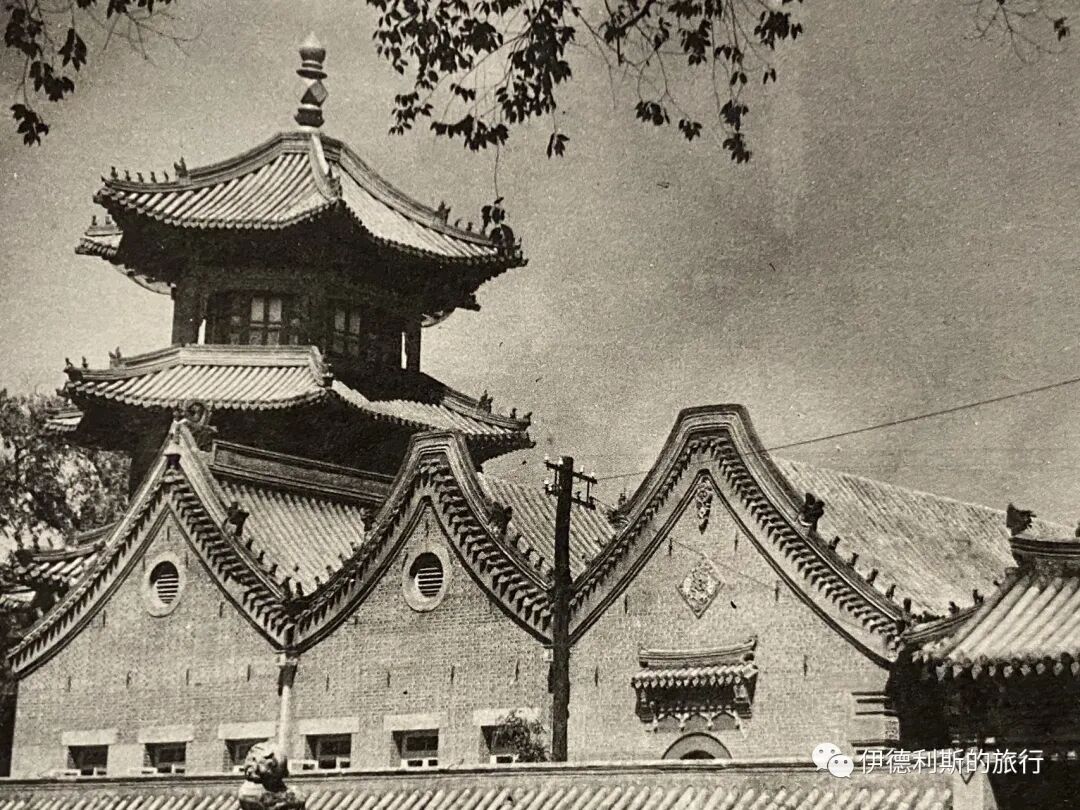
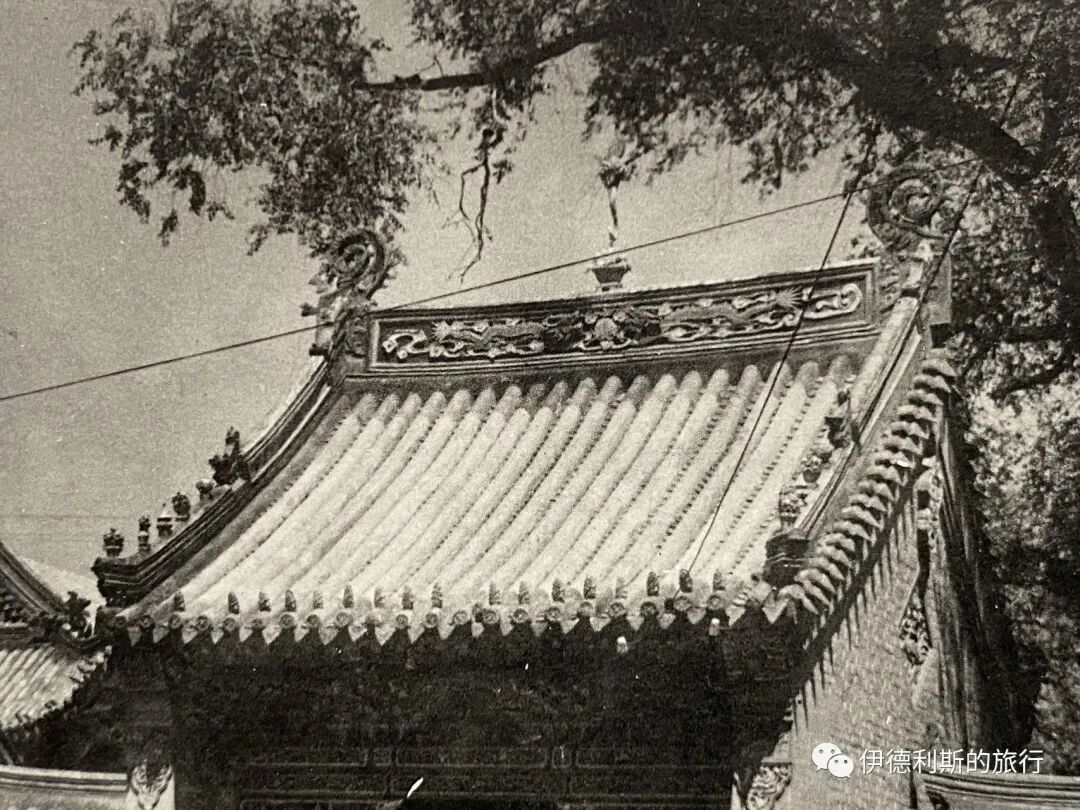
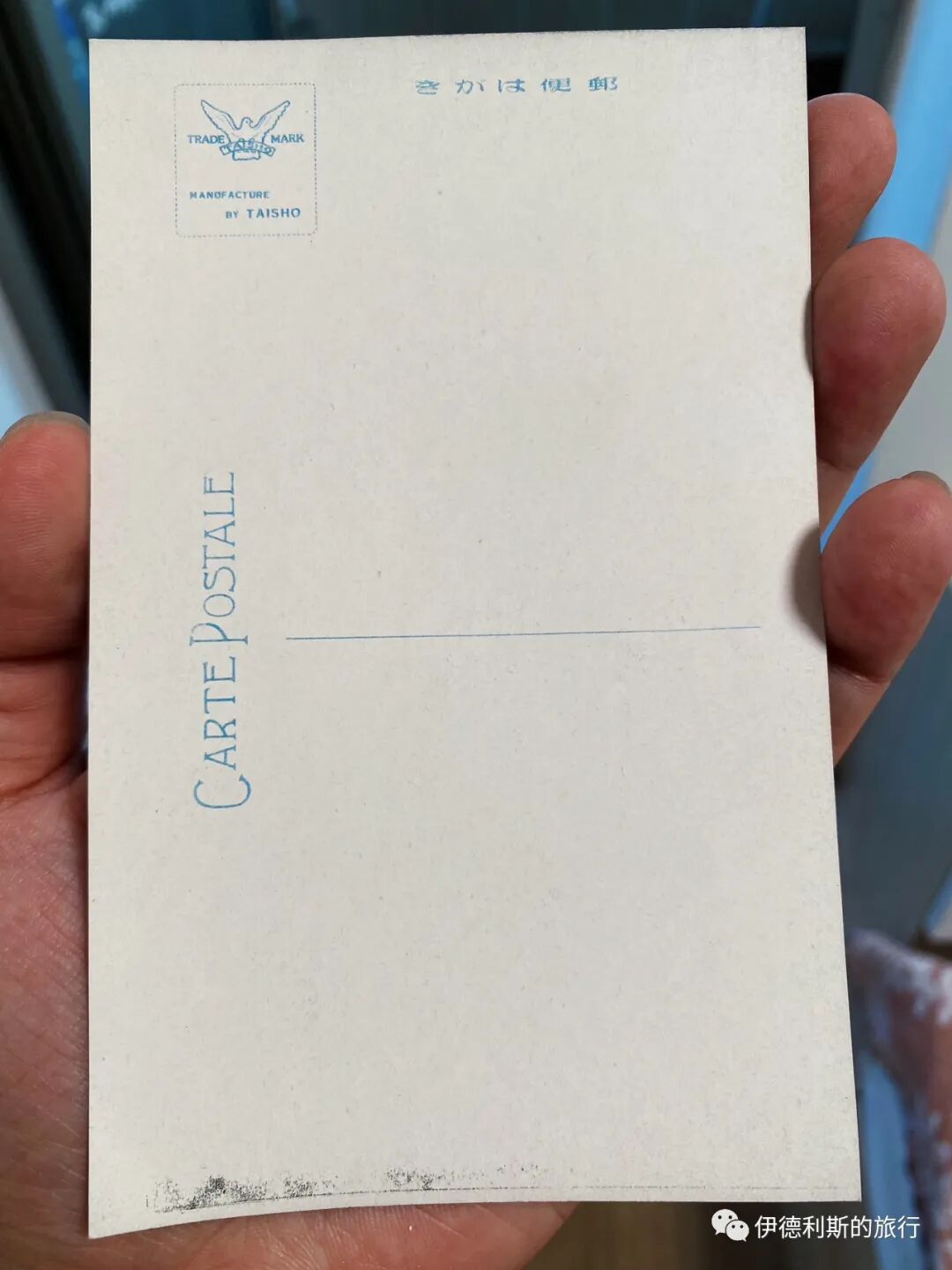
These postcards were issued by Taisho Hato from Wakayama Prefecture, Japan. Their logo features a dove standing on the characters for 'Taisho.' It is different from the eagle logo of Taisho Pharmaceutical. This was a very famous postcard brand during the Taisho era in Japan, and they released many postcards related to the Manchukuo period.
The Hui Muslim community near the Changtong Road Mosque.
In the early 19th century, during the Jiaqing reign of the Qing Dynasty, the ban on Jilin began to relax, and restrictions on refugees traveling there were eased. In 1800 (the fifth year of Jiaqing), the Changchun Office was established at Changchun Fort. Hui Muslims began moving to Changchun at this time. Because most of them came from Shandong, they were known as the 'Shandong Group'.
The first person to settle in Changchun Fort was Han Qishan from Hanjiachai in Tai'an, Shandong. Later, people with the surname Li from Hanjiachai also came to Changchun to work as small vendors. After the Changchun Office moved to Kuanchengzi (now Nanguan, Changchun) in 1825 (the fifth year of Daoguang), the Han family and other Hui Muslim families with the surnames Yin, Ma, Dai, and Hui moved into the city together.
In 1898, Li Jincheng, whose ancestral home was Hanjiachai, founded the Taihezhai pastry shop in Changchun. It became famous throughout the city for its halal pastries (guoxia). The Hui Baozhen family came to Northeast China from Xinji, Qing County, Hebei in 1902. They moved to Changchun in 1924 and opened the Huiji Dumpling Restaurant in Xinmin Alley. At its peak, they sold over 300 jin of flour a day. The Hui family from Changchun had their ancestral home in Qing County, Hebei. They arrived in Changchun in 1914 and opened the Sanheshun Halal Restaurant in 1920. They created their signature Sanheshun braised flatbread (menbing) by borrowing features from Tianjin-style flatbread (dabing) and braised flatbread (huibing), cooking the flatbread with cabbage, vermicelli, and raw beef strips.
Summary: Changchun Nanguan has a Hui Muslim food scene centered on hand-pulled noodles and mosque community life. This account covers local halal food, Changtong Road Mosque, and the surrounding streets with the original facts and photos preserved.
I had hand-pulled noodles (chenmian) for breakfast across from the Changtong Road Mosque in Changchun. I ordered a small bowl of wide noodles with a side of pickled mustard greens with meat (datoucai banrou) and three types of cold-tossed vegetables (qiangban cai). It was very affordable. This is the most popular breakfast spot in the Hui Muslim community of Changchun. It has been busy since it opened at six in the morning, and the noodle chef was working non-stop. The service here is incredibly fast. It only took one minute from ordering to having all the food on the table.
Their signature item is the chili oil. It is not very spicy but very fragrant, and it really brings out the flavor when added to the pickled mustard greens with meat. Changchun is famous for its soybeans, and their fried tofu (youdoufu) is delicious.
The Changtong Road Mosque was first built in 1824 (the fourth year of the Daoguang reign). It was originally located inside the East Gate of Dongsandao Street. In 1852 (the second year of the Xianfeng reign), elder Han Xuecheng donated a house and elder Shi Xuecheng donated trees to move the mosque to its current location in Tielingtun. In 1864 (the third year of the Tongzhi reign), Imam Han Dengqing and others raised funds to expand the mosque, building the current five-room main hall and the three-story kiln hall (yaodian). During repairs to the kiln hall in 1986, an inscription was found inside that read: 'Flying Dragon, third year of Tongzhi, Jiazi year, 21st day of the second lunar month (March 28, 1864), reconstruction began, the new main hall and porch were completed on an auspicious day.' In 1889 (the 15th year of the Guangxu reign), Imam Han Laixiang bought land from the Xu family in front of the mosque to build the main gate tower, east and west side rooms, the north lecture hall, the east reception hall, and the main hall porch. It was expanded several more times during the Republic of China era.
The main gate features a plaque with the Basmala (tasimi) written in a style imitating seal script, which is very unique. In front of the gate are stone lions and horse-tethering posts. The gable walls (chitou) are carved with brick dragons and qilin, while the side hanging fish (xuanyu) decorations feature bats, lotus flowers, and water birds, all full of traditional Chinese cultural charm.
The main hall features exquisite wood and brick carvings on its gable walls, hanging fish, and bracket sets (dougong). The north and south lecture halls are also decorated with brick carvings of traditional patterns.
There is also a blank stele standing next to the main hall. In 1933, the Japanese Kwantung Army sent Kawamura Kyodo to station at the Changtong Road Mosque and established the 'Manchurian Islamic Association' there to manage religious affairs throughout the puppet state of Manchukuo. Kawamura Kyodo forced the local Hui Muslims at the mosque to erect a monument for him, but the craftsmen delayed the work by claiming it needed fine carving. The inscription was never started by the time Japan surrendered. After Japan surrendered, the local people buried the stone tablet underground. It was only rediscovered during repairs in 1987.
I have two postcards from around 1935 showing the Changtong Road Mosque in Changchun. If you look closely at the first one, you can see a 'No Smoking' sign on the platform and faint traces of a couplet on the main prayer hall. The second one shows the electrical wires strung up in the mosque and the horse-tethering posts at the entrance.
These postcards were issued by Taisho Hato from Wakayama Prefecture, Japan. Their logo features a dove standing on the characters for 'Taisho.' It is different from the eagle logo of Taisho Pharmaceutical. This was a very famous postcard brand during the Taisho era in Japan, and they released many postcards related to the Manchukuo period.
The Hui Muslim community near the Changtong Road Mosque.
In the early 19th century, during the Jiaqing reign of the Qing Dynasty, the ban on Jilin began to relax, and restrictions on refugees traveling there were eased. In 1800 (the fifth year of Jiaqing), the Changchun Office was established at Changchun Fort. Hui Muslims began moving to Changchun at this time. Because most of them came from Shandong, they were known as the 'Shandong Group'.
The first person to settle in Changchun Fort was Han Qishan from Hanjiachai in Tai'an, Shandong. Later, people with the surname Li from Hanjiachai also came to Changchun to work as small vendors. After the Changchun Office moved to Kuanchengzi (now Nanguan, Changchun) in 1825 (the fifth year of Daoguang), the Han family and other Hui Muslim families with the surnames Yin, Ma, Dai, and Hui moved into the city together.
In 1898, Li Jincheng, whose ancestral home was Hanjiachai, founded the Taihezhai pastry shop in Changchun. It became famous throughout the city for its halal pastries (guoxia). The Hui Baozhen family came to Northeast China from Xinji, Qing County, Hebei in 1902. They moved to Changchun in 1924 and opened the Huiji Dumpling Restaurant in Xinmin Alley. At its peak, they sold over 300 jin of flour a day. The Hui family from Changchun had their ancestral home in Qing County, Hebei. They arrived in Changchun in 1914 and opened the Sanheshun Halal Restaurant in 1920. They created their signature Sanheshun braised flatbread (menbing) by borrowing features from Tianjin-style flatbread (dabing) and braised flatbread (huibing), cooking the flatbread with cabbage, vermicelli, and raw beef strips.
Halal Travel Guide: Changchun — Nanguan Noodles and Changtong Road Mosque
Articles • ali2007fr posted the article • 0 comments • 126 views • 2026-05-19 03:00
Reposted from the web
Summary: Changchun Nanguan has a Hui Muslim food scene centered on hand-pulled noodles and mosque community life. This account covers local halal food, Changtong Road Mosque, and the surrounding streets with the original facts and photos preserved.
I had hand-pulled noodles (chenmian) for breakfast across from the Changtong Road Mosque in Changchun. I ordered a small bowl of wide noodles with a side of pickled mustard greens with meat (datoucai banrou) and three types of cold-tossed vegetables (qiangban cai). It was very affordable. This is the most popular breakfast spot in the Hui Muslim community of Changchun. It has been busy since it opened at six in the morning, and the noodle chef was working non-stop. The service here is incredibly fast. It only took one minute from ordering to having all the food on the table.
Their signature item is the chili oil. It is not very spicy but very fragrant, and it really brings out the flavor when added to the pickled mustard greens with meat. Changchun is famous for its soybeans, and their fried tofu (youdoufu) is delicious.
The Changtong Road Mosque was first built in 1824 (the fourth year of the Daoguang reign). It was originally located inside the East Gate of Dongsandao Street. In 1852 (the second year of the Xianfeng reign), elder Han Xuecheng donated a house and elder Shi Xuecheng donated trees to move the mosque to its current location in Tielingtun. In 1864 (the third year of the Tongzhi reign), Imam Han Dengqing and others raised funds to expand the mosque, building the current five-room main hall and the three-story kiln hall (yaodian). During repairs to the kiln hall in 1986, an inscription was found inside that read: 'Flying Dragon, third year of Tongzhi, Jiazi year, 21st day of the second lunar month (March 28, 1864), reconstruction began, the new main hall and porch were completed on an auspicious day.' In 1889 (the 15th year of the Guangxu reign), Imam Han Laixiang bought land from the Xu family in front of the mosque to build the main gate tower, east and west side rooms, the north lecture hall, the east reception hall, and the main hall porch. It was expanded several more times during the Republic of China era.
The main gate features a plaque with the Basmala (tasimi) written in a style imitating seal script, which is very unique. In front of the gate are stone lions and horse-tethering posts. The gable walls (chitou) are carved with brick dragons and qilin, while the side hanging fish (xuanyu) decorations feature bats, lotus flowers, and water birds, all full of traditional Chinese cultural charm.
The main hall features exquisite wood and brick carvings on its gable walls, hanging fish, and bracket sets (dougong). The north and south lecture halls are also decorated with brick carvings of traditional patterns.
There is also a blank stele standing next to the main hall. In 1933, the Japanese Kwantung Army sent Kawamura Kyodo to station at the Changtong Road Mosque and established the 'Manchurian Islamic Association' there to manage religious affairs throughout the puppet state of Manchukuo. Kawamura Kyodo forced the local Hui Muslims at the mosque to erect a monument for him, but the craftsmen delayed the work by claiming it needed fine carving. The inscription was never started by the time Japan surrendered. After Japan surrendered, the local people buried the stone tablet underground. It was only rediscovered during repairs in 1987.
I have two postcards from around 1935 showing the Changtong Road Mosque in Changchun. If you look closely at the first one, you can see a 'No Smoking' sign on the platform and faint traces of a couplet on the main prayer hall. The second one shows the electrical wires strung up in the mosque and the horse-tethering posts at the entrance.
These postcards were issued by Taisho Hato from Wakayama Prefecture, Japan. Their logo features a dove standing on the characters for 'Taisho.' It is different from the eagle logo of Taisho Pharmaceutical. This was a very famous postcard brand during the Taisho era in Japan, and they released many postcards related to the Manchukuo period.
The Hui Muslim community near the Changtong Road Mosque.
In the early 19th century, during the Jiaqing reign of the Qing Dynasty, the ban on Jilin began to relax, and restrictions on refugees traveling there were eased. In 1800 (the fifth year of Jiaqing), the Changchun Office was established at Changchun Fort. Hui Muslims began moving to Changchun at this time. Because most of them came from Shandong, they were known as the 'Shandong Group'.
The first person to settle in Changchun Fort was Han Qishan from Hanjiachai in Tai'an, Shandong. Later, people with the surname Li from Hanjiachai also came to Changchun to work as small vendors. After the Changchun Office moved to Kuanchengzi (now Nanguan, Changchun) in 1825 (the fifth year of Daoguang), the Han family and other Hui Muslim families with the surnames Yin, Ma, Dai, and Hui moved into the city together.
In 1898, Li Jincheng, whose ancestral home was Hanjiachai, founded the Taihezhai pastry shop in Changchun. It became famous throughout the city for its halal pastries (guoxia). The Hui Baozhen family came to Northeast China from Xinji, Qing County, Hebei in 1902. They moved to Changchun in 1924 and opened the Huiji Dumpling Restaurant in Xinmin Alley. At its peak, they sold over 300 jin of flour a day. The Hui family from Changchun had their ancestral home in Qing County, Hebei. They arrived in Changchun in 1914 and opened the Sanheshun Halal Restaurant in 1920. They created their signature Sanheshun braised flatbread (menbing) by borrowing features from Tianjin-style flatbread (dabing) and braised flatbread (huibing), cooking the flatbread with cabbage, vermicelli, and raw beef strips. view all
Summary: Changchun Nanguan has a Hui Muslim food scene centered on hand-pulled noodles and mosque community life. This account covers local halal food, Changtong Road Mosque, and the surrounding streets with the original facts and photos preserved.
I had hand-pulled noodles (chenmian) for breakfast across from the Changtong Road Mosque in Changchun. I ordered a small bowl of wide noodles with a side of pickled mustard greens with meat (datoucai banrou) and three types of cold-tossed vegetables (qiangban cai). It was very affordable. This is the most popular breakfast spot in the Hui Muslim community of Changchun. It has been busy since it opened at six in the morning, and the noodle chef was working non-stop. The service here is incredibly fast. It only took one minute from ordering to having all the food on the table.
Their signature item is the chili oil. It is not very spicy but very fragrant, and it really brings out the flavor when added to the pickled mustard greens with meat. Changchun is famous for its soybeans, and their fried tofu (youdoufu) is delicious.
The Changtong Road Mosque was first built in 1824 (the fourth year of the Daoguang reign). It was originally located inside the East Gate of Dongsandao Street. In 1852 (the second year of the Xianfeng reign), elder Han Xuecheng donated a house and elder Shi Xuecheng donated trees to move the mosque to its current location in Tielingtun. In 1864 (the third year of the Tongzhi reign), Imam Han Dengqing and others raised funds to expand the mosque, building the current five-room main hall and the three-story kiln hall (yaodian). During repairs to the kiln hall in 1986, an inscription was found inside that read: 'Flying Dragon, third year of Tongzhi, Jiazi year, 21st day of the second lunar month (March 28, 1864), reconstruction began, the new main hall and porch were completed on an auspicious day.' In 1889 (the 15th year of the Guangxu reign), Imam Han Laixiang bought land from the Xu family in front of the mosque to build the main gate tower, east and west side rooms, the north lecture hall, the east reception hall, and the main hall porch. It was expanded several more times during the Republic of China era.
The main gate features a plaque with the Basmala (tasimi) written in a style imitating seal script, which is very unique. In front of the gate are stone lions and horse-tethering posts. The gable walls (chitou) are carved with brick dragons and qilin, while the side hanging fish (xuanyu) decorations feature bats, lotus flowers, and water birds, all full of traditional Chinese cultural charm.
The main hall features exquisite wood and brick carvings on its gable walls, hanging fish, and bracket sets (dougong). The north and south lecture halls are also decorated with brick carvings of traditional patterns.
There is also a blank stele standing next to the main hall. In 1933, the Japanese Kwantung Army sent Kawamura Kyodo to station at the Changtong Road Mosque and established the 'Manchurian Islamic Association' there to manage religious affairs throughout the puppet state of Manchukuo. Kawamura Kyodo forced the local Hui Muslims at the mosque to erect a monument for him, but the craftsmen delayed the work by claiming it needed fine carving. The inscription was never started by the time Japan surrendered. After Japan surrendered, the local people buried the stone tablet underground. It was only rediscovered during repairs in 1987.
I have two postcards from around 1935 showing the Changtong Road Mosque in Changchun. If you look closely at the first one, you can see a 'No Smoking' sign on the platform and faint traces of a couplet on the main prayer hall. The second one shows the electrical wires strung up in the mosque and the horse-tethering posts at the entrance.
These postcards were issued by Taisho Hato from Wakayama Prefecture, Japan. Their logo features a dove standing on the characters for 'Taisho.' It is different from the eagle logo of Taisho Pharmaceutical. This was a very famous postcard brand during the Taisho era in Japan, and they released many postcards related to the Manchukuo period.
The Hui Muslim community near the Changtong Road Mosque.
In the early 19th century, during the Jiaqing reign of the Qing Dynasty, the ban on Jilin began to relax, and restrictions on refugees traveling there were eased. In 1800 (the fifth year of Jiaqing), the Changchun Office was established at Changchun Fort. Hui Muslims began moving to Changchun at this time. Because most of them came from Shandong, they were known as the 'Shandong Group'.
The first person to settle in Changchun Fort was Han Qishan from Hanjiachai in Tai'an, Shandong. Later, people with the surname Li from Hanjiachai also came to Changchun to work as small vendors. After the Changchun Office moved to Kuanchengzi (now Nanguan, Changchun) in 1825 (the fifth year of Daoguang), the Han family and other Hui Muslim families with the surnames Yin, Ma, Dai, and Hui moved into the city together.
In 1898, Li Jincheng, whose ancestral home was Hanjiachai, founded the Taihezhai pastry shop in Changchun. It became famous throughout the city for its halal pastries (guoxia). The Hui Baozhen family came to Northeast China from Xinji, Qing County, Hebei in 1902. They moved to Changchun in 1924 and opened the Huiji Dumpling Restaurant in Xinmin Alley. At its peak, they sold over 300 jin of flour a day. The Hui family from Changchun had their ancestral home in Qing County, Hebei. They arrived in Changchun in 1914 and opened the Sanheshun Halal Restaurant in 1920. They created their signature Sanheshun braised flatbread (menbing) by borrowing features from Tianjin-style flatbread (dabing) and braised flatbread (huibing), cooking the flatbread with cabbage, vermicelli, and raw beef strips. view all
Reposted from the web
Summary: Changchun Nanguan has a Hui Muslim food scene centered on hand-pulled noodles and mosque community life. This account covers local halal food, Changtong Road Mosque, and the surrounding streets with the original facts and photos preserved.
I had hand-pulled noodles (chenmian) for breakfast across from the Changtong Road Mosque in Changchun. I ordered a small bowl of wide noodles with a side of pickled mustard greens with meat (datoucai banrou) and three types of cold-tossed vegetables (qiangban cai). It was very affordable. This is the most popular breakfast spot in the Hui Muslim community of Changchun. It has been busy since it opened at six in the morning, and the noodle chef was working non-stop. The service here is incredibly fast. It only took one minute from ordering to having all the food on the table.
Their signature item is the chili oil. It is not very spicy but very fragrant, and it really brings out the flavor when added to the pickled mustard greens with meat. Changchun is famous for its soybeans, and their fried tofu (youdoufu) is delicious.
The Changtong Road Mosque was first built in 1824 (the fourth year of the Daoguang reign). It was originally located inside the East Gate of Dongsandao Street. In 1852 (the second year of the Xianfeng reign), elder Han Xuecheng donated a house and elder Shi Xuecheng donated trees to move the mosque to its current location in Tielingtun. In 1864 (the third year of the Tongzhi reign), Imam Han Dengqing and others raised funds to expand the mosque, building the current five-room main hall and the three-story kiln hall (yaodian). During repairs to the kiln hall in 1986, an inscription was found inside that read: 'Flying Dragon, third year of Tongzhi, Jiazi year, 21st day of the second lunar month (March 28, 1864), reconstruction began, the new main hall and porch were completed on an auspicious day.' In 1889 (the 15th year of the Guangxu reign), Imam Han Laixiang bought land from the Xu family in front of the mosque to build the main gate tower, east and west side rooms, the north lecture hall, the east reception hall, and the main hall porch. It was expanded several more times during the Republic of China era.
The main gate features a plaque with the Basmala (tasimi) written in a style imitating seal script, which is very unique. In front of the gate are stone lions and horse-tethering posts. The gable walls (chitou) are carved with brick dragons and qilin, while the side hanging fish (xuanyu) decorations feature bats, lotus flowers, and water birds, all full of traditional Chinese cultural charm.
The main hall features exquisite wood and brick carvings on its gable walls, hanging fish, and bracket sets (dougong). The north and south lecture halls are also decorated with brick carvings of traditional patterns.
There is also a blank stele standing next to the main hall. In 1933, the Japanese Kwantung Army sent Kawamura Kyodo to station at the Changtong Road Mosque and established the 'Manchurian Islamic Association' there to manage religious affairs throughout the puppet state of Manchukuo. Kawamura Kyodo forced the local Hui Muslims at the mosque to erect a monument for him, but the craftsmen delayed the work by claiming it needed fine carving. The inscription was never started by the time Japan surrendered. After Japan surrendered, the local people buried the stone tablet underground. It was only rediscovered during repairs in 1987.
I have two postcards from around 1935 showing the Changtong Road Mosque in Changchun. If you look closely at the first one, you can see a 'No Smoking' sign on the platform and faint traces of a couplet on the main prayer hall. The second one shows the electrical wires strung up in the mosque and the horse-tethering posts at the entrance.
These postcards were issued by Taisho Hato from Wakayama Prefecture, Japan. Their logo features a dove standing on the characters for 'Taisho.' It is different from the eagle logo of Taisho Pharmaceutical. This was a very famous postcard brand during the Taisho era in Japan, and they released many postcards related to the Manchukuo period.
The Hui Muslim community near the Changtong Road Mosque.
In the early 19th century, during the Jiaqing reign of the Qing Dynasty, the ban on Jilin began to relax, and restrictions on refugees traveling there were eased. In 1800 (the fifth year of Jiaqing), the Changchun Office was established at Changchun Fort. Hui Muslims began moving to Changchun at this time. Because most of them came from Shandong, they were known as the 'Shandong Group'.
The first person to settle in Changchun Fort was Han Qishan from Hanjiachai in Tai'an, Shandong. Later, people with the surname Li from Hanjiachai also came to Changchun to work as small vendors. After the Changchun Office moved to Kuanchengzi (now Nanguan, Changchun) in 1825 (the fifth year of Daoguang), the Han family and other Hui Muslim families with the surnames Yin, Ma, Dai, and Hui moved into the city together.
In 1898, Li Jincheng, whose ancestral home was Hanjiachai, founded the Taihezhai pastry shop in Changchun. It became famous throughout the city for its halal pastries (guoxia). The Hui Baozhen family came to Northeast China from Xinji, Qing County, Hebei in 1902. They moved to Changchun in 1924 and opened the Huiji Dumpling Restaurant in Xinmin Alley. At its peak, they sold over 300 jin of flour a day. The Hui family from Changchun had their ancestral home in Qing County, Hebei. They arrived in Changchun in 1914 and opened the Sanheshun Halal Restaurant in 1920. They created their signature Sanheshun braised flatbread (menbing) by borrowing features from Tianjin-style flatbread (dabing) and braised flatbread (huibing), cooking the flatbread with cabbage, vermicelli, and raw beef strips.
Summary: Changchun Nanguan has a Hui Muslim food scene centered on hand-pulled noodles and mosque community life. This account covers local halal food, Changtong Road Mosque, and the surrounding streets with the original facts and photos preserved.
I had hand-pulled noodles (chenmian) for breakfast across from the Changtong Road Mosque in Changchun. I ordered a small bowl of wide noodles with a side of pickled mustard greens with meat (datoucai banrou) and three types of cold-tossed vegetables (qiangban cai). It was very affordable. This is the most popular breakfast spot in the Hui Muslim community of Changchun. It has been busy since it opened at six in the morning, and the noodle chef was working non-stop. The service here is incredibly fast. It only took one minute from ordering to having all the food on the table.
Their signature item is the chili oil. It is not very spicy but very fragrant, and it really brings out the flavor when added to the pickled mustard greens with meat. Changchun is famous for its soybeans, and their fried tofu (youdoufu) is delicious.
The Changtong Road Mosque was first built in 1824 (the fourth year of the Daoguang reign). It was originally located inside the East Gate of Dongsandao Street. In 1852 (the second year of the Xianfeng reign), elder Han Xuecheng donated a house and elder Shi Xuecheng donated trees to move the mosque to its current location in Tielingtun. In 1864 (the third year of the Tongzhi reign), Imam Han Dengqing and others raised funds to expand the mosque, building the current five-room main hall and the three-story kiln hall (yaodian). During repairs to the kiln hall in 1986, an inscription was found inside that read: 'Flying Dragon, third year of Tongzhi, Jiazi year, 21st day of the second lunar month (March 28, 1864), reconstruction began, the new main hall and porch were completed on an auspicious day.' In 1889 (the 15th year of the Guangxu reign), Imam Han Laixiang bought land from the Xu family in front of the mosque to build the main gate tower, east and west side rooms, the north lecture hall, the east reception hall, and the main hall porch. It was expanded several more times during the Republic of China era.
The main gate features a plaque with the Basmala (tasimi) written in a style imitating seal script, which is very unique. In front of the gate are stone lions and horse-tethering posts. The gable walls (chitou) are carved with brick dragons and qilin, while the side hanging fish (xuanyu) decorations feature bats, lotus flowers, and water birds, all full of traditional Chinese cultural charm.
The main hall features exquisite wood and brick carvings on its gable walls, hanging fish, and bracket sets (dougong). The north and south lecture halls are also decorated with brick carvings of traditional patterns.
There is also a blank stele standing next to the main hall. In 1933, the Japanese Kwantung Army sent Kawamura Kyodo to station at the Changtong Road Mosque and established the 'Manchurian Islamic Association' there to manage religious affairs throughout the puppet state of Manchukuo. Kawamura Kyodo forced the local Hui Muslims at the mosque to erect a monument for him, but the craftsmen delayed the work by claiming it needed fine carving. The inscription was never started by the time Japan surrendered. After Japan surrendered, the local people buried the stone tablet underground. It was only rediscovered during repairs in 1987.
I have two postcards from around 1935 showing the Changtong Road Mosque in Changchun. If you look closely at the first one, you can see a 'No Smoking' sign on the platform and faint traces of a couplet on the main prayer hall. The second one shows the electrical wires strung up in the mosque and the horse-tethering posts at the entrance.
These postcards were issued by Taisho Hato from Wakayama Prefecture, Japan. Their logo features a dove standing on the characters for 'Taisho.' It is different from the eagle logo of Taisho Pharmaceutical. This was a very famous postcard brand during the Taisho era in Japan, and they released many postcards related to the Manchukuo period.
The Hui Muslim community near the Changtong Road Mosque.
In the early 19th century, during the Jiaqing reign of the Qing Dynasty, the ban on Jilin began to relax, and restrictions on refugees traveling there were eased. In 1800 (the fifth year of Jiaqing), the Changchun Office was established at Changchun Fort. Hui Muslims began moving to Changchun at this time. Because most of them came from Shandong, they were known as the 'Shandong Group'.
The first person to settle in Changchun Fort was Han Qishan from Hanjiachai in Tai'an, Shandong. Later, people with the surname Li from Hanjiachai also came to Changchun to work as small vendors. After the Changchun Office moved to Kuanchengzi (now Nanguan, Changchun) in 1825 (the fifth year of Daoguang), the Han family and other Hui Muslim families with the surnames Yin, Ma, Dai, and Hui moved into the city together.
In 1898, Li Jincheng, whose ancestral home was Hanjiachai, founded the Taihezhai pastry shop in Changchun. It became famous throughout the city for its halal pastries (guoxia). The Hui Baozhen family came to Northeast China from Xinji, Qing County, Hebei in 1902. They moved to Changchun in 1924 and opened the Huiji Dumpling Restaurant in Xinmin Alley. At its peak, they sold over 300 jin of flour a day. The Hui family from Changchun had their ancestral home in Qing County, Hebei. They arrived in Changchun in 1914 and opened the Sanheshun Halal Restaurant in 1920. They created their signature Sanheshun braised flatbread (menbing) by borrowing features from Tianjin-style flatbread (dabing) and braised flatbread (huibing), cooking the flatbread with cabbage, vermicelli, and raw beef strips.