

Chengxi Mosque
Chengxi Mosque in Zhaoqing: Exploring 250 Years of History and Unique Islamic Architecture in Guangdong
Articles • Hasan09 posted the article • 0 comments • 15 views • 6 hours ago
Take a look inside the Chengxi Mosque, located right on Kangle Middle Road in Zhaoqing, Guangdong. Through these five high-def photos, we’re checking out a site with over 250 years of history—dating all the way back to 1767 during the Qing Dynasty—to see how its iconic green dome, golden crescent, and traditional Hui Muslim architectural style blend into the lush local landscape.
Walking down Kangle Middle Road in Duanzhou, one building always catches your eye. Tucked behind thick, leafy trees, a rounded green onion dome topped with a golden crescent glimmers under the bright blue sky. This is the Chengxi Mosque, a historic spot that’s been standing quietly in the heart of Lingnan life for over two and a half centuries.
According to the heritage plaque out front, the mosque was first built in 1767. Back then, Hui Muslim traders traveling along the waterways and trade routes bought this land to build a place for their community to practice their faith. It saw renovations during the Jiaqing and Daoguang eras, but by 1983, time had taken its toll, and the prayer hall and corridors were so worn down they had to be rebuilt. The building we see today was finished in 1984; while it’s not the original structure from 1767, it perfectly preserves the historical spirit and design of the past.
The coolest thing about Chengxi Mosque is how it mashes up different architectural styles. Looking up, you’ll see an Arabic-style (tall minaret) and that rounded green dome with its golden crescent—totally exotic vibes. But look down, and you’ll find traditional Chinese green glazed roof tiles, white walls, and yellow-and-green brickwork that feels super grounded and elegant. Above the main entrance, there’s a marble plaque with “Mosque” carved in Chinese characters on one side and flowing Arabic calligraphy on the other. You’ll also see signs for the local Islamic associations. It’s a place where Chinese-style brick-carved mythical beasts, Islamic star-and-crescent metalwork, and the Chinese national flag all hang out together in the same frame. It’s not just an architectural mashup; it’s a living example of how two cultures have coexisted and respected each other for centuries.
Push past the slightly rusty iron gates, and the city noise just disappears. The mosque complex is laid out neatly, featuring a prayer hall, classrooms, corridors, a washing area, dorms for the Imam, a kitchen, and a resting pavilion. The courtyard is super lush, with sunlight filtering through the leaves to create beautiful patterns on the ground. It’s not about the hustle and bustle of tourist traps here; it’s just the sound of the wind in the trees and the occasional bird chirping. For the local Hui Muslims in Zhaoqing, this place isn’t just a spot for their dua (prayers)—it’s their true spiritual home in the city.
On November 19, 1984, the Chengxi Mosque was officially designated as a cultural heritage site by the city of Zhaoqing.
This mosque doesn’t try to be flashy. Instead, it’s defined by over two centuries of persistence and openness, telling a quiet story of migration, roots, and cultural blending in this southern city. It’s like a gentle elder, keeping watch over its faith and the community amidst the everyday life of the city. (Photos taken on November 21, 2026.) view all
Take a look inside the Chengxi Mosque, located right on Kangle Middle Road in Zhaoqing, Guangdong. Through these five high-def photos, we’re checking out a site with over 250 years of history—dating all the way back to 1767 during the Qing Dynasty—to see how its iconic green dome, golden crescent, and traditional Hui Muslim architectural style blend into the lush local landscape.
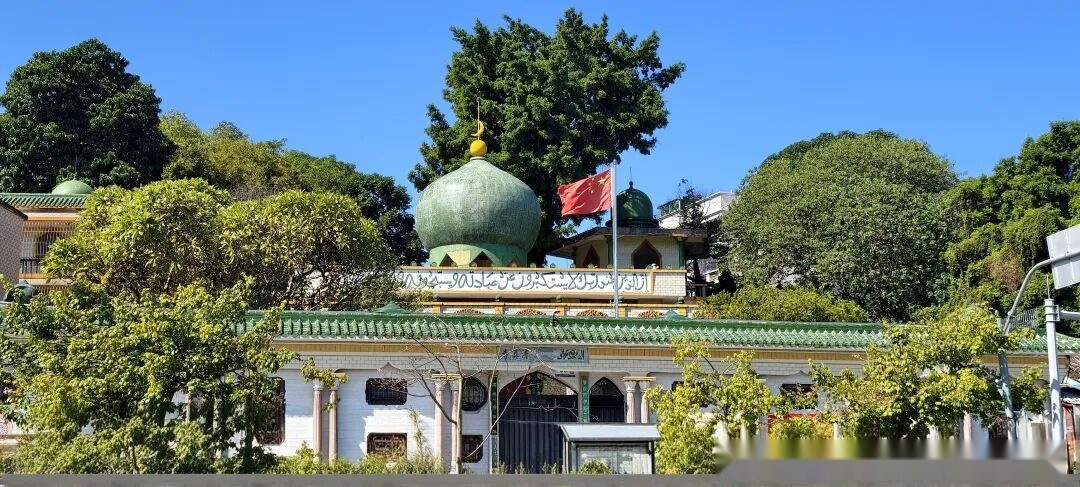
Walking down Kangle Middle Road in Duanzhou, one building always catches your eye. Tucked behind thick, leafy trees, a rounded green onion dome topped with a golden crescent glimmers under the bright blue sky. This is the Chengxi Mosque, a historic spot that’s been standing quietly in the heart of Lingnan life for over two and a half centuries.
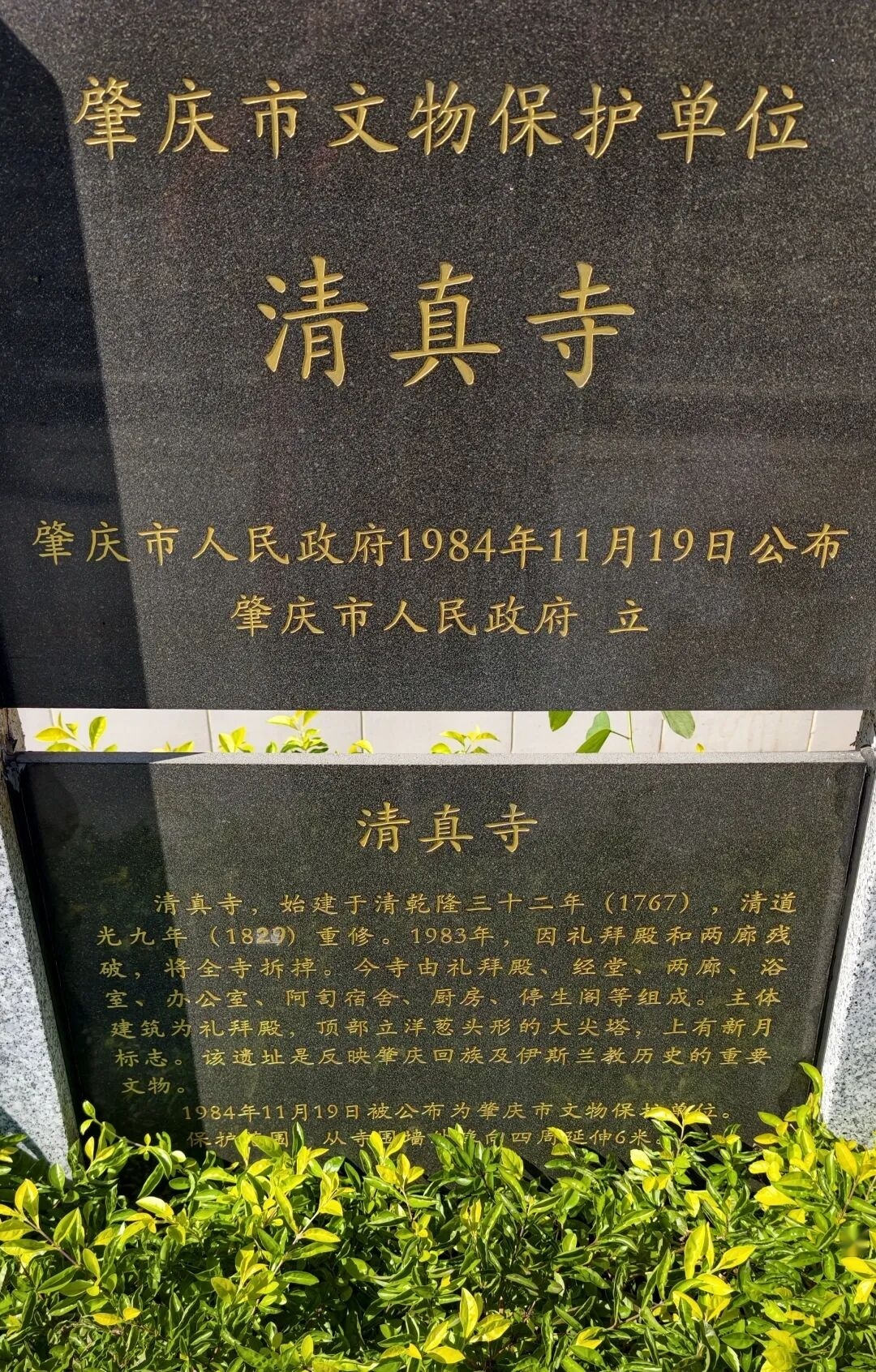
According to the heritage plaque out front, the mosque was first built in 1767. Back then, Hui Muslim traders traveling along the waterways and trade routes bought this land to build a place for their community to practice their faith. It saw renovations during the Jiaqing and Daoguang eras, but by 1983, time had taken its toll, and the prayer hall and corridors were so worn down they had to be rebuilt. The building we see today was finished in 1984; while it’s not the original structure from 1767, it perfectly preserves the historical spirit and design of the past.
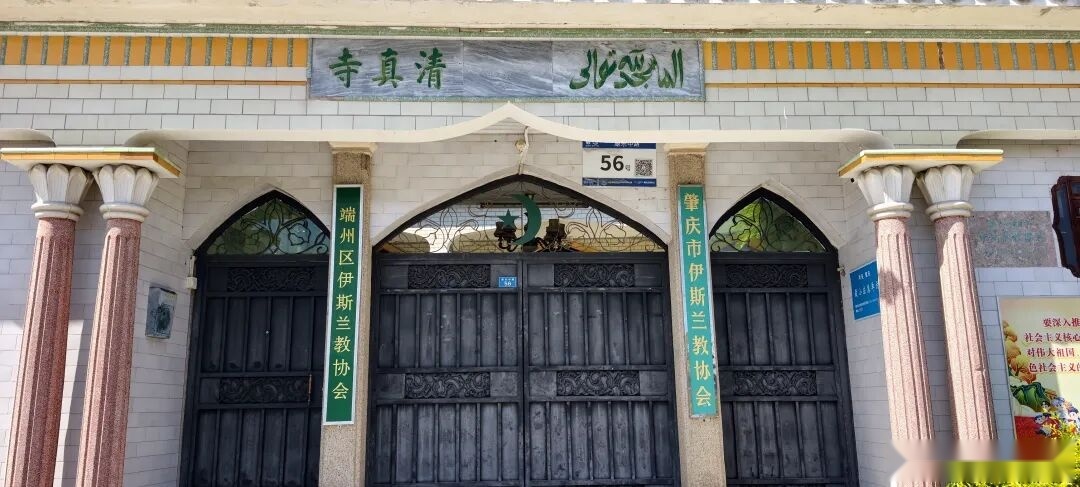
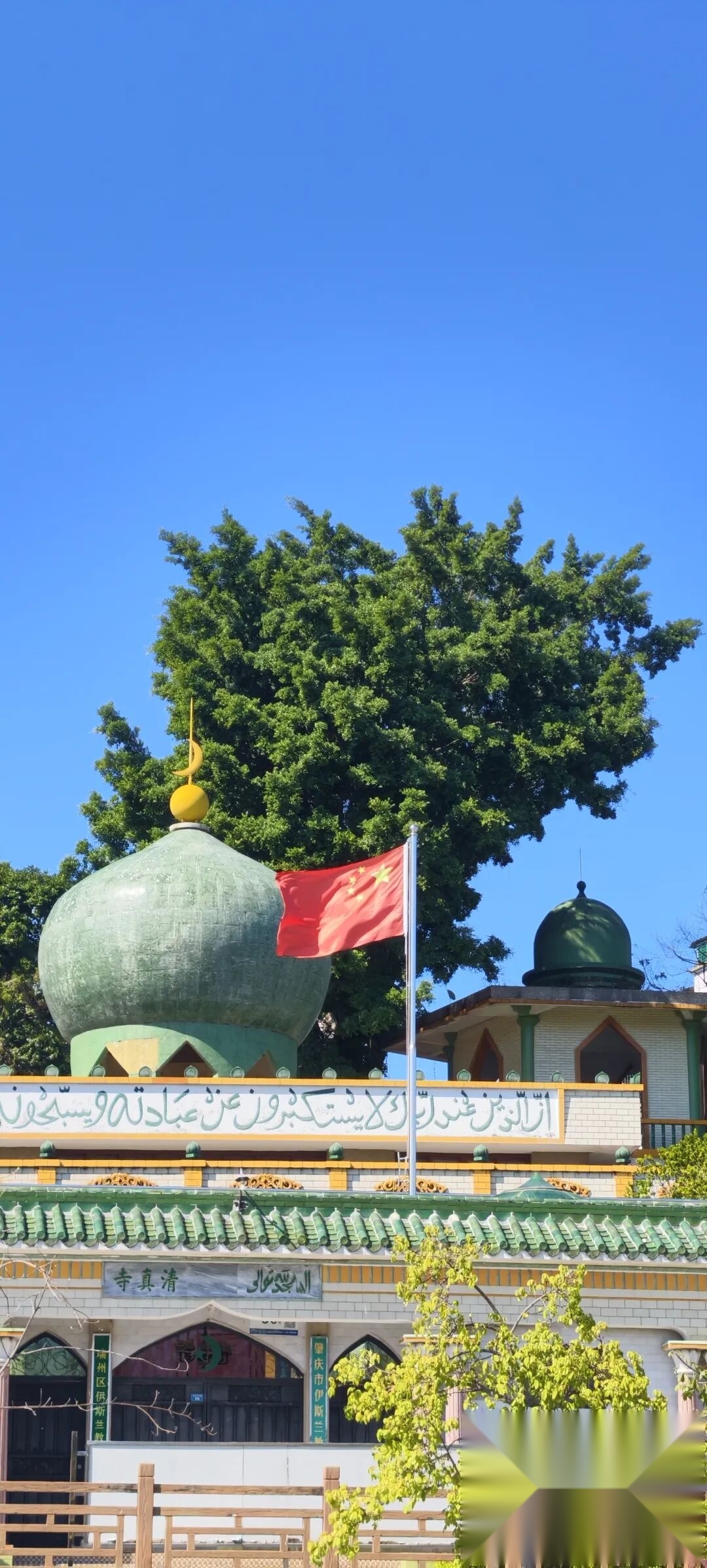
The coolest thing about Chengxi Mosque is how it mashes up different architectural styles. Looking up, you’ll see an Arabic-style (tall minaret) and that rounded green dome with its golden crescent—totally exotic vibes. But look down, and you’ll find traditional Chinese green glazed roof tiles, white walls, and yellow-and-green brickwork that feels super grounded and elegant. Above the main entrance, there’s a marble plaque with “Mosque” carved in Chinese characters on one side and flowing Arabic calligraphy on the other. You’ll also see signs for the local Islamic associations. It’s a place where Chinese-style brick-carved mythical beasts, Islamic star-and-crescent metalwork, and the Chinese national flag all hang out together in the same frame. It’s not just an architectural mashup; it’s a living example of how two cultures have coexisted and respected each other for centuries.
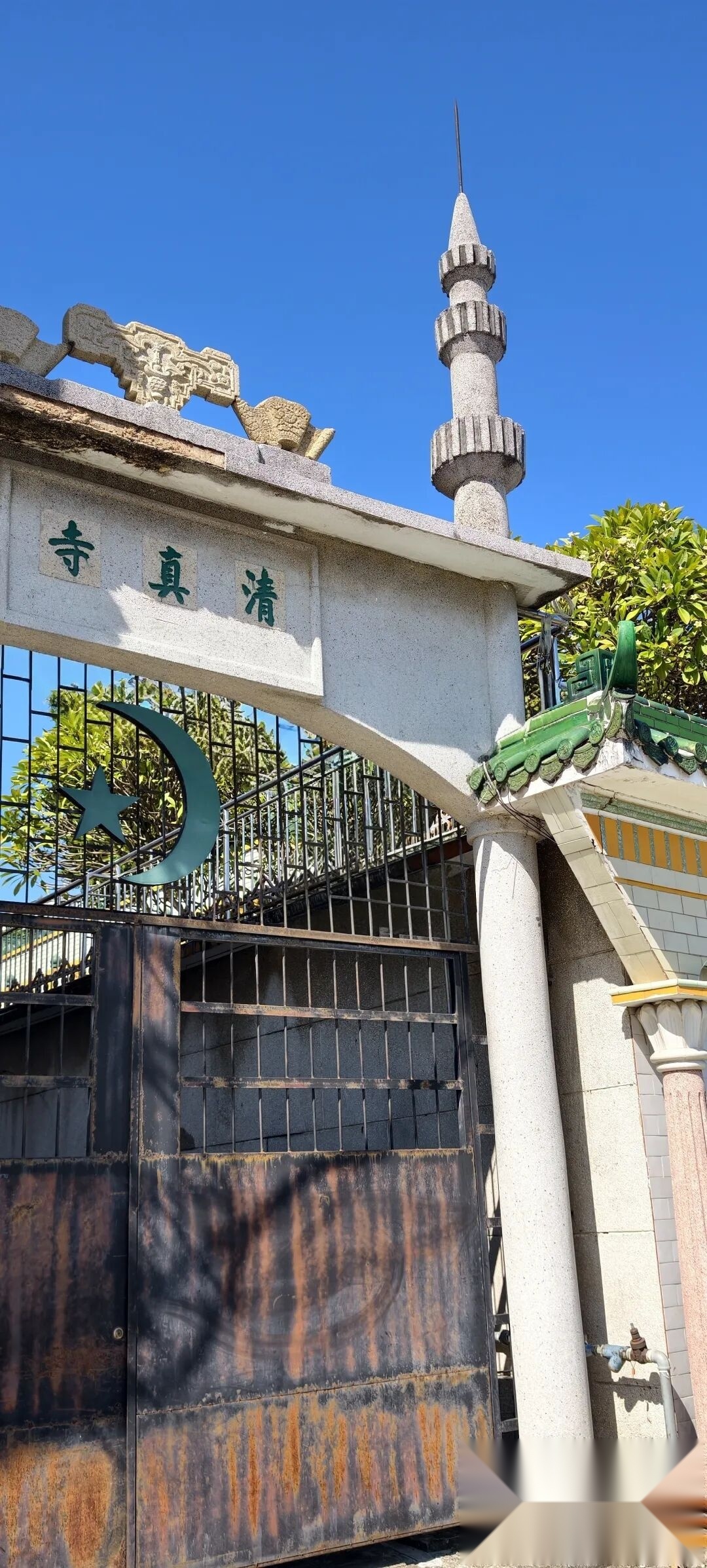
Push past the slightly rusty iron gates, and the city noise just disappears. The mosque complex is laid out neatly, featuring a prayer hall, classrooms, corridors, a washing area, dorms for the Imam, a kitchen, and a resting pavilion. The courtyard is super lush, with sunlight filtering through the leaves to create beautiful patterns on the ground. It’s not about the hustle and bustle of tourist traps here; it’s just the sound of the wind in the trees and the occasional bird chirping. For the local Hui Muslims in Zhaoqing, this place isn’t just a spot for their dua (prayers)—it’s their true spiritual home in the city.
On November 19, 1984, the Chengxi Mosque was officially designated as a cultural heritage site by the city of Zhaoqing.
This mosque doesn’t try to be flashy. Instead, it’s defined by over two centuries of persistence and openness, telling a quiet story of migration, roots, and cultural blending in this southern city. It’s like a gentle elder, keeping watch over its faith and the community amidst the everyday life of the city. (Photos taken on November 21, 2026.)
Walking down Kangle Middle Road in Duanzhou, one building always catches your eye. Tucked behind thick, leafy trees, a rounded green onion dome topped with a golden crescent glimmers under the bright blue sky. This is the Chengxi Mosque, a historic spot that’s been standing quietly in the heart of Lingnan life for over two and a half centuries.
According to the heritage plaque out front, the mosque was first built in 1767. Back then, Hui Muslim traders traveling along the waterways and trade routes bought this land to build a place for their community to practice their faith. It saw renovations during the Jiaqing and Daoguang eras, but by 1983, time had taken its toll, and the prayer hall and corridors were so worn down they had to be rebuilt. The building we see today was finished in 1984; while it’s not the original structure from 1767, it perfectly preserves the historical spirit and design of the past.
The coolest thing about Chengxi Mosque is how it mashes up different architectural styles. Looking up, you’ll see an Arabic-style (tall minaret) and that rounded green dome with its golden crescent—totally exotic vibes. But look down, and you’ll find traditional Chinese green glazed roof tiles, white walls, and yellow-and-green brickwork that feels super grounded and elegant. Above the main entrance, there’s a marble plaque with “Mosque” carved in Chinese characters on one side and flowing Arabic calligraphy on the other. You’ll also see signs for the local Islamic associations. It’s a place where Chinese-style brick-carved mythical beasts, Islamic star-and-crescent metalwork, and the Chinese national flag all hang out together in the same frame. It’s not just an architectural mashup; it’s a living example of how two cultures have coexisted and respected each other for centuries.
Push past the slightly rusty iron gates, and the city noise just disappears. The mosque complex is laid out neatly, featuring a prayer hall, classrooms, corridors, a washing area, dorms for the Imam, a kitchen, and a resting pavilion. The courtyard is super lush, with sunlight filtering through the leaves to create beautiful patterns on the ground. It’s not about the hustle and bustle of tourist traps here; it’s just the sound of the wind in the trees and the occasional bird chirping. For the local Hui Muslims in Zhaoqing, this place isn’t just a spot for their dua (prayers)—it’s their true spiritual home in the city.
On November 19, 1984, the Chengxi Mosque was officially designated as a cultural heritage site by the city of Zhaoqing.
This mosque doesn’t try to be flashy. Instead, it’s defined by over two centuries of persistence and openness, telling a quiet story of migration, roots, and cultural blending in this southern city. It’s like a gentle elder, keeping watch over its faith and the community amidst the everyday life of the city. (Photos taken on November 21, 2026.)
Chengxi Mosque in Zhaoqing: Exploring 250 Years of History and Unique Islamic Architecture in Guangdong
Articles • Hasan09 posted the article • 0 comments • 15 views • 6 hours ago
Take a look inside the Chengxi Mosque, located right on Kangle Middle Road in Zhaoqing, Guangdong. Through these five high-def photos, we’re checking out a site with over 250 years of history—dating all the way back to 1767 during the Qing Dynasty—to see how its iconic green dome, golden crescent, and traditional Hui Muslim architectural style blend into the lush local landscape.
Walking down Kangle Middle Road in Duanzhou, one building always catches your eye. Tucked behind thick, leafy trees, a rounded green onion dome topped with a golden crescent glimmers under the bright blue sky. This is the Chengxi Mosque, a historic spot that’s been standing quietly in the heart of Lingnan life for over two and a half centuries.
According to the heritage plaque out front, the mosque was first built in 1767. Back then, Hui Muslim traders traveling along the waterways and trade routes bought this land to build a place for their community to practice their faith. It saw renovations during the Jiaqing and Daoguang eras, but by 1983, time had taken its toll, and the prayer hall and corridors were so worn down they had to be rebuilt. The building we see today was finished in 1984; while it’s not the original structure from 1767, it perfectly preserves the historical spirit and design of the past.
The coolest thing about Chengxi Mosque is how it mashes up different architectural styles. Looking up, you’ll see an Arabic-style (tall minaret) and that rounded green dome with its golden crescent—totally exotic vibes. But look down, and you’ll find traditional Chinese green glazed roof tiles, white walls, and yellow-and-green brickwork that feels super grounded and elegant. Above the main entrance, there’s a marble plaque with “Mosque” carved in Chinese characters on one side and flowing Arabic calligraphy on the other. You’ll also see signs for the local Islamic associations. It’s a place where Chinese-style brick-carved mythical beasts, Islamic star-and-crescent metalwork, and the Chinese national flag all hang out together in the same frame. It’s not just an architectural mashup; it’s a living example of how two cultures have coexisted and respected each other for centuries.
Push past the slightly rusty iron gates, and the city noise just disappears. The mosque complex is laid out neatly, featuring a prayer hall, classrooms, corridors, a washing area, dorms for the Imam, a kitchen, and a resting pavilion. The courtyard is super lush, with sunlight filtering through the leaves to create beautiful patterns on the ground. It’s not about the hustle and bustle of tourist traps here; it’s just the sound of the wind in the trees and the occasional bird chirping. For the local Hui Muslims in Zhaoqing, this place isn’t just a spot for their dua (prayers)—it’s their true spiritual home in the city.
On November 19, 1984, the Chengxi Mosque was officially designated as a cultural heritage site by the city of Zhaoqing.
This mosque doesn’t try to be flashy. Instead, it’s defined by over two centuries of persistence and openness, telling a quiet story of migration, roots, and cultural blending in this southern city. It’s like a gentle elder, keeping watch over its faith and the community amidst the everyday life of the city. (Photos taken on November 21, 2026.) view all
Walking down Kangle Middle Road in Duanzhou, one building always catches your eye. Tucked behind thick, leafy trees, a rounded green onion dome topped with a golden crescent glimmers under the bright blue sky. This is the Chengxi Mosque, a historic spot that’s been standing quietly in the heart of Lingnan life for over two and a half centuries.
According to the heritage plaque out front, the mosque was first built in 1767. Back then, Hui Muslim traders traveling along the waterways and trade routes bought this land to build a place for their community to practice their faith. It saw renovations during the Jiaqing and Daoguang eras, but by 1983, time had taken its toll, and the prayer hall and corridors were so worn down they had to be rebuilt. The building we see today was finished in 1984; while it’s not the original structure from 1767, it perfectly preserves the historical spirit and design of the past.
The coolest thing about Chengxi Mosque is how it mashes up different architectural styles. Looking up, you’ll see an Arabic-style (tall minaret) and that rounded green dome with its golden crescent—totally exotic vibes. But look down, and you’ll find traditional Chinese green glazed roof tiles, white walls, and yellow-and-green brickwork that feels super grounded and elegant. Above the main entrance, there’s a marble plaque with “Mosque” carved in Chinese characters on one side and flowing Arabic calligraphy on the other. You’ll also see signs for the local Islamic associations. It’s a place where Chinese-style brick-carved mythical beasts, Islamic star-and-crescent metalwork, and the Chinese national flag all hang out together in the same frame. It’s not just an architectural mashup; it’s a living example of how two cultures have coexisted and respected each other for centuries.
Push past the slightly rusty iron gates, and the city noise just disappears. The mosque complex is laid out neatly, featuring a prayer hall, classrooms, corridors, a washing area, dorms for the Imam, a kitchen, and a resting pavilion. The courtyard is super lush, with sunlight filtering through the leaves to create beautiful patterns on the ground. It’s not about the hustle and bustle of tourist traps here; it’s just the sound of the wind in the trees and the occasional bird chirping. For the local Hui Muslims in Zhaoqing, this place isn’t just a spot for their dua (prayers)—it’s their true spiritual home in the city.
On November 19, 1984, the Chengxi Mosque was officially designated as a cultural heritage site by the city of Zhaoqing.
This mosque doesn’t try to be flashy. Instead, it’s defined by over two centuries of persistence and openness, telling a quiet story of migration, roots, and cultural blending in this southern city. It’s like a gentle elder, keeping watch over its faith and the community amidst the everyday life of the city. (Photos taken on November 21, 2026.) view all
Take a look inside the Chengxi Mosque, located right on Kangle Middle Road in Zhaoqing, Guangdong. Through these five high-def photos, we’re checking out a site with over 250 years of history—dating all the way back to 1767 during the Qing Dynasty—to see how its iconic green dome, golden crescent, and traditional Hui Muslim architectural style blend into the lush local landscape.
Walking down Kangle Middle Road in Duanzhou, one building always catches your eye. Tucked behind thick, leafy trees, a rounded green onion dome topped with a golden crescent glimmers under the bright blue sky. This is the Chengxi Mosque, a historic spot that’s been standing quietly in the heart of Lingnan life for over two and a half centuries.
According to the heritage plaque out front, the mosque was first built in 1767. Back then, Hui Muslim traders traveling along the waterways and trade routes bought this land to build a place for their community to practice their faith. It saw renovations during the Jiaqing and Daoguang eras, but by 1983, time had taken its toll, and the prayer hall and corridors were so worn down they had to be rebuilt. The building we see today was finished in 1984; while it’s not the original structure from 1767, it perfectly preserves the historical spirit and design of the past.
The coolest thing about Chengxi Mosque is how it mashes up different architectural styles. Looking up, you’ll see an Arabic-style (tall minaret) and that rounded green dome with its golden crescent—totally exotic vibes. But look down, and you’ll find traditional Chinese green glazed roof tiles, white walls, and yellow-and-green brickwork that feels super grounded and elegant. Above the main entrance, there’s a marble plaque with “Mosque” carved in Chinese characters on one side and flowing Arabic calligraphy on the other. You’ll also see signs for the local Islamic associations. It’s a place where Chinese-style brick-carved mythical beasts, Islamic star-and-crescent metalwork, and the Chinese national flag all hang out together in the same frame. It’s not just an architectural mashup; it’s a living example of how two cultures have coexisted and respected each other for centuries.
Push past the slightly rusty iron gates, and the city noise just disappears. The mosque complex is laid out neatly, featuring a prayer hall, classrooms, corridors, a washing area, dorms for the Imam, a kitchen, and a resting pavilion. The courtyard is super lush, with sunlight filtering through the leaves to create beautiful patterns on the ground. It’s not about the hustle and bustle of tourist traps here; it’s just the sound of the wind in the trees and the occasional bird chirping. For the local Hui Muslims in Zhaoqing, this place isn’t just a spot for their dua (prayers)—it’s their true spiritual home in the city.
On November 19, 1984, the Chengxi Mosque was officially designated as a cultural heritage site by the city of Zhaoqing.
This mosque doesn’t try to be flashy. Instead, it’s defined by over two centuries of persistence and openness, telling a quiet story of migration, roots, and cultural blending in this southern city. It’s like a gentle elder, keeping watch over its faith and the community amidst the everyday life of the city. (Photos taken on November 21, 2026.)