

Chifeng Mosque
Halal Travel Guide: Chifeng — Beidasi Mosque and Muslim Food
Articles • ali2007fr posted the article • 0 comments • 213 views • 2026-05-18 21:14
Reposted from the web
Summary: Chifeng — Beidasi Mosque and Muslim Food is presented here as a firsthand travel account in clear English, beginning with this scene: I headed to Chifeng, Inner Mongolia, on February 11. It takes two and a half hours by high-speed train from Beijing Chaoyang Station. The account keeps its focus on Chifeng Mosque, Inner Mongolia, Halal Food while preserving the names, places, food, and historical details from the Chinese source.
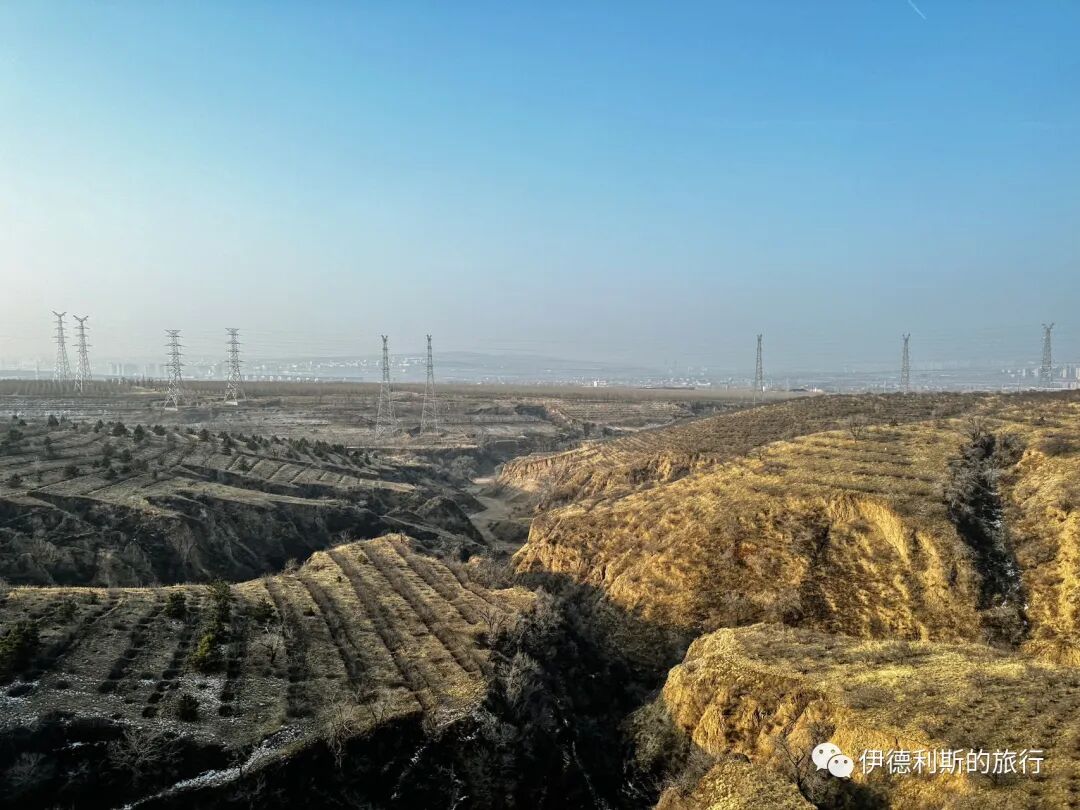
I headed to Chifeng, Inner Mongolia, on February 11. It takes two and a half hours by high-speed train from Beijing Chaoyang Station.
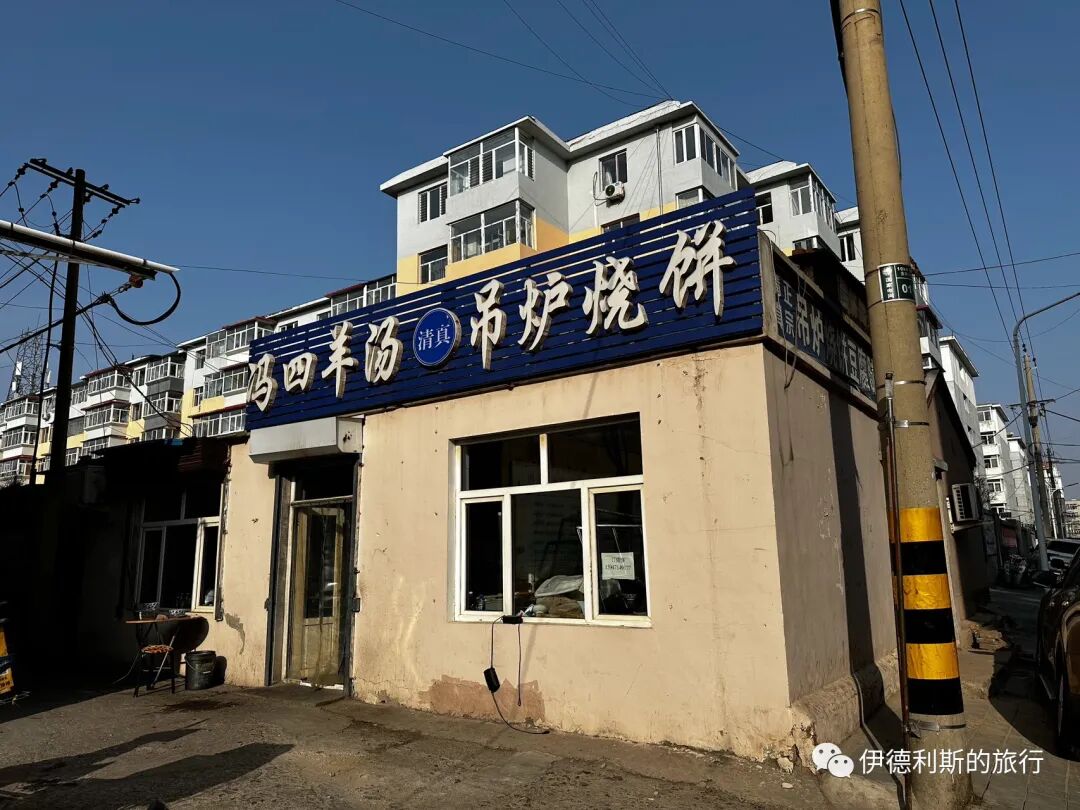
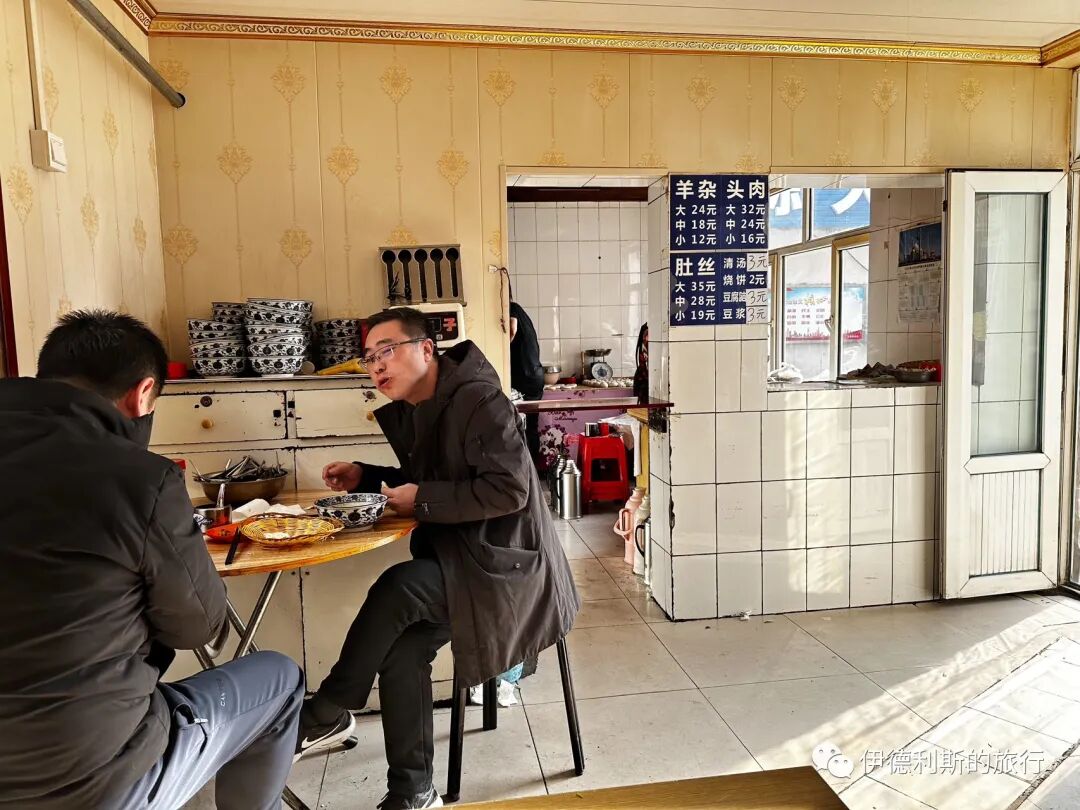
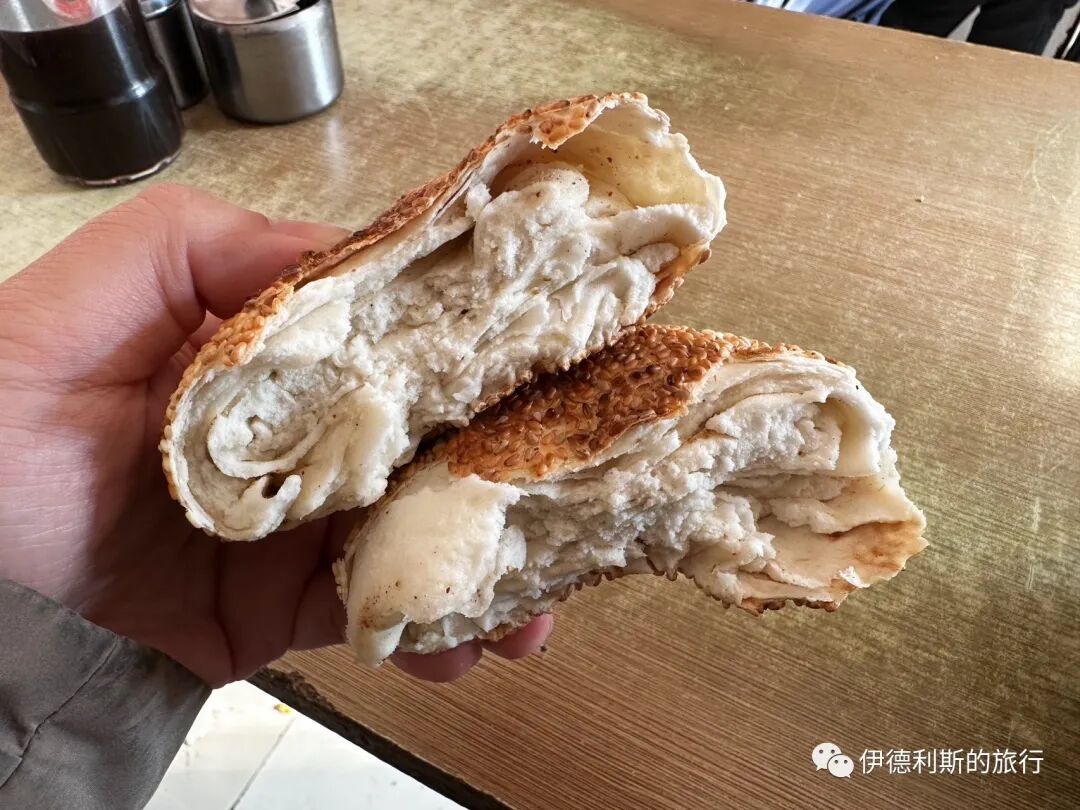
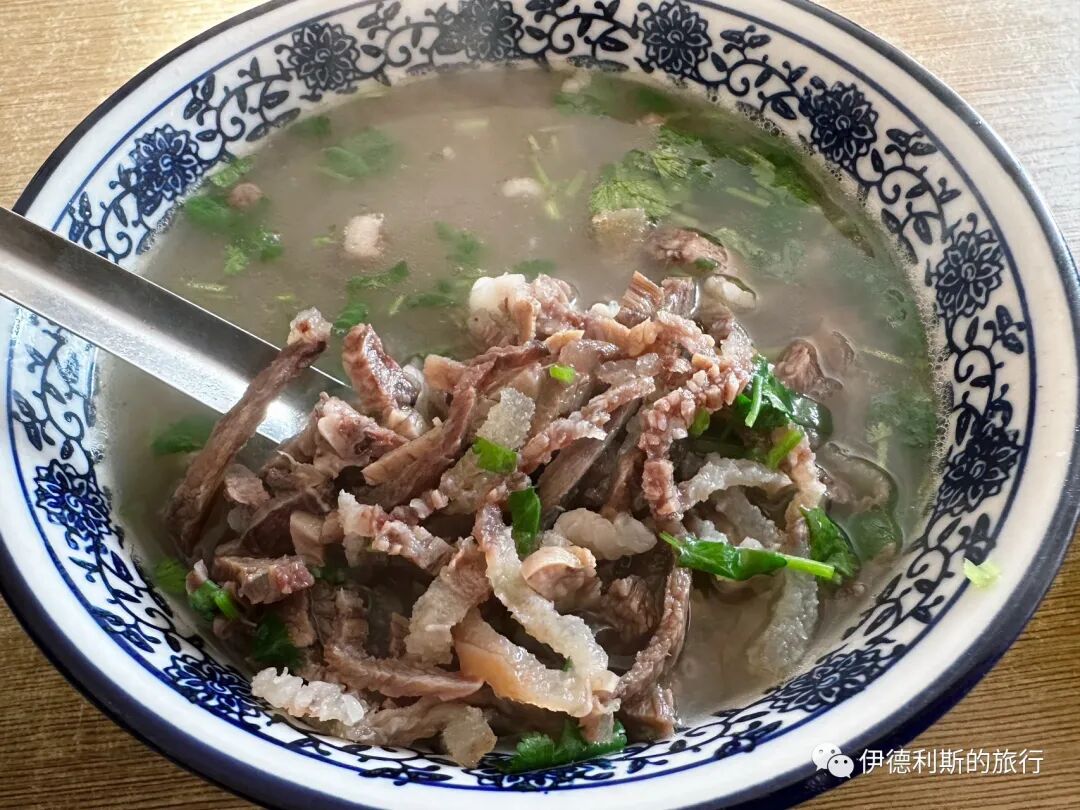
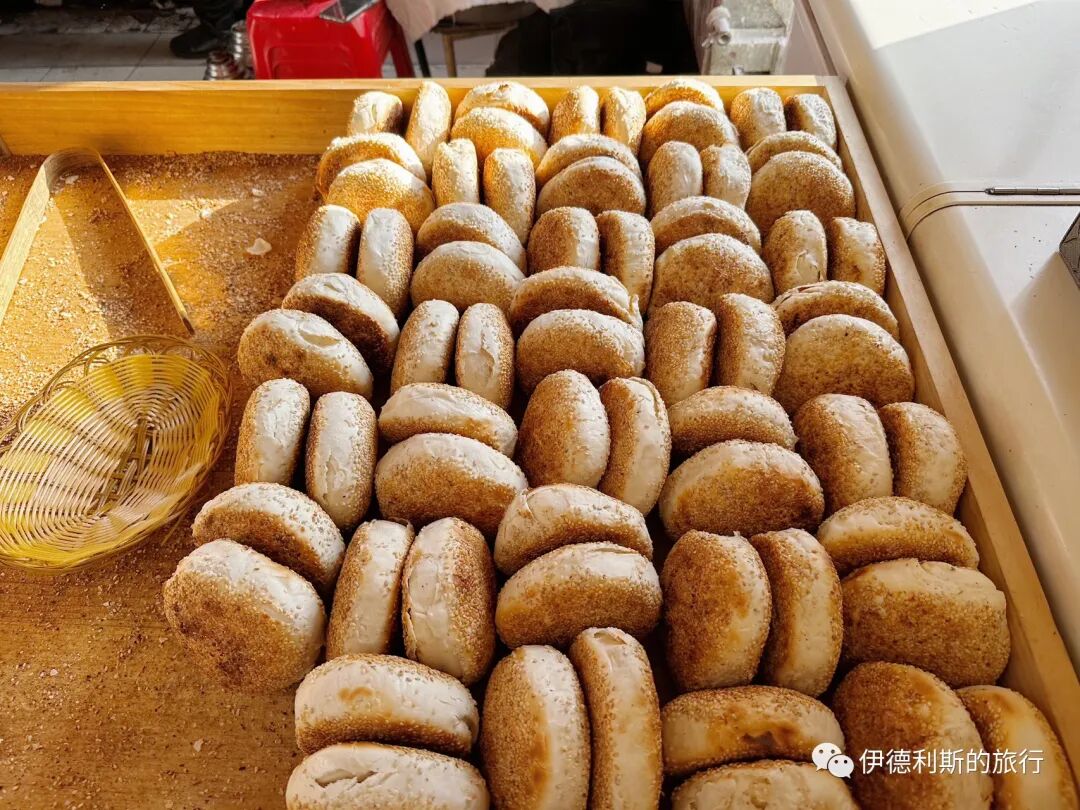
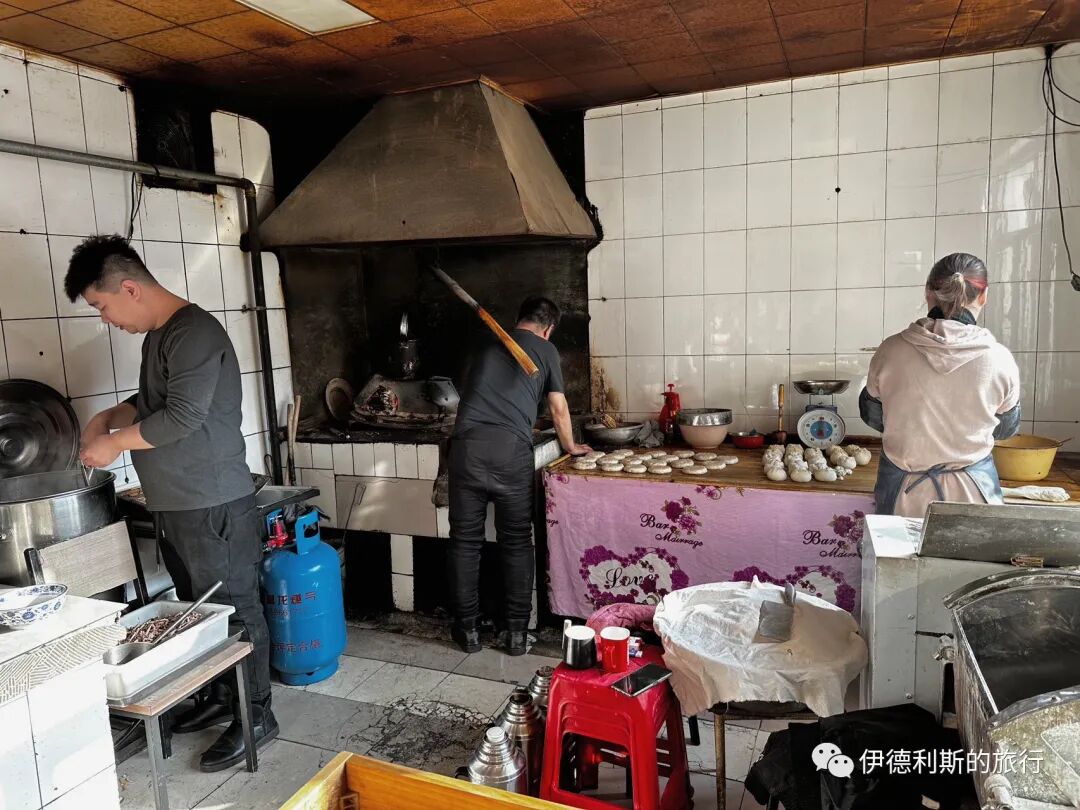
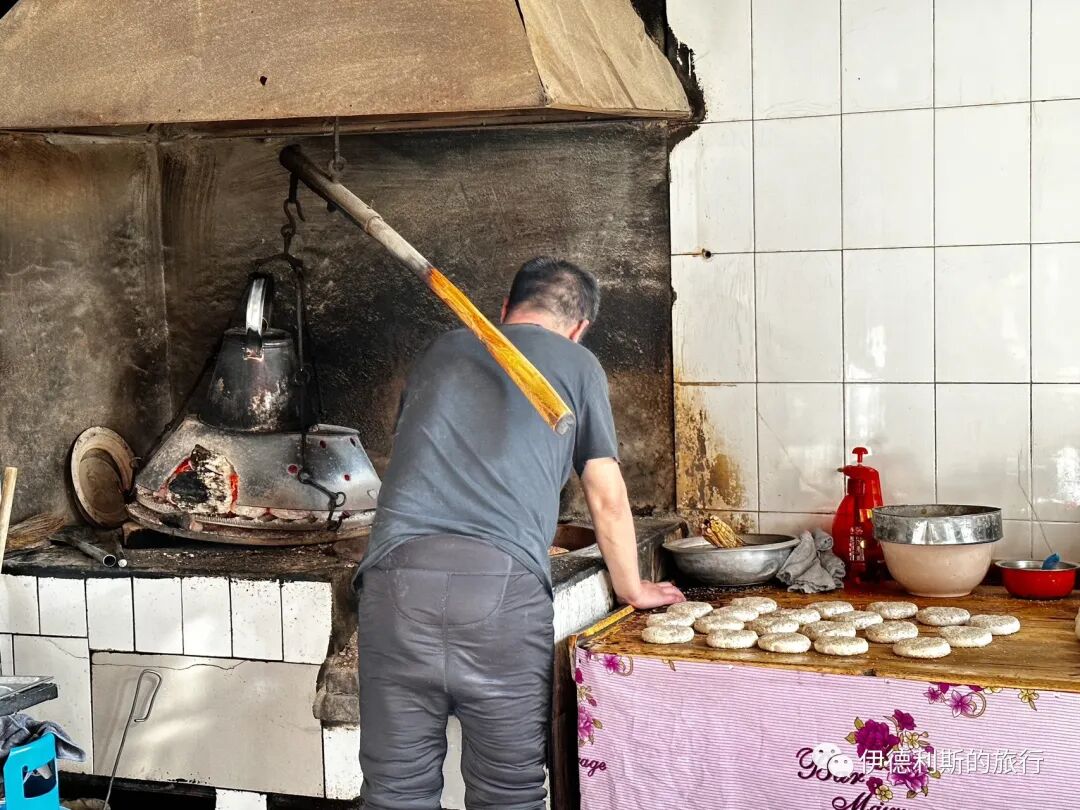
After arriving in Chifeng, I first went to the Reidian residential area on Gangtie Street to eat Fengsi lamb soup (yangtang) and hanging-oven flatbread (shaobing). Most people eating at these small shops in the neighborhood are locals. I haven't seen flatbread made in a hanging oven for many years. It was truly delicious.
From Chengde and Pingquan to Chifeng, Hui Muslims who traveled through Gubeikou after the Qing Dynasty began popularized the clear-broth version of lamb soup. This kind of lamb soup doesn't need much seasoning; it tastes great just from the natural flavor of the meat. At this shop, you can choose lamb offal, tripe strips, or head meat. I had the head meat, and they gave me a generous portion. Right after I ordered, the shop received a large order for one hundred flatbreads. They used up all their dough, but I felt very grateful to have gotten mine.
After breakfast, I went to visit the famous Chifeng North Mosque. In the early Qing Dynasty, Hui Muslims from Shandong and Hebei kept traveling through Gubeikou and Chengde to make a living in eastern Inner Mongolia. In the 1730s, ten Hui Muslim families with surnames like Zhang, Ma, and Bai moved from Shandong and Hebei to settle in Chifeng. They were known as the ten great Hui Muslim families, or the 'Zhanshanhu' settlers.
In 1739 (the fourth year of the Qianlong reign), elder Zhang Yueming of Chifeng led the effort to lease seven mu and six fen of land from Mongol princes. They built five mud rooms and three main halls, which became the earliest Chifeng Mosque.
In 1742 (the seventh year of the Qianlong reign), elder Ma Fen, who once ran the Desheng Security Bureau in Shenyang, initiated the renovation of the mosque. He paid for the foundation, and the imam and several elders traveled to various places to collect donations (nietie). Later, elder Ma Fen went to Shenyang to hire craftsmen. Construction took four years and was completed in 1747 (the twelfth year of the Qianlong reign). All the wood used was red pine from the southern mountains of Chifeng. Since then, the imam of the North Mosque has always been a scripture reader from the Ma family line.
The North Mosque underwent a major renovation in 2011. Now, another round of repairs is starting, so the main hall is locked. For now, namaz is held in the south building. I was very sorry that I couldn't get a close look at the beautiful mihrab inside the main hall this time.
The main hall of the Chifeng North Mosque consists of a porch, the main hall, a rear kiln-style hall, and a moon-watching tower (wangyuelou) on top of the kiln hall. The tower has a double-eaved hexagonal roof with a gilded bronze treasure vase on top, and the wooden carvings feature two dragons playing with a pearl. The porch sits on a Sumeru pedestal, and the wooden carvings between the eaves pillars feature cloud and flower patterns, which are very characteristic of the Northeast.
The stone, wood, and brick carvings at the North Mosque are all very exquisite:
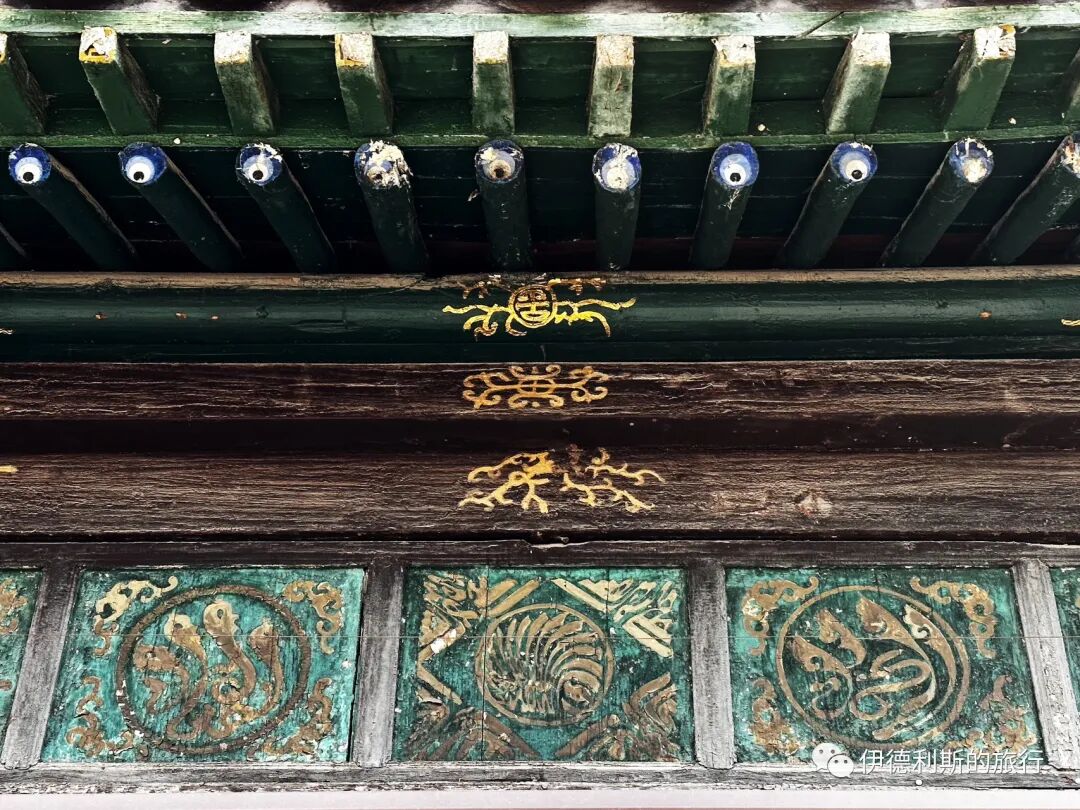
The beams of the porch are painted with Suzhou-style art, and the wooden dragon heads are very rare in China.
The stone carvings on the gable walls of the main hall feature bats representing 'good fortune' and intertwined passionflower vines.
The stone base of the corner pillar of the main hall features a phoenix, peony, sun, and moon design.
The drum-shaped stone base in front of the porch.
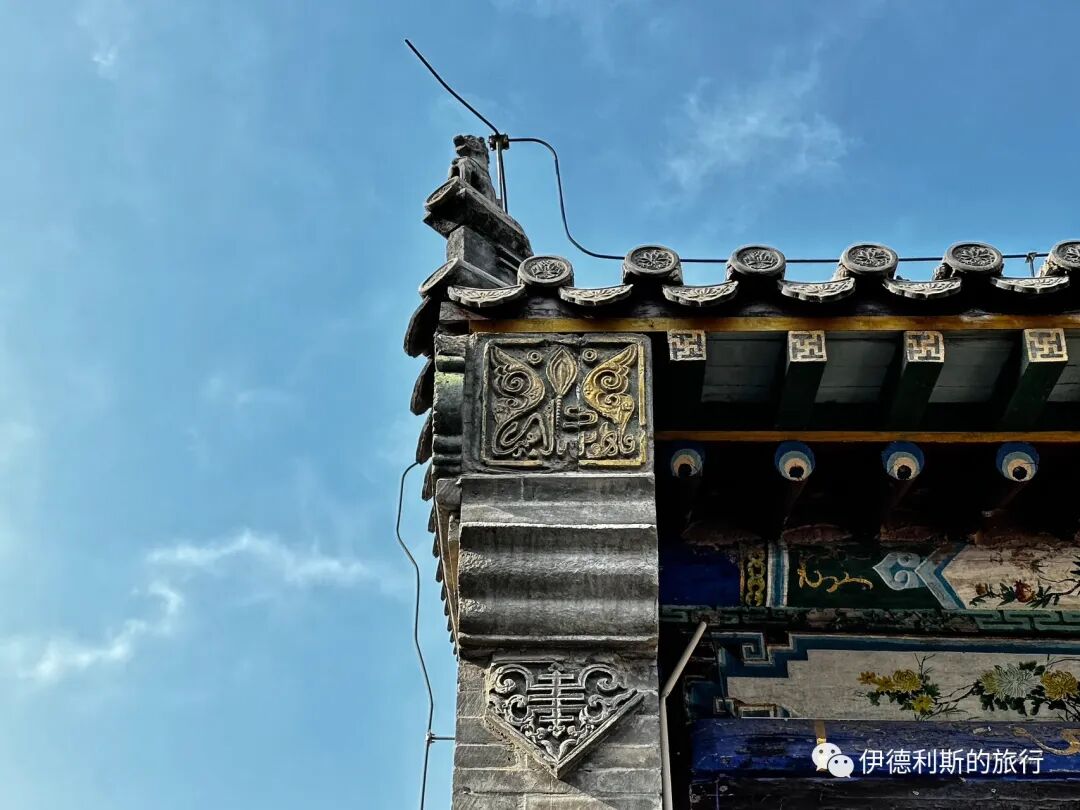
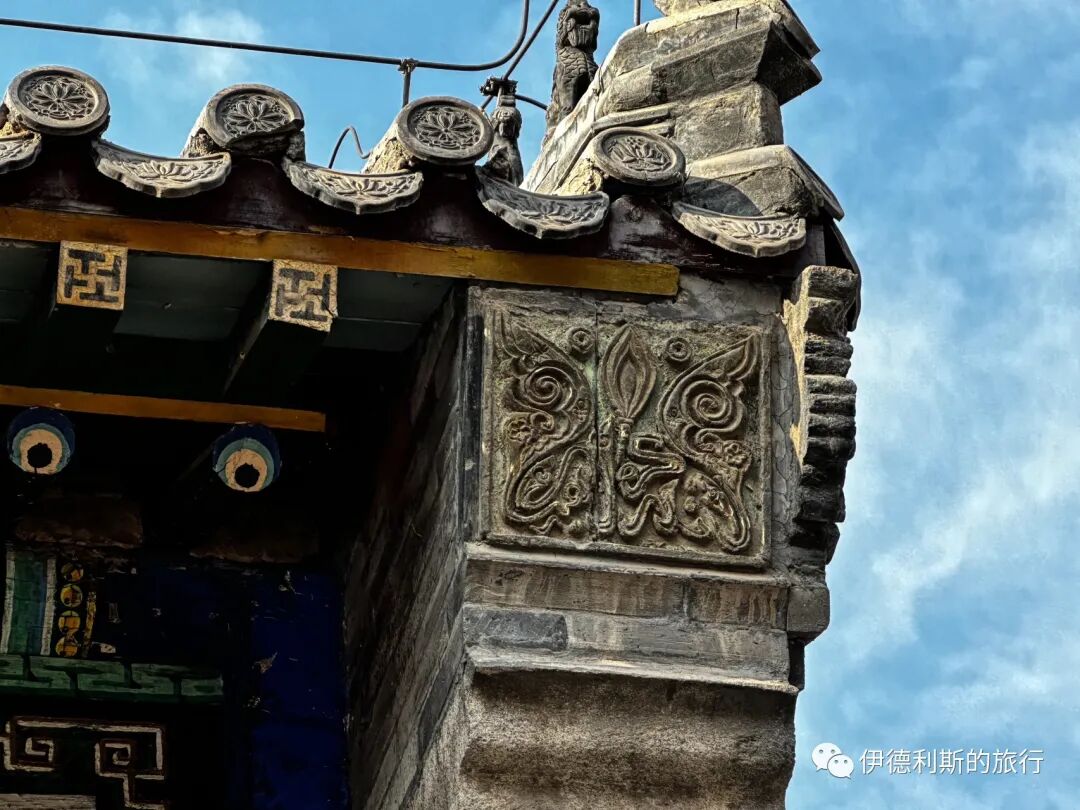
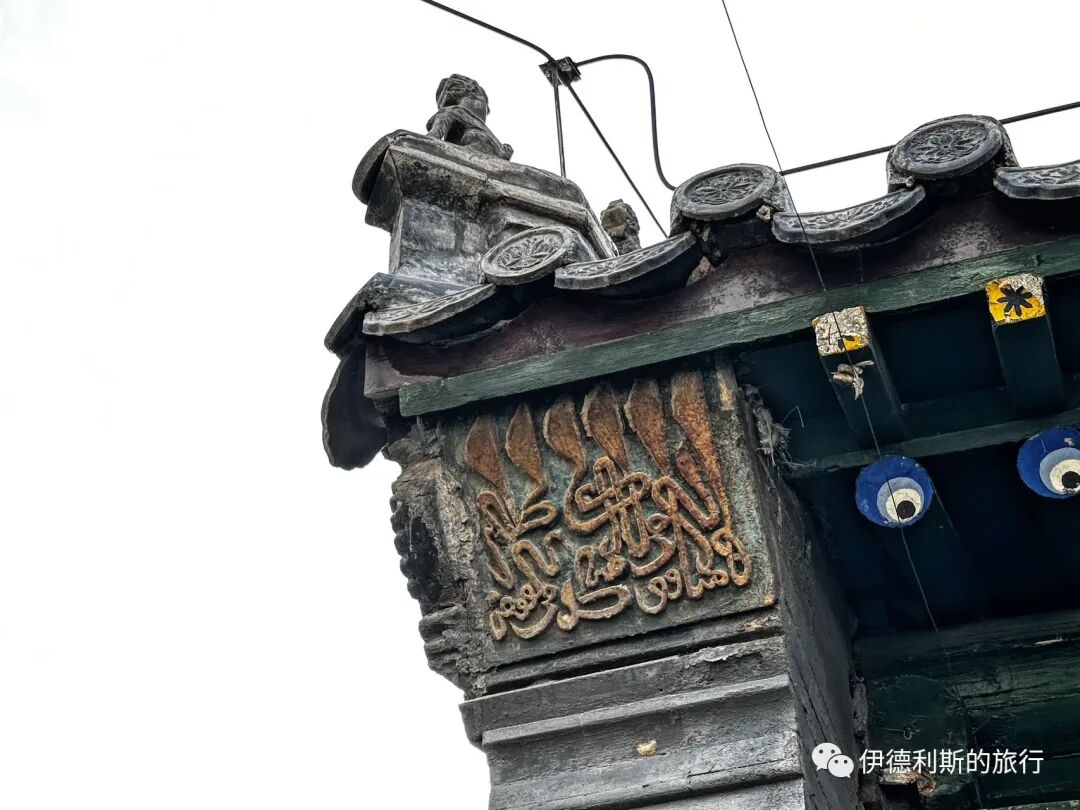
The brick carvings on the roof corners feature calligraphy. This style of calligraphy is related to the spread of the Shandong school of scripture hall education in the Northeast.
At noon, I ate buckwheat noodles (bo mian), a specialty of Aohan Banner, in front of the Chifeng South Mosque. These noodles are made by kneading buckwheat dough until it is quite firm, then using a special knife with handles on both sides to slice the dough directly on a board. The boiled noodles can be topped with various sauces, usually including pickled cabbage, eggplant, or celery, and served with fresh leek flower sauce.
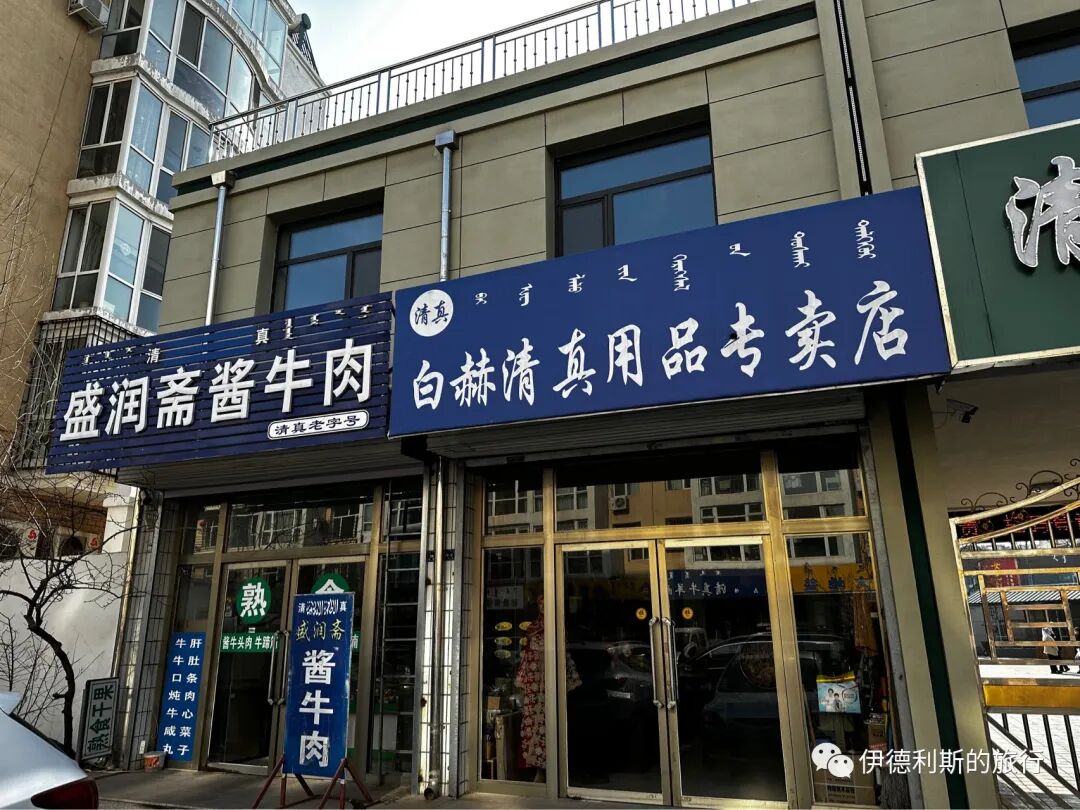
There are many halal restaurants next to the Chifeng South Mosque. By the beginning of the 19th century, the Hui Muslim population in Chifeng had grown to over 300 households. In 1801 (the sixth year of the Jiaqing reign), Hui Muslims with the surname Zhang decided to set aside five mu of land from their cemetery to build the Chifeng South Mosque. Part of the construction funds were raised through donations (nietie) from various mosques and Hui Muslim communities, and the Zhang family covered the rest. Construction of the South Mosque began in 1802 (the seventh year of the Jiaqing reign) and was completed the following year. After 1958, the South Mosque (Nandasi) was occupied and later demolished to be rebuilt as Changqing Park. After the 1980s, Hui Muslims in Chifeng proposed restoring the South Mosque. After years of effort in the 1990s, the current South Mosque was finally completed in 1997.
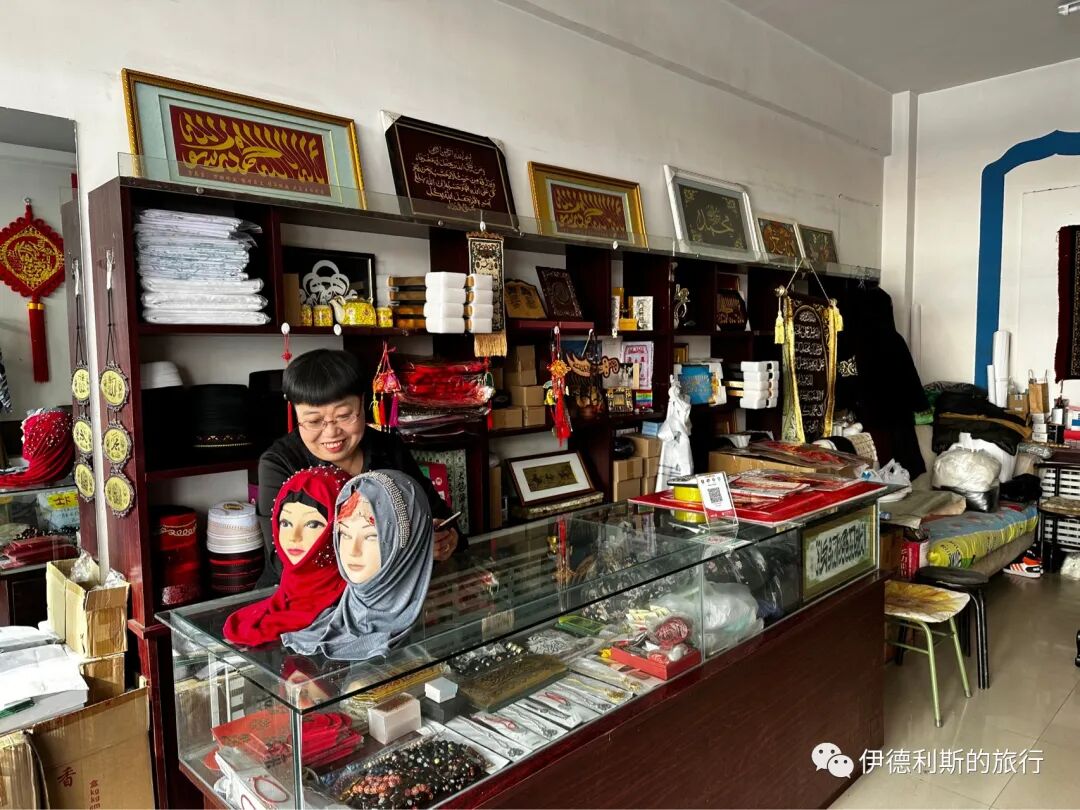
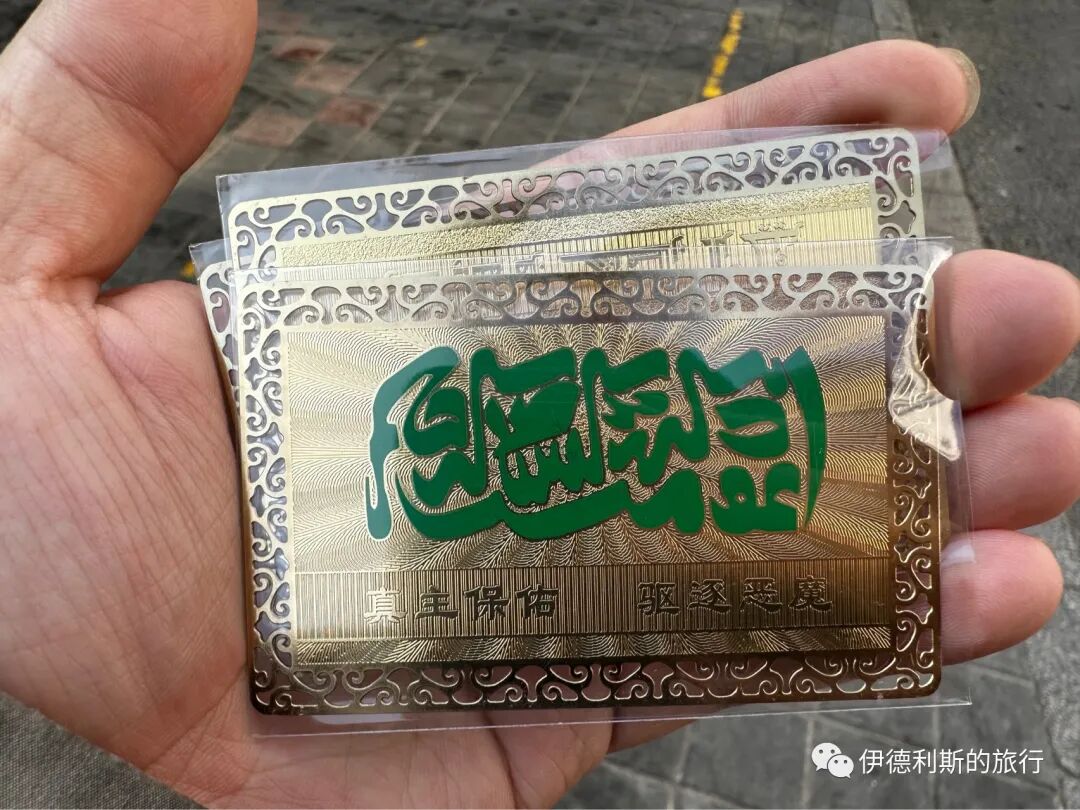
I bought a few prayer cards (qihuci) at this shop next to the South Mosque.
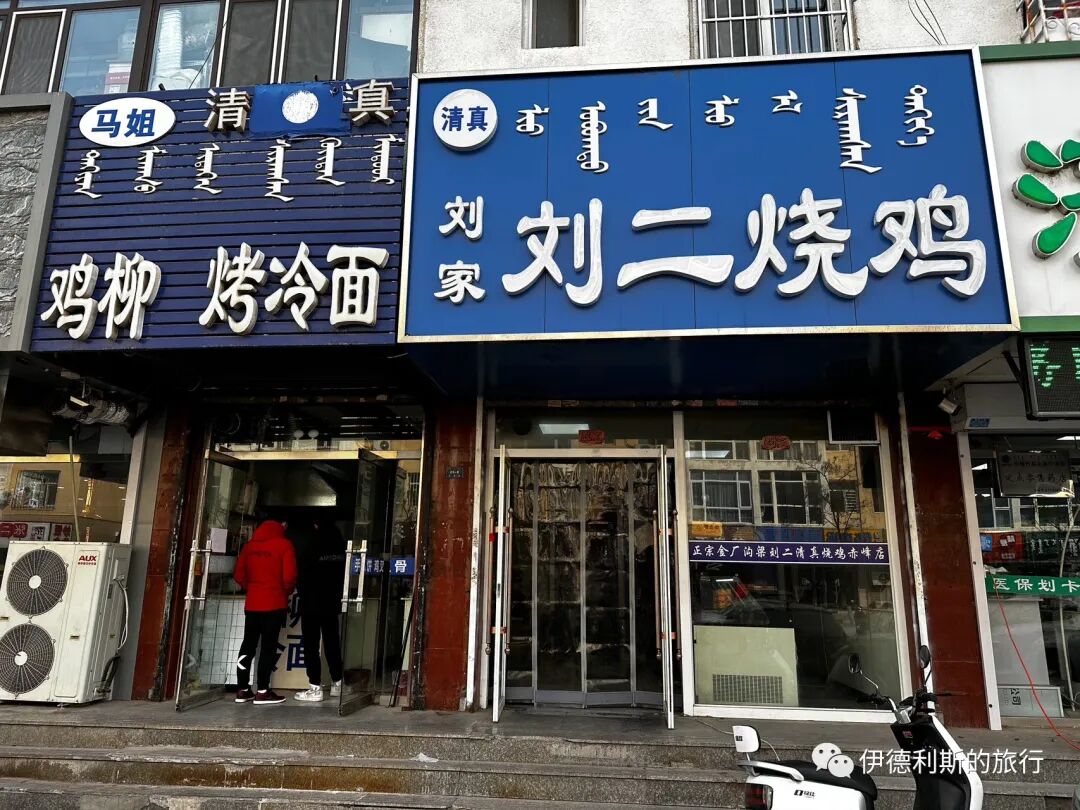
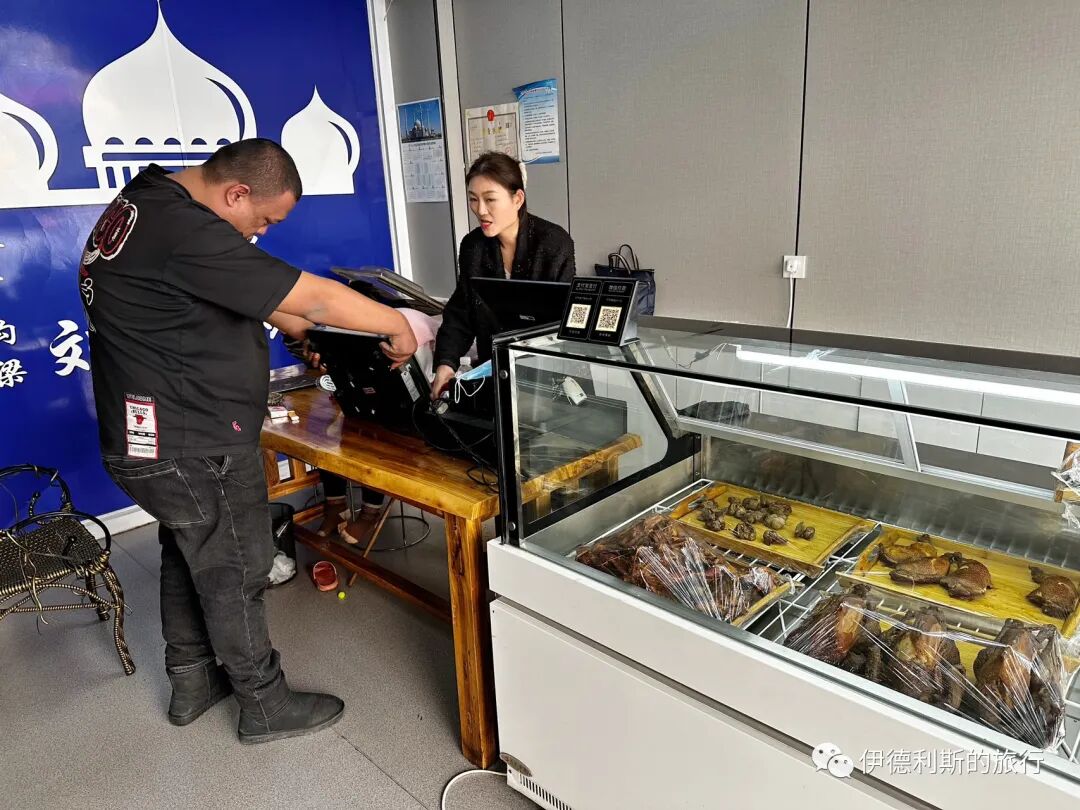
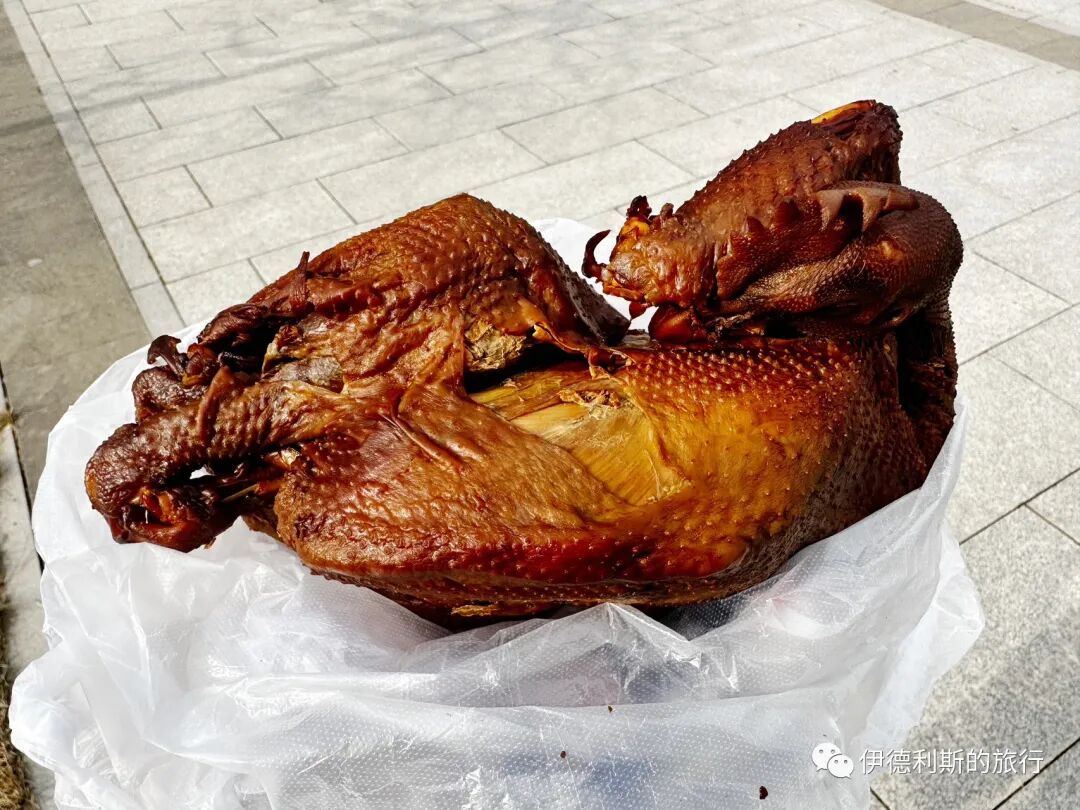
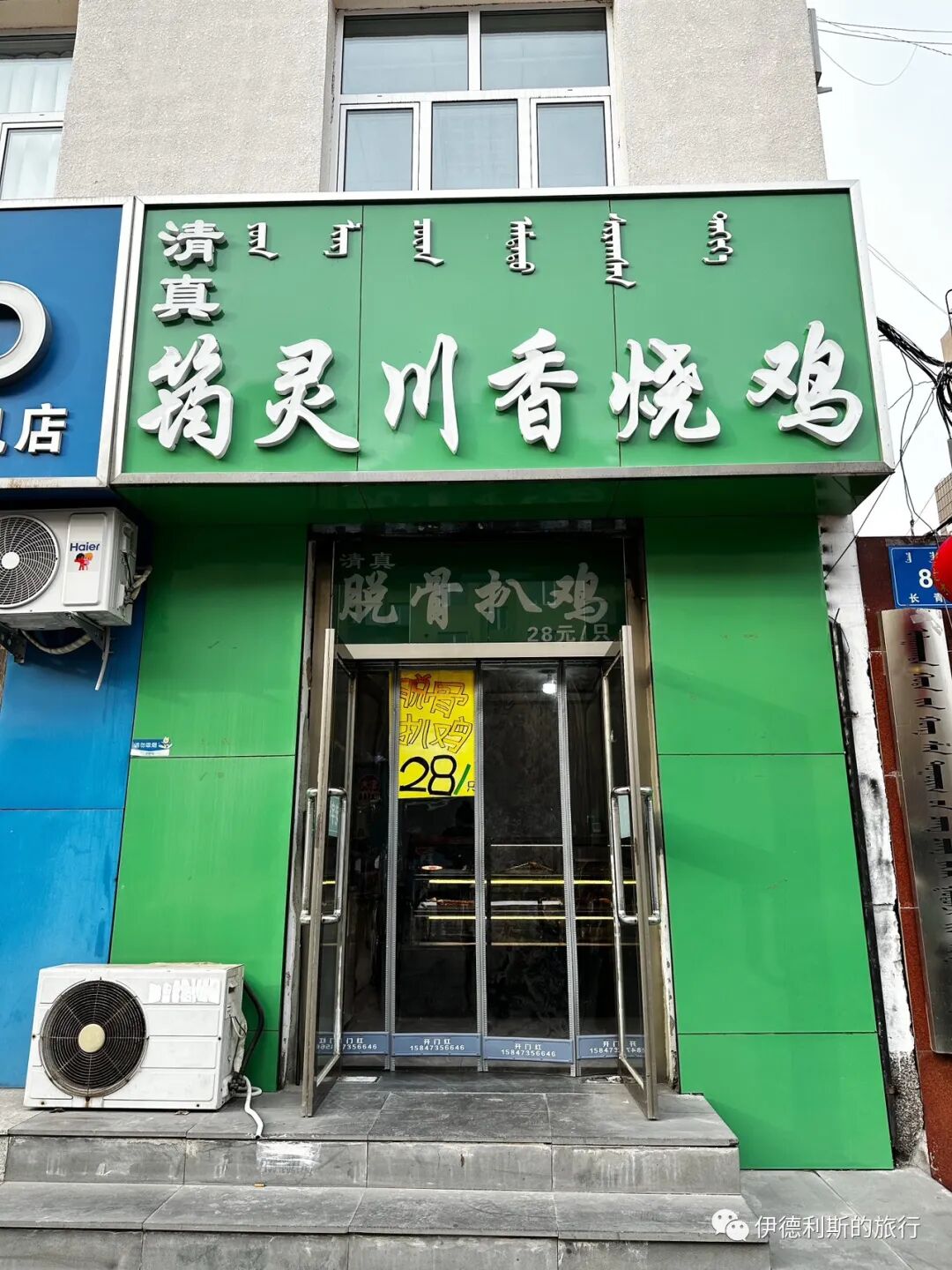
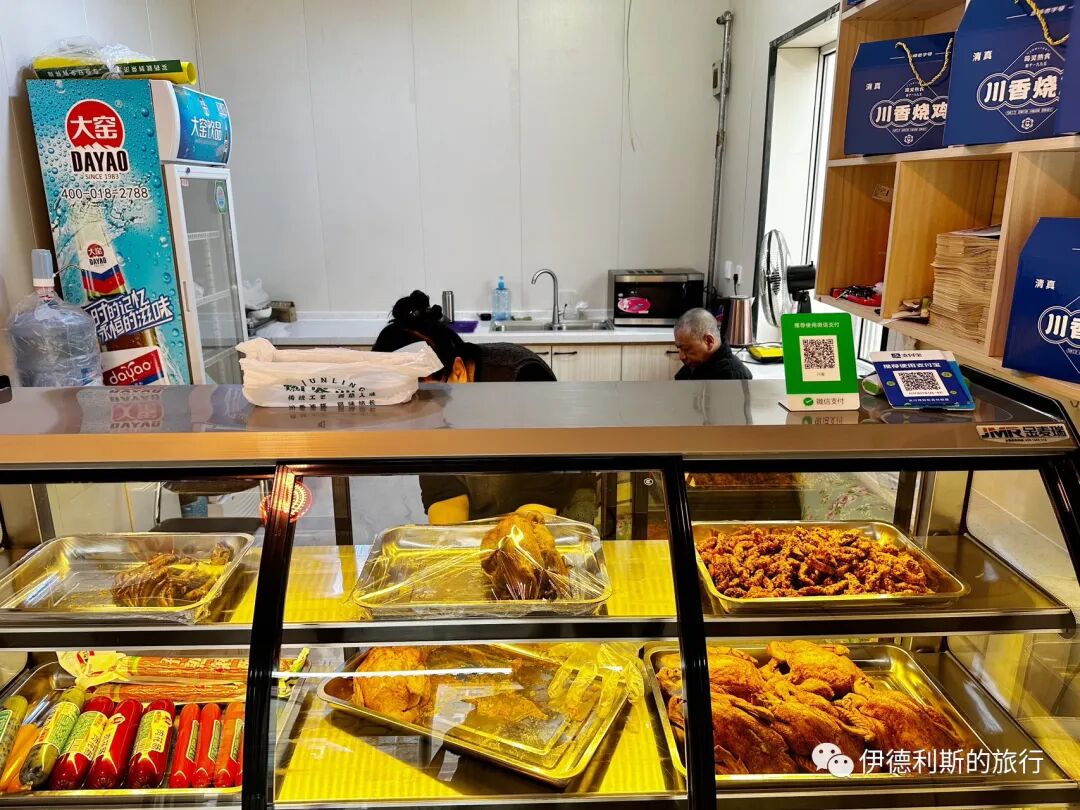
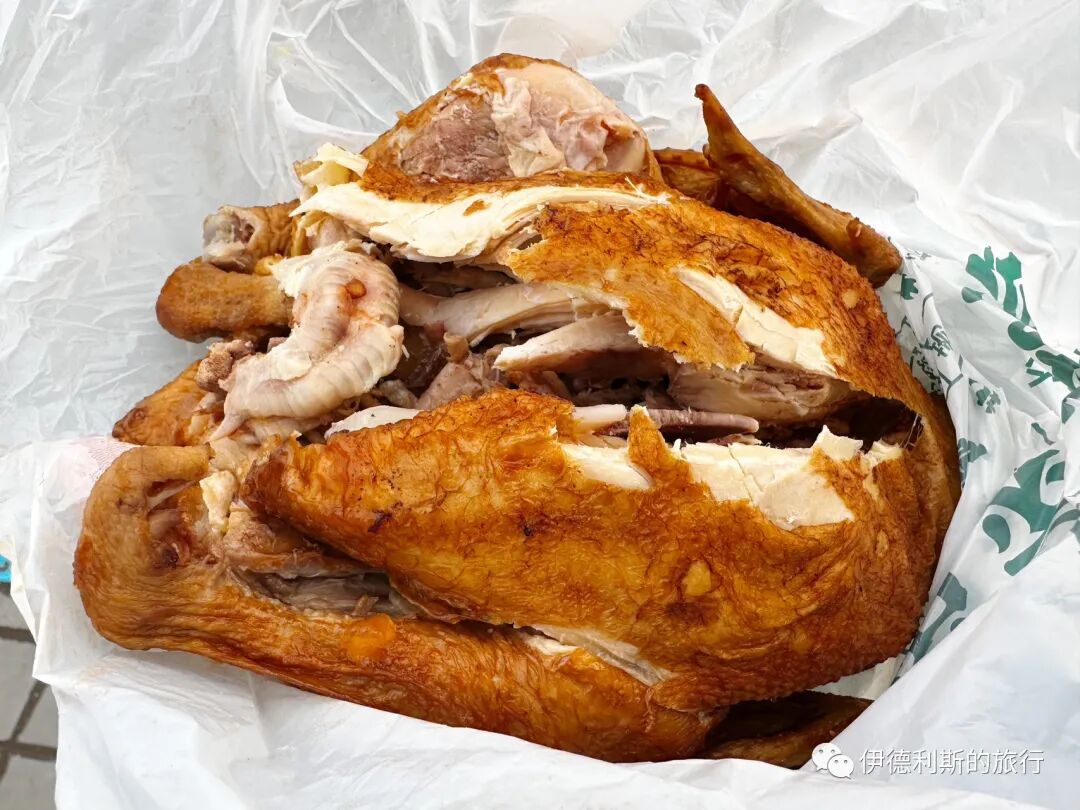
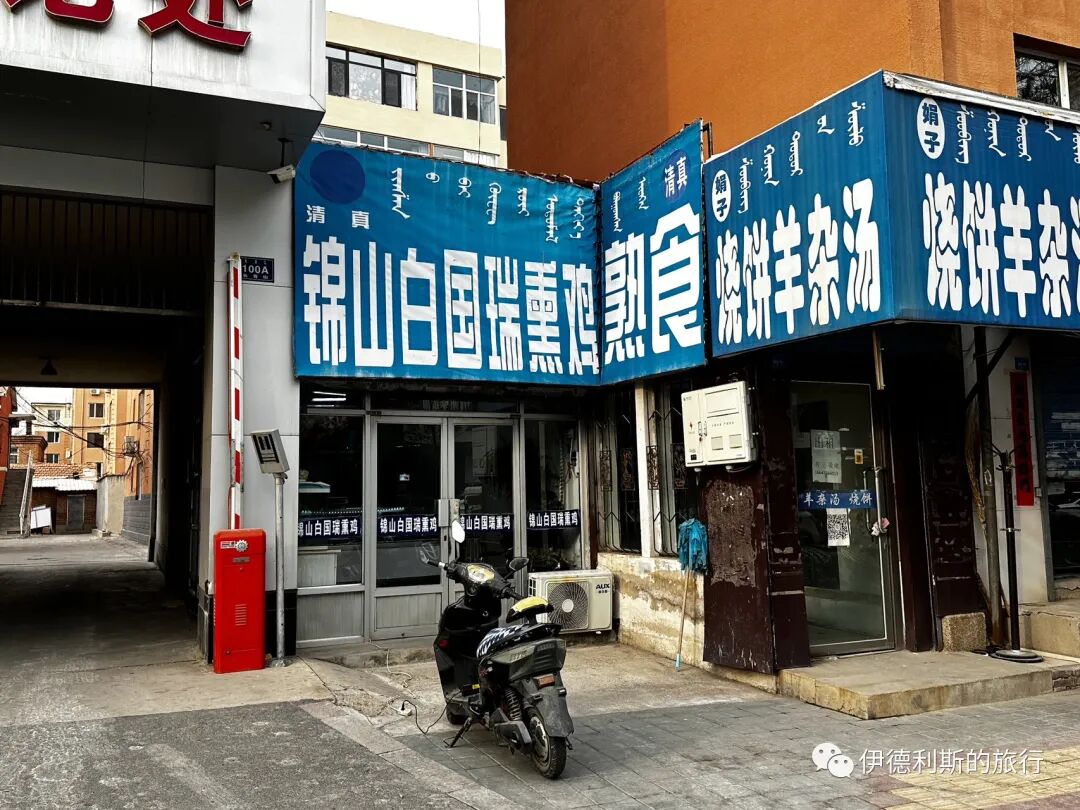
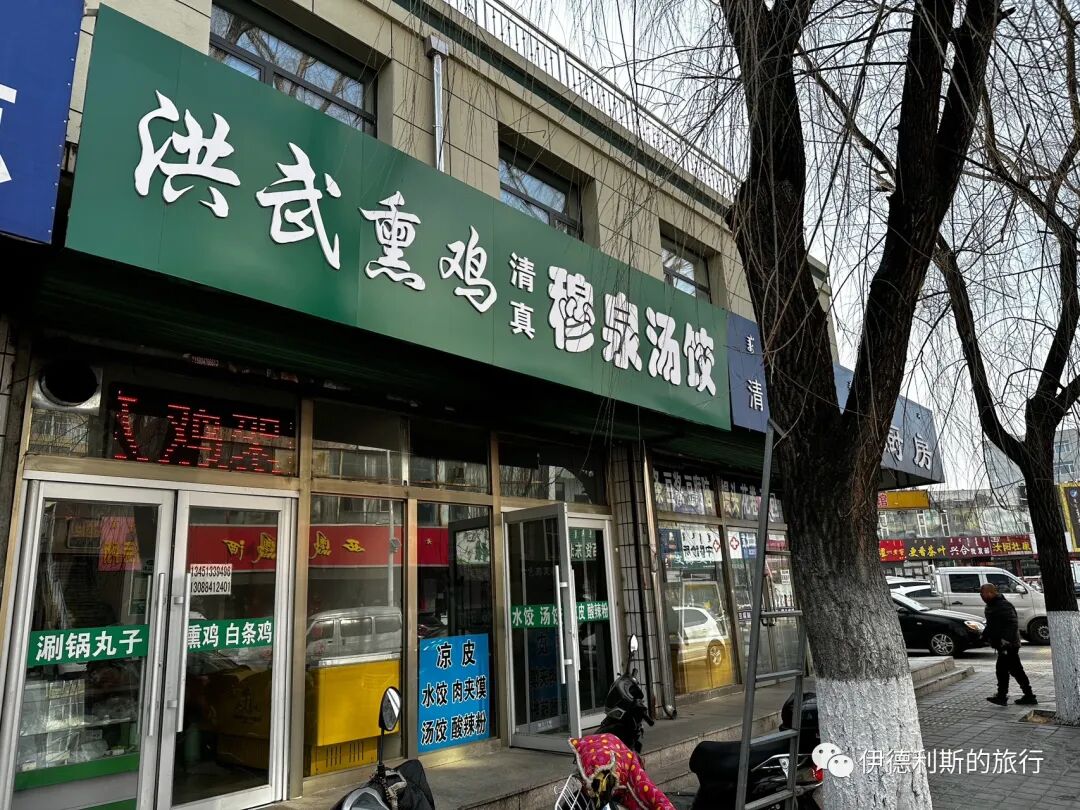
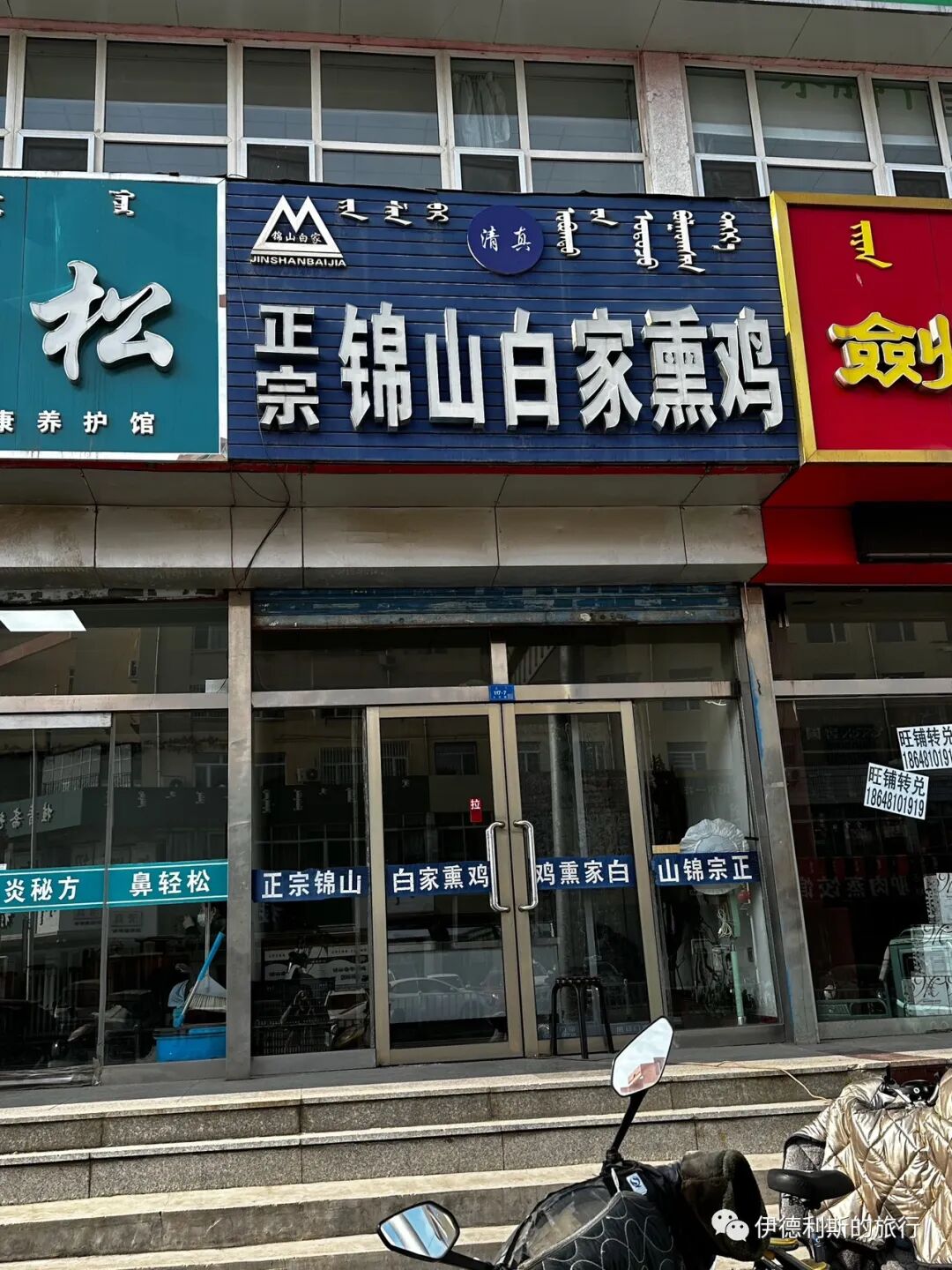
My impression of this trip to Chifeng is that the streets are full of roasted chicken shops. There are so many kinds of roasted chicken, smoked chicken, and braised chicken. Do people in Chifeng really love eating chicken?
I also bought roasted chicken and braised chicken at two shops to try. The taste was okay, just a bit salty. The first roasted chicken shop was opened by a Hui Muslim named Liu from Jinchanggouliang Town. This is a small town rich in gold and silver under Aohan Banner in Chifeng. After the Rehe administrative system was established during the Yongzheng reign, many people came here to pan for gold. In 1893, the Qing Dynasty officially set up a general bureau to mine gold, with more than 4,000 people at its peak.
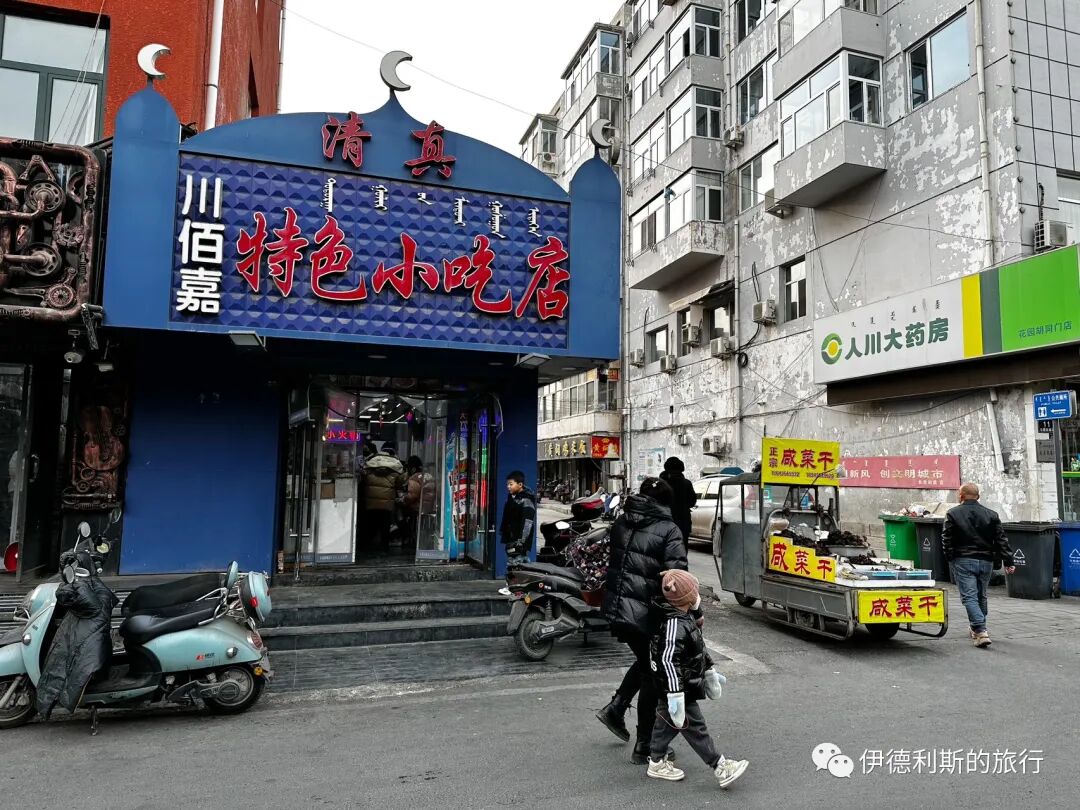
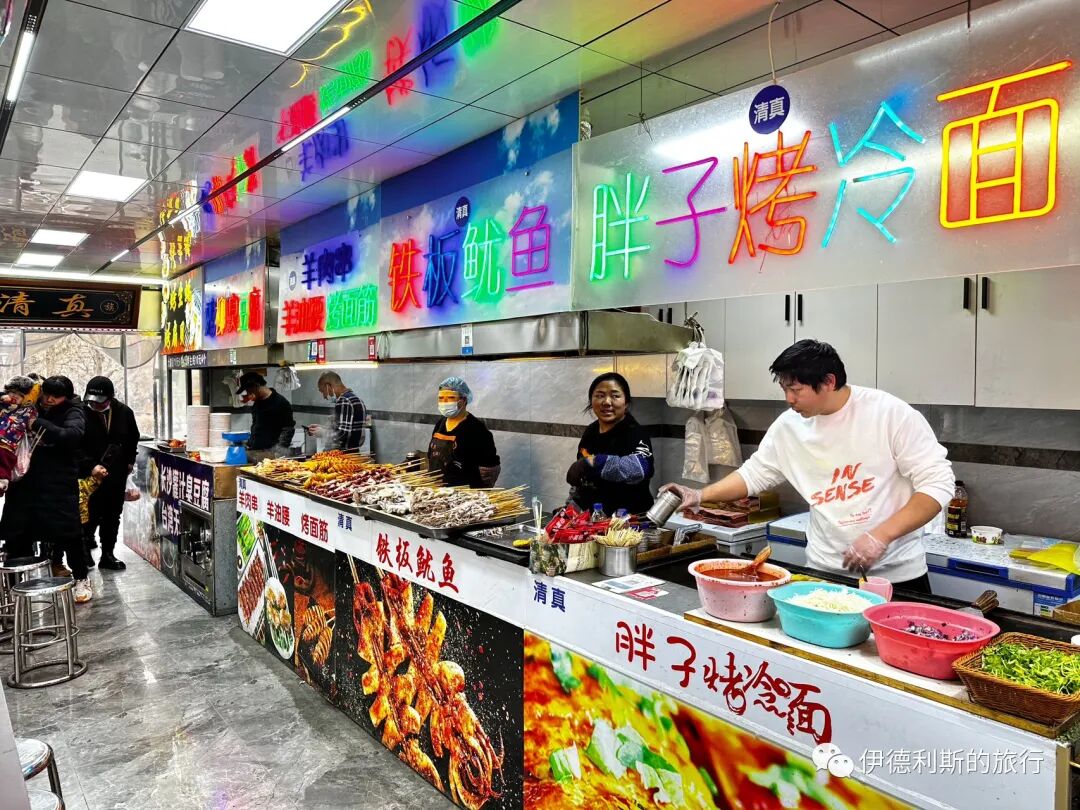
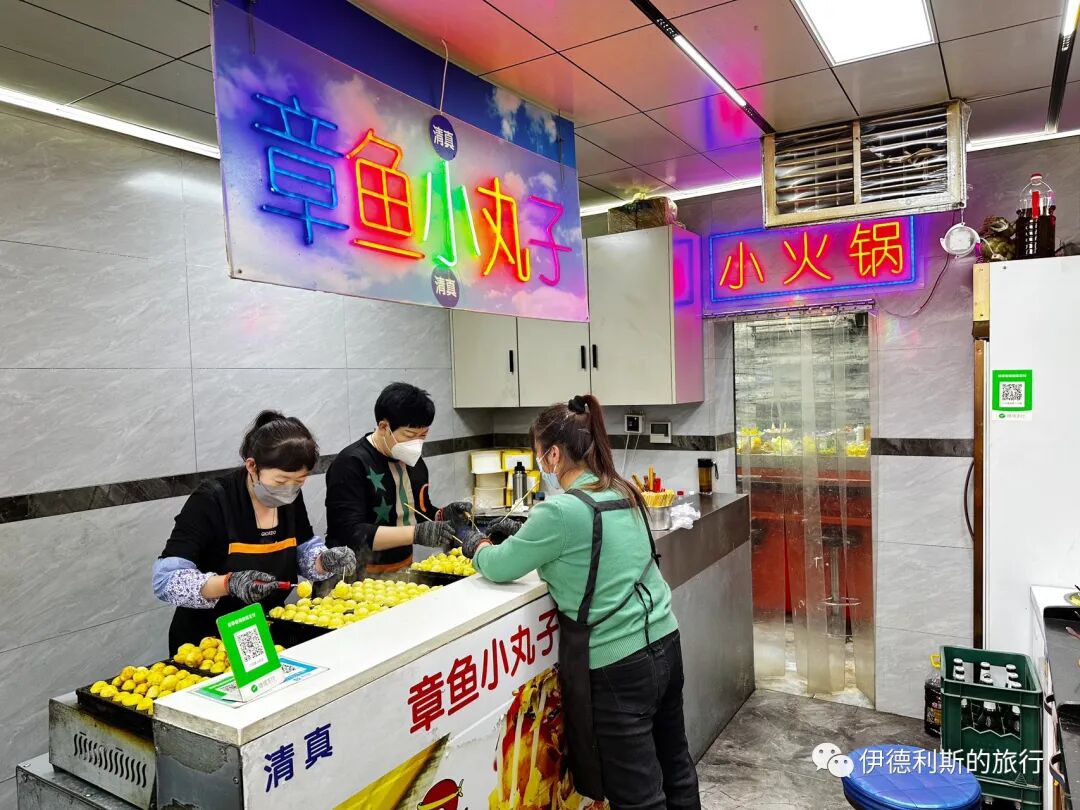
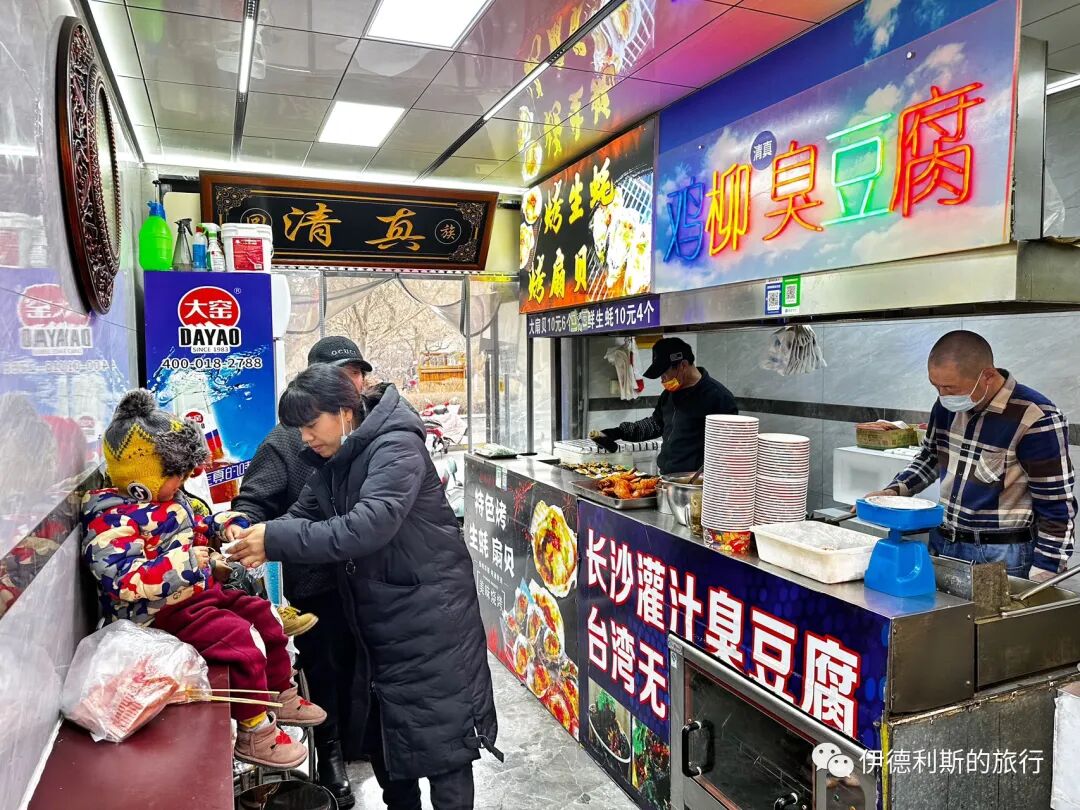
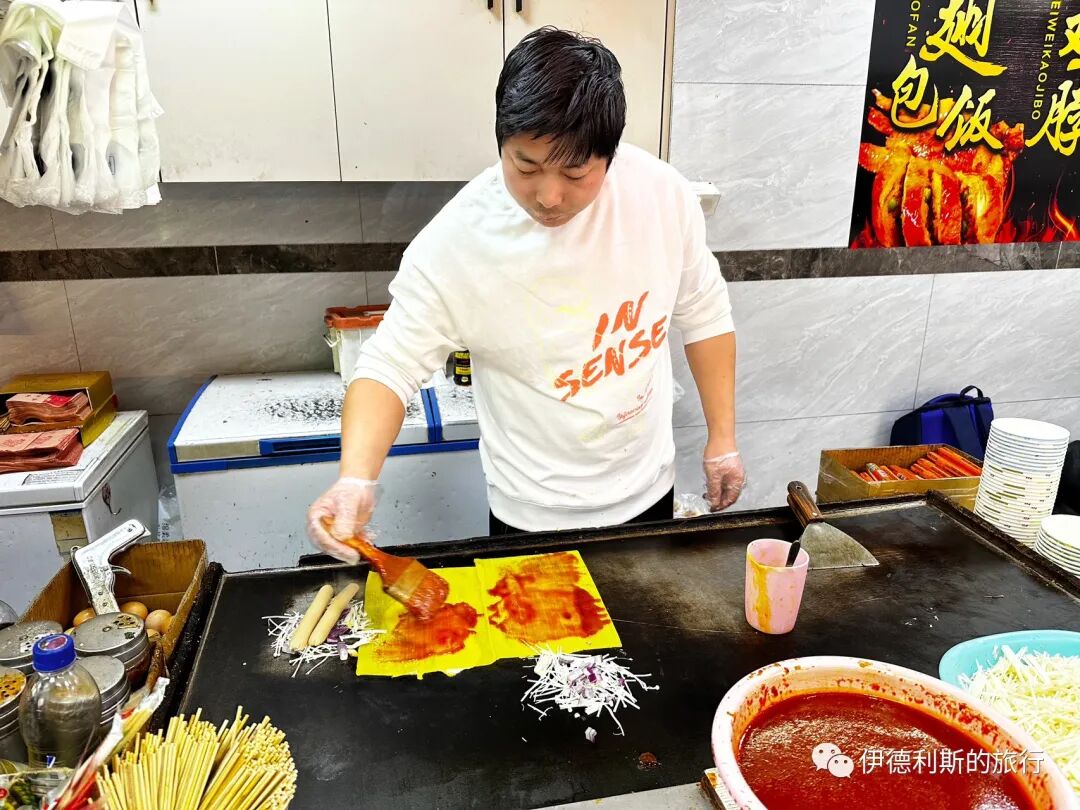
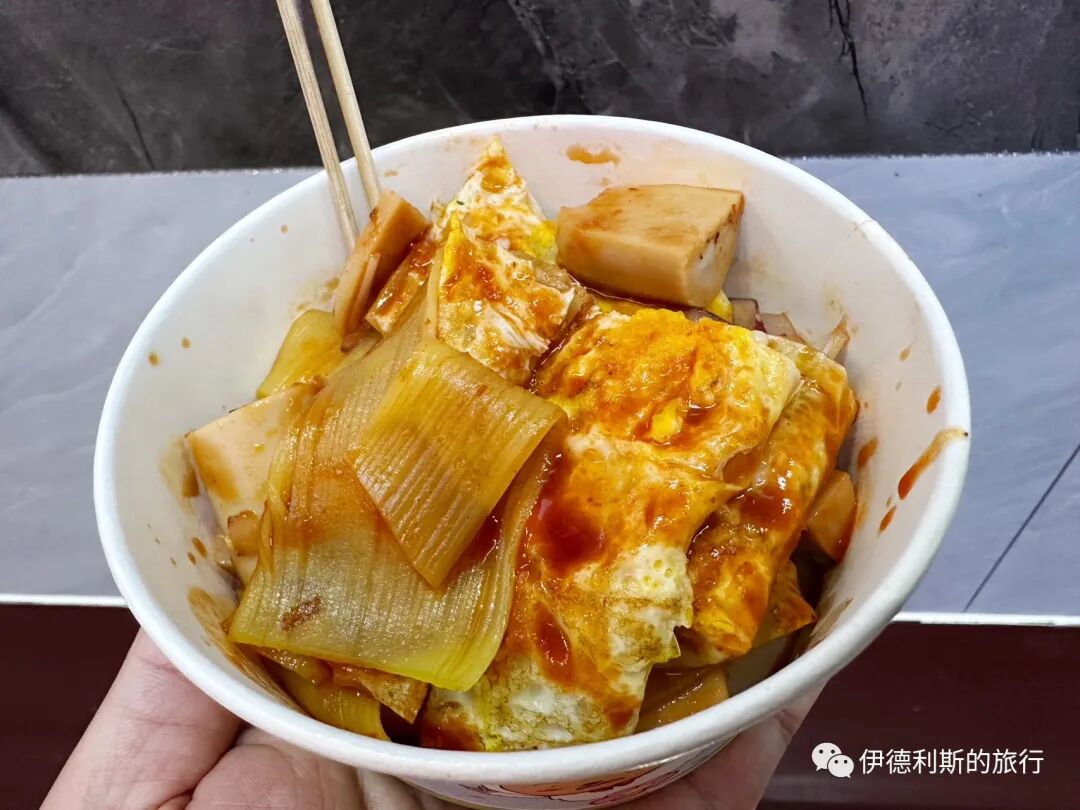
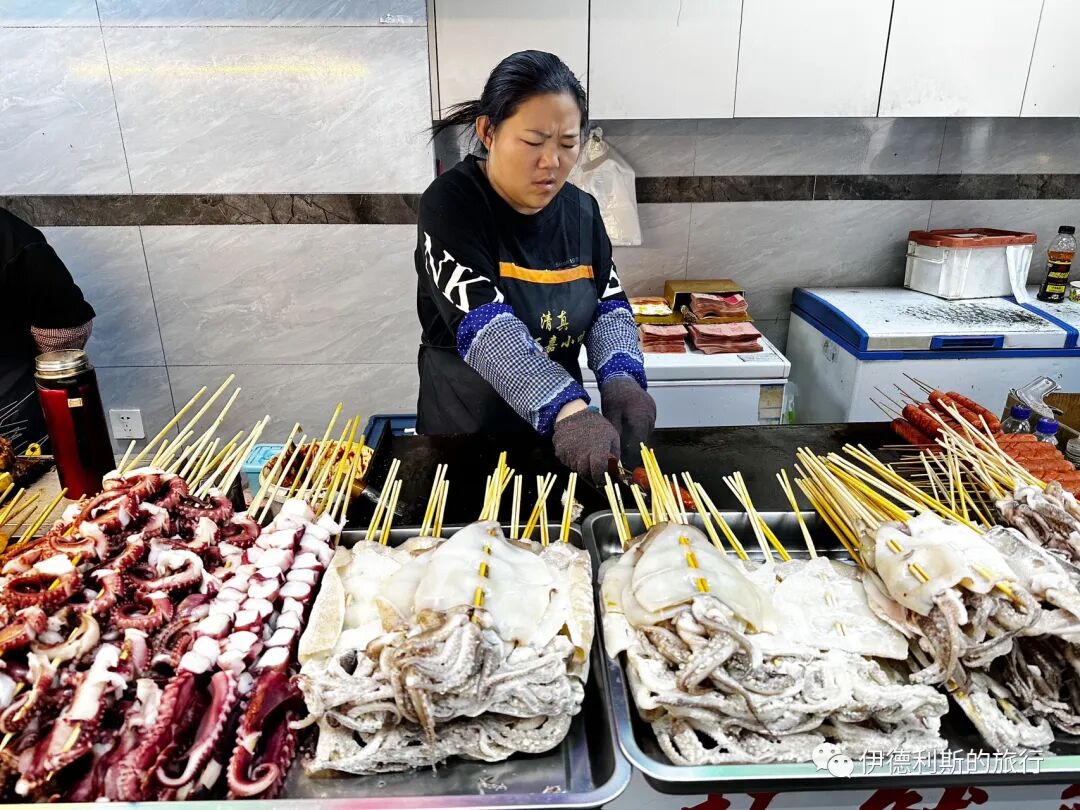
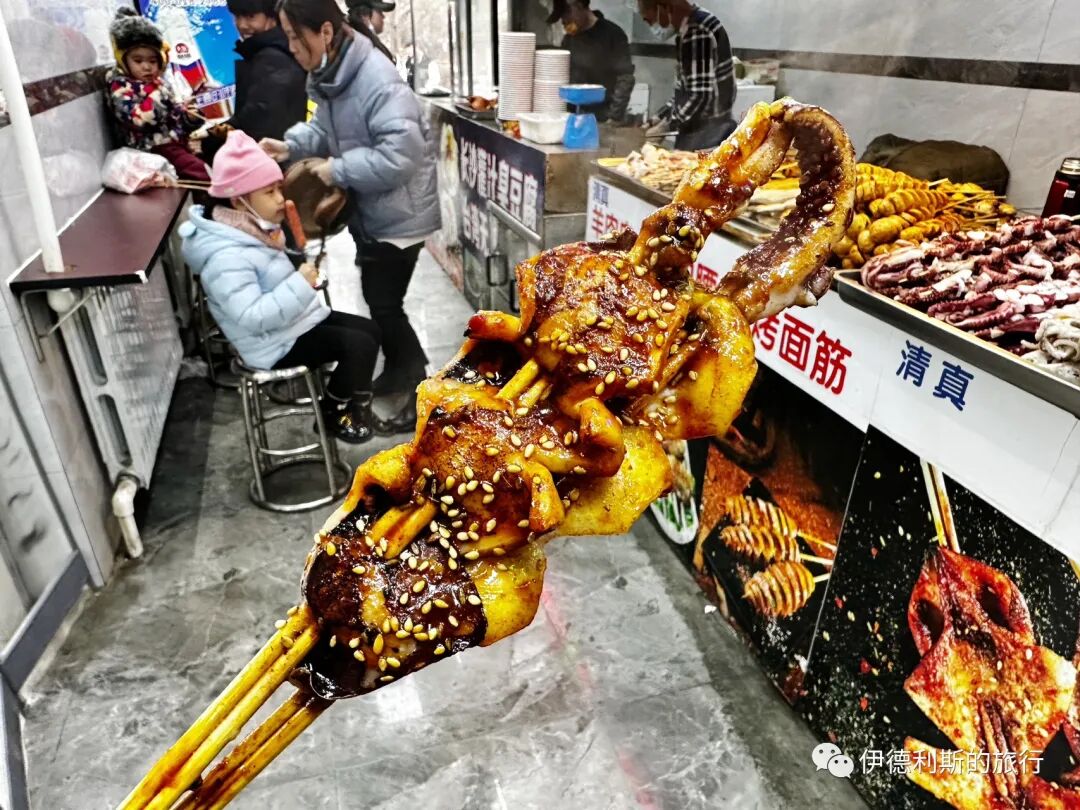
I didn't expect there to be a small halal food court next to Changqing Park in Chifeng. It has all the classic snacks like octopus balls (zhangyu xiaowanzi), grilled cold noodles (kao lengmian), iron-plate squid (tieban youyu), grilled gluten (kao mianjin), grilled scallops (kao shanbei), and stinky tofu (chou doufu). There is even a conveyor belt hot pot (huizhuan xiaohuoguo) in the back, and many children come here to eat. I also pretended to be a kid and had some grilled cold noodles and iron-plate squid. Actually, when I was little, I also loved eating iron-plate squid from the Longfu Mosque snack shop, but we really didn't have the others back then. view all
Summary: Chifeng — Beidasi Mosque and Muslim Food is presented here as a firsthand travel account in clear English, beginning with this scene: I headed to Chifeng, Inner Mongolia, on February 11. It takes two and a half hours by high-speed train from Beijing Chaoyang Station. The account keeps its focus on Chifeng Mosque, Inner Mongolia, Halal Food while preserving the names, places, food, and historical details from the Chinese source.
I headed to Chifeng, Inner Mongolia, on February 11. It takes two and a half hours by high-speed train from Beijing Chaoyang Station.
After arriving in Chifeng, I first went to the Reidian residential area on Gangtie Street to eat Fengsi lamb soup (yangtang) and hanging-oven flatbread (shaobing). Most people eating at these small shops in the neighborhood are locals. I haven't seen flatbread made in a hanging oven for many years. It was truly delicious.
From Chengde and Pingquan to Chifeng, Hui Muslims who traveled through Gubeikou after the Qing Dynasty began popularized the clear-broth version of lamb soup. This kind of lamb soup doesn't need much seasoning; it tastes great just from the natural flavor of the meat. At this shop, you can choose lamb offal, tripe strips, or head meat. I had the head meat, and they gave me a generous portion. Right after I ordered, the shop received a large order for one hundred flatbreads. They used up all their dough, but I felt very grateful to have gotten mine.
After breakfast, I went to visit the famous Chifeng North Mosque. In the early Qing Dynasty, Hui Muslims from Shandong and Hebei kept traveling through Gubeikou and Chengde to make a living in eastern Inner Mongolia. In the 1730s, ten Hui Muslim families with surnames like Zhang, Ma, and Bai moved from Shandong and Hebei to settle in Chifeng. They were known as the ten great Hui Muslim families, or the 'Zhanshanhu' settlers.
In 1739 (the fourth year of the Qianlong reign), elder Zhang Yueming of Chifeng led the effort to lease seven mu and six fen of land from Mongol princes. They built five mud rooms and three main halls, which became the earliest Chifeng Mosque.
In 1742 (the seventh year of the Qianlong reign), elder Ma Fen, who once ran the Desheng Security Bureau in Shenyang, initiated the renovation of the mosque. He paid for the foundation, and the imam and several elders traveled to various places to collect donations (nietie). Later, elder Ma Fen went to Shenyang to hire craftsmen. Construction took four years and was completed in 1747 (the twelfth year of the Qianlong reign). All the wood used was red pine from the southern mountains of Chifeng. Since then, the imam of the North Mosque has always been a scripture reader from the Ma family line.
The North Mosque underwent a major renovation in 2011. Now, another round of repairs is starting, so the main hall is locked. For now, namaz is held in the south building. I was very sorry that I couldn't get a close look at the beautiful mihrab inside the main hall this time.
The main hall of the Chifeng North Mosque consists of a porch, the main hall, a rear kiln-style hall, and a moon-watching tower (wangyuelou) on top of the kiln hall. The tower has a double-eaved hexagonal roof with a gilded bronze treasure vase on top, and the wooden carvings feature two dragons playing with a pearl. The porch sits on a Sumeru pedestal, and the wooden carvings between the eaves pillars feature cloud and flower patterns, which are very characteristic of the Northeast.
The stone, wood, and brick carvings at the North Mosque are all very exquisite:
The beams of the porch are painted with Suzhou-style art, and the wooden dragon heads are very rare in China.
The stone carvings on the gable walls of the main hall feature bats representing 'good fortune' and intertwined passionflower vines.
The stone base of the corner pillar of the main hall features a phoenix, peony, sun, and moon design.
The drum-shaped stone base in front of the porch.
The brick carvings on the roof corners feature calligraphy. This style of calligraphy is related to the spread of the Shandong school of scripture hall education in the Northeast.
At noon, I ate buckwheat noodles (bo mian), a specialty of Aohan Banner, in front of the Chifeng South Mosque. These noodles are made by kneading buckwheat dough until it is quite firm, then using a special knife with handles on both sides to slice the dough directly on a board. The boiled noodles can be topped with various sauces, usually including pickled cabbage, eggplant, or celery, and served with fresh leek flower sauce.
There are many halal restaurants next to the Chifeng South Mosque. By the beginning of the 19th century, the Hui Muslim population in Chifeng had grown to over 300 households. In 1801 (the sixth year of the Jiaqing reign), Hui Muslims with the surname Zhang decided to set aside five mu of land from their cemetery to build the Chifeng South Mosque. Part of the construction funds were raised through donations (nietie) from various mosques and Hui Muslim communities, and the Zhang family covered the rest. Construction of the South Mosque began in 1802 (the seventh year of the Jiaqing reign) and was completed the following year. After 1958, the South Mosque (Nandasi) was occupied and later demolished to be rebuilt as Changqing Park. After the 1980s, Hui Muslims in Chifeng proposed restoring the South Mosque. After years of effort in the 1990s, the current South Mosque was finally completed in 1997.
I bought a few prayer cards (qihuci) at this shop next to the South Mosque.
My impression of this trip to Chifeng is that the streets are full of roasted chicken shops. There are so many kinds of roasted chicken, smoked chicken, and braised chicken. Do people in Chifeng really love eating chicken?
I also bought roasted chicken and braised chicken at two shops to try. The taste was okay, just a bit salty. The first roasted chicken shop was opened by a Hui Muslim named Liu from Jinchanggouliang Town. This is a small town rich in gold and silver under Aohan Banner in Chifeng. After the Rehe administrative system was established during the Yongzheng reign, many people came here to pan for gold. In 1893, the Qing Dynasty officially set up a general bureau to mine gold, with more than 4,000 people at its peak.
I didn't expect there to be a small halal food court next to Changqing Park in Chifeng. It has all the classic snacks like octopus balls (zhangyu xiaowanzi), grilled cold noodles (kao lengmian), iron-plate squid (tieban youyu), grilled gluten (kao mianjin), grilled scallops (kao shanbei), and stinky tofu (chou doufu). There is even a conveyor belt hot pot (huizhuan xiaohuoguo) in the back, and many children come here to eat. I also pretended to be a kid and had some grilled cold noodles and iron-plate squid. Actually, when I was little, I also loved eating iron-plate squid from the Longfu Mosque snack shop, but we really didn't have the others back then. view all
Reposted from the web
Summary: Chifeng — Beidasi Mosque and Muslim Food is presented here as a firsthand travel account in clear English, beginning with this scene: I headed to Chifeng, Inner Mongolia, on February 11. It takes two and a half hours by high-speed train from Beijing Chaoyang Station. The account keeps its focus on Chifeng Mosque, Inner Mongolia, Halal Food while preserving the names, places, food, and historical details from the Chinese source.
I headed to Chifeng, Inner Mongolia, on February 11. It takes two and a half hours by high-speed train from Beijing Chaoyang Station.
After arriving in Chifeng, I first went to the Reidian residential area on Gangtie Street to eat Fengsi lamb soup (yangtang) and hanging-oven flatbread (shaobing). Most people eating at these small shops in the neighborhood are locals. I haven't seen flatbread made in a hanging oven for many years. It was truly delicious.
From Chengde and Pingquan to Chifeng, Hui Muslims who traveled through Gubeikou after the Qing Dynasty began popularized the clear-broth version of lamb soup. This kind of lamb soup doesn't need much seasoning; it tastes great just from the natural flavor of the meat. At this shop, you can choose lamb offal, tripe strips, or head meat. I had the head meat, and they gave me a generous portion. Right after I ordered, the shop received a large order for one hundred flatbreads. They used up all their dough, but I felt very grateful to have gotten mine.
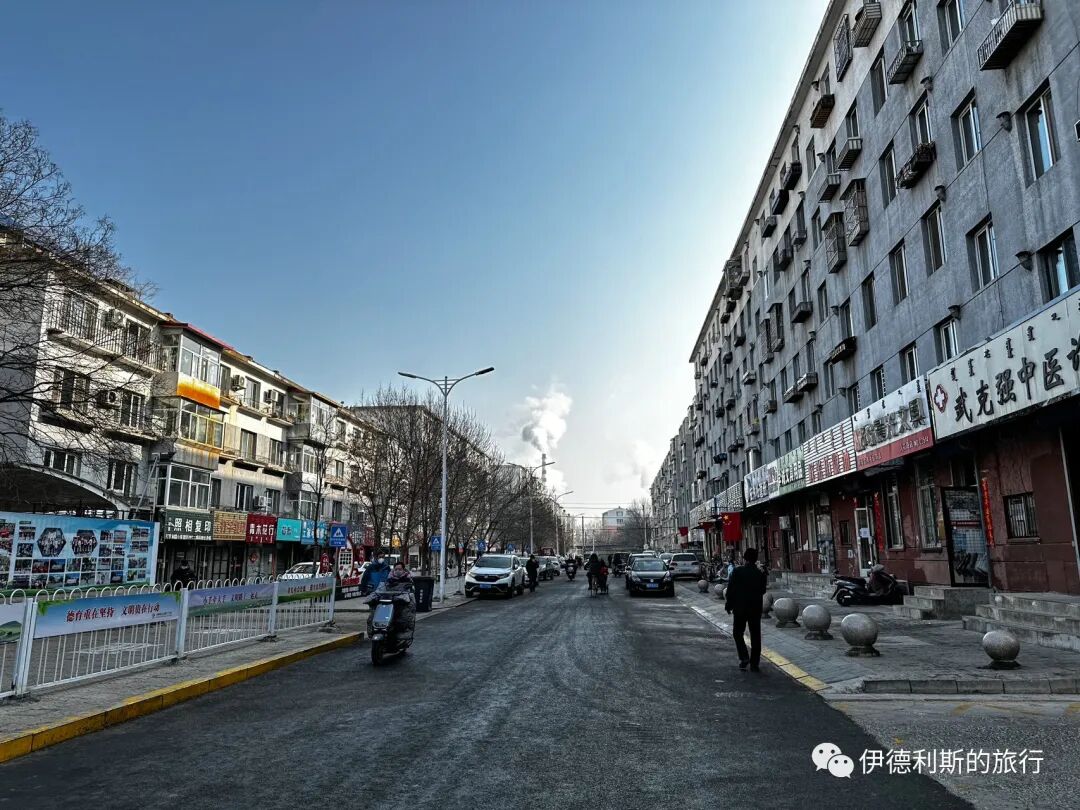
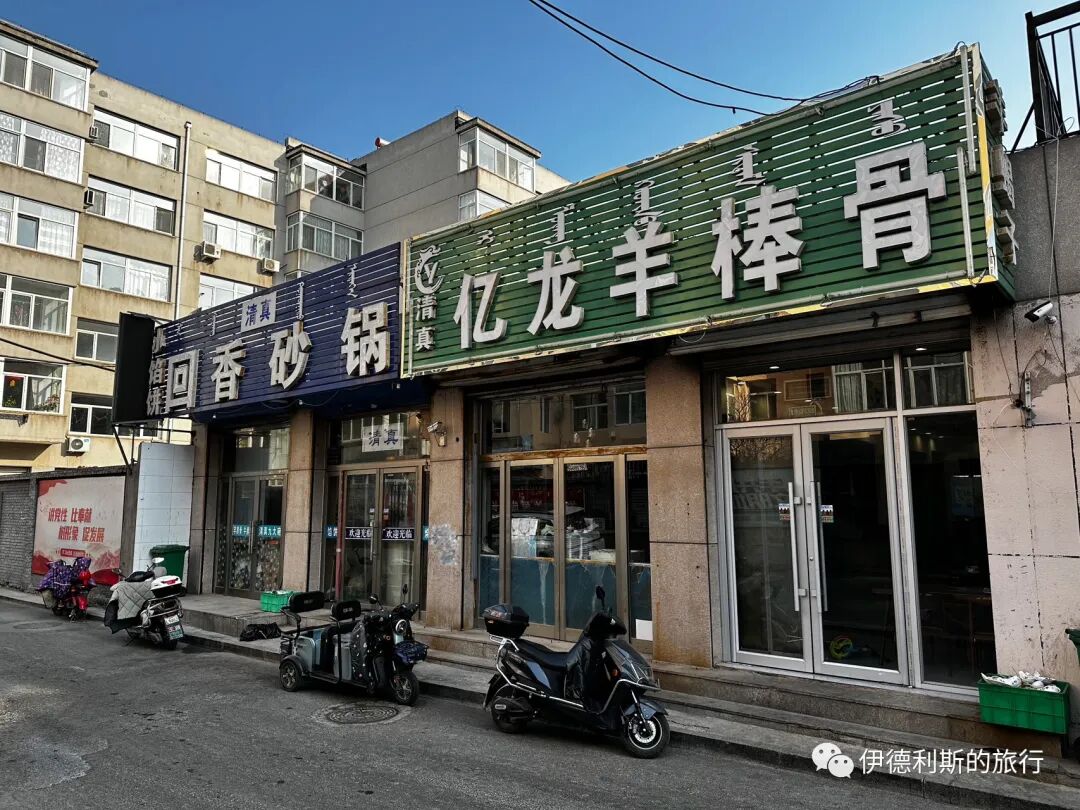
After breakfast, I went to visit the famous Chifeng North Mosque. In the early Qing Dynasty, Hui Muslims from Shandong and Hebei kept traveling through Gubeikou and Chengde to make a living in eastern Inner Mongolia. In the 1730s, ten Hui Muslim families with surnames like Zhang, Ma, and Bai moved from Shandong and Hebei to settle in Chifeng. They were known as the ten great Hui Muslim families, or the 'Zhanshanhu' settlers.
In 1739 (the fourth year of the Qianlong reign), elder Zhang Yueming of Chifeng led the effort to lease seven mu and six fen of land from Mongol princes. They built five mud rooms and three main halls, which became the earliest Chifeng Mosque.
In 1742 (the seventh year of the Qianlong reign), elder Ma Fen, who once ran the Desheng Security Bureau in Shenyang, initiated the renovation of the mosque. He paid for the foundation, and the imam and several elders traveled to various places to collect donations (nietie). Later, elder Ma Fen went to Shenyang to hire craftsmen. Construction took four years and was completed in 1747 (the twelfth year of the Qianlong reign). All the wood used was red pine from the southern mountains of Chifeng. Since then, the imam of the North Mosque has always been a scripture reader from the Ma family line.
The North Mosque underwent a major renovation in 2011. Now, another round of repairs is starting, so the main hall is locked. For now, namaz is held in the south building. I was very sorry that I couldn't get a close look at the beautiful mihrab inside the main hall this time.
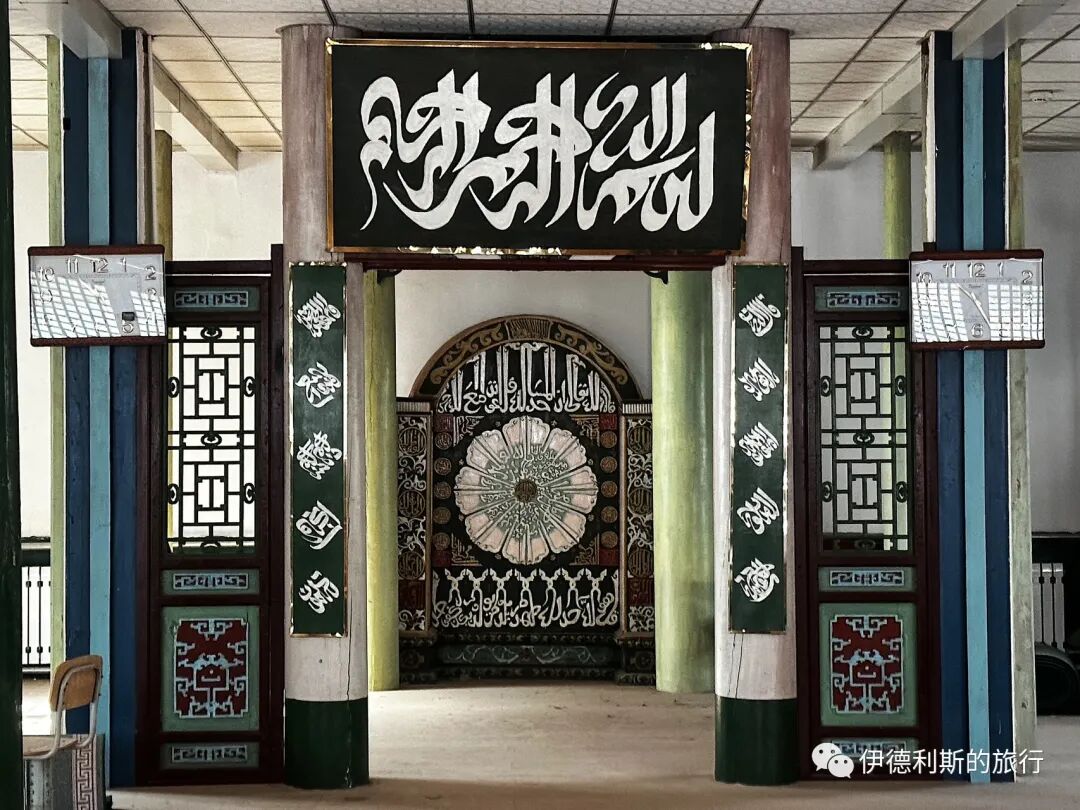
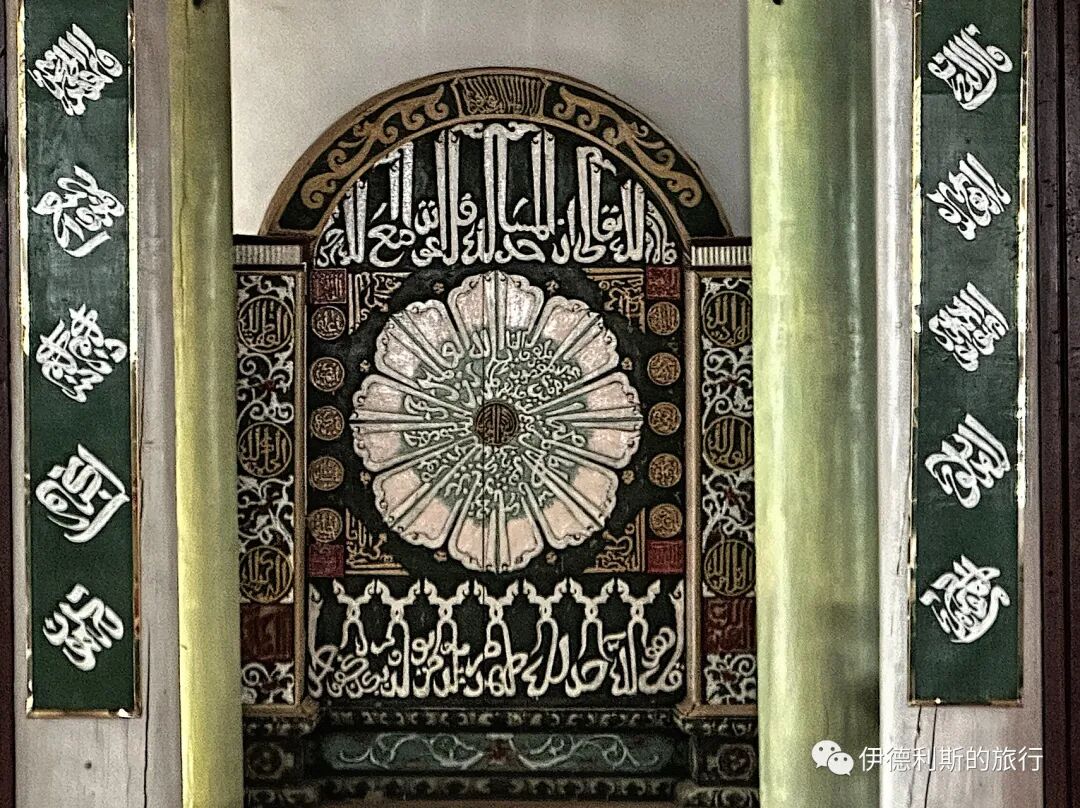
The main hall of the Chifeng North Mosque consists of a porch, the main hall, a rear kiln-style hall, and a moon-watching tower (wangyuelou) on top of the kiln hall. The tower has a double-eaved hexagonal roof with a gilded bronze treasure vase on top, and the wooden carvings feature two dragons playing with a pearl. The porch sits on a Sumeru pedestal, and the wooden carvings between the eaves pillars feature cloud and flower patterns, which are very characteristic of the Northeast.
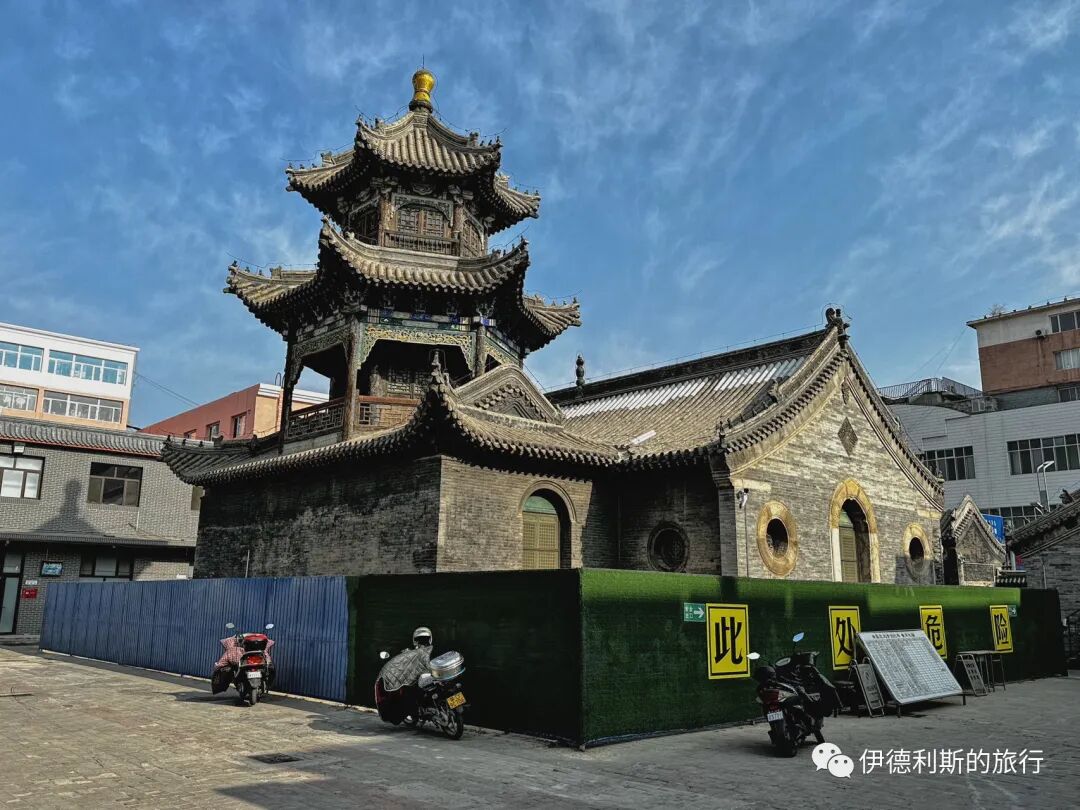
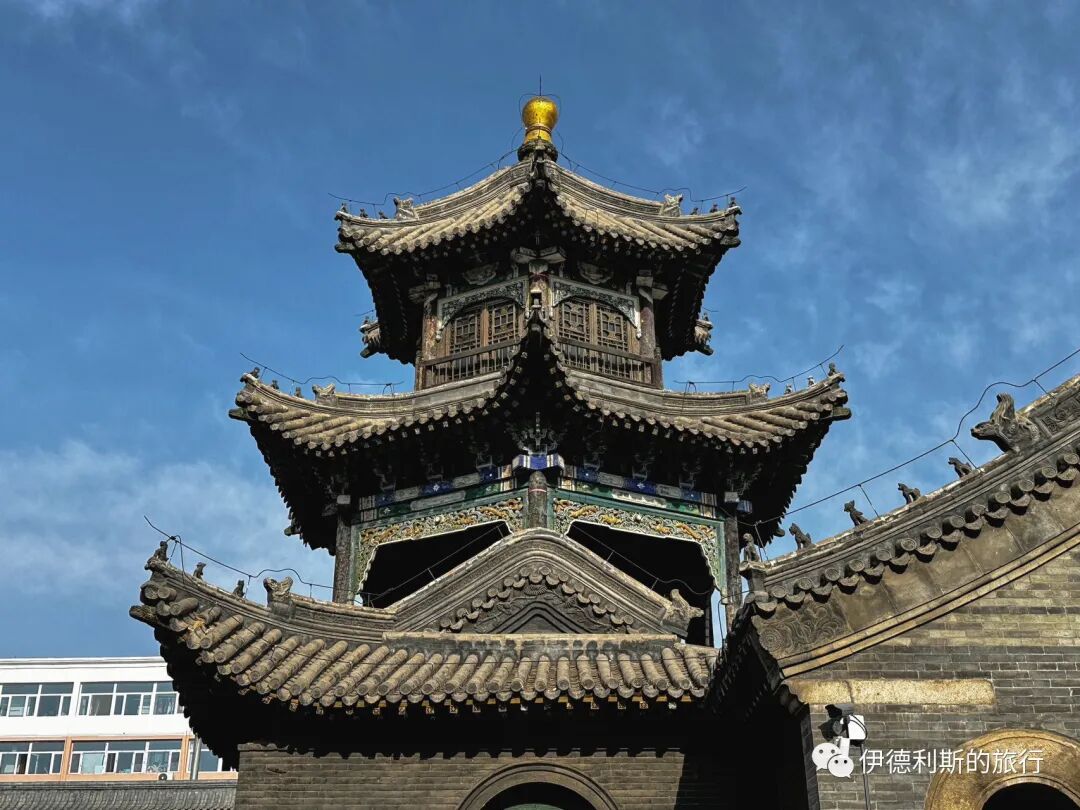
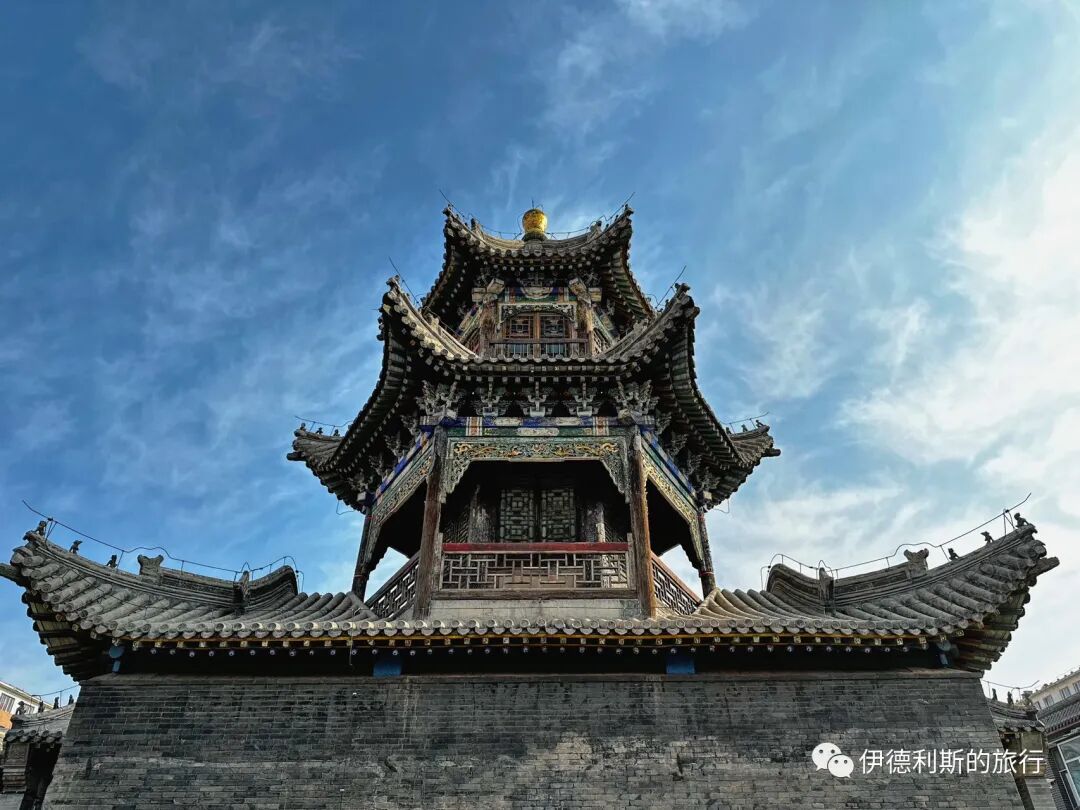
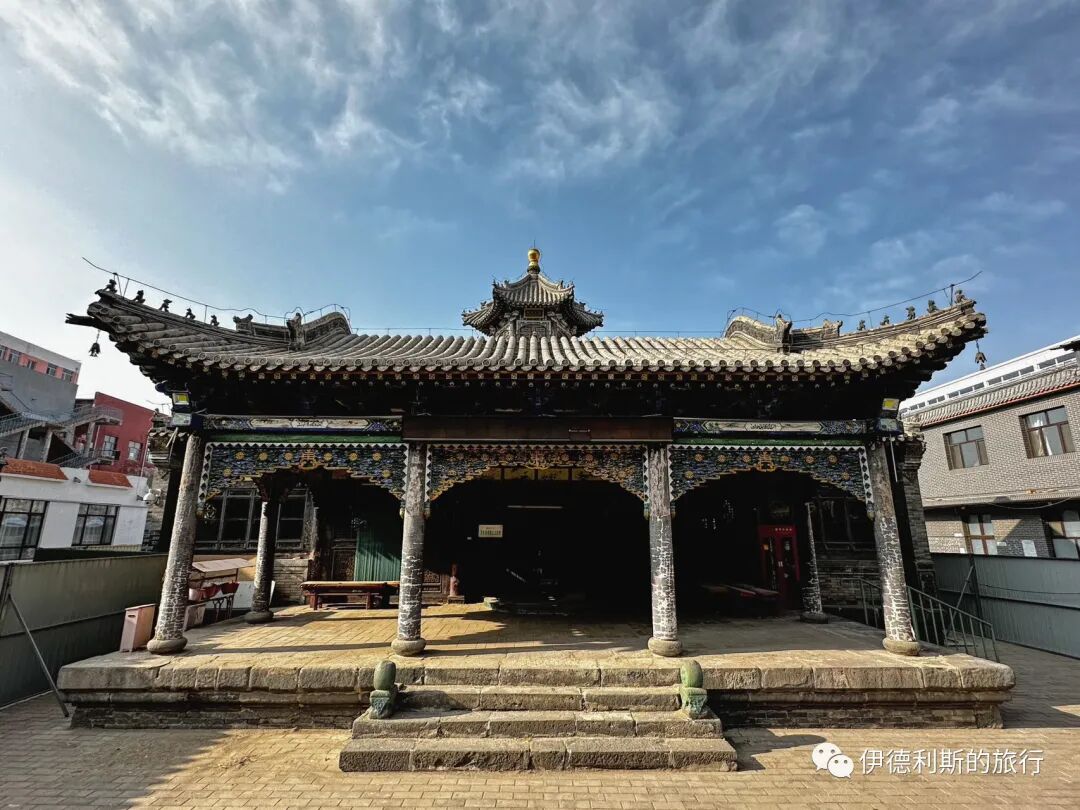
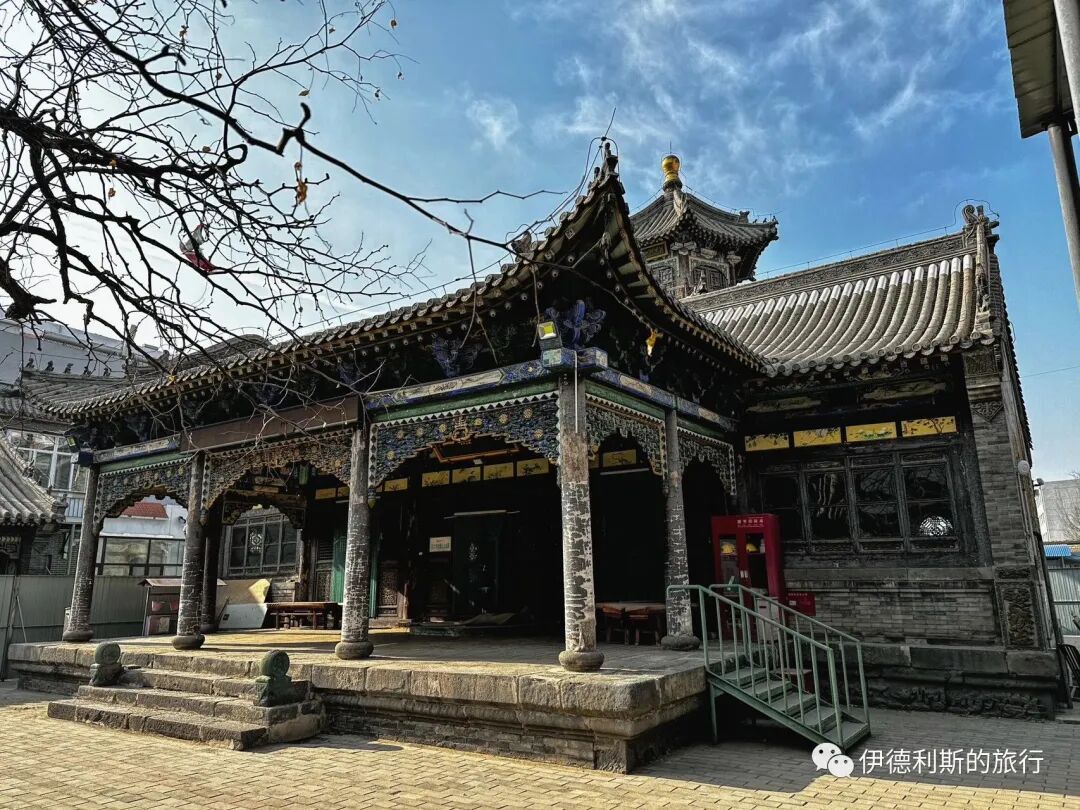
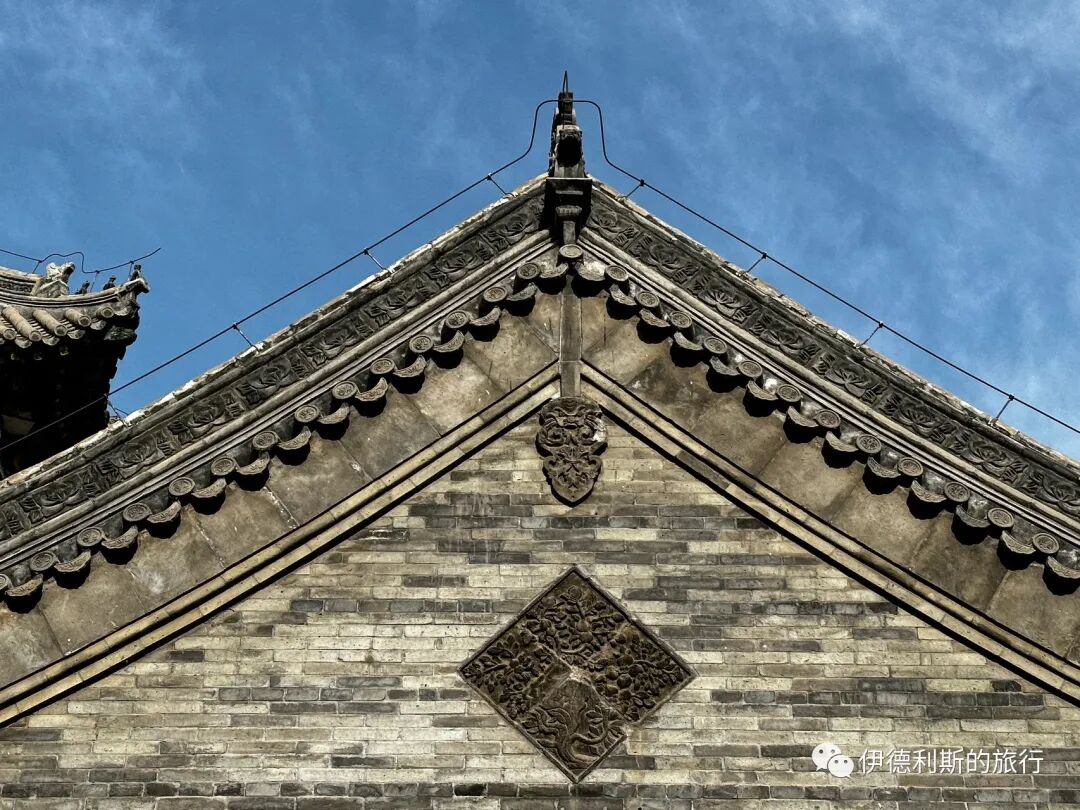
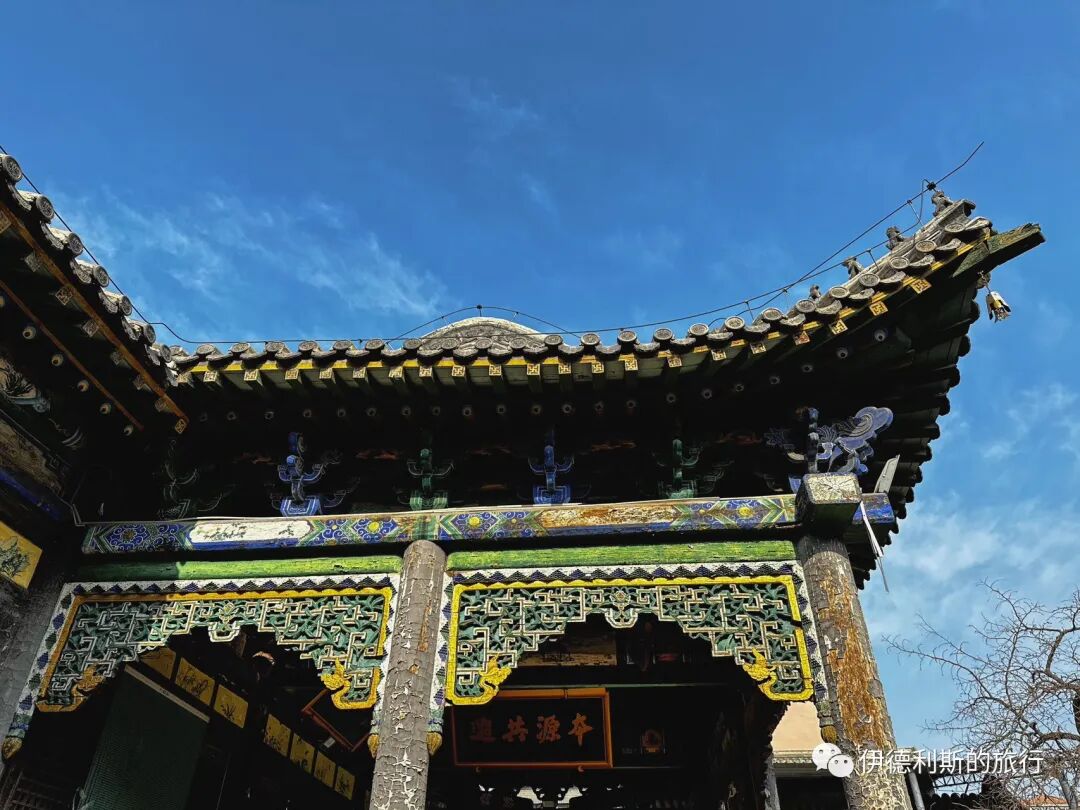
The stone, wood, and brick carvings at the North Mosque are all very exquisite:
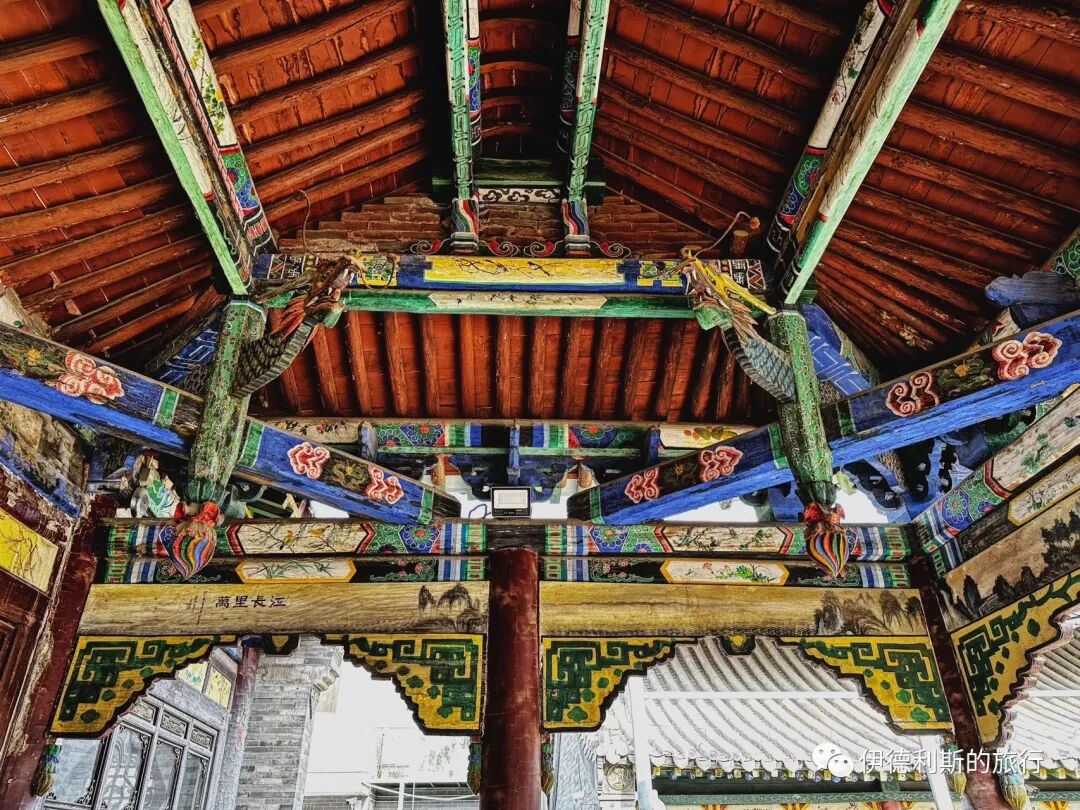
The beams of the porch are painted with Suzhou-style art, and the wooden dragon heads are very rare in China.
The stone carvings on the gable walls of the main hall feature bats representing 'good fortune' and intertwined passionflower vines.
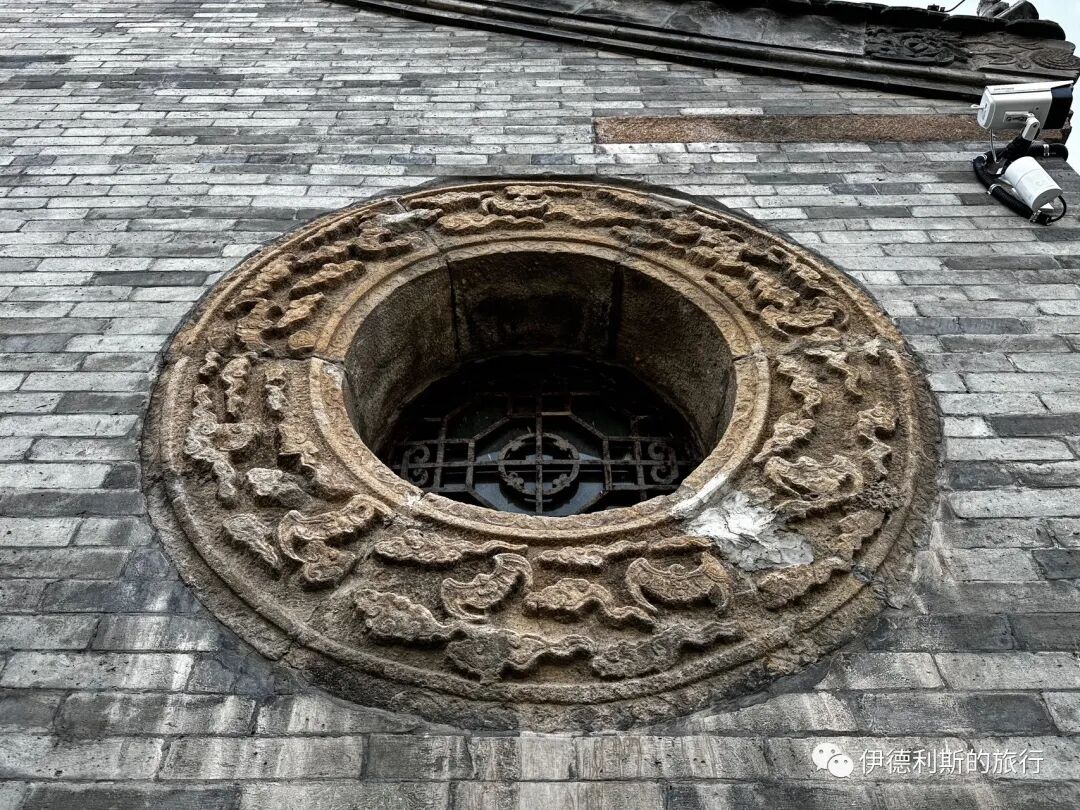
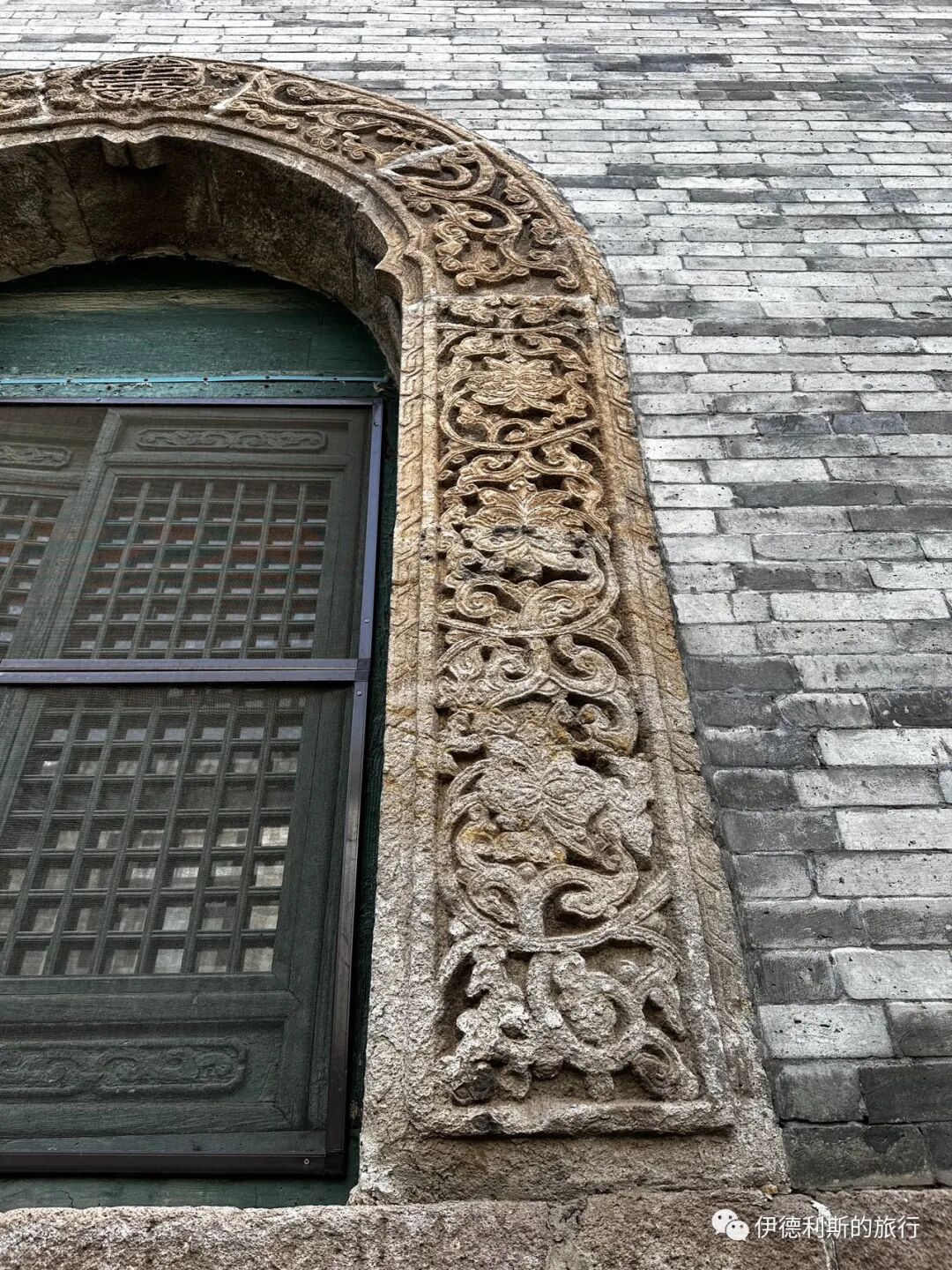
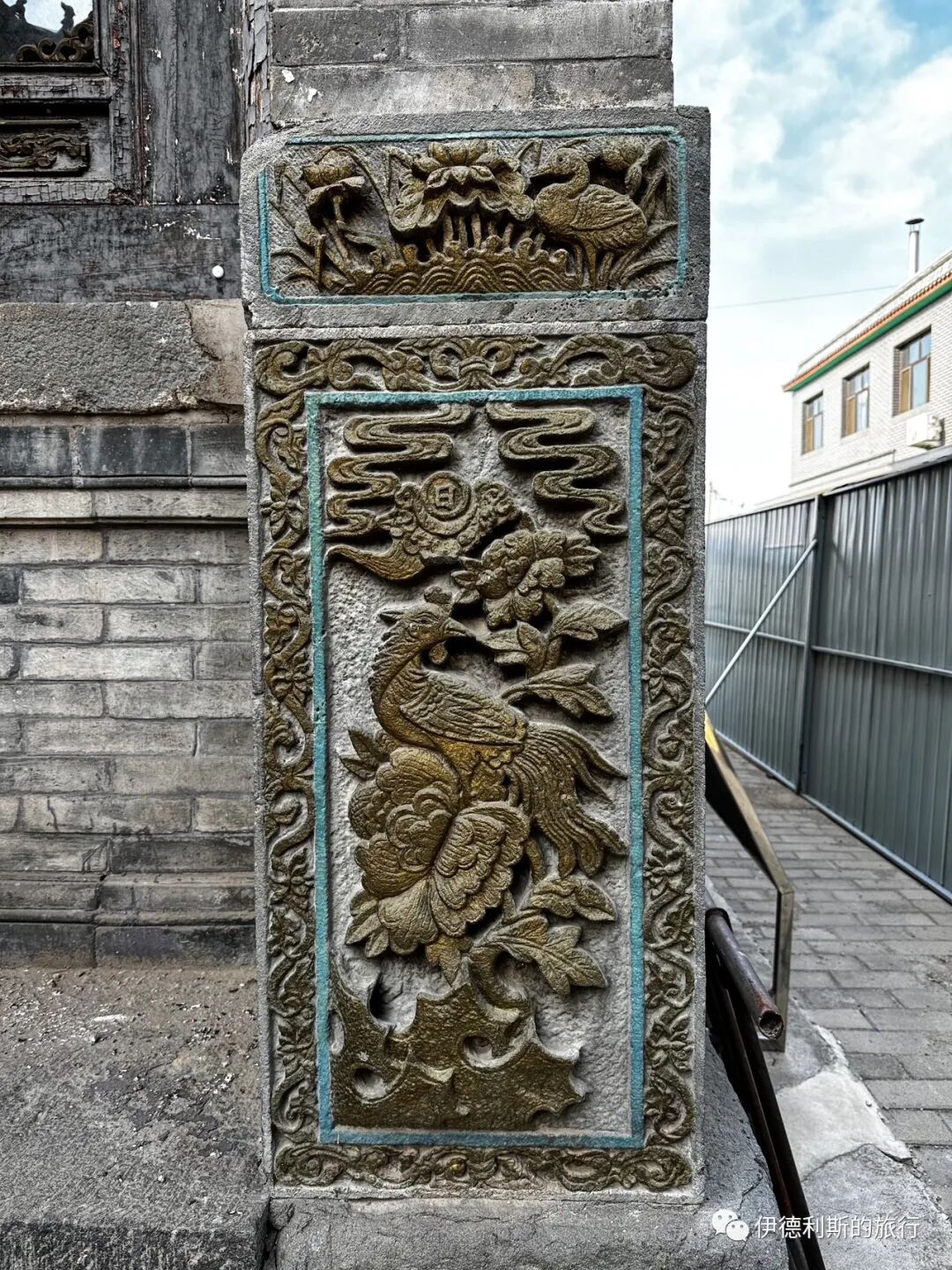
The stone base of the corner pillar of the main hall features a phoenix, peony, sun, and moon design.
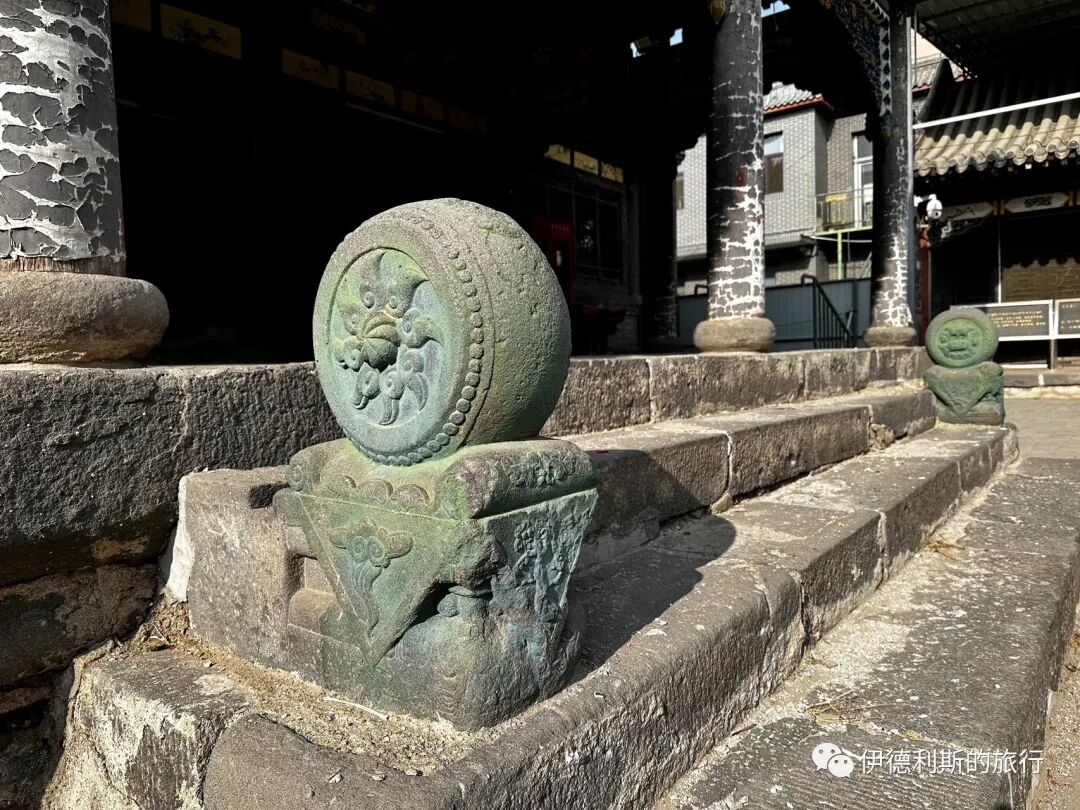
The drum-shaped stone base in front of the porch.
The brick carvings on the roof corners feature calligraphy. This style of calligraphy is related to the spread of the Shandong school of scripture hall education in the Northeast.
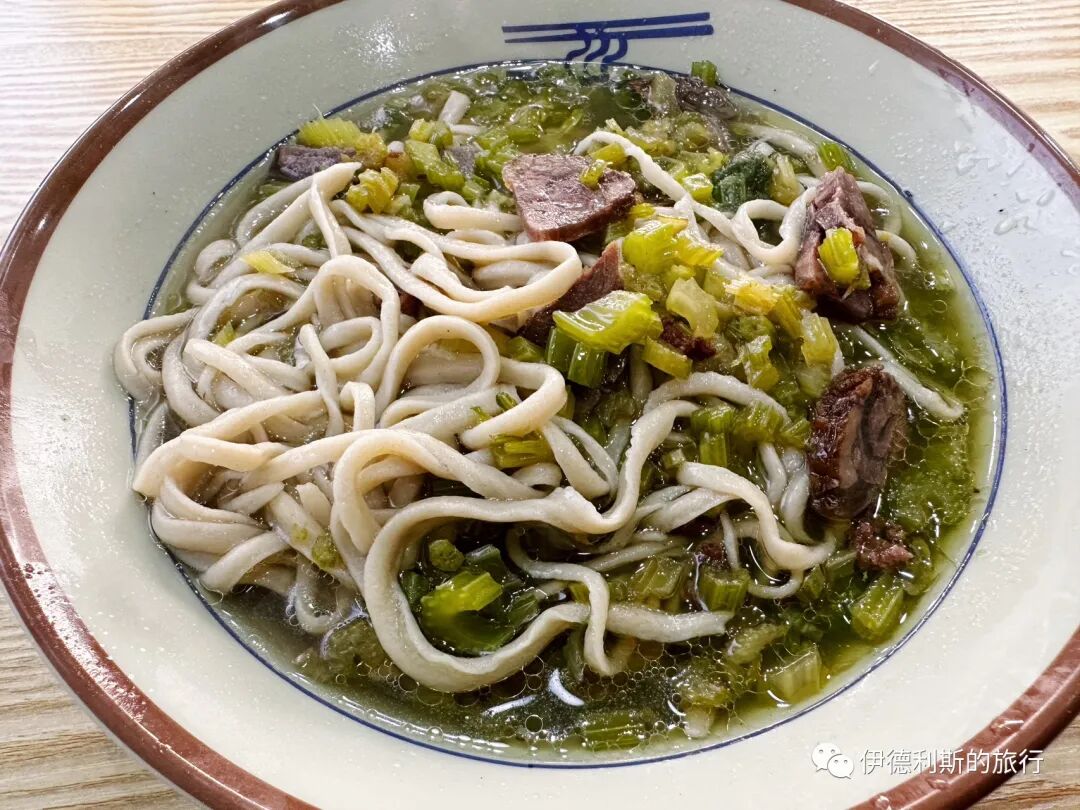
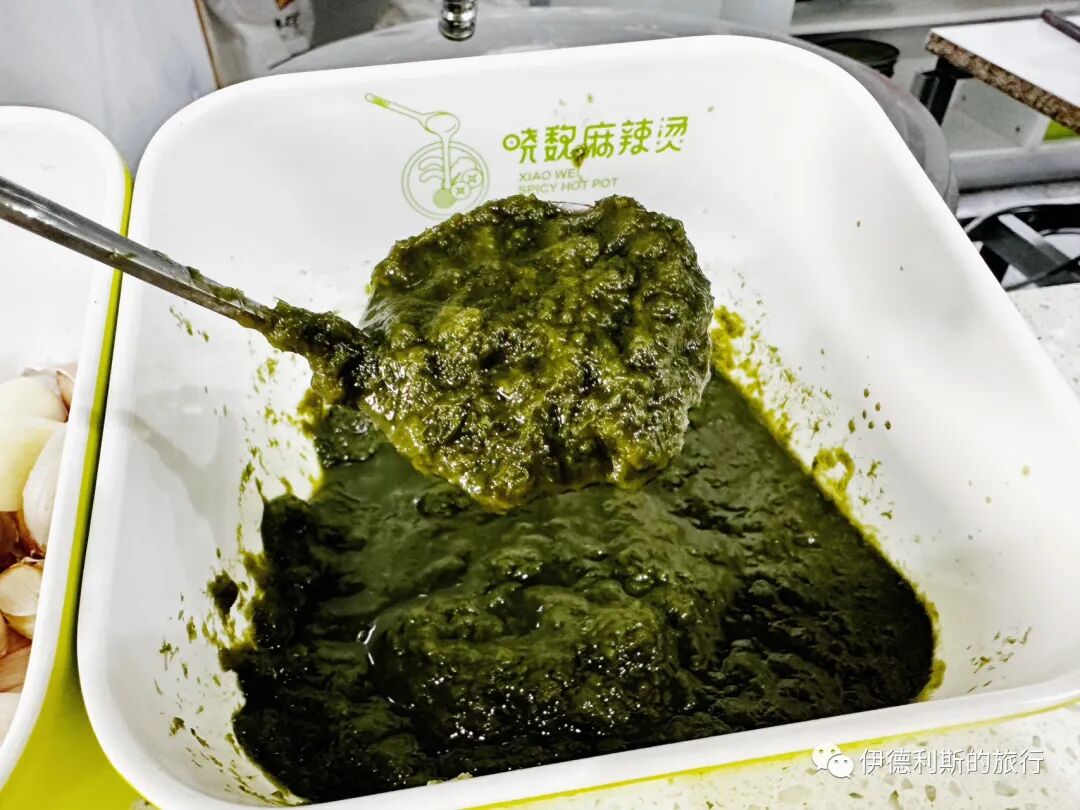
At noon, I ate buckwheat noodles (bo mian), a specialty of Aohan Banner, in front of the Chifeng South Mosque. These noodles are made by kneading buckwheat dough until it is quite firm, then using a special knife with handles on both sides to slice the dough directly on a board. The boiled noodles can be topped with various sauces, usually including pickled cabbage, eggplant, or celery, and served with fresh leek flower sauce.
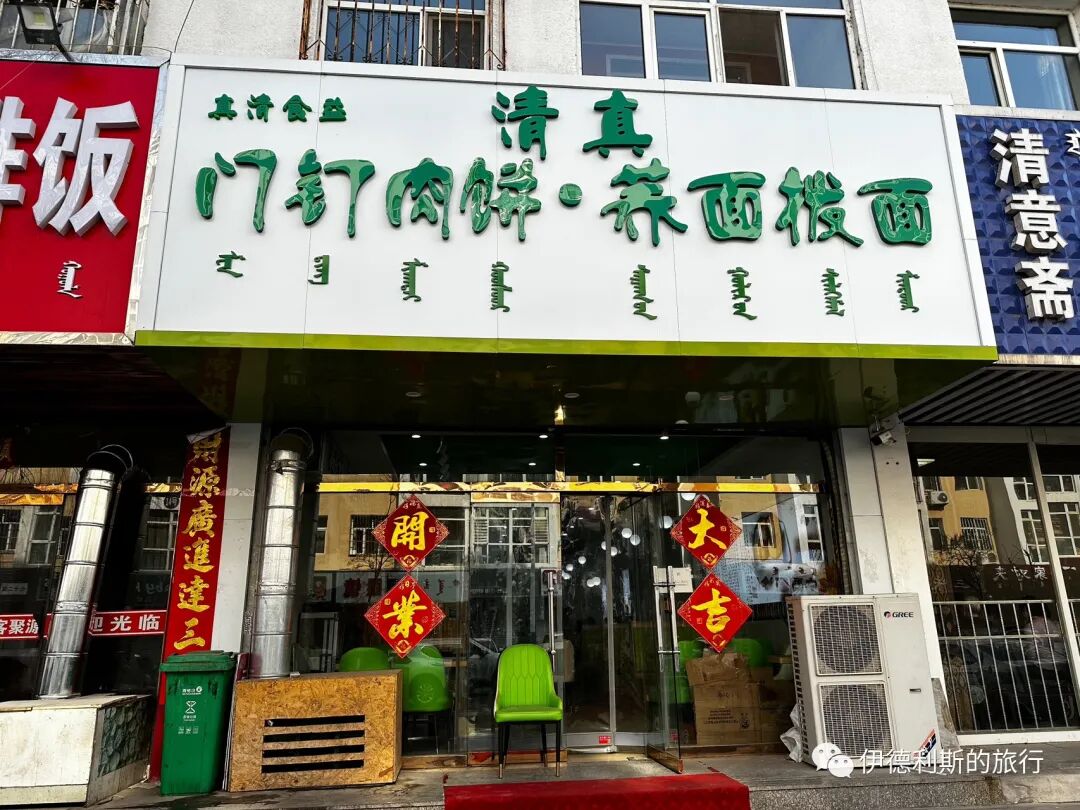
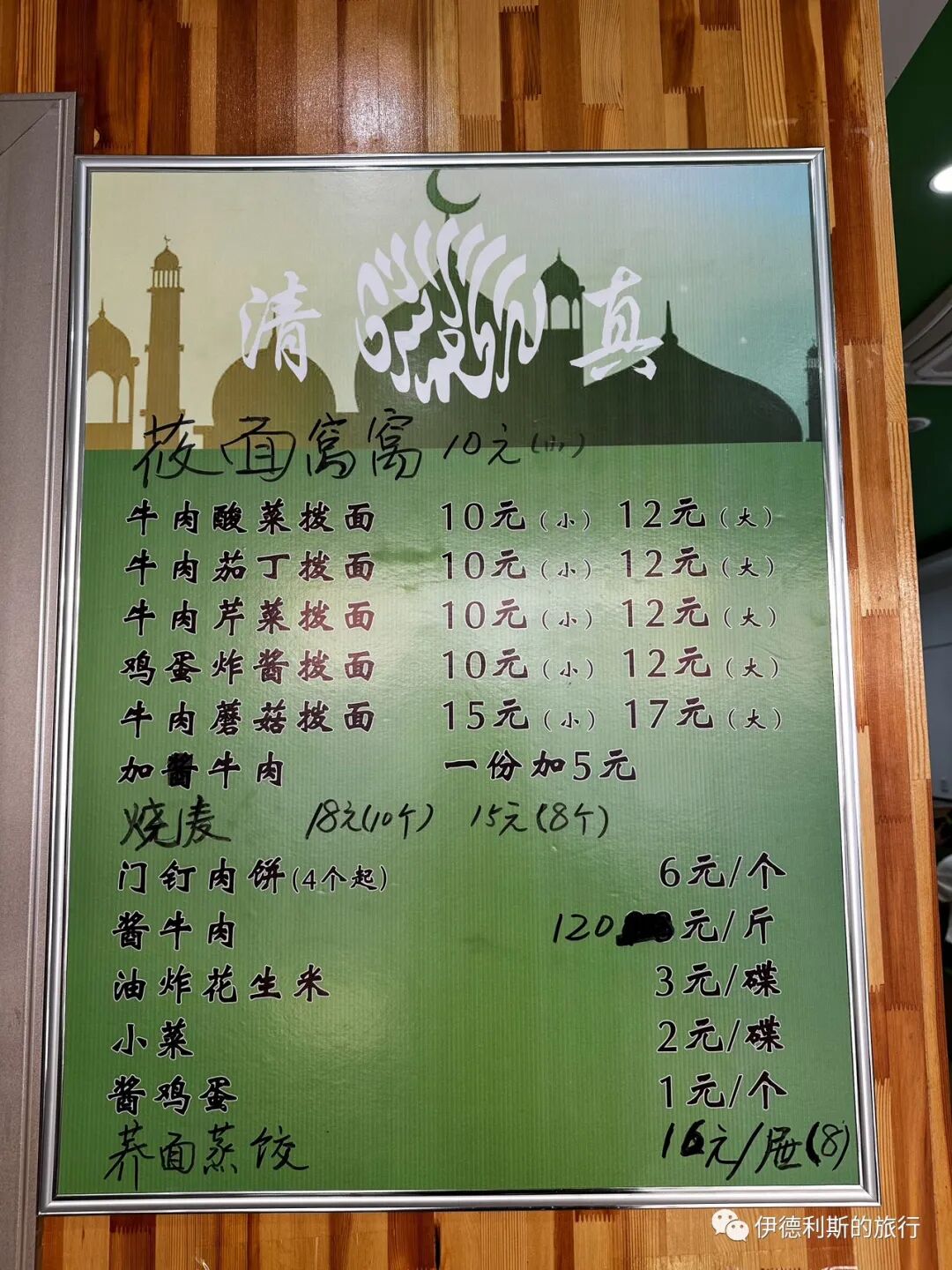
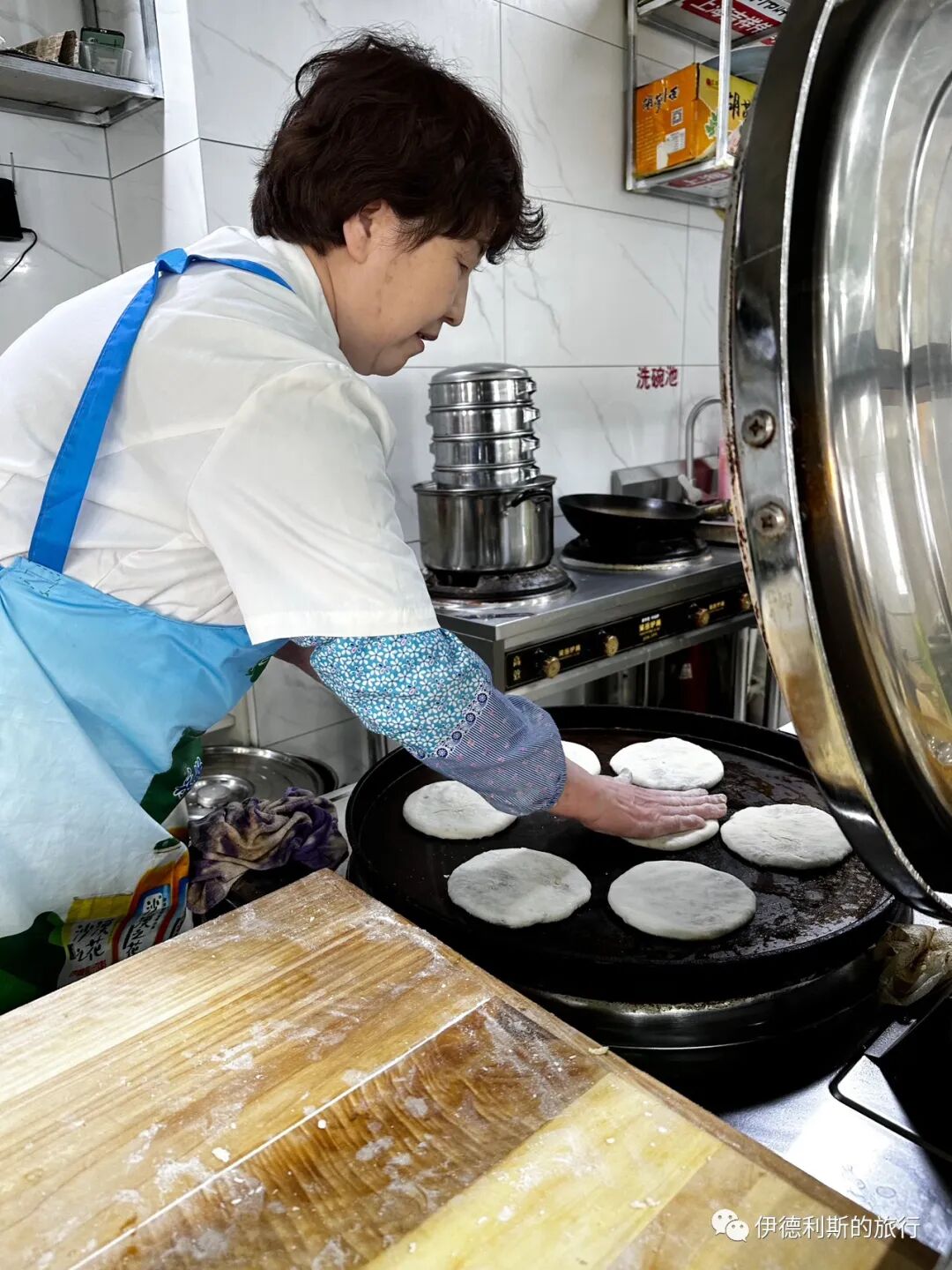
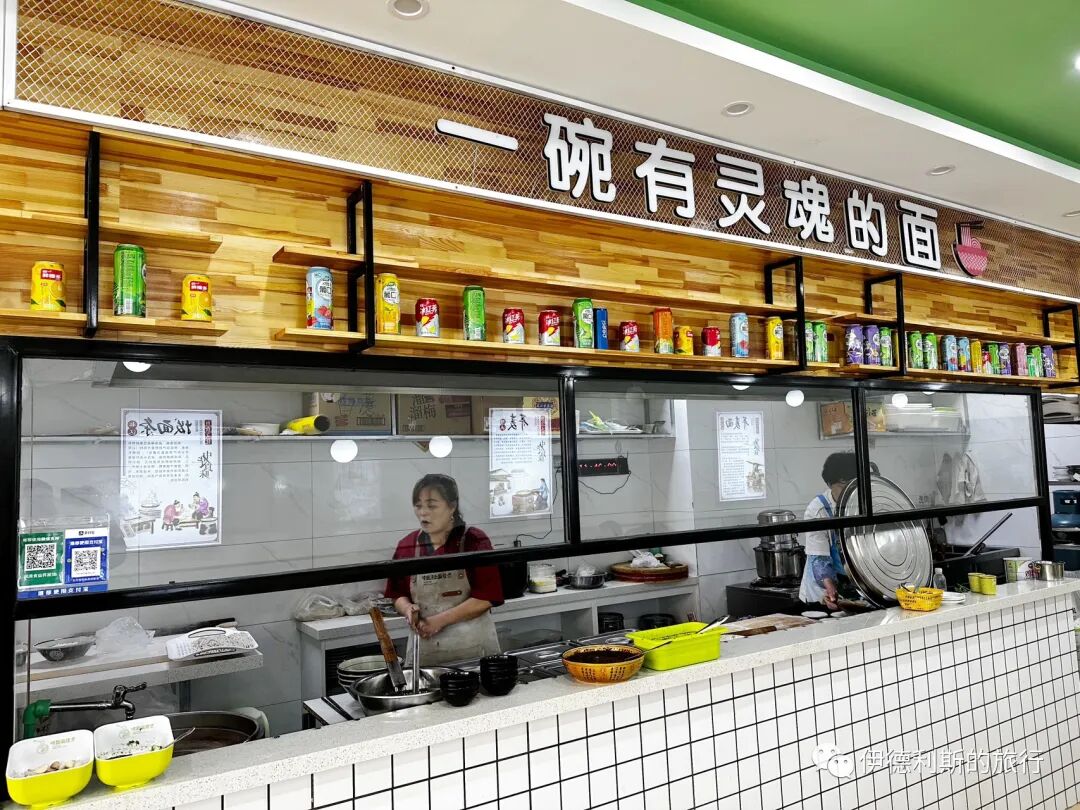
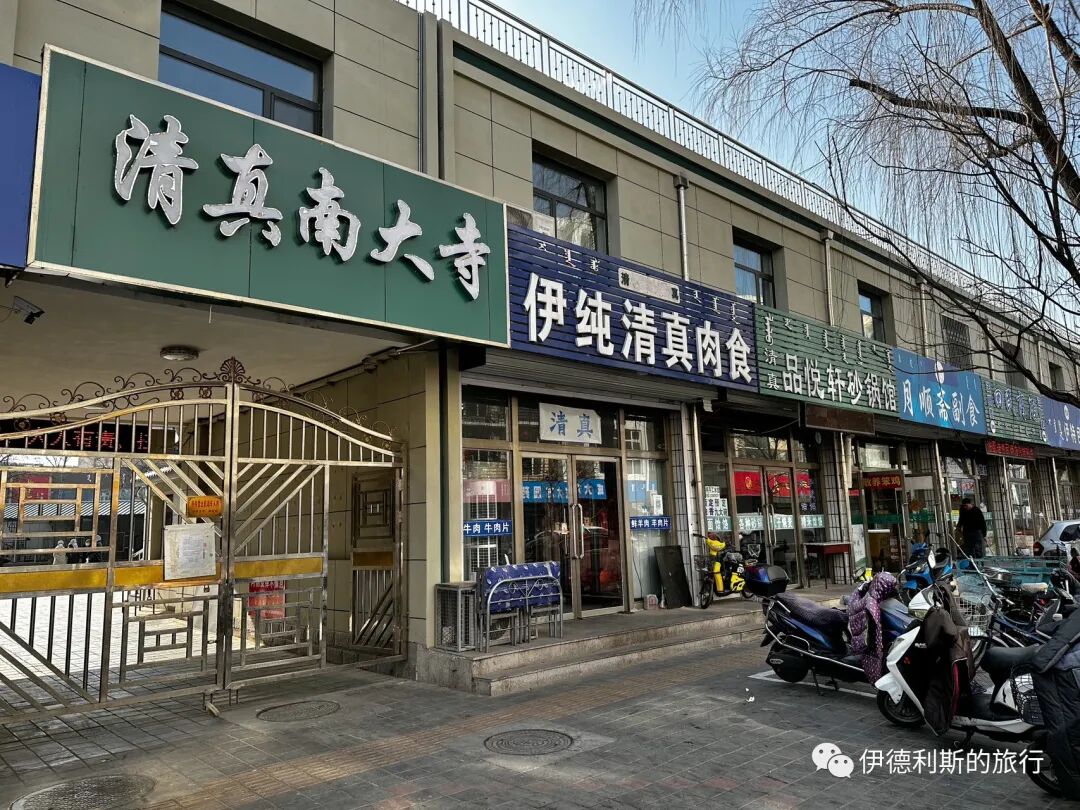
There are many halal restaurants next to the Chifeng South Mosque. By the beginning of the 19th century, the Hui Muslim population in Chifeng had grown to over 300 households. In 1801 (the sixth year of the Jiaqing reign), Hui Muslims with the surname Zhang decided to set aside five mu of land from their cemetery to build the Chifeng South Mosque. Part of the construction funds were raised through donations (nietie) from various mosques and Hui Muslim communities, and the Zhang family covered the rest. Construction of the South Mosque began in 1802 (the seventh year of the Jiaqing reign) and was completed the following year. After 1958, the South Mosque (Nandasi) was occupied and later demolished to be rebuilt as Changqing Park. After the 1980s, Hui Muslims in Chifeng proposed restoring the South Mosque. After years of effort in the 1990s, the current South Mosque was finally completed in 1997.
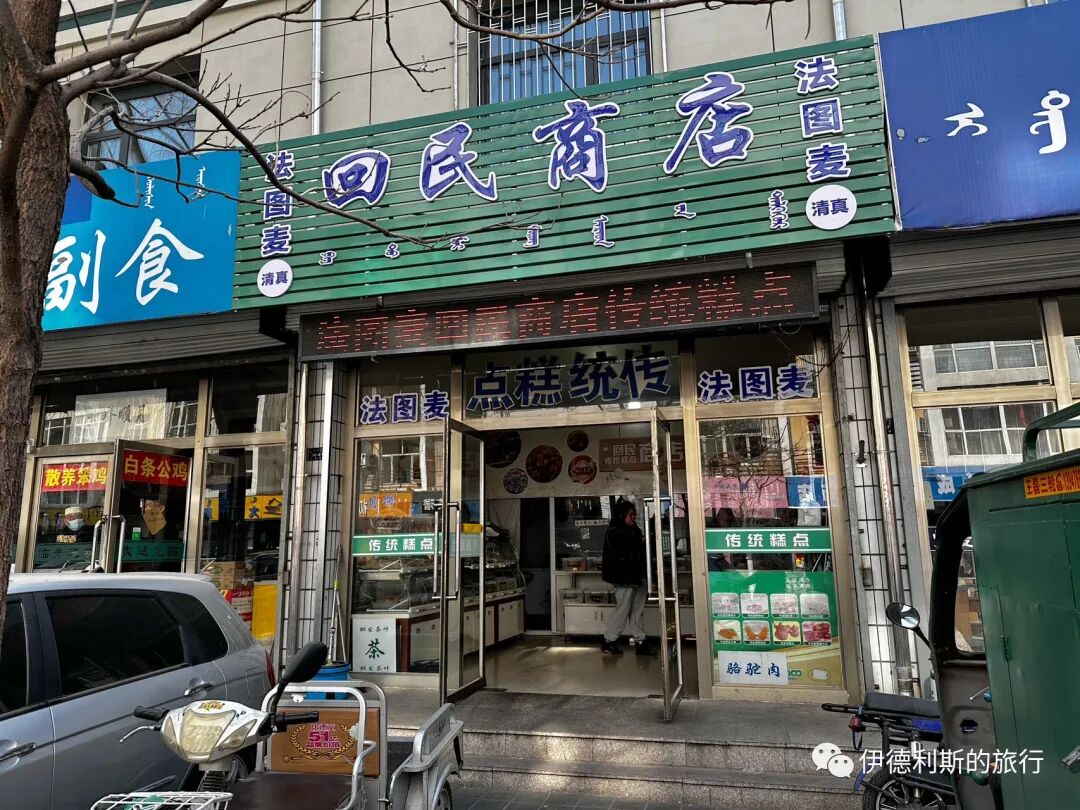
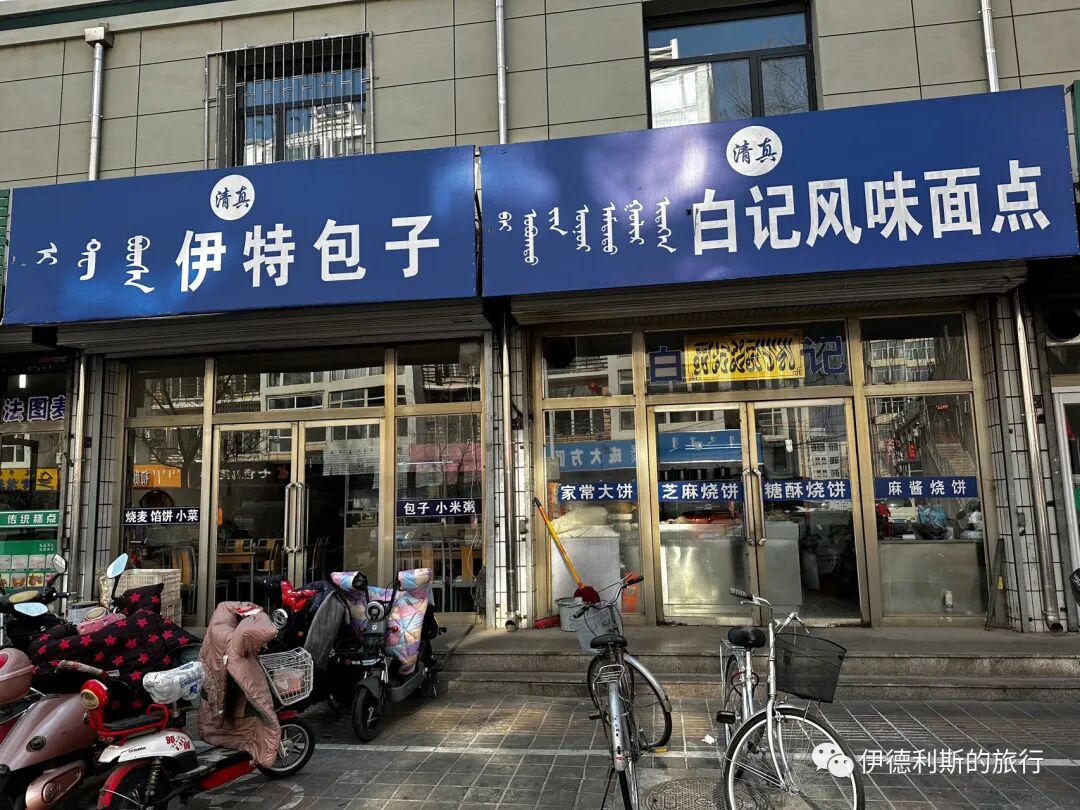
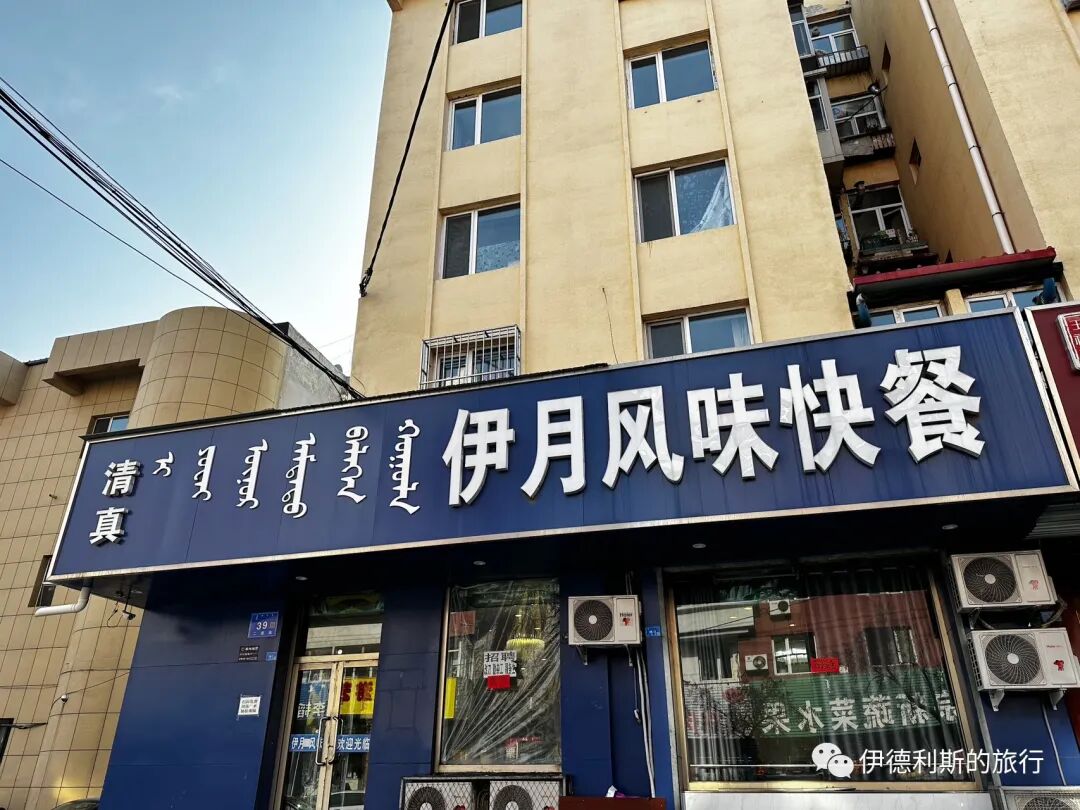
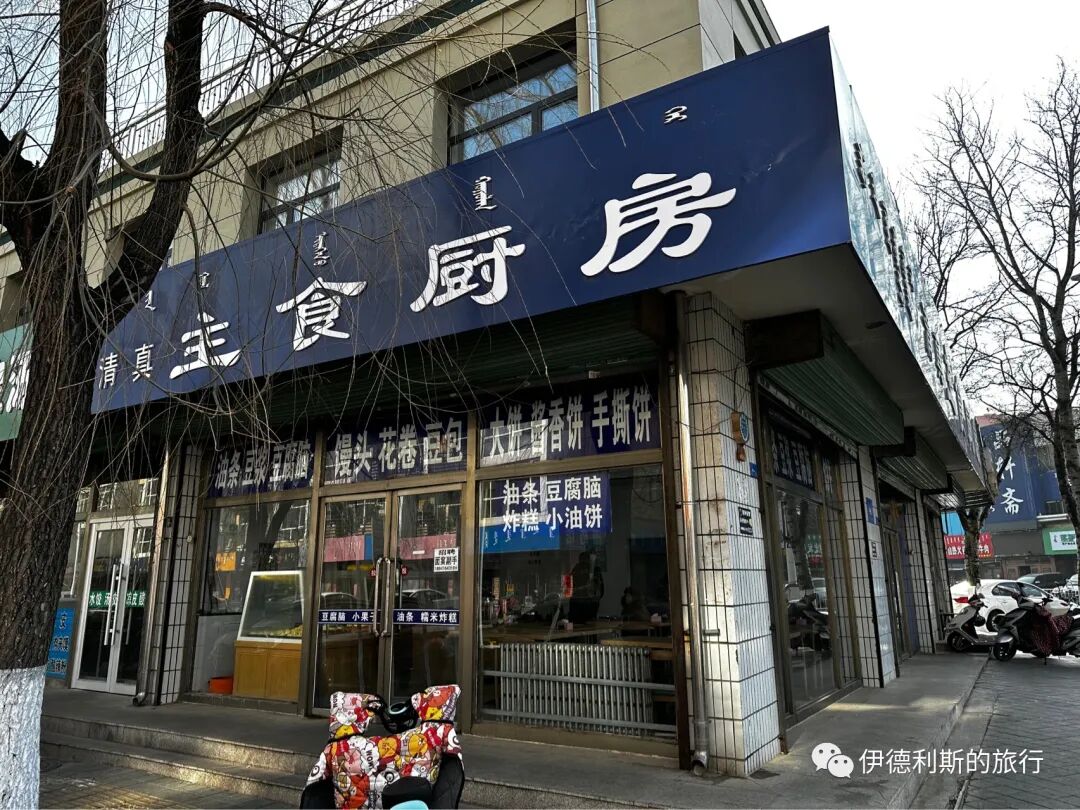
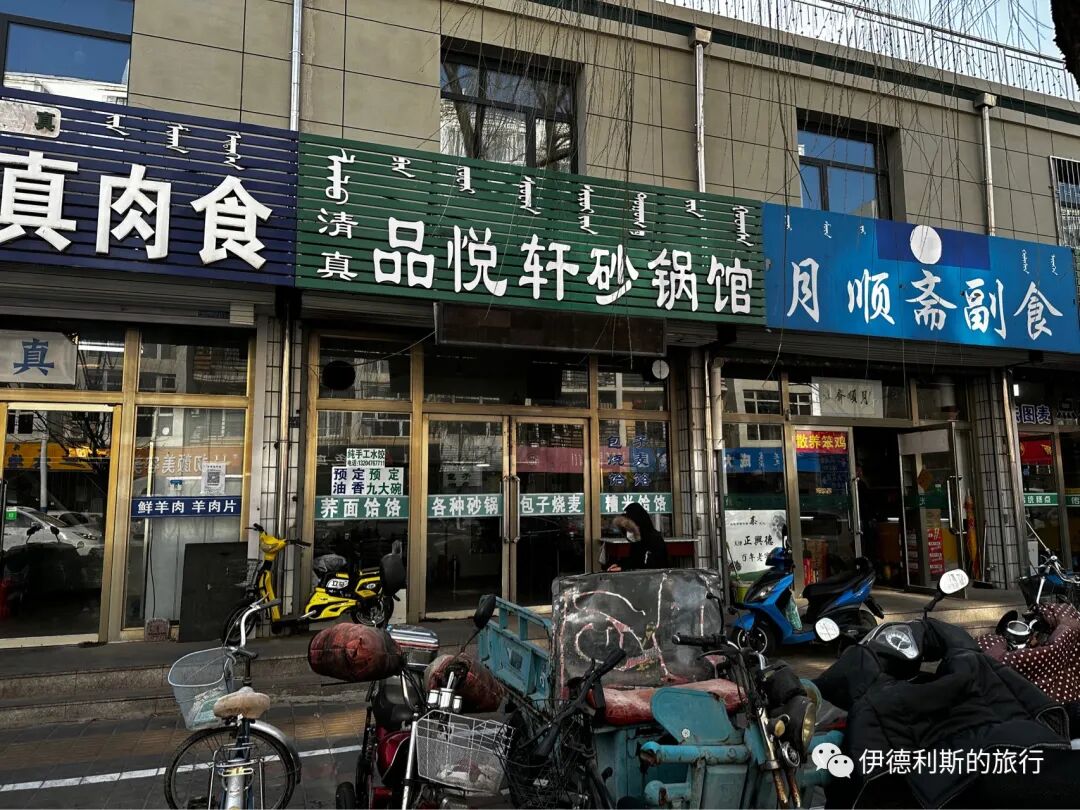
I bought a few prayer cards (qihuci) at this shop next to the South Mosque.
My impression of this trip to Chifeng is that the streets are full of roasted chicken shops. There are so many kinds of roasted chicken, smoked chicken, and braised chicken. Do people in Chifeng really love eating chicken?
I also bought roasted chicken and braised chicken at two shops to try. The taste was okay, just a bit salty. The first roasted chicken shop was opened by a Hui Muslim named Liu from Jinchanggouliang Town. This is a small town rich in gold and silver under Aohan Banner in Chifeng. After the Rehe administrative system was established during the Yongzheng reign, many people came here to pan for gold. In 1893, the Qing Dynasty officially set up a general bureau to mine gold, with more than 4,000 people at its peak.
I didn't expect there to be a small halal food court next to Changqing Park in Chifeng. It has all the classic snacks like octopus balls (zhangyu xiaowanzi), grilled cold noodles (kao lengmian), iron-plate squid (tieban youyu), grilled gluten (kao mianjin), grilled scallops (kao shanbei), and stinky tofu (chou doufu). There is even a conveyor belt hot pot (huizhuan xiaohuoguo) in the back, and many children come here to eat. I also pretended to be a kid and had some grilled cold noodles and iron-plate squid. Actually, when I was little, I also loved eating iron-plate squid from the Longfu Mosque snack shop, but we really didn't have the others back then.
Summary: Chifeng — Beidasi Mosque and Muslim Food is presented here as a firsthand travel account in clear English, beginning with this scene: I headed to Chifeng, Inner Mongolia, on February 11. It takes two and a half hours by high-speed train from Beijing Chaoyang Station. The account keeps its focus on Chifeng Mosque, Inner Mongolia, Halal Food while preserving the names, places, food, and historical details from the Chinese source.
I headed to Chifeng, Inner Mongolia, on February 11. It takes two and a half hours by high-speed train from Beijing Chaoyang Station.
After arriving in Chifeng, I first went to the Reidian residential area on Gangtie Street to eat Fengsi lamb soup (yangtang) and hanging-oven flatbread (shaobing). Most people eating at these small shops in the neighborhood are locals. I haven't seen flatbread made in a hanging oven for many years. It was truly delicious.
From Chengde and Pingquan to Chifeng, Hui Muslims who traveled through Gubeikou after the Qing Dynasty began popularized the clear-broth version of lamb soup. This kind of lamb soup doesn't need much seasoning; it tastes great just from the natural flavor of the meat. At this shop, you can choose lamb offal, tripe strips, or head meat. I had the head meat, and they gave me a generous portion. Right after I ordered, the shop received a large order for one hundred flatbreads. They used up all their dough, but I felt very grateful to have gotten mine.
After breakfast, I went to visit the famous Chifeng North Mosque. In the early Qing Dynasty, Hui Muslims from Shandong and Hebei kept traveling through Gubeikou and Chengde to make a living in eastern Inner Mongolia. In the 1730s, ten Hui Muslim families with surnames like Zhang, Ma, and Bai moved from Shandong and Hebei to settle in Chifeng. They were known as the ten great Hui Muslim families, or the 'Zhanshanhu' settlers.
In 1739 (the fourth year of the Qianlong reign), elder Zhang Yueming of Chifeng led the effort to lease seven mu and six fen of land from Mongol princes. They built five mud rooms and three main halls, which became the earliest Chifeng Mosque.
In 1742 (the seventh year of the Qianlong reign), elder Ma Fen, who once ran the Desheng Security Bureau in Shenyang, initiated the renovation of the mosque. He paid for the foundation, and the imam and several elders traveled to various places to collect donations (nietie). Later, elder Ma Fen went to Shenyang to hire craftsmen. Construction took four years and was completed in 1747 (the twelfth year of the Qianlong reign). All the wood used was red pine from the southern mountains of Chifeng. Since then, the imam of the North Mosque has always been a scripture reader from the Ma family line.
The North Mosque underwent a major renovation in 2011. Now, another round of repairs is starting, so the main hall is locked. For now, namaz is held in the south building. I was very sorry that I couldn't get a close look at the beautiful mihrab inside the main hall this time.
The main hall of the Chifeng North Mosque consists of a porch, the main hall, a rear kiln-style hall, and a moon-watching tower (wangyuelou) on top of the kiln hall. The tower has a double-eaved hexagonal roof with a gilded bronze treasure vase on top, and the wooden carvings feature two dragons playing with a pearl. The porch sits on a Sumeru pedestal, and the wooden carvings between the eaves pillars feature cloud and flower patterns, which are very characteristic of the Northeast.
The stone, wood, and brick carvings at the North Mosque are all very exquisite:
The beams of the porch are painted with Suzhou-style art, and the wooden dragon heads are very rare in China.
The stone carvings on the gable walls of the main hall feature bats representing 'good fortune' and intertwined passionflower vines.
The stone base of the corner pillar of the main hall features a phoenix, peony, sun, and moon design.
The drum-shaped stone base in front of the porch.
The brick carvings on the roof corners feature calligraphy. This style of calligraphy is related to the spread of the Shandong school of scripture hall education in the Northeast.
At noon, I ate buckwheat noodles (bo mian), a specialty of Aohan Banner, in front of the Chifeng South Mosque. These noodles are made by kneading buckwheat dough until it is quite firm, then using a special knife with handles on both sides to slice the dough directly on a board. The boiled noodles can be topped with various sauces, usually including pickled cabbage, eggplant, or celery, and served with fresh leek flower sauce.
There are many halal restaurants next to the Chifeng South Mosque. By the beginning of the 19th century, the Hui Muslim population in Chifeng had grown to over 300 households. In 1801 (the sixth year of the Jiaqing reign), Hui Muslims with the surname Zhang decided to set aside five mu of land from their cemetery to build the Chifeng South Mosque. Part of the construction funds were raised through donations (nietie) from various mosques and Hui Muslim communities, and the Zhang family covered the rest. Construction of the South Mosque began in 1802 (the seventh year of the Jiaqing reign) and was completed the following year. After 1958, the South Mosque (Nandasi) was occupied and later demolished to be rebuilt as Changqing Park. After the 1980s, Hui Muslims in Chifeng proposed restoring the South Mosque. After years of effort in the 1990s, the current South Mosque was finally completed in 1997.
I bought a few prayer cards (qihuci) at this shop next to the South Mosque.
My impression of this trip to Chifeng is that the streets are full of roasted chicken shops. There are so many kinds of roasted chicken, smoked chicken, and braised chicken. Do people in Chifeng really love eating chicken?
I also bought roasted chicken and braised chicken at two shops to try. The taste was okay, just a bit salty. The first roasted chicken shop was opened by a Hui Muslim named Liu from Jinchanggouliang Town. This is a small town rich in gold and silver under Aohan Banner in Chifeng. After the Rehe administrative system was established during the Yongzheng reign, many people came here to pan for gold. In 1893, the Qing Dynasty officially set up a general bureau to mine gold, with more than 4,000 people at its peak.
I didn't expect there to be a small halal food court next to Changqing Park in Chifeng. It has all the classic snacks like octopus balls (zhangyu xiaowanzi), grilled cold noodles (kao lengmian), iron-plate squid (tieban youyu), grilled gluten (kao mianjin), grilled scallops (kao shanbei), and stinky tofu (chou doufu). There is even a conveyor belt hot pot (huizhuan xiaohuoguo) in the back, and many children come here to eat. I also pretended to be a kid and had some grilled cold noodles and iron-plate squid. Actually, when I was little, I also loved eating iron-plate squid from the Longfu Mosque snack shop, but we really didn't have the others back then.
Halal Travel Guide: Chifeng — Beidasi Mosque and Muslim Food
Articles • ali2007fr posted the article • 0 comments • 213 views • 2026-05-18 21:14
Reposted from the web
Summary: Chifeng — Beidasi Mosque and Muslim Food is presented here as a firsthand travel account in clear English, beginning with this scene: I headed to Chifeng, Inner Mongolia, on February 11. It takes two and a half hours by high-speed train from Beijing Chaoyang Station. The account keeps its focus on Chifeng Mosque, Inner Mongolia, Halal Food while preserving the names, places, food, and historical details from the Chinese source.
I headed to Chifeng, Inner Mongolia, on February 11. It takes two and a half hours by high-speed train from Beijing Chaoyang Station.
After arriving in Chifeng, I first went to the Reidian residential area on Gangtie Street to eat Fengsi lamb soup (yangtang) and hanging-oven flatbread (shaobing). Most people eating at these small shops in the neighborhood are locals. I haven't seen flatbread made in a hanging oven for many years. It was truly delicious.
From Chengde and Pingquan to Chifeng, Hui Muslims who traveled through Gubeikou after the Qing Dynasty began popularized the clear-broth version of lamb soup. This kind of lamb soup doesn't need much seasoning; it tastes great just from the natural flavor of the meat. At this shop, you can choose lamb offal, tripe strips, or head meat. I had the head meat, and they gave me a generous portion. Right after I ordered, the shop received a large order for one hundred flatbreads. They used up all their dough, but I felt very grateful to have gotten mine.
After breakfast, I went to visit the famous Chifeng North Mosque. In the early Qing Dynasty, Hui Muslims from Shandong and Hebei kept traveling through Gubeikou and Chengde to make a living in eastern Inner Mongolia. In the 1730s, ten Hui Muslim families with surnames like Zhang, Ma, and Bai moved from Shandong and Hebei to settle in Chifeng. They were known as the ten great Hui Muslim families, or the 'Zhanshanhu' settlers.
In 1739 (the fourth year of the Qianlong reign), elder Zhang Yueming of Chifeng led the effort to lease seven mu and six fen of land from Mongol princes. They built five mud rooms and three main halls, which became the earliest Chifeng Mosque.
In 1742 (the seventh year of the Qianlong reign), elder Ma Fen, who once ran the Desheng Security Bureau in Shenyang, initiated the renovation of the mosque. He paid for the foundation, and the imam and several elders traveled to various places to collect donations (nietie). Later, elder Ma Fen went to Shenyang to hire craftsmen. Construction took four years and was completed in 1747 (the twelfth year of the Qianlong reign). All the wood used was red pine from the southern mountains of Chifeng. Since then, the imam of the North Mosque has always been a scripture reader from the Ma family line.
The North Mosque underwent a major renovation in 2011. Now, another round of repairs is starting, so the main hall is locked. For now, namaz is held in the south building. I was very sorry that I couldn't get a close look at the beautiful mihrab inside the main hall this time.
The main hall of the Chifeng North Mosque consists of a porch, the main hall, a rear kiln-style hall, and a moon-watching tower (wangyuelou) on top of the kiln hall. The tower has a double-eaved hexagonal roof with a gilded bronze treasure vase on top, and the wooden carvings feature two dragons playing with a pearl. The porch sits on a Sumeru pedestal, and the wooden carvings between the eaves pillars feature cloud and flower patterns, which are very characteristic of the Northeast.
The stone, wood, and brick carvings at the North Mosque are all very exquisite:
The beams of the porch are painted with Suzhou-style art, and the wooden dragon heads are very rare in China.
The stone carvings on the gable walls of the main hall feature bats representing 'good fortune' and intertwined passionflower vines.
The stone base of the corner pillar of the main hall features a phoenix, peony, sun, and moon design.
The drum-shaped stone base in front of the porch.
The brick carvings on the roof corners feature calligraphy. This style of calligraphy is related to the spread of the Shandong school of scripture hall education in the Northeast.
At noon, I ate buckwheat noodles (bo mian), a specialty of Aohan Banner, in front of the Chifeng South Mosque. These noodles are made by kneading buckwheat dough until it is quite firm, then using a special knife with handles on both sides to slice the dough directly on a board. The boiled noodles can be topped with various sauces, usually including pickled cabbage, eggplant, or celery, and served with fresh leek flower sauce.
There are many halal restaurants next to the Chifeng South Mosque. By the beginning of the 19th century, the Hui Muslim population in Chifeng had grown to over 300 households. In 1801 (the sixth year of the Jiaqing reign), Hui Muslims with the surname Zhang decided to set aside five mu of land from their cemetery to build the Chifeng South Mosque. Part of the construction funds were raised through donations (nietie) from various mosques and Hui Muslim communities, and the Zhang family covered the rest. Construction of the South Mosque began in 1802 (the seventh year of the Jiaqing reign) and was completed the following year. After 1958, the South Mosque (Nandasi) was occupied and later demolished to be rebuilt as Changqing Park. After the 1980s, Hui Muslims in Chifeng proposed restoring the South Mosque. After years of effort in the 1990s, the current South Mosque was finally completed in 1997.
I bought a few prayer cards (qihuci) at this shop next to the South Mosque.
My impression of this trip to Chifeng is that the streets are full of roasted chicken shops. There are so many kinds of roasted chicken, smoked chicken, and braised chicken. Do people in Chifeng really love eating chicken?
I also bought roasted chicken and braised chicken at two shops to try. The taste was okay, just a bit salty. The first roasted chicken shop was opened by a Hui Muslim named Liu from Jinchanggouliang Town. This is a small town rich in gold and silver under Aohan Banner in Chifeng. After the Rehe administrative system was established during the Yongzheng reign, many people came here to pan for gold. In 1893, the Qing Dynasty officially set up a general bureau to mine gold, with more than 4,000 people at its peak.
I didn't expect there to be a small halal food court next to Changqing Park in Chifeng. It has all the classic snacks like octopus balls (zhangyu xiaowanzi), grilled cold noodles (kao lengmian), iron-plate squid (tieban youyu), grilled gluten (kao mianjin), grilled scallops (kao shanbei), and stinky tofu (chou doufu). There is even a conveyor belt hot pot (huizhuan xiaohuoguo) in the back, and many children come here to eat. I also pretended to be a kid and had some grilled cold noodles and iron-plate squid. Actually, when I was little, I also loved eating iron-plate squid from the Longfu Mosque snack shop, but we really didn't have the others back then. view all
Summary: Chifeng — Beidasi Mosque and Muslim Food is presented here as a firsthand travel account in clear English, beginning with this scene: I headed to Chifeng, Inner Mongolia, on February 11. It takes two and a half hours by high-speed train from Beijing Chaoyang Station. The account keeps its focus on Chifeng Mosque, Inner Mongolia, Halal Food while preserving the names, places, food, and historical details from the Chinese source.
I headed to Chifeng, Inner Mongolia, on February 11. It takes two and a half hours by high-speed train from Beijing Chaoyang Station.
After arriving in Chifeng, I first went to the Reidian residential area on Gangtie Street to eat Fengsi lamb soup (yangtang) and hanging-oven flatbread (shaobing). Most people eating at these small shops in the neighborhood are locals. I haven't seen flatbread made in a hanging oven for many years. It was truly delicious.
From Chengde and Pingquan to Chifeng, Hui Muslims who traveled through Gubeikou after the Qing Dynasty began popularized the clear-broth version of lamb soup. This kind of lamb soup doesn't need much seasoning; it tastes great just from the natural flavor of the meat. At this shop, you can choose lamb offal, tripe strips, or head meat. I had the head meat, and they gave me a generous portion. Right after I ordered, the shop received a large order for one hundred flatbreads. They used up all their dough, but I felt very grateful to have gotten mine.
After breakfast, I went to visit the famous Chifeng North Mosque. In the early Qing Dynasty, Hui Muslims from Shandong and Hebei kept traveling through Gubeikou and Chengde to make a living in eastern Inner Mongolia. In the 1730s, ten Hui Muslim families with surnames like Zhang, Ma, and Bai moved from Shandong and Hebei to settle in Chifeng. They were known as the ten great Hui Muslim families, or the 'Zhanshanhu' settlers.
In 1739 (the fourth year of the Qianlong reign), elder Zhang Yueming of Chifeng led the effort to lease seven mu and six fen of land from Mongol princes. They built five mud rooms and three main halls, which became the earliest Chifeng Mosque.
In 1742 (the seventh year of the Qianlong reign), elder Ma Fen, who once ran the Desheng Security Bureau in Shenyang, initiated the renovation of the mosque. He paid for the foundation, and the imam and several elders traveled to various places to collect donations (nietie). Later, elder Ma Fen went to Shenyang to hire craftsmen. Construction took four years and was completed in 1747 (the twelfth year of the Qianlong reign). All the wood used was red pine from the southern mountains of Chifeng. Since then, the imam of the North Mosque has always been a scripture reader from the Ma family line.
The North Mosque underwent a major renovation in 2011. Now, another round of repairs is starting, so the main hall is locked. For now, namaz is held in the south building. I was very sorry that I couldn't get a close look at the beautiful mihrab inside the main hall this time.
The main hall of the Chifeng North Mosque consists of a porch, the main hall, a rear kiln-style hall, and a moon-watching tower (wangyuelou) on top of the kiln hall. The tower has a double-eaved hexagonal roof with a gilded bronze treasure vase on top, and the wooden carvings feature two dragons playing with a pearl. The porch sits on a Sumeru pedestal, and the wooden carvings between the eaves pillars feature cloud and flower patterns, which are very characteristic of the Northeast.
The stone, wood, and brick carvings at the North Mosque are all very exquisite:
The beams of the porch are painted with Suzhou-style art, and the wooden dragon heads are very rare in China.
The stone carvings on the gable walls of the main hall feature bats representing 'good fortune' and intertwined passionflower vines.
The stone base of the corner pillar of the main hall features a phoenix, peony, sun, and moon design.
The drum-shaped stone base in front of the porch.
The brick carvings on the roof corners feature calligraphy. This style of calligraphy is related to the spread of the Shandong school of scripture hall education in the Northeast.
At noon, I ate buckwheat noodles (bo mian), a specialty of Aohan Banner, in front of the Chifeng South Mosque. These noodles are made by kneading buckwheat dough until it is quite firm, then using a special knife with handles on both sides to slice the dough directly on a board. The boiled noodles can be topped with various sauces, usually including pickled cabbage, eggplant, or celery, and served with fresh leek flower sauce.
There are many halal restaurants next to the Chifeng South Mosque. By the beginning of the 19th century, the Hui Muslim population in Chifeng had grown to over 300 households. In 1801 (the sixth year of the Jiaqing reign), Hui Muslims with the surname Zhang decided to set aside five mu of land from their cemetery to build the Chifeng South Mosque. Part of the construction funds were raised through donations (nietie) from various mosques and Hui Muslim communities, and the Zhang family covered the rest. Construction of the South Mosque began in 1802 (the seventh year of the Jiaqing reign) and was completed the following year. After 1958, the South Mosque (Nandasi) was occupied and later demolished to be rebuilt as Changqing Park. After the 1980s, Hui Muslims in Chifeng proposed restoring the South Mosque. After years of effort in the 1990s, the current South Mosque was finally completed in 1997.
I bought a few prayer cards (qihuci) at this shop next to the South Mosque.
My impression of this trip to Chifeng is that the streets are full of roasted chicken shops. There are so many kinds of roasted chicken, smoked chicken, and braised chicken. Do people in Chifeng really love eating chicken?
I also bought roasted chicken and braised chicken at two shops to try. The taste was okay, just a bit salty. The first roasted chicken shop was opened by a Hui Muslim named Liu from Jinchanggouliang Town. This is a small town rich in gold and silver under Aohan Banner in Chifeng. After the Rehe administrative system was established during the Yongzheng reign, many people came here to pan for gold. In 1893, the Qing Dynasty officially set up a general bureau to mine gold, with more than 4,000 people at its peak.
I didn't expect there to be a small halal food court next to Changqing Park in Chifeng. It has all the classic snacks like octopus balls (zhangyu xiaowanzi), grilled cold noodles (kao lengmian), iron-plate squid (tieban youyu), grilled gluten (kao mianjin), grilled scallops (kao shanbei), and stinky tofu (chou doufu). There is even a conveyor belt hot pot (huizhuan xiaohuoguo) in the back, and many children come here to eat. I also pretended to be a kid and had some grilled cold noodles and iron-plate squid. Actually, when I was little, I also loved eating iron-plate squid from the Longfu Mosque snack shop, but we really didn't have the others back then. view all
Reposted from the web
Summary: Chifeng — Beidasi Mosque and Muslim Food is presented here as a firsthand travel account in clear English, beginning with this scene: I headed to Chifeng, Inner Mongolia, on February 11. It takes two and a half hours by high-speed train from Beijing Chaoyang Station. The account keeps its focus on Chifeng Mosque, Inner Mongolia, Halal Food while preserving the names, places, food, and historical details from the Chinese source.
I headed to Chifeng, Inner Mongolia, on February 11. It takes two and a half hours by high-speed train from Beijing Chaoyang Station.
After arriving in Chifeng, I first went to the Reidian residential area on Gangtie Street to eat Fengsi lamb soup (yangtang) and hanging-oven flatbread (shaobing). Most people eating at these small shops in the neighborhood are locals. I haven't seen flatbread made in a hanging oven for many years. It was truly delicious.
From Chengde and Pingquan to Chifeng, Hui Muslims who traveled through Gubeikou after the Qing Dynasty began popularized the clear-broth version of lamb soup. This kind of lamb soup doesn't need much seasoning; it tastes great just from the natural flavor of the meat. At this shop, you can choose lamb offal, tripe strips, or head meat. I had the head meat, and they gave me a generous portion. Right after I ordered, the shop received a large order for one hundred flatbreads. They used up all their dough, but I felt very grateful to have gotten mine.
After breakfast, I went to visit the famous Chifeng North Mosque. In the early Qing Dynasty, Hui Muslims from Shandong and Hebei kept traveling through Gubeikou and Chengde to make a living in eastern Inner Mongolia. In the 1730s, ten Hui Muslim families with surnames like Zhang, Ma, and Bai moved from Shandong and Hebei to settle in Chifeng. They were known as the ten great Hui Muslim families, or the 'Zhanshanhu' settlers.
In 1739 (the fourth year of the Qianlong reign), elder Zhang Yueming of Chifeng led the effort to lease seven mu and six fen of land from Mongol princes. They built five mud rooms and three main halls, which became the earliest Chifeng Mosque.
In 1742 (the seventh year of the Qianlong reign), elder Ma Fen, who once ran the Desheng Security Bureau in Shenyang, initiated the renovation of the mosque. He paid for the foundation, and the imam and several elders traveled to various places to collect donations (nietie). Later, elder Ma Fen went to Shenyang to hire craftsmen. Construction took four years and was completed in 1747 (the twelfth year of the Qianlong reign). All the wood used was red pine from the southern mountains of Chifeng. Since then, the imam of the North Mosque has always been a scripture reader from the Ma family line.
The North Mosque underwent a major renovation in 2011. Now, another round of repairs is starting, so the main hall is locked. For now, namaz is held in the south building. I was very sorry that I couldn't get a close look at the beautiful mihrab inside the main hall this time.
The main hall of the Chifeng North Mosque consists of a porch, the main hall, a rear kiln-style hall, and a moon-watching tower (wangyuelou) on top of the kiln hall. The tower has a double-eaved hexagonal roof with a gilded bronze treasure vase on top, and the wooden carvings feature two dragons playing with a pearl. The porch sits on a Sumeru pedestal, and the wooden carvings between the eaves pillars feature cloud and flower patterns, which are very characteristic of the Northeast.
The stone, wood, and brick carvings at the North Mosque are all very exquisite:
The beams of the porch are painted with Suzhou-style art, and the wooden dragon heads are very rare in China.
The stone carvings on the gable walls of the main hall feature bats representing 'good fortune' and intertwined passionflower vines.
The stone base of the corner pillar of the main hall features a phoenix, peony, sun, and moon design.
The drum-shaped stone base in front of the porch.
The brick carvings on the roof corners feature calligraphy. This style of calligraphy is related to the spread of the Shandong school of scripture hall education in the Northeast.
At noon, I ate buckwheat noodles (bo mian), a specialty of Aohan Banner, in front of the Chifeng South Mosque. These noodles are made by kneading buckwheat dough until it is quite firm, then using a special knife with handles on both sides to slice the dough directly on a board. The boiled noodles can be topped with various sauces, usually including pickled cabbage, eggplant, or celery, and served with fresh leek flower sauce.
There are many halal restaurants next to the Chifeng South Mosque. By the beginning of the 19th century, the Hui Muslim population in Chifeng had grown to over 300 households. In 1801 (the sixth year of the Jiaqing reign), Hui Muslims with the surname Zhang decided to set aside five mu of land from their cemetery to build the Chifeng South Mosque. Part of the construction funds were raised through donations (nietie) from various mosques and Hui Muslim communities, and the Zhang family covered the rest. Construction of the South Mosque began in 1802 (the seventh year of the Jiaqing reign) and was completed the following year. After 1958, the South Mosque (Nandasi) was occupied and later demolished to be rebuilt as Changqing Park. After the 1980s, Hui Muslims in Chifeng proposed restoring the South Mosque. After years of effort in the 1990s, the current South Mosque was finally completed in 1997.
I bought a few prayer cards (qihuci) at this shop next to the South Mosque.
My impression of this trip to Chifeng is that the streets are full of roasted chicken shops. There are so many kinds of roasted chicken, smoked chicken, and braised chicken. Do people in Chifeng really love eating chicken?
I also bought roasted chicken and braised chicken at two shops to try. The taste was okay, just a bit salty. The first roasted chicken shop was opened by a Hui Muslim named Liu from Jinchanggouliang Town. This is a small town rich in gold and silver under Aohan Banner in Chifeng. After the Rehe administrative system was established during the Yongzheng reign, many people came here to pan for gold. In 1893, the Qing Dynasty officially set up a general bureau to mine gold, with more than 4,000 people at its peak.
I didn't expect there to be a small halal food court next to Changqing Park in Chifeng. It has all the classic snacks like octopus balls (zhangyu xiaowanzi), grilled cold noodles (kao lengmian), iron-plate squid (tieban youyu), grilled gluten (kao mianjin), grilled scallops (kao shanbei), and stinky tofu (chou doufu). There is even a conveyor belt hot pot (huizhuan xiaohuoguo) in the back, and many children come here to eat. I also pretended to be a kid and had some grilled cold noodles and iron-plate squid. Actually, when I was little, I also loved eating iron-plate squid from the Longfu Mosque snack shop, but we really didn't have the others back then.
Summary: Chifeng — Beidasi Mosque and Muslim Food is presented here as a firsthand travel account in clear English, beginning with this scene: I headed to Chifeng, Inner Mongolia, on February 11. It takes two and a half hours by high-speed train from Beijing Chaoyang Station. The account keeps its focus on Chifeng Mosque, Inner Mongolia, Halal Food while preserving the names, places, food, and historical details from the Chinese source.
I headed to Chifeng, Inner Mongolia, on February 11. It takes two and a half hours by high-speed train from Beijing Chaoyang Station.
After arriving in Chifeng, I first went to the Reidian residential area on Gangtie Street to eat Fengsi lamb soup (yangtang) and hanging-oven flatbread (shaobing). Most people eating at these small shops in the neighborhood are locals. I haven't seen flatbread made in a hanging oven for many years. It was truly delicious.
From Chengde and Pingquan to Chifeng, Hui Muslims who traveled through Gubeikou after the Qing Dynasty began popularized the clear-broth version of lamb soup. This kind of lamb soup doesn't need much seasoning; it tastes great just from the natural flavor of the meat. At this shop, you can choose lamb offal, tripe strips, or head meat. I had the head meat, and they gave me a generous portion. Right after I ordered, the shop received a large order for one hundred flatbreads. They used up all their dough, but I felt very grateful to have gotten mine.
After breakfast, I went to visit the famous Chifeng North Mosque. In the early Qing Dynasty, Hui Muslims from Shandong and Hebei kept traveling through Gubeikou and Chengde to make a living in eastern Inner Mongolia. In the 1730s, ten Hui Muslim families with surnames like Zhang, Ma, and Bai moved from Shandong and Hebei to settle in Chifeng. They were known as the ten great Hui Muslim families, or the 'Zhanshanhu' settlers.
In 1739 (the fourth year of the Qianlong reign), elder Zhang Yueming of Chifeng led the effort to lease seven mu and six fen of land from Mongol princes. They built five mud rooms and three main halls, which became the earliest Chifeng Mosque.
In 1742 (the seventh year of the Qianlong reign), elder Ma Fen, who once ran the Desheng Security Bureau in Shenyang, initiated the renovation of the mosque. He paid for the foundation, and the imam and several elders traveled to various places to collect donations (nietie). Later, elder Ma Fen went to Shenyang to hire craftsmen. Construction took four years and was completed in 1747 (the twelfth year of the Qianlong reign). All the wood used was red pine from the southern mountains of Chifeng. Since then, the imam of the North Mosque has always been a scripture reader from the Ma family line.
The North Mosque underwent a major renovation in 2011. Now, another round of repairs is starting, so the main hall is locked. For now, namaz is held in the south building. I was very sorry that I couldn't get a close look at the beautiful mihrab inside the main hall this time.
The main hall of the Chifeng North Mosque consists of a porch, the main hall, a rear kiln-style hall, and a moon-watching tower (wangyuelou) on top of the kiln hall. The tower has a double-eaved hexagonal roof with a gilded bronze treasure vase on top, and the wooden carvings feature two dragons playing with a pearl. The porch sits on a Sumeru pedestal, and the wooden carvings between the eaves pillars feature cloud and flower patterns, which are very characteristic of the Northeast.
The stone, wood, and brick carvings at the North Mosque are all very exquisite:
The beams of the porch are painted with Suzhou-style art, and the wooden dragon heads are very rare in China.
The stone carvings on the gable walls of the main hall feature bats representing 'good fortune' and intertwined passionflower vines.
The stone base of the corner pillar of the main hall features a phoenix, peony, sun, and moon design.
The drum-shaped stone base in front of the porch.
The brick carvings on the roof corners feature calligraphy. This style of calligraphy is related to the spread of the Shandong school of scripture hall education in the Northeast.
At noon, I ate buckwheat noodles (bo mian), a specialty of Aohan Banner, in front of the Chifeng South Mosque. These noodles are made by kneading buckwheat dough until it is quite firm, then using a special knife with handles on both sides to slice the dough directly on a board. The boiled noodles can be topped with various sauces, usually including pickled cabbage, eggplant, or celery, and served with fresh leek flower sauce.
There are many halal restaurants next to the Chifeng South Mosque. By the beginning of the 19th century, the Hui Muslim population in Chifeng had grown to over 300 households. In 1801 (the sixth year of the Jiaqing reign), Hui Muslims with the surname Zhang decided to set aside five mu of land from their cemetery to build the Chifeng South Mosque. Part of the construction funds were raised through donations (nietie) from various mosques and Hui Muslim communities, and the Zhang family covered the rest. Construction of the South Mosque began in 1802 (the seventh year of the Jiaqing reign) and was completed the following year. After 1958, the South Mosque (Nandasi) was occupied and later demolished to be rebuilt as Changqing Park. After the 1980s, Hui Muslims in Chifeng proposed restoring the South Mosque. After years of effort in the 1990s, the current South Mosque was finally completed in 1997.
I bought a few prayer cards (qihuci) at this shop next to the South Mosque.
My impression of this trip to Chifeng is that the streets are full of roasted chicken shops. There are so many kinds of roasted chicken, smoked chicken, and braised chicken. Do people in Chifeng really love eating chicken?
I also bought roasted chicken and braised chicken at two shops to try. The taste was okay, just a bit salty. The first roasted chicken shop was opened by a Hui Muslim named Liu from Jinchanggouliang Town. This is a small town rich in gold and silver under Aohan Banner in Chifeng. After the Rehe administrative system was established during the Yongzheng reign, many people came here to pan for gold. In 1893, the Qing Dynasty officially set up a general bureau to mine gold, with more than 4,000 people at its peak.
I didn't expect there to be a small halal food court next to Changqing Park in Chifeng. It has all the classic snacks like octopus balls (zhangyu xiaowanzi), grilled cold noodles (kao lengmian), iron-plate squid (tieban youyu), grilled gluten (kao mianjin), grilled scallops (kao shanbei), and stinky tofu (chou doufu). There is even a conveyor belt hot pot (huizhuan xiaohuoguo) in the back, and many children come here to eat. I also pretended to be a kid and had some grilled cold noodles and iron-plate squid. Actually, when I was little, I also loved eating iron-plate squid from the Longfu Mosque snack shop, but we really didn't have the others back then.