

China Sufi Shrines
Ningxia's Halal Food & Sufi Secrets: A Deep Dive into Wuzhong's Mosques, Ma Hualong's Legacy, and Delicious Hui Muslim Cuisine.
Articles • Hasan09 posted the article • 0 comments • 12 views • 1 days ago
[Internet Repost]
Illuminating the Legacy: A Historical Deep Dive into Ningxia's Wuzhong Siji Liangzi Gongbei and Banqiao Daotang
Summary:
This is a deep dive into Wuzhong City's Siji Liangzi Gongbei (Sufi shrine / mausoleum complex) and Banqiao Daotang. We're revisiting the poignant history of the Northwest Hui Muslim Rebellion during the Tongzhi Emperor's reign in the Qing Dynasty, and the martyrdom of the revered Ma Hualong, documenting this iconic sacred site that carries the weight of history and the hopes of its followers.
Locals in Ningxia will tell you, 'If it's good food you want, Wuzhong is the place!' Even though Wuzhong is a relatively 'new' name on the map, its food scene absolutely dominates the entire province. Now, to be fair, when we talk about Wuzhong's food prowess, it's often compared to other Northwestern regions; when it comes to refined culinary artistry, it's still a small fry compared to the sophisticated cuisines of China's southeastern coastal areas. But with cultures everywhere breaking down geographical barriers and inspiring each other, Wuzhong locals are increasingly looking to the culinary traditions of the southeast. Their take on 'morning tea' is a prime example.
Since I was totally wiped out from my first day of non-stop exploring, I ended up sleeping in until almost 9 AM the next morning. By the time I made it to the famous Xiangdingding Morning Tea shop, the National Day crowds had packed the place wall-to-wall. Luckily, I was traveling solo, so it was super easy to share a table with a tourist couple.
Apparently, Wuzhong locals have always had a 'morning tea' habit, but traditionally it was more about a big gaiwan cha (covered bowl tea) with snacks like sanzi (crispy fried dough twists), sometimes even paired with a bowl of niuroumian (hand-pulled beef noodles) – very much the rugged, no-frills style of the Northwest. But after experiencing Cantonese dim sum, they've clearly picked up some finesse, incorporating dairy products into their pastries instead of just serving up plain, fried dough snacks. However, from my perspective, Northwesterners haven't quite grasped the culinary science behind Cantonese dim sum's laid-back vibe. Cantonese folks use strong tea to cut through the richness of their small, high-sugar, high-oil pastries, allowing them to linger over a pot of tea for an entire morning. Wuzhong locals, on the other hand, drink a sweet and rich Babao tea (Eight Treasures Tea). After downing one giant bowl, this 'Southern gentleman' of mine was already halfway full. And the tea snacks? Mostly massive portions of carb-heavy dishes (though I heard you can order half-portions at some smaller spots), making it practically impossible to order much if you're dining solo.
Babao tea (Eight Treasures Tea)
Suannai Heimi Lao (Yogurt Black Rice Pudding)
Naidong (Milk Jelly)
I just grabbed a couple of bites of the specialty Naidong (Milk Jelly) and Suannai Heimi Lao (Yogurt Black Rice Pudding); most of it ended up being packed to-go for dinner. Afterward, I headed to Siji Liangzi Gongbei (Sufi shrine / mausoleum complex), the site where Ma Hualong, the 13th Grand Sheikh and fifth-generation spiritual leader (Murshid) of the Jahriyya (Sufi order / brotherhood), met his tragic end.
This is a gongbei (Sufi shrine / mausoleum complex) that holds no physical remains. Back then, as Jinjipu Fortress was on the verge of falling, Ma Hualong and his son voluntarily surrendered themselves to Liu Jintang's camp, hoping to secure a way out for their followers. Even so, Qing forces later unearthed thousands of hidden foreign rifles within the fortress. Zuo Zongtang then accused Ma Hualong of illegally possessing weapons and colluding with foreign powers, sentencing him to death by slow slicing; his body was never recovered. His severed head, which had been displayed in various locations as a warning for over a decade, was eventually bought back for a hefty sum by devoted followers and buried in Zhangjiachuan – that's the Xuanhuagang Gongbei (Sufi shrine / mausoleum complex). The Siji Liangzi Gongbei, on the other hand, was erected by followers to commemorate his martyrdom at the very site of his execution.
Actually, this isn't the only gongbei (Sufi shrine / mausoleum complex) in China without physical remains. Many gongbei in mainland China suffered damage during various modern movements, and the remains of their occupants are often long gone, leaving behind only a landmark to guide Muslim remembrance. For any religion, what truly transmits the memory of faith is a spirit; visible material things are merely fleeting vessels. But for the Jahriyya (Sufi order / brotherhood), to have started as an empty space from the very beginning adds an even more poignant and tragic hue to their history.
Siji Liangzi Gongbei (Sufi shrine / mausoleum complex)
Siji Liangzi Gongbei (Sufi shrine / mausoleum complex) was much, much smaller than I'd imagined. Besides a gelou shi gongbei (pavilion-style Sufi shrine) built over what would be the tomb mound, there's just a prayer hall facing the gongbei, without even an extra courtyard. I've recently been reading Mr. Zhang Chengzhi's new book, *Prophet and Liberation*, and it just so happens to include an eighties-era photo of Siji Liangzi Gongbei. That image is even more desolate and pitiful, showing only a simple concrete marker for the tomb. This current pavilion-style gongbei must have been rebuilt after that.
Siji Liangzi Gongbei (Sufi shrine / mausoleum complex) as seen in Mr. Zhang Chengzhi's book, photographed in 1986.
It's hard to imagine that in such an unremarkable, tiny plot of land, lies the memory of a towering figure who once shook the mountains and rivers of the Northwest. Nearly a hundred thousand Hui Muslims and Han Chinese perished with him, and countless others were displaced and exiled to barren lands. As a history researcher, the Ma Hualong I see certainly doesn't possess the divine aura that his Jahriyya (Sufi order / brotherhood) followers perceive. He was simply a concrete, albeit constrained, historical figure. If he was guilty of anything, it was sheltering the rebellious Hui Muslims from Shaanxi and establishing his own armed forces. But as a spiritual leader, could he really have turned his back on his fellow co-religionists? Even if he hadn't taken in the rebels, would Zuo Zongtang have spared him?
In an era of absolute imperial rule, the central government simply wouldn't tolerate a regional power whose ideology differed from the mainstream and who commanded significant influence and military might. Zuo Zongtang was a visionary statesman working to restore order, and for the long-term stability of the imperial dynasty, he might pardon those who aided the rebels. But a spiritual leader like Ma Hualong? He would never be spared. The only question was whether to dismantle his power peacefully or violently suppress the rebellion.
The Gongbei (Sufi shrine / mausoleum complex) of Ma Hualong, the 13th Grand Sheikh.
Forget the Jahriyya (Sufi order / brotherhood), which repeatedly challenged the Qing court throughout history. What about Zhang Jizhong of the Huangya Taigu Northern School, who sought refuge in Qilu during turbulent times, aided the distressed, avoided conflict, and only aimed for self-preservation through association? Even they faced trouble. Once the Taiping Rebellion and Nian Rebellion were quelled and the unified Heavenly Dynasty was reborn from the ashes, these spontaneously formed local organizations were bound to lose the trust of the centralized rulers. Regardless of their good intentions or initial motivations, they were destined to be labeled as rebels, meeting a tragic end and fading into obscurity.
As the saying goes, 'The man from Chu committed no crime, but his jade made him guilty.'
In times of chaos, with old orders collapsing and new ones yet to be established, people forged their own paths to survive. Many events cannot be simply boiled down to 'separatism vs. unity,' 'class struggle,' 'ethnic oppression,' or 'religious conflict,' nor neatly divided into good and evil. In my opinion, dismissing Ma Hualong as a separatist and viewing Zuo Zongtang as a butcher are both different manifestations of a similarly narrow historical perspective. These figures at the vanguard of history all chose what they believed to be the right path, guided by their own values amidst the chaos of their era, with their fates ultimately decided by Allah.
Ma Hualong's tragedy was predestined from the start, but the fact that such a personal and family tragedy escalated into a collective tragedy for the entire Jahriyya (Sufi order / brotherhood) due to the sect's strong cohesion is truly thought-provoking.
Pavilion for grave visitation and dua (personal prayer / supplication).
The Jahriyya's (Sufi order / brotherhood) cohesion was an inevitable outcome of its historical development. In regions where resources were extremely scarce, religious civilian organizations filled the void left by a lack of state governance, functioning almost like local governments and fulfilling many grassroots organizational roles. However, its operational logic and ideology ultimately didn't perfectly align with the overall state system and its prevailing thought. Of course, the Great Qing wasn't a monolithic state; it also had successful models of diverse, integrated governance, allowing for different administrative systems in border regions compared to the central authority. In fact, the menhuan (Sufi order / brotherhood) system within Hui Muslim communities could coexist harmoniously with officials, as seen with many 'Old Teaching' orders represented by the Gedimu (traditionalist Sunnis) and Khufiyya (Sufi order / brotherhood). As the Jahriyya (Sufi order / brotherhood) transitioned from the era of Ma Mingxin in Hehuang to the era of Ma Datian and Ma Yide in the Yellow River irrigation area, this 'New Teaching' increasingly took on characteristics of the 'Old Teaching' (feudalization, hereditary leadership), reaching its peak with Ma Hualong.
It's conceivable that in peaceful and stable times, they would likely have found a balance with the authorities through a mix of competition and compromise, coexisting, much like the narrative from Ma Yuanzhang's later era. Personally, I don't agree with Mr. Zhang Chengzhi's emphasis in *The History of the Soul* that the Jahriyya (Sufi order / brotherhood) was fated from the start to be bound to martyrdom and anti-establishment sentiment (this, I believe, is him projecting his own anti-establishment spirit onto a historical group), even though his views are widely accepted due to the book's influence. For example, how does one explain Ma Hualong actively donating to purchase an official title and entering the system before the Hui Muslim rebellion broke out? Was he infiltrating the system specifically to oppose it?
But precisely as the Jahriyya (Sufi order / brotherhood) was entering a transitional period of stable development, it coincided with the collapse of the Qing Empire's old system and a massive awakening of nationalism. This caused this grassroots force to suddenly swell in chaotic disorder, entwined with the dross of ethnic and religious hatred. This inevitably led to a violent clash between the two powers rather than a gradual reconciliation to achieve balance. By the time the empire clumsily picked itself back up in a new form (governed jointly by Han Chinese scholar-warlords and Manchu aristocrats, drawing strength from foreign influence), any possibility of dialogue between the two sides had vanished, leaving only violence to completely quell all unrest.
Standing before the gongbei (Sufi shrine / mausoleum complex), I lit an incense stick and couldn't help but ponder: if I had been born in that unfortunate era, would I have sided with Zuo Zongtang, or with this 13th Grand Sheikh? I fear that my own steadfast belief in national unity and my personal ethnic and religious identity would have made it impossible for me to tolerate him either. I am only fortunate not to have lived in such an intolerant and cruel era, to still be able to light an incense stick for the tomb's occupant and offer a small gesture of sympathy.
At Zuo Wenxiang's ancestral temple in Changsha, I once bowed respectfully three times with clasped hands. Here at Siji Liangzi Gongbei (Sufi shrine / mausoleum complex), I lit incense and observed a moment of silence for this 'rebel.' Perhaps a dogmatic person would find this contradictory, contemptible, or even laughable. But to me, profound respect for a collective and human compassion for an individual are not inherently contradictory in spirit. It's just that within specific historical choices, humans are inherently limited and sometimes cannot fully reconcile both. To forever remain true to one's original intentions not only depends on the test of one's personal character but also requires the merciful fulfillment of the unknowable, unique Master (Allah).
This past August, while wandering through Xiyuanli during a business trip to Changsha, I stumbled upon Zuo Gong Ci (Zuo Zongtang's Ancestral Temple)—Wenxiang Garden. Only this small rock garden survived the famous Changsha Fire during the Republic of China era.
Leaving Siji Liangzi, we then headed to Banqiao Daotang, not far from Siji Liangzi Gongbei (Sufi shrine / mausoleum complex). Back then, Ma Hualong's entire family was almost completely annihilated. Only two of his grandsons, being minors, were spared and rescued by Jahriyya (Sufi order / brotherhood) followers through various efforts, preserving a lineage. This lineage gave rise to Ma Jinxi, the sixth-generation spiritual leader (Murshid) of the Banqiao menhuan (Sufi order / brotherhood). However, this also led to internal divisions within the Jahriyya (Sufi order / brotherhood) after its reconciliation with the authorities, splitting into two major factions: the descendants of Ma Mingxin from Shagou and Xuanhuagang, and the descendants of Ma Hualong from Nanchuan and Banqiao.
Banqiao Daotang (Banqiao Sufi Daotang)
Banqiao Daotang was originally established as a teaching hall when Ma Jinxi left Zhangjiachuan and returned to his ancestral hometown. After his return to Allah (passing away), two gongbei (Sufi shrines / mausoleum complexes) were built here for him and his wife, but both failed to survive the destruction of the decade of turmoil. When religious policies were restored, the gongbei were not rebuilt. In the northern part of the Daotang, there is still a cemetery where Ma Jinxi's son, the seventh-generation Murshed (Sufi spiritual master) of the Banqiao Menhuan (Sufi order / brotherhood), Ma Teng'ai, and his family members are buried.
The pavilion for making dua (personal prayer) at the gravesite
The cemetery
Right next door and across from the Daotang are a mosque and a charitable school affiliated with the Daotang, both of which are now overgrown with weeds. On the walls flanking the front gate of the mosque are four lines that look somewhat like traditional couplets:
Light upon light guards Baosheng Fortress
Sun and moon shine together to transform heaven and earth
The bright moon shines high to reach the nine heavens
Walking the path on the flat plains, the Dao remains forever evergreen
The mosque next to the Daotang
The charitable school opposite the Daotang
Later on, I learned that this Baosheng Fortress was actually another name for Jinjibu, the former stronghold of the legendary Thirteen Master, Ma Hualong. When I looked closely at these three characters again, a bitter taste of history lingered in my mind.
While 'light upon light' may still hover above, through wave after wave of sectarian conflict, ethnic division, and political campaigns, human-on-human bloodshed and harm have never truly stopped. If you count it up, the days of peace on this land haven't been very long; people simply prefer to choose numbness and forgetfulness amid material desires. The words 'Baosheng' (protecting life) seem more like a desperate cry to Allah from a group of believers covered in barren yellow dust, carrying a fanatical hope for miracles, only to be met with an iron-clad silence. view all
Illuminating the Legacy: A Historical Deep Dive into Ningxia's Wuzhong Siji Liangzi Gongbei and Banqiao Daotang
Summary:
This is a deep dive into Wuzhong City's Siji Liangzi Gongbei (Sufi shrine / mausoleum complex) and Banqiao Daotang. We're revisiting the poignant history of the Northwest Hui Muslim Rebellion during the Tongzhi Emperor's reign in the Qing Dynasty, and the martyrdom of the revered Ma Hualong, documenting this iconic sacred site that carries the weight of history and the hopes of its followers.
Locals in Ningxia will tell you, 'If it's good food you want, Wuzhong is the place!' Even though Wuzhong is a relatively 'new' name on the map, its food scene absolutely dominates the entire province. Now, to be fair, when we talk about Wuzhong's food prowess, it's often compared to other Northwestern regions; when it comes to refined culinary artistry, it's still a small fry compared to the sophisticated cuisines of China's southeastern coastal areas. But with cultures everywhere breaking down geographical barriers and inspiring each other, Wuzhong locals are increasingly looking to the culinary traditions of the southeast. Their take on 'morning tea' is a prime example.
Since I was totally wiped out from my first day of non-stop exploring, I ended up sleeping in until almost 9 AM the next morning. By the time I made it to the famous Xiangdingding Morning Tea shop, the National Day crowds had packed the place wall-to-wall. Luckily, I was traveling solo, so it was super easy to share a table with a tourist couple.
Apparently, Wuzhong locals have always had a 'morning tea' habit, but traditionally it was more about a big gaiwan cha (covered bowl tea) with snacks like sanzi (crispy fried dough twists), sometimes even paired with a bowl of niuroumian (hand-pulled beef noodles) – very much the rugged, no-frills style of the Northwest. But after experiencing Cantonese dim sum, they've clearly picked up some finesse, incorporating dairy products into their pastries instead of just serving up plain, fried dough snacks. However, from my perspective, Northwesterners haven't quite grasped the culinary science behind Cantonese dim sum's laid-back vibe. Cantonese folks use strong tea to cut through the richness of their small, high-sugar, high-oil pastries, allowing them to linger over a pot of tea for an entire morning. Wuzhong locals, on the other hand, drink a sweet and rich Babao tea (Eight Treasures Tea). After downing one giant bowl, this 'Southern gentleman' of mine was already halfway full. And the tea snacks? Mostly massive portions of carb-heavy dishes (though I heard you can order half-portions at some smaller spots), making it practically impossible to order much if you're dining solo.
Babao tea (Eight Treasures Tea)
Suannai Heimi Lao (Yogurt Black Rice Pudding)
Naidong (Milk Jelly)
I just grabbed a couple of bites of the specialty Naidong (Milk Jelly) and Suannai Heimi Lao (Yogurt Black Rice Pudding); most of it ended up being packed to-go for dinner. Afterward, I headed to Siji Liangzi Gongbei (Sufi shrine / mausoleum complex), the site where Ma Hualong, the 13th Grand Sheikh and fifth-generation spiritual leader (Murshid) of the Jahriyya (Sufi order / brotherhood), met his tragic end.
This is a gongbei (Sufi shrine / mausoleum complex) that holds no physical remains. Back then, as Jinjipu Fortress was on the verge of falling, Ma Hualong and his son voluntarily surrendered themselves to Liu Jintang's camp, hoping to secure a way out for their followers. Even so, Qing forces later unearthed thousands of hidden foreign rifles within the fortress. Zuo Zongtang then accused Ma Hualong of illegally possessing weapons and colluding with foreign powers, sentencing him to death by slow slicing; his body was never recovered. His severed head, which had been displayed in various locations as a warning for over a decade, was eventually bought back for a hefty sum by devoted followers and buried in Zhangjiachuan – that's the Xuanhuagang Gongbei (Sufi shrine / mausoleum complex). The Siji Liangzi Gongbei, on the other hand, was erected by followers to commemorate his martyrdom at the very site of his execution.
Actually, this isn't the only gongbei (Sufi shrine / mausoleum complex) in China without physical remains. Many gongbei in mainland China suffered damage during various modern movements, and the remains of their occupants are often long gone, leaving behind only a landmark to guide Muslim remembrance. For any religion, what truly transmits the memory of faith is a spirit; visible material things are merely fleeting vessels. But for the Jahriyya (Sufi order / brotherhood), to have started as an empty space from the very beginning adds an even more poignant and tragic hue to their history.
Siji Liangzi Gongbei (Sufi shrine / mausoleum complex)
Siji Liangzi Gongbei (Sufi shrine / mausoleum complex) was much, much smaller than I'd imagined. Besides a gelou shi gongbei (pavilion-style Sufi shrine) built over what would be the tomb mound, there's just a prayer hall facing the gongbei, without even an extra courtyard. I've recently been reading Mr. Zhang Chengzhi's new book, *Prophet and Liberation*, and it just so happens to include an eighties-era photo of Siji Liangzi Gongbei. That image is even more desolate and pitiful, showing only a simple concrete marker for the tomb. This current pavilion-style gongbei must have been rebuilt after that.
Siji Liangzi Gongbei (Sufi shrine / mausoleum complex) as seen in Mr. Zhang Chengzhi's book, photographed in 1986.
It's hard to imagine that in such an unremarkable, tiny plot of land, lies the memory of a towering figure who once shook the mountains and rivers of the Northwest. Nearly a hundred thousand Hui Muslims and Han Chinese perished with him, and countless others were displaced and exiled to barren lands. As a history researcher, the Ma Hualong I see certainly doesn't possess the divine aura that his Jahriyya (Sufi order / brotherhood) followers perceive. He was simply a concrete, albeit constrained, historical figure. If he was guilty of anything, it was sheltering the rebellious Hui Muslims from Shaanxi and establishing his own armed forces. But as a spiritual leader, could he really have turned his back on his fellow co-religionists? Even if he hadn't taken in the rebels, would Zuo Zongtang have spared him?
In an era of absolute imperial rule, the central government simply wouldn't tolerate a regional power whose ideology differed from the mainstream and who commanded significant influence and military might. Zuo Zongtang was a visionary statesman working to restore order, and for the long-term stability of the imperial dynasty, he might pardon those who aided the rebels. But a spiritual leader like Ma Hualong? He would never be spared. The only question was whether to dismantle his power peacefully or violently suppress the rebellion.
The Gongbei (Sufi shrine / mausoleum complex) of Ma Hualong, the 13th Grand Sheikh.
Forget the Jahriyya (Sufi order / brotherhood), which repeatedly challenged the Qing court throughout history. What about Zhang Jizhong of the Huangya Taigu Northern School, who sought refuge in Qilu during turbulent times, aided the distressed, avoided conflict, and only aimed for self-preservation through association? Even they faced trouble. Once the Taiping Rebellion and Nian Rebellion were quelled and the unified Heavenly Dynasty was reborn from the ashes, these spontaneously formed local organizations were bound to lose the trust of the centralized rulers. Regardless of their good intentions or initial motivations, they were destined to be labeled as rebels, meeting a tragic end and fading into obscurity.
As the saying goes, 'The man from Chu committed no crime, but his jade made him guilty.'
In times of chaos, with old orders collapsing and new ones yet to be established, people forged their own paths to survive. Many events cannot be simply boiled down to 'separatism vs. unity,' 'class struggle,' 'ethnic oppression,' or 'religious conflict,' nor neatly divided into good and evil. In my opinion, dismissing Ma Hualong as a separatist and viewing Zuo Zongtang as a butcher are both different manifestations of a similarly narrow historical perspective. These figures at the vanguard of history all chose what they believed to be the right path, guided by their own values amidst the chaos of their era, with their fates ultimately decided by Allah.
Ma Hualong's tragedy was predestined from the start, but the fact that such a personal and family tragedy escalated into a collective tragedy for the entire Jahriyya (Sufi order / brotherhood) due to the sect's strong cohesion is truly thought-provoking.
Pavilion for grave visitation and dua (personal prayer / supplication).
The Jahriyya's (Sufi order / brotherhood) cohesion was an inevitable outcome of its historical development. In regions where resources were extremely scarce, religious civilian organizations filled the void left by a lack of state governance, functioning almost like local governments and fulfilling many grassroots organizational roles. However, its operational logic and ideology ultimately didn't perfectly align with the overall state system and its prevailing thought. Of course, the Great Qing wasn't a monolithic state; it also had successful models of diverse, integrated governance, allowing for different administrative systems in border regions compared to the central authority. In fact, the menhuan (Sufi order / brotherhood) system within Hui Muslim communities could coexist harmoniously with officials, as seen with many 'Old Teaching' orders represented by the Gedimu (traditionalist Sunnis) and Khufiyya (Sufi order / brotherhood). As the Jahriyya (Sufi order / brotherhood) transitioned from the era of Ma Mingxin in Hehuang to the era of Ma Datian and Ma Yide in the Yellow River irrigation area, this 'New Teaching' increasingly took on characteristics of the 'Old Teaching' (feudalization, hereditary leadership), reaching its peak with Ma Hualong.
It's conceivable that in peaceful and stable times, they would likely have found a balance with the authorities through a mix of competition and compromise, coexisting, much like the narrative from Ma Yuanzhang's later era. Personally, I don't agree with Mr. Zhang Chengzhi's emphasis in *The History of the Soul* that the Jahriyya (Sufi order / brotherhood) was fated from the start to be bound to martyrdom and anti-establishment sentiment (this, I believe, is him projecting his own anti-establishment spirit onto a historical group), even though his views are widely accepted due to the book's influence. For example, how does one explain Ma Hualong actively donating to purchase an official title and entering the system before the Hui Muslim rebellion broke out? Was he infiltrating the system specifically to oppose it?
But precisely as the Jahriyya (Sufi order / brotherhood) was entering a transitional period of stable development, it coincided with the collapse of the Qing Empire's old system and a massive awakening of nationalism. This caused this grassroots force to suddenly swell in chaotic disorder, entwined with the dross of ethnic and religious hatred. This inevitably led to a violent clash between the two powers rather than a gradual reconciliation to achieve balance. By the time the empire clumsily picked itself back up in a new form (governed jointly by Han Chinese scholar-warlords and Manchu aristocrats, drawing strength from foreign influence), any possibility of dialogue between the two sides had vanished, leaving only violence to completely quell all unrest.
Standing before the gongbei (Sufi shrine / mausoleum complex), I lit an incense stick and couldn't help but ponder: if I had been born in that unfortunate era, would I have sided with Zuo Zongtang, or with this 13th Grand Sheikh? I fear that my own steadfast belief in national unity and my personal ethnic and religious identity would have made it impossible for me to tolerate him either. I am only fortunate not to have lived in such an intolerant and cruel era, to still be able to light an incense stick for the tomb's occupant and offer a small gesture of sympathy.
At Zuo Wenxiang's ancestral temple in Changsha, I once bowed respectfully three times with clasped hands. Here at Siji Liangzi Gongbei (Sufi shrine / mausoleum complex), I lit incense and observed a moment of silence for this 'rebel.' Perhaps a dogmatic person would find this contradictory, contemptible, or even laughable. But to me, profound respect for a collective and human compassion for an individual are not inherently contradictory in spirit. It's just that within specific historical choices, humans are inherently limited and sometimes cannot fully reconcile both. To forever remain true to one's original intentions not only depends on the test of one's personal character but also requires the merciful fulfillment of the unknowable, unique Master (Allah).
This past August, while wandering through Xiyuanli during a business trip to Changsha, I stumbled upon Zuo Gong Ci (Zuo Zongtang's Ancestral Temple)—Wenxiang Garden. Only this small rock garden survived the famous Changsha Fire during the Republic of China era.
Leaving Siji Liangzi, we then headed to Banqiao Daotang, not far from Siji Liangzi Gongbei (Sufi shrine / mausoleum complex). Back then, Ma Hualong's entire family was almost completely annihilated. Only two of his grandsons, being minors, were spared and rescued by Jahriyya (Sufi order / brotherhood) followers through various efforts, preserving a lineage. This lineage gave rise to Ma Jinxi, the sixth-generation spiritual leader (Murshid) of the Banqiao menhuan (Sufi order / brotherhood). However, this also led to internal divisions within the Jahriyya (Sufi order / brotherhood) after its reconciliation with the authorities, splitting into two major factions: the descendants of Ma Mingxin from Shagou and Xuanhuagang, and the descendants of Ma Hualong from Nanchuan and Banqiao.
Banqiao Daotang (Banqiao Sufi Daotang)
Banqiao Daotang was originally established as a teaching hall when Ma Jinxi left Zhangjiachuan and returned to his ancestral hometown. After his return to Allah (passing away), two gongbei (Sufi shrines / mausoleum complexes) were built here for him and his wife, but both failed to survive the destruction of the decade of turmoil. When religious policies were restored, the gongbei were not rebuilt. In the northern part of the Daotang, there is still a cemetery where Ma Jinxi's son, the seventh-generation Murshed (Sufi spiritual master) of the Banqiao Menhuan (Sufi order / brotherhood), Ma Teng'ai, and his family members are buried.
The pavilion for making dua (personal prayer) at the gravesite
The cemetery
Right next door and across from the Daotang are a mosque and a charitable school affiliated with the Daotang, both of which are now overgrown with weeds. On the walls flanking the front gate of the mosque are four lines that look somewhat like traditional couplets:
Light upon light guards Baosheng Fortress
Sun and moon shine together to transform heaven and earth
The bright moon shines high to reach the nine heavens
Walking the path on the flat plains, the Dao remains forever evergreen
The mosque next to the Daotang
The charitable school opposite the Daotang
Later on, I learned that this Baosheng Fortress was actually another name for Jinjibu, the former stronghold of the legendary Thirteen Master, Ma Hualong. When I looked closely at these three characters again, a bitter taste of history lingered in my mind.
While 'light upon light' may still hover above, through wave after wave of sectarian conflict, ethnic division, and political campaigns, human-on-human bloodshed and harm have never truly stopped. If you count it up, the days of peace on this land haven't been very long; people simply prefer to choose numbness and forgetfulness amid material desires. The words 'Baosheng' (protecting life) seem more like a desperate cry to Allah from a group of believers covered in barren yellow dust, carrying a fanatical hope for miracles, only to be met with an iron-clad silence. view all
[Internet Repost]
Illuminating the Legacy: A Historical Deep Dive into Ningxia's Wuzhong Siji Liangzi Gongbei and Banqiao Daotang
Summary:
This is a deep dive into Wuzhong City's Siji Liangzi Gongbei (Sufi shrine / mausoleum complex) and Banqiao Daotang. We're revisiting the poignant history of the Northwest Hui Muslim Rebellion during the Tongzhi Emperor's reign in the Qing Dynasty, and the martyrdom of the revered Ma Hualong, documenting this iconic sacred site that carries the weight of history and the hopes of its followers.
Locals in Ningxia will tell you, 'If it's good food you want, Wuzhong is the place!' Even though Wuzhong is a relatively 'new' name on the map, its food scene absolutely dominates the entire province. Now, to be fair, when we talk about Wuzhong's food prowess, it's often compared to other Northwestern regions; when it comes to refined culinary artistry, it's still a small fry compared to the sophisticated cuisines of China's southeastern coastal areas. But with cultures everywhere breaking down geographical barriers and inspiring each other, Wuzhong locals are increasingly looking to the culinary traditions of the southeast. Their take on 'morning tea' is a prime example.
Since I was totally wiped out from my first day of non-stop exploring, I ended up sleeping in until almost 9 AM the next morning. By the time I made it to the famous Xiangdingding Morning Tea shop, the National Day crowds had packed the place wall-to-wall. Luckily, I was traveling solo, so it was super easy to share a table with a tourist couple.
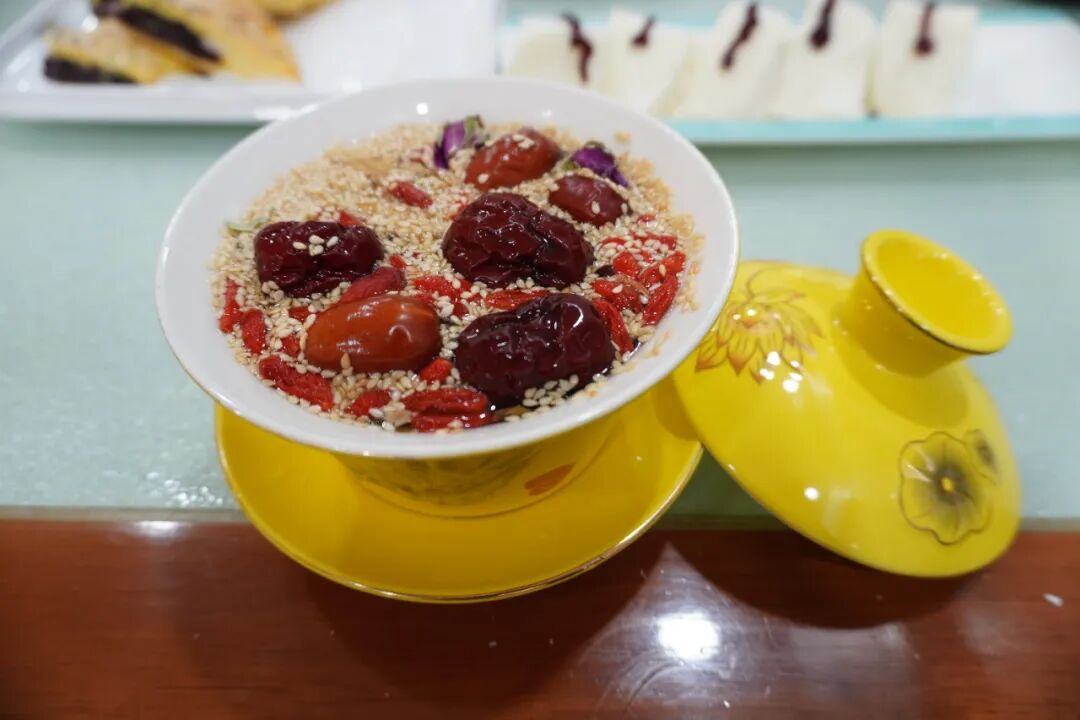
Apparently, Wuzhong locals have always had a 'morning tea' habit, but traditionally it was more about a big gaiwan cha (covered bowl tea) with snacks like sanzi (crispy fried dough twists), sometimes even paired with a bowl of niuroumian (hand-pulled beef noodles) – very much the rugged, no-frills style of the Northwest. But after experiencing Cantonese dim sum, they've clearly picked up some finesse, incorporating dairy products into their pastries instead of just serving up plain, fried dough snacks. However, from my perspective, Northwesterners haven't quite grasped the culinary science behind Cantonese dim sum's laid-back vibe. Cantonese folks use strong tea to cut through the richness of their small, high-sugar, high-oil pastries, allowing them to linger over a pot of tea for an entire morning. Wuzhong locals, on the other hand, drink a sweet and rich Babao tea (Eight Treasures Tea). After downing one giant bowl, this 'Southern gentleman' of mine was already halfway full. And the tea snacks? Mostly massive portions of carb-heavy dishes (though I heard you can order half-portions at some smaller spots), making it practically impossible to order much if you're dining solo.
Babao tea (Eight Treasures Tea)
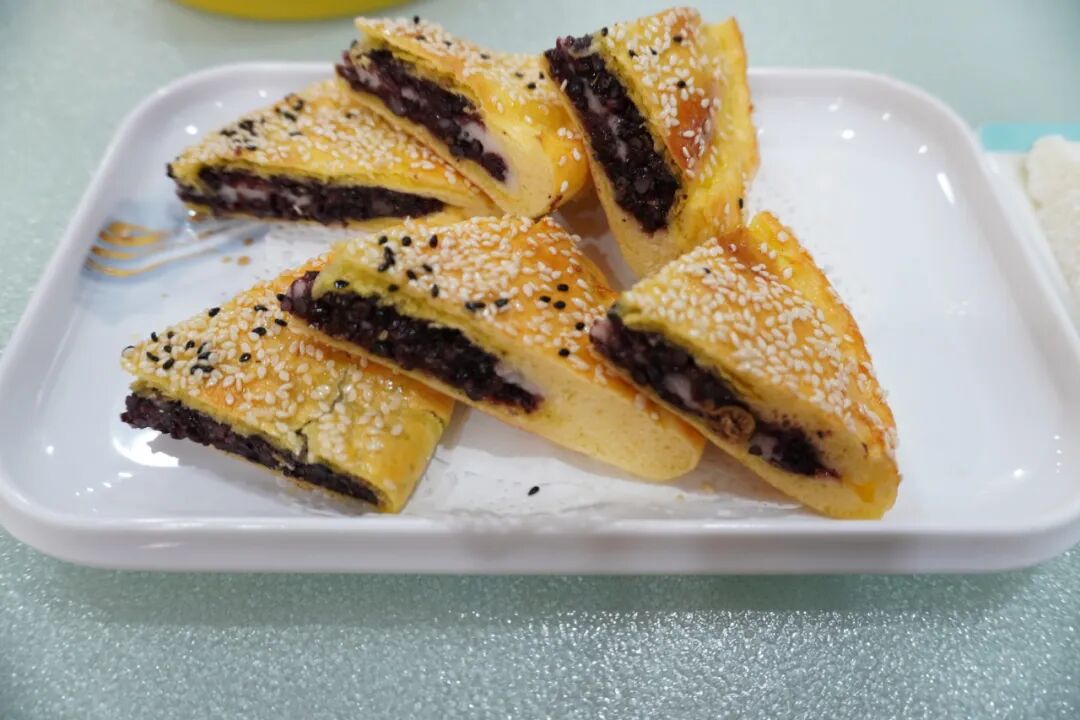
Suannai Heimi Lao (Yogurt Black Rice Pudding)
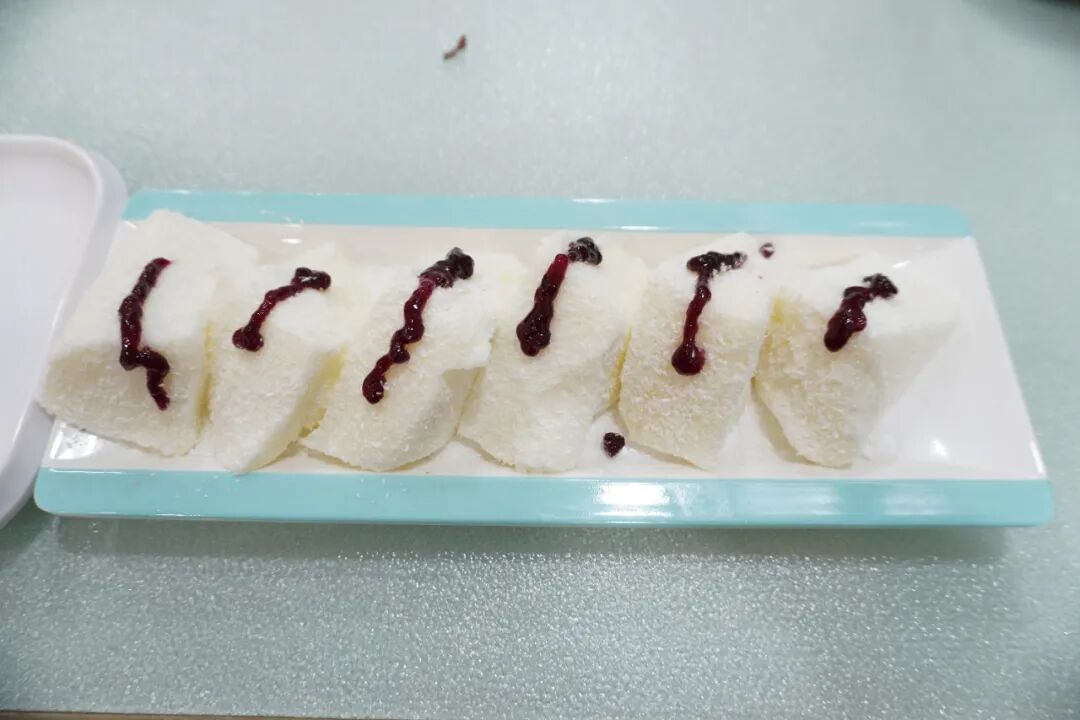
Naidong (Milk Jelly)
I just grabbed a couple of bites of the specialty Naidong (Milk Jelly) and Suannai Heimi Lao (Yogurt Black Rice Pudding); most of it ended up being packed to-go for dinner. Afterward, I headed to Siji Liangzi Gongbei (Sufi shrine / mausoleum complex), the site where Ma Hualong, the 13th Grand Sheikh and fifth-generation spiritual leader (Murshid) of the Jahriyya (Sufi order / brotherhood), met his tragic end.
This is a gongbei (Sufi shrine / mausoleum complex) that holds no physical remains. Back then, as Jinjipu Fortress was on the verge of falling, Ma Hualong and his son voluntarily surrendered themselves to Liu Jintang's camp, hoping to secure a way out for their followers. Even so, Qing forces later unearthed thousands of hidden foreign rifles within the fortress. Zuo Zongtang then accused Ma Hualong of illegally possessing weapons and colluding with foreign powers, sentencing him to death by slow slicing; his body was never recovered. His severed head, which had been displayed in various locations as a warning for over a decade, was eventually bought back for a hefty sum by devoted followers and buried in Zhangjiachuan – that's the Xuanhuagang Gongbei (Sufi shrine / mausoleum complex). The Siji Liangzi Gongbei, on the other hand, was erected by followers to commemorate his martyrdom at the very site of his execution.
Actually, this isn't the only gongbei (Sufi shrine / mausoleum complex) in China without physical remains. Many gongbei in mainland China suffered damage during various modern movements, and the remains of their occupants are often long gone, leaving behind only a landmark to guide Muslim remembrance. For any religion, what truly transmits the memory of faith is a spirit; visible material things are merely fleeting vessels. But for the Jahriyya (Sufi order / brotherhood), to have started as an empty space from the very beginning adds an even more poignant and tragic hue to their history.
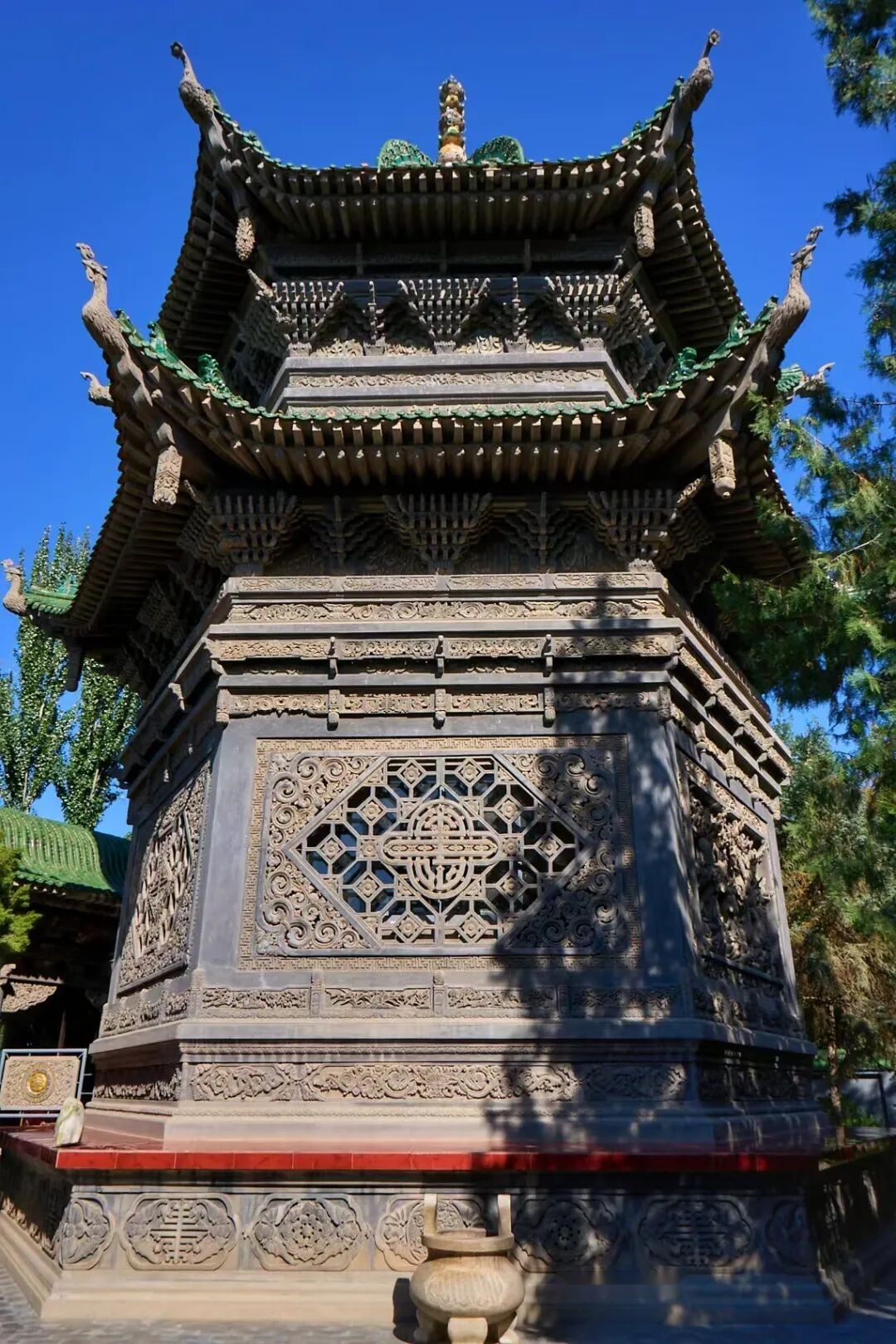
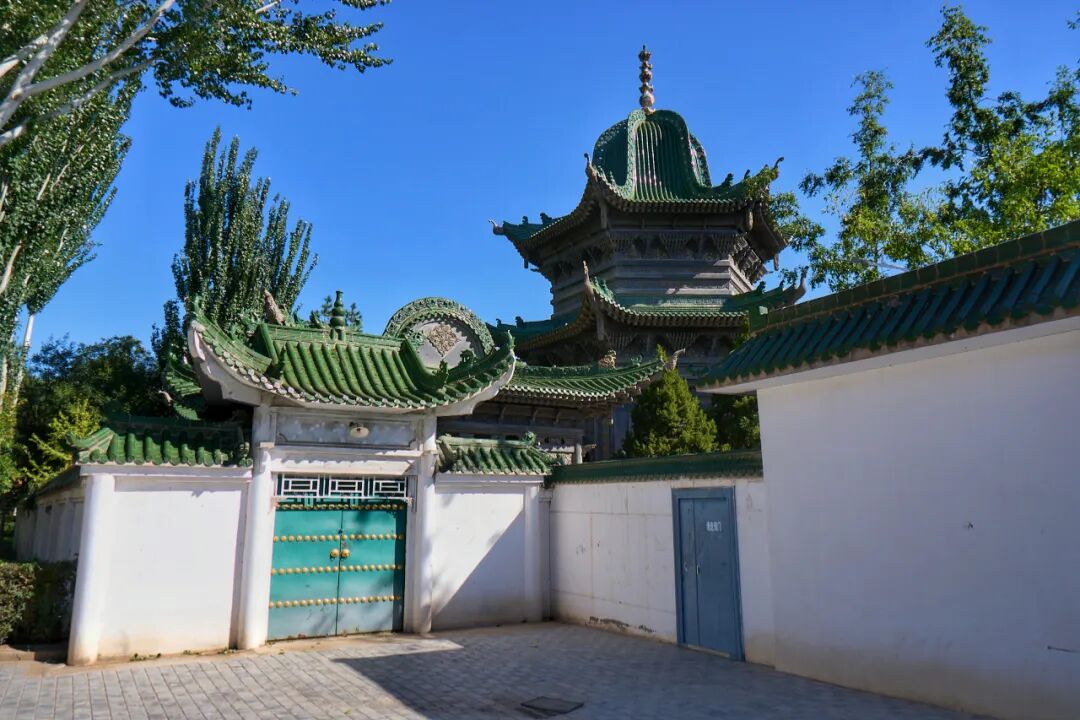
Siji Liangzi Gongbei (Sufi shrine / mausoleum complex)
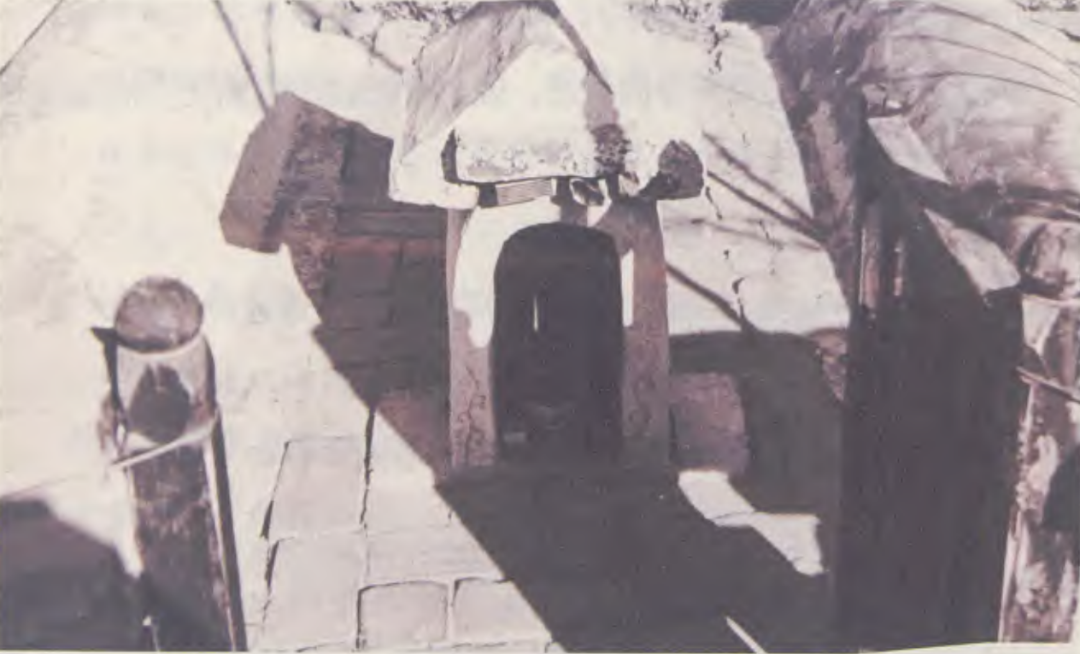
Siji Liangzi Gongbei (Sufi shrine / mausoleum complex) was much, much smaller than I'd imagined. Besides a gelou shi gongbei (pavilion-style Sufi shrine) built over what would be the tomb mound, there's just a prayer hall facing the gongbei, without even an extra courtyard. I've recently been reading Mr. Zhang Chengzhi's new book, *Prophet and Liberation*, and it just so happens to include an eighties-era photo of Siji Liangzi Gongbei. That image is even more desolate and pitiful, showing only a simple concrete marker for the tomb. This current pavilion-style gongbei must have been rebuilt after that.
Siji Liangzi Gongbei (Sufi shrine / mausoleum complex) as seen in Mr. Zhang Chengzhi's book, photographed in 1986.
It's hard to imagine that in such an unremarkable, tiny plot of land, lies the memory of a towering figure who once shook the mountains and rivers of the Northwest. Nearly a hundred thousand Hui Muslims and Han Chinese perished with him, and countless others were displaced and exiled to barren lands. As a history researcher, the Ma Hualong I see certainly doesn't possess the divine aura that his Jahriyya (Sufi order / brotherhood) followers perceive. He was simply a concrete, albeit constrained, historical figure. If he was guilty of anything, it was sheltering the rebellious Hui Muslims from Shaanxi and establishing his own armed forces. But as a spiritual leader, could he really have turned his back on his fellow co-religionists? Even if he hadn't taken in the rebels, would Zuo Zongtang have spared him?
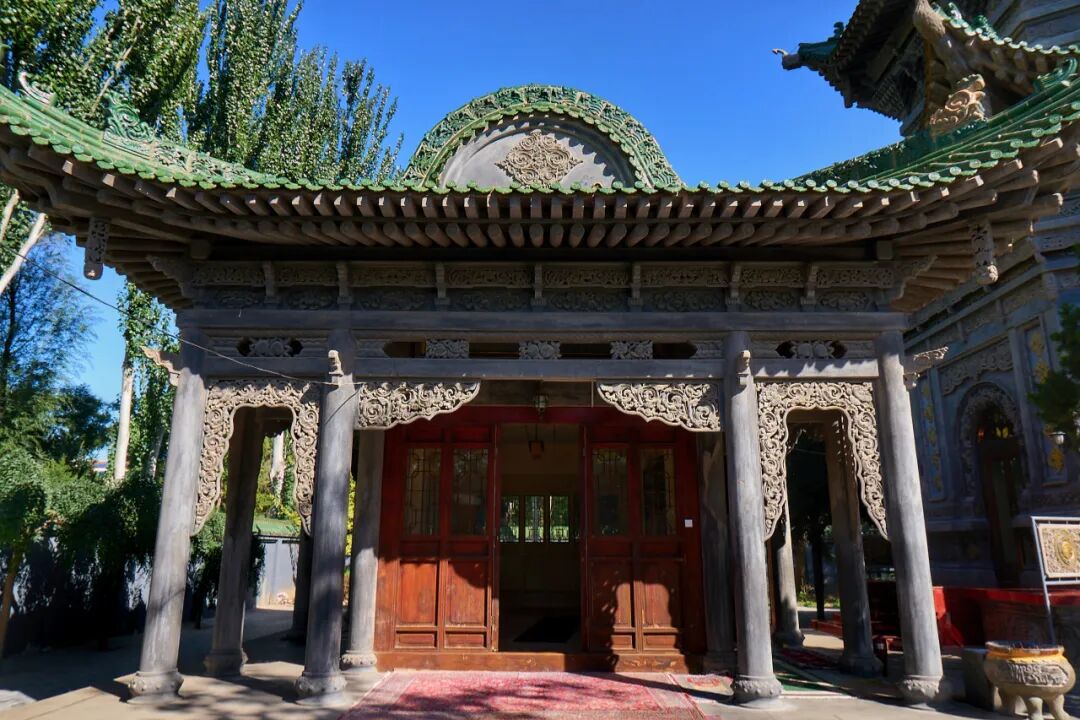
In an era of absolute imperial rule, the central government simply wouldn't tolerate a regional power whose ideology differed from the mainstream and who commanded significant influence and military might. Zuo Zongtang was a visionary statesman working to restore order, and for the long-term stability of the imperial dynasty, he might pardon those who aided the rebels. But a spiritual leader like Ma Hualong? He would never be spared. The only question was whether to dismantle his power peacefully or violently suppress the rebellion.
The Gongbei (Sufi shrine / mausoleum complex) of Ma Hualong, the 13th Grand Sheikh.
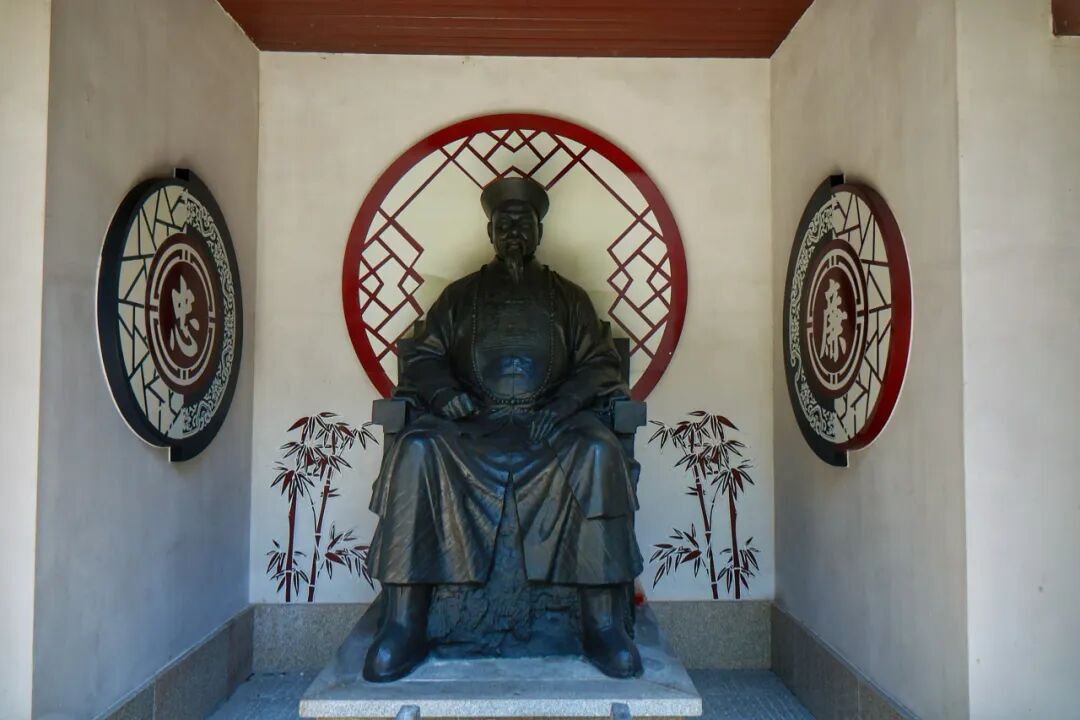
Forget the Jahriyya (Sufi order / brotherhood), which repeatedly challenged the Qing court throughout history. What about Zhang Jizhong of the Huangya Taigu Northern School, who sought refuge in Qilu during turbulent times, aided the distressed, avoided conflict, and only aimed for self-preservation through association? Even they faced trouble. Once the Taiping Rebellion and Nian Rebellion were quelled and the unified Heavenly Dynasty was reborn from the ashes, these spontaneously formed local organizations were bound to lose the trust of the centralized rulers. Regardless of their good intentions or initial motivations, they were destined to be labeled as rebels, meeting a tragic end and fading into obscurity.
As the saying goes, 'The man from Chu committed no crime, but his jade made him guilty.'
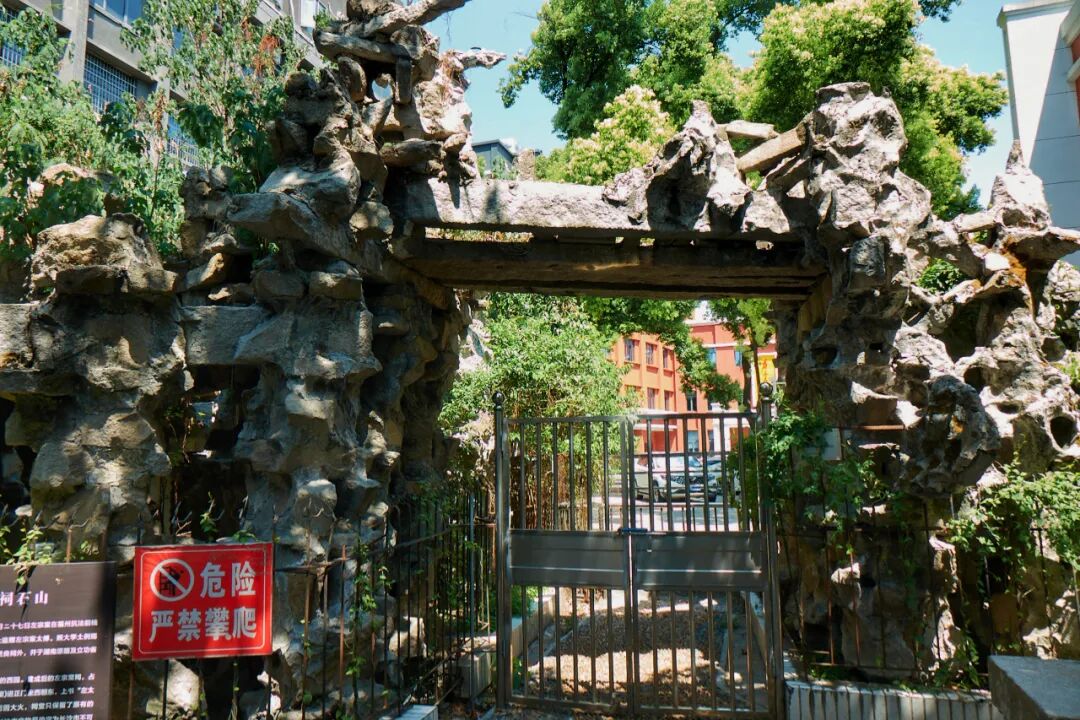
In times of chaos, with old orders collapsing and new ones yet to be established, people forged their own paths to survive. Many events cannot be simply boiled down to 'separatism vs. unity,' 'class struggle,' 'ethnic oppression,' or 'religious conflict,' nor neatly divided into good and evil. In my opinion, dismissing Ma Hualong as a separatist and viewing Zuo Zongtang as a butcher are both different manifestations of a similarly narrow historical perspective. These figures at the vanguard of history all chose what they believed to be the right path, guided by their own values amidst the chaos of their era, with their fates ultimately decided by Allah.
Ma Hualong's tragedy was predestined from the start, but the fact that such a personal and family tragedy escalated into a collective tragedy for the entire Jahriyya (Sufi order / brotherhood) due to the sect's strong cohesion is truly thought-provoking.
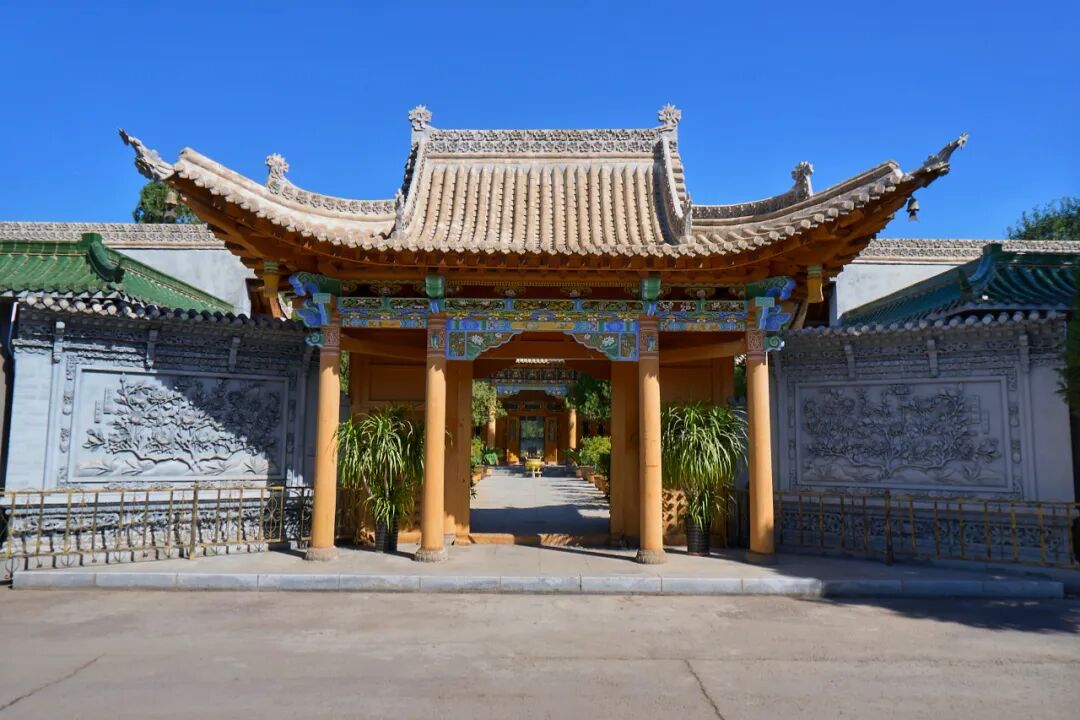
Pavilion for grave visitation and dua (personal prayer / supplication).
The Jahriyya's (Sufi order / brotherhood) cohesion was an inevitable outcome of its historical development. In regions where resources were extremely scarce, religious civilian organizations filled the void left by a lack of state governance, functioning almost like local governments and fulfilling many grassroots organizational roles. However, its operational logic and ideology ultimately didn't perfectly align with the overall state system and its prevailing thought. Of course, the Great Qing wasn't a monolithic state; it also had successful models of diverse, integrated governance, allowing for different administrative systems in border regions compared to the central authority. In fact, the menhuan (Sufi order / brotherhood) system within Hui Muslim communities could coexist harmoniously with officials, as seen with many 'Old Teaching' orders represented by the Gedimu (traditionalist Sunnis) and Khufiyya (Sufi order / brotherhood). As the Jahriyya (Sufi order / brotherhood) transitioned from the era of Ma Mingxin in Hehuang to the era of Ma Datian and Ma Yide in the Yellow River irrigation area, this 'New Teaching' increasingly took on characteristics of the 'Old Teaching' (feudalization, hereditary leadership), reaching its peak with Ma Hualong.
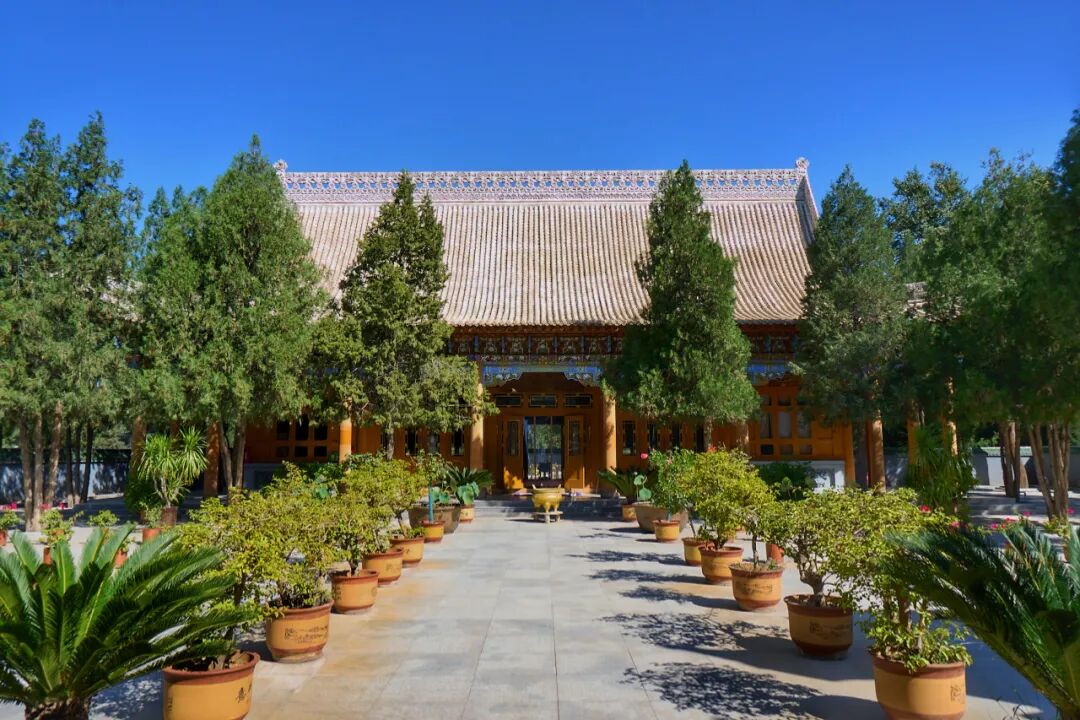
It's conceivable that in peaceful and stable times, they would likely have found a balance with the authorities through a mix of competition and compromise, coexisting, much like the narrative from Ma Yuanzhang's later era. Personally, I don't agree with Mr. Zhang Chengzhi's emphasis in *The History of the Soul* that the Jahriyya (Sufi order / brotherhood) was fated from the start to be bound to martyrdom and anti-establishment sentiment (this, I believe, is him projecting his own anti-establishment spirit onto a historical group), even though his views are widely accepted due to the book's influence. For example, how does one explain Ma Hualong actively donating to purchase an official title and entering the system before the Hui Muslim rebellion broke out? Was he infiltrating the system specifically to oppose it?
But precisely as the Jahriyya (Sufi order / brotherhood) was entering a transitional period of stable development, it coincided with the collapse of the Qing Empire's old system and a massive awakening of nationalism. This caused this grassroots force to suddenly swell in chaotic disorder, entwined with the dross of ethnic and religious hatred. This inevitably led to a violent clash between the two powers rather than a gradual reconciliation to achieve balance. By the time the empire clumsily picked itself back up in a new form (governed jointly by Han Chinese scholar-warlords and Manchu aristocrats, drawing strength from foreign influence), any possibility of dialogue between the two sides had vanished, leaving only violence to completely quell all unrest.
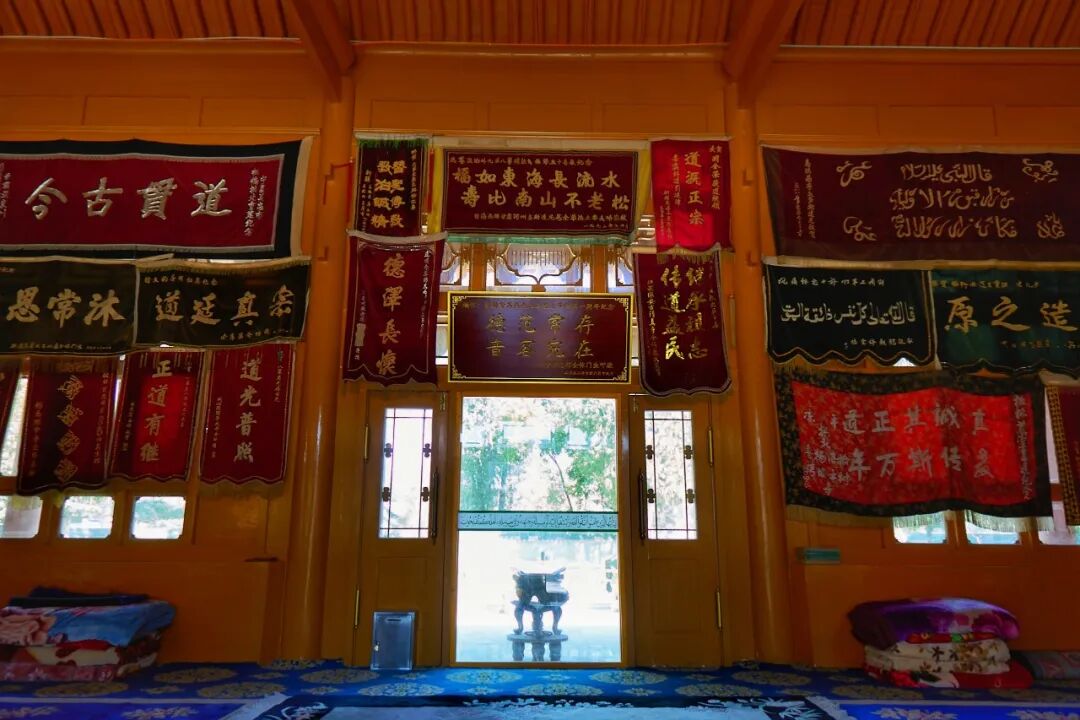
Standing before the gongbei (Sufi shrine / mausoleum complex), I lit an incense stick and couldn't help but ponder: if I had been born in that unfortunate era, would I have sided with Zuo Zongtang, or with this 13th Grand Sheikh? I fear that my own steadfast belief in national unity and my personal ethnic and religious identity would have made it impossible for me to tolerate him either. I am only fortunate not to have lived in such an intolerant and cruel era, to still be able to light an incense stick for the tomb's occupant and offer a small gesture of sympathy.
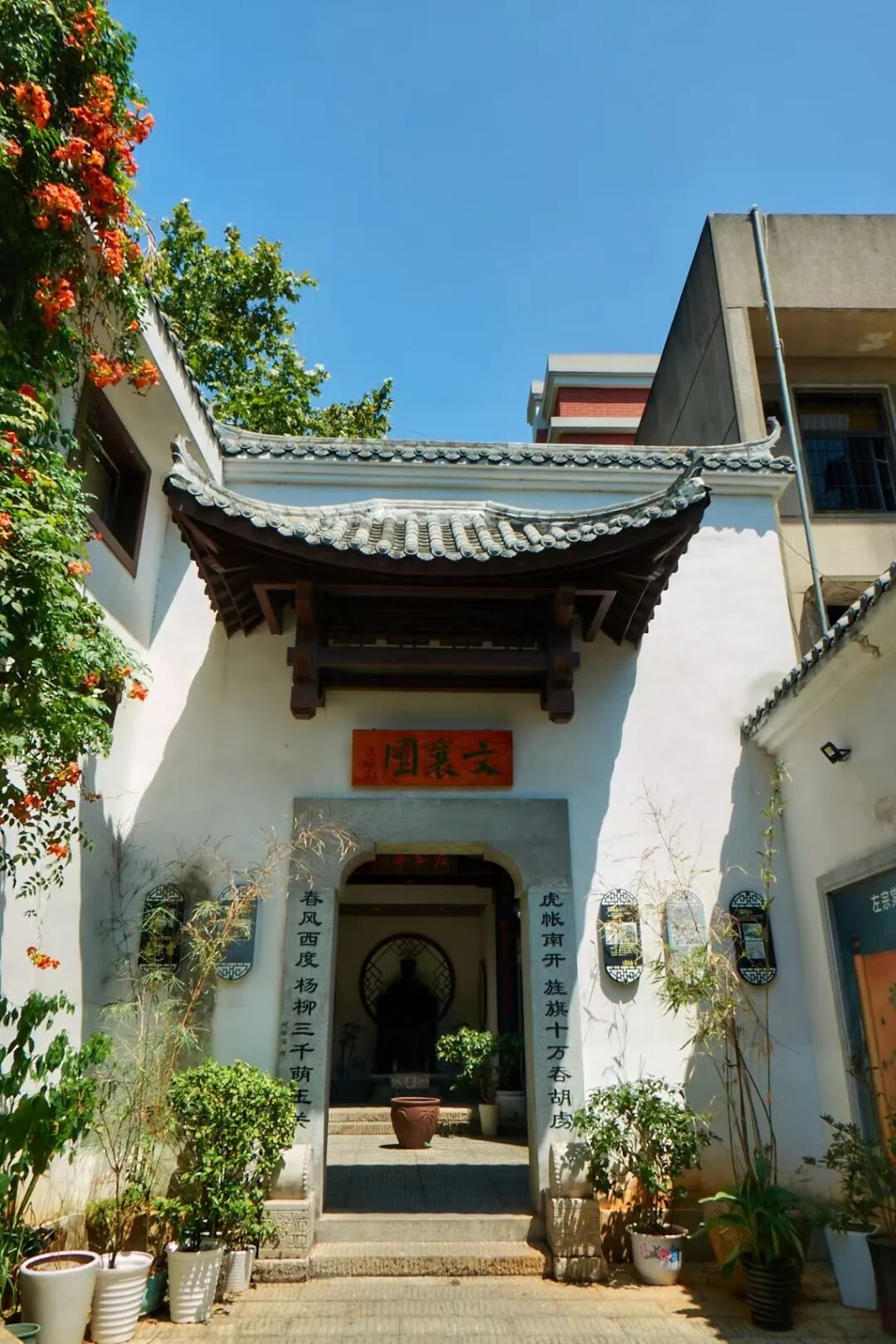
At Zuo Wenxiang's ancestral temple in Changsha, I once bowed respectfully three times with clasped hands. Here at Siji Liangzi Gongbei (Sufi shrine / mausoleum complex), I lit incense and observed a moment of silence for this 'rebel.' Perhaps a dogmatic person would find this contradictory, contemptible, or even laughable. But to me, profound respect for a collective and human compassion for an individual are not inherently contradictory in spirit. It's just that within specific historical choices, humans are inherently limited and sometimes cannot fully reconcile both. To forever remain true to one's original intentions not only depends on the test of one's personal character but also requires the merciful fulfillment of the unknowable, unique Master (Allah).
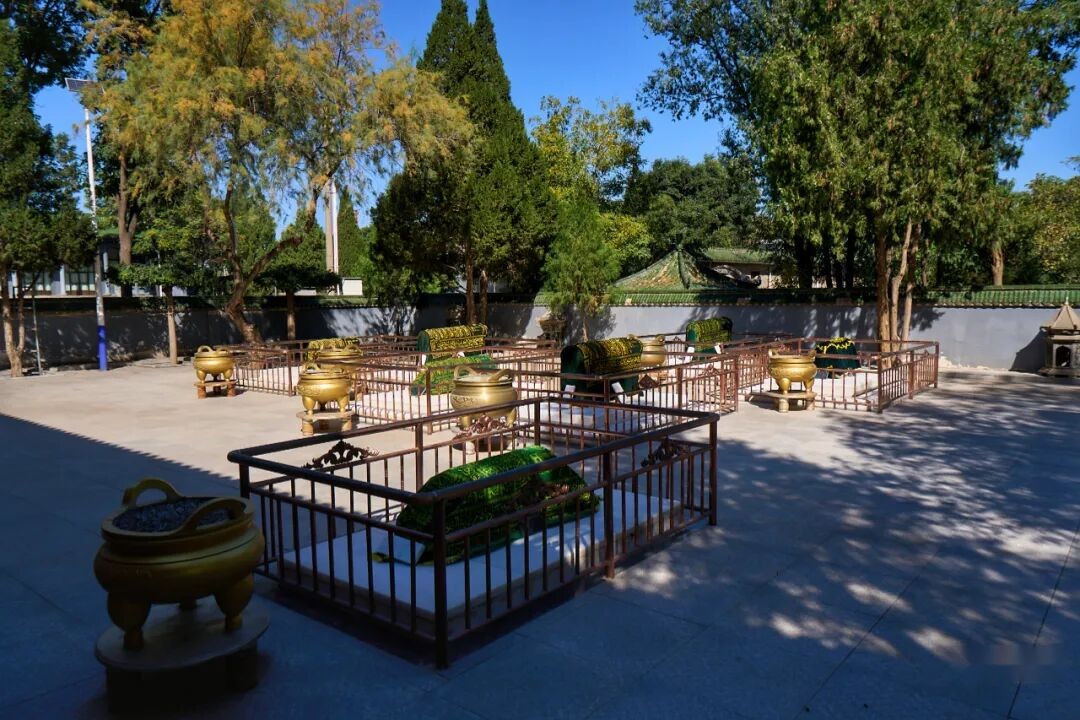
This past August, while wandering through Xiyuanli during a business trip to Changsha, I stumbled upon Zuo Gong Ci (Zuo Zongtang's Ancestral Temple)—Wenxiang Garden. Only this small rock garden survived the famous Changsha Fire during the Republic of China era.
Leaving Siji Liangzi, we then headed to Banqiao Daotang, not far from Siji Liangzi Gongbei (Sufi shrine / mausoleum complex). Back then, Ma Hualong's entire family was almost completely annihilated. Only two of his grandsons, being minors, were spared and rescued by Jahriyya (Sufi order / brotherhood) followers through various efforts, preserving a lineage. This lineage gave rise to Ma Jinxi, the sixth-generation spiritual leader (Murshid) of the Banqiao menhuan (Sufi order / brotherhood). However, this also led to internal divisions within the Jahriyya (Sufi order / brotherhood) after its reconciliation with the authorities, splitting into two major factions: the descendants of Ma Mingxin from Shagou and Xuanhuagang, and the descendants of Ma Hualong from Nanchuan and Banqiao.
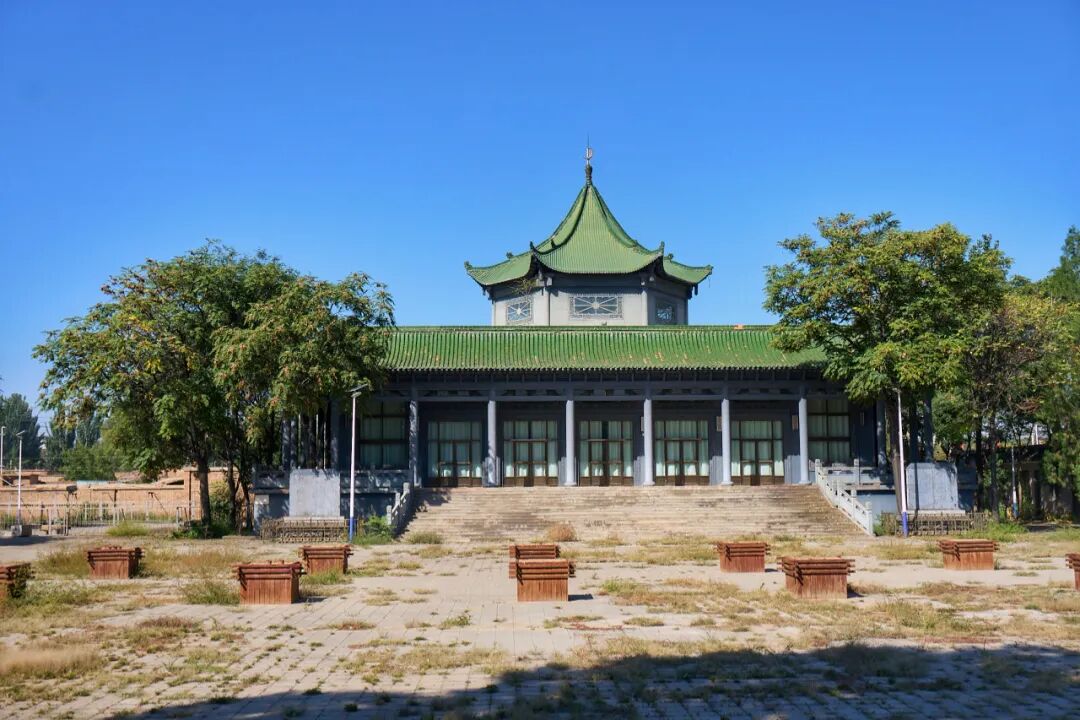
Banqiao Daotang (Banqiao Sufi Daotang)
Banqiao Daotang was originally established as a teaching hall when Ma Jinxi left Zhangjiachuan and returned to his ancestral hometown. After his return to Allah (passing away), two gongbei (Sufi shrines / mausoleum complexes) were built here for him and his wife, but both failed to survive the destruction of the decade of turmoil. When religious policies were restored, the gongbei were not rebuilt. In the northern part of the Daotang, there is still a cemetery where Ma Jinxi's son, the seventh-generation Murshed (Sufi spiritual master) of the Banqiao Menhuan (Sufi order / brotherhood), Ma Teng'ai, and his family members are buried.
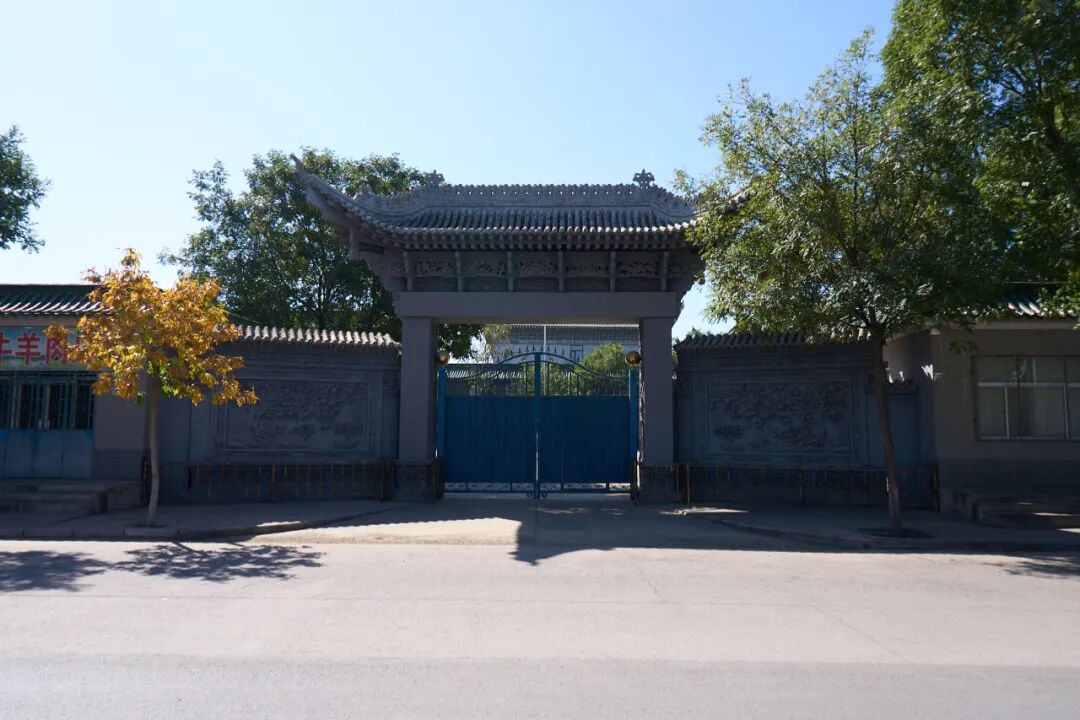
The pavilion for making dua (personal prayer) at the gravesite
The cemetery
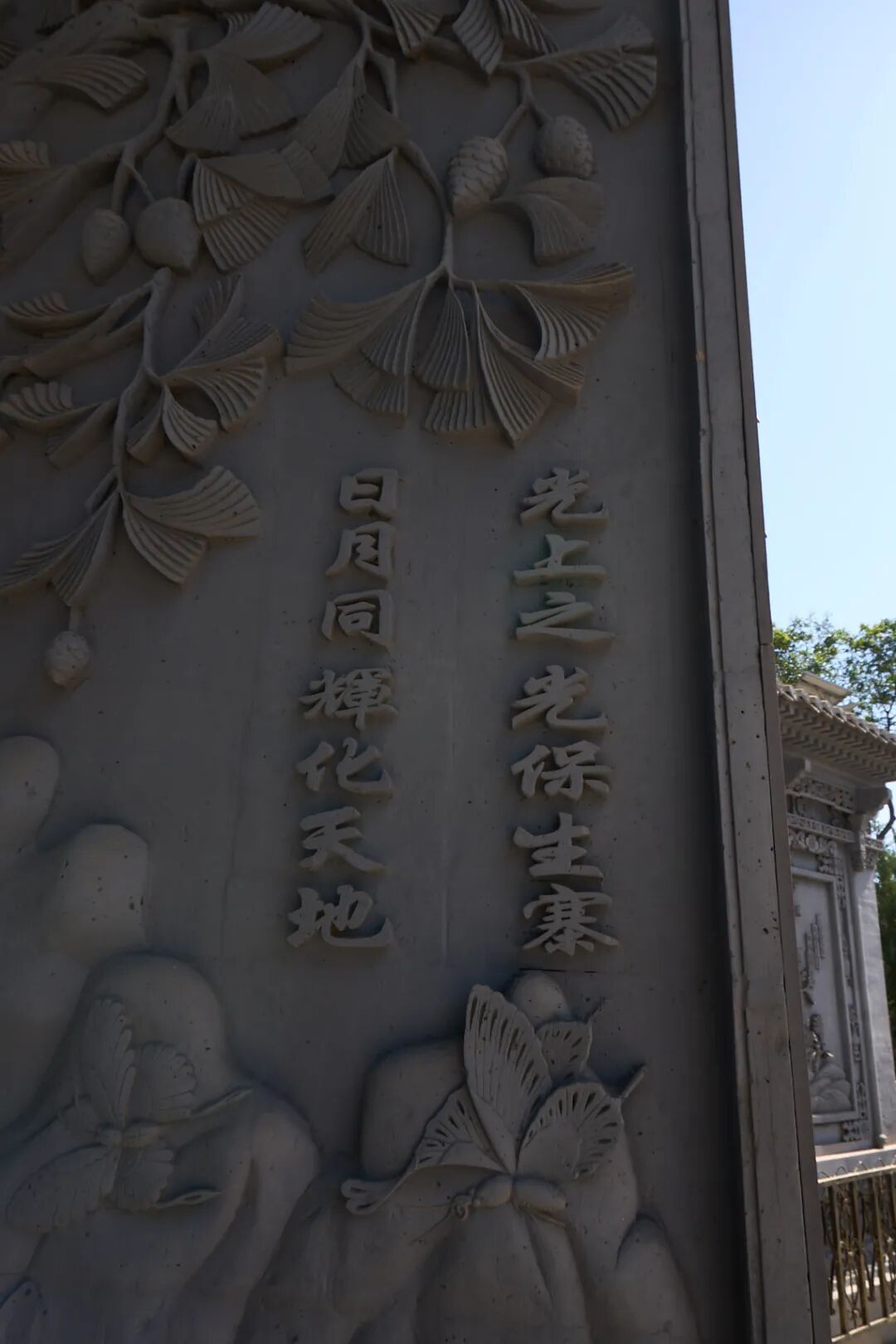
Right next door and across from the Daotang are a mosque and a charitable school affiliated with the Daotang, both of which are now overgrown with weeds. On the walls flanking the front gate of the mosque are four lines that look somewhat like traditional couplets:
Light upon light guards Baosheng Fortress
Sun and moon shine together to transform heaven and earth
The bright moon shines high to reach the nine heavens
Walking the path on the flat plains, the Dao remains forever evergreen
The mosque next to the Daotang
The charitable school opposite the Daotang
Later on, I learned that this Baosheng Fortress was actually another name for Jinjibu, the former stronghold of the legendary Thirteen Master, Ma Hualong. When I looked closely at these three characters again, a bitter taste of history lingered in my mind.
While 'light upon light' may still hover above, through wave after wave of sectarian conflict, ethnic division, and political campaigns, human-on-human bloodshed and harm have never truly stopped. If you count it up, the days of peace on this land haven't been very long; people simply prefer to choose numbness and forgetfulness amid material desires. The words 'Baosheng' (protecting life) seem more like a desperate cry to Allah from a group of believers covered in barren yellow dust, carrying a fanatical hope for miracles, only to be met with an iron-clad silence.
Illuminating the Legacy: A Historical Deep Dive into Ningxia's Wuzhong Siji Liangzi Gongbei and Banqiao Daotang
Summary:
This is a deep dive into Wuzhong City's Siji Liangzi Gongbei (Sufi shrine / mausoleum complex) and Banqiao Daotang. We're revisiting the poignant history of the Northwest Hui Muslim Rebellion during the Tongzhi Emperor's reign in the Qing Dynasty, and the martyrdom of the revered Ma Hualong, documenting this iconic sacred site that carries the weight of history and the hopes of its followers.
Locals in Ningxia will tell you, 'If it's good food you want, Wuzhong is the place!' Even though Wuzhong is a relatively 'new' name on the map, its food scene absolutely dominates the entire province. Now, to be fair, when we talk about Wuzhong's food prowess, it's often compared to other Northwestern regions; when it comes to refined culinary artistry, it's still a small fry compared to the sophisticated cuisines of China's southeastern coastal areas. But with cultures everywhere breaking down geographical barriers and inspiring each other, Wuzhong locals are increasingly looking to the culinary traditions of the southeast. Their take on 'morning tea' is a prime example.
Since I was totally wiped out from my first day of non-stop exploring, I ended up sleeping in until almost 9 AM the next morning. By the time I made it to the famous Xiangdingding Morning Tea shop, the National Day crowds had packed the place wall-to-wall. Luckily, I was traveling solo, so it was super easy to share a table with a tourist couple.
Apparently, Wuzhong locals have always had a 'morning tea' habit, but traditionally it was more about a big gaiwan cha (covered bowl tea) with snacks like sanzi (crispy fried dough twists), sometimes even paired with a bowl of niuroumian (hand-pulled beef noodles) – very much the rugged, no-frills style of the Northwest. But after experiencing Cantonese dim sum, they've clearly picked up some finesse, incorporating dairy products into their pastries instead of just serving up plain, fried dough snacks. However, from my perspective, Northwesterners haven't quite grasped the culinary science behind Cantonese dim sum's laid-back vibe. Cantonese folks use strong tea to cut through the richness of their small, high-sugar, high-oil pastries, allowing them to linger over a pot of tea for an entire morning. Wuzhong locals, on the other hand, drink a sweet and rich Babao tea (Eight Treasures Tea). After downing one giant bowl, this 'Southern gentleman' of mine was already halfway full. And the tea snacks? Mostly massive portions of carb-heavy dishes (though I heard you can order half-portions at some smaller spots), making it practically impossible to order much if you're dining solo.
Babao tea (Eight Treasures Tea)
Suannai Heimi Lao (Yogurt Black Rice Pudding)
Naidong (Milk Jelly)
I just grabbed a couple of bites of the specialty Naidong (Milk Jelly) and Suannai Heimi Lao (Yogurt Black Rice Pudding); most of it ended up being packed to-go for dinner. Afterward, I headed to Siji Liangzi Gongbei (Sufi shrine / mausoleum complex), the site where Ma Hualong, the 13th Grand Sheikh and fifth-generation spiritual leader (Murshid) of the Jahriyya (Sufi order / brotherhood), met his tragic end.
This is a gongbei (Sufi shrine / mausoleum complex) that holds no physical remains. Back then, as Jinjipu Fortress was on the verge of falling, Ma Hualong and his son voluntarily surrendered themselves to Liu Jintang's camp, hoping to secure a way out for their followers. Even so, Qing forces later unearthed thousands of hidden foreign rifles within the fortress. Zuo Zongtang then accused Ma Hualong of illegally possessing weapons and colluding with foreign powers, sentencing him to death by slow slicing; his body was never recovered. His severed head, which had been displayed in various locations as a warning for over a decade, was eventually bought back for a hefty sum by devoted followers and buried in Zhangjiachuan – that's the Xuanhuagang Gongbei (Sufi shrine / mausoleum complex). The Siji Liangzi Gongbei, on the other hand, was erected by followers to commemorate his martyrdom at the very site of his execution.
Actually, this isn't the only gongbei (Sufi shrine / mausoleum complex) in China without physical remains. Many gongbei in mainland China suffered damage during various modern movements, and the remains of their occupants are often long gone, leaving behind only a landmark to guide Muslim remembrance. For any religion, what truly transmits the memory of faith is a spirit; visible material things are merely fleeting vessels. But for the Jahriyya (Sufi order / brotherhood), to have started as an empty space from the very beginning adds an even more poignant and tragic hue to their history.
Siji Liangzi Gongbei (Sufi shrine / mausoleum complex)
Siji Liangzi Gongbei (Sufi shrine / mausoleum complex) was much, much smaller than I'd imagined. Besides a gelou shi gongbei (pavilion-style Sufi shrine) built over what would be the tomb mound, there's just a prayer hall facing the gongbei, without even an extra courtyard. I've recently been reading Mr. Zhang Chengzhi's new book, *Prophet and Liberation*, and it just so happens to include an eighties-era photo of Siji Liangzi Gongbei. That image is even more desolate and pitiful, showing only a simple concrete marker for the tomb. This current pavilion-style gongbei must have been rebuilt after that.
Siji Liangzi Gongbei (Sufi shrine / mausoleum complex) as seen in Mr. Zhang Chengzhi's book, photographed in 1986.
It's hard to imagine that in such an unremarkable, tiny plot of land, lies the memory of a towering figure who once shook the mountains and rivers of the Northwest. Nearly a hundred thousand Hui Muslims and Han Chinese perished with him, and countless others were displaced and exiled to barren lands. As a history researcher, the Ma Hualong I see certainly doesn't possess the divine aura that his Jahriyya (Sufi order / brotherhood) followers perceive. He was simply a concrete, albeit constrained, historical figure. If he was guilty of anything, it was sheltering the rebellious Hui Muslims from Shaanxi and establishing his own armed forces. But as a spiritual leader, could he really have turned his back on his fellow co-religionists? Even if he hadn't taken in the rebels, would Zuo Zongtang have spared him?
In an era of absolute imperial rule, the central government simply wouldn't tolerate a regional power whose ideology differed from the mainstream and who commanded significant influence and military might. Zuo Zongtang was a visionary statesman working to restore order, and for the long-term stability of the imperial dynasty, he might pardon those who aided the rebels. But a spiritual leader like Ma Hualong? He would never be spared. The only question was whether to dismantle his power peacefully or violently suppress the rebellion.
The Gongbei (Sufi shrine / mausoleum complex) of Ma Hualong, the 13th Grand Sheikh.
Forget the Jahriyya (Sufi order / brotherhood), which repeatedly challenged the Qing court throughout history. What about Zhang Jizhong of the Huangya Taigu Northern School, who sought refuge in Qilu during turbulent times, aided the distressed, avoided conflict, and only aimed for self-preservation through association? Even they faced trouble. Once the Taiping Rebellion and Nian Rebellion were quelled and the unified Heavenly Dynasty was reborn from the ashes, these spontaneously formed local organizations were bound to lose the trust of the centralized rulers. Regardless of their good intentions or initial motivations, they were destined to be labeled as rebels, meeting a tragic end and fading into obscurity.
As the saying goes, 'The man from Chu committed no crime, but his jade made him guilty.'
In times of chaos, with old orders collapsing and new ones yet to be established, people forged their own paths to survive. Many events cannot be simply boiled down to 'separatism vs. unity,' 'class struggle,' 'ethnic oppression,' or 'religious conflict,' nor neatly divided into good and evil. In my opinion, dismissing Ma Hualong as a separatist and viewing Zuo Zongtang as a butcher are both different manifestations of a similarly narrow historical perspective. These figures at the vanguard of history all chose what they believed to be the right path, guided by their own values amidst the chaos of their era, with their fates ultimately decided by Allah.
Ma Hualong's tragedy was predestined from the start, but the fact that such a personal and family tragedy escalated into a collective tragedy for the entire Jahriyya (Sufi order / brotherhood) due to the sect's strong cohesion is truly thought-provoking.
Pavilion for grave visitation and dua (personal prayer / supplication).
The Jahriyya's (Sufi order / brotherhood) cohesion was an inevitable outcome of its historical development. In regions where resources were extremely scarce, religious civilian organizations filled the void left by a lack of state governance, functioning almost like local governments and fulfilling many grassroots organizational roles. However, its operational logic and ideology ultimately didn't perfectly align with the overall state system and its prevailing thought. Of course, the Great Qing wasn't a monolithic state; it also had successful models of diverse, integrated governance, allowing for different administrative systems in border regions compared to the central authority. In fact, the menhuan (Sufi order / brotherhood) system within Hui Muslim communities could coexist harmoniously with officials, as seen with many 'Old Teaching' orders represented by the Gedimu (traditionalist Sunnis) and Khufiyya (Sufi order / brotherhood). As the Jahriyya (Sufi order / brotherhood) transitioned from the era of Ma Mingxin in Hehuang to the era of Ma Datian and Ma Yide in the Yellow River irrigation area, this 'New Teaching' increasingly took on characteristics of the 'Old Teaching' (feudalization, hereditary leadership), reaching its peak with Ma Hualong.
It's conceivable that in peaceful and stable times, they would likely have found a balance with the authorities through a mix of competition and compromise, coexisting, much like the narrative from Ma Yuanzhang's later era. Personally, I don't agree with Mr. Zhang Chengzhi's emphasis in *The History of the Soul* that the Jahriyya (Sufi order / brotherhood) was fated from the start to be bound to martyrdom and anti-establishment sentiment (this, I believe, is him projecting his own anti-establishment spirit onto a historical group), even though his views are widely accepted due to the book's influence. For example, how does one explain Ma Hualong actively donating to purchase an official title and entering the system before the Hui Muslim rebellion broke out? Was he infiltrating the system specifically to oppose it?
But precisely as the Jahriyya (Sufi order / brotherhood) was entering a transitional period of stable development, it coincided with the collapse of the Qing Empire's old system and a massive awakening of nationalism. This caused this grassroots force to suddenly swell in chaotic disorder, entwined with the dross of ethnic and religious hatred. This inevitably led to a violent clash between the two powers rather than a gradual reconciliation to achieve balance. By the time the empire clumsily picked itself back up in a new form (governed jointly by Han Chinese scholar-warlords and Manchu aristocrats, drawing strength from foreign influence), any possibility of dialogue between the two sides had vanished, leaving only violence to completely quell all unrest.
Standing before the gongbei (Sufi shrine / mausoleum complex), I lit an incense stick and couldn't help but ponder: if I had been born in that unfortunate era, would I have sided with Zuo Zongtang, or with this 13th Grand Sheikh? I fear that my own steadfast belief in national unity and my personal ethnic and religious identity would have made it impossible for me to tolerate him either. I am only fortunate not to have lived in such an intolerant and cruel era, to still be able to light an incense stick for the tomb's occupant and offer a small gesture of sympathy.
At Zuo Wenxiang's ancestral temple in Changsha, I once bowed respectfully three times with clasped hands. Here at Siji Liangzi Gongbei (Sufi shrine / mausoleum complex), I lit incense and observed a moment of silence for this 'rebel.' Perhaps a dogmatic person would find this contradictory, contemptible, or even laughable. But to me, profound respect for a collective and human compassion for an individual are not inherently contradictory in spirit. It's just that within specific historical choices, humans are inherently limited and sometimes cannot fully reconcile both. To forever remain true to one's original intentions not only depends on the test of one's personal character but also requires the merciful fulfillment of the unknowable, unique Master (Allah).
This past August, while wandering through Xiyuanli during a business trip to Changsha, I stumbled upon Zuo Gong Ci (Zuo Zongtang's Ancestral Temple)—Wenxiang Garden. Only this small rock garden survived the famous Changsha Fire during the Republic of China era.
Leaving Siji Liangzi, we then headed to Banqiao Daotang, not far from Siji Liangzi Gongbei (Sufi shrine / mausoleum complex). Back then, Ma Hualong's entire family was almost completely annihilated. Only two of his grandsons, being minors, were spared and rescued by Jahriyya (Sufi order / brotherhood) followers through various efforts, preserving a lineage. This lineage gave rise to Ma Jinxi, the sixth-generation spiritual leader (Murshid) of the Banqiao menhuan (Sufi order / brotherhood). However, this also led to internal divisions within the Jahriyya (Sufi order / brotherhood) after its reconciliation with the authorities, splitting into two major factions: the descendants of Ma Mingxin from Shagou and Xuanhuagang, and the descendants of Ma Hualong from Nanchuan and Banqiao.
Banqiao Daotang (Banqiao Sufi Daotang)
Banqiao Daotang was originally established as a teaching hall when Ma Jinxi left Zhangjiachuan and returned to his ancestral hometown. After his return to Allah (passing away), two gongbei (Sufi shrines / mausoleum complexes) were built here for him and his wife, but both failed to survive the destruction of the decade of turmoil. When religious policies were restored, the gongbei were not rebuilt. In the northern part of the Daotang, there is still a cemetery where Ma Jinxi's son, the seventh-generation Murshed (Sufi spiritual master) of the Banqiao Menhuan (Sufi order / brotherhood), Ma Teng'ai, and his family members are buried.
The pavilion for making dua (personal prayer) at the gravesite
The cemetery
Right next door and across from the Daotang are a mosque and a charitable school affiliated with the Daotang, both of which are now overgrown with weeds. On the walls flanking the front gate of the mosque are four lines that look somewhat like traditional couplets:
Light upon light guards Baosheng Fortress
Sun and moon shine together to transform heaven and earth
The bright moon shines high to reach the nine heavens
Walking the path on the flat plains, the Dao remains forever evergreen
The mosque next to the Daotang
The charitable school opposite the Daotang
Later on, I learned that this Baosheng Fortress was actually another name for Jinjibu, the former stronghold of the legendary Thirteen Master, Ma Hualong. When I looked closely at these three characters again, a bitter taste of history lingered in my mind.
While 'light upon light' may still hover above, through wave after wave of sectarian conflict, ethnic division, and political campaigns, human-on-human bloodshed and harm have never truly stopped. If you count it up, the days of peace on this land haven't been very long; people simply prefer to choose numbness and forgetfulness amid material desires. The words 'Baosheng' (protecting life) seem more like a desperate cry to Allah from a group of believers covered in barren yellow dust, carrying a fanatical hope for miracles, only to be met with an iron-clad silence.
Ningxia's Halal Food & Sufi Secrets: A Deep Dive into Wuzhong's Mosques, Ma Hualong's Legacy, and Delicious Hui Muslim Cuisine.
Articles • Hasan09 posted the article • 0 comments • 12 views • 1 days ago
[Internet Repost]
Illuminating the Legacy: A Historical Deep Dive into Ningxia's Wuzhong Siji Liangzi Gongbei and Banqiao Daotang
Summary:
This is a deep dive into Wuzhong City's Siji Liangzi Gongbei (Sufi shrine / mausoleum complex) and Banqiao Daotang. We're revisiting the poignant history of the Northwest Hui Muslim Rebellion during the Tongzhi Emperor's reign in the Qing Dynasty, and the martyrdom of the revered Ma Hualong, documenting this iconic sacred site that carries the weight of history and the hopes of its followers.
Locals in Ningxia will tell you, 'If it's good food you want, Wuzhong is the place!' Even though Wuzhong is a relatively 'new' name on the map, its food scene absolutely dominates the entire province. Now, to be fair, when we talk about Wuzhong's food prowess, it's often compared to other Northwestern regions; when it comes to refined culinary artistry, it's still a small fry compared to the sophisticated cuisines of China's southeastern coastal areas. But with cultures everywhere breaking down geographical barriers and inspiring each other, Wuzhong locals are increasingly looking to the culinary traditions of the southeast. Their take on 'morning tea' is a prime example.
Since I was totally wiped out from my first day of non-stop exploring, I ended up sleeping in until almost 9 AM the next morning. By the time I made it to the famous Xiangdingding Morning Tea shop, the National Day crowds had packed the place wall-to-wall. Luckily, I was traveling solo, so it was super easy to share a table with a tourist couple.
Apparently, Wuzhong locals have always had a 'morning tea' habit, but traditionally it was more about a big gaiwan cha (covered bowl tea) with snacks like sanzi (crispy fried dough twists), sometimes even paired with a bowl of niuroumian (hand-pulled beef noodles) – very much the rugged, no-frills style of the Northwest. But after experiencing Cantonese dim sum, they've clearly picked up some finesse, incorporating dairy products into their pastries instead of just serving up plain, fried dough snacks. However, from my perspective, Northwesterners haven't quite grasped the culinary science behind Cantonese dim sum's laid-back vibe. Cantonese folks use strong tea to cut through the richness of their small, high-sugar, high-oil pastries, allowing them to linger over a pot of tea for an entire morning. Wuzhong locals, on the other hand, drink a sweet and rich Babao tea (Eight Treasures Tea). After downing one giant bowl, this 'Southern gentleman' of mine was already halfway full. And the tea snacks? Mostly massive portions of carb-heavy dishes (though I heard you can order half-portions at some smaller spots), making it practically impossible to order much if you're dining solo.
Babao tea (Eight Treasures Tea)
Suannai Heimi Lao (Yogurt Black Rice Pudding)
Naidong (Milk Jelly)
I just grabbed a couple of bites of the specialty Naidong (Milk Jelly) and Suannai Heimi Lao (Yogurt Black Rice Pudding); most of it ended up being packed to-go for dinner. Afterward, I headed to Siji Liangzi Gongbei (Sufi shrine / mausoleum complex), the site where Ma Hualong, the 13th Grand Sheikh and fifth-generation spiritual leader (Murshid) of the Jahriyya (Sufi order / brotherhood), met his tragic end.
This is a gongbei (Sufi shrine / mausoleum complex) that holds no physical remains. Back then, as Jinjipu Fortress was on the verge of falling, Ma Hualong and his son voluntarily surrendered themselves to Liu Jintang's camp, hoping to secure a way out for their followers. Even so, Qing forces later unearthed thousands of hidden foreign rifles within the fortress. Zuo Zongtang then accused Ma Hualong of illegally possessing weapons and colluding with foreign powers, sentencing him to death by slow slicing; his body was never recovered. His severed head, which had been displayed in various locations as a warning for over a decade, was eventually bought back for a hefty sum by devoted followers and buried in Zhangjiachuan – that's the Xuanhuagang Gongbei (Sufi shrine / mausoleum complex). The Siji Liangzi Gongbei, on the other hand, was erected by followers to commemorate his martyrdom at the very site of his execution.
Actually, this isn't the only gongbei (Sufi shrine / mausoleum complex) in China without physical remains. Many gongbei in mainland China suffered damage during various modern movements, and the remains of their occupants are often long gone, leaving behind only a landmark to guide Muslim remembrance. For any religion, what truly transmits the memory of faith is a spirit; visible material things are merely fleeting vessels. But for the Jahriyya (Sufi order / brotherhood), to have started as an empty space from the very beginning adds an even more poignant and tragic hue to their history.
Siji Liangzi Gongbei (Sufi shrine / mausoleum complex)
Siji Liangzi Gongbei (Sufi shrine / mausoleum complex) was much, much smaller than I'd imagined. Besides a gelou shi gongbei (pavilion-style Sufi shrine) built over what would be the tomb mound, there's just a prayer hall facing the gongbei, without even an extra courtyard. I've recently been reading Mr. Zhang Chengzhi's new book, *Prophet and Liberation*, and it just so happens to include an eighties-era photo of Siji Liangzi Gongbei. That image is even more desolate and pitiful, showing only a simple concrete marker for the tomb. This current pavilion-style gongbei must have been rebuilt after that.
Siji Liangzi Gongbei (Sufi shrine / mausoleum complex) as seen in Mr. Zhang Chengzhi's book, photographed in 1986.
It's hard to imagine that in such an unremarkable, tiny plot of land, lies the memory of a towering figure who once shook the mountains and rivers of the Northwest. Nearly a hundred thousand Hui Muslims and Han Chinese perished with him, and countless others were displaced and exiled to barren lands. As a history researcher, the Ma Hualong I see certainly doesn't possess the divine aura that his Jahriyya (Sufi order / brotherhood) followers perceive. He was simply a concrete, albeit constrained, historical figure. If he was guilty of anything, it was sheltering the rebellious Hui Muslims from Shaanxi and establishing his own armed forces. But as a spiritual leader, could he really have turned his back on his fellow co-religionists? Even if he hadn't taken in the rebels, would Zuo Zongtang have spared him?
In an era of absolute imperial rule, the central government simply wouldn't tolerate a regional power whose ideology differed from the mainstream and who commanded significant influence and military might. Zuo Zongtang was a visionary statesman working to restore order, and for the long-term stability of the imperial dynasty, he might pardon those who aided the rebels. But a spiritual leader like Ma Hualong? He would never be spared. The only question was whether to dismantle his power peacefully or violently suppress the rebellion.
The Gongbei (Sufi shrine / mausoleum complex) of Ma Hualong, the 13th Grand Sheikh.
Forget the Jahriyya (Sufi order / brotherhood), which repeatedly challenged the Qing court throughout history. What about Zhang Jizhong of the Huangya Taigu Northern School, who sought refuge in Qilu during turbulent times, aided the distressed, avoided conflict, and only aimed for self-preservation through association? Even they faced trouble. Once the Taiping Rebellion and Nian Rebellion were quelled and the unified Heavenly Dynasty was reborn from the ashes, these spontaneously formed local organizations were bound to lose the trust of the centralized rulers. Regardless of their good intentions or initial motivations, they were destined to be labeled as rebels, meeting a tragic end and fading into obscurity.
As the saying goes, 'The man from Chu committed no crime, but his jade made him guilty.'
In times of chaos, with old orders collapsing and new ones yet to be established, people forged their own paths to survive. Many events cannot be simply boiled down to 'separatism vs. unity,' 'class struggle,' 'ethnic oppression,' or 'religious conflict,' nor neatly divided into good and evil. In my opinion, dismissing Ma Hualong as a separatist and viewing Zuo Zongtang as a butcher are both different manifestations of a similarly narrow historical perspective. These figures at the vanguard of history all chose what they believed to be the right path, guided by their own values amidst the chaos of their era, with their fates ultimately decided by Allah.
Ma Hualong's tragedy was predestined from the start, but the fact that such a personal and family tragedy escalated into a collective tragedy for the entire Jahriyya (Sufi order / brotherhood) due to the sect's strong cohesion is truly thought-provoking.
Pavilion for grave visitation and dua (personal prayer / supplication).
The Jahriyya's (Sufi order / brotherhood) cohesion was an inevitable outcome of its historical development. In regions where resources were extremely scarce, religious civilian organizations filled the void left by a lack of state governance, functioning almost like local governments and fulfilling many grassroots organizational roles. However, its operational logic and ideology ultimately didn't perfectly align with the overall state system and its prevailing thought. Of course, the Great Qing wasn't a monolithic state; it also had successful models of diverse, integrated governance, allowing for different administrative systems in border regions compared to the central authority. In fact, the menhuan (Sufi order / brotherhood) system within Hui Muslim communities could coexist harmoniously with officials, as seen with many 'Old Teaching' orders represented by the Gedimu (traditionalist Sunnis) and Khufiyya (Sufi order / brotherhood). As the Jahriyya (Sufi order / brotherhood) transitioned from the era of Ma Mingxin in Hehuang to the era of Ma Datian and Ma Yide in the Yellow River irrigation area, this 'New Teaching' increasingly took on characteristics of the 'Old Teaching' (feudalization, hereditary leadership), reaching its peak with Ma Hualong.
It's conceivable that in peaceful and stable times, they would likely have found a balance with the authorities through a mix of competition and compromise, coexisting, much like the narrative from Ma Yuanzhang's later era. Personally, I don't agree with Mr. Zhang Chengzhi's emphasis in *The History of the Soul* that the Jahriyya (Sufi order / brotherhood) was fated from the start to be bound to martyrdom and anti-establishment sentiment (this, I believe, is him projecting his own anti-establishment spirit onto a historical group), even though his views are widely accepted due to the book's influence. For example, how does one explain Ma Hualong actively donating to purchase an official title and entering the system before the Hui Muslim rebellion broke out? Was he infiltrating the system specifically to oppose it?
But precisely as the Jahriyya (Sufi order / brotherhood) was entering a transitional period of stable development, it coincided with the collapse of the Qing Empire's old system and a massive awakening of nationalism. This caused this grassroots force to suddenly swell in chaotic disorder, entwined with the dross of ethnic and religious hatred. This inevitably led to a violent clash between the two powers rather than a gradual reconciliation to achieve balance. By the time the empire clumsily picked itself back up in a new form (governed jointly by Han Chinese scholar-warlords and Manchu aristocrats, drawing strength from foreign influence), any possibility of dialogue between the two sides had vanished, leaving only violence to completely quell all unrest.
Standing before the gongbei (Sufi shrine / mausoleum complex), I lit an incense stick and couldn't help but ponder: if I had been born in that unfortunate era, would I have sided with Zuo Zongtang, or with this 13th Grand Sheikh? I fear that my own steadfast belief in national unity and my personal ethnic and religious identity would have made it impossible for me to tolerate him either. I am only fortunate not to have lived in such an intolerant and cruel era, to still be able to light an incense stick for the tomb's occupant and offer a small gesture of sympathy.
At Zuo Wenxiang's ancestral temple in Changsha, I once bowed respectfully three times with clasped hands. Here at Siji Liangzi Gongbei (Sufi shrine / mausoleum complex), I lit incense and observed a moment of silence for this 'rebel.' Perhaps a dogmatic person would find this contradictory, contemptible, or even laughable. But to me, profound respect for a collective and human compassion for an individual are not inherently contradictory in spirit. It's just that within specific historical choices, humans are inherently limited and sometimes cannot fully reconcile both. To forever remain true to one's original intentions not only depends on the test of one's personal character but also requires the merciful fulfillment of the unknowable, unique Master (Allah).
This past August, while wandering through Xiyuanli during a business trip to Changsha, I stumbled upon Zuo Gong Ci (Zuo Zongtang's Ancestral Temple)—Wenxiang Garden. Only this small rock garden survived the famous Changsha Fire during the Republic of China era.
Leaving Siji Liangzi, we then headed to Banqiao Daotang, not far from Siji Liangzi Gongbei (Sufi shrine / mausoleum complex). Back then, Ma Hualong's entire family was almost completely annihilated. Only two of his grandsons, being minors, were spared and rescued by Jahriyya (Sufi order / brotherhood) followers through various efforts, preserving a lineage. This lineage gave rise to Ma Jinxi, the sixth-generation spiritual leader (Murshid) of the Banqiao menhuan (Sufi order / brotherhood). However, this also led to internal divisions within the Jahriyya (Sufi order / brotherhood) after its reconciliation with the authorities, splitting into two major factions: the descendants of Ma Mingxin from Shagou and Xuanhuagang, and the descendants of Ma Hualong from Nanchuan and Banqiao.
Banqiao Daotang (Banqiao Sufi Daotang)
Banqiao Daotang was originally established as a teaching hall when Ma Jinxi left Zhangjiachuan and returned to his ancestral hometown. After his return to Allah (passing away), two gongbei (Sufi shrines / mausoleum complexes) were built here for him and his wife, but both failed to survive the destruction of the decade of turmoil. When religious policies were restored, the gongbei were not rebuilt. In the northern part of the Daotang, there is still a cemetery where Ma Jinxi's son, the seventh-generation Murshed (Sufi spiritual master) of the Banqiao Menhuan (Sufi order / brotherhood), Ma Teng'ai, and his family members are buried.
The pavilion for making dua (personal prayer) at the gravesite
The cemetery
Right next door and across from the Daotang are a mosque and a charitable school affiliated with the Daotang, both of which are now overgrown with weeds. On the walls flanking the front gate of the mosque are four lines that look somewhat like traditional couplets:
Light upon light guards Baosheng Fortress
Sun and moon shine together to transform heaven and earth
The bright moon shines high to reach the nine heavens
Walking the path on the flat plains, the Dao remains forever evergreen
The mosque next to the Daotang
The charitable school opposite the Daotang
Later on, I learned that this Baosheng Fortress was actually another name for Jinjibu, the former stronghold of the legendary Thirteen Master, Ma Hualong. When I looked closely at these three characters again, a bitter taste of history lingered in my mind.
While 'light upon light' may still hover above, through wave after wave of sectarian conflict, ethnic division, and political campaigns, human-on-human bloodshed and harm have never truly stopped. If you count it up, the days of peace on this land haven't been very long; people simply prefer to choose numbness and forgetfulness amid material desires. The words 'Baosheng' (protecting life) seem more like a desperate cry to Allah from a group of believers covered in barren yellow dust, carrying a fanatical hope for miracles, only to be met with an iron-clad silence. view all
Illuminating the Legacy: A Historical Deep Dive into Ningxia's Wuzhong Siji Liangzi Gongbei and Banqiao Daotang
Summary:
This is a deep dive into Wuzhong City's Siji Liangzi Gongbei (Sufi shrine / mausoleum complex) and Banqiao Daotang. We're revisiting the poignant history of the Northwest Hui Muslim Rebellion during the Tongzhi Emperor's reign in the Qing Dynasty, and the martyrdom of the revered Ma Hualong, documenting this iconic sacred site that carries the weight of history and the hopes of its followers.
Locals in Ningxia will tell you, 'If it's good food you want, Wuzhong is the place!' Even though Wuzhong is a relatively 'new' name on the map, its food scene absolutely dominates the entire province. Now, to be fair, when we talk about Wuzhong's food prowess, it's often compared to other Northwestern regions; when it comes to refined culinary artistry, it's still a small fry compared to the sophisticated cuisines of China's southeastern coastal areas. But with cultures everywhere breaking down geographical barriers and inspiring each other, Wuzhong locals are increasingly looking to the culinary traditions of the southeast. Their take on 'morning tea' is a prime example.
Since I was totally wiped out from my first day of non-stop exploring, I ended up sleeping in until almost 9 AM the next morning. By the time I made it to the famous Xiangdingding Morning Tea shop, the National Day crowds had packed the place wall-to-wall. Luckily, I was traveling solo, so it was super easy to share a table with a tourist couple.
Apparently, Wuzhong locals have always had a 'morning tea' habit, but traditionally it was more about a big gaiwan cha (covered bowl tea) with snacks like sanzi (crispy fried dough twists), sometimes even paired with a bowl of niuroumian (hand-pulled beef noodles) – very much the rugged, no-frills style of the Northwest. But after experiencing Cantonese dim sum, they've clearly picked up some finesse, incorporating dairy products into their pastries instead of just serving up plain, fried dough snacks. However, from my perspective, Northwesterners haven't quite grasped the culinary science behind Cantonese dim sum's laid-back vibe. Cantonese folks use strong tea to cut through the richness of their small, high-sugar, high-oil pastries, allowing them to linger over a pot of tea for an entire morning. Wuzhong locals, on the other hand, drink a sweet and rich Babao tea (Eight Treasures Tea). After downing one giant bowl, this 'Southern gentleman' of mine was already halfway full. And the tea snacks? Mostly massive portions of carb-heavy dishes (though I heard you can order half-portions at some smaller spots), making it practically impossible to order much if you're dining solo.
Babao tea (Eight Treasures Tea)
Suannai Heimi Lao (Yogurt Black Rice Pudding)
Naidong (Milk Jelly)
I just grabbed a couple of bites of the specialty Naidong (Milk Jelly) and Suannai Heimi Lao (Yogurt Black Rice Pudding); most of it ended up being packed to-go for dinner. Afterward, I headed to Siji Liangzi Gongbei (Sufi shrine / mausoleum complex), the site where Ma Hualong, the 13th Grand Sheikh and fifth-generation spiritual leader (Murshid) of the Jahriyya (Sufi order / brotherhood), met his tragic end.
This is a gongbei (Sufi shrine / mausoleum complex) that holds no physical remains. Back then, as Jinjipu Fortress was on the verge of falling, Ma Hualong and his son voluntarily surrendered themselves to Liu Jintang's camp, hoping to secure a way out for their followers. Even so, Qing forces later unearthed thousands of hidden foreign rifles within the fortress. Zuo Zongtang then accused Ma Hualong of illegally possessing weapons and colluding with foreign powers, sentencing him to death by slow slicing; his body was never recovered. His severed head, which had been displayed in various locations as a warning for over a decade, was eventually bought back for a hefty sum by devoted followers and buried in Zhangjiachuan – that's the Xuanhuagang Gongbei (Sufi shrine / mausoleum complex). The Siji Liangzi Gongbei, on the other hand, was erected by followers to commemorate his martyrdom at the very site of his execution.
Actually, this isn't the only gongbei (Sufi shrine / mausoleum complex) in China without physical remains. Many gongbei in mainland China suffered damage during various modern movements, and the remains of their occupants are often long gone, leaving behind only a landmark to guide Muslim remembrance. For any religion, what truly transmits the memory of faith is a spirit; visible material things are merely fleeting vessels. But for the Jahriyya (Sufi order / brotherhood), to have started as an empty space from the very beginning adds an even more poignant and tragic hue to their history.
Siji Liangzi Gongbei (Sufi shrine / mausoleum complex)
Siji Liangzi Gongbei (Sufi shrine / mausoleum complex) was much, much smaller than I'd imagined. Besides a gelou shi gongbei (pavilion-style Sufi shrine) built over what would be the tomb mound, there's just a prayer hall facing the gongbei, without even an extra courtyard. I've recently been reading Mr. Zhang Chengzhi's new book, *Prophet and Liberation*, and it just so happens to include an eighties-era photo of Siji Liangzi Gongbei. That image is even more desolate and pitiful, showing only a simple concrete marker for the tomb. This current pavilion-style gongbei must have been rebuilt after that.
Siji Liangzi Gongbei (Sufi shrine / mausoleum complex) as seen in Mr. Zhang Chengzhi's book, photographed in 1986.
It's hard to imagine that in such an unremarkable, tiny plot of land, lies the memory of a towering figure who once shook the mountains and rivers of the Northwest. Nearly a hundred thousand Hui Muslims and Han Chinese perished with him, and countless others were displaced and exiled to barren lands. As a history researcher, the Ma Hualong I see certainly doesn't possess the divine aura that his Jahriyya (Sufi order / brotherhood) followers perceive. He was simply a concrete, albeit constrained, historical figure. If he was guilty of anything, it was sheltering the rebellious Hui Muslims from Shaanxi and establishing his own armed forces. But as a spiritual leader, could he really have turned his back on his fellow co-religionists? Even if he hadn't taken in the rebels, would Zuo Zongtang have spared him?
In an era of absolute imperial rule, the central government simply wouldn't tolerate a regional power whose ideology differed from the mainstream and who commanded significant influence and military might. Zuo Zongtang was a visionary statesman working to restore order, and for the long-term stability of the imperial dynasty, he might pardon those who aided the rebels. But a spiritual leader like Ma Hualong? He would never be spared. The only question was whether to dismantle his power peacefully or violently suppress the rebellion.
The Gongbei (Sufi shrine / mausoleum complex) of Ma Hualong, the 13th Grand Sheikh.
Forget the Jahriyya (Sufi order / brotherhood), which repeatedly challenged the Qing court throughout history. What about Zhang Jizhong of the Huangya Taigu Northern School, who sought refuge in Qilu during turbulent times, aided the distressed, avoided conflict, and only aimed for self-preservation through association? Even they faced trouble. Once the Taiping Rebellion and Nian Rebellion were quelled and the unified Heavenly Dynasty was reborn from the ashes, these spontaneously formed local organizations were bound to lose the trust of the centralized rulers. Regardless of their good intentions or initial motivations, they were destined to be labeled as rebels, meeting a tragic end and fading into obscurity.
As the saying goes, 'The man from Chu committed no crime, but his jade made him guilty.'
In times of chaos, with old orders collapsing and new ones yet to be established, people forged their own paths to survive. Many events cannot be simply boiled down to 'separatism vs. unity,' 'class struggle,' 'ethnic oppression,' or 'religious conflict,' nor neatly divided into good and evil. In my opinion, dismissing Ma Hualong as a separatist and viewing Zuo Zongtang as a butcher are both different manifestations of a similarly narrow historical perspective. These figures at the vanguard of history all chose what they believed to be the right path, guided by their own values amidst the chaos of their era, with their fates ultimately decided by Allah.
Ma Hualong's tragedy was predestined from the start, but the fact that such a personal and family tragedy escalated into a collective tragedy for the entire Jahriyya (Sufi order / brotherhood) due to the sect's strong cohesion is truly thought-provoking.
Pavilion for grave visitation and dua (personal prayer / supplication).
The Jahriyya's (Sufi order / brotherhood) cohesion was an inevitable outcome of its historical development. In regions where resources were extremely scarce, religious civilian organizations filled the void left by a lack of state governance, functioning almost like local governments and fulfilling many grassroots organizational roles. However, its operational logic and ideology ultimately didn't perfectly align with the overall state system and its prevailing thought. Of course, the Great Qing wasn't a monolithic state; it also had successful models of diverse, integrated governance, allowing for different administrative systems in border regions compared to the central authority. In fact, the menhuan (Sufi order / brotherhood) system within Hui Muslim communities could coexist harmoniously with officials, as seen with many 'Old Teaching' orders represented by the Gedimu (traditionalist Sunnis) and Khufiyya (Sufi order / brotherhood). As the Jahriyya (Sufi order / brotherhood) transitioned from the era of Ma Mingxin in Hehuang to the era of Ma Datian and Ma Yide in the Yellow River irrigation area, this 'New Teaching' increasingly took on characteristics of the 'Old Teaching' (feudalization, hereditary leadership), reaching its peak with Ma Hualong.
It's conceivable that in peaceful and stable times, they would likely have found a balance with the authorities through a mix of competition and compromise, coexisting, much like the narrative from Ma Yuanzhang's later era. Personally, I don't agree with Mr. Zhang Chengzhi's emphasis in *The History of the Soul* that the Jahriyya (Sufi order / brotherhood) was fated from the start to be bound to martyrdom and anti-establishment sentiment (this, I believe, is him projecting his own anti-establishment spirit onto a historical group), even though his views are widely accepted due to the book's influence. For example, how does one explain Ma Hualong actively donating to purchase an official title and entering the system before the Hui Muslim rebellion broke out? Was he infiltrating the system specifically to oppose it?
But precisely as the Jahriyya (Sufi order / brotherhood) was entering a transitional period of stable development, it coincided with the collapse of the Qing Empire's old system and a massive awakening of nationalism. This caused this grassroots force to suddenly swell in chaotic disorder, entwined with the dross of ethnic and religious hatred. This inevitably led to a violent clash between the two powers rather than a gradual reconciliation to achieve balance. By the time the empire clumsily picked itself back up in a new form (governed jointly by Han Chinese scholar-warlords and Manchu aristocrats, drawing strength from foreign influence), any possibility of dialogue between the two sides had vanished, leaving only violence to completely quell all unrest.
Standing before the gongbei (Sufi shrine / mausoleum complex), I lit an incense stick and couldn't help but ponder: if I had been born in that unfortunate era, would I have sided with Zuo Zongtang, or with this 13th Grand Sheikh? I fear that my own steadfast belief in national unity and my personal ethnic and religious identity would have made it impossible for me to tolerate him either. I am only fortunate not to have lived in such an intolerant and cruel era, to still be able to light an incense stick for the tomb's occupant and offer a small gesture of sympathy.
At Zuo Wenxiang's ancestral temple in Changsha, I once bowed respectfully three times with clasped hands. Here at Siji Liangzi Gongbei (Sufi shrine / mausoleum complex), I lit incense and observed a moment of silence for this 'rebel.' Perhaps a dogmatic person would find this contradictory, contemptible, or even laughable. But to me, profound respect for a collective and human compassion for an individual are not inherently contradictory in spirit. It's just that within specific historical choices, humans are inherently limited and sometimes cannot fully reconcile both. To forever remain true to one's original intentions not only depends on the test of one's personal character but also requires the merciful fulfillment of the unknowable, unique Master (Allah).
This past August, while wandering through Xiyuanli during a business trip to Changsha, I stumbled upon Zuo Gong Ci (Zuo Zongtang's Ancestral Temple)—Wenxiang Garden. Only this small rock garden survived the famous Changsha Fire during the Republic of China era.
Leaving Siji Liangzi, we then headed to Banqiao Daotang, not far from Siji Liangzi Gongbei (Sufi shrine / mausoleum complex). Back then, Ma Hualong's entire family was almost completely annihilated. Only two of his grandsons, being minors, were spared and rescued by Jahriyya (Sufi order / brotherhood) followers through various efforts, preserving a lineage. This lineage gave rise to Ma Jinxi, the sixth-generation spiritual leader (Murshid) of the Banqiao menhuan (Sufi order / brotherhood). However, this also led to internal divisions within the Jahriyya (Sufi order / brotherhood) after its reconciliation with the authorities, splitting into two major factions: the descendants of Ma Mingxin from Shagou and Xuanhuagang, and the descendants of Ma Hualong from Nanchuan and Banqiao.
Banqiao Daotang (Banqiao Sufi Daotang)
Banqiao Daotang was originally established as a teaching hall when Ma Jinxi left Zhangjiachuan and returned to his ancestral hometown. After his return to Allah (passing away), two gongbei (Sufi shrines / mausoleum complexes) were built here for him and his wife, but both failed to survive the destruction of the decade of turmoil. When religious policies were restored, the gongbei were not rebuilt. In the northern part of the Daotang, there is still a cemetery where Ma Jinxi's son, the seventh-generation Murshed (Sufi spiritual master) of the Banqiao Menhuan (Sufi order / brotherhood), Ma Teng'ai, and his family members are buried.
The pavilion for making dua (personal prayer) at the gravesite
The cemetery
Right next door and across from the Daotang are a mosque and a charitable school affiliated with the Daotang, both of which are now overgrown with weeds. On the walls flanking the front gate of the mosque are four lines that look somewhat like traditional couplets:
Light upon light guards Baosheng Fortress
Sun and moon shine together to transform heaven and earth
The bright moon shines high to reach the nine heavens
Walking the path on the flat plains, the Dao remains forever evergreen
The mosque next to the Daotang
The charitable school opposite the Daotang
Later on, I learned that this Baosheng Fortress was actually another name for Jinjibu, the former stronghold of the legendary Thirteen Master, Ma Hualong. When I looked closely at these three characters again, a bitter taste of history lingered in my mind.
While 'light upon light' may still hover above, through wave after wave of sectarian conflict, ethnic division, and political campaigns, human-on-human bloodshed and harm have never truly stopped. If you count it up, the days of peace on this land haven't been very long; people simply prefer to choose numbness and forgetfulness amid material desires. The words 'Baosheng' (protecting life) seem more like a desperate cry to Allah from a group of believers covered in barren yellow dust, carrying a fanatical hope for miracles, only to be met with an iron-clad silence. view all
[Internet Repost]
Illuminating the Legacy: A Historical Deep Dive into Ningxia's Wuzhong Siji Liangzi Gongbei and Banqiao Daotang
Summary:
This is a deep dive into Wuzhong City's Siji Liangzi Gongbei (Sufi shrine / mausoleum complex) and Banqiao Daotang. We're revisiting the poignant history of the Northwest Hui Muslim Rebellion during the Tongzhi Emperor's reign in the Qing Dynasty, and the martyrdom of the revered Ma Hualong, documenting this iconic sacred site that carries the weight of history and the hopes of its followers.
Locals in Ningxia will tell you, 'If it's good food you want, Wuzhong is the place!' Even though Wuzhong is a relatively 'new' name on the map, its food scene absolutely dominates the entire province. Now, to be fair, when we talk about Wuzhong's food prowess, it's often compared to other Northwestern regions; when it comes to refined culinary artistry, it's still a small fry compared to the sophisticated cuisines of China's southeastern coastal areas. But with cultures everywhere breaking down geographical barriers and inspiring each other, Wuzhong locals are increasingly looking to the culinary traditions of the southeast. Their take on 'morning tea' is a prime example.
Since I was totally wiped out from my first day of non-stop exploring, I ended up sleeping in until almost 9 AM the next morning. By the time I made it to the famous Xiangdingding Morning Tea shop, the National Day crowds had packed the place wall-to-wall. Luckily, I was traveling solo, so it was super easy to share a table with a tourist couple.
Apparently, Wuzhong locals have always had a 'morning tea' habit, but traditionally it was more about a big gaiwan cha (covered bowl tea) with snacks like sanzi (crispy fried dough twists), sometimes even paired with a bowl of niuroumian (hand-pulled beef noodles) – very much the rugged, no-frills style of the Northwest. But after experiencing Cantonese dim sum, they've clearly picked up some finesse, incorporating dairy products into their pastries instead of just serving up plain, fried dough snacks. However, from my perspective, Northwesterners haven't quite grasped the culinary science behind Cantonese dim sum's laid-back vibe. Cantonese folks use strong tea to cut through the richness of their small, high-sugar, high-oil pastries, allowing them to linger over a pot of tea for an entire morning. Wuzhong locals, on the other hand, drink a sweet and rich Babao tea (Eight Treasures Tea). After downing one giant bowl, this 'Southern gentleman' of mine was already halfway full. And the tea snacks? Mostly massive portions of carb-heavy dishes (though I heard you can order half-portions at some smaller spots), making it practically impossible to order much if you're dining solo.
Babao tea (Eight Treasures Tea)
Suannai Heimi Lao (Yogurt Black Rice Pudding)
Naidong (Milk Jelly)
I just grabbed a couple of bites of the specialty Naidong (Milk Jelly) and Suannai Heimi Lao (Yogurt Black Rice Pudding); most of it ended up being packed to-go for dinner. Afterward, I headed to Siji Liangzi Gongbei (Sufi shrine / mausoleum complex), the site where Ma Hualong, the 13th Grand Sheikh and fifth-generation spiritual leader (Murshid) of the Jahriyya (Sufi order / brotherhood), met his tragic end.
This is a gongbei (Sufi shrine / mausoleum complex) that holds no physical remains. Back then, as Jinjipu Fortress was on the verge of falling, Ma Hualong and his son voluntarily surrendered themselves to Liu Jintang's camp, hoping to secure a way out for their followers. Even so, Qing forces later unearthed thousands of hidden foreign rifles within the fortress. Zuo Zongtang then accused Ma Hualong of illegally possessing weapons and colluding with foreign powers, sentencing him to death by slow slicing; his body was never recovered. His severed head, which had been displayed in various locations as a warning for over a decade, was eventually bought back for a hefty sum by devoted followers and buried in Zhangjiachuan – that's the Xuanhuagang Gongbei (Sufi shrine / mausoleum complex). The Siji Liangzi Gongbei, on the other hand, was erected by followers to commemorate his martyrdom at the very site of his execution.
Actually, this isn't the only gongbei (Sufi shrine / mausoleum complex) in China without physical remains. Many gongbei in mainland China suffered damage during various modern movements, and the remains of their occupants are often long gone, leaving behind only a landmark to guide Muslim remembrance. For any religion, what truly transmits the memory of faith is a spirit; visible material things are merely fleeting vessels. But for the Jahriyya (Sufi order / brotherhood), to have started as an empty space from the very beginning adds an even more poignant and tragic hue to their history.
Siji Liangzi Gongbei (Sufi shrine / mausoleum complex)
Siji Liangzi Gongbei (Sufi shrine / mausoleum complex) was much, much smaller than I'd imagined. Besides a gelou shi gongbei (pavilion-style Sufi shrine) built over what would be the tomb mound, there's just a prayer hall facing the gongbei, without even an extra courtyard. I've recently been reading Mr. Zhang Chengzhi's new book, *Prophet and Liberation*, and it just so happens to include an eighties-era photo of Siji Liangzi Gongbei. That image is even more desolate and pitiful, showing only a simple concrete marker for the tomb. This current pavilion-style gongbei must have been rebuilt after that.
Siji Liangzi Gongbei (Sufi shrine / mausoleum complex) as seen in Mr. Zhang Chengzhi's book, photographed in 1986.
It's hard to imagine that in such an unremarkable, tiny plot of land, lies the memory of a towering figure who once shook the mountains and rivers of the Northwest. Nearly a hundred thousand Hui Muslims and Han Chinese perished with him, and countless others were displaced and exiled to barren lands. As a history researcher, the Ma Hualong I see certainly doesn't possess the divine aura that his Jahriyya (Sufi order / brotherhood) followers perceive. He was simply a concrete, albeit constrained, historical figure. If he was guilty of anything, it was sheltering the rebellious Hui Muslims from Shaanxi and establishing his own armed forces. But as a spiritual leader, could he really have turned his back on his fellow co-religionists? Even if he hadn't taken in the rebels, would Zuo Zongtang have spared him?
In an era of absolute imperial rule, the central government simply wouldn't tolerate a regional power whose ideology differed from the mainstream and who commanded significant influence and military might. Zuo Zongtang was a visionary statesman working to restore order, and for the long-term stability of the imperial dynasty, he might pardon those who aided the rebels. But a spiritual leader like Ma Hualong? He would never be spared. The only question was whether to dismantle his power peacefully or violently suppress the rebellion.
The Gongbei (Sufi shrine / mausoleum complex) of Ma Hualong, the 13th Grand Sheikh.
Forget the Jahriyya (Sufi order / brotherhood), which repeatedly challenged the Qing court throughout history. What about Zhang Jizhong of the Huangya Taigu Northern School, who sought refuge in Qilu during turbulent times, aided the distressed, avoided conflict, and only aimed for self-preservation through association? Even they faced trouble. Once the Taiping Rebellion and Nian Rebellion were quelled and the unified Heavenly Dynasty was reborn from the ashes, these spontaneously formed local organizations were bound to lose the trust of the centralized rulers. Regardless of their good intentions or initial motivations, they were destined to be labeled as rebels, meeting a tragic end and fading into obscurity.
As the saying goes, 'The man from Chu committed no crime, but his jade made him guilty.'
In times of chaos, with old orders collapsing and new ones yet to be established, people forged their own paths to survive. Many events cannot be simply boiled down to 'separatism vs. unity,' 'class struggle,' 'ethnic oppression,' or 'religious conflict,' nor neatly divided into good and evil. In my opinion, dismissing Ma Hualong as a separatist and viewing Zuo Zongtang as a butcher are both different manifestations of a similarly narrow historical perspective. These figures at the vanguard of history all chose what they believed to be the right path, guided by their own values amidst the chaos of their era, with their fates ultimately decided by Allah.
Ma Hualong's tragedy was predestined from the start, but the fact that such a personal and family tragedy escalated into a collective tragedy for the entire Jahriyya (Sufi order / brotherhood) due to the sect's strong cohesion is truly thought-provoking.
Pavilion for grave visitation and dua (personal prayer / supplication).
The Jahriyya's (Sufi order / brotherhood) cohesion was an inevitable outcome of its historical development. In regions where resources were extremely scarce, religious civilian organizations filled the void left by a lack of state governance, functioning almost like local governments and fulfilling many grassroots organizational roles. However, its operational logic and ideology ultimately didn't perfectly align with the overall state system and its prevailing thought. Of course, the Great Qing wasn't a monolithic state; it also had successful models of diverse, integrated governance, allowing for different administrative systems in border regions compared to the central authority. In fact, the menhuan (Sufi order / brotherhood) system within Hui Muslim communities could coexist harmoniously with officials, as seen with many 'Old Teaching' orders represented by the Gedimu (traditionalist Sunnis) and Khufiyya (Sufi order / brotherhood). As the Jahriyya (Sufi order / brotherhood) transitioned from the era of Ma Mingxin in Hehuang to the era of Ma Datian and Ma Yide in the Yellow River irrigation area, this 'New Teaching' increasingly took on characteristics of the 'Old Teaching' (feudalization, hereditary leadership), reaching its peak with Ma Hualong.
It's conceivable that in peaceful and stable times, they would likely have found a balance with the authorities through a mix of competition and compromise, coexisting, much like the narrative from Ma Yuanzhang's later era. Personally, I don't agree with Mr. Zhang Chengzhi's emphasis in *The History of the Soul* that the Jahriyya (Sufi order / brotherhood) was fated from the start to be bound to martyrdom and anti-establishment sentiment (this, I believe, is him projecting his own anti-establishment spirit onto a historical group), even though his views are widely accepted due to the book's influence. For example, how does one explain Ma Hualong actively donating to purchase an official title and entering the system before the Hui Muslim rebellion broke out? Was he infiltrating the system specifically to oppose it?
But precisely as the Jahriyya (Sufi order / brotherhood) was entering a transitional period of stable development, it coincided with the collapse of the Qing Empire's old system and a massive awakening of nationalism. This caused this grassroots force to suddenly swell in chaotic disorder, entwined with the dross of ethnic and religious hatred. This inevitably led to a violent clash between the two powers rather than a gradual reconciliation to achieve balance. By the time the empire clumsily picked itself back up in a new form (governed jointly by Han Chinese scholar-warlords and Manchu aristocrats, drawing strength from foreign influence), any possibility of dialogue between the two sides had vanished, leaving only violence to completely quell all unrest.
Standing before the gongbei (Sufi shrine / mausoleum complex), I lit an incense stick and couldn't help but ponder: if I had been born in that unfortunate era, would I have sided with Zuo Zongtang, or with this 13th Grand Sheikh? I fear that my own steadfast belief in national unity and my personal ethnic and religious identity would have made it impossible for me to tolerate him either. I am only fortunate not to have lived in such an intolerant and cruel era, to still be able to light an incense stick for the tomb's occupant and offer a small gesture of sympathy.
At Zuo Wenxiang's ancestral temple in Changsha, I once bowed respectfully three times with clasped hands. Here at Siji Liangzi Gongbei (Sufi shrine / mausoleum complex), I lit incense and observed a moment of silence for this 'rebel.' Perhaps a dogmatic person would find this contradictory, contemptible, or even laughable. But to me, profound respect for a collective and human compassion for an individual are not inherently contradictory in spirit. It's just that within specific historical choices, humans are inherently limited and sometimes cannot fully reconcile both. To forever remain true to one's original intentions not only depends on the test of one's personal character but also requires the merciful fulfillment of the unknowable, unique Master (Allah).
This past August, while wandering through Xiyuanli during a business trip to Changsha, I stumbled upon Zuo Gong Ci (Zuo Zongtang's Ancestral Temple)—Wenxiang Garden. Only this small rock garden survived the famous Changsha Fire during the Republic of China era.
Leaving Siji Liangzi, we then headed to Banqiao Daotang, not far from Siji Liangzi Gongbei (Sufi shrine / mausoleum complex). Back then, Ma Hualong's entire family was almost completely annihilated. Only two of his grandsons, being minors, were spared and rescued by Jahriyya (Sufi order / brotherhood) followers through various efforts, preserving a lineage. This lineage gave rise to Ma Jinxi, the sixth-generation spiritual leader (Murshid) of the Banqiao menhuan (Sufi order / brotherhood). However, this also led to internal divisions within the Jahriyya (Sufi order / brotherhood) after its reconciliation with the authorities, splitting into two major factions: the descendants of Ma Mingxin from Shagou and Xuanhuagang, and the descendants of Ma Hualong from Nanchuan and Banqiao.
Banqiao Daotang (Banqiao Sufi Daotang)
Banqiao Daotang was originally established as a teaching hall when Ma Jinxi left Zhangjiachuan and returned to his ancestral hometown. After his return to Allah (passing away), two gongbei (Sufi shrines / mausoleum complexes) were built here for him and his wife, but both failed to survive the destruction of the decade of turmoil. When religious policies were restored, the gongbei were not rebuilt. In the northern part of the Daotang, there is still a cemetery where Ma Jinxi's son, the seventh-generation Murshed (Sufi spiritual master) of the Banqiao Menhuan (Sufi order / brotherhood), Ma Teng'ai, and his family members are buried.
The pavilion for making dua (personal prayer) at the gravesite
The cemetery
Right next door and across from the Daotang are a mosque and a charitable school affiliated with the Daotang, both of which are now overgrown with weeds. On the walls flanking the front gate of the mosque are four lines that look somewhat like traditional couplets:
Light upon light guards Baosheng Fortress
Sun and moon shine together to transform heaven and earth
The bright moon shines high to reach the nine heavens
Walking the path on the flat plains, the Dao remains forever evergreen
The mosque next to the Daotang
The charitable school opposite the Daotang
Later on, I learned that this Baosheng Fortress was actually another name for Jinjibu, the former stronghold of the legendary Thirteen Master, Ma Hualong. When I looked closely at these three characters again, a bitter taste of history lingered in my mind.
While 'light upon light' may still hover above, through wave after wave of sectarian conflict, ethnic division, and political campaigns, human-on-human bloodshed and harm have never truly stopped. If you count it up, the days of peace on this land haven't been very long; people simply prefer to choose numbness and forgetfulness amid material desires. The words 'Baosheng' (protecting life) seem more like a desperate cry to Allah from a group of believers covered in barren yellow dust, carrying a fanatical hope for miracles, only to be met with an iron-clad silence.
Illuminating the Legacy: A Historical Deep Dive into Ningxia's Wuzhong Siji Liangzi Gongbei and Banqiao Daotang
Summary:
This is a deep dive into Wuzhong City's Siji Liangzi Gongbei (Sufi shrine / mausoleum complex) and Banqiao Daotang. We're revisiting the poignant history of the Northwest Hui Muslim Rebellion during the Tongzhi Emperor's reign in the Qing Dynasty, and the martyrdom of the revered Ma Hualong, documenting this iconic sacred site that carries the weight of history and the hopes of its followers.
Locals in Ningxia will tell you, 'If it's good food you want, Wuzhong is the place!' Even though Wuzhong is a relatively 'new' name on the map, its food scene absolutely dominates the entire province. Now, to be fair, when we talk about Wuzhong's food prowess, it's often compared to other Northwestern regions; when it comes to refined culinary artistry, it's still a small fry compared to the sophisticated cuisines of China's southeastern coastal areas. But with cultures everywhere breaking down geographical barriers and inspiring each other, Wuzhong locals are increasingly looking to the culinary traditions of the southeast. Their take on 'morning tea' is a prime example.
Since I was totally wiped out from my first day of non-stop exploring, I ended up sleeping in until almost 9 AM the next morning. By the time I made it to the famous Xiangdingding Morning Tea shop, the National Day crowds had packed the place wall-to-wall. Luckily, I was traveling solo, so it was super easy to share a table with a tourist couple.
Apparently, Wuzhong locals have always had a 'morning tea' habit, but traditionally it was more about a big gaiwan cha (covered bowl tea) with snacks like sanzi (crispy fried dough twists), sometimes even paired with a bowl of niuroumian (hand-pulled beef noodles) – very much the rugged, no-frills style of the Northwest. But after experiencing Cantonese dim sum, they've clearly picked up some finesse, incorporating dairy products into their pastries instead of just serving up plain, fried dough snacks. However, from my perspective, Northwesterners haven't quite grasped the culinary science behind Cantonese dim sum's laid-back vibe. Cantonese folks use strong tea to cut through the richness of their small, high-sugar, high-oil pastries, allowing them to linger over a pot of tea for an entire morning. Wuzhong locals, on the other hand, drink a sweet and rich Babao tea (Eight Treasures Tea). After downing one giant bowl, this 'Southern gentleman' of mine was already halfway full. And the tea snacks? Mostly massive portions of carb-heavy dishes (though I heard you can order half-portions at some smaller spots), making it practically impossible to order much if you're dining solo.
Babao tea (Eight Treasures Tea)
Suannai Heimi Lao (Yogurt Black Rice Pudding)
Naidong (Milk Jelly)
I just grabbed a couple of bites of the specialty Naidong (Milk Jelly) and Suannai Heimi Lao (Yogurt Black Rice Pudding); most of it ended up being packed to-go for dinner. Afterward, I headed to Siji Liangzi Gongbei (Sufi shrine / mausoleum complex), the site where Ma Hualong, the 13th Grand Sheikh and fifth-generation spiritual leader (Murshid) of the Jahriyya (Sufi order / brotherhood), met his tragic end.
This is a gongbei (Sufi shrine / mausoleum complex) that holds no physical remains. Back then, as Jinjipu Fortress was on the verge of falling, Ma Hualong and his son voluntarily surrendered themselves to Liu Jintang's camp, hoping to secure a way out for their followers. Even so, Qing forces later unearthed thousands of hidden foreign rifles within the fortress. Zuo Zongtang then accused Ma Hualong of illegally possessing weapons and colluding with foreign powers, sentencing him to death by slow slicing; his body was never recovered. His severed head, which had been displayed in various locations as a warning for over a decade, was eventually bought back for a hefty sum by devoted followers and buried in Zhangjiachuan – that's the Xuanhuagang Gongbei (Sufi shrine / mausoleum complex). The Siji Liangzi Gongbei, on the other hand, was erected by followers to commemorate his martyrdom at the very site of his execution.
Actually, this isn't the only gongbei (Sufi shrine / mausoleum complex) in China without physical remains. Many gongbei in mainland China suffered damage during various modern movements, and the remains of their occupants are often long gone, leaving behind only a landmark to guide Muslim remembrance. For any religion, what truly transmits the memory of faith is a spirit; visible material things are merely fleeting vessels. But for the Jahriyya (Sufi order / brotherhood), to have started as an empty space from the very beginning adds an even more poignant and tragic hue to their history.
Siji Liangzi Gongbei (Sufi shrine / mausoleum complex)
Siji Liangzi Gongbei (Sufi shrine / mausoleum complex) was much, much smaller than I'd imagined. Besides a gelou shi gongbei (pavilion-style Sufi shrine) built over what would be the tomb mound, there's just a prayer hall facing the gongbei, without even an extra courtyard. I've recently been reading Mr. Zhang Chengzhi's new book, *Prophet and Liberation*, and it just so happens to include an eighties-era photo of Siji Liangzi Gongbei. That image is even more desolate and pitiful, showing only a simple concrete marker for the tomb. This current pavilion-style gongbei must have been rebuilt after that.
Siji Liangzi Gongbei (Sufi shrine / mausoleum complex) as seen in Mr. Zhang Chengzhi's book, photographed in 1986.
It's hard to imagine that in such an unremarkable, tiny plot of land, lies the memory of a towering figure who once shook the mountains and rivers of the Northwest. Nearly a hundred thousand Hui Muslims and Han Chinese perished with him, and countless others were displaced and exiled to barren lands. As a history researcher, the Ma Hualong I see certainly doesn't possess the divine aura that his Jahriyya (Sufi order / brotherhood) followers perceive. He was simply a concrete, albeit constrained, historical figure. If he was guilty of anything, it was sheltering the rebellious Hui Muslims from Shaanxi and establishing his own armed forces. But as a spiritual leader, could he really have turned his back on his fellow co-religionists? Even if he hadn't taken in the rebels, would Zuo Zongtang have spared him?
In an era of absolute imperial rule, the central government simply wouldn't tolerate a regional power whose ideology differed from the mainstream and who commanded significant influence and military might. Zuo Zongtang was a visionary statesman working to restore order, and for the long-term stability of the imperial dynasty, he might pardon those who aided the rebels. But a spiritual leader like Ma Hualong? He would never be spared. The only question was whether to dismantle his power peacefully or violently suppress the rebellion.
The Gongbei (Sufi shrine / mausoleum complex) of Ma Hualong, the 13th Grand Sheikh.
Forget the Jahriyya (Sufi order / brotherhood), which repeatedly challenged the Qing court throughout history. What about Zhang Jizhong of the Huangya Taigu Northern School, who sought refuge in Qilu during turbulent times, aided the distressed, avoided conflict, and only aimed for self-preservation through association? Even they faced trouble. Once the Taiping Rebellion and Nian Rebellion were quelled and the unified Heavenly Dynasty was reborn from the ashes, these spontaneously formed local organizations were bound to lose the trust of the centralized rulers. Regardless of their good intentions or initial motivations, they were destined to be labeled as rebels, meeting a tragic end and fading into obscurity.
As the saying goes, 'The man from Chu committed no crime, but his jade made him guilty.'
In times of chaos, with old orders collapsing and new ones yet to be established, people forged their own paths to survive. Many events cannot be simply boiled down to 'separatism vs. unity,' 'class struggle,' 'ethnic oppression,' or 'religious conflict,' nor neatly divided into good and evil. In my opinion, dismissing Ma Hualong as a separatist and viewing Zuo Zongtang as a butcher are both different manifestations of a similarly narrow historical perspective. These figures at the vanguard of history all chose what they believed to be the right path, guided by their own values amidst the chaos of their era, with their fates ultimately decided by Allah.
Ma Hualong's tragedy was predestined from the start, but the fact that such a personal and family tragedy escalated into a collective tragedy for the entire Jahriyya (Sufi order / brotherhood) due to the sect's strong cohesion is truly thought-provoking.
Pavilion for grave visitation and dua (personal prayer / supplication).
The Jahriyya's (Sufi order / brotherhood) cohesion was an inevitable outcome of its historical development. In regions where resources were extremely scarce, religious civilian organizations filled the void left by a lack of state governance, functioning almost like local governments and fulfilling many grassroots organizational roles. However, its operational logic and ideology ultimately didn't perfectly align with the overall state system and its prevailing thought. Of course, the Great Qing wasn't a monolithic state; it also had successful models of diverse, integrated governance, allowing for different administrative systems in border regions compared to the central authority. In fact, the menhuan (Sufi order / brotherhood) system within Hui Muslim communities could coexist harmoniously with officials, as seen with many 'Old Teaching' orders represented by the Gedimu (traditionalist Sunnis) and Khufiyya (Sufi order / brotherhood). As the Jahriyya (Sufi order / brotherhood) transitioned from the era of Ma Mingxin in Hehuang to the era of Ma Datian and Ma Yide in the Yellow River irrigation area, this 'New Teaching' increasingly took on characteristics of the 'Old Teaching' (feudalization, hereditary leadership), reaching its peak with Ma Hualong.
It's conceivable that in peaceful and stable times, they would likely have found a balance with the authorities through a mix of competition and compromise, coexisting, much like the narrative from Ma Yuanzhang's later era. Personally, I don't agree with Mr. Zhang Chengzhi's emphasis in *The History of the Soul* that the Jahriyya (Sufi order / brotherhood) was fated from the start to be bound to martyrdom and anti-establishment sentiment (this, I believe, is him projecting his own anti-establishment spirit onto a historical group), even though his views are widely accepted due to the book's influence. For example, how does one explain Ma Hualong actively donating to purchase an official title and entering the system before the Hui Muslim rebellion broke out? Was he infiltrating the system specifically to oppose it?
But precisely as the Jahriyya (Sufi order / brotherhood) was entering a transitional period of stable development, it coincided with the collapse of the Qing Empire's old system and a massive awakening of nationalism. This caused this grassroots force to suddenly swell in chaotic disorder, entwined with the dross of ethnic and religious hatred. This inevitably led to a violent clash between the two powers rather than a gradual reconciliation to achieve balance. By the time the empire clumsily picked itself back up in a new form (governed jointly by Han Chinese scholar-warlords and Manchu aristocrats, drawing strength from foreign influence), any possibility of dialogue between the two sides had vanished, leaving only violence to completely quell all unrest.
Standing before the gongbei (Sufi shrine / mausoleum complex), I lit an incense stick and couldn't help but ponder: if I had been born in that unfortunate era, would I have sided with Zuo Zongtang, or with this 13th Grand Sheikh? I fear that my own steadfast belief in national unity and my personal ethnic and religious identity would have made it impossible for me to tolerate him either. I am only fortunate not to have lived in such an intolerant and cruel era, to still be able to light an incense stick for the tomb's occupant and offer a small gesture of sympathy.
At Zuo Wenxiang's ancestral temple in Changsha, I once bowed respectfully three times with clasped hands. Here at Siji Liangzi Gongbei (Sufi shrine / mausoleum complex), I lit incense and observed a moment of silence for this 'rebel.' Perhaps a dogmatic person would find this contradictory, contemptible, or even laughable. But to me, profound respect for a collective and human compassion for an individual are not inherently contradictory in spirit. It's just that within specific historical choices, humans are inherently limited and sometimes cannot fully reconcile both. To forever remain true to one's original intentions not only depends on the test of one's personal character but also requires the merciful fulfillment of the unknowable, unique Master (Allah).
This past August, while wandering through Xiyuanli during a business trip to Changsha, I stumbled upon Zuo Gong Ci (Zuo Zongtang's Ancestral Temple)—Wenxiang Garden. Only this small rock garden survived the famous Changsha Fire during the Republic of China era.
Leaving Siji Liangzi, we then headed to Banqiao Daotang, not far from Siji Liangzi Gongbei (Sufi shrine / mausoleum complex). Back then, Ma Hualong's entire family was almost completely annihilated. Only two of his grandsons, being minors, were spared and rescued by Jahriyya (Sufi order / brotherhood) followers through various efforts, preserving a lineage. This lineage gave rise to Ma Jinxi, the sixth-generation spiritual leader (Murshid) of the Banqiao menhuan (Sufi order / brotherhood). However, this also led to internal divisions within the Jahriyya (Sufi order / brotherhood) after its reconciliation with the authorities, splitting into two major factions: the descendants of Ma Mingxin from Shagou and Xuanhuagang, and the descendants of Ma Hualong from Nanchuan and Banqiao.
Banqiao Daotang (Banqiao Sufi Daotang)
Banqiao Daotang was originally established as a teaching hall when Ma Jinxi left Zhangjiachuan and returned to his ancestral hometown. After his return to Allah (passing away), two gongbei (Sufi shrines / mausoleum complexes) were built here for him and his wife, but both failed to survive the destruction of the decade of turmoil. When religious policies were restored, the gongbei were not rebuilt. In the northern part of the Daotang, there is still a cemetery where Ma Jinxi's son, the seventh-generation Murshed (Sufi spiritual master) of the Banqiao Menhuan (Sufi order / brotherhood), Ma Teng'ai, and his family members are buried.
The pavilion for making dua (personal prayer) at the gravesite
The cemetery
Right next door and across from the Daotang are a mosque and a charitable school affiliated with the Daotang, both of which are now overgrown with weeds. On the walls flanking the front gate of the mosque are four lines that look somewhat like traditional couplets:
Light upon light guards Baosheng Fortress
Sun and moon shine together to transform heaven and earth
The bright moon shines high to reach the nine heavens
Walking the path on the flat plains, the Dao remains forever evergreen
The mosque next to the Daotang
The charitable school opposite the Daotang
Later on, I learned that this Baosheng Fortress was actually another name for Jinjibu, the former stronghold of the legendary Thirteen Master, Ma Hualong. When I looked closely at these three characters again, a bitter taste of history lingered in my mind.
While 'light upon light' may still hover above, through wave after wave of sectarian conflict, ethnic division, and political campaigns, human-on-human bloodshed and harm have never truly stopped. If you count it up, the days of peace on this land haven't been very long; people simply prefer to choose numbness and forgetfulness amid material desires. The words 'Baosheng' (protecting life) seem more like a desperate cry to Allah from a group of believers covered in barren yellow dust, carrying a fanatical hope for miracles, only to be met with an iron-clad silence.