

Chinese Diaspora
Exploring Overseas Chinese Mosques: Architectural Heritage and Islamic Traditions in Southeast Asia
Articles • Hasan09 posted the article • 0 comments • 33 views • 2026-11-09 10:32
I've documented 22 overseas Chinese mosques through 39 rare, firsthand photos. Spanning Jakarta, Surabaya, Cirebon, and beyond, these images vividly capture how centuries of Chinese-descendant Muslims have perfectly fused traditional Chinese craftsmanship with Islamic culture to create these architectural masterpieces.
Indonesia
Al-Anwar Mosque, Jakarta: 1761
Kebon Jeruk Mosque, Jakarta: 1786
Al-Mubarak Mosque, Jakarta: 1785
Lautze Mosque, Jakarta: 1994
Ramlie Musofa Mosque, Jakarta: 2016
Babah Alun Ancol Mosque, Jakarta: 2017
Babah Alun Small Mosque, Jakarta: 2021
Xu Ganghong Mosque, Jakarta: 2026
Lautze Mosque No. 3, Cirebon: 2022
Cheng Ho Mosque, Surabaya: 2002
Thailand
Wang He Mosque, Chiang Mai: 1917
Jing Zhen Mosque, Chiang Mai: 1970
Wan Yang Mei De Mosque, Chiang Mai: 1950s
He Fei Ji Qing Mosque, Chiang Mai: 1950s
Fang Xian Cheng Xin Mosque, Chiang Mai: 1975
Da Duan Ci Ai Mosque, Chiang Mai: 1975
Mae Salong Mosque, Chiang Rai: 1960s
Mae Sai Mosque, Chiang Rai: 1952
Yunnan Mosque, Chiang Rai: 1910
Myanmar
Mian Hua Mosque, Yangon: 1963
Kazakhstan
Dungan Mosque, Almaty
Malaysia
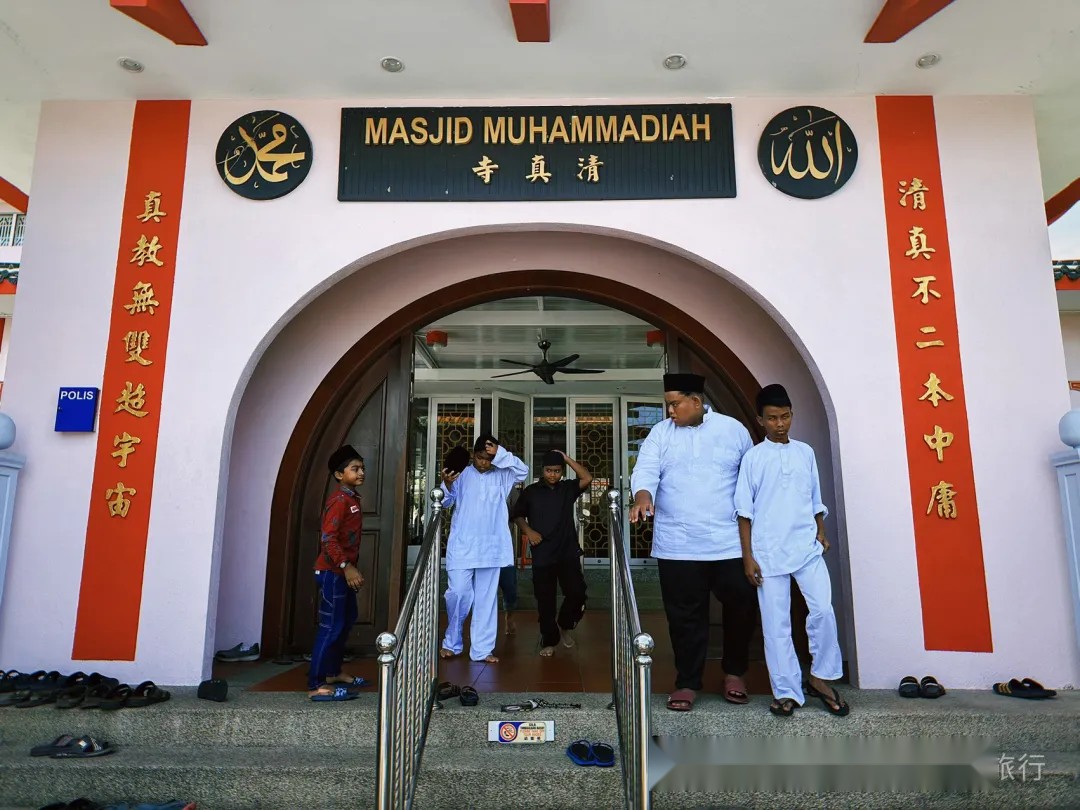
Muhammadiah Mosque, Ipoh: 2013
There are still tons of Chinese mosques throughout Indonesia, Malaysia, Kyrgyzstan, Kazakhstan, Thailand, and Myanmar that I plan to visit when I get the chance.
Al-Anwar Mosque: 1761
Al-Anwar Mosque is located in the Angke village on the west side of Jakarta's old town, which is why it's also known as the Angke Mosque. It was founded in 1761 by a Chinese woman named Ny. Tan Nio, who is said to be of Tatar descent, and the architect was a Chinese man named Liong Tan.
Kebon Jeruk Mosque: 1786
Kebon Jeruk Mosque is located in Krukut, Jakarta. It was built in 1786 under the leadership of the Chinese Captain of the faith, Chau Tsien Hwu. The name Kebon Jeruk means orange orchard. Legend has it that there was an old, dilapidated prayer pavilion on this site, which Chau Tsien Hwu and the local Chinese community rebuilt into the Kebon Jeruk Mosque in 1786. His wife passed away in 1792, and her tombstone features Chinese characters that translate to the Tomb of the Late Madame Tsai, serving as a rare piece of historical evidence for early Chinese Muslims in Indonesia.
Al-Mubarak Mosque: 1785
Masjid Jami’ Al-Mubarak is another Chinese mosque in Krukut, Jakarta. It was spearheaded by the Chinese Captain, Chau Tsien Hwu, who successfully petitioned the Dutch governor for the land, and it was constructed in 1785 with funding from Jakarta’s Chinese Muslim community. Unfortunately, it underwent a total renovation in 1994, so the original Chinese architectural details are gone, and the local Chinese Muslim community here has mostly assimilated into the local population.
Lautze Mosque: 1994
Lautze Mosque is located on Lautze Street in the Pasar Baru area of Jakarta, a busy and bustling district with a long history of Chinese settlement. The mosque was officially established in 1991 by the Haji Karim Oei Foundation, which rented a shophouse on the street. It was managed by Ali Karim Oei, the son of the Indonesian Chinese Muslim pioneer Haji Karim Oei, and officially opened after renovations in 1994.
Ramlie Musofa Mosque: 2016
Ramlie Musofa Mosque is situated in the Sunter lake area of North Jakarta and is often called the Taj Mahal of Jakarta. It was built between 2011 and 2016 by an Aceh-based Chinese Muslim, Haji Ramli Rasidin. The name is an acronym for the founder's family: Ramli (the founder), Lie Njok Kim (his wife), and their three sons: Muhammad, Sofian, and Fabian.
Babah Alun Ancol Mosque: 2017
The Babah Alun Ancol mosque is located under the Wiyoto Wiyono highway in North Jakarta, built in 2017 by the Chinese-Indonesian entrepreneur Babah Alun.
Babah Alun Small Mosque: 2021
In addition to the main Jumu'ah (Friday prayer) mosque, Babah Alun built a smaller mosque in 2021 inside Taman Suropati in Central Jakarta for the daily five-time prayers, known in Indonesian as a mushola (small prayer room). The first floor serves as a security post and restroom for the park, while the second floor holds the ablution area and the prayer hall.
Tjia Khang Hoo Mosque: 2026
The Tjia Khang Hoo Mosque (Masjid Tjia Khang Hoo) is located in the Pekayon village of East Jakarta. It was built by a local Chinese-Indonesian, Budiyanto Tjia, on the site of his father Tjia Khang Hoo's old home. Construction started in 2022 and was officially completed in 2026, making it the newest Chinese-style mosque in Jakarta.
Laozi Temple No. 3, Cirebon: 2022
Located on Jalan Pekalipan in Cirebon's old Chinatown, Laozi Temple No. 3 was converted from a shophouse in 2022 and is operated by the Cirebon chapter of the Haji Karim Oei Foundation. It is the third Chinese-style mosque established by the foundation, following Laozi Temple No. 1 in Jakarta and No. 2 in Bandung.
Cheng Ho Mosque, Surabaya: 2002
Construction on the Cheng Ho Mosque in Surabaya began in 2002, spearheaded by the renowned Chinese-Indonesian leader and businessman, Liu Minyuan. In 2001, Liu partnered with over 140 Chinese business owners to fund the project. It was designed by Indonesian architect Abdul Aziz, and the commemorative plaque was inscribed by Lu Shumin, the former Chinese Ambassador to Indonesia. The mosque houses a kindergarten offering classes in Indonesian, Chinese, Arabic, and English, along with Chinese language tutoring and a Traditional Chinese Medicine clinic to promote Chinese culture.
Thailand
Wang He Mosque, Chiang Mai: 1917
In the early 20th century, Zheng Chonglin, a caravan merchant from Yuxi, Yunnan, and a descendant of the explorer Zheng He, was gifted a piece of land in eastern Chiang Mai by a local chieftain, where he built his residence, the Zheng Mansion. In 1907, Zheng built a prayer room on the property, and many Yunnanese Hui Muslims in Chiang Mai would gather there for their religious duties. In 1917, led by Zheng, the community raised funds to purchase the land across from the mansion and built the Wang He Mosque.
During the 1950s and 60s, a large number of Yunnanese Hui Muslims relocated to Chiang Mai, leading to an increase in the Wang He community. Consequently, in 1966, three hajji (those who have completed the pilgrimage to Mecca)—Huranmao, Ma Ruqi, and Ma Wanzhang—led the effort to rebuild the mosque into the current reinforced concrete structure.
Jing Zhen Mosque, Chiang Mai: 1970
As many Yunnanese Hui Muslims arrived in Chiang Mai via Northern Myanmar during the 1950s and 60s, the original Wang He community became overcrowded. In 1970, Haji Huranmao spearheaded the construction of the Jing Zhen Mosque to the east of Wang He.
Huranmao was born in 1914 in the Xiaoweigeng village of Weishan, Dali, and served as the principal of his hometown's Mu-Guang School in 1934. In the 1940s, he operated a caravan trade route between Thailand and Myanmar, eventually settling in Chiang Mai in 1953. During the 1970s, he founded the Chiang Mai Islamic Committee and served two consecutive terms as its chairman. During his lifetime, he was received by the King of Thailand multiple times and was honored with the royal title Yong Fooanant.
Wan Yang Mei De Mosque, Chiang Mai: 1950s
This mosque was founded by the descendants of refugees from the 93rd Division of the 'Isolated Army in Northern Thailand' (remnants of the KMT forces). The 'Isolated Army' originated in 1950 when the 237th and 93rd Divisions of the Nationalist Army retreated from Yunnan into Myanmar, accompanied by many families and refugees. After 1951, the number of families, merchants, caravan traders, and civilians grew, but due to constant attacks by the Burmese military, they retreated into the mountainous border regions of Thailand.
He Fei Ji Qing Mosque, Chiang Mai: 1950s
This was also established by refugees who fled from Yunnan through Myanmar in the 1950s.
Cheng Xin Mosque, Fang District, Chiang Mai
The Cheng Xin Mosque was established in 1975 by Yunnanese Hui Muslims living in the town of Fang to provide a place of worship and a hub for those coming from nearby villages.
Da Duan Ci Ai Mosque, Chiang Mai: 1975
This is the northernmost Yunnanese-style mosque in Chiang Mai, located in the village of Da Duan, just a stone's throw from the Myanmar border. Da Duan is the first village the Kok River flows into when entering Thailand and has long been a stopover for Yunnanese caravans traveling to Thailand, with some merchants settling there centuries ago. After 1950, a group of refugees moved south, shaping the current Da Duan village.
The old Ci Ai mosque sat by the banks of the Kok River; it was built a century ago using straw and wood before being rebuilt in 1975 into the current structure. The women's prayer hall is quite beautiful, with the first floor serving as a prayer hall and the second floor as a classroom.
Mae Salong Mosque, Chiang Rai: 1960s
In 1961, after the 'Isolated Army' withdrew to Taiwan for the second time, the remaining 3rd and 5th Armies renounced their military status and retreated from Myanmar into the rugged borderlands of Northern Thailand. In 1963, after Myanmar confiscated overseas Chinese property, the 5th Army began providing escort services for cargo companies in Tachileik to generate income, solving their immediate supply issues. Subsequently, the 5th Army headquarters moved to the mountain pass of Mae Salong, where they built bamboo and thatch huts for soldiers and their families.
The Mae Salong Mosque was built in the 1960s by Yunnanese Hui Muslims in the 5th Army. The first Imam, Haji Yang Guoqing, worked in the 5th Army’s intelligence unit and guided the community through the toughest years from the 1960s to the 80s, overseeing the transition from bamboo shacks to iron-roofed wood structures and finally the current concrete building. Major General Haji Ma Jisi, one of the three founders of the mosque, worked tirelessly to raise funds for its reconstruction, donating his own money and efforts selflessly. The first Imam of the mosque was Haji Wang Zhenliang, who was originally a merchant from Yunnan.
Mae Sai Yunnan Mosque, Chiang Rai: 1952
Although Mae Sai had been a mandatory stop for Yunnanese caravans heading to Chiang Mai since the late Qing Dynasty, it wasn't until 1952 that Yunnanese Hui Muslims Ma Xianglin and Ma Enshou initiated the construction of a mosque. Initially just a shack, it was later renovated into a wooden structure with the help of Qian Yizhai and the Chiang Mai community, under the supervision of Ma Zixing. In 1975, as the Yunnanese population in Mae Sai grew, Mu Chengfang initiated a move to the current site on the main road, and the current reinforced concrete building was constructed under the supervision of Ma Weijing and Na Cai Kui.
Chiang Rai Yunnan Mosque: 1910
The Chiang Rai Yunnan Mosque was established in 1910, seven years earlier than Chiang Mai's Wang He Mosque. The current structure was rebuilt in 2009 and is the largest of all the Yunnanese mosques in Northern Thailand. The central dome features Mughal-style architecture, while the minarets are topped with traditional Chinese pavilions, symbolizing the harmony between South Asian-origin Muslims and Chinese Muslims in the north. The entrance to the main hall is inscribed with the characters for 'Gateway of Ritual' and 'Path of Ceremony,' alongside a couplet emphasizing silent contemplation and pure worship. In front of the hall stands a grandfather clock donated by Mr. Mu Yufu, inscribed with 'Promoting the Righteous Path.'
The names of those who donated to the reconstruction are carved onto the first floor of the mosque; among them, 196 are from Yunnan, with many coming from places like Najaying, Tonghai, and Menghai.
Myanmar
Yangon Burmese-Chinese Mosque: 1963
Located in the northern part of Yangon's old city, the full name of the Yangon Burmese-Chinese Mosque is the 'Yangon Burmese-Chinese Islamic Mosque.' Built in 1963, it is one of several mosques in Myanmar established by Yunnanese Hui Muslims. In the 19th century, Yunnanese Muslims in Myanmar were primarily concentrated in the then-capital, Mandalay. In 1868, King Mindon of the Konbaung Dynasty personally granted land to the Yunnanese Hui community, where they built the first Mandalay mosque and a caravan depot. After the fall of the Konbaung Dynasty in 1885, Yangon became the sole capital, attracting many Yunnanese Hui merchants who engaged in jewelry and retail, while using caravans to transport European cotton fabrics back to Yunnan.
Kazakhstan
Almaty Dungan Mosque
The Almaty Dungan Mosque is located on Pavlodarskaya Street in the northern suburbs. The mosque isn't huge, but during Jumu'ah, it’s packed with people from all sorts of backgrounds—the courtyard and every level of the building are filled with worshippers, including many young people. The Imam is a local 'Lao-Shan' Hui Muslim (referring to people from Shaanxi province) who is fluent in the local Shaanxi dialect, Russian, and Arabic. Many of the young and middle-aged members here are very active in community affairs, and chatting with them is a really great experience. Several of the elders used to work in international trade back in China and speak excellent Mandarin.
Malaysia
Ipoh Muhammadiah Mosque: A 2013 Landmark
Located in Tasek on the northern outskirts of Ipoh, Malaysia, the Muhammadiah Mosque was rebuilt between 2011 and 2013 by the Ipoh branch of the Malaysian Chinese Muslim Association. It stands as the first mosque in Malaysia to feature a purely Chinese architectural style, being completed a year before its counterpart in Malacca. The glazed roof tiles of the main prayer hall were specially fired in Luoyang, and you can spot hibiscus patterns along the roof ridges. Beyond serving as a space for prayer and dua, the mosque frequently hosts cultural events to introduce Chinese heritage to local Malay friends. During celebrations like the Lunar New Year, the Mid-Autumn Festival, and the Dragon Boat Festival, the mosque often organizes interactive sessions, such as workshops teaching Malay friends how to wrap zongzi (sticky rice dumplings). view all
I've documented 22 overseas Chinese mosques through 39 rare, firsthand photos. Spanning Jakarta, Surabaya, Cirebon, and beyond, these images vividly capture how centuries of Chinese-descendant Muslims have perfectly fused traditional Chinese craftsmanship with Islamic culture to create these architectural masterpieces.
Indonesia
Al-Anwar Mosque, Jakarta: 1761
Kebon Jeruk Mosque, Jakarta: 1786
Al-Mubarak Mosque, Jakarta: 1785
Lautze Mosque, Jakarta: 1994
Ramlie Musofa Mosque, Jakarta: 2016
Babah Alun Ancol Mosque, Jakarta: 2017
Babah Alun Small Mosque, Jakarta: 2021
Xu Ganghong Mosque, Jakarta: 2026
Lautze Mosque No. 3, Cirebon: 2022
Cheng Ho Mosque, Surabaya: 2002
Thailand
Wang He Mosque, Chiang Mai: 1917
Jing Zhen Mosque, Chiang Mai: 1970
Wan Yang Mei De Mosque, Chiang Mai: 1950s
He Fei Ji Qing Mosque, Chiang Mai: 1950s
Fang Xian Cheng Xin Mosque, Chiang Mai: 1975
Da Duan Ci Ai Mosque, Chiang Mai: 1975
Mae Salong Mosque, Chiang Rai: 1960s
Mae Sai Mosque, Chiang Rai: 1952
Yunnan Mosque, Chiang Rai: 1910
Myanmar
Mian Hua Mosque, Yangon: 1963
Kazakhstan
Dungan Mosque, Almaty
Malaysia
Muhammadiah Mosque, Ipoh: 2013
There are still tons of Chinese mosques throughout Indonesia, Malaysia, Kyrgyzstan, Kazakhstan, Thailand, and Myanmar that I plan to visit when I get the chance.
Al-Anwar Mosque: 1761
Al-Anwar Mosque is located in the Angke village on the west side of Jakarta's old town, which is why it's also known as the Angke Mosque. It was founded in 1761 by a Chinese woman named Ny. Tan Nio, who is said to be of Tatar descent, and the architect was a Chinese man named Liong Tan.


Kebon Jeruk Mosque: 1786
Kebon Jeruk Mosque is located in Krukut, Jakarta. It was built in 1786 under the leadership of the Chinese Captain of the faith, Chau Tsien Hwu. The name Kebon Jeruk means orange orchard. Legend has it that there was an old, dilapidated prayer pavilion on this site, which Chau Tsien Hwu and the local Chinese community rebuilt into the Kebon Jeruk Mosque in 1786. His wife passed away in 1792, and her tombstone features Chinese characters that translate to the Tomb of the Late Madame Tsai, serving as a rare piece of historical evidence for early Chinese Muslims in Indonesia.
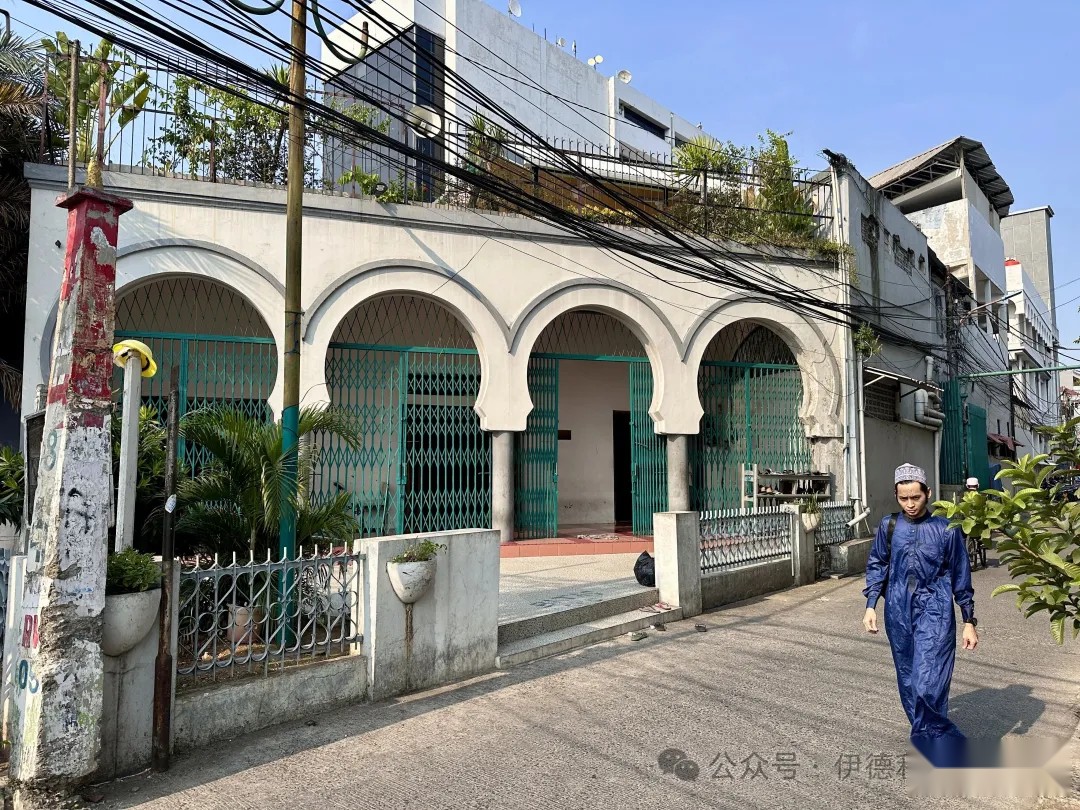

Al-Mubarak Mosque: 1785
Masjid Jami’ Al-Mubarak is another Chinese mosque in Krukut, Jakarta. It was spearheaded by the Chinese Captain, Chau Tsien Hwu, who successfully petitioned the Dutch governor for the land, and it was constructed in 1785 with funding from Jakarta’s Chinese Muslim community. Unfortunately, it underwent a total renovation in 1994, so the original Chinese architectural details are gone, and the local Chinese Muslim community here has mostly assimilated into the local population.
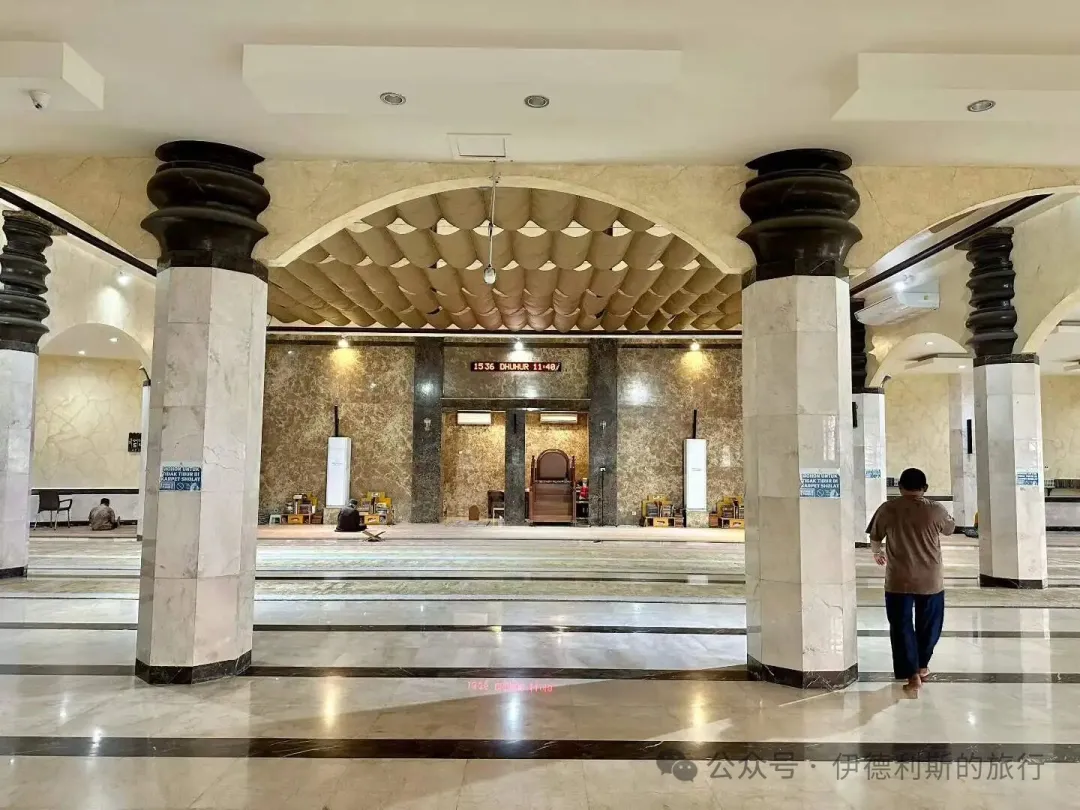
Lautze Mosque: 1994
Lautze Mosque is located on Lautze Street in the Pasar Baru area of Jakarta, a busy and bustling district with a long history of Chinese settlement. The mosque was officially established in 1991 by the Haji Karim Oei Foundation, which rented a shophouse on the street. It was managed by Ali Karim Oei, the son of the Indonesian Chinese Muslim pioneer Haji Karim Oei, and officially opened after renovations in 1994.

Ramlie Musofa Mosque: 2016
Ramlie Musofa Mosque is situated in the Sunter lake area of North Jakarta and is often called the Taj Mahal of Jakarta. It was built between 2011 and 2016 by an Aceh-based Chinese Muslim, Haji Ramli Rasidin. The name is an acronym for the founder's family: Ramli (the founder), Lie Njok Kim (his wife), and their three sons: Muhammad, Sofian, and Fabian.

Babah Alun Ancol Mosque: 2017
The Babah Alun Ancol mosque is located under the Wiyoto Wiyono highway in North Jakarta, built in 2017 by the Chinese-Indonesian entrepreneur Babah Alun.
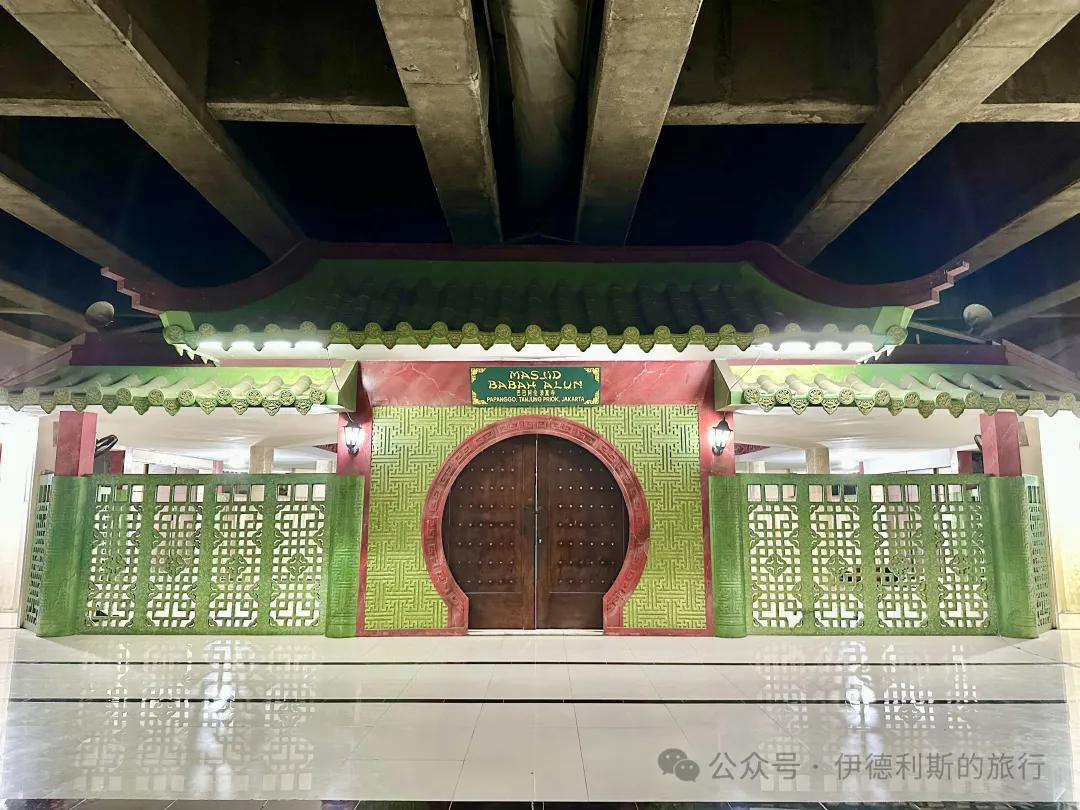
Babah Alun Small Mosque: 2021
In addition to the main Jumu'ah (Friday prayer) mosque, Babah Alun built a smaller mosque in 2021 inside Taman Suropati in Central Jakarta for the daily five-time prayers, known in Indonesian as a mushola (small prayer room). The first floor serves as a security post and restroom for the park, while the second floor holds the ablution area and the prayer hall.

Tjia Khang Hoo Mosque: 2026
The Tjia Khang Hoo Mosque (Masjid Tjia Khang Hoo) is located in the Pekayon village of East Jakarta. It was built by a local Chinese-Indonesian, Budiyanto Tjia, on the site of his father Tjia Khang Hoo's old home. Construction started in 2022 and was officially completed in 2026, making it the newest Chinese-style mosque in Jakarta.

Laozi Temple No. 3, Cirebon: 2022
Located on Jalan Pekalipan in Cirebon's old Chinatown, Laozi Temple No. 3 was converted from a shophouse in 2022 and is operated by the Cirebon chapter of the Haji Karim Oei Foundation. It is the third Chinese-style mosque established by the foundation, following Laozi Temple No. 1 in Jakarta and No. 2 in Bandung.

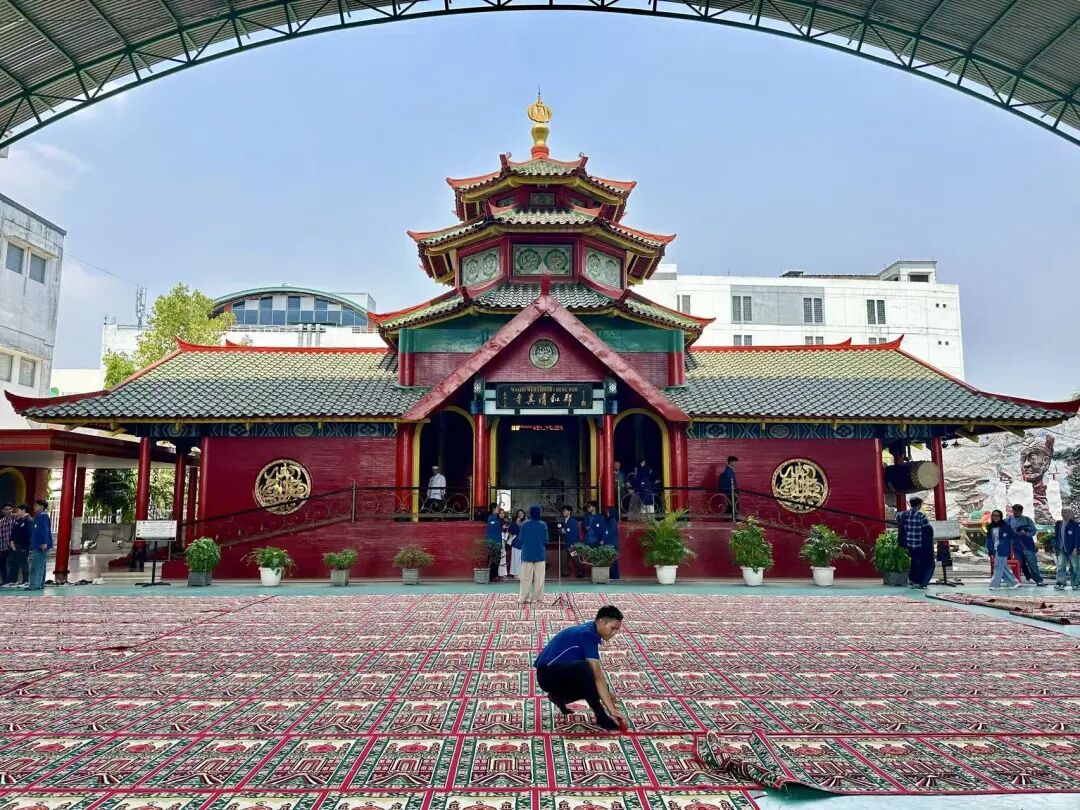
Cheng Ho Mosque, Surabaya: 2002
Construction on the Cheng Ho Mosque in Surabaya began in 2002, spearheaded by the renowned Chinese-Indonesian leader and businessman, Liu Minyuan. In 2001, Liu partnered with over 140 Chinese business owners to fund the project. It was designed by Indonesian architect Abdul Aziz, and the commemorative plaque was inscribed by Lu Shumin, the former Chinese Ambassador to Indonesia. The mosque houses a kindergarten offering classes in Indonesian, Chinese, Arabic, and English, along with Chinese language tutoring and a Traditional Chinese Medicine clinic to promote Chinese culture.

Thailand
Wang He Mosque, Chiang Mai: 1917
In the early 20th century, Zheng Chonglin, a caravan merchant from Yuxi, Yunnan, and a descendant of the explorer Zheng He, was gifted a piece of land in eastern Chiang Mai by a local chieftain, where he built his residence, the Zheng Mansion. In 1907, Zheng built a prayer room on the property, and many Yunnanese Hui Muslims in Chiang Mai would gather there for their religious duties. In 1917, led by Zheng, the community raised funds to purchase the land across from the mansion and built the Wang He Mosque.
During the 1950s and 60s, a large number of Yunnanese Hui Muslims relocated to Chiang Mai, leading to an increase in the Wang He community. Consequently, in 1966, three hajji (those who have completed the pilgrimage to Mecca)—Huranmao, Ma Ruqi, and Ma Wanzhang—led the effort to rebuild the mosque into the current reinforced concrete structure.

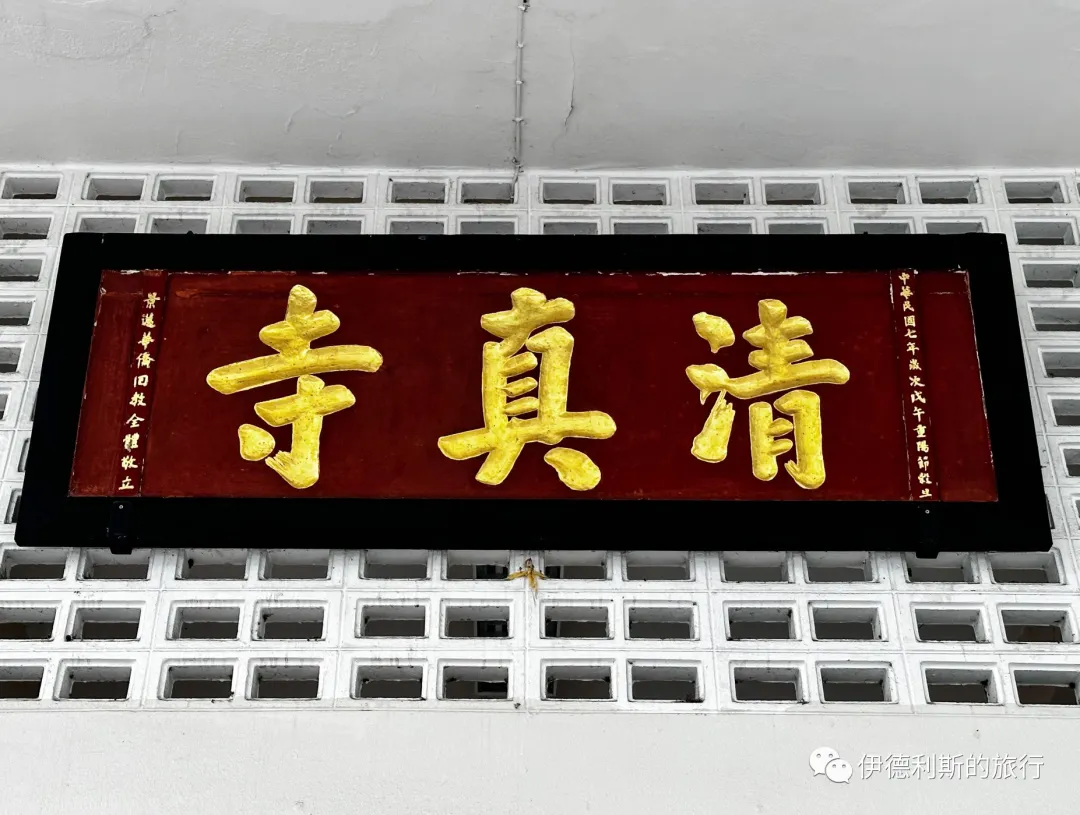
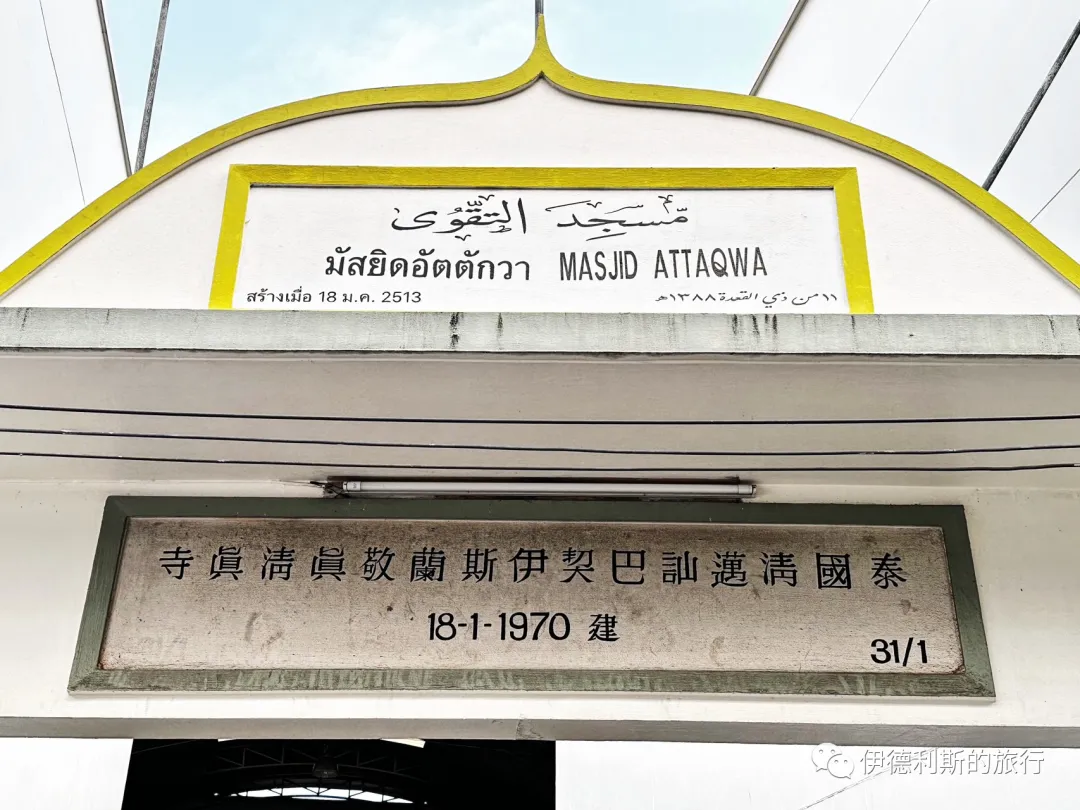
Jing Zhen Mosque, Chiang Mai: 1970
As many Yunnanese Hui Muslims arrived in Chiang Mai via Northern Myanmar during the 1950s and 60s, the original Wang He community became overcrowded. In 1970, Haji Huranmao spearheaded the construction of the Jing Zhen Mosque to the east of Wang He.
Huranmao was born in 1914 in the Xiaoweigeng village of Weishan, Dali, and served as the principal of his hometown's Mu-Guang School in 1934. In the 1940s, he operated a caravan trade route between Thailand and Myanmar, eventually settling in Chiang Mai in 1953. During the 1970s, he founded the Chiang Mai Islamic Committee and served two consecutive terms as its chairman. During his lifetime, he was received by the King of Thailand multiple times and was honored with the royal title Yong Fooanant.

Wan Yang Mei De Mosque, Chiang Mai: 1950s
This mosque was founded by the descendants of refugees from the 93rd Division of the 'Isolated Army in Northern Thailand' (remnants of the KMT forces). The 'Isolated Army' originated in 1950 when the 237th and 93rd Divisions of the Nationalist Army retreated from Yunnan into Myanmar, accompanied by many families and refugees. After 1951, the number of families, merchants, caravan traders, and civilians grew, but due to constant attacks by the Burmese military, they retreated into the mountainous border regions of Thailand.


He Fei Ji Qing Mosque, Chiang Mai: 1950s
This was also established by refugees who fled from Yunnan through Myanmar in the 1950s.


Cheng Xin Mosque, Fang District, Chiang Mai
The Cheng Xin Mosque was established in 1975 by Yunnanese Hui Muslims living in the town of Fang to provide a place of worship and a hub for those coming from nearby villages.


Da Duan Ci Ai Mosque, Chiang Mai: 1975
This is the northernmost Yunnanese-style mosque in Chiang Mai, located in the village of Da Duan, just a stone's throw from the Myanmar border. Da Duan is the first village the Kok River flows into when entering Thailand and has long been a stopover for Yunnanese caravans traveling to Thailand, with some merchants settling there centuries ago. After 1950, a group of refugees moved south, shaping the current Da Duan village.
The old Ci Ai mosque sat by the banks of the Kok River; it was built a century ago using straw and wood before being rebuilt in 1975 into the current structure. The women's prayer hall is quite beautiful, with the first floor serving as a prayer hall and the second floor as a classroom.


Mae Salong Mosque, Chiang Rai: 1960s
In 1961, after the 'Isolated Army' withdrew to Taiwan for the second time, the remaining 3rd and 5th Armies renounced their military status and retreated from Myanmar into the rugged borderlands of Northern Thailand. In 1963, after Myanmar confiscated overseas Chinese property, the 5th Army began providing escort services for cargo companies in Tachileik to generate income, solving their immediate supply issues. Subsequently, the 5th Army headquarters moved to the mountain pass of Mae Salong, where they built bamboo and thatch huts for soldiers and their families.
The Mae Salong Mosque was built in the 1960s by Yunnanese Hui Muslims in the 5th Army. The first Imam, Haji Yang Guoqing, worked in the 5th Army’s intelligence unit and guided the community through the toughest years from the 1960s to the 80s, overseeing the transition from bamboo shacks to iron-roofed wood structures and finally the current concrete building. Major General Haji Ma Jisi, one of the three founders of the mosque, worked tirelessly to raise funds for its reconstruction, donating his own money and efforts selflessly. The first Imam of the mosque was Haji Wang Zhenliang, who was originally a merchant from Yunnan.
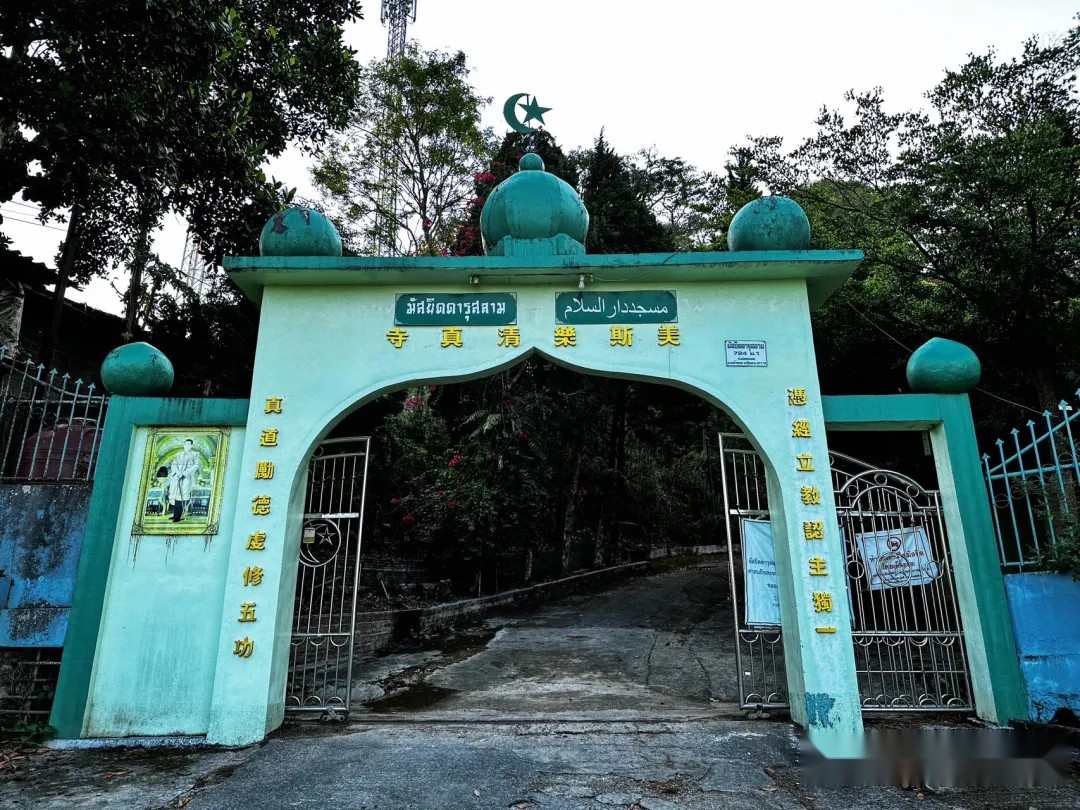

Mae Sai Yunnan Mosque, Chiang Rai: 1952
Although Mae Sai had been a mandatory stop for Yunnanese caravans heading to Chiang Mai since the late Qing Dynasty, it wasn't until 1952 that Yunnanese Hui Muslims Ma Xianglin and Ma Enshou initiated the construction of a mosque. Initially just a shack, it was later renovated into a wooden structure with the help of Qian Yizhai and the Chiang Mai community, under the supervision of Ma Zixing. In 1975, as the Yunnanese population in Mae Sai grew, Mu Chengfang initiated a move to the current site on the main road, and the current reinforced concrete building was constructed under the supervision of Ma Weijing and Na Cai Kui.
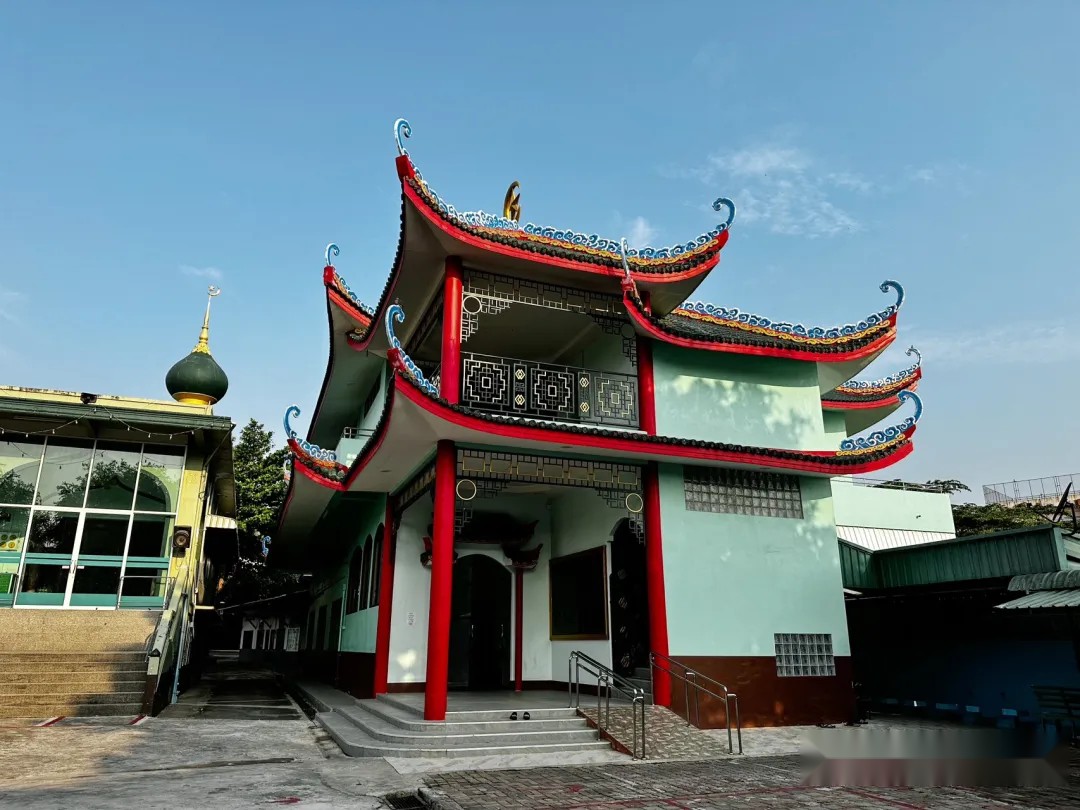


Chiang Rai Yunnan Mosque: 1910
The Chiang Rai Yunnan Mosque was established in 1910, seven years earlier than Chiang Mai's Wang He Mosque. The current structure was rebuilt in 2009 and is the largest of all the Yunnanese mosques in Northern Thailand. The central dome features Mughal-style architecture, while the minarets are topped with traditional Chinese pavilions, symbolizing the harmony between South Asian-origin Muslims and Chinese Muslims in the north. The entrance to the main hall is inscribed with the characters for 'Gateway of Ritual' and 'Path of Ceremony,' alongside a couplet emphasizing silent contemplation and pure worship. In front of the hall stands a grandfather clock donated by Mr. Mu Yufu, inscribed with 'Promoting the Righteous Path.'
The names of those who donated to the reconstruction are carved onto the first floor of the mosque; among them, 196 are from Yunnan, with many coming from places like Najaying, Tonghai, and Menghai.


Myanmar
Yangon Burmese-Chinese Mosque: 1963
Located in the northern part of Yangon's old city, the full name of the Yangon Burmese-Chinese Mosque is the 'Yangon Burmese-Chinese Islamic Mosque.' Built in 1963, it is one of several mosques in Myanmar established by Yunnanese Hui Muslims. In the 19th century, Yunnanese Muslims in Myanmar were primarily concentrated in the then-capital, Mandalay. In 1868, King Mindon of the Konbaung Dynasty personally granted land to the Yunnanese Hui community, where they built the first Mandalay mosque and a caravan depot. After the fall of the Konbaung Dynasty in 1885, Yangon became the sole capital, attracting many Yunnanese Hui merchants who engaged in jewelry and retail, while using caravans to transport European cotton fabrics back to Yunnan.


Kazakhstan
Almaty Dungan Mosque
The Almaty Dungan Mosque is located on Pavlodarskaya Street in the northern suburbs. The mosque isn't huge, but during Jumu'ah, it’s packed with people from all sorts of backgrounds—the courtyard and every level of the building are filled with worshippers, including many young people. The Imam is a local 'Lao-Shan' Hui Muslim (referring to people from Shaanxi province) who is fluent in the local Shaanxi dialect, Russian, and Arabic. Many of the young and middle-aged members here are very active in community affairs, and chatting with them is a really great experience. Several of the elders used to work in international trade back in China and speak excellent Mandarin.


Malaysia
Ipoh Muhammadiah Mosque: A 2013 Landmark
Located in Tasek on the northern outskirts of Ipoh, Malaysia, the Muhammadiah Mosque was rebuilt between 2011 and 2013 by the Ipoh branch of the Malaysian Chinese Muslim Association. It stands as the first mosque in Malaysia to feature a purely Chinese architectural style, being completed a year before its counterpart in Malacca. The glazed roof tiles of the main prayer hall were specially fired in Luoyang, and you can spot hibiscus patterns along the roof ridges. Beyond serving as a space for prayer and dua, the mosque frequently hosts cultural events to introduce Chinese heritage to local Malay friends. During celebrations like the Lunar New Year, the Mid-Autumn Festival, and the Dragon Boat Festival, the mosque often organizes interactive sessions, such as workshops teaching Malay friends how to wrap zongzi (sticky rice dumplings).

Indonesia
Al-Anwar Mosque, Jakarta: 1761
Kebon Jeruk Mosque, Jakarta: 1786
Al-Mubarak Mosque, Jakarta: 1785
Lautze Mosque, Jakarta: 1994
Ramlie Musofa Mosque, Jakarta: 2016
Babah Alun Ancol Mosque, Jakarta: 2017
Babah Alun Small Mosque, Jakarta: 2021
Xu Ganghong Mosque, Jakarta: 2026
Lautze Mosque No. 3, Cirebon: 2022
Cheng Ho Mosque, Surabaya: 2002
Thailand
Wang He Mosque, Chiang Mai: 1917
Jing Zhen Mosque, Chiang Mai: 1970
Wan Yang Mei De Mosque, Chiang Mai: 1950s
He Fei Ji Qing Mosque, Chiang Mai: 1950s
Fang Xian Cheng Xin Mosque, Chiang Mai: 1975
Da Duan Ci Ai Mosque, Chiang Mai: 1975
Mae Salong Mosque, Chiang Rai: 1960s
Mae Sai Mosque, Chiang Rai: 1952
Yunnan Mosque, Chiang Rai: 1910
Myanmar
Mian Hua Mosque, Yangon: 1963
Kazakhstan
Dungan Mosque, Almaty
Malaysia
Muhammadiah Mosque, Ipoh: 2013
There are still tons of Chinese mosques throughout Indonesia, Malaysia, Kyrgyzstan, Kazakhstan, Thailand, and Myanmar that I plan to visit when I get the chance.
Al-Anwar Mosque: 1761
Al-Anwar Mosque is located in the Angke village on the west side of Jakarta's old town, which is why it's also known as the Angke Mosque. It was founded in 1761 by a Chinese woman named Ny. Tan Nio, who is said to be of Tatar descent, and the architect was a Chinese man named Liong Tan.
Kebon Jeruk Mosque: 1786
Kebon Jeruk Mosque is located in Krukut, Jakarta. It was built in 1786 under the leadership of the Chinese Captain of the faith, Chau Tsien Hwu. The name Kebon Jeruk means orange orchard. Legend has it that there was an old, dilapidated prayer pavilion on this site, which Chau Tsien Hwu and the local Chinese community rebuilt into the Kebon Jeruk Mosque in 1786. His wife passed away in 1792, and her tombstone features Chinese characters that translate to the Tomb of the Late Madame Tsai, serving as a rare piece of historical evidence for early Chinese Muslims in Indonesia.
Al-Mubarak Mosque: 1785
Masjid Jami’ Al-Mubarak is another Chinese mosque in Krukut, Jakarta. It was spearheaded by the Chinese Captain, Chau Tsien Hwu, who successfully petitioned the Dutch governor for the land, and it was constructed in 1785 with funding from Jakarta’s Chinese Muslim community. Unfortunately, it underwent a total renovation in 1994, so the original Chinese architectural details are gone, and the local Chinese Muslim community here has mostly assimilated into the local population.
Lautze Mosque: 1994
Lautze Mosque is located on Lautze Street in the Pasar Baru area of Jakarta, a busy and bustling district with a long history of Chinese settlement. The mosque was officially established in 1991 by the Haji Karim Oei Foundation, which rented a shophouse on the street. It was managed by Ali Karim Oei, the son of the Indonesian Chinese Muslim pioneer Haji Karim Oei, and officially opened after renovations in 1994.
Ramlie Musofa Mosque: 2016
Ramlie Musofa Mosque is situated in the Sunter lake area of North Jakarta and is often called the Taj Mahal of Jakarta. It was built between 2011 and 2016 by an Aceh-based Chinese Muslim, Haji Ramli Rasidin. The name is an acronym for the founder's family: Ramli (the founder), Lie Njok Kim (his wife), and their three sons: Muhammad, Sofian, and Fabian.
Babah Alun Ancol Mosque: 2017
The Babah Alun Ancol mosque is located under the Wiyoto Wiyono highway in North Jakarta, built in 2017 by the Chinese-Indonesian entrepreneur Babah Alun.
Babah Alun Small Mosque: 2021
In addition to the main Jumu'ah (Friday prayer) mosque, Babah Alun built a smaller mosque in 2021 inside Taman Suropati in Central Jakarta for the daily five-time prayers, known in Indonesian as a mushola (small prayer room). The first floor serves as a security post and restroom for the park, while the second floor holds the ablution area and the prayer hall.
Tjia Khang Hoo Mosque: 2026
The Tjia Khang Hoo Mosque (Masjid Tjia Khang Hoo) is located in the Pekayon village of East Jakarta. It was built by a local Chinese-Indonesian, Budiyanto Tjia, on the site of his father Tjia Khang Hoo's old home. Construction started in 2022 and was officially completed in 2026, making it the newest Chinese-style mosque in Jakarta.
Laozi Temple No. 3, Cirebon: 2022
Located on Jalan Pekalipan in Cirebon's old Chinatown, Laozi Temple No. 3 was converted from a shophouse in 2022 and is operated by the Cirebon chapter of the Haji Karim Oei Foundation. It is the third Chinese-style mosque established by the foundation, following Laozi Temple No. 1 in Jakarta and No. 2 in Bandung.
Cheng Ho Mosque, Surabaya: 2002
Construction on the Cheng Ho Mosque in Surabaya began in 2002, spearheaded by the renowned Chinese-Indonesian leader and businessman, Liu Minyuan. In 2001, Liu partnered with over 140 Chinese business owners to fund the project. It was designed by Indonesian architect Abdul Aziz, and the commemorative plaque was inscribed by Lu Shumin, the former Chinese Ambassador to Indonesia. The mosque houses a kindergarten offering classes in Indonesian, Chinese, Arabic, and English, along with Chinese language tutoring and a Traditional Chinese Medicine clinic to promote Chinese culture.
Thailand
Wang He Mosque, Chiang Mai: 1917
In the early 20th century, Zheng Chonglin, a caravan merchant from Yuxi, Yunnan, and a descendant of the explorer Zheng He, was gifted a piece of land in eastern Chiang Mai by a local chieftain, where he built his residence, the Zheng Mansion. In 1907, Zheng built a prayer room on the property, and many Yunnanese Hui Muslims in Chiang Mai would gather there for their religious duties. In 1917, led by Zheng, the community raised funds to purchase the land across from the mansion and built the Wang He Mosque.
During the 1950s and 60s, a large number of Yunnanese Hui Muslims relocated to Chiang Mai, leading to an increase in the Wang He community. Consequently, in 1966, three hajji (those who have completed the pilgrimage to Mecca)—Huranmao, Ma Ruqi, and Ma Wanzhang—led the effort to rebuild the mosque into the current reinforced concrete structure.
Jing Zhen Mosque, Chiang Mai: 1970
As many Yunnanese Hui Muslims arrived in Chiang Mai via Northern Myanmar during the 1950s and 60s, the original Wang He community became overcrowded. In 1970, Haji Huranmao spearheaded the construction of the Jing Zhen Mosque to the east of Wang He.
Huranmao was born in 1914 in the Xiaoweigeng village of Weishan, Dali, and served as the principal of his hometown's Mu-Guang School in 1934. In the 1940s, he operated a caravan trade route between Thailand and Myanmar, eventually settling in Chiang Mai in 1953. During the 1970s, he founded the Chiang Mai Islamic Committee and served two consecutive terms as its chairman. During his lifetime, he was received by the King of Thailand multiple times and was honored with the royal title Yong Fooanant.
Wan Yang Mei De Mosque, Chiang Mai: 1950s
This mosque was founded by the descendants of refugees from the 93rd Division of the 'Isolated Army in Northern Thailand' (remnants of the KMT forces). The 'Isolated Army' originated in 1950 when the 237th and 93rd Divisions of the Nationalist Army retreated from Yunnan into Myanmar, accompanied by many families and refugees. After 1951, the number of families, merchants, caravan traders, and civilians grew, but due to constant attacks by the Burmese military, they retreated into the mountainous border regions of Thailand.
He Fei Ji Qing Mosque, Chiang Mai: 1950s
This was also established by refugees who fled from Yunnan through Myanmar in the 1950s.
Cheng Xin Mosque, Fang District, Chiang Mai
The Cheng Xin Mosque was established in 1975 by Yunnanese Hui Muslims living in the town of Fang to provide a place of worship and a hub for those coming from nearby villages.
Da Duan Ci Ai Mosque, Chiang Mai: 1975
This is the northernmost Yunnanese-style mosque in Chiang Mai, located in the village of Da Duan, just a stone's throw from the Myanmar border. Da Duan is the first village the Kok River flows into when entering Thailand and has long been a stopover for Yunnanese caravans traveling to Thailand, with some merchants settling there centuries ago. After 1950, a group of refugees moved south, shaping the current Da Duan village.
The old Ci Ai mosque sat by the banks of the Kok River; it was built a century ago using straw and wood before being rebuilt in 1975 into the current structure. The women's prayer hall is quite beautiful, with the first floor serving as a prayer hall and the second floor as a classroom.
Mae Salong Mosque, Chiang Rai: 1960s
In 1961, after the 'Isolated Army' withdrew to Taiwan for the second time, the remaining 3rd and 5th Armies renounced their military status and retreated from Myanmar into the rugged borderlands of Northern Thailand. In 1963, after Myanmar confiscated overseas Chinese property, the 5th Army began providing escort services for cargo companies in Tachileik to generate income, solving their immediate supply issues. Subsequently, the 5th Army headquarters moved to the mountain pass of Mae Salong, where they built bamboo and thatch huts for soldiers and their families.
The Mae Salong Mosque was built in the 1960s by Yunnanese Hui Muslims in the 5th Army. The first Imam, Haji Yang Guoqing, worked in the 5th Army’s intelligence unit and guided the community through the toughest years from the 1960s to the 80s, overseeing the transition from bamboo shacks to iron-roofed wood structures and finally the current concrete building. Major General Haji Ma Jisi, one of the three founders of the mosque, worked tirelessly to raise funds for its reconstruction, donating his own money and efforts selflessly. The first Imam of the mosque was Haji Wang Zhenliang, who was originally a merchant from Yunnan.
Mae Sai Yunnan Mosque, Chiang Rai: 1952
Although Mae Sai had been a mandatory stop for Yunnanese caravans heading to Chiang Mai since the late Qing Dynasty, it wasn't until 1952 that Yunnanese Hui Muslims Ma Xianglin and Ma Enshou initiated the construction of a mosque. Initially just a shack, it was later renovated into a wooden structure with the help of Qian Yizhai and the Chiang Mai community, under the supervision of Ma Zixing. In 1975, as the Yunnanese population in Mae Sai grew, Mu Chengfang initiated a move to the current site on the main road, and the current reinforced concrete building was constructed under the supervision of Ma Weijing and Na Cai Kui.
Chiang Rai Yunnan Mosque: 1910
The Chiang Rai Yunnan Mosque was established in 1910, seven years earlier than Chiang Mai's Wang He Mosque. The current structure was rebuilt in 2009 and is the largest of all the Yunnanese mosques in Northern Thailand. The central dome features Mughal-style architecture, while the minarets are topped with traditional Chinese pavilions, symbolizing the harmony between South Asian-origin Muslims and Chinese Muslims in the north. The entrance to the main hall is inscribed with the characters for 'Gateway of Ritual' and 'Path of Ceremony,' alongside a couplet emphasizing silent contemplation and pure worship. In front of the hall stands a grandfather clock donated by Mr. Mu Yufu, inscribed with 'Promoting the Righteous Path.'
The names of those who donated to the reconstruction are carved onto the first floor of the mosque; among them, 196 are from Yunnan, with many coming from places like Najaying, Tonghai, and Menghai.
Myanmar
Yangon Burmese-Chinese Mosque: 1963
Located in the northern part of Yangon's old city, the full name of the Yangon Burmese-Chinese Mosque is the 'Yangon Burmese-Chinese Islamic Mosque.' Built in 1963, it is one of several mosques in Myanmar established by Yunnanese Hui Muslims. In the 19th century, Yunnanese Muslims in Myanmar were primarily concentrated in the then-capital, Mandalay. In 1868, King Mindon of the Konbaung Dynasty personally granted land to the Yunnanese Hui community, where they built the first Mandalay mosque and a caravan depot. After the fall of the Konbaung Dynasty in 1885, Yangon became the sole capital, attracting many Yunnanese Hui merchants who engaged in jewelry and retail, while using caravans to transport European cotton fabrics back to Yunnan.
Kazakhstan
Almaty Dungan Mosque
The Almaty Dungan Mosque is located on Pavlodarskaya Street in the northern suburbs. The mosque isn't huge, but during Jumu'ah, it’s packed with people from all sorts of backgrounds—the courtyard and every level of the building are filled with worshippers, including many young people. The Imam is a local 'Lao-Shan' Hui Muslim (referring to people from Shaanxi province) who is fluent in the local Shaanxi dialect, Russian, and Arabic. Many of the young and middle-aged members here are very active in community affairs, and chatting with them is a really great experience. Several of the elders used to work in international trade back in China and speak excellent Mandarin.
Malaysia
Ipoh Muhammadiah Mosque: A 2013 Landmark
Located in Tasek on the northern outskirts of Ipoh, Malaysia, the Muhammadiah Mosque was rebuilt between 2011 and 2013 by the Ipoh branch of the Malaysian Chinese Muslim Association. It stands as the first mosque in Malaysia to feature a purely Chinese architectural style, being completed a year before its counterpart in Malacca. The glazed roof tiles of the main prayer hall were specially fired in Luoyang, and you can spot hibiscus patterns along the roof ridges. Beyond serving as a space for prayer and dua, the mosque frequently hosts cultural events to introduce Chinese heritage to local Malay friends. During celebrations like the Lunar New Year, the Mid-Autumn Festival, and the Dragon Boat Festival, the mosque often organizes interactive sessions, such as workshops teaching Malay friends how to wrap zongzi (sticky rice dumplings).
Exploring Overseas Chinese Mosques: Architectural Heritage and Islamic Traditions in Southeast Asia
Articles • Hasan09 posted the article • 0 comments • 33 views • 2026-11-09 10:32
I've documented 22 overseas Chinese mosques through 39 rare, firsthand photos. Spanning Jakarta, Surabaya, Cirebon, and beyond, these images vividly capture how centuries of Chinese-descendant Muslims have perfectly fused traditional Chinese craftsmanship with Islamic culture to create these architectural masterpieces.
Indonesia
Al-Anwar Mosque, Jakarta: 1761
Kebon Jeruk Mosque, Jakarta: 1786
Al-Mubarak Mosque, Jakarta: 1785
Lautze Mosque, Jakarta: 1994
Ramlie Musofa Mosque, Jakarta: 2016
Babah Alun Ancol Mosque, Jakarta: 2017
Babah Alun Small Mosque, Jakarta: 2021
Xu Ganghong Mosque, Jakarta: 2026
Lautze Mosque No. 3, Cirebon: 2022
Cheng Ho Mosque, Surabaya: 2002
Thailand
Wang He Mosque, Chiang Mai: 1917
Jing Zhen Mosque, Chiang Mai: 1970
Wan Yang Mei De Mosque, Chiang Mai: 1950s
He Fei Ji Qing Mosque, Chiang Mai: 1950s
Fang Xian Cheng Xin Mosque, Chiang Mai: 1975
Da Duan Ci Ai Mosque, Chiang Mai: 1975
Mae Salong Mosque, Chiang Rai: 1960s
Mae Sai Mosque, Chiang Rai: 1952
Yunnan Mosque, Chiang Rai: 1910
Myanmar
Mian Hua Mosque, Yangon: 1963
Kazakhstan
Dungan Mosque, Almaty
Malaysia
Muhammadiah Mosque, Ipoh: 2013
There are still tons of Chinese mosques throughout Indonesia, Malaysia, Kyrgyzstan, Kazakhstan, Thailand, and Myanmar that I plan to visit when I get the chance.
Al-Anwar Mosque: 1761
Al-Anwar Mosque is located in the Angke village on the west side of Jakarta's old town, which is why it's also known as the Angke Mosque. It was founded in 1761 by a Chinese woman named Ny. Tan Nio, who is said to be of Tatar descent, and the architect was a Chinese man named Liong Tan.
Kebon Jeruk Mosque: 1786
Kebon Jeruk Mosque is located in Krukut, Jakarta. It was built in 1786 under the leadership of the Chinese Captain of the faith, Chau Tsien Hwu. The name Kebon Jeruk means orange orchard. Legend has it that there was an old, dilapidated prayer pavilion on this site, which Chau Tsien Hwu and the local Chinese community rebuilt into the Kebon Jeruk Mosque in 1786. His wife passed away in 1792, and her tombstone features Chinese characters that translate to the Tomb of the Late Madame Tsai, serving as a rare piece of historical evidence for early Chinese Muslims in Indonesia.
Al-Mubarak Mosque: 1785
Masjid Jami’ Al-Mubarak is another Chinese mosque in Krukut, Jakarta. It was spearheaded by the Chinese Captain, Chau Tsien Hwu, who successfully petitioned the Dutch governor for the land, and it was constructed in 1785 with funding from Jakarta’s Chinese Muslim community. Unfortunately, it underwent a total renovation in 1994, so the original Chinese architectural details are gone, and the local Chinese Muslim community here has mostly assimilated into the local population.
Lautze Mosque: 1994
Lautze Mosque is located on Lautze Street in the Pasar Baru area of Jakarta, a busy and bustling district with a long history of Chinese settlement. The mosque was officially established in 1991 by the Haji Karim Oei Foundation, which rented a shophouse on the street. It was managed by Ali Karim Oei, the son of the Indonesian Chinese Muslim pioneer Haji Karim Oei, and officially opened after renovations in 1994.
Ramlie Musofa Mosque: 2016
Ramlie Musofa Mosque is situated in the Sunter lake area of North Jakarta and is often called the Taj Mahal of Jakarta. It was built between 2011 and 2016 by an Aceh-based Chinese Muslim, Haji Ramli Rasidin. The name is an acronym for the founder's family: Ramli (the founder), Lie Njok Kim (his wife), and their three sons: Muhammad, Sofian, and Fabian.
Babah Alun Ancol Mosque: 2017
The Babah Alun Ancol mosque is located under the Wiyoto Wiyono highway in North Jakarta, built in 2017 by the Chinese-Indonesian entrepreneur Babah Alun.
Babah Alun Small Mosque: 2021
In addition to the main Jumu'ah (Friday prayer) mosque, Babah Alun built a smaller mosque in 2021 inside Taman Suropati in Central Jakarta for the daily five-time prayers, known in Indonesian as a mushola (small prayer room). The first floor serves as a security post and restroom for the park, while the second floor holds the ablution area and the prayer hall.
Tjia Khang Hoo Mosque: 2026
The Tjia Khang Hoo Mosque (Masjid Tjia Khang Hoo) is located in the Pekayon village of East Jakarta. It was built by a local Chinese-Indonesian, Budiyanto Tjia, on the site of his father Tjia Khang Hoo's old home. Construction started in 2022 and was officially completed in 2026, making it the newest Chinese-style mosque in Jakarta.
Laozi Temple No. 3, Cirebon: 2022
Located on Jalan Pekalipan in Cirebon's old Chinatown, Laozi Temple No. 3 was converted from a shophouse in 2022 and is operated by the Cirebon chapter of the Haji Karim Oei Foundation. It is the third Chinese-style mosque established by the foundation, following Laozi Temple No. 1 in Jakarta and No. 2 in Bandung.
Cheng Ho Mosque, Surabaya: 2002
Construction on the Cheng Ho Mosque in Surabaya began in 2002, spearheaded by the renowned Chinese-Indonesian leader and businessman, Liu Minyuan. In 2001, Liu partnered with over 140 Chinese business owners to fund the project. It was designed by Indonesian architect Abdul Aziz, and the commemorative plaque was inscribed by Lu Shumin, the former Chinese Ambassador to Indonesia. The mosque houses a kindergarten offering classes in Indonesian, Chinese, Arabic, and English, along with Chinese language tutoring and a Traditional Chinese Medicine clinic to promote Chinese culture.
Thailand
Wang He Mosque, Chiang Mai: 1917
In the early 20th century, Zheng Chonglin, a caravan merchant from Yuxi, Yunnan, and a descendant of the explorer Zheng He, was gifted a piece of land in eastern Chiang Mai by a local chieftain, where he built his residence, the Zheng Mansion. In 1907, Zheng built a prayer room on the property, and many Yunnanese Hui Muslims in Chiang Mai would gather there for their religious duties. In 1917, led by Zheng, the community raised funds to purchase the land across from the mansion and built the Wang He Mosque.
During the 1950s and 60s, a large number of Yunnanese Hui Muslims relocated to Chiang Mai, leading to an increase in the Wang He community. Consequently, in 1966, three hajji (those who have completed the pilgrimage to Mecca)—Huranmao, Ma Ruqi, and Ma Wanzhang—led the effort to rebuild the mosque into the current reinforced concrete structure.
Jing Zhen Mosque, Chiang Mai: 1970
As many Yunnanese Hui Muslims arrived in Chiang Mai via Northern Myanmar during the 1950s and 60s, the original Wang He community became overcrowded. In 1970, Haji Huranmao spearheaded the construction of the Jing Zhen Mosque to the east of Wang He.
Huranmao was born in 1914 in the Xiaoweigeng village of Weishan, Dali, and served as the principal of his hometown's Mu-Guang School in 1934. In the 1940s, he operated a caravan trade route between Thailand and Myanmar, eventually settling in Chiang Mai in 1953. During the 1970s, he founded the Chiang Mai Islamic Committee and served two consecutive terms as its chairman. During his lifetime, he was received by the King of Thailand multiple times and was honored with the royal title Yong Fooanant.
Wan Yang Mei De Mosque, Chiang Mai: 1950s
This mosque was founded by the descendants of refugees from the 93rd Division of the 'Isolated Army in Northern Thailand' (remnants of the KMT forces). The 'Isolated Army' originated in 1950 when the 237th and 93rd Divisions of the Nationalist Army retreated from Yunnan into Myanmar, accompanied by many families and refugees. After 1951, the number of families, merchants, caravan traders, and civilians grew, but due to constant attacks by the Burmese military, they retreated into the mountainous border regions of Thailand.
He Fei Ji Qing Mosque, Chiang Mai: 1950s
This was also established by refugees who fled from Yunnan through Myanmar in the 1950s.
Cheng Xin Mosque, Fang District, Chiang Mai
The Cheng Xin Mosque was established in 1975 by Yunnanese Hui Muslims living in the town of Fang to provide a place of worship and a hub for those coming from nearby villages.
Da Duan Ci Ai Mosque, Chiang Mai: 1975
This is the northernmost Yunnanese-style mosque in Chiang Mai, located in the village of Da Duan, just a stone's throw from the Myanmar border. Da Duan is the first village the Kok River flows into when entering Thailand and has long been a stopover for Yunnanese caravans traveling to Thailand, with some merchants settling there centuries ago. After 1950, a group of refugees moved south, shaping the current Da Duan village.
The old Ci Ai mosque sat by the banks of the Kok River; it was built a century ago using straw and wood before being rebuilt in 1975 into the current structure. The women's prayer hall is quite beautiful, with the first floor serving as a prayer hall and the second floor as a classroom.
Mae Salong Mosque, Chiang Rai: 1960s
In 1961, after the 'Isolated Army' withdrew to Taiwan for the second time, the remaining 3rd and 5th Armies renounced their military status and retreated from Myanmar into the rugged borderlands of Northern Thailand. In 1963, after Myanmar confiscated overseas Chinese property, the 5th Army began providing escort services for cargo companies in Tachileik to generate income, solving their immediate supply issues. Subsequently, the 5th Army headquarters moved to the mountain pass of Mae Salong, where they built bamboo and thatch huts for soldiers and their families.
The Mae Salong Mosque was built in the 1960s by Yunnanese Hui Muslims in the 5th Army. The first Imam, Haji Yang Guoqing, worked in the 5th Army’s intelligence unit and guided the community through the toughest years from the 1960s to the 80s, overseeing the transition from bamboo shacks to iron-roofed wood structures and finally the current concrete building. Major General Haji Ma Jisi, one of the three founders of the mosque, worked tirelessly to raise funds for its reconstruction, donating his own money and efforts selflessly. The first Imam of the mosque was Haji Wang Zhenliang, who was originally a merchant from Yunnan.
Mae Sai Yunnan Mosque, Chiang Rai: 1952
Although Mae Sai had been a mandatory stop for Yunnanese caravans heading to Chiang Mai since the late Qing Dynasty, it wasn't until 1952 that Yunnanese Hui Muslims Ma Xianglin and Ma Enshou initiated the construction of a mosque. Initially just a shack, it was later renovated into a wooden structure with the help of Qian Yizhai and the Chiang Mai community, under the supervision of Ma Zixing. In 1975, as the Yunnanese population in Mae Sai grew, Mu Chengfang initiated a move to the current site on the main road, and the current reinforced concrete building was constructed under the supervision of Ma Weijing and Na Cai Kui.
Chiang Rai Yunnan Mosque: 1910
The Chiang Rai Yunnan Mosque was established in 1910, seven years earlier than Chiang Mai's Wang He Mosque. The current structure was rebuilt in 2009 and is the largest of all the Yunnanese mosques in Northern Thailand. The central dome features Mughal-style architecture, while the minarets are topped with traditional Chinese pavilions, symbolizing the harmony between South Asian-origin Muslims and Chinese Muslims in the north. The entrance to the main hall is inscribed with the characters for 'Gateway of Ritual' and 'Path of Ceremony,' alongside a couplet emphasizing silent contemplation and pure worship. In front of the hall stands a grandfather clock donated by Mr. Mu Yufu, inscribed with 'Promoting the Righteous Path.'
The names of those who donated to the reconstruction are carved onto the first floor of the mosque; among them, 196 are from Yunnan, with many coming from places like Najaying, Tonghai, and Menghai.
Myanmar
Yangon Burmese-Chinese Mosque: 1963
Located in the northern part of Yangon's old city, the full name of the Yangon Burmese-Chinese Mosque is the 'Yangon Burmese-Chinese Islamic Mosque.' Built in 1963, it is one of several mosques in Myanmar established by Yunnanese Hui Muslims. In the 19th century, Yunnanese Muslims in Myanmar were primarily concentrated in the then-capital, Mandalay. In 1868, King Mindon of the Konbaung Dynasty personally granted land to the Yunnanese Hui community, where they built the first Mandalay mosque and a caravan depot. After the fall of the Konbaung Dynasty in 1885, Yangon became the sole capital, attracting many Yunnanese Hui merchants who engaged in jewelry and retail, while using caravans to transport European cotton fabrics back to Yunnan.
Kazakhstan
Almaty Dungan Mosque
The Almaty Dungan Mosque is located on Pavlodarskaya Street in the northern suburbs. The mosque isn't huge, but during Jumu'ah, it’s packed with people from all sorts of backgrounds—the courtyard and every level of the building are filled with worshippers, including many young people. The Imam is a local 'Lao-Shan' Hui Muslim (referring to people from Shaanxi province) who is fluent in the local Shaanxi dialect, Russian, and Arabic. Many of the young and middle-aged members here are very active in community affairs, and chatting with them is a really great experience. Several of the elders used to work in international trade back in China and speak excellent Mandarin.
Malaysia
Ipoh Muhammadiah Mosque: A 2013 Landmark
Located in Tasek on the northern outskirts of Ipoh, Malaysia, the Muhammadiah Mosque was rebuilt between 2011 and 2013 by the Ipoh branch of the Malaysian Chinese Muslim Association. It stands as the first mosque in Malaysia to feature a purely Chinese architectural style, being completed a year before its counterpart in Malacca. The glazed roof tiles of the main prayer hall were specially fired in Luoyang, and you can spot hibiscus patterns along the roof ridges. Beyond serving as a space for prayer and dua, the mosque frequently hosts cultural events to introduce Chinese heritage to local Malay friends. During celebrations like the Lunar New Year, the Mid-Autumn Festival, and the Dragon Boat Festival, the mosque often organizes interactive sessions, such as workshops teaching Malay friends how to wrap zongzi (sticky rice dumplings). view all
Indonesia
Al-Anwar Mosque, Jakarta: 1761
Kebon Jeruk Mosque, Jakarta: 1786
Al-Mubarak Mosque, Jakarta: 1785
Lautze Mosque, Jakarta: 1994
Ramlie Musofa Mosque, Jakarta: 2016
Babah Alun Ancol Mosque, Jakarta: 2017
Babah Alun Small Mosque, Jakarta: 2021
Xu Ganghong Mosque, Jakarta: 2026
Lautze Mosque No. 3, Cirebon: 2022
Cheng Ho Mosque, Surabaya: 2002
Thailand
Wang He Mosque, Chiang Mai: 1917
Jing Zhen Mosque, Chiang Mai: 1970
Wan Yang Mei De Mosque, Chiang Mai: 1950s
He Fei Ji Qing Mosque, Chiang Mai: 1950s
Fang Xian Cheng Xin Mosque, Chiang Mai: 1975
Da Duan Ci Ai Mosque, Chiang Mai: 1975
Mae Salong Mosque, Chiang Rai: 1960s
Mae Sai Mosque, Chiang Rai: 1952
Yunnan Mosque, Chiang Rai: 1910
Myanmar
Mian Hua Mosque, Yangon: 1963
Kazakhstan
Dungan Mosque, Almaty
Malaysia
Muhammadiah Mosque, Ipoh: 2013
There are still tons of Chinese mosques throughout Indonesia, Malaysia, Kyrgyzstan, Kazakhstan, Thailand, and Myanmar that I plan to visit when I get the chance.
Al-Anwar Mosque: 1761
Al-Anwar Mosque is located in the Angke village on the west side of Jakarta's old town, which is why it's also known as the Angke Mosque. It was founded in 1761 by a Chinese woman named Ny. Tan Nio, who is said to be of Tatar descent, and the architect was a Chinese man named Liong Tan.
Kebon Jeruk Mosque: 1786
Kebon Jeruk Mosque is located in Krukut, Jakarta. It was built in 1786 under the leadership of the Chinese Captain of the faith, Chau Tsien Hwu. The name Kebon Jeruk means orange orchard. Legend has it that there was an old, dilapidated prayer pavilion on this site, which Chau Tsien Hwu and the local Chinese community rebuilt into the Kebon Jeruk Mosque in 1786. His wife passed away in 1792, and her tombstone features Chinese characters that translate to the Tomb of the Late Madame Tsai, serving as a rare piece of historical evidence for early Chinese Muslims in Indonesia.
Al-Mubarak Mosque: 1785
Masjid Jami’ Al-Mubarak is another Chinese mosque in Krukut, Jakarta. It was spearheaded by the Chinese Captain, Chau Tsien Hwu, who successfully petitioned the Dutch governor for the land, and it was constructed in 1785 with funding from Jakarta’s Chinese Muslim community. Unfortunately, it underwent a total renovation in 1994, so the original Chinese architectural details are gone, and the local Chinese Muslim community here has mostly assimilated into the local population.
Lautze Mosque: 1994
Lautze Mosque is located on Lautze Street in the Pasar Baru area of Jakarta, a busy and bustling district with a long history of Chinese settlement. The mosque was officially established in 1991 by the Haji Karim Oei Foundation, which rented a shophouse on the street. It was managed by Ali Karim Oei, the son of the Indonesian Chinese Muslim pioneer Haji Karim Oei, and officially opened after renovations in 1994.
Ramlie Musofa Mosque: 2016
Ramlie Musofa Mosque is situated in the Sunter lake area of North Jakarta and is often called the Taj Mahal of Jakarta. It was built between 2011 and 2016 by an Aceh-based Chinese Muslim, Haji Ramli Rasidin. The name is an acronym for the founder's family: Ramli (the founder), Lie Njok Kim (his wife), and their three sons: Muhammad, Sofian, and Fabian.
Babah Alun Ancol Mosque: 2017
The Babah Alun Ancol mosque is located under the Wiyoto Wiyono highway in North Jakarta, built in 2017 by the Chinese-Indonesian entrepreneur Babah Alun.
Babah Alun Small Mosque: 2021
In addition to the main Jumu'ah (Friday prayer) mosque, Babah Alun built a smaller mosque in 2021 inside Taman Suropati in Central Jakarta for the daily five-time prayers, known in Indonesian as a mushola (small prayer room). The first floor serves as a security post and restroom for the park, while the second floor holds the ablution area and the prayer hall.
Tjia Khang Hoo Mosque: 2026
The Tjia Khang Hoo Mosque (Masjid Tjia Khang Hoo) is located in the Pekayon village of East Jakarta. It was built by a local Chinese-Indonesian, Budiyanto Tjia, on the site of his father Tjia Khang Hoo's old home. Construction started in 2022 and was officially completed in 2026, making it the newest Chinese-style mosque in Jakarta.
Laozi Temple No. 3, Cirebon: 2022
Located on Jalan Pekalipan in Cirebon's old Chinatown, Laozi Temple No. 3 was converted from a shophouse in 2022 and is operated by the Cirebon chapter of the Haji Karim Oei Foundation. It is the third Chinese-style mosque established by the foundation, following Laozi Temple No. 1 in Jakarta and No. 2 in Bandung.
Cheng Ho Mosque, Surabaya: 2002
Construction on the Cheng Ho Mosque in Surabaya began in 2002, spearheaded by the renowned Chinese-Indonesian leader and businessman, Liu Minyuan. In 2001, Liu partnered with over 140 Chinese business owners to fund the project. It was designed by Indonesian architect Abdul Aziz, and the commemorative plaque was inscribed by Lu Shumin, the former Chinese Ambassador to Indonesia. The mosque houses a kindergarten offering classes in Indonesian, Chinese, Arabic, and English, along with Chinese language tutoring and a Traditional Chinese Medicine clinic to promote Chinese culture.
Thailand
Wang He Mosque, Chiang Mai: 1917
In the early 20th century, Zheng Chonglin, a caravan merchant from Yuxi, Yunnan, and a descendant of the explorer Zheng He, was gifted a piece of land in eastern Chiang Mai by a local chieftain, where he built his residence, the Zheng Mansion. In 1907, Zheng built a prayer room on the property, and many Yunnanese Hui Muslims in Chiang Mai would gather there for their religious duties. In 1917, led by Zheng, the community raised funds to purchase the land across from the mansion and built the Wang He Mosque.
During the 1950s and 60s, a large number of Yunnanese Hui Muslims relocated to Chiang Mai, leading to an increase in the Wang He community. Consequently, in 1966, three hajji (those who have completed the pilgrimage to Mecca)—Huranmao, Ma Ruqi, and Ma Wanzhang—led the effort to rebuild the mosque into the current reinforced concrete structure.
Jing Zhen Mosque, Chiang Mai: 1970
As many Yunnanese Hui Muslims arrived in Chiang Mai via Northern Myanmar during the 1950s and 60s, the original Wang He community became overcrowded. In 1970, Haji Huranmao spearheaded the construction of the Jing Zhen Mosque to the east of Wang He.
Huranmao was born in 1914 in the Xiaoweigeng village of Weishan, Dali, and served as the principal of his hometown's Mu-Guang School in 1934. In the 1940s, he operated a caravan trade route between Thailand and Myanmar, eventually settling in Chiang Mai in 1953. During the 1970s, he founded the Chiang Mai Islamic Committee and served two consecutive terms as its chairman. During his lifetime, he was received by the King of Thailand multiple times and was honored with the royal title Yong Fooanant.
Wan Yang Mei De Mosque, Chiang Mai: 1950s
This mosque was founded by the descendants of refugees from the 93rd Division of the 'Isolated Army in Northern Thailand' (remnants of the KMT forces). The 'Isolated Army' originated in 1950 when the 237th and 93rd Divisions of the Nationalist Army retreated from Yunnan into Myanmar, accompanied by many families and refugees. After 1951, the number of families, merchants, caravan traders, and civilians grew, but due to constant attacks by the Burmese military, they retreated into the mountainous border regions of Thailand.
He Fei Ji Qing Mosque, Chiang Mai: 1950s
This was also established by refugees who fled from Yunnan through Myanmar in the 1950s.
Cheng Xin Mosque, Fang District, Chiang Mai
The Cheng Xin Mosque was established in 1975 by Yunnanese Hui Muslims living in the town of Fang to provide a place of worship and a hub for those coming from nearby villages.
Da Duan Ci Ai Mosque, Chiang Mai: 1975
This is the northernmost Yunnanese-style mosque in Chiang Mai, located in the village of Da Duan, just a stone's throw from the Myanmar border. Da Duan is the first village the Kok River flows into when entering Thailand and has long been a stopover for Yunnanese caravans traveling to Thailand, with some merchants settling there centuries ago. After 1950, a group of refugees moved south, shaping the current Da Duan village.
The old Ci Ai mosque sat by the banks of the Kok River; it was built a century ago using straw and wood before being rebuilt in 1975 into the current structure. The women's prayer hall is quite beautiful, with the first floor serving as a prayer hall and the second floor as a classroom.
Mae Salong Mosque, Chiang Rai: 1960s
In 1961, after the 'Isolated Army' withdrew to Taiwan for the second time, the remaining 3rd and 5th Armies renounced their military status and retreated from Myanmar into the rugged borderlands of Northern Thailand. In 1963, after Myanmar confiscated overseas Chinese property, the 5th Army began providing escort services for cargo companies in Tachileik to generate income, solving their immediate supply issues. Subsequently, the 5th Army headquarters moved to the mountain pass of Mae Salong, where they built bamboo and thatch huts for soldiers and their families.
The Mae Salong Mosque was built in the 1960s by Yunnanese Hui Muslims in the 5th Army. The first Imam, Haji Yang Guoqing, worked in the 5th Army’s intelligence unit and guided the community through the toughest years from the 1960s to the 80s, overseeing the transition from bamboo shacks to iron-roofed wood structures and finally the current concrete building. Major General Haji Ma Jisi, one of the three founders of the mosque, worked tirelessly to raise funds for its reconstruction, donating his own money and efforts selflessly. The first Imam of the mosque was Haji Wang Zhenliang, who was originally a merchant from Yunnan.
Mae Sai Yunnan Mosque, Chiang Rai: 1952
Although Mae Sai had been a mandatory stop for Yunnanese caravans heading to Chiang Mai since the late Qing Dynasty, it wasn't until 1952 that Yunnanese Hui Muslims Ma Xianglin and Ma Enshou initiated the construction of a mosque. Initially just a shack, it was later renovated into a wooden structure with the help of Qian Yizhai and the Chiang Mai community, under the supervision of Ma Zixing. In 1975, as the Yunnanese population in Mae Sai grew, Mu Chengfang initiated a move to the current site on the main road, and the current reinforced concrete building was constructed under the supervision of Ma Weijing and Na Cai Kui.
Chiang Rai Yunnan Mosque: 1910
The Chiang Rai Yunnan Mosque was established in 1910, seven years earlier than Chiang Mai's Wang He Mosque. The current structure was rebuilt in 2009 and is the largest of all the Yunnanese mosques in Northern Thailand. The central dome features Mughal-style architecture, while the minarets are topped with traditional Chinese pavilions, symbolizing the harmony between South Asian-origin Muslims and Chinese Muslims in the north. The entrance to the main hall is inscribed with the characters for 'Gateway of Ritual' and 'Path of Ceremony,' alongside a couplet emphasizing silent contemplation and pure worship. In front of the hall stands a grandfather clock donated by Mr. Mu Yufu, inscribed with 'Promoting the Righteous Path.'
The names of those who donated to the reconstruction are carved onto the first floor of the mosque; among them, 196 are from Yunnan, with many coming from places like Najaying, Tonghai, and Menghai.
Myanmar
Yangon Burmese-Chinese Mosque: 1963
Located in the northern part of Yangon's old city, the full name of the Yangon Burmese-Chinese Mosque is the 'Yangon Burmese-Chinese Islamic Mosque.' Built in 1963, it is one of several mosques in Myanmar established by Yunnanese Hui Muslims. In the 19th century, Yunnanese Muslims in Myanmar were primarily concentrated in the then-capital, Mandalay. In 1868, King Mindon of the Konbaung Dynasty personally granted land to the Yunnanese Hui community, where they built the first Mandalay mosque and a caravan depot. After the fall of the Konbaung Dynasty in 1885, Yangon became the sole capital, attracting many Yunnanese Hui merchants who engaged in jewelry and retail, while using caravans to transport European cotton fabrics back to Yunnan.
Kazakhstan
Almaty Dungan Mosque
The Almaty Dungan Mosque is located on Pavlodarskaya Street in the northern suburbs. The mosque isn't huge, but during Jumu'ah, it’s packed with people from all sorts of backgrounds—the courtyard and every level of the building are filled with worshippers, including many young people. The Imam is a local 'Lao-Shan' Hui Muslim (referring to people from Shaanxi province) who is fluent in the local Shaanxi dialect, Russian, and Arabic. Many of the young and middle-aged members here are very active in community affairs, and chatting with them is a really great experience. Several of the elders used to work in international trade back in China and speak excellent Mandarin.
Malaysia
Ipoh Muhammadiah Mosque: A 2013 Landmark
Located in Tasek on the northern outskirts of Ipoh, Malaysia, the Muhammadiah Mosque was rebuilt between 2011 and 2013 by the Ipoh branch of the Malaysian Chinese Muslim Association. It stands as the first mosque in Malaysia to feature a purely Chinese architectural style, being completed a year before its counterpart in Malacca. The glazed roof tiles of the main prayer hall were specially fired in Luoyang, and you can spot hibiscus patterns along the roof ridges. Beyond serving as a space for prayer and dua, the mosque frequently hosts cultural events to introduce Chinese heritage to local Malay friends. During celebrations like the Lunar New Year, the Mid-Autumn Festival, and the Dragon Boat Festival, the mosque often organizes interactive sessions, such as workshops teaching Malay friends how to wrap zongzi (sticky rice dumplings). view all
I've documented 22 overseas Chinese mosques through 39 rare, firsthand photos. Spanning Jakarta, Surabaya, Cirebon, and beyond, these images vividly capture how centuries of Chinese-descendant Muslims have perfectly fused traditional Chinese craftsmanship with Islamic culture to create these architectural masterpieces.
Indonesia
Al-Anwar Mosque, Jakarta: 1761
Kebon Jeruk Mosque, Jakarta: 1786
Al-Mubarak Mosque, Jakarta: 1785
Lautze Mosque, Jakarta: 1994
Ramlie Musofa Mosque, Jakarta: 2016
Babah Alun Ancol Mosque, Jakarta: 2017
Babah Alun Small Mosque, Jakarta: 2021
Xu Ganghong Mosque, Jakarta: 2026
Lautze Mosque No. 3, Cirebon: 2022
Cheng Ho Mosque, Surabaya: 2002
Thailand
Wang He Mosque, Chiang Mai: 1917
Jing Zhen Mosque, Chiang Mai: 1970
Wan Yang Mei De Mosque, Chiang Mai: 1950s
He Fei Ji Qing Mosque, Chiang Mai: 1950s
Fang Xian Cheng Xin Mosque, Chiang Mai: 1975
Da Duan Ci Ai Mosque, Chiang Mai: 1975
Mae Salong Mosque, Chiang Rai: 1960s
Mae Sai Mosque, Chiang Rai: 1952
Yunnan Mosque, Chiang Rai: 1910
Myanmar
Mian Hua Mosque, Yangon: 1963
Kazakhstan
Dungan Mosque, Almaty
Malaysia
Muhammadiah Mosque, Ipoh: 2013
There are still tons of Chinese mosques throughout Indonesia, Malaysia, Kyrgyzstan, Kazakhstan, Thailand, and Myanmar that I plan to visit when I get the chance.
Al-Anwar Mosque: 1761
Al-Anwar Mosque is located in the Angke village on the west side of Jakarta's old town, which is why it's also known as the Angke Mosque. It was founded in 1761 by a Chinese woman named Ny. Tan Nio, who is said to be of Tatar descent, and the architect was a Chinese man named Liong Tan.
Kebon Jeruk Mosque: 1786
Kebon Jeruk Mosque is located in Krukut, Jakarta. It was built in 1786 under the leadership of the Chinese Captain of the faith, Chau Tsien Hwu. The name Kebon Jeruk means orange orchard. Legend has it that there was an old, dilapidated prayer pavilion on this site, which Chau Tsien Hwu and the local Chinese community rebuilt into the Kebon Jeruk Mosque in 1786. His wife passed away in 1792, and her tombstone features Chinese characters that translate to the Tomb of the Late Madame Tsai, serving as a rare piece of historical evidence for early Chinese Muslims in Indonesia.
Al-Mubarak Mosque: 1785
Masjid Jami’ Al-Mubarak is another Chinese mosque in Krukut, Jakarta. It was spearheaded by the Chinese Captain, Chau Tsien Hwu, who successfully petitioned the Dutch governor for the land, and it was constructed in 1785 with funding from Jakarta’s Chinese Muslim community. Unfortunately, it underwent a total renovation in 1994, so the original Chinese architectural details are gone, and the local Chinese Muslim community here has mostly assimilated into the local population.
Lautze Mosque: 1994
Lautze Mosque is located on Lautze Street in the Pasar Baru area of Jakarta, a busy and bustling district with a long history of Chinese settlement. The mosque was officially established in 1991 by the Haji Karim Oei Foundation, which rented a shophouse on the street. It was managed by Ali Karim Oei, the son of the Indonesian Chinese Muslim pioneer Haji Karim Oei, and officially opened after renovations in 1994.
Ramlie Musofa Mosque: 2016
Ramlie Musofa Mosque is situated in the Sunter lake area of North Jakarta and is often called the Taj Mahal of Jakarta. It was built between 2011 and 2016 by an Aceh-based Chinese Muslim, Haji Ramli Rasidin. The name is an acronym for the founder's family: Ramli (the founder), Lie Njok Kim (his wife), and their three sons: Muhammad, Sofian, and Fabian.
Babah Alun Ancol Mosque: 2017
The Babah Alun Ancol mosque is located under the Wiyoto Wiyono highway in North Jakarta, built in 2017 by the Chinese-Indonesian entrepreneur Babah Alun.
Babah Alun Small Mosque: 2021
In addition to the main Jumu'ah (Friday prayer) mosque, Babah Alun built a smaller mosque in 2021 inside Taman Suropati in Central Jakarta for the daily five-time prayers, known in Indonesian as a mushola (small prayer room). The first floor serves as a security post and restroom for the park, while the second floor holds the ablution area and the prayer hall.
Tjia Khang Hoo Mosque: 2026
The Tjia Khang Hoo Mosque (Masjid Tjia Khang Hoo) is located in the Pekayon village of East Jakarta. It was built by a local Chinese-Indonesian, Budiyanto Tjia, on the site of his father Tjia Khang Hoo's old home. Construction started in 2022 and was officially completed in 2026, making it the newest Chinese-style mosque in Jakarta.
Laozi Temple No. 3, Cirebon: 2022
Located on Jalan Pekalipan in Cirebon's old Chinatown, Laozi Temple No. 3 was converted from a shophouse in 2022 and is operated by the Cirebon chapter of the Haji Karim Oei Foundation. It is the third Chinese-style mosque established by the foundation, following Laozi Temple No. 1 in Jakarta and No. 2 in Bandung.
Cheng Ho Mosque, Surabaya: 2002
Construction on the Cheng Ho Mosque in Surabaya began in 2002, spearheaded by the renowned Chinese-Indonesian leader and businessman, Liu Minyuan. In 2001, Liu partnered with over 140 Chinese business owners to fund the project. It was designed by Indonesian architect Abdul Aziz, and the commemorative plaque was inscribed by Lu Shumin, the former Chinese Ambassador to Indonesia. The mosque houses a kindergarten offering classes in Indonesian, Chinese, Arabic, and English, along with Chinese language tutoring and a Traditional Chinese Medicine clinic to promote Chinese culture.
Thailand
Wang He Mosque, Chiang Mai: 1917
In the early 20th century, Zheng Chonglin, a caravan merchant from Yuxi, Yunnan, and a descendant of the explorer Zheng He, was gifted a piece of land in eastern Chiang Mai by a local chieftain, where he built his residence, the Zheng Mansion. In 1907, Zheng built a prayer room on the property, and many Yunnanese Hui Muslims in Chiang Mai would gather there for their religious duties. In 1917, led by Zheng, the community raised funds to purchase the land across from the mansion and built the Wang He Mosque.
During the 1950s and 60s, a large number of Yunnanese Hui Muslims relocated to Chiang Mai, leading to an increase in the Wang He community. Consequently, in 1966, three hajji (those who have completed the pilgrimage to Mecca)—Huranmao, Ma Ruqi, and Ma Wanzhang—led the effort to rebuild the mosque into the current reinforced concrete structure.
Jing Zhen Mosque, Chiang Mai: 1970
As many Yunnanese Hui Muslims arrived in Chiang Mai via Northern Myanmar during the 1950s and 60s, the original Wang He community became overcrowded. In 1970, Haji Huranmao spearheaded the construction of the Jing Zhen Mosque to the east of Wang He.
Huranmao was born in 1914 in the Xiaoweigeng village of Weishan, Dali, and served as the principal of his hometown's Mu-Guang School in 1934. In the 1940s, he operated a caravan trade route between Thailand and Myanmar, eventually settling in Chiang Mai in 1953. During the 1970s, he founded the Chiang Mai Islamic Committee and served two consecutive terms as its chairman. During his lifetime, he was received by the King of Thailand multiple times and was honored with the royal title Yong Fooanant.
Wan Yang Mei De Mosque, Chiang Mai: 1950s
This mosque was founded by the descendants of refugees from the 93rd Division of the 'Isolated Army in Northern Thailand' (remnants of the KMT forces). The 'Isolated Army' originated in 1950 when the 237th and 93rd Divisions of the Nationalist Army retreated from Yunnan into Myanmar, accompanied by many families and refugees. After 1951, the number of families, merchants, caravan traders, and civilians grew, but due to constant attacks by the Burmese military, they retreated into the mountainous border regions of Thailand.
He Fei Ji Qing Mosque, Chiang Mai: 1950s
This was also established by refugees who fled from Yunnan through Myanmar in the 1950s.
Cheng Xin Mosque, Fang District, Chiang Mai
The Cheng Xin Mosque was established in 1975 by Yunnanese Hui Muslims living in the town of Fang to provide a place of worship and a hub for those coming from nearby villages.
Da Duan Ci Ai Mosque, Chiang Mai: 1975
This is the northernmost Yunnanese-style mosque in Chiang Mai, located in the village of Da Duan, just a stone's throw from the Myanmar border. Da Duan is the first village the Kok River flows into when entering Thailand and has long been a stopover for Yunnanese caravans traveling to Thailand, with some merchants settling there centuries ago. After 1950, a group of refugees moved south, shaping the current Da Duan village.
The old Ci Ai mosque sat by the banks of the Kok River; it was built a century ago using straw and wood before being rebuilt in 1975 into the current structure. The women's prayer hall is quite beautiful, with the first floor serving as a prayer hall and the second floor as a classroom.
Mae Salong Mosque, Chiang Rai: 1960s
In 1961, after the 'Isolated Army' withdrew to Taiwan for the second time, the remaining 3rd and 5th Armies renounced their military status and retreated from Myanmar into the rugged borderlands of Northern Thailand. In 1963, after Myanmar confiscated overseas Chinese property, the 5th Army began providing escort services for cargo companies in Tachileik to generate income, solving their immediate supply issues. Subsequently, the 5th Army headquarters moved to the mountain pass of Mae Salong, where they built bamboo and thatch huts for soldiers and their families.
The Mae Salong Mosque was built in the 1960s by Yunnanese Hui Muslims in the 5th Army. The first Imam, Haji Yang Guoqing, worked in the 5th Army’s intelligence unit and guided the community through the toughest years from the 1960s to the 80s, overseeing the transition from bamboo shacks to iron-roofed wood structures and finally the current concrete building. Major General Haji Ma Jisi, one of the three founders of the mosque, worked tirelessly to raise funds for its reconstruction, donating his own money and efforts selflessly. The first Imam of the mosque was Haji Wang Zhenliang, who was originally a merchant from Yunnan.
Mae Sai Yunnan Mosque, Chiang Rai: 1952
Although Mae Sai had been a mandatory stop for Yunnanese caravans heading to Chiang Mai since the late Qing Dynasty, it wasn't until 1952 that Yunnanese Hui Muslims Ma Xianglin and Ma Enshou initiated the construction of a mosque. Initially just a shack, it was later renovated into a wooden structure with the help of Qian Yizhai and the Chiang Mai community, under the supervision of Ma Zixing. In 1975, as the Yunnanese population in Mae Sai grew, Mu Chengfang initiated a move to the current site on the main road, and the current reinforced concrete building was constructed under the supervision of Ma Weijing and Na Cai Kui.
Chiang Rai Yunnan Mosque: 1910
The Chiang Rai Yunnan Mosque was established in 1910, seven years earlier than Chiang Mai's Wang He Mosque. The current structure was rebuilt in 2009 and is the largest of all the Yunnanese mosques in Northern Thailand. The central dome features Mughal-style architecture, while the minarets are topped with traditional Chinese pavilions, symbolizing the harmony between South Asian-origin Muslims and Chinese Muslims in the north. The entrance to the main hall is inscribed with the characters for 'Gateway of Ritual' and 'Path of Ceremony,' alongside a couplet emphasizing silent contemplation and pure worship. In front of the hall stands a grandfather clock donated by Mr. Mu Yufu, inscribed with 'Promoting the Righteous Path.'
The names of those who donated to the reconstruction are carved onto the first floor of the mosque; among them, 196 are from Yunnan, with many coming from places like Najaying, Tonghai, and Menghai.
Myanmar
Yangon Burmese-Chinese Mosque: 1963
Located in the northern part of Yangon's old city, the full name of the Yangon Burmese-Chinese Mosque is the 'Yangon Burmese-Chinese Islamic Mosque.' Built in 1963, it is one of several mosques in Myanmar established by Yunnanese Hui Muslims. In the 19th century, Yunnanese Muslims in Myanmar were primarily concentrated in the then-capital, Mandalay. In 1868, King Mindon of the Konbaung Dynasty personally granted land to the Yunnanese Hui community, where they built the first Mandalay mosque and a caravan depot. After the fall of the Konbaung Dynasty in 1885, Yangon became the sole capital, attracting many Yunnanese Hui merchants who engaged in jewelry and retail, while using caravans to transport European cotton fabrics back to Yunnan.
Kazakhstan
Almaty Dungan Mosque
The Almaty Dungan Mosque is located on Pavlodarskaya Street in the northern suburbs. The mosque isn't huge, but during Jumu'ah, it’s packed with people from all sorts of backgrounds—the courtyard and every level of the building are filled with worshippers, including many young people. The Imam is a local 'Lao-Shan' Hui Muslim (referring to people from Shaanxi province) who is fluent in the local Shaanxi dialect, Russian, and Arabic. Many of the young and middle-aged members here are very active in community affairs, and chatting with them is a really great experience. Several of the elders used to work in international trade back in China and speak excellent Mandarin.
Malaysia
Ipoh Muhammadiah Mosque: A 2013 Landmark
Located in Tasek on the northern outskirts of Ipoh, Malaysia, the Muhammadiah Mosque was rebuilt between 2011 and 2013 by the Ipoh branch of the Malaysian Chinese Muslim Association. It stands as the first mosque in Malaysia to feature a purely Chinese architectural style, being completed a year before its counterpart in Malacca. The glazed roof tiles of the main prayer hall were specially fired in Luoyang, and you can spot hibiscus patterns along the roof ridges. Beyond serving as a space for prayer and dua, the mosque frequently hosts cultural events to introduce Chinese heritage to local Malay friends. During celebrations like the Lunar New Year, the Mid-Autumn Festival, and the Dragon Boat Festival, the mosque often organizes interactive sessions, such as workshops teaching Malay friends how to wrap zongzi (sticky rice dumplings).