

Classical Tafsir
Islamic Law and Women's Clothing: Classical Exegesis and Modern Scholar Perspectives on the Hijab
Articles • Hasan09 posted the article • 0 comments • 12 views • 15 hours ago
[Internet Repost]
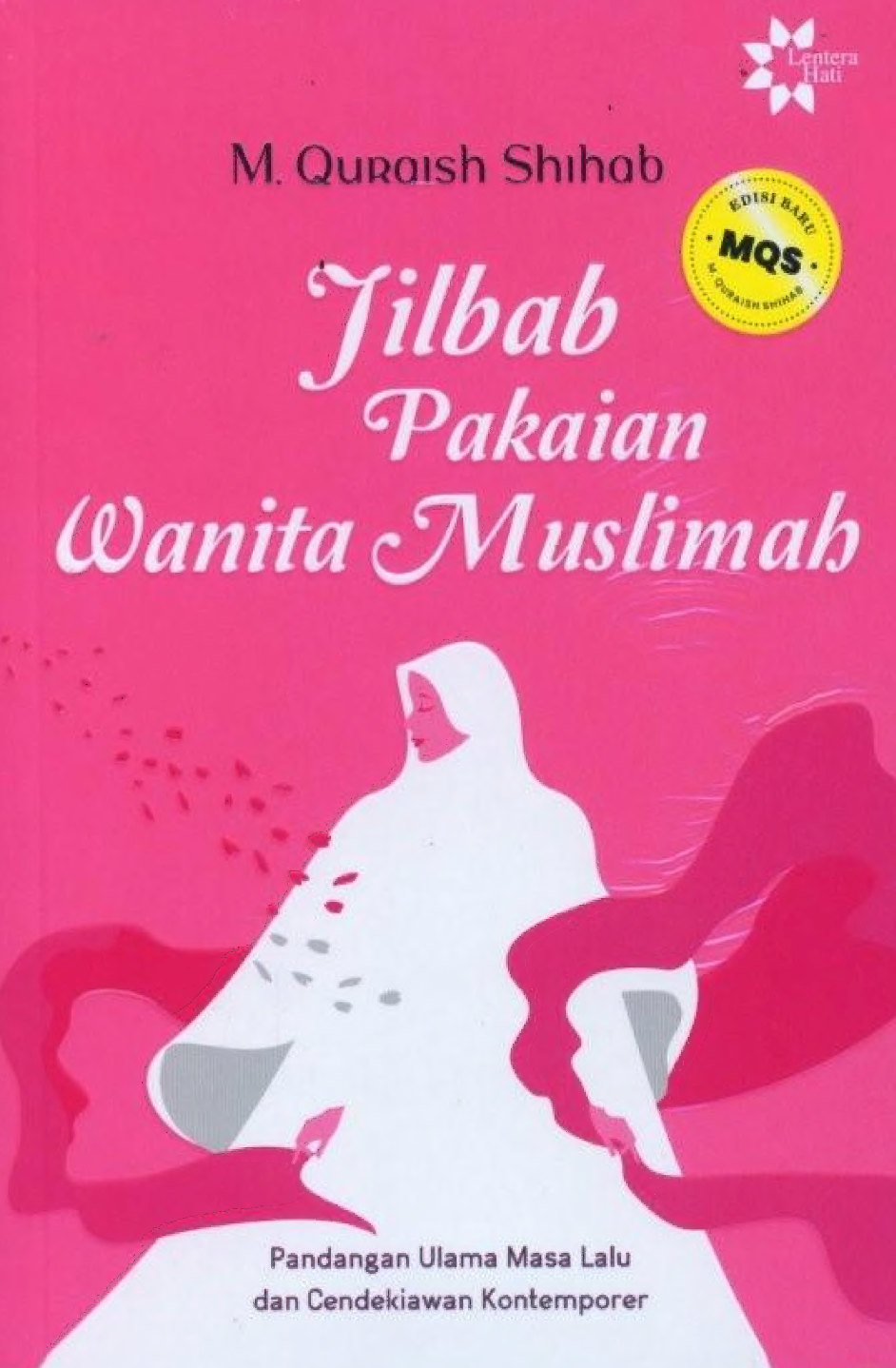
Centering on Indonesian scholar M. Quraish Shihab's academic work 'Jilbab Pakaian Wanita Muslimah', this piece breaks down the classical jurists' and modern intellectuals' primary textual bases, historical contexts, and methodological differences regarding women's headscarves and modest dress codes.
M. Quraish Shihab is an official Indonesian scholar whose book 'Jilbab Pakaian Wanita Muslimah', first published in 2004, is a dedicated work exploring women's headscarves and the definition of the female awrah (intimate parts). At the time of its writing, hijab and modest dress were surging back into global popularity, while France passed a law banning all religious symbols in public schools—including the hijab—which pushed the headscarf debate further into the international spotlight.
Right from the start, Shihab notices the complex motives behind wearing a hijab in real life: some women wear it out of personal religious devotion; some treat it simply as a fashion trend; while others use the headscarf as a political symbol to push back against Western double standards and cultural offenses. The author didn't write this book to drop a black-and-white ultimate legal ruling, but rather to fully unpack the inner complexity of the issue, laying out Quranic verses, hadiths, and legal arguments from both classical and modern standpoints. His biggest goal is to stop communities from slapping takfir (accusations of apostasy) on one another just because they disagree on how to interpret clothing.
The whole book stands on a clear research methodology. The author points out that the core vibe of faith itself is mercy and ease, with clear texts showing that the Creator wants to make things convenient for believers rather than piling on hardships. Countless hadiths also repeatedly stress that religious practice should be simple and doable. But in reality, plenty of religious scholars keep tightening up various rules under the guise of 'blocking the paths of evil', turning religion into something harsh and heavy, which totally strays from its original spiritual core.
Building on that, the book makes a key conceptual distinction: sharia represents the core teachings stemming from divine revelation and stays constant, while fiqh (Islamic jurisprudence) is human scholars' understanding and deduction of those sacred texts, which is naturally limited by the era and cognitive level, making differences of opinion inevitable. Even hadiths viewed as authoritative have varying degrees of reliability in their chains of transmission, split into sound (shahih) and weak (da'if) traditions, and can't just be blindly treated as ironclad rules. The companions of the Prophet and the four classical schools of jurisprudence themselves are full of differing legal views; a difference in opinion doesn't equal heresy, and you can't write someone off as straying from the faith just because of a different interpretation.
Shihab heavily emphasizes that interpreting scripture cannot be detached from the Arabic language and the historical-social backdrop of when the verses were revealed, and you certainly can't yank ancient text out of its historical context and drop it straight into modern society. He drops an important hypothetical: if the Prophet's companions lived today, their interpretation of certain issues would shift just as much. The overall tone of the book maintains a scholarly stance of holding off on a final ruling, objectively laying out the pros and cons without forcing any single position as the absolute truth. The author gives a special heads-up: even if readers come across more relaxed interpretations and arguments, women who have already chosen to wear the hijab don't need to take it off because of it. Choosing to act with more caution and modesty out of piety deserves respect on its own. The book also drops a real-life example: renowned hadith master Nasir al-Din al-Albani got blasted and attacked by other religious folks just for repeating pre-existing views of classical scholars, which totally reflects the brutal reality of an intellectual scene that has zero room for dissenting views. (Thinking about my own experience, I got cyber-bullied for the exact same reason—just mentioning different scholars' stances on zakat, interest, and diet in a video clip.)
Clothing itself carries multiple cross-cultural social functions, which is the baseline setup for the whole discussion. The meaning of clothing goes way beyond religious rules; it handles body protection, shielding against cold and heat, aesthetic expression, identity marking, and preserving a sense of modesty. The custom of covering the body isn't unique to any single civilization either; close-fitting garments and body-shrouding cloaks for women already popped up in pre-Islamic Sasanian Persia, the Byzantine Empire, and ancient Indian society. Even though pre-Islamic Arab women already used headscarves back then, most of those scarves just hung loose behind their heads, leaving their chests and necks constantly exposed.
Addressing a few secular theories floating around later about where robes came from—like asceticism, protecting women's physical safety, or men economically exploiting and oppressing women—Shihab makes it clear that none of these factors equal the actual legislative intent behind faith setting up clothing rules. Scripture actually assigns two parallel values to clothing: covering the awrah, and aesthetic decoration. But in reality, many ideological groups hyper-focus on the covering requirement while totally trashing the aesthetic side, missing the fact that you can totally balance both.
The author points out a key fact: not a single verse in the entire scripture clearly and unambiguously spells out piece by piece which parts of the female body count as awrah and must be covered. Every single disagreement down the road comes entirely from human re-interpretation of the texts.
The first spot is Surah Al-Ahzab (Chapter 33, Verse 53), also known as the famous 'Verse of the Veil', which requires people to talk to the Prophet's wives from behind a curtain when making requests. The core debate centers on whether this commandment only targets the Prophet's wives—who held the special status of 'Mothers of the Believers'—or if it's universal and applies to all women. Conservative interpretations argue that even though the verse was directly dropped for the Prophet's family, its underlying logic applies to every woman; another camp argues that the literal text strictly limits the target, so you shouldn't expand who it applies to willy-nilly.
The second spot is Surah Al-Ahzab (Chapter 33, Verse 59), which is the verse about the jilbab, commanding the Prophet to tell women to draw their jilbabs over themselves so they can be recognized and avoid being harassed. There is an academic debate over what the word jilbab actually means in the text—whether it refers to an outer long coat or specifically a headscarf. Tied to the historical context of its revelation, female slaves and free women in Medinan society looked pretty similar, meaning free women frequently caught unwanted harassment because of it. Originally, this verse served the practical function of distinguishing social status. Later generations keep debating whether this commandment should still be executed to the letter in modern society where slavery no longer exists.
The third spot—and the one with the most debate—is Surah An-Nur (Chapter 24, Verves 30-31). The verse calls on men and women to lower their gaze and guard their private parts; women shouldn't show off their adornments and must pull their headscarves (khimār) down over their chests; it also limits who women can show their adornments to: husbands, close blood relatives, slaves, male servants with no sexual desire, and kids who haven't figured out adult stuff yet. The phrase 'except what normally appears thereof' in this verse is the mother of all arguments over the awrah issue. The verse itself doesn't spell out which body parts count as exceptions, so different Quranic commentators lean on grammar studies and the background of revelation to pull wildly different conclusions.
The fourth spot is Surah An-Nur (Chapter 24, Verse 60), which gives older women an exemption: older women who are totally done with marriage prospects can take off their outer garments without the intention of showing off their adornments, and there's no sin in that, though it's still recommended that they keep it classy and modest. This verse also became an important textual anchor for later debates on how social contexts and customs can sway clothing rules.
After breaking down the scriptural texts, the author pivots to hadith literature, summing up the two main camps formed by classical religious scholars. The first camp argues that a woman's entire body counts as awrah, meaning her face and hands have to be covered up too; the second camp argues that women are allowed to leave their faces and hands exposed, and some jurists even stretch it further to say the backs of the hands and feet can show under certain conditions.
Shihab carefully analyzes the hadiths quoted by both sides, repeatedly pointing out that the chains of transmission for a lot of key relevant hadiths are super controversial. For instance, traditions backing the idea that women can show their faces and hands get shot down by critics for having broken chains of transmission, making their evidentiary weight too weak; meanwhile, hadiths backing full-body coverage have those exact same transmission quality flaws, and some of the hadith texts even straight-up contradict each other. At the same time, real-world historical proof exists too: in marriage proposal scenes recorded in hadiths, men were allowed to look at the woman's face; and during the state of Ihram on Hajj pilgrimage, Islamic law explicitly bans wearing face-veils and gloves, proving that under specific settings in classical tradition, women's faces and hands were allowed to be exposed.
The book systematically lays out how the four schools of jurisprudence divide up the awrah, separating different scenarios like prayer, facing non-mahram men, facing other women, and free women versus female slaves, with standards varying wildly across the schools. The Hanafi school took into account the reality of ancient lower-class rural women doing hard labor, arguing that women's feet don't count as awrah; classical jurisprudence also drew a line between the awrah of free women and female slaves, a distinction rooted in the ancient slave trade which is now extinct. Shihab sums it up: even classical-era religious scholars never reached a total consensus that could definitively prove a woman's face has to be covered; choosing full coverage is a pious and cautious move, but you can't broadcast it as an indisputable, rigid legal obligation.
After reviewing classical tradition, the book flips to various interpretation angles from modern intellectuals since the 20th century, roughly splitting contemporary researchers into two camps.
The first camp is the reformist approach, but its textual research roots are super weak, with Muhammad Shahrour as the main guy. Shahrour re-interprets Arabic words like juyūb and khimār in Surah An-Nur, arguing that the text only asks for chests to be covered and doesn't force a headscarf; a lot of the rules tied to the headscarf are just specific social customs from the Medina era and don't hold eternal weight. Shihab critiques him, arguing that his etymological takes go against classical Arabic dictionaries and completely miss the historical context of the verse's revelation, making his ideas subjective word-redefinitions that don't hold up methodologically. The book also touches on some secular feminist takes that view the hijab purely as a tool of patriarchal oppression, which the author notes lack backing at the religious text level.
The second group of modern scholars still strictly rolls with traditional jurisprudence tools, but they end up pulling off relatively relaxed clothing conclusions. They lean on a few traditional legal principles. One is 'hardship brings convenience'; modern women are heavily involved in social work and public life, and harsh full-body coverage creates real-world struggles, so the rules can be relaxed appropriately. The second is grading hadith evidence: isolated prophetic reports (ahad) can't be used to lock down an absolute mandatory legal duty, and only widely-transmitted mass traditions (mutawatir) can set up unbreakable laws.
The biggest legal debate centers around the legal cause ('illa) and wisdom (hikma) of legislation. The legal cause is the objective real-world condition that triggers a law, meaning if the objective condition vanishes, the law drops with it; the wisdom is the moral advice behind the rule, meaning even if the objective condition disappears, the moral guide still holds value. Former Egyptian Chief Justice Muhammad Said al-Ashmawi is the poster boy for this train of thought, arguing that the legal cause of the jilbab verse was to tell free women apart from female slaves and protect free women from street harassment. Now that slavery has totally vanished, that objective legal cause is gone, so the law forcing headscarves doesn't apply anymore; but the moral wisdom behind the verse—dressing decently and modestly—still needs to be kept up.
Conservative religious scholars push back against this, arguing that telling social statuses apart is just the wisdom brought by the verse, not the objective legal cause, meaning the law's validity doesn't expire just because slavery died out. This has turned into the core legal gridlock in modern hijab debates.
On top of that, the weight of social custom is another battleground. Some scholars argue that what triggers desire is relative and shifts with social customs, meaning showing skin that a society treats as normal might not cause temptation at all; the opposing camp argues you can't just hand the bottom line of religious morality over to shifting social customs.
Tying together history and legal talk, Shihab circles back to review real-world social phenomena. He mentions that up until early 20th-century urban Egypt, wearing a face veil was more of a status symbol for wealthy upper-class women, while regular rural working women showed their faces while farming, meaning robes and veils weren't just religious practices—they doubled as social class markers for a long time. Looking across all the differences, almost every stance hits a bare-minimum ethical consensus: women's clothing should be modest and decent, without deliberately showing off or hyping up the body; but when it comes to the exact boundary of what skin can show, scripture and hadith text leave a massive space for interpretation.
Wrapping up the book's breakdown, Quraish Shihab drops his own verdict: based on current textual evidence, arguments claiming a woman's face must be completely covered aren't 100% airtight; and looking at historical practice back in the companions' era, women showing their faces and hands definitely had precedents. But at the same time, choosing to rock a full headscarf and robe out of personal piety totally deserves respect and shouldn't be talked out of. The book warns repeatedly that you can never point fingers and call someone an apostate just because of different takes on clothing and awrah, because having multiple legal viewpoints is totally normal in intellectual history.
At the same time, the author flags two mental traps to dodge: first, treating your own school's interpretation as the Creator's unquestionable command while trashing every other solid take; and second, swinging to the exact opposite extreme by ditching religious textual tradition entirely, blindly following secular trends, and completely trashing the moral demand for decency and modesty.
When answering the issues of the times, especially France's policy banning headscarves in schools, the author hints that leaning on outside government laws to ban religious wear can't actually fix the deep-seated friction at the faith level; inside the community, folks should also consciously separate the hijab into three vibes: a sincere devotional practice from the heart, a fashion trend, or a political fight symbol.
All in all, this book isn't hunting for a textbook answer to whether 'the hijab is an obligation or not.' As a major Indonesian Sunni scholar, Shihab rocks a scholarly stance of leaving the final verdict open, fully laying out pro and con arguments from both classical and modern scripture, hadith, and legal theory. The reason debates over the hijab and women's awrah keep dragging on is rooted in the multi-layered meanings of religious text, scholarly fights over hadith chains, and fundamental splits on how legal causes and social customs fit into the legal system. Instead of forcing a one-size-fits-all body-coverage standard, the book calls on believers from all sides to hold down the consensus ethics of dressing modestly and respectfully while embracing diverse differences in thought. view all
[Internet Repost]
Centering on Indonesian scholar M. Quraish Shihab's academic work 'Jilbab Pakaian Wanita Muslimah', this piece breaks down the classical jurists' and modern intellectuals' primary textual bases, historical contexts, and methodological differences regarding women's headscarves and modest dress codes.
M. Quraish Shihab is an official Indonesian scholar whose book 'Jilbab Pakaian Wanita Muslimah', first published in 2004, is a dedicated work exploring women's headscarves and the definition of the female awrah (intimate parts). At the time of its writing, hijab and modest dress were surging back into global popularity, while France passed a law banning all religious symbols in public schools—including the hijab—which pushed the headscarf debate further into the international spotlight.
Right from the start, Shihab notices the complex motives behind wearing a hijab in real life: some women wear it out of personal religious devotion; some treat it simply as a fashion trend; while others use the headscarf as a political symbol to push back against Western double standards and cultural offenses. The author didn't write this book to drop a black-and-white ultimate legal ruling, but rather to fully unpack the inner complexity of the issue, laying out Quranic verses, hadiths, and legal arguments from both classical and modern standpoints. His biggest goal is to stop communities from slapping takfir (accusations of apostasy) on one another just because they disagree on how to interpret clothing.
The whole book stands on a clear research methodology. The author points out that the core vibe of faith itself is mercy and ease, with clear texts showing that the Creator wants to make things convenient for believers rather than piling on hardships. Countless hadiths also repeatedly stress that religious practice should be simple and doable. But in reality, plenty of religious scholars keep tightening up various rules under the guise of 'blocking the paths of evil', turning religion into something harsh and heavy, which totally strays from its original spiritual core.
Building on that, the book makes a key conceptual distinction: sharia represents the core teachings stemming from divine revelation and stays constant, while fiqh (Islamic jurisprudence) is human scholars' understanding and deduction of those sacred texts, which is naturally limited by the era and cognitive level, making differences of opinion inevitable. Even hadiths viewed as authoritative have varying degrees of reliability in their chains of transmission, split into sound (shahih) and weak (da'if) traditions, and can't just be blindly treated as ironclad rules. The companions of the Prophet and the four classical schools of jurisprudence themselves are full of differing legal views; a difference in opinion doesn't equal heresy, and you can't write someone off as straying from the faith just because of a different interpretation.
Shihab heavily emphasizes that interpreting scripture cannot be detached from the Arabic language and the historical-social backdrop of when the verses were revealed, and you certainly can't yank ancient text out of its historical context and drop it straight into modern society. He drops an important hypothetical: if the Prophet's companions lived today, their interpretation of certain issues would shift just as much. The overall tone of the book maintains a scholarly stance of holding off on a final ruling, objectively laying out the pros and cons without forcing any single position as the absolute truth. The author gives a special heads-up: even if readers come across more relaxed interpretations and arguments, women who have already chosen to wear the hijab don't need to take it off because of it. Choosing to act with more caution and modesty out of piety deserves respect on its own. The book also drops a real-life example: renowned hadith master Nasir al-Din al-Albani got blasted and attacked by other religious folks just for repeating pre-existing views of classical scholars, which totally reflects the brutal reality of an intellectual scene that has zero room for dissenting views. (Thinking about my own experience, I got cyber-bullied for the exact same reason—just mentioning different scholars' stances on zakat, interest, and diet in a video clip.)
Clothing itself carries multiple cross-cultural social functions, which is the baseline setup for the whole discussion. The meaning of clothing goes way beyond religious rules; it handles body protection, shielding against cold and heat, aesthetic expression, identity marking, and preserving a sense of modesty. The custom of covering the body isn't unique to any single civilization either; close-fitting garments and body-shrouding cloaks for women already popped up in pre-Islamic Sasanian Persia, the Byzantine Empire, and ancient Indian society. Even though pre-Islamic Arab women already used headscarves back then, most of those scarves just hung loose behind their heads, leaving their chests and necks constantly exposed.
Addressing a few secular theories floating around later about where robes came from—like asceticism, protecting women's physical safety, or men economically exploiting and oppressing women—Shihab makes it clear that none of these factors equal the actual legislative intent behind faith setting up clothing rules. Scripture actually assigns two parallel values to clothing: covering the awrah, and aesthetic decoration. But in reality, many ideological groups hyper-focus on the covering requirement while totally trashing the aesthetic side, missing the fact that you can totally balance both.
The author points out a key fact: not a single verse in the entire scripture clearly and unambiguously spells out piece by piece which parts of the female body count as awrah and must be covered. Every single disagreement down the road comes entirely from human re-interpretation of the texts.
The first spot is Surah Al-Ahzab (Chapter 33, Verse 53), also known as the famous 'Verse of the Veil', which requires people to talk to the Prophet's wives from behind a curtain when making requests. The core debate centers on whether this commandment only targets the Prophet's wives—who held the special status of 'Mothers of the Believers'—or if it's universal and applies to all women. Conservative interpretations argue that even though the verse was directly dropped for the Prophet's family, its underlying logic applies to every woman; another camp argues that the literal text strictly limits the target, so you shouldn't expand who it applies to willy-nilly.
The second spot is Surah Al-Ahzab (Chapter 33, Verse 59), which is the verse about the jilbab, commanding the Prophet to tell women to draw their jilbabs over themselves so they can be recognized and avoid being harassed. There is an academic debate over what the word jilbab actually means in the text—whether it refers to an outer long coat or specifically a headscarf. Tied to the historical context of its revelation, female slaves and free women in Medinan society looked pretty similar, meaning free women frequently caught unwanted harassment because of it. Originally, this verse served the practical function of distinguishing social status. Later generations keep debating whether this commandment should still be executed to the letter in modern society where slavery no longer exists.
The third spot—and the one with the most debate—is Surah An-Nur (Chapter 24, Verves 30-31). The verse calls on men and women to lower their gaze and guard their private parts; women shouldn't show off their adornments and must pull their headscarves (khimār) down over their chests; it also limits who women can show their adornments to: husbands, close blood relatives, slaves, male servants with no sexual desire, and kids who haven't figured out adult stuff yet. The phrase 'except what normally appears thereof' in this verse is the mother of all arguments over the awrah issue. The verse itself doesn't spell out which body parts count as exceptions, so different Quranic commentators lean on grammar studies and the background of revelation to pull wildly different conclusions.
The fourth spot is Surah An-Nur (Chapter 24, Verse 60), which gives older women an exemption: older women who are totally done with marriage prospects can take off their outer garments without the intention of showing off their adornments, and there's no sin in that, though it's still recommended that they keep it classy and modest. This verse also became an important textual anchor for later debates on how social contexts and customs can sway clothing rules.
After breaking down the scriptural texts, the author pivots to hadith literature, summing up the two main camps formed by classical religious scholars. The first camp argues that a woman's entire body counts as awrah, meaning her face and hands have to be covered up too; the second camp argues that women are allowed to leave their faces and hands exposed, and some jurists even stretch it further to say the backs of the hands and feet can show under certain conditions.
Shihab carefully analyzes the hadiths quoted by both sides, repeatedly pointing out that the chains of transmission for a lot of key relevant hadiths are super controversial. For instance, traditions backing the idea that women can show their faces and hands get shot down by critics for having broken chains of transmission, making their evidentiary weight too weak; meanwhile, hadiths backing full-body coverage have those exact same transmission quality flaws, and some of the hadith texts even straight-up contradict each other. At the same time, real-world historical proof exists too: in marriage proposal scenes recorded in hadiths, men were allowed to look at the woman's face; and during the state of Ihram on Hajj pilgrimage, Islamic law explicitly bans wearing face-veils and gloves, proving that under specific settings in classical tradition, women's faces and hands were allowed to be exposed.
The book systematically lays out how the four schools of jurisprudence divide up the awrah, separating different scenarios like prayer, facing non-mahram men, facing other women, and free women versus female slaves, with standards varying wildly across the schools. The Hanafi school took into account the reality of ancient lower-class rural women doing hard labor, arguing that women's feet don't count as awrah; classical jurisprudence also drew a line between the awrah of free women and female slaves, a distinction rooted in the ancient slave trade which is now extinct. Shihab sums it up: even classical-era religious scholars never reached a total consensus that could definitively prove a woman's face has to be covered; choosing full coverage is a pious and cautious move, but you can't broadcast it as an indisputable, rigid legal obligation.
After reviewing classical tradition, the book flips to various interpretation angles from modern intellectuals since the 20th century, roughly splitting contemporary researchers into two camps.
The first camp is the reformist approach, but its textual research roots are super weak, with Muhammad Shahrour as the main guy. Shahrour re-interprets Arabic words like juyūb and khimār in Surah An-Nur, arguing that the text only asks for chests to be covered and doesn't force a headscarf; a lot of the rules tied to the headscarf are just specific social customs from the Medina era and don't hold eternal weight. Shihab critiques him, arguing that his etymological takes go against classical Arabic dictionaries and completely miss the historical context of the verse's revelation, making his ideas subjective word-redefinitions that don't hold up methodologically. The book also touches on some secular feminist takes that view the hijab purely as a tool of patriarchal oppression, which the author notes lack backing at the religious text level.
The second group of modern scholars still strictly rolls with traditional jurisprudence tools, but they end up pulling off relatively relaxed clothing conclusions. They lean on a few traditional legal principles. One is 'hardship brings convenience'; modern women are heavily involved in social work and public life, and harsh full-body coverage creates real-world struggles, so the rules can be relaxed appropriately. The second is grading hadith evidence: isolated prophetic reports (ahad) can't be used to lock down an absolute mandatory legal duty, and only widely-transmitted mass traditions (mutawatir) can set up unbreakable laws.
The biggest legal debate centers around the legal cause ('illa) and wisdom (hikma) of legislation. The legal cause is the objective real-world condition that triggers a law, meaning if the objective condition vanishes, the law drops with it; the wisdom is the moral advice behind the rule, meaning even if the objective condition disappears, the moral guide still holds value. Former Egyptian Chief Justice Muhammad Said al-Ashmawi is the poster boy for this train of thought, arguing that the legal cause of the jilbab verse was to tell free women apart from female slaves and protect free women from street harassment. Now that slavery has totally vanished, that objective legal cause is gone, so the law forcing headscarves doesn't apply anymore; but the moral wisdom behind the verse—dressing decently and modestly—still needs to be kept up.
Conservative religious scholars push back against this, arguing that telling social statuses apart is just the wisdom brought by the verse, not the objective legal cause, meaning the law's validity doesn't expire just because slavery died out. This has turned into the core legal gridlock in modern hijab debates.
On top of that, the weight of social custom is another battleground. Some scholars argue that what triggers desire is relative and shifts with social customs, meaning showing skin that a society treats as normal might not cause temptation at all; the opposing camp argues you can't just hand the bottom line of religious morality over to shifting social customs.
Tying together history and legal talk, Shihab circles back to review real-world social phenomena. He mentions that up until early 20th-century urban Egypt, wearing a face veil was more of a status symbol for wealthy upper-class women, while regular rural working women showed their faces while farming, meaning robes and veils weren't just religious practices—they doubled as social class markers for a long time. Looking across all the differences, almost every stance hits a bare-minimum ethical consensus: women's clothing should be modest and decent, without deliberately showing off or hyping up the body; but when it comes to the exact boundary of what skin can show, scripture and hadith text leave a massive space for interpretation.
Wrapping up the book's breakdown, Quraish Shihab drops his own verdict: based on current textual evidence, arguments claiming a woman's face must be completely covered aren't 100% airtight; and looking at historical practice back in the companions' era, women showing their faces and hands definitely had precedents. But at the same time, choosing to rock a full headscarf and robe out of personal piety totally deserves respect and shouldn't be talked out of. The book warns repeatedly that you can never point fingers and call someone an apostate just because of different takes on clothing and awrah, because having multiple legal viewpoints is totally normal in intellectual history.
At the same time, the author flags two mental traps to dodge: first, treating your own school's interpretation as the Creator's unquestionable command while trashing every other solid take; and second, swinging to the exact opposite extreme by ditching religious textual tradition entirely, blindly following secular trends, and completely trashing the moral demand for decency and modesty.
When answering the issues of the times, especially France's policy banning headscarves in schools, the author hints that leaning on outside government laws to ban religious wear can't actually fix the deep-seated friction at the faith level; inside the community, folks should also consciously separate the hijab into three vibes: a sincere devotional practice from the heart, a fashion trend, or a political fight symbol.
All in all, this book isn't hunting for a textbook answer to whether 'the hijab is an obligation or not.' As a major Indonesian Sunni scholar, Shihab rocks a scholarly stance of leaving the final verdict open, fully laying out pro and con arguments from both classical and modern scripture, hadith, and legal theory. The reason debates over the hijab and women's awrah keep dragging on is rooted in the multi-layered meanings of religious text, scholarly fights over hadith chains, and fundamental splits on how legal causes and social customs fit into the legal system. Instead of forcing a one-size-fits-all body-coverage standard, the book calls on believers from all sides to hold down the consensus ethics of dressing modestly and respectfully while embracing diverse differences in thought.
Centering on Indonesian scholar M. Quraish Shihab's academic work 'Jilbab Pakaian Wanita Muslimah', this piece breaks down the classical jurists' and modern intellectuals' primary textual bases, historical contexts, and methodological differences regarding women's headscarves and modest dress codes.
M. Quraish Shihab is an official Indonesian scholar whose book 'Jilbab Pakaian Wanita Muslimah', first published in 2004, is a dedicated work exploring women's headscarves and the definition of the female awrah (intimate parts). At the time of its writing, hijab and modest dress were surging back into global popularity, while France passed a law banning all religious symbols in public schools—including the hijab—which pushed the headscarf debate further into the international spotlight.
Right from the start, Shihab notices the complex motives behind wearing a hijab in real life: some women wear it out of personal religious devotion; some treat it simply as a fashion trend; while others use the headscarf as a political symbol to push back against Western double standards and cultural offenses. The author didn't write this book to drop a black-and-white ultimate legal ruling, but rather to fully unpack the inner complexity of the issue, laying out Quranic verses, hadiths, and legal arguments from both classical and modern standpoints. His biggest goal is to stop communities from slapping takfir (accusations of apostasy) on one another just because they disagree on how to interpret clothing.
The whole book stands on a clear research methodology. The author points out that the core vibe of faith itself is mercy and ease, with clear texts showing that the Creator wants to make things convenient for believers rather than piling on hardships. Countless hadiths also repeatedly stress that religious practice should be simple and doable. But in reality, plenty of religious scholars keep tightening up various rules under the guise of 'blocking the paths of evil', turning religion into something harsh and heavy, which totally strays from its original spiritual core.
Building on that, the book makes a key conceptual distinction: sharia represents the core teachings stemming from divine revelation and stays constant, while fiqh (Islamic jurisprudence) is human scholars' understanding and deduction of those sacred texts, which is naturally limited by the era and cognitive level, making differences of opinion inevitable. Even hadiths viewed as authoritative have varying degrees of reliability in their chains of transmission, split into sound (shahih) and weak (da'if) traditions, and can't just be blindly treated as ironclad rules. The companions of the Prophet and the four classical schools of jurisprudence themselves are full of differing legal views; a difference in opinion doesn't equal heresy, and you can't write someone off as straying from the faith just because of a different interpretation.
Shihab heavily emphasizes that interpreting scripture cannot be detached from the Arabic language and the historical-social backdrop of when the verses were revealed, and you certainly can't yank ancient text out of its historical context and drop it straight into modern society. He drops an important hypothetical: if the Prophet's companions lived today, their interpretation of certain issues would shift just as much. The overall tone of the book maintains a scholarly stance of holding off on a final ruling, objectively laying out the pros and cons without forcing any single position as the absolute truth. The author gives a special heads-up: even if readers come across more relaxed interpretations and arguments, women who have already chosen to wear the hijab don't need to take it off because of it. Choosing to act with more caution and modesty out of piety deserves respect on its own. The book also drops a real-life example: renowned hadith master Nasir al-Din al-Albani got blasted and attacked by other religious folks just for repeating pre-existing views of classical scholars, which totally reflects the brutal reality of an intellectual scene that has zero room for dissenting views. (Thinking about my own experience, I got cyber-bullied for the exact same reason—just mentioning different scholars' stances on zakat, interest, and diet in a video clip.)
Clothing itself carries multiple cross-cultural social functions, which is the baseline setup for the whole discussion. The meaning of clothing goes way beyond religious rules; it handles body protection, shielding against cold and heat, aesthetic expression, identity marking, and preserving a sense of modesty. The custom of covering the body isn't unique to any single civilization either; close-fitting garments and body-shrouding cloaks for women already popped up in pre-Islamic Sasanian Persia, the Byzantine Empire, and ancient Indian society. Even though pre-Islamic Arab women already used headscarves back then, most of those scarves just hung loose behind their heads, leaving their chests and necks constantly exposed.
Addressing a few secular theories floating around later about where robes came from—like asceticism, protecting women's physical safety, or men economically exploiting and oppressing women—Shihab makes it clear that none of these factors equal the actual legislative intent behind faith setting up clothing rules. Scripture actually assigns two parallel values to clothing: covering the awrah, and aesthetic decoration. But in reality, many ideological groups hyper-focus on the covering requirement while totally trashing the aesthetic side, missing the fact that you can totally balance both.
The author points out a key fact: not a single verse in the entire scripture clearly and unambiguously spells out piece by piece which parts of the female body count as awrah and must be covered. Every single disagreement down the road comes entirely from human re-interpretation of the texts.
The first spot is Surah Al-Ahzab (Chapter 33, Verse 53), also known as the famous 'Verse of the Veil', which requires people to talk to the Prophet's wives from behind a curtain when making requests. The core debate centers on whether this commandment only targets the Prophet's wives—who held the special status of 'Mothers of the Believers'—or if it's universal and applies to all women. Conservative interpretations argue that even though the verse was directly dropped for the Prophet's family, its underlying logic applies to every woman; another camp argues that the literal text strictly limits the target, so you shouldn't expand who it applies to willy-nilly.
The second spot is Surah Al-Ahzab (Chapter 33, Verse 59), which is the verse about the jilbab, commanding the Prophet to tell women to draw their jilbabs over themselves so they can be recognized and avoid being harassed. There is an academic debate over what the word jilbab actually means in the text—whether it refers to an outer long coat or specifically a headscarf. Tied to the historical context of its revelation, female slaves and free women in Medinan society looked pretty similar, meaning free women frequently caught unwanted harassment because of it. Originally, this verse served the practical function of distinguishing social status. Later generations keep debating whether this commandment should still be executed to the letter in modern society where slavery no longer exists.
The third spot—and the one with the most debate—is Surah An-Nur (Chapter 24, Verves 30-31). The verse calls on men and women to lower their gaze and guard their private parts; women shouldn't show off their adornments and must pull their headscarves (khimār) down over their chests; it also limits who women can show their adornments to: husbands, close blood relatives, slaves, male servants with no sexual desire, and kids who haven't figured out adult stuff yet. The phrase 'except what normally appears thereof' in this verse is the mother of all arguments over the awrah issue. The verse itself doesn't spell out which body parts count as exceptions, so different Quranic commentators lean on grammar studies and the background of revelation to pull wildly different conclusions.
The fourth spot is Surah An-Nur (Chapter 24, Verse 60), which gives older women an exemption: older women who are totally done with marriage prospects can take off their outer garments without the intention of showing off their adornments, and there's no sin in that, though it's still recommended that they keep it classy and modest. This verse also became an important textual anchor for later debates on how social contexts and customs can sway clothing rules.
After breaking down the scriptural texts, the author pivots to hadith literature, summing up the two main camps formed by classical religious scholars. The first camp argues that a woman's entire body counts as awrah, meaning her face and hands have to be covered up too; the second camp argues that women are allowed to leave their faces and hands exposed, and some jurists even stretch it further to say the backs of the hands and feet can show under certain conditions.
Shihab carefully analyzes the hadiths quoted by both sides, repeatedly pointing out that the chains of transmission for a lot of key relevant hadiths are super controversial. For instance, traditions backing the idea that women can show their faces and hands get shot down by critics for having broken chains of transmission, making their evidentiary weight too weak; meanwhile, hadiths backing full-body coverage have those exact same transmission quality flaws, and some of the hadith texts even straight-up contradict each other. At the same time, real-world historical proof exists too: in marriage proposal scenes recorded in hadiths, men were allowed to look at the woman's face; and during the state of Ihram on Hajj pilgrimage, Islamic law explicitly bans wearing face-veils and gloves, proving that under specific settings in classical tradition, women's faces and hands were allowed to be exposed.
The book systematically lays out how the four schools of jurisprudence divide up the awrah, separating different scenarios like prayer, facing non-mahram men, facing other women, and free women versus female slaves, with standards varying wildly across the schools. The Hanafi school took into account the reality of ancient lower-class rural women doing hard labor, arguing that women's feet don't count as awrah; classical jurisprudence also drew a line between the awrah of free women and female slaves, a distinction rooted in the ancient slave trade which is now extinct. Shihab sums it up: even classical-era religious scholars never reached a total consensus that could definitively prove a woman's face has to be covered; choosing full coverage is a pious and cautious move, but you can't broadcast it as an indisputable, rigid legal obligation.
After reviewing classical tradition, the book flips to various interpretation angles from modern intellectuals since the 20th century, roughly splitting contemporary researchers into two camps.
The first camp is the reformist approach, but its textual research roots are super weak, with Muhammad Shahrour as the main guy. Shahrour re-interprets Arabic words like juyūb and khimār in Surah An-Nur, arguing that the text only asks for chests to be covered and doesn't force a headscarf; a lot of the rules tied to the headscarf are just specific social customs from the Medina era and don't hold eternal weight. Shihab critiques him, arguing that his etymological takes go against classical Arabic dictionaries and completely miss the historical context of the verse's revelation, making his ideas subjective word-redefinitions that don't hold up methodologically. The book also touches on some secular feminist takes that view the hijab purely as a tool of patriarchal oppression, which the author notes lack backing at the religious text level.
The second group of modern scholars still strictly rolls with traditional jurisprudence tools, but they end up pulling off relatively relaxed clothing conclusions. They lean on a few traditional legal principles. One is 'hardship brings convenience'; modern women are heavily involved in social work and public life, and harsh full-body coverage creates real-world struggles, so the rules can be relaxed appropriately. The second is grading hadith evidence: isolated prophetic reports (ahad) can't be used to lock down an absolute mandatory legal duty, and only widely-transmitted mass traditions (mutawatir) can set up unbreakable laws.
The biggest legal debate centers around the legal cause ('illa) and wisdom (hikma) of legislation. The legal cause is the objective real-world condition that triggers a law, meaning if the objective condition vanishes, the law drops with it; the wisdom is the moral advice behind the rule, meaning even if the objective condition disappears, the moral guide still holds value. Former Egyptian Chief Justice Muhammad Said al-Ashmawi is the poster boy for this train of thought, arguing that the legal cause of the jilbab verse was to tell free women apart from female slaves and protect free women from street harassment. Now that slavery has totally vanished, that objective legal cause is gone, so the law forcing headscarves doesn't apply anymore; but the moral wisdom behind the verse—dressing decently and modestly—still needs to be kept up.
Conservative religious scholars push back against this, arguing that telling social statuses apart is just the wisdom brought by the verse, not the objective legal cause, meaning the law's validity doesn't expire just because slavery died out. This has turned into the core legal gridlock in modern hijab debates.
On top of that, the weight of social custom is another battleground. Some scholars argue that what triggers desire is relative and shifts with social customs, meaning showing skin that a society treats as normal might not cause temptation at all; the opposing camp argues you can't just hand the bottom line of religious morality over to shifting social customs.
Tying together history and legal talk, Shihab circles back to review real-world social phenomena. He mentions that up until early 20th-century urban Egypt, wearing a face veil was more of a status symbol for wealthy upper-class women, while regular rural working women showed their faces while farming, meaning robes and veils weren't just religious practices—they doubled as social class markers for a long time. Looking across all the differences, almost every stance hits a bare-minimum ethical consensus: women's clothing should be modest and decent, without deliberately showing off or hyping up the body; but when it comes to the exact boundary of what skin can show, scripture and hadith text leave a massive space for interpretation.
Wrapping up the book's breakdown, Quraish Shihab drops his own verdict: based on current textual evidence, arguments claiming a woman's face must be completely covered aren't 100% airtight; and looking at historical practice back in the companions' era, women showing their faces and hands definitely had precedents. But at the same time, choosing to rock a full headscarf and robe out of personal piety totally deserves respect and shouldn't be talked out of. The book warns repeatedly that you can never point fingers and call someone an apostate just because of different takes on clothing and awrah, because having multiple legal viewpoints is totally normal in intellectual history.
At the same time, the author flags two mental traps to dodge: first, treating your own school's interpretation as the Creator's unquestionable command while trashing every other solid take; and second, swinging to the exact opposite extreme by ditching religious textual tradition entirely, blindly following secular trends, and completely trashing the moral demand for decency and modesty.
When answering the issues of the times, especially France's policy banning headscarves in schools, the author hints that leaning on outside government laws to ban religious wear can't actually fix the deep-seated friction at the faith level; inside the community, folks should also consciously separate the hijab into three vibes: a sincere devotional practice from the heart, a fashion trend, or a political fight symbol.
All in all, this book isn't hunting for a textbook answer to whether 'the hijab is an obligation or not.' As a major Indonesian Sunni scholar, Shihab rocks a scholarly stance of leaving the final verdict open, fully laying out pro and con arguments from both classical and modern scripture, hadith, and legal theory. The reason debates over the hijab and women's awrah keep dragging on is rooted in the multi-layered meanings of religious text, scholarly fights over hadith chains, and fundamental splits on how legal causes and social customs fit into the legal system. Instead of forcing a one-size-fits-all body-coverage standard, the book calls on believers from all sides to hold down the consensus ethics of dressing modestly and respectfully while embracing diverse differences in thought.
Islamic Law and Women's Clothing: Classical Exegesis and Modern Scholar Perspectives on the Hijab
Articles • Hasan09 posted the article • 0 comments • 12 views • 15 hours ago
[Internet Repost]
Centering on Indonesian scholar M. Quraish Shihab's academic work 'Jilbab Pakaian Wanita Muslimah', this piece breaks down the classical jurists' and modern intellectuals' primary textual bases, historical contexts, and methodological differences regarding women's headscarves and modest dress codes.
M. Quraish Shihab is an official Indonesian scholar whose book 'Jilbab Pakaian Wanita Muslimah', first published in 2004, is a dedicated work exploring women's headscarves and the definition of the female awrah (intimate parts). At the time of its writing, hijab and modest dress were surging back into global popularity, while France passed a law banning all religious symbols in public schools—including the hijab—which pushed the headscarf debate further into the international spotlight.
Right from the start, Shihab notices the complex motives behind wearing a hijab in real life: some women wear it out of personal religious devotion; some treat it simply as a fashion trend; while others use the headscarf as a political symbol to push back against Western double standards and cultural offenses. The author didn't write this book to drop a black-and-white ultimate legal ruling, but rather to fully unpack the inner complexity of the issue, laying out Quranic verses, hadiths, and legal arguments from both classical and modern standpoints. His biggest goal is to stop communities from slapping takfir (accusations of apostasy) on one another just because they disagree on how to interpret clothing.
The whole book stands on a clear research methodology. The author points out that the core vibe of faith itself is mercy and ease, with clear texts showing that the Creator wants to make things convenient for believers rather than piling on hardships. Countless hadiths also repeatedly stress that religious practice should be simple and doable. But in reality, plenty of religious scholars keep tightening up various rules under the guise of 'blocking the paths of evil', turning religion into something harsh and heavy, which totally strays from its original spiritual core.
Building on that, the book makes a key conceptual distinction: sharia represents the core teachings stemming from divine revelation and stays constant, while fiqh (Islamic jurisprudence) is human scholars' understanding and deduction of those sacred texts, which is naturally limited by the era and cognitive level, making differences of opinion inevitable. Even hadiths viewed as authoritative have varying degrees of reliability in their chains of transmission, split into sound (shahih) and weak (da'if) traditions, and can't just be blindly treated as ironclad rules. The companions of the Prophet and the four classical schools of jurisprudence themselves are full of differing legal views; a difference in opinion doesn't equal heresy, and you can't write someone off as straying from the faith just because of a different interpretation.
Shihab heavily emphasizes that interpreting scripture cannot be detached from the Arabic language and the historical-social backdrop of when the verses were revealed, and you certainly can't yank ancient text out of its historical context and drop it straight into modern society. He drops an important hypothetical: if the Prophet's companions lived today, their interpretation of certain issues would shift just as much. The overall tone of the book maintains a scholarly stance of holding off on a final ruling, objectively laying out the pros and cons without forcing any single position as the absolute truth. The author gives a special heads-up: even if readers come across more relaxed interpretations and arguments, women who have already chosen to wear the hijab don't need to take it off because of it. Choosing to act with more caution and modesty out of piety deserves respect on its own. The book also drops a real-life example: renowned hadith master Nasir al-Din al-Albani got blasted and attacked by other religious folks just for repeating pre-existing views of classical scholars, which totally reflects the brutal reality of an intellectual scene that has zero room for dissenting views. (Thinking about my own experience, I got cyber-bullied for the exact same reason—just mentioning different scholars' stances on zakat, interest, and diet in a video clip.)
Clothing itself carries multiple cross-cultural social functions, which is the baseline setup for the whole discussion. The meaning of clothing goes way beyond religious rules; it handles body protection, shielding against cold and heat, aesthetic expression, identity marking, and preserving a sense of modesty. The custom of covering the body isn't unique to any single civilization either; close-fitting garments and body-shrouding cloaks for women already popped up in pre-Islamic Sasanian Persia, the Byzantine Empire, and ancient Indian society. Even though pre-Islamic Arab women already used headscarves back then, most of those scarves just hung loose behind their heads, leaving their chests and necks constantly exposed.
Addressing a few secular theories floating around later about where robes came from—like asceticism, protecting women's physical safety, or men economically exploiting and oppressing women—Shihab makes it clear that none of these factors equal the actual legislative intent behind faith setting up clothing rules. Scripture actually assigns two parallel values to clothing: covering the awrah, and aesthetic decoration. But in reality, many ideological groups hyper-focus on the covering requirement while totally trashing the aesthetic side, missing the fact that you can totally balance both.
The author points out a key fact: not a single verse in the entire scripture clearly and unambiguously spells out piece by piece which parts of the female body count as awrah and must be covered. Every single disagreement down the road comes entirely from human re-interpretation of the texts.
The first spot is Surah Al-Ahzab (Chapter 33, Verse 53), also known as the famous 'Verse of the Veil', which requires people to talk to the Prophet's wives from behind a curtain when making requests. The core debate centers on whether this commandment only targets the Prophet's wives—who held the special status of 'Mothers of the Believers'—or if it's universal and applies to all women. Conservative interpretations argue that even though the verse was directly dropped for the Prophet's family, its underlying logic applies to every woman; another camp argues that the literal text strictly limits the target, so you shouldn't expand who it applies to willy-nilly.
The second spot is Surah Al-Ahzab (Chapter 33, Verse 59), which is the verse about the jilbab, commanding the Prophet to tell women to draw their jilbabs over themselves so they can be recognized and avoid being harassed. There is an academic debate over what the word jilbab actually means in the text—whether it refers to an outer long coat or specifically a headscarf. Tied to the historical context of its revelation, female slaves and free women in Medinan society looked pretty similar, meaning free women frequently caught unwanted harassment because of it. Originally, this verse served the practical function of distinguishing social status. Later generations keep debating whether this commandment should still be executed to the letter in modern society where slavery no longer exists.
The third spot—and the one with the most debate—is Surah An-Nur (Chapter 24, Verves 30-31). The verse calls on men and women to lower their gaze and guard their private parts; women shouldn't show off their adornments and must pull their headscarves (khimār) down over their chests; it also limits who women can show their adornments to: husbands, close blood relatives, slaves, male servants with no sexual desire, and kids who haven't figured out adult stuff yet. The phrase 'except what normally appears thereof' in this verse is the mother of all arguments over the awrah issue. The verse itself doesn't spell out which body parts count as exceptions, so different Quranic commentators lean on grammar studies and the background of revelation to pull wildly different conclusions.
The fourth spot is Surah An-Nur (Chapter 24, Verse 60), which gives older women an exemption: older women who are totally done with marriage prospects can take off their outer garments without the intention of showing off their adornments, and there's no sin in that, though it's still recommended that they keep it classy and modest. This verse also became an important textual anchor for later debates on how social contexts and customs can sway clothing rules.
After breaking down the scriptural texts, the author pivots to hadith literature, summing up the two main camps formed by classical religious scholars. The first camp argues that a woman's entire body counts as awrah, meaning her face and hands have to be covered up too; the second camp argues that women are allowed to leave their faces and hands exposed, and some jurists even stretch it further to say the backs of the hands and feet can show under certain conditions.
Shihab carefully analyzes the hadiths quoted by both sides, repeatedly pointing out that the chains of transmission for a lot of key relevant hadiths are super controversial. For instance, traditions backing the idea that women can show their faces and hands get shot down by critics for having broken chains of transmission, making their evidentiary weight too weak; meanwhile, hadiths backing full-body coverage have those exact same transmission quality flaws, and some of the hadith texts even straight-up contradict each other. At the same time, real-world historical proof exists too: in marriage proposal scenes recorded in hadiths, men were allowed to look at the woman's face; and during the state of Ihram on Hajj pilgrimage, Islamic law explicitly bans wearing face-veils and gloves, proving that under specific settings in classical tradition, women's faces and hands were allowed to be exposed.
The book systematically lays out how the four schools of jurisprudence divide up the awrah, separating different scenarios like prayer, facing non-mahram men, facing other women, and free women versus female slaves, with standards varying wildly across the schools. The Hanafi school took into account the reality of ancient lower-class rural women doing hard labor, arguing that women's feet don't count as awrah; classical jurisprudence also drew a line between the awrah of free women and female slaves, a distinction rooted in the ancient slave trade which is now extinct. Shihab sums it up: even classical-era religious scholars never reached a total consensus that could definitively prove a woman's face has to be covered; choosing full coverage is a pious and cautious move, but you can't broadcast it as an indisputable, rigid legal obligation.
After reviewing classical tradition, the book flips to various interpretation angles from modern intellectuals since the 20th century, roughly splitting contemporary researchers into two camps.
The first camp is the reformist approach, but its textual research roots are super weak, with Muhammad Shahrour as the main guy. Shahrour re-interprets Arabic words like juyūb and khimār in Surah An-Nur, arguing that the text only asks for chests to be covered and doesn't force a headscarf; a lot of the rules tied to the headscarf are just specific social customs from the Medina era and don't hold eternal weight. Shihab critiques him, arguing that his etymological takes go against classical Arabic dictionaries and completely miss the historical context of the verse's revelation, making his ideas subjective word-redefinitions that don't hold up methodologically. The book also touches on some secular feminist takes that view the hijab purely as a tool of patriarchal oppression, which the author notes lack backing at the religious text level.
The second group of modern scholars still strictly rolls with traditional jurisprudence tools, but they end up pulling off relatively relaxed clothing conclusions. They lean on a few traditional legal principles. One is 'hardship brings convenience'; modern women are heavily involved in social work and public life, and harsh full-body coverage creates real-world struggles, so the rules can be relaxed appropriately. The second is grading hadith evidence: isolated prophetic reports (ahad) can't be used to lock down an absolute mandatory legal duty, and only widely-transmitted mass traditions (mutawatir) can set up unbreakable laws.
The biggest legal debate centers around the legal cause ('illa) and wisdom (hikma) of legislation. The legal cause is the objective real-world condition that triggers a law, meaning if the objective condition vanishes, the law drops with it; the wisdom is the moral advice behind the rule, meaning even if the objective condition disappears, the moral guide still holds value. Former Egyptian Chief Justice Muhammad Said al-Ashmawi is the poster boy for this train of thought, arguing that the legal cause of the jilbab verse was to tell free women apart from female slaves and protect free women from street harassment. Now that slavery has totally vanished, that objective legal cause is gone, so the law forcing headscarves doesn't apply anymore; but the moral wisdom behind the verse—dressing decently and modestly—still needs to be kept up.
Conservative religious scholars push back against this, arguing that telling social statuses apart is just the wisdom brought by the verse, not the objective legal cause, meaning the law's validity doesn't expire just because slavery died out. This has turned into the core legal gridlock in modern hijab debates.
On top of that, the weight of social custom is another battleground. Some scholars argue that what triggers desire is relative and shifts with social customs, meaning showing skin that a society treats as normal might not cause temptation at all; the opposing camp argues you can't just hand the bottom line of religious morality over to shifting social customs.
Tying together history and legal talk, Shihab circles back to review real-world social phenomena. He mentions that up until early 20th-century urban Egypt, wearing a face veil was more of a status symbol for wealthy upper-class women, while regular rural working women showed their faces while farming, meaning robes and veils weren't just religious practices—they doubled as social class markers for a long time. Looking across all the differences, almost every stance hits a bare-minimum ethical consensus: women's clothing should be modest and decent, without deliberately showing off or hyping up the body; but when it comes to the exact boundary of what skin can show, scripture and hadith text leave a massive space for interpretation.
Wrapping up the book's breakdown, Quraish Shihab drops his own verdict: based on current textual evidence, arguments claiming a woman's face must be completely covered aren't 100% airtight; and looking at historical practice back in the companions' era, women showing their faces and hands definitely had precedents. But at the same time, choosing to rock a full headscarf and robe out of personal piety totally deserves respect and shouldn't be talked out of. The book warns repeatedly that you can never point fingers and call someone an apostate just because of different takes on clothing and awrah, because having multiple legal viewpoints is totally normal in intellectual history.
At the same time, the author flags two mental traps to dodge: first, treating your own school's interpretation as the Creator's unquestionable command while trashing every other solid take; and second, swinging to the exact opposite extreme by ditching religious textual tradition entirely, blindly following secular trends, and completely trashing the moral demand for decency and modesty.
When answering the issues of the times, especially France's policy banning headscarves in schools, the author hints that leaning on outside government laws to ban religious wear can't actually fix the deep-seated friction at the faith level; inside the community, folks should also consciously separate the hijab into three vibes: a sincere devotional practice from the heart, a fashion trend, or a political fight symbol.
All in all, this book isn't hunting for a textbook answer to whether 'the hijab is an obligation or not.' As a major Indonesian Sunni scholar, Shihab rocks a scholarly stance of leaving the final verdict open, fully laying out pro and con arguments from both classical and modern scripture, hadith, and legal theory. The reason debates over the hijab and women's awrah keep dragging on is rooted in the multi-layered meanings of religious text, scholarly fights over hadith chains, and fundamental splits on how legal causes and social customs fit into the legal system. Instead of forcing a one-size-fits-all body-coverage standard, the book calls on believers from all sides to hold down the consensus ethics of dressing modestly and respectfully while embracing diverse differences in thought. view all
Centering on Indonesian scholar M. Quraish Shihab's academic work 'Jilbab Pakaian Wanita Muslimah', this piece breaks down the classical jurists' and modern intellectuals' primary textual bases, historical contexts, and methodological differences regarding women's headscarves and modest dress codes.
M. Quraish Shihab is an official Indonesian scholar whose book 'Jilbab Pakaian Wanita Muslimah', first published in 2004, is a dedicated work exploring women's headscarves and the definition of the female awrah (intimate parts). At the time of its writing, hijab and modest dress were surging back into global popularity, while France passed a law banning all religious symbols in public schools—including the hijab—which pushed the headscarf debate further into the international spotlight.
Right from the start, Shihab notices the complex motives behind wearing a hijab in real life: some women wear it out of personal religious devotion; some treat it simply as a fashion trend; while others use the headscarf as a political symbol to push back against Western double standards and cultural offenses. The author didn't write this book to drop a black-and-white ultimate legal ruling, but rather to fully unpack the inner complexity of the issue, laying out Quranic verses, hadiths, and legal arguments from both classical and modern standpoints. His biggest goal is to stop communities from slapping takfir (accusations of apostasy) on one another just because they disagree on how to interpret clothing.
The whole book stands on a clear research methodology. The author points out that the core vibe of faith itself is mercy and ease, with clear texts showing that the Creator wants to make things convenient for believers rather than piling on hardships. Countless hadiths also repeatedly stress that religious practice should be simple and doable. But in reality, plenty of religious scholars keep tightening up various rules under the guise of 'blocking the paths of evil', turning religion into something harsh and heavy, which totally strays from its original spiritual core.
Building on that, the book makes a key conceptual distinction: sharia represents the core teachings stemming from divine revelation and stays constant, while fiqh (Islamic jurisprudence) is human scholars' understanding and deduction of those sacred texts, which is naturally limited by the era and cognitive level, making differences of opinion inevitable. Even hadiths viewed as authoritative have varying degrees of reliability in their chains of transmission, split into sound (shahih) and weak (da'if) traditions, and can't just be blindly treated as ironclad rules. The companions of the Prophet and the four classical schools of jurisprudence themselves are full of differing legal views; a difference in opinion doesn't equal heresy, and you can't write someone off as straying from the faith just because of a different interpretation.
Shihab heavily emphasizes that interpreting scripture cannot be detached from the Arabic language and the historical-social backdrop of when the verses were revealed, and you certainly can't yank ancient text out of its historical context and drop it straight into modern society. He drops an important hypothetical: if the Prophet's companions lived today, their interpretation of certain issues would shift just as much. The overall tone of the book maintains a scholarly stance of holding off on a final ruling, objectively laying out the pros and cons without forcing any single position as the absolute truth. The author gives a special heads-up: even if readers come across more relaxed interpretations and arguments, women who have already chosen to wear the hijab don't need to take it off because of it. Choosing to act with more caution and modesty out of piety deserves respect on its own. The book also drops a real-life example: renowned hadith master Nasir al-Din al-Albani got blasted and attacked by other religious folks just for repeating pre-existing views of classical scholars, which totally reflects the brutal reality of an intellectual scene that has zero room for dissenting views. (Thinking about my own experience, I got cyber-bullied for the exact same reason—just mentioning different scholars' stances on zakat, interest, and diet in a video clip.)
Clothing itself carries multiple cross-cultural social functions, which is the baseline setup for the whole discussion. The meaning of clothing goes way beyond religious rules; it handles body protection, shielding against cold and heat, aesthetic expression, identity marking, and preserving a sense of modesty. The custom of covering the body isn't unique to any single civilization either; close-fitting garments and body-shrouding cloaks for women already popped up in pre-Islamic Sasanian Persia, the Byzantine Empire, and ancient Indian society. Even though pre-Islamic Arab women already used headscarves back then, most of those scarves just hung loose behind their heads, leaving their chests and necks constantly exposed.
Addressing a few secular theories floating around later about where robes came from—like asceticism, protecting women's physical safety, or men economically exploiting and oppressing women—Shihab makes it clear that none of these factors equal the actual legislative intent behind faith setting up clothing rules. Scripture actually assigns two parallel values to clothing: covering the awrah, and aesthetic decoration. But in reality, many ideological groups hyper-focus on the covering requirement while totally trashing the aesthetic side, missing the fact that you can totally balance both.
The author points out a key fact: not a single verse in the entire scripture clearly and unambiguously spells out piece by piece which parts of the female body count as awrah and must be covered. Every single disagreement down the road comes entirely from human re-interpretation of the texts.
The first spot is Surah Al-Ahzab (Chapter 33, Verse 53), also known as the famous 'Verse of the Veil', which requires people to talk to the Prophet's wives from behind a curtain when making requests. The core debate centers on whether this commandment only targets the Prophet's wives—who held the special status of 'Mothers of the Believers'—or if it's universal and applies to all women. Conservative interpretations argue that even though the verse was directly dropped for the Prophet's family, its underlying logic applies to every woman; another camp argues that the literal text strictly limits the target, so you shouldn't expand who it applies to willy-nilly.
The second spot is Surah Al-Ahzab (Chapter 33, Verse 59), which is the verse about the jilbab, commanding the Prophet to tell women to draw their jilbabs over themselves so they can be recognized and avoid being harassed. There is an academic debate over what the word jilbab actually means in the text—whether it refers to an outer long coat or specifically a headscarf. Tied to the historical context of its revelation, female slaves and free women in Medinan society looked pretty similar, meaning free women frequently caught unwanted harassment because of it. Originally, this verse served the practical function of distinguishing social status. Later generations keep debating whether this commandment should still be executed to the letter in modern society where slavery no longer exists.
The third spot—and the one with the most debate—is Surah An-Nur (Chapter 24, Verves 30-31). The verse calls on men and women to lower their gaze and guard their private parts; women shouldn't show off their adornments and must pull their headscarves (khimār) down over their chests; it also limits who women can show their adornments to: husbands, close blood relatives, slaves, male servants with no sexual desire, and kids who haven't figured out adult stuff yet. The phrase 'except what normally appears thereof' in this verse is the mother of all arguments over the awrah issue. The verse itself doesn't spell out which body parts count as exceptions, so different Quranic commentators lean on grammar studies and the background of revelation to pull wildly different conclusions.
The fourth spot is Surah An-Nur (Chapter 24, Verse 60), which gives older women an exemption: older women who are totally done with marriage prospects can take off their outer garments without the intention of showing off their adornments, and there's no sin in that, though it's still recommended that they keep it classy and modest. This verse also became an important textual anchor for later debates on how social contexts and customs can sway clothing rules.
After breaking down the scriptural texts, the author pivots to hadith literature, summing up the two main camps formed by classical religious scholars. The first camp argues that a woman's entire body counts as awrah, meaning her face and hands have to be covered up too; the second camp argues that women are allowed to leave their faces and hands exposed, and some jurists even stretch it further to say the backs of the hands and feet can show under certain conditions.
Shihab carefully analyzes the hadiths quoted by both sides, repeatedly pointing out that the chains of transmission for a lot of key relevant hadiths are super controversial. For instance, traditions backing the idea that women can show their faces and hands get shot down by critics for having broken chains of transmission, making their evidentiary weight too weak; meanwhile, hadiths backing full-body coverage have those exact same transmission quality flaws, and some of the hadith texts even straight-up contradict each other. At the same time, real-world historical proof exists too: in marriage proposal scenes recorded in hadiths, men were allowed to look at the woman's face; and during the state of Ihram on Hajj pilgrimage, Islamic law explicitly bans wearing face-veils and gloves, proving that under specific settings in classical tradition, women's faces and hands were allowed to be exposed.
The book systematically lays out how the four schools of jurisprudence divide up the awrah, separating different scenarios like prayer, facing non-mahram men, facing other women, and free women versus female slaves, with standards varying wildly across the schools. The Hanafi school took into account the reality of ancient lower-class rural women doing hard labor, arguing that women's feet don't count as awrah; classical jurisprudence also drew a line between the awrah of free women and female slaves, a distinction rooted in the ancient slave trade which is now extinct. Shihab sums it up: even classical-era religious scholars never reached a total consensus that could definitively prove a woman's face has to be covered; choosing full coverage is a pious and cautious move, but you can't broadcast it as an indisputable, rigid legal obligation.
After reviewing classical tradition, the book flips to various interpretation angles from modern intellectuals since the 20th century, roughly splitting contemporary researchers into two camps.
The first camp is the reformist approach, but its textual research roots are super weak, with Muhammad Shahrour as the main guy. Shahrour re-interprets Arabic words like juyūb and khimār in Surah An-Nur, arguing that the text only asks for chests to be covered and doesn't force a headscarf; a lot of the rules tied to the headscarf are just specific social customs from the Medina era and don't hold eternal weight. Shihab critiques him, arguing that his etymological takes go against classical Arabic dictionaries and completely miss the historical context of the verse's revelation, making his ideas subjective word-redefinitions that don't hold up methodologically. The book also touches on some secular feminist takes that view the hijab purely as a tool of patriarchal oppression, which the author notes lack backing at the religious text level.
The second group of modern scholars still strictly rolls with traditional jurisprudence tools, but they end up pulling off relatively relaxed clothing conclusions. They lean on a few traditional legal principles. One is 'hardship brings convenience'; modern women are heavily involved in social work and public life, and harsh full-body coverage creates real-world struggles, so the rules can be relaxed appropriately. The second is grading hadith evidence: isolated prophetic reports (ahad) can't be used to lock down an absolute mandatory legal duty, and only widely-transmitted mass traditions (mutawatir) can set up unbreakable laws.
The biggest legal debate centers around the legal cause ('illa) and wisdom (hikma) of legislation. The legal cause is the objective real-world condition that triggers a law, meaning if the objective condition vanishes, the law drops with it; the wisdom is the moral advice behind the rule, meaning even if the objective condition disappears, the moral guide still holds value. Former Egyptian Chief Justice Muhammad Said al-Ashmawi is the poster boy for this train of thought, arguing that the legal cause of the jilbab verse was to tell free women apart from female slaves and protect free women from street harassment. Now that slavery has totally vanished, that objective legal cause is gone, so the law forcing headscarves doesn't apply anymore; but the moral wisdom behind the verse—dressing decently and modestly—still needs to be kept up.
Conservative religious scholars push back against this, arguing that telling social statuses apart is just the wisdom brought by the verse, not the objective legal cause, meaning the law's validity doesn't expire just because slavery died out. This has turned into the core legal gridlock in modern hijab debates.
On top of that, the weight of social custom is another battleground. Some scholars argue that what triggers desire is relative and shifts with social customs, meaning showing skin that a society treats as normal might not cause temptation at all; the opposing camp argues you can't just hand the bottom line of religious morality over to shifting social customs.
Tying together history and legal talk, Shihab circles back to review real-world social phenomena. He mentions that up until early 20th-century urban Egypt, wearing a face veil was more of a status symbol for wealthy upper-class women, while regular rural working women showed their faces while farming, meaning robes and veils weren't just religious practices—they doubled as social class markers for a long time. Looking across all the differences, almost every stance hits a bare-minimum ethical consensus: women's clothing should be modest and decent, without deliberately showing off or hyping up the body; but when it comes to the exact boundary of what skin can show, scripture and hadith text leave a massive space for interpretation.
Wrapping up the book's breakdown, Quraish Shihab drops his own verdict: based on current textual evidence, arguments claiming a woman's face must be completely covered aren't 100% airtight; and looking at historical practice back in the companions' era, women showing their faces and hands definitely had precedents. But at the same time, choosing to rock a full headscarf and robe out of personal piety totally deserves respect and shouldn't be talked out of. The book warns repeatedly that you can never point fingers and call someone an apostate just because of different takes on clothing and awrah, because having multiple legal viewpoints is totally normal in intellectual history.
At the same time, the author flags two mental traps to dodge: first, treating your own school's interpretation as the Creator's unquestionable command while trashing every other solid take; and second, swinging to the exact opposite extreme by ditching religious textual tradition entirely, blindly following secular trends, and completely trashing the moral demand for decency and modesty.
When answering the issues of the times, especially France's policy banning headscarves in schools, the author hints that leaning on outside government laws to ban religious wear can't actually fix the deep-seated friction at the faith level; inside the community, folks should also consciously separate the hijab into three vibes: a sincere devotional practice from the heart, a fashion trend, or a political fight symbol.
All in all, this book isn't hunting for a textbook answer to whether 'the hijab is an obligation or not.' As a major Indonesian Sunni scholar, Shihab rocks a scholarly stance of leaving the final verdict open, fully laying out pro and con arguments from both classical and modern scripture, hadith, and legal theory. The reason debates over the hijab and women's awrah keep dragging on is rooted in the multi-layered meanings of religious text, scholarly fights over hadith chains, and fundamental splits on how legal causes and social customs fit into the legal system. Instead of forcing a one-size-fits-all body-coverage standard, the book calls on believers from all sides to hold down the consensus ethics of dressing modestly and respectfully while embracing diverse differences in thought. view all
[Internet Repost]
Centering on Indonesian scholar M. Quraish Shihab's academic work 'Jilbab Pakaian Wanita Muslimah', this piece breaks down the classical jurists' and modern intellectuals' primary textual bases, historical contexts, and methodological differences regarding women's headscarves and modest dress codes.
M. Quraish Shihab is an official Indonesian scholar whose book 'Jilbab Pakaian Wanita Muslimah', first published in 2004, is a dedicated work exploring women's headscarves and the definition of the female awrah (intimate parts). At the time of its writing, hijab and modest dress were surging back into global popularity, while France passed a law banning all religious symbols in public schools—including the hijab—which pushed the headscarf debate further into the international spotlight.
Right from the start, Shihab notices the complex motives behind wearing a hijab in real life: some women wear it out of personal religious devotion; some treat it simply as a fashion trend; while others use the headscarf as a political symbol to push back against Western double standards and cultural offenses. The author didn't write this book to drop a black-and-white ultimate legal ruling, but rather to fully unpack the inner complexity of the issue, laying out Quranic verses, hadiths, and legal arguments from both classical and modern standpoints. His biggest goal is to stop communities from slapping takfir (accusations of apostasy) on one another just because they disagree on how to interpret clothing.
The whole book stands on a clear research methodology. The author points out that the core vibe of faith itself is mercy and ease, with clear texts showing that the Creator wants to make things convenient for believers rather than piling on hardships. Countless hadiths also repeatedly stress that religious practice should be simple and doable. But in reality, plenty of religious scholars keep tightening up various rules under the guise of 'blocking the paths of evil', turning religion into something harsh and heavy, which totally strays from its original spiritual core.
Building on that, the book makes a key conceptual distinction: sharia represents the core teachings stemming from divine revelation and stays constant, while fiqh (Islamic jurisprudence) is human scholars' understanding and deduction of those sacred texts, which is naturally limited by the era and cognitive level, making differences of opinion inevitable. Even hadiths viewed as authoritative have varying degrees of reliability in their chains of transmission, split into sound (shahih) and weak (da'if) traditions, and can't just be blindly treated as ironclad rules. The companions of the Prophet and the four classical schools of jurisprudence themselves are full of differing legal views; a difference in opinion doesn't equal heresy, and you can't write someone off as straying from the faith just because of a different interpretation.
Shihab heavily emphasizes that interpreting scripture cannot be detached from the Arabic language and the historical-social backdrop of when the verses were revealed, and you certainly can't yank ancient text out of its historical context and drop it straight into modern society. He drops an important hypothetical: if the Prophet's companions lived today, their interpretation of certain issues would shift just as much. The overall tone of the book maintains a scholarly stance of holding off on a final ruling, objectively laying out the pros and cons without forcing any single position as the absolute truth. The author gives a special heads-up: even if readers come across more relaxed interpretations and arguments, women who have already chosen to wear the hijab don't need to take it off because of it. Choosing to act with more caution and modesty out of piety deserves respect on its own. The book also drops a real-life example: renowned hadith master Nasir al-Din al-Albani got blasted and attacked by other religious folks just for repeating pre-existing views of classical scholars, which totally reflects the brutal reality of an intellectual scene that has zero room for dissenting views. (Thinking about my own experience, I got cyber-bullied for the exact same reason—just mentioning different scholars' stances on zakat, interest, and diet in a video clip.)
Clothing itself carries multiple cross-cultural social functions, which is the baseline setup for the whole discussion. The meaning of clothing goes way beyond religious rules; it handles body protection, shielding against cold and heat, aesthetic expression, identity marking, and preserving a sense of modesty. The custom of covering the body isn't unique to any single civilization either; close-fitting garments and body-shrouding cloaks for women already popped up in pre-Islamic Sasanian Persia, the Byzantine Empire, and ancient Indian society. Even though pre-Islamic Arab women already used headscarves back then, most of those scarves just hung loose behind their heads, leaving their chests and necks constantly exposed.
Addressing a few secular theories floating around later about where robes came from—like asceticism, protecting women's physical safety, or men economically exploiting and oppressing women—Shihab makes it clear that none of these factors equal the actual legislative intent behind faith setting up clothing rules. Scripture actually assigns two parallel values to clothing: covering the awrah, and aesthetic decoration. But in reality, many ideological groups hyper-focus on the covering requirement while totally trashing the aesthetic side, missing the fact that you can totally balance both.
The author points out a key fact: not a single verse in the entire scripture clearly and unambiguously spells out piece by piece which parts of the female body count as awrah and must be covered. Every single disagreement down the road comes entirely from human re-interpretation of the texts.
The first spot is Surah Al-Ahzab (Chapter 33, Verse 53), also known as the famous 'Verse of the Veil', which requires people to talk to the Prophet's wives from behind a curtain when making requests. The core debate centers on whether this commandment only targets the Prophet's wives—who held the special status of 'Mothers of the Believers'—or if it's universal and applies to all women. Conservative interpretations argue that even though the verse was directly dropped for the Prophet's family, its underlying logic applies to every woman; another camp argues that the literal text strictly limits the target, so you shouldn't expand who it applies to willy-nilly.
The second spot is Surah Al-Ahzab (Chapter 33, Verse 59), which is the verse about the jilbab, commanding the Prophet to tell women to draw their jilbabs over themselves so they can be recognized and avoid being harassed. There is an academic debate over what the word jilbab actually means in the text—whether it refers to an outer long coat or specifically a headscarf. Tied to the historical context of its revelation, female slaves and free women in Medinan society looked pretty similar, meaning free women frequently caught unwanted harassment because of it. Originally, this verse served the practical function of distinguishing social status. Later generations keep debating whether this commandment should still be executed to the letter in modern society where slavery no longer exists.
The third spot—and the one with the most debate—is Surah An-Nur (Chapter 24, Verves 30-31). The verse calls on men and women to lower their gaze and guard their private parts; women shouldn't show off their adornments and must pull their headscarves (khimār) down over their chests; it also limits who women can show their adornments to: husbands, close blood relatives, slaves, male servants with no sexual desire, and kids who haven't figured out adult stuff yet. The phrase 'except what normally appears thereof' in this verse is the mother of all arguments over the awrah issue. The verse itself doesn't spell out which body parts count as exceptions, so different Quranic commentators lean on grammar studies and the background of revelation to pull wildly different conclusions.
The fourth spot is Surah An-Nur (Chapter 24, Verse 60), which gives older women an exemption: older women who are totally done with marriage prospects can take off their outer garments without the intention of showing off their adornments, and there's no sin in that, though it's still recommended that they keep it classy and modest. This verse also became an important textual anchor for later debates on how social contexts and customs can sway clothing rules.
After breaking down the scriptural texts, the author pivots to hadith literature, summing up the two main camps formed by classical religious scholars. The first camp argues that a woman's entire body counts as awrah, meaning her face and hands have to be covered up too; the second camp argues that women are allowed to leave their faces and hands exposed, and some jurists even stretch it further to say the backs of the hands and feet can show under certain conditions.
Shihab carefully analyzes the hadiths quoted by both sides, repeatedly pointing out that the chains of transmission for a lot of key relevant hadiths are super controversial. For instance, traditions backing the idea that women can show their faces and hands get shot down by critics for having broken chains of transmission, making their evidentiary weight too weak; meanwhile, hadiths backing full-body coverage have those exact same transmission quality flaws, and some of the hadith texts even straight-up contradict each other. At the same time, real-world historical proof exists too: in marriage proposal scenes recorded in hadiths, men were allowed to look at the woman's face; and during the state of Ihram on Hajj pilgrimage, Islamic law explicitly bans wearing face-veils and gloves, proving that under specific settings in classical tradition, women's faces and hands were allowed to be exposed.
The book systematically lays out how the four schools of jurisprudence divide up the awrah, separating different scenarios like prayer, facing non-mahram men, facing other women, and free women versus female slaves, with standards varying wildly across the schools. The Hanafi school took into account the reality of ancient lower-class rural women doing hard labor, arguing that women's feet don't count as awrah; classical jurisprudence also drew a line between the awrah of free women and female slaves, a distinction rooted in the ancient slave trade which is now extinct. Shihab sums it up: even classical-era religious scholars never reached a total consensus that could definitively prove a woman's face has to be covered; choosing full coverage is a pious and cautious move, but you can't broadcast it as an indisputable, rigid legal obligation.
After reviewing classical tradition, the book flips to various interpretation angles from modern intellectuals since the 20th century, roughly splitting contemporary researchers into two camps.
The first camp is the reformist approach, but its textual research roots are super weak, with Muhammad Shahrour as the main guy. Shahrour re-interprets Arabic words like juyūb and khimār in Surah An-Nur, arguing that the text only asks for chests to be covered and doesn't force a headscarf; a lot of the rules tied to the headscarf are just specific social customs from the Medina era and don't hold eternal weight. Shihab critiques him, arguing that his etymological takes go against classical Arabic dictionaries and completely miss the historical context of the verse's revelation, making his ideas subjective word-redefinitions that don't hold up methodologically. The book also touches on some secular feminist takes that view the hijab purely as a tool of patriarchal oppression, which the author notes lack backing at the religious text level.
The second group of modern scholars still strictly rolls with traditional jurisprudence tools, but they end up pulling off relatively relaxed clothing conclusions. They lean on a few traditional legal principles. One is 'hardship brings convenience'; modern women are heavily involved in social work and public life, and harsh full-body coverage creates real-world struggles, so the rules can be relaxed appropriately. The second is grading hadith evidence: isolated prophetic reports (ahad) can't be used to lock down an absolute mandatory legal duty, and only widely-transmitted mass traditions (mutawatir) can set up unbreakable laws.
The biggest legal debate centers around the legal cause ('illa) and wisdom (hikma) of legislation. The legal cause is the objective real-world condition that triggers a law, meaning if the objective condition vanishes, the law drops with it; the wisdom is the moral advice behind the rule, meaning even if the objective condition disappears, the moral guide still holds value. Former Egyptian Chief Justice Muhammad Said al-Ashmawi is the poster boy for this train of thought, arguing that the legal cause of the jilbab verse was to tell free women apart from female slaves and protect free women from street harassment. Now that slavery has totally vanished, that objective legal cause is gone, so the law forcing headscarves doesn't apply anymore; but the moral wisdom behind the verse—dressing decently and modestly—still needs to be kept up.
Conservative religious scholars push back against this, arguing that telling social statuses apart is just the wisdom brought by the verse, not the objective legal cause, meaning the law's validity doesn't expire just because slavery died out. This has turned into the core legal gridlock in modern hijab debates.
On top of that, the weight of social custom is another battleground. Some scholars argue that what triggers desire is relative and shifts with social customs, meaning showing skin that a society treats as normal might not cause temptation at all; the opposing camp argues you can't just hand the bottom line of religious morality over to shifting social customs.
Tying together history and legal talk, Shihab circles back to review real-world social phenomena. He mentions that up until early 20th-century urban Egypt, wearing a face veil was more of a status symbol for wealthy upper-class women, while regular rural working women showed their faces while farming, meaning robes and veils weren't just religious practices—they doubled as social class markers for a long time. Looking across all the differences, almost every stance hits a bare-minimum ethical consensus: women's clothing should be modest and decent, without deliberately showing off or hyping up the body; but when it comes to the exact boundary of what skin can show, scripture and hadith text leave a massive space for interpretation.
Wrapping up the book's breakdown, Quraish Shihab drops his own verdict: based on current textual evidence, arguments claiming a woman's face must be completely covered aren't 100% airtight; and looking at historical practice back in the companions' era, women showing their faces and hands definitely had precedents. But at the same time, choosing to rock a full headscarf and robe out of personal piety totally deserves respect and shouldn't be talked out of. The book warns repeatedly that you can never point fingers and call someone an apostate just because of different takes on clothing and awrah, because having multiple legal viewpoints is totally normal in intellectual history.
At the same time, the author flags two mental traps to dodge: first, treating your own school's interpretation as the Creator's unquestionable command while trashing every other solid take; and second, swinging to the exact opposite extreme by ditching religious textual tradition entirely, blindly following secular trends, and completely trashing the moral demand for decency and modesty.
When answering the issues of the times, especially France's policy banning headscarves in schools, the author hints that leaning on outside government laws to ban religious wear can't actually fix the deep-seated friction at the faith level; inside the community, folks should also consciously separate the hijab into three vibes: a sincere devotional practice from the heart, a fashion trend, or a political fight symbol.
All in all, this book isn't hunting for a textbook answer to whether 'the hijab is an obligation or not.' As a major Indonesian Sunni scholar, Shihab rocks a scholarly stance of leaving the final verdict open, fully laying out pro and con arguments from both classical and modern scripture, hadith, and legal theory. The reason debates over the hijab and women's awrah keep dragging on is rooted in the multi-layered meanings of religious text, scholarly fights over hadith chains, and fundamental splits on how legal causes and social customs fit into the legal system. Instead of forcing a one-size-fits-all body-coverage standard, the book calls on believers from all sides to hold down the consensus ethics of dressing modestly and respectfully while embracing diverse differences in thought.