

Coffee Culture
Travel Culture Guide: 15 Traditional Cafes Around the World - Coffeehouses, History and Local Life
Articles • ali2007fr posted the article • 0 comments • 143 views • 2026-05-19 21:35
Reposted from the web
Summary: 15 Traditional Cafes Around the World - Coffeehouses, History and Local Life is presented as a clear English travel account for readers interested in Muslim life, halal food, architecture, and local history. The article keeps the original names, food details, photographs, and cultural context while focusing on Traditional Cafes, Coffee Culture, Travel History.
Mola Közde Kahveci cafe in Istanbul, Turkey.
Harire Mardin Kurdish cafe in Mardin, Turkey.
SaSa Bosnian cafe in the Old Town of Sarajevo, Bosnia and Herzegovina.
Andar Caffe Bar Bosnian cafe in the Old Town of Sarajevo, Bosnia and Herzegovina.
Younes, a legendary cafe in Beirut, Lebanon.
Bab Al Saray Cafe in the Old City of Sidon, Lebanon.
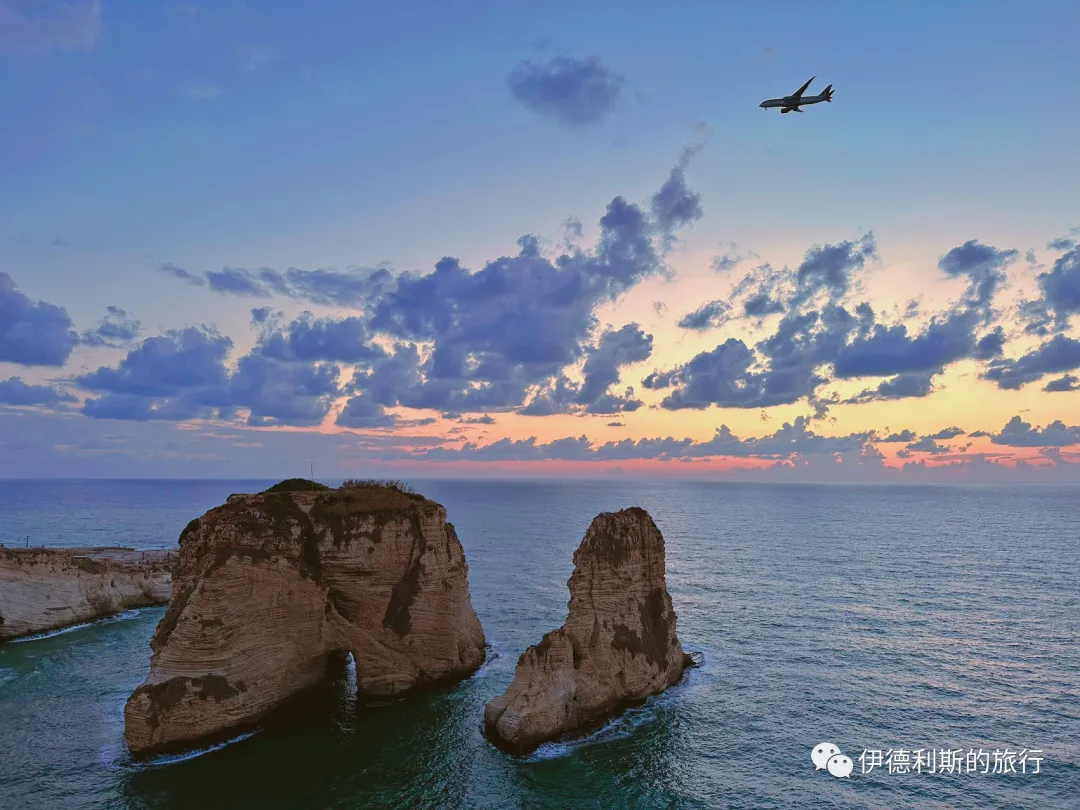
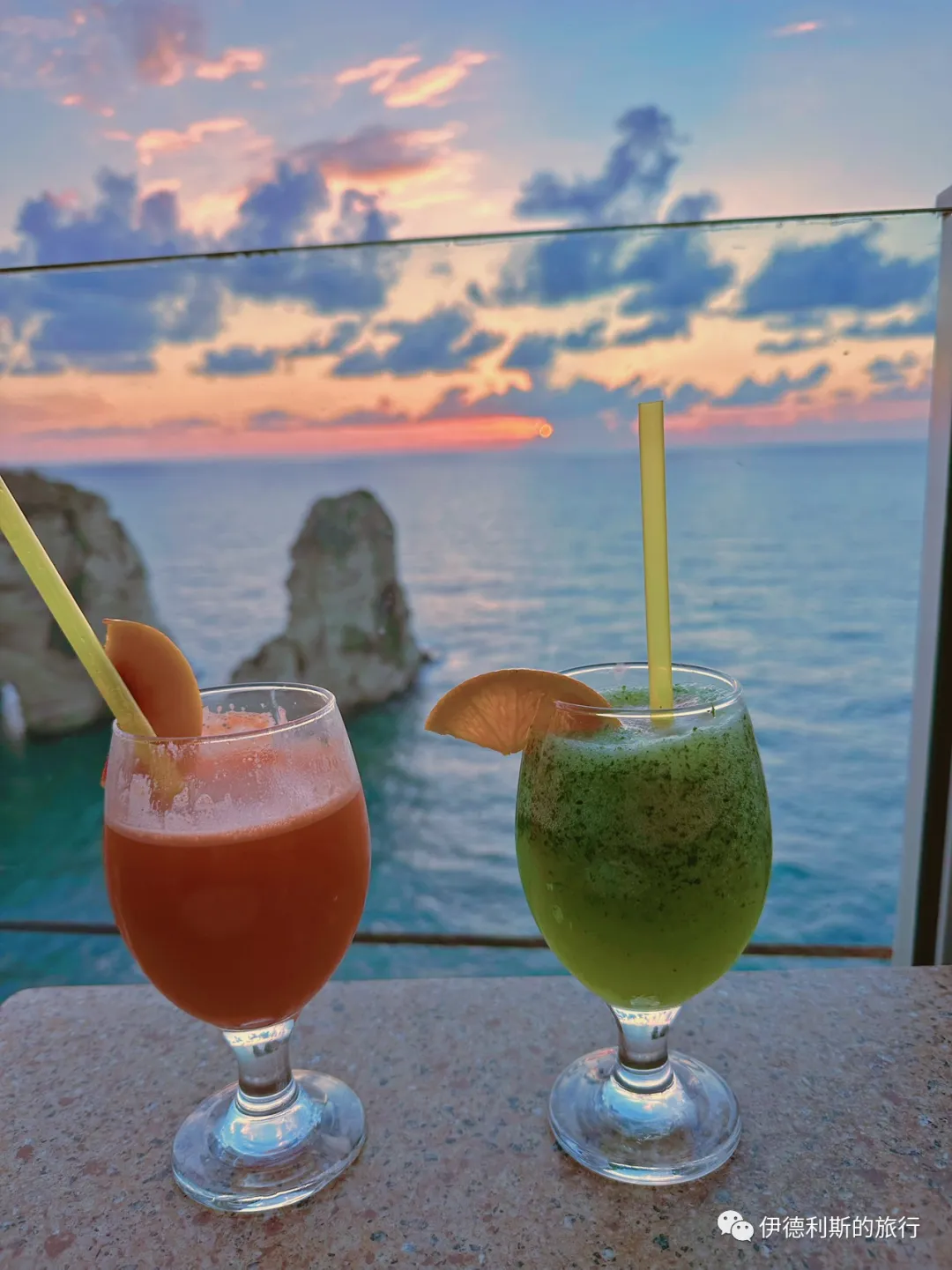
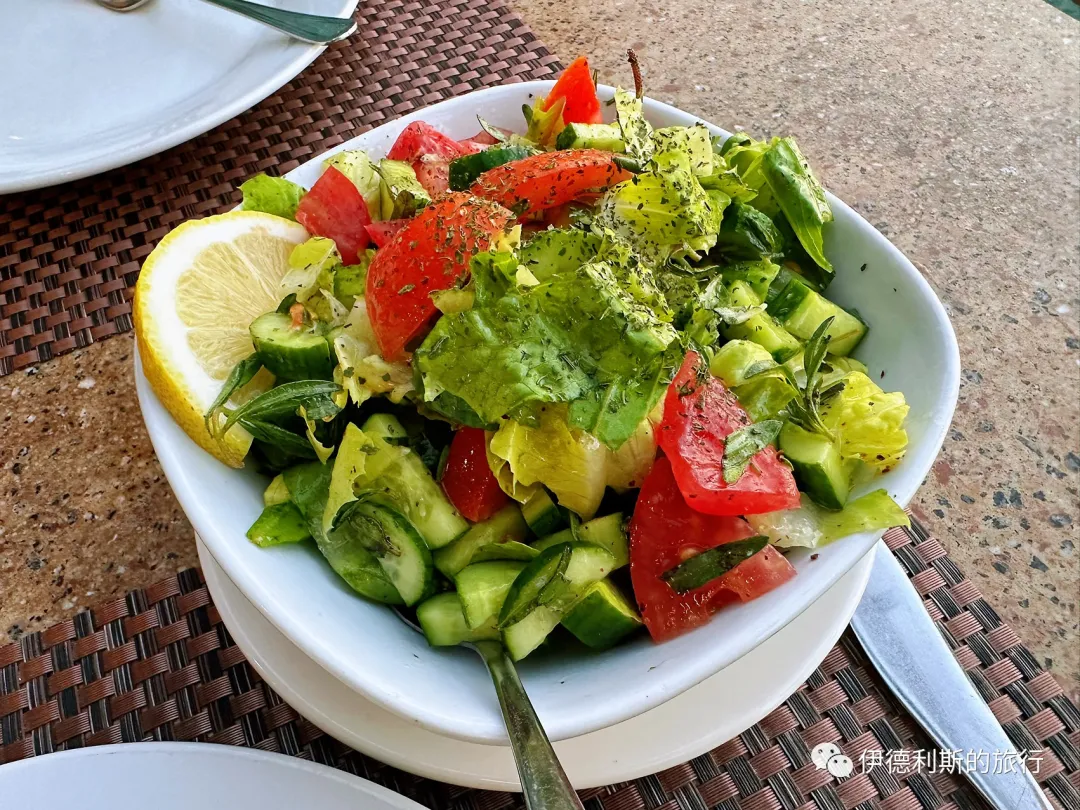
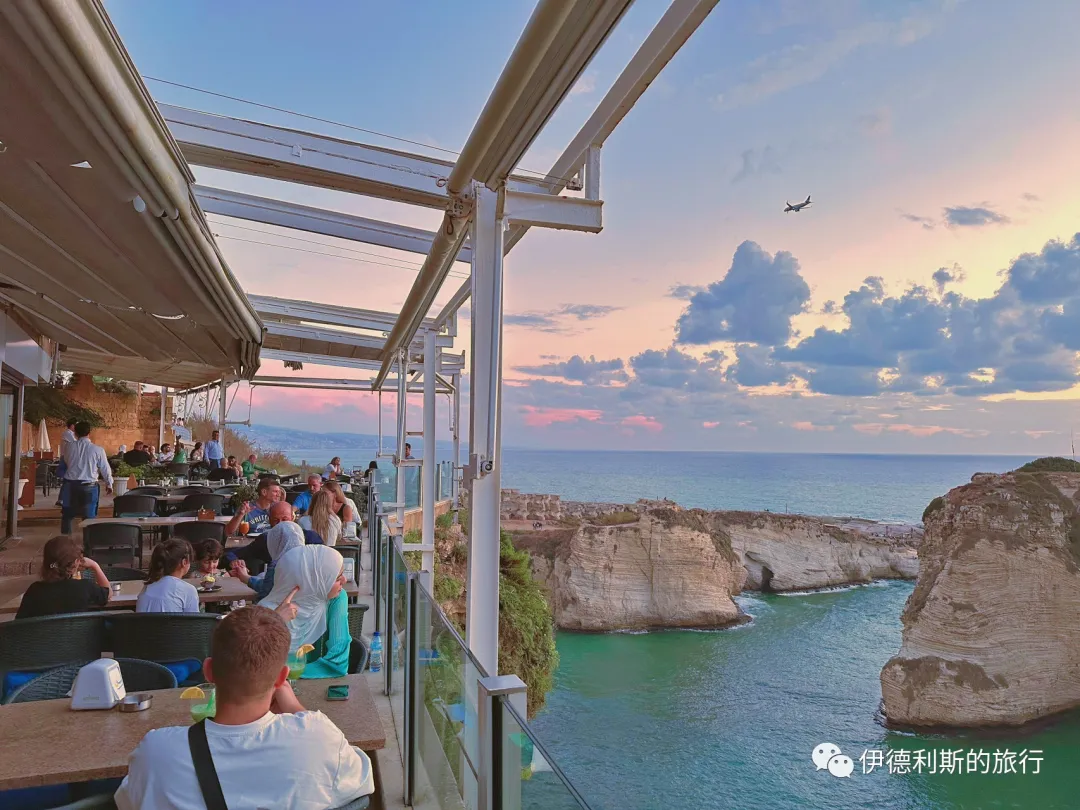
Bay Rock Cafe, a popular sunset spot in Beirut, Lebanon.
Street coffee in the Old City of Tripoli, Lebanon.
Haret Al-Sham Arabic cafe in the old city of Jeddah, Saudi Arabia.
Khan Shaheen cafe in the old city of Cairo, Egypt.
Bedouin cafe in the old city of Sharjah, United Arab Emirates.
Nimrah Iranian cafe in Hyderabad, India.
Hua Mei Hainanese cafe (Hua Mei Cha Can Shi) in Johor Bahru, Malaysia.
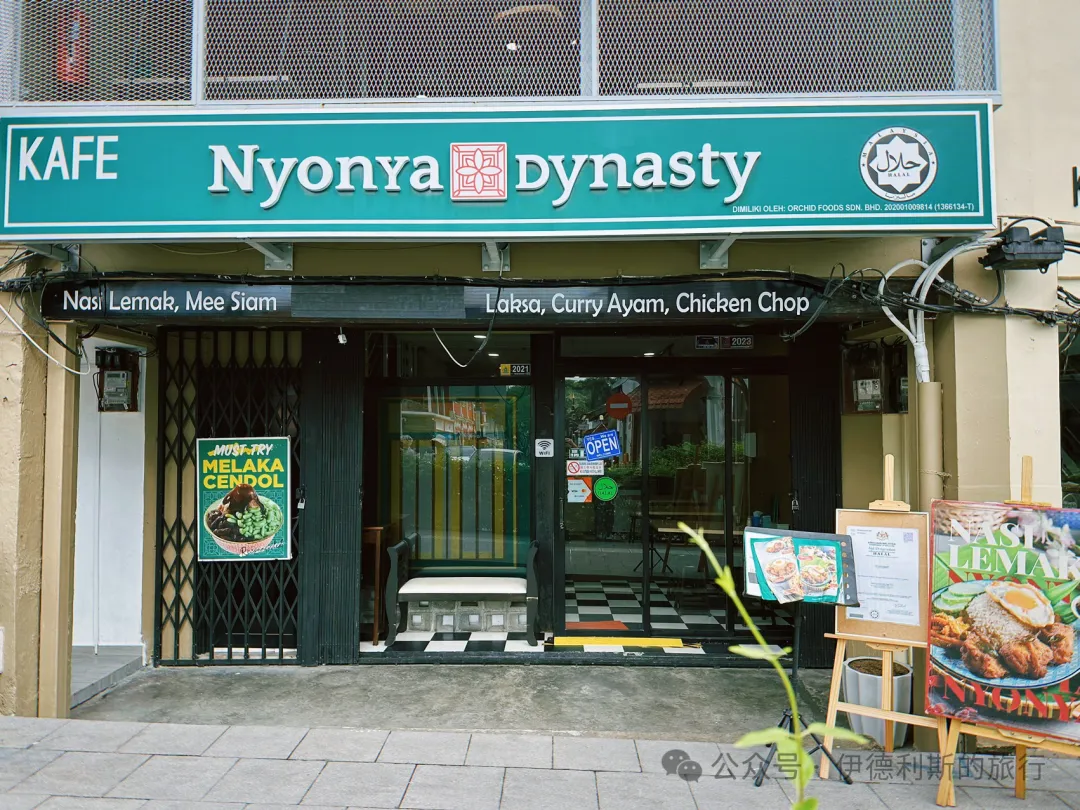
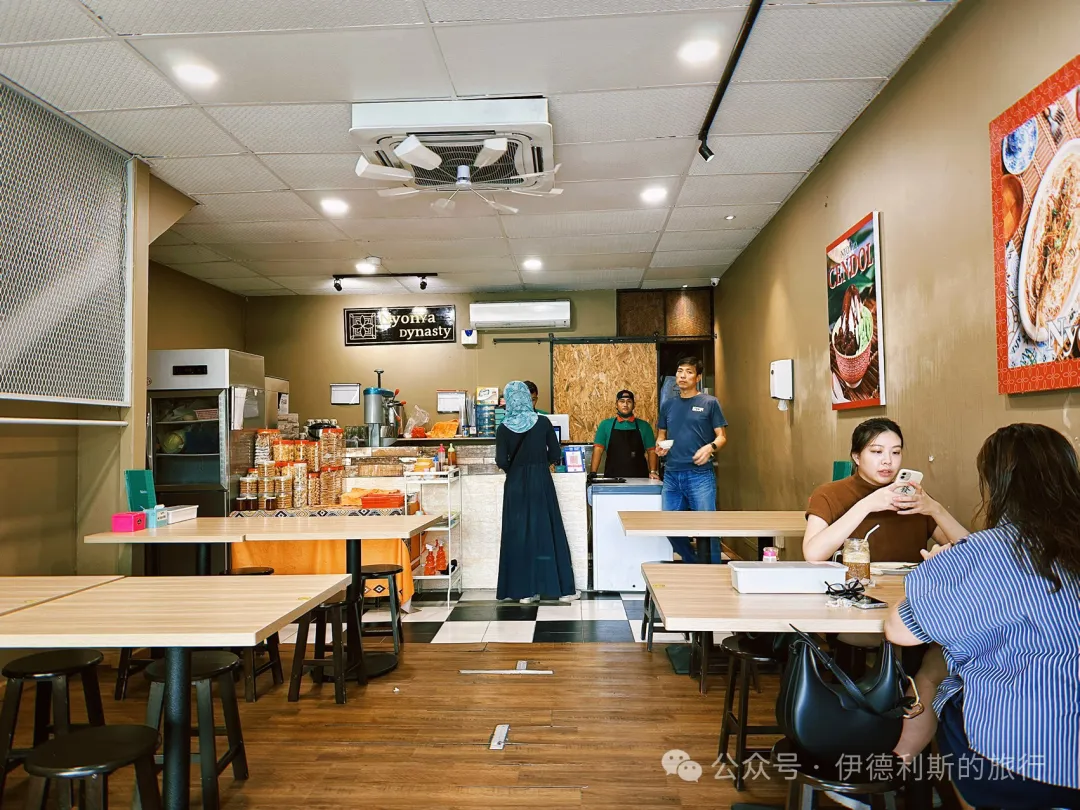
Nyonya Dynasty Peranakan cafe in Johor Bahru, Malaysia.
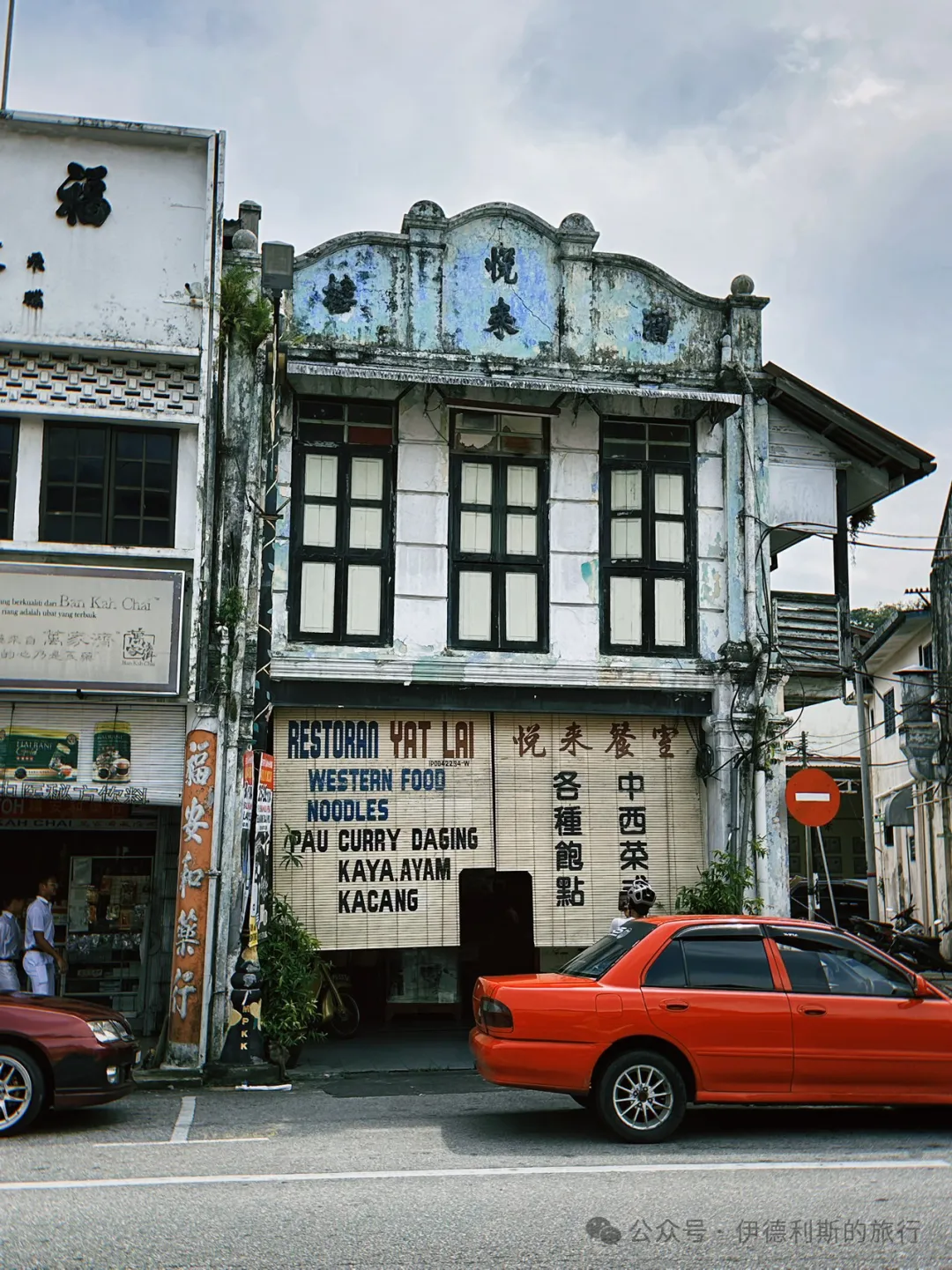
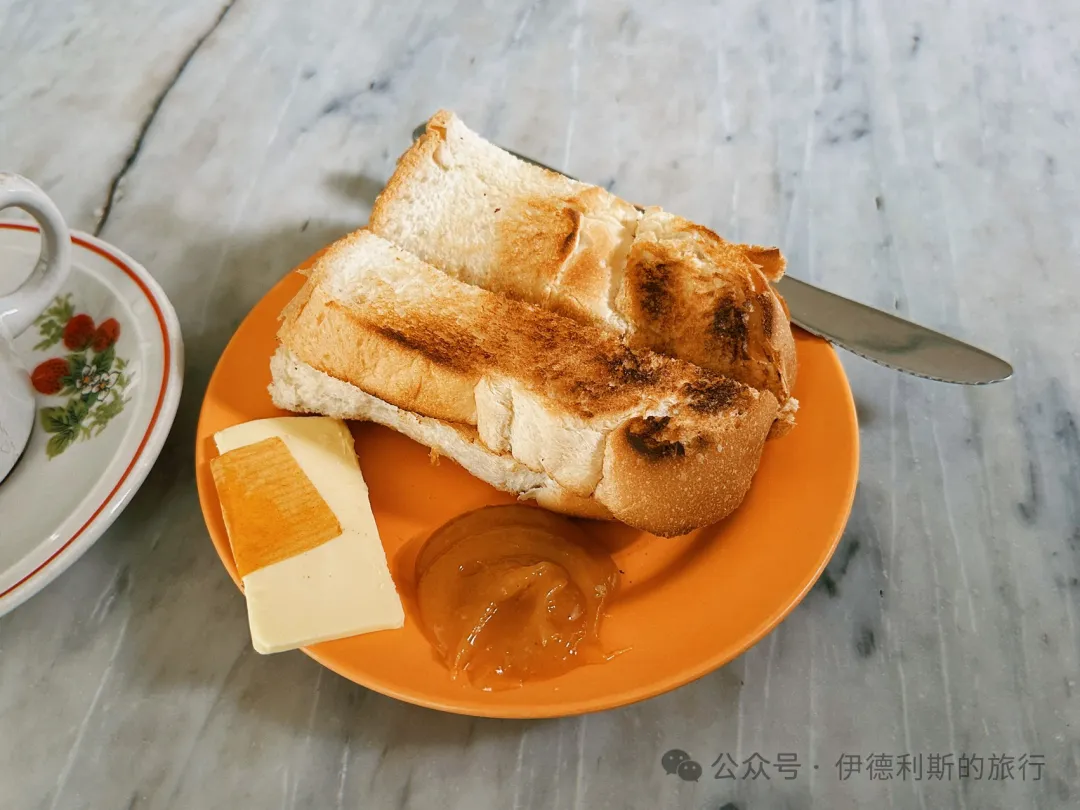
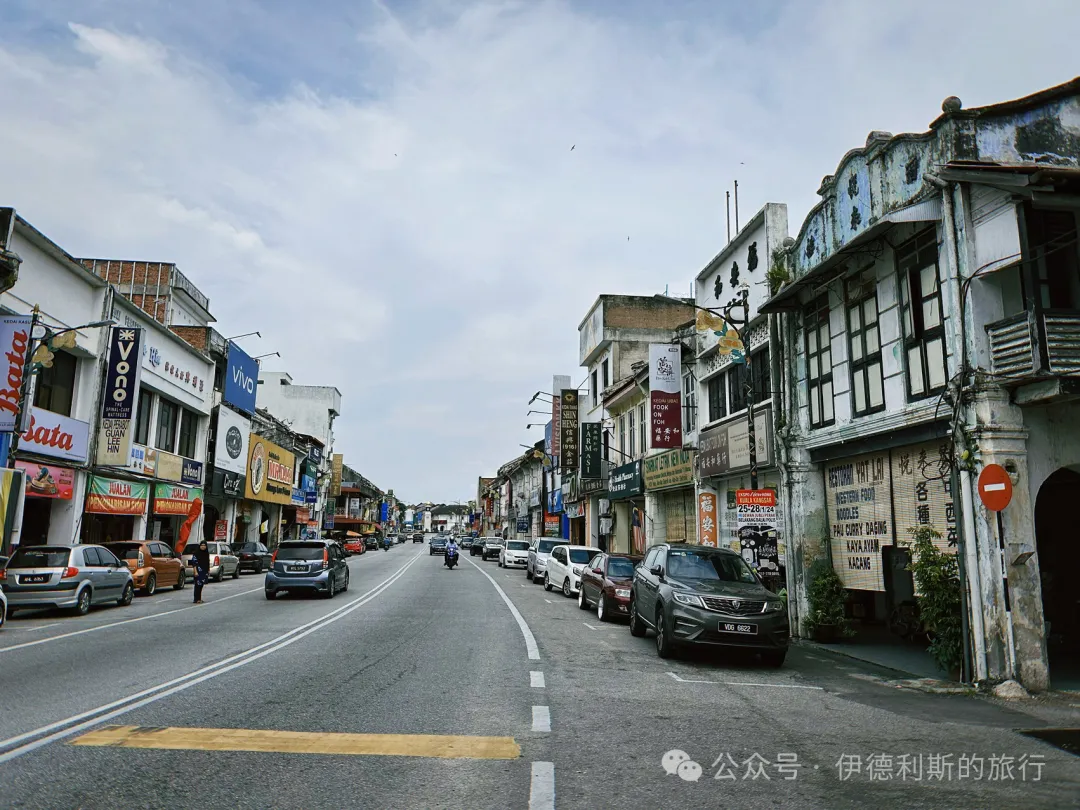
Yue Lai Hainanese coffee shop (Yue Lai Cha Shi) in Kuala Kangsar, Malaysia.
Mola Közde Kahveci cafe in Istanbul, Turkey.
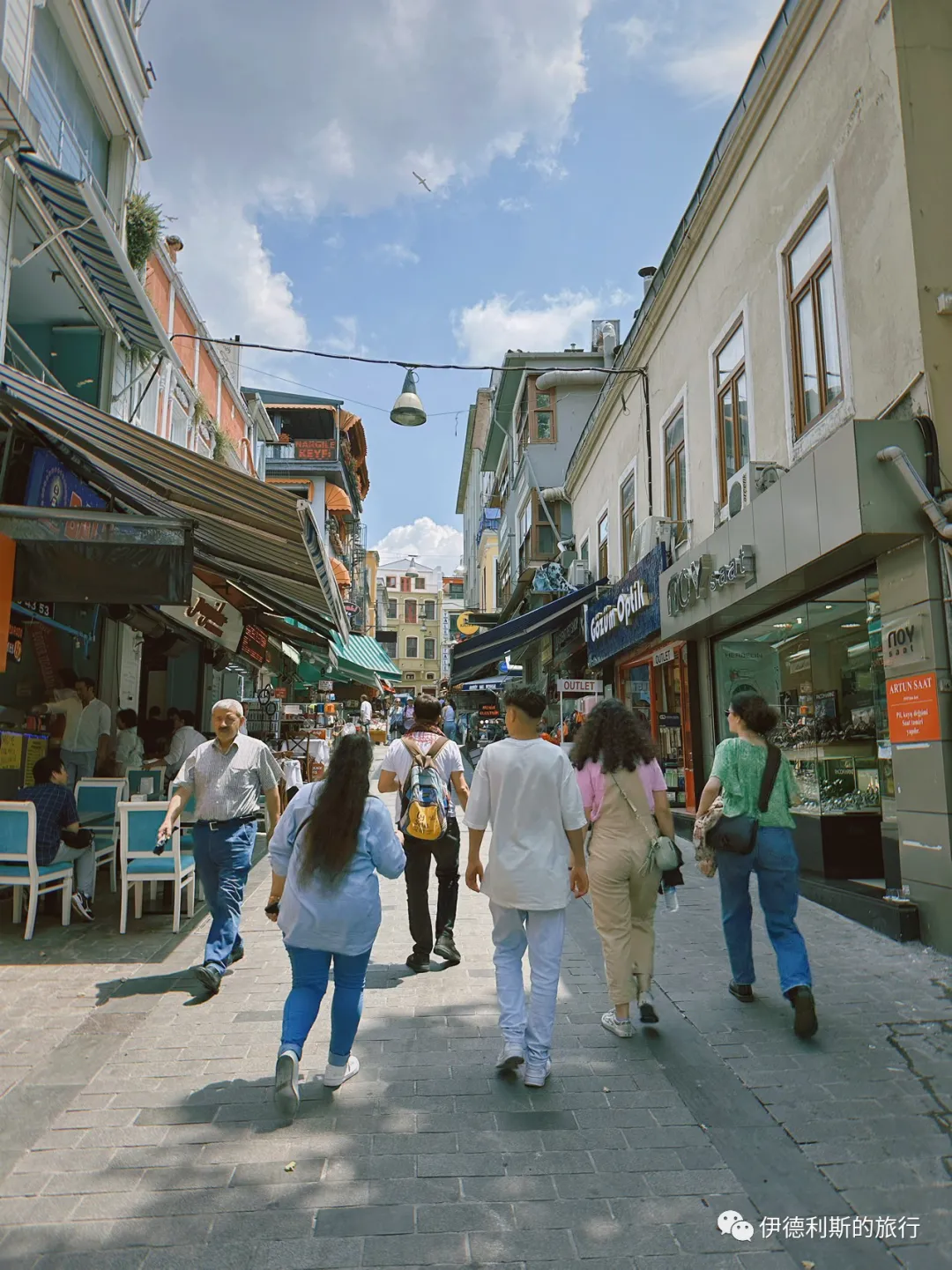
Kadikoy is in the Asian side of Istanbul and has a very long history. Greeks built the first settlement on the Bosphorus here in 667 BC, a few years before Byzantium on the opposite shore. The Ottoman dynasty began ruling here in 1353, exactly 100 years before they conquered Constantinople in 1453. Under Ottoman rule, this place was a transport hub for crossing the Bosphorus, so it slowly grew into a busy town.
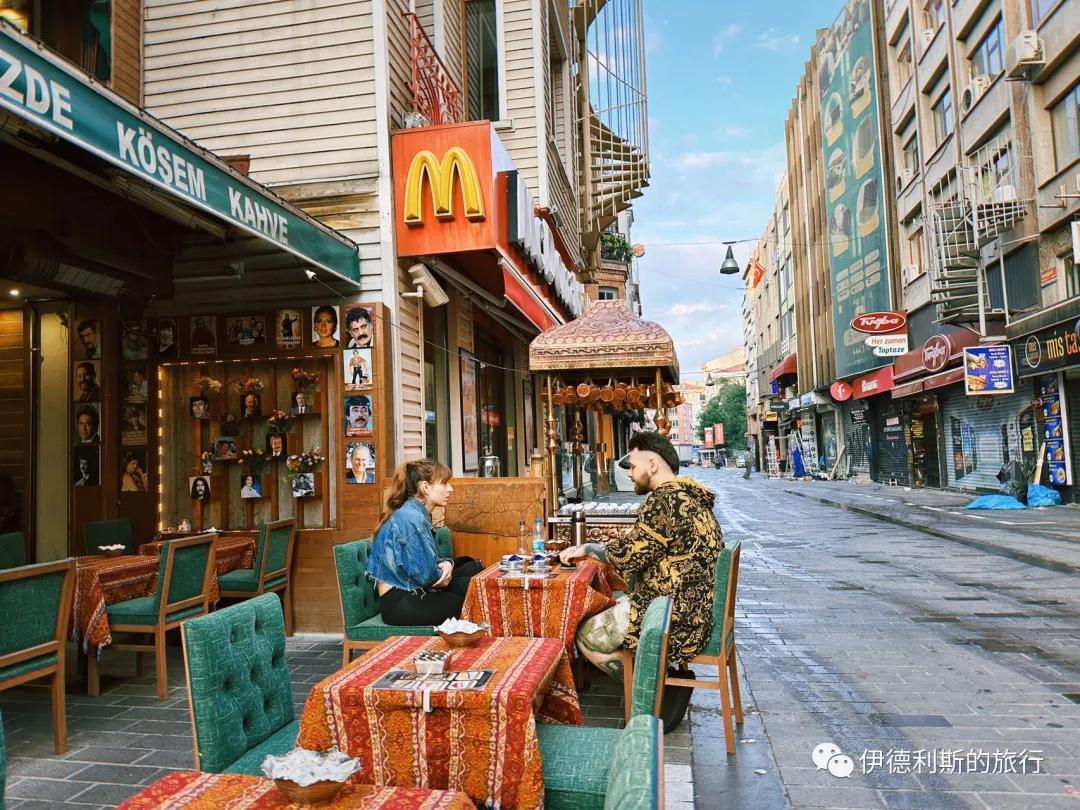
Today, it is a hangout spot for young people with several pedestrian shopping streets filled with cafes, restaurants, shops, craft stores, and bookstores. Although it lacks a wild nightlife and crowded tourist spots, life here is much more comfortable and relaxed.
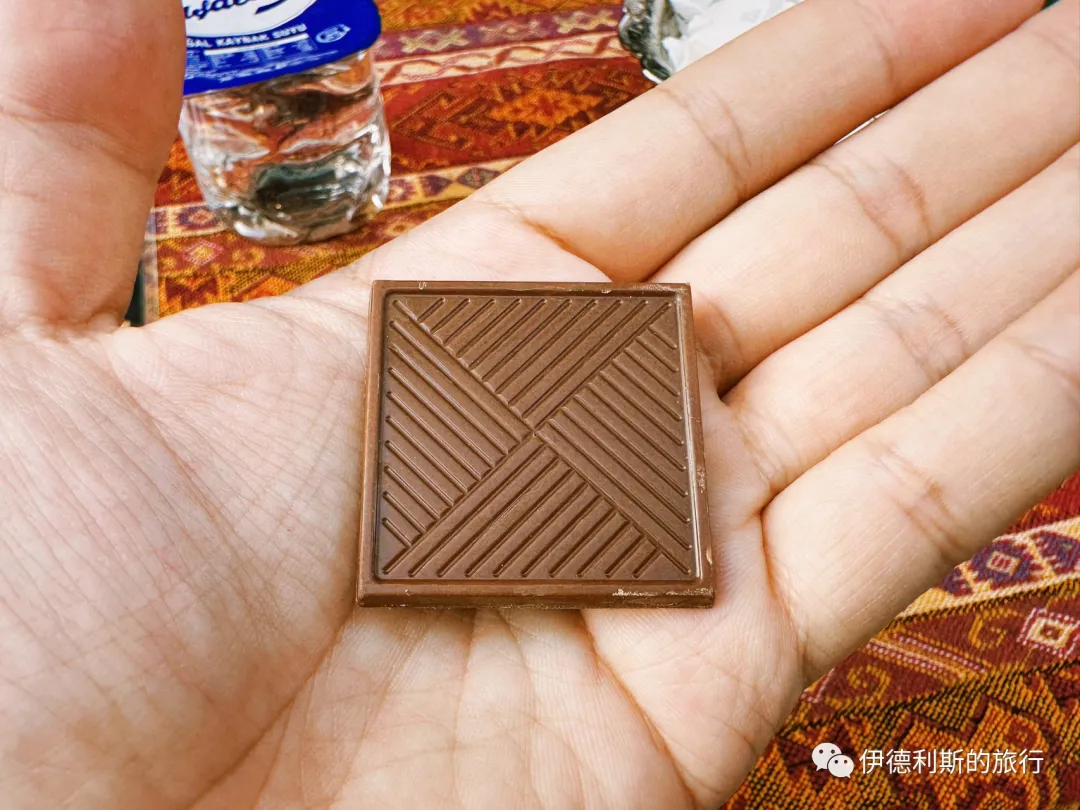
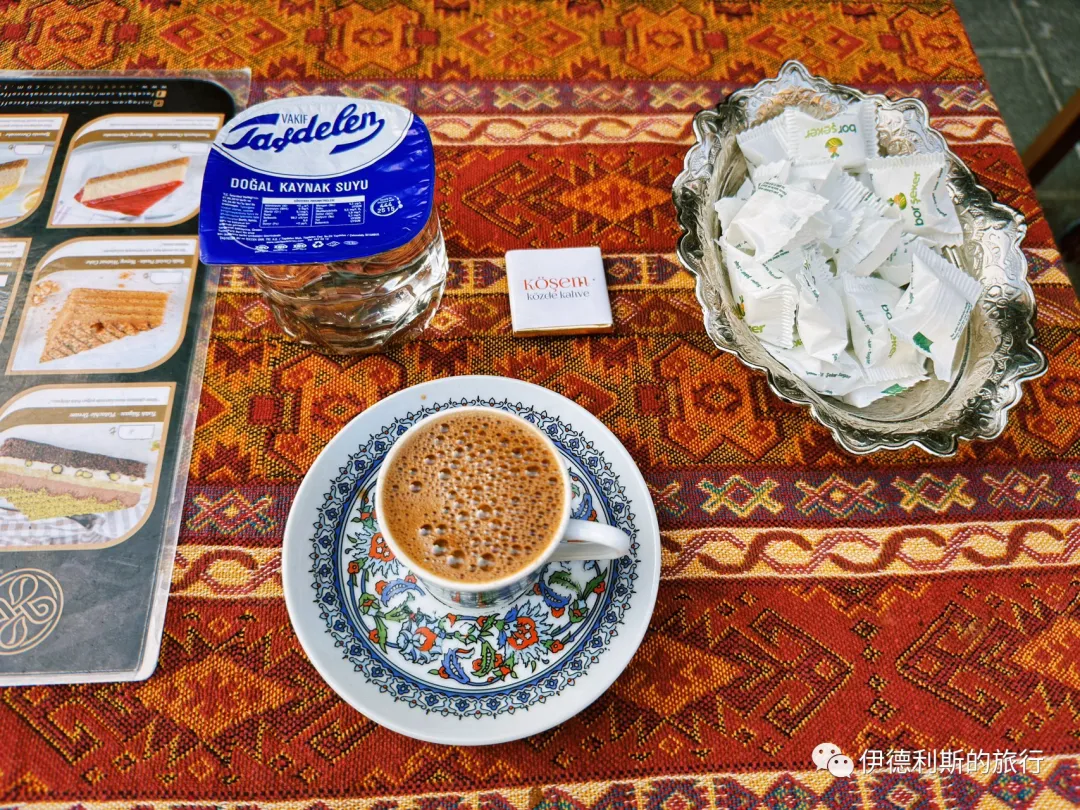
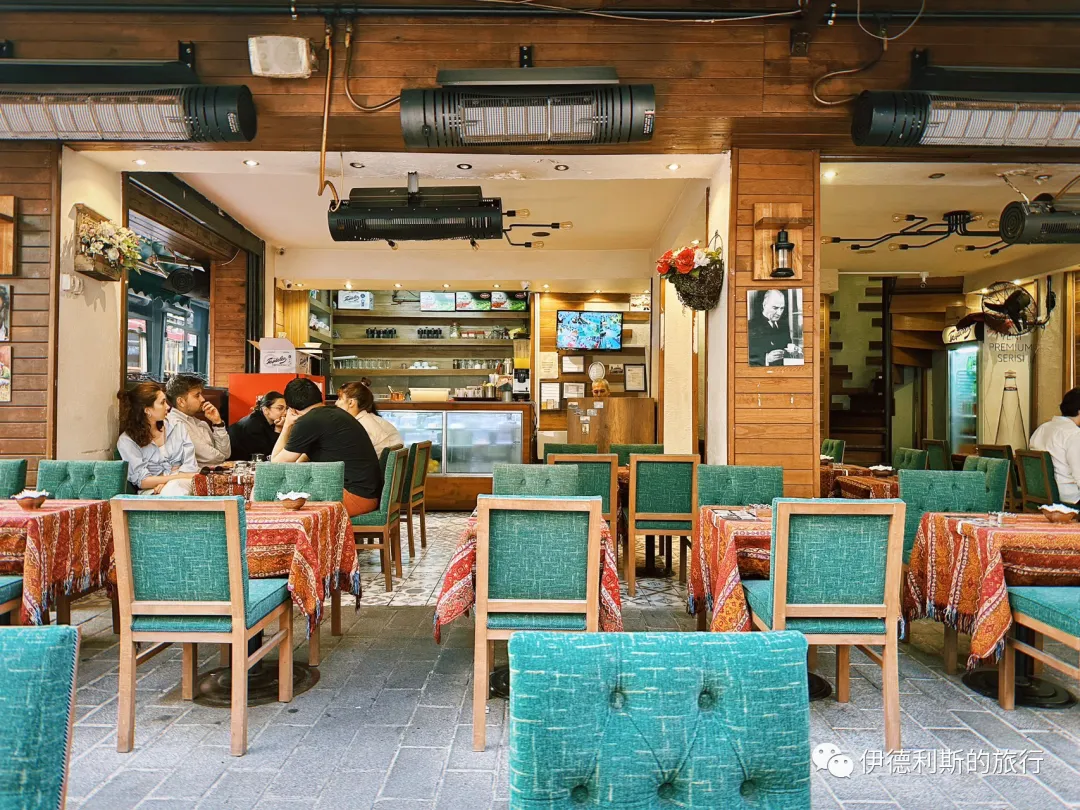
People in Istanbul really love coffee. When we came back to the cafe downstairs from our place at midnight, it was full of people, and when we left at six in the morning, people were still drinking coffee. Charcoal-roasted Turkish coffee is delicious. It comes with a glass of water and a piece of chocolate, which is very refreshing.
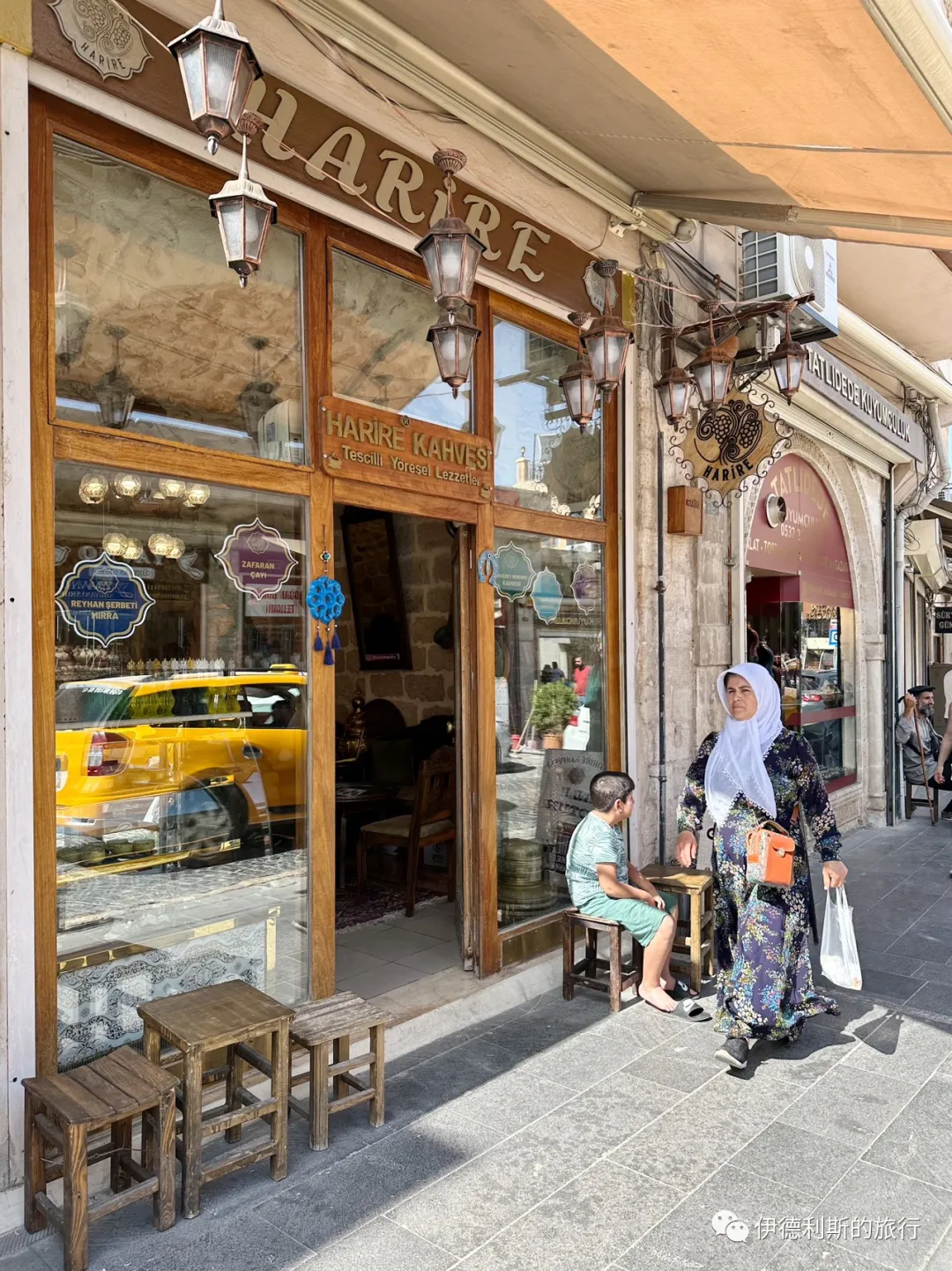
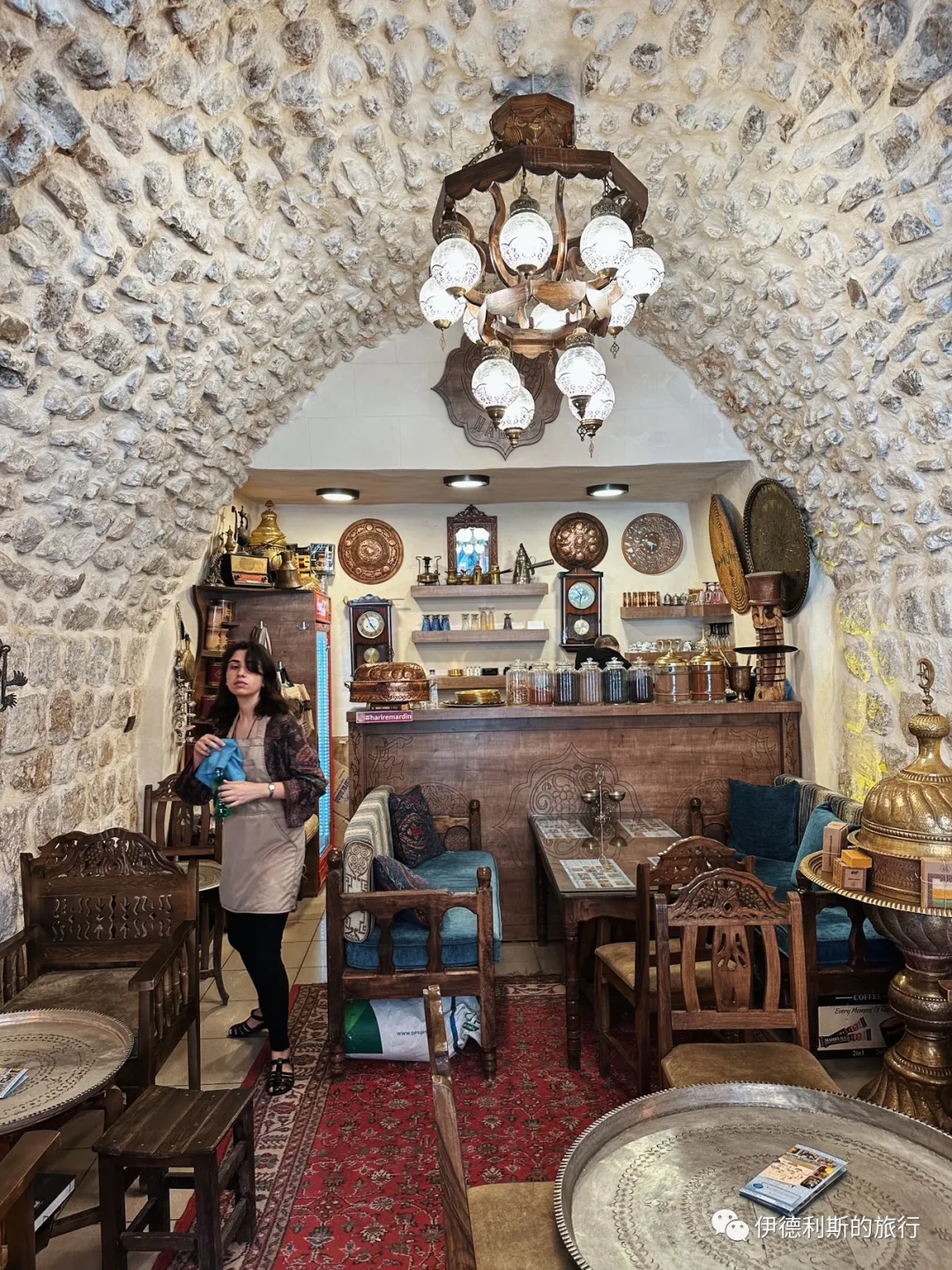
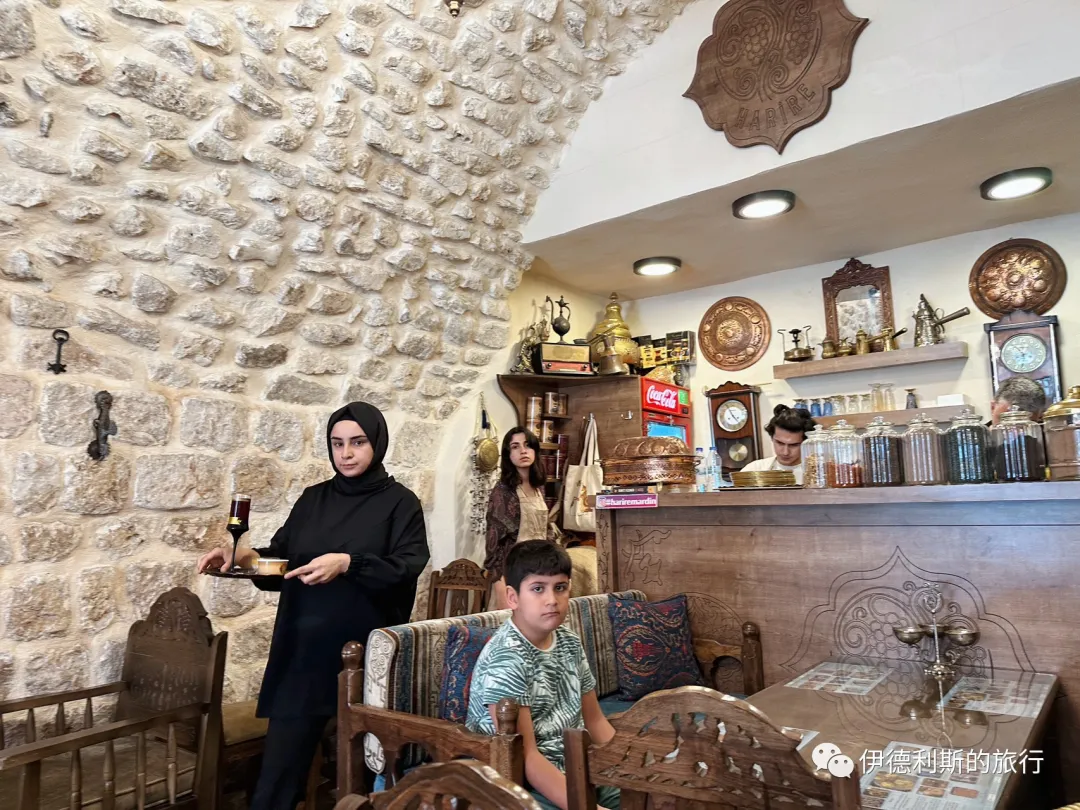
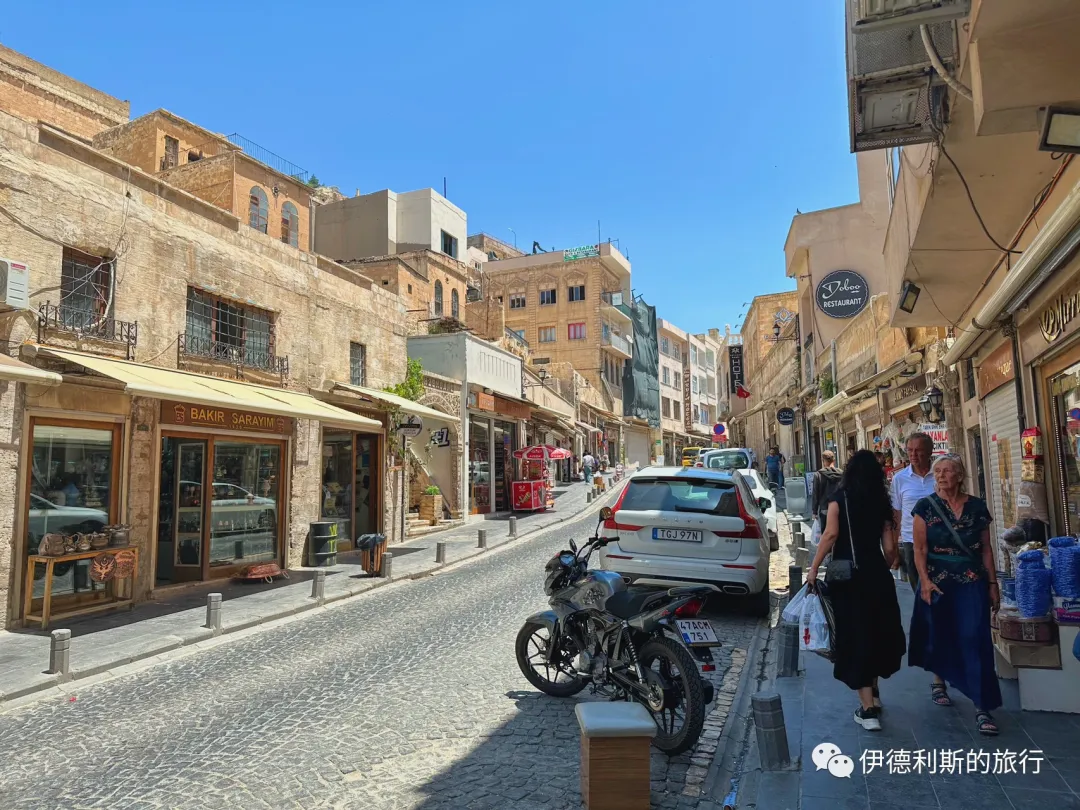
Harire Mardin Kurdish cafe in Mardin, Turkey.
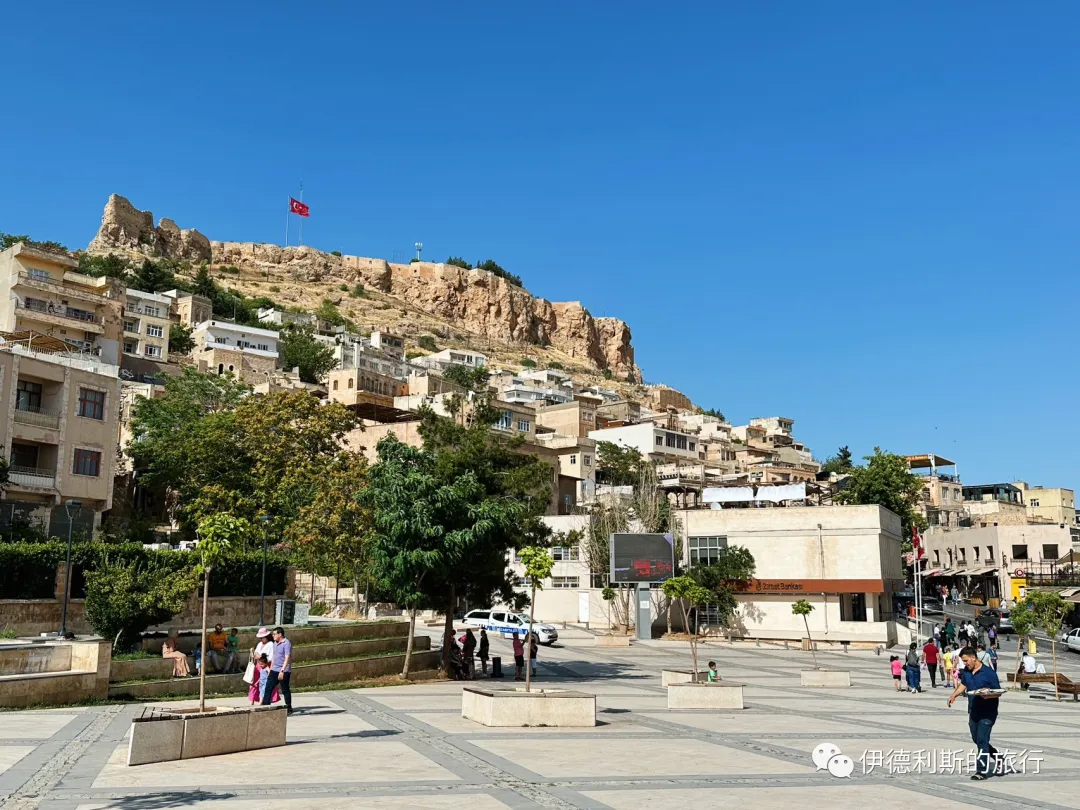
Mardin sits in the Upper Mesopotamia region, upstream of the Tigris and Euphrates rivers. The entire old city is built on the southern slope of a mountain ridge. A thousand-year-old castle stands on the cliff at the very top, with the stone city built in tiers below it. Because of this, you can look out over the Mesopotamian plains from any terrace in the old city, and the view is spectacular.
The ancient city of Mardin has a very long history. It was called Merida, meaning castle, during the Roman period. It became part of the Arab Empire in 640 and was later ruled in turn by several tribal dynasties of Mesopotamia. After 1085, Mardin was ruled successively by the Seljuk Empire, the Artuqid dynasty, and the Kara Koyunlu, all established by Oghuz Turkic tribes. It was finally incorporated into the Ottoman Empire in 1517. Five hundred years ago, many Armenians and Jews lived in the old city of Mardin. Today, it is mainly home to Kurds and Arabs, along with a significant number of Assyrian Christians, making the culture very diverse.
Harire Mardin is a cafe in Mardin with a very local feel. Local Mardin coffee is stronger than Turkish coffee. It contains orchid root powder (salep) and carob powder (carob), and the local Kurds and Assyrians both enjoy drinking it this way. Tabbaka is a yellow rice pudding invented by the Assyrians. Harire is a brown pudding made from local Mazruna grapes, and we finished by drinking purple basil sherbet (Reyhan Sherbet).
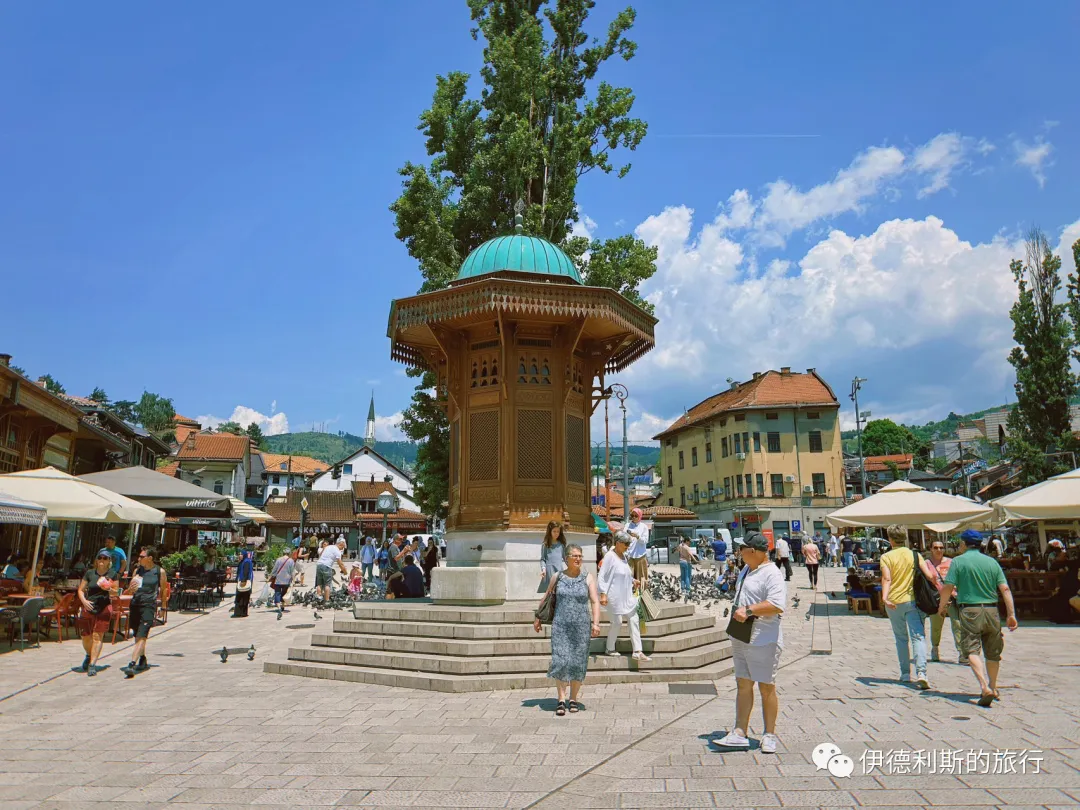
A Bosniak cafe in the old town of Sarajevo, Bosnia and Herzegovina.
S
aSa
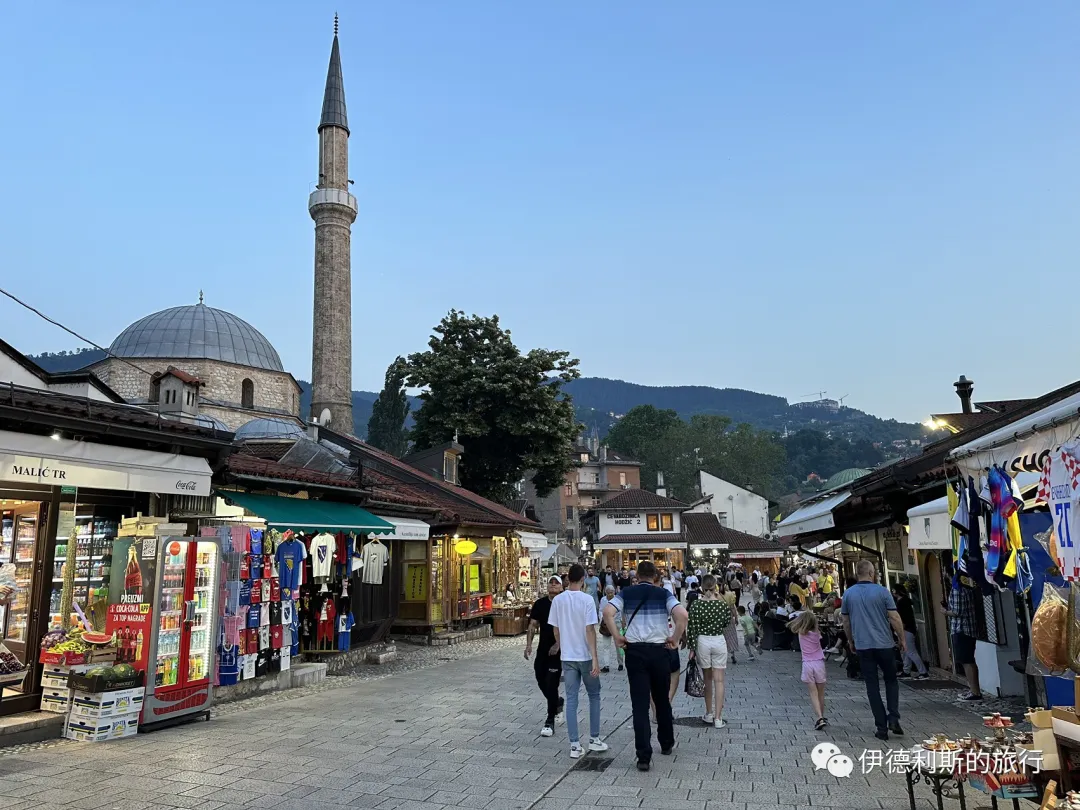
Bosniaks (Bošnjaci) are a Slavic-speaking Muslim ethnic group living in the Bosnia region of the Balkan Peninsula. They migrated to Bosnia from northeastern Europe as early as the 6th century and were under Ottoman rule for over four hundred years from 1463 to 1878, which strongly influenced their cultural customs.
We drank traditional Bosnian coffee (Bosanska Kahva) at the Grand Bazaar in the old town of Sarajevo. Coffee was first introduced to the Balkan Peninsula under Ottoman rule by Arabs in the 16th century. Sarajevo was one of the first European cities to open cafes, over a hundred years before cities in Western Europe started drinking coffee.
Cafes were an important part of Ottoman culture. People could listen to the day's main news, discuss daily gossip, and watch various impromptu performances like shadow puppetry. Cafes give people a place to share ideas outside of work and worship, and they are great spots to meet like-minded friends.
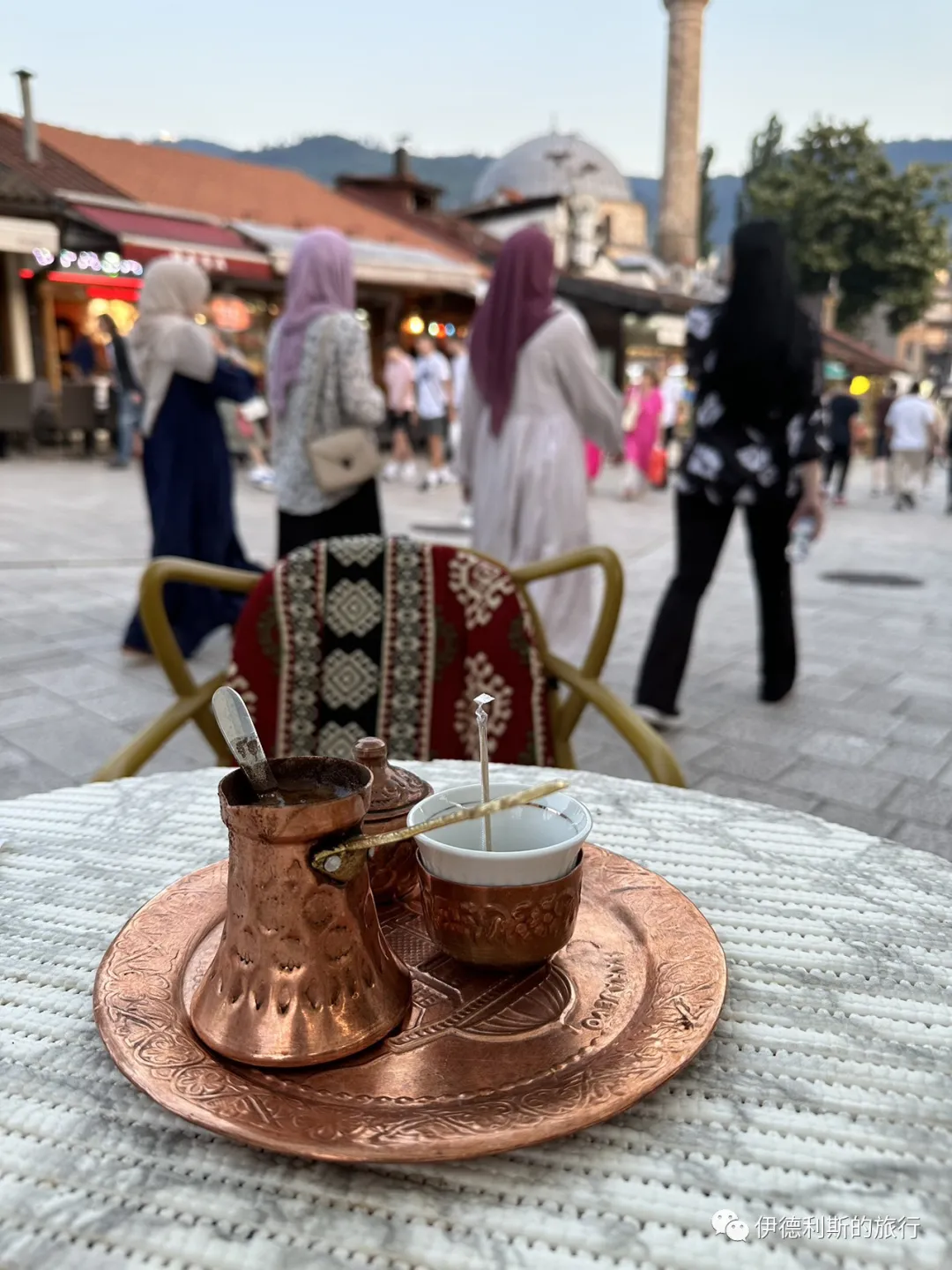
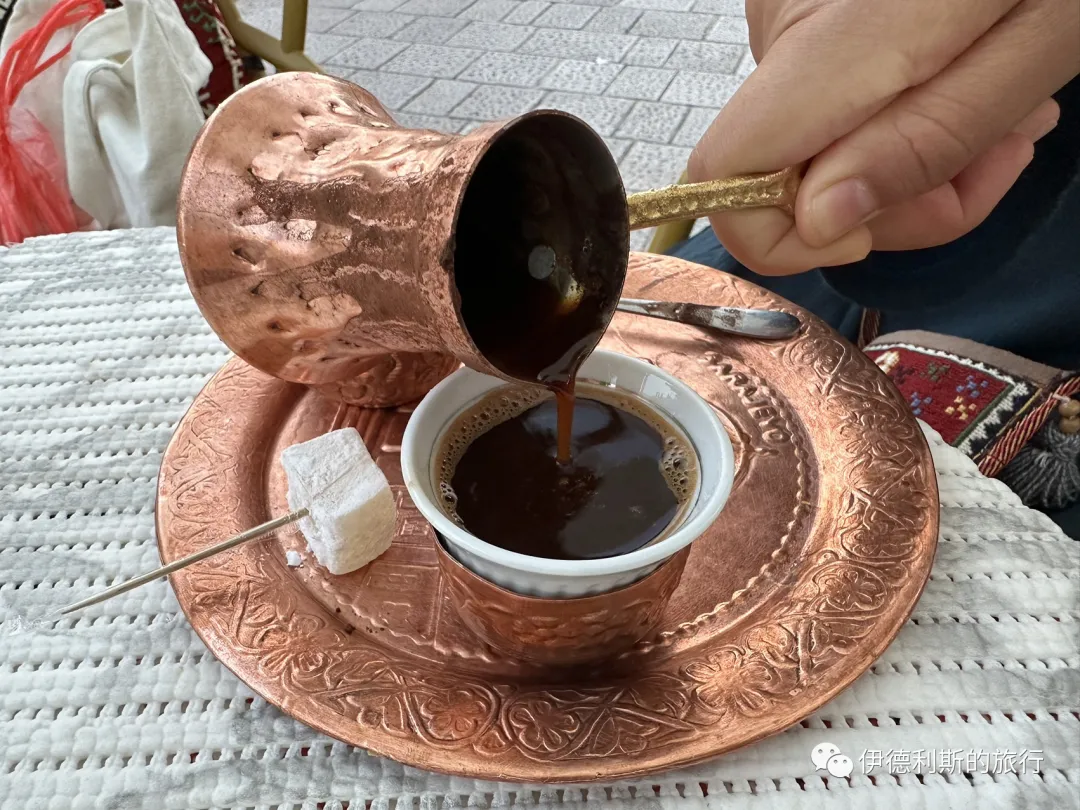
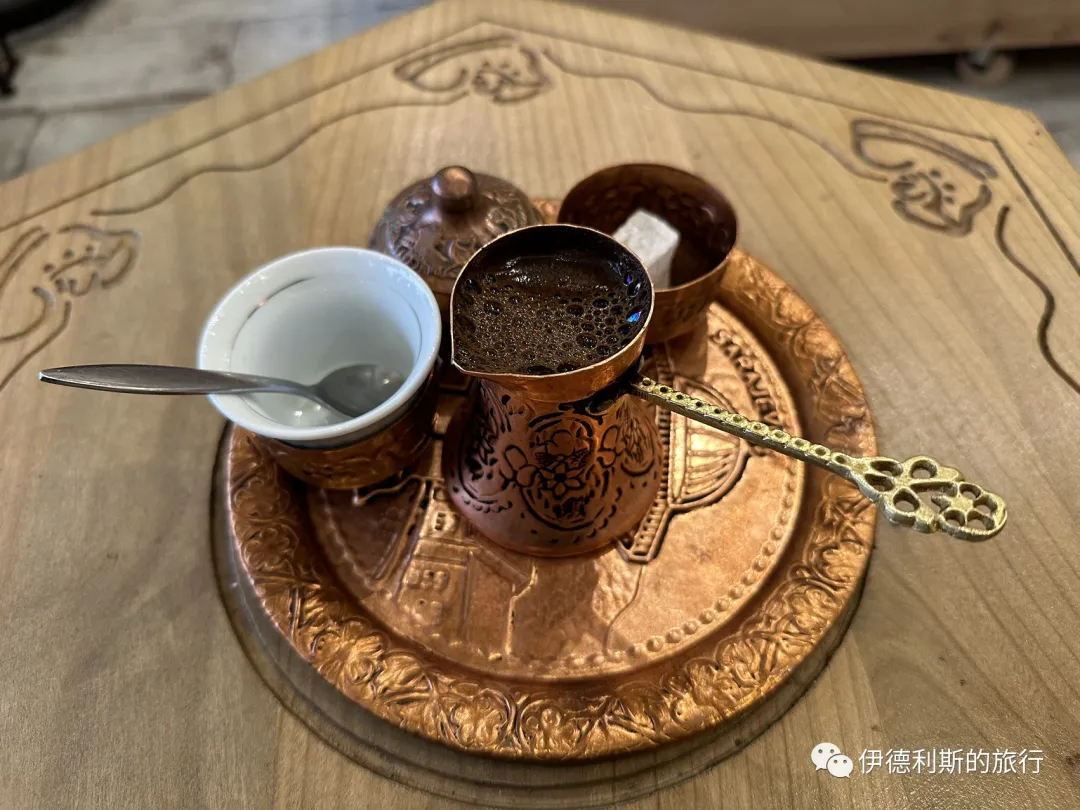
Bosnian coffee is made by grinding roasted coffee beans into a fine powder and brewing them in a long-handled copper pot called a Džezva (known as Cezve in Turkish), just like Turkish coffee. However, while Turkish coffee can be brewed with cold water, Bosnian coffee must be brewed with boiling water. You can add sugar to Turkish coffee while it brews, but you cannot add sugar to Bosnian coffee. Turkish coffee is poured into a cup for the customer, but Bosnian coffee is served by bringing the copper pot and the cup to the customer on a tray so they can pour it themselves.
A classic Bosnian coffee set includes the copper pot, a porcelain cup with a copper base, a copper tray, a copper sugar bowl for sugar cubes, and Turkish delight (rahat lokum). To drink it, bite off a piece of a sugar cube and hold it under your tongue to let it melt before you take a sip of coffee. Bosnian Turkish delight (rahat lokum) comes from the Turkish version (lokum). The yellow pieces are made with vanilla and the red ones are made with rose petals, and you can eat them whenever you like while drinking your coffee.
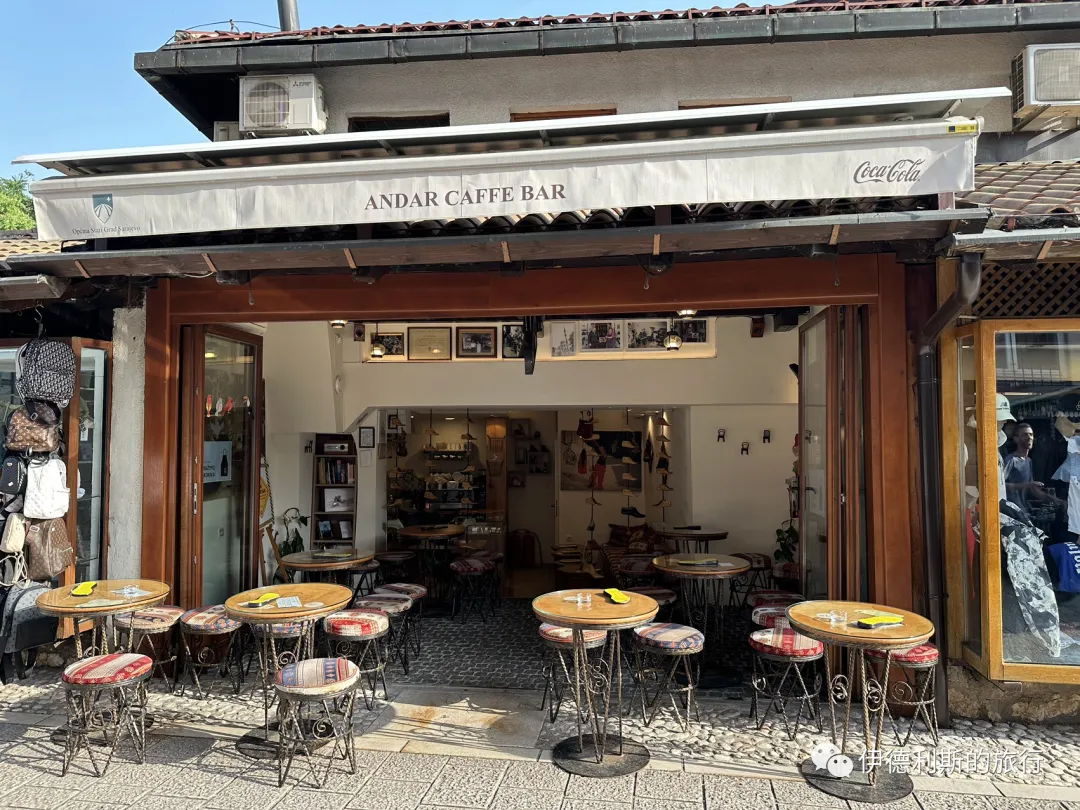
Andar Caffe Bar Bosnian cafe in the Old Town of Sarajevo, Bosnia and Herzegovina.
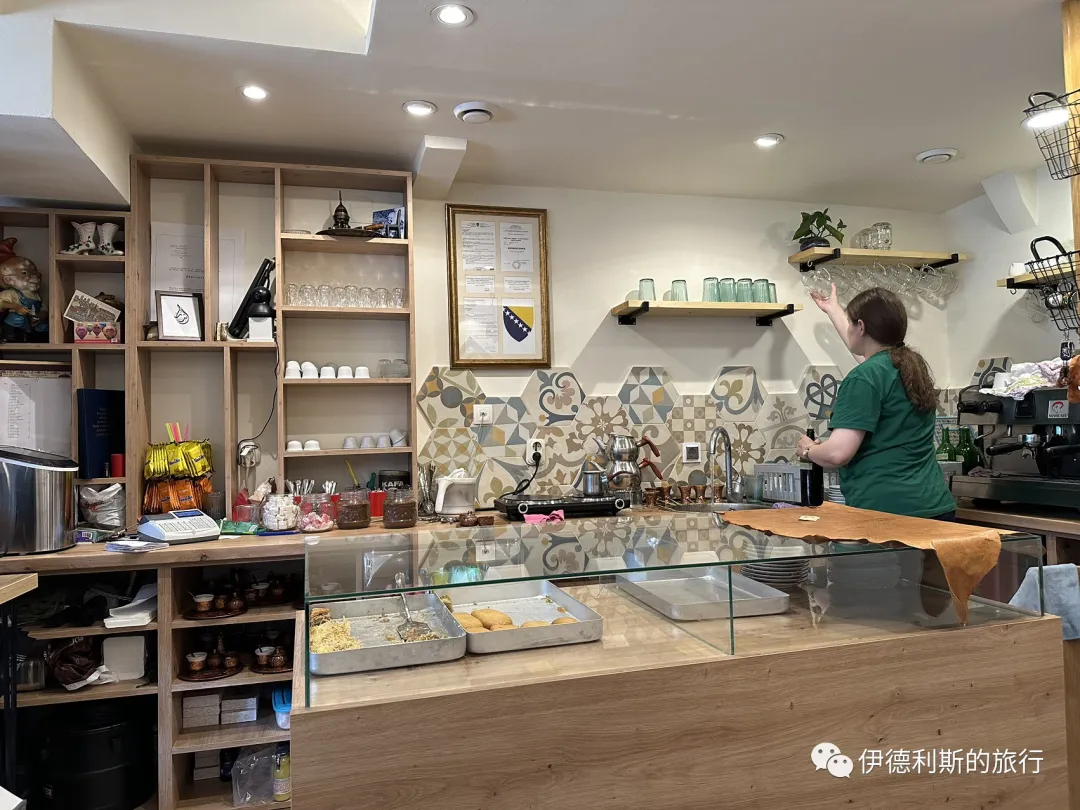
At Andar Caffe Bar in the old town of Sarajevo, the owner Maida's grandfather, Muharem, opened a handmade shoe shop in the Sarajevo Old Bazaar in 1933, which was later taken over by Maida's father, Osman. After Osman retired in 2010, Maida took over the shop, but handmade shoes were no longer popular as people started buying shoes in stores, so Maida turned the shop into the current cafe while keeping many shoe-themed elements inside.
Younes, a legendary cafe in Beirut, Lebanon.
Hamra is a busy and trendy neighborhood in Beirut near the American University, filled with young people and long known as the cultural center of Beirut. The environment here is relatively nice, making it a good place for shopping in Beirut.
The founder of Younes Cafe, Amin Younes Sr., immigrated to Brazil in 1894 and worked on a Brazilian coffee tycoon's plantation for 20 years. In 1935, Amin returned to Lebanon and opened Younes Cafe in downtown Beirut. During World War II, the collapse of the Lebanese currency wiped out most of Amin's savings, but he still managed to pull through. In 1960, Amin's son Souheil joined the family business and helped his father open the first branch of Younes Coffee in the Hamra district. It was one of the first coffee shops in Lebanon to buy an espresso machine. The main Younes shop in downtown Beirut was destroyed during the Lebanese Civil War in 1975, leaving only the Hamra branch standing.
Abou Anwar worked at Younes Coffee for 60 years starting in 1954. He was the shop's most senior coffee roasting master, and his expert skills drew in a large group of loyal customers. The coffee I ordered is named after him, the Abou Anwar Blend, which mixes his favorite fruits and spices.
Bab Al Saray Cafe in the Old City of Sidon, Lebanon.
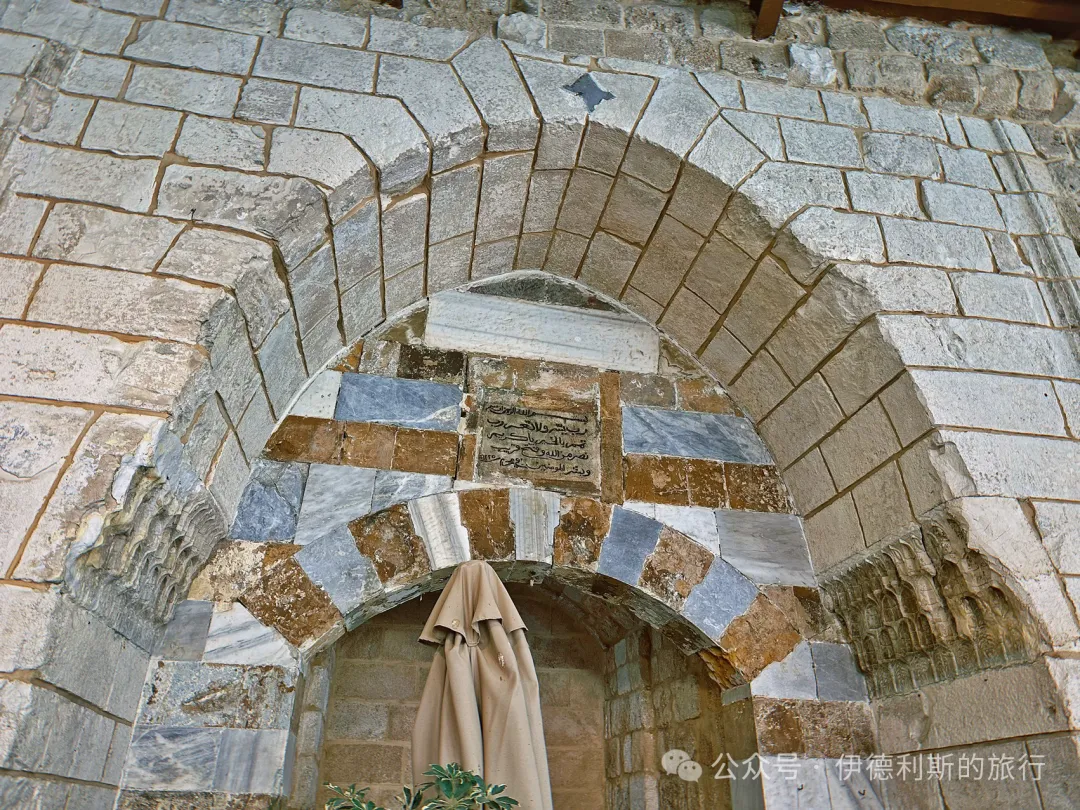
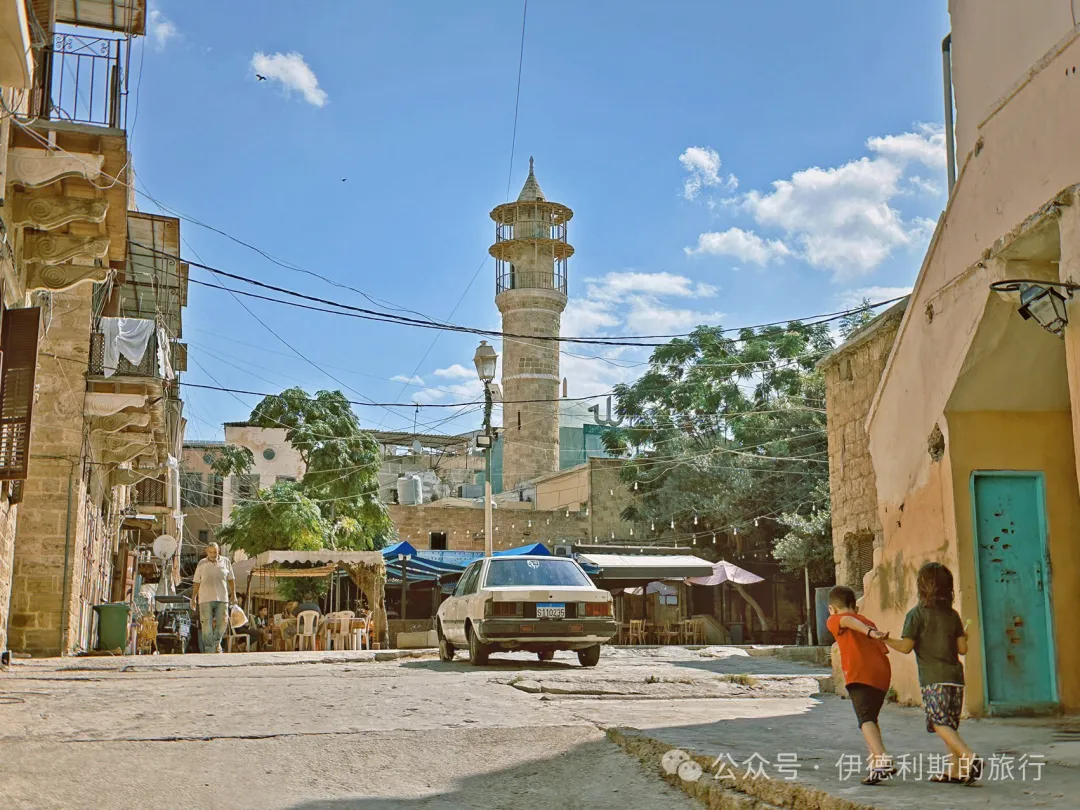
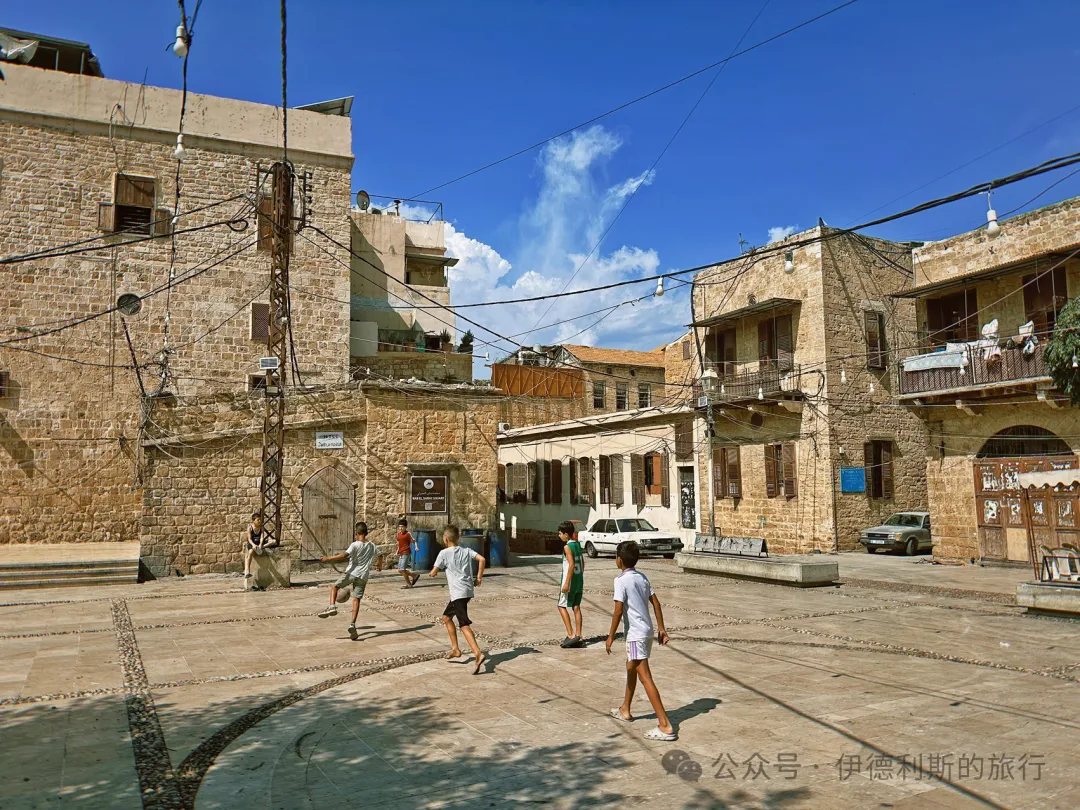
The ancient city of Sidon is 40 kilometers south of the Lebanese capital, Beirut, and is the third-largest city in Lebanon. Sidon has a history of over 6,000 years, making it one of the oldest cities in the world. It played a major role in Mediterranean trade. The ancient city of Sidon is a well-preserved Sunni Muslim old town on the eastern Mediterranean coast. When you enter the maze-like streets from the north gate, you see many houses built over the streets to form tunnels. People set up stalls inside these tunnels, selling all kinds of goods and creating a very lively atmosphere.
We had mint lemonade and coffee at Bab Al Saray Cafe inside the old city. This is one of the oldest cafes in Sidon, and people say their brunch is very authentic.
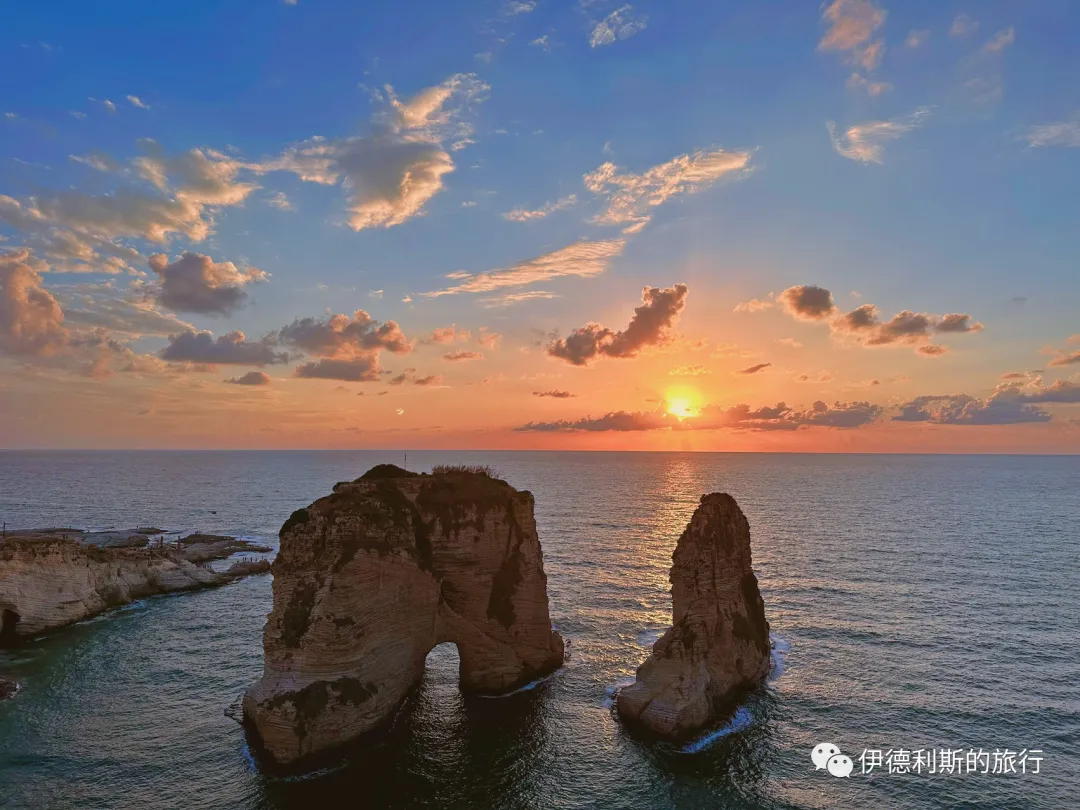
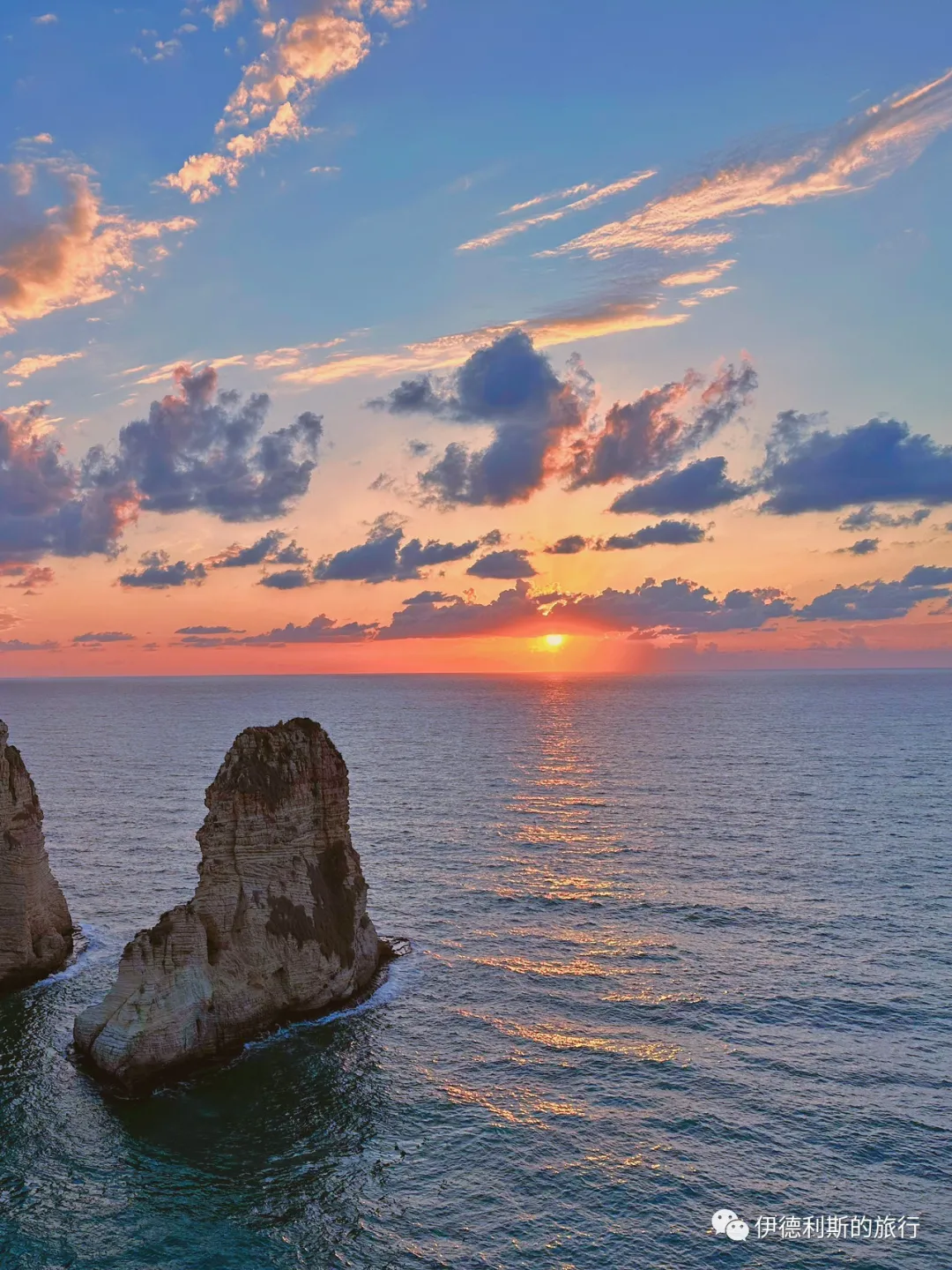
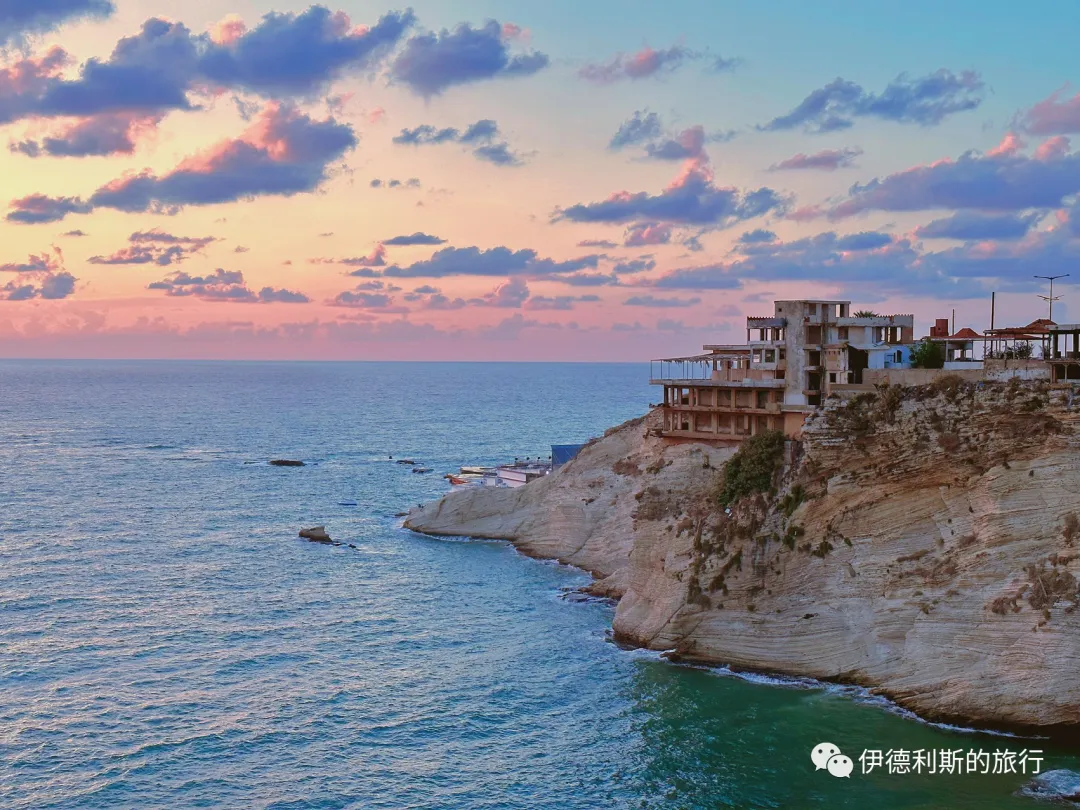
Bay Rock Cafe, a popular sunset spot in Beirut, Lebanon.
In Beirut, you have to visit the famous Pigeon Rocks to watch the sunset. I want to mention that we met several very kind people in Beirut. First, a Palestinian refugee grandmother offered us grapes. On the way to Pigeon Rocks, we met a fellow Muslim (dosti) who kindly showed us the way. The dosti took us on a bus first to help us find the stop where we could catch the bus to Pigeon Rocks. Lebanese buses do not have signs, so you can just wave them down anywhere along the road. The dosti seemed more anxious than we were while waiting for the bus. He finally put us on the bus and waved goodbye without asking for a single cent. This friend (dosti) is completely different from the tricycle driver who kept trying to overcharge us on the way to the ancient city of Anjar.
There is a row of cafes next to Pigeon Rocks, from Bay Rock Cafe in the far south to Starbucks in the far north, all of which are classic spots to watch the sunset. Although many people post about this place online, it is actually not very crowded in the cafes, and it is still very relaxing. We ordered two juices and a plate of salad at Bay Rock Cafe and spent a romantic and wonderful evening.
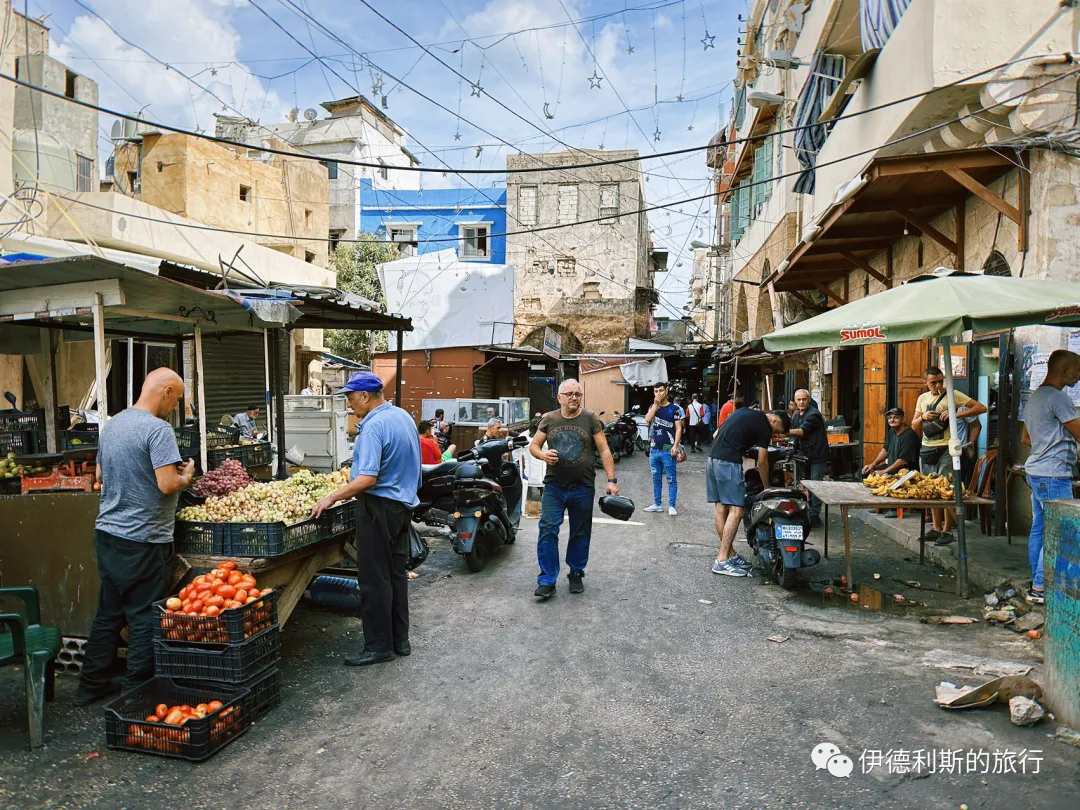
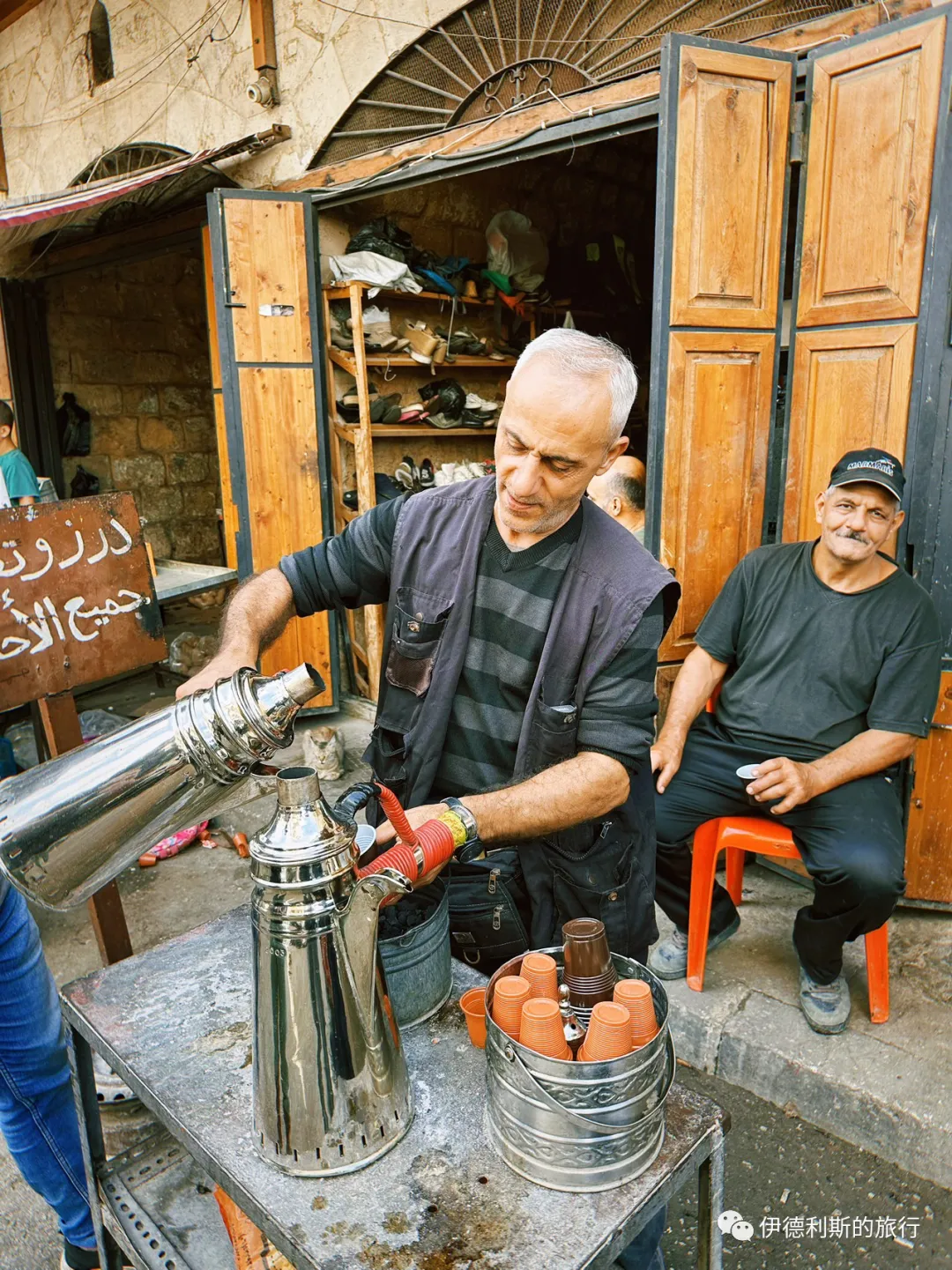
Street coffee in the Old City of Tripoli, Lebanon.
Tripoli is located in northern Lebanon and has been an important port on the eastern Mediterranean coast for thousands of years. The market in the old city of Tripoli is very lively, which is a sharp contrast to Beirut. Ibn Battuta wrote in his travelogue: 'Afterwards, we arrived at the city of Tripoli.' That was an important town in Sham, with several small rivers flowing through it. It is surrounded by fragrant orchards and lush green trees. The sea surrounds it with blue water, and the land nourishes it with its treasures. The markets are filled with an amazing variety of goods.
We drank street coffee in the market and saw all kinds of dairy products, which was very interesting.
Haret Al-Sham Arabic cafe in the old city of Jeddah, Saudi Arabia.
Jeddah is located in the Hejaz region on the east coast of the Red Sea. In 647 AD, Caliph Uthman ordered it to be built as a port for travel to Mecca, and since then, Jeddah has become an important gateway for the Hajj by sea.
The Old Town of Jeddah is the last city along the Red Sea to preserve its traditional urban layout, consisting of tall tower houses, coral stone houses, traditional mosques, open-air markets (souqs), cafes, and small public squares. Traditional buildings like these were once common along the Red Sea coast, but after the 20th century, modernization left only a few standing. They serve as important witnesses to the Indian Ocean trade routes from the 16th to the early 20th century. Because of this, the Old Town of Jeddah was added to the UNESCO World Heritage list in 2014.
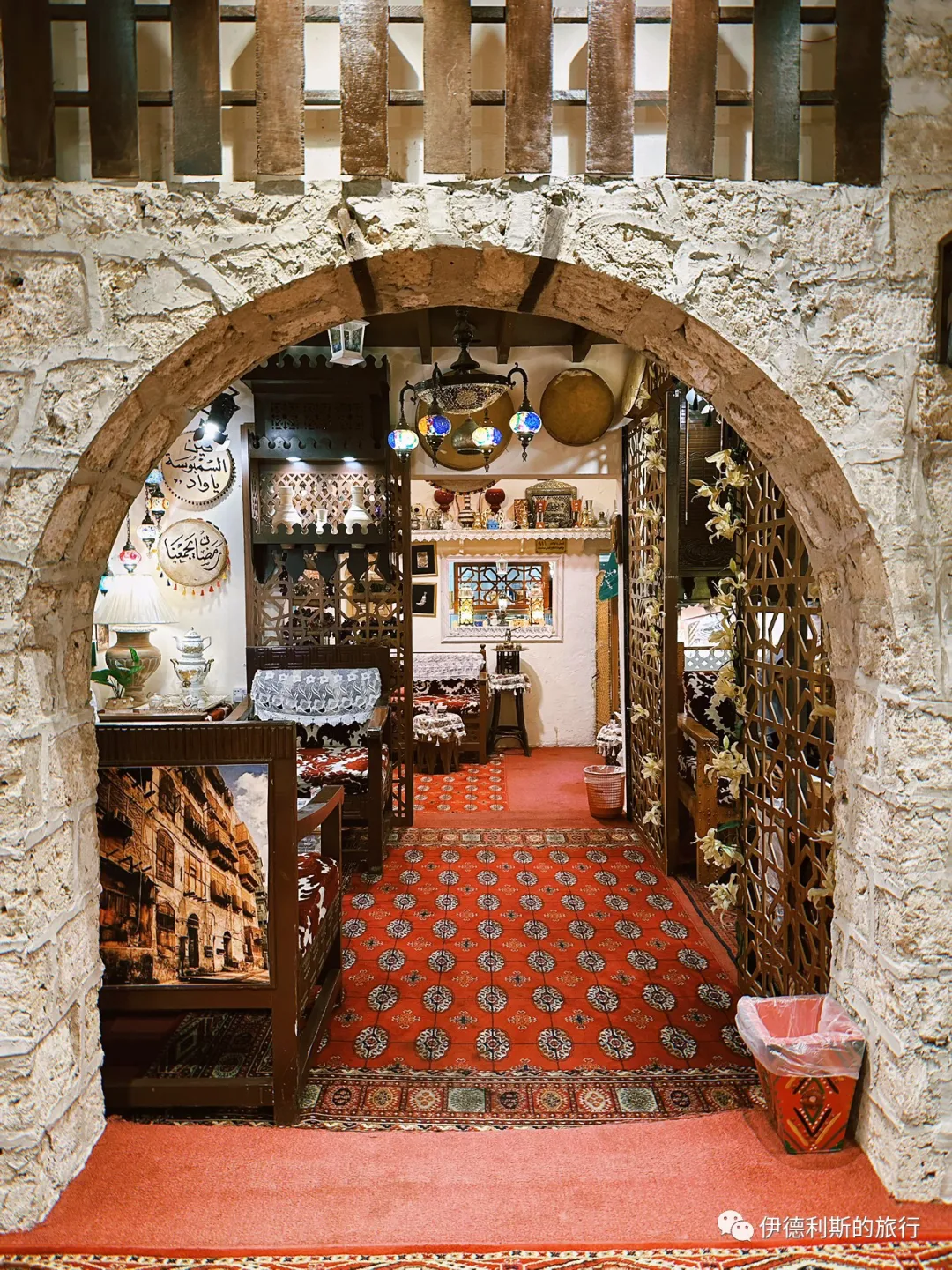
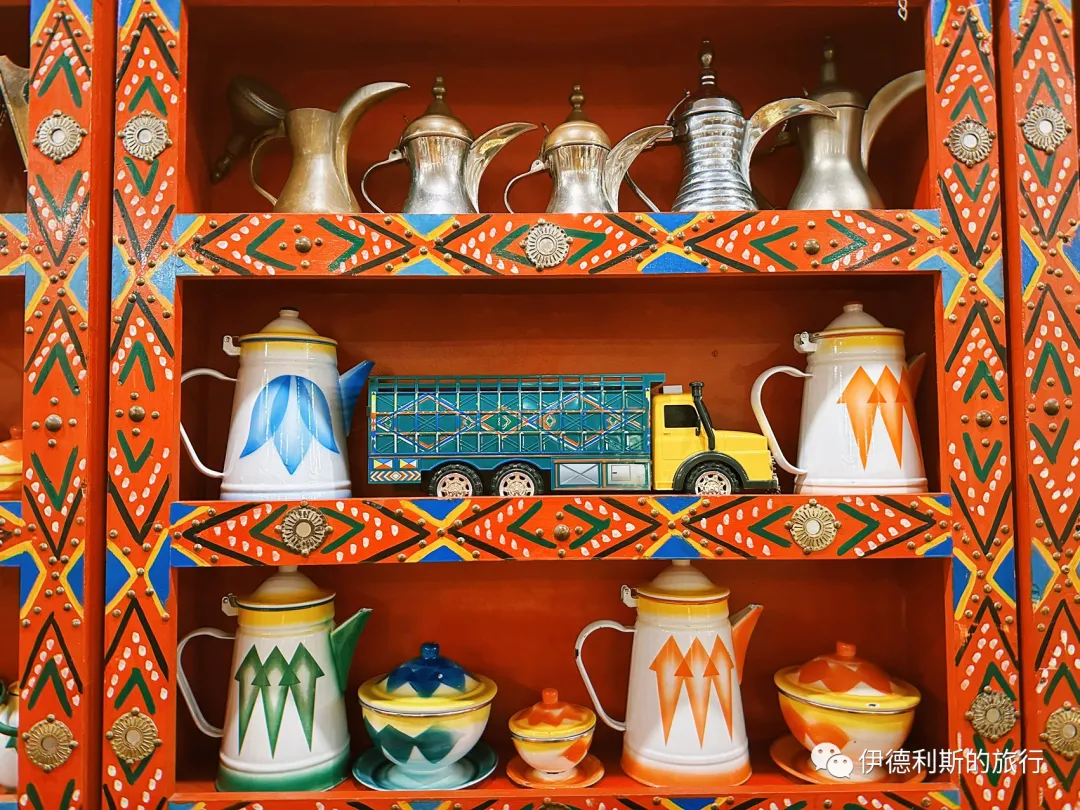
We visited a traditional coffee shop in the old city of Jeddah. The shop is small but decorated beautifully with many traditional Hejazi elements, making it a great spot for photos. We ordered traditional coffee and dates dipped in tahini (sesame paste) to experience the lifestyle of old Jeddah.
Khan Shaheen cafe in the old city of Cairo, Egypt.
As a cultural capital with over a thousand years of history and hundreds of historical sites, Old Cairo was added to the UNESCO World Heritage list back in 1979. The current Old Cairo was built in 969 by the Fatimid dynasty. Over the next thousand years, it saw the Ayyubid, Mamluk, Ottoman, and Muhammad Ali dynasties, leaving behind hundreds of historical buildings.
As dawn breaks, the old city wakes up to the sound of the adhan. Roosters crow, dogs bark, and people get up for namaz. Breakfast shops set out their tables and chairs to open. This is how a day in the old city of Cairo begins.
After the dawn prayer, people often rest for a while. Most ticketed attractions in the old city open after nine o'clock. The old city is very quiet at this time, making it perfect for wandering through empty streets and feeling the weight of a thousand years of history. After breakfast, some shops turn into tea houses or cafes where people chat and let time slowly drift by.
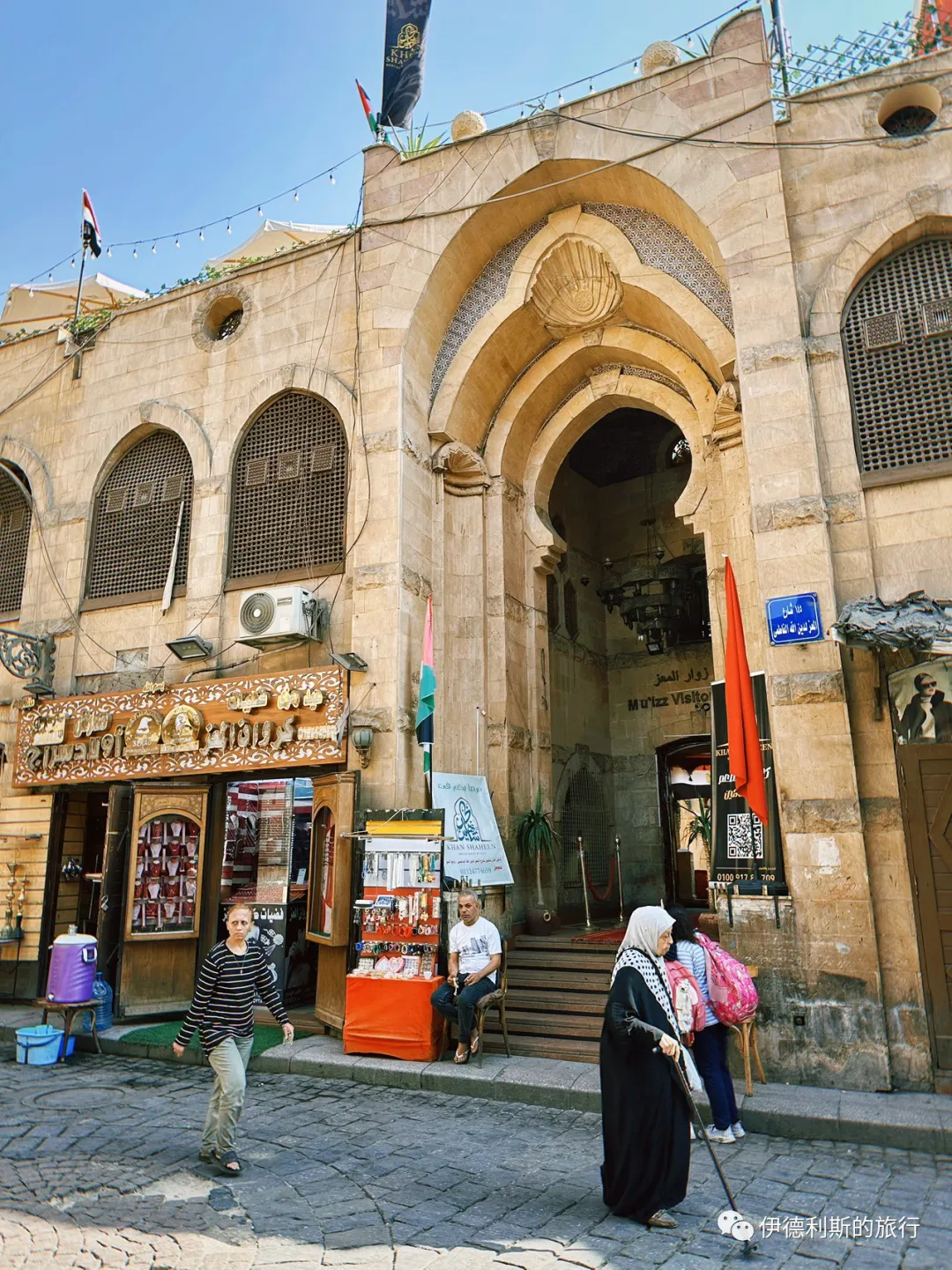
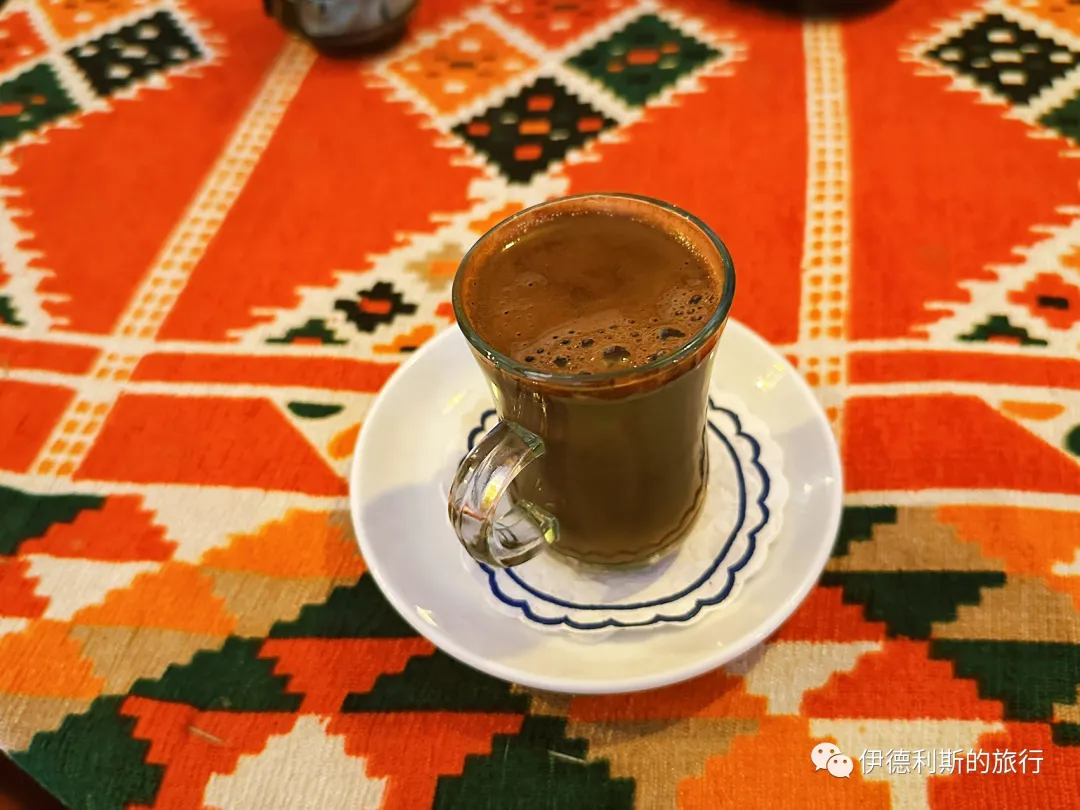
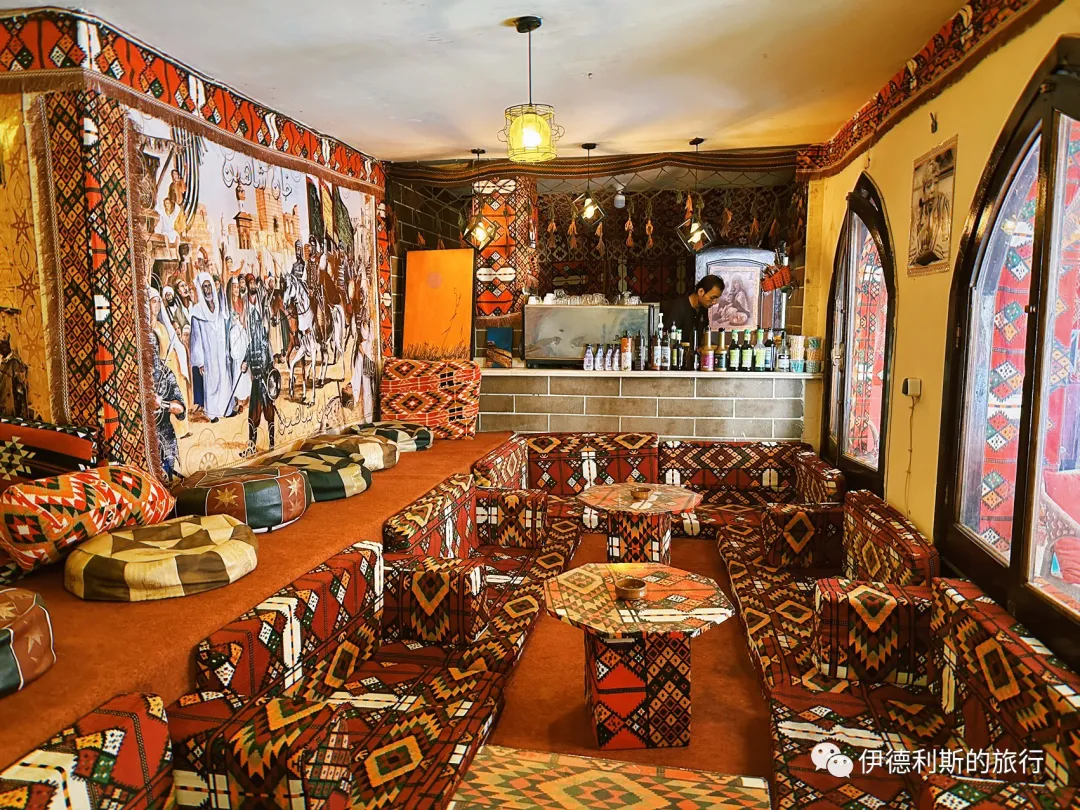
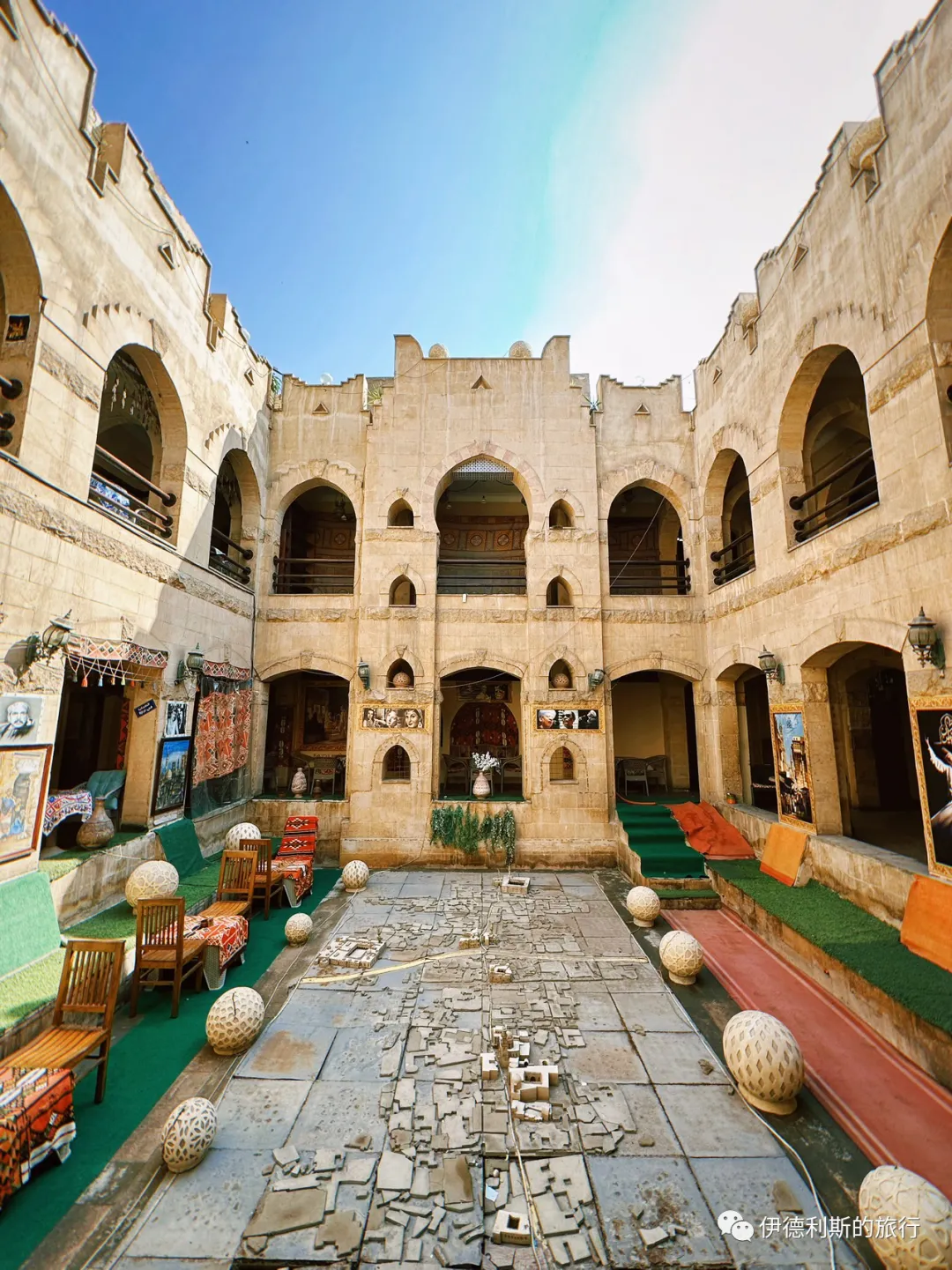
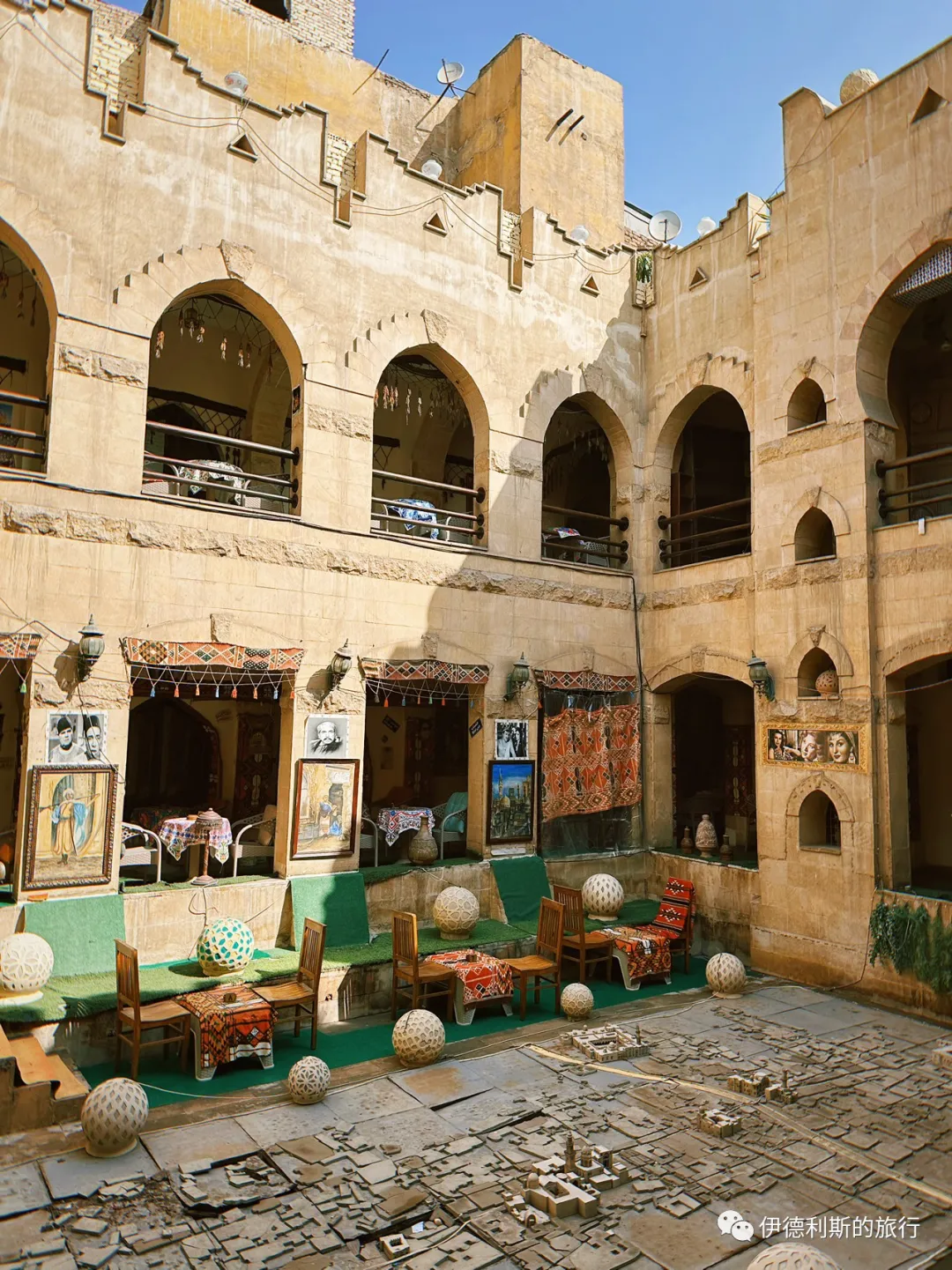
We went to Khan Shaheen Cafe on the main Al-Mu'izz street in old Cairo, which is housed inside a historic caravanserai. We had coffee inside; the service charge was a bit high, but the atmosphere was really nice.
Bedouin cafe in the old city of Sharjah, United Arab Emirates.
The Al Qasimi family of the Huwayla tribe began ruling Sharjah in the early 18th century and officially declared independence in 1727. They built trade routes across the Strait of Hormuz connecting the Arabian Peninsula with Persia, which played an important role in exchanges between the two regions.
Throughout the 19th and early 20th centuries, Sharjah was a major pearl trading port in the Gulf. In 1830, the British counted three to four hundred pearl boats in Sharjah, and many of the city's 19th-century historical buildings are linked to the pearl trade.
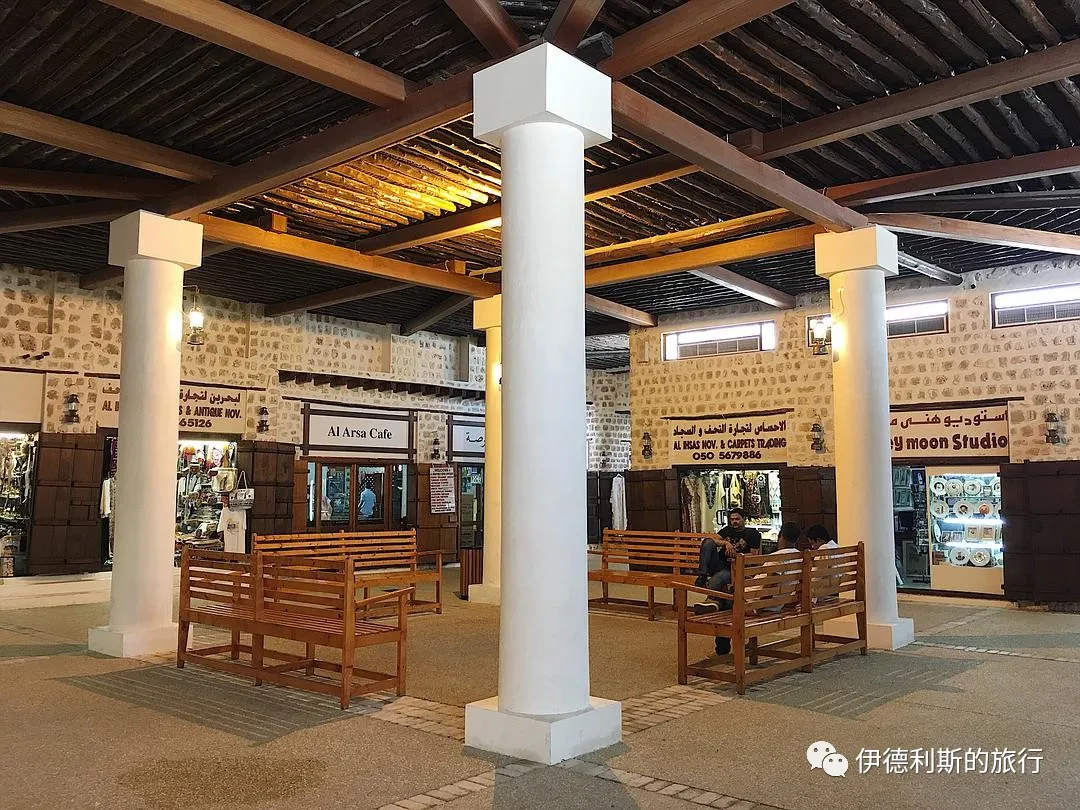
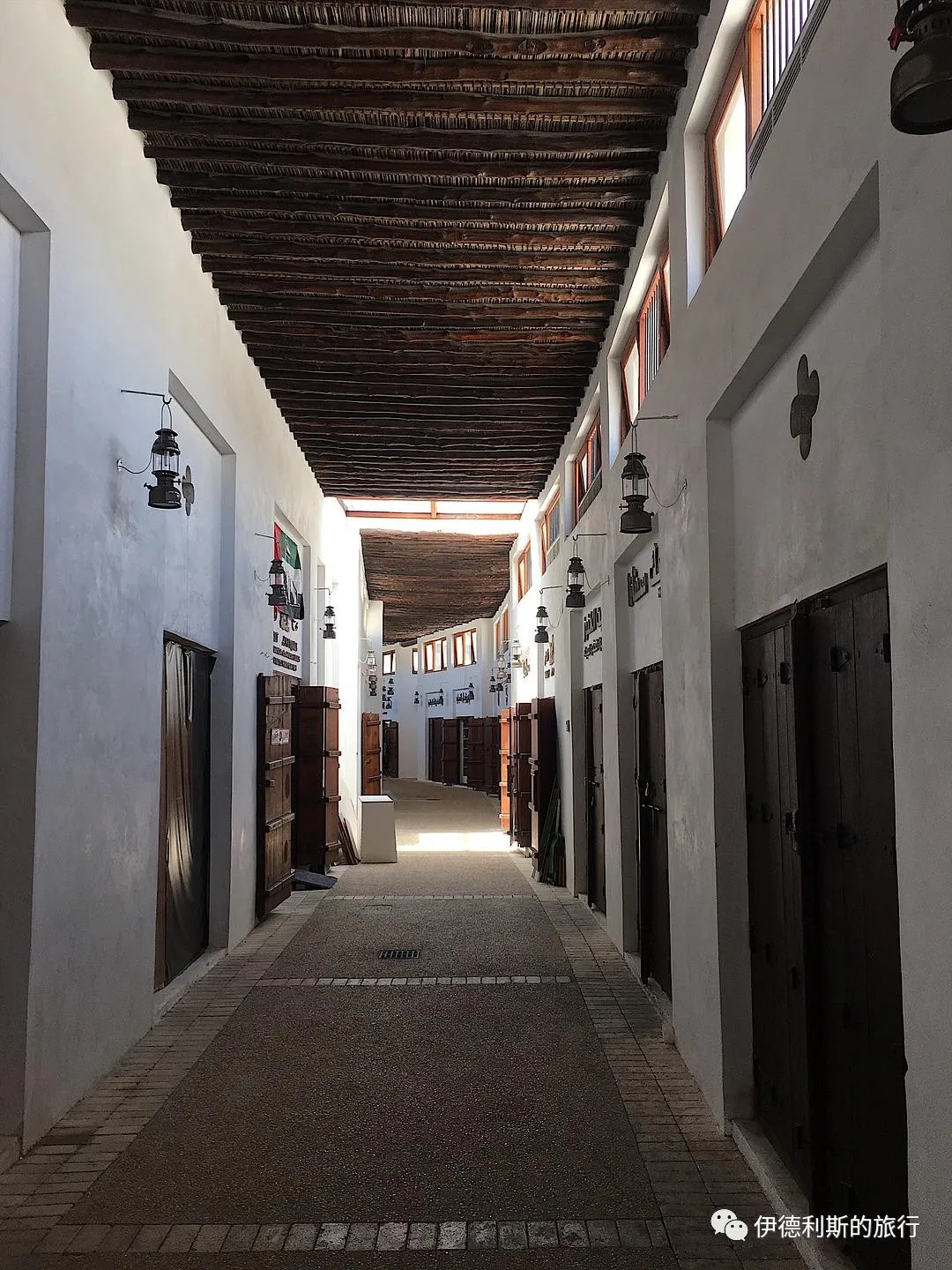
Al Arsa Souq is the oldest surviving bazaar in Sharjah. It started as an open-air market where Bedouins brought camels to trade, and was later built into its current structure using coral stone and palm trees. I visited during the lunch break, and it was very quiet.
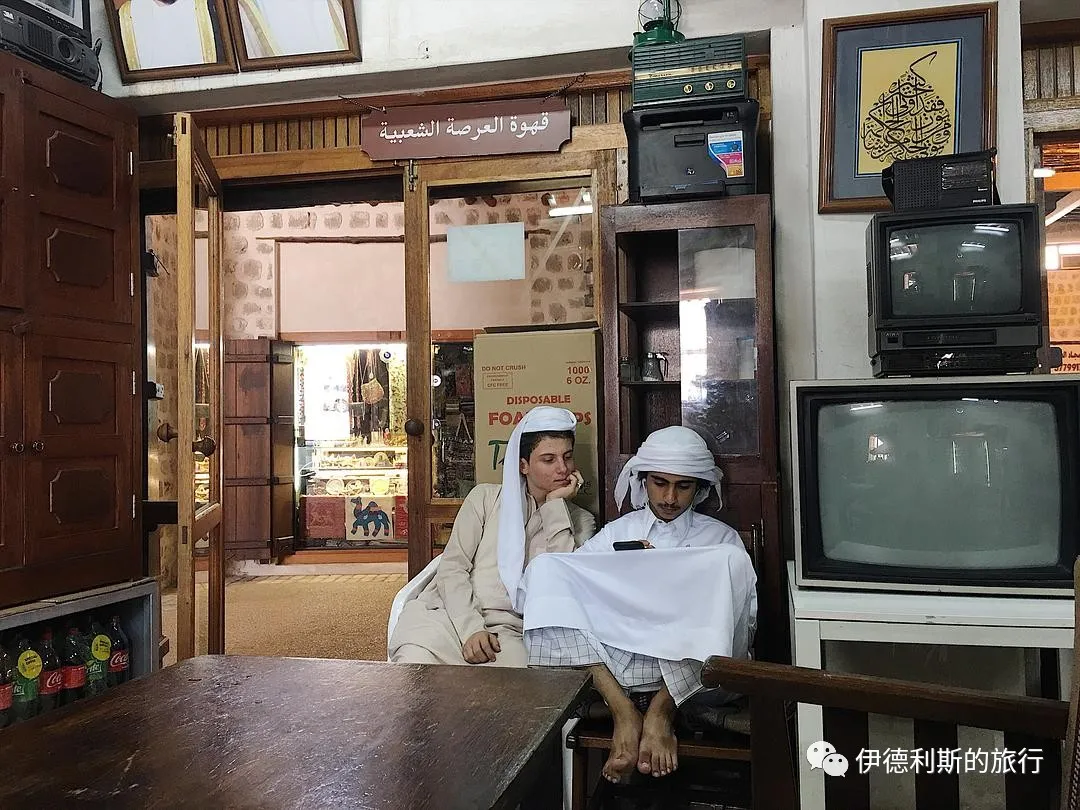
There is a traditional Arabic coffee shop inside the bazaar. I drank strong, herbal-tasting Arabic coffee paired with light dates and ate some chicken rice. Surrounded by people in traditional clothing, the atmosphere felt wonderful.
Nimrah Iranian cafe in Hyderabad, India.
Hyderabad means City of Lions and is a bustling ancient capital on the Deccan Plateau in South India. From 1364 to 1948, this area was ruled by Muslims for nearly six hundred years and served as the capital for both the Qutb Shahi and Asaf Jahi dynasties.
Hyderabad is now the most important center of Muslim culture in South India. Thirty percent of the city's population is Muslim, and most live in the Old City. They have a unique culture that is different from other parts of India, and they take pride in their language, literature, poetry, architecture, and food.
In the morning, I had a classic Hyderabad breakfast at Nimrah, an Iranian café next to the Charminar gate in the center of the Old City. I had Iranian tea (Irani chai) with Osmania biscuits and some other specialty cakes.
Iranian cafés in South Asia were first brought by Zoroastrians who fled religious persecution in Iran and moved to British India in the 20th century. They became popular in places like Hyderabad and Mumbai in India, and Karachi in Pakistan, with Iranian tea (Irani chai) being the most famous item.
Osmania biscuits are buttery cookies unique to Hyderabad. They were created at the request of Mir Osman Ali Khan, the last ruler of the Hyderabad Nizam dynasty who reigned from 1911 to 1948, and they are named after him.
Today, Osmania biscuits have become a cultural symbol of Hyderabad. Many Indians who visit the city buy these biscuits to take home. The most authentic Osmania biscuits are sold in the Old City area of Hyderabad.
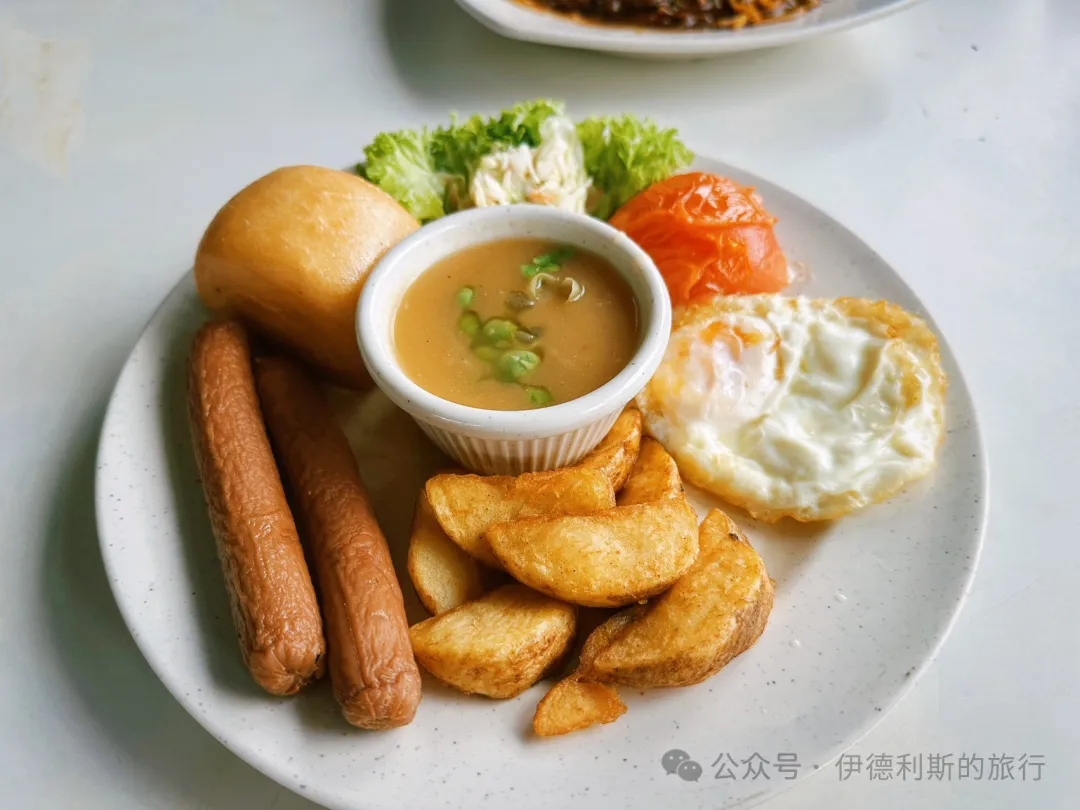
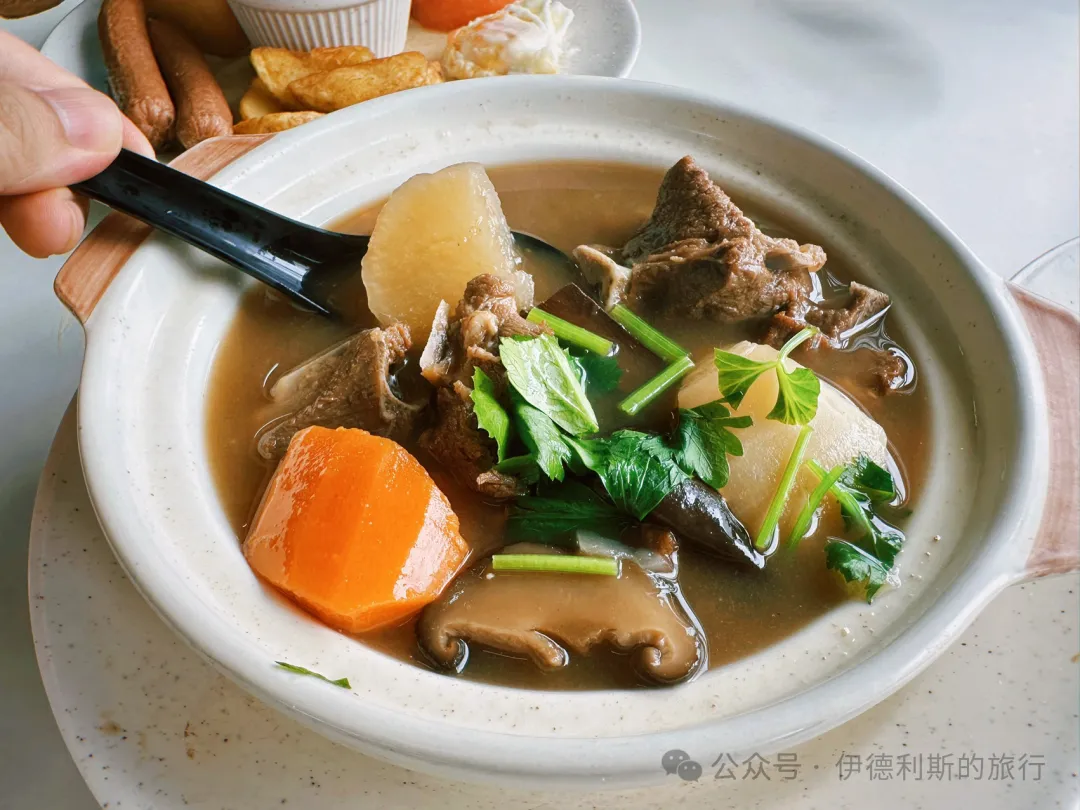
Hua Mei Hainanese cafe (Hua Mei Cha Can Shi) in Johor Bahru, Malaysia.
As early as 1844, Temenggong Ibrahim of Johor encouraged Chinese and Javanese people to go to the Malay fishing village of Tanjung Puteri in southern Johor to open ports and clear the land. Chinese immigrants grew sugarcane and pepper here, while Javanese people dug canals, built roads, and planted coconuts. In 1866, this place was officially named Johor Bahru, known in Chinese as Xinshan.
The Hainanese coffee shop (Hailam Kopitiam) Hua Mei has been open since 1946, making it 78 years old and the oldest Hainanese coffee shop in Johor Bahru. Like many old-school Hainanese coffee shops in Malaysia, the owners are Hainanese Chinese, but they hire Malay cooks and staff so that Chinese, Malay, and Indian customers can all enjoy the food.
Hainanese people began immigrating to Malaysia in the 19th century. Many early immigrants worked as cooks and waiters in British hotels and restaurants, while some worked as servants for British officers. Influenced by their British employers, the Hainanese learned to cook Western food and blended it with Hainanese culinary elements to create the unique Hainanese coffee shop (Hailam Kopitiam) culture.
The word Kopitiam combines the Malay word kopi (coffee) and the Hokkien word tiam (shop), specializing in charcoal-grilled toast, white coffee, and soft-boiled eggs. Early Hainanese coffee shops were very popular with the British. Today, they serve as important social hubs where older people gather to discuss news and daily life.
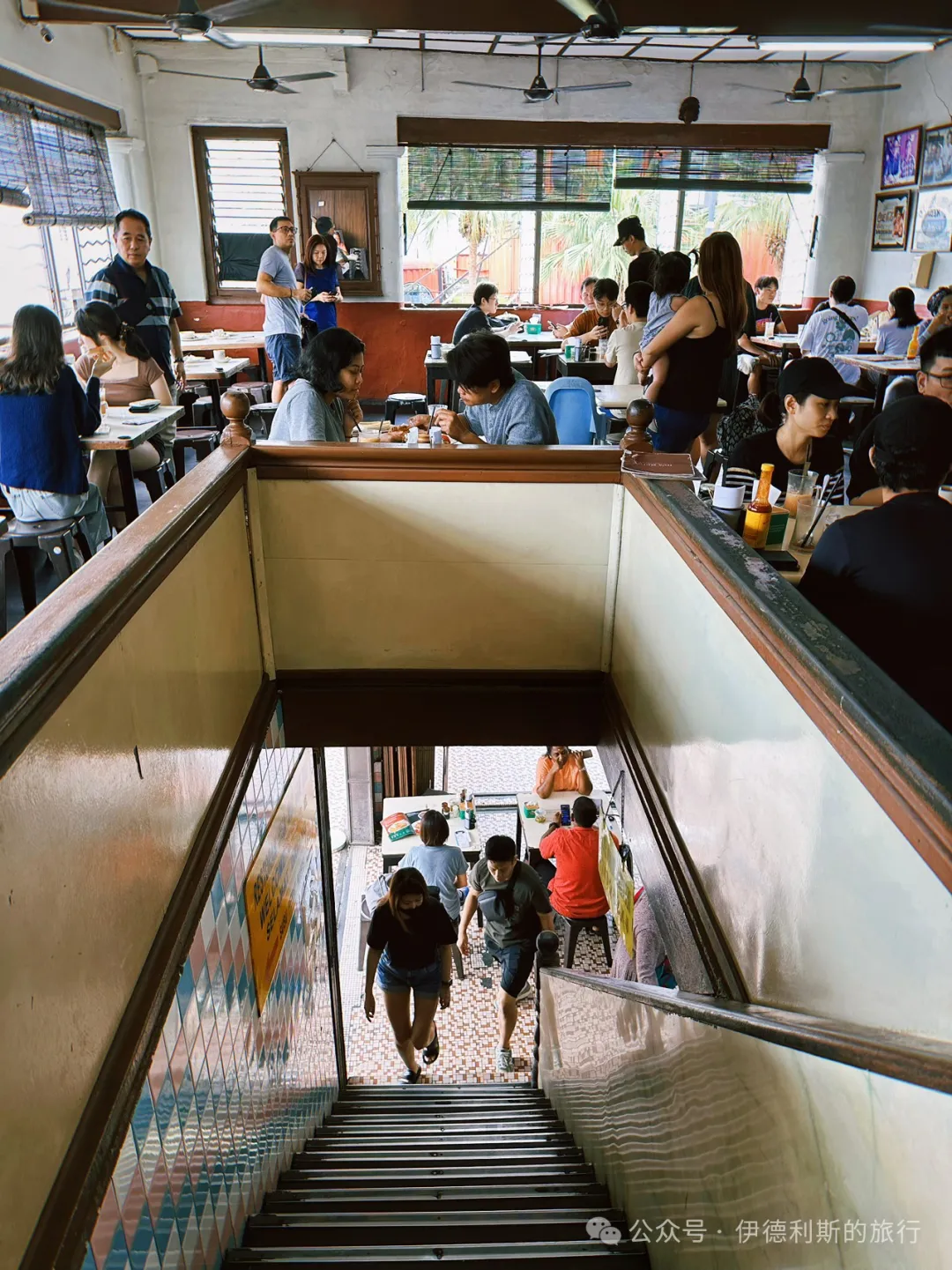
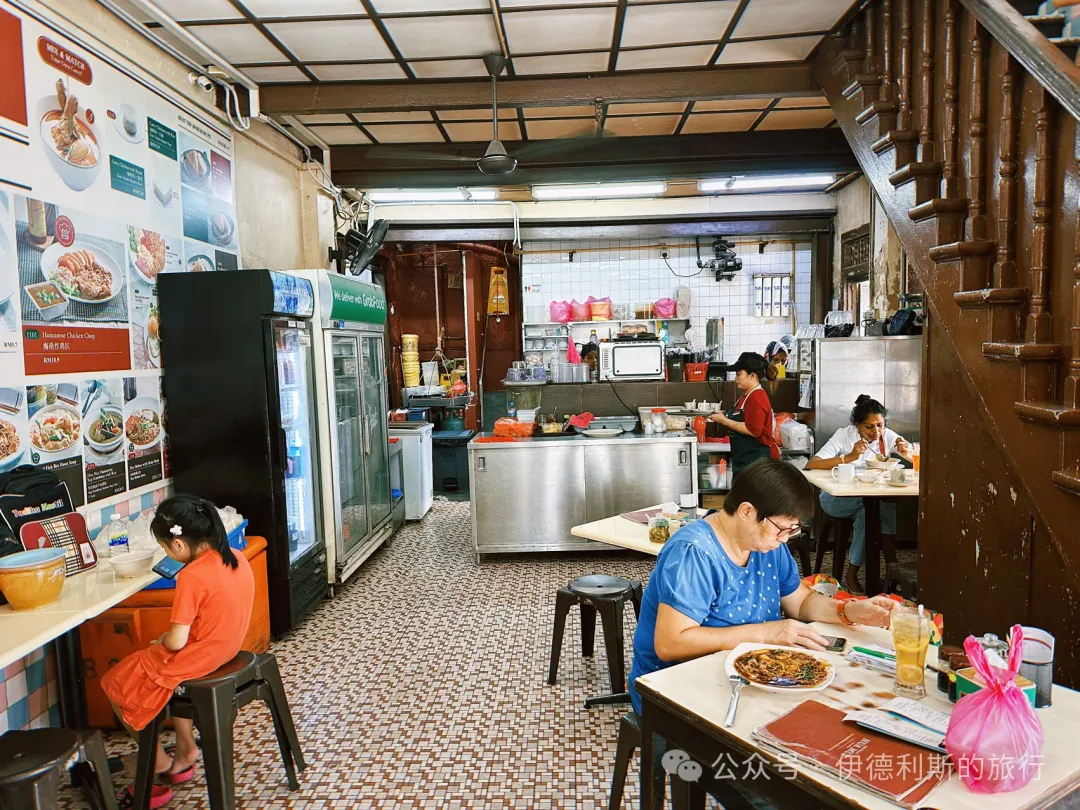
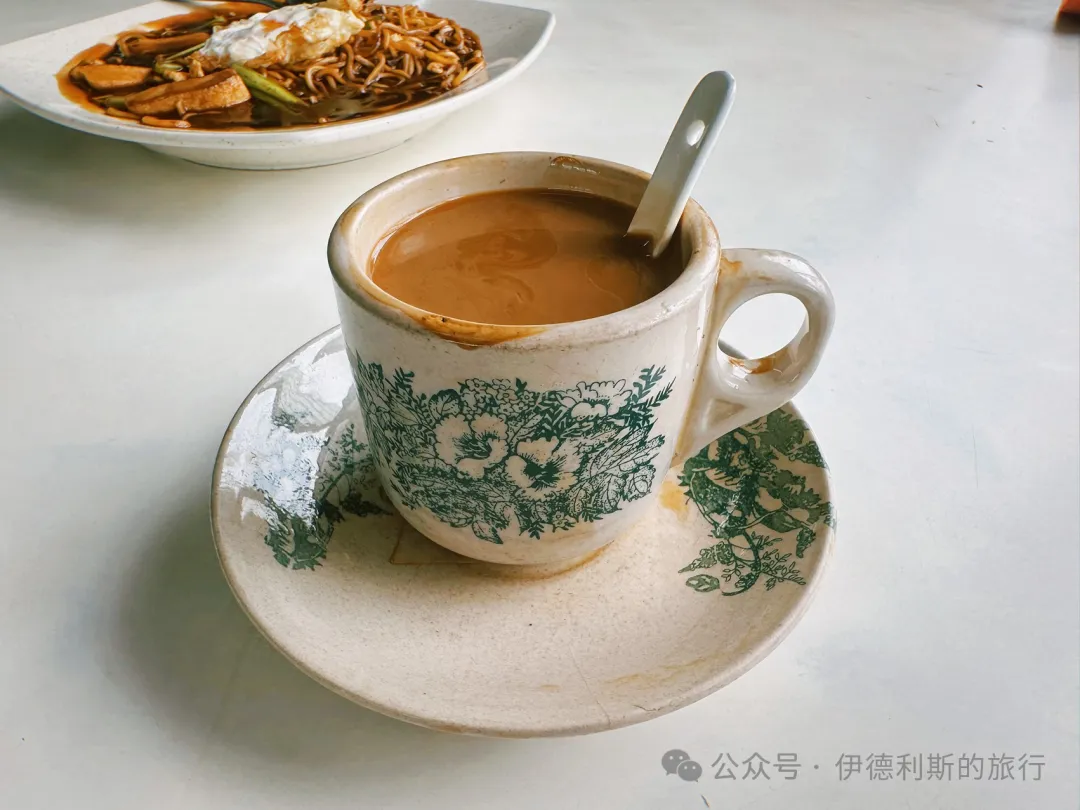
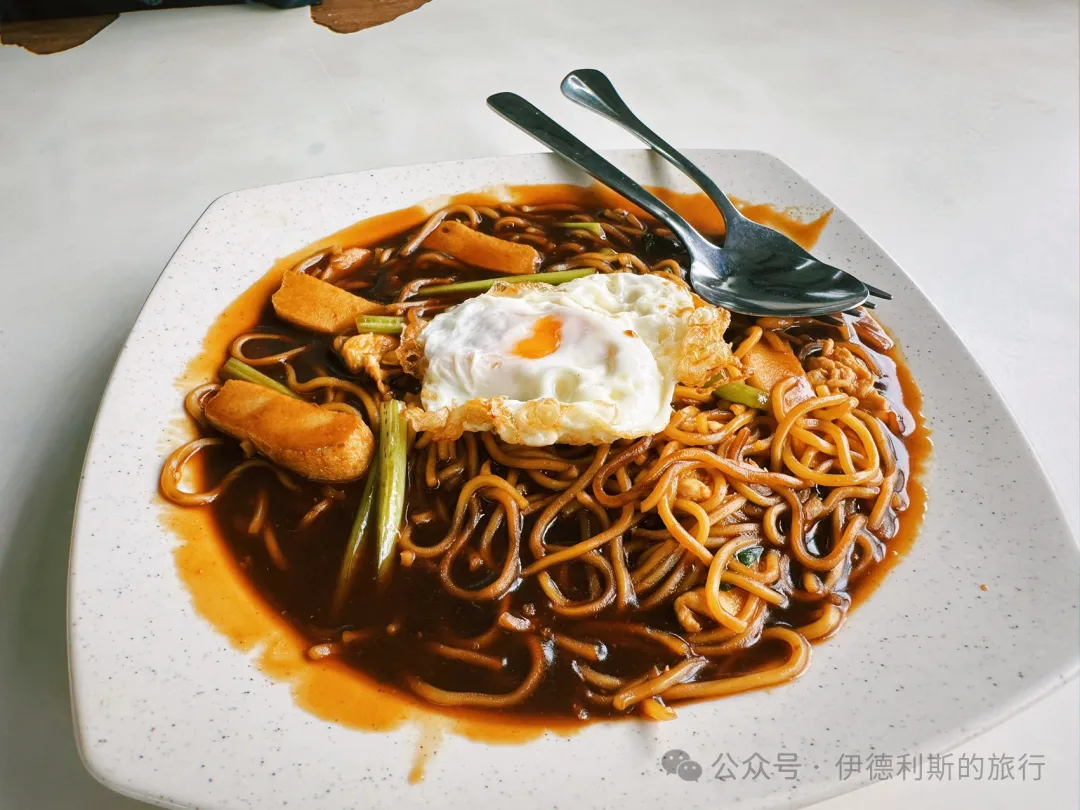
At Hua Mei, we ordered the lamb claypot rice, Hainanese noodles, coffee and tea mix (cham), and a breakfast platter. The coffee and tea mix is just coffee, tea, and milk. The restaurant still has a very traditional feel, set in a classic two-story shophouse with bamboo blinds hanging on the doors and windows, which easily brings to mind the old days.
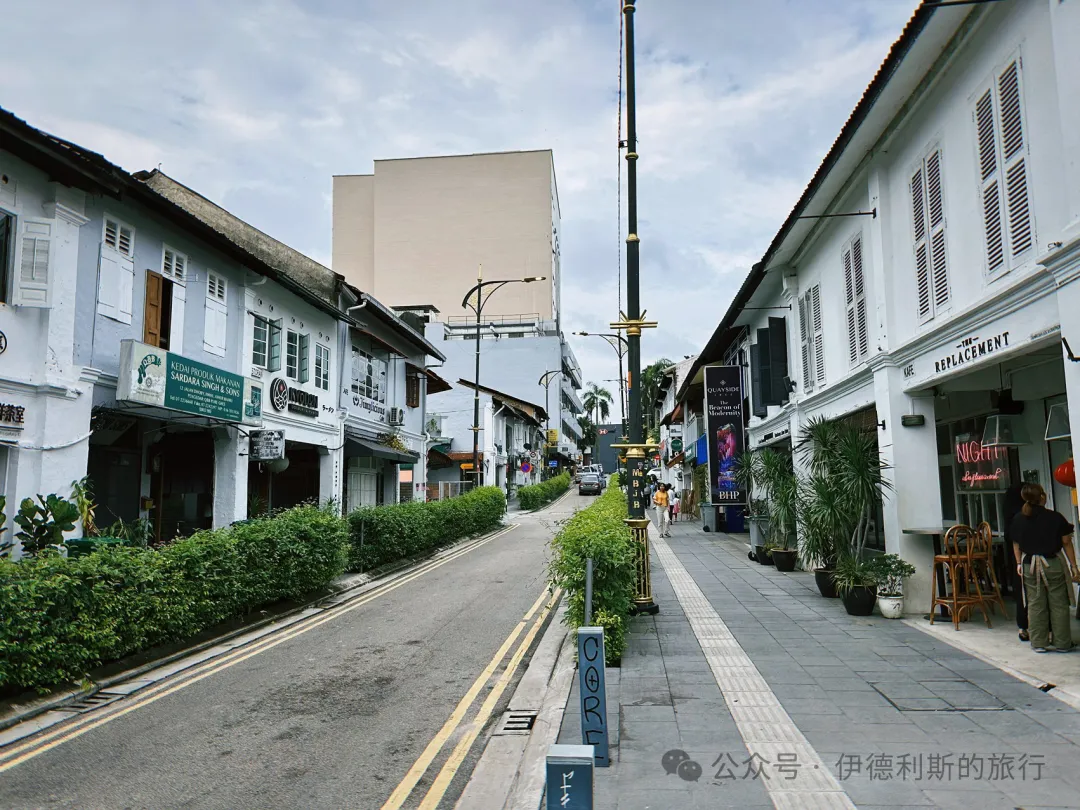
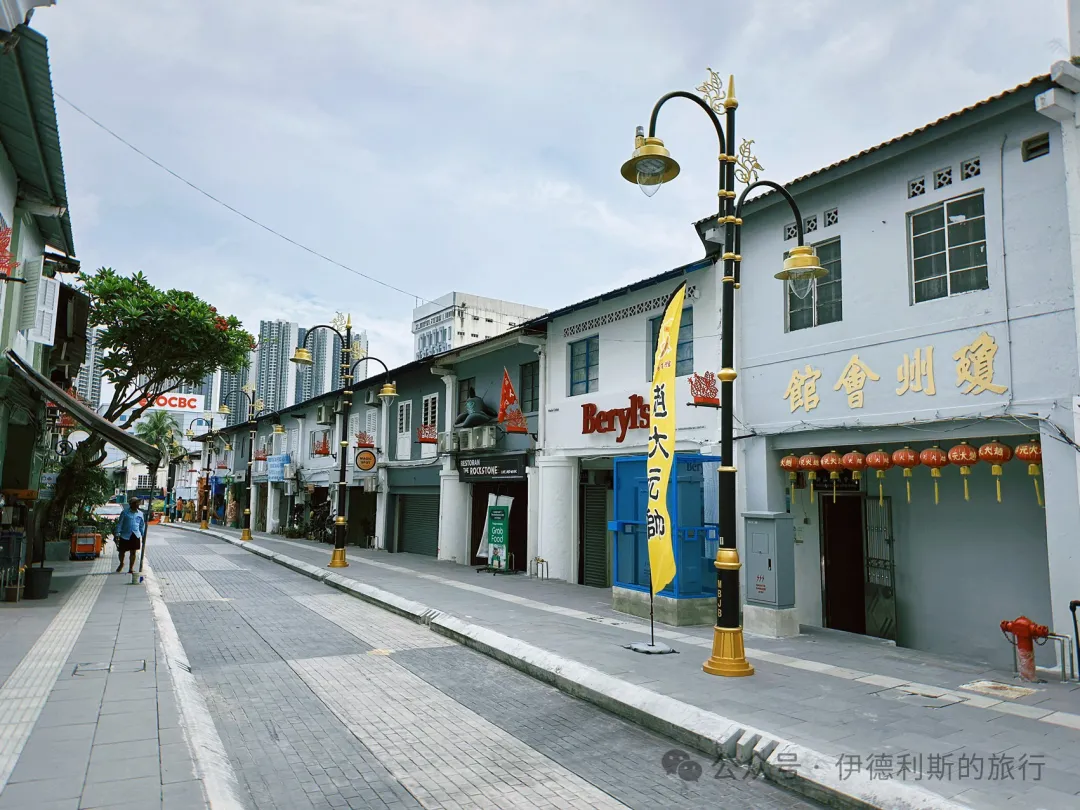
Nyonya Dynasty Peranakan cafe in Johor Bahru, Malaysia.
On Jalan Dhoby, a street with century-old shophouses in the old town of Johor Bahru, sits Nyonya Dynasty, the first Nyonya cafe in Johor, Malaysia, to receive halal certification. The owners, Lu Xucheng and Li Baoshan, originally ran a travel agency. When their business was hit hard in early 2020, they decided to turn part of the office space into a Nyonya cafe. The two owners specifically learned the craft from an authentic Nyonya chef in Malacca and invited him to the shop every week to supervise until the dishes were consistent. Because customers loved the Nyonya food so much, they moved the shop to Jalan Dhoby in the old town of Johor Bahru in 2022 and officially named it Nyonya Dynasty.
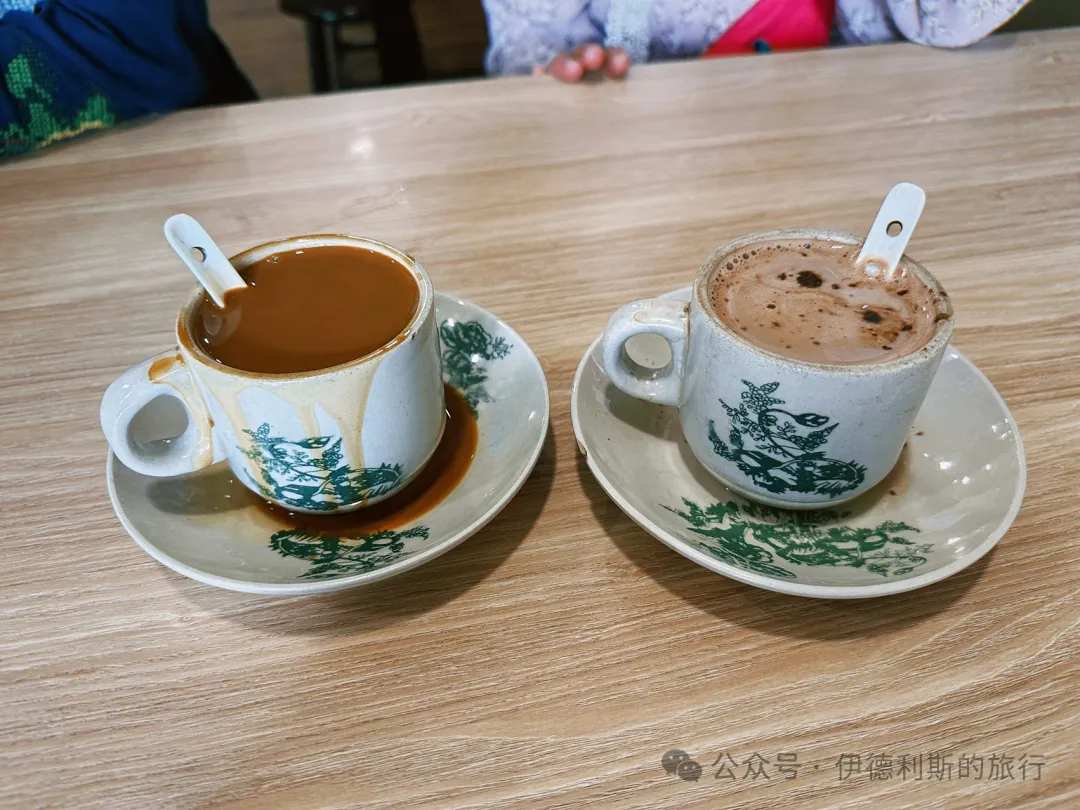
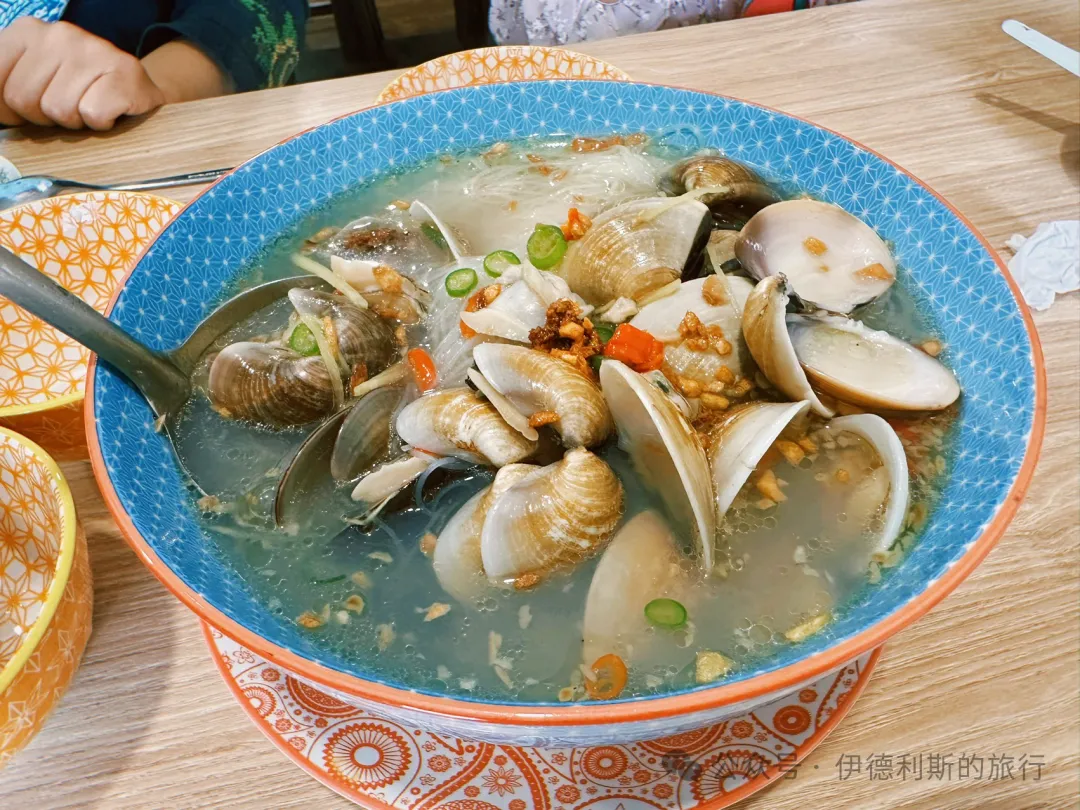
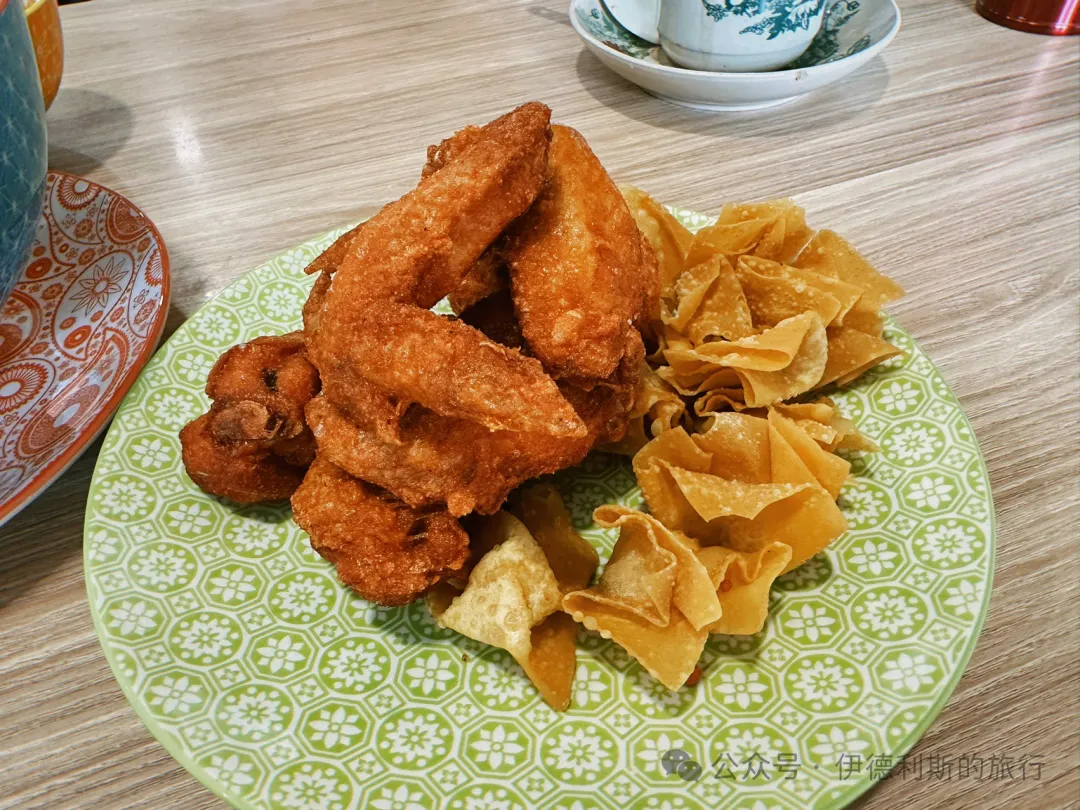
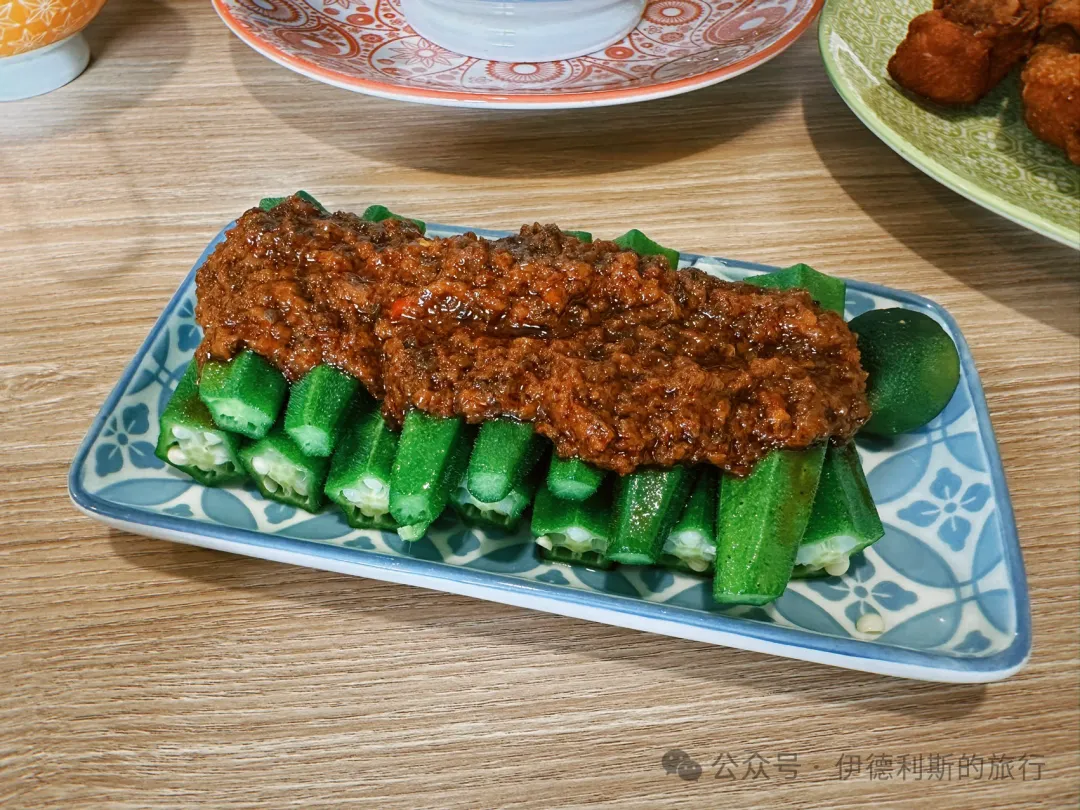
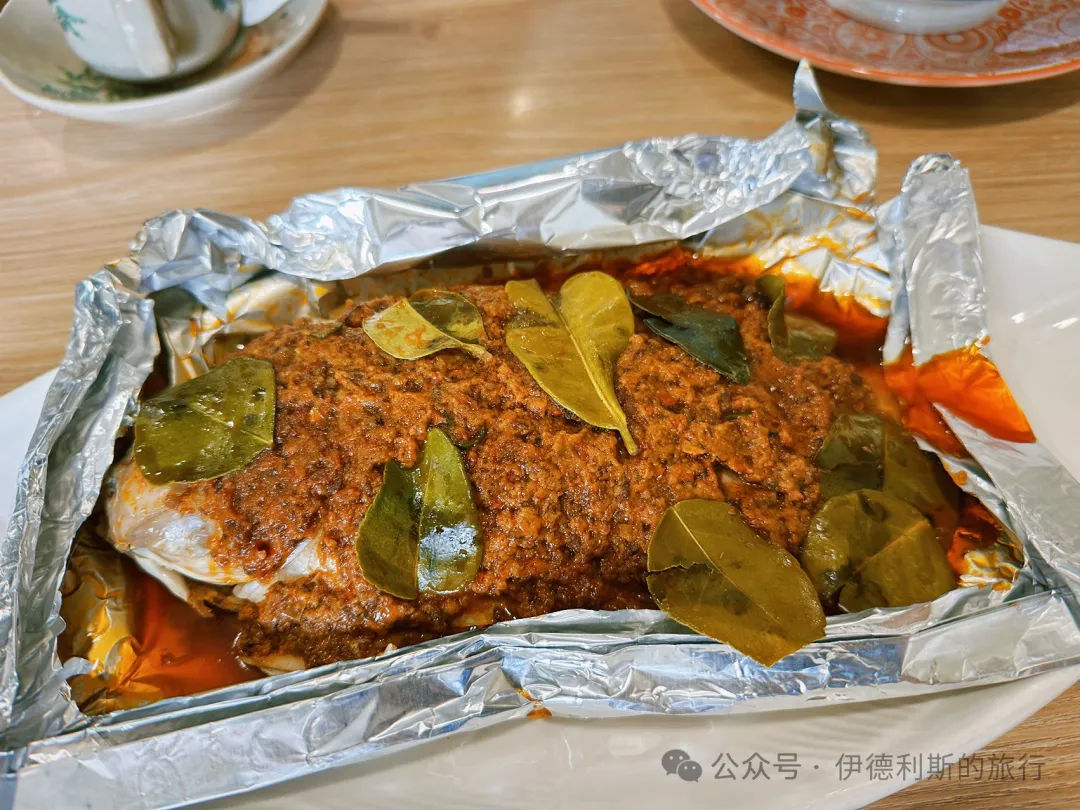
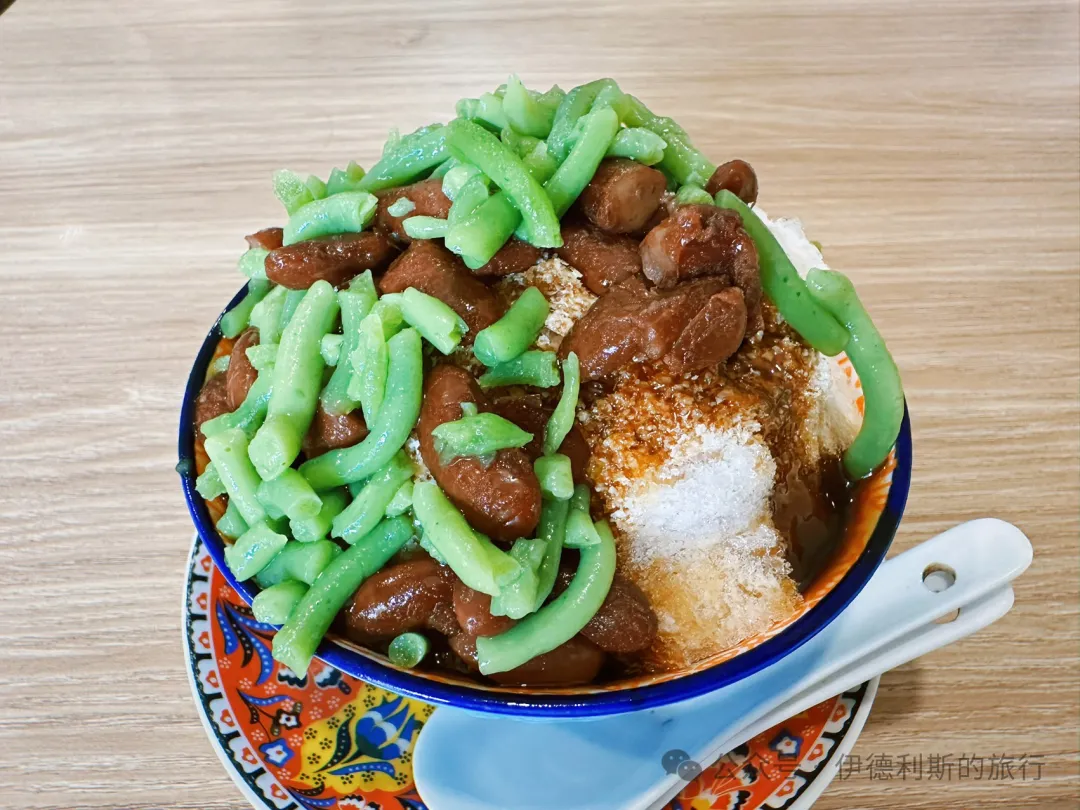
Besides coffee, we ordered their signature Nyonya trio, which includes Nyonya clam rice noodles (lala mifen), fried shrimp wontons (zha yuntun xia), and shrimp paste chicken wings (xiajiang jichi). We also ordered grilled Nyonya fish (Nyonya shaoyu), Nyonya okra (Nyonya yangjiaodou), and shaved ice dessert (chendol). Lala means clams. They buy fresh clams every morning, tap each one to remove the sand, and then simmer them for three hours to make a rich broth, adding bird's eye chili, green onions, and garlic. The grilled fish and okra are both topped with a signature Nyonya tamarind sauce (Asam), which gives them a unique sour and spicy flavor. Their shaved ice dessert (chendol) follows the owner's mother's family recipe. The palm sugar is simmered for two or three hours, and they use freshly squeezed coconut milk, making the texture very rich.
Yue Lai Hainanese coffee shop (Yue Lai Cha Shi) in Kuala Kangsar, Malaysia.
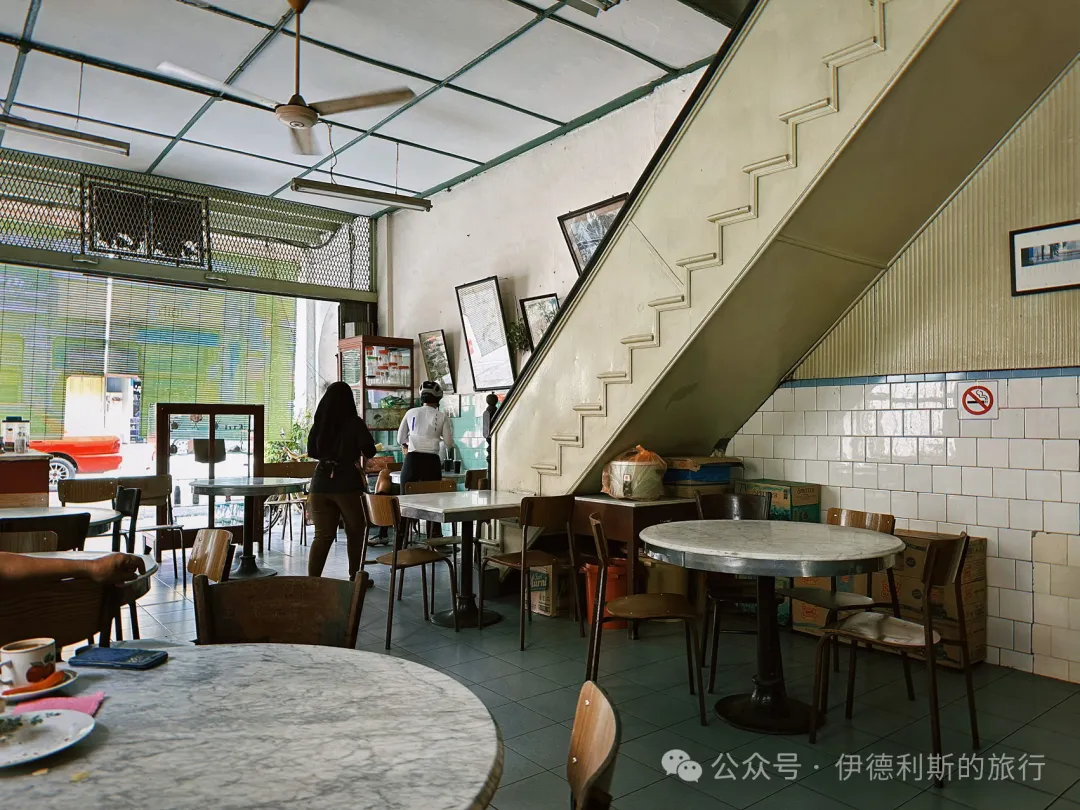
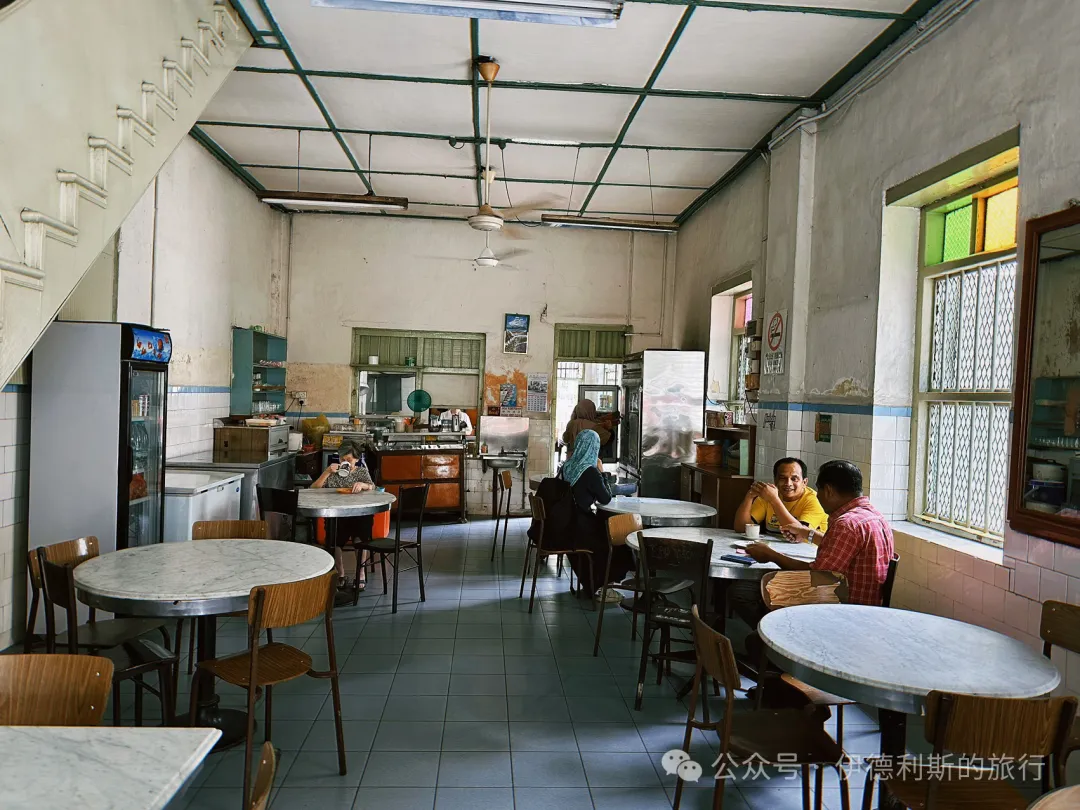
Kuala Kangsar has been the royal city of the Sultan of Perak since the 18th century. The town center still keeps an old street with arcade buildings (qilou), where you can find a traditional Hainanese coffee shop called Yut Loy Coffee Shop. Like many Hainanese coffee shops in old Malaysian towns, the Hainanese owner hires Malay staff here. This allows Chinese, Malay, and Indian customers to all dine in the shop together.
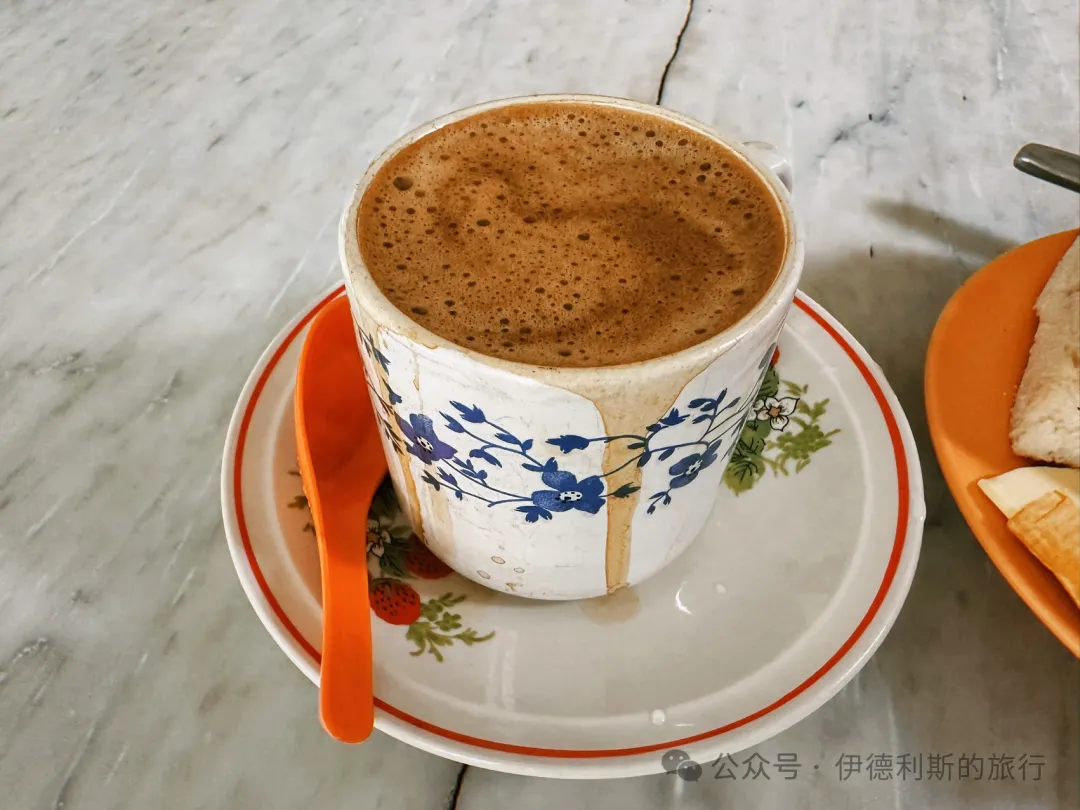
Since Yut Loy Coffee Shop only serves main meals after 1:00 PM, we had coffee with toast, honey, and butter in the shop during the morning. I used to read novels about Southeast Asia where old people would sit in Hainan-style coffee shops like this for the whole morning with just a cup of coffee, a piece of toast, and a newspaper. This time, we got to experience it ourselves.
Irani cafés view all
Summary: 15 Traditional Cafes Around the World - Coffeehouses, History and Local Life is presented as a clear English travel account for readers interested in Muslim life, halal food, architecture, and local history. The article keeps the original names, food details, photographs, and cultural context while focusing on Traditional Cafes, Coffee Culture, Travel History.
Mola Közde Kahveci cafe in Istanbul, Turkey.
Harire Mardin Kurdish cafe in Mardin, Turkey.
SaSa Bosnian cafe in the Old Town of Sarajevo, Bosnia and Herzegovina.
Andar Caffe Bar Bosnian cafe in the Old Town of Sarajevo, Bosnia and Herzegovina.
Younes, a legendary cafe in Beirut, Lebanon.
Bab Al Saray Cafe in the Old City of Sidon, Lebanon.
Bay Rock Cafe, a popular sunset spot in Beirut, Lebanon.
Street coffee in the Old City of Tripoli, Lebanon.
Haret Al-Sham Arabic cafe in the old city of Jeddah, Saudi Arabia.
Khan Shaheen cafe in the old city of Cairo, Egypt.
Bedouin cafe in the old city of Sharjah, United Arab Emirates.
Nimrah Iranian cafe in Hyderabad, India.
Hua Mei Hainanese cafe (Hua Mei Cha Can Shi) in Johor Bahru, Malaysia.
Nyonya Dynasty Peranakan cafe in Johor Bahru, Malaysia.
Yue Lai Hainanese coffee shop (Yue Lai Cha Shi) in Kuala Kangsar, Malaysia.
Mola Közde Kahveci cafe in Istanbul, Turkey.
Kadikoy is in the Asian side of Istanbul and has a very long history. Greeks built the first settlement on the Bosphorus here in 667 BC, a few years before Byzantium on the opposite shore. The Ottoman dynasty began ruling here in 1353, exactly 100 years before they conquered Constantinople in 1453. Under Ottoman rule, this place was a transport hub for crossing the Bosphorus, so it slowly grew into a busy town.
Today, it is a hangout spot for young people with several pedestrian shopping streets filled with cafes, restaurants, shops, craft stores, and bookstores. Although it lacks a wild nightlife and crowded tourist spots, life here is much more comfortable and relaxed.
People in Istanbul really love coffee. When we came back to the cafe downstairs from our place at midnight, it was full of people, and when we left at six in the morning, people were still drinking coffee. Charcoal-roasted Turkish coffee is delicious. It comes with a glass of water and a piece of chocolate, which is very refreshing.
Harire Mardin Kurdish cafe in Mardin, Turkey.
Mardin sits in the Upper Mesopotamia region, upstream of the Tigris and Euphrates rivers. The entire old city is built on the southern slope of a mountain ridge. A thousand-year-old castle stands on the cliff at the very top, with the stone city built in tiers below it. Because of this, you can look out over the Mesopotamian plains from any terrace in the old city, and the view is spectacular.
The ancient city of Mardin has a very long history. It was called Merida, meaning castle, during the Roman period. It became part of the Arab Empire in 640 and was later ruled in turn by several tribal dynasties of Mesopotamia. After 1085, Mardin was ruled successively by the Seljuk Empire, the Artuqid dynasty, and the Kara Koyunlu, all established by Oghuz Turkic tribes. It was finally incorporated into the Ottoman Empire in 1517. Five hundred years ago, many Armenians and Jews lived in the old city of Mardin. Today, it is mainly home to Kurds and Arabs, along with a significant number of Assyrian Christians, making the culture very diverse.
Harire Mardin is a cafe in Mardin with a very local feel. Local Mardin coffee is stronger than Turkish coffee. It contains orchid root powder (salep) and carob powder (carob), and the local Kurds and Assyrians both enjoy drinking it this way. Tabbaka is a yellow rice pudding invented by the Assyrians. Harire is a brown pudding made from local Mazruna grapes, and we finished by drinking purple basil sherbet (Reyhan Sherbet).
A Bosniak cafe in the old town of Sarajevo, Bosnia and Herzegovina.
S
aSa
Bosniaks (Bošnjaci) are a Slavic-speaking Muslim ethnic group living in the Bosnia region of the Balkan Peninsula. They migrated to Bosnia from northeastern Europe as early as the 6th century and were under Ottoman rule for over four hundred years from 1463 to 1878, which strongly influenced their cultural customs.
We drank traditional Bosnian coffee (Bosanska Kahva) at the Grand Bazaar in the old town of Sarajevo. Coffee was first introduced to the Balkan Peninsula under Ottoman rule by Arabs in the 16th century. Sarajevo was one of the first European cities to open cafes, over a hundred years before cities in Western Europe started drinking coffee.
Cafes were an important part of Ottoman culture. People could listen to the day's main news, discuss daily gossip, and watch various impromptu performances like shadow puppetry. Cafes give people a place to share ideas outside of work and worship, and they are great spots to meet like-minded friends.
Bosnian coffee is made by grinding roasted coffee beans into a fine powder and brewing them in a long-handled copper pot called a Džezva (known as Cezve in Turkish), just like Turkish coffee. However, while Turkish coffee can be brewed with cold water, Bosnian coffee must be brewed with boiling water. You can add sugar to Turkish coffee while it brews, but you cannot add sugar to Bosnian coffee. Turkish coffee is poured into a cup for the customer, but Bosnian coffee is served by bringing the copper pot and the cup to the customer on a tray so they can pour it themselves.
A classic Bosnian coffee set includes the copper pot, a porcelain cup with a copper base, a copper tray, a copper sugar bowl for sugar cubes, and Turkish delight (rahat lokum). To drink it, bite off a piece of a sugar cube and hold it under your tongue to let it melt before you take a sip of coffee. Bosnian Turkish delight (rahat lokum) comes from the Turkish version (lokum). The yellow pieces are made with vanilla and the red ones are made with rose petals, and you can eat them whenever you like while drinking your coffee.
Andar Caffe Bar Bosnian cafe in the Old Town of Sarajevo, Bosnia and Herzegovina.
At Andar Caffe Bar in the old town of Sarajevo, the owner Maida's grandfather, Muharem, opened a handmade shoe shop in the Sarajevo Old Bazaar in 1933, which was later taken over by Maida's father, Osman. After Osman retired in 2010, Maida took over the shop, but handmade shoes were no longer popular as people started buying shoes in stores, so Maida turned the shop into the current cafe while keeping many shoe-themed elements inside.
Younes, a legendary cafe in Beirut, Lebanon.
Hamra is a busy and trendy neighborhood in Beirut near the American University, filled with young people and long known as the cultural center of Beirut. The environment here is relatively nice, making it a good place for shopping in Beirut.
The founder of Younes Cafe, Amin Younes Sr., immigrated to Brazil in 1894 and worked on a Brazilian coffee tycoon's plantation for 20 years. In 1935, Amin returned to Lebanon and opened Younes Cafe in downtown Beirut. During World War II, the collapse of the Lebanese currency wiped out most of Amin's savings, but he still managed to pull through. In 1960, Amin's son Souheil joined the family business and helped his father open the first branch of Younes Coffee in the Hamra district. It was one of the first coffee shops in Lebanon to buy an espresso machine. The main Younes shop in downtown Beirut was destroyed during the Lebanese Civil War in 1975, leaving only the Hamra branch standing.
Abou Anwar worked at Younes Coffee for 60 years starting in 1954. He was the shop's most senior coffee roasting master, and his expert skills drew in a large group of loyal customers. The coffee I ordered is named after him, the Abou Anwar Blend, which mixes his favorite fruits and spices.
Bab Al Saray Cafe in the Old City of Sidon, Lebanon.
The ancient city of Sidon is 40 kilometers south of the Lebanese capital, Beirut, and is the third-largest city in Lebanon. Sidon has a history of over 6,000 years, making it one of the oldest cities in the world. It played a major role in Mediterranean trade. The ancient city of Sidon is a well-preserved Sunni Muslim old town on the eastern Mediterranean coast. When you enter the maze-like streets from the north gate, you see many houses built over the streets to form tunnels. People set up stalls inside these tunnels, selling all kinds of goods and creating a very lively atmosphere.
We had mint lemonade and coffee at Bab Al Saray Cafe inside the old city. This is one of the oldest cafes in Sidon, and people say their brunch is very authentic.
Bay Rock Cafe, a popular sunset spot in Beirut, Lebanon.
In Beirut, you have to visit the famous Pigeon Rocks to watch the sunset. I want to mention that we met several very kind people in Beirut. First, a Palestinian refugee grandmother offered us grapes. On the way to Pigeon Rocks, we met a fellow Muslim (dosti) who kindly showed us the way. The dosti took us on a bus first to help us find the stop where we could catch the bus to Pigeon Rocks. Lebanese buses do not have signs, so you can just wave them down anywhere along the road. The dosti seemed more anxious than we were while waiting for the bus. He finally put us on the bus and waved goodbye without asking for a single cent. This friend (dosti) is completely different from the tricycle driver who kept trying to overcharge us on the way to the ancient city of Anjar.
There is a row of cafes next to Pigeon Rocks, from Bay Rock Cafe in the far south to Starbucks in the far north, all of which are classic spots to watch the sunset. Although many people post about this place online, it is actually not very crowded in the cafes, and it is still very relaxing. We ordered two juices and a plate of salad at Bay Rock Cafe and spent a romantic and wonderful evening.
Street coffee in the Old City of Tripoli, Lebanon.
Tripoli is located in northern Lebanon and has been an important port on the eastern Mediterranean coast for thousands of years. The market in the old city of Tripoli is very lively, which is a sharp contrast to Beirut. Ibn Battuta wrote in his travelogue: 'Afterwards, we arrived at the city of Tripoli.' That was an important town in Sham, with several small rivers flowing through it. It is surrounded by fragrant orchards and lush green trees. The sea surrounds it with blue water, and the land nourishes it with its treasures. The markets are filled with an amazing variety of goods.
We drank street coffee in the market and saw all kinds of dairy products, which was very interesting.
Haret Al-Sham Arabic cafe in the old city of Jeddah, Saudi Arabia.
Jeddah is located in the Hejaz region on the east coast of the Red Sea. In 647 AD, Caliph Uthman ordered it to be built as a port for travel to Mecca, and since then, Jeddah has become an important gateway for the Hajj by sea.
The Old Town of Jeddah is the last city along the Red Sea to preserve its traditional urban layout, consisting of tall tower houses, coral stone houses, traditional mosques, open-air markets (souqs), cafes, and small public squares. Traditional buildings like these were once common along the Red Sea coast, but after the 20th century, modernization left only a few standing. They serve as important witnesses to the Indian Ocean trade routes from the 16th to the early 20th century. Because of this, the Old Town of Jeddah was added to the UNESCO World Heritage list in 2014.
We visited a traditional coffee shop in the old city of Jeddah. The shop is small but decorated beautifully with many traditional Hejazi elements, making it a great spot for photos. We ordered traditional coffee and dates dipped in tahini (sesame paste) to experience the lifestyle of old Jeddah.
Khan Shaheen cafe in the old city of Cairo, Egypt.
As a cultural capital with over a thousand years of history and hundreds of historical sites, Old Cairo was added to the UNESCO World Heritage list back in 1979. The current Old Cairo was built in 969 by the Fatimid dynasty. Over the next thousand years, it saw the Ayyubid, Mamluk, Ottoman, and Muhammad Ali dynasties, leaving behind hundreds of historical buildings.
As dawn breaks, the old city wakes up to the sound of the adhan. Roosters crow, dogs bark, and people get up for namaz. Breakfast shops set out their tables and chairs to open. This is how a day in the old city of Cairo begins.
After the dawn prayer, people often rest for a while. Most ticketed attractions in the old city open after nine o'clock. The old city is very quiet at this time, making it perfect for wandering through empty streets and feeling the weight of a thousand years of history. After breakfast, some shops turn into tea houses or cafes where people chat and let time slowly drift by.
We went to Khan Shaheen Cafe on the main Al-Mu'izz street in old Cairo, which is housed inside a historic caravanserai. We had coffee inside; the service charge was a bit high, but the atmosphere was really nice.
Bedouin cafe in the old city of Sharjah, United Arab Emirates.
The Al Qasimi family of the Huwayla tribe began ruling Sharjah in the early 18th century and officially declared independence in 1727. They built trade routes across the Strait of Hormuz connecting the Arabian Peninsula with Persia, which played an important role in exchanges between the two regions.
Throughout the 19th and early 20th centuries, Sharjah was a major pearl trading port in the Gulf. In 1830, the British counted three to four hundred pearl boats in Sharjah, and many of the city's 19th-century historical buildings are linked to the pearl trade.
Al Arsa Souq is the oldest surviving bazaar in Sharjah. It started as an open-air market where Bedouins brought camels to trade, and was later built into its current structure using coral stone and palm trees. I visited during the lunch break, and it was very quiet.
There is a traditional Arabic coffee shop inside the bazaar. I drank strong, herbal-tasting Arabic coffee paired with light dates and ate some chicken rice. Surrounded by people in traditional clothing, the atmosphere felt wonderful.
Nimrah Iranian cafe in Hyderabad, India.
Hyderabad means City of Lions and is a bustling ancient capital on the Deccan Plateau in South India. From 1364 to 1948, this area was ruled by Muslims for nearly six hundred years and served as the capital for both the Qutb Shahi and Asaf Jahi dynasties.
Hyderabad is now the most important center of Muslim culture in South India. Thirty percent of the city's population is Muslim, and most live in the Old City. They have a unique culture that is different from other parts of India, and they take pride in their language, literature, poetry, architecture, and food.
In the morning, I had a classic Hyderabad breakfast at Nimrah, an Iranian café next to the Charminar gate in the center of the Old City. I had Iranian tea (Irani chai) with Osmania biscuits and some other specialty cakes.
Iranian cafés in South Asia were first brought by Zoroastrians who fled religious persecution in Iran and moved to British India in the 20th century. They became popular in places like Hyderabad and Mumbai in India, and Karachi in Pakistan, with Iranian tea (Irani chai) being the most famous item.
Osmania biscuits are buttery cookies unique to Hyderabad. They were created at the request of Mir Osman Ali Khan, the last ruler of the Hyderabad Nizam dynasty who reigned from 1911 to 1948, and they are named after him.
Today, Osmania biscuits have become a cultural symbol of Hyderabad. Many Indians who visit the city buy these biscuits to take home. The most authentic Osmania biscuits are sold in the Old City area of Hyderabad.
Hua Mei Hainanese cafe (Hua Mei Cha Can Shi) in Johor Bahru, Malaysia.
As early as 1844, Temenggong Ibrahim of Johor encouraged Chinese and Javanese people to go to the Malay fishing village of Tanjung Puteri in southern Johor to open ports and clear the land. Chinese immigrants grew sugarcane and pepper here, while Javanese people dug canals, built roads, and planted coconuts. In 1866, this place was officially named Johor Bahru, known in Chinese as Xinshan.
The Hainanese coffee shop (Hailam Kopitiam) Hua Mei has been open since 1946, making it 78 years old and the oldest Hainanese coffee shop in Johor Bahru. Like many old-school Hainanese coffee shops in Malaysia, the owners are Hainanese Chinese, but they hire Malay cooks and staff so that Chinese, Malay, and Indian customers can all enjoy the food.
Hainanese people began immigrating to Malaysia in the 19th century. Many early immigrants worked as cooks and waiters in British hotels and restaurants, while some worked as servants for British officers. Influenced by their British employers, the Hainanese learned to cook Western food and blended it with Hainanese culinary elements to create the unique Hainanese coffee shop (Hailam Kopitiam) culture.
The word Kopitiam combines the Malay word kopi (coffee) and the Hokkien word tiam (shop), specializing in charcoal-grilled toast, white coffee, and soft-boiled eggs. Early Hainanese coffee shops were very popular with the British. Today, they serve as important social hubs where older people gather to discuss news and daily life.
At Hua Mei, we ordered the lamb claypot rice, Hainanese noodles, coffee and tea mix (cham), and a breakfast platter. The coffee and tea mix is just coffee, tea, and milk. The restaurant still has a very traditional feel, set in a classic two-story shophouse with bamboo blinds hanging on the doors and windows, which easily brings to mind the old days.
Nyonya Dynasty Peranakan cafe in Johor Bahru, Malaysia.
On Jalan Dhoby, a street with century-old shophouses in the old town of Johor Bahru, sits Nyonya Dynasty, the first Nyonya cafe in Johor, Malaysia, to receive halal certification. The owners, Lu Xucheng and Li Baoshan, originally ran a travel agency. When their business was hit hard in early 2020, they decided to turn part of the office space into a Nyonya cafe. The two owners specifically learned the craft from an authentic Nyonya chef in Malacca and invited him to the shop every week to supervise until the dishes were consistent. Because customers loved the Nyonya food so much, they moved the shop to Jalan Dhoby in the old town of Johor Bahru in 2022 and officially named it Nyonya Dynasty.
Besides coffee, we ordered their signature Nyonya trio, which includes Nyonya clam rice noodles (lala mifen), fried shrimp wontons (zha yuntun xia), and shrimp paste chicken wings (xiajiang jichi). We also ordered grilled Nyonya fish (Nyonya shaoyu), Nyonya okra (Nyonya yangjiaodou), and shaved ice dessert (chendol). Lala means clams. They buy fresh clams every morning, tap each one to remove the sand, and then simmer them for three hours to make a rich broth, adding bird's eye chili, green onions, and garlic. The grilled fish and okra are both topped with a signature Nyonya tamarind sauce (Asam), which gives them a unique sour and spicy flavor. Their shaved ice dessert (chendol) follows the owner's mother's family recipe. The palm sugar is simmered for two or three hours, and they use freshly squeezed coconut milk, making the texture very rich.
Yue Lai Hainanese coffee shop (Yue Lai Cha Shi) in Kuala Kangsar, Malaysia.
Kuala Kangsar has been the royal city of the Sultan of Perak since the 18th century. The town center still keeps an old street with arcade buildings (qilou), where you can find a traditional Hainanese coffee shop called Yut Loy Coffee Shop. Like many Hainanese coffee shops in old Malaysian towns, the Hainanese owner hires Malay staff here. This allows Chinese, Malay, and Indian customers to all dine in the shop together.
Since Yut Loy Coffee Shop only serves main meals after 1:00 PM, we had coffee with toast, honey, and butter in the shop during the morning. I used to read novels about Southeast Asia where old people would sit in Hainan-style coffee shops like this for the whole morning with just a cup of coffee, a piece of toast, and a newspaper. This time, we got to experience it ourselves.
Irani cafés view all
Reposted from the web
Summary: 15 Traditional Cafes Around the World - Coffeehouses, History and Local Life is presented as a clear English travel account for readers interested in Muslim life, halal food, architecture, and local history. The article keeps the original names, food details, photographs, and cultural context while focusing on Traditional Cafes, Coffee Culture, Travel History.
Mola Közde Kahveci cafe in Istanbul, Turkey.
Harire Mardin Kurdish cafe in Mardin, Turkey.
SaSa Bosnian cafe in the Old Town of Sarajevo, Bosnia and Herzegovina.
Andar Caffe Bar Bosnian cafe in the Old Town of Sarajevo, Bosnia and Herzegovina.
Younes, a legendary cafe in Beirut, Lebanon.
Bab Al Saray Cafe in the Old City of Sidon, Lebanon.
Bay Rock Cafe, a popular sunset spot in Beirut, Lebanon.
Street coffee in the Old City of Tripoli, Lebanon.
Haret Al-Sham Arabic cafe in the old city of Jeddah, Saudi Arabia.
Khan Shaheen cafe in the old city of Cairo, Egypt.
Bedouin cafe in the old city of Sharjah, United Arab Emirates.
Nimrah Iranian cafe in Hyderabad, India.
Hua Mei Hainanese cafe (Hua Mei Cha Can Shi) in Johor Bahru, Malaysia.
Nyonya Dynasty Peranakan cafe in Johor Bahru, Malaysia.
Yue Lai Hainanese coffee shop (Yue Lai Cha Shi) in Kuala Kangsar, Malaysia.
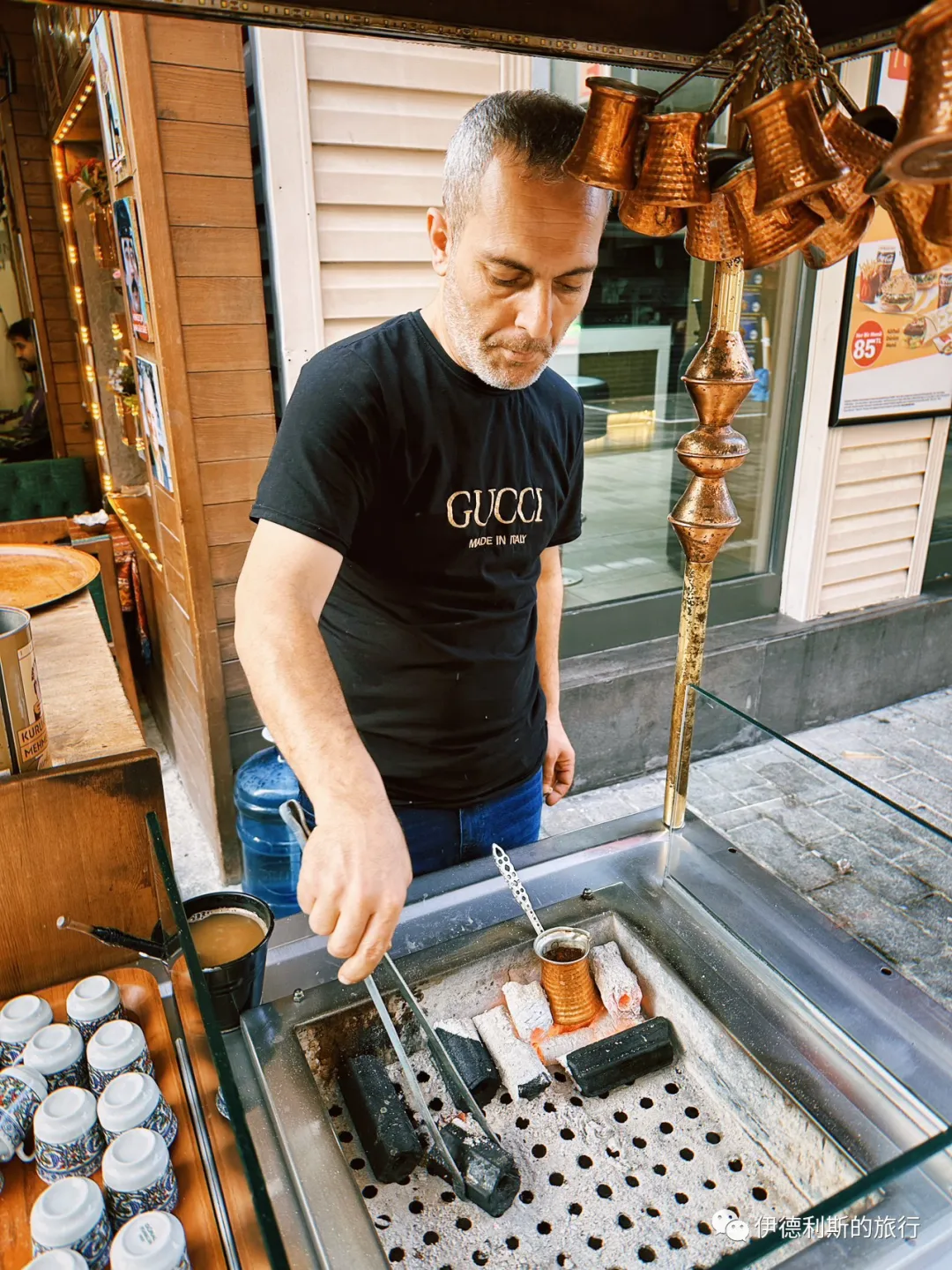
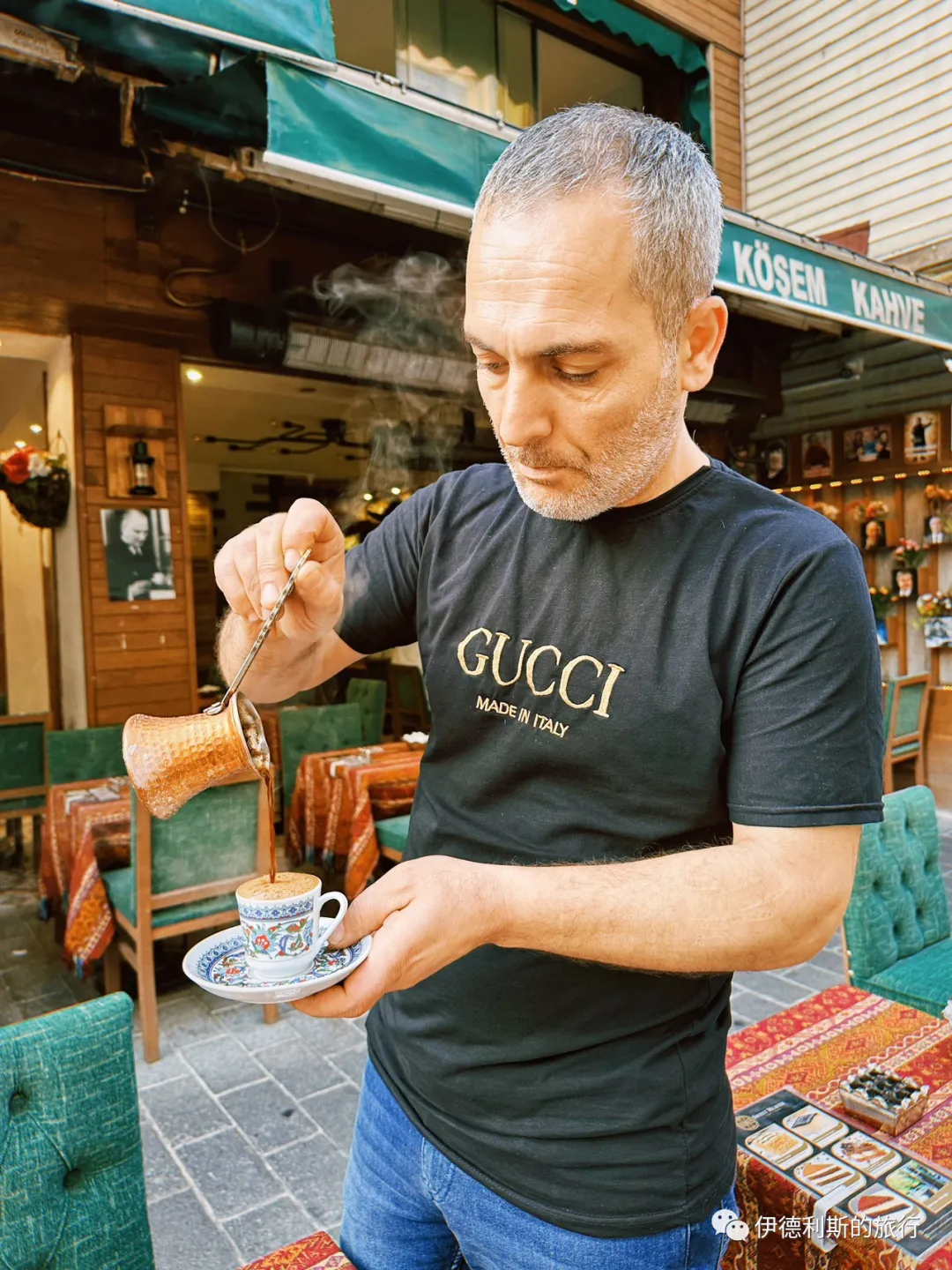
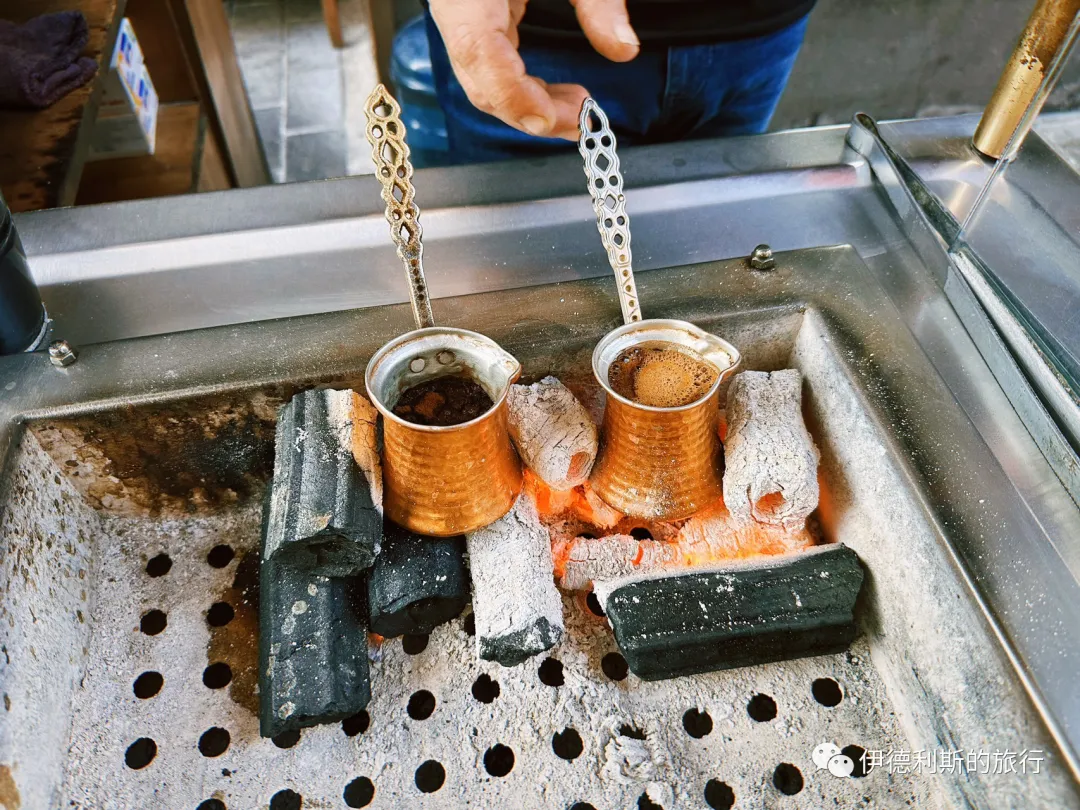
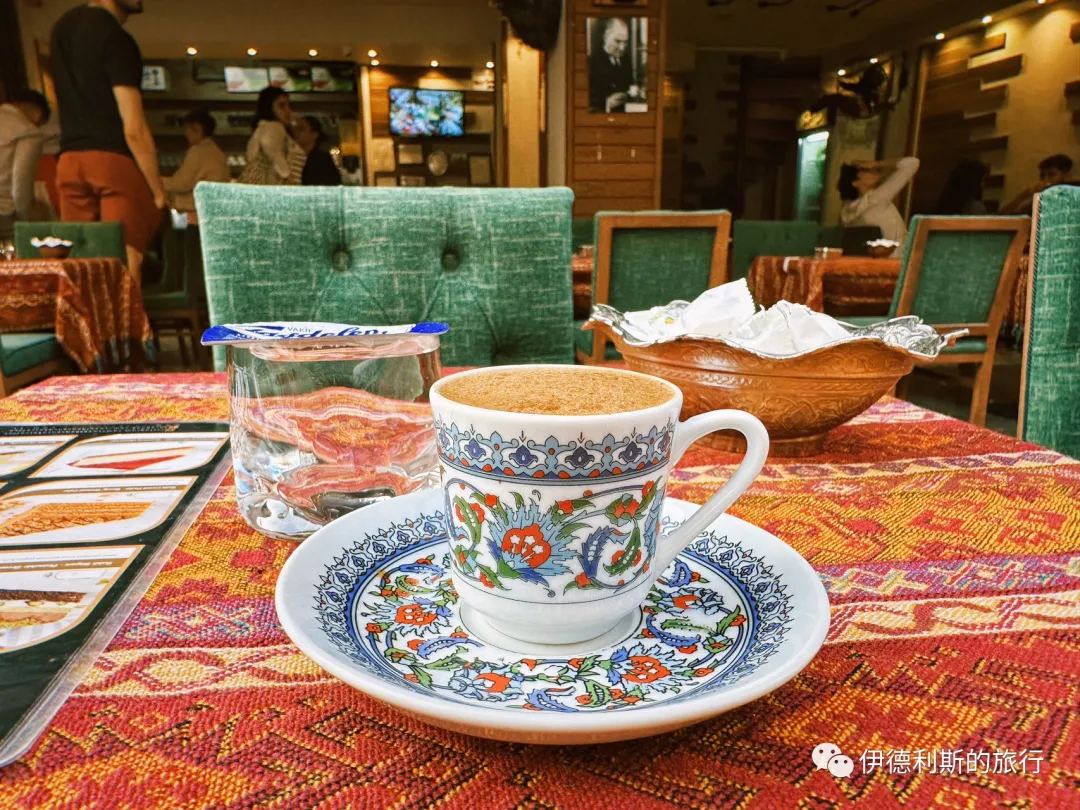
Mola Közde Kahveci cafe in Istanbul, Turkey.
Kadikoy is in the Asian side of Istanbul and has a very long history. Greeks built the first settlement on the Bosphorus here in 667 BC, a few years before Byzantium on the opposite shore. The Ottoman dynasty began ruling here in 1353, exactly 100 years before they conquered Constantinople in 1453. Under Ottoman rule, this place was a transport hub for crossing the Bosphorus, so it slowly grew into a busy town.
Today, it is a hangout spot for young people with several pedestrian shopping streets filled with cafes, restaurants, shops, craft stores, and bookstores. Although it lacks a wild nightlife and crowded tourist spots, life here is much more comfortable and relaxed.
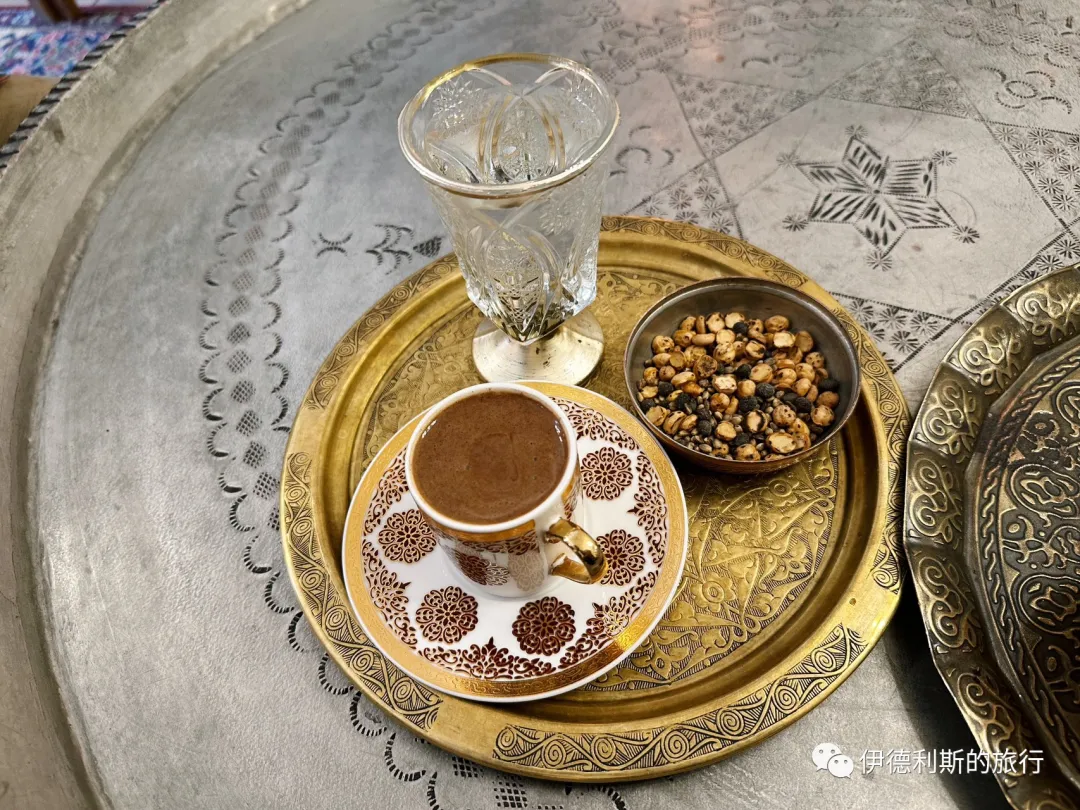
People in Istanbul really love coffee. When we came back to the cafe downstairs from our place at midnight, it was full of people, and when we left at six in the morning, people were still drinking coffee. Charcoal-roasted Turkish coffee is delicious. It comes with a glass of water and a piece of chocolate, which is very refreshing.
Harire Mardin Kurdish cafe in Mardin, Turkey.
Mardin sits in the Upper Mesopotamia region, upstream of the Tigris and Euphrates rivers. The entire old city is built on the southern slope of a mountain ridge. A thousand-year-old castle stands on the cliff at the very top, with the stone city built in tiers below it. Because of this, you can look out over the Mesopotamian plains from any terrace in the old city, and the view is spectacular.
The ancient city of Mardin has a very long history. It was called Merida, meaning castle, during the Roman period. It became part of the Arab Empire in 640 and was later ruled in turn by several tribal dynasties of Mesopotamia. After 1085, Mardin was ruled successively by the Seljuk Empire, the Artuqid dynasty, and the Kara Koyunlu, all established by Oghuz Turkic tribes. It was finally incorporated into the Ottoman Empire in 1517. Five hundred years ago, many Armenians and Jews lived in the old city of Mardin. Today, it is mainly home to Kurds and Arabs, along with a significant number of Assyrian Christians, making the culture very diverse.
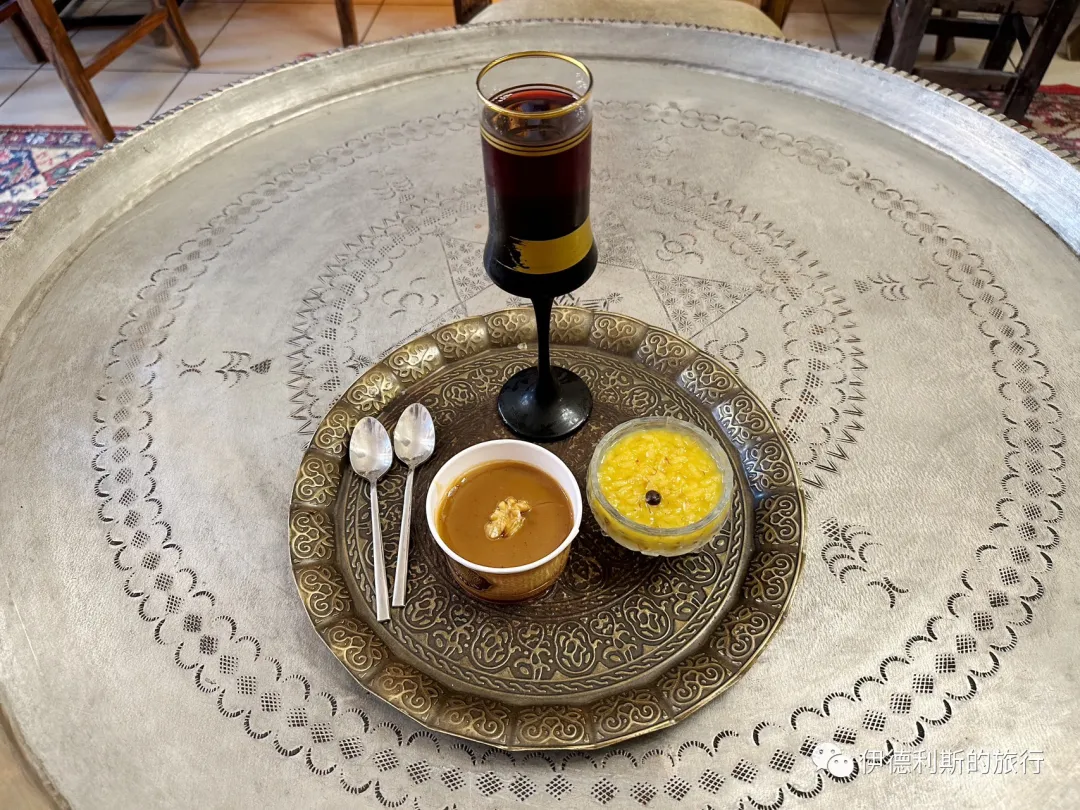
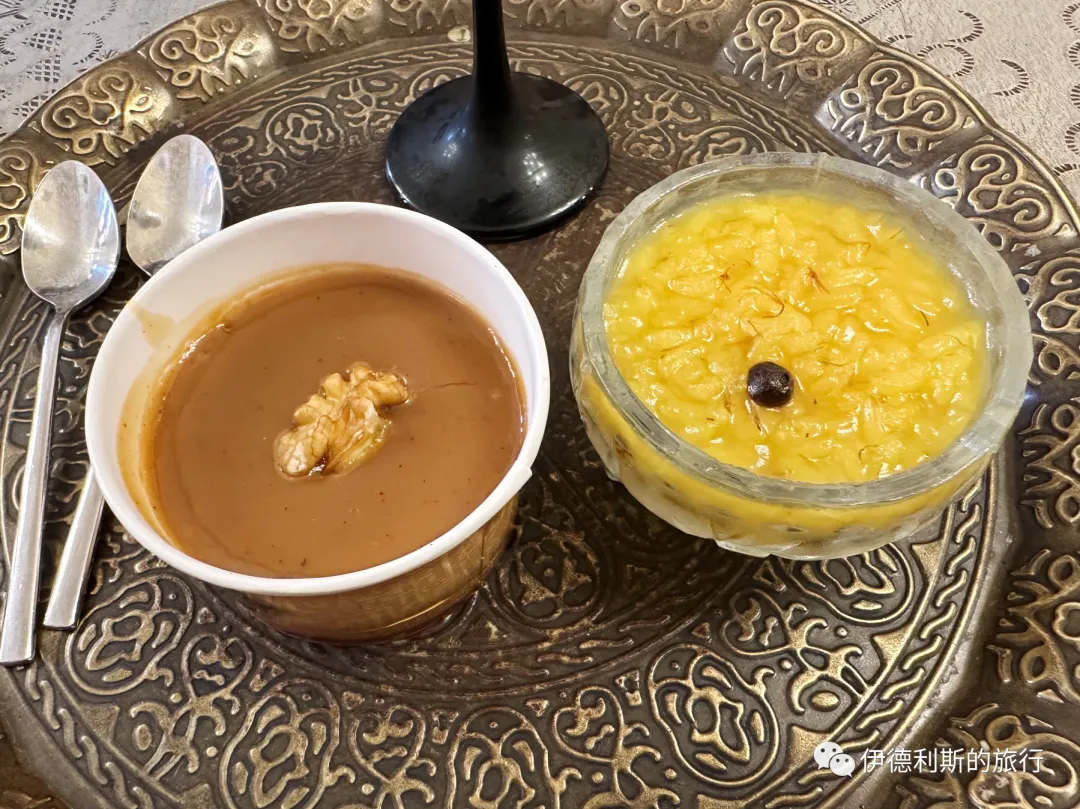
Harire Mardin is a cafe in Mardin with a very local feel. Local Mardin coffee is stronger than Turkish coffee. It contains orchid root powder (salep) and carob powder (carob), and the local Kurds and Assyrians both enjoy drinking it this way. Tabbaka is a yellow rice pudding invented by the Assyrians. Harire is a brown pudding made from local Mazruna grapes, and we finished by drinking purple basil sherbet (Reyhan Sherbet).
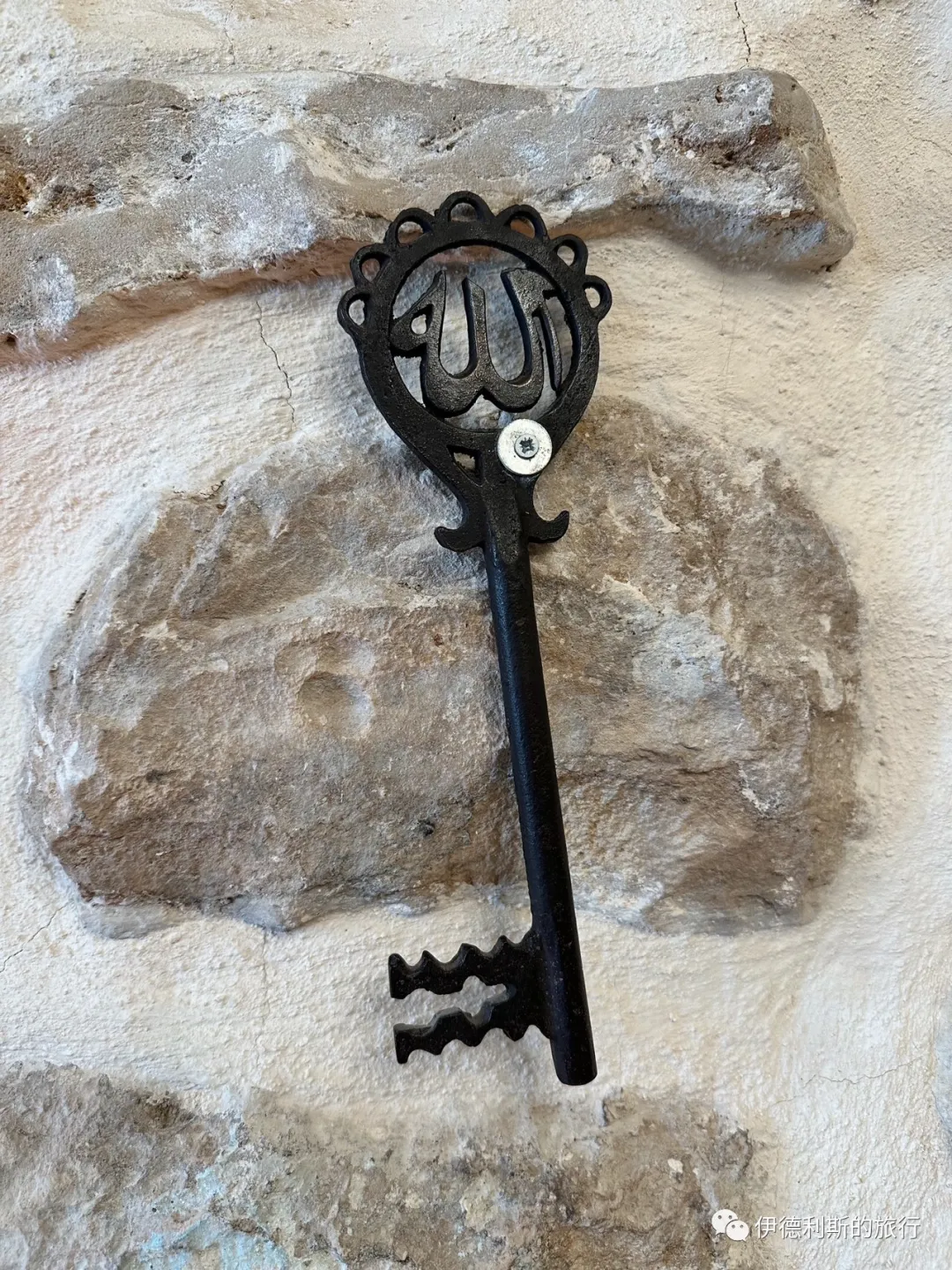
A Bosniak cafe in the old town of Sarajevo, Bosnia and Herzegovina.
S
aSa
Bosniaks (Bošnjaci) are a Slavic-speaking Muslim ethnic group living in the Bosnia region of the Balkan Peninsula. They migrated to Bosnia from northeastern Europe as early as the 6th century and were under Ottoman rule for over four hundred years from 1463 to 1878, which strongly influenced their cultural customs.
We drank traditional Bosnian coffee (Bosanska Kahva) at the Grand Bazaar in the old town of Sarajevo. Coffee was first introduced to the Balkan Peninsula under Ottoman rule by Arabs in the 16th century. Sarajevo was one of the first European cities to open cafes, over a hundred years before cities in Western Europe started drinking coffee.
Cafes were an important part of Ottoman culture. People could listen to the day's main news, discuss daily gossip, and watch various impromptu performances like shadow puppetry. Cafes give people a place to share ideas outside of work and worship, and they are great spots to meet like-minded friends.
Bosnian coffee is made by grinding roasted coffee beans into a fine powder and brewing them in a long-handled copper pot called a Džezva (known as Cezve in Turkish), just like Turkish coffee. However, while Turkish coffee can be brewed with cold water, Bosnian coffee must be brewed with boiling water. You can add sugar to Turkish coffee while it brews, but you cannot add sugar to Bosnian coffee. Turkish coffee is poured into a cup for the customer, but Bosnian coffee is served by bringing the copper pot and the cup to the customer on a tray so they can pour it themselves.
A classic Bosnian coffee set includes the copper pot, a porcelain cup with a copper base, a copper tray, a copper sugar bowl for sugar cubes, and Turkish delight (rahat lokum). To drink it, bite off a piece of a sugar cube and hold it under your tongue to let it melt before you take a sip of coffee. Bosnian Turkish delight (rahat lokum) comes from the Turkish version (lokum). The yellow pieces are made with vanilla and the red ones are made with rose petals, and you can eat them whenever you like while drinking your coffee.
Andar Caffe Bar Bosnian cafe in the Old Town of Sarajevo, Bosnia and Herzegovina.
At Andar Caffe Bar in the old town of Sarajevo, the owner Maida's grandfather, Muharem, opened a handmade shoe shop in the Sarajevo Old Bazaar in 1933, which was later taken over by Maida's father, Osman. After Osman retired in 2010, Maida took over the shop, but handmade shoes were no longer popular as people started buying shoes in stores, so Maida turned the shop into the current cafe while keeping many shoe-themed elements inside.
Younes, a legendary cafe in Beirut, Lebanon.
Hamra is a busy and trendy neighborhood in Beirut near the American University, filled with young people and long known as the cultural center of Beirut. The environment here is relatively nice, making it a good place for shopping in Beirut.
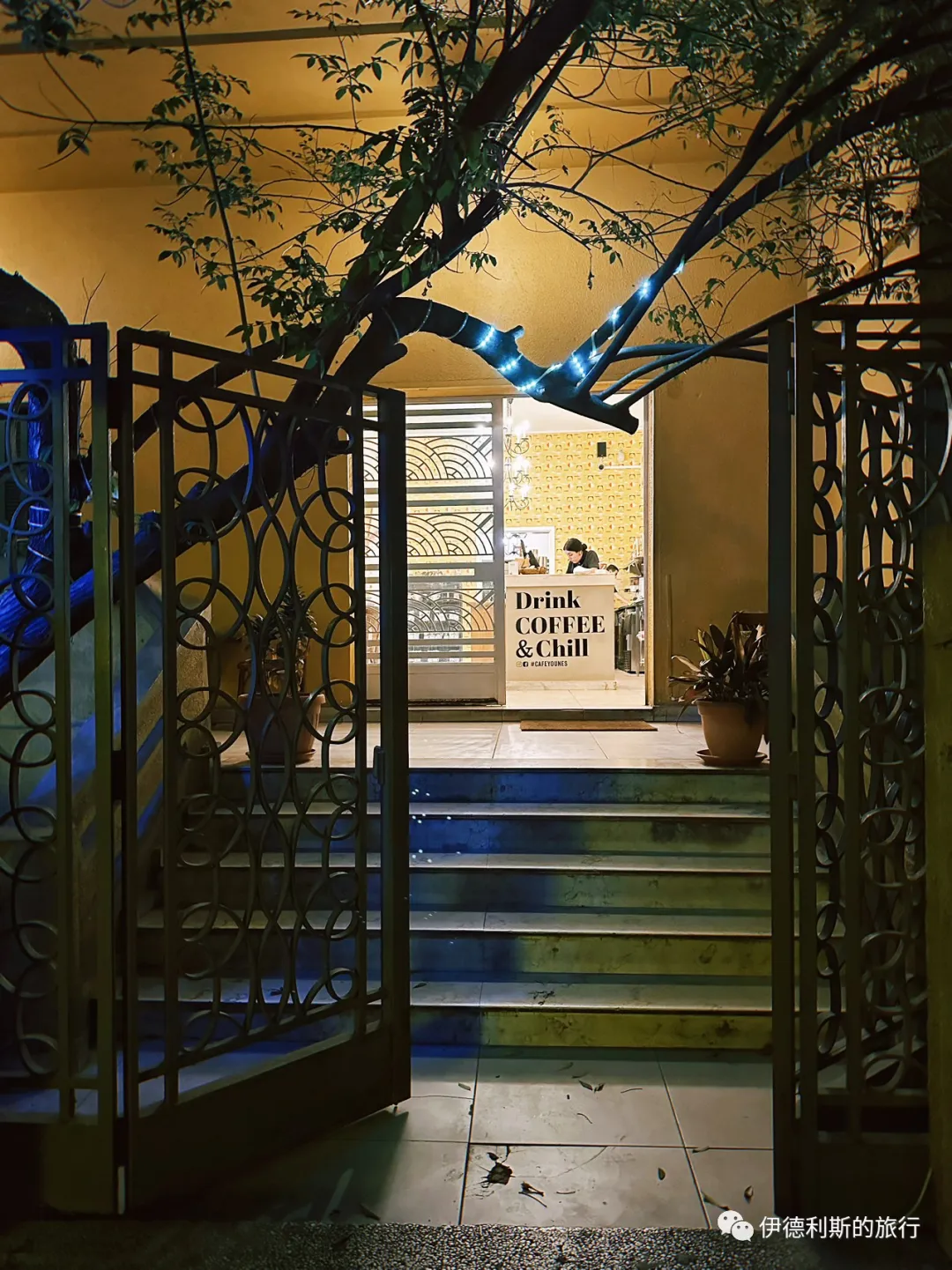
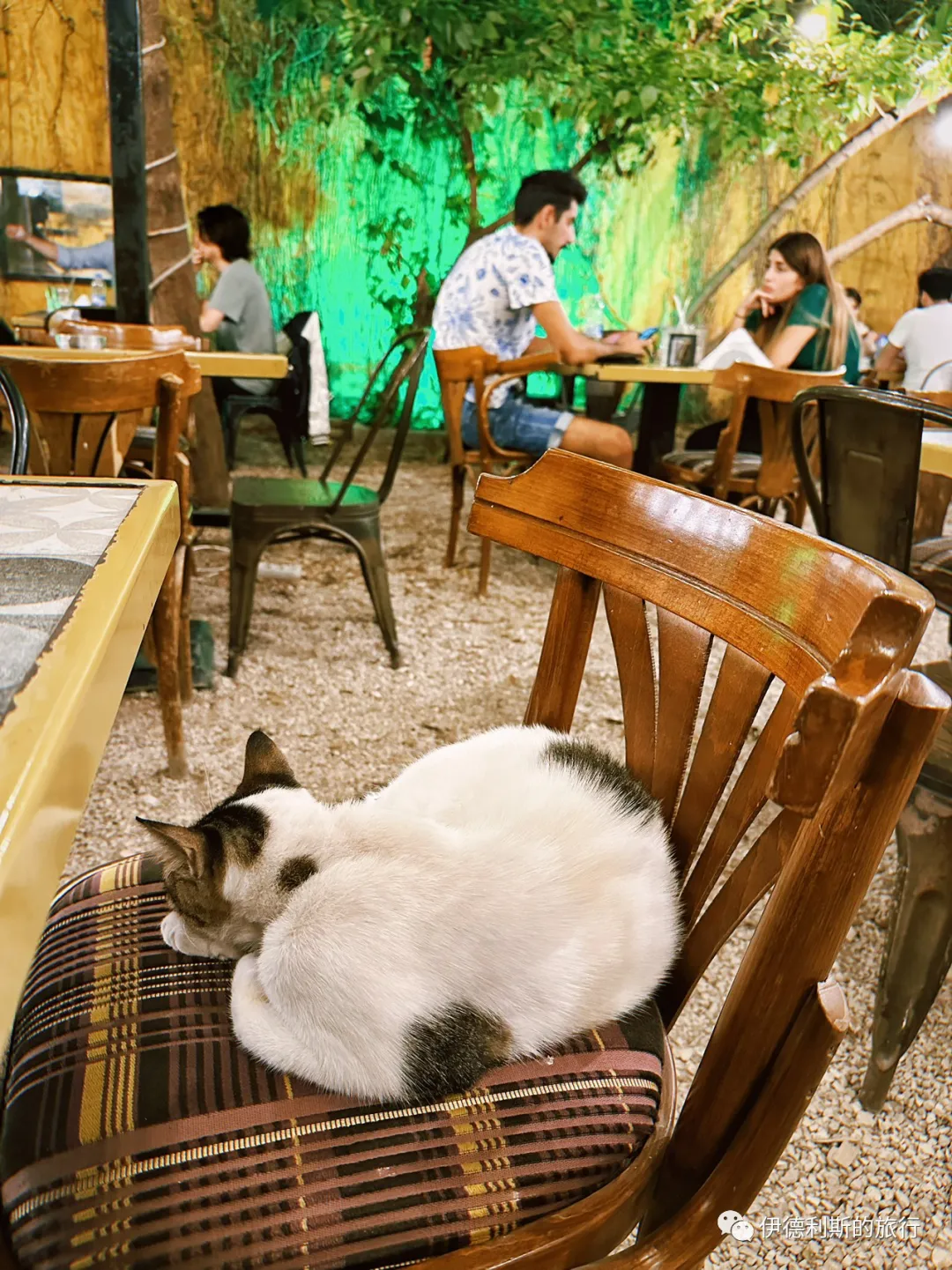
The founder of Younes Cafe, Amin Younes Sr., immigrated to Brazil in 1894 and worked on a Brazilian coffee tycoon's plantation for 20 years. In 1935, Amin returned to Lebanon and opened Younes Cafe in downtown Beirut. During World War II, the collapse of the Lebanese currency wiped out most of Amin's savings, but he still managed to pull through. In 1960, Amin's son Souheil joined the family business and helped his father open the first branch of Younes Coffee in the Hamra district. It was one of the first coffee shops in Lebanon to buy an espresso machine. The main Younes shop in downtown Beirut was destroyed during the Lebanese Civil War in 1975, leaving only the Hamra branch standing.
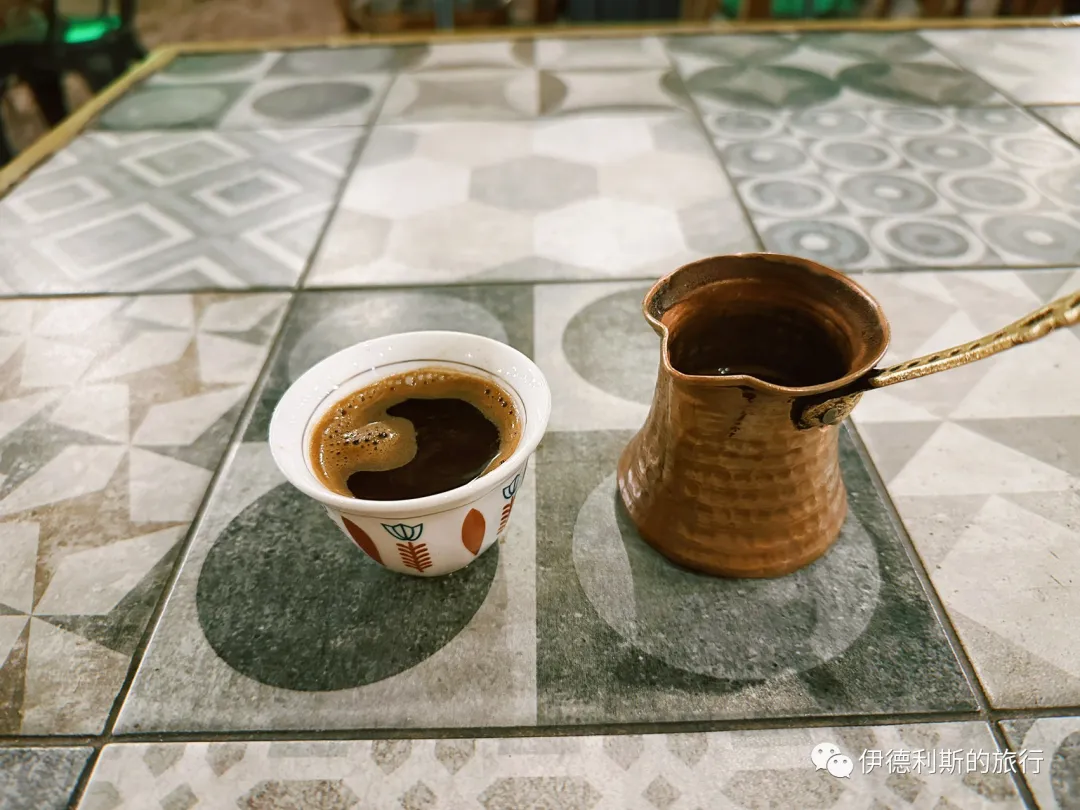
Abou Anwar worked at Younes Coffee for 60 years starting in 1954. He was the shop's most senior coffee roasting master, and his expert skills drew in a large group of loyal customers. The coffee I ordered is named after him, the Abou Anwar Blend, which mixes his favorite fruits and spices.
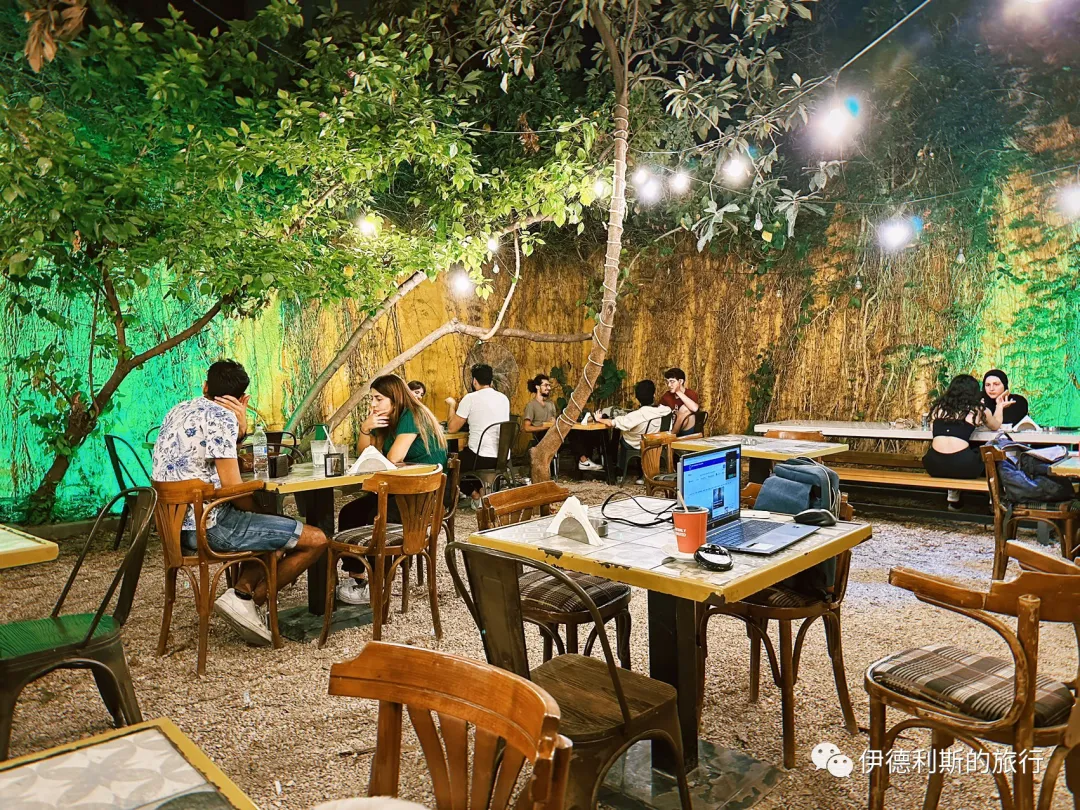
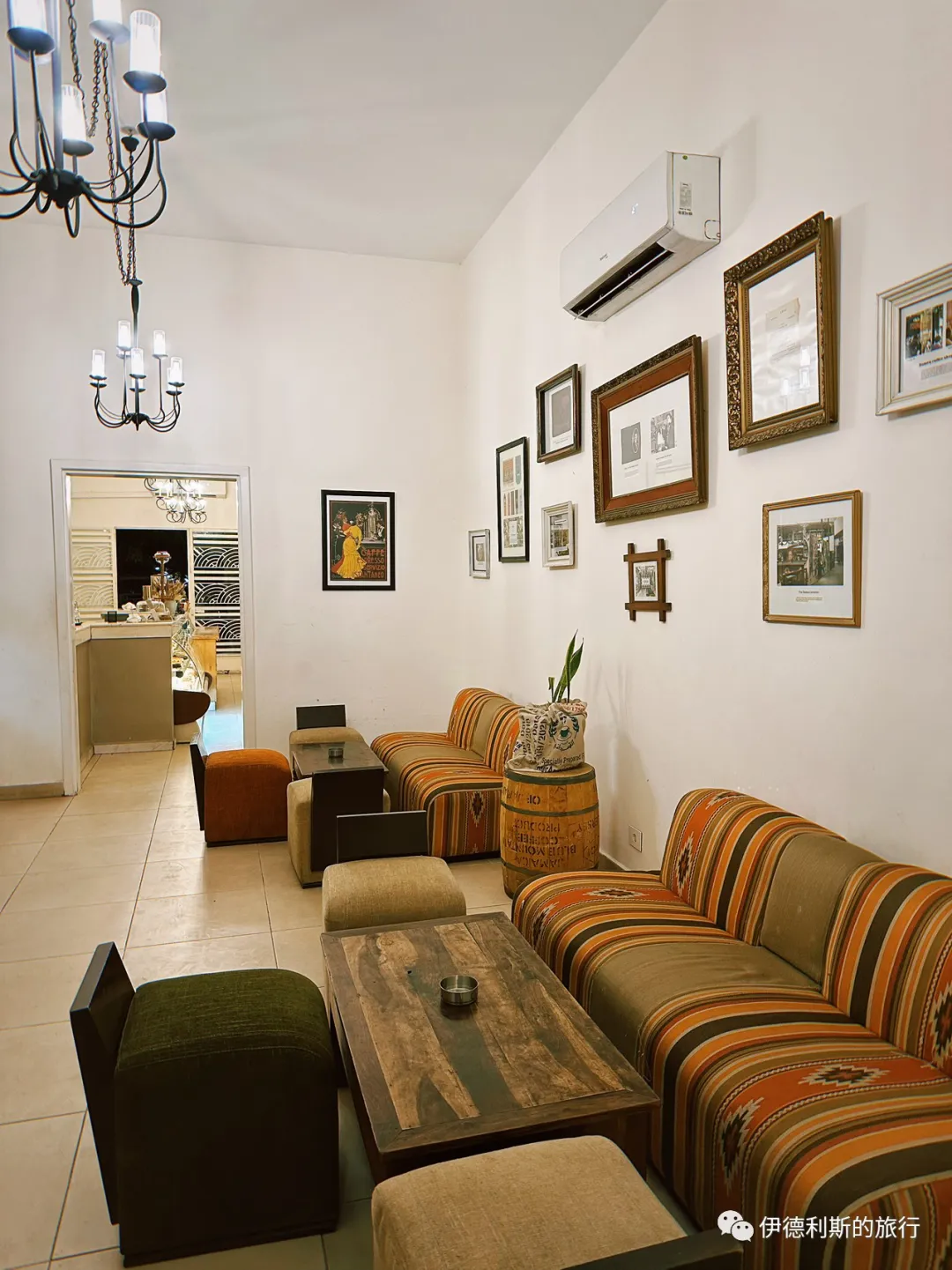
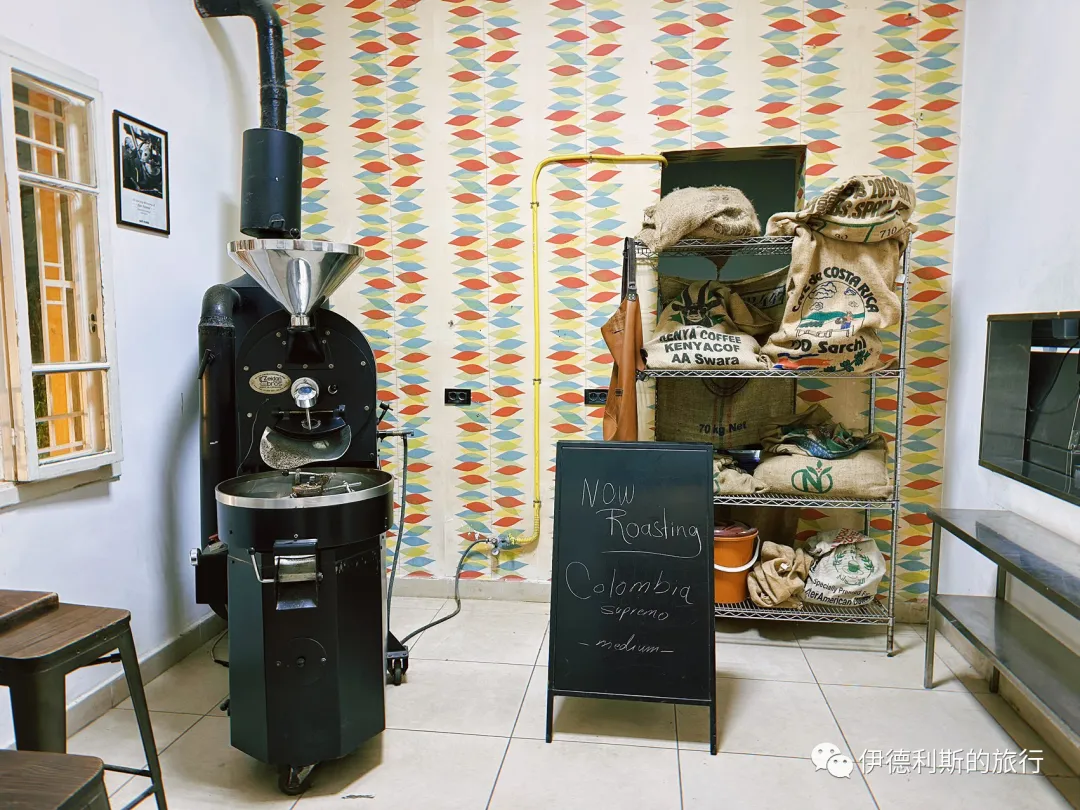
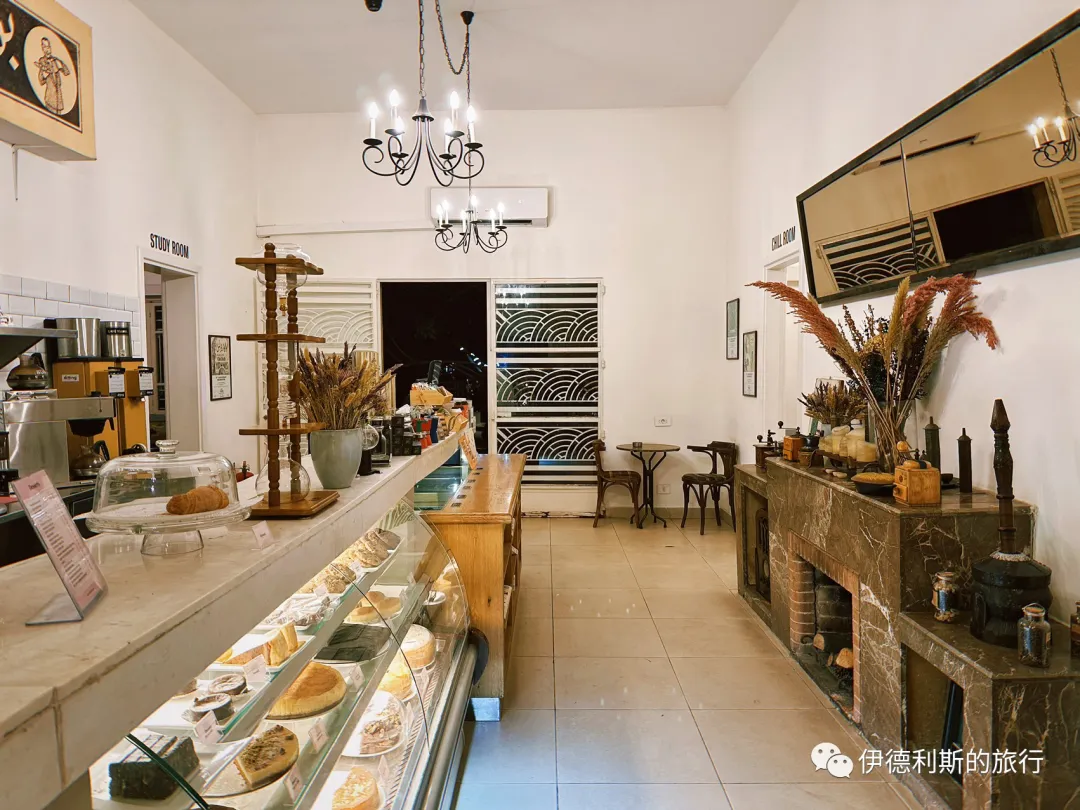
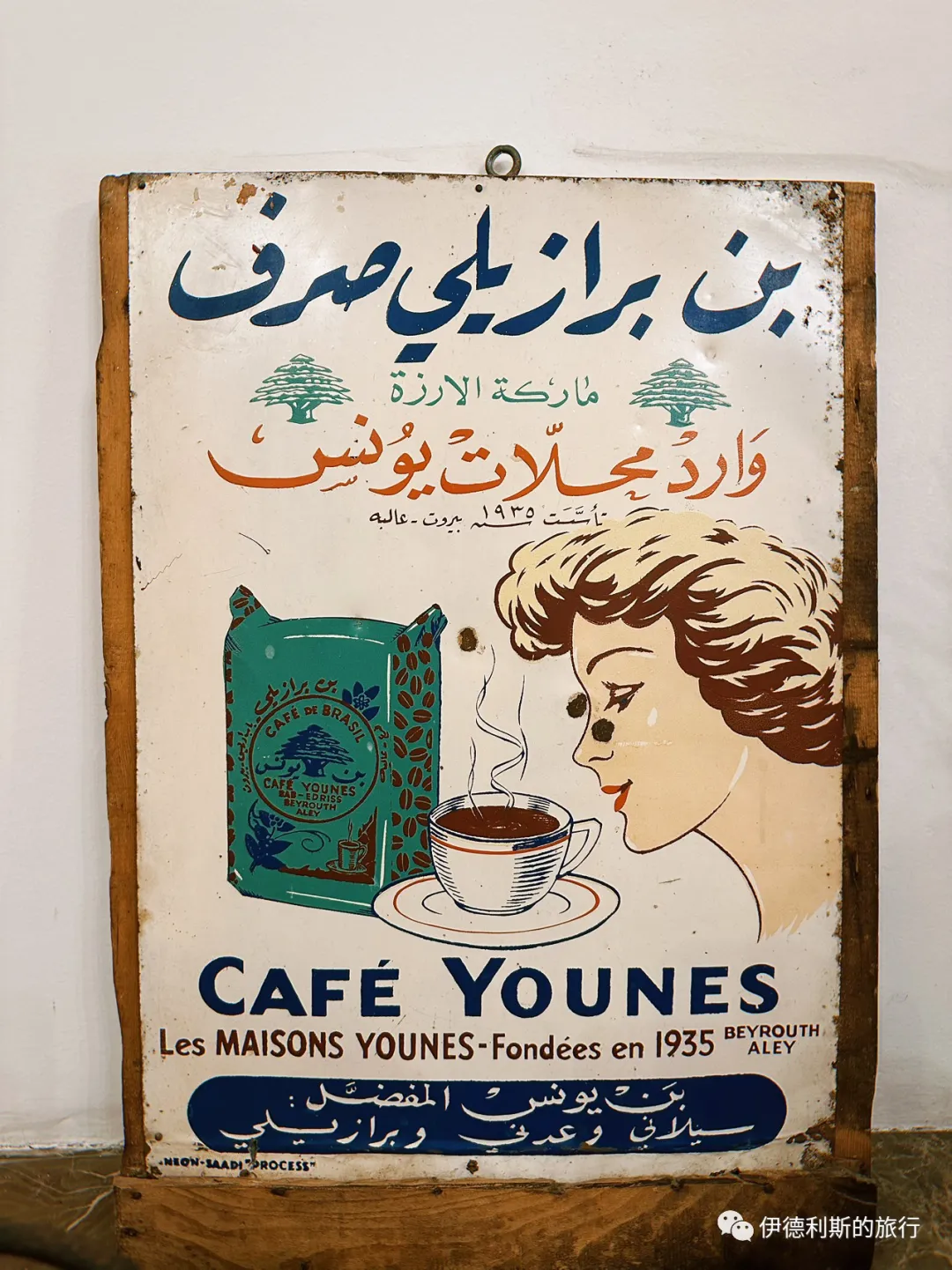
Bab Al Saray Cafe in the Old City of Sidon, Lebanon.
The ancient city of Sidon is 40 kilometers south of the Lebanese capital, Beirut, and is the third-largest city in Lebanon. Sidon has a history of over 6,000 years, making it one of the oldest cities in the world. It played a major role in Mediterranean trade. The ancient city of Sidon is a well-preserved Sunni Muslim old town on the eastern Mediterranean coast. When you enter the maze-like streets from the north gate, you see many houses built over the streets to form tunnels. People set up stalls inside these tunnels, selling all kinds of goods and creating a very lively atmosphere.
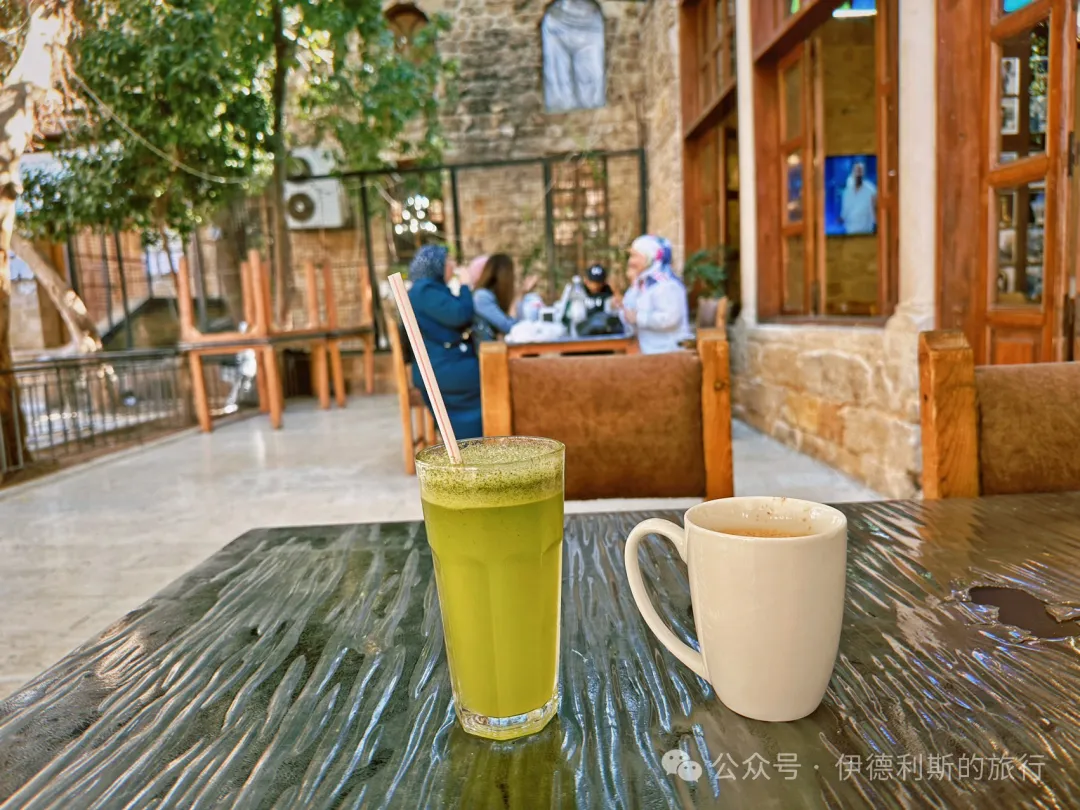
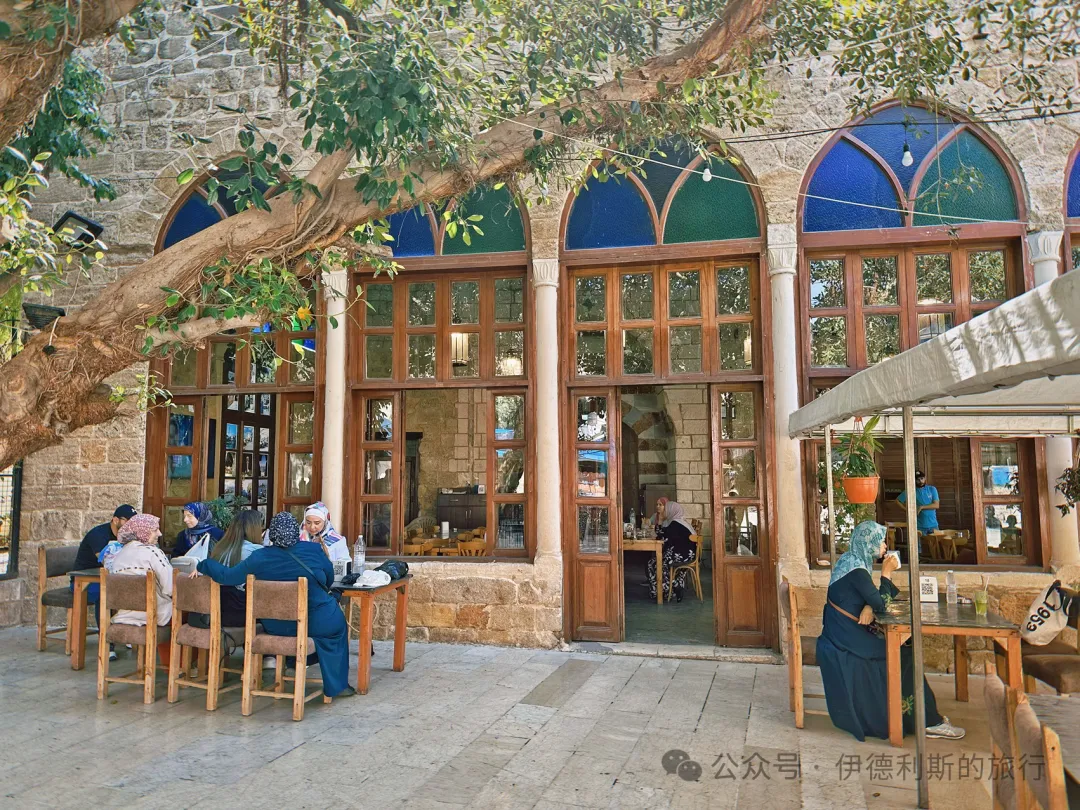
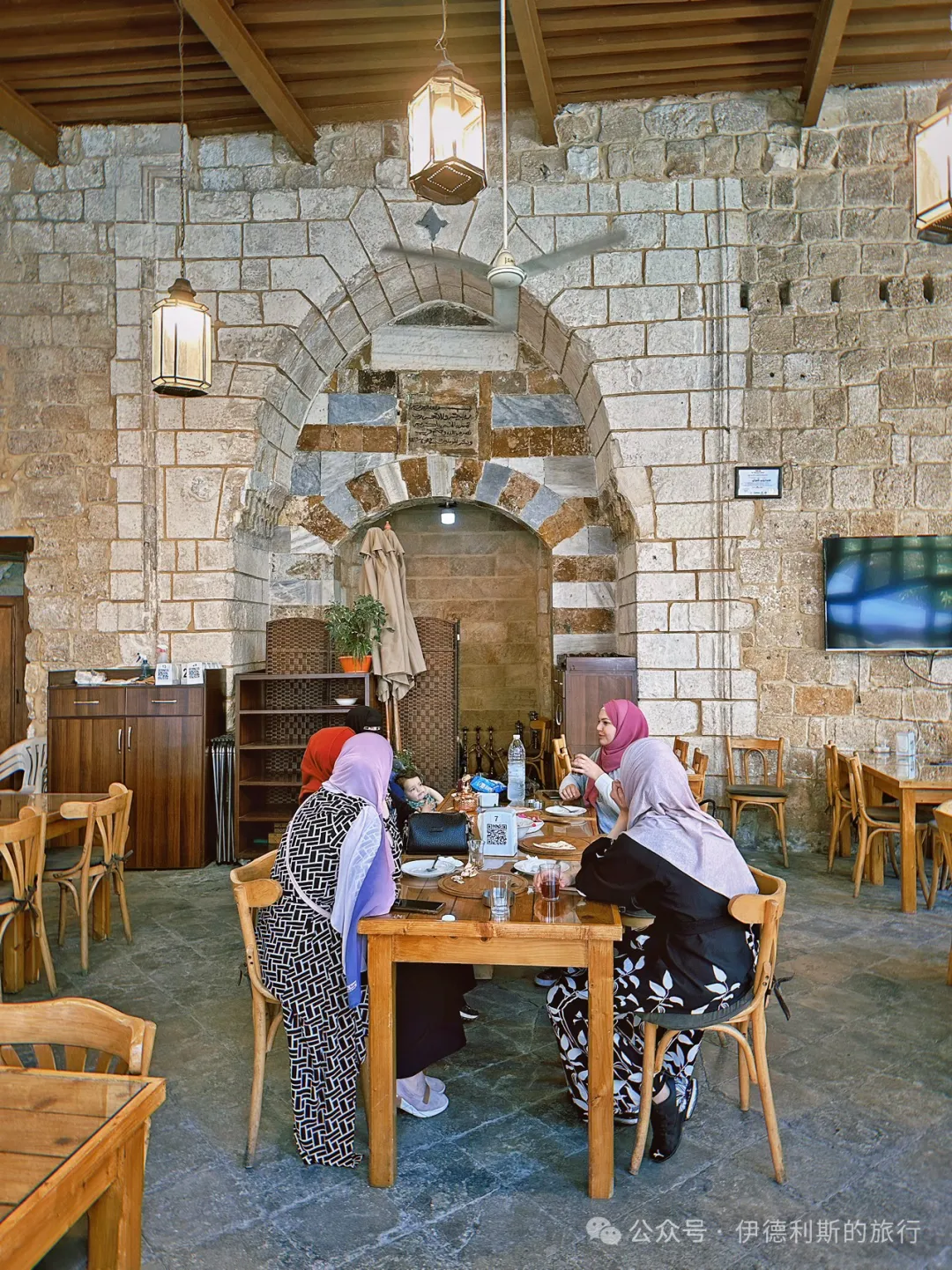
We had mint lemonade and coffee at Bab Al Saray Cafe inside the old city. This is one of the oldest cafes in Sidon, and people say their brunch is very authentic.
Bay Rock Cafe, a popular sunset spot in Beirut, Lebanon.
In Beirut, you have to visit the famous Pigeon Rocks to watch the sunset. I want to mention that we met several very kind people in Beirut. First, a Palestinian refugee grandmother offered us grapes. On the way to Pigeon Rocks, we met a fellow Muslim (dosti) who kindly showed us the way. The dosti took us on a bus first to help us find the stop where we could catch the bus to Pigeon Rocks. Lebanese buses do not have signs, so you can just wave them down anywhere along the road. The dosti seemed more anxious than we were while waiting for the bus. He finally put us on the bus and waved goodbye without asking for a single cent. This friend (dosti) is completely different from the tricycle driver who kept trying to overcharge us on the way to the ancient city of Anjar.
There is a row of cafes next to Pigeon Rocks, from Bay Rock Cafe in the far south to Starbucks in the far north, all of which are classic spots to watch the sunset. Although many people post about this place online, it is actually not very crowded in the cafes, and it is still very relaxing. We ordered two juices and a plate of salad at Bay Rock Cafe and spent a romantic and wonderful evening.
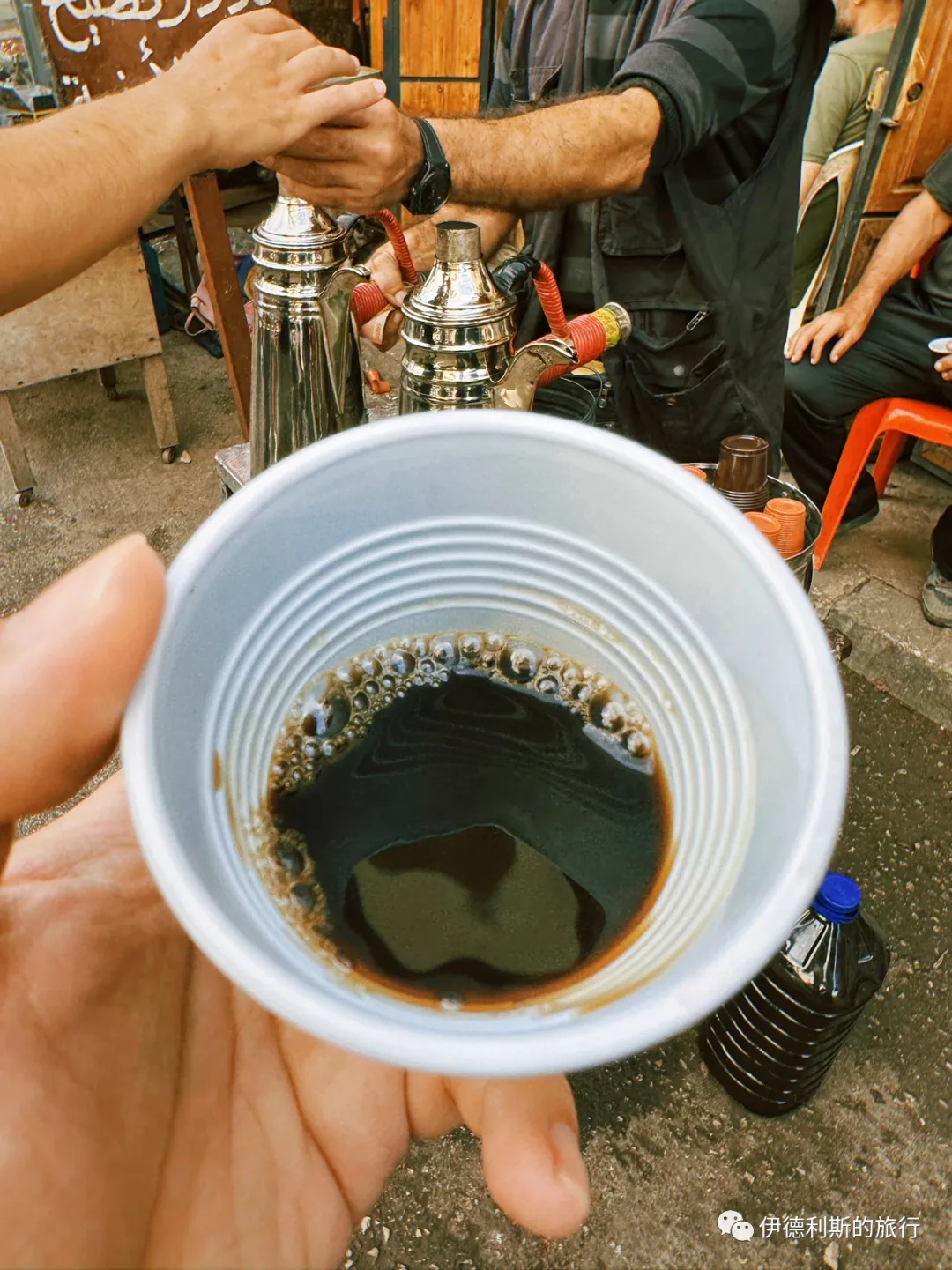
Street coffee in the Old City of Tripoli, Lebanon.
Tripoli is located in northern Lebanon and has been an important port on the eastern Mediterranean coast for thousands of years. The market in the old city of Tripoli is very lively, which is a sharp contrast to Beirut. Ibn Battuta wrote in his travelogue: 'Afterwards, we arrived at the city of Tripoli.' That was an important town in Sham, with several small rivers flowing through it. It is surrounded by fragrant orchards and lush green trees. The sea surrounds it with blue water, and the land nourishes it with its treasures. The markets are filled with an amazing variety of goods.
We drank street coffee in the market and saw all kinds of dairy products, which was very interesting.
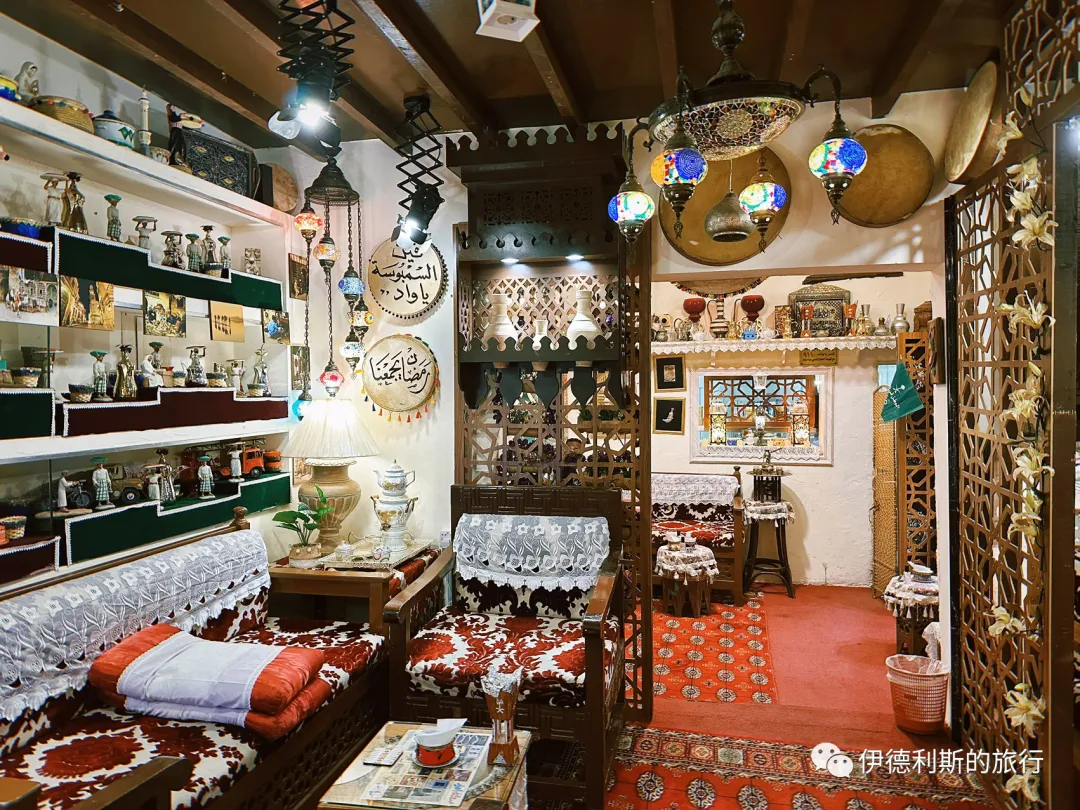
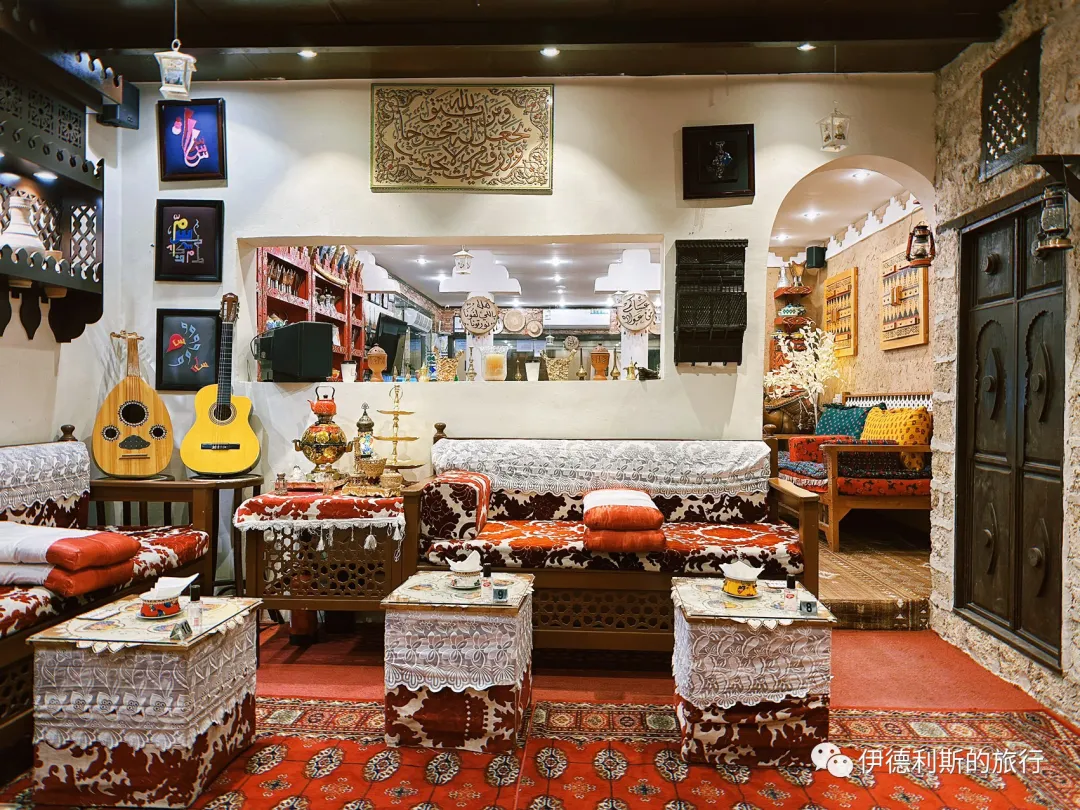
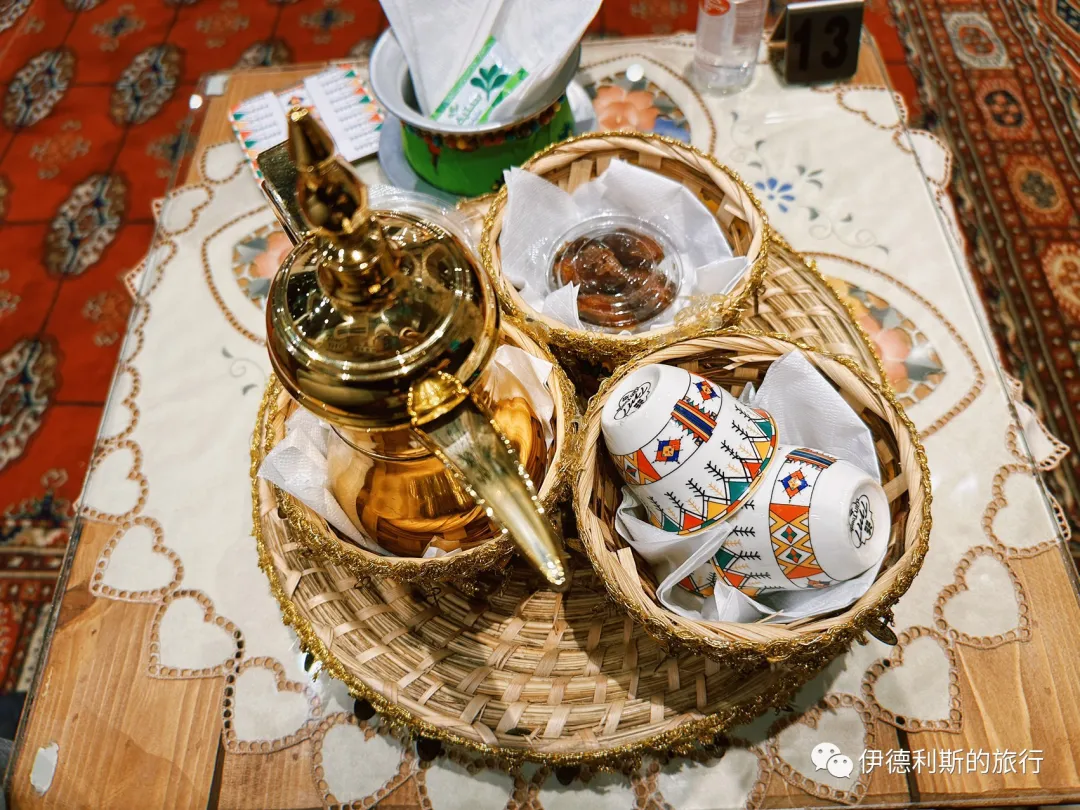
Haret Al-Sham Arabic cafe in the old city of Jeddah, Saudi Arabia.
Jeddah is located in the Hejaz region on the east coast of the Red Sea. In 647 AD, Caliph Uthman ordered it to be built as a port for travel to Mecca, and since then, Jeddah has become an important gateway for the Hajj by sea.
The Old Town of Jeddah is the last city along the Red Sea to preserve its traditional urban layout, consisting of tall tower houses, coral stone houses, traditional mosques, open-air markets (souqs), cafes, and small public squares. Traditional buildings like these were once common along the Red Sea coast, but after the 20th century, modernization left only a few standing. They serve as important witnesses to the Indian Ocean trade routes from the 16th to the early 20th century. Because of this, the Old Town of Jeddah was added to the UNESCO World Heritage list in 2014.
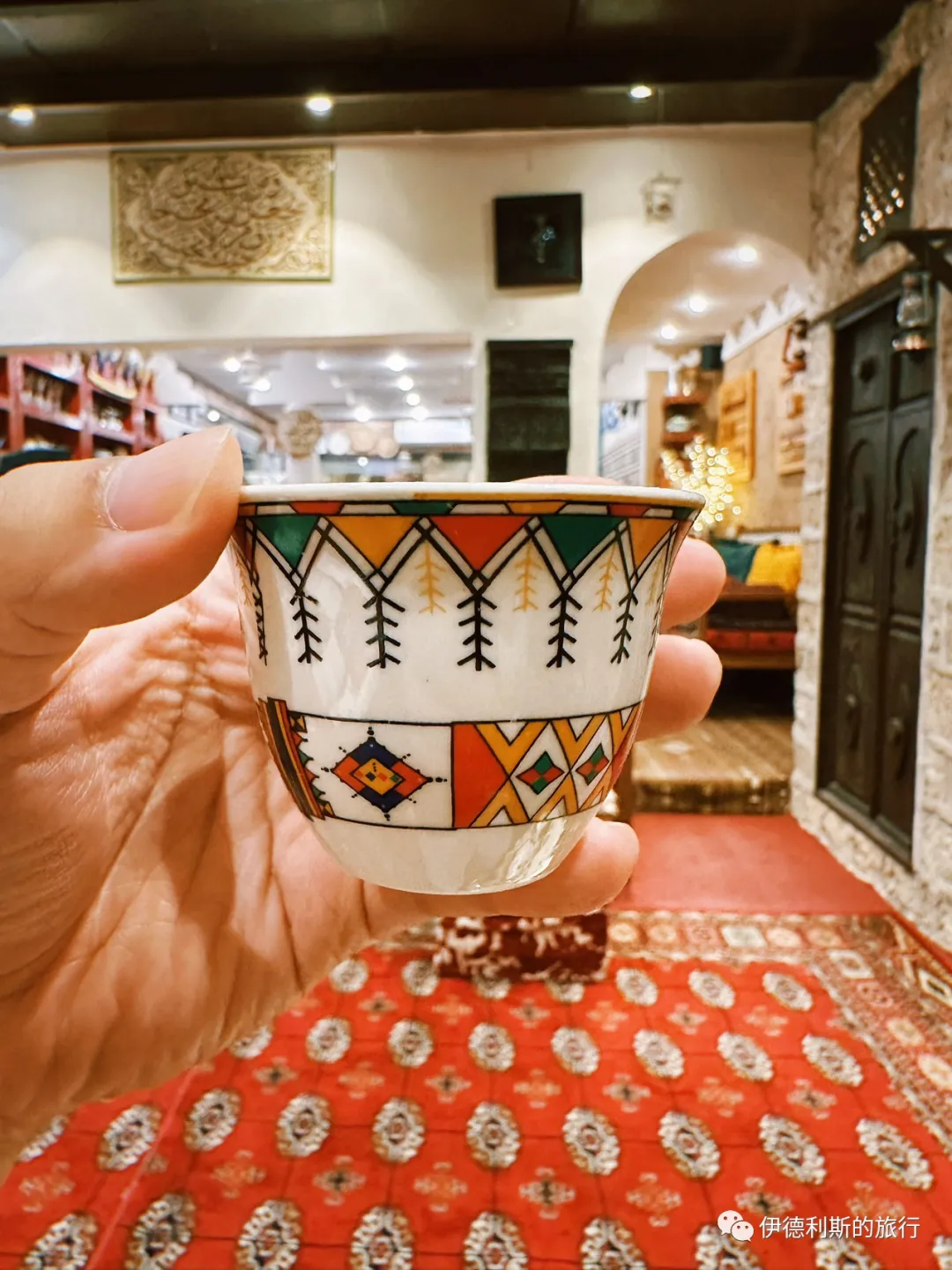
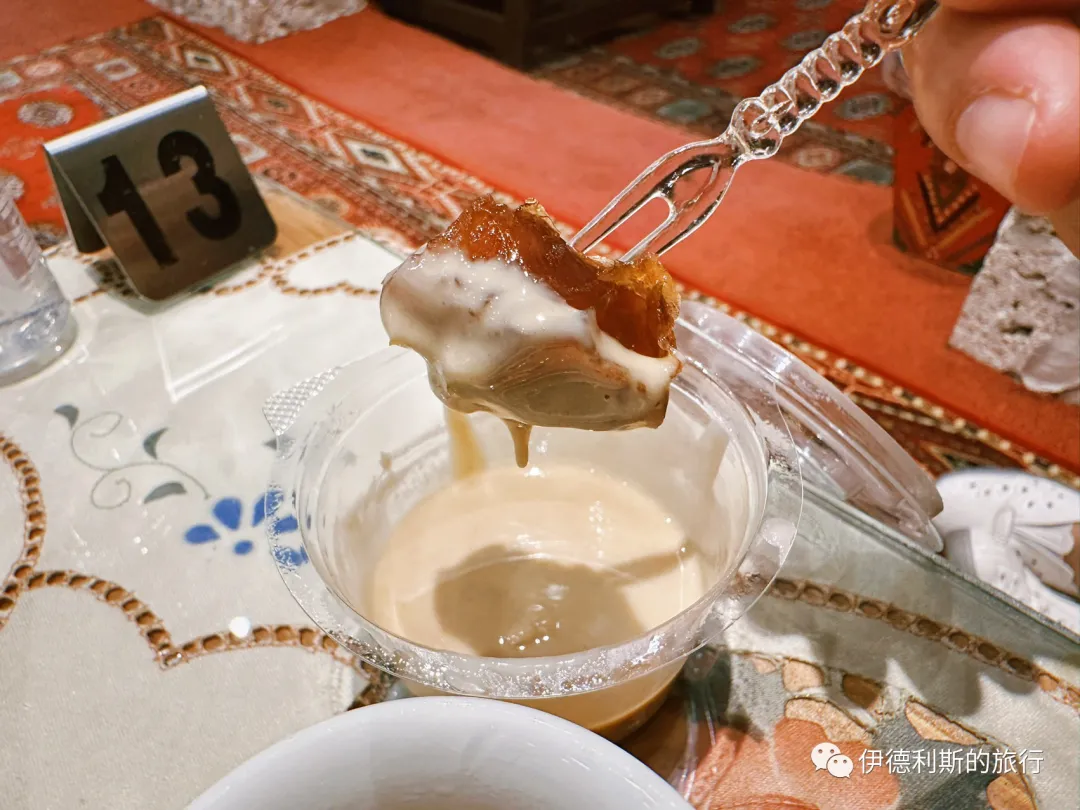
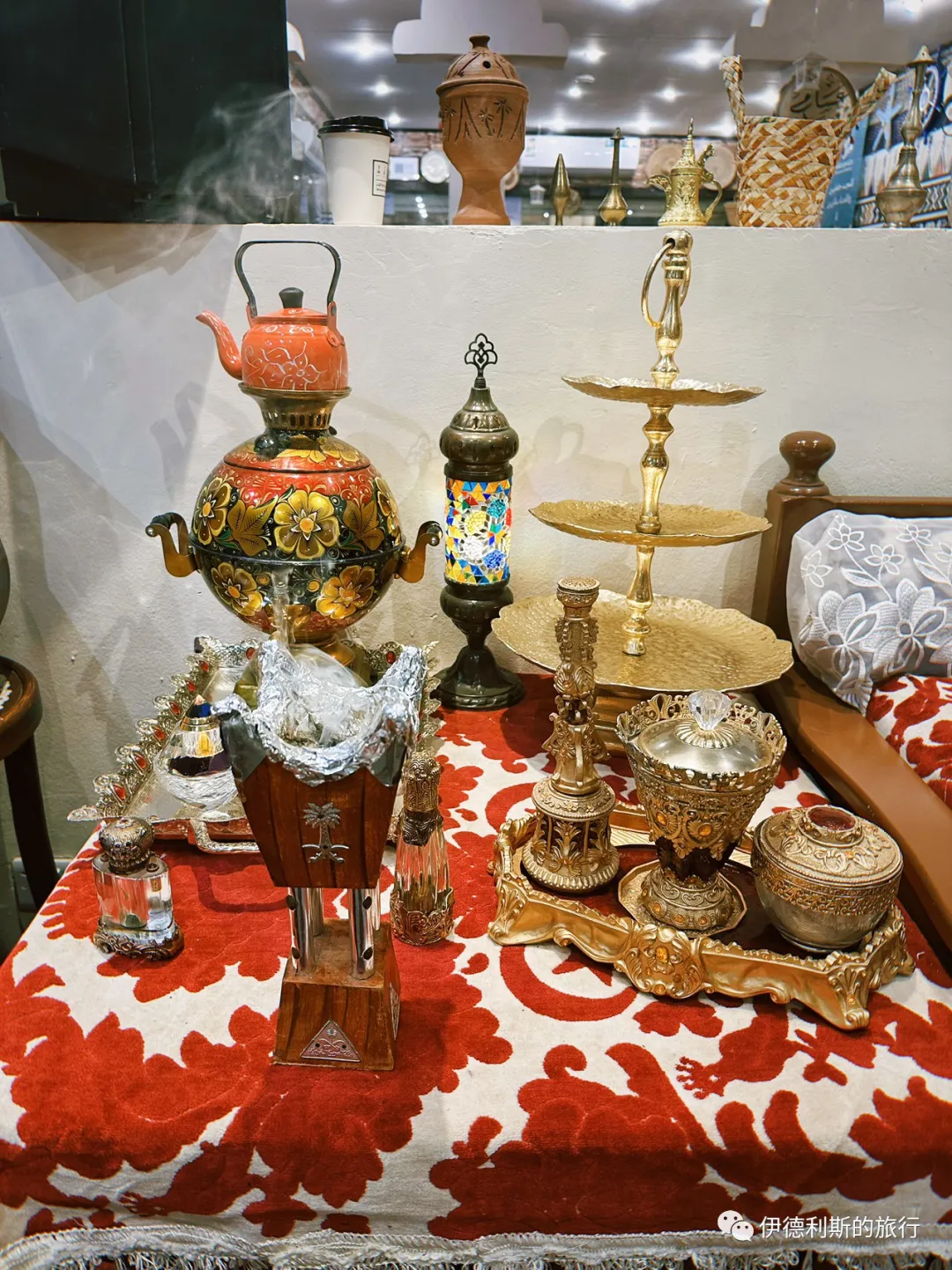
We visited a traditional coffee shop in the old city of Jeddah. The shop is small but decorated beautifully with many traditional Hejazi elements, making it a great spot for photos. We ordered traditional coffee and dates dipped in tahini (sesame paste) to experience the lifestyle of old Jeddah.
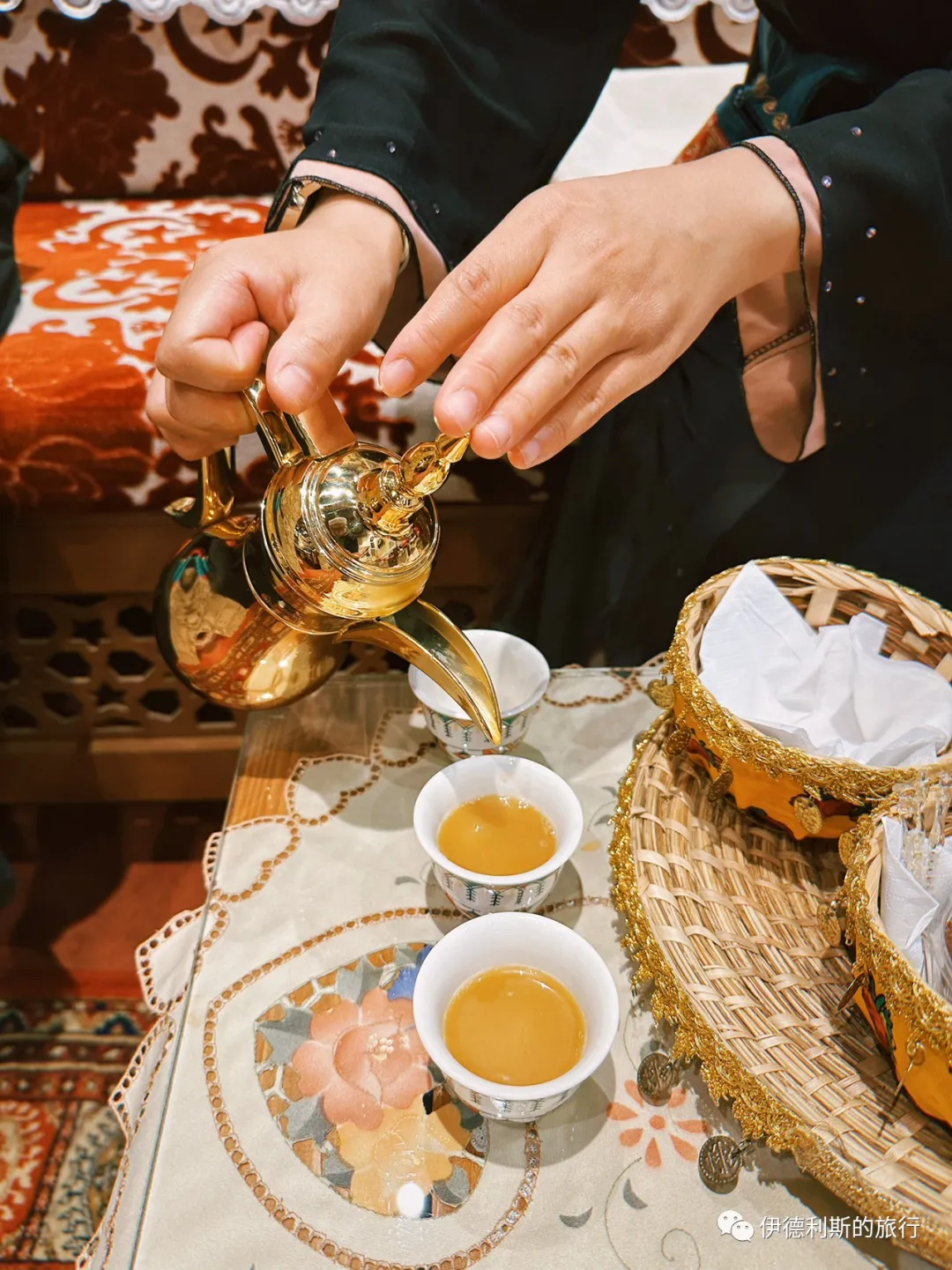
Khan Shaheen cafe in the old city of Cairo, Egypt.
As a cultural capital with over a thousand years of history and hundreds of historical sites, Old Cairo was added to the UNESCO World Heritage list back in 1979. The current Old Cairo was built in 969 by the Fatimid dynasty. Over the next thousand years, it saw the Ayyubid, Mamluk, Ottoman, and Muhammad Ali dynasties, leaving behind hundreds of historical buildings.
As dawn breaks, the old city wakes up to the sound of the adhan. Roosters crow, dogs bark, and people get up for namaz. Breakfast shops set out their tables and chairs to open. This is how a day in the old city of Cairo begins.
After the dawn prayer, people often rest for a while. Most ticketed attractions in the old city open after nine o'clock. The old city is very quiet at this time, making it perfect for wandering through empty streets and feeling the weight of a thousand years of history. After breakfast, some shops turn into tea houses or cafes where people chat and let time slowly drift by.
We went to Khan Shaheen Cafe on the main Al-Mu'izz street in old Cairo, which is housed inside a historic caravanserai. We had coffee inside; the service charge was a bit high, but the atmosphere was really nice.
Bedouin cafe in the old city of Sharjah, United Arab Emirates.
The Al Qasimi family of the Huwayla tribe began ruling Sharjah in the early 18th century and officially declared independence in 1727. They built trade routes across the Strait of Hormuz connecting the Arabian Peninsula with Persia, which played an important role in exchanges between the two regions.
Throughout the 19th and early 20th centuries, Sharjah was a major pearl trading port in the Gulf. In 1830, the British counted three to four hundred pearl boats in Sharjah, and many of the city's 19th-century historical buildings are linked to the pearl trade.
Al Arsa Souq is the oldest surviving bazaar in Sharjah. It started as an open-air market where Bedouins brought camels to trade, and was later built into its current structure using coral stone and palm trees. I visited during the lunch break, and it was very quiet.
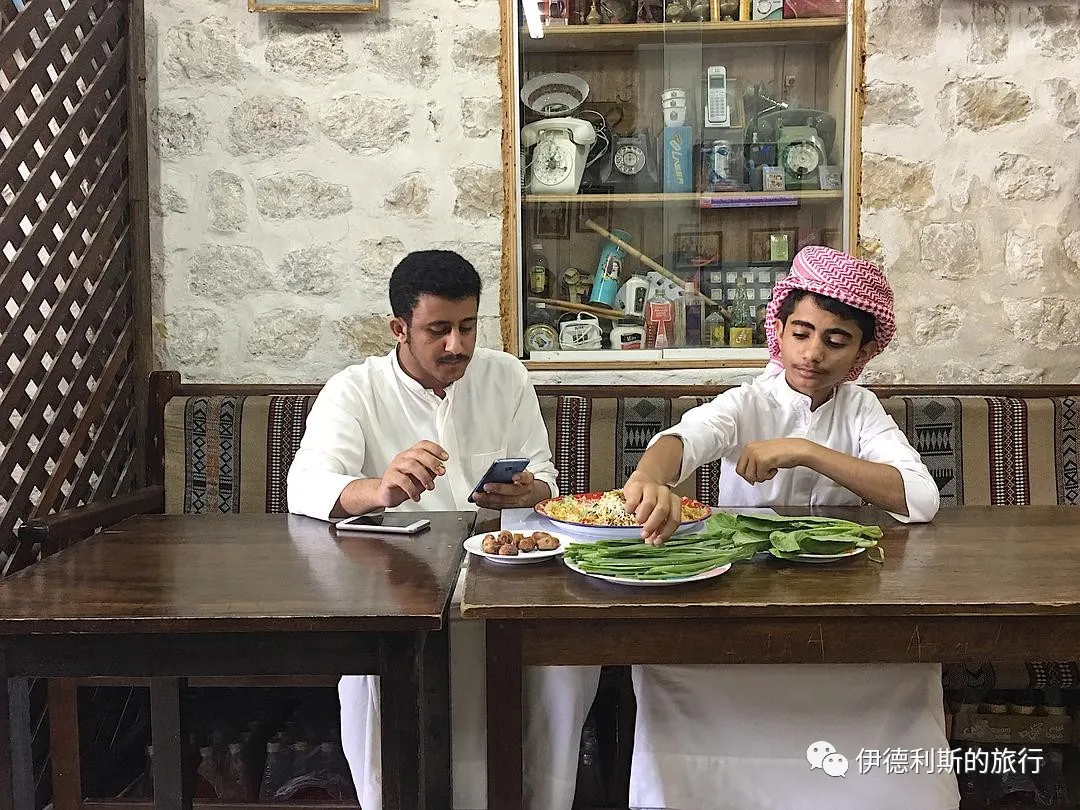
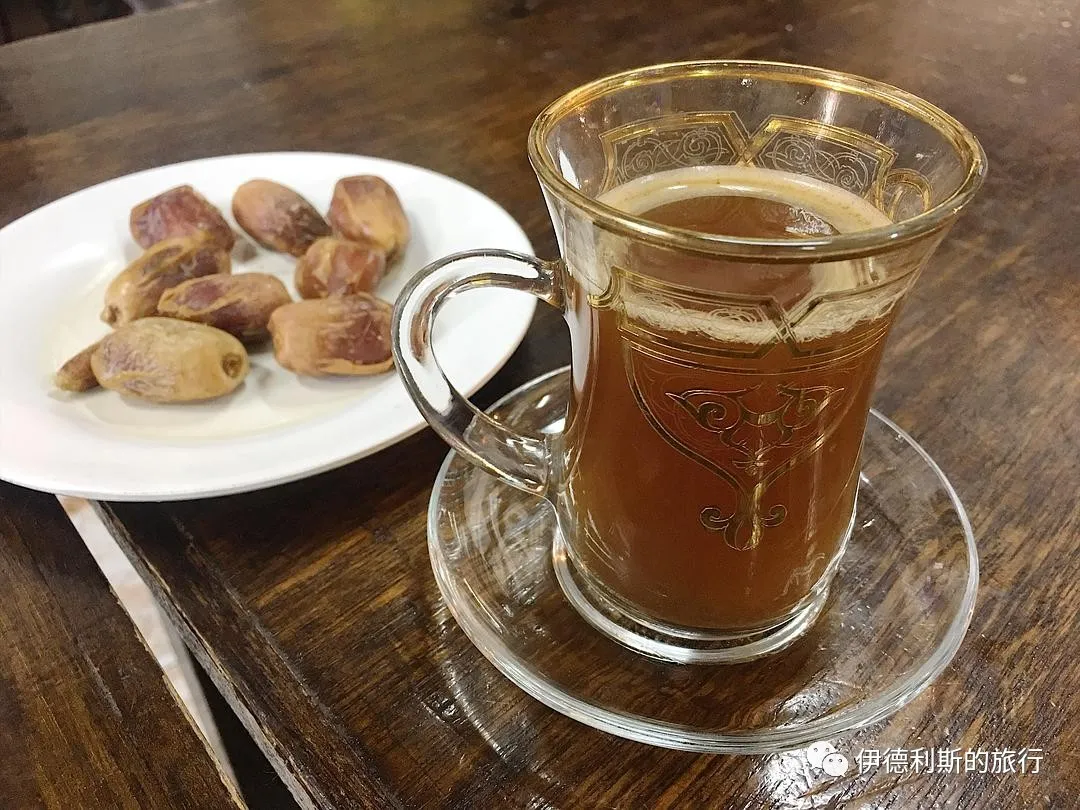
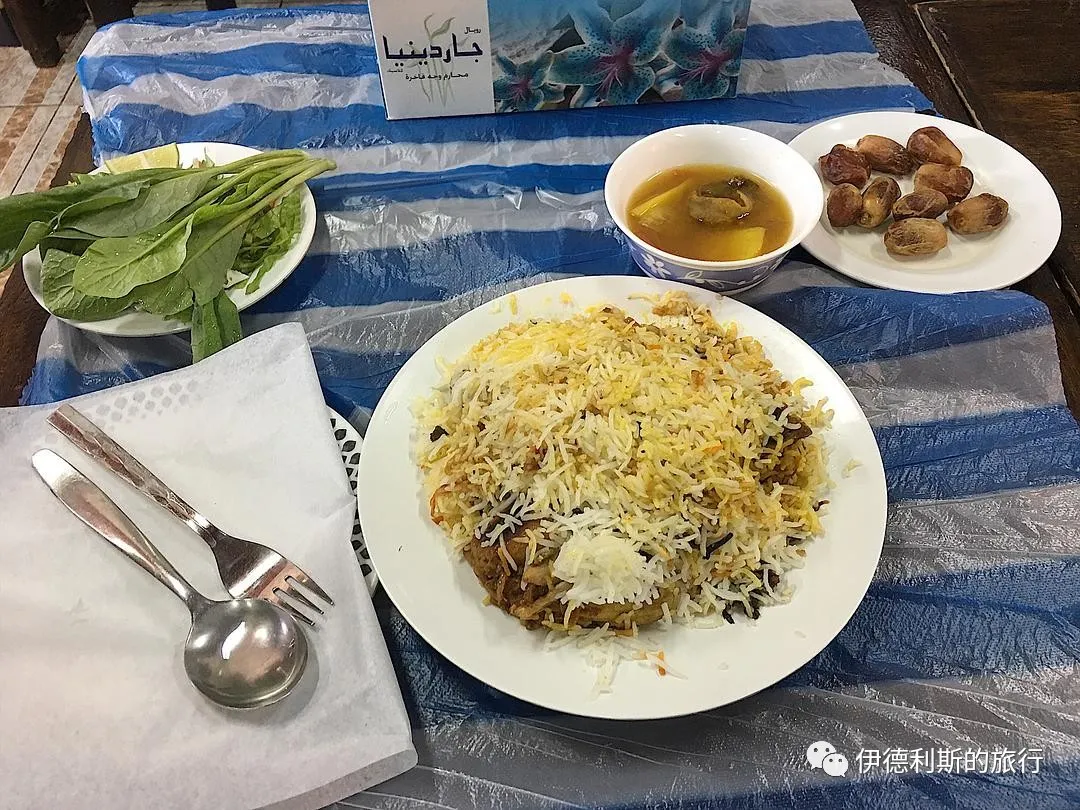
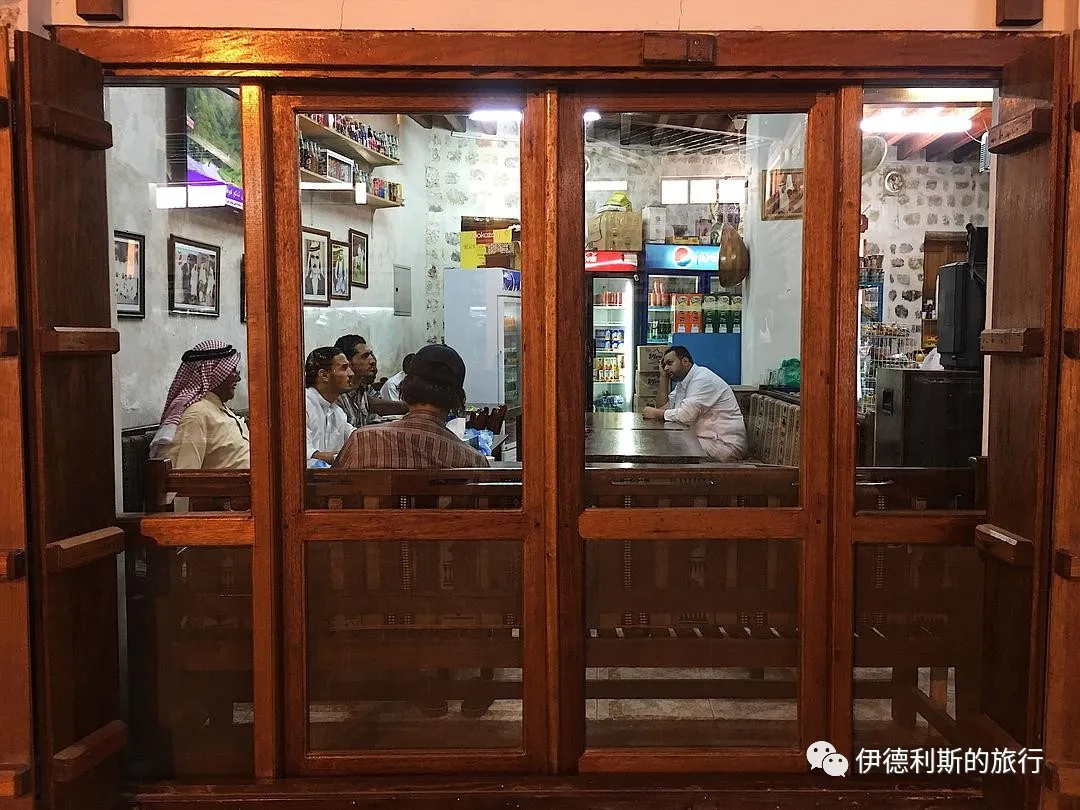
There is a traditional Arabic coffee shop inside the bazaar. I drank strong, herbal-tasting Arabic coffee paired with light dates and ate some chicken rice. Surrounded by people in traditional clothing, the atmosphere felt wonderful.
Nimrah Iranian cafe in Hyderabad, India.
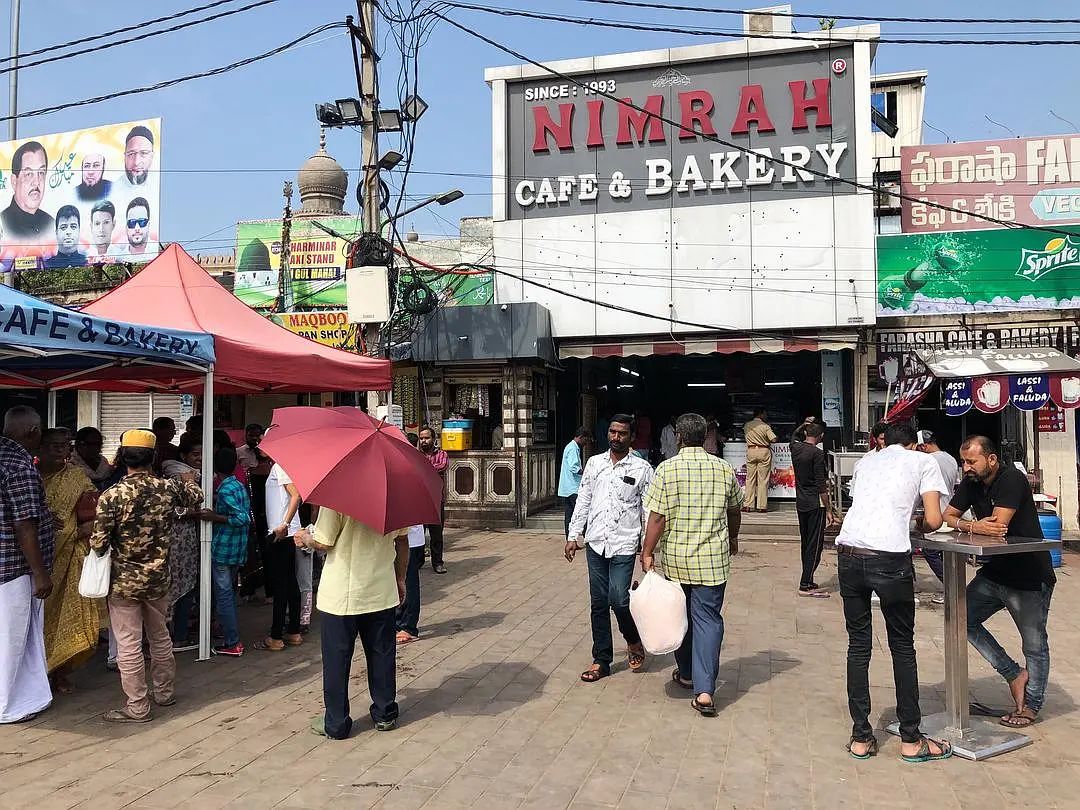
Hyderabad means City of Lions and is a bustling ancient capital on the Deccan Plateau in South India. From 1364 to 1948, this area was ruled by Muslims for nearly six hundred years and served as the capital for both the Qutb Shahi and Asaf Jahi dynasties.
Hyderabad is now the most important center of Muslim culture in South India. Thirty percent of the city's population is Muslim, and most live in the Old City. They have a unique culture that is different from other parts of India, and they take pride in their language, literature, poetry, architecture, and food.
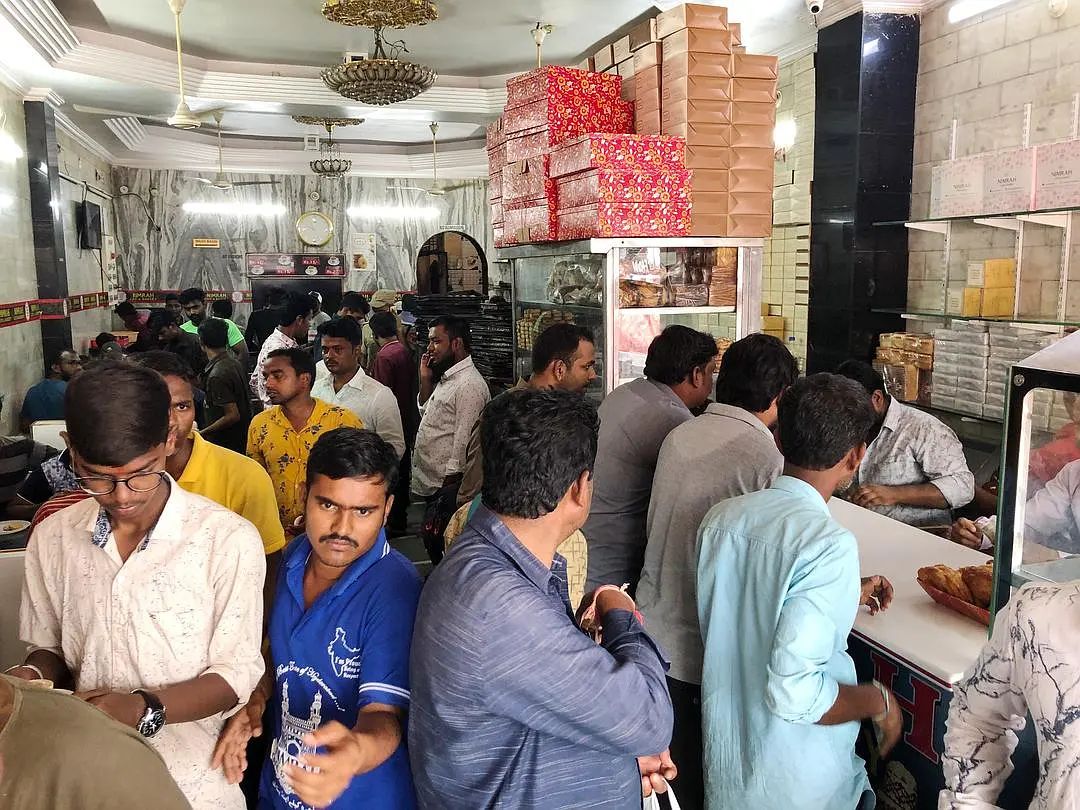
In the morning, I had a classic Hyderabad breakfast at Nimrah, an Iranian café next to the Charminar gate in the center of the Old City. I had Iranian tea (Irani chai) with Osmania biscuits and some other specialty cakes.
Iranian cafés in South Asia were first brought by Zoroastrians who fled religious persecution in Iran and moved to British India in the 20th century. They became popular in places like Hyderabad and Mumbai in India, and Karachi in Pakistan, with Iranian tea (Irani chai) being the most famous item.
Osmania biscuits are buttery cookies unique to Hyderabad. They were created at the request of Mir Osman Ali Khan, the last ruler of the Hyderabad Nizam dynasty who reigned from 1911 to 1948, and they are named after him.
Today, Osmania biscuits have become a cultural symbol of Hyderabad. Many Indians who visit the city buy these biscuits to take home. The most authentic Osmania biscuits are sold in the Old City area of Hyderabad.
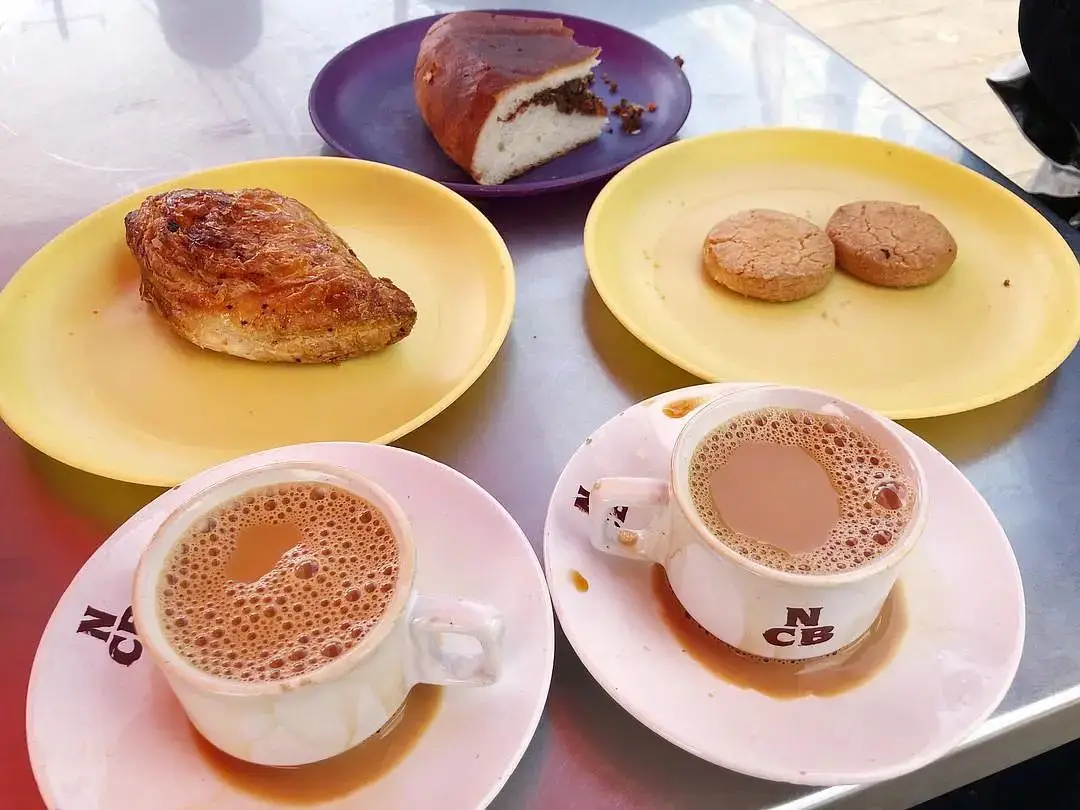
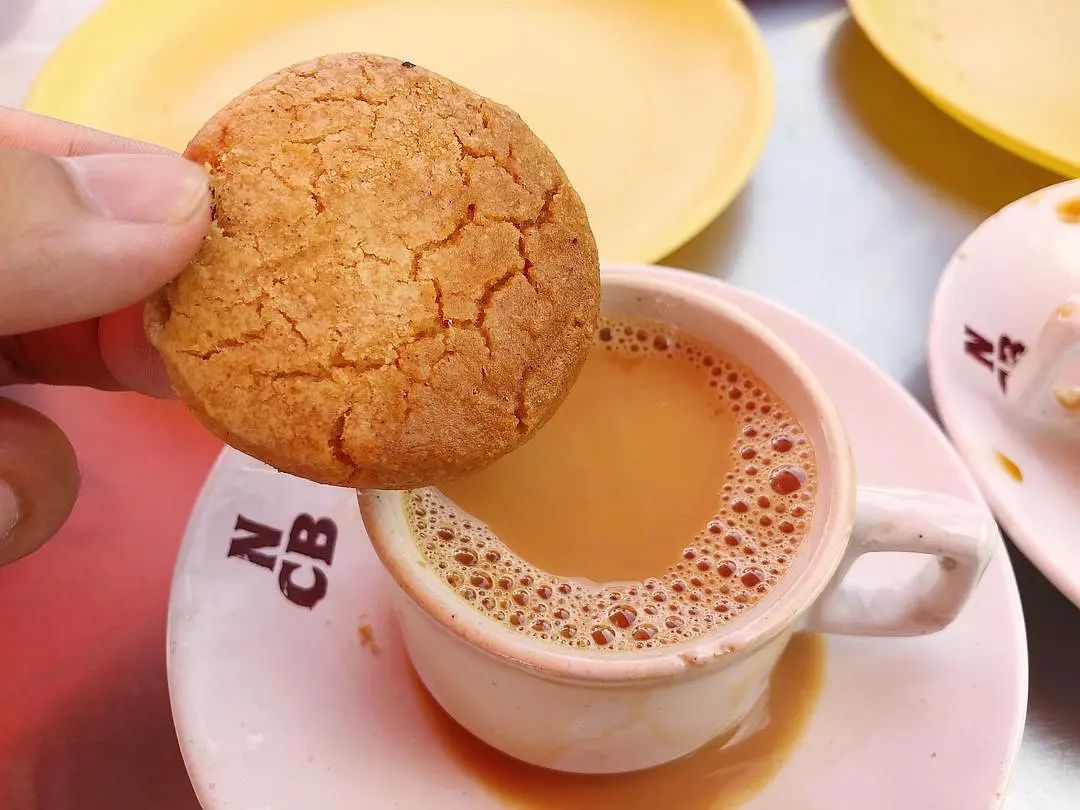
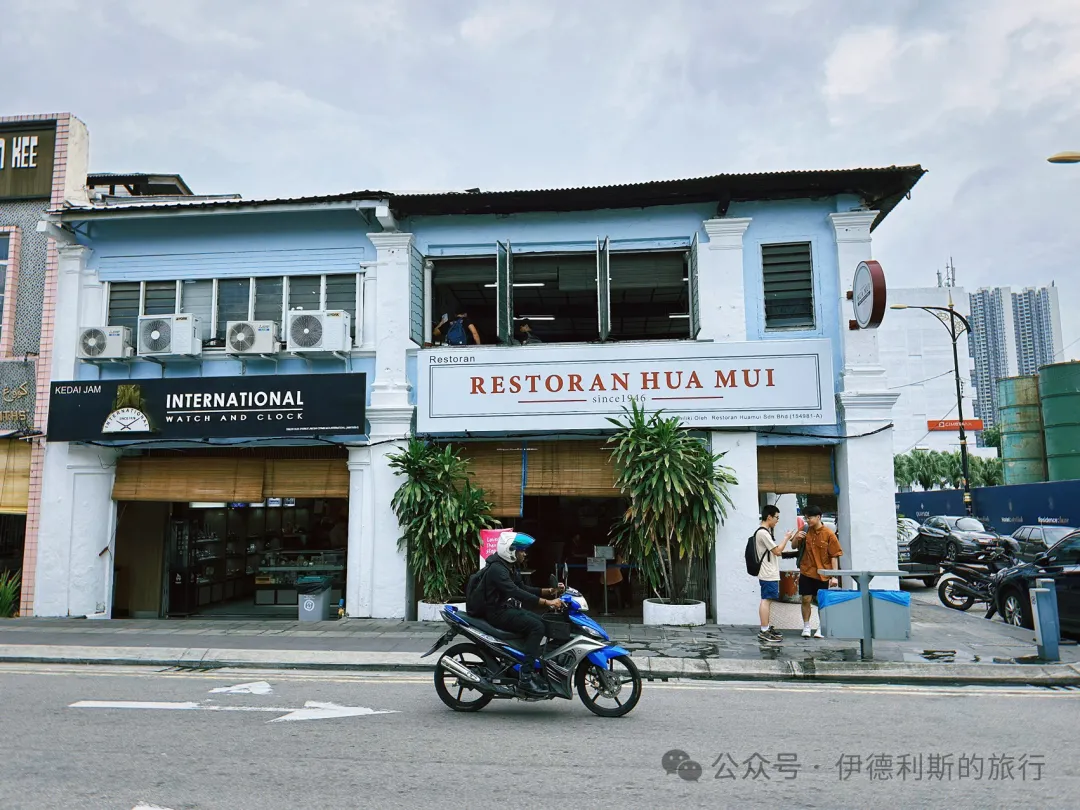
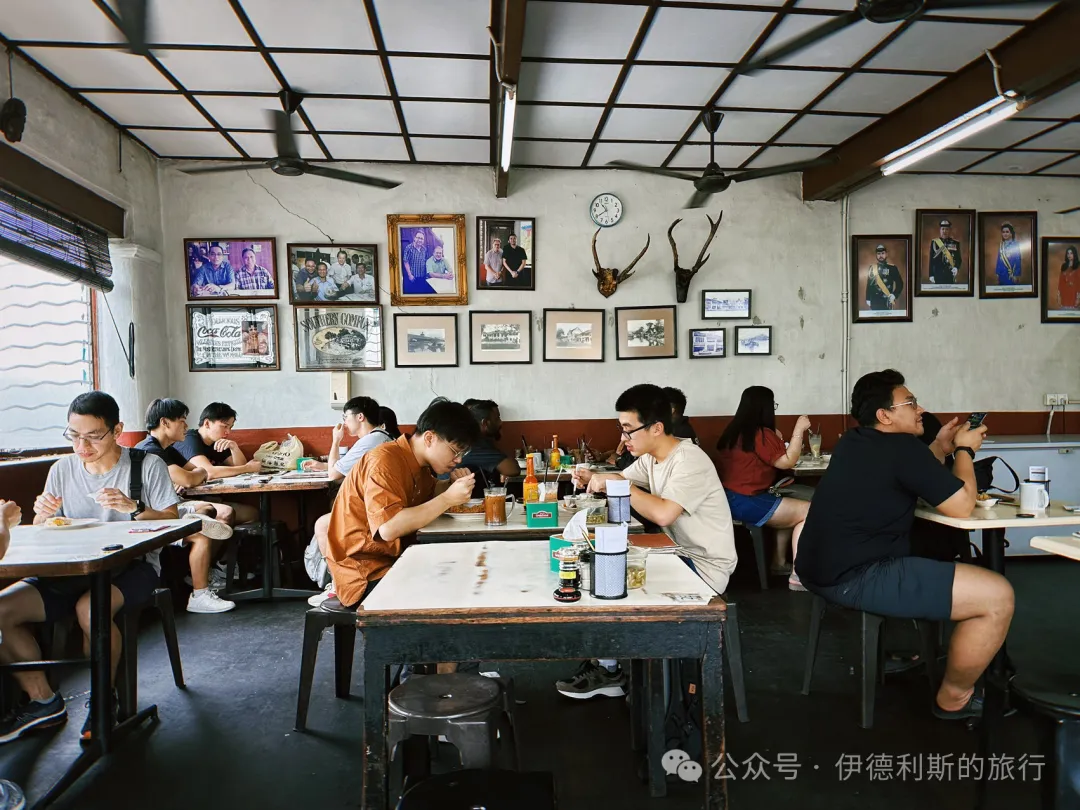
Hua Mei Hainanese cafe (Hua Mei Cha Can Shi) in Johor Bahru, Malaysia.
As early as 1844, Temenggong Ibrahim of Johor encouraged Chinese and Javanese people to go to the Malay fishing village of Tanjung Puteri in southern Johor to open ports and clear the land. Chinese immigrants grew sugarcane and pepper here, while Javanese people dug canals, built roads, and planted coconuts. In 1866, this place was officially named Johor Bahru, known in Chinese as Xinshan.
The Hainanese coffee shop (Hailam Kopitiam) Hua Mei has been open since 1946, making it 78 years old and the oldest Hainanese coffee shop in Johor Bahru. Like many old-school Hainanese coffee shops in Malaysia, the owners are Hainanese Chinese, but they hire Malay cooks and staff so that Chinese, Malay, and Indian customers can all enjoy the food.
Hainanese people began immigrating to Malaysia in the 19th century. Many early immigrants worked as cooks and waiters in British hotels and restaurants, while some worked as servants for British officers. Influenced by their British employers, the Hainanese learned to cook Western food and blended it with Hainanese culinary elements to create the unique Hainanese coffee shop (Hailam Kopitiam) culture.
The word Kopitiam combines the Malay word kopi (coffee) and the Hokkien word tiam (shop), specializing in charcoal-grilled toast, white coffee, and soft-boiled eggs. Early Hainanese coffee shops were very popular with the British. Today, they serve as important social hubs where older people gather to discuss news and daily life.
At Hua Mei, we ordered the lamb claypot rice, Hainanese noodles, coffee and tea mix (cham), and a breakfast platter. The coffee and tea mix is just coffee, tea, and milk. The restaurant still has a very traditional feel, set in a classic two-story shophouse with bamboo blinds hanging on the doors and windows, which easily brings to mind the old days.
Nyonya Dynasty Peranakan cafe in Johor Bahru, Malaysia.
On Jalan Dhoby, a street with century-old shophouses in the old town of Johor Bahru, sits Nyonya Dynasty, the first Nyonya cafe in Johor, Malaysia, to receive halal certification. The owners, Lu Xucheng and Li Baoshan, originally ran a travel agency. When their business was hit hard in early 2020, they decided to turn part of the office space into a Nyonya cafe. The two owners specifically learned the craft from an authentic Nyonya chef in Malacca and invited him to the shop every week to supervise until the dishes were consistent. Because customers loved the Nyonya food so much, they moved the shop to Jalan Dhoby in the old town of Johor Bahru in 2022 and officially named it Nyonya Dynasty.
Besides coffee, we ordered their signature Nyonya trio, which includes Nyonya clam rice noodles (lala mifen), fried shrimp wontons (zha yuntun xia), and shrimp paste chicken wings (xiajiang jichi). We also ordered grilled Nyonya fish (Nyonya shaoyu), Nyonya okra (Nyonya yangjiaodou), and shaved ice dessert (chendol). Lala means clams. They buy fresh clams every morning, tap each one to remove the sand, and then simmer them for three hours to make a rich broth, adding bird's eye chili, green onions, and garlic. The grilled fish and okra are both topped with a signature Nyonya tamarind sauce (Asam), which gives them a unique sour and spicy flavor. Their shaved ice dessert (chendol) follows the owner's mother's family recipe. The palm sugar is simmered for two or three hours, and they use freshly squeezed coconut milk, making the texture very rich.
Yue Lai Hainanese coffee shop (Yue Lai Cha Shi) in Kuala Kangsar, Malaysia.
Kuala Kangsar has been the royal city of the Sultan of Perak since the 18th century. The town center still keeps an old street with arcade buildings (qilou), where you can find a traditional Hainanese coffee shop called Yut Loy Coffee Shop. Like many Hainanese coffee shops in old Malaysian towns, the Hainanese owner hires Malay staff here. This allows Chinese, Malay, and Indian customers to all dine in the shop together.
Since Yut Loy Coffee Shop only serves main meals after 1:00 PM, we had coffee with toast, honey, and butter in the shop during the morning. I used to read novels about Southeast Asia where old people would sit in Hainan-style coffee shops like this for the whole morning with just a cup of coffee, a piece of toast, and a newspaper. This time, we got to experience it ourselves.
Irani cafés
Summary: 15 Traditional Cafes Around the World - Coffeehouses, History and Local Life is presented as a clear English travel account for readers interested in Muslim life, halal food, architecture, and local history. The article keeps the original names, food details, photographs, and cultural context while focusing on Traditional Cafes, Coffee Culture, Travel History.
Mola Közde Kahveci cafe in Istanbul, Turkey.
Harire Mardin Kurdish cafe in Mardin, Turkey.
SaSa Bosnian cafe in the Old Town of Sarajevo, Bosnia and Herzegovina.
Andar Caffe Bar Bosnian cafe in the Old Town of Sarajevo, Bosnia and Herzegovina.
Younes, a legendary cafe in Beirut, Lebanon.
Bab Al Saray Cafe in the Old City of Sidon, Lebanon.
Bay Rock Cafe, a popular sunset spot in Beirut, Lebanon.
Street coffee in the Old City of Tripoli, Lebanon.
Haret Al-Sham Arabic cafe in the old city of Jeddah, Saudi Arabia.
Khan Shaheen cafe in the old city of Cairo, Egypt.
Bedouin cafe in the old city of Sharjah, United Arab Emirates.
Nimrah Iranian cafe in Hyderabad, India.
Hua Mei Hainanese cafe (Hua Mei Cha Can Shi) in Johor Bahru, Malaysia.
Nyonya Dynasty Peranakan cafe in Johor Bahru, Malaysia.
Yue Lai Hainanese coffee shop (Yue Lai Cha Shi) in Kuala Kangsar, Malaysia.
Mola Közde Kahveci cafe in Istanbul, Turkey.
Kadikoy is in the Asian side of Istanbul and has a very long history. Greeks built the first settlement on the Bosphorus here in 667 BC, a few years before Byzantium on the opposite shore. The Ottoman dynasty began ruling here in 1353, exactly 100 years before they conquered Constantinople in 1453. Under Ottoman rule, this place was a transport hub for crossing the Bosphorus, so it slowly grew into a busy town.
Today, it is a hangout spot for young people with several pedestrian shopping streets filled with cafes, restaurants, shops, craft stores, and bookstores. Although it lacks a wild nightlife and crowded tourist spots, life here is much more comfortable and relaxed.
People in Istanbul really love coffee. When we came back to the cafe downstairs from our place at midnight, it was full of people, and when we left at six in the morning, people were still drinking coffee. Charcoal-roasted Turkish coffee is delicious. It comes with a glass of water and a piece of chocolate, which is very refreshing.
Harire Mardin Kurdish cafe in Mardin, Turkey.
Mardin sits in the Upper Mesopotamia region, upstream of the Tigris and Euphrates rivers. The entire old city is built on the southern slope of a mountain ridge. A thousand-year-old castle stands on the cliff at the very top, with the stone city built in tiers below it. Because of this, you can look out over the Mesopotamian plains from any terrace in the old city, and the view is spectacular.
The ancient city of Mardin has a very long history. It was called Merida, meaning castle, during the Roman period. It became part of the Arab Empire in 640 and was later ruled in turn by several tribal dynasties of Mesopotamia. After 1085, Mardin was ruled successively by the Seljuk Empire, the Artuqid dynasty, and the Kara Koyunlu, all established by Oghuz Turkic tribes. It was finally incorporated into the Ottoman Empire in 1517. Five hundred years ago, many Armenians and Jews lived in the old city of Mardin. Today, it is mainly home to Kurds and Arabs, along with a significant number of Assyrian Christians, making the culture very diverse.
Harire Mardin is a cafe in Mardin with a very local feel. Local Mardin coffee is stronger than Turkish coffee. It contains orchid root powder (salep) and carob powder (carob), and the local Kurds and Assyrians both enjoy drinking it this way. Tabbaka is a yellow rice pudding invented by the Assyrians. Harire is a brown pudding made from local Mazruna grapes, and we finished by drinking purple basil sherbet (Reyhan Sherbet).
A Bosniak cafe in the old town of Sarajevo, Bosnia and Herzegovina.
S
aSa
Bosniaks (Bošnjaci) are a Slavic-speaking Muslim ethnic group living in the Bosnia region of the Balkan Peninsula. They migrated to Bosnia from northeastern Europe as early as the 6th century and were under Ottoman rule for over four hundred years from 1463 to 1878, which strongly influenced their cultural customs.
We drank traditional Bosnian coffee (Bosanska Kahva) at the Grand Bazaar in the old town of Sarajevo. Coffee was first introduced to the Balkan Peninsula under Ottoman rule by Arabs in the 16th century. Sarajevo was one of the first European cities to open cafes, over a hundred years before cities in Western Europe started drinking coffee.
Cafes were an important part of Ottoman culture. People could listen to the day's main news, discuss daily gossip, and watch various impromptu performances like shadow puppetry. Cafes give people a place to share ideas outside of work and worship, and they are great spots to meet like-minded friends.
Bosnian coffee is made by grinding roasted coffee beans into a fine powder and brewing them in a long-handled copper pot called a Džezva (known as Cezve in Turkish), just like Turkish coffee. However, while Turkish coffee can be brewed with cold water, Bosnian coffee must be brewed with boiling water. You can add sugar to Turkish coffee while it brews, but you cannot add sugar to Bosnian coffee. Turkish coffee is poured into a cup for the customer, but Bosnian coffee is served by bringing the copper pot and the cup to the customer on a tray so they can pour it themselves.
A classic Bosnian coffee set includes the copper pot, a porcelain cup with a copper base, a copper tray, a copper sugar bowl for sugar cubes, and Turkish delight (rahat lokum). To drink it, bite off a piece of a sugar cube and hold it under your tongue to let it melt before you take a sip of coffee. Bosnian Turkish delight (rahat lokum) comes from the Turkish version (lokum). The yellow pieces are made with vanilla and the red ones are made with rose petals, and you can eat them whenever you like while drinking your coffee.
Andar Caffe Bar Bosnian cafe in the Old Town of Sarajevo, Bosnia and Herzegovina.
At Andar Caffe Bar in the old town of Sarajevo, the owner Maida's grandfather, Muharem, opened a handmade shoe shop in the Sarajevo Old Bazaar in 1933, which was later taken over by Maida's father, Osman. After Osman retired in 2010, Maida took over the shop, but handmade shoes were no longer popular as people started buying shoes in stores, so Maida turned the shop into the current cafe while keeping many shoe-themed elements inside.
Younes, a legendary cafe in Beirut, Lebanon.
Hamra is a busy and trendy neighborhood in Beirut near the American University, filled with young people and long known as the cultural center of Beirut. The environment here is relatively nice, making it a good place for shopping in Beirut.
The founder of Younes Cafe, Amin Younes Sr., immigrated to Brazil in 1894 and worked on a Brazilian coffee tycoon's plantation for 20 years. In 1935, Amin returned to Lebanon and opened Younes Cafe in downtown Beirut. During World War II, the collapse of the Lebanese currency wiped out most of Amin's savings, but he still managed to pull through. In 1960, Amin's son Souheil joined the family business and helped his father open the first branch of Younes Coffee in the Hamra district. It was one of the first coffee shops in Lebanon to buy an espresso machine. The main Younes shop in downtown Beirut was destroyed during the Lebanese Civil War in 1975, leaving only the Hamra branch standing.
Abou Anwar worked at Younes Coffee for 60 years starting in 1954. He was the shop's most senior coffee roasting master, and his expert skills drew in a large group of loyal customers. The coffee I ordered is named after him, the Abou Anwar Blend, which mixes his favorite fruits and spices.
Bab Al Saray Cafe in the Old City of Sidon, Lebanon.
The ancient city of Sidon is 40 kilometers south of the Lebanese capital, Beirut, and is the third-largest city in Lebanon. Sidon has a history of over 6,000 years, making it one of the oldest cities in the world. It played a major role in Mediterranean trade. The ancient city of Sidon is a well-preserved Sunni Muslim old town on the eastern Mediterranean coast. When you enter the maze-like streets from the north gate, you see many houses built over the streets to form tunnels. People set up stalls inside these tunnels, selling all kinds of goods and creating a very lively atmosphere.
We had mint lemonade and coffee at Bab Al Saray Cafe inside the old city. This is one of the oldest cafes in Sidon, and people say their brunch is very authentic.
Bay Rock Cafe, a popular sunset spot in Beirut, Lebanon.
In Beirut, you have to visit the famous Pigeon Rocks to watch the sunset. I want to mention that we met several very kind people in Beirut. First, a Palestinian refugee grandmother offered us grapes. On the way to Pigeon Rocks, we met a fellow Muslim (dosti) who kindly showed us the way. The dosti took us on a bus first to help us find the stop where we could catch the bus to Pigeon Rocks. Lebanese buses do not have signs, so you can just wave them down anywhere along the road. The dosti seemed more anxious than we were while waiting for the bus. He finally put us on the bus and waved goodbye without asking for a single cent. This friend (dosti) is completely different from the tricycle driver who kept trying to overcharge us on the way to the ancient city of Anjar.
There is a row of cafes next to Pigeon Rocks, from Bay Rock Cafe in the far south to Starbucks in the far north, all of which are classic spots to watch the sunset. Although many people post about this place online, it is actually not very crowded in the cafes, and it is still very relaxing. We ordered two juices and a plate of salad at Bay Rock Cafe and spent a romantic and wonderful evening.
Street coffee in the Old City of Tripoli, Lebanon.
Tripoli is located in northern Lebanon and has been an important port on the eastern Mediterranean coast for thousands of years. The market in the old city of Tripoli is very lively, which is a sharp contrast to Beirut. Ibn Battuta wrote in his travelogue: 'Afterwards, we arrived at the city of Tripoli.' That was an important town in Sham, with several small rivers flowing through it. It is surrounded by fragrant orchards and lush green trees. The sea surrounds it with blue water, and the land nourishes it with its treasures. The markets are filled with an amazing variety of goods.
We drank street coffee in the market and saw all kinds of dairy products, which was very interesting.
Haret Al-Sham Arabic cafe in the old city of Jeddah, Saudi Arabia.
Jeddah is located in the Hejaz region on the east coast of the Red Sea. In 647 AD, Caliph Uthman ordered it to be built as a port for travel to Mecca, and since then, Jeddah has become an important gateway for the Hajj by sea.
The Old Town of Jeddah is the last city along the Red Sea to preserve its traditional urban layout, consisting of tall tower houses, coral stone houses, traditional mosques, open-air markets (souqs), cafes, and small public squares. Traditional buildings like these were once common along the Red Sea coast, but after the 20th century, modernization left only a few standing. They serve as important witnesses to the Indian Ocean trade routes from the 16th to the early 20th century. Because of this, the Old Town of Jeddah was added to the UNESCO World Heritage list in 2014.
We visited a traditional coffee shop in the old city of Jeddah. The shop is small but decorated beautifully with many traditional Hejazi elements, making it a great spot for photos. We ordered traditional coffee and dates dipped in tahini (sesame paste) to experience the lifestyle of old Jeddah.
Khan Shaheen cafe in the old city of Cairo, Egypt.
As a cultural capital with over a thousand years of history and hundreds of historical sites, Old Cairo was added to the UNESCO World Heritage list back in 1979. The current Old Cairo was built in 969 by the Fatimid dynasty. Over the next thousand years, it saw the Ayyubid, Mamluk, Ottoman, and Muhammad Ali dynasties, leaving behind hundreds of historical buildings.
As dawn breaks, the old city wakes up to the sound of the adhan. Roosters crow, dogs bark, and people get up for namaz. Breakfast shops set out their tables and chairs to open. This is how a day in the old city of Cairo begins.
After the dawn prayer, people often rest for a while. Most ticketed attractions in the old city open after nine o'clock. The old city is very quiet at this time, making it perfect for wandering through empty streets and feeling the weight of a thousand years of history. After breakfast, some shops turn into tea houses or cafes where people chat and let time slowly drift by.
We went to Khan Shaheen Cafe on the main Al-Mu'izz street in old Cairo, which is housed inside a historic caravanserai. We had coffee inside; the service charge was a bit high, but the atmosphere was really nice.
Bedouin cafe in the old city of Sharjah, United Arab Emirates.
The Al Qasimi family of the Huwayla tribe began ruling Sharjah in the early 18th century and officially declared independence in 1727. They built trade routes across the Strait of Hormuz connecting the Arabian Peninsula with Persia, which played an important role in exchanges between the two regions.
Throughout the 19th and early 20th centuries, Sharjah was a major pearl trading port in the Gulf. In 1830, the British counted three to four hundred pearl boats in Sharjah, and many of the city's 19th-century historical buildings are linked to the pearl trade.
Al Arsa Souq is the oldest surviving bazaar in Sharjah. It started as an open-air market where Bedouins brought camels to trade, and was later built into its current structure using coral stone and palm trees. I visited during the lunch break, and it was very quiet.
There is a traditional Arabic coffee shop inside the bazaar. I drank strong, herbal-tasting Arabic coffee paired with light dates and ate some chicken rice. Surrounded by people in traditional clothing, the atmosphere felt wonderful.
Nimrah Iranian cafe in Hyderabad, India.
Hyderabad means City of Lions and is a bustling ancient capital on the Deccan Plateau in South India. From 1364 to 1948, this area was ruled by Muslims for nearly six hundred years and served as the capital for both the Qutb Shahi and Asaf Jahi dynasties.
Hyderabad is now the most important center of Muslim culture in South India. Thirty percent of the city's population is Muslim, and most live in the Old City. They have a unique culture that is different from other parts of India, and they take pride in their language, literature, poetry, architecture, and food.
In the morning, I had a classic Hyderabad breakfast at Nimrah, an Iranian café next to the Charminar gate in the center of the Old City. I had Iranian tea (Irani chai) with Osmania biscuits and some other specialty cakes.
Iranian cafés in South Asia were first brought by Zoroastrians who fled religious persecution in Iran and moved to British India in the 20th century. They became popular in places like Hyderabad and Mumbai in India, and Karachi in Pakistan, with Iranian tea (Irani chai) being the most famous item.
Osmania biscuits are buttery cookies unique to Hyderabad. They were created at the request of Mir Osman Ali Khan, the last ruler of the Hyderabad Nizam dynasty who reigned from 1911 to 1948, and they are named after him.
Today, Osmania biscuits have become a cultural symbol of Hyderabad. Many Indians who visit the city buy these biscuits to take home. The most authentic Osmania biscuits are sold in the Old City area of Hyderabad.
Hua Mei Hainanese cafe (Hua Mei Cha Can Shi) in Johor Bahru, Malaysia.
As early as 1844, Temenggong Ibrahim of Johor encouraged Chinese and Javanese people to go to the Malay fishing village of Tanjung Puteri in southern Johor to open ports and clear the land. Chinese immigrants grew sugarcane and pepper here, while Javanese people dug canals, built roads, and planted coconuts. In 1866, this place was officially named Johor Bahru, known in Chinese as Xinshan.
The Hainanese coffee shop (Hailam Kopitiam) Hua Mei has been open since 1946, making it 78 years old and the oldest Hainanese coffee shop in Johor Bahru. Like many old-school Hainanese coffee shops in Malaysia, the owners are Hainanese Chinese, but they hire Malay cooks and staff so that Chinese, Malay, and Indian customers can all enjoy the food.
Hainanese people began immigrating to Malaysia in the 19th century. Many early immigrants worked as cooks and waiters in British hotels and restaurants, while some worked as servants for British officers. Influenced by their British employers, the Hainanese learned to cook Western food and blended it with Hainanese culinary elements to create the unique Hainanese coffee shop (Hailam Kopitiam) culture.
The word Kopitiam combines the Malay word kopi (coffee) and the Hokkien word tiam (shop), specializing in charcoal-grilled toast, white coffee, and soft-boiled eggs. Early Hainanese coffee shops were very popular with the British. Today, they serve as important social hubs where older people gather to discuss news and daily life.
At Hua Mei, we ordered the lamb claypot rice, Hainanese noodles, coffee and tea mix (cham), and a breakfast platter. The coffee and tea mix is just coffee, tea, and milk. The restaurant still has a very traditional feel, set in a classic two-story shophouse with bamboo blinds hanging on the doors and windows, which easily brings to mind the old days.
Nyonya Dynasty Peranakan cafe in Johor Bahru, Malaysia.
On Jalan Dhoby, a street with century-old shophouses in the old town of Johor Bahru, sits Nyonya Dynasty, the first Nyonya cafe in Johor, Malaysia, to receive halal certification. The owners, Lu Xucheng and Li Baoshan, originally ran a travel agency. When their business was hit hard in early 2020, they decided to turn part of the office space into a Nyonya cafe. The two owners specifically learned the craft from an authentic Nyonya chef in Malacca and invited him to the shop every week to supervise until the dishes were consistent. Because customers loved the Nyonya food so much, they moved the shop to Jalan Dhoby in the old town of Johor Bahru in 2022 and officially named it Nyonya Dynasty.
Besides coffee, we ordered their signature Nyonya trio, which includes Nyonya clam rice noodles (lala mifen), fried shrimp wontons (zha yuntun xia), and shrimp paste chicken wings (xiajiang jichi). We also ordered grilled Nyonya fish (Nyonya shaoyu), Nyonya okra (Nyonya yangjiaodou), and shaved ice dessert (chendol). Lala means clams. They buy fresh clams every morning, tap each one to remove the sand, and then simmer them for three hours to make a rich broth, adding bird's eye chili, green onions, and garlic. The grilled fish and okra are both topped with a signature Nyonya tamarind sauce (Asam), which gives them a unique sour and spicy flavor. Their shaved ice dessert (chendol) follows the owner's mother's family recipe. The palm sugar is simmered for two or three hours, and they use freshly squeezed coconut milk, making the texture very rich.
Yue Lai Hainanese coffee shop (Yue Lai Cha Shi) in Kuala Kangsar, Malaysia.
Kuala Kangsar has been the royal city of the Sultan of Perak since the 18th century. The town center still keeps an old street with arcade buildings (qilou), where you can find a traditional Hainanese coffee shop called Yut Loy Coffee Shop. Like many Hainanese coffee shops in old Malaysian towns, the Hainanese owner hires Malay staff here. This allows Chinese, Malay, and Indian customers to all dine in the shop together.
Since Yut Loy Coffee Shop only serves main meals after 1:00 PM, we had coffee with toast, honey, and butter in the shop during the morning. I used to read novels about Southeast Asia where old people would sit in Hainan-style coffee shops like this for the whole morning with just a cup of coffee, a piece of toast, and a newspaper. This time, we got to experience it ourselves.
Irani cafés
Travel Culture Guide: 15 Traditional Cafes Around the World - Coffeehouses, History and Local Life
Articles • ali2007fr posted the article • 0 comments • 143 views • 2026-05-19 21:35
Reposted from the web
Summary: 15 Traditional Cafes Around the World - Coffeehouses, History and Local Life is presented as a clear English travel account for readers interested in Muslim life, halal food, architecture, and local history. The article keeps the original names, food details, photographs, and cultural context while focusing on Traditional Cafes, Coffee Culture, Travel History.
Mola Közde Kahveci cafe in Istanbul, Turkey.
Harire Mardin Kurdish cafe in Mardin, Turkey.
SaSa Bosnian cafe in the Old Town of Sarajevo, Bosnia and Herzegovina.
Andar Caffe Bar Bosnian cafe in the Old Town of Sarajevo, Bosnia and Herzegovina.
Younes, a legendary cafe in Beirut, Lebanon.
Bab Al Saray Cafe in the Old City of Sidon, Lebanon.
Bay Rock Cafe, a popular sunset spot in Beirut, Lebanon.
Street coffee in the Old City of Tripoli, Lebanon.
Haret Al-Sham Arabic cafe in the old city of Jeddah, Saudi Arabia.
Khan Shaheen cafe in the old city of Cairo, Egypt.
Bedouin cafe in the old city of Sharjah, United Arab Emirates.
Nimrah Iranian cafe in Hyderabad, India.
Hua Mei Hainanese cafe (Hua Mei Cha Can Shi) in Johor Bahru, Malaysia.
Nyonya Dynasty Peranakan cafe in Johor Bahru, Malaysia.
Yue Lai Hainanese coffee shop (Yue Lai Cha Shi) in Kuala Kangsar, Malaysia.
Mola Közde Kahveci cafe in Istanbul, Turkey.
Kadikoy is in the Asian side of Istanbul and has a very long history. Greeks built the first settlement on the Bosphorus here in 667 BC, a few years before Byzantium on the opposite shore. The Ottoman dynasty began ruling here in 1353, exactly 100 years before they conquered Constantinople in 1453. Under Ottoman rule, this place was a transport hub for crossing the Bosphorus, so it slowly grew into a busy town.
Today, it is a hangout spot for young people with several pedestrian shopping streets filled with cafes, restaurants, shops, craft stores, and bookstores. Although it lacks a wild nightlife and crowded tourist spots, life here is much more comfortable and relaxed.
People in Istanbul really love coffee. When we came back to the cafe downstairs from our place at midnight, it was full of people, and when we left at six in the morning, people were still drinking coffee. Charcoal-roasted Turkish coffee is delicious. It comes with a glass of water and a piece of chocolate, which is very refreshing.
Harire Mardin Kurdish cafe in Mardin, Turkey.
Mardin sits in the Upper Mesopotamia region, upstream of the Tigris and Euphrates rivers. The entire old city is built on the southern slope of a mountain ridge. A thousand-year-old castle stands on the cliff at the very top, with the stone city built in tiers below it. Because of this, you can look out over the Mesopotamian plains from any terrace in the old city, and the view is spectacular.
The ancient city of Mardin has a very long history. It was called Merida, meaning castle, during the Roman period. It became part of the Arab Empire in 640 and was later ruled in turn by several tribal dynasties of Mesopotamia. After 1085, Mardin was ruled successively by the Seljuk Empire, the Artuqid dynasty, and the Kara Koyunlu, all established by Oghuz Turkic tribes. It was finally incorporated into the Ottoman Empire in 1517. Five hundred years ago, many Armenians and Jews lived in the old city of Mardin. Today, it is mainly home to Kurds and Arabs, along with a significant number of Assyrian Christians, making the culture very diverse.
Harire Mardin is a cafe in Mardin with a very local feel. Local Mardin coffee is stronger than Turkish coffee. It contains orchid root powder (salep) and carob powder (carob), and the local Kurds and Assyrians both enjoy drinking it this way. Tabbaka is a yellow rice pudding invented by the Assyrians. Harire is a brown pudding made from local Mazruna grapes, and we finished by drinking purple basil sherbet (Reyhan Sherbet).
A Bosniak cafe in the old town of Sarajevo, Bosnia and Herzegovina.
S
aSa
Bosniaks (Bošnjaci) are a Slavic-speaking Muslim ethnic group living in the Bosnia region of the Balkan Peninsula. They migrated to Bosnia from northeastern Europe as early as the 6th century and were under Ottoman rule for over four hundred years from 1463 to 1878, which strongly influenced their cultural customs.
We drank traditional Bosnian coffee (Bosanska Kahva) at the Grand Bazaar in the old town of Sarajevo. Coffee was first introduced to the Balkan Peninsula under Ottoman rule by Arabs in the 16th century. Sarajevo was one of the first European cities to open cafes, over a hundred years before cities in Western Europe started drinking coffee.
Cafes were an important part of Ottoman culture. People could listen to the day's main news, discuss daily gossip, and watch various impromptu performances like shadow puppetry. Cafes give people a place to share ideas outside of work and worship, and they are great spots to meet like-minded friends.
Bosnian coffee is made by grinding roasted coffee beans into a fine powder and brewing them in a long-handled copper pot called a Džezva (known as Cezve in Turkish), just like Turkish coffee. However, while Turkish coffee can be brewed with cold water, Bosnian coffee must be brewed with boiling water. You can add sugar to Turkish coffee while it brews, but you cannot add sugar to Bosnian coffee. Turkish coffee is poured into a cup for the customer, but Bosnian coffee is served by bringing the copper pot and the cup to the customer on a tray so they can pour it themselves.
A classic Bosnian coffee set includes the copper pot, a porcelain cup with a copper base, a copper tray, a copper sugar bowl for sugar cubes, and Turkish delight (rahat lokum). To drink it, bite off a piece of a sugar cube and hold it under your tongue to let it melt before you take a sip of coffee. Bosnian Turkish delight (rahat lokum) comes from the Turkish version (lokum). The yellow pieces are made with vanilla and the red ones are made with rose petals, and you can eat them whenever you like while drinking your coffee.
Andar Caffe Bar Bosnian cafe in the Old Town of Sarajevo, Bosnia and Herzegovina.
At Andar Caffe Bar in the old town of Sarajevo, the owner Maida's grandfather, Muharem, opened a handmade shoe shop in the Sarajevo Old Bazaar in 1933, which was later taken over by Maida's father, Osman. After Osman retired in 2010, Maida took over the shop, but handmade shoes were no longer popular as people started buying shoes in stores, so Maida turned the shop into the current cafe while keeping many shoe-themed elements inside.
Younes, a legendary cafe in Beirut, Lebanon.
Hamra is a busy and trendy neighborhood in Beirut near the American University, filled with young people and long known as the cultural center of Beirut. The environment here is relatively nice, making it a good place for shopping in Beirut.
The founder of Younes Cafe, Amin Younes Sr., immigrated to Brazil in 1894 and worked on a Brazilian coffee tycoon's plantation for 20 years. In 1935, Amin returned to Lebanon and opened Younes Cafe in downtown Beirut. During World War II, the collapse of the Lebanese currency wiped out most of Amin's savings, but he still managed to pull through. In 1960, Amin's son Souheil joined the family business and helped his father open the first branch of Younes Coffee in the Hamra district. It was one of the first coffee shops in Lebanon to buy an espresso machine. The main Younes shop in downtown Beirut was destroyed during the Lebanese Civil War in 1975, leaving only the Hamra branch standing.
Abou Anwar worked at Younes Coffee for 60 years starting in 1954. He was the shop's most senior coffee roasting master, and his expert skills drew in a large group of loyal customers. The coffee I ordered is named after him, the Abou Anwar Blend, which mixes his favorite fruits and spices.
Bab Al Saray Cafe in the Old City of Sidon, Lebanon.
The ancient city of Sidon is 40 kilometers south of the Lebanese capital, Beirut, and is the third-largest city in Lebanon. Sidon has a history of over 6,000 years, making it one of the oldest cities in the world. It played a major role in Mediterranean trade. The ancient city of Sidon is a well-preserved Sunni Muslim old town on the eastern Mediterranean coast. When you enter the maze-like streets from the north gate, you see many houses built over the streets to form tunnels. People set up stalls inside these tunnels, selling all kinds of goods and creating a very lively atmosphere.
We had mint lemonade and coffee at Bab Al Saray Cafe inside the old city. This is one of the oldest cafes in Sidon, and people say their brunch is very authentic.
Bay Rock Cafe, a popular sunset spot in Beirut, Lebanon.
In Beirut, you have to visit the famous Pigeon Rocks to watch the sunset. I want to mention that we met several very kind people in Beirut. First, a Palestinian refugee grandmother offered us grapes. On the way to Pigeon Rocks, we met a fellow Muslim (dosti) who kindly showed us the way. The dosti took us on a bus first to help us find the stop where we could catch the bus to Pigeon Rocks. Lebanese buses do not have signs, so you can just wave them down anywhere along the road. The dosti seemed more anxious than we were while waiting for the bus. He finally put us on the bus and waved goodbye without asking for a single cent. This friend (dosti) is completely different from the tricycle driver who kept trying to overcharge us on the way to the ancient city of Anjar.
There is a row of cafes next to Pigeon Rocks, from Bay Rock Cafe in the far south to Starbucks in the far north, all of which are classic spots to watch the sunset. Although many people post about this place online, it is actually not very crowded in the cafes, and it is still very relaxing. We ordered two juices and a plate of salad at Bay Rock Cafe and spent a romantic and wonderful evening.
Street coffee in the Old City of Tripoli, Lebanon.
Tripoli is located in northern Lebanon and has been an important port on the eastern Mediterranean coast for thousands of years. The market in the old city of Tripoli is very lively, which is a sharp contrast to Beirut. Ibn Battuta wrote in his travelogue: 'Afterwards, we arrived at the city of Tripoli.' That was an important town in Sham, with several small rivers flowing through it. It is surrounded by fragrant orchards and lush green trees. The sea surrounds it with blue water, and the land nourishes it with its treasures. The markets are filled with an amazing variety of goods.
We drank street coffee in the market and saw all kinds of dairy products, which was very interesting.
Haret Al-Sham Arabic cafe in the old city of Jeddah, Saudi Arabia.
Jeddah is located in the Hejaz region on the east coast of the Red Sea. In 647 AD, Caliph Uthman ordered it to be built as a port for travel to Mecca, and since then, Jeddah has become an important gateway for the Hajj by sea.
The Old Town of Jeddah is the last city along the Red Sea to preserve its traditional urban layout, consisting of tall tower houses, coral stone houses, traditional mosques, open-air markets (souqs), cafes, and small public squares. Traditional buildings like these were once common along the Red Sea coast, but after the 20th century, modernization left only a few standing. They serve as important witnesses to the Indian Ocean trade routes from the 16th to the early 20th century. Because of this, the Old Town of Jeddah was added to the UNESCO World Heritage list in 2014.
We visited a traditional coffee shop in the old city of Jeddah. The shop is small but decorated beautifully with many traditional Hejazi elements, making it a great spot for photos. We ordered traditional coffee and dates dipped in tahini (sesame paste) to experience the lifestyle of old Jeddah.
Khan Shaheen cafe in the old city of Cairo, Egypt.
As a cultural capital with over a thousand years of history and hundreds of historical sites, Old Cairo was added to the UNESCO World Heritage list back in 1979. The current Old Cairo was built in 969 by the Fatimid dynasty. Over the next thousand years, it saw the Ayyubid, Mamluk, Ottoman, and Muhammad Ali dynasties, leaving behind hundreds of historical buildings.
As dawn breaks, the old city wakes up to the sound of the adhan. Roosters crow, dogs bark, and people get up for namaz. Breakfast shops set out their tables and chairs to open. This is how a day in the old city of Cairo begins.
After the dawn prayer, people often rest for a while. Most ticketed attractions in the old city open after nine o'clock. The old city is very quiet at this time, making it perfect for wandering through empty streets and feeling the weight of a thousand years of history. After breakfast, some shops turn into tea houses or cafes where people chat and let time slowly drift by.
We went to Khan Shaheen Cafe on the main Al-Mu'izz street in old Cairo, which is housed inside a historic caravanserai. We had coffee inside; the service charge was a bit high, but the atmosphere was really nice.
Bedouin cafe in the old city of Sharjah, United Arab Emirates.
The Al Qasimi family of the Huwayla tribe began ruling Sharjah in the early 18th century and officially declared independence in 1727. They built trade routes across the Strait of Hormuz connecting the Arabian Peninsula with Persia, which played an important role in exchanges between the two regions.
Throughout the 19th and early 20th centuries, Sharjah was a major pearl trading port in the Gulf. In 1830, the British counted three to four hundred pearl boats in Sharjah, and many of the city's 19th-century historical buildings are linked to the pearl trade.
Al Arsa Souq is the oldest surviving bazaar in Sharjah. It started as an open-air market where Bedouins brought camels to trade, and was later built into its current structure using coral stone and palm trees. I visited during the lunch break, and it was very quiet.
There is a traditional Arabic coffee shop inside the bazaar. I drank strong, herbal-tasting Arabic coffee paired with light dates and ate some chicken rice. Surrounded by people in traditional clothing, the atmosphere felt wonderful.
Nimrah Iranian cafe in Hyderabad, India.
Hyderabad means City of Lions and is a bustling ancient capital on the Deccan Plateau in South India. From 1364 to 1948, this area was ruled by Muslims for nearly six hundred years and served as the capital for both the Qutb Shahi and Asaf Jahi dynasties.
Hyderabad is now the most important center of Muslim culture in South India. Thirty percent of the city's population is Muslim, and most live in the Old City. They have a unique culture that is different from other parts of India, and they take pride in their language, literature, poetry, architecture, and food.
In the morning, I had a classic Hyderabad breakfast at Nimrah, an Iranian café next to the Charminar gate in the center of the Old City. I had Iranian tea (Irani chai) with Osmania biscuits and some other specialty cakes.
Iranian cafés in South Asia were first brought by Zoroastrians who fled religious persecution in Iran and moved to British India in the 20th century. They became popular in places like Hyderabad and Mumbai in India, and Karachi in Pakistan, with Iranian tea (Irani chai) being the most famous item.
Osmania biscuits are buttery cookies unique to Hyderabad. They were created at the request of Mir Osman Ali Khan, the last ruler of the Hyderabad Nizam dynasty who reigned from 1911 to 1948, and they are named after him.
Today, Osmania biscuits have become a cultural symbol of Hyderabad. Many Indians who visit the city buy these biscuits to take home. The most authentic Osmania biscuits are sold in the Old City area of Hyderabad.
Hua Mei Hainanese cafe (Hua Mei Cha Can Shi) in Johor Bahru, Malaysia.
As early as 1844, Temenggong Ibrahim of Johor encouraged Chinese and Javanese people to go to the Malay fishing village of Tanjung Puteri in southern Johor to open ports and clear the land. Chinese immigrants grew sugarcane and pepper here, while Javanese people dug canals, built roads, and planted coconuts. In 1866, this place was officially named Johor Bahru, known in Chinese as Xinshan.
The Hainanese coffee shop (Hailam Kopitiam) Hua Mei has been open since 1946, making it 78 years old and the oldest Hainanese coffee shop in Johor Bahru. Like many old-school Hainanese coffee shops in Malaysia, the owners are Hainanese Chinese, but they hire Malay cooks and staff so that Chinese, Malay, and Indian customers can all enjoy the food.
Hainanese people began immigrating to Malaysia in the 19th century. Many early immigrants worked as cooks and waiters in British hotels and restaurants, while some worked as servants for British officers. Influenced by their British employers, the Hainanese learned to cook Western food and blended it with Hainanese culinary elements to create the unique Hainanese coffee shop (Hailam Kopitiam) culture.
The word Kopitiam combines the Malay word kopi (coffee) and the Hokkien word tiam (shop), specializing in charcoal-grilled toast, white coffee, and soft-boiled eggs. Early Hainanese coffee shops were very popular with the British. Today, they serve as important social hubs where older people gather to discuss news and daily life.
At Hua Mei, we ordered the lamb claypot rice, Hainanese noodles, coffee and tea mix (cham), and a breakfast platter. The coffee and tea mix is just coffee, tea, and milk. The restaurant still has a very traditional feel, set in a classic two-story shophouse with bamboo blinds hanging on the doors and windows, which easily brings to mind the old days.
Nyonya Dynasty Peranakan cafe in Johor Bahru, Malaysia.
On Jalan Dhoby, a street with century-old shophouses in the old town of Johor Bahru, sits Nyonya Dynasty, the first Nyonya cafe in Johor, Malaysia, to receive halal certification. The owners, Lu Xucheng and Li Baoshan, originally ran a travel agency. When their business was hit hard in early 2020, they decided to turn part of the office space into a Nyonya cafe. The two owners specifically learned the craft from an authentic Nyonya chef in Malacca and invited him to the shop every week to supervise until the dishes were consistent. Because customers loved the Nyonya food so much, they moved the shop to Jalan Dhoby in the old town of Johor Bahru in 2022 and officially named it Nyonya Dynasty.
Besides coffee, we ordered their signature Nyonya trio, which includes Nyonya clam rice noodles (lala mifen), fried shrimp wontons (zha yuntun xia), and shrimp paste chicken wings (xiajiang jichi). We also ordered grilled Nyonya fish (Nyonya shaoyu), Nyonya okra (Nyonya yangjiaodou), and shaved ice dessert (chendol). Lala means clams. They buy fresh clams every morning, tap each one to remove the sand, and then simmer them for three hours to make a rich broth, adding bird's eye chili, green onions, and garlic. The grilled fish and okra are both topped with a signature Nyonya tamarind sauce (Asam), which gives them a unique sour and spicy flavor. Their shaved ice dessert (chendol) follows the owner's mother's family recipe. The palm sugar is simmered for two or three hours, and they use freshly squeezed coconut milk, making the texture very rich.
Yue Lai Hainanese coffee shop (Yue Lai Cha Shi) in Kuala Kangsar, Malaysia.
Kuala Kangsar has been the royal city of the Sultan of Perak since the 18th century. The town center still keeps an old street with arcade buildings (qilou), where you can find a traditional Hainanese coffee shop called Yut Loy Coffee Shop. Like many Hainanese coffee shops in old Malaysian towns, the Hainanese owner hires Malay staff here. This allows Chinese, Malay, and Indian customers to all dine in the shop together.
Since Yut Loy Coffee Shop only serves main meals after 1:00 PM, we had coffee with toast, honey, and butter in the shop during the morning. I used to read novels about Southeast Asia where old people would sit in Hainan-style coffee shops like this for the whole morning with just a cup of coffee, a piece of toast, and a newspaper. This time, we got to experience it ourselves.
Irani cafés view all
Summary: 15 Traditional Cafes Around the World - Coffeehouses, History and Local Life is presented as a clear English travel account for readers interested in Muslim life, halal food, architecture, and local history. The article keeps the original names, food details, photographs, and cultural context while focusing on Traditional Cafes, Coffee Culture, Travel History.
Mola Közde Kahveci cafe in Istanbul, Turkey.
Harire Mardin Kurdish cafe in Mardin, Turkey.
SaSa Bosnian cafe in the Old Town of Sarajevo, Bosnia and Herzegovina.
Andar Caffe Bar Bosnian cafe in the Old Town of Sarajevo, Bosnia and Herzegovina.
Younes, a legendary cafe in Beirut, Lebanon.
Bab Al Saray Cafe in the Old City of Sidon, Lebanon.
Bay Rock Cafe, a popular sunset spot in Beirut, Lebanon.
Street coffee in the Old City of Tripoli, Lebanon.
Haret Al-Sham Arabic cafe in the old city of Jeddah, Saudi Arabia.
Khan Shaheen cafe in the old city of Cairo, Egypt.
Bedouin cafe in the old city of Sharjah, United Arab Emirates.
Nimrah Iranian cafe in Hyderabad, India.
Hua Mei Hainanese cafe (Hua Mei Cha Can Shi) in Johor Bahru, Malaysia.
Nyonya Dynasty Peranakan cafe in Johor Bahru, Malaysia.
Yue Lai Hainanese coffee shop (Yue Lai Cha Shi) in Kuala Kangsar, Malaysia.
Mola Közde Kahveci cafe in Istanbul, Turkey.
Kadikoy is in the Asian side of Istanbul and has a very long history. Greeks built the first settlement on the Bosphorus here in 667 BC, a few years before Byzantium on the opposite shore. The Ottoman dynasty began ruling here in 1353, exactly 100 years before they conquered Constantinople in 1453. Under Ottoman rule, this place was a transport hub for crossing the Bosphorus, so it slowly grew into a busy town.
Today, it is a hangout spot for young people with several pedestrian shopping streets filled with cafes, restaurants, shops, craft stores, and bookstores. Although it lacks a wild nightlife and crowded tourist spots, life here is much more comfortable and relaxed.
People in Istanbul really love coffee. When we came back to the cafe downstairs from our place at midnight, it was full of people, and when we left at six in the morning, people were still drinking coffee. Charcoal-roasted Turkish coffee is delicious. It comes with a glass of water and a piece of chocolate, which is very refreshing.
Harire Mardin Kurdish cafe in Mardin, Turkey.
Mardin sits in the Upper Mesopotamia region, upstream of the Tigris and Euphrates rivers. The entire old city is built on the southern slope of a mountain ridge. A thousand-year-old castle stands on the cliff at the very top, with the stone city built in tiers below it. Because of this, you can look out over the Mesopotamian plains from any terrace in the old city, and the view is spectacular.
The ancient city of Mardin has a very long history. It was called Merida, meaning castle, during the Roman period. It became part of the Arab Empire in 640 and was later ruled in turn by several tribal dynasties of Mesopotamia. After 1085, Mardin was ruled successively by the Seljuk Empire, the Artuqid dynasty, and the Kara Koyunlu, all established by Oghuz Turkic tribes. It was finally incorporated into the Ottoman Empire in 1517. Five hundred years ago, many Armenians and Jews lived in the old city of Mardin. Today, it is mainly home to Kurds and Arabs, along with a significant number of Assyrian Christians, making the culture very diverse.
Harire Mardin is a cafe in Mardin with a very local feel. Local Mardin coffee is stronger than Turkish coffee. It contains orchid root powder (salep) and carob powder (carob), and the local Kurds and Assyrians both enjoy drinking it this way. Tabbaka is a yellow rice pudding invented by the Assyrians. Harire is a brown pudding made from local Mazruna grapes, and we finished by drinking purple basil sherbet (Reyhan Sherbet).
A Bosniak cafe in the old town of Sarajevo, Bosnia and Herzegovina.
S
aSa
Bosniaks (Bošnjaci) are a Slavic-speaking Muslim ethnic group living in the Bosnia region of the Balkan Peninsula. They migrated to Bosnia from northeastern Europe as early as the 6th century and were under Ottoman rule for over four hundred years from 1463 to 1878, which strongly influenced their cultural customs.
We drank traditional Bosnian coffee (Bosanska Kahva) at the Grand Bazaar in the old town of Sarajevo. Coffee was first introduced to the Balkan Peninsula under Ottoman rule by Arabs in the 16th century. Sarajevo was one of the first European cities to open cafes, over a hundred years before cities in Western Europe started drinking coffee.
Cafes were an important part of Ottoman culture. People could listen to the day's main news, discuss daily gossip, and watch various impromptu performances like shadow puppetry. Cafes give people a place to share ideas outside of work and worship, and they are great spots to meet like-minded friends.
Bosnian coffee is made by grinding roasted coffee beans into a fine powder and brewing them in a long-handled copper pot called a Džezva (known as Cezve in Turkish), just like Turkish coffee. However, while Turkish coffee can be brewed with cold water, Bosnian coffee must be brewed with boiling water. You can add sugar to Turkish coffee while it brews, but you cannot add sugar to Bosnian coffee. Turkish coffee is poured into a cup for the customer, but Bosnian coffee is served by bringing the copper pot and the cup to the customer on a tray so they can pour it themselves.
A classic Bosnian coffee set includes the copper pot, a porcelain cup with a copper base, a copper tray, a copper sugar bowl for sugar cubes, and Turkish delight (rahat lokum). To drink it, bite off a piece of a sugar cube and hold it under your tongue to let it melt before you take a sip of coffee. Bosnian Turkish delight (rahat lokum) comes from the Turkish version (lokum). The yellow pieces are made with vanilla and the red ones are made with rose petals, and you can eat them whenever you like while drinking your coffee.
Andar Caffe Bar Bosnian cafe in the Old Town of Sarajevo, Bosnia and Herzegovina.
At Andar Caffe Bar in the old town of Sarajevo, the owner Maida's grandfather, Muharem, opened a handmade shoe shop in the Sarajevo Old Bazaar in 1933, which was later taken over by Maida's father, Osman. After Osman retired in 2010, Maida took over the shop, but handmade shoes were no longer popular as people started buying shoes in stores, so Maida turned the shop into the current cafe while keeping many shoe-themed elements inside.
Younes, a legendary cafe in Beirut, Lebanon.
Hamra is a busy and trendy neighborhood in Beirut near the American University, filled with young people and long known as the cultural center of Beirut. The environment here is relatively nice, making it a good place for shopping in Beirut.
The founder of Younes Cafe, Amin Younes Sr., immigrated to Brazil in 1894 and worked on a Brazilian coffee tycoon's plantation for 20 years. In 1935, Amin returned to Lebanon and opened Younes Cafe in downtown Beirut. During World War II, the collapse of the Lebanese currency wiped out most of Amin's savings, but he still managed to pull through. In 1960, Amin's son Souheil joined the family business and helped his father open the first branch of Younes Coffee in the Hamra district. It was one of the first coffee shops in Lebanon to buy an espresso machine. The main Younes shop in downtown Beirut was destroyed during the Lebanese Civil War in 1975, leaving only the Hamra branch standing.
Abou Anwar worked at Younes Coffee for 60 years starting in 1954. He was the shop's most senior coffee roasting master, and his expert skills drew in a large group of loyal customers. The coffee I ordered is named after him, the Abou Anwar Blend, which mixes his favorite fruits and spices.
Bab Al Saray Cafe in the Old City of Sidon, Lebanon.
The ancient city of Sidon is 40 kilometers south of the Lebanese capital, Beirut, and is the third-largest city in Lebanon. Sidon has a history of over 6,000 years, making it one of the oldest cities in the world. It played a major role in Mediterranean trade. The ancient city of Sidon is a well-preserved Sunni Muslim old town on the eastern Mediterranean coast. When you enter the maze-like streets from the north gate, you see many houses built over the streets to form tunnels. People set up stalls inside these tunnels, selling all kinds of goods and creating a very lively atmosphere.
We had mint lemonade and coffee at Bab Al Saray Cafe inside the old city. This is one of the oldest cafes in Sidon, and people say their brunch is very authentic.
Bay Rock Cafe, a popular sunset spot in Beirut, Lebanon.
In Beirut, you have to visit the famous Pigeon Rocks to watch the sunset. I want to mention that we met several very kind people in Beirut. First, a Palestinian refugee grandmother offered us grapes. On the way to Pigeon Rocks, we met a fellow Muslim (dosti) who kindly showed us the way. The dosti took us on a bus first to help us find the stop where we could catch the bus to Pigeon Rocks. Lebanese buses do not have signs, so you can just wave them down anywhere along the road. The dosti seemed more anxious than we were while waiting for the bus. He finally put us on the bus and waved goodbye without asking for a single cent. This friend (dosti) is completely different from the tricycle driver who kept trying to overcharge us on the way to the ancient city of Anjar.
There is a row of cafes next to Pigeon Rocks, from Bay Rock Cafe in the far south to Starbucks in the far north, all of which are classic spots to watch the sunset. Although many people post about this place online, it is actually not very crowded in the cafes, and it is still very relaxing. We ordered two juices and a plate of salad at Bay Rock Cafe and spent a romantic and wonderful evening.
Street coffee in the Old City of Tripoli, Lebanon.
Tripoli is located in northern Lebanon and has been an important port on the eastern Mediterranean coast for thousands of years. The market in the old city of Tripoli is very lively, which is a sharp contrast to Beirut. Ibn Battuta wrote in his travelogue: 'Afterwards, we arrived at the city of Tripoli.' That was an important town in Sham, with several small rivers flowing through it. It is surrounded by fragrant orchards and lush green trees. The sea surrounds it with blue water, and the land nourishes it with its treasures. The markets are filled with an amazing variety of goods.
We drank street coffee in the market and saw all kinds of dairy products, which was very interesting.
Haret Al-Sham Arabic cafe in the old city of Jeddah, Saudi Arabia.
Jeddah is located in the Hejaz region on the east coast of the Red Sea. In 647 AD, Caliph Uthman ordered it to be built as a port for travel to Mecca, and since then, Jeddah has become an important gateway for the Hajj by sea.
The Old Town of Jeddah is the last city along the Red Sea to preserve its traditional urban layout, consisting of tall tower houses, coral stone houses, traditional mosques, open-air markets (souqs), cafes, and small public squares. Traditional buildings like these were once common along the Red Sea coast, but after the 20th century, modernization left only a few standing. They serve as important witnesses to the Indian Ocean trade routes from the 16th to the early 20th century. Because of this, the Old Town of Jeddah was added to the UNESCO World Heritage list in 2014.
We visited a traditional coffee shop in the old city of Jeddah. The shop is small but decorated beautifully with many traditional Hejazi elements, making it a great spot for photos. We ordered traditional coffee and dates dipped in tahini (sesame paste) to experience the lifestyle of old Jeddah.
Khan Shaheen cafe in the old city of Cairo, Egypt.
As a cultural capital with over a thousand years of history and hundreds of historical sites, Old Cairo was added to the UNESCO World Heritage list back in 1979. The current Old Cairo was built in 969 by the Fatimid dynasty. Over the next thousand years, it saw the Ayyubid, Mamluk, Ottoman, and Muhammad Ali dynasties, leaving behind hundreds of historical buildings.
As dawn breaks, the old city wakes up to the sound of the adhan. Roosters crow, dogs bark, and people get up for namaz. Breakfast shops set out their tables and chairs to open. This is how a day in the old city of Cairo begins.
After the dawn prayer, people often rest for a while. Most ticketed attractions in the old city open after nine o'clock. The old city is very quiet at this time, making it perfect for wandering through empty streets and feeling the weight of a thousand years of history. After breakfast, some shops turn into tea houses or cafes where people chat and let time slowly drift by.
We went to Khan Shaheen Cafe on the main Al-Mu'izz street in old Cairo, which is housed inside a historic caravanserai. We had coffee inside; the service charge was a bit high, but the atmosphere was really nice.
Bedouin cafe in the old city of Sharjah, United Arab Emirates.
The Al Qasimi family of the Huwayla tribe began ruling Sharjah in the early 18th century and officially declared independence in 1727. They built trade routes across the Strait of Hormuz connecting the Arabian Peninsula with Persia, which played an important role in exchanges between the two regions.
Throughout the 19th and early 20th centuries, Sharjah was a major pearl trading port in the Gulf. In 1830, the British counted three to four hundred pearl boats in Sharjah, and many of the city's 19th-century historical buildings are linked to the pearl trade.
Al Arsa Souq is the oldest surviving bazaar in Sharjah. It started as an open-air market where Bedouins brought camels to trade, and was later built into its current structure using coral stone and palm trees. I visited during the lunch break, and it was very quiet.
There is a traditional Arabic coffee shop inside the bazaar. I drank strong, herbal-tasting Arabic coffee paired with light dates and ate some chicken rice. Surrounded by people in traditional clothing, the atmosphere felt wonderful.
Nimrah Iranian cafe in Hyderabad, India.
Hyderabad means City of Lions and is a bustling ancient capital on the Deccan Plateau in South India. From 1364 to 1948, this area was ruled by Muslims for nearly six hundred years and served as the capital for both the Qutb Shahi and Asaf Jahi dynasties.
Hyderabad is now the most important center of Muslim culture in South India. Thirty percent of the city's population is Muslim, and most live in the Old City. They have a unique culture that is different from other parts of India, and they take pride in their language, literature, poetry, architecture, and food.
In the morning, I had a classic Hyderabad breakfast at Nimrah, an Iranian café next to the Charminar gate in the center of the Old City. I had Iranian tea (Irani chai) with Osmania biscuits and some other specialty cakes.
Iranian cafés in South Asia were first brought by Zoroastrians who fled religious persecution in Iran and moved to British India in the 20th century. They became popular in places like Hyderabad and Mumbai in India, and Karachi in Pakistan, with Iranian tea (Irani chai) being the most famous item.
Osmania biscuits are buttery cookies unique to Hyderabad. They were created at the request of Mir Osman Ali Khan, the last ruler of the Hyderabad Nizam dynasty who reigned from 1911 to 1948, and they are named after him.
Today, Osmania biscuits have become a cultural symbol of Hyderabad. Many Indians who visit the city buy these biscuits to take home. The most authentic Osmania biscuits are sold in the Old City area of Hyderabad.
Hua Mei Hainanese cafe (Hua Mei Cha Can Shi) in Johor Bahru, Malaysia.
As early as 1844, Temenggong Ibrahim of Johor encouraged Chinese and Javanese people to go to the Malay fishing village of Tanjung Puteri in southern Johor to open ports and clear the land. Chinese immigrants grew sugarcane and pepper here, while Javanese people dug canals, built roads, and planted coconuts. In 1866, this place was officially named Johor Bahru, known in Chinese as Xinshan.
The Hainanese coffee shop (Hailam Kopitiam) Hua Mei has been open since 1946, making it 78 years old and the oldest Hainanese coffee shop in Johor Bahru. Like many old-school Hainanese coffee shops in Malaysia, the owners are Hainanese Chinese, but they hire Malay cooks and staff so that Chinese, Malay, and Indian customers can all enjoy the food.
Hainanese people began immigrating to Malaysia in the 19th century. Many early immigrants worked as cooks and waiters in British hotels and restaurants, while some worked as servants for British officers. Influenced by their British employers, the Hainanese learned to cook Western food and blended it with Hainanese culinary elements to create the unique Hainanese coffee shop (Hailam Kopitiam) culture.
The word Kopitiam combines the Malay word kopi (coffee) and the Hokkien word tiam (shop), specializing in charcoal-grilled toast, white coffee, and soft-boiled eggs. Early Hainanese coffee shops were very popular with the British. Today, they serve as important social hubs where older people gather to discuss news and daily life.
At Hua Mei, we ordered the lamb claypot rice, Hainanese noodles, coffee and tea mix (cham), and a breakfast platter. The coffee and tea mix is just coffee, tea, and milk. The restaurant still has a very traditional feel, set in a classic two-story shophouse with bamboo blinds hanging on the doors and windows, which easily brings to mind the old days.
Nyonya Dynasty Peranakan cafe in Johor Bahru, Malaysia.
On Jalan Dhoby, a street with century-old shophouses in the old town of Johor Bahru, sits Nyonya Dynasty, the first Nyonya cafe in Johor, Malaysia, to receive halal certification. The owners, Lu Xucheng and Li Baoshan, originally ran a travel agency. When their business was hit hard in early 2020, they decided to turn part of the office space into a Nyonya cafe. The two owners specifically learned the craft from an authentic Nyonya chef in Malacca and invited him to the shop every week to supervise until the dishes were consistent. Because customers loved the Nyonya food so much, they moved the shop to Jalan Dhoby in the old town of Johor Bahru in 2022 and officially named it Nyonya Dynasty.
Besides coffee, we ordered their signature Nyonya trio, which includes Nyonya clam rice noodles (lala mifen), fried shrimp wontons (zha yuntun xia), and shrimp paste chicken wings (xiajiang jichi). We also ordered grilled Nyonya fish (Nyonya shaoyu), Nyonya okra (Nyonya yangjiaodou), and shaved ice dessert (chendol). Lala means clams. They buy fresh clams every morning, tap each one to remove the sand, and then simmer them for three hours to make a rich broth, adding bird's eye chili, green onions, and garlic. The grilled fish and okra are both topped with a signature Nyonya tamarind sauce (Asam), which gives them a unique sour and spicy flavor. Their shaved ice dessert (chendol) follows the owner's mother's family recipe. The palm sugar is simmered for two or three hours, and they use freshly squeezed coconut milk, making the texture very rich.
Yue Lai Hainanese coffee shop (Yue Lai Cha Shi) in Kuala Kangsar, Malaysia.
Kuala Kangsar has been the royal city of the Sultan of Perak since the 18th century. The town center still keeps an old street with arcade buildings (qilou), where you can find a traditional Hainanese coffee shop called Yut Loy Coffee Shop. Like many Hainanese coffee shops in old Malaysian towns, the Hainanese owner hires Malay staff here. This allows Chinese, Malay, and Indian customers to all dine in the shop together.
Since Yut Loy Coffee Shop only serves main meals after 1:00 PM, we had coffee with toast, honey, and butter in the shop during the morning. I used to read novels about Southeast Asia where old people would sit in Hainan-style coffee shops like this for the whole morning with just a cup of coffee, a piece of toast, and a newspaper. This time, we got to experience it ourselves.
Irani cafés view all
Reposted from the web
Summary: 15 Traditional Cafes Around the World - Coffeehouses, History and Local Life is presented as a clear English travel account for readers interested in Muslim life, halal food, architecture, and local history. The article keeps the original names, food details, photographs, and cultural context while focusing on Traditional Cafes, Coffee Culture, Travel History.
Mola Közde Kahveci cafe in Istanbul, Turkey.
Harire Mardin Kurdish cafe in Mardin, Turkey.
SaSa Bosnian cafe in the Old Town of Sarajevo, Bosnia and Herzegovina.
Andar Caffe Bar Bosnian cafe in the Old Town of Sarajevo, Bosnia and Herzegovina.
Younes, a legendary cafe in Beirut, Lebanon.
Bab Al Saray Cafe in the Old City of Sidon, Lebanon.
Bay Rock Cafe, a popular sunset spot in Beirut, Lebanon.
Street coffee in the Old City of Tripoli, Lebanon.
Haret Al-Sham Arabic cafe in the old city of Jeddah, Saudi Arabia.
Khan Shaheen cafe in the old city of Cairo, Egypt.
Bedouin cafe in the old city of Sharjah, United Arab Emirates.
Nimrah Iranian cafe in Hyderabad, India.
Hua Mei Hainanese cafe (Hua Mei Cha Can Shi) in Johor Bahru, Malaysia.
Nyonya Dynasty Peranakan cafe in Johor Bahru, Malaysia.
Yue Lai Hainanese coffee shop (Yue Lai Cha Shi) in Kuala Kangsar, Malaysia.
Mola Közde Kahveci cafe in Istanbul, Turkey.
Kadikoy is in the Asian side of Istanbul and has a very long history. Greeks built the first settlement on the Bosphorus here in 667 BC, a few years before Byzantium on the opposite shore. The Ottoman dynasty began ruling here in 1353, exactly 100 years before they conquered Constantinople in 1453. Under Ottoman rule, this place was a transport hub for crossing the Bosphorus, so it slowly grew into a busy town.
Today, it is a hangout spot for young people with several pedestrian shopping streets filled with cafes, restaurants, shops, craft stores, and bookstores. Although it lacks a wild nightlife and crowded tourist spots, life here is much more comfortable and relaxed.
People in Istanbul really love coffee. When we came back to the cafe downstairs from our place at midnight, it was full of people, and when we left at six in the morning, people were still drinking coffee. Charcoal-roasted Turkish coffee is delicious. It comes with a glass of water and a piece of chocolate, which is very refreshing.
Harire Mardin Kurdish cafe in Mardin, Turkey.
Mardin sits in the Upper Mesopotamia region, upstream of the Tigris and Euphrates rivers. The entire old city is built on the southern slope of a mountain ridge. A thousand-year-old castle stands on the cliff at the very top, with the stone city built in tiers below it. Because of this, you can look out over the Mesopotamian plains from any terrace in the old city, and the view is spectacular.
The ancient city of Mardin has a very long history. It was called Merida, meaning castle, during the Roman period. It became part of the Arab Empire in 640 and was later ruled in turn by several tribal dynasties of Mesopotamia. After 1085, Mardin was ruled successively by the Seljuk Empire, the Artuqid dynasty, and the Kara Koyunlu, all established by Oghuz Turkic tribes. It was finally incorporated into the Ottoman Empire in 1517. Five hundred years ago, many Armenians and Jews lived in the old city of Mardin. Today, it is mainly home to Kurds and Arabs, along with a significant number of Assyrian Christians, making the culture very diverse.
Harire Mardin is a cafe in Mardin with a very local feel. Local Mardin coffee is stronger than Turkish coffee. It contains orchid root powder (salep) and carob powder (carob), and the local Kurds and Assyrians both enjoy drinking it this way. Tabbaka is a yellow rice pudding invented by the Assyrians. Harire is a brown pudding made from local Mazruna grapes, and we finished by drinking purple basil sherbet (Reyhan Sherbet).
A Bosniak cafe in the old town of Sarajevo, Bosnia and Herzegovina.
S
aSa
Bosniaks (Bošnjaci) are a Slavic-speaking Muslim ethnic group living in the Bosnia region of the Balkan Peninsula. They migrated to Bosnia from northeastern Europe as early as the 6th century and were under Ottoman rule for over four hundred years from 1463 to 1878, which strongly influenced their cultural customs.
We drank traditional Bosnian coffee (Bosanska Kahva) at the Grand Bazaar in the old town of Sarajevo. Coffee was first introduced to the Balkan Peninsula under Ottoman rule by Arabs in the 16th century. Sarajevo was one of the first European cities to open cafes, over a hundred years before cities in Western Europe started drinking coffee.
Cafes were an important part of Ottoman culture. People could listen to the day's main news, discuss daily gossip, and watch various impromptu performances like shadow puppetry. Cafes give people a place to share ideas outside of work and worship, and they are great spots to meet like-minded friends.
Bosnian coffee is made by grinding roasted coffee beans into a fine powder and brewing them in a long-handled copper pot called a Džezva (known as Cezve in Turkish), just like Turkish coffee. However, while Turkish coffee can be brewed with cold water, Bosnian coffee must be brewed with boiling water. You can add sugar to Turkish coffee while it brews, but you cannot add sugar to Bosnian coffee. Turkish coffee is poured into a cup for the customer, but Bosnian coffee is served by bringing the copper pot and the cup to the customer on a tray so they can pour it themselves.
A classic Bosnian coffee set includes the copper pot, a porcelain cup with a copper base, a copper tray, a copper sugar bowl for sugar cubes, and Turkish delight (rahat lokum). To drink it, bite off a piece of a sugar cube and hold it under your tongue to let it melt before you take a sip of coffee. Bosnian Turkish delight (rahat lokum) comes from the Turkish version (lokum). The yellow pieces are made with vanilla and the red ones are made with rose petals, and you can eat them whenever you like while drinking your coffee.
Andar Caffe Bar Bosnian cafe in the Old Town of Sarajevo, Bosnia and Herzegovina.
At Andar Caffe Bar in the old town of Sarajevo, the owner Maida's grandfather, Muharem, opened a handmade shoe shop in the Sarajevo Old Bazaar in 1933, which was later taken over by Maida's father, Osman. After Osman retired in 2010, Maida took over the shop, but handmade shoes were no longer popular as people started buying shoes in stores, so Maida turned the shop into the current cafe while keeping many shoe-themed elements inside.
Younes, a legendary cafe in Beirut, Lebanon.
Hamra is a busy and trendy neighborhood in Beirut near the American University, filled with young people and long known as the cultural center of Beirut. The environment here is relatively nice, making it a good place for shopping in Beirut.
The founder of Younes Cafe, Amin Younes Sr., immigrated to Brazil in 1894 and worked on a Brazilian coffee tycoon's plantation for 20 years. In 1935, Amin returned to Lebanon and opened Younes Cafe in downtown Beirut. During World War II, the collapse of the Lebanese currency wiped out most of Amin's savings, but he still managed to pull through. In 1960, Amin's son Souheil joined the family business and helped his father open the first branch of Younes Coffee in the Hamra district. It was one of the first coffee shops in Lebanon to buy an espresso machine. The main Younes shop in downtown Beirut was destroyed during the Lebanese Civil War in 1975, leaving only the Hamra branch standing.
Abou Anwar worked at Younes Coffee for 60 years starting in 1954. He was the shop's most senior coffee roasting master, and his expert skills drew in a large group of loyal customers. The coffee I ordered is named after him, the Abou Anwar Blend, which mixes his favorite fruits and spices.
Bab Al Saray Cafe in the Old City of Sidon, Lebanon.
The ancient city of Sidon is 40 kilometers south of the Lebanese capital, Beirut, and is the third-largest city in Lebanon. Sidon has a history of over 6,000 years, making it one of the oldest cities in the world. It played a major role in Mediterranean trade. The ancient city of Sidon is a well-preserved Sunni Muslim old town on the eastern Mediterranean coast. When you enter the maze-like streets from the north gate, you see many houses built over the streets to form tunnels. People set up stalls inside these tunnels, selling all kinds of goods and creating a very lively atmosphere.
We had mint lemonade and coffee at Bab Al Saray Cafe inside the old city. This is one of the oldest cafes in Sidon, and people say their brunch is very authentic.
Bay Rock Cafe, a popular sunset spot in Beirut, Lebanon.
In Beirut, you have to visit the famous Pigeon Rocks to watch the sunset. I want to mention that we met several very kind people in Beirut. First, a Palestinian refugee grandmother offered us grapes. On the way to Pigeon Rocks, we met a fellow Muslim (dosti) who kindly showed us the way. The dosti took us on a bus first to help us find the stop where we could catch the bus to Pigeon Rocks. Lebanese buses do not have signs, so you can just wave them down anywhere along the road. The dosti seemed more anxious than we were while waiting for the bus. He finally put us on the bus and waved goodbye without asking for a single cent. This friend (dosti) is completely different from the tricycle driver who kept trying to overcharge us on the way to the ancient city of Anjar.
There is a row of cafes next to Pigeon Rocks, from Bay Rock Cafe in the far south to Starbucks in the far north, all of which are classic spots to watch the sunset. Although many people post about this place online, it is actually not very crowded in the cafes, and it is still very relaxing. We ordered two juices and a plate of salad at Bay Rock Cafe and spent a romantic and wonderful evening.
Street coffee in the Old City of Tripoli, Lebanon.
Tripoli is located in northern Lebanon and has been an important port on the eastern Mediterranean coast for thousands of years. The market in the old city of Tripoli is very lively, which is a sharp contrast to Beirut. Ibn Battuta wrote in his travelogue: 'Afterwards, we arrived at the city of Tripoli.' That was an important town in Sham, with several small rivers flowing through it. It is surrounded by fragrant orchards and lush green trees. The sea surrounds it with blue water, and the land nourishes it with its treasures. The markets are filled with an amazing variety of goods.
We drank street coffee in the market and saw all kinds of dairy products, which was very interesting.
Haret Al-Sham Arabic cafe in the old city of Jeddah, Saudi Arabia.
Jeddah is located in the Hejaz region on the east coast of the Red Sea. In 647 AD, Caliph Uthman ordered it to be built as a port for travel to Mecca, and since then, Jeddah has become an important gateway for the Hajj by sea.
The Old Town of Jeddah is the last city along the Red Sea to preserve its traditional urban layout, consisting of tall tower houses, coral stone houses, traditional mosques, open-air markets (souqs), cafes, and small public squares. Traditional buildings like these were once common along the Red Sea coast, but after the 20th century, modernization left only a few standing. They serve as important witnesses to the Indian Ocean trade routes from the 16th to the early 20th century. Because of this, the Old Town of Jeddah was added to the UNESCO World Heritage list in 2014.
We visited a traditional coffee shop in the old city of Jeddah. The shop is small but decorated beautifully with many traditional Hejazi elements, making it a great spot for photos. We ordered traditional coffee and dates dipped in tahini (sesame paste) to experience the lifestyle of old Jeddah.
Khan Shaheen cafe in the old city of Cairo, Egypt.
As a cultural capital with over a thousand years of history and hundreds of historical sites, Old Cairo was added to the UNESCO World Heritage list back in 1979. The current Old Cairo was built in 969 by the Fatimid dynasty. Over the next thousand years, it saw the Ayyubid, Mamluk, Ottoman, and Muhammad Ali dynasties, leaving behind hundreds of historical buildings.
As dawn breaks, the old city wakes up to the sound of the adhan. Roosters crow, dogs bark, and people get up for namaz. Breakfast shops set out their tables and chairs to open. This is how a day in the old city of Cairo begins.
After the dawn prayer, people often rest for a while. Most ticketed attractions in the old city open after nine o'clock. The old city is very quiet at this time, making it perfect for wandering through empty streets and feeling the weight of a thousand years of history. After breakfast, some shops turn into tea houses or cafes where people chat and let time slowly drift by.
We went to Khan Shaheen Cafe on the main Al-Mu'izz street in old Cairo, which is housed inside a historic caravanserai. We had coffee inside; the service charge was a bit high, but the atmosphere was really nice.
Bedouin cafe in the old city of Sharjah, United Arab Emirates.
The Al Qasimi family of the Huwayla tribe began ruling Sharjah in the early 18th century and officially declared independence in 1727. They built trade routes across the Strait of Hormuz connecting the Arabian Peninsula with Persia, which played an important role in exchanges between the two regions.
Throughout the 19th and early 20th centuries, Sharjah was a major pearl trading port in the Gulf. In 1830, the British counted three to four hundred pearl boats in Sharjah, and many of the city's 19th-century historical buildings are linked to the pearl trade.
Al Arsa Souq is the oldest surviving bazaar in Sharjah. It started as an open-air market where Bedouins brought camels to trade, and was later built into its current structure using coral stone and palm trees. I visited during the lunch break, and it was very quiet.
There is a traditional Arabic coffee shop inside the bazaar. I drank strong, herbal-tasting Arabic coffee paired with light dates and ate some chicken rice. Surrounded by people in traditional clothing, the atmosphere felt wonderful.
Nimrah Iranian cafe in Hyderabad, India.
Hyderabad means City of Lions and is a bustling ancient capital on the Deccan Plateau in South India. From 1364 to 1948, this area was ruled by Muslims for nearly six hundred years and served as the capital for both the Qutb Shahi and Asaf Jahi dynasties.
Hyderabad is now the most important center of Muslim culture in South India. Thirty percent of the city's population is Muslim, and most live in the Old City. They have a unique culture that is different from other parts of India, and they take pride in their language, literature, poetry, architecture, and food.
In the morning, I had a classic Hyderabad breakfast at Nimrah, an Iranian café next to the Charminar gate in the center of the Old City. I had Iranian tea (Irani chai) with Osmania biscuits and some other specialty cakes.
Iranian cafés in South Asia were first brought by Zoroastrians who fled religious persecution in Iran and moved to British India in the 20th century. They became popular in places like Hyderabad and Mumbai in India, and Karachi in Pakistan, with Iranian tea (Irani chai) being the most famous item.
Osmania biscuits are buttery cookies unique to Hyderabad. They were created at the request of Mir Osman Ali Khan, the last ruler of the Hyderabad Nizam dynasty who reigned from 1911 to 1948, and they are named after him.
Today, Osmania biscuits have become a cultural symbol of Hyderabad. Many Indians who visit the city buy these biscuits to take home. The most authentic Osmania biscuits are sold in the Old City area of Hyderabad.
Hua Mei Hainanese cafe (Hua Mei Cha Can Shi) in Johor Bahru, Malaysia.
As early as 1844, Temenggong Ibrahim of Johor encouraged Chinese and Javanese people to go to the Malay fishing village of Tanjung Puteri in southern Johor to open ports and clear the land. Chinese immigrants grew sugarcane and pepper here, while Javanese people dug canals, built roads, and planted coconuts. In 1866, this place was officially named Johor Bahru, known in Chinese as Xinshan.
The Hainanese coffee shop (Hailam Kopitiam) Hua Mei has been open since 1946, making it 78 years old and the oldest Hainanese coffee shop in Johor Bahru. Like many old-school Hainanese coffee shops in Malaysia, the owners are Hainanese Chinese, but they hire Malay cooks and staff so that Chinese, Malay, and Indian customers can all enjoy the food.
Hainanese people began immigrating to Malaysia in the 19th century. Many early immigrants worked as cooks and waiters in British hotels and restaurants, while some worked as servants for British officers. Influenced by their British employers, the Hainanese learned to cook Western food and blended it with Hainanese culinary elements to create the unique Hainanese coffee shop (Hailam Kopitiam) culture.
The word Kopitiam combines the Malay word kopi (coffee) and the Hokkien word tiam (shop), specializing in charcoal-grilled toast, white coffee, and soft-boiled eggs. Early Hainanese coffee shops were very popular with the British. Today, they serve as important social hubs where older people gather to discuss news and daily life.
At Hua Mei, we ordered the lamb claypot rice, Hainanese noodles, coffee and tea mix (cham), and a breakfast platter. The coffee and tea mix is just coffee, tea, and milk. The restaurant still has a very traditional feel, set in a classic two-story shophouse with bamboo blinds hanging on the doors and windows, which easily brings to mind the old days.
Nyonya Dynasty Peranakan cafe in Johor Bahru, Malaysia.
On Jalan Dhoby, a street with century-old shophouses in the old town of Johor Bahru, sits Nyonya Dynasty, the first Nyonya cafe in Johor, Malaysia, to receive halal certification. The owners, Lu Xucheng and Li Baoshan, originally ran a travel agency. When their business was hit hard in early 2020, they decided to turn part of the office space into a Nyonya cafe. The two owners specifically learned the craft from an authentic Nyonya chef in Malacca and invited him to the shop every week to supervise until the dishes were consistent. Because customers loved the Nyonya food so much, they moved the shop to Jalan Dhoby in the old town of Johor Bahru in 2022 and officially named it Nyonya Dynasty.
Besides coffee, we ordered their signature Nyonya trio, which includes Nyonya clam rice noodles (lala mifen), fried shrimp wontons (zha yuntun xia), and shrimp paste chicken wings (xiajiang jichi). We also ordered grilled Nyonya fish (Nyonya shaoyu), Nyonya okra (Nyonya yangjiaodou), and shaved ice dessert (chendol). Lala means clams. They buy fresh clams every morning, tap each one to remove the sand, and then simmer them for three hours to make a rich broth, adding bird's eye chili, green onions, and garlic. The grilled fish and okra are both topped with a signature Nyonya tamarind sauce (Asam), which gives them a unique sour and spicy flavor. Their shaved ice dessert (chendol) follows the owner's mother's family recipe. The palm sugar is simmered for two or three hours, and they use freshly squeezed coconut milk, making the texture very rich.
Yue Lai Hainanese coffee shop (Yue Lai Cha Shi) in Kuala Kangsar, Malaysia.
Kuala Kangsar has been the royal city of the Sultan of Perak since the 18th century. The town center still keeps an old street with arcade buildings (qilou), where you can find a traditional Hainanese coffee shop called Yut Loy Coffee Shop. Like many Hainanese coffee shops in old Malaysian towns, the Hainanese owner hires Malay staff here. This allows Chinese, Malay, and Indian customers to all dine in the shop together.
Since Yut Loy Coffee Shop only serves main meals after 1:00 PM, we had coffee with toast, honey, and butter in the shop during the morning. I used to read novels about Southeast Asia where old people would sit in Hainan-style coffee shops like this for the whole morning with just a cup of coffee, a piece of toast, and a newspaper. This time, we got to experience it ourselves.
Irani cafés
Summary: 15 Traditional Cafes Around the World - Coffeehouses, History and Local Life is presented as a clear English travel account for readers interested in Muslim life, halal food, architecture, and local history. The article keeps the original names, food details, photographs, and cultural context while focusing on Traditional Cafes, Coffee Culture, Travel History.
Mola Közde Kahveci cafe in Istanbul, Turkey.
Harire Mardin Kurdish cafe in Mardin, Turkey.
SaSa Bosnian cafe in the Old Town of Sarajevo, Bosnia and Herzegovina.
Andar Caffe Bar Bosnian cafe in the Old Town of Sarajevo, Bosnia and Herzegovina.
Younes, a legendary cafe in Beirut, Lebanon.
Bab Al Saray Cafe in the Old City of Sidon, Lebanon.
Bay Rock Cafe, a popular sunset spot in Beirut, Lebanon.
Street coffee in the Old City of Tripoli, Lebanon.
Haret Al-Sham Arabic cafe in the old city of Jeddah, Saudi Arabia.
Khan Shaheen cafe in the old city of Cairo, Egypt.
Bedouin cafe in the old city of Sharjah, United Arab Emirates.
Nimrah Iranian cafe in Hyderabad, India.
Hua Mei Hainanese cafe (Hua Mei Cha Can Shi) in Johor Bahru, Malaysia.
Nyonya Dynasty Peranakan cafe in Johor Bahru, Malaysia.
Yue Lai Hainanese coffee shop (Yue Lai Cha Shi) in Kuala Kangsar, Malaysia.
Mola Közde Kahveci cafe in Istanbul, Turkey.
Kadikoy is in the Asian side of Istanbul and has a very long history. Greeks built the first settlement on the Bosphorus here in 667 BC, a few years before Byzantium on the opposite shore. The Ottoman dynasty began ruling here in 1353, exactly 100 years before they conquered Constantinople in 1453. Under Ottoman rule, this place was a transport hub for crossing the Bosphorus, so it slowly grew into a busy town.
Today, it is a hangout spot for young people with several pedestrian shopping streets filled with cafes, restaurants, shops, craft stores, and bookstores. Although it lacks a wild nightlife and crowded tourist spots, life here is much more comfortable and relaxed.
People in Istanbul really love coffee. When we came back to the cafe downstairs from our place at midnight, it was full of people, and when we left at six in the morning, people were still drinking coffee. Charcoal-roasted Turkish coffee is delicious. It comes with a glass of water and a piece of chocolate, which is very refreshing.
Harire Mardin Kurdish cafe in Mardin, Turkey.
Mardin sits in the Upper Mesopotamia region, upstream of the Tigris and Euphrates rivers. The entire old city is built on the southern slope of a mountain ridge. A thousand-year-old castle stands on the cliff at the very top, with the stone city built in tiers below it. Because of this, you can look out over the Mesopotamian plains from any terrace in the old city, and the view is spectacular.
The ancient city of Mardin has a very long history. It was called Merida, meaning castle, during the Roman period. It became part of the Arab Empire in 640 and was later ruled in turn by several tribal dynasties of Mesopotamia. After 1085, Mardin was ruled successively by the Seljuk Empire, the Artuqid dynasty, and the Kara Koyunlu, all established by Oghuz Turkic tribes. It was finally incorporated into the Ottoman Empire in 1517. Five hundred years ago, many Armenians and Jews lived in the old city of Mardin. Today, it is mainly home to Kurds and Arabs, along with a significant number of Assyrian Christians, making the culture very diverse.
Harire Mardin is a cafe in Mardin with a very local feel. Local Mardin coffee is stronger than Turkish coffee. It contains orchid root powder (salep) and carob powder (carob), and the local Kurds and Assyrians both enjoy drinking it this way. Tabbaka is a yellow rice pudding invented by the Assyrians. Harire is a brown pudding made from local Mazruna grapes, and we finished by drinking purple basil sherbet (Reyhan Sherbet).
A Bosniak cafe in the old town of Sarajevo, Bosnia and Herzegovina.
S
aSa
Bosniaks (Bošnjaci) are a Slavic-speaking Muslim ethnic group living in the Bosnia region of the Balkan Peninsula. They migrated to Bosnia from northeastern Europe as early as the 6th century and were under Ottoman rule for over four hundred years from 1463 to 1878, which strongly influenced their cultural customs.
We drank traditional Bosnian coffee (Bosanska Kahva) at the Grand Bazaar in the old town of Sarajevo. Coffee was first introduced to the Balkan Peninsula under Ottoman rule by Arabs in the 16th century. Sarajevo was one of the first European cities to open cafes, over a hundred years before cities in Western Europe started drinking coffee.
Cafes were an important part of Ottoman culture. People could listen to the day's main news, discuss daily gossip, and watch various impromptu performances like shadow puppetry. Cafes give people a place to share ideas outside of work and worship, and they are great spots to meet like-minded friends.
Bosnian coffee is made by grinding roasted coffee beans into a fine powder and brewing them in a long-handled copper pot called a Džezva (known as Cezve in Turkish), just like Turkish coffee. However, while Turkish coffee can be brewed with cold water, Bosnian coffee must be brewed with boiling water. You can add sugar to Turkish coffee while it brews, but you cannot add sugar to Bosnian coffee. Turkish coffee is poured into a cup for the customer, but Bosnian coffee is served by bringing the copper pot and the cup to the customer on a tray so they can pour it themselves.
A classic Bosnian coffee set includes the copper pot, a porcelain cup with a copper base, a copper tray, a copper sugar bowl for sugar cubes, and Turkish delight (rahat lokum). To drink it, bite off a piece of a sugar cube and hold it under your tongue to let it melt before you take a sip of coffee. Bosnian Turkish delight (rahat lokum) comes from the Turkish version (lokum). The yellow pieces are made with vanilla and the red ones are made with rose petals, and you can eat them whenever you like while drinking your coffee.
Andar Caffe Bar Bosnian cafe in the Old Town of Sarajevo, Bosnia and Herzegovina.
At Andar Caffe Bar in the old town of Sarajevo, the owner Maida's grandfather, Muharem, opened a handmade shoe shop in the Sarajevo Old Bazaar in 1933, which was later taken over by Maida's father, Osman. After Osman retired in 2010, Maida took over the shop, but handmade shoes were no longer popular as people started buying shoes in stores, so Maida turned the shop into the current cafe while keeping many shoe-themed elements inside.
Younes, a legendary cafe in Beirut, Lebanon.
Hamra is a busy and trendy neighborhood in Beirut near the American University, filled with young people and long known as the cultural center of Beirut. The environment here is relatively nice, making it a good place for shopping in Beirut.
The founder of Younes Cafe, Amin Younes Sr., immigrated to Brazil in 1894 and worked on a Brazilian coffee tycoon's plantation for 20 years. In 1935, Amin returned to Lebanon and opened Younes Cafe in downtown Beirut. During World War II, the collapse of the Lebanese currency wiped out most of Amin's savings, but he still managed to pull through. In 1960, Amin's son Souheil joined the family business and helped his father open the first branch of Younes Coffee in the Hamra district. It was one of the first coffee shops in Lebanon to buy an espresso machine. The main Younes shop in downtown Beirut was destroyed during the Lebanese Civil War in 1975, leaving only the Hamra branch standing.
Abou Anwar worked at Younes Coffee for 60 years starting in 1954. He was the shop's most senior coffee roasting master, and his expert skills drew in a large group of loyal customers. The coffee I ordered is named after him, the Abou Anwar Blend, which mixes his favorite fruits and spices.
Bab Al Saray Cafe in the Old City of Sidon, Lebanon.
The ancient city of Sidon is 40 kilometers south of the Lebanese capital, Beirut, and is the third-largest city in Lebanon. Sidon has a history of over 6,000 years, making it one of the oldest cities in the world. It played a major role in Mediterranean trade. The ancient city of Sidon is a well-preserved Sunni Muslim old town on the eastern Mediterranean coast. When you enter the maze-like streets from the north gate, you see many houses built over the streets to form tunnels. People set up stalls inside these tunnels, selling all kinds of goods and creating a very lively atmosphere.
We had mint lemonade and coffee at Bab Al Saray Cafe inside the old city. This is one of the oldest cafes in Sidon, and people say their brunch is very authentic.
Bay Rock Cafe, a popular sunset spot in Beirut, Lebanon.
In Beirut, you have to visit the famous Pigeon Rocks to watch the sunset. I want to mention that we met several very kind people in Beirut. First, a Palestinian refugee grandmother offered us grapes. On the way to Pigeon Rocks, we met a fellow Muslim (dosti) who kindly showed us the way. The dosti took us on a bus first to help us find the stop where we could catch the bus to Pigeon Rocks. Lebanese buses do not have signs, so you can just wave them down anywhere along the road. The dosti seemed more anxious than we were while waiting for the bus. He finally put us on the bus and waved goodbye without asking for a single cent. This friend (dosti) is completely different from the tricycle driver who kept trying to overcharge us on the way to the ancient city of Anjar.
There is a row of cafes next to Pigeon Rocks, from Bay Rock Cafe in the far south to Starbucks in the far north, all of which are classic spots to watch the sunset. Although many people post about this place online, it is actually not very crowded in the cafes, and it is still very relaxing. We ordered two juices and a plate of salad at Bay Rock Cafe and spent a romantic and wonderful evening.
Street coffee in the Old City of Tripoli, Lebanon.
Tripoli is located in northern Lebanon and has been an important port on the eastern Mediterranean coast for thousands of years. The market in the old city of Tripoli is very lively, which is a sharp contrast to Beirut. Ibn Battuta wrote in his travelogue: 'Afterwards, we arrived at the city of Tripoli.' That was an important town in Sham, with several small rivers flowing through it. It is surrounded by fragrant orchards and lush green trees. The sea surrounds it with blue water, and the land nourishes it with its treasures. The markets are filled with an amazing variety of goods.
We drank street coffee in the market and saw all kinds of dairy products, which was very interesting.
Haret Al-Sham Arabic cafe in the old city of Jeddah, Saudi Arabia.
Jeddah is located in the Hejaz region on the east coast of the Red Sea. In 647 AD, Caliph Uthman ordered it to be built as a port for travel to Mecca, and since then, Jeddah has become an important gateway for the Hajj by sea.
The Old Town of Jeddah is the last city along the Red Sea to preserve its traditional urban layout, consisting of tall tower houses, coral stone houses, traditional mosques, open-air markets (souqs), cafes, and small public squares. Traditional buildings like these were once common along the Red Sea coast, but after the 20th century, modernization left only a few standing. They serve as important witnesses to the Indian Ocean trade routes from the 16th to the early 20th century. Because of this, the Old Town of Jeddah was added to the UNESCO World Heritage list in 2014.
We visited a traditional coffee shop in the old city of Jeddah. The shop is small but decorated beautifully with many traditional Hejazi elements, making it a great spot for photos. We ordered traditional coffee and dates dipped in tahini (sesame paste) to experience the lifestyle of old Jeddah.
Khan Shaheen cafe in the old city of Cairo, Egypt.
As a cultural capital with over a thousand years of history and hundreds of historical sites, Old Cairo was added to the UNESCO World Heritage list back in 1979. The current Old Cairo was built in 969 by the Fatimid dynasty. Over the next thousand years, it saw the Ayyubid, Mamluk, Ottoman, and Muhammad Ali dynasties, leaving behind hundreds of historical buildings.
As dawn breaks, the old city wakes up to the sound of the adhan. Roosters crow, dogs bark, and people get up for namaz. Breakfast shops set out their tables and chairs to open. This is how a day in the old city of Cairo begins.
After the dawn prayer, people often rest for a while. Most ticketed attractions in the old city open after nine o'clock. The old city is very quiet at this time, making it perfect for wandering through empty streets and feeling the weight of a thousand years of history. After breakfast, some shops turn into tea houses or cafes where people chat and let time slowly drift by.
We went to Khan Shaheen Cafe on the main Al-Mu'izz street in old Cairo, which is housed inside a historic caravanserai. We had coffee inside; the service charge was a bit high, but the atmosphere was really nice.
Bedouin cafe in the old city of Sharjah, United Arab Emirates.
The Al Qasimi family of the Huwayla tribe began ruling Sharjah in the early 18th century and officially declared independence in 1727. They built trade routes across the Strait of Hormuz connecting the Arabian Peninsula with Persia, which played an important role in exchanges between the two regions.
Throughout the 19th and early 20th centuries, Sharjah was a major pearl trading port in the Gulf. In 1830, the British counted three to four hundred pearl boats in Sharjah, and many of the city's 19th-century historical buildings are linked to the pearl trade.
Al Arsa Souq is the oldest surviving bazaar in Sharjah. It started as an open-air market where Bedouins brought camels to trade, and was later built into its current structure using coral stone and palm trees. I visited during the lunch break, and it was very quiet.
There is a traditional Arabic coffee shop inside the bazaar. I drank strong, herbal-tasting Arabic coffee paired with light dates and ate some chicken rice. Surrounded by people in traditional clothing, the atmosphere felt wonderful.
Nimrah Iranian cafe in Hyderabad, India.
Hyderabad means City of Lions and is a bustling ancient capital on the Deccan Plateau in South India. From 1364 to 1948, this area was ruled by Muslims for nearly six hundred years and served as the capital for both the Qutb Shahi and Asaf Jahi dynasties.
Hyderabad is now the most important center of Muslim culture in South India. Thirty percent of the city's population is Muslim, and most live in the Old City. They have a unique culture that is different from other parts of India, and they take pride in their language, literature, poetry, architecture, and food.
In the morning, I had a classic Hyderabad breakfast at Nimrah, an Iranian café next to the Charminar gate in the center of the Old City. I had Iranian tea (Irani chai) with Osmania biscuits and some other specialty cakes.
Iranian cafés in South Asia were first brought by Zoroastrians who fled religious persecution in Iran and moved to British India in the 20th century. They became popular in places like Hyderabad and Mumbai in India, and Karachi in Pakistan, with Iranian tea (Irani chai) being the most famous item.
Osmania biscuits are buttery cookies unique to Hyderabad. They were created at the request of Mir Osman Ali Khan, the last ruler of the Hyderabad Nizam dynasty who reigned from 1911 to 1948, and they are named after him.
Today, Osmania biscuits have become a cultural symbol of Hyderabad. Many Indians who visit the city buy these biscuits to take home. The most authentic Osmania biscuits are sold in the Old City area of Hyderabad.
Hua Mei Hainanese cafe (Hua Mei Cha Can Shi) in Johor Bahru, Malaysia.
As early as 1844, Temenggong Ibrahim of Johor encouraged Chinese and Javanese people to go to the Malay fishing village of Tanjung Puteri in southern Johor to open ports and clear the land. Chinese immigrants grew sugarcane and pepper here, while Javanese people dug canals, built roads, and planted coconuts. In 1866, this place was officially named Johor Bahru, known in Chinese as Xinshan.
The Hainanese coffee shop (Hailam Kopitiam) Hua Mei has been open since 1946, making it 78 years old and the oldest Hainanese coffee shop in Johor Bahru. Like many old-school Hainanese coffee shops in Malaysia, the owners are Hainanese Chinese, but they hire Malay cooks and staff so that Chinese, Malay, and Indian customers can all enjoy the food.
Hainanese people began immigrating to Malaysia in the 19th century. Many early immigrants worked as cooks and waiters in British hotels and restaurants, while some worked as servants for British officers. Influenced by their British employers, the Hainanese learned to cook Western food and blended it with Hainanese culinary elements to create the unique Hainanese coffee shop (Hailam Kopitiam) culture.
The word Kopitiam combines the Malay word kopi (coffee) and the Hokkien word tiam (shop), specializing in charcoal-grilled toast, white coffee, and soft-boiled eggs. Early Hainanese coffee shops were very popular with the British. Today, they serve as important social hubs where older people gather to discuss news and daily life.
At Hua Mei, we ordered the lamb claypot rice, Hainanese noodles, coffee and tea mix (cham), and a breakfast platter. The coffee and tea mix is just coffee, tea, and milk. The restaurant still has a very traditional feel, set in a classic two-story shophouse with bamboo blinds hanging on the doors and windows, which easily brings to mind the old days.
Nyonya Dynasty Peranakan cafe in Johor Bahru, Malaysia.
On Jalan Dhoby, a street with century-old shophouses in the old town of Johor Bahru, sits Nyonya Dynasty, the first Nyonya cafe in Johor, Malaysia, to receive halal certification. The owners, Lu Xucheng and Li Baoshan, originally ran a travel agency. When their business was hit hard in early 2020, they decided to turn part of the office space into a Nyonya cafe. The two owners specifically learned the craft from an authentic Nyonya chef in Malacca and invited him to the shop every week to supervise until the dishes were consistent. Because customers loved the Nyonya food so much, they moved the shop to Jalan Dhoby in the old town of Johor Bahru in 2022 and officially named it Nyonya Dynasty.
Besides coffee, we ordered their signature Nyonya trio, which includes Nyonya clam rice noodles (lala mifen), fried shrimp wontons (zha yuntun xia), and shrimp paste chicken wings (xiajiang jichi). We also ordered grilled Nyonya fish (Nyonya shaoyu), Nyonya okra (Nyonya yangjiaodou), and shaved ice dessert (chendol). Lala means clams. They buy fresh clams every morning, tap each one to remove the sand, and then simmer them for three hours to make a rich broth, adding bird's eye chili, green onions, and garlic. The grilled fish and okra are both topped with a signature Nyonya tamarind sauce (Asam), which gives them a unique sour and spicy flavor. Their shaved ice dessert (chendol) follows the owner's mother's family recipe. The palm sugar is simmered for two or three hours, and they use freshly squeezed coconut milk, making the texture very rich.
Yue Lai Hainanese coffee shop (Yue Lai Cha Shi) in Kuala Kangsar, Malaysia.
Kuala Kangsar has been the royal city of the Sultan of Perak since the 18th century. The town center still keeps an old street with arcade buildings (qilou), where you can find a traditional Hainanese coffee shop called Yut Loy Coffee Shop. Like many Hainanese coffee shops in old Malaysian towns, the Hainanese owner hires Malay staff here. This allows Chinese, Malay, and Indian customers to all dine in the shop together.
Since Yut Loy Coffee Shop only serves main meals after 1:00 PM, we had coffee with toast, honey, and butter in the shop during the morning. I used to read novels about Southeast Asia where old people would sit in Hainan-style coffee shops like this for the whole morning with just a cup of coffee, a piece of toast, and a newspaper. This time, we got to experience it ourselves.
Irani cafés