

Dujiangyan
Halal Travel Guide: Dujiangyan, Sichuan - Mosques, Food and Local History
Articles • ali2007fr posted the article • 0 comments • 325 views • 2026-05-19 09:30
Reposted from the web
Summary: Halal Travel Guide: Dujiangyan, Sichuan - Mosques, Food and Local History is presented here as a firsthand travel account in clear, natural English. The account focuses on Dujiangyan, Sichuan, Mosques while preserving the names, places, food, photos, and historical details from the Chinese source.
On May 15, we left Chengdu for Dujiangyan and visited the Dujiangyan Mosque at noon. Imam Sha Fuquan was away on a field trip, so Imam Ma Jundong hosted us, with an introduction provided by Imam Saiwabu Ma.
Because it sits at the start of the Songmao Ancient Road, many Hui Muslims have come to do business and settle in the old town of Guanxian, where Dujiangyan is located, since the Ming Dynasty. During the Jiajing period of the Ming Dynasty, Hui Muslims in Dujiangyan pooled their money to buy the former site of the Summer Palace of Prince Kang of Shu and officially built the Dujiangyan Mosque. Currently, there are two crape myrtle trees at the entrance of the main hall that were planted during the Ming Jiajing period, and the six lattice doors on the front of the main hall are also relics from the Ming Dynasty.
The Dujiangyan Mosque has experienced many earthquakes throughout its history, the most recent being the Wenchuan earthquake. The Wenchuan earthquake caused serious damage to the Dujiangyan Mosque, and it took three years to complete the repairs, resulting in the current architectural style that features strong traditional characteristics of western Sichuan. Inside the main hall, there are two pairs of Arabic couplets preserved today; one pair was written by Imam Wei Zhengfang of the Qing Dynasty, and the other was written by Imam Sha Fuquan. The traditional calligraphy on the mihrab was also written by Imam Wei Zhengfang.
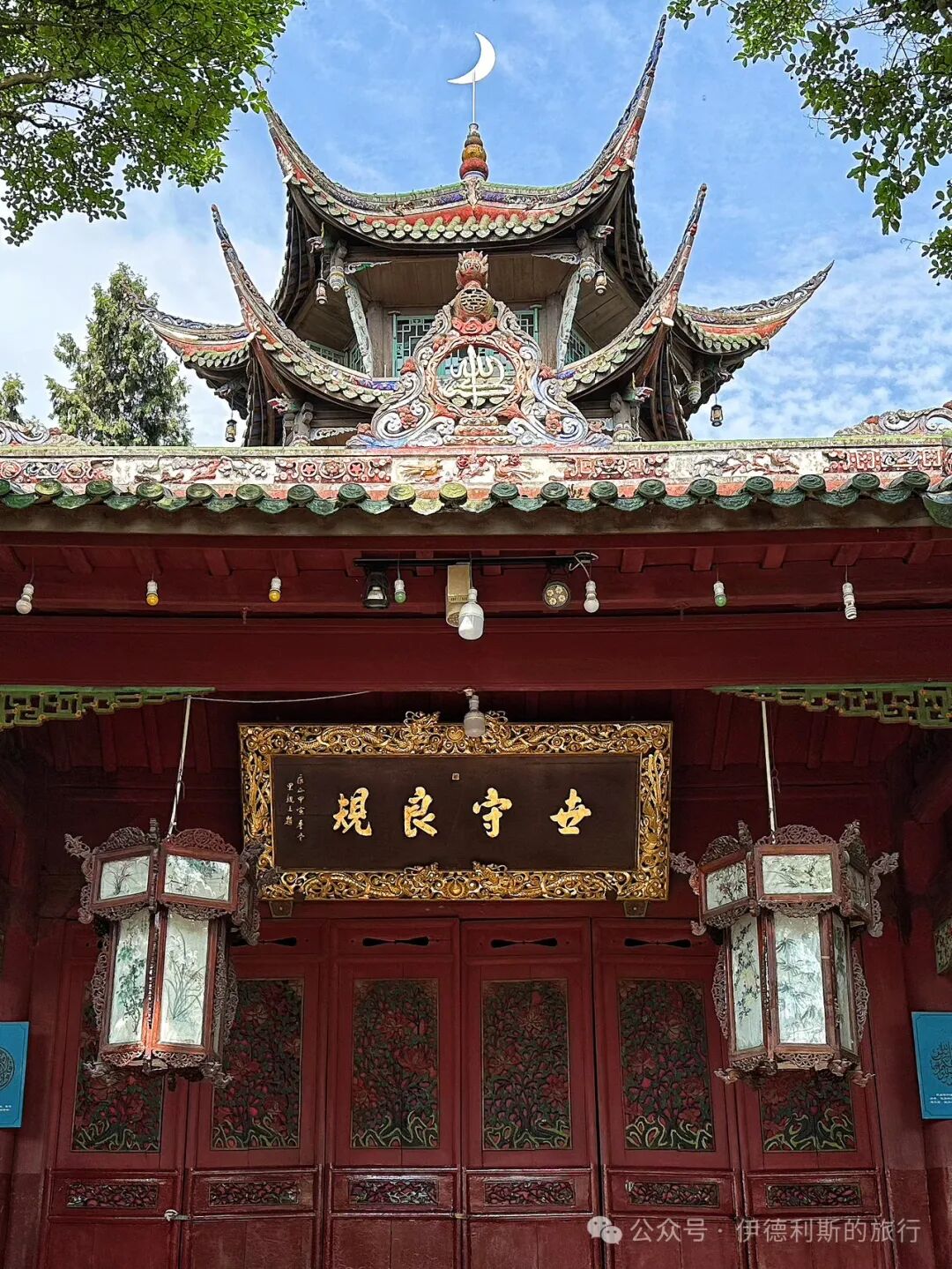
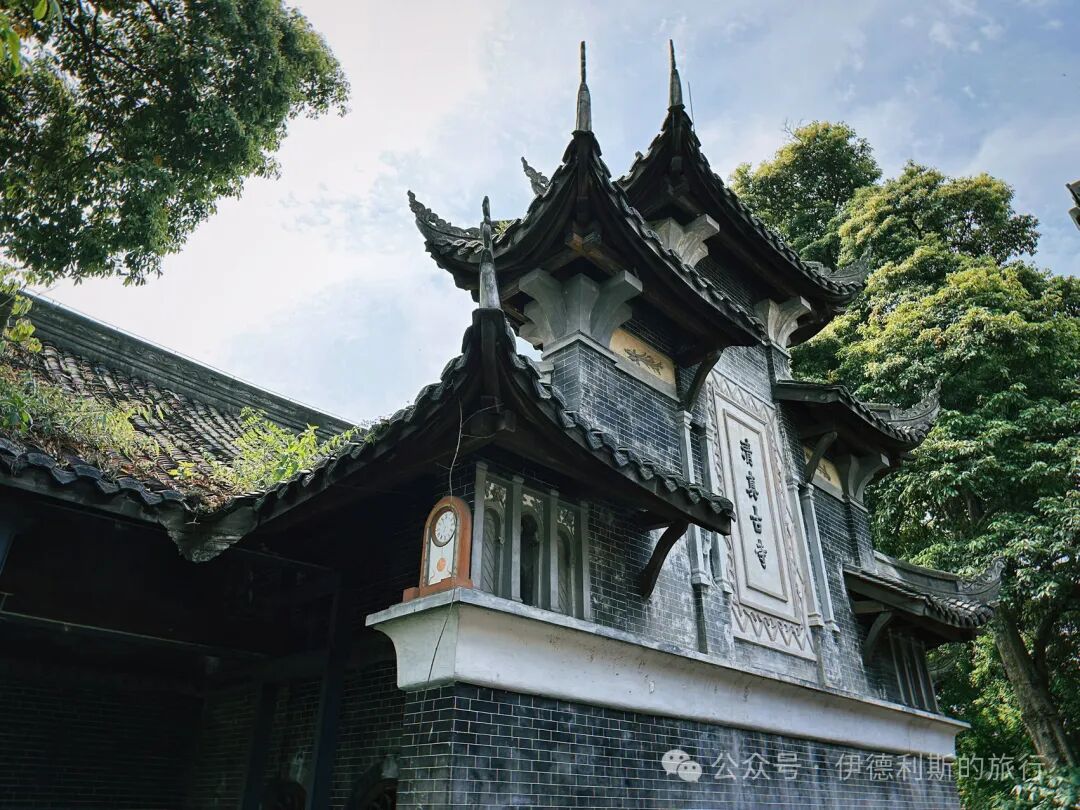
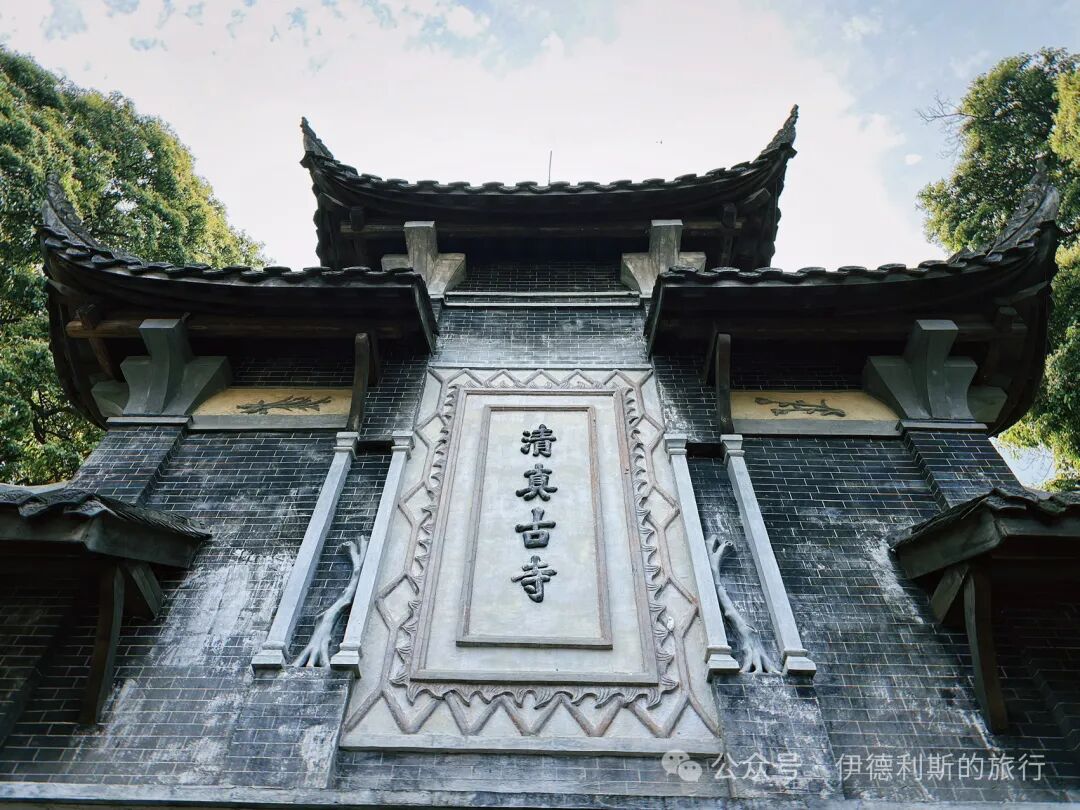
Above the main hall of Dujiangyan Mosque sits the Moon-Gazing Tower (Wangyuelou), added in 1934. It was the tallest building in Guan County at the time, offering a bird's-eye view of the old town streets. The upper level of the Moon-Gazing Tower holds a wooden clapper (bangzi). During Ramadan, it is used to signal the start and end of the daily fast, a very traditional practice.
Plaques at Dujiangyan Mosque.
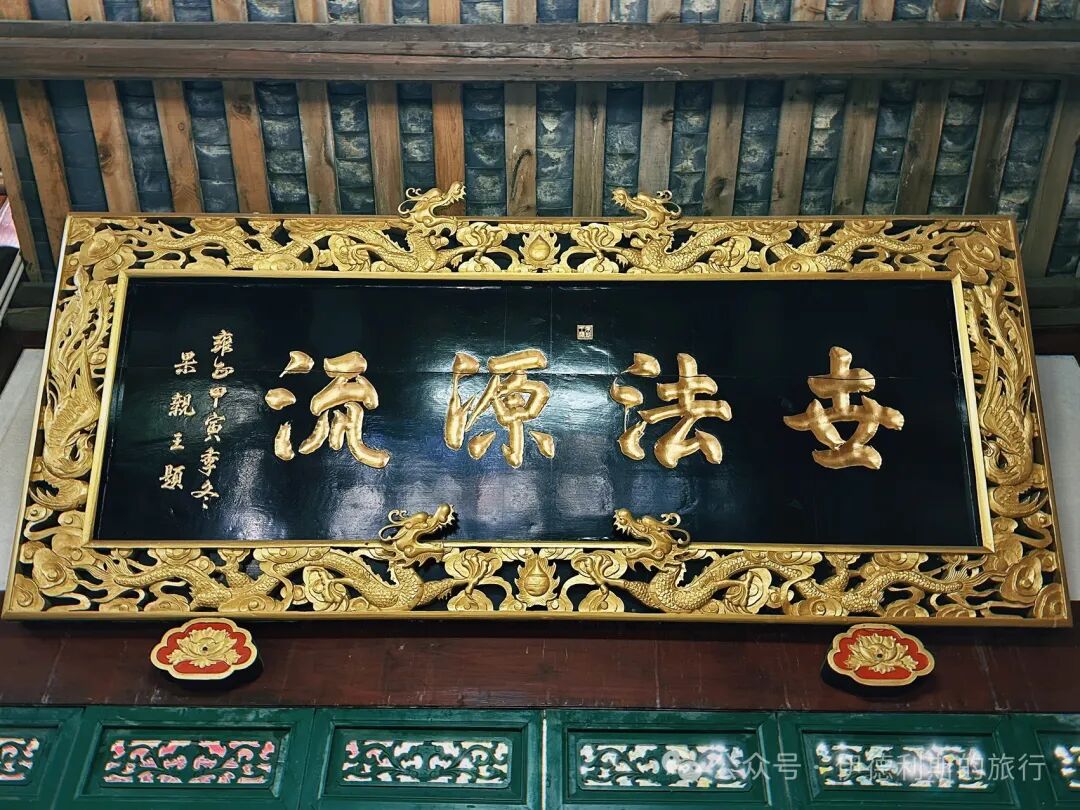
In the twelfth year of the Yongzheng reign, Prince Guo inscribed the 'Uphold Good Rules Forever' (Shishoulianggui) plaque and the 'Origin of Worldly Laws' (Shifayuanliu) plaque. Prince Guo was the seventeenth son of Emperor Kangxi. In the twelfth year of the Yongzheng reign, he traveled to Taining to escort the Dalai Lama back to Tibet. While inspecting provincial garrisons and Green Standard Army troops, he passed through Chengdu and inscribed a plaque for Gulou Mosque. Dujiangyan Mosque made copies of these plaques to keep inside.
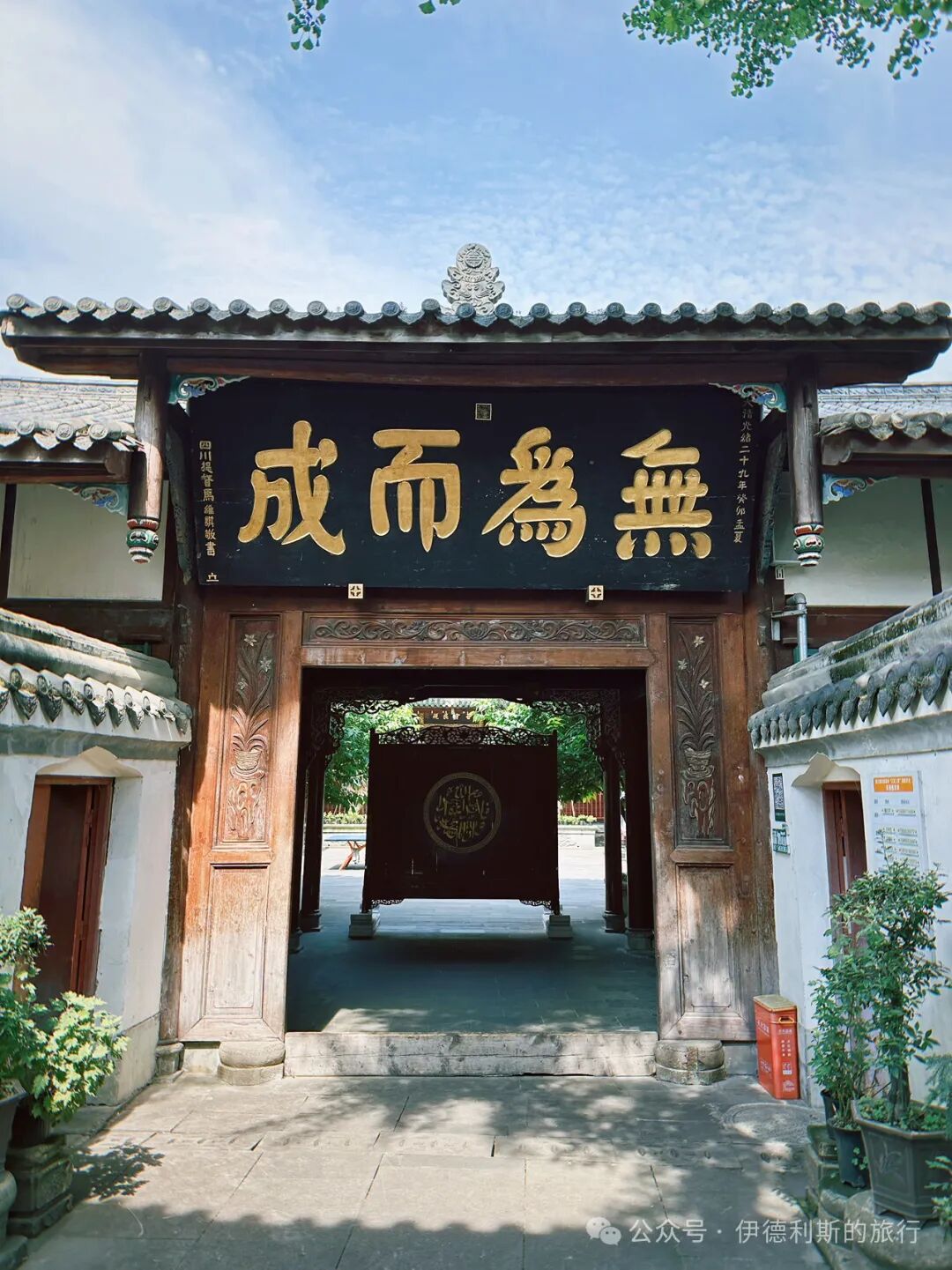
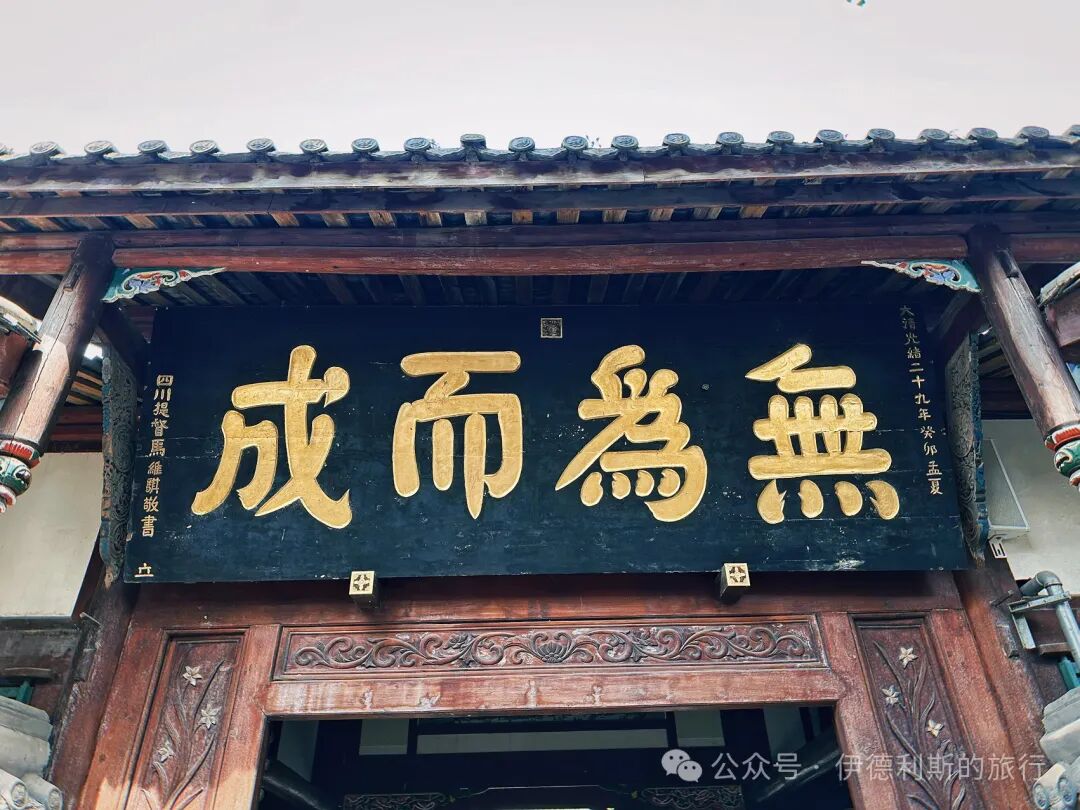
In the twenty-ninth year of the Guangxu reign, Sichuan Provincial Commander Ma Weiqi hand-wrote the 'Achieve Through Non-Action' (Wuweiercheng) plaque. Ma Weiqi was a Hui Muslim from Dazhuang, Kaiyuan, Yunnan. He was skilled in calligraphy, following the style of Yan Zhenqing, with a powerful and bold brush technique. In the ninth year of the Guangxu reign, Ma Weiqi was ordered to Vietnam to fight the French. He defeated the French army many times and was promoted to the rank of vice-general for his military achievements, receiving the honorary title 'Boduo Huan Baturu'. While serving as the Sichuan Provincial Commander, Ma Weiqi led troops to suppress a rebellion by lamas and local chieftains in Batang, Tibet. He overcame harsh snowstorms and food shortages to restore peace to the region. For his success, he was awarded the first-rank official cap button and the title of General Jianwei. During his time as Sichuan Provincial Commander, Ma Weiqi greatly supported the local Muslim community. He recommended several imams for positions in Sichuan, including Imam Wang Jiapeng, who is known as one of the four great modern imams of Yunnan.
In 1946, Bai Chongxi wrote the plaque reading 'Promote Religion and Build the Nation.' He wrote it while visiting his in-law, Ma Jianqing, in Sichuan. At the time, Bai Chongxi served as the Minister of National Defense for the Republic of China. Bai Chongxi placed great importance on ethnic education. He built Northwest Middle School in Chengdu, Sichuan, and Jiansheng Middle School in Xichang.
In the seventh year of the Xianfeng reign, Chen Tianzhu, a fifth-rank battalion commander (bazong) of the Anfu Camp who held the blue feather honor, hand-wrote the plaque reading 'Original Unique Honor'.
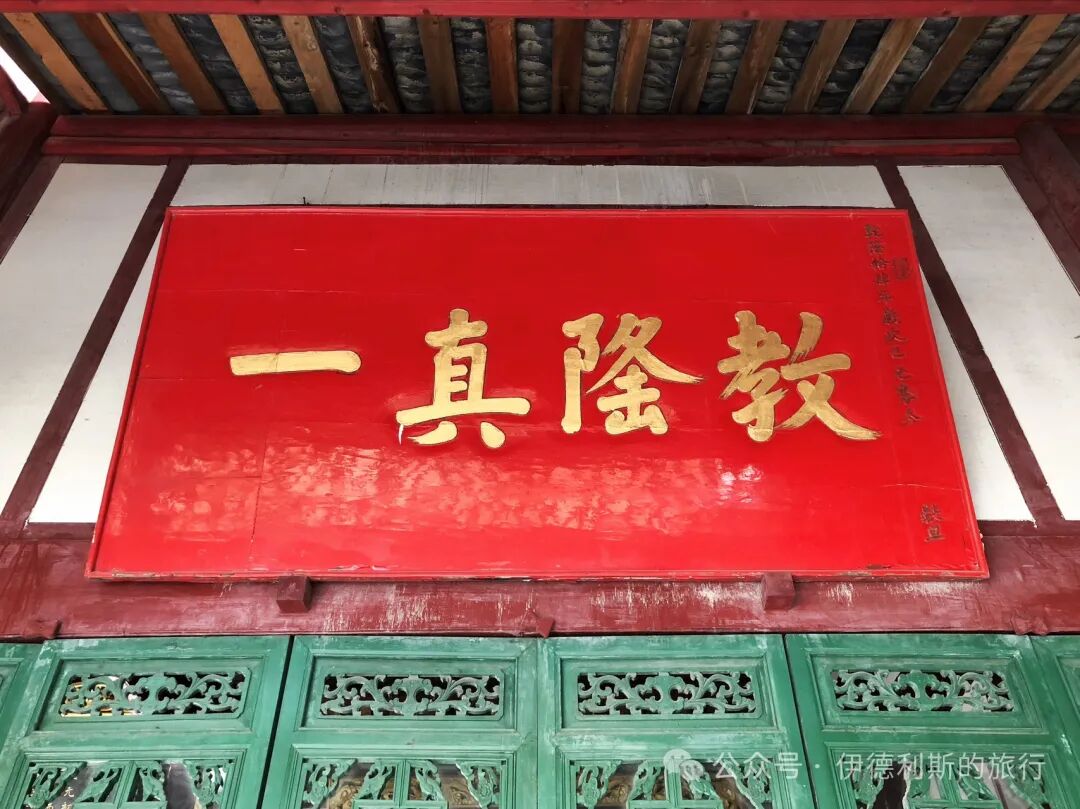
The 'Religion Flourishes in True Unity' plaque dates back to the fourteenth year of the Qianlong reign. Unfortunately, the signature section was destroyed during the 1960s and 1970s. It is believed to have been written by a Hui Muslim military officer during the Qianlong Emperor's Jinchuan campaign. In September of the thirteenth year of the Qianlong reign, the Qing government deployed 35,000 soldiers to the Jinchuan front. These troops included the Eight Banners from the capital and various provinces, as well as the Green Standard Army from Shaanxi, Gansu, Yunnan, and Guizhou.
Besides the Dujiangyan Mosque located on South Street in the ancient city of Guanxian, there were three other mosques in Dujiangyan history: the West Mosque, Baoping Mosque, and Youxi Mosque.
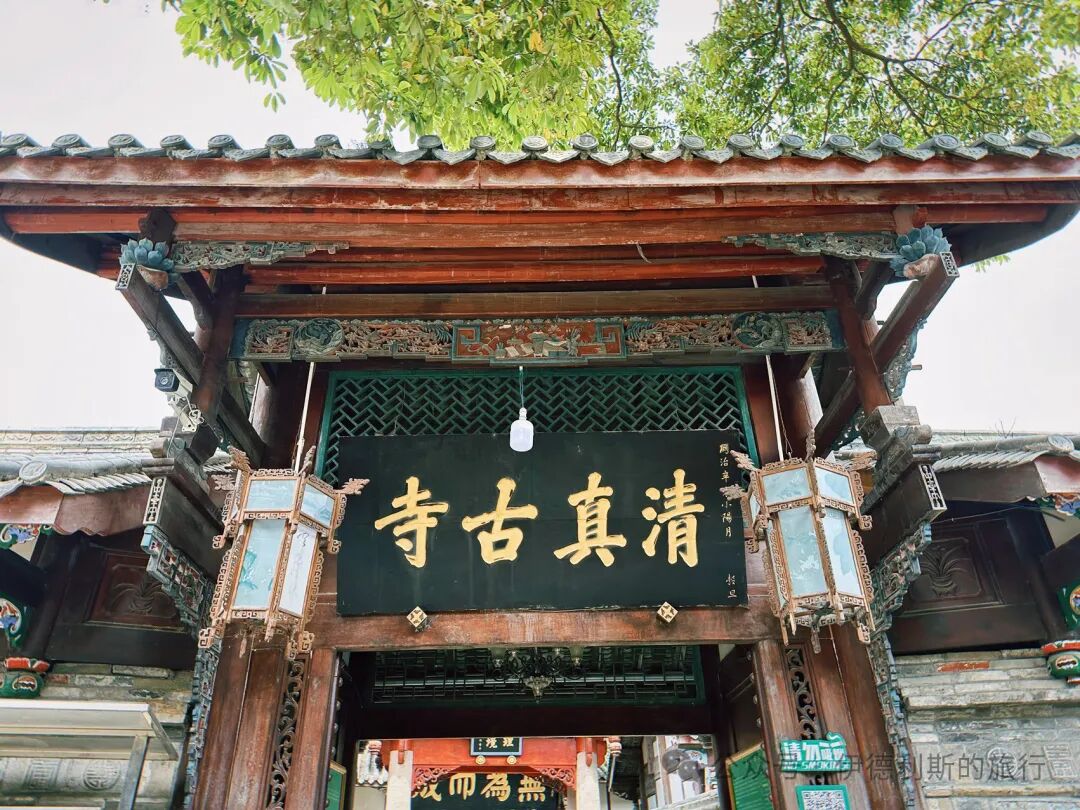
The West Mosque (Xi Si) is located on Shaanxi Lane inside the ancient city of Guanxian. It was built in 1862, the first year of the Tongzhi reign, by Hui Muslims from Songpan, Sichuan. During the Xianfeng and Tongzhi years, Hui Muslims from Songpan with the surnames Jia, Qi, Mi, and Yu traveled south along the Songmao Ancient Road for business. They settled in the ancient city of Guanxian and pooled their money to build the Guanxian West Mosque. In 1959, the Guanxian West Mosque was torn down to make room for the construction of the Guanxian People's Hospital. Today, a plaque reading "Ancient Mosque" (Qingzhen Gusi) from the tenth year of the Tongzhi reign hangs above the second gate of the Dujiangyan Mosque. This is the original plaque that once hung on the main gate of the West Mosque.
Baoping Mosque is also called Maogong Mosque. It was built in 1925 by Hui Muslims from Maogong, which is modern-day Xiaojin County in Sichuan. As early as the beginning of the Tongzhi reign, some Hui Muslims from Maogong had already moved to live in Guanxian. After the Sichuan Railway Protection Movement began in 1911, Hui Muslims from Maogong took an active part. They faced persecution from local feudal forces, causing many to flee, with most settling in Guanxian. In 1925, the Hui Muslims from Maogong who had moved to Guanxian pooled their money to build Baoping Mosque just 50 meters from the Baopingkou intake of the Dujiangyan irrigation system.
Maogong Mosque consists of two courtyards. The outer courtyard was a guesthouse for travelers, and the inner courtyard is the mosque. The main prayer hall has a distinct Republican-era style, blending Chinese and Western architecture. After Imam Ma Zifeng left in 1951, Baoping Mosque did not hire another imam. Since then, 45 Hui Muslim families have lived inside the mosque. In 1981, the property rights were acquired by the Xiaojin County Mosque. After the 2008 Wenchuan earthquake, Baoping Mosque was severely damaged. The Xiaojin Mosque could not afford the repairs, so they sold the property rights to the Dujiangyan municipal government. Later, Dujiangyan city renovated Baoping Mosque. The outer courtyard is rented out to a Han Chinese restaurant, but no businesses have moved into the inner courtyard.
Youxi Town is located on a key spot of the Songmao Ancient Road. Many merchants passed through, and some Hui Muslims lived there, so Youxi Mosque was built during the Kangxi reign. In the early years of the Republic of China, devoted community members Wang Yuzhi, Wang Chunyan, and Elder Ma proposed rebuilding Youxi Mosque. The construction was led by Imam Li Tianbo, who was from Changsha, Hunan. With funds raised by Hui Muslim businesses and individuals, the reconstruction was finally completed in 1917. Around 1930, Youxi Mosque had 12 member families (gaomu), including the famous martial artist Ma Guozhu.
In 1950, a fire broke out across Youxi Town and destroyed the Youxi Mosque. After the communal dining halls were introduced in 1958, Hui Muslims in Youxi Town began moving away because daily life became inconvenient. In 1967, the coffin covers (guanzhao) and scripture boxes (tabuxia) stored at the original site of the Youxi Mosque were destroyed. After the 2008 Wenchuan earthquake, the Hui Muslim cemetery on the mountain opposite the Youxi Mosque, which dated back to the Kangxi era, was completely destroyed.
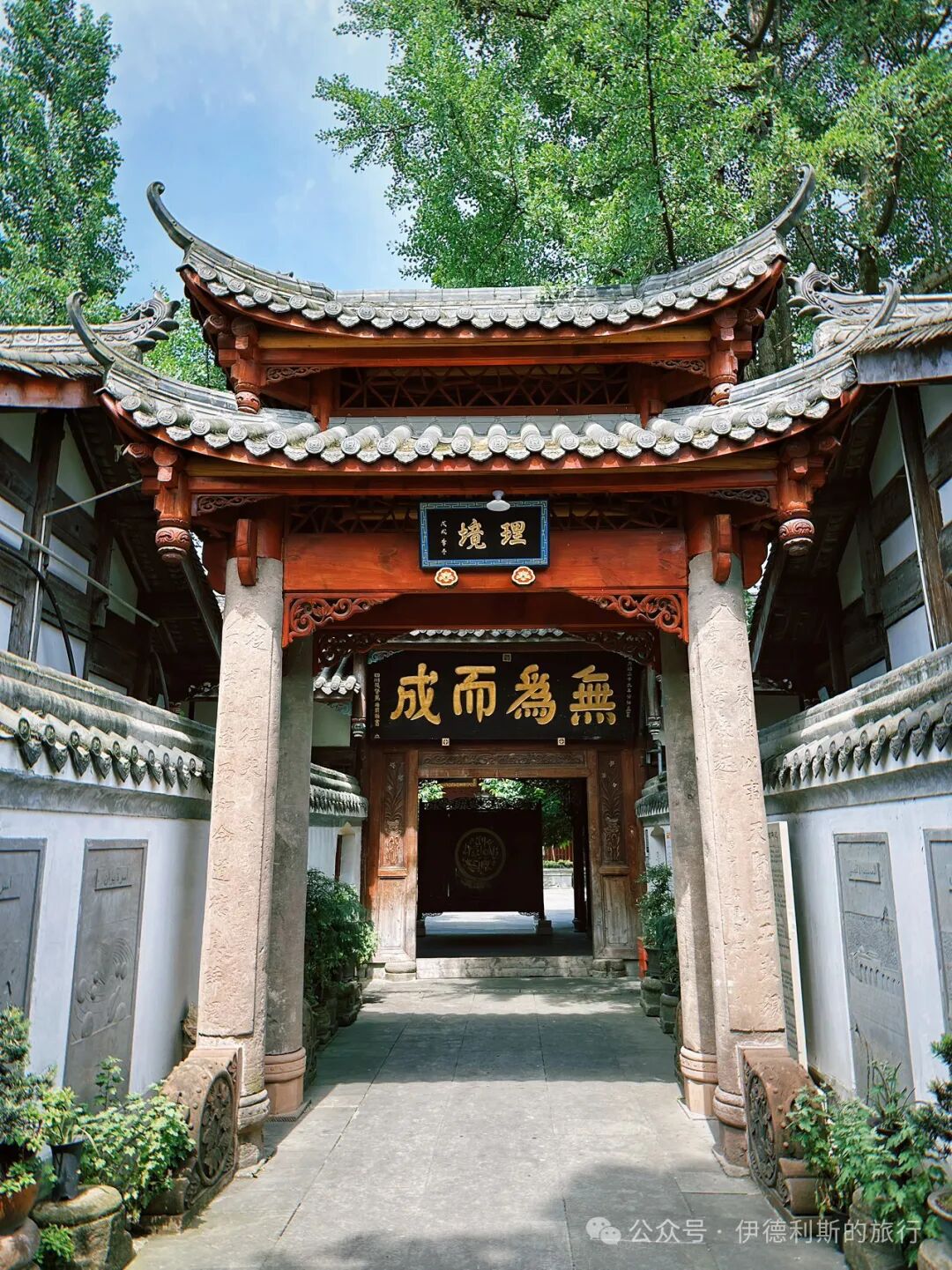
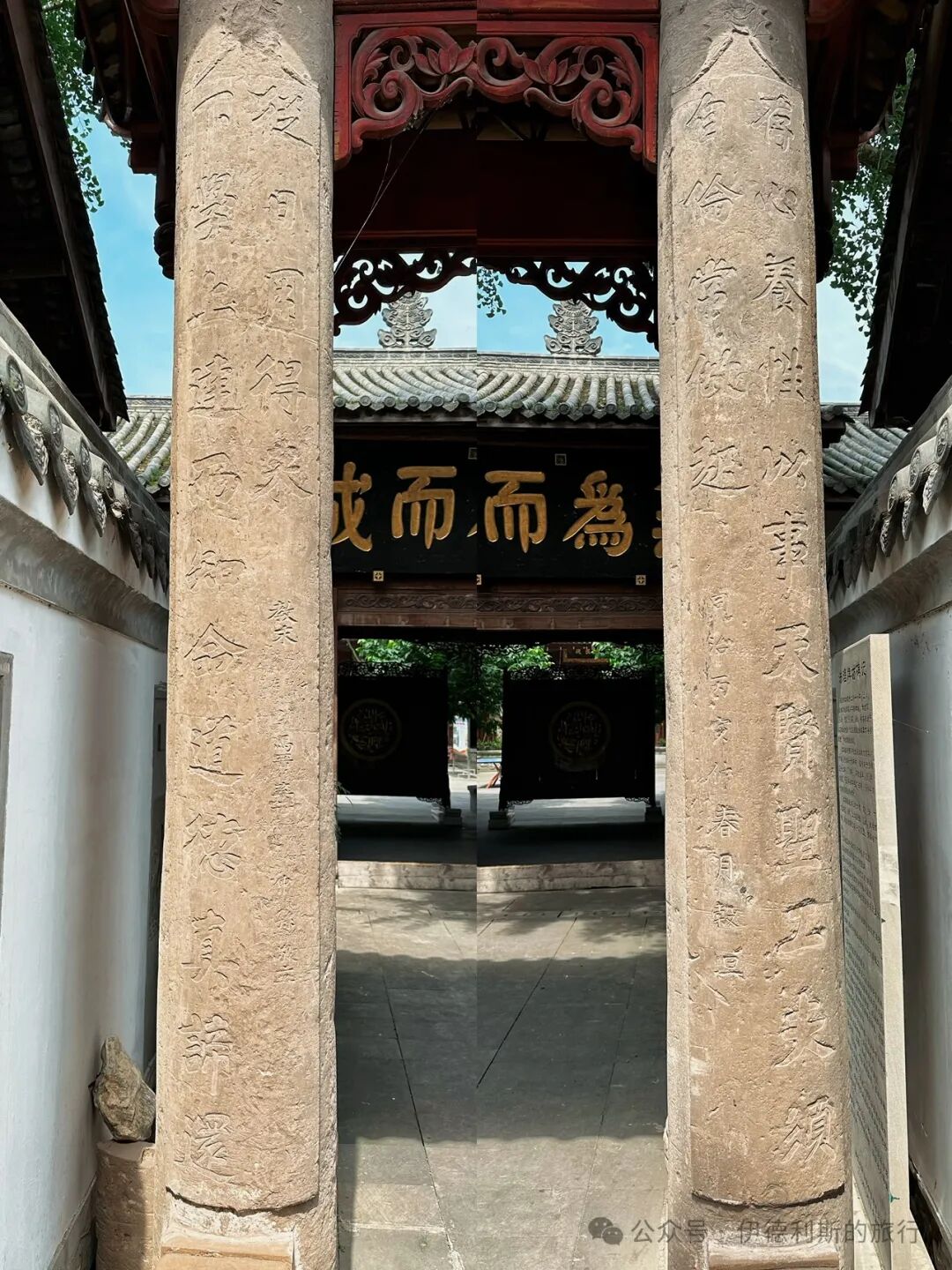
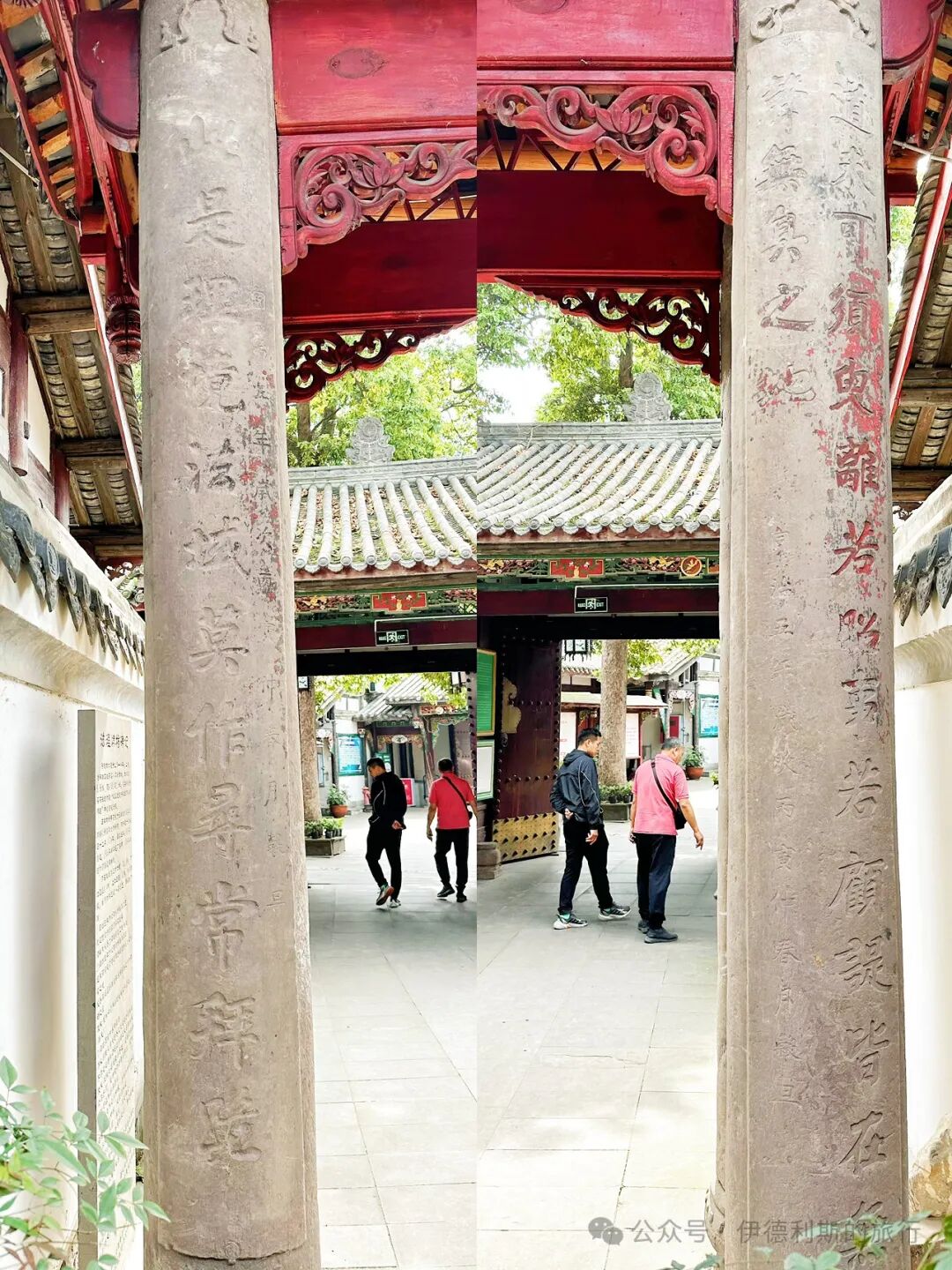
Inside the Dujiangyan Mosque stands a memorial archway (paifang) built in 2018 called the Fali Archway. Its four stone pillars came from the original site of the Chengdu Seven Mosque on Donghuamen South Street in Chengdu. The Chengdu Seven Mosque was first built in the 12th year of the Yongzheng reign and rebuilt in the 5th year of the Tongzhi reign. It was occupied by a wool factory in 1956 and demolished after being requisitioned by the Sichuan Provincial Bureau of Materials in 1984. After the Seven Mosque was torn down, the stone pillars were abandoned at Fenghuang Mountain. In 2017, during wall repairs at the Fenghuang Mountain Hui Muslim cemetery, the pillars were dragged to a vacant lot at the Fenghuang Mountain Air Force training base. In 2018, the Dujiangyan Mosque brought them back to build the archway.
There were originally three pairs, or six pillars in total. The Dujiangyan Mosque holds four of them, which are:
To nurture your character and serve Allah, the work of the wise must start with everyday human relationships.
To learn from the basics and reach the heights of understanding the true meaning of morality, you must find it in your daily life.
This is a place of spiritual truth and law, not just a spot for ordinary kneeling and prayer (missing second line).
The path cannot be left for even a moment; whether serving or reflecting, everything happens in the realm where Allah is present (missing second line).
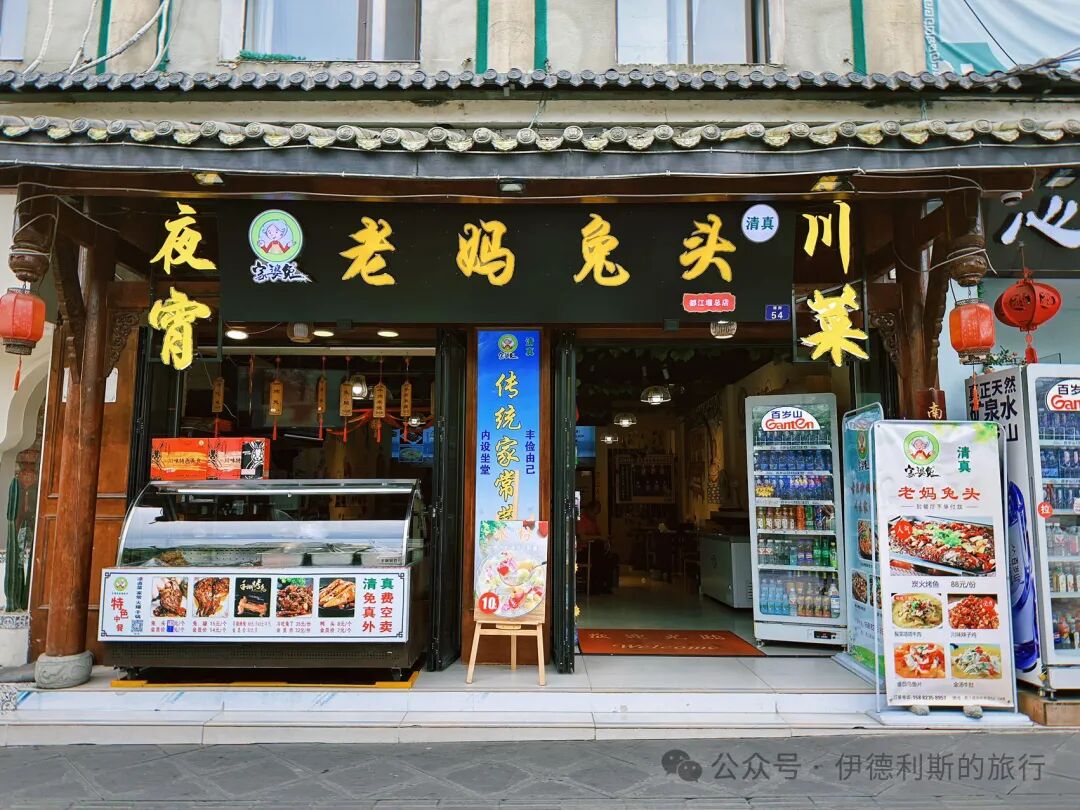
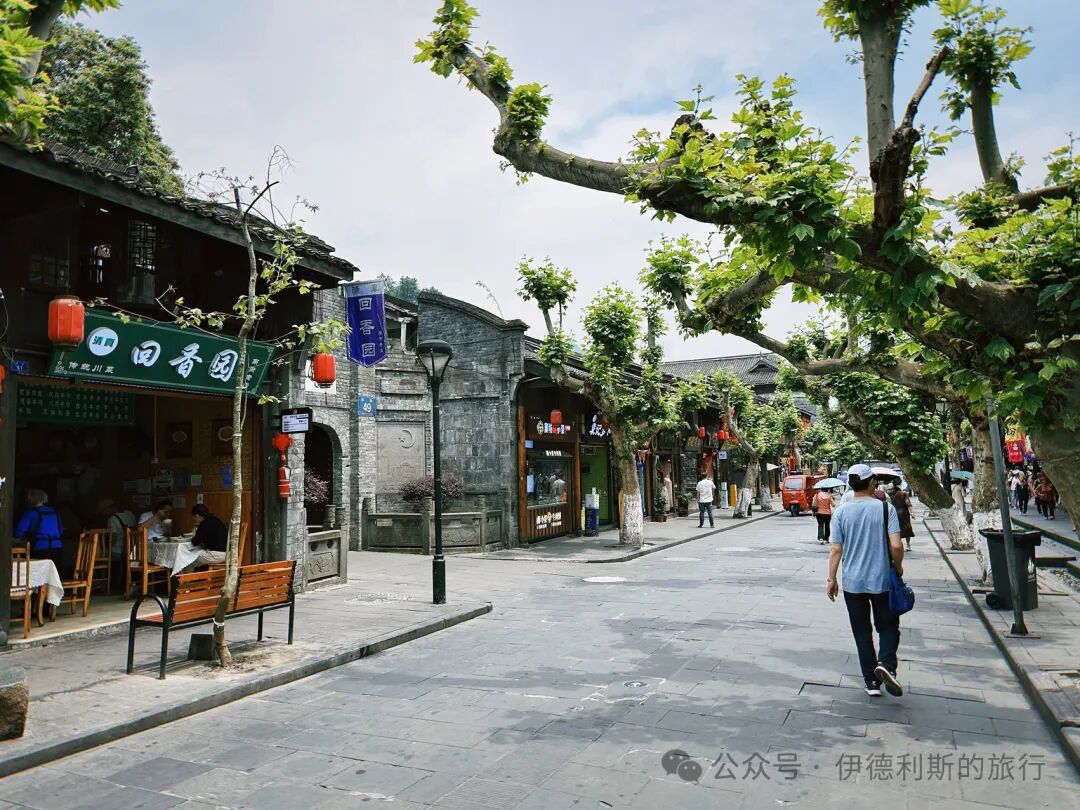
There are many halal restaurants around Dujiangyan Mosque where you can eat authentic traditional Western Sichuan Hui Muslim food. Huixiangyuan, right next to Dujiangyan Mosque, is a long-established restaurant that displays a very traditional water pitcher (tangping) sign.
The current imam (gaomu) of Dujiangyan Mosque is surnamed Hai. His ancestors were from Shunyi, Beijing, and moved from Shaoyang, Hunan, to Sichuan during the Wanli era of the Ming Dynasty. Later, more of the Hai family moved here during the Qing Dynasty migration period known as Huguang Tian Sichuan.
The Zhang family from Hebei originally came from Zhangjiawan Town in Tongzhou, Beijing. At the end of the Ming Dynasty, three Zhang brothers moved to Pixian and led the construction of the Pixian Zhang Family Mosque, then moved to Dujiangyan during the Tongzhi era of the Qing Dynasty.
The Ma family of Maogong originally came from Tianbei Village in Weinan, Shaanxi. They moved to Xiaojin County, Sichuan, during the Qianlong reign. In 1912, they moved to Eshi Lane in the Huangchengba area of Chengdu because of the Railway Protection Movement. Their house was destroyed during the warlord conflicts in 1917, and they later moved to Dujiangyan.
The Li family of Wenchuan originally came from Xiaoyi Town in Weinan, Shaanxi. They later moved to Weizhou in Wenchuan before settling in Dujiangyan.
The Qi family of Shaanxi originally came from Weinan, Shaanxi. They moved to Songpan, Sichuan, during the Daoguang reign and then to Dujiangyan between the end of the Qing Dynasty and the start of the Republic of China. They were known as Sauce Garden Qi because they ran a soy sauce factory.
The Li family moved here from Tangyuan Town in Pixian County during the Tongzhi reign of the Qing Dynasty. Another branch moved here from Tuanjie Town in Pixian County in 1945.
The Ma family of Shaanxi originally came from Qiaotian Village in Weinan, Shaanxi. They moved to Dujiangyan in 1808 to escape the White Lotus and Tianli sects. They ran the Daxing mule and horse inn from 1826 until 1949.
The Jiang family of Shandong originally came from Shandong. They later moved to Yanting, Sichuan, and then to Dujiangyan in the early years of the Republic of China.
The Cai family of Taiyuan moved to the Dajin and Xiaojin areas of Sichuan during the Qianlong reign. They moved to Dujiangyan in 1912.
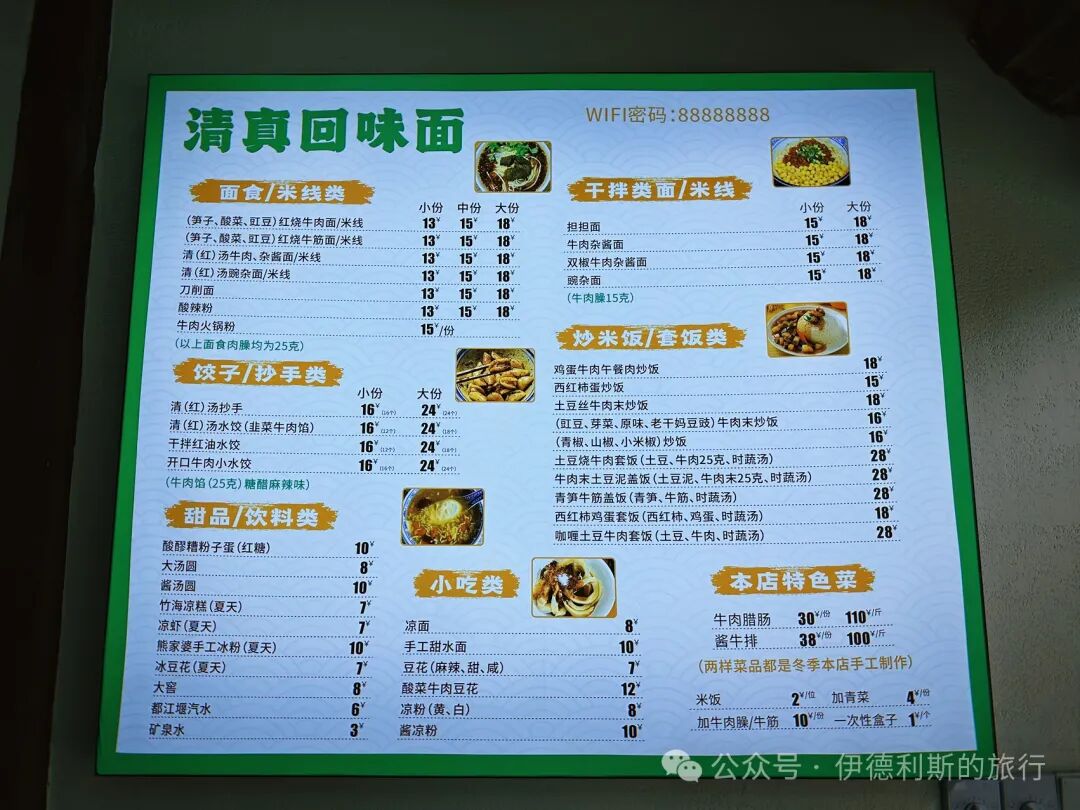
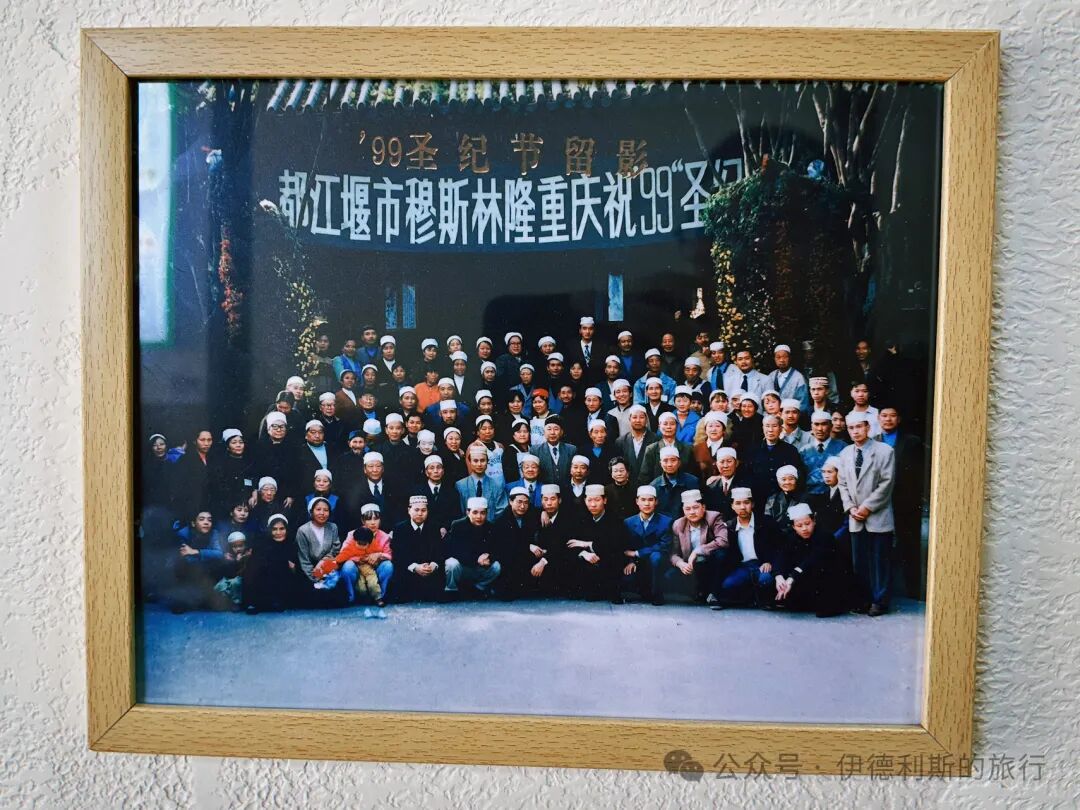
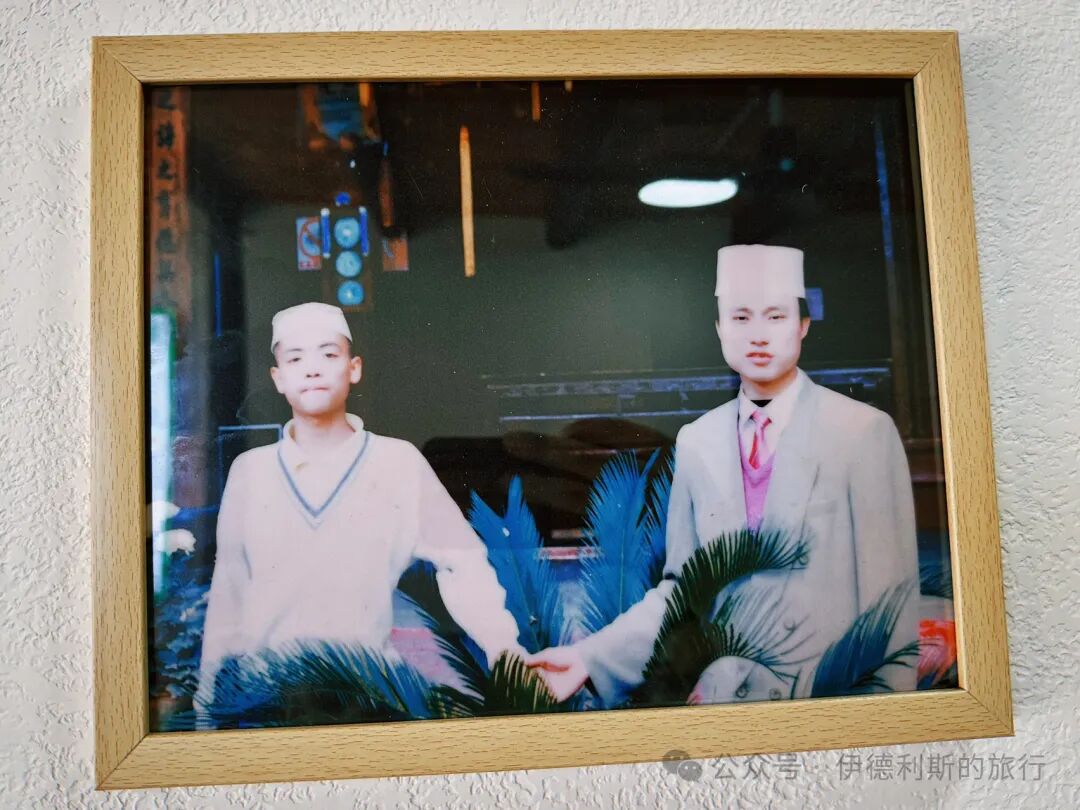
I had some iced tofu pudding (bing douhua) at a snack shop in Dujiangyan. It was soft and very refreshing. His walls are covered with photos of the Dujiangyan mosque, including one of Imam Sha Fuquan when he was young.
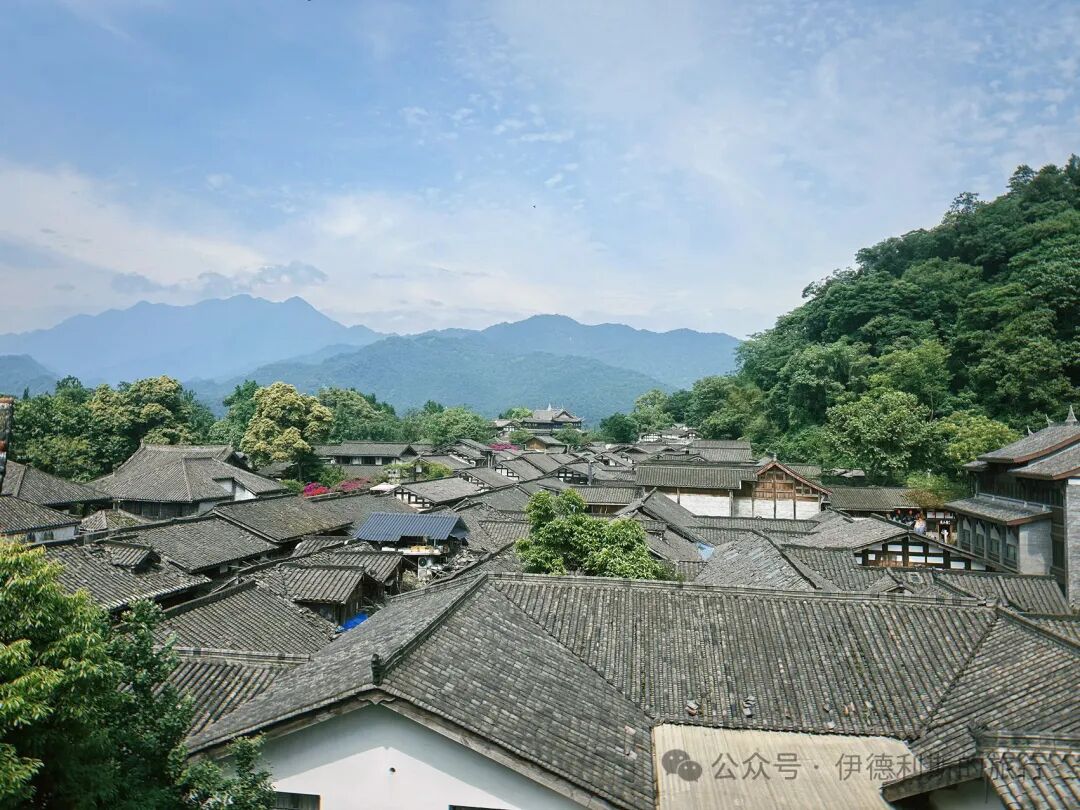
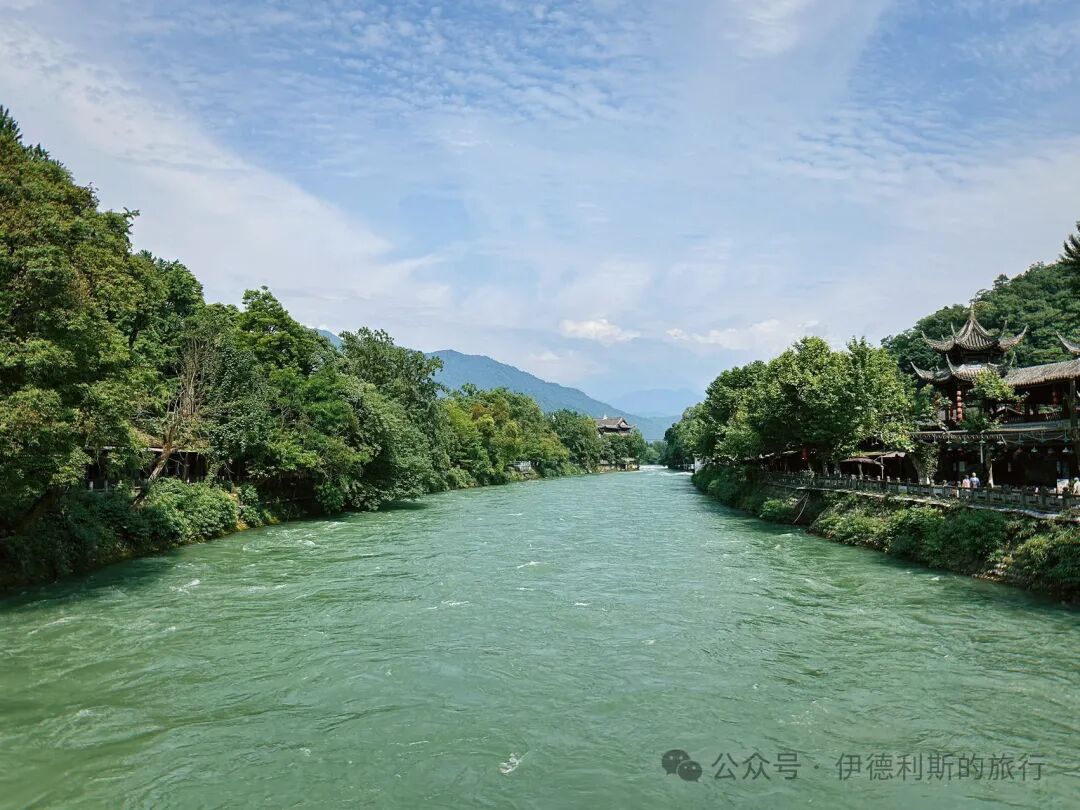
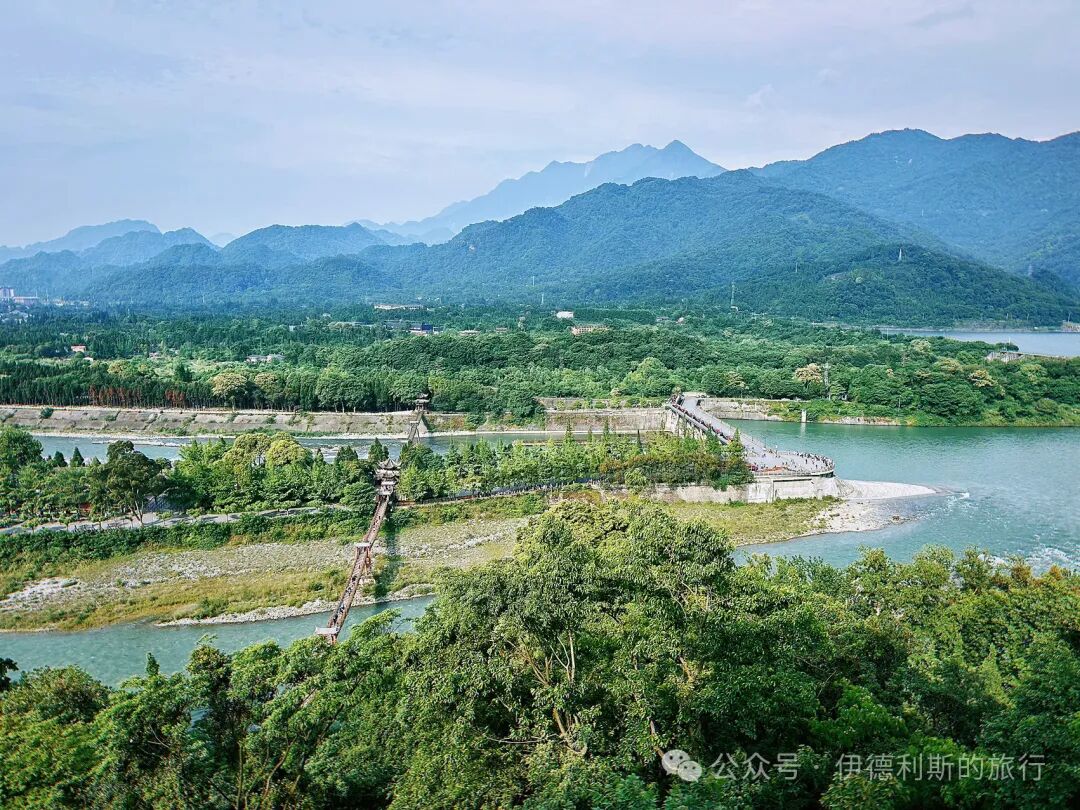
Dujiangyan scenery
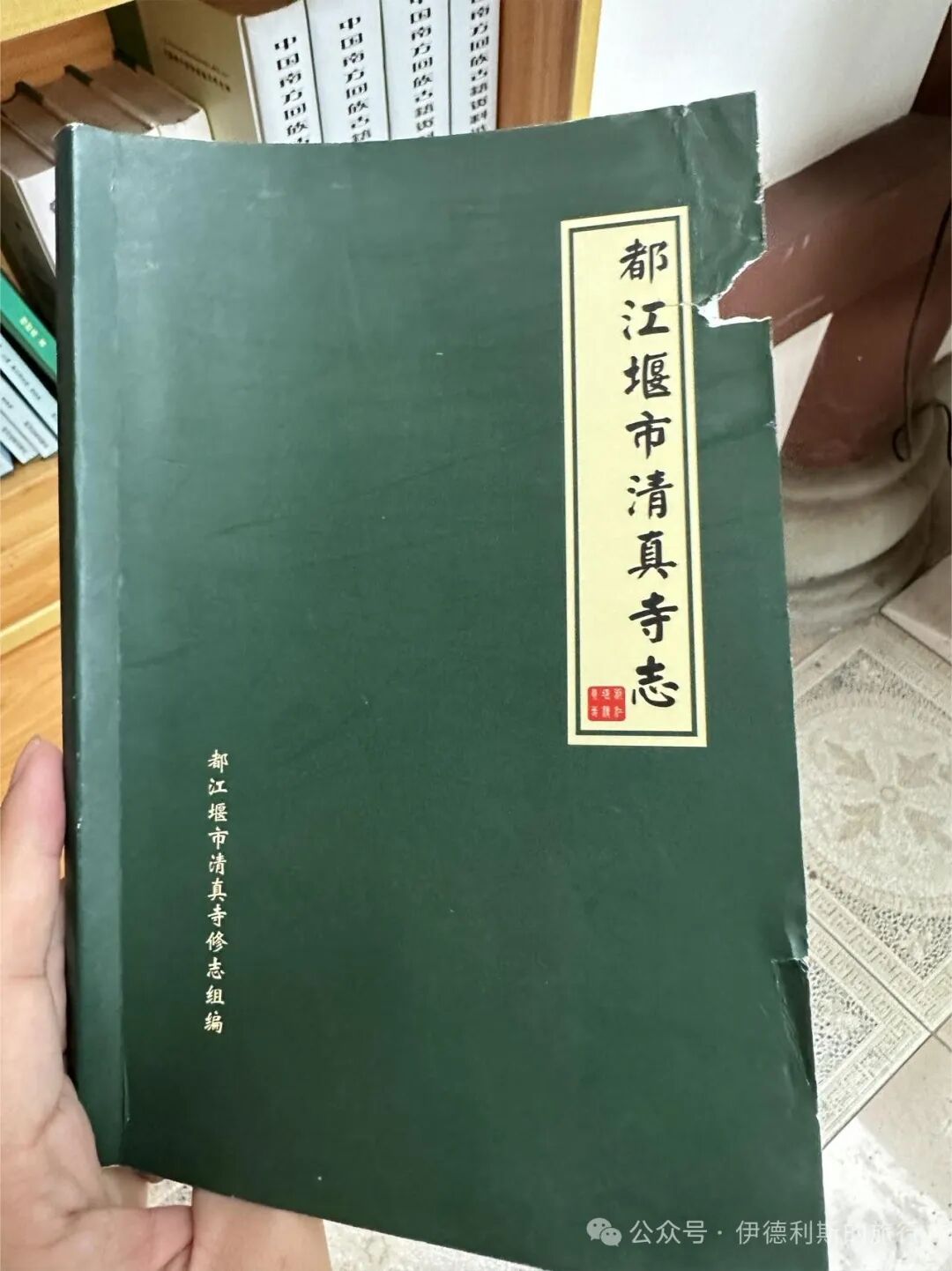
The information about the Dujiangyan faith community comes from the mosque's history book. view all
Summary: Halal Travel Guide: Dujiangyan, Sichuan - Mosques, Food and Local History is presented here as a firsthand travel account in clear, natural English. The account focuses on Dujiangyan, Sichuan, Mosques while preserving the names, places, food, photos, and historical details from the Chinese source.
On May 15, we left Chengdu for Dujiangyan and visited the Dujiangyan Mosque at noon. Imam Sha Fuquan was away on a field trip, so Imam Ma Jundong hosted us, with an introduction provided by Imam Saiwabu Ma.
Because it sits at the start of the Songmao Ancient Road, many Hui Muslims have come to do business and settle in the old town of Guanxian, where Dujiangyan is located, since the Ming Dynasty. During the Jiajing period of the Ming Dynasty, Hui Muslims in Dujiangyan pooled their money to buy the former site of the Summer Palace of Prince Kang of Shu and officially built the Dujiangyan Mosque. Currently, there are two crape myrtle trees at the entrance of the main hall that were planted during the Ming Jiajing period, and the six lattice doors on the front of the main hall are also relics from the Ming Dynasty.
The Dujiangyan Mosque has experienced many earthquakes throughout its history, the most recent being the Wenchuan earthquake. The Wenchuan earthquake caused serious damage to the Dujiangyan Mosque, and it took three years to complete the repairs, resulting in the current architectural style that features strong traditional characteristics of western Sichuan. Inside the main hall, there are two pairs of Arabic couplets preserved today; one pair was written by Imam Wei Zhengfang of the Qing Dynasty, and the other was written by Imam Sha Fuquan. The traditional calligraphy on the mihrab was also written by Imam Wei Zhengfang.
Above the main hall of Dujiangyan Mosque sits the Moon-Gazing Tower (Wangyuelou), added in 1934. It was the tallest building in Guan County at the time, offering a bird's-eye view of the old town streets. The upper level of the Moon-Gazing Tower holds a wooden clapper (bangzi). During Ramadan, it is used to signal the start and end of the daily fast, a very traditional practice.
Plaques at Dujiangyan Mosque.
In the twelfth year of the Yongzheng reign, Prince Guo inscribed the 'Uphold Good Rules Forever' (Shishoulianggui) plaque and the 'Origin of Worldly Laws' (Shifayuanliu) plaque. Prince Guo was the seventeenth son of Emperor Kangxi. In the twelfth year of the Yongzheng reign, he traveled to Taining to escort the Dalai Lama back to Tibet. While inspecting provincial garrisons and Green Standard Army troops, he passed through Chengdu and inscribed a plaque for Gulou Mosque. Dujiangyan Mosque made copies of these plaques to keep inside.
In the twenty-ninth year of the Guangxu reign, Sichuan Provincial Commander Ma Weiqi hand-wrote the 'Achieve Through Non-Action' (Wuweiercheng) plaque. Ma Weiqi was a Hui Muslim from Dazhuang, Kaiyuan, Yunnan. He was skilled in calligraphy, following the style of Yan Zhenqing, with a powerful and bold brush technique. In the ninth year of the Guangxu reign, Ma Weiqi was ordered to Vietnam to fight the French. He defeated the French army many times and was promoted to the rank of vice-general for his military achievements, receiving the honorary title 'Boduo Huan Baturu'. While serving as the Sichuan Provincial Commander, Ma Weiqi led troops to suppress a rebellion by lamas and local chieftains in Batang, Tibet. He overcame harsh snowstorms and food shortages to restore peace to the region. For his success, he was awarded the first-rank official cap button and the title of General Jianwei. During his time as Sichuan Provincial Commander, Ma Weiqi greatly supported the local Muslim community. He recommended several imams for positions in Sichuan, including Imam Wang Jiapeng, who is known as one of the four great modern imams of Yunnan.
In 1946, Bai Chongxi wrote the plaque reading 'Promote Religion and Build the Nation.' He wrote it while visiting his in-law, Ma Jianqing, in Sichuan. At the time, Bai Chongxi served as the Minister of National Defense for the Republic of China. Bai Chongxi placed great importance on ethnic education. He built Northwest Middle School in Chengdu, Sichuan, and Jiansheng Middle School in Xichang.
In the seventh year of the Xianfeng reign, Chen Tianzhu, a fifth-rank battalion commander (bazong) of the Anfu Camp who held the blue feather honor, hand-wrote the plaque reading 'Original Unique Honor'.
The 'Religion Flourishes in True Unity' plaque dates back to the fourteenth year of the Qianlong reign. Unfortunately, the signature section was destroyed during the 1960s and 1970s. It is believed to have been written by a Hui Muslim military officer during the Qianlong Emperor's Jinchuan campaign. In September of the thirteenth year of the Qianlong reign, the Qing government deployed 35,000 soldiers to the Jinchuan front. These troops included the Eight Banners from the capital and various provinces, as well as the Green Standard Army from Shaanxi, Gansu, Yunnan, and Guizhou.
Besides the Dujiangyan Mosque located on South Street in the ancient city of Guanxian, there were three other mosques in Dujiangyan history: the West Mosque, Baoping Mosque, and Youxi Mosque.
The West Mosque (Xi Si) is located on Shaanxi Lane inside the ancient city of Guanxian. It was built in 1862, the first year of the Tongzhi reign, by Hui Muslims from Songpan, Sichuan. During the Xianfeng and Tongzhi years, Hui Muslims from Songpan with the surnames Jia, Qi, Mi, and Yu traveled south along the Songmao Ancient Road for business. They settled in the ancient city of Guanxian and pooled their money to build the Guanxian West Mosque. In 1959, the Guanxian West Mosque was torn down to make room for the construction of the Guanxian People's Hospital. Today, a plaque reading "Ancient Mosque" (Qingzhen Gusi) from the tenth year of the Tongzhi reign hangs above the second gate of the Dujiangyan Mosque. This is the original plaque that once hung on the main gate of the West Mosque.
Baoping Mosque is also called Maogong Mosque. It was built in 1925 by Hui Muslims from Maogong, which is modern-day Xiaojin County in Sichuan. As early as the beginning of the Tongzhi reign, some Hui Muslims from Maogong had already moved to live in Guanxian. After the Sichuan Railway Protection Movement began in 1911, Hui Muslims from Maogong took an active part. They faced persecution from local feudal forces, causing many to flee, with most settling in Guanxian. In 1925, the Hui Muslims from Maogong who had moved to Guanxian pooled their money to build Baoping Mosque just 50 meters from the Baopingkou intake of the Dujiangyan irrigation system.
Maogong Mosque consists of two courtyards. The outer courtyard was a guesthouse for travelers, and the inner courtyard is the mosque. The main prayer hall has a distinct Republican-era style, blending Chinese and Western architecture. After Imam Ma Zifeng left in 1951, Baoping Mosque did not hire another imam. Since then, 45 Hui Muslim families have lived inside the mosque. In 1981, the property rights were acquired by the Xiaojin County Mosque. After the 2008 Wenchuan earthquake, Baoping Mosque was severely damaged. The Xiaojin Mosque could not afford the repairs, so they sold the property rights to the Dujiangyan municipal government. Later, Dujiangyan city renovated Baoping Mosque. The outer courtyard is rented out to a Han Chinese restaurant, but no businesses have moved into the inner courtyard.
Youxi Town is located on a key spot of the Songmao Ancient Road. Many merchants passed through, and some Hui Muslims lived there, so Youxi Mosque was built during the Kangxi reign. In the early years of the Republic of China, devoted community members Wang Yuzhi, Wang Chunyan, and Elder Ma proposed rebuilding Youxi Mosque. The construction was led by Imam Li Tianbo, who was from Changsha, Hunan. With funds raised by Hui Muslim businesses and individuals, the reconstruction was finally completed in 1917. Around 1930, Youxi Mosque had 12 member families (gaomu), including the famous martial artist Ma Guozhu.
In 1950, a fire broke out across Youxi Town and destroyed the Youxi Mosque. After the communal dining halls were introduced in 1958, Hui Muslims in Youxi Town began moving away because daily life became inconvenient. In 1967, the coffin covers (guanzhao) and scripture boxes (tabuxia) stored at the original site of the Youxi Mosque were destroyed. After the 2008 Wenchuan earthquake, the Hui Muslim cemetery on the mountain opposite the Youxi Mosque, which dated back to the Kangxi era, was completely destroyed.
Inside the Dujiangyan Mosque stands a memorial archway (paifang) built in 2018 called the Fali Archway. Its four stone pillars came from the original site of the Chengdu Seven Mosque on Donghuamen South Street in Chengdu. The Chengdu Seven Mosque was first built in the 12th year of the Yongzheng reign and rebuilt in the 5th year of the Tongzhi reign. It was occupied by a wool factory in 1956 and demolished after being requisitioned by the Sichuan Provincial Bureau of Materials in 1984. After the Seven Mosque was torn down, the stone pillars were abandoned at Fenghuang Mountain. In 2017, during wall repairs at the Fenghuang Mountain Hui Muslim cemetery, the pillars were dragged to a vacant lot at the Fenghuang Mountain Air Force training base. In 2018, the Dujiangyan Mosque brought them back to build the archway.
There were originally three pairs, or six pillars in total. The Dujiangyan Mosque holds four of them, which are:
To nurture your character and serve Allah, the work of the wise must start with everyday human relationships.
To learn from the basics and reach the heights of understanding the true meaning of morality, you must find it in your daily life.
This is a place of spiritual truth and law, not just a spot for ordinary kneeling and prayer (missing second line).
The path cannot be left for even a moment; whether serving or reflecting, everything happens in the realm where Allah is present (missing second line).
There are many halal restaurants around Dujiangyan Mosque where you can eat authentic traditional Western Sichuan Hui Muslim food. Huixiangyuan, right next to Dujiangyan Mosque, is a long-established restaurant that displays a very traditional water pitcher (tangping) sign.
The current imam (gaomu) of Dujiangyan Mosque is surnamed Hai. His ancestors were from Shunyi, Beijing, and moved from Shaoyang, Hunan, to Sichuan during the Wanli era of the Ming Dynasty. Later, more of the Hai family moved here during the Qing Dynasty migration period known as Huguang Tian Sichuan.
The Zhang family from Hebei originally came from Zhangjiawan Town in Tongzhou, Beijing. At the end of the Ming Dynasty, three Zhang brothers moved to Pixian and led the construction of the Pixian Zhang Family Mosque, then moved to Dujiangyan during the Tongzhi era of the Qing Dynasty.
The Ma family of Maogong originally came from Tianbei Village in Weinan, Shaanxi. They moved to Xiaojin County, Sichuan, during the Qianlong reign. In 1912, they moved to Eshi Lane in the Huangchengba area of Chengdu because of the Railway Protection Movement. Their house was destroyed during the warlord conflicts in 1917, and they later moved to Dujiangyan.
The Li family of Wenchuan originally came from Xiaoyi Town in Weinan, Shaanxi. They later moved to Weizhou in Wenchuan before settling in Dujiangyan.
The Qi family of Shaanxi originally came from Weinan, Shaanxi. They moved to Songpan, Sichuan, during the Daoguang reign and then to Dujiangyan between the end of the Qing Dynasty and the start of the Republic of China. They were known as Sauce Garden Qi because they ran a soy sauce factory.
The Li family moved here from Tangyuan Town in Pixian County during the Tongzhi reign of the Qing Dynasty. Another branch moved here from Tuanjie Town in Pixian County in 1945.
The Ma family of Shaanxi originally came from Qiaotian Village in Weinan, Shaanxi. They moved to Dujiangyan in 1808 to escape the White Lotus and Tianli sects. They ran the Daxing mule and horse inn from 1826 until 1949.
The Jiang family of Shandong originally came from Shandong. They later moved to Yanting, Sichuan, and then to Dujiangyan in the early years of the Republic of China.
The Cai family of Taiyuan moved to the Dajin and Xiaojin areas of Sichuan during the Qianlong reign. They moved to Dujiangyan in 1912.
I had some iced tofu pudding (bing douhua) at a snack shop in Dujiangyan. It was soft and very refreshing. His walls are covered with photos of the Dujiangyan mosque, including one of Imam Sha Fuquan when he was young.
Dujiangyan scenery
The information about the Dujiangyan faith community comes from the mosque's history book. view all
Reposted from the web
Summary: Halal Travel Guide: Dujiangyan, Sichuan - Mosques, Food and Local History is presented here as a firsthand travel account in clear, natural English. The account focuses on Dujiangyan, Sichuan, Mosques while preserving the names, places, food, photos, and historical details from the Chinese source.
On May 15, we left Chengdu for Dujiangyan and visited the Dujiangyan Mosque at noon. Imam Sha Fuquan was away on a field trip, so Imam Ma Jundong hosted us, with an introduction provided by Imam Saiwabu Ma.
Because it sits at the start of the Songmao Ancient Road, many Hui Muslims have come to do business and settle in the old town of Guanxian, where Dujiangyan is located, since the Ming Dynasty. During the Jiajing period of the Ming Dynasty, Hui Muslims in Dujiangyan pooled their money to buy the former site of the Summer Palace of Prince Kang of Shu and officially built the Dujiangyan Mosque. Currently, there are two crape myrtle trees at the entrance of the main hall that were planted during the Ming Jiajing period, and the six lattice doors on the front of the main hall are also relics from the Ming Dynasty.
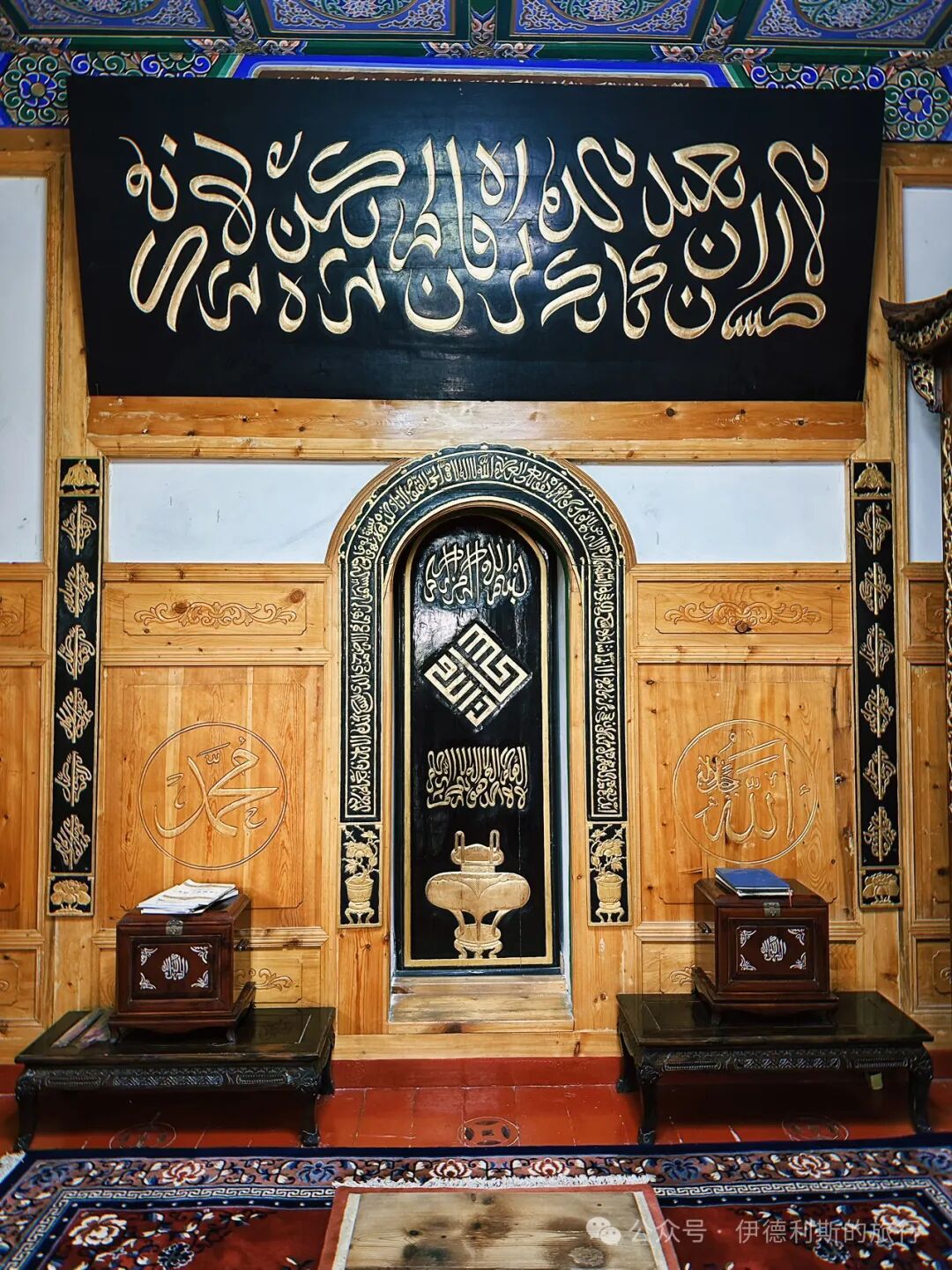
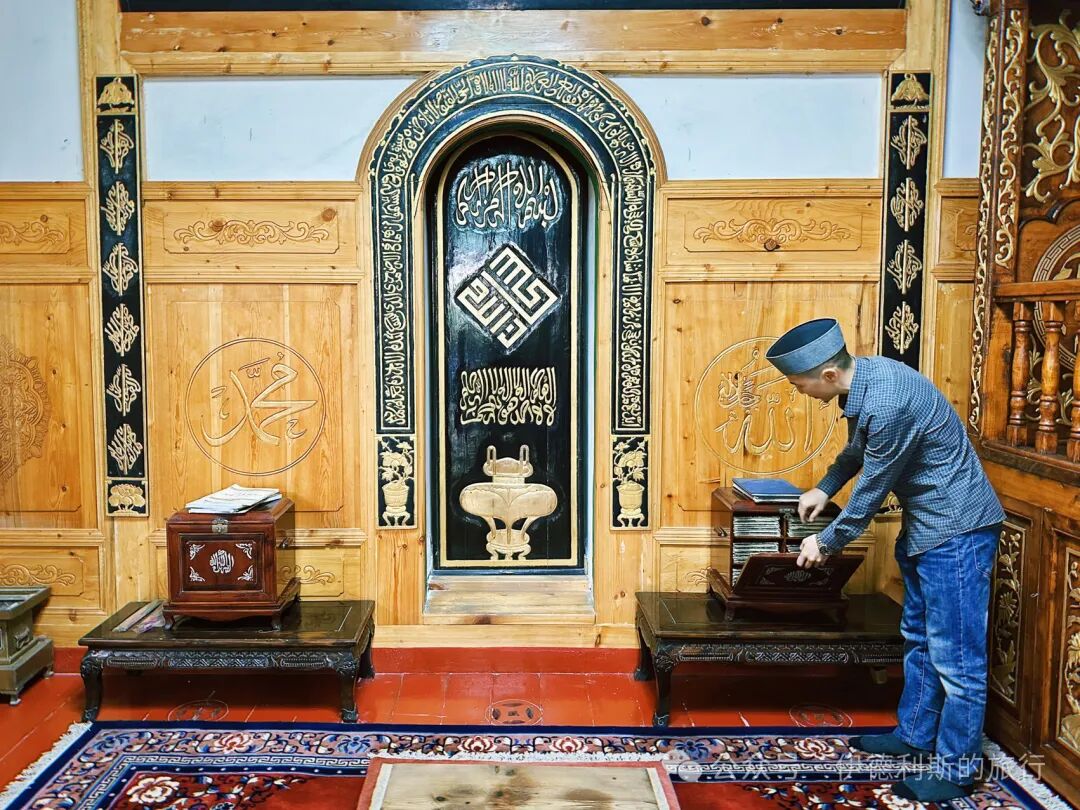
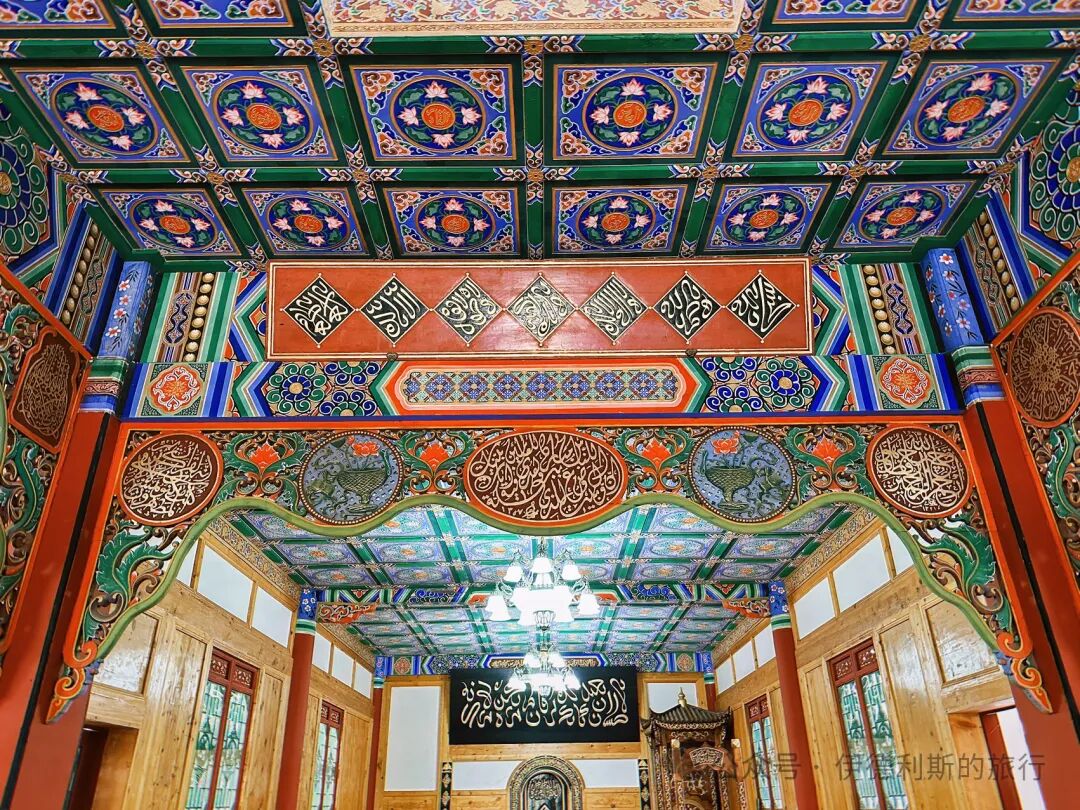
The Dujiangyan Mosque has experienced many earthquakes throughout its history, the most recent being the Wenchuan earthquake. The Wenchuan earthquake caused serious damage to the Dujiangyan Mosque, and it took three years to complete the repairs, resulting in the current architectural style that features strong traditional characteristics of western Sichuan. Inside the main hall, there are two pairs of Arabic couplets preserved today; one pair was written by Imam Wei Zhengfang of the Qing Dynasty, and the other was written by Imam Sha Fuquan. The traditional calligraphy on the mihrab was also written by Imam Wei Zhengfang.
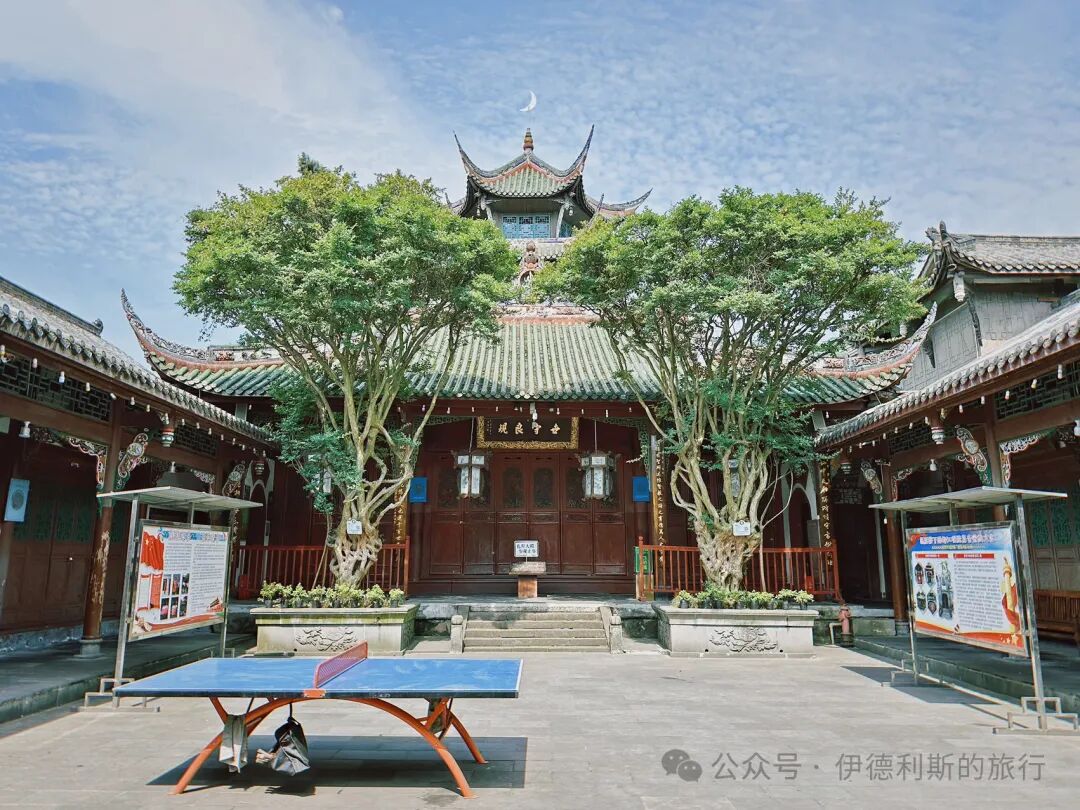
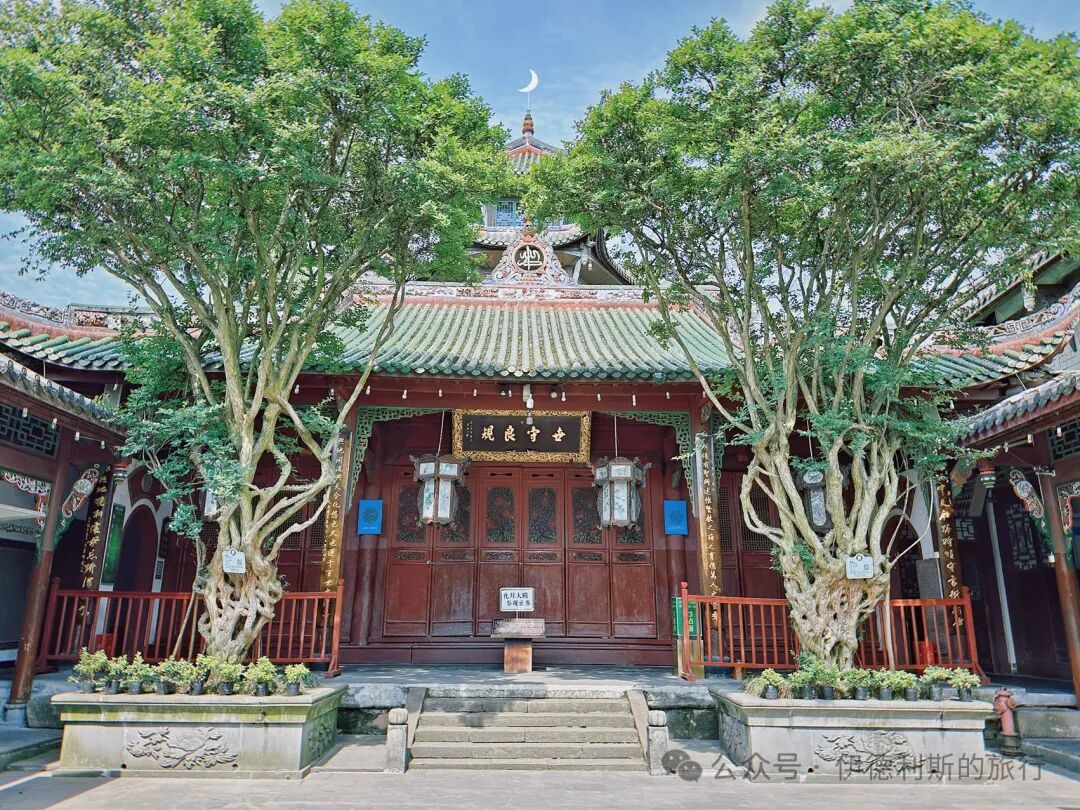
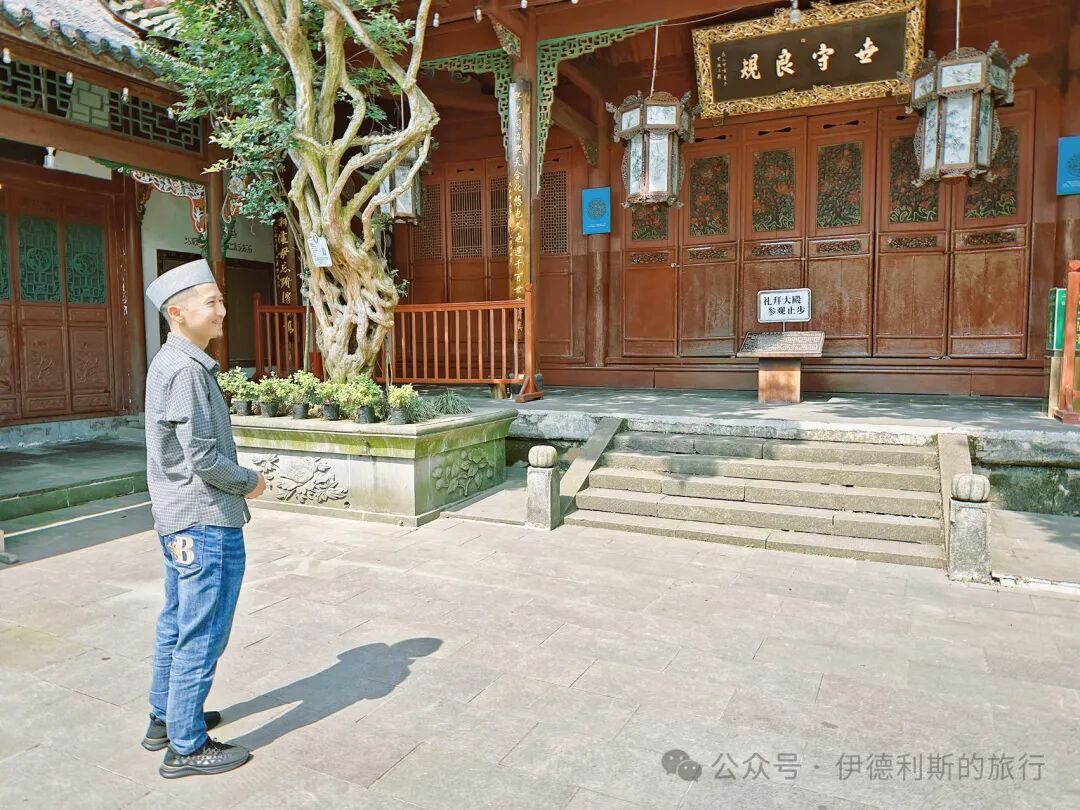
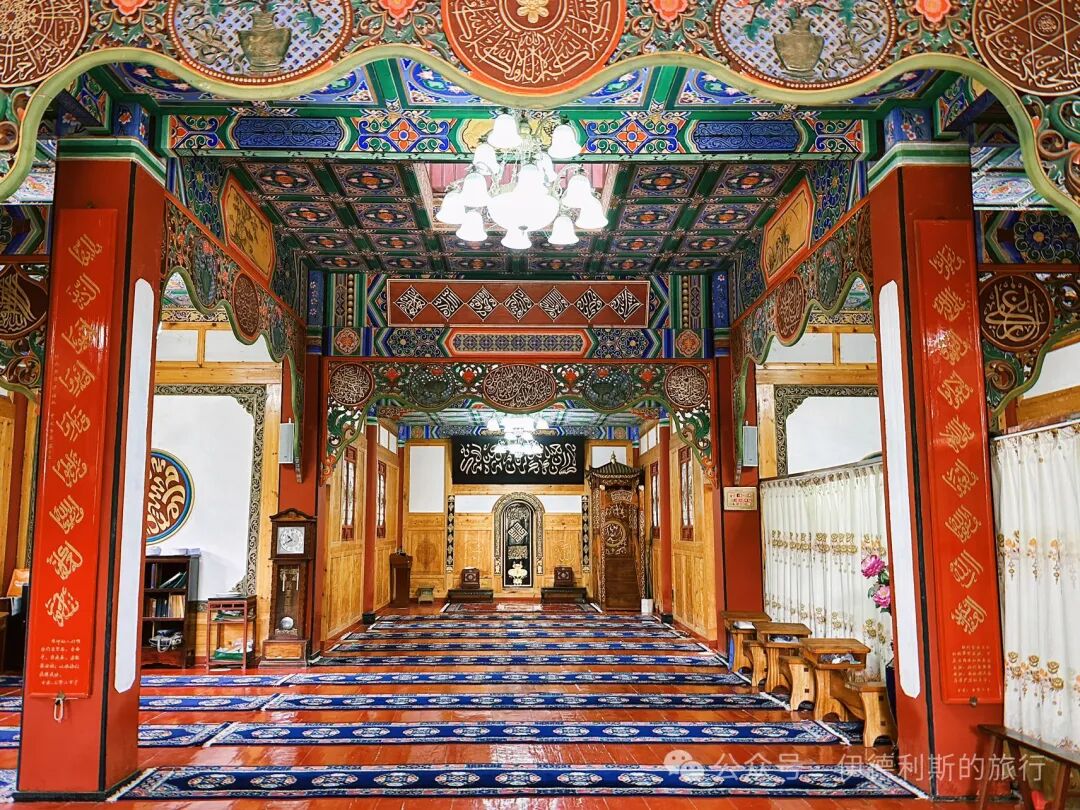
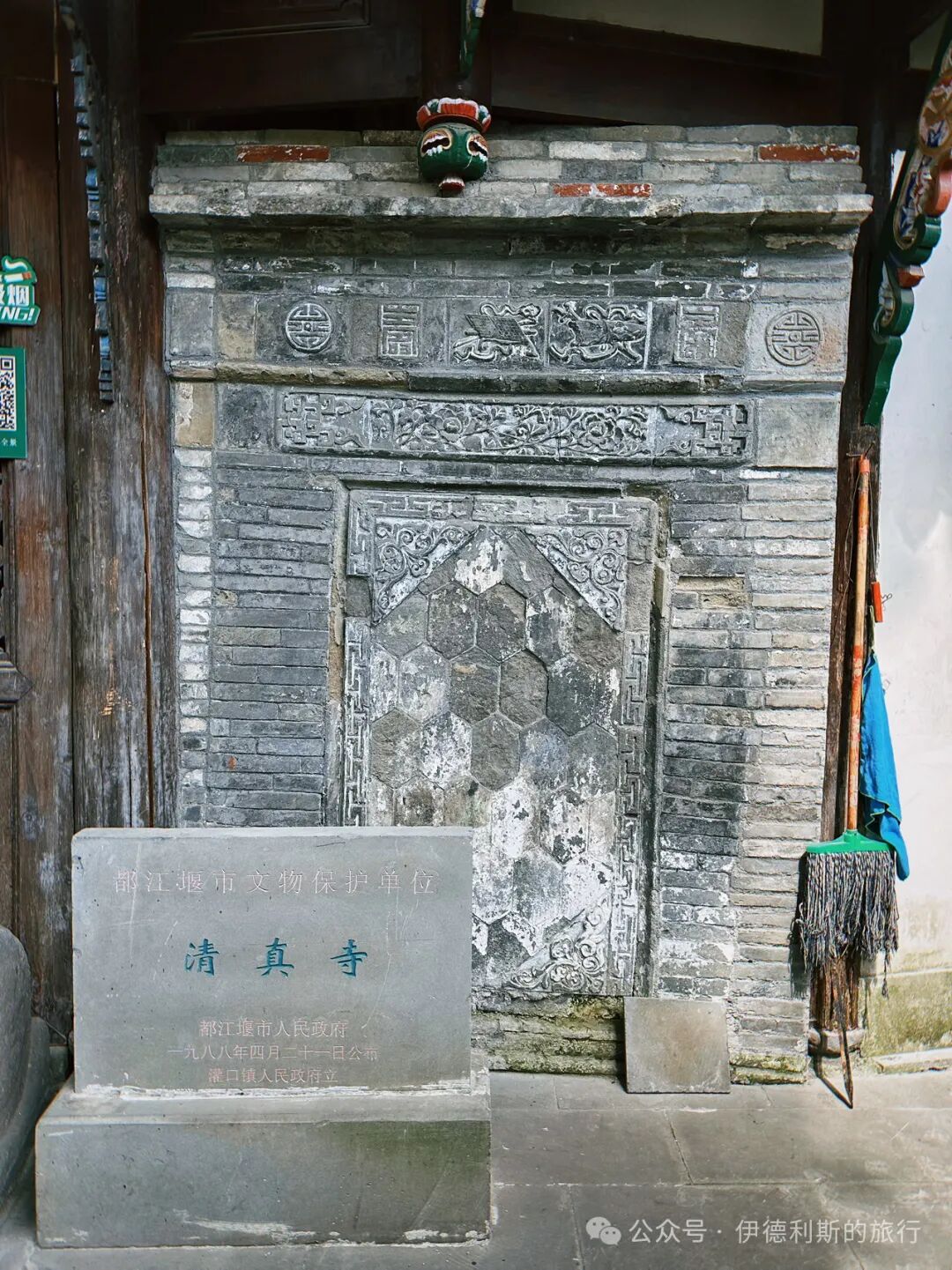
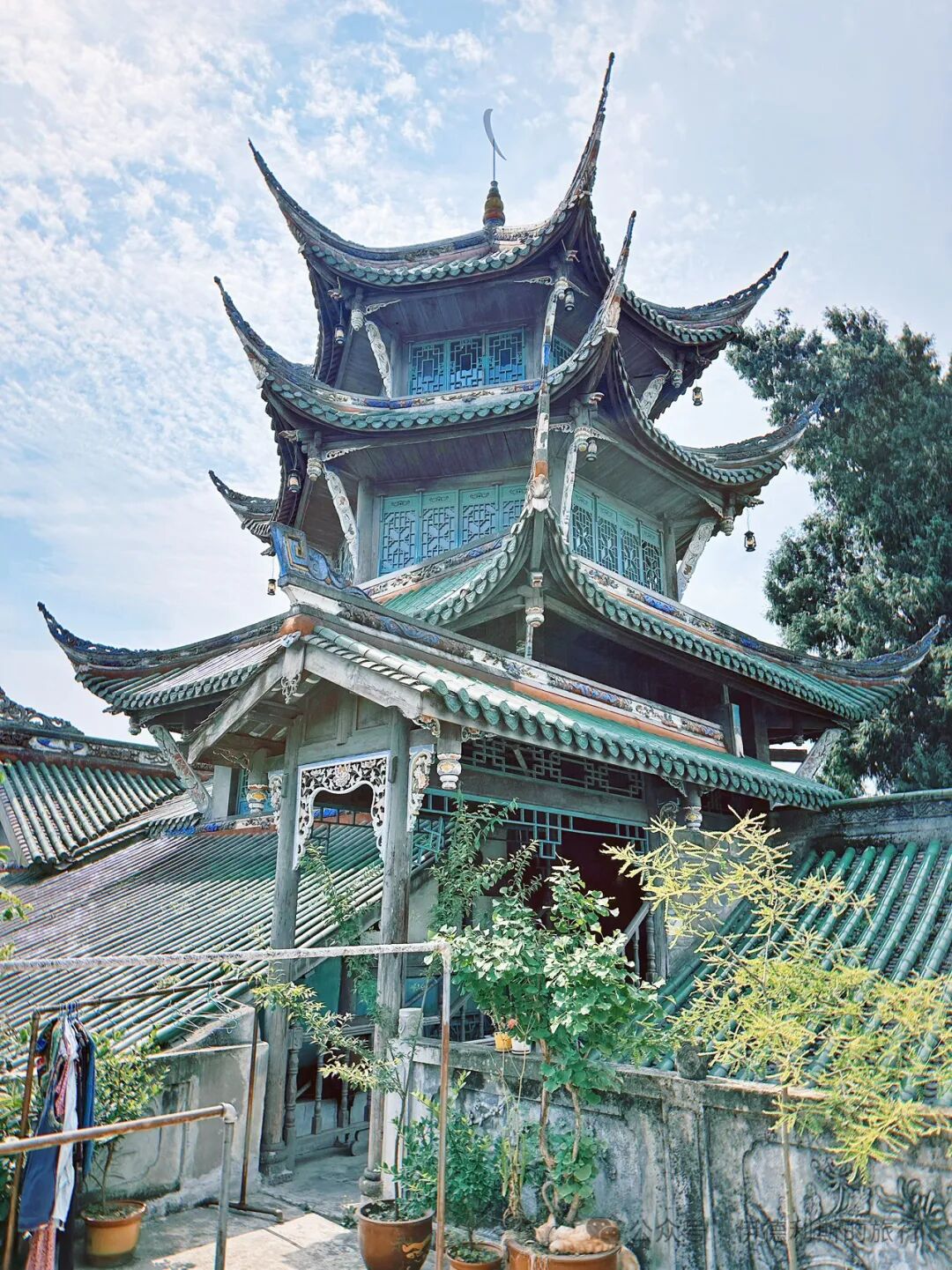
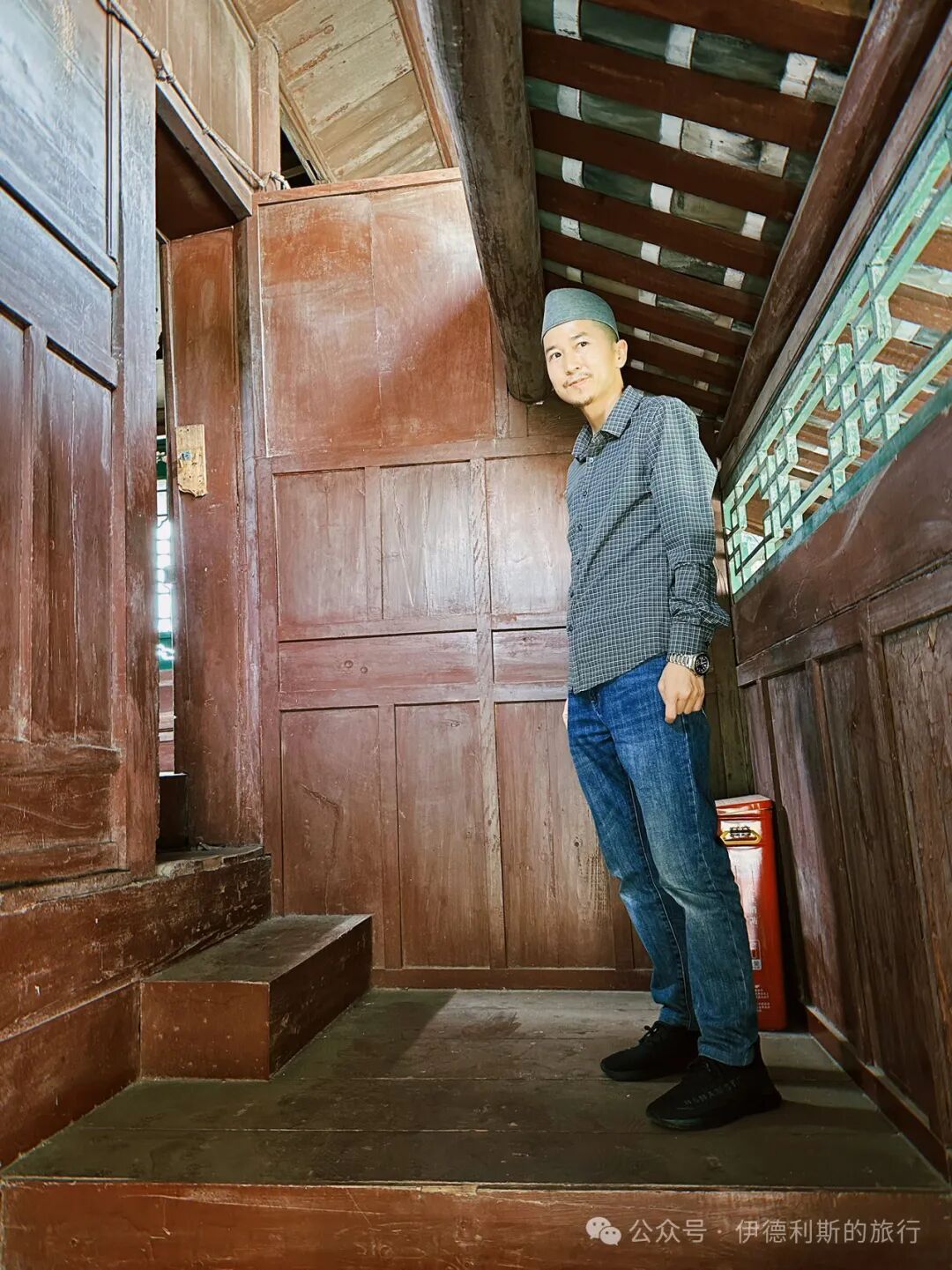
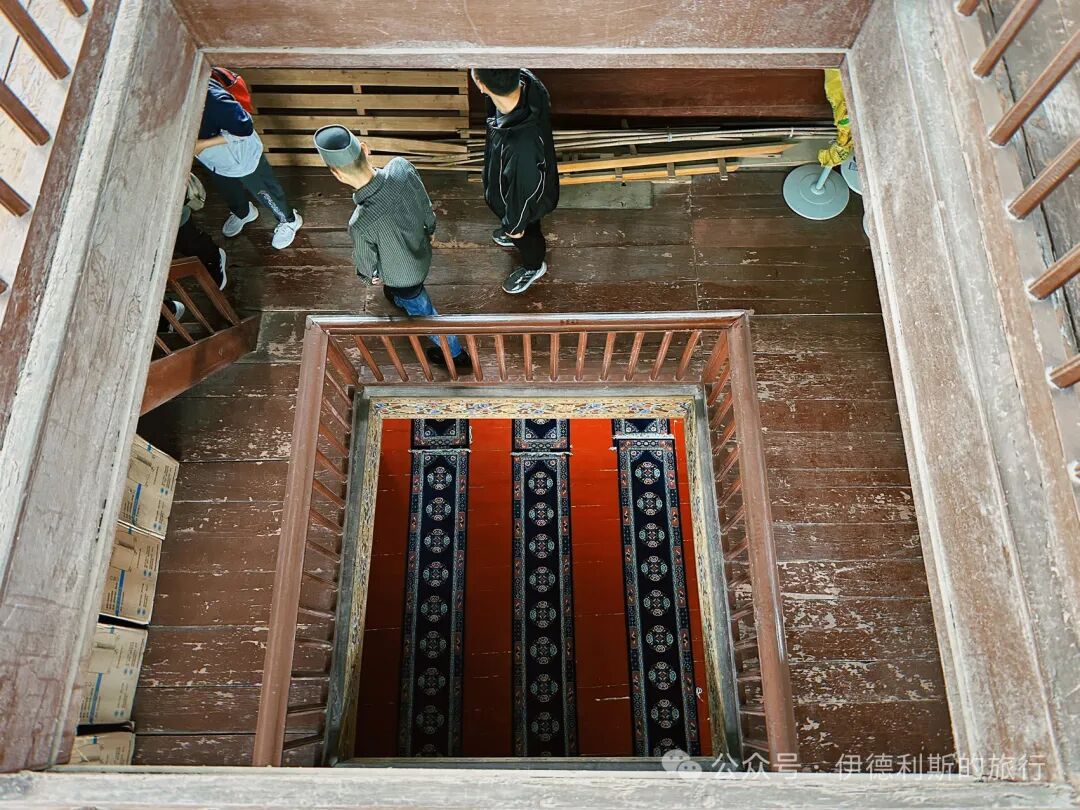
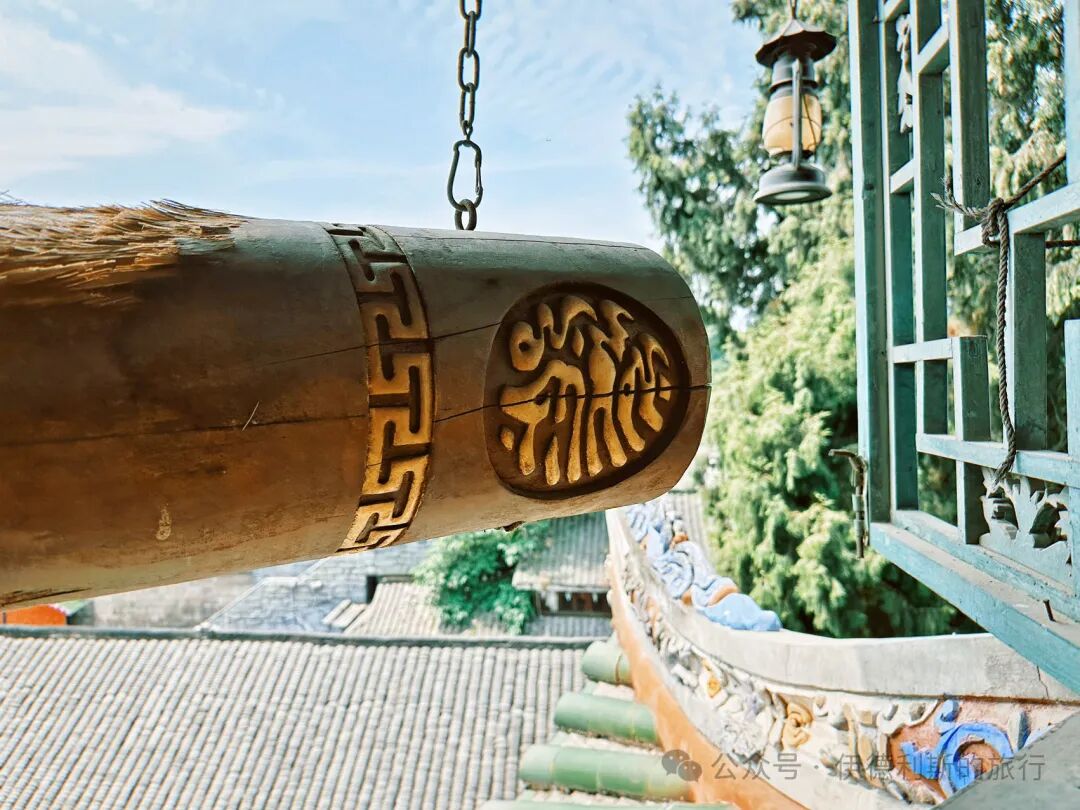
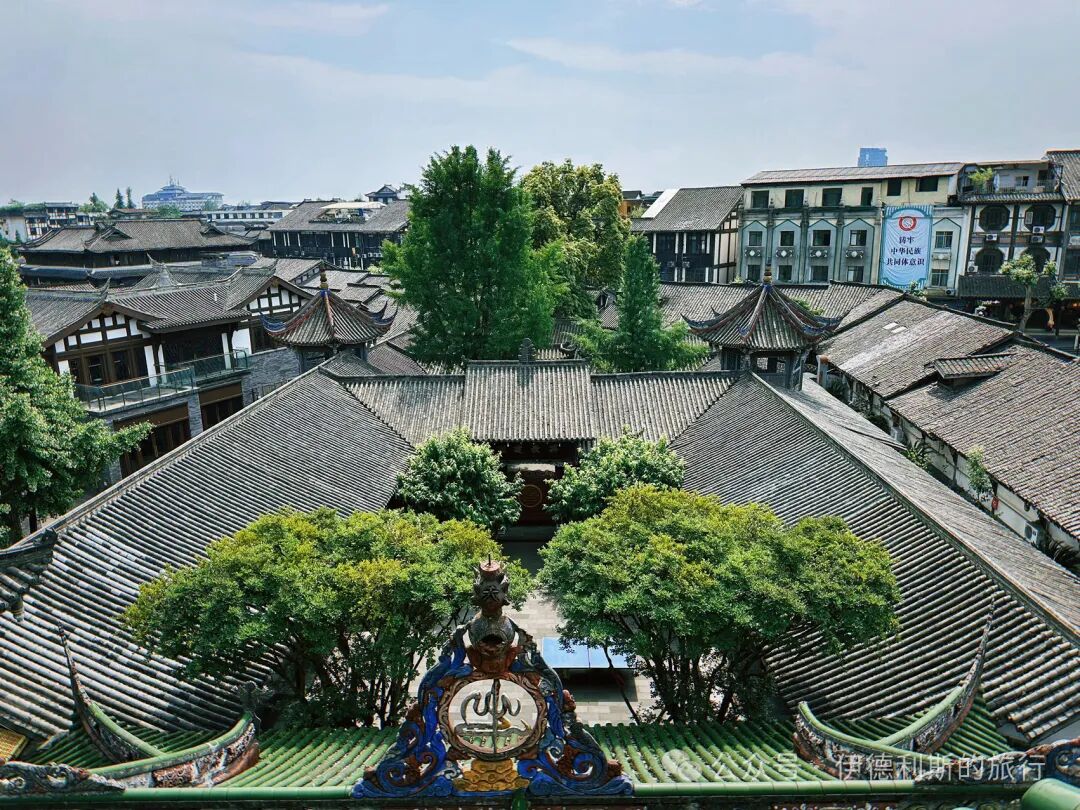
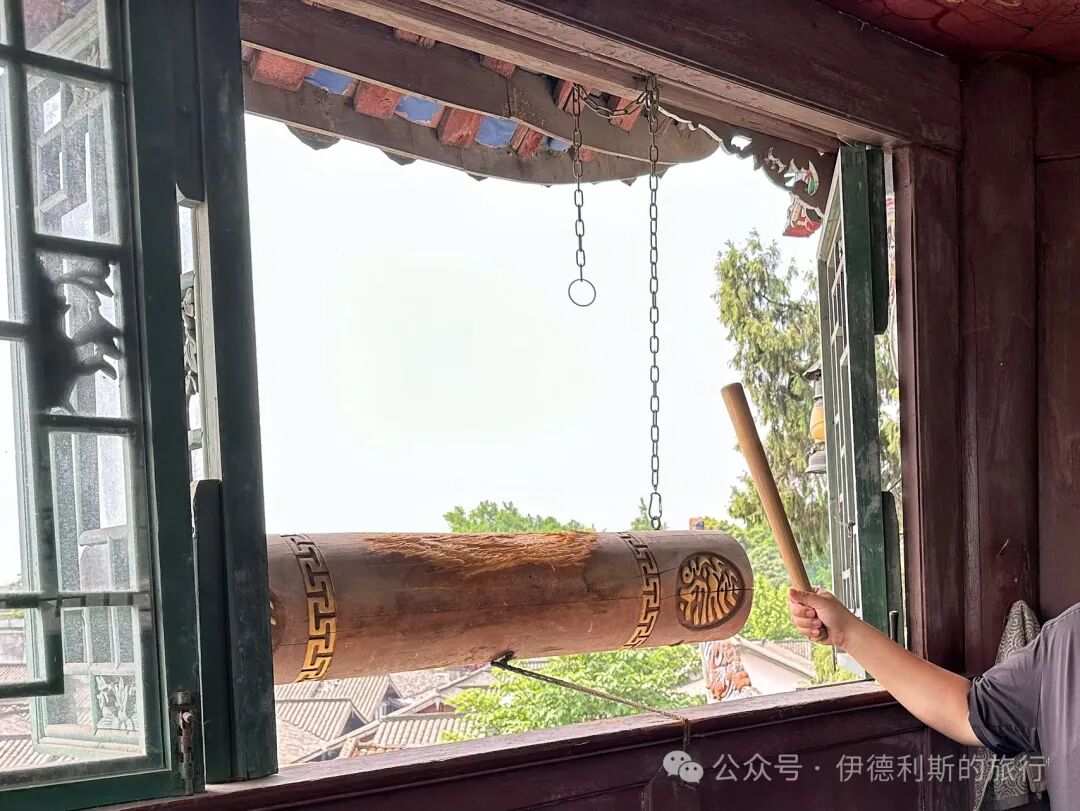
Above the main hall of Dujiangyan Mosque sits the Moon-Gazing Tower (Wangyuelou), added in 1934. It was the tallest building in Guan County at the time, offering a bird's-eye view of the old town streets. The upper level of the Moon-Gazing Tower holds a wooden clapper (bangzi). During Ramadan, it is used to signal the start and end of the daily fast, a very traditional practice.
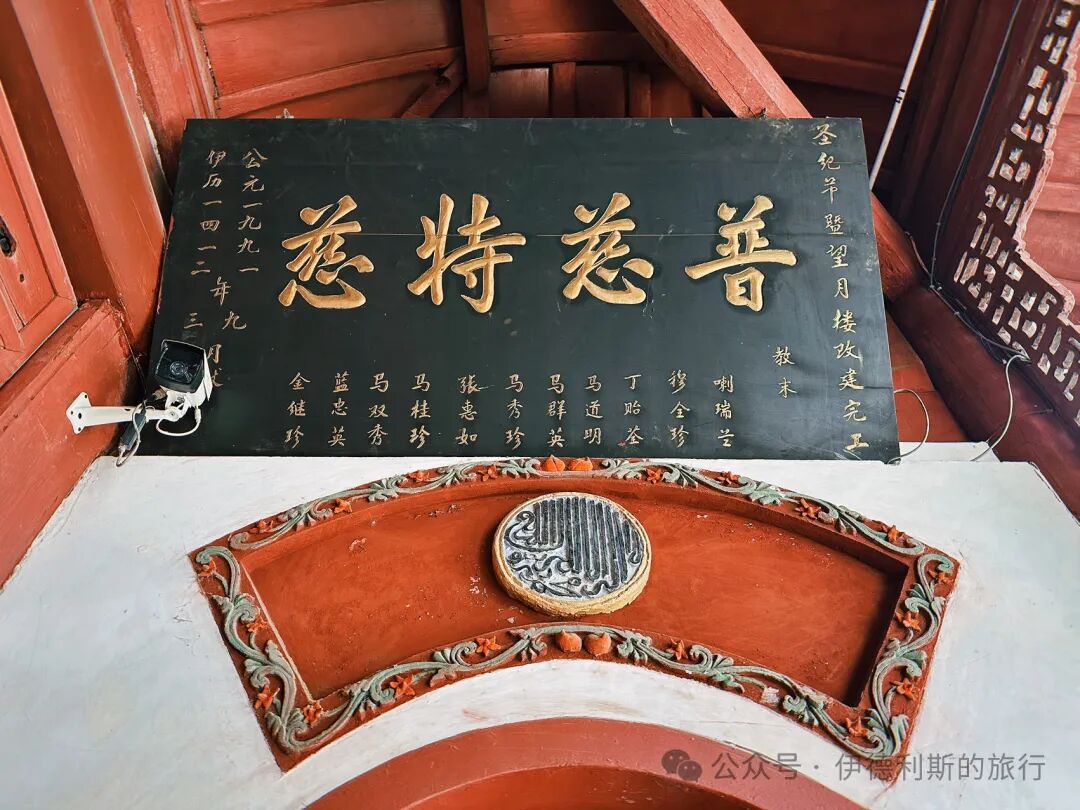
Plaques at Dujiangyan Mosque.
In the twelfth year of the Yongzheng reign, Prince Guo inscribed the 'Uphold Good Rules Forever' (Shishoulianggui) plaque and the 'Origin of Worldly Laws' (Shifayuanliu) plaque. Prince Guo was the seventeenth son of Emperor Kangxi. In the twelfth year of the Yongzheng reign, he traveled to Taining to escort the Dalai Lama back to Tibet. While inspecting provincial garrisons and Green Standard Army troops, he passed through Chengdu and inscribed a plaque for Gulou Mosque. Dujiangyan Mosque made copies of these plaques to keep inside.
In the twenty-ninth year of the Guangxu reign, Sichuan Provincial Commander Ma Weiqi hand-wrote the 'Achieve Through Non-Action' (Wuweiercheng) plaque. Ma Weiqi was a Hui Muslim from Dazhuang, Kaiyuan, Yunnan. He was skilled in calligraphy, following the style of Yan Zhenqing, with a powerful and bold brush technique. In the ninth year of the Guangxu reign, Ma Weiqi was ordered to Vietnam to fight the French. He defeated the French army many times and was promoted to the rank of vice-general for his military achievements, receiving the honorary title 'Boduo Huan Baturu'. While serving as the Sichuan Provincial Commander, Ma Weiqi led troops to suppress a rebellion by lamas and local chieftains in Batang, Tibet. He overcame harsh snowstorms and food shortages to restore peace to the region. For his success, he was awarded the first-rank official cap button and the title of General Jianwei. During his time as Sichuan Provincial Commander, Ma Weiqi greatly supported the local Muslim community. He recommended several imams for positions in Sichuan, including Imam Wang Jiapeng, who is known as one of the four great modern imams of Yunnan.
In 1946, Bai Chongxi wrote the plaque reading 'Promote Religion and Build the Nation.' He wrote it while visiting his in-law, Ma Jianqing, in Sichuan. At the time, Bai Chongxi served as the Minister of National Defense for the Republic of China. Bai Chongxi placed great importance on ethnic education. He built Northwest Middle School in Chengdu, Sichuan, and Jiansheng Middle School in Xichang.
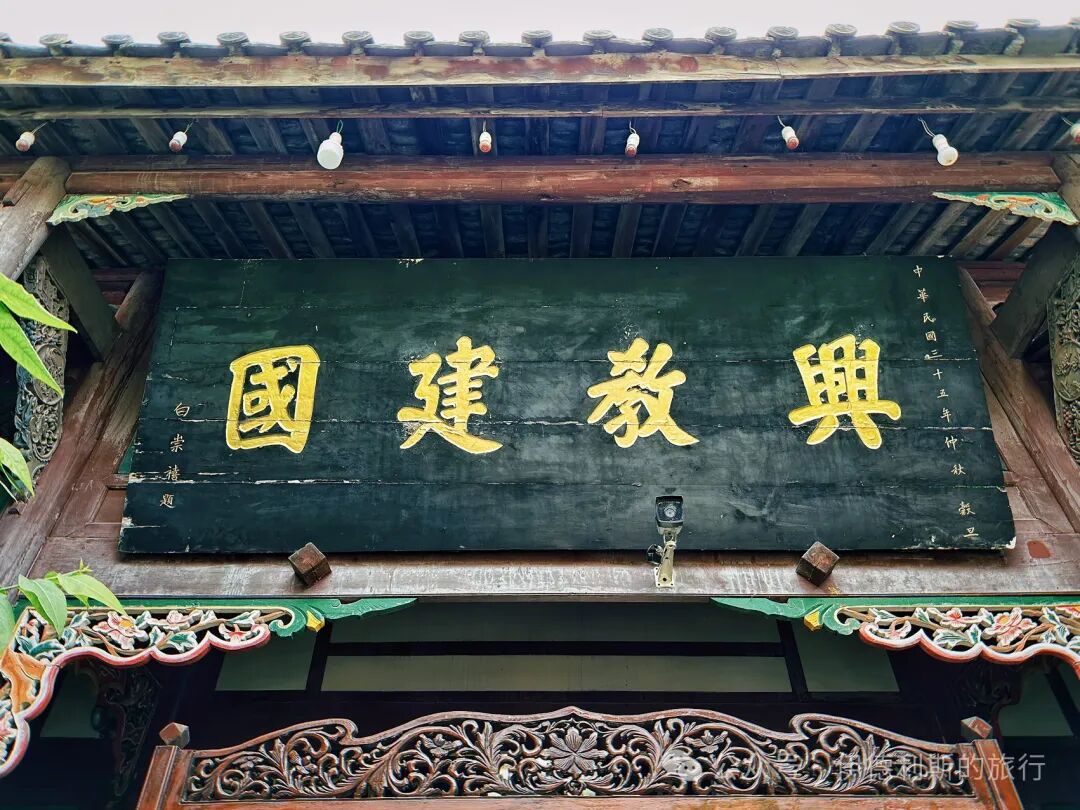
In the seventh year of the Xianfeng reign, Chen Tianzhu, a fifth-rank battalion commander (bazong) of the Anfu Camp who held the blue feather honor, hand-wrote the plaque reading 'Original Unique Honor'.
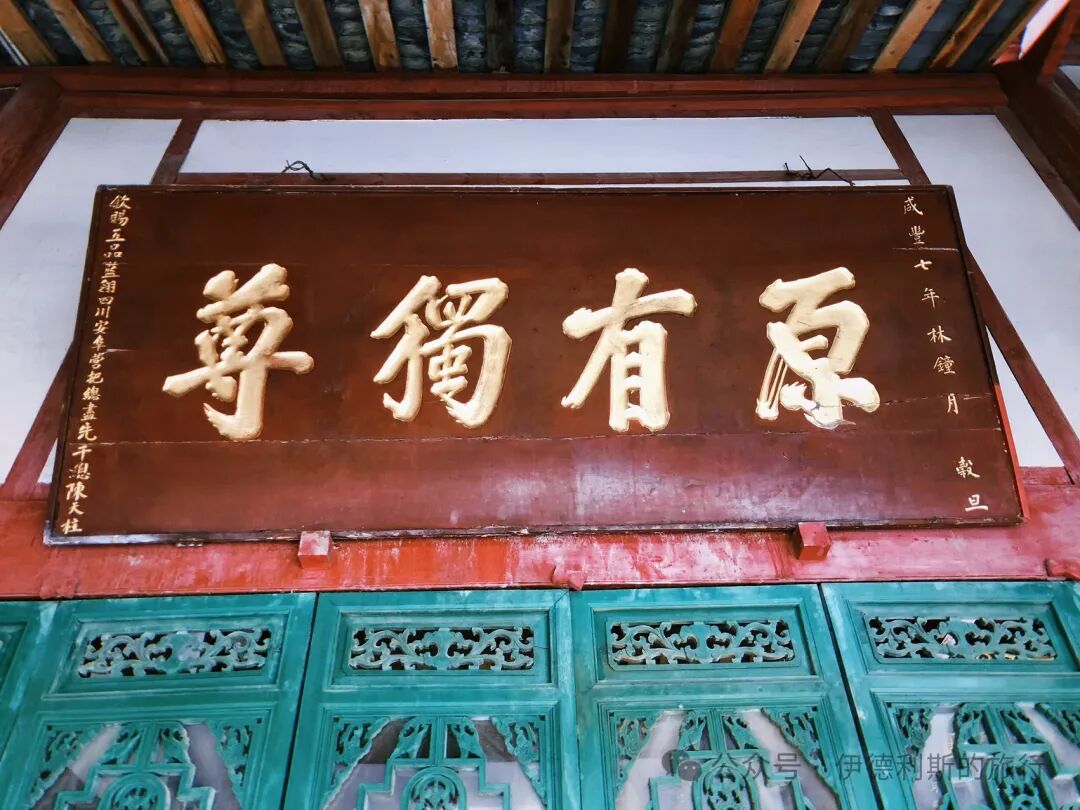
The 'Religion Flourishes in True Unity' plaque dates back to the fourteenth year of the Qianlong reign. Unfortunately, the signature section was destroyed during the 1960s and 1970s. It is believed to have been written by a Hui Muslim military officer during the Qianlong Emperor's Jinchuan campaign. In September of the thirteenth year of the Qianlong reign, the Qing government deployed 35,000 soldiers to the Jinchuan front. These troops included the Eight Banners from the capital and various provinces, as well as the Green Standard Army from Shaanxi, Gansu, Yunnan, and Guizhou.
Besides the Dujiangyan Mosque located on South Street in the ancient city of Guanxian, there were three other mosques in Dujiangyan history: the West Mosque, Baoping Mosque, and Youxi Mosque.
The West Mosque (Xi Si) is located on Shaanxi Lane inside the ancient city of Guanxian. It was built in 1862, the first year of the Tongzhi reign, by Hui Muslims from Songpan, Sichuan. During the Xianfeng and Tongzhi years, Hui Muslims from Songpan with the surnames Jia, Qi, Mi, and Yu traveled south along the Songmao Ancient Road for business. They settled in the ancient city of Guanxian and pooled their money to build the Guanxian West Mosque. In 1959, the Guanxian West Mosque was torn down to make room for the construction of the Guanxian People's Hospital. Today, a plaque reading "Ancient Mosque" (Qingzhen Gusi) from the tenth year of the Tongzhi reign hangs above the second gate of the Dujiangyan Mosque. This is the original plaque that once hung on the main gate of the West Mosque.
Baoping Mosque is also called Maogong Mosque. It was built in 1925 by Hui Muslims from Maogong, which is modern-day Xiaojin County in Sichuan. As early as the beginning of the Tongzhi reign, some Hui Muslims from Maogong had already moved to live in Guanxian. After the Sichuan Railway Protection Movement began in 1911, Hui Muslims from Maogong took an active part. They faced persecution from local feudal forces, causing many to flee, with most settling in Guanxian. In 1925, the Hui Muslims from Maogong who had moved to Guanxian pooled their money to build Baoping Mosque just 50 meters from the Baopingkou intake of the Dujiangyan irrigation system.
Maogong Mosque consists of two courtyards. The outer courtyard was a guesthouse for travelers, and the inner courtyard is the mosque. The main prayer hall has a distinct Republican-era style, blending Chinese and Western architecture. After Imam Ma Zifeng left in 1951, Baoping Mosque did not hire another imam. Since then, 45 Hui Muslim families have lived inside the mosque. In 1981, the property rights were acquired by the Xiaojin County Mosque. After the 2008 Wenchuan earthquake, Baoping Mosque was severely damaged. The Xiaojin Mosque could not afford the repairs, so they sold the property rights to the Dujiangyan municipal government. Later, Dujiangyan city renovated Baoping Mosque. The outer courtyard is rented out to a Han Chinese restaurant, but no businesses have moved into the inner courtyard.
Youxi Town is located on a key spot of the Songmao Ancient Road. Many merchants passed through, and some Hui Muslims lived there, so Youxi Mosque was built during the Kangxi reign. In the early years of the Republic of China, devoted community members Wang Yuzhi, Wang Chunyan, and Elder Ma proposed rebuilding Youxi Mosque. The construction was led by Imam Li Tianbo, who was from Changsha, Hunan. With funds raised by Hui Muslim businesses and individuals, the reconstruction was finally completed in 1917. Around 1930, Youxi Mosque had 12 member families (gaomu), including the famous martial artist Ma Guozhu.
In 1950, a fire broke out across Youxi Town and destroyed the Youxi Mosque. After the communal dining halls were introduced in 1958, Hui Muslims in Youxi Town began moving away because daily life became inconvenient. In 1967, the coffin covers (guanzhao) and scripture boxes (tabuxia) stored at the original site of the Youxi Mosque were destroyed. After the 2008 Wenchuan earthquake, the Hui Muslim cemetery on the mountain opposite the Youxi Mosque, which dated back to the Kangxi era, was completely destroyed.
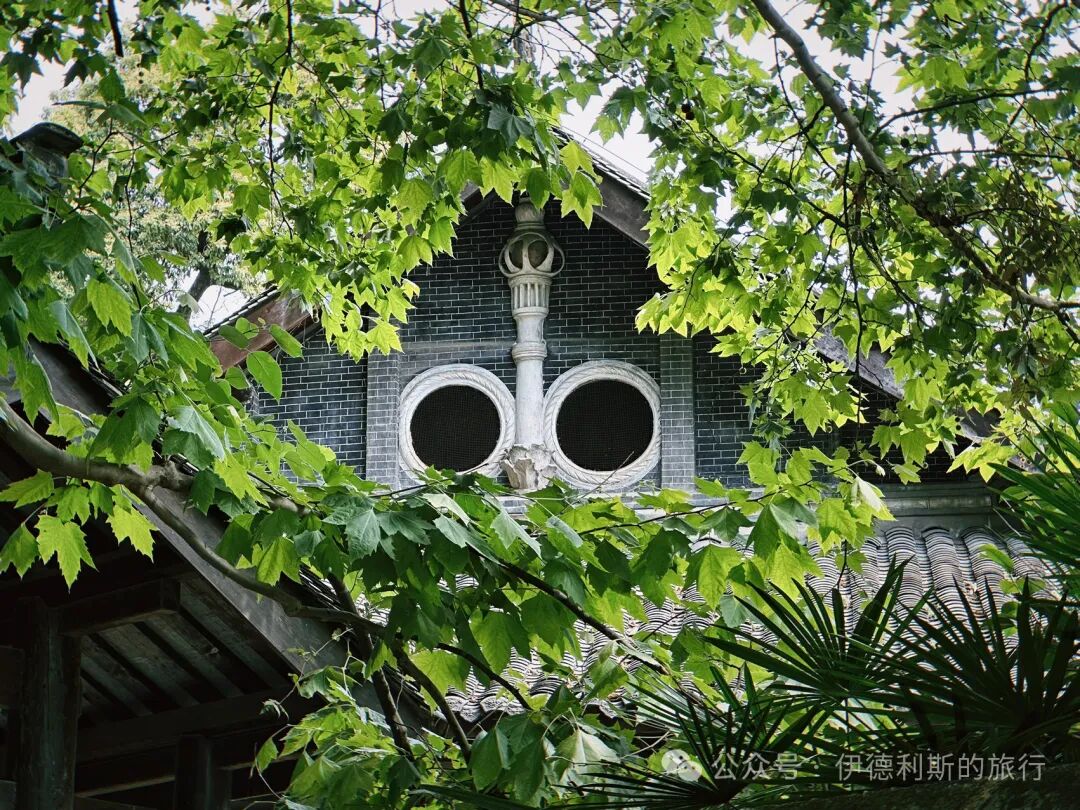
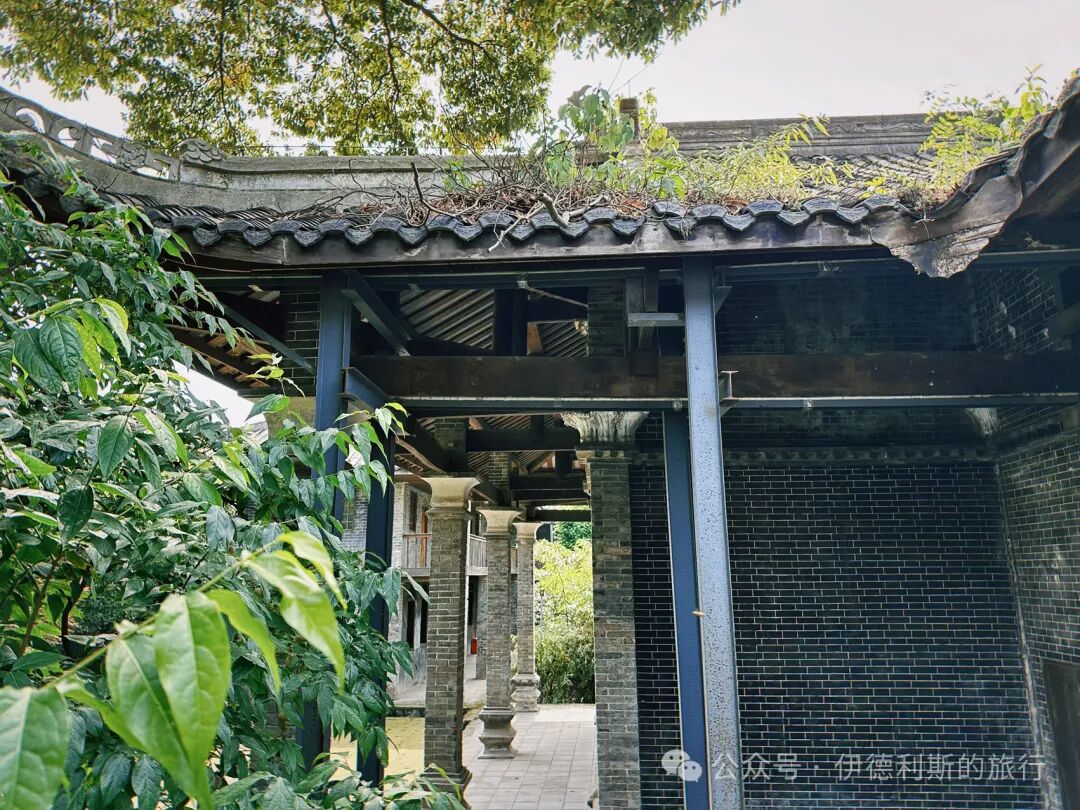
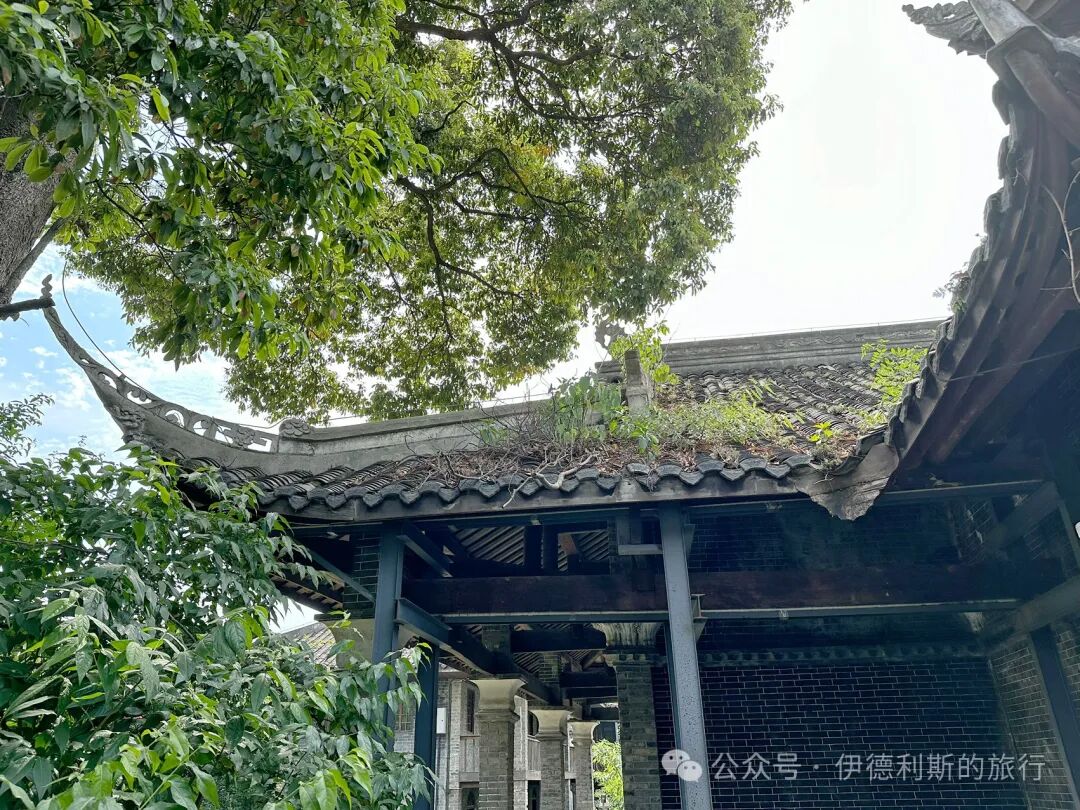
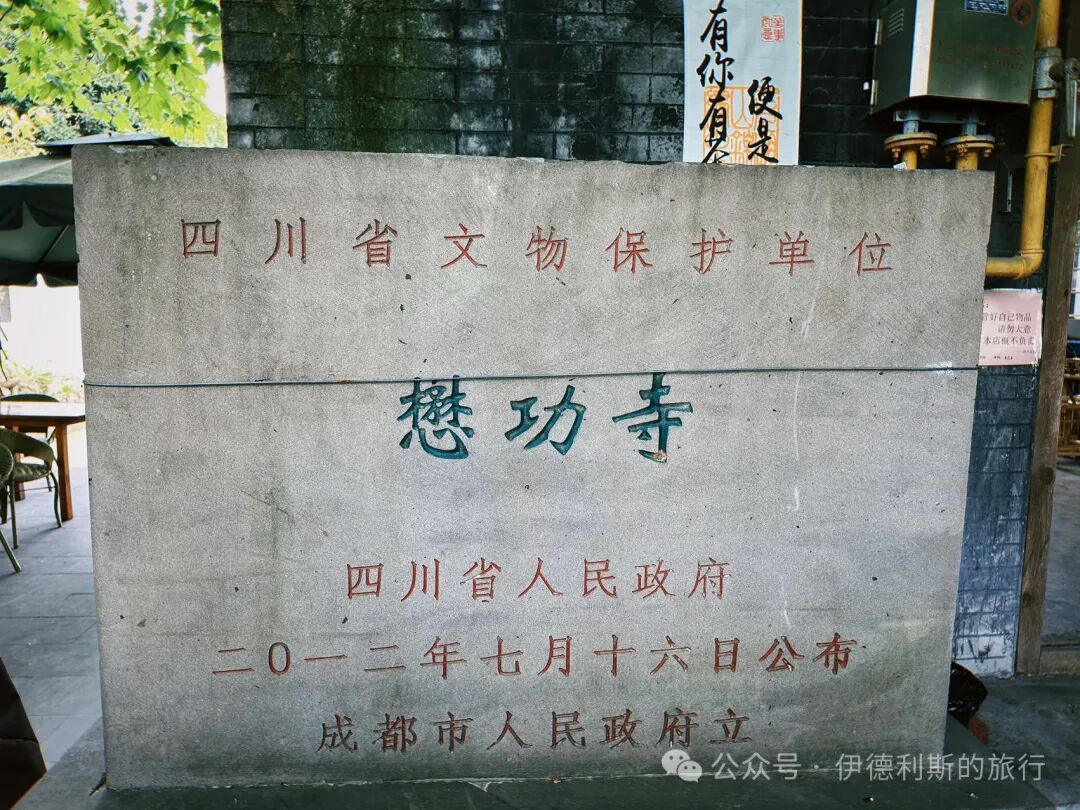
Inside the Dujiangyan Mosque stands a memorial archway (paifang) built in 2018 called the Fali Archway. Its four stone pillars came from the original site of the Chengdu Seven Mosque on Donghuamen South Street in Chengdu. The Chengdu Seven Mosque was first built in the 12th year of the Yongzheng reign and rebuilt in the 5th year of the Tongzhi reign. It was occupied by a wool factory in 1956 and demolished after being requisitioned by the Sichuan Provincial Bureau of Materials in 1984. After the Seven Mosque was torn down, the stone pillars were abandoned at Fenghuang Mountain. In 2017, during wall repairs at the Fenghuang Mountain Hui Muslim cemetery, the pillars were dragged to a vacant lot at the Fenghuang Mountain Air Force training base. In 2018, the Dujiangyan Mosque brought them back to build the archway.
There were originally three pairs, or six pillars in total. The Dujiangyan Mosque holds four of them, which are:
To nurture your character and serve Allah, the work of the wise must start with everyday human relationships.
To learn from the basics and reach the heights of understanding the true meaning of morality, you must find it in your daily life.
This is a place of spiritual truth and law, not just a spot for ordinary kneeling and prayer (missing second line).
The path cannot be left for even a moment; whether serving or reflecting, everything happens in the realm where Allah is present (missing second line).
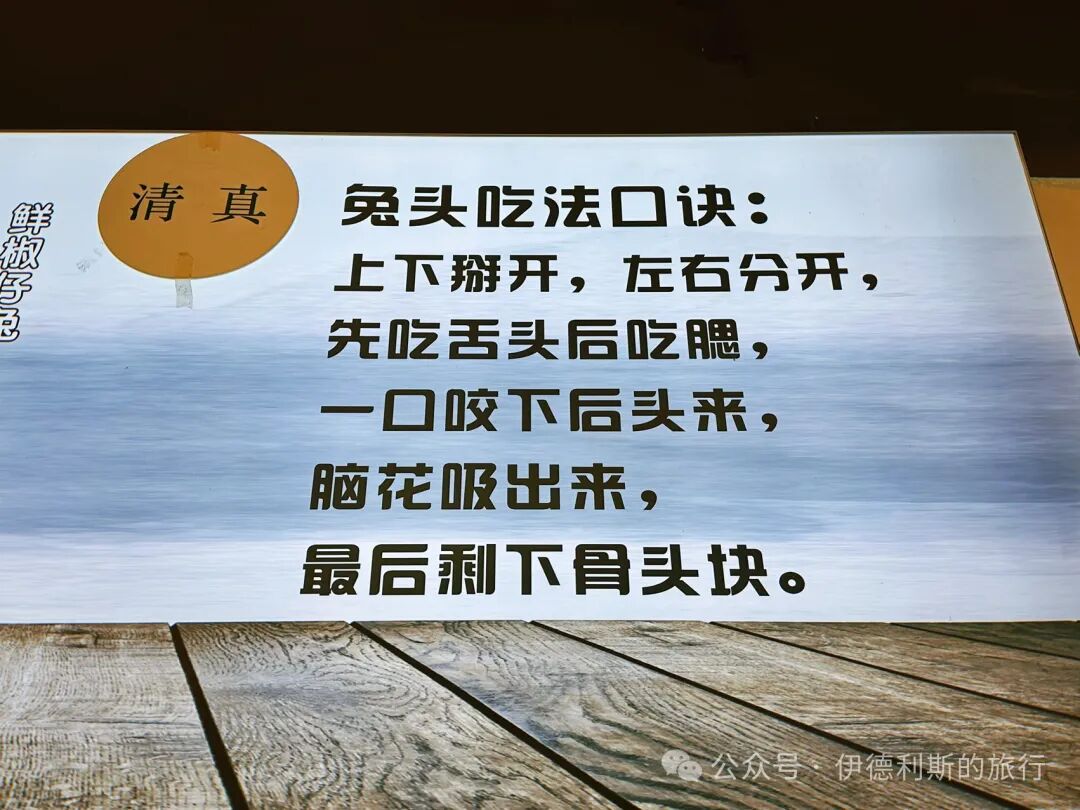
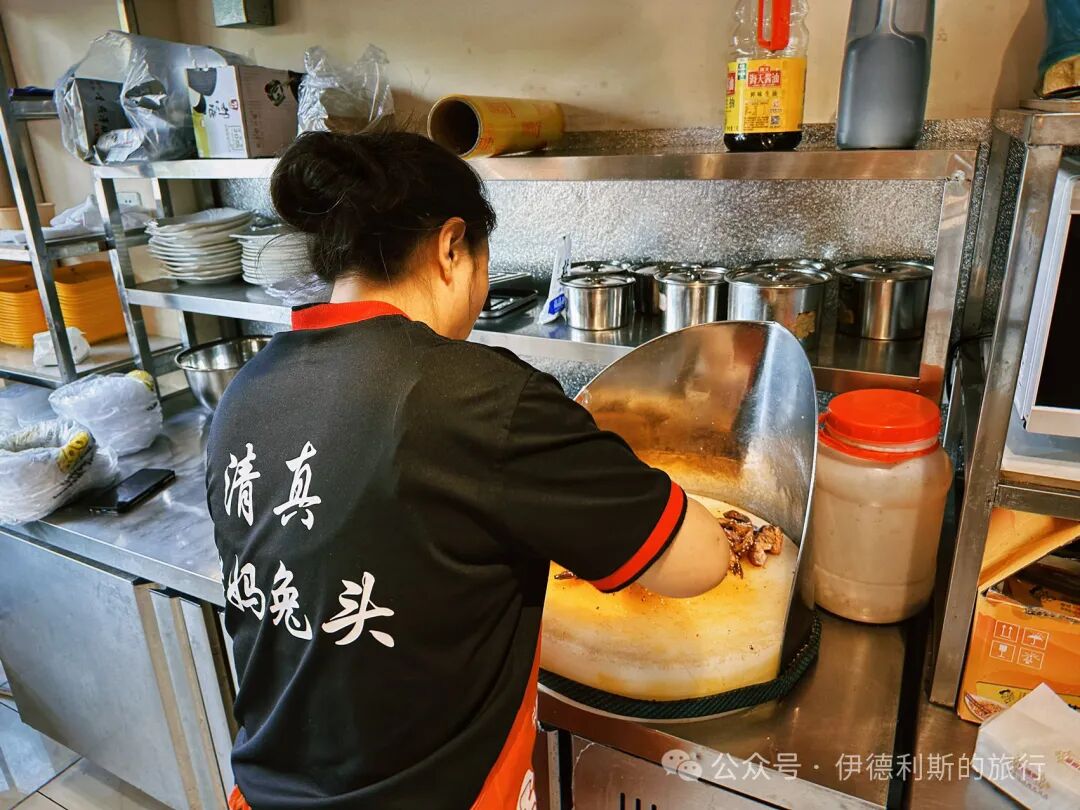
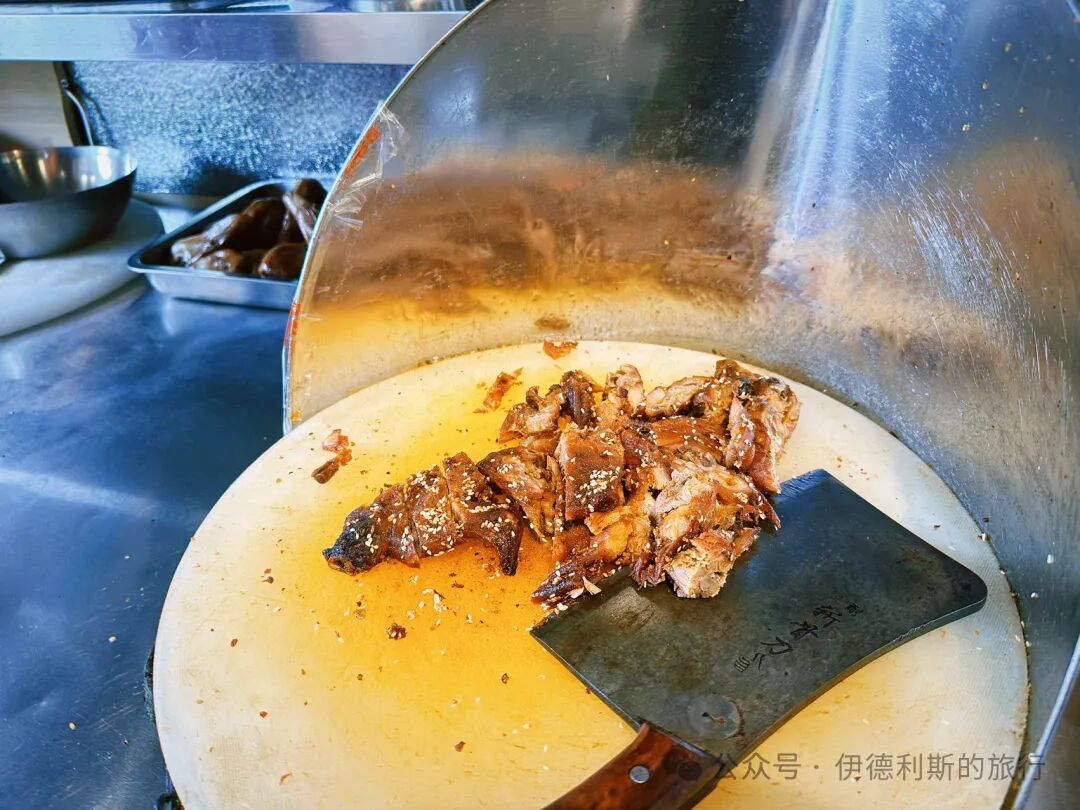
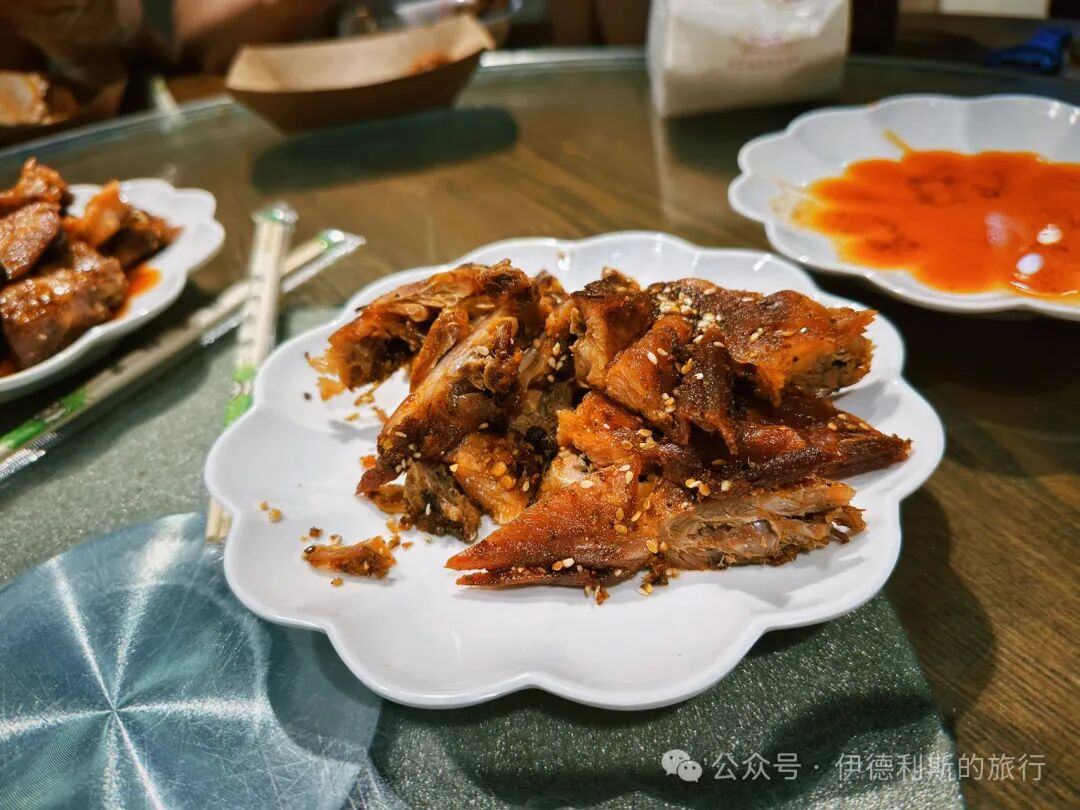
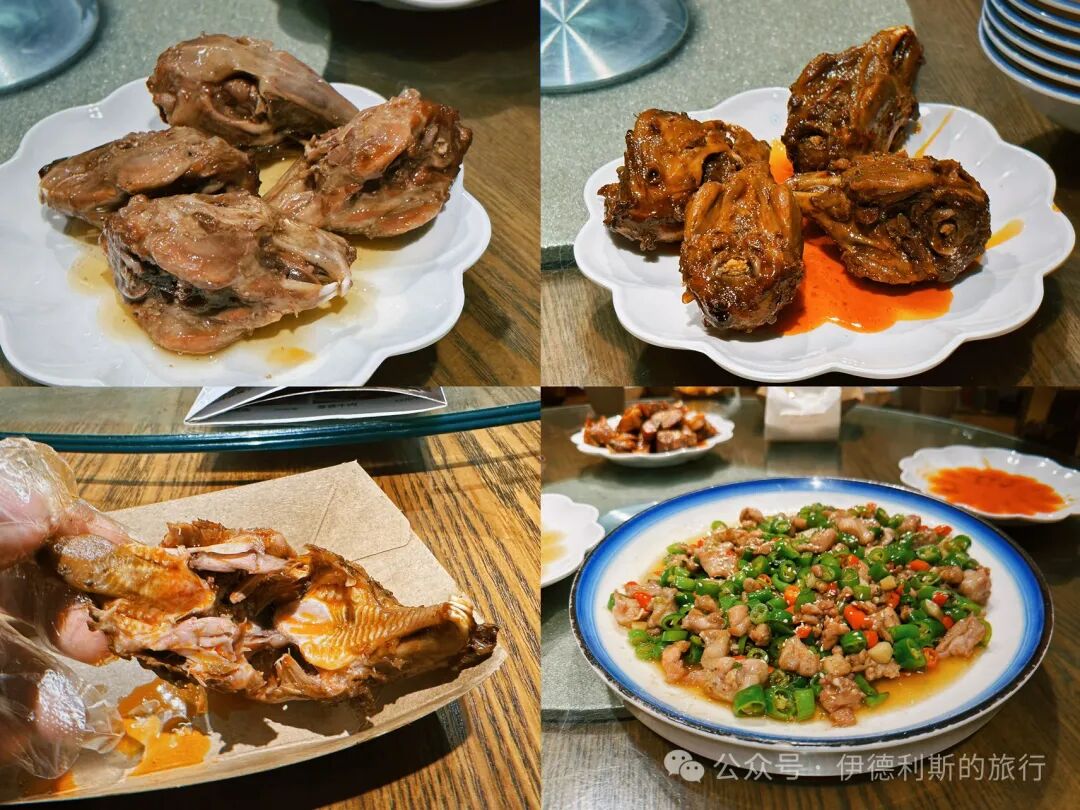
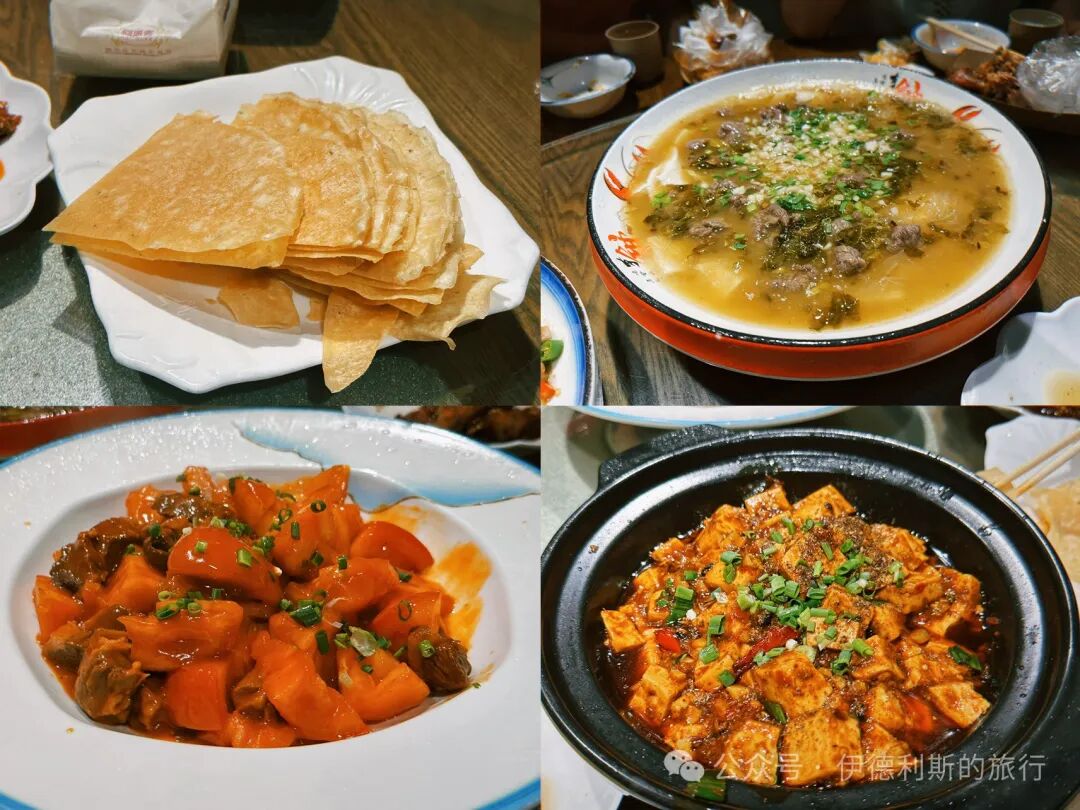
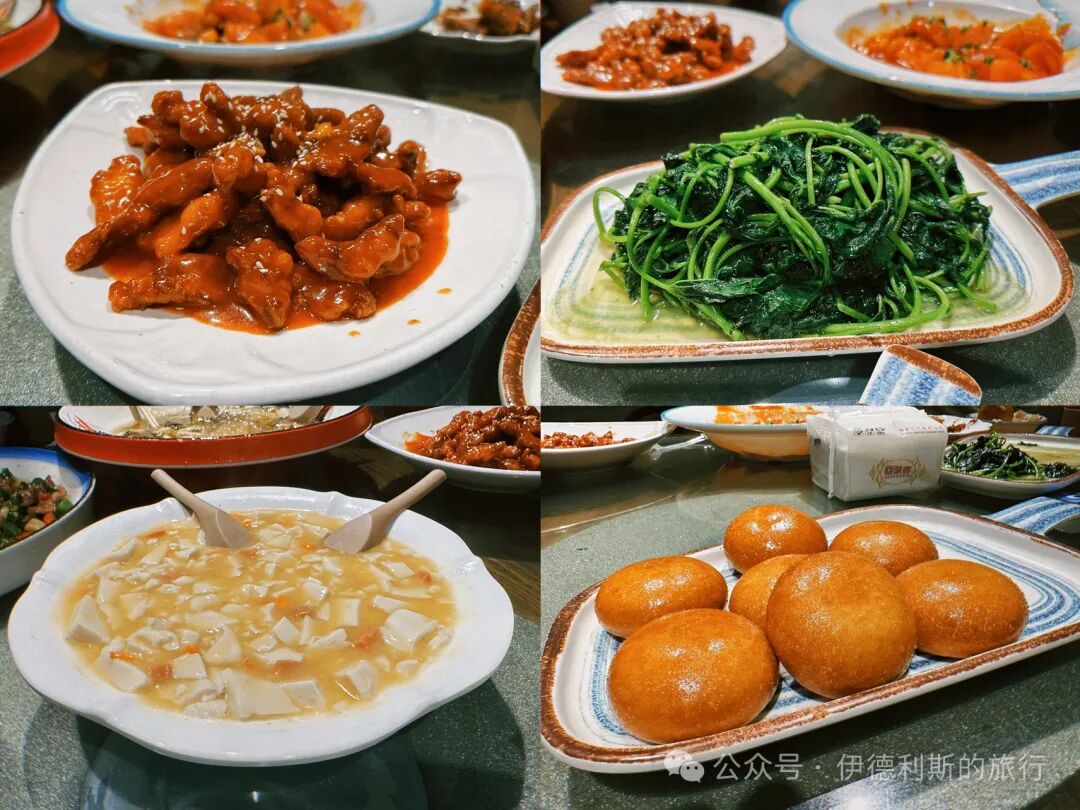
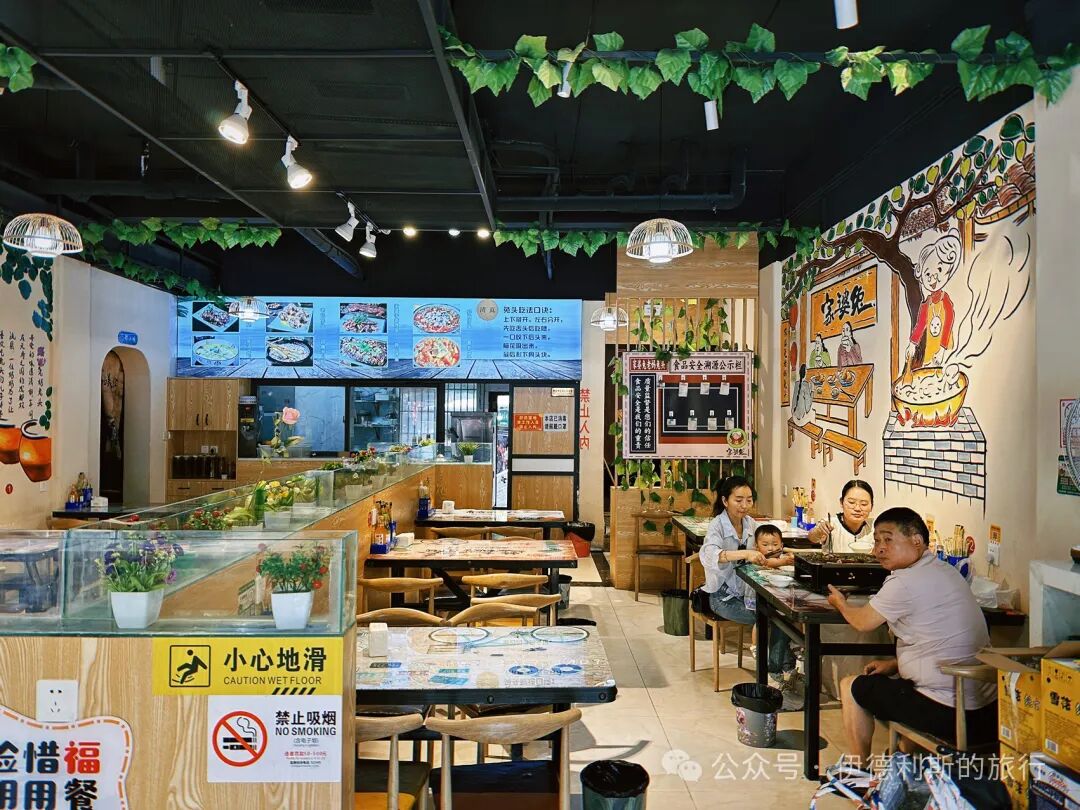
There are many halal restaurants around Dujiangyan Mosque where you can eat authentic traditional Western Sichuan Hui Muslim food. Huixiangyuan, right next to Dujiangyan Mosque, is a long-established restaurant that displays a very traditional water pitcher (tangping) sign.
The current imam (gaomu) of Dujiangyan Mosque is surnamed Hai. His ancestors were from Shunyi, Beijing, and moved from Shaoyang, Hunan, to Sichuan during the Wanli era of the Ming Dynasty. Later, more of the Hai family moved here during the Qing Dynasty migration period known as Huguang Tian Sichuan.
The Zhang family from Hebei originally came from Zhangjiawan Town in Tongzhou, Beijing. At the end of the Ming Dynasty, three Zhang brothers moved to Pixian and led the construction of the Pixian Zhang Family Mosque, then moved to Dujiangyan during the Tongzhi era of the Qing Dynasty.
The Ma family of Maogong originally came from Tianbei Village in Weinan, Shaanxi. They moved to Xiaojin County, Sichuan, during the Qianlong reign. In 1912, they moved to Eshi Lane in the Huangchengba area of Chengdu because of the Railway Protection Movement. Their house was destroyed during the warlord conflicts in 1917, and they later moved to Dujiangyan.
The Li family of Wenchuan originally came from Xiaoyi Town in Weinan, Shaanxi. They later moved to Weizhou in Wenchuan before settling in Dujiangyan.
The Qi family of Shaanxi originally came from Weinan, Shaanxi. They moved to Songpan, Sichuan, during the Daoguang reign and then to Dujiangyan between the end of the Qing Dynasty and the start of the Republic of China. They were known as Sauce Garden Qi because they ran a soy sauce factory.
The Li family moved here from Tangyuan Town in Pixian County during the Tongzhi reign of the Qing Dynasty. Another branch moved here from Tuanjie Town in Pixian County in 1945.
The Ma family of Shaanxi originally came from Qiaotian Village in Weinan, Shaanxi. They moved to Dujiangyan in 1808 to escape the White Lotus and Tianli sects. They ran the Daxing mule and horse inn from 1826 until 1949.
The Jiang family of Shandong originally came from Shandong. They later moved to Yanting, Sichuan, and then to Dujiangyan in the early years of the Republic of China.
The Cai family of Taiyuan moved to the Dajin and Xiaojin areas of Sichuan during the Qianlong reign. They moved to Dujiangyan in 1912.
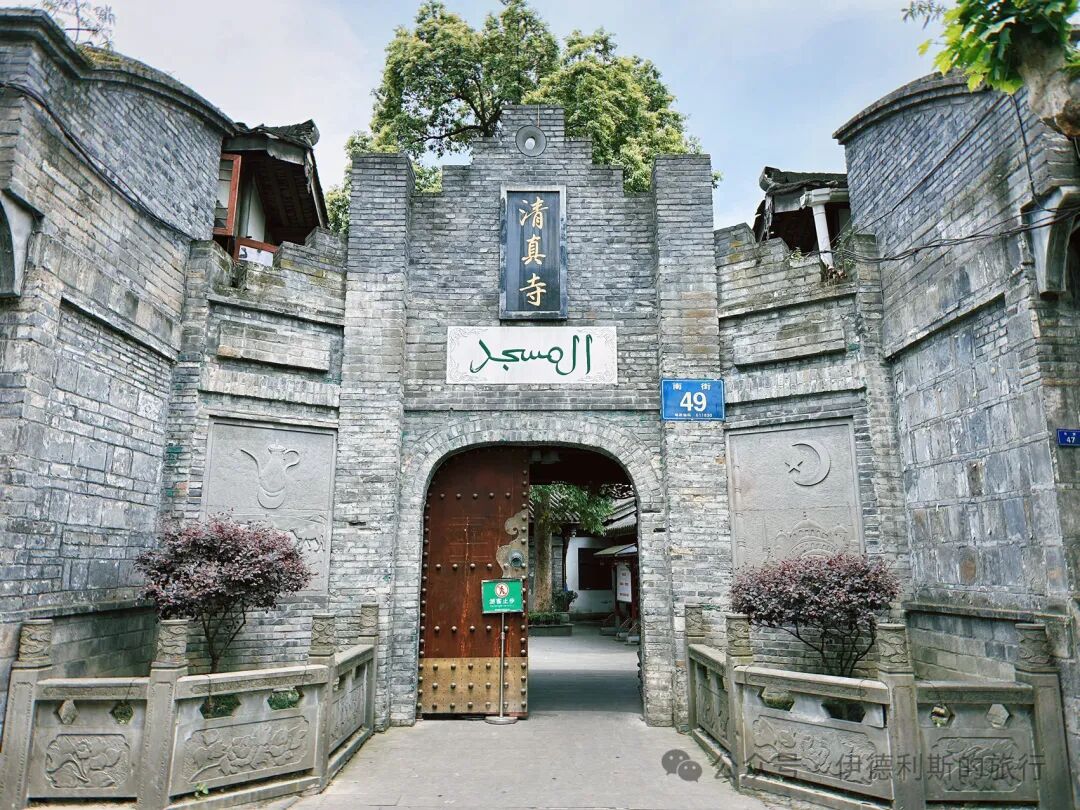
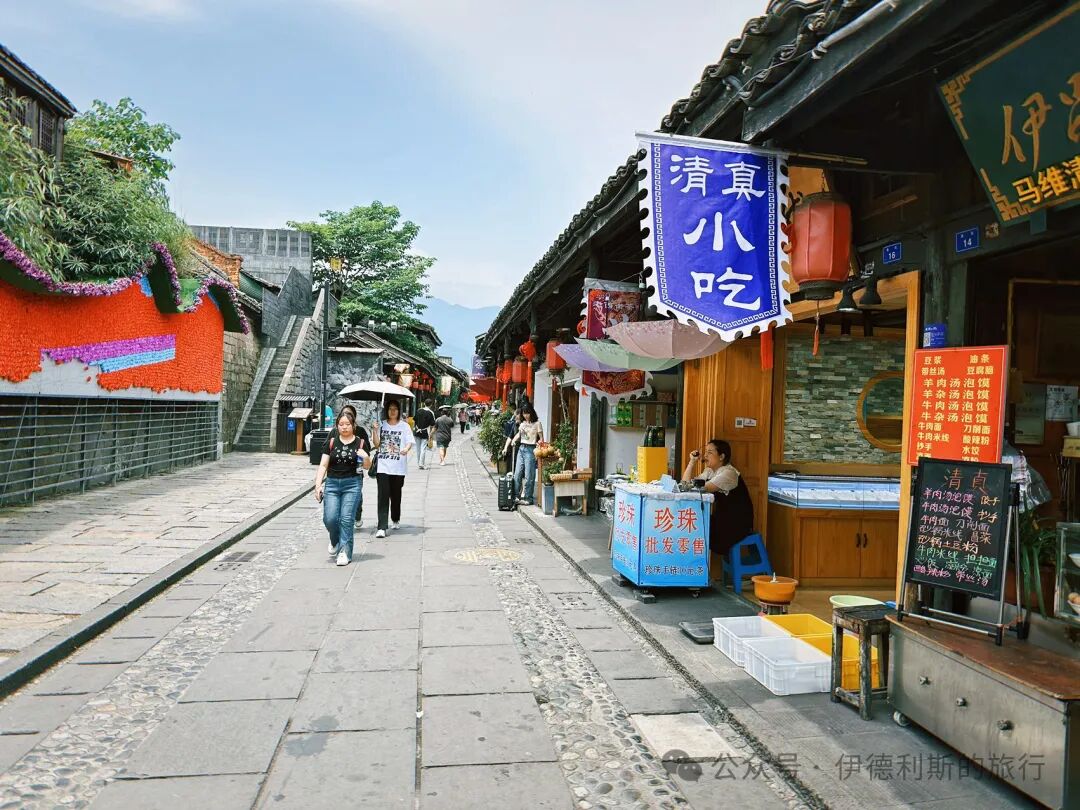
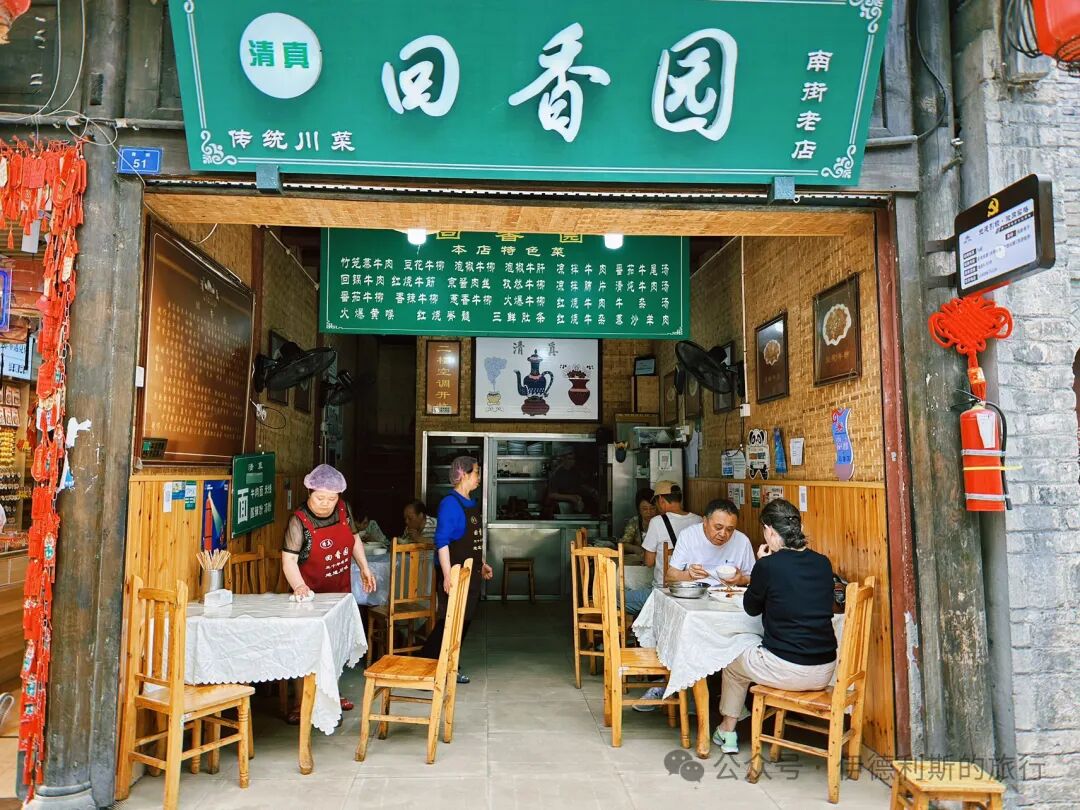
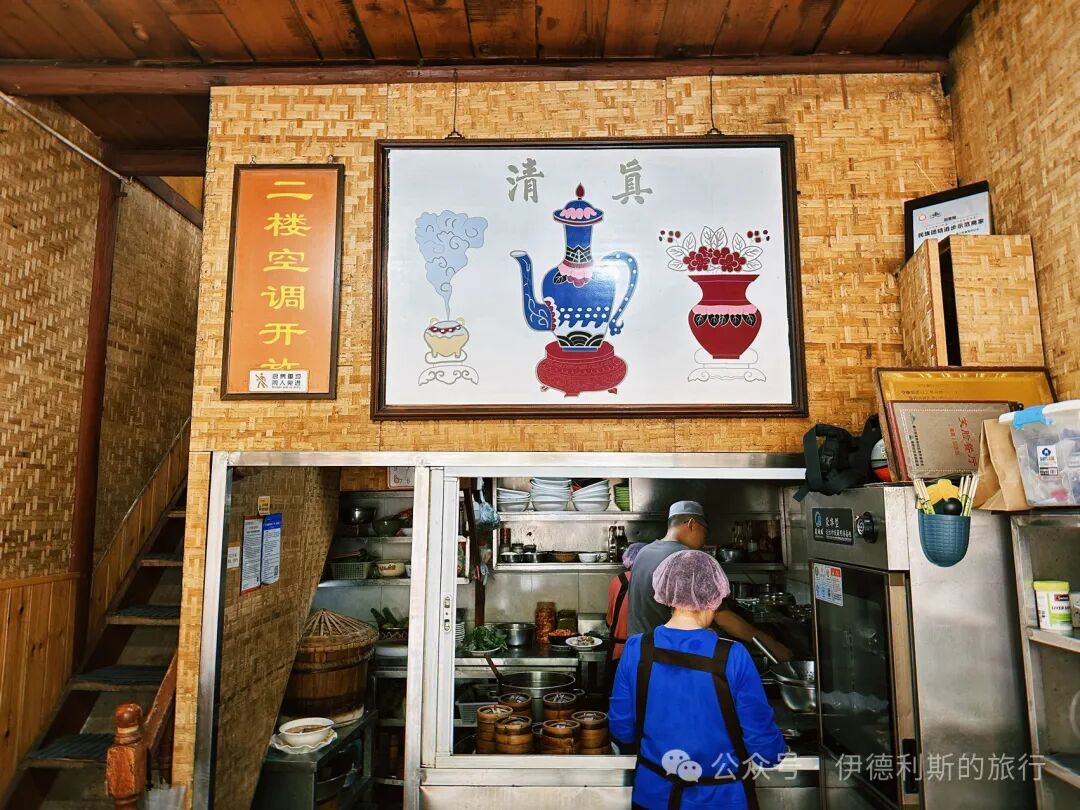
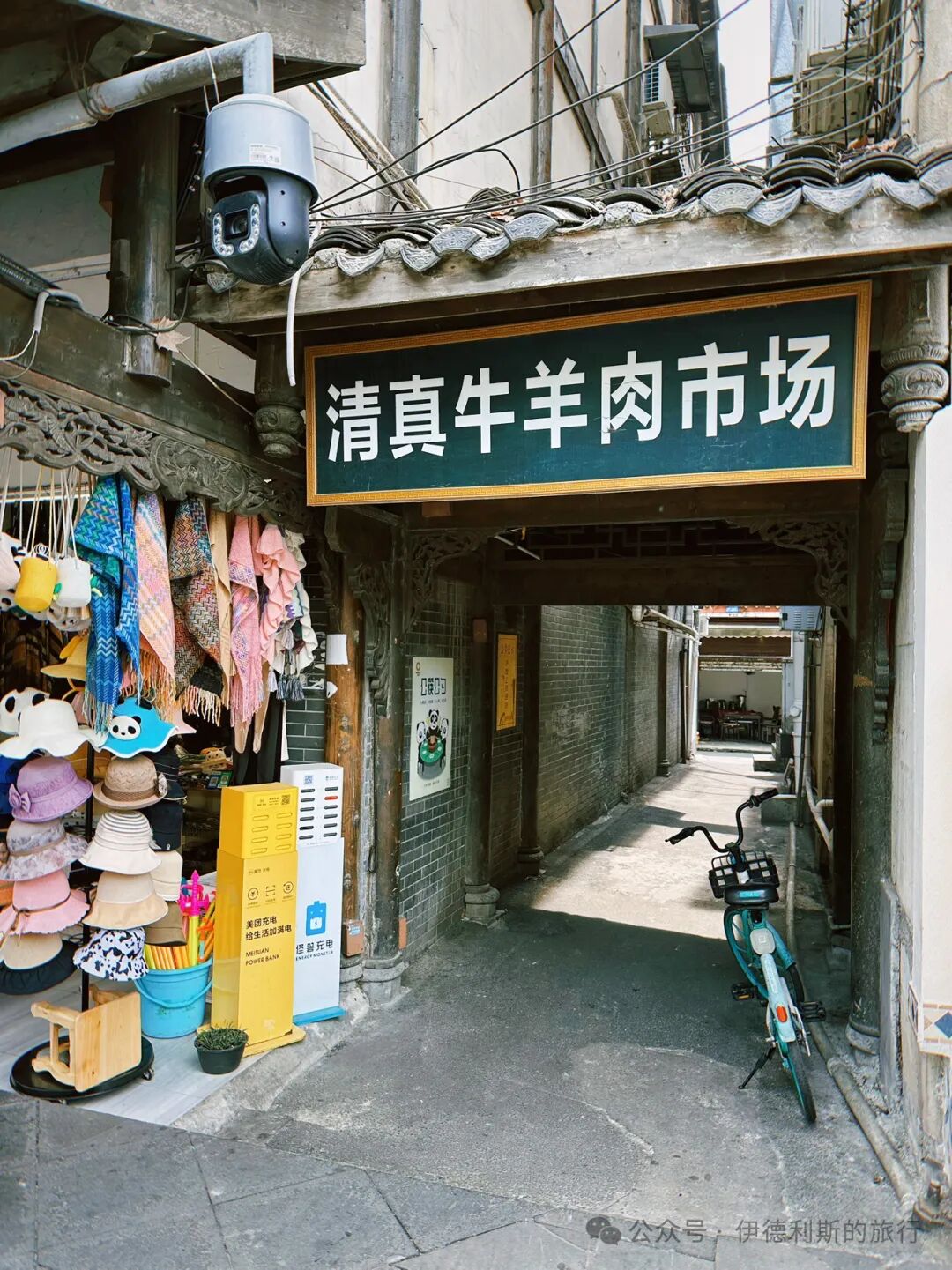
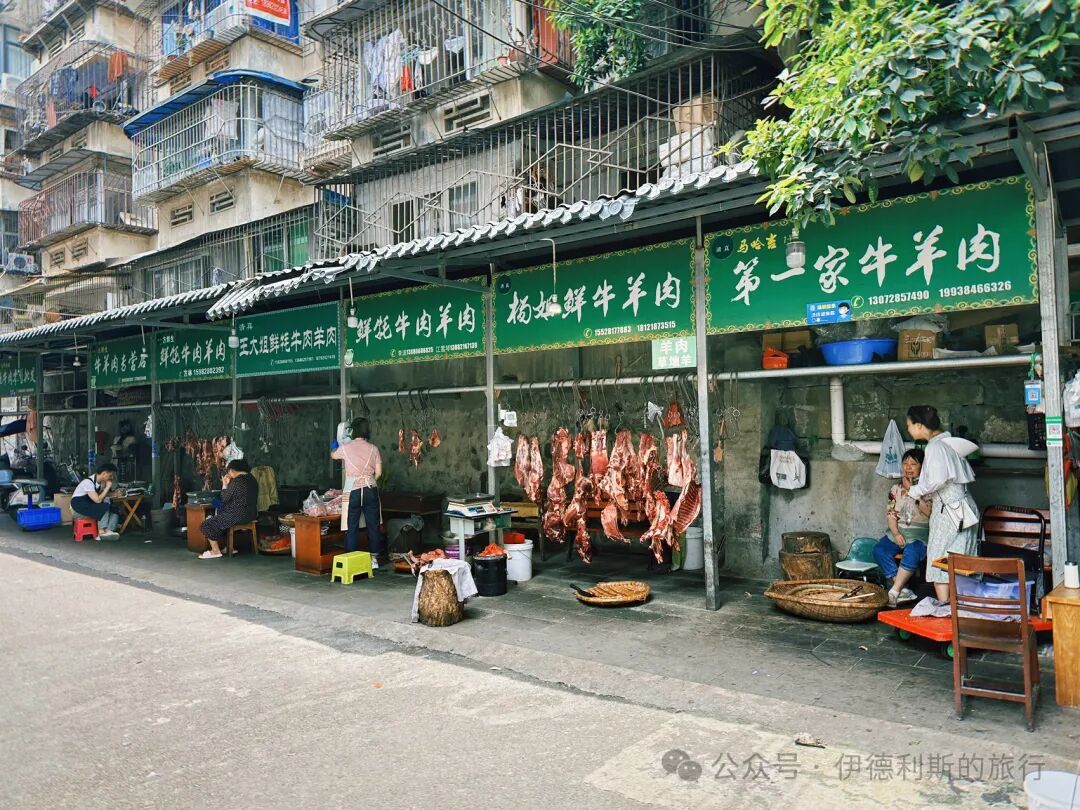
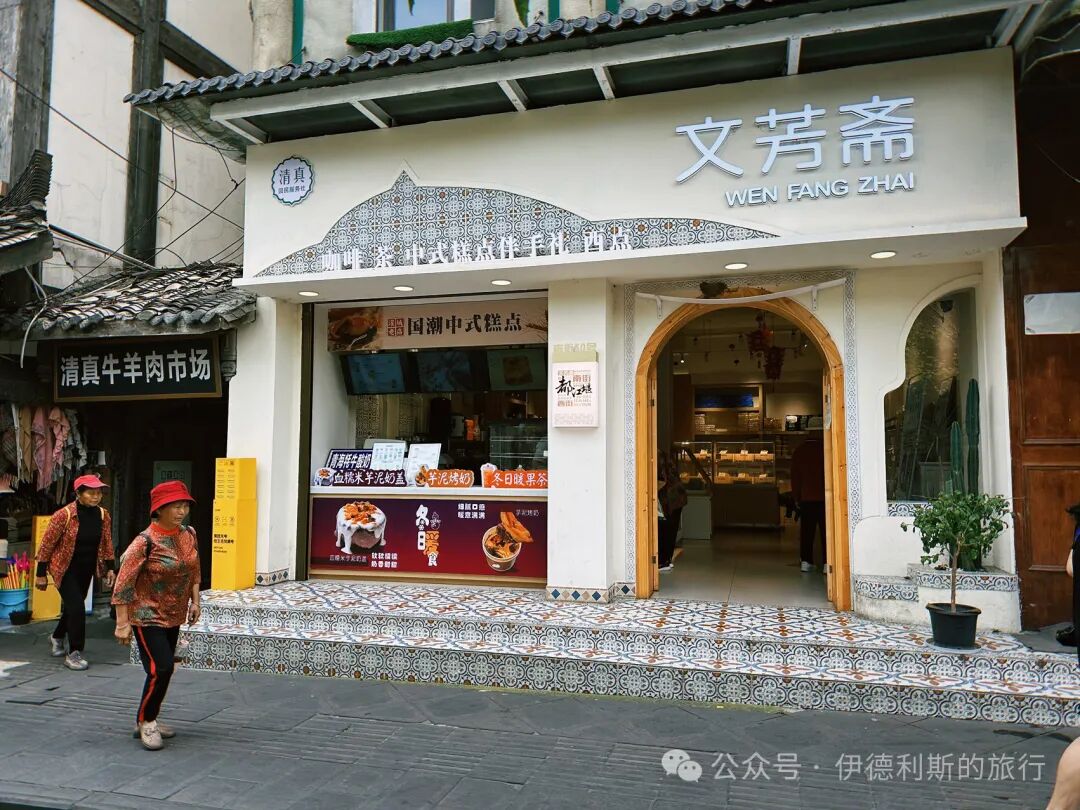
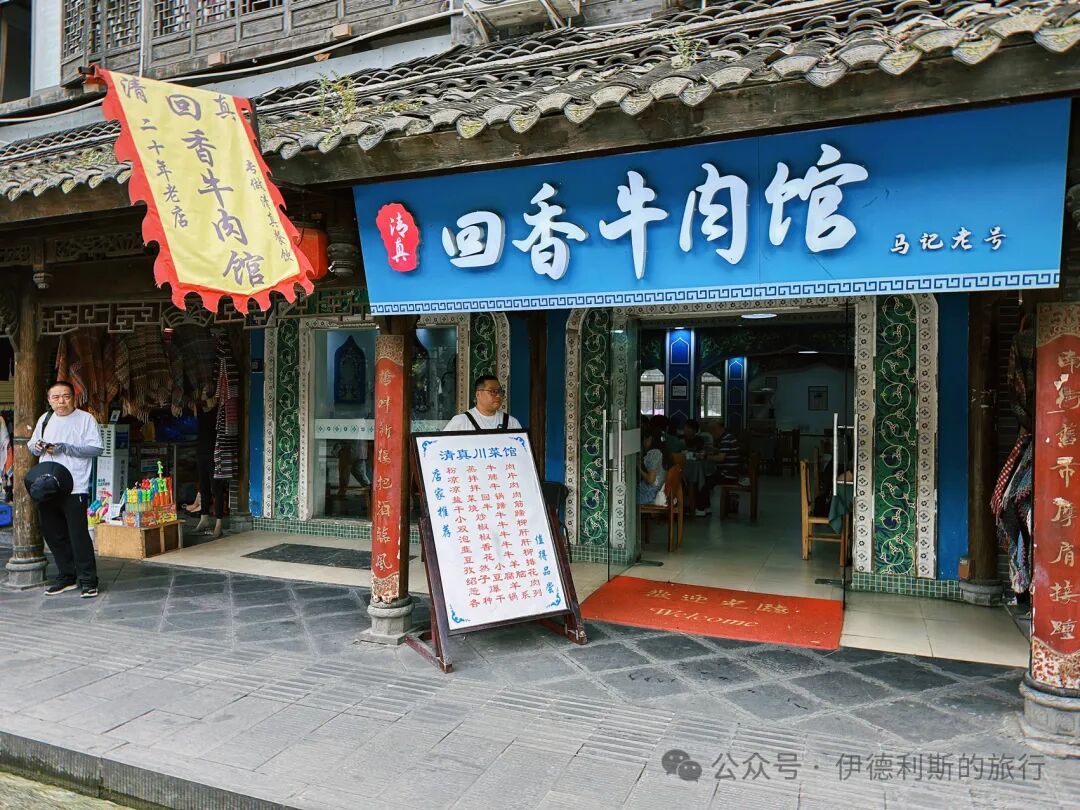
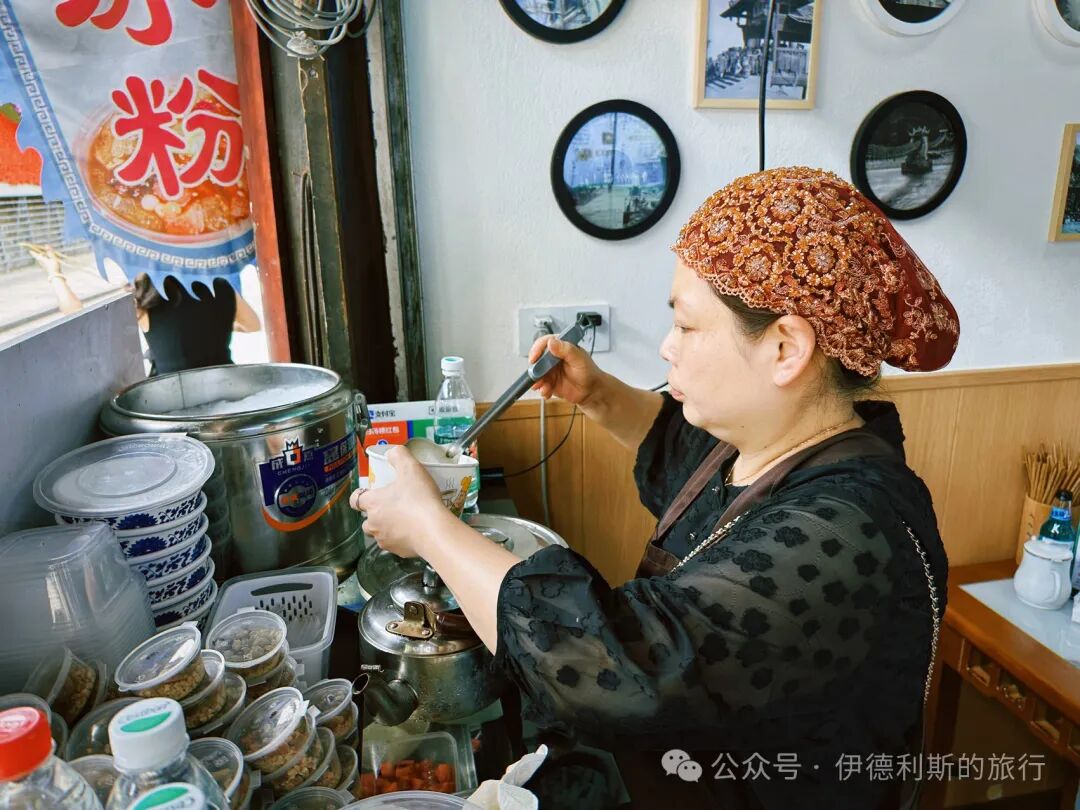
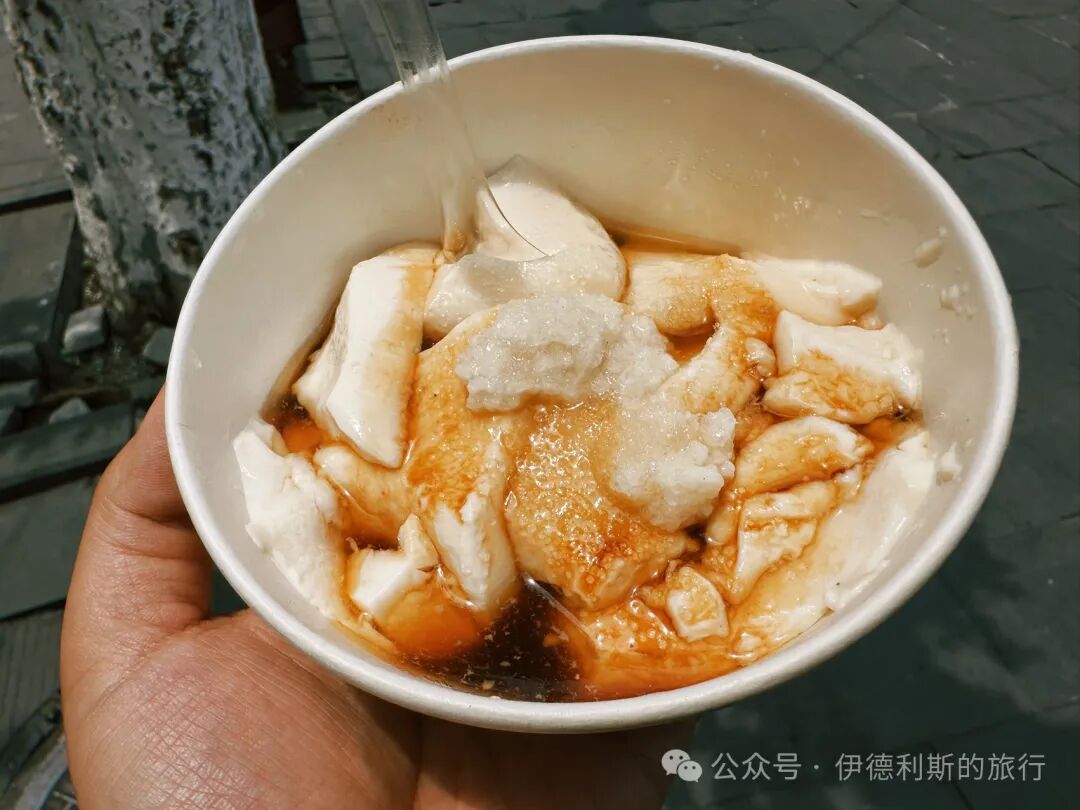
I had some iced tofu pudding (bing douhua) at a snack shop in Dujiangyan. It was soft and very refreshing. His walls are covered with photos of the Dujiangyan mosque, including one of Imam Sha Fuquan when he was young.
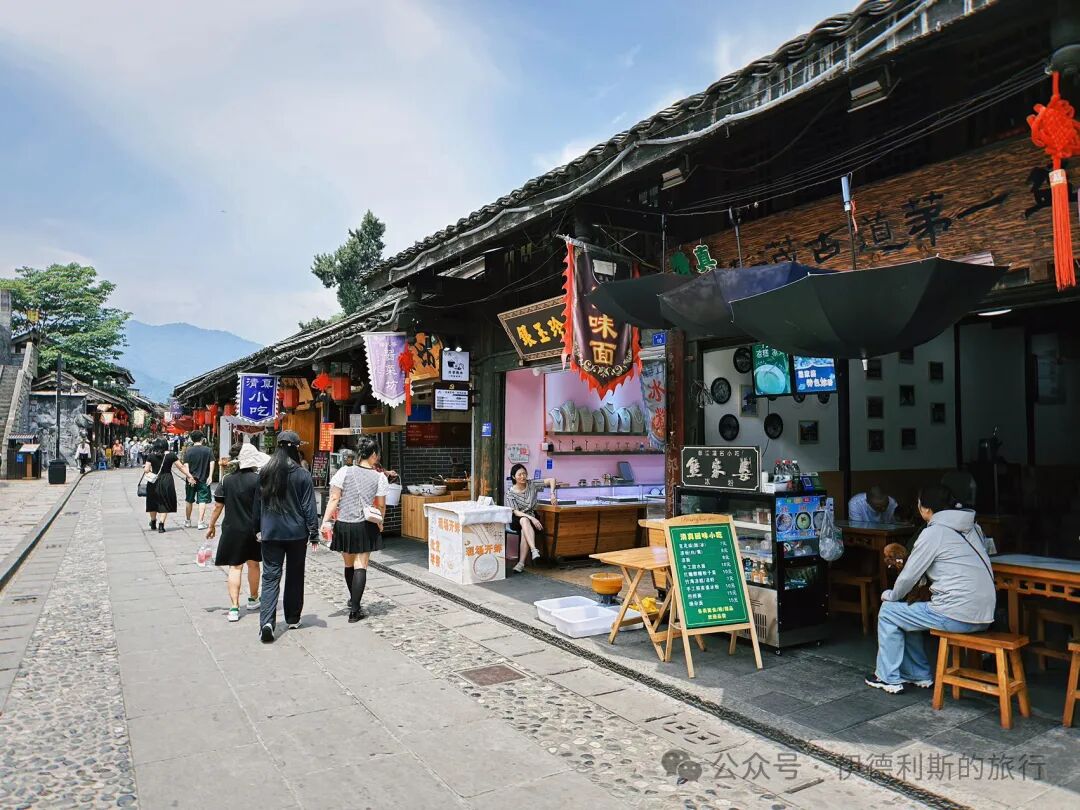
Dujiangyan scenery
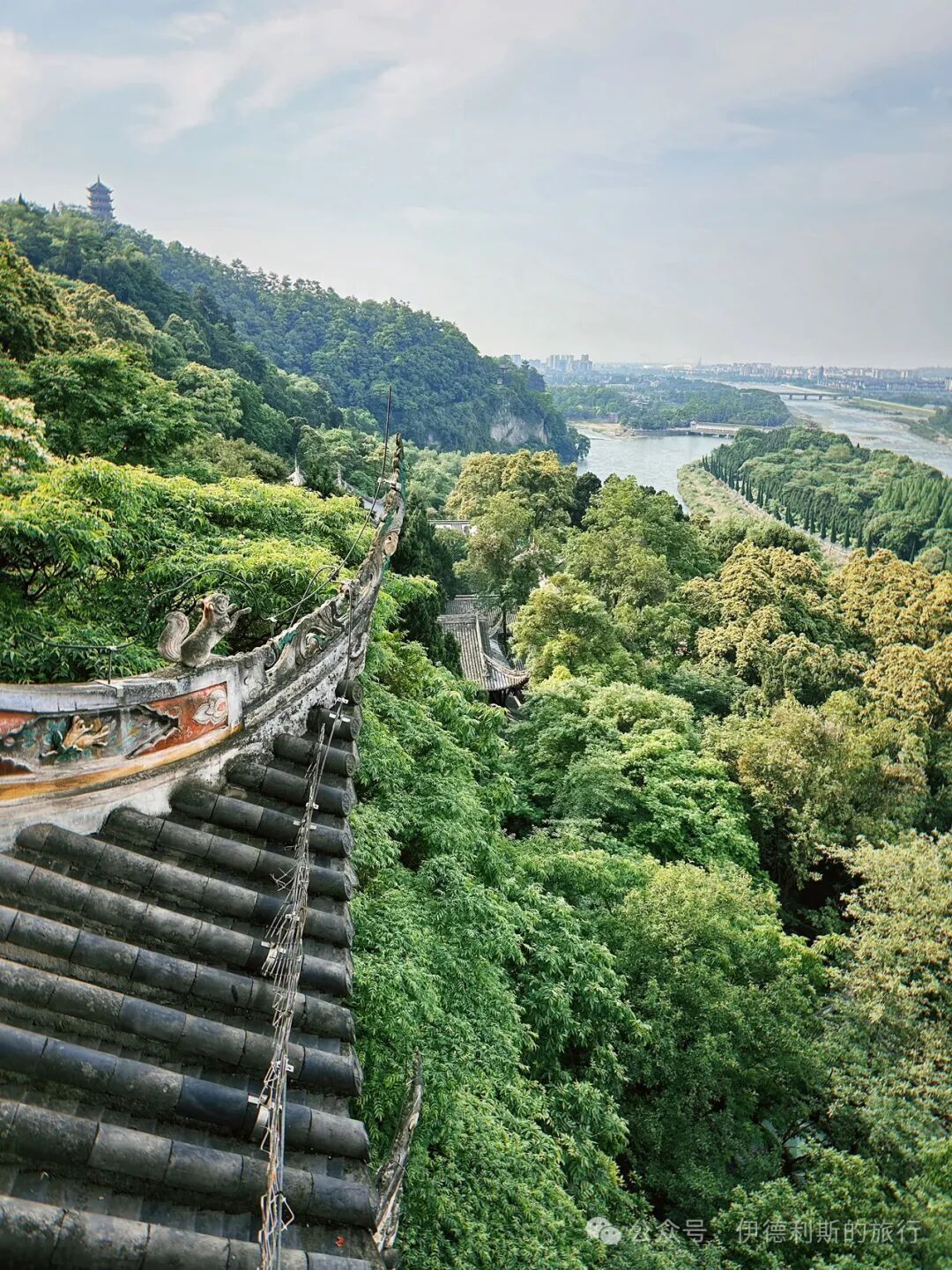
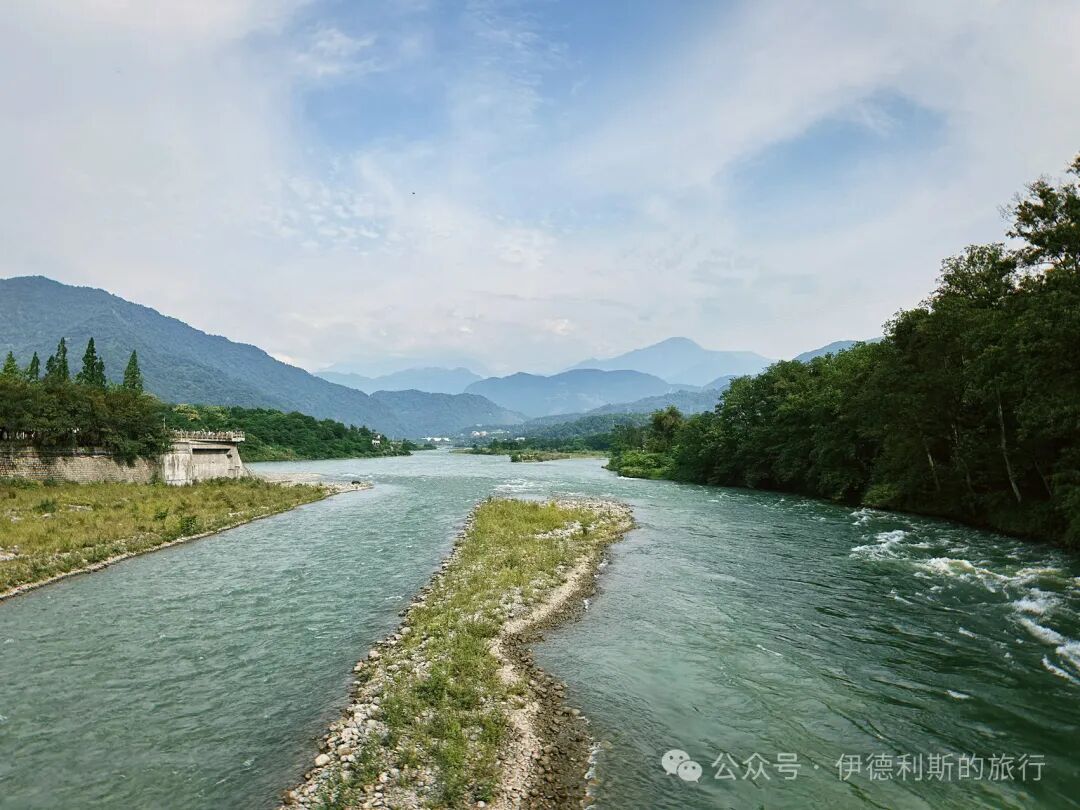
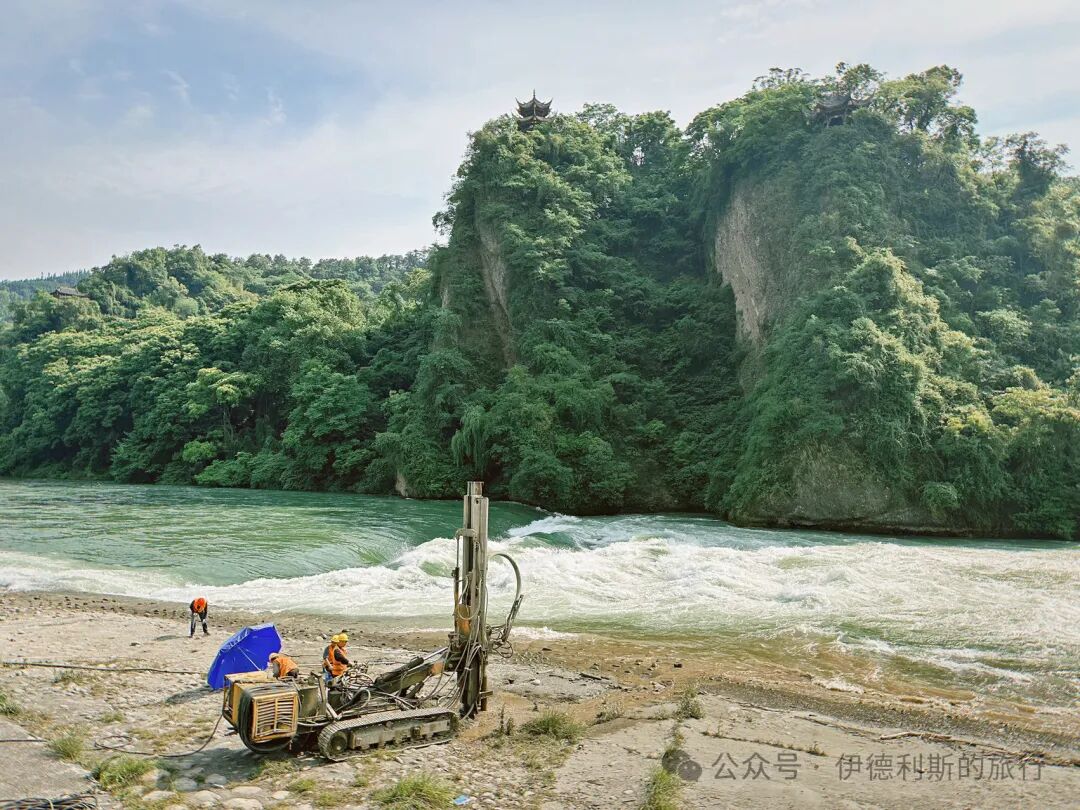
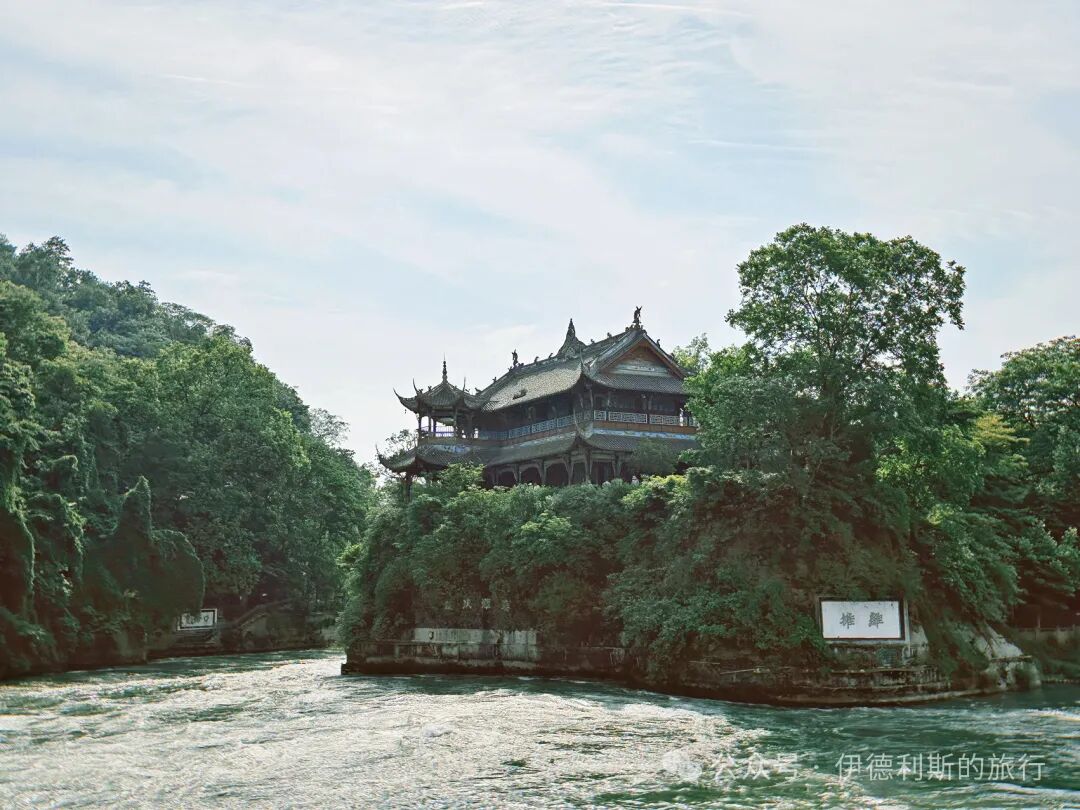
The information about the Dujiangyan faith community comes from the mosque's history book.
Summary: Halal Travel Guide: Dujiangyan, Sichuan - Mosques, Food and Local History is presented here as a firsthand travel account in clear, natural English. The account focuses on Dujiangyan, Sichuan, Mosques while preserving the names, places, food, photos, and historical details from the Chinese source.
On May 15, we left Chengdu for Dujiangyan and visited the Dujiangyan Mosque at noon. Imam Sha Fuquan was away on a field trip, so Imam Ma Jundong hosted us, with an introduction provided by Imam Saiwabu Ma.
Because it sits at the start of the Songmao Ancient Road, many Hui Muslims have come to do business and settle in the old town of Guanxian, where Dujiangyan is located, since the Ming Dynasty. During the Jiajing period of the Ming Dynasty, Hui Muslims in Dujiangyan pooled their money to buy the former site of the Summer Palace of Prince Kang of Shu and officially built the Dujiangyan Mosque. Currently, there are two crape myrtle trees at the entrance of the main hall that were planted during the Ming Jiajing period, and the six lattice doors on the front of the main hall are also relics from the Ming Dynasty.
The Dujiangyan Mosque has experienced many earthquakes throughout its history, the most recent being the Wenchuan earthquake. The Wenchuan earthquake caused serious damage to the Dujiangyan Mosque, and it took three years to complete the repairs, resulting in the current architectural style that features strong traditional characteristics of western Sichuan. Inside the main hall, there are two pairs of Arabic couplets preserved today; one pair was written by Imam Wei Zhengfang of the Qing Dynasty, and the other was written by Imam Sha Fuquan. The traditional calligraphy on the mihrab was also written by Imam Wei Zhengfang.
Above the main hall of Dujiangyan Mosque sits the Moon-Gazing Tower (Wangyuelou), added in 1934. It was the tallest building in Guan County at the time, offering a bird's-eye view of the old town streets. The upper level of the Moon-Gazing Tower holds a wooden clapper (bangzi). During Ramadan, it is used to signal the start and end of the daily fast, a very traditional practice.
Plaques at Dujiangyan Mosque.
In the twelfth year of the Yongzheng reign, Prince Guo inscribed the 'Uphold Good Rules Forever' (Shishoulianggui) plaque and the 'Origin of Worldly Laws' (Shifayuanliu) plaque. Prince Guo was the seventeenth son of Emperor Kangxi. In the twelfth year of the Yongzheng reign, he traveled to Taining to escort the Dalai Lama back to Tibet. While inspecting provincial garrisons and Green Standard Army troops, he passed through Chengdu and inscribed a plaque for Gulou Mosque. Dujiangyan Mosque made copies of these plaques to keep inside.
In the twenty-ninth year of the Guangxu reign, Sichuan Provincial Commander Ma Weiqi hand-wrote the 'Achieve Through Non-Action' (Wuweiercheng) plaque. Ma Weiqi was a Hui Muslim from Dazhuang, Kaiyuan, Yunnan. He was skilled in calligraphy, following the style of Yan Zhenqing, with a powerful and bold brush technique. In the ninth year of the Guangxu reign, Ma Weiqi was ordered to Vietnam to fight the French. He defeated the French army many times and was promoted to the rank of vice-general for his military achievements, receiving the honorary title 'Boduo Huan Baturu'. While serving as the Sichuan Provincial Commander, Ma Weiqi led troops to suppress a rebellion by lamas and local chieftains in Batang, Tibet. He overcame harsh snowstorms and food shortages to restore peace to the region. For his success, he was awarded the first-rank official cap button and the title of General Jianwei. During his time as Sichuan Provincial Commander, Ma Weiqi greatly supported the local Muslim community. He recommended several imams for positions in Sichuan, including Imam Wang Jiapeng, who is known as one of the four great modern imams of Yunnan.
In 1946, Bai Chongxi wrote the plaque reading 'Promote Religion and Build the Nation.' He wrote it while visiting his in-law, Ma Jianqing, in Sichuan. At the time, Bai Chongxi served as the Minister of National Defense for the Republic of China. Bai Chongxi placed great importance on ethnic education. He built Northwest Middle School in Chengdu, Sichuan, and Jiansheng Middle School in Xichang.
In the seventh year of the Xianfeng reign, Chen Tianzhu, a fifth-rank battalion commander (bazong) of the Anfu Camp who held the blue feather honor, hand-wrote the plaque reading 'Original Unique Honor'.
The 'Religion Flourishes in True Unity' plaque dates back to the fourteenth year of the Qianlong reign. Unfortunately, the signature section was destroyed during the 1960s and 1970s. It is believed to have been written by a Hui Muslim military officer during the Qianlong Emperor's Jinchuan campaign. In September of the thirteenth year of the Qianlong reign, the Qing government deployed 35,000 soldiers to the Jinchuan front. These troops included the Eight Banners from the capital and various provinces, as well as the Green Standard Army from Shaanxi, Gansu, Yunnan, and Guizhou.
Besides the Dujiangyan Mosque located on South Street in the ancient city of Guanxian, there were three other mosques in Dujiangyan history: the West Mosque, Baoping Mosque, and Youxi Mosque.
The West Mosque (Xi Si) is located on Shaanxi Lane inside the ancient city of Guanxian. It was built in 1862, the first year of the Tongzhi reign, by Hui Muslims from Songpan, Sichuan. During the Xianfeng and Tongzhi years, Hui Muslims from Songpan with the surnames Jia, Qi, Mi, and Yu traveled south along the Songmao Ancient Road for business. They settled in the ancient city of Guanxian and pooled their money to build the Guanxian West Mosque. In 1959, the Guanxian West Mosque was torn down to make room for the construction of the Guanxian People's Hospital. Today, a plaque reading "Ancient Mosque" (Qingzhen Gusi) from the tenth year of the Tongzhi reign hangs above the second gate of the Dujiangyan Mosque. This is the original plaque that once hung on the main gate of the West Mosque.
Baoping Mosque is also called Maogong Mosque. It was built in 1925 by Hui Muslims from Maogong, which is modern-day Xiaojin County in Sichuan. As early as the beginning of the Tongzhi reign, some Hui Muslims from Maogong had already moved to live in Guanxian. After the Sichuan Railway Protection Movement began in 1911, Hui Muslims from Maogong took an active part. They faced persecution from local feudal forces, causing many to flee, with most settling in Guanxian. In 1925, the Hui Muslims from Maogong who had moved to Guanxian pooled their money to build Baoping Mosque just 50 meters from the Baopingkou intake of the Dujiangyan irrigation system.
Maogong Mosque consists of two courtyards. The outer courtyard was a guesthouse for travelers, and the inner courtyard is the mosque. The main prayer hall has a distinct Republican-era style, blending Chinese and Western architecture. After Imam Ma Zifeng left in 1951, Baoping Mosque did not hire another imam. Since then, 45 Hui Muslim families have lived inside the mosque. In 1981, the property rights were acquired by the Xiaojin County Mosque. After the 2008 Wenchuan earthquake, Baoping Mosque was severely damaged. The Xiaojin Mosque could not afford the repairs, so they sold the property rights to the Dujiangyan municipal government. Later, Dujiangyan city renovated Baoping Mosque. The outer courtyard is rented out to a Han Chinese restaurant, but no businesses have moved into the inner courtyard.
Youxi Town is located on a key spot of the Songmao Ancient Road. Many merchants passed through, and some Hui Muslims lived there, so Youxi Mosque was built during the Kangxi reign. In the early years of the Republic of China, devoted community members Wang Yuzhi, Wang Chunyan, and Elder Ma proposed rebuilding Youxi Mosque. The construction was led by Imam Li Tianbo, who was from Changsha, Hunan. With funds raised by Hui Muslim businesses and individuals, the reconstruction was finally completed in 1917. Around 1930, Youxi Mosque had 12 member families (gaomu), including the famous martial artist Ma Guozhu.
In 1950, a fire broke out across Youxi Town and destroyed the Youxi Mosque. After the communal dining halls were introduced in 1958, Hui Muslims in Youxi Town began moving away because daily life became inconvenient. In 1967, the coffin covers (guanzhao) and scripture boxes (tabuxia) stored at the original site of the Youxi Mosque were destroyed. After the 2008 Wenchuan earthquake, the Hui Muslim cemetery on the mountain opposite the Youxi Mosque, which dated back to the Kangxi era, was completely destroyed.
Inside the Dujiangyan Mosque stands a memorial archway (paifang) built in 2018 called the Fali Archway. Its four stone pillars came from the original site of the Chengdu Seven Mosque on Donghuamen South Street in Chengdu. The Chengdu Seven Mosque was first built in the 12th year of the Yongzheng reign and rebuilt in the 5th year of the Tongzhi reign. It was occupied by a wool factory in 1956 and demolished after being requisitioned by the Sichuan Provincial Bureau of Materials in 1984. After the Seven Mosque was torn down, the stone pillars were abandoned at Fenghuang Mountain. In 2017, during wall repairs at the Fenghuang Mountain Hui Muslim cemetery, the pillars were dragged to a vacant lot at the Fenghuang Mountain Air Force training base. In 2018, the Dujiangyan Mosque brought them back to build the archway.
There were originally three pairs, or six pillars in total. The Dujiangyan Mosque holds four of them, which are:
To nurture your character and serve Allah, the work of the wise must start with everyday human relationships.
To learn from the basics and reach the heights of understanding the true meaning of morality, you must find it in your daily life.
This is a place of spiritual truth and law, not just a spot for ordinary kneeling and prayer (missing second line).
The path cannot be left for even a moment; whether serving or reflecting, everything happens in the realm where Allah is present (missing second line).
There are many halal restaurants around Dujiangyan Mosque where you can eat authentic traditional Western Sichuan Hui Muslim food. Huixiangyuan, right next to Dujiangyan Mosque, is a long-established restaurant that displays a very traditional water pitcher (tangping) sign.
The current imam (gaomu) of Dujiangyan Mosque is surnamed Hai. His ancestors were from Shunyi, Beijing, and moved from Shaoyang, Hunan, to Sichuan during the Wanli era of the Ming Dynasty. Later, more of the Hai family moved here during the Qing Dynasty migration period known as Huguang Tian Sichuan.
The Zhang family from Hebei originally came from Zhangjiawan Town in Tongzhou, Beijing. At the end of the Ming Dynasty, three Zhang brothers moved to Pixian and led the construction of the Pixian Zhang Family Mosque, then moved to Dujiangyan during the Tongzhi era of the Qing Dynasty.
The Ma family of Maogong originally came from Tianbei Village in Weinan, Shaanxi. They moved to Xiaojin County, Sichuan, during the Qianlong reign. In 1912, they moved to Eshi Lane in the Huangchengba area of Chengdu because of the Railway Protection Movement. Their house was destroyed during the warlord conflicts in 1917, and they later moved to Dujiangyan.
The Li family of Wenchuan originally came from Xiaoyi Town in Weinan, Shaanxi. They later moved to Weizhou in Wenchuan before settling in Dujiangyan.
The Qi family of Shaanxi originally came from Weinan, Shaanxi. They moved to Songpan, Sichuan, during the Daoguang reign and then to Dujiangyan between the end of the Qing Dynasty and the start of the Republic of China. They were known as Sauce Garden Qi because they ran a soy sauce factory.
The Li family moved here from Tangyuan Town in Pixian County during the Tongzhi reign of the Qing Dynasty. Another branch moved here from Tuanjie Town in Pixian County in 1945.
The Ma family of Shaanxi originally came from Qiaotian Village in Weinan, Shaanxi. They moved to Dujiangyan in 1808 to escape the White Lotus and Tianli sects. They ran the Daxing mule and horse inn from 1826 until 1949.
The Jiang family of Shandong originally came from Shandong. They later moved to Yanting, Sichuan, and then to Dujiangyan in the early years of the Republic of China.
The Cai family of Taiyuan moved to the Dajin and Xiaojin areas of Sichuan during the Qianlong reign. They moved to Dujiangyan in 1912.
I had some iced tofu pudding (bing douhua) at a snack shop in Dujiangyan. It was soft and very refreshing. His walls are covered with photos of the Dujiangyan mosque, including one of Imam Sha Fuquan when he was young.
Dujiangyan scenery
The information about the Dujiangyan faith community comes from the mosque's history book.
Halal Travel Guide: Dujiangyan, Sichuan - Mosques, Food and Local History
Articles • ali2007fr posted the article • 0 comments • 325 views • 2026-05-19 09:30
Reposted from the web
Summary: Halal Travel Guide: Dujiangyan, Sichuan - Mosques, Food and Local History is presented here as a firsthand travel account in clear, natural English. The account focuses on Dujiangyan, Sichuan, Mosques while preserving the names, places, food, photos, and historical details from the Chinese source.
On May 15, we left Chengdu for Dujiangyan and visited the Dujiangyan Mosque at noon. Imam Sha Fuquan was away on a field trip, so Imam Ma Jundong hosted us, with an introduction provided by Imam Saiwabu Ma.
Because it sits at the start of the Songmao Ancient Road, many Hui Muslims have come to do business and settle in the old town of Guanxian, where Dujiangyan is located, since the Ming Dynasty. During the Jiajing period of the Ming Dynasty, Hui Muslims in Dujiangyan pooled their money to buy the former site of the Summer Palace of Prince Kang of Shu and officially built the Dujiangyan Mosque. Currently, there are two crape myrtle trees at the entrance of the main hall that were planted during the Ming Jiajing period, and the six lattice doors on the front of the main hall are also relics from the Ming Dynasty.
The Dujiangyan Mosque has experienced many earthquakes throughout its history, the most recent being the Wenchuan earthquake. The Wenchuan earthquake caused serious damage to the Dujiangyan Mosque, and it took three years to complete the repairs, resulting in the current architectural style that features strong traditional characteristics of western Sichuan. Inside the main hall, there are two pairs of Arabic couplets preserved today; one pair was written by Imam Wei Zhengfang of the Qing Dynasty, and the other was written by Imam Sha Fuquan. The traditional calligraphy on the mihrab was also written by Imam Wei Zhengfang.
Above the main hall of Dujiangyan Mosque sits the Moon-Gazing Tower (Wangyuelou), added in 1934. It was the tallest building in Guan County at the time, offering a bird's-eye view of the old town streets. The upper level of the Moon-Gazing Tower holds a wooden clapper (bangzi). During Ramadan, it is used to signal the start and end of the daily fast, a very traditional practice.
Plaques at Dujiangyan Mosque.
In the twelfth year of the Yongzheng reign, Prince Guo inscribed the 'Uphold Good Rules Forever' (Shishoulianggui) plaque and the 'Origin of Worldly Laws' (Shifayuanliu) plaque. Prince Guo was the seventeenth son of Emperor Kangxi. In the twelfth year of the Yongzheng reign, he traveled to Taining to escort the Dalai Lama back to Tibet. While inspecting provincial garrisons and Green Standard Army troops, he passed through Chengdu and inscribed a plaque for Gulou Mosque. Dujiangyan Mosque made copies of these plaques to keep inside.
In the twenty-ninth year of the Guangxu reign, Sichuan Provincial Commander Ma Weiqi hand-wrote the 'Achieve Through Non-Action' (Wuweiercheng) plaque. Ma Weiqi was a Hui Muslim from Dazhuang, Kaiyuan, Yunnan. He was skilled in calligraphy, following the style of Yan Zhenqing, with a powerful and bold brush technique. In the ninth year of the Guangxu reign, Ma Weiqi was ordered to Vietnam to fight the French. He defeated the French army many times and was promoted to the rank of vice-general for his military achievements, receiving the honorary title 'Boduo Huan Baturu'. While serving as the Sichuan Provincial Commander, Ma Weiqi led troops to suppress a rebellion by lamas and local chieftains in Batang, Tibet. He overcame harsh snowstorms and food shortages to restore peace to the region. For his success, he was awarded the first-rank official cap button and the title of General Jianwei. During his time as Sichuan Provincial Commander, Ma Weiqi greatly supported the local Muslim community. He recommended several imams for positions in Sichuan, including Imam Wang Jiapeng, who is known as one of the four great modern imams of Yunnan.
In 1946, Bai Chongxi wrote the plaque reading 'Promote Religion and Build the Nation.' He wrote it while visiting his in-law, Ma Jianqing, in Sichuan. At the time, Bai Chongxi served as the Minister of National Defense for the Republic of China. Bai Chongxi placed great importance on ethnic education. He built Northwest Middle School in Chengdu, Sichuan, and Jiansheng Middle School in Xichang.
In the seventh year of the Xianfeng reign, Chen Tianzhu, a fifth-rank battalion commander (bazong) of the Anfu Camp who held the blue feather honor, hand-wrote the plaque reading 'Original Unique Honor'.
The 'Religion Flourishes in True Unity' plaque dates back to the fourteenth year of the Qianlong reign. Unfortunately, the signature section was destroyed during the 1960s and 1970s. It is believed to have been written by a Hui Muslim military officer during the Qianlong Emperor's Jinchuan campaign. In September of the thirteenth year of the Qianlong reign, the Qing government deployed 35,000 soldiers to the Jinchuan front. These troops included the Eight Banners from the capital and various provinces, as well as the Green Standard Army from Shaanxi, Gansu, Yunnan, and Guizhou.
Besides the Dujiangyan Mosque located on South Street in the ancient city of Guanxian, there were three other mosques in Dujiangyan history: the West Mosque, Baoping Mosque, and Youxi Mosque.
The West Mosque (Xi Si) is located on Shaanxi Lane inside the ancient city of Guanxian. It was built in 1862, the first year of the Tongzhi reign, by Hui Muslims from Songpan, Sichuan. During the Xianfeng and Tongzhi years, Hui Muslims from Songpan with the surnames Jia, Qi, Mi, and Yu traveled south along the Songmao Ancient Road for business. They settled in the ancient city of Guanxian and pooled their money to build the Guanxian West Mosque. In 1959, the Guanxian West Mosque was torn down to make room for the construction of the Guanxian People's Hospital. Today, a plaque reading "Ancient Mosque" (Qingzhen Gusi) from the tenth year of the Tongzhi reign hangs above the second gate of the Dujiangyan Mosque. This is the original plaque that once hung on the main gate of the West Mosque.
Baoping Mosque is also called Maogong Mosque. It was built in 1925 by Hui Muslims from Maogong, which is modern-day Xiaojin County in Sichuan. As early as the beginning of the Tongzhi reign, some Hui Muslims from Maogong had already moved to live in Guanxian. After the Sichuan Railway Protection Movement began in 1911, Hui Muslims from Maogong took an active part. They faced persecution from local feudal forces, causing many to flee, with most settling in Guanxian. In 1925, the Hui Muslims from Maogong who had moved to Guanxian pooled their money to build Baoping Mosque just 50 meters from the Baopingkou intake of the Dujiangyan irrigation system.
Maogong Mosque consists of two courtyards. The outer courtyard was a guesthouse for travelers, and the inner courtyard is the mosque. The main prayer hall has a distinct Republican-era style, blending Chinese and Western architecture. After Imam Ma Zifeng left in 1951, Baoping Mosque did not hire another imam. Since then, 45 Hui Muslim families have lived inside the mosque. In 1981, the property rights were acquired by the Xiaojin County Mosque. After the 2008 Wenchuan earthquake, Baoping Mosque was severely damaged. The Xiaojin Mosque could not afford the repairs, so they sold the property rights to the Dujiangyan municipal government. Later, Dujiangyan city renovated Baoping Mosque. The outer courtyard is rented out to a Han Chinese restaurant, but no businesses have moved into the inner courtyard.
Youxi Town is located on a key spot of the Songmao Ancient Road. Many merchants passed through, and some Hui Muslims lived there, so Youxi Mosque was built during the Kangxi reign. In the early years of the Republic of China, devoted community members Wang Yuzhi, Wang Chunyan, and Elder Ma proposed rebuilding Youxi Mosque. The construction was led by Imam Li Tianbo, who was from Changsha, Hunan. With funds raised by Hui Muslim businesses and individuals, the reconstruction was finally completed in 1917. Around 1930, Youxi Mosque had 12 member families (gaomu), including the famous martial artist Ma Guozhu.
In 1950, a fire broke out across Youxi Town and destroyed the Youxi Mosque. After the communal dining halls were introduced in 1958, Hui Muslims in Youxi Town began moving away because daily life became inconvenient. In 1967, the coffin covers (guanzhao) and scripture boxes (tabuxia) stored at the original site of the Youxi Mosque were destroyed. After the 2008 Wenchuan earthquake, the Hui Muslim cemetery on the mountain opposite the Youxi Mosque, which dated back to the Kangxi era, was completely destroyed.
Inside the Dujiangyan Mosque stands a memorial archway (paifang) built in 2018 called the Fali Archway. Its four stone pillars came from the original site of the Chengdu Seven Mosque on Donghuamen South Street in Chengdu. The Chengdu Seven Mosque was first built in the 12th year of the Yongzheng reign and rebuilt in the 5th year of the Tongzhi reign. It was occupied by a wool factory in 1956 and demolished after being requisitioned by the Sichuan Provincial Bureau of Materials in 1984. After the Seven Mosque was torn down, the stone pillars were abandoned at Fenghuang Mountain. In 2017, during wall repairs at the Fenghuang Mountain Hui Muslim cemetery, the pillars were dragged to a vacant lot at the Fenghuang Mountain Air Force training base. In 2018, the Dujiangyan Mosque brought them back to build the archway.
There were originally three pairs, or six pillars in total. The Dujiangyan Mosque holds four of them, which are:
To nurture your character and serve Allah, the work of the wise must start with everyday human relationships.
To learn from the basics and reach the heights of understanding the true meaning of morality, you must find it in your daily life.
This is a place of spiritual truth and law, not just a spot for ordinary kneeling and prayer (missing second line).
The path cannot be left for even a moment; whether serving or reflecting, everything happens in the realm where Allah is present (missing second line).
There are many halal restaurants around Dujiangyan Mosque where you can eat authentic traditional Western Sichuan Hui Muslim food. Huixiangyuan, right next to Dujiangyan Mosque, is a long-established restaurant that displays a very traditional water pitcher (tangping) sign.
The current imam (gaomu) of Dujiangyan Mosque is surnamed Hai. His ancestors were from Shunyi, Beijing, and moved from Shaoyang, Hunan, to Sichuan during the Wanli era of the Ming Dynasty. Later, more of the Hai family moved here during the Qing Dynasty migration period known as Huguang Tian Sichuan.
The Zhang family from Hebei originally came from Zhangjiawan Town in Tongzhou, Beijing. At the end of the Ming Dynasty, three Zhang brothers moved to Pixian and led the construction of the Pixian Zhang Family Mosque, then moved to Dujiangyan during the Tongzhi era of the Qing Dynasty.
The Ma family of Maogong originally came from Tianbei Village in Weinan, Shaanxi. They moved to Xiaojin County, Sichuan, during the Qianlong reign. In 1912, they moved to Eshi Lane in the Huangchengba area of Chengdu because of the Railway Protection Movement. Their house was destroyed during the warlord conflicts in 1917, and they later moved to Dujiangyan.
The Li family of Wenchuan originally came from Xiaoyi Town in Weinan, Shaanxi. They later moved to Weizhou in Wenchuan before settling in Dujiangyan.
The Qi family of Shaanxi originally came from Weinan, Shaanxi. They moved to Songpan, Sichuan, during the Daoguang reign and then to Dujiangyan between the end of the Qing Dynasty and the start of the Republic of China. They were known as Sauce Garden Qi because they ran a soy sauce factory.
The Li family moved here from Tangyuan Town in Pixian County during the Tongzhi reign of the Qing Dynasty. Another branch moved here from Tuanjie Town in Pixian County in 1945.
The Ma family of Shaanxi originally came from Qiaotian Village in Weinan, Shaanxi. They moved to Dujiangyan in 1808 to escape the White Lotus and Tianli sects. They ran the Daxing mule and horse inn from 1826 until 1949.
The Jiang family of Shandong originally came from Shandong. They later moved to Yanting, Sichuan, and then to Dujiangyan in the early years of the Republic of China.
The Cai family of Taiyuan moved to the Dajin and Xiaojin areas of Sichuan during the Qianlong reign. They moved to Dujiangyan in 1912.
I had some iced tofu pudding (bing douhua) at a snack shop in Dujiangyan. It was soft and very refreshing. His walls are covered with photos of the Dujiangyan mosque, including one of Imam Sha Fuquan when he was young.
Dujiangyan scenery
The information about the Dujiangyan faith community comes from the mosque's history book. view all
Summary: Halal Travel Guide: Dujiangyan, Sichuan - Mosques, Food and Local History is presented here as a firsthand travel account in clear, natural English. The account focuses on Dujiangyan, Sichuan, Mosques while preserving the names, places, food, photos, and historical details from the Chinese source.
On May 15, we left Chengdu for Dujiangyan and visited the Dujiangyan Mosque at noon. Imam Sha Fuquan was away on a field trip, so Imam Ma Jundong hosted us, with an introduction provided by Imam Saiwabu Ma.
Because it sits at the start of the Songmao Ancient Road, many Hui Muslims have come to do business and settle in the old town of Guanxian, where Dujiangyan is located, since the Ming Dynasty. During the Jiajing period of the Ming Dynasty, Hui Muslims in Dujiangyan pooled their money to buy the former site of the Summer Palace of Prince Kang of Shu and officially built the Dujiangyan Mosque. Currently, there are two crape myrtle trees at the entrance of the main hall that were planted during the Ming Jiajing period, and the six lattice doors on the front of the main hall are also relics from the Ming Dynasty.
The Dujiangyan Mosque has experienced many earthquakes throughout its history, the most recent being the Wenchuan earthquake. The Wenchuan earthquake caused serious damage to the Dujiangyan Mosque, and it took three years to complete the repairs, resulting in the current architectural style that features strong traditional characteristics of western Sichuan. Inside the main hall, there are two pairs of Arabic couplets preserved today; one pair was written by Imam Wei Zhengfang of the Qing Dynasty, and the other was written by Imam Sha Fuquan. The traditional calligraphy on the mihrab was also written by Imam Wei Zhengfang.
Above the main hall of Dujiangyan Mosque sits the Moon-Gazing Tower (Wangyuelou), added in 1934. It was the tallest building in Guan County at the time, offering a bird's-eye view of the old town streets. The upper level of the Moon-Gazing Tower holds a wooden clapper (bangzi). During Ramadan, it is used to signal the start and end of the daily fast, a very traditional practice.
Plaques at Dujiangyan Mosque.
In the twelfth year of the Yongzheng reign, Prince Guo inscribed the 'Uphold Good Rules Forever' (Shishoulianggui) plaque and the 'Origin of Worldly Laws' (Shifayuanliu) plaque. Prince Guo was the seventeenth son of Emperor Kangxi. In the twelfth year of the Yongzheng reign, he traveled to Taining to escort the Dalai Lama back to Tibet. While inspecting provincial garrisons and Green Standard Army troops, he passed through Chengdu and inscribed a plaque for Gulou Mosque. Dujiangyan Mosque made copies of these plaques to keep inside.
In the twenty-ninth year of the Guangxu reign, Sichuan Provincial Commander Ma Weiqi hand-wrote the 'Achieve Through Non-Action' (Wuweiercheng) plaque. Ma Weiqi was a Hui Muslim from Dazhuang, Kaiyuan, Yunnan. He was skilled in calligraphy, following the style of Yan Zhenqing, with a powerful and bold brush technique. In the ninth year of the Guangxu reign, Ma Weiqi was ordered to Vietnam to fight the French. He defeated the French army many times and was promoted to the rank of vice-general for his military achievements, receiving the honorary title 'Boduo Huan Baturu'. While serving as the Sichuan Provincial Commander, Ma Weiqi led troops to suppress a rebellion by lamas and local chieftains in Batang, Tibet. He overcame harsh snowstorms and food shortages to restore peace to the region. For his success, he was awarded the first-rank official cap button and the title of General Jianwei. During his time as Sichuan Provincial Commander, Ma Weiqi greatly supported the local Muslim community. He recommended several imams for positions in Sichuan, including Imam Wang Jiapeng, who is known as one of the four great modern imams of Yunnan.
In 1946, Bai Chongxi wrote the plaque reading 'Promote Religion and Build the Nation.' He wrote it while visiting his in-law, Ma Jianqing, in Sichuan. At the time, Bai Chongxi served as the Minister of National Defense for the Republic of China. Bai Chongxi placed great importance on ethnic education. He built Northwest Middle School in Chengdu, Sichuan, and Jiansheng Middle School in Xichang.
In the seventh year of the Xianfeng reign, Chen Tianzhu, a fifth-rank battalion commander (bazong) of the Anfu Camp who held the blue feather honor, hand-wrote the plaque reading 'Original Unique Honor'.
The 'Religion Flourishes in True Unity' plaque dates back to the fourteenth year of the Qianlong reign. Unfortunately, the signature section was destroyed during the 1960s and 1970s. It is believed to have been written by a Hui Muslim military officer during the Qianlong Emperor's Jinchuan campaign. In September of the thirteenth year of the Qianlong reign, the Qing government deployed 35,000 soldiers to the Jinchuan front. These troops included the Eight Banners from the capital and various provinces, as well as the Green Standard Army from Shaanxi, Gansu, Yunnan, and Guizhou.
Besides the Dujiangyan Mosque located on South Street in the ancient city of Guanxian, there were three other mosques in Dujiangyan history: the West Mosque, Baoping Mosque, and Youxi Mosque.
The West Mosque (Xi Si) is located on Shaanxi Lane inside the ancient city of Guanxian. It was built in 1862, the first year of the Tongzhi reign, by Hui Muslims from Songpan, Sichuan. During the Xianfeng and Tongzhi years, Hui Muslims from Songpan with the surnames Jia, Qi, Mi, and Yu traveled south along the Songmao Ancient Road for business. They settled in the ancient city of Guanxian and pooled their money to build the Guanxian West Mosque. In 1959, the Guanxian West Mosque was torn down to make room for the construction of the Guanxian People's Hospital. Today, a plaque reading "Ancient Mosque" (Qingzhen Gusi) from the tenth year of the Tongzhi reign hangs above the second gate of the Dujiangyan Mosque. This is the original plaque that once hung on the main gate of the West Mosque.
Baoping Mosque is also called Maogong Mosque. It was built in 1925 by Hui Muslims from Maogong, which is modern-day Xiaojin County in Sichuan. As early as the beginning of the Tongzhi reign, some Hui Muslims from Maogong had already moved to live in Guanxian. After the Sichuan Railway Protection Movement began in 1911, Hui Muslims from Maogong took an active part. They faced persecution from local feudal forces, causing many to flee, with most settling in Guanxian. In 1925, the Hui Muslims from Maogong who had moved to Guanxian pooled their money to build Baoping Mosque just 50 meters from the Baopingkou intake of the Dujiangyan irrigation system.
Maogong Mosque consists of two courtyards. The outer courtyard was a guesthouse for travelers, and the inner courtyard is the mosque. The main prayer hall has a distinct Republican-era style, blending Chinese and Western architecture. After Imam Ma Zifeng left in 1951, Baoping Mosque did not hire another imam. Since then, 45 Hui Muslim families have lived inside the mosque. In 1981, the property rights were acquired by the Xiaojin County Mosque. After the 2008 Wenchuan earthquake, Baoping Mosque was severely damaged. The Xiaojin Mosque could not afford the repairs, so they sold the property rights to the Dujiangyan municipal government. Later, Dujiangyan city renovated Baoping Mosque. The outer courtyard is rented out to a Han Chinese restaurant, but no businesses have moved into the inner courtyard.
Youxi Town is located on a key spot of the Songmao Ancient Road. Many merchants passed through, and some Hui Muslims lived there, so Youxi Mosque was built during the Kangxi reign. In the early years of the Republic of China, devoted community members Wang Yuzhi, Wang Chunyan, and Elder Ma proposed rebuilding Youxi Mosque. The construction was led by Imam Li Tianbo, who was from Changsha, Hunan. With funds raised by Hui Muslim businesses and individuals, the reconstruction was finally completed in 1917. Around 1930, Youxi Mosque had 12 member families (gaomu), including the famous martial artist Ma Guozhu.
In 1950, a fire broke out across Youxi Town and destroyed the Youxi Mosque. After the communal dining halls were introduced in 1958, Hui Muslims in Youxi Town began moving away because daily life became inconvenient. In 1967, the coffin covers (guanzhao) and scripture boxes (tabuxia) stored at the original site of the Youxi Mosque were destroyed. After the 2008 Wenchuan earthquake, the Hui Muslim cemetery on the mountain opposite the Youxi Mosque, which dated back to the Kangxi era, was completely destroyed.
Inside the Dujiangyan Mosque stands a memorial archway (paifang) built in 2018 called the Fali Archway. Its four stone pillars came from the original site of the Chengdu Seven Mosque on Donghuamen South Street in Chengdu. The Chengdu Seven Mosque was first built in the 12th year of the Yongzheng reign and rebuilt in the 5th year of the Tongzhi reign. It was occupied by a wool factory in 1956 and demolished after being requisitioned by the Sichuan Provincial Bureau of Materials in 1984. After the Seven Mosque was torn down, the stone pillars were abandoned at Fenghuang Mountain. In 2017, during wall repairs at the Fenghuang Mountain Hui Muslim cemetery, the pillars were dragged to a vacant lot at the Fenghuang Mountain Air Force training base. In 2018, the Dujiangyan Mosque brought them back to build the archway.
There were originally three pairs, or six pillars in total. The Dujiangyan Mosque holds four of them, which are:
To nurture your character and serve Allah, the work of the wise must start with everyday human relationships.
To learn from the basics and reach the heights of understanding the true meaning of morality, you must find it in your daily life.
This is a place of spiritual truth and law, not just a spot for ordinary kneeling and prayer (missing second line).
The path cannot be left for even a moment; whether serving or reflecting, everything happens in the realm where Allah is present (missing second line).
There are many halal restaurants around Dujiangyan Mosque where you can eat authentic traditional Western Sichuan Hui Muslim food. Huixiangyuan, right next to Dujiangyan Mosque, is a long-established restaurant that displays a very traditional water pitcher (tangping) sign.
The current imam (gaomu) of Dujiangyan Mosque is surnamed Hai. His ancestors were from Shunyi, Beijing, and moved from Shaoyang, Hunan, to Sichuan during the Wanli era of the Ming Dynasty. Later, more of the Hai family moved here during the Qing Dynasty migration period known as Huguang Tian Sichuan.
The Zhang family from Hebei originally came from Zhangjiawan Town in Tongzhou, Beijing. At the end of the Ming Dynasty, three Zhang brothers moved to Pixian and led the construction of the Pixian Zhang Family Mosque, then moved to Dujiangyan during the Tongzhi era of the Qing Dynasty.
The Ma family of Maogong originally came from Tianbei Village in Weinan, Shaanxi. They moved to Xiaojin County, Sichuan, during the Qianlong reign. In 1912, they moved to Eshi Lane in the Huangchengba area of Chengdu because of the Railway Protection Movement. Their house was destroyed during the warlord conflicts in 1917, and they later moved to Dujiangyan.
The Li family of Wenchuan originally came from Xiaoyi Town in Weinan, Shaanxi. They later moved to Weizhou in Wenchuan before settling in Dujiangyan.
The Qi family of Shaanxi originally came from Weinan, Shaanxi. They moved to Songpan, Sichuan, during the Daoguang reign and then to Dujiangyan between the end of the Qing Dynasty and the start of the Republic of China. They were known as Sauce Garden Qi because they ran a soy sauce factory.
The Li family moved here from Tangyuan Town in Pixian County during the Tongzhi reign of the Qing Dynasty. Another branch moved here from Tuanjie Town in Pixian County in 1945.
The Ma family of Shaanxi originally came from Qiaotian Village in Weinan, Shaanxi. They moved to Dujiangyan in 1808 to escape the White Lotus and Tianli sects. They ran the Daxing mule and horse inn from 1826 until 1949.
The Jiang family of Shandong originally came from Shandong. They later moved to Yanting, Sichuan, and then to Dujiangyan in the early years of the Republic of China.
The Cai family of Taiyuan moved to the Dajin and Xiaojin areas of Sichuan during the Qianlong reign. They moved to Dujiangyan in 1912.
I had some iced tofu pudding (bing douhua) at a snack shop in Dujiangyan. It was soft and very refreshing. His walls are covered with photos of the Dujiangyan mosque, including one of Imam Sha Fuquan when he was young.
Dujiangyan scenery
The information about the Dujiangyan faith community comes from the mosque's history book. view all
Reposted from the web
Summary: Halal Travel Guide: Dujiangyan, Sichuan - Mosques, Food and Local History is presented here as a firsthand travel account in clear, natural English. The account focuses on Dujiangyan, Sichuan, Mosques while preserving the names, places, food, photos, and historical details from the Chinese source.
On May 15, we left Chengdu for Dujiangyan and visited the Dujiangyan Mosque at noon. Imam Sha Fuquan was away on a field trip, so Imam Ma Jundong hosted us, with an introduction provided by Imam Saiwabu Ma.
Because it sits at the start of the Songmao Ancient Road, many Hui Muslims have come to do business and settle in the old town of Guanxian, where Dujiangyan is located, since the Ming Dynasty. During the Jiajing period of the Ming Dynasty, Hui Muslims in Dujiangyan pooled their money to buy the former site of the Summer Palace of Prince Kang of Shu and officially built the Dujiangyan Mosque. Currently, there are two crape myrtle trees at the entrance of the main hall that were planted during the Ming Jiajing period, and the six lattice doors on the front of the main hall are also relics from the Ming Dynasty.
The Dujiangyan Mosque has experienced many earthquakes throughout its history, the most recent being the Wenchuan earthquake. The Wenchuan earthquake caused serious damage to the Dujiangyan Mosque, and it took three years to complete the repairs, resulting in the current architectural style that features strong traditional characteristics of western Sichuan. Inside the main hall, there are two pairs of Arabic couplets preserved today; one pair was written by Imam Wei Zhengfang of the Qing Dynasty, and the other was written by Imam Sha Fuquan. The traditional calligraphy on the mihrab was also written by Imam Wei Zhengfang.
Above the main hall of Dujiangyan Mosque sits the Moon-Gazing Tower (Wangyuelou), added in 1934. It was the tallest building in Guan County at the time, offering a bird's-eye view of the old town streets. The upper level of the Moon-Gazing Tower holds a wooden clapper (bangzi). During Ramadan, it is used to signal the start and end of the daily fast, a very traditional practice.
Plaques at Dujiangyan Mosque.
In the twelfth year of the Yongzheng reign, Prince Guo inscribed the 'Uphold Good Rules Forever' (Shishoulianggui) plaque and the 'Origin of Worldly Laws' (Shifayuanliu) plaque. Prince Guo was the seventeenth son of Emperor Kangxi. In the twelfth year of the Yongzheng reign, he traveled to Taining to escort the Dalai Lama back to Tibet. While inspecting provincial garrisons and Green Standard Army troops, he passed through Chengdu and inscribed a plaque for Gulou Mosque. Dujiangyan Mosque made copies of these plaques to keep inside.
In the twenty-ninth year of the Guangxu reign, Sichuan Provincial Commander Ma Weiqi hand-wrote the 'Achieve Through Non-Action' (Wuweiercheng) plaque. Ma Weiqi was a Hui Muslim from Dazhuang, Kaiyuan, Yunnan. He was skilled in calligraphy, following the style of Yan Zhenqing, with a powerful and bold brush technique. In the ninth year of the Guangxu reign, Ma Weiqi was ordered to Vietnam to fight the French. He defeated the French army many times and was promoted to the rank of vice-general for his military achievements, receiving the honorary title 'Boduo Huan Baturu'. While serving as the Sichuan Provincial Commander, Ma Weiqi led troops to suppress a rebellion by lamas and local chieftains in Batang, Tibet. He overcame harsh snowstorms and food shortages to restore peace to the region. For his success, he was awarded the first-rank official cap button and the title of General Jianwei. During his time as Sichuan Provincial Commander, Ma Weiqi greatly supported the local Muslim community. He recommended several imams for positions in Sichuan, including Imam Wang Jiapeng, who is known as one of the four great modern imams of Yunnan.
In 1946, Bai Chongxi wrote the plaque reading 'Promote Religion and Build the Nation.' He wrote it while visiting his in-law, Ma Jianqing, in Sichuan. At the time, Bai Chongxi served as the Minister of National Defense for the Republic of China. Bai Chongxi placed great importance on ethnic education. He built Northwest Middle School in Chengdu, Sichuan, and Jiansheng Middle School in Xichang.
In the seventh year of the Xianfeng reign, Chen Tianzhu, a fifth-rank battalion commander (bazong) of the Anfu Camp who held the blue feather honor, hand-wrote the plaque reading 'Original Unique Honor'.
The 'Religion Flourishes in True Unity' plaque dates back to the fourteenth year of the Qianlong reign. Unfortunately, the signature section was destroyed during the 1960s and 1970s. It is believed to have been written by a Hui Muslim military officer during the Qianlong Emperor's Jinchuan campaign. In September of the thirteenth year of the Qianlong reign, the Qing government deployed 35,000 soldiers to the Jinchuan front. These troops included the Eight Banners from the capital and various provinces, as well as the Green Standard Army from Shaanxi, Gansu, Yunnan, and Guizhou.
Besides the Dujiangyan Mosque located on South Street in the ancient city of Guanxian, there were three other mosques in Dujiangyan history: the West Mosque, Baoping Mosque, and Youxi Mosque.
The West Mosque (Xi Si) is located on Shaanxi Lane inside the ancient city of Guanxian. It was built in 1862, the first year of the Tongzhi reign, by Hui Muslims from Songpan, Sichuan. During the Xianfeng and Tongzhi years, Hui Muslims from Songpan with the surnames Jia, Qi, Mi, and Yu traveled south along the Songmao Ancient Road for business. They settled in the ancient city of Guanxian and pooled their money to build the Guanxian West Mosque. In 1959, the Guanxian West Mosque was torn down to make room for the construction of the Guanxian People's Hospital. Today, a plaque reading "Ancient Mosque" (Qingzhen Gusi) from the tenth year of the Tongzhi reign hangs above the second gate of the Dujiangyan Mosque. This is the original plaque that once hung on the main gate of the West Mosque.
Baoping Mosque is also called Maogong Mosque. It was built in 1925 by Hui Muslims from Maogong, which is modern-day Xiaojin County in Sichuan. As early as the beginning of the Tongzhi reign, some Hui Muslims from Maogong had already moved to live in Guanxian. After the Sichuan Railway Protection Movement began in 1911, Hui Muslims from Maogong took an active part. They faced persecution from local feudal forces, causing many to flee, with most settling in Guanxian. In 1925, the Hui Muslims from Maogong who had moved to Guanxian pooled their money to build Baoping Mosque just 50 meters from the Baopingkou intake of the Dujiangyan irrigation system.
Maogong Mosque consists of two courtyards. The outer courtyard was a guesthouse for travelers, and the inner courtyard is the mosque. The main prayer hall has a distinct Republican-era style, blending Chinese and Western architecture. After Imam Ma Zifeng left in 1951, Baoping Mosque did not hire another imam. Since then, 45 Hui Muslim families have lived inside the mosque. In 1981, the property rights were acquired by the Xiaojin County Mosque. After the 2008 Wenchuan earthquake, Baoping Mosque was severely damaged. The Xiaojin Mosque could not afford the repairs, so they sold the property rights to the Dujiangyan municipal government. Later, Dujiangyan city renovated Baoping Mosque. The outer courtyard is rented out to a Han Chinese restaurant, but no businesses have moved into the inner courtyard.
Youxi Town is located on a key spot of the Songmao Ancient Road. Many merchants passed through, and some Hui Muslims lived there, so Youxi Mosque was built during the Kangxi reign. In the early years of the Republic of China, devoted community members Wang Yuzhi, Wang Chunyan, and Elder Ma proposed rebuilding Youxi Mosque. The construction was led by Imam Li Tianbo, who was from Changsha, Hunan. With funds raised by Hui Muslim businesses and individuals, the reconstruction was finally completed in 1917. Around 1930, Youxi Mosque had 12 member families (gaomu), including the famous martial artist Ma Guozhu.
In 1950, a fire broke out across Youxi Town and destroyed the Youxi Mosque. After the communal dining halls were introduced in 1958, Hui Muslims in Youxi Town began moving away because daily life became inconvenient. In 1967, the coffin covers (guanzhao) and scripture boxes (tabuxia) stored at the original site of the Youxi Mosque were destroyed. After the 2008 Wenchuan earthquake, the Hui Muslim cemetery on the mountain opposite the Youxi Mosque, which dated back to the Kangxi era, was completely destroyed.
Inside the Dujiangyan Mosque stands a memorial archway (paifang) built in 2018 called the Fali Archway. Its four stone pillars came from the original site of the Chengdu Seven Mosque on Donghuamen South Street in Chengdu. The Chengdu Seven Mosque was first built in the 12th year of the Yongzheng reign and rebuilt in the 5th year of the Tongzhi reign. It was occupied by a wool factory in 1956 and demolished after being requisitioned by the Sichuan Provincial Bureau of Materials in 1984. After the Seven Mosque was torn down, the stone pillars were abandoned at Fenghuang Mountain. In 2017, during wall repairs at the Fenghuang Mountain Hui Muslim cemetery, the pillars were dragged to a vacant lot at the Fenghuang Mountain Air Force training base. In 2018, the Dujiangyan Mosque brought them back to build the archway.
There were originally three pairs, or six pillars in total. The Dujiangyan Mosque holds four of them, which are:
To nurture your character and serve Allah, the work of the wise must start with everyday human relationships.
To learn from the basics and reach the heights of understanding the true meaning of morality, you must find it in your daily life.
This is a place of spiritual truth and law, not just a spot for ordinary kneeling and prayer (missing second line).
The path cannot be left for even a moment; whether serving or reflecting, everything happens in the realm where Allah is present (missing second line).
There are many halal restaurants around Dujiangyan Mosque where you can eat authentic traditional Western Sichuan Hui Muslim food. Huixiangyuan, right next to Dujiangyan Mosque, is a long-established restaurant that displays a very traditional water pitcher (tangping) sign.
The current imam (gaomu) of Dujiangyan Mosque is surnamed Hai. His ancestors were from Shunyi, Beijing, and moved from Shaoyang, Hunan, to Sichuan during the Wanli era of the Ming Dynasty. Later, more of the Hai family moved here during the Qing Dynasty migration period known as Huguang Tian Sichuan.
The Zhang family from Hebei originally came from Zhangjiawan Town in Tongzhou, Beijing. At the end of the Ming Dynasty, three Zhang brothers moved to Pixian and led the construction of the Pixian Zhang Family Mosque, then moved to Dujiangyan during the Tongzhi era of the Qing Dynasty.
The Ma family of Maogong originally came from Tianbei Village in Weinan, Shaanxi. They moved to Xiaojin County, Sichuan, during the Qianlong reign. In 1912, they moved to Eshi Lane in the Huangchengba area of Chengdu because of the Railway Protection Movement. Their house was destroyed during the warlord conflicts in 1917, and they later moved to Dujiangyan.
The Li family of Wenchuan originally came from Xiaoyi Town in Weinan, Shaanxi. They later moved to Weizhou in Wenchuan before settling in Dujiangyan.
The Qi family of Shaanxi originally came from Weinan, Shaanxi. They moved to Songpan, Sichuan, during the Daoguang reign and then to Dujiangyan between the end of the Qing Dynasty and the start of the Republic of China. They were known as Sauce Garden Qi because they ran a soy sauce factory.
The Li family moved here from Tangyuan Town in Pixian County during the Tongzhi reign of the Qing Dynasty. Another branch moved here from Tuanjie Town in Pixian County in 1945.
The Ma family of Shaanxi originally came from Qiaotian Village in Weinan, Shaanxi. They moved to Dujiangyan in 1808 to escape the White Lotus and Tianli sects. They ran the Daxing mule and horse inn from 1826 until 1949.
The Jiang family of Shandong originally came from Shandong. They later moved to Yanting, Sichuan, and then to Dujiangyan in the early years of the Republic of China.
The Cai family of Taiyuan moved to the Dajin and Xiaojin areas of Sichuan during the Qianlong reign. They moved to Dujiangyan in 1912.
I had some iced tofu pudding (bing douhua) at a snack shop in Dujiangyan. It was soft and very refreshing. His walls are covered with photos of the Dujiangyan mosque, including one of Imam Sha Fuquan when he was young.
Dujiangyan scenery
The information about the Dujiangyan faith community comes from the mosque's history book.
Summary: Halal Travel Guide: Dujiangyan, Sichuan - Mosques, Food and Local History is presented here as a firsthand travel account in clear, natural English. The account focuses on Dujiangyan, Sichuan, Mosques while preserving the names, places, food, photos, and historical details from the Chinese source.
On May 15, we left Chengdu for Dujiangyan and visited the Dujiangyan Mosque at noon. Imam Sha Fuquan was away on a field trip, so Imam Ma Jundong hosted us, with an introduction provided by Imam Saiwabu Ma.
Because it sits at the start of the Songmao Ancient Road, many Hui Muslims have come to do business and settle in the old town of Guanxian, where Dujiangyan is located, since the Ming Dynasty. During the Jiajing period of the Ming Dynasty, Hui Muslims in Dujiangyan pooled their money to buy the former site of the Summer Palace of Prince Kang of Shu and officially built the Dujiangyan Mosque. Currently, there are two crape myrtle trees at the entrance of the main hall that were planted during the Ming Jiajing period, and the six lattice doors on the front of the main hall are also relics from the Ming Dynasty.
The Dujiangyan Mosque has experienced many earthquakes throughout its history, the most recent being the Wenchuan earthquake. The Wenchuan earthquake caused serious damage to the Dujiangyan Mosque, and it took three years to complete the repairs, resulting in the current architectural style that features strong traditional characteristics of western Sichuan. Inside the main hall, there are two pairs of Arabic couplets preserved today; one pair was written by Imam Wei Zhengfang of the Qing Dynasty, and the other was written by Imam Sha Fuquan. The traditional calligraphy on the mihrab was also written by Imam Wei Zhengfang.
Above the main hall of Dujiangyan Mosque sits the Moon-Gazing Tower (Wangyuelou), added in 1934. It was the tallest building in Guan County at the time, offering a bird's-eye view of the old town streets. The upper level of the Moon-Gazing Tower holds a wooden clapper (bangzi). During Ramadan, it is used to signal the start and end of the daily fast, a very traditional practice.
Plaques at Dujiangyan Mosque.
In the twelfth year of the Yongzheng reign, Prince Guo inscribed the 'Uphold Good Rules Forever' (Shishoulianggui) plaque and the 'Origin of Worldly Laws' (Shifayuanliu) plaque. Prince Guo was the seventeenth son of Emperor Kangxi. In the twelfth year of the Yongzheng reign, he traveled to Taining to escort the Dalai Lama back to Tibet. While inspecting provincial garrisons and Green Standard Army troops, he passed through Chengdu and inscribed a plaque for Gulou Mosque. Dujiangyan Mosque made copies of these plaques to keep inside.
In the twenty-ninth year of the Guangxu reign, Sichuan Provincial Commander Ma Weiqi hand-wrote the 'Achieve Through Non-Action' (Wuweiercheng) plaque. Ma Weiqi was a Hui Muslim from Dazhuang, Kaiyuan, Yunnan. He was skilled in calligraphy, following the style of Yan Zhenqing, with a powerful and bold brush technique. In the ninth year of the Guangxu reign, Ma Weiqi was ordered to Vietnam to fight the French. He defeated the French army many times and was promoted to the rank of vice-general for his military achievements, receiving the honorary title 'Boduo Huan Baturu'. While serving as the Sichuan Provincial Commander, Ma Weiqi led troops to suppress a rebellion by lamas and local chieftains in Batang, Tibet. He overcame harsh snowstorms and food shortages to restore peace to the region. For his success, he was awarded the first-rank official cap button and the title of General Jianwei. During his time as Sichuan Provincial Commander, Ma Weiqi greatly supported the local Muslim community. He recommended several imams for positions in Sichuan, including Imam Wang Jiapeng, who is known as one of the four great modern imams of Yunnan.
In 1946, Bai Chongxi wrote the plaque reading 'Promote Religion and Build the Nation.' He wrote it while visiting his in-law, Ma Jianqing, in Sichuan. At the time, Bai Chongxi served as the Minister of National Defense for the Republic of China. Bai Chongxi placed great importance on ethnic education. He built Northwest Middle School in Chengdu, Sichuan, and Jiansheng Middle School in Xichang.
In the seventh year of the Xianfeng reign, Chen Tianzhu, a fifth-rank battalion commander (bazong) of the Anfu Camp who held the blue feather honor, hand-wrote the plaque reading 'Original Unique Honor'.
The 'Religion Flourishes in True Unity' plaque dates back to the fourteenth year of the Qianlong reign. Unfortunately, the signature section was destroyed during the 1960s and 1970s. It is believed to have been written by a Hui Muslim military officer during the Qianlong Emperor's Jinchuan campaign. In September of the thirteenth year of the Qianlong reign, the Qing government deployed 35,000 soldiers to the Jinchuan front. These troops included the Eight Banners from the capital and various provinces, as well as the Green Standard Army from Shaanxi, Gansu, Yunnan, and Guizhou.
Besides the Dujiangyan Mosque located on South Street in the ancient city of Guanxian, there were three other mosques in Dujiangyan history: the West Mosque, Baoping Mosque, and Youxi Mosque.
The West Mosque (Xi Si) is located on Shaanxi Lane inside the ancient city of Guanxian. It was built in 1862, the first year of the Tongzhi reign, by Hui Muslims from Songpan, Sichuan. During the Xianfeng and Tongzhi years, Hui Muslims from Songpan with the surnames Jia, Qi, Mi, and Yu traveled south along the Songmao Ancient Road for business. They settled in the ancient city of Guanxian and pooled their money to build the Guanxian West Mosque. In 1959, the Guanxian West Mosque was torn down to make room for the construction of the Guanxian People's Hospital. Today, a plaque reading "Ancient Mosque" (Qingzhen Gusi) from the tenth year of the Tongzhi reign hangs above the second gate of the Dujiangyan Mosque. This is the original plaque that once hung on the main gate of the West Mosque.
Baoping Mosque is also called Maogong Mosque. It was built in 1925 by Hui Muslims from Maogong, which is modern-day Xiaojin County in Sichuan. As early as the beginning of the Tongzhi reign, some Hui Muslims from Maogong had already moved to live in Guanxian. After the Sichuan Railway Protection Movement began in 1911, Hui Muslims from Maogong took an active part. They faced persecution from local feudal forces, causing many to flee, with most settling in Guanxian. In 1925, the Hui Muslims from Maogong who had moved to Guanxian pooled their money to build Baoping Mosque just 50 meters from the Baopingkou intake of the Dujiangyan irrigation system.
Maogong Mosque consists of two courtyards. The outer courtyard was a guesthouse for travelers, and the inner courtyard is the mosque. The main prayer hall has a distinct Republican-era style, blending Chinese and Western architecture. After Imam Ma Zifeng left in 1951, Baoping Mosque did not hire another imam. Since then, 45 Hui Muslim families have lived inside the mosque. In 1981, the property rights were acquired by the Xiaojin County Mosque. After the 2008 Wenchuan earthquake, Baoping Mosque was severely damaged. The Xiaojin Mosque could not afford the repairs, so they sold the property rights to the Dujiangyan municipal government. Later, Dujiangyan city renovated Baoping Mosque. The outer courtyard is rented out to a Han Chinese restaurant, but no businesses have moved into the inner courtyard.
Youxi Town is located on a key spot of the Songmao Ancient Road. Many merchants passed through, and some Hui Muslims lived there, so Youxi Mosque was built during the Kangxi reign. In the early years of the Republic of China, devoted community members Wang Yuzhi, Wang Chunyan, and Elder Ma proposed rebuilding Youxi Mosque. The construction was led by Imam Li Tianbo, who was from Changsha, Hunan. With funds raised by Hui Muslim businesses and individuals, the reconstruction was finally completed in 1917. Around 1930, Youxi Mosque had 12 member families (gaomu), including the famous martial artist Ma Guozhu.
In 1950, a fire broke out across Youxi Town and destroyed the Youxi Mosque. After the communal dining halls were introduced in 1958, Hui Muslims in Youxi Town began moving away because daily life became inconvenient. In 1967, the coffin covers (guanzhao) and scripture boxes (tabuxia) stored at the original site of the Youxi Mosque were destroyed. After the 2008 Wenchuan earthquake, the Hui Muslim cemetery on the mountain opposite the Youxi Mosque, which dated back to the Kangxi era, was completely destroyed.
Inside the Dujiangyan Mosque stands a memorial archway (paifang) built in 2018 called the Fali Archway. Its four stone pillars came from the original site of the Chengdu Seven Mosque on Donghuamen South Street in Chengdu. The Chengdu Seven Mosque was first built in the 12th year of the Yongzheng reign and rebuilt in the 5th year of the Tongzhi reign. It was occupied by a wool factory in 1956 and demolished after being requisitioned by the Sichuan Provincial Bureau of Materials in 1984. After the Seven Mosque was torn down, the stone pillars were abandoned at Fenghuang Mountain. In 2017, during wall repairs at the Fenghuang Mountain Hui Muslim cemetery, the pillars were dragged to a vacant lot at the Fenghuang Mountain Air Force training base. In 2018, the Dujiangyan Mosque brought them back to build the archway.
There were originally three pairs, or six pillars in total. The Dujiangyan Mosque holds four of them, which are:
To nurture your character and serve Allah, the work of the wise must start with everyday human relationships.
To learn from the basics and reach the heights of understanding the true meaning of morality, you must find it in your daily life.
This is a place of spiritual truth and law, not just a spot for ordinary kneeling and prayer (missing second line).
The path cannot be left for even a moment; whether serving or reflecting, everything happens in the realm where Allah is present (missing second line).
There are many halal restaurants around Dujiangyan Mosque where you can eat authentic traditional Western Sichuan Hui Muslim food. Huixiangyuan, right next to Dujiangyan Mosque, is a long-established restaurant that displays a very traditional water pitcher (tangping) sign.
The current imam (gaomu) of Dujiangyan Mosque is surnamed Hai. His ancestors were from Shunyi, Beijing, and moved from Shaoyang, Hunan, to Sichuan during the Wanli era of the Ming Dynasty. Later, more of the Hai family moved here during the Qing Dynasty migration period known as Huguang Tian Sichuan.
The Zhang family from Hebei originally came from Zhangjiawan Town in Tongzhou, Beijing. At the end of the Ming Dynasty, three Zhang brothers moved to Pixian and led the construction of the Pixian Zhang Family Mosque, then moved to Dujiangyan during the Tongzhi era of the Qing Dynasty.
The Ma family of Maogong originally came from Tianbei Village in Weinan, Shaanxi. They moved to Xiaojin County, Sichuan, during the Qianlong reign. In 1912, they moved to Eshi Lane in the Huangchengba area of Chengdu because of the Railway Protection Movement. Their house was destroyed during the warlord conflicts in 1917, and they later moved to Dujiangyan.
The Li family of Wenchuan originally came from Xiaoyi Town in Weinan, Shaanxi. They later moved to Weizhou in Wenchuan before settling in Dujiangyan.
The Qi family of Shaanxi originally came from Weinan, Shaanxi. They moved to Songpan, Sichuan, during the Daoguang reign and then to Dujiangyan between the end of the Qing Dynasty and the start of the Republic of China. They were known as Sauce Garden Qi because they ran a soy sauce factory.
The Li family moved here from Tangyuan Town in Pixian County during the Tongzhi reign of the Qing Dynasty. Another branch moved here from Tuanjie Town in Pixian County in 1945.
The Ma family of Shaanxi originally came from Qiaotian Village in Weinan, Shaanxi. They moved to Dujiangyan in 1808 to escape the White Lotus and Tianli sects. They ran the Daxing mule and horse inn from 1826 until 1949.
The Jiang family of Shandong originally came from Shandong. They later moved to Yanting, Sichuan, and then to Dujiangyan in the early years of the Republic of China.
The Cai family of Taiyuan moved to the Dajin and Xiaojin areas of Sichuan during the Qianlong reign. They moved to Dujiangyan in 1912.
I had some iced tofu pudding (bing douhua) at a snack shop in Dujiangyan. It was soft and very refreshing. His walls are covered with photos of the Dujiangyan mosque, including one of Imam Sha Fuquan when he was young.
Dujiangyan scenery
The information about the Dujiangyan faith community comes from the mosque's history book.