

Edirne Travel
Halal Travel Guide: Edirne, Turkey - Ottoman Mosques and Old Capital
Articles • ali2007fr posted the article • 0 comments • 228 views • 2026-05-20 08:48
Summary: Edirne in Turkey was once the Ottoman capital in Europe and is shown here through its mosques, markets, bridges, museums, and Ottoman urban history. This account keeps the original dates, site names, architectural notes, food details, and photographs.
In the mid-14th century, the Ottoman dynasty crossed into Europe and kept invading the Balkan Peninsula. They gradually marched toward Adrianople, the third-largest city of the Byzantine Empire, which ranked only behind Constantinople and Thessaloniki. In 1369, the third Ottoman Sultan, Murad I (reigned 1362-1389), captured Adrianople and renamed the city Edirne. After that, Edirne became the Ottoman center in Europe.
In 1402, the fourth Ottoman Sultan, Bayezid I (reigned 1389-1402), was defeated and captured by the great Timur in the Battle of Ankara, and he died shortly after. His four sons fought for the throne, triggering the Ottoman Interregnum, the largest civil war in early Ottoman history. Because of this war, Edirne suddenly became the capital.
In 1413, Prince Mehmed occupied Edirne and finally won the civil war. On June 5, 1413, Mehmed was officially crowned in Edirne as the fifth Ottoman Sultan, Mehmed I (reigned 1413-1421). The Ottoman capital officially moved from Bursa in Asia to Edirne in Europe, where it stayed until the fall of Constantinople in 1453.
While the capital was in Bursa, the Ottoman dynasty developed a new form of urban construction: building social complexes called Külliye in the commercial districts outside the city walls. After moving the capital to Edirne, the Ottomans continued to use this form. After Prince Suleyman made Edirne his capital in 1403, he immediately began building the first complex in the city—the Old Mosque complex—east of the Roman-era Hadrianopolis. During the reign of Sultan Murad II (reigned 1421-1444, 1446-1451), the second complex, the Muradiye complex, and the third, the Three Balcony Mosque complex, were built in Edirne, along with a royal palace in the north.
The Old Mosque complex
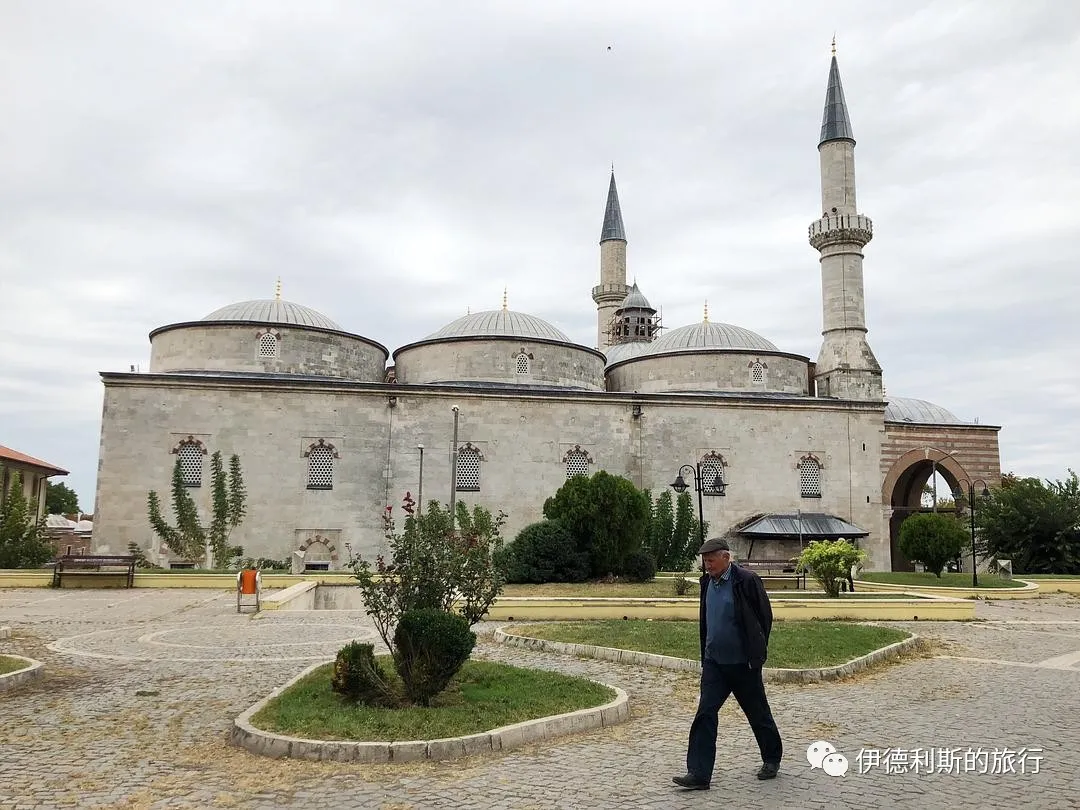
After the Ottoman Interregnum began in 1403, Prince Suleyman, who declared himself Emir in Edirne, started building the mosque. In 1413, Prince Mehmed was crowned Sultan Mehmed I in Edirne, and the mosque was officially completed the following year. This is the oldest surviving mosque in Edirne, so it is called the Old Mosque (Eski Cami).
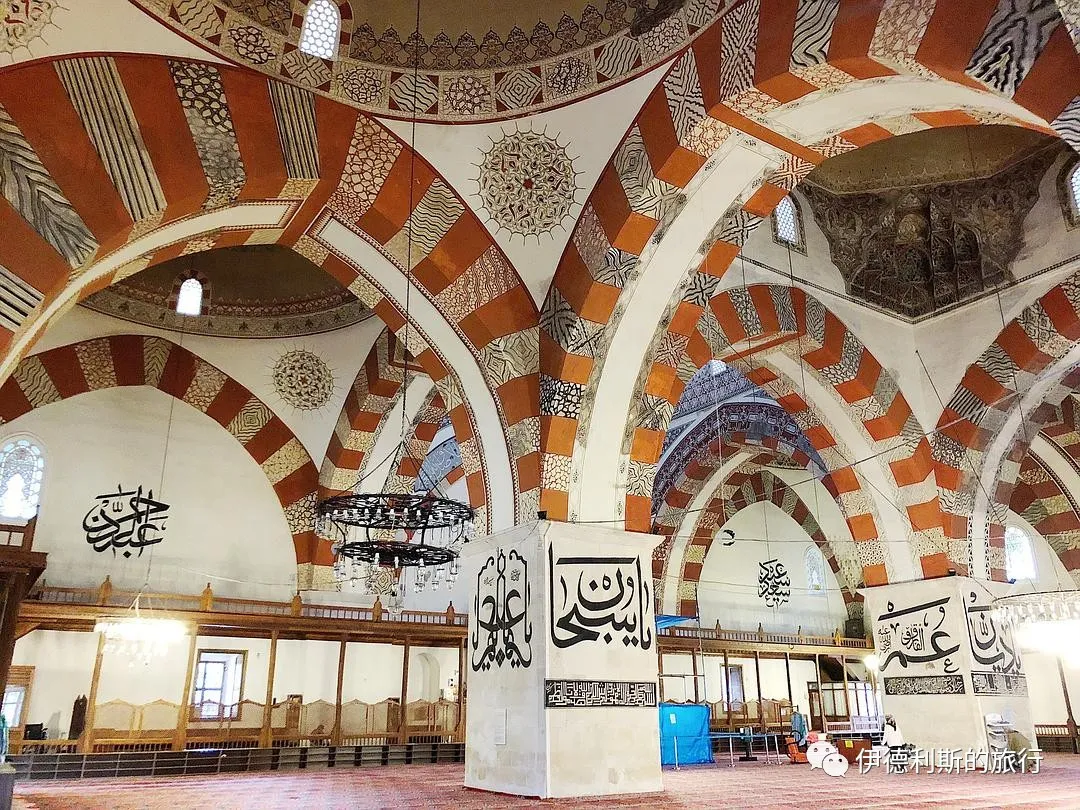
The Old Mosque is one of the last multi-domed mosques to use the early Ottoman Seljuk style, featuring nine central domes. Compared to earlier Seljuk multi-domed mosques, the diameter of the domes in the Old Mosque has clearly increased, showing that the Ottomans were starting to move beyond their early phase of their early phase.
The coronation ceremonies for the 21st Ottoman Sultan Ahmed II (reigned 1691-1695) and the 22nd Sultan Mustafa II (reigned 1695-1703) both took place here. The old mosque suffered massive damage in an earthquake during the mid-18th century, and Sultan Mahmud I (reigned 1696-1754) later ordered its reconstruction. The old mosque was renovated again between 1924 and 1934.
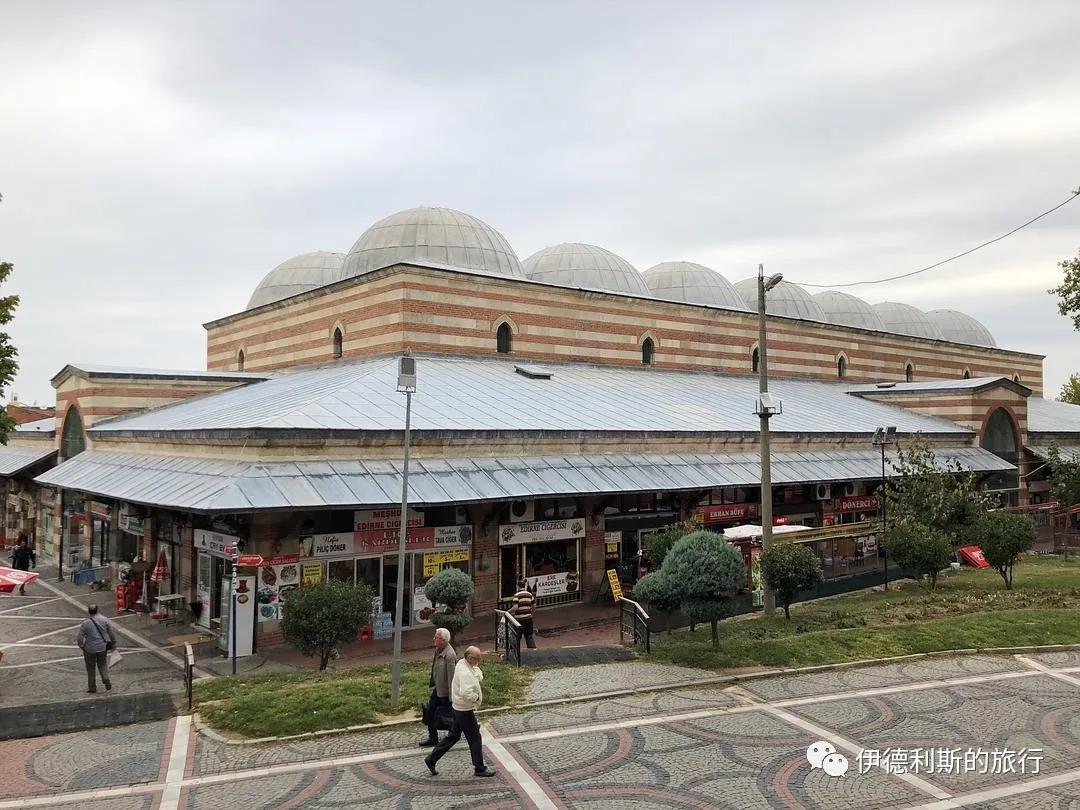
The covered market (Bedesten) sits right next to the old mosque and was built in 1418 by the fifth Ottoman Sultan Mehmed I to help fund the mosque's operations.
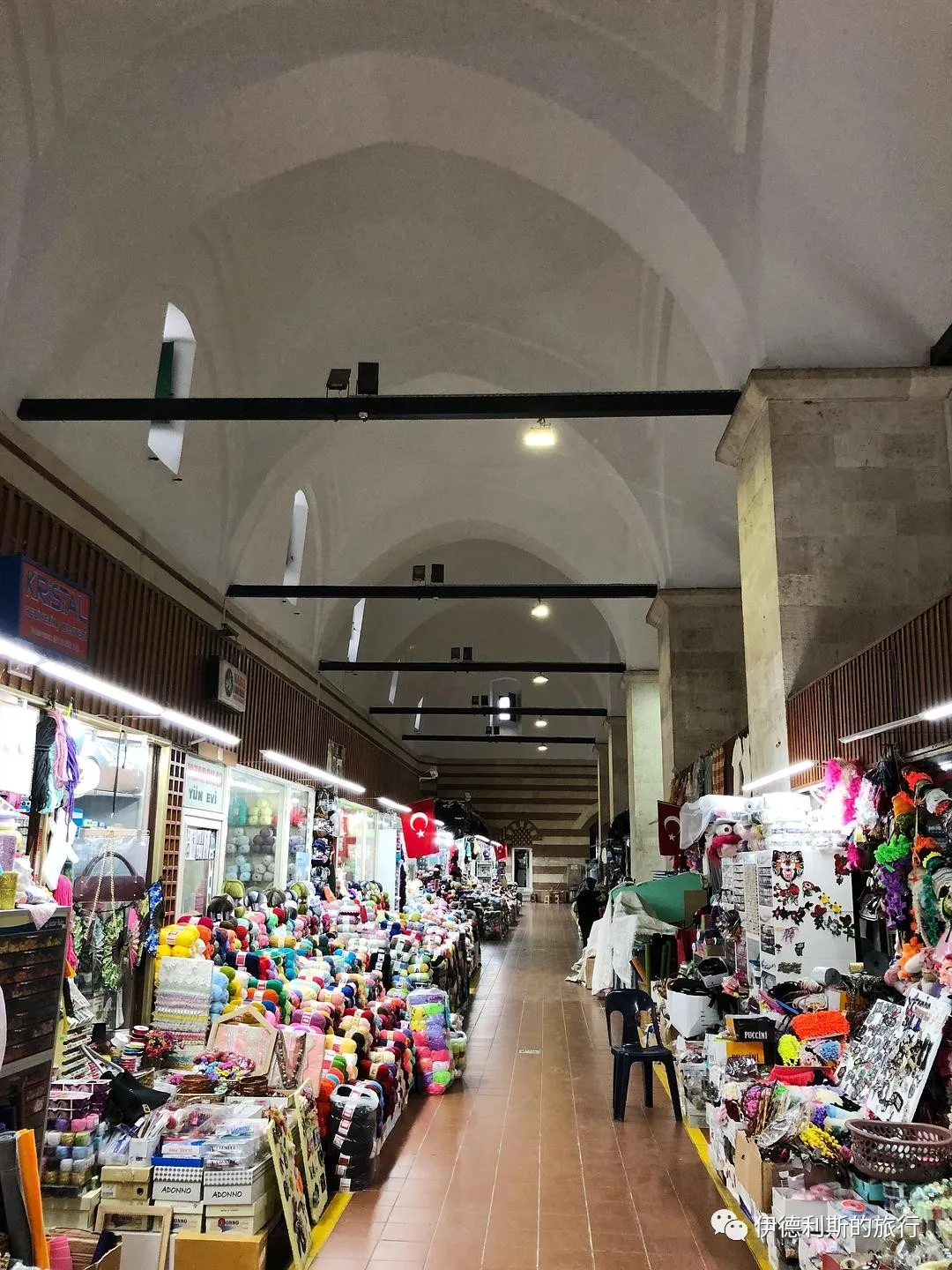
This building is a classic example of an early Ottoman covered market and has been in use ever since. The building is a rectangle 78 meters long and 41 meters wide, topped with 14 domes and featuring 54 shops along its four sides.
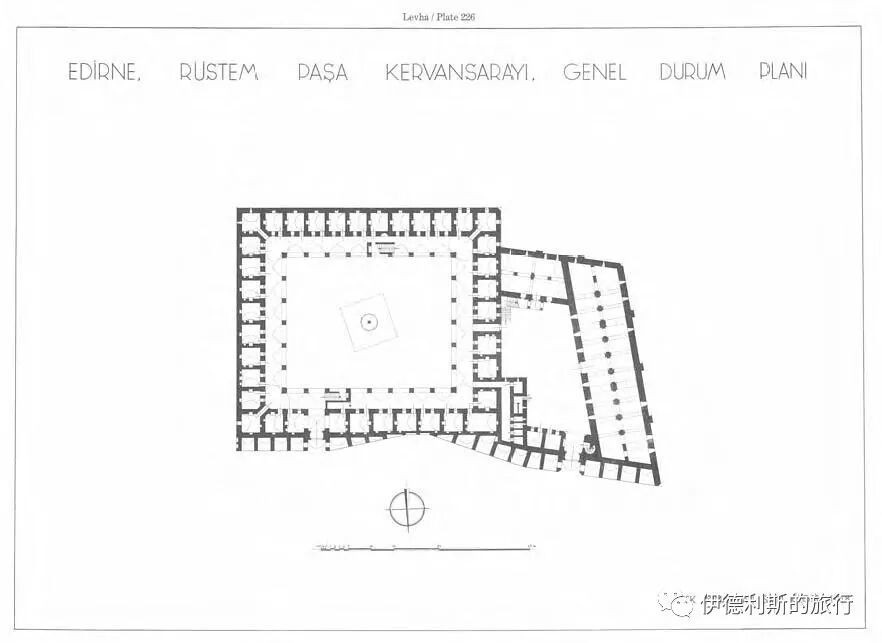
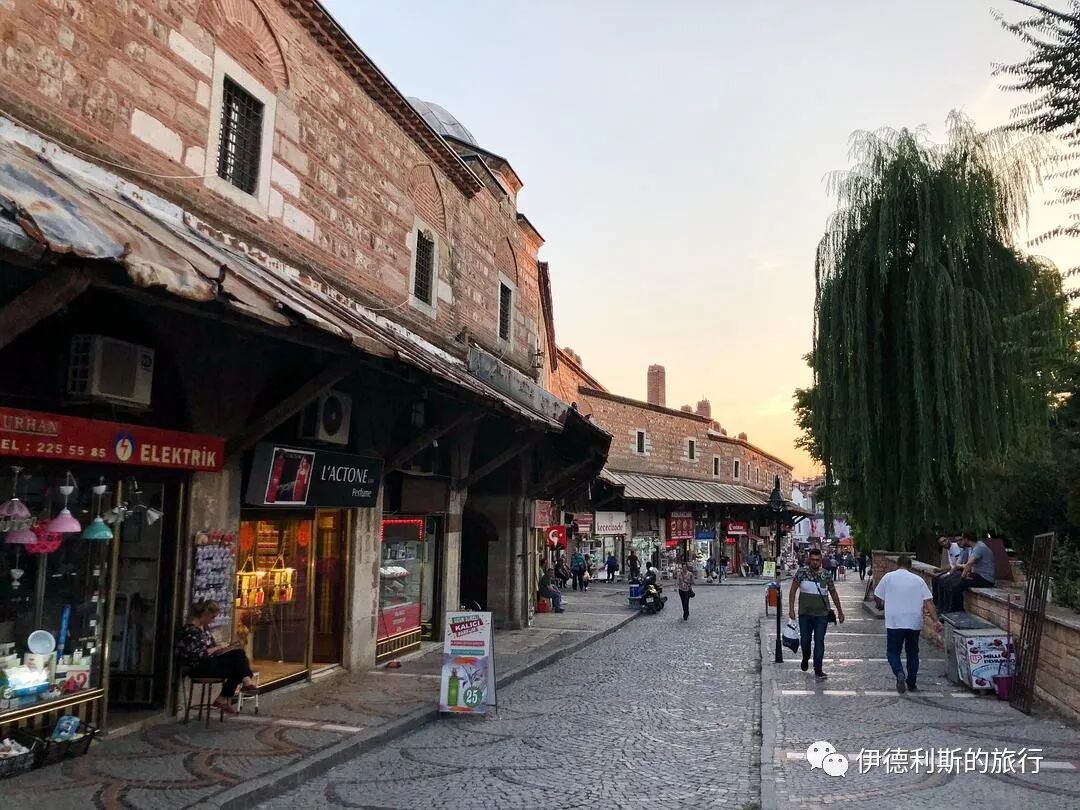
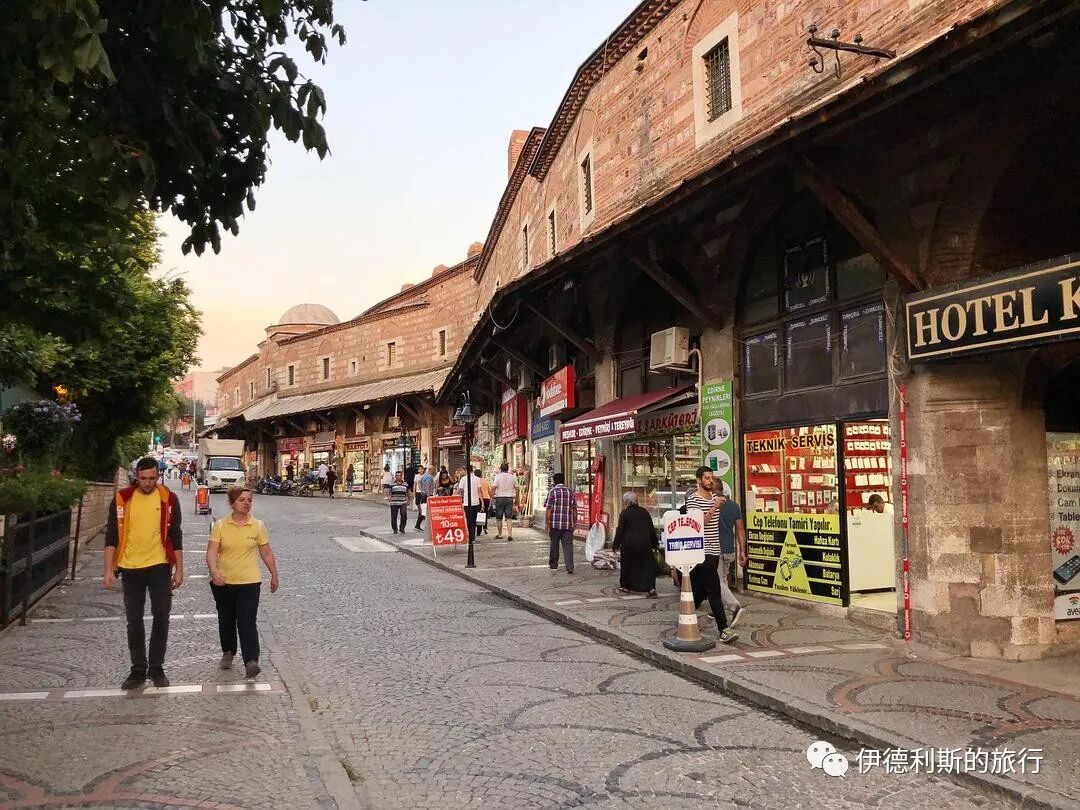
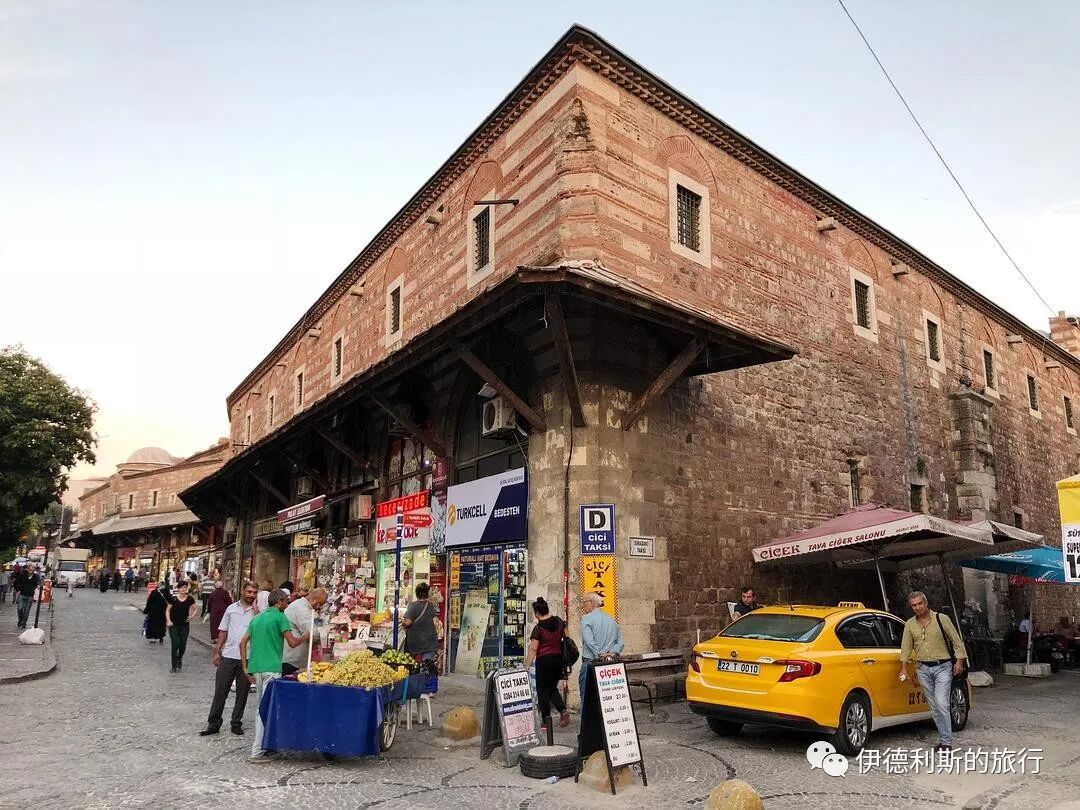
The Rustem Pasha Caravanserai (Rüstem Paşa Kervansarayı) was built in 1561 by the famous architect Mimar Sinan under the orders of the Ottoman Grand Vizier Rustem Pasha (Rüstem Paşa).
The caravanserai has two floors, with 102 guest rooms inside and 21 shops on the outside. Today, the interior serves as a hotel, and the outside shops are still in business.
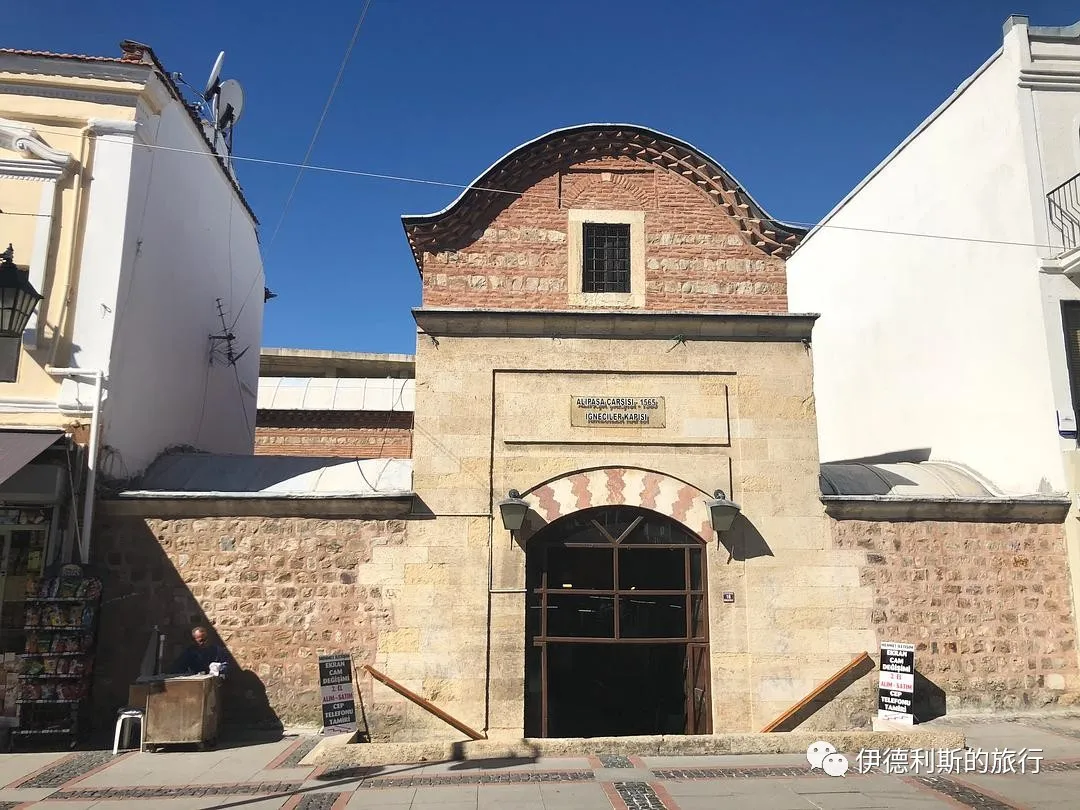
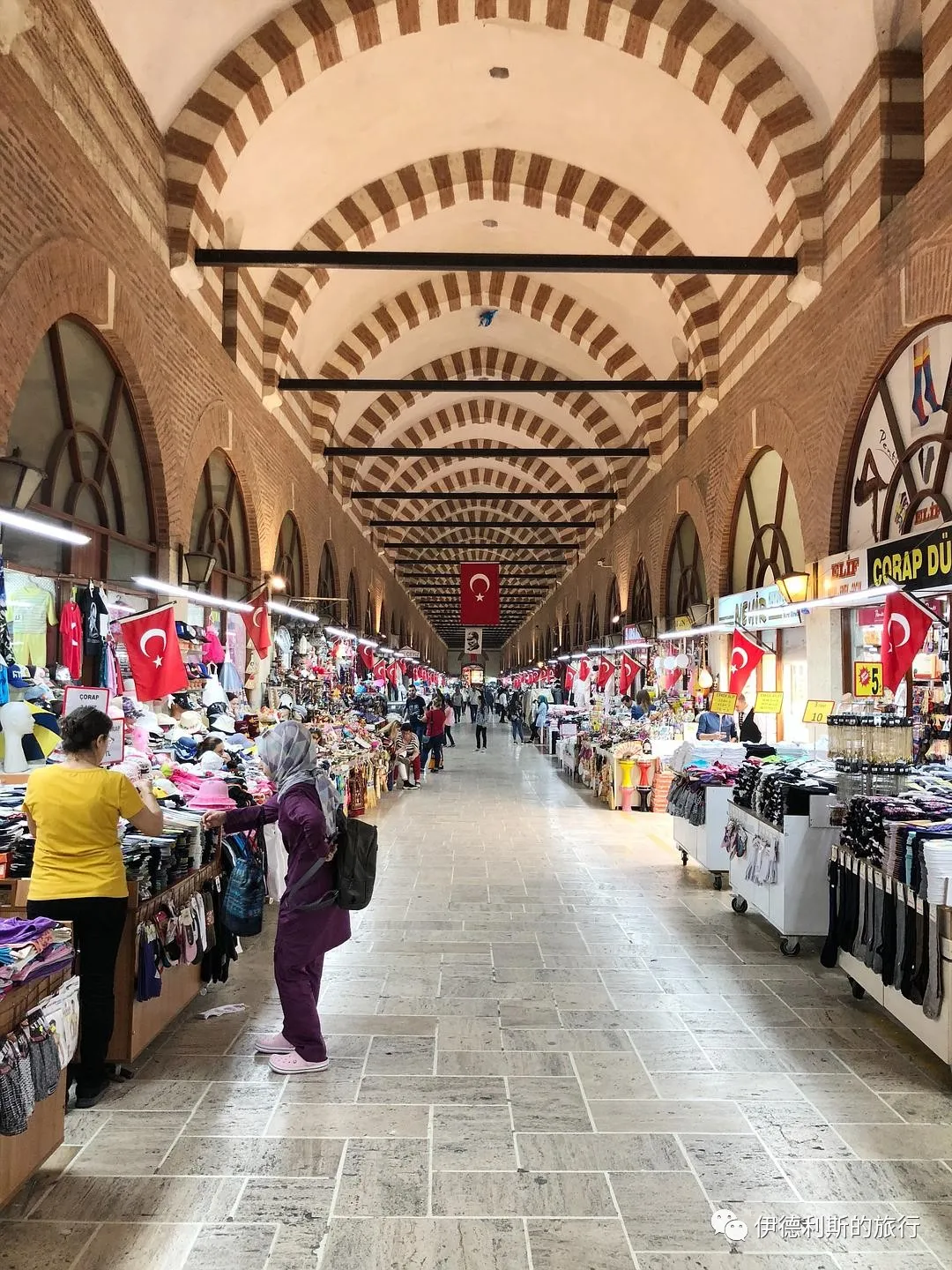
The Ali Pasha Bazaar (Ali Paşa Çarşısı) was built in 1569 by the famous architect Mimar Sinan under the orders of the Ottoman Grand Vizier Ali Pasha (Ali Paşa).
The bazaar includes 130 shops and 6 gates. The bazaar caught fire in 1991 and was later restored.
Muradiye Mosque
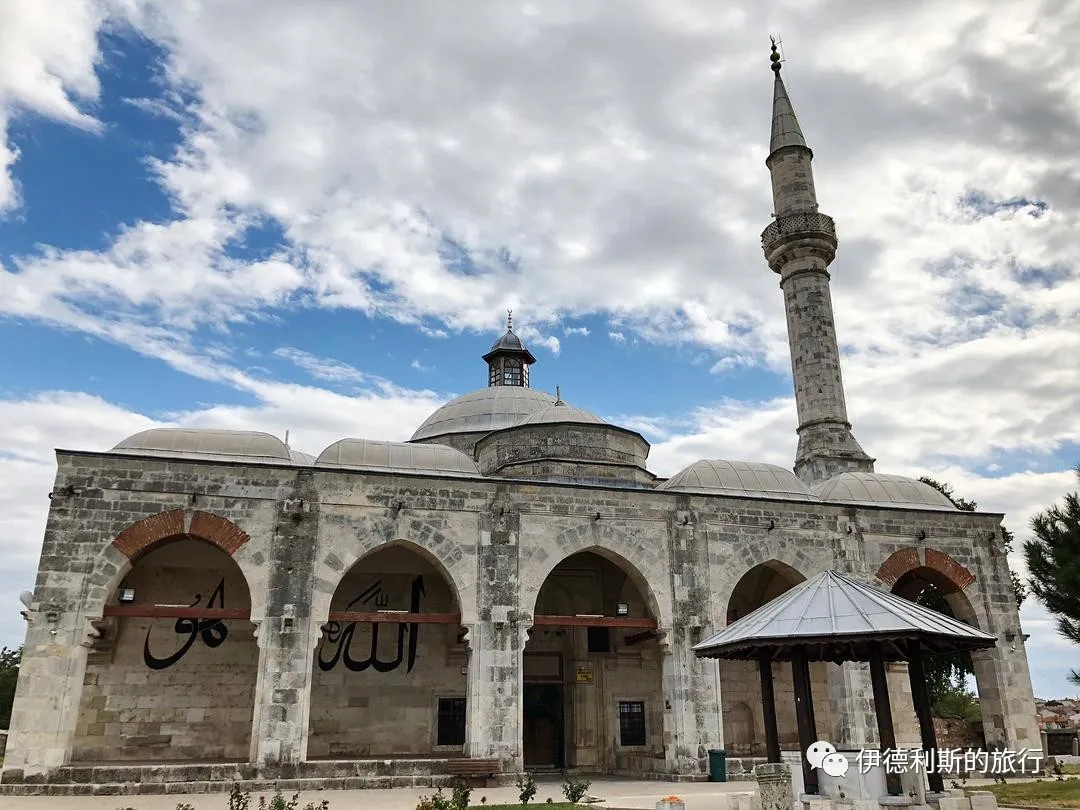
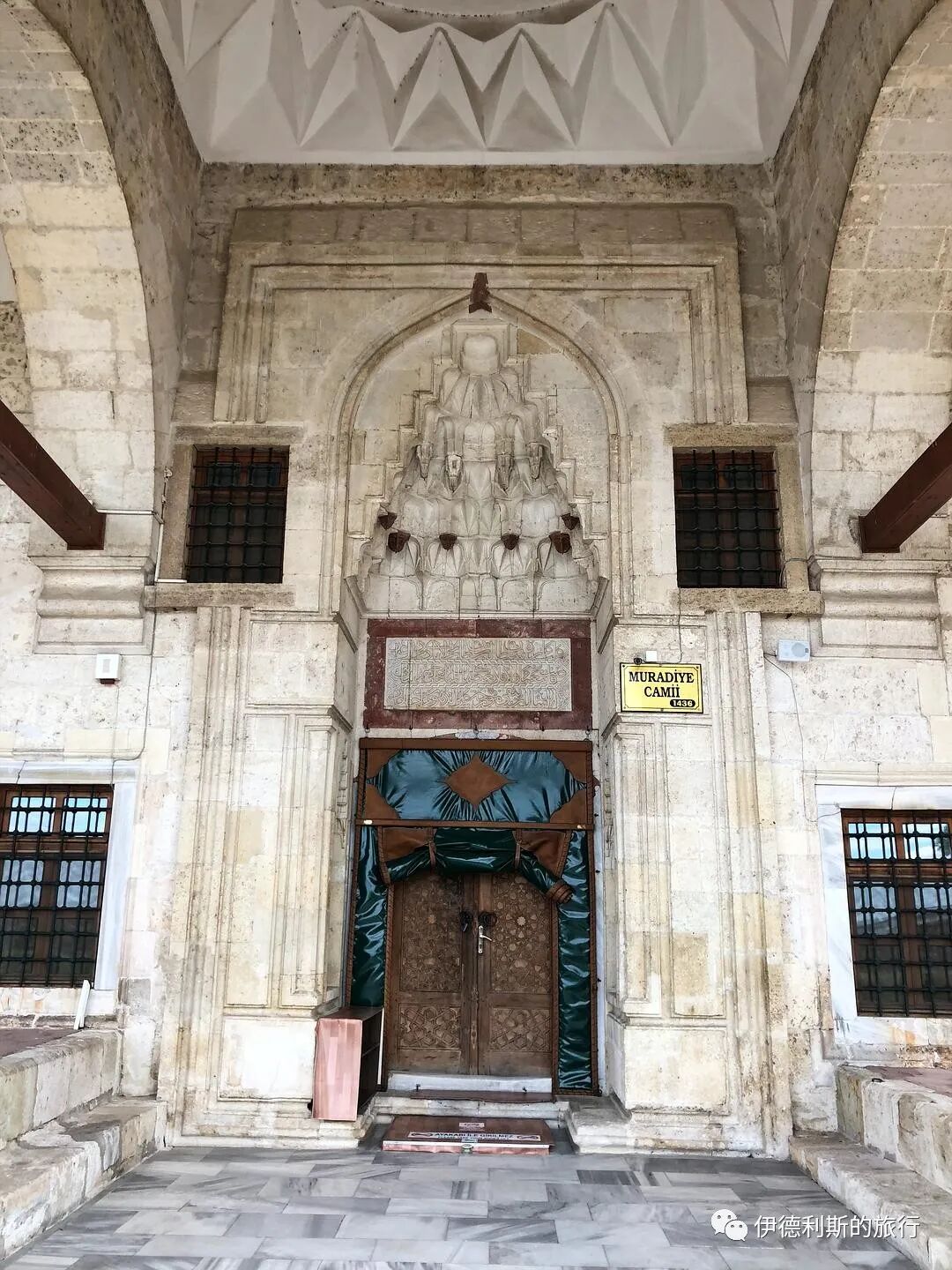
The Muradiye Mosque (Muradiye Camii) is a small T-shaped mosque on a hill in the northern part of Edirne, built in 1436 by order of the sixth Ottoman Sultan Murad II (reigned 1421-1444). It was originally part of a Sufi Mevlevi order complex before being converted into a mosque.
The Muradiye Mosque was once a complex that included a public kitchen (imaret) and a primary school (mekteb), but only the mosque remains today. This place was once badly damaged by an earthquake. The minaret has been rebuilt several times, and it currently looks the way it did after a major renovation in 1957.
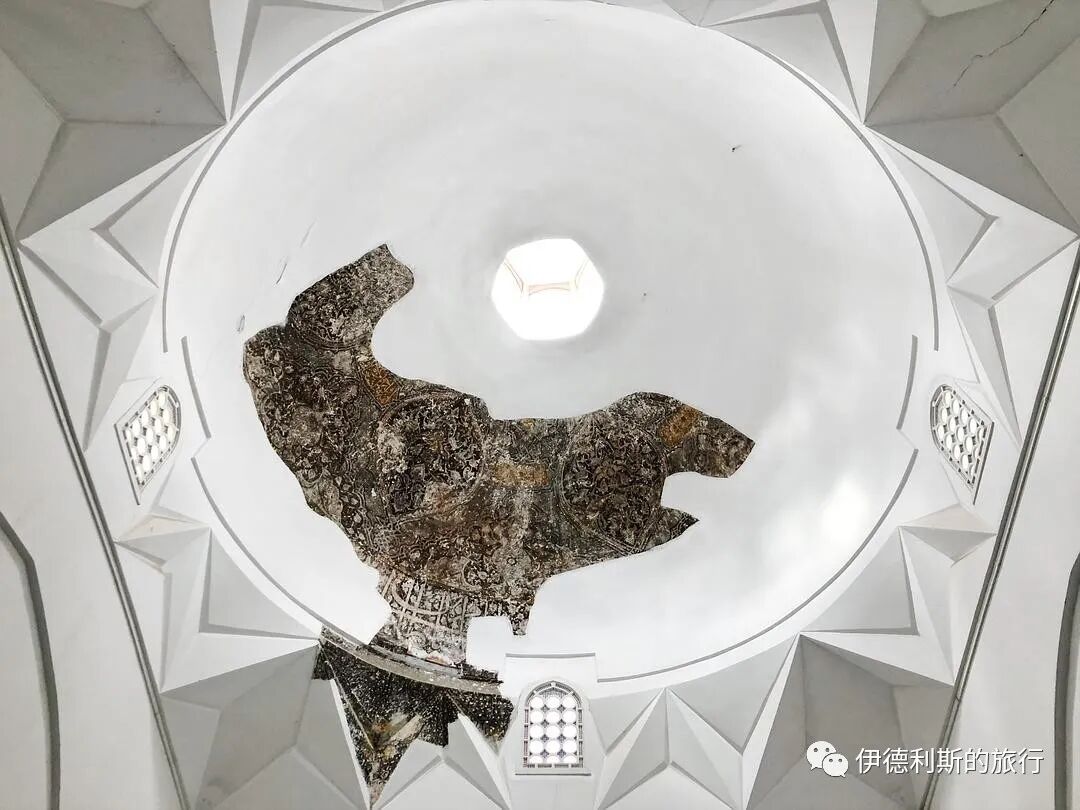
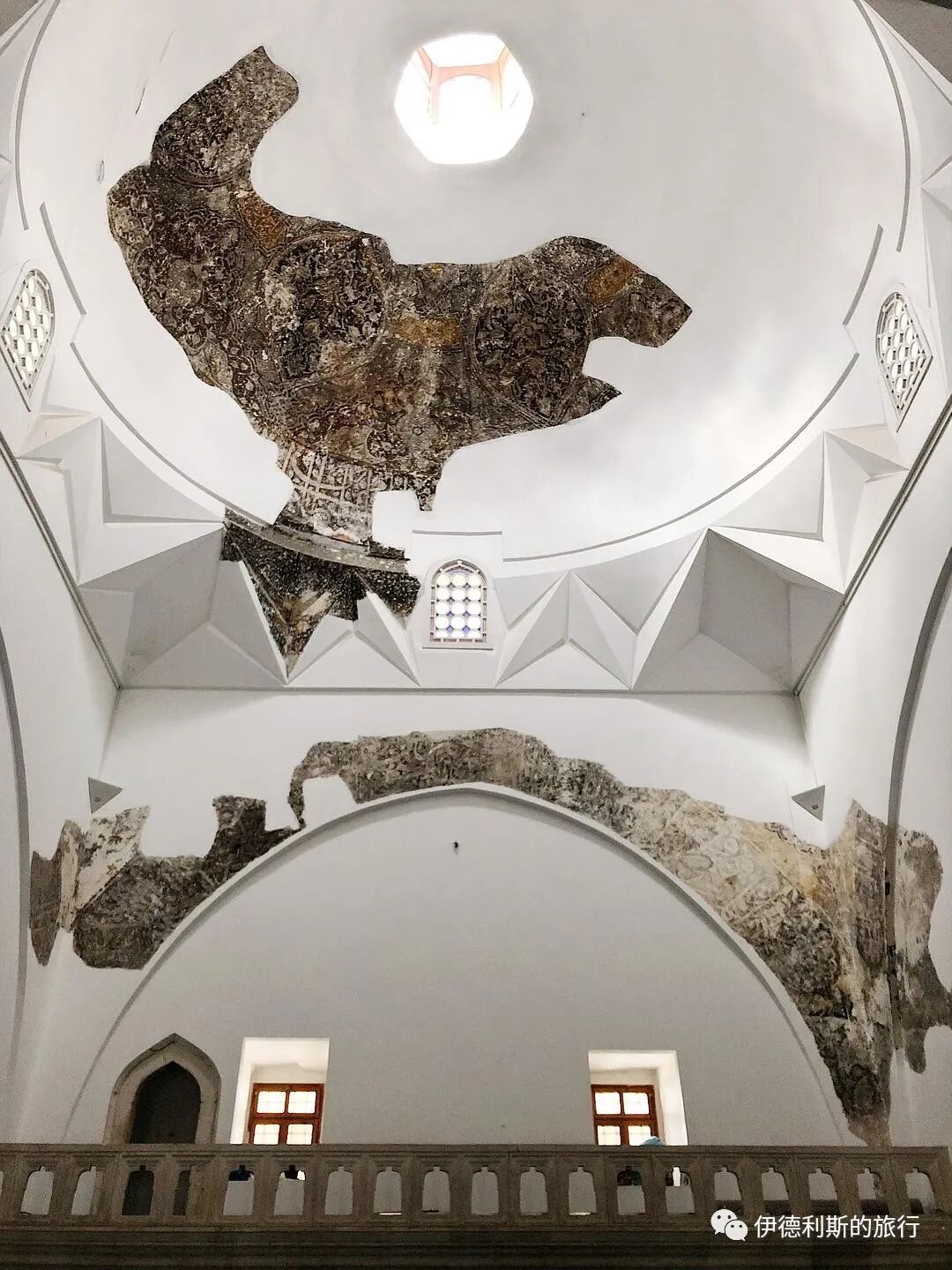
The interior of the mosque is famous for its beautiful tiles. Before some were stolen in 2001, the main hall had 479 tiles in 54 different designs. 15 of these designs appeared only once, showing a strong influence from Yuan dynasty blue and white porcelain (Yuan qinghua). The blue and white hexagonal tiles among them are the earliest examples of Ottoman underglaze tiles. Because some tiles are arranged inconsistently, some scholars believe a portion of them were moved here from the Ottoman palace in Edirne in the north.
The mosque preserves a 15th-century mihrab covered in tiles, which bears the name of Sultan Murad II. The dry cord (Cuerda Seca) tile style of the mihrab is very similar to the Green (Yeşil) Mosque in Bursa, built in 1421, and was likely made by the same team of craftsmen. The mihrab of the Green Mosque in Bursa is said to have been designed by a master from Tabriz, Iran. Therefore, it is very likely that this master traveled to Edirne to design the mihrab for the Muradiye Mosque.
Three-Balcony Mosque (Üç Şerefeli Camii) complex
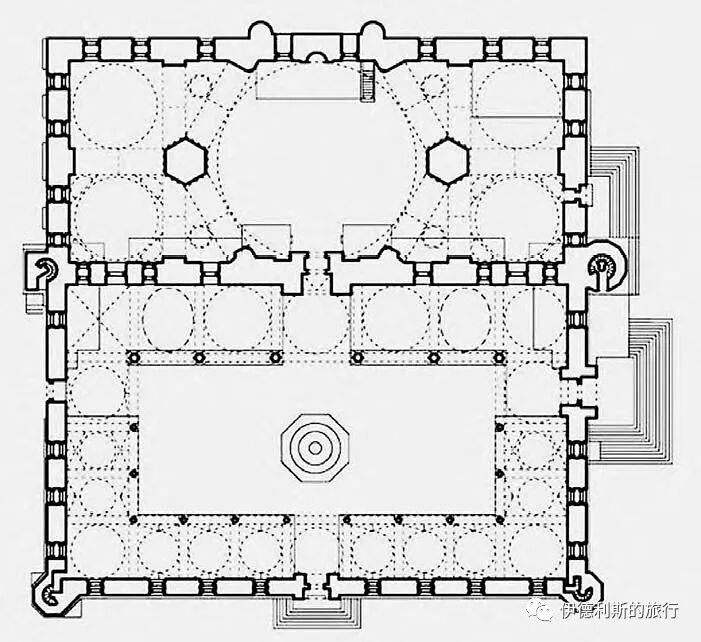
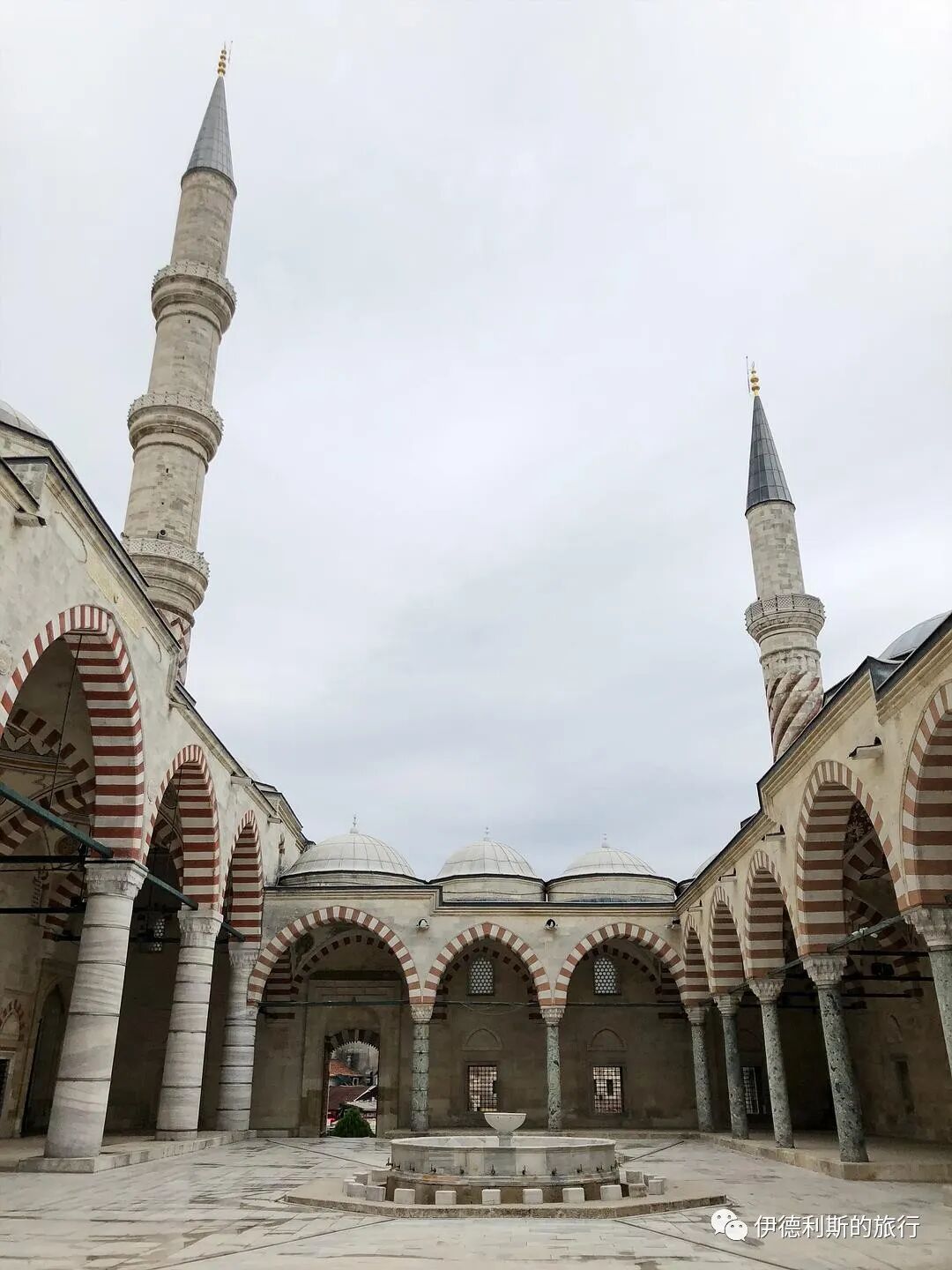
The Three-Balcony Mosque (Üç Şerefeli Camii) is known as an important landmark that started a new era in Ottoman architecture. It was the first mosque in Ottoman history to feature a central dome and the first to have a portico. The mosque was started in 1438 by the sixth Ottoman Sultan, Murad II (reigned 1421–1444), and was completed in 1447.
The Three-Balcony Mosque is located not far northwest of the Old Mosque, and it was the largest mosque in the Ottoman Empire when it was finished. This mosque is considered a pioneer of the classic Ottoman mosque style. It was among the first to shift from the Seljuk style of multiple small domes to a large central dome, featuring a central dome 24 meters in diameter.
The Three-Balcony Mosque gets its name from the three balconies on its minaret. At the time, this was the tallest minaret in the Ottoman Empire. It stands 76 meters high, has 203 steps, and you can reach the balconies using three different paths.
The underglaze tiles of the mosque are very similar in style to the Green Mosque (Yeşil Cami) in Bursa (1421) and the Muradiye Mosque in Edirne (1436), and they were likely designed by the person known as the Master of Tabriz.
The architectural design of the Three Balcony Mosque (Üç Şerefeli Cami) greatly inspired the great 16th-century Ottoman architect Mimar Sinan, who built upon this foundation to eventually create the most magnificent mosques of the Ottoman Empire.
The Saatli Madrasa is directly opposite the Three Balcony Mosque and was also completed in 1447.
The Peykler Madrasa is right next to the south side of the Saatli Madrasa and was built a few years later.
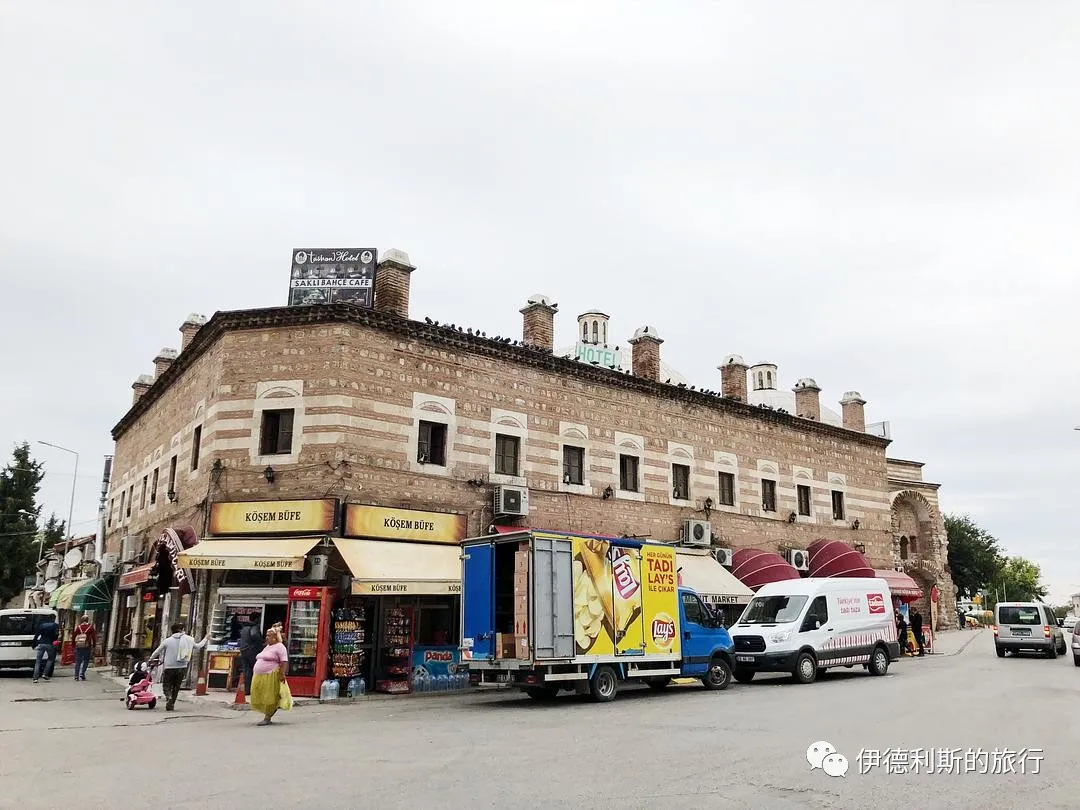
The Stone Inn (Taşhan Inn) is across the street to the west of the Three Balcony Mosque and was built in the 15th century.
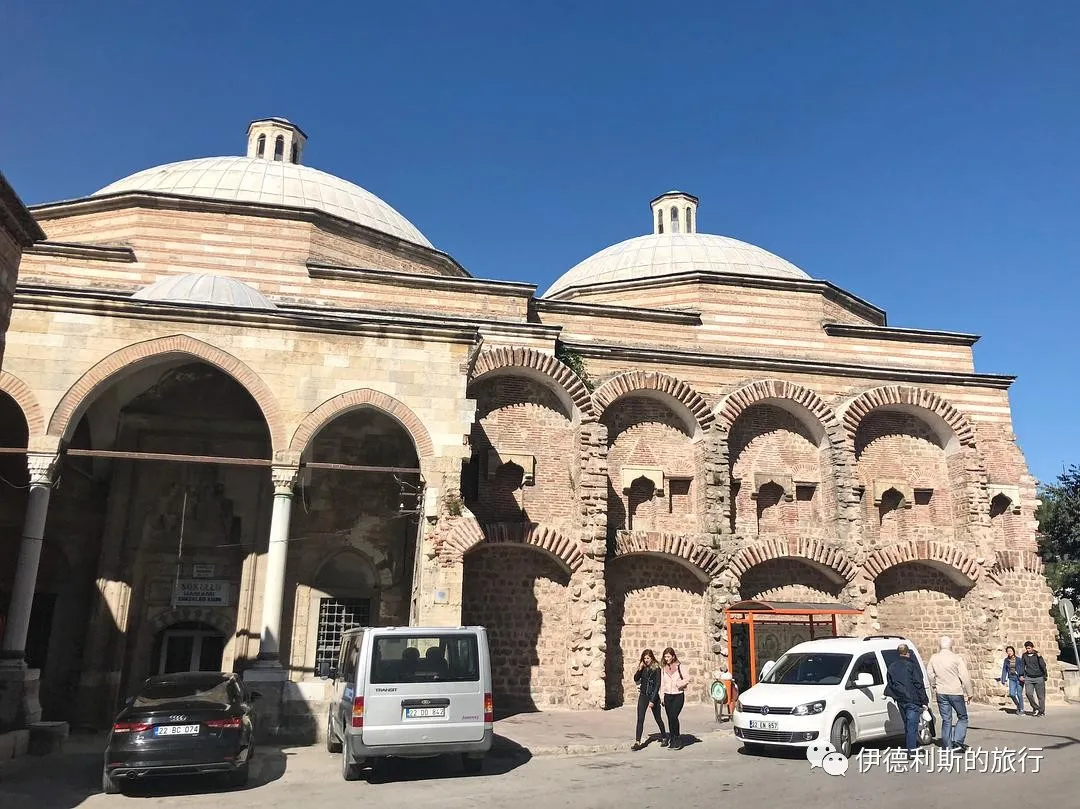
The Sokullu Mehmet Paşa Bath (Sokullu Mehmet Paşa Hamamı) was commissioned in the second half of the 16th century by the Ottoman Grand Vizier Sokullu Mehmet Paşa (in office 1565-1579) and built by the great Ottoman architect Mimar Sinan.
The bath was built right next to the Stone Inn and consists of two sections for men and women, and it is considered one of the most important baths in the Ottoman Empire.
Edirne Palace
Edirne Palace (Edirne Sarayı) was commissioned by Sultan Murad II in 1450, but construction stopped the following year when the Sultan passed away. After a period of inactivity, it was finally completed in 1475 by his successor, Sultan Mehmed the Conqueror.
Afterward, the palace was continuously expanded between the 16th and 18th centuries. Most importantly, during the reign of Suleiman the Magnificent (reigned 1520-1566), the chief architect Mimar Sinan redesigned the palace and solved the water supply problem by building a canal. To protect the palace from flooding, the canal was built in an arc around the palace.
At its peak, the palace consisted of 72 buildings, including 117 rooms, 14 mansions, 18 baths, 9 mosques, 17 gates, and 13 cellars. At its busiest, 34,000 people lived inside.
The main building of the palace is called the Panorama Pavilion (Cihannüma Kasrı), also known as the Imperial Throne (Taht-ı Hümayun), and was built in 1450. The Panorama Pavilion is a seven-story building with an octagonal room at the top, which includes the Sultan's room, a room for flags, a library, and a mosque.
Initial archaeological excavations of the Panorama Pavilion (Cihannüma Kasrı) took place in 1956. In 2001, the National Palaces Administration sponsored archaeological and restoration work on the palace gate, the Gate of Felicity (Bab'üs Sa'ade), and the Panorama Pavilion (Cihannüma Kasrı) site, which was completed in 2004.
The Imperial Kitchen (Matbah-ı Amire) is on the southwest side of the palace and has eight domes. While the north facade is gone, most of the structure remains well-preserved.
The Court of Justice (Kasr-ı Adalet) sits on the south bank of the Tunca River. It was built in 1561 by order of Suleiman the Magnificent, who is also known as Suleiman the Lawgiver.
The Kanuni Bridge (Kanuni Köprüsü), also called the Palace Bridge, was built in 1554 by Mimar Sinan under the orders of Suleiman the Magnificent.
Kasim Pasha Mosque
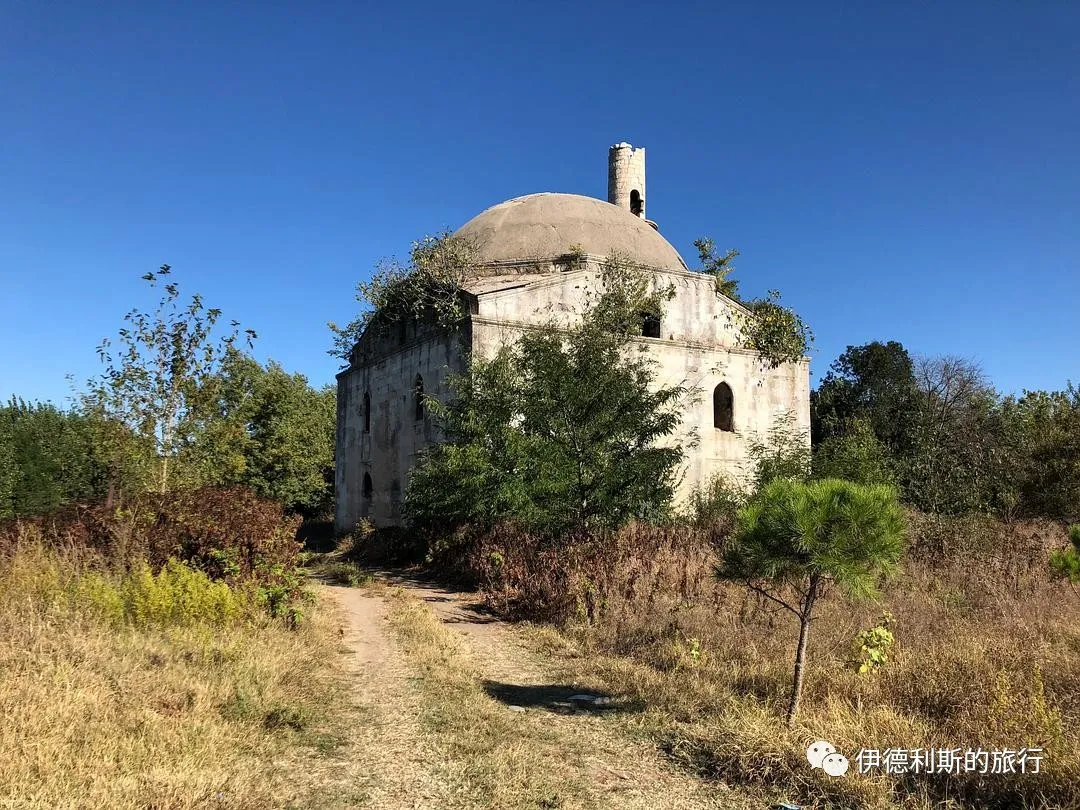
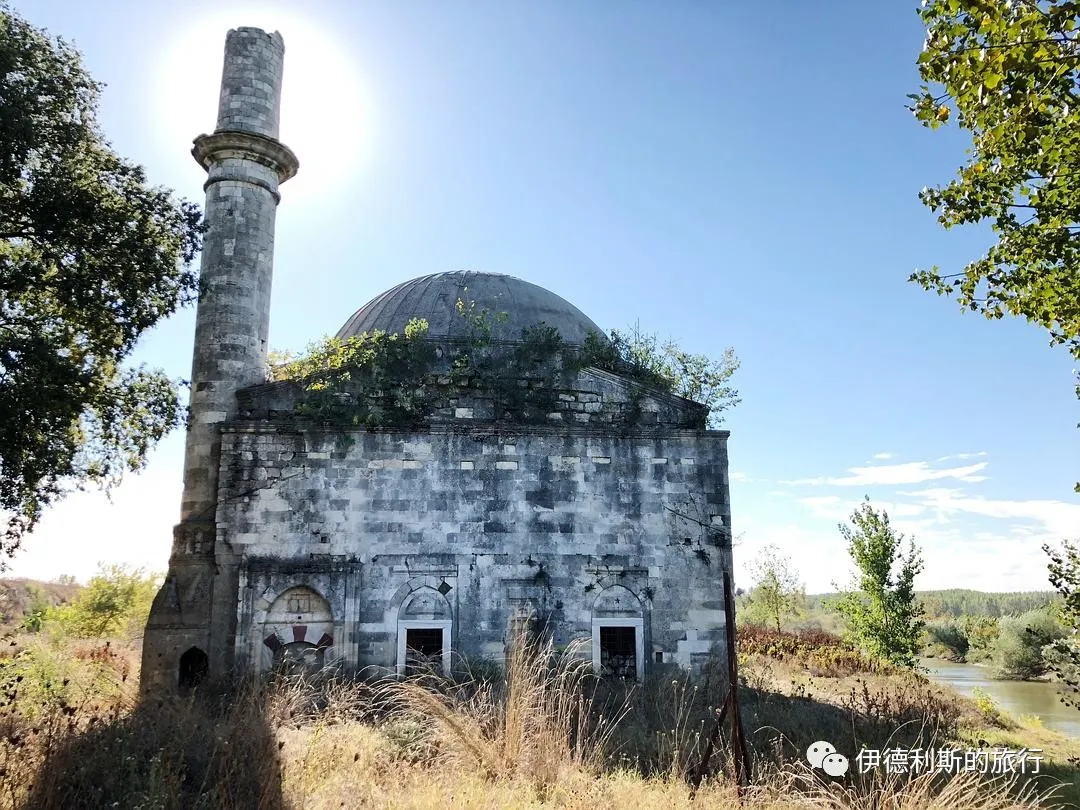
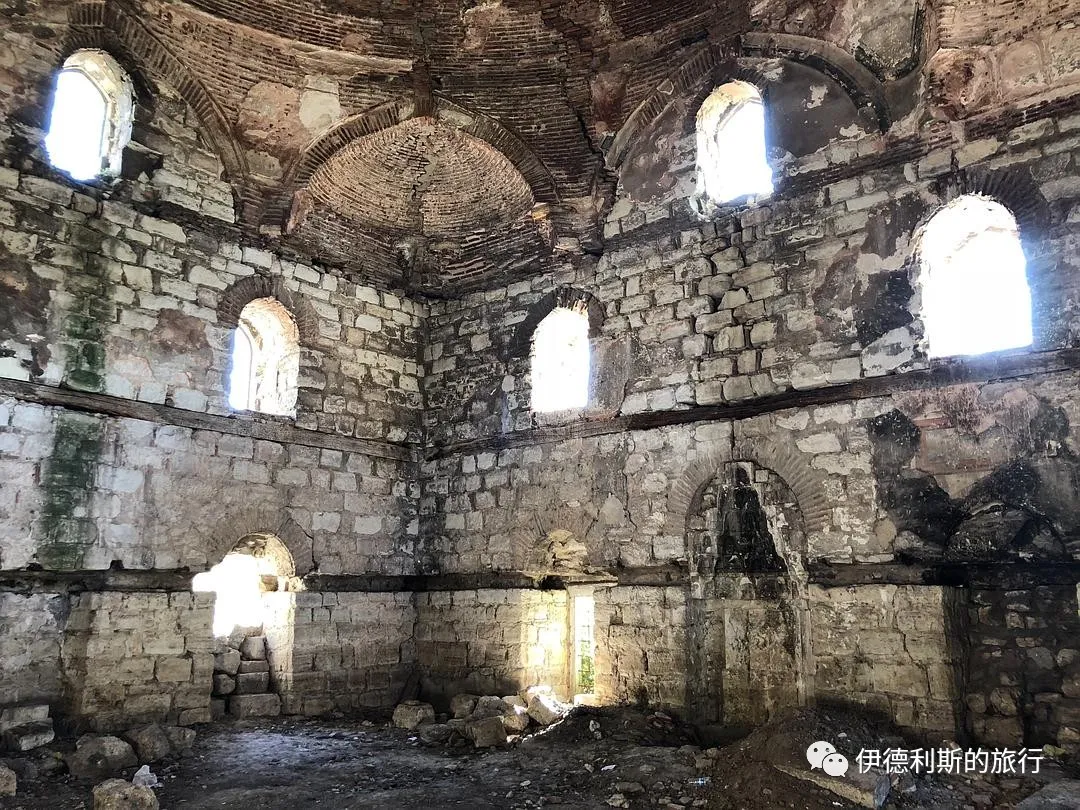
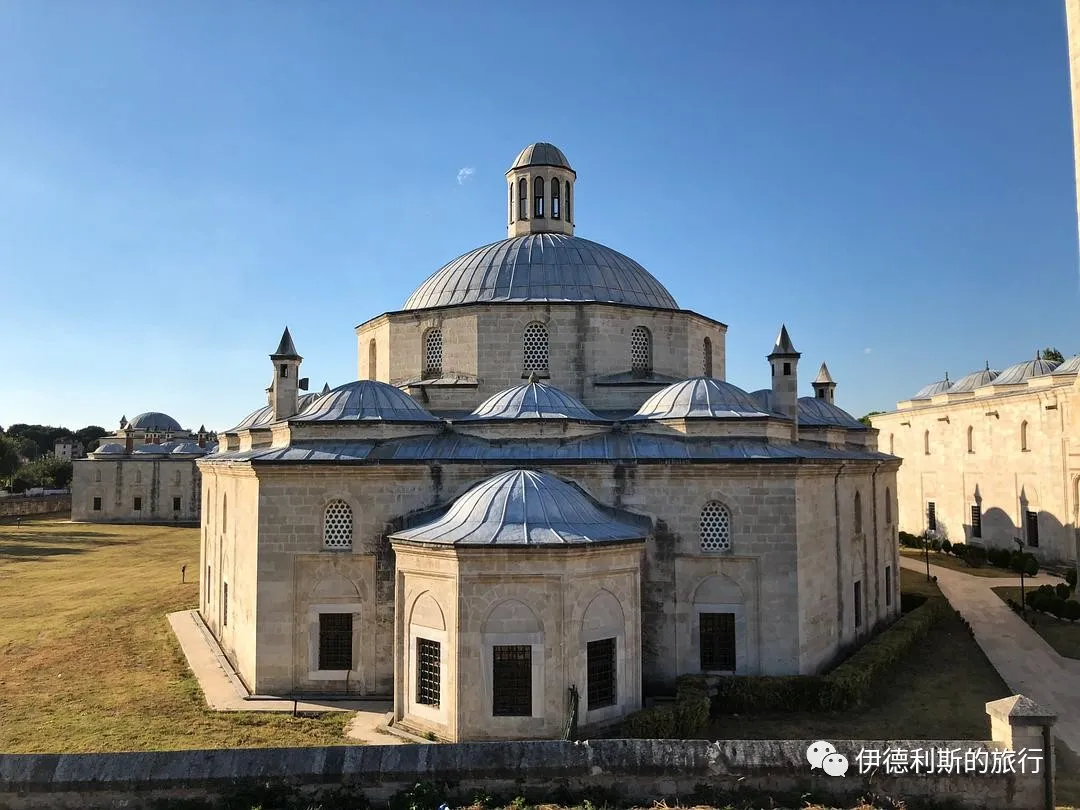
The Kasim Pasha Mosque (Evliya Kasım Paşa Cami) is by the river in the southeast of Edirne city. It was built in 1479 by order of Kasim Pasha (Kasım Paşa). Kasim Pasha was a famous Ottoman Empire general who served as the commander of Rumelia, the European part of the Ottoman Empire. He commanded troops during the wars between 1443 and 1444 against the multinational crusader forces of Poland and Hungary, fighting in places like Serbia and Bulgaria.
The mosque closed in 1950 due to the construction of a dam. Since then, it has been repeatedly damaged by floods, making it the most wild and overgrown early Ottoman mosque in Edirne.
Sultan Bayezid II Complex
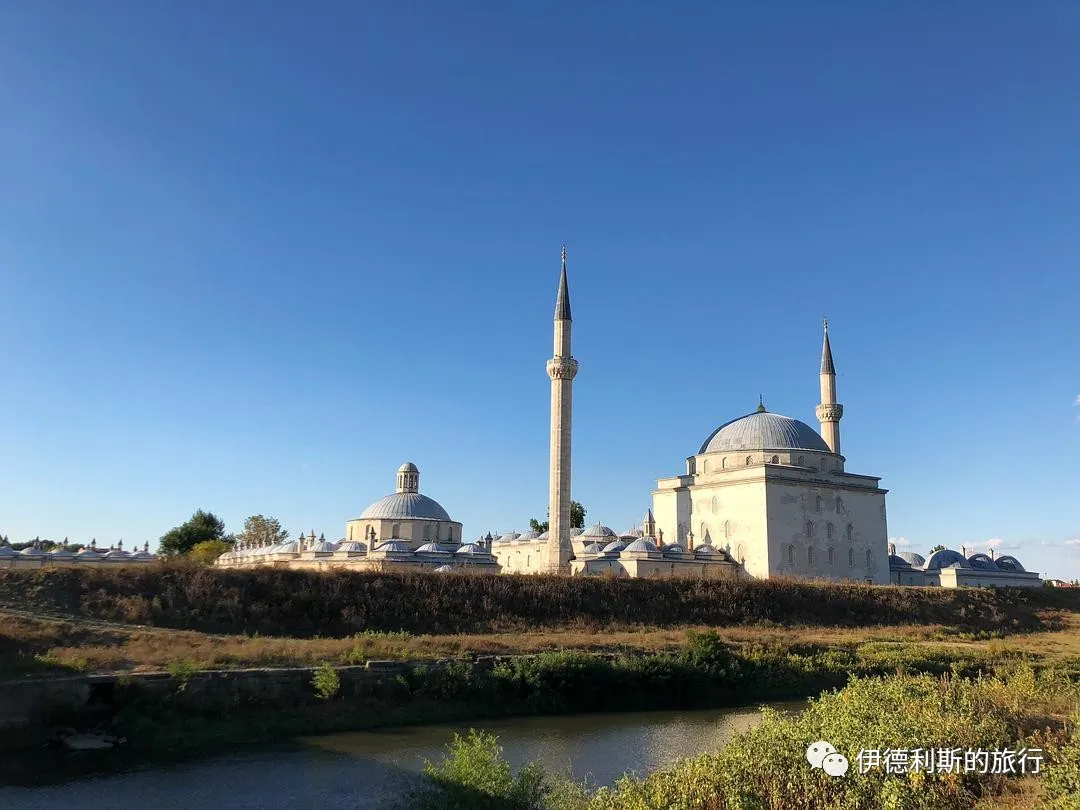
The Sultan Bayezid II Complex (Sultan II Bayezid Külliyesi) is located on the north bank of the Tunca River in the northwest suburbs of Edirne. It was built by order of the eighth Ottoman Sultan, Bayezid II (reigned 1481–1512). Bayezid II was the son of Mehmed the Conqueror and was known as the Just. During his reign, he worked to maintain government affairs internally and defeated the Republic of Venice externally, leading the Ottoman Empire into a prosperous era.
The entire complex includes many buildings such as a mosque, a medical school (Medrese-i Etibba), a public kitchen (imaret), a hospital (darüşşifa), a bathhouse (hamam), and warehouses.
The Sultan Bayezid II Medical School (Sultan II Bayezid Medrese-i Etibba) is considered one of the best medical schools in the Ottoman Empire and consists of 18 classrooms and a large lecture hall. The famous 17th-century Ottoman traveler Evliya Çelebi mentioned in his writings that this medical school studied the works of various ancient Greek philosophers, scientists, and physicians, including Plato, Socrates, Aristotle, Galen, and Pythagoras. Each doctor was an expert in a different field, and they tried to find the best treatments by studying various medical texts.
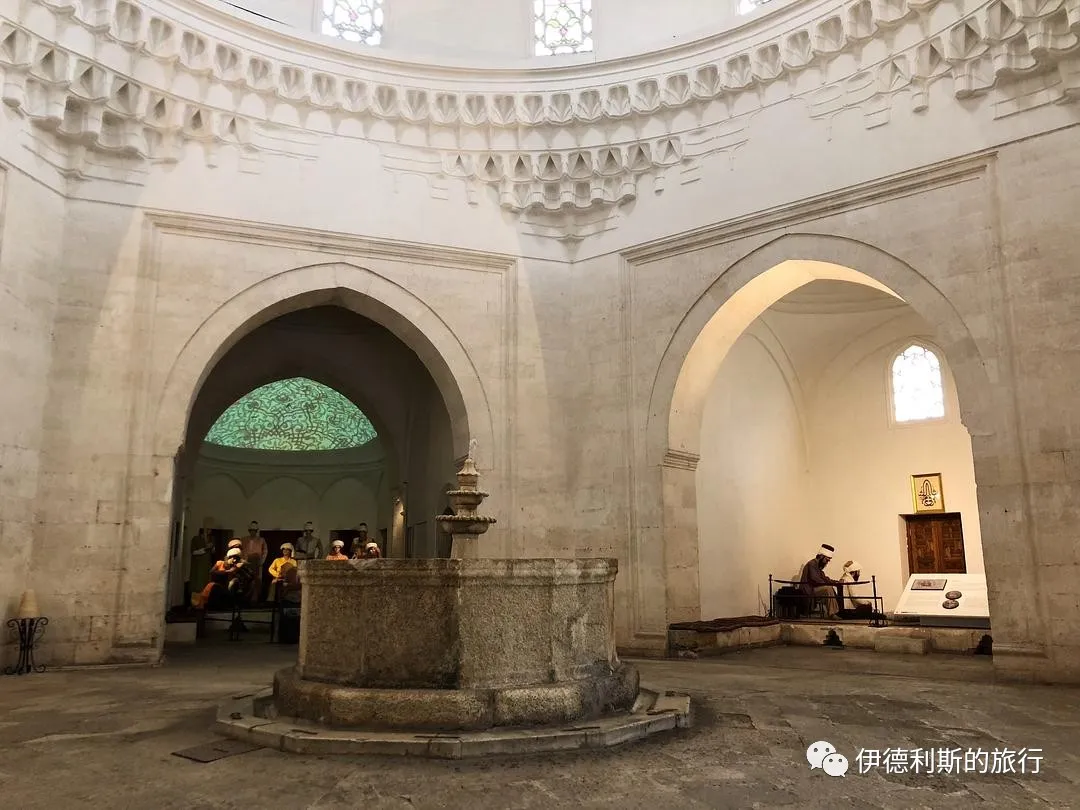
The Sultan Bayezid II Hospital (Sultan II Bayezid Darüşşifa) is the most important part of the entire complex. From its completion in 1488 until the Russo-Turkish War in 1877, this hospital provided continuous treatment to patients and was especially famous for using sound and scent for mental health therapy. Today, it has become part of a health museum.
Selimiye Mosque
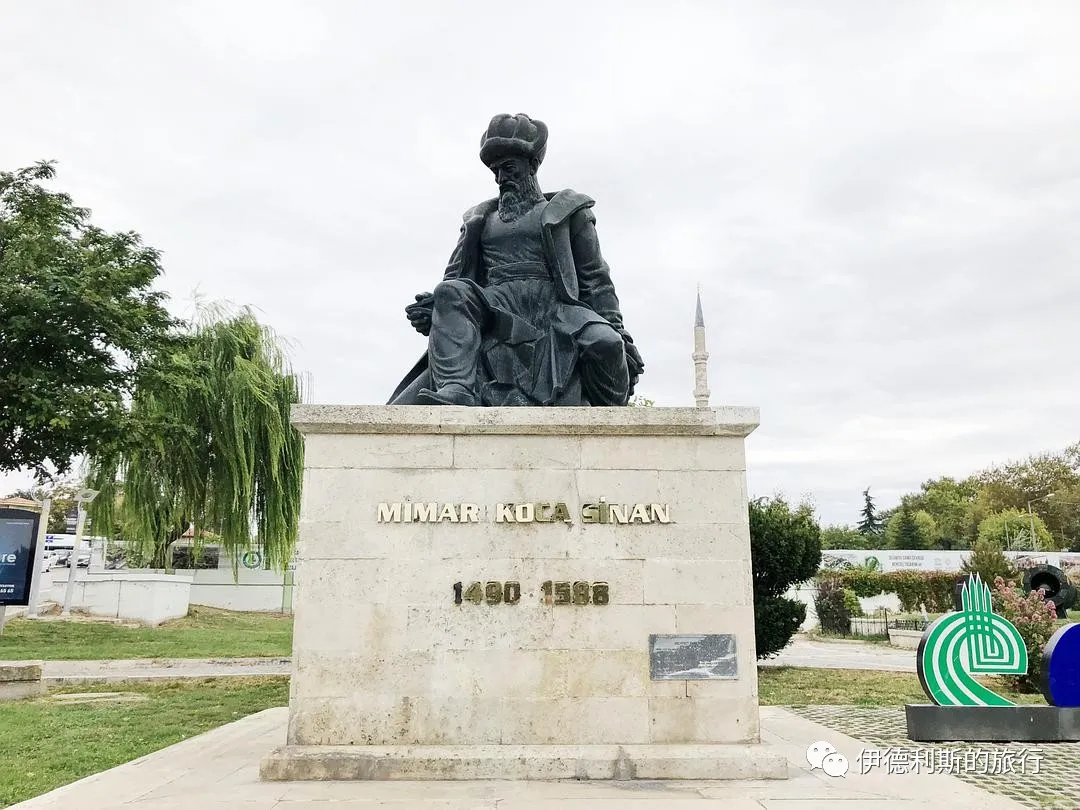
The Selimiye Mosque (Selimiye Camii) in Edirne was commissioned by Ottoman Sultan Selim II (reigned 1566-1574) and built by the imperial chief architect Mimar Sinan between 1567 and 1575. It is hailed as a supreme achievement in Ottoman architecture, a masterpiece of 16th-century Ottoman Islamic art, and Mimar Sinan's well-deserved representative work. It was added to the UNESCO World Heritage list in 2011.
On June 22, 1567, Selim II traveled from Istanbul to Edirne to sign a peace treaty with Austria, and People say he ordered the construction of the mosque at this time.
The entire complex (Külliye) consists of nine parts: the mosque, a courtyard with a fountain, the Dar’ül-Kurra Quran school (Foundation Museum), the Dar'ül-Hadis Hadith school (Museum of Turkish and Islamic Art), the Arasta bazaar, a primary school, a clock tower (Muvakkithane), the outer courtyard of the mosque, and a library. It is the most prominent building complex in the old city of Edirne.
The area where the mosque stands was originally an Ottoman palace. After the Ottoman Empire moved its capital to Istanbul in 1453, the old palace gradually became a military headquarters and later a square.
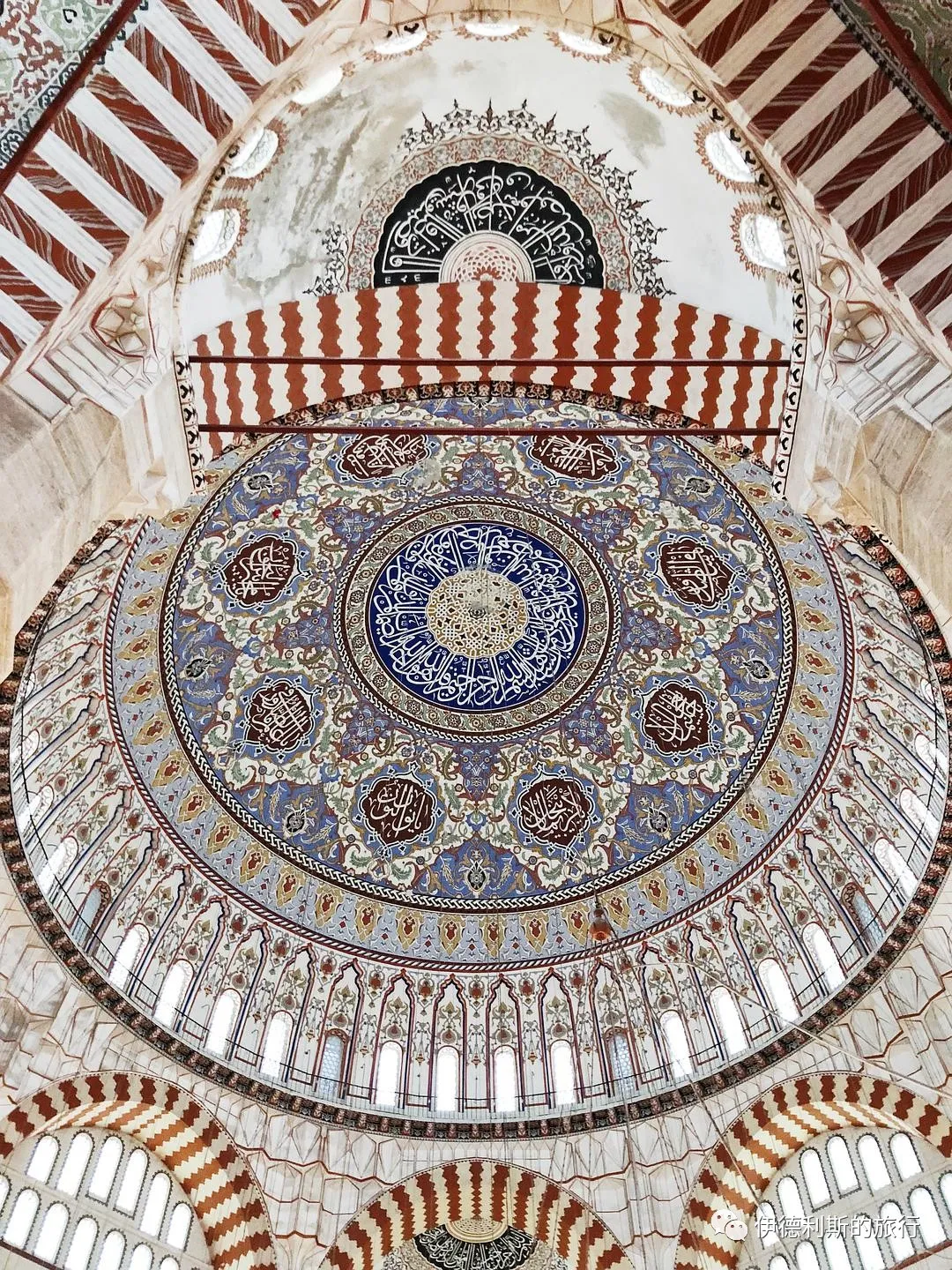
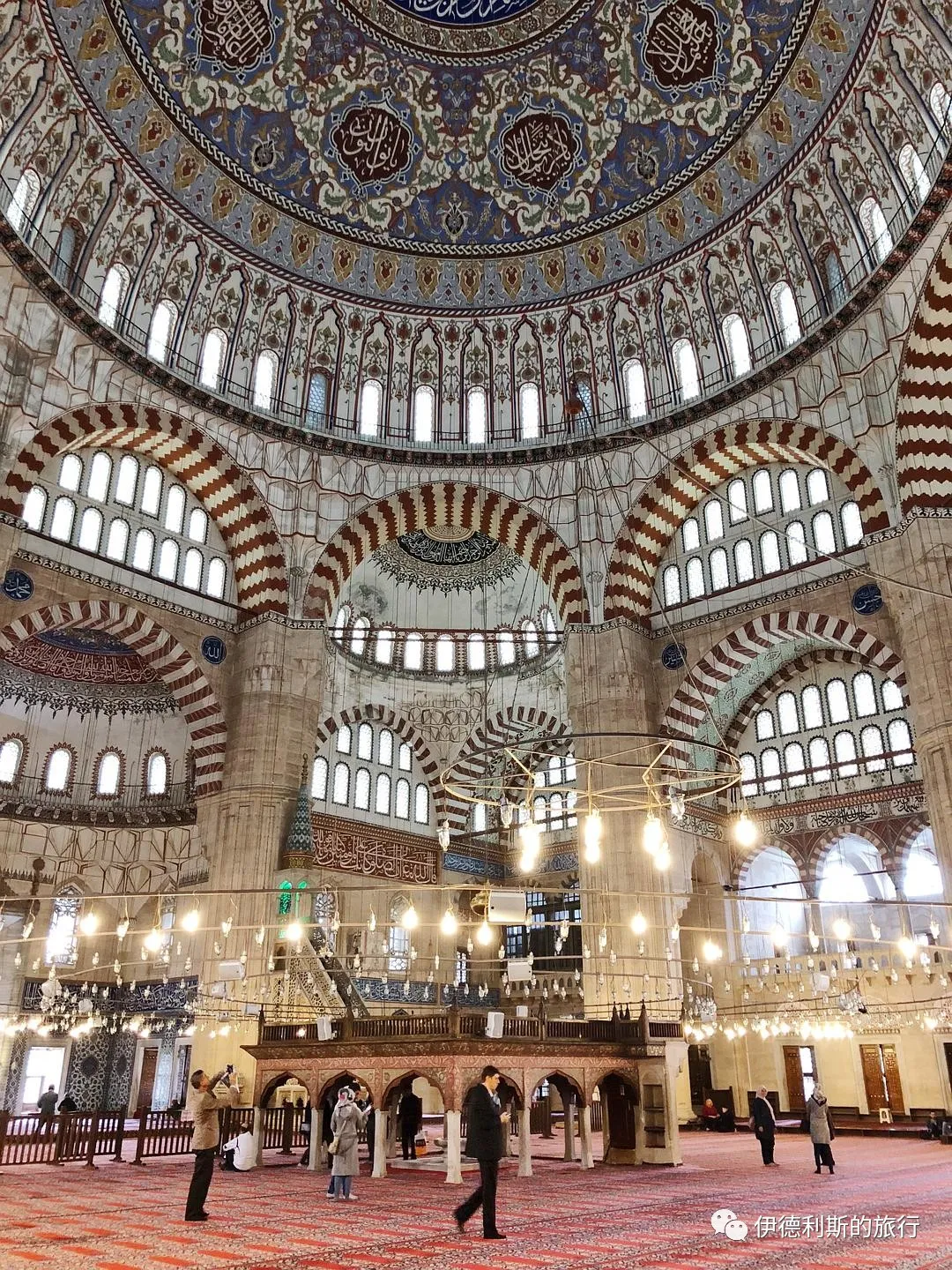
To highlight the central authority of the Ottoman Empire, Mimar Sinan wanted the Selimiye Mosque to look like a single, unified whole from both the inside and outside, rather than being composed of many small domes or semi-domes like earlier Ottoman mosques. Therefore, he decided to build a massive central dome that would surpass the Hagia Sophia. The dome was officially completed in 1575, standing 42.3 meters high with a diameter of 31.5 meters and weighing 20 tons.
At the same time, Mimar Sinan abandoned the traditional Ottoman mosque design of minarets with varying heights, instead building four 71-meter-tall minarets in the front courtyard. These four vertically symmetrical minarets shoot toward the sky like rockets from the corners of the courtyard, setting off the massive dome rising from the center. They dominate the city's skyline and give the entire mosque a sense of immense majesty.
Overall, the decoration on the mosque's exterior is relatively simple. It lacks the complex carvings found in Seljuk and other Iranian architecture, as the structure itself determines the layout of the facade. This is a hallmark of Mimar Sinan's architecture and is considered by later generations to be the classical aesthetic of Ottoman architecture from this period.
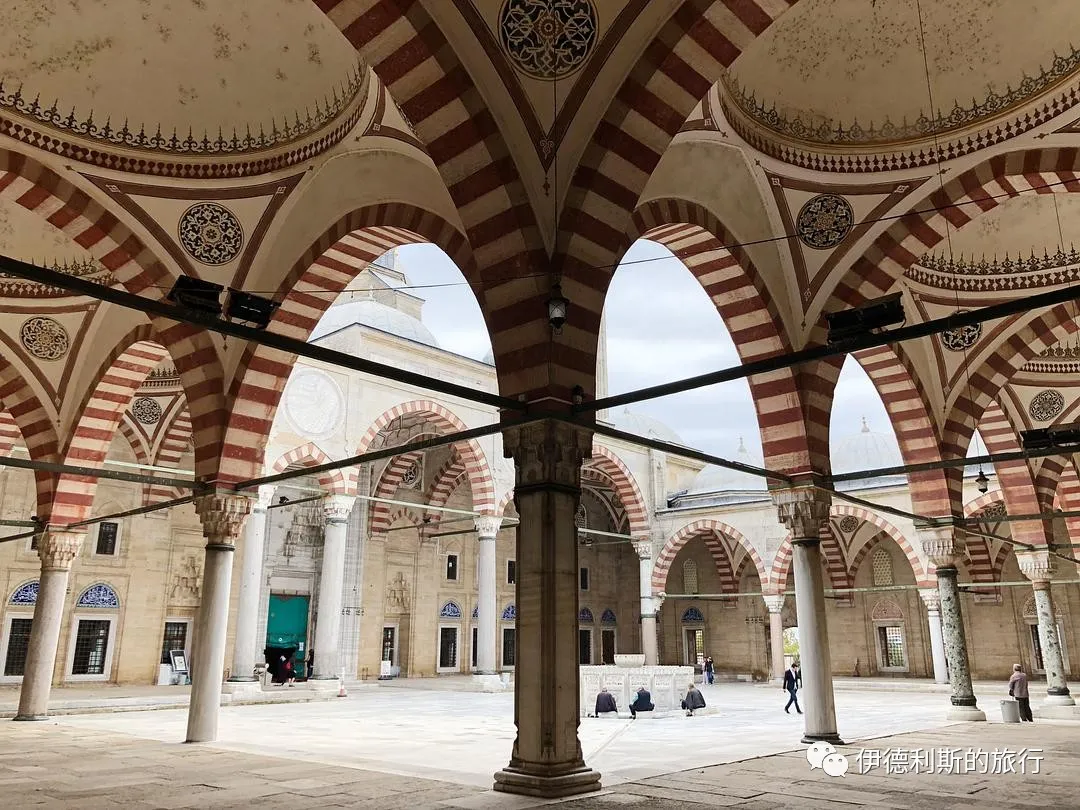
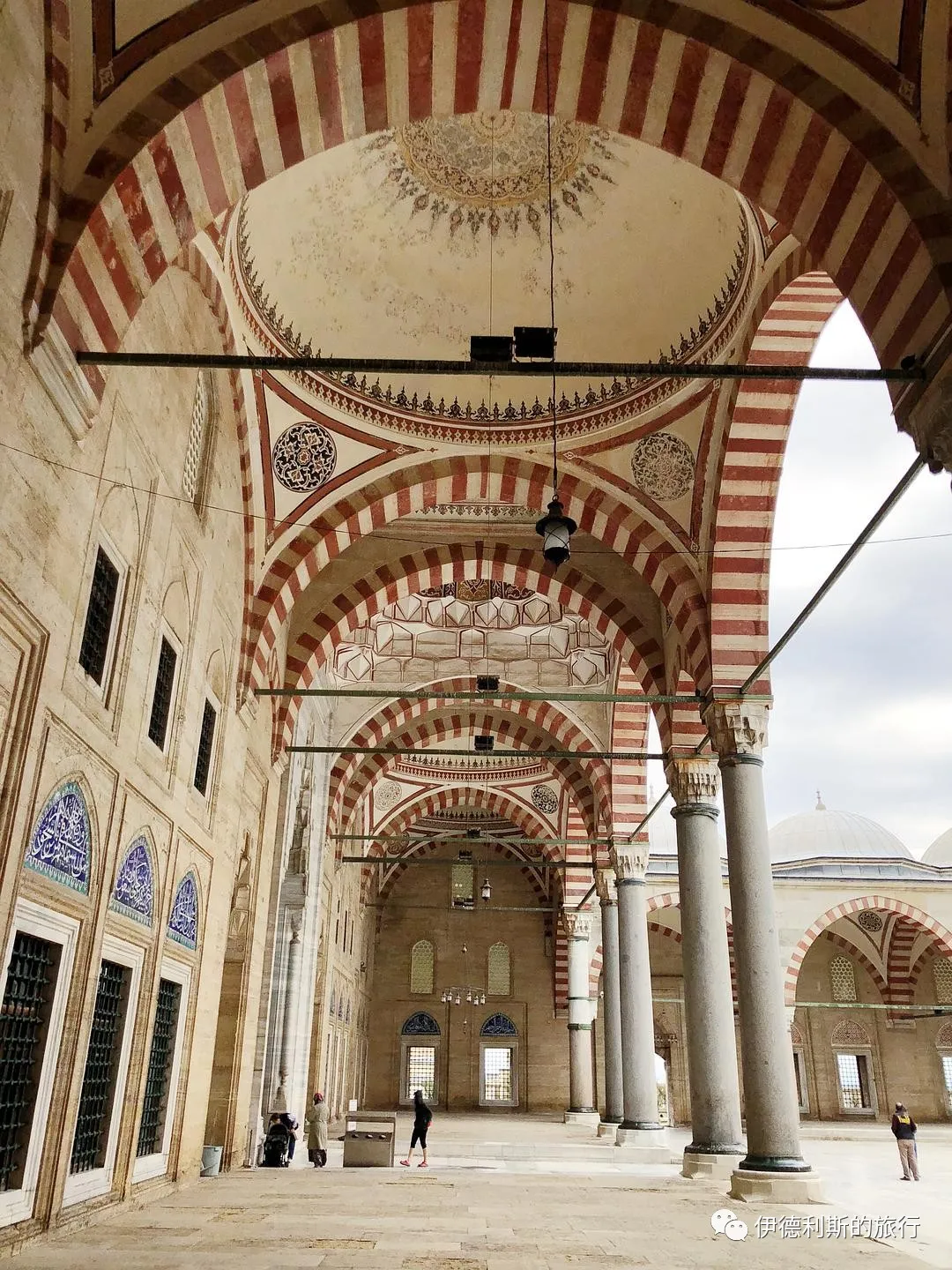
The courtyard in front of the main hall of the mosque covers 2,475 square meters, surrounded by a cloister with 18 domes, and features a fountain for wudu in the center. The marble columns in the courtyard were brought from ruins in Cyprus, Aydincik near the Kapidag Peninsula, and Syria. Mimar Sinan designed the front porch near the courtyard gate to be relatively narrow and low to highlight the grandeur of the mosque's main hall.
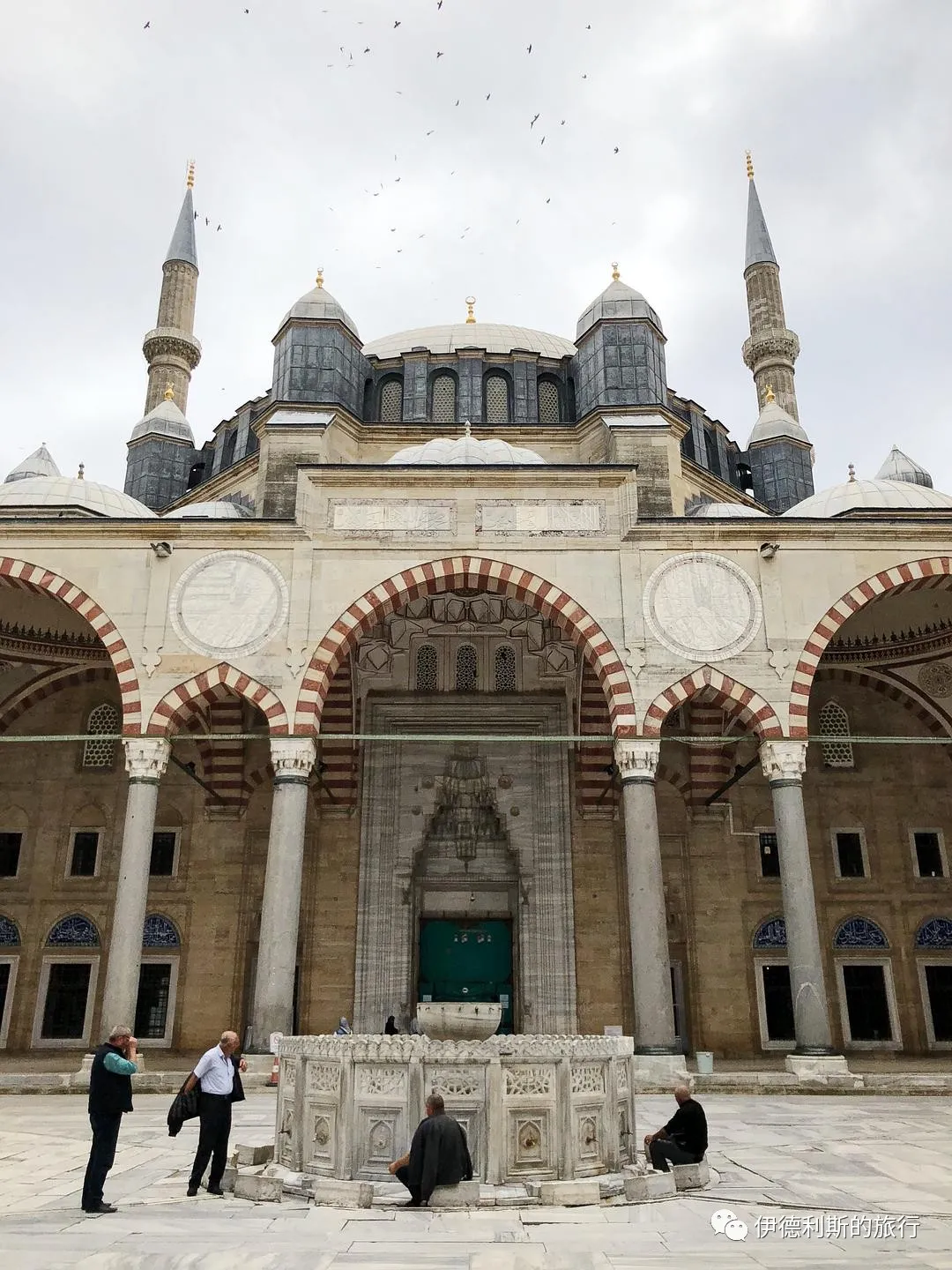
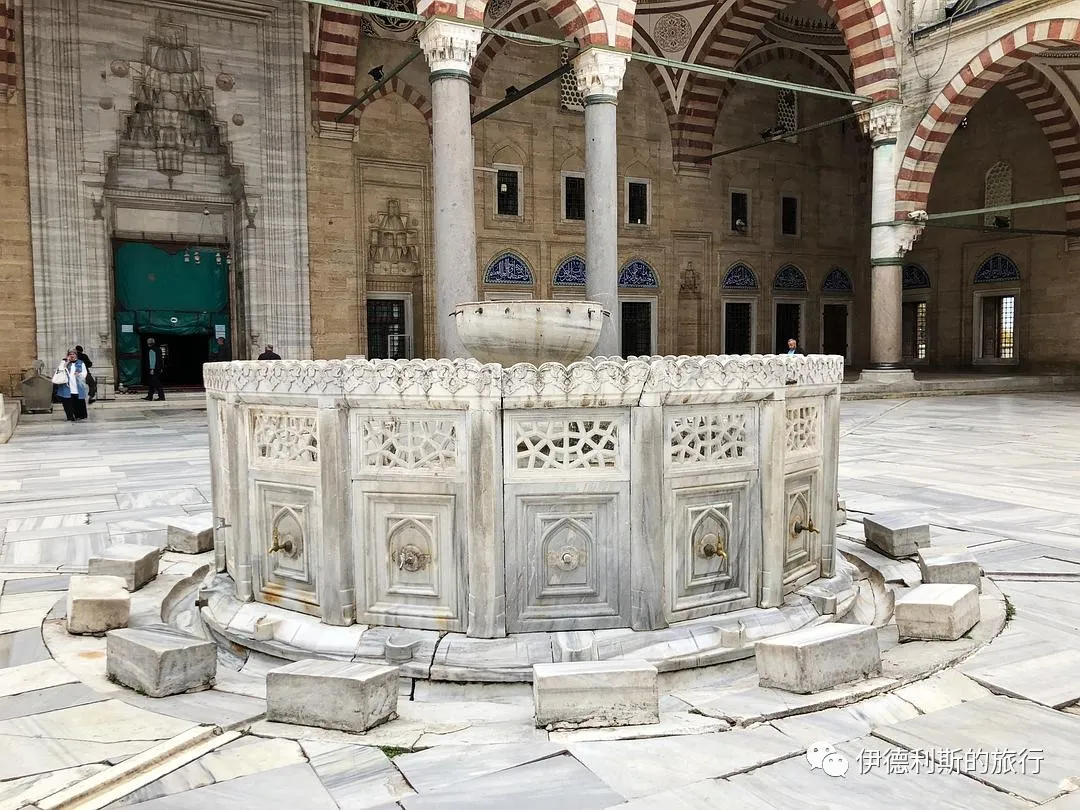
Mimar Sinan made bold innovations to the fountain. In this sixteen-sided marble fountain, we can see compositions and interesting details never before seen in Ottoman fountains of that time.
This is the largest ablution fountain Mimar Sinan ever built, and its decoration is very different from traditional ones. Each marble slab has a wide, deep contour band at the bottom, a pointed-arch mirror stone in the middle, and geometric openwork carvings on the top slab. Above that is a crown-shaped stone slab featuring Rumi patterns. Sinan designed special supports for the bottom edge of the fountain based on the lines of each water tap.
Mimar Sinan used an octagonal support system in the Selimiye Mosque, with eight columns holding up the massive central dome. In 1913, during the Bulgarian siege of Edirne, the mosque's dome was hit by Bulgarian artillery. Because the dome was extremely sturdy, it only suffered minor damage. Later, Kemal ordered that the shell marks be kept as a warning to future generations.
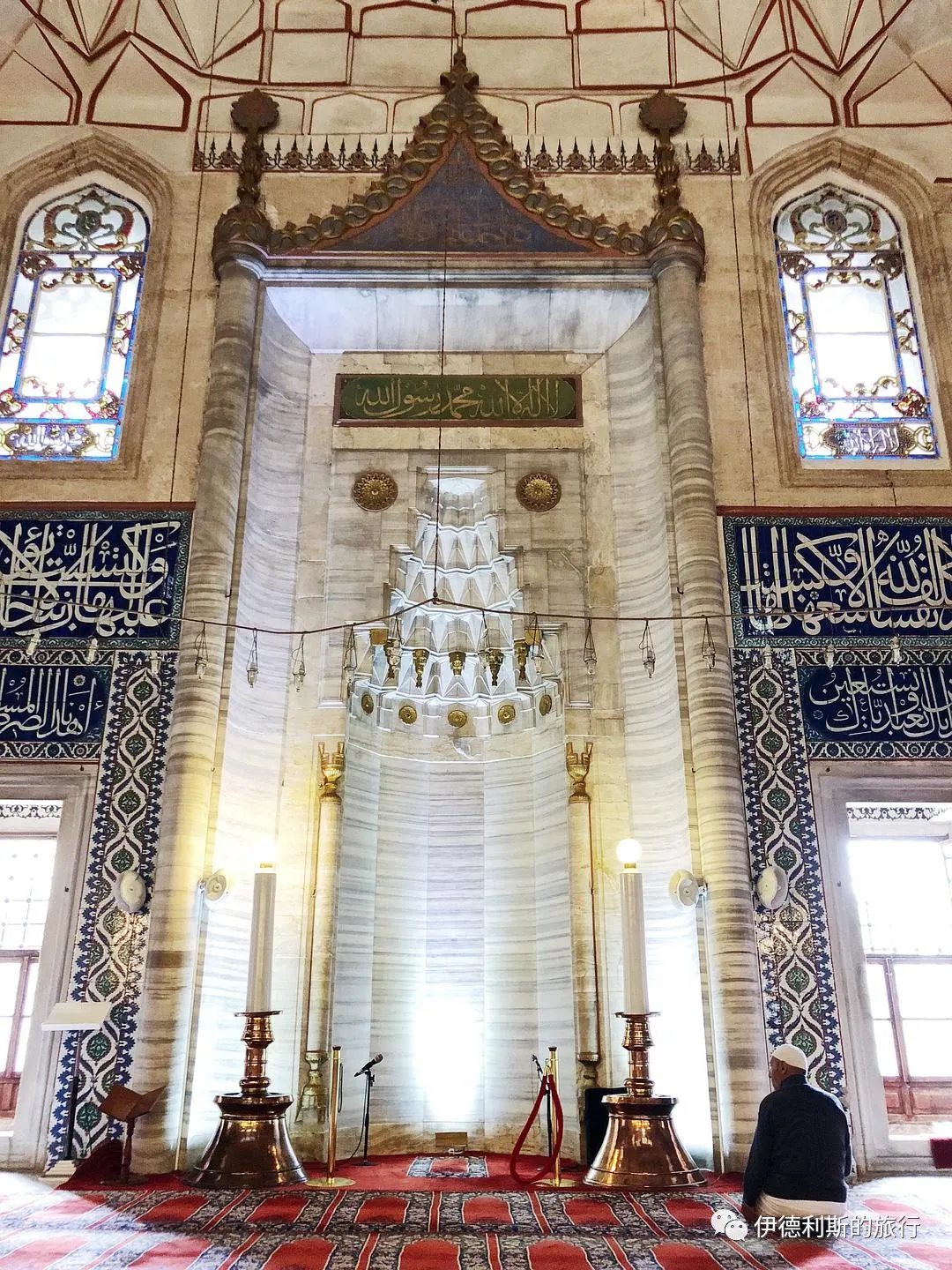
The mihrab (prayer niche) is located in a rear apse that projects from the main hall, providing enough depth for sunlight to enter from windows on three sides. The white marble mihrab was a spectacular work for its time. Unfortunately, the original 16th-century calligraphy on the semi-dome above the mihrab did not survive; what you see now is a 1985 restoration in the Baroque style.
The tiles around the mihrab were specially ordered by Mimar Sinan from Iznik between 1572 and 1575 and were the highest quality tiles in the Ottoman Empire at the time. The calligraphy on the tiles was created by Karahisari Molla Hasan, the student and adopted son of the famous 16th-century Ottoman calligrapher Ahmed Karahisari.
The minbar (pulpit) of the Selimiye Mosque holds a very important place among classical Ottoman artworks. The minbar is carved from a single piece of white marble, has 25 steps, and features an extremely elegant design. The beauty created by these merging geometric shapes is the artistic crystallization that Mimar Sinan pursued throughout his life.
Directly facing the mihrab is the stone platform where the muezzin calls the adhan, supported by 12 white marble columns. The thick pillar to the southwest of the platform is made of vertical, slender rectangular slabs and contains the stairs the muezzin uses to climb up.
The platform has a walnut railing decorated underneath with gold-leaf Chinese-style cloud knots, an important example of decoration from the classical Ottoman period. The deep blue background is covered with naturalistic dagger-shaped leaves, chrysanthemums, and Chinese-style clouds. The passion flower patterns on the blue background were brought to the Anatolia region by Central Asian Turkic people from the East in the 8th and 9th centuries, symbolizing eternity.
The Selimiye Madrasa is very distinct among Sinan's works. It has a unique dual-academy layout with the Dar'ül-Kurra Quran school and the Dar'ül-Hadis Hadith school symmetrical to the main mosque. It is also the only Quran school built by Sinan that features a honeycomb-structured muqarnas gate.
The Arasta Bazaar is 225 meters long, runs parallel to the southwest wall of the mosque, and generates income for the mosque by renting out 124 shop spaces. The bazaar has three main gates, one of which connects to the mosque courtyard via a staircase.
Some believe the Arasta Bazaar was built by Mimar Sinan's successor, the imperial chief architect Davud Aga, while others think Sinan designed it to cover the retaining wall supporting the mosque on the southwest slope, and it was finally completed by Davud Aga. This is because Mimar Sinan was very skilled at designing and building structures that adapted to sloped terrain.
Between 1863 and 1868, Baha'u'llah, the founder of the Baha'i Faith, was exiled to Edirne by the Ottoman Empire with his family and lived near the Selimiye Mosque. During this time, he wrote many works, announced the Baha'i Faith to countries around the world, and officially broke away from another leader, Mirza Yahya, which was a major event in Baha'i history.
Food
When visiting Edirne, you must try the local specialty, fried liver (ciğercisi), which is very satisfying when served with yogurt and hot sauce.
For lunch in Edirne, I had grilled sausage meatballs (sucuk köfte) and lentil soup (mercimek çorbası). A cold wind was blowing across the entire Balkan Peninsula those days, so drinking hot lentil soup felt the best.
For dinner in Edirne, I had minced meat pie (kıymalı pide) and a rich soup made from sheep head and sheep trotters (kelle paça). The soup was especially delicious.
For breakfast the next morning in Edirne, I had a meat-filled pastry (börek). It cost 6 lira a plate and tasted great. I also had a breakfast set, which was a plate of very healthy food.
At the bazaar in Edirne, I bought a local specialty, the crescent-shaped almond pastry known as Kavala cookies (Kavala kurabiyesi). Kavala is now an important seaport in northern Greece. The Ottoman Empire ruled it from 1371 to 1913. During the 1922 population exchange between Turkey and Greece, tens of thousands of Turks left Kavala to settle in Edirne, bringing this cookie recipe with them. I have always been interested in the Greek-Turkish population exchange. It involves so many stories about leaving one's homeland forever and the relationship between nations and ethnic groups. view all
Summary: Edirne in Turkey was once the Ottoman capital in Europe and is shown here through its mosques, markets, bridges, museums, and Ottoman urban history. This account keeps the original dates, site names, architectural notes, food details, and photographs.
In the mid-14th century, the Ottoman dynasty crossed into Europe and kept invading the Balkan Peninsula. They gradually marched toward Adrianople, the third-largest city of the Byzantine Empire, which ranked only behind Constantinople and Thessaloniki. In 1369, the third Ottoman Sultan, Murad I (reigned 1362-1389), captured Adrianople and renamed the city Edirne. After that, Edirne became the Ottoman center in Europe.
In 1402, the fourth Ottoman Sultan, Bayezid I (reigned 1389-1402), was defeated and captured by the great Timur in the Battle of Ankara, and he died shortly after. His four sons fought for the throne, triggering the Ottoman Interregnum, the largest civil war in early Ottoman history. Because of this war, Edirne suddenly became the capital.
In 1413, Prince Mehmed occupied Edirne and finally won the civil war. On June 5, 1413, Mehmed was officially crowned in Edirne as the fifth Ottoman Sultan, Mehmed I (reigned 1413-1421). The Ottoman capital officially moved from Bursa in Asia to Edirne in Europe, where it stayed until the fall of Constantinople in 1453.
While the capital was in Bursa, the Ottoman dynasty developed a new form of urban construction: building social complexes called Külliye in the commercial districts outside the city walls. After moving the capital to Edirne, the Ottomans continued to use this form. After Prince Suleyman made Edirne his capital in 1403, he immediately began building the first complex in the city—the Old Mosque complex—east of the Roman-era Hadrianopolis. During the reign of Sultan Murad II (reigned 1421-1444, 1446-1451), the second complex, the Muradiye complex, and the third, the Three Balcony Mosque complex, were built in Edirne, along with a royal palace in the north.
The Old Mosque complex
After the Ottoman Interregnum began in 1403, Prince Suleyman, who declared himself Emir in Edirne, started building the mosque. In 1413, Prince Mehmed was crowned Sultan Mehmed I in Edirne, and the mosque was officially completed the following year. This is the oldest surviving mosque in Edirne, so it is called the Old Mosque (Eski Cami).
The Old Mosque is one of the last multi-domed mosques to use the early Ottoman Seljuk style, featuring nine central domes. Compared to earlier Seljuk multi-domed mosques, the diameter of the domes in the Old Mosque has clearly increased, showing that the Ottomans were starting to move beyond their early phase of their early phase.
The coronation ceremonies for the 21st Ottoman Sultan Ahmed II (reigned 1691-1695) and the 22nd Sultan Mustafa II (reigned 1695-1703) both took place here. The old mosque suffered massive damage in an earthquake during the mid-18th century, and Sultan Mahmud I (reigned 1696-1754) later ordered its reconstruction. The old mosque was renovated again between 1924 and 1934.
The covered market (Bedesten) sits right next to the old mosque and was built in 1418 by the fifth Ottoman Sultan Mehmed I to help fund the mosque's operations.
This building is a classic example of an early Ottoman covered market and has been in use ever since. The building is a rectangle 78 meters long and 41 meters wide, topped with 14 domes and featuring 54 shops along its four sides.
The Rustem Pasha Caravanserai (Rüstem Paşa Kervansarayı) was built in 1561 by the famous architect Mimar Sinan under the orders of the Ottoman Grand Vizier Rustem Pasha (Rüstem Paşa).
The caravanserai has two floors, with 102 guest rooms inside and 21 shops on the outside. Today, the interior serves as a hotel, and the outside shops are still in business.
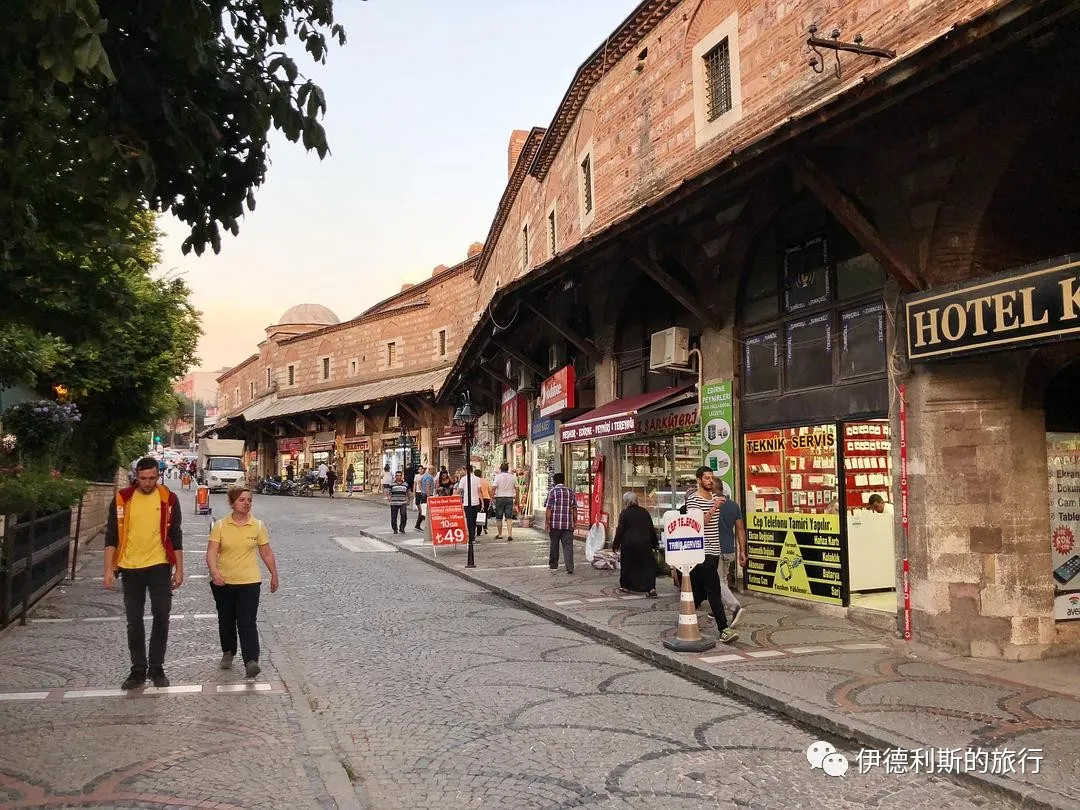
The Ali Pasha Bazaar (Ali Paşa Çarşısı) was built in 1569 by the famous architect Mimar Sinan under the orders of the Ottoman Grand Vizier Ali Pasha (Ali Paşa).
The bazaar includes 130 shops and 6 gates. The bazaar caught fire in 1991 and was later restored.
Muradiye Mosque
The Muradiye Mosque (Muradiye Camii) is a small T-shaped mosque on a hill in the northern part of Edirne, built in 1436 by order of the sixth Ottoman Sultan Murad II (reigned 1421-1444). It was originally part of a Sufi Mevlevi order complex before being converted into a mosque.
The Muradiye Mosque was once a complex that included a public kitchen (imaret) and a primary school (mekteb), but only the mosque remains today. This place was once badly damaged by an earthquake. The minaret has been rebuilt several times, and it currently looks the way it did after a major renovation in 1957.
The interior of the mosque is famous for its beautiful tiles. Before some were stolen in 2001, the main hall had 479 tiles in 54 different designs. 15 of these designs appeared only once, showing a strong influence from Yuan dynasty blue and white porcelain (Yuan qinghua). The blue and white hexagonal tiles among them are the earliest examples of Ottoman underglaze tiles. Because some tiles are arranged inconsistently, some scholars believe a portion of them were moved here from the Ottoman palace in Edirne in the north.
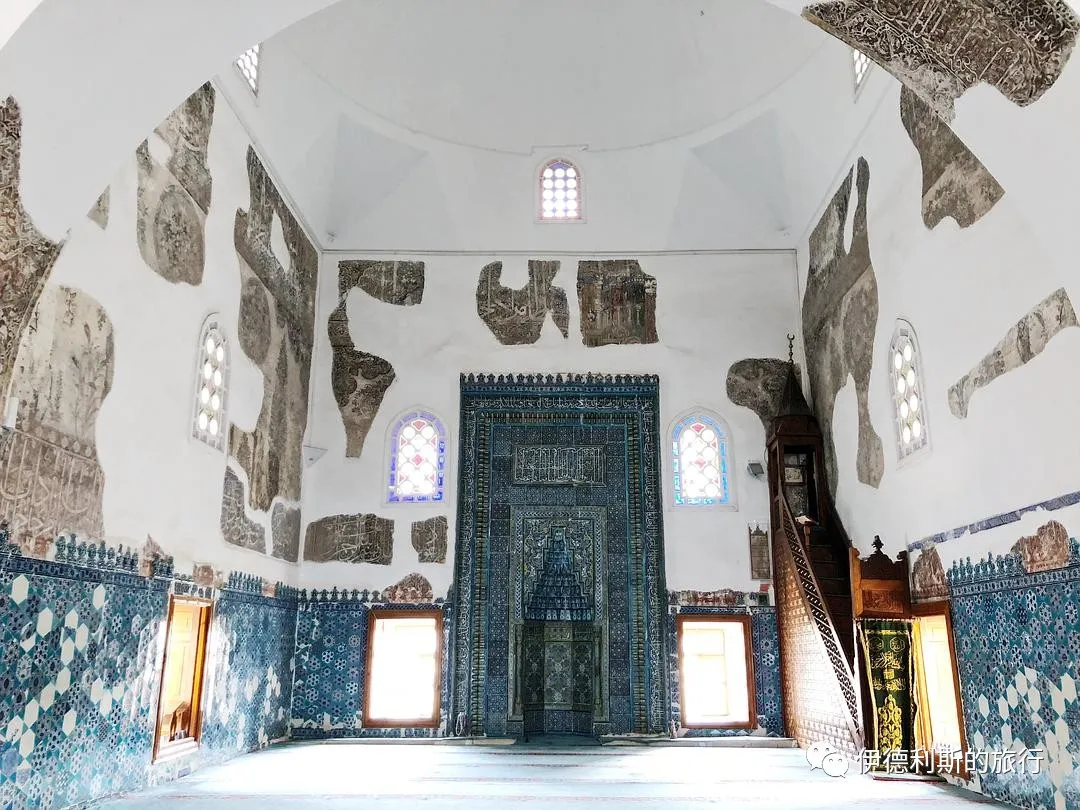
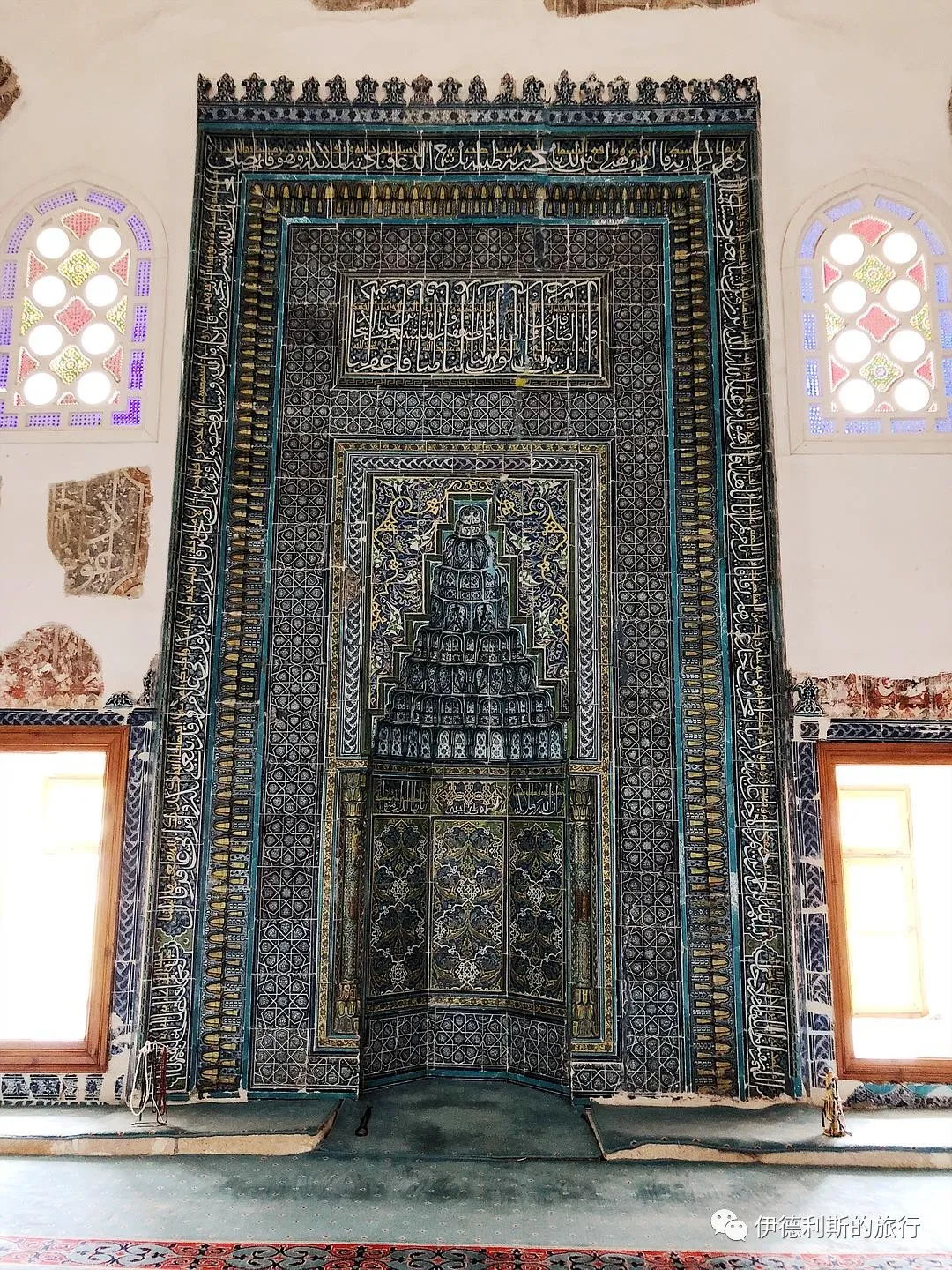
The mosque preserves a 15th-century mihrab covered in tiles, which bears the name of Sultan Murad II. The dry cord (Cuerda Seca) tile style of the mihrab is very similar to the Green (Yeşil) Mosque in Bursa, built in 1421, and was likely made by the same team of craftsmen. The mihrab of the Green Mosque in Bursa is said to have been designed by a master from Tabriz, Iran. Therefore, it is very likely that this master traveled to Edirne to design the mihrab for the Muradiye Mosque.
Three-Balcony Mosque (Üç Şerefeli Camii) complex
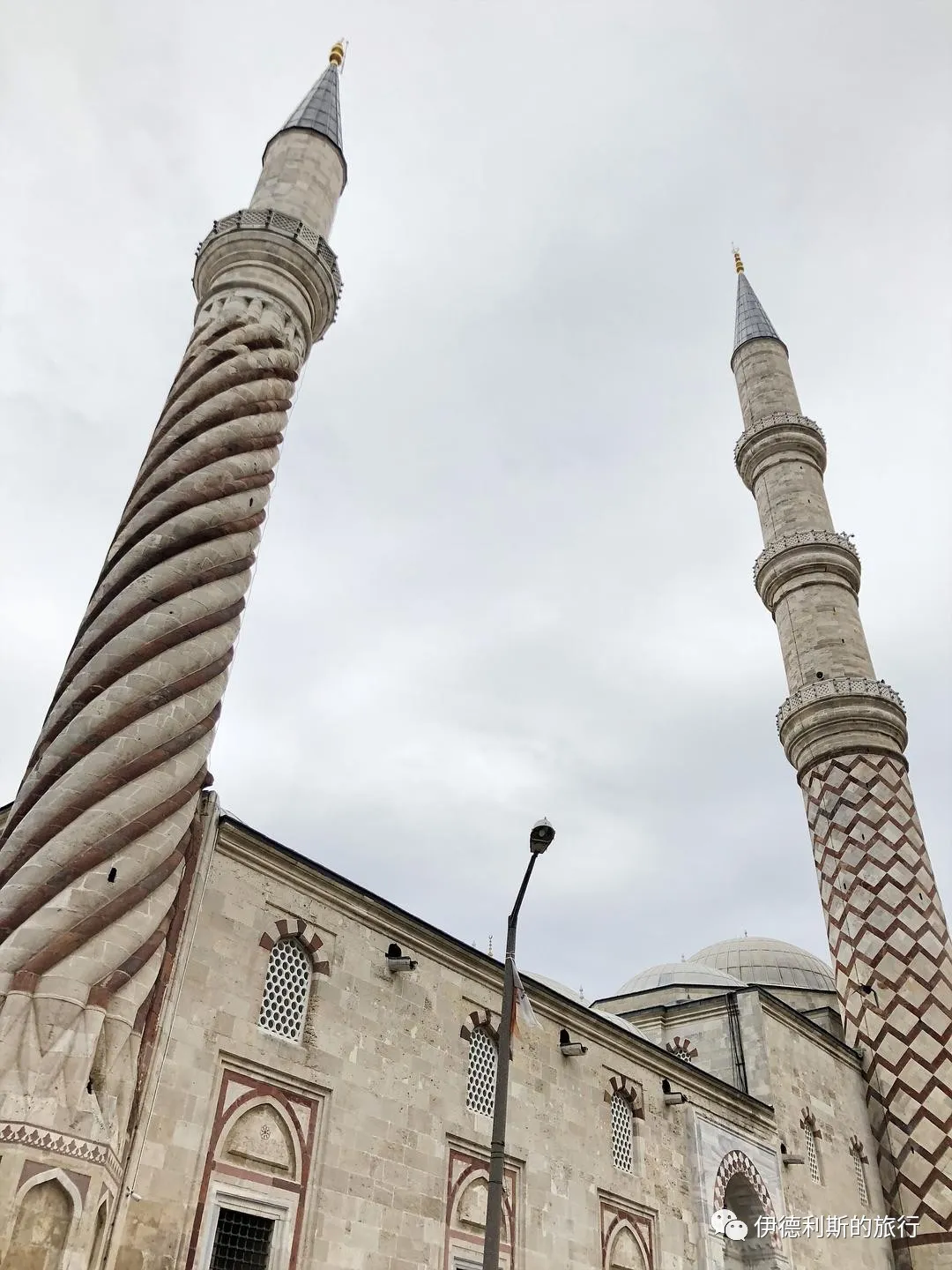
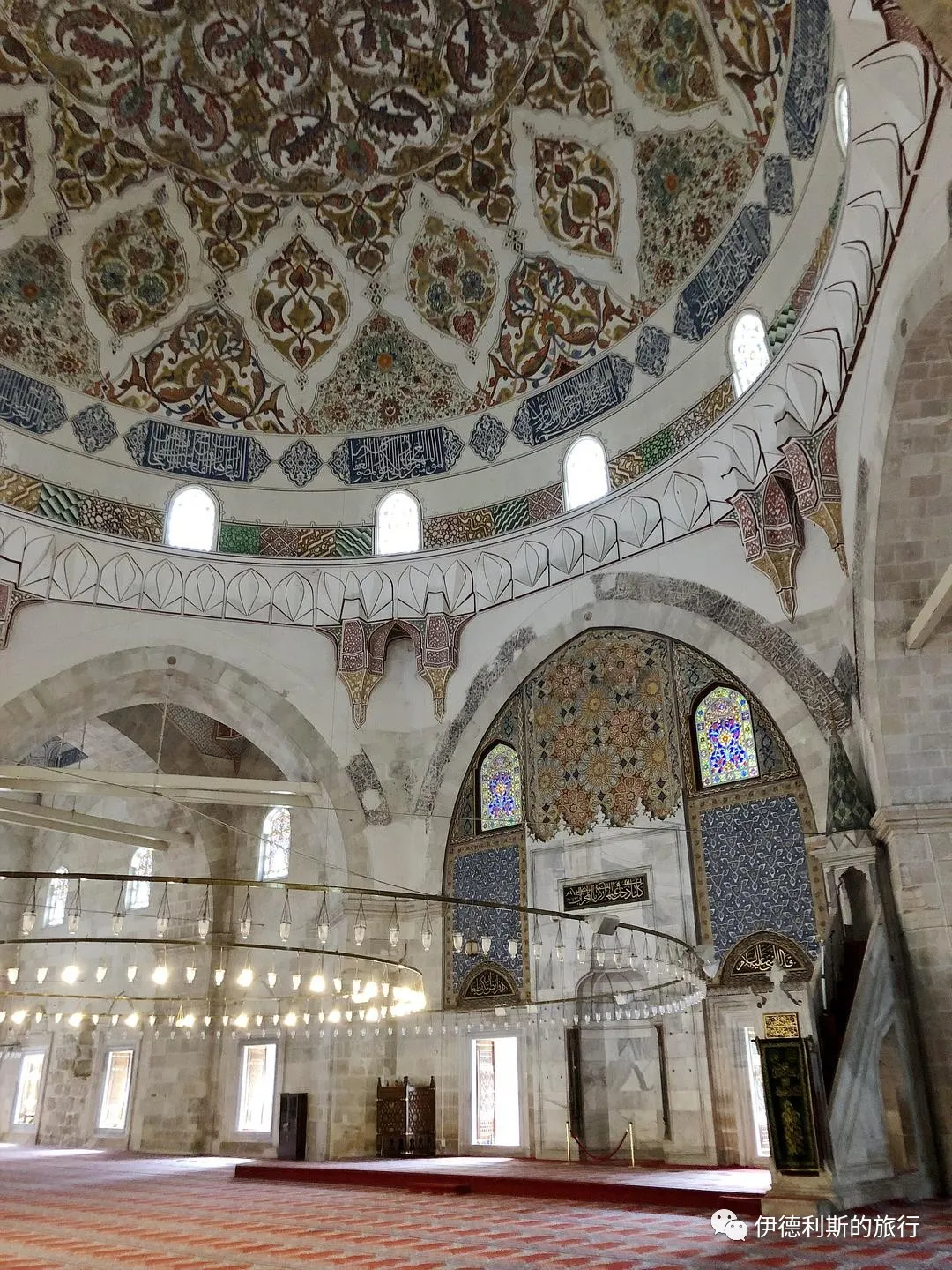
The Three-Balcony Mosque (Üç Şerefeli Camii) is known as an important landmark that started a new era in Ottoman architecture. It was the first mosque in Ottoman history to feature a central dome and the first to have a portico. The mosque was started in 1438 by the sixth Ottoman Sultan, Murad II (reigned 1421–1444), and was completed in 1447.
The Three-Balcony Mosque is located not far northwest of the Old Mosque, and it was the largest mosque in the Ottoman Empire when it was finished. This mosque is considered a pioneer of the classic Ottoman mosque style. It was among the first to shift from the Seljuk style of multiple small domes to a large central dome, featuring a central dome 24 meters in diameter.
The Three-Balcony Mosque gets its name from the three balconies on its minaret. At the time, this was the tallest minaret in the Ottoman Empire. It stands 76 meters high, has 203 steps, and you can reach the balconies using three different paths.
The underglaze tiles of the mosque are very similar in style to the Green Mosque (Yeşil Cami) in Bursa (1421) and the Muradiye Mosque in Edirne (1436), and they were likely designed by the person known as the Master of Tabriz.
The architectural design of the Three Balcony Mosque (Üç Şerefeli Cami) greatly inspired the great 16th-century Ottoman architect Mimar Sinan, who built upon this foundation to eventually create the most magnificent mosques of the Ottoman Empire.
The Saatli Madrasa is directly opposite the Three Balcony Mosque and was also completed in 1447.
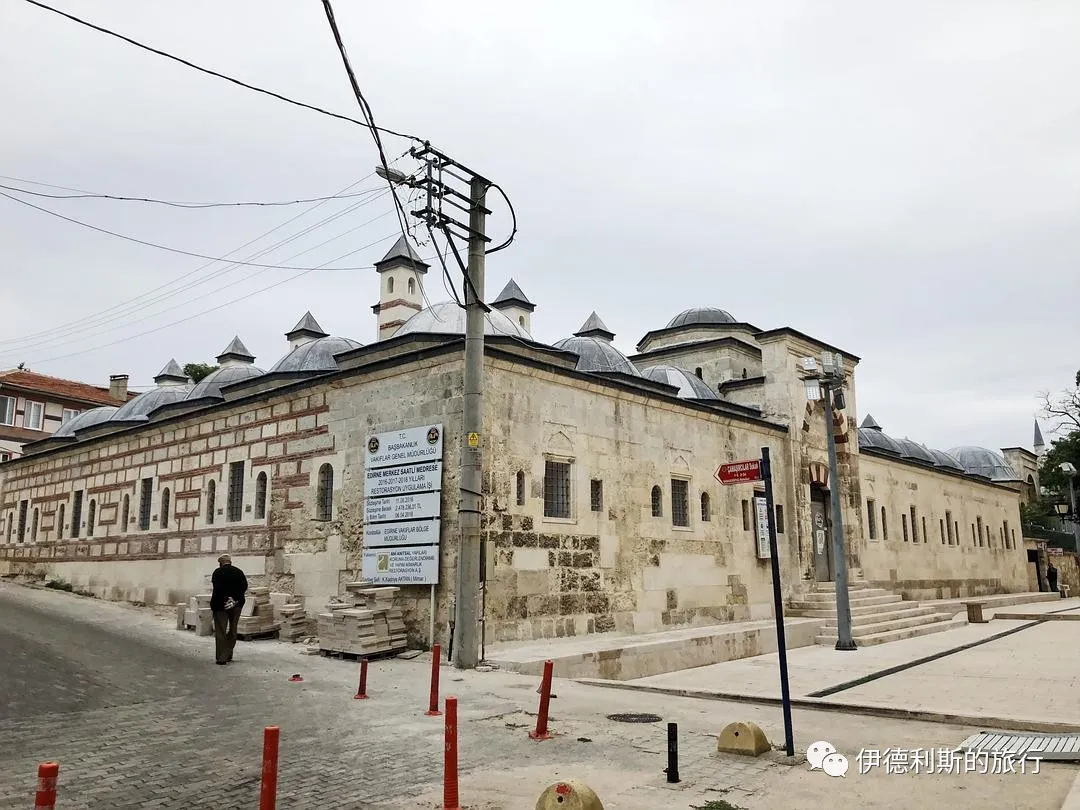
The Peykler Madrasa is right next to the south side of the Saatli Madrasa and was built a few years later.
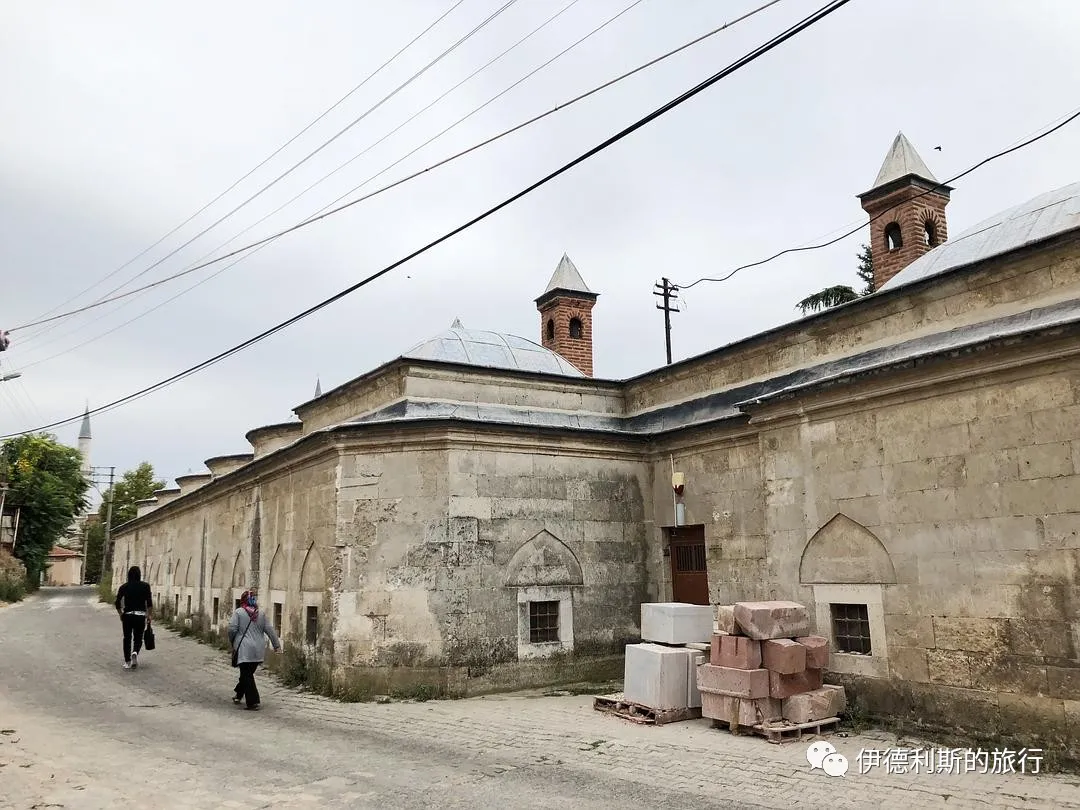
The Stone Inn (Taşhan Inn) is across the street to the west of the Three Balcony Mosque and was built in the 15th century.
The Sokullu Mehmet Paşa Bath (Sokullu Mehmet Paşa Hamamı) was commissioned in the second half of the 16th century by the Ottoman Grand Vizier Sokullu Mehmet Paşa (in office 1565-1579) and built by the great Ottoman architect Mimar Sinan.
The bath was built right next to the Stone Inn and consists of two sections for men and women, and it is considered one of the most important baths in the Ottoman Empire.
Edirne Palace
Edirne Palace (Edirne Sarayı) was commissioned by Sultan Murad II in 1450, but construction stopped the following year when the Sultan passed away. After a period of inactivity, it was finally completed in 1475 by his successor, Sultan Mehmed the Conqueror.
Afterward, the palace was continuously expanded between the 16th and 18th centuries. Most importantly, during the reign of Suleiman the Magnificent (reigned 1520-1566), the chief architect Mimar Sinan redesigned the palace and solved the water supply problem by building a canal. To protect the palace from flooding, the canal was built in an arc around the palace.
At its peak, the palace consisted of 72 buildings, including 117 rooms, 14 mansions, 18 baths, 9 mosques, 17 gates, and 13 cellars. At its busiest, 34,000 people lived inside.
The main building of the palace is called the Panorama Pavilion (Cihannüma Kasrı), also known as the Imperial Throne (Taht-ı Hümayun), and was built in 1450. The Panorama Pavilion is a seven-story building with an octagonal room at the top, which includes the Sultan's room, a room for flags, a library, and a mosque.
Initial archaeological excavations of the Panorama Pavilion (Cihannüma Kasrı) took place in 1956. In 2001, the National Palaces Administration sponsored archaeological and restoration work on the palace gate, the Gate of Felicity (Bab'üs Sa'ade), and the Panorama Pavilion (Cihannüma Kasrı) site, which was completed in 2004.
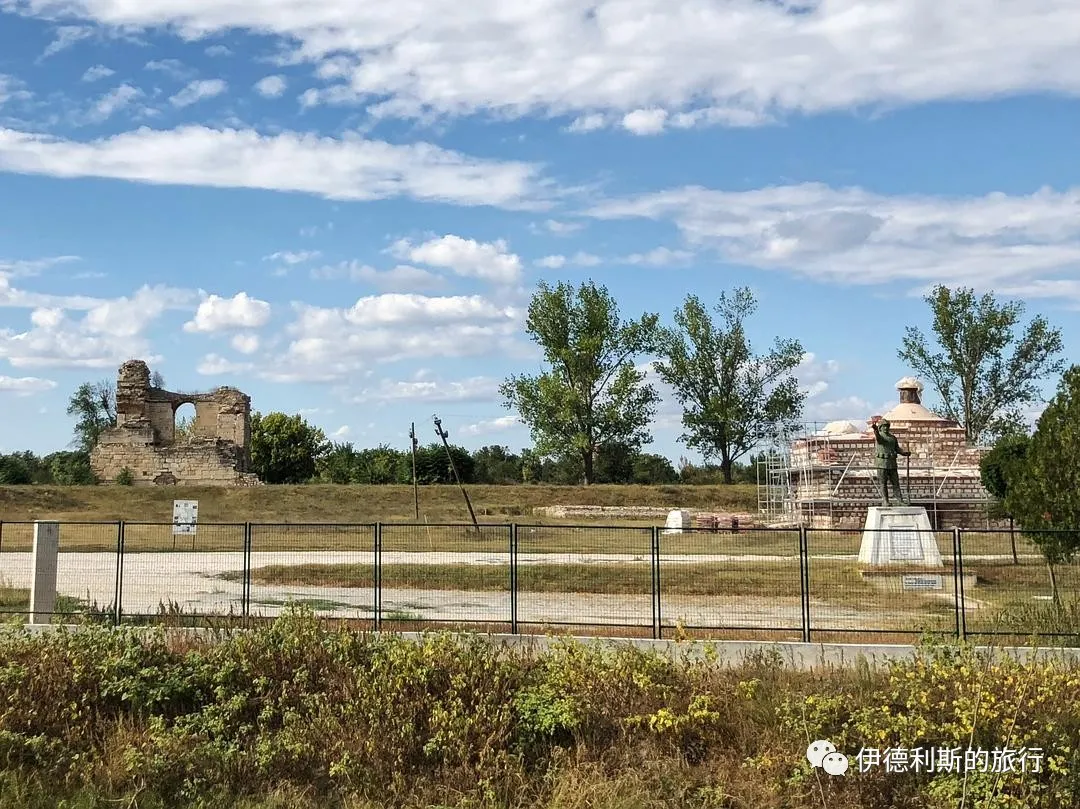
The Imperial Kitchen (Matbah-ı Amire) is on the southwest side of the palace and has eight domes. While the north facade is gone, most of the structure remains well-preserved.
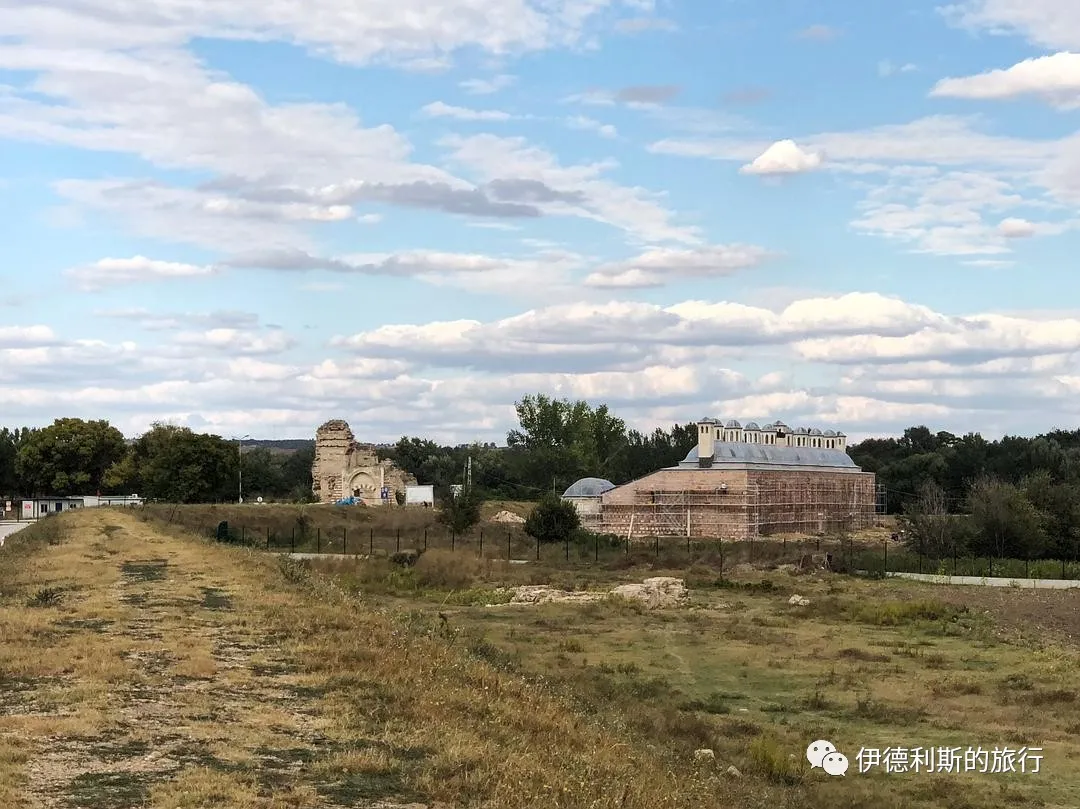
The Court of Justice (Kasr-ı Adalet) sits on the south bank of the Tunca River. It was built in 1561 by order of Suleiman the Magnificent, who is also known as Suleiman the Lawgiver.
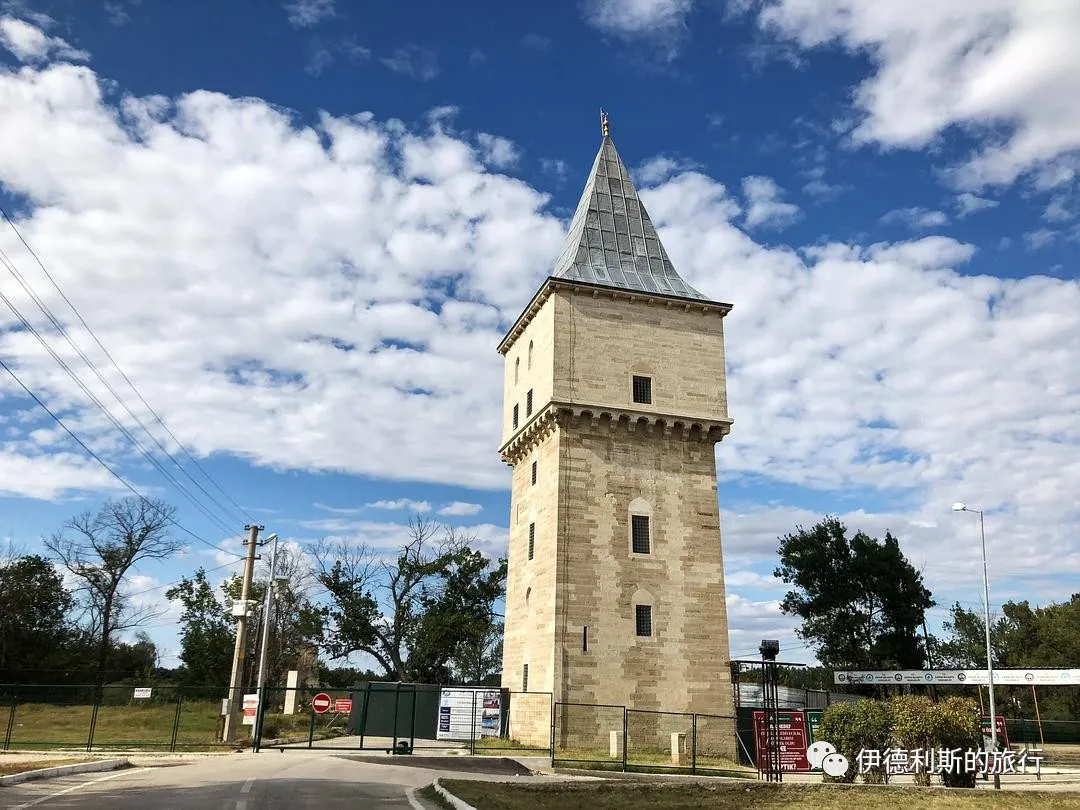
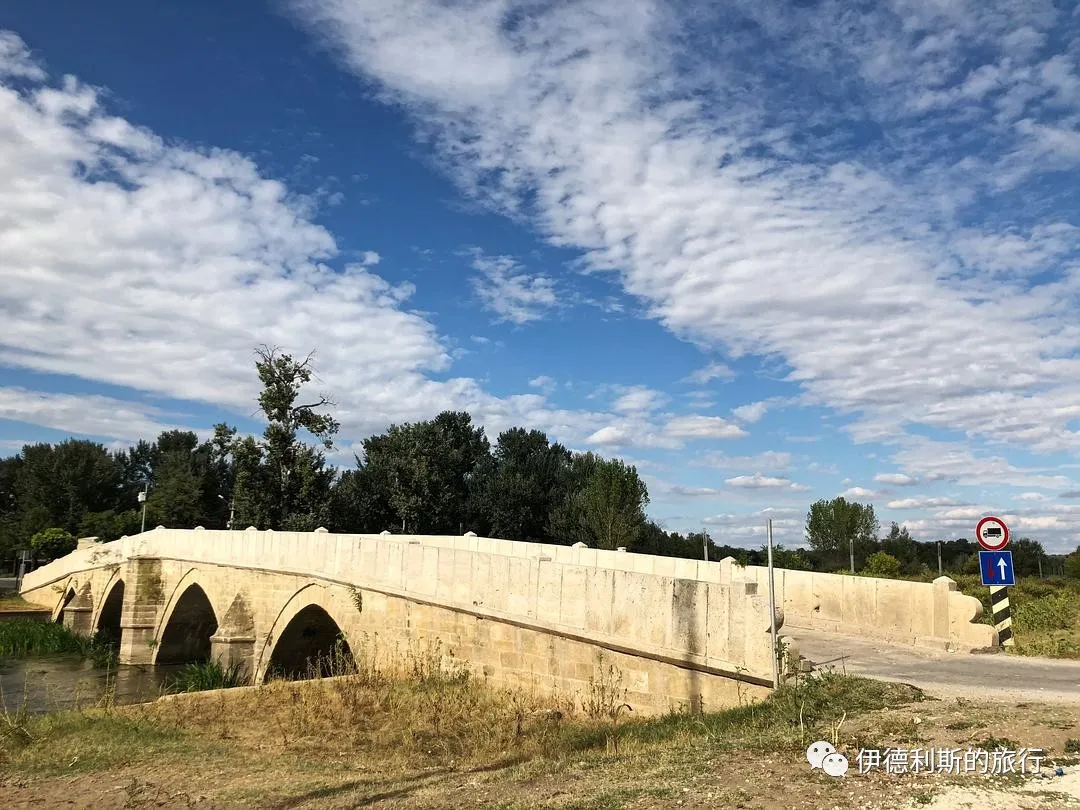
The Kanuni Bridge (Kanuni Köprüsü), also called the Palace Bridge, was built in 1554 by Mimar Sinan under the orders of Suleiman the Magnificent.
Kasim Pasha Mosque
The Kasim Pasha Mosque (Evliya Kasım Paşa Cami) is by the river in the southeast of Edirne city. It was built in 1479 by order of Kasim Pasha (Kasım Paşa). Kasim Pasha was a famous Ottoman Empire general who served as the commander of Rumelia, the European part of the Ottoman Empire. He commanded troops during the wars between 1443 and 1444 against the multinational crusader forces of Poland and Hungary, fighting in places like Serbia and Bulgaria.
The mosque closed in 1950 due to the construction of a dam. Since then, it has been repeatedly damaged by floods, making it the most wild and overgrown early Ottoman mosque in Edirne.
Sultan Bayezid II Complex
The Sultan Bayezid II Complex (Sultan II Bayezid Külliyesi) is located on the north bank of the Tunca River in the northwest suburbs of Edirne. It was built by order of the eighth Ottoman Sultan, Bayezid II (reigned 1481–1512). Bayezid II was the son of Mehmed the Conqueror and was known as the Just. During his reign, he worked to maintain government affairs internally and defeated the Republic of Venice externally, leading the Ottoman Empire into a prosperous era.
The entire complex includes many buildings such as a mosque, a medical school (Medrese-i Etibba), a public kitchen (imaret), a hospital (darüşşifa), a bathhouse (hamam), and warehouses.
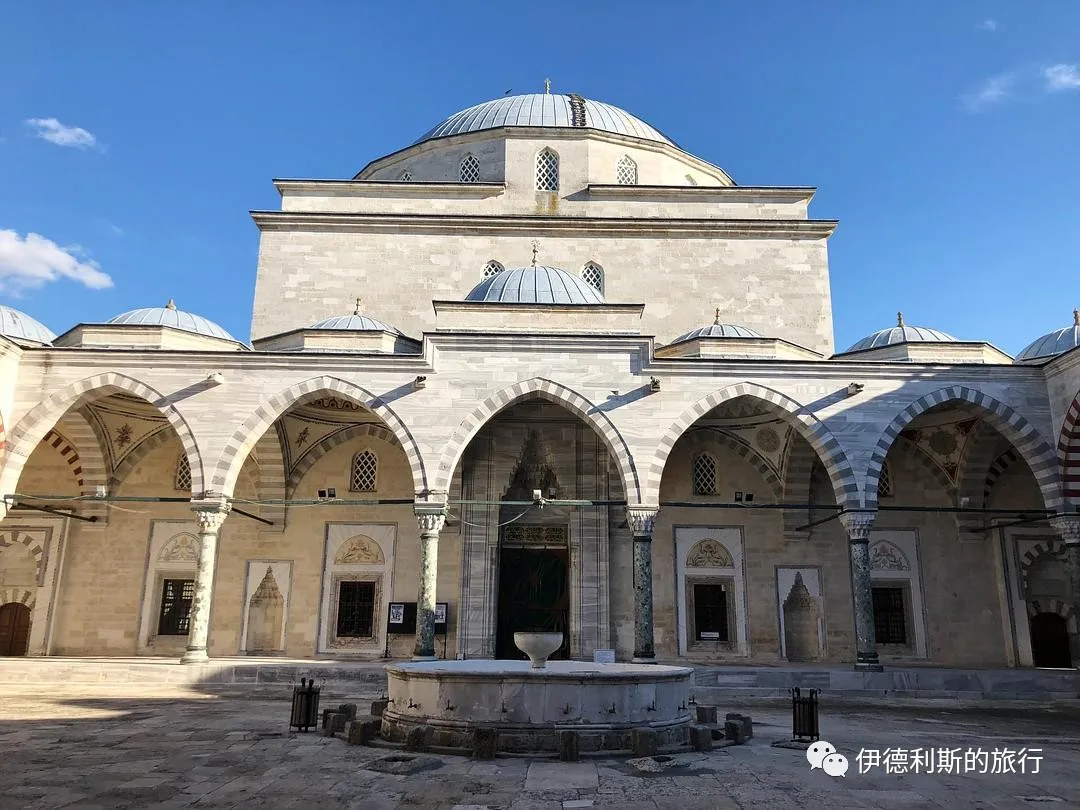
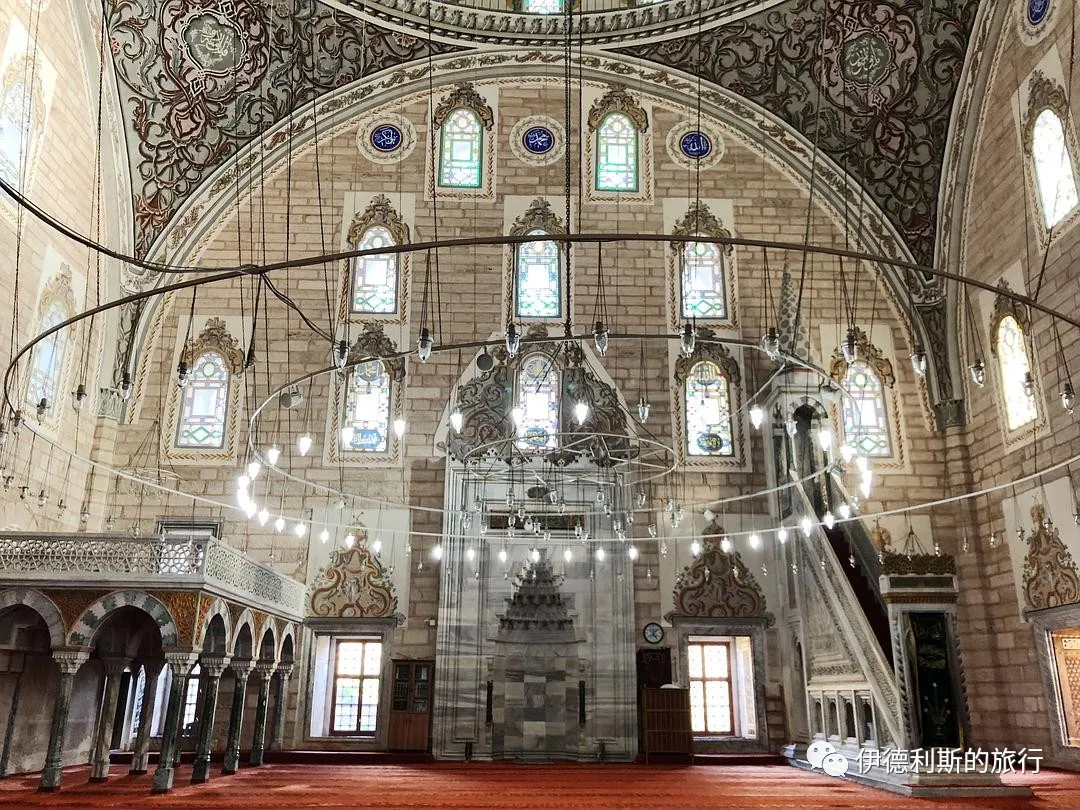
The Sultan Bayezid II Medical School (Sultan II Bayezid Medrese-i Etibba) is considered one of the best medical schools in the Ottoman Empire and consists of 18 classrooms and a large lecture hall. The famous 17th-century Ottoman traveler Evliya Çelebi mentioned in his writings that this medical school studied the works of various ancient Greek philosophers, scientists, and physicians, including Plato, Socrates, Aristotle, Galen, and Pythagoras. Each doctor was an expert in a different field, and they tried to find the best treatments by studying various medical texts.
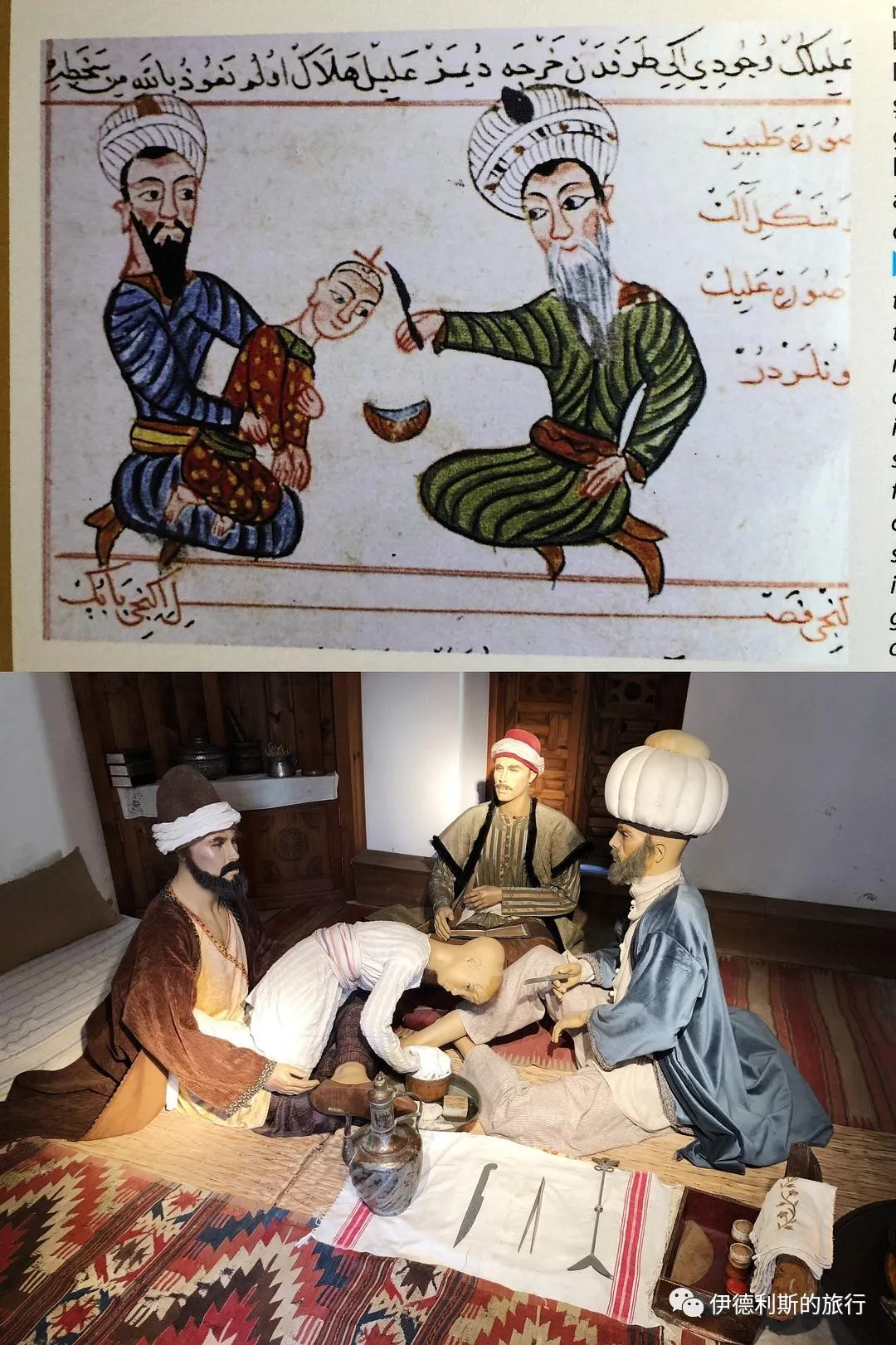
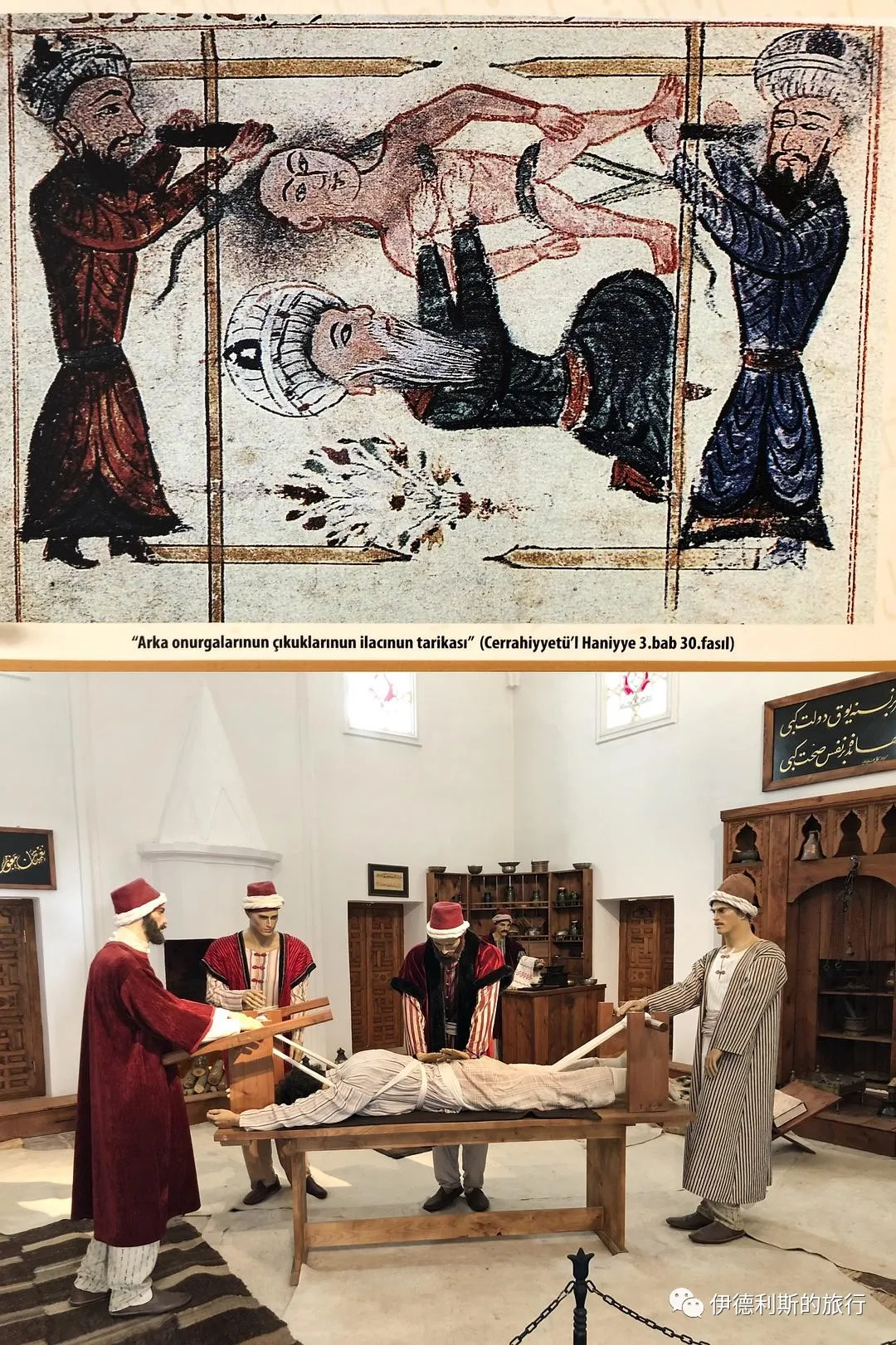
The Sultan Bayezid II Hospital (Sultan II Bayezid Darüşşifa) is the most important part of the entire complex. From its completion in 1488 until the Russo-Turkish War in 1877, this hospital provided continuous treatment to patients and was especially famous for using sound and scent for mental health therapy. Today, it has become part of a health museum.
Selimiye Mosque
The Selimiye Mosque (Selimiye Camii) in Edirne was commissioned by Ottoman Sultan Selim II (reigned 1566-1574) and built by the imperial chief architect Mimar Sinan between 1567 and 1575. It is hailed as a supreme achievement in Ottoman architecture, a masterpiece of 16th-century Ottoman Islamic art, and Mimar Sinan's well-deserved representative work. It was added to the UNESCO World Heritage list in 2011.
On June 22, 1567, Selim II traveled from Istanbul to Edirne to sign a peace treaty with Austria, and People say he ordered the construction of the mosque at this time.
The entire complex (Külliye) consists of nine parts: the mosque, a courtyard with a fountain, the Dar’ül-Kurra Quran school (Foundation Museum), the Dar'ül-Hadis Hadith school (Museum of Turkish and Islamic Art), the Arasta bazaar, a primary school, a clock tower (Muvakkithane), the outer courtyard of the mosque, and a library. It is the most prominent building complex in the old city of Edirne.
The area where the mosque stands was originally an Ottoman palace. After the Ottoman Empire moved its capital to Istanbul in 1453, the old palace gradually became a military headquarters and later a square.
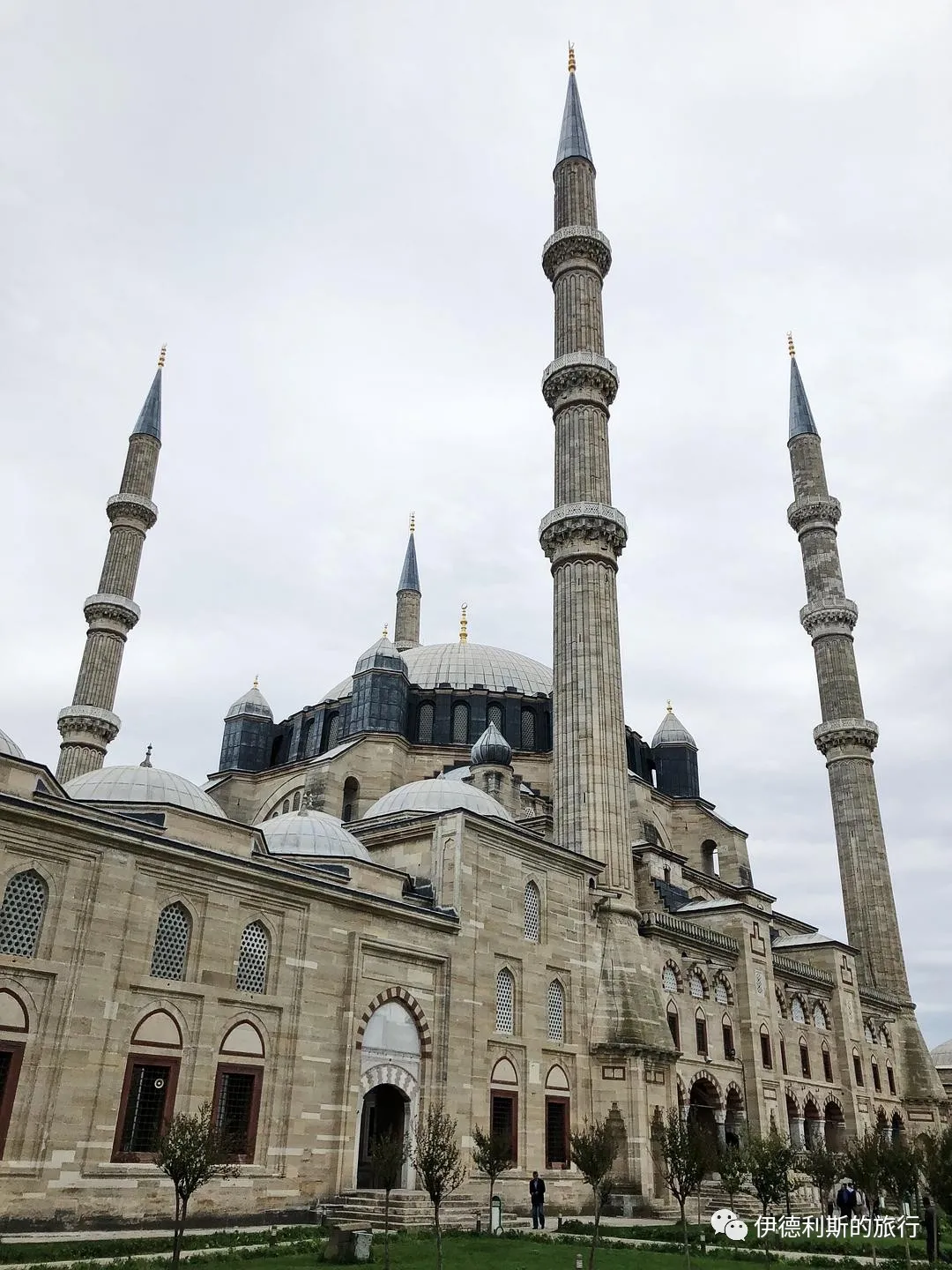
To highlight the central authority of the Ottoman Empire, Mimar Sinan wanted the Selimiye Mosque to look like a single, unified whole from both the inside and outside, rather than being composed of many small domes or semi-domes like earlier Ottoman mosques. Therefore, he decided to build a massive central dome that would surpass the Hagia Sophia. The dome was officially completed in 1575, standing 42.3 meters high with a diameter of 31.5 meters and weighing 20 tons.
At the same time, Mimar Sinan abandoned the traditional Ottoman mosque design of minarets with varying heights, instead building four 71-meter-tall minarets in the front courtyard. These four vertically symmetrical minarets shoot toward the sky like rockets from the corners of the courtyard, setting off the massive dome rising from the center. They dominate the city's skyline and give the entire mosque a sense of immense majesty.
Overall, the decoration on the mosque's exterior is relatively simple. It lacks the complex carvings found in Seljuk and other Iranian architecture, as the structure itself determines the layout of the facade. This is a hallmark of Mimar Sinan's architecture and is considered by later generations to be the classical aesthetic of Ottoman architecture from this period.
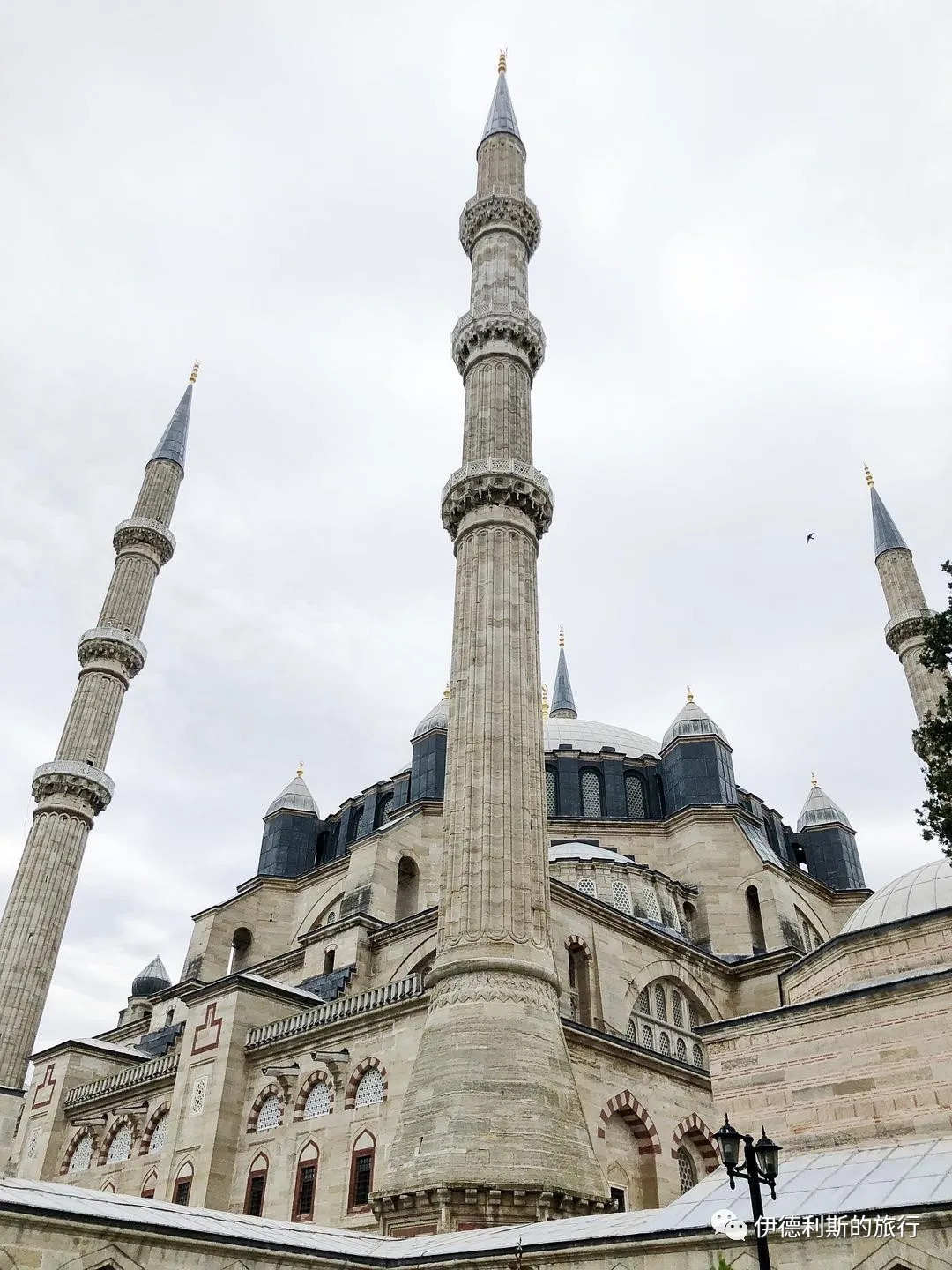
The courtyard in front of the main hall of the mosque covers 2,475 square meters, surrounded by a cloister with 18 domes, and features a fountain for wudu in the center. The marble columns in the courtyard were brought from ruins in Cyprus, Aydincik near the Kapidag Peninsula, and Syria. Mimar Sinan designed the front porch near the courtyard gate to be relatively narrow and low to highlight the grandeur of the mosque's main hall.
Mimar Sinan made bold innovations to the fountain. In this sixteen-sided marble fountain, we can see compositions and interesting details never before seen in Ottoman fountains of that time.
This is the largest ablution fountain Mimar Sinan ever built, and its decoration is very different from traditional ones. Each marble slab has a wide, deep contour band at the bottom, a pointed-arch mirror stone in the middle, and geometric openwork carvings on the top slab. Above that is a crown-shaped stone slab featuring Rumi patterns. Sinan designed special supports for the bottom edge of the fountain based on the lines of each water tap.
Mimar Sinan used an octagonal support system in the Selimiye Mosque, with eight columns holding up the massive central dome. In 1913, during the Bulgarian siege of Edirne, the mosque's dome was hit by Bulgarian artillery. Because the dome was extremely sturdy, it only suffered minor damage. Later, Kemal ordered that the shell marks be kept as a warning to future generations.
The mihrab (prayer niche) is located in a rear apse that projects from the main hall, providing enough depth for sunlight to enter from windows on three sides. The white marble mihrab was a spectacular work for its time. Unfortunately, the original 16th-century calligraphy on the semi-dome above the mihrab did not survive; what you see now is a 1985 restoration in the Baroque style.
The tiles around the mihrab were specially ordered by Mimar Sinan from Iznik between 1572 and 1575 and were the highest quality tiles in the Ottoman Empire at the time. The calligraphy on the tiles was created by Karahisari Molla Hasan, the student and adopted son of the famous 16th-century Ottoman calligrapher Ahmed Karahisari.
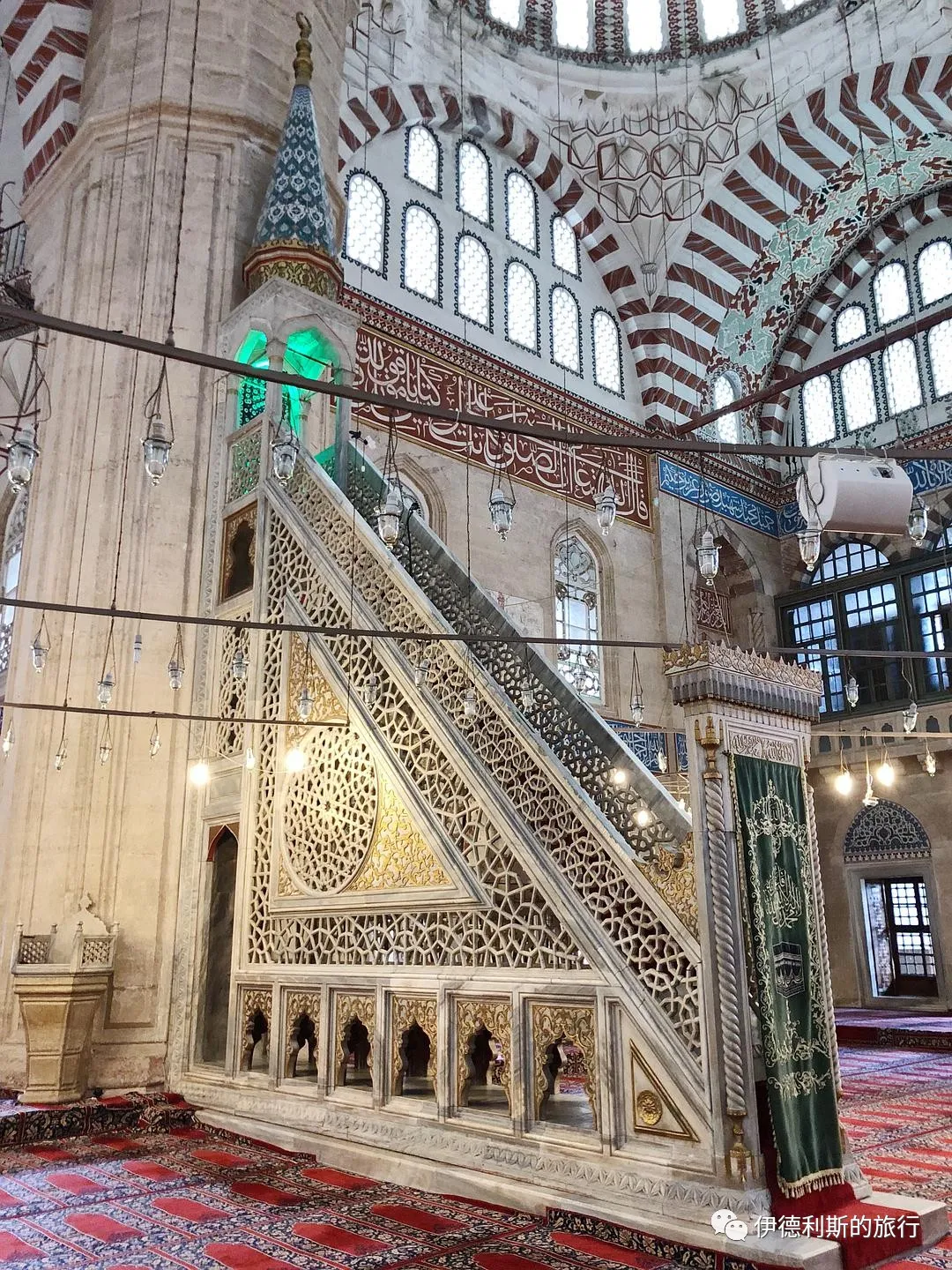
The minbar (pulpit) of the Selimiye Mosque holds a very important place among classical Ottoman artworks. The minbar is carved from a single piece of white marble, has 25 steps, and features an extremely elegant design. The beauty created by these merging geometric shapes is the artistic crystallization that Mimar Sinan pursued throughout his life.
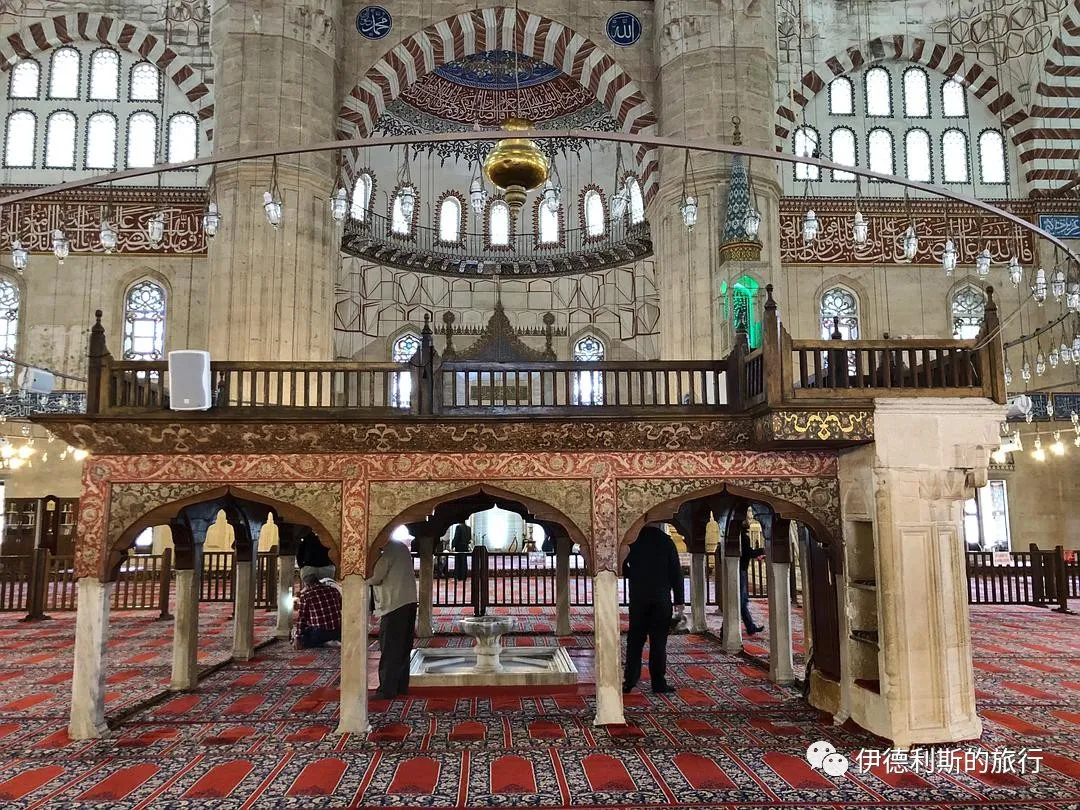
Directly facing the mihrab is the stone platform where the muezzin calls the adhan, supported by 12 white marble columns. The thick pillar to the southwest of the platform is made of vertical, slender rectangular slabs and contains the stairs the muezzin uses to climb up.
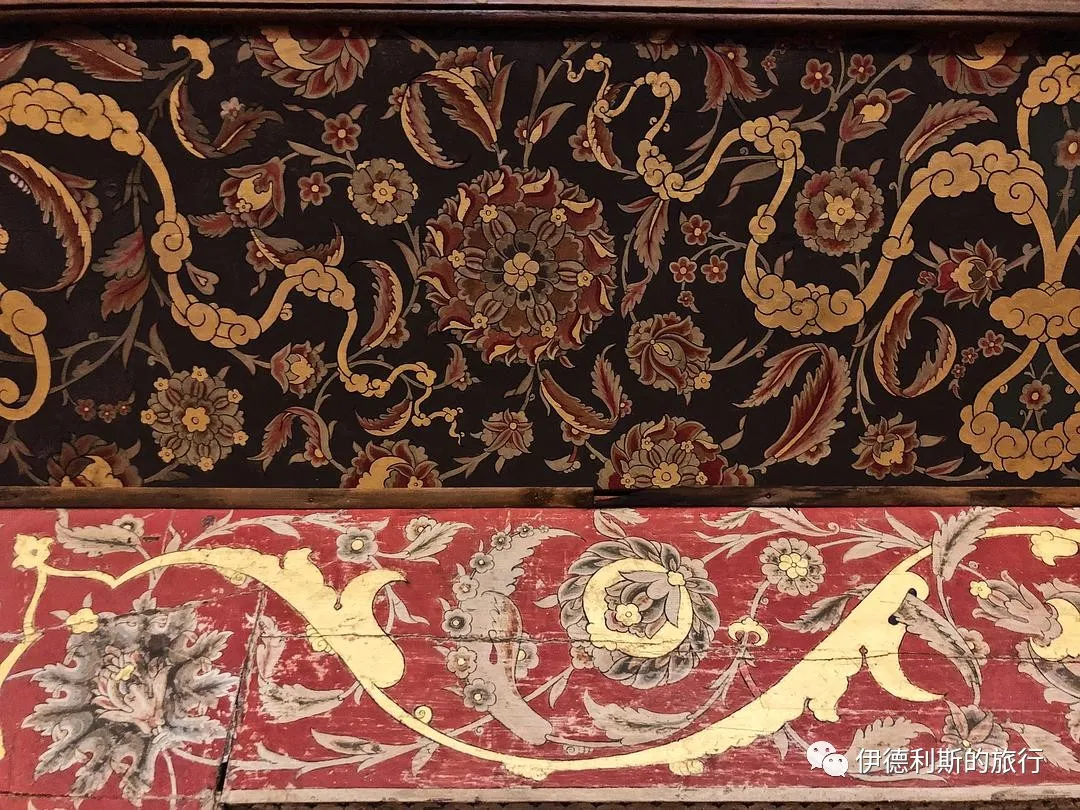
The platform has a walnut railing decorated underneath with gold-leaf Chinese-style cloud knots, an important example of decoration from the classical Ottoman period. The deep blue background is covered with naturalistic dagger-shaped leaves, chrysanthemums, and Chinese-style clouds. The passion flower patterns on the blue background were brought to the Anatolia region by Central Asian Turkic people from the East in the 8th and 9th centuries, symbolizing eternity.
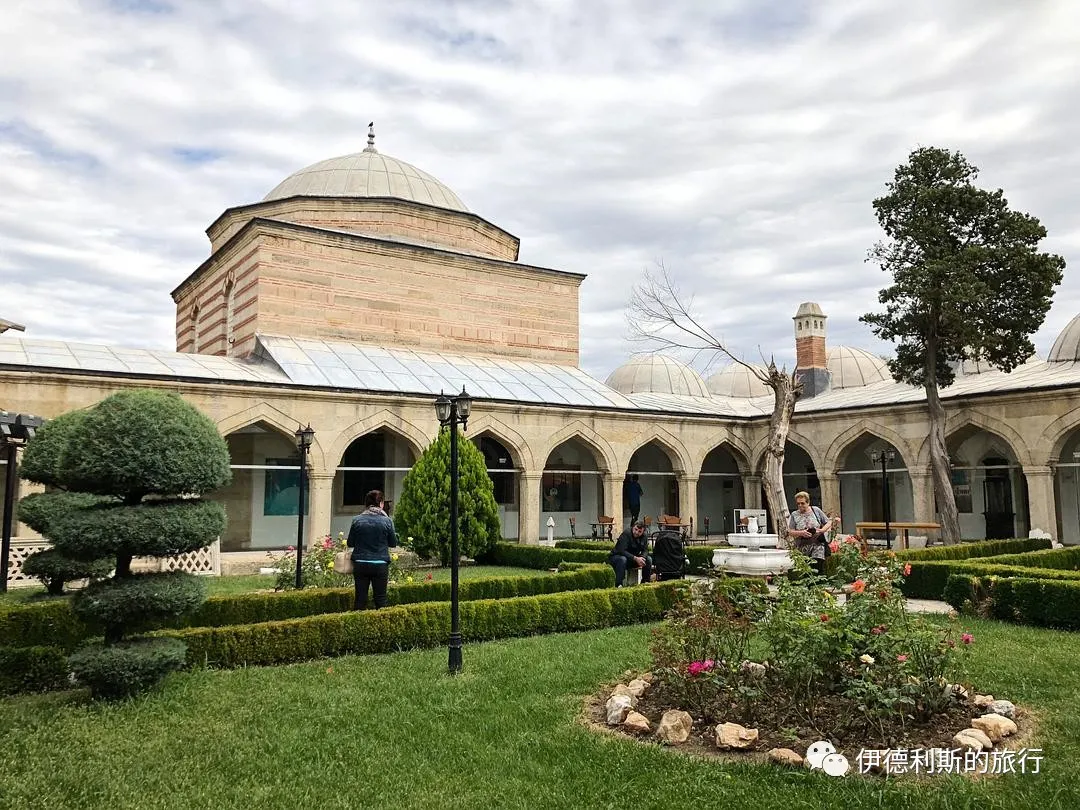
The Selimiye Madrasa is very distinct among Sinan's works. It has a unique dual-academy layout with the Dar'ül-Kurra Quran school and the Dar'ül-Hadis Hadith school symmetrical to the main mosque. It is also the only Quran school built by Sinan that features a honeycomb-structured muqarnas gate.
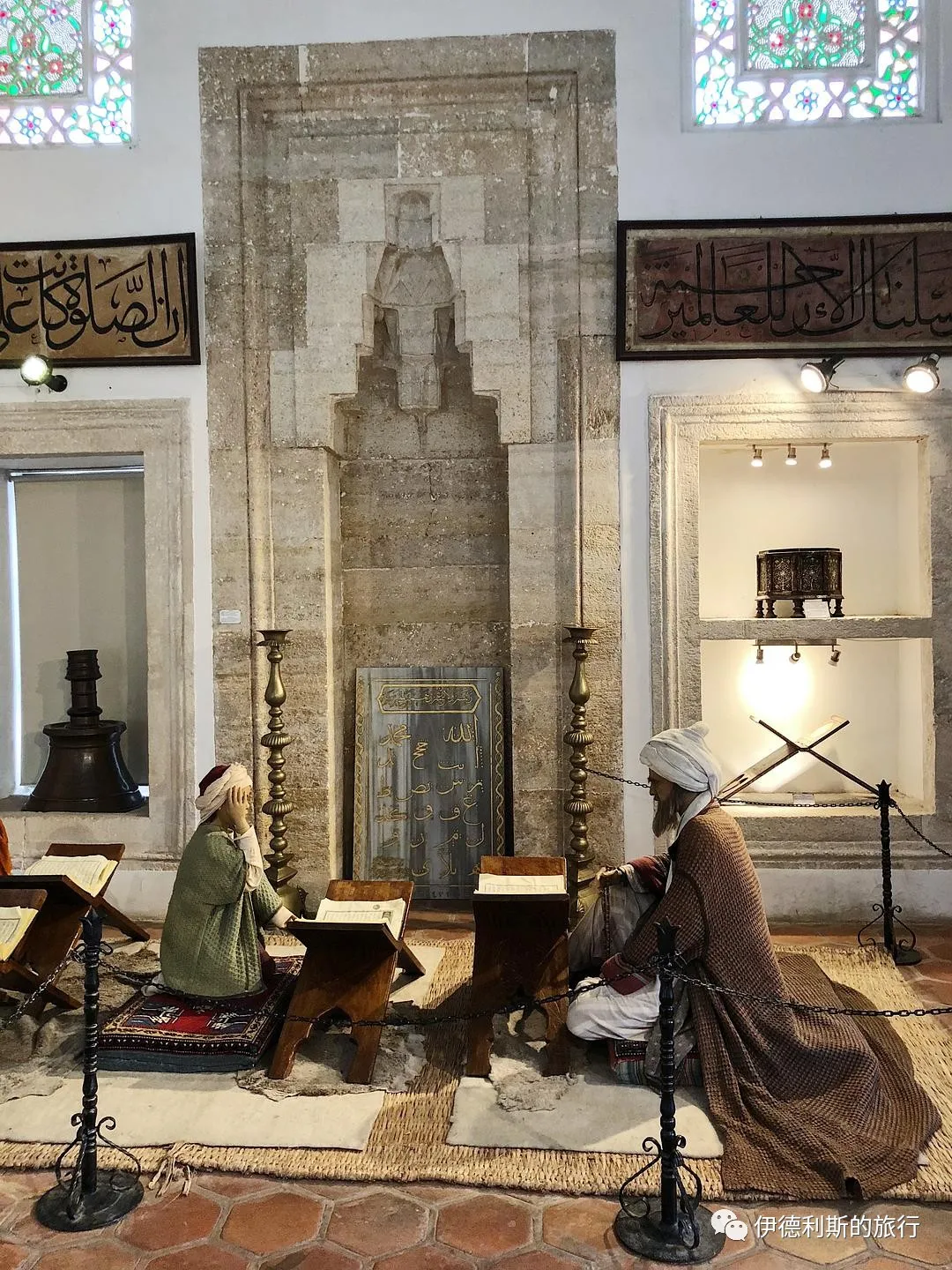
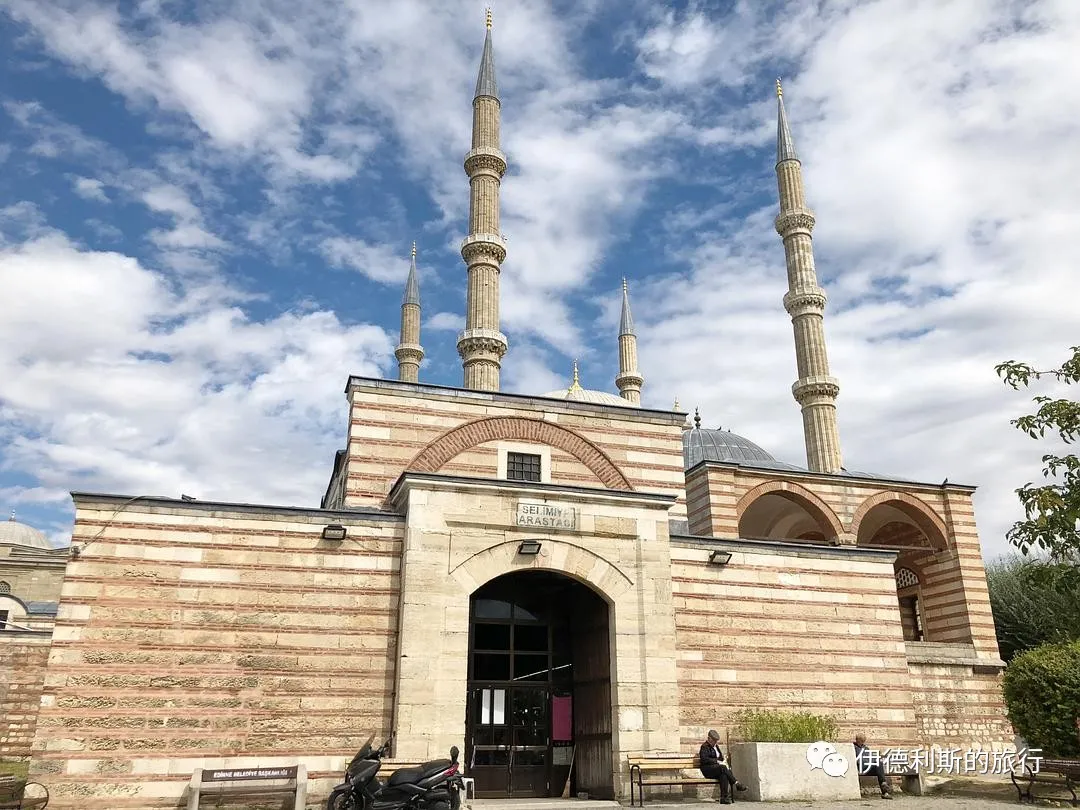
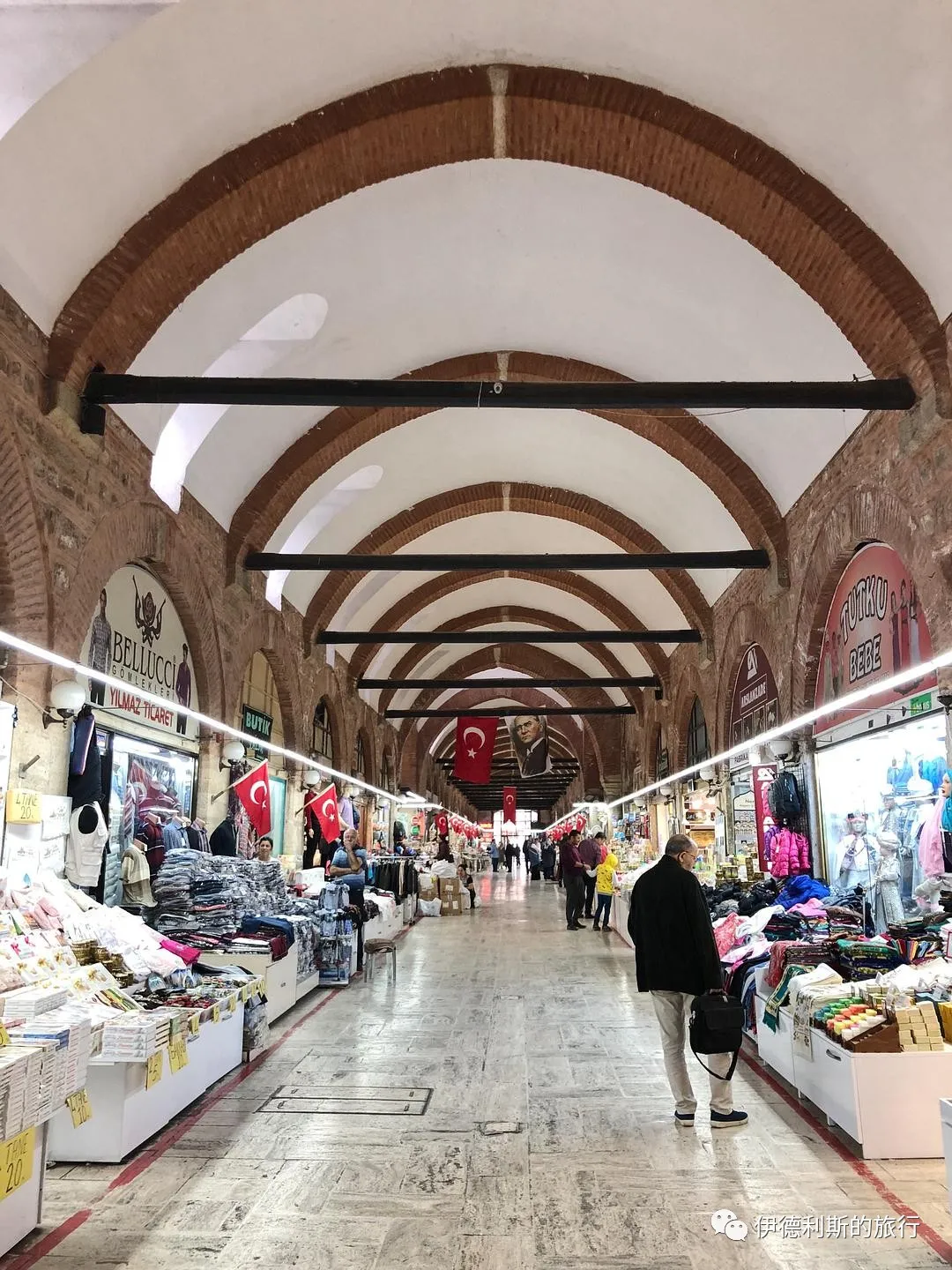
The Arasta Bazaar is 225 meters long, runs parallel to the southwest wall of the mosque, and generates income for the mosque by renting out 124 shop spaces. The bazaar has three main gates, one of which connects to the mosque courtyard via a staircase.
Some believe the Arasta Bazaar was built by Mimar Sinan's successor, the imperial chief architect Davud Aga, while others think Sinan designed it to cover the retaining wall supporting the mosque on the southwest slope, and it was finally completed by Davud Aga. This is because Mimar Sinan was very skilled at designing and building structures that adapted to sloped terrain.
Between 1863 and 1868, Baha'u'llah, the founder of the Baha'i Faith, was exiled to Edirne by the Ottoman Empire with his family and lived near the Selimiye Mosque. During this time, he wrote many works, announced the Baha'i Faith to countries around the world, and officially broke away from another leader, Mirza Yahya, which was a major event in Baha'i history.
Food
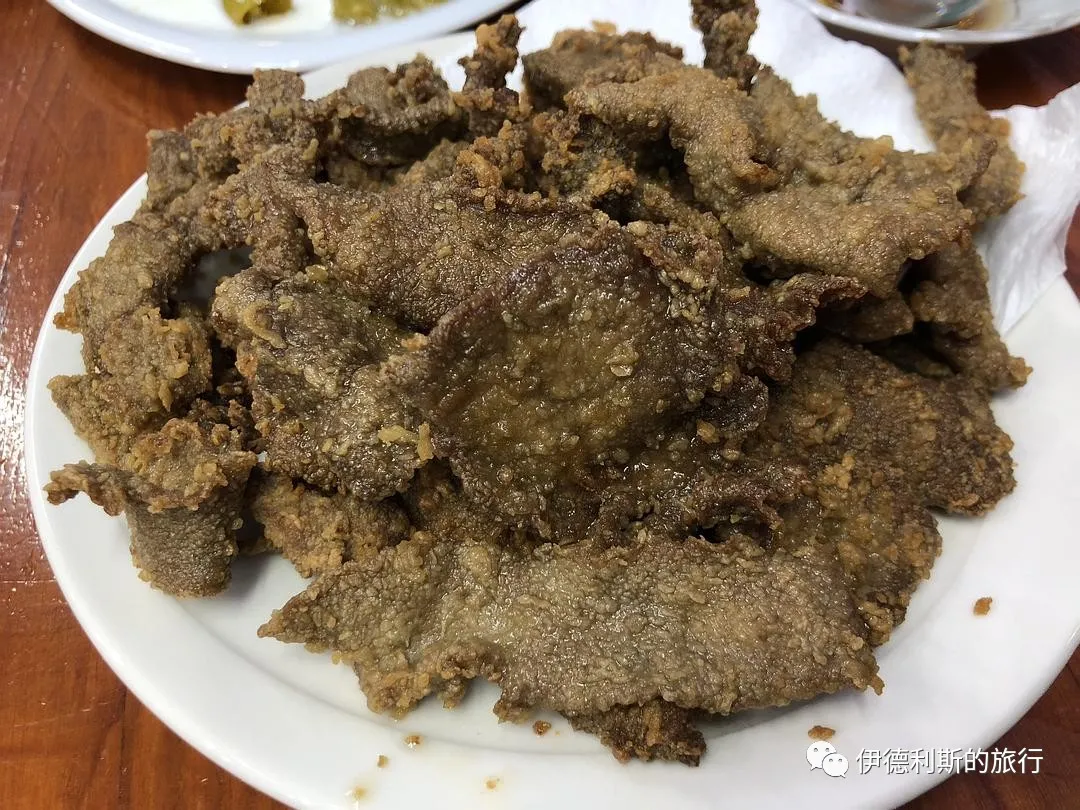
When visiting Edirne, you must try the local specialty, fried liver (ciğercisi), which is very satisfying when served with yogurt and hot sauce.
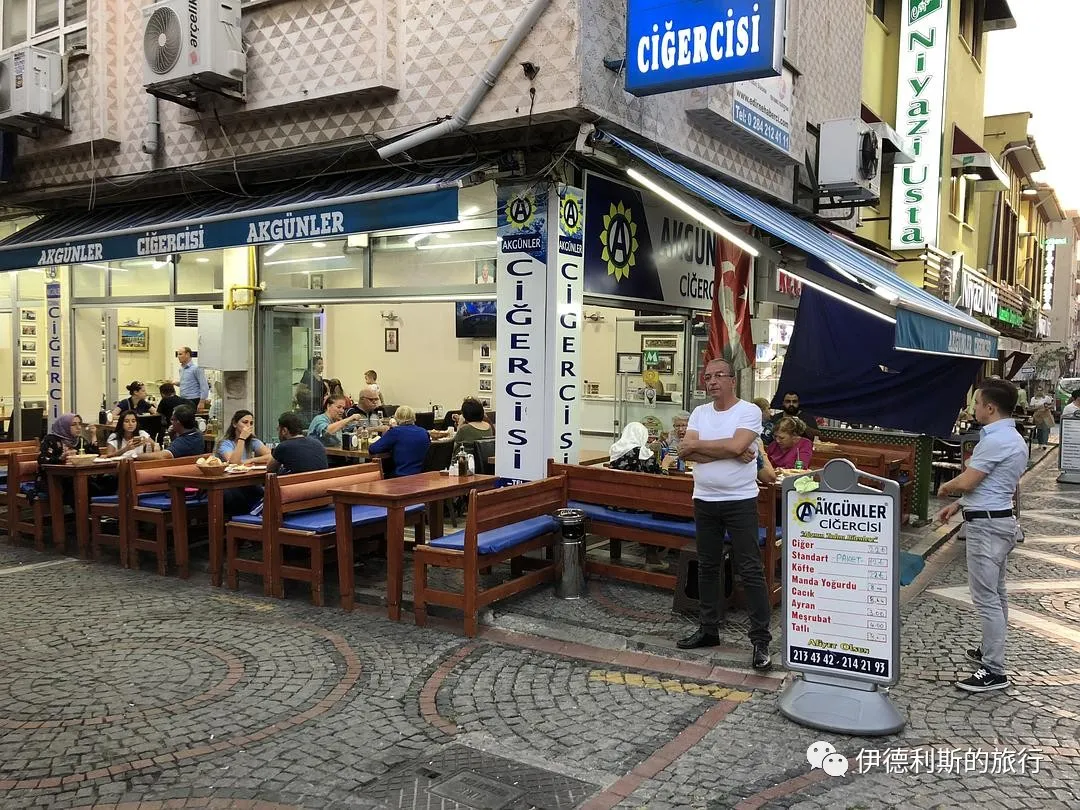
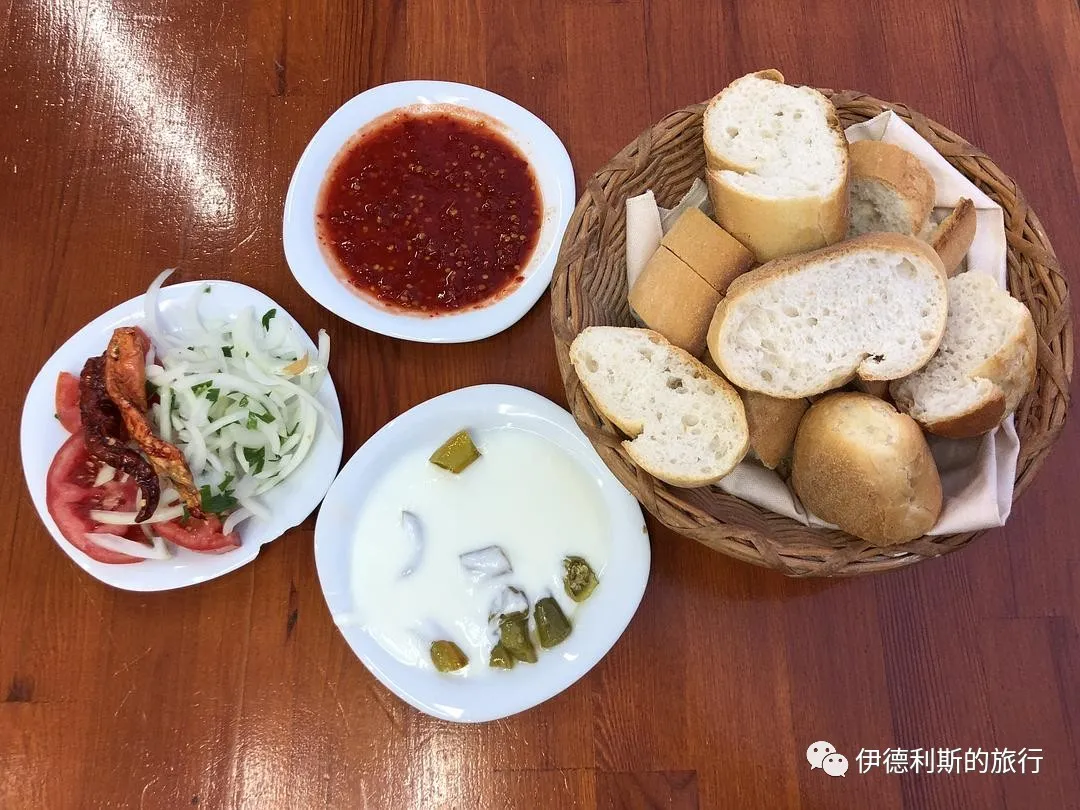
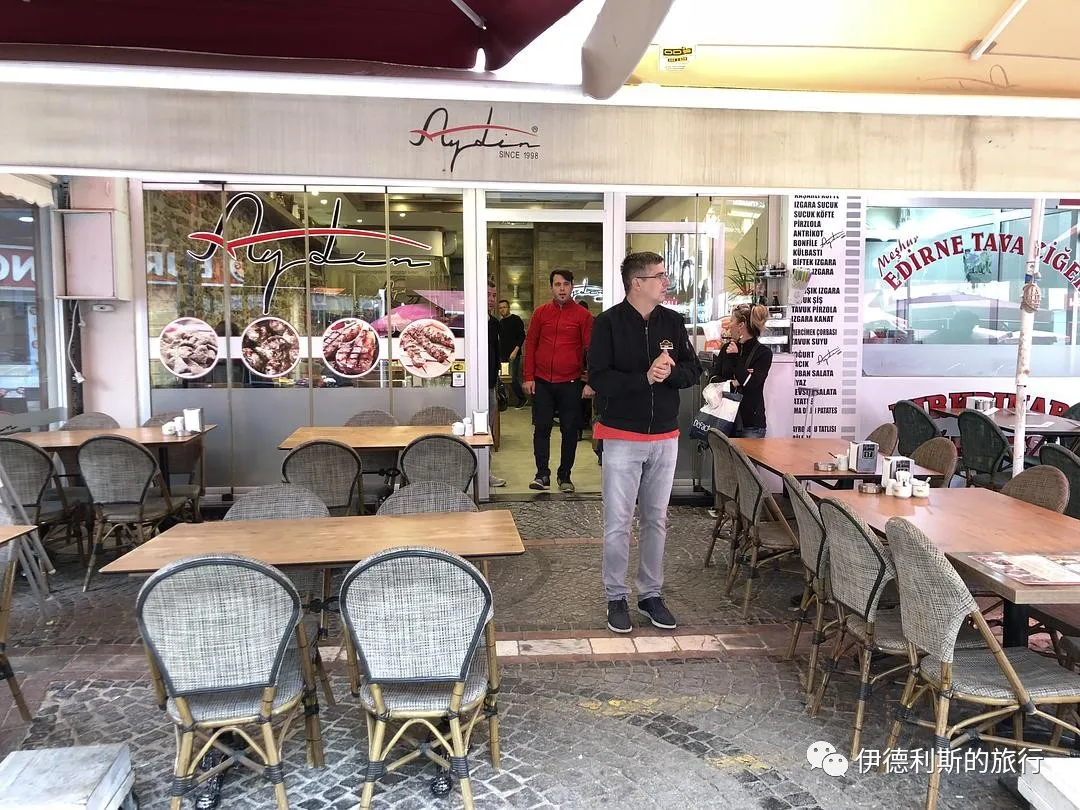
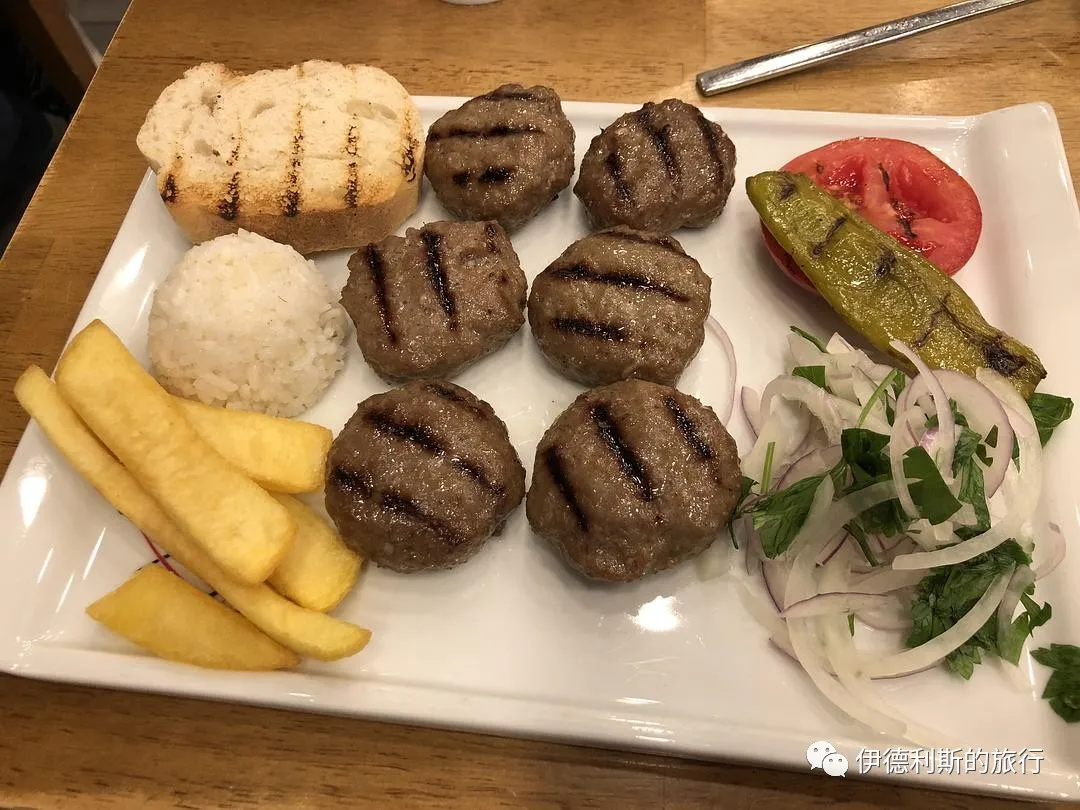
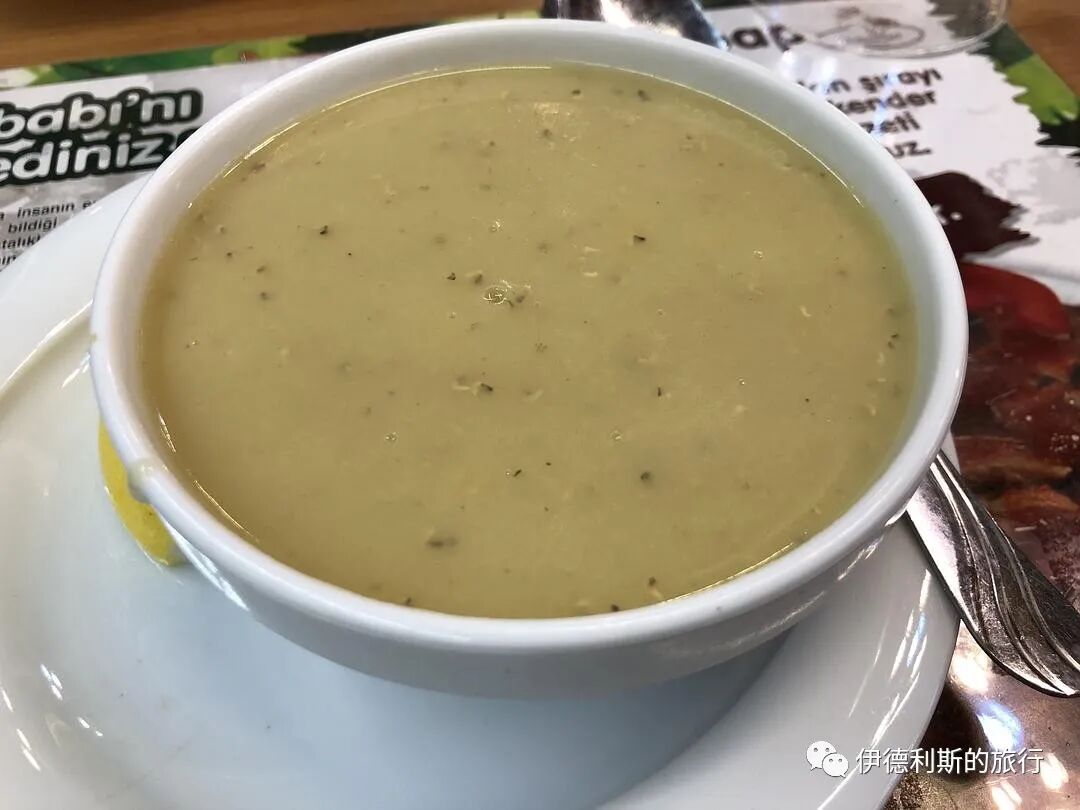
For lunch in Edirne, I had grilled sausage meatballs (sucuk köfte) and lentil soup (mercimek çorbası). A cold wind was blowing across the entire Balkan Peninsula those days, so drinking hot lentil soup felt the best.
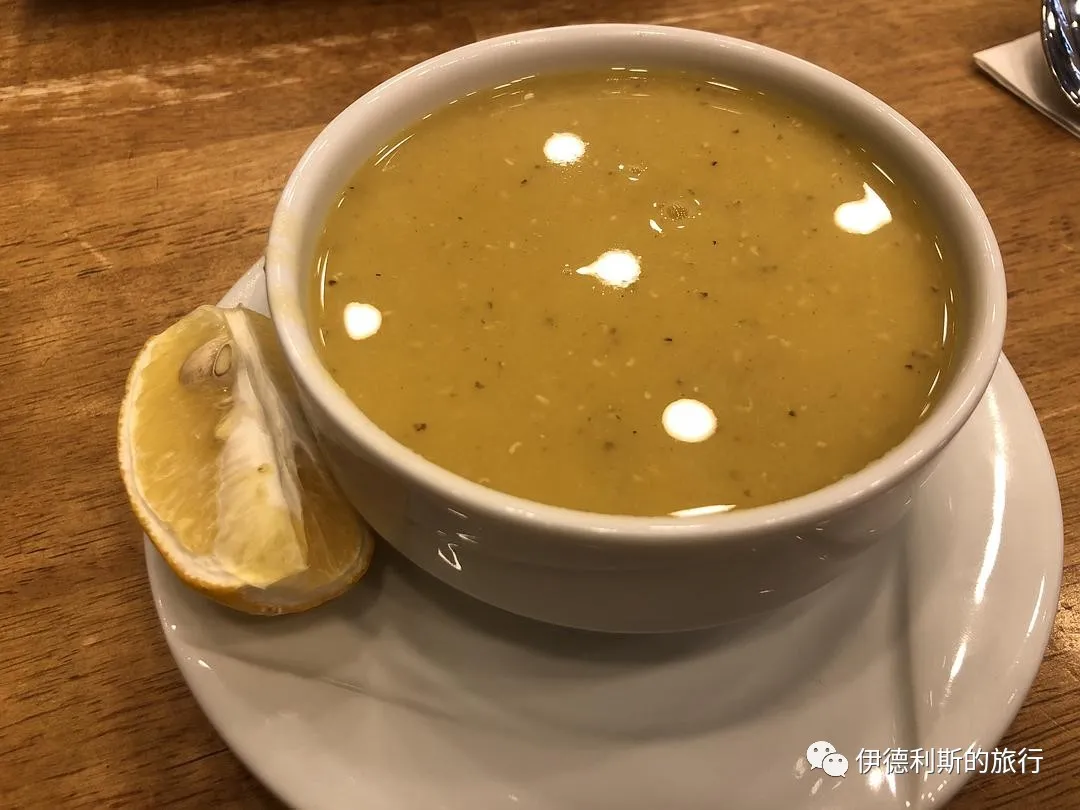
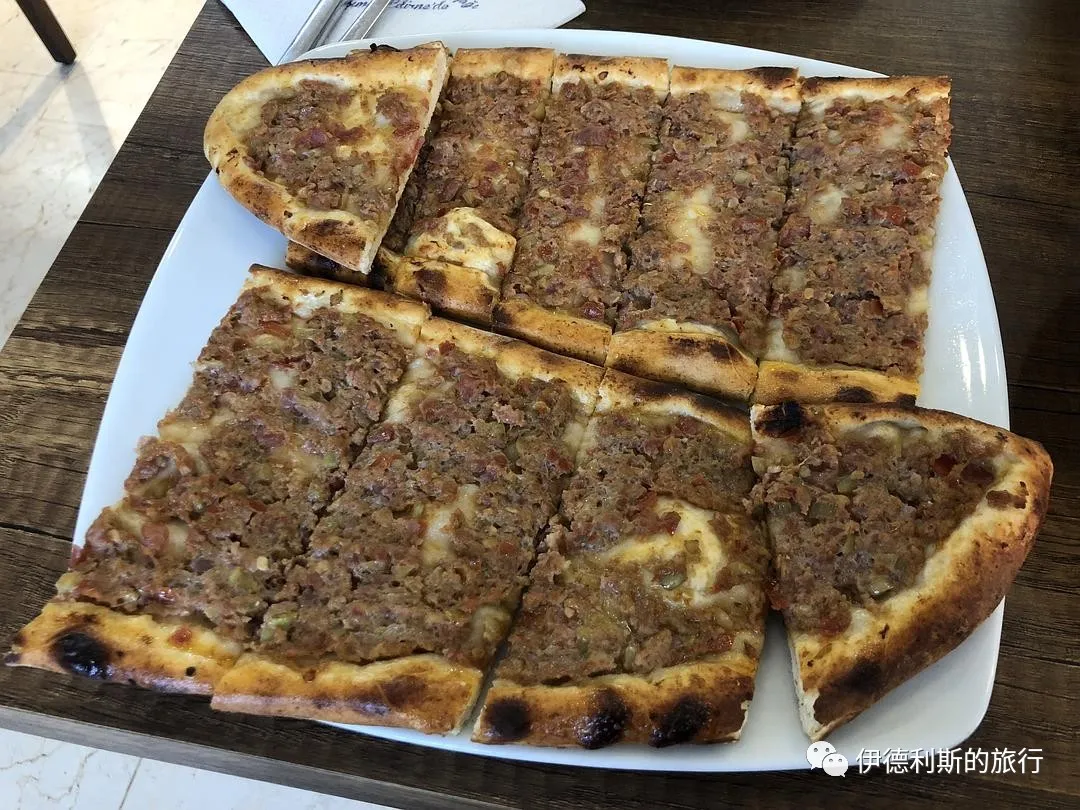
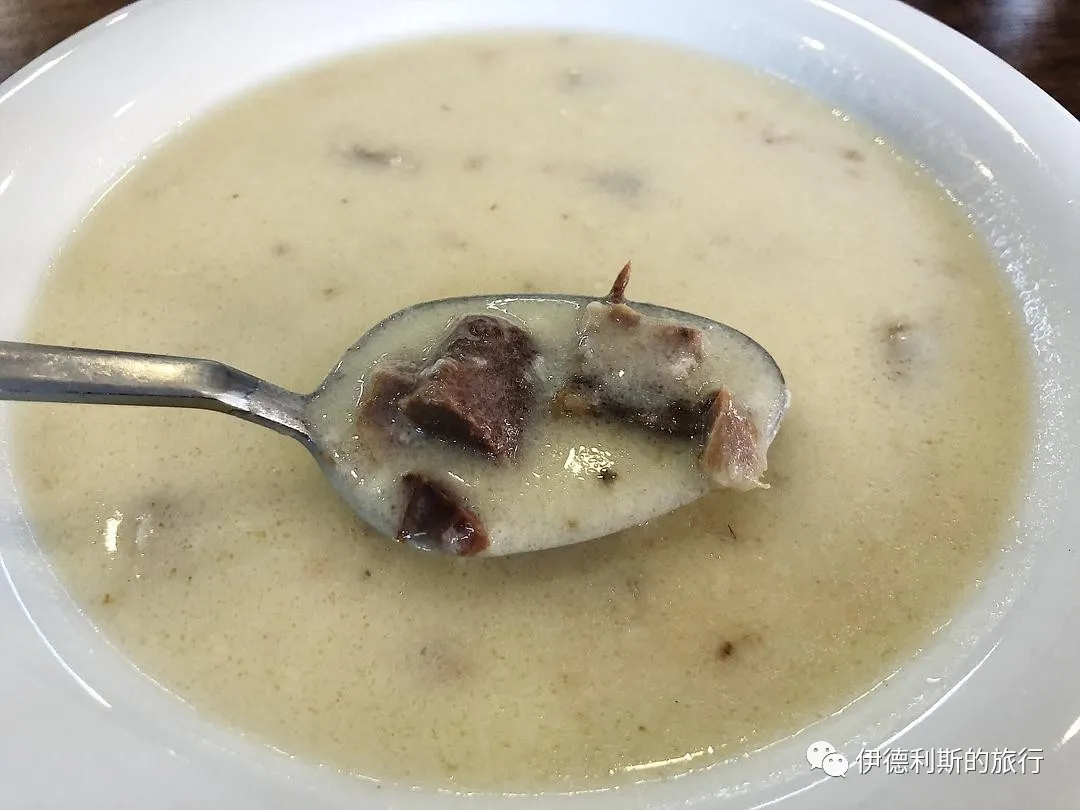
For dinner in Edirne, I had minced meat pie (kıymalı pide) and a rich soup made from sheep head and sheep trotters (kelle paça). The soup was especially delicious.
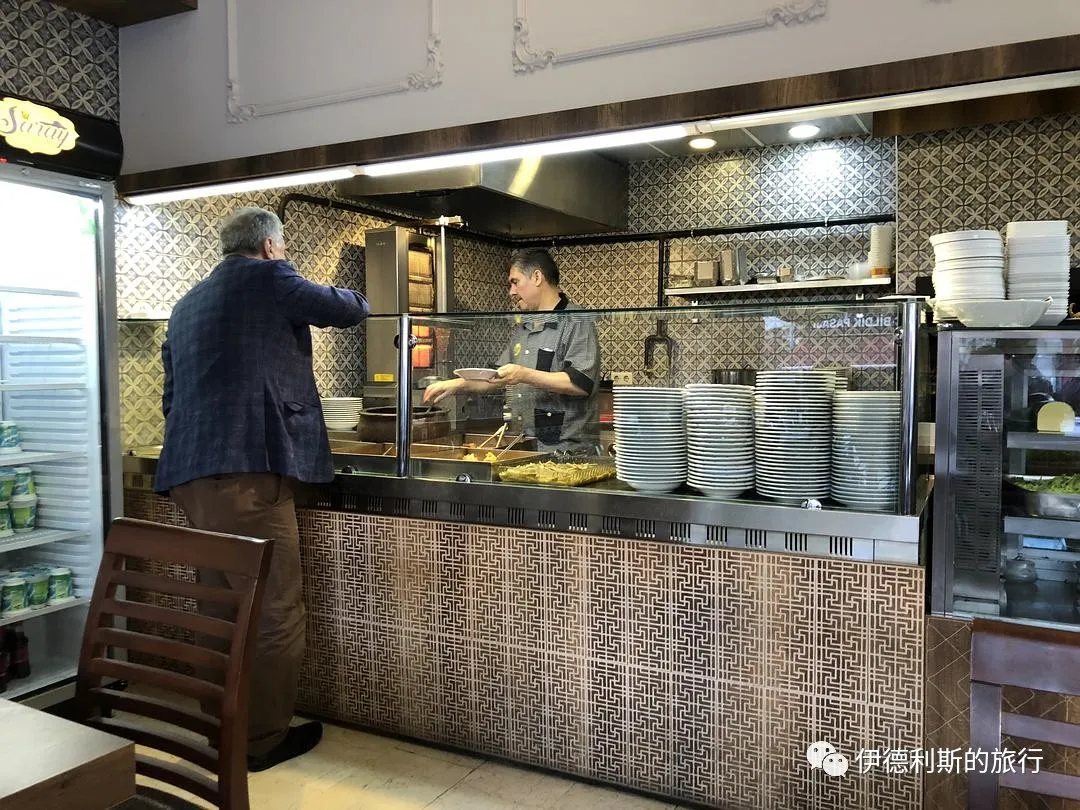
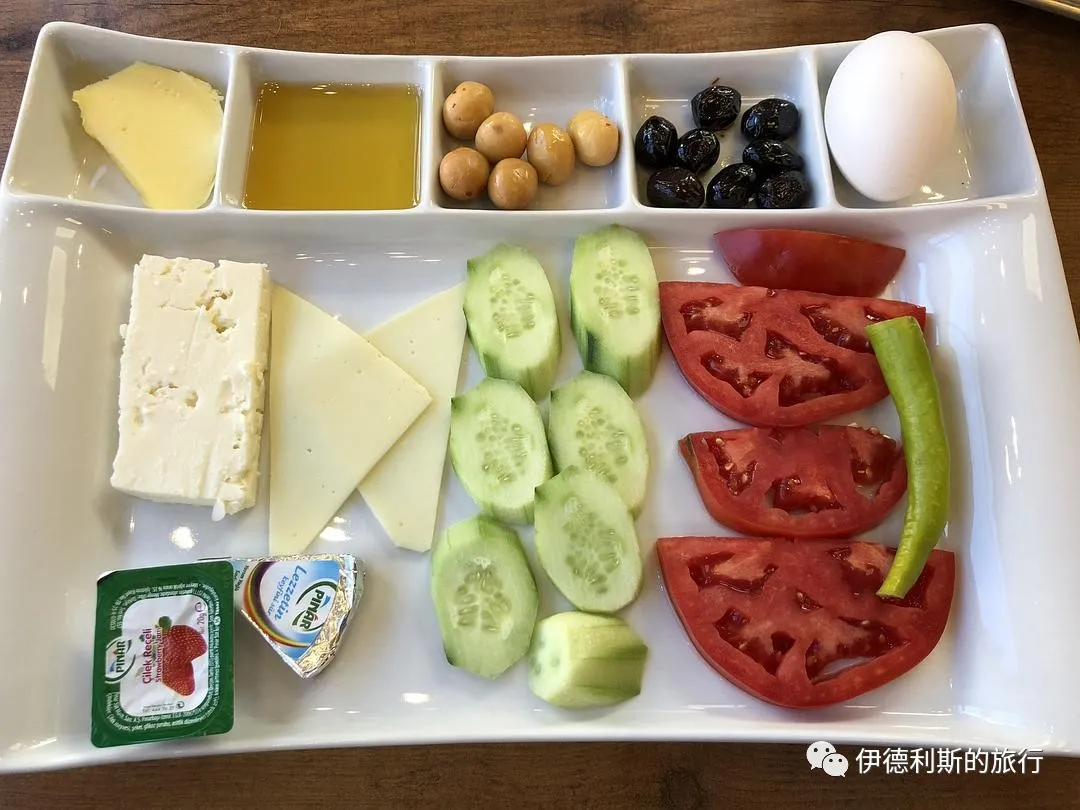
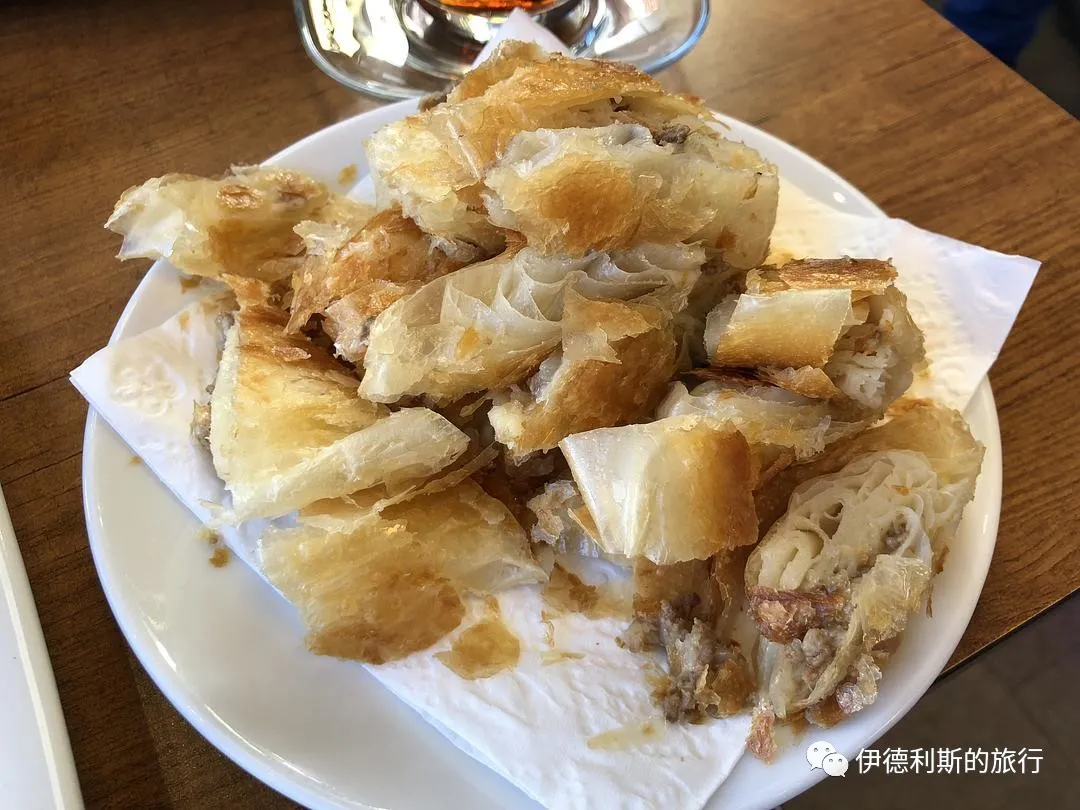
For breakfast the next morning in Edirne, I had a meat-filled pastry (börek). It cost 6 lira a plate and tasted great. I also had a breakfast set, which was a plate of very healthy food.
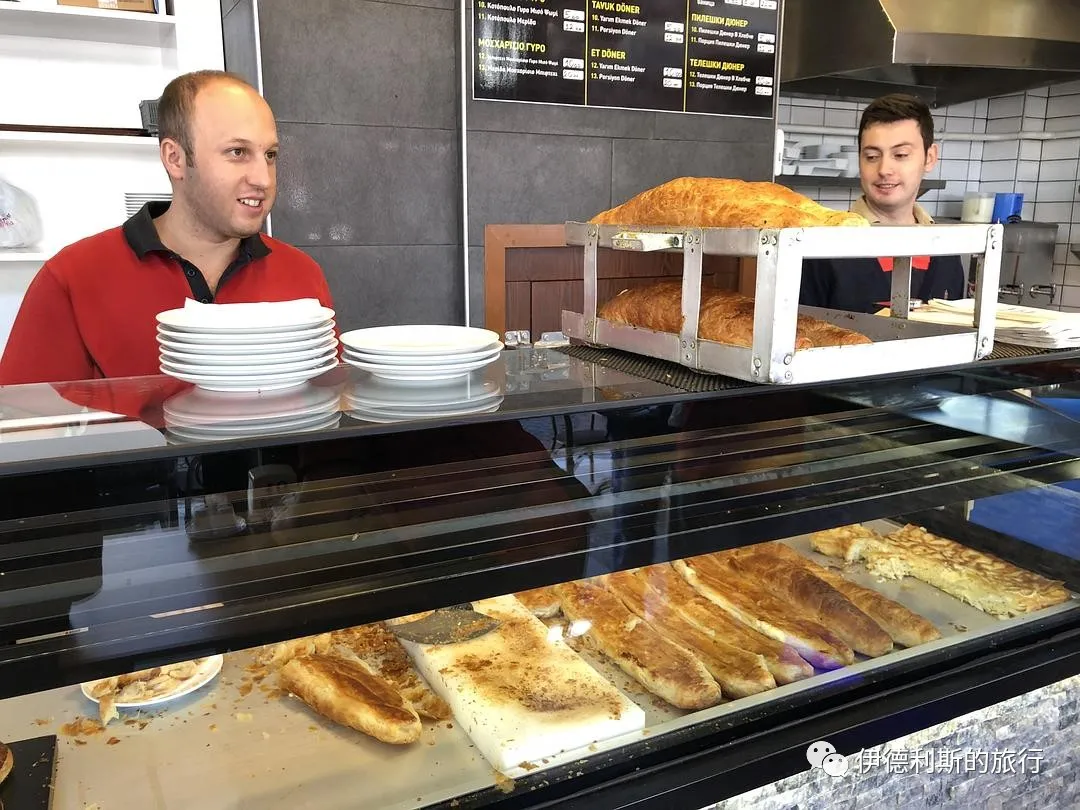
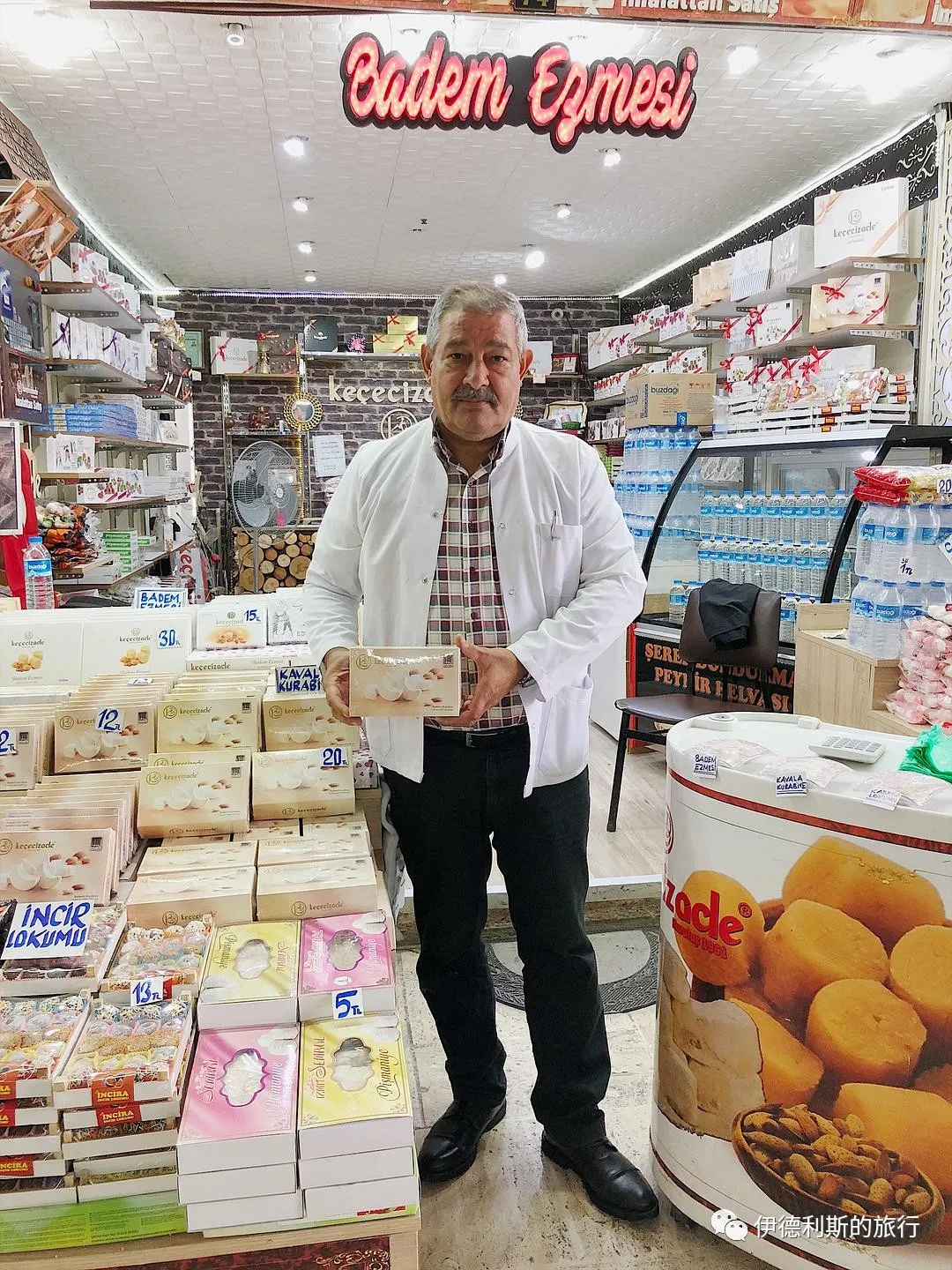
At the bazaar in Edirne, I bought a local specialty, the crescent-shaped almond pastry known as Kavala cookies (Kavala kurabiyesi). Kavala is now an important seaport in northern Greece. The Ottoman Empire ruled it from 1371 to 1913. During the 1922 population exchange between Turkey and Greece, tens of thousands of Turks left Kavala to settle in Edirne, bringing this cookie recipe with them. I have always been interested in the Greek-Turkish population exchange. It involves so many stories about leaving one's homeland forever and the relationship between nations and ethnic groups.
Halal Food Guide: Edirne, Bursa and Konya — Turkish Muslim Food
Articles • ali2007fr posted the article • 0 comments • 209 views • 2026-05-17 12:23
Summary: Halal Food Guide: Edirne, Bursa and Konya — Turkish Muslim Food is presented here as a firsthand travel account in clear English, beginning with this scene: In the autumn of 2018, I visited several cities in Turkey. Edirne is in the far northwest on the border with Greece and Bulgaria, and Bursa is south of Istanbul across the Sea of Marmara. The account keeps its focus on Turkey Halal Food, Edirne Travel, Konya Food while preserving the names, places, food, and historical details from the Chinese source.
In the autumn of 2018, I visited several cities in Turkey. Edirne is in the far northwest on the border with Greece and Bulgaria, and Bursa is south of Istanbul across the Sea of Marmara. Both cities were once capitals of the Ottoman Empire. There is also the ancient city of Konya on the Anatolian plateau, which was the capital of the Sultanate of Rum and the birthplace of the Sufi whirling dervishes.
Edirne
When you come to Edirne, you must try the local specialty, fried liver (ciğercisi). It is very satisfying when served with yogurt and spicy sauce.
For lunch in Edirne, I had grilled sausage meatballs (sucuk köfte) and lentil soup (mercimek çorbası). A cold wind was blowing across the entire Balkan Peninsula those days, so drinking hot lentil soup felt great.
For dinner in Edirne, I had minced meat pie (kıymalı pide) and a rich soup made from sheep head and trotters (kelle paça). This soup was especially delicious.
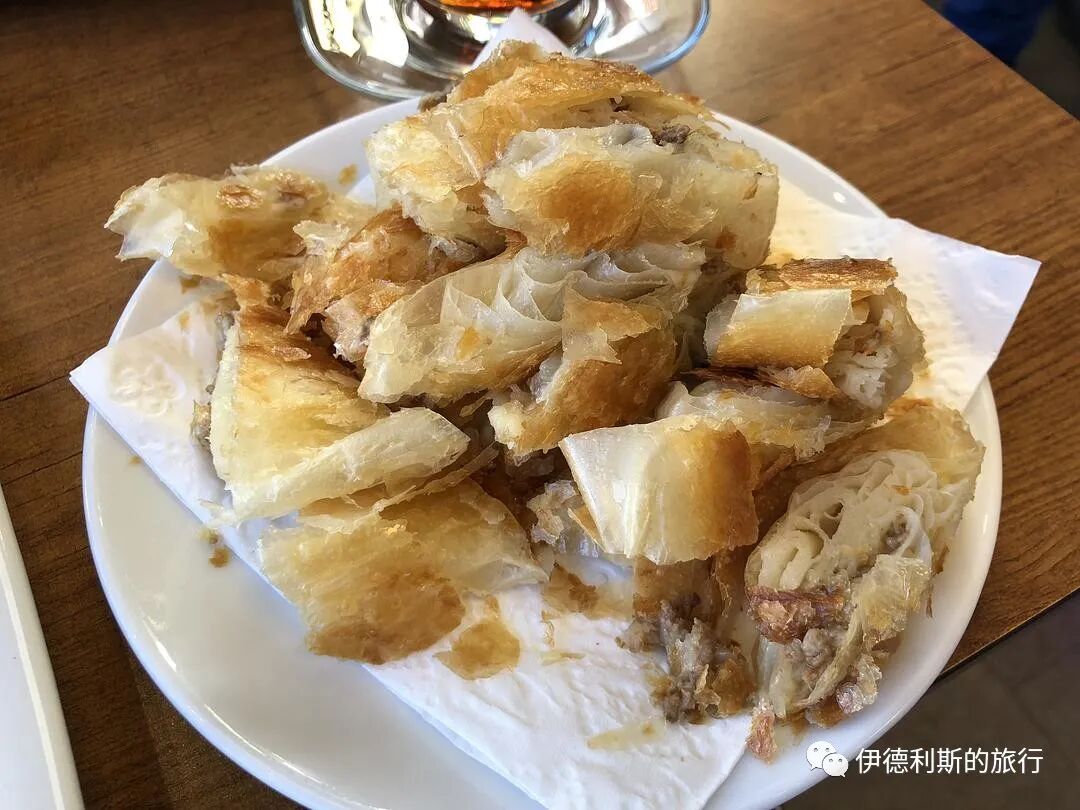
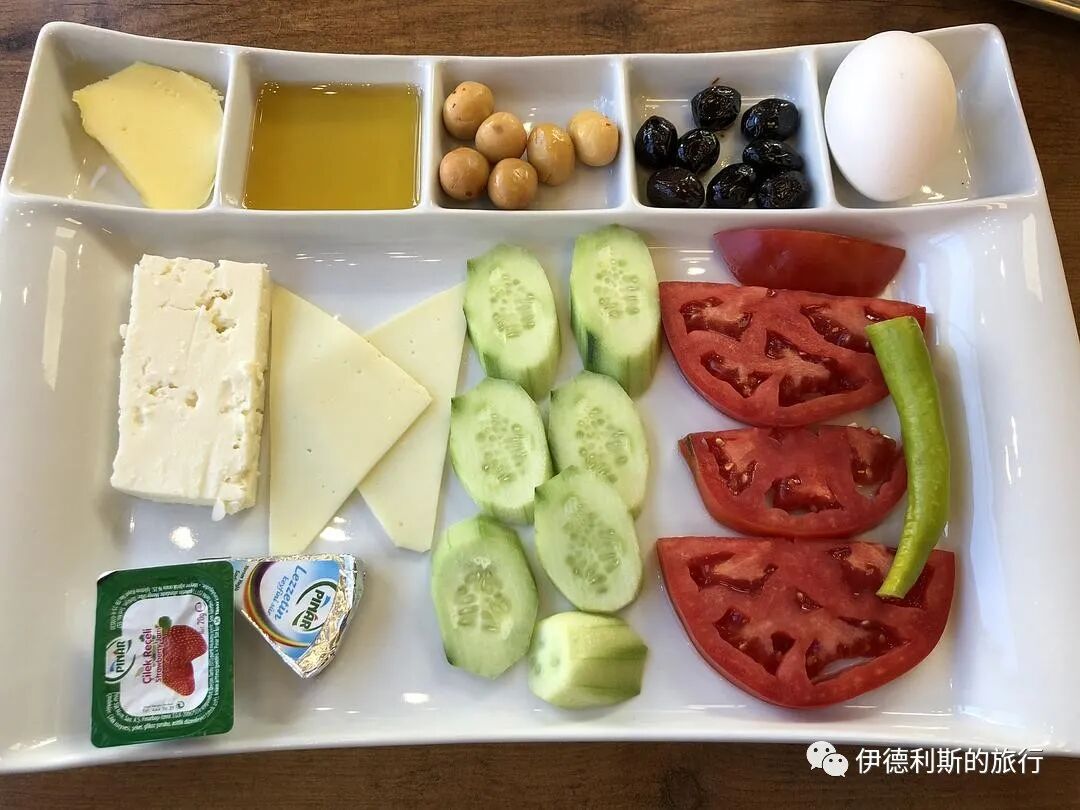
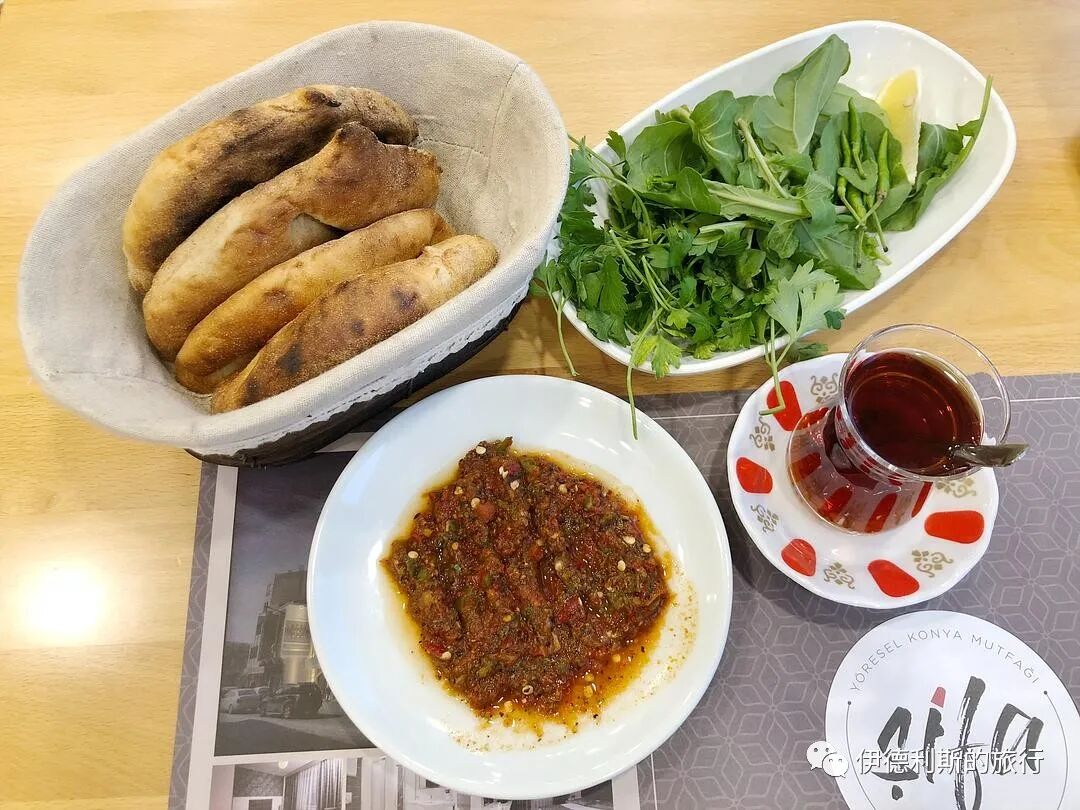
The next morning in Edirne, I had a stuffed pastry (börek). I chose the meat filling, and it cost 6 lira a plate. It was quite tasty. Then there was the breakfast set, a plate of very healthy food.
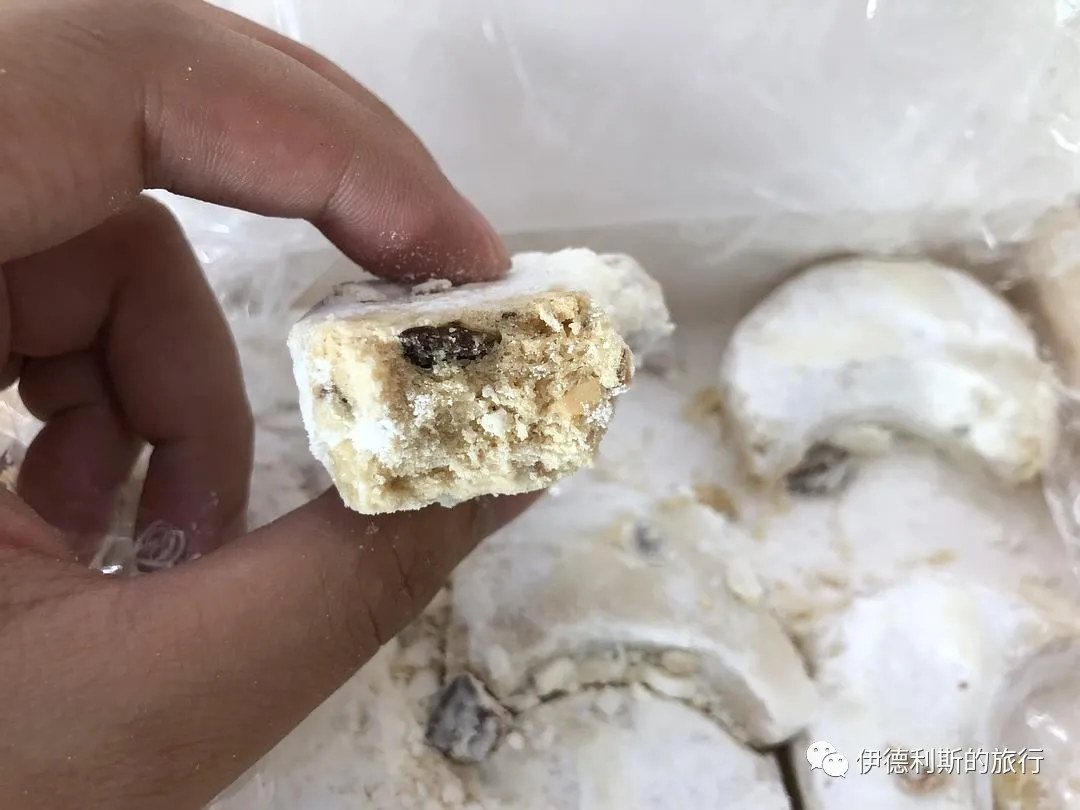
At the bazaar in Edirne, I bought the local specialty, crescent-shaped almond cookies (Kavala kurabiyesi). Kavala is now an important seaport in northern Greece, and it was ruled by the Ottoman Empire from 1371 to 1913. During the 1922 population exchange between Turkey and Greece, tens of thousands of Turks left Kavala to settle in Edirne, bringing this cookie with them. I have always been very interested in the Greek-Turkish population exchange. The hometowns left behind forever and the relationship between nations and ethnic groups hold so many stories.
Konya
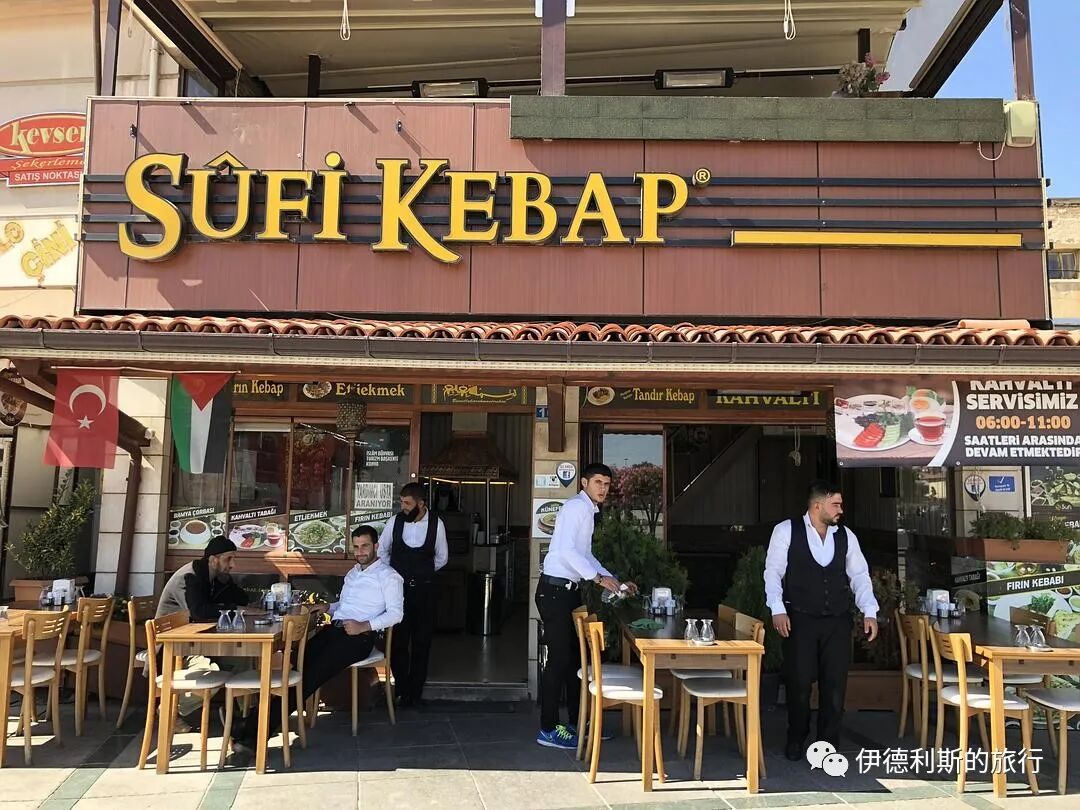
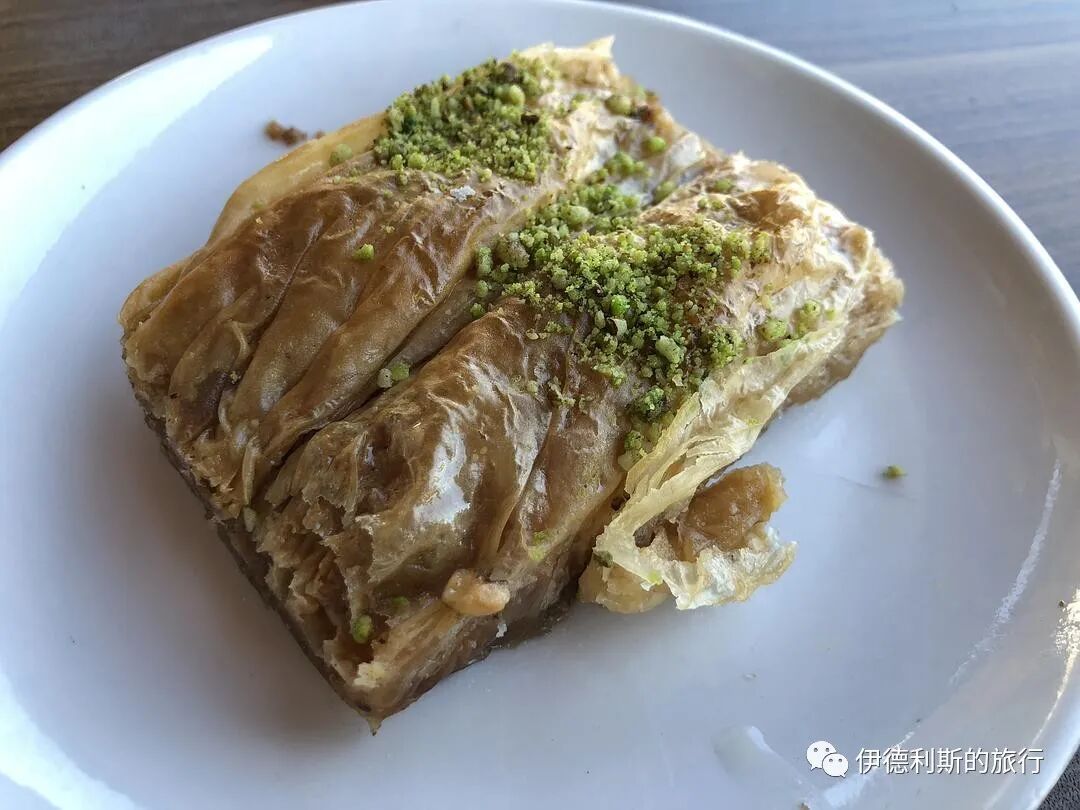
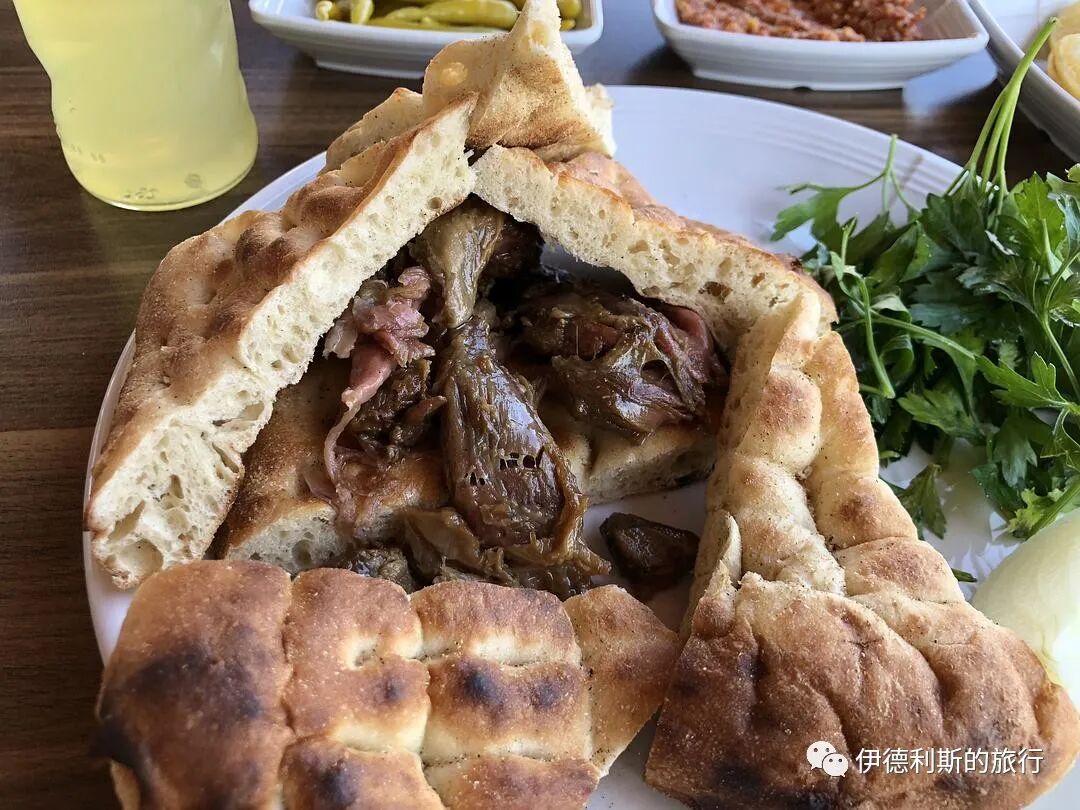
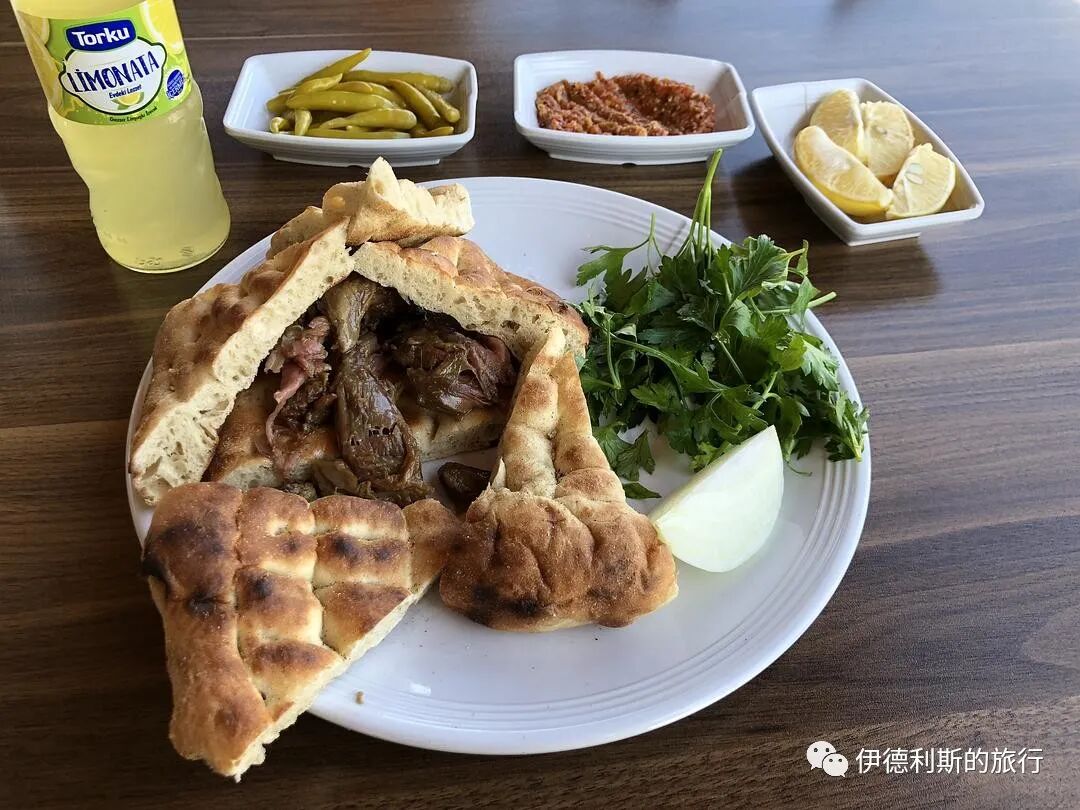
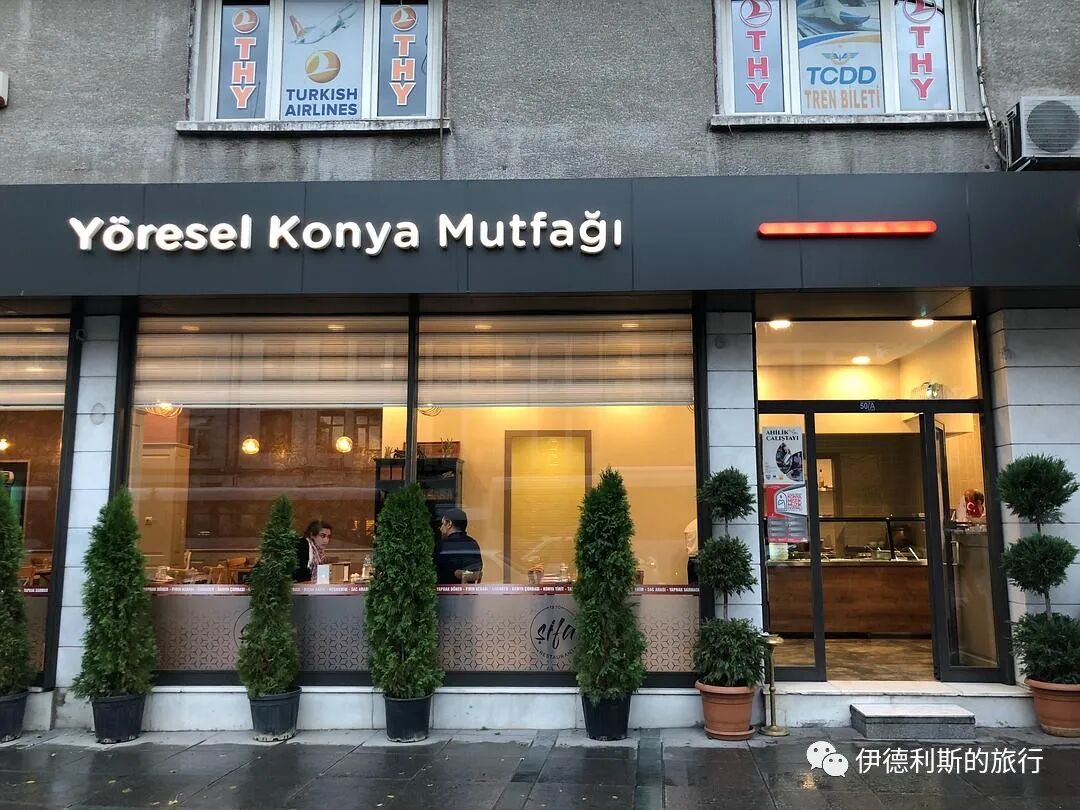
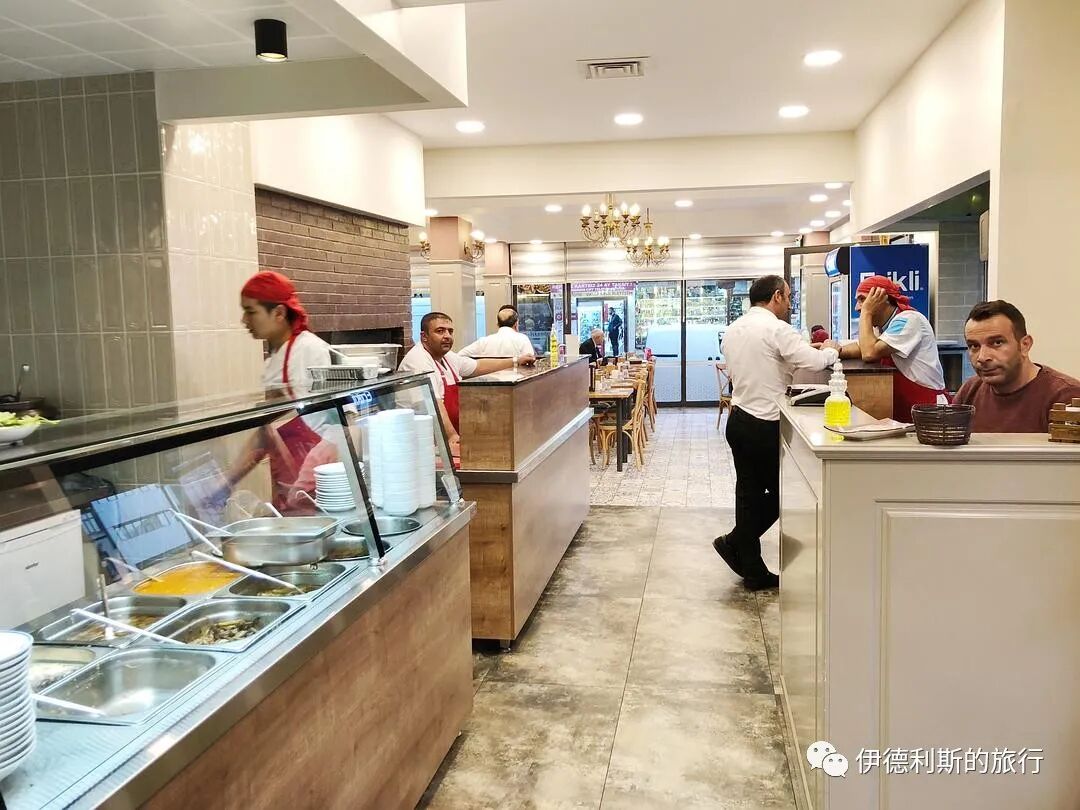
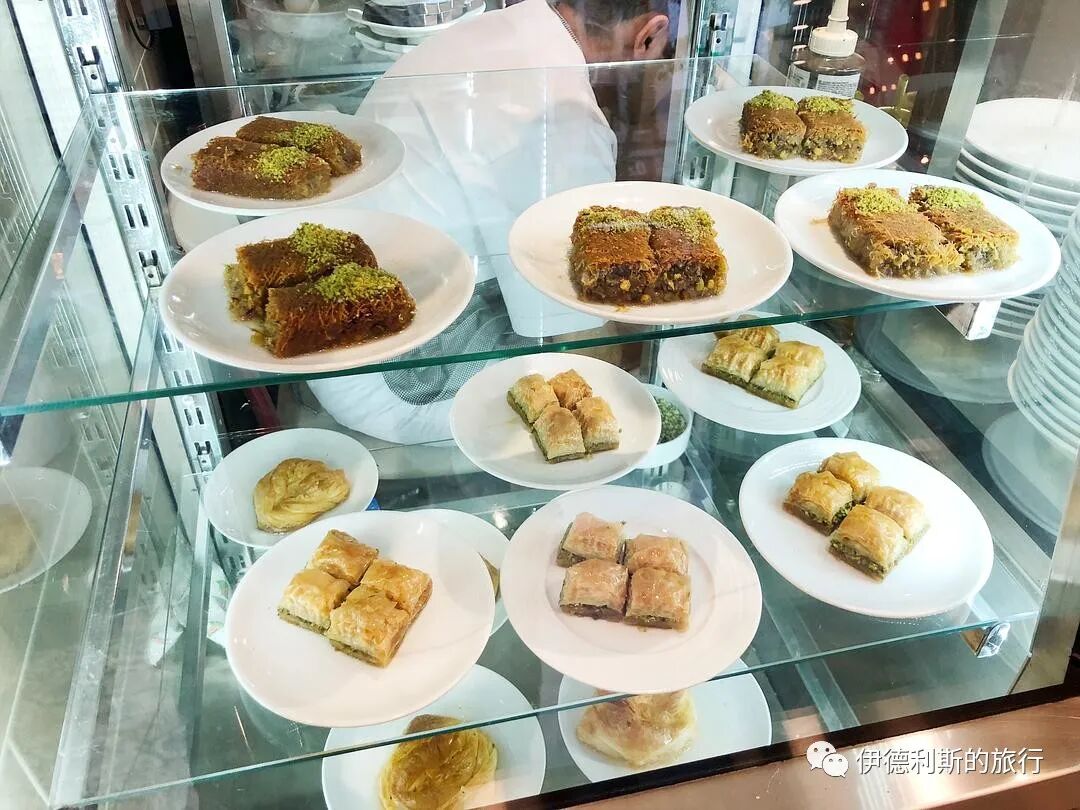
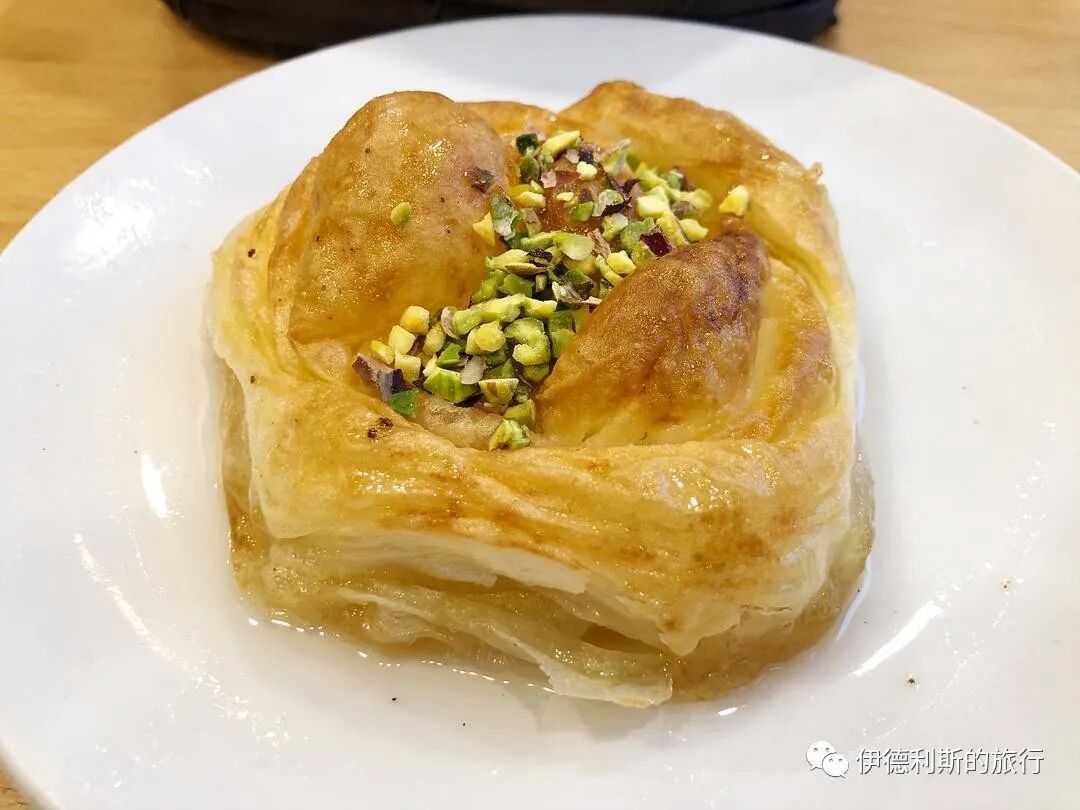
In Konya, I had oven-roasted meat (fırın kebabı) and a dessert called between-the-layers (sac arası). This place is right across from the tomb of Rumi and is called Sufi Kebab.
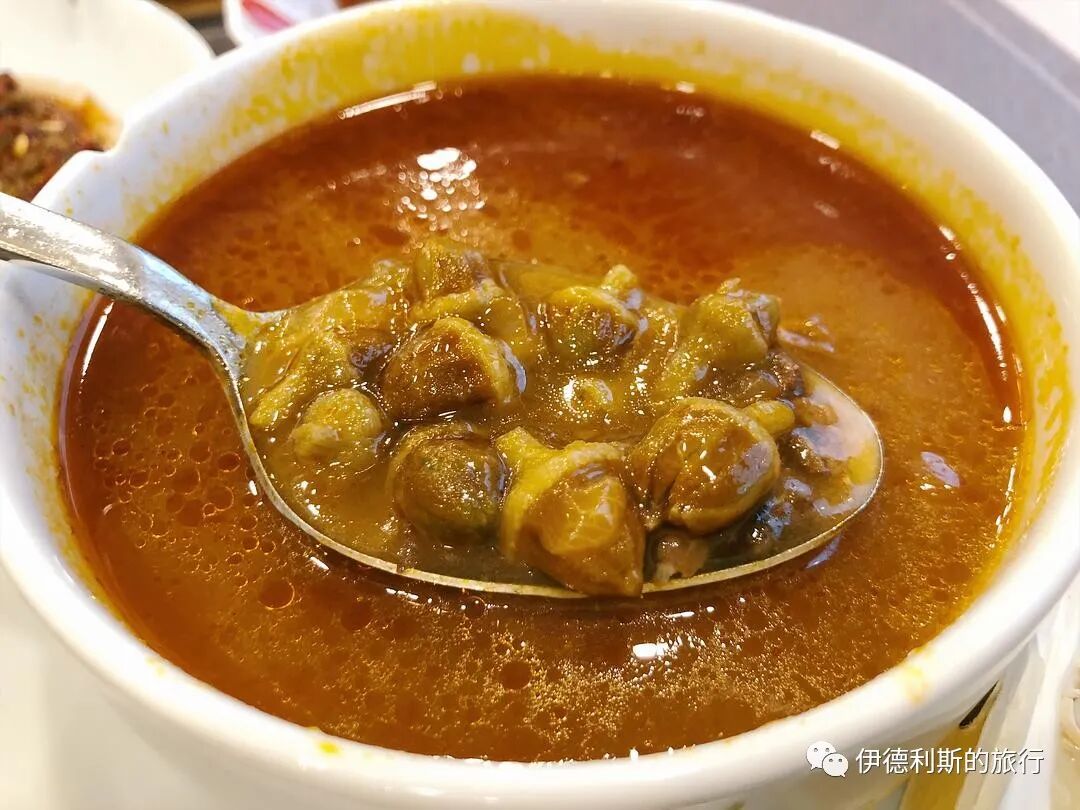
I also drank the local Konya specialty, okra soup (bamya), which was very good.
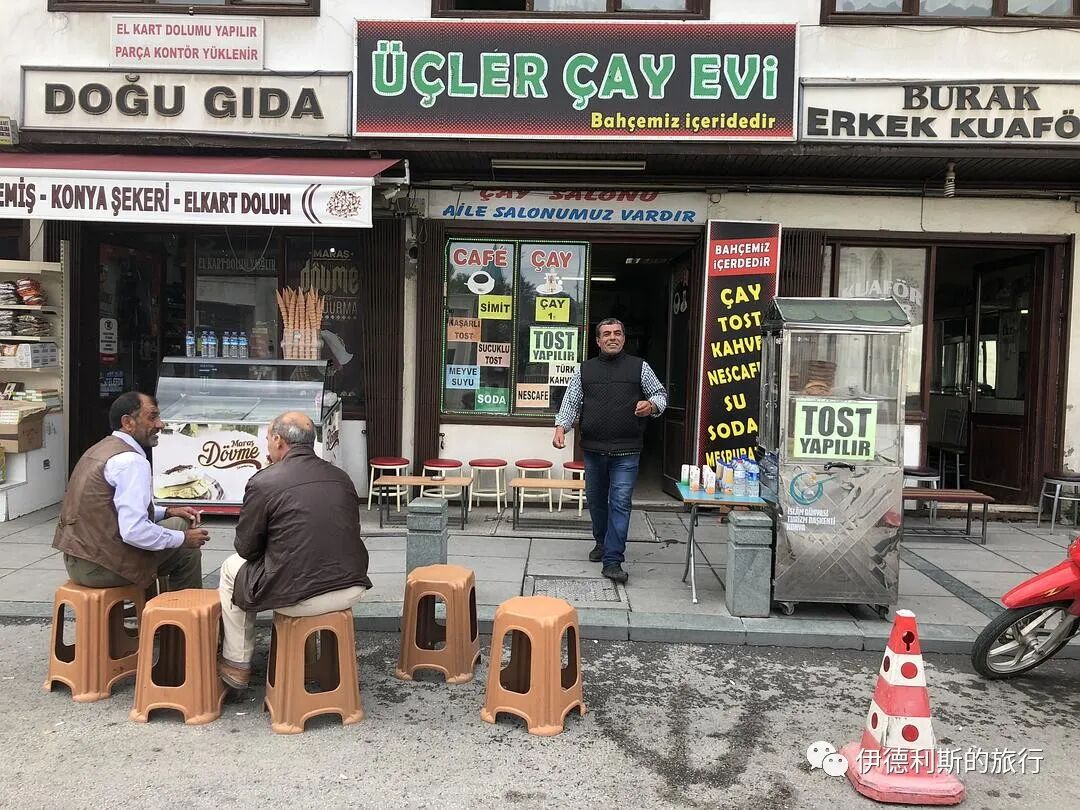
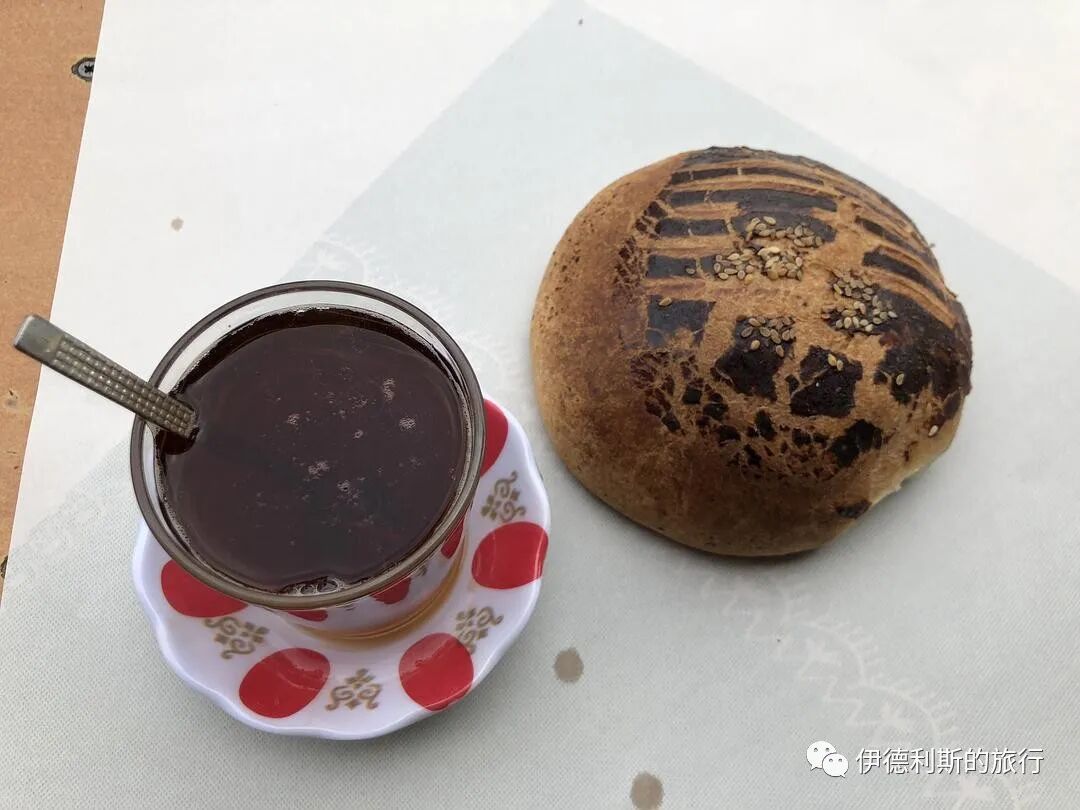
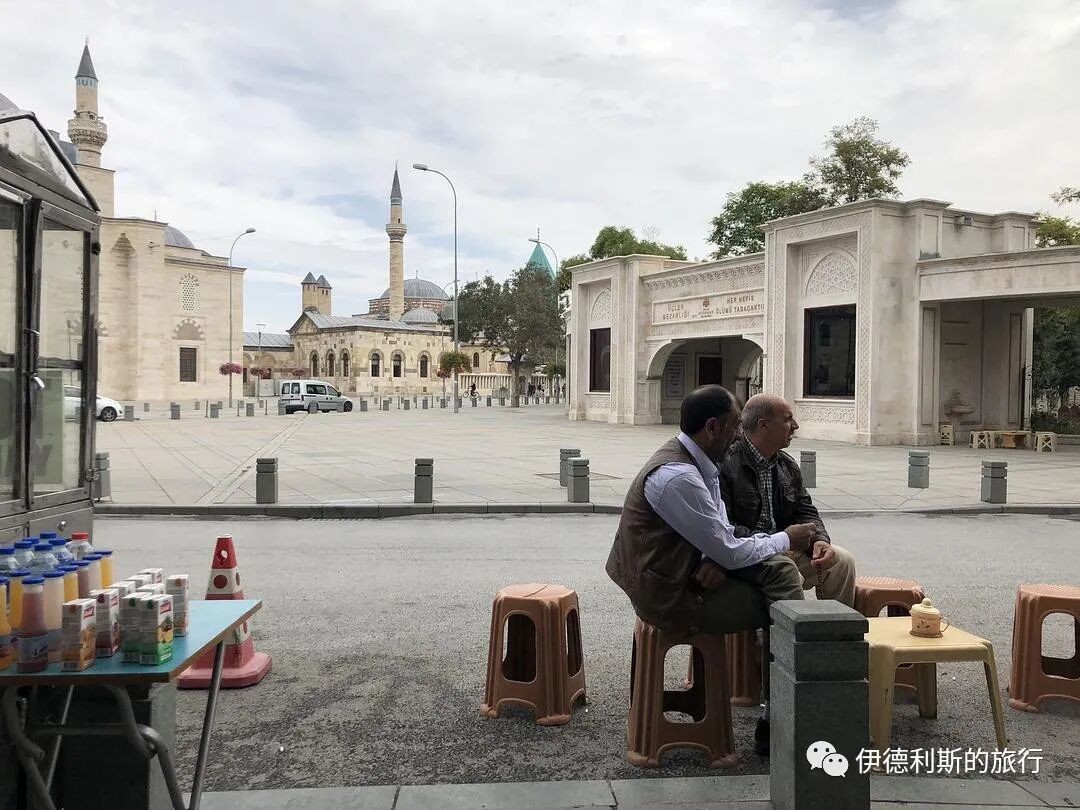
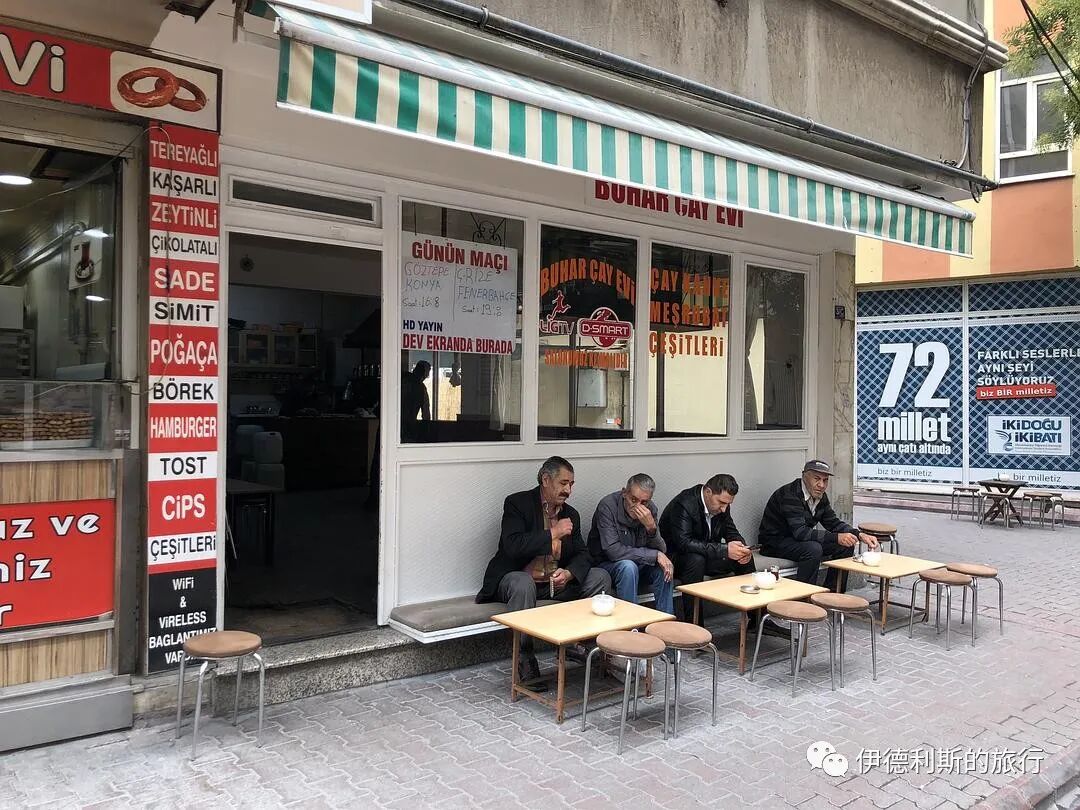
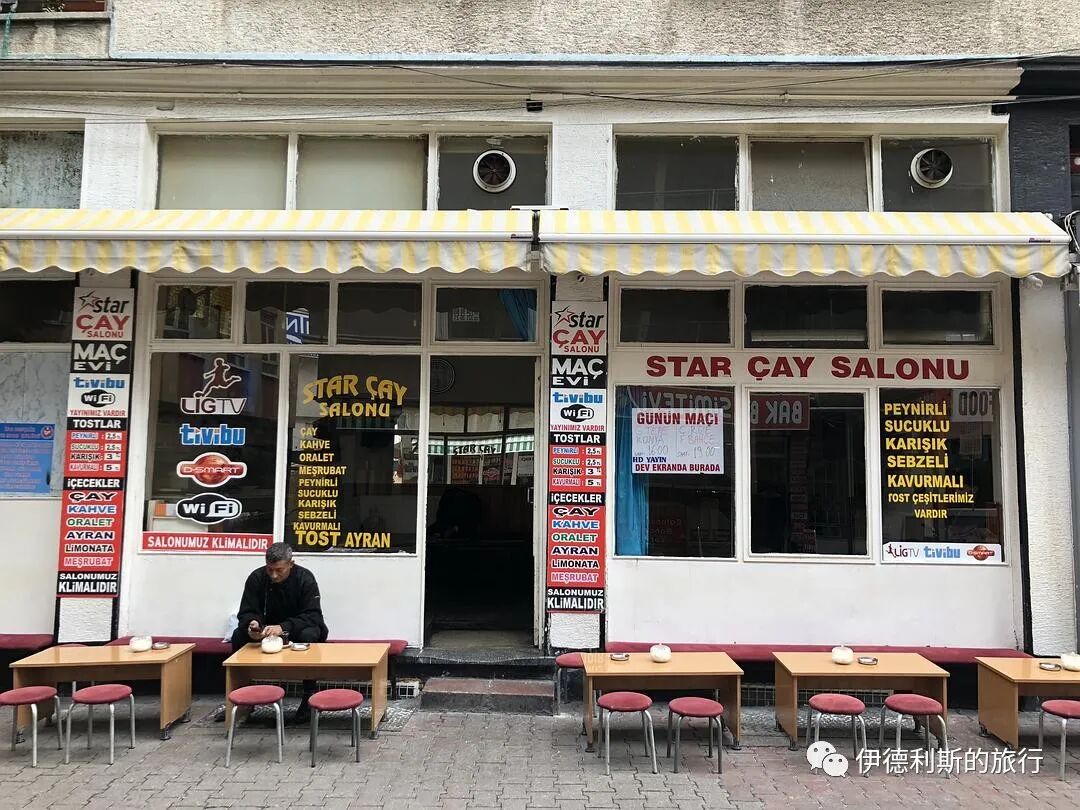
Konya has many street teahouses where people sit by the road chatting and drinking tea. It has a great atmosphere.
Bursa
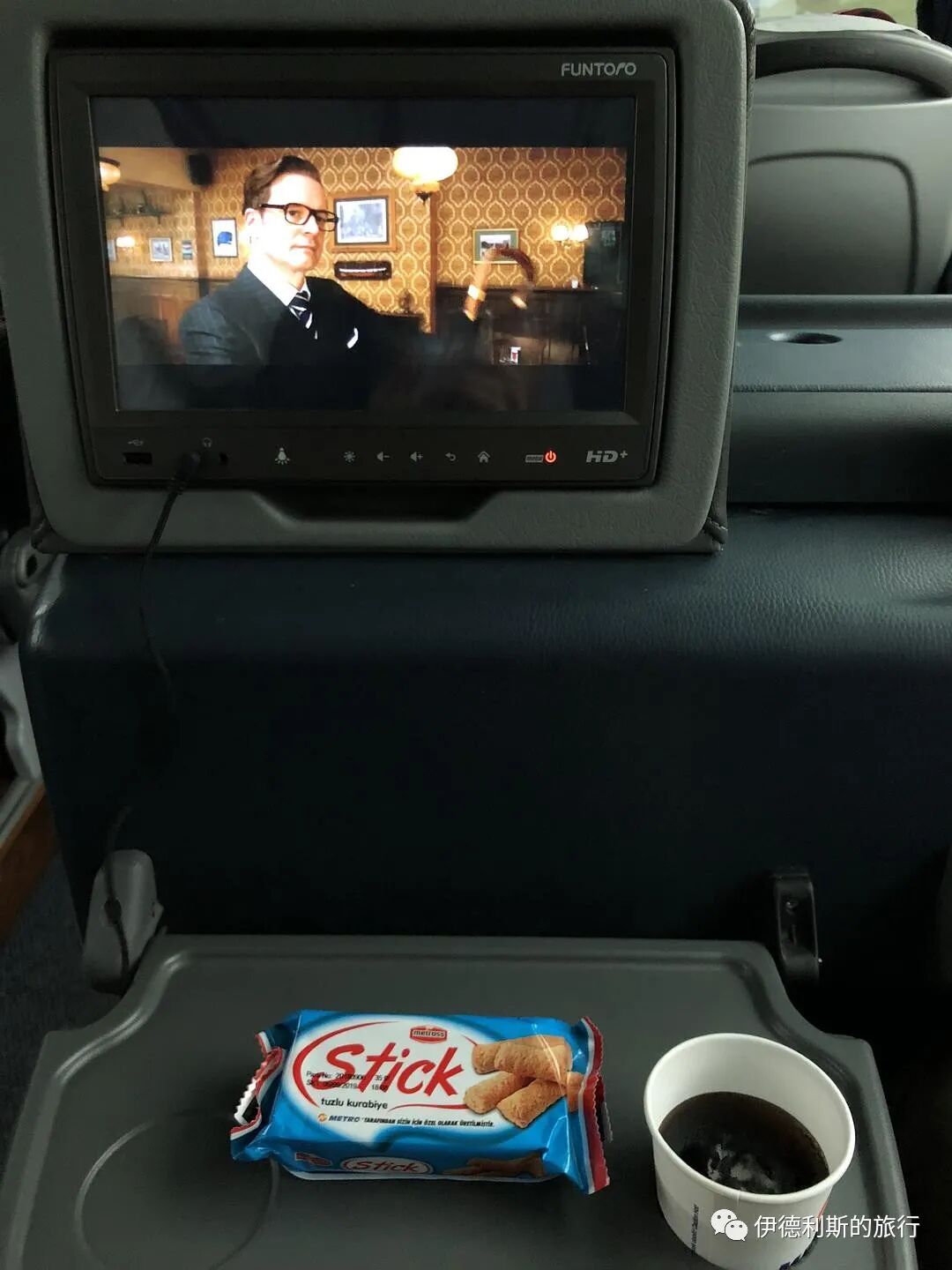
I flew back to Istanbul from Konya and then took a bus to Bursa. Turkish buses provide snacks and drinks, and the service is excellent.
When you come to Bursa, you must try Bursa-style grilled meat (İskender kebap). This dish adds yogurt and tomato sauce to the meat. It was the first food I encountered in Turkey that I could not fully adapt to. But their fermented grape juice (şıra) was super delicious!
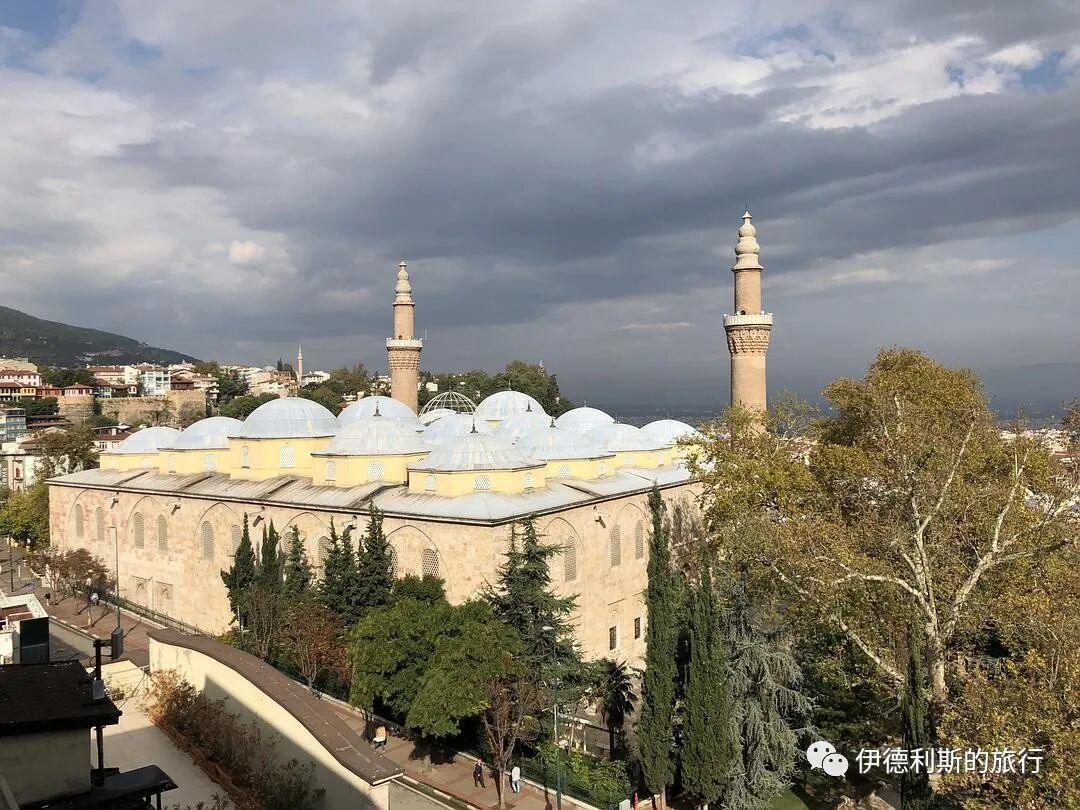
I had breakfast at the hotel, right across from the beautiful Great Mosque in Bursa.
The next day, I had a dish similar to Bursa-style grilled meat called meatball pita (pideli köfte), which just replaces the meat slices with meatballs.
For dinner, I had Turkish pizza (pide), which I really like because it is packed with toppings.
In front of a mosque in Bursa, there was an elderly man selling a pastry called Damascus dessert (Şam tatlısı) for one lira each. It is said to have a very long history.
I took a boat from Bursa across the Sea of Marmara back to Istanbul.
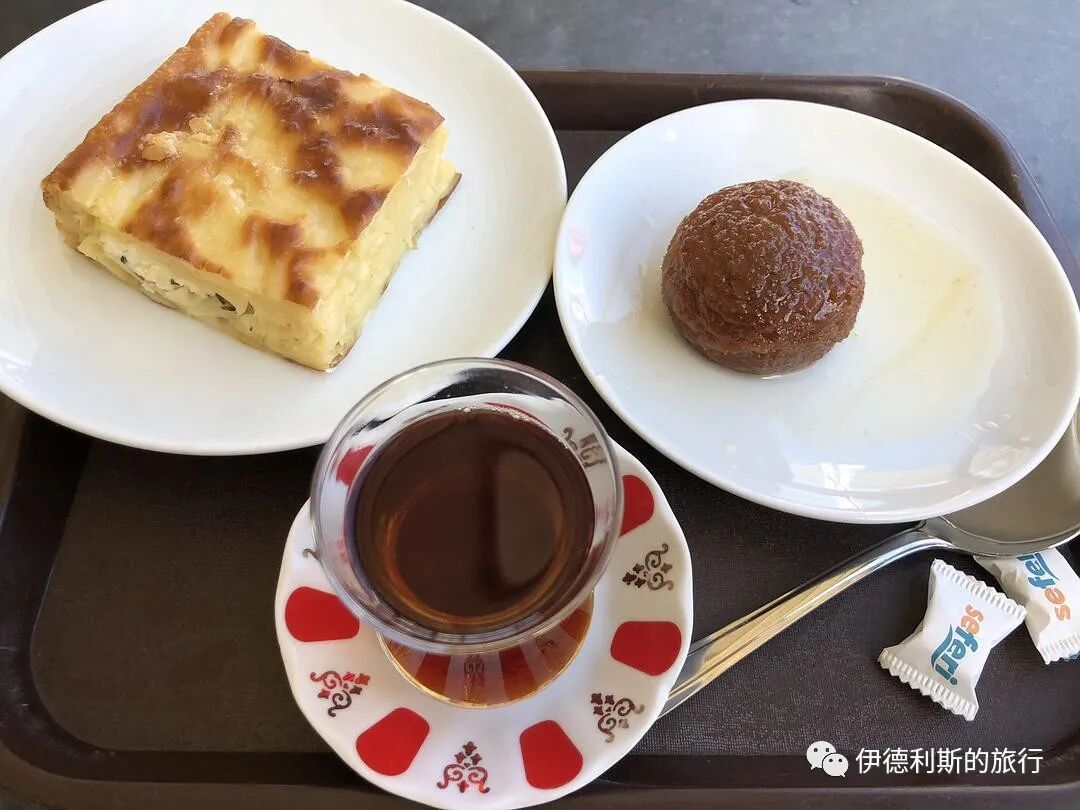
I had dessert while boarding the boat at the pier. view all
Summary: Halal Food Guide: Edirne, Bursa and Konya — Turkish Muslim Food is presented here as a firsthand travel account in clear English, beginning with this scene: In the autumn of 2018, I visited several cities in Turkey. Edirne is in the far northwest on the border with Greece and Bulgaria, and Bursa is south of Istanbul across the Sea of Marmara. The account keeps its focus on Turkey Halal Food, Edirne Travel, Konya Food while preserving the names, places, food, and historical details from the Chinese source.
In the autumn of 2018, I visited several cities in Turkey. Edirne is in the far northwest on the border with Greece and Bulgaria, and Bursa is south of Istanbul across the Sea of Marmara. Both cities were once capitals of the Ottoman Empire. There is also the ancient city of Konya on the Anatolian plateau, which was the capital of the Sultanate of Rum and the birthplace of the Sufi whirling dervishes.
Edirne
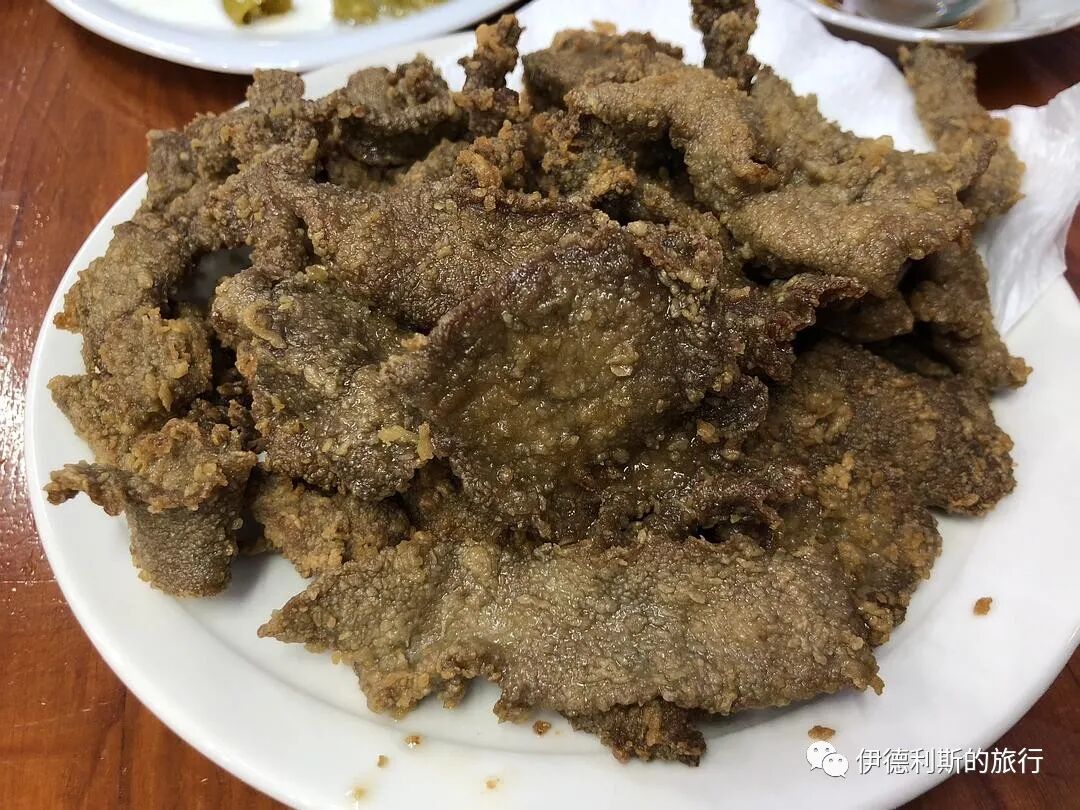
When you come to Edirne, you must try the local specialty, fried liver (ciğercisi). It is very satisfying when served with yogurt and spicy sauce.
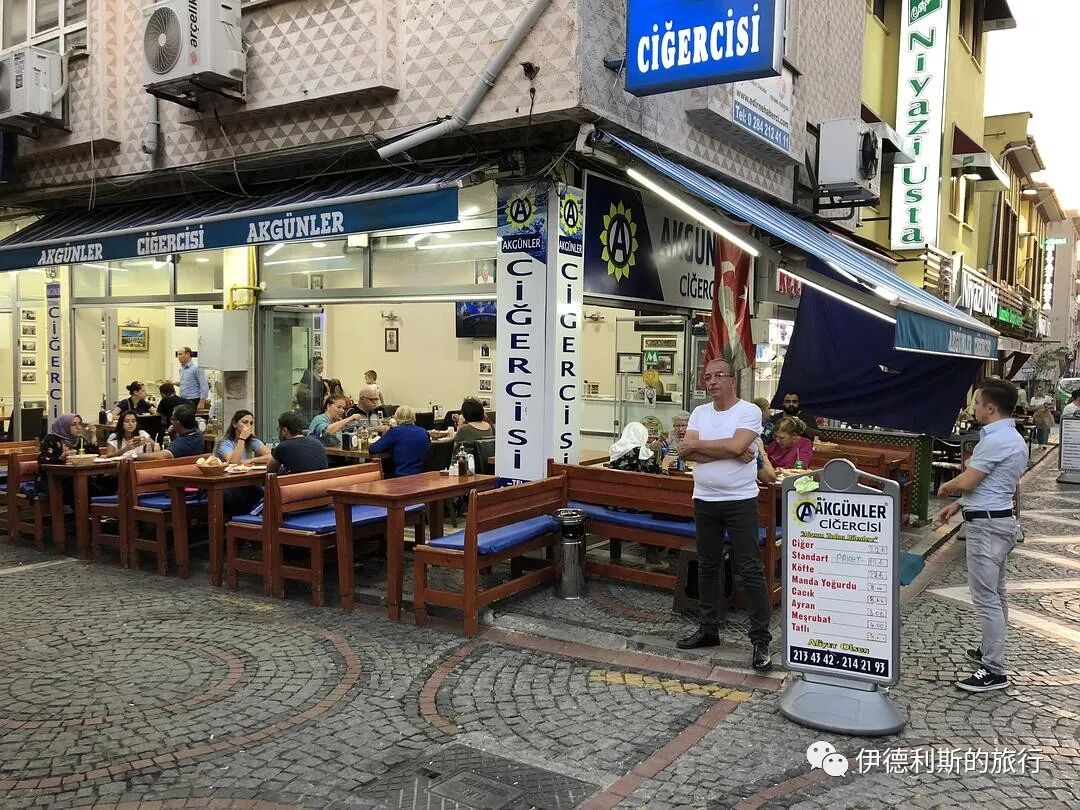
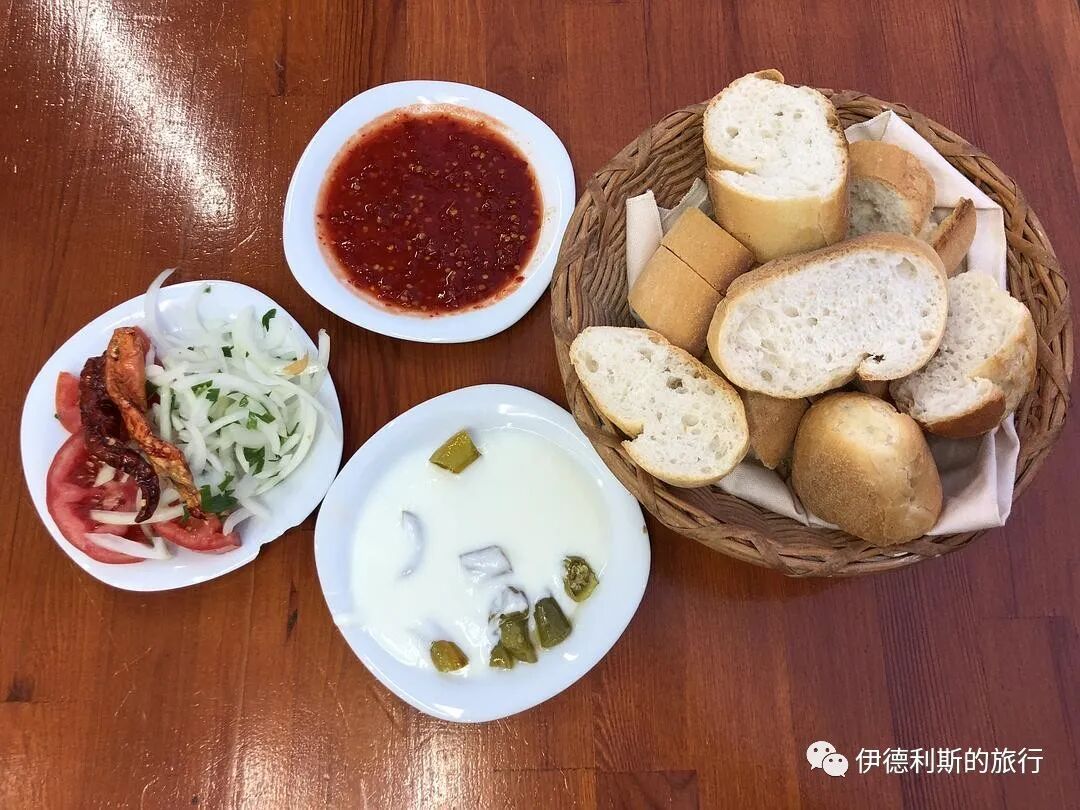
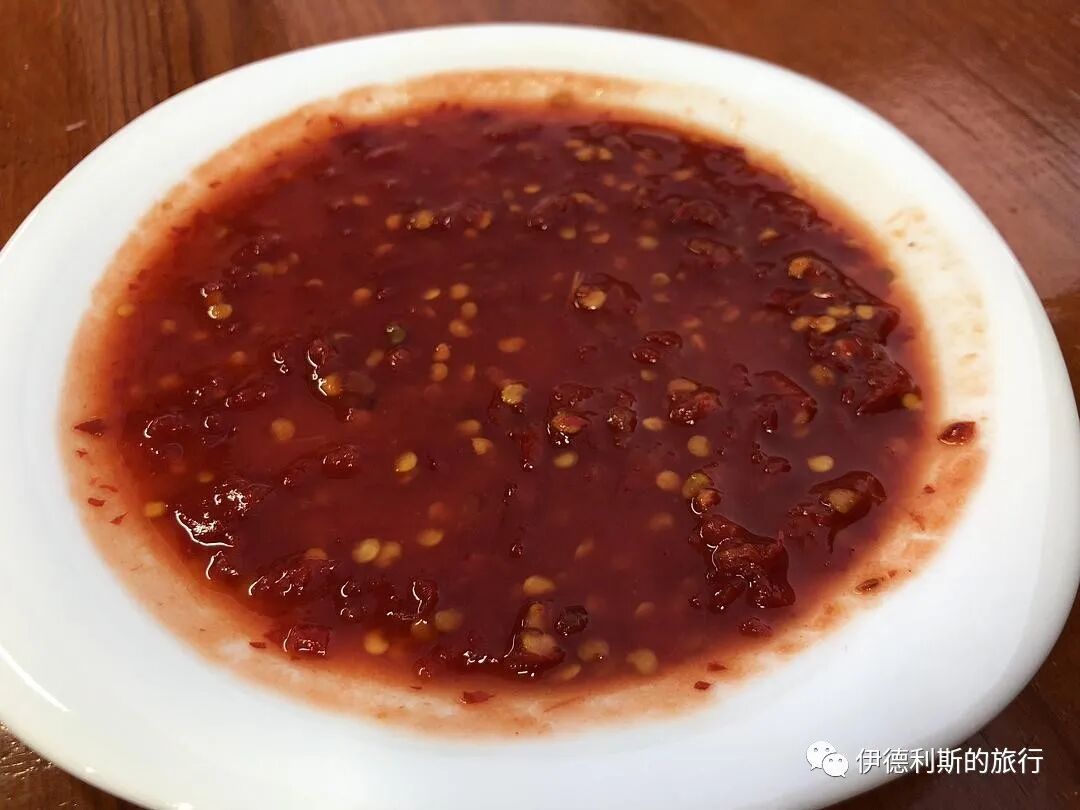
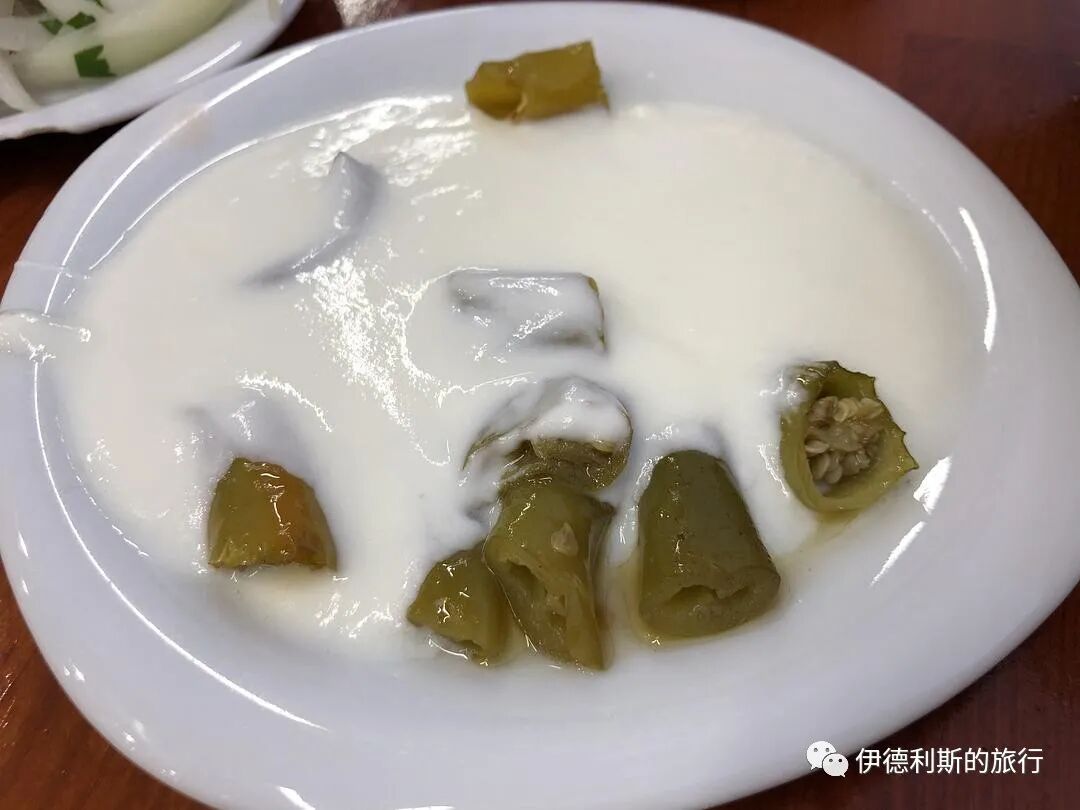
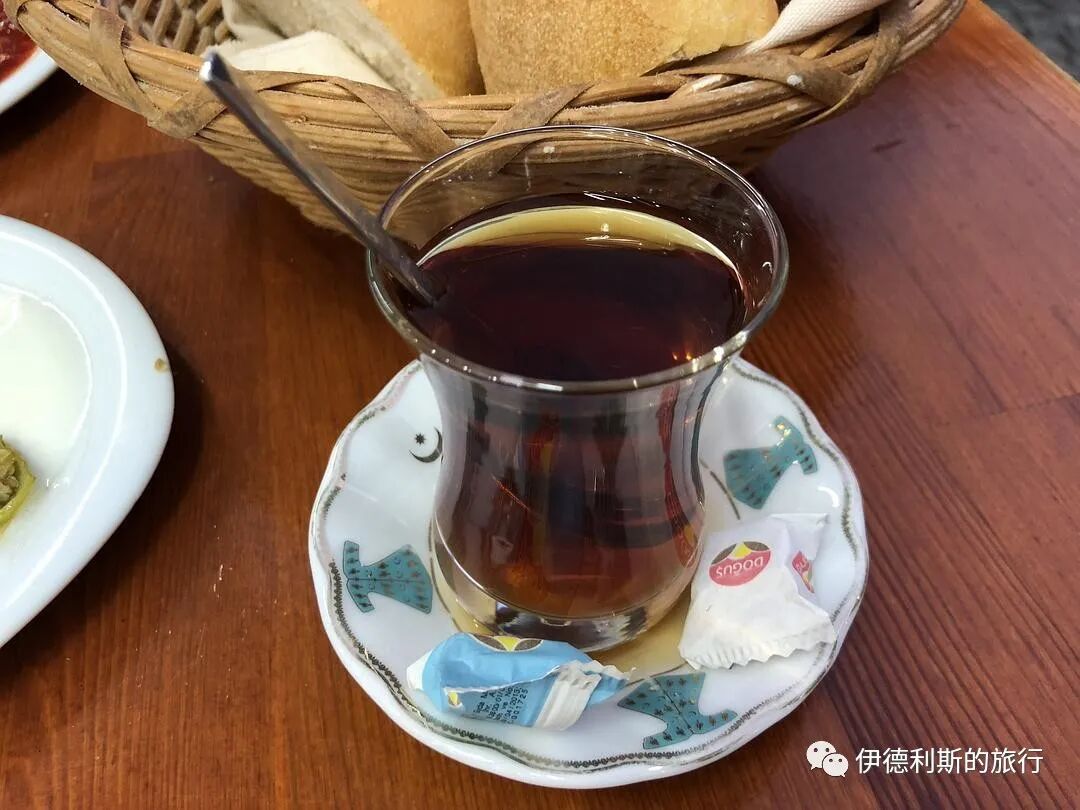
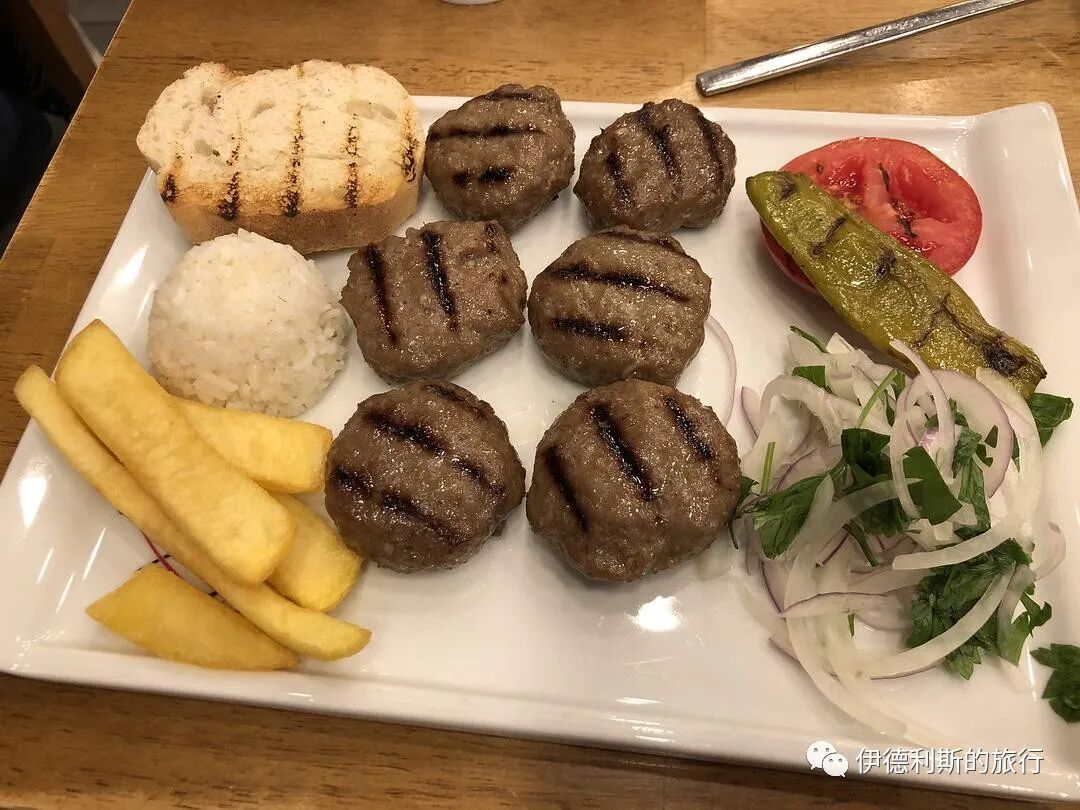
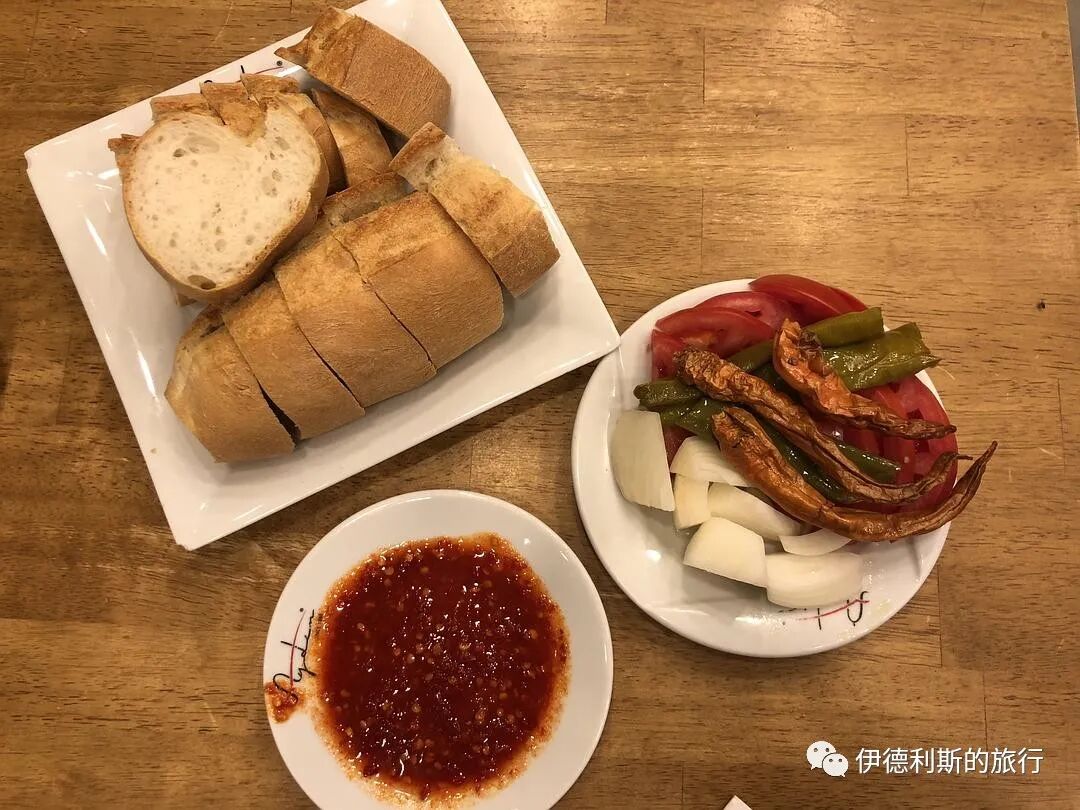
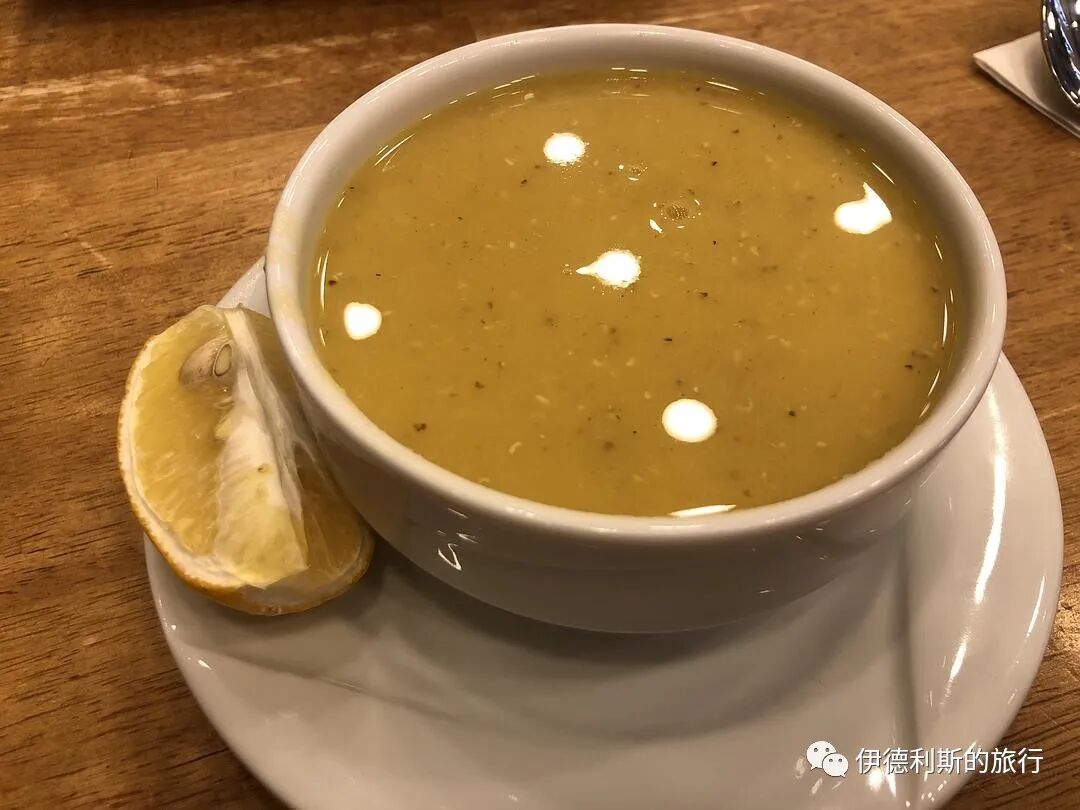
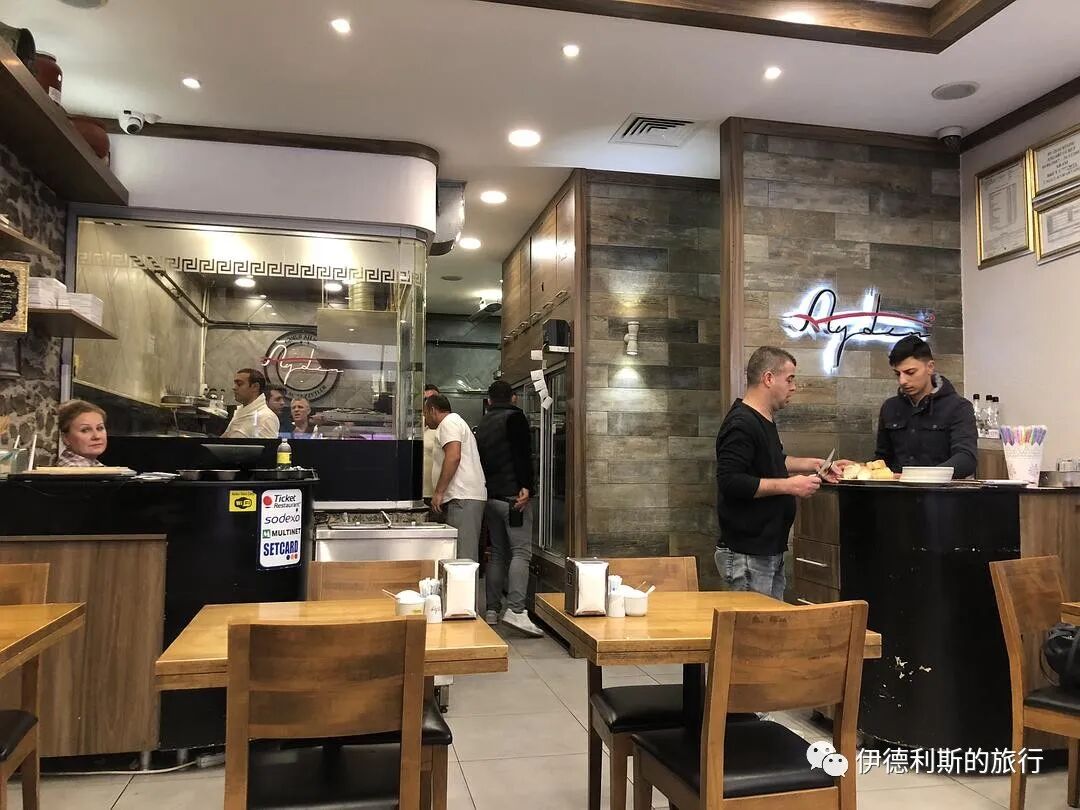
For lunch in Edirne, I had grilled sausage meatballs (sucuk köfte) and lentil soup (mercimek çorbası). A cold wind was blowing across the entire Balkan Peninsula those days, so drinking hot lentil soup felt great.
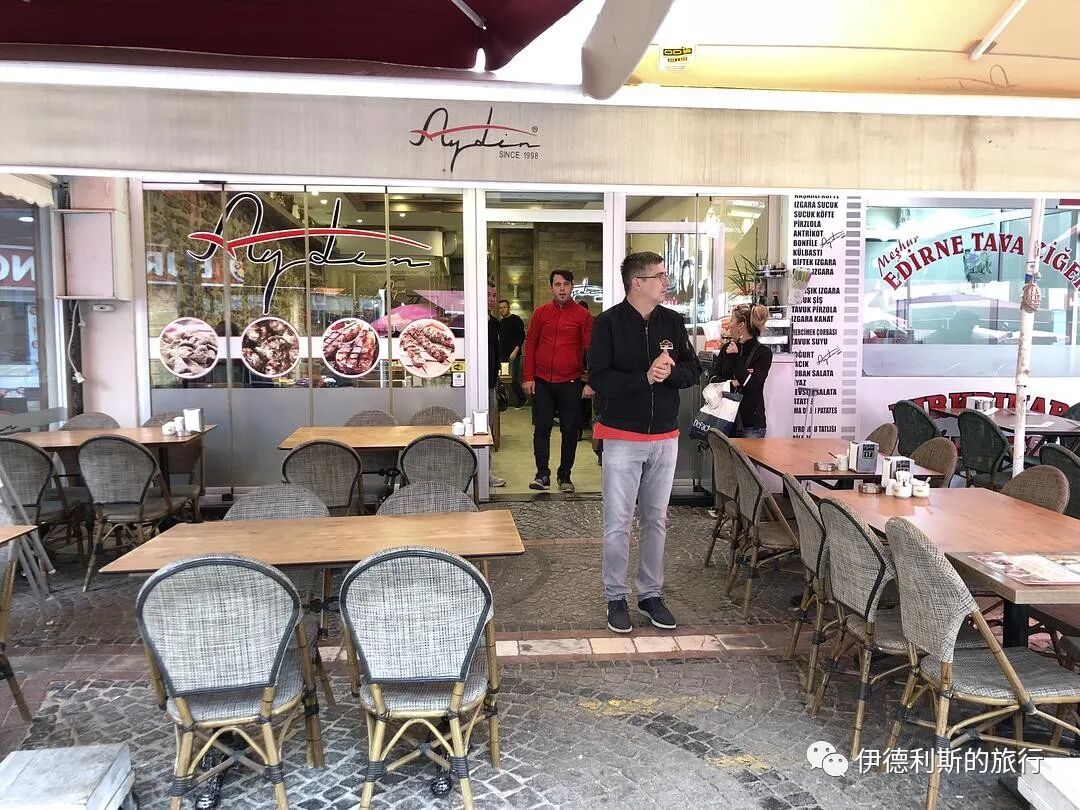
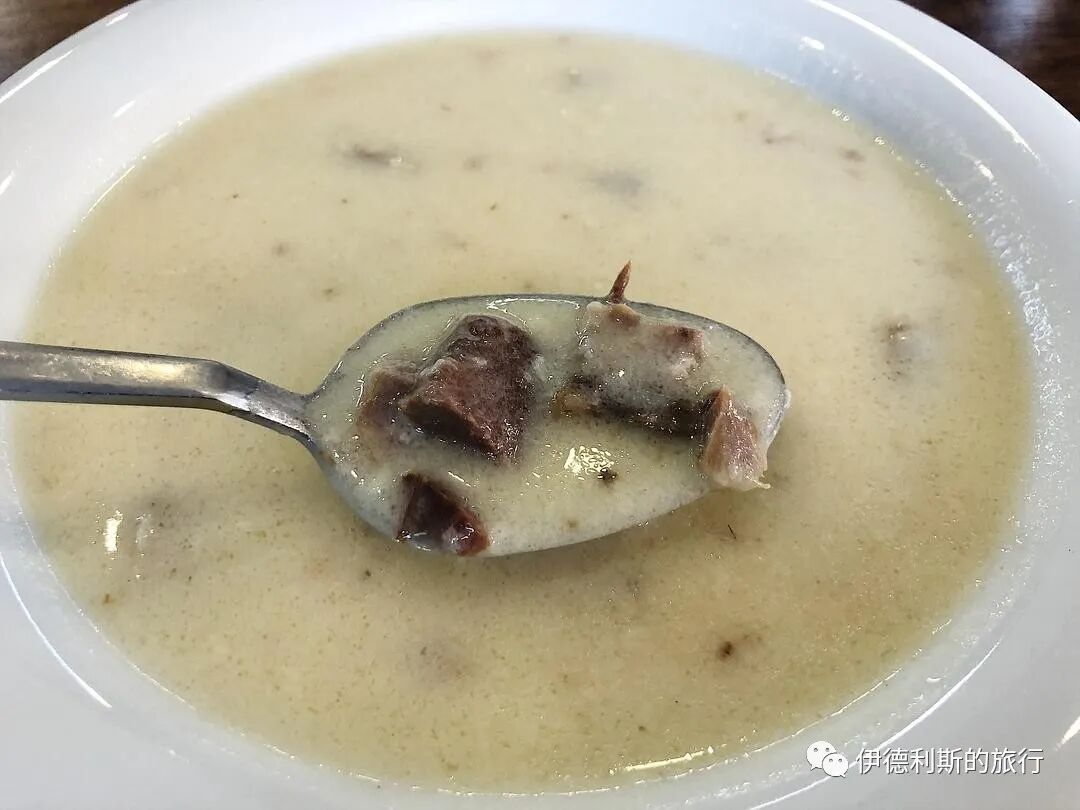
For dinner in Edirne, I had minced meat pie (kıymalı pide) and a rich soup made from sheep head and trotters (kelle paça). This soup was especially delicious.
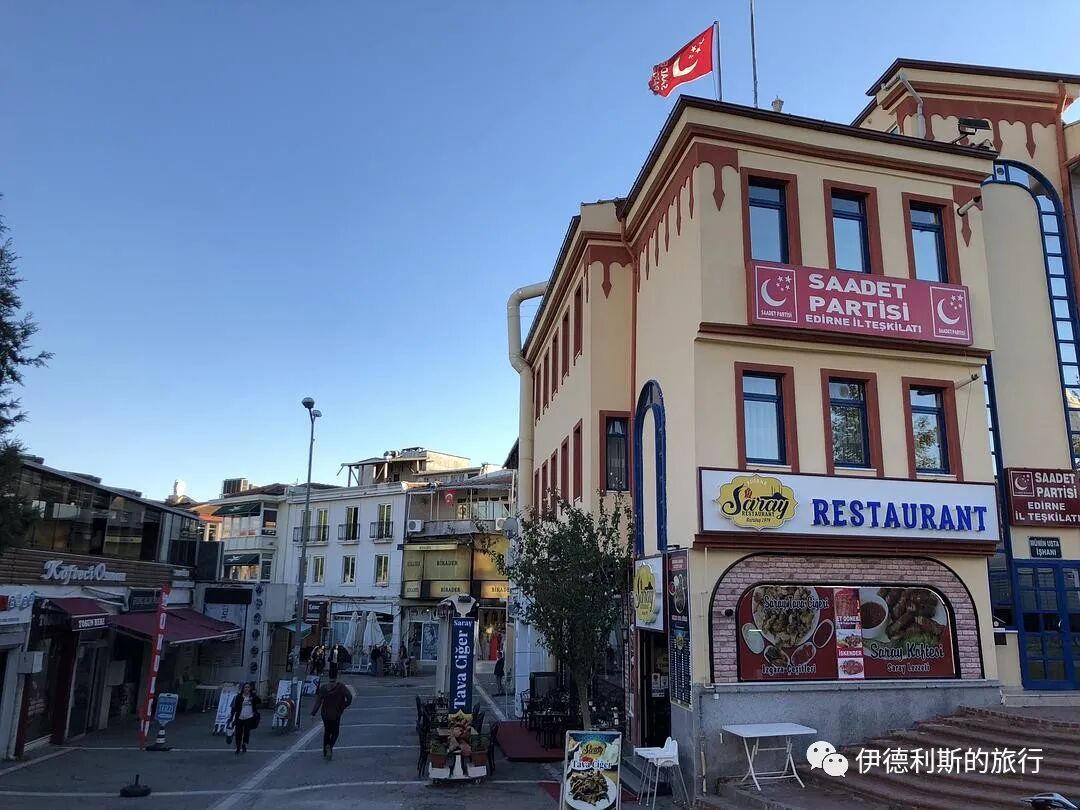
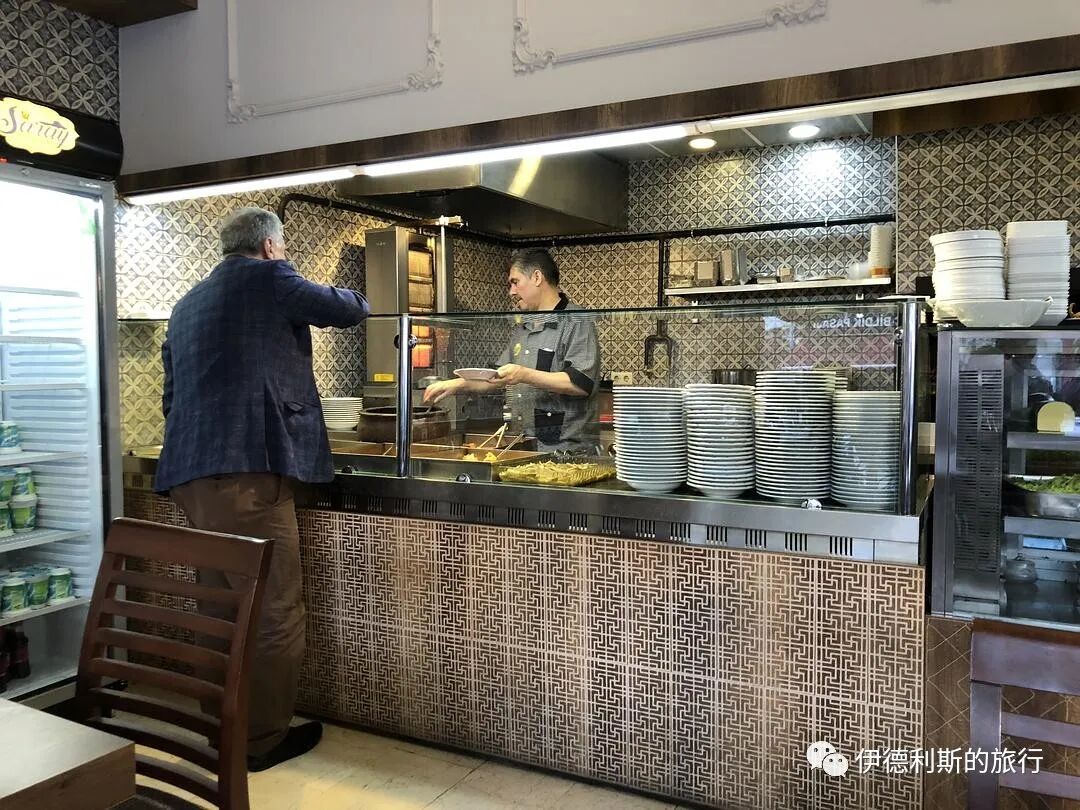
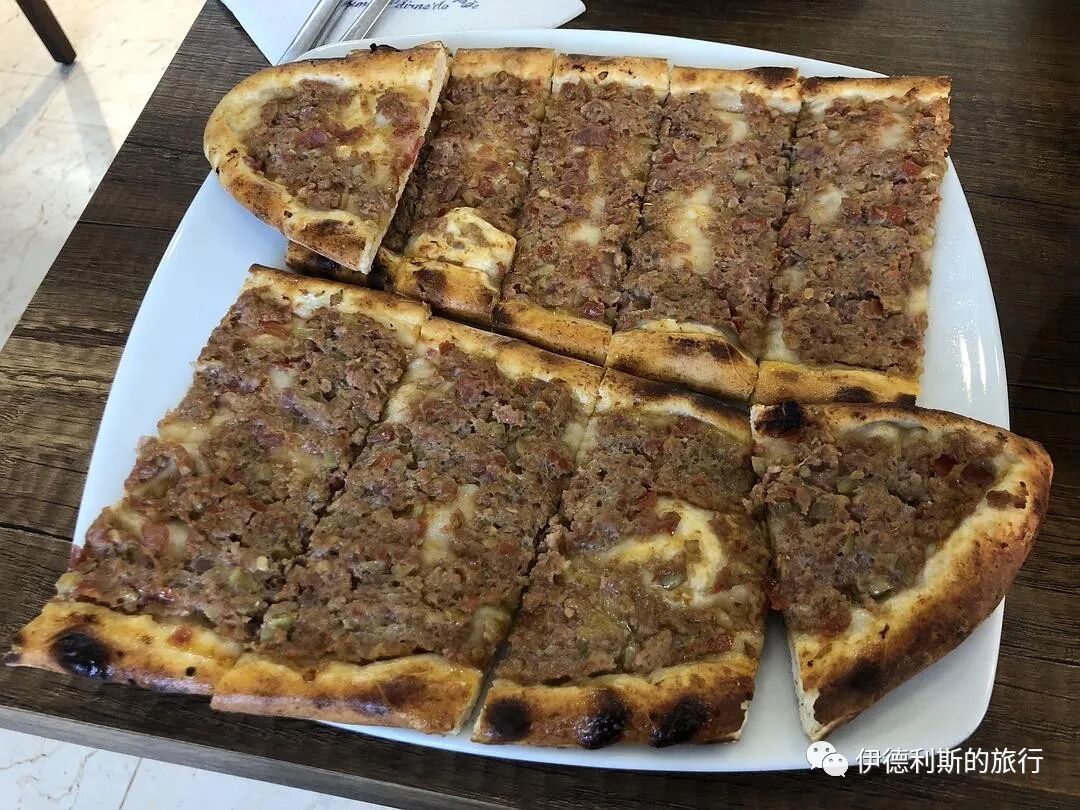
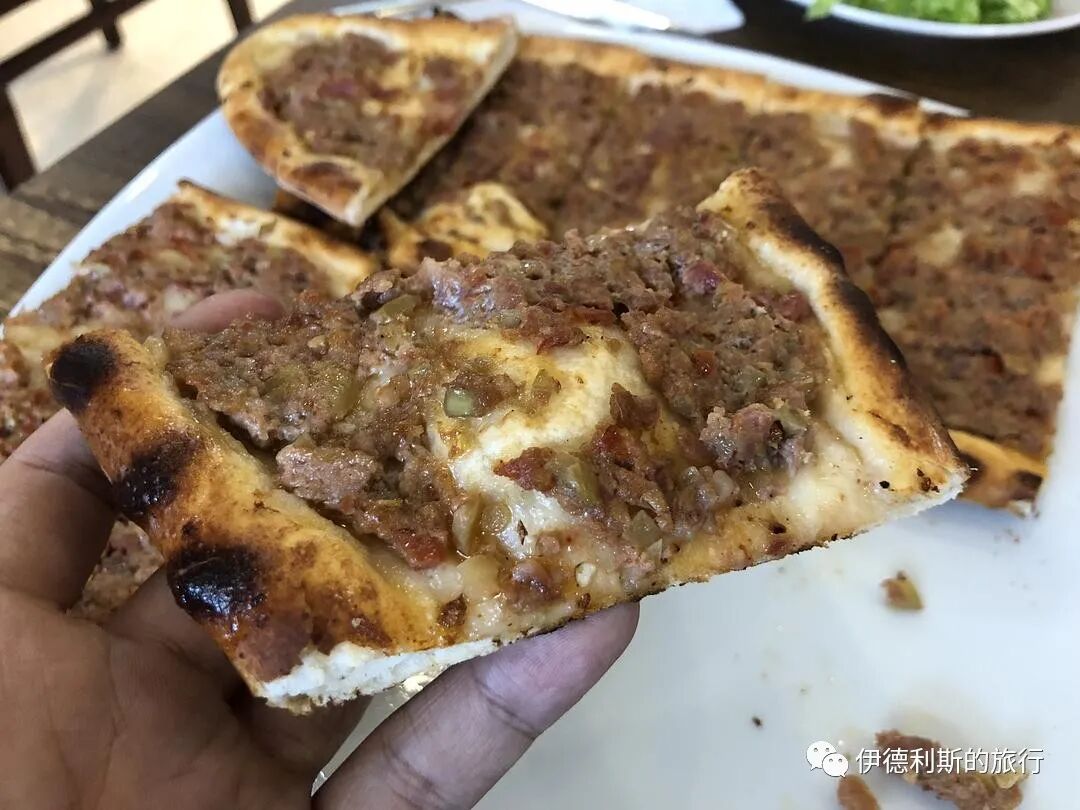
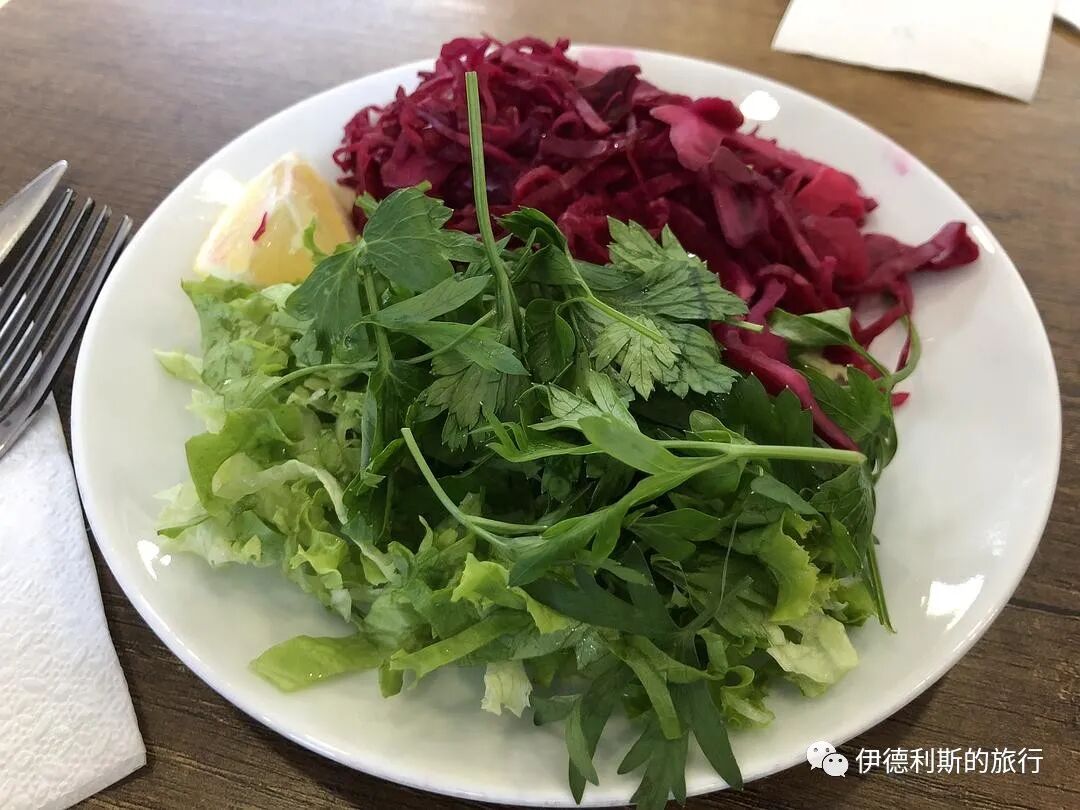
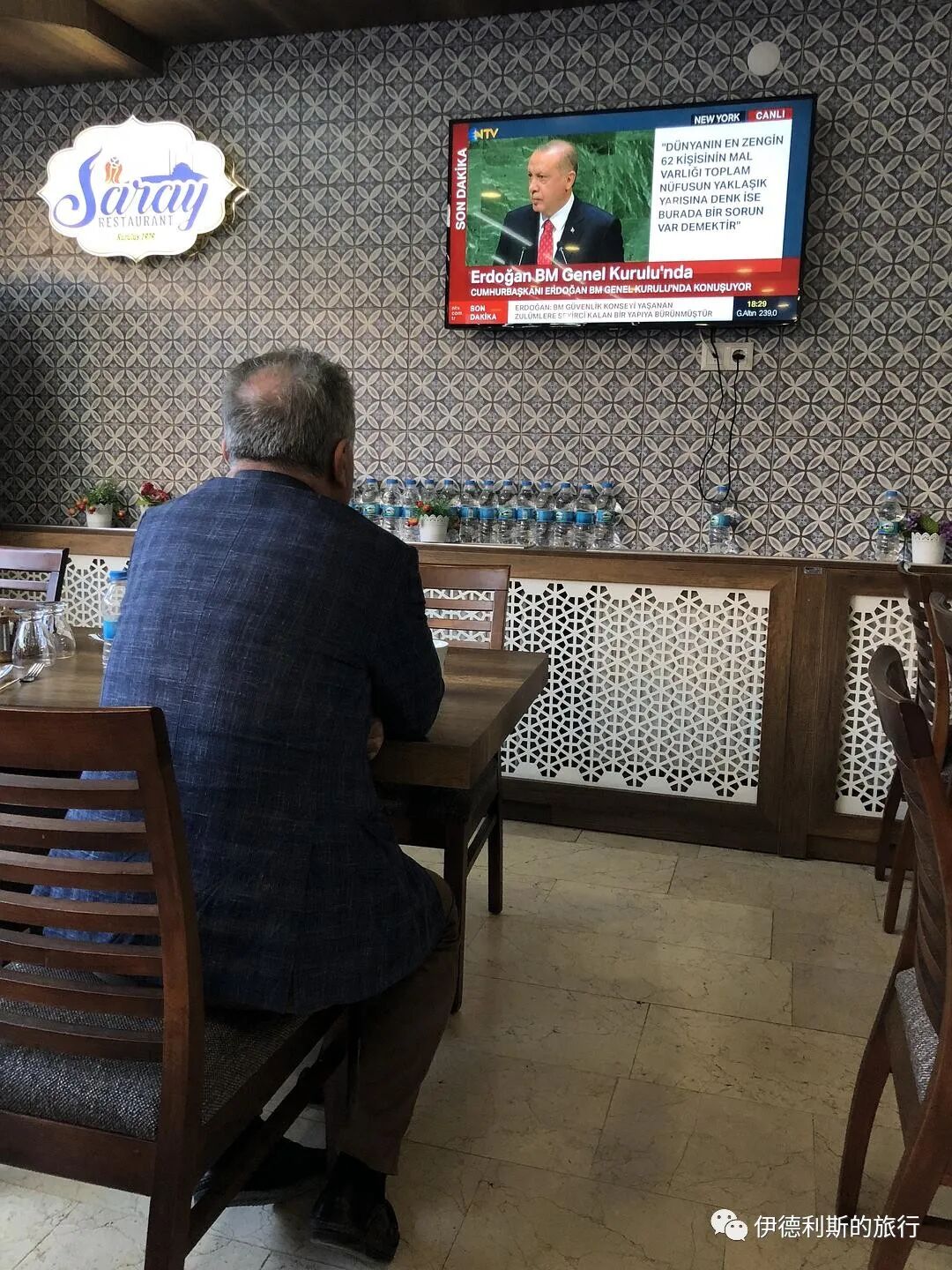
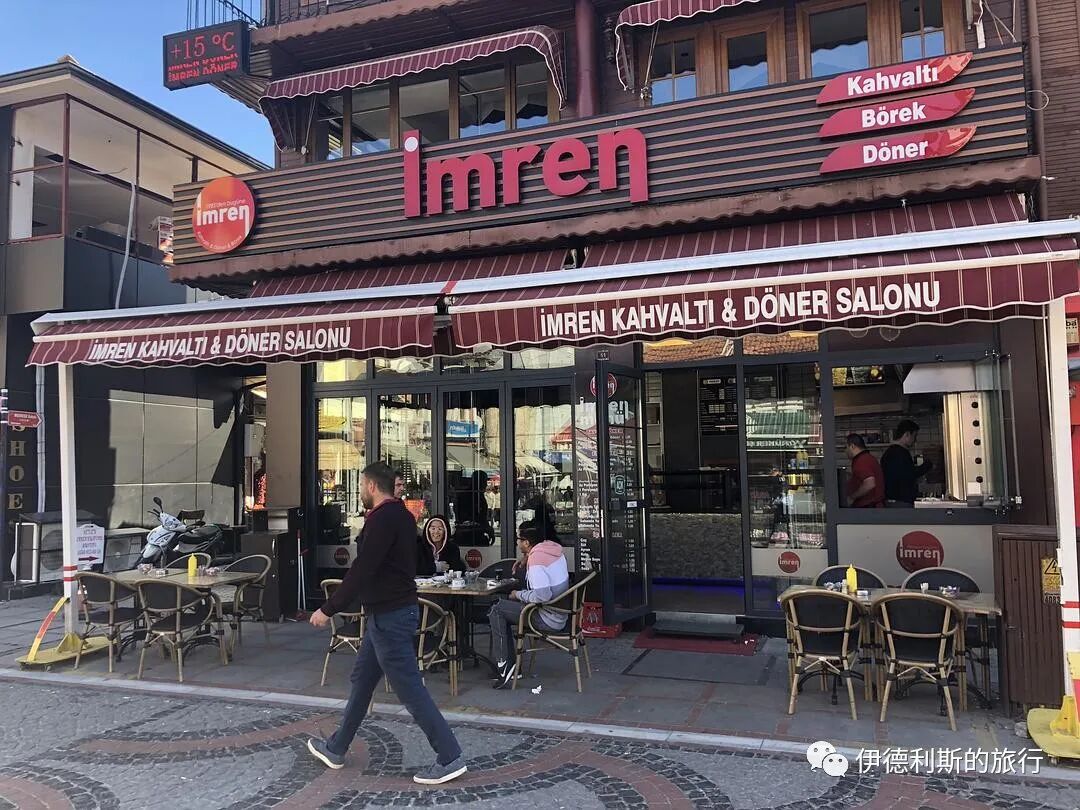
The next morning in Edirne, I had a stuffed pastry (börek). I chose the meat filling, and it cost 6 lira a plate. It was quite tasty. Then there was the breakfast set, a plate of very healthy food.
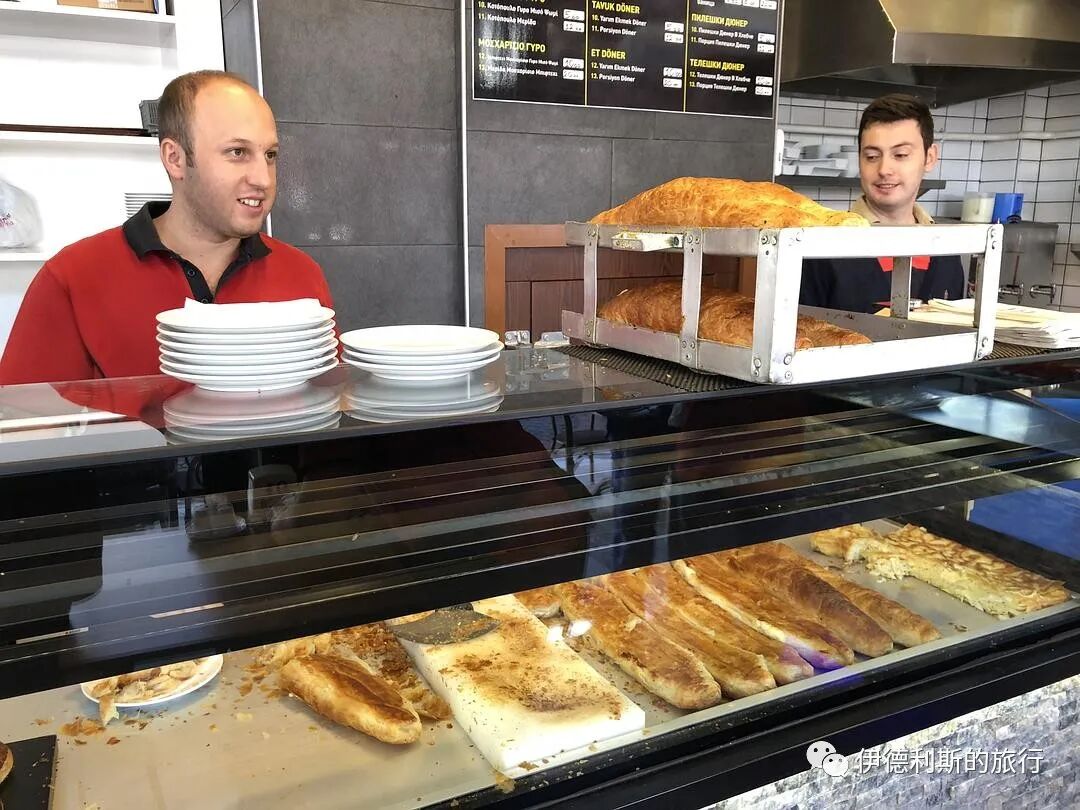
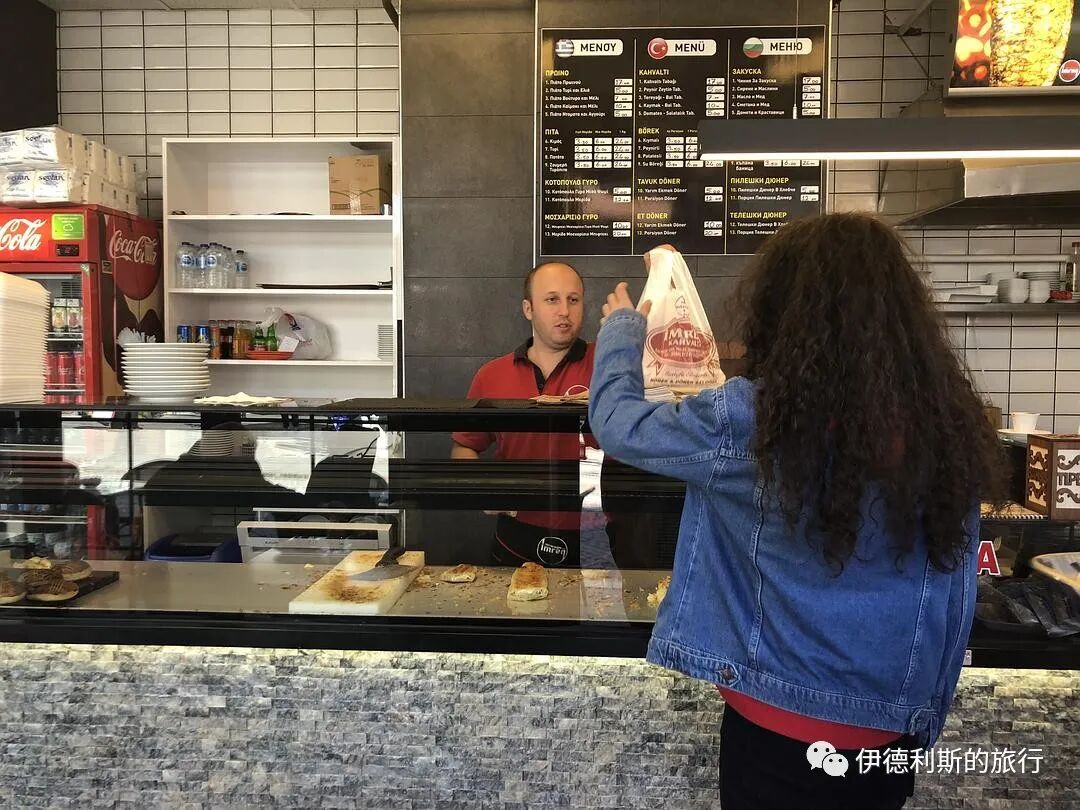
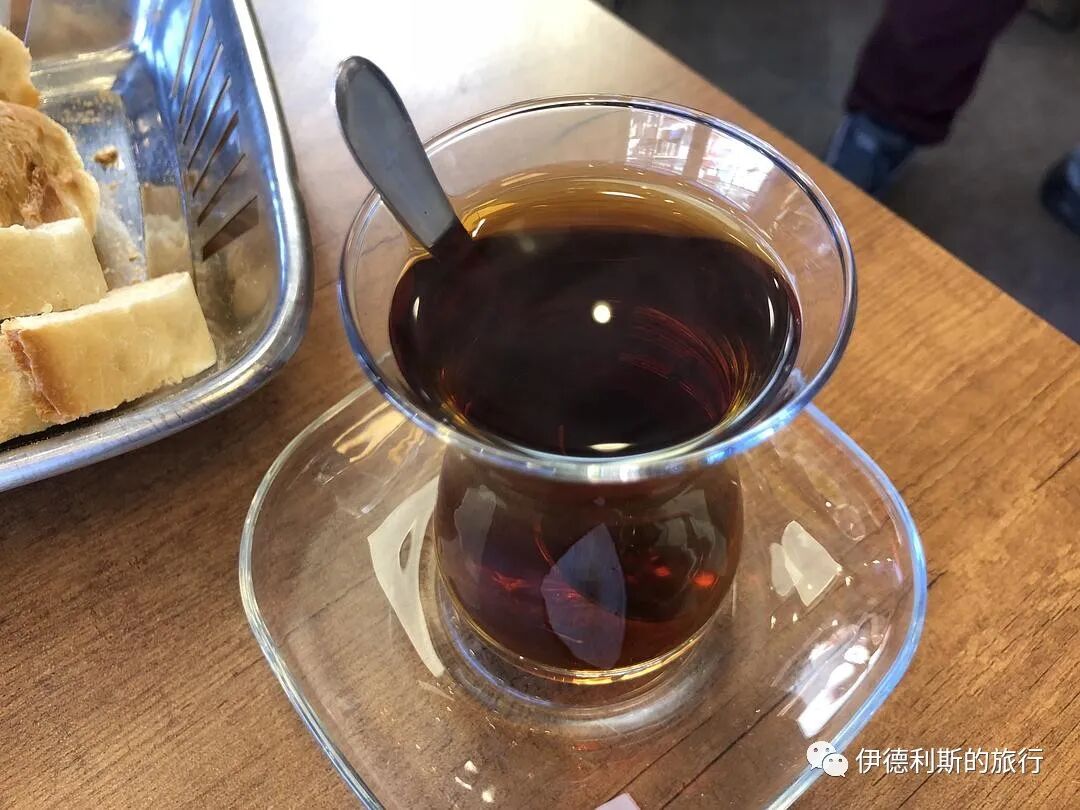
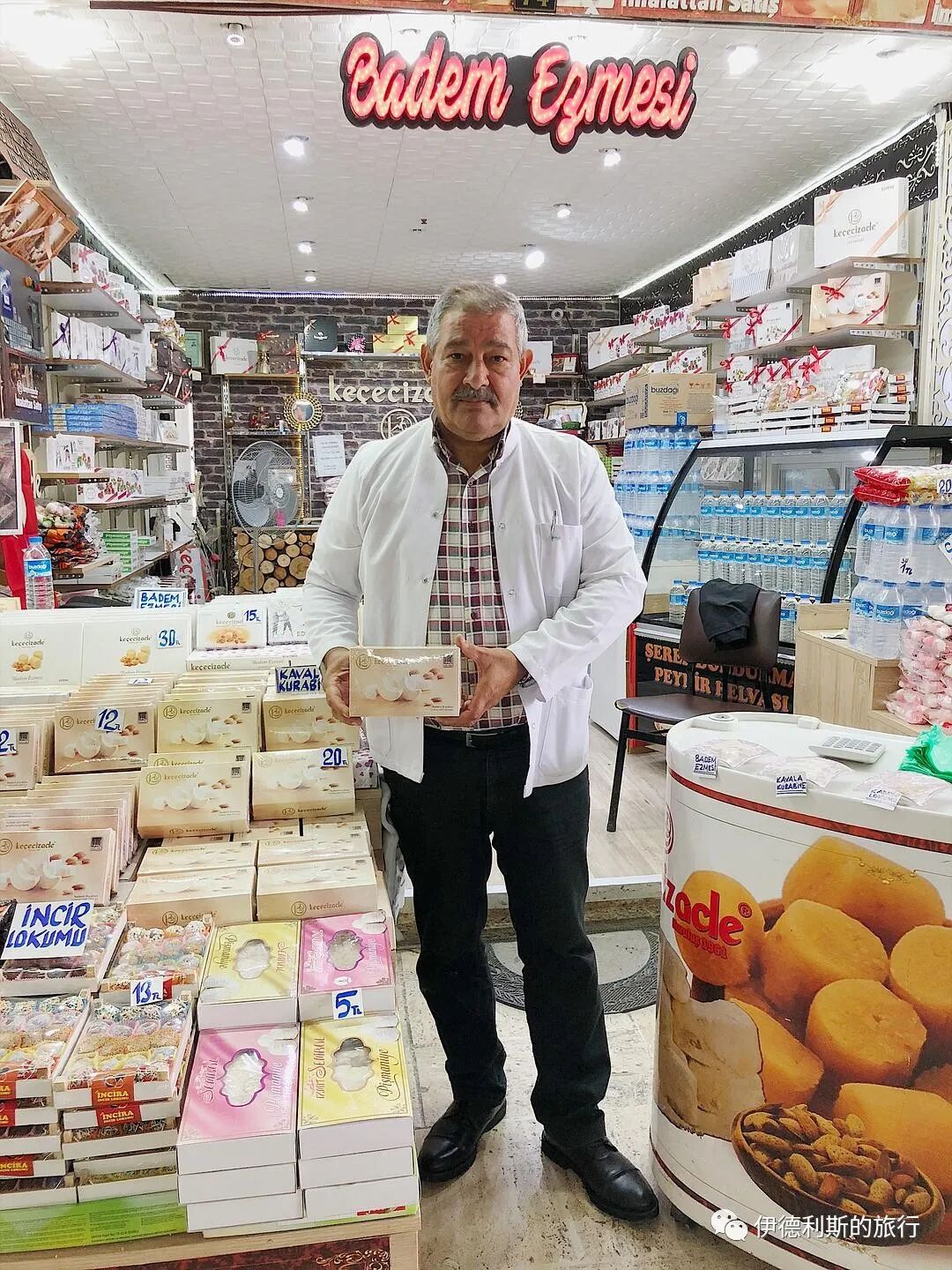
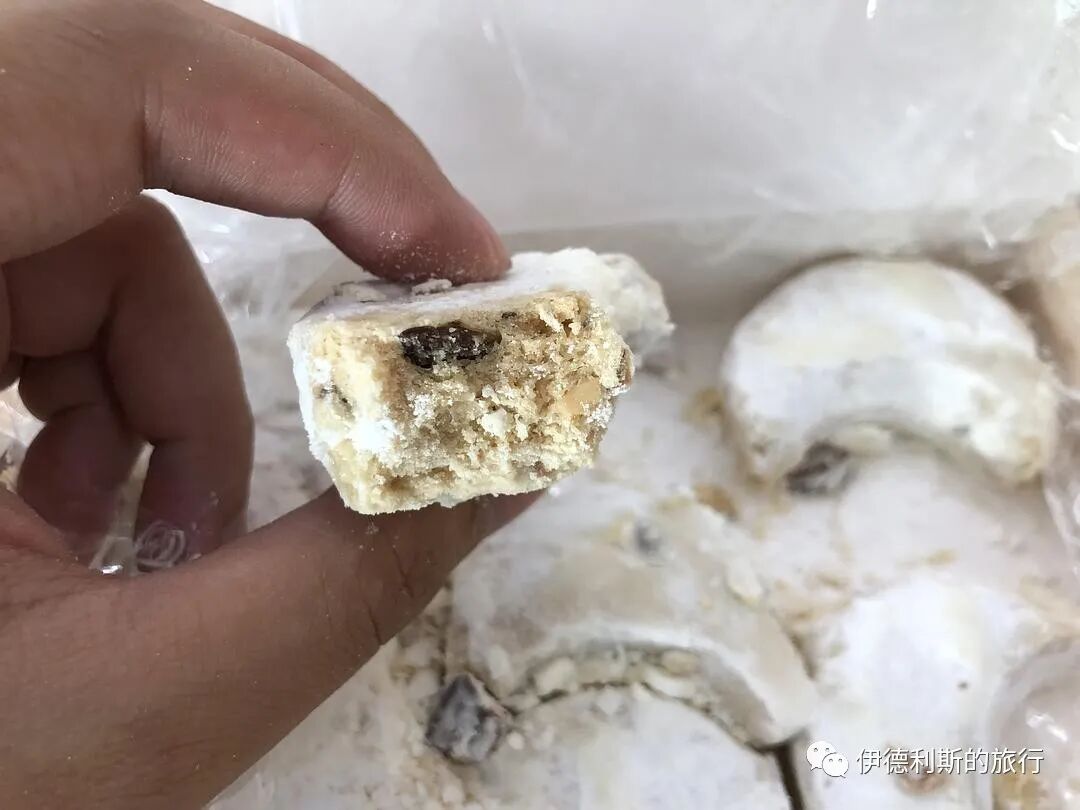
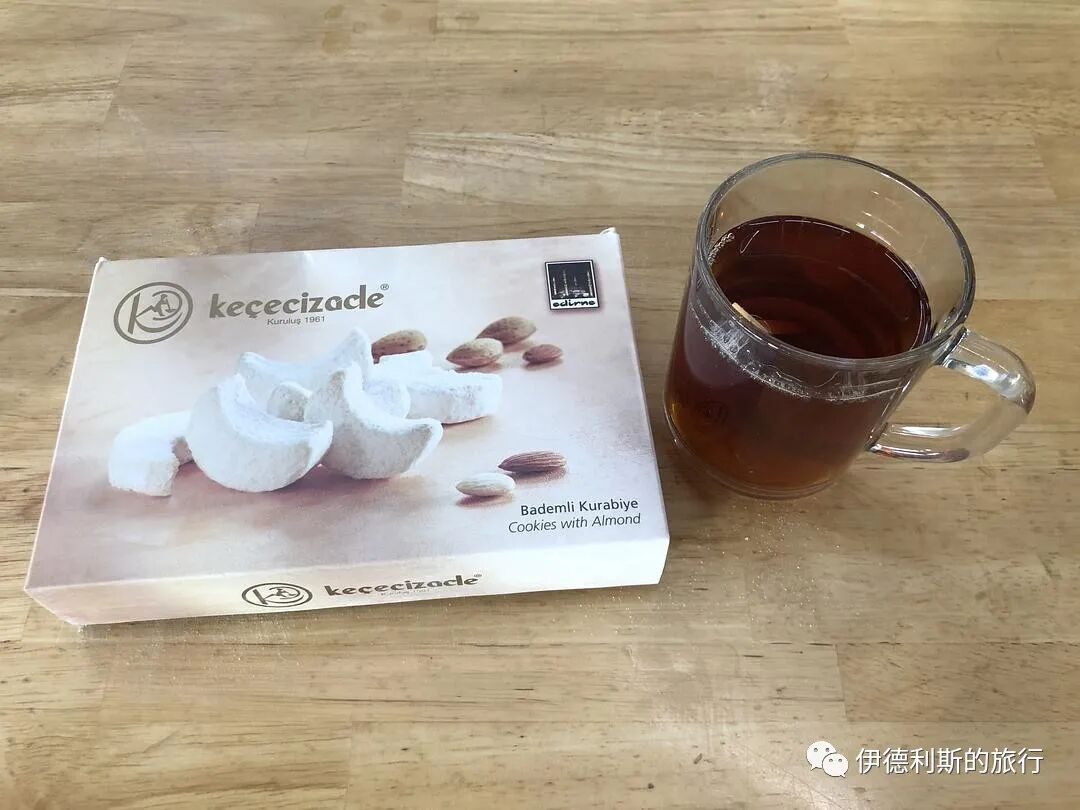
At the bazaar in Edirne, I bought the local specialty, crescent-shaped almond cookies (Kavala kurabiyesi). Kavala is now an important seaport in northern Greece, and it was ruled by the Ottoman Empire from 1371 to 1913. During the 1922 population exchange between Turkey and Greece, tens of thousands of Turks left Kavala to settle in Edirne, bringing this cookie with them. I have always been very interested in the Greek-Turkish population exchange. The hometowns left behind forever and the relationship between nations and ethnic groups hold so many stories.
Konya
In Konya, I had oven-roasted meat (fırın kebabı) and a dessert called between-the-layers (sac arası). This place is right across from the tomb of Rumi and is called Sufi Kebab.
I also drank the local Konya specialty, okra soup (bamya), which was very good.
Konya has many street teahouses where people sit by the road chatting and drinking tea. It has a great atmosphere.
Bursa
I flew back to Istanbul from Konya and then took a bus to Bursa. Turkish buses provide snacks and drinks, and the service is excellent.

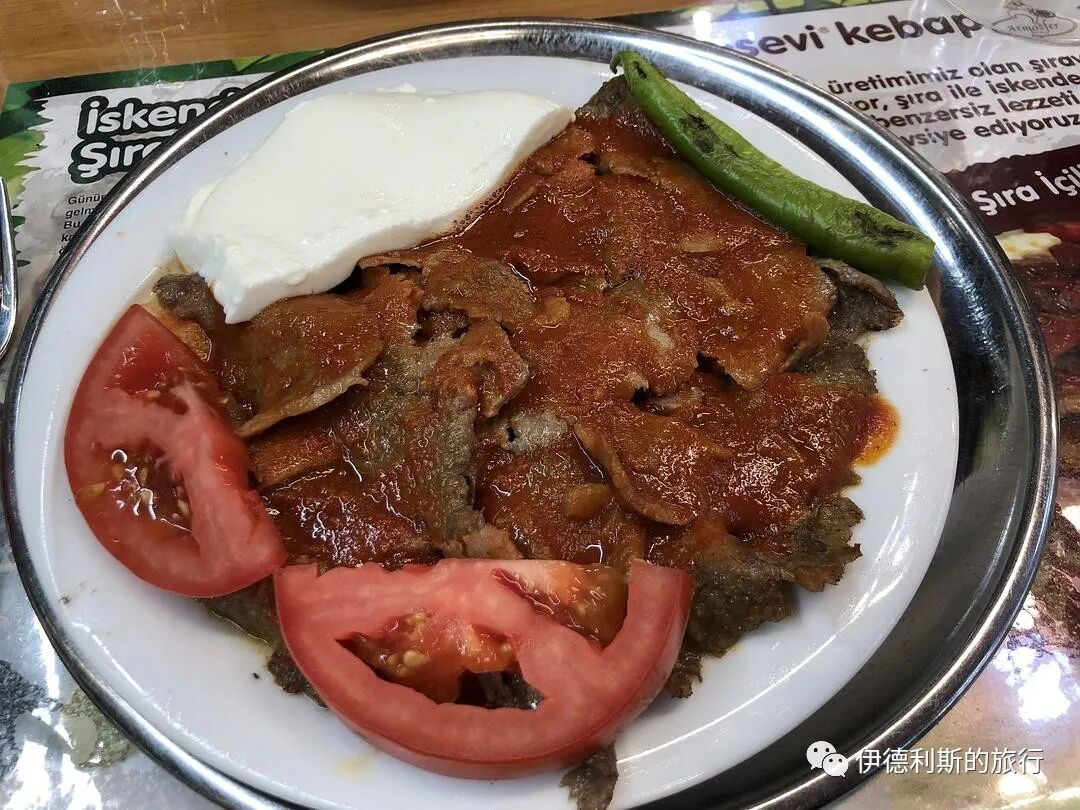
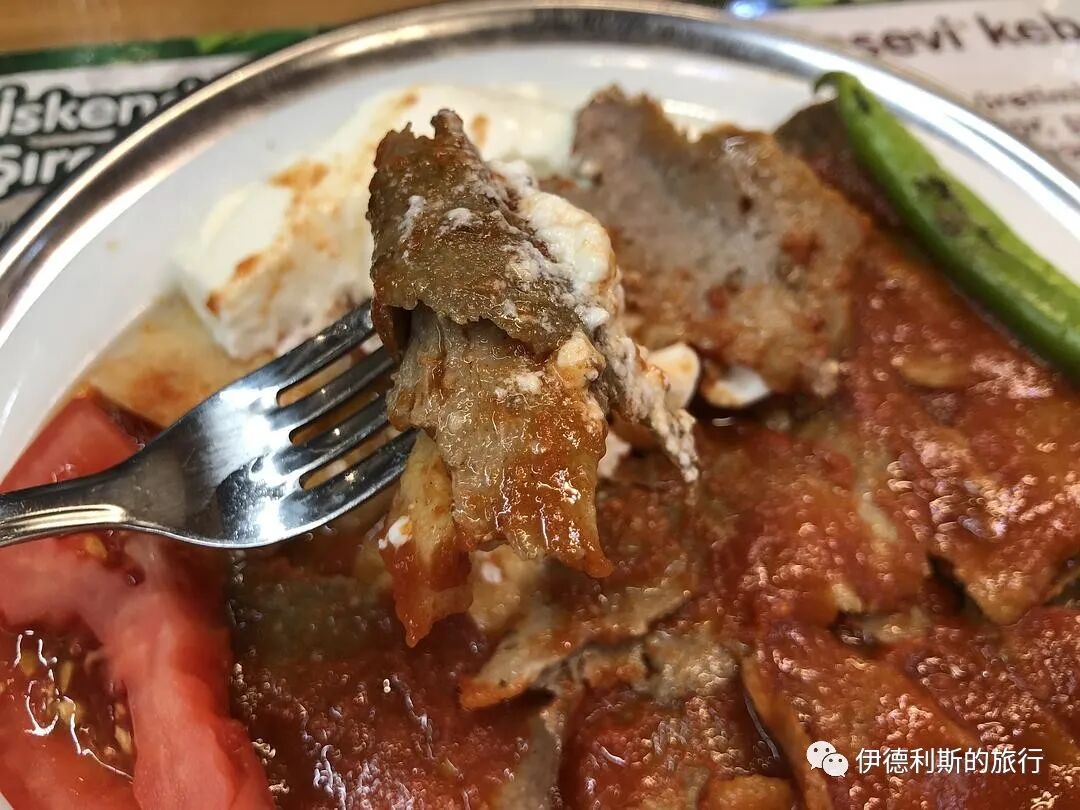
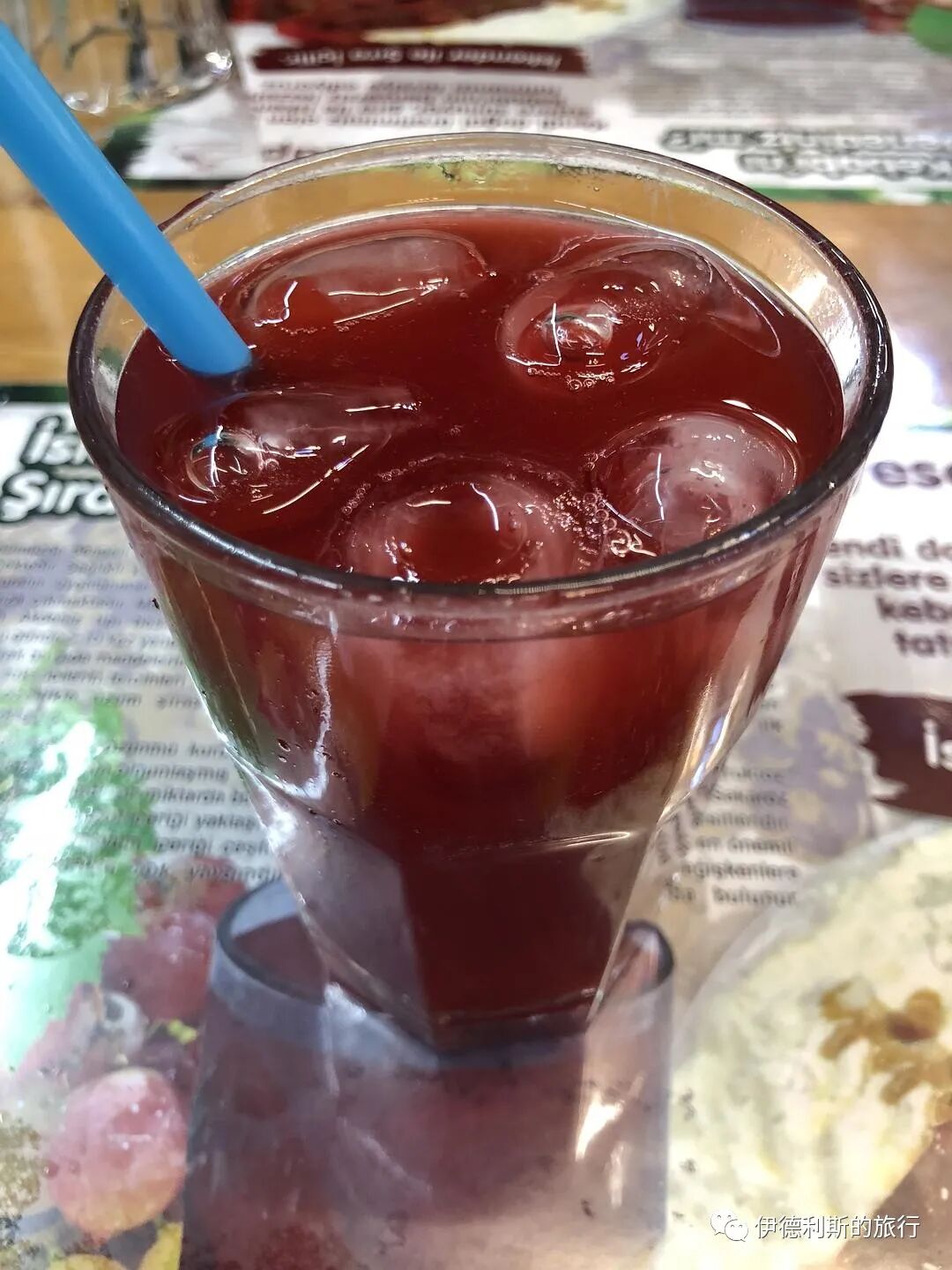
When you come to Bursa, you must try Bursa-style grilled meat (İskender kebap). This dish adds yogurt and tomato sauce to the meat. It was the first food I encountered in Turkey that I could not fully adapt to. But their fermented grape juice (şıra) was super delicious!
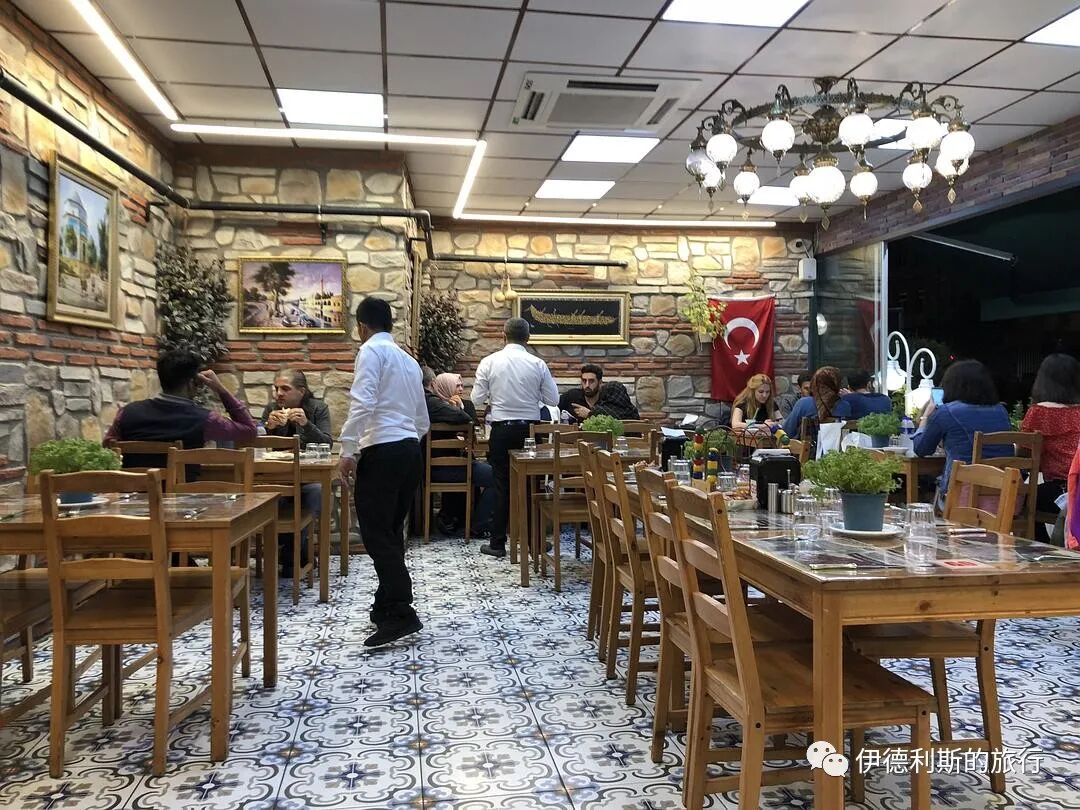
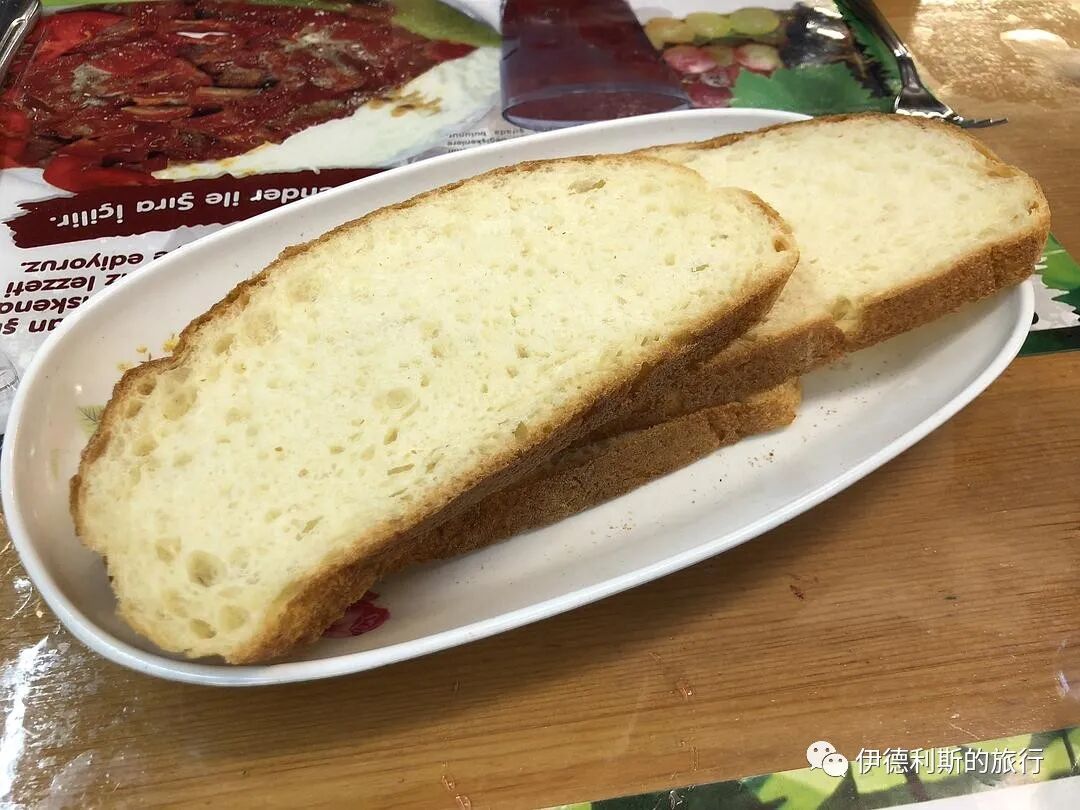
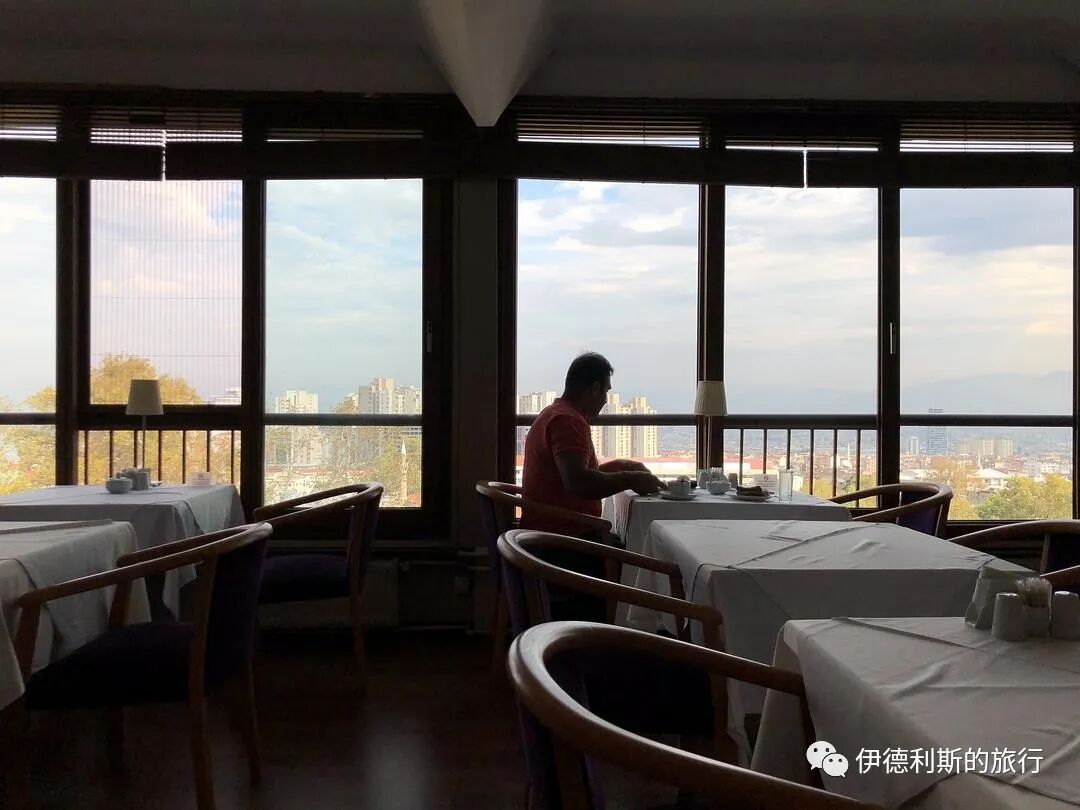
I had breakfast at the hotel, right across from the beautiful Great Mosque in Bursa.
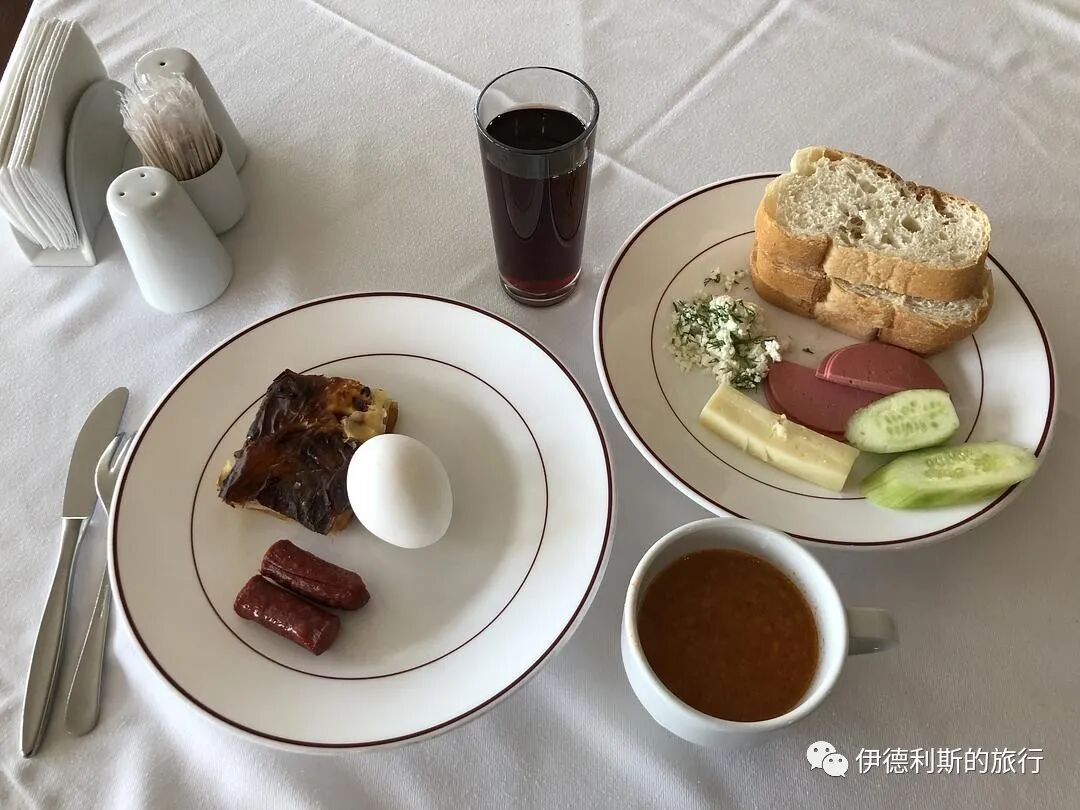
The next day, I had a dish similar to Bursa-style grilled meat called meatball pita (pideli köfte), which just replaces the meat slices with meatballs.
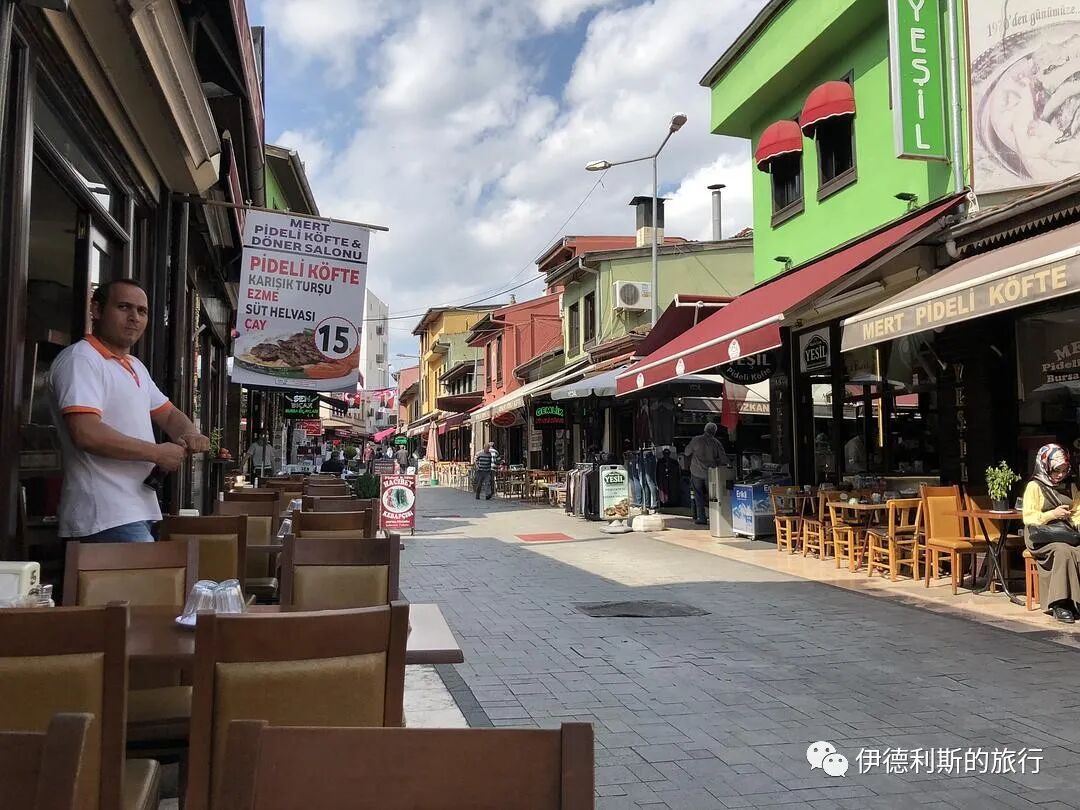
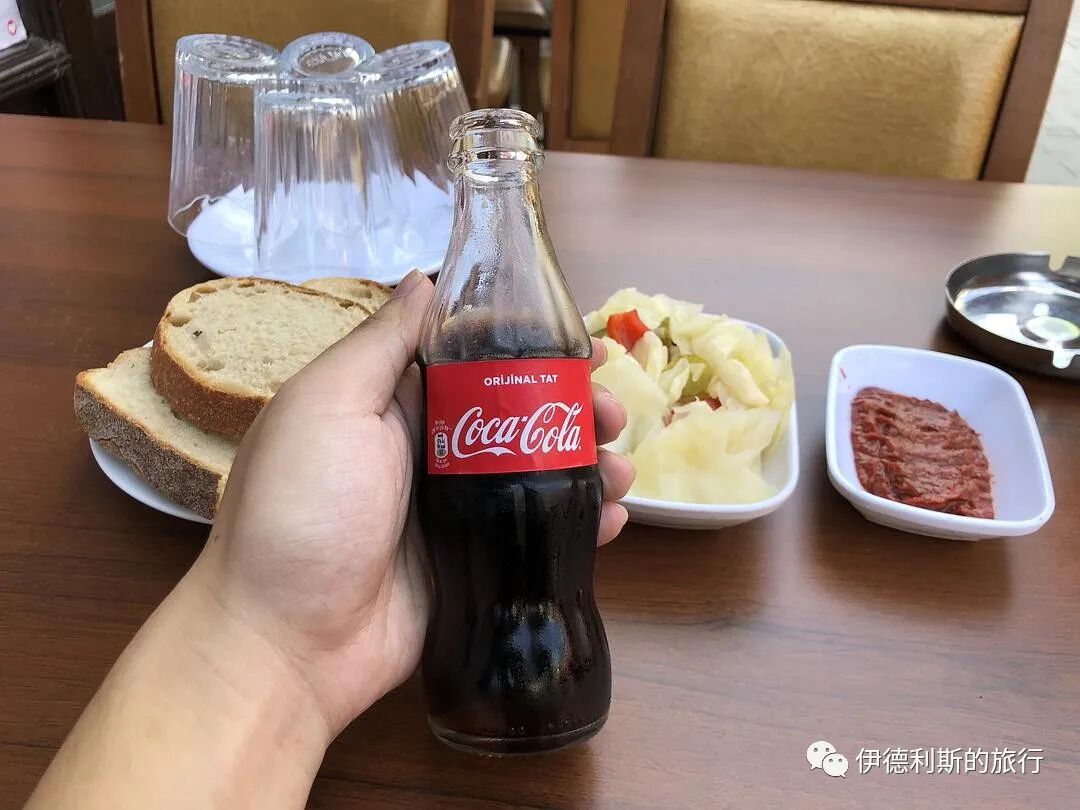
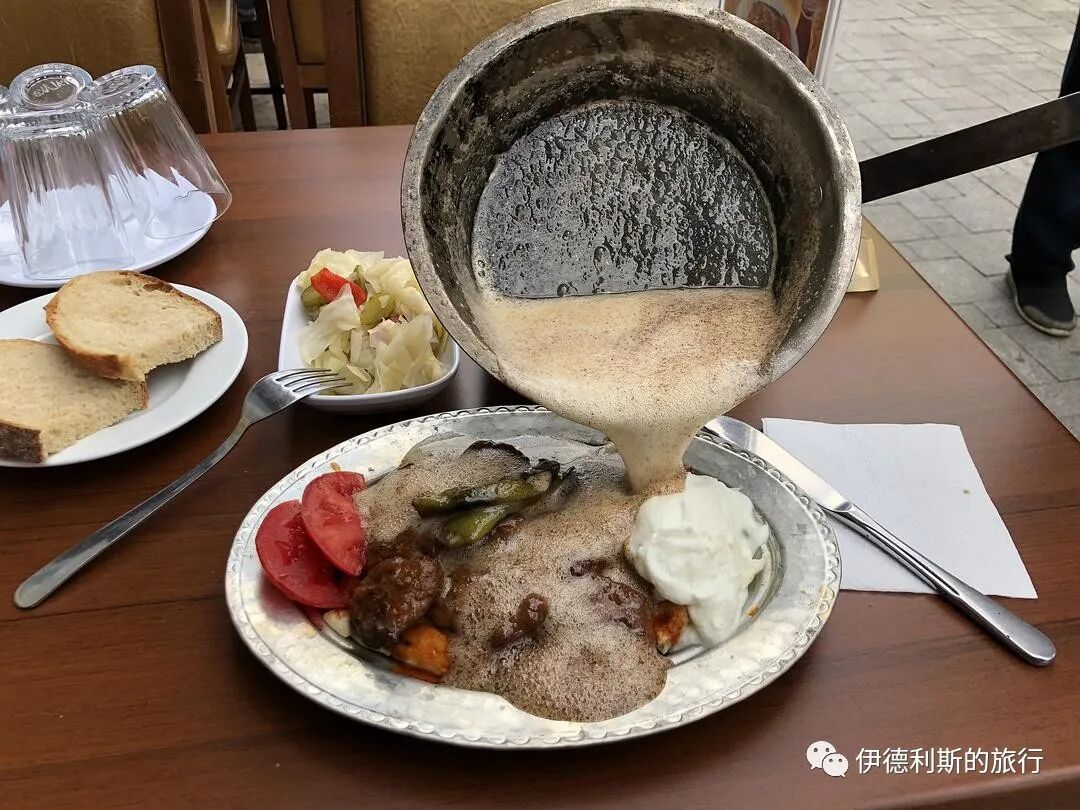
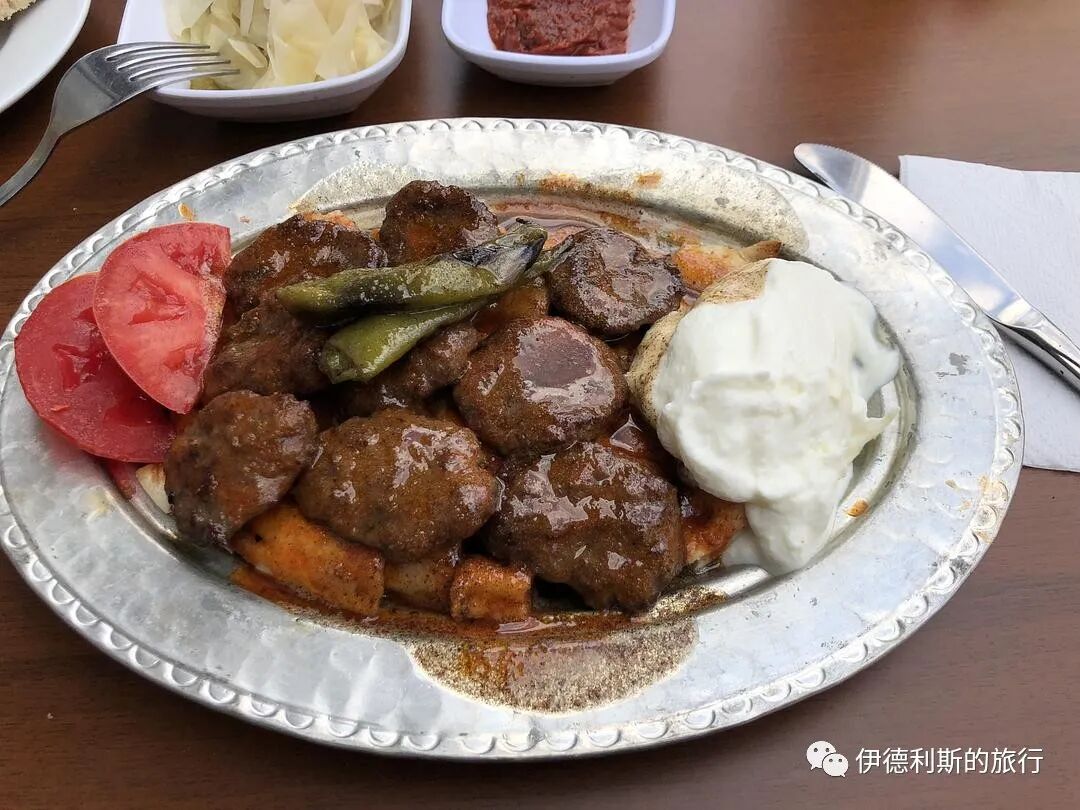
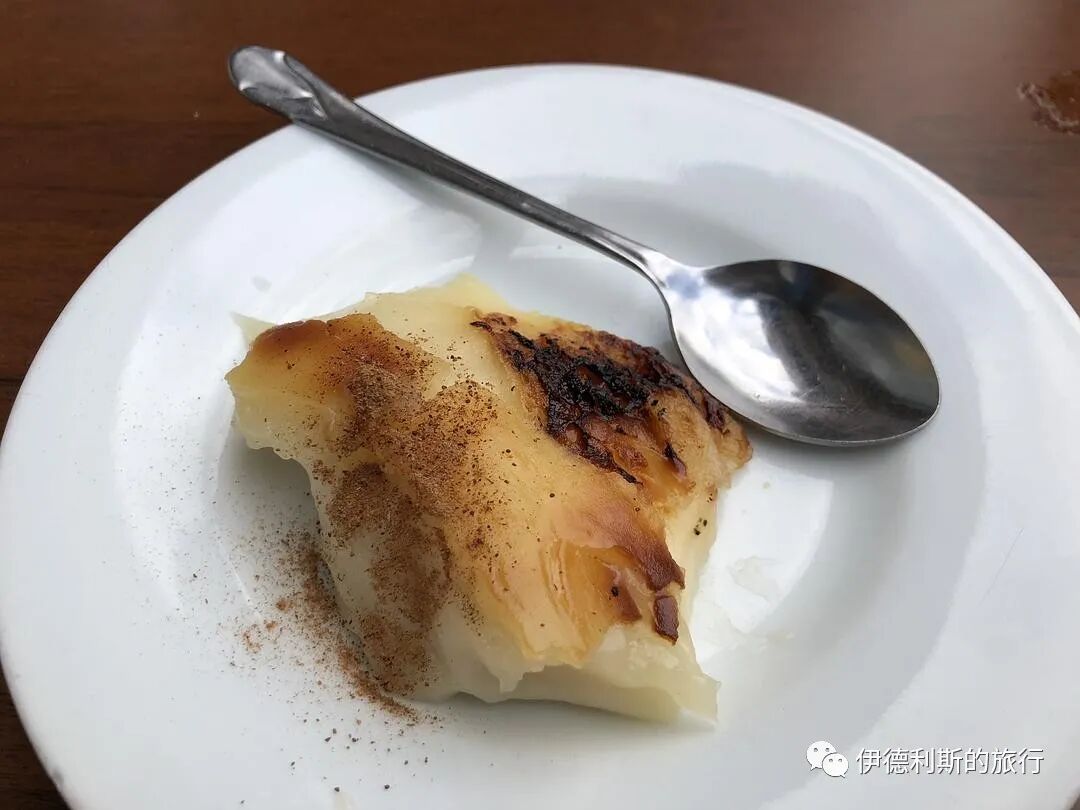
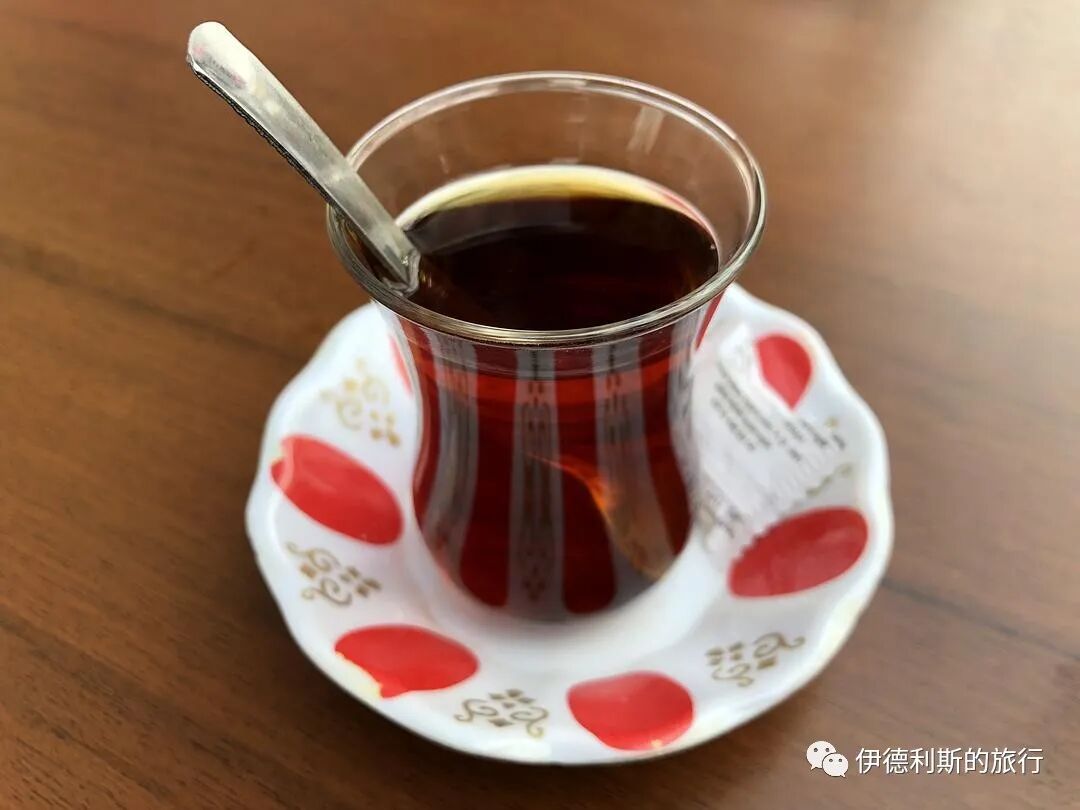
For dinner, I had Turkish pizza (pide), which I really like because it is packed with toppings.
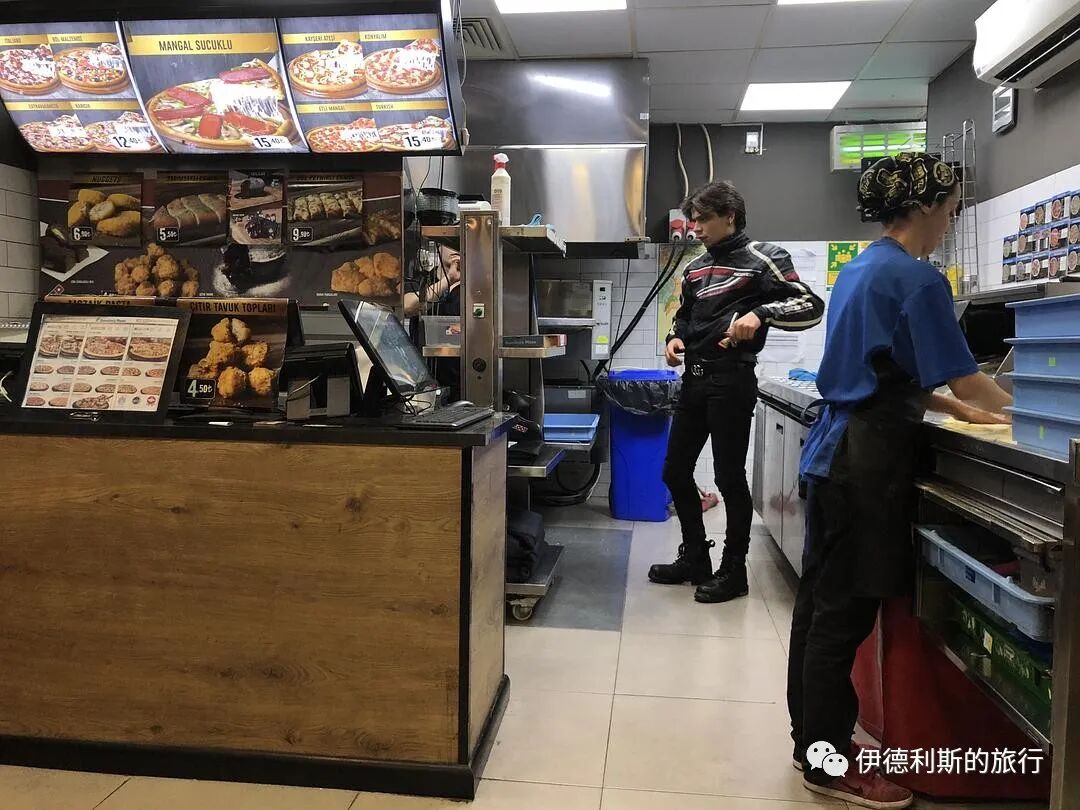


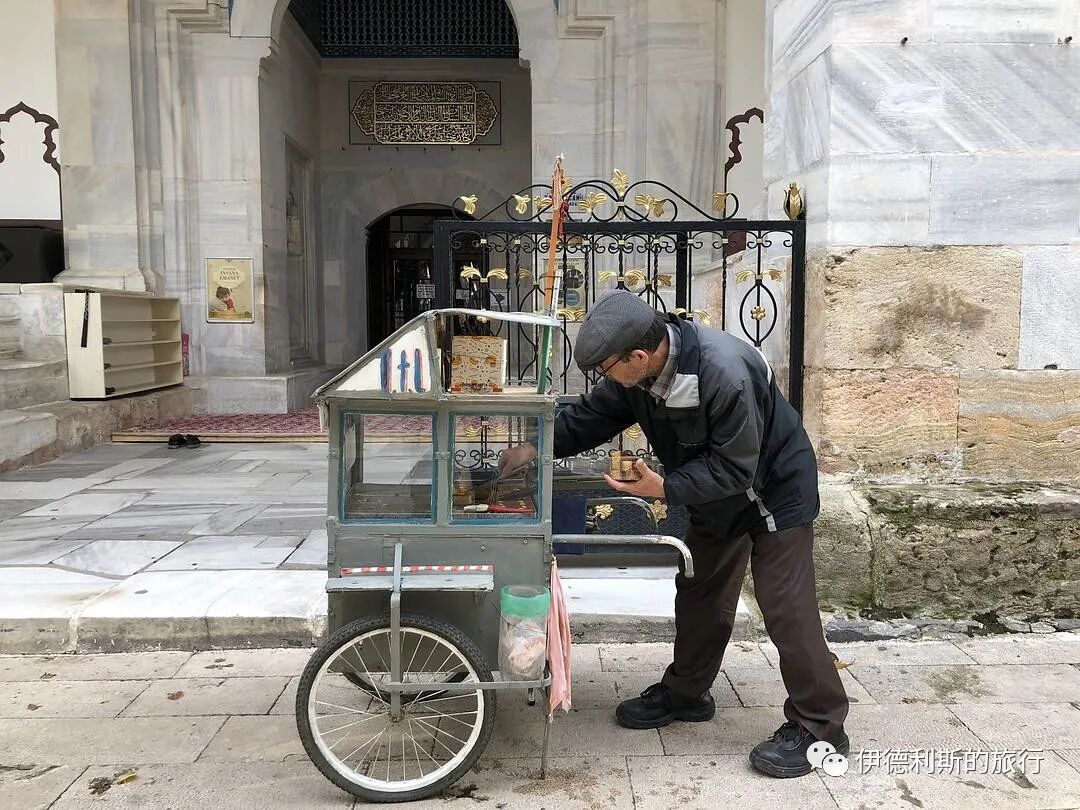
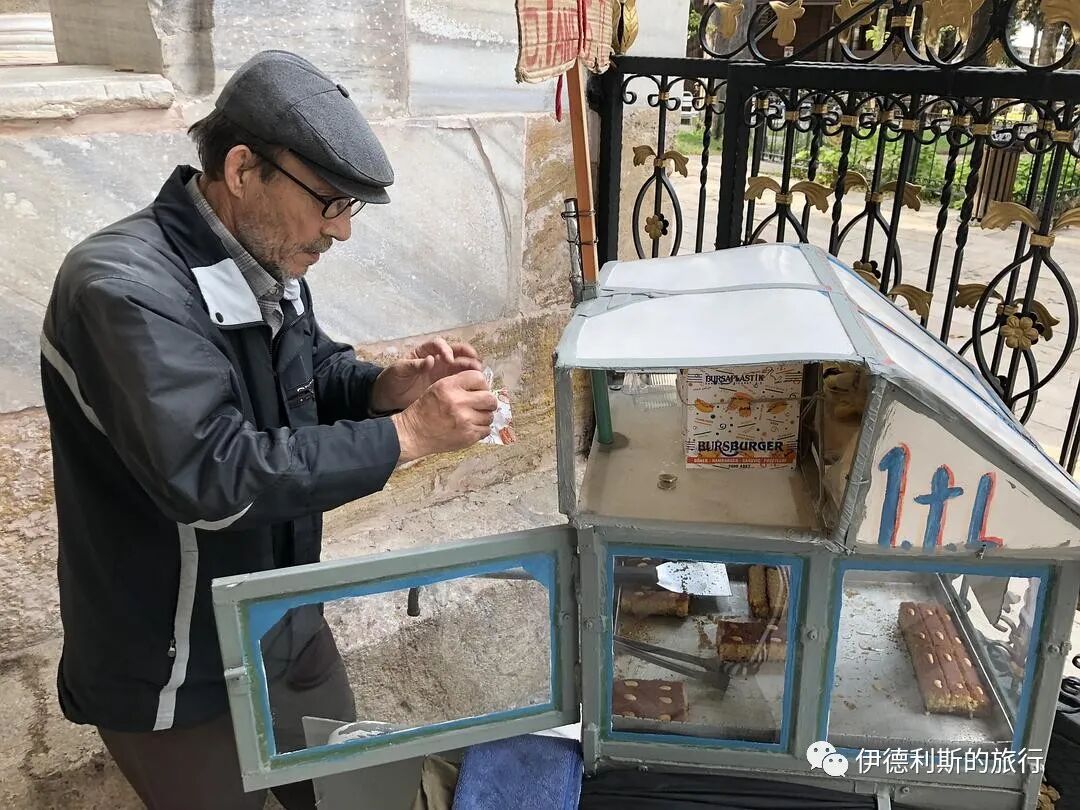
In front of a mosque in Bursa, there was an elderly man selling a pastry called Damascus dessert (Şam tatlısı) for one lira each. It is said to have a very long history.
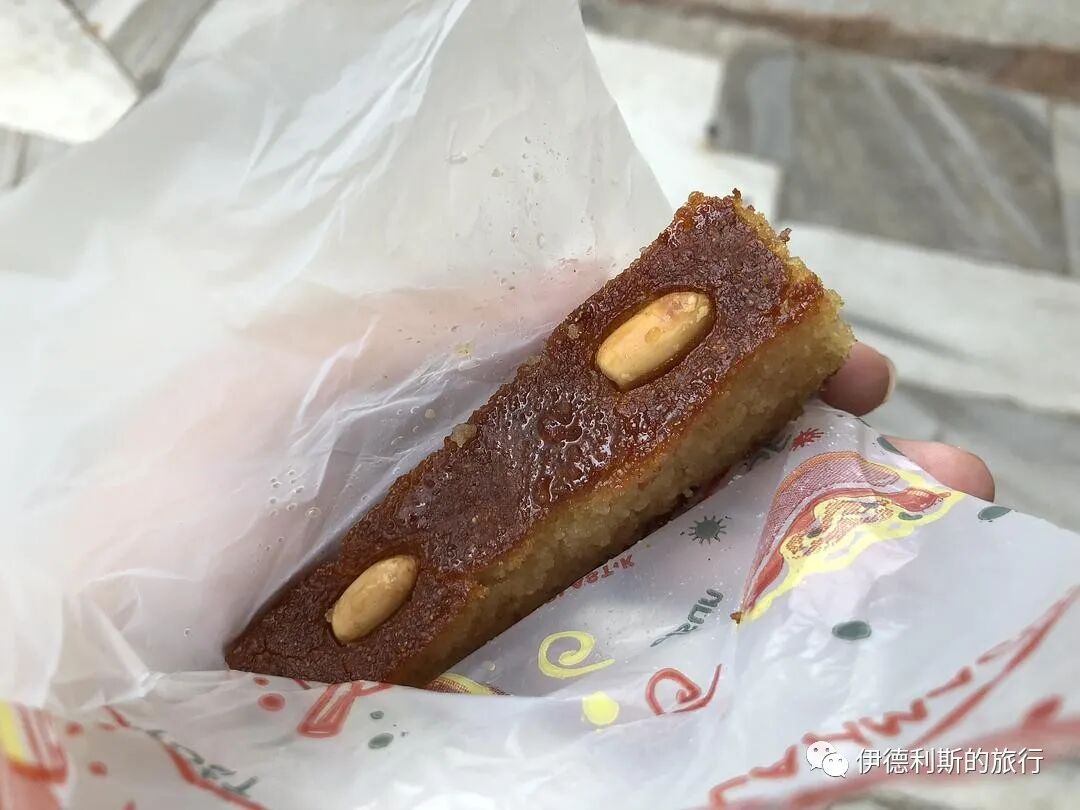
I took a boat from Bursa across the Sea of Marmara back to Istanbul.
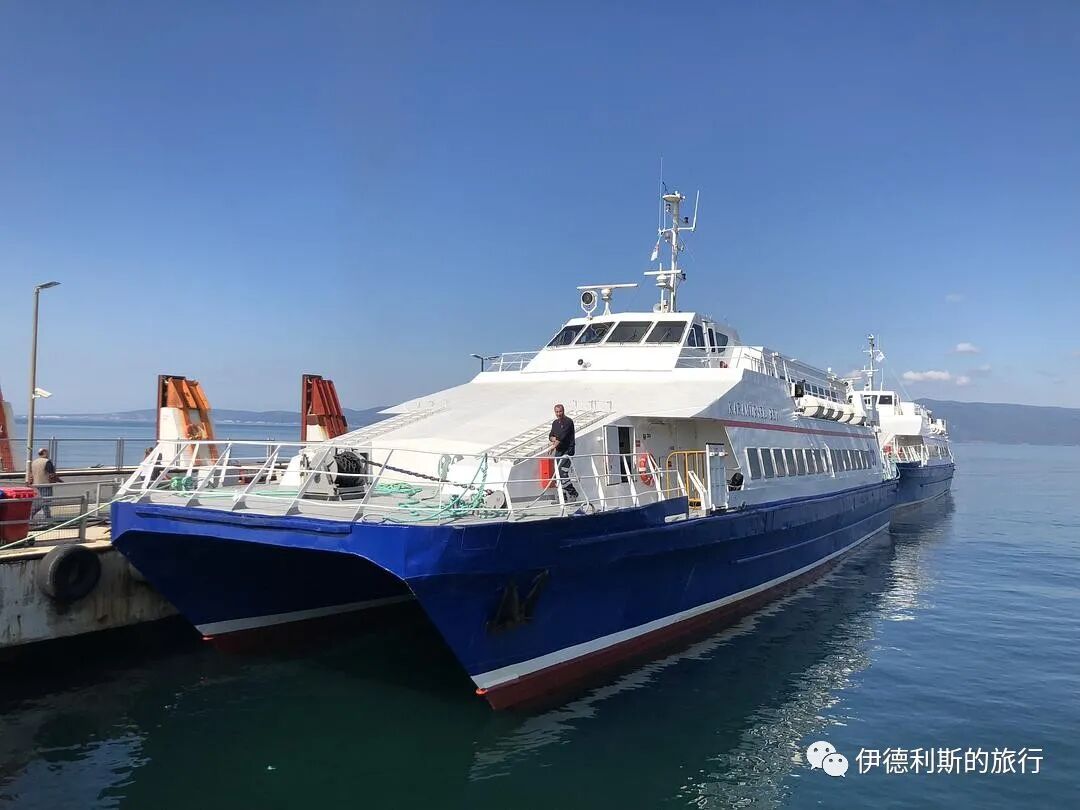
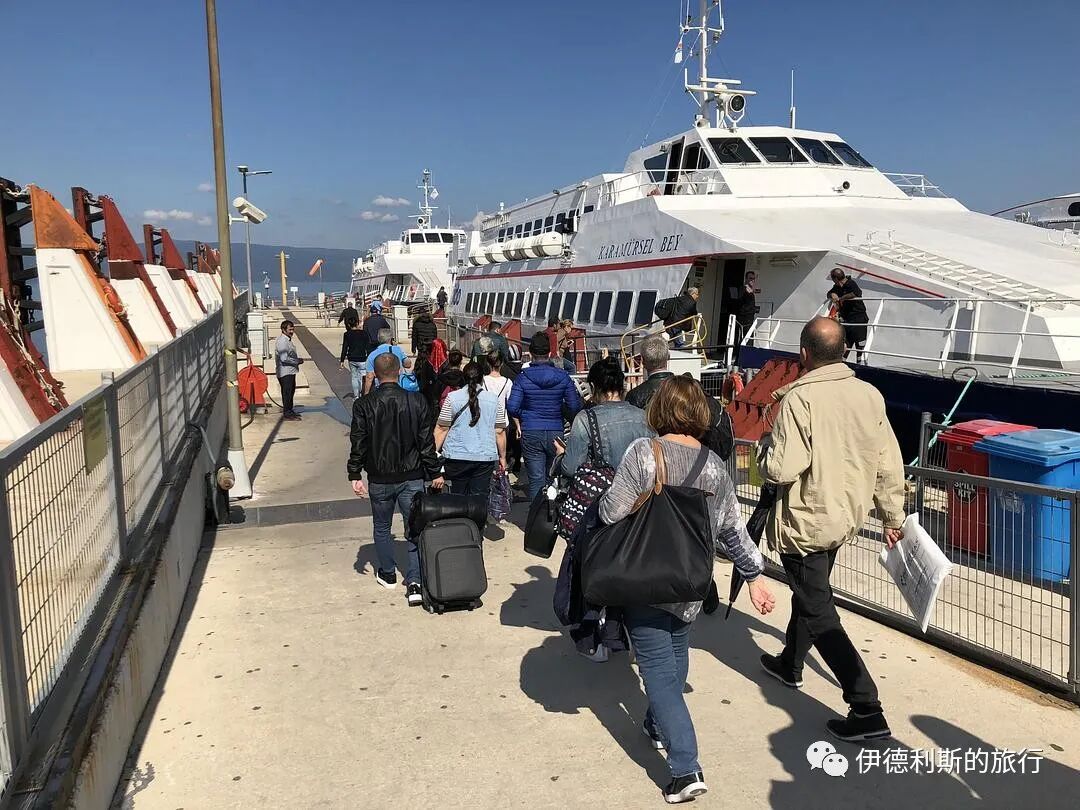
I had dessert while boarding the boat at the pier.
Halal Travel Guide: Edirne — Ottoman Mosques and Muslim Heritage (Part 1)
Articles • ali2007fr posted the article • 0 comments • 137 views • 2026-05-17 10:56
Summary: Edirne — Ottoman Mosques and Muslim Heritage is presented here as a firsthand travel account in clear English, beginning with this scene: This is the third part of my journey through the ancient capitals of Turkey. In the first part, "Konya: The Last Capital of the Seljuk Dynasty," I introduced how the Seljuk Turks, deeply influenced by Persian culture. The account keeps its focus on Edirne Travel, Ottoman History, Turkey Travel while preserving the names, places, food, and historical details from the Chinese source.
This is the third part of my journey through the ancient capitals of Turkey. In the first part, "Konya: The Last Capital of the Seljuk Dynasty," I introduced how the Seljuk Turks, deeply influenced by Persian culture, established the Sultanate of Rum with Konya as their capital between the 11th and 13th centuries. In the second part, "Bursa: The Birth of the Ottoman Empire," I explained how the Ottomans broke away from the Sultanate of Rum at the end of the 13th century and officially made Bursa their capital in 1326. In this part, the Ottomans turn their eyes toward Europe and officially move toward becoming an empire.
Edirne is located in the far northwest of Turkey.
Moving the capital to Europe
In the mid-14th century, the Ottomans crossed the straits to invade the southern Balkan Peninsula, gradually advancing toward Adrianople, the third-largest city of the Byzantine Empire, ranking only behind Constantinople and Thessaloniki. In 1369, the third Ottoman Sultan, Murad I (reigned 1362–1389), captured Adrianople and renamed the city Edirne. From then on, Edirne became the Ottoman center in Europe.
In 1402, the fourth Ottoman Sultan, Bayezid I (reigned 1389–1402), was defeated and captured by the great conqueror Timur in the Battle of Ankara and died shortly after. His four sons fought for the throne, triggering the Ottoman Interregnum, the largest civil war in early Ottoman history, and Edirne rose to become the capital during this conflict.
In 1403, Prince Süleyman Çelebi declared himself Emir in Edirne and controlled Rumeli, the European part of the Ottoman lands. The following year, he crossed the straits to occupy Bursa and Ankara in the Asian part, becoming the most powerful prince at the time. However, after taking power, Süleyman became increasingly extravagant and indifferent to state affairs. In 1411, abandoned by his followers, Süleyman was defeated by Prince Musa in Edirne and executed, and Edirne became Prince Musa's capital.
In 1413, Prince Mehmed defeated Musa, occupied Edirne, and finally won the civil war. On June 5, 1413, Mehmed was officially crowned in Edirne as the fifth Ottoman Sultan, Mehmed I (reigned 1413–1421). The capital of the Ottoman dynasty officially moved from Bursa in Asia to Edirne in Europe, where it remained until the fall of Constantinople in 1453.
City construction
During the period when Bursa was the capital, the Ottoman dynasty developed a new form of urban construction: building social complexes known as Külliye in the commercial districts outside the city walls. After moving the capital to Edirne, the Ottomans continued to use this form. After Prince Süleyman made Edirne his capital in 1403, he immediately began building the first complex in Edirne, the Old Mosque (Eski Cami) complex, east of the Roman-era Hadrianopolis fortress. During the reign of Sultan Murad II (reigned 1421–1444, 1446–1451), the second complex, the Muradiye complex, and the third, the Three-Balcony (Üç Şerefeli) complex, were built in Edirne, along with a royal palace in the north.
Contents
1. Old Mosque complex: construction started in 1403
1. Old Mosque (Eski Cami): 1414
2. Covered market (Bedesten): 1418
3. Rüstem Pasha Caravanserai (Rüstem Paşa Kervansarayı): 1561
4. Ali Pasha Bazaar (Ali Paşa Çarşısı): 1569
2. Muradiye Mosque: 1436
3. Three-Balcony Mosque (Üç Şerefeli Cami) complex: construction started in 1438
1. Three-Balcony Mosque (Üç Şerefeli Cami): 1447
2. Saatli Madrasa (Saatli Medresesi): 1447
3. Peykler Madrasa (Peykler Medresesi): 1450s
4. Taş Han Caravanserai: 15th century
5. Sokollu Mehmed Pasha Bath (Sokollu Mehmed Paşa Hamamı): second half of the 16th century
4. Edirne Palace: construction started in 1450
1. Rise and fall of the palace
2. Palace composition
5. Kasım Pasha Mosque (Kasım Paşa Camii): 1479
6. Sultan Bayezid II complex: 1488
1. Mosque
2. Medical school
3. Hospital
1. Old Mosque complex: construction started in 1403
1. Old Mosque (Eski Cami): 1414
After the Ottoman Interregnum began in 1403, Prince Suleiman, who declared himself Emir in Edirne, started building his own mosque. However, the mosque was still unfinished when Suleiman died in 1411.
In 1413, Prince Mehmed was crowned Sultan Mehmed I in Edirne, and he officially completed the construction of the mosque the following year. This mosque is the oldest surviving one in Edirne, so it is called the Old Mosque (Eski Cami).
The Old Mosque is among the last of the multi-domed mosques to use the early Ottoman Seljuk style, featuring a total of nine central domes. Compared to earlier Seljuk multi-domed mosques, the dome diameters of the Old Mosque are noticeably larger, showing that the Ottomans were beginning to move past their early architectural phase.
The coronation ceremonies for the 21st Ottoman Sultan, Ahmed II (reigned 1691-1695), and the 22nd Sultan, Mustafa II (reigned 1695-1703), were both held here. The Old Mosque suffered massive damage in an earthquake in the mid-18th century, and was later ordered to be rebuilt by Mahmud I (reigned 1696-1754). The Old Mosque was renovated again between 1924 and 1934.
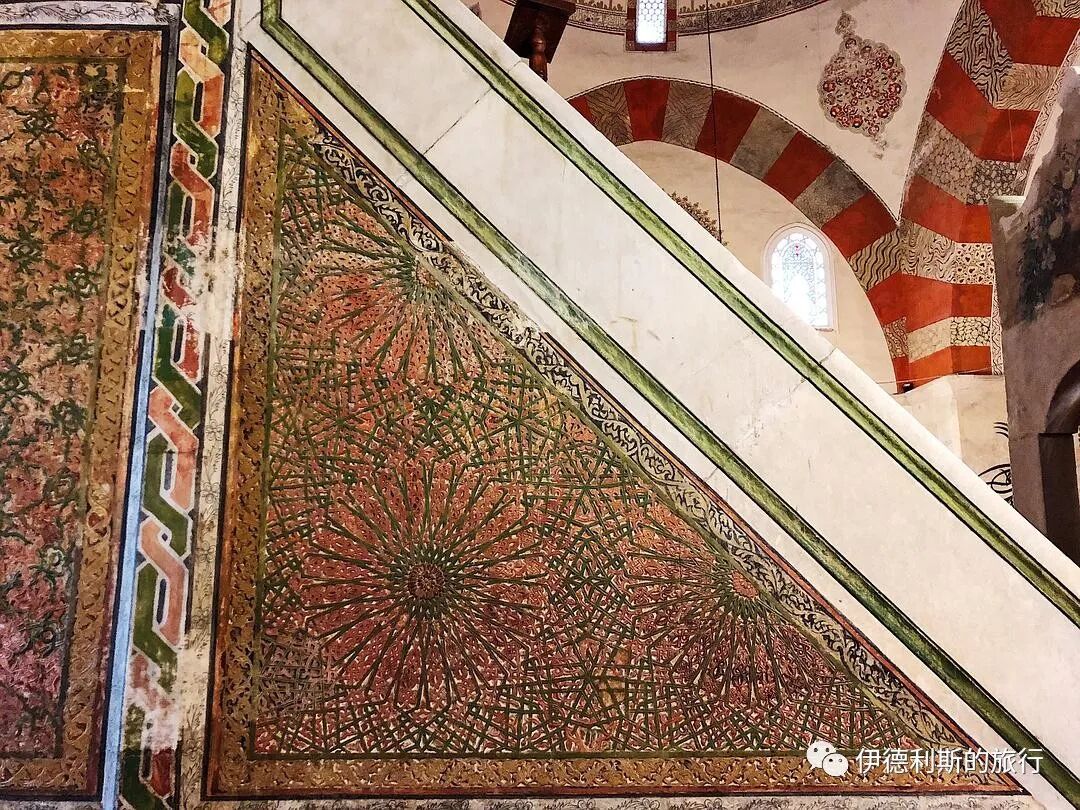
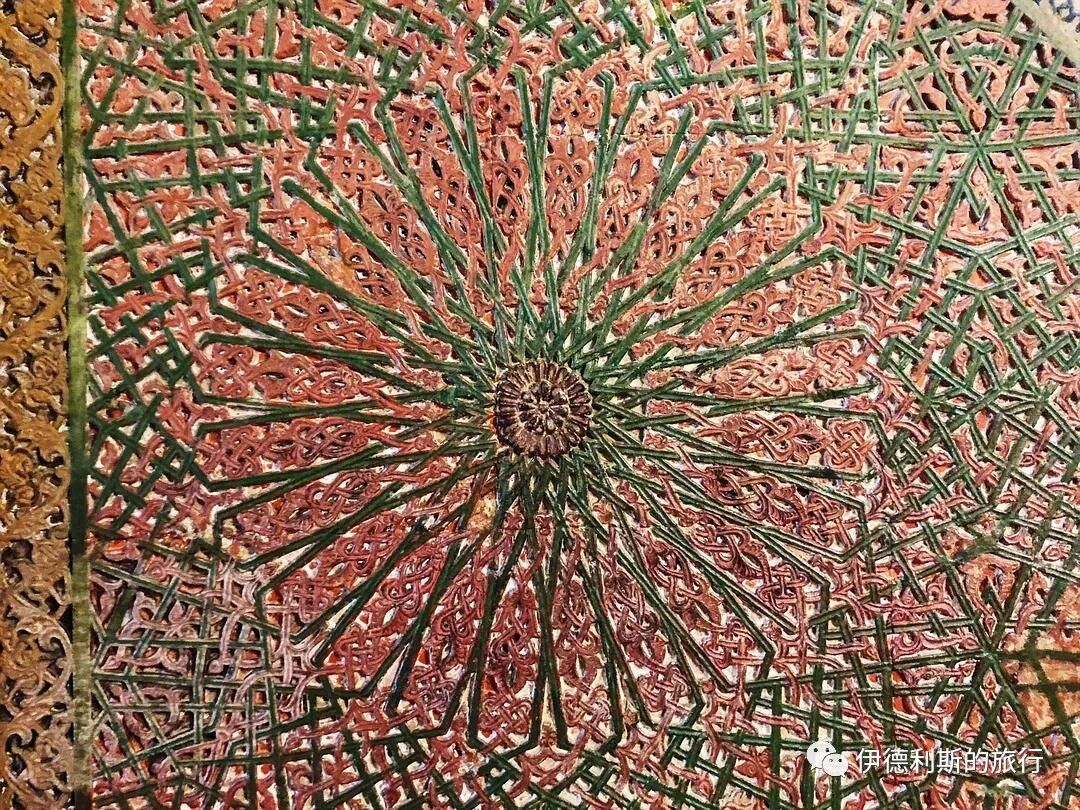
Inside the main hall
Dome
Old murals
Mihrab
Minbar
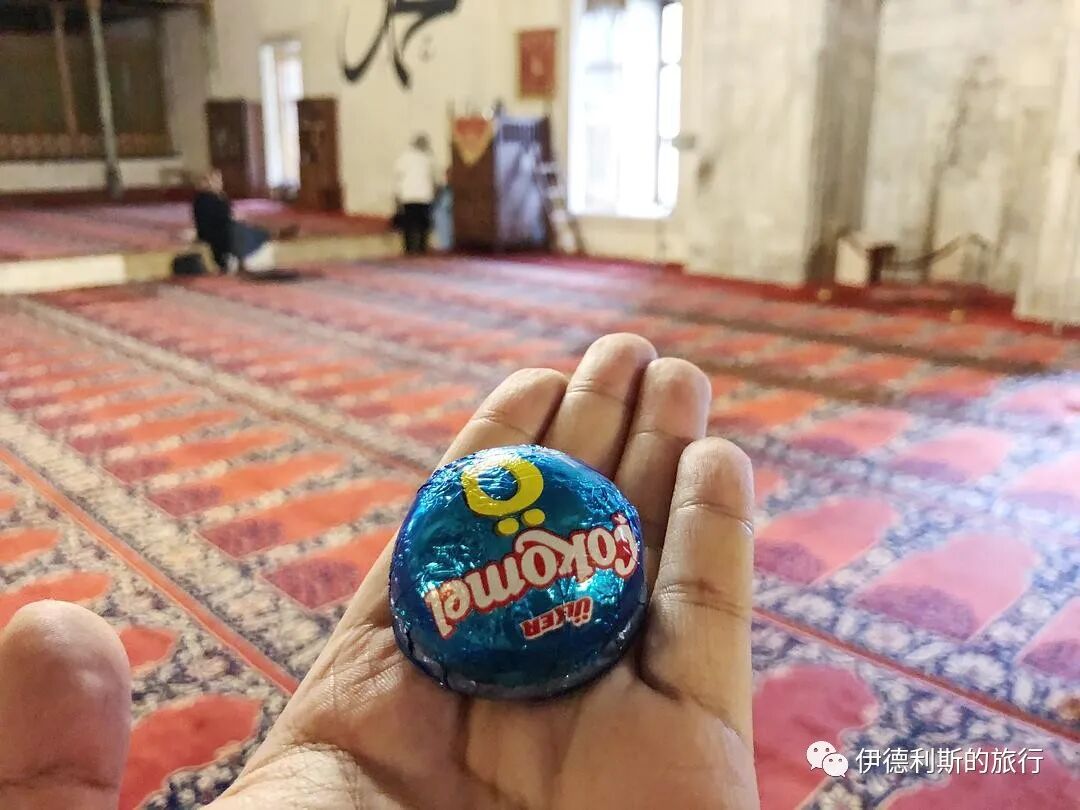
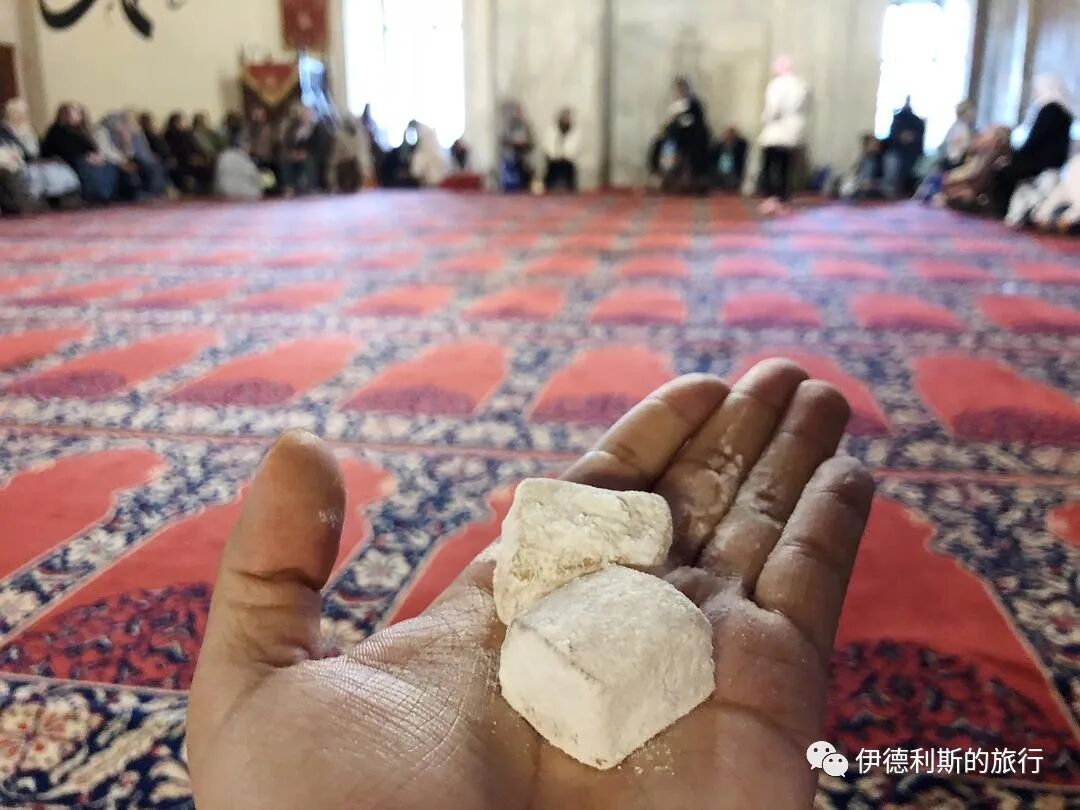
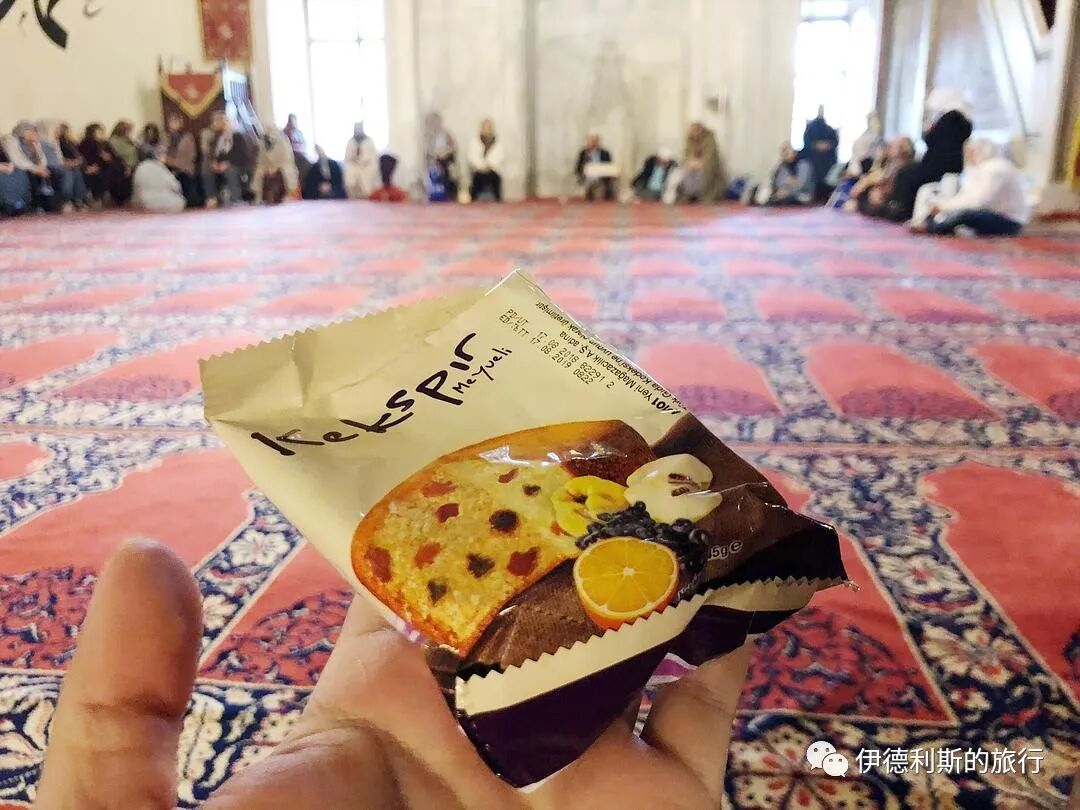
When I visited, I happened to catch a group of aunties listening to the imam's chanting in the mosque, so I sat down and listened for a while too. As soon as I sat down, aunties kept handing out pastries and candies to everyone. Other aunties were busy squeezing hand sanitizer and passing out napkins, so I received all kinds of pastries and candies while listening to the melodic chanting. Even though we could not speak the same language, I felt very warm inside.
2. Covered market (Bedesten): 1418
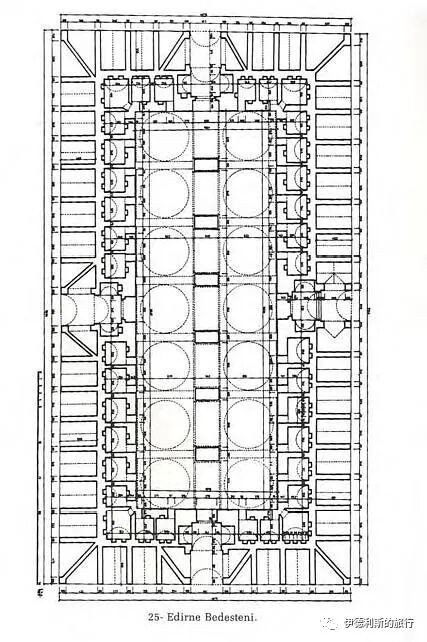
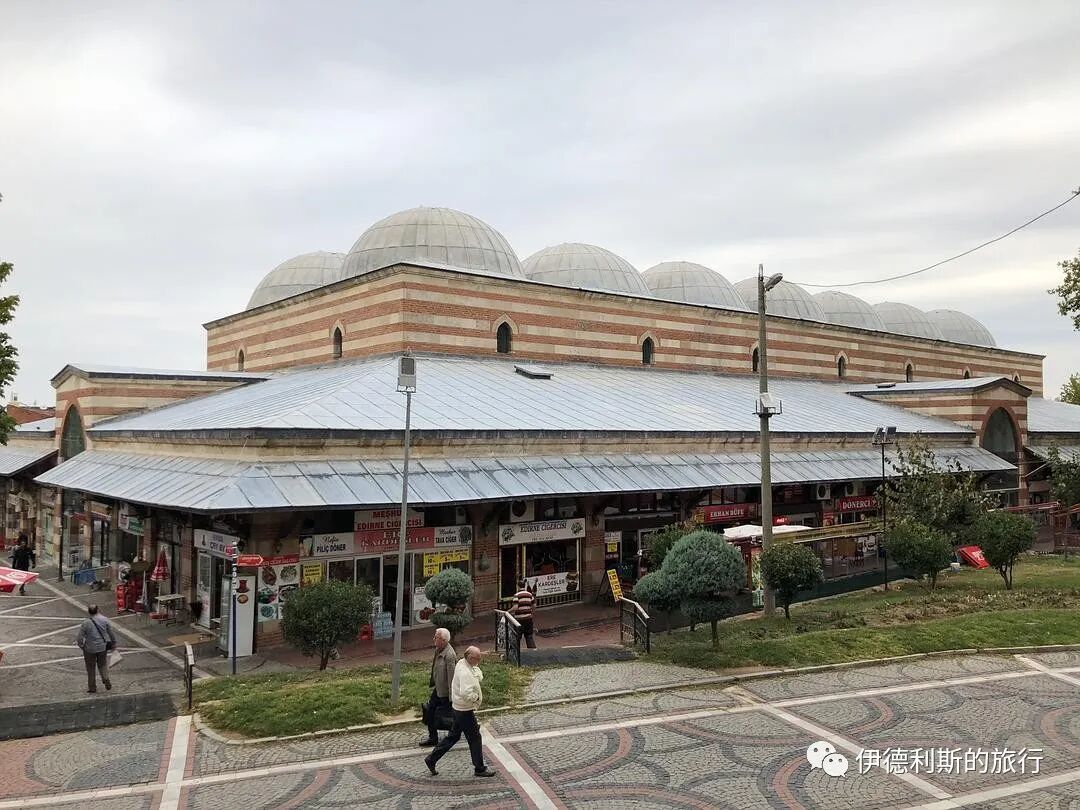
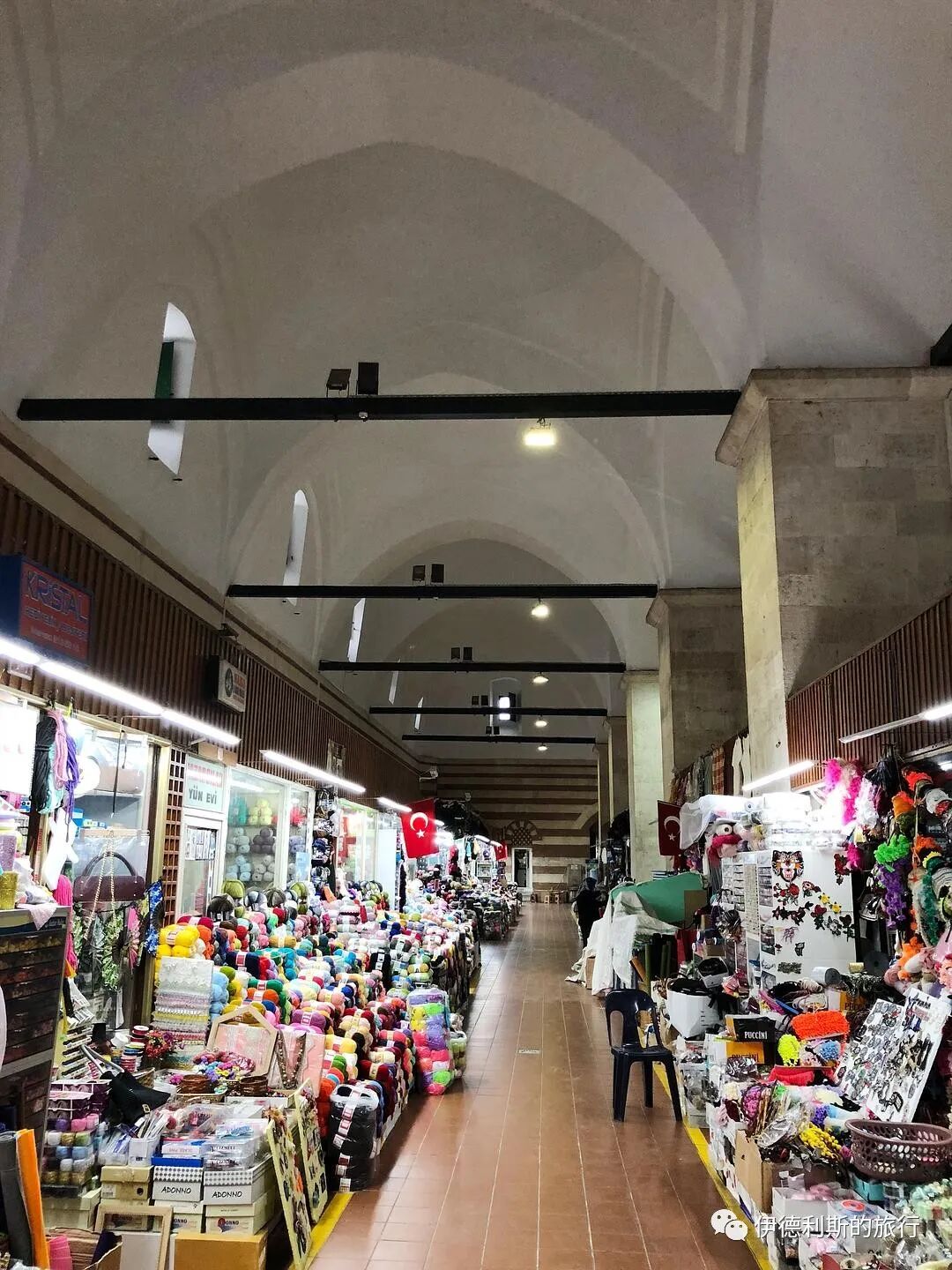
The covered market (Bedesten) is right next to the Old Mosque. It was built in 1418 by the fifth Ottoman Sultan, Mehmed I, primarily to support the operations of the Old Mosque.
This building is a classic example of an early Ottoman covered market and has been in use ever since. The building is a rectangle 78 meters long and 41 meters wide, with 14 domes on top and 54 shops along the four sides. It underwent a major renovation in 2007.
3. Rüstem Pasha Caravanserai (Rüstem Paşa Kervansarayı): 1561
The Rustem Pasha Caravanserai (Rüstem Paşa Kervansarayı) was ordered to be built in 1561 by the Ottoman Grand Vizier Rustem Pasha (Rüstem Paşa) and designed by the famous architect Mimar Sinan.
The caravanserai has two floors, with 102 guest rooms inside and 21 shops on the outside. Today, the interior is a hotel, and the shops on the outside are still operating.
4. Ali Pasha Bazaar (Ali Paşa Çarşısı): 1569
The Ali Pasha Bazaar (Ali Paşa Çarşısı) was ordered to be built in 1569 by the Ottoman Grand Vizier Ali Pasha (Ali Paşa) and designed by the famous architect Mimar Sinan.
The bazaar includes 130 shops and 6 gates. The bazaar caught fire in 1991 and was later rebuilt.
2. Muradiye Mosque: 1436
The Muradiye Mosque (Muradiye Camii) is a small T-shaped mosque on a hill in the north of Edirne, ordered to be built in 1436 by the sixth Ottoman Sultan, Murad II (reigned 1421-1444). It was originally part of a Sufi Mevlevi order complex before being converted into a mosque.
The Muradiye Mosque was once a complex that included a public kitchen (imaret) and a primary school (mekteb), but today only the mosque remains. It was severely damaged by earthquakes, and the minaret has been rebuilt several times; its current appearance dates from a major renovation in 1957.
The interior of the mosque is famous for its beautiful tiles. Before they were stolen in 2001, there were 479 tiles in the main hall with 54 different designs, 15 of which appeared only once, showing a strong influence from Yuan dynasty blue and white porcelain. The blue and white hexagonal tiles are the earliest examples of underglaze tiles in the Ottoman period. Because some tiles are arranged inconsistently, some scholars believe part of them were moved here from the Ottoman palace in Edirne in the north.
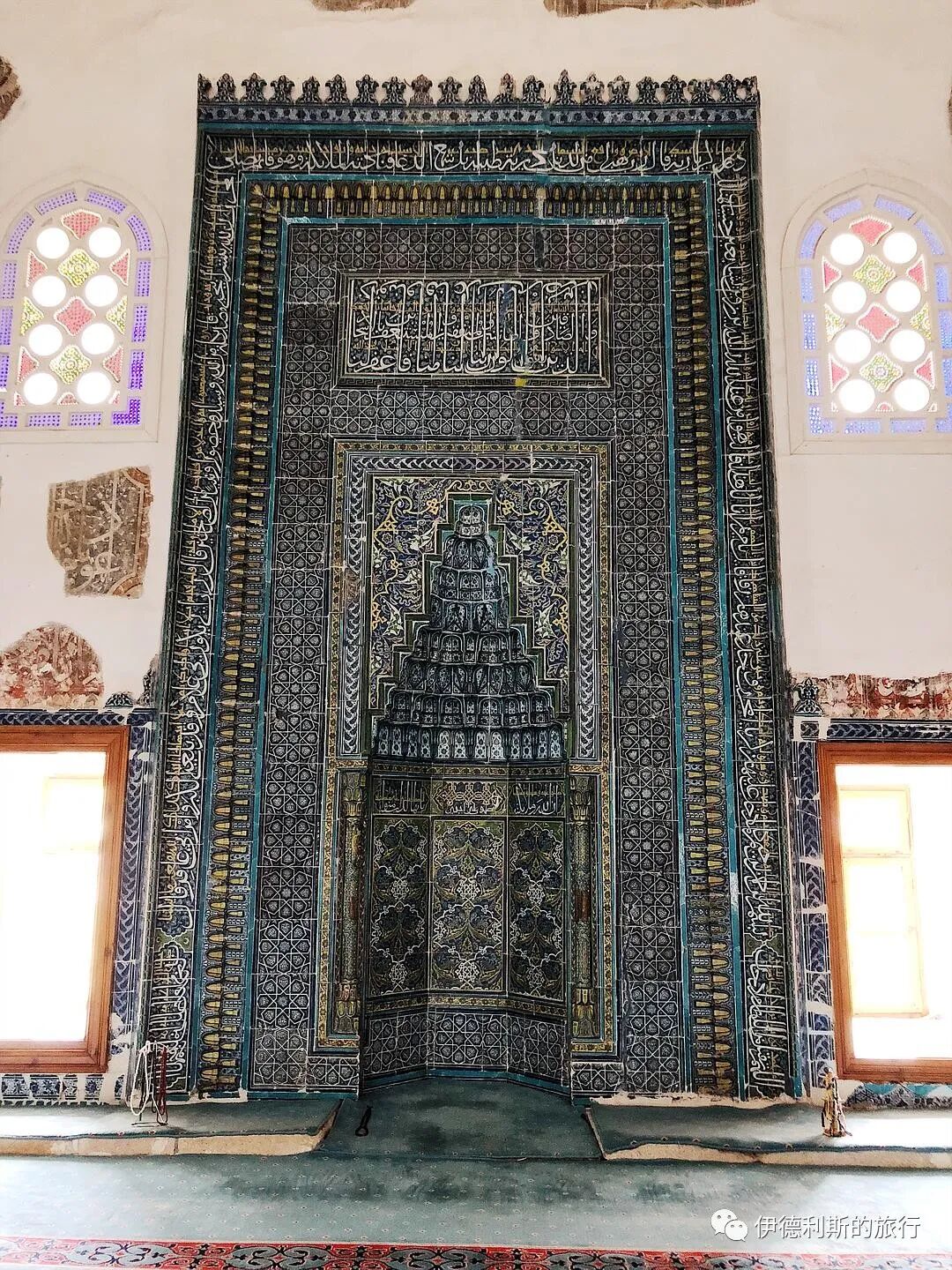
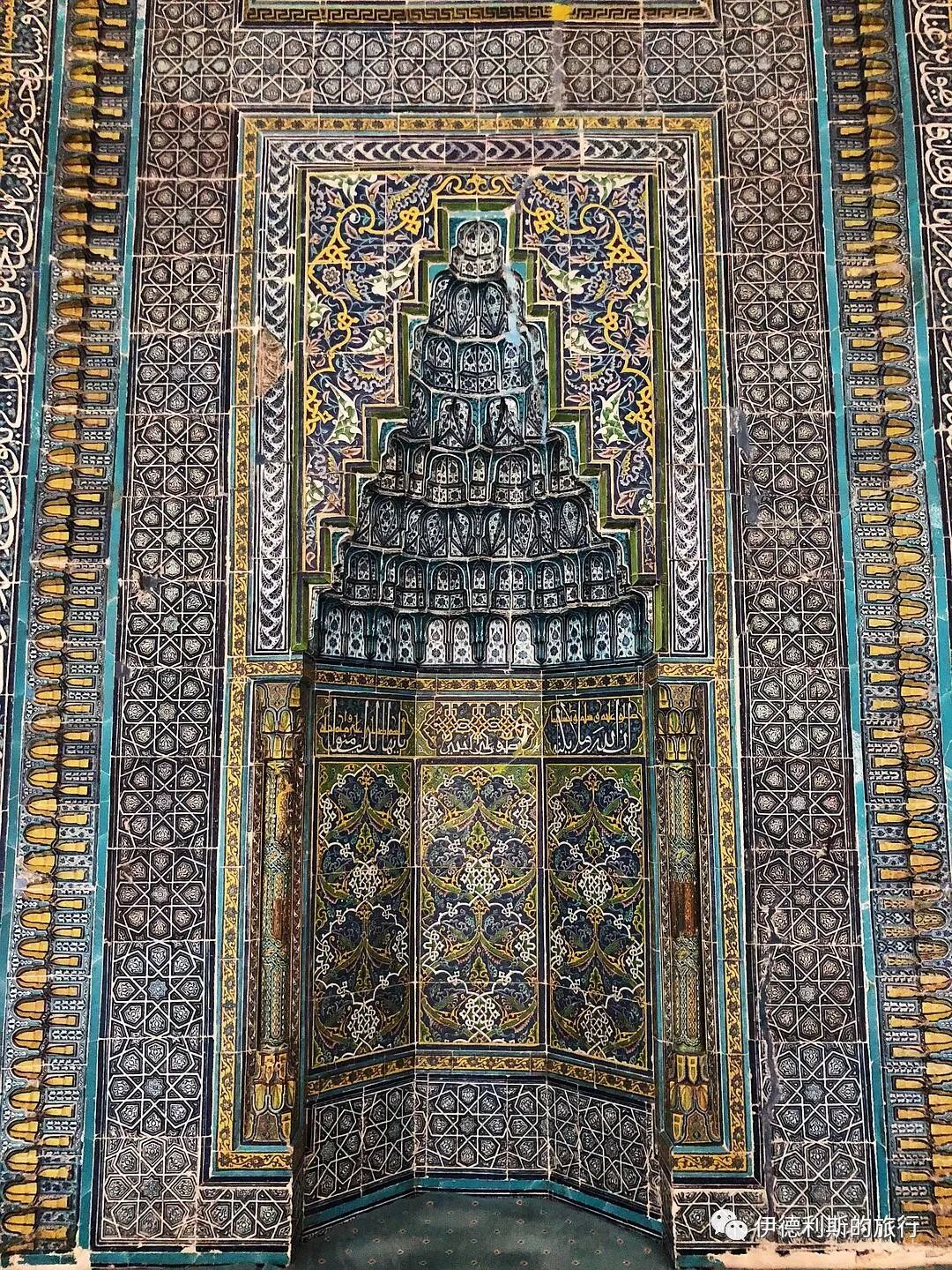
The mosque preserves a 15th-century mihrab covered in tiles, which bears the name of Sultan Murad II. The Cuerda Seca style of the mihrab tiles is very similar to the Green Mosque (Yeşil Camii) in Bursa, built in 1421, and was likely made by the same team of craftsmen. The mihrab of the Green Mosque in Bursa was reportedly designed by a master from Tabriz, Iran. Therefore, this master likely traveled to Edirne to design the mihrab for the Muradiye Mosque.
3. Three-Balcony Mosque (Üç Şerefeli Cami) complex: construction started in 1438
1. Three-Balcony Mosque (Üç Şerefeli Cami): 1447
The Three-Balcony Mosque (Üç Şerefeli Camii) is known as a major landmark that started a new era of Ottoman architecture, serving as the first mosque in Ottoman history with a central dome and a portico. The mosque was commissioned by the sixth Ottoman Sultan, Murad II (reigned 1421–1444), in 1438 and completed in 1447.
The Three-Balcony Mosque is located not far northwest of the Old Mosque and was the largest mosque in the Ottoman Empire when it was finished. This mosque is considered a pioneer of the classic Ottoman mosque style, being among the first to transition from the Seljuk multi-dome design to a central large dome, featuring a central dome 24 meters in diameter.
The Three-Balcony Mosque gets its name from the three balconies on its minaret. This was the tallest minaret in the Ottoman Empire at the time, standing 76 meters high with 203 steps, and it can be climbed to the balconies using three different paths.
The underglaze tiles of the mosque are very similar in style to those of the Green Mosque in Bursa (1421) and the Muradiye Mosque in Edirne (1436), and were likely all designed by the person known as the Master of Tabriz.
The architectural design of the Three-Balcony Mosque greatly inspired the great 16th-century Ottoman architect Mimar Sinan, who built upon this foundation to eventually create the most magnificent mosques of the Ottoman Empire.
The Three-Balcony Mosque suffered from fire and an earthquake in the mid-18th century and was later restored.
Minaret
Minaret
Portico entrance
Side of the portico
View of the main hall from the portico
Portico
Portico
Portico dome
Portico dome
Dome above the main hall door
Central large dome
Main hall
Main hall
Mihrab
Mihrab
2. Saatli Madrasa (Saatli Medresesi): 1447
Saatli Madrasa is directly opposite the Three-Balcony Mosque and was also completed in 1447.
3. Peykler Madrasa (Peykler Medresesi): 1450s
Peykler Madrasa is right next to the south side of Saatli Madrasa and was built a few years later.
4. Taş Han Caravanserai: 15th century
The Stone Inn (Taşhan Inn) is across the street to the west of the Three-Balcony Mosque and was built in the 15th century.
5. Sokollu Mehmed Pasha Bath (Sokollu Mehmed Paşa Hamamı): second half of the 16th century
The Sokullu Mehmet Pasha Bath (Sokullu Mehmet Paşa Hamamı) was commissioned in the second half of the 16th century by the Ottoman Grand Vizier Sokullu Mehmet Pasha (in office 1565–1579) and built by the great Ottoman architect Mimar Sinan.
The bathhouse was built right next to the Tash Khan inn. It consists of a men's section and a women's section and is known as one of the most important bathhouses in the Ottoman Empire.
4. Edirne Palace: construction started in 1450
1. Rise and fall of the palace
Edirne Palace (Edirne Sarayı) was ordered to be built by Sultan Murad II in 1450, but construction stopped the following year when the Sultan passed away. After a period of inactivity, it was finally completed in 1475 by his successor, Sultan Mehmed the Conqueror.
The palace was expanded continuously between the 16th and 18th centuries. The most important period was during the reign of Suleiman the Magnificent (1520–1566), when the chief architect Mimar Sinan redesigned the palace and solved the water supply issue by building canals. To protect the palace from flooding, the canals were built in an arc shape around it.
The palace stopped being used after Ahmed III moved to Istanbul in 1718. It did not return to use until Mustafa III (reigned 1757–1774) returned to Edirne in 1768. During those fifty years, the palace gradually fell into disrepair and suffered through an earthquake in 1752 and a fire in 1776.
Mahmud II (reigned 1808–1839) carried out small-scale repairs in 1825, but the palace was severely damaged and occupied as a military barracks after the Russian army captured Edirne in 1829.
Between 1868 and 1873, some parts of the palace were repaired by the mayor at the time. During the Russo-Turkish War in 1877, the governor of Edirne feared the Russian army would take the city and intentionally blew up an ammunition depot near the palace. This caused severe damage, and building materials from the palace were later continuously stripped away for use elsewhere.
2. Palace composition
At its peak, the palace consisted of 72 buildings, including 117 rooms, 14 mansions, 18 bathhouses, 9 mosques, 17 gates, and 13 cellars. At its busiest, 34,000 people lived inside.
The main building of the palace is called the Panorama Pavilion (Cihannüma Kasrı), also known as the Imperial Throne (Taht-ı Hümayun), built in 1450. The Panorama Pavilion is a seven-story building with an octagonal room at the top. It includes the Sultan's room, a room for flags, a library, and a mosque.
Initial archaeological excavations of the Panorama Pavilion took place in 1956. In 2001, sponsored by the National Palaces Administration, archaeological and restoration work began on the palace gate, the Gate of Felicity (Bab'üs Sa'ade), and the Panorama Pavilion (Cihannüma Kasrı) site, which was completed in 2004.
The Sand Pavilion Bathhouse (Kum Kasrı Hamamı) was built by Sultan Mehmed the Conqueror. It is another palace ruin that survives today, and it was excavated in 2000.
The Imperial Kitchen (Matbah-ı Amire) is located on the southwest side of the palace. It has eight domes, and while the north facade is gone, most of it remains well-preserved.
The Court of Justice (Kasr-ı Adalet) is on the south bank of the Tunca River. It was ordered to be built in 1561 by Suleiman the Magnificent, who is also known as Suleiman the Lawgiver.
The Conqueror's Bridge (Fatih Köprüsü) is next to the Court of Justice and was built by Mehmed the Conqueror in 1452.
The Kanuni Bridge (Kanuni Köprüsü), also called the Palace Bridge, was built in 1554 by Mimar Sinan under the orders of Suleiman the Magnificent.
Because Edirne Palace is currently under renovation and closed to the public, I could only look at it from the outside.
On the left is the Panorama Pavilion, and on the right is the Sand Pavilion Bathhouse.
An old photo of the Panorama Pavilion before it was destroyed.
On the left are the Gate of Felicity and the Panorama Pavilion; on the right is the Imperial Kitchen.
The Court of Justice.
The Kanuni Bridge.
5. Kasım Pasha Mosque (Kasım Paşa Camii): 1479
The Kasım Pasha Mosque (Evliya Kasım Paşa Cami) is located by the river in the southeast of Edirne. It was ordered to be built by Kasım Pasha in 1479. Kasım Pasha was a famous Ottoman general who served as the commander of Rumelia, the European part of the Ottoman Empire. He commanded troops during the wars between the Ottoman Empire and the multinational crusader forces of Poland and Hungary between 1443 and 1444, fighting in places like Serbia and Bulgaria.
The mosque closed after 1950 due to the construction of a dam. Since then, it has been continuously damaged by floods, making it the most wild, early Ottoman mosque in Edirne.
The mihrab on the outer wall.
The entrance to the bunker tower.
The steps of the bunker tower.
Dome
Main hall
Mihrab
Mihrab
Architectural pieces scattered on the ground.
The tomb of Kasim Pasha.
The road leading to the mosque.
The road leading to the mosque.
6. Sultan Bayezid II complex: 1488
The Sultan Bayezid II Complex (Sultan II Bayezid Külliyesi) sits on the north bank of the Tunca River in the northwest suburbs of Edirne. It was built by order of the eighth Ottoman Sultan, Bayezid II, who reigned from 1481 to 1512. Bayezid II was the son of Mehmed the Conqueror and was known as 'the Just'. During his reign, he worked to maintain government affairs at home and defeated the Republic of Venice abroad, leading the Ottoman Empire into a prosperous era.
The entire complex includes many buildings such as a mosque, a medical school (Medrese-i Etibba), a public kitchen (imaret), a hospital (darüşşifa), a bathhouse (hamam), and warehouses.
1. Mosque
View of the main hall from the portico
Looking at the front porch from the main hall.
Portico
Portico
Portico dome
Portico dome
Portico dome
The main gate of the hall.
The dome of the main hall.
Main hall
Main hall
Minbar
Minbar
Main hall
Mihrab
2. Medical school
The Sultan Bayezid II Medical School (Sultan II Bayezid Medrese-i Etibba) was known as one of the best medical schools in the Ottoman Empire, consisting of 18 classrooms and a large lecture hall. The famous 17th-century Ottoman traveler Evliya Çelebi mentioned in his writings that this medical school studied the works of various ancient Greek philosophers, scientists, and physicians, including Plato, Socrates, Aristotle, Galen, and Pythagoras. Every doctor was an expert in a different field, and they tried to find the best treatments by studying various medical texts.
3. Hospital
The Sultan Bayezid II Hospital (Sultan II Bayezid Darüşşifa) is the most important part of the entire complex. From its completion in 1488 until the Russo-Turkish War in 1877, this hospital provided continuous treatment to patients and was especially famous for using sound and scent for mental health therapy. Today, it has become part of a health museum. view all
Summary: Edirne — Ottoman Mosques and Muslim Heritage is presented here as a firsthand travel account in clear English, beginning with this scene: This is the third part of my journey through the ancient capitals of Turkey. In the first part, "Konya: The Last Capital of the Seljuk Dynasty," I introduced how the Seljuk Turks, deeply influenced by Persian culture. The account keeps its focus on Edirne Travel, Ottoman History, Turkey Travel while preserving the names, places, food, and historical details from the Chinese source.
This is the third part of my journey through the ancient capitals of Turkey. In the first part, "Konya: The Last Capital of the Seljuk Dynasty," I introduced how the Seljuk Turks, deeply influenced by Persian culture, established the Sultanate of Rum with Konya as their capital between the 11th and 13th centuries. In the second part, "Bursa: The Birth of the Ottoman Empire," I explained how the Ottomans broke away from the Sultanate of Rum at the end of the 13th century and officially made Bursa their capital in 1326. In this part, the Ottomans turn their eyes toward Europe and officially move toward becoming an empire.
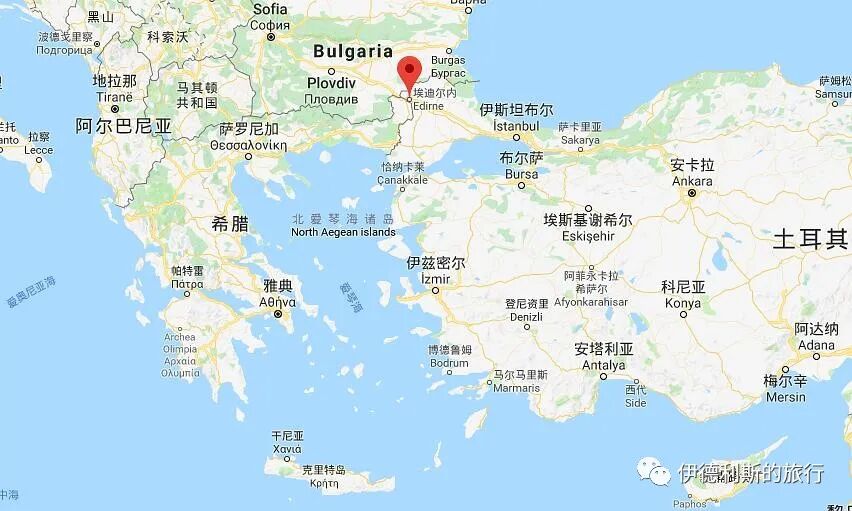
Edirne is located in the far northwest of Turkey.
Moving the capital to Europe
In the mid-14th century, the Ottomans crossed the straits to invade the southern Balkan Peninsula, gradually advancing toward Adrianople, the third-largest city of the Byzantine Empire, ranking only behind Constantinople and Thessaloniki. In 1369, the third Ottoman Sultan, Murad I (reigned 1362–1389), captured Adrianople and renamed the city Edirne. From then on, Edirne became the Ottoman center in Europe.
In 1402, the fourth Ottoman Sultan, Bayezid I (reigned 1389–1402), was defeated and captured by the great conqueror Timur in the Battle of Ankara and died shortly after. His four sons fought for the throne, triggering the Ottoman Interregnum, the largest civil war in early Ottoman history, and Edirne rose to become the capital during this conflict.
In 1403, Prince Süleyman Çelebi declared himself Emir in Edirne and controlled Rumeli, the European part of the Ottoman lands. The following year, he crossed the straits to occupy Bursa and Ankara in the Asian part, becoming the most powerful prince at the time. However, after taking power, Süleyman became increasingly extravagant and indifferent to state affairs. In 1411, abandoned by his followers, Süleyman was defeated by Prince Musa in Edirne and executed, and Edirne became Prince Musa's capital.
In 1413, Prince Mehmed defeated Musa, occupied Edirne, and finally won the civil war. On June 5, 1413, Mehmed was officially crowned in Edirne as the fifth Ottoman Sultan, Mehmed I (reigned 1413–1421). The capital of the Ottoman dynasty officially moved from Bursa in Asia to Edirne in Europe, where it remained until the fall of Constantinople in 1453.
City construction
During the period when Bursa was the capital, the Ottoman dynasty developed a new form of urban construction: building social complexes known as Külliye in the commercial districts outside the city walls. After moving the capital to Edirne, the Ottomans continued to use this form. After Prince Süleyman made Edirne his capital in 1403, he immediately began building the first complex in Edirne, the Old Mosque (Eski Cami) complex, east of the Roman-era Hadrianopolis fortress. During the reign of Sultan Murad II (reigned 1421–1444, 1446–1451), the second complex, the Muradiye complex, and the third, the Three-Balcony (Üç Şerefeli) complex, were built in Edirne, along with a royal palace in the north.
Contents
1. Old Mosque complex: construction started in 1403
1. Old Mosque (Eski Cami): 1414
2. Covered market (Bedesten): 1418
3. Rüstem Pasha Caravanserai (Rüstem Paşa Kervansarayı): 1561
4. Ali Pasha Bazaar (Ali Paşa Çarşısı): 1569
2. Muradiye Mosque: 1436
3. Three-Balcony Mosque (Üç Şerefeli Cami) complex: construction started in 1438
1. Three-Balcony Mosque (Üç Şerefeli Cami): 1447
2. Saatli Madrasa (Saatli Medresesi): 1447
3. Peykler Madrasa (Peykler Medresesi): 1450s
4. Taş Han Caravanserai: 15th century
5. Sokollu Mehmed Pasha Bath (Sokollu Mehmed Paşa Hamamı): second half of the 16th century
4. Edirne Palace: construction started in 1450
1. Rise and fall of the palace
2. Palace composition
5. Kasım Pasha Mosque (Kasım Paşa Camii): 1479
6. Sultan Bayezid II complex: 1488
1. Mosque
2. Medical school
3. Hospital
1. Old Mosque complex: construction started in 1403
1. Old Mosque (Eski Cami): 1414
After the Ottoman Interregnum began in 1403, Prince Suleiman, who declared himself Emir in Edirne, started building his own mosque. However, the mosque was still unfinished when Suleiman died in 1411.
In 1413, Prince Mehmed was crowned Sultan Mehmed I in Edirne, and he officially completed the construction of the mosque the following year. This mosque is the oldest surviving one in Edirne, so it is called the Old Mosque (Eski Cami).
The Old Mosque is among the last of the multi-domed mosques to use the early Ottoman Seljuk style, featuring a total of nine central domes. Compared to earlier Seljuk multi-domed mosques, the dome diameters of the Old Mosque are noticeably larger, showing that the Ottomans were beginning to move past their early architectural phase.
The coronation ceremonies for the 21st Ottoman Sultan, Ahmed II (reigned 1691-1695), and the 22nd Sultan, Mustafa II (reigned 1695-1703), were both held here. The Old Mosque suffered massive damage in an earthquake in the mid-18th century, and was later ordered to be rebuilt by Mahmud I (reigned 1696-1754). The Old Mosque was renovated again between 1924 and 1934.
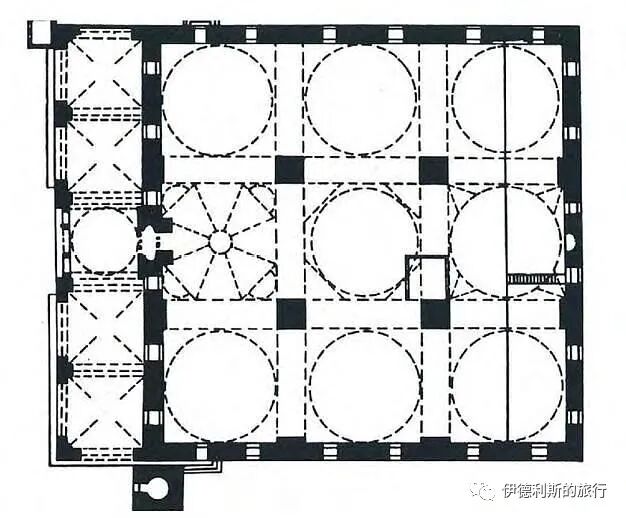
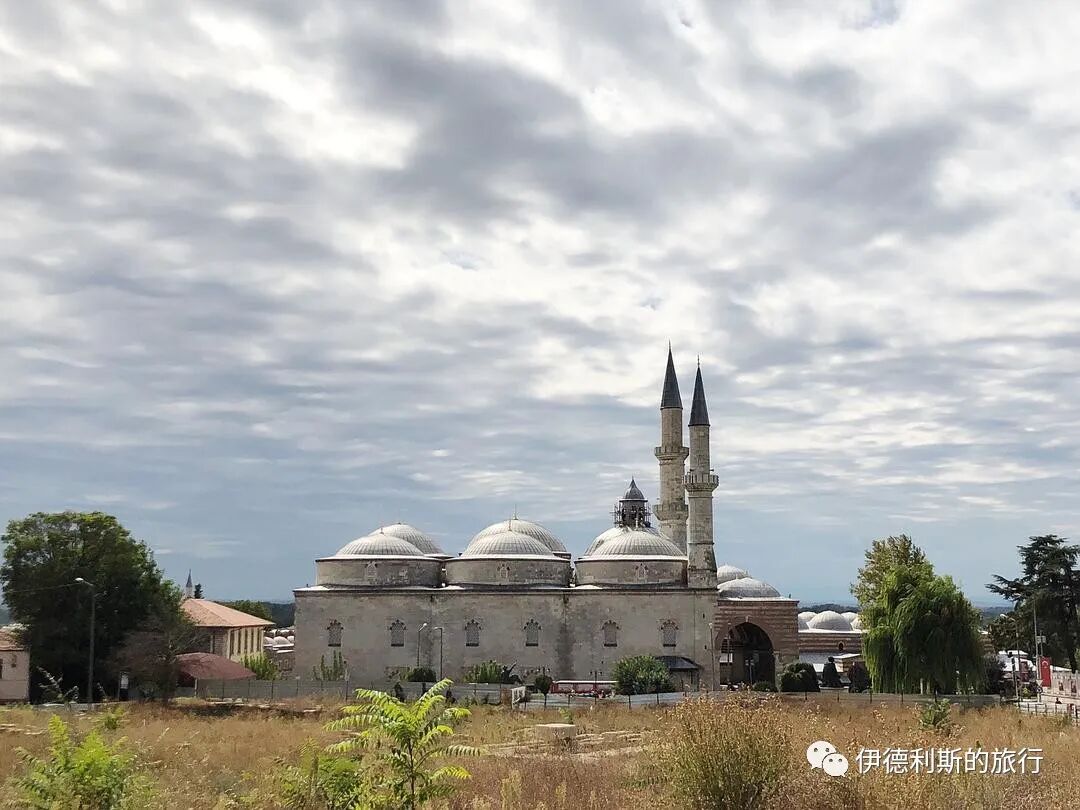
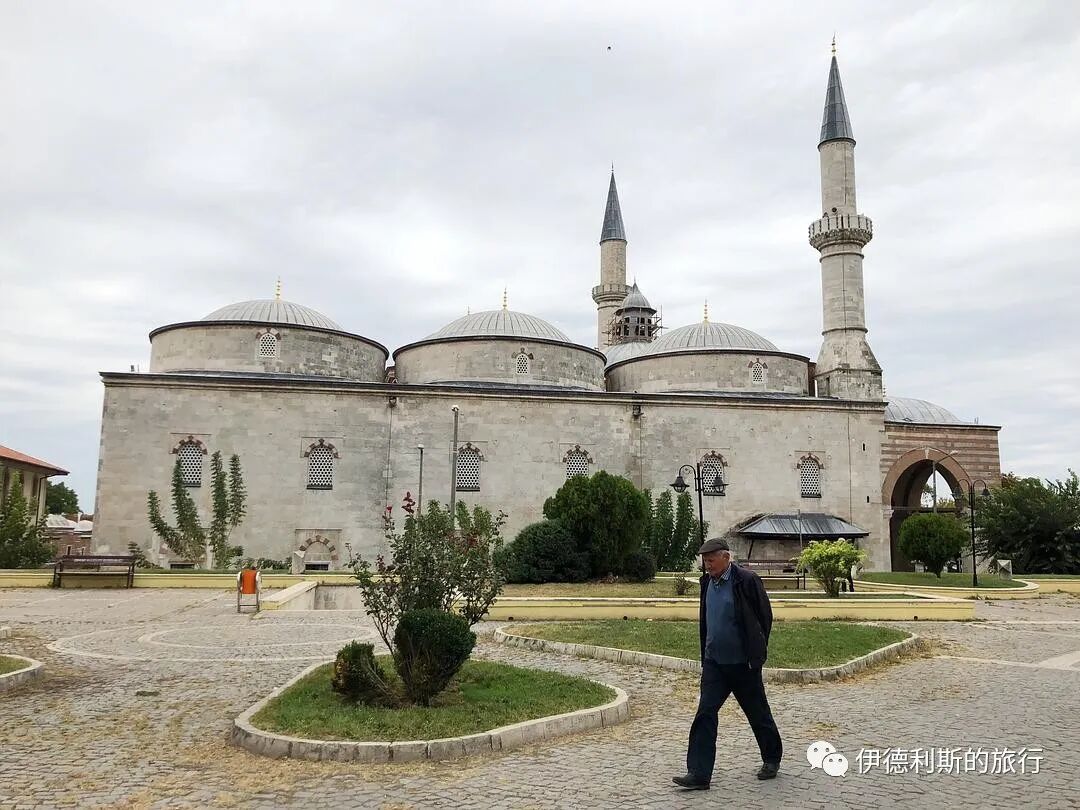
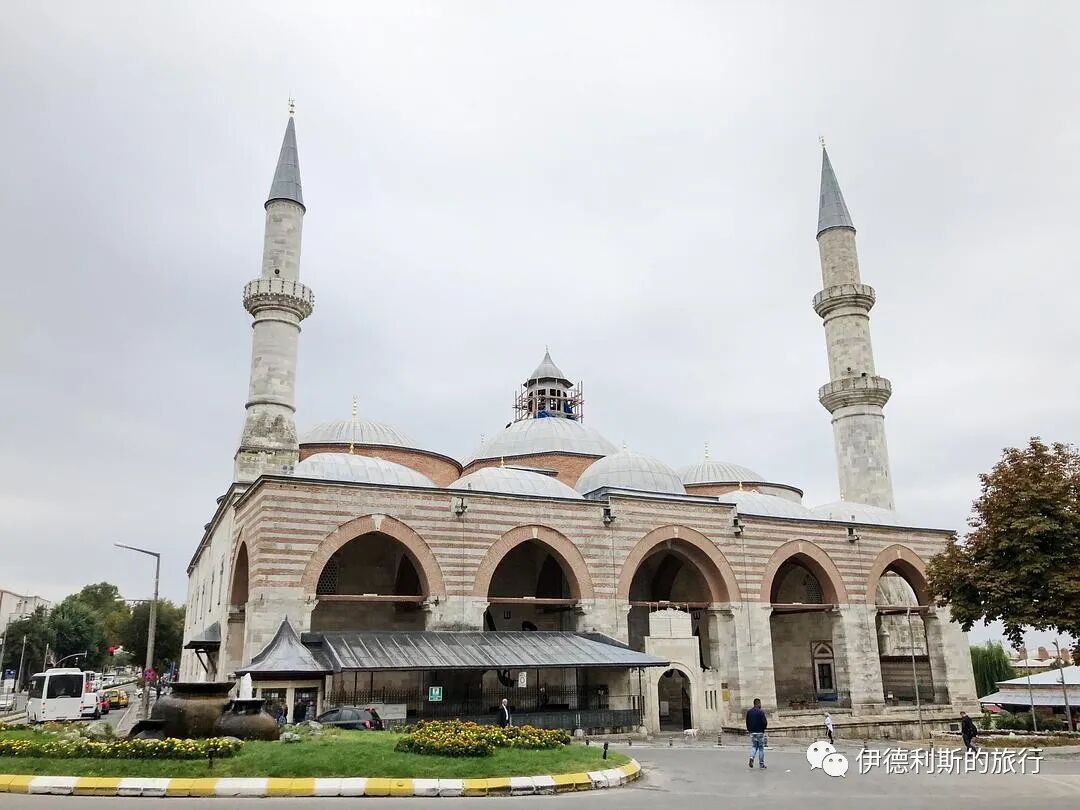
Inside the main hall
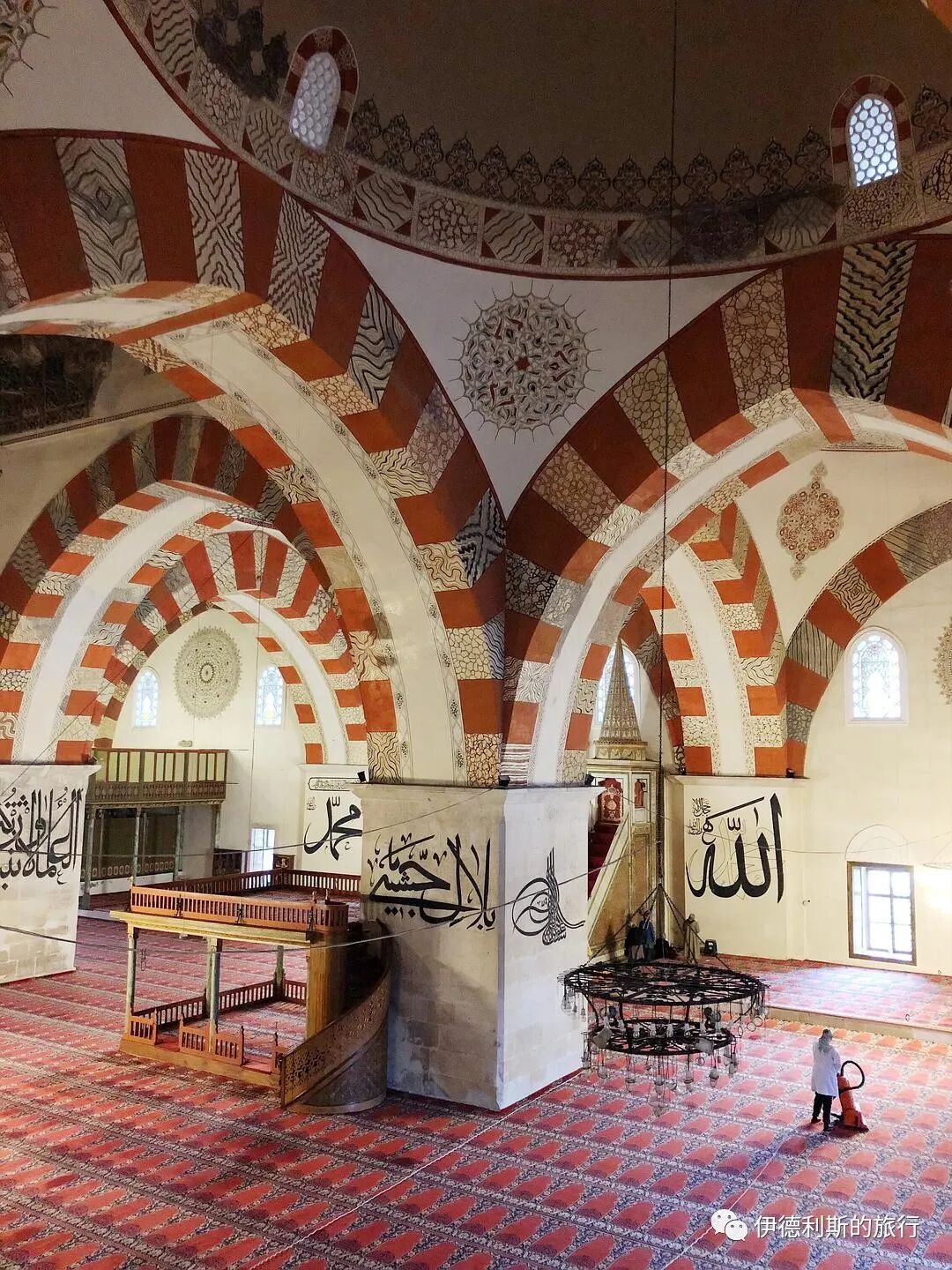
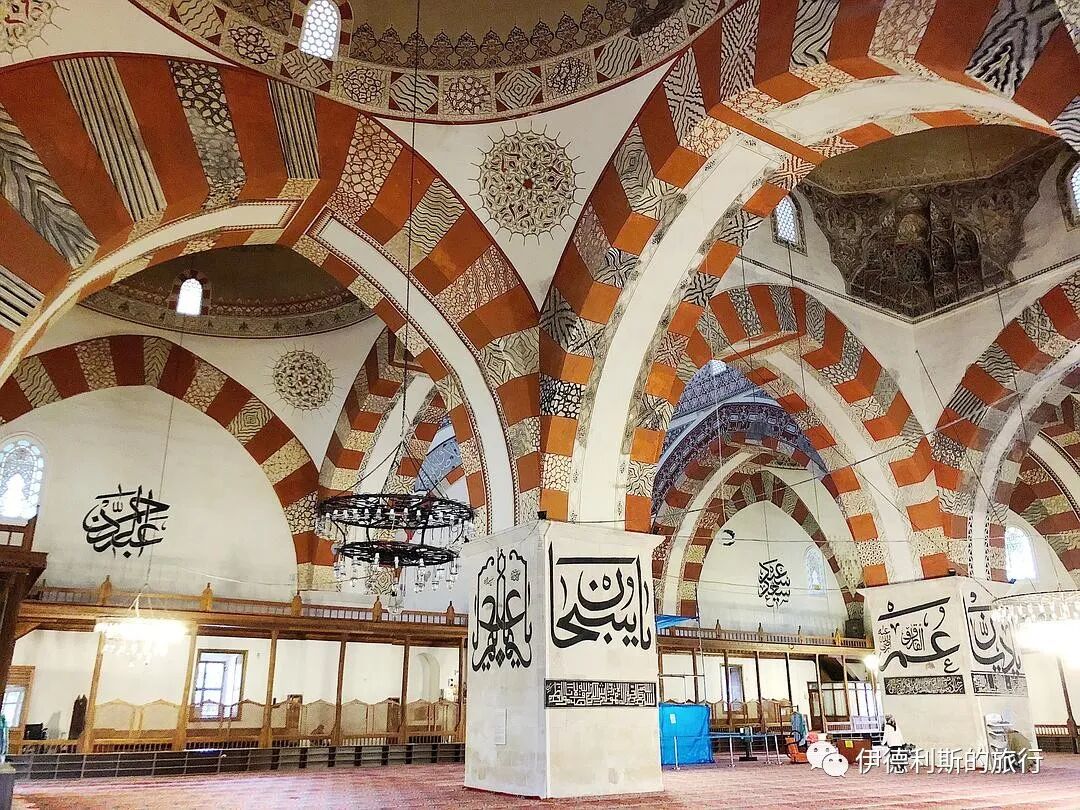
Dome
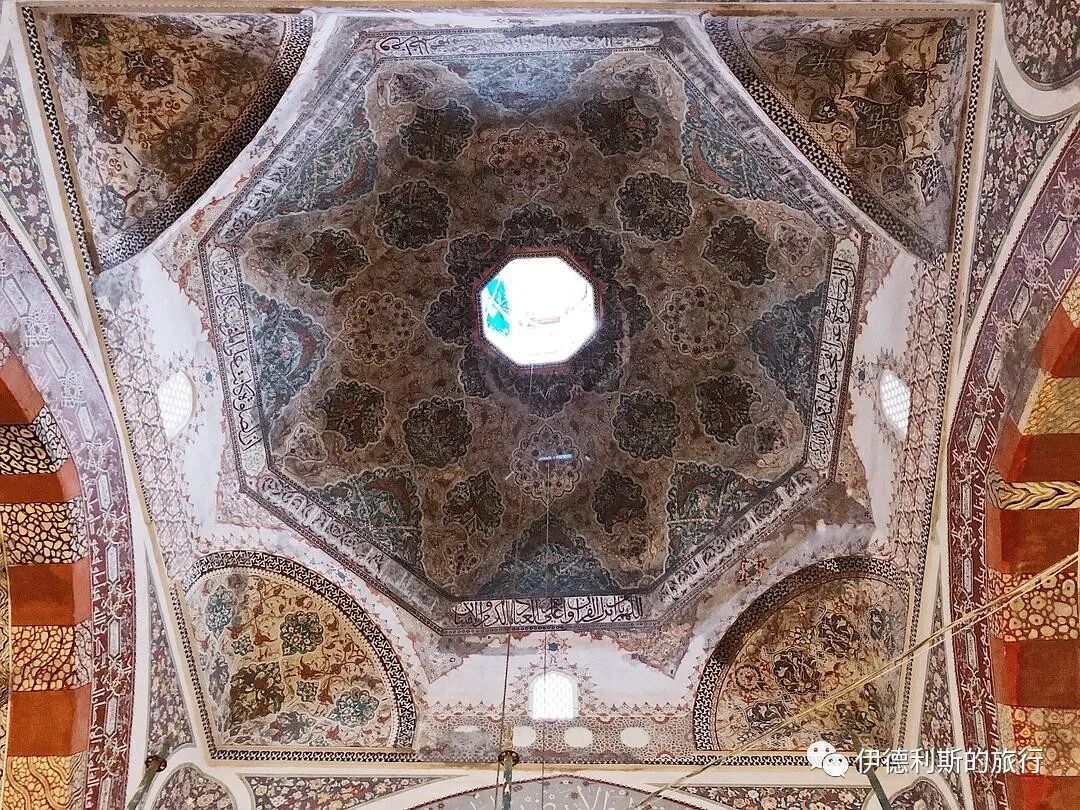
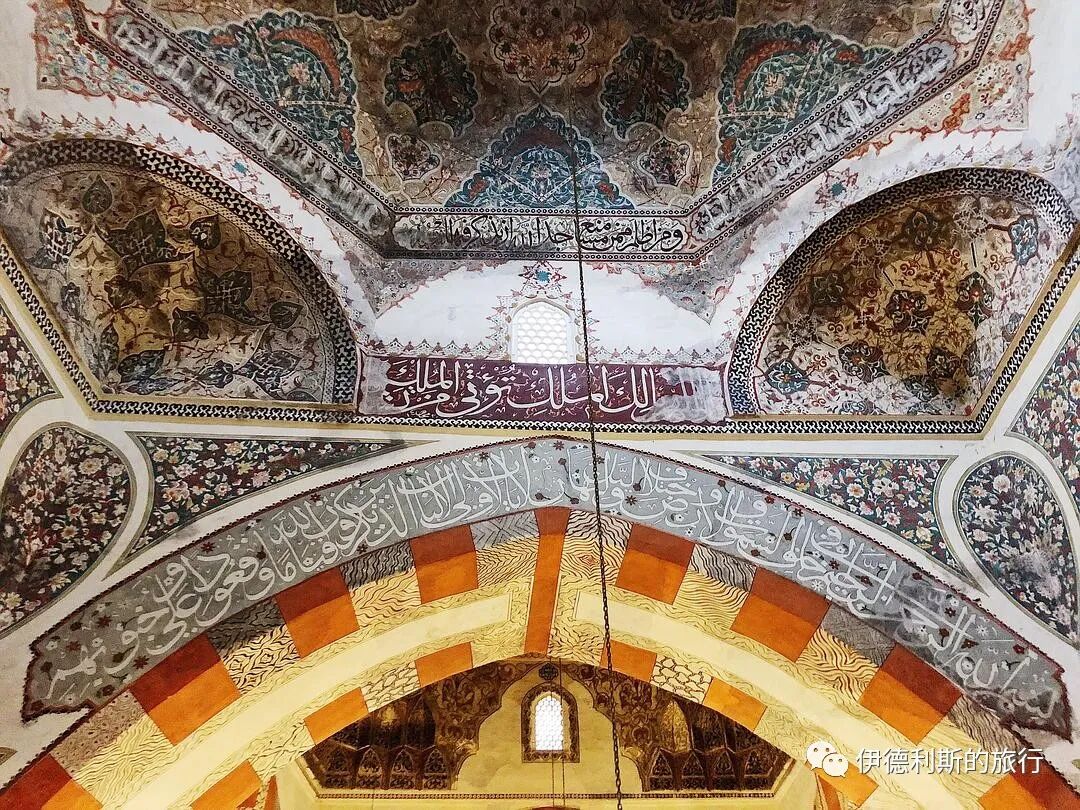
Old murals
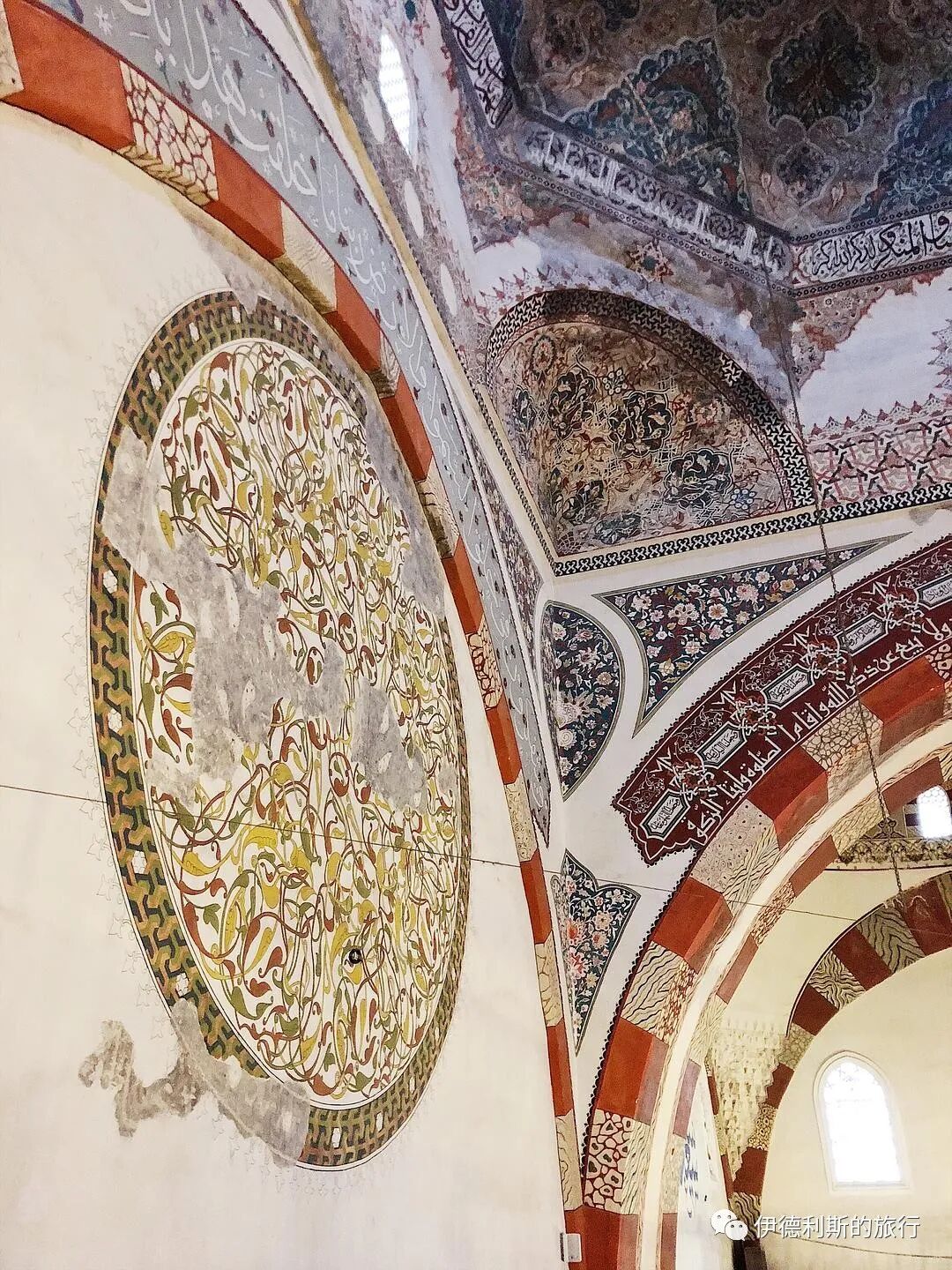
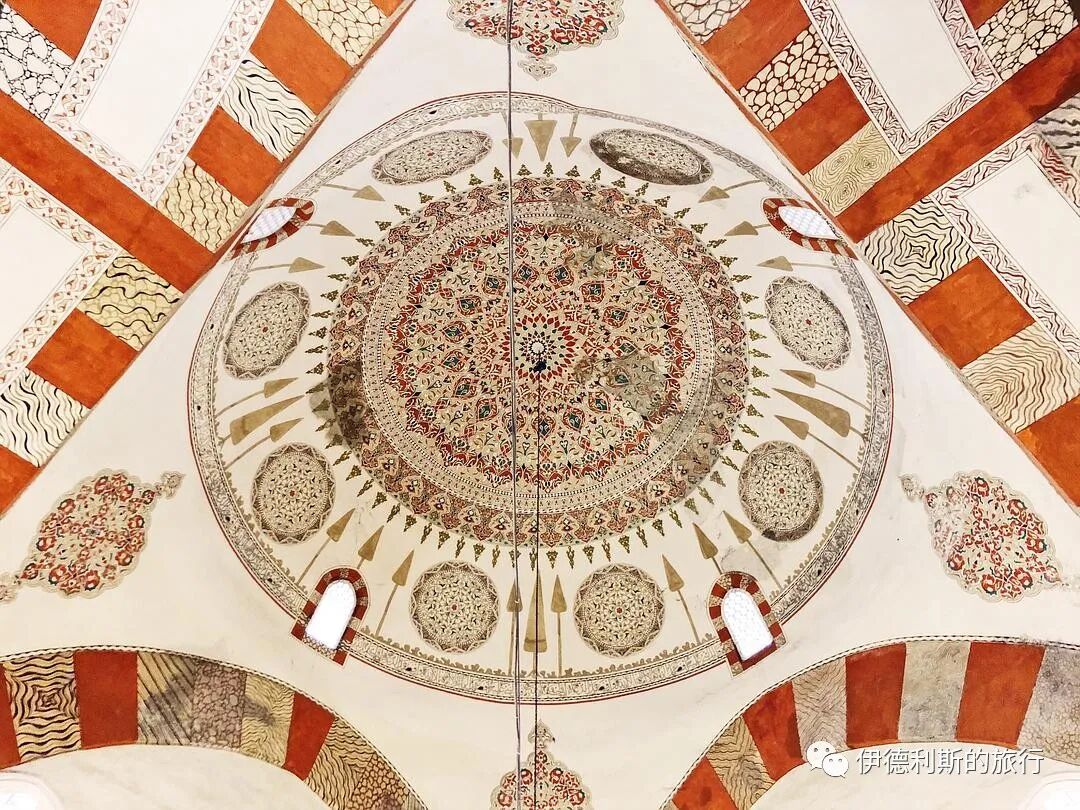
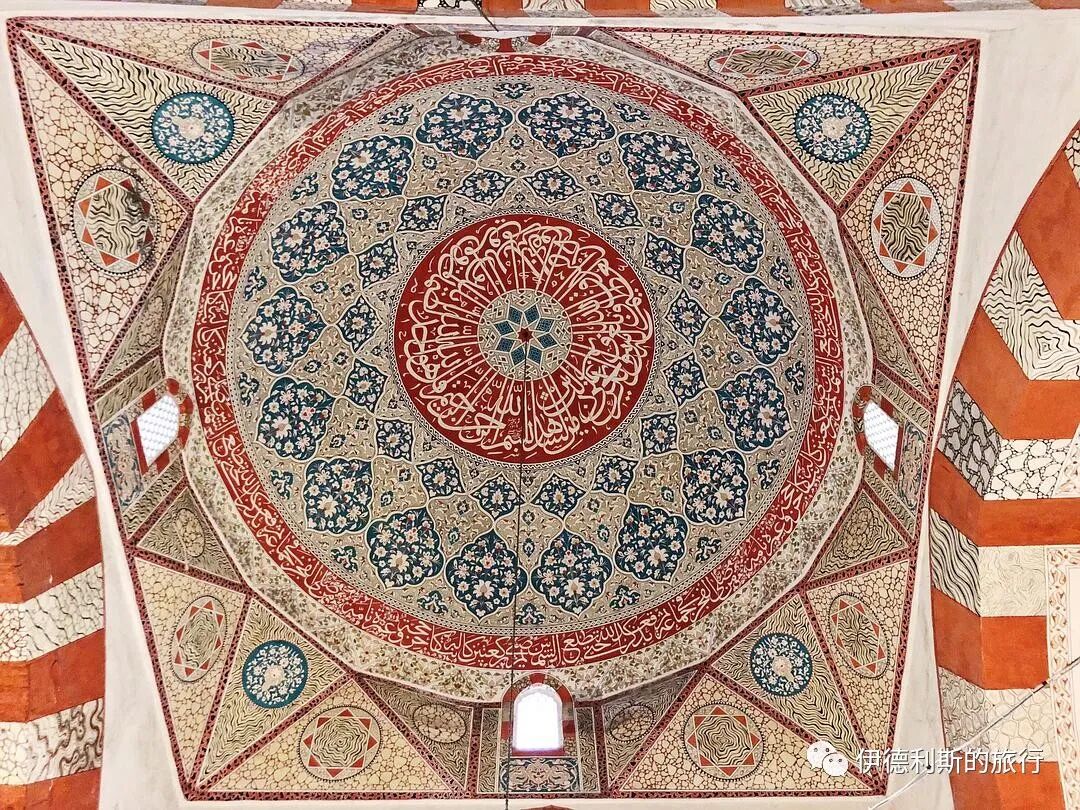
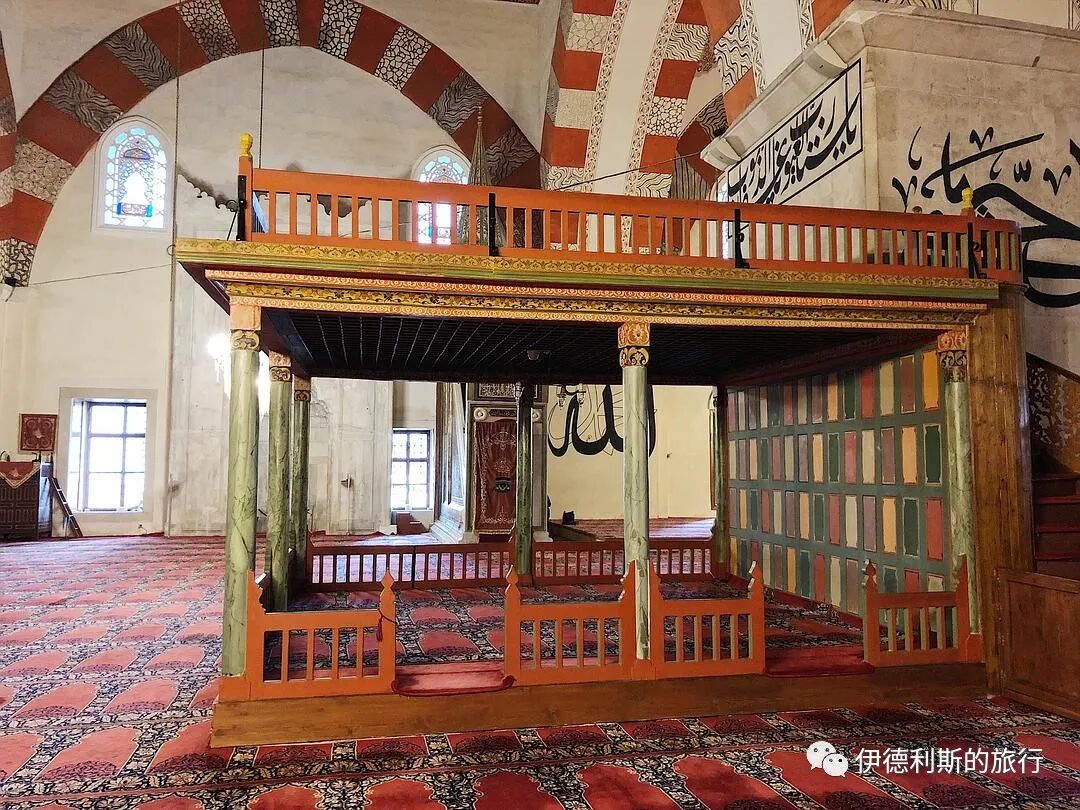
Mihrab
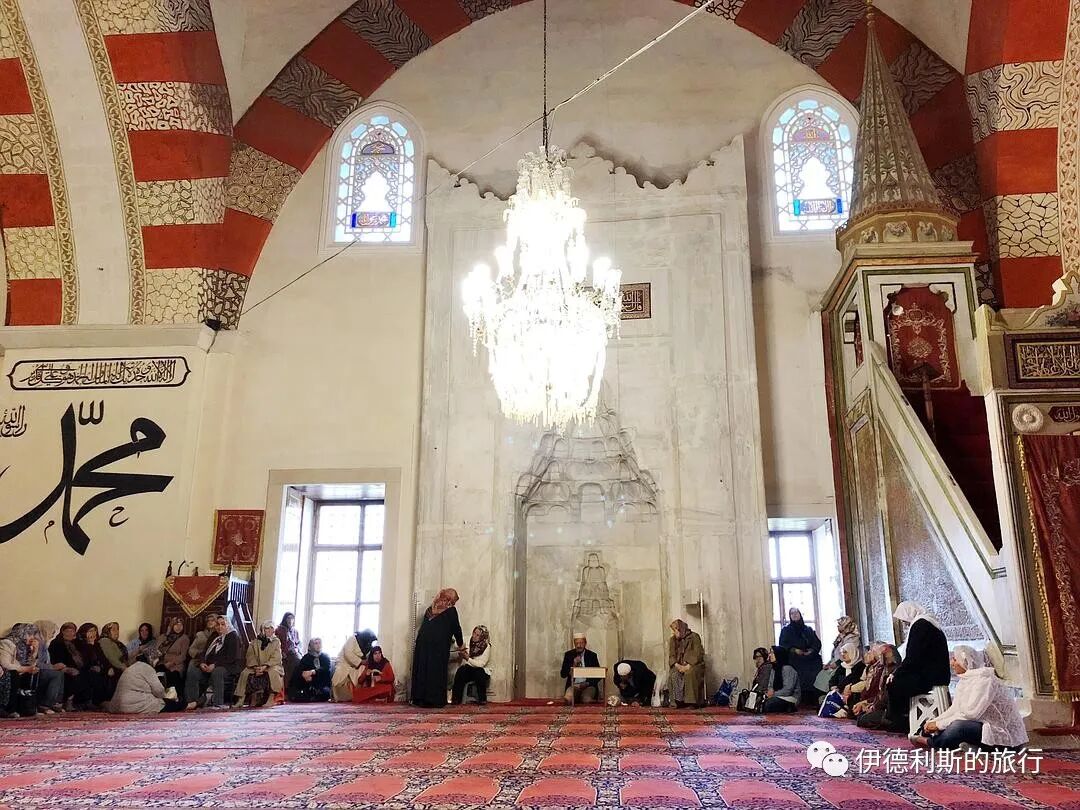
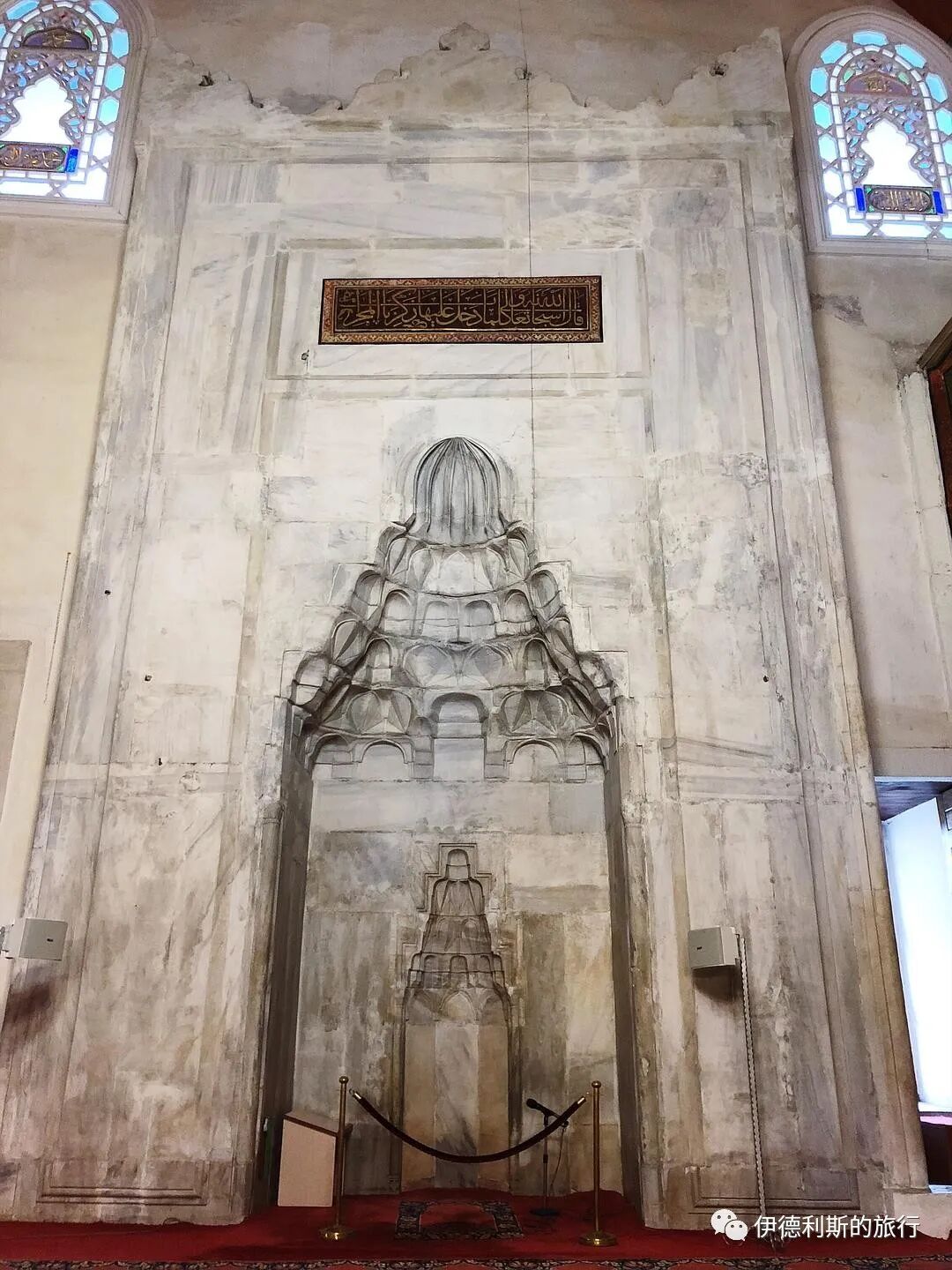
Minbar
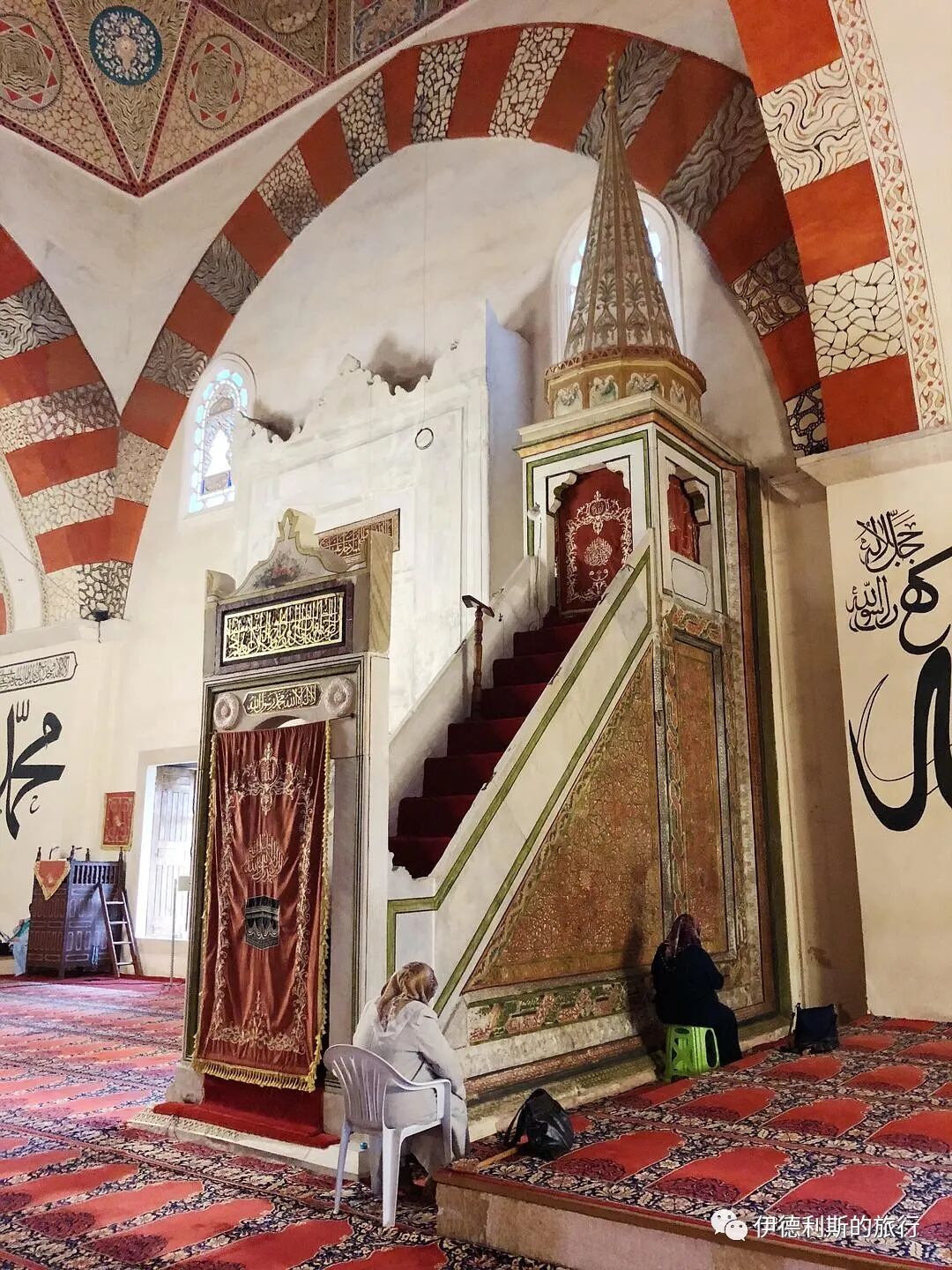
When I visited, I happened to catch a group of aunties listening to the imam's chanting in the mosque, so I sat down and listened for a while too. As soon as I sat down, aunties kept handing out pastries and candies to everyone. Other aunties were busy squeezing hand sanitizer and passing out napkins, so I received all kinds of pastries and candies while listening to the melodic chanting. Even though we could not speak the same language, I felt very warm inside.
2. Covered market (Bedesten): 1418
The covered market (Bedesten) is right next to the Old Mosque. It was built in 1418 by the fifth Ottoman Sultan, Mehmed I, primarily to support the operations of the Old Mosque.
This building is a classic example of an early Ottoman covered market and has been in use ever since. The building is a rectangle 78 meters long and 41 meters wide, with 14 domes on top and 54 shops along the four sides. It underwent a major renovation in 2007.
3. Rüstem Pasha Caravanserai (Rüstem Paşa Kervansarayı): 1561
The Rustem Pasha Caravanserai (Rüstem Paşa Kervansarayı) was ordered to be built in 1561 by the Ottoman Grand Vizier Rustem Pasha (Rüstem Paşa) and designed by the famous architect Mimar Sinan.
The caravanserai has two floors, with 102 guest rooms inside and 21 shops on the outside. Today, the interior is a hotel, and the shops on the outside are still operating.
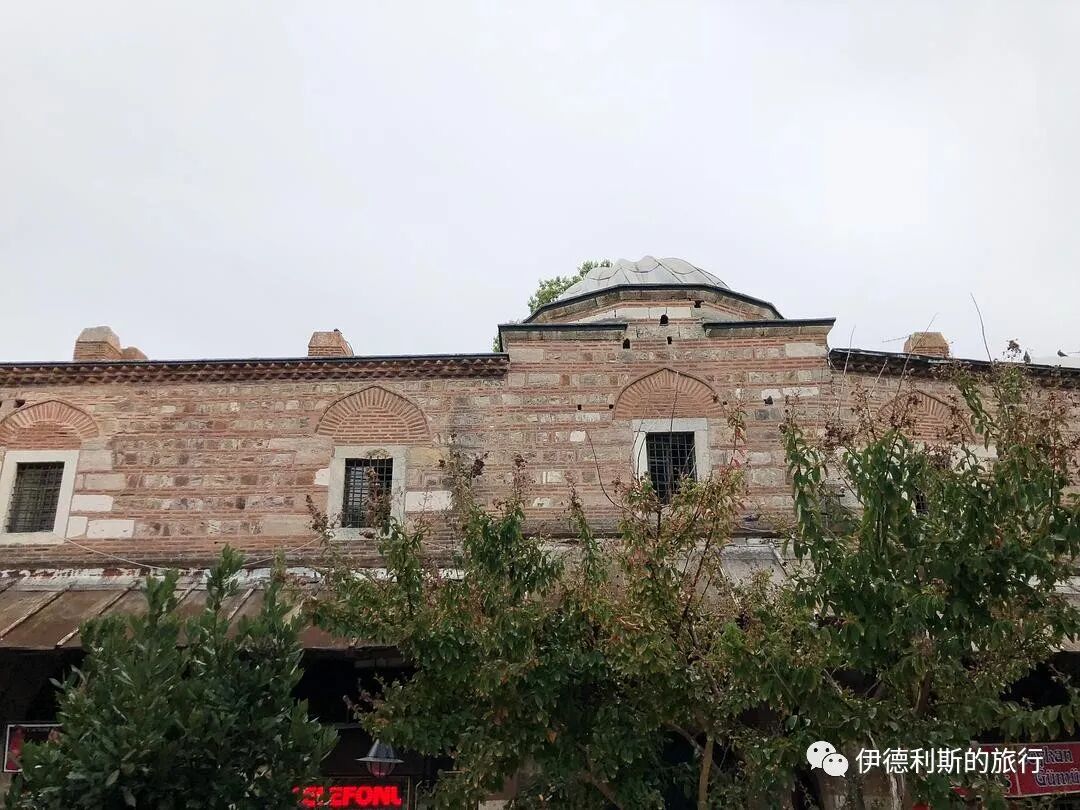
4. Ali Pasha Bazaar (Ali Paşa Çarşısı): 1569
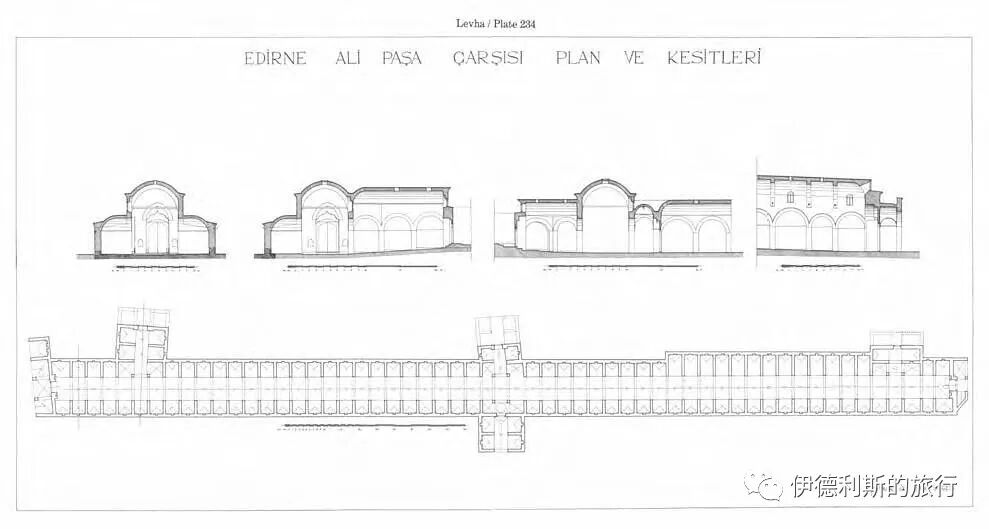
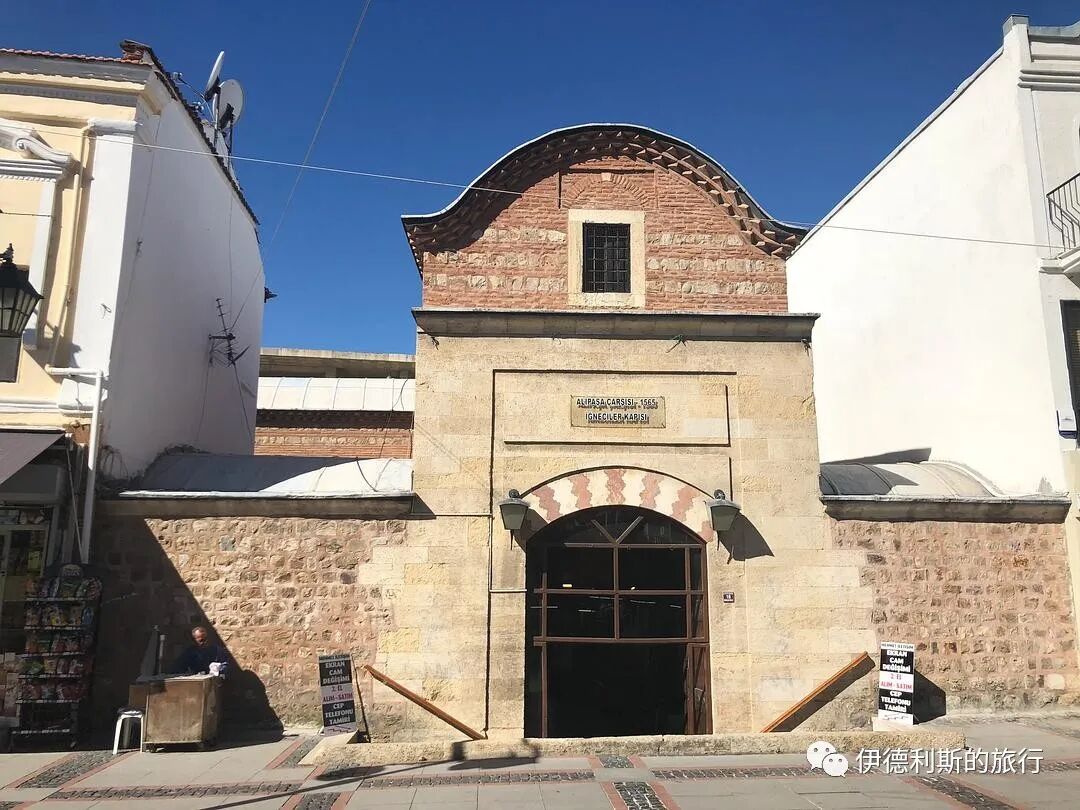
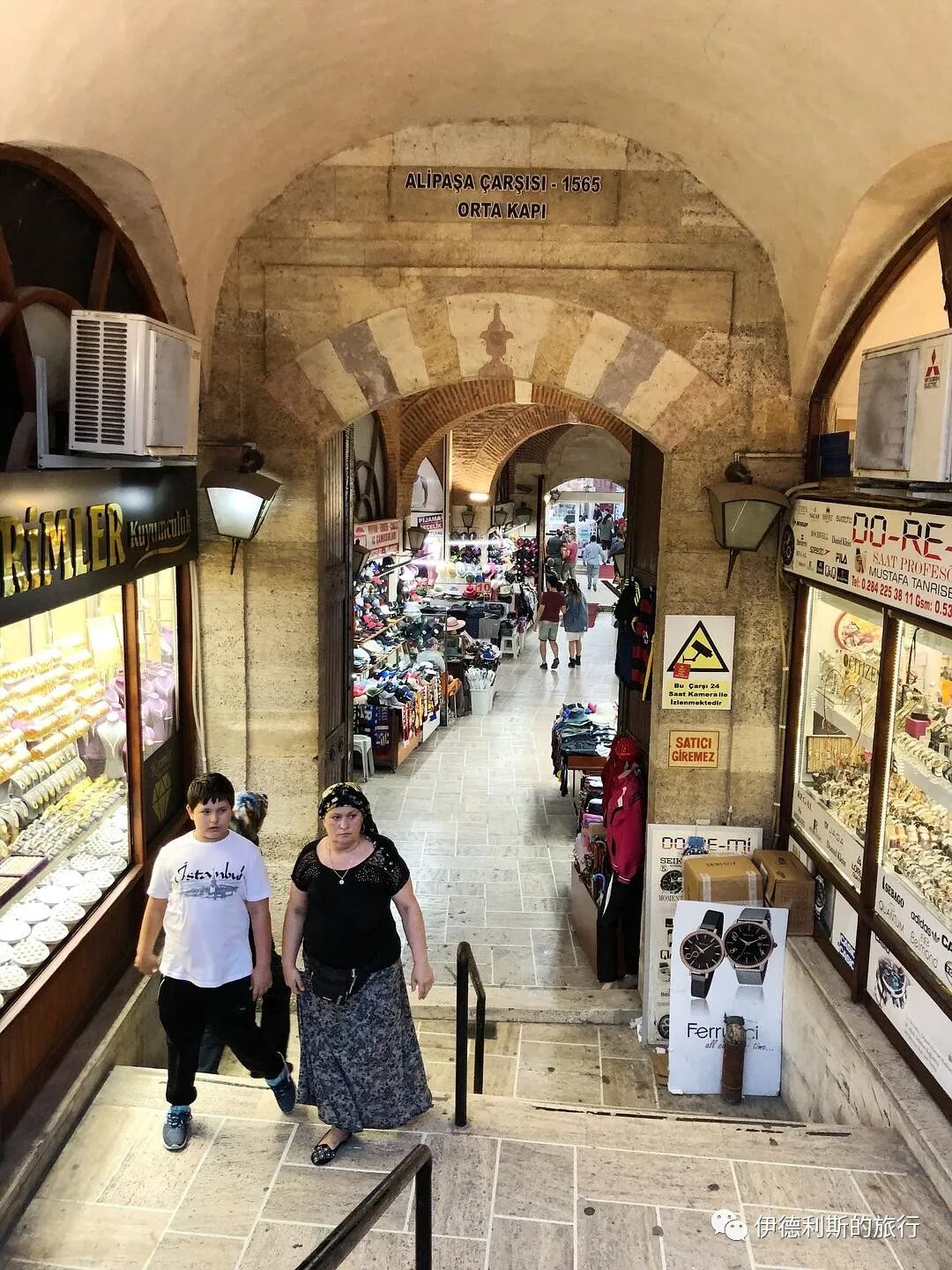
The Ali Pasha Bazaar (Ali Paşa Çarşısı) was ordered to be built in 1569 by the Ottoman Grand Vizier Ali Pasha (Ali Paşa) and designed by the famous architect Mimar Sinan.
The bazaar includes 130 shops and 6 gates. The bazaar caught fire in 1991 and was later rebuilt.
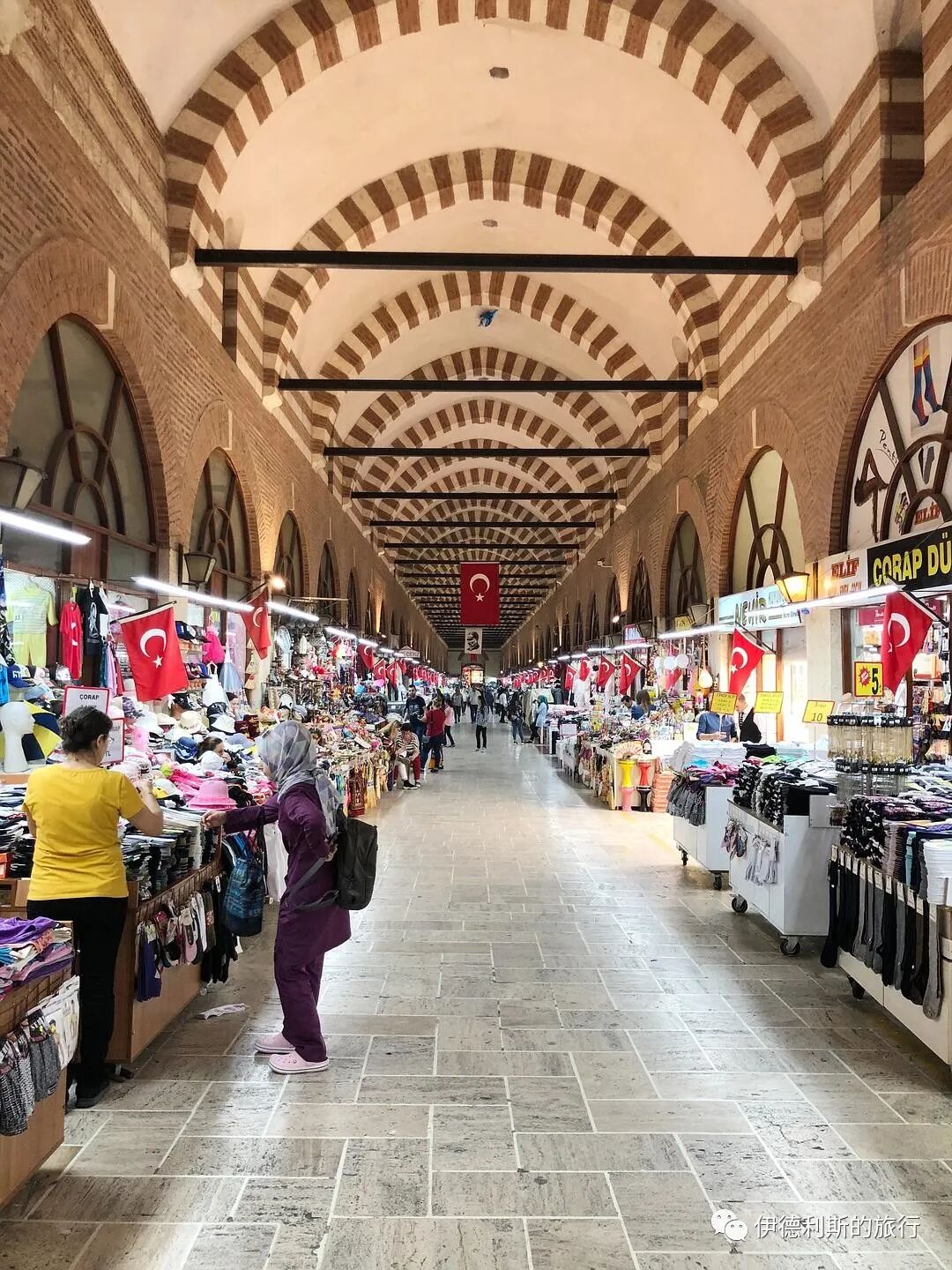
2. Muradiye Mosque: 1436
The Muradiye Mosque (Muradiye Camii) is a small T-shaped mosque on a hill in the north of Edirne, ordered to be built in 1436 by the sixth Ottoman Sultan, Murad II (reigned 1421-1444). It was originally part of a Sufi Mevlevi order complex before being converted into a mosque.
The Muradiye Mosque was once a complex that included a public kitchen (imaret) and a primary school (mekteb), but today only the mosque remains. It was severely damaged by earthquakes, and the minaret has been rebuilt several times; its current appearance dates from a major renovation in 1957.
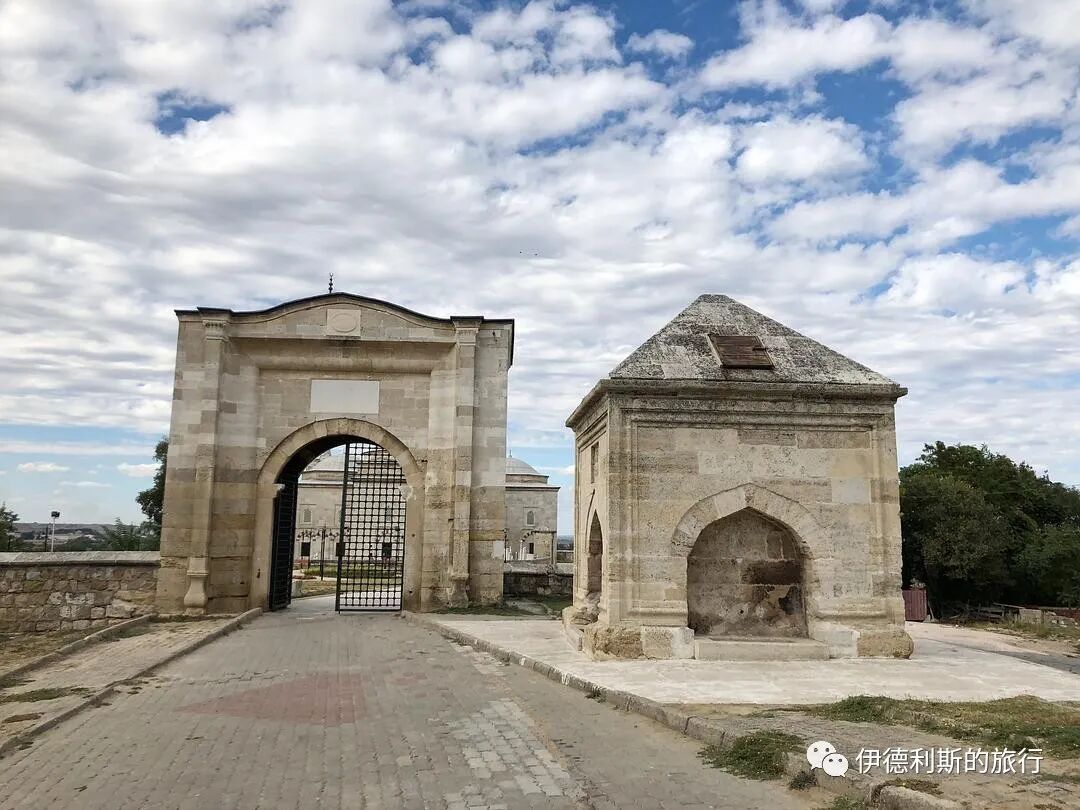
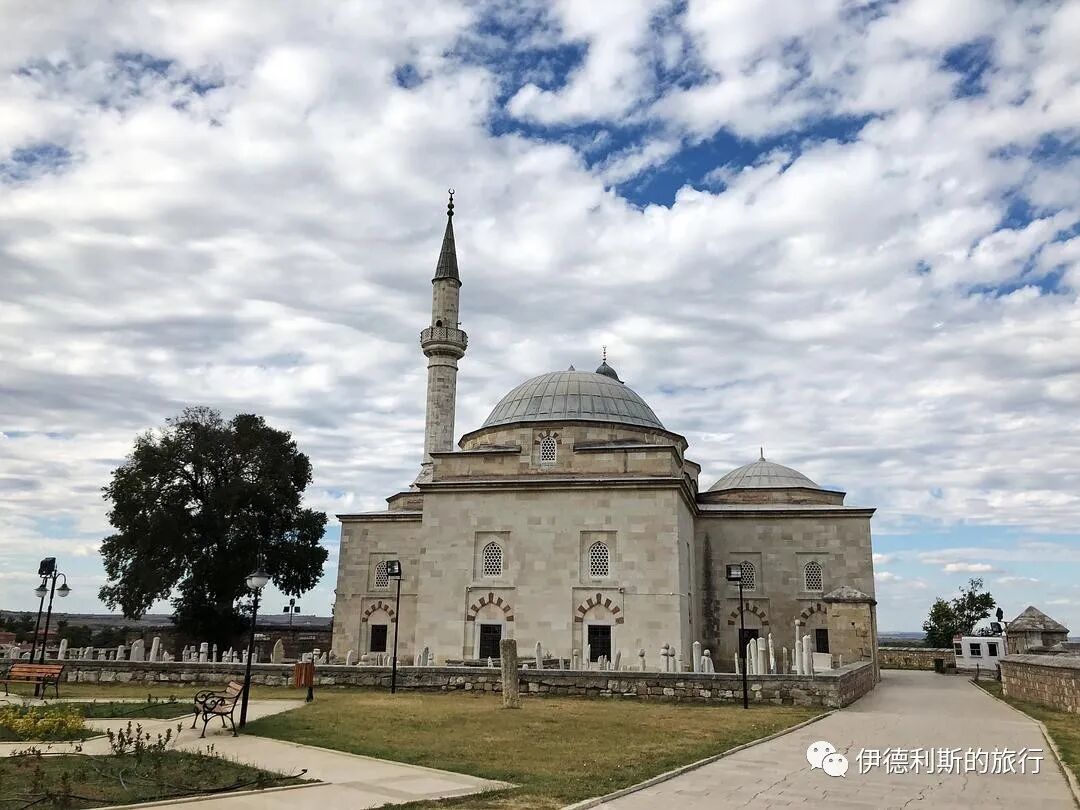
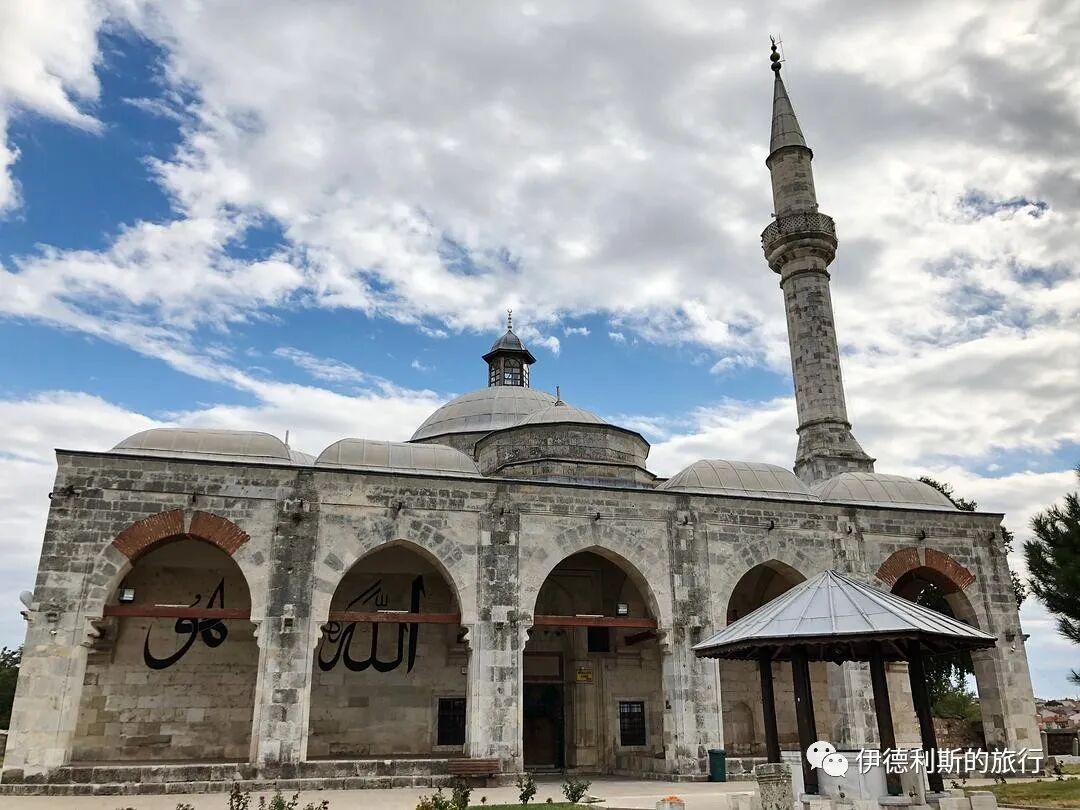
The interior of the mosque is famous for its beautiful tiles. Before they were stolen in 2001, there were 479 tiles in the main hall with 54 different designs, 15 of which appeared only once, showing a strong influence from Yuan dynasty blue and white porcelain. The blue and white hexagonal tiles are the earliest examples of underglaze tiles in the Ottoman period. Because some tiles are arranged inconsistently, some scholars believe part of them were moved here from the Ottoman palace in Edirne in the north.
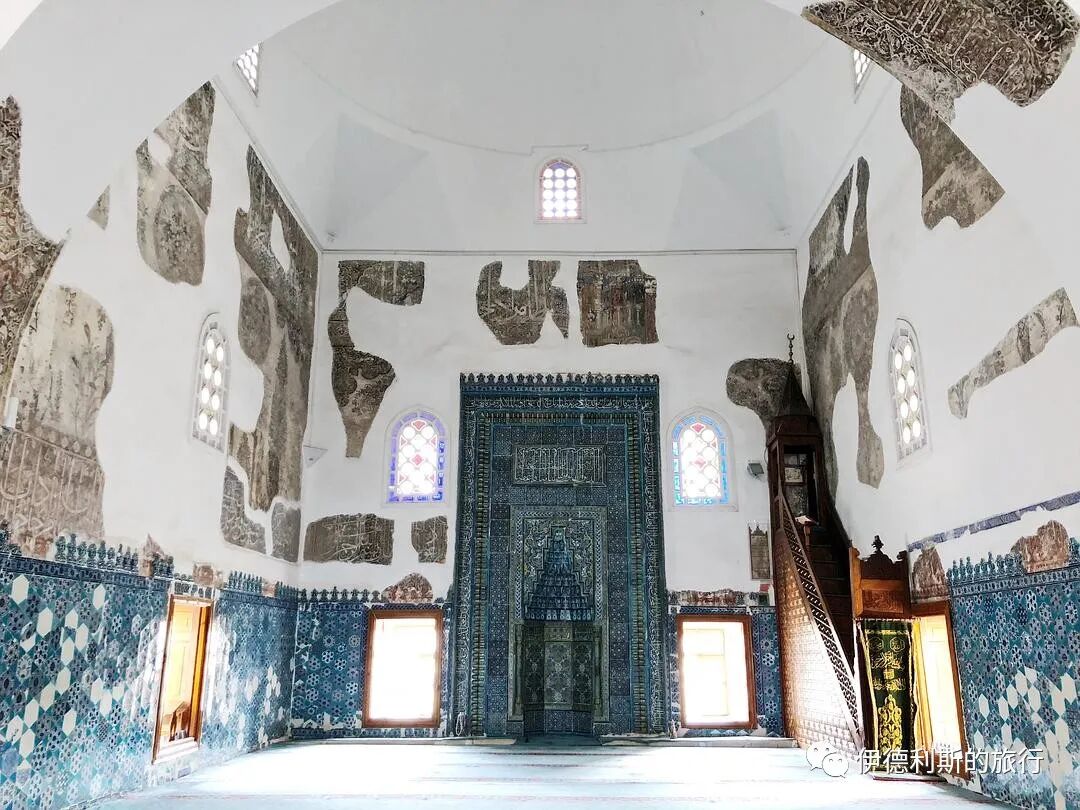
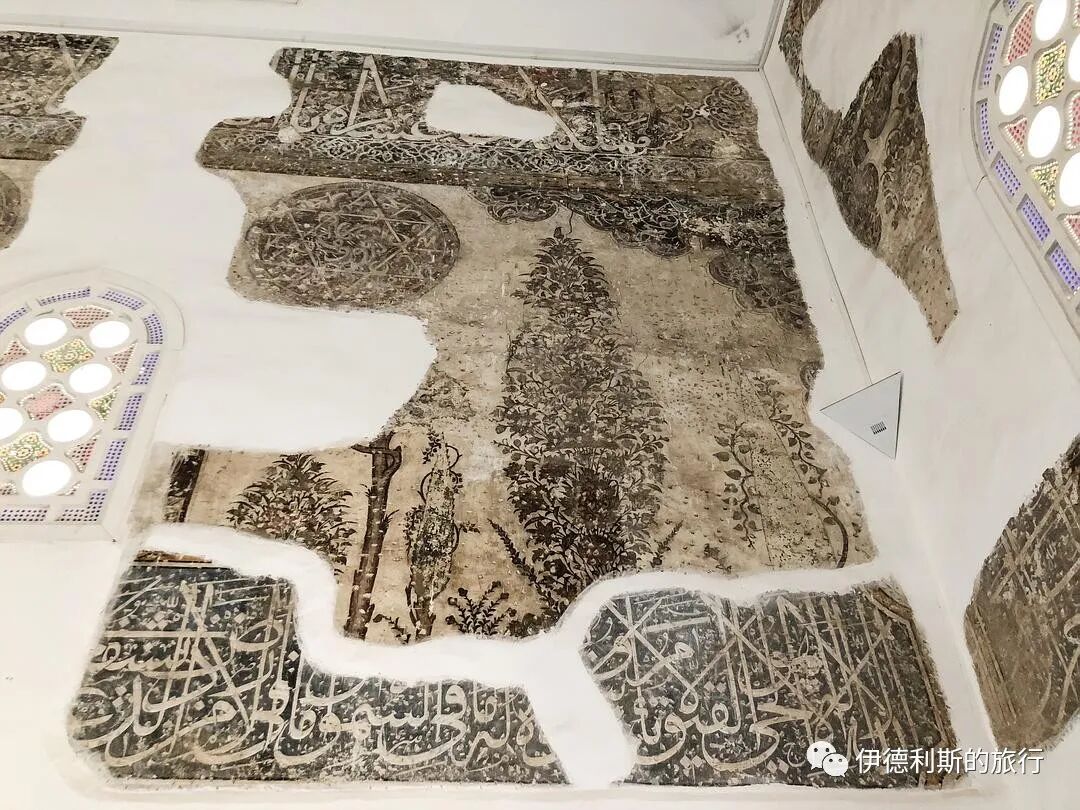
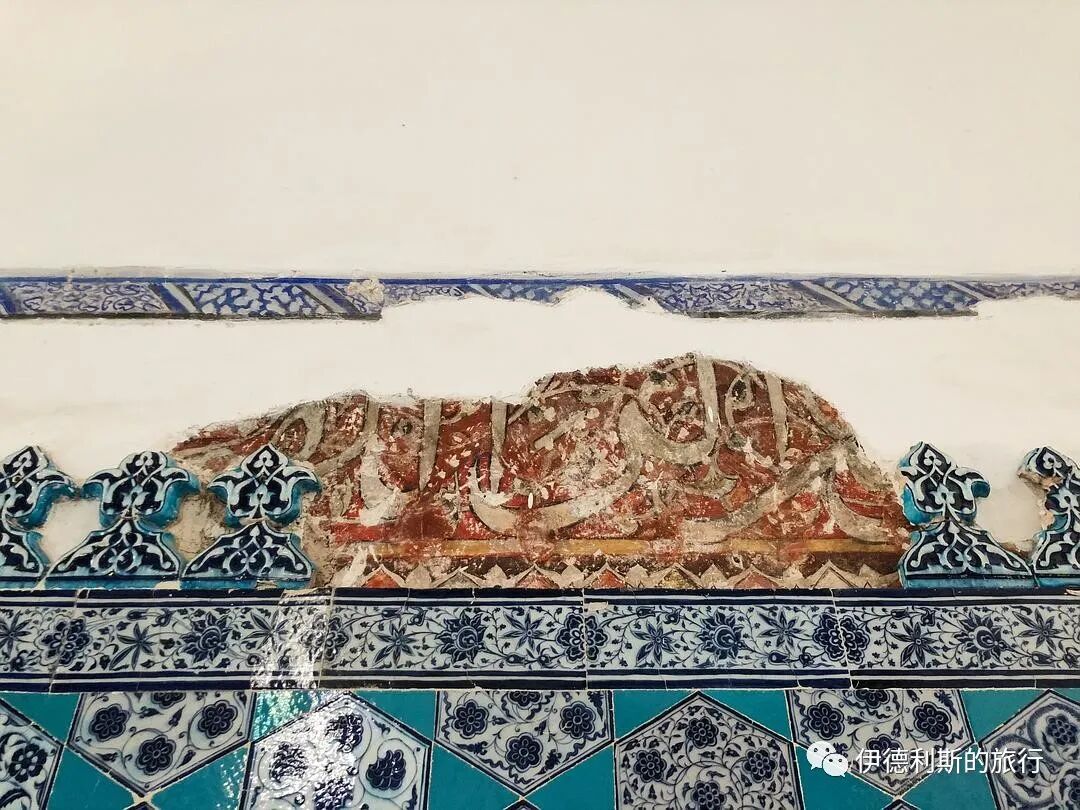
The mosque preserves a 15th-century mihrab covered in tiles, which bears the name of Sultan Murad II. The Cuerda Seca style of the mihrab tiles is very similar to the Green Mosque (Yeşil Camii) in Bursa, built in 1421, and was likely made by the same team of craftsmen. The mihrab of the Green Mosque in Bursa was reportedly designed by a master from Tabriz, Iran. Therefore, this master likely traveled to Edirne to design the mihrab for the Muradiye Mosque.
3. Three-Balcony Mosque (Üç Şerefeli Cami) complex: construction started in 1438
1. Three-Balcony Mosque (Üç Şerefeli Cami): 1447
The Three-Balcony Mosque (Üç Şerefeli Camii) is known as a major landmark that started a new era of Ottoman architecture, serving as the first mosque in Ottoman history with a central dome and a portico. The mosque was commissioned by the sixth Ottoman Sultan, Murad II (reigned 1421–1444), in 1438 and completed in 1447.
The Three-Balcony Mosque is located not far northwest of the Old Mosque and was the largest mosque in the Ottoman Empire when it was finished. This mosque is considered a pioneer of the classic Ottoman mosque style, being among the first to transition from the Seljuk multi-dome design to a central large dome, featuring a central dome 24 meters in diameter.
The Three-Balcony Mosque gets its name from the three balconies on its minaret. This was the tallest minaret in the Ottoman Empire at the time, standing 76 meters high with 203 steps, and it can be climbed to the balconies using three different paths.
The underglaze tiles of the mosque are very similar in style to those of the Green Mosque in Bursa (1421) and the Muradiye Mosque in Edirne (1436), and were likely all designed by the person known as the Master of Tabriz.
The architectural design of the Three-Balcony Mosque greatly inspired the great 16th-century Ottoman architect Mimar Sinan, who built upon this foundation to eventually create the most magnificent mosques of the Ottoman Empire.
The Three-Balcony Mosque suffered from fire and an earthquake in the mid-18th century and was later restored.
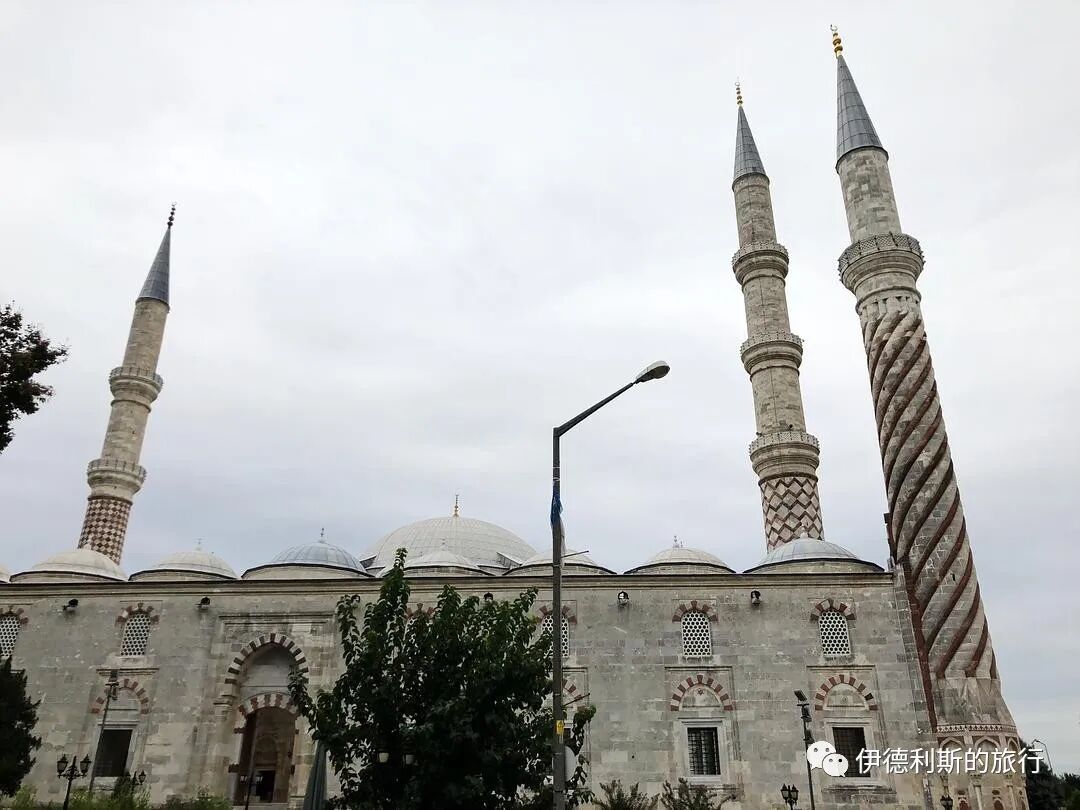
Minaret
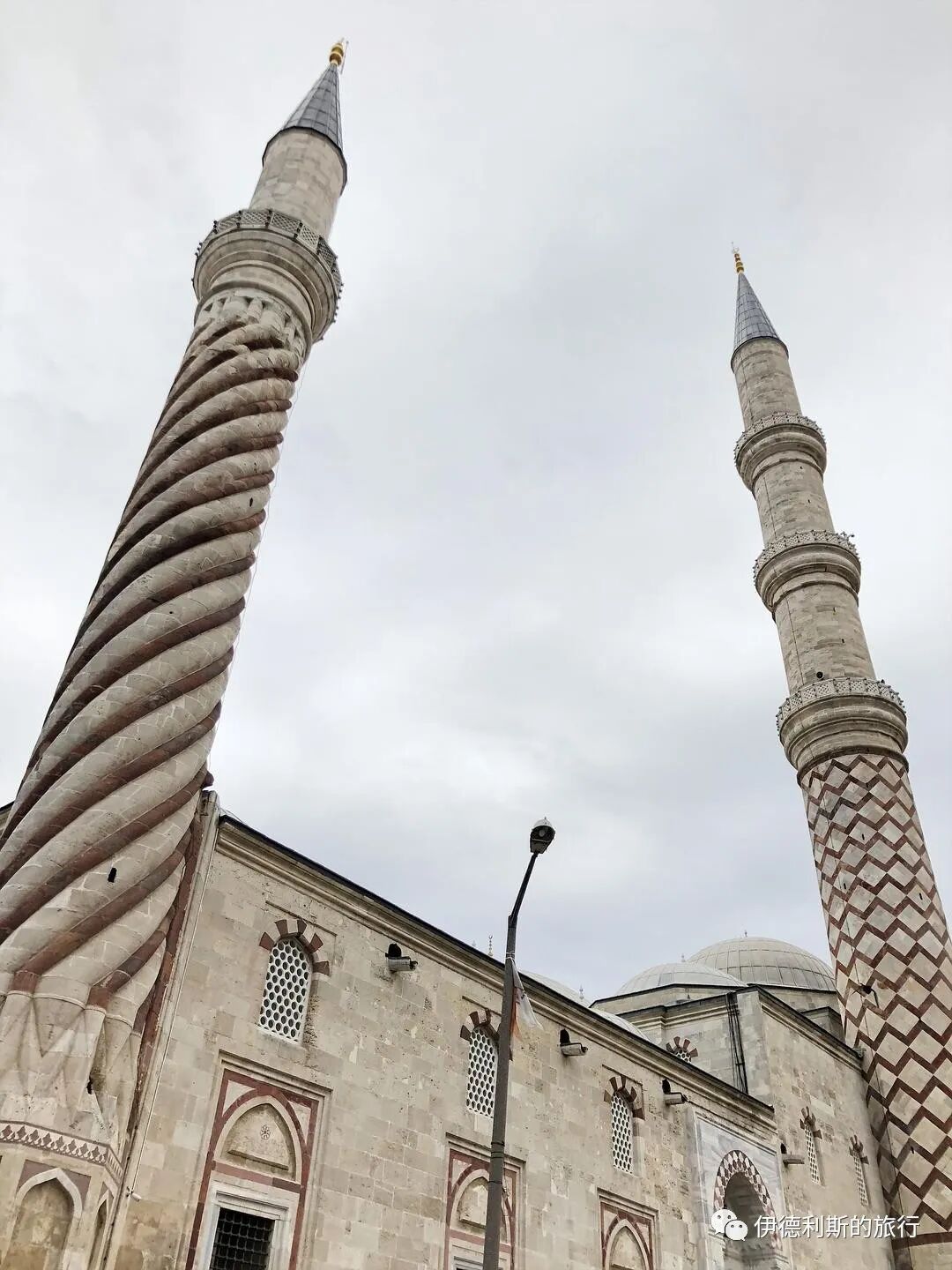
Minaret
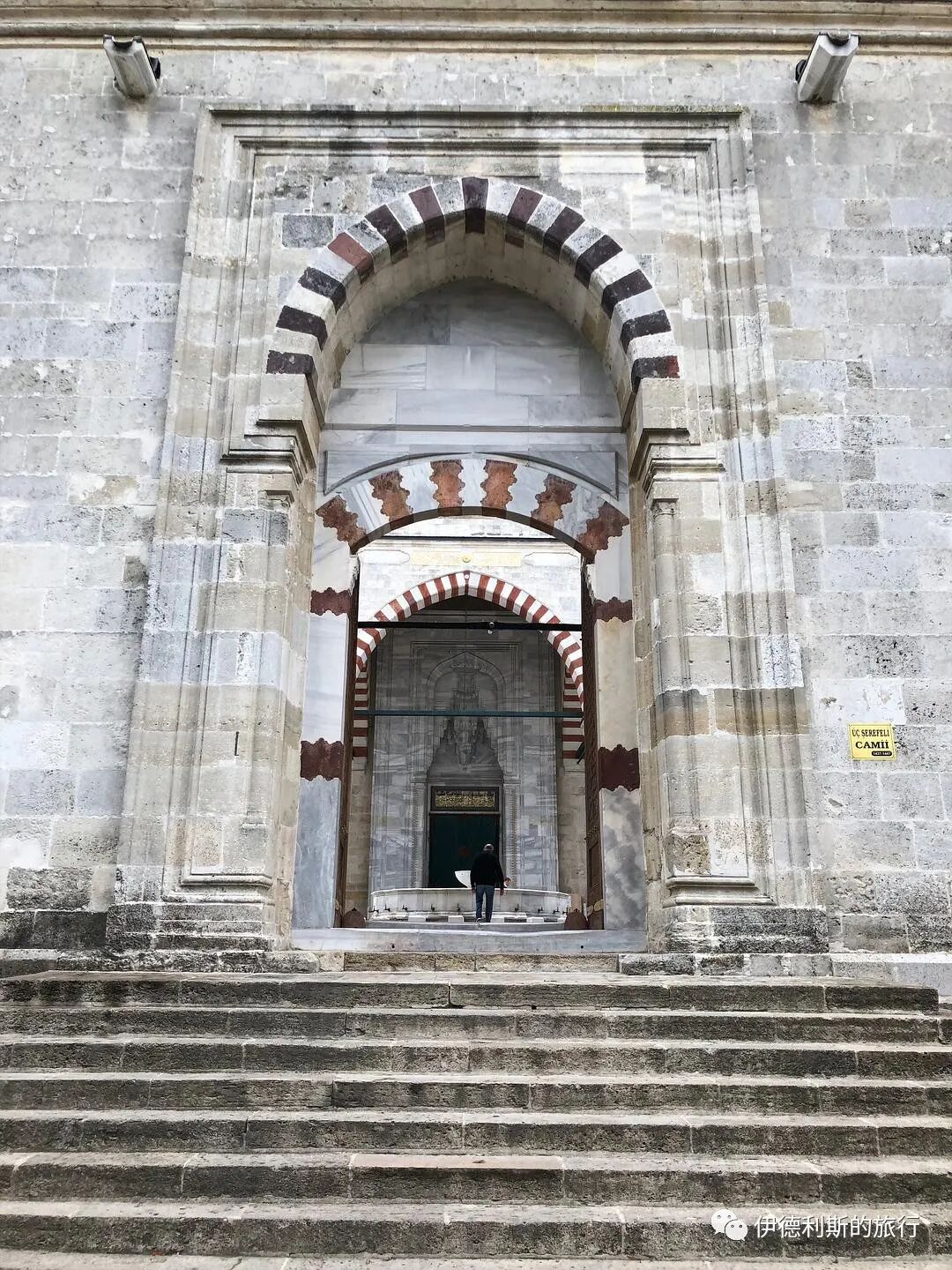
Portico entrance
Side of the portico
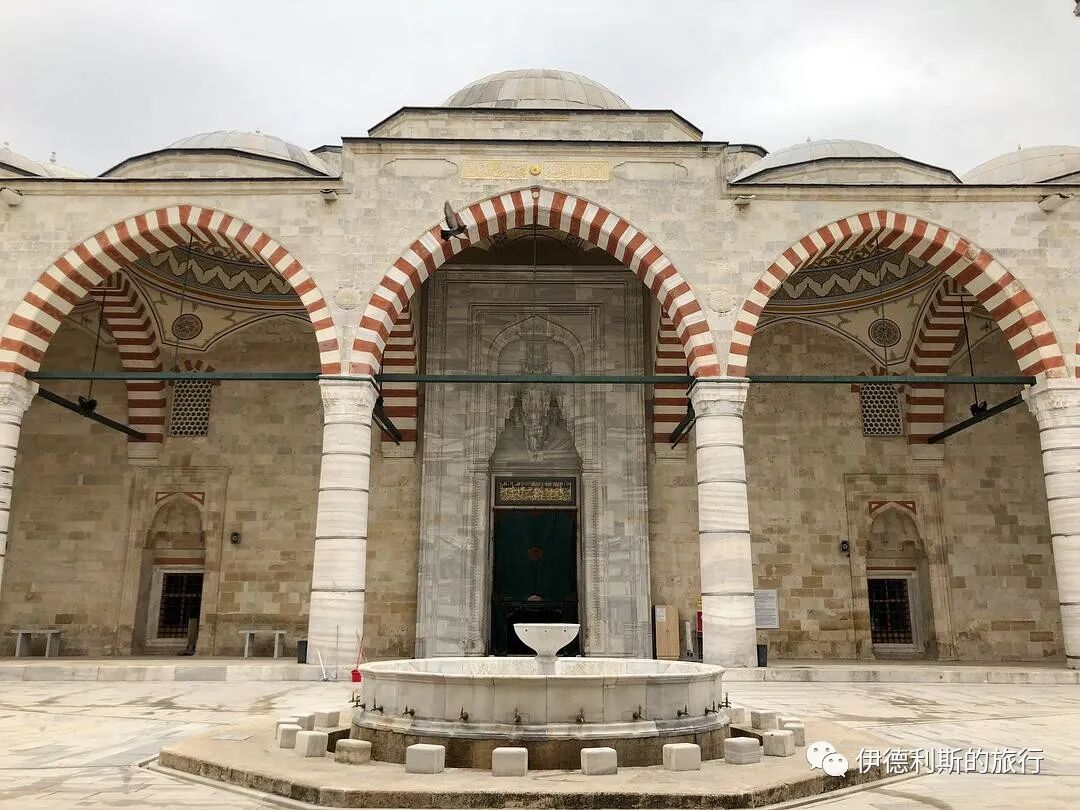
View of the main hall from the portico
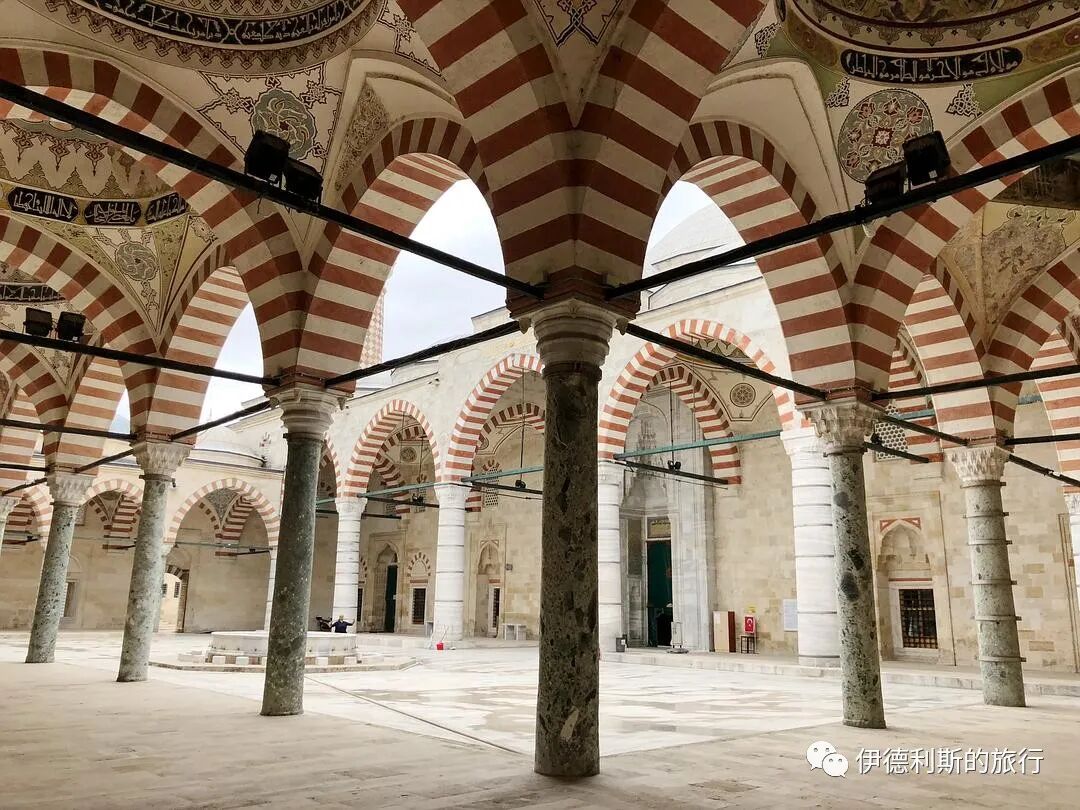
Portico
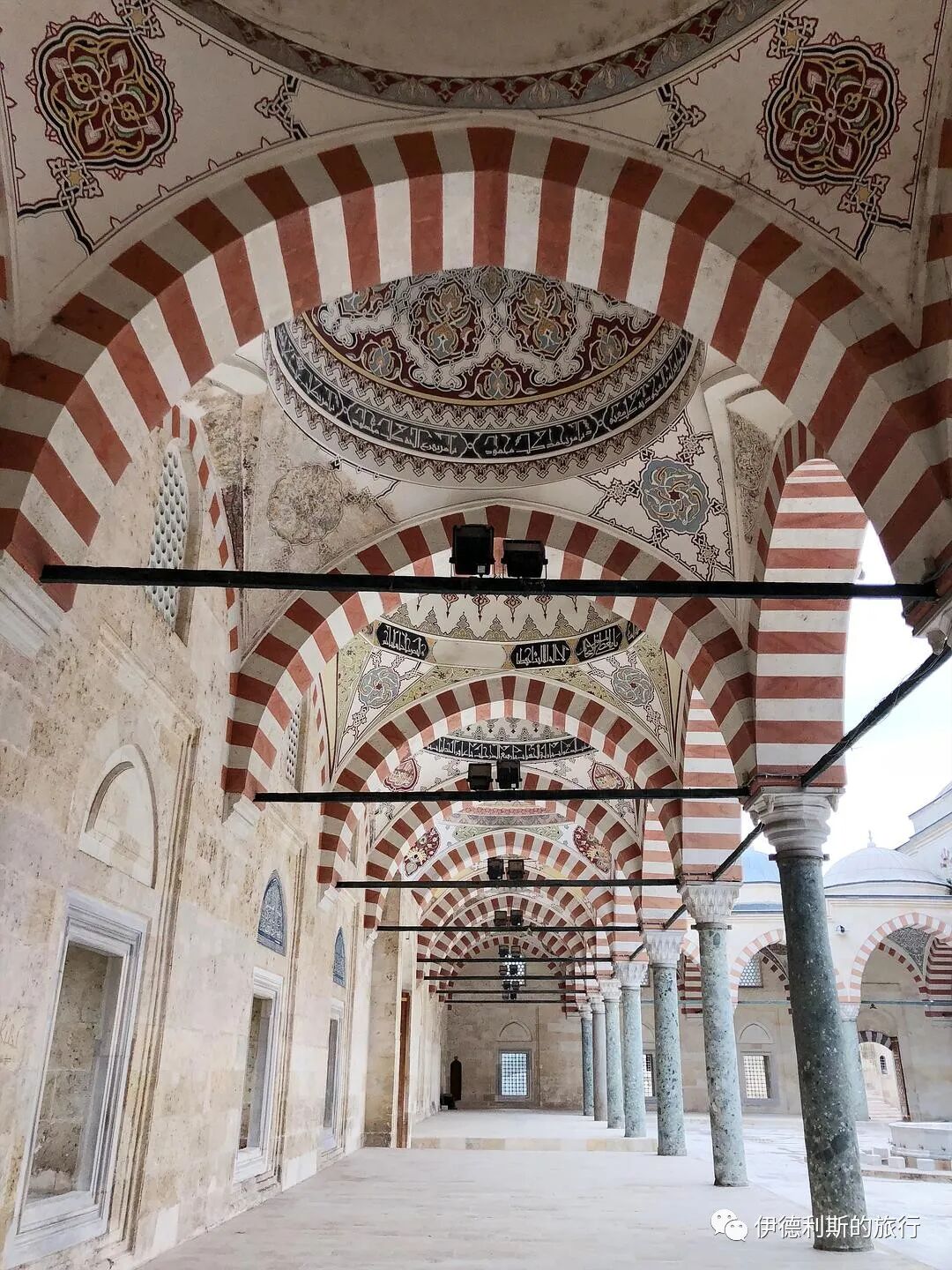
Portico
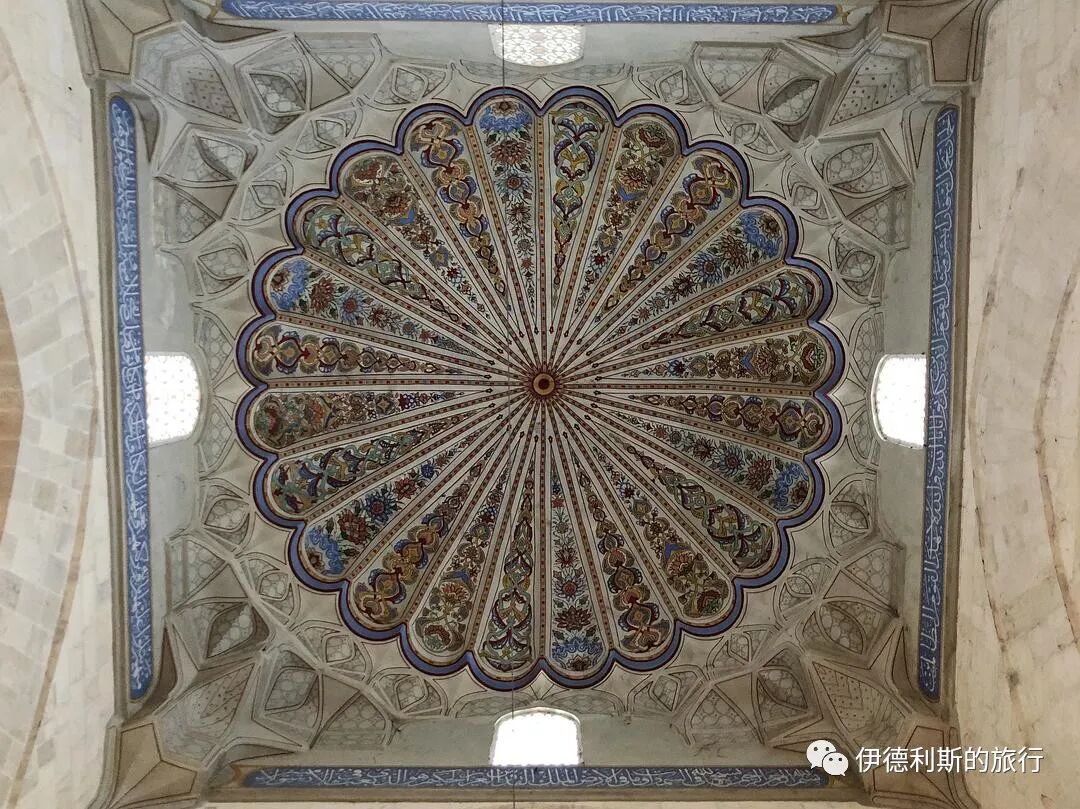
Portico dome
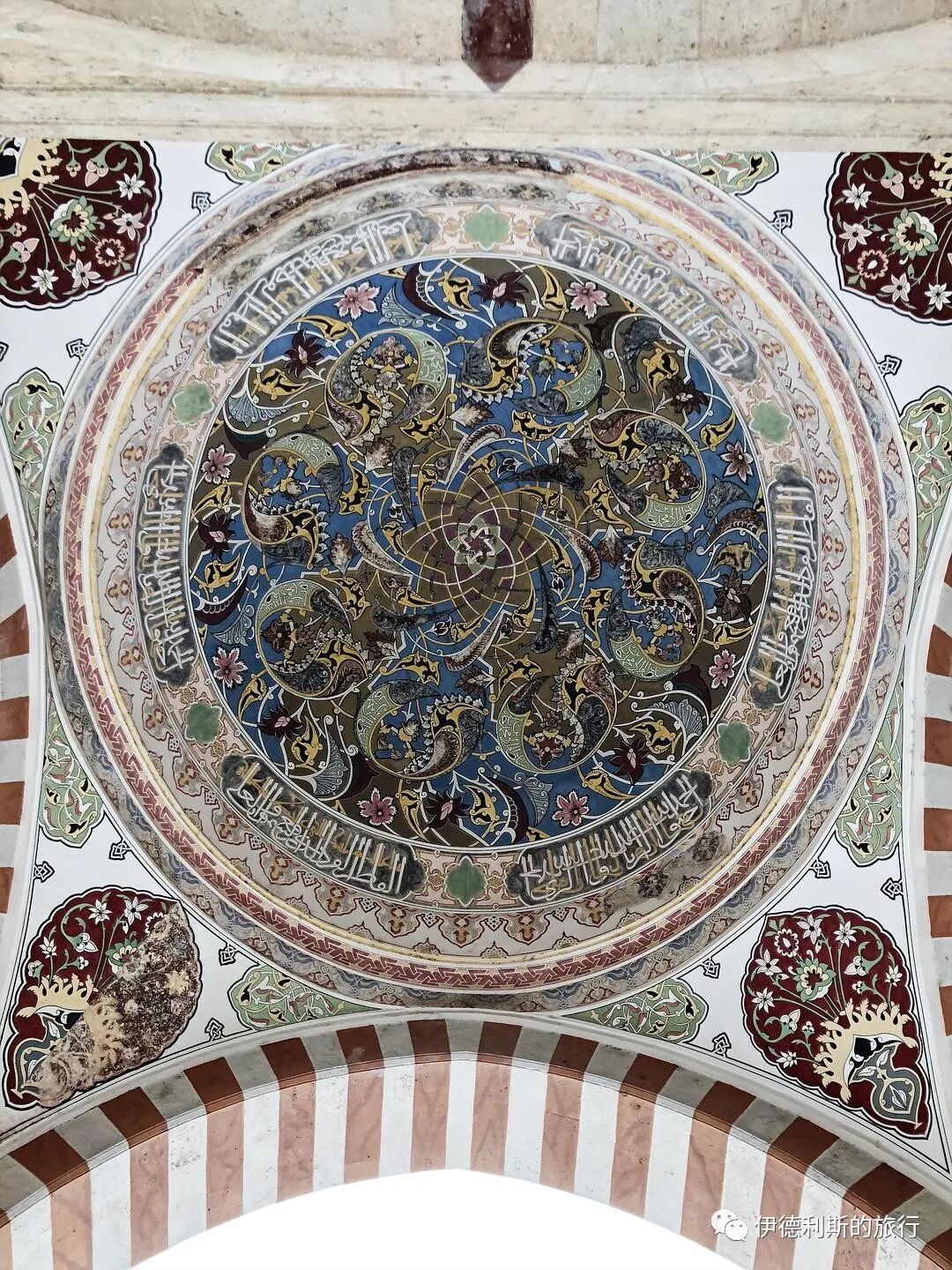
Portico dome
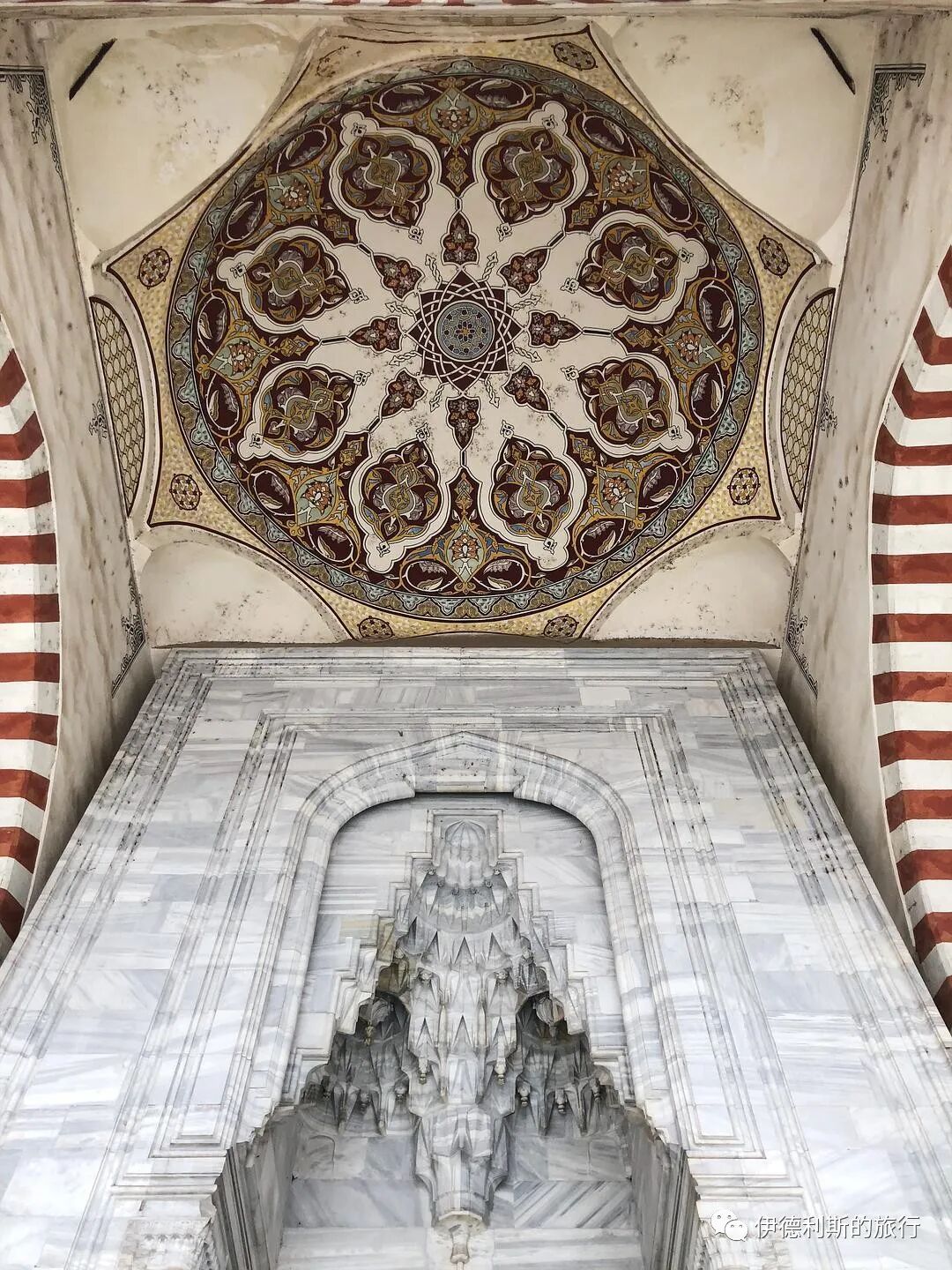
Dome above the main hall door
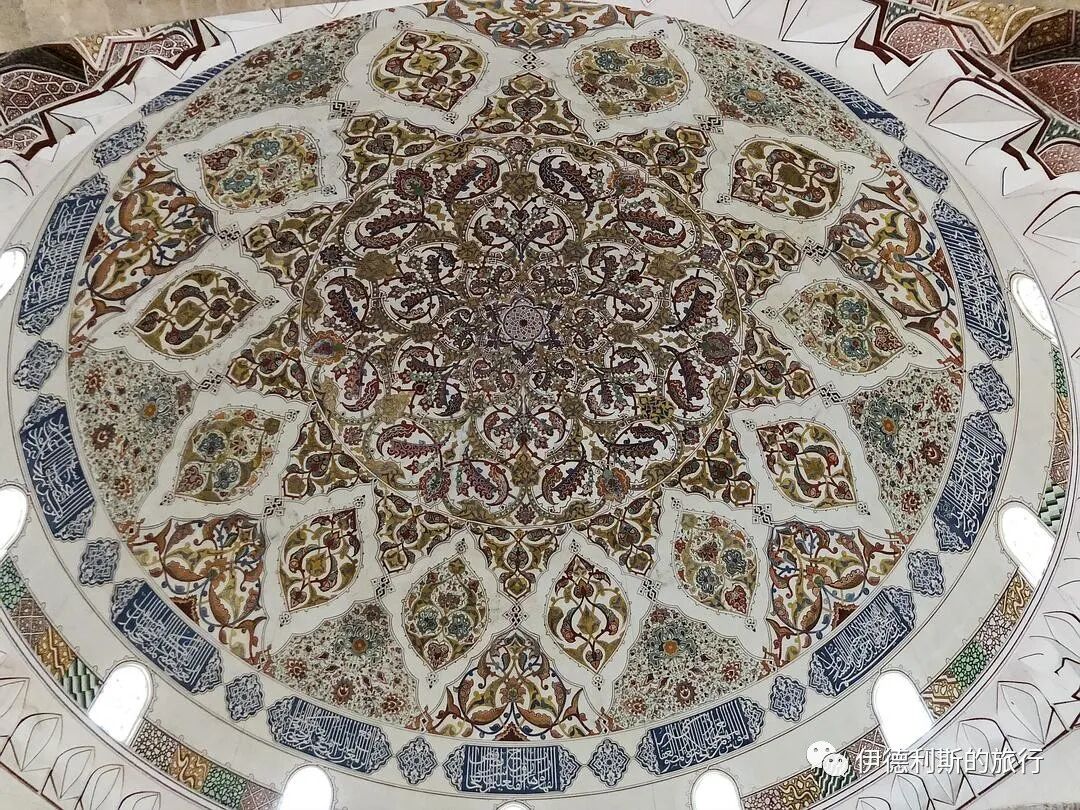
Central large dome
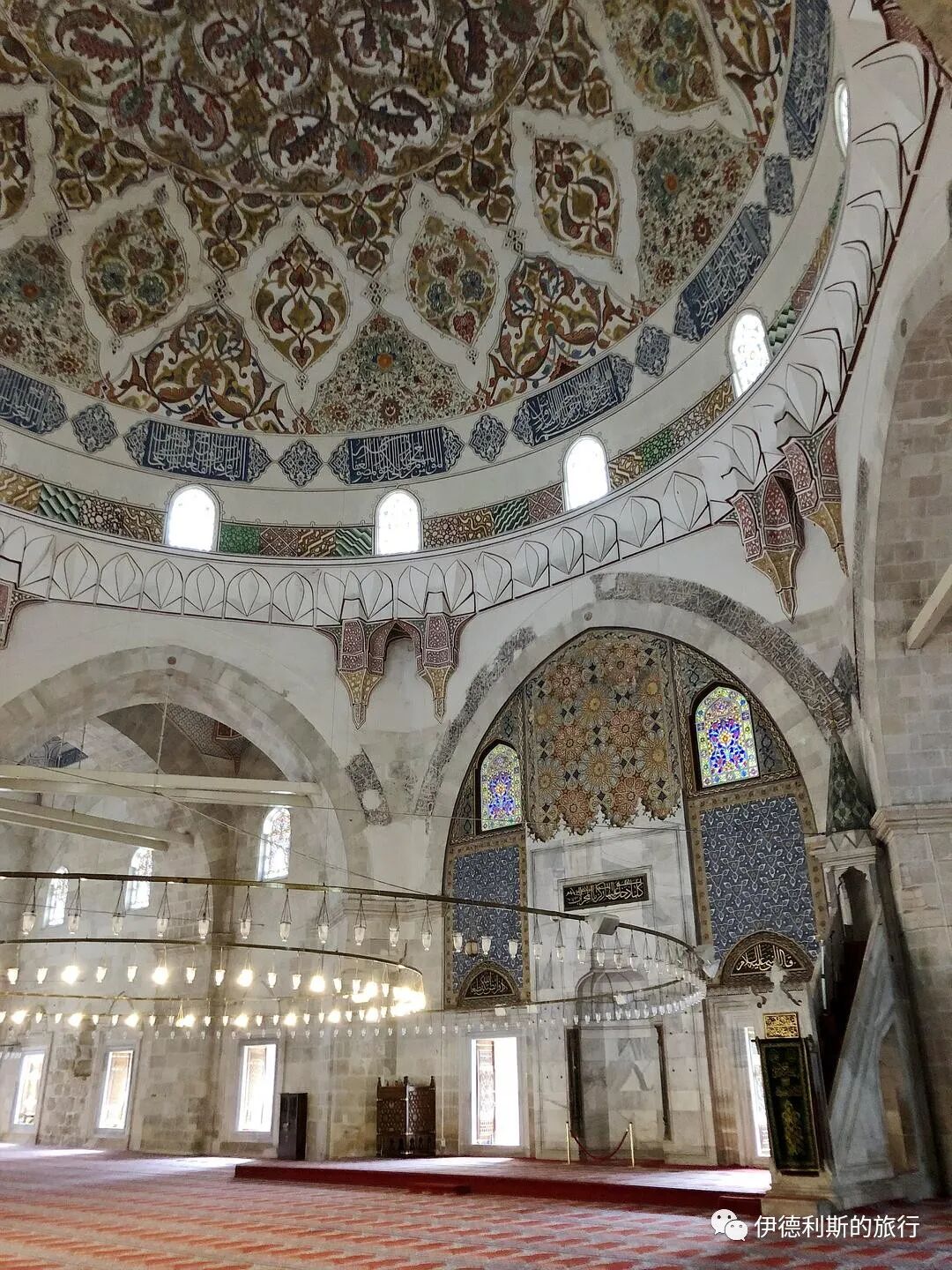
Main hall
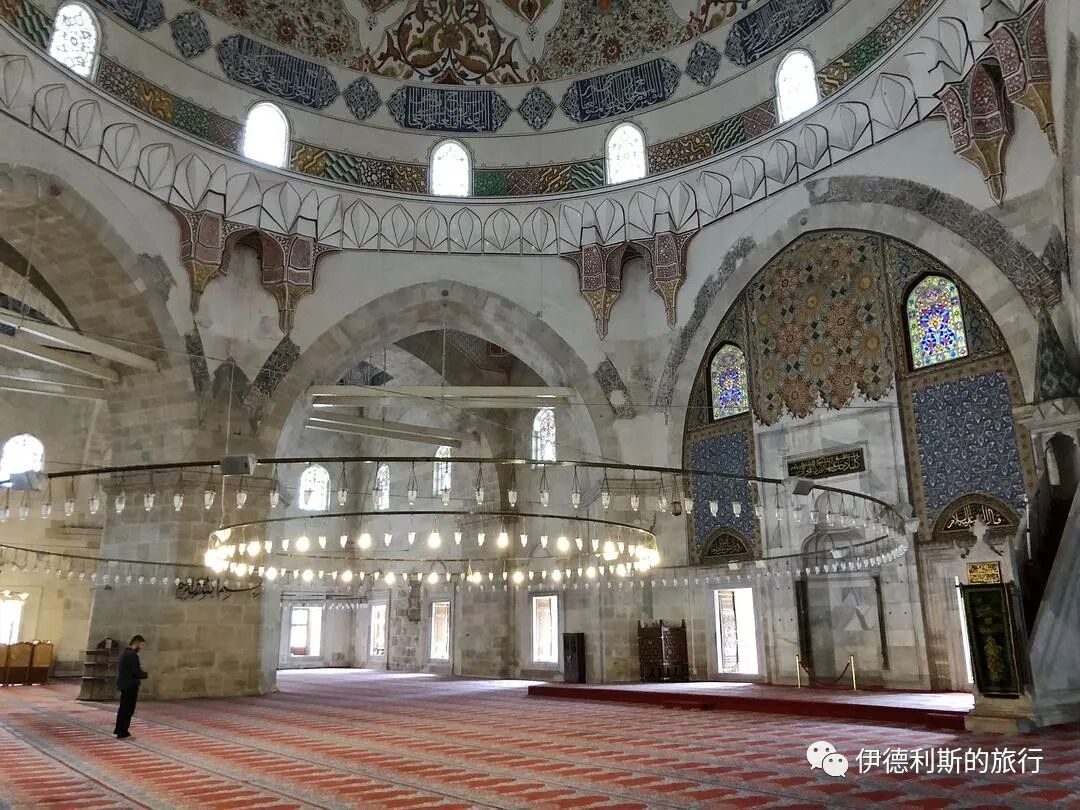
Main hall
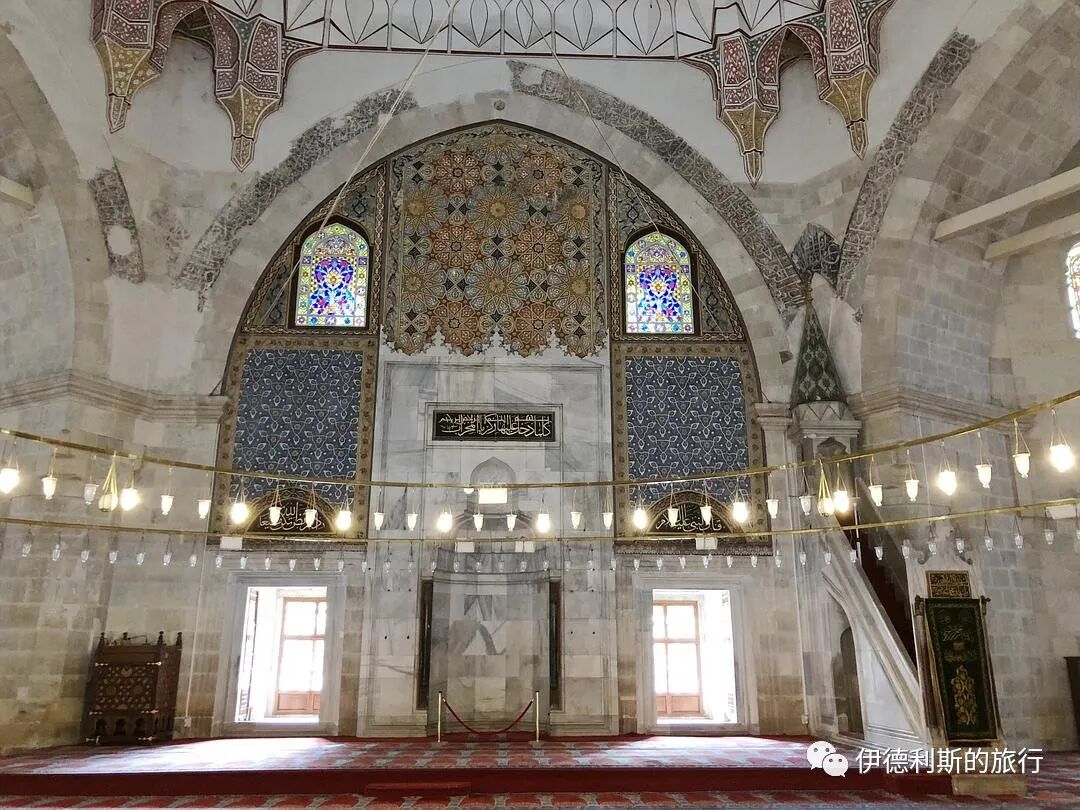
Mihrab
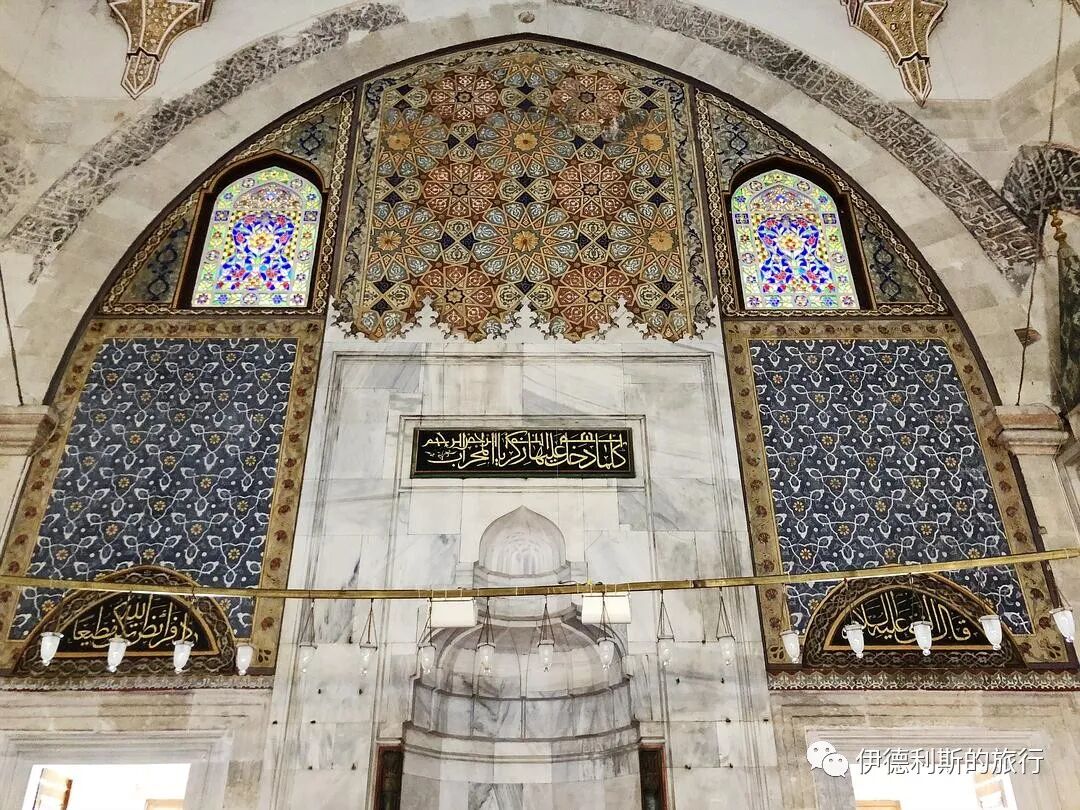
Mihrab
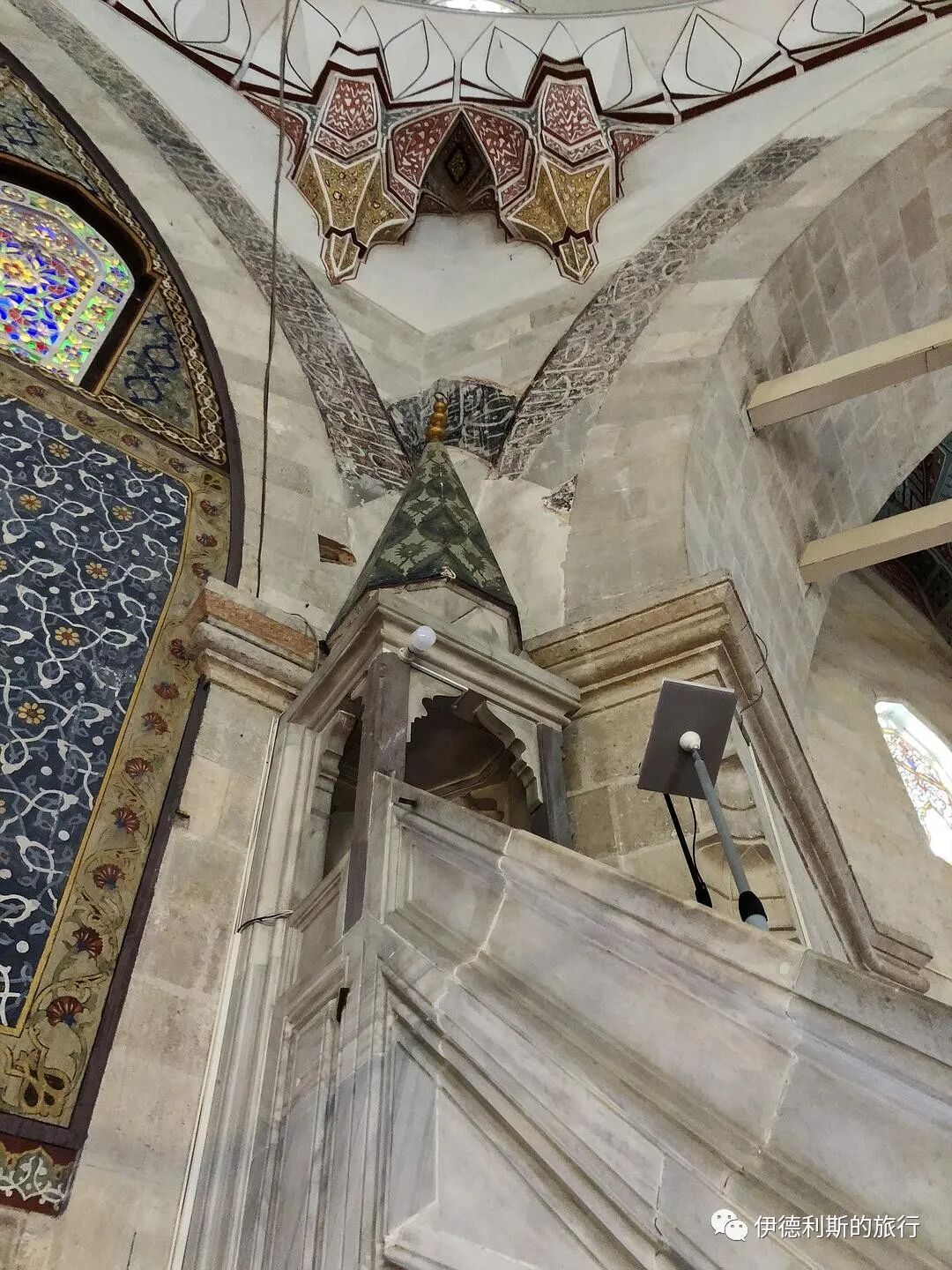
2. Saatli Madrasa (Saatli Medresesi): 1447
Saatli Madrasa is directly opposite the Three-Balcony Mosque and was also completed in 1447.
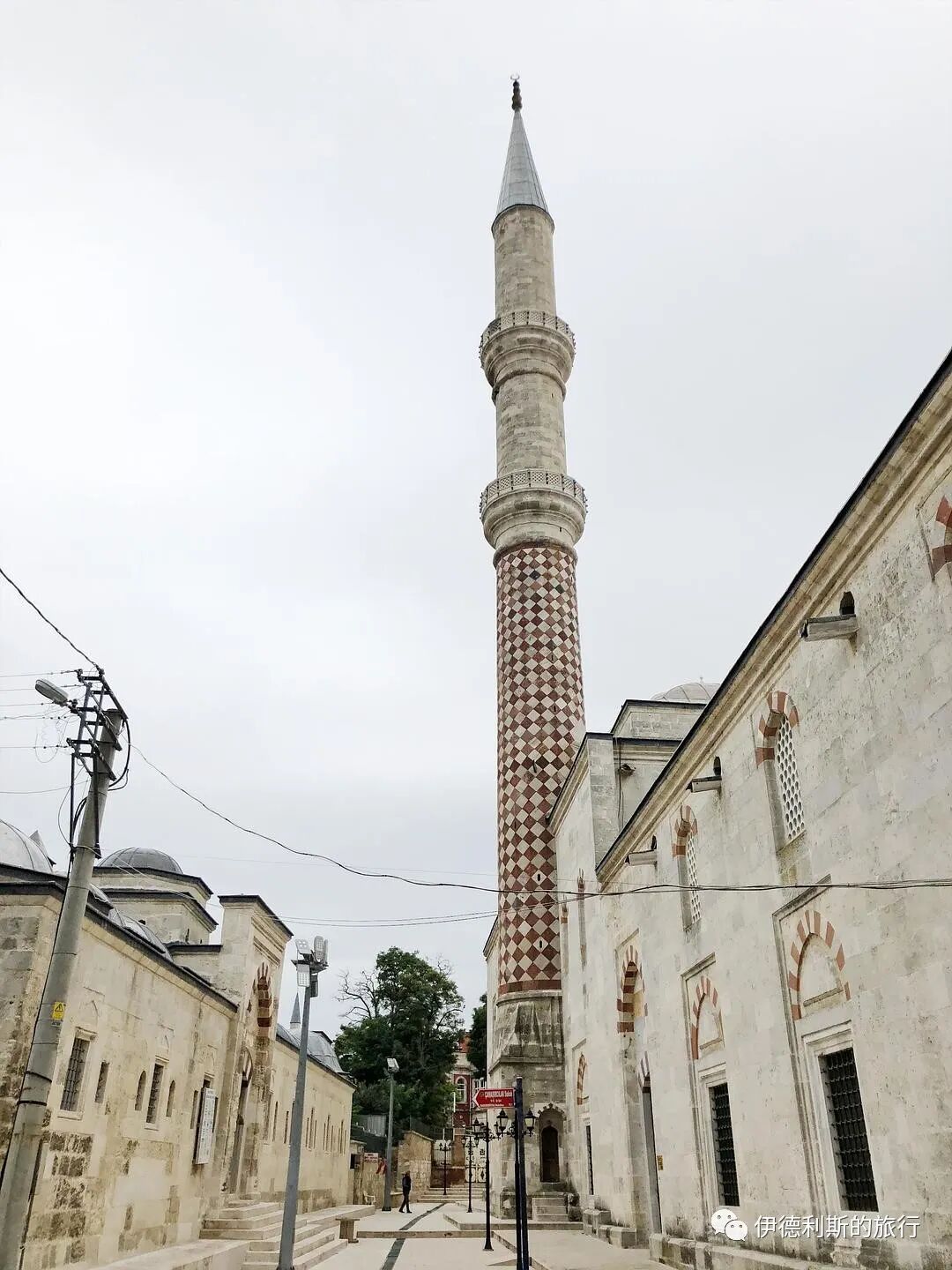
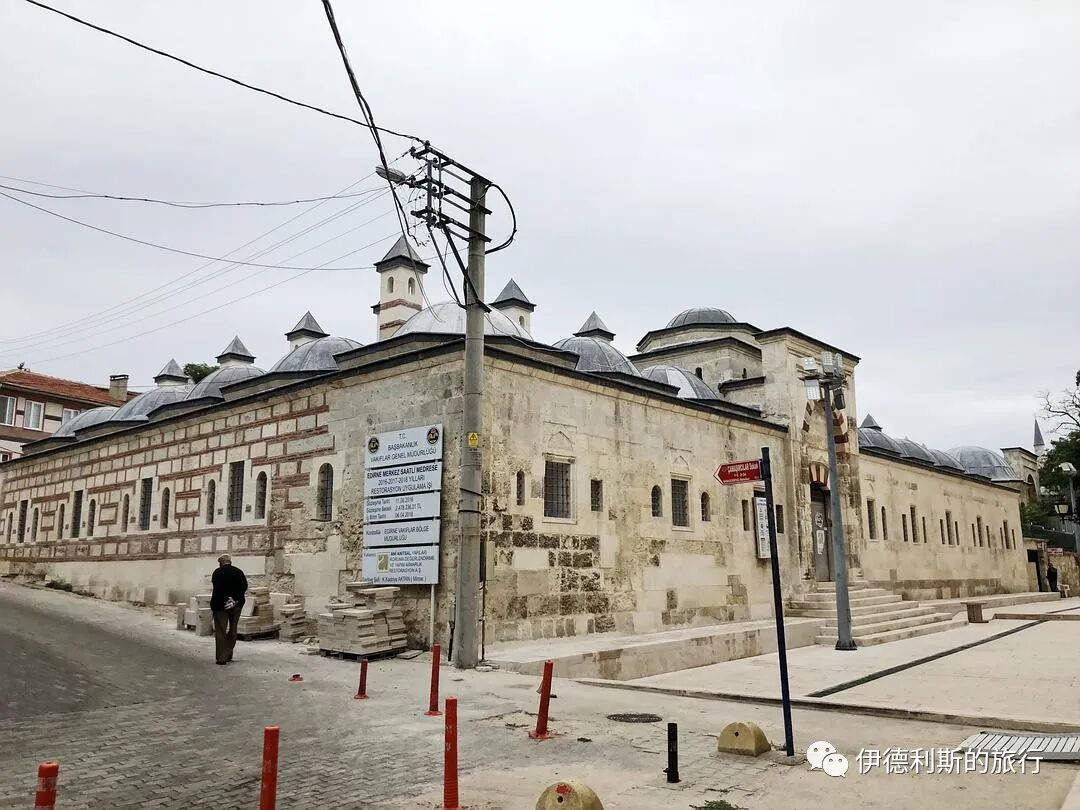
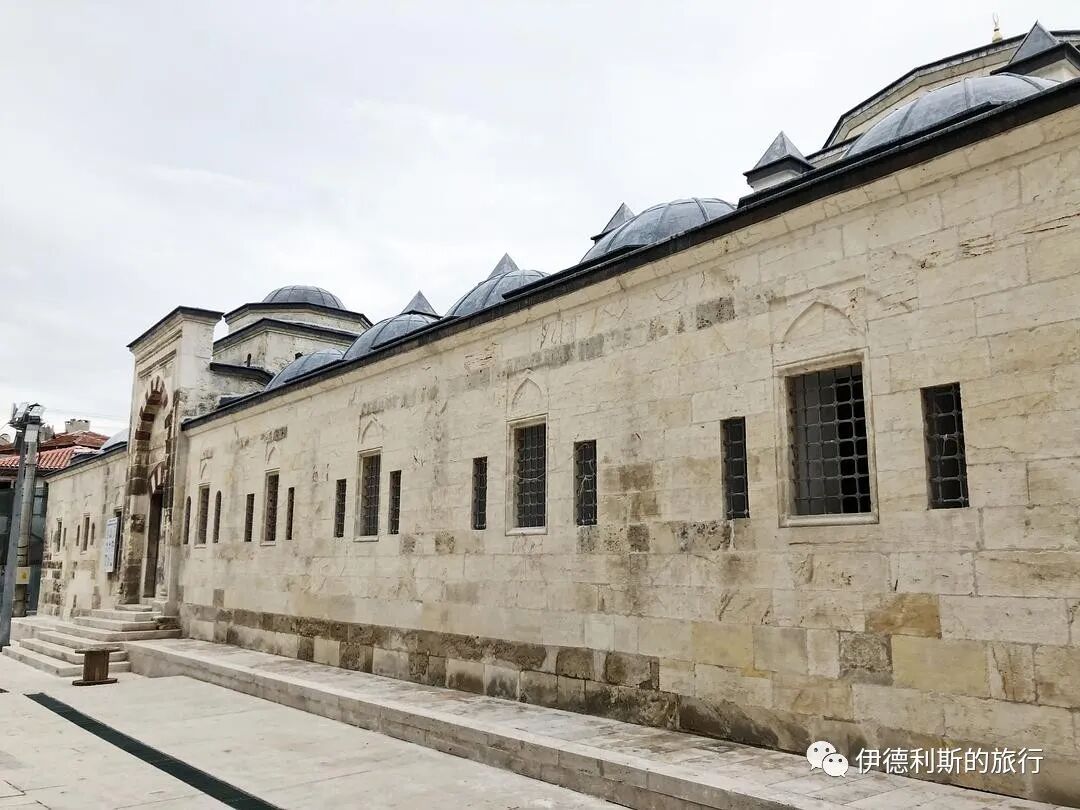
3. Peykler Madrasa (Peykler Medresesi): 1450s
Peykler Madrasa is right next to the south side of Saatli Madrasa and was built a few years later.
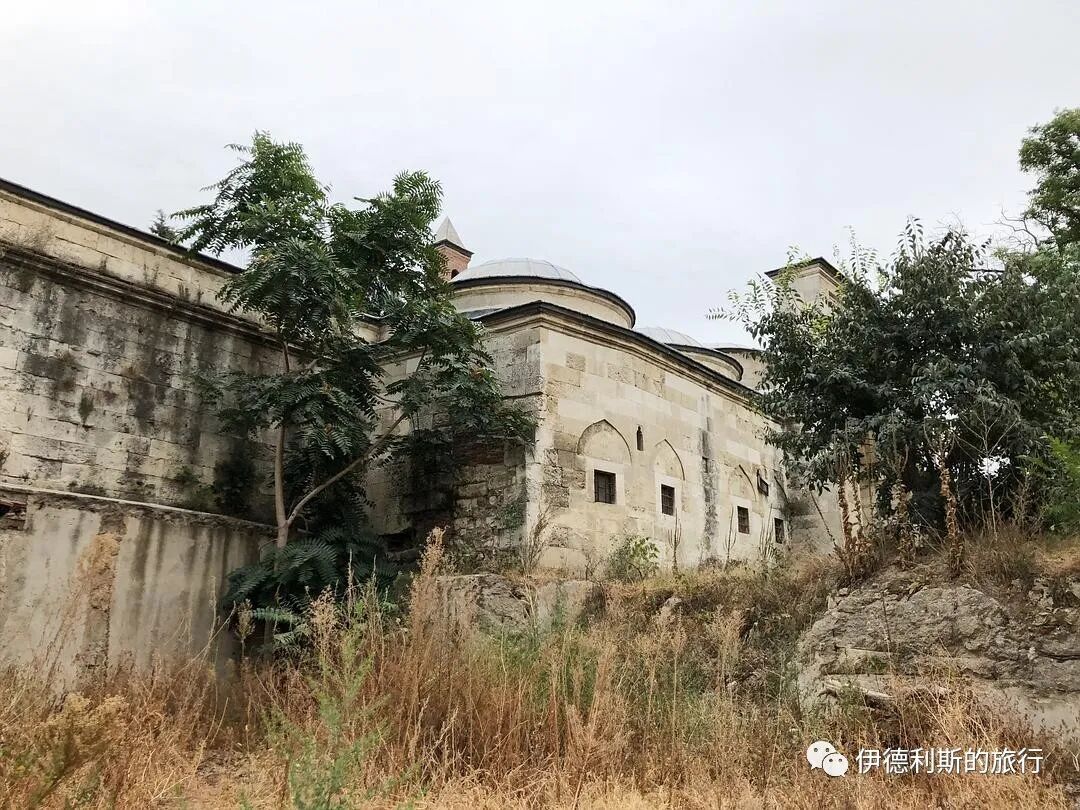
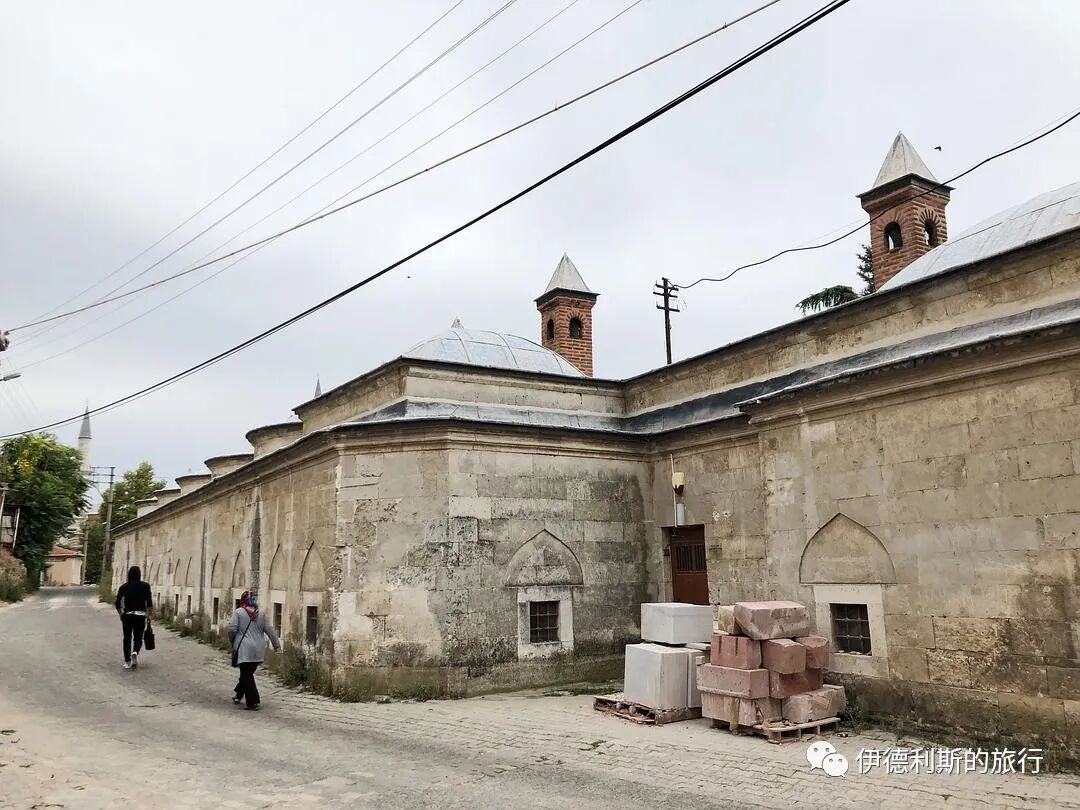
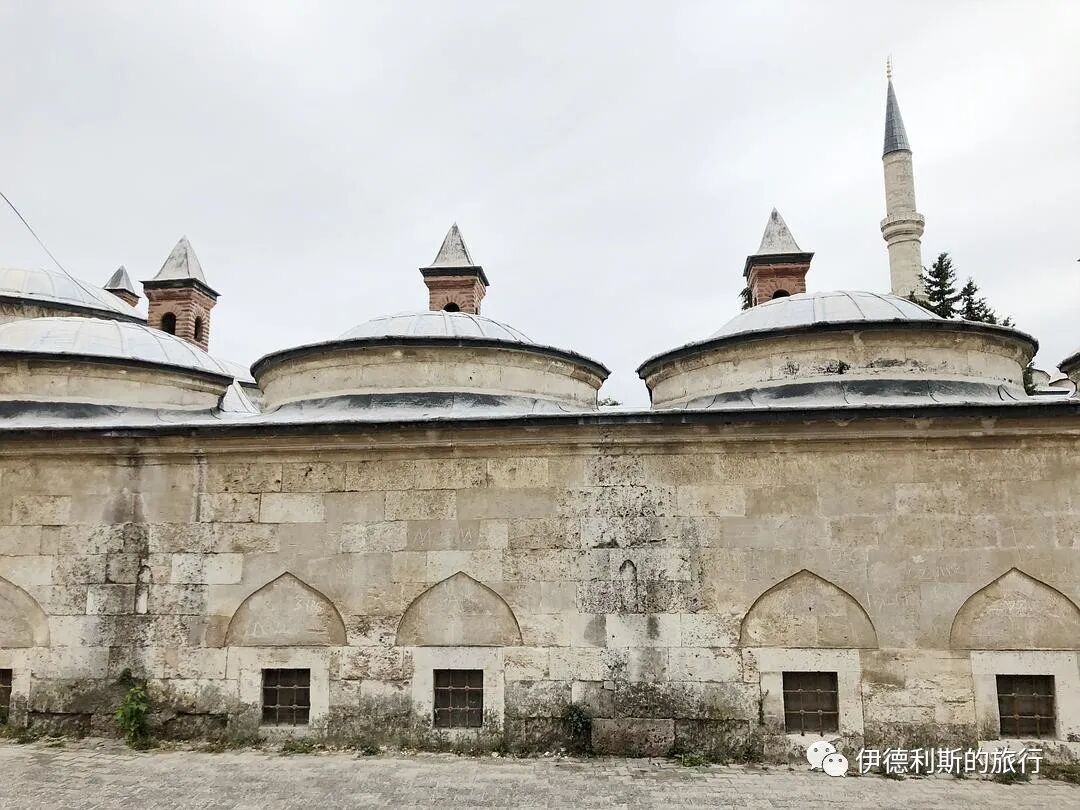
4. Taş Han Caravanserai: 15th century
The Stone Inn (Taşhan Inn) is across the street to the west of the Three-Balcony Mosque and was built in the 15th century.
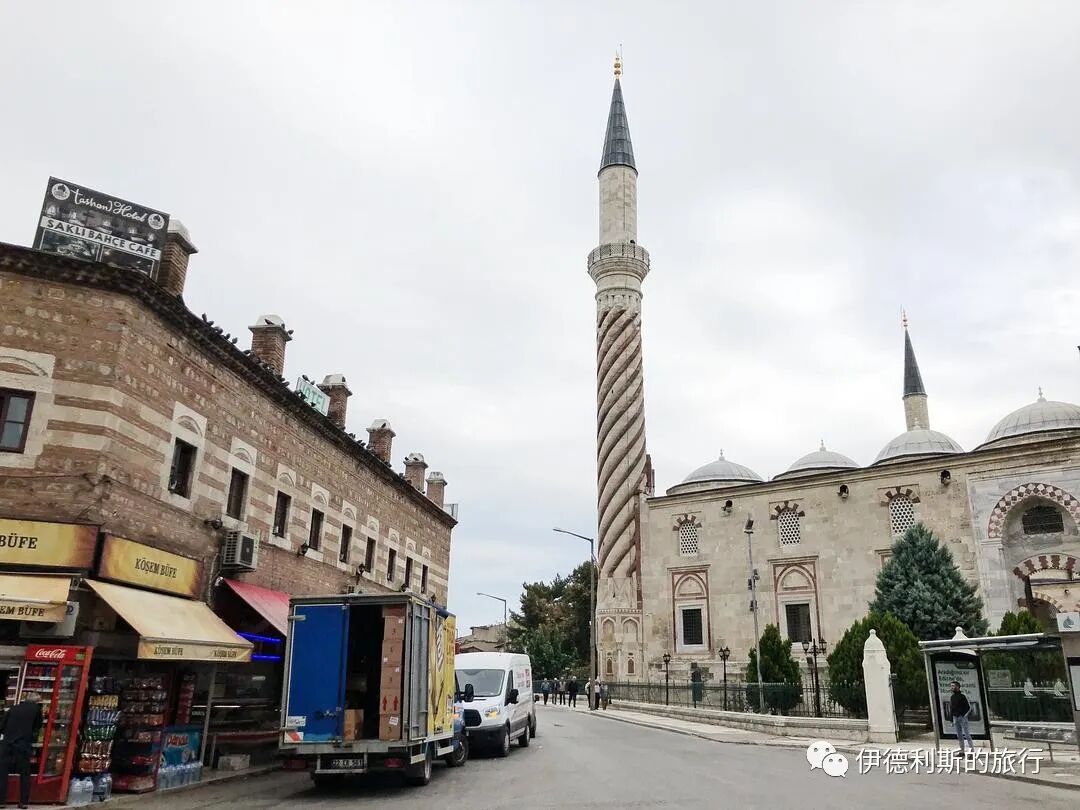
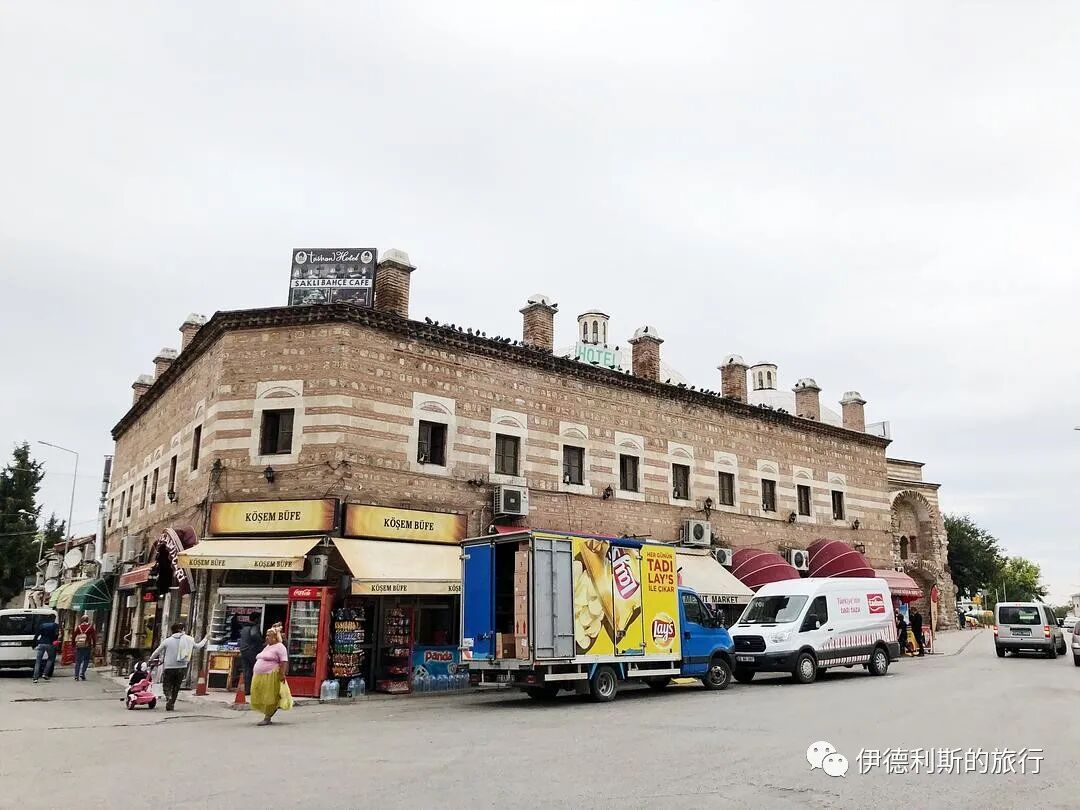
5. Sokollu Mehmed Pasha Bath (Sokollu Mehmed Paşa Hamamı): second half of the 16th century
The Sokullu Mehmet Pasha Bath (Sokullu Mehmet Paşa Hamamı) was commissioned in the second half of the 16th century by the Ottoman Grand Vizier Sokullu Mehmet Pasha (in office 1565–1579) and built by the great Ottoman architect Mimar Sinan.
The bathhouse was built right next to the Tash Khan inn. It consists of a men's section and a women's section and is known as one of the most important bathhouses in the Ottoman Empire.
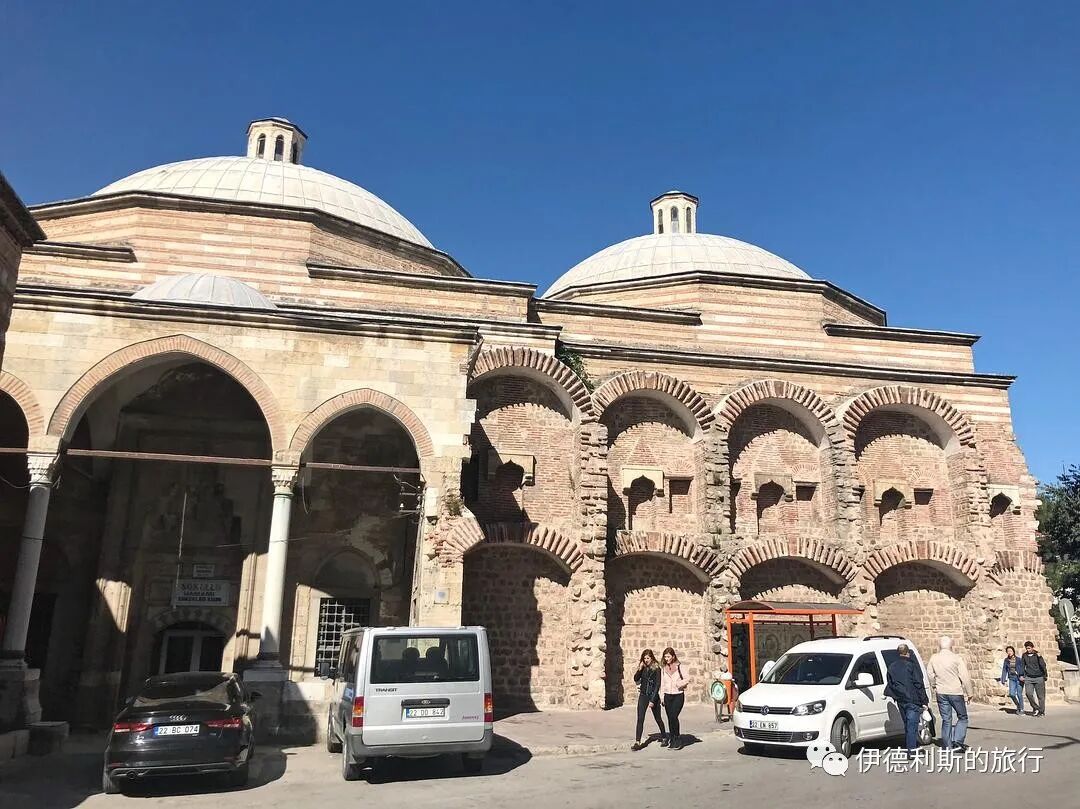
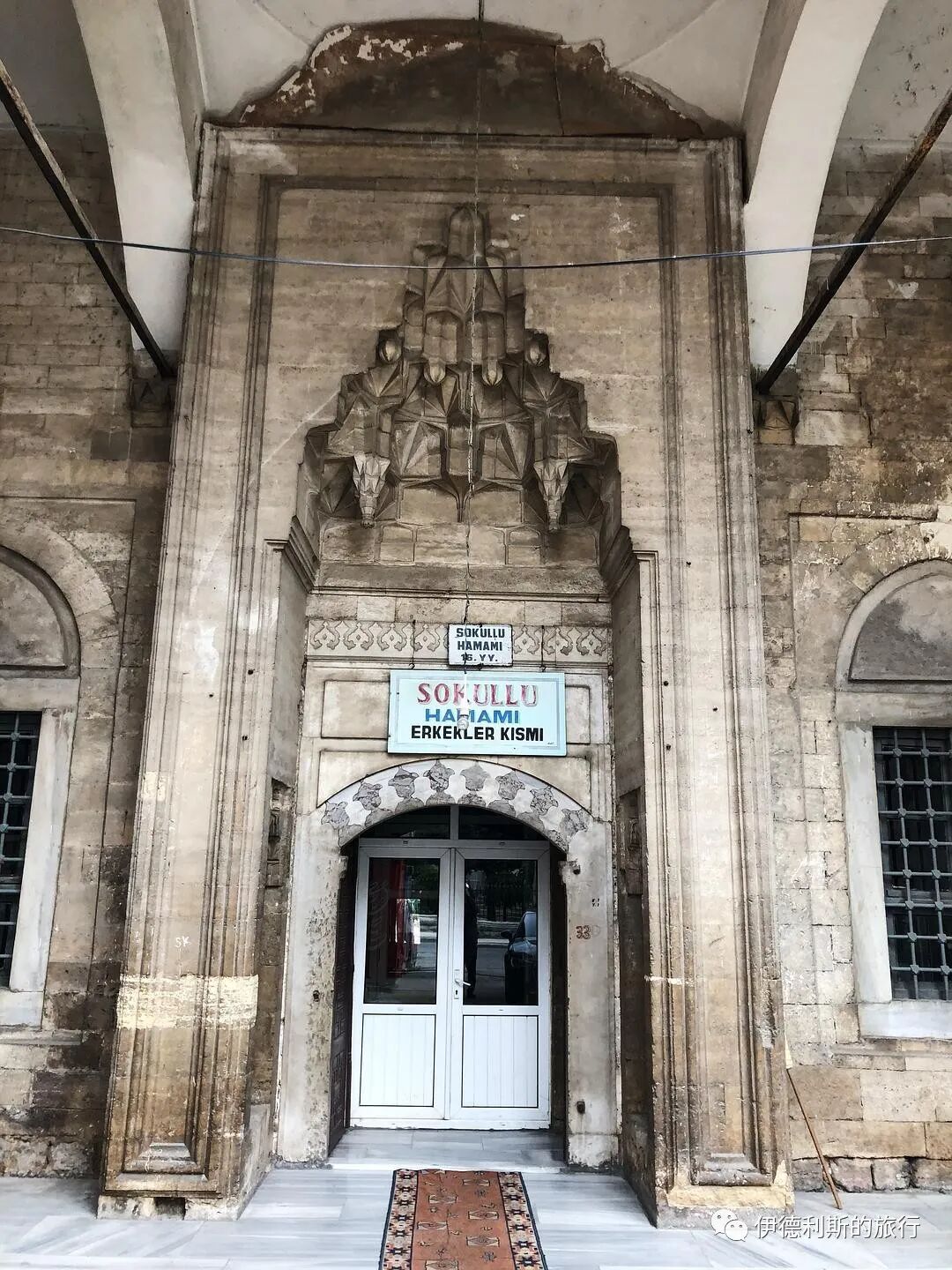
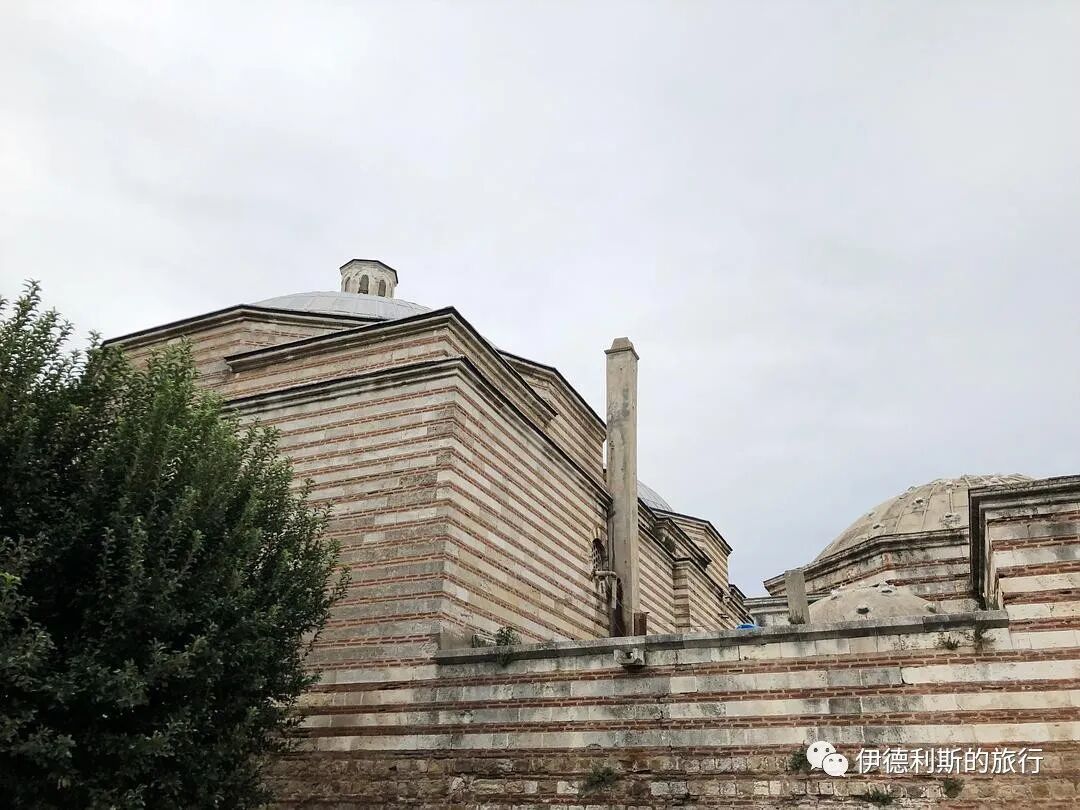
4. Edirne Palace: construction started in 1450
1. Rise and fall of the palace
Edirne Palace (Edirne Sarayı) was ordered to be built by Sultan Murad II in 1450, but construction stopped the following year when the Sultan passed away. After a period of inactivity, it was finally completed in 1475 by his successor, Sultan Mehmed the Conqueror.
The palace was expanded continuously between the 16th and 18th centuries. The most important period was during the reign of Suleiman the Magnificent (1520–1566), when the chief architect Mimar Sinan redesigned the palace and solved the water supply issue by building canals. To protect the palace from flooding, the canals were built in an arc shape around it.
The palace stopped being used after Ahmed III moved to Istanbul in 1718. It did not return to use until Mustafa III (reigned 1757–1774) returned to Edirne in 1768. During those fifty years, the palace gradually fell into disrepair and suffered through an earthquake in 1752 and a fire in 1776.
Mahmud II (reigned 1808–1839) carried out small-scale repairs in 1825, but the palace was severely damaged and occupied as a military barracks after the Russian army captured Edirne in 1829.
Between 1868 and 1873, some parts of the palace were repaired by the mayor at the time. During the Russo-Turkish War in 1877, the governor of Edirne feared the Russian army would take the city and intentionally blew up an ammunition depot near the palace. This caused severe damage, and building materials from the palace were later continuously stripped away for use elsewhere.
2. Palace composition
At its peak, the palace consisted of 72 buildings, including 117 rooms, 14 mansions, 18 bathhouses, 9 mosques, 17 gates, and 13 cellars. At its busiest, 34,000 people lived inside.
The main building of the palace is called the Panorama Pavilion (Cihannüma Kasrı), also known as the Imperial Throne (Taht-ı Hümayun), built in 1450. The Panorama Pavilion is a seven-story building with an octagonal room at the top. It includes the Sultan's room, a room for flags, a library, and a mosque.
Initial archaeological excavations of the Panorama Pavilion took place in 1956. In 2001, sponsored by the National Palaces Administration, archaeological and restoration work began on the palace gate, the Gate of Felicity (Bab'üs Sa'ade), and the Panorama Pavilion (Cihannüma Kasrı) site, which was completed in 2004.
The Sand Pavilion Bathhouse (Kum Kasrı Hamamı) was built by Sultan Mehmed the Conqueror. It is another palace ruin that survives today, and it was excavated in 2000.
The Imperial Kitchen (Matbah-ı Amire) is located on the southwest side of the palace. It has eight domes, and while the north facade is gone, most of it remains well-preserved.
The Court of Justice (Kasr-ı Adalet) is on the south bank of the Tunca River. It was ordered to be built in 1561 by Suleiman the Magnificent, who is also known as Suleiman the Lawgiver.
The Conqueror's Bridge (Fatih Köprüsü) is next to the Court of Justice and was built by Mehmed the Conqueror in 1452.
The Kanuni Bridge (Kanuni Köprüsü), also called the Palace Bridge, was built in 1554 by Mimar Sinan under the orders of Suleiman the Magnificent.
Because Edirne Palace is currently under renovation and closed to the public, I could only look at it from the outside.
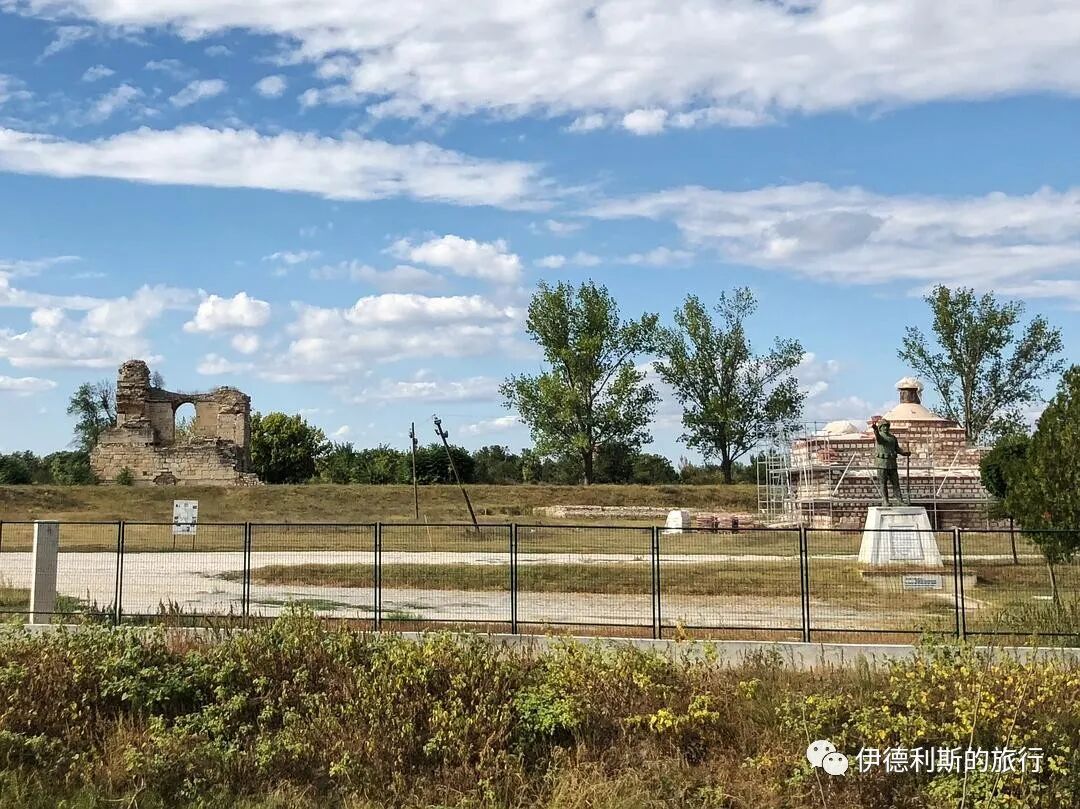
On the left is the Panorama Pavilion, and on the right is the Sand Pavilion Bathhouse.
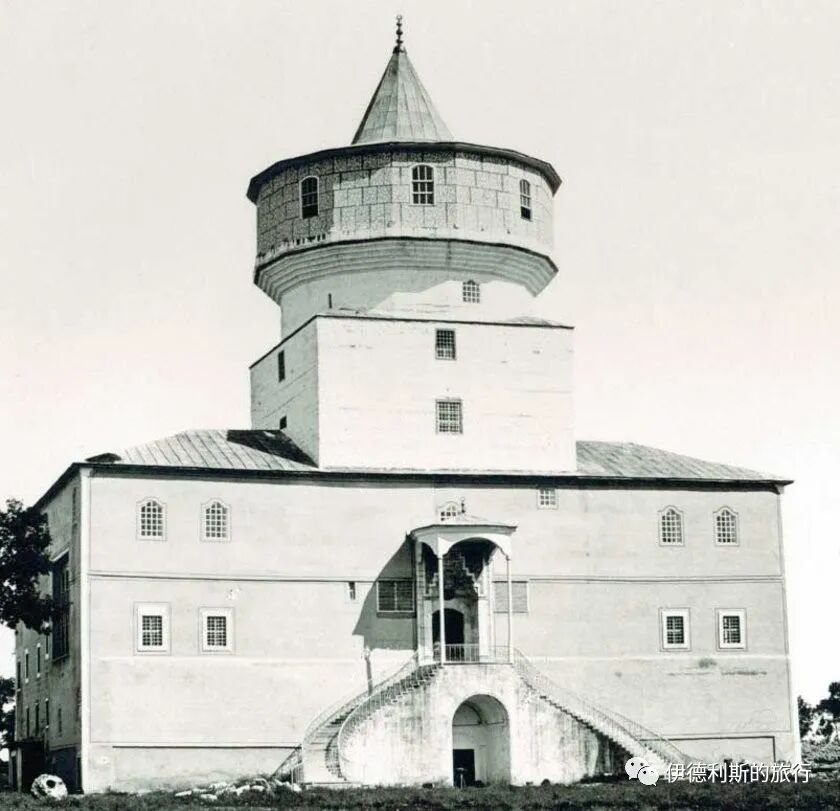
An old photo of the Panorama Pavilion before it was destroyed.
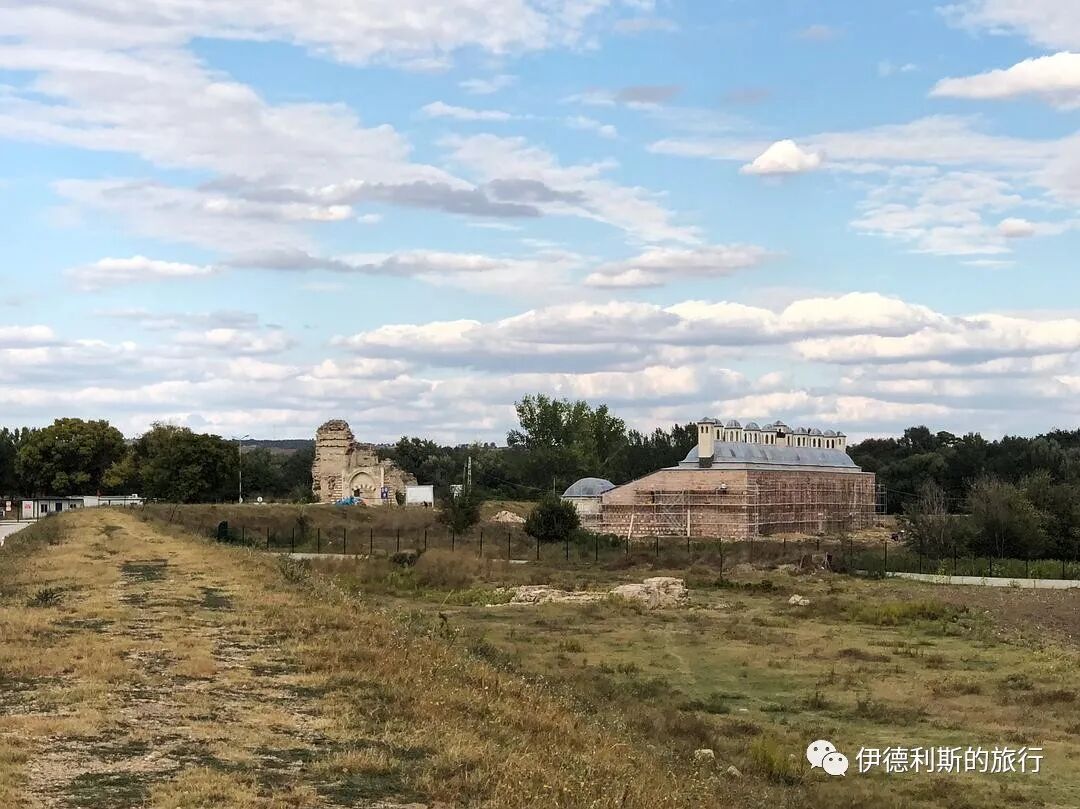
On the left are the Gate of Felicity and the Panorama Pavilion; on the right is the Imperial Kitchen.
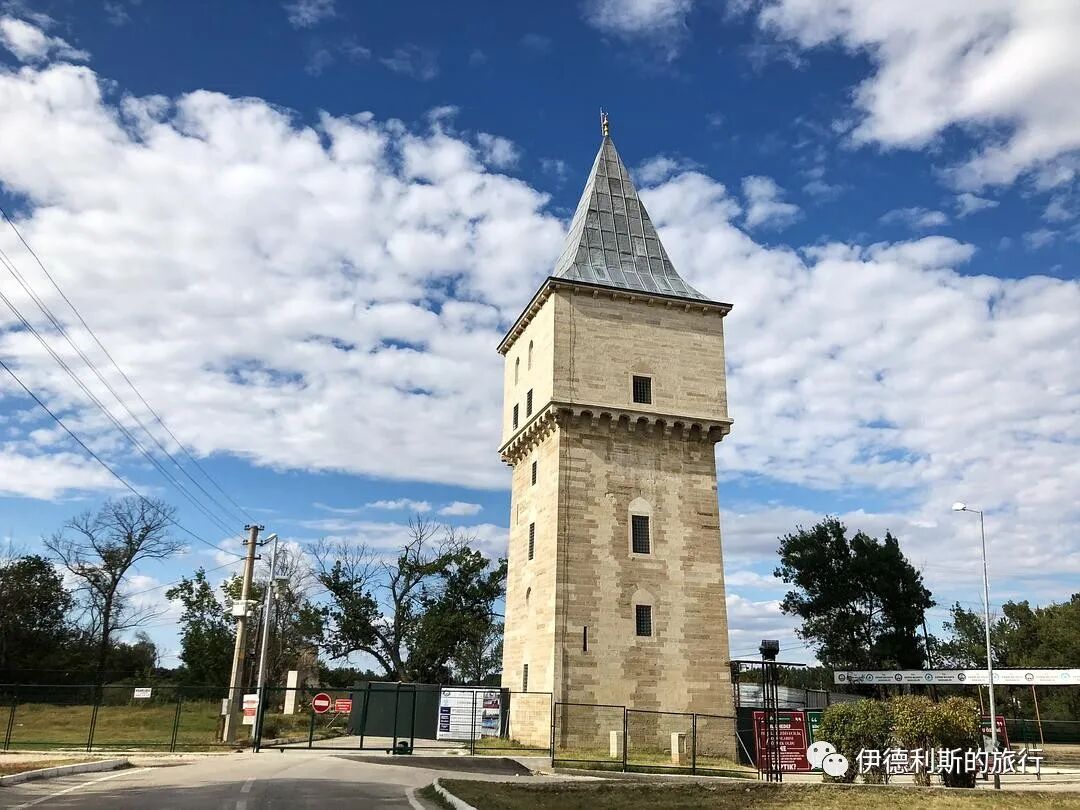
The Court of Justice.
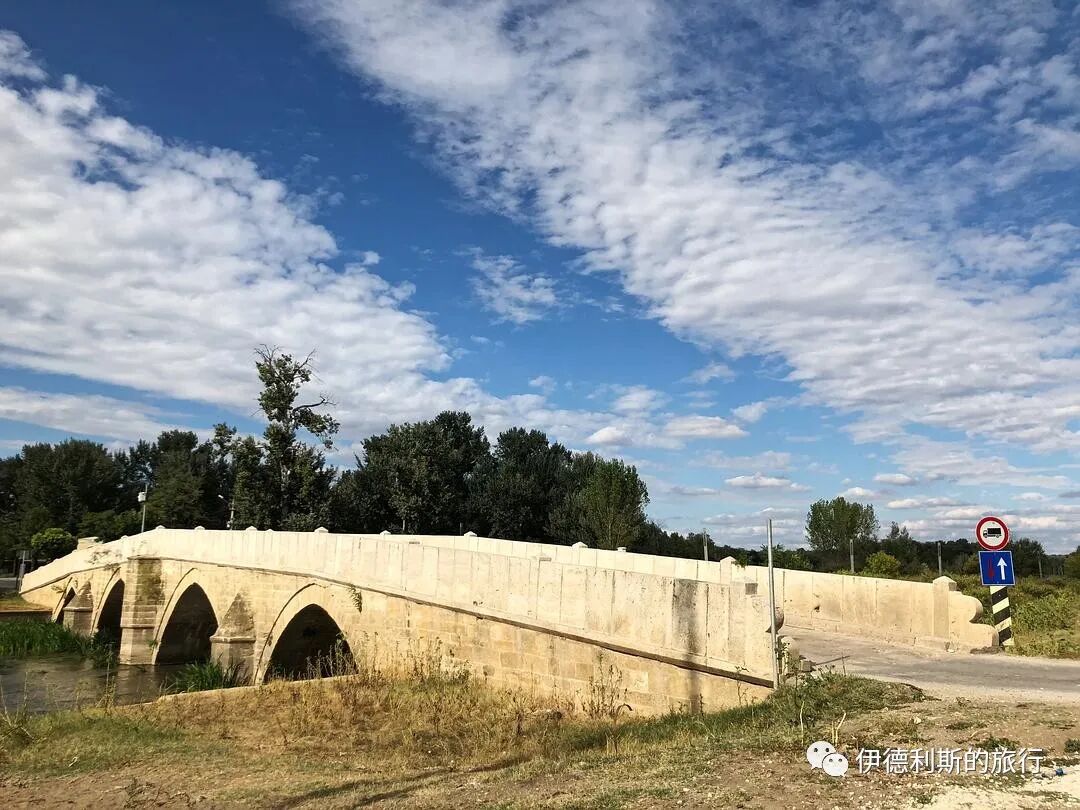
The Kanuni Bridge.
5. Kasım Pasha Mosque (Kasım Paşa Camii): 1479
The Kasım Pasha Mosque (Evliya Kasım Paşa Cami) is located by the river in the southeast of Edirne. It was ordered to be built by Kasım Pasha in 1479. Kasım Pasha was a famous Ottoman general who served as the commander of Rumelia, the European part of the Ottoman Empire. He commanded troops during the wars between the Ottoman Empire and the multinational crusader forces of Poland and Hungary between 1443 and 1444, fighting in places like Serbia and Bulgaria.
The mosque closed after 1950 due to the construction of a dam. Since then, it has been continuously damaged by floods, making it the most wild, early Ottoman mosque in Edirne.
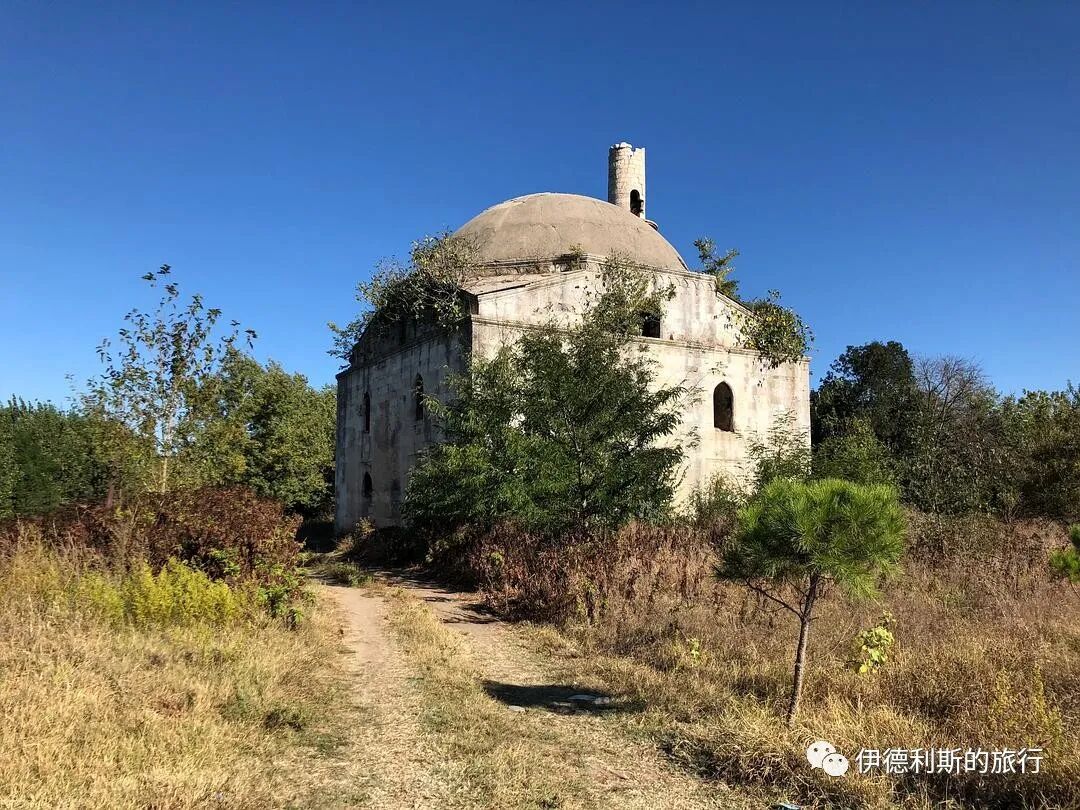
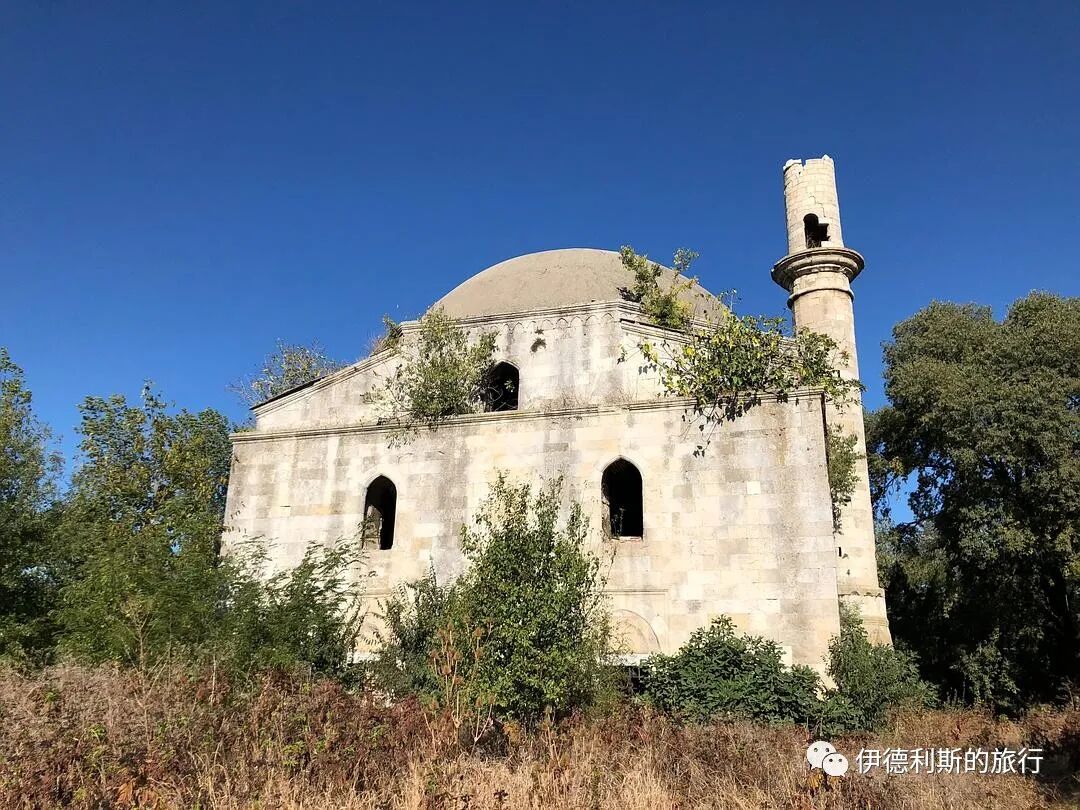
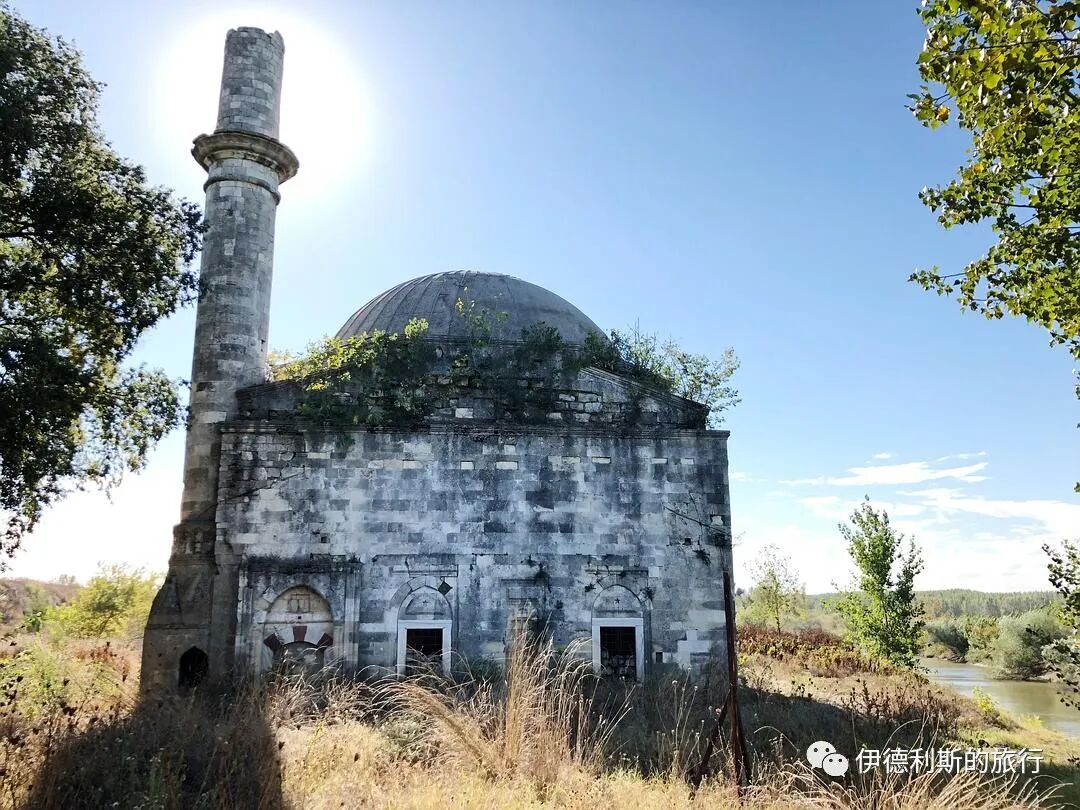
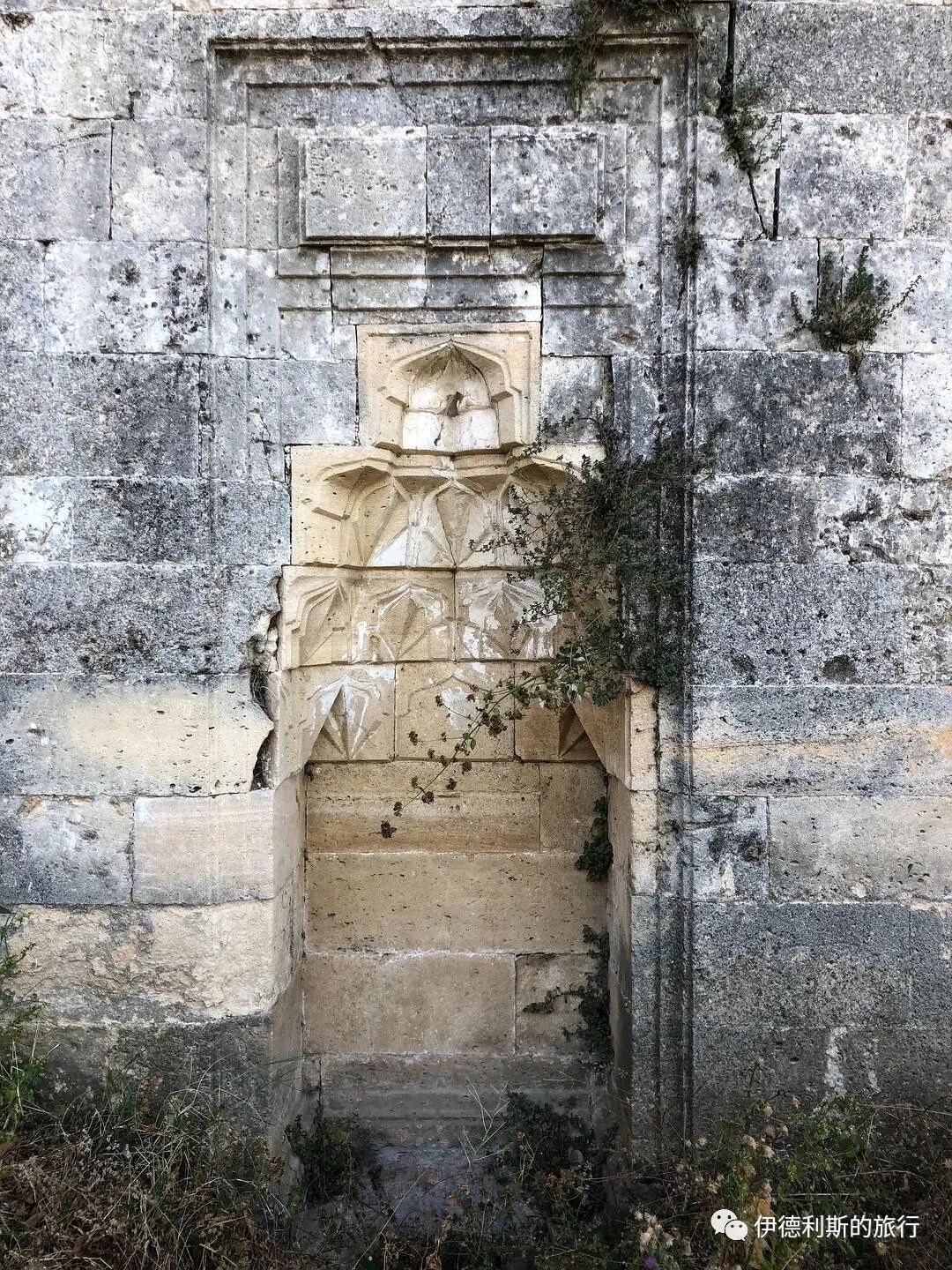
The mihrab on the outer wall.
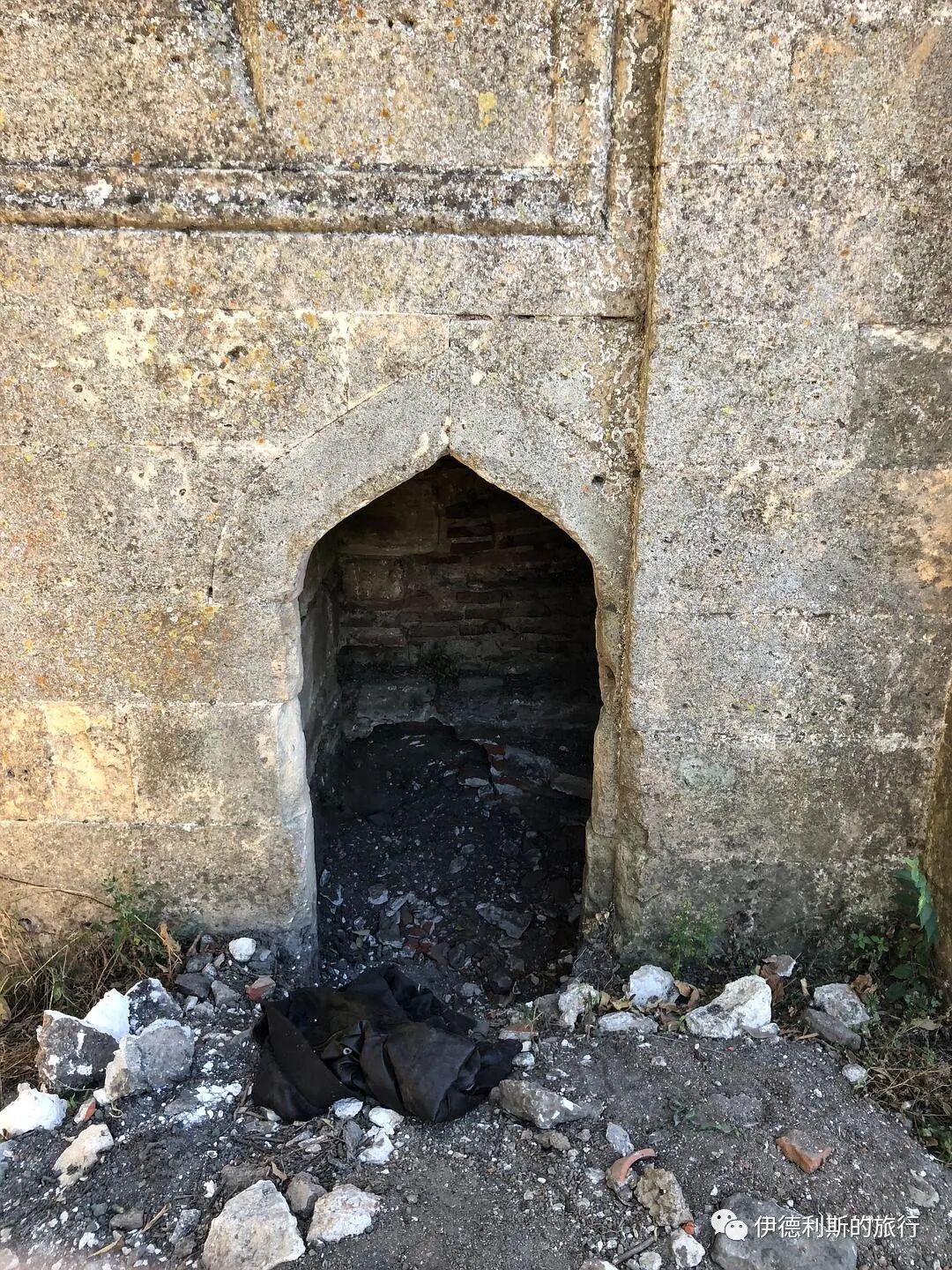
The entrance to the bunker tower.
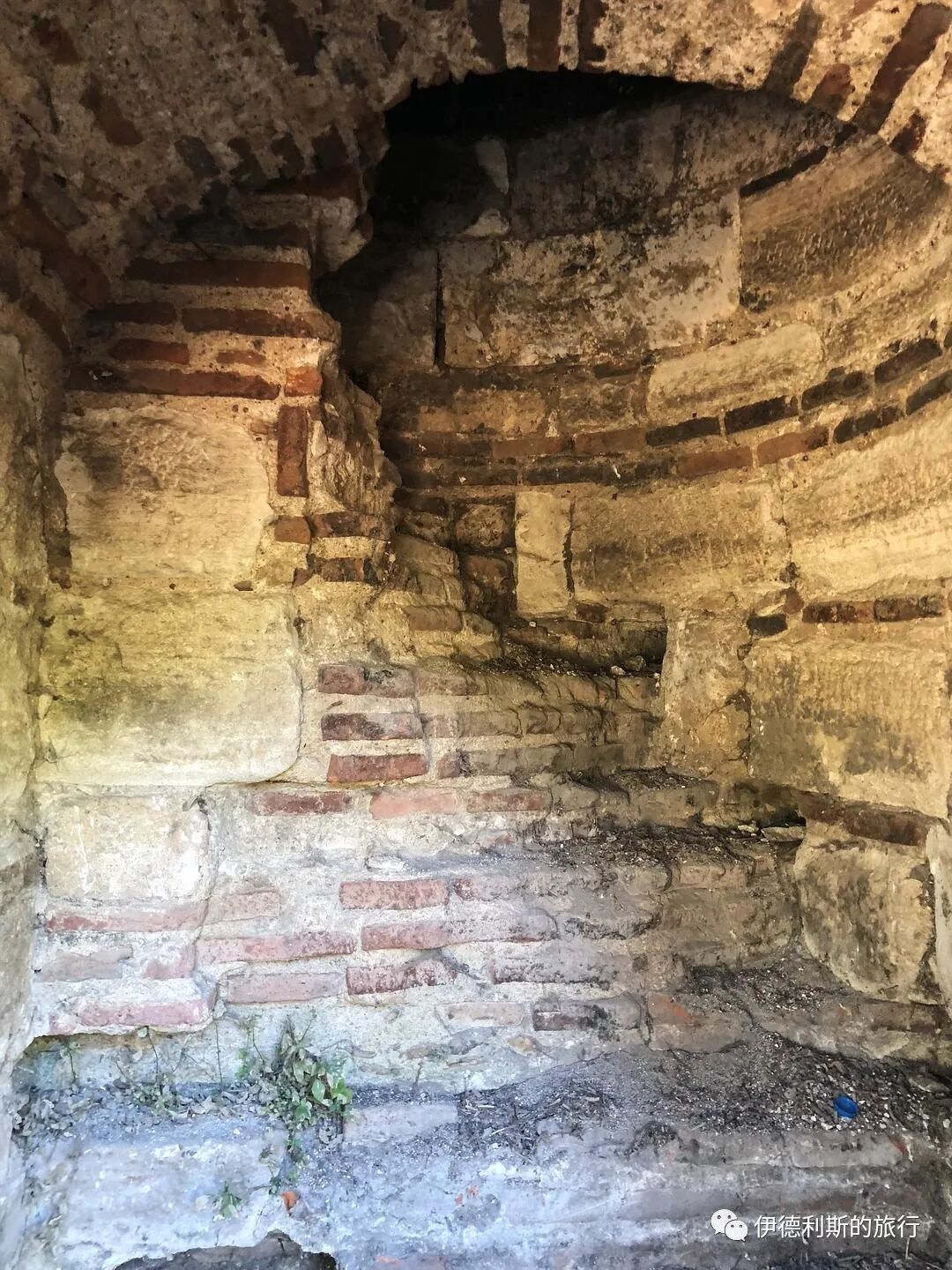
The steps of the bunker tower.
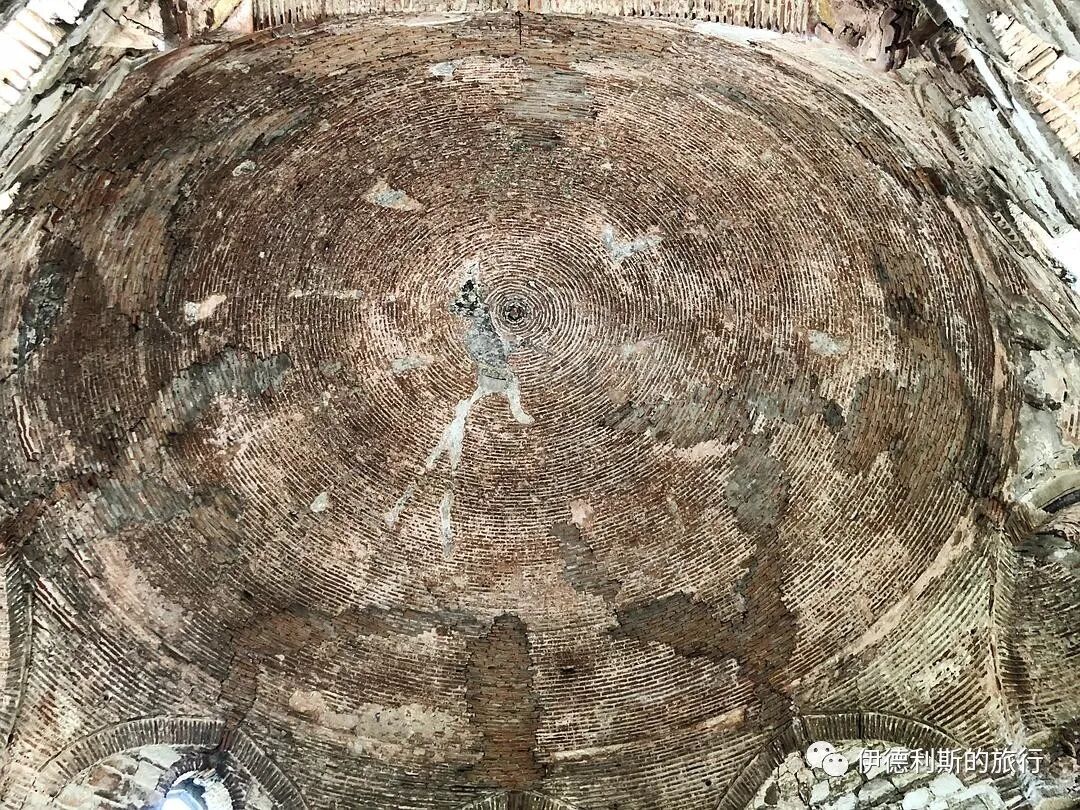
Dome
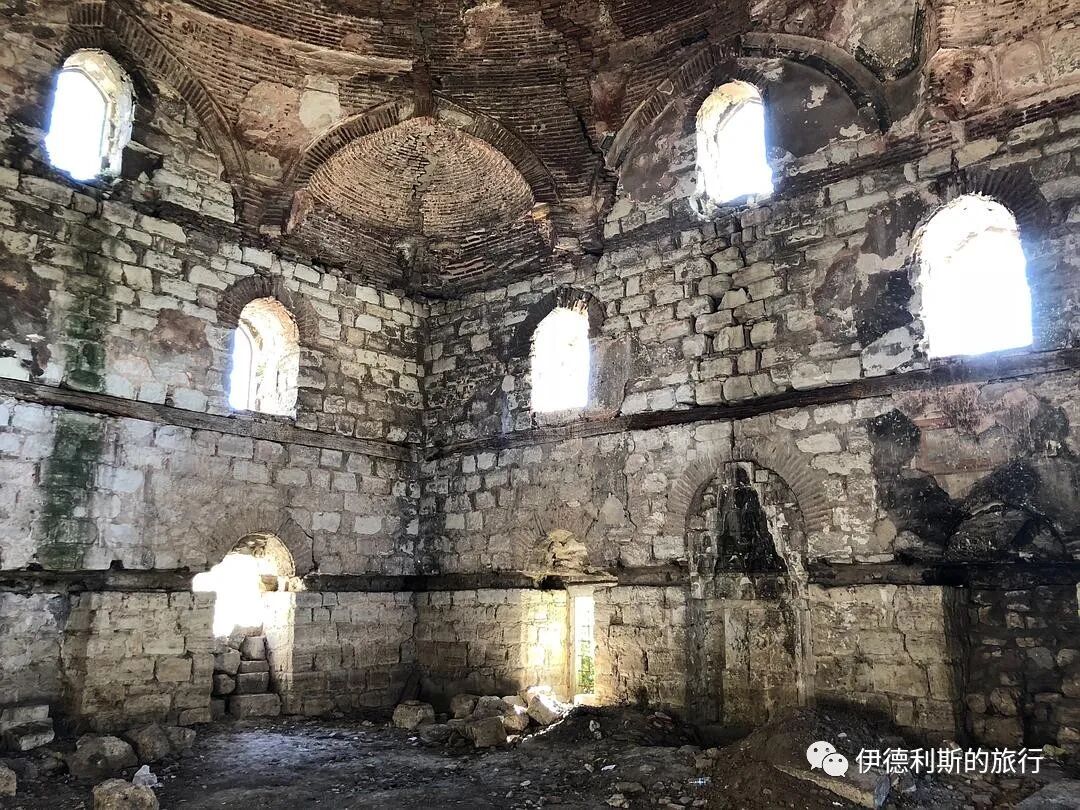
Main hall
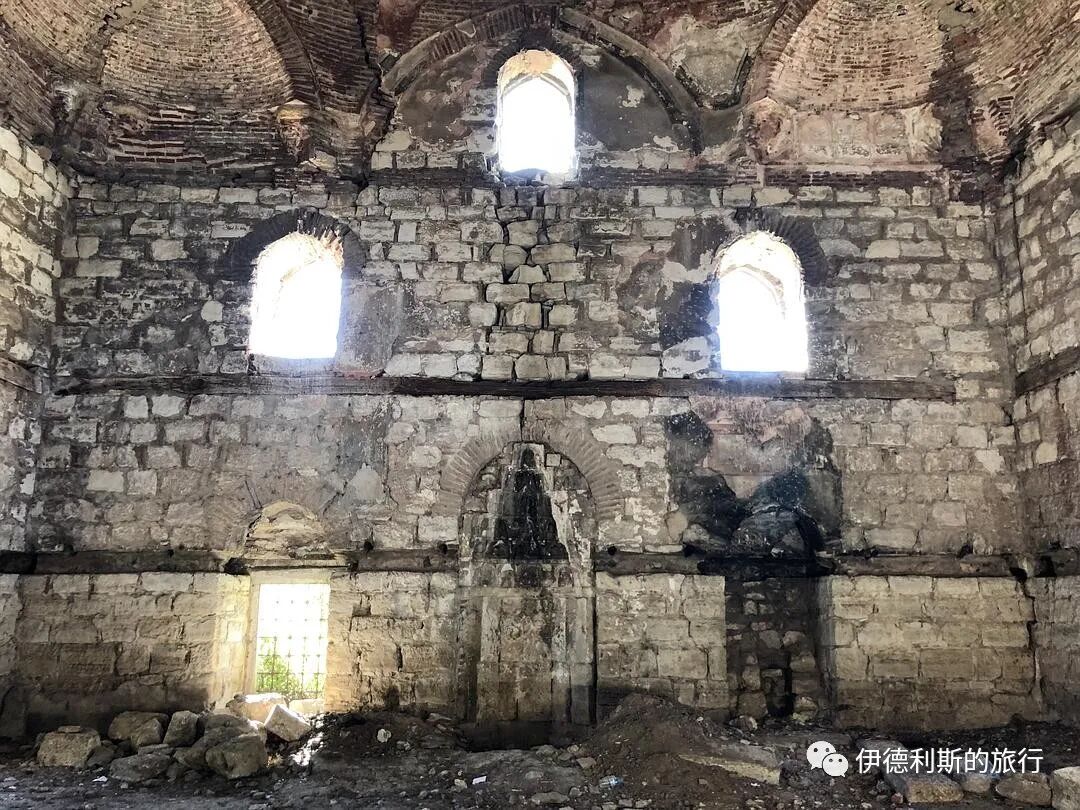
Mihrab
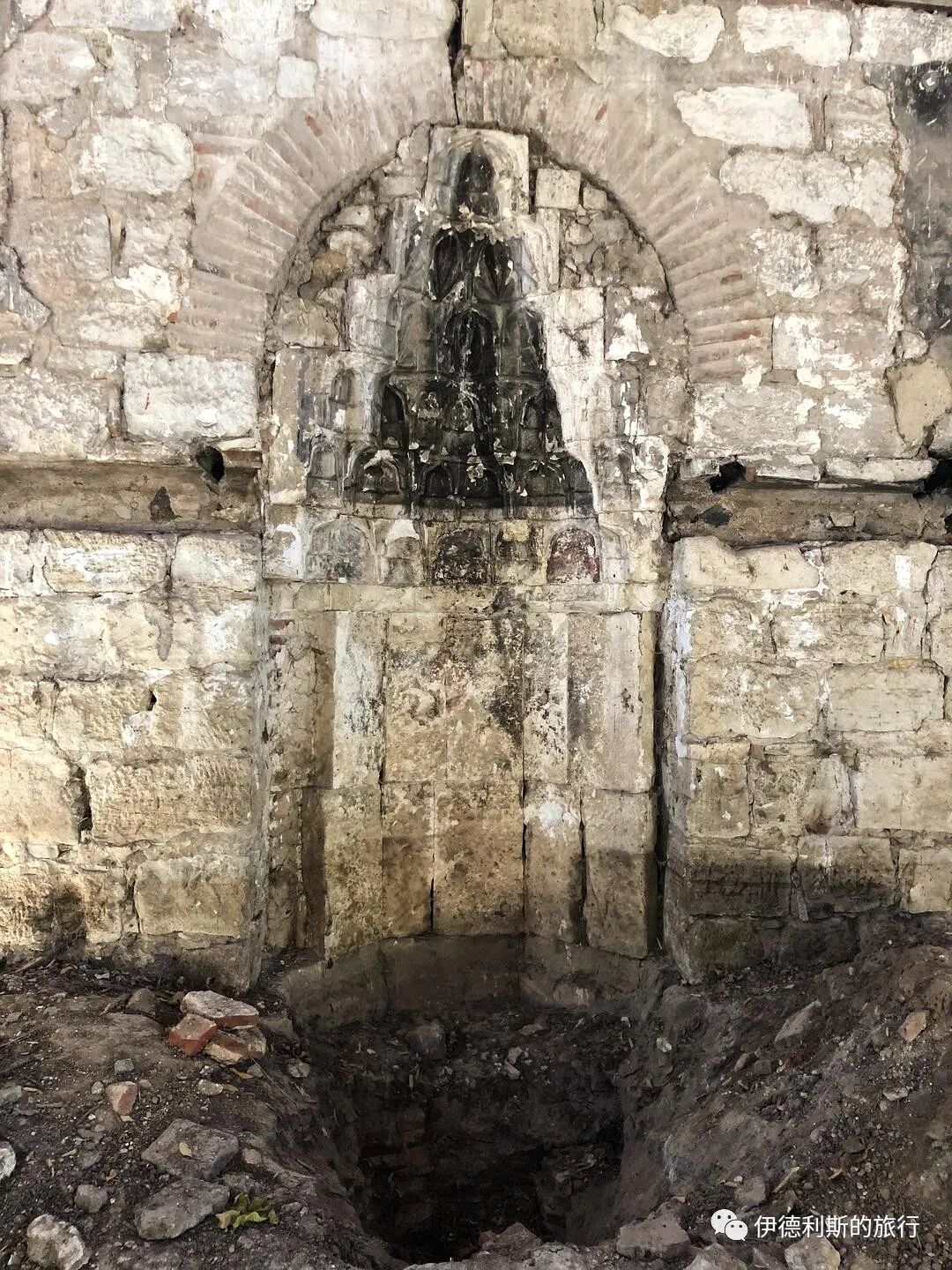
Mihrab
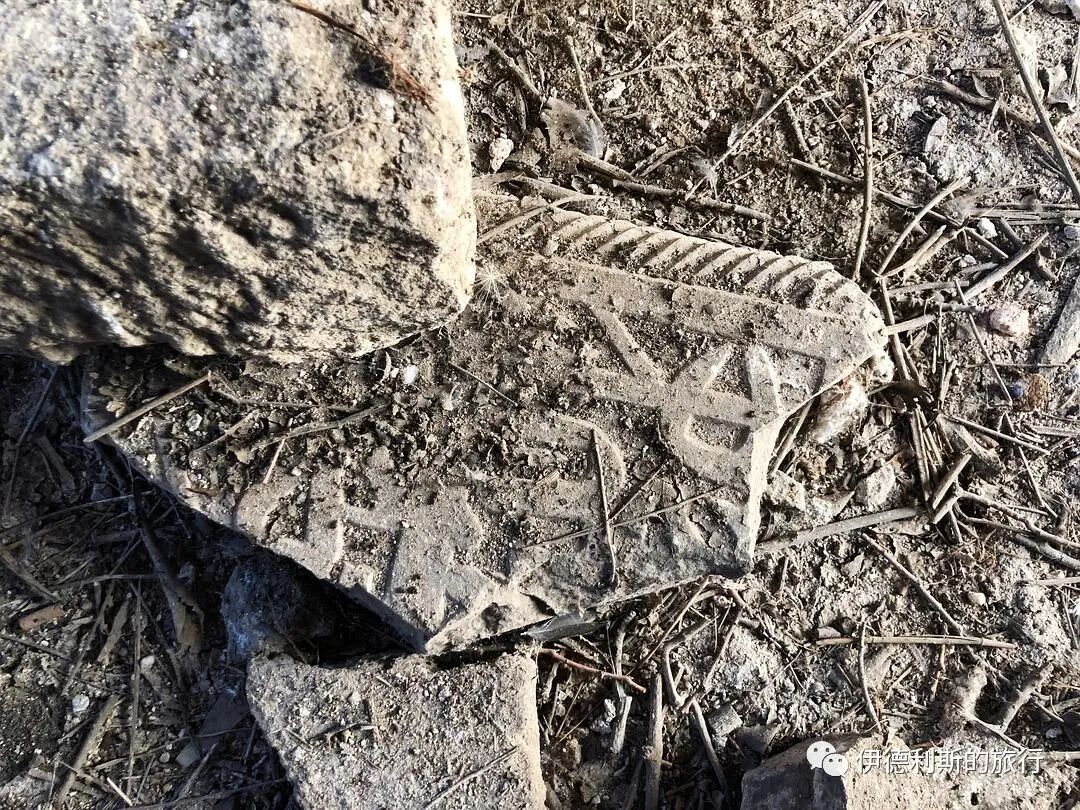
Architectural pieces scattered on the ground.
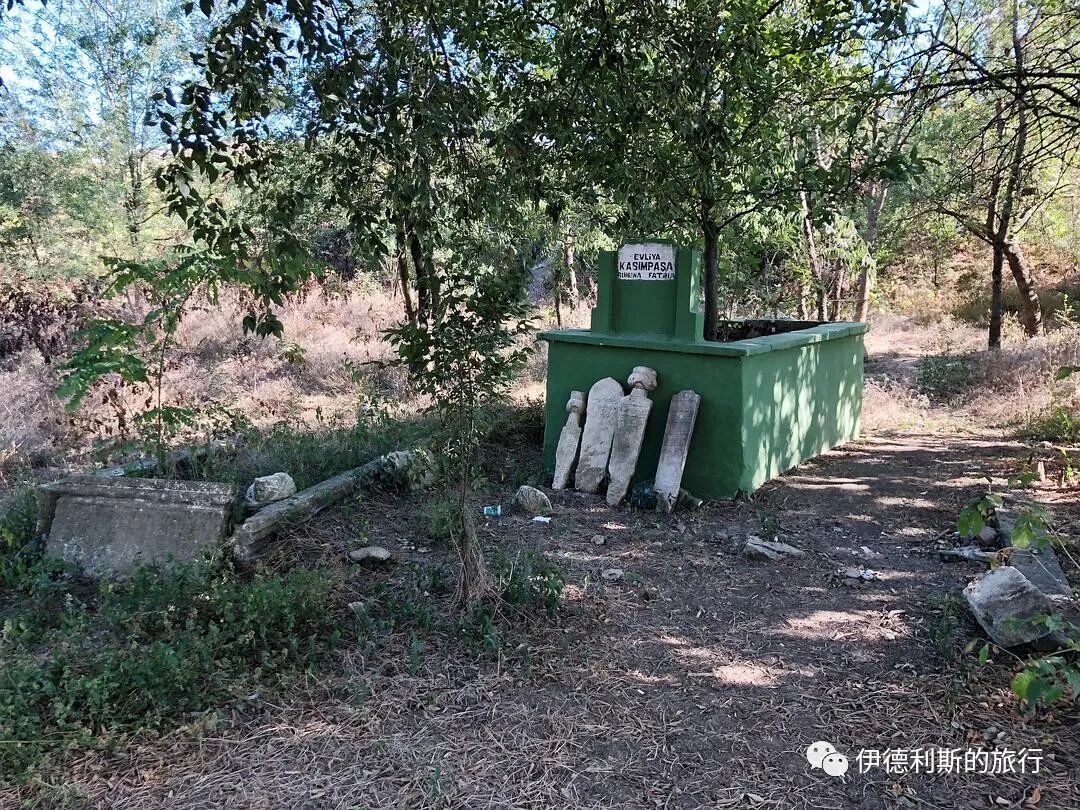
The tomb of Kasim Pasha.
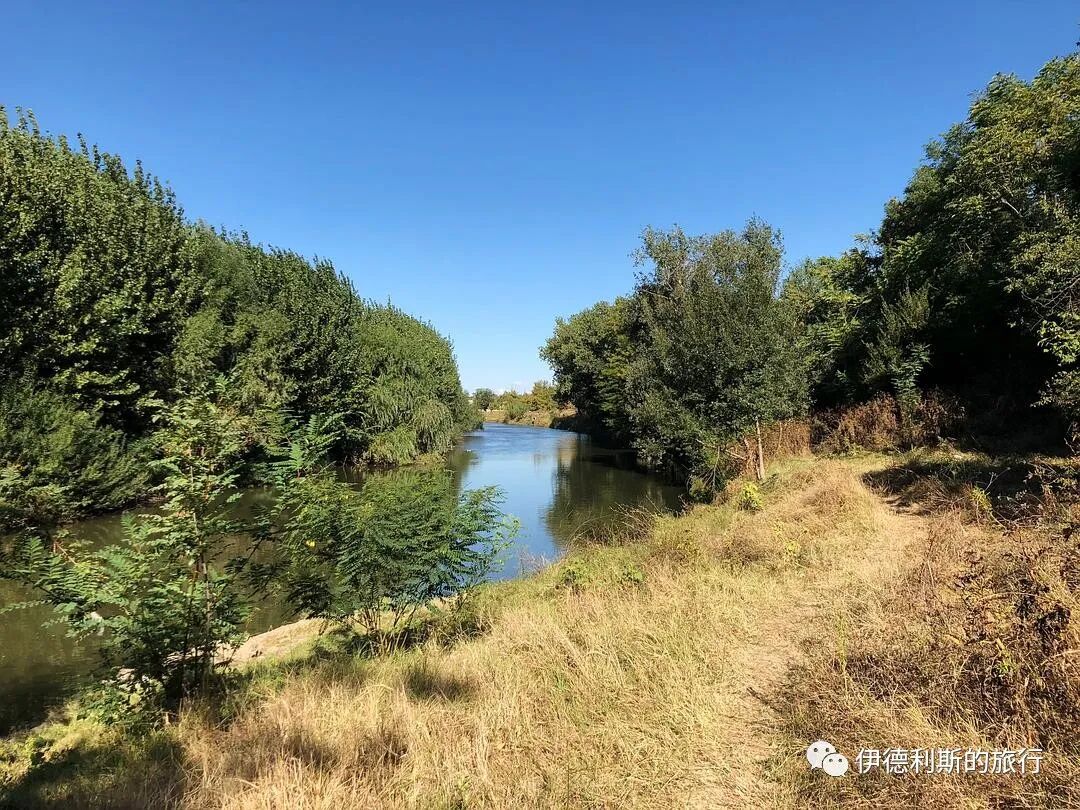
The road leading to the mosque.
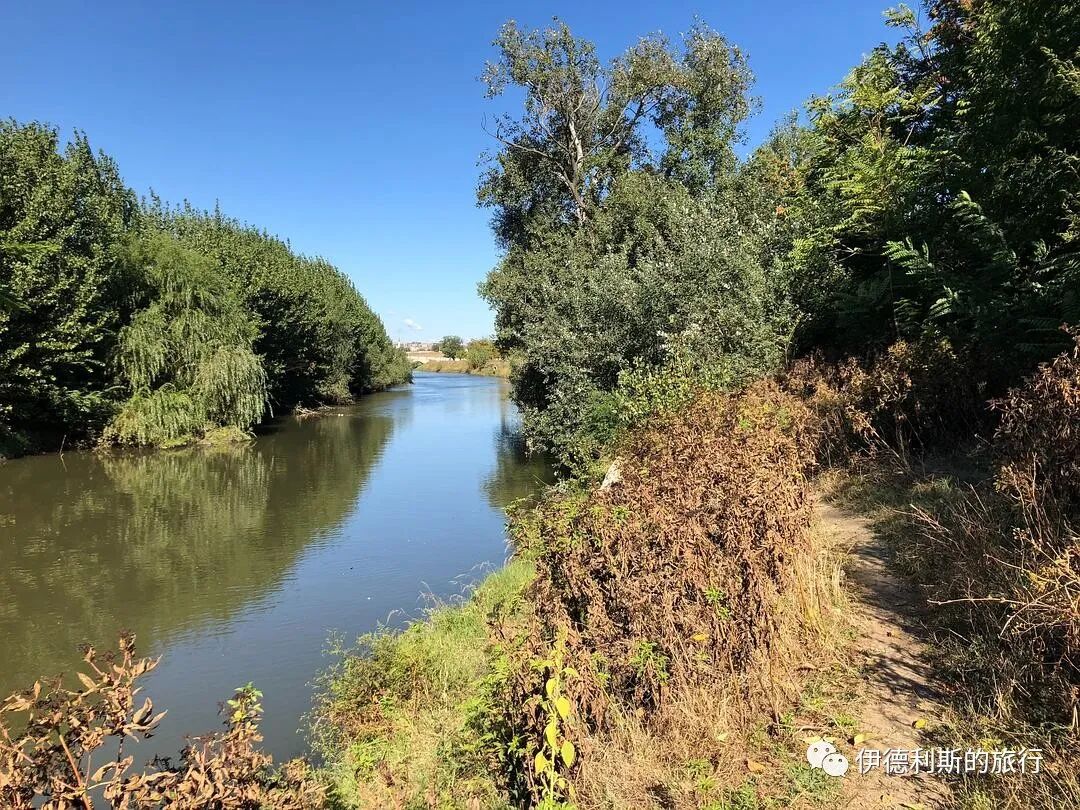
The road leading to the mosque.
6. Sultan Bayezid II complex: 1488
The Sultan Bayezid II Complex (Sultan II Bayezid Külliyesi) sits on the north bank of the Tunca River in the northwest suburbs of Edirne. It was built by order of the eighth Ottoman Sultan, Bayezid II, who reigned from 1481 to 1512. Bayezid II was the son of Mehmed the Conqueror and was known as 'the Just'. During his reign, he worked to maintain government affairs at home and defeated the Republic of Venice abroad, leading the Ottoman Empire into a prosperous era.
The entire complex includes many buildings such as a mosque, a medical school (Medrese-i Etibba), a public kitchen (imaret), a hospital (darüşşifa), a bathhouse (hamam), and warehouses.
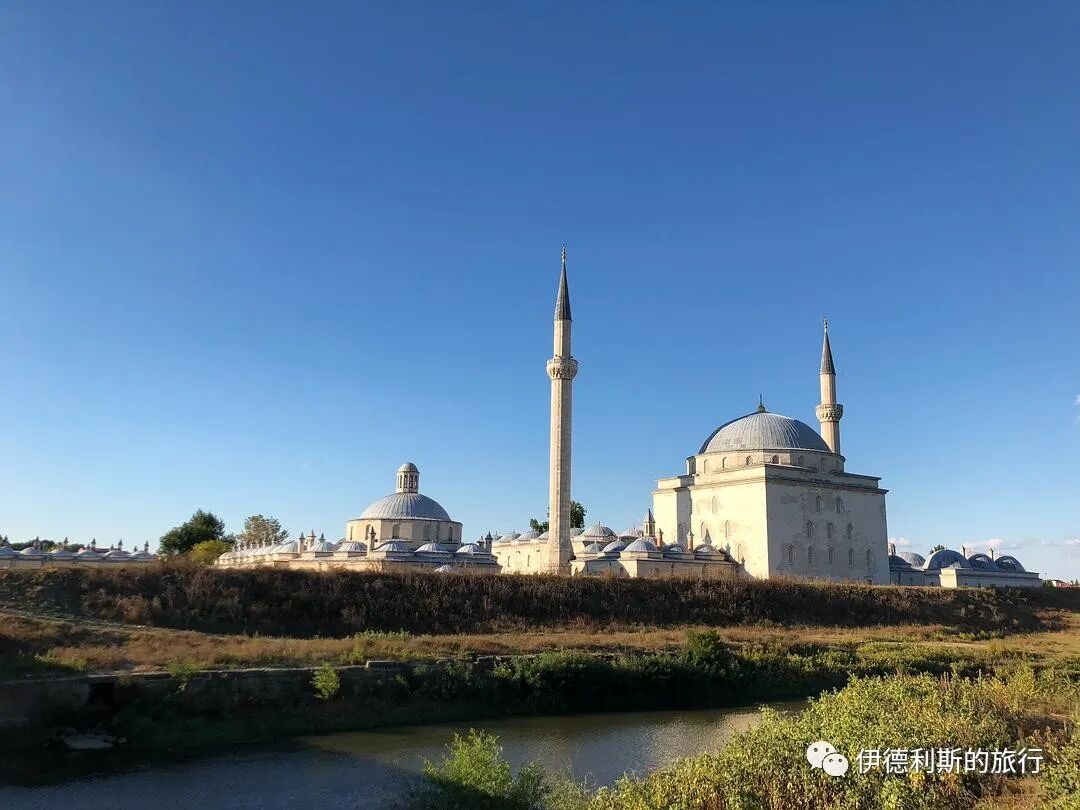
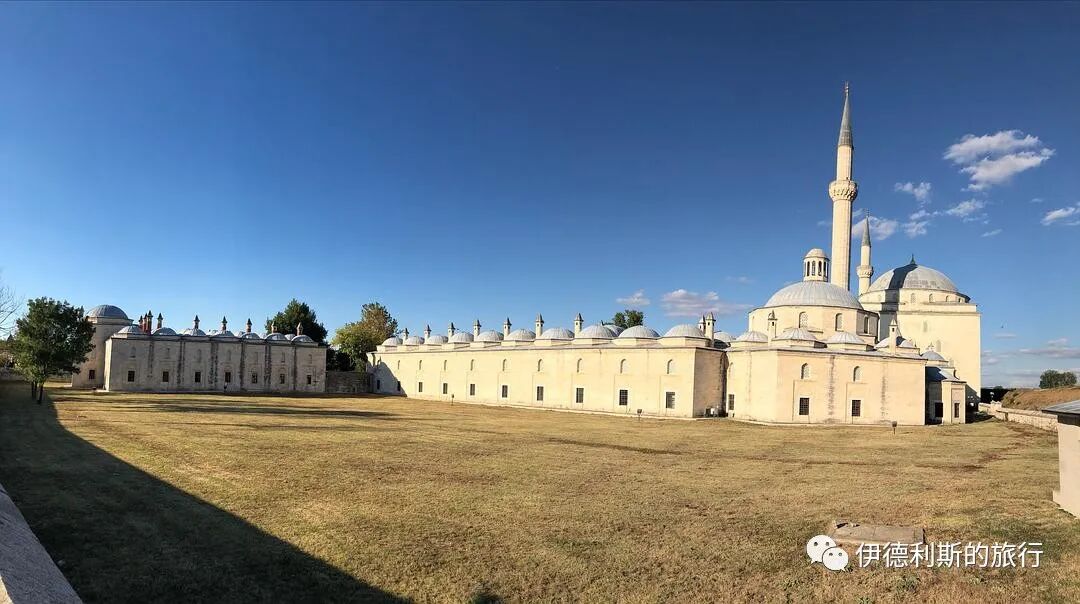
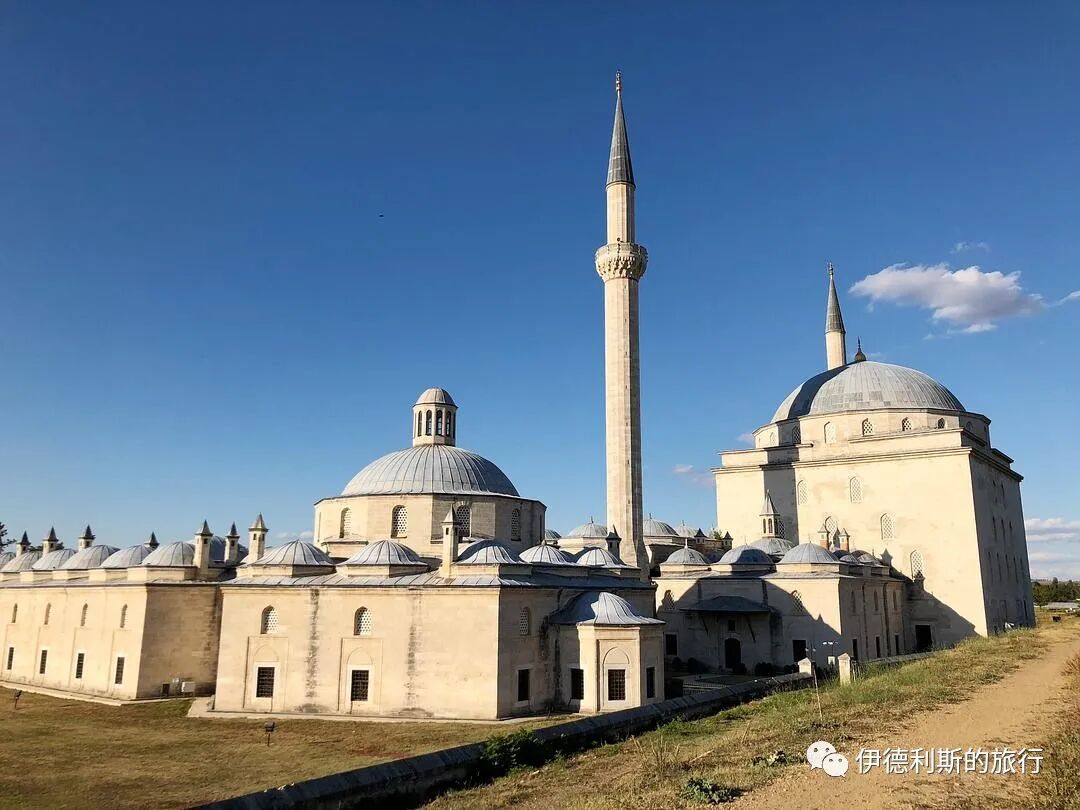
1. Mosque
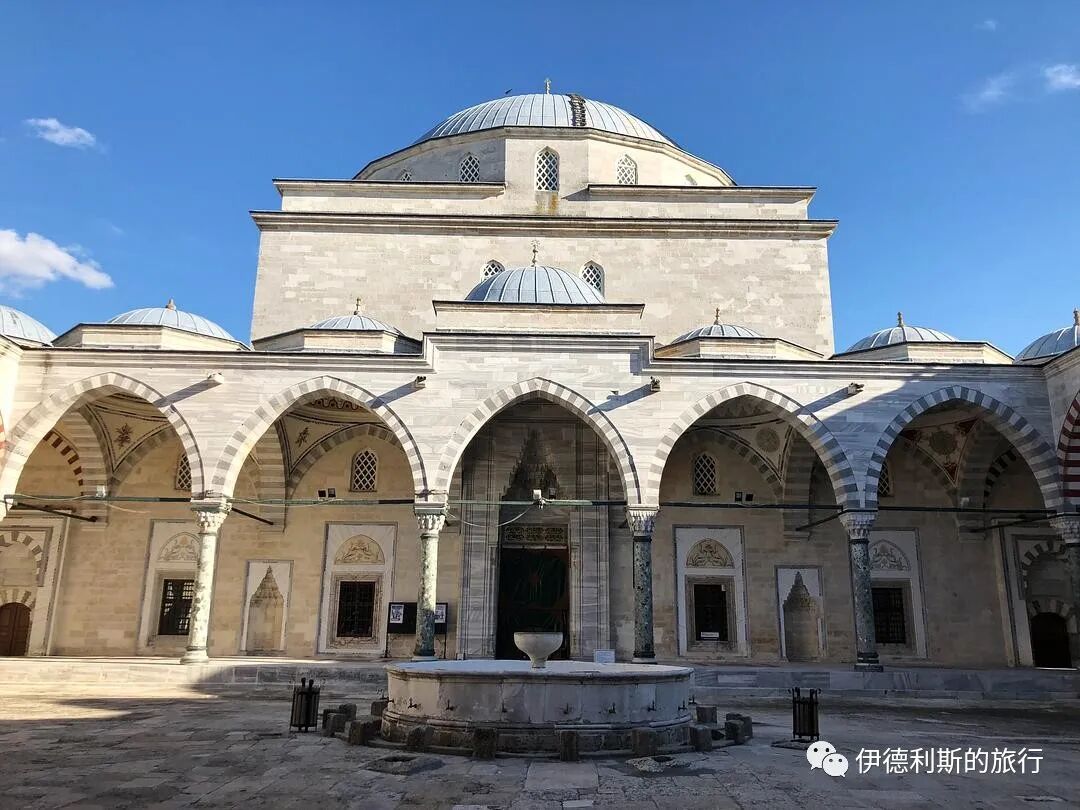
View of the main hall from the portico
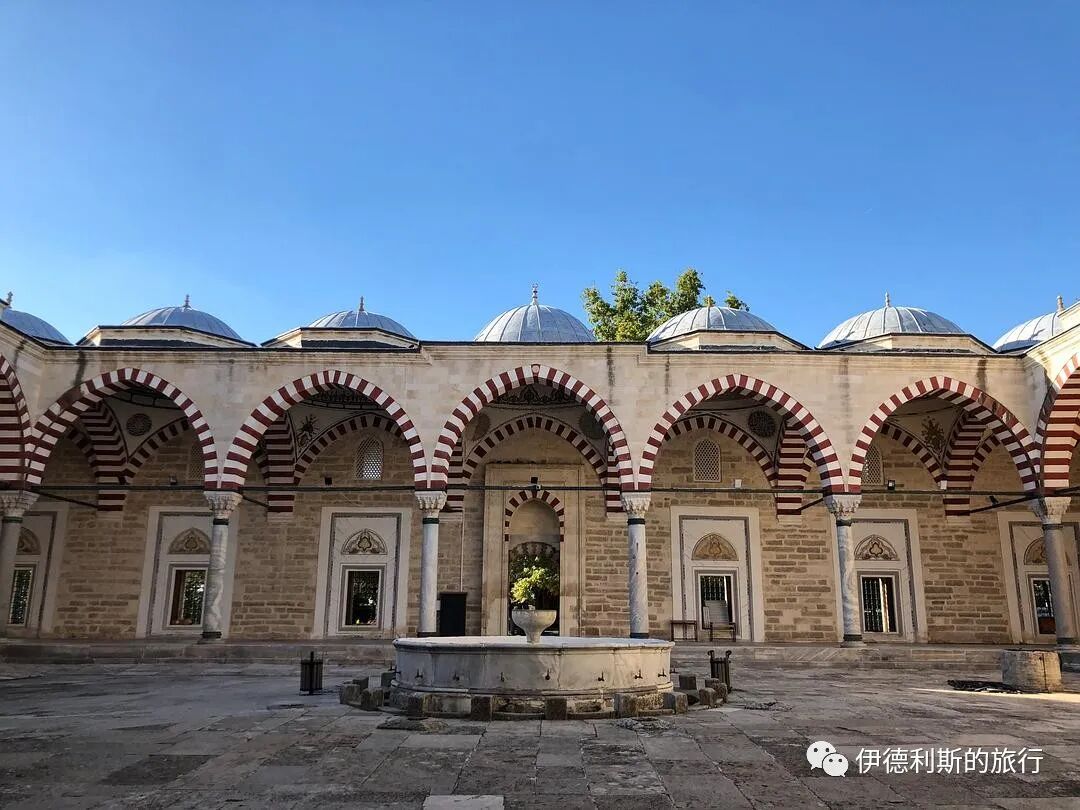
Looking at the front porch from the main hall.
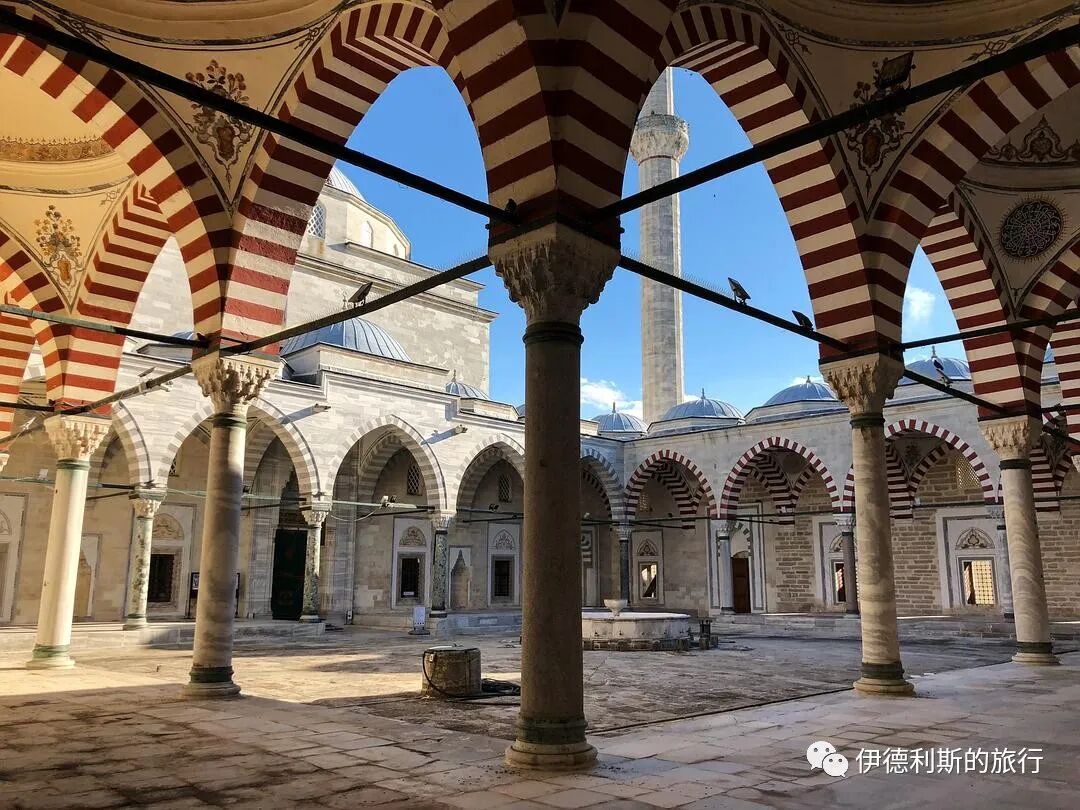
Portico
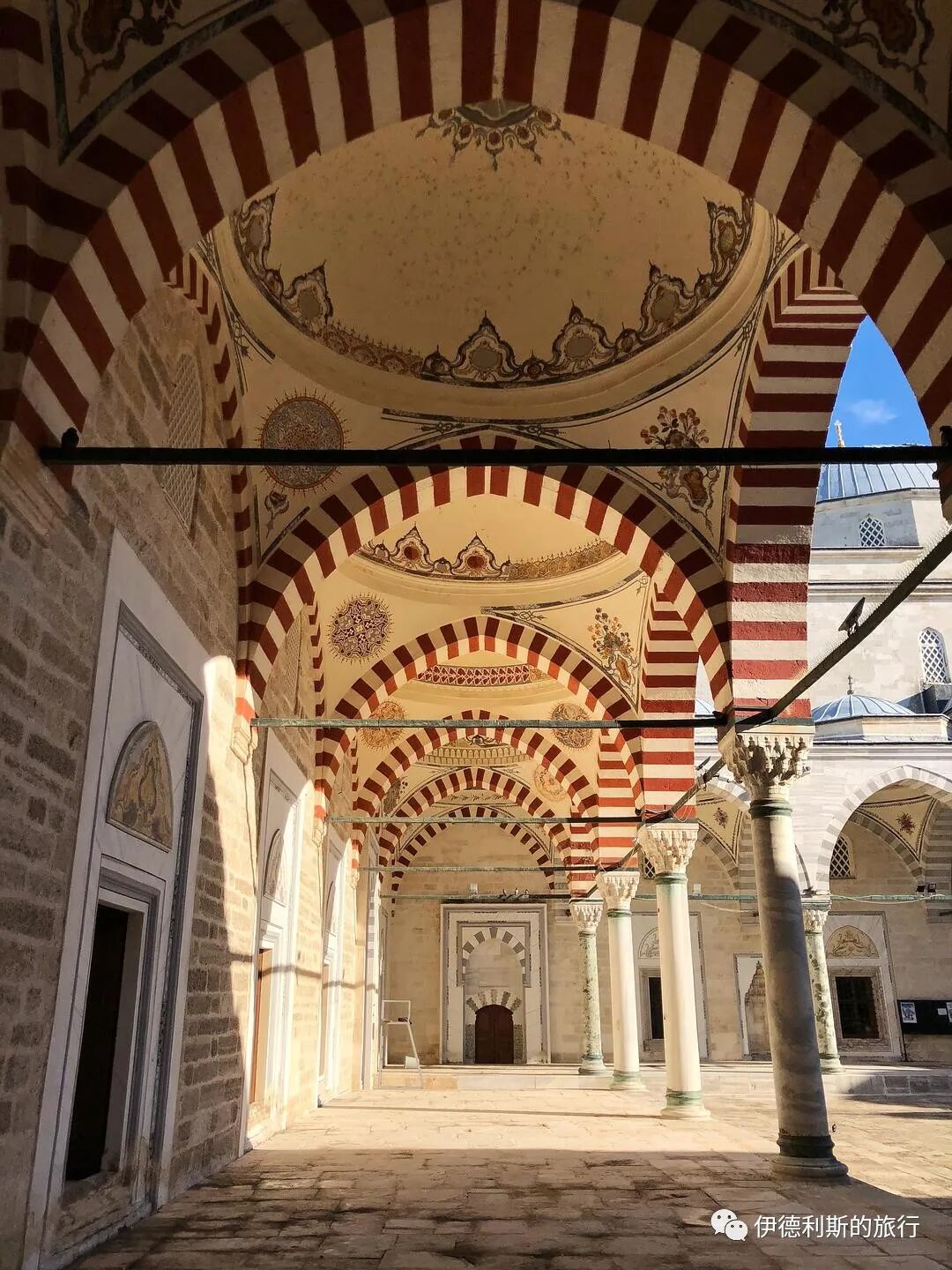
Portico
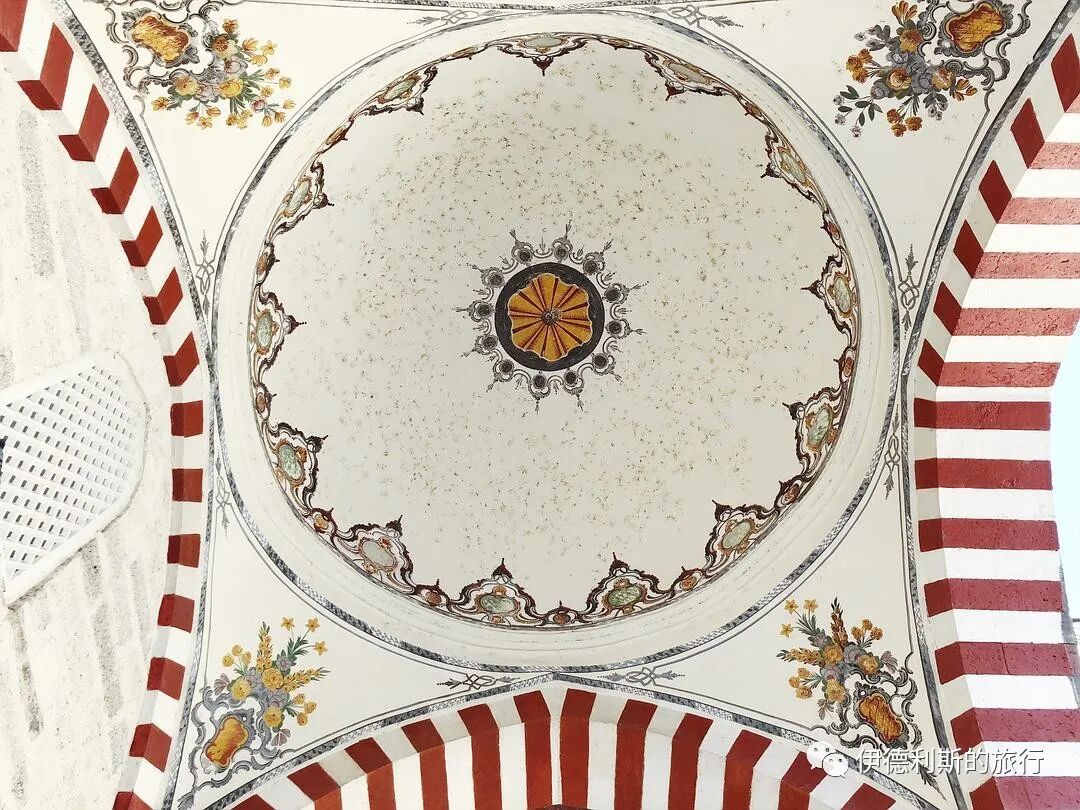
Portico dome
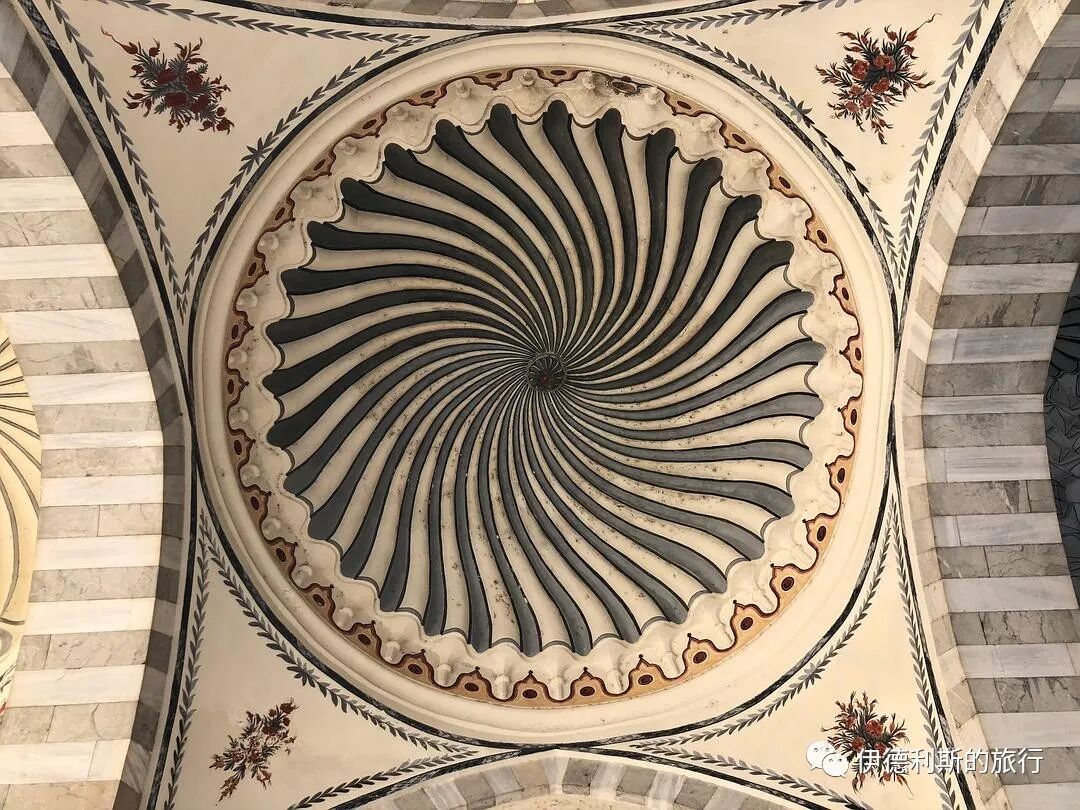
Portico dome
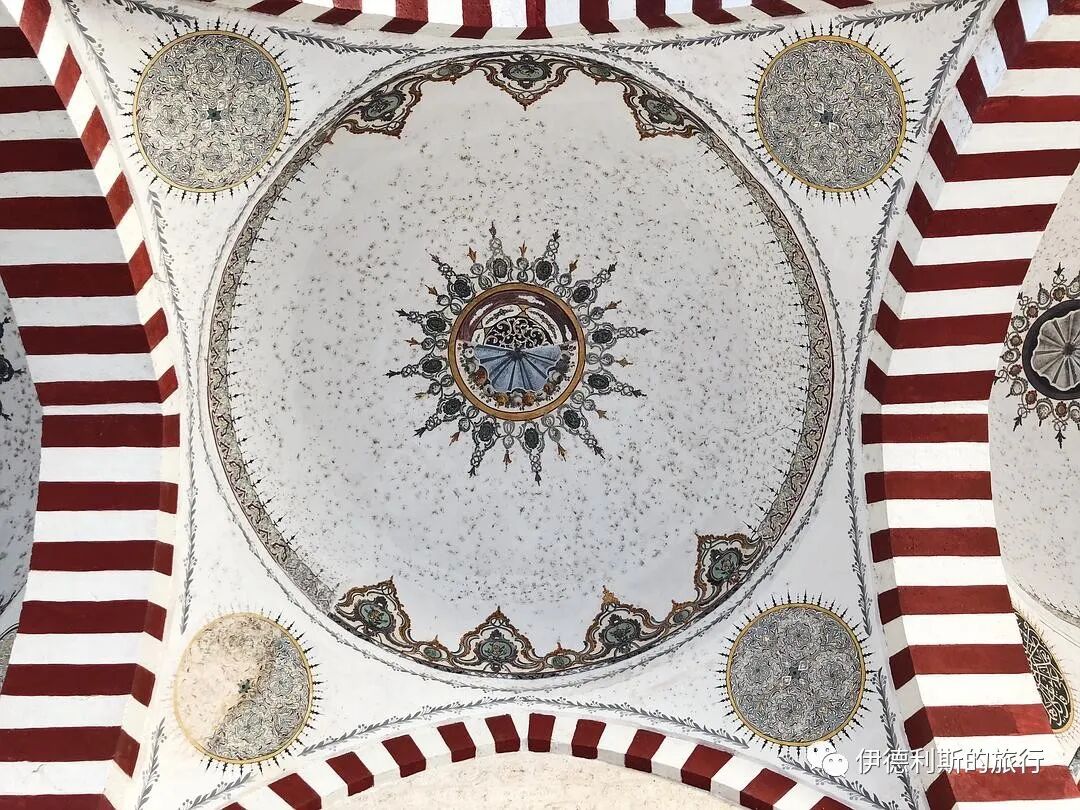
Portico dome
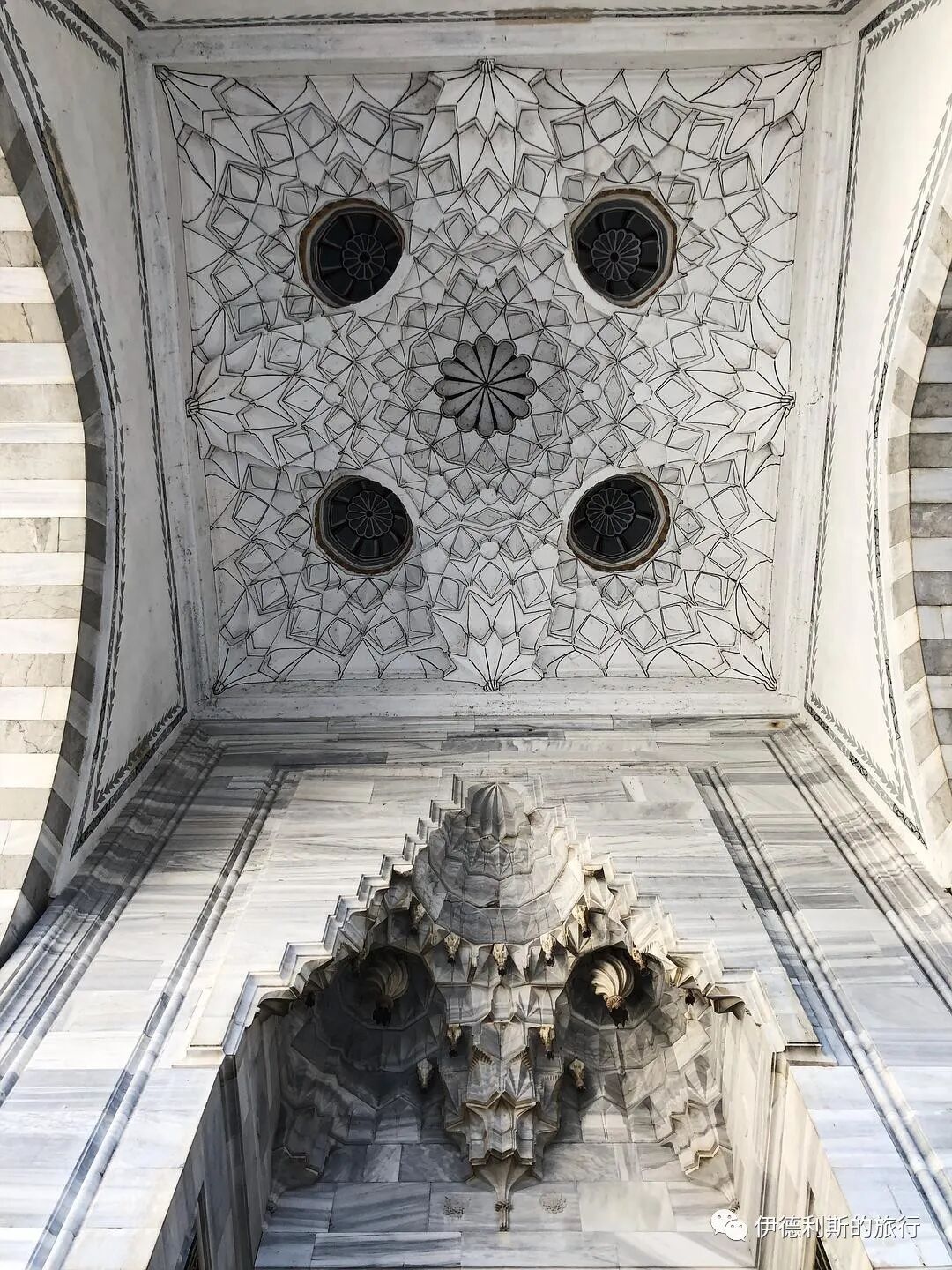
The main gate of the hall.
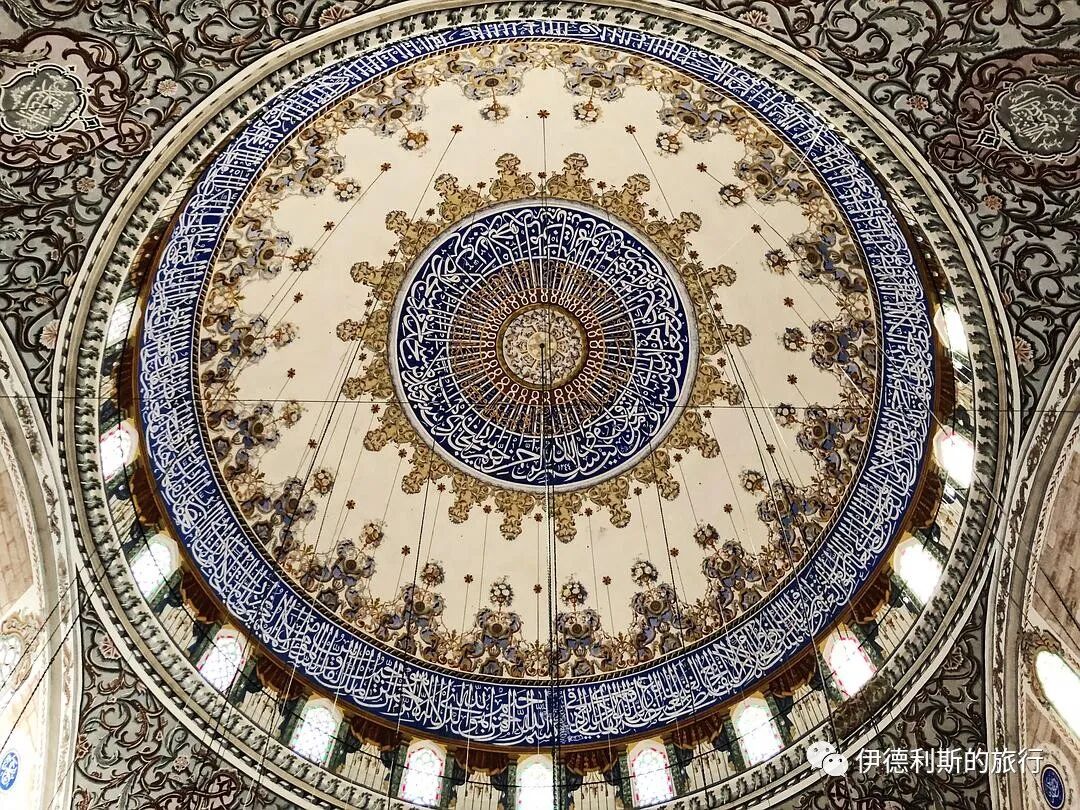
The dome of the main hall.
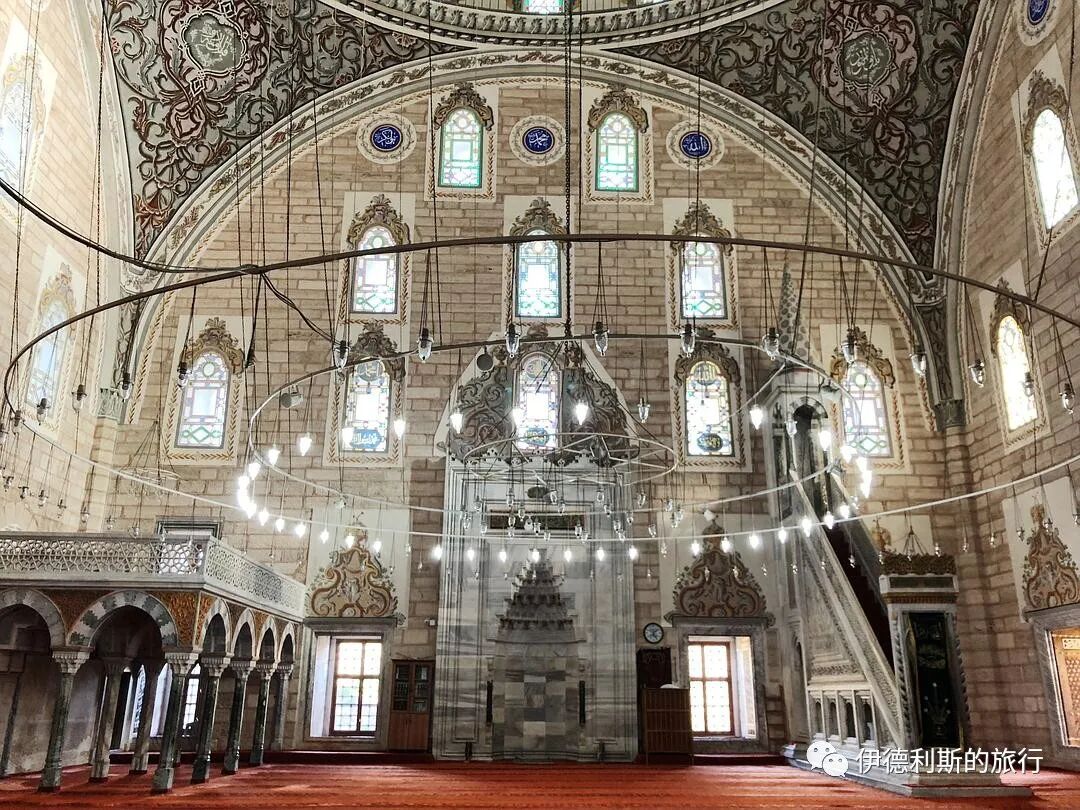
Main hall
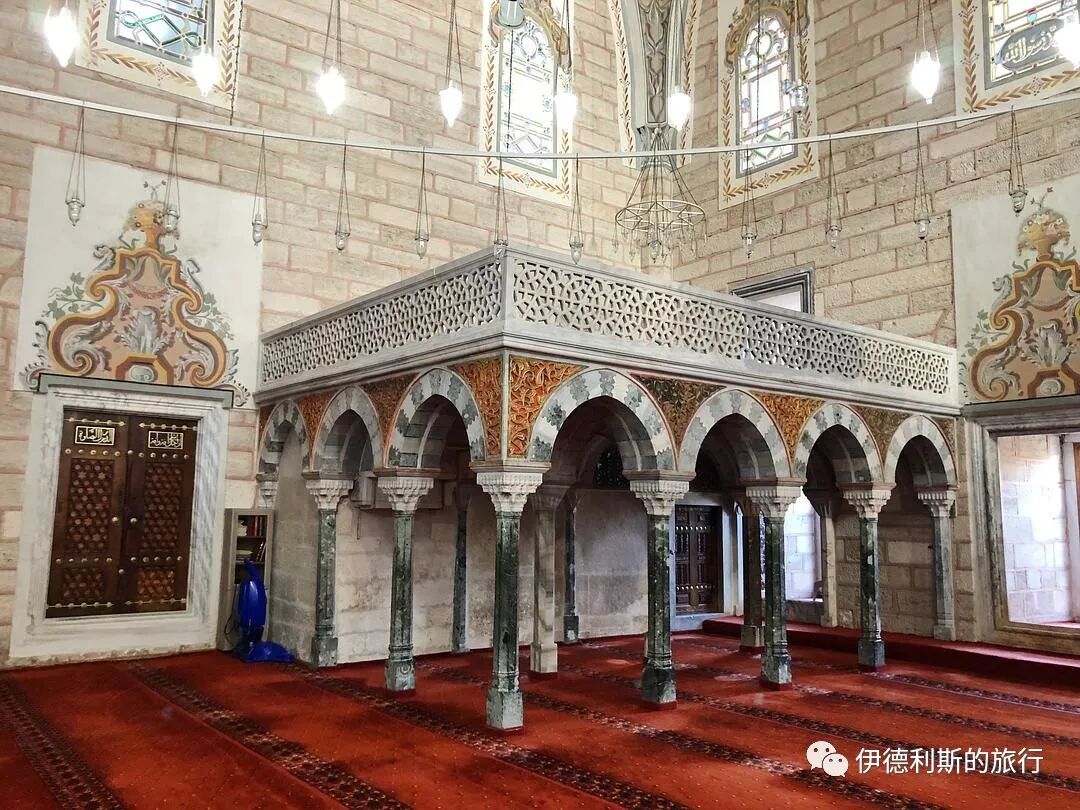
Main hall
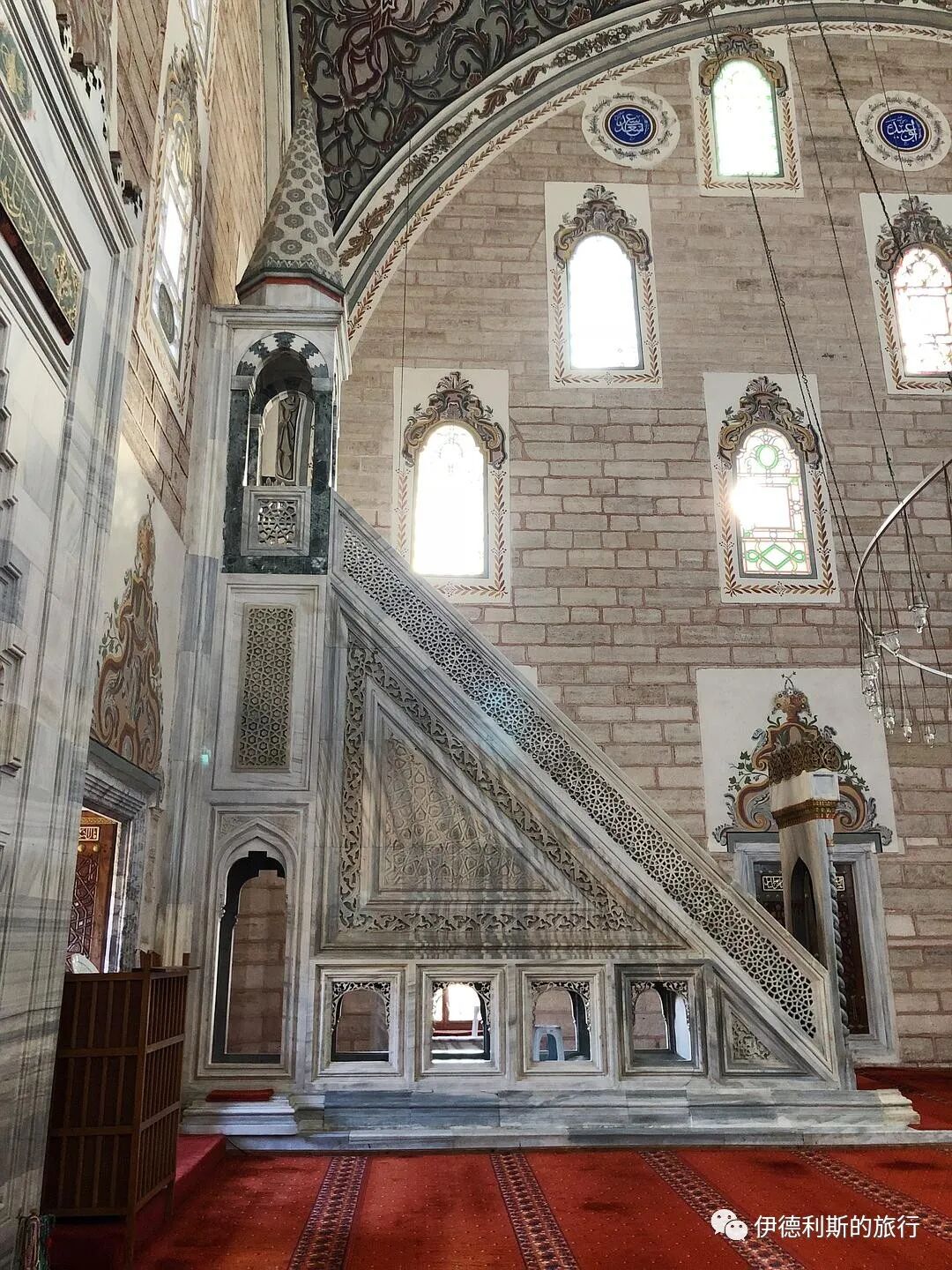
Minbar
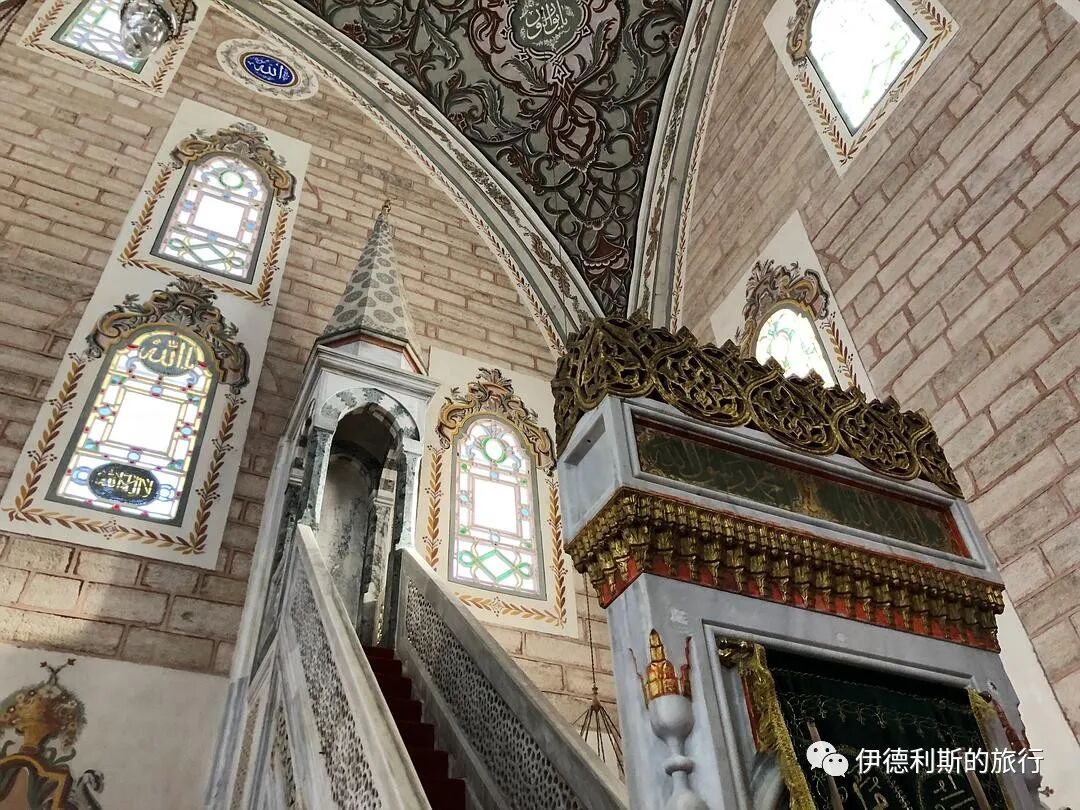
Minbar
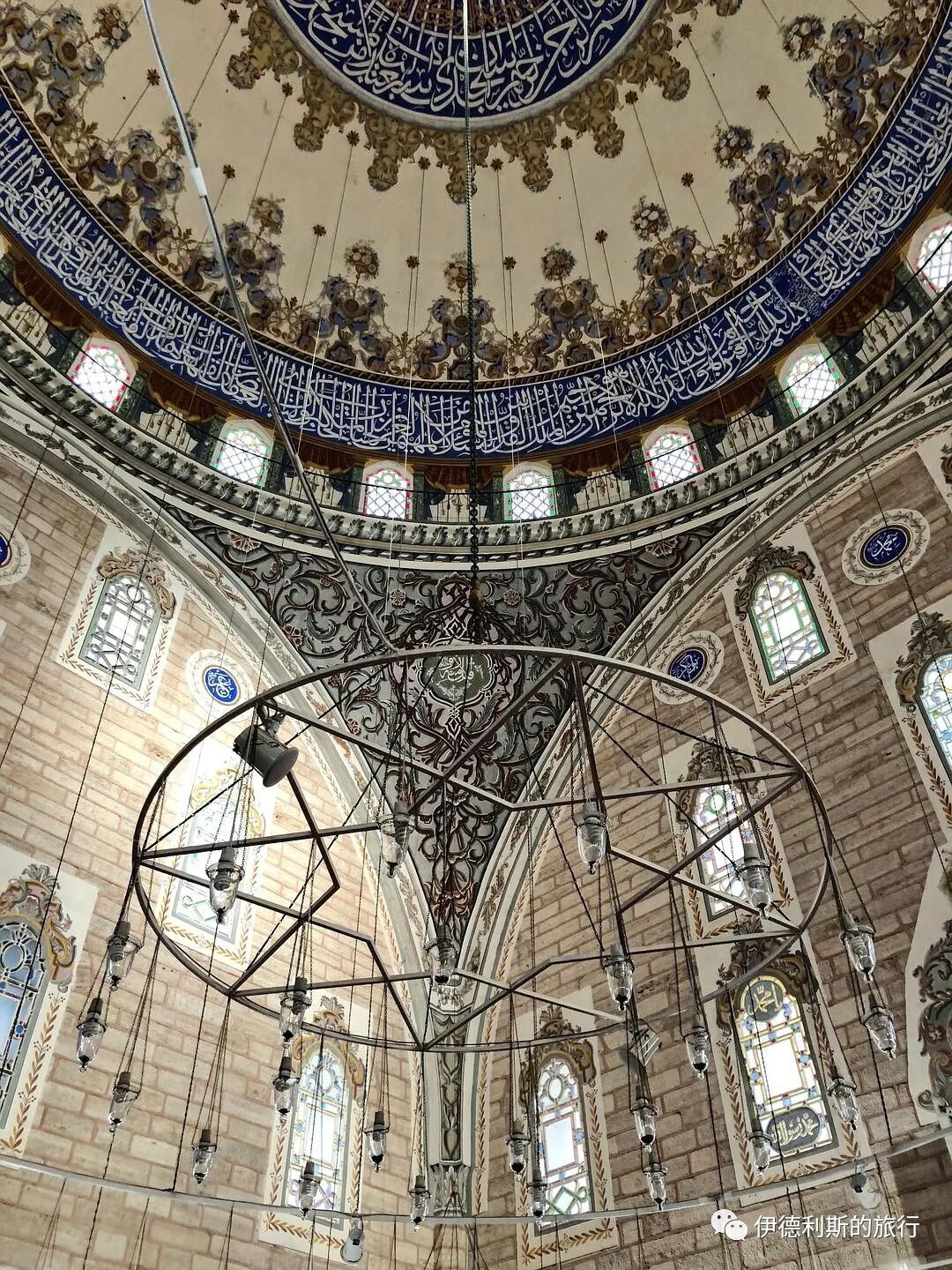
Main hall
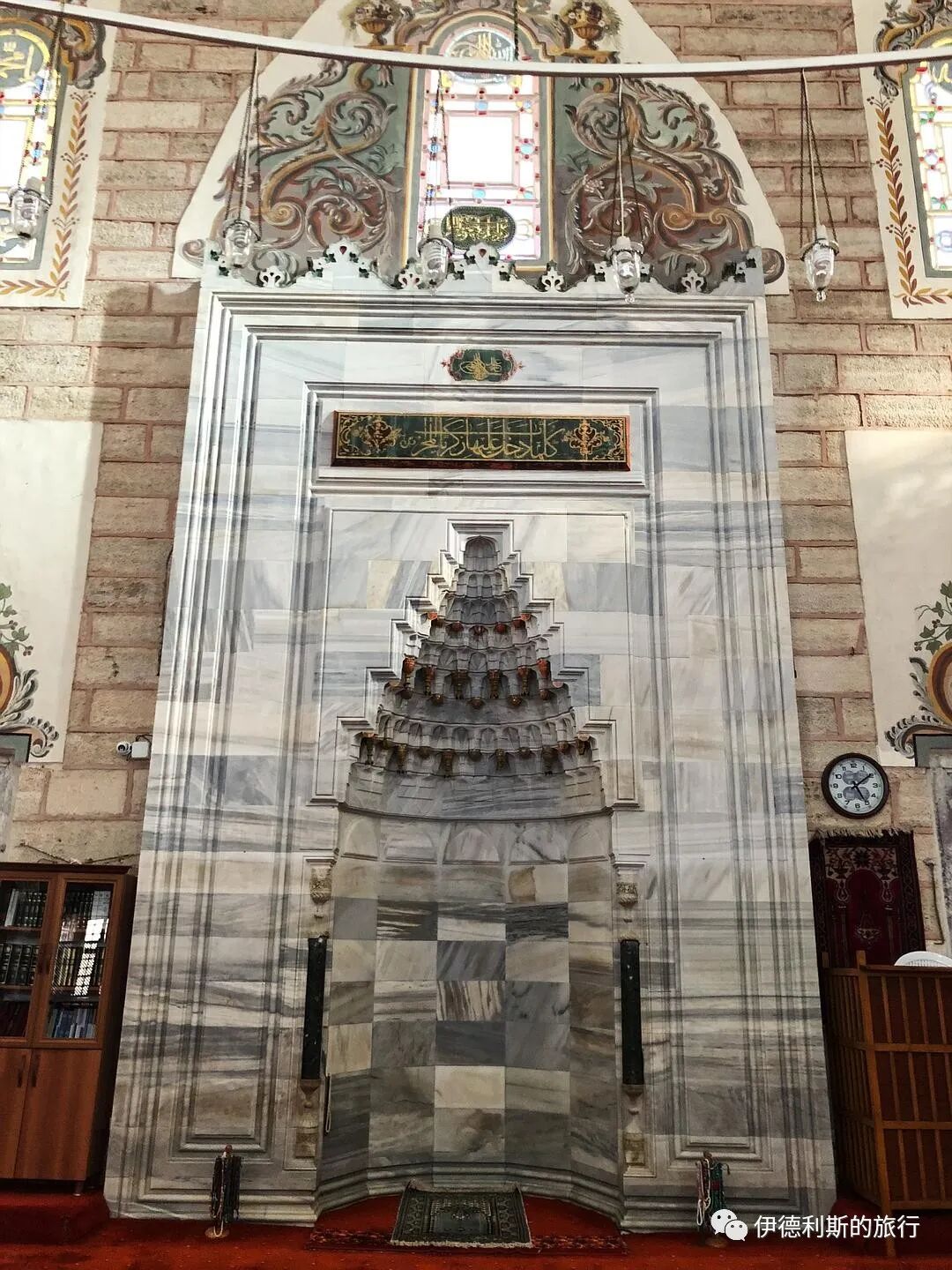
Mihrab
2. Medical school
The Sultan Bayezid II Medical School (Sultan II Bayezid Medrese-i Etibba) was known as one of the best medical schools in the Ottoman Empire, consisting of 18 classrooms and a large lecture hall. The famous 17th-century Ottoman traveler Evliya Çelebi mentioned in his writings that this medical school studied the works of various ancient Greek philosophers, scientists, and physicians, including Plato, Socrates, Aristotle, Galen, and Pythagoras. Every doctor was an expert in a different field, and they tried to find the best treatments by studying various medical texts.
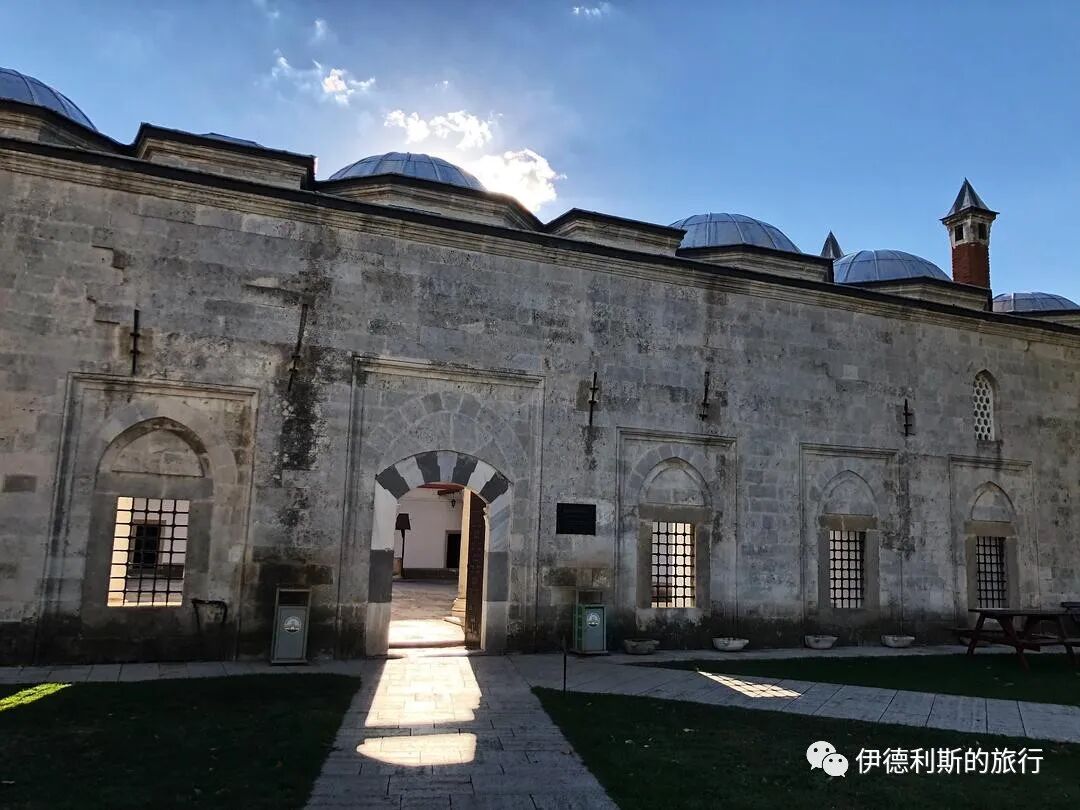
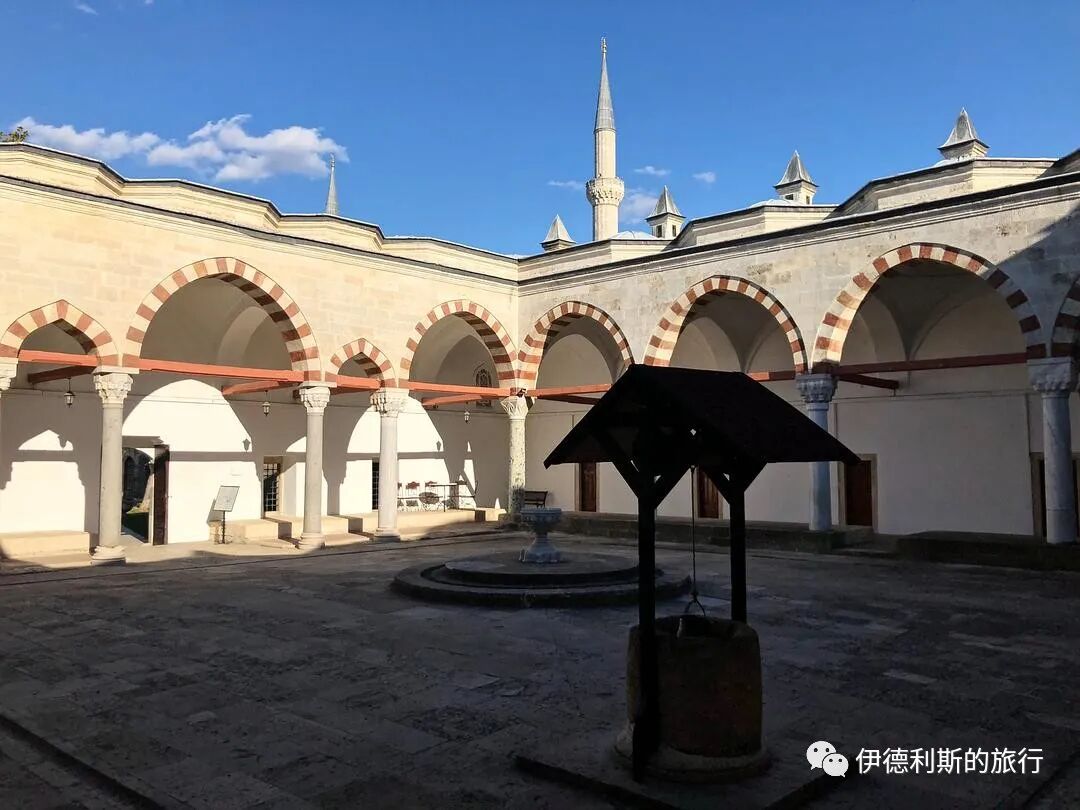
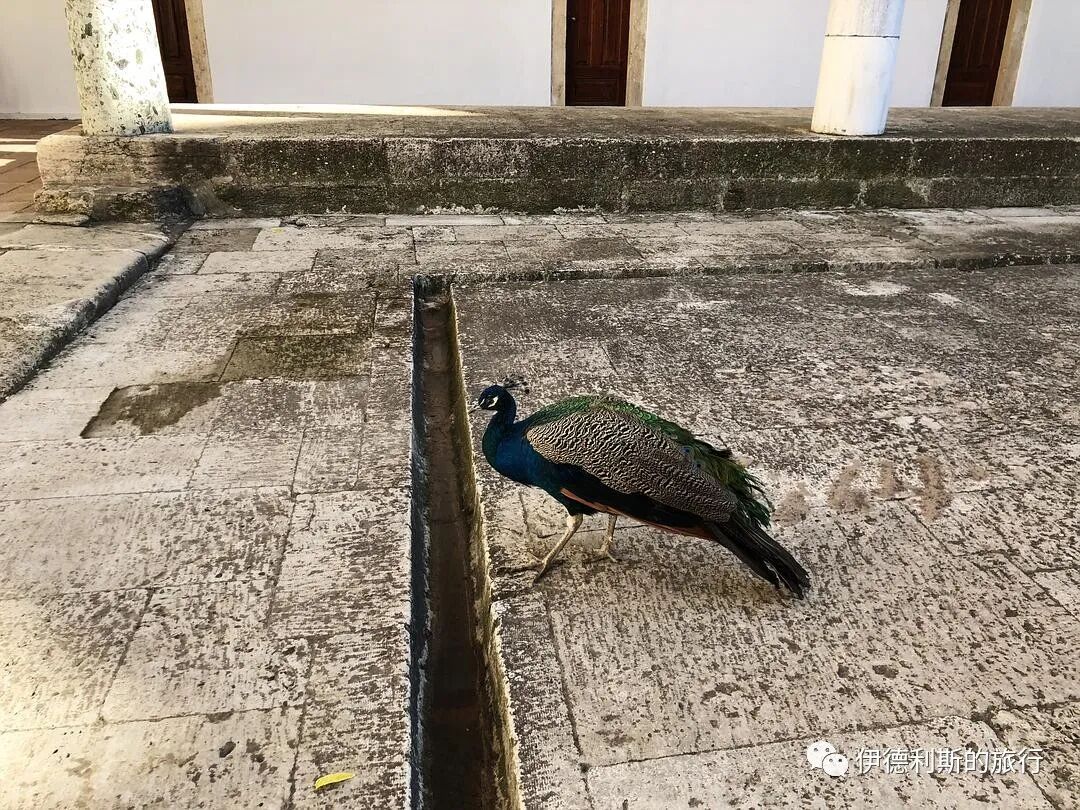
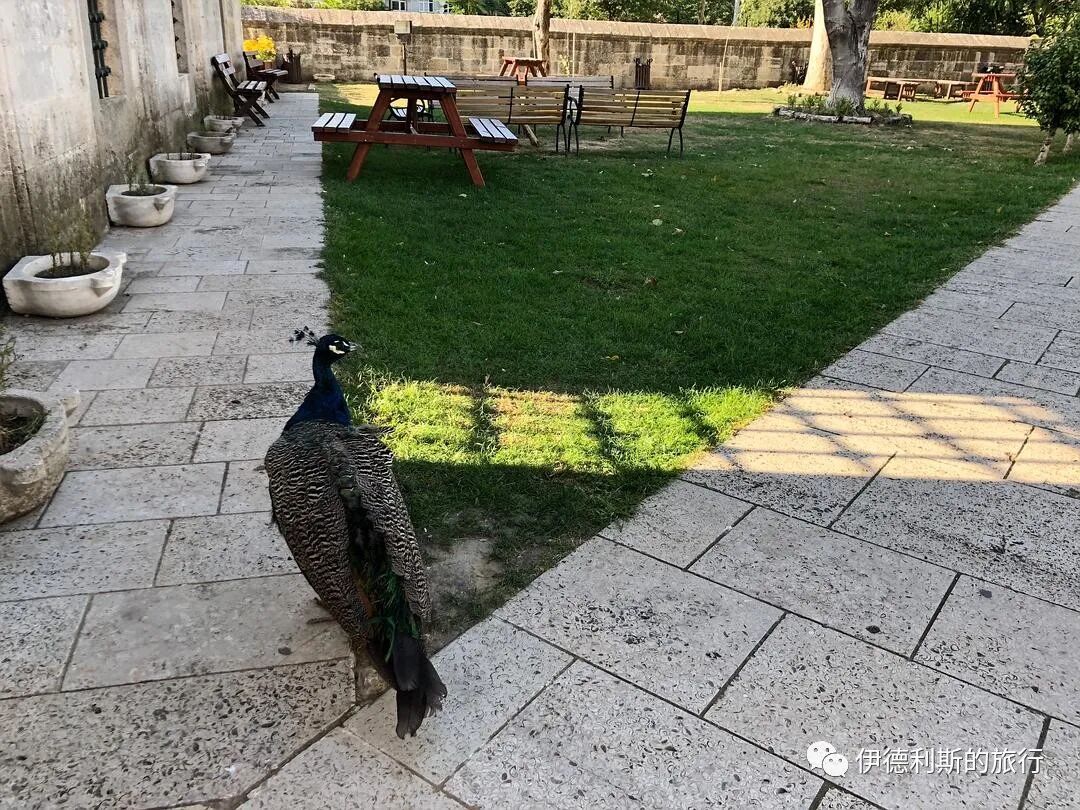
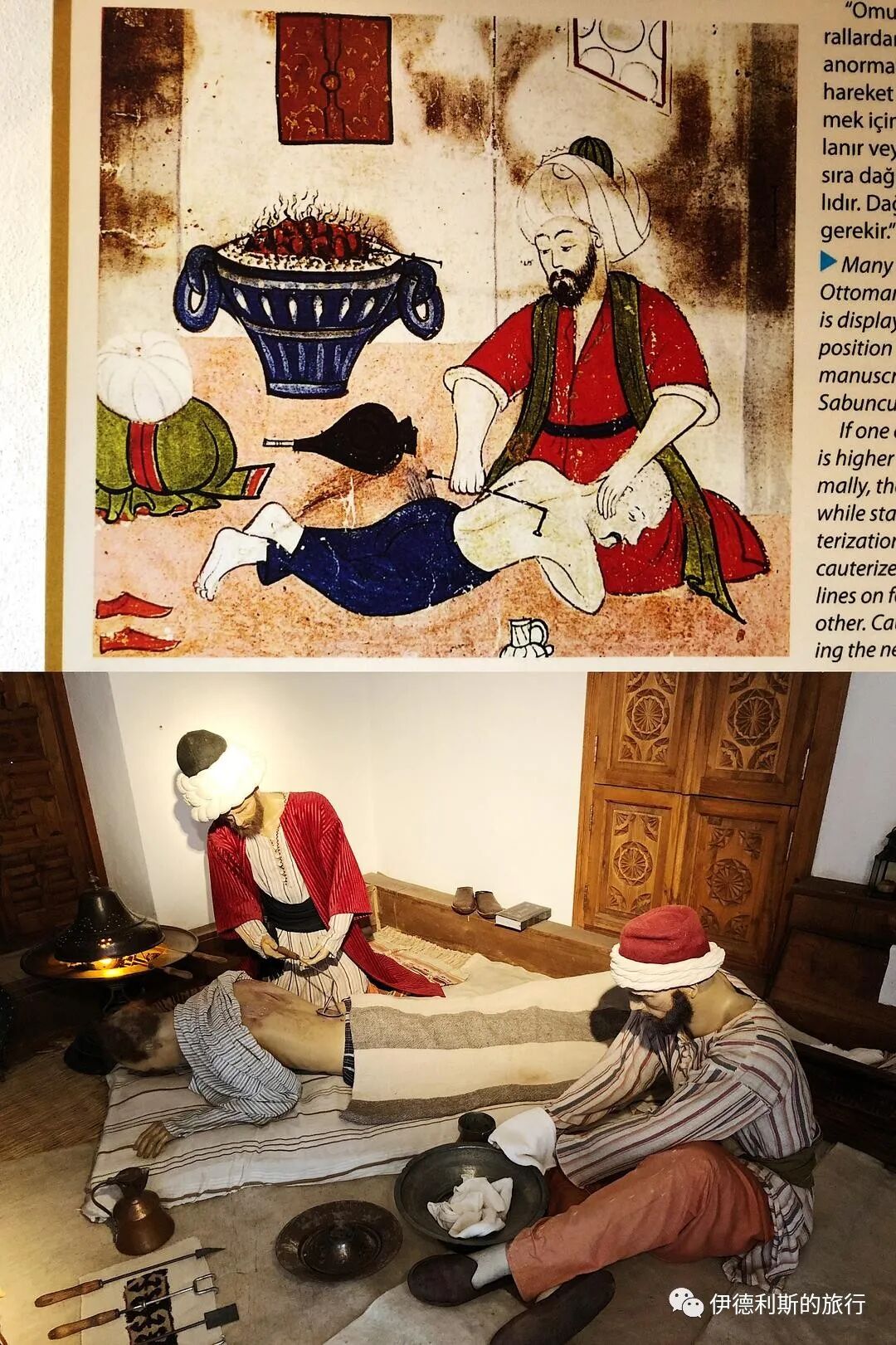
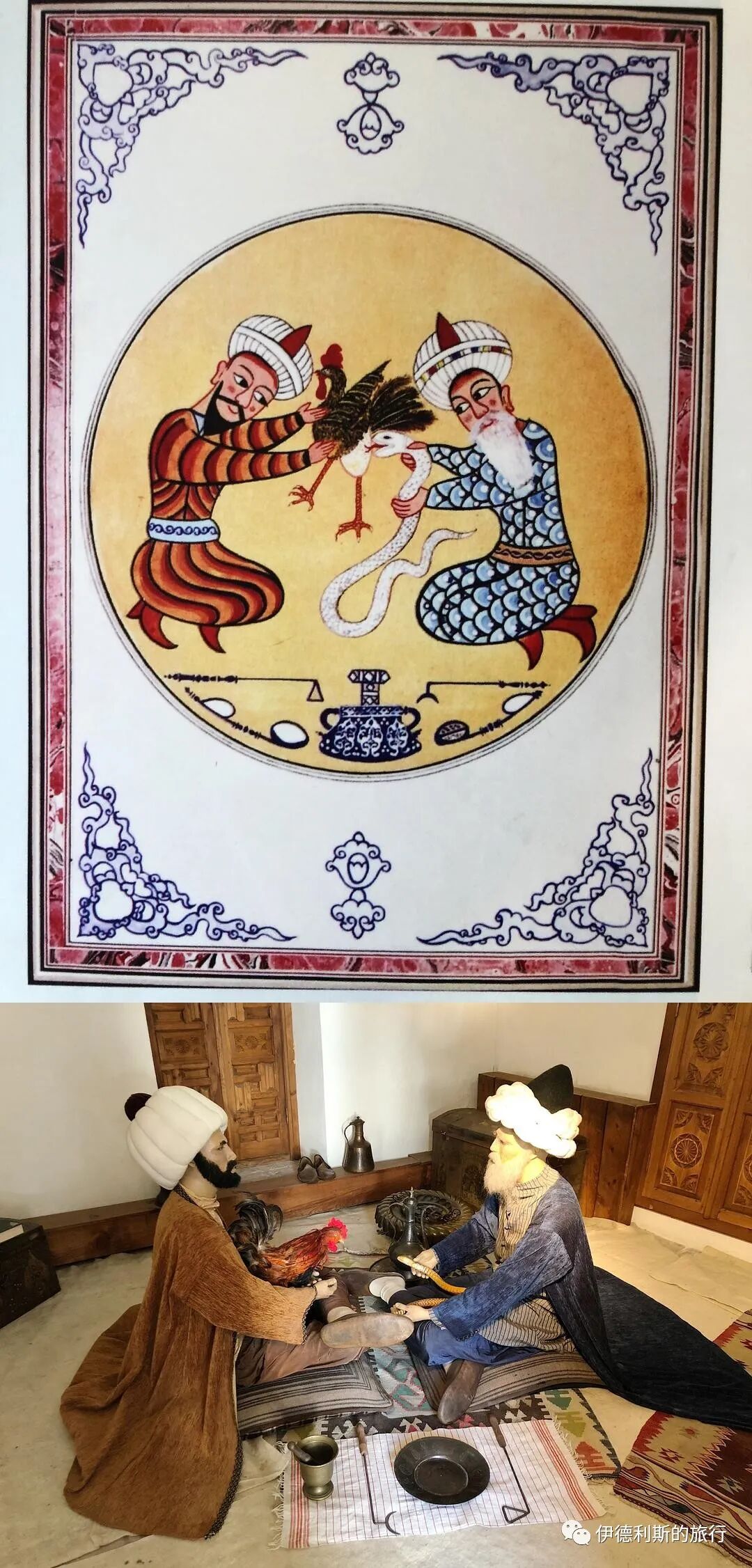
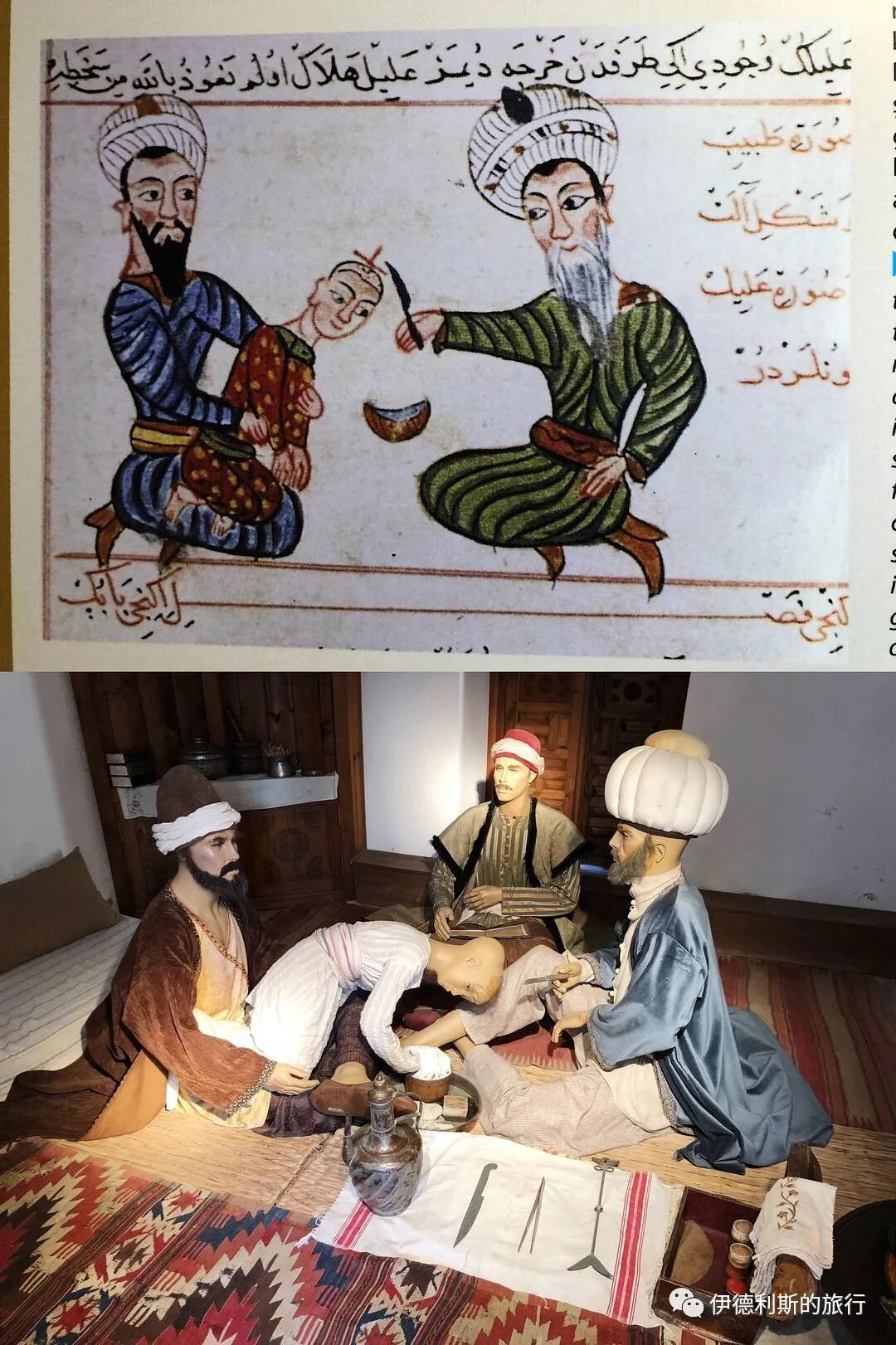
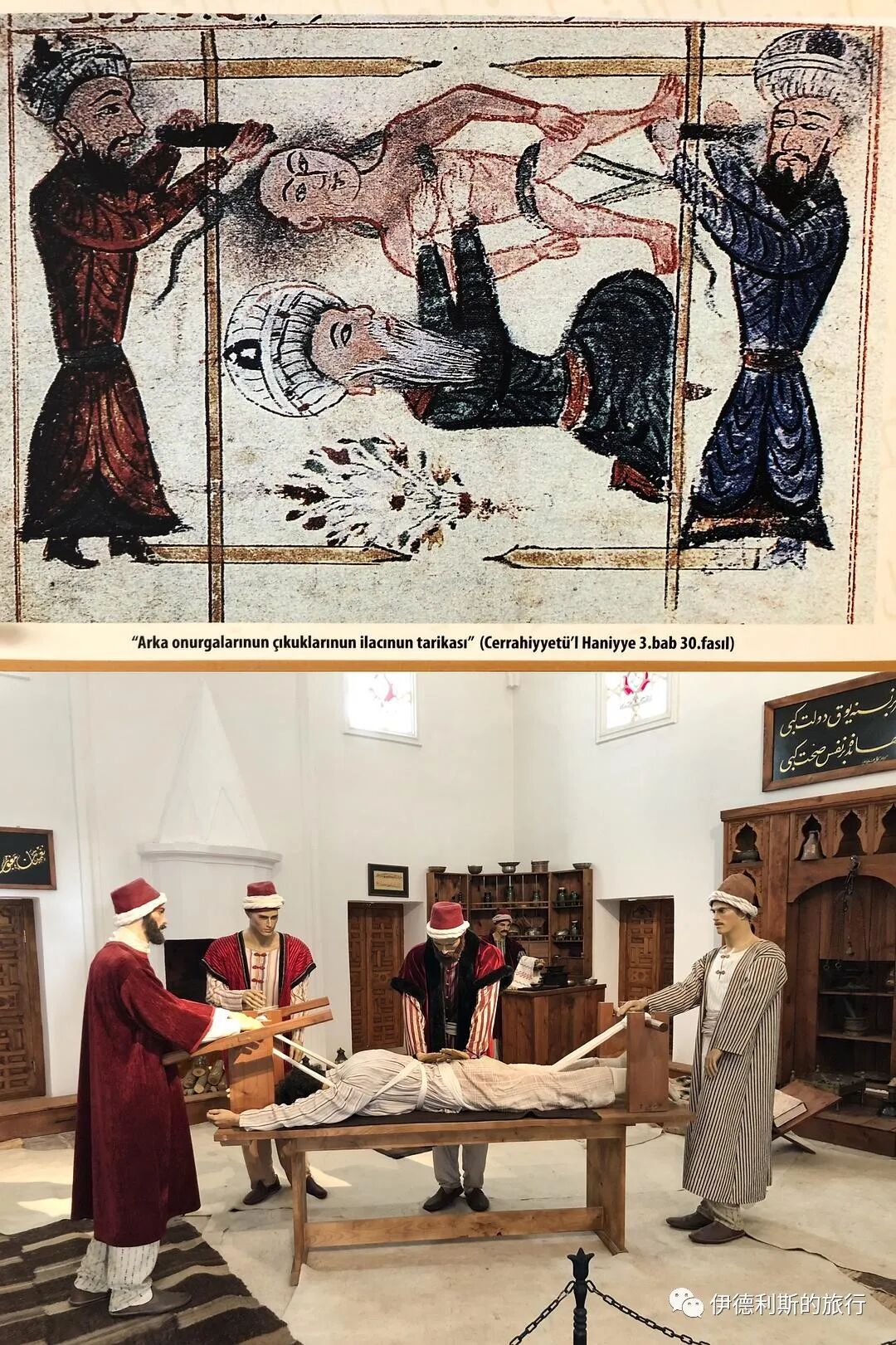
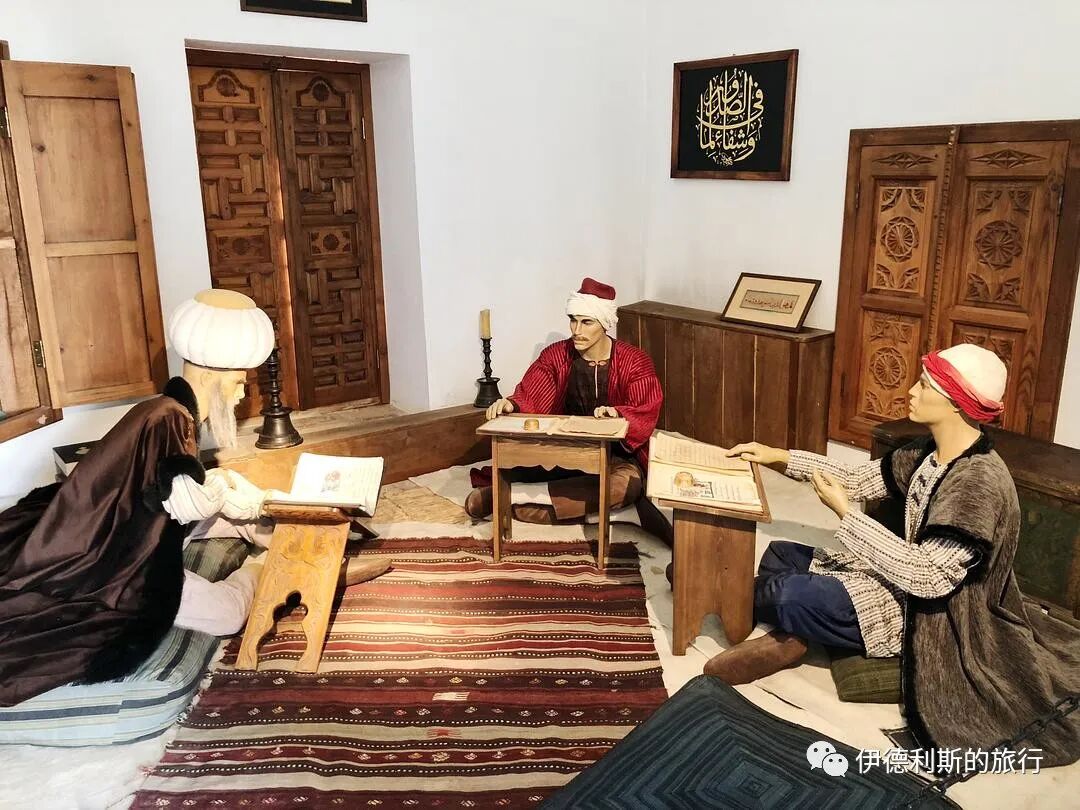
3. Hospital
The Sultan Bayezid II Hospital (Sultan II Bayezid Darüşşifa) is the most important part of the entire complex. From its completion in 1488 until the Russo-Turkish War in 1877, this hospital provided continuous treatment to patients and was especially famous for using sound and scent for mental health therapy. Today, it has become part of a health museum.
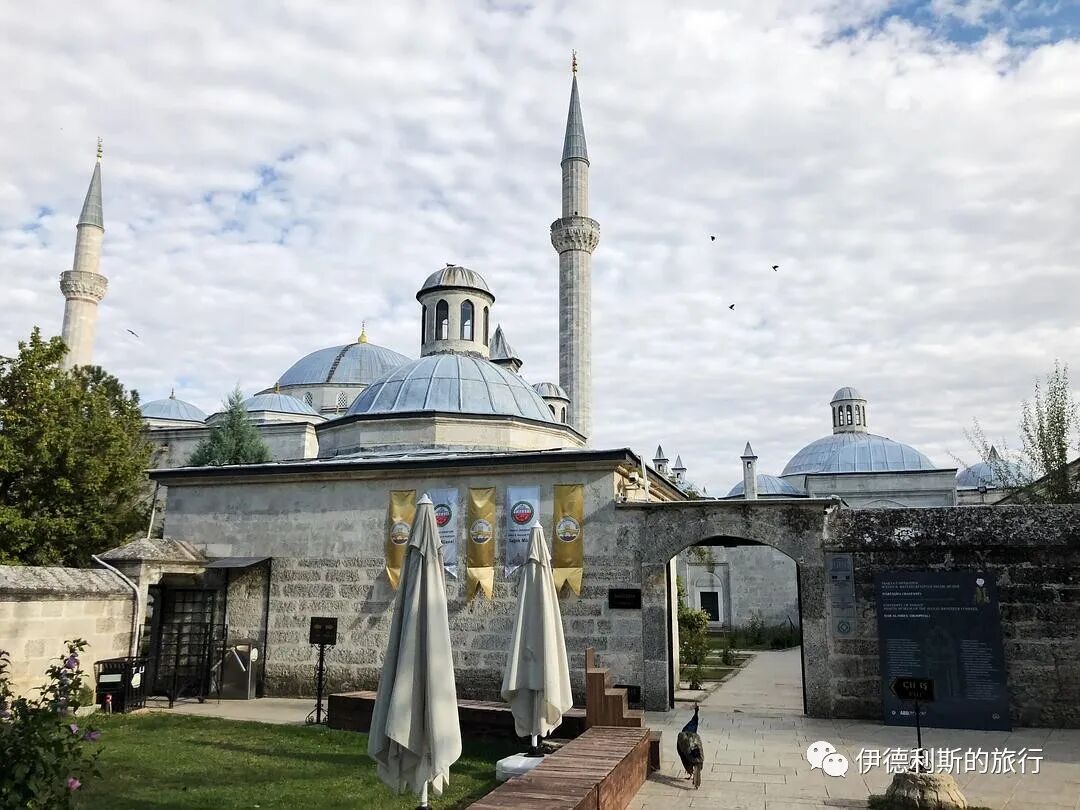
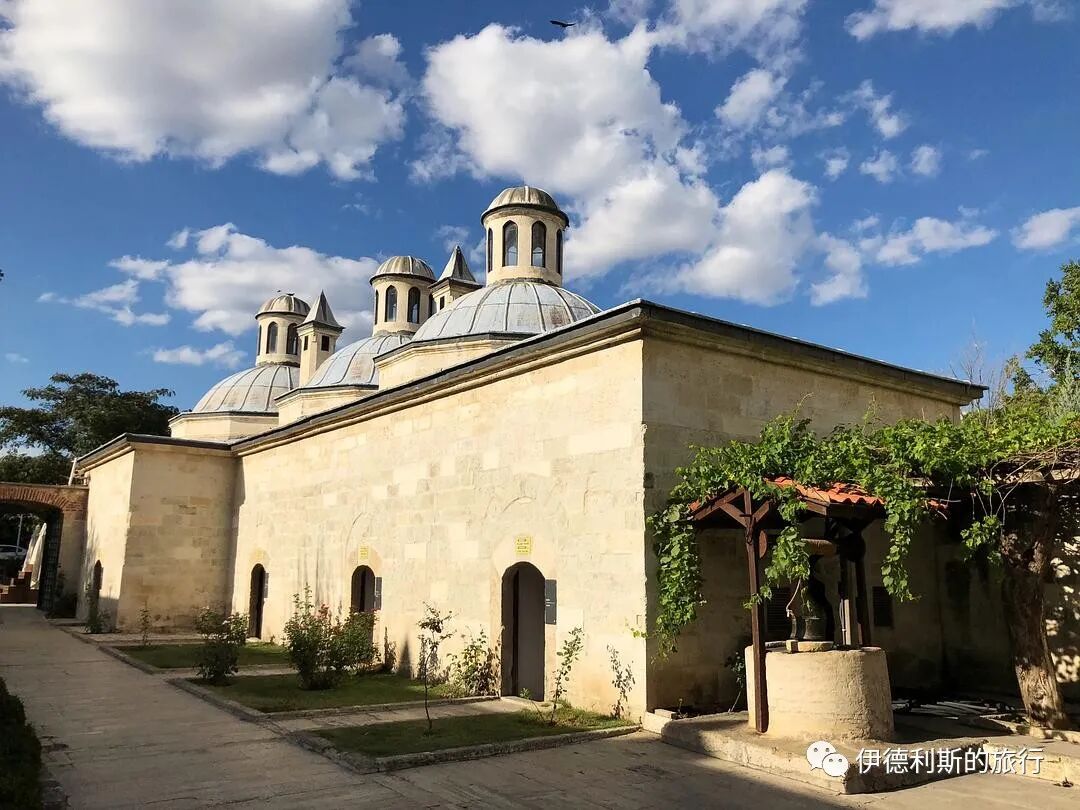
Halal Travel Guide: Edirne — Ottoman Mosques and Muslim Heritage (Part 2)
Articles • ali2007fr posted the article • 0 comments • 146 views • 2026-05-17 10:56
Summary: Edirne — Ottoman Mosques and Muslim Heritage is presented here as a firsthand travel account in clear English. The account keeps its focus on Edirne Travel, Ottoman History, Muslim Heritage while preserving the names, places, food, and historical details from the Chinese source. view all
Summary: Edirne — Ottoman Mosques and Muslim Heritage is presented here as a firsthand travel account in clear English. The account keeps its focus on Edirne Travel, Ottoman History, Muslim Heritage while preserving the names, places, food, and historical details from the Chinese source.
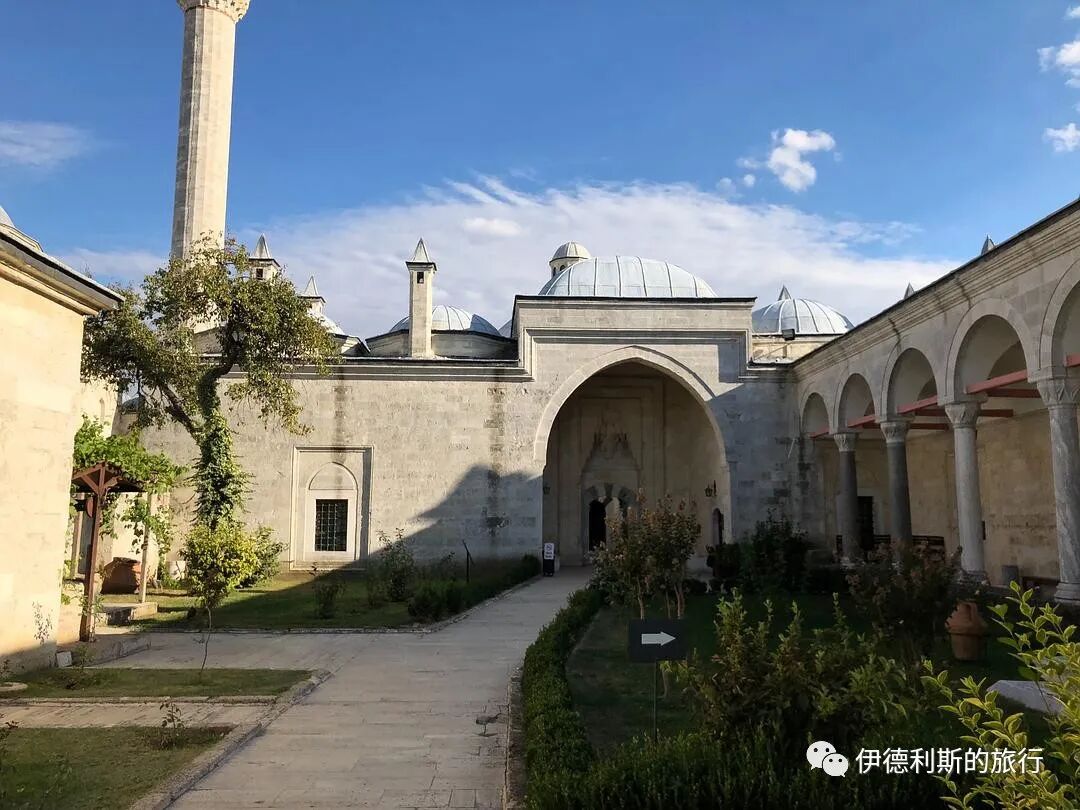
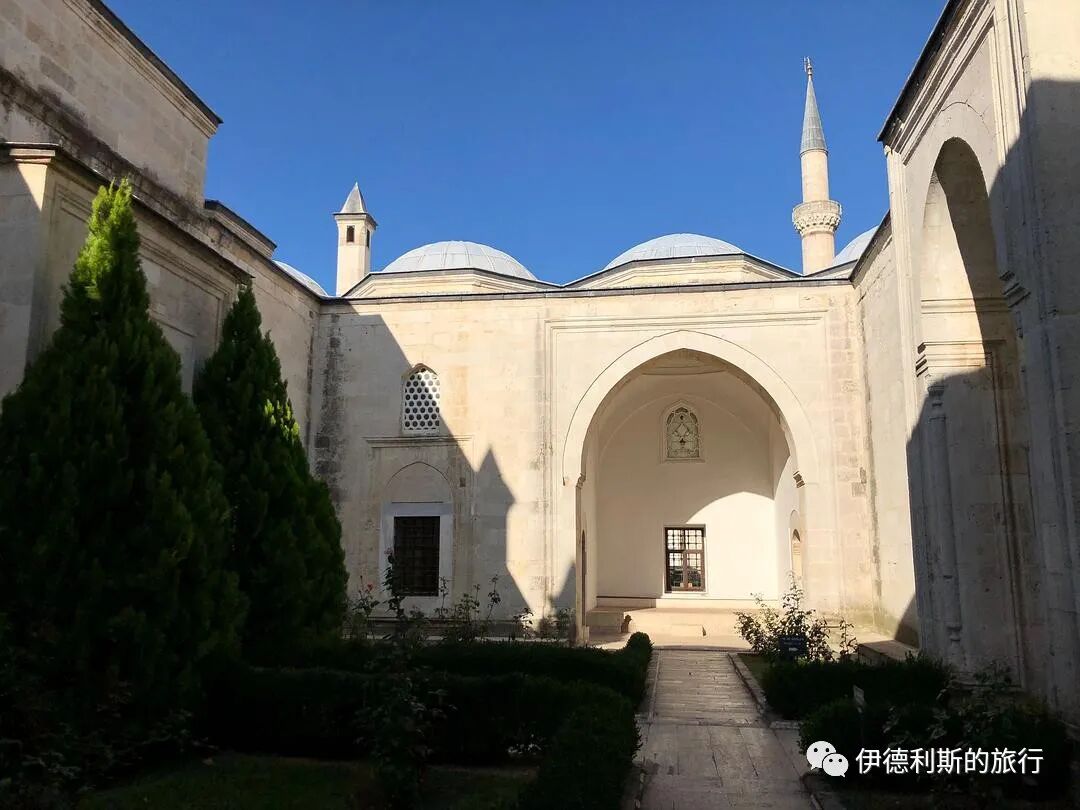
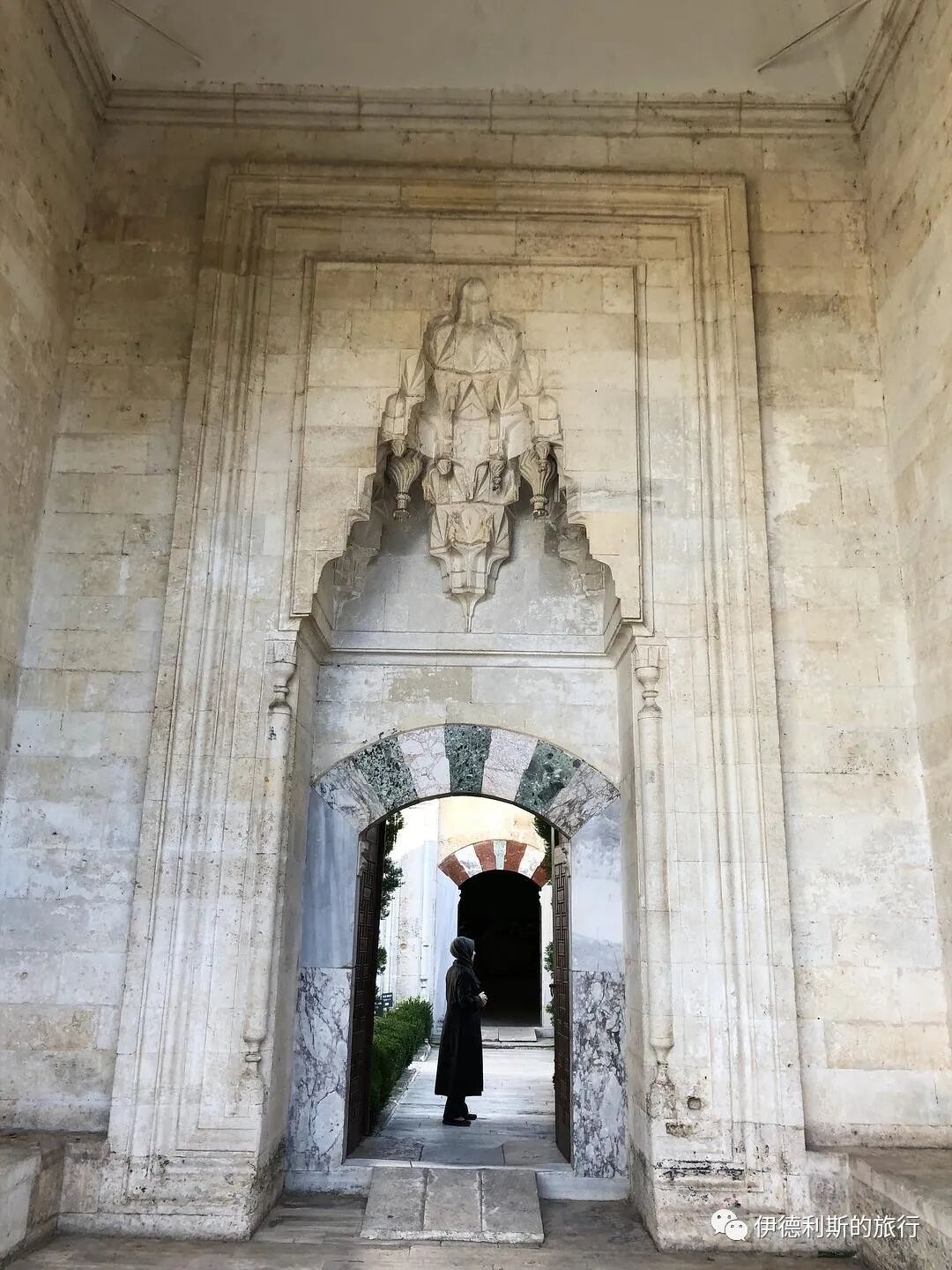
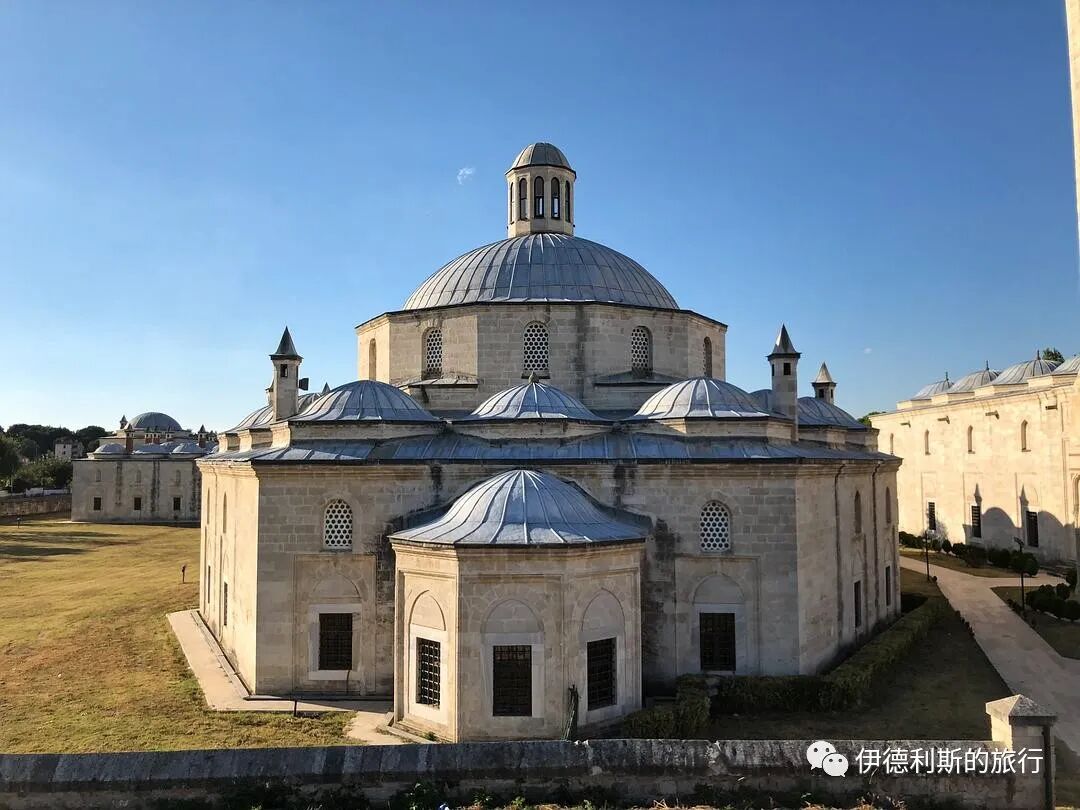
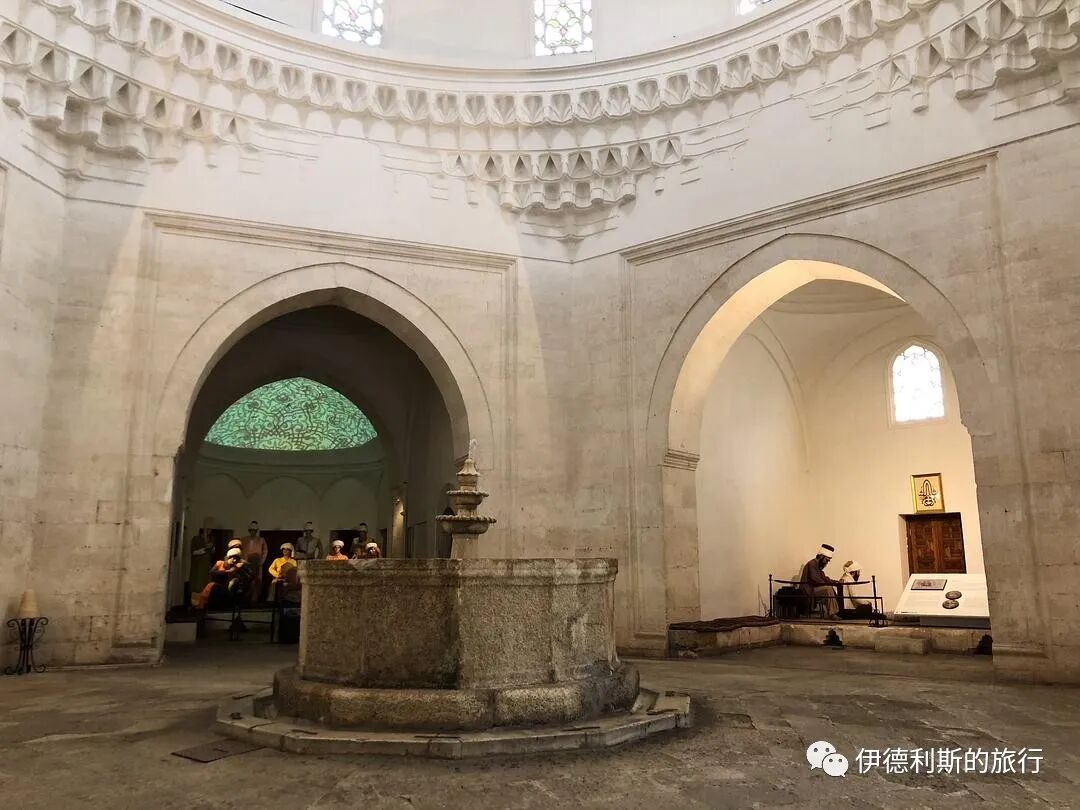
Halal Travel Guide: Edirne, Turkey - Ottoman Mosques and Old Capital
Articles • ali2007fr posted the article • 0 comments • 228 views • 2026-05-20 08:48
Summary: Edirne in Turkey was once the Ottoman capital in Europe and is shown here through its mosques, markets, bridges, museums, and Ottoman urban history. This account keeps the original dates, site names, architectural notes, food details, and photographs.
In the mid-14th century, the Ottoman dynasty crossed into Europe and kept invading the Balkan Peninsula. They gradually marched toward Adrianople, the third-largest city of the Byzantine Empire, which ranked only behind Constantinople and Thessaloniki. In 1369, the third Ottoman Sultan, Murad I (reigned 1362-1389), captured Adrianople and renamed the city Edirne. After that, Edirne became the Ottoman center in Europe.
In 1402, the fourth Ottoman Sultan, Bayezid I (reigned 1389-1402), was defeated and captured by the great Timur in the Battle of Ankara, and he died shortly after. His four sons fought for the throne, triggering the Ottoman Interregnum, the largest civil war in early Ottoman history. Because of this war, Edirne suddenly became the capital.
In 1413, Prince Mehmed occupied Edirne and finally won the civil war. On June 5, 1413, Mehmed was officially crowned in Edirne as the fifth Ottoman Sultan, Mehmed I (reigned 1413-1421). The Ottoman capital officially moved from Bursa in Asia to Edirne in Europe, where it stayed until the fall of Constantinople in 1453.
While the capital was in Bursa, the Ottoman dynasty developed a new form of urban construction: building social complexes called Külliye in the commercial districts outside the city walls. After moving the capital to Edirne, the Ottomans continued to use this form. After Prince Suleyman made Edirne his capital in 1403, he immediately began building the first complex in the city—the Old Mosque complex—east of the Roman-era Hadrianopolis. During the reign of Sultan Murad II (reigned 1421-1444, 1446-1451), the second complex, the Muradiye complex, and the third, the Three Balcony Mosque complex, were built in Edirne, along with a royal palace in the north.
The Old Mosque complex
After the Ottoman Interregnum began in 1403, Prince Suleyman, who declared himself Emir in Edirne, started building the mosque. In 1413, Prince Mehmed was crowned Sultan Mehmed I in Edirne, and the mosque was officially completed the following year. This is the oldest surviving mosque in Edirne, so it is called the Old Mosque (Eski Cami).
The Old Mosque is one of the last multi-domed mosques to use the early Ottoman Seljuk style, featuring nine central domes. Compared to earlier Seljuk multi-domed mosques, the diameter of the domes in the Old Mosque has clearly increased, showing that the Ottomans were starting to move beyond their early phase of their early phase.
The coronation ceremonies for the 21st Ottoman Sultan Ahmed II (reigned 1691-1695) and the 22nd Sultan Mustafa II (reigned 1695-1703) both took place here. The old mosque suffered massive damage in an earthquake during the mid-18th century, and Sultan Mahmud I (reigned 1696-1754) later ordered its reconstruction. The old mosque was renovated again between 1924 and 1934.
The covered market (Bedesten) sits right next to the old mosque and was built in 1418 by the fifth Ottoman Sultan Mehmed I to help fund the mosque's operations.
This building is a classic example of an early Ottoman covered market and has been in use ever since. The building is a rectangle 78 meters long and 41 meters wide, topped with 14 domes and featuring 54 shops along its four sides.
The Rustem Pasha Caravanserai (Rüstem Paşa Kervansarayı) was built in 1561 by the famous architect Mimar Sinan under the orders of the Ottoman Grand Vizier Rustem Pasha (Rüstem Paşa).
The caravanserai has two floors, with 102 guest rooms inside and 21 shops on the outside. Today, the interior serves as a hotel, and the outside shops are still in business.
The Ali Pasha Bazaar (Ali Paşa Çarşısı) was built in 1569 by the famous architect Mimar Sinan under the orders of the Ottoman Grand Vizier Ali Pasha (Ali Paşa).
The bazaar includes 130 shops and 6 gates. The bazaar caught fire in 1991 and was later restored.
Muradiye Mosque
The Muradiye Mosque (Muradiye Camii) is a small T-shaped mosque on a hill in the northern part of Edirne, built in 1436 by order of the sixth Ottoman Sultan Murad II (reigned 1421-1444). It was originally part of a Sufi Mevlevi order complex before being converted into a mosque.
The Muradiye Mosque was once a complex that included a public kitchen (imaret) and a primary school (mekteb), but only the mosque remains today. This place was once badly damaged by an earthquake. The minaret has been rebuilt several times, and it currently looks the way it did after a major renovation in 1957.
The interior of the mosque is famous for its beautiful tiles. Before some were stolen in 2001, the main hall had 479 tiles in 54 different designs. 15 of these designs appeared only once, showing a strong influence from Yuan dynasty blue and white porcelain (Yuan qinghua). The blue and white hexagonal tiles among them are the earliest examples of Ottoman underglaze tiles. Because some tiles are arranged inconsistently, some scholars believe a portion of them were moved here from the Ottoman palace in Edirne in the north.
The mosque preserves a 15th-century mihrab covered in tiles, which bears the name of Sultan Murad II. The dry cord (Cuerda Seca) tile style of the mihrab is very similar to the Green (Yeşil) Mosque in Bursa, built in 1421, and was likely made by the same team of craftsmen. The mihrab of the Green Mosque in Bursa is said to have been designed by a master from Tabriz, Iran. Therefore, it is very likely that this master traveled to Edirne to design the mihrab for the Muradiye Mosque.
Three-Balcony Mosque (Üç Şerefeli Camii) complex
The Three-Balcony Mosque (Üç Şerefeli Camii) is known as an important landmark that started a new era in Ottoman architecture. It was the first mosque in Ottoman history to feature a central dome and the first to have a portico. The mosque was started in 1438 by the sixth Ottoman Sultan, Murad II (reigned 1421–1444), and was completed in 1447.
The Three-Balcony Mosque is located not far northwest of the Old Mosque, and it was the largest mosque in the Ottoman Empire when it was finished. This mosque is considered a pioneer of the classic Ottoman mosque style. It was among the first to shift from the Seljuk style of multiple small domes to a large central dome, featuring a central dome 24 meters in diameter.
The Three-Balcony Mosque gets its name from the three balconies on its minaret. At the time, this was the tallest minaret in the Ottoman Empire. It stands 76 meters high, has 203 steps, and you can reach the balconies using three different paths.
The underglaze tiles of the mosque are very similar in style to the Green Mosque (Yeşil Cami) in Bursa (1421) and the Muradiye Mosque in Edirne (1436), and they were likely designed by the person known as the Master of Tabriz.
The architectural design of the Three Balcony Mosque (Üç Şerefeli Cami) greatly inspired the great 16th-century Ottoman architect Mimar Sinan, who built upon this foundation to eventually create the most magnificent mosques of the Ottoman Empire.
The Saatli Madrasa is directly opposite the Three Balcony Mosque and was also completed in 1447.
The Peykler Madrasa is right next to the south side of the Saatli Madrasa and was built a few years later.
The Stone Inn (Taşhan Inn) is across the street to the west of the Three Balcony Mosque and was built in the 15th century.
The Sokullu Mehmet Paşa Bath (Sokullu Mehmet Paşa Hamamı) was commissioned in the second half of the 16th century by the Ottoman Grand Vizier Sokullu Mehmet Paşa (in office 1565-1579) and built by the great Ottoman architect Mimar Sinan.
The bath was built right next to the Stone Inn and consists of two sections for men and women, and it is considered one of the most important baths in the Ottoman Empire.
Edirne Palace
Edirne Palace (Edirne Sarayı) was commissioned by Sultan Murad II in 1450, but construction stopped the following year when the Sultan passed away. After a period of inactivity, it was finally completed in 1475 by his successor, Sultan Mehmed the Conqueror.
Afterward, the palace was continuously expanded between the 16th and 18th centuries. Most importantly, during the reign of Suleiman the Magnificent (reigned 1520-1566), the chief architect Mimar Sinan redesigned the palace and solved the water supply problem by building a canal. To protect the palace from flooding, the canal was built in an arc around the palace.
At its peak, the palace consisted of 72 buildings, including 117 rooms, 14 mansions, 18 baths, 9 mosques, 17 gates, and 13 cellars. At its busiest, 34,000 people lived inside.
The main building of the palace is called the Panorama Pavilion (Cihannüma Kasrı), also known as the Imperial Throne (Taht-ı Hümayun), and was built in 1450. The Panorama Pavilion is a seven-story building with an octagonal room at the top, which includes the Sultan's room, a room for flags, a library, and a mosque.
Initial archaeological excavations of the Panorama Pavilion (Cihannüma Kasrı) took place in 1956. In 2001, the National Palaces Administration sponsored archaeological and restoration work on the palace gate, the Gate of Felicity (Bab'üs Sa'ade), and the Panorama Pavilion (Cihannüma Kasrı) site, which was completed in 2004.
The Imperial Kitchen (Matbah-ı Amire) is on the southwest side of the palace and has eight domes. While the north facade is gone, most of the structure remains well-preserved.
The Court of Justice (Kasr-ı Adalet) sits on the south bank of the Tunca River. It was built in 1561 by order of Suleiman the Magnificent, who is also known as Suleiman the Lawgiver.
The Kanuni Bridge (Kanuni Köprüsü), also called the Palace Bridge, was built in 1554 by Mimar Sinan under the orders of Suleiman the Magnificent.
Kasim Pasha Mosque
The Kasim Pasha Mosque (Evliya Kasım Paşa Cami) is by the river in the southeast of Edirne city. It was built in 1479 by order of Kasim Pasha (Kasım Paşa). Kasim Pasha was a famous Ottoman Empire general who served as the commander of Rumelia, the European part of the Ottoman Empire. He commanded troops during the wars between 1443 and 1444 against the multinational crusader forces of Poland and Hungary, fighting in places like Serbia and Bulgaria.
The mosque closed in 1950 due to the construction of a dam. Since then, it has been repeatedly damaged by floods, making it the most wild and overgrown early Ottoman mosque in Edirne.
Sultan Bayezid II Complex
The Sultan Bayezid II Complex (Sultan II Bayezid Külliyesi) is located on the north bank of the Tunca River in the northwest suburbs of Edirne. It was built by order of the eighth Ottoman Sultan, Bayezid II (reigned 1481–1512). Bayezid II was the son of Mehmed the Conqueror and was known as the Just. During his reign, he worked to maintain government affairs internally and defeated the Republic of Venice externally, leading the Ottoman Empire into a prosperous era.
The entire complex includes many buildings such as a mosque, a medical school (Medrese-i Etibba), a public kitchen (imaret), a hospital (darüşşifa), a bathhouse (hamam), and warehouses.
The Sultan Bayezid II Medical School (Sultan II Bayezid Medrese-i Etibba) is considered one of the best medical schools in the Ottoman Empire and consists of 18 classrooms and a large lecture hall. The famous 17th-century Ottoman traveler Evliya Çelebi mentioned in his writings that this medical school studied the works of various ancient Greek philosophers, scientists, and physicians, including Plato, Socrates, Aristotle, Galen, and Pythagoras. Each doctor was an expert in a different field, and they tried to find the best treatments by studying various medical texts.
The Sultan Bayezid II Hospital (Sultan II Bayezid Darüşşifa) is the most important part of the entire complex. From its completion in 1488 until the Russo-Turkish War in 1877, this hospital provided continuous treatment to patients and was especially famous for using sound and scent for mental health therapy. Today, it has become part of a health museum.
Selimiye Mosque
The Selimiye Mosque (Selimiye Camii) in Edirne was commissioned by Ottoman Sultan Selim II (reigned 1566-1574) and built by the imperial chief architect Mimar Sinan between 1567 and 1575. It is hailed as a supreme achievement in Ottoman architecture, a masterpiece of 16th-century Ottoman Islamic art, and Mimar Sinan's well-deserved representative work. It was added to the UNESCO World Heritage list in 2011.
On June 22, 1567, Selim II traveled from Istanbul to Edirne to sign a peace treaty with Austria, and People say he ordered the construction of the mosque at this time.
The entire complex (Külliye) consists of nine parts: the mosque, a courtyard with a fountain, the Dar’ül-Kurra Quran school (Foundation Museum), the Dar'ül-Hadis Hadith school (Museum of Turkish and Islamic Art), the Arasta bazaar, a primary school, a clock tower (Muvakkithane), the outer courtyard of the mosque, and a library. It is the most prominent building complex in the old city of Edirne.
The area where the mosque stands was originally an Ottoman palace. After the Ottoman Empire moved its capital to Istanbul in 1453, the old palace gradually became a military headquarters and later a square.
To highlight the central authority of the Ottoman Empire, Mimar Sinan wanted the Selimiye Mosque to look like a single, unified whole from both the inside and outside, rather than being composed of many small domes or semi-domes like earlier Ottoman mosques. Therefore, he decided to build a massive central dome that would surpass the Hagia Sophia. The dome was officially completed in 1575, standing 42.3 meters high with a diameter of 31.5 meters and weighing 20 tons.
At the same time, Mimar Sinan abandoned the traditional Ottoman mosque design of minarets with varying heights, instead building four 71-meter-tall minarets in the front courtyard. These four vertically symmetrical minarets shoot toward the sky like rockets from the corners of the courtyard, setting off the massive dome rising from the center. They dominate the city's skyline and give the entire mosque a sense of immense majesty.
Overall, the decoration on the mosque's exterior is relatively simple. It lacks the complex carvings found in Seljuk and other Iranian architecture, as the structure itself determines the layout of the facade. This is a hallmark of Mimar Sinan's architecture and is considered by later generations to be the classical aesthetic of Ottoman architecture from this period.
The courtyard in front of the main hall of the mosque covers 2,475 square meters, surrounded by a cloister with 18 domes, and features a fountain for wudu in the center. The marble columns in the courtyard were brought from ruins in Cyprus, Aydincik near the Kapidag Peninsula, and Syria. Mimar Sinan designed the front porch near the courtyard gate to be relatively narrow and low to highlight the grandeur of the mosque's main hall.
Mimar Sinan made bold innovations to the fountain. In this sixteen-sided marble fountain, we can see compositions and interesting details never before seen in Ottoman fountains of that time.
This is the largest ablution fountain Mimar Sinan ever built, and its decoration is very different from traditional ones. Each marble slab has a wide, deep contour band at the bottom, a pointed-arch mirror stone in the middle, and geometric openwork carvings on the top slab. Above that is a crown-shaped stone slab featuring Rumi patterns. Sinan designed special supports for the bottom edge of the fountain based on the lines of each water tap.
Mimar Sinan used an octagonal support system in the Selimiye Mosque, with eight columns holding up the massive central dome. In 1913, during the Bulgarian siege of Edirne, the mosque's dome was hit by Bulgarian artillery. Because the dome was extremely sturdy, it only suffered minor damage. Later, Kemal ordered that the shell marks be kept as a warning to future generations.
The mihrab (prayer niche) is located in a rear apse that projects from the main hall, providing enough depth for sunlight to enter from windows on three sides. The white marble mihrab was a spectacular work for its time. Unfortunately, the original 16th-century calligraphy on the semi-dome above the mihrab did not survive; what you see now is a 1985 restoration in the Baroque style.
The tiles around the mihrab were specially ordered by Mimar Sinan from Iznik between 1572 and 1575 and were the highest quality tiles in the Ottoman Empire at the time. The calligraphy on the tiles was created by Karahisari Molla Hasan, the student and adopted son of the famous 16th-century Ottoman calligrapher Ahmed Karahisari.
The minbar (pulpit) of the Selimiye Mosque holds a very important place among classical Ottoman artworks. The minbar is carved from a single piece of white marble, has 25 steps, and features an extremely elegant design. The beauty created by these merging geometric shapes is the artistic crystallization that Mimar Sinan pursued throughout his life.
Directly facing the mihrab is the stone platform where the muezzin calls the adhan, supported by 12 white marble columns. The thick pillar to the southwest of the platform is made of vertical, slender rectangular slabs and contains the stairs the muezzin uses to climb up.
The platform has a walnut railing decorated underneath with gold-leaf Chinese-style cloud knots, an important example of decoration from the classical Ottoman period. The deep blue background is covered with naturalistic dagger-shaped leaves, chrysanthemums, and Chinese-style clouds. The passion flower patterns on the blue background were brought to the Anatolia region by Central Asian Turkic people from the East in the 8th and 9th centuries, symbolizing eternity.
The Selimiye Madrasa is very distinct among Sinan's works. It has a unique dual-academy layout with the Dar'ül-Kurra Quran school and the Dar'ül-Hadis Hadith school symmetrical to the main mosque. It is also the only Quran school built by Sinan that features a honeycomb-structured muqarnas gate.
The Arasta Bazaar is 225 meters long, runs parallel to the southwest wall of the mosque, and generates income for the mosque by renting out 124 shop spaces. The bazaar has three main gates, one of which connects to the mosque courtyard via a staircase.
Some believe the Arasta Bazaar was built by Mimar Sinan's successor, the imperial chief architect Davud Aga, while others think Sinan designed it to cover the retaining wall supporting the mosque on the southwest slope, and it was finally completed by Davud Aga. This is because Mimar Sinan was very skilled at designing and building structures that adapted to sloped terrain.
Between 1863 and 1868, Baha'u'llah, the founder of the Baha'i Faith, was exiled to Edirne by the Ottoman Empire with his family and lived near the Selimiye Mosque. During this time, he wrote many works, announced the Baha'i Faith to countries around the world, and officially broke away from another leader, Mirza Yahya, which was a major event in Baha'i history.
Food
When visiting Edirne, you must try the local specialty, fried liver (ciğercisi), which is very satisfying when served with yogurt and hot sauce.
For lunch in Edirne, I had grilled sausage meatballs (sucuk köfte) and lentil soup (mercimek çorbası). A cold wind was blowing across the entire Balkan Peninsula those days, so drinking hot lentil soup felt the best.
For dinner in Edirne, I had minced meat pie (kıymalı pide) and a rich soup made from sheep head and sheep trotters (kelle paça). The soup was especially delicious.
For breakfast the next morning in Edirne, I had a meat-filled pastry (börek). It cost 6 lira a plate and tasted great. I also had a breakfast set, which was a plate of very healthy food.
At the bazaar in Edirne, I bought a local specialty, the crescent-shaped almond pastry known as Kavala cookies (Kavala kurabiyesi). Kavala is now an important seaport in northern Greece. The Ottoman Empire ruled it from 1371 to 1913. During the 1922 population exchange between Turkey and Greece, tens of thousands of Turks left Kavala to settle in Edirne, bringing this cookie recipe with them. I have always been interested in the Greek-Turkish population exchange. It involves so many stories about leaving one's homeland forever and the relationship between nations and ethnic groups. view all
Summary: Edirne in Turkey was once the Ottoman capital in Europe and is shown here through its mosques, markets, bridges, museums, and Ottoman urban history. This account keeps the original dates, site names, architectural notes, food details, and photographs.
In the mid-14th century, the Ottoman dynasty crossed into Europe and kept invading the Balkan Peninsula. They gradually marched toward Adrianople, the third-largest city of the Byzantine Empire, which ranked only behind Constantinople and Thessaloniki. In 1369, the third Ottoman Sultan, Murad I (reigned 1362-1389), captured Adrianople and renamed the city Edirne. After that, Edirne became the Ottoman center in Europe.
In 1402, the fourth Ottoman Sultan, Bayezid I (reigned 1389-1402), was defeated and captured by the great Timur in the Battle of Ankara, and he died shortly after. His four sons fought for the throne, triggering the Ottoman Interregnum, the largest civil war in early Ottoman history. Because of this war, Edirne suddenly became the capital.
In 1413, Prince Mehmed occupied Edirne and finally won the civil war. On June 5, 1413, Mehmed was officially crowned in Edirne as the fifth Ottoman Sultan, Mehmed I (reigned 1413-1421). The Ottoman capital officially moved from Bursa in Asia to Edirne in Europe, where it stayed until the fall of Constantinople in 1453.
While the capital was in Bursa, the Ottoman dynasty developed a new form of urban construction: building social complexes called Külliye in the commercial districts outside the city walls. After moving the capital to Edirne, the Ottomans continued to use this form. After Prince Suleyman made Edirne his capital in 1403, he immediately began building the first complex in the city—the Old Mosque complex—east of the Roman-era Hadrianopolis. During the reign of Sultan Murad II (reigned 1421-1444, 1446-1451), the second complex, the Muradiye complex, and the third, the Three Balcony Mosque complex, were built in Edirne, along with a royal palace in the north.
The Old Mosque complex
After the Ottoman Interregnum began in 1403, Prince Suleyman, who declared himself Emir in Edirne, started building the mosque. In 1413, Prince Mehmed was crowned Sultan Mehmed I in Edirne, and the mosque was officially completed the following year. This is the oldest surviving mosque in Edirne, so it is called the Old Mosque (Eski Cami).
The Old Mosque is one of the last multi-domed mosques to use the early Ottoman Seljuk style, featuring nine central domes. Compared to earlier Seljuk multi-domed mosques, the diameter of the domes in the Old Mosque has clearly increased, showing that the Ottomans were starting to move beyond their early phase of their early phase.
The coronation ceremonies for the 21st Ottoman Sultan Ahmed II (reigned 1691-1695) and the 22nd Sultan Mustafa II (reigned 1695-1703) both took place here. The old mosque suffered massive damage in an earthquake during the mid-18th century, and Sultan Mahmud I (reigned 1696-1754) later ordered its reconstruction. The old mosque was renovated again between 1924 and 1934.
The covered market (Bedesten) sits right next to the old mosque and was built in 1418 by the fifth Ottoman Sultan Mehmed I to help fund the mosque's operations.
This building is a classic example of an early Ottoman covered market and has been in use ever since. The building is a rectangle 78 meters long and 41 meters wide, topped with 14 domes and featuring 54 shops along its four sides.
The Rustem Pasha Caravanserai (Rüstem Paşa Kervansarayı) was built in 1561 by the famous architect Mimar Sinan under the orders of the Ottoman Grand Vizier Rustem Pasha (Rüstem Paşa).
The caravanserai has two floors, with 102 guest rooms inside and 21 shops on the outside. Today, the interior serves as a hotel, and the outside shops are still in business.
The Ali Pasha Bazaar (Ali Paşa Çarşısı) was built in 1569 by the famous architect Mimar Sinan under the orders of the Ottoman Grand Vizier Ali Pasha (Ali Paşa).
The bazaar includes 130 shops and 6 gates. The bazaar caught fire in 1991 and was later restored.
Muradiye Mosque
The Muradiye Mosque (Muradiye Camii) is a small T-shaped mosque on a hill in the northern part of Edirne, built in 1436 by order of the sixth Ottoman Sultan Murad II (reigned 1421-1444). It was originally part of a Sufi Mevlevi order complex before being converted into a mosque.
The Muradiye Mosque was once a complex that included a public kitchen (imaret) and a primary school (mekteb), but only the mosque remains today. This place was once badly damaged by an earthquake. The minaret has been rebuilt several times, and it currently looks the way it did after a major renovation in 1957.
The interior of the mosque is famous for its beautiful tiles. Before some were stolen in 2001, the main hall had 479 tiles in 54 different designs. 15 of these designs appeared only once, showing a strong influence from Yuan dynasty blue and white porcelain (Yuan qinghua). The blue and white hexagonal tiles among them are the earliest examples of Ottoman underglaze tiles. Because some tiles are arranged inconsistently, some scholars believe a portion of them were moved here from the Ottoman palace in Edirne in the north.
The mosque preserves a 15th-century mihrab covered in tiles, which bears the name of Sultan Murad II. The dry cord (Cuerda Seca) tile style of the mihrab is very similar to the Green (Yeşil) Mosque in Bursa, built in 1421, and was likely made by the same team of craftsmen. The mihrab of the Green Mosque in Bursa is said to have been designed by a master from Tabriz, Iran. Therefore, it is very likely that this master traveled to Edirne to design the mihrab for the Muradiye Mosque.
Three-Balcony Mosque (Üç Şerefeli Camii) complex
The Three-Balcony Mosque (Üç Şerefeli Camii) is known as an important landmark that started a new era in Ottoman architecture. It was the first mosque in Ottoman history to feature a central dome and the first to have a portico. The mosque was started in 1438 by the sixth Ottoman Sultan, Murad II (reigned 1421–1444), and was completed in 1447.
The Three-Balcony Mosque is located not far northwest of the Old Mosque, and it was the largest mosque in the Ottoman Empire when it was finished. This mosque is considered a pioneer of the classic Ottoman mosque style. It was among the first to shift from the Seljuk style of multiple small domes to a large central dome, featuring a central dome 24 meters in diameter.
The Three-Balcony Mosque gets its name from the three balconies on its minaret. At the time, this was the tallest minaret in the Ottoman Empire. It stands 76 meters high, has 203 steps, and you can reach the balconies using three different paths.
The underglaze tiles of the mosque are very similar in style to the Green Mosque (Yeşil Cami) in Bursa (1421) and the Muradiye Mosque in Edirne (1436), and they were likely designed by the person known as the Master of Tabriz.
The architectural design of the Three Balcony Mosque (Üç Şerefeli Cami) greatly inspired the great 16th-century Ottoman architect Mimar Sinan, who built upon this foundation to eventually create the most magnificent mosques of the Ottoman Empire.
The Saatli Madrasa is directly opposite the Three Balcony Mosque and was also completed in 1447.
The Peykler Madrasa is right next to the south side of the Saatli Madrasa and was built a few years later.
The Stone Inn (Taşhan Inn) is across the street to the west of the Three Balcony Mosque and was built in the 15th century.
The Sokullu Mehmet Paşa Bath (Sokullu Mehmet Paşa Hamamı) was commissioned in the second half of the 16th century by the Ottoman Grand Vizier Sokullu Mehmet Paşa (in office 1565-1579) and built by the great Ottoman architect Mimar Sinan.
The bath was built right next to the Stone Inn and consists of two sections for men and women, and it is considered one of the most important baths in the Ottoman Empire.
Edirne Palace
Edirne Palace (Edirne Sarayı) was commissioned by Sultan Murad II in 1450, but construction stopped the following year when the Sultan passed away. After a period of inactivity, it was finally completed in 1475 by his successor, Sultan Mehmed the Conqueror.
Afterward, the palace was continuously expanded between the 16th and 18th centuries. Most importantly, during the reign of Suleiman the Magnificent (reigned 1520-1566), the chief architect Mimar Sinan redesigned the palace and solved the water supply problem by building a canal. To protect the palace from flooding, the canal was built in an arc around the palace.
At its peak, the palace consisted of 72 buildings, including 117 rooms, 14 mansions, 18 baths, 9 mosques, 17 gates, and 13 cellars. At its busiest, 34,000 people lived inside.
The main building of the palace is called the Panorama Pavilion (Cihannüma Kasrı), also known as the Imperial Throne (Taht-ı Hümayun), and was built in 1450. The Panorama Pavilion is a seven-story building with an octagonal room at the top, which includes the Sultan's room, a room for flags, a library, and a mosque.
Initial archaeological excavations of the Panorama Pavilion (Cihannüma Kasrı) took place in 1956. In 2001, the National Palaces Administration sponsored archaeological and restoration work on the palace gate, the Gate of Felicity (Bab'üs Sa'ade), and the Panorama Pavilion (Cihannüma Kasrı) site, which was completed in 2004.
The Imperial Kitchen (Matbah-ı Amire) is on the southwest side of the palace and has eight domes. While the north facade is gone, most of the structure remains well-preserved.
The Court of Justice (Kasr-ı Adalet) sits on the south bank of the Tunca River. It was built in 1561 by order of Suleiman the Magnificent, who is also known as Suleiman the Lawgiver.
The Kanuni Bridge (Kanuni Köprüsü), also called the Palace Bridge, was built in 1554 by Mimar Sinan under the orders of Suleiman the Magnificent.
Kasim Pasha Mosque
The Kasim Pasha Mosque (Evliya Kasım Paşa Cami) is by the river in the southeast of Edirne city. It was built in 1479 by order of Kasim Pasha (Kasım Paşa). Kasim Pasha was a famous Ottoman Empire general who served as the commander of Rumelia, the European part of the Ottoman Empire. He commanded troops during the wars between 1443 and 1444 against the multinational crusader forces of Poland and Hungary, fighting in places like Serbia and Bulgaria.
The mosque closed in 1950 due to the construction of a dam. Since then, it has been repeatedly damaged by floods, making it the most wild and overgrown early Ottoman mosque in Edirne.
Sultan Bayezid II Complex
The Sultan Bayezid II Complex (Sultan II Bayezid Külliyesi) is located on the north bank of the Tunca River in the northwest suburbs of Edirne. It was built by order of the eighth Ottoman Sultan, Bayezid II (reigned 1481–1512). Bayezid II was the son of Mehmed the Conqueror and was known as the Just. During his reign, he worked to maintain government affairs internally and defeated the Republic of Venice externally, leading the Ottoman Empire into a prosperous era.
The entire complex includes many buildings such as a mosque, a medical school (Medrese-i Etibba), a public kitchen (imaret), a hospital (darüşşifa), a bathhouse (hamam), and warehouses.
The Sultan Bayezid II Medical School (Sultan II Bayezid Medrese-i Etibba) is considered one of the best medical schools in the Ottoman Empire and consists of 18 classrooms and a large lecture hall. The famous 17th-century Ottoman traveler Evliya Çelebi mentioned in his writings that this medical school studied the works of various ancient Greek philosophers, scientists, and physicians, including Plato, Socrates, Aristotle, Galen, and Pythagoras. Each doctor was an expert in a different field, and they tried to find the best treatments by studying various medical texts.
The Sultan Bayezid II Hospital (Sultan II Bayezid Darüşşifa) is the most important part of the entire complex. From its completion in 1488 until the Russo-Turkish War in 1877, this hospital provided continuous treatment to patients and was especially famous for using sound and scent for mental health therapy. Today, it has become part of a health museum.
Selimiye Mosque
The Selimiye Mosque (Selimiye Camii) in Edirne was commissioned by Ottoman Sultan Selim II (reigned 1566-1574) and built by the imperial chief architect Mimar Sinan between 1567 and 1575. It is hailed as a supreme achievement in Ottoman architecture, a masterpiece of 16th-century Ottoman Islamic art, and Mimar Sinan's well-deserved representative work. It was added to the UNESCO World Heritage list in 2011.
On June 22, 1567, Selim II traveled from Istanbul to Edirne to sign a peace treaty with Austria, and People say he ordered the construction of the mosque at this time.
The entire complex (Külliye) consists of nine parts: the mosque, a courtyard with a fountain, the Dar’ül-Kurra Quran school (Foundation Museum), the Dar'ül-Hadis Hadith school (Museum of Turkish and Islamic Art), the Arasta bazaar, a primary school, a clock tower (Muvakkithane), the outer courtyard of the mosque, and a library. It is the most prominent building complex in the old city of Edirne.
The area where the mosque stands was originally an Ottoman palace. After the Ottoman Empire moved its capital to Istanbul in 1453, the old palace gradually became a military headquarters and later a square.
To highlight the central authority of the Ottoman Empire, Mimar Sinan wanted the Selimiye Mosque to look like a single, unified whole from both the inside and outside, rather than being composed of many small domes or semi-domes like earlier Ottoman mosques. Therefore, he decided to build a massive central dome that would surpass the Hagia Sophia. The dome was officially completed in 1575, standing 42.3 meters high with a diameter of 31.5 meters and weighing 20 tons.
At the same time, Mimar Sinan abandoned the traditional Ottoman mosque design of minarets with varying heights, instead building four 71-meter-tall minarets in the front courtyard. These four vertically symmetrical minarets shoot toward the sky like rockets from the corners of the courtyard, setting off the massive dome rising from the center. They dominate the city's skyline and give the entire mosque a sense of immense majesty.
Overall, the decoration on the mosque's exterior is relatively simple. It lacks the complex carvings found in Seljuk and other Iranian architecture, as the structure itself determines the layout of the facade. This is a hallmark of Mimar Sinan's architecture and is considered by later generations to be the classical aesthetic of Ottoman architecture from this period.
The courtyard in front of the main hall of the mosque covers 2,475 square meters, surrounded by a cloister with 18 domes, and features a fountain for wudu in the center. The marble columns in the courtyard were brought from ruins in Cyprus, Aydincik near the Kapidag Peninsula, and Syria. Mimar Sinan designed the front porch near the courtyard gate to be relatively narrow and low to highlight the grandeur of the mosque's main hall.
Mimar Sinan made bold innovations to the fountain. In this sixteen-sided marble fountain, we can see compositions and interesting details never before seen in Ottoman fountains of that time.
This is the largest ablution fountain Mimar Sinan ever built, and its decoration is very different from traditional ones. Each marble slab has a wide, deep contour band at the bottom, a pointed-arch mirror stone in the middle, and geometric openwork carvings on the top slab. Above that is a crown-shaped stone slab featuring Rumi patterns. Sinan designed special supports for the bottom edge of the fountain based on the lines of each water tap.
Mimar Sinan used an octagonal support system in the Selimiye Mosque, with eight columns holding up the massive central dome. In 1913, during the Bulgarian siege of Edirne, the mosque's dome was hit by Bulgarian artillery. Because the dome was extremely sturdy, it only suffered minor damage. Later, Kemal ordered that the shell marks be kept as a warning to future generations.
The mihrab (prayer niche) is located in a rear apse that projects from the main hall, providing enough depth for sunlight to enter from windows on three sides. The white marble mihrab was a spectacular work for its time. Unfortunately, the original 16th-century calligraphy on the semi-dome above the mihrab did not survive; what you see now is a 1985 restoration in the Baroque style.
The tiles around the mihrab were specially ordered by Mimar Sinan from Iznik between 1572 and 1575 and were the highest quality tiles in the Ottoman Empire at the time. The calligraphy on the tiles was created by Karahisari Molla Hasan, the student and adopted son of the famous 16th-century Ottoman calligrapher Ahmed Karahisari.
The minbar (pulpit) of the Selimiye Mosque holds a very important place among classical Ottoman artworks. The minbar is carved from a single piece of white marble, has 25 steps, and features an extremely elegant design. The beauty created by these merging geometric shapes is the artistic crystallization that Mimar Sinan pursued throughout his life.
Directly facing the mihrab is the stone platform where the muezzin calls the adhan, supported by 12 white marble columns. The thick pillar to the southwest of the platform is made of vertical, slender rectangular slabs and contains the stairs the muezzin uses to climb up.
The platform has a walnut railing decorated underneath with gold-leaf Chinese-style cloud knots, an important example of decoration from the classical Ottoman period. The deep blue background is covered with naturalistic dagger-shaped leaves, chrysanthemums, and Chinese-style clouds. The passion flower patterns on the blue background were brought to the Anatolia region by Central Asian Turkic people from the East in the 8th and 9th centuries, symbolizing eternity.
The Selimiye Madrasa is very distinct among Sinan's works. It has a unique dual-academy layout with the Dar'ül-Kurra Quran school and the Dar'ül-Hadis Hadith school symmetrical to the main mosque. It is also the only Quran school built by Sinan that features a honeycomb-structured muqarnas gate.
The Arasta Bazaar is 225 meters long, runs parallel to the southwest wall of the mosque, and generates income for the mosque by renting out 124 shop spaces. The bazaar has three main gates, one of which connects to the mosque courtyard via a staircase.
Some believe the Arasta Bazaar was built by Mimar Sinan's successor, the imperial chief architect Davud Aga, while others think Sinan designed it to cover the retaining wall supporting the mosque on the southwest slope, and it was finally completed by Davud Aga. This is because Mimar Sinan was very skilled at designing and building structures that adapted to sloped terrain.
Between 1863 and 1868, Baha'u'llah, the founder of the Baha'i Faith, was exiled to Edirne by the Ottoman Empire with his family and lived near the Selimiye Mosque. During this time, he wrote many works, announced the Baha'i Faith to countries around the world, and officially broke away from another leader, Mirza Yahya, which was a major event in Baha'i history.
Food
When visiting Edirne, you must try the local specialty, fried liver (ciğercisi), which is very satisfying when served with yogurt and hot sauce.
For lunch in Edirne, I had grilled sausage meatballs (sucuk köfte) and lentil soup (mercimek çorbası). A cold wind was blowing across the entire Balkan Peninsula those days, so drinking hot lentil soup felt the best.
For dinner in Edirne, I had minced meat pie (kıymalı pide) and a rich soup made from sheep head and sheep trotters (kelle paça). The soup was especially delicious.
For breakfast the next morning in Edirne, I had a meat-filled pastry (börek). It cost 6 lira a plate and tasted great. I also had a breakfast set, which was a plate of very healthy food.
At the bazaar in Edirne, I bought a local specialty, the crescent-shaped almond pastry known as Kavala cookies (Kavala kurabiyesi). Kavala is now an important seaport in northern Greece. The Ottoman Empire ruled it from 1371 to 1913. During the 1922 population exchange between Turkey and Greece, tens of thousands of Turks left Kavala to settle in Edirne, bringing this cookie recipe with them. I have always been interested in the Greek-Turkish population exchange. It involves so many stories about leaving one's homeland forever and the relationship between nations and ethnic groups.
Halal Food Guide: Edirne, Bursa and Konya — Turkish Muslim Food
Articles • ali2007fr posted the article • 0 comments • 209 views • 2026-05-17 12:23
Summary: Halal Food Guide: Edirne, Bursa and Konya — Turkish Muslim Food is presented here as a firsthand travel account in clear English, beginning with this scene: In the autumn of 2018, I visited several cities in Turkey. Edirne is in the far northwest on the border with Greece and Bulgaria, and Bursa is south of Istanbul across the Sea of Marmara. The account keeps its focus on Turkey Halal Food, Edirne Travel, Konya Food while preserving the names, places, food, and historical details from the Chinese source.
In the autumn of 2018, I visited several cities in Turkey. Edirne is in the far northwest on the border with Greece and Bulgaria, and Bursa is south of Istanbul across the Sea of Marmara. Both cities were once capitals of the Ottoman Empire. There is also the ancient city of Konya on the Anatolian plateau, which was the capital of the Sultanate of Rum and the birthplace of the Sufi whirling dervishes.
Edirne
When you come to Edirne, you must try the local specialty, fried liver (ciğercisi). It is very satisfying when served with yogurt and spicy sauce.
For lunch in Edirne, I had grilled sausage meatballs (sucuk köfte) and lentil soup (mercimek çorbası). A cold wind was blowing across the entire Balkan Peninsula those days, so drinking hot lentil soup felt great.
For dinner in Edirne, I had minced meat pie (kıymalı pide) and a rich soup made from sheep head and trotters (kelle paça). This soup was especially delicious.
The next morning in Edirne, I had a stuffed pastry (börek). I chose the meat filling, and it cost 6 lira a plate. It was quite tasty. Then there was the breakfast set, a plate of very healthy food.
At the bazaar in Edirne, I bought the local specialty, crescent-shaped almond cookies (Kavala kurabiyesi). Kavala is now an important seaport in northern Greece, and it was ruled by the Ottoman Empire from 1371 to 1913. During the 1922 population exchange between Turkey and Greece, tens of thousands of Turks left Kavala to settle in Edirne, bringing this cookie with them. I have always been very interested in the Greek-Turkish population exchange. The hometowns left behind forever and the relationship between nations and ethnic groups hold so many stories.
Konya
In Konya, I had oven-roasted meat (fırın kebabı) and a dessert called between-the-layers (sac arası). This place is right across from the tomb of Rumi and is called Sufi Kebab.
I also drank the local Konya specialty, okra soup (bamya), which was very good.
Konya has many street teahouses where people sit by the road chatting and drinking tea. It has a great atmosphere.
Bursa
I flew back to Istanbul from Konya and then took a bus to Bursa. Turkish buses provide snacks and drinks, and the service is excellent.
When you come to Bursa, you must try Bursa-style grilled meat (İskender kebap). This dish adds yogurt and tomato sauce to the meat. It was the first food I encountered in Turkey that I could not fully adapt to. But their fermented grape juice (şıra) was super delicious!
I had breakfast at the hotel, right across from the beautiful Great Mosque in Bursa.
The next day, I had a dish similar to Bursa-style grilled meat called meatball pita (pideli köfte), which just replaces the meat slices with meatballs.
For dinner, I had Turkish pizza (pide), which I really like because it is packed with toppings.
In front of a mosque in Bursa, there was an elderly man selling a pastry called Damascus dessert (Şam tatlısı) for one lira each. It is said to have a very long history.
I took a boat from Bursa across the Sea of Marmara back to Istanbul.
I had dessert while boarding the boat at the pier. view all
Summary: Halal Food Guide: Edirne, Bursa and Konya — Turkish Muslim Food is presented here as a firsthand travel account in clear English, beginning with this scene: In the autumn of 2018, I visited several cities in Turkey. Edirne is in the far northwest on the border with Greece and Bulgaria, and Bursa is south of Istanbul across the Sea of Marmara. The account keeps its focus on Turkey Halal Food, Edirne Travel, Konya Food while preserving the names, places, food, and historical details from the Chinese source.
In the autumn of 2018, I visited several cities in Turkey. Edirne is in the far northwest on the border with Greece and Bulgaria, and Bursa is south of Istanbul across the Sea of Marmara. Both cities were once capitals of the Ottoman Empire. There is also the ancient city of Konya on the Anatolian plateau, which was the capital of the Sultanate of Rum and the birthplace of the Sufi whirling dervishes.
Edirne
When you come to Edirne, you must try the local specialty, fried liver (ciğercisi). It is very satisfying when served with yogurt and spicy sauce.
For lunch in Edirne, I had grilled sausage meatballs (sucuk köfte) and lentil soup (mercimek çorbası). A cold wind was blowing across the entire Balkan Peninsula those days, so drinking hot lentil soup felt great.
For dinner in Edirne, I had minced meat pie (kıymalı pide) and a rich soup made from sheep head and trotters (kelle paça). This soup was especially delicious.
The next morning in Edirne, I had a stuffed pastry (börek). I chose the meat filling, and it cost 6 lira a plate. It was quite tasty. Then there was the breakfast set, a plate of very healthy food.
At the bazaar in Edirne, I bought the local specialty, crescent-shaped almond cookies (Kavala kurabiyesi). Kavala is now an important seaport in northern Greece, and it was ruled by the Ottoman Empire from 1371 to 1913. During the 1922 population exchange between Turkey and Greece, tens of thousands of Turks left Kavala to settle in Edirne, bringing this cookie with them. I have always been very interested in the Greek-Turkish population exchange. The hometowns left behind forever and the relationship between nations and ethnic groups hold so many stories.
Konya
In Konya, I had oven-roasted meat (fırın kebabı) and a dessert called between-the-layers (sac arası). This place is right across from the tomb of Rumi and is called Sufi Kebab.
I also drank the local Konya specialty, okra soup (bamya), which was very good.
Konya has many street teahouses where people sit by the road chatting and drinking tea. It has a great atmosphere.
Bursa
I flew back to Istanbul from Konya and then took a bus to Bursa. Turkish buses provide snacks and drinks, and the service is excellent.
When you come to Bursa, you must try Bursa-style grilled meat (İskender kebap). This dish adds yogurt and tomato sauce to the meat. It was the first food I encountered in Turkey that I could not fully adapt to. But their fermented grape juice (şıra) was super delicious!
I had breakfast at the hotel, right across from the beautiful Great Mosque in Bursa.
The next day, I had a dish similar to Bursa-style grilled meat called meatball pita (pideli köfte), which just replaces the meat slices with meatballs.
For dinner, I had Turkish pizza (pide), which I really like because it is packed with toppings.
In front of a mosque in Bursa, there was an elderly man selling a pastry called Damascus dessert (Şam tatlısı) for one lira each. It is said to have a very long history.
I took a boat from Bursa across the Sea of Marmara back to Istanbul.
I had dessert while boarding the boat at the pier.
Halal Travel Guide: Edirne — Ottoman Mosques and Muslim Heritage (Part 1)
Articles • ali2007fr posted the article • 0 comments • 137 views • 2026-05-17 10:56
Summary: Edirne — Ottoman Mosques and Muslim Heritage is presented here as a firsthand travel account in clear English, beginning with this scene: This is the third part of my journey through the ancient capitals of Turkey. In the first part, "Konya: The Last Capital of the Seljuk Dynasty," I introduced how the Seljuk Turks, deeply influenced by Persian culture. The account keeps its focus on Edirne Travel, Ottoman History, Turkey Travel while preserving the names, places, food, and historical details from the Chinese source.
This is the third part of my journey through the ancient capitals of Turkey. In the first part, "Konya: The Last Capital of the Seljuk Dynasty," I introduced how the Seljuk Turks, deeply influenced by Persian culture, established the Sultanate of Rum with Konya as their capital between the 11th and 13th centuries. In the second part, "Bursa: The Birth of the Ottoman Empire," I explained how the Ottomans broke away from the Sultanate of Rum at the end of the 13th century and officially made Bursa their capital in 1326. In this part, the Ottomans turn their eyes toward Europe and officially move toward becoming an empire.
Edirne is located in the far northwest of Turkey.
Moving the capital to Europe
In the mid-14th century, the Ottomans crossed the straits to invade the southern Balkan Peninsula, gradually advancing toward Adrianople, the third-largest city of the Byzantine Empire, ranking only behind Constantinople and Thessaloniki. In 1369, the third Ottoman Sultan, Murad I (reigned 1362–1389), captured Adrianople and renamed the city Edirne. From then on, Edirne became the Ottoman center in Europe.
In 1402, the fourth Ottoman Sultan, Bayezid I (reigned 1389–1402), was defeated and captured by the great conqueror Timur in the Battle of Ankara and died shortly after. His four sons fought for the throne, triggering the Ottoman Interregnum, the largest civil war in early Ottoman history, and Edirne rose to become the capital during this conflict.
In 1403, Prince Süleyman Çelebi declared himself Emir in Edirne and controlled Rumeli, the European part of the Ottoman lands. The following year, he crossed the straits to occupy Bursa and Ankara in the Asian part, becoming the most powerful prince at the time. However, after taking power, Süleyman became increasingly extravagant and indifferent to state affairs. In 1411, abandoned by his followers, Süleyman was defeated by Prince Musa in Edirne and executed, and Edirne became Prince Musa's capital.
In 1413, Prince Mehmed defeated Musa, occupied Edirne, and finally won the civil war. On June 5, 1413, Mehmed was officially crowned in Edirne as the fifth Ottoman Sultan, Mehmed I (reigned 1413–1421). The capital of the Ottoman dynasty officially moved from Bursa in Asia to Edirne in Europe, where it remained until the fall of Constantinople in 1453.
City construction
During the period when Bursa was the capital, the Ottoman dynasty developed a new form of urban construction: building social complexes known as Külliye in the commercial districts outside the city walls. After moving the capital to Edirne, the Ottomans continued to use this form. After Prince Süleyman made Edirne his capital in 1403, he immediately began building the first complex in Edirne, the Old Mosque (Eski Cami) complex, east of the Roman-era Hadrianopolis fortress. During the reign of Sultan Murad II (reigned 1421–1444, 1446–1451), the second complex, the Muradiye complex, and the third, the Three-Balcony (Üç Şerefeli) complex, were built in Edirne, along with a royal palace in the north.
Contents
1. Old Mosque complex: construction started in 1403
1. Old Mosque (Eski Cami): 1414
2. Covered market (Bedesten): 1418
3. Rüstem Pasha Caravanserai (Rüstem Paşa Kervansarayı): 1561
4. Ali Pasha Bazaar (Ali Paşa Çarşısı): 1569
2. Muradiye Mosque: 1436
3. Three-Balcony Mosque (Üç Şerefeli Cami) complex: construction started in 1438
1. Three-Balcony Mosque (Üç Şerefeli Cami): 1447
2. Saatli Madrasa (Saatli Medresesi): 1447
3. Peykler Madrasa (Peykler Medresesi): 1450s
4. Taş Han Caravanserai: 15th century
5. Sokollu Mehmed Pasha Bath (Sokollu Mehmed Paşa Hamamı): second half of the 16th century
4. Edirne Palace: construction started in 1450
1. Rise and fall of the palace
2. Palace composition
5. Kasım Pasha Mosque (Kasım Paşa Camii): 1479
6. Sultan Bayezid II complex: 1488
1. Mosque
2. Medical school
3. Hospital
1. Old Mosque complex: construction started in 1403
1. Old Mosque (Eski Cami): 1414
After the Ottoman Interregnum began in 1403, Prince Suleiman, who declared himself Emir in Edirne, started building his own mosque. However, the mosque was still unfinished when Suleiman died in 1411.
In 1413, Prince Mehmed was crowned Sultan Mehmed I in Edirne, and he officially completed the construction of the mosque the following year. This mosque is the oldest surviving one in Edirne, so it is called the Old Mosque (Eski Cami).
The Old Mosque is among the last of the multi-domed mosques to use the early Ottoman Seljuk style, featuring a total of nine central domes. Compared to earlier Seljuk multi-domed mosques, the dome diameters of the Old Mosque are noticeably larger, showing that the Ottomans were beginning to move past their early architectural phase.
The coronation ceremonies for the 21st Ottoman Sultan, Ahmed II (reigned 1691-1695), and the 22nd Sultan, Mustafa II (reigned 1695-1703), were both held here. The Old Mosque suffered massive damage in an earthquake in the mid-18th century, and was later ordered to be rebuilt by Mahmud I (reigned 1696-1754). The Old Mosque was renovated again between 1924 and 1934.
Inside the main hall
Dome
Old murals
Mihrab
Minbar
When I visited, I happened to catch a group of aunties listening to the imam's chanting in the mosque, so I sat down and listened for a while too. As soon as I sat down, aunties kept handing out pastries and candies to everyone. Other aunties were busy squeezing hand sanitizer and passing out napkins, so I received all kinds of pastries and candies while listening to the melodic chanting. Even though we could not speak the same language, I felt very warm inside.
2. Covered market (Bedesten): 1418
The covered market (Bedesten) is right next to the Old Mosque. It was built in 1418 by the fifth Ottoman Sultan, Mehmed I, primarily to support the operations of the Old Mosque.
This building is a classic example of an early Ottoman covered market and has been in use ever since. The building is a rectangle 78 meters long and 41 meters wide, with 14 domes on top and 54 shops along the four sides. It underwent a major renovation in 2007.
3. Rüstem Pasha Caravanserai (Rüstem Paşa Kervansarayı): 1561
The Rustem Pasha Caravanserai (Rüstem Paşa Kervansarayı) was ordered to be built in 1561 by the Ottoman Grand Vizier Rustem Pasha (Rüstem Paşa) and designed by the famous architect Mimar Sinan.
The caravanserai has two floors, with 102 guest rooms inside and 21 shops on the outside. Today, the interior is a hotel, and the shops on the outside are still operating.
4. Ali Pasha Bazaar (Ali Paşa Çarşısı): 1569
The Ali Pasha Bazaar (Ali Paşa Çarşısı) was ordered to be built in 1569 by the Ottoman Grand Vizier Ali Pasha (Ali Paşa) and designed by the famous architect Mimar Sinan.
The bazaar includes 130 shops and 6 gates. The bazaar caught fire in 1991 and was later rebuilt.
2. Muradiye Mosque: 1436
The Muradiye Mosque (Muradiye Camii) is a small T-shaped mosque on a hill in the north of Edirne, ordered to be built in 1436 by the sixth Ottoman Sultan, Murad II (reigned 1421-1444). It was originally part of a Sufi Mevlevi order complex before being converted into a mosque.
The Muradiye Mosque was once a complex that included a public kitchen (imaret) and a primary school (mekteb), but today only the mosque remains. It was severely damaged by earthquakes, and the minaret has been rebuilt several times; its current appearance dates from a major renovation in 1957.
The interior of the mosque is famous for its beautiful tiles. Before they were stolen in 2001, there were 479 tiles in the main hall with 54 different designs, 15 of which appeared only once, showing a strong influence from Yuan dynasty blue and white porcelain. The blue and white hexagonal tiles are the earliest examples of underglaze tiles in the Ottoman period. Because some tiles are arranged inconsistently, some scholars believe part of them were moved here from the Ottoman palace in Edirne in the north.
The mosque preserves a 15th-century mihrab covered in tiles, which bears the name of Sultan Murad II. The Cuerda Seca style of the mihrab tiles is very similar to the Green Mosque (Yeşil Camii) in Bursa, built in 1421, and was likely made by the same team of craftsmen. The mihrab of the Green Mosque in Bursa was reportedly designed by a master from Tabriz, Iran. Therefore, this master likely traveled to Edirne to design the mihrab for the Muradiye Mosque.
3. Three-Balcony Mosque (Üç Şerefeli Cami) complex: construction started in 1438
1. Three-Balcony Mosque (Üç Şerefeli Cami): 1447
The Three-Balcony Mosque (Üç Şerefeli Camii) is known as a major landmark that started a new era of Ottoman architecture, serving as the first mosque in Ottoman history with a central dome and a portico. The mosque was commissioned by the sixth Ottoman Sultan, Murad II (reigned 1421–1444), in 1438 and completed in 1447.
The Three-Balcony Mosque is located not far northwest of the Old Mosque and was the largest mosque in the Ottoman Empire when it was finished. This mosque is considered a pioneer of the classic Ottoman mosque style, being among the first to transition from the Seljuk multi-dome design to a central large dome, featuring a central dome 24 meters in diameter.
The Three-Balcony Mosque gets its name from the three balconies on its minaret. This was the tallest minaret in the Ottoman Empire at the time, standing 76 meters high with 203 steps, and it can be climbed to the balconies using three different paths.
The underglaze tiles of the mosque are very similar in style to those of the Green Mosque in Bursa (1421) and the Muradiye Mosque in Edirne (1436), and were likely all designed by the person known as the Master of Tabriz.
The architectural design of the Three-Balcony Mosque greatly inspired the great 16th-century Ottoman architect Mimar Sinan, who built upon this foundation to eventually create the most magnificent mosques of the Ottoman Empire.
The Three-Balcony Mosque suffered from fire and an earthquake in the mid-18th century and was later restored.
Minaret
Minaret
Portico entrance
Side of the portico
View of the main hall from the portico
Portico
Portico
Portico dome
Portico dome
Dome above the main hall door
Central large dome
Main hall
Main hall
Mihrab
Mihrab
2. Saatli Madrasa (Saatli Medresesi): 1447
Saatli Madrasa is directly opposite the Three-Balcony Mosque and was also completed in 1447.
3. Peykler Madrasa (Peykler Medresesi): 1450s
Peykler Madrasa is right next to the south side of Saatli Madrasa and was built a few years later.
4. Taş Han Caravanserai: 15th century
The Stone Inn (Taşhan Inn) is across the street to the west of the Three-Balcony Mosque and was built in the 15th century.
5. Sokollu Mehmed Pasha Bath (Sokollu Mehmed Paşa Hamamı): second half of the 16th century
The Sokullu Mehmet Pasha Bath (Sokullu Mehmet Paşa Hamamı) was commissioned in the second half of the 16th century by the Ottoman Grand Vizier Sokullu Mehmet Pasha (in office 1565–1579) and built by the great Ottoman architect Mimar Sinan.
The bathhouse was built right next to the Tash Khan inn. It consists of a men's section and a women's section and is known as one of the most important bathhouses in the Ottoman Empire.
4. Edirne Palace: construction started in 1450
1. Rise and fall of the palace
Edirne Palace (Edirne Sarayı) was ordered to be built by Sultan Murad II in 1450, but construction stopped the following year when the Sultan passed away. After a period of inactivity, it was finally completed in 1475 by his successor, Sultan Mehmed the Conqueror.
The palace was expanded continuously between the 16th and 18th centuries. The most important period was during the reign of Suleiman the Magnificent (1520–1566), when the chief architect Mimar Sinan redesigned the palace and solved the water supply issue by building canals. To protect the palace from flooding, the canals were built in an arc shape around it.
The palace stopped being used after Ahmed III moved to Istanbul in 1718. It did not return to use until Mustafa III (reigned 1757–1774) returned to Edirne in 1768. During those fifty years, the palace gradually fell into disrepair and suffered through an earthquake in 1752 and a fire in 1776.
Mahmud II (reigned 1808–1839) carried out small-scale repairs in 1825, but the palace was severely damaged and occupied as a military barracks after the Russian army captured Edirne in 1829.
Between 1868 and 1873, some parts of the palace were repaired by the mayor at the time. During the Russo-Turkish War in 1877, the governor of Edirne feared the Russian army would take the city and intentionally blew up an ammunition depot near the palace. This caused severe damage, and building materials from the palace were later continuously stripped away for use elsewhere.
2. Palace composition
At its peak, the palace consisted of 72 buildings, including 117 rooms, 14 mansions, 18 bathhouses, 9 mosques, 17 gates, and 13 cellars. At its busiest, 34,000 people lived inside.
The main building of the palace is called the Panorama Pavilion (Cihannüma Kasrı), also known as the Imperial Throne (Taht-ı Hümayun), built in 1450. The Panorama Pavilion is a seven-story building with an octagonal room at the top. It includes the Sultan's room, a room for flags, a library, and a mosque.
Initial archaeological excavations of the Panorama Pavilion took place in 1956. In 2001, sponsored by the National Palaces Administration, archaeological and restoration work began on the palace gate, the Gate of Felicity (Bab'üs Sa'ade), and the Panorama Pavilion (Cihannüma Kasrı) site, which was completed in 2004.
The Sand Pavilion Bathhouse (Kum Kasrı Hamamı) was built by Sultan Mehmed the Conqueror. It is another palace ruin that survives today, and it was excavated in 2000.
The Imperial Kitchen (Matbah-ı Amire) is located on the southwest side of the palace. It has eight domes, and while the north facade is gone, most of it remains well-preserved.
The Court of Justice (Kasr-ı Adalet) is on the south bank of the Tunca River. It was ordered to be built in 1561 by Suleiman the Magnificent, who is also known as Suleiman the Lawgiver.
The Conqueror's Bridge (Fatih Köprüsü) is next to the Court of Justice and was built by Mehmed the Conqueror in 1452.
The Kanuni Bridge (Kanuni Köprüsü), also called the Palace Bridge, was built in 1554 by Mimar Sinan under the orders of Suleiman the Magnificent.
Because Edirne Palace is currently under renovation and closed to the public, I could only look at it from the outside.
On the left is the Panorama Pavilion, and on the right is the Sand Pavilion Bathhouse.
An old photo of the Panorama Pavilion before it was destroyed.
On the left are the Gate of Felicity and the Panorama Pavilion; on the right is the Imperial Kitchen.
The Court of Justice.
The Kanuni Bridge.
5. Kasım Pasha Mosque (Kasım Paşa Camii): 1479
The Kasım Pasha Mosque (Evliya Kasım Paşa Cami) is located by the river in the southeast of Edirne. It was ordered to be built by Kasım Pasha in 1479. Kasım Pasha was a famous Ottoman general who served as the commander of Rumelia, the European part of the Ottoman Empire. He commanded troops during the wars between the Ottoman Empire and the multinational crusader forces of Poland and Hungary between 1443 and 1444, fighting in places like Serbia and Bulgaria.
The mosque closed after 1950 due to the construction of a dam. Since then, it has been continuously damaged by floods, making it the most wild, early Ottoman mosque in Edirne.
The mihrab on the outer wall.
The entrance to the bunker tower.
The steps of the bunker tower.
Dome
Main hall
Mihrab
Mihrab
Architectural pieces scattered on the ground.
The tomb of Kasim Pasha.
The road leading to the mosque.
The road leading to the mosque.
6. Sultan Bayezid II complex: 1488
The Sultan Bayezid II Complex (Sultan II Bayezid Külliyesi) sits on the north bank of the Tunca River in the northwest suburbs of Edirne. It was built by order of the eighth Ottoman Sultan, Bayezid II, who reigned from 1481 to 1512. Bayezid II was the son of Mehmed the Conqueror and was known as 'the Just'. During his reign, he worked to maintain government affairs at home and defeated the Republic of Venice abroad, leading the Ottoman Empire into a prosperous era.
The entire complex includes many buildings such as a mosque, a medical school (Medrese-i Etibba), a public kitchen (imaret), a hospital (darüşşifa), a bathhouse (hamam), and warehouses.
1. Mosque
View of the main hall from the portico
Looking at the front porch from the main hall.
Portico
Portico
Portico dome
Portico dome
Portico dome
The main gate of the hall.
The dome of the main hall.
Main hall
Main hall
Minbar
Minbar
Main hall
Mihrab
2. Medical school
The Sultan Bayezid II Medical School (Sultan II Bayezid Medrese-i Etibba) was known as one of the best medical schools in the Ottoman Empire, consisting of 18 classrooms and a large lecture hall. The famous 17th-century Ottoman traveler Evliya Çelebi mentioned in his writings that this medical school studied the works of various ancient Greek philosophers, scientists, and physicians, including Plato, Socrates, Aristotle, Galen, and Pythagoras. Every doctor was an expert in a different field, and they tried to find the best treatments by studying various medical texts.
3. Hospital
The Sultan Bayezid II Hospital (Sultan II Bayezid Darüşşifa) is the most important part of the entire complex. From its completion in 1488 until the Russo-Turkish War in 1877, this hospital provided continuous treatment to patients and was especially famous for using sound and scent for mental health therapy. Today, it has become part of a health museum. view all
Summary: Edirne — Ottoman Mosques and Muslim Heritage is presented here as a firsthand travel account in clear English, beginning with this scene: This is the third part of my journey through the ancient capitals of Turkey. In the first part, "Konya: The Last Capital of the Seljuk Dynasty," I introduced how the Seljuk Turks, deeply influenced by Persian culture. The account keeps its focus on Edirne Travel, Ottoman History, Turkey Travel while preserving the names, places, food, and historical details from the Chinese source.
This is the third part of my journey through the ancient capitals of Turkey. In the first part, "Konya: The Last Capital of the Seljuk Dynasty," I introduced how the Seljuk Turks, deeply influenced by Persian culture, established the Sultanate of Rum with Konya as their capital between the 11th and 13th centuries. In the second part, "Bursa: The Birth of the Ottoman Empire," I explained how the Ottomans broke away from the Sultanate of Rum at the end of the 13th century and officially made Bursa their capital in 1326. In this part, the Ottomans turn their eyes toward Europe and officially move toward becoming an empire.
Edirne is located in the far northwest of Turkey.
Moving the capital to Europe
In the mid-14th century, the Ottomans crossed the straits to invade the southern Balkan Peninsula, gradually advancing toward Adrianople, the third-largest city of the Byzantine Empire, ranking only behind Constantinople and Thessaloniki. In 1369, the third Ottoman Sultan, Murad I (reigned 1362–1389), captured Adrianople and renamed the city Edirne. From then on, Edirne became the Ottoman center in Europe.
In 1402, the fourth Ottoman Sultan, Bayezid I (reigned 1389–1402), was defeated and captured by the great conqueror Timur in the Battle of Ankara and died shortly after. His four sons fought for the throne, triggering the Ottoman Interregnum, the largest civil war in early Ottoman history, and Edirne rose to become the capital during this conflict.
In 1403, Prince Süleyman Çelebi declared himself Emir in Edirne and controlled Rumeli, the European part of the Ottoman lands. The following year, he crossed the straits to occupy Bursa and Ankara in the Asian part, becoming the most powerful prince at the time. However, after taking power, Süleyman became increasingly extravagant and indifferent to state affairs. In 1411, abandoned by his followers, Süleyman was defeated by Prince Musa in Edirne and executed, and Edirne became Prince Musa's capital.
In 1413, Prince Mehmed defeated Musa, occupied Edirne, and finally won the civil war. On June 5, 1413, Mehmed was officially crowned in Edirne as the fifth Ottoman Sultan, Mehmed I (reigned 1413–1421). The capital of the Ottoman dynasty officially moved from Bursa in Asia to Edirne in Europe, where it remained until the fall of Constantinople in 1453.
City construction
During the period when Bursa was the capital, the Ottoman dynasty developed a new form of urban construction: building social complexes known as Külliye in the commercial districts outside the city walls. After moving the capital to Edirne, the Ottomans continued to use this form. After Prince Süleyman made Edirne his capital in 1403, he immediately began building the first complex in Edirne, the Old Mosque (Eski Cami) complex, east of the Roman-era Hadrianopolis fortress. During the reign of Sultan Murad II (reigned 1421–1444, 1446–1451), the second complex, the Muradiye complex, and the third, the Three-Balcony (Üç Şerefeli) complex, were built in Edirne, along with a royal palace in the north.
Contents
1. Old Mosque complex: construction started in 1403
1. Old Mosque (Eski Cami): 1414
2. Covered market (Bedesten): 1418
3. Rüstem Pasha Caravanserai (Rüstem Paşa Kervansarayı): 1561
4. Ali Pasha Bazaar (Ali Paşa Çarşısı): 1569
2. Muradiye Mosque: 1436
3. Three-Balcony Mosque (Üç Şerefeli Cami) complex: construction started in 1438
1. Three-Balcony Mosque (Üç Şerefeli Cami): 1447
2. Saatli Madrasa (Saatli Medresesi): 1447
3. Peykler Madrasa (Peykler Medresesi): 1450s
4. Taş Han Caravanserai: 15th century
5. Sokollu Mehmed Pasha Bath (Sokollu Mehmed Paşa Hamamı): second half of the 16th century
4. Edirne Palace: construction started in 1450
1. Rise and fall of the palace
2. Palace composition
5. Kasım Pasha Mosque (Kasım Paşa Camii): 1479
6. Sultan Bayezid II complex: 1488
1. Mosque
2. Medical school
3. Hospital
1. Old Mosque complex: construction started in 1403
1. Old Mosque (Eski Cami): 1414
After the Ottoman Interregnum began in 1403, Prince Suleiman, who declared himself Emir in Edirne, started building his own mosque. However, the mosque was still unfinished when Suleiman died in 1411.
In 1413, Prince Mehmed was crowned Sultan Mehmed I in Edirne, and he officially completed the construction of the mosque the following year. This mosque is the oldest surviving one in Edirne, so it is called the Old Mosque (Eski Cami).
The Old Mosque is among the last of the multi-domed mosques to use the early Ottoman Seljuk style, featuring a total of nine central domes. Compared to earlier Seljuk multi-domed mosques, the dome diameters of the Old Mosque are noticeably larger, showing that the Ottomans were beginning to move past their early architectural phase.
The coronation ceremonies for the 21st Ottoman Sultan, Ahmed II (reigned 1691-1695), and the 22nd Sultan, Mustafa II (reigned 1695-1703), were both held here. The Old Mosque suffered massive damage in an earthquake in the mid-18th century, and was later ordered to be rebuilt by Mahmud I (reigned 1696-1754). The Old Mosque was renovated again between 1924 and 1934.
Inside the main hall
Dome
Old murals
Mihrab
Minbar
When I visited, I happened to catch a group of aunties listening to the imam's chanting in the mosque, so I sat down and listened for a while too. As soon as I sat down, aunties kept handing out pastries and candies to everyone. Other aunties were busy squeezing hand sanitizer and passing out napkins, so I received all kinds of pastries and candies while listening to the melodic chanting. Even though we could not speak the same language, I felt very warm inside.
2. Covered market (Bedesten): 1418
The covered market (Bedesten) is right next to the Old Mosque. It was built in 1418 by the fifth Ottoman Sultan, Mehmed I, primarily to support the operations of the Old Mosque.
This building is a classic example of an early Ottoman covered market and has been in use ever since. The building is a rectangle 78 meters long and 41 meters wide, with 14 domes on top and 54 shops along the four sides. It underwent a major renovation in 2007.
3. Rüstem Pasha Caravanserai (Rüstem Paşa Kervansarayı): 1561
The Rustem Pasha Caravanserai (Rüstem Paşa Kervansarayı) was ordered to be built in 1561 by the Ottoman Grand Vizier Rustem Pasha (Rüstem Paşa) and designed by the famous architect Mimar Sinan.
The caravanserai has two floors, with 102 guest rooms inside and 21 shops on the outside. Today, the interior is a hotel, and the shops on the outside are still operating.
4. Ali Pasha Bazaar (Ali Paşa Çarşısı): 1569
The Ali Pasha Bazaar (Ali Paşa Çarşısı) was ordered to be built in 1569 by the Ottoman Grand Vizier Ali Pasha (Ali Paşa) and designed by the famous architect Mimar Sinan.
The bazaar includes 130 shops and 6 gates. The bazaar caught fire in 1991 and was later rebuilt.
2. Muradiye Mosque: 1436
The Muradiye Mosque (Muradiye Camii) is a small T-shaped mosque on a hill in the north of Edirne, ordered to be built in 1436 by the sixth Ottoman Sultan, Murad II (reigned 1421-1444). It was originally part of a Sufi Mevlevi order complex before being converted into a mosque.
The Muradiye Mosque was once a complex that included a public kitchen (imaret) and a primary school (mekteb), but today only the mosque remains. It was severely damaged by earthquakes, and the minaret has been rebuilt several times; its current appearance dates from a major renovation in 1957.
The interior of the mosque is famous for its beautiful tiles. Before they were stolen in 2001, there were 479 tiles in the main hall with 54 different designs, 15 of which appeared only once, showing a strong influence from Yuan dynasty blue and white porcelain. The blue and white hexagonal tiles are the earliest examples of underglaze tiles in the Ottoman period. Because some tiles are arranged inconsistently, some scholars believe part of them were moved here from the Ottoman palace in Edirne in the north.
The mosque preserves a 15th-century mihrab covered in tiles, which bears the name of Sultan Murad II. The Cuerda Seca style of the mihrab tiles is very similar to the Green Mosque (Yeşil Camii) in Bursa, built in 1421, and was likely made by the same team of craftsmen. The mihrab of the Green Mosque in Bursa was reportedly designed by a master from Tabriz, Iran. Therefore, this master likely traveled to Edirne to design the mihrab for the Muradiye Mosque.
3. Three-Balcony Mosque (Üç Şerefeli Cami) complex: construction started in 1438
1. Three-Balcony Mosque (Üç Şerefeli Cami): 1447
The Three-Balcony Mosque (Üç Şerefeli Camii) is known as a major landmark that started a new era of Ottoman architecture, serving as the first mosque in Ottoman history with a central dome and a portico. The mosque was commissioned by the sixth Ottoman Sultan, Murad II (reigned 1421–1444), in 1438 and completed in 1447.
The Three-Balcony Mosque is located not far northwest of the Old Mosque and was the largest mosque in the Ottoman Empire when it was finished. This mosque is considered a pioneer of the classic Ottoman mosque style, being among the first to transition from the Seljuk multi-dome design to a central large dome, featuring a central dome 24 meters in diameter.
The Three-Balcony Mosque gets its name from the three balconies on its minaret. This was the tallest minaret in the Ottoman Empire at the time, standing 76 meters high with 203 steps, and it can be climbed to the balconies using three different paths.
The underglaze tiles of the mosque are very similar in style to those of the Green Mosque in Bursa (1421) and the Muradiye Mosque in Edirne (1436), and were likely all designed by the person known as the Master of Tabriz.
The architectural design of the Three-Balcony Mosque greatly inspired the great 16th-century Ottoman architect Mimar Sinan, who built upon this foundation to eventually create the most magnificent mosques of the Ottoman Empire.
The Three-Balcony Mosque suffered from fire and an earthquake in the mid-18th century and was later restored.
Minaret
Minaret
Portico entrance
Side of the portico
View of the main hall from the portico
Portico
Portico
Portico dome
Portico dome
Dome above the main hall door
Central large dome
Main hall
Main hall
Mihrab
Mihrab
2. Saatli Madrasa (Saatli Medresesi): 1447
Saatli Madrasa is directly opposite the Three-Balcony Mosque and was also completed in 1447.
3. Peykler Madrasa (Peykler Medresesi): 1450s
Peykler Madrasa is right next to the south side of Saatli Madrasa and was built a few years later.
4. Taş Han Caravanserai: 15th century
The Stone Inn (Taşhan Inn) is across the street to the west of the Three-Balcony Mosque and was built in the 15th century.
5. Sokollu Mehmed Pasha Bath (Sokollu Mehmed Paşa Hamamı): second half of the 16th century
The Sokullu Mehmet Pasha Bath (Sokullu Mehmet Paşa Hamamı) was commissioned in the second half of the 16th century by the Ottoman Grand Vizier Sokullu Mehmet Pasha (in office 1565–1579) and built by the great Ottoman architect Mimar Sinan.
The bathhouse was built right next to the Tash Khan inn. It consists of a men's section and a women's section and is known as one of the most important bathhouses in the Ottoman Empire.
4. Edirne Palace: construction started in 1450
1. Rise and fall of the palace
Edirne Palace (Edirne Sarayı) was ordered to be built by Sultan Murad II in 1450, but construction stopped the following year when the Sultan passed away. After a period of inactivity, it was finally completed in 1475 by his successor, Sultan Mehmed the Conqueror.
The palace was expanded continuously between the 16th and 18th centuries. The most important period was during the reign of Suleiman the Magnificent (1520–1566), when the chief architect Mimar Sinan redesigned the palace and solved the water supply issue by building canals. To protect the palace from flooding, the canals were built in an arc shape around it.
The palace stopped being used after Ahmed III moved to Istanbul in 1718. It did not return to use until Mustafa III (reigned 1757–1774) returned to Edirne in 1768. During those fifty years, the palace gradually fell into disrepair and suffered through an earthquake in 1752 and a fire in 1776.
Mahmud II (reigned 1808–1839) carried out small-scale repairs in 1825, but the palace was severely damaged and occupied as a military barracks after the Russian army captured Edirne in 1829.
Between 1868 and 1873, some parts of the palace were repaired by the mayor at the time. During the Russo-Turkish War in 1877, the governor of Edirne feared the Russian army would take the city and intentionally blew up an ammunition depot near the palace. This caused severe damage, and building materials from the palace were later continuously stripped away for use elsewhere.
2. Palace composition
At its peak, the palace consisted of 72 buildings, including 117 rooms, 14 mansions, 18 bathhouses, 9 mosques, 17 gates, and 13 cellars. At its busiest, 34,000 people lived inside.
The main building of the palace is called the Panorama Pavilion (Cihannüma Kasrı), also known as the Imperial Throne (Taht-ı Hümayun), built in 1450. The Panorama Pavilion is a seven-story building with an octagonal room at the top. It includes the Sultan's room, a room for flags, a library, and a mosque.
Initial archaeological excavations of the Panorama Pavilion took place in 1956. In 2001, sponsored by the National Palaces Administration, archaeological and restoration work began on the palace gate, the Gate of Felicity (Bab'üs Sa'ade), and the Panorama Pavilion (Cihannüma Kasrı) site, which was completed in 2004.
The Sand Pavilion Bathhouse (Kum Kasrı Hamamı) was built by Sultan Mehmed the Conqueror. It is another palace ruin that survives today, and it was excavated in 2000.
The Imperial Kitchen (Matbah-ı Amire) is located on the southwest side of the palace. It has eight domes, and while the north facade is gone, most of it remains well-preserved.
The Court of Justice (Kasr-ı Adalet) is on the south bank of the Tunca River. It was ordered to be built in 1561 by Suleiman the Magnificent, who is also known as Suleiman the Lawgiver.
The Conqueror's Bridge (Fatih Köprüsü) is next to the Court of Justice and was built by Mehmed the Conqueror in 1452.
The Kanuni Bridge (Kanuni Köprüsü), also called the Palace Bridge, was built in 1554 by Mimar Sinan under the orders of Suleiman the Magnificent.
Because Edirne Palace is currently under renovation and closed to the public, I could only look at it from the outside.
On the left is the Panorama Pavilion, and on the right is the Sand Pavilion Bathhouse.
An old photo of the Panorama Pavilion before it was destroyed.
On the left are the Gate of Felicity and the Panorama Pavilion; on the right is the Imperial Kitchen.
The Court of Justice.
The Kanuni Bridge.
5. Kasım Pasha Mosque (Kasım Paşa Camii): 1479
The Kasım Pasha Mosque (Evliya Kasım Paşa Cami) is located by the river in the southeast of Edirne. It was ordered to be built by Kasım Pasha in 1479. Kasım Pasha was a famous Ottoman general who served as the commander of Rumelia, the European part of the Ottoman Empire. He commanded troops during the wars between the Ottoman Empire and the multinational crusader forces of Poland and Hungary between 1443 and 1444, fighting in places like Serbia and Bulgaria.
The mosque closed after 1950 due to the construction of a dam. Since then, it has been continuously damaged by floods, making it the most wild, early Ottoman mosque in Edirne.
The mihrab on the outer wall.
The entrance to the bunker tower.
The steps of the bunker tower.
Dome
Main hall
Mihrab
Mihrab
Architectural pieces scattered on the ground.
The tomb of Kasim Pasha.
The road leading to the mosque.
The road leading to the mosque.
6. Sultan Bayezid II complex: 1488
The Sultan Bayezid II Complex (Sultan II Bayezid Külliyesi) sits on the north bank of the Tunca River in the northwest suburbs of Edirne. It was built by order of the eighth Ottoman Sultan, Bayezid II, who reigned from 1481 to 1512. Bayezid II was the son of Mehmed the Conqueror and was known as 'the Just'. During his reign, he worked to maintain government affairs at home and defeated the Republic of Venice abroad, leading the Ottoman Empire into a prosperous era.
The entire complex includes many buildings such as a mosque, a medical school (Medrese-i Etibba), a public kitchen (imaret), a hospital (darüşşifa), a bathhouse (hamam), and warehouses.
1. Mosque
View of the main hall from the portico
Looking at the front porch from the main hall.
Portico
Portico
Portico dome
Portico dome
Portico dome
The main gate of the hall.
The dome of the main hall.
Main hall
Main hall
Minbar
Minbar
Main hall
Mihrab
2. Medical school
The Sultan Bayezid II Medical School (Sultan II Bayezid Medrese-i Etibba) was known as one of the best medical schools in the Ottoman Empire, consisting of 18 classrooms and a large lecture hall. The famous 17th-century Ottoman traveler Evliya Çelebi mentioned in his writings that this medical school studied the works of various ancient Greek philosophers, scientists, and physicians, including Plato, Socrates, Aristotle, Galen, and Pythagoras. Every doctor was an expert in a different field, and they tried to find the best treatments by studying various medical texts.
3. Hospital
The Sultan Bayezid II Hospital (Sultan II Bayezid Darüşşifa) is the most important part of the entire complex. From its completion in 1488 until the Russo-Turkish War in 1877, this hospital provided continuous treatment to patients and was especially famous for using sound and scent for mental health therapy. Today, it has become part of a health museum.
Halal Travel Guide: Edirne — Ottoman Mosques and Muslim Heritage (Part 2)
Articles • ali2007fr posted the article • 0 comments • 146 views • 2026-05-17 10:56
Summary: Edirne — Ottoman Mosques and Muslim Heritage is presented here as a firsthand travel account in clear English. The account keeps its focus on Edirne Travel, Ottoman History, Muslim Heritage while preserving the names, places, food, and historical details from the Chinese source. view all
Summary: Edirne — Ottoman Mosques and Muslim Heritage is presented here as a firsthand travel account in clear English. The account keeps its focus on Edirne Travel, Ottoman History, Muslim Heritage while preserving the names, places, food, and historical details from the Chinese source.