

Egypt Muslim Travel
Egypt Muslim Travel Guide: Cairo Museum, Luxor Restaurants and Real Travel Trap Warnings
Articles • yusuf908 posted the article • 0 comments • 156 views • 2026-05-24 00:17
Reposted from the web
Summary: This Egypt Muslim travel guide continues with ancient Egyptian history, the Egyptian Museum, Luxor, Nile-side dining, halal-friendly restaurant notes, local scams, travel traps, and reflections on Muslim life in Egypt.
A Guide to Avoiding Travel Traps in Egypt is presented here as a firsthand travel account in clear English, beginning with this scene: If you are not interested in Egyptian history, you will just be a casual tourist here. However, seeing the high level of ancient Egyptian civilization is an experience unmatched anywhere else in the world. The account keeps its focus on Quanzhou Muslims, Hui Muslims, Islamic History while preserving the names, places, food, and historical details from the Chinese source.
If you are not interested in Egyptian history, you will just be a casual tourist here. However, seeing the high level of ancient Egyptian civilization is an experience unmatched anywhere else in the world.
Some say ancient Egyptians and modern Egyptians are not the same race, but that is not a fact. Ancient Egyptians did not disappear. Through thousands of years of cultural exchange, they were assimilated, and modern Egyptians carry the genes of the ancient Egyptians.
Although Egyptians are nominally divided into Arabs, Copts, or Nubians, their bloodlines are actually very similar. They all speak Arabic and have intermarried and assimilated so much that there is no such thing as a pure-blooded, independent ethnic group.
For example, the number of Copts in Egypt is decreasing every year because they are blending into the Arab population. When a Coptic Christian converts to Islam, by the third generation, they identify themselves as Arab.
In the 7th century, Copts helped the Arabs conquer the Eastern Roman Empire. Because Copts were Miaphysites, the Eastern Roman Empire viewed them as heretics. Under Arab rule, the Copts actually lived better. Some say many Copts converted to Islam to pay fewer taxes, but there were not many tax benefits for converting, so there was no large-scale conversion of Copts in the early days.
During the Fatimid Caliphate, because the rulers were Shia, they were even harsher toward Sunni Muslims than toward Coptic Christians. Copts and Jews were protected and thrived during this period. Even during the Ayyubid and Mamluk dynasties, Copts remained under protection. The Mamluks were former slaves who became rulers, so they empathized with the Copts.
By the mid-14th century, whenever there were large-scale riots, many Copts converted to protect themselves. According to Egyptian law at the time, a Muslim's property could not be inherited by a non-Muslim. This led the descendants of converts to choose Islam to keep their property. It was from this period that Copts became a minority in Egypt.
Later, Muslim citizens accused the converted Copts of not being true converts because they did not go to the mosque for namaz on time. So, even though Muslims are the majority in Egypt today, the country is not completely Islamized.
The second floor of the Egyptian Museum has a Tutankhamun gallery. There is a funny story here: a travel blogger on Douyin posted a video saying they received the highest honor in Egypt and were allowed to film inside the gallery, which is usually off-limits for photography. I was stopped by a staff member when I tried to take photos with my phone and had to delete them under his supervision. The photo below was taken from outside the museum using my phone's telephoto lens.
However, after I handed 200 Egyptian pounds (about 40 RMB) to the staff member, I was allowed to take photos. That is how I got this picture of Tutankhamun's golden mask.
Tutankhamun's golden mask is said to be the most valuable artifact in the world and is priceless. But in Egypt, as long as you have a tip, everything is negotiable. That includes the blogger who claimed they filmed the pyramids while the site was cleared. I checked the time of their video, and it was after sunset, which is after the pyramids close. Paying money to get in and film is definitely not the highest honor.
After getting this photo to prove the Douyin blogger was bluffing, I lost interest in seeing the rest of the exhibits. In the evening, we went to the local Star City Mall to eat Thai food.
It is rare to find a prayer room in public places in Egypt, unlike in the UAE or Saudi Arabia where you see them everywhere. This mall actually has a prayer room, which is worth noting.
SABAI Thai Food
This Thai restaurant is quite popular locally and attracts many Chinese diners. The owner seems to have a misunderstanding of East and Southeast Asia, mixing in Chinese and Japanese elements. Perhaps to Arabs, we all look the same, just as we might struggle to tell the difference between Egyptians, Moroccans, Tunisians, Saudis, Qataris, Emiratis, Lebanese, Yemenis, Syrians, Jordanians, Bahrainis, Libyans, and Algerians.
You do not see halal signs in restaurants in Egypt, so you can just walk in anywhere. However, you should be careful with Chinese food and ask clearly. This shop marks its menu as halal because many Arabs assume Chinese food is not halal, and some restaurants also sell alcohol.
The chef at this Thai place is Black, but the food is quite authentic. Sour and spicy Thai dishes are very appetizing in the hot Middle East. The portions are small, but the price is cheap, costing about 100 RMB per person.
Tom Yum Goong soup
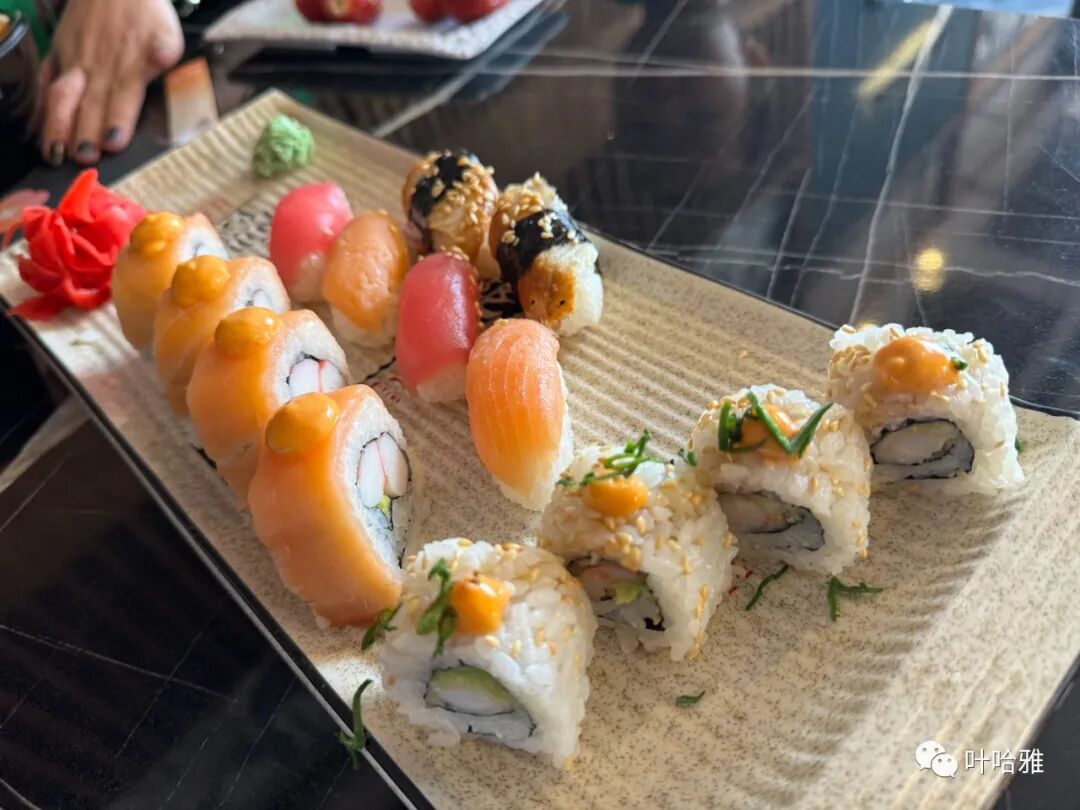
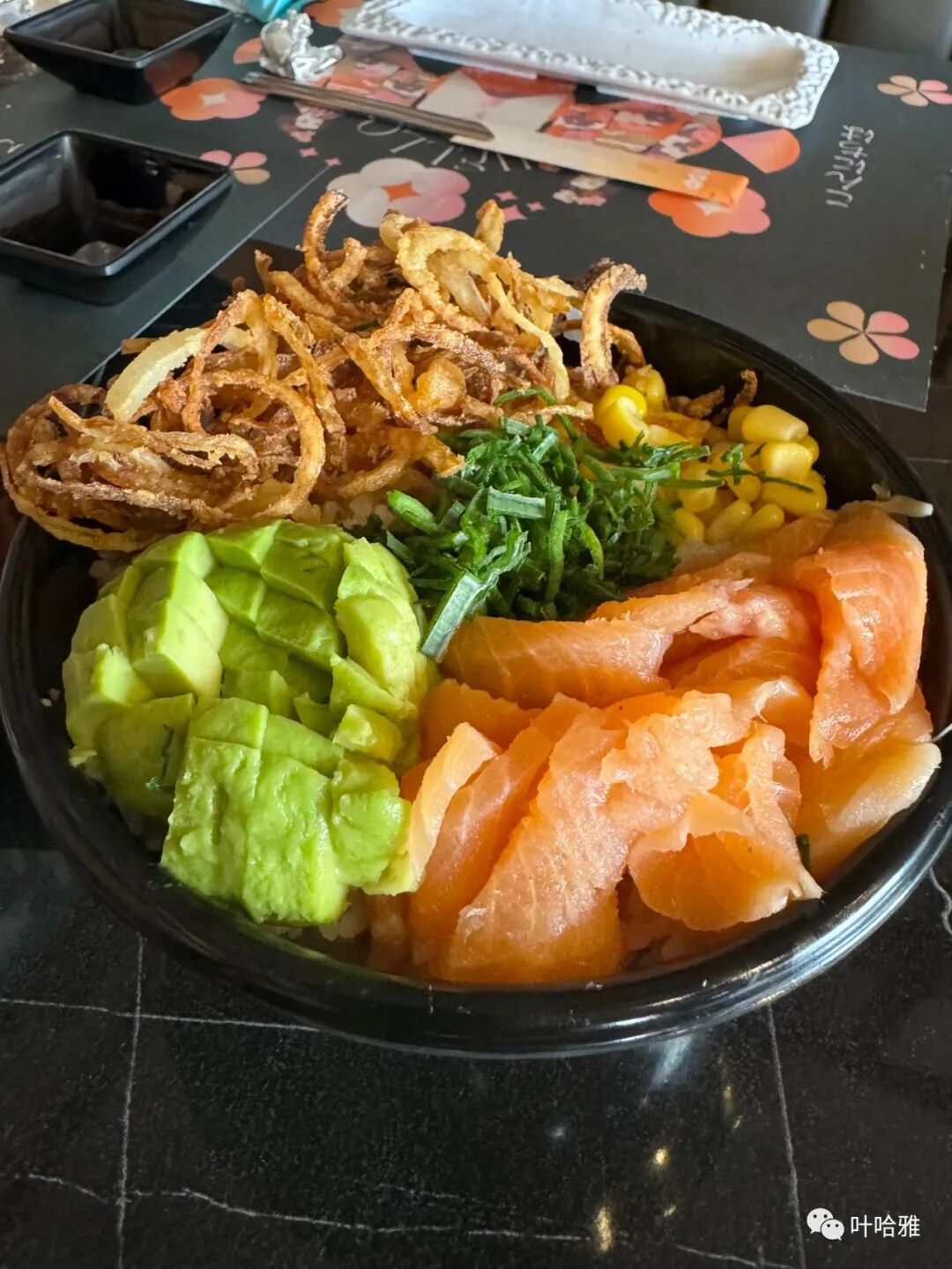
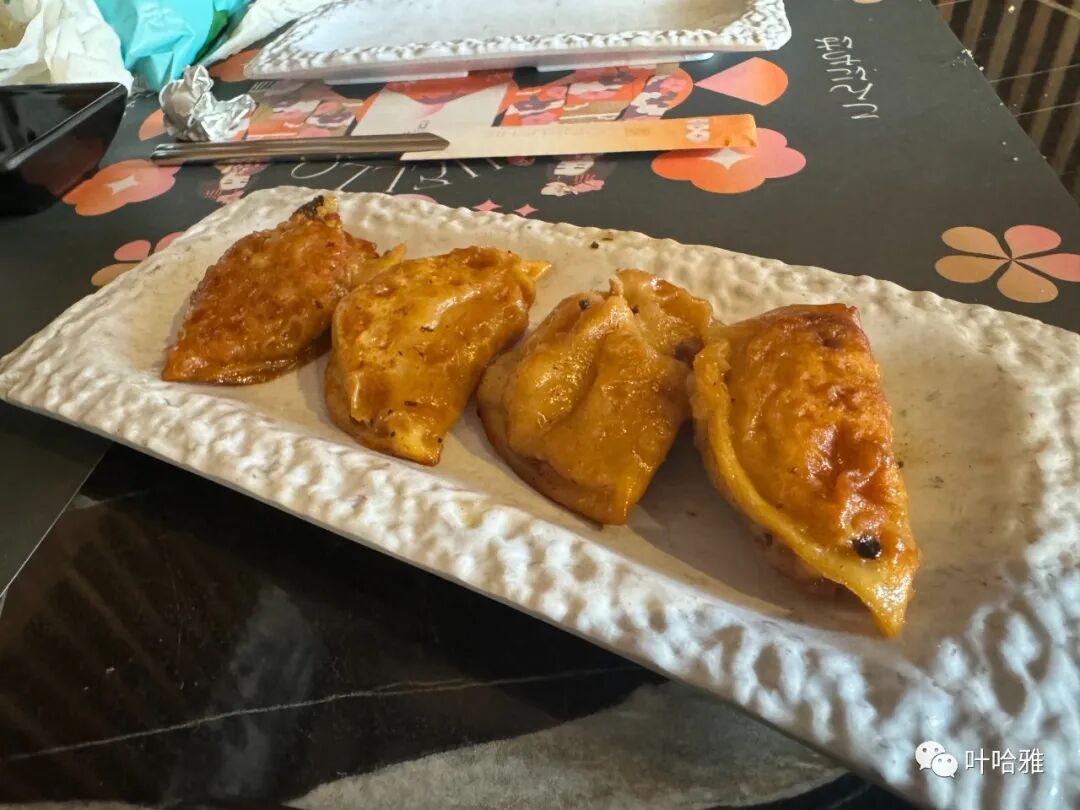
MORISUSHI Japanese food
I had a Japanese meal at a shopping center in New Cairo. After traveling in the Middle East for over ten days and eating Arabic food almost every day, it was nice to change things up.
There is a halal sign on the soy sauce bottle, which is a new thing to see in an Arab country.
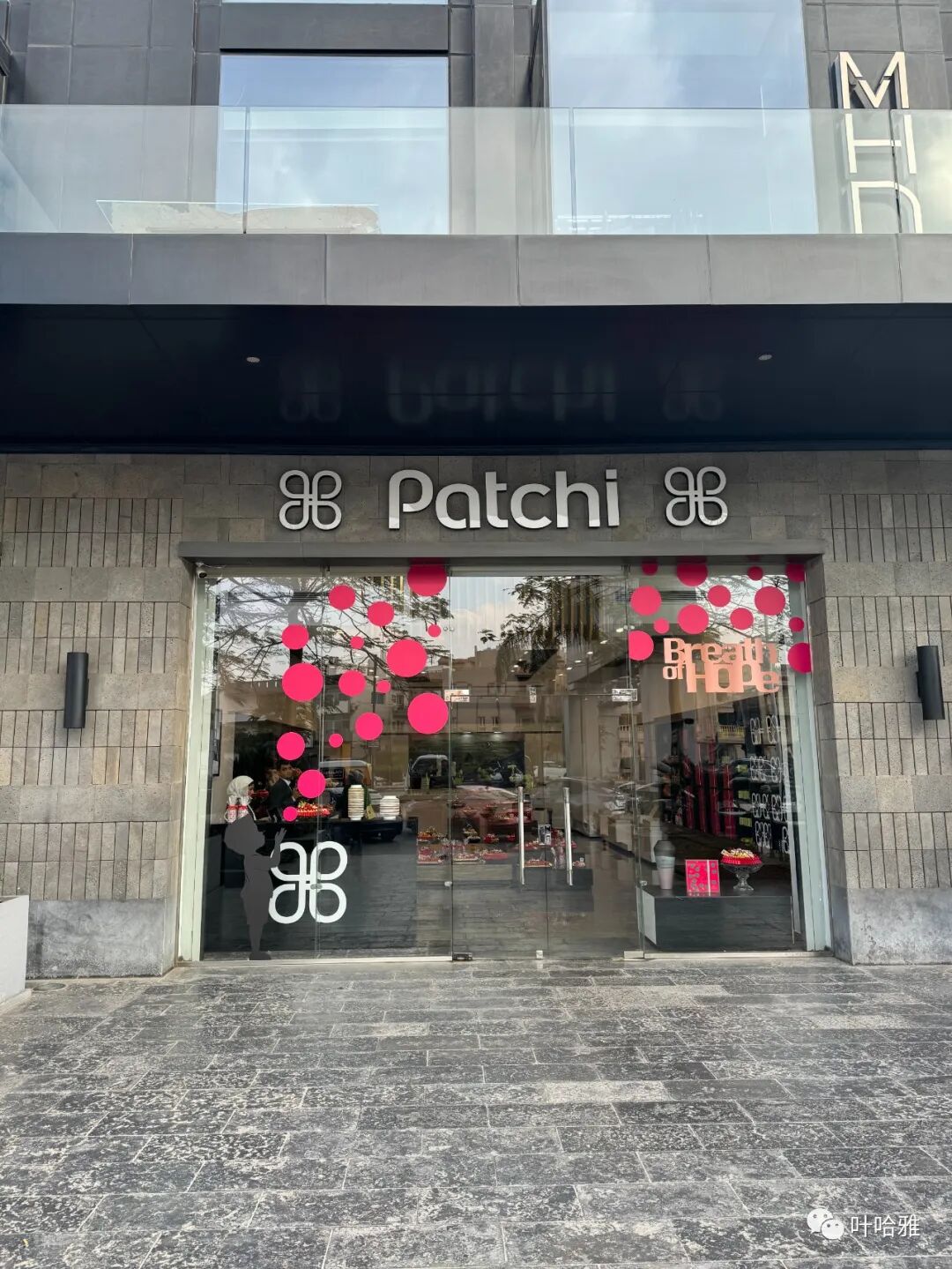
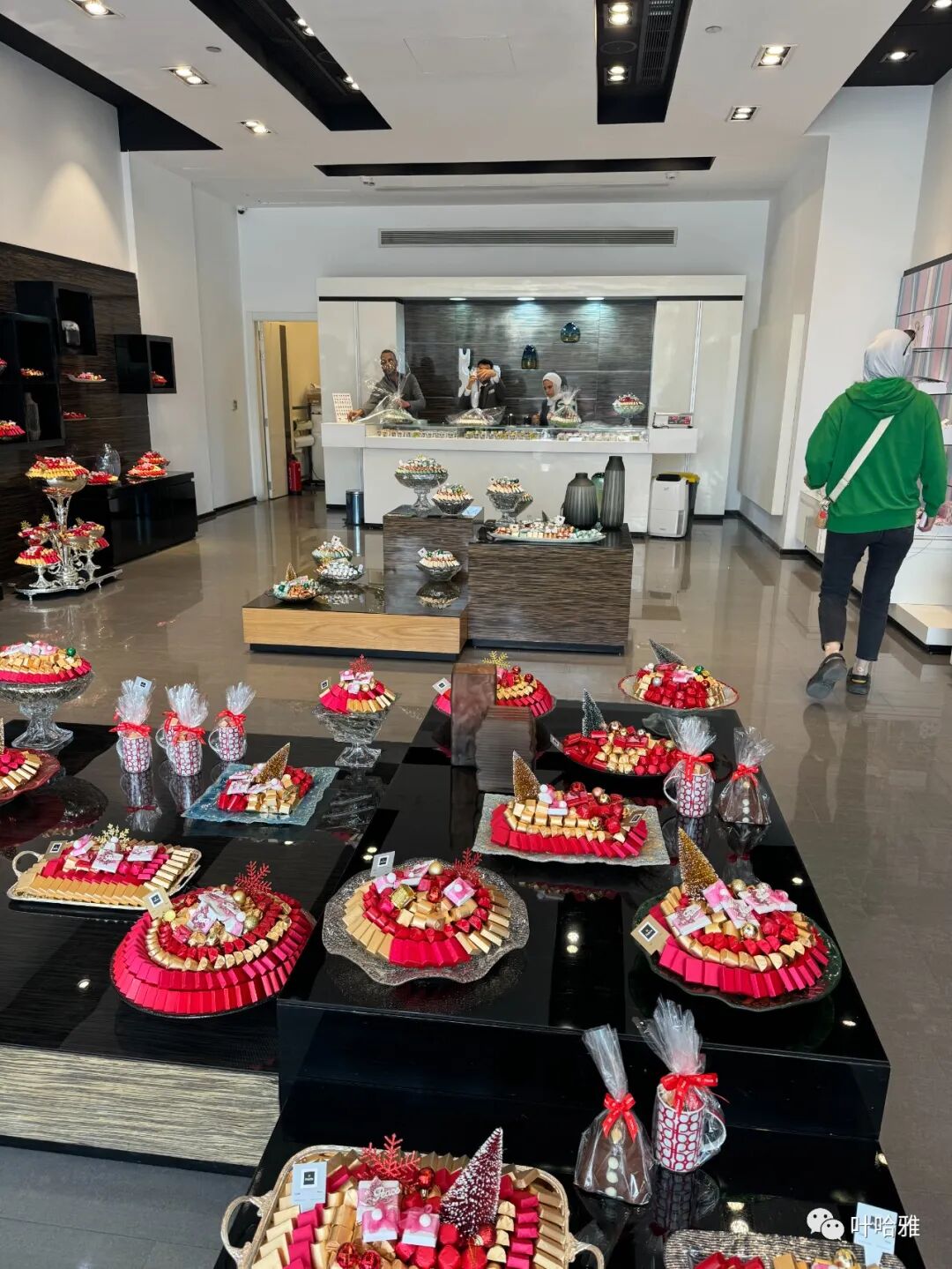
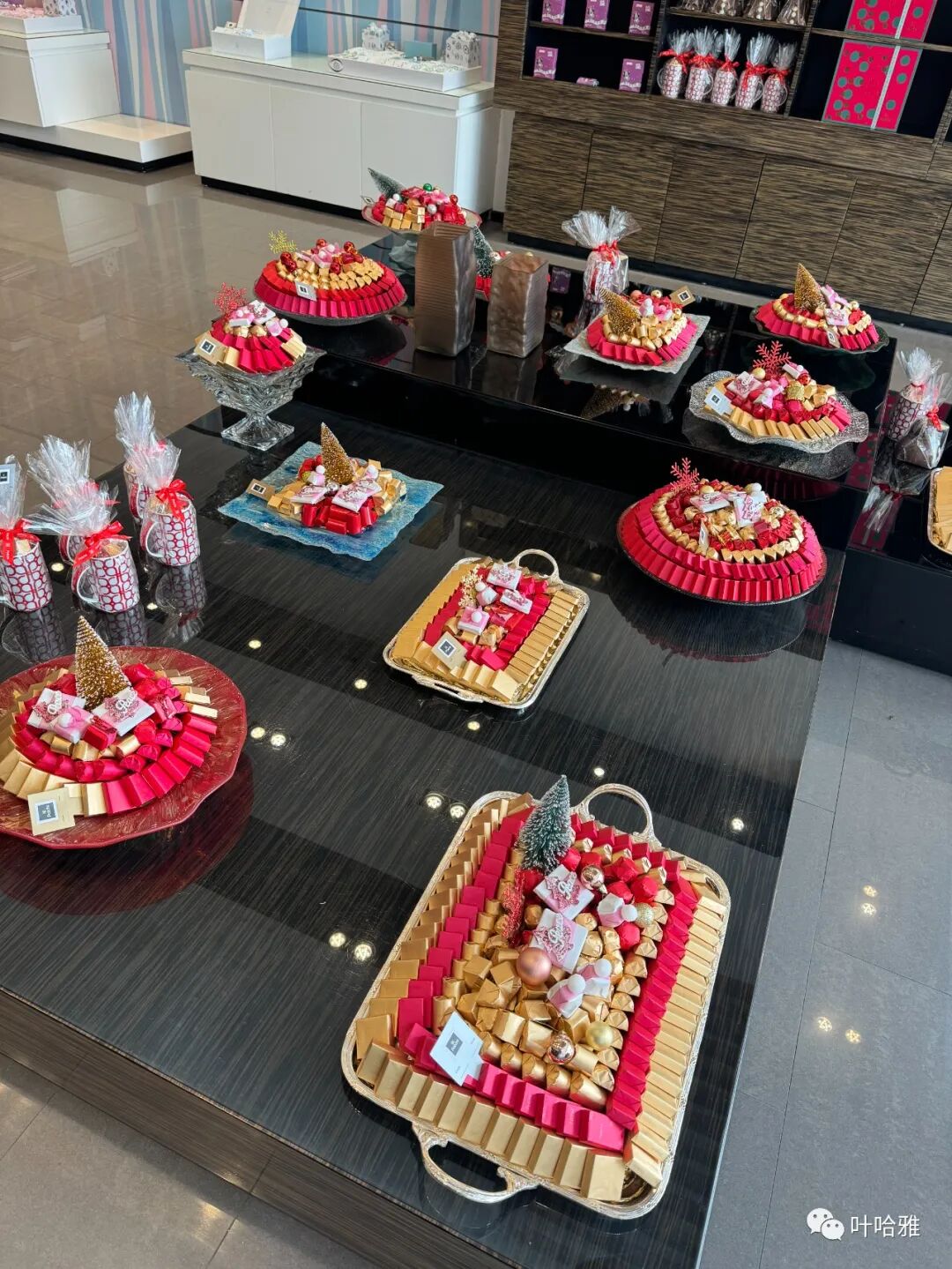
Patchi chocolate shop
This is a Lebanese chocolate brand, said to be the royal family's choice for desserts. It is sold very cheaply in Egypt, at about 300 RMB per kilogram.
Arabs love sweets, and there are many overweight people on the streets, which is really unhealthy. Eating too many sweets is also bad for children's brain development, so we should take this as a warning.
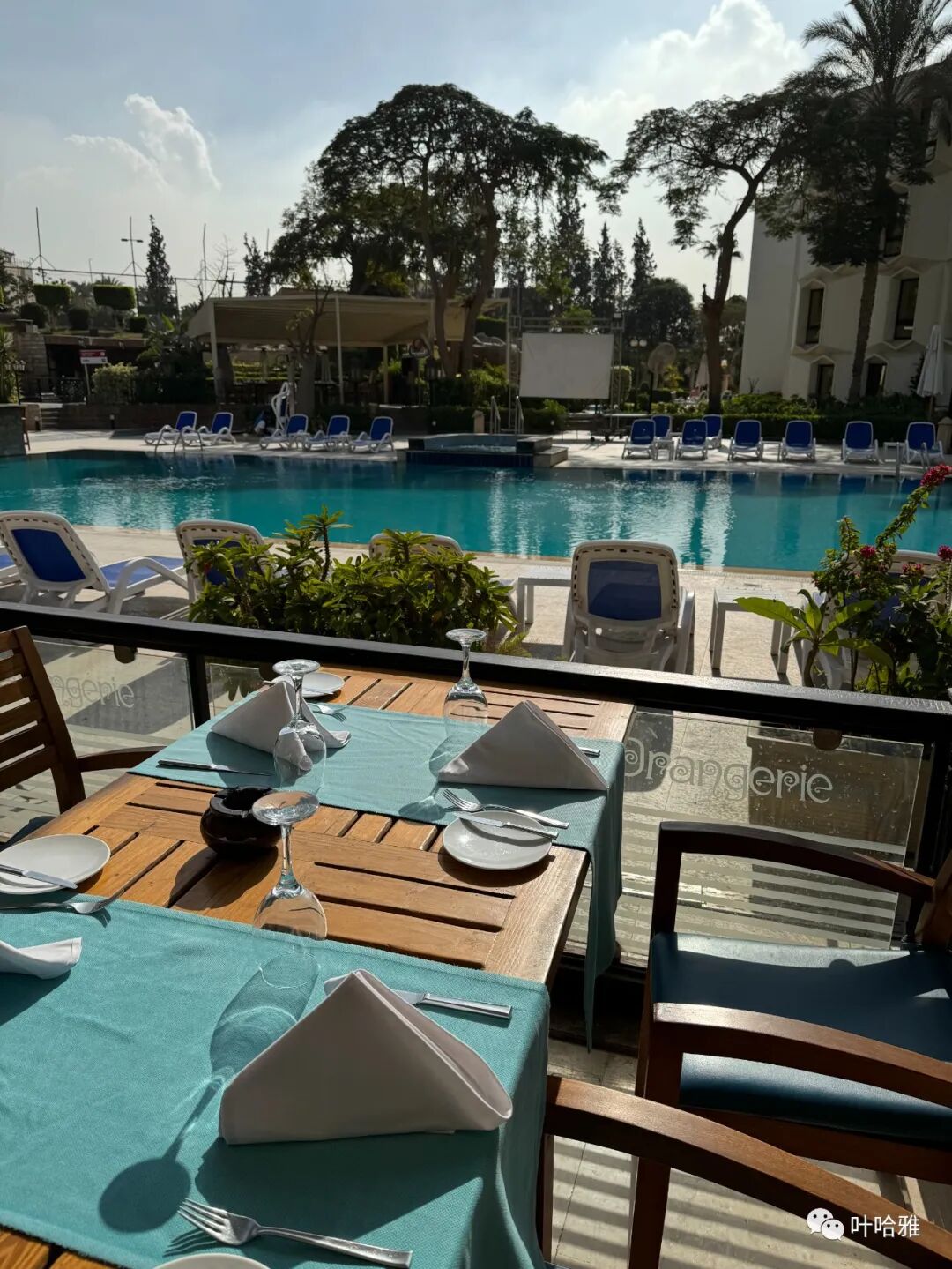
Le Passage Cairo Hotel
We ate at the hotel restaurant most of the time. If you are just using Cairo as a transit stop and want to stay near the airport, I recommend this place. It is an 800-meter walk to the terminal, and the hotel also provides a free shuttle service.
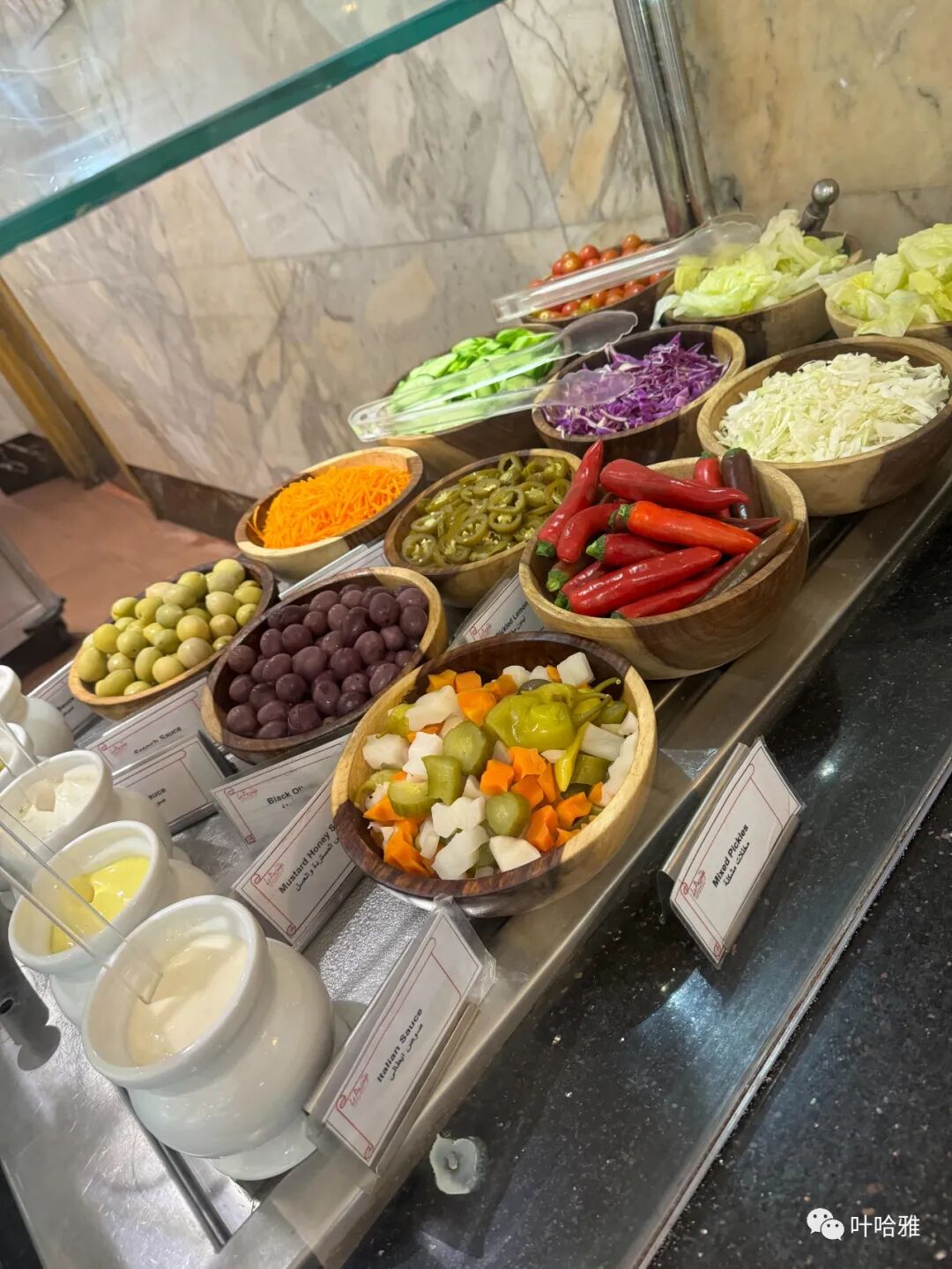
At this hotel's buffet, you have to ask the staff to get the food for you, which feels a bit less free.
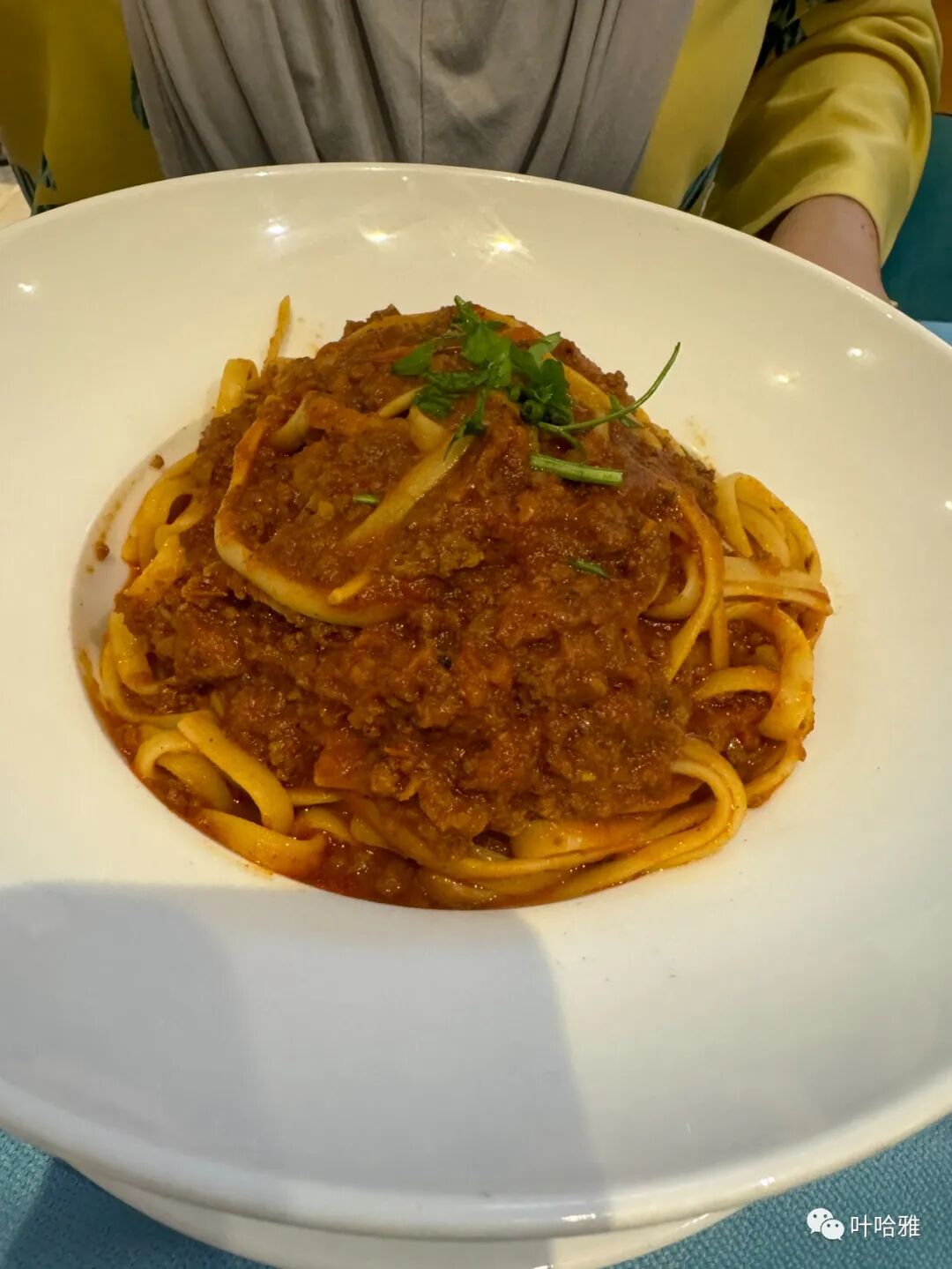
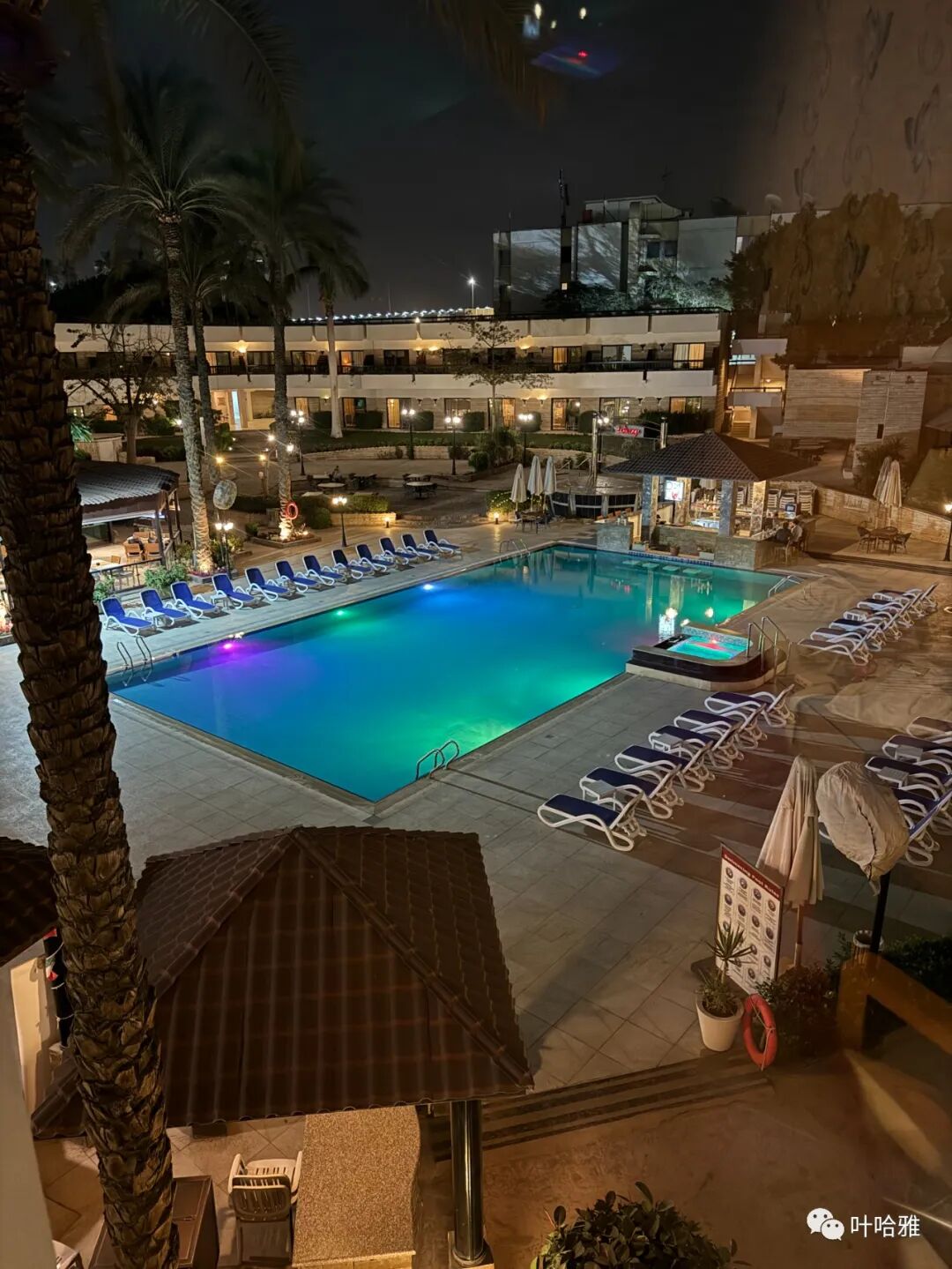
We had steak and pasta at the hotel's Italian restaurant, and both were delicious. Friends, you can really choose a nice hotel for a vacation. If you do not want to go out, you can just stay by the hotel pool and soak up the sun, away from the noise outside.
Four Seasons Hotel
The Four Seasons in Cairo has newer facilities than the Ramses Hilton, but the buffet has fewer options.
The hotel buffet costs less than 200 yuan, and drinks are charged separately.
Outside the window is a view of the Nile. In Cairo, the most expensive rooms are the ones with a river view.
Luxor
Luxor is an ancient city in southern Egypt that was once the center of power in Egypt, similar to Xi'an in China. It only takes 50 minutes to fly from Cairo to Luxor. At the airport, the check-in staff ripped me off. He said I did not buy a child ticket for Fahim. I showed him my Trip.com order, but he still said he could not find the child ticket information. Since it was close to departure time, we paid him 1,000 Egyptian pounds (about 200 yuan) on the spot for the child ticket. Later, I contacted Trip.com and learned that my child ticket was used normally. This means the airport staff scammed me out of the price of a ticket, which is a very bad thing to do. I have asked Trip.com to investigate this with Cairo Airport, but I have not received an effective reply yet. Because it was a cash payment, unless they pull the surveillance footage from that time to prove the airport took my money, I have to swallow this loss.
Sonesta St. George Hotel Luxor
The climate in Luxor is much more comfortable than in Cairo. Cairo has serious pollution and is not suitable for long stays, but Luxor has fewer people and the pace of the whole city is much slower. You cannot use Uber in Luxor. You have to hail a taxi on the street. Always agree on the price before you get in and have plenty of small change ready. If you don't, the driver will keep whatever you give him and call it a tip.
Look at who has stayed at this hotel before. They play Chinese songs in the restaurant and have Chinese signs in the elevators, which feels very welcoming.
For our first meal, we chose the hotel's Italian restaurant again. It has a clean, tidy European style, and the view of the Nile outside the window is stunning.
For breakfast, they serve honey straight from the honeycomb. It is natural and healthy.
Famous sites in Luxor include the Valley of the Kings, Luxor Temple, Karnak Temple, the Colossi of Memnon, the Mortuary Temple of Hatshepsut, and various pharaoh tombs. These are very attractive to archaeology fans, but for most tourists, it is just about taking photos. We booked a private one-day tour for two on Trip.com for 1,000 yuan per person. It included tickets, lunch, and a tour guide. The whole experience was pretty good.
Colossi of Memnon
The statues represent the 18th Dynasty Pharaoh Amenhotep III. Both statues are of him. They are 18 meters tall and were built in 1350 BC, making them over 3,000 years old.
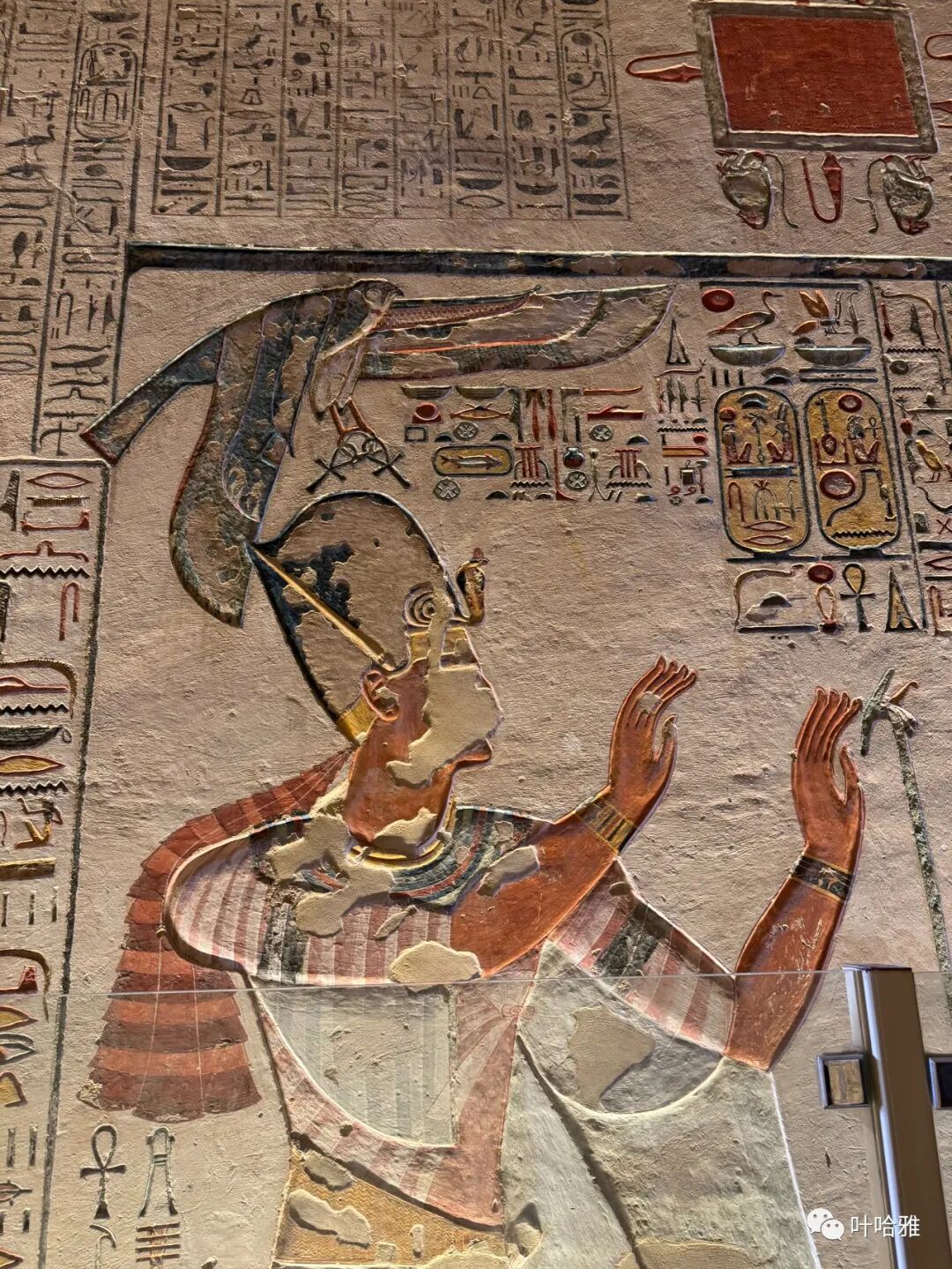
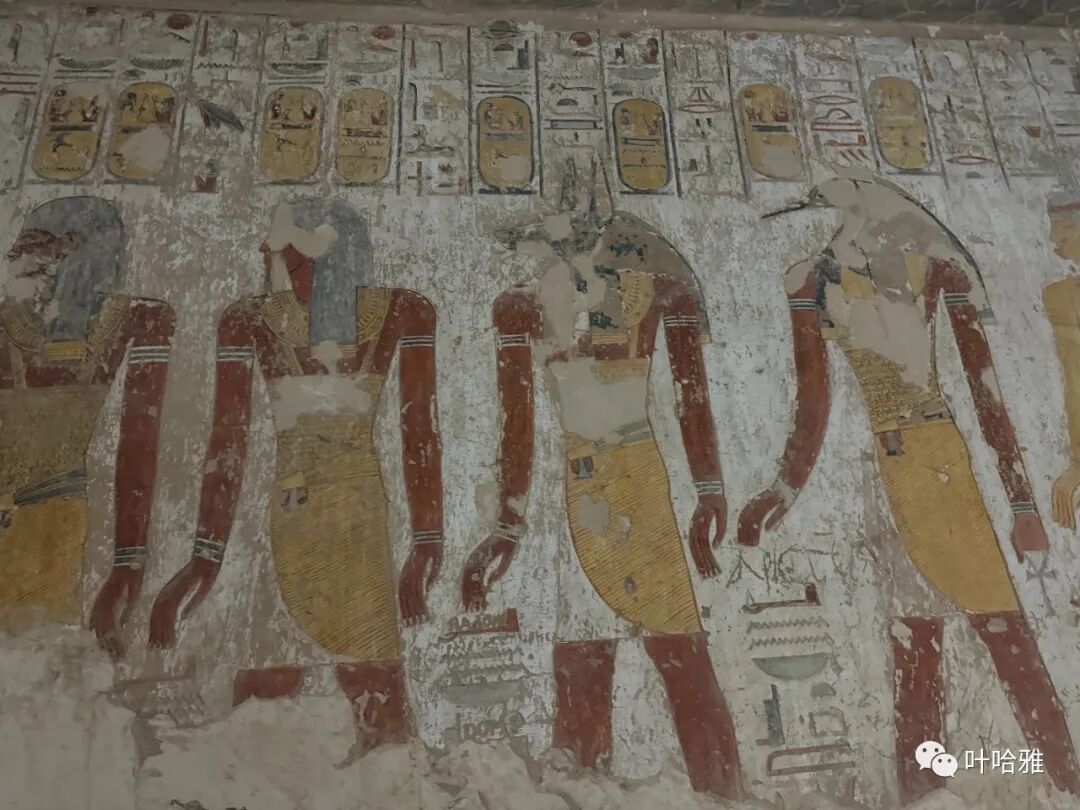
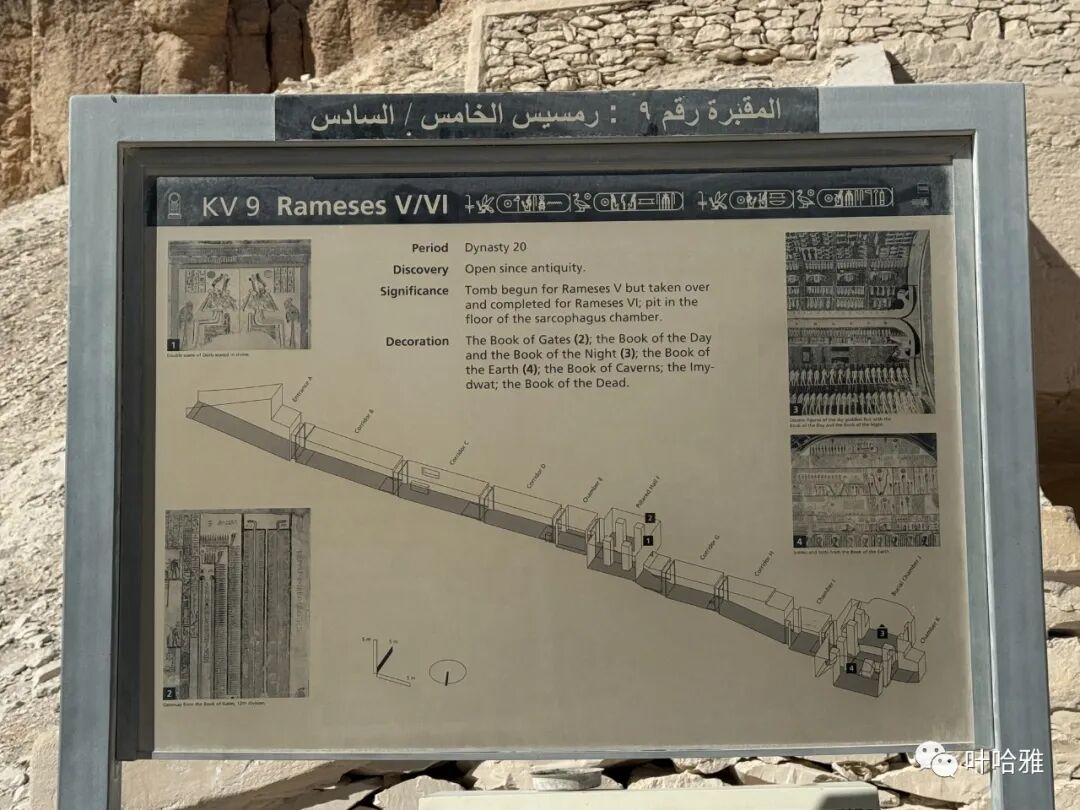
After a short stop at the statues, we went to the Valley of the Kings to see the tombs of Pharaoh Ramesses VI and Tutankhamun.
The murals in the tomb of Ramesses VI still have the same colors they had 3,000 years ago.
Tomb of Pharaoh Tutankhamun
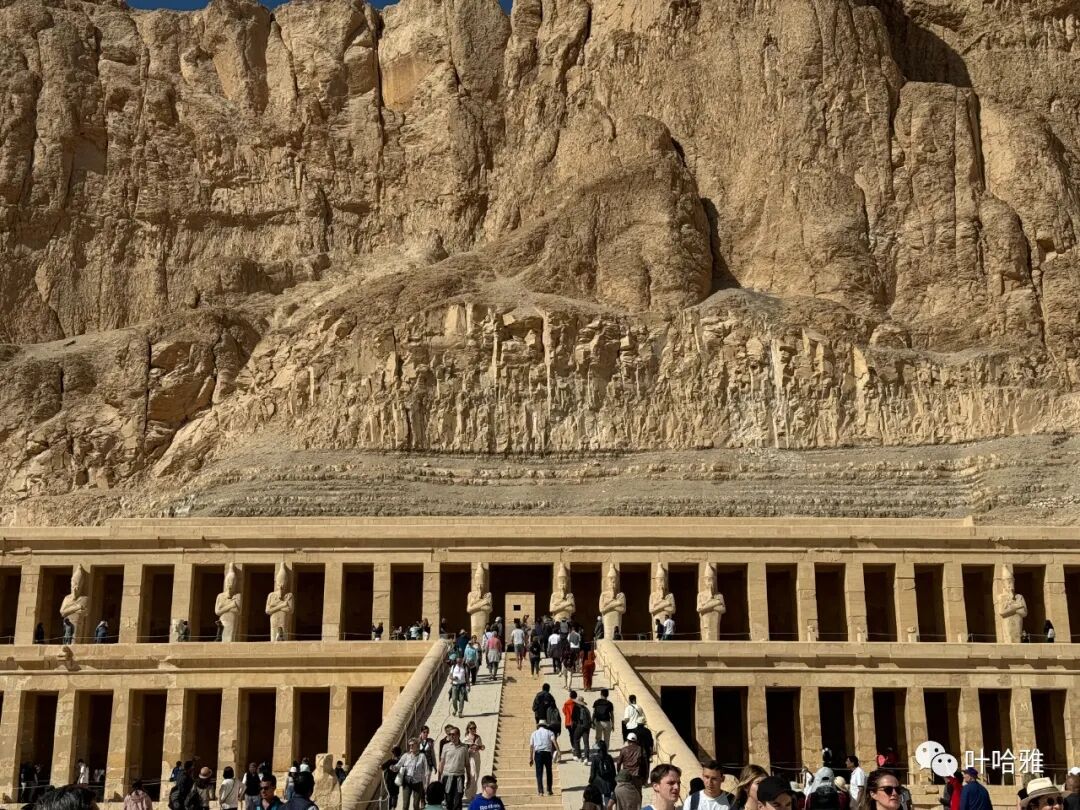
Mortuary Temple of Hatshepsut
The temple complex housing the pharaohs of past dynasties, along with the entire city of Luxor, was listed as a World Cultural Heritage site in 1979. This place was once used as a Christian monastery, and the reliefs unrelated to Christianity were removed.
Karnak Temple
The temple was built in 2000 BC, making it over four thousand years old, and it covers an area larger than half of Manhattan.
Visiting the temple during the day is a test of physical strength because the sun is so strong. When Fahim walked up to this ram-headed sphinx, he took a liking to the pebbles on the ground and refused to move. I stayed with him to play with the stones. During this time, Fahim was surrounded by Egyptian girls who took photos with him and kissed him.
The Egyptian tour guide said he could watch the child for me so I could go inside to look around, but I said forget it. I would rather stay and play with stones with Fahim. I am actually not interested in these temples. After seeing them, I just think they were built impressively and are very spectacular, and that is all.
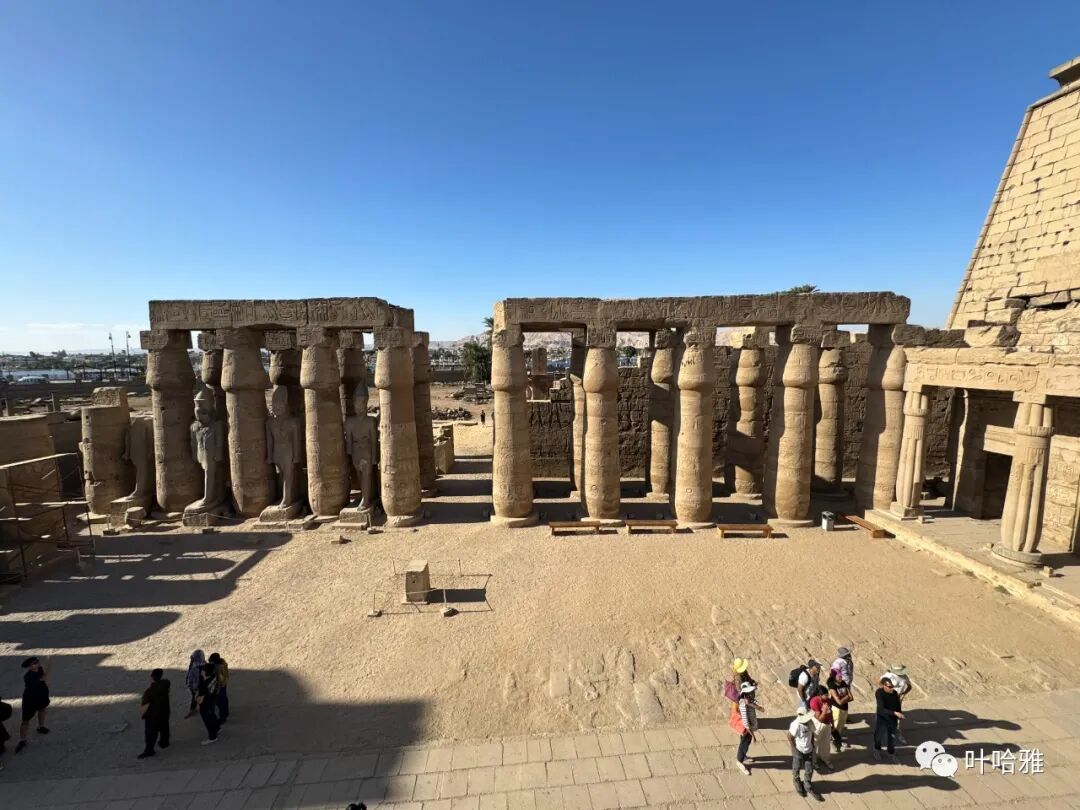
Luxor Temple
The last stop was Luxor Mosque, which is also a landmark of Luxor with over three thousand years of history. However, what attracted me here was the gongbei built on top of the mosque. At the entrance, the guide asked if I wanted to visit the mosque or the mosque. I said the mosque. He looked surprised and confirmed it with me again. I was a bit tired by then, so I told him I would skip the mosque and just see the mosque before heading back.
Abu Haggag Mosque and Gongbei
This gongbei can be considered the only one in the world built on top of the world's oldest mosque, and it is the only mosque in the world built on mosque ruins.
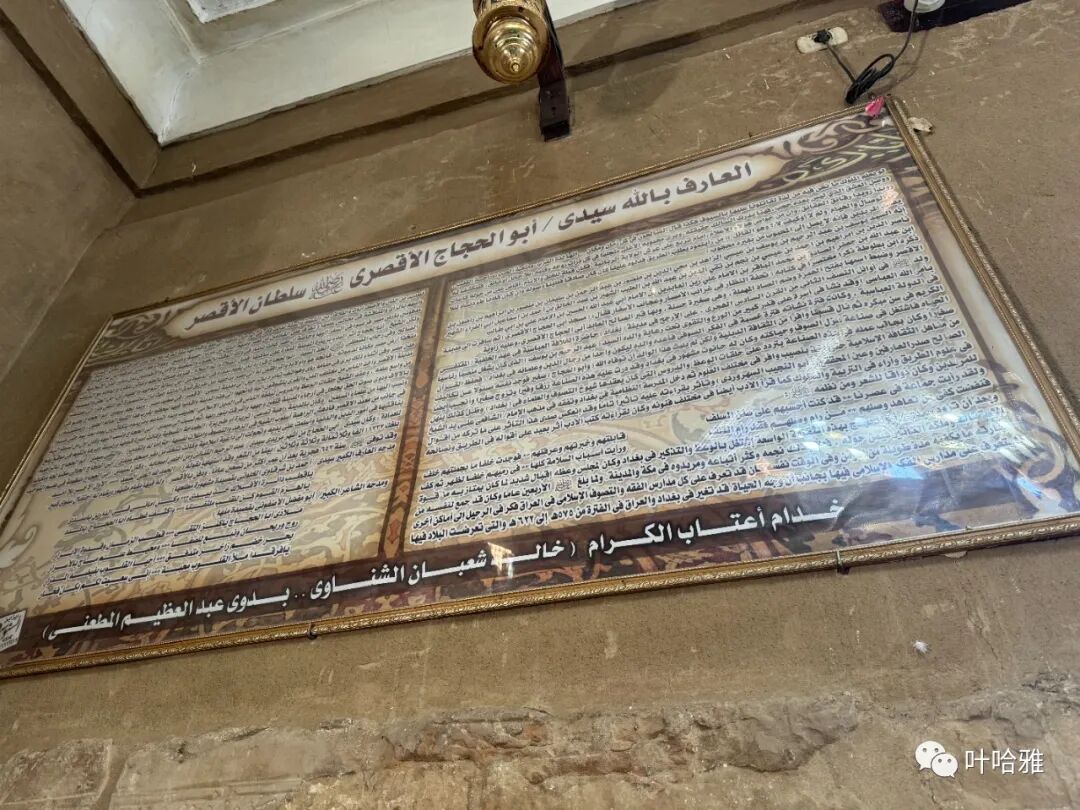
This mosque dates back to the Fatimid dynasty and was built on the ruins of a church inside the mosque. It was completed around 1286 and contains the tomb of the Sufi mystic Yusuf Abu Haggag. Haggag was a scholar born in Baghdad in the 13th century. According to local legend, he captured Luxor from the Roman Queen Tarza.
Luxor Mosque was converted into a church by the Copts in 395 AD and then into a mosque in 640 AD. Therefore, it can be said that this is the oldest religious building in the world still in use, with a history spanning over three thousand four hundred years.
Inside the gongbei, there are some believers visiting the graves, with more women than men.
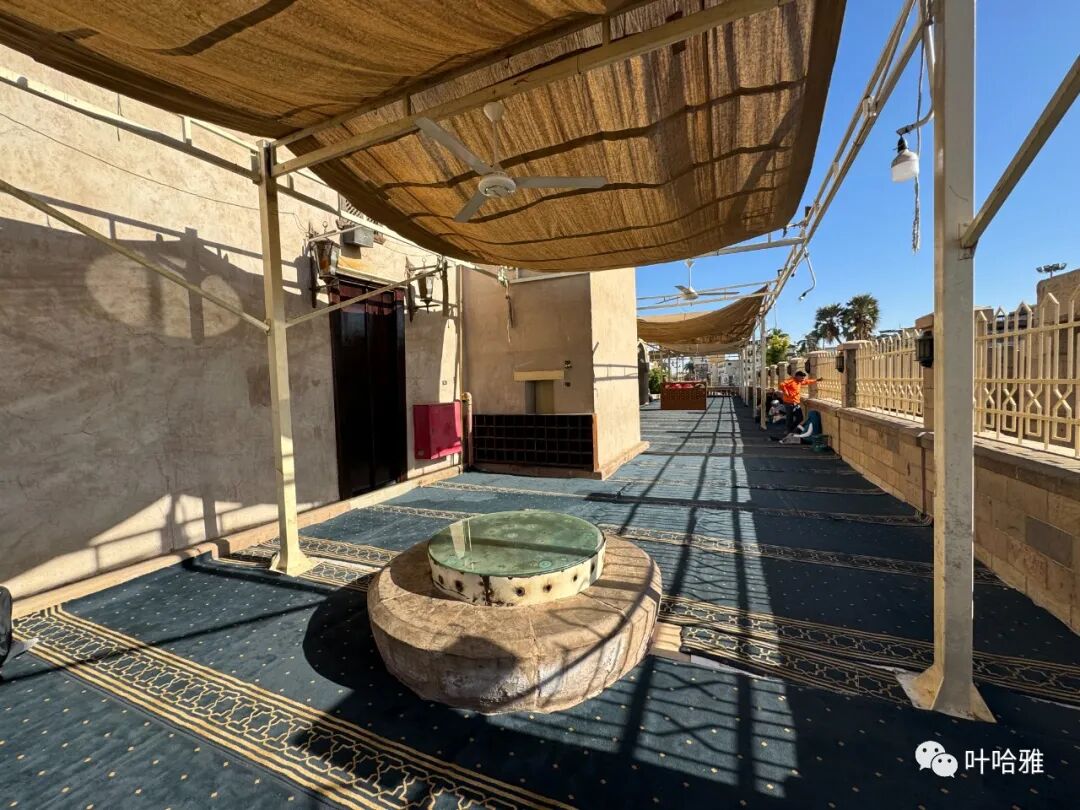
The mosque suffered a fire in 2007. When it was rebuilt, stones from the mosque were used, and you can see pharaonic hieroglyphs on the carvings of this pillar.
Looking out from the mosque railing, you can see the Luxor Mosque. The once arrogant pharaohs compared themselves to gods, but they never imagined that three thousand years later, their mosque would become a tourist attraction for people to glance at in passing.
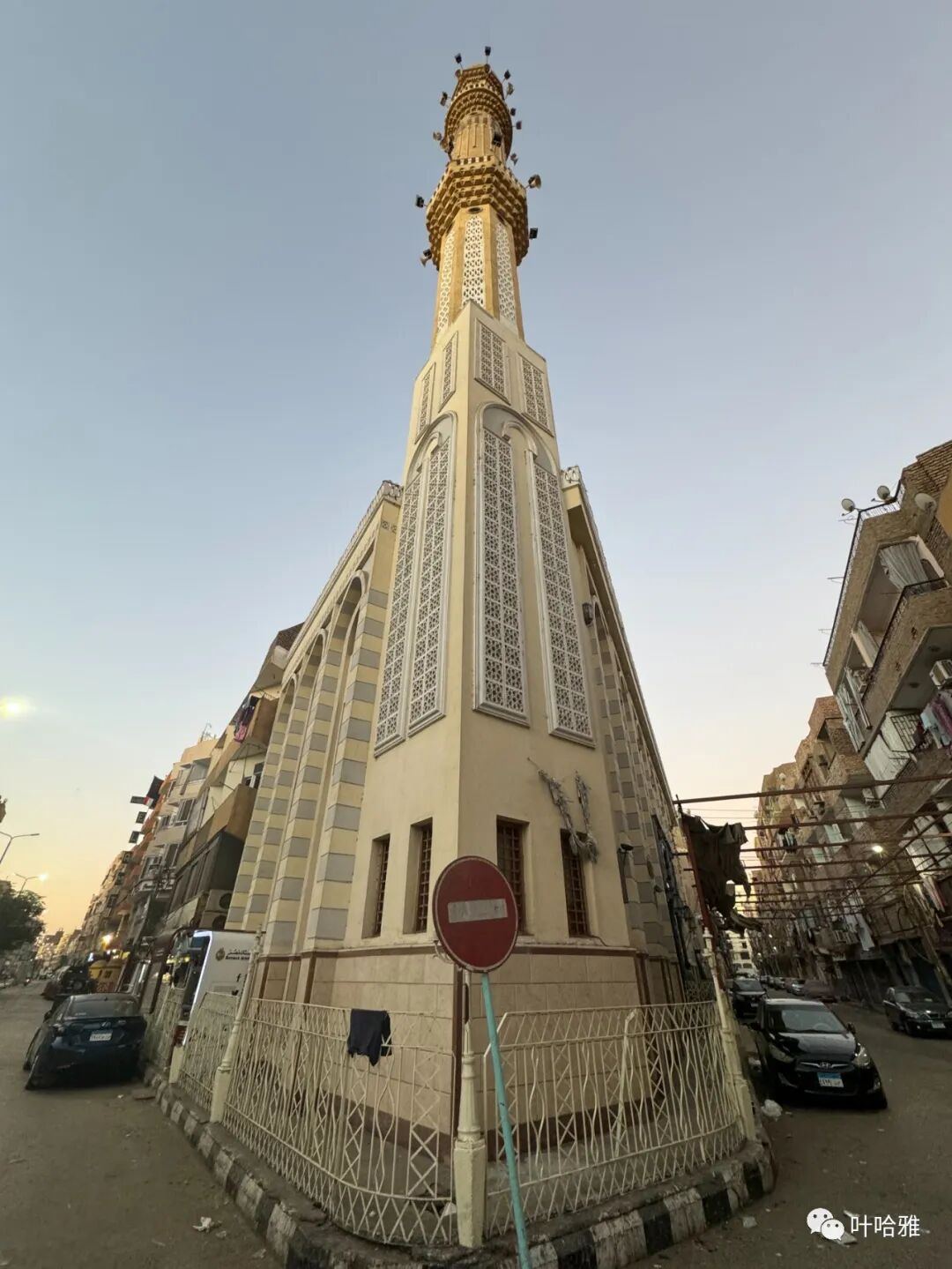
Al Iman Mosque
This is the closest mosque to my hotel. Fewer than 10 people attend the adhan (banda). In Arab countries, people go back to sleep after the adhan, and almost no shops are open on the street. Only a few small shops selling flatbread (da bing) are open, so it is best to eat breakfast at the hotel, or you will have nothing to eat outside.
As a convenient fast food in the Arab region, shawarma (sharama) is as popular as our meat burger (roujiamo); it is economical, affordable, and delicious.
El-KABABGY RESTAURANT
This shop is the number one ranked restaurant in Luxor on the TripAdvisor app, and after eating there, I feel it truly deserves this ranking. This shop is only 1 kilometer away from our hotel on foot.
The outdoor part of the restaurant is right on the Nile pier. In December, the temperature in Luxor is only 20 degrees, which is very cool.
The grilled meat at this shop is extremely fragrant and clearly better than other restaurants we have eaten at. The per capita consumption is only about one hundred yuan. In China, at an Arab restaurant of the same level, two people would spend at least four or five hundred.
Tagine pot (tajiguo)
The drink I had most often in the Arab region was lemon mint juice. Its sour taste is great for opening up your appetite and quenching your thirst.
What is annoying about Luxor is that the streets are full of carriage drivers looking for customers. They really chase you and shout non-stop. One day, I wanted to take Fahim out for a walk, but I got so annoyed by the carriage drivers trying to get business that I just went back to the hotel and stayed inside.
The hotel has a garden, a view of the Nile, and a swimming pool. Staying inside and enjoying the sunshine is the most relaxing thing to do.
Some people say that Egypt without Egyptians would be a better Egypt. While this is an exaggeration, it reflects an abnormal social phenomenon in Egypt today. Everyone is driven by profit, corruption is rampant, and there are scammers and thieves everywhere. In the old Islamic streets of Cairo, I could not even feel the light of faith. For the first time, I stopped my plan to visit a mosque because I did not have money in my pocket for a tip. All of this is happening in Egypt, which has a thousand-year history of Islamic civilization. This seems to confirm a master's thesis from the School of Oriental and African Studies at the University of London titled 'The Process of Islamization in Egypt, Possible Reasons and the Scope of Influence until the 14th Century.' The author, M. Wassermann, believes that Egypt is still not fully Islamized today. A considerable number of people, for various reasons, are only Muslims in name, because Islam considers that as long as one formally becomes a believer by verbal confession, they are treated as a Muslim.
This phenomenon of two-faced people everywhere makes Egypt like a powder keg that could explode at any time. You have to go through security checks and show identification to enter malls, hotels, and airports. Soldiers with guns are patrolling the streets everywhere. The old city of Cairo is just like a refugee camp, with groups of homeless people sleeping on the ground. Behind them are the ruins of demolished houses. Coptic people mainly make a living by picking up trash. The gap between rich and poor is huge. The poor see no hope and have no illusions about the future. An explosion is only a matter of time. So, if you want to come to Egypt, do it sooner rather than later. If you don't go now, you might not be able to go in the future. view all
Summary: This Egypt Muslim travel guide continues with ancient Egyptian history, the Egyptian Museum, Luxor, Nile-side dining, halal-friendly restaurant notes, local scams, travel traps, and reflections on Muslim life in Egypt.
A Guide to Avoiding Travel Traps in Egypt is presented here as a firsthand travel account in clear English, beginning with this scene: If you are not interested in Egyptian history, you will just be a casual tourist here. However, seeing the high level of ancient Egyptian civilization is an experience unmatched anywhere else in the world. The account keeps its focus on Quanzhou Muslims, Hui Muslims, Islamic History while preserving the names, places, food, and historical details from the Chinese source.
If you are not interested in Egyptian history, you will just be a casual tourist here. However, seeing the high level of ancient Egyptian civilization is an experience unmatched anywhere else in the world.
Some say ancient Egyptians and modern Egyptians are not the same race, but that is not a fact. Ancient Egyptians did not disappear. Through thousands of years of cultural exchange, they were assimilated, and modern Egyptians carry the genes of the ancient Egyptians.
Although Egyptians are nominally divided into Arabs, Copts, or Nubians, their bloodlines are actually very similar. They all speak Arabic and have intermarried and assimilated so much that there is no such thing as a pure-blooded, independent ethnic group.
For example, the number of Copts in Egypt is decreasing every year because they are blending into the Arab population. When a Coptic Christian converts to Islam, by the third generation, they identify themselves as Arab.
In the 7th century, Copts helped the Arabs conquer the Eastern Roman Empire. Because Copts were Miaphysites, the Eastern Roman Empire viewed them as heretics. Under Arab rule, the Copts actually lived better. Some say many Copts converted to Islam to pay fewer taxes, but there were not many tax benefits for converting, so there was no large-scale conversion of Copts in the early days.
During the Fatimid Caliphate, because the rulers were Shia, they were even harsher toward Sunni Muslims than toward Coptic Christians. Copts and Jews were protected and thrived during this period. Even during the Ayyubid and Mamluk dynasties, Copts remained under protection. The Mamluks were former slaves who became rulers, so they empathized with the Copts.
By the mid-14th century, whenever there were large-scale riots, many Copts converted to protect themselves. According to Egyptian law at the time, a Muslim's property could not be inherited by a non-Muslim. This led the descendants of converts to choose Islam to keep their property. It was from this period that Copts became a minority in Egypt.
Later, Muslim citizens accused the converted Copts of not being true converts because they did not go to the mosque for namaz on time. So, even though Muslims are the majority in Egypt today, the country is not completely Islamized.
The second floor of the Egyptian Museum has a Tutankhamun gallery. There is a funny story here: a travel blogger on Douyin posted a video saying they received the highest honor in Egypt and were allowed to film inside the gallery, which is usually off-limits for photography. I was stopped by a staff member when I tried to take photos with my phone and had to delete them under his supervision. The photo below was taken from outside the museum using my phone's telephoto lens.
However, after I handed 200 Egyptian pounds (about 40 RMB) to the staff member, I was allowed to take photos. That is how I got this picture of Tutankhamun's golden mask.
Tutankhamun's golden mask is said to be the most valuable artifact in the world and is priceless. But in Egypt, as long as you have a tip, everything is negotiable. That includes the blogger who claimed they filmed the pyramids while the site was cleared. I checked the time of their video, and it was after sunset, which is after the pyramids close. Paying money to get in and film is definitely not the highest honor.
After getting this photo to prove the Douyin blogger was bluffing, I lost interest in seeing the rest of the exhibits. In the evening, we went to the local Star City Mall to eat Thai food.
It is rare to find a prayer room in public places in Egypt, unlike in the UAE or Saudi Arabia where you see them everywhere. This mall actually has a prayer room, which is worth noting.
SABAI Thai Food
This Thai restaurant is quite popular locally and attracts many Chinese diners. The owner seems to have a misunderstanding of East and Southeast Asia, mixing in Chinese and Japanese elements. Perhaps to Arabs, we all look the same, just as we might struggle to tell the difference between Egyptians, Moroccans, Tunisians, Saudis, Qataris, Emiratis, Lebanese, Yemenis, Syrians, Jordanians, Bahrainis, Libyans, and Algerians.
You do not see halal signs in restaurants in Egypt, so you can just walk in anywhere. However, you should be careful with Chinese food and ask clearly. This shop marks its menu as halal because many Arabs assume Chinese food is not halal, and some restaurants also sell alcohol.
The chef at this Thai place is Black, but the food is quite authentic. Sour and spicy Thai dishes are very appetizing in the hot Middle East. The portions are small, but the price is cheap, costing about 100 RMB per person.
Tom Yum Goong soup
MORISUSHI Japanese food
I had a Japanese meal at a shopping center in New Cairo. After traveling in the Middle East for over ten days and eating Arabic food almost every day, it was nice to change things up.
There is a halal sign on the soy sauce bottle, which is a new thing to see in an Arab country.
Patchi chocolate shop
This is a Lebanese chocolate brand, said to be the royal family's choice for desserts. It is sold very cheaply in Egypt, at about 300 RMB per kilogram.
Arabs love sweets, and there are many overweight people on the streets, which is really unhealthy. Eating too many sweets is also bad for children's brain development, so we should take this as a warning.
Le Passage Cairo Hotel
We ate at the hotel restaurant most of the time. If you are just using Cairo as a transit stop and want to stay near the airport, I recommend this place. It is an 800-meter walk to the terminal, and the hotel also provides a free shuttle service.
At this hotel's buffet, you have to ask the staff to get the food for you, which feels a bit less free.
We had steak and pasta at the hotel's Italian restaurant, and both were delicious. Friends, you can really choose a nice hotel for a vacation. If you do not want to go out, you can just stay by the hotel pool and soak up the sun, away from the noise outside.
Four Seasons Hotel
The Four Seasons in Cairo has newer facilities than the Ramses Hilton, but the buffet has fewer options.
The hotel buffet costs less than 200 yuan, and drinks are charged separately.
Outside the window is a view of the Nile. In Cairo, the most expensive rooms are the ones with a river view.
Luxor
Luxor is an ancient city in southern Egypt that was once the center of power in Egypt, similar to Xi'an in China. It only takes 50 minutes to fly from Cairo to Luxor. At the airport, the check-in staff ripped me off. He said I did not buy a child ticket for Fahim. I showed him my Trip.com order, but he still said he could not find the child ticket information. Since it was close to departure time, we paid him 1,000 Egyptian pounds (about 200 yuan) on the spot for the child ticket. Later, I contacted Trip.com and learned that my child ticket was used normally. This means the airport staff scammed me out of the price of a ticket, which is a very bad thing to do. I have asked Trip.com to investigate this with Cairo Airport, but I have not received an effective reply yet. Because it was a cash payment, unless they pull the surveillance footage from that time to prove the airport took my money, I have to swallow this loss.
Sonesta St. George Hotel Luxor
The climate in Luxor is much more comfortable than in Cairo. Cairo has serious pollution and is not suitable for long stays, but Luxor has fewer people and the pace of the whole city is much slower. You cannot use Uber in Luxor. You have to hail a taxi on the street. Always agree on the price before you get in and have plenty of small change ready. If you don't, the driver will keep whatever you give him and call it a tip.
Look at who has stayed at this hotel before. They play Chinese songs in the restaurant and have Chinese signs in the elevators, which feels very welcoming.
For our first meal, we chose the hotel's Italian restaurant again. It has a clean, tidy European style, and the view of the Nile outside the window is stunning.
For breakfast, they serve honey straight from the honeycomb. It is natural and healthy.
Famous sites in Luxor include the Valley of the Kings, Luxor Temple, Karnak Temple, the Colossi of Memnon, the Mortuary Temple of Hatshepsut, and various pharaoh tombs. These are very attractive to archaeology fans, but for most tourists, it is just about taking photos. We booked a private one-day tour for two on Trip.com for 1,000 yuan per person. It included tickets, lunch, and a tour guide. The whole experience was pretty good.
Colossi of Memnon
The statues represent the 18th Dynasty Pharaoh Amenhotep III. Both statues are of him. They are 18 meters tall and were built in 1350 BC, making them over 3,000 years old.
After a short stop at the statues, we went to the Valley of the Kings to see the tombs of Pharaoh Ramesses VI and Tutankhamun.
The murals in the tomb of Ramesses VI still have the same colors they had 3,000 years ago.
Tomb of Pharaoh Tutankhamun
Mortuary Temple of Hatshepsut
The temple complex housing the pharaohs of past dynasties, along with the entire city of Luxor, was listed as a World Cultural Heritage site in 1979. This place was once used as a Christian monastery, and the reliefs unrelated to Christianity were removed.
Karnak Temple
The temple was built in 2000 BC, making it over four thousand years old, and it covers an area larger than half of Manhattan.
Visiting the temple during the day is a test of physical strength because the sun is so strong. When Fahim walked up to this ram-headed sphinx, he took a liking to the pebbles on the ground and refused to move. I stayed with him to play with the stones. During this time, Fahim was surrounded by Egyptian girls who took photos with him and kissed him.
The Egyptian tour guide said he could watch the child for me so I could go inside to look around, but I said forget it. I would rather stay and play with stones with Fahim. I am actually not interested in these temples. After seeing them, I just think they were built impressively and are very spectacular, and that is all.
Luxor Temple
The last stop was Luxor Mosque, which is also a landmark of Luxor with over three thousand years of history. However, what attracted me here was the gongbei built on top of the mosque. At the entrance, the guide asked if I wanted to visit the mosque or the mosque. I said the mosque. He looked surprised and confirmed it with me again. I was a bit tired by then, so I told him I would skip the mosque and just see the mosque before heading back.
Abu Haggag Mosque and Gongbei
This gongbei can be considered the only one in the world built on top of the world's oldest mosque, and it is the only mosque in the world built on mosque ruins.
This mosque dates back to the Fatimid dynasty and was built on the ruins of a church inside the mosque. It was completed around 1286 and contains the tomb of the Sufi mystic Yusuf Abu Haggag. Haggag was a scholar born in Baghdad in the 13th century. According to local legend, he captured Luxor from the Roman Queen Tarza.
Luxor Mosque was converted into a church by the Copts in 395 AD and then into a mosque in 640 AD. Therefore, it can be said that this is the oldest religious building in the world still in use, with a history spanning over three thousand four hundred years.
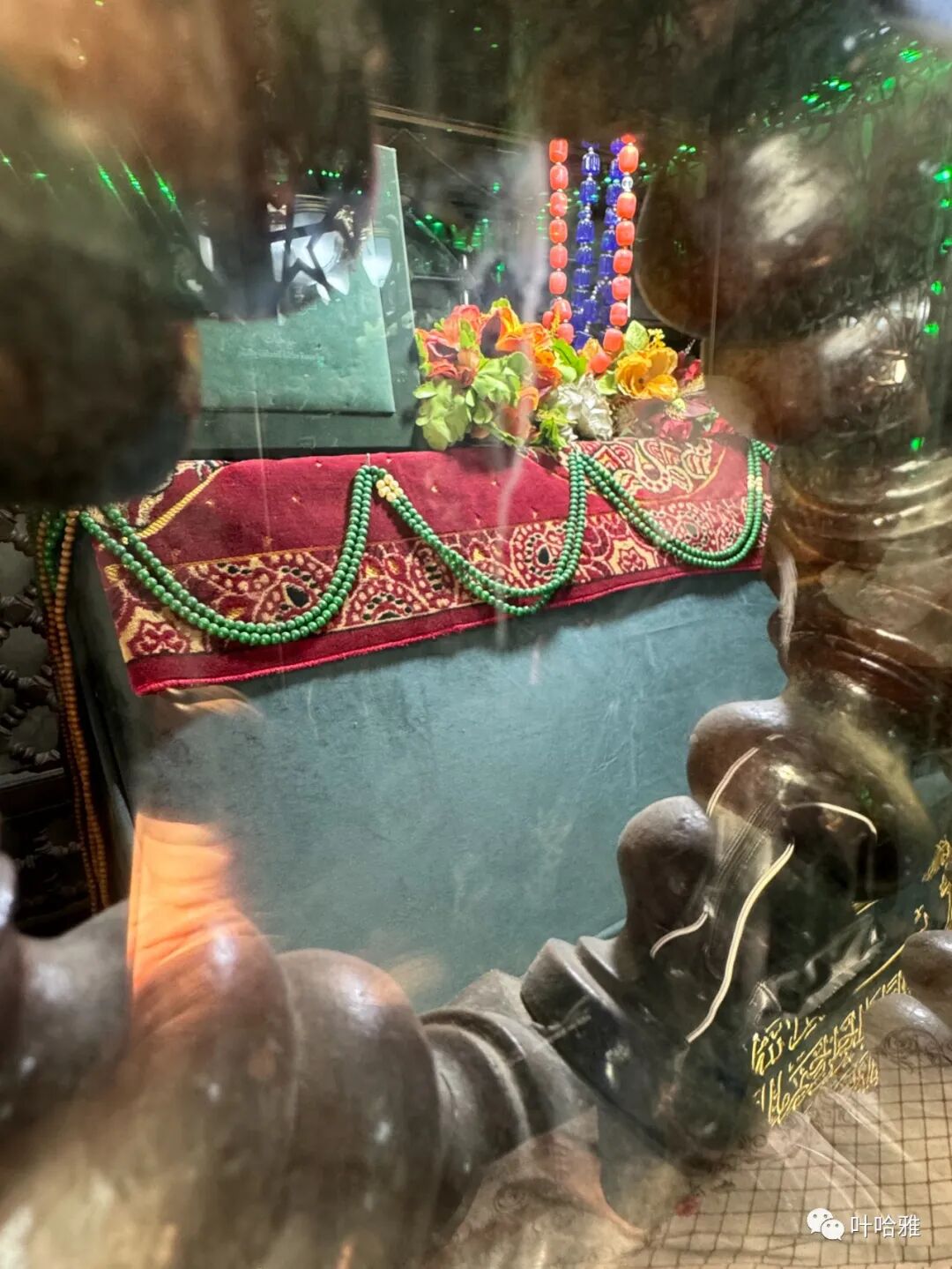
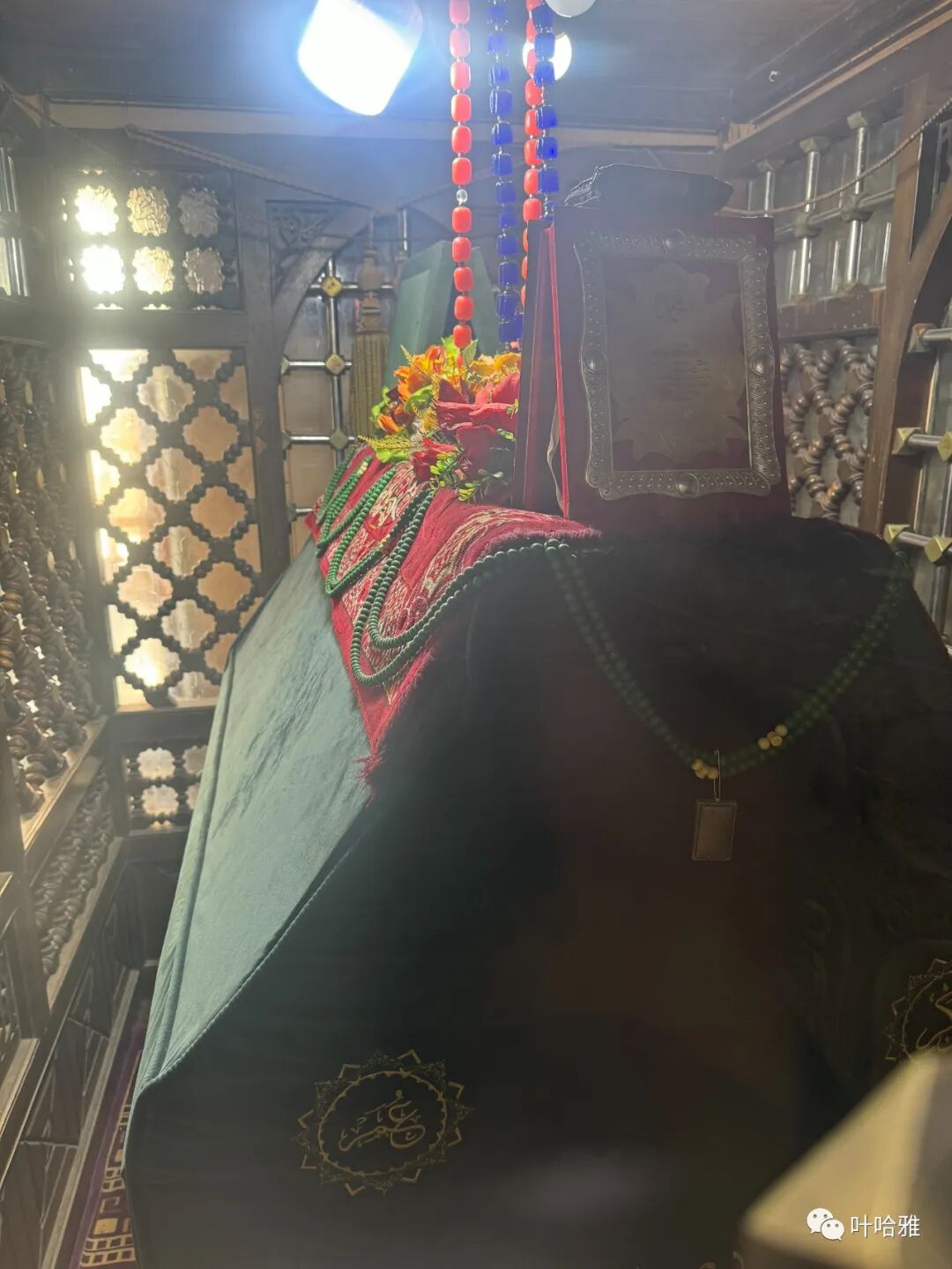
Inside the gongbei, there are some believers visiting the graves, with more women than men.
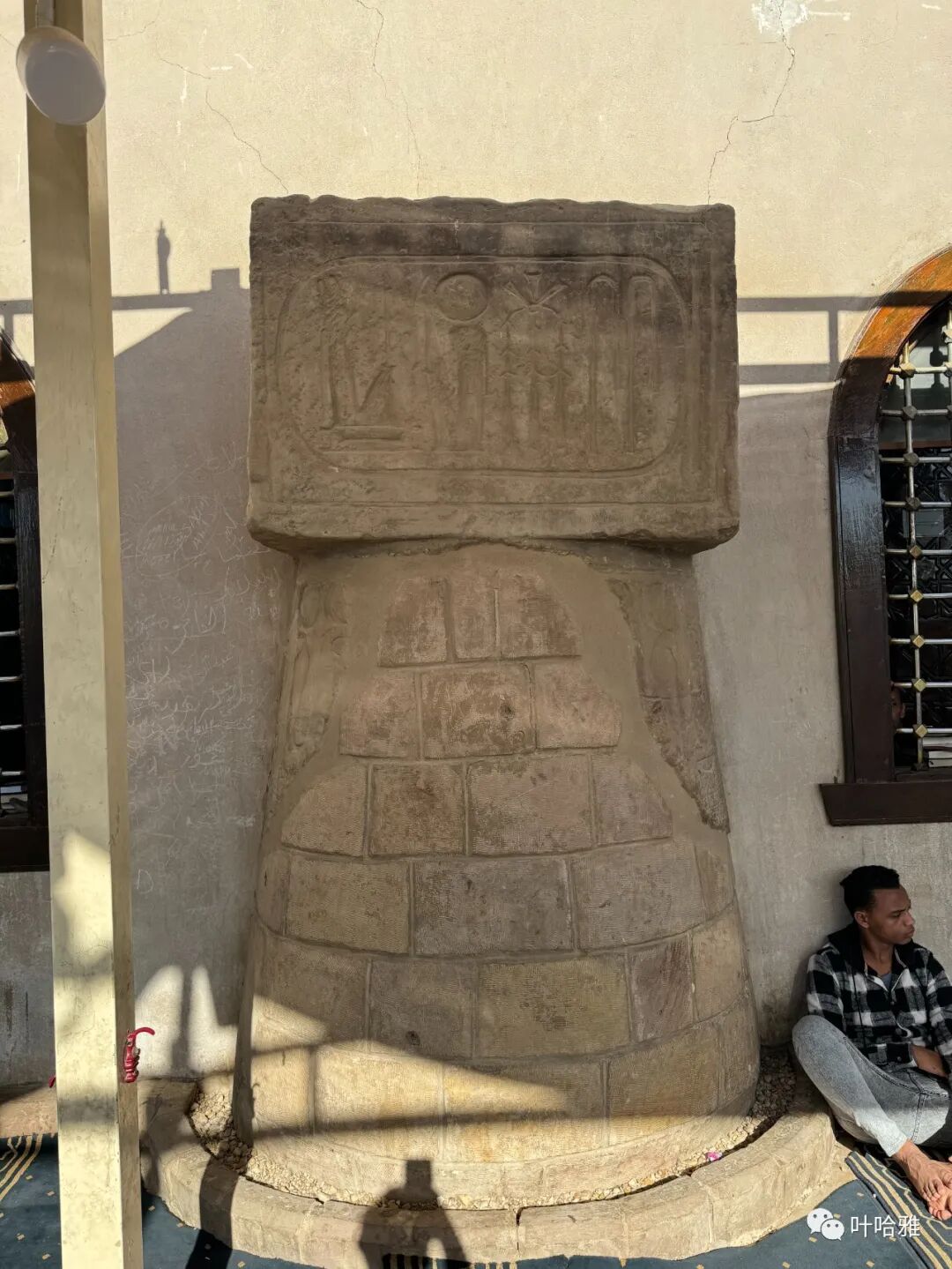
The mosque suffered a fire in 2007. When it was rebuilt, stones from the mosque were used, and you can see pharaonic hieroglyphs on the carvings of this pillar.
Looking out from the mosque railing, you can see the Luxor Mosque. The once arrogant pharaohs compared themselves to gods, but they never imagined that three thousand years later, their mosque would become a tourist attraction for people to glance at in passing.
Al Iman Mosque
This is the closest mosque to my hotel. Fewer than 10 people attend the adhan (banda). In Arab countries, people go back to sleep after the adhan, and almost no shops are open on the street. Only a few small shops selling flatbread (da bing) are open, so it is best to eat breakfast at the hotel, or you will have nothing to eat outside.
As a convenient fast food in the Arab region, shawarma (sharama) is as popular as our meat burger (roujiamo); it is economical, affordable, and delicious.
El-KABABGY RESTAURANT
This shop is the number one ranked restaurant in Luxor on the TripAdvisor app, and after eating there, I feel it truly deserves this ranking. This shop is only 1 kilometer away from our hotel on foot.
The outdoor part of the restaurant is right on the Nile pier. In December, the temperature in Luxor is only 20 degrees, which is very cool.
The grilled meat at this shop is extremely fragrant and clearly better than other restaurants we have eaten at. The per capita consumption is only about one hundred yuan. In China, at an Arab restaurant of the same level, two people would spend at least four or five hundred.
Tagine pot (tajiguo)
The drink I had most often in the Arab region was lemon mint juice. Its sour taste is great for opening up your appetite and quenching your thirst.
What is annoying about Luxor is that the streets are full of carriage drivers looking for customers. They really chase you and shout non-stop. One day, I wanted to take Fahim out for a walk, but I got so annoyed by the carriage drivers trying to get business that I just went back to the hotel and stayed inside.
The hotel has a garden, a view of the Nile, and a swimming pool. Staying inside and enjoying the sunshine is the most relaxing thing to do.
Some people say that Egypt without Egyptians would be a better Egypt. While this is an exaggeration, it reflects an abnormal social phenomenon in Egypt today. Everyone is driven by profit, corruption is rampant, and there are scammers and thieves everywhere. In the old Islamic streets of Cairo, I could not even feel the light of faith. For the first time, I stopped my plan to visit a mosque because I did not have money in my pocket for a tip. All of this is happening in Egypt, which has a thousand-year history of Islamic civilization. This seems to confirm a master's thesis from the School of Oriental and African Studies at the University of London titled 'The Process of Islamization in Egypt, Possible Reasons and the Scope of Influence until the 14th Century.' The author, M. Wassermann, believes that Egypt is still not fully Islamized today. A considerable number of people, for various reasons, are only Muslims in name, because Islam considers that as long as one formally becomes a believer by verbal confession, they are treated as a Muslim.
This phenomenon of two-faced people everywhere makes Egypt like a powder keg that could explode at any time. You have to go through security checks and show identification to enter malls, hotels, and airports. Soldiers with guns are patrolling the streets everywhere. The old city of Cairo is just like a refugee camp, with groups of homeless people sleeping on the ground. Behind them are the ruins of demolished houses. Coptic people mainly make a living by picking up trash. The gap between rich and poor is huge. The poor see no hope and have no illusions about the future. An explosion is only a matter of time. So, if you want to come to Egypt, do it sooner rather than later. If you don't go now, you might not be able to go in the future. view all
Reposted from the web
Summary: This Egypt Muslim travel guide continues with ancient Egyptian history, the Egyptian Museum, Luxor, Nile-side dining, halal-friendly restaurant notes, local scams, travel traps, and reflections on Muslim life in Egypt.
A Guide to Avoiding Travel Traps in Egypt is presented here as a firsthand travel account in clear English, beginning with this scene: If you are not interested in Egyptian history, you will just be a casual tourist here. However, seeing the high level of ancient Egyptian civilization is an experience unmatched anywhere else in the world. The account keeps its focus on Quanzhou Muslims, Hui Muslims, Islamic History while preserving the names, places, food, and historical details from the Chinese source.
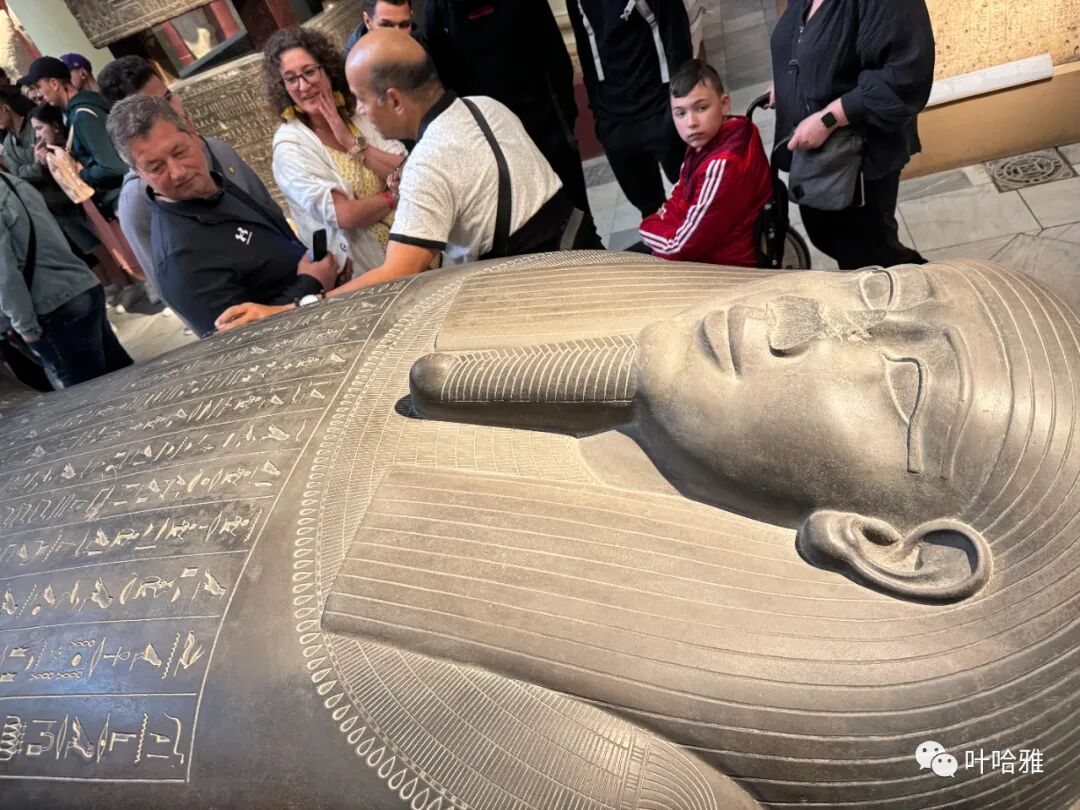
If you are not interested in Egyptian history, you will just be a casual tourist here. However, seeing the high level of ancient Egyptian civilization is an experience unmatched anywhere else in the world.
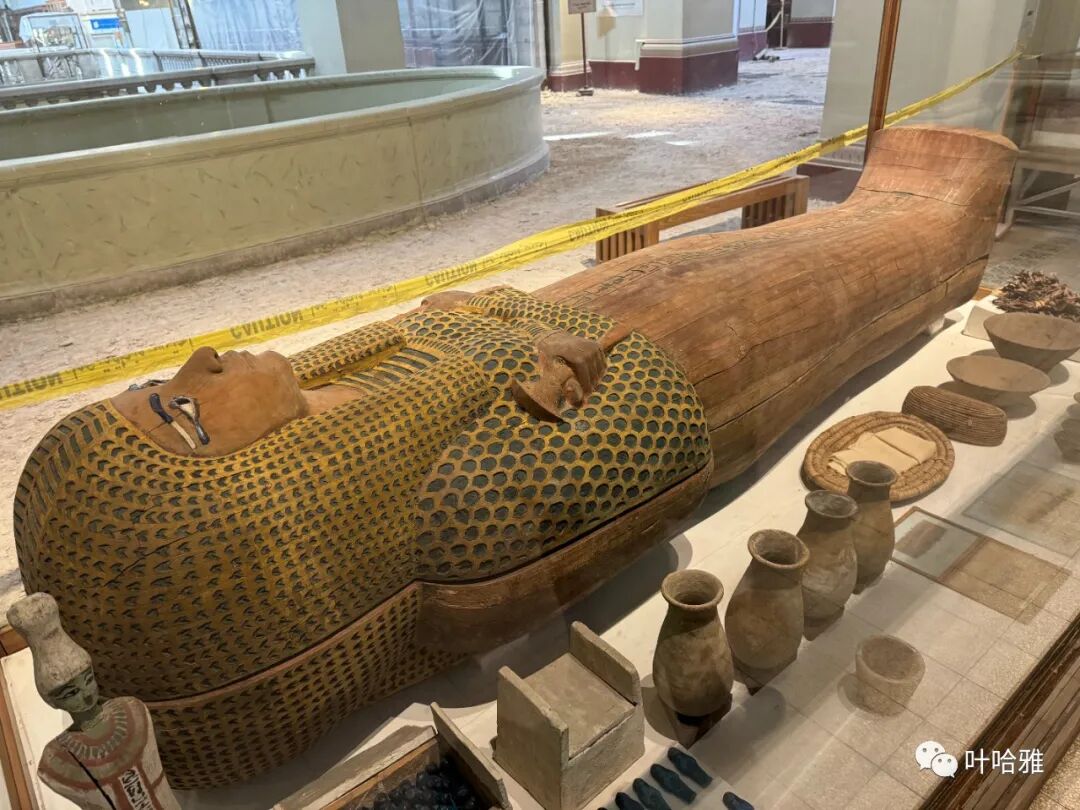
Some say ancient Egyptians and modern Egyptians are not the same race, but that is not a fact. Ancient Egyptians did not disappear. Through thousands of years of cultural exchange, they were assimilated, and modern Egyptians carry the genes of the ancient Egyptians.
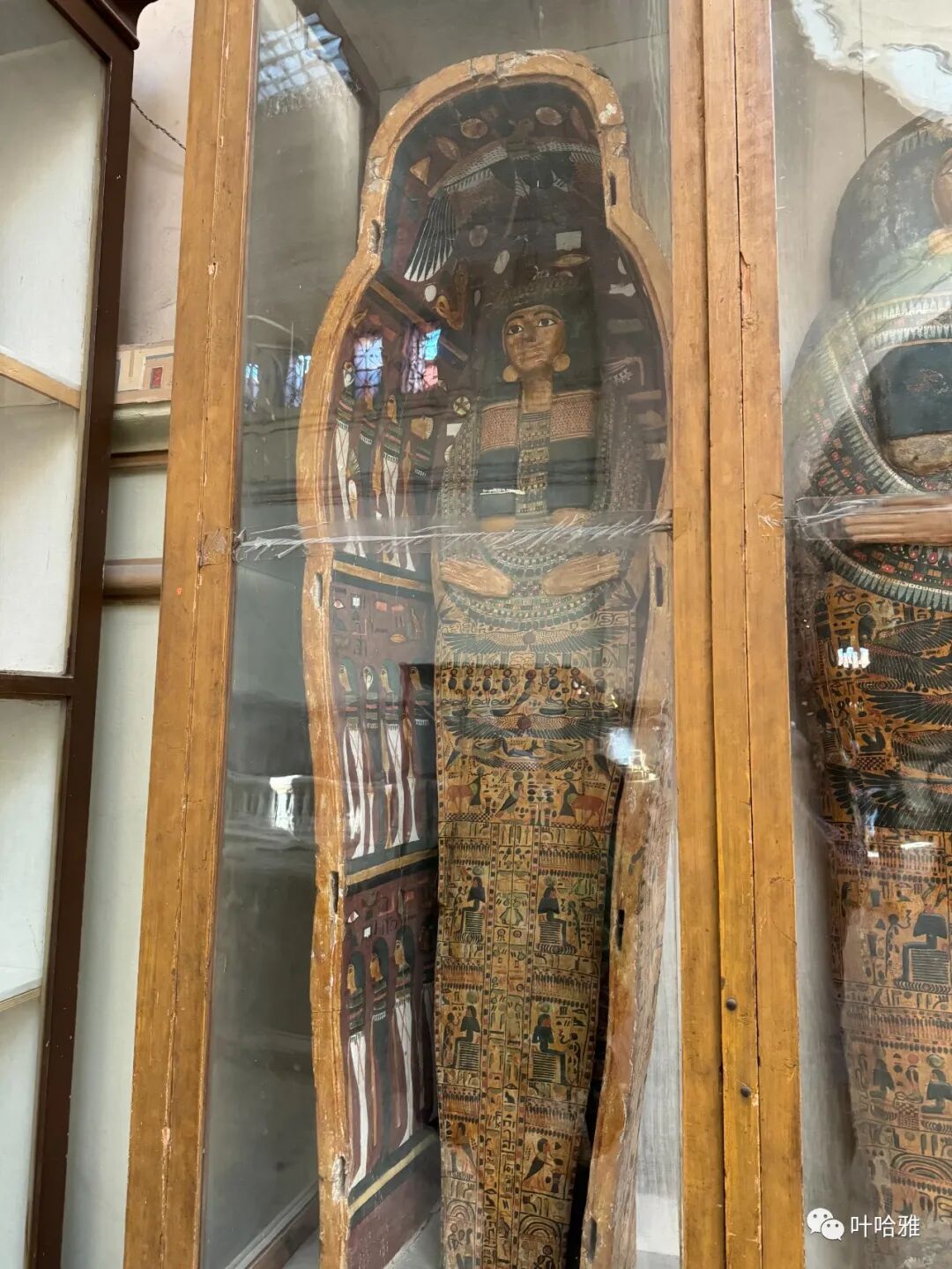
Although Egyptians are nominally divided into Arabs, Copts, or Nubians, their bloodlines are actually very similar. They all speak Arabic and have intermarried and assimilated so much that there is no such thing as a pure-blooded, independent ethnic group.
For example, the number of Copts in Egypt is decreasing every year because they are blending into the Arab population. When a Coptic Christian converts to Islam, by the third generation, they identify themselves as Arab.
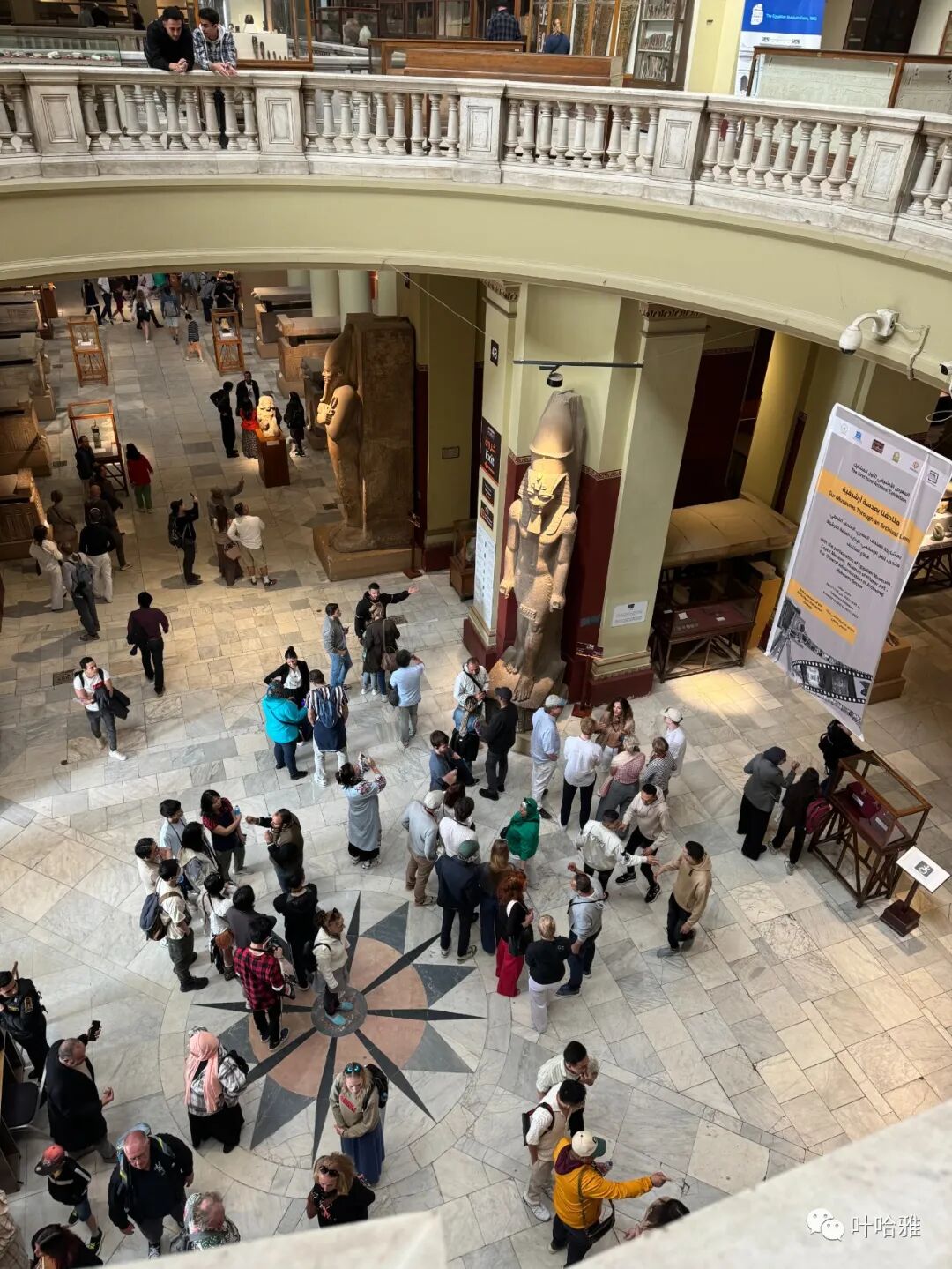
In the 7th century, Copts helped the Arabs conquer the Eastern Roman Empire. Because Copts were Miaphysites, the Eastern Roman Empire viewed them as heretics. Under Arab rule, the Copts actually lived better. Some say many Copts converted to Islam to pay fewer taxes, but there were not many tax benefits for converting, so there was no large-scale conversion of Copts in the early days.
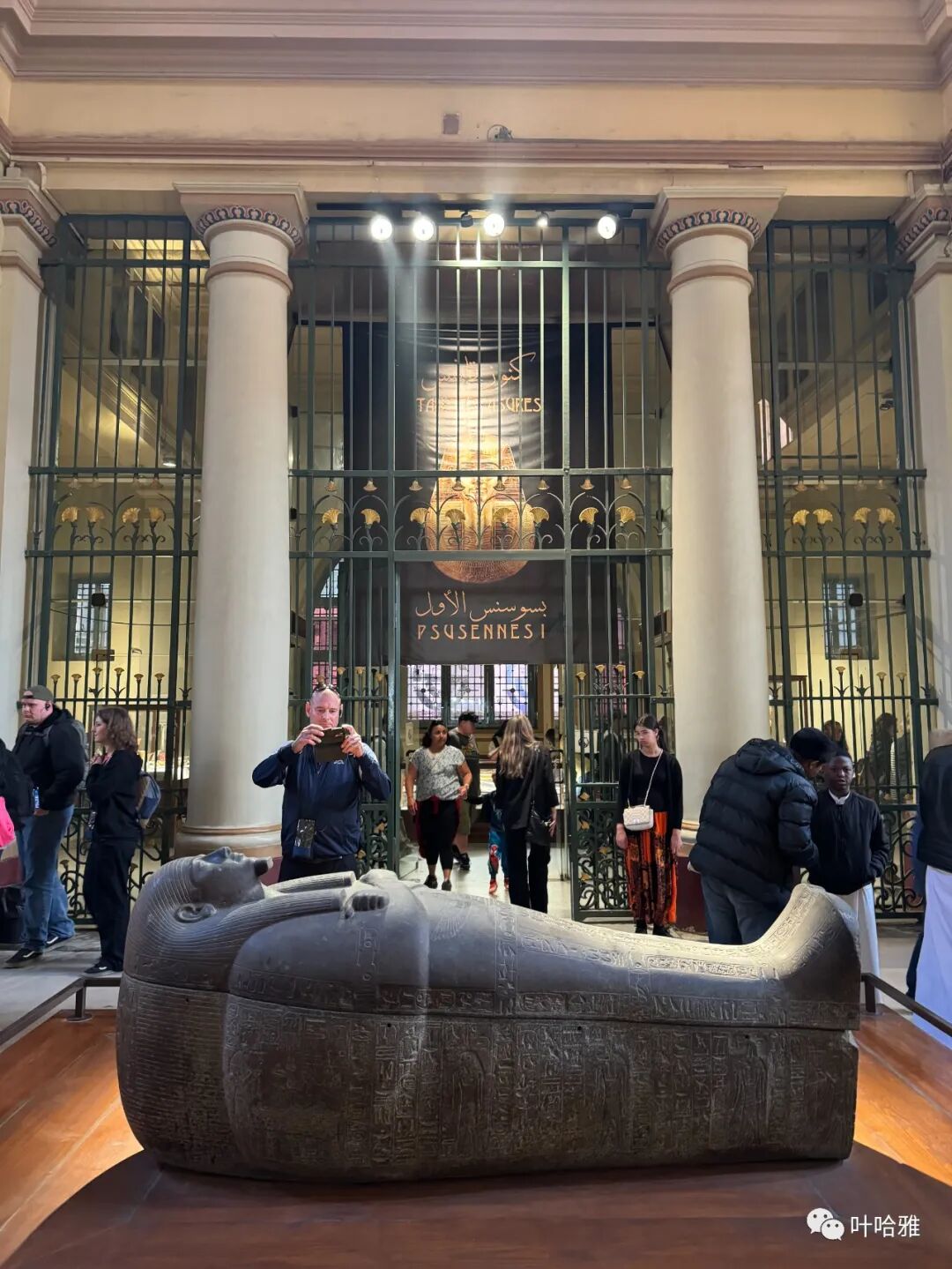
During the Fatimid Caliphate, because the rulers were Shia, they were even harsher toward Sunni Muslims than toward Coptic Christians. Copts and Jews were protected and thrived during this period. Even during the Ayyubid and Mamluk dynasties, Copts remained under protection. The Mamluks were former slaves who became rulers, so they empathized with the Copts.
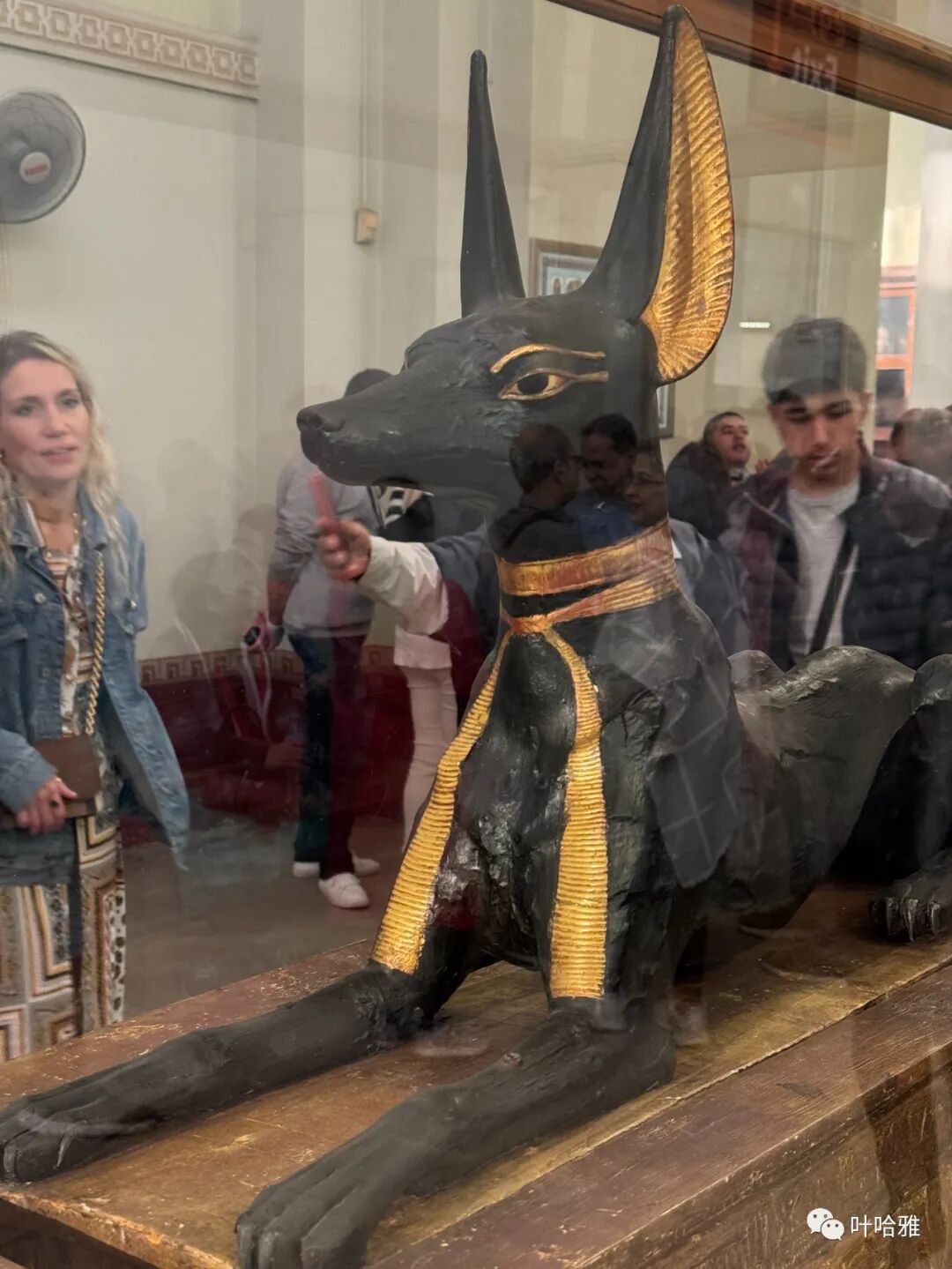
By the mid-14th century, whenever there were large-scale riots, many Copts converted to protect themselves. According to Egyptian law at the time, a Muslim's property could not be inherited by a non-Muslim. This led the descendants of converts to choose Islam to keep their property. It was from this period that Copts became a minority in Egypt.
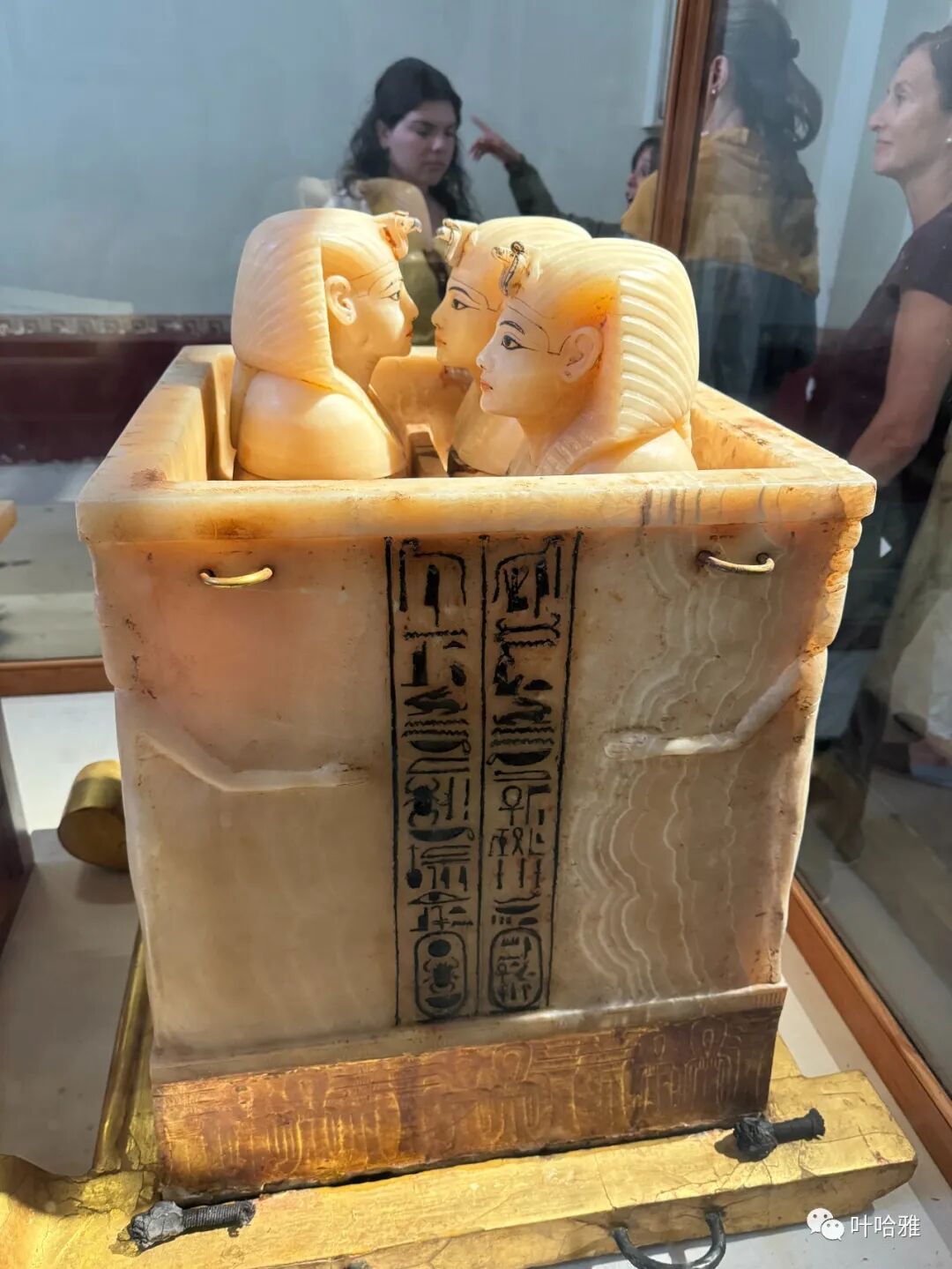
Later, Muslim citizens accused the converted Copts of not being true converts because they did not go to the mosque for namaz on time. So, even though Muslims are the majority in Egypt today, the country is not completely Islamized.
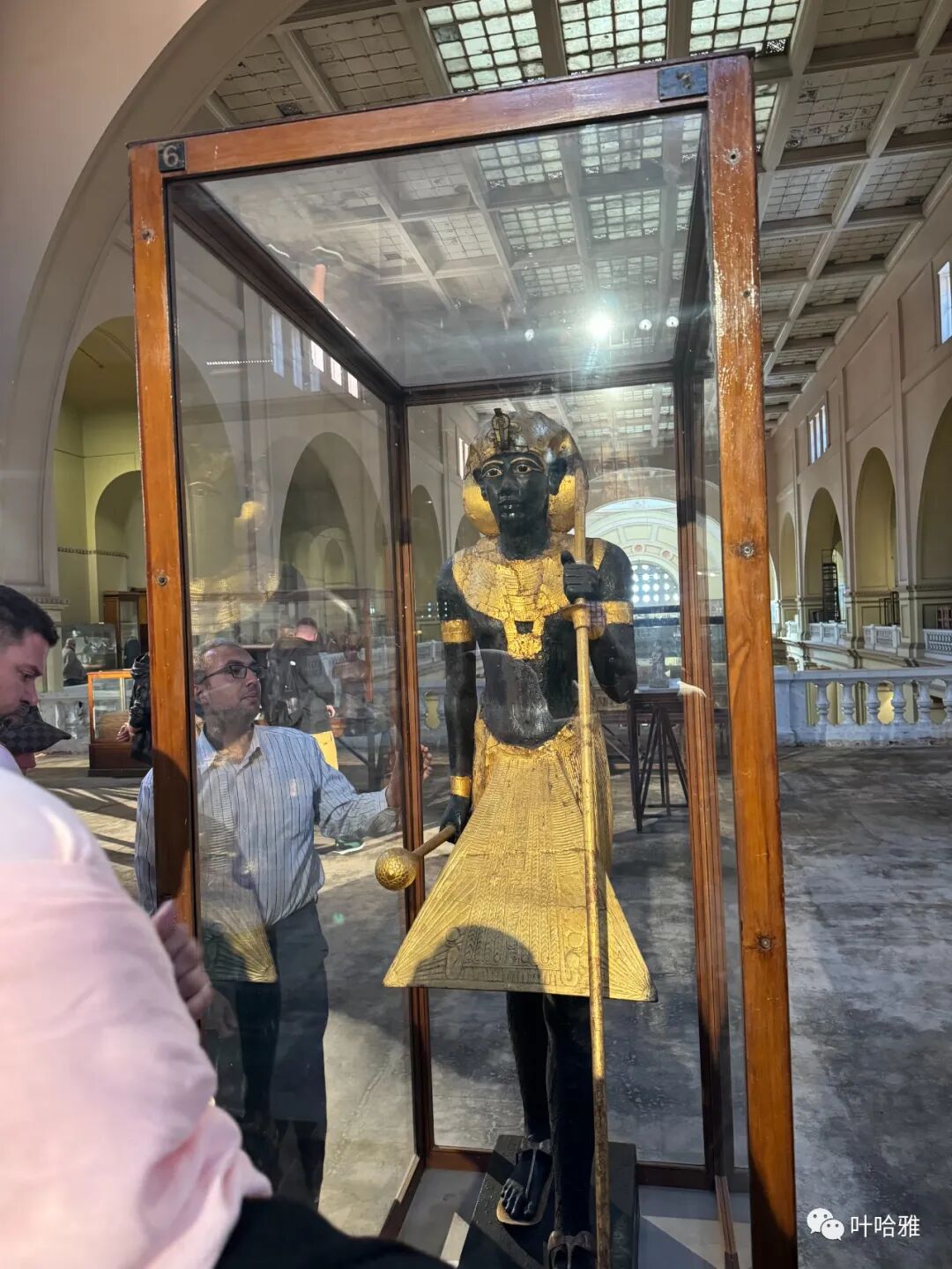
The second floor of the Egyptian Museum has a Tutankhamun gallery. There is a funny story here: a travel blogger on Douyin posted a video saying they received the highest honor in Egypt and were allowed to film inside the gallery, which is usually off-limits for photography. I was stopped by a staff member when I tried to take photos with my phone and had to delete them under his supervision. The photo below was taken from outside the museum using my phone's telephoto lens.
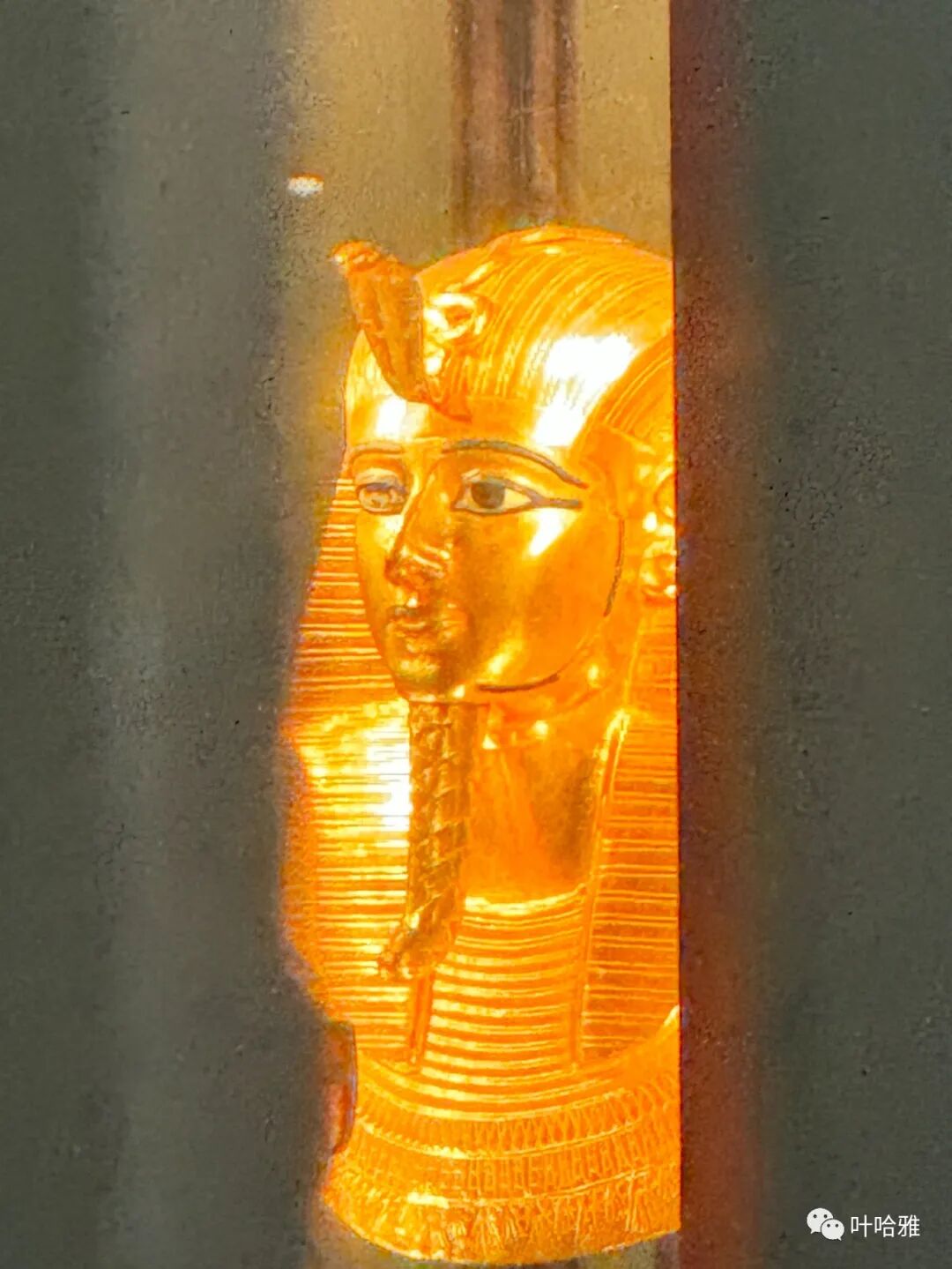
However, after I handed 200 Egyptian pounds (about 40 RMB) to the staff member, I was allowed to take photos. That is how I got this picture of Tutankhamun's golden mask.
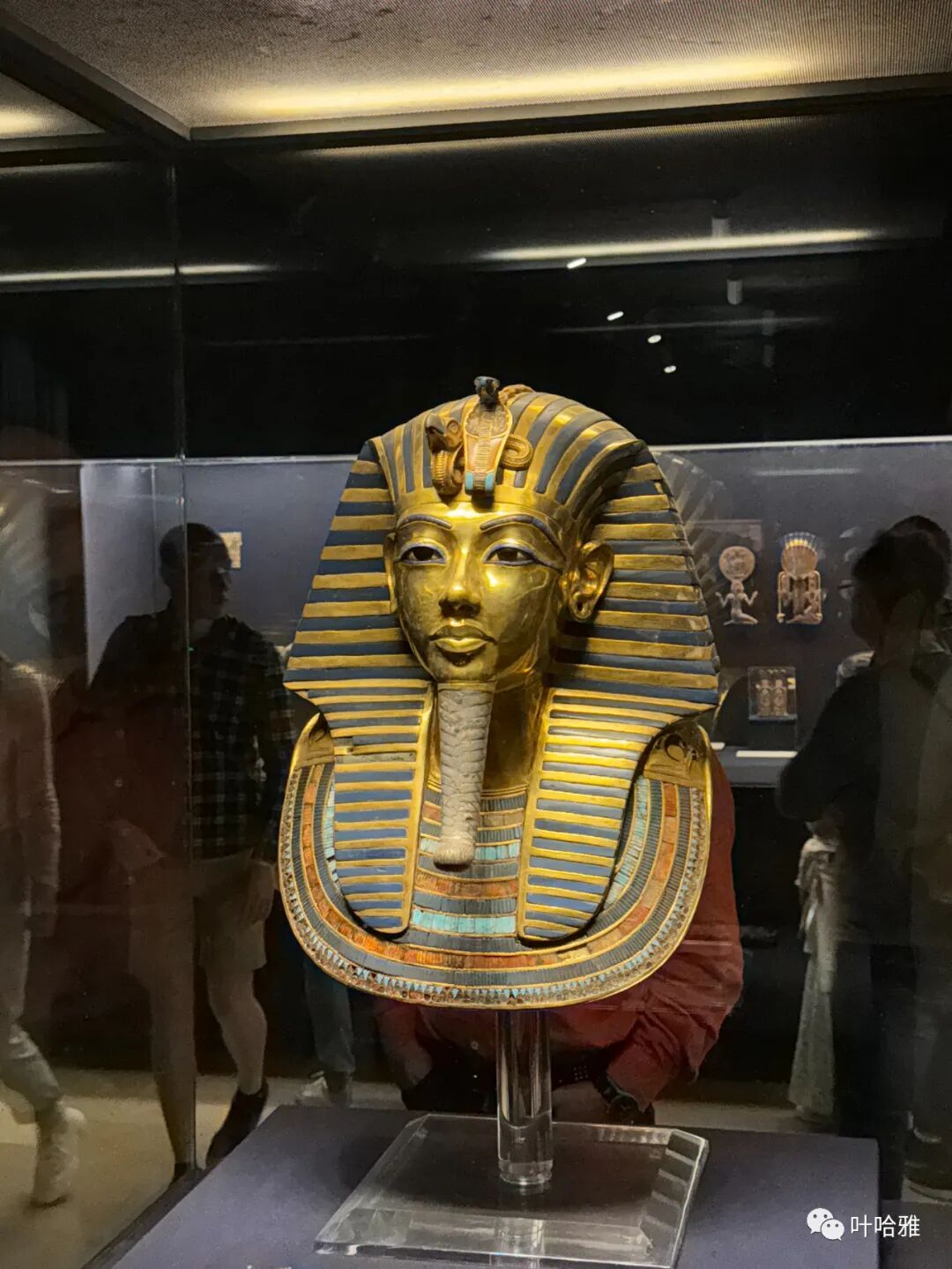
Tutankhamun's golden mask is said to be the most valuable artifact in the world and is priceless. But in Egypt, as long as you have a tip, everything is negotiable. That includes the blogger who claimed they filmed the pyramids while the site was cleared. I checked the time of their video, and it was after sunset, which is after the pyramids close. Paying money to get in and film is definitely not the highest honor.
After getting this photo to prove the Douyin blogger was bluffing, I lost interest in seeing the rest of the exhibits. In the evening, we went to the local Star City Mall to eat Thai food.
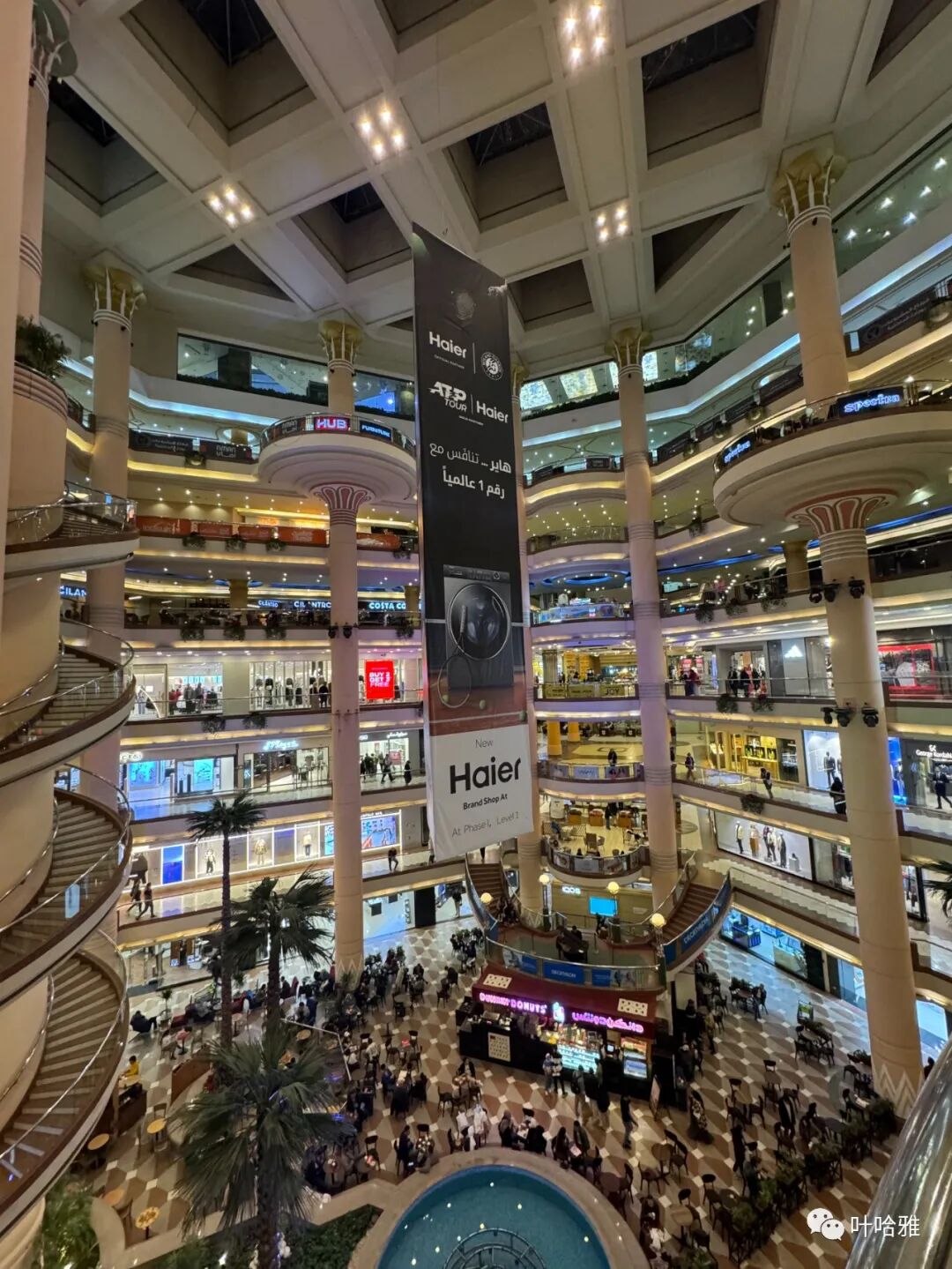
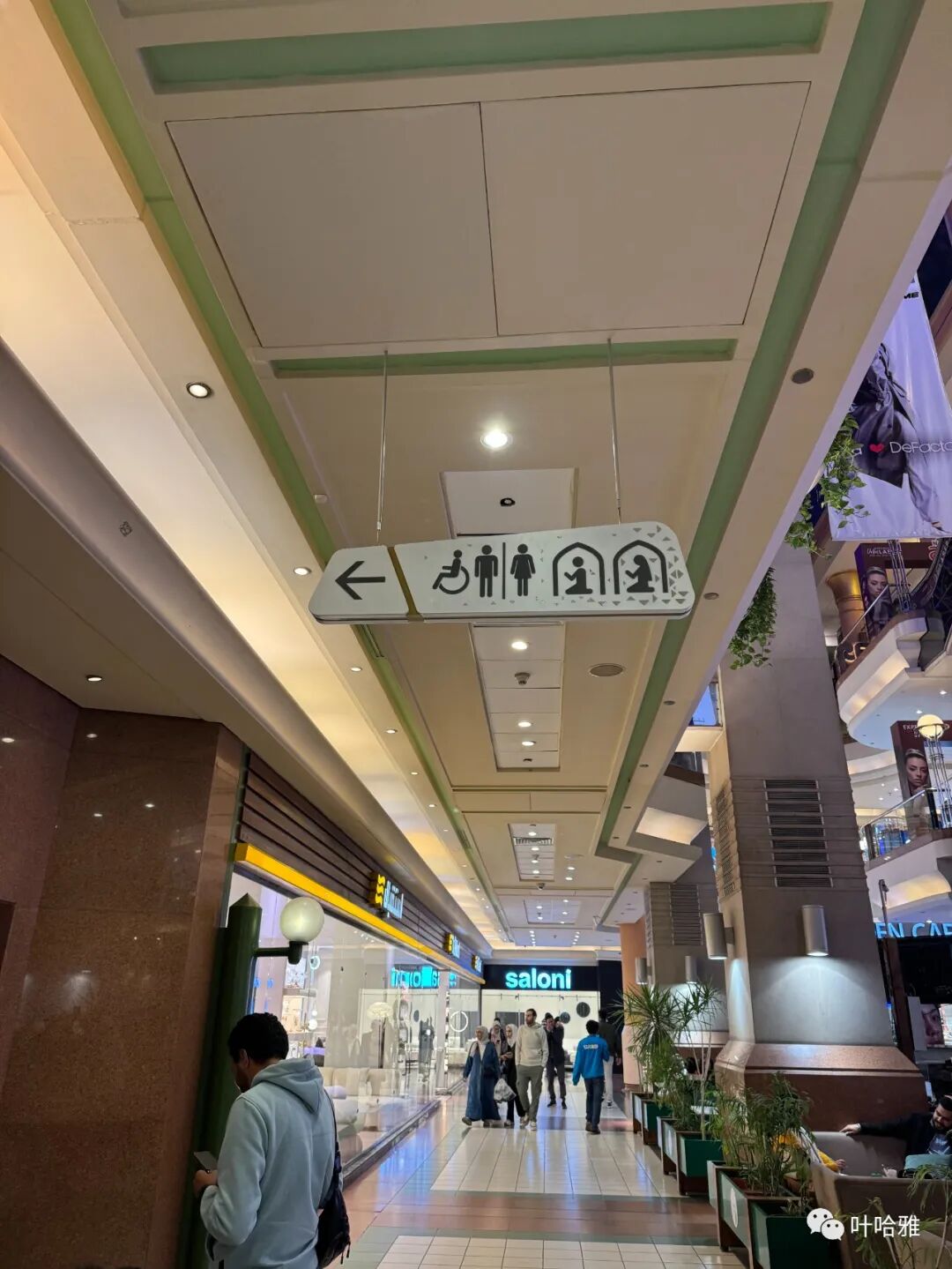
It is rare to find a prayer room in public places in Egypt, unlike in the UAE or Saudi Arabia where you see them everywhere. This mall actually has a prayer room, which is worth noting.
SABAI Thai Food
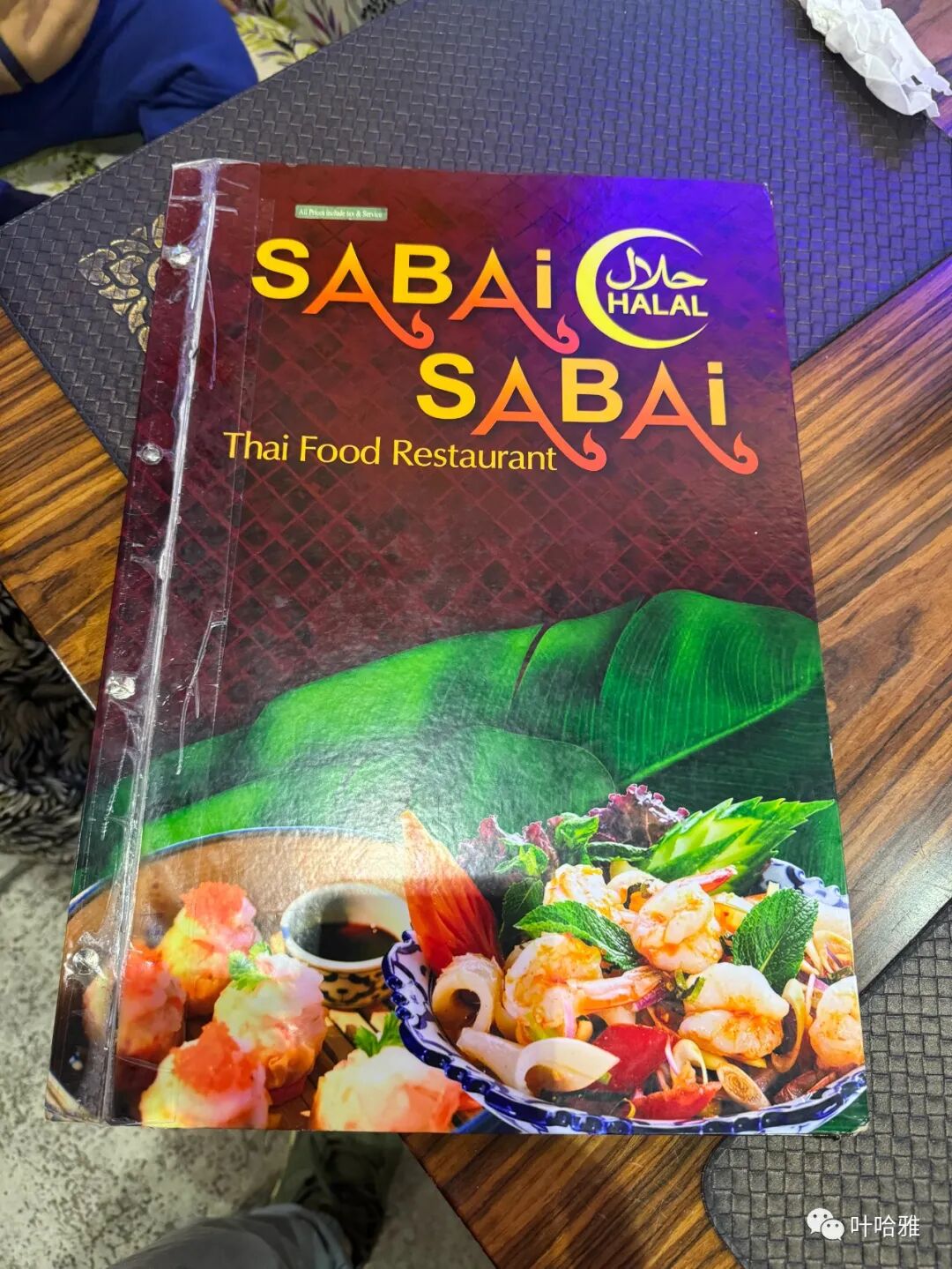
This Thai restaurant is quite popular locally and attracts many Chinese diners. The owner seems to have a misunderstanding of East and Southeast Asia, mixing in Chinese and Japanese elements. Perhaps to Arabs, we all look the same, just as we might struggle to tell the difference between Egyptians, Moroccans, Tunisians, Saudis, Qataris, Emiratis, Lebanese, Yemenis, Syrians, Jordanians, Bahrainis, Libyans, and Algerians.
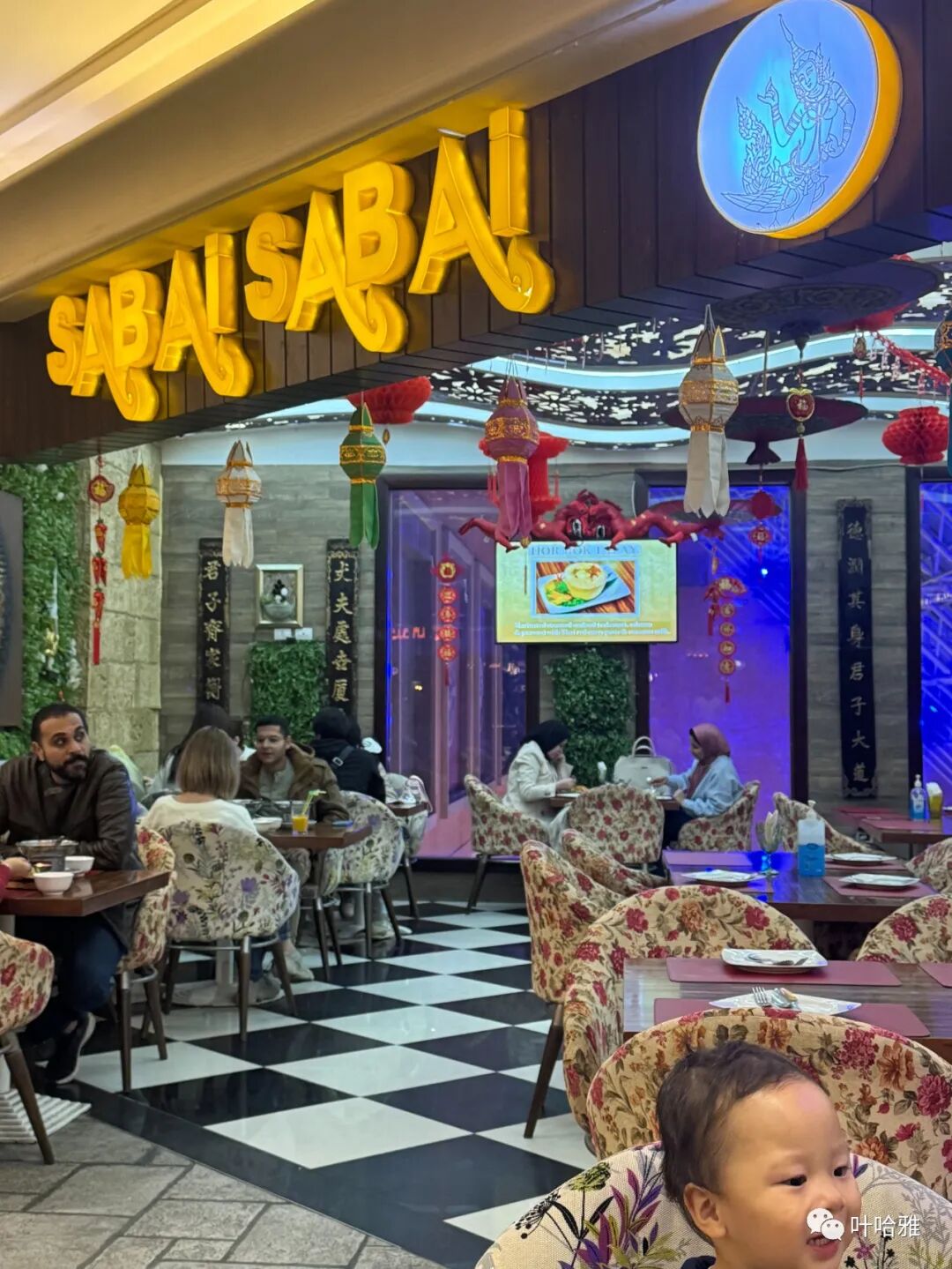
You do not see halal signs in restaurants in Egypt, so you can just walk in anywhere. However, you should be careful with Chinese food and ask clearly. This shop marks its menu as halal because many Arabs assume Chinese food is not halal, and some restaurants also sell alcohol.
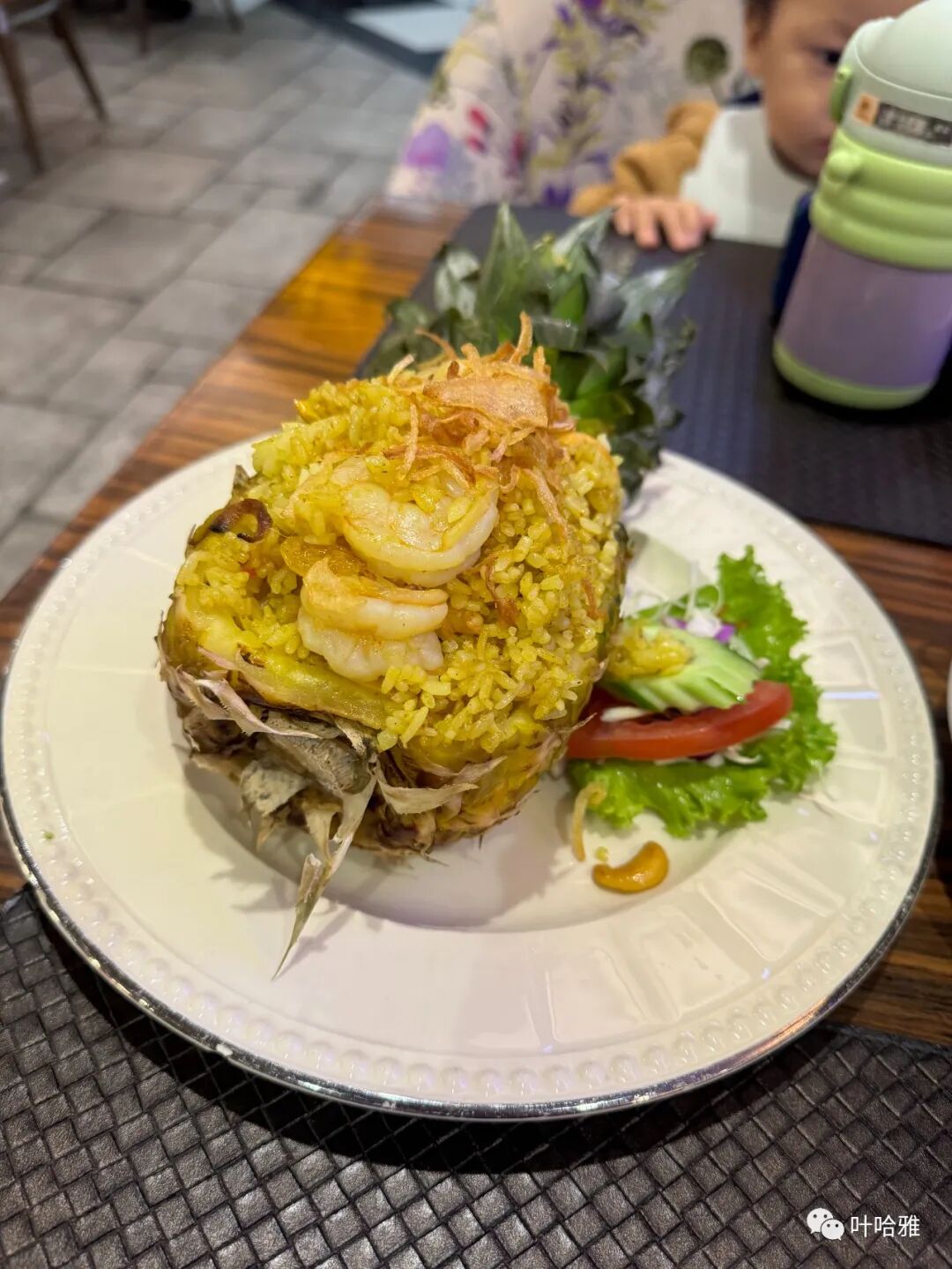
The chef at this Thai place is Black, but the food is quite authentic. Sour and spicy Thai dishes are very appetizing in the hot Middle East. The portions are small, but the price is cheap, costing about 100 RMB per person.
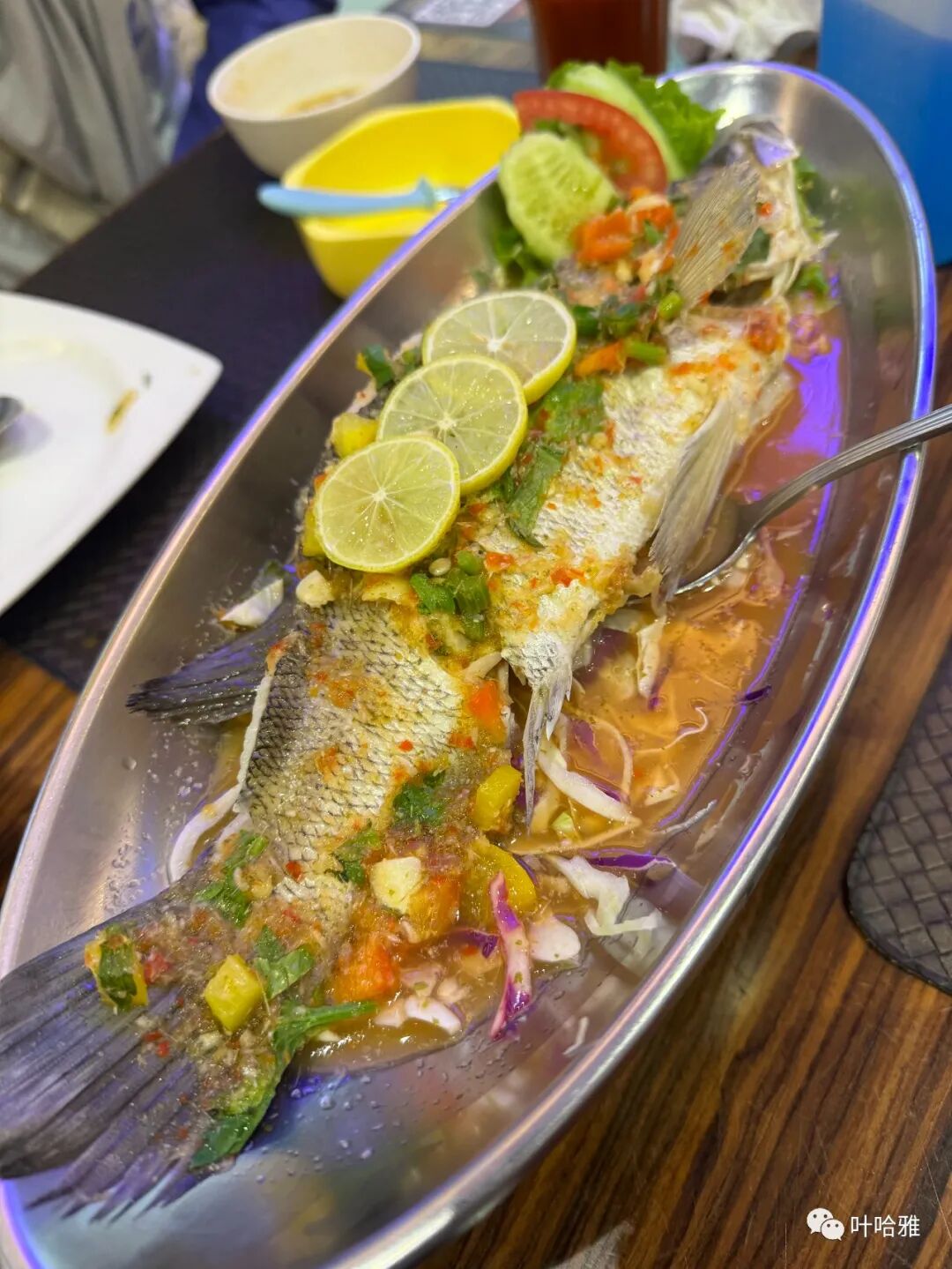
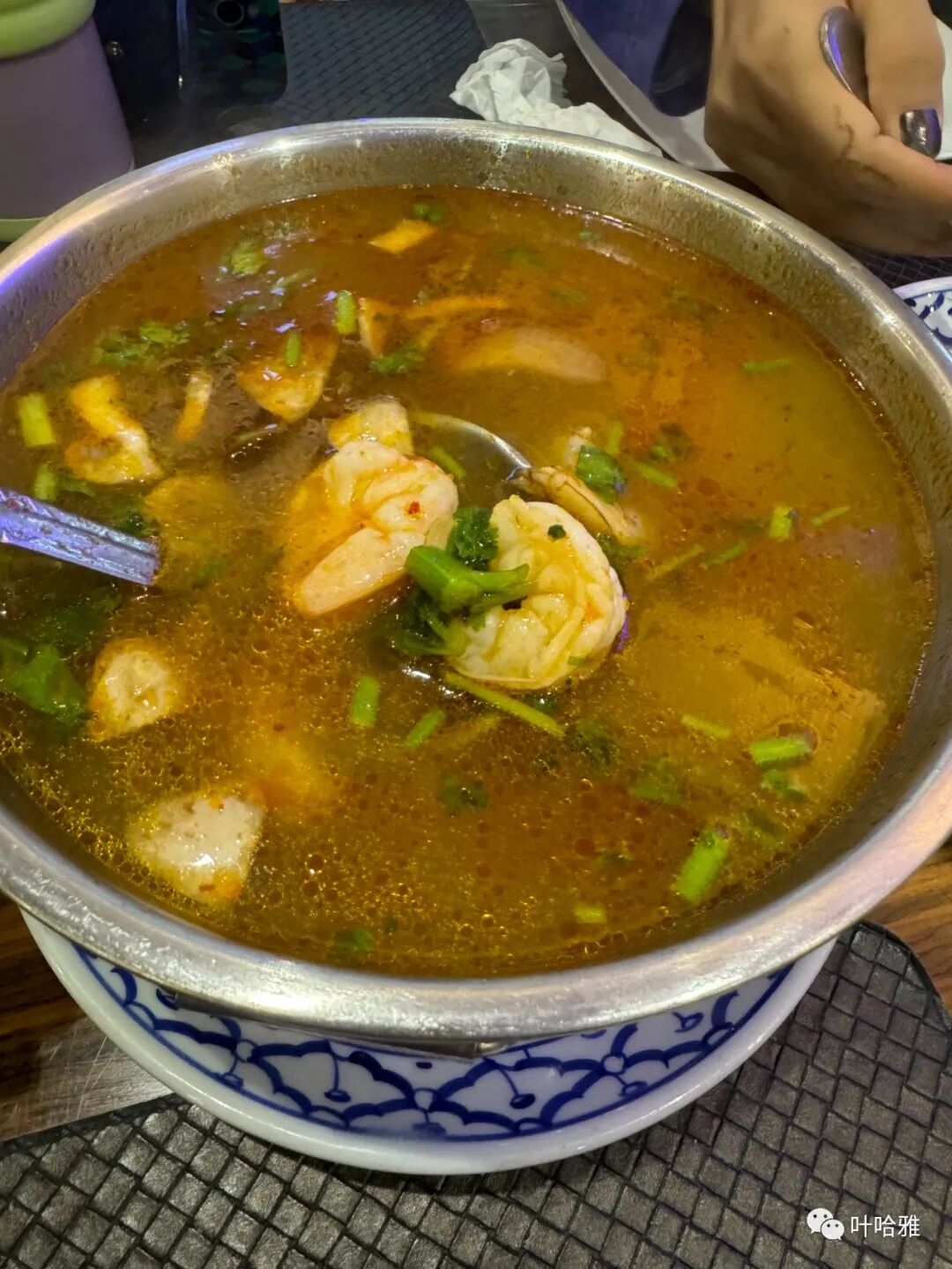
Tom Yum Goong soup
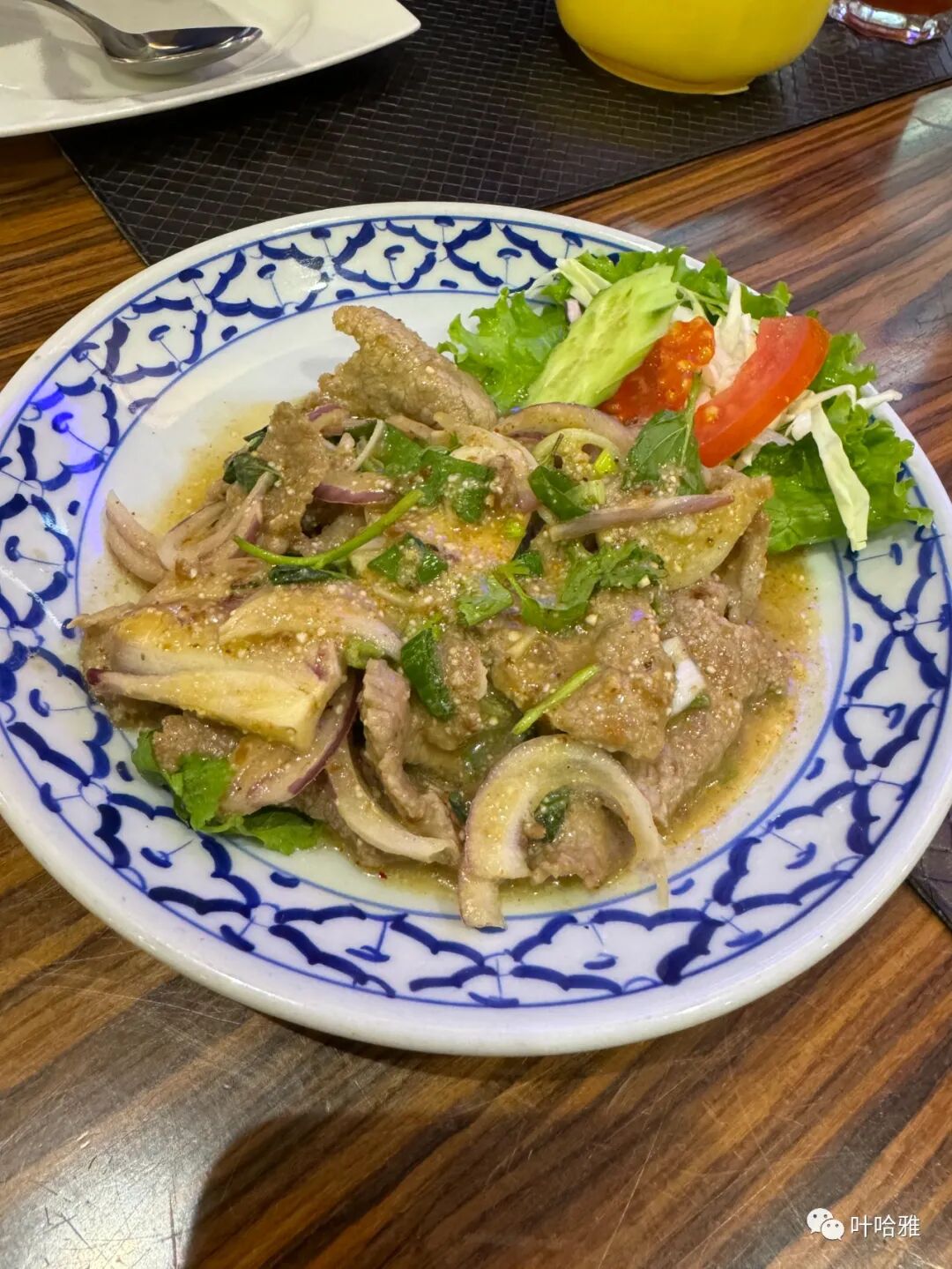
MORISUSHI Japanese food
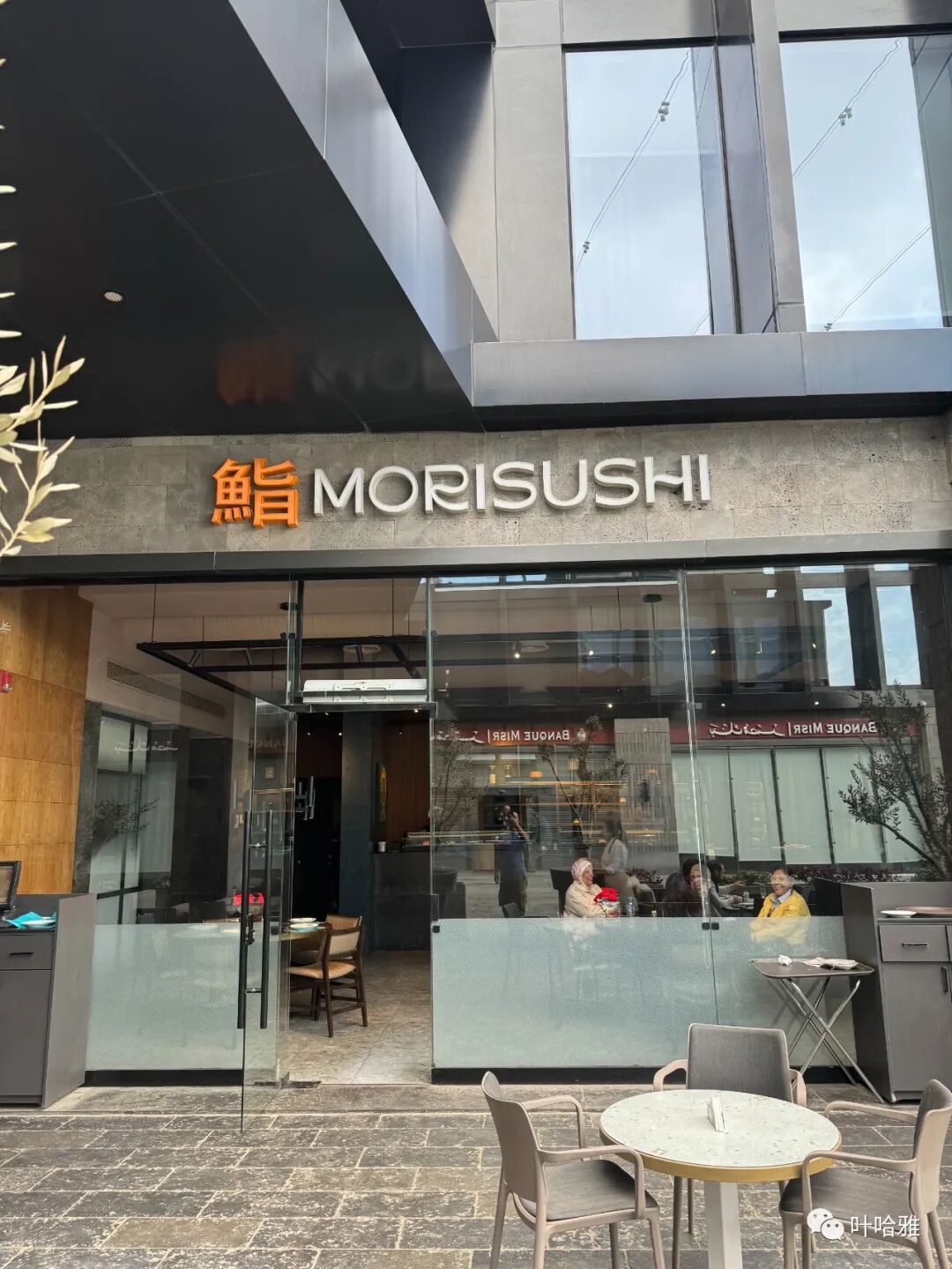
I had a Japanese meal at a shopping center in New Cairo. After traveling in the Middle East for over ten days and eating Arabic food almost every day, it was nice to change things up.
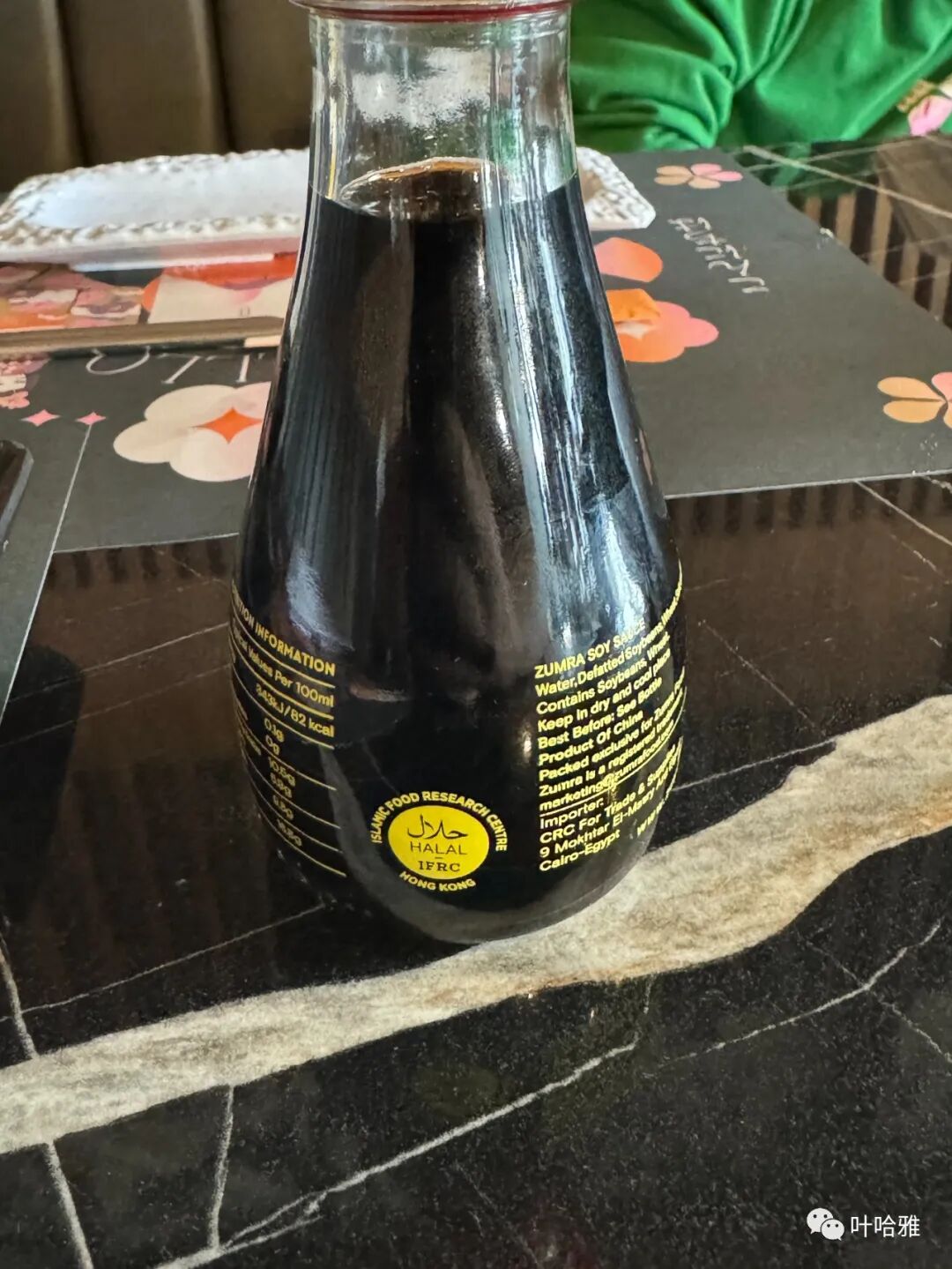
There is a halal sign on the soy sauce bottle, which is a new thing to see in an Arab country.
Patchi chocolate shop
This is a Lebanese chocolate brand, said to be the royal family's choice for desserts. It is sold very cheaply in Egypt, at about 300 RMB per kilogram.
Arabs love sweets, and there are many overweight people on the streets, which is really unhealthy. Eating too many sweets is also bad for children's brain development, so we should take this as a warning.
Le Passage Cairo Hotel
We ate at the hotel restaurant most of the time. If you are just using Cairo as a transit stop and want to stay near the airport, I recommend this place. It is an 800-meter walk to the terminal, and the hotel also provides a free shuttle service.
At this hotel's buffet, you have to ask the staff to get the food for you, which feels a bit less free.
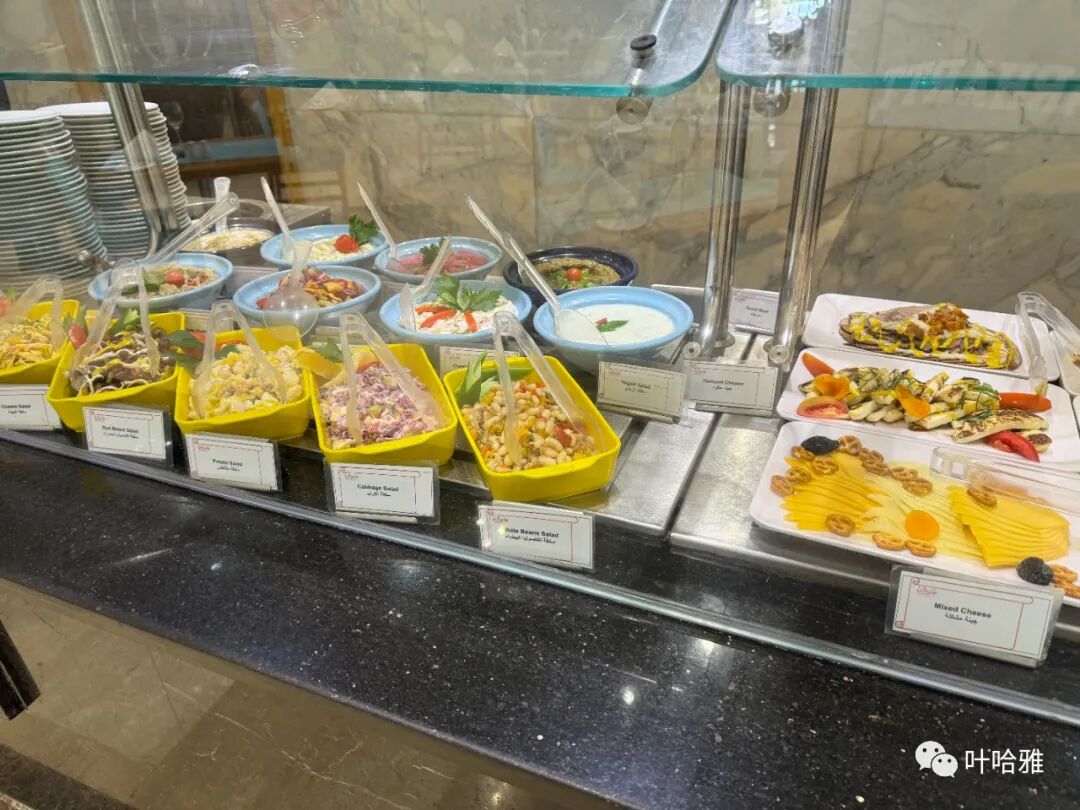
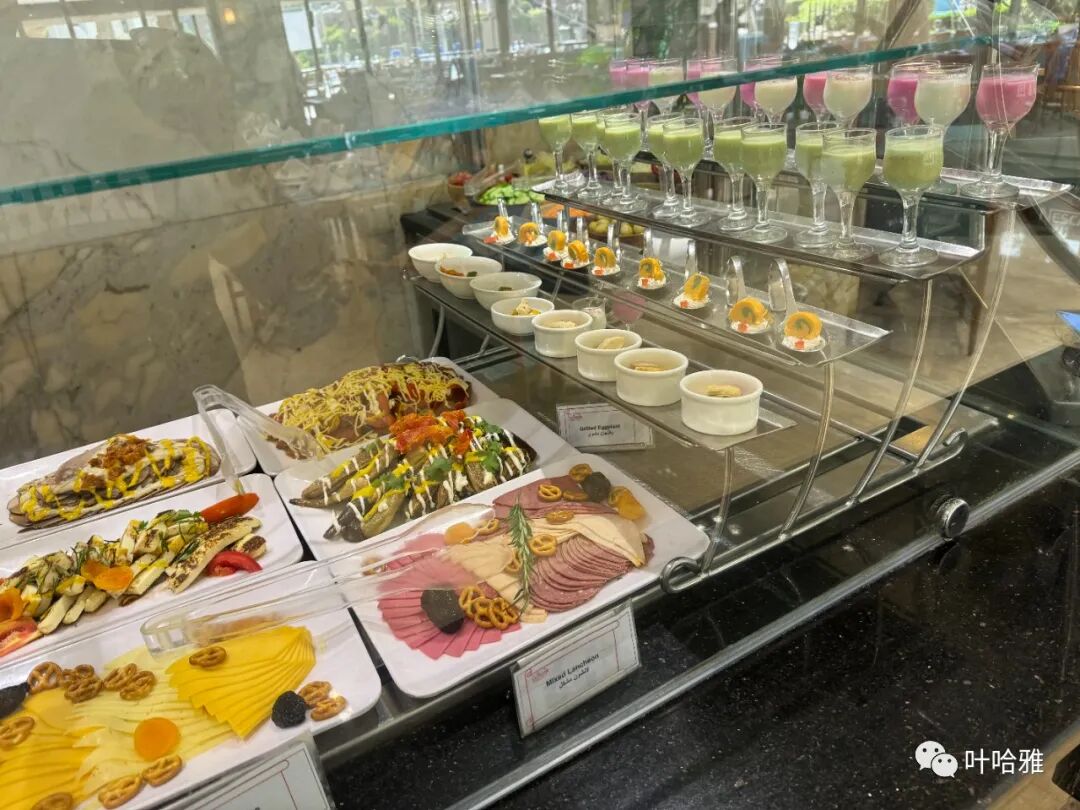
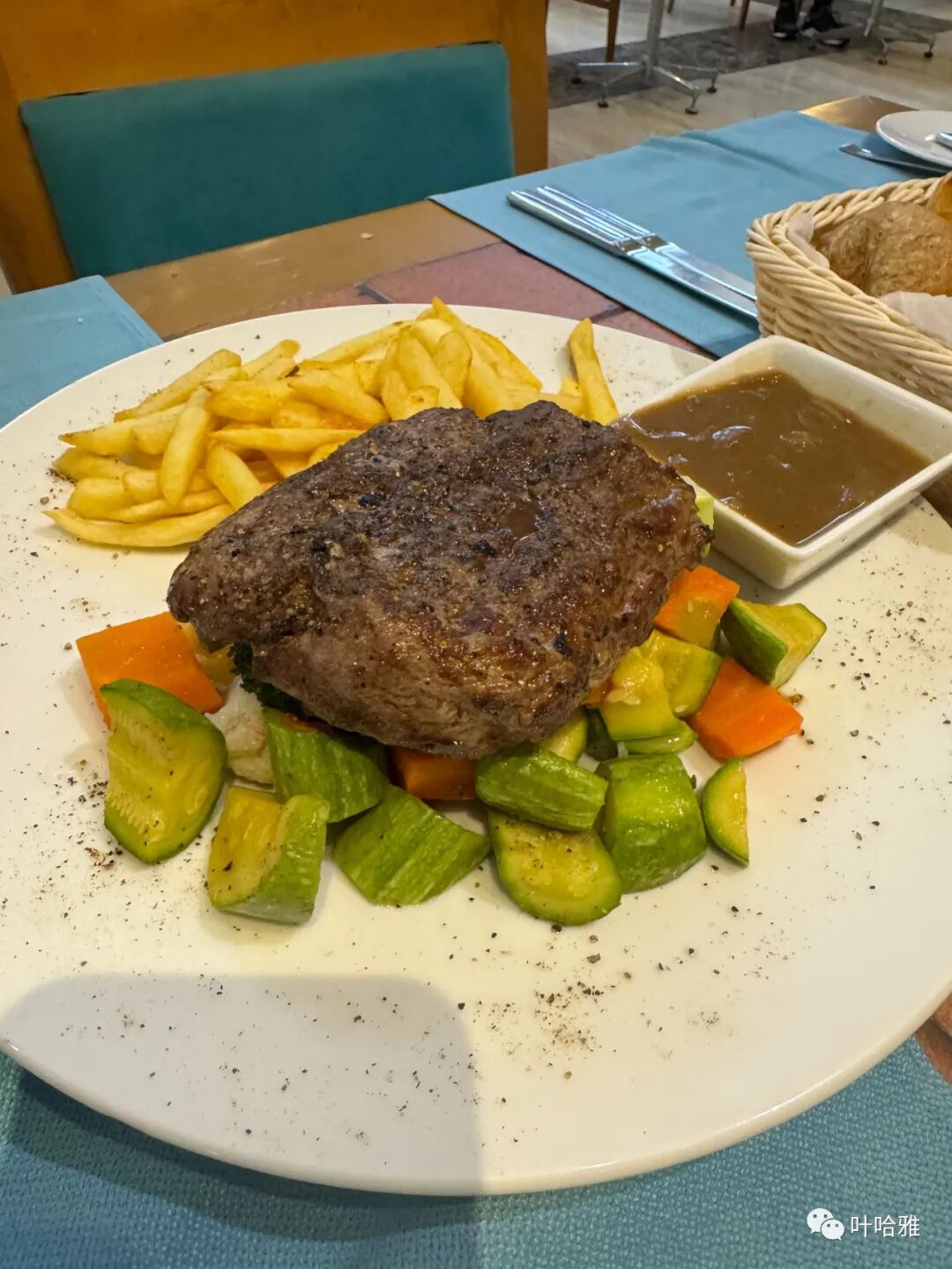
We had steak and pasta at the hotel's Italian restaurant, and both were delicious. Friends, you can really choose a nice hotel for a vacation. If you do not want to go out, you can just stay by the hotel pool and soak up the sun, away from the noise outside.
Four Seasons Hotel
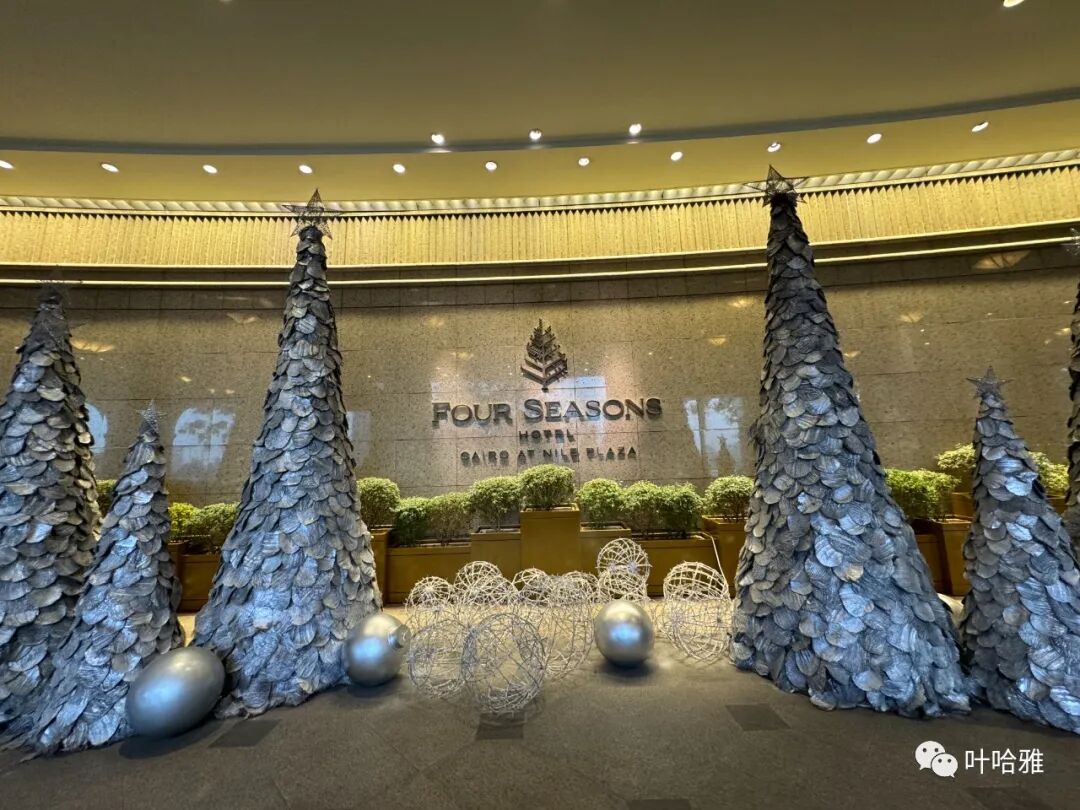
The Four Seasons in Cairo has newer facilities than the Ramses Hilton, but the buffet has fewer options.
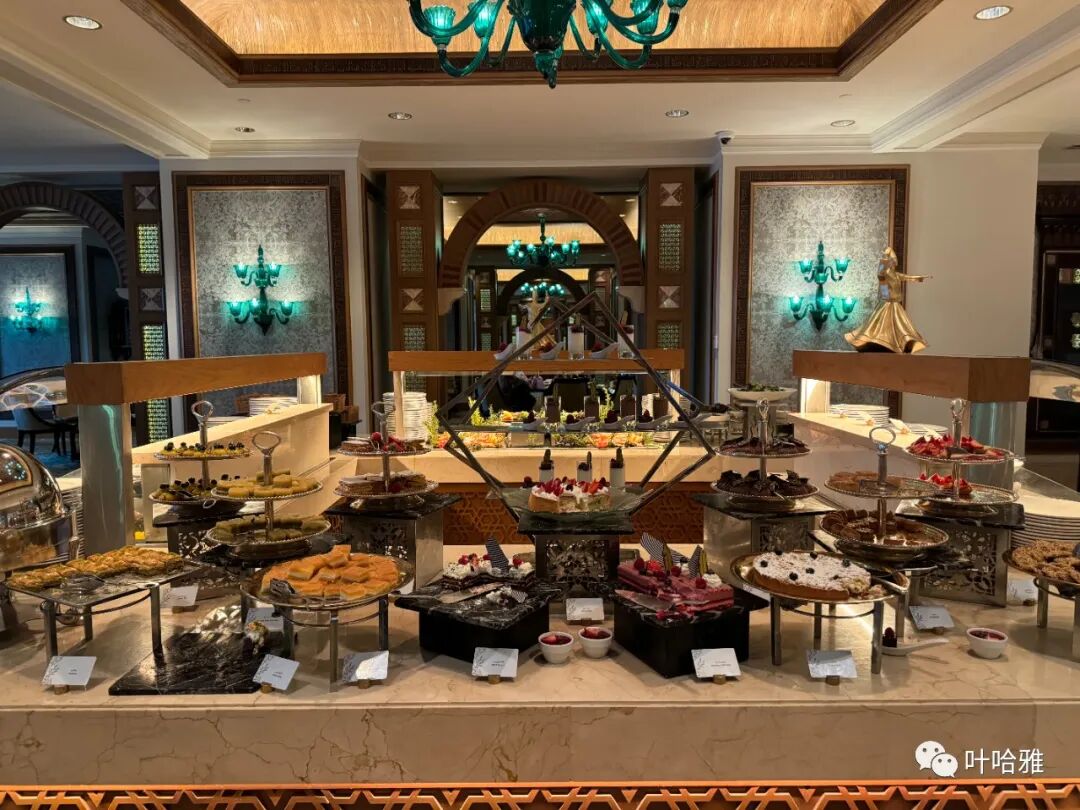
The hotel buffet costs less than 200 yuan, and drinks are charged separately.
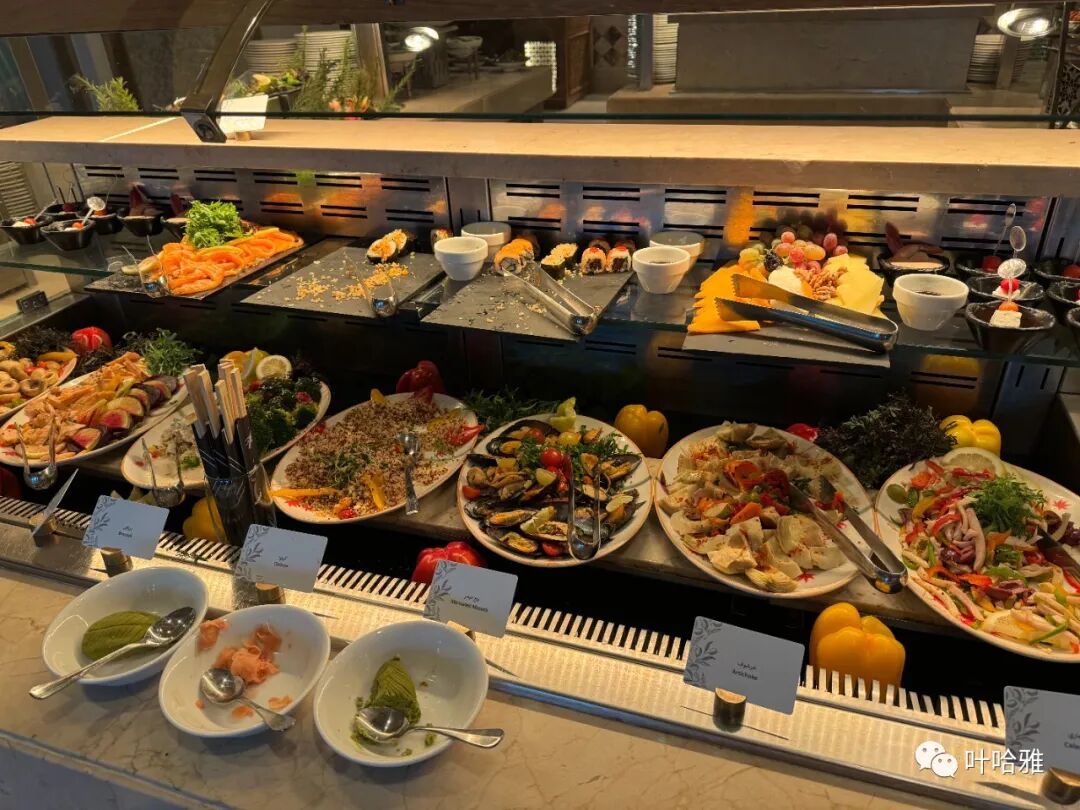
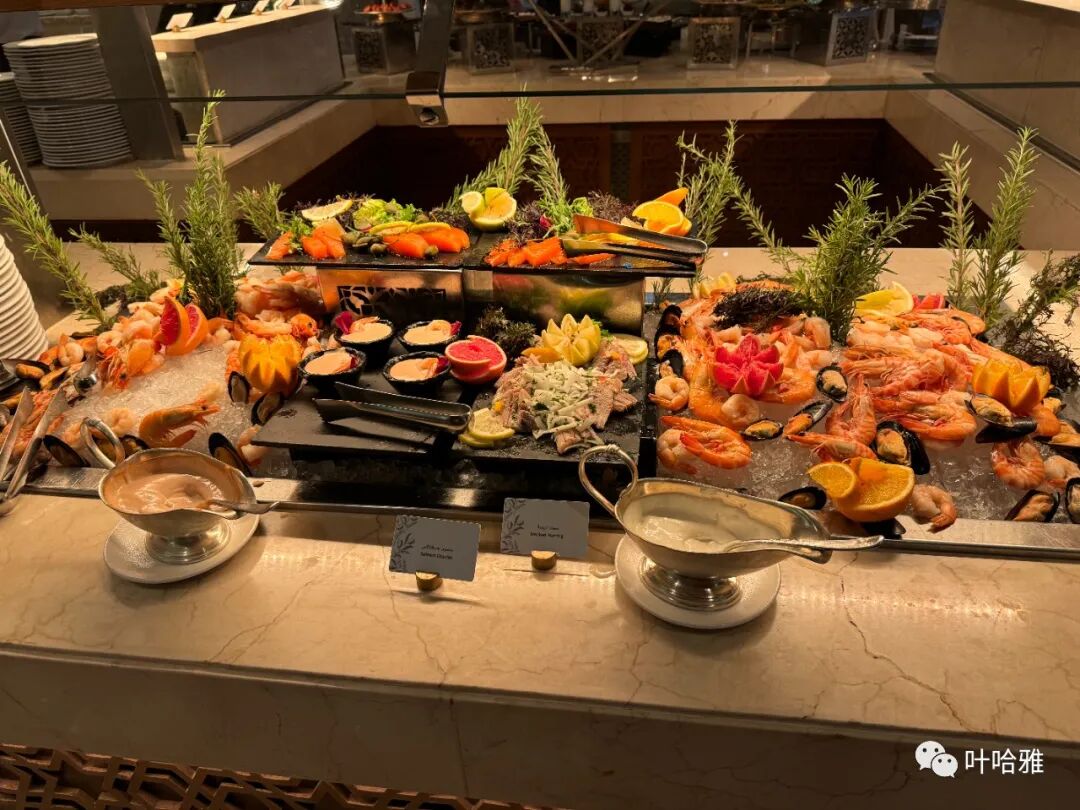
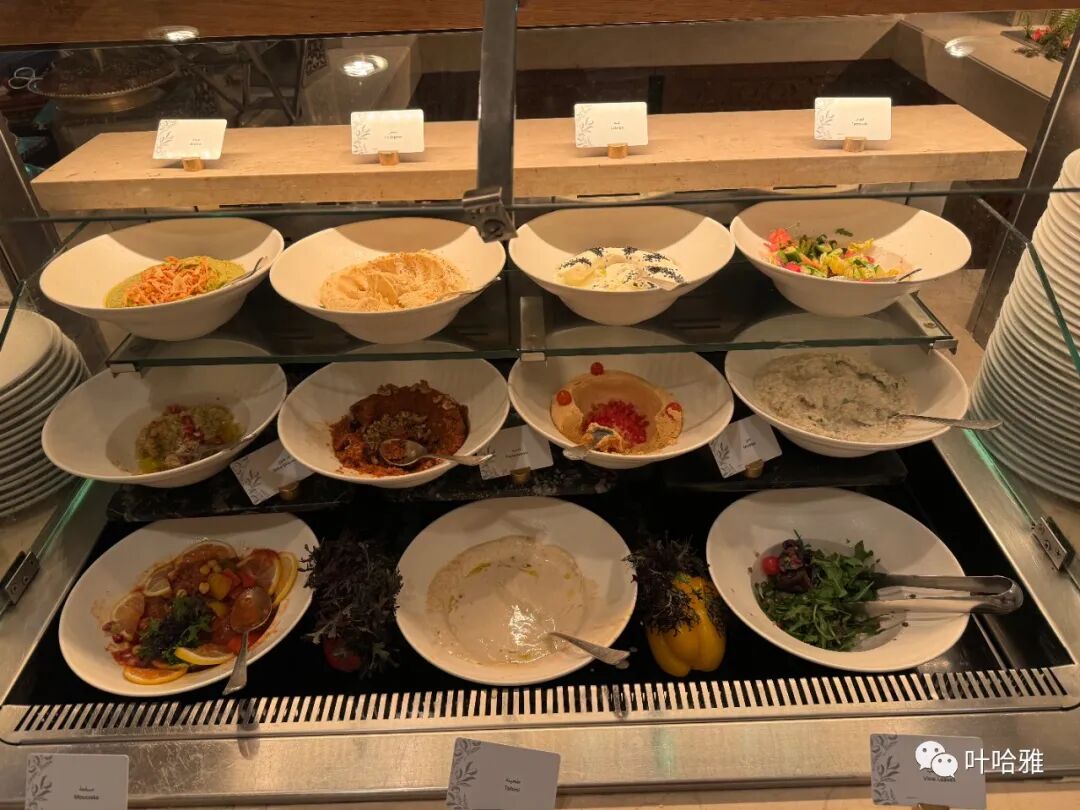
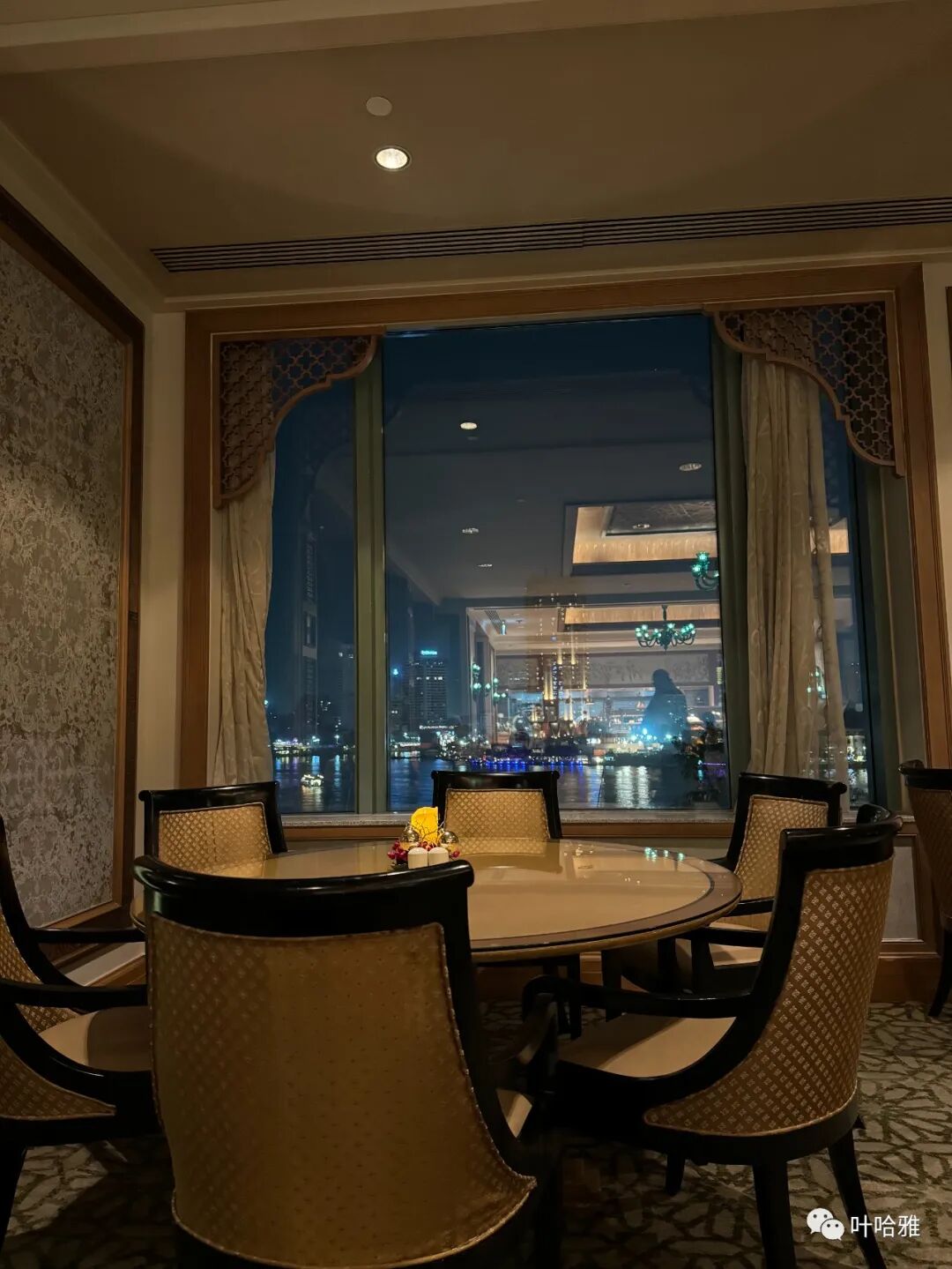
Outside the window is a view of the Nile. In Cairo, the most expensive rooms are the ones with a river view.
Luxor
Luxor is an ancient city in southern Egypt that was once the center of power in Egypt, similar to Xi'an in China. It only takes 50 minutes to fly from Cairo to Luxor. At the airport, the check-in staff ripped me off. He said I did not buy a child ticket for Fahim. I showed him my Trip.com order, but he still said he could not find the child ticket information. Since it was close to departure time, we paid him 1,000 Egyptian pounds (about 200 yuan) on the spot for the child ticket. Later, I contacted Trip.com and learned that my child ticket was used normally. This means the airport staff scammed me out of the price of a ticket, which is a very bad thing to do. I have asked Trip.com to investigate this with Cairo Airport, but I have not received an effective reply yet. Because it was a cash payment, unless they pull the surveillance footage from that time to prove the airport took my money, I have to swallow this loss.
Sonesta St. George Hotel Luxor
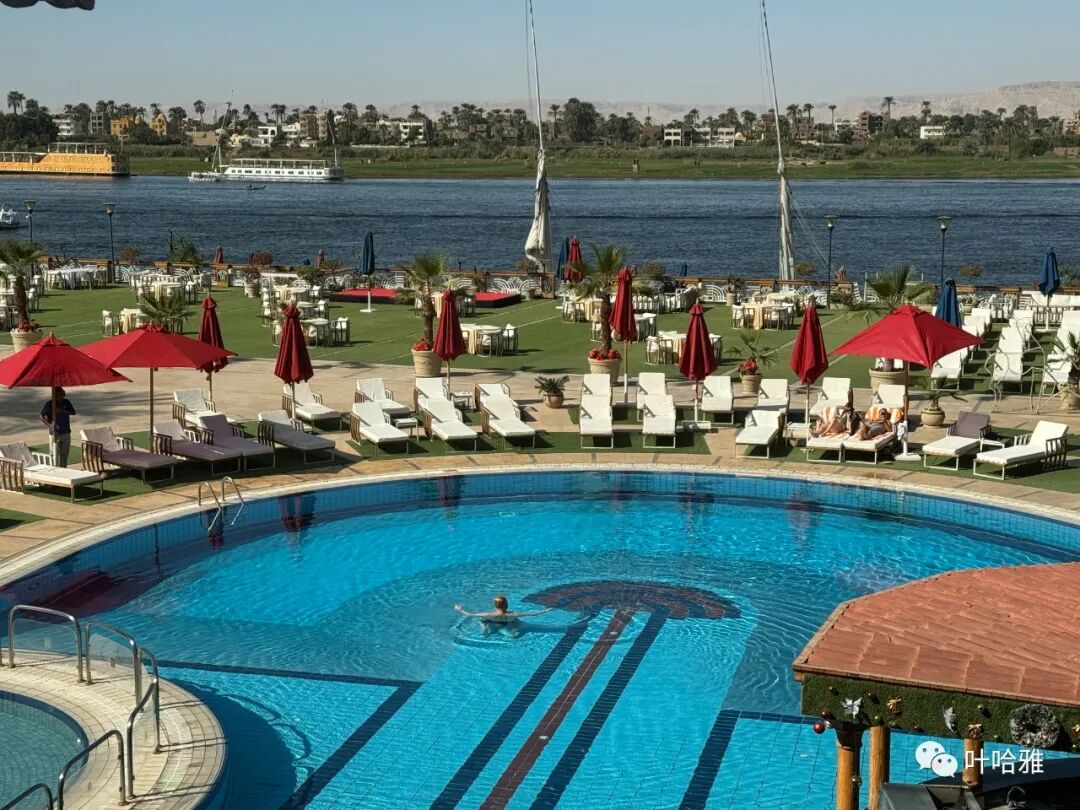
The climate in Luxor is much more comfortable than in Cairo. Cairo has serious pollution and is not suitable for long stays, but Luxor has fewer people and the pace of the whole city is much slower. You cannot use Uber in Luxor. You have to hail a taxi on the street. Always agree on the price before you get in and have plenty of small change ready. If you don't, the driver will keep whatever you give him and call it a tip.
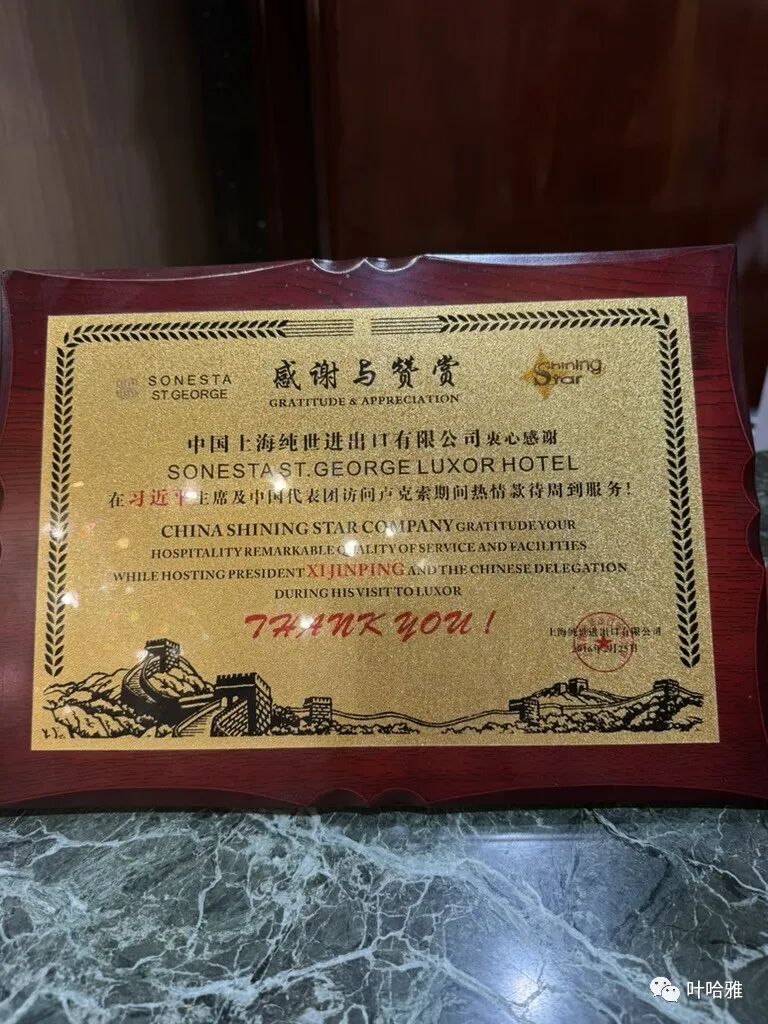
Look at who has stayed at this hotel before. They play Chinese songs in the restaurant and have Chinese signs in the elevators, which feels very welcoming.
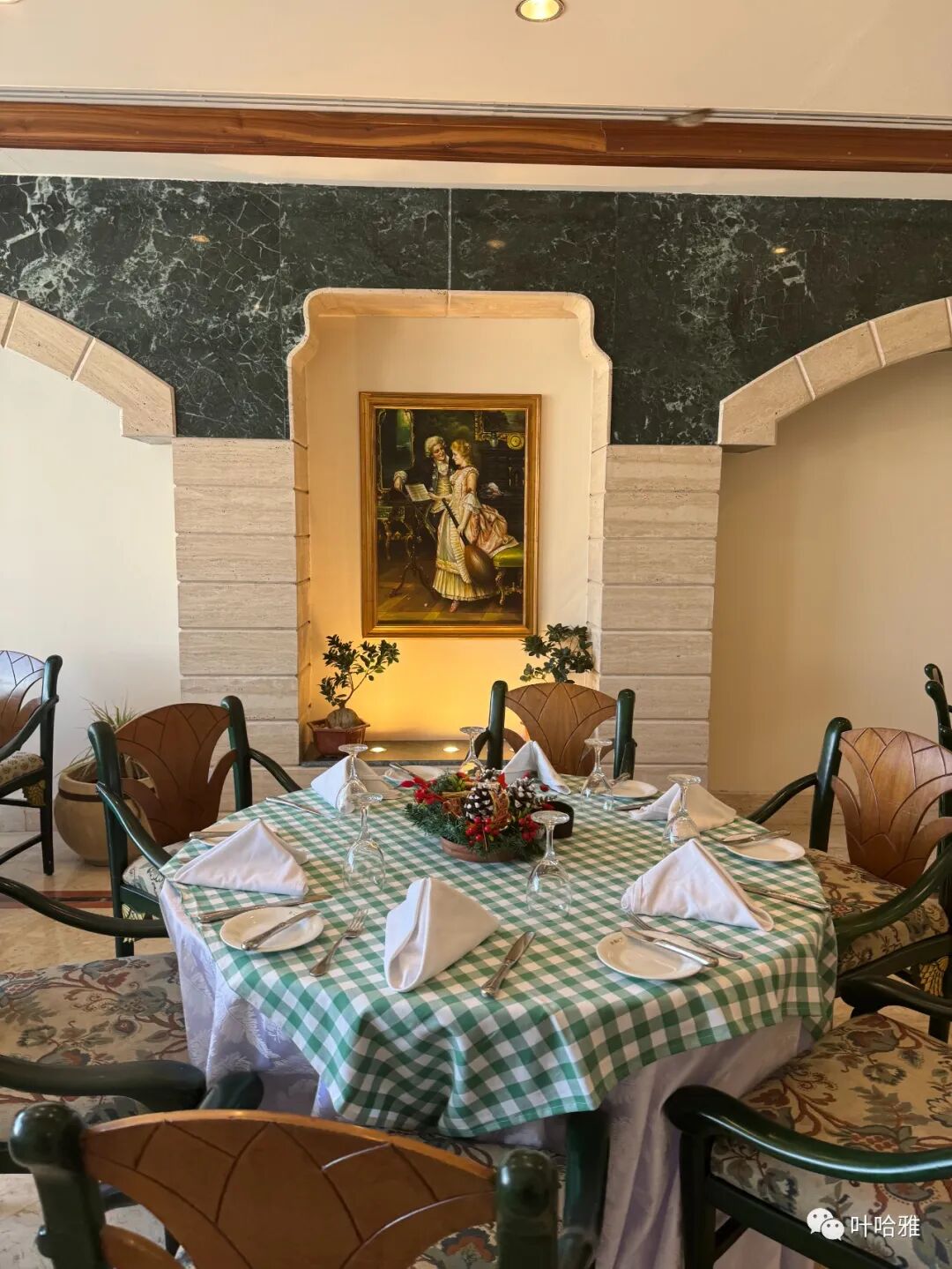
For our first meal, we chose the hotel's Italian restaurant again. It has a clean, tidy European style, and the view of the Nile outside the window is stunning.
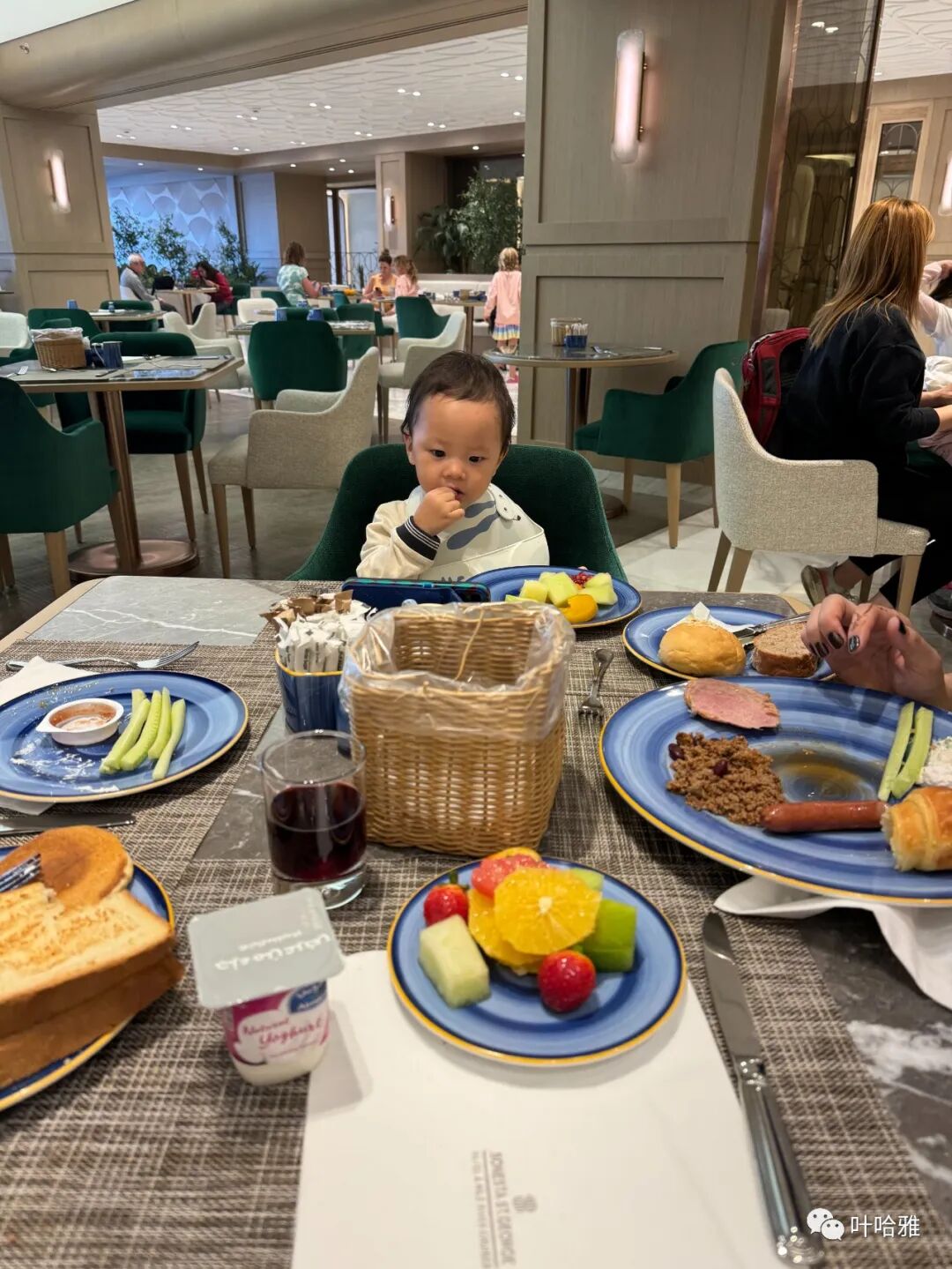
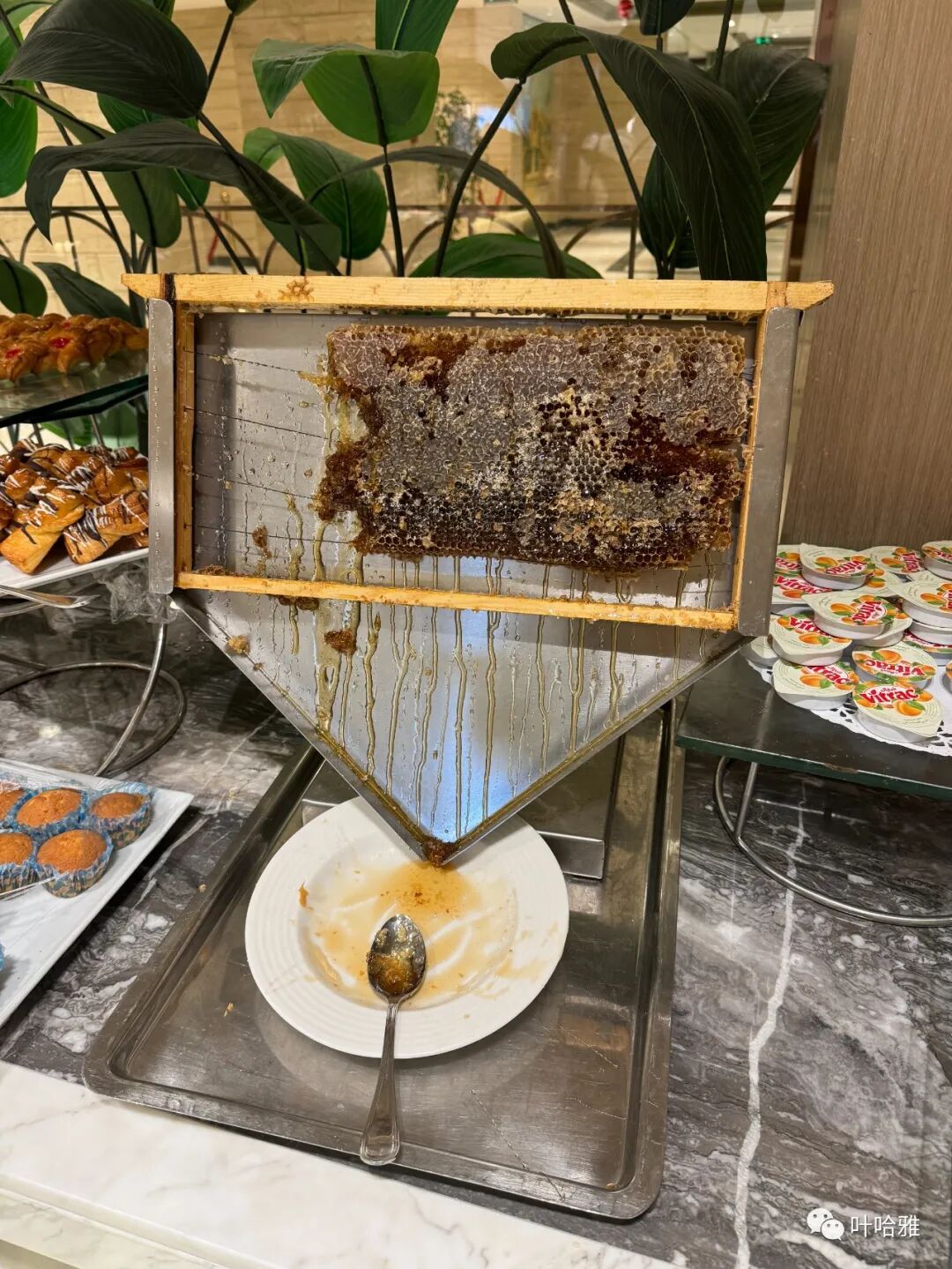
For breakfast, they serve honey straight from the honeycomb. It is natural and healthy.
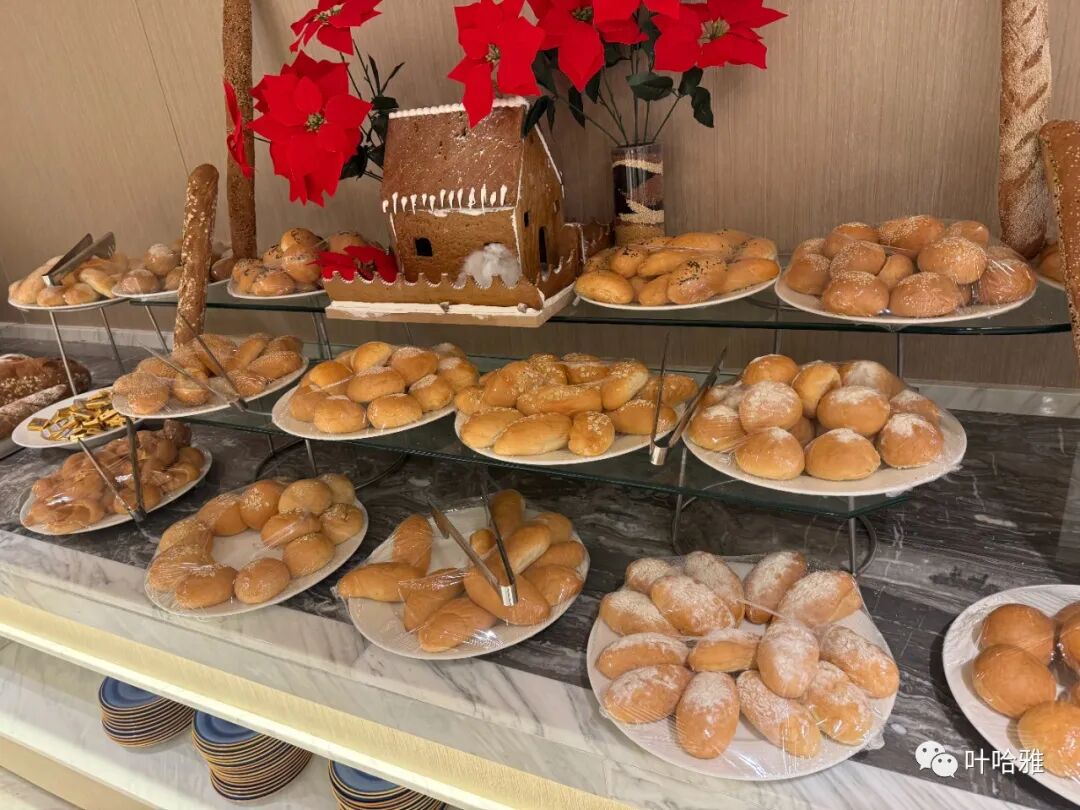
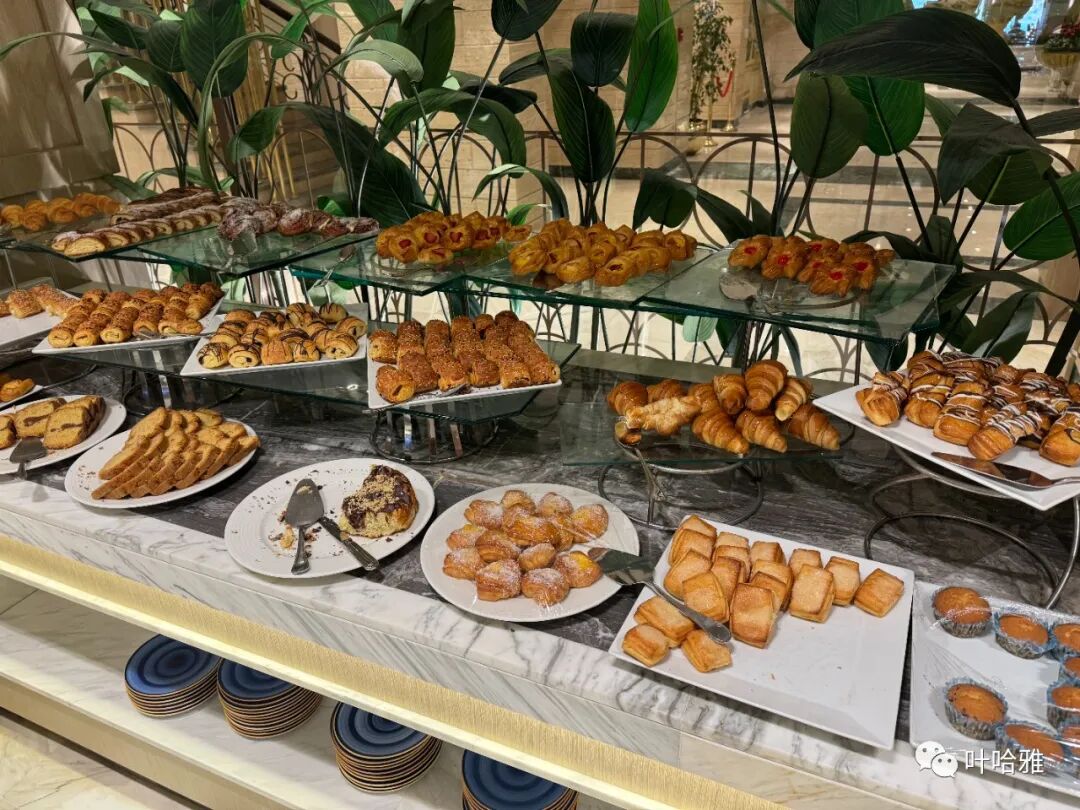
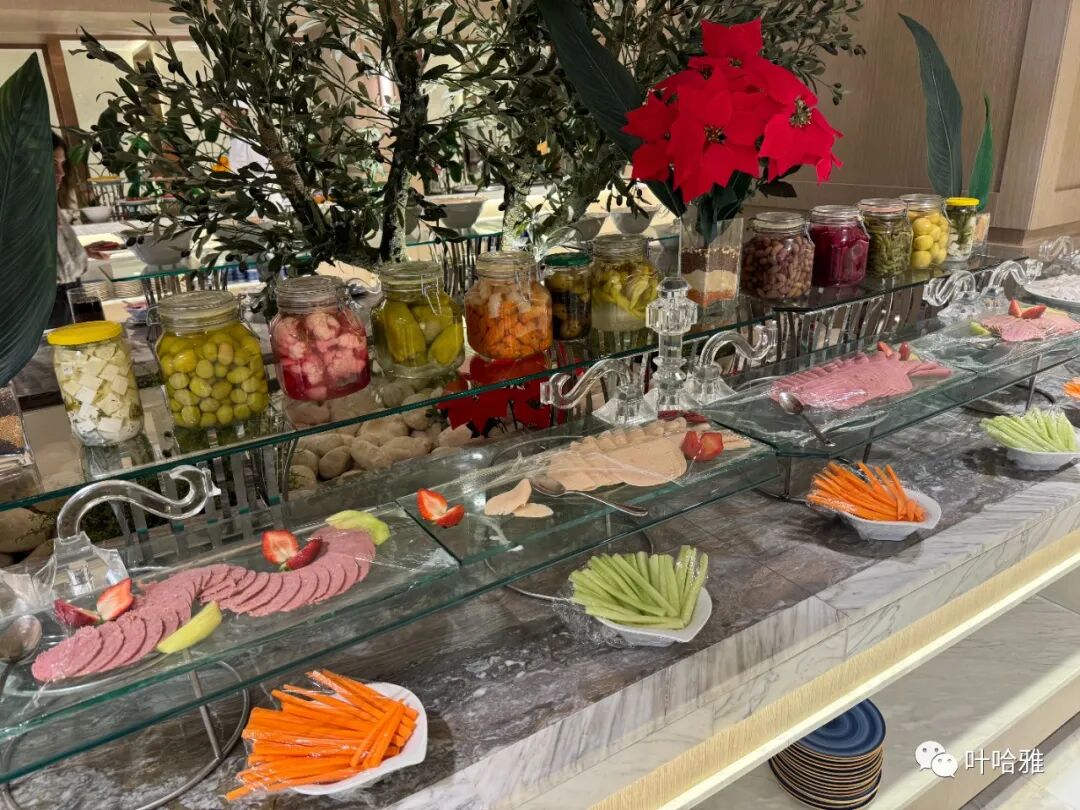
Famous sites in Luxor include the Valley of the Kings, Luxor Temple, Karnak Temple, the Colossi of Memnon, the Mortuary Temple of Hatshepsut, and various pharaoh tombs. These are very attractive to archaeology fans, but for most tourists, it is just about taking photos. We booked a private one-day tour for two on Trip.com for 1,000 yuan per person. It included tickets, lunch, and a tour guide. The whole experience was pretty good.
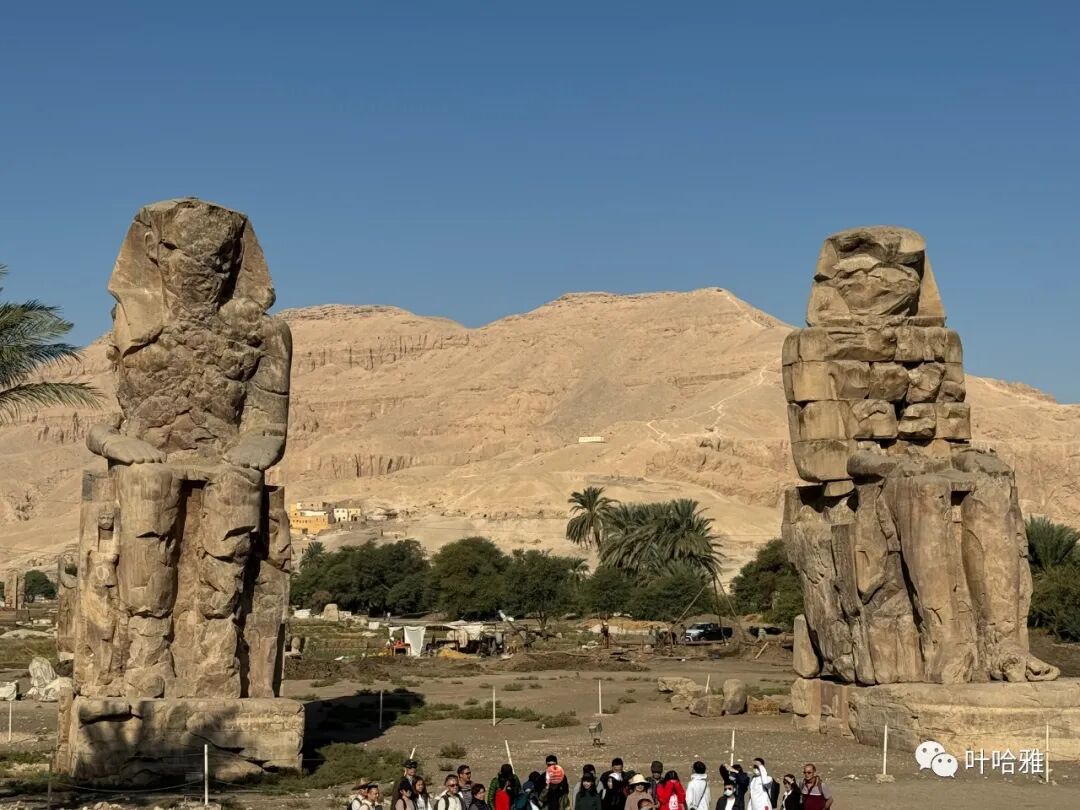
Colossi of Memnon
The statues represent the 18th Dynasty Pharaoh Amenhotep III. Both statues are of him. They are 18 meters tall and were built in 1350 BC, making them over 3,000 years old.
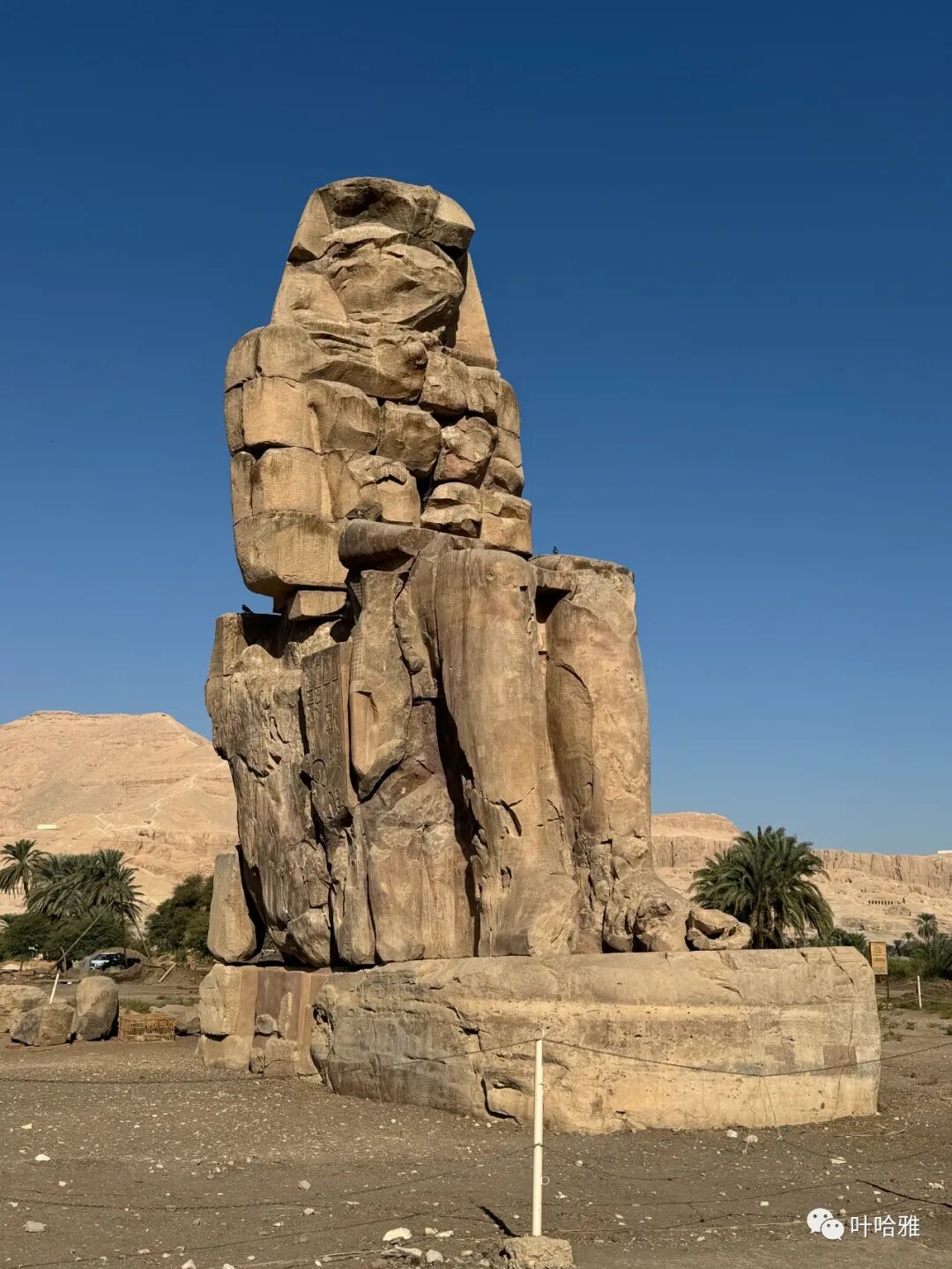
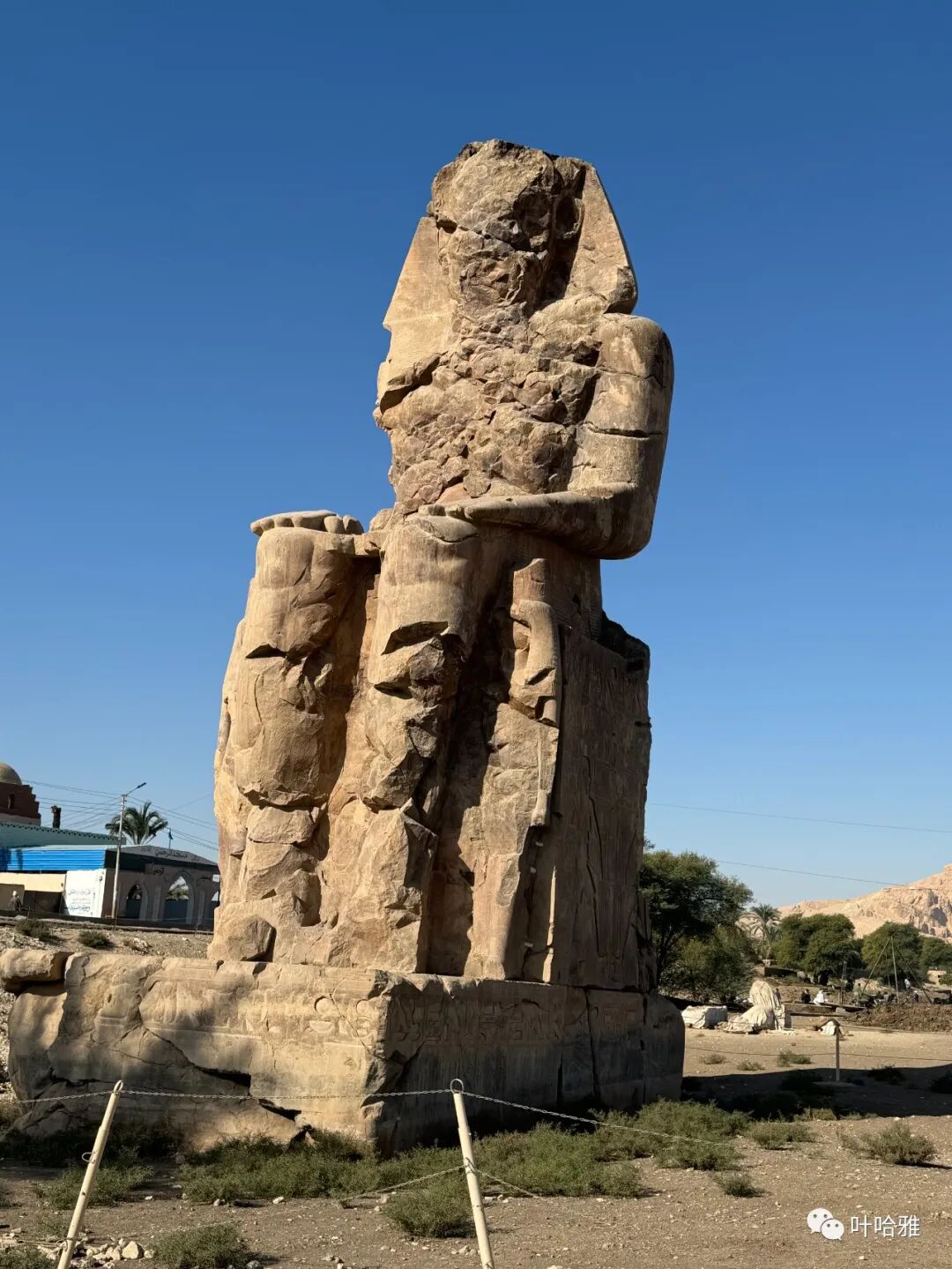
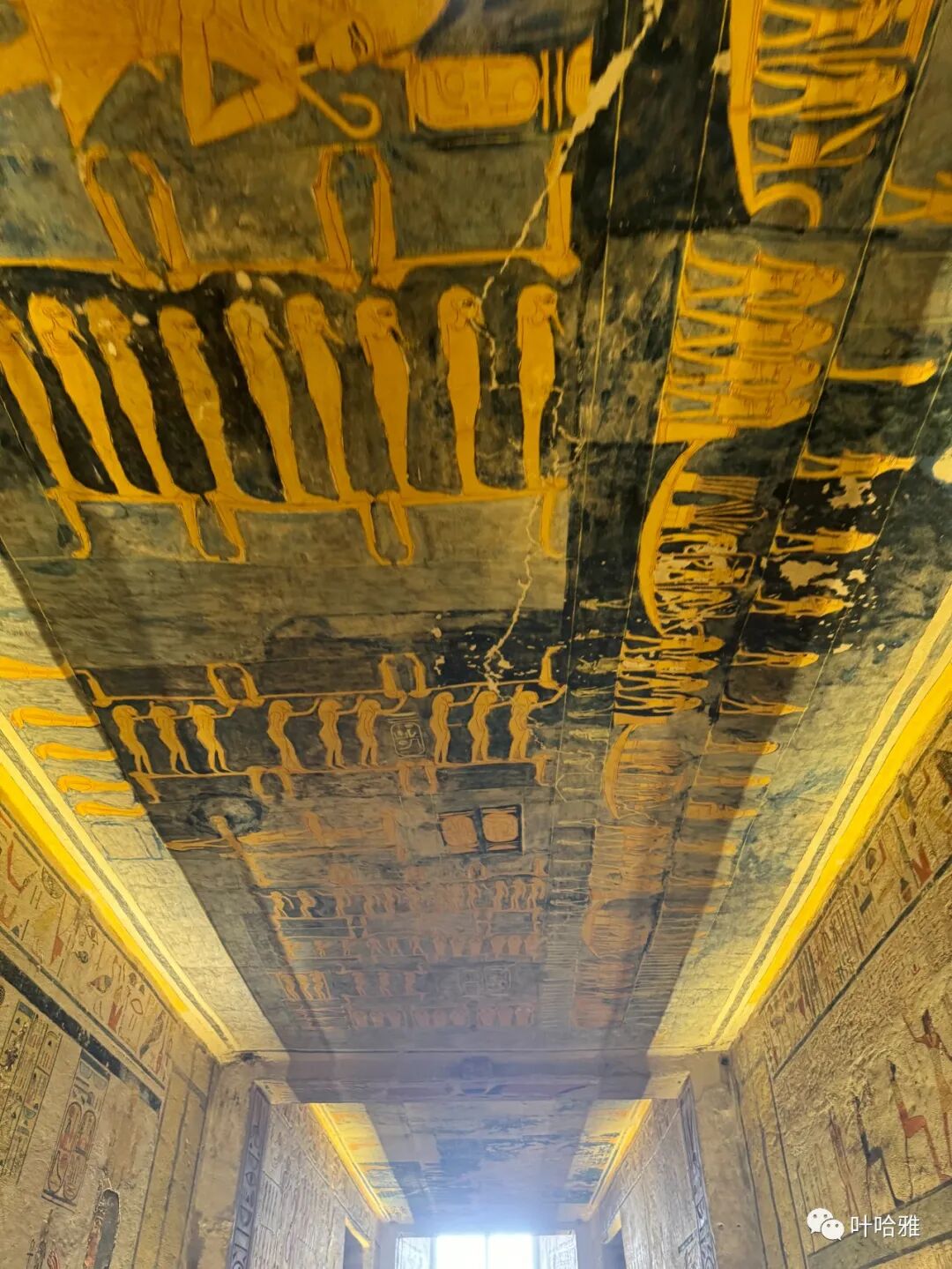
After a short stop at the statues, we went to the Valley of the Kings to see the tombs of Pharaoh Ramesses VI and Tutankhamun.
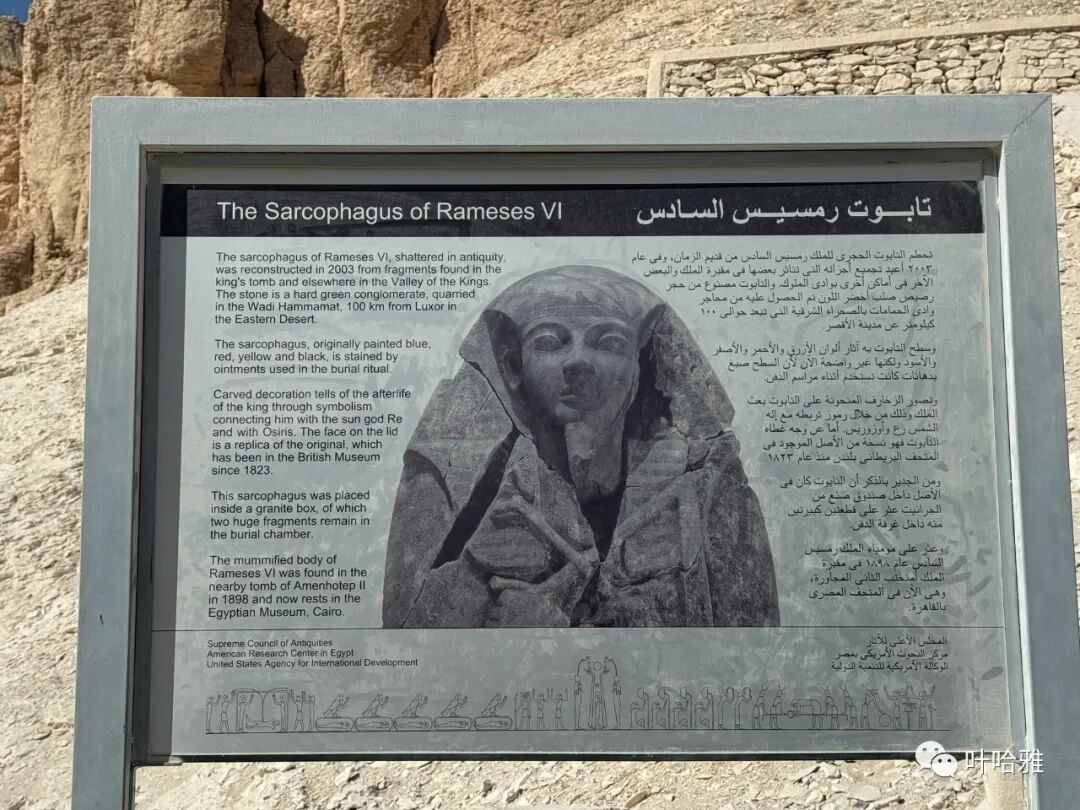
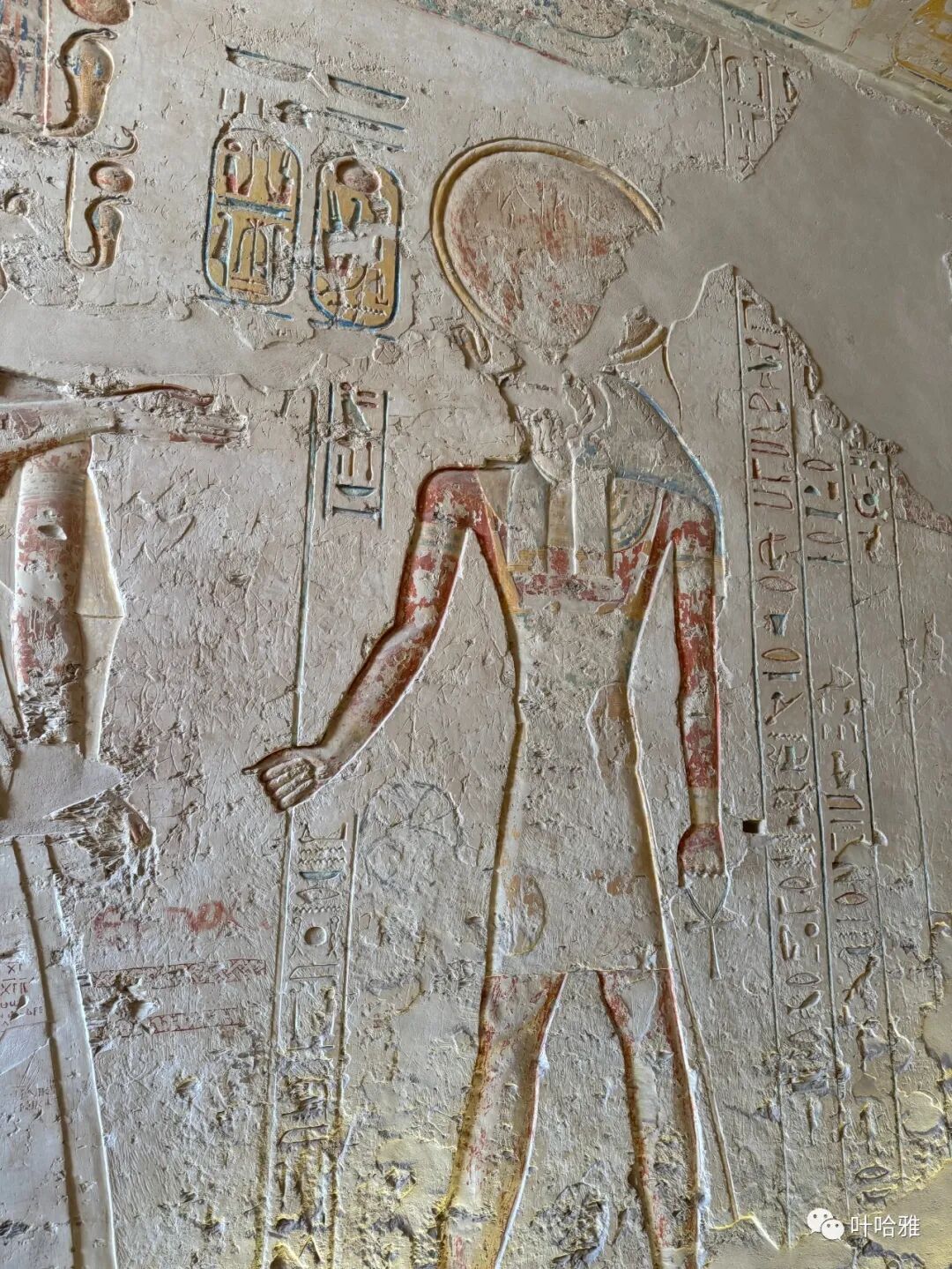
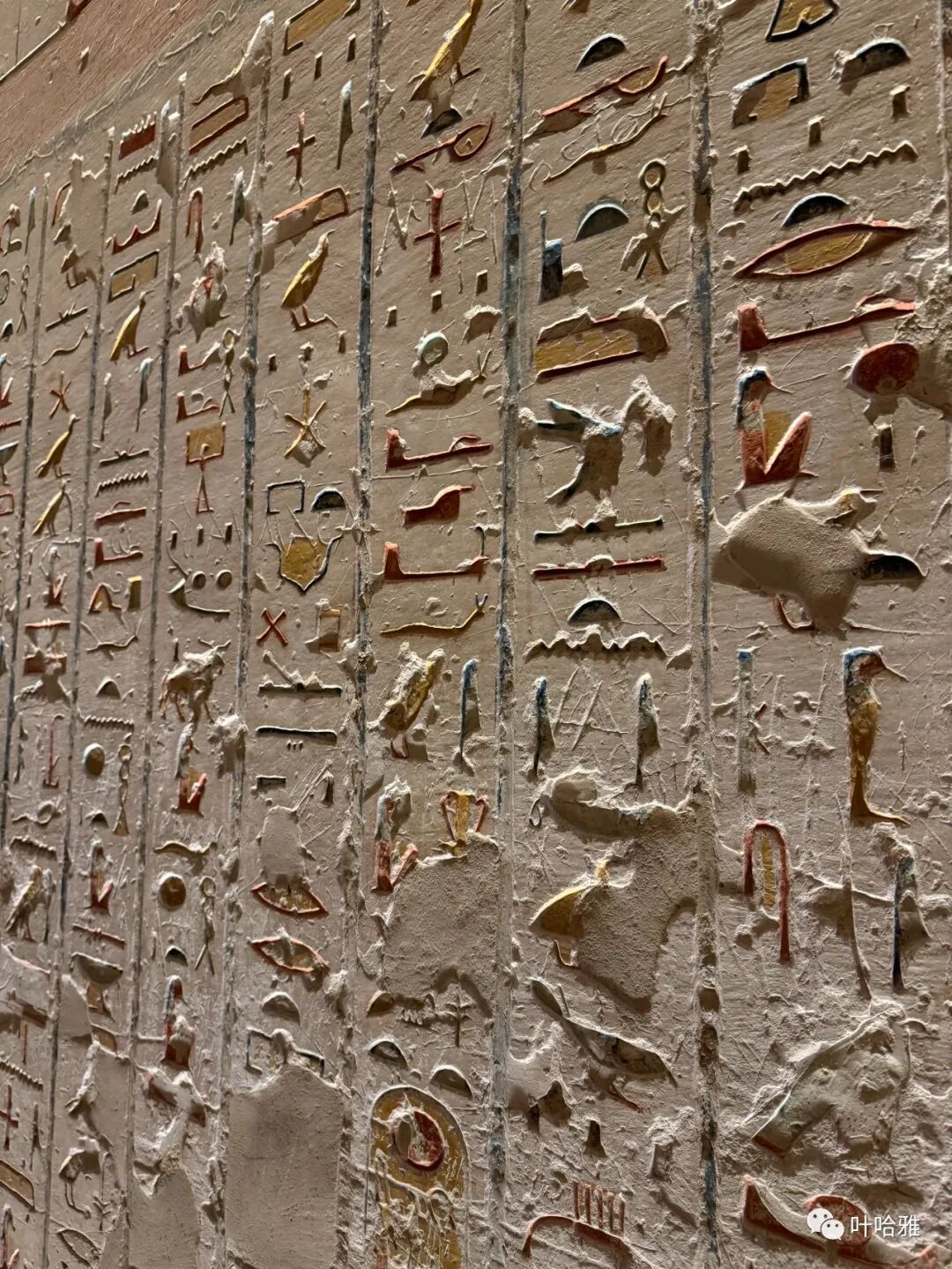
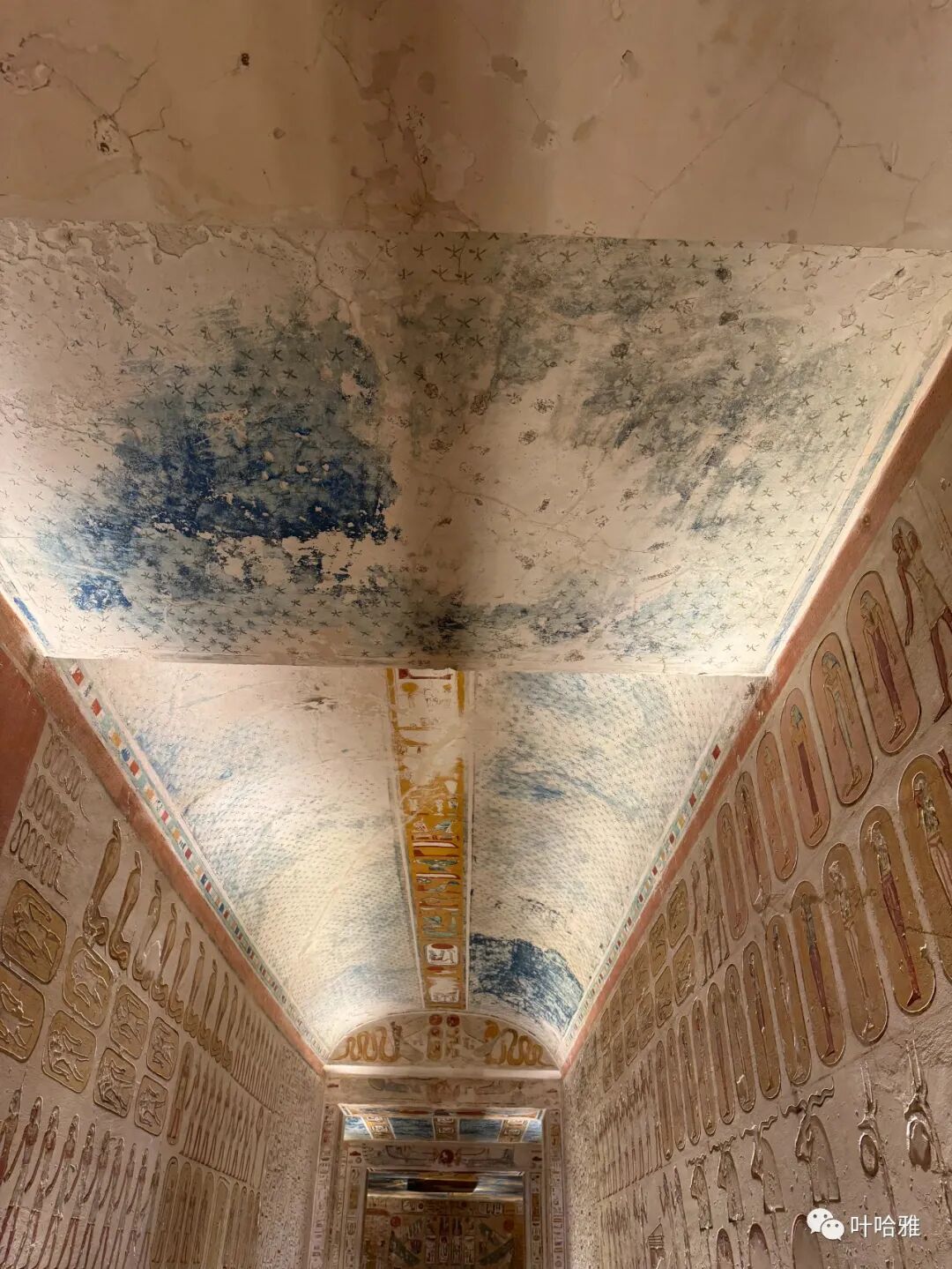
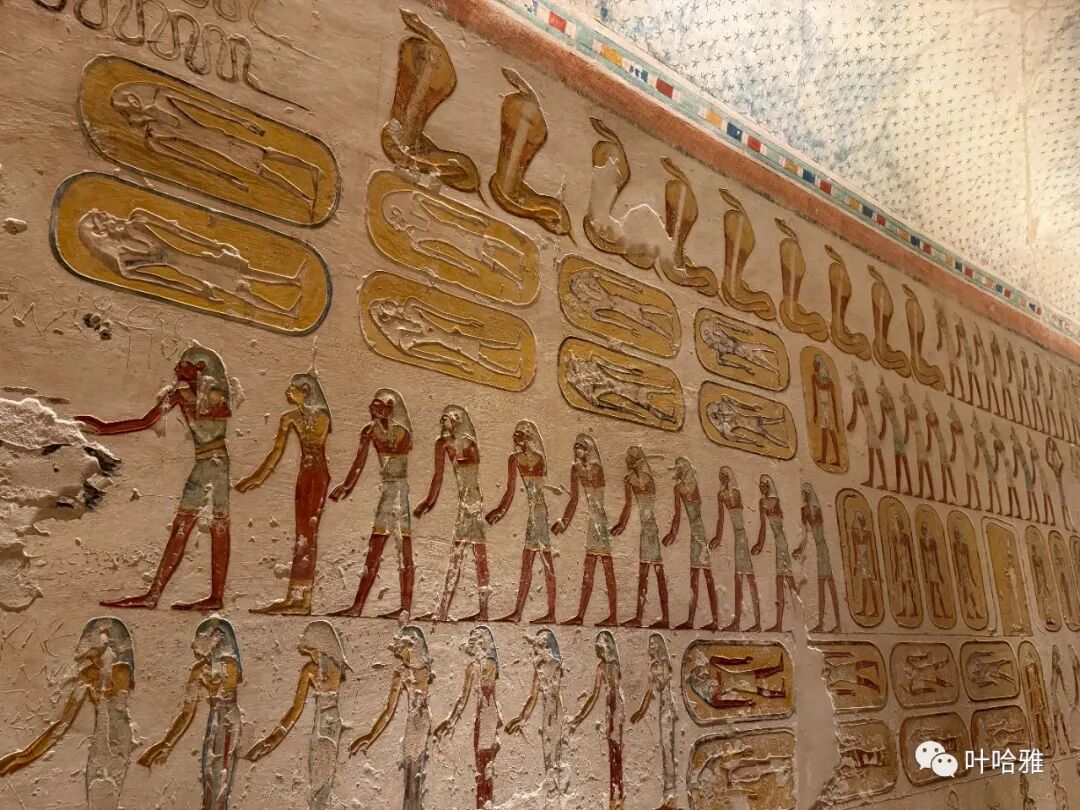
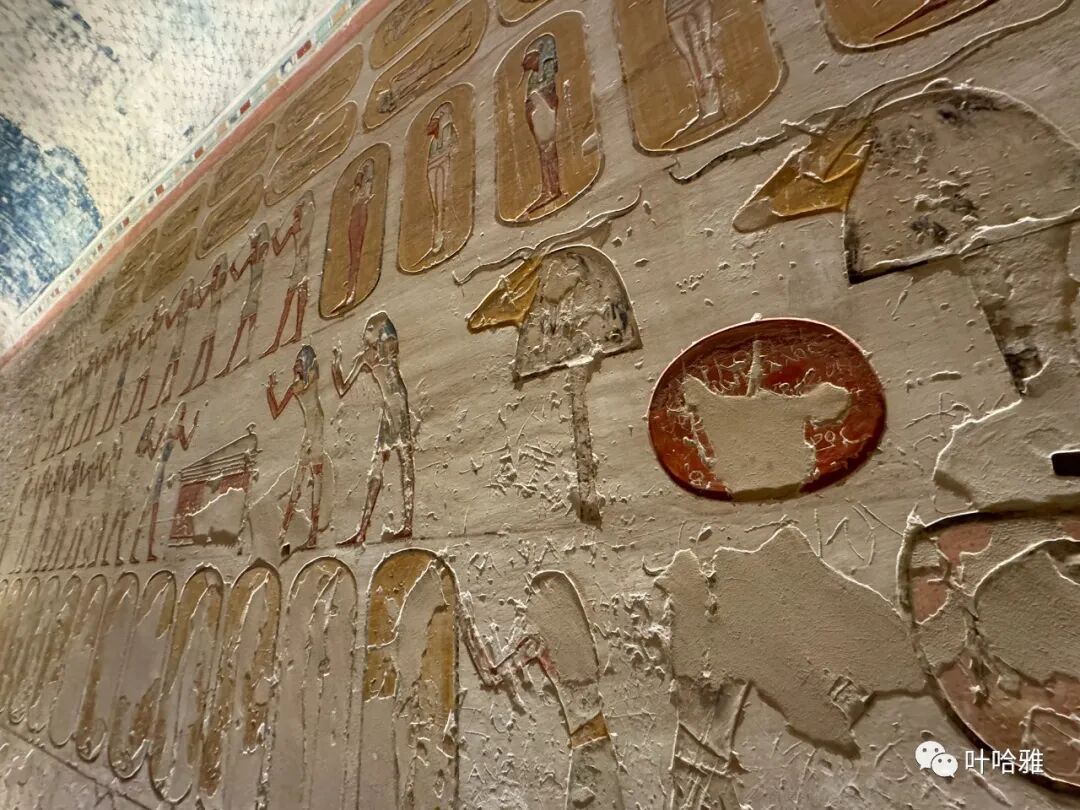
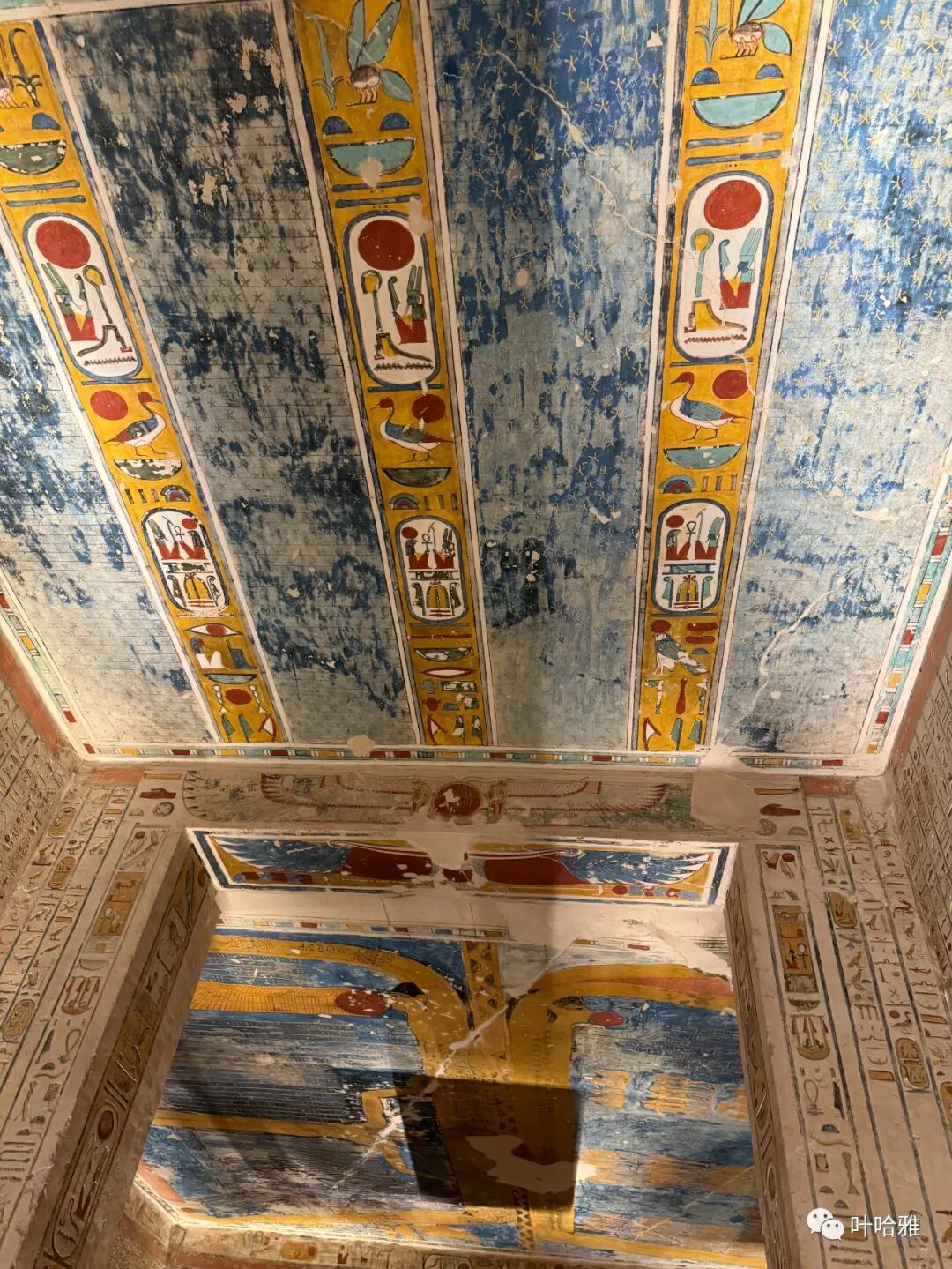
The murals in the tomb of Ramesses VI still have the same colors they had 3,000 years ago.
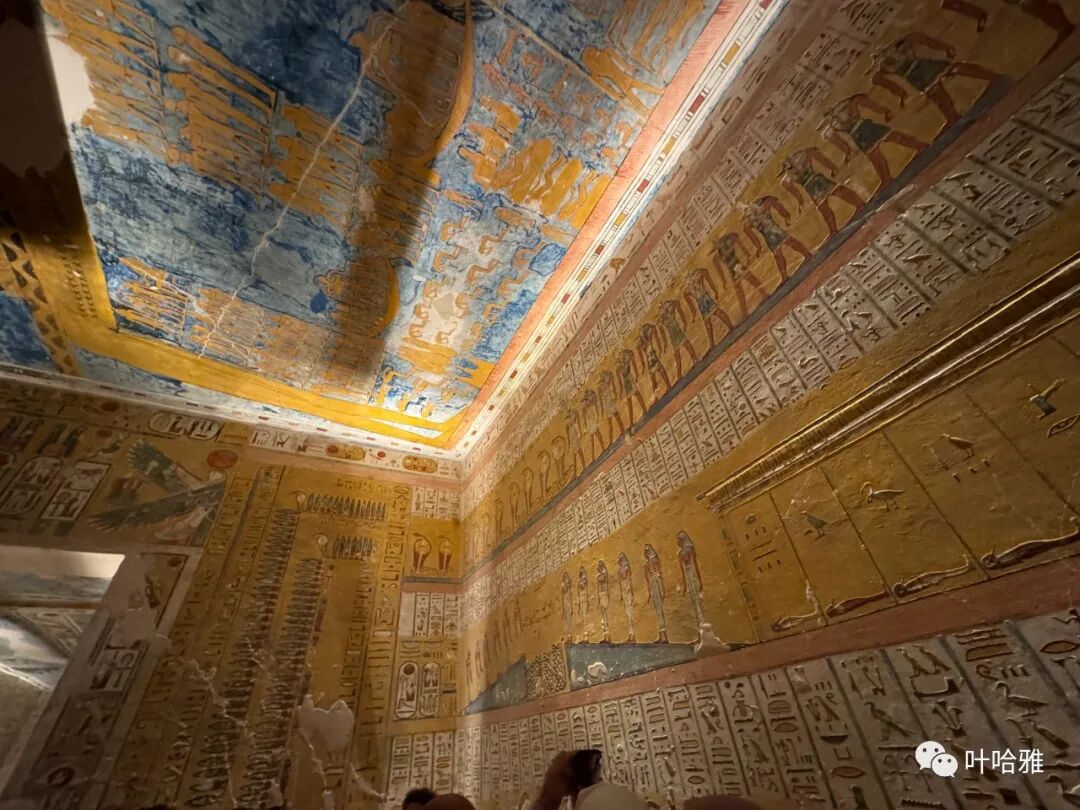
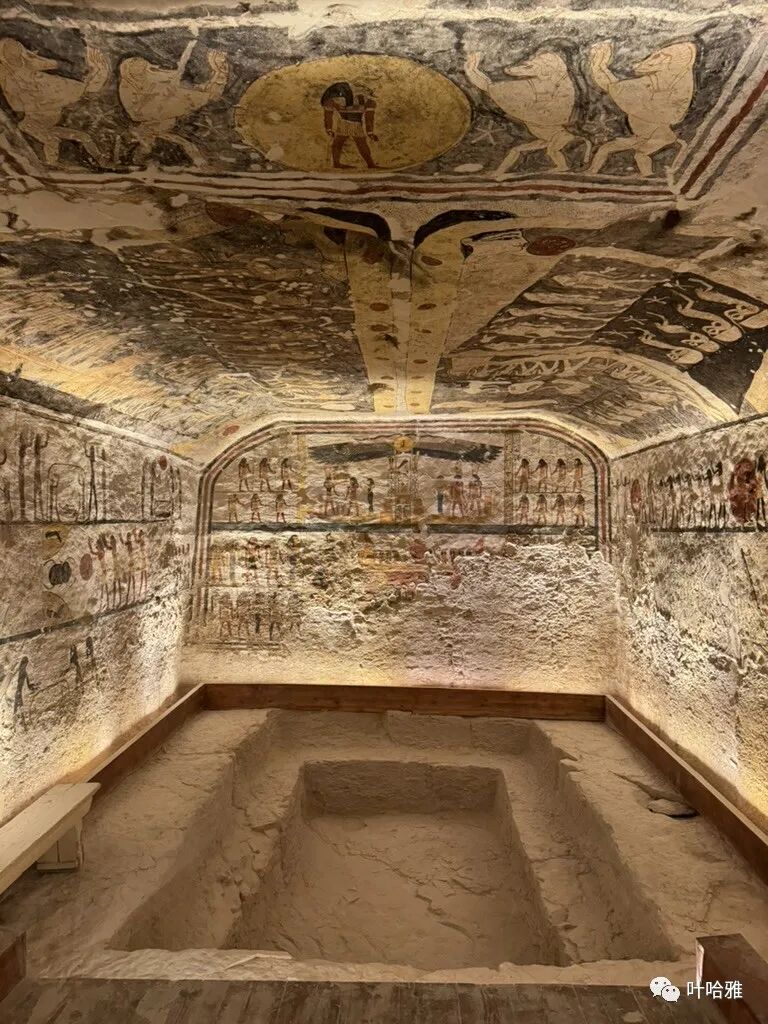
Tomb of Pharaoh Tutankhamun
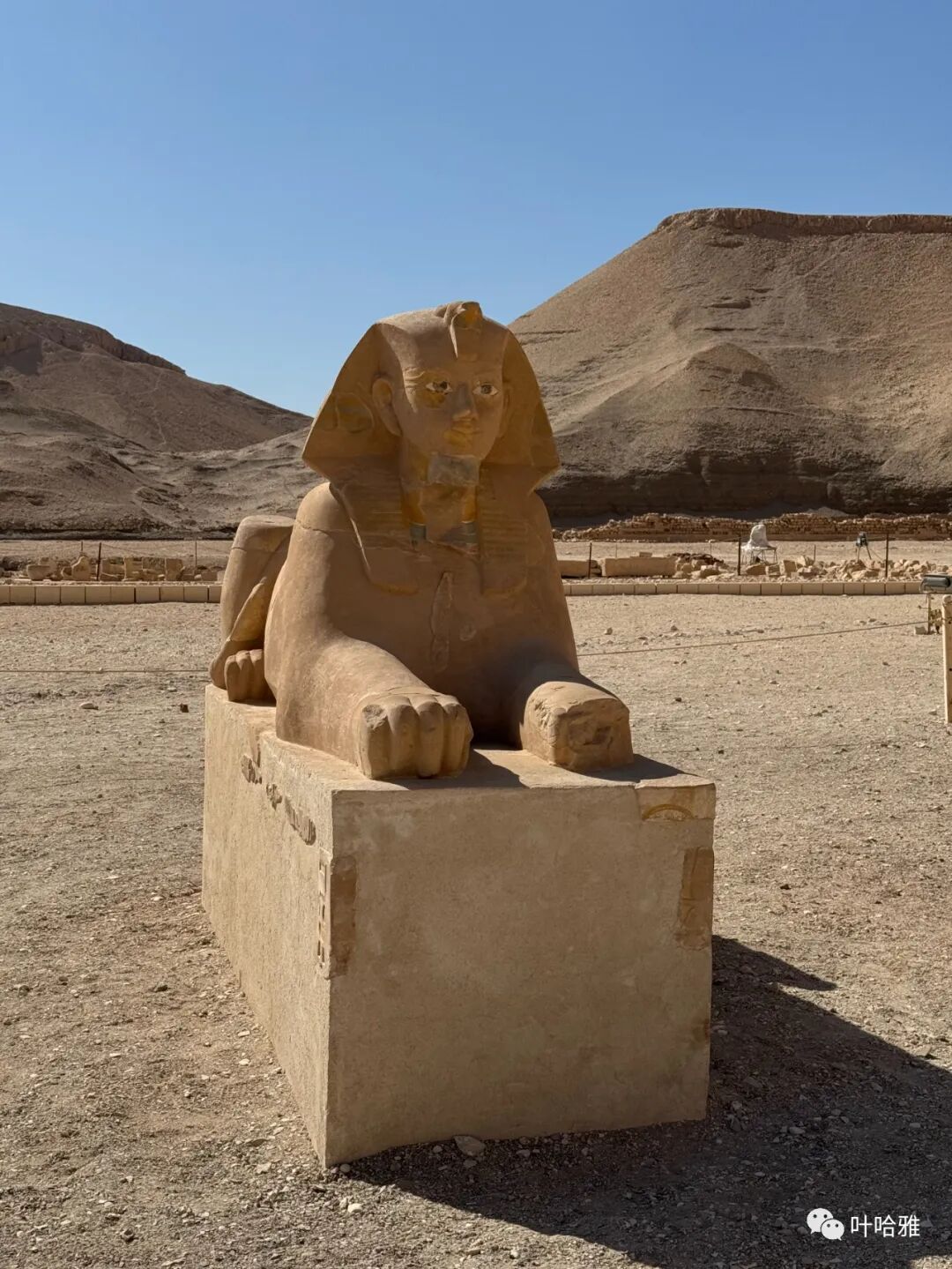
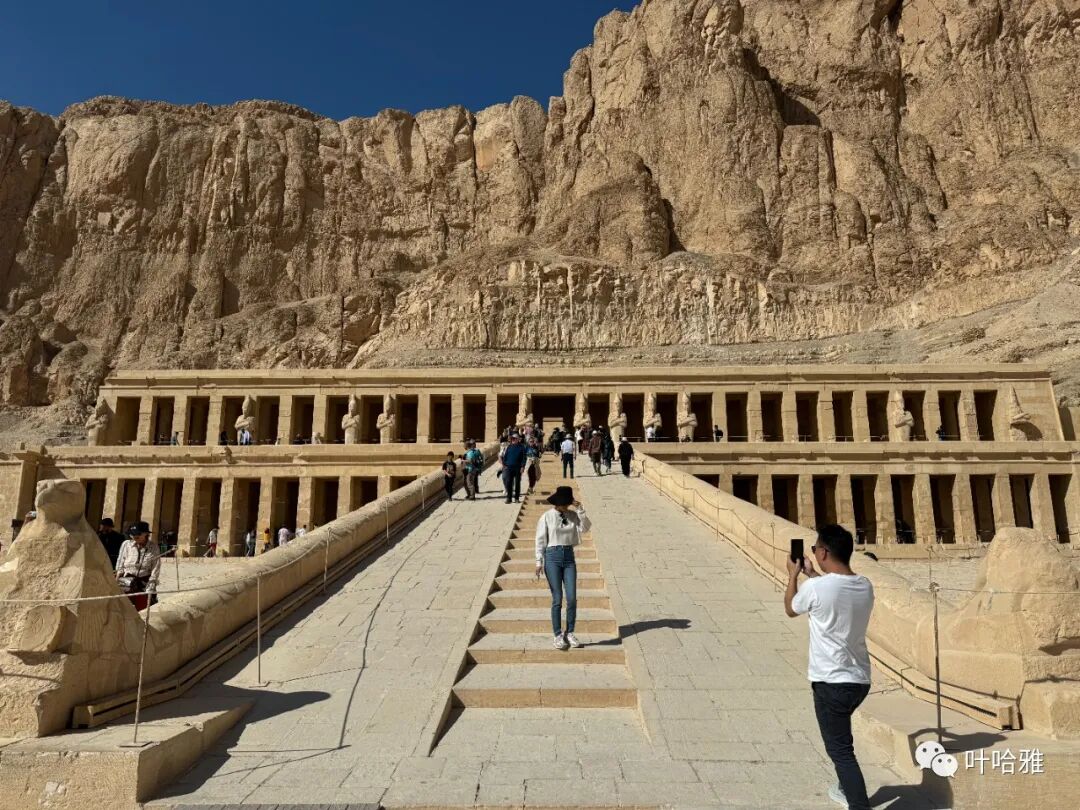
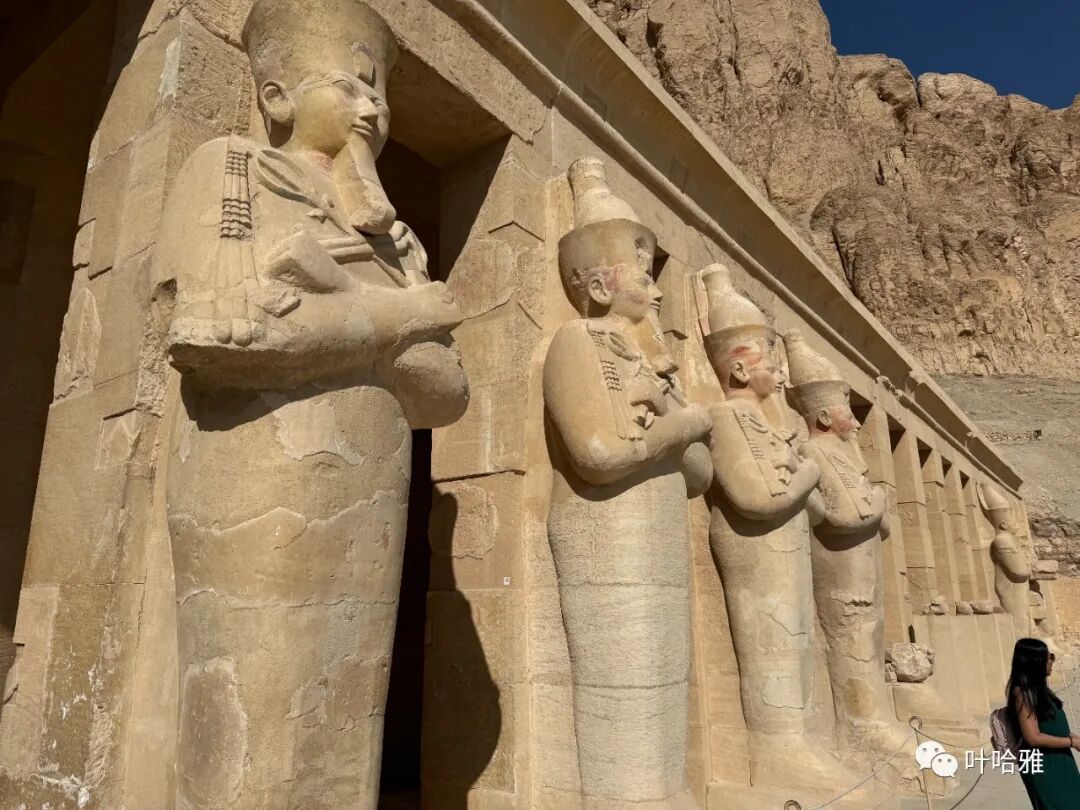
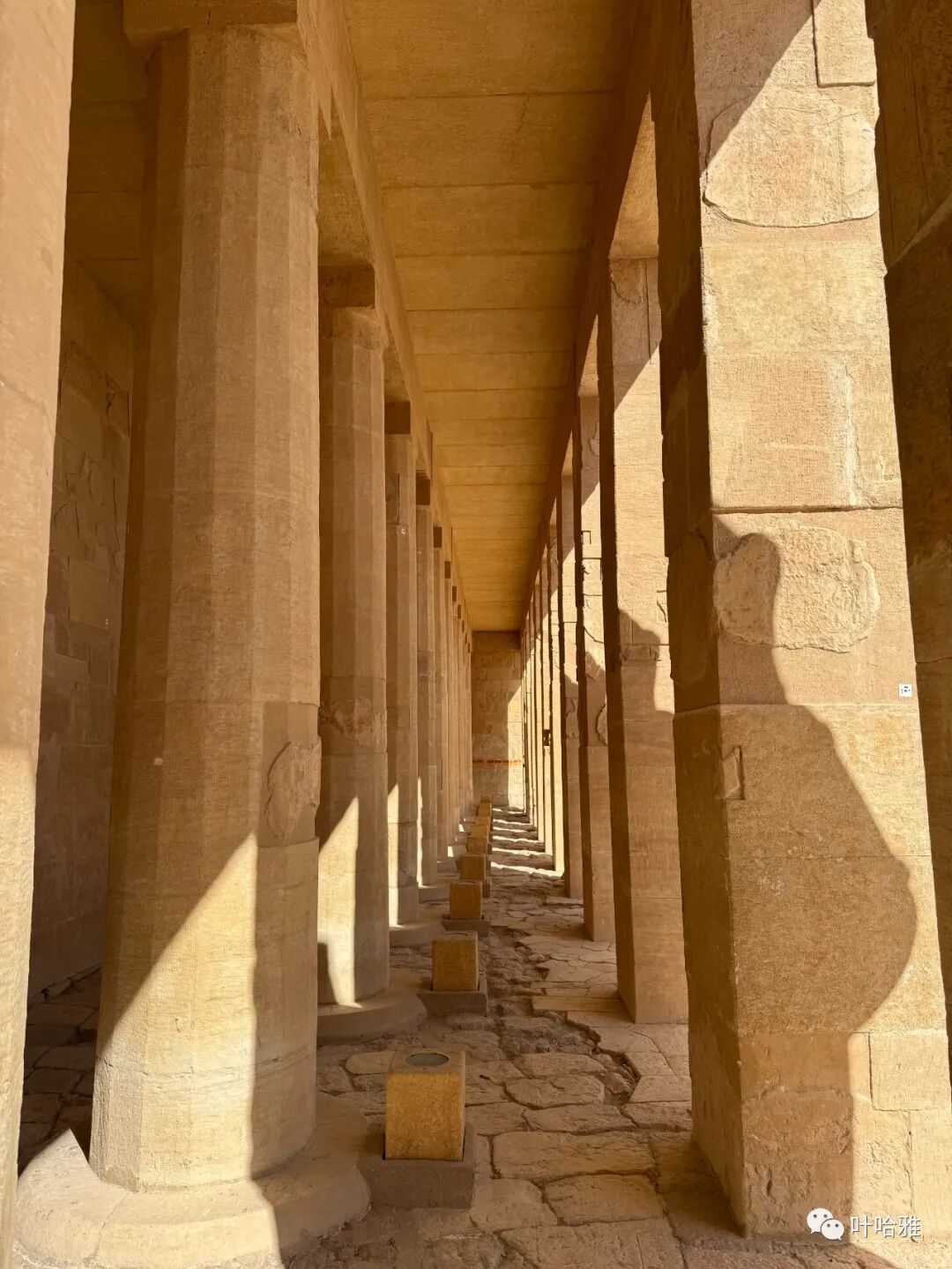
Mortuary Temple of Hatshepsut
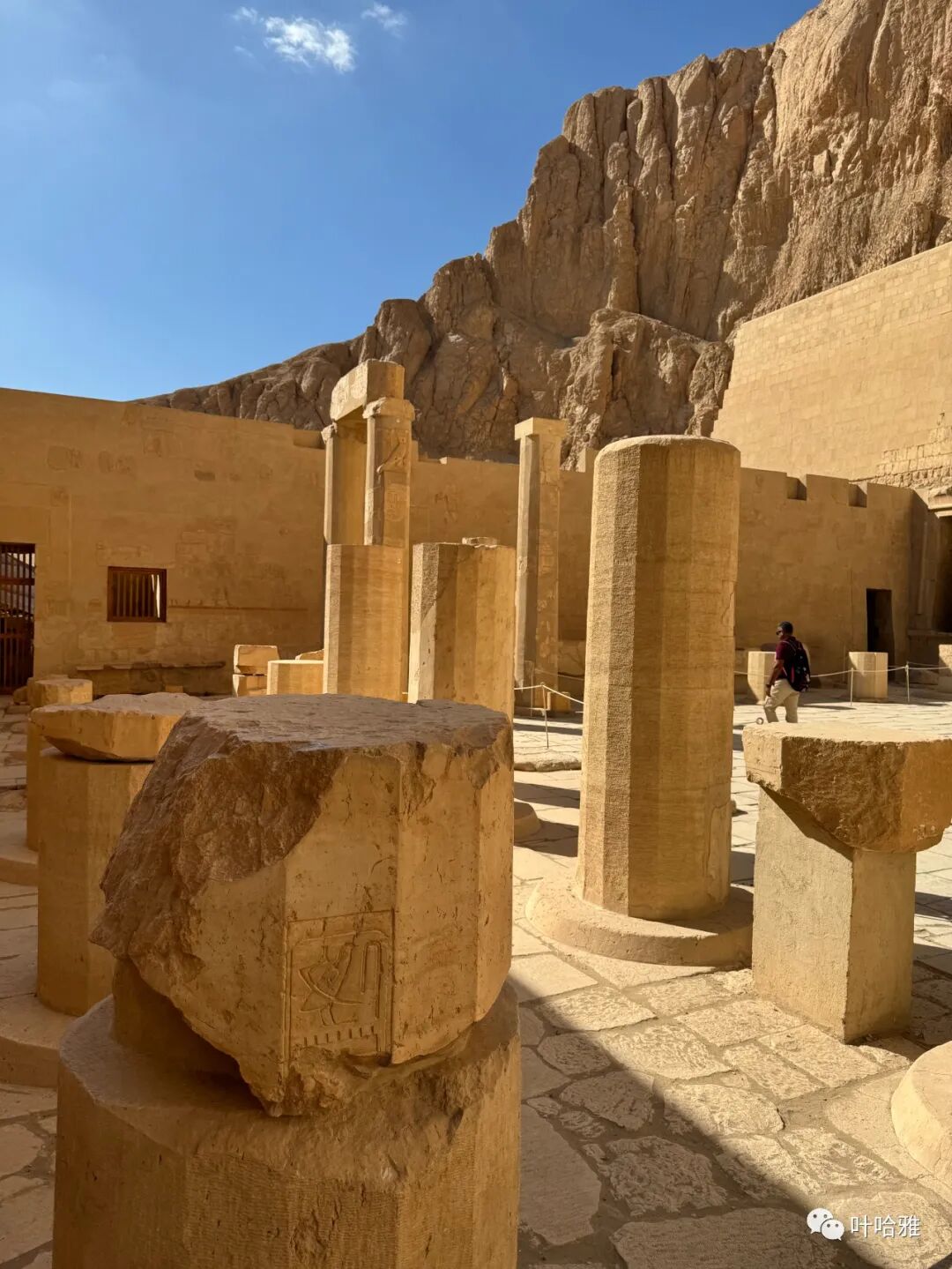
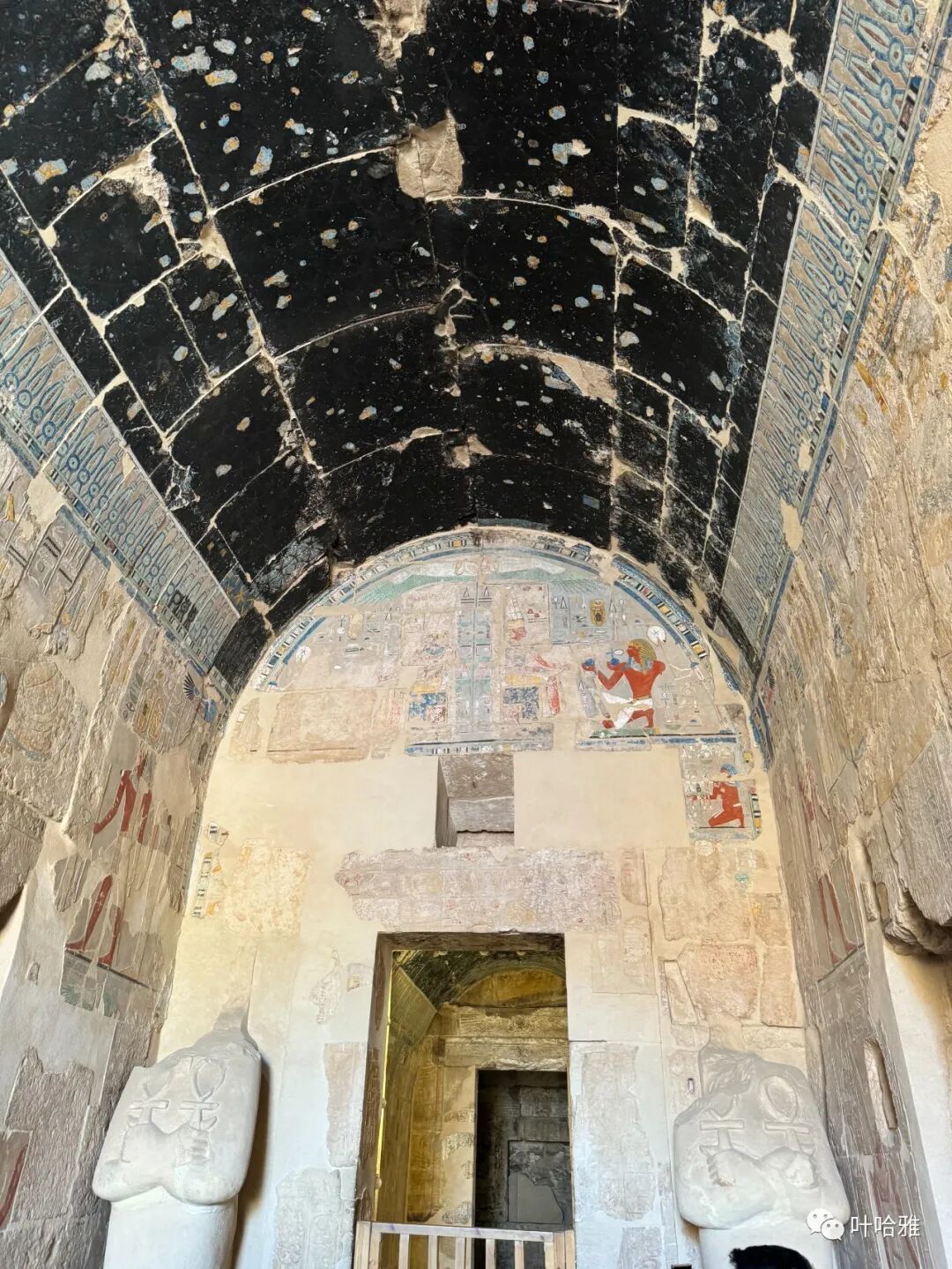
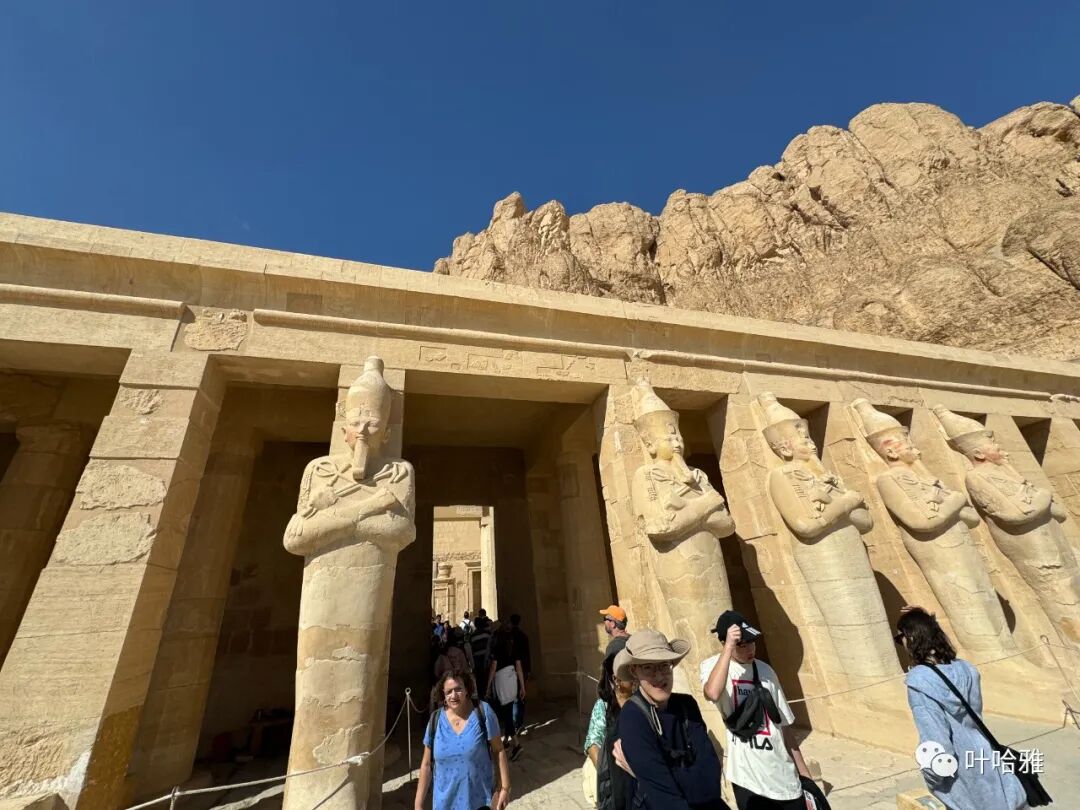
The temple complex housing the pharaohs of past dynasties, along with the entire city of Luxor, was listed as a World Cultural Heritage site in 1979. This place was once used as a Christian monastery, and the reliefs unrelated to Christianity were removed.
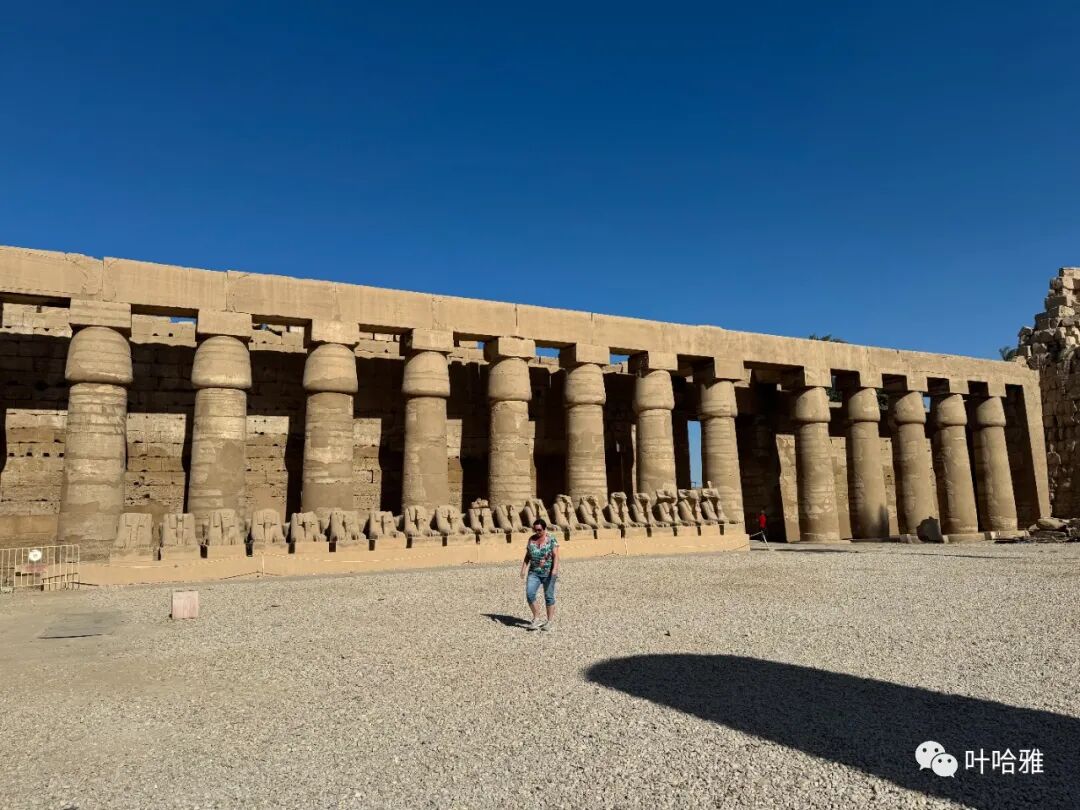
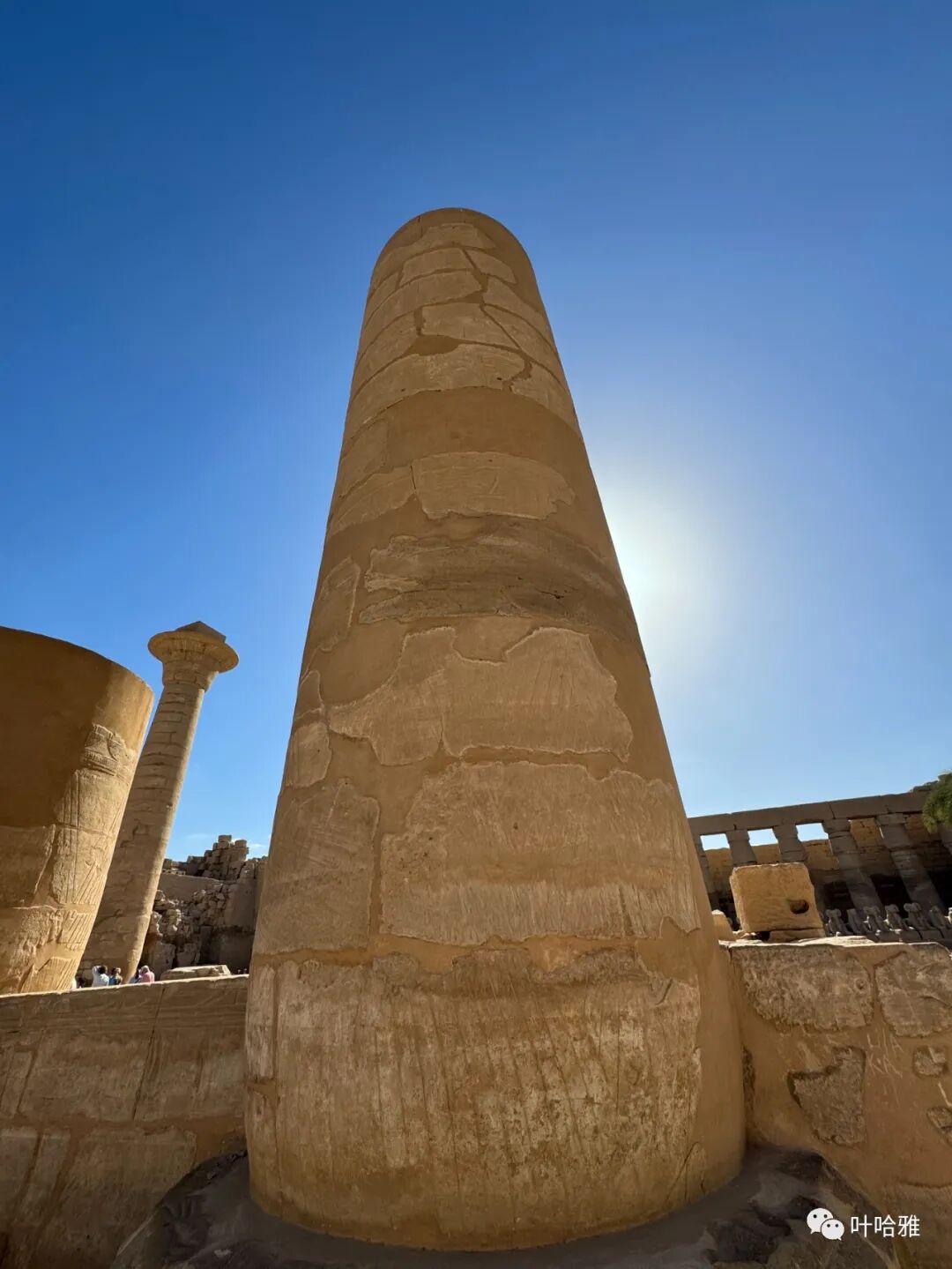
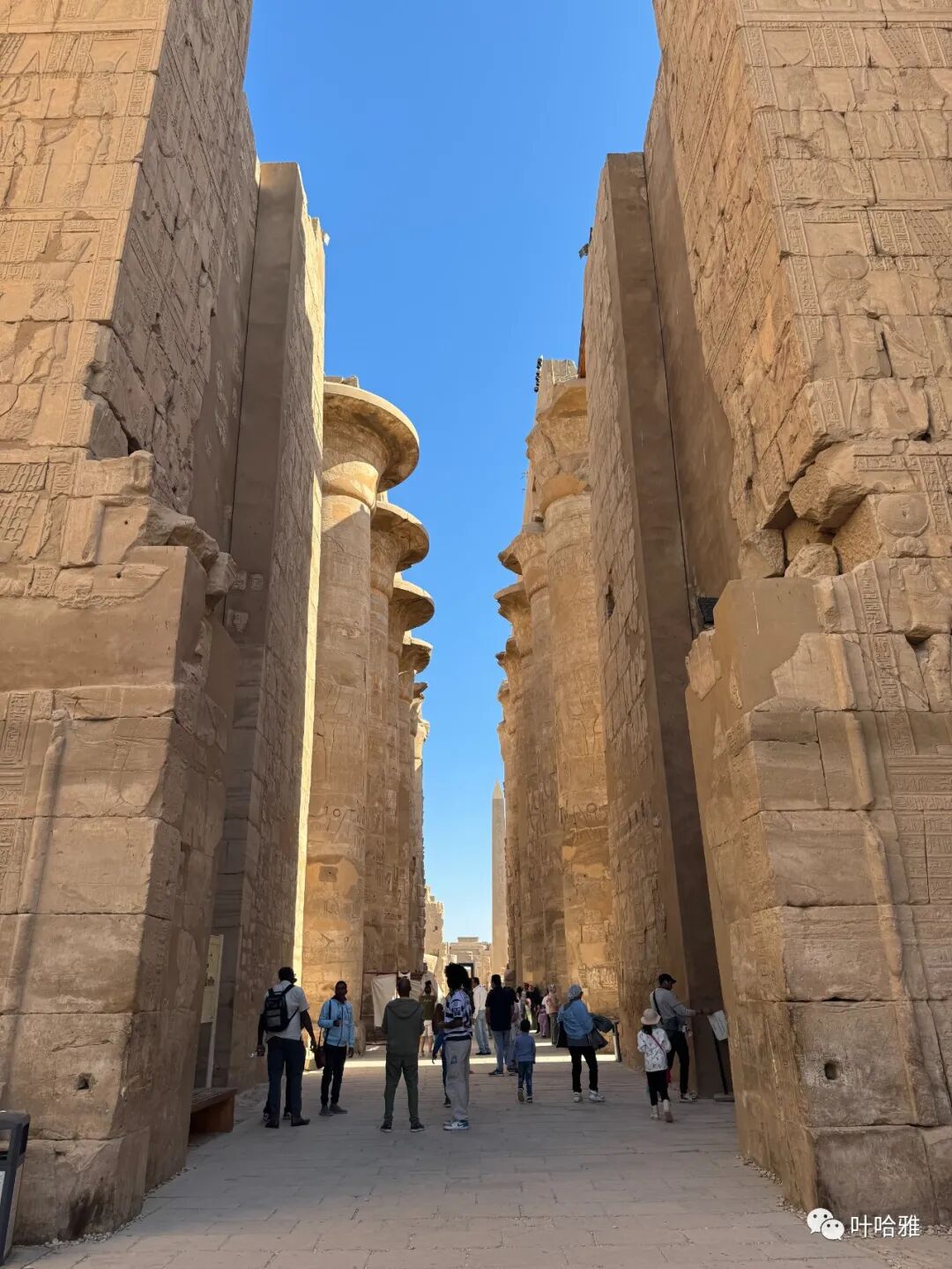
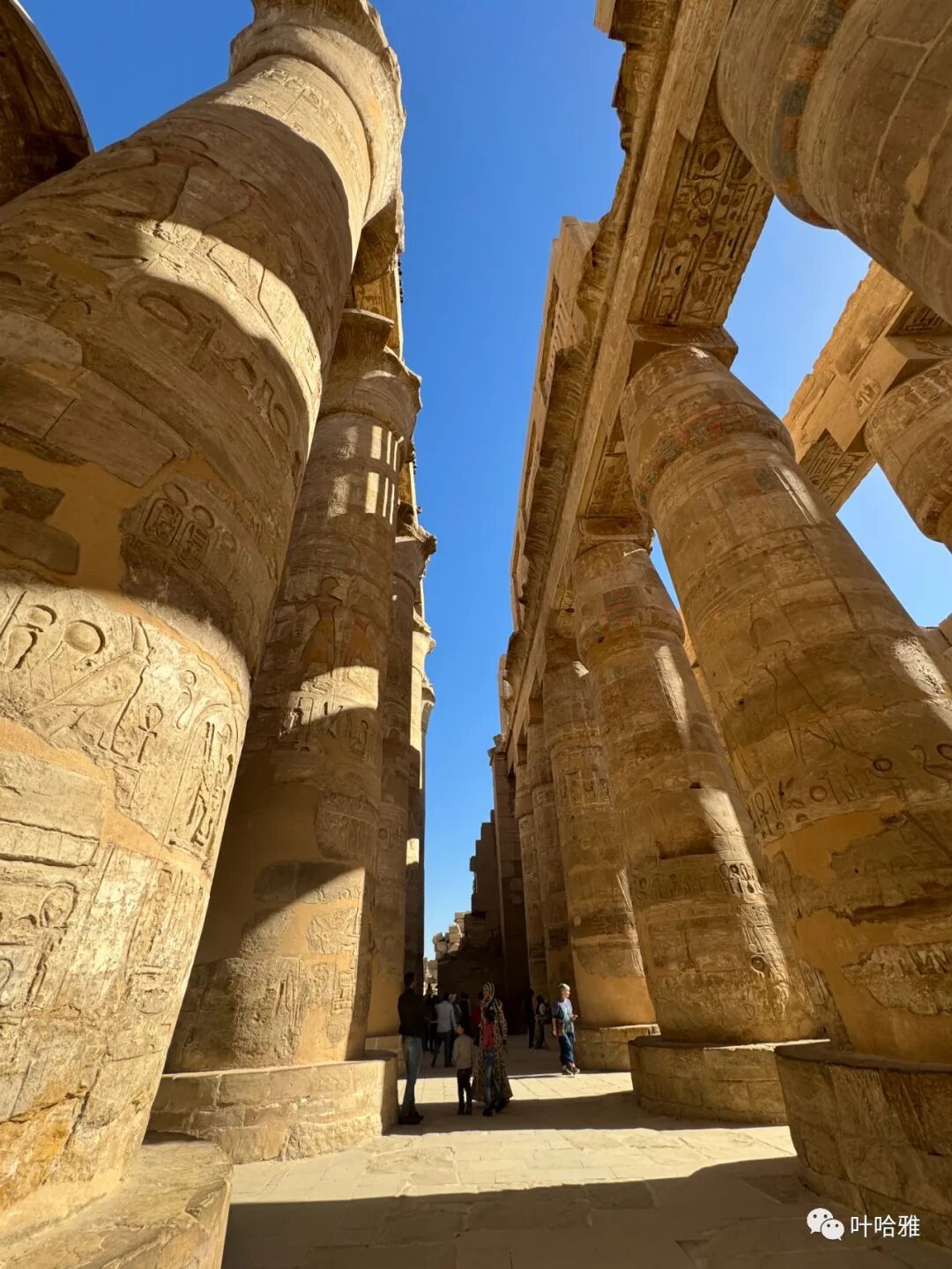
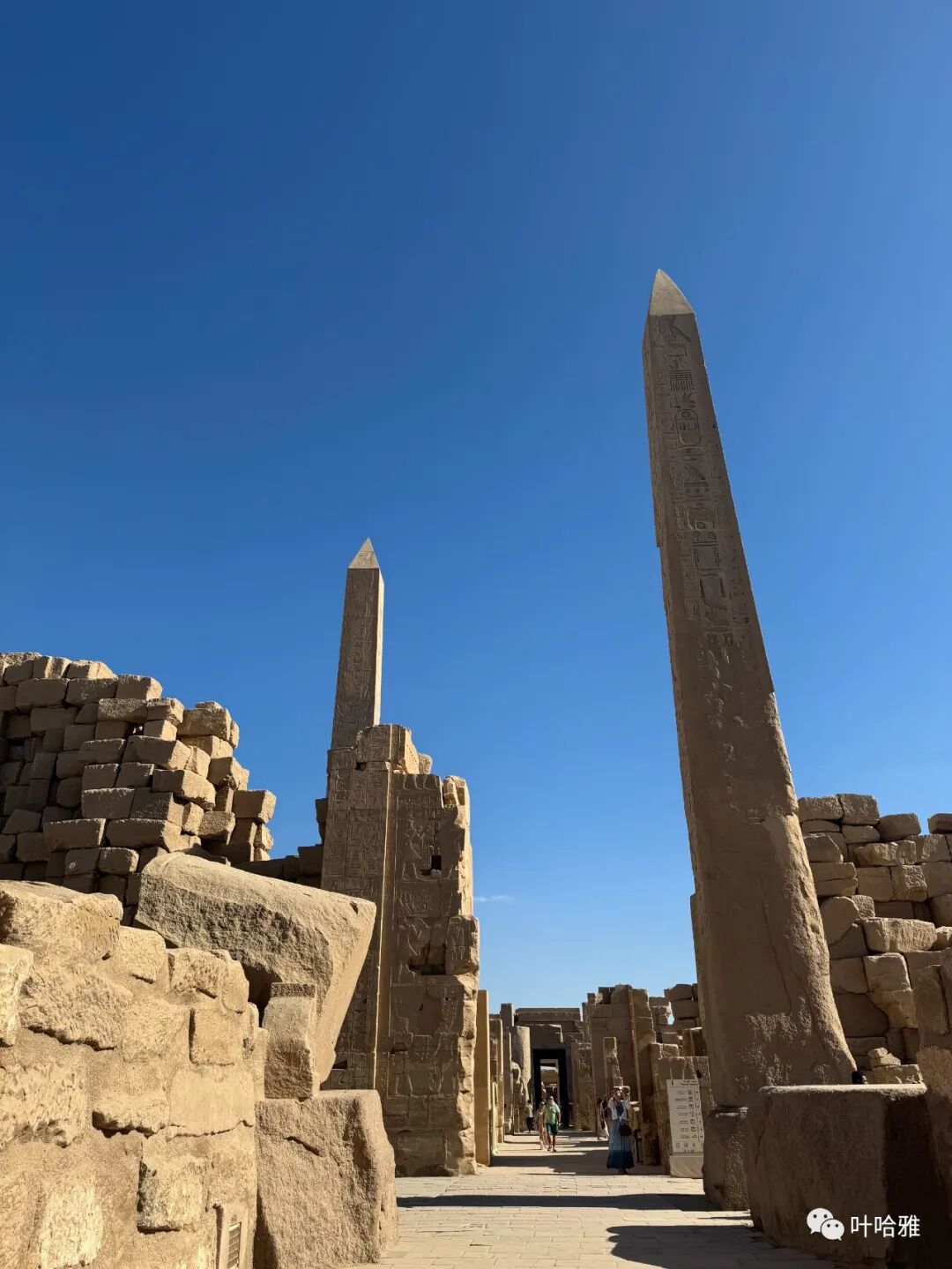
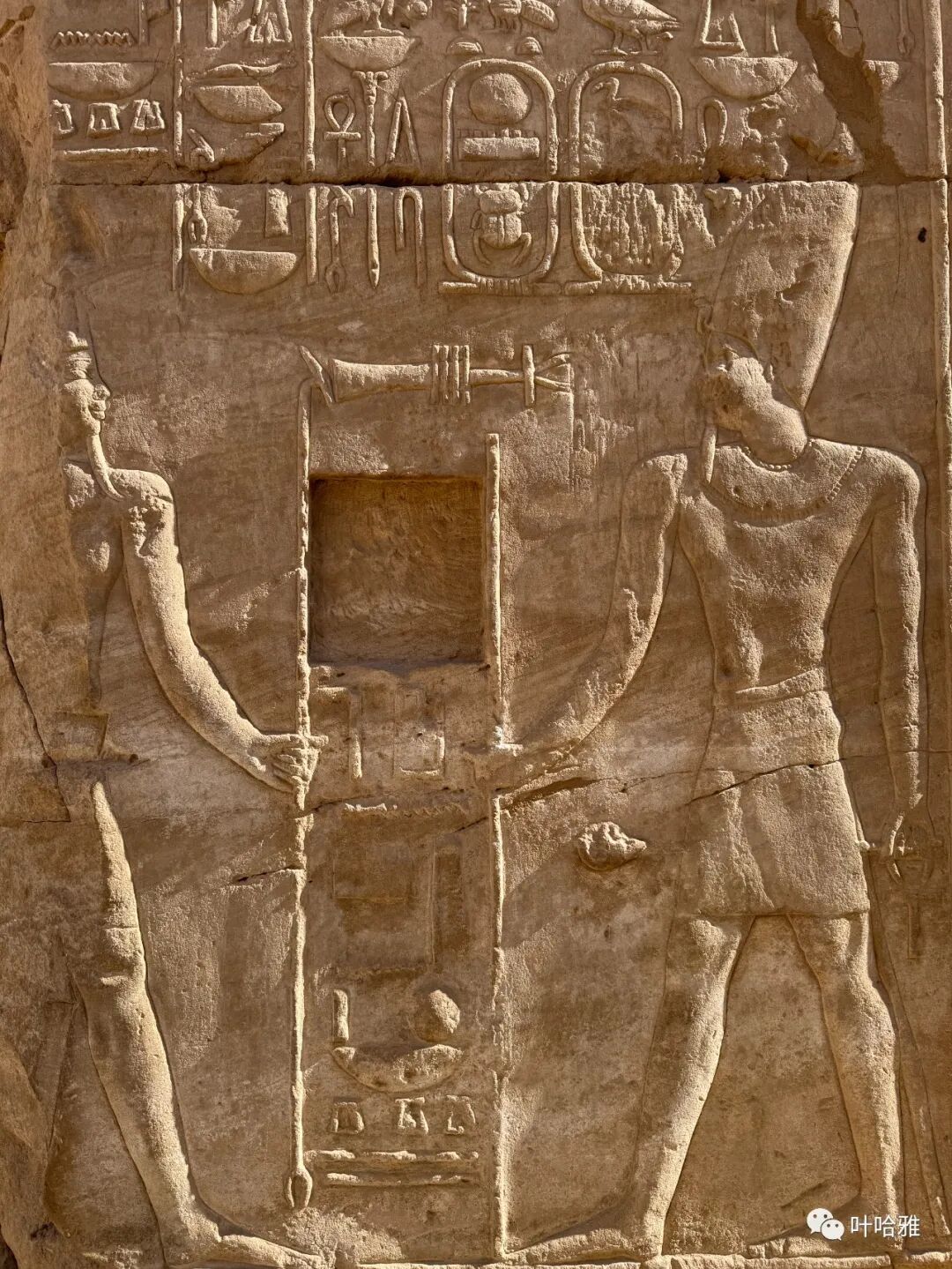
Karnak Temple
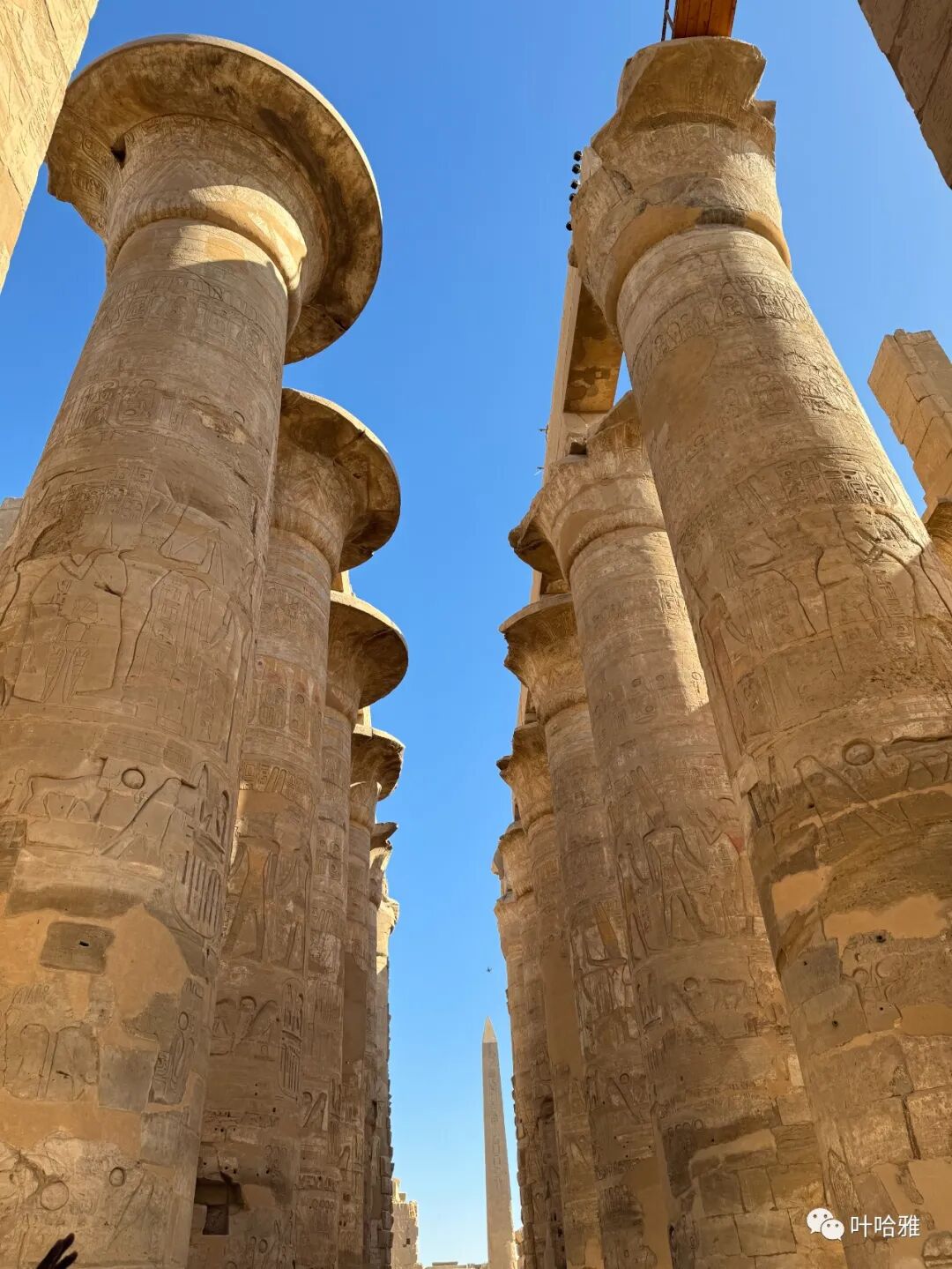
The temple was built in 2000 BC, making it over four thousand years old, and it covers an area larger than half of Manhattan.
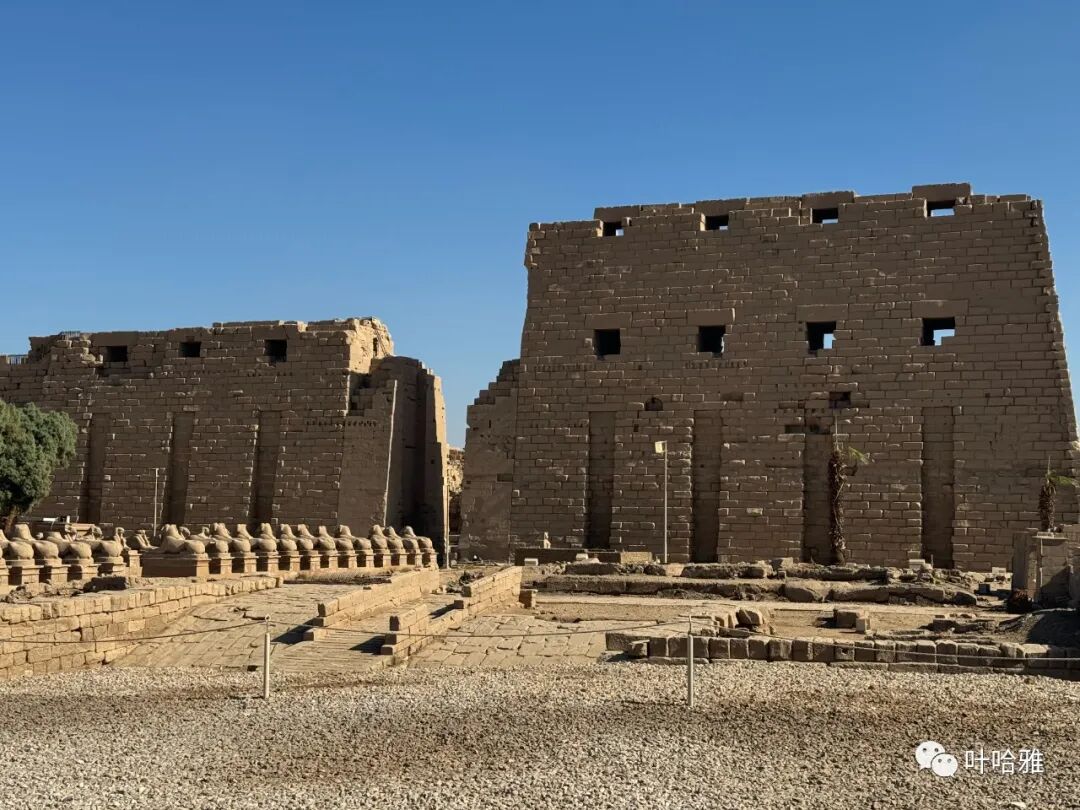
Visiting the temple during the day is a test of physical strength because the sun is so strong. When Fahim walked up to this ram-headed sphinx, he took a liking to the pebbles on the ground and refused to move. I stayed with him to play with the stones. During this time, Fahim was surrounded by Egyptian girls who took photos with him and kissed him.
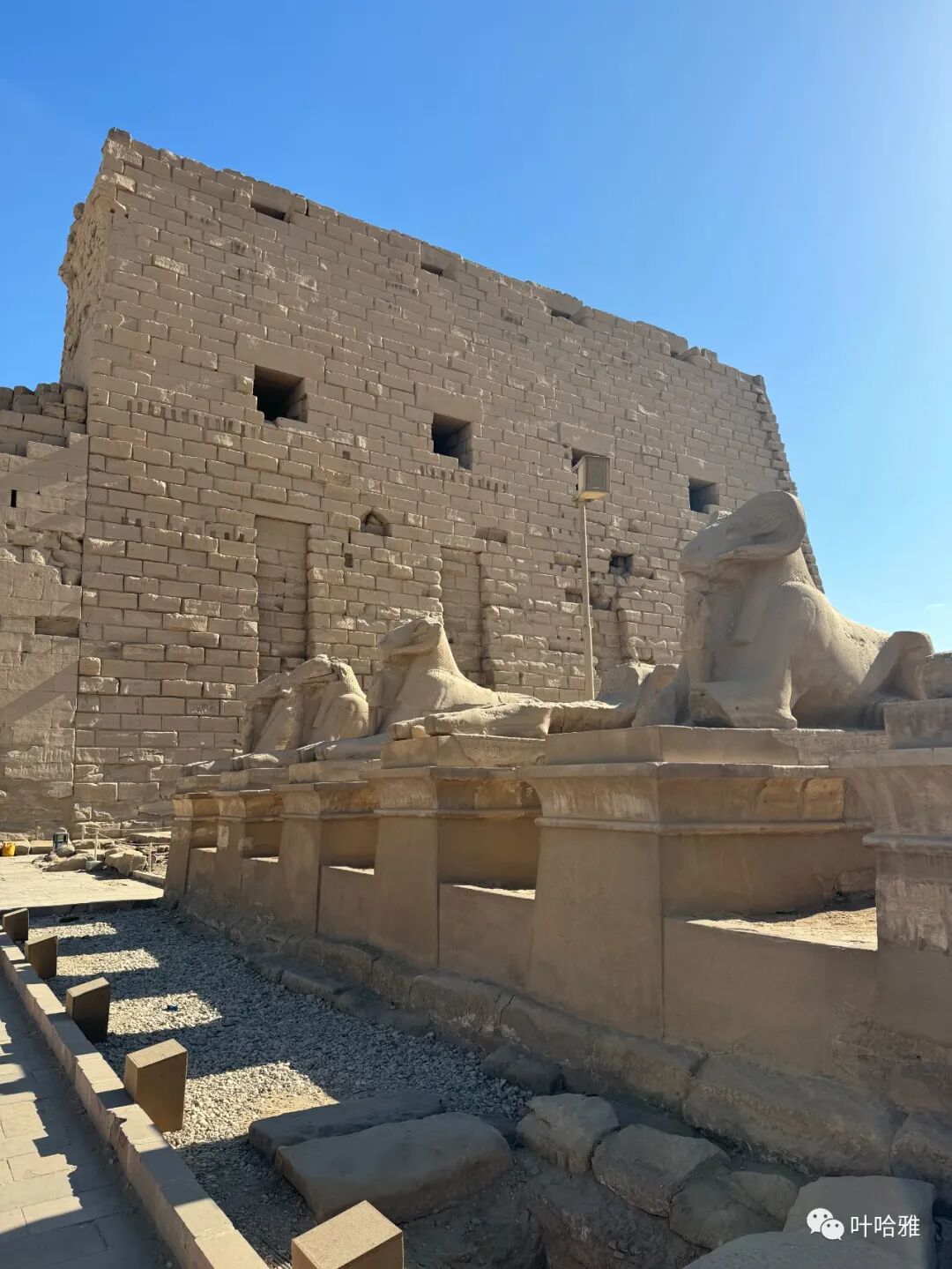
The Egyptian tour guide said he could watch the child for me so I could go inside to look around, but I said forget it. I would rather stay and play with stones with Fahim. I am actually not interested in these temples. After seeing them, I just think they were built impressively and are very spectacular, and that is all.
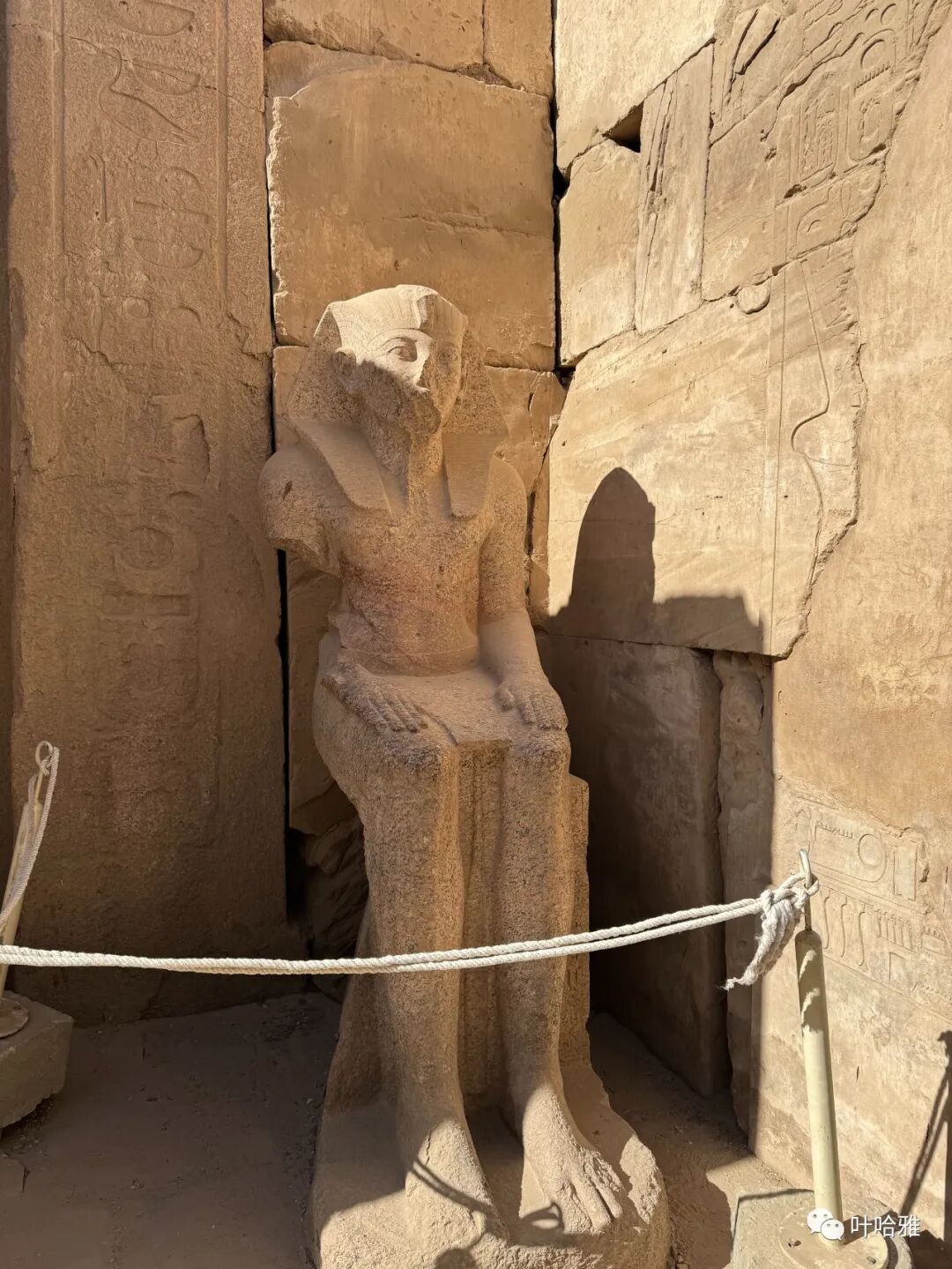
Luxor Temple
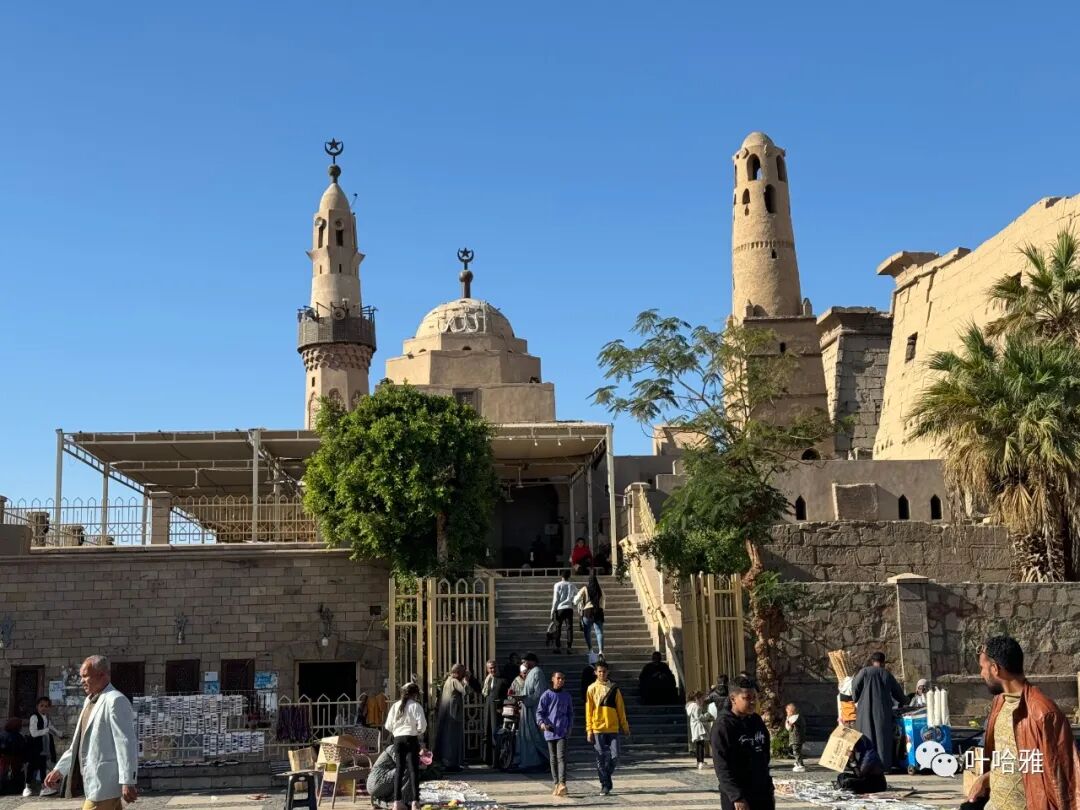
The last stop was Luxor Mosque, which is also a landmark of Luxor with over three thousand years of history. However, what attracted me here was the gongbei built on top of the mosque. At the entrance, the guide asked if I wanted to visit the mosque or the mosque. I said the mosque. He looked surprised and confirmed it with me again. I was a bit tired by then, so I told him I would skip the mosque and just see the mosque before heading back.
Abu Haggag Mosque and Gongbei
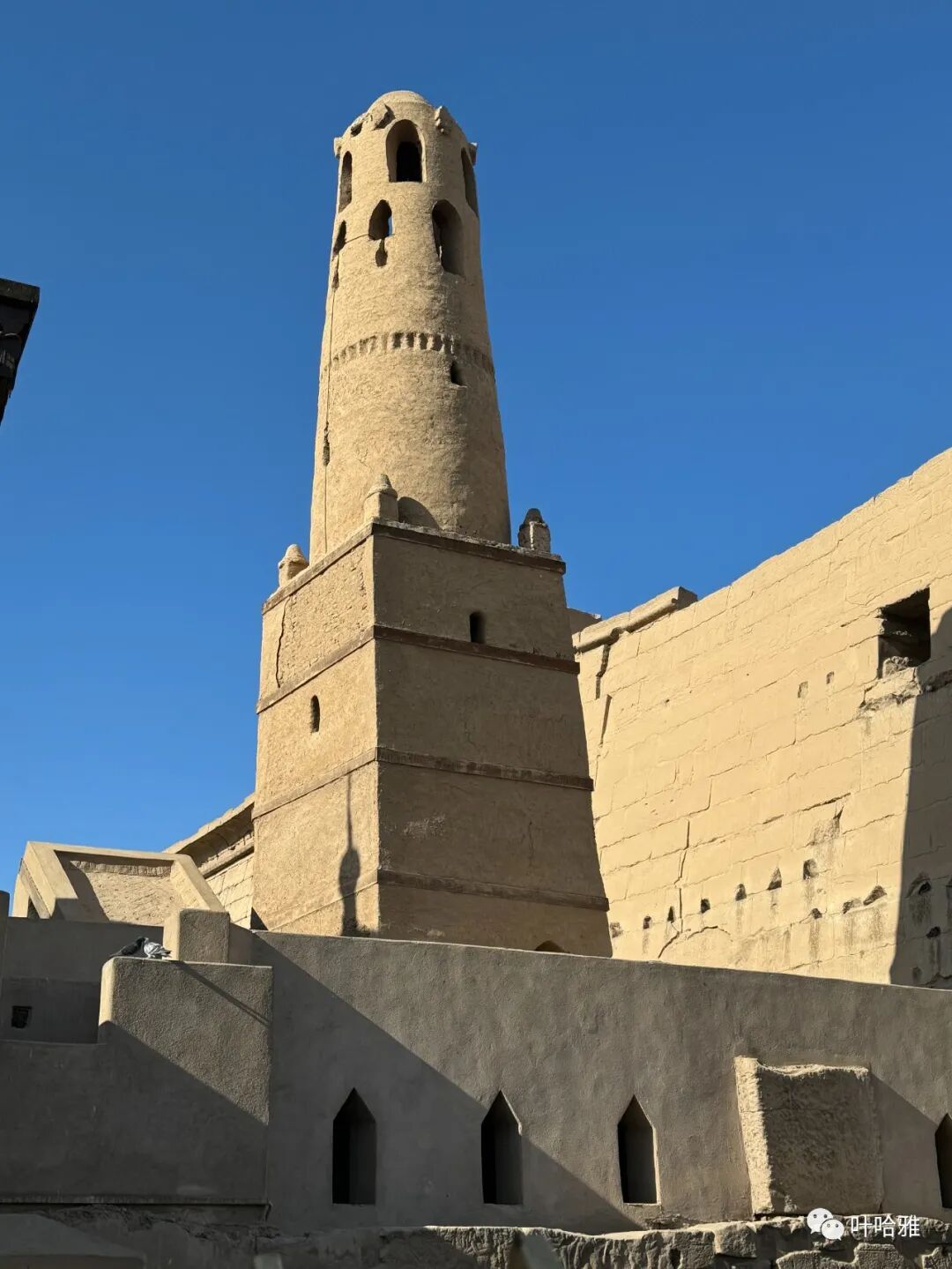
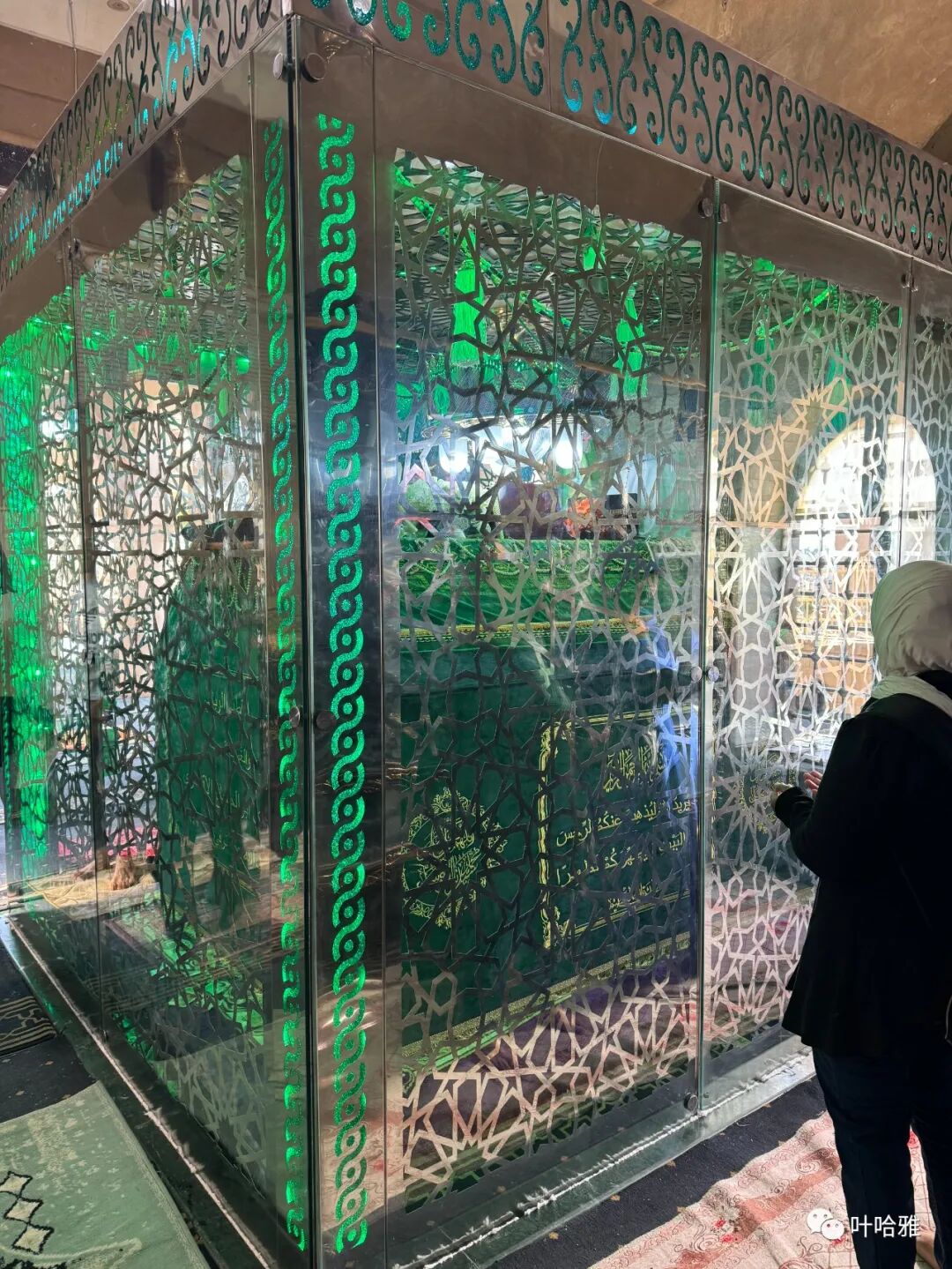
This gongbei can be considered the only one in the world built on top of the world's oldest mosque, and it is the only mosque in the world built on mosque ruins.
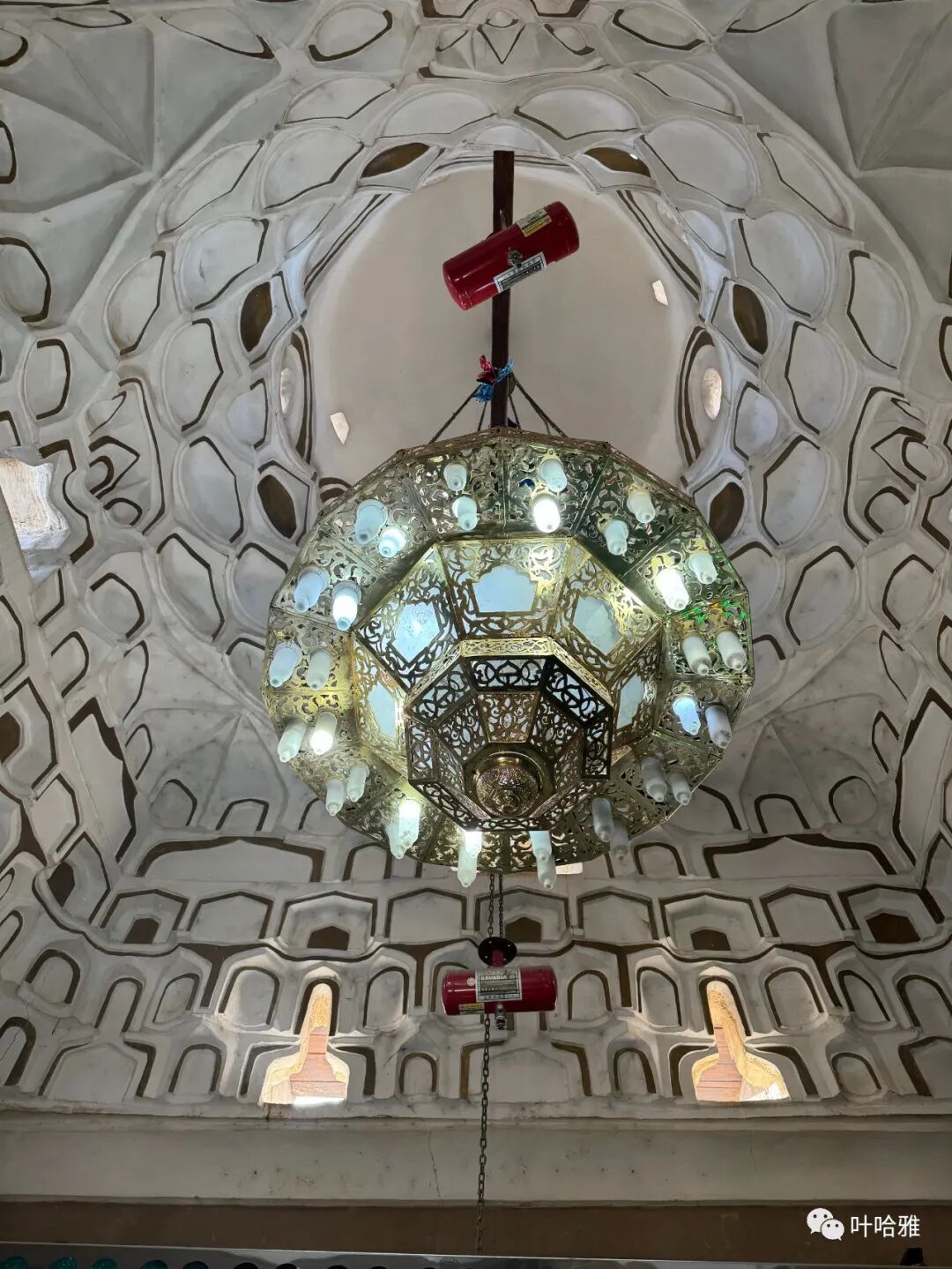
This mosque dates back to the Fatimid dynasty and was built on the ruins of a church inside the mosque. It was completed around 1286 and contains the tomb of the Sufi mystic Yusuf Abu Haggag. Haggag was a scholar born in Baghdad in the 13th century. According to local legend, he captured Luxor from the Roman Queen Tarza.
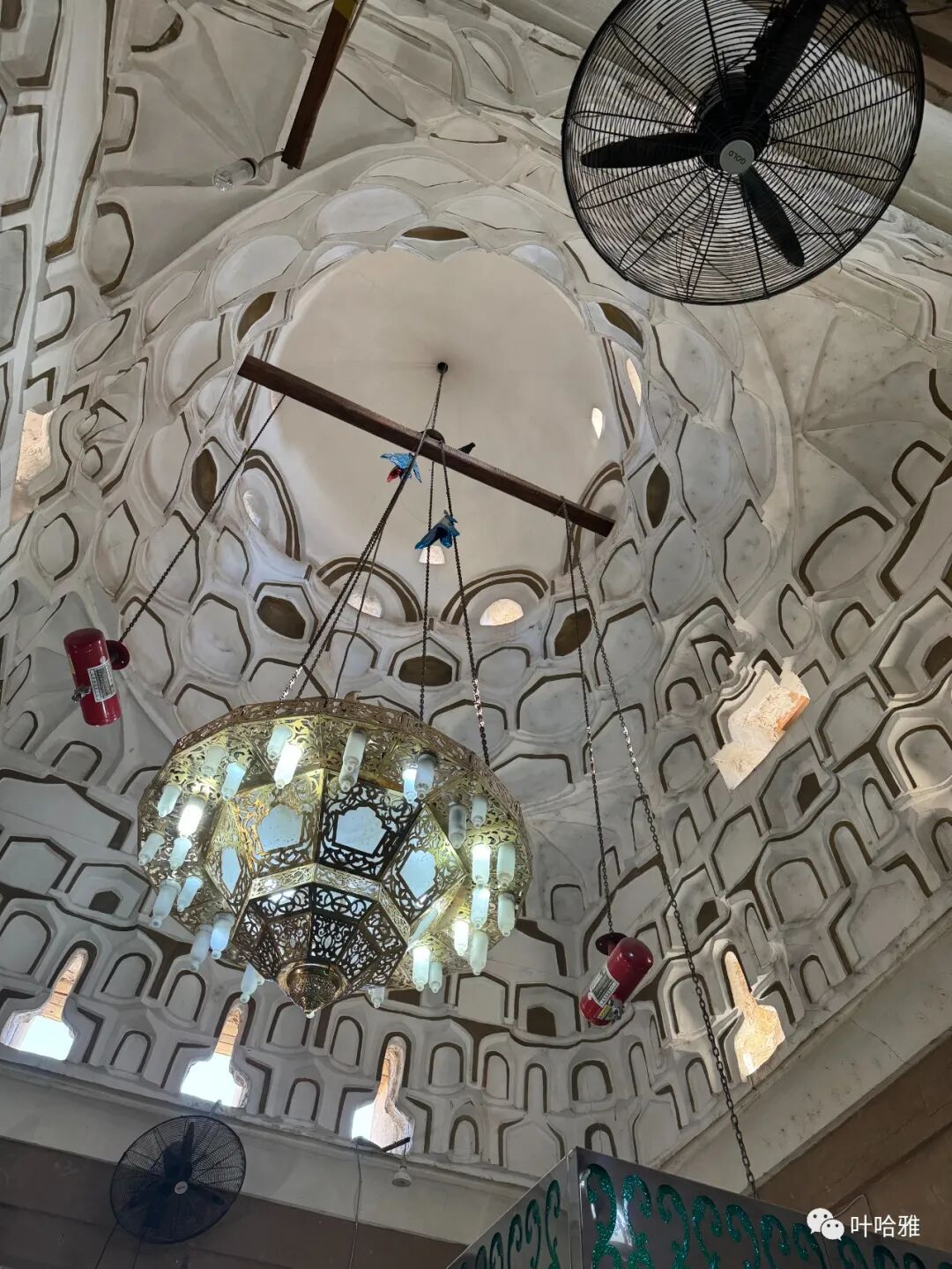
Luxor Mosque was converted into a church by the Copts in 395 AD and then into a mosque in 640 AD. Therefore, it can be said that this is the oldest religious building in the world still in use, with a history spanning over three thousand four hundred years.
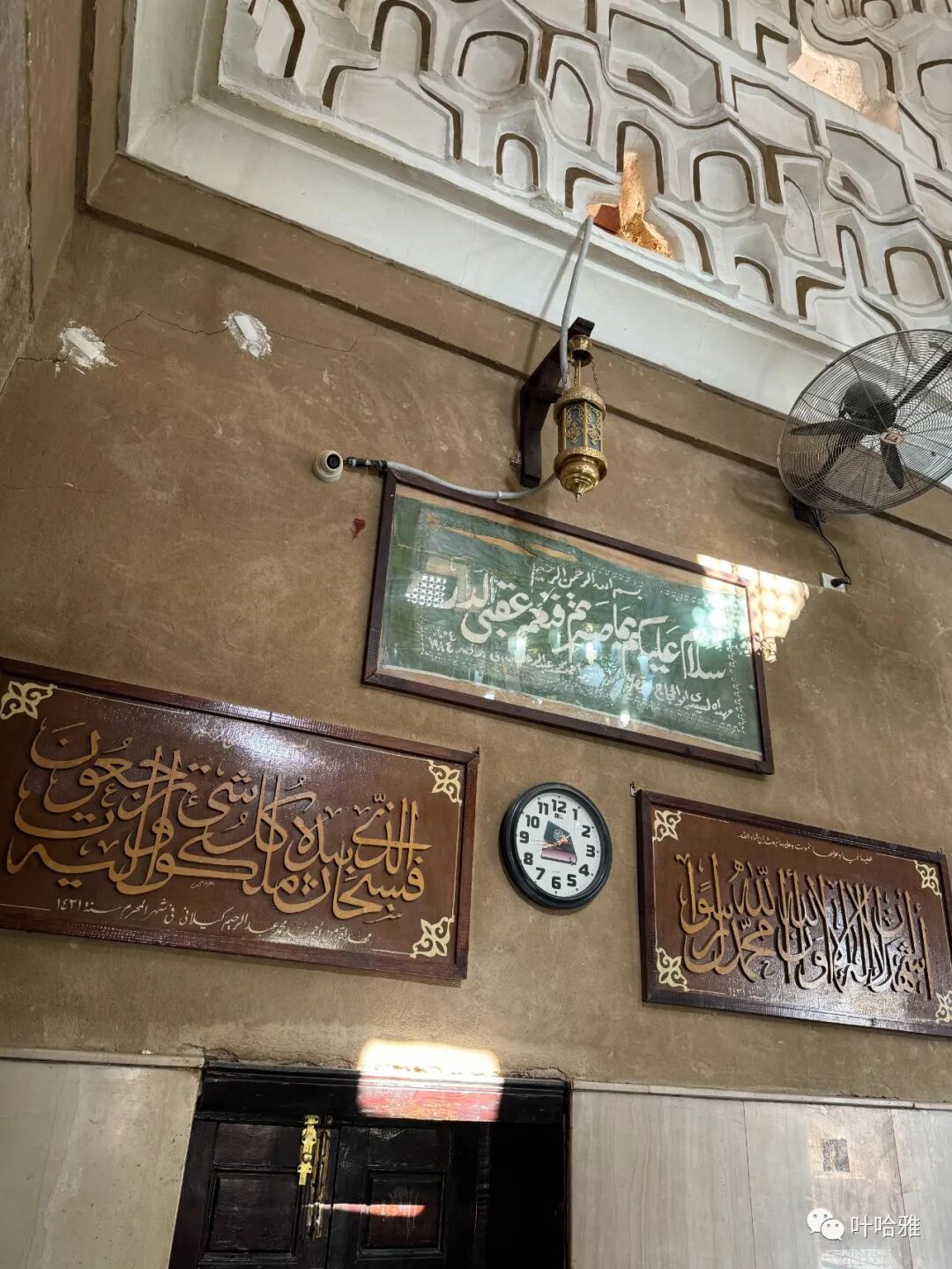
Inside the gongbei, there are some believers visiting the graves, with more women than men.
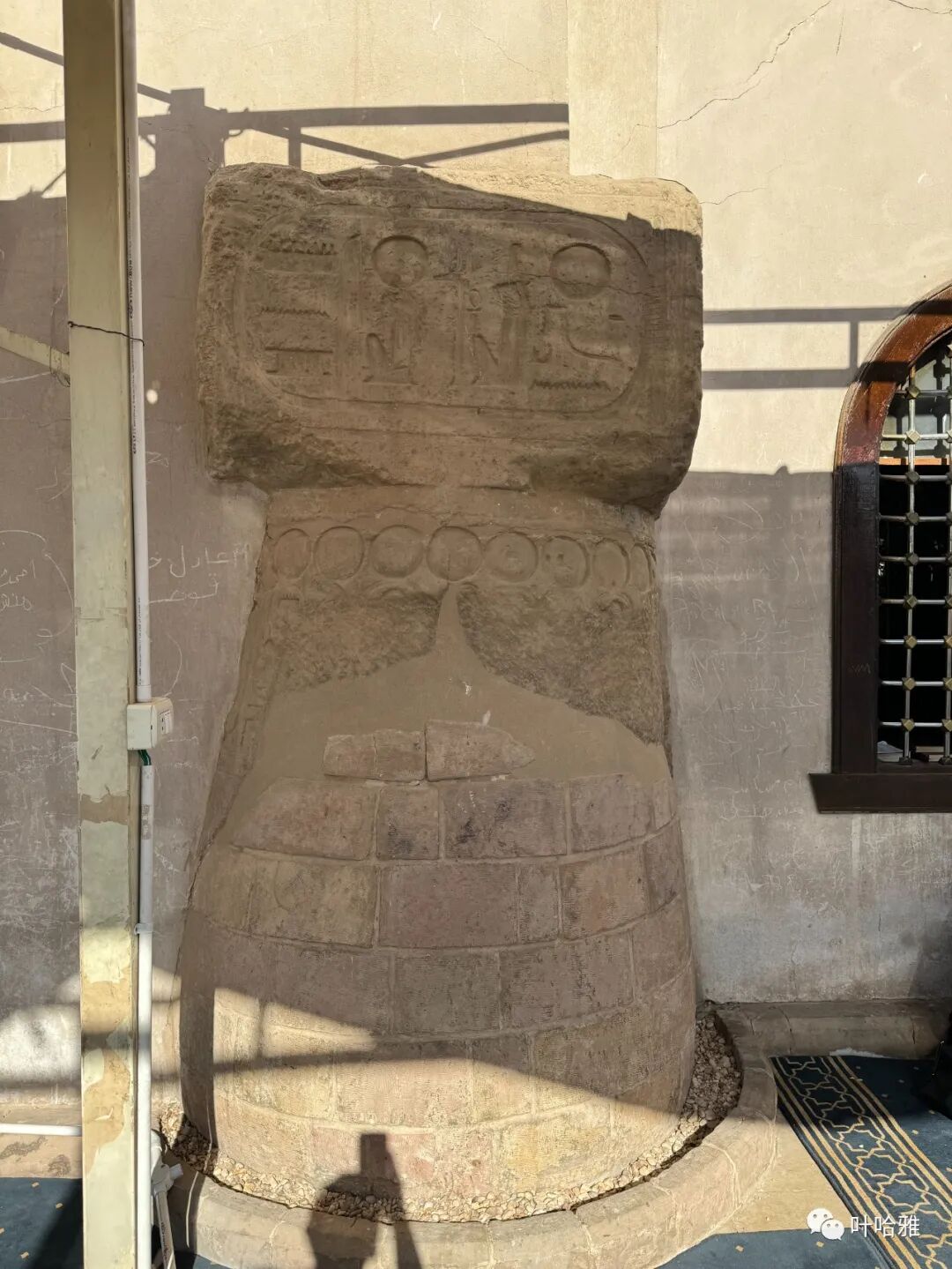
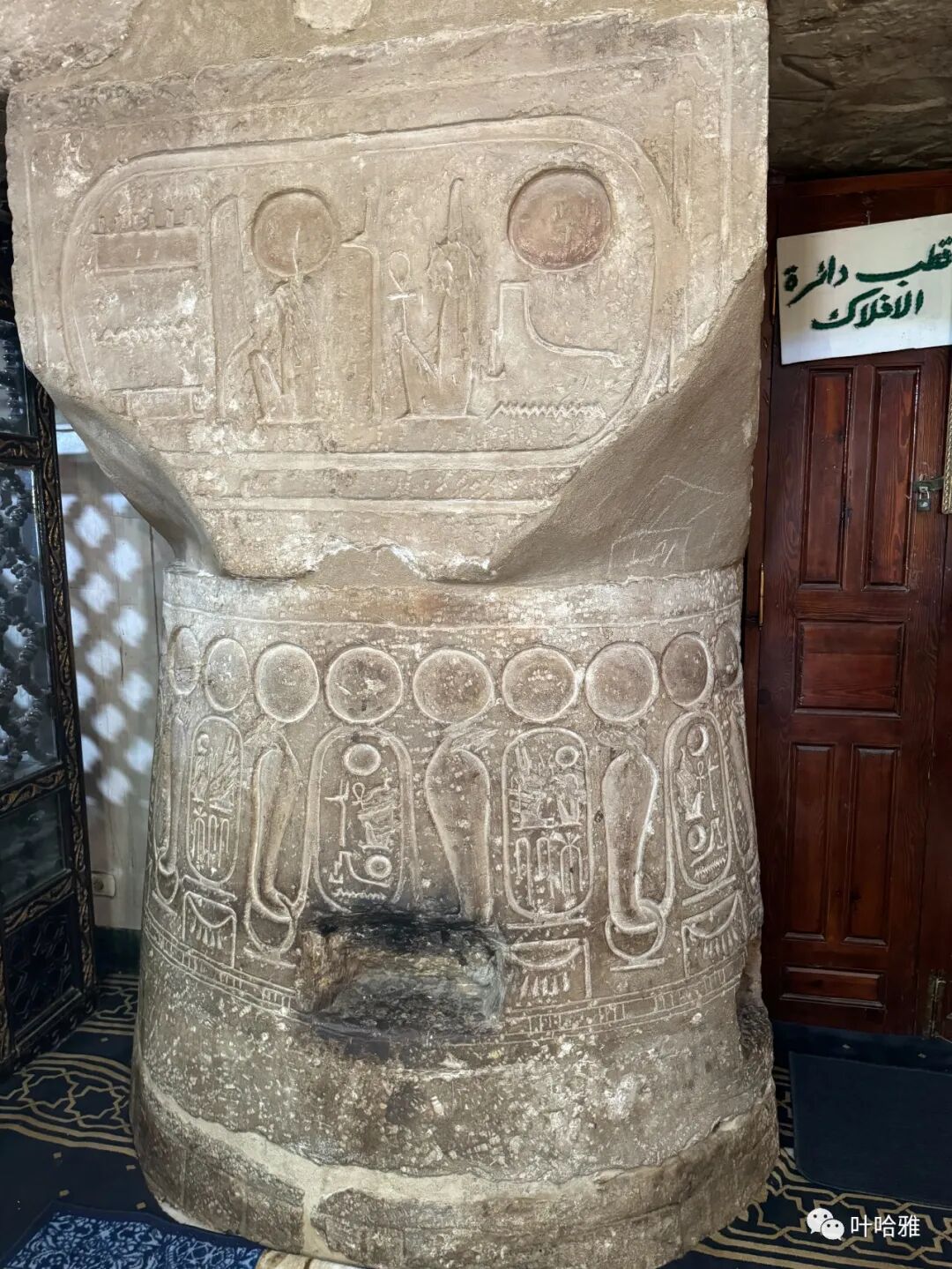
The mosque suffered a fire in 2007. When it was rebuilt, stones from the mosque were used, and you can see pharaonic hieroglyphs on the carvings of this pillar.
Looking out from the mosque railing, you can see the Luxor Mosque. The once arrogant pharaohs compared themselves to gods, but they never imagined that three thousand years later, their mosque would become a tourist attraction for people to glance at in passing.
Al Iman Mosque
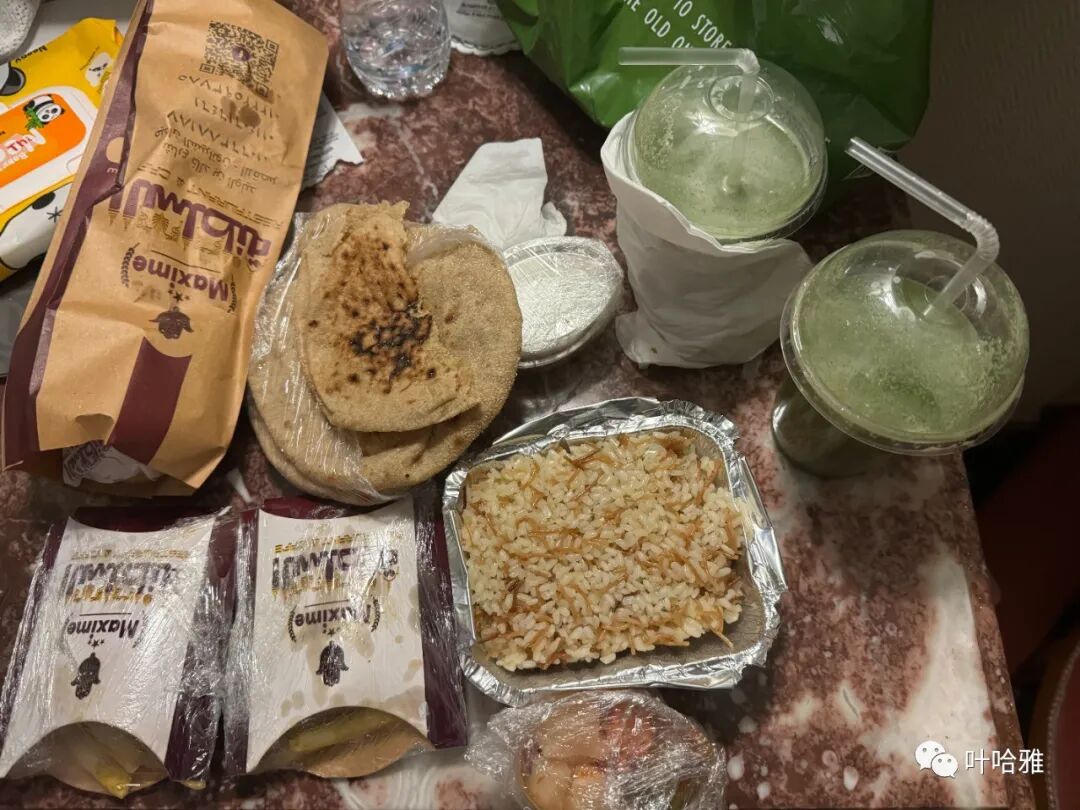
This is the closest mosque to my hotel. Fewer than 10 people attend the adhan (banda). In Arab countries, people go back to sleep after the adhan, and almost no shops are open on the street. Only a few small shops selling flatbread (da bing) are open, so it is best to eat breakfast at the hotel, or you will have nothing to eat outside.
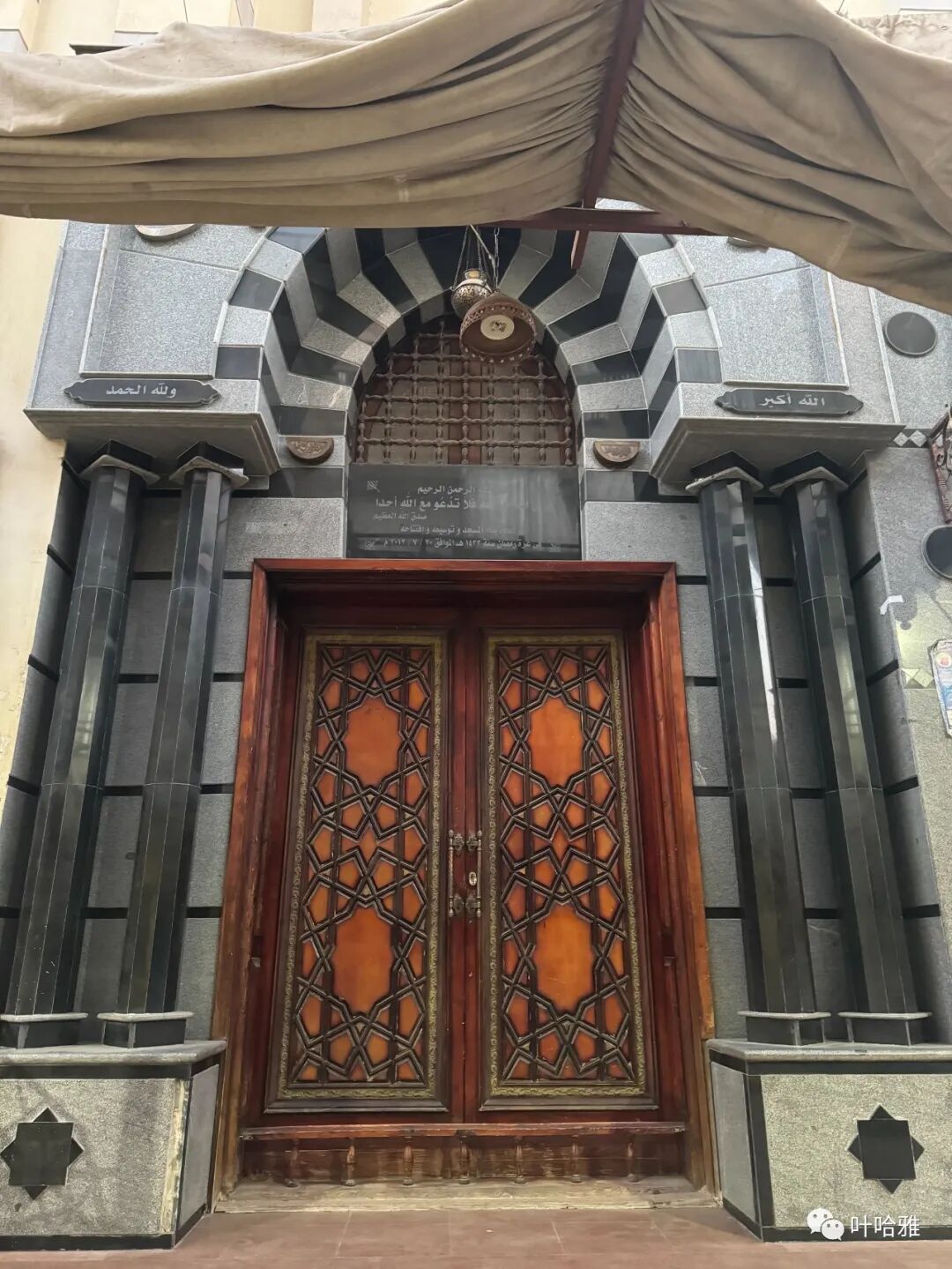
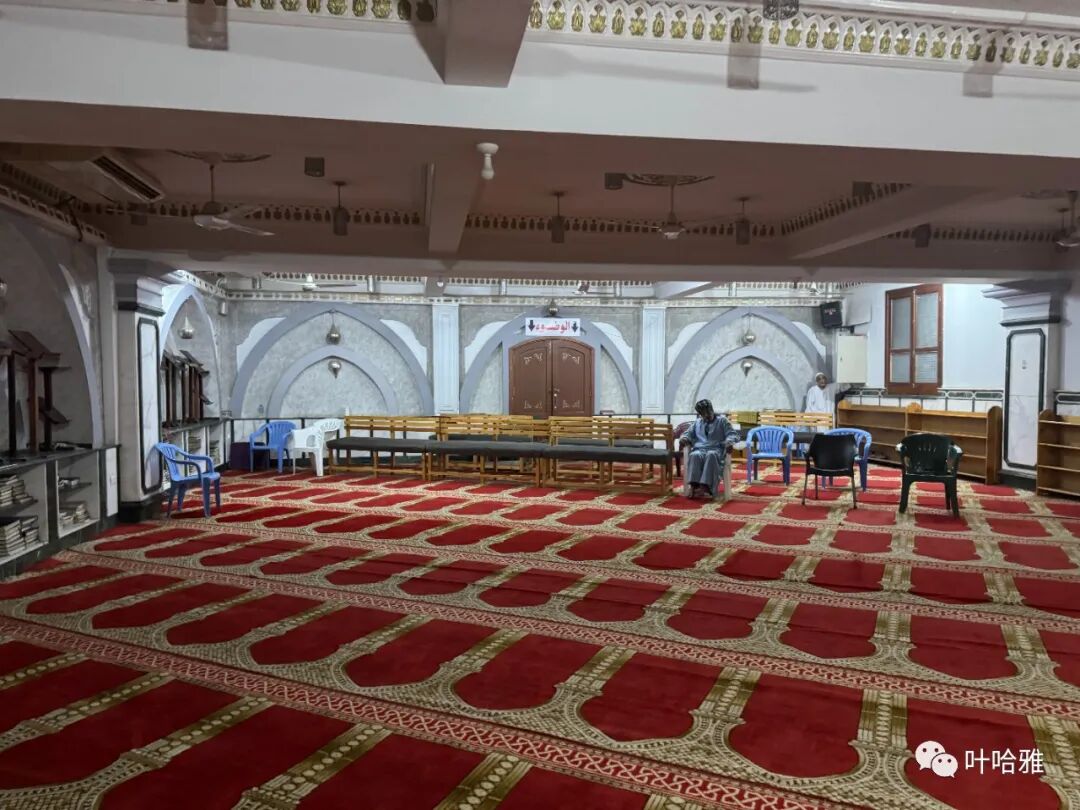
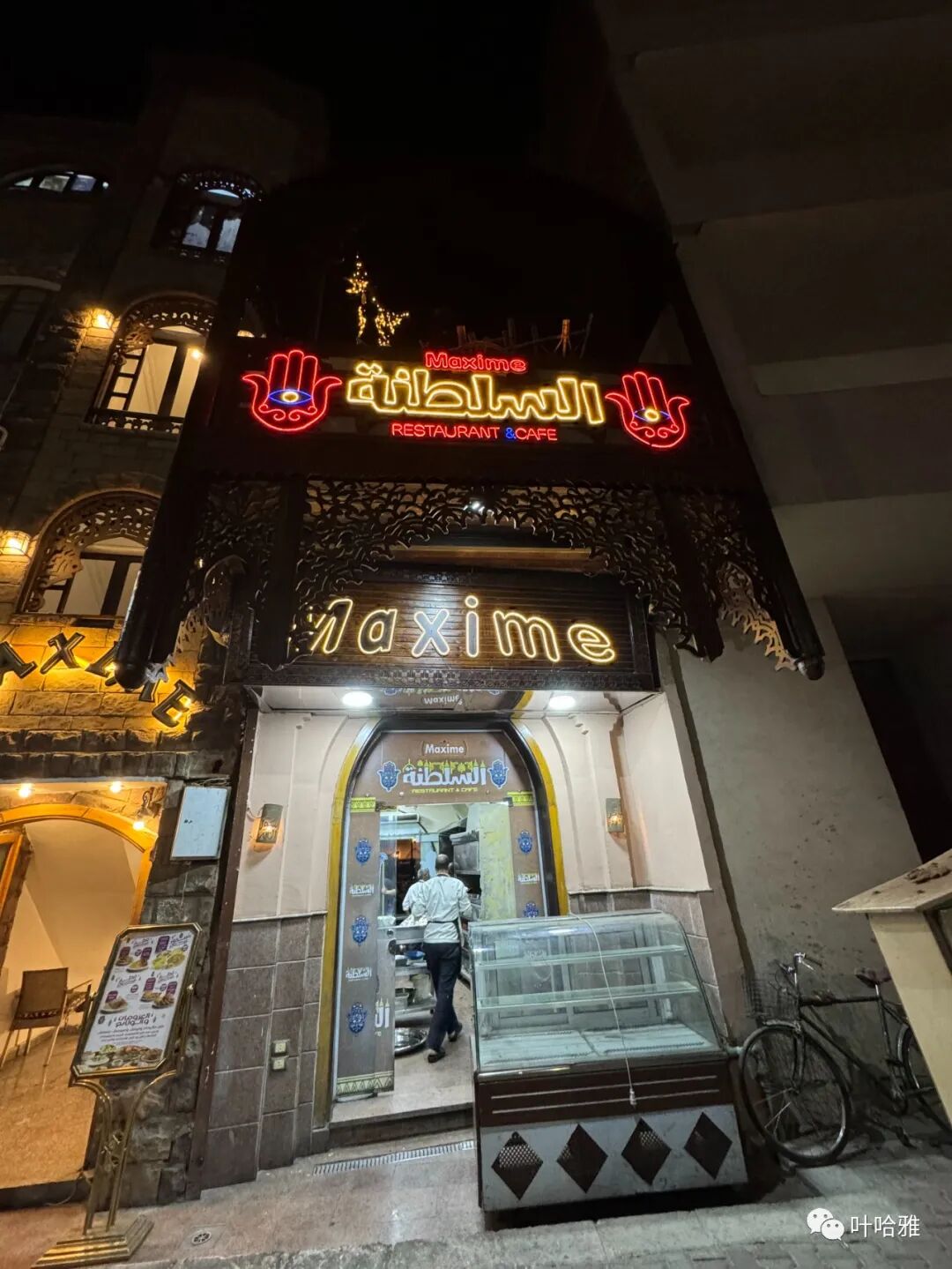
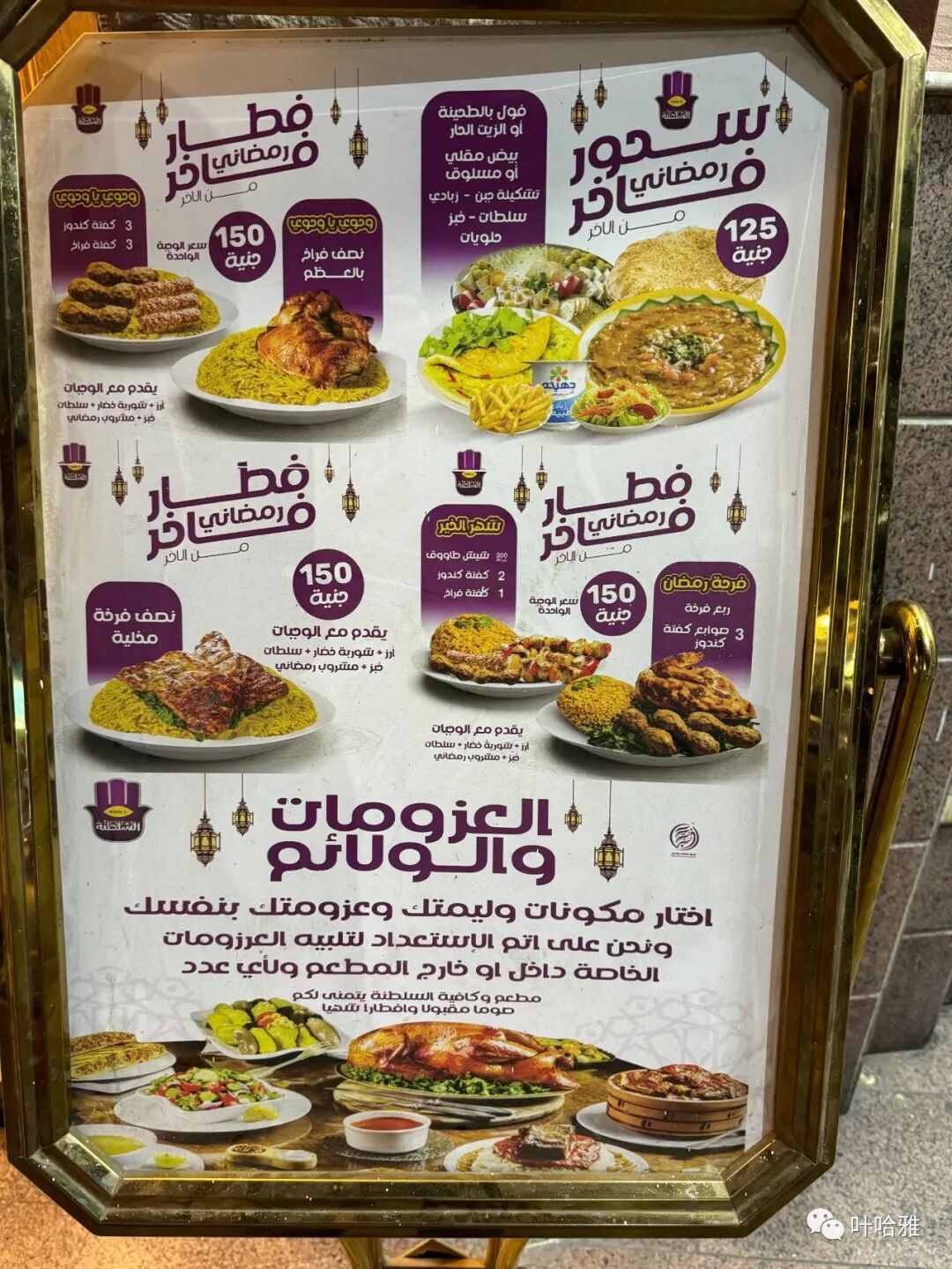
As a convenient fast food in the Arab region, shawarma (sharama) is as popular as our meat burger (roujiamo); it is economical, affordable, and delicious.
El-KABABGY RESTAURANT
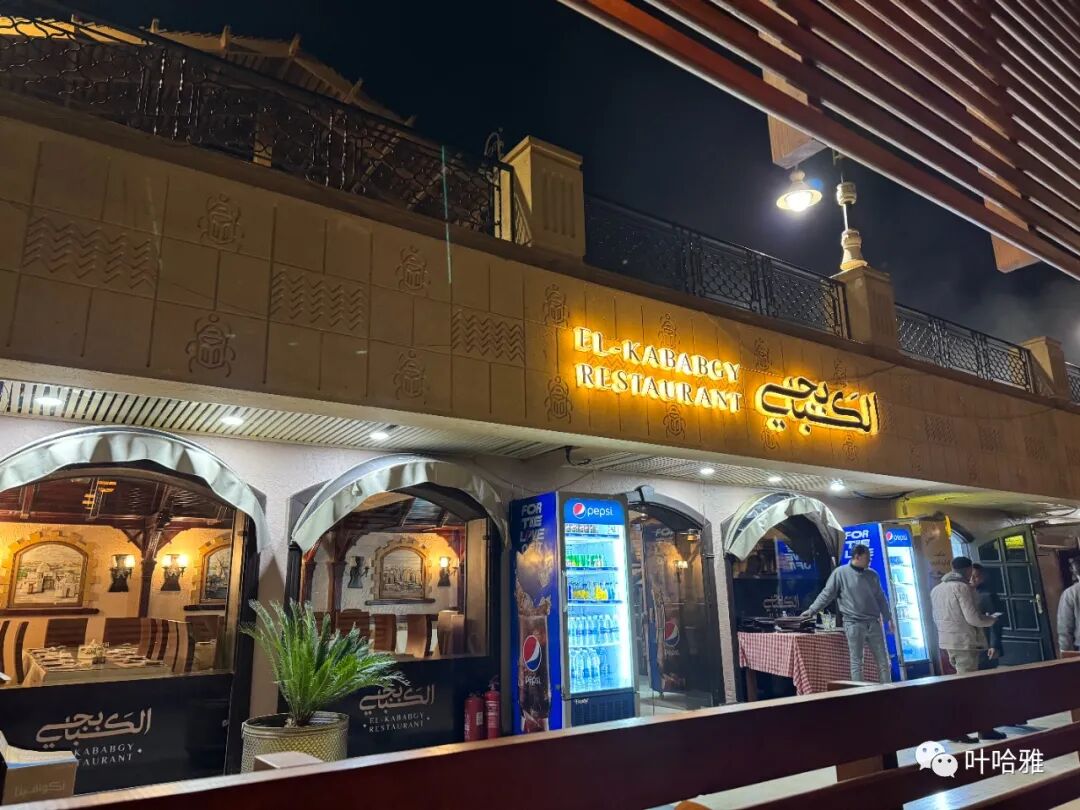
This shop is the number one ranked restaurant in Luxor on the TripAdvisor app, and after eating there, I feel it truly deserves this ranking. This shop is only 1 kilometer away from our hotel on foot.
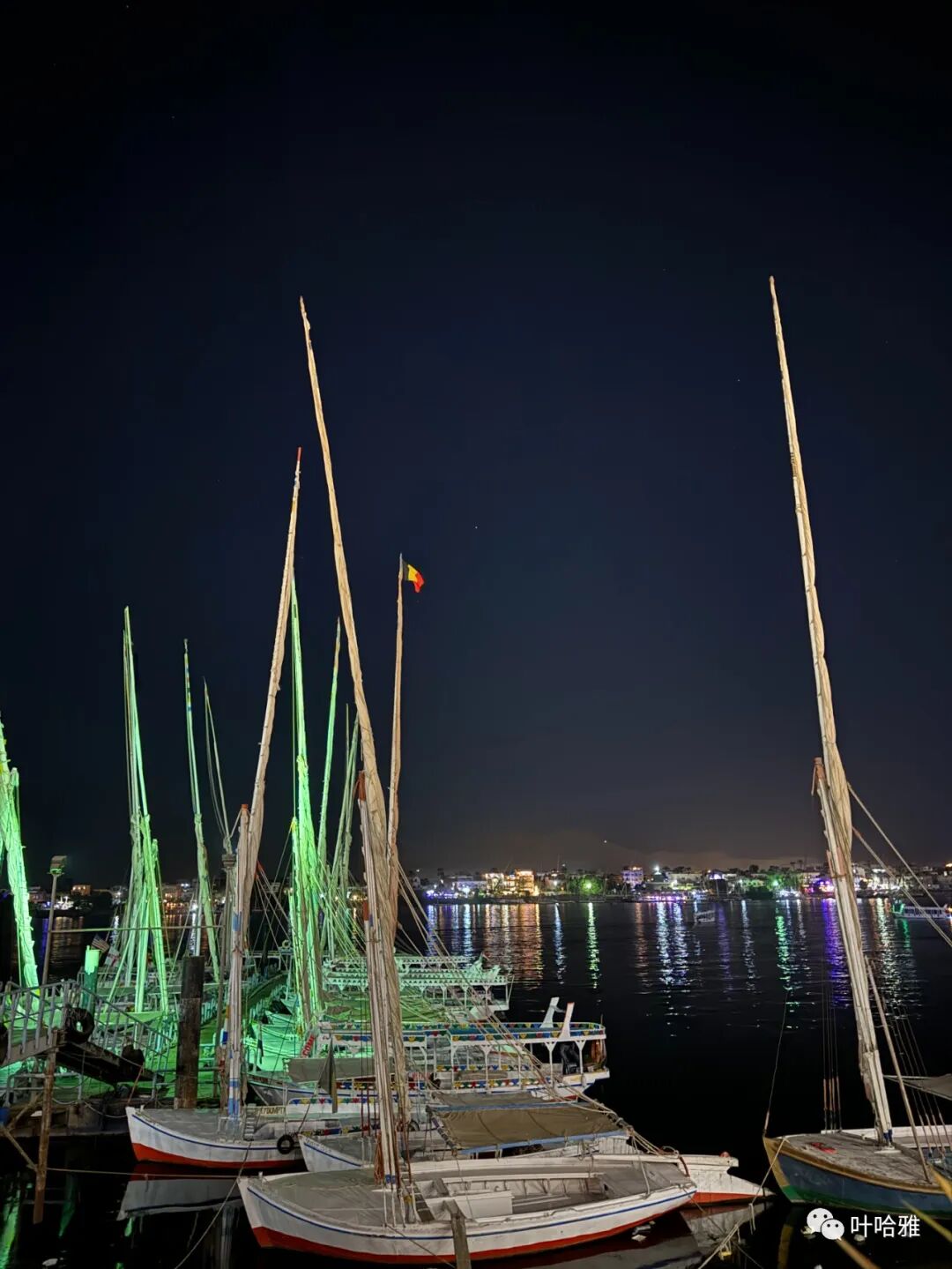
The outdoor part of the restaurant is right on the Nile pier. In December, the temperature in Luxor is only 20 degrees, which is very cool.
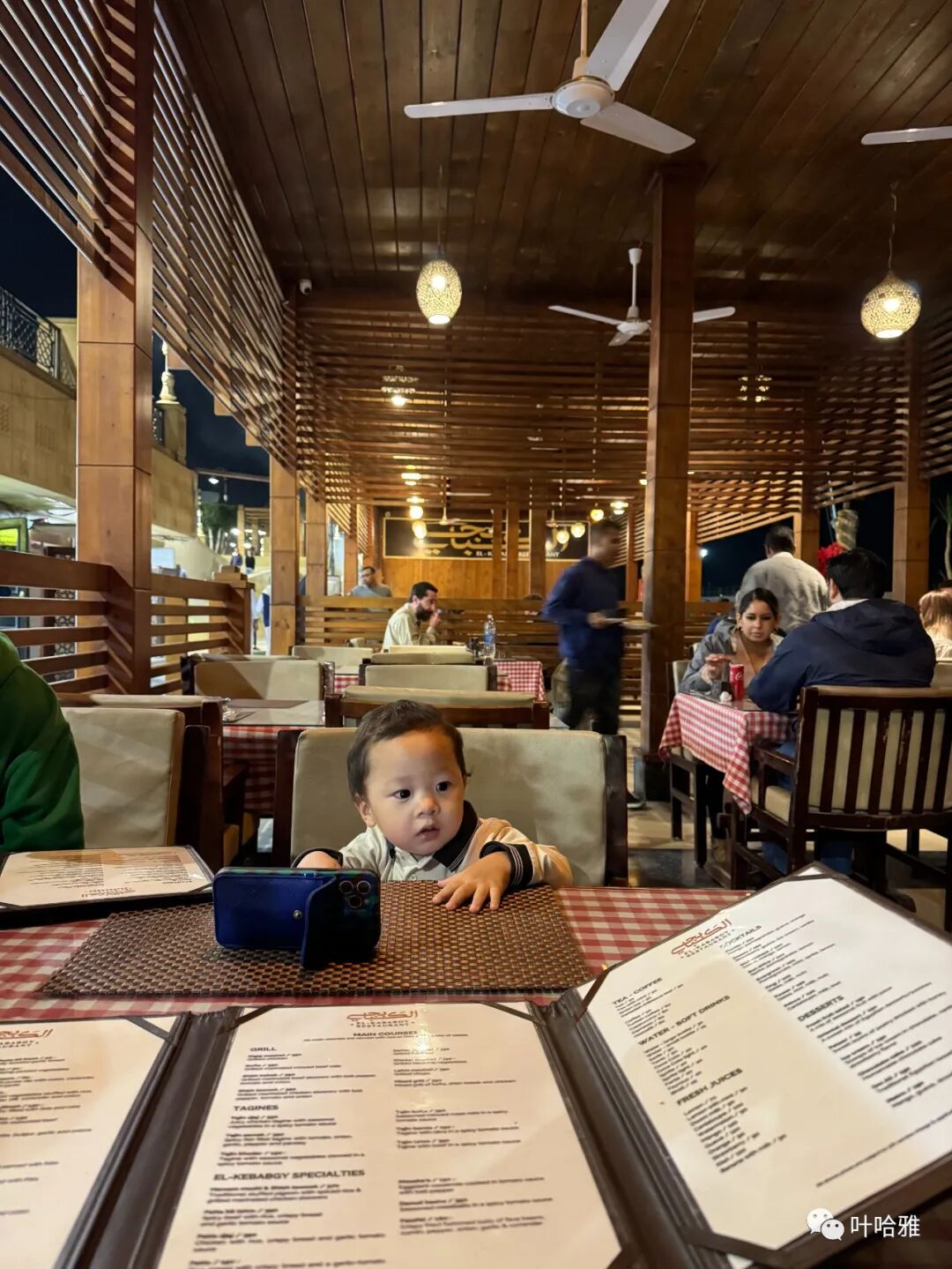
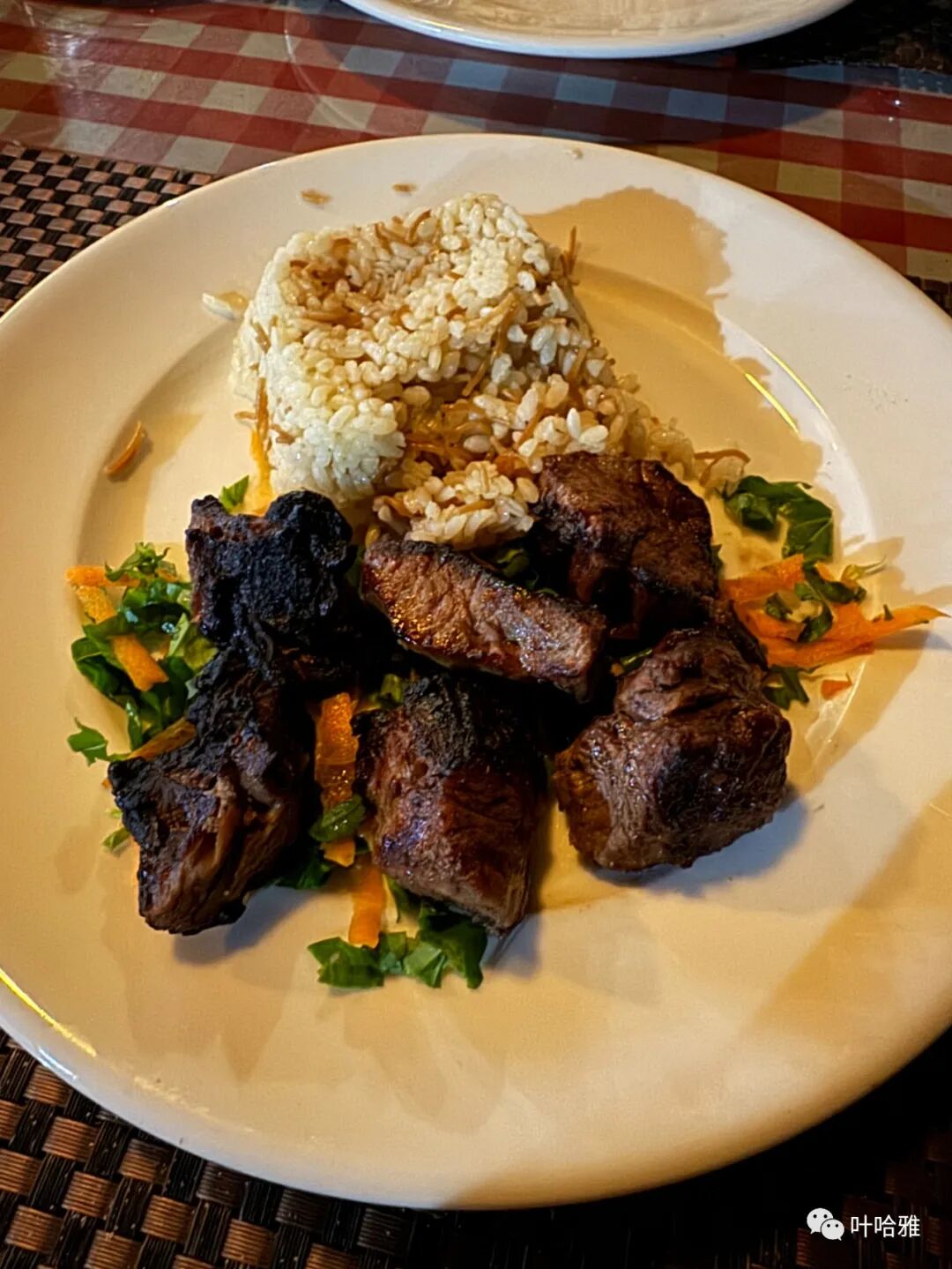
The grilled meat at this shop is extremely fragrant and clearly better than other restaurants we have eaten at. The per capita consumption is only about one hundred yuan. In China, at an Arab restaurant of the same level, two people would spend at least four or five hundred.
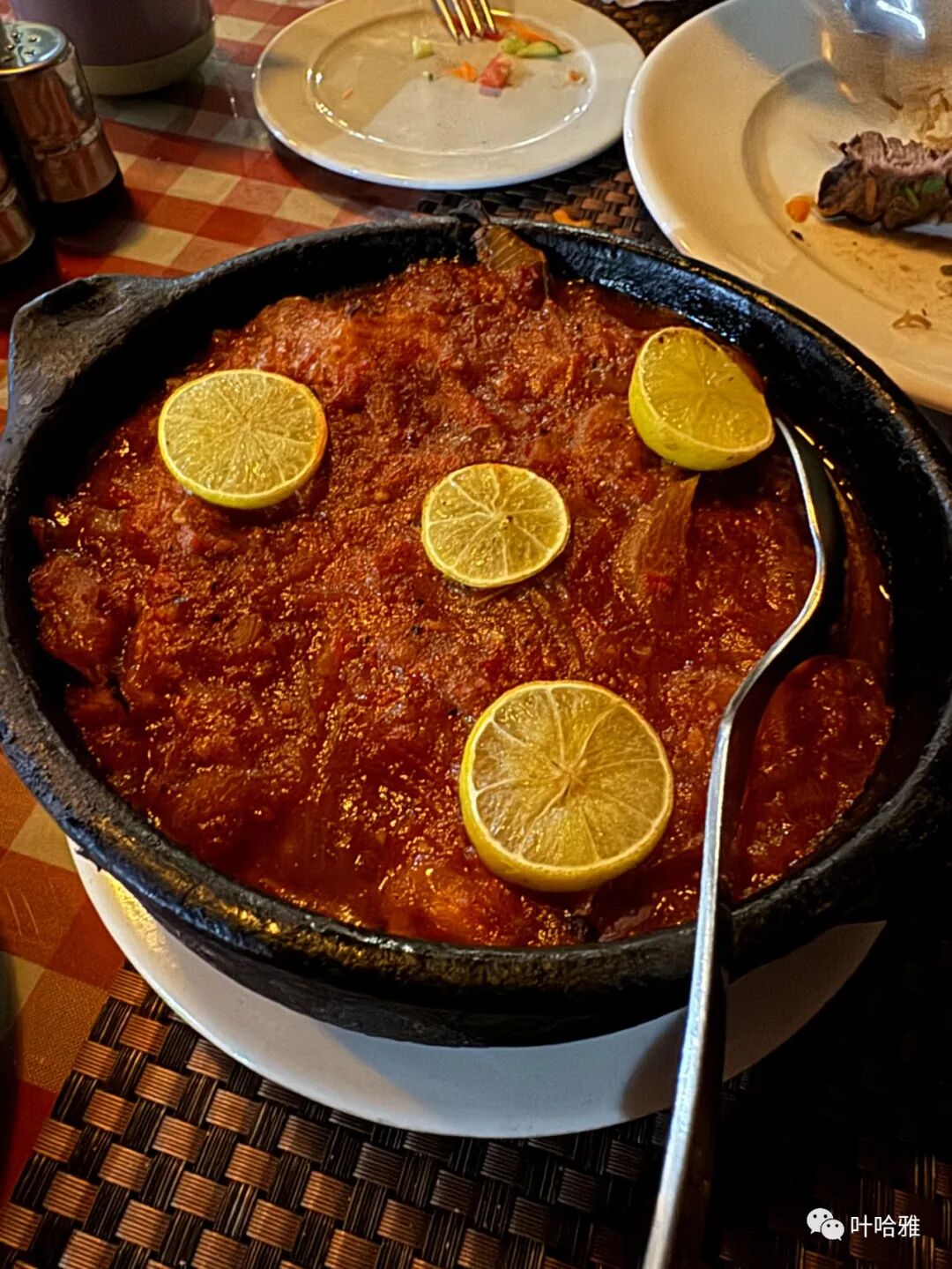
Tagine pot (tajiguo)
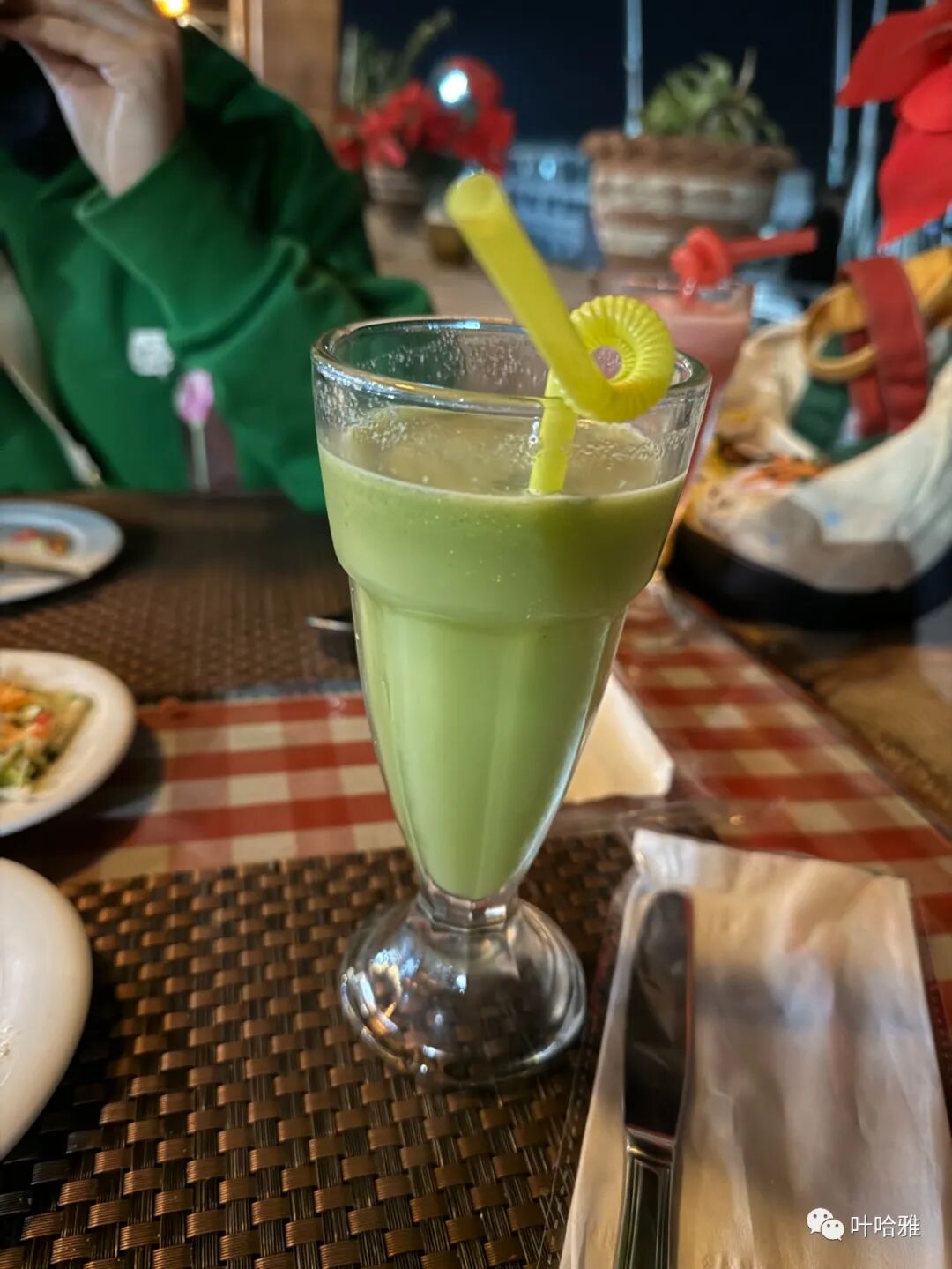
The drink I had most often in the Arab region was lemon mint juice. Its sour taste is great for opening up your appetite and quenching your thirst.
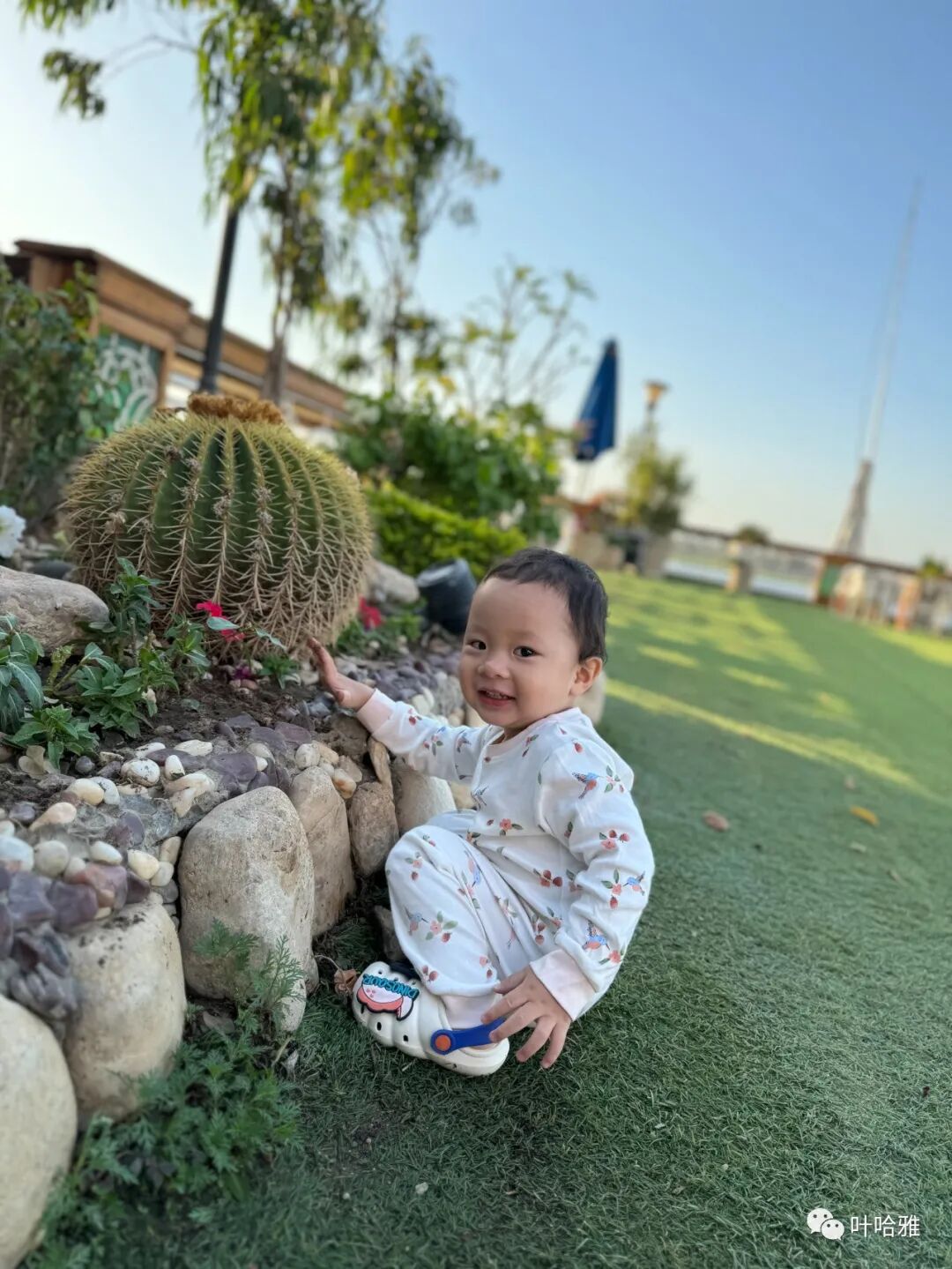
What is annoying about Luxor is that the streets are full of carriage drivers looking for customers. They really chase you and shout non-stop. One day, I wanted to take Fahim out for a walk, but I got so annoyed by the carriage drivers trying to get business that I just went back to the hotel and stayed inside.
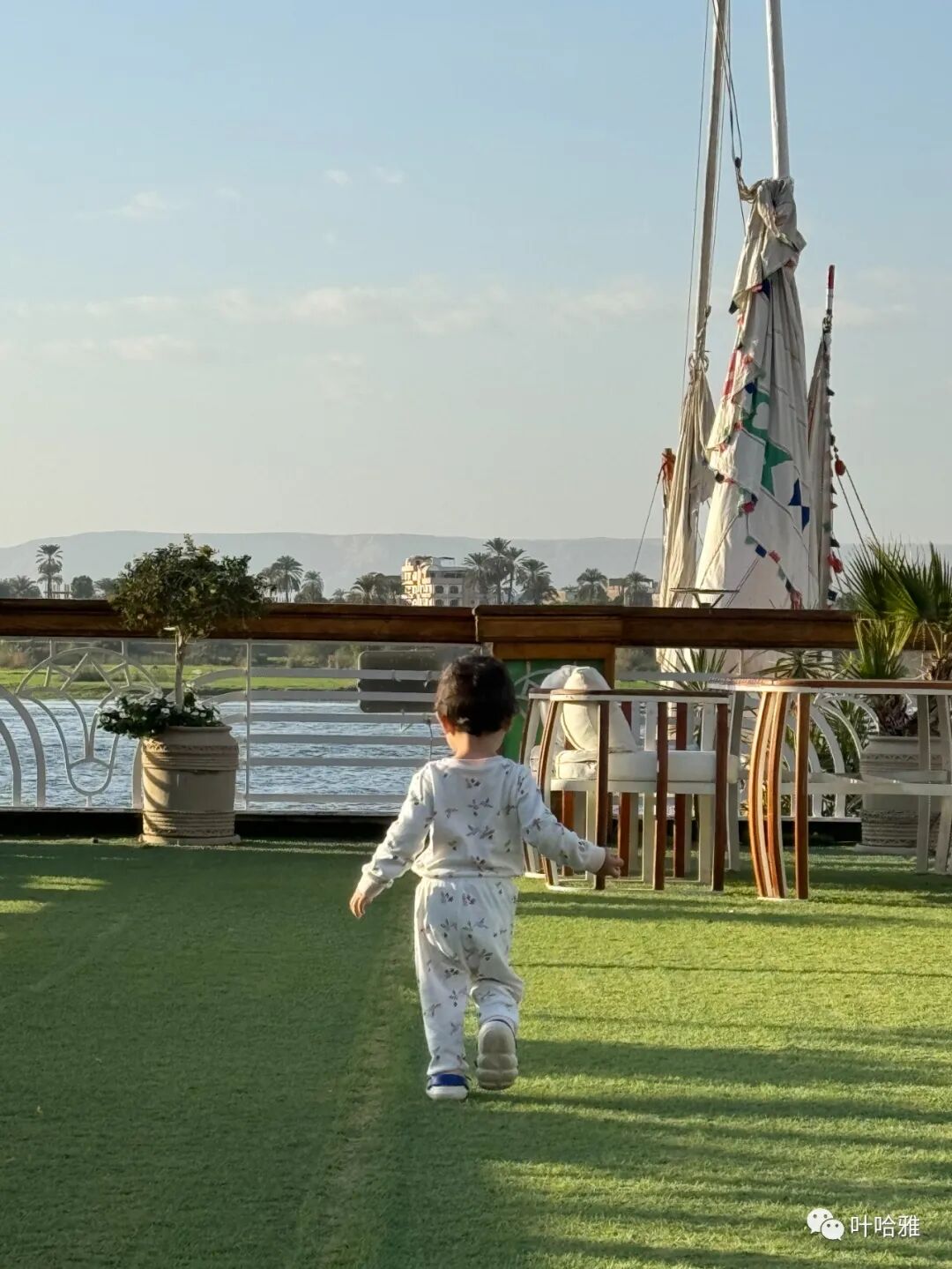
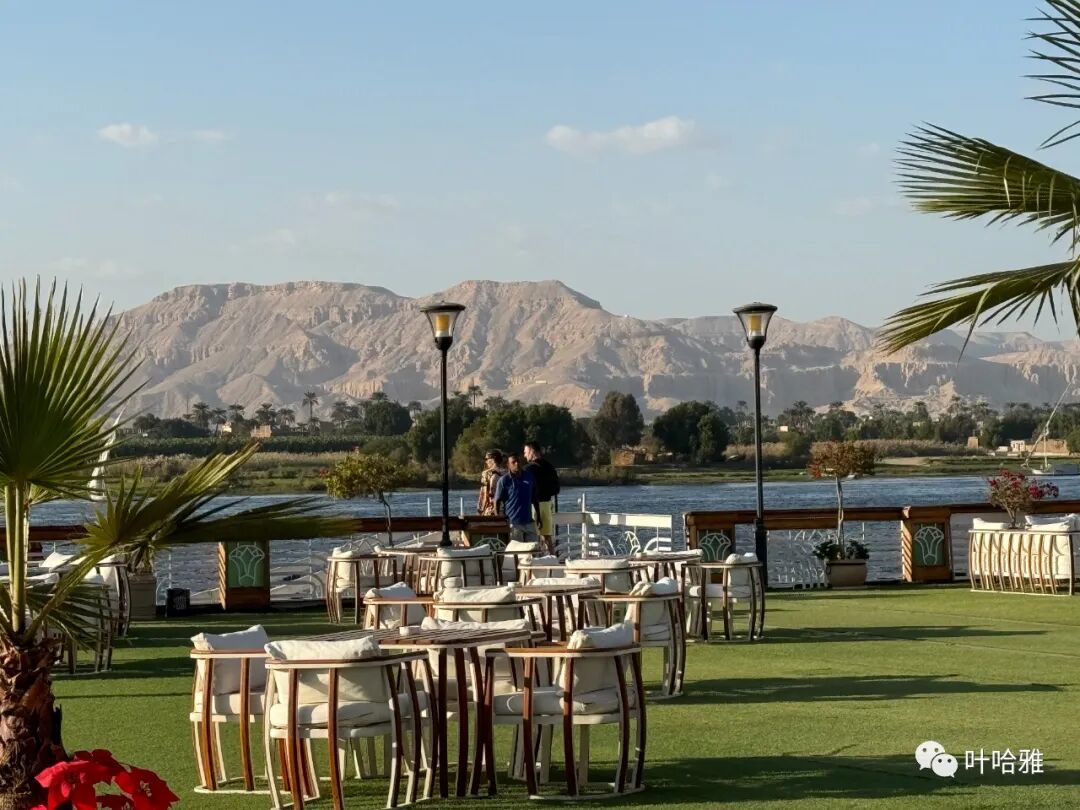
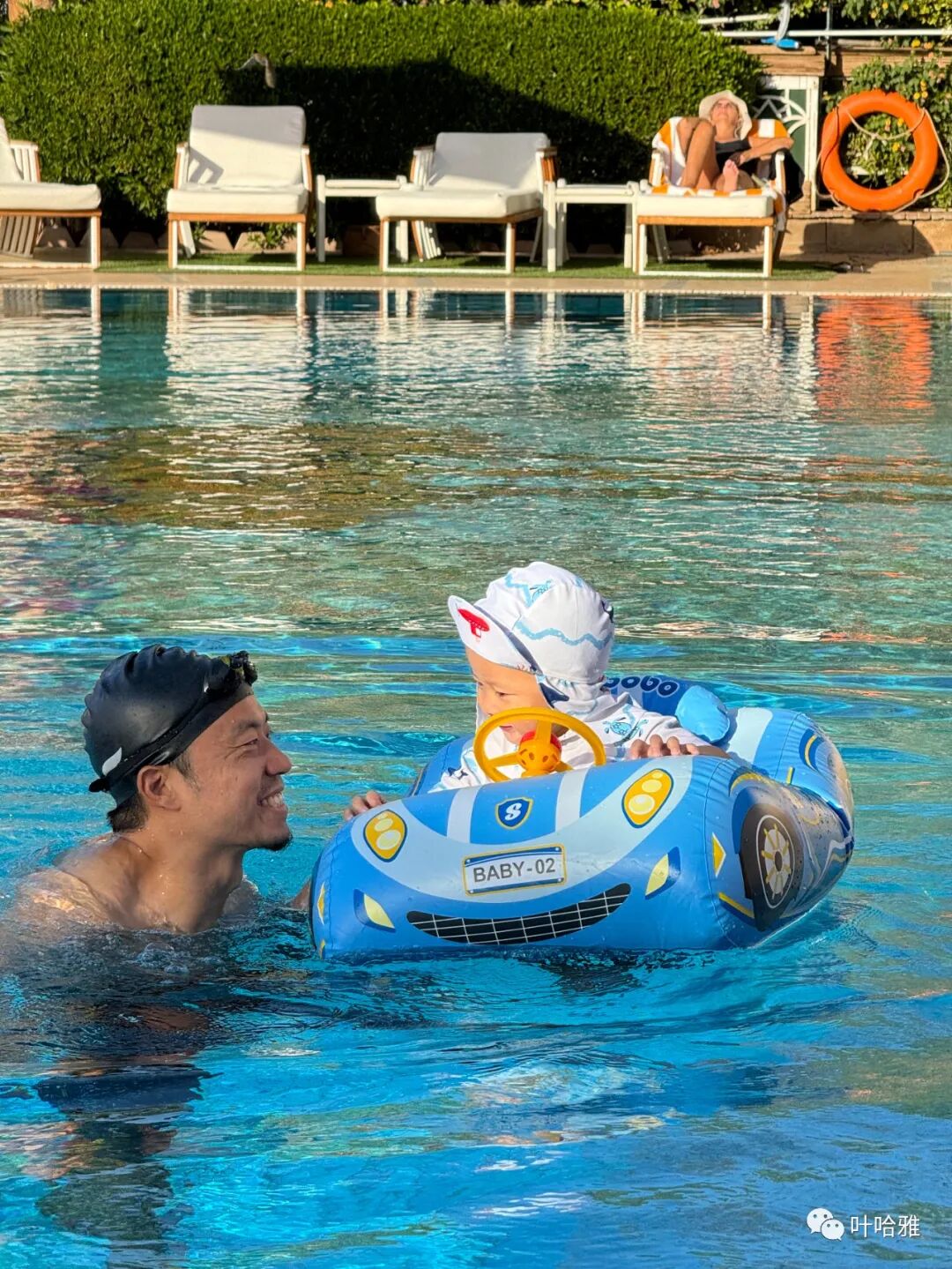
The hotel has a garden, a view of the Nile, and a swimming pool. Staying inside and enjoying the sunshine is the most relaxing thing to do.
Some people say that Egypt without Egyptians would be a better Egypt. While this is an exaggeration, it reflects an abnormal social phenomenon in Egypt today. Everyone is driven by profit, corruption is rampant, and there are scammers and thieves everywhere. In the old Islamic streets of Cairo, I could not even feel the light of faith. For the first time, I stopped my plan to visit a mosque because I did not have money in my pocket for a tip. All of this is happening in Egypt, which has a thousand-year history of Islamic civilization. This seems to confirm a master's thesis from the School of Oriental and African Studies at the University of London titled 'The Process of Islamization in Egypt, Possible Reasons and the Scope of Influence until the 14th Century.' The author, M. Wassermann, believes that Egypt is still not fully Islamized today. A considerable number of people, for various reasons, are only Muslims in name, because Islam considers that as long as one formally becomes a believer by verbal confession, they are treated as a Muslim.
This phenomenon of two-faced people everywhere makes Egypt like a powder keg that could explode at any time. You have to go through security checks and show identification to enter malls, hotels, and airports. Soldiers with guns are patrolling the streets everywhere. The old city of Cairo is just like a refugee camp, with groups of homeless people sleeping on the ground. Behind them are the ruins of demolished houses. Coptic people mainly make a living by picking up trash. The gap between rich and poor is huge. The poor see no hope and have no illusions about the future. An explosion is only a matter of time. So, if you want to come to Egypt, do it sooner rather than later. If you don't go now, you might not be able to go in the future.
Summary: This Egypt Muslim travel guide continues with ancient Egyptian history, the Egyptian Museum, Luxor, Nile-side dining, halal-friendly restaurant notes, local scams, travel traps, and reflections on Muslim life in Egypt.
A Guide to Avoiding Travel Traps in Egypt is presented here as a firsthand travel account in clear English, beginning with this scene: If you are not interested in Egyptian history, you will just be a casual tourist here. However, seeing the high level of ancient Egyptian civilization is an experience unmatched anywhere else in the world. The account keeps its focus on Quanzhou Muslims, Hui Muslims, Islamic History while preserving the names, places, food, and historical details from the Chinese source.
If you are not interested in Egyptian history, you will just be a casual tourist here. However, seeing the high level of ancient Egyptian civilization is an experience unmatched anywhere else in the world.
Some say ancient Egyptians and modern Egyptians are not the same race, but that is not a fact. Ancient Egyptians did not disappear. Through thousands of years of cultural exchange, they were assimilated, and modern Egyptians carry the genes of the ancient Egyptians.
Although Egyptians are nominally divided into Arabs, Copts, or Nubians, their bloodlines are actually very similar. They all speak Arabic and have intermarried and assimilated so much that there is no such thing as a pure-blooded, independent ethnic group.
For example, the number of Copts in Egypt is decreasing every year because they are blending into the Arab population. When a Coptic Christian converts to Islam, by the third generation, they identify themselves as Arab.
In the 7th century, Copts helped the Arabs conquer the Eastern Roman Empire. Because Copts were Miaphysites, the Eastern Roman Empire viewed them as heretics. Under Arab rule, the Copts actually lived better. Some say many Copts converted to Islam to pay fewer taxes, but there were not many tax benefits for converting, so there was no large-scale conversion of Copts in the early days.
During the Fatimid Caliphate, because the rulers were Shia, they were even harsher toward Sunni Muslims than toward Coptic Christians. Copts and Jews were protected and thrived during this period. Even during the Ayyubid and Mamluk dynasties, Copts remained under protection. The Mamluks were former slaves who became rulers, so they empathized with the Copts.
By the mid-14th century, whenever there were large-scale riots, many Copts converted to protect themselves. According to Egyptian law at the time, a Muslim's property could not be inherited by a non-Muslim. This led the descendants of converts to choose Islam to keep their property. It was from this period that Copts became a minority in Egypt.
Later, Muslim citizens accused the converted Copts of not being true converts because they did not go to the mosque for namaz on time. So, even though Muslims are the majority in Egypt today, the country is not completely Islamized.
The second floor of the Egyptian Museum has a Tutankhamun gallery. There is a funny story here: a travel blogger on Douyin posted a video saying they received the highest honor in Egypt and were allowed to film inside the gallery, which is usually off-limits for photography. I was stopped by a staff member when I tried to take photos with my phone and had to delete them under his supervision. The photo below was taken from outside the museum using my phone's telephoto lens.
However, after I handed 200 Egyptian pounds (about 40 RMB) to the staff member, I was allowed to take photos. That is how I got this picture of Tutankhamun's golden mask.
Tutankhamun's golden mask is said to be the most valuable artifact in the world and is priceless. But in Egypt, as long as you have a tip, everything is negotiable. That includes the blogger who claimed they filmed the pyramids while the site was cleared. I checked the time of their video, and it was after sunset, which is after the pyramids close. Paying money to get in and film is definitely not the highest honor.
After getting this photo to prove the Douyin blogger was bluffing, I lost interest in seeing the rest of the exhibits. In the evening, we went to the local Star City Mall to eat Thai food.
It is rare to find a prayer room in public places in Egypt, unlike in the UAE or Saudi Arabia where you see them everywhere. This mall actually has a prayer room, which is worth noting.
SABAI Thai Food
This Thai restaurant is quite popular locally and attracts many Chinese diners. The owner seems to have a misunderstanding of East and Southeast Asia, mixing in Chinese and Japanese elements. Perhaps to Arabs, we all look the same, just as we might struggle to tell the difference between Egyptians, Moroccans, Tunisians, Saudis, Qataris, Emiratis, Lebanese, Yemenis, Syrians, Jordanians, Bahrainis, Libyans, and Algerians.
You do not see halal signs in restaurants in Egypt, so you can just walk in anywhere. However, you should be careful with Chinese food and ask clearly. This shop marks its menu as halal because many Arabs assume Chinese food is not halal, and some restaurants also sell alcohol.
The chef at this Thai place is Black, but the food is quite authentic. Sour and spicy Thai dishes are very appetizing in the hot Middle East. The portions are small, but the price is cheap, costing about 100 RMB per person.
Tom Yum Goong soup
MORISUSHI Japanese food
I had a Japanese meal at a shopping center in New Cairo. After traveling in the Middle East for over ten days and eating Arabic food almost every day, it was nice to change things up.
There is a halal sign on the soy sauce bottle, which is a new thing to see in an Arab country.
Patchi chocolate shop
This is a Lebanese chocolate brand, said to be the royal family's choice for desserts. It is sold very cheaply in Egypt, at about 300 RMB per kilogram.
Arabs love sweets, and there are many overweight people on the streets, which is really unhealthy. Eating too many sweets is also bad for children's brain development, so we should take this as a warning.
Le Passage Cairo Hotel
We ate at the hotel restaurant most of the time. If you are just using Cairo as a transit stop and want to stay near the airport, I recommend this place. It is an 800-meter walk to the terminal, and the hotel also provides a free shuttle service.
At this hotel's buffet, you have to ask the staff to get the food for you, which feels a bit less free.
We had steak and pasta at the hotel's Italian restaurant, and both were delicious. Friends, you can really choose a nice hotel for a vacation. If you do not want to go out, you can just stay by the hotel pool and soak up the sun, away from the noise outside.
Four Seasons Hotel
The Four Seasons in Cairo has newer facilities than the Ramses Hilton, but the buffet has fewer options.
The hotel buffet costs less than 200 yuan, and drinks are charged separately.
Outside the window is a view of the Nile. In Cairo, the most expensive rooms are the ones with a river view.
Luxor
Luxor is an ancient city in southern Egypt that was once the center of power in Egypt, similar to Xi'an in China. It only takes 50 minutes to fly from Cairo to Luxor. At the airport, the check-in staff ripped me off. He said I did not buy a child ticket for Fahim. I showed him my Trip.com order, but he still said he could not find the child ticket information. Since it was close to departure time, we paid him 1,000 Egyptian pounds (about 200 yuan) on the spot for the child ticket. Later, I contacted Trip.com and learned that my child ticket was used normally. This means the airport staff scammed me out of the price of a ticket, which is a very bad thing to do. I have asked Trip.com to investigate this with Cairo Airport, but I have not received an effective reply yet. Because it was a cash payment, unless they pull the surveillance footage from that time to prove the airport took my money, I have to swallow this loss.
Sonesta St. George Hotel Luxor
The climate in Luxor is much more comfortable than in Cairo. Cairo has serious pollution and is not suitable for long stays, but Luxor has fewer people and the pace of the whole city is much slower. You cannot use Uber in Luxor. You have to hail a taxi on the street. Always agree on the price before you get in and have plenty of small change ready. If you don't, the driver will keep whatever you give him and call it a tip.
Look at who has stayed at this hotel before. They play Chinese songs in the restaurant and have Chinese signs in the elevators, which feels very welcoming.
For our first meal, we chose the hotel's Italian restaurant again. It has a clean, tidy European style, and the view of the Nile outside the window is stunning.
For breakfast, they serve honey straight from the honeycomb. It is natural and healthy.
Famous sites in Luxor include the Valley of the Kings, Luxor Temple, Karnak Temple, the Colossi of Memnon, the Mortuary Temple of Hatshepsut, and various pharaoh tombs. These are very attractive to archaeology fans, but for most tourists, it is just about taking photos. We booked a private one-day tour for two on Trip.com for 1,000 yuan per person. It included tickets, lunch, and a tour guide. The whole experience was pretty good.
Colossi of Memnon
The statues represent the 18th Dynasty Pharaoh Amenhotep III. Both statues are of him. They are 18 meters tall and were built in 1350 BC, making them over 3,000 years old.
After a short stop at the statues, we went to the Valley of the Kings to see the tombs of Pharaoh Ramesses VI and Tutankhamun.
The murals in the tomb of Ramesses VI still have the same colors they had 3,000 years ago.
Tomb of Pharaoh Tutankhamun
Mortuary Temple of Hatshepsut
The temple complex housing the pharaohs of past dynasties, along with the entire city of Luxor, was listed as a World Cultural Heritage site in 1979. This place was once used as a Christian monastery, and the reliefs unrelated to Christianity were removed.
Karnak Temple
The temple was built in 2000 BC, making it over four thousand years old, and it covers an area larger than half of Manhattan.
Visiting the temple during the day is a test of physical strength because the sun is so strong. When Fahim walked up to this ram-headed sphinx, he took a liking to the pebbles on the ground and refused to move. I stayed with him to play with the stones. During this time, Fahim was surrounded by Egyptian girls who took photos with him and kissed him.
The Egyptian tour guide said he could watch the child for me so I could go inside to look around, but I said forget it. I would rather stay and play with stones with Fahim. I am actually not interested in these temples. After seeing them, I just think they were built impressively and are very spectacular, and that is all.
Luxor Temple
The last stop was Luxor Mosque, which is also a landmark of Luxor with over three thousand years of history. However, what attracted me here was the gongbei built on top of the mosque. At the entrance, the guide asked if I wanted to visit the mosque or the mosque. I said the mosque. He looked surprised and confirmed it with me again. I was a bit tired by then, so I told him I would skip the mosque and just see the mosque before heading back.
Abu Haggag Mosque and Gongbei
This gongbei can be considered the only one in the world built on top of the world's oldest mosque, and it is the only mosque in the world built on mosque ruins.
This mosque dates back to the Fatimid dynasty and was built on the ruins of a church inside the mosque. It was completed around 1286 and contains the tomb of the Sufi mystic Yusuf Abu Haggag. Haggag was a scholar born in Baghdad in the 13th century. According to local legend, he captured Luxor from the Roman Queen Tarza.
Luxor Mosque was converted into a church by the Copts in 395 AD and then into a mosque in 640 AD. Therefore, it can be said that this is the oldest religious building in the world still in use, with a history spanning over three thousand four hundred years.
Inside the gongbei, there are some believers visiting the graves, with more women than men.
The mosque suffered a fire in 2007. When it was rebuilt, stones from the mosque were used, and you can see pharaonic hieroglyphs on the carvings of this pillar.
Looking out from the mosque railing, you can see the Luxor Mosque. The once arrogant pharaohs compared themselves to gods, but they never imagined that three thousand years later, their mosque would become a tourist attraction for people to glance at in passing.
Al Iman Mosque
This is the closest mosque to my hotel. Fewer than 10 people attend the adhan (banda). In Arab countries, people go back to sleep after the adhan, and almost no shops are open on the street. Only a few small shops selling flatbread (da bing) are open, so it is best to eat breakfast at the hotel, or you will have nothing to eat outside.
As a convenient fast food in the Arab region, shawarma (sharama) is as popular as our meat burger (roujiamo); it is economical, affordable, and delicious.
El-KABABGY RESTAURANT
This shop is the number one ranked restaurant in Luxor on the TripAdvisor app, and after eating there, I feel it truly deserves this ranking. This shop is only 1 kilometer away from our hotel on foot.
The outdoor part of the restaurant is right on the Nile pier. In December, the temperature in Luxor is only 20 degrees, which is very cool.
The grilled meat at this shop is extremely fragrant and clearly better than other restaurants we have eaten at. The per capita consumption is only about one hundred yuan. In China, at an Arab restaurant of the same level, two people would spend at least four or five hundred.
Tagine pot (tajiguo)
The drink I had most often in the Arab region was lemon mint juice. Its sour taste is great for opening up your appetite and quenching your thirst.
What is annoying about Luxor is that the streets are full of carriage drivers looking for customers. They really chase you and shout non-stop. One day, I wanted to take Fahim out for a walk, but I got so annoyed by the carriage drivers trying to get business that I just went back to the hotel and stayed inside.
The hotel has a garden, a view of the Nile, and a swimming pool. Staying inside and enjoying the sunshine is the most relaxing thing to do.
Some people say that Egypt without Egyptians would be a better Egypt. While this is an exaggeration, it reflects an abnormal social phenomenon in Egypt today. Everyone is driven by profit, corruption is rampant, and there are scammers and thieves everywhere. In the old Islamic streets of Cairo, I could not even feel the light of faith. For the first time, I stopped my plan to visit a mosque because I did not have money in my pocket for a tip. All of this is happening in Egypt, which has a thousand-year history of Islamic civilization. This seems to confirm a master's thesis from the School of Oriental and African Studies at the University of London titled 'The Process of Islamization in Egypt, Possible Reasons and the Scope of Influence until the 14th Century.' The author, M. Wassermann, believes that Egypt is still not fully Islamized today. A considerable number of people, for various reasons, are only Muslims in name, because Islam considers that as long as one formally becomes a believer by verbal confession, they are treated as a Muslim.
This phenomenon of two-faced people everywhere makes Egypt like a powder keg that could explode at any time. You have to go through security checks and show identification to enter malls, hotels, and airports. Soldiers with guns are patrolling the streets everywhere. The old city of Cairo is just like a refugee camp, with groups of homeless people sleeping on the ground. Behind them are the ruins of demolished houses. Coptic people mainly make a living by picking up trash. The gap between rich and poor is huge. The poor see no hope and have no illusions about the future. An explosion is only a matter of time. So, if you want to come to Egypt, do it sooner rather than later. If you don't go now, you might not be able to go in the future.
Egypt Muslim Travel Guide: Cairo Museum, Luxor Restaurants and Real Travel Trap Warnings
Articles • yusuf908 posted the article • 0 comments • 133 views • 2026-05-22 21:45
Reposted from the web
Summary: This Egypt Muslim travel guide continues with ancient Egyptian history, the Egyptian Museum, Luxor, Nile-side dining, halal-friendly restaurant notes, local scams, travel traps, and reflections on Muslim life in Egypt.
A Guide to Avoiding Travel Traps in Egypt is presented here as a firsthand travel account in clear English, beginning with this scene: If you are not interested in Egyptian history, you will just be a casual tourist here. However, seeing the high level of ancient Egyptian civilization is an experience unmatched anywhere else in the world. The account keeps its focus on Quanzhou Muslims, Hui Muslims, Islamic History while preserving the names, places, food, and historical details from the Chinese source.
If you are not interested in Egyptian history, you will just be a casual tourist here. However, seeing the high level of ancient Egyptian civilization is an experience unmatched anywhere else in the world.
Some say ancient Egyptians and modern Egyptians are not the same race, but that is not a fact. Ancient Egyptians did not disappear. Through thousands of years of cultural exchange, they were assimilated, and modern Egyptians carry the genes of the ancient Egyptians.
Although Egyptians are nominally divided into Arabs, Copts, or Nubians, their bloodlines are actually very similar. They all speak Arabic and have intermarried and assimilated so much that there is no such thing as a pure-blooded, independent ethnic group.
For example, the number of Copts in Egypt is decreasing every year because they are blending into the Arab population. When a Coptic Christian converts to Islam, by the third generation, they identify themselves as Arab.
In the 7th century, Copts helped the Arabs conquer the Eastern Roman Empire. Because Copts were Miaphysites, the Eastern Roman Empire viewed them as heretics. Under Arab rule, the Copts actually lived better. Some say many Copts converted to Islam to pay fewer taxes, but there were not many tax benefits for converting, so there was no large-scale conversion of Copts in the early days.
During the Fatimid Caliphate, because the rulers were Shia, they were even harsher toward Sunni Muslims than toward Coptic Christians. Copts and Jews were protected and thrived during this period. Even during the Ayyubid and Mamluk dynasties, Copts remained under protection. The Mamluks were former slaves who became rulers, so they empathized with the Copts.
By the mid-14th century, whenever there were large-scale riots, many Copts converted to protect themselves. According to Egyptian law at the time, a Muslim's property could not be inherited by a non-Muslim. This led the descendants of converts to choose Islam to keep their property. It was from this period that Copts became a minority in Egypt.
Later, Muslim citizens accused the converted Copts of not being true converts because they did not go to the mosque for namaz on time. So, even though Muslims are the majority in Egypt today, the country is not completely Islamized.
The second floor of the Egyptian Museum has a Tutankhamun gallery. There is a funny story here: a travel blogger on Douyin posted a video saying they received the highest honor in Egypt and were allowed to film inside the gallery, which is usually off-limits for photography. I was stopped by a staff member when I tried to take photos with my phone and had to delete them under his supervision. The photo below was taken from outside the museum using my phone's telephoto lens.
However, after I handed 200 Egyptian pounds (about 40 RMB) to the staff member, I was allowed to take photos. That is how I got this picture of Tutankhamun's golden mask.
Tutankhamun's golden mask is said to be the most valuable artifact in the world and is priceless. But in Egypt, as long as you have a tip, everything is negotiable. That includes the blogger who claimed they filmed the pyramids while the site was cleared. I checked the time of their video, and it was after sunset, which is after the pyramids close. Paying money to get in and film is definitely not the highest honor.
After getting this photo to prove the Douyin blogger was bluffing, I lost interest in seeing the rest of the exhibits. In the evening, we went to the local Star City Mall to eat Thai food.
It is rare to find a prayer room in public places in Egypt, unlike in the UAE or Saudi Arabia where you see them everywhere. This mall actually has a prayer room, which is worth noting.
SABAI Thai Food
This Thai restaurant is quite popular locally and attracts many Chinese diners. The owner seems to have a misunderstanding of East and Southeast Asia, mixing in Chinese and Japanese elements. Perhaps to Arabs, we all look the same, just as we might struggle to tell the difference between Egyptians, Moroccans, Tunisians, Saudis, Qataris, Emiratis, Lebanese, Yemenis, Syrians, Jordanians, Bahrainis, Libyans, and Algerians.
You do not see halal signs in restaurants in Egypt, so you can just walk in anywhere. However, you should be careful with Chinese food and ask clearly. This shop marks its menu as halal because many Arabs assume Chinese food is not halal, and some restaurants also sell alcohol.
The chef at this Thai place is Black, but the food is quite authentic. Sour and spicy Thai dishes are very appetizing in the hot Middle East. The portions are small, but the price is cheap, costing about 100 RMB per person.
Tom Yum Goong soup
MORISUSHI Japanese food
I had a Japanese meal at a shopping center in New Cairo. After traveling in the Middle East for over ten days and eating Arabic food almost every day, it was nice to change things up.
There is a halal sign on the soy sauce bottle, which is a new thing to see in an Arab country.
Patchi chocolate shop
This is a Lebanese chocolate brand, said to be the royal family's choice for desserts. It is sold very cheaply in Egypt, at about 300 RMB per kilogram.
Arabs love sweets, and there are many overweight people on the streets, which is really unhealthy. Eating too many sweets is also bad for children's brain development, so we should take this as a warning.
Le Passage Cairo Hotel
We ate at the hotel restaurant most of the time. If you are just using Cairo as a transit stop and want to stay near the airport, I recommend this place. It is an 800-meter walk to the terminal, and the hotel also provides a free shuttle service.
At this hotel's buffet, you have to ask the staff to get the food for you, which feels a bit less free.
We had steak and pasta at the hotel's Italian restaurant, and both were delicious. Friends, you can really choose a nice hotel for a vacation. If you do not want to go out, you can just stay by the hotel pool and soak up the sun, away from the noise outside.
Four Seasons Hotel
The Four Seasons in Cairo has newer facilities than the Ramses Hilton, but the buffet has fewer options.
The hotel buffet costs less than 200 yuan, and drinks are charged separately.
Outside the window is a view of the Nile. In Cairo, the most expensive rooms are the ones with a river view.
Luxor
Luxor is an ancient city in southern Egypt that was once the center of power in Egypt, similar to Xi'an in China. It only takes 50 minutes to fly from Cairo to Luxor. At the airport, the check-in staff ripped me off. He said I did not buy a child ticket for Fahim. I showed him my Trip.com order, but he still said he could not find the child ticket information. Since it was close to departure time, we paid him 1,000 Egyptian pounds (about 200 yuan) on the spot for the child ticket. Later, I contacted Trip.com and learned that my child ticket was used normally. This means the airport staff scammed me out of the price of a ticket, which is a very bad thing to do. I have asked Trip.com to investigate this with Cairo Airport, but I have not received an effective reply yet. Because it was a cash payment, unless they pull the surveillance footage from that time to prove the airport took my money, I have to swallow this loss.
Sonesta St. George Hotel Luxor
The climate in Luxor is much more comfortable than in Cairo. Cairo has serious pollution and is not suitable for long stays, but Luxor has fewer people and the pace of the whole city is much slower. You cannot use Uber in Luxor. You have to hail a taxi on the street. Always agree on the price before you get in and have plenty of small change ready. If you don't, the driver will keep whatever you give him and call it a tip.
Look at who has stayed at this hotel before. They play Chinese songs in the restaurant and have Chinese signs in the elevators, which feels very welcoming.
For our first meal, we chose the hotel's Italian restaurant again. It has a clean, tidy European style, and the view of the Nile outside the window is stunning.
For breakfast, they serve honey straight from the honeycomb. It is natural and healthy.
Famous sites in Luxor include the Valley of the Kings, Luxor Temple, Karnak Temple, the Colossi of Memnon, the Mortuary Temple of Hatshepsut, and various pharaoh tombs. These are very attractive to archaeology fans, but for most tourists, it is just about taking photos. We booked a private one-day tour for two on Trip.com for 1,000 yuan per person. It included tickets, lunch, and a tour guide. The whole experience was pretty good.
Colossi of Memnon
The statues represent the 18th Dynasty Pharaoh Amenhotep III. Both statues are of him. They are 18 meters tall and were built in 1350 BC, making them over 3,000 years old.
After a short stop at the statues, we went to the Valley of the Kings to see the tombs of Pharaoh Ramesses VI and Tutankhamun.
The murals in the tomb of Ramesses VI still have the same colors they had 3,000 years ago.
Tomb of Pharaoh Tutankhamun
Mortuary Temple of Hatshepsut
The temple complex housing the pharaohs of past dynasties, along with the entire city of Luxor, was listed as a World Cultural Heritage site in 1979. This place was once used as a Christian monastery, and the reliefs unrelated to Christianity were removed.
Karnak Temple
The temple was built in 2000 BC, making it over four thousand years old, and it covers an area larger than half of Manhattan.
Visiting the temple during the day is a test of physical strength because the sun is so strong. When Fahim walked up to this ram-headed sphinx, he took a liking to the pebbles on the ground and refused to move. I stayed with him to play with the stones. During this time, Fahim was surrounded by Egyptian girls who took photos with him and kissed him.
The Egyptian tour guide said he could watch the child for me so I could go inside to look around, but I said forget it. I would rather stay and play with stones with Fahim. I am actually not interested in these temples. After seeing them, I just think they were built impressively and are very spectacular, and that is all.
Luxor Temple
The last stop was Luxor Mosque, which is also a landmark of Luxor with over three thousand years of history. However, what attracted me here was the gongbei built on top of the mosque. At the entrance, the guide asked if I wanted to visit the mosque or the mosque. I said the mosque. He looked surprised and confirmed it with me again. I was a bit tired by then, so I told him I would skip the mosque and just see the mosque before heading back.
Abu Haggag Mosque and Gongbei
This gongbei can be considered the only one in the world built on top of the world's oldest mosque, and it is the only mosque in the world built on mosque ruins.
This mosque dates back to the Fatimid dynasty and was built on the ruins of a church inside the mosque. It was completed around 1286 and contains the tomb of the Sufi mystic Yusuf Abu Haggag. Haggag was a scholar born in Baghdad in the 13th century. According to local legend, he captured Luxor from the Roman Queen Tarza.
Luxor Mosque was converted into a church by the Copts in 395 AD and then into a mosque in 640 AD. Therefore, it can be said that this is the oldest religious building in the world still in use, with a history spanning over three thousand four hundred years.
Inside the gongbei, there are some believers visiting the graves, with more women than men.
The mosque suffered a fire in 2007. When it was rebuilt, stones from the mosque were used, and you can see pharaonic hieroglyphs on the carvings of this pillar.
Looking out from the mosque railing, you can see the Luxor Mosque. The once arrogant pharaohs compared themselves to gods, but they never imagined that three thousand years later, their mosque would become a tourist attraction for people to glance at in passing.
Al Iman Mosque
This is the closest mosque to my hotel. Fewer than 10 people attend the adhan (banda). In Arab countries, people go back to sleep after the adhan, and almost no shops are open on the street. Only a few small shops selling flatbread (da bing) are open, so it is best to eat breakfast at the hotel, or you will have nothing to eat outside.
As a convenient fast food in the Arab region, shawarma (sharama) is as popular as our meat burger (roujiamo); it is economical, affordable, and delicious.
El-KABABGY RESTAURANT
This shop is the number one ranked restaurant in Luxor on the TripAdvisor app, and after eating there, I feel it truly deserves this ranking. This shop is only 1 kilometer away from our hotel on foot.
The outdoor part of the restaurant is right on the Nile pier. In December, the temperature in Luxor is only 20 degrees, which is very cool.
The grilled meat at this shop is extremely fragrant and clearly better than other restaurants we have eaten at. The per capita consumption is only about one hundred yuan. In China, at an Arab restaurant of the same level, two people would spend at least four or five hundred.
Tagine pot (tajiguo)
The drink I had most often in the Arab region was lemon mint juice. Its sour taste is great for opening up your appetite and quenching your thirst.
What is annoying about Luxor is that the streets are full of carriage drivers looking for customers. They really chase you and shout non-stop. One day, I wanted to take Fahim out for a walk, but I got so annoyed by the carriage drivers trying to get business that I just went back to the hotel and stayed inside.
The hotel has a garden, a view of the Nile, and a swimming pool. Staying inside and enjoying the sunshine is the most relaxing thing to do.
Some people say that Egypt without Egyptians would be a better Egypt. While this is an exaggeration, it reflects an abnormal social phenomenon in Egypt today. Everyone is driven by profit, corruption is rampant, and there are scammers and thieves everywhere. In the old Islamic streets of Cairo, I could not even feel the light of faith. For the first time, I stopped my plan to visit a mosque because I did not have money in my pocket for a tip. All of this is happening in Egypt, which has a thousand-year history of Islamic civilization. This seems to confirm a master's thesis from the School of Oriental and African Studies at the University of London titled 'The Process of Islamization in Egypt, Possible Reasons and the Scope of Influence until the 14th Century.' The author, M. Wassermann, believes that Egypt is still not fully Islamized today. A considerable number of people, for various reasons, are only Muslims in name, because Islam considers that as long as one formally becomes a believer by verbal confession, they are treated as a Muslim.
This phenomenon of two-faced people everywhere makes Egypt like a powder keg that could explode at any time. You have to go through security checks and show identification to enter malls, hotels, and airports. Soldiers with guns are patrolling the streets everywhere. The old city of Cairo is just like a refugee camp, with groups of homeless people sleeping on the ground. Behind them are the ruins of demolished houses. Coptic people mainly make a living by picking up trash. The gap between rich and poor is huge. The poor see no hope and have no illusions about the future. An explosion is only a matter of time. So, if you want to come to Egypt, do it sooner rather than later. If you don't go now, you might not be able to go in the future. view all
Summary: This Egypt Muslim travel guide continues with ancient Egyptian history, the Egyptian Museum, Luxor, Nile-side dining, halal-friendly restaurant notes, local scams, travel traps, and reflections on Muslim life in Egypt.
A Guide to Avoiding Travel Traps in Egypt is presented here as a firsthand travel account in clear English, beginning with this scene: If you are not interested in Egyptian history, you will just be a casual tourist here. However, seeing the high level of ancient Egyptian civilization is an experience unmatched anywhere else in the world. The account keeps its focus on Quanzhou Muslims, Hui Muslims, Islamic History while preserving the names, places, food, and historical details from the Chinese source.
If you are not interested in Egyptian history, you will just be a casual tourist here. However, seeing the high level of ancient Egyptian civilization is an experience unmatched anywhere else in the world.
Some say ancient Egyptians and modern Egyptians are not the same race, but that is not a fact. Ancient Egyptians did not disappear. Through thousands of years of cultural exchange, they were assimilated, and modern Egyptians carry the genes of the ancient Egyptians.
Although Egyptians are nominally divided into Arabs, Copts, or Nubians, their bloodlines are actually very similar. They all speak Arabic and have intermarried and assimilated so much that there is no such thing as a pure-blooded, independent ethnic group.
For example, the number of Copts in Egypt is decreasing every year because they are blending into the Arab population. When a Coptic Christian converts to Islam, by the third generation, they identify themselves as Arab.
In the 7th century, Copts helped the Arabs conquer the Eastern Roman Empire. Because Copts were Miaphysites, the Eastern Roman Empire viewed them as heretics. Under Arab rule, the Copts actually lived better. Some say many Copts converted to Islam to pay fewer taxes, but there were not many tax benefits for converting, so there was no large-scale conversion of Copts in the early days.
During the Fatimid Caliphate, because the rulers were Shia, they were even harsher toward Sunni Muslims than toward Coptic Christians. Copts and Jews were protected and thrived during this period. Even during the Ayyubid and Mamluk dynasties, Copts remained under protection. The Mamluks were former slaves who became rulers, so they empathized with the Copts.
By the mid-14th century, whenever there were large-scale riots, many Copts converted to protect themselves. According to Egyptian law at the time, a Muslim's property could not be inherited by a non-Muslim. This led the descendants of converts to choose Islam to keep their property. It was from this period that Copts became a minority in Egypt.
Later, Muslim citizens accused the converted Copts of not being true converts because they did not go to the mosque for namaz on time. So, even though Muslims are the majority in Egypt today, the country is not completely Islamized.
The second floor of the Egyptian Museum has a Tutankhamun gallery. There is a funny story here: a travel blogger on Douyin posted a video saying they received the highest honor in Egypt and were allowed to film inside the gallery, which is usually off-limits for photography. I was stopped by a staff member when I tried to take photos with my phone and had to delete them under his supervision. The photo below was taken from outside the museum using my phone's telephoto lens.
However, after I handed 200 Egyptian pounds (about 40 RMB) to the staff member, I was allowed to take photos. That is how I got this picture of Tutankhamun's golden mask.
Tutankhamun's golden mask is said to be the most valuable artifact in the world and is priceless. But in Egypt, as long as you have a tip, everything is negotiable. That includes the blogger who claimed they filmed the pyramids while the site was cleared. I checked the time of their video, and it was after sunset, which is after the pyramids close. Paying money to get in and film is definitely not the highest honor.
After getting this photo to prove the Douyin blogger was bluffing, I lost interest in seeing the rest of the exhibits. In the evening, we went to the local Star City Mall to eat Thai food.
It is rare to find a prayer room in public places in Egypt, unlike in the UAE or Saudi Arabia where you see them everywhere. This mall actually has a prayer room, which is worth noting.
SABAI Thai Food
This Thai restaurant is quite popular locally and attracts many Chinese diners. The owner seems to have a misunderstanding of East and Southeast Asia, mixing in Chinese and Japanese elements. Perhaps to Arabs, we all look the same, just as we might struggle to tell the difference between Egyptians, Moroccans, Tunisians, Saudis, Qataris, Emiratis, Lebanese, Yemenis, Syrians, Jordanians, Bahrainis, Libyans, and Algerians.
You do not see halal signs in restaurants in Egypt, so you can just walk in anywhere. However, you should be careful with Chinese food and ask clearly. This shop marks its menu as halal because many Arabs assume Chinese food is not halal, and some restaurants also sell alcohol.
The chef at this Thai place is Black, but the food is quite authentic. Sour and spicy Thai dishes are very appetizing in the hot Middle East. The portions are small, but the price is cheap, costing about 100 RMB per person.
Tom Yum Goong soup
MORISUSHI Japanese food
I had a Japanese meal at a shopping center in New Cairo. After traveling in the Middle East for over ten days and eating Arabic food almost every day, it was nice to change things up.
There is a halal sign on the soy sauce bottle, which is a new thing to see in an Arab country.
Patchi chocolate shop
This is a Lebanese chocolate brand, said to be the royal family's choice for desserts. It is sold very cheaply in Egypt, at about 300 RMB per kilogram.
Arabs love sweets, and there are many overweight people on the streets, which is really unhealthy. Eating too many sweets is also bad for children's brain development, so we should take this as a warning.
Le Passage Cairo Hotel
We ate at the hotel restaurant most of the time. If you are just using Cairo as a transit stop and want to stay near the airport, I recommend this place. It is an 800-meter walk to the terminal, and the hotel also provides a free shuttle service.
At this hotel's buffet, you have to ask the staff to get the food for you, which feels a bit less free.
We had steak and pasta at the hotel's Italian restaurant, and both were delicious. Friends, you can really choose a nice hotel for a vacation. If you do not want to go out, you can just stay by the hotel pool and soak up the sun, away from the noise outside.
Four Seasons Hotel
The Four Seasons in Cairo has newer facilities than the Ramses Hilton, but the buffet has fewer options.
The hotel buffet costs less than 200 yuan, and drinks are charged separately.
Outside the window is a view of the Nile. In Cairo, the most expensive rooms are the ones with a river view.
Luxor
Luxor is an ancient city in southern Egypt that was once the center of power in Egypt, similar to Xi'an in China. It only takes 50 minutes to fly from Cairo to Luxor. At the airport, the check-in staff ripped me off. He said I did not buy a child ticket for Fahim. I showed him my Trip.com order, but he still said he could not find the child ticket information. Since it was close to departure time, we paid him 1,000 Egyptian pounds (about 200 yuan) on the spot for the child ticket. Later, I contacted Trip.com and learned that my child ticket was used normally. This means the airport staff scammed me out of the price of a ticket, which is a very bad thing to do. I have asked Trip.com to investigate this with Cairo Airport, but I have not received an effective reply yet. Because it was a cash payment, unless they pull the surveillance footage from that time to prove the airport took my money, I have to swallow this loss.
Sonesta St. George Hotel Luxor
The climate in Luxor is much more comfortable than in Cairo. Cairo has serious pollution and is not suitable for long stays, but Luxor has fewer people and the pace of the whole city is much slower. You cannot use Uber in Luxor. You have to hail a taxi on the street. Always agree on the price before you get in and have plenty of small change ready. If you don't, the driver will keep whatever you give him and call it a tip.
Look at who has stayed at this hotel before. They play Chinese songs in the restaurant and have Chinese signs in the elevators, which feels very welcoming.
For our first meal, we chose the hotel's Italian restaurant again. It has a clean, tidy European style, and the view of the Nile outside the window is stunning.
For breakfast, they serve honey straight from the honeycomb. It is natural and healthy.
Famous sites in Luxor include the Valley of the Kings, Luxor Temple, Karnak Temple, the Colossi of Memnon, the Mortuary Temple of Hatshepsut, and various pharaoh tombs. These are very attractive to archaeology fans, but for most tourists, it is just about taking photos. We booked a private one-day tour for two on Trip.com for 1,000 yuan per person. It included tickets, lunch, and a tour guide. The whole experience was pretty good.
Colossi of Memnon
The statues represent the 18th Dynasty Pharaoh Amenhotep III. Both statues are of him. They are 18 meters tall and were built in 1350 BC, making them over 3,000 years old.
After a short stop at the statues, we went to the Valley of the Kings to see the tombs of Pharaoh Ramesses VI and Tutankhamun.
The murals in the tomb of Ramesses VI still have the same colors they had 3,000 years ago.
Tomb of Pharaoh Tutankhamun
Mortuary Temple of Hatshepsut
The temple complex housing the pharaohs of past dynasties, along with the entire city of Luxor, was listed as a World Cultural Heritage site in 1979. This place was once used as a Christian monastery, and the reliefs unrelated to Christianity were removed.
Karnak Temple
The temple was built in 2000 BC, making it over four thousand years old, and it covers an area larger than half of Manhattan.
Visiting the temple during the day is a test of physical strength because the sun is so strong. When Fahim walked up to this ram-headed sphinx, he took a liking to the pebbles on the ground and refused to move. I stayed with him to play with the stones. During this time, Fahim was surrounded by Egyptian girls who took photos with him and kissed him.
The Egyptian tour guide said he could watch the child for me so I could go inside to look around, but I said forget it. I would rather stay and play with stones with Fahim. I am actually not interested in these temples. After seeing them, I just think they were built impressively and are very spectacular, and that is all.
Luxor Temple
The last stop was Luxor Mosque, which is also a landmark of Luxor with over three thousand years of history. However, what attracted me here was the gongbei built on top of the mosque. At the entrance, the guide asked if I wanted to visit the mosque or the mosque. I said the mosque. He looked surprised and confirmed it with me again. I was a bit tired by then, so I told him I would skip the mosque and just see the mosque before heading back.
Abu Haggag Mosque and Gongbei
This gongbei can be considered the only one in the world built on top of the world's oldest mosque, and it is the only mosque in the world built on mosque ruins.
This mosque dates back to the Fatimid dynasty and was built on the ruins of a church inside the mosque. It was completed around 1286 and contains the tomb of the Sufi mystic Yusuf Abu Haggag. Haggag was a scholar born in Baghdad in the 13th century. According to local legend, he captured Luxor from the Roman Queen Tarza.
Luxor Mosque was converted into a church by the Copts in 395 AD and then into a mosque in 640 AD. Therefore, it can be said that this is the oldest religious building in the world still in use, with a history spanning over three thousand four hundred years.
Inside the gongbei, there are some believers visiting the graves, with more women than men.
The mosque suffered a fire in 2007. When it was rebuilt, stones from the mosque were used, and you can see pharaonic hieroglyphs on the carvings of this pillar.
Looking out from the mosque railing, you can see the Luxor Mosque. The once arrogant pharaohs compared themselves to gods, but they never imagined that three thousand years later, their mosque would become a tourist attraction for people to glance at in passing.
Al Iman Mosque
This is the closest mosque to my hotel. Fewer than 10 people attend the adhan (banda). In Arab countries, people go back to sleep after the adhan, and almost no shops are open on the street. Only a few small shops selling flatbread (da bing) are open, so it is best to eat breakfast at the hotel, or you will have nothing to eat outside.
As a convenient fast food in the Arab region, shawarma (sharama) is as popular as our meat burger (roujiamo); it is economical, affordable, and delicious.
El-KABABGY RESTAURANT
This shop is the number one ranked restaurant in Luxor on the TripAdvisor app, and after eating there, I feel it truly deserves this ranking. This shop is only 1 kilometer away from our hotel on foot.
The outdoor part of the restaurant is right on the Nile pier. In December, the temperature in Luxor is only 20 degrees, which is very cool.
The grilled meat at this shop is extremely fragrant and clearly better than other restaurants we have eaten at. The per capita consumption is only about one hundred yuan. In China, at an Arab restaurant of the same level, two people would spend at least four or five hundred.
Tagine pot (tajiguo)
The drink I had most often in the Arab region was lemon mint juice. Its sour taste is great for opening up your appetite and quenching your thirst.
What is annoying about Luxor is that the streets are full of carriage drivers looking for customers. They really chase you and shout non-stop. One day, I wanted to take Fahim out for a walk, but I got so annoyed by the carriage drivers trying to get business that I just went back to the hotel and stayed inside.
The hotel has a garden, a view of the Nile, and a swimming pool. Staying inside and enjoying the sunshine is the most relaxing thing to do.
Some people say that Egypt without Egyptians would be a better Egypt. While this is an exaggeration, it reflects an abnormal social phenomenon in Egypt today. Everyone is driven by profit, corruption is rampant, and there are scammers and thieves everywhere. In the old Islamic streets of Cairo, I could not even feel the light of faith. For the first time, I stopped my plan to visit a mosque because I did not have money in my pocket for a tip. All of this is happening in Egypt, which has a thousand-year history of Islamic civilization. This seems to confirm a master's thesis from the School of Oriental and African Studies at the University of London titled 'The Process of Islamization in Egypt, Possible Reasons and the Scope of Influence until the 14th Century.' The author, M. Wassermann, believes that Egypt is still not fully Islamized today. A considerable number of people, for various reasons, are only Muslims in name, because Islam considers that as long as one formally becomes a believer by verbal confession, they are treated as a Muslim.
This phenomenon of two-faced people everywhere makes Egypt like a powder keg that could explode at any time. You have to go through security checks and show identification to enter malls, hotels, and airports. Soldiers with guns are patrolling the streets everywhere. The old city of Cairo is just like a refugee camp, with groups of homeless people sleeping on the ground. Behind them are the ruins of demolished houses. Coptic people mainly make a living by picking up trash. The gap between rich and poor is huge. The poor see no hope and have no illusions about the future. An explosion is only a matter of time. So, if you want to come to Egypt, do it sooner rather than later. If you don't go now, you might not be able to go in the future. view all
Reposted from the web
Summary: This Egypt Muslim travel guide continues with ancient Egyptian history, the Egyptian Museum, Luxor, Nile-side dining, halal-friendly restaurant notes, local scams, travel traps, and reflections on Muslim life in Egypt.
A Guide to Avoiding Travel Traps in Egypt is presented here as a firsthand travel account in clear English, beginning with this scene: If you are not interested in Egyptian history, you will just be a casual tourist here. However, seeing the high level of ancient Egyptian civilization is an experience unmatched anywhere else in the world. The account keeps its focus on Quanzhou Muslims, Hui Muslims, Islamic History while preserving the names, places, food, and historical details from the Chinese source.
If you are not interested in Egyptian history, you will just be a casual tourist here. However, seeing the high level of ancient Egyptian civilization is an experience unmatched anywhere else in the world.
Some say ancient Egyptians and modern Egyptians are not the same race, but that is not a fact. Ancient Egyptians did not disappear. Through thousands of years of cultural exchange, they were assimilated, and modern Egyptians carry the genes of the ancient Egyptians.
Although Egyptians are nominally divided into Arabs, Copts, or Nubians, their bloodlines are actually very similar. They all speak Arabic and have intermarried and assimilated so much that there is no such thing as a pure-blooded, independent ethnic group.
For example, the number of Copts in Egypt is decreasing every year because they are blending into the Arab population. When a Coptic Christian converts to Islam, by the third generation, they identify themselves as Arab.
In the 7th century, Copts helped the Arabs conquer the Eastern Roman Empire. Because Copts were Miaphysites, the Eastern Roman Empire viewed them as heretics. Under Arab rule, the Copts actually lived better. Some say many Copts converted to Islam to pay fewer taxes, but there were not many tax benefits for converting, so there was no large-scale conversion of Copts in the early days.
During the Fatimid Caliphate, because the rulers were Shia, they were even harsher toward Sunni Muslims than toward Coptic Christians. Copts and Jews were protected and thrived during this period. Even during the Ayyubid and Mamluk dynasties, Copts remained under protection. The Mamluks were former slaves who became rulers, so they empathized with the Copts.
By the mid-14th century, whenever there were large-scale riots, many Copts converted to protect themselves. According to Egyptian law at the time, a Muslim's property could not be inherited by a non-Muslim. This led the descendants of converts to choose Islam to keep their property. It was from this period that Copts became a minority in Egypt.
Later, Muslim citizens accused the converted Copts of not being true converts because they did not go to the mosque for namaz on time. So, even though Muslims are the majority in Egypt today, the country is not completely Islamized.
The second floor of the Egyptian Museum has a Tutankhamun gallery. There is a funny story here: a travel blogger on Douyin posted a video saying they received the highest honor in Egypt and were allowed to film inside the gallery, which is usually off-limits for photography. I was stopped by a staff member when I tried to take photos with my phone and had to delete them under his supervision. The photo below was taken from outside the museum using my phone's telephoto lens.
However, after I handed 200 Egyptian pounds (about 40 RMB) to the staff member, I was allowed to take photos. That is how I got this picture of Tutankhamun's golden mask.
Tutankhamun's golden mask is said to be the most valuable artifact in the world and is priceless. But in Egypt, as long as you have a tip, everything is negotiable. That includes the blogger who claimed they filmed the pyramids while the site was cleared. I checked the time of their video, and it was after sunset, which is after the pyramids close. Paying money to get in and film is definitely not the highest honor.
After getting this photo to prove the Douyin blogger was bluffing, I lost interest in seeing the rest of the exhibits. In the evening, we went to the local Star City Mall to eat Thai food.
It is rare to find a prayer room in public places in Egypt, unlike in the UAE or Saudi Arabia where you see them everywhere. This mall actually has a prayer room, which is worth noting.
SABAI Thai Food
This Thai restaurant is quite popular locally and attracts many Chinese diners. The owner seems to have a misunderstanding of East and Southeast Asia, mixing in Chinese and Japanese elements. Perhaps to Arabs, we all look the same, just as we might struggle to tell the difference between Egyptians, Moroccans, Tunisians, Saudis, Qataris, Emiratis, Lebanese, Yemenis, Syrians, Jordanians, Bahrainis, Libyans, and Algerians.
You do not see halal signs in restaurants in Egypt, so you can just walk in anywhere. However, you should be careful with Chinese food and ask clearly. This shop marks its menu as halal because many Arabs assume Chinese food is not halal, and some restaurants also sell alcohol.
The chef at this Thai place is Black, but the food is quite authentic. Sour and spicy Thai dishes are very appetizing in the hot Middle East. The portions are small, but the price is cheap, costing about 100 RMB per person.
Tom Yum Goong soup
MORISUSHI Japanese food
I had a Japanese meal at a shopping center in New Cairo. After traveling in the Middle East for over ten days and eating Arabic food almost every day, it was nice to change things up.
There is a halal sign on the soy sauce bottle, which is a new thing to see in an Arab country.
Patchi chocolate shop
This is a Lebanese chocolate brand, said to be the royal family's choice for desserts. It is sold very cheaply in Egypt, at about 300 RMB per kilogram.
Arabs love sweets, and there are many overweight people on the streets, which is really unhealthy. Eating too many sweets is also bad for children's brain development, so we should take this as a warning.
Le Passage Cairo Hotel
We ate at the hotel restaurant most of the time. If you are just using Cairo as a transit stop and want to stay near the airport, I recommend this place. It is an 800-meter walk to the terminal, and the hotel also provides a free shuttle service.
At this hotel's buffet, you have to ask the staff to get the food for you, which feels a bit less free.
We had steak and pasta at the hotel's Italian restaurant, and both were delicious. Friends, you can really choose a nice hotel for a vacation. If you do not want to go out, you can just stay by the hotel pool and soak up the sun, away from the noise outside.
Four Seasons Hotel
The Four Seasons in Cairo has newer facilities than the Ramses Hilton, but the buffet has fewer options.
The hotel buffet costs less than 200 yuan, and drinks are charged separately.
Outside the window is a view of the Nile. In Cairo, the most expensive rooms are the ones with a river view.
Luxor
Luxor is an ancient city in southern Egypt that was once the center of power in Egypt, similar to Xi'an in China. It only takes 50 minutes to fly from Cairo to Luxor. At the airport, the check-in staff ripped me off. He said I did not buy a child ticket for Fahim. I showed him my Trip.com order, but he still said he could not find the child ticket information. Since it was close to departure time, we paid him 1,000 Egyptian pounds (about 200 yuan) on the spot for the child ticket. Later, I contacted Trip.com and learned that my child ticket was used normally. This means the airport staff scammed me out of the price of a ticket, which is a very bad thing to do. I have asked Trip.com to investigate this with Cairo Airport, but I have not received an effective reply yet. Because it was a cash payment, unless they pull the surveillance footage from that time to prove the airport took my money, I have to swallow this loss.
Sonesta St. George Hotel Luxor
The climate in Luxor is much more comfortable than in Cairo. Cairo has serious pollution and is not suitable for long stays, but Luxor has fewer people and the pace of the whole city is much slower. You cannot use Uber in Luxor. You have to hail a taxi on the street. Always agree on the price before you get in and have plenty of small change ready. If you don't, the driver will keep whatever you give him and call it a tip.
Look at who has stayed at this hotel before. They play Chinese songs in the restaurant and have Chinese signs in the elevators, which feels very welcoming.
For our first meal, we chose the hotel's Italian restaurant again. It has a clean, tidy European style, and the view of the Nile outside the window is stunning.
For breakfast, they serve honey straight from the honeycomb. It is natural and healthy.
Famous sites in Luxor include the Valley of the Kings, Luxor Temple, Karnak Temple, the Colossi of Memnon, the Mortuary Temple of Hatshepsut, and various pharaoh tombs. These are very attractive to archaeology fans, but for most tourists, it is just about taking photos. We booked a private one-day tour for two on Trip.com for 1,000 yuan per person. It included tickets, lunch, and a tour guide. The whole experience was pretty good.
Colossi of Memnon
The statues represent the 18th Dynasty Pharaoh Amenhotep III. Both statues are of him. They are 18 meters tall and were built in 1350 BC, making them over 3,000 years old.
After a short stop at the statues, we went to the Valley of the Kings to see the tombs of Pharaoh Ramesses VI and Tutankhamun.
The murals in the tomb of Ramesses VI still have the same colors they had 3,000 years ago.
Tomb of Pharaoh Tutankhamun
Mortuary Temple of Hatshepsut
The temple complex housing the pharaohs of past dynasties, along with the entire city of Luxor, was listed as a World Cultural Heritage site in 1979. This place was once used as a Christian monastery, and the reliefs unrelated to Christianity were removed.
Karnak Temple
The temple was built in 2000 BC, making it over four thousand years old, and it covers an area larger than half of Manhattan.
Visiting the temple during the day is a test of physical strength because the sun is so strong. When Fahim walked up to this ram-headed sphinx, he took a liking to the pebbles on the ground and refused to move. I stayed with him to play with the stones. During this time, Fahim was surrounded by Egyptian girls who took photos with him and kissed him.
The Egyptian tour guide said he could watch the child for me so I could go inside to look around, but I said forget it. I would rather stay and play with stones with Fahim. I am actually not interested in these temples. After seeing them, I just think they were built impressively and are very spectacular, and that is all.
Luxor Temple
The last stop was Luxor Mosque, which is also a landmark of Luxor with over three thousand years of history. However, what attracted me here was the gongbei built on top of the mosque. At the entrance, the guide asked if I wanted to visit the mosque or the mosque. I said the mosque. He looked surprised and confirmed it with me again. I was a bit tired by then, so I told him I would skip the mosque and just see the mosque before heading back.
Abu Haggag Mosque and Gongbei
This gongbei can be considered the only one in the world built on top of the world's oldest mosque, and it is the only mosque in the world built on mosque ruins.
This mosque dates back to the Fatimid dynasty and was built on the ruins of a church inside the mosque. It was completed around 1286 and contains the tomb of the Sufi mystic Yusuf Abu Haggag. Haggag was a scholar born in Baghdad in the 13th century. According to local legend, he captured Luxor from the Roman Queen Tarza.
Luxor Mosque was converted into a church by the Copts in 395 AD and then into a mosque in 640 AD. Therefore, it can be said that this is the oldest religious building in the world still in use, with a history spanning over three thousand four hundred years.
Inside the gongbei, there are some believers visiting the graves, with more women than men.
The mosque suffered a fire in 2007. When it was rebuilt, stones from the mosque were used, and you can see pharaonic hieroglyphs on the carvings of this pillar.
Looking out from the mosque railing, you can see the Luxor Mosque. The once arrogant pharaohs compared themselves to gods, but they never imagined that three thousand years later, their mosque would become a tourist attraction for people to glance at in passing.
Al Iman Mosque
This is the closest mosque to my hotel. Fewer than 10 people attend the adhan (banda). In Arab countries, people go back to sleep after the adhan, and almost no shops are open on the street. Only a few small shops selling flatbread (da bing) are open, so it is best to eat breakfast at the hotel, or you will have nothing to eat outside.
As a convenient fast food in the Arab region, shawarma (sharama) is as popular as our meat burger (roujiamo); it is economical, affordable, and delicious.
El-KABABGY RESTAURANT
This shop is the number one ranked restaurant in Luxor on the TripAdvisor app, and after eating there, I feel it truly deserves this ranking. This shop is only 1 kilometer away from our hotel on foot.
The outdoor part of the restaurant is right on the Nile pier. In December, the temperature in Luxor is only 20 degrees, which is very cool.
The grilled meat at this shop is extremely fragrant and clearly better than other restaurants we have eaten at. The per capita consumption is only about one hundred yuan. In China, at an Arab restaurant of the same level, two people would spend at least four or five hundred.
Tagine pot (tajiguo)
The drink I had most often in the Arab region was lemon mint juice. Its sour taste is great for opening up your appetite and quenching your thirst.
What is annoying about Luxor is that the streets are full of carriage drivers looking for customers. They really chase you and shout non-stop. One day, I wanted to take Fahim out for a walk, but I got so annoyed by the carriage drivers trying to get business that I just went back to the hotel and stayed inside.
The hotel has a garden, a view of the Nile, and a swimming pool. Staying inside and enjoying the sunshine is the most relaxing thing to do.
Some people say that Egypt without Egyptians would be a better Egypt. While this is an exaggeration, it reflects an abnormal social phenomenon in Egypt today. Everyone is driven by profit, corruption is rampant, and there are scammers and thieves everywhere. In the old Islamic streets of Cairo, I could not even feel the light of faith. For the first time, I stopped my plan to visit a mosque because I did not have money in my pocket for a tip. All of this is happening in Egypt, which has a thousand-year history of Islamic civilization. This seems to confirm a master's thesis from the School of Oriental and African Studies at the University of London titled 'The Process of Islamization in Egypt, Possible Reasons and the Scope of Influence until the 14th Century.' The author, M. Wassermann, believes that Egypt is still not fully Islamized today. A considerable number of people, for various reasons, are only Muslims in name, because Islam considers that as long as one formally becomes a believer by verbal confession, they are treated as a Muslim.
This phenomenon of two-faced people everywhere makes Egypt like a powder keg that could explode at any time. You have to go through security checks and show identification to enter malls, hotels, and airports. Soldiers with guns are patrolling the streets everywhere. The old city of Cairo is just like a refugee camp, with groups of homeless people sleeping on the ground. Behind them are the ruins of demolished houses. Coptic people mainly make a living by picking up trash. The gap between rich and poor is huge. The poor see no hope and have no illusions about the future. An explosion is only a matter of time. So, if you want to come to Egypt, do it sooner rather than later. If you don't go now, you might not be able to go in the future.
Summary: This Egypt Muslim travel guide continues with ancient Egyptian history, the Egyptian Museum, Luxor, Nile-side dining, halal-friendly restaurant notes, local scams, travel traps, and reflections on Muslim life in Egypt.
A Guide to Avoiding Travel Traps in Egypt is presented here as a firsthand travel account in clear English, beginning with this scene: If you are not interested in Egyptian history, you will just be a casual tourist here. However, seeing the high level of ancient Egyptian civilization is an experience unmatched anywhere else in the world. The account keeps its focus on Quanzhou Muslims, Hui Muslims, Islamic History while preserving the names, places, food, and historical details from the Chinese source.
If you are not interested in Egyptian history, you will just be a casual tourist here. However, seeing the high level of ancient Egyptian civilization is an experience unmatched anywhere else in the world.
Some say ancient Egyptians and modern Egyptians are not the same race, but that is not a fact. Ancient Egyptians did not disappear. Through thousands of years of cultural exchange, they were assimilated, and modern Egyptians carry the genes of the ancient Egyptians.
Although Egyptians are nominally divided into Arabs, Copts, or Nubians, their bloodlines are actually very similar. They all speak Arabic and have intermarried and assimilated so much that there is no such thing as a pure-blooded, independent ethnic group.
For example, the number of Copts in Egypt is decreasing every year because they are blending into the Arab population. When a Coptic Christian converts to Islam, by the third generation, they identify themselves as Arab.
In the 7th century, Copts helped the Arabs conquer the Eastern Roman Empire. Because Copts were Miaphysites, the Eastern Roman Empire viewed them as heretics. Under Arab rule, the Copts actually lived better. Some say many Copts converted to Islam to pay fewer taxes, but there were not many tax benefits for converting, so there was no large-scale conversion of Copts in the early days.
During the Fatimid Caliphate, because the rulers were Shia, they were even harsher toward Sunni Muslims than toward Coptic Christians. Copts and Jews were protected and thrived during this period. Even during the Ayyubid and Mamluk dynasties, Copts remained under protection. The Mamluks were former slaves who became rulers, so they empathized with the Copts.
By the mid-14th century, whenever there were large-scale riots, many Copts converted to protect themselves. According to Egyptian law at the time, a Muslim's property could not be inherited by a non-Muslim. This led the descendants of converts to choose Islam to keep their property. It was from this period that Copts became a minority in Egypt.
Later, Muslim citizens accused the converted Copts of not being true converts because they did not go to the mosque for namaz on time. So, even though Muslims are the majority in Egypt today, the country is not completely Islamized.
The second floor of the Egyptian Museum has a Tutankhamun gallery. There is a funny story here: a travel blogger on Douyin posted a video saying they received the highest honor in Egypt and were allowed to film inside the gallery, which is usually off-limits for photography. I was stopped by a staff member when I tried to take photos with my phone and had to delete them under his supervision. The photo below was taken from outside the museum using my phone's telephoto lens.
However, after I handed 200 Egyptian pounds (about 40 RMB) to the staff member, I was allowed to take photos. That is how I got this picture of Tutankhamun's golden mask.
Tutankhamun's golden mask is said to be the most valuable artifact in the world and is priceless. But in Egypt, as long as you have a tip, everything is negotiable. That includes the blogger who claimed they filmed the pyramids while the site was cleared. I checked the time of their video, and it was after sunset, which is after the pyramids close. Paying money to get in and film is definitely not the highest honor.
After getting this photo to prove the Douyin blogger was bluffing, I lost interest in seeing the rest of the exhibits. In the evening, we went to the local Star City Mall to eat Thai food.
It is rare to find a prayer room in public places in Egypt, unlike in the UAE or Saudi Arabia where you see them everywhere. This mall actually has a prayer room, which is worth noting.
SABAI Thai Food
This Thai restaurant is quite popular locally and attracts many Chinese diners. The owner seems to have a misunderstanding of East and Southeast Asia, mixing in Chinese and Japanese elements. Perhaps to Arabs, we all look the same, just as we might struggle to tell the difference between Egyptians, Moroccans, Tunisians, Saudis, Qataris, Emiratis, Lebanese, Yemenis, Syrians, Jordanians, Bahrainis, Libyans, and Algerians.
You do not see halal signs in restaurants in Egypt, so you can just walk in anywhere. However, you should be careful with Chinese food and ask clearly. This shop marks its menu as halal because many Arabs assume Chinese food is not halal, and some restaurants also sell alcohol.
The chef at this Thai place is Black, but the food is quite authentic. Sour and spicy Thai dishes are very appetizing in the hot Middle East. The portions are small, but the price is cheap, costing about 100 RMB per person.
Tom Yum Goong soup
MORISUSHI Japanese food
I had a Japanese meal at a shopping center in New Cairo. After traveling in the Middle East for over ten days and eating Arabic food almost every day, it was nice to change things up.
There is a halal sign on the soy sauce bottle, which is a new thing to see in an Arab country.
Patchi chocolate shop
This is a Lebanese chocolate brand, said to be the royal family's choice for desserts. It is sold very cheaply in Egypt, at about 300 RMB per kilogram.
Arabs love sweets, and there are many overweight people on the streets, which is really unhealthy. Eating too many sweets is also bad for children's brain development, so we should take this as a warning.
Le Passage Cairo Hotel
We ate at the hotel restaurant most of the time. If you are just using Cairo as a transit stop and want to stay near the airport, I recommend this place. It is an 800-meter walk to the terminal, and the hotel also provides a free shuttle service.
At this hotel's buffet, you have to ask the staff to get the food for you, which feels a bit less free.
We had steak and pasta at the hotel's Italian restaurant, and both were delicious. Friends, you can really choose a nice hotel for a vacation. If you do not want to go out, you can just stay by the hotel pool and soak up the sun, away from the noise outside.
Four Seasons Hotel
The Four Seasons in Cairo has newer facilities than the Ramses Hilton, but the buffet has fewer options.
The hotel buffet costs less than 200 yuan, and drinks are charged separately.
Outside the window is a view of the Nile. In Cairo, the most expensive rooms are the ones with a river view.
Luxor
Luxor is an ancient city in southern Egypt that was once the center of power in Egypt, similar to Xi'an in China. It only takes 50 minutes to fly from Cairo to Luxor. At the airport, the check-in staff ripped me off. He said I did not buy a child ticket for Fahim. I showed him my Trip.com order, but he still said he could not find the child ticket information. Since it was close to departure time, we paid him 1,000 Egyptian pounds (about 200 yuan) on the spot for the child ticket. Later, I contacted Trip.com and learned that my child ticket was used normally. This means the airport staff scammed me out of the price of a ticket, which is a very bad thing to do. I have asked Trip.com to investigate this with Cairo Airport, but I have not received an effective reply yet. Because it was a cash payment, unless they pull the surveillance footage from that time to prove the airport took my money, I have to swallow this loss.
Sonesta St. George Hotel Luxor
The climate in Luxor is much more comfortable than in Cairo. Cairo has serious pollution and is not suitable for long stays, but Luxor has fewer people and the pace of the whole city is much slower. You cannot use Uber in Luxor. You have to hail a taxi on the street. Always agree on the price before you get in and have plenty of small change ready. If you don't, the driver will keep whatever you give him and call it a tip.
Look at who has stayed at this hotel before. They play Chinese songs in the restaurant and have Chinese signs in the elevators, which feels very welcoming.
For our first meal, we chose the hotel's Italian restaurant again. It has a clean, tidy European style, and the view of the Nile outside the window is stunning.
For breakfast, they serve honey straight from the honeycomb. It is natural and healthy.
Famous sites in Luxor include the Valley of the Kings, Luxor Temple, Karnak Temple, the Colossi of Memnon, the Mortuary Temple of Hatshepsut, and various pharaoh tombs. These are very attractive to archaeology fans, but for most tourists, it is just about taking photos. We booked a private one-day tour for two on Trip.com for 1,000 yuan per person. It included tickets, lunch, and a tour guide. The whole experience was pretty good.
Colossi of Memnon
The statues represent the 18th Dynasty Pharaoh Amenhotep III. Both statues are of him. They are 18 meters tall and were built in 1350 BC, making them over 3,000 years old.
After a short stop at the statues, we went to the Valley of the Kings to see the tombs of Pharaoh Ramesses VI and Tutankhamun.
The murals in the tomb of Ramesses VI still have the same colors they had 3,000 years ago.
Tomb of Pharaoh Tutankhamun
Mortuary Temple of Hatshepsut
The temple complex housing the pharaohs of past dynasties, along with the entire city of Luxor, was listed as a World Cultural Heritage site in 1979. This place was once used as a Christian monastery, and the reliefs unrelated to Christianity were removed.
Karnak Temple
The temple was built in 2000 BC, making it over four thousand years old, and it covers an area larger than half of Manhattan.
Visiting the temple during the day is a test of physical strength because the sun is so strong. When Fahim walked up to this ram-headed sphinx, he took a liking to the pebbles on the ground and refused to move. I stayed with him to play with the stones. During this time, Fahim was surrounded by Egyptian girls who took photos with him and kissed him.
The Egyptian tour guide said he could watch the child for me so I could go inside to look around, but I said forget it. I would rather stay and play with stones with Fahim. I am actually not interested in these temples. After seeing them, I just think they were built impressively and are very spectacular, and that is all.
Luxor Temple
The last stop was Luxor Mosque, which is also a landmark of Luxor with over three thousand years of history. However, what attracted me here was the gongbei built on top of the mosque. At the entrance, the guide asked if I wanted to visit the mosque or the mosque. I said the mosque. He looked surprised and confirmed it with me again. I was a bit tired by then, so I told him I would skip the mosque and just see the mosque before heading back.
Abu Haggag Mosque and Gongbei
This gongbei can be considered the only one in the world built on top of the world's oldest mosque, and it is the only mosque in the world built on mosque ruins.
This mosque dates back to the Fatimid dynasty and was built on the ruins of a church inside the mosque. It was completed around 1286 and contains the tomb of the Sufi mystic Yusuf Abu Haggag. Haggag was a scholar born in Baghdad in the 13th century. According to local legend, he captured Luxor from the Roman Queen Tarza.
Luxor Mosque was converted into a church by the Copts in 395 AD and then into a mosque in 640 AD. Therefore, it can be said that this is the oldest religious building in the world still in use, with a history spanning over three thousand four hundred years.
Inside the gongbei, there are some believers visiting the graves, with more women than men.
The mosque suffered a fire in 2007. When it was rebuilt, stones from the mosque were used, and you can see pharaonic hieroglyphs on the carvings of this pillar.
Looking out from the mosque railing, you can see the Luxor Mosque. The once arrogant pharaohs compared themselves to gods, but they never imagined that three thousand years later, their mosque would become a tourist attraction for people to glance at in passing.
Al Iman Mosque
This is the closest mosque to my hotel. Fewer than 10 people attend the adhan (banda). In Arab countries, people go back to sleep after the adhan, and almost no shops are open on the street. Only a few small shops selling flatbread (da bing) are open, so it is best to eat breakfast at the hotel, or you will have nothing to eat outside.
As a convenient fast food in the Arab region, shawarma (sharama) is as popular as our meat burger (roujiamo); it is economical, affordable, and delicious.
El-KABABGY RESTAURANT
This shop is the number one ranked restaurant in Luxor on the TripAdvisor app, and after eating there, I feel it truly deserves this ranking. This shop is only 1 kilometer away from our hotel on foot.
The outdoor part of the restaurant is right on the Nile pier. In December, the temperature in Luxor is only 20 degrees, which is very cool.
The grilled meat at this shop is extremely fragrant and clearly better than other restaurants we have eaten at. The per capita consumption is only about one hundred yuan. In China, at an Arab restaurant of the same level, two people would spend at least four or five hundred.
Tagine pot (tajiguo)
The drink I had most often in the Arab region was lemon mint juice. Its sour taste is great for opening up your appetite and quenching your thirst.
What is annoying about Luxor is that the streets are full of carriage drivers looking for customers. They really chase you and shout non-stop. One day, I wanted to take Fahim out for a walk, but I got so annoyed by the carriage drivers trying to get business that I just went back to the hotel and stayed inside.
The hotel has a garden, a view of the Nile, and a swimming pool. Staying inside and enjoying the sunshine is the most relaxing thing to do.
Some people say that Egypt without Egyptians would be a better Egypt. While this is an exaggeration, it reflects an abnormal social phenomenon in Egypt today. Everyone is driven by profit, corruption is rampant, and there are scammers and thieves everywhere. In the old Islamic streets of Cairo, I could not even feel the light of faith. For the first time, I stopped my plan to visit a mosque because I did not have money in my pocket for a tip. All of this is happening in Egypt, which has a thousand-year history of Islamic civilization. This seems to confirm a master's thesis from the School of Oriental and African Studies at the University of London titled 'The Process of Islamization in Egypt, Possible Reasons and the Scope of Influence until the 14th Century.' The author, M. Wassermann, believes that Egypt is still not fully Islamized today. A considerable number of people, for various reasons, are only Muslims in name, because Islam considers that as long as one formally becomes a believer by verbal confession, they are treated as a Muslim.
This phenomenon of two-faced people everywhere makes Egypt like a powder keg that could explode at any time. You have to go through security checks and show identification to enter malls, hotels, and airports. Soldiers with guns are patrolling the streets everywhere. The old city of Cairo is just like a refugee camp, with groups of homeless people sleeping on the ground. Behind them are the ruins of demolished houses. Coptic people mainly make a living by picking up trash. The gap between rich and poor is huge. The poor see no hope and have no illusions about the future. An explosion is only a matter of time. So, if you want to come to Egypt, do it sooner rather than later. If you don't go now, you might not be able to go in the future.
Egypt Muslim Travel Guide: Cairo Mosques, Pyramids and Honest Travel Trap Tips
Articles • yusuf908 posted the article • 0 comments • 159 views • 2026-05-22 21:33
Reposted from the web
Summary: This Egypt Muslim travel guide starts in Cairo after Umrah, covering airport arrival, ride-hailing, hotels, Al-Azhar Mosque, Imam Hussein Mosque, Saladin Citadel, Ibn Tulun Mosque, the pyramids, and real trap-avoidance tips.
A Guide to Avoiding Travel Traps in Egypt is presented here as a firsthand travel account in clear English, beginning with this scene: I was disappointed by Mecca and Medina because they felt just like any other popular tourist spot. The account keeps its focus on Quanzhou Muslims, Hui Muslims, Islamic History while preserving the names, places, food, and historical details from the Chinese source.
I was disappointed by Mecca and Medina because they felt just like any other popular tourist spot. Don't have high expectations for the people you meet in the two holy cities either. We originally planned to stay there for a few more days, but we changed our plans last minute and decided to head to Egypt for a week. I never expected the trip to Egypt to be the worst experience I've ever had in any country. Compared to Egypt, Saudi Arabia seems much more civilized. I hope this guide helps you avoid some pitfalls, but people never seem to learn. If you insist on going, I'm sure you will run into traps that I didn't even encounter.
The flight from Jeddah to Cairo is only two hours on Nile Air. A little Arab girl on the plane kept staring at Fahim. By the time we were about to land, they couldn't help themselves, so they sat together, kissing and hugging.
The girl sitting next to me was Saudi, as I saw her holding a Saudi passport. She wasn't wearing a headscarf in the waiting area. Once on the plane, she asked me how to fasten her seatbelt, and when we landed, she asked me to help her unbuckle it. It was clear this was her first time flying, and she kept taking photos from the moment she got on the plane.
Chinese passport holders can get a visa on arrival in Egypt. When you enter, just go to the bank at the entrance and pay 25 USD per person by card for the visa. Customs will stick it in your passport, and you can enter. No other documents are needed.
When you leave the airport, many drivers will try to solicit you; just ignore them. There are also people who will offer to help with your luggage. Don't let them help, even if they show you something that looks like a work ID. Still ignore them, because these services all require tips. If you don't know how to say no, you will end up spending money.
Sisi campaign poster.
I used Uber to call a car to the hotel. In Egypt, try to use Uber or the local ride-hailing app called Careem. Most Uber drivers speak English, making it easier to communicate. If you don't use a ride-hailing app, you will most likely be overcharged and the driver won't give you change.
We chose to stay at the Ramses Hilton by the Nile. The hotel is across from the old Egyptian Museum and near the Nile. This area is where many high-end hotels in Egypt are clustered, so the environment is a bit better.
December is the Christmas holiday season, so the whole city is full of Christmas vibes. This is normal in Cairo, as there are many Coptic Christians here.
I didn't want to go out at night, so I ordered a meal to the room. Every dish was extremely salty. Since I was feeding it to Fahim, and that much salt isn't good for a child, I called to complain to the restaurant. A while later, they sent someone to remake the meal, and the second time it tasted a bit better.
I was surprised that the bathroom at the Cairo Hilton didn't have a bidet sprayer, even though you could still find a Qibla direction indicator in the room.
Breakfast starts at 6:30 a.m., while it is still dark outside.
After a traditional Arabic breakfast, I planned to go to Al-Azhar for Jumu'ah prayer. I asked the hotel staff about the time for today's Jumu'ah, and they said around 11:40.
You can see this kind of bread sold everywhere on the streets of Old Cairo. It is like the steamed bun (mantou) in northern China and costs two mao (0.20 RMB) each. Fahim really likes eating it.
Al-Azhar Mosque
Al-Azhar Mosque was built in 972 AD. It is also the second oldest university in the world. The oldest is the University of al-Qarawiyyin in Fez, Morocco, which was built in 859 AD.
Al-Azhar was once considered the highest institution of Sunni learning. After it was nationalized in 1952, negative opinions about the university have grown.
Al-Azhar is located in Old Cairo. When I reached the entrance, I saw several rows of security guards. Everyone entering the mosque had to go through a security check, which felt familiar to me.
I took a photo in the square, but a guard told me not to take pictures. After walking into the main hall, I saw several staff members walking back and forth, constantly reminding people not to take photos. This made the atmosphere feel strange.
The imam started by reciting the Quran. The tone was strange, like the old style I have heard back home: read a sentence, take a breath, wait a moment, then read another sentence, all very choppy. Very few people came for Jumu'ah prayer. Less than a quarter of the main hall was filled, making me wonder if I had gone to the wrong place.
After the prayer, I asked someone and learned that today was the first day Al-Azhar had reopened. The mosque had been closed because of the presidential election, so Al-Azhar has changed.
Imam Hussein Gongbei
Across from Al-Azhar is the Imam Hussein gongbei (Al-Hussein Mosque), built in 1154 AD. People say the head of the Prophet's grandson, Hussein, is buried here, though some Shia Muslims believe his head and body are both at the Imam Hussein Shrine in Karbala, Iraq.
In 985 AD, the 15th Fatimid Caliph, Mansur, learned in Baghdad that Hussein's head had been buried at the Shrine of the Head of Hussein in Palestine for 250 years. It was not until 1154 AD that the 21st Fatimid Caliph, Qasim, had it transported to Cairo and built the mosque. The current building was rebuilt in 1874. Influenced by the Westernization of Cairo at the time, it was constructed in a mix of Gothic and Ottoman styles and fitted with sunshades like those at the Prophet's Mosque in Medina.
Imam Hussein passed away in 680 AD, dying in battle in Karbala, Iraq, during the war against Muawiyah. The Fatimid dynasty and Sunni Muslims believe Hussein's head was moved to Cairo in 1153. Starting from the time of Saladin, the mosque became Sunni, and to this day, its call to prayer and namaz rituals follow the Sunni tradition.
The tomb chamber is built behind the mihrab of the main hall, where you can see many people commemorating Hussein in various ways.
Inside the gongbei building is a room built in 1893. It is said to house relics of the Prophet, including a linen cloak he once wore, four strands of his hair, the staff he used when entering Mecca, a sword gifted to him by a companion, and a 501-page Quran written on deerskin in Kufic script by Ali ibn Abi Talib.
At the ticket office of the Saladin Citadel, I waited with Fahim to buy tickets. An Egyptian girl came over and asked if she could take a photo of Fahim. I said yes, and suddenly a group of schoolgirls surrounded us, taking turns snapping photos of him.
The girl asked for Fahim's name. I said, "Fahim," and they were surprised, "Fahim?" Are you Muslims? I said, "Praise be to Allah," and the girl screamed, cupped Fahim's cheeks, and kissed him.
We saw the same scene again at other spots later. Fahim is even more popular in the Middle East than in China.
Saladin Citadel
You need a ticket to enter the citadel. Most tourist spots in Egypt only take cards, not cash.
The Cairo Saladin Citadel was originally a fortress built by Saladin between 1176 and 1183 to defend against the Crusades. It served as the seat of the Egyptian government until 1874, when Ismail Pasha, the successor of Muhammad Ali, moved to a palace in the new city center of Cairo.
Records show there are four mosques inside the citadel: the Mosque of Muhammad Ali, the Mosque of Al-Nasir Muhammad, the Mosque of Suleiman Pasha, and the Azab Mosque.
Mosque of Al-Nasir Muhammad
Built in 1318, it stands on the site of an early Saladin dynasty main mosque. The mosque's columns came from buildings of the Pharaoh era, and this gate is a classic sign of the Mamluk period. Although the mosque structure is intact, most of its gorgeous marble decorations were removed and shipped to Istanbul after the Ottoman Sultan Selim I conquered Egypt.
Mosque of Muhammad Ali
Inside the Saladin Citadel stands the Mosque of Muhammad Ali. Built in 1848 in an Ottoman style, it commemorates Tusun Pasha, the eldest son of Muhammad Ali, who died in 1816.
Some say the building materials for the mosque were taken from the pyramids at Giza. Inside, there is a clock tower gifted to Muhammad Ali by the French King Louis Philippe around 1840, which corresponds to the Luxor Obelisk in the Place de la Concorde in Paris.
The tomb of Muhammad Ali is inside the mosque. He was the de facto ruler of Egypt from 1805 to 1848. Once a commander for the Ottoman Empire in Albania, he is considered the founder of modern Egypt. Although he may have been Albanian or Turkish, his dynasty lasted until 1952.
People sell shoe covers at the entrance of the Ali Mosque. It is a trap, so just ignore them. Carry your shoes in your hands and walk right in. You do not need to spend money on shoe covers.
There is a carpeted area in the main hall where you can perform namaz, but very few people actually show up for prayer times in Egypt.
Ibn Tulun Mosque
Built in 876, the Ibn Tulun Mosque is the oldest mosque in Egypt and all of Africa. It is also the largest mosque in the old city of Cairo.
The designer of this mosque was an Orthodox Christian named Saiid Ibn Kateb Al-Farghany.
This mosque is an open tourist site with no entry fee. However, they charge a tip for storing your shoes. I gave them 50 Egyptian pounds, but they said it was not enough and asked for another 50 pounds. The total was about 20 Chinese yuan.
This spiral minaret is believed to have been built in 1296.
The arched windows let in plenty of light.
Neither the left nor the right mihrab mentions Ali, which shows they were built during the early Fatimid Caliphate, a Shia dynasty.
The mihrab designed by Al-Afdal to commemorate Mustansir.
Mustansir was a caliph of the Fatimid dynasty. The original mihrab is kept at the Museum of Islamic Art in Cairo, and this one is a replica. It is inscribed with the Shia Shahada: There is no god but Allah, Muhammad is the messenger of Allah, and Ali is the wali of Allah.
A mihrab from the pre-Fatimid period, with a star hanging on the emblem.
Parts of the James Bond movie The Spy Who Loved Me were filmed here. It also appears in the game Serious Sam 3 and in Tomb Raider: The Last Revelation, where Lara fights a minotaur in the mosque.
Al Fattah Al Aleem Mosque
Because Old Cairo became hopelessly dirty and messy, the Egyptian government had to plan a new Cairo in the desert. This mosque was built in the new city. It covers 8,600 square meters and became the largest mosque in Africa after it was finished in 2019.
New Cairo is an hour's drive from the old city. The roads in the new city are wide, the streets are clean, and the tallest building in Africa is currently being built here.
The main hall of the mosque was originally closed, but our driver, who is Egyptian, talked to the mosque staff and got them to open it for us. We prayed namaz together in the mosque, and he led the prayer. After the prayer, I offered the staff a tip, but he actually refused it. He is the only person I have met in Egypt who did not take a tip.
Sulayman Agha al-Silahdar Mosque
This mosque was built in 1839 in the Ottoman style. The carvings inside copy architecture from the European Renaissance.
The mosque is located on a busy street in the old city. It stands in sharp contrast to the bustling crowds outside, as the inside is very quiet and only a few people come for prayer.
Walk through this passage and enter the main hall on the second floor. It feels like a dark medieval castle inside.
Al-Hakim Mosque
This mosque was completed in 1013 and named after the sixth Fatimid caliph. The main gate features Kufic script left from that time.
Over the centuries, this mosque was renovated and closed several times until it finally reopened in 1980.
The architectural style is similar to Al-Azhar, but it is more than twice the size.
Sultan Barquq Mosque
You need to buy a ticket to enter this mosque, and you can buy a combined ticket with the Al-Refaei Mosque. Also, you have to tip when you store your shoes inside.
Located in the old city of Cairo, this large religious complex includes a mosque, a school, and a gongbei. It was first built in 1384. Barquq was born a slave and gained significant influence during the Mamluk period. In 1382, he deposed Sultan Hajji and declared himself king.
The film adaptation of Palace Walk, a work by the Egyptian Nobel laureate Mahfouz, was filmed here.
Al-Refaei Mosque
This mosque is across from the Sultan Hassan Mosque. It was first built in 1361 and contains the tombs of the Muhammad Ali family.
The tomb of Ali Abu Shubbak al-Refaei
Al-Refaei was the founder of the Sufi Refaei order.
This is the tomb of the last Shah of Iran, Pahlavi, who died in Cairo in 1980. Pahlavi's father, Reza Shah, also stayed here briefly after he died. Reza Shah died in exile in South Africa in 1944 and was sent back to Iran after World War II.
This place is also the burial site of the Sufi mystic Yahya al-Ansari, known as the patron saint of Cairo, along with several members of the Egyptian royal family.
There is a traditional Arabic music restaurant in Old Cairo with a stunning atmosphere and three floors.
We chose to sit on the rooftop to look down over the streets of the old city.
I noticed a detail: when it was time for namaz, the call to prayer echoed throughout the old city. The restaurant turned off its music and waited until the prayer time passed to play it again, though I did not see anyone praying during that time.
We ate grilled lamb chops and tagine (tajin), which are dishes you can hardly go wrong with when eating locally.
King Faisal bin Abdulaziz Mosque (Masged al Malik Faysal Bin Abd al’Aziz).
This is the closest mosque to Cairo Airport. It has an octagonal roof and is the cleanest mosque I visited in Cairo.
The non-traditional dome caught my eye, and there were not many people praying in the mosque during the sunset prayer (maghrib).
The Pyramids and the Sphinx.
After moving to a hotel near the airport, I planned to book a one-day tour of the Cairo pyramids online. I was told the airport was far away and it would cost an extra 270 yuan per person, bringing the total to over 1,000 RMB per person. I took an Uber from the airport to the pyramids for only 80 RMB, and it turned out that taking a taxi directly to the site was the most cost-effective way.
The Great Pyramid of Khufu and the Sphinx are located together. Seeing these images from my childhood textbooks in person was truly shocking. You cannot help but wonder how ancient Egypt built such huge and precise structures over 4,000 years ago; it seems beyond human capability.
There are many people around the pyramids trying to sell camel rides. Remember not to engage with anyone who approaches you. Camel rides are a trap with unpredictable prices, and if someone tells you it is free, that is a sign they are about to rip you off.
Don't listen to anyone outside the ticket office who says they can take you through a shortcut without a ticket; it's all a scam. You can avoid most traps by not interacting with locals. If you want to go inside the pyramids, you have to buy a separate ticket at the entrance, or you can tip the guard to get in. There is nothing to see inside, as it was looted by various people centuries ago.
Egyptian Museum
This is the old Egyptian Museum by the Nile. Cairo also has a new museum, but it doesn't have as many items as the old one. Although the old museum is run-down, the treasures inside are priceless and so numerous that they are just piled up like in a warehouse. You need to pay for museum tickets by card, as they don't accept cash. It opens at 9:00 AM and starts clearing out at 5:00 PM.
You can even touch these artifacts, and no one stops you. It feels just like a wet market inside. view all
Summary: This Egypt Muslim travel guide starts in Cairo after Umrah, covering airport arrival, ride-hailing, hotels, Al-Azhar Mosque, Imam Hussein Mosque, Saladin Citadel, Ibn Tulun Mosque, the pyramids, and real trap-avoidance tips.
A Guide to Avoiding Travel Traps in Egypt is presented here as a firsthand travel account in clear English, beginning with this scene: I was disappointed by Mecca and Medina because they felt just like any other popular tourist spot. The account keeps its focus on Quanzhou Muslims, Hui Muslims, Islamic History while preserving the names, places, food, and historical details from the Chinese source.
I was disappointed by Mecca and Medina because they felt just like any other popular tourist spot. Don't have high expectations for the people you meet in the two holy cities either. We originally planned to stay there for a few more days, but we changed our plans last minute and decided to head to Egypt for a week. I never expected the trip to Egypt to be the worst experience I've ever had in any country. Compared to Egypt, Saudi Arabia seems much more civilized. I hope this guide helps you avoid some pitfalls, but people never seem to learn. If you insist on going, I'm sure you will run into traps that I didn't even encounter.
The flight from Jeddah to Cairo is only two hours on Nile Air. A little Arab girl on the plane kept staring at Fahim. By the time we were about to land, they couldn't help themselves, so they sat together, kissing and hugging.
The girl sitting next to me was Saudi, as I saw her holding a Saudi passport. She wasn't wearing a headscarf in the waiting area. Once on the plane, she asked me how to fasten her seatbelt, and when we landed, she asked me to help her unbuckle it. It was clear this was her first time flying, and she kept taking photos from the moment she got on the plane.
Chinese passport holders can get a visa on arrival in Egypt. When you enter, just go to the bank at the entrance and pay 25 USD per person by card for the visa. Customs will stick it in your passport, and you can enter. No other documents are needed.
When you leave the airport, many drivers will try to solicit you; just ignore them. There are also people who will offer to help with your luggage. Don't let them help, even if they show you something that looks like a work ID. Still ignore them, because these services all require tips. If you don't know how to say no, you will end up spending money.
Sisi campaign poster.
I used Uber to call a car to the hotel. In Egypt, try to use Uber or the local ride-hailing app called Careem. Most Uber drivers speak English, making it easier to communicate. If you don't use a ride-hailing app, you will most likely be overcharged and the driver won't give you change.
We chose to stay at the Ramses Hilton by the Nile. The hotel is across from the old Egyptian Museum and near the Nile. This area is where many high-end hotels in Egypt are clustered, so the environment is a bit better.
December is the Christmas holiday season, so the whole city is full of Christmas vibes. This is normal in Cairo, as there are many Coptic Christians here.
I didn't want to go out at night, so I ordered a meal to the room. Every dish was extremely salty. Since I was feeding it to Fahim, and that much salt isn't good for a child, I called to complain to the restaurant. A while later, they sent someone to remake the meal, and the second time it tasted a bit better.
I was surprised that the bathroom at the Cairo Hilton didn't have a bidet sprayer, even though you could still find a Qibla direction indicator in the room.
Breakfast starts at 6:30 a.m., while it is still dark outside.
After a traditional Arabic breakfast, I planned to go to Al-Azhar for Jumu'ah prayer. I asked the hotel staff about the time for today's Jumu'ah, and they said around 11:40.
You can see this kind of bread sold everywhere on the streets of Old Cairo. It is like the steamed bun (mantou) in northern China and costs two mao (0.20 RMB) each. Fahim really likes eating it.
Al-Azhar Mosque
Al-Azhar Mosque was built in 972 AD. It is also the second oldest university in the world. The oldest is the University of al-Qarawiyyin in Fez, Morocco, which was built in 859 AD.
Al-Azhar was once considered the highest institution of Sunni learning. After it was nationalized in 1952, negative opinions about the university have grown.
Al-Azhar is located in Old Cairo. When I reached the entrance, I saw several rows of security guards. Everyone entering the mosque had to go through a security check, which felt familiar to me.
I took a photo in the square, but a guard told me not to take pictures. After walking into the main hall, I saw several staff members walking back and forth, constantly reminding people not to take photos. This made the atmosphere feel strange.
The imam started by reciting the Quran. The tone was strange, like the old style I have heard back home: read a sentence, take a breath, wait a moment, then read another sentence, all very choppy. Very few people came for Jumu'ah prayer. Less than a quarter of the main hall was filled, making me wonder if I had gone to the wrong place.
After the prayer, I asked someone and learned that today was the first day Al-Azhar had reopened. The mosque had been closed because of the presidential election, so Al-Azhar has changed.
Imam Hussein Gongbei
Across from Al-Azhar is the Imam Hussein gongbei (Al-Hussein Mosque), built in 1154 AD. People say the head of the Prophet's grandson, Hussein, is buried here, though some Shia Muslims believe his head and body are both at the Imam Hussein Shrine in Karbala, Iraq.
In 985 AD, the 15th Fatimid Caliph, Mansur, learned in Baghdad that Hussein's head had been buried at the Shrine of the Head of Hussein in Palestine for 250 years. It was not until 1154 AD that the 21st Fatimid Caliph, Qasim, had it transported to Cairo and built the mosque. The current building was rebuilt in 1874. Influenced by the Westernization of Cairo at the time, it was constructed in a mix of Gothic and Ottoman styles and fitted with sunshades like those at the Prophet's Mosque in Medina.
Imam Hussein passed away in 680 AD, dying in battle in Karbala, Iraq, during the war against Muawiyah. The Fatimid dynasty and Sunni Muslims believe Hussein's head was moved to Cairo in 1153. Starting from the time of Saladin, the mosque became Sunni, and to this day, its call to prayer and namaz rituals follow the Sunni tradition.
The tomb chamber is built behind the mihrab of the main hall, where you can see many people commemorating Hussein in various ways.
Inside the gongbei building is a room built in 1893. It is said to house relics of the Prophet, including a linen cloak he once wore, four strands of his hair, the staff he used when entering Mecca, a sword gifted to him by a companion, and a 501-page Quran written on deerskin in Kufic script by Ali ibn Abi Talib.
At the ticket office of the Saladin Citadel, I waited with Fahim to buy tickets. An Egyptian girl came over and asked if she could take a photo of Fahim. I said yes, and suddenly a group of schoolgirls surrounded us, taking turns snapping photos of him.
The girl asked for Fahim's name. I said, "Fahim," and they were surprised, "Fahim?" Are you Muslims? I said, "Praise be to Allah," and the girl screamed, cupped Fahim's cheeks, and kissed him.
We saw the same scene again at other spots later. Fahim is even more popular in the Middle East than in China.
Saladin Citadel
You need a ticket to enter the citadel. Most tourist spots in Egypt only take cards, not cash.
The Cairo Saladin Citadel was originally a fortress built by Saladin between 1176 and 1183 to defend against the Crusades. It served as the seat of the Egyptian government until 1874, when Ismail Pasha, the successor of Muhammad Ali, moved to a palace in the new city center of Cairo.
Records show there are four mosques inside the citadel: the Mosque of Muhammad Ali, the Mosque of Al-Nasir Muhammad, the Mosque of Suleiman Pasha, and the Azab Mosque.
Mosque of Al-Nasir Muhammad
Built in 1318, it stands on the site of an early Saladin dynasty main mosque. The mosque's columns came from buildings of the Pharaoh era, and this gate is a classic sign of the Mamluk period. Although the mosque structure is intact, most of its gorgeous marble decorations were removed and shipped to Istanbul after the Ottoman Sultan Selim I conquered Egypt.
Mosque of Muhammad Ali
Inside the Saladin Citadel stands the Mosque of Muhammad Ali. Built in 1848 in an Ottoman style, it commemorates Tusun Pasha, the eldest son of Muhammad Ali, who died in 1816.
Some say the building materials for the mosque were taken from the pyramids at Giza. Inside, there is a clock tower gifted to Muhammad Ali by the French King Louis Philippe around 1840, which corresponds to the Luxor Obelisk in the Place de la Concorde in Paris.
The tomb of Muhammad Ali is inside the mosque. He was the de facto ruler of Egypt from 1805 to 1848. Once a commander for the Ottoman Empire in Albania, he is considered the founder of modern Egypt. Although he may have been Albanian or Turkish, his dynasty lasted until 1952.
People sell shoe covers at the entrance of the Ali Mosque. It is a trap, so just ignore them. Carry your shoes in your hands and walk right in. You do not need to spend money on shoe covers.
There is a carpeted area in the main hall where you can perform namaz, but very few people actually show up for prayer times in Egypt.
Ibn Tulun Mosque
Built in 876, the Ibn Tulun Mosque is the oldest mosque in Egypt and all of Africa. It is also the largest mosque in the old city of Cairo.
The designer of this mosque was an Orthodox Christian named Saiid Ibn Kateb Al-Farghany.
This mosque is an open tourist site with no entry fee. However, they charge a tip for storing your shoes. I gave them 50 Egyptian pounds, but they said it was not enough and asked for another 50 pounds. The total was about 20 Chinese yuan.
This spiral minaret is believed to have been built in 1296.
The arched windows let in plenty of light.
Neither the left nor the right mihrab mentions Ali, which shows they were built during the early Fatimid Caliphate, a Shia dynasty.
The mihrab designed by Al-Afdal to commemorate Mustansir.
Mustansir was a caliph of the Fatimid dynasty. The original mihrab is kept at the Museum of Islamic Art in Cairo, and this one is a replica. It is inscribed with the Shia Shahada: There is no god but Allah, Muhammad is the messenger of Allah, and Ali is the wali of Allah.
A mihrab from the pre-Fatimid period, with a star hanging on the emblem.
Parts of the James Bond movie The Spy Who Loved Me were filmed here. It also appears in the game Serious Sam 3 and in Tomb Raider: The Last Revelation, where Lara fights a minotaur in the mosque.
Al Fattah Al Aleem Mosque
Because Old Cairo became hopelessly dirty and messy, the Egyptian government had to plan a new Cairo in the desert. This mosque was built in the new city. It covers 8,600 square meters and became the largest mosque in Africa after it was finished in 2019.
New Cairo is an hour's drive from the old city. The roads in the new city are wide, the streets are clean, and the tallest building in Africa is currently being built here.
The main hall of the mosque was originally closed, but our driver, who is Egyptian, talked to the mosque staff and got them to open it for us. We prayed namaz together in the mosque, and he led the prayer. After the prayer, I offered the staff a tip, but he actually refused it. He is the only person I have met in Egypt who did not take a tip.
Sulayman Agha al-Silahdar Mosque
This mosque was built in 1839 in the Ottoman style. The carvings inside copy architecture from the European Renaissance.
The mosque is located on a busy street in the old city. It stands in sharp contrast to the bustling crowds outside, as the inside is very quiet and only a few people come for prayer.
Walk through this passage and enter the main hall on the second floor. It feels like a dark medieval castle inside.
Al-Hakim Mosque
This mosque was completed in 1013 and named after the sixth Fatimid caliph. The main gate features Kufic script left from that time.
Over the centuries, this mosque was renovated and closed several times until it finally reopened in 1980.
The architectural style is similar to Al-Azhar, but it is more than twice the size.
Sultan Barquq Mosque
You need to buy a ticket to enter this mosque, and you can buy a combined ticket with the Al-Refaei Mosque. Also, you have to tip when you store your shoes inside.
Located in the old city of Cairo, this large religious complex includes a mosque, a school, and a gongbei. It was first built in 1384. Barquq was born a slave and gained significant influence during the Mamluk period. In 1382, he deposed Sultan Hajji and declared himself king.
The film adaptation of Palace Walk, a work by the Egyptian Nobel laureate Mahfouz, was filmed here.
Al-Refaei Mosque
This mosque is across from the Sultan Hassan Mosque. It was first built in 1361 and contains the tombs of the Muhammad Ali family.
The tomb of Ali Abu Shubbak al-Refaei
Al-Refaei was the founder of the Sufi Refaei order.
This is the tomb of the last Shah of Iran, Pahlavi, who died in Cairo in 1980. Pahlavi's father, Reza Shah, also stayed here briefly after he died. Reza Shah died in exile in South Africa in 1944 and was sent back to Iran after World War II.
This place is also the burial site of the Sufi mystic Yahya al-Ansari, known as the patron saint of Cairo, along with several members of the Egyptian royal family.
There is a traditional Arabic music restaurant in Old Cairo with a stunning atmosphere and three floors.
We chose to sit on the rooftop to look down over the streets of the old city.
I noticed a detail: when it was time for namaz, the call to prayer echoed throughout the old city. The restaurant turned off its music and waited until the prayer time passed to play it again, though I did not see anyone praying during that time.
We ate grilled lamb chops and tagine (tajin), which are dishes you can hardly go wrong with when eating locally.
King Faisal bin Abdulaziz Mosque (Masged al Malik Faysal Bin Abd al’Aziz).
This is the closest mosque to Cairo Airport. It has an octagonal roof and is the cleanest mosque I visited in Cairo.
The non-traditional dome caught my eye, and there were not many people praying in the mosque during the sunset prayer (maghrib).
The Pyramids and the Sphinx.
After moving to a hotel near the airport, I planned to book a one-day tour of the Cairo pyramids online. I was told the airport was far away and it would cost an extra 270 yuan per person, bringing the total to over 1,000 RMB per person. I took an Uber from the airport to the pyramids for only 80 RMB, and it turned out that taking a taxi directly to the site was the most cost-effective way.
The Great Pyramid of Khufu and the Sphinx are located together. Seeing these images from my childhood textbooks in person was truly shocking. You cannot help but wonder how ancient Egypt built such huge and precise structures over 4,000 years ago; it seems beyond human capability.
There are many people around the pyramids trying to sell camel rides. Remember not to engage with anyone who approaches you. Camel rides are a trap with unpredictable prices, and if someone tells you it is free, that is a sign they are about to rip you off.
Don't listen to anyone outside the ticket office who says they can take you through a shortcut without a ticket; it's all a scam. You can avoid most traps by not interacting with locals. If you want to go inside the pyramids, you have to buy a separate ticket at the entrance, or you can tip the guard to get in. There is nothing to see inside, as it was looted by various people centuries ago.
Egyptian Museum
This is the old Egyptian Museum by the Nile. Cairo also has a new museum, but it doesn't have as many items as the old one. Although the old museum is run-down, the treasures inside are priceless and so numerous that they are just piled up like in a warehouse. You need to pay for museum tickets by card, as they don't accept cash. It opens at 9:00 AM and starts clearing out at 5:00 PM.
You can even touch these artifacts, and no one stops you. It feels just like a wet market inside. view all
Reposted from the web
Summary: This Egypt Muslim travel guide starts in Cairo after Umrah, covering airport arrival, ride-hailing, hotels, Al-Azhar Mosque, Imam Hussein Mosque, Saladin Citadel, Ibn Tulun Mosque, the pyramids, and real trap-avoidance tips.
A Guide to Avoiding Travel Traps in Egypt is presented here as a firsthand travel account in clear English, beginning with this scene: I was disappointed by Mecca and Medina because they felt just like any other popular tourist spot. The account keeps its focus on Quanzhou Muslims, Hui Muslims, Islamic History while preserving the names, places, food, and historical details from the Chinese source.
I was disappointed by Mecca and Medina because they felt just like any other popular tourist spot. Don't have high expectations for the people you meet in the two holy cities either. We originally planned to stay there for a few more days, but we changed our plans last minute and decided to head to Egypt for a week. I never expected the trip to Egypt to be the worst experience I've ever had in any country. Compared to Egypt, Saudi Arabia seems much more civilized. I hope this guide helps you avoid some pitfalls, but people never seem to learn. If you insist on going, I'm sure you will run into traps that I didn't even encounter.

The flight from Jeddah to Cairo is only two hours on Nile Air. A little Arab girl on the plane kept staring at Fahim. By the time we were about to land, they couldn't help themselves, so they sat together, kissing and hugging.
The girl sitting next to me was Saudi, as I saw her holding a Saudi passport. She wasn't wearing a headscarf in the waiting area. Once on the plane, she asked me how to fasten her seatbelt, and when we landed, she asked me to help her unbuckle it. It was clear this was her first time flying, and she kept taking photos from the moment she got on the plane.
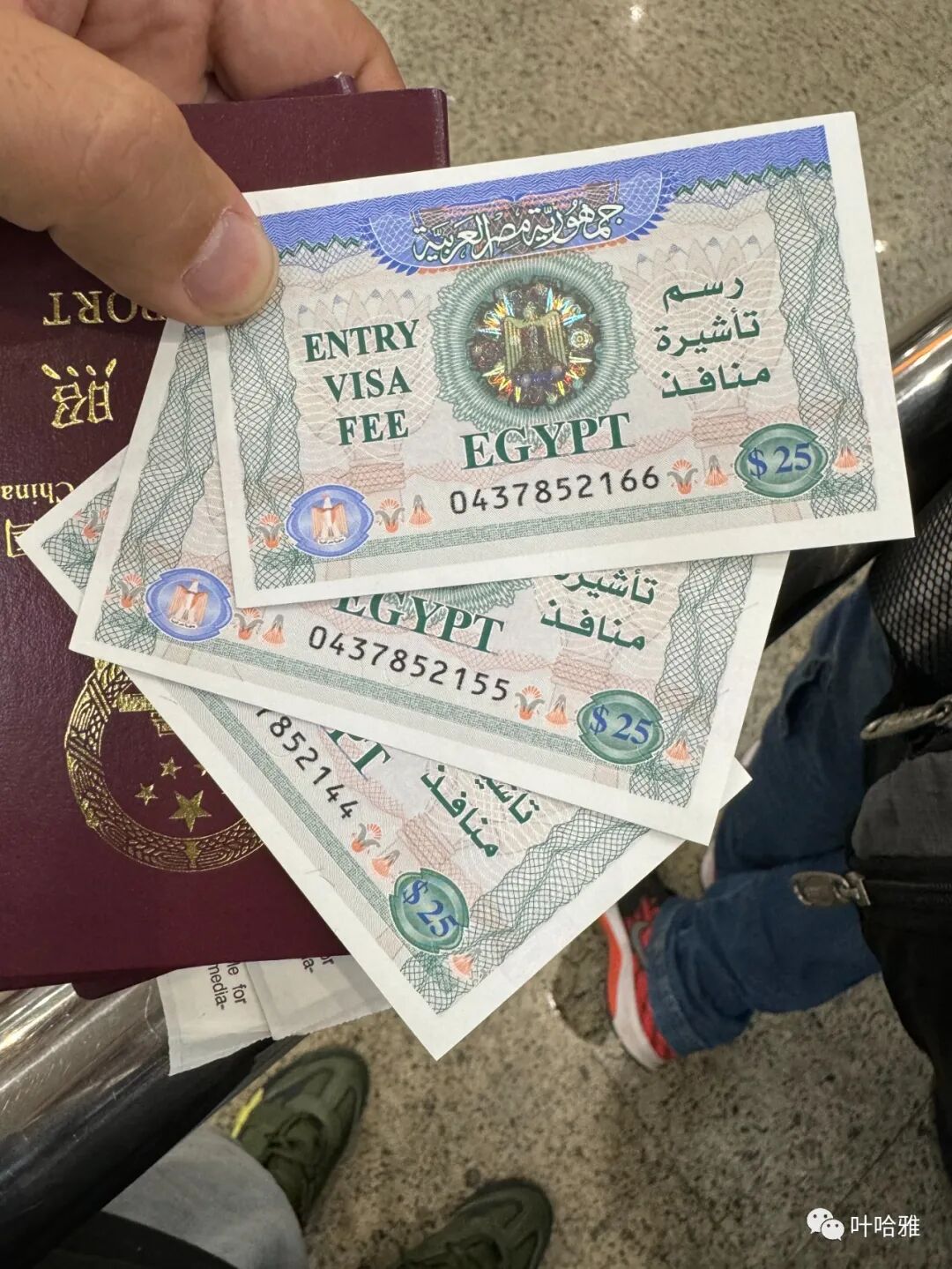
Chinese passport holders can get a visa on arrival in Egypt. When you enter, just go to the bank at the entrance and pay 25 USD per person by card for the visa. Customs will stick it in your passport, and you can enter. No other documents are needed.
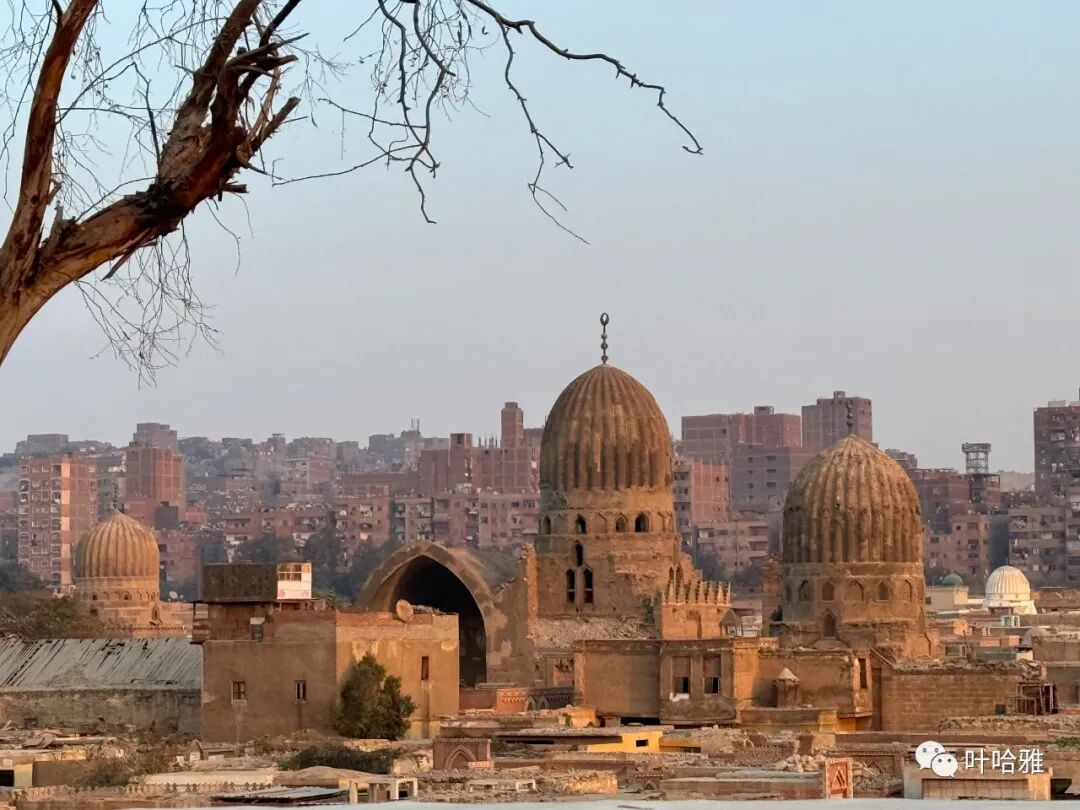
When you leave the airport, many drivers will try to solicit you; just ignore them. There are also people who will offer to help with your luggage. Don't let them help, even if they show you something that looks like a work ID. Still ignore them, because these services all require tips. If you don't know how to say no, you will end up spending money.
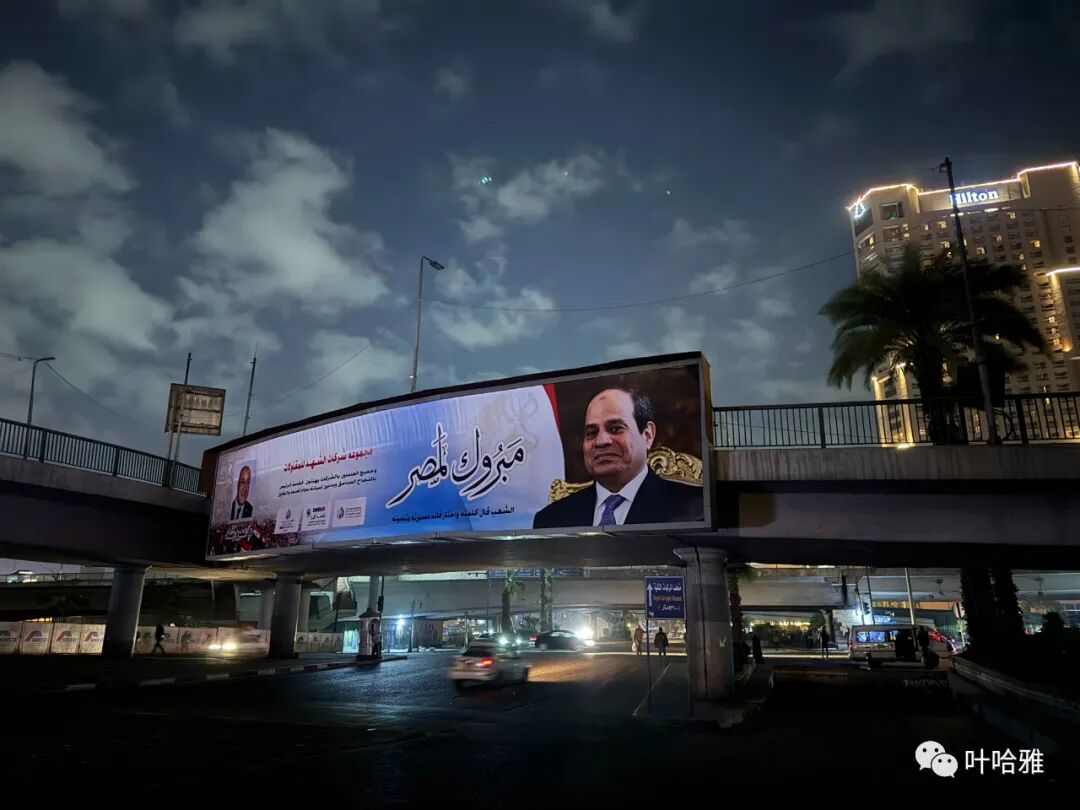
Sisi campaign poster.
I used Uber to call a car to the hotel. In Egypt, try to use Uber or the local ride-hailing app called Careem. Most Uber drivers speak English, making it easier to communicate. If you don't use a ride-hailing app, you will most likely be overcharged and the driver won't give you change.
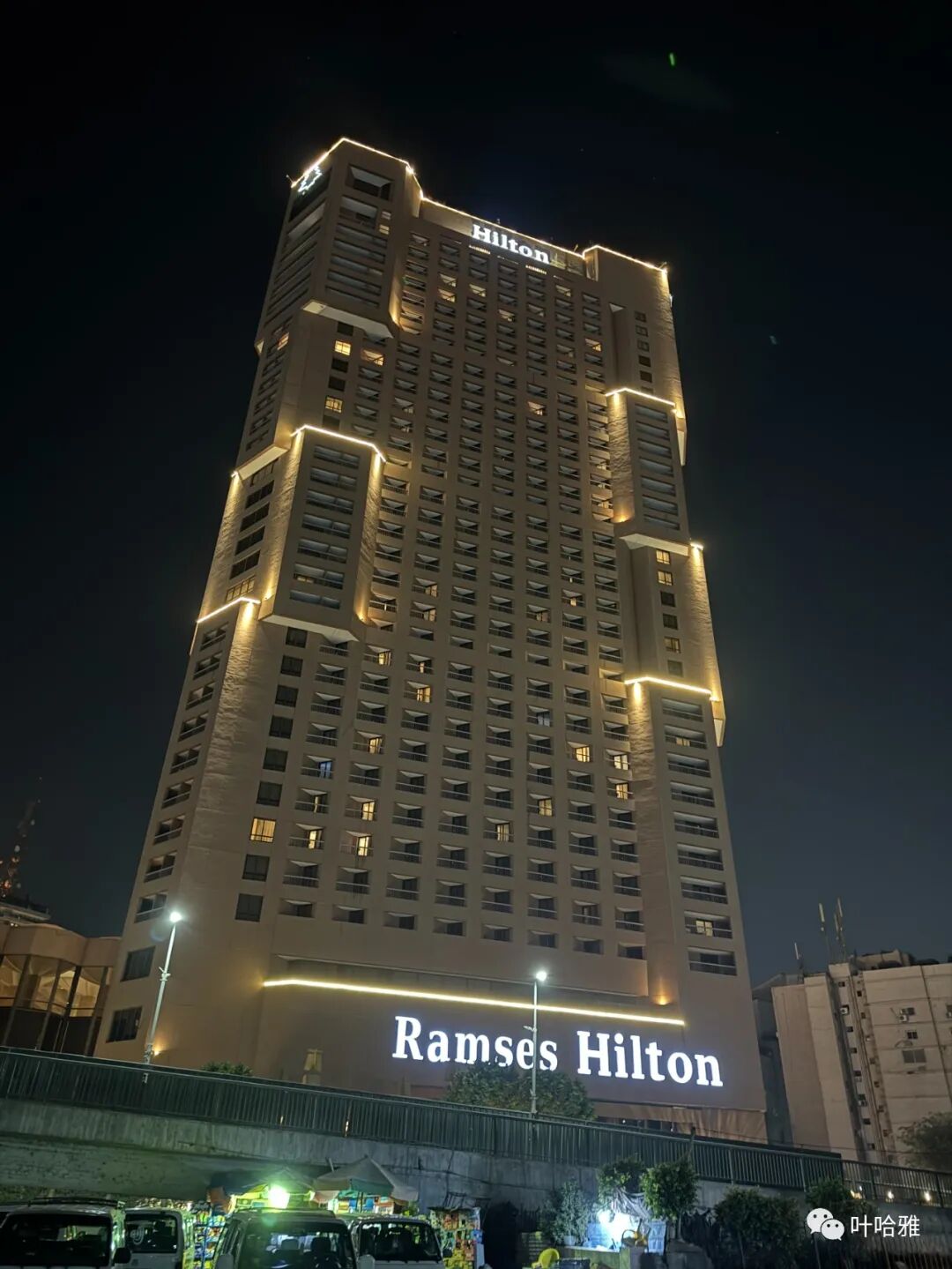
We chose to stay at the Ramses Hilton by the Nile. The hotel is across from the old Egyptian Museum and near the Nile. This area is where many high-end hotels in Egypt are clustered, so the environment is a bit better.
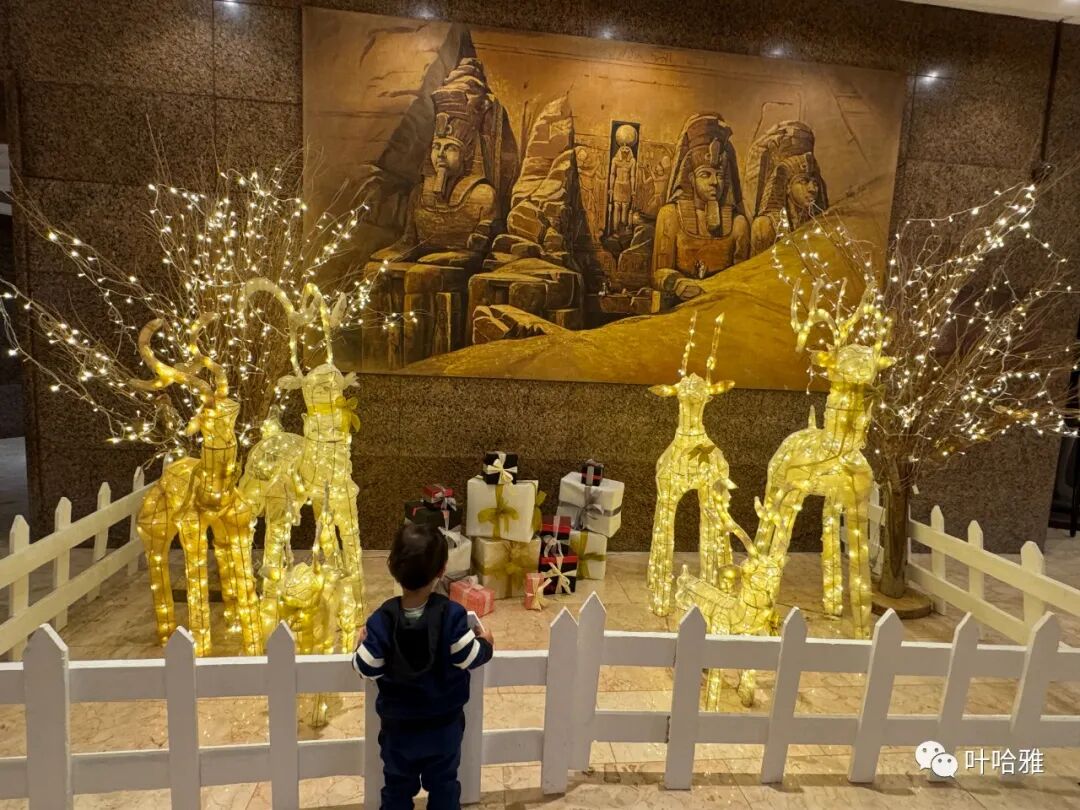
December is the Christmas holiday season, so the whole city is full of Christmas vibes. This is normal in Cairo, as there are many Coptic Christians here.
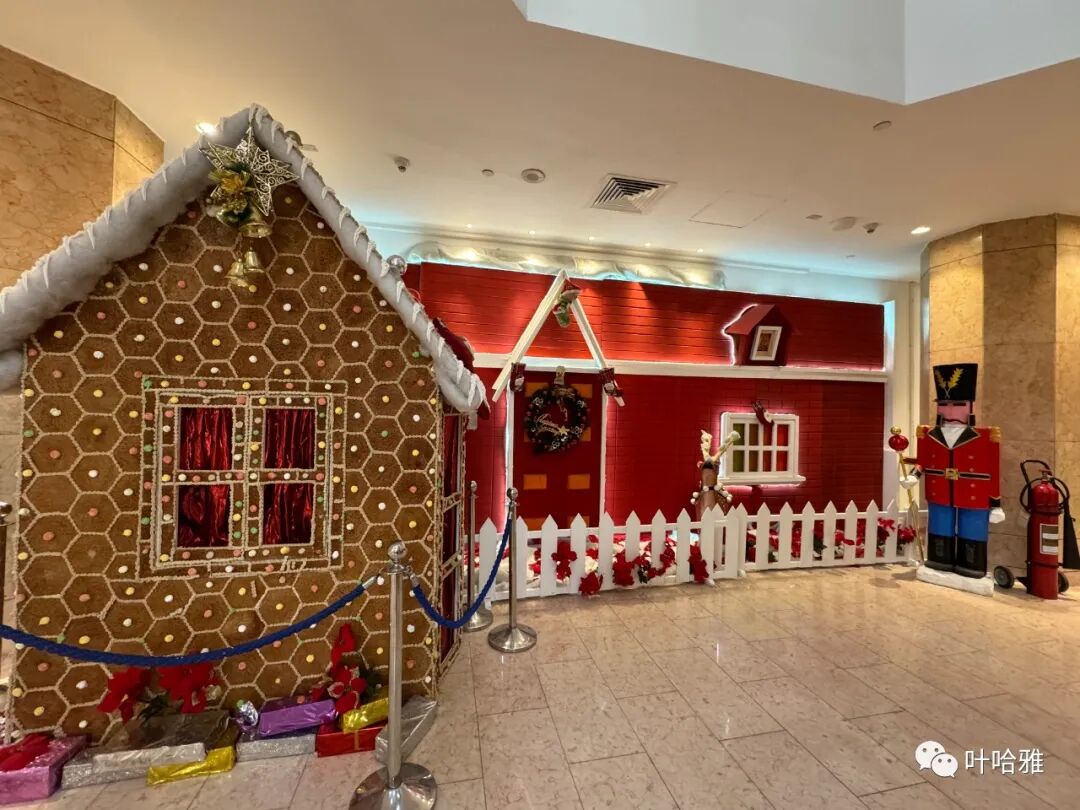
I didn't want to go out at night, so I ordered a meal to the room. Every dish was extremely salty. Since I was feeding it to Fahim, and that much salt isn't good for a child, I called to complain to the restaurant. A while later, they sent someone to remake the meal, and the second time it tasted a bit better.
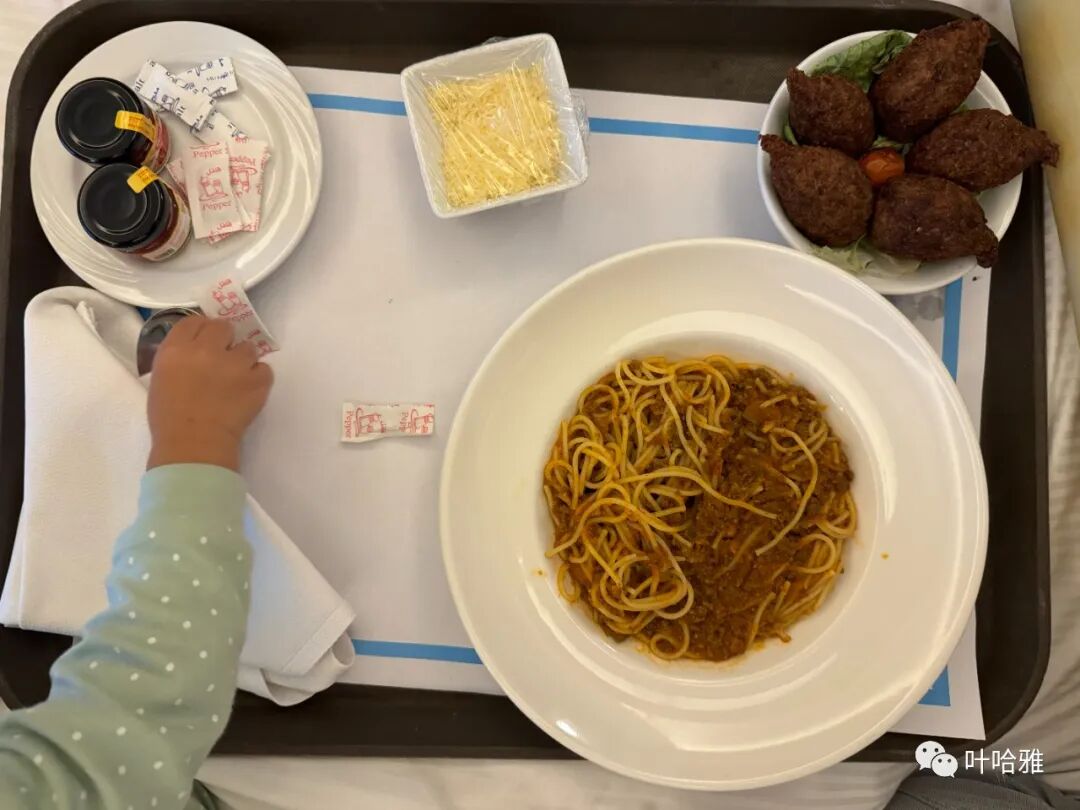
I was surprised that the bathroom at the Cairo Hilton didn't have a bidet sprayer, even though you could still find a Qibla direction indicator in the room.
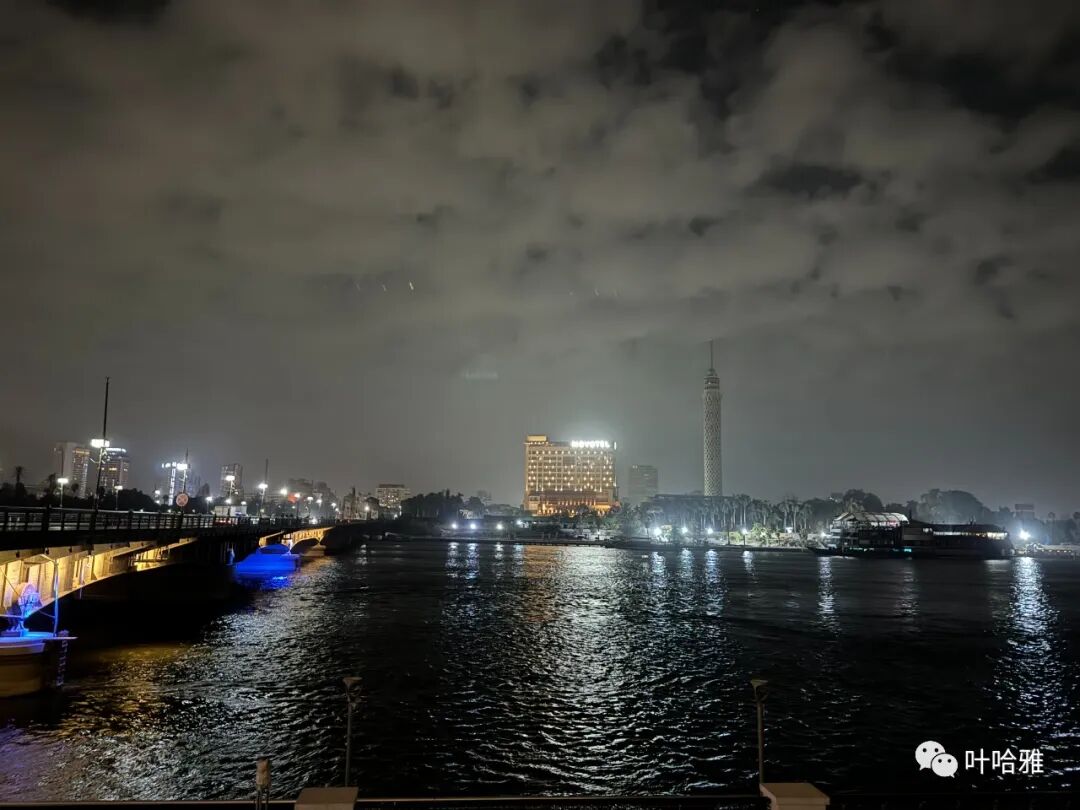
Breakfast starts at 6:30 a.m., while it is still dark outside.
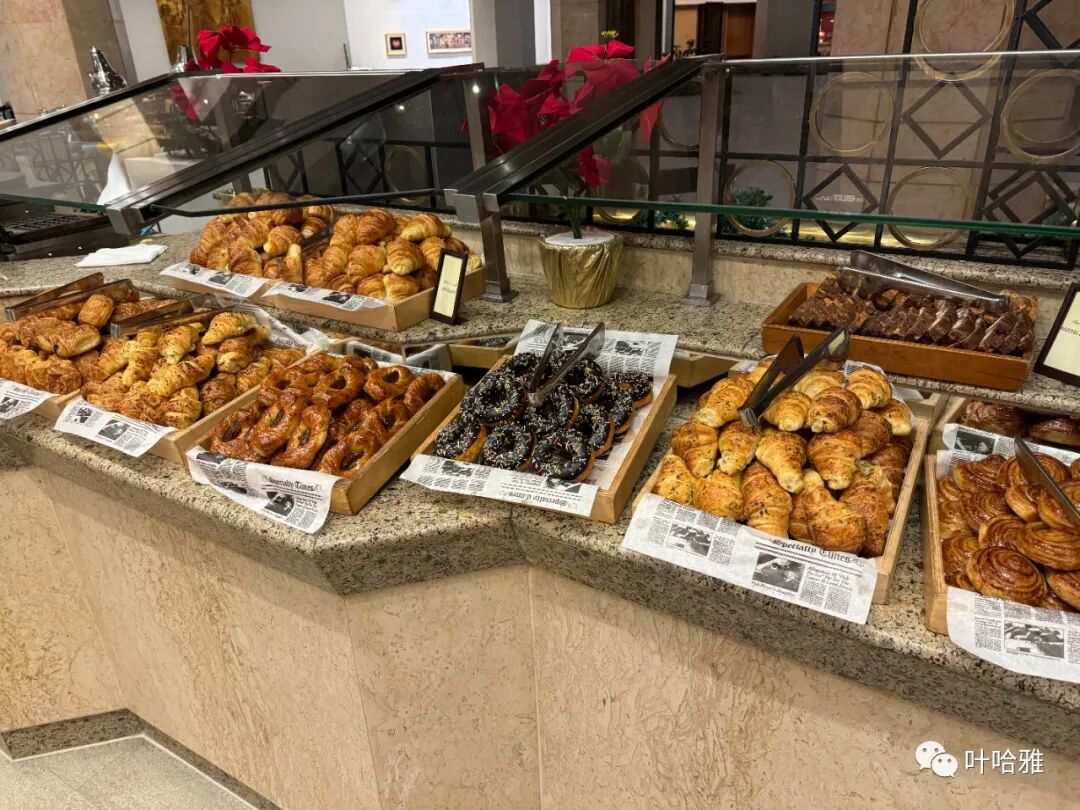
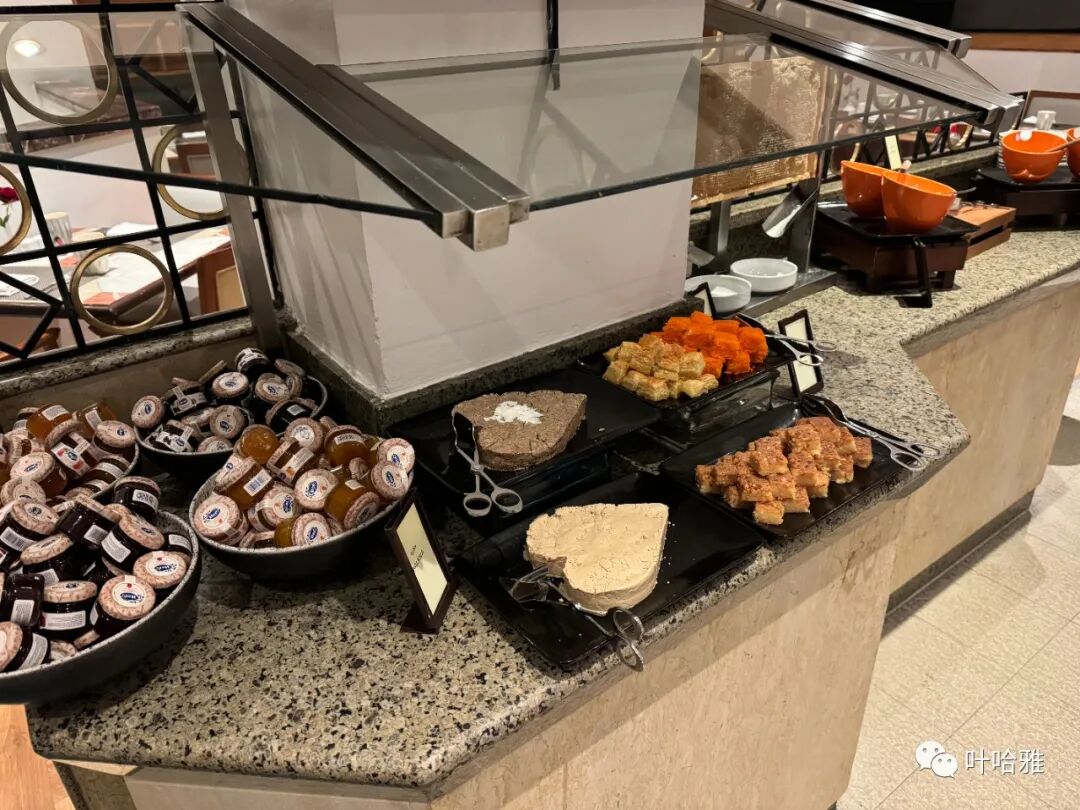
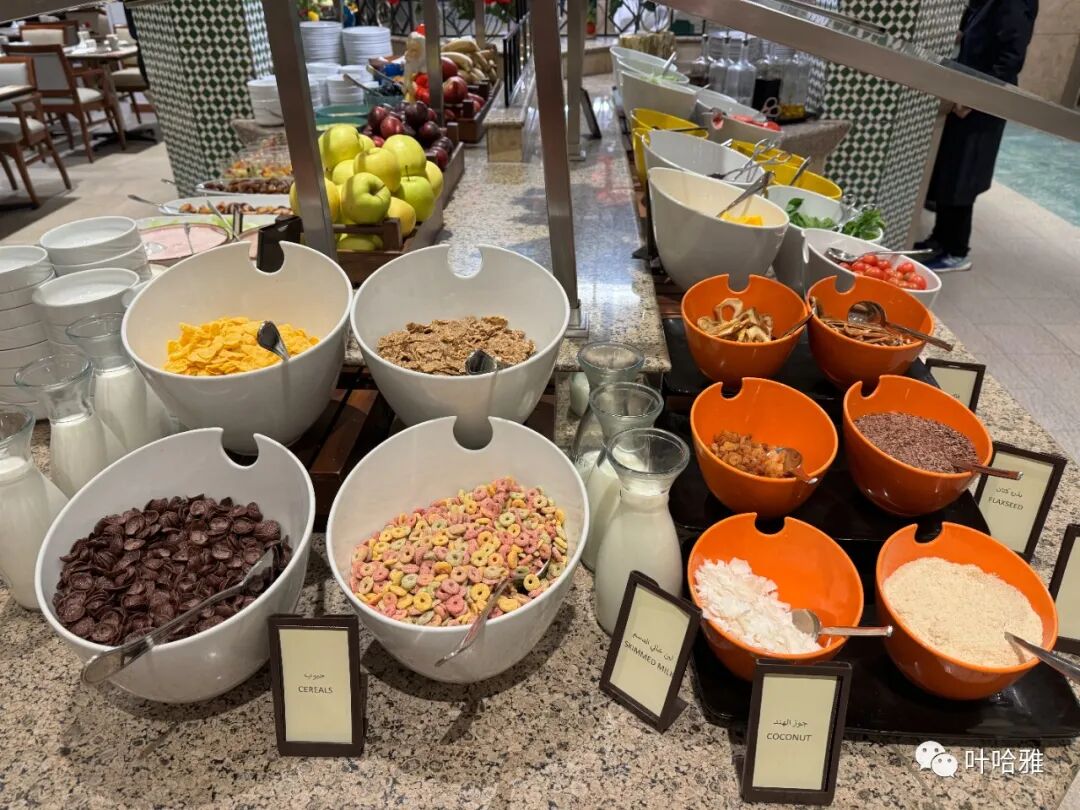
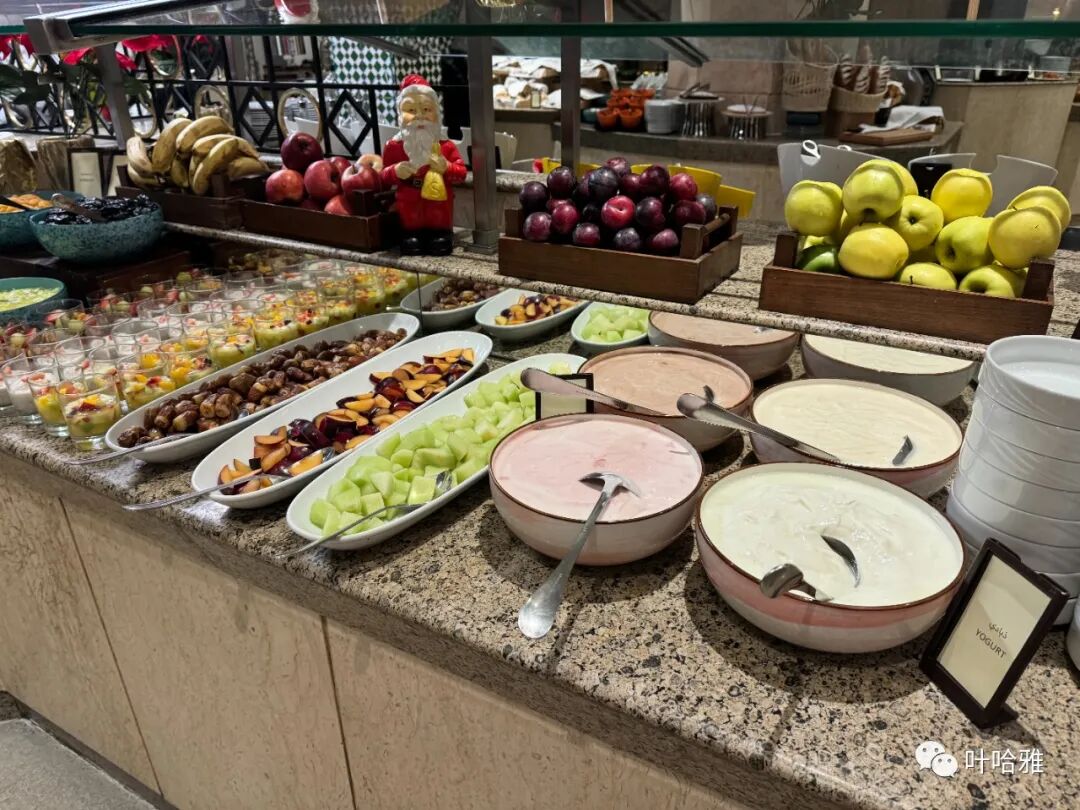
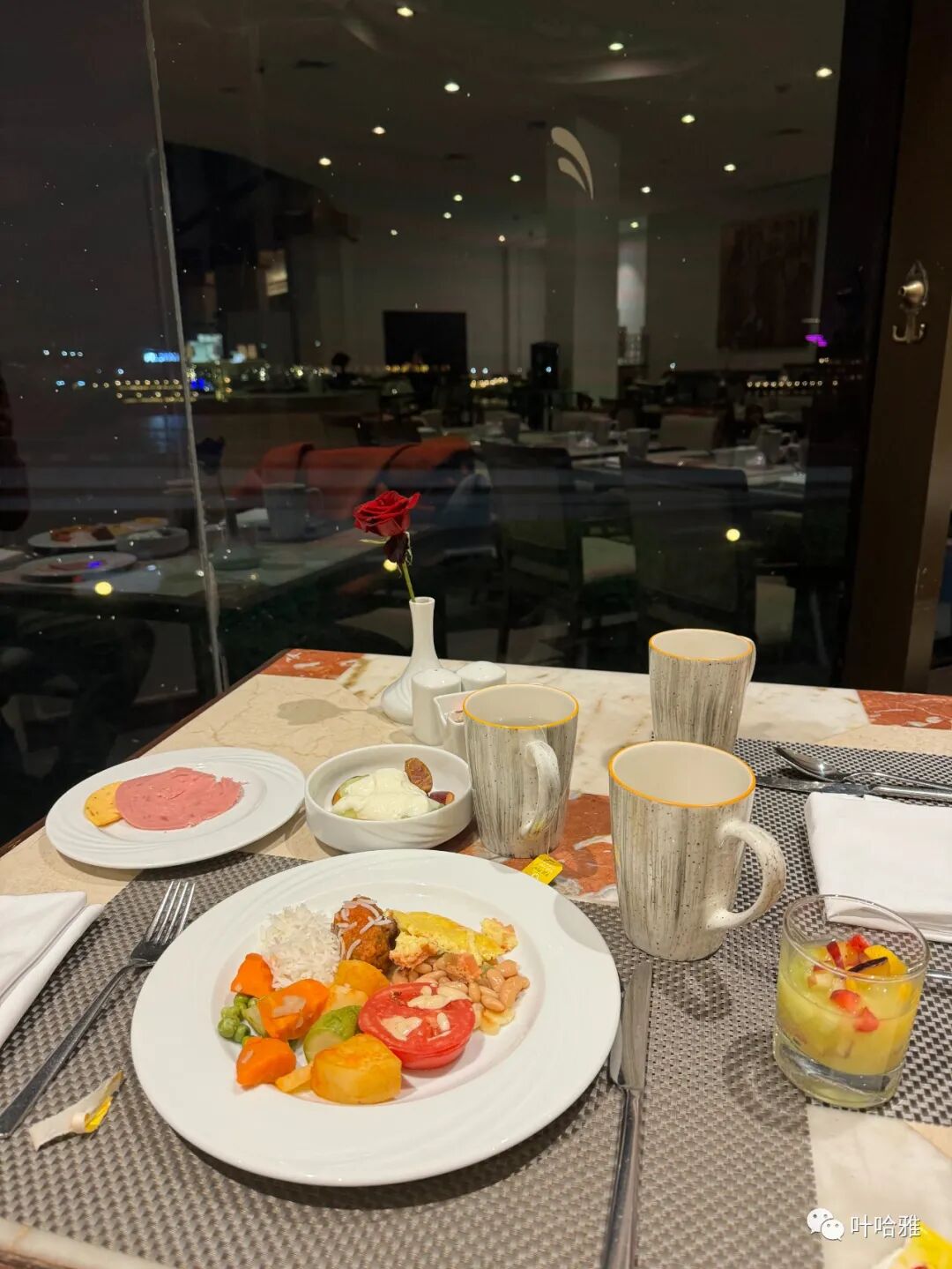
After a traditional Arabic breakfast, I planned to go to Al-Azhar for Jumu'ah prayer. I asked the hotel staff about the time for today's Jumu'ah, and they said around 11:40.
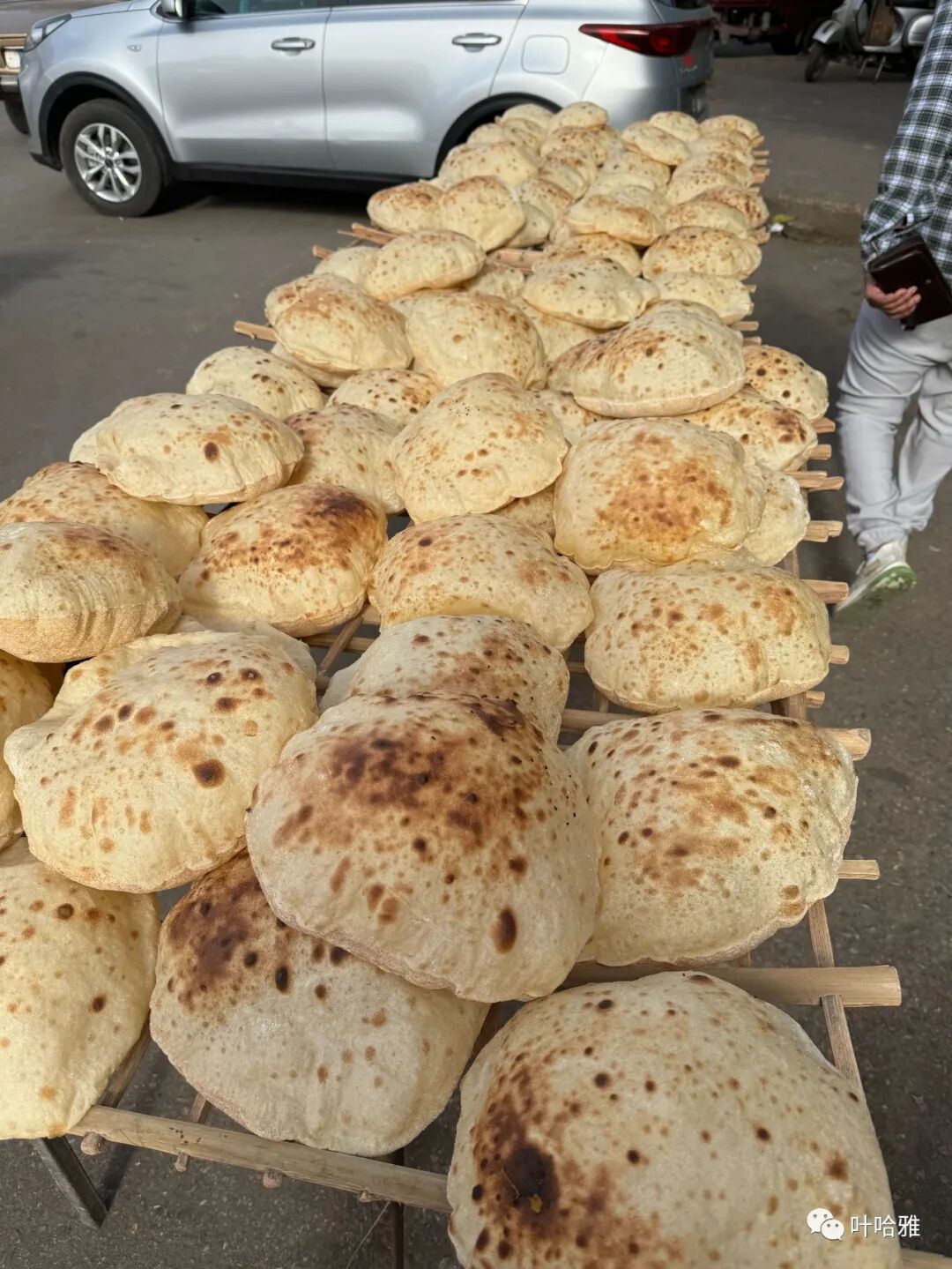
You can see this kind of bread sold everywhere on the streets of Old Cairo. It is like the steamed bun (mantou) in northern China and costs two mao (0.20 RMB) each. Fahim really likes eating it.
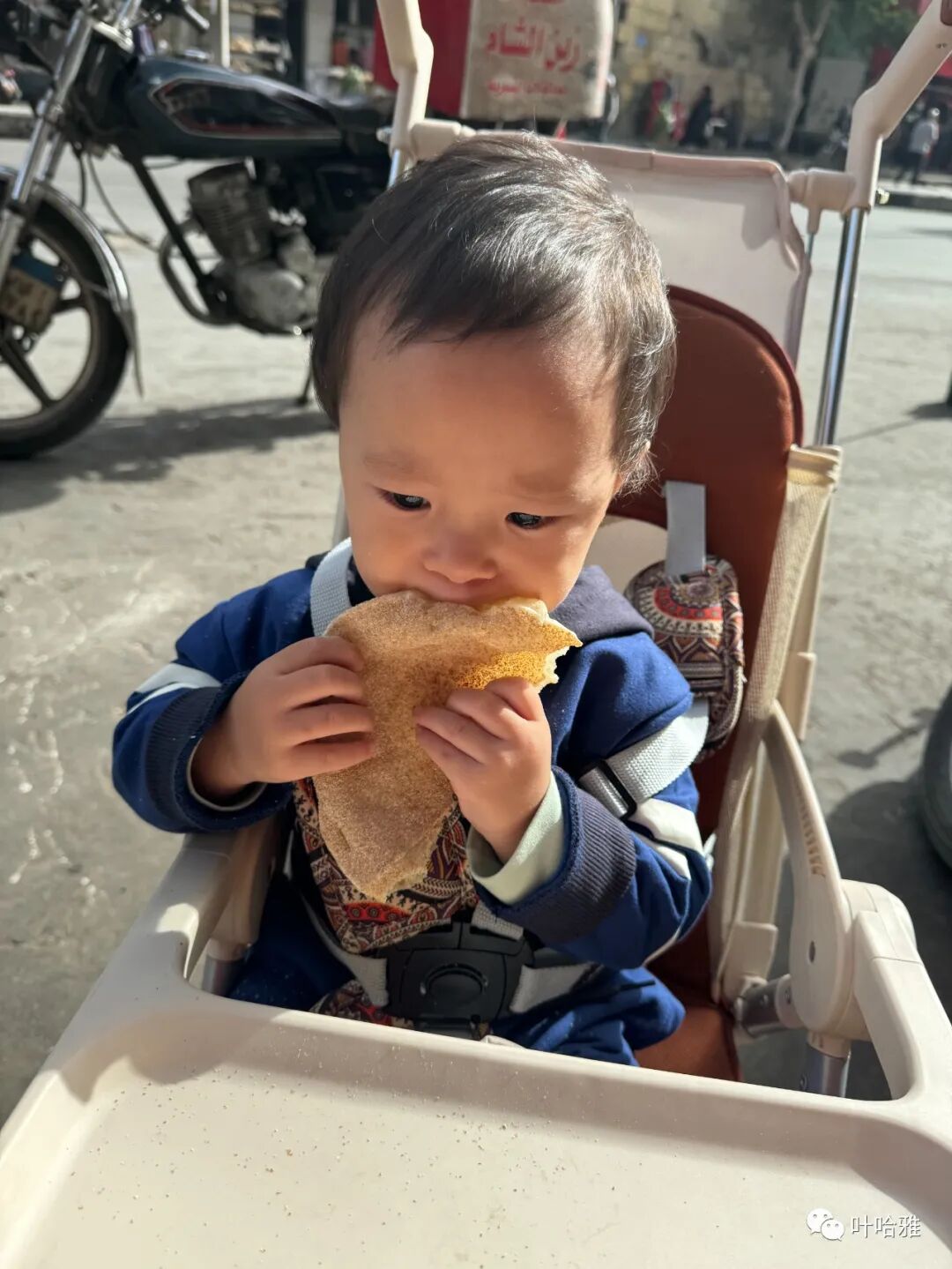
Al-Azhar Mosque
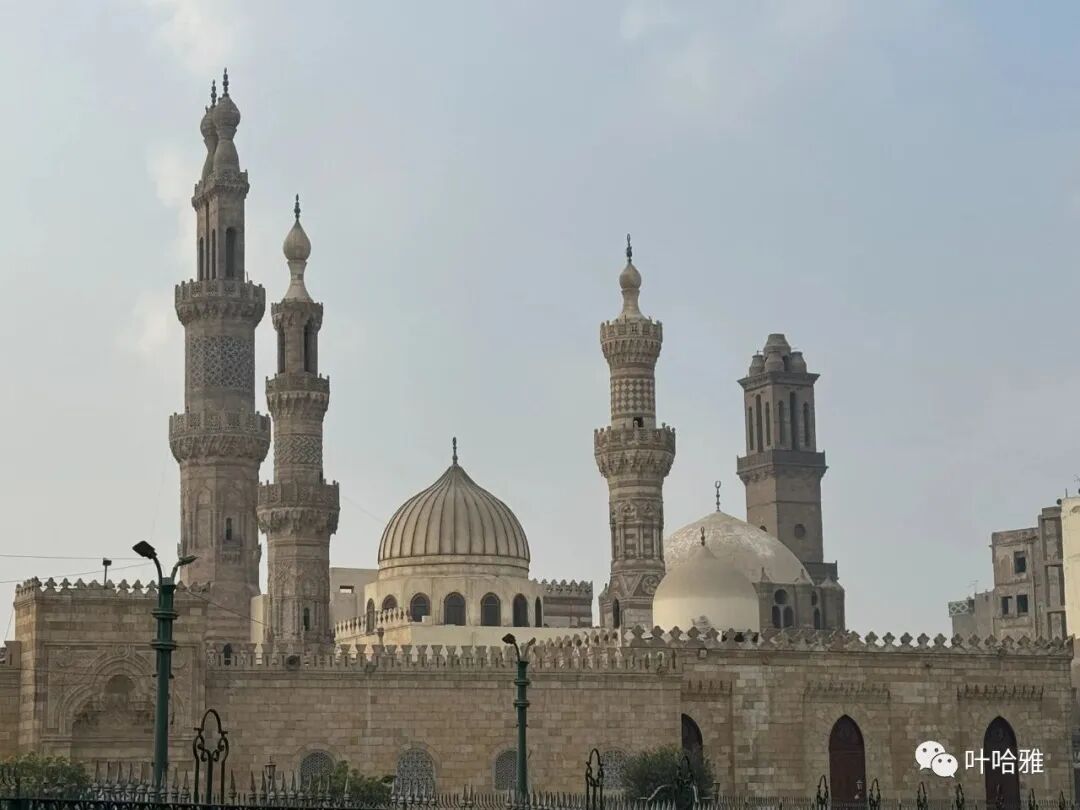
Al-Azhar Mosque was built in 972 AD. It is also the second oldest university in the world. The oldest is the University of al-Qarawiyyin in Fez, Morocco, which was built in 859 AD.
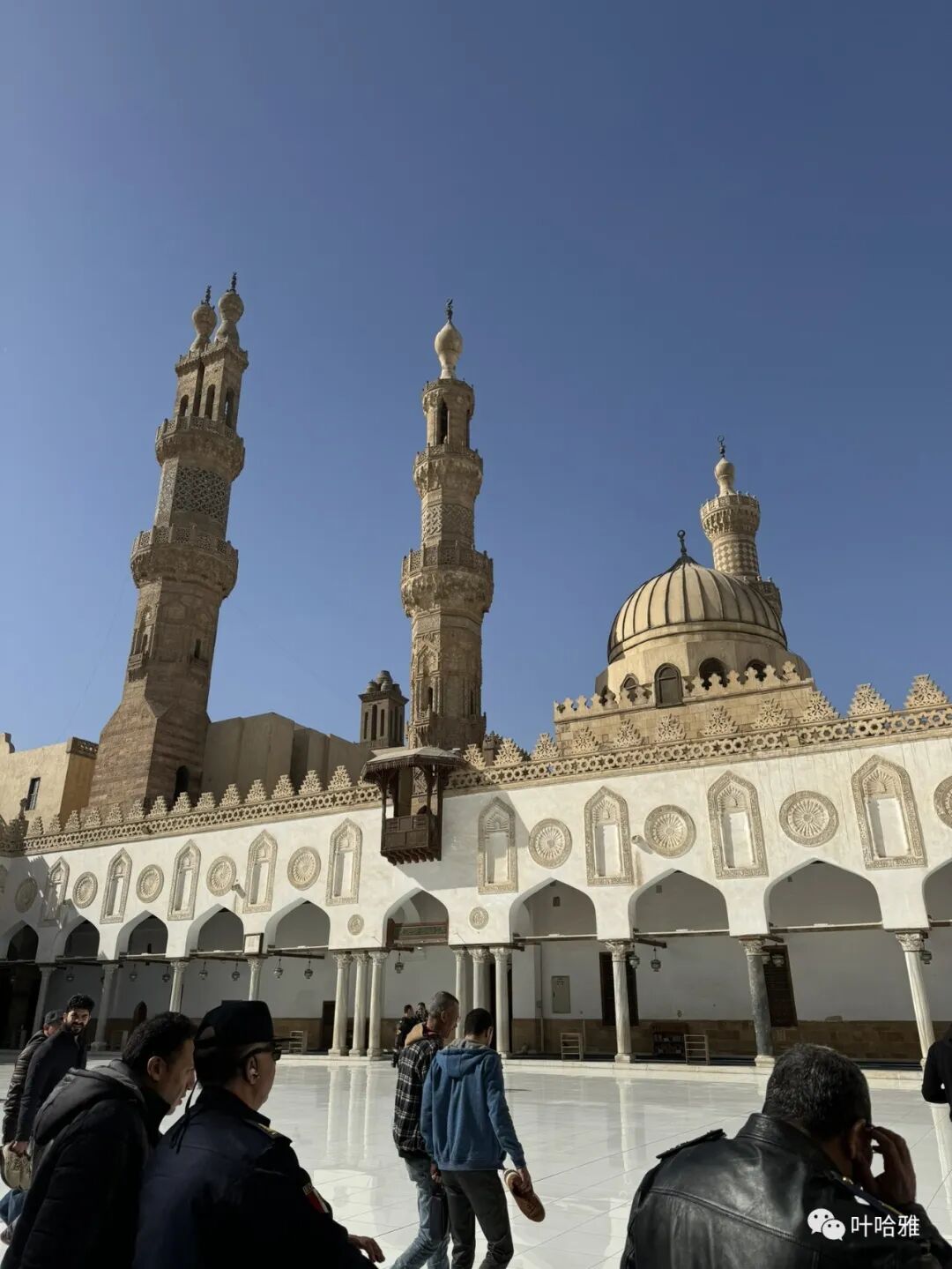
Al-Azhar was once considered the highest institution of Sunni learning. After it was nationalized in 1952, negative opinions about the university have grown.
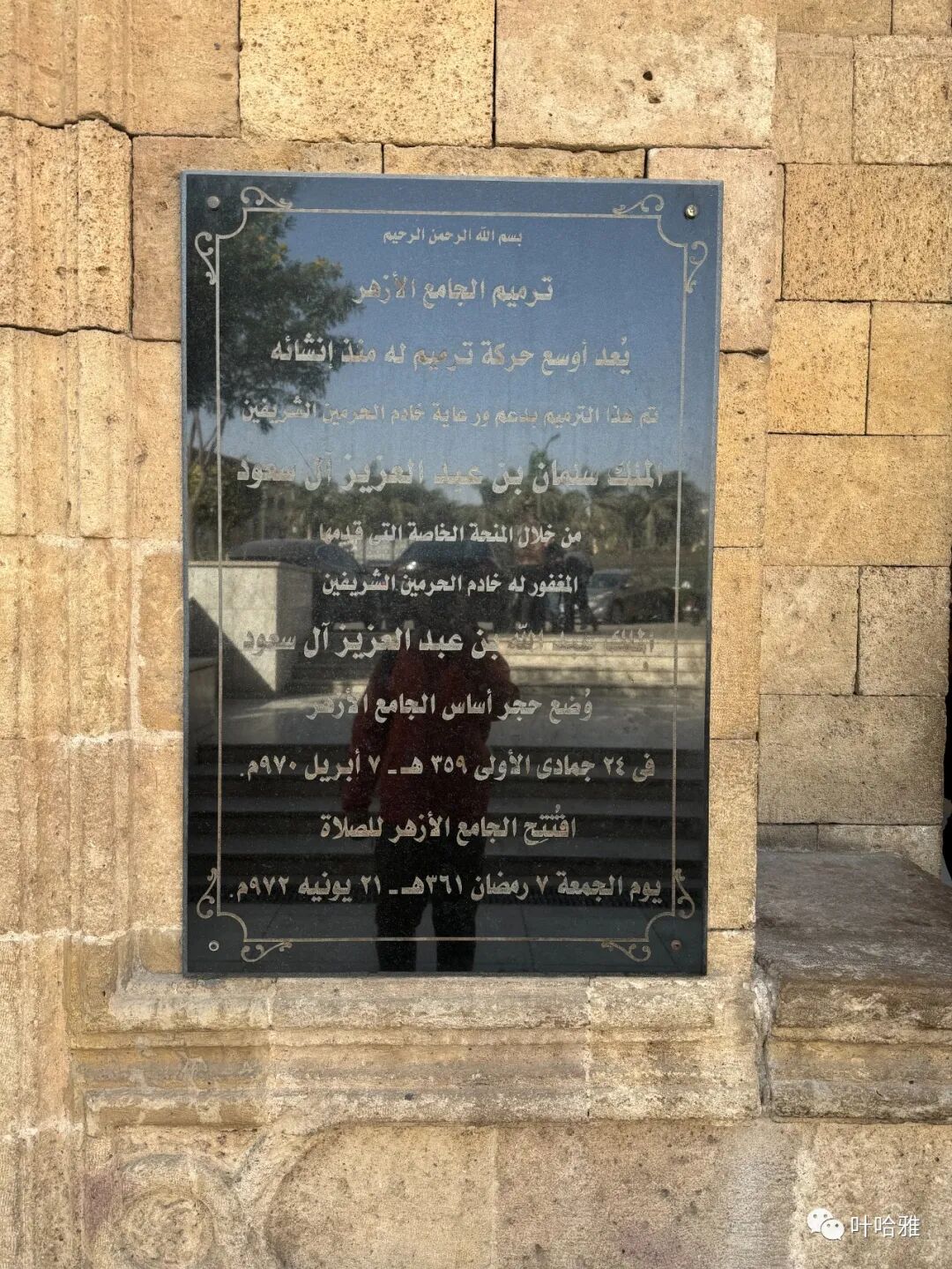
Al-Azhar is located in Old Cairo. When I reached the entrance, I saw several rows of security guards. Everyone entering the mosque had to go through a security check, which felt familiar to me.
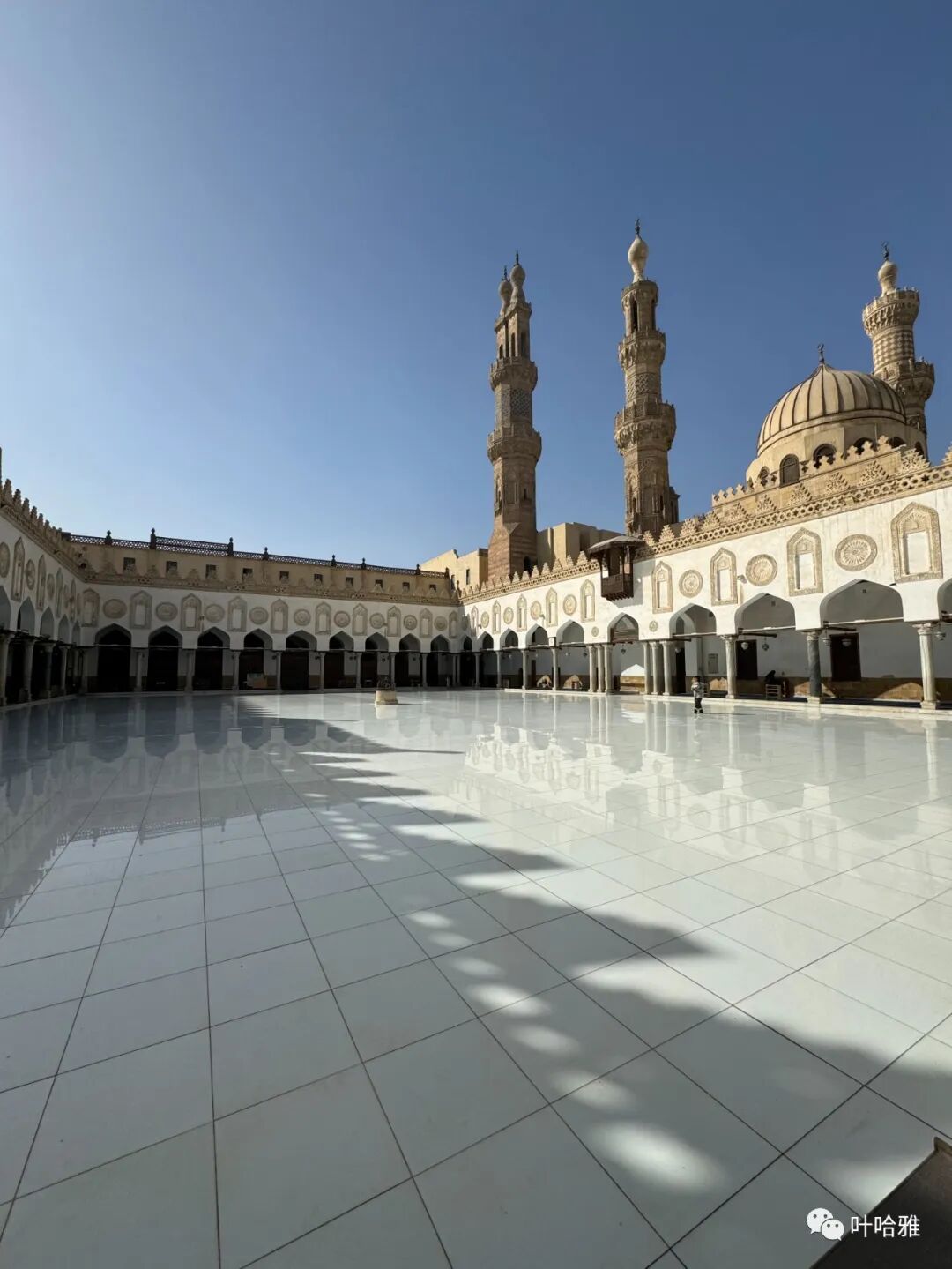
I took a photo in the square, but a guard told me not to take pictures. After walking into the main hall, I saw several staff members walking back and forth, constantly reminding people not to take photos. This made the atmosphere feel strange.
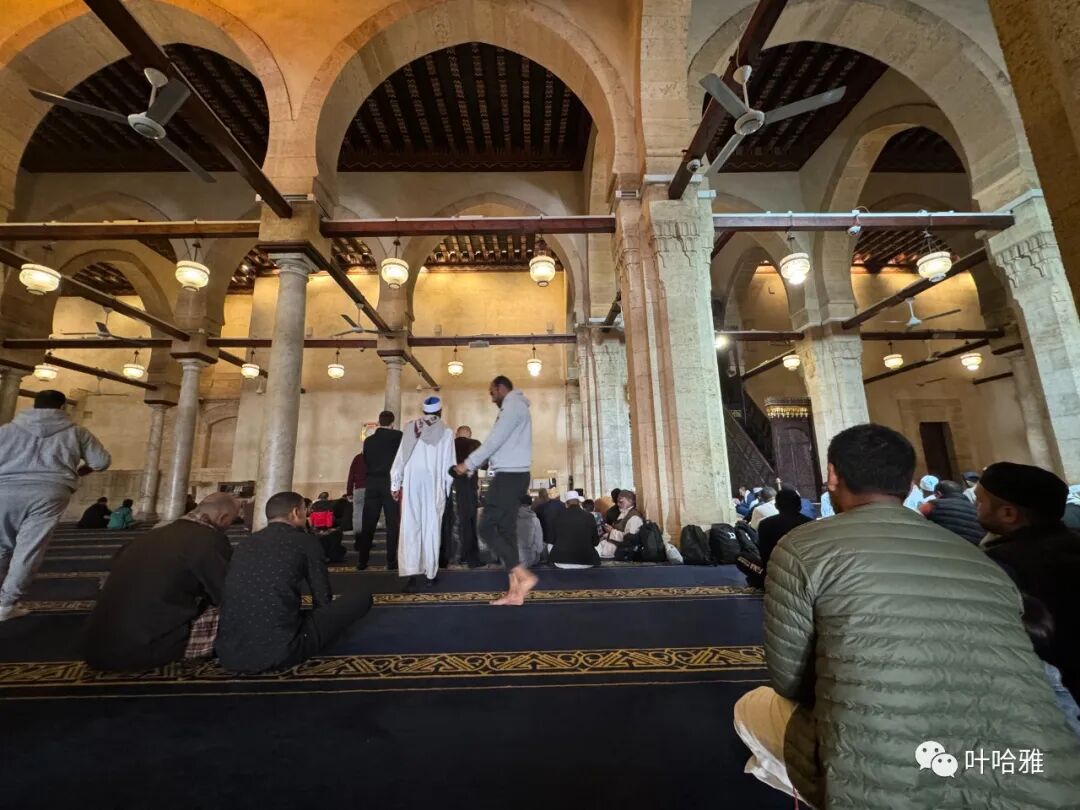
The imam started by reciting the Quran. The tone was strange, like the old style I have heard back home: read a sentence, take a breath, wait a moment, then read another sentence, all very choppy. Very few people came for Jumu'ah prayer. Less than a quarter of the main hall was filled, making me wonder if I had gone to the wrong place.
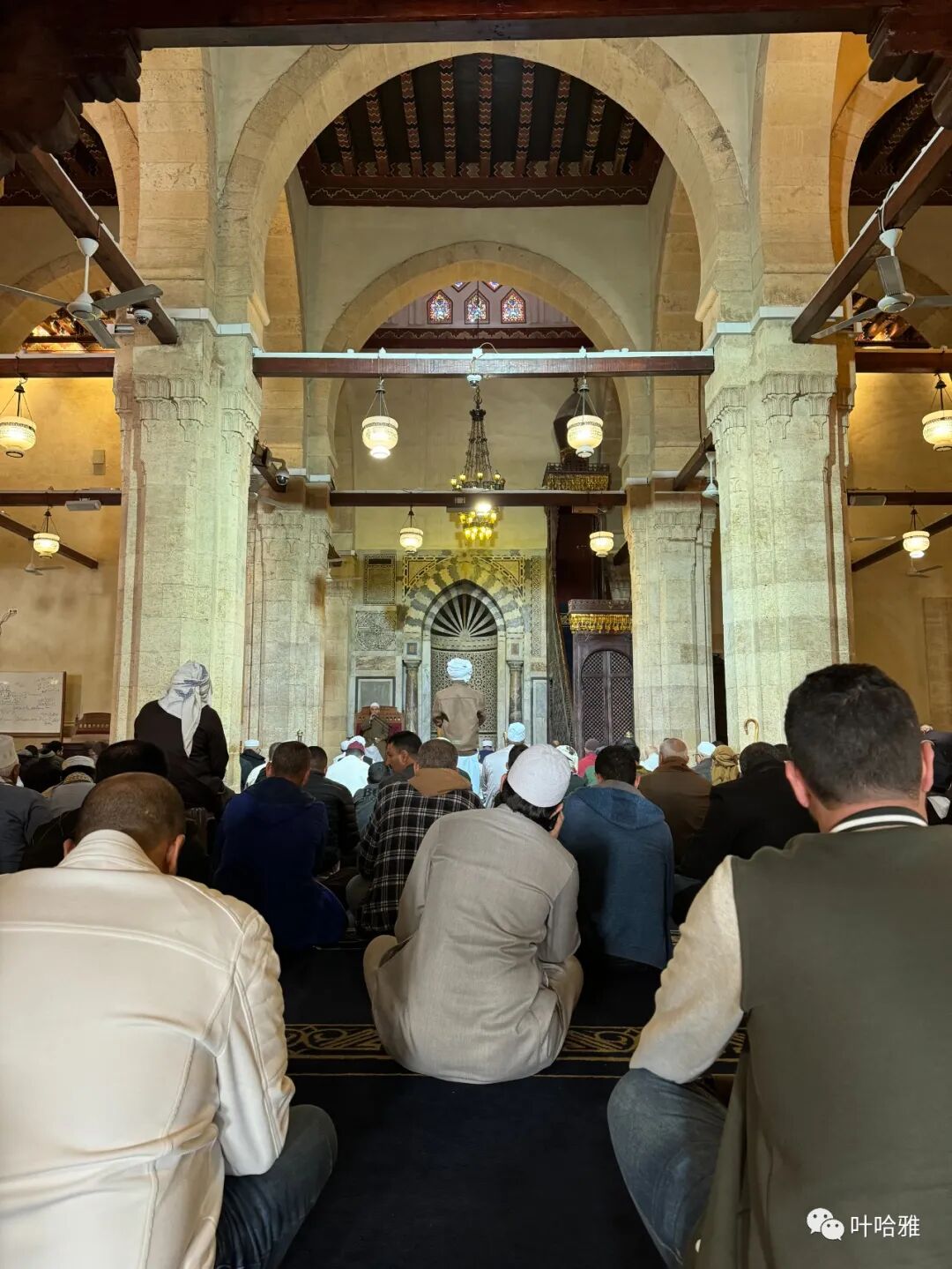
After the prayer, I asked someone and learned that today was the first day Al-Azhar had reopened. The mosque had been closed because of the presidential election, so Al-Azhar has changed.
Imam Hussein Gongbei
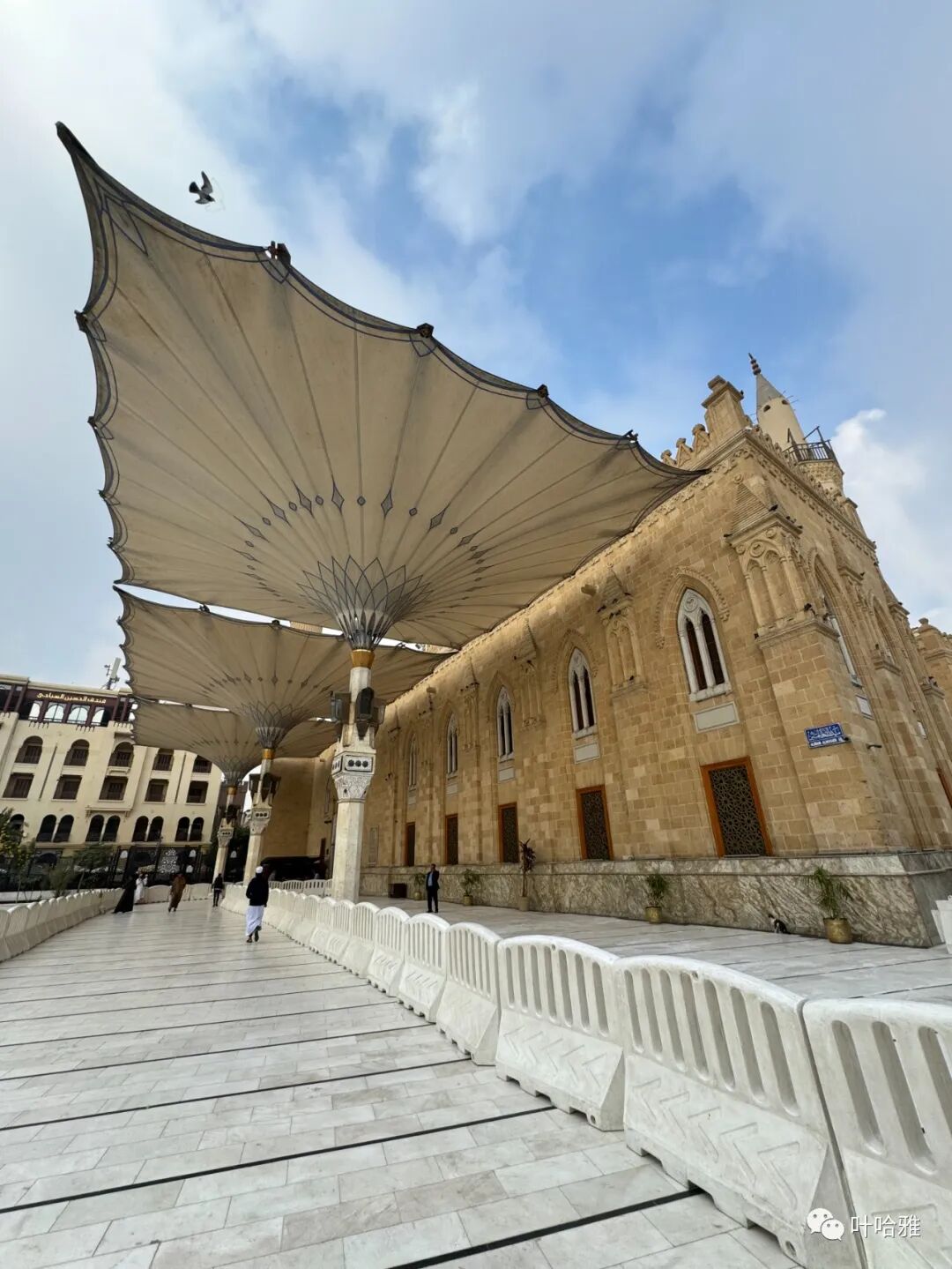
Across from Al-Azhar is the Imam Hussein gongbei (Al-Hussein Mosque), built in 1154 AD. People say the head of the Prophet's grandson, Hussein, is buried here, though some Shia Muslims believe his head and body are both at the Imam Hussein Shrine in Karbala, Iraq.
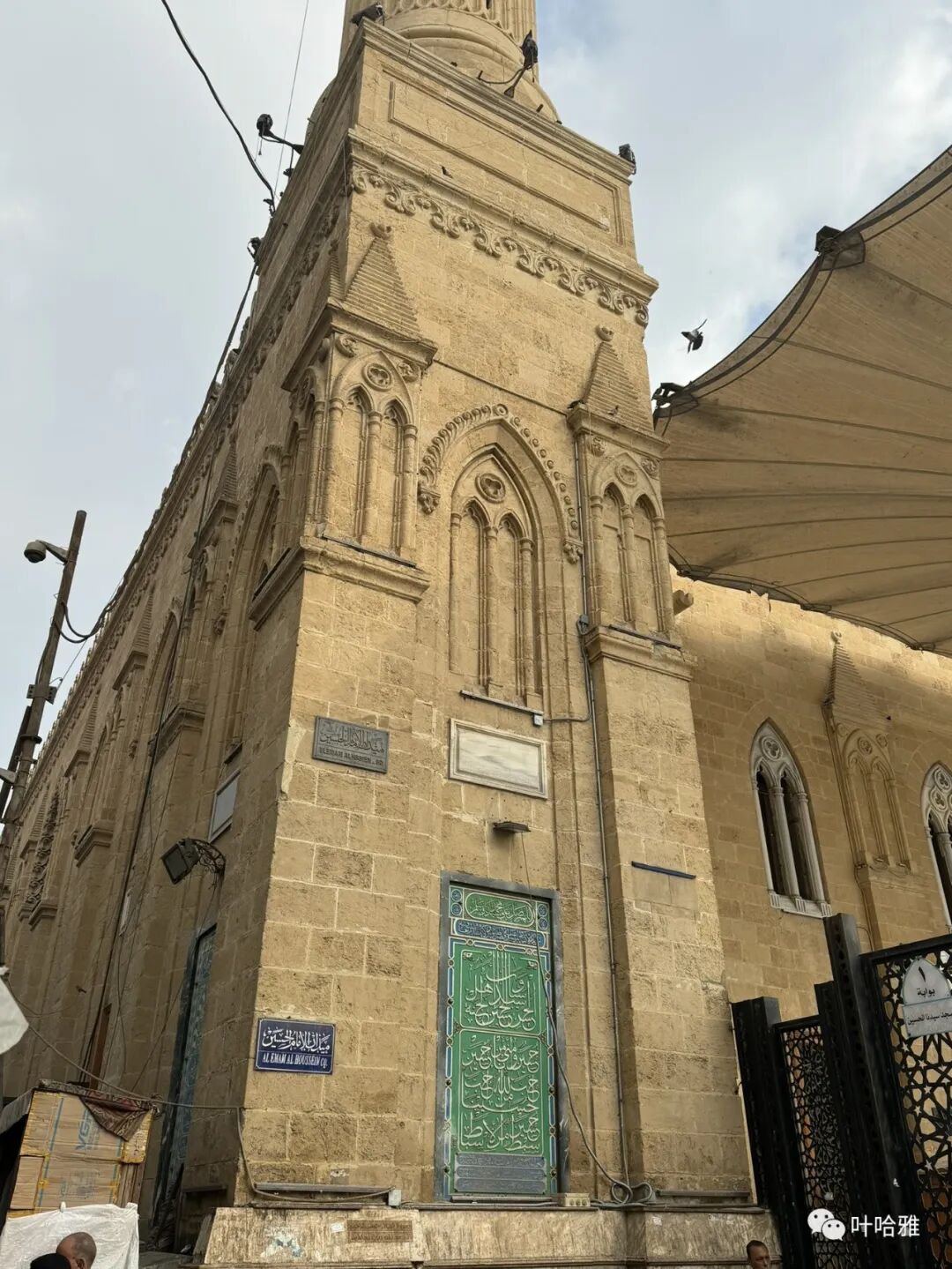
In 985 AD, the 15th Fatimid Caliph, Mansur, learned in Baghdad that Hussein's head had been buried at the Shrine of the Head of Hussein in Palestine for 250 years. It was not until 1154 AD that the 21st Fatimid Caliph, Qasim, had it transported to Cairo and built the mosque. The current building was rebuilt in 1874. Influenced by the Westernization of Cairo at the time, it was constructed in a mix of Gothic and Ottoman styles and fitted with sunshades like those at the Prophet's Mosque in Medina.
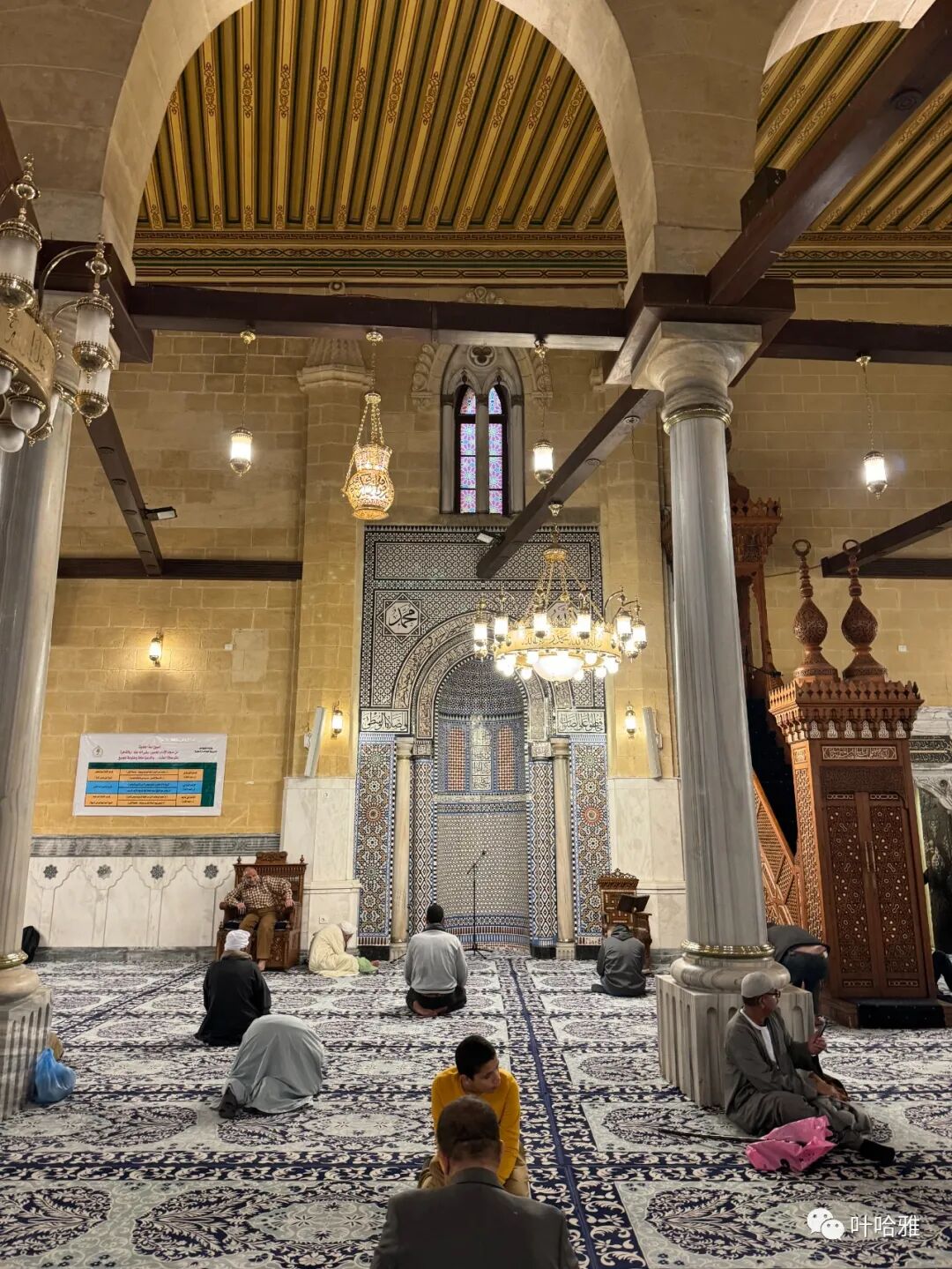
Imam Hussein passed away in 680 AD, dying in battle in Karbala, Iraq, during the war against Muawiyah. The Fatimid dynasty and Sunni Muslims believe Hussein's head was moved to Cairo in 1153. Starting from the time of Saladin, the mosque became Sunni, and to this day, its call to prayer and namaz rituals follow the Sunni tradition.
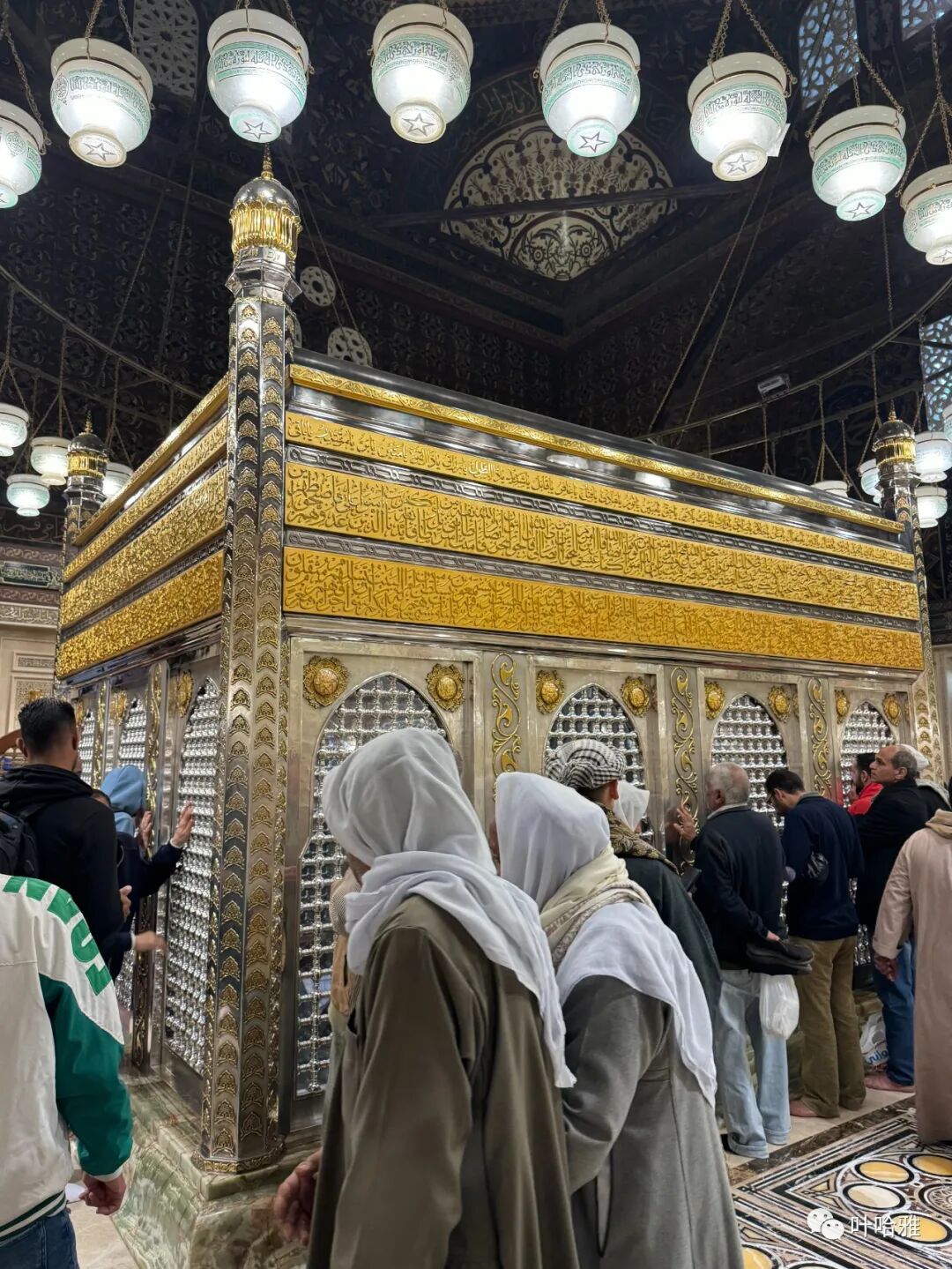
The tomb chamber is built behind the mihrab of the main hall, where you can see many people commemorating Hussein in various ways.
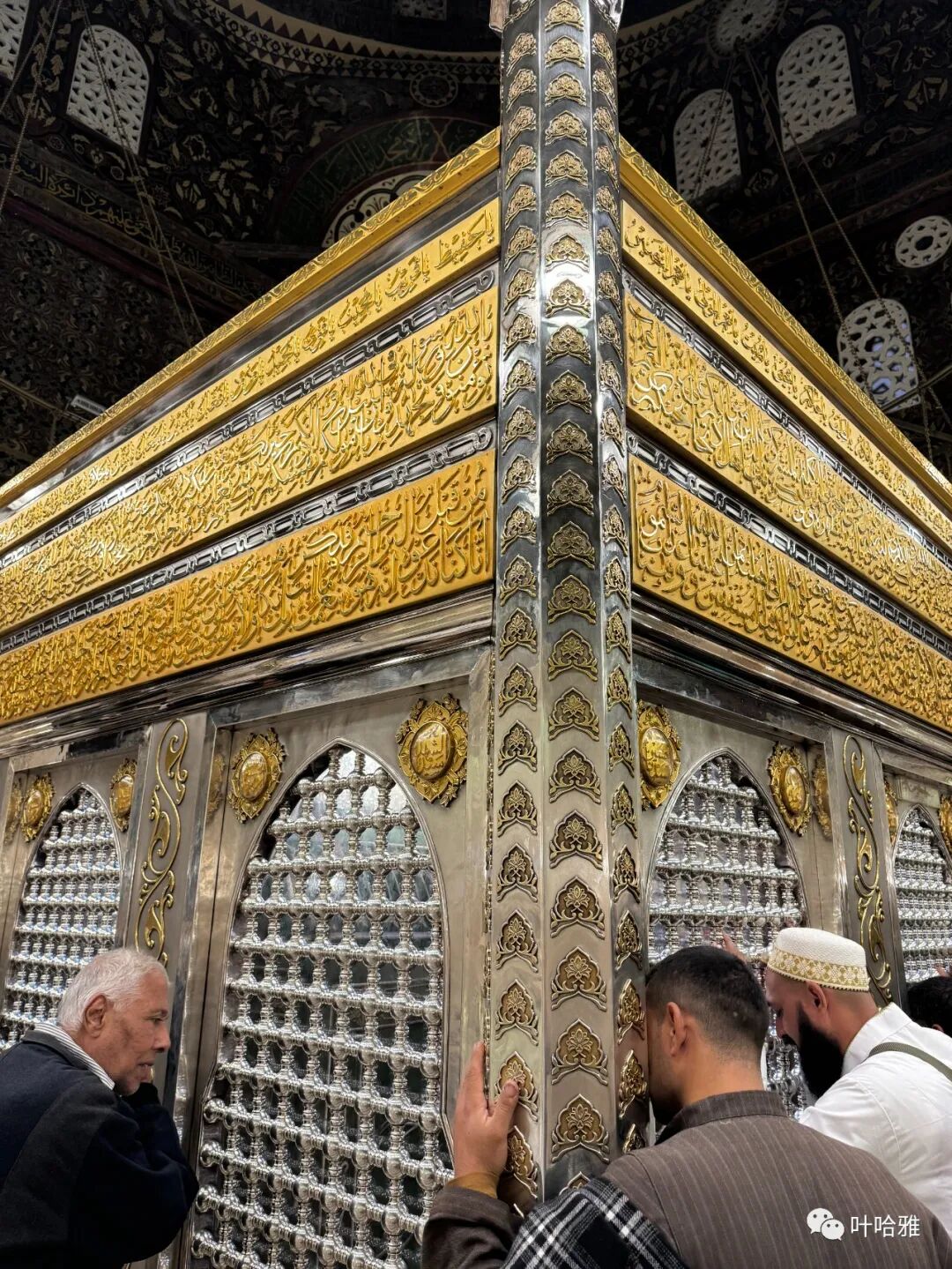
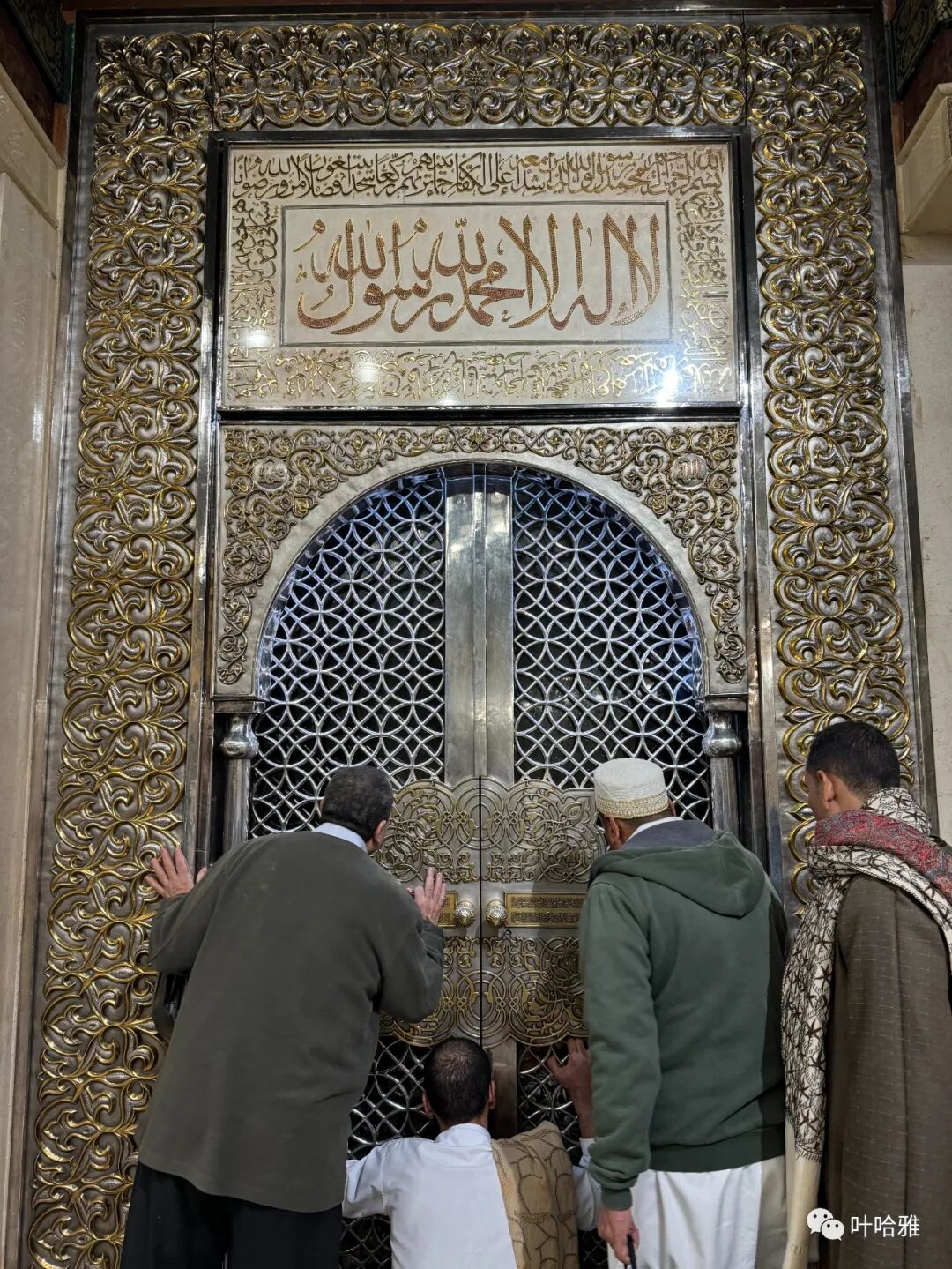
Inside the gongbei building is a room built in 1893. It is said to house relics of the Prophet, including a linen cloak he once wore, four strands of his hair, the staff he used when entering Mecca, a sword gifted to him by a companion, and a 501-page Quran written on deerskin in Kufic script by Ali ibn Abi Talib.
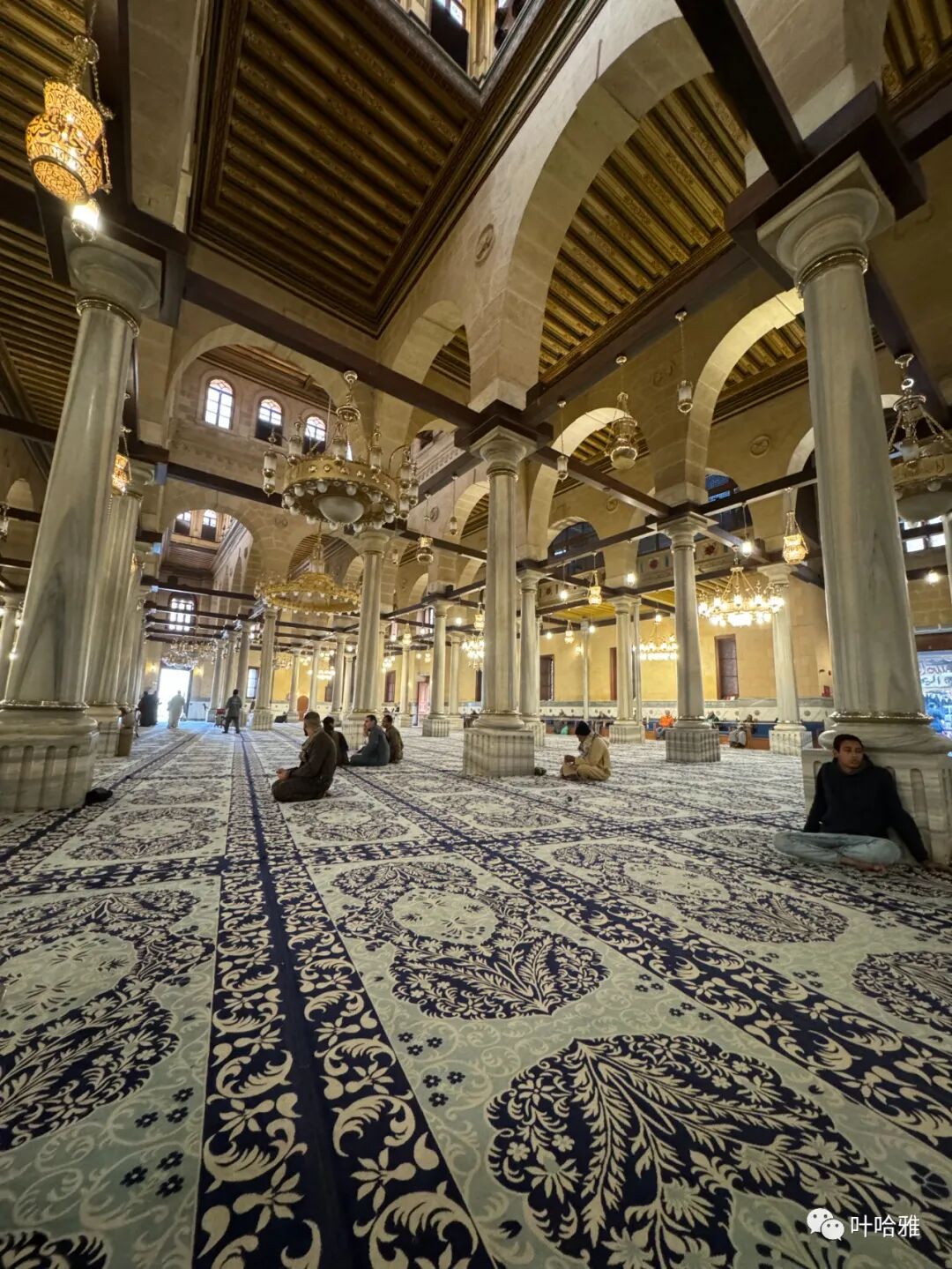
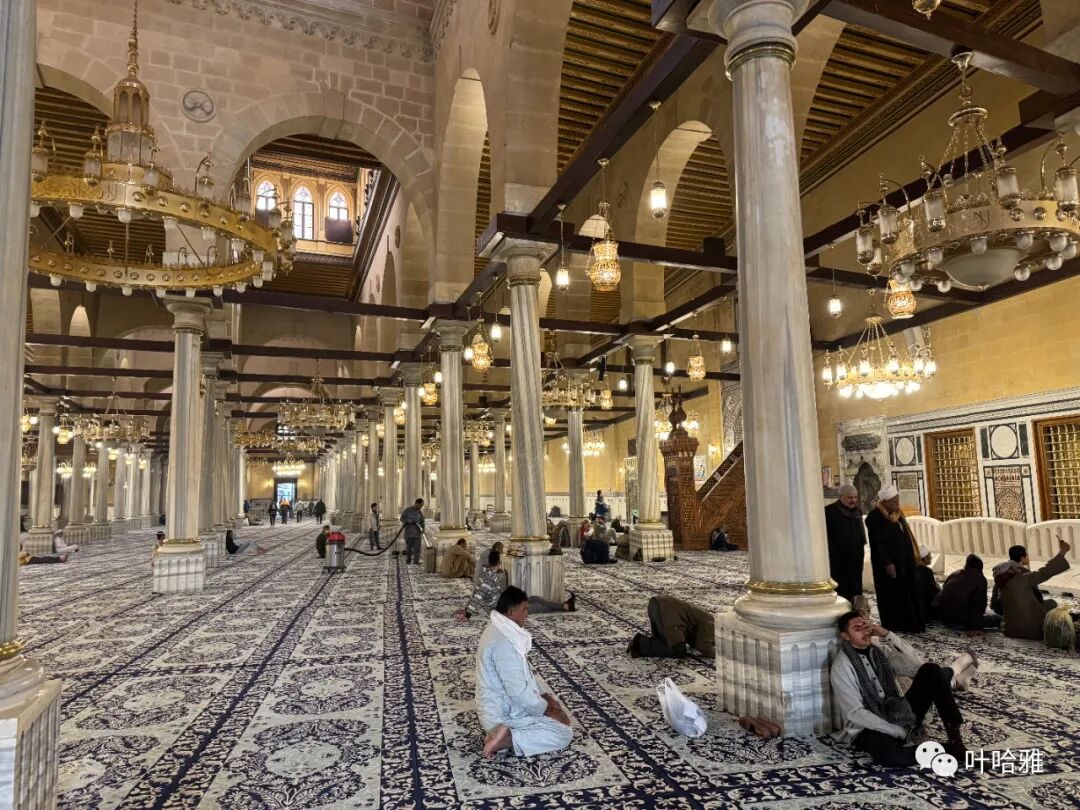
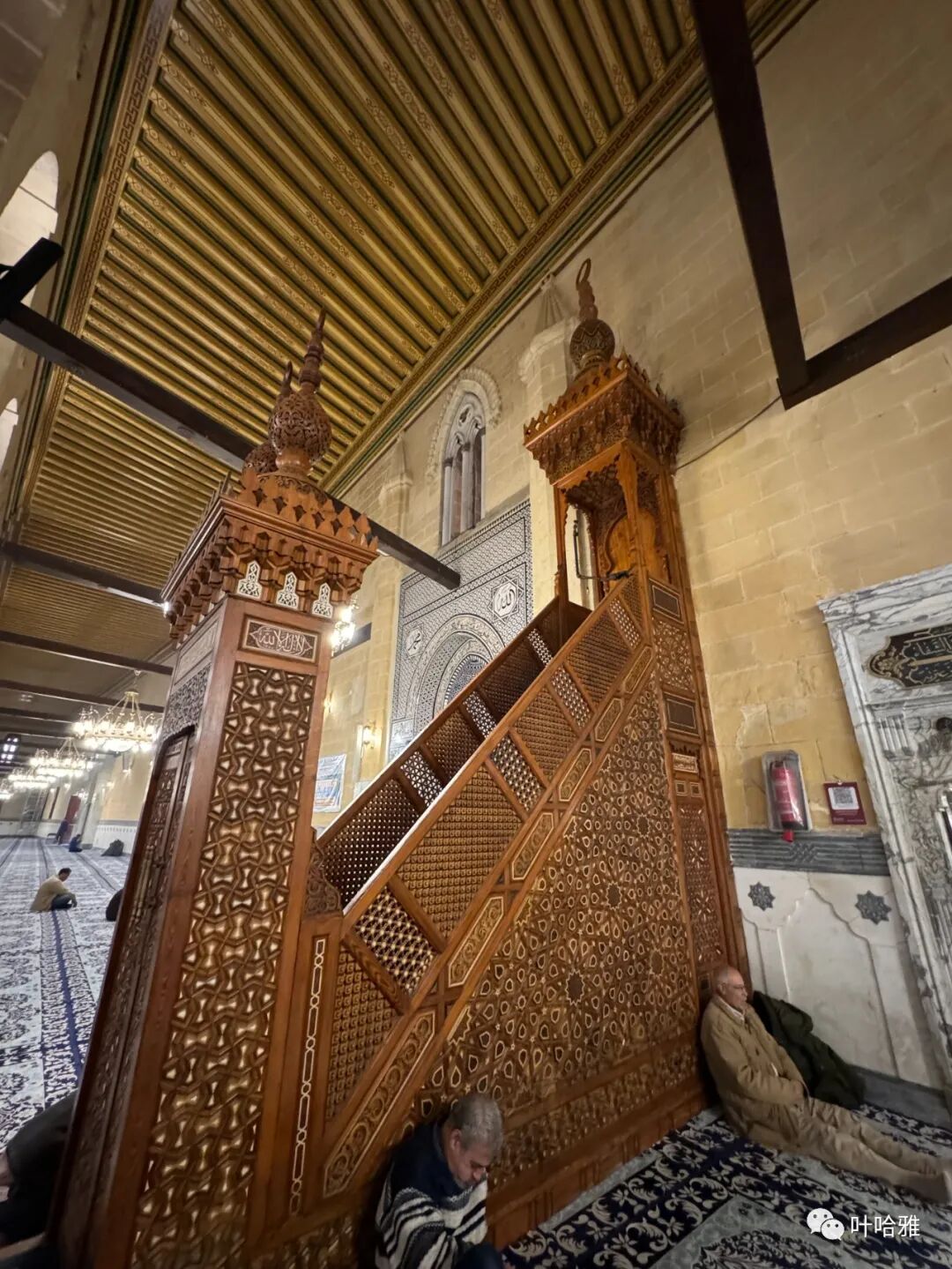
At the ticket office of the Saladin Citadel, I waited with Fahim to buy tickets. An Egyptian girl came over and asked if she could take a photo of Fahim. I said yes, and suddenly a group of schoolgirls surrounded us, taking turns snapping photos of him.
The girl asked for Fahim's name. I said, "Fahim," and they were surprised, "Fahim?" Are you Muslims? I said, "Praise be to Allah," and the girl screamed, cupped Fahim's cheeks, and kissed him.
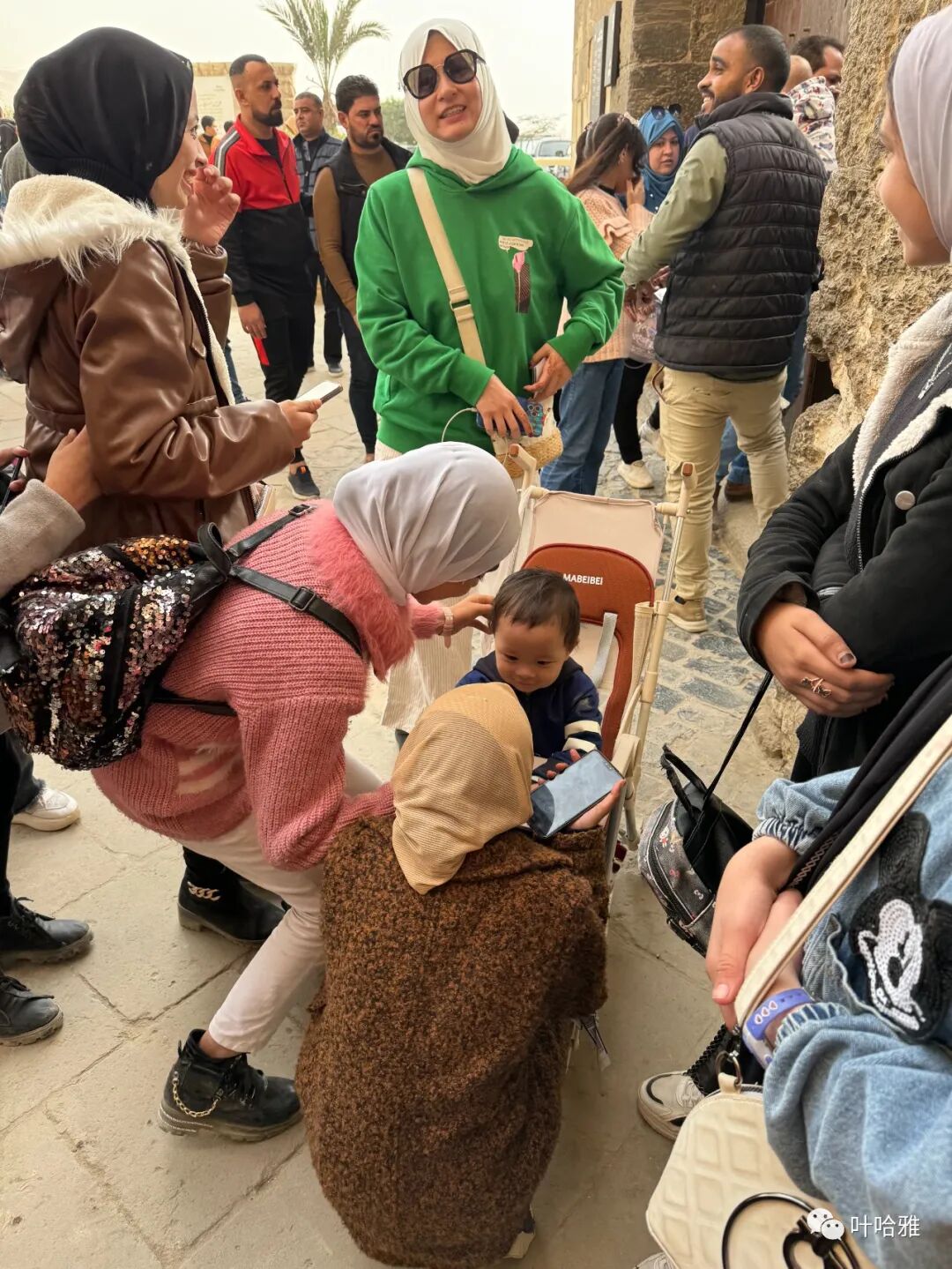
We saw the same scene again at other spots later. Fahim is even more popular in the Middle East than in China.
Saladin Citadel
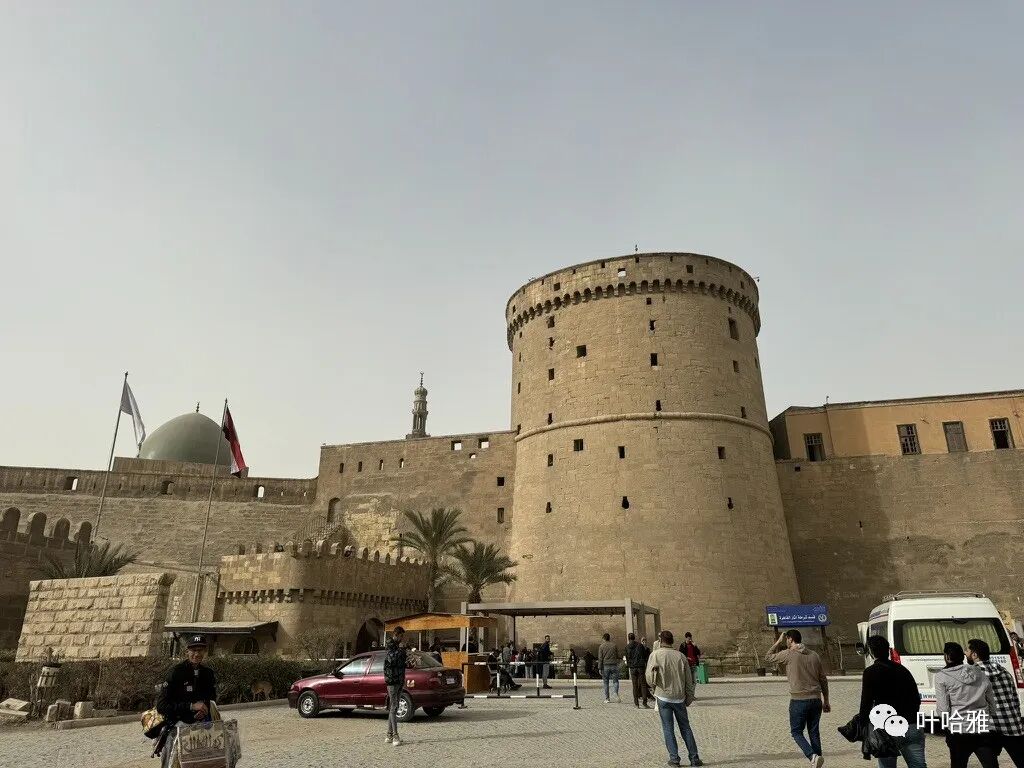
You need a ticket to enter the citadel. Most tourist spots in Egypt only take cards, not cash.
The Cairo Saladin Citadel was originally a fortress built by Saladin between 1176 and 1183 to defend against the Crusades. It served as the seat of the Egyptian government until 1874, when Ismail Pasha, the successor of Muhammad Ali, moved to a palace in the new city center of Cairo.
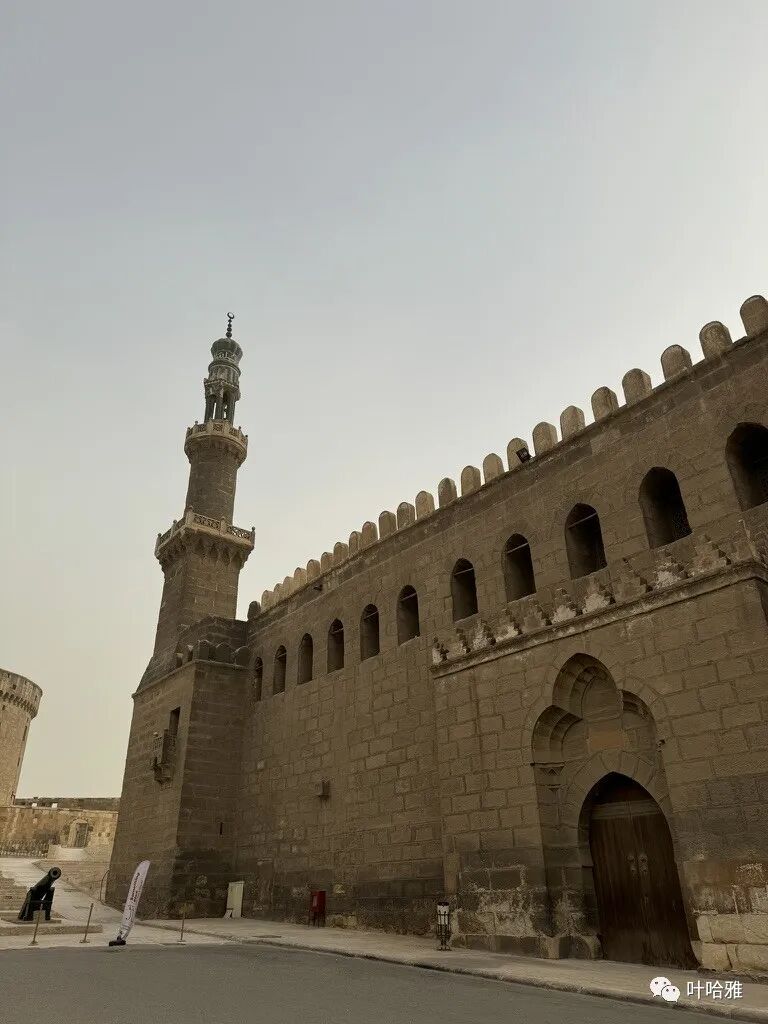
Records show there are four mosques inside the citadel: the Mosque of Muhammad Ali, the Mosque of Al-Nasir Muhammad, the Mosque of Suleiman Pasha, and the Azab Mosque.
Mosque of Al-Nasir Muhammad
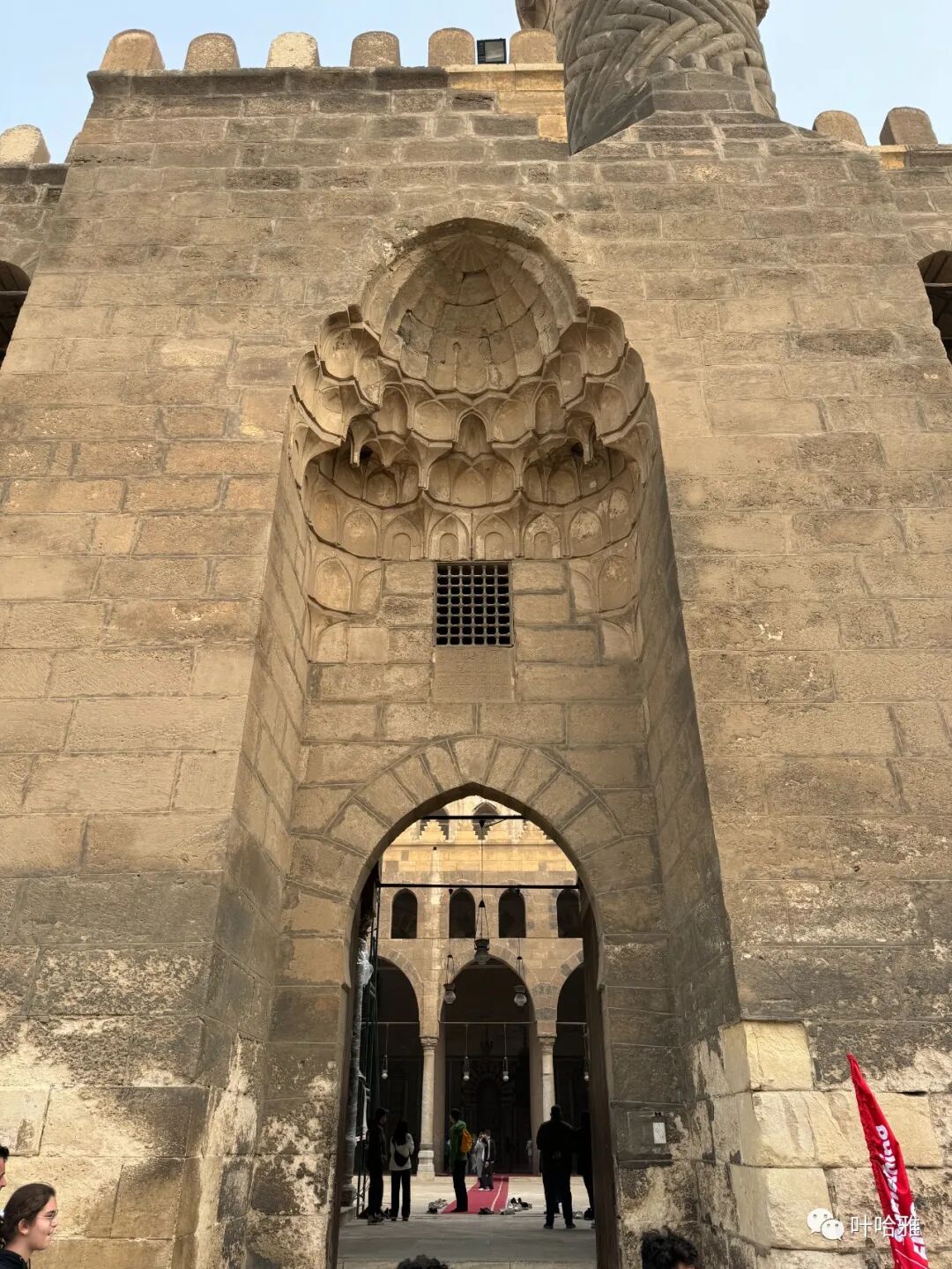
Built in 1318, it stands on the site of an early Saladin dynasty main mosque. The mosque's columns came from buildings of the Pharaoh era, and this gate is a classic sign of the Mamluk period. Although the mosque structure is intact, most of its gorgeous marble decorations were removed and shipped to Istanbul after the Ottoman Sultan Selim I conquered Egypt.
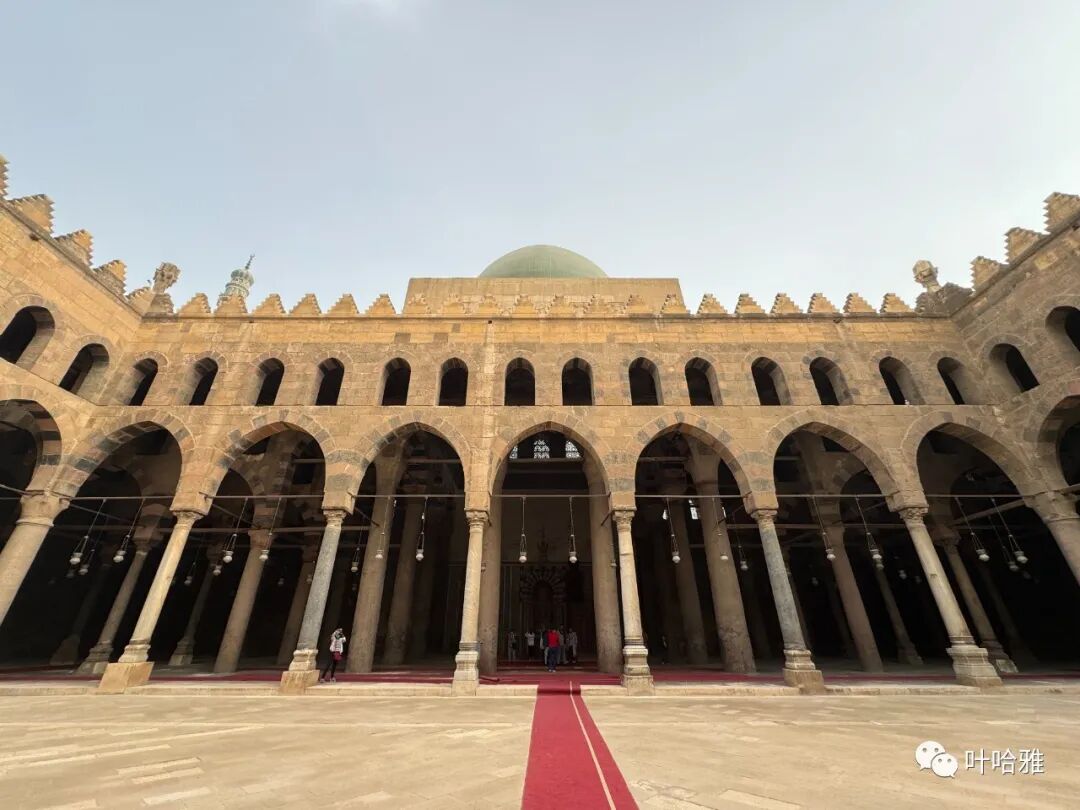
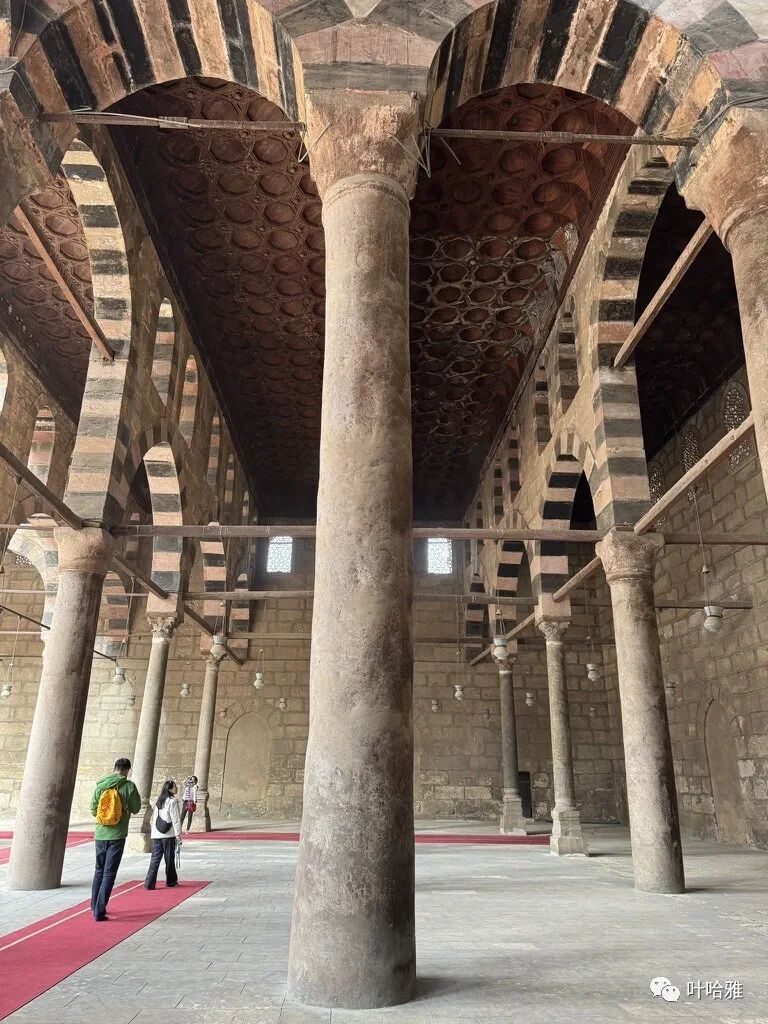
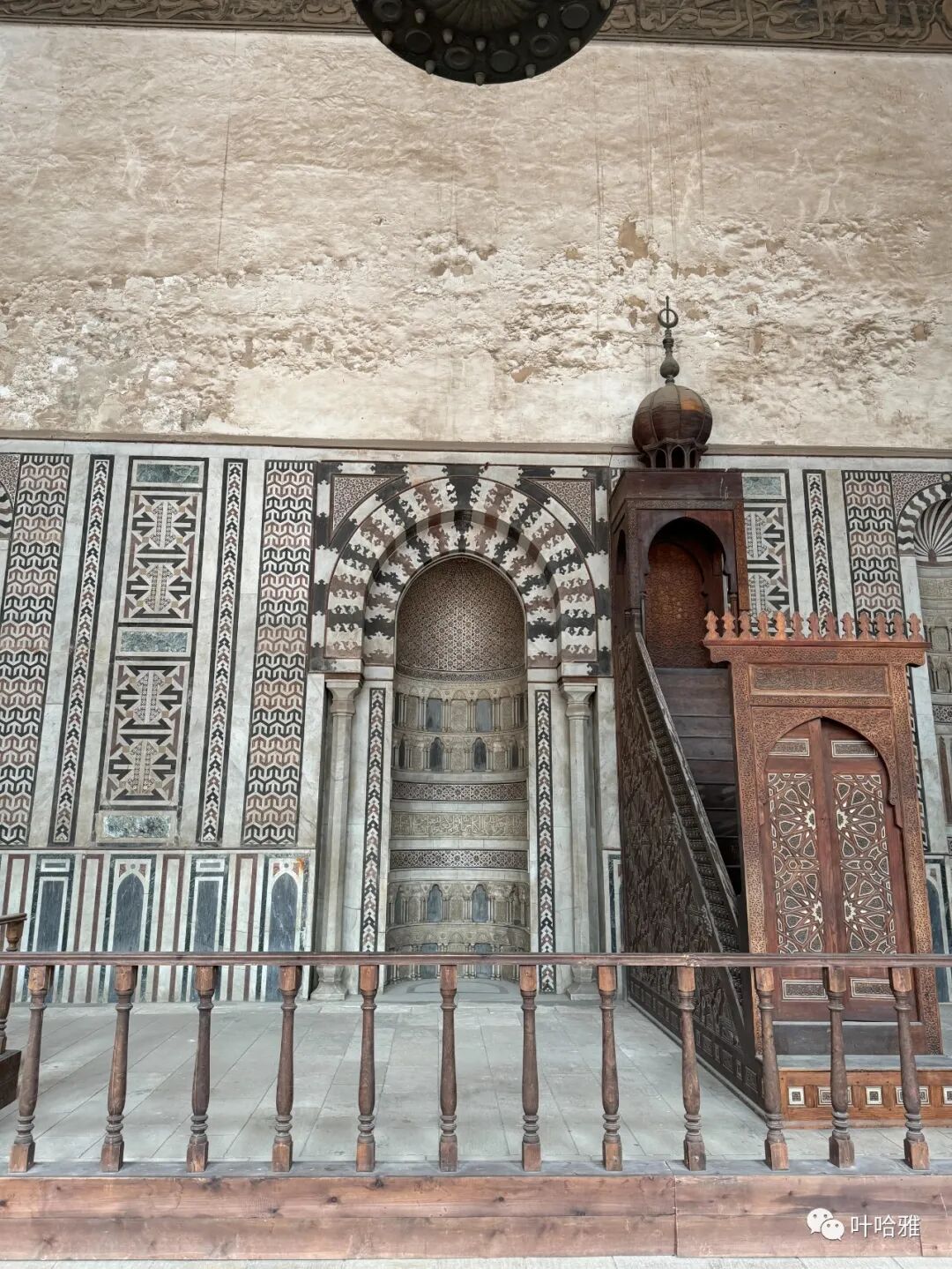
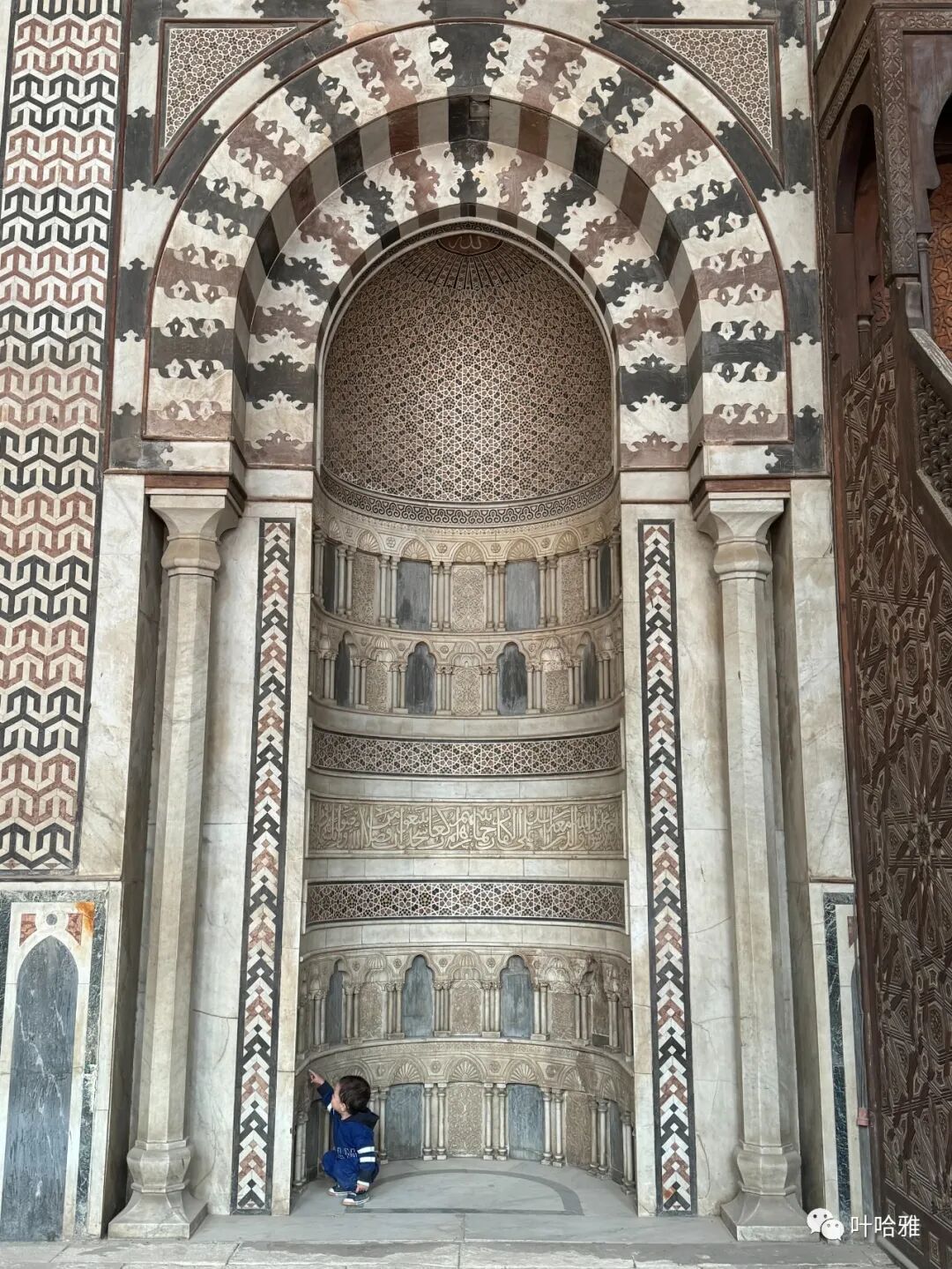
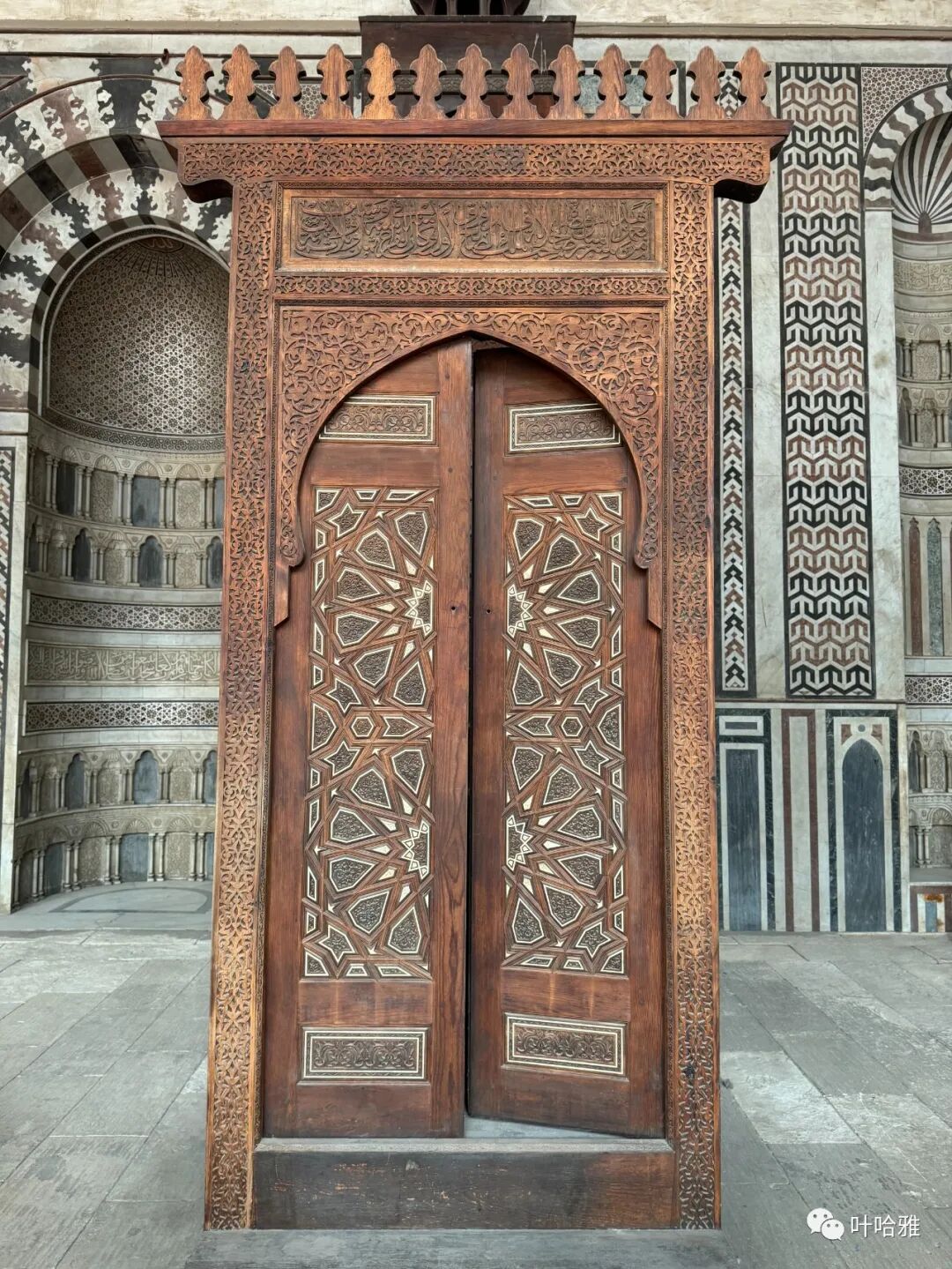
Mosque of Muhammad Ali
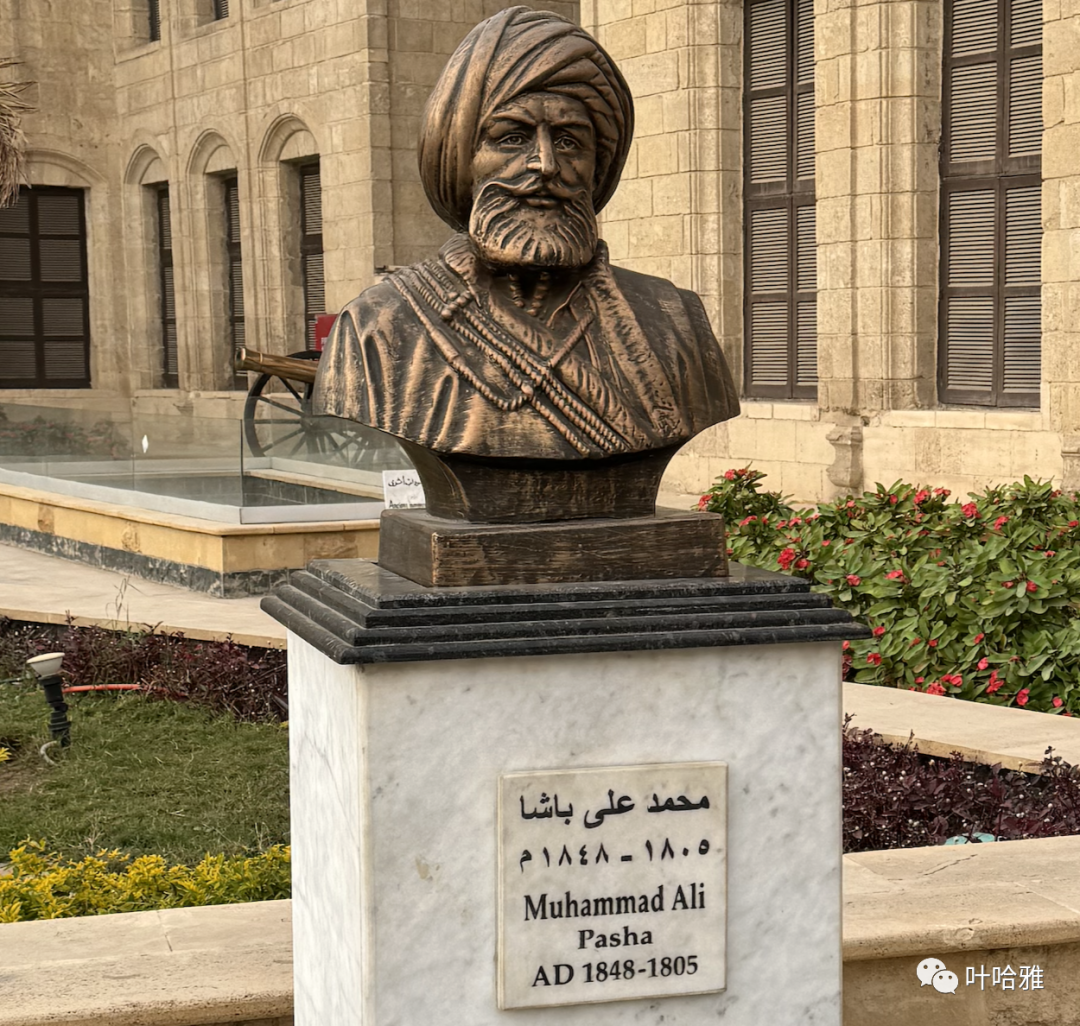
Inside the Saladin Citadel stands the Mosque of Muhammad Ali. Built in 1848 in an Ottoman style, it commemorates Tusun Pasha, the eldest son of Muhammad Ali, who died in 1816.
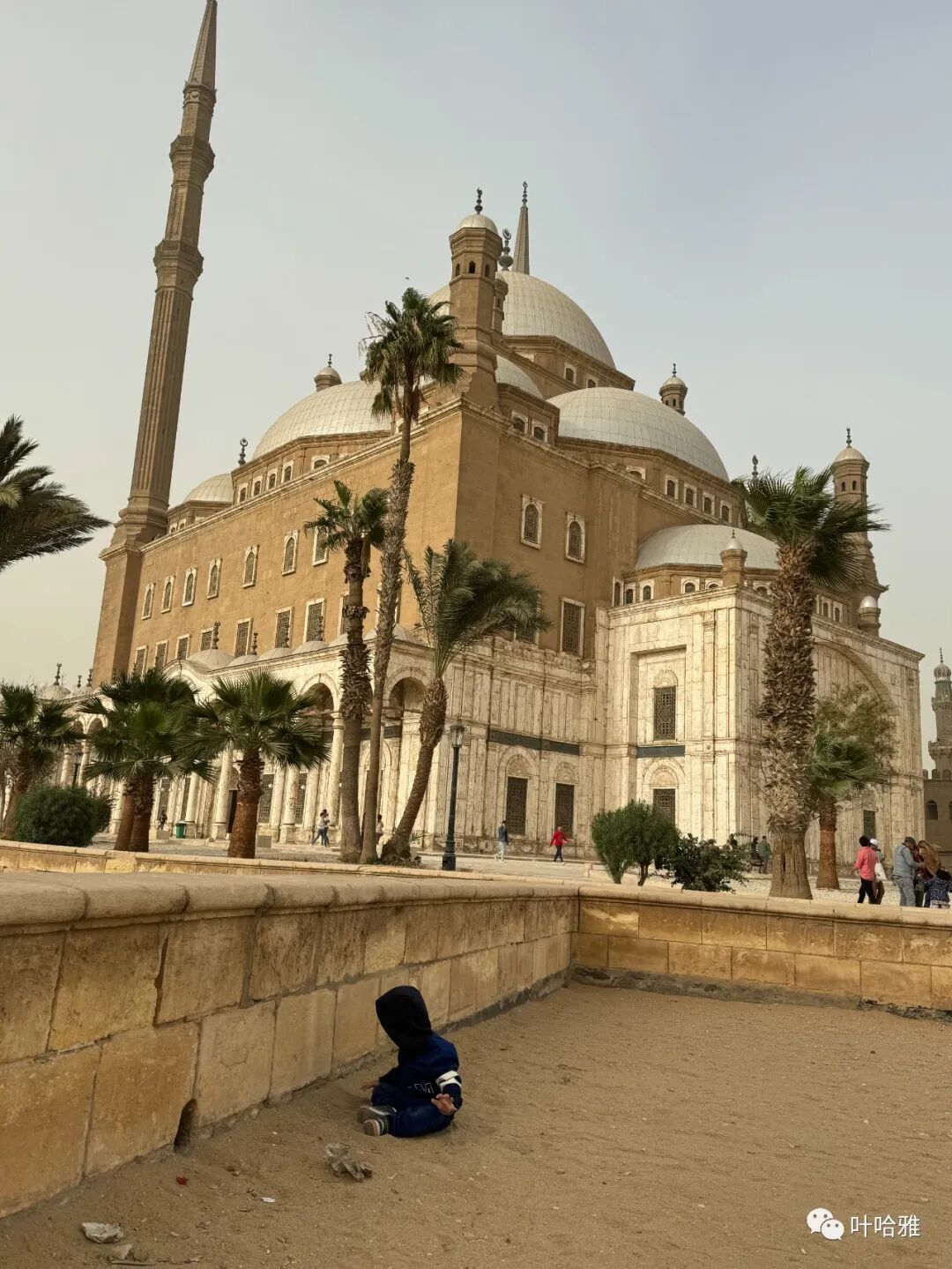
Some say the building materials for the mosque were taken from the pyramids at Giza. Inside, there is a clock tower gifted to Muhammad Ali by the French King Louis Philippe around 1840, which corresponds to the Luxor Obelisk in the Place de la Concorde in Paris.
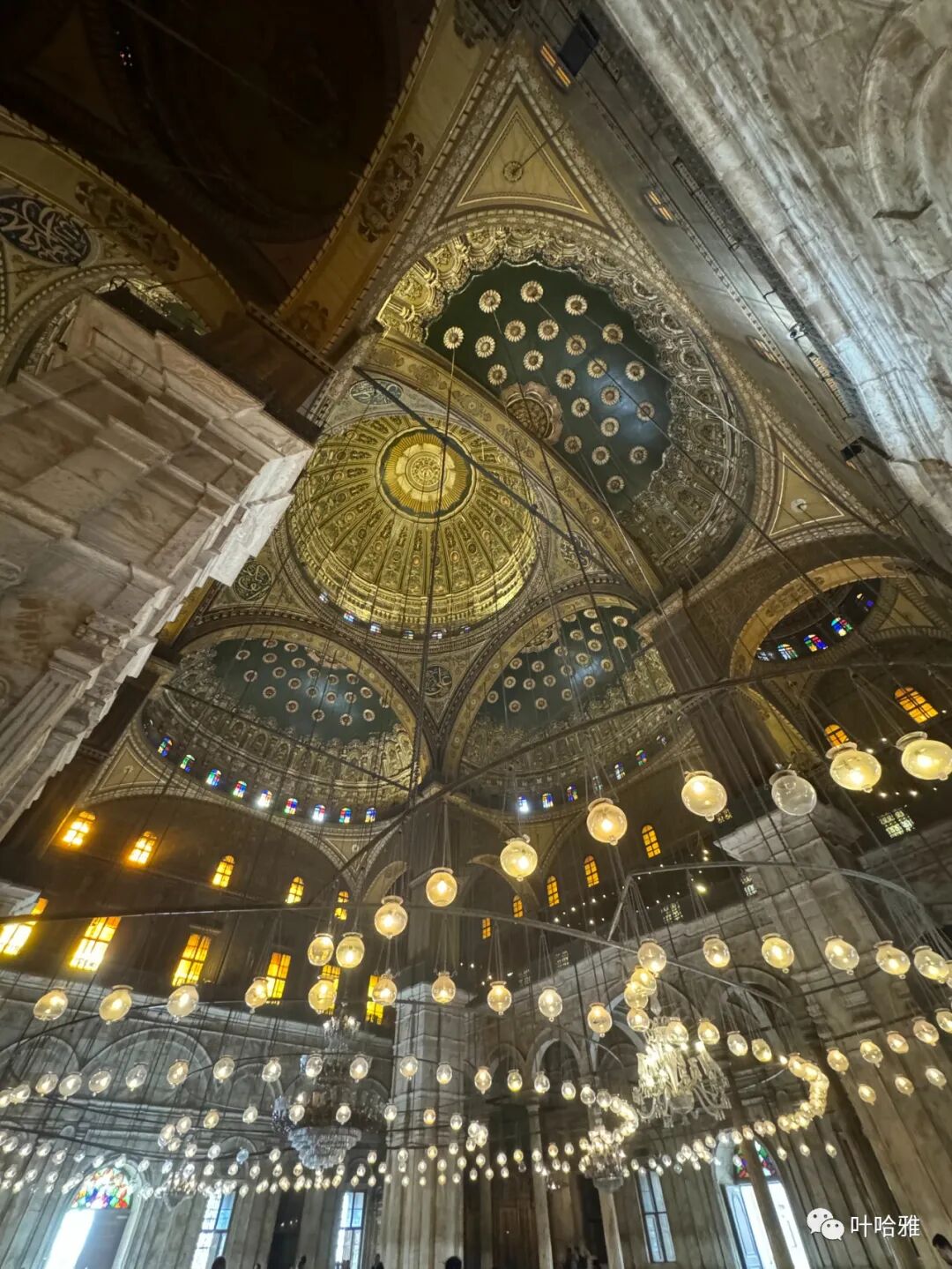
The tomb of Muhammad Ali is inside the mosque. He was the de facto ruler of Egypt from 1805 to 1848. Once a commander for the Ottoman Empire in Albania, he is considered the founder of modern Egypt. Although he may have been Albanian or Turkish, his dynasty lasted until 1952.
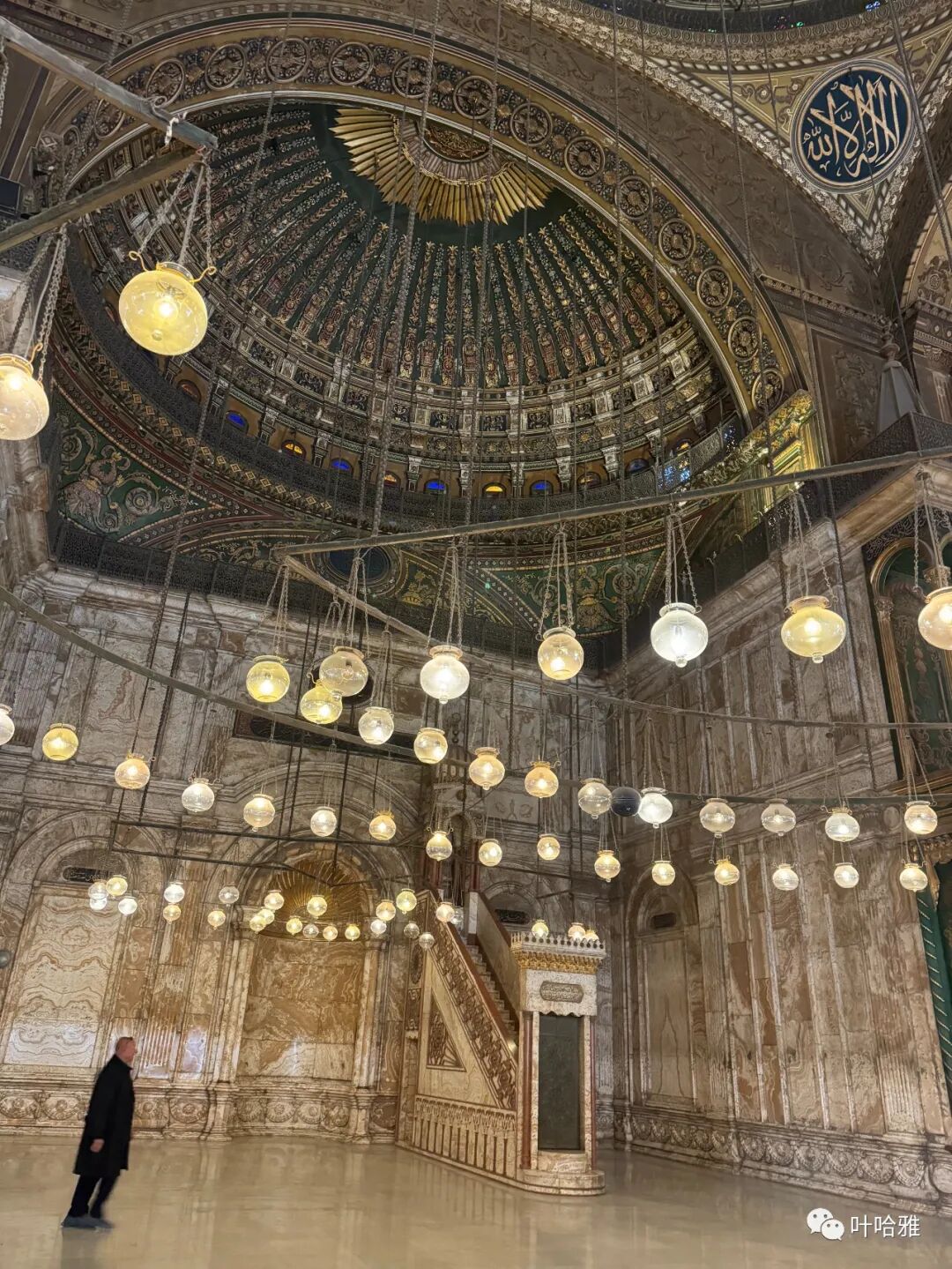
People sell shoe covers at the entrance of the Ali Mosque. It is a trap, so just ignore them. Carry your shoes in your hands and walk right in. You do not need to spend money on shoe covers.
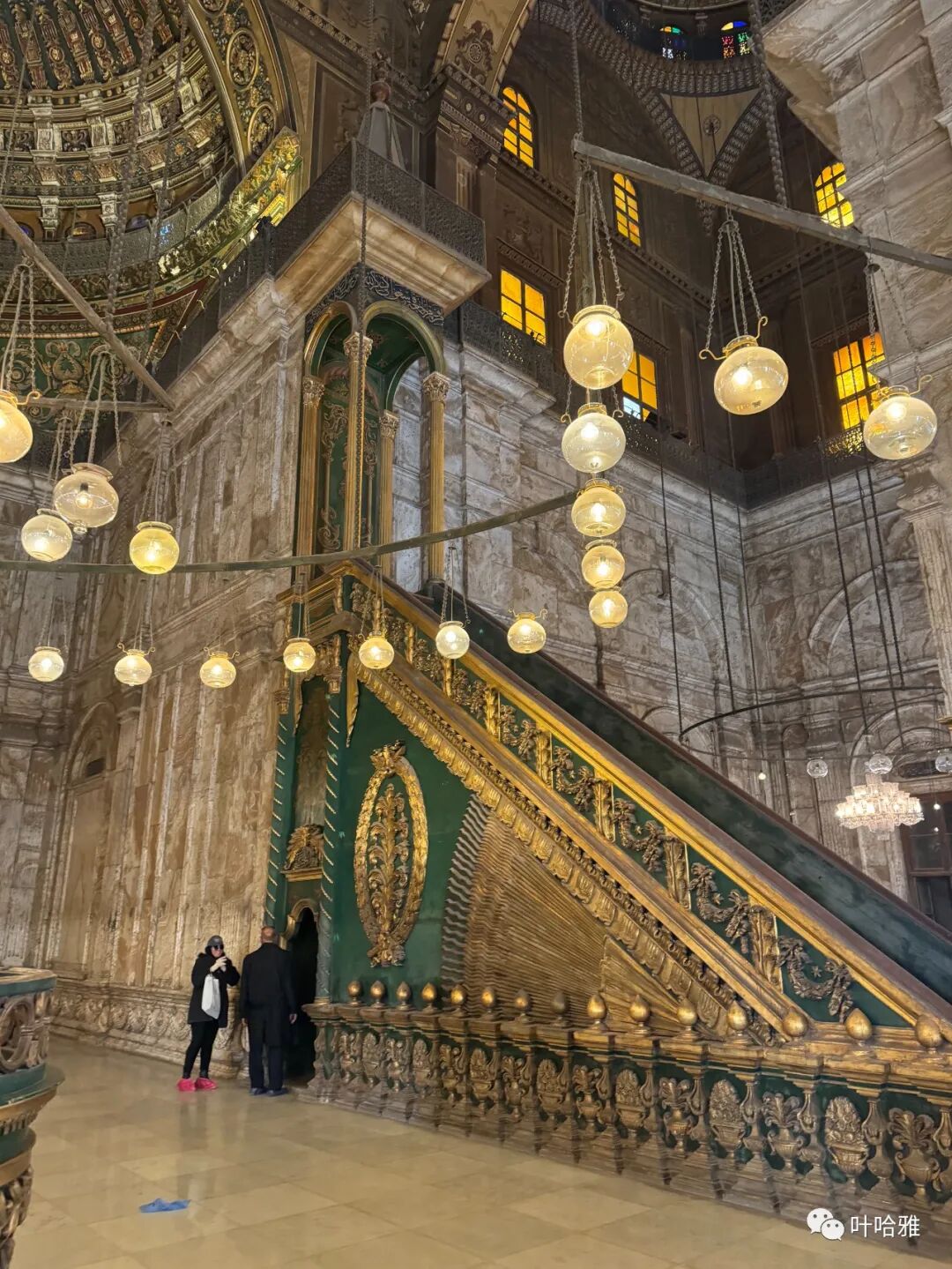
There is a carpeted area in the main hall where you can perform namaz, but very few people actually show up for prayer times in Egypt.
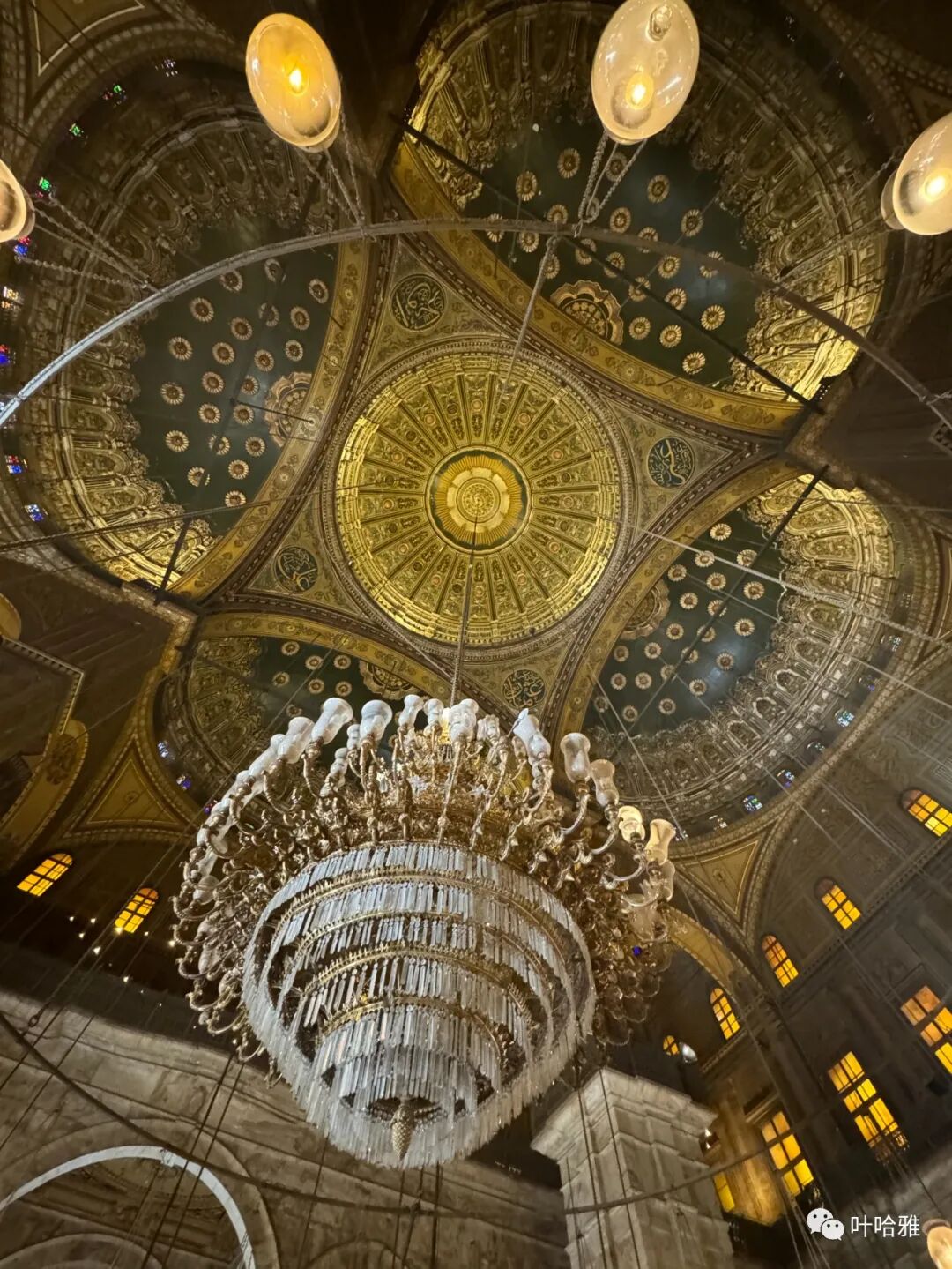
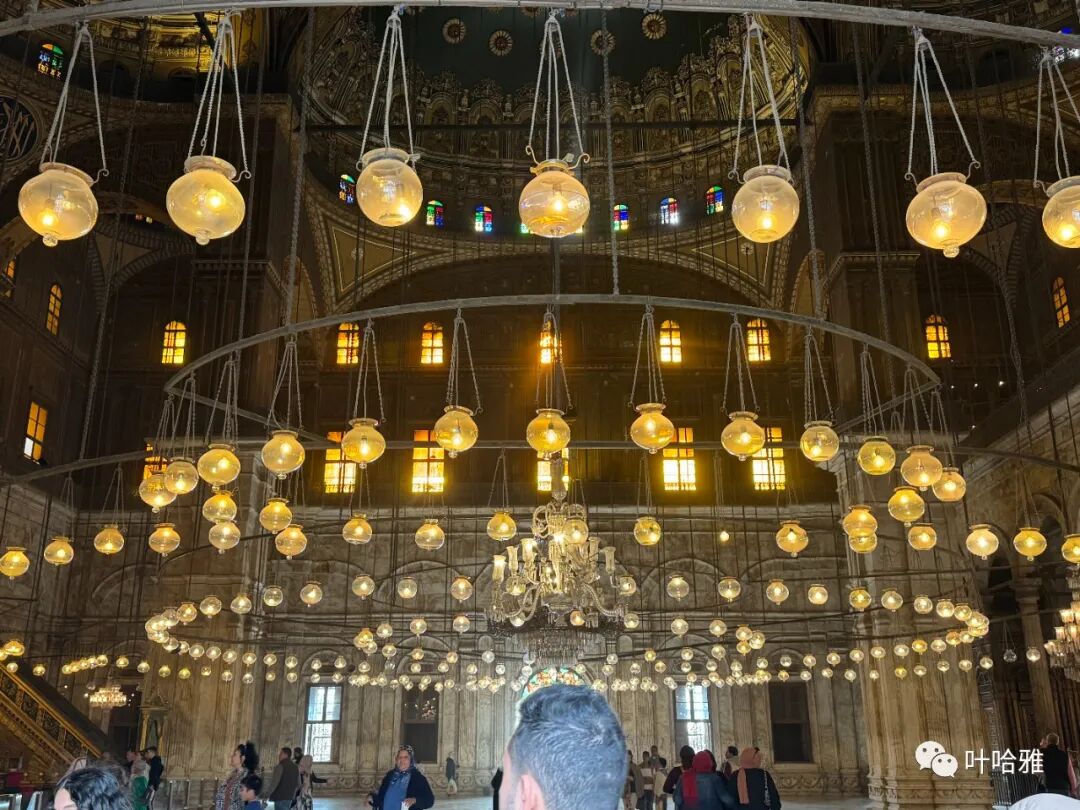
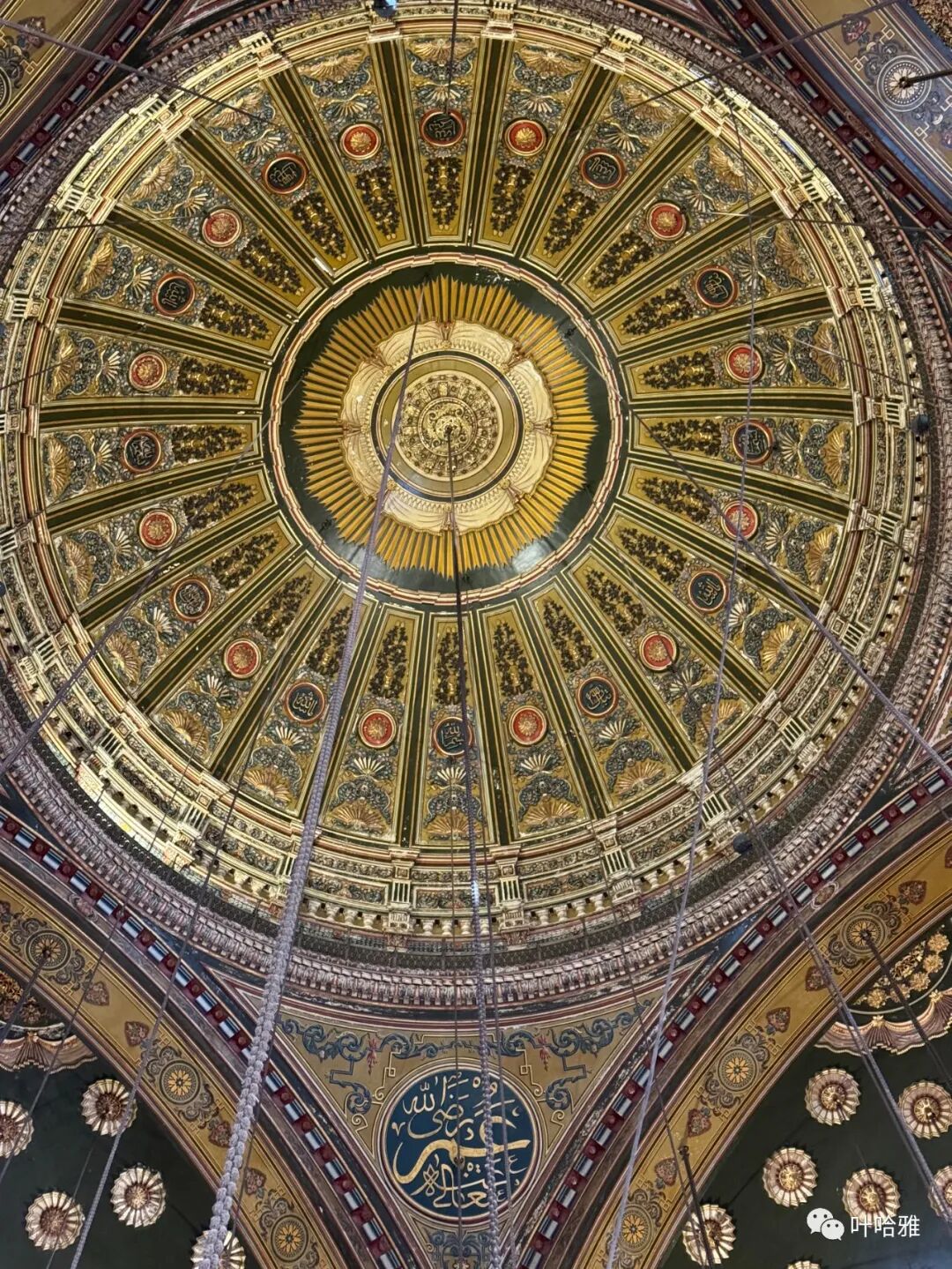
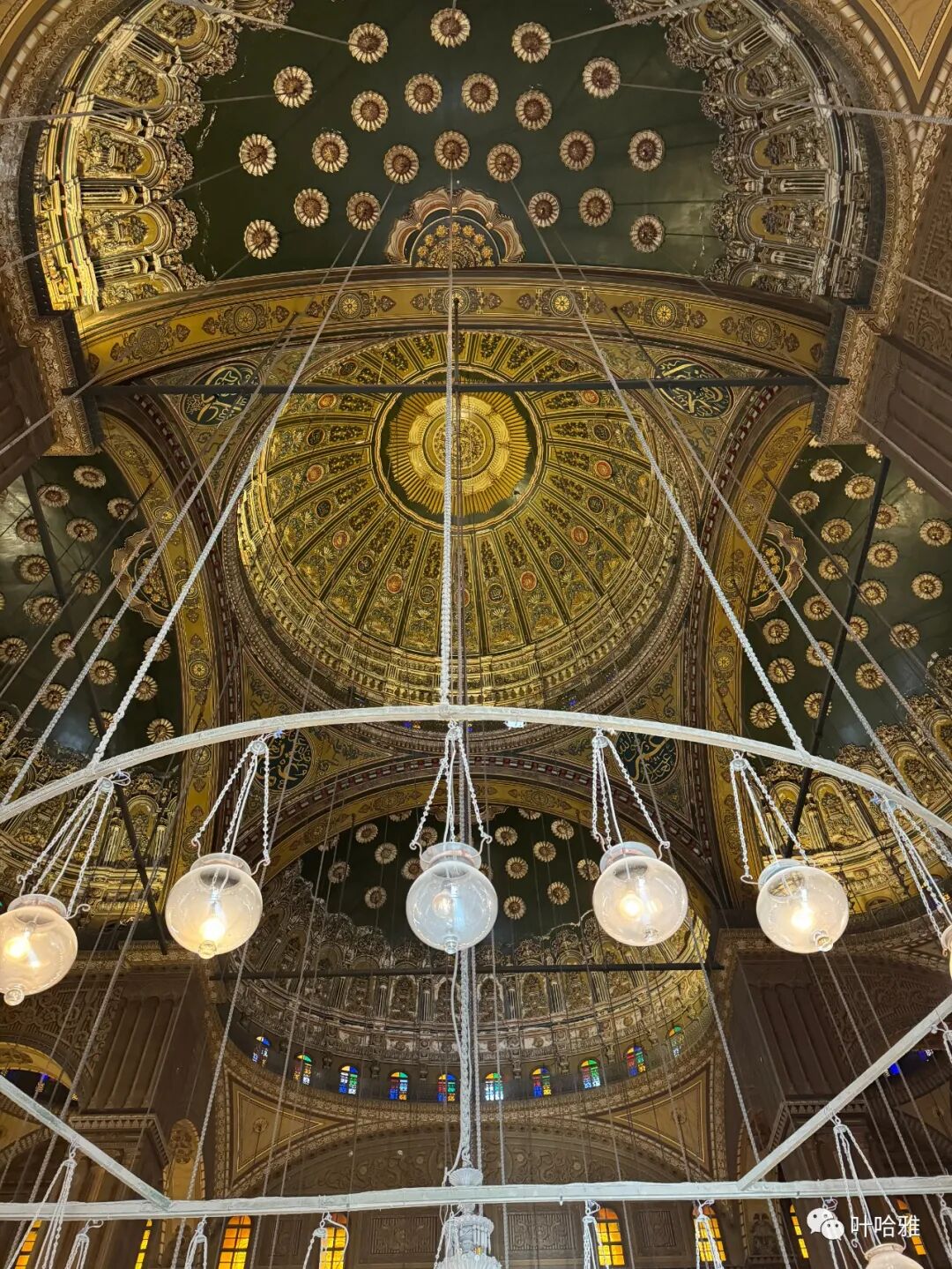
Ibn Tulun Mosque
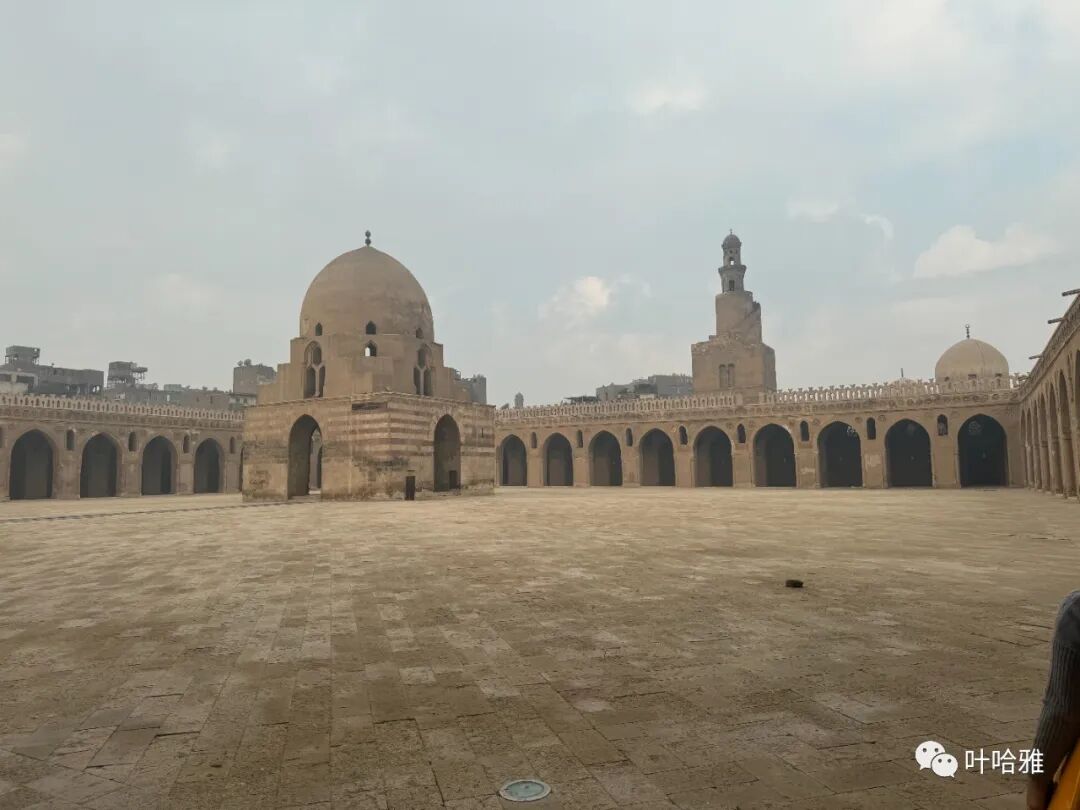
Built in 876, the Ibn Tulun Mosque is the oldest mosque in Egypt and all of Africa. It is also the largest mosque in the old city of Cairo.
The designer of this mosque was an Orthodox Christian named Saiid Ibn Kateb Al-Farghany.
This mosque is an open tourist site with no entry fee. However, they charge a tip for storing your shoes. I gave them 50 Egyptian pounds, but they said it was not enough and asked for another 50 pounds. The total was about 20 Chinese yuan.
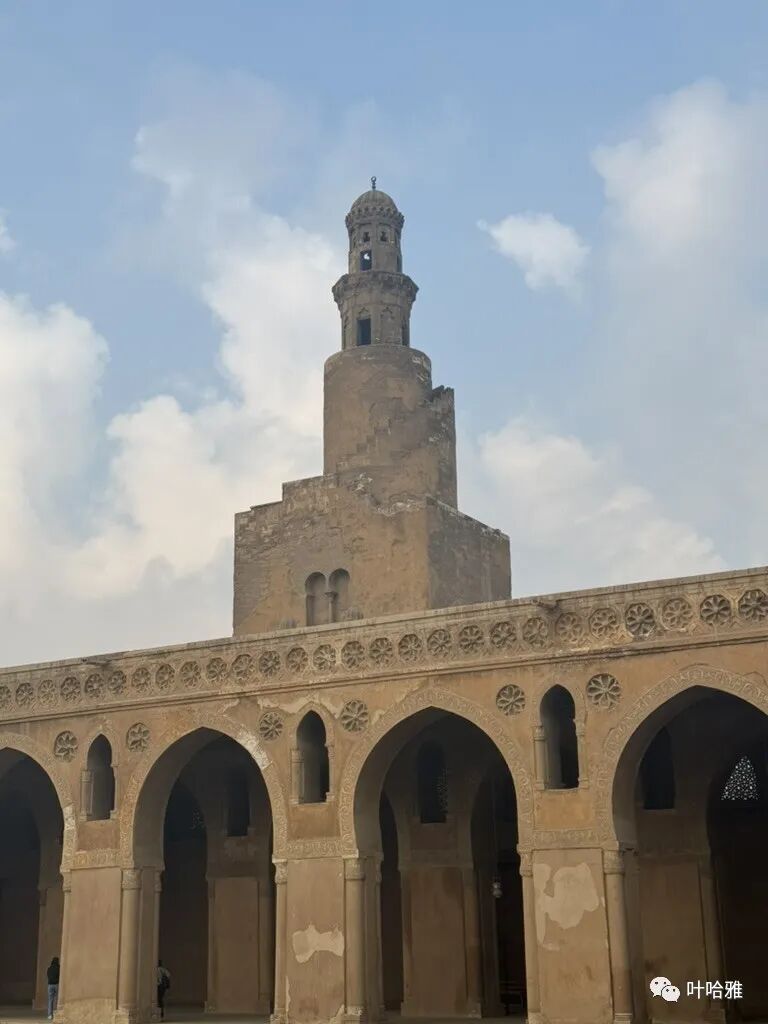
This spiral minaret is believed to have been built in 1296.
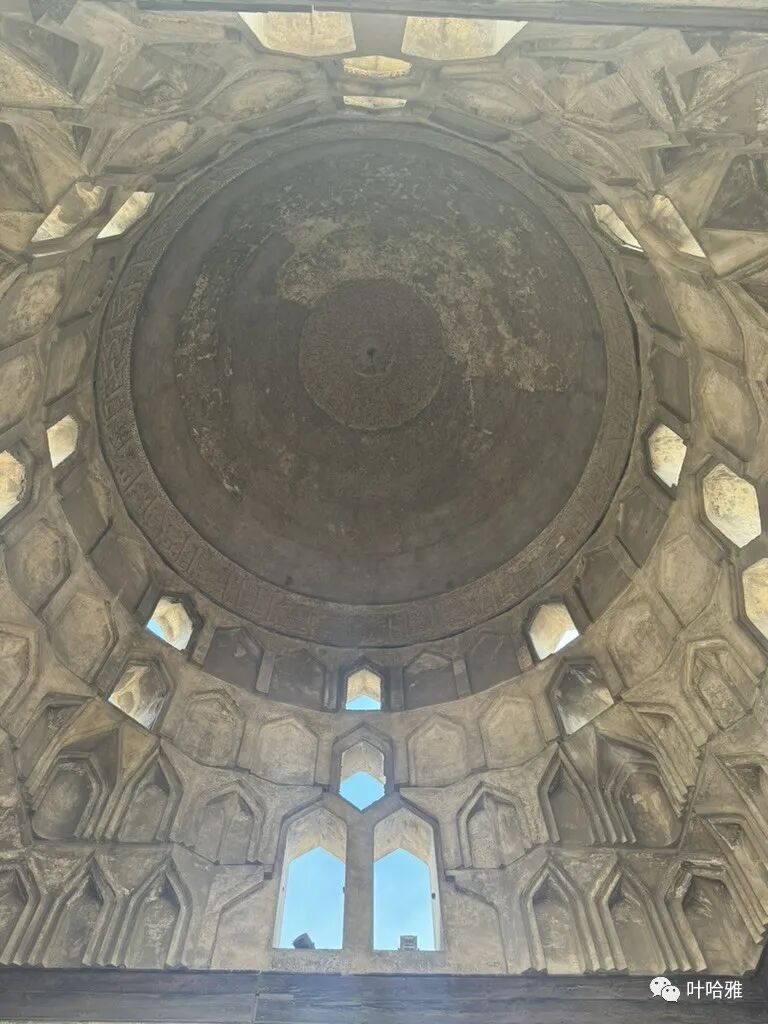
The arched windows let in plenty of light.
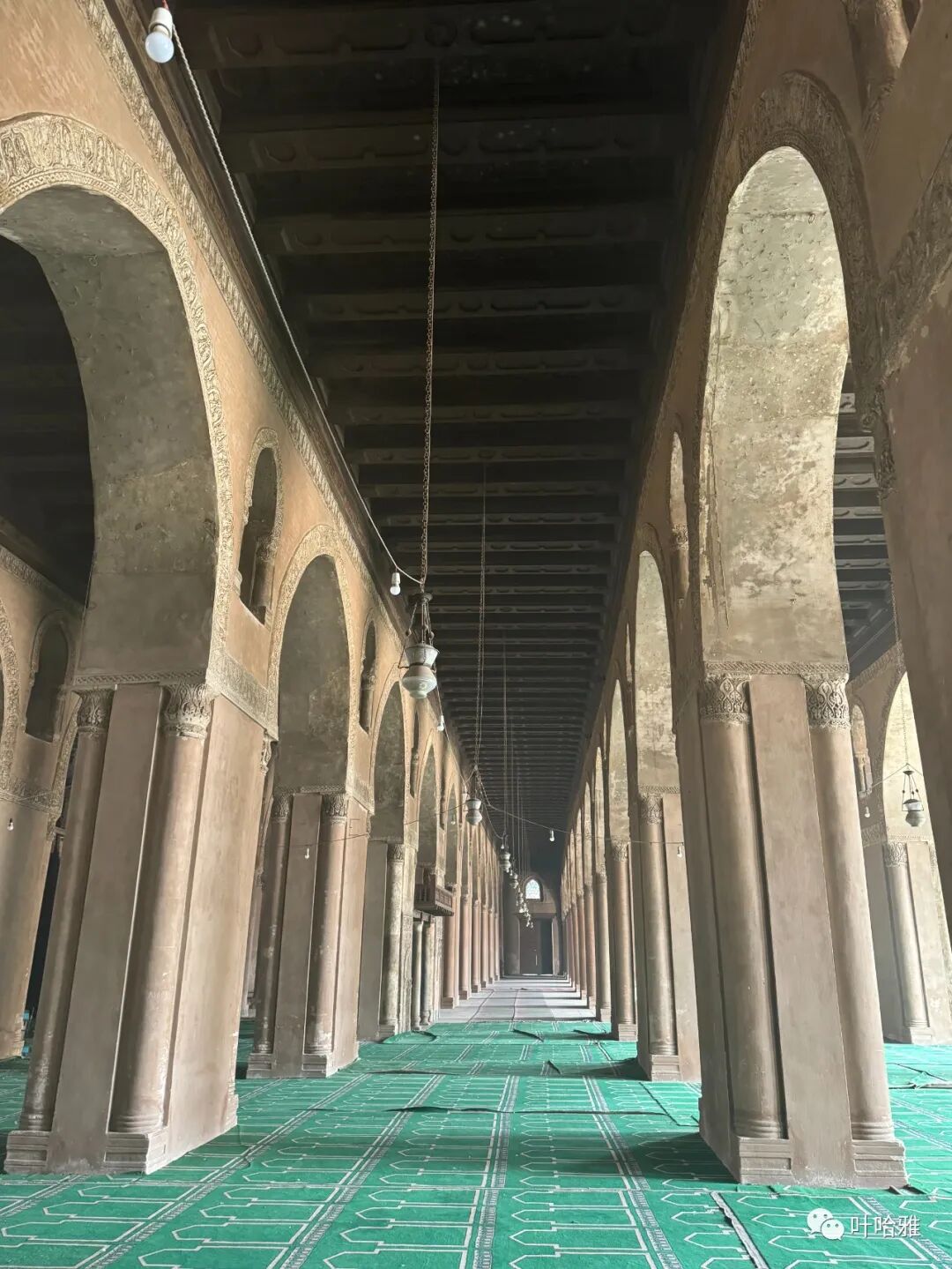
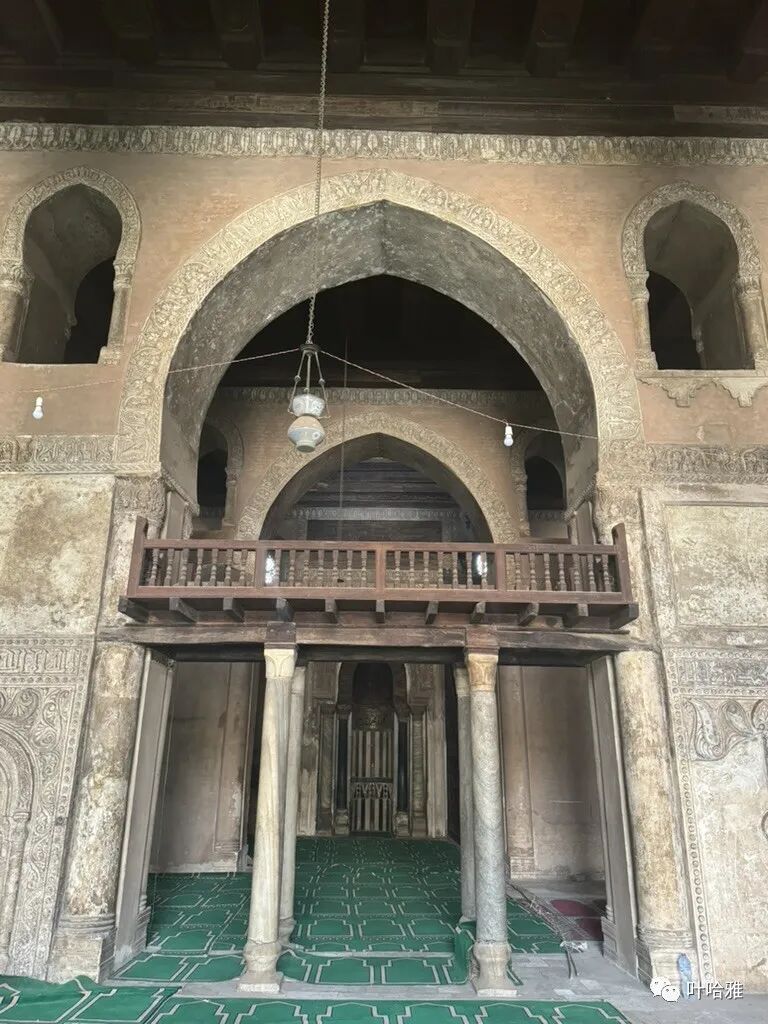
Neither the left nor the right mihrab mentions Ali, which shows they were built during the early Fatimid Caliphate, a Shia dynasty.
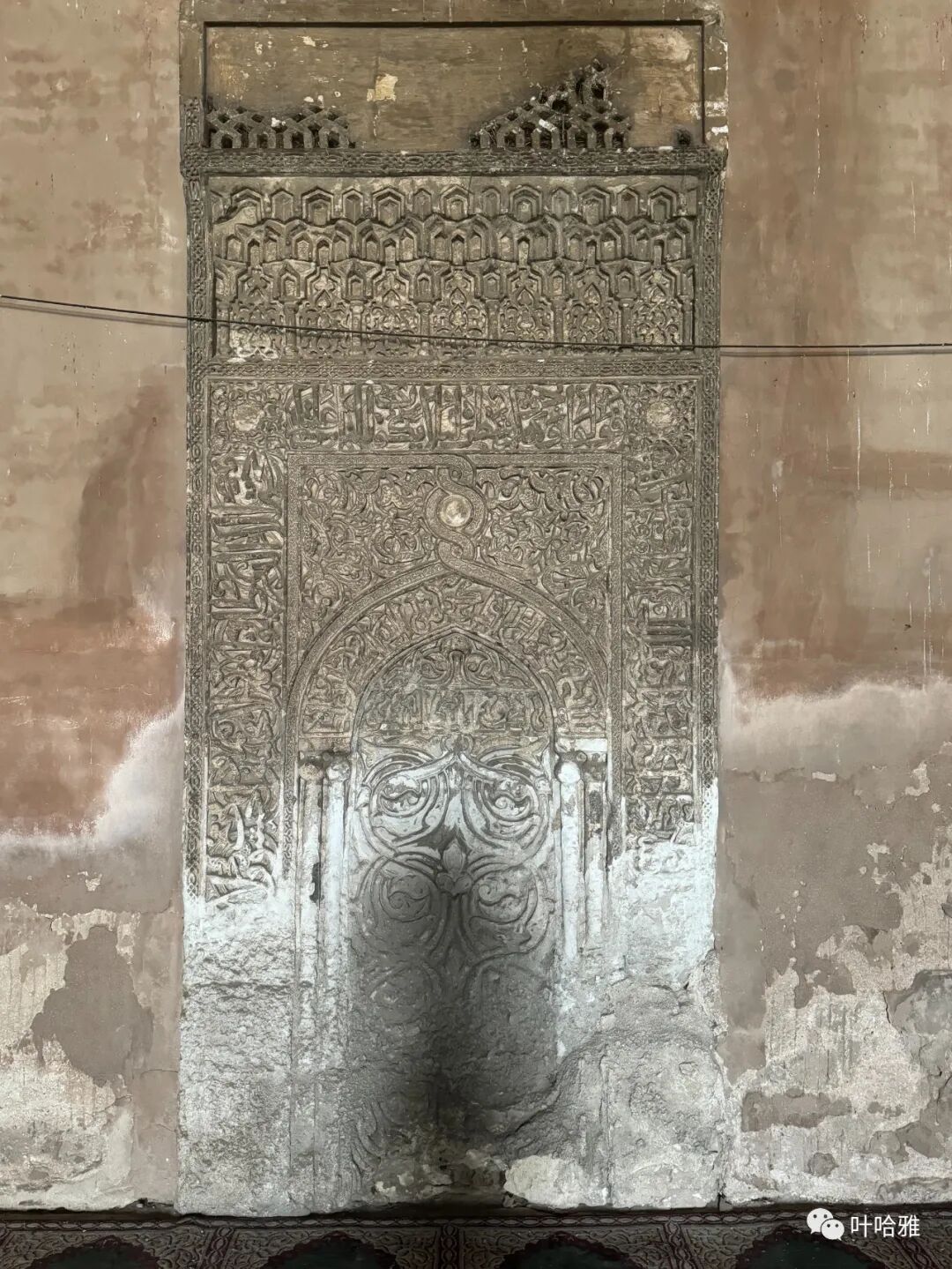
The mihrab designed by Al-Afdal to commemorate Mustansir.
Mustansir was a caliph of the Fatimid dynasty. The original mihrab is kept at the Museum of Islamic Art in Cairo, and this one is a replica. It is inscribed with the Shia Shahada: There is no god but Allah, Muhammad is the messenger of Allah, and Ali is the wali of Allah.
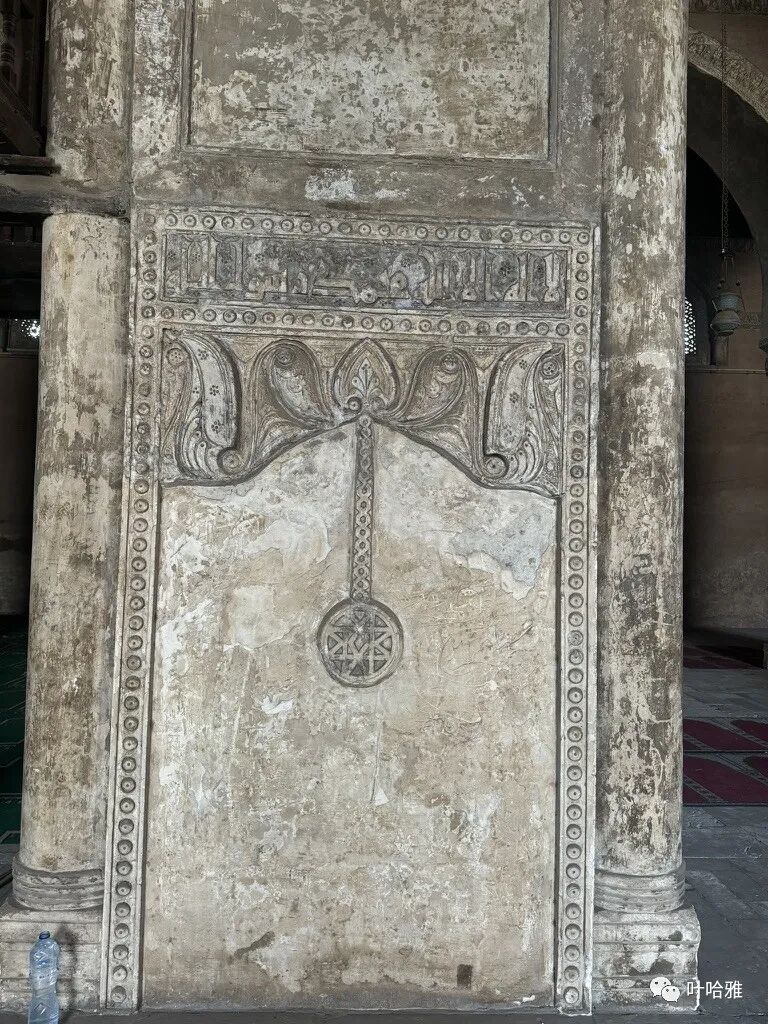
A mihrab from the pre-Fatimid period, with a star hanging on the emblem.
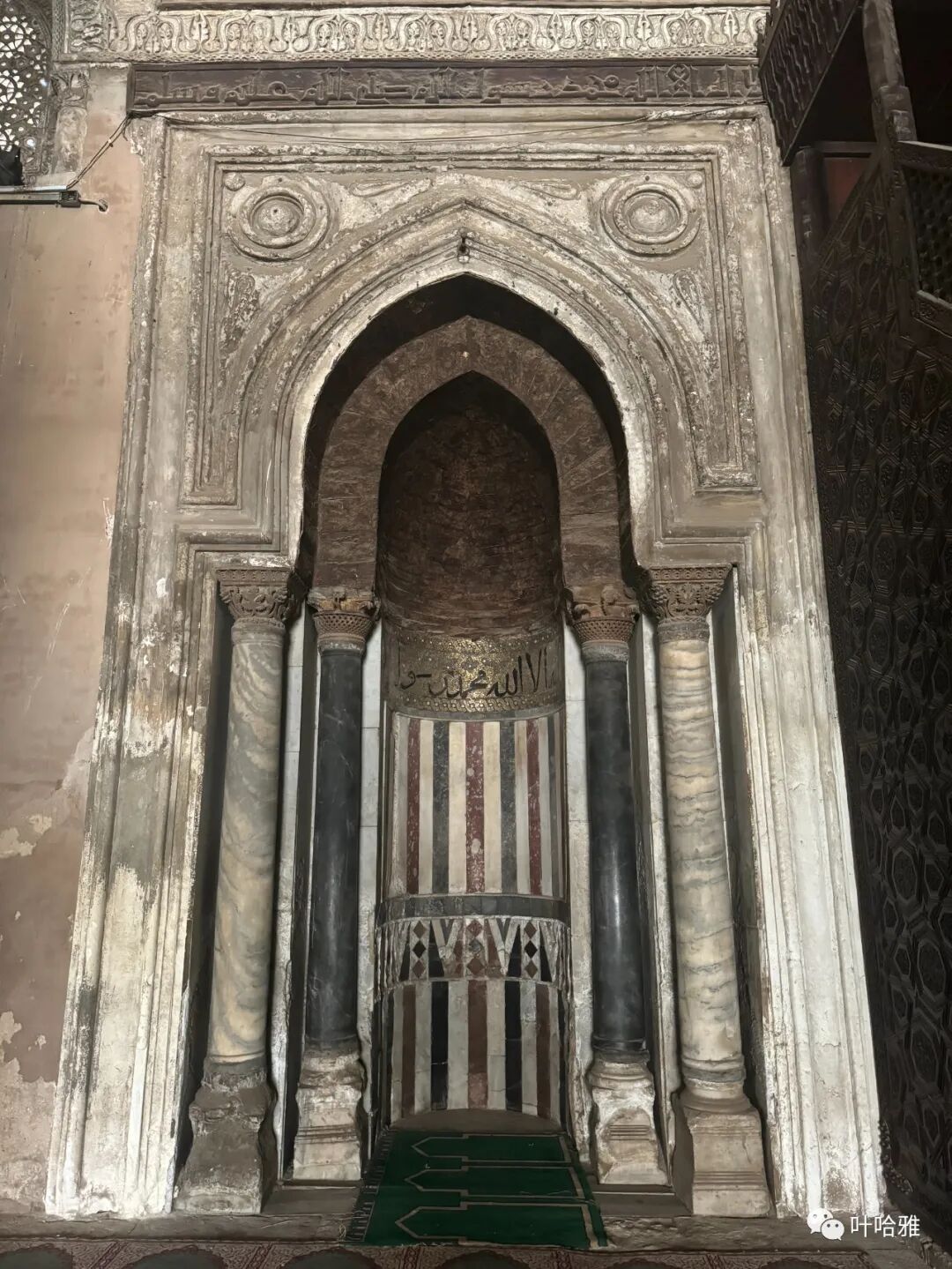
Parts of the James Bond movie The Spy Who Loved Me were filmed here. It also appears in the game Serious Sam 3 and in Tomb Raider: The Last Revelation, where Lara fights a minotaur in the mosque.
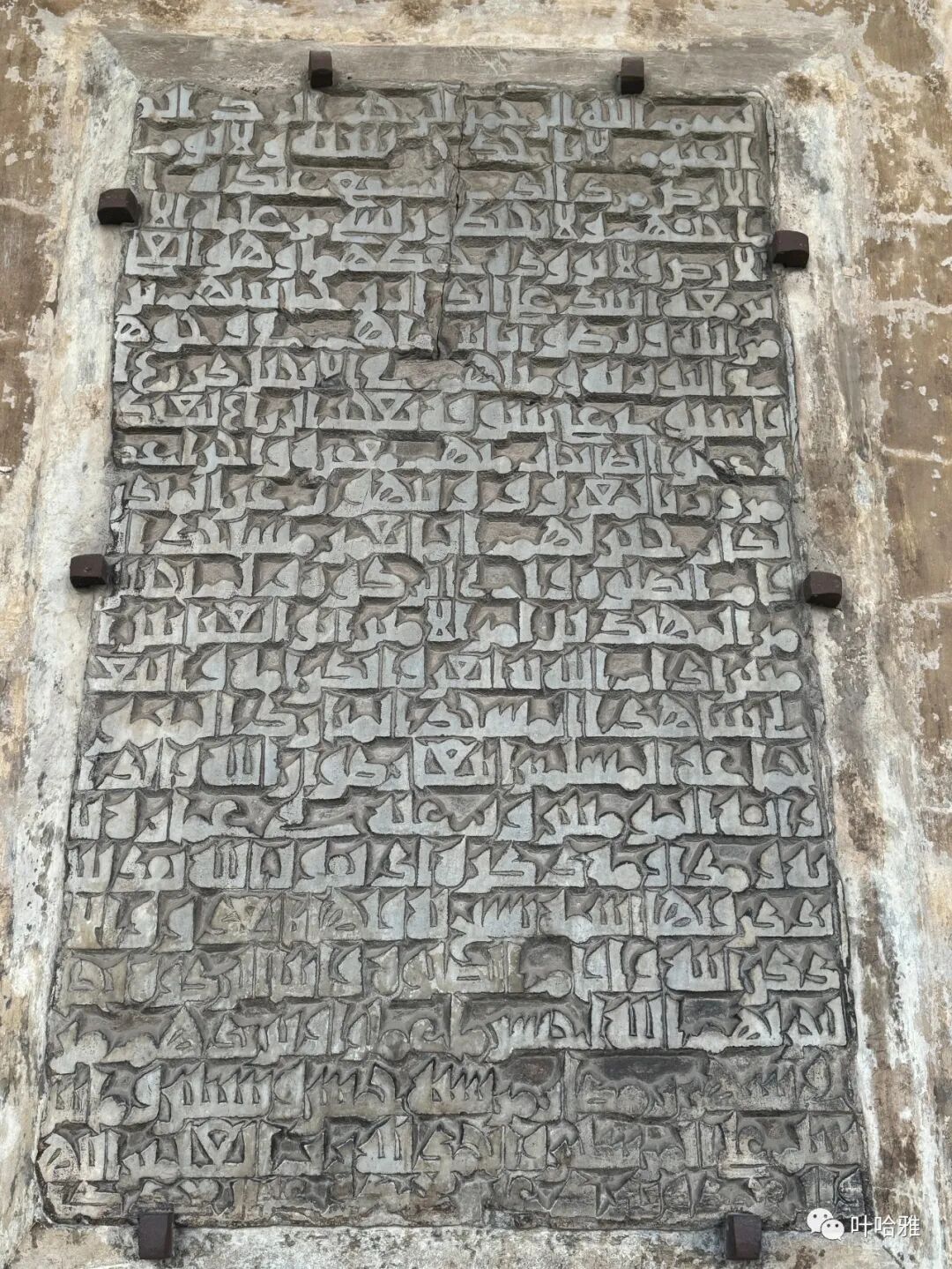
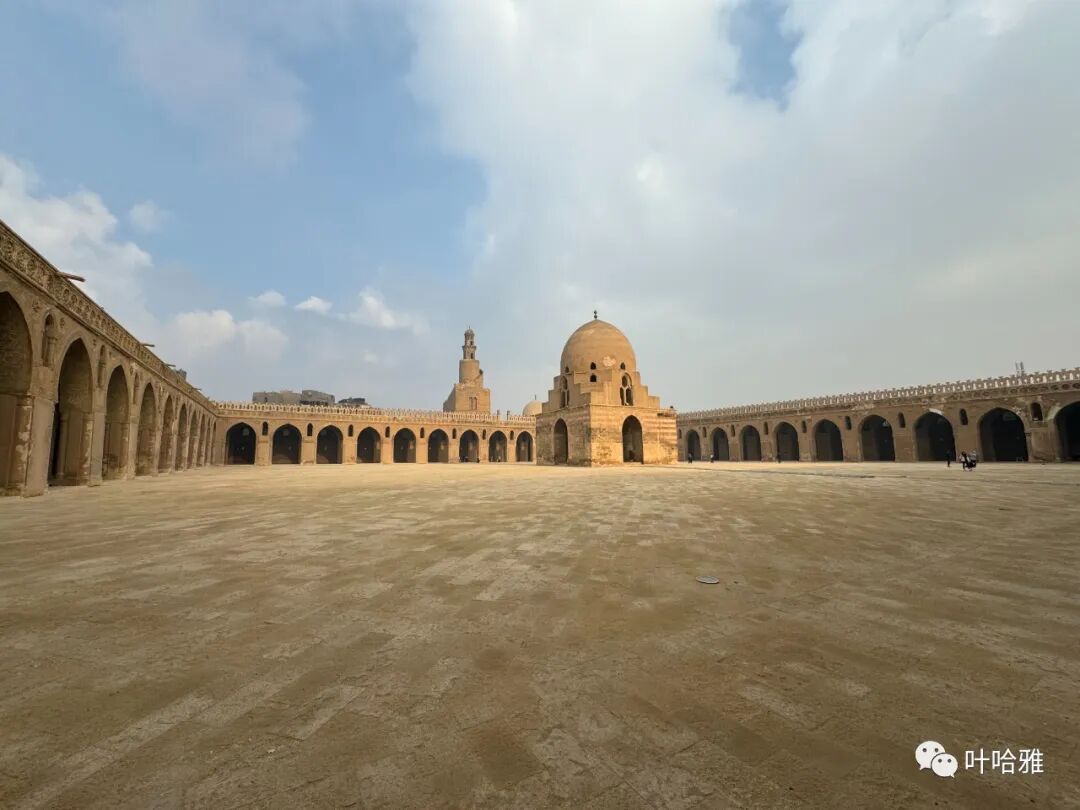
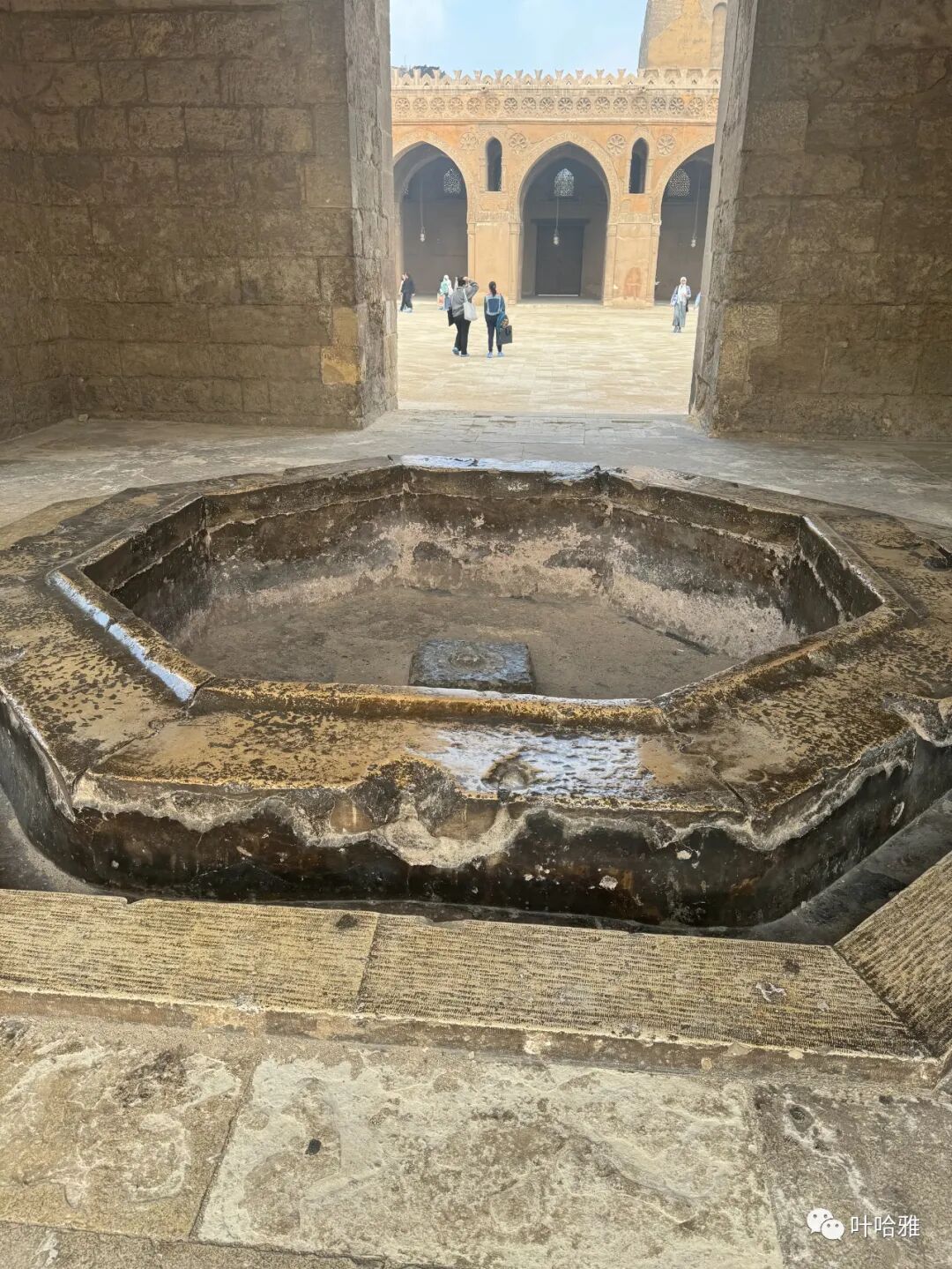
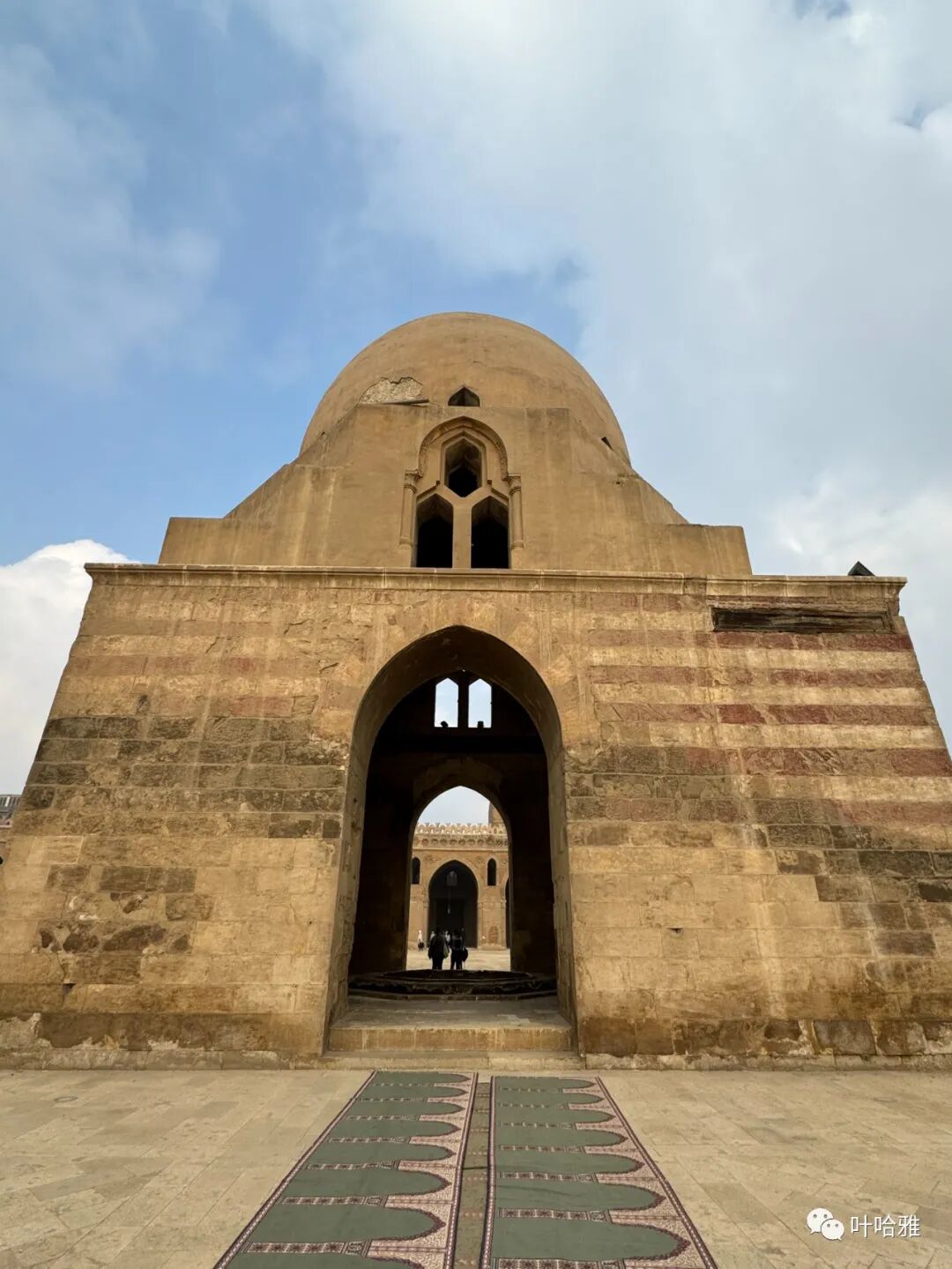
Al Fattah Al Aleem Mosque
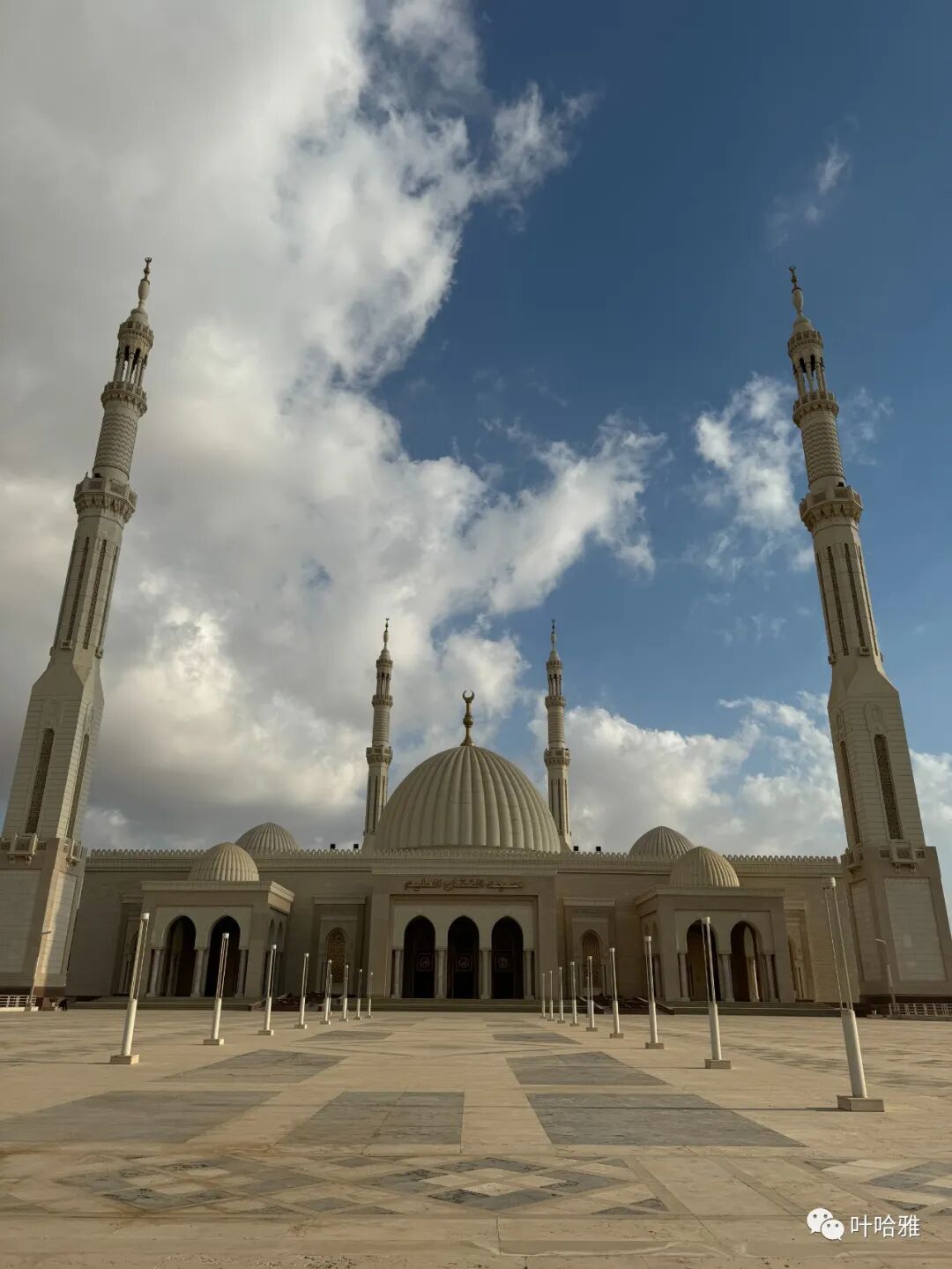
Because Old Cairo became hopelessly dirty and messy, the Egyptian government had to plan a new Cairo in the desert. This mosque was built in the new city. It covers 8,600 square meters and became the largest mosque in Africa after it was finished in 2019.
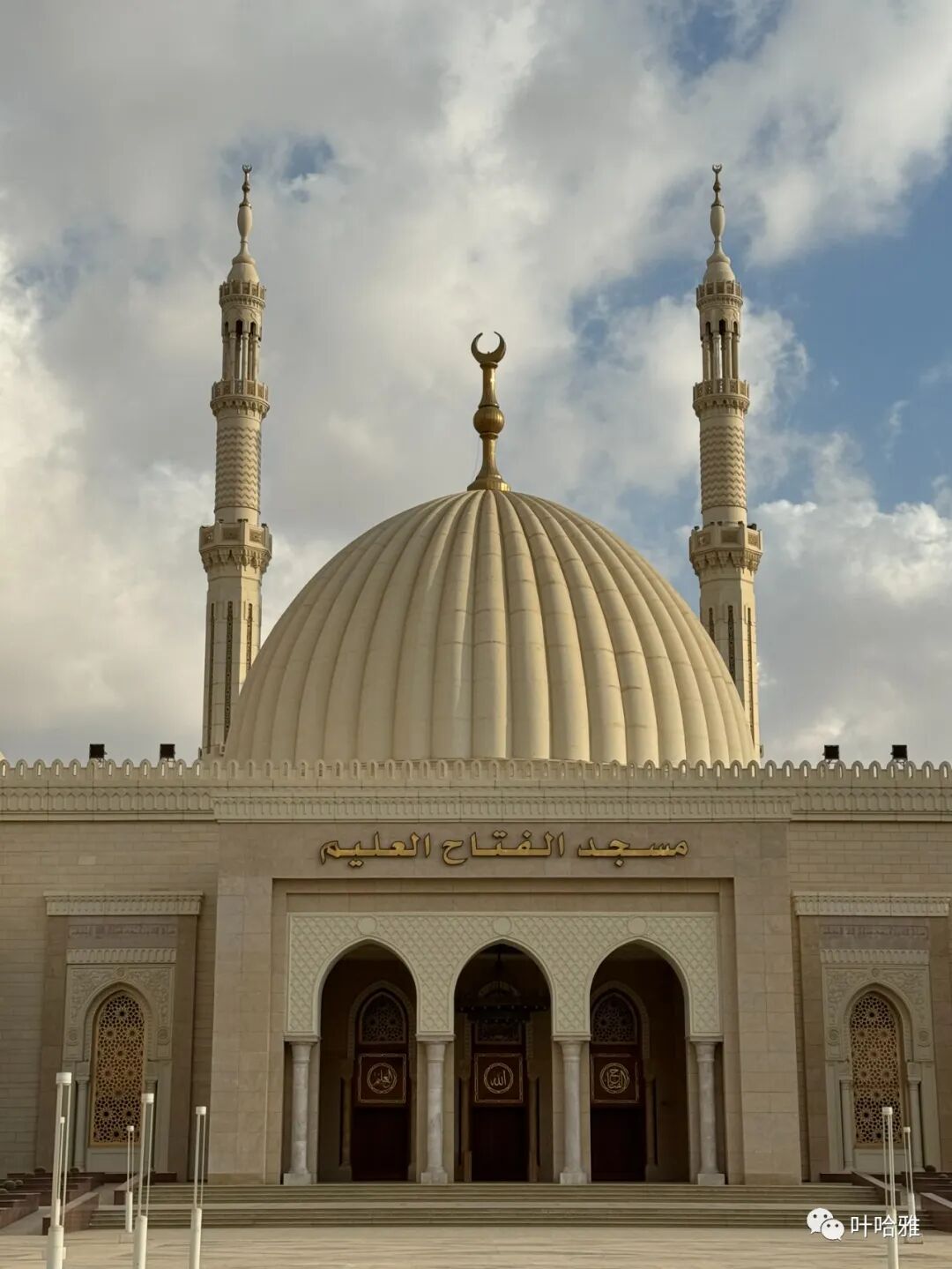
New Cairo is an hour's drive from the old city. The roads in the new city are wide, the streets are clean, and the tallest building in Africa is currently being built here.
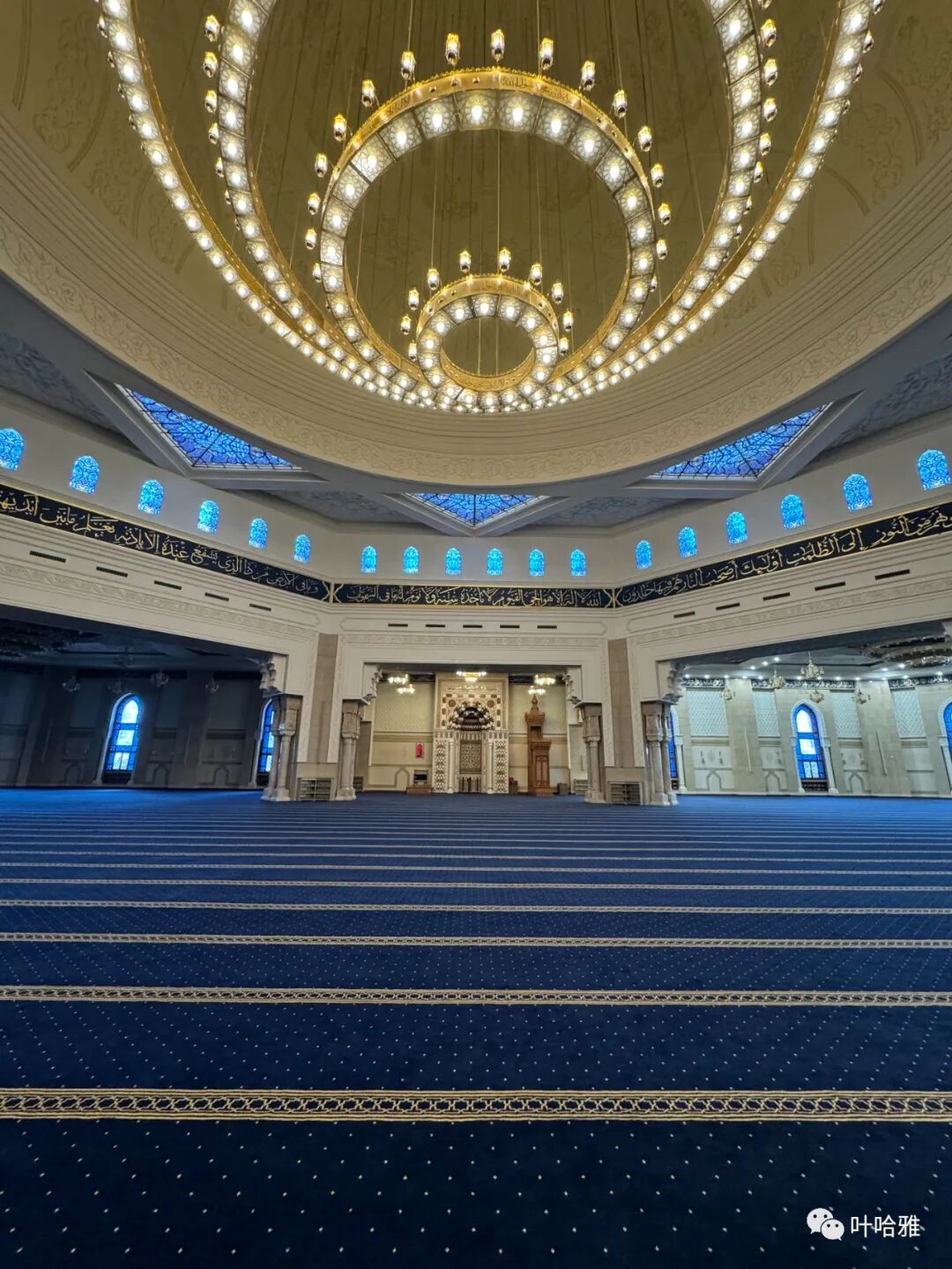
The main hall of the mosque was originally closed, but our driver, who is Egyptian, talked to the mosque staff and got them to open it for us. We prayed namaz together in the mosque, and he led the prayer. After the prayer, I offered the staff a tip, but he actually refused it. He is the only person I have met in Egypt who did not take a tip.
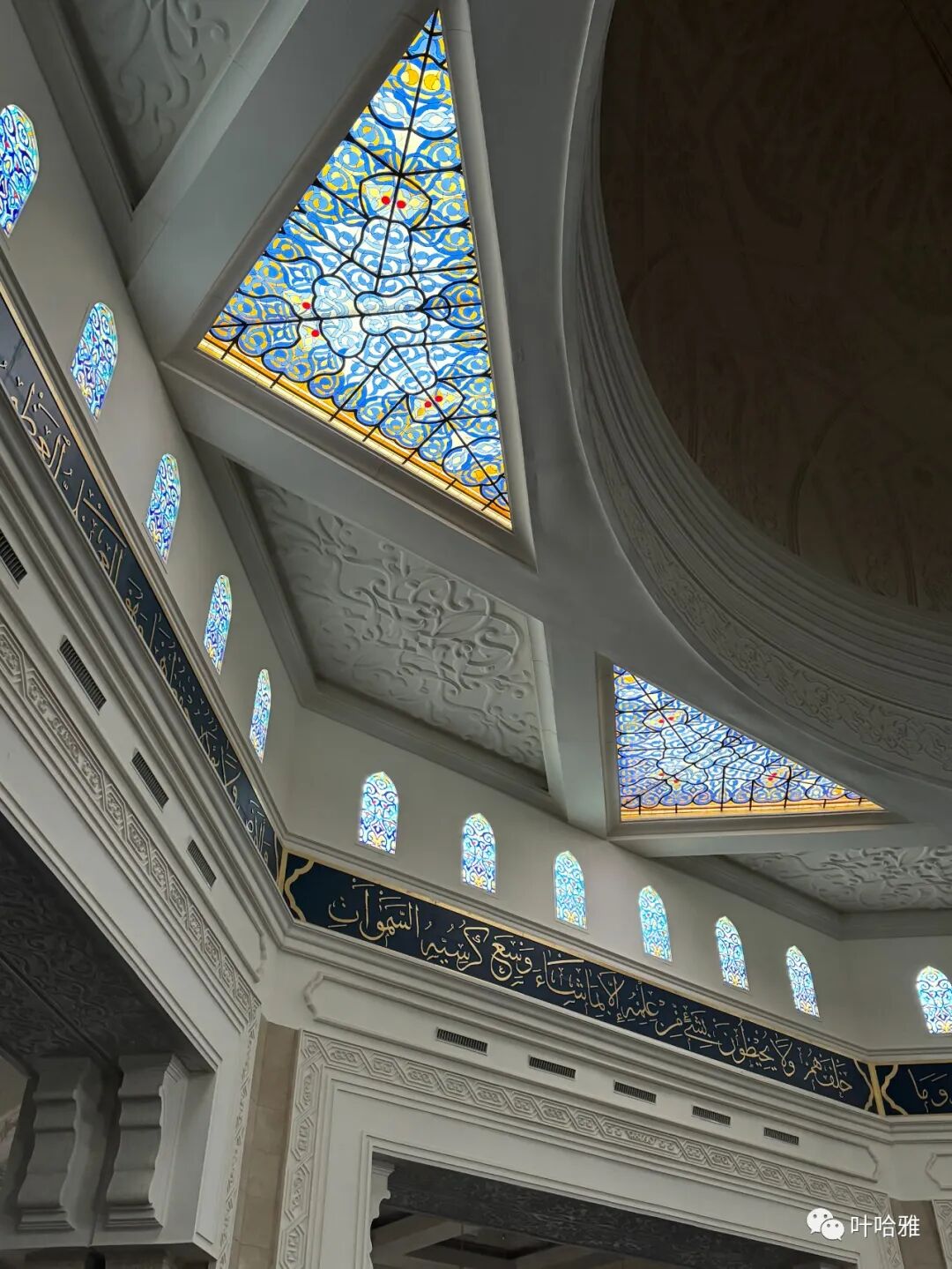
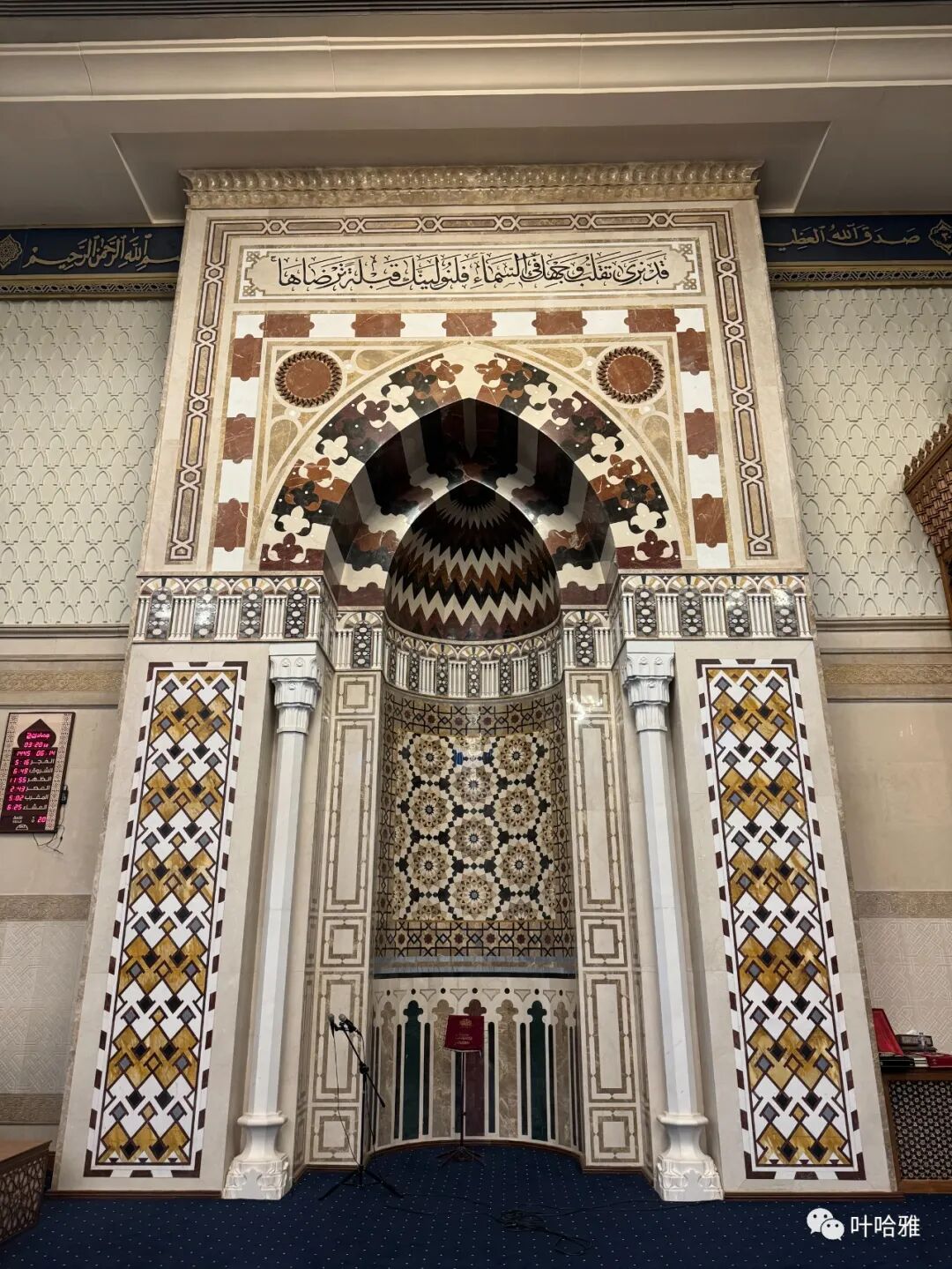
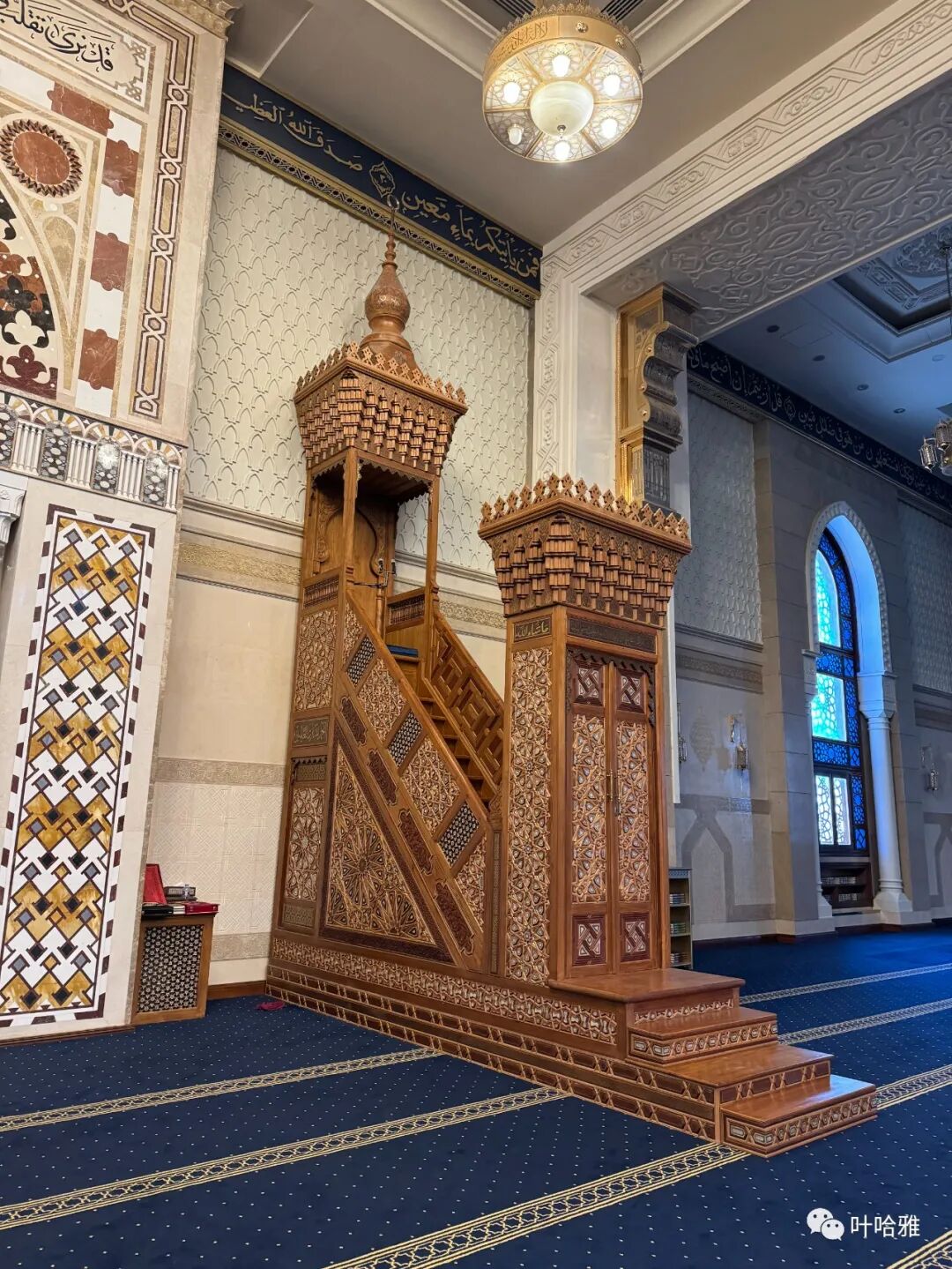
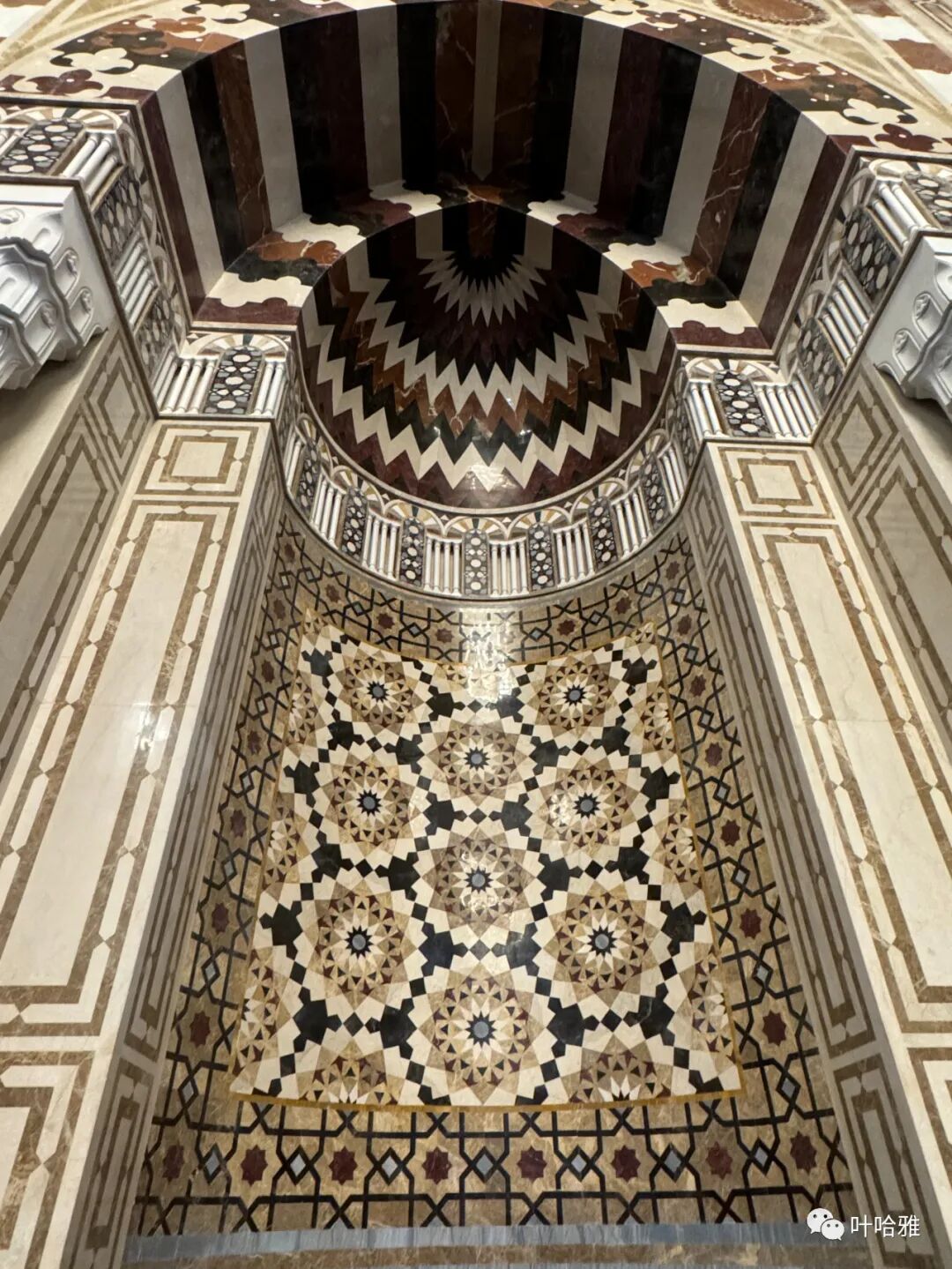
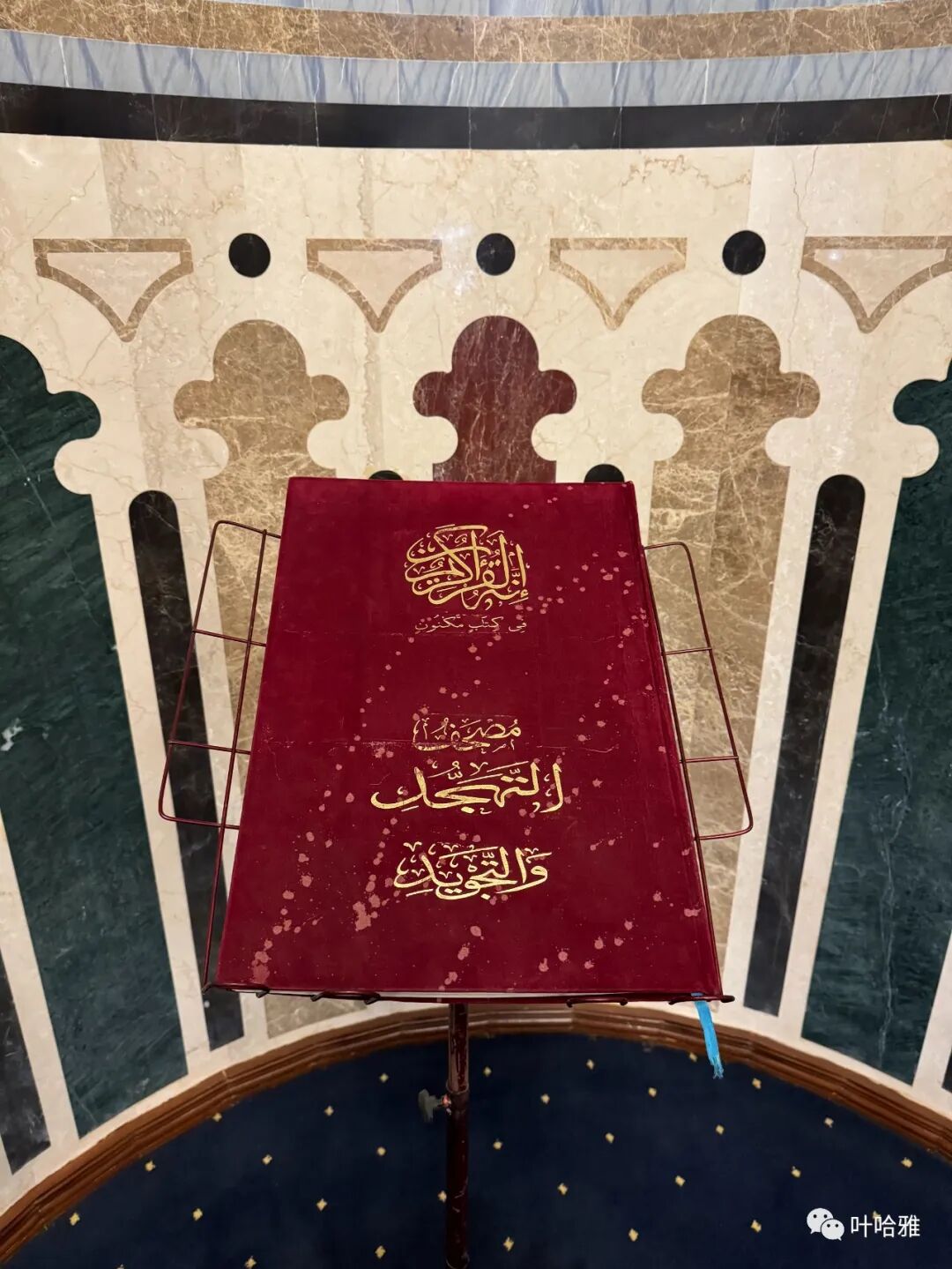
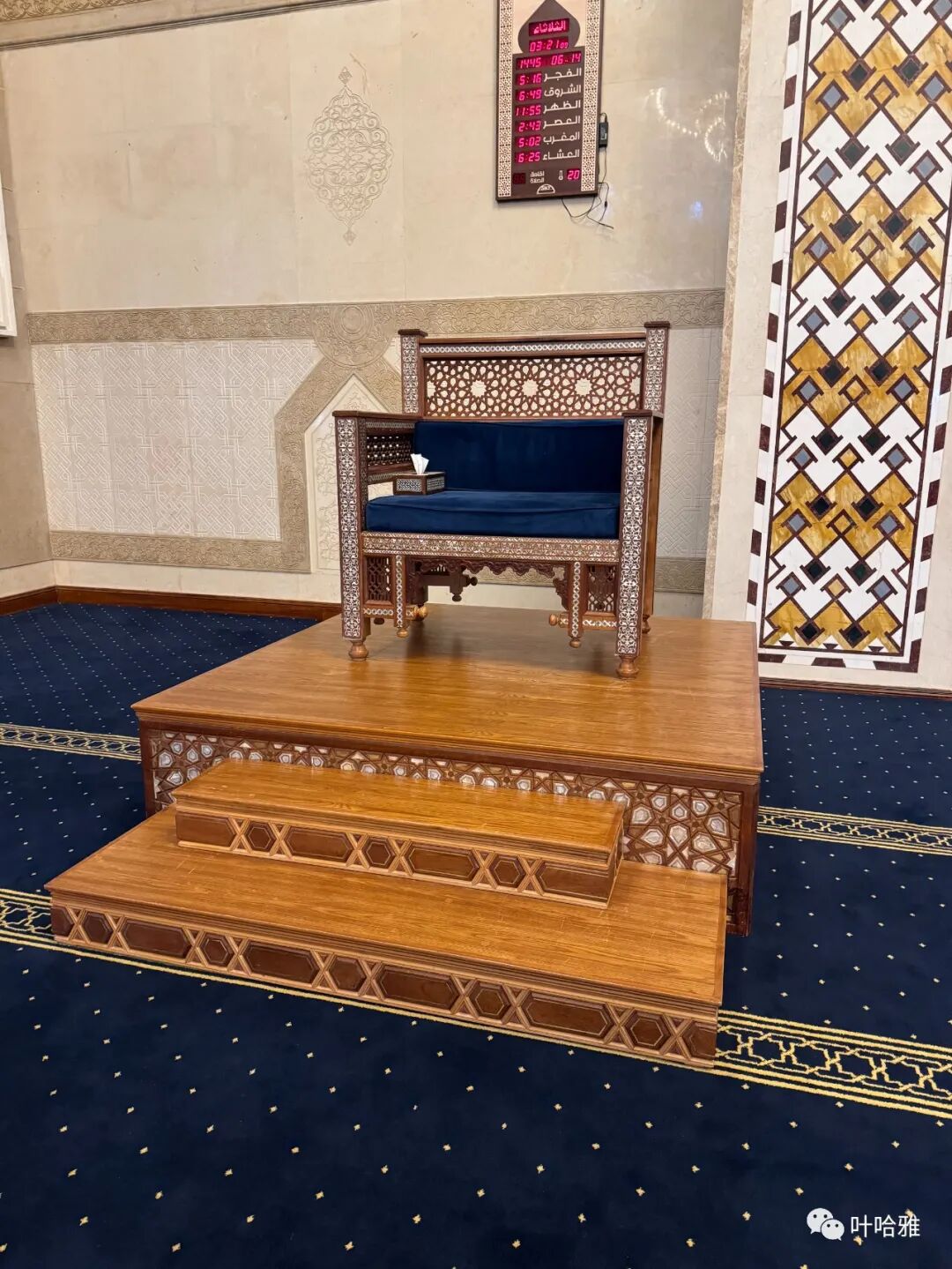
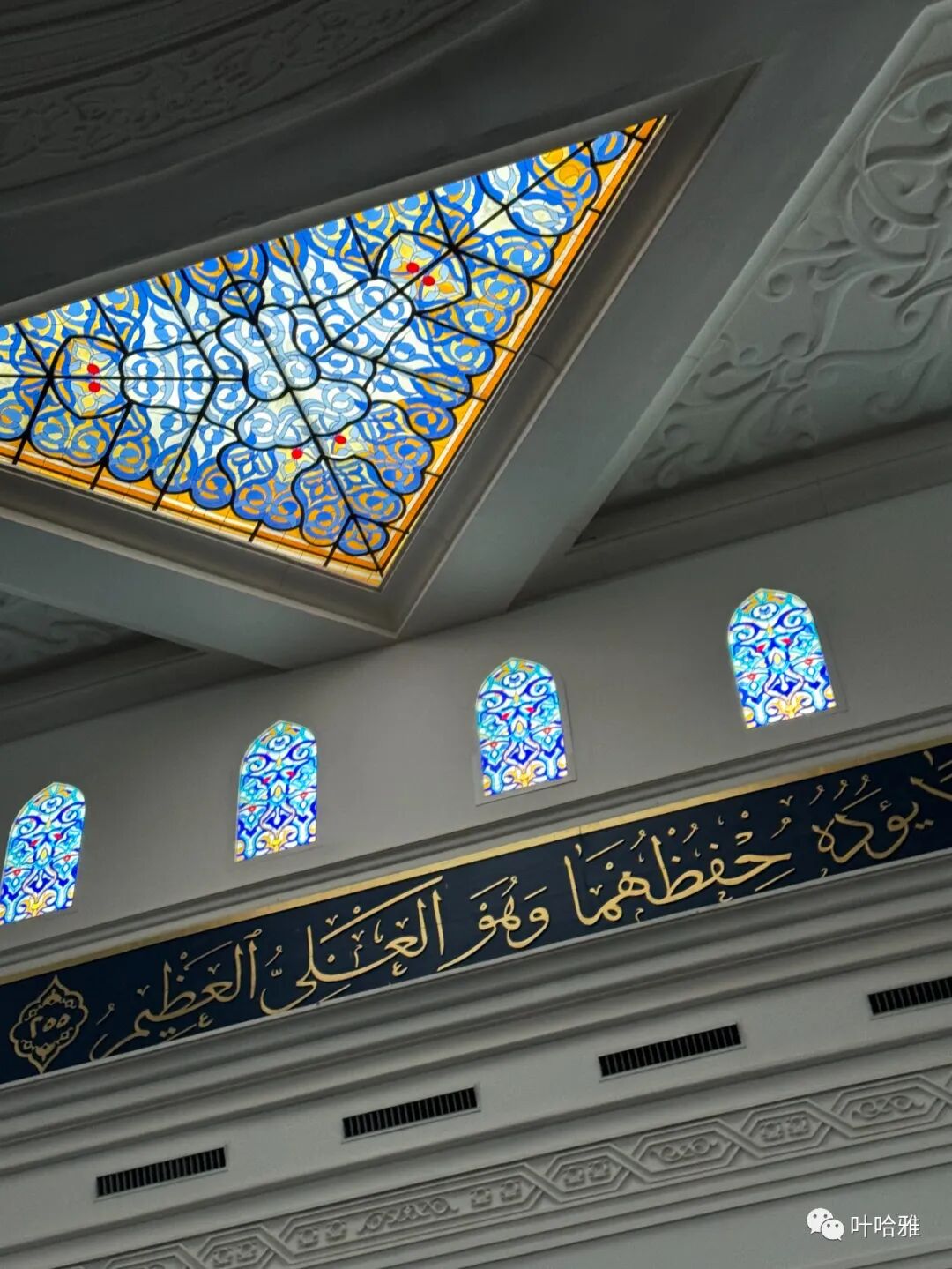
Sulayman Agha al-Silahdar Mosque
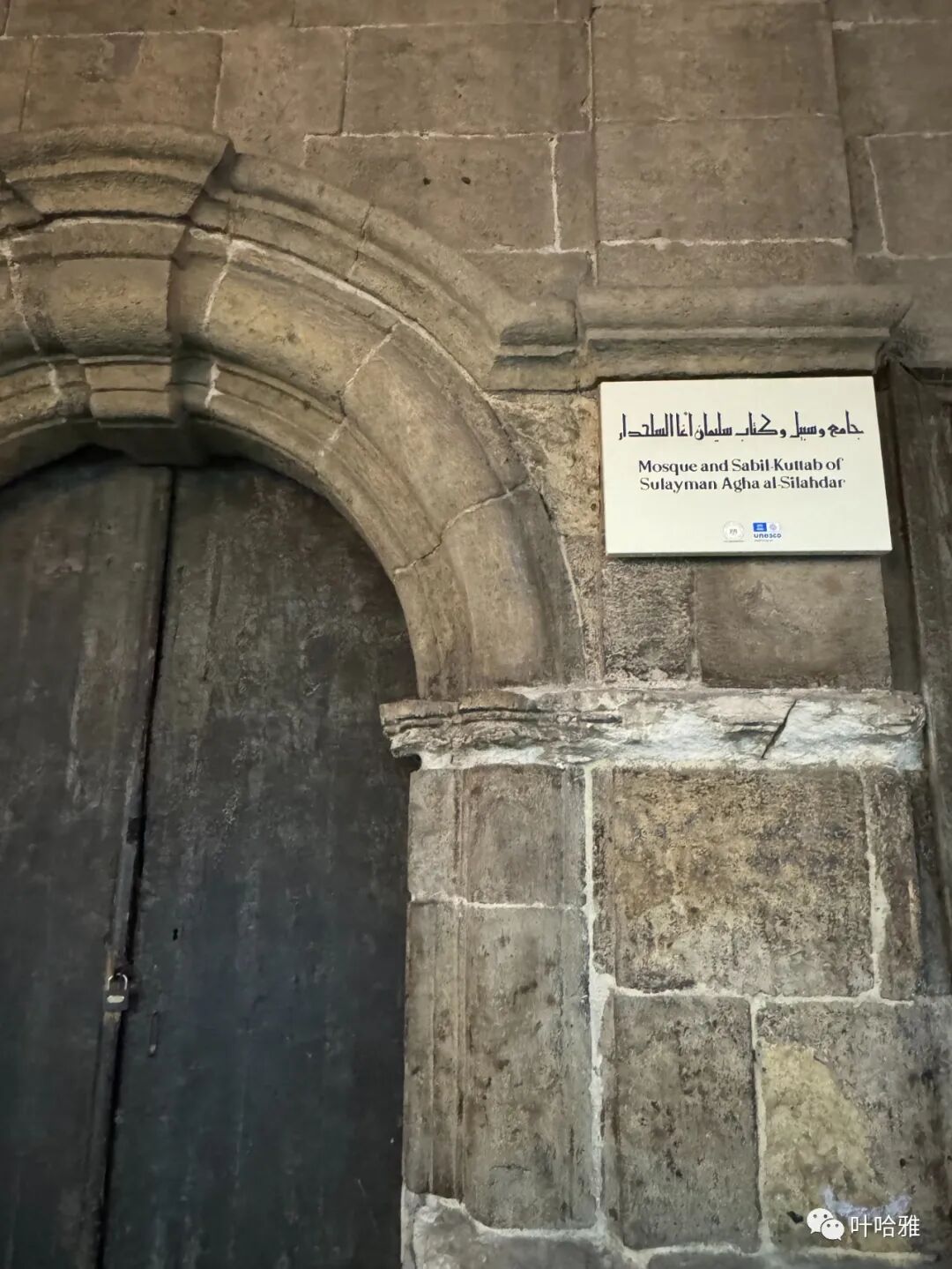
This mosque was built in 1839 in the Ottoman style. The carvings inside copy architecture from the European Renaissance.
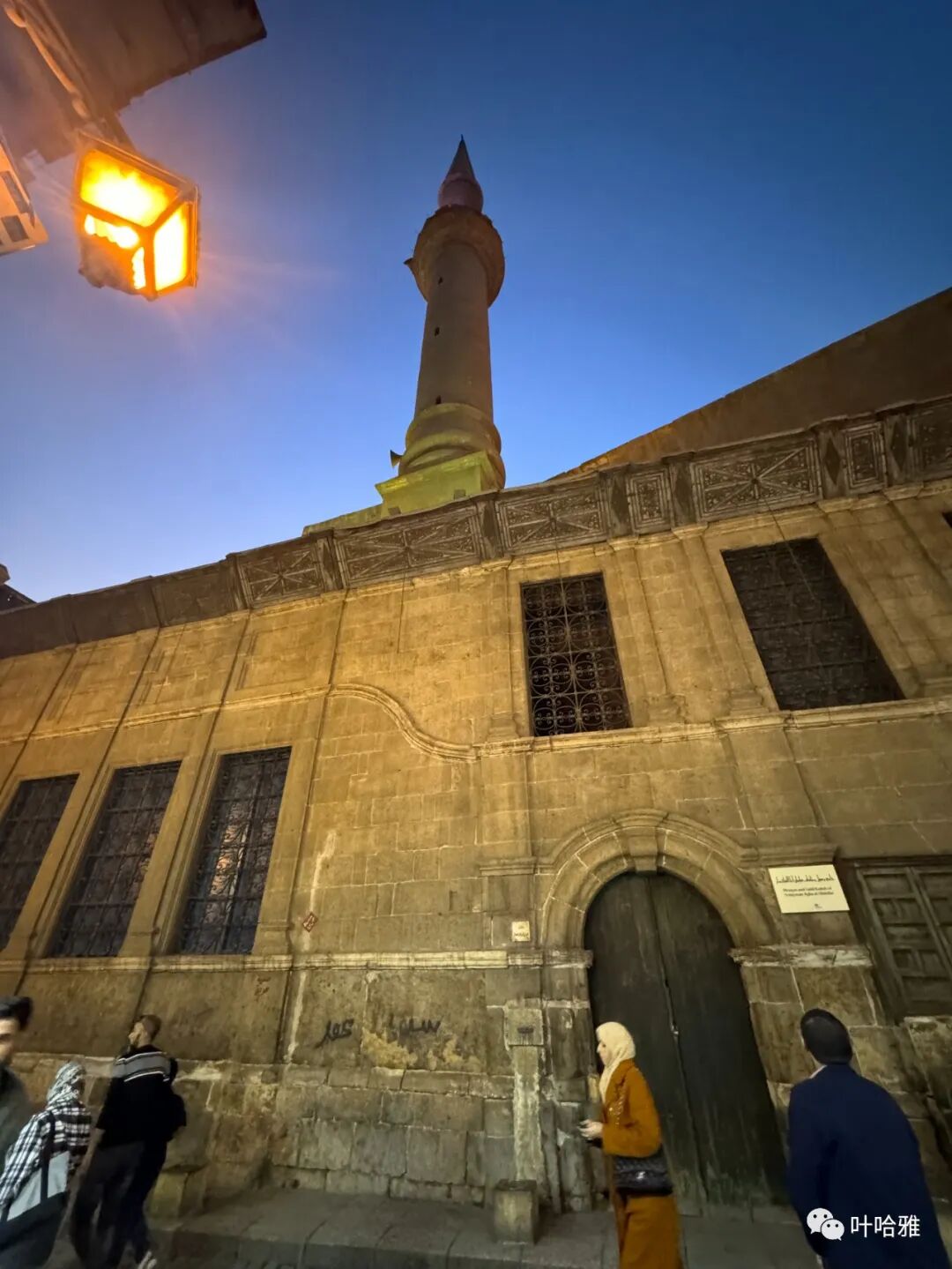
The mosque is located on a busy street in the old city. It stands in sharp contrast to the bustling crowds outside, as the inside is very quiet and only a few people come for prayer.
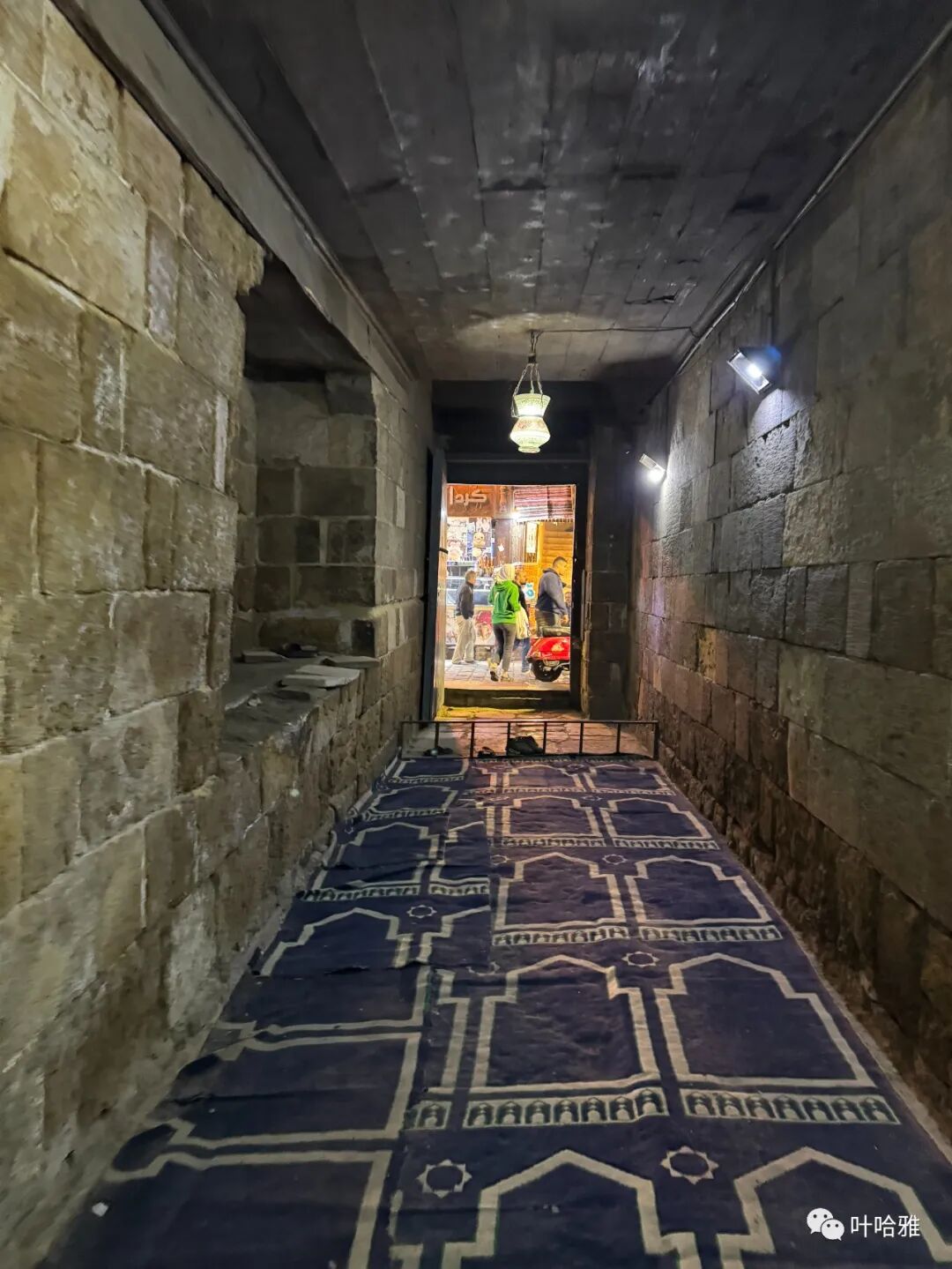
Walk through this passage and enter the main hall on the second floor. It feels like a dark medieval castle inside.
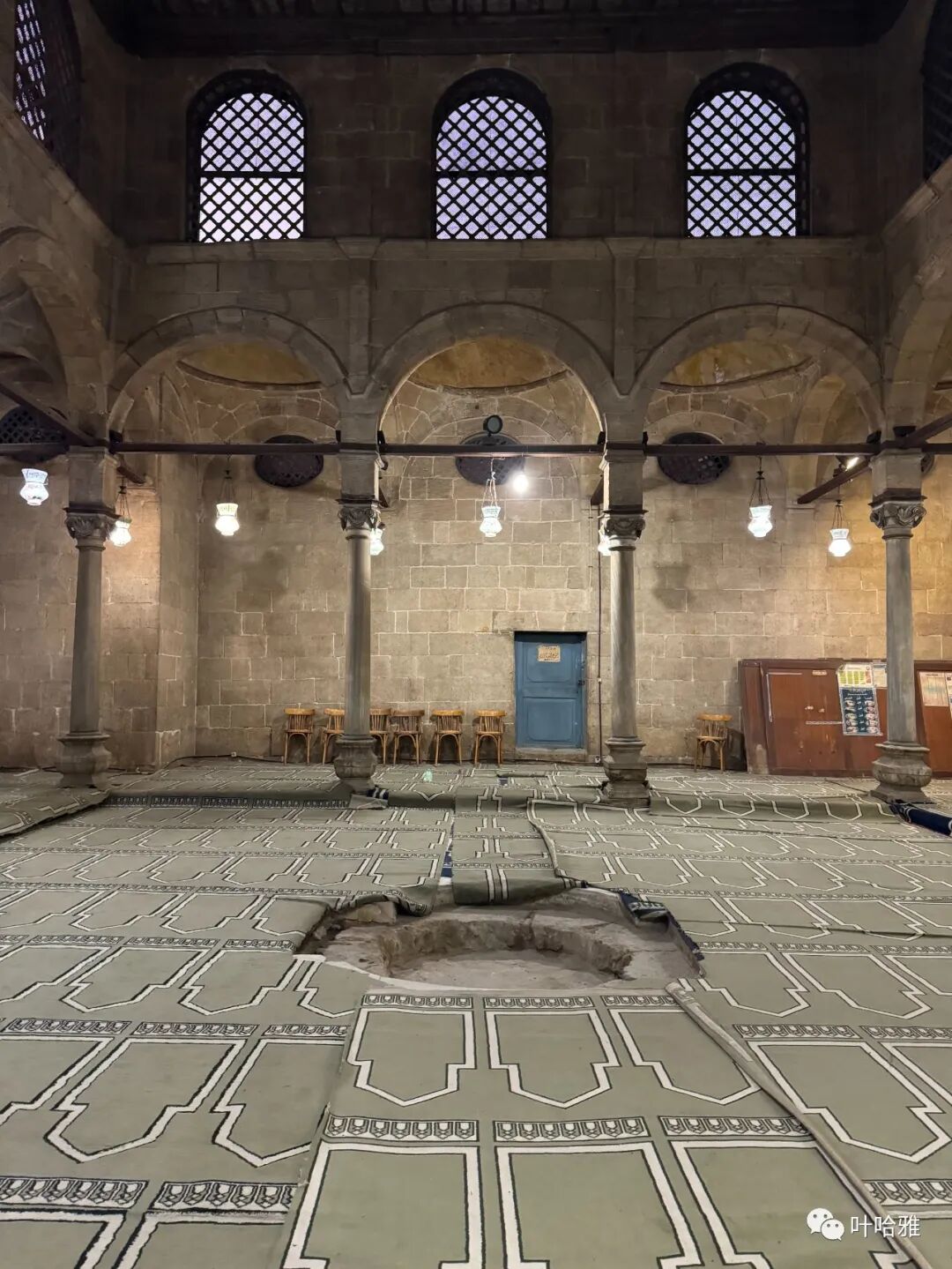
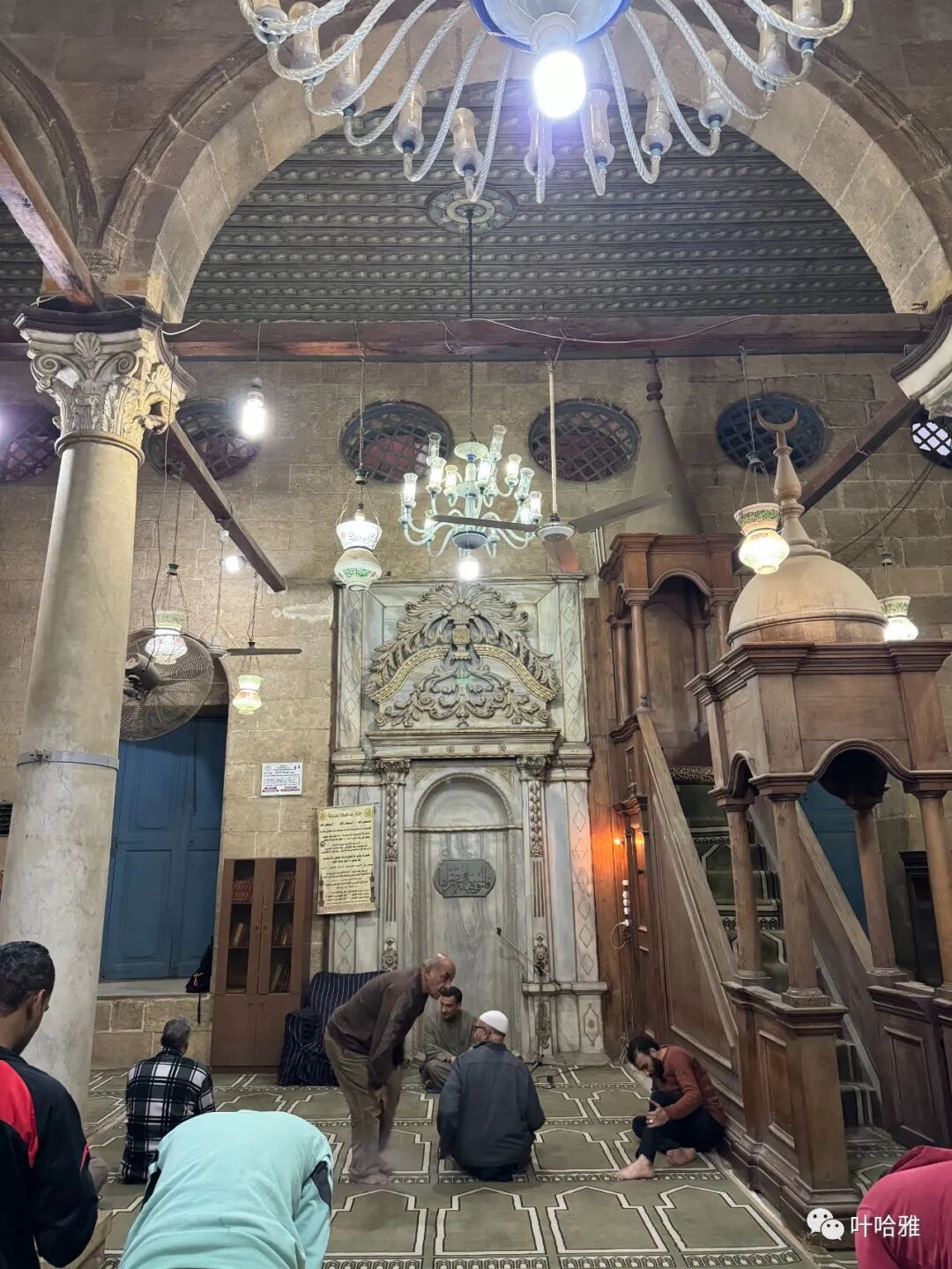
Al-Hakim Mosque
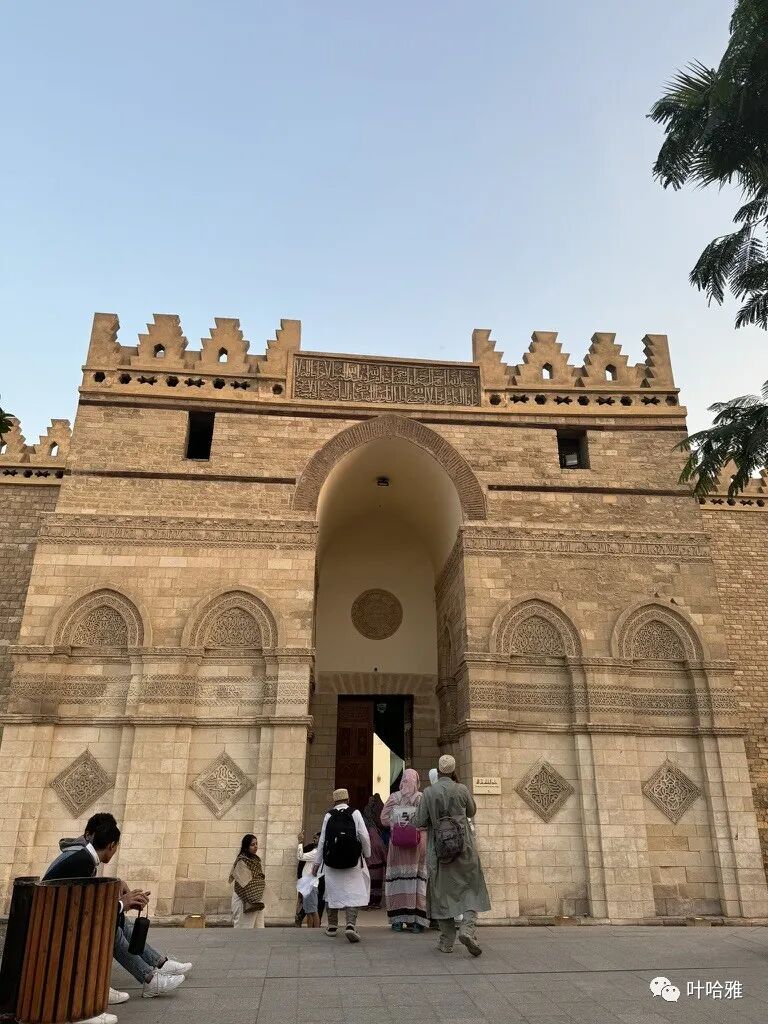
This mosque was completed in 1013 and named after the sixth Fatimid caliph. The main gate features Kufic script left from that time.
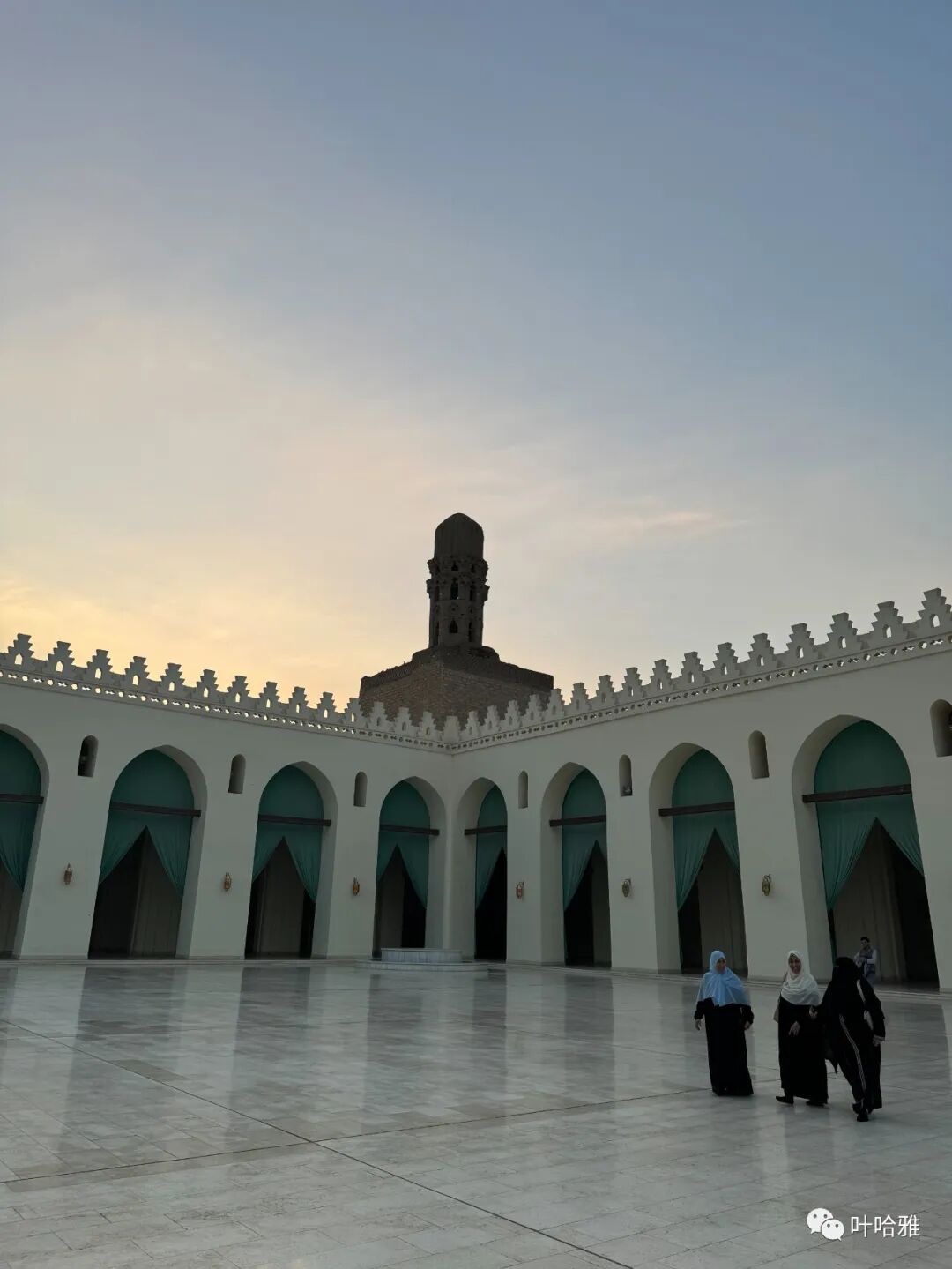
Over the centuries, this mosque was renovated and closed several times until it finally reopened in 1980.
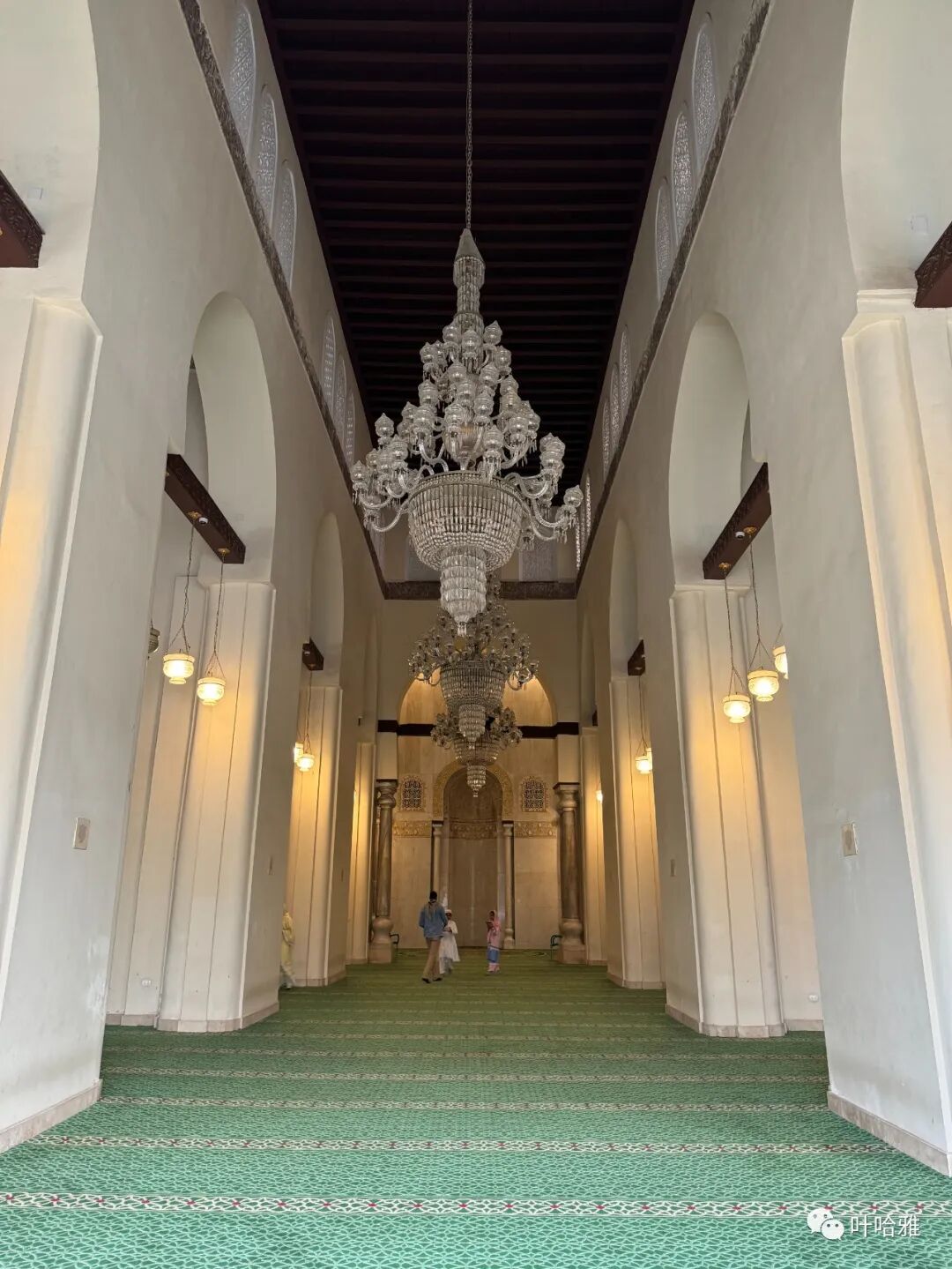
The architectural style is similar to Al-Azhar, but it is more than twice the size.
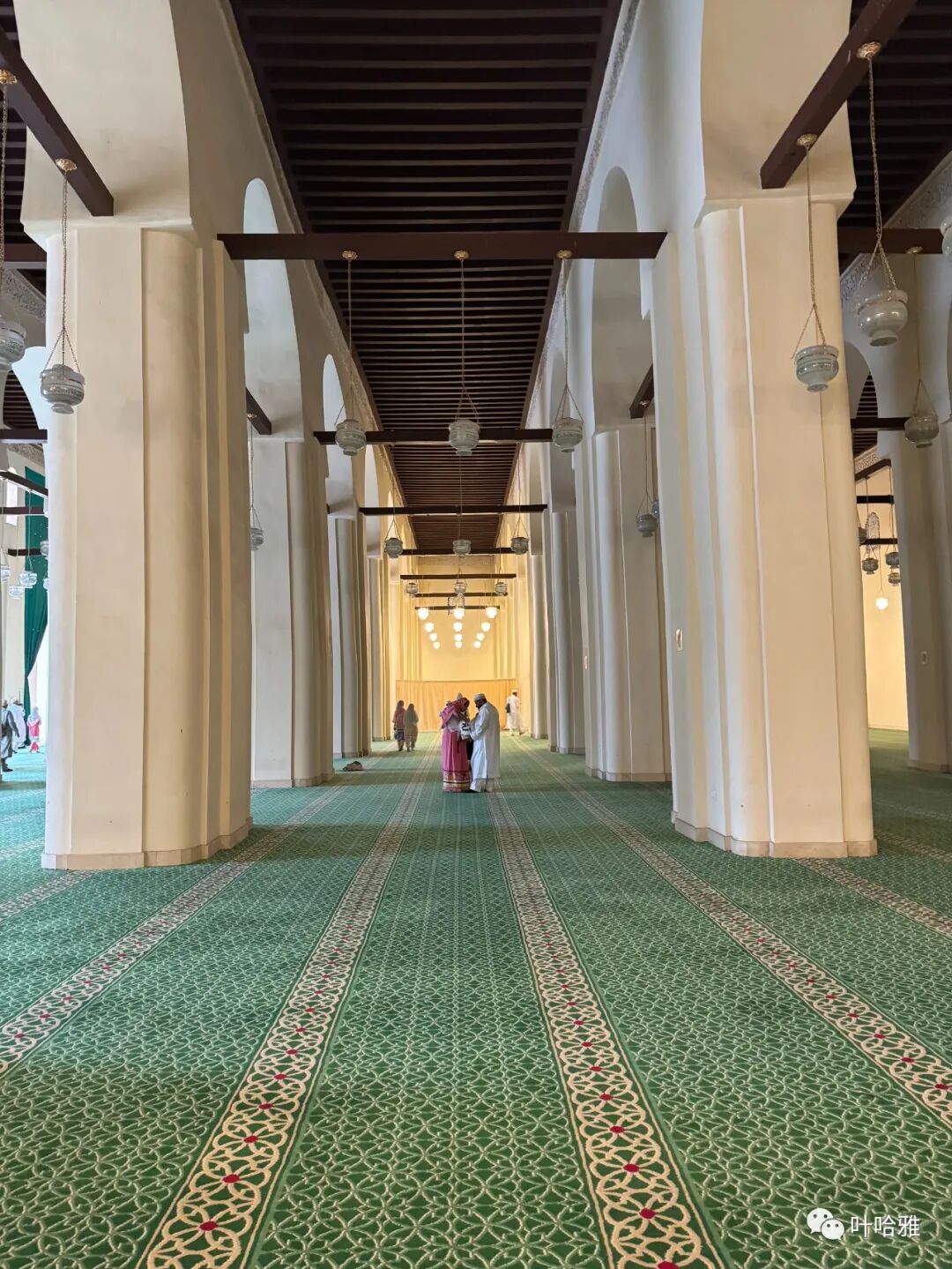
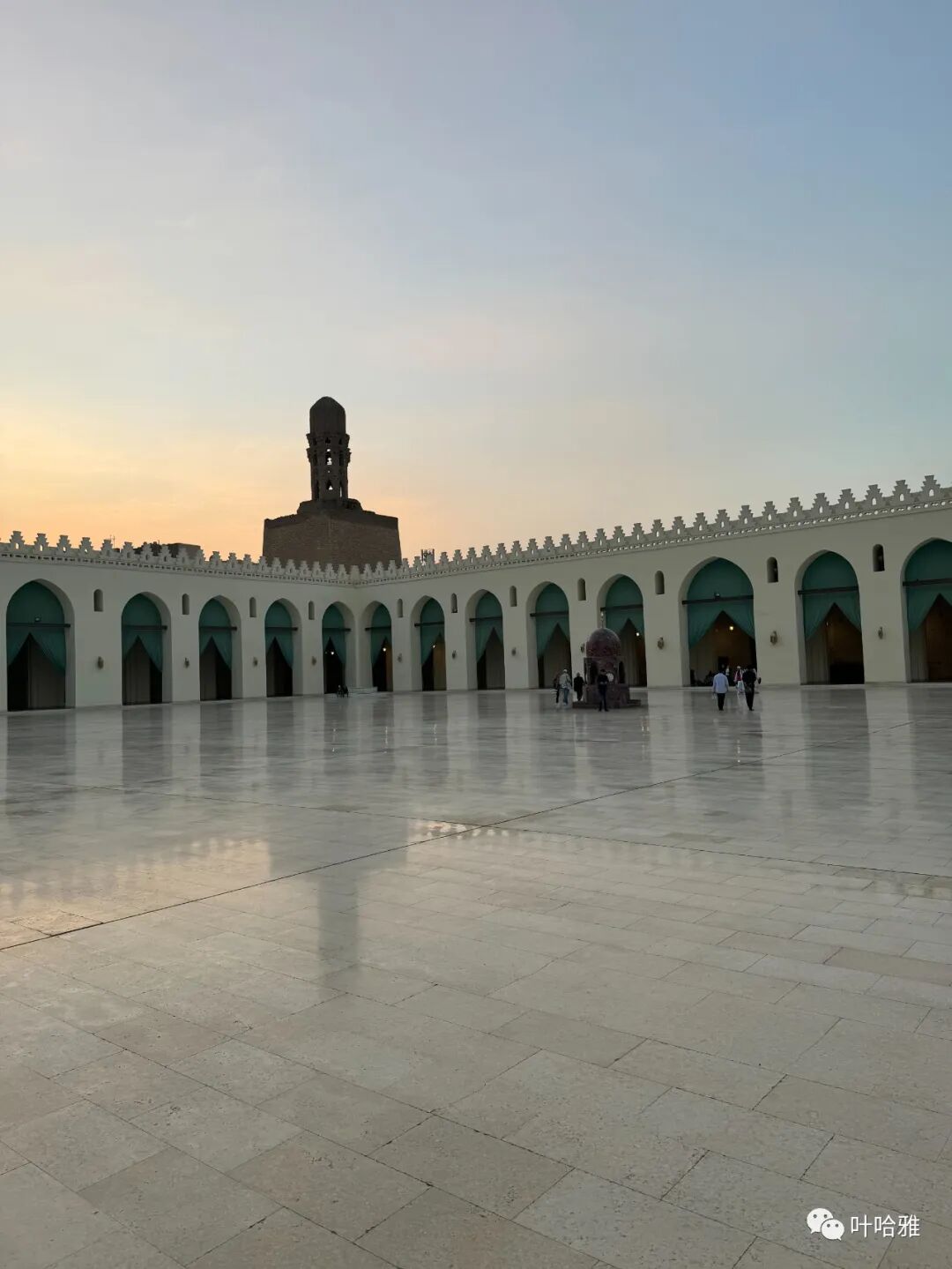
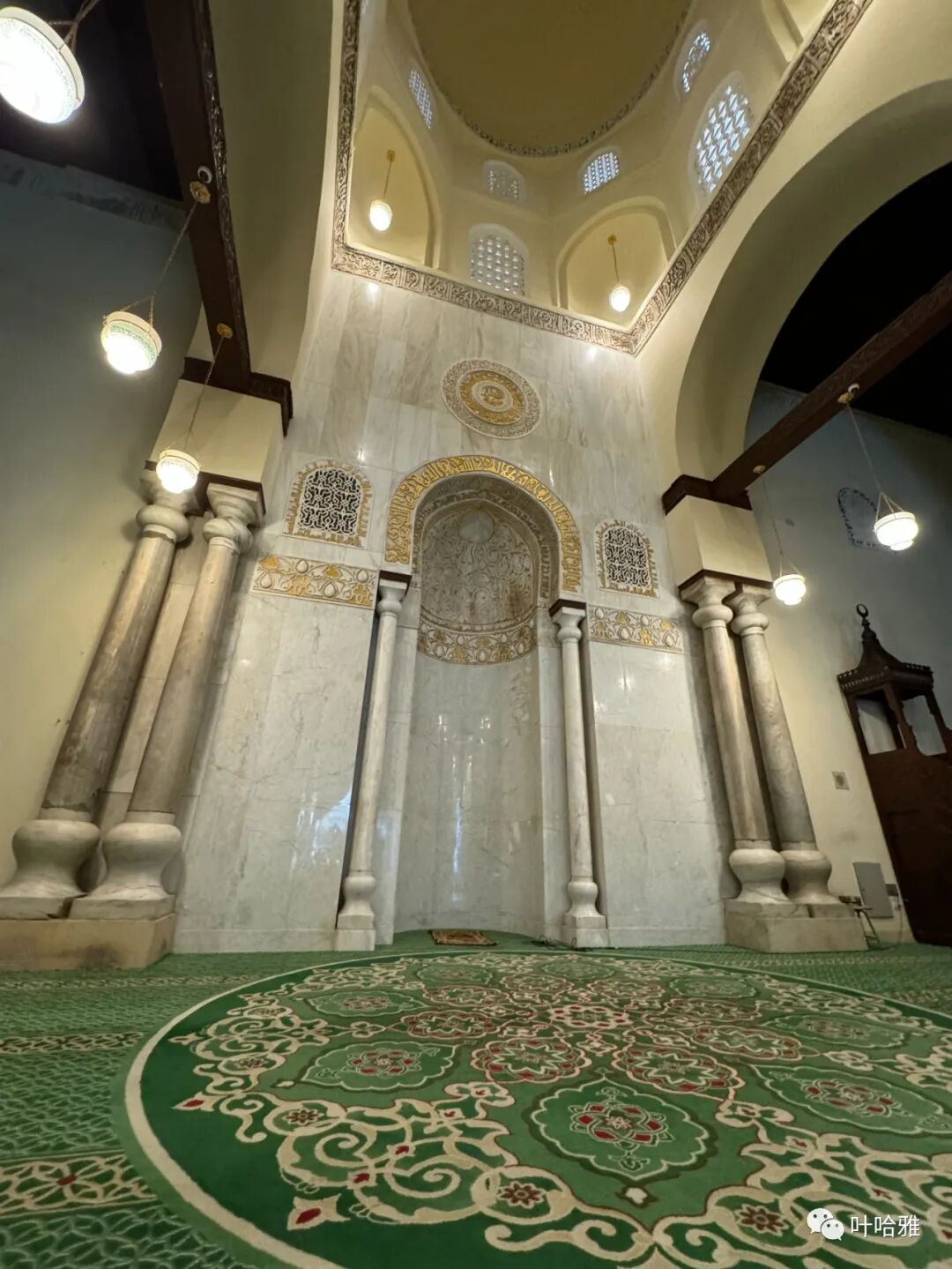
Sultan Barquq Mosque
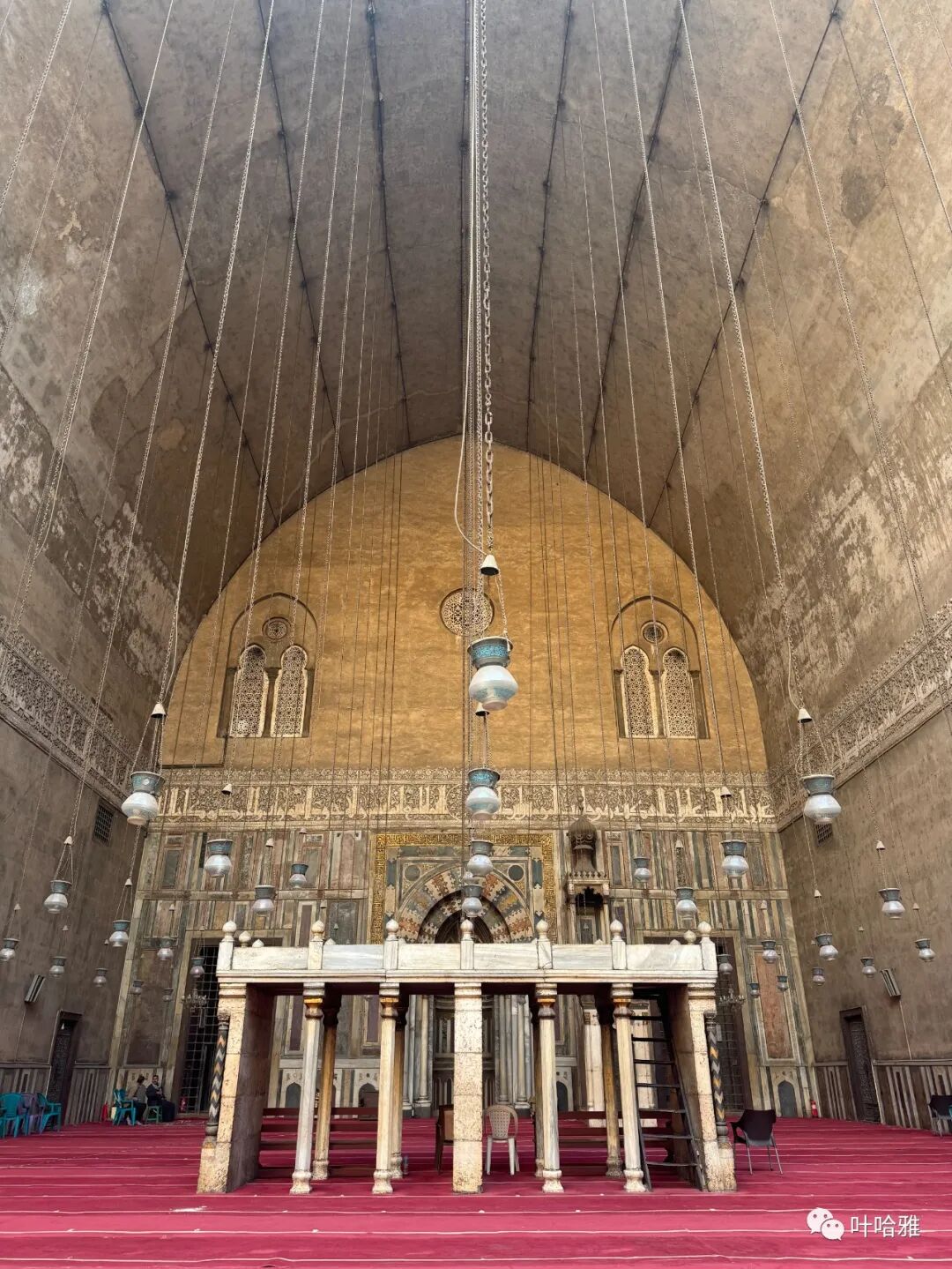
You need to buy a ticket to enter this mosque, and you can buy a combined ticket with the Al-Refaei Mosque. Also, you have to tip when you store your shoes inside.
Located in the old city of Cairo, this large religious complex includes a mosque, a school, and a gongbei. It was first built in 1384. Barquq was born a slave and gained significant influence during the Mamluk period. In 1382, he deposed Sultan Hajji and declared himself king.
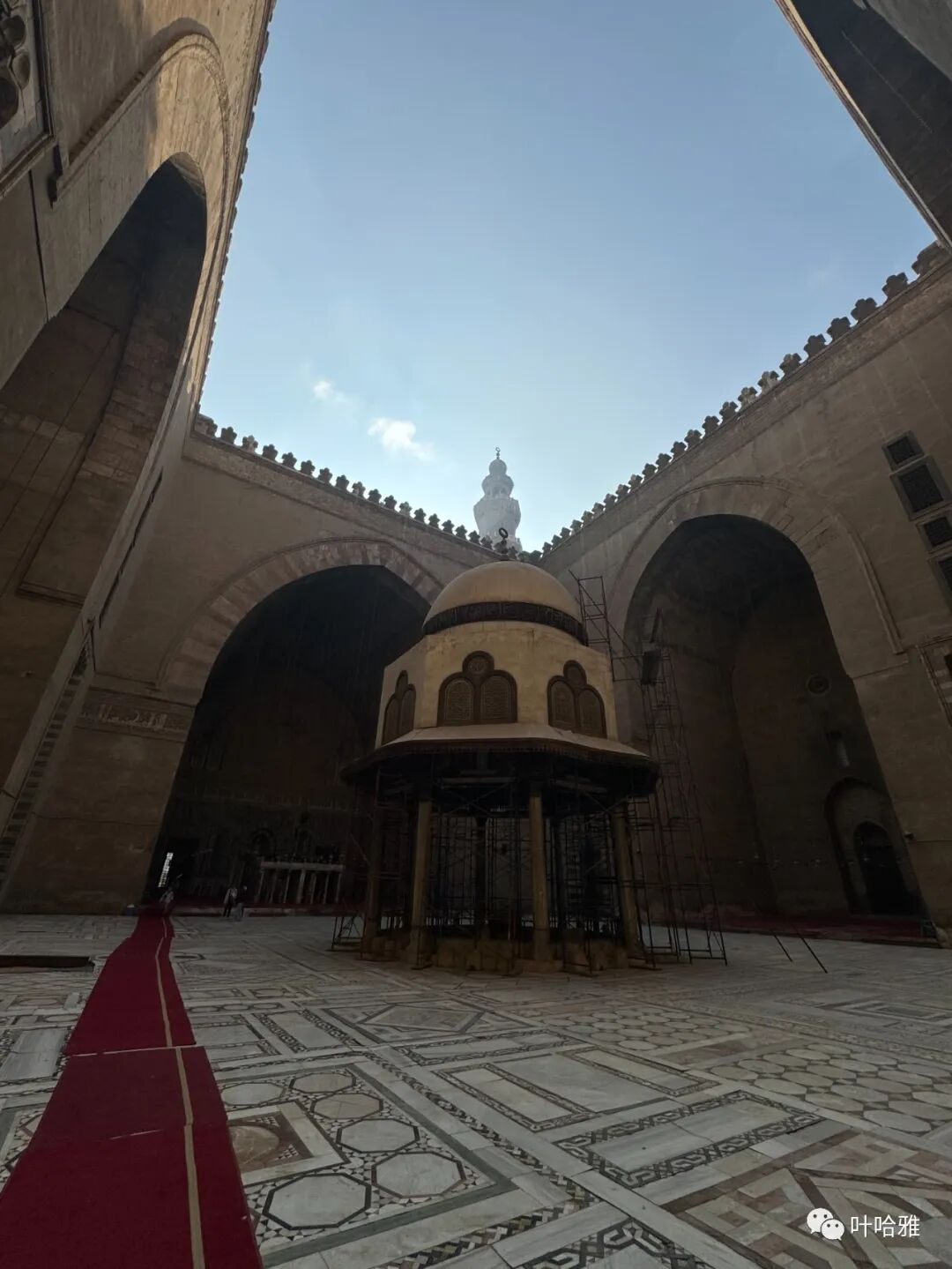
The film adaptation of Palace Walk, a work by the Egyptian Nobel laureate Mahfouz, was filmed here.
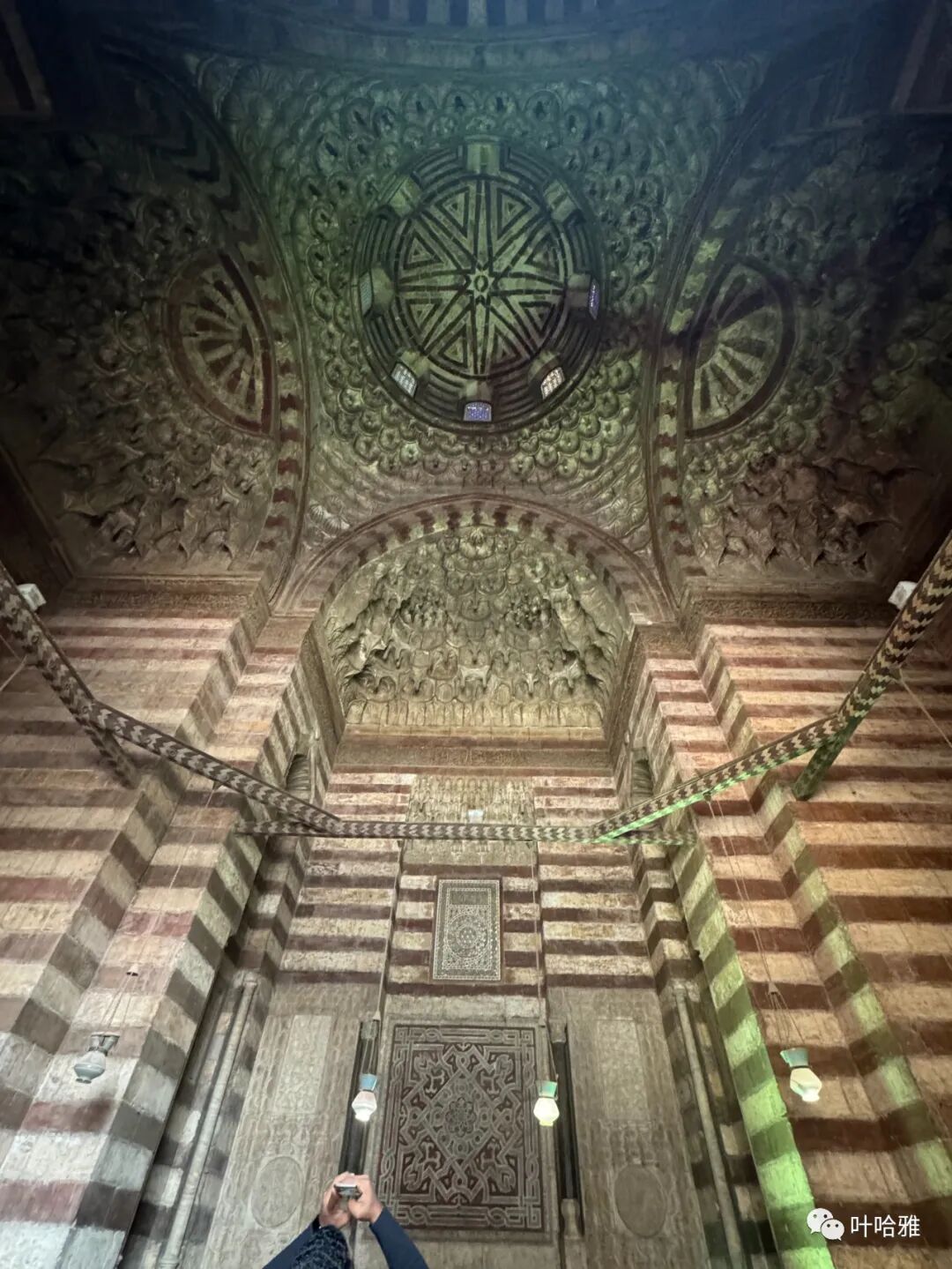
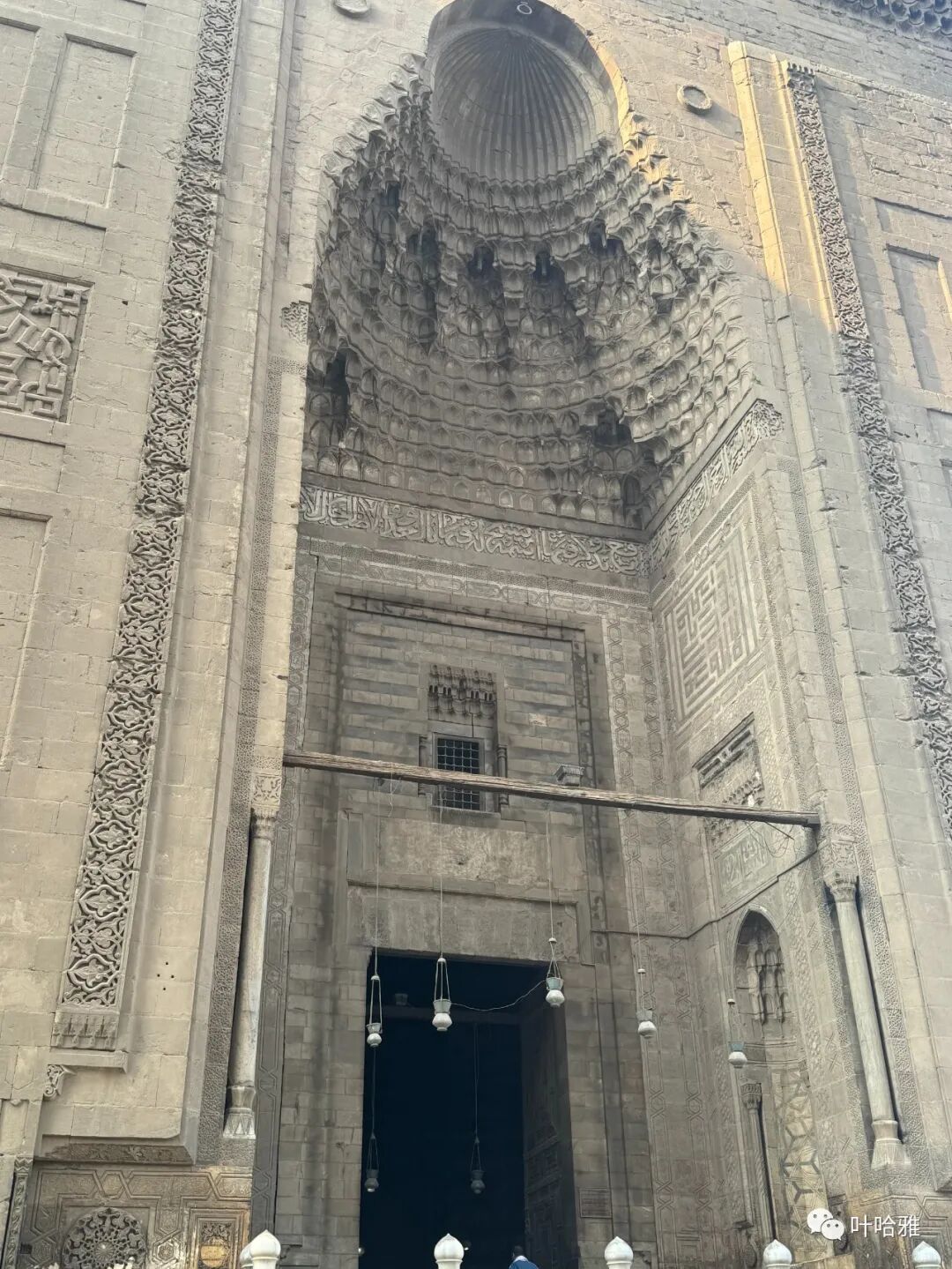
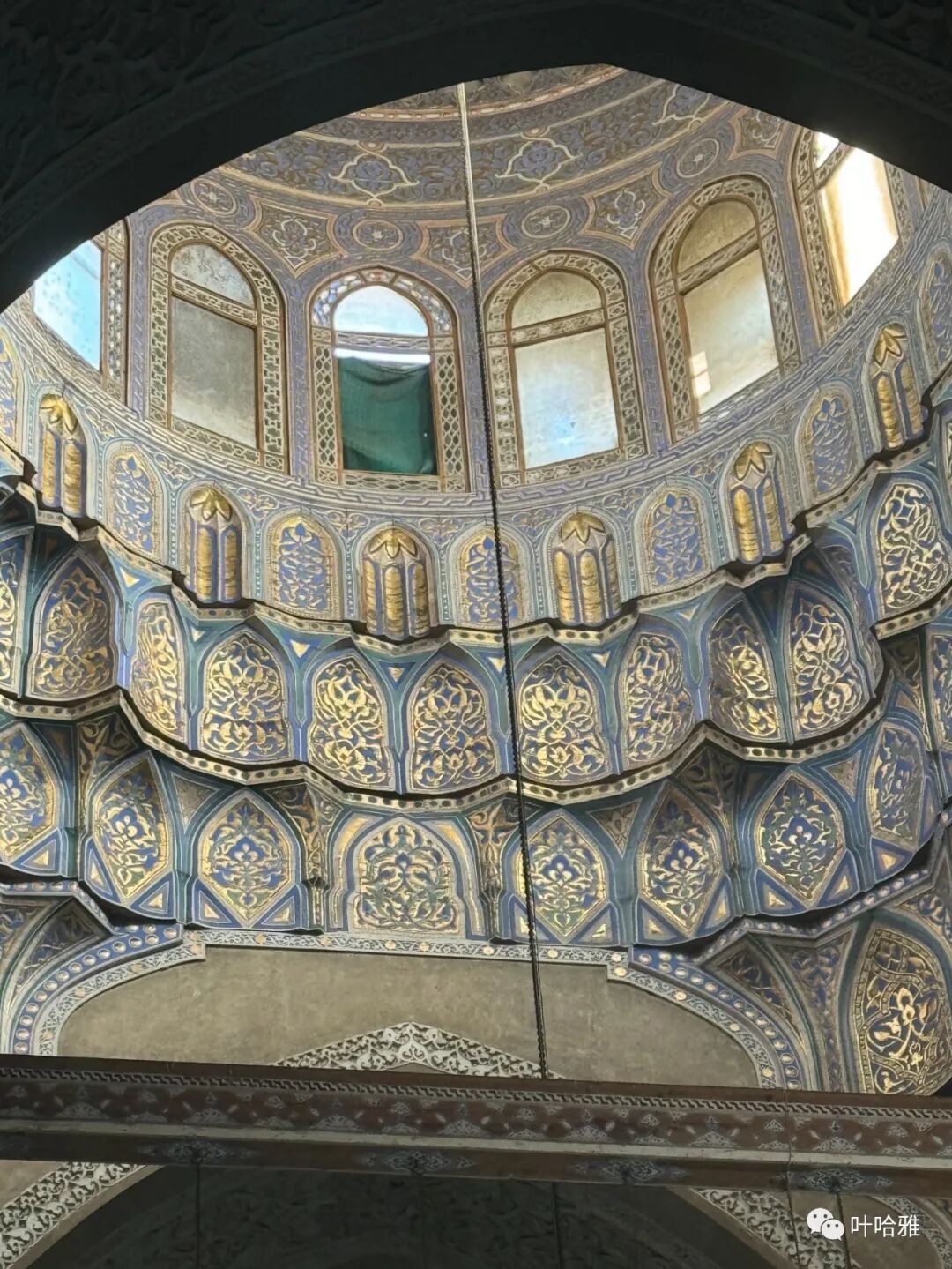
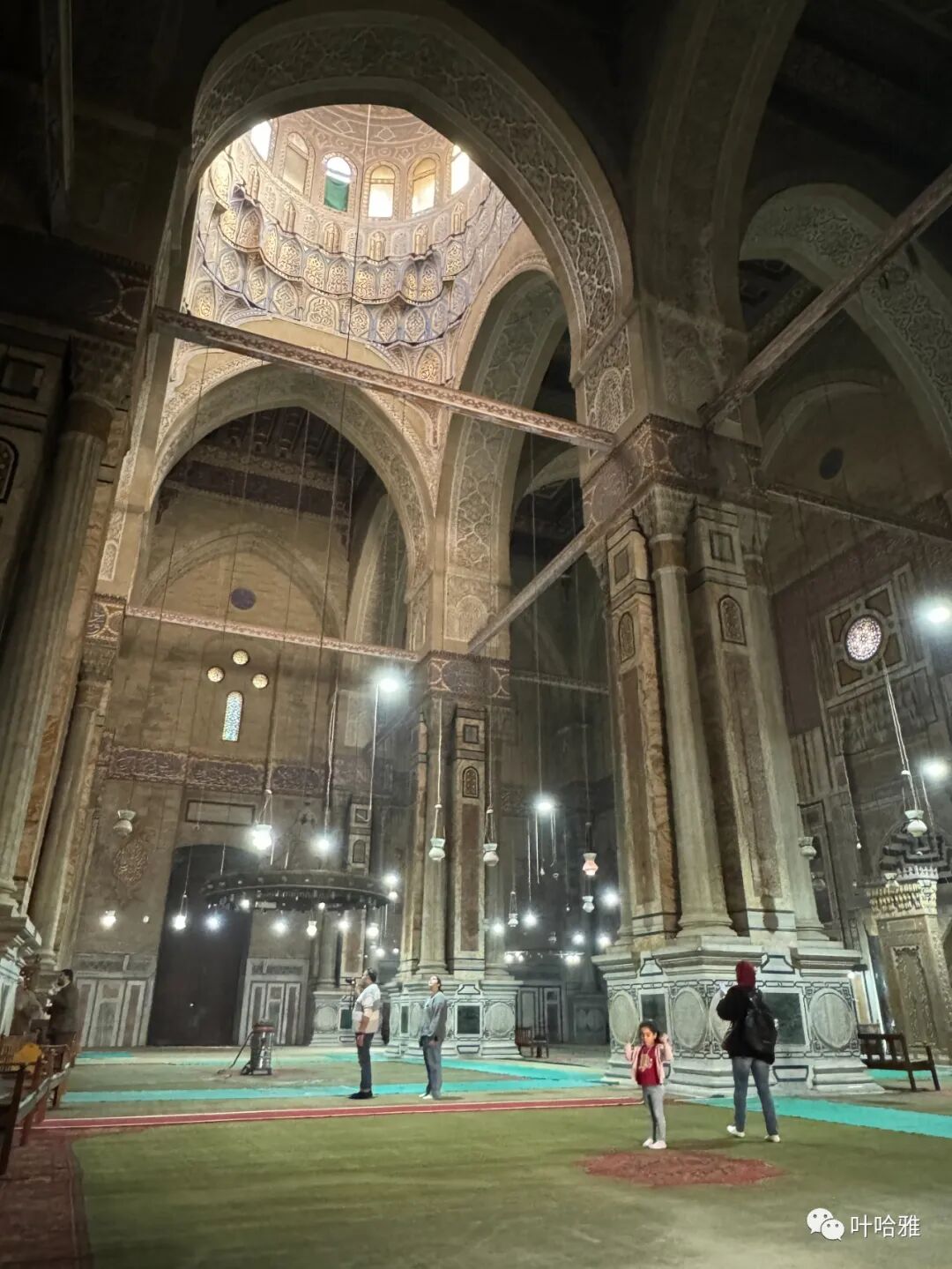
Al-Refaei Mosque
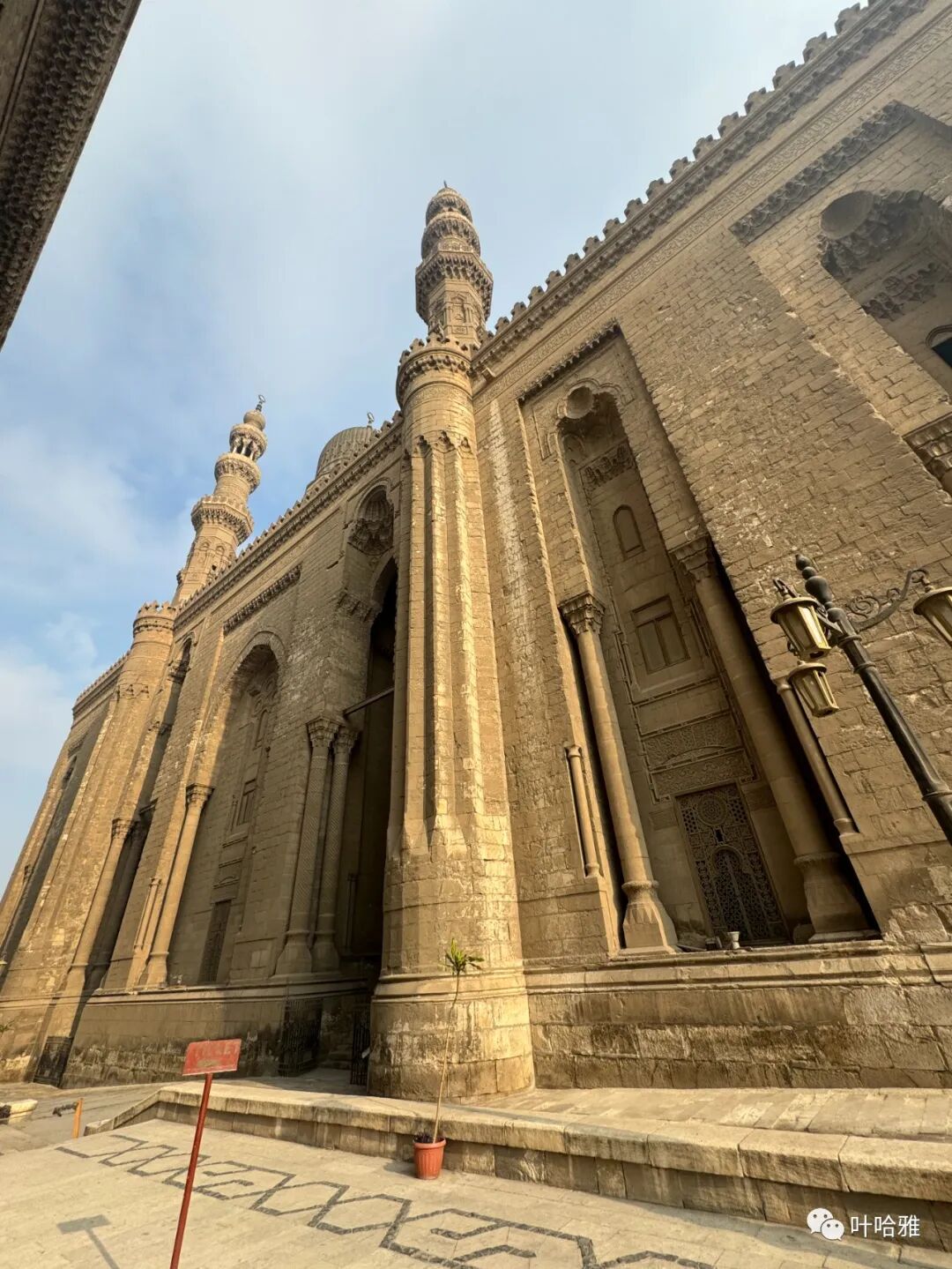
This mosque is across from the Sultan Hassan Mosque. It was first built in 1361 and contains the tombs of the Muhammad Ali family.
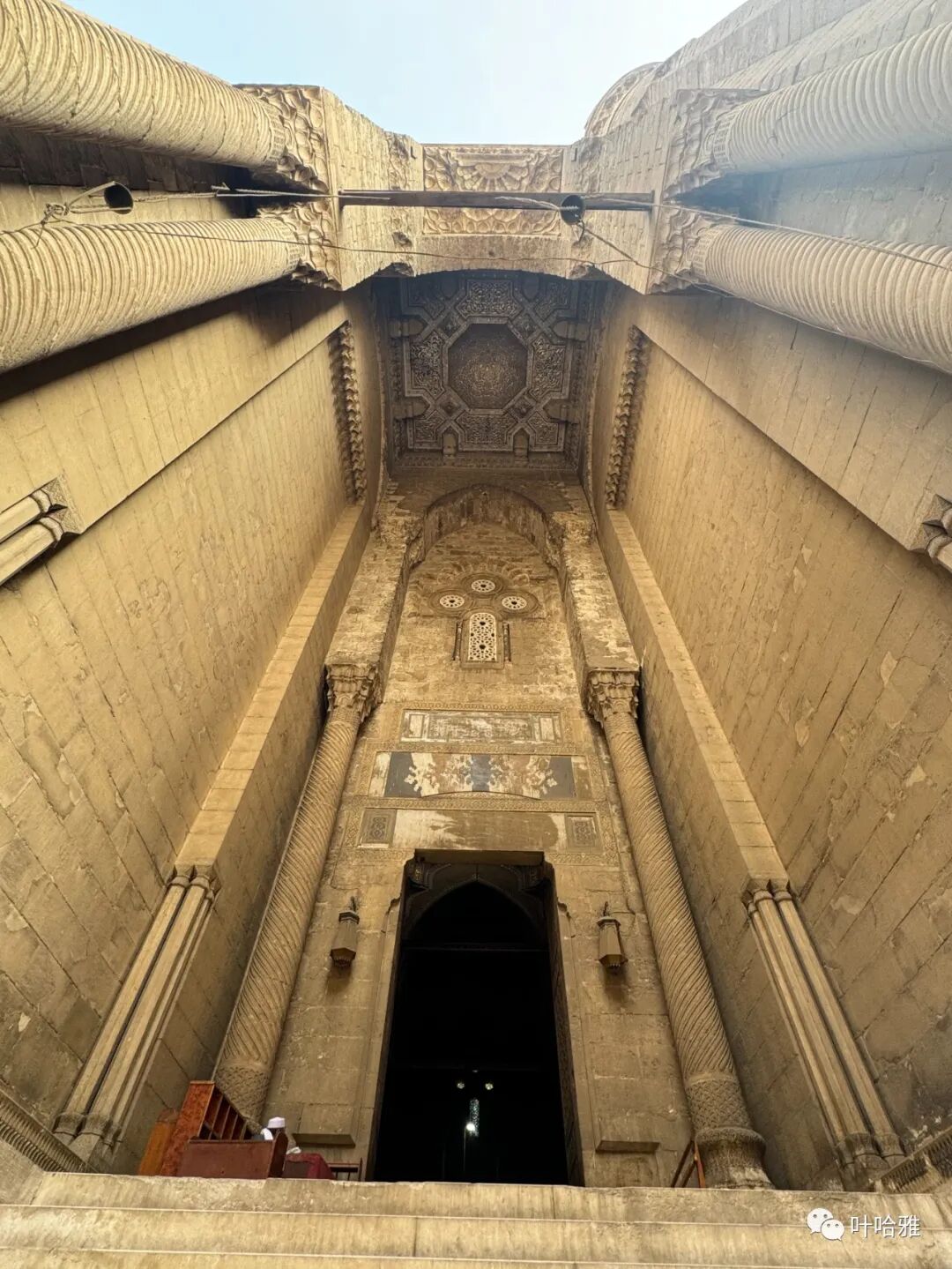
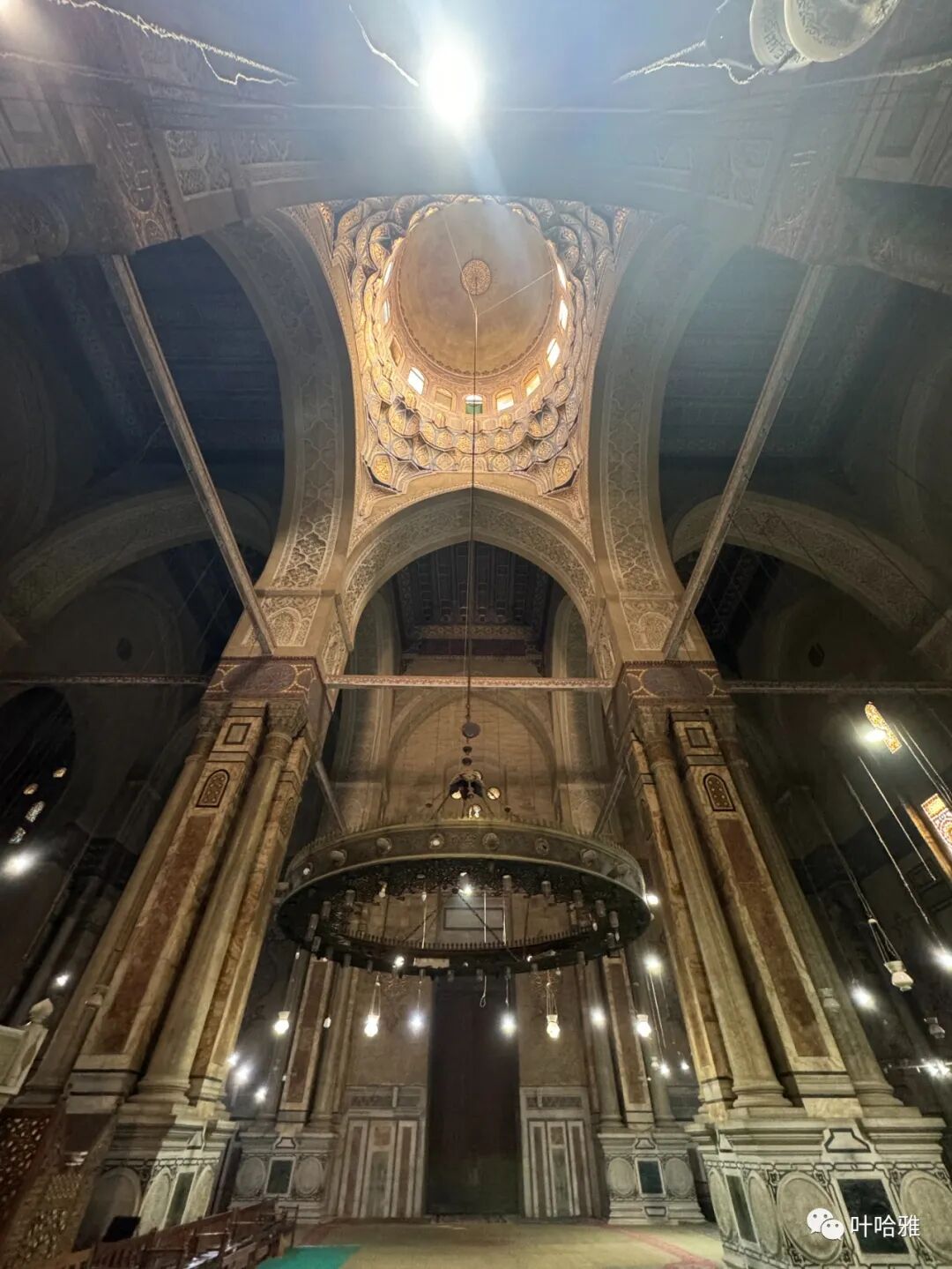
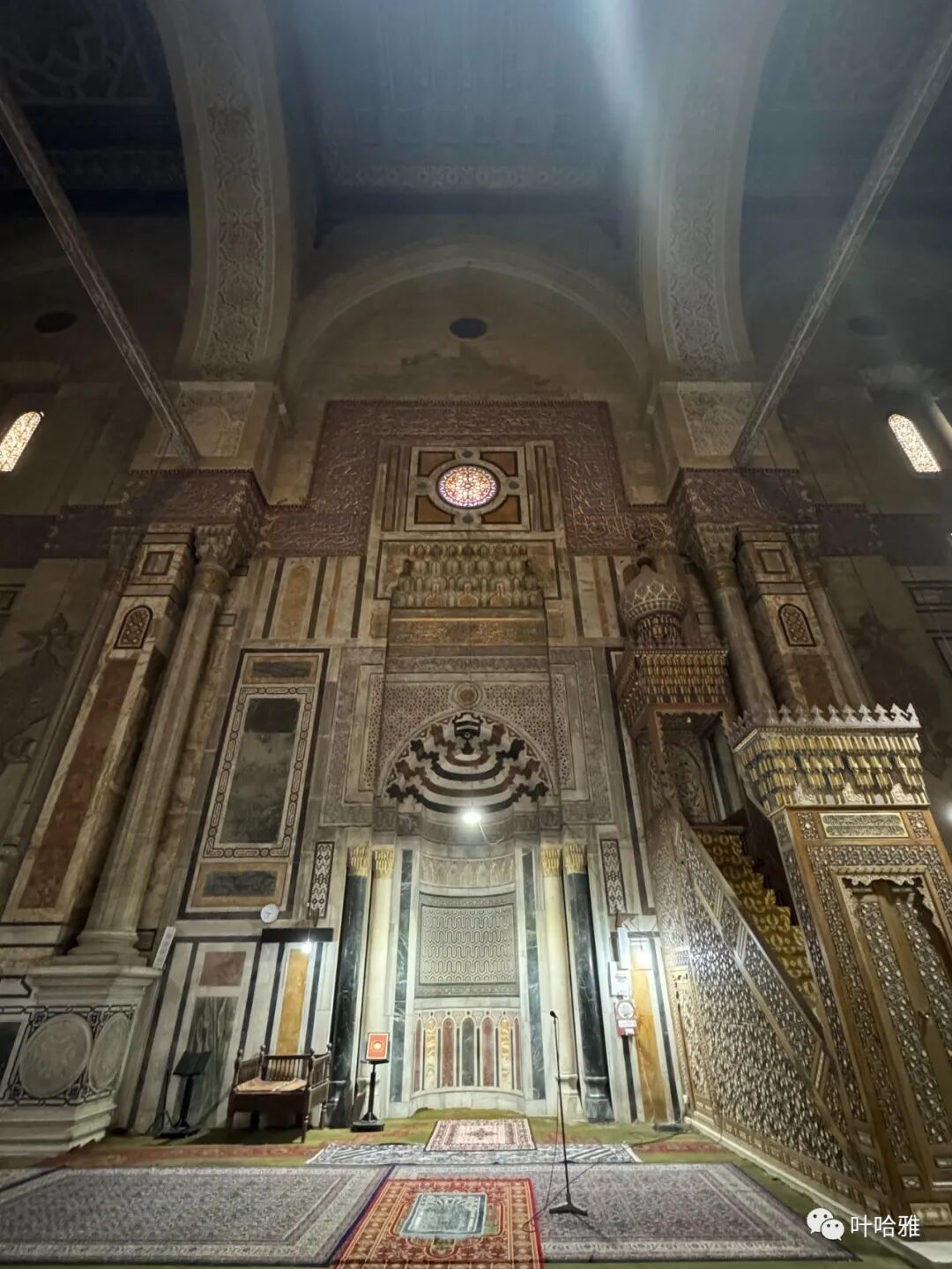
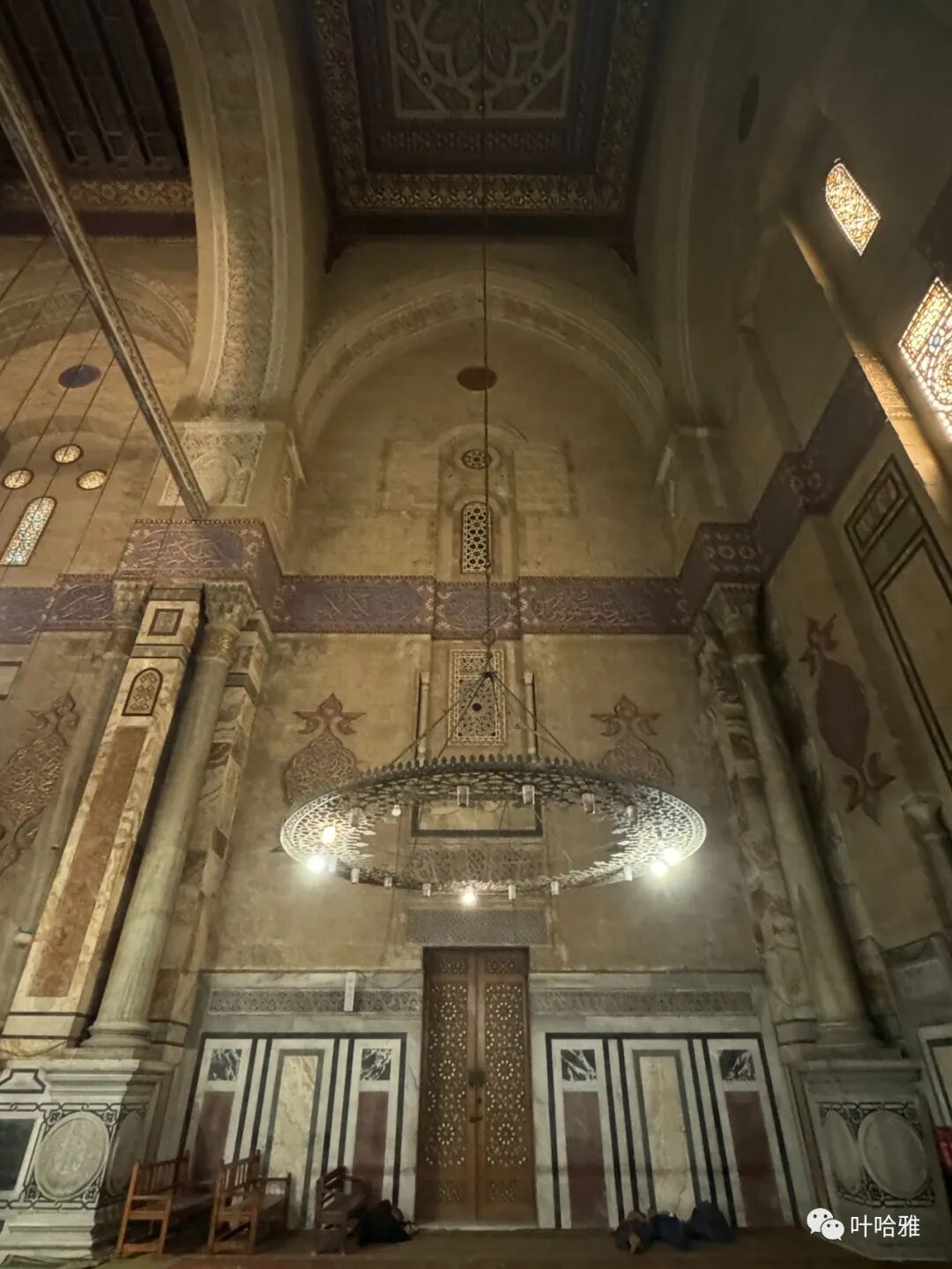
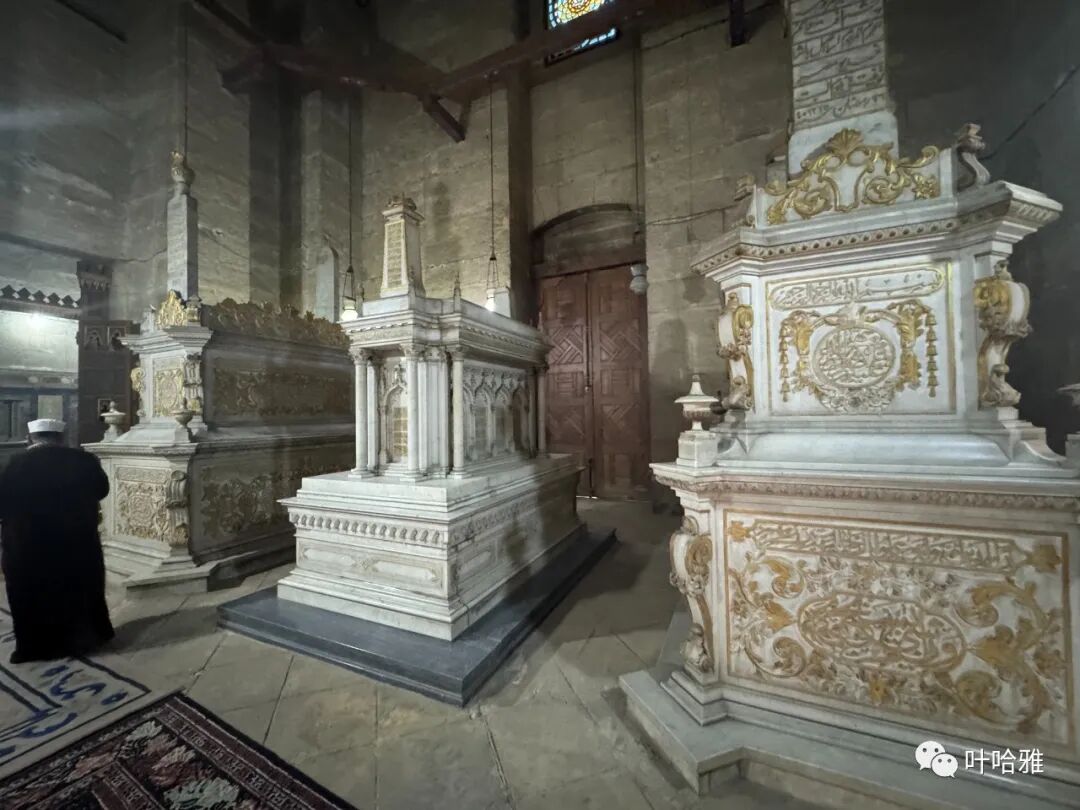
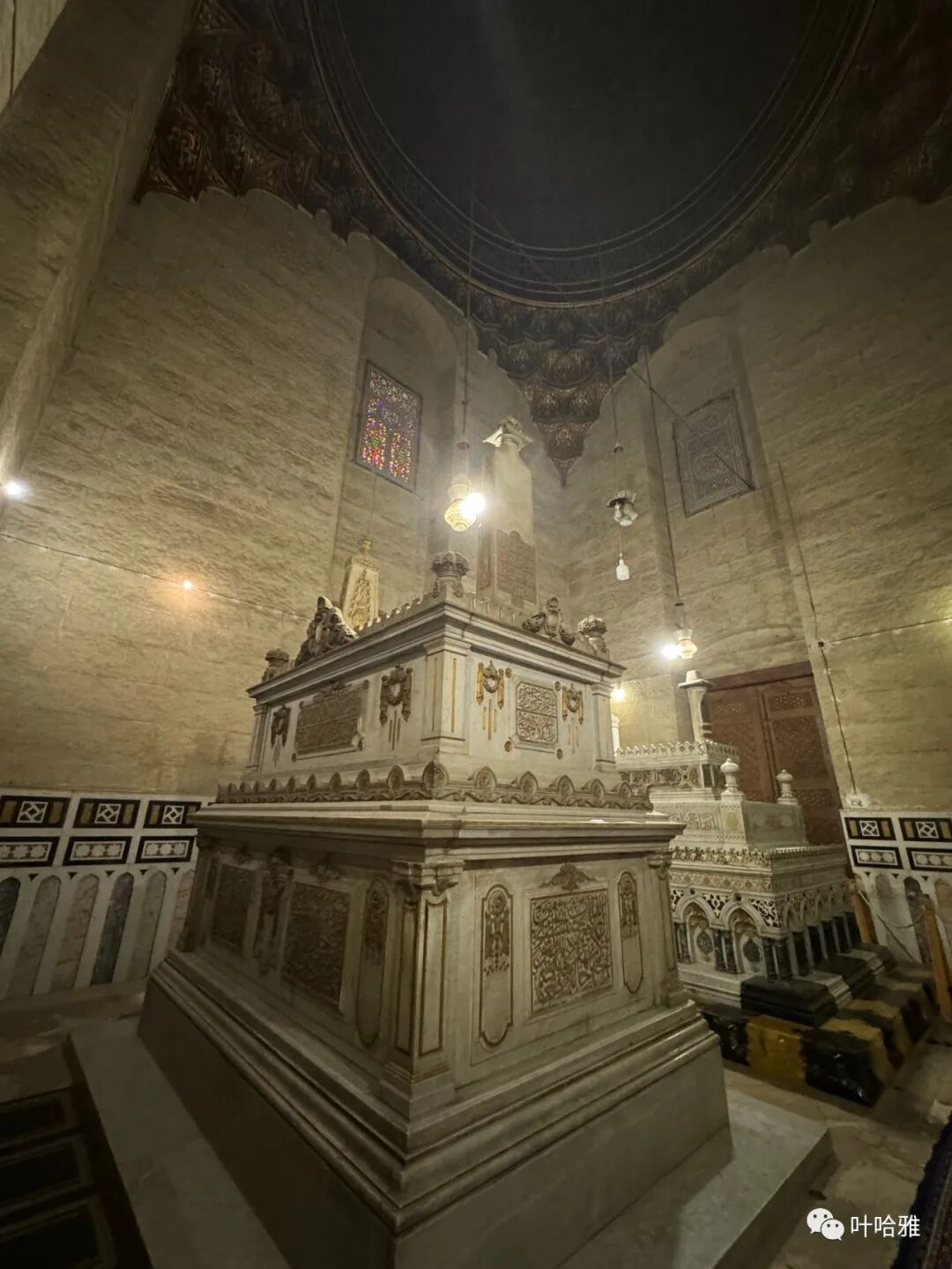
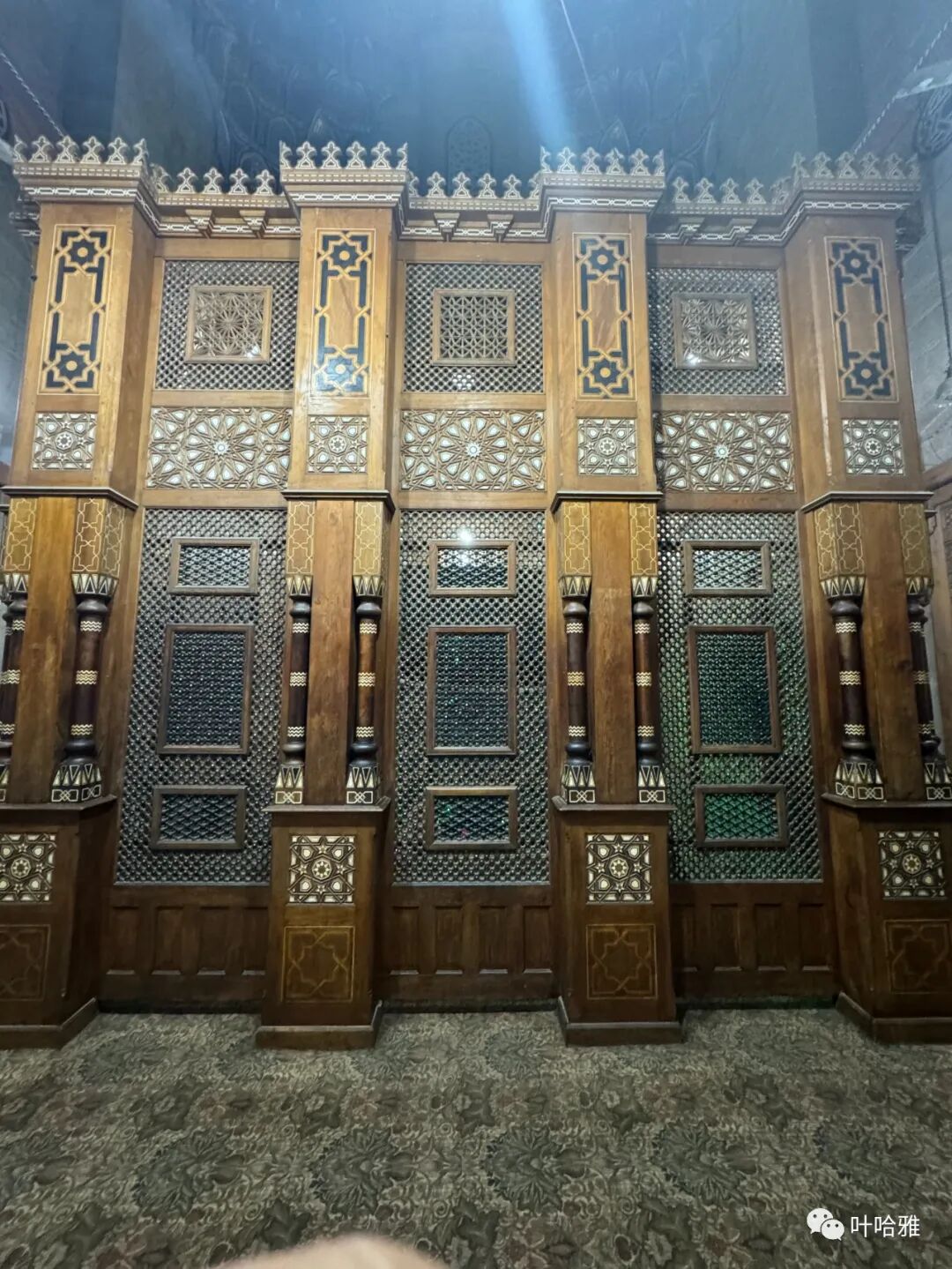
The tomb of Ali Abu Shubbak al-Refaei
Al-Refaei was the founder of the Sufi Refaei order.
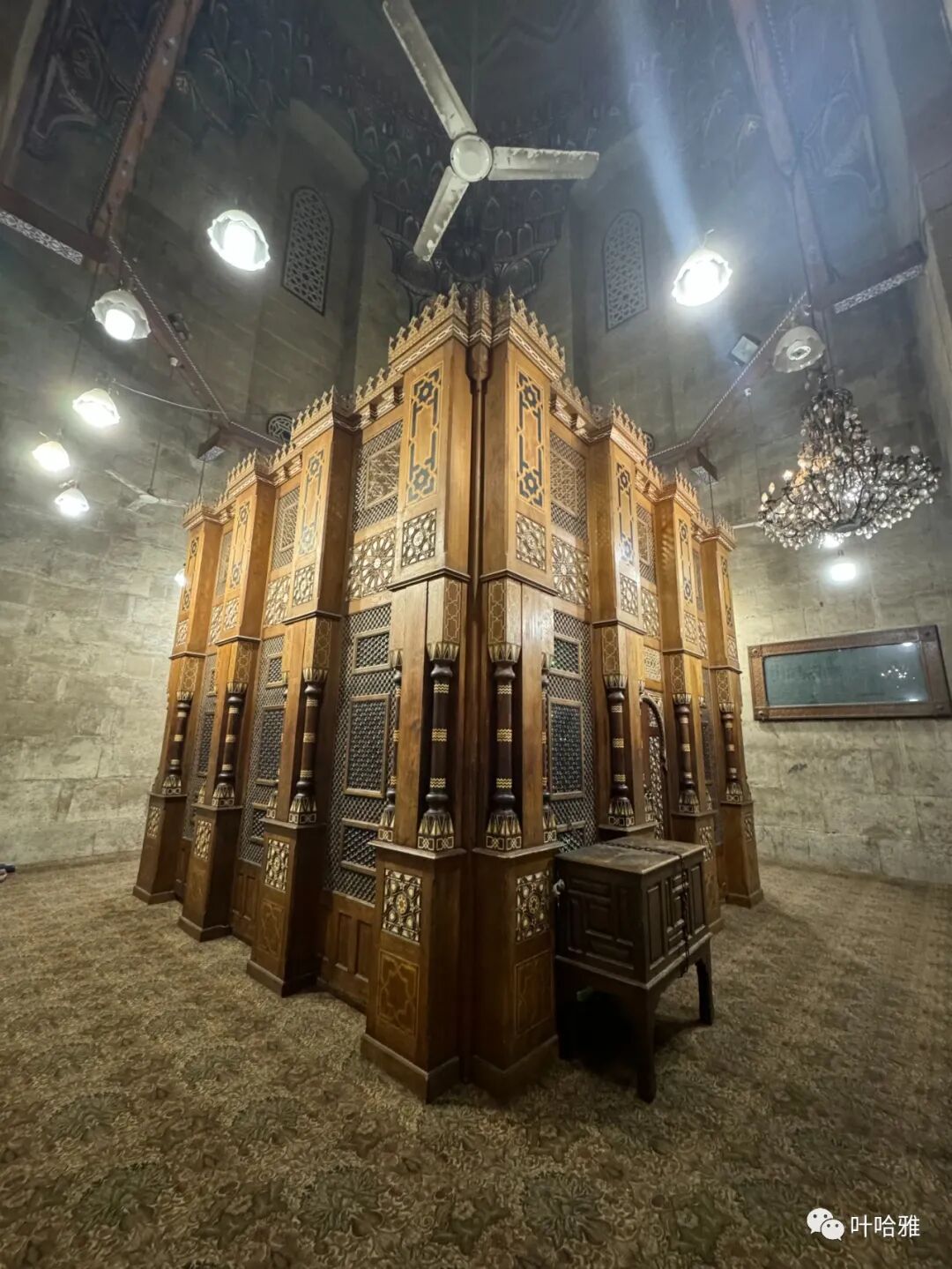
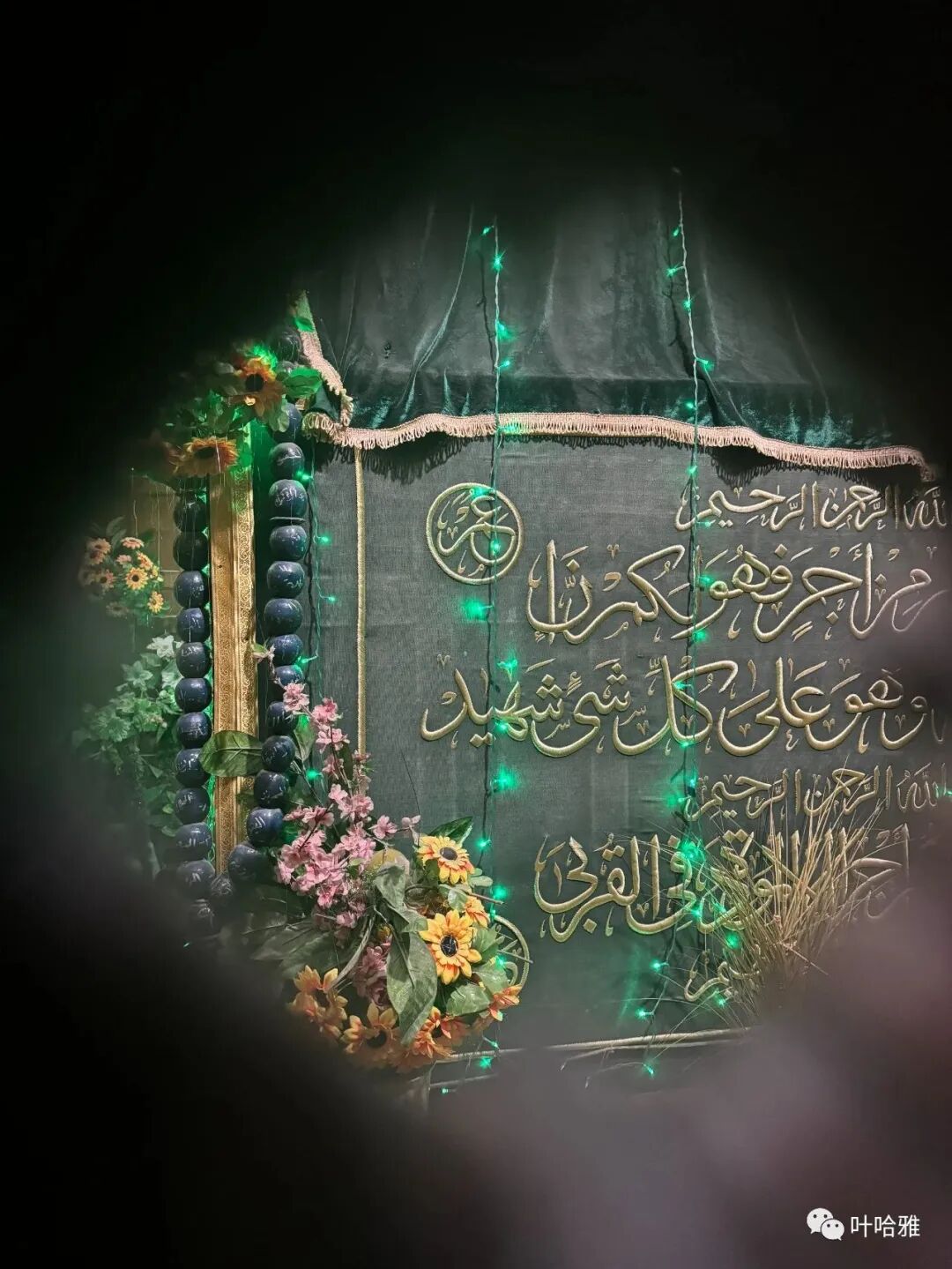
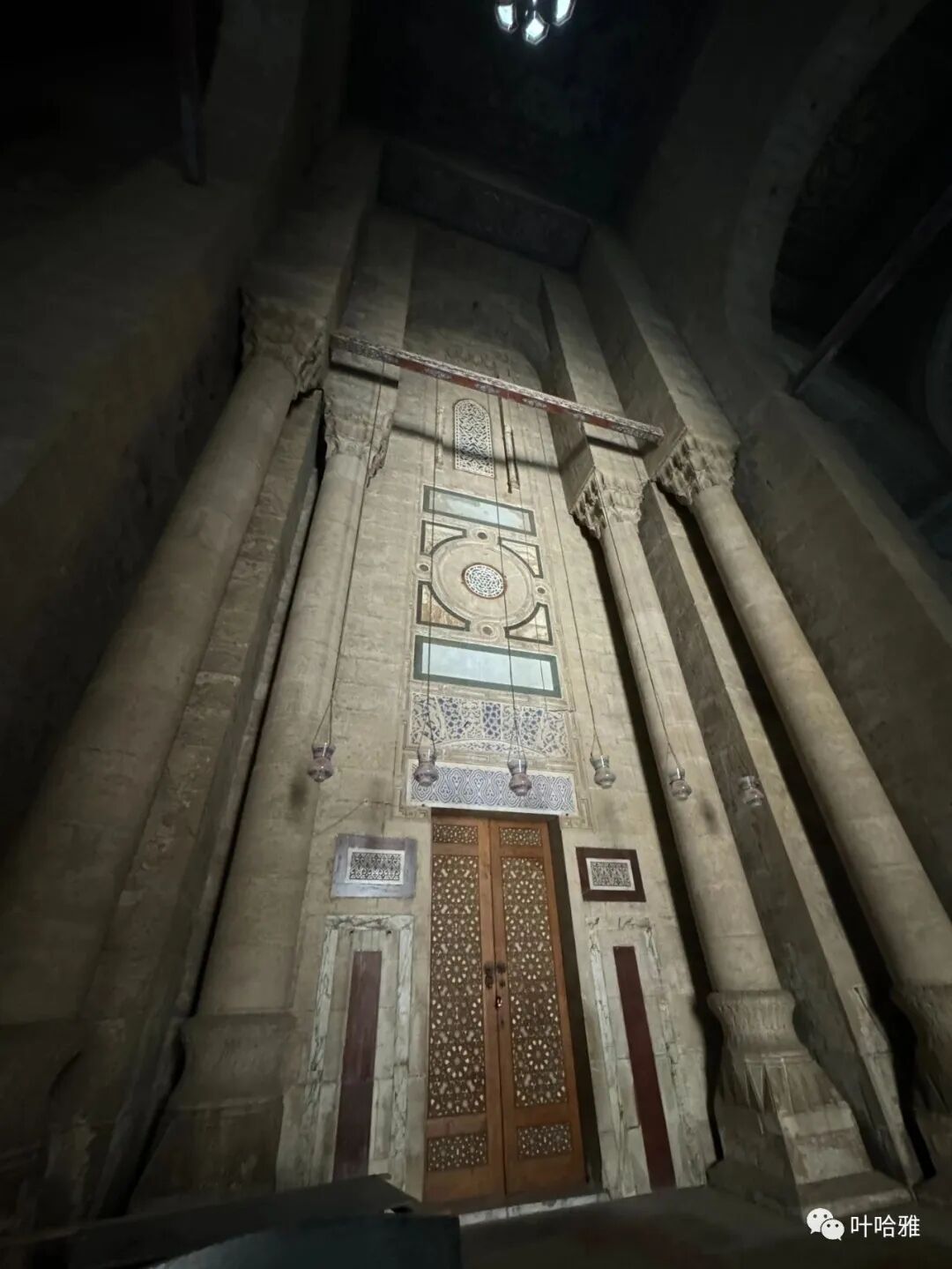
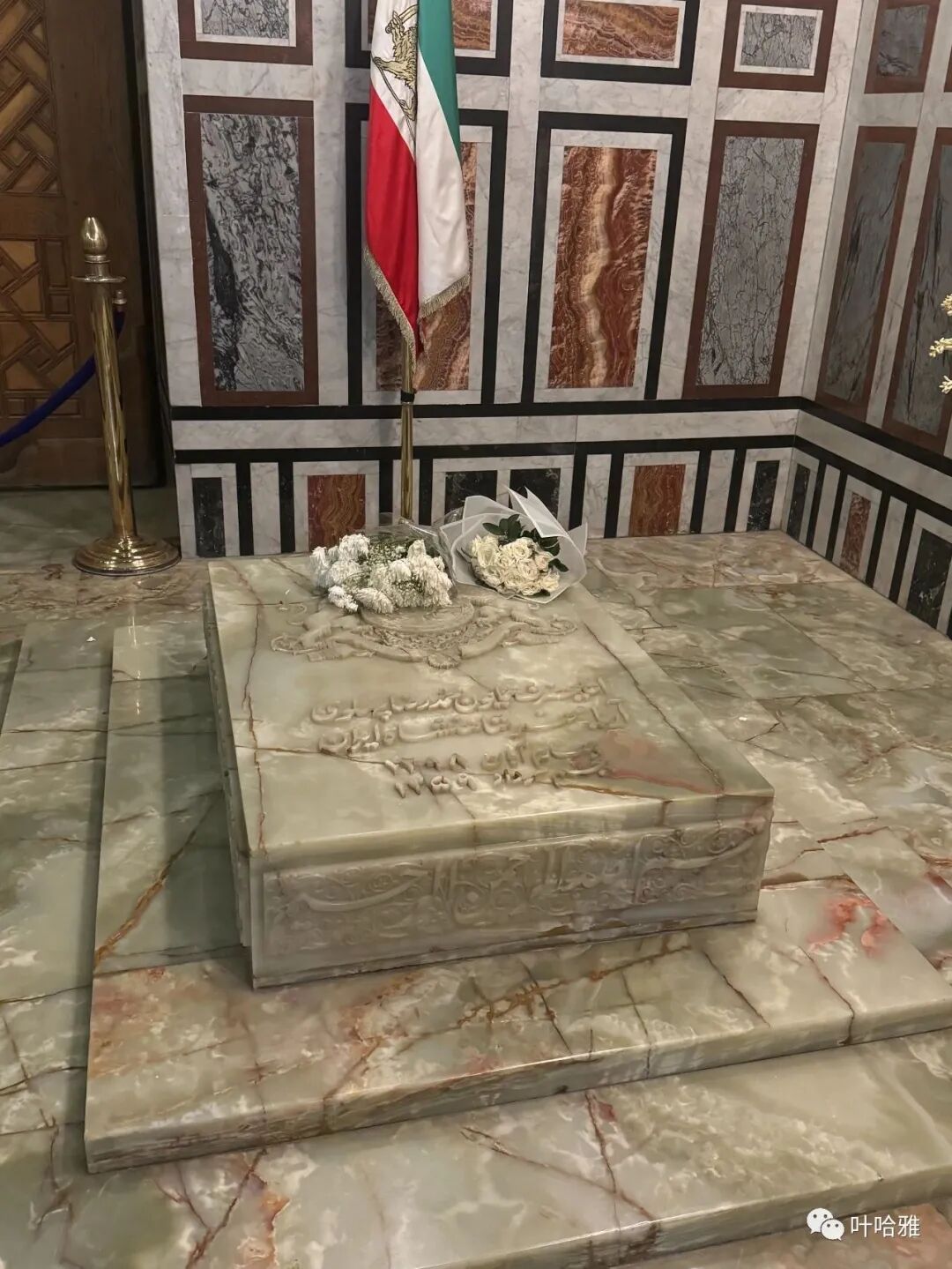
This is the tomb of the last Shah of Iran, Pahlavi, who died in Cairo in 1980. Pahlavi's father, Reza Shah, also stayed here briefly after he died. Reza Shah died in exile in South Africa in 1944 and was sent back to Iran after World War II.
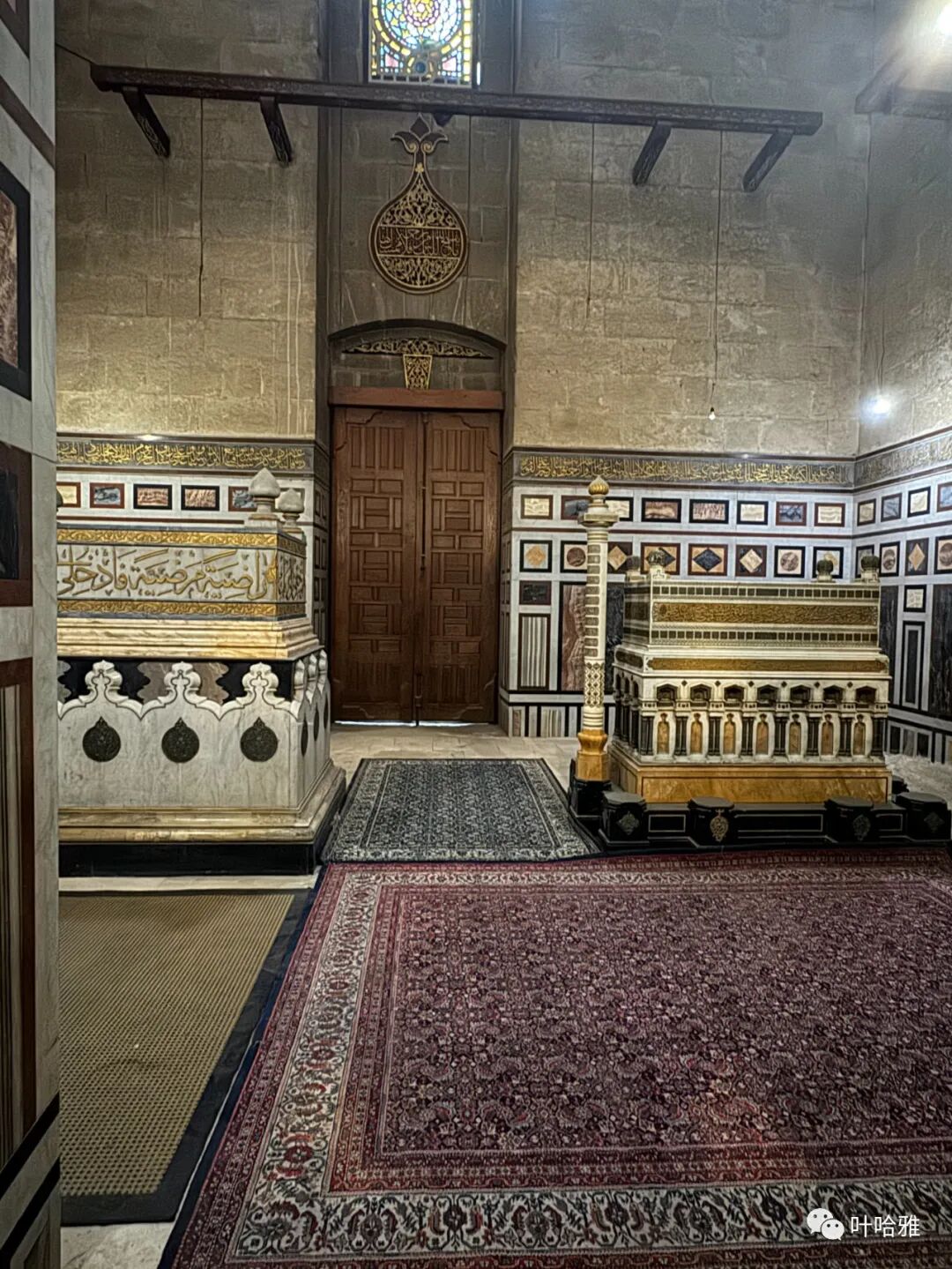
This place is also the burial site of the Sufi mystic Yahya al-Ansari, known as the patron saint of Cairo, along with several members of the Egyptian royal family.
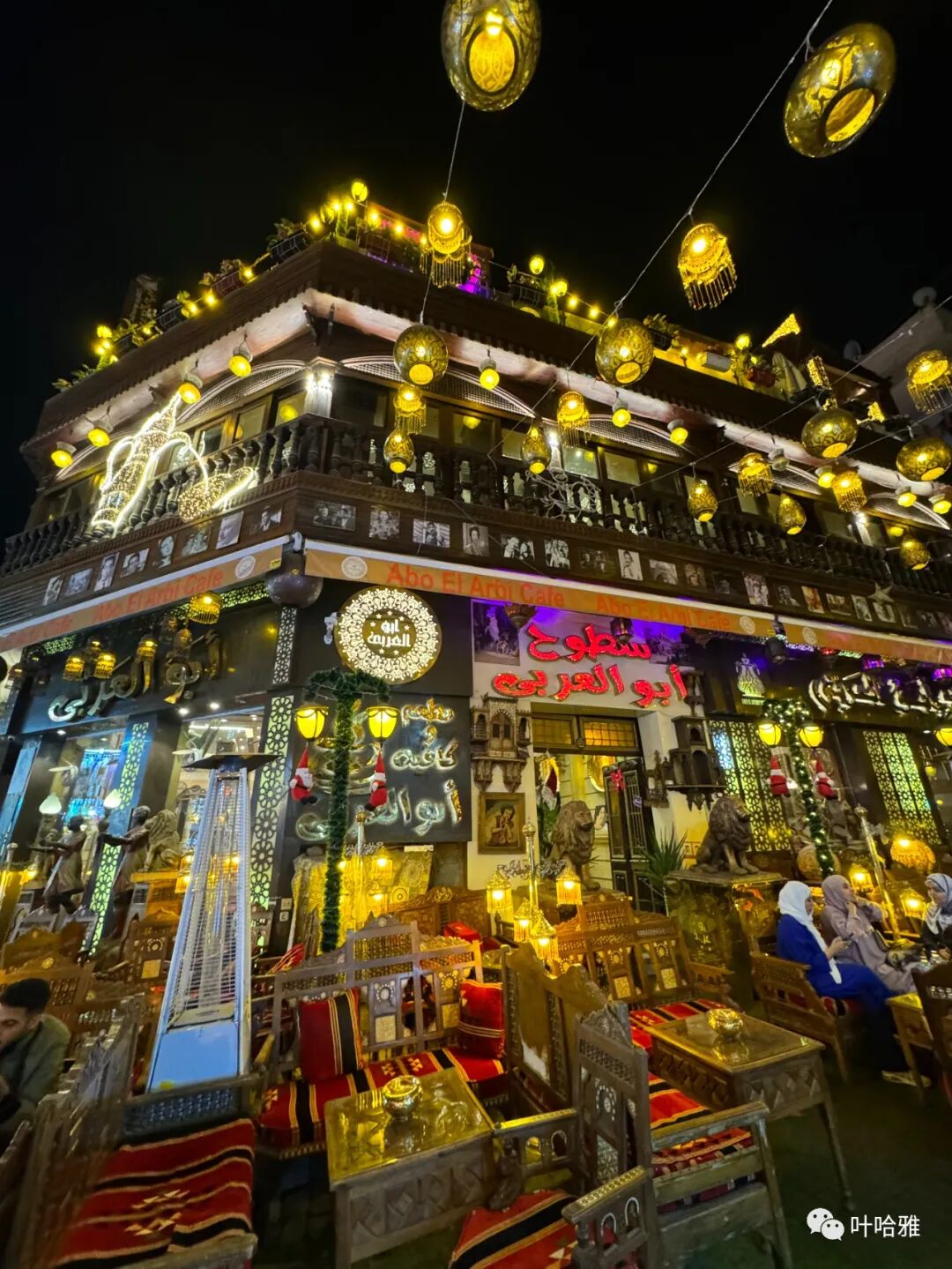
There is a traditional Arabic music restaurant in Old Cairo with a stunning atmosphere and three floors.
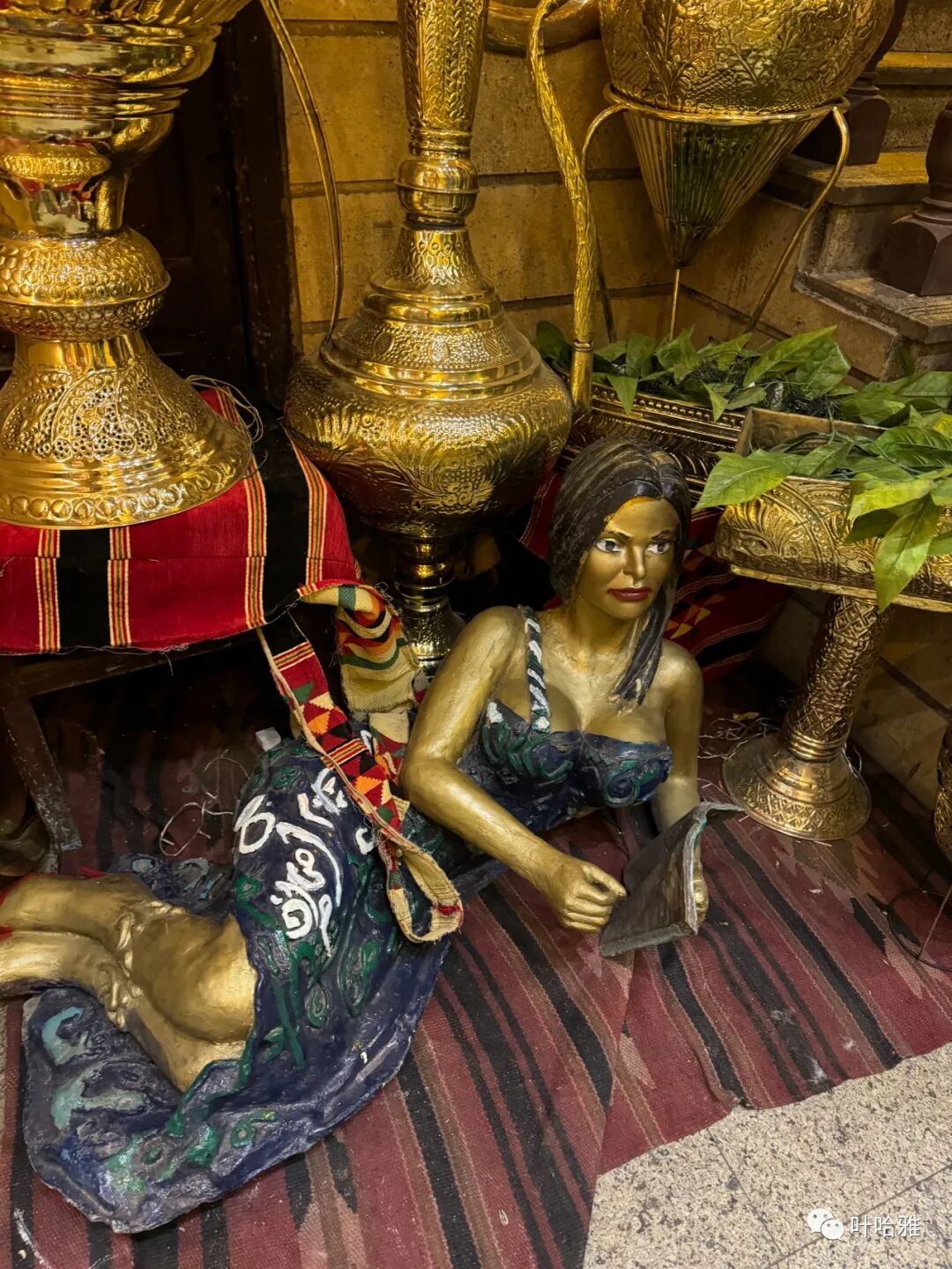
We chose to sit on the rooftop to look down over the streets of the old city.
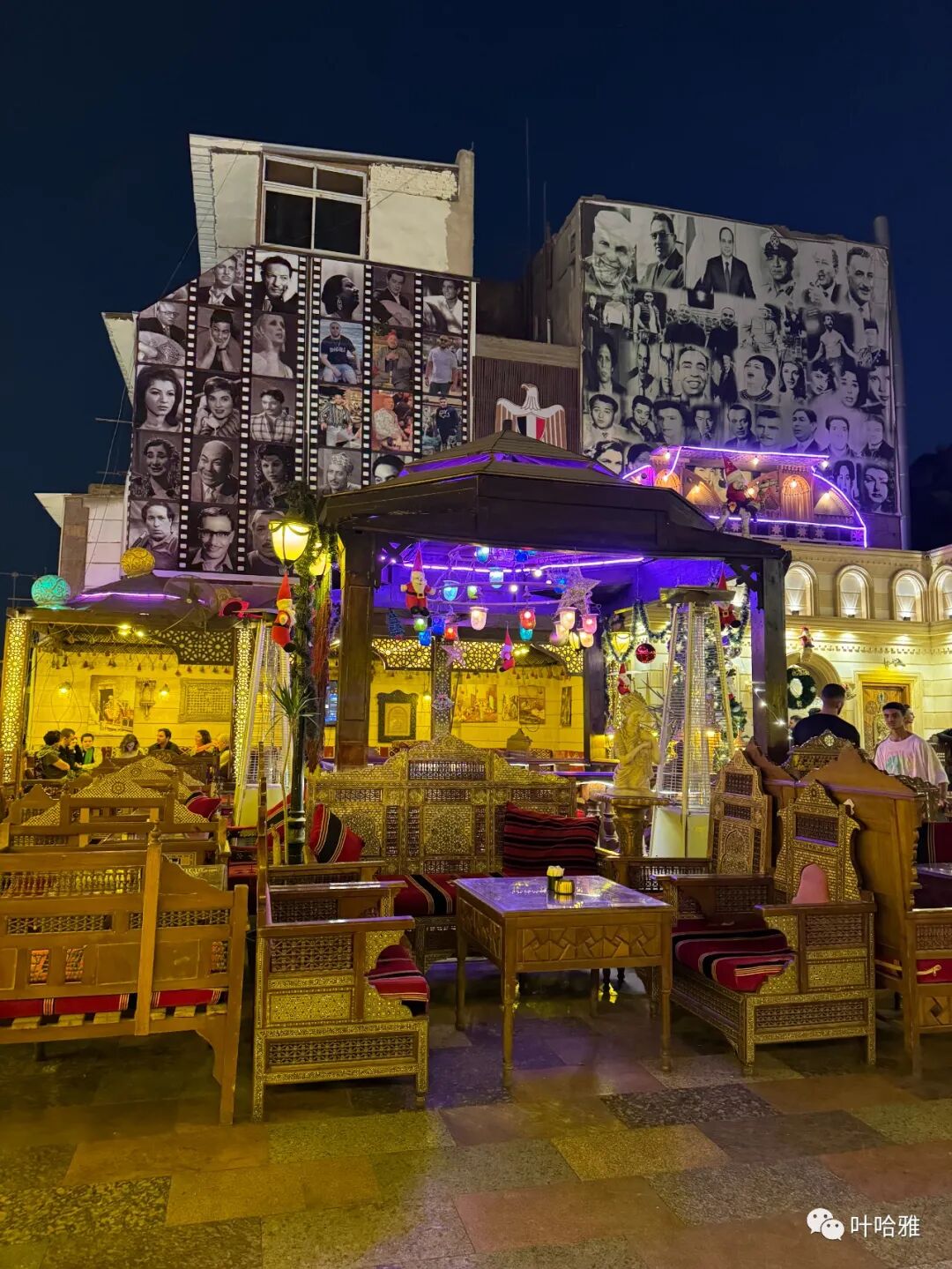
I noticed a detail: when it was time for namaz, the call to prayer echoed throughout the old city. The restaurant turned off its music and waited until the prayer time passed to play it again, though I did not see anyone praying during that time.
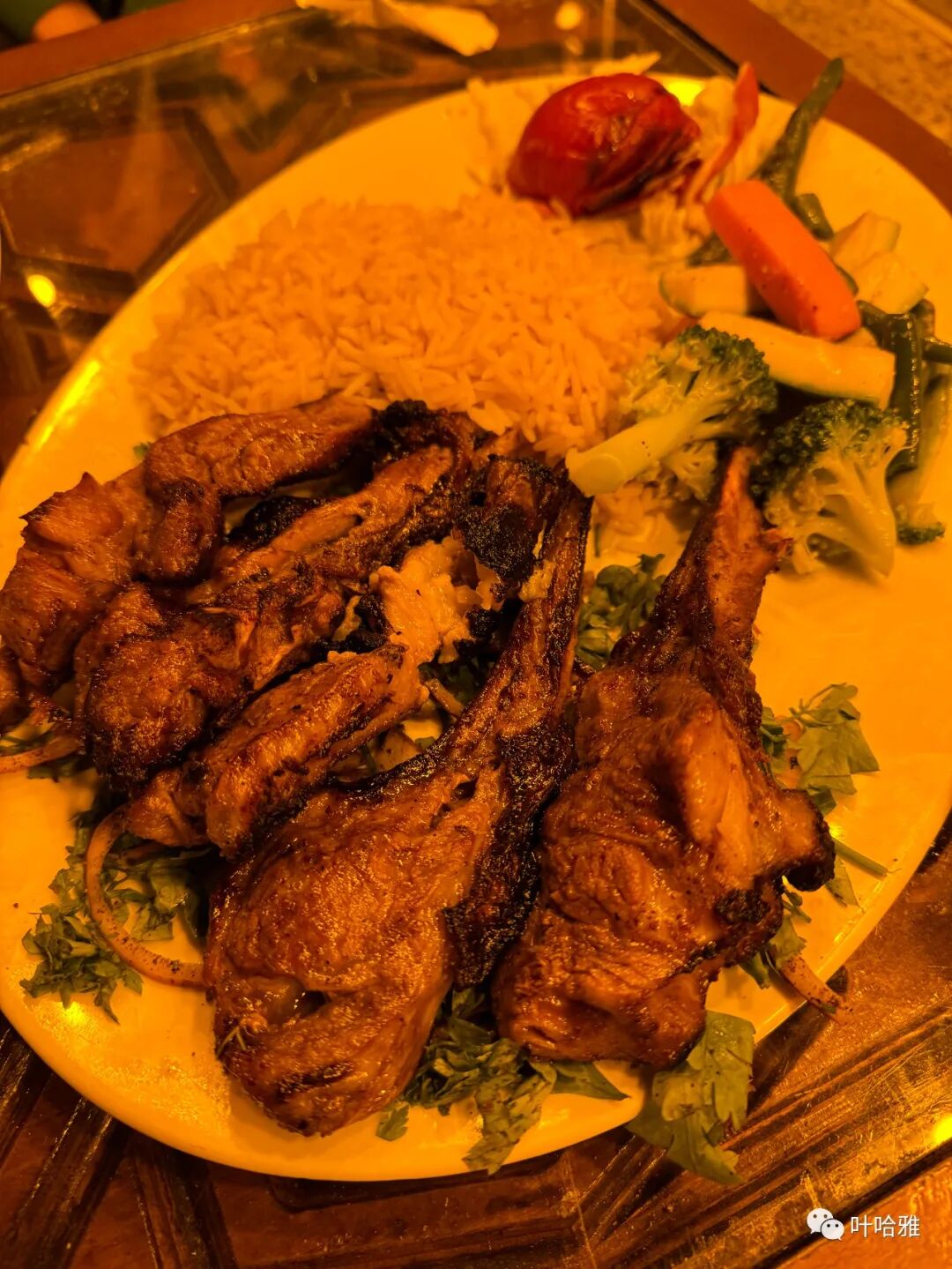
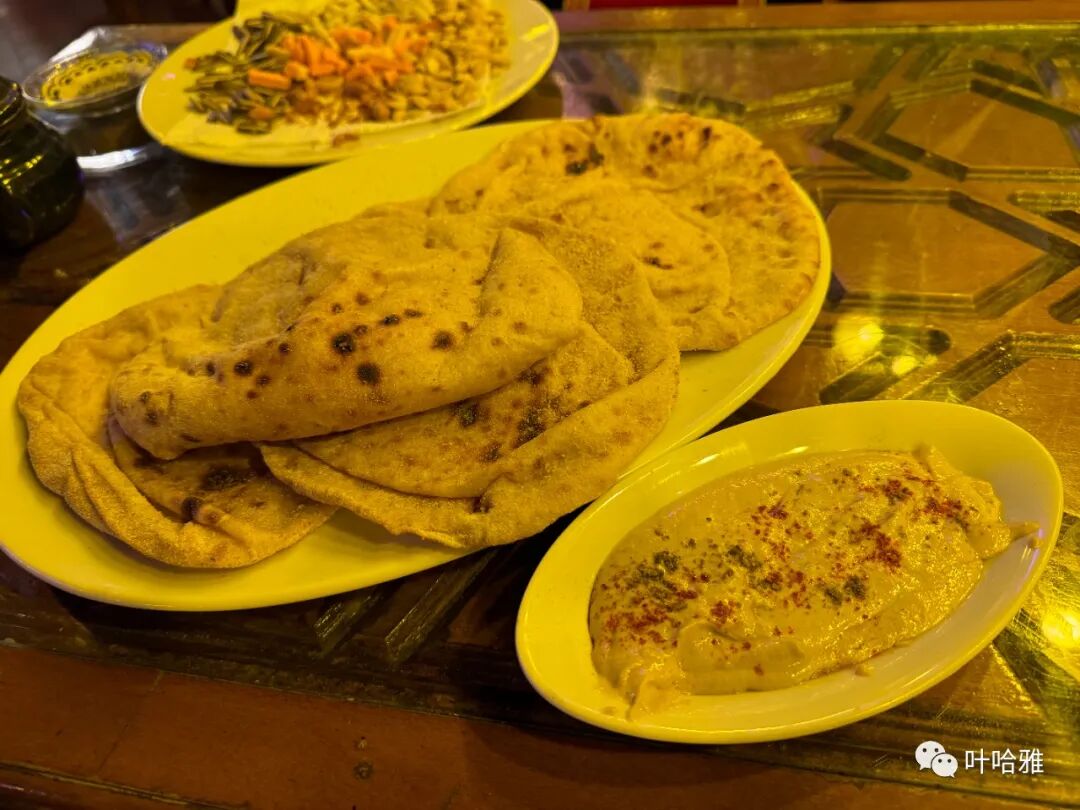
We ate grilled lamb chops and tagine (tajin), which are dishes you can hardly go wrong with when eating locally.
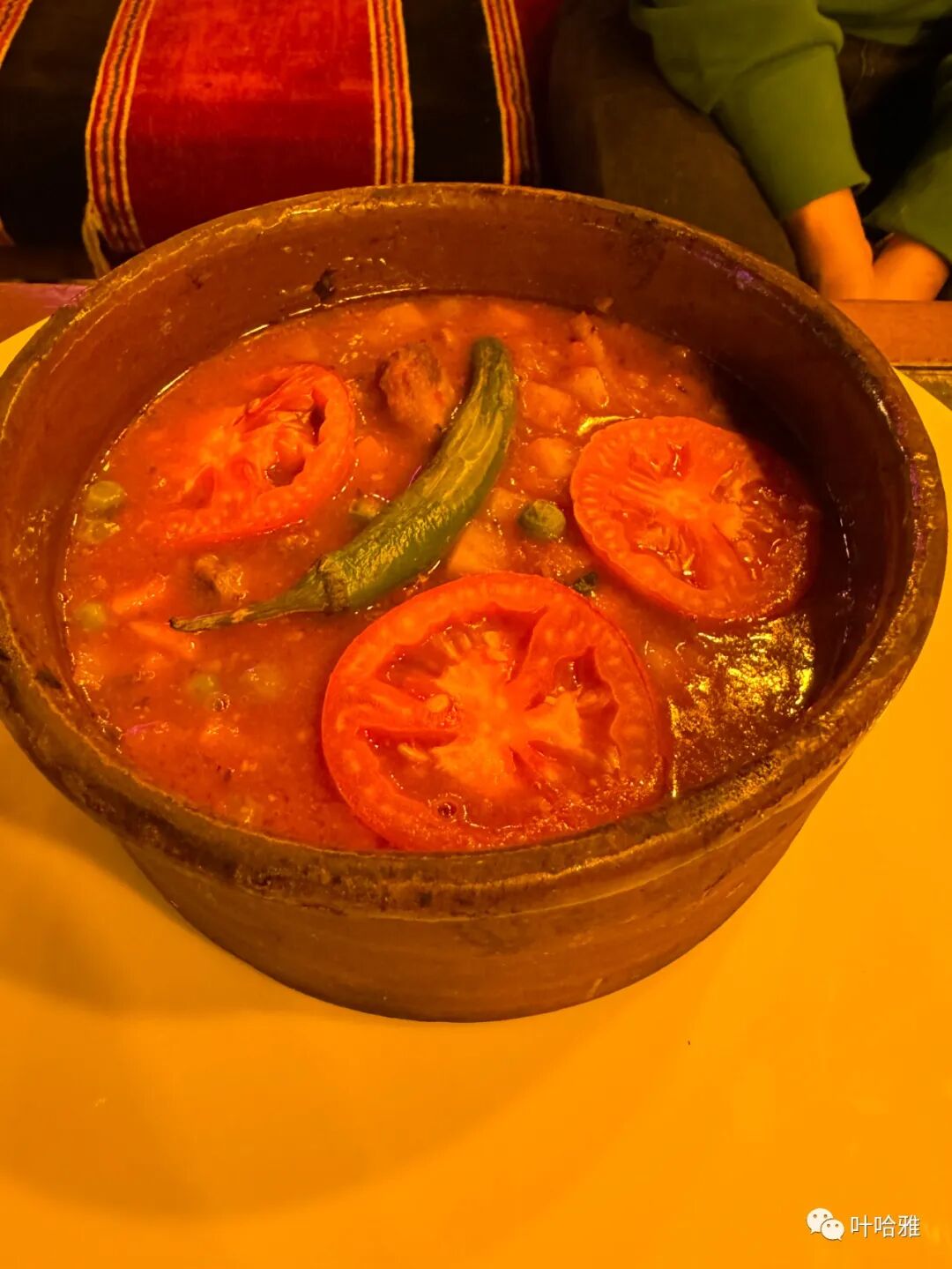
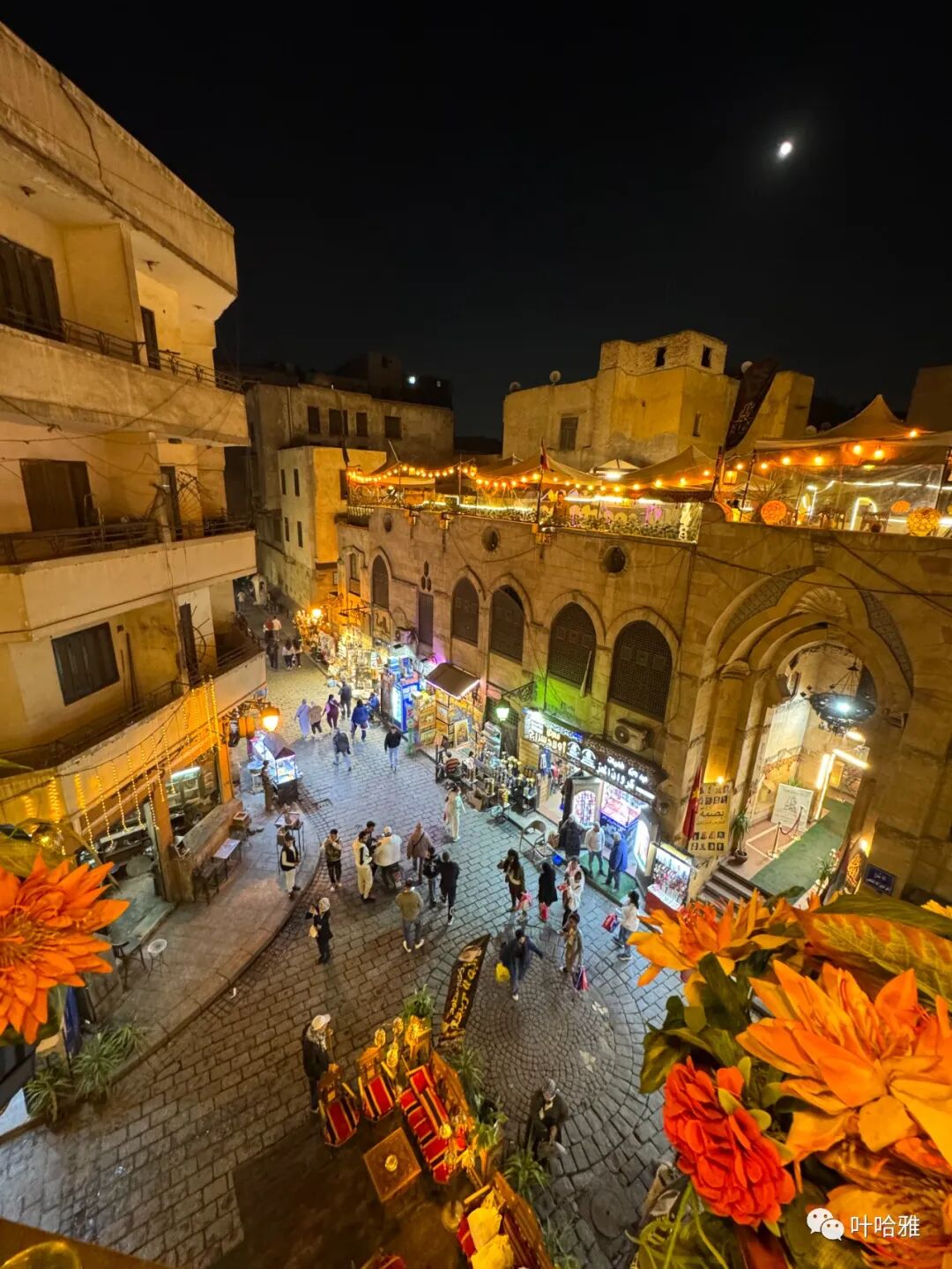
King Faisal bin Abdulaziz Mosque (Masged al Malik Faysal Bin Abd al’Aziz).
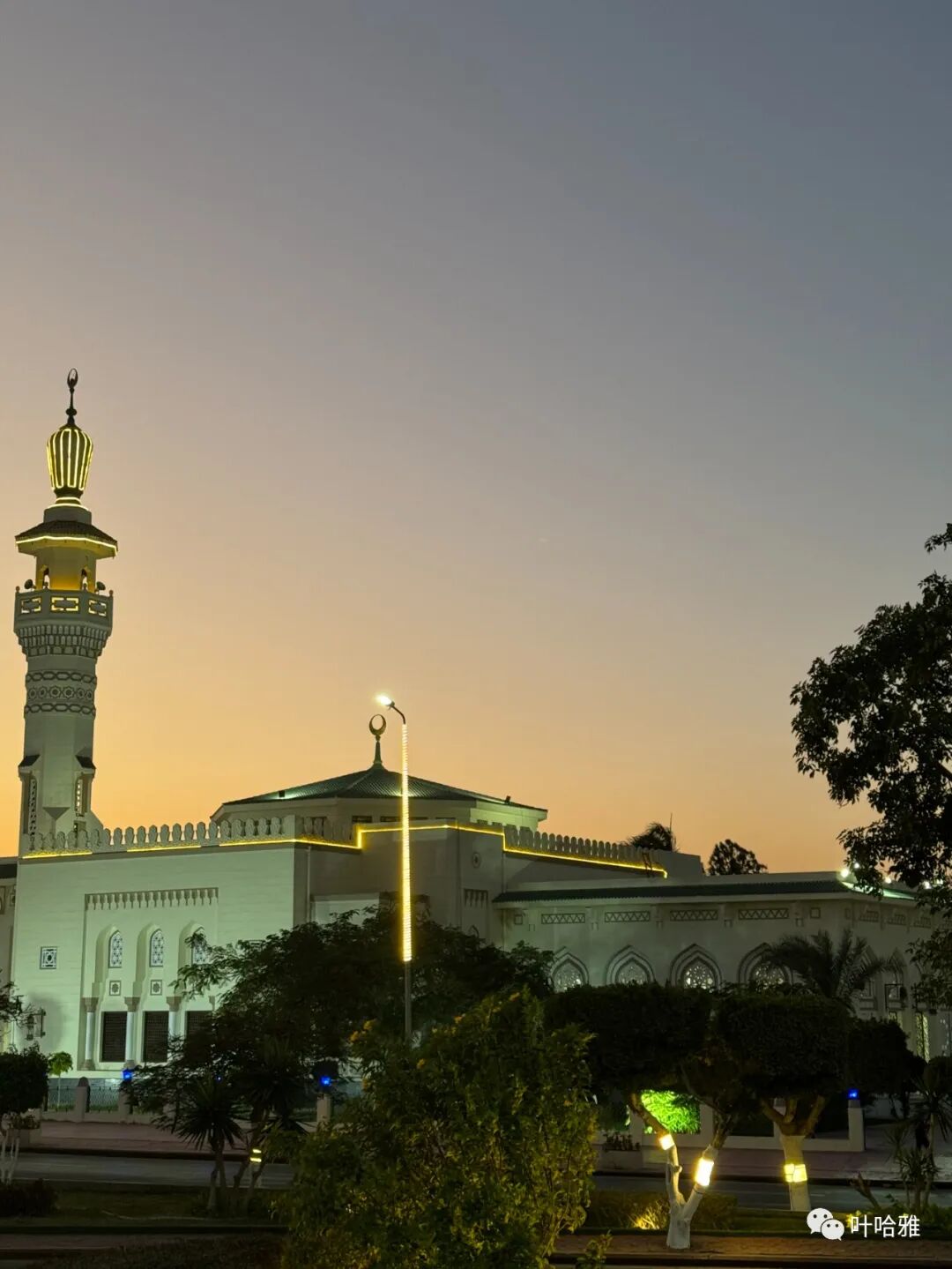
This is the closest mosque to Cairo Airport. It has an octagonal roof and is the cleanest mosque I visited in Cairo.
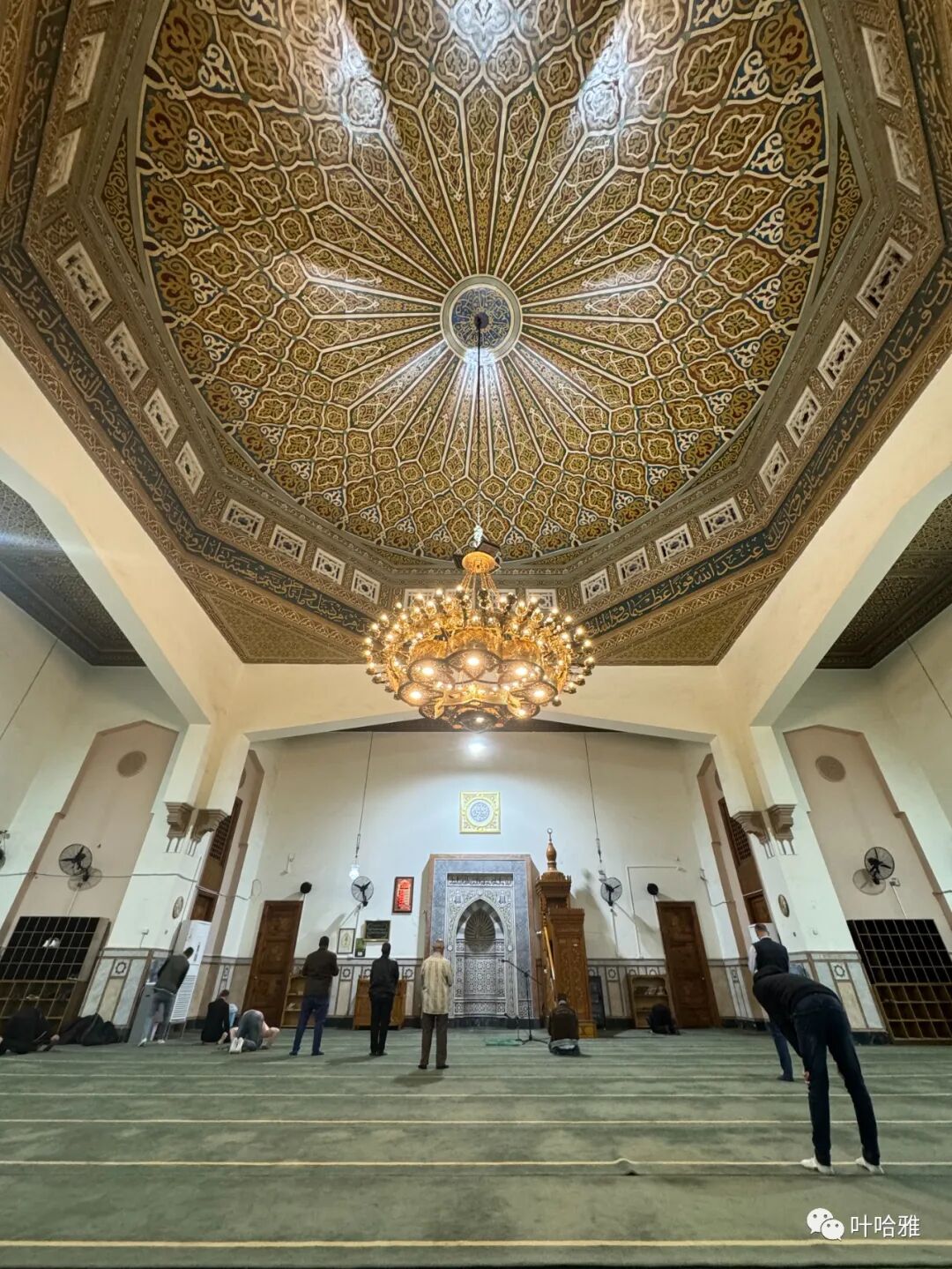
The non-traditional dome caught my eye, and there were not many people praying in the mosque during the sunset prayer (maghrib).
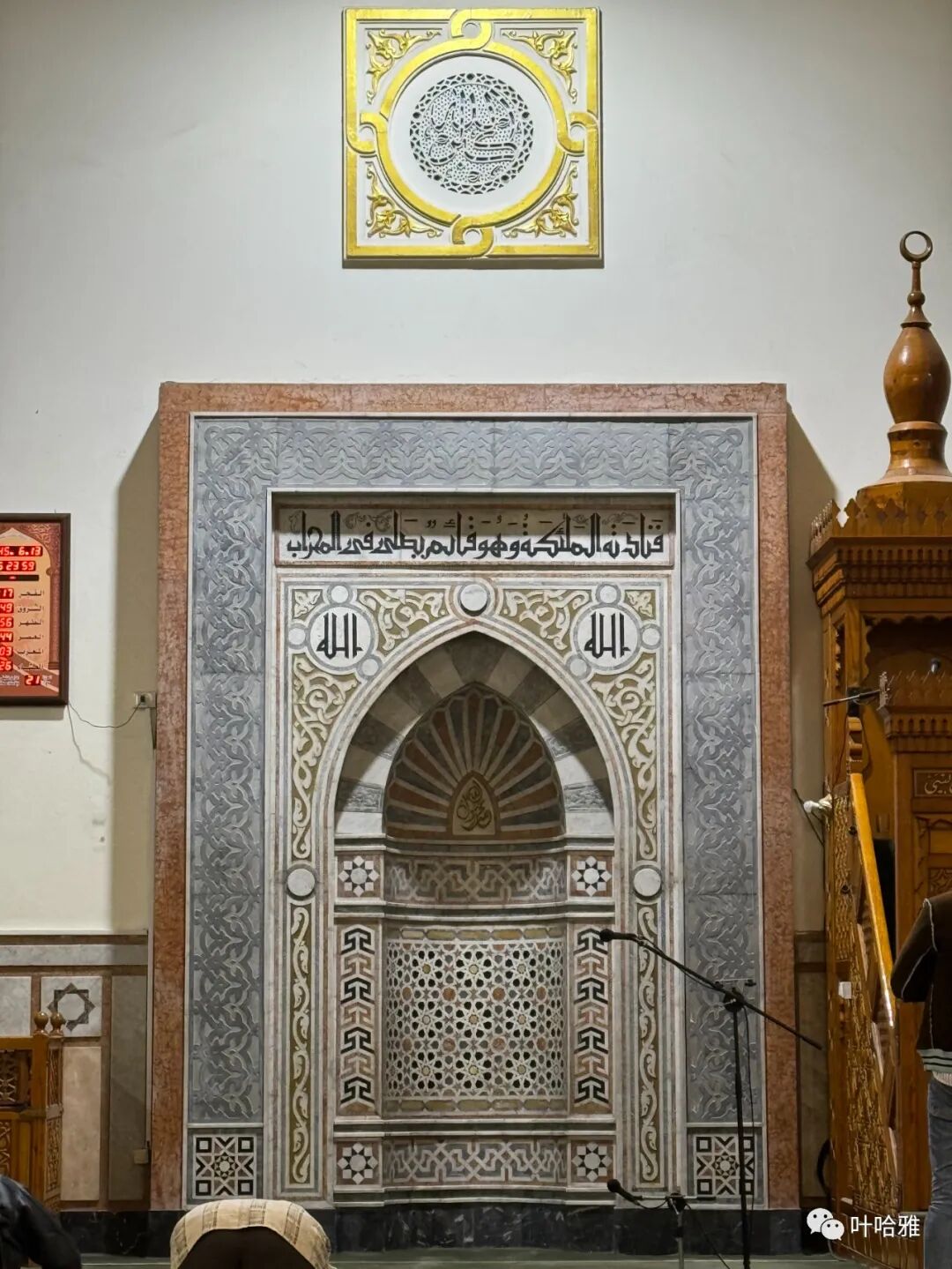
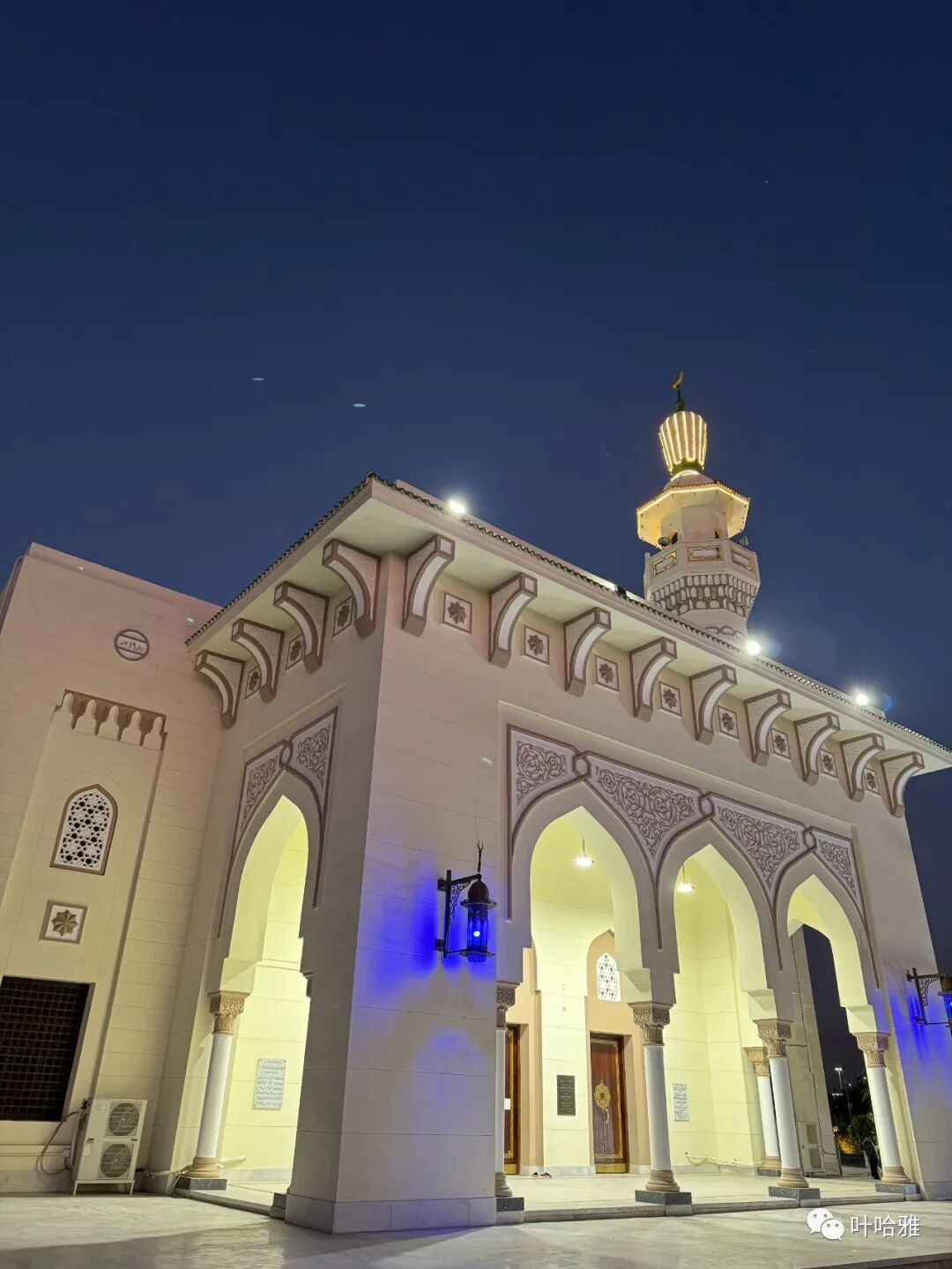
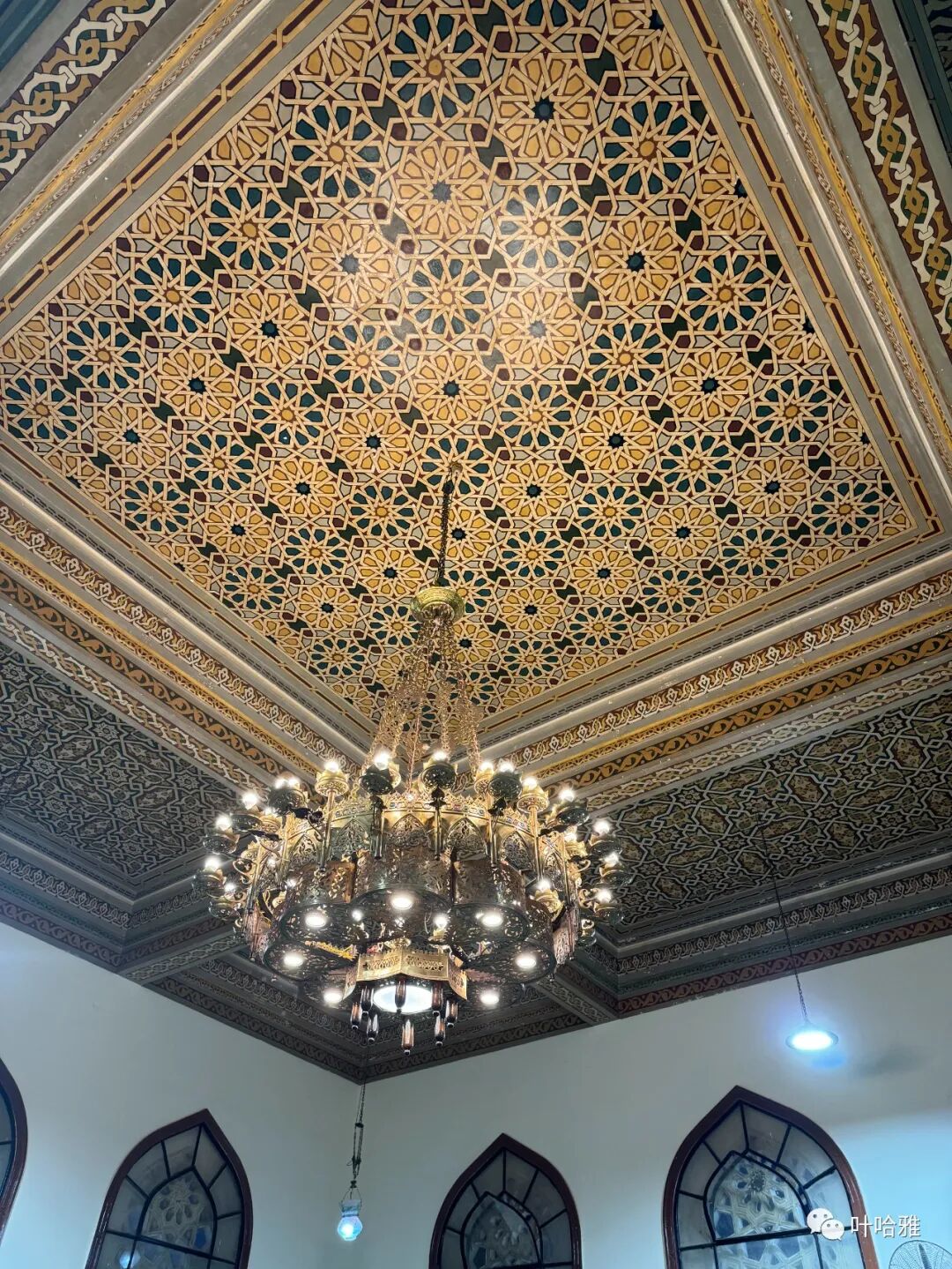
The Pyramids and the Sphinx.
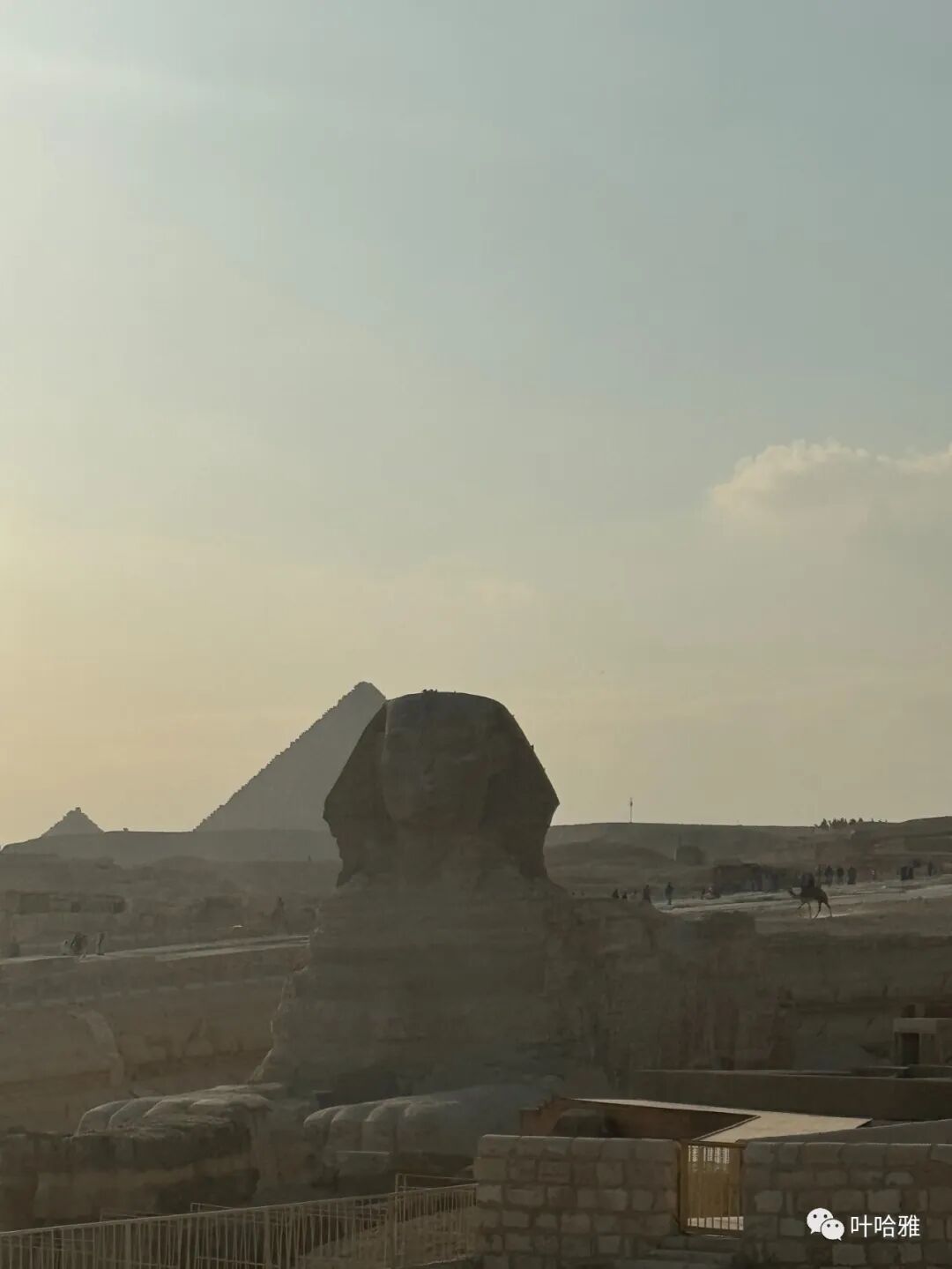
After moving to a hotel near the airport, I planned to book a one-day tour of the Cairo pyramids online. I was told the airport was far away and it would cost an extra 270 yuan per person, bringing the total to over 1,000 RMB per person. I took an Uber from the airport to the pyramids for only 80 RMB, and it turned out that taking a taxi directly to the site was the most cost-effective way.
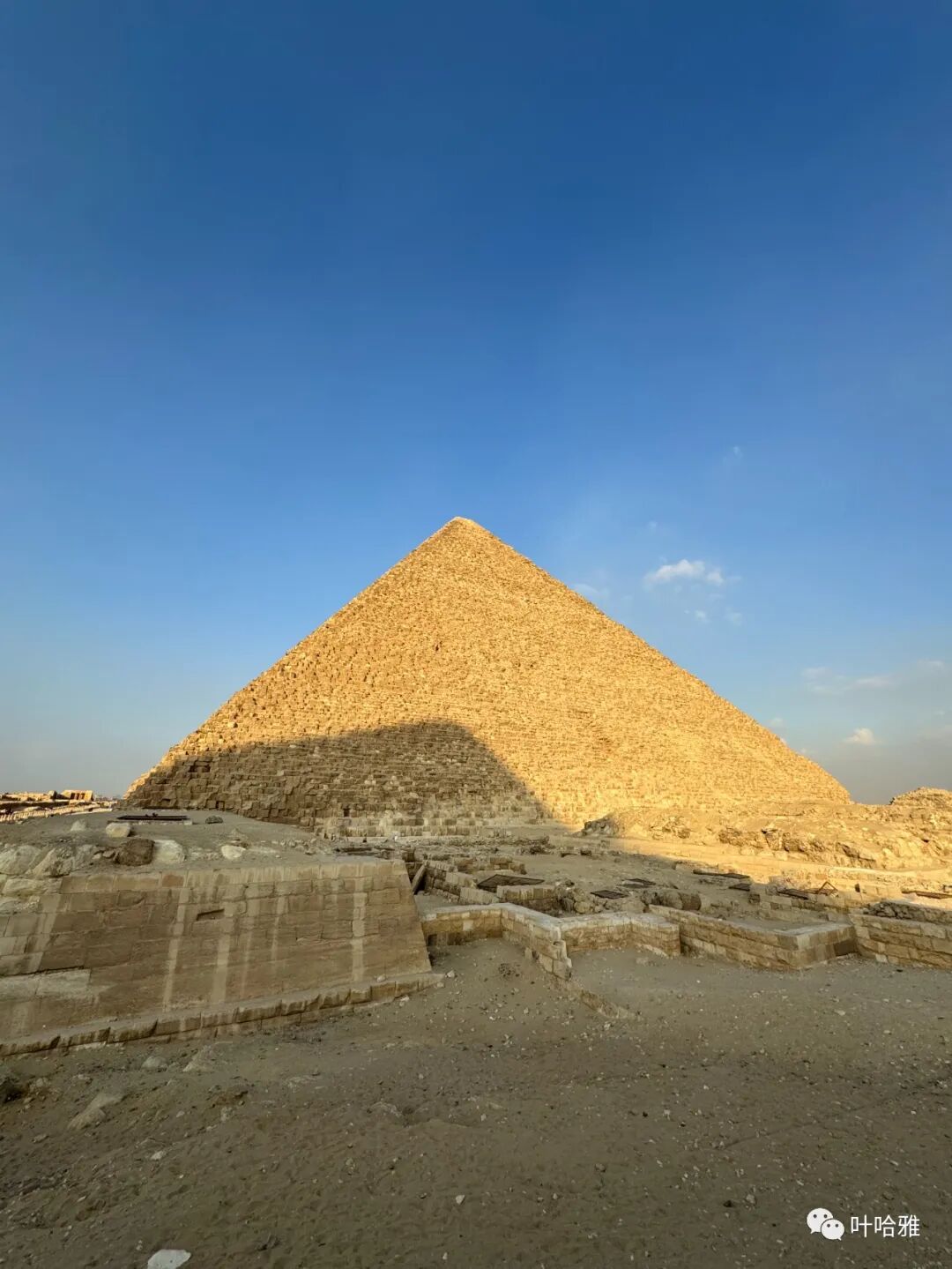
The Great Pyramid of Khufu and the Sphinx are located together. Seeing these images from my childhood textbooks in person was truly shocking. You cannot help but wonder how ancient Egypt built such huge and precise structures over 4,000 years ago; it seems beyond human capability.
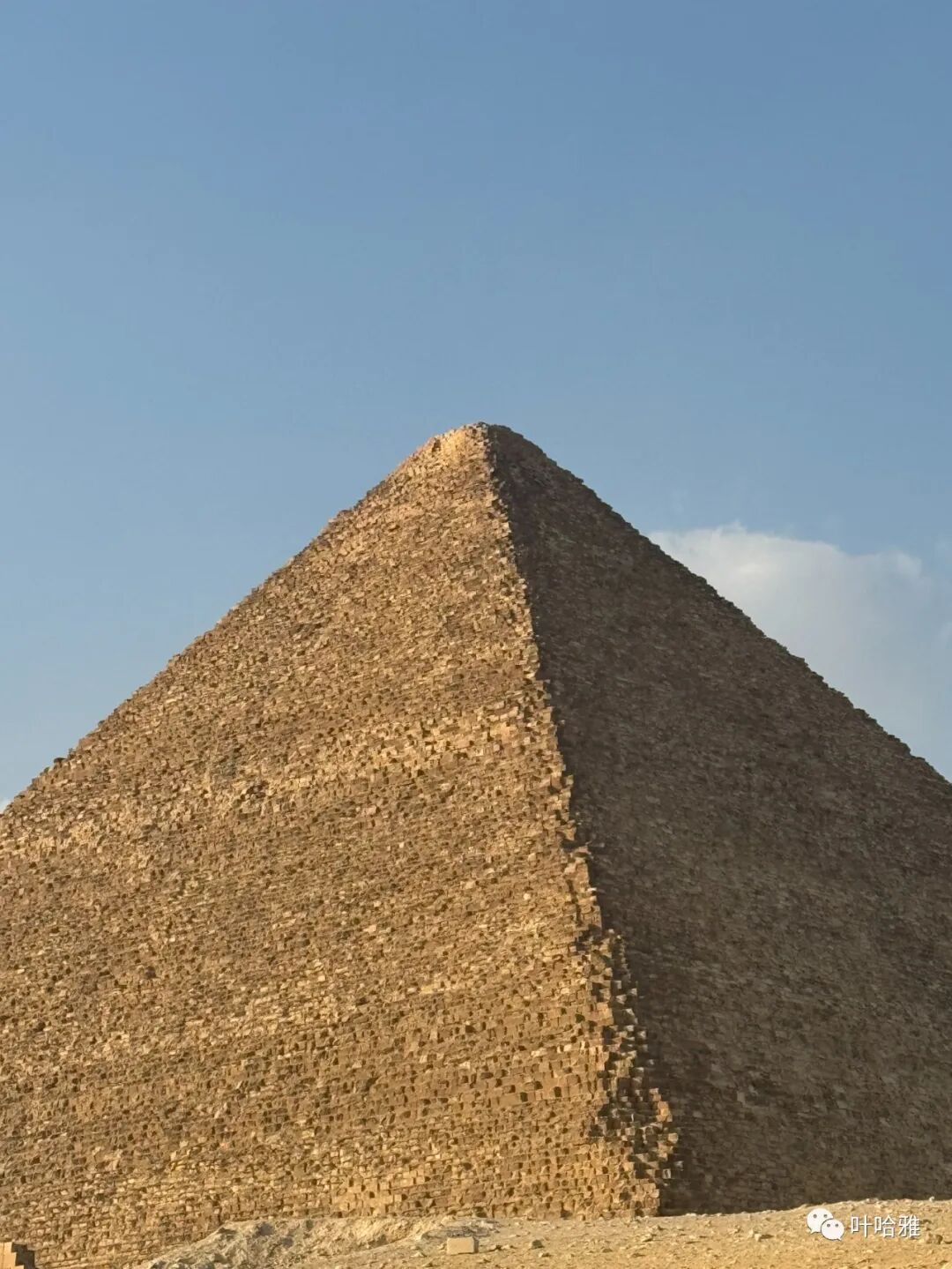
There are many people around the pyramids trying to sell camel rides. Remember not to engage with anyone who approaches you. Camel rides are a trap with unpredictable prices, and if someone tells you it is free, that is a sign they are about to rip you off.
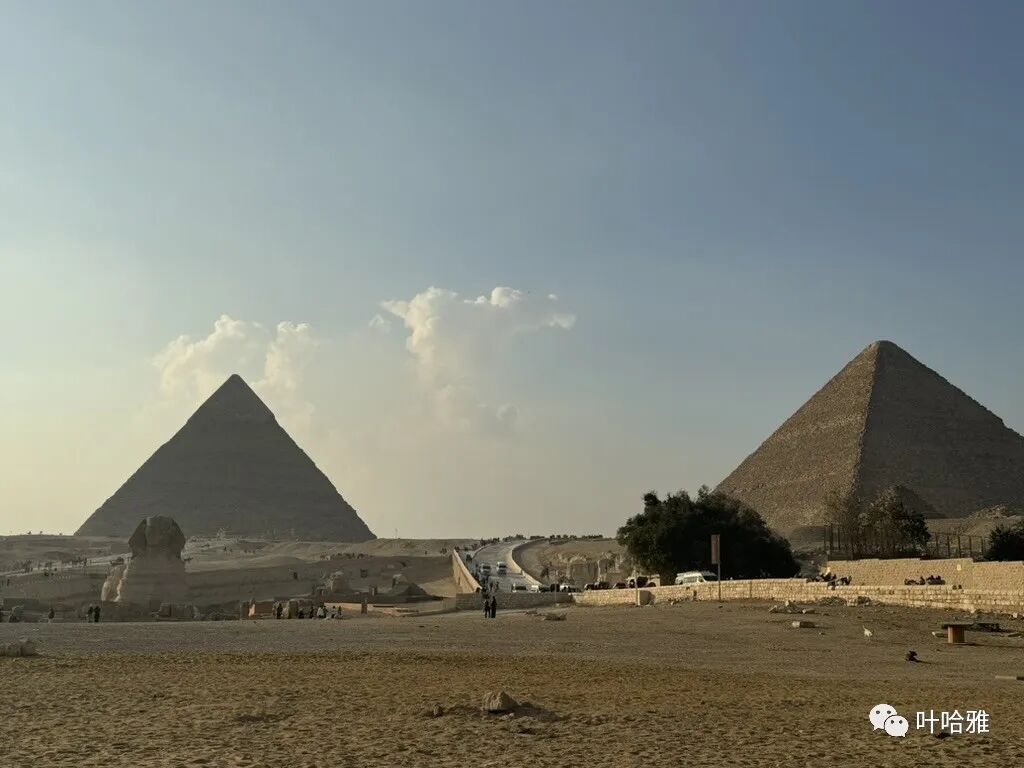
Don't listen to anyone outside the ticket office who says they can take you through a shortcut without a ticket; it's all a scam. You can avoid most traps by not interacting with locals. If you want to go inside the pyramids, you have to buy a separate ticket at the entrance, or you can tip the guard to get in. There is nothing to see inside, as it was looted by various people centuries ago.
Egyptian Museum
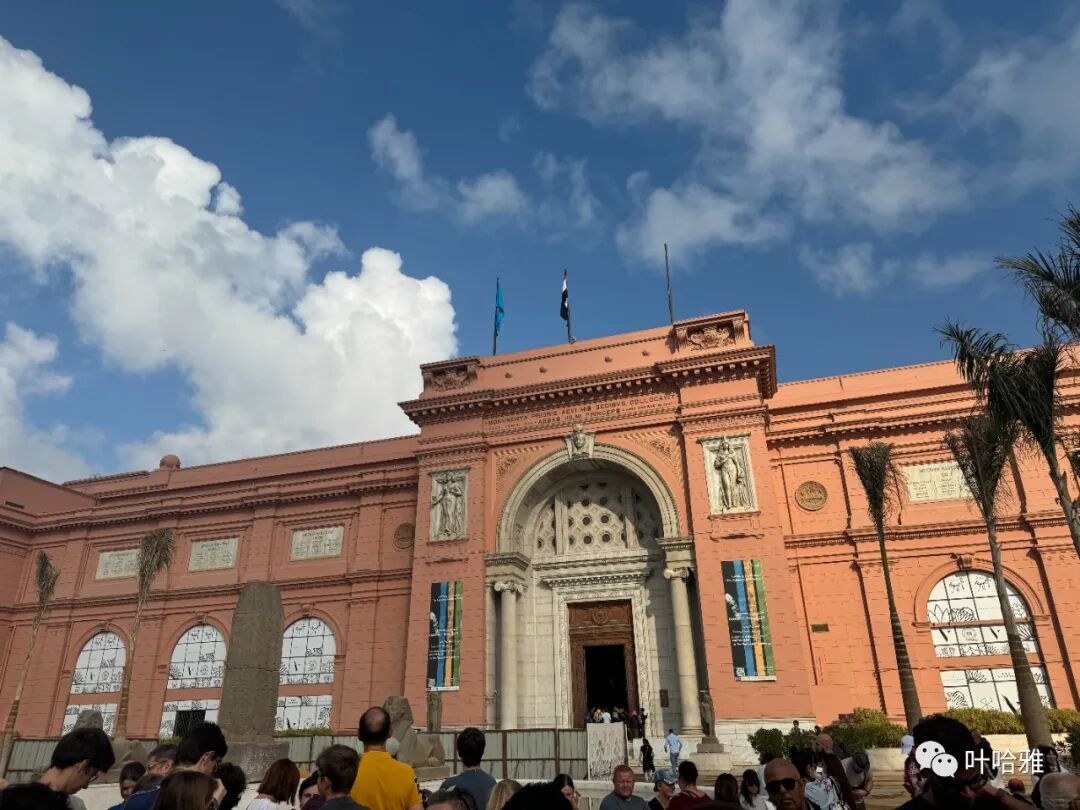
This is the old Egyptian Museum by the Nile. Cairo also has a new museum, but it doesn't have as many items as the old one. Although the old museum is run-down, the treasures inside are priceless and so numerous that they are just piled up like in a warehouse. You need to pay for museum tickets by card, as they don't accept cash. It opens at 9:00 AM and starts clearing out at 5:00 PM.
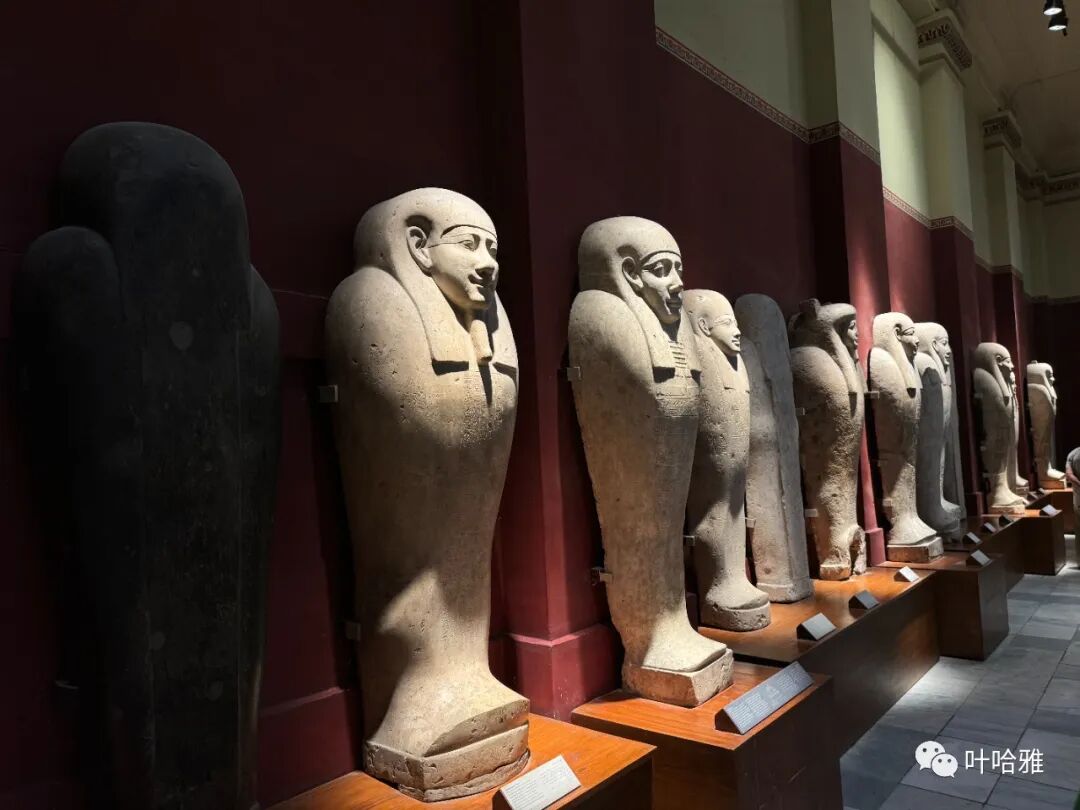
You can even touch these artifacts, and no one stops you. It feels just like a wet market inside.
Summary: This Egypt Muslim travel guide starts in Cairo after Umrah, covering airport arrival, ride-hailing, hotels, Al-Azhar Mosque, Imam Hussein Mosque, Saladin Citadel, Ibn Tulun Mosque, the pyramids, and real trap-avoidance tips.
A Guide to Avoiding Travel Traps in Egypt is presented here as a firsthand travel account in clear English, beginning with this scene: I was disappointed by Mecca and Medina because they felt just like any other popular tourist spot. The account keeps its focus on Quanzhou Muslims, Hui Muslims, Islamic History while preserving the names, places, food, and historical details from the Chinese source.
I was disappointed by Mecca and Medina because they felt just like any other popular tourist spot. Don't have high expectations for the people you meet in the two holy cities either. We originally planned to stay there for a few more days, but we changed our plans last minute and decided to head to Egypt for a week. I never expected the trip to Egypt to be the worst experience I've ever had in any country. Compared to Egypt, Saudi Arabia seems much more civilized. I hope this guide helps you avoid some pitfalls, but people never seem to learn. If you insist on going, I'm sure you will run into traps that I didn't even encounter.
The flight from Jeddah to Cairo is only two hours on Nile Air. A little Arab girl on the plane kept staring at Fahim. By the time we were about to land, they couldn't help themselves, so they sat together, kissing and hugging.
The girl sitting next to me was Saudi, as I saw her holding a Saudi passport. She wasn't wearing a headscarf in the waiting area. Once on the plane, she asked me how to fasten her seatbelt, and when we landed, she asked me to help her unbuckle it. It was clear this was her first time flying, and she kept taking photos from the moment she got on the plane.
Chinese passport holders can get a visa on arrival in Egypt. When you enter, just go to the bank at the entrance and pay 25 USD per person by card for the visa. Customs will stick it in your passport, and you can enter. No other documents are needed.
When you leave the airport, many drivers will try to solicit you; just ignore them. There are also people who will offer to help with your luggage. Don't let them help, even if they show you something that looks like a work ID. Still ignore them, because these services all require tips. If you don't know how to say no, you will end up spending money.
Sisi campaign poster.
I used Uber to call a car to the hotel. In Egypt, try to use Uber or the local ride-hailing app called Careem. Most Uber drivers speak English, making it easier to communicate. If you don't use a ride-hailing app, you will most likely be overcharged and the driver won't give you change.
We chose to stay at the Ramses Hilton by the Nile. The hotel is across from the old Egyptian Museum and near the Nile. This area is where many high-end hotels in Egypt are clustered, so the environment is a bit better.
December is the Christmas holiday season, so the whole city is full of Christmas vibes. This is normal in Cairo, as there are many Coptic Christians here.
I didn't want to go out at night, so I ordered a meal to the room. Every dish was extremely salty. Since I was feeding it to Fahim, and that much salt isn't good for a child, I called to complain to the restaurant. A while later, they sent someone to remake the meal, and the second time it tasted a bit better.
I was surprised that the bathroom at the Cairo Hilton didn't have a bidet sprayer, even though you could still find a Qibla direction indicator in the room.
Breakfast starts at 6:30 a.m., while it is still dark outside.
After a traditional Arabic breakfast, I planned to go to Al-Azhar for Jumu'ah prayer. I asked the hotel staff about the time for today's Jumu'ah, and they said around 11:40.
You can see this kind of bread sold everywhere on the streets of Old Cairo. It is like the steamed bun (mantou) in northern China and costs two mao (0.20 RMB) each. Fahim really likes eating it.
Al-Azhar Mosque
Al-Azhar Mosque was built in 972 AD. It is also the second oldest university in the world. The oldest is the University of al-Qarawiyyin in Fez, Morocco, which was built in 859 AD.
Al-Azhar was once considered the highest institution of Sunni learning. After it was nationalized in 1952, negative opinions about the university have grown.
Al-Azhar is located in Old Cairo. When I reached the entrance, I saw several rows of security guards. Everyone entering the mosque had to go through a security check, which felt familiar to me.
I took a photo in the square, but a guard told me not to take pictures. After walking into the main hall, I saw several staff members walking back and forth, constantly reminding people not to take photos. This made the atmosphere feel strange.
The imam started by reciting the Quran. The tone was strange, like the old style I have heard back home: read a sentence, take a breath, wait a moment, then read another sentence, all very choppy. Very few people came for Jumu'ah prayer. Less than a quarter of the main hall was filled, making me wonder if I had gone to the wrong place.
After the prayer, I asked someone and learned that today was the first day Al-Azhar had reopened. The mosque had been closed because of the presidential election, so Al-Azhar has changed.
Imam Hussein Gongbei
Across from Al-Azhar is the Imam Hussein gongbei (Al-Hussein Mosque), built in 1154 AD. People say the head of the Prophet's grandson, Hussein, is buried here, though some Shia Muslims believe his head and body are both at the Imam Hussein Shrine in Karbala, Iraq.
In 985 AD, the 15th Fatimid Caliph, Mansur, learned in Baghdad that Hussein's head had been buried at the Shrine of the Head of Hussein in Palestine for 250 years. It was not until 1154 AD that the 21st Fatimid Caliph, Qasim, had it transported to Cairo and built the mosque. The current building was rebuilt in 1874. Influenced by the Westernization of Cairo at the time, it was constructed in a mix of Gothic and Ottoman styles and fitted with sunshades like those at the Prophet's Mosque in Medina.
Imam Hussein passed away in 680 AD, dying in battle in Karbala, Iraq, during the war against Muawiyah. The Fatimid dynasty and Sunni Muslims believe Hussein's head was moved to Cairo in 1153. Starting from the time of Saladin, the mosque became Sunni, and to this day, its call to prayer and namaz rituals follow the Sunni tradition.
The tomb chamber is built behind the mihrab of the main hall, where you can see many people commemorating Hussein in various ways.
Inside the gongbei building is a room built in 1893. It is said to house relics of the Prophet, including a linen cloak he once wore, four strands of his hair, the staff he used when entering Mecca, a sword gifted to him by a companion, and a 501-page Quran written on deerskin in Kufic script by Ali ibn Abi Talib.
At the ticket office of the Saladin Citadel, I waited with Fahim to buy tickets. An Egyptian girl came over and asked if she could take a photo of Fahim. I said yes, and suddenly a group of schoolgirls surrounded us, taking turns snapping photos of him.
The girl asked for Fahim's name. I said, "Fahim," and they were surprised, "Fahim?" Are you Muslims? I said, "Praise be to Allah," and the girl screamed, cupped Fahim's cheeks, and kissed him.
We saw the same scene again at other spots later. Fahim is even more popular in the Middle East than in China.
Saladin Citadel
You need a ticket to enter the citadel. Most tourist spots in Egypt only take cards, not cash.
The Cairo Saladin Citadel was originally a fortress built by Saladin between 1176 and 1183 to defend against the Crusades. It served as the seat of the Egyptian government until 1874, when Ismail Pasha, the successor of Muhammad Ali, moved to a palace in the new city center of Cairo.
Records show there are four mosques inside the citadel: the Mosque of Muhammad Ali, the Mosque of Al-Nasir Muhammad, the Mosque of Suleiman Pasha, and the Azab Mosque.
Mosque of Al-Nasir Muhammad
Built in 1318, it stands on the site of an early Saladin dynasty main mosque. The mosque's columns came from buildings of the Pharaoh era, and this gate is a classic sign of the Mamluk period. Although the mosque structure is intact, most of its gorgeous marble decorations were removed and shipped to Istanbul after the Ottoman Sultan Selim I conquered Egypt.
Mosque of Muhammad Ali
Inside the Saladin Citadel stands the Mosque of Muhammad Ali. Built in 1848 in an Ottoman style, it commemorates Tusun Pasha, the eldest son of Muhammad Ali, who died in 1816.
Some say the building materials for the mosque were taken from the pyramids at Giza. Inside, there is a clock tower gifted to Muhammad Ali by the French King Louis Philippe around 1840, which corresponds to the Luxor Obelisk in the Place de la Concorde in Paris.
The tomb of Muhammad Ali is inside the mosque. He was the de facto ruler of Egypt from 1805 to 1848. Once a commander for the Ottoman Empire in Albania, he is considered the founder of modern Egypt. Although he may have been Albanian or Turkish, his dynasty lasted until 1952.
People sell shoe covers at the entrance of the Ali Mosque. It is a trap, so just ignore them. Carry your shoes in your hands and walk right in. You do not need to spend money on shoe covers.
There is a carpeted area in the main hall where you can perform namaz, but very few people actually show up for prayer times in Egypt.
Ibn Tulun Mosque
Built in 876, the Ibn Tulun Mosque is the oldest mosque in Egypt and all of Africa. It is also the largest mosque in the old city of Cairo.
The designer of this mosque was an Orthodox Christian named Saiid Ibn Kateb Al-Farghany.
This mosque is an open tourist site with no entry fee. However, they charge a tip for storing your shoes. I gave them 50 Egyptian pounds, but they said it was not enough and asked for another 50 pounds. The total was about 20 Chinese yuan.
This spiral minaret is believed to have been built in 1296.
The arched windows let in plenty of light.
Neither the left nor the right mihrab mentions Ali, which shows they were built during the early Fatimid Caliphate, a Shia dynasty.
The mihrab designed by Al-Afdal to commemorate Mustansir.
Mustansir was a caliph of the Fatimid dynasty. The original mihrab is kept at the Museum of Islamic Art in Cairo, and this one is a replica. It is inscribed with the Shia Shahada: There is no god but Allah, Muhammad is the messenger of Allah, and Ali is the wali of Allah.
A mihrab from the pre-Fatimid period, with a star hanging on the emblem.
Parts of the James Bond movie The Spy Who Loved Me were filmed here. It also appears in the game Serious Sam 3 and in Tomb Raider: The Last Revelation, where Lara fights a minotaur in the mosque.
Al Fattah Al Aleem Mosque
Because Old Cairo became hopelessly dirty and messy, the Egyptian government had to plan a new Cairo in the desert. This mosque was built in the new city. It covers 8,600 square meters and became the largest mosque in Africa after it was finished in 2019.
New Cairo is an hour's drive from the old city. The roads in the new city are wide, the streets are clean, and the tallest building in Africa is currently being built here.
The main hall of the mosque was originally closed, but our driver, who is Egyptian, talked to the mosque staff and got them to open it for us. We prayed namaz together in the mosque, and he led the prayer. After the prayer, I offered the staff a tip, but he actually refused it. He is the only person I have met in Egypt who did not take a tip.
Sulayman Agha al-Silahdar Mosque
This mosque was built in 1839 in the Ottoman style. The carvings inside copy architecture from the European Renaissance.
The mosque is located on a busy street in the old city. It stands in sharp contrast to the bustling crowds outside, as the inside is very quiet and only a few people come for prayer.
Walk through this passage and enter the main hall on the second floor. It feels like a dark medieval castle inside.
Al-Hakim Mosque
This mosque was completed in 1013 and named after the sixth Fatimid caliph. The main gate features Kufic script left from that time.
Over the centuries, this mosque was renovated and closed several times until it finally reopened in 1980.
The architectural style is similar to Al-Azhar, but it is more than twice the size.
Sultan Barquq Mosque
You need to buy a ticket to enter this mosque, and you can buy a combined ticket with the Al-Refaei Mosque. Also, you have to tip when you store your shoes inside.
Located in the old city of Cairo, this large religious complex includes a mosque, a school, and a gongbei. It was first built in 1384. Barquq was born a slave and gained significant influence during the Mamluk period. In 1382, he deposed Sultan Hajji and declared himself king.
The film adaptation of Palace Walk, a work by the Egyptian Nobel laureate Mahfouz, was filmed here.
Al-Refaei Mosque
This mosque is across from the Sultan Hassan Mosque. It was first built in 1361 and contains the tombs of the Muhammad Ali family.
The tomb of Ali Abu Shubbak al-Refaei
Al-Refaei was the founder of the Sufi Refaei order.
This is the tomb of the last Shah of Iran, Pahlavi, who died in Cairo in 1980. Pahlavi's father, Reza Shah, also stayed here briefly after he died. Reza Shah died in exile in South Africa in 1944 and was sent back to Iran after World War II.
This place is also the burial site of the Sufi mystic Yahya al-Ansari, known as the patron saint of Cairo, along with several members of the Egyptian royal family.
There is a traditional Arabic music restaurant in Old Cairo with a stunning atmosphere and three floors.
We chose to sit on the rooftop to look down over the streets of the old city.
I noticed a detail: when it was time for namaz, the call to prayer echoed throughout the old city. The restaurant turned off its music and waited until the prayer time passed to play it again, though I did not see anyone praying during that time.
We ate grilled lamb chops and tagine (tajin), which are dishes you can hardly go wrong with when eating locally.
King Faisal bin Abdulaziz Mosque (Masged al Malik Faysal Bin Abd al’Aziz).
This is the closest mosque to Cairo Airport. It has an octagonal roof and is the cleanest mosque I visited in Cairo.
The non-traditional dome caught my eye, and there were not many people praying in the mosque during the sunset prayer (maghrib).
The Pyramids and the Sphinx.
After moving to a hotel near the airport, I planned to book a one-day tour of the Cairo pyramids online. I was told the airport was far away and it would cost an extra 270 yuan per person, bringing the total to over 1,000 RMB per person. I took an Uber from the airport to the pyramids for only 80 RMB, and it turned out that taking a taxi directly to the site was the most cost-effective way.
The Great Pyramid of Khufu and the Sphinx are located together. Seeing these images from my childhood textbooks in person was truly shocking. You cannot help but wonder how ancient Egypt built such huge and precise structures over 4,000 years ago; it seems beyond human capability.
There are many people around the pyramids trying to sell camel rides. Remember not to engage with anyone who approaches you. Camel rides are a trap with unpredictable prices, and if someone tells you it is free, that is a sign they are about to rip you off.
Don't listen to anyone outside the ticket office who says they can take you through a shortcut without a ticket; it's all a scam. You can avoid most traps by not interacting with locals. If you want to go inside the pyramids, you have to buy a separate ticket at the entrance, or you can tip the guard to get in. There is nothing to see inside, as it was looted by various people centuries ago.
Egyptian Museum
This is the old Egyptian Museum by the Nile. Cairo also has a new museum, but it doesn't have as many items as the old one. Although the old museum is run-down, the treasures inside are priceless and so numerous that they are just piled up like in a warehouse. You need to pay for museum tickets by card, as they don't accept cash. It opens at 9:00 AM and starts clearing out at 5:00 PM.
You can even touch these artifacts, and no one stops you. It feels just like a wet market inside.
Egypt Muslim Travel Guide: Cairo Museum, Luxor Restaurants and Real Travel Trap Warnings
Articles • yusuf908 posted the article • 0 comments • 156 views • 2026-05-24 00:17
Reposted from the web
Summary: This Egypt Muslim travel guide continues with ancient Egyptian history, the Egyptian Museum, Luxor, Nile-side dining, halal-friendly restaurant notes, local scams, travel traps, and reflections on Muslim life in Egypt.
A Guide to Avoiding Travel Traps in Egypt is presented here as a firsthand travel account in clear English, beginning with this scene: If you are not interested in Egyptian history, you will just be a casual tourist here. However, seeing the high level of ancient Egyptian civilization is an experience unmatched anywhere else in the world. The account keeps its focus on Quanzhou Muslims, Hui Muslims, Islamic History while preserving the names, places, food, and historical details from the Chinese source.
If you are not interested in Egyptian history, you will just be a casual tourist here. However, seeing the high level of ancient Egyptian civilization is an experience unmatched anywhere else in the world.
Some say ancient Egyptians and modern Egyptians are not the same race, but that is not a fact. Ancient Egyptians did not disappear. Through thousands of years of cultural exchange, they were assimilated, and modern Egyptians carry the genes of the ancient Egyptians.
Although Egyptians are nominally divided into Arabs, Copts, or Nubians, their bloodlines are actually very similar. They all speak Arabic and have intermarried and assimilated so much that there is no such thing as a pure-blooded, independent ethnic group.
For example, the number of Copts in Egypt is decreasing every year because they are blending into the Arab population. When a Coptic Christian converts to Islam, by the third generation, they identify themselves as Arab.
In the 7th century, Copts helped the Arabs conquer the Eastern Roman Empire. Because Copts were Miaphysites, the Eastern Roman Empire viewed them as heretics. Under Arab rule, the Copts actually lived better. Some say many Copts converted to Islam to pay fewer taxes, but there were not many tax benefits for converting, so there was no large-scale conversion of Copts in the early days.
During the Fatimid Caliphate, because the rulers were Shia, they were even harsher toward Sunni Muslims than toward Coptic Christians. Copts and Jews were protected and thrived during this period. Even during the Ayyubid and Mamluk dynasties, Copts remained under protection. The Mamluks were former slaves who became rulers, so they empathized with the Copts.
By the mid-14th century, whenever there were large-scale riots, many Copts converted to protect themselves. According to Egyptian law at the time, a Muslim's property could not be inherited by a non-Muslim. This led the descendants of converts to choose Islam to keep their property. It was from this period that Copts became a minority in Egypt.
Later, Muslim citizens accused the converted Copts of not being true converts because they did not go to the mosque for namaz on time. So, even though Muslims are the majority in Egypt today, the country is not completely Islamized.
The second floor of the Egyptian Museum has a Tutankhamun gallery. There is a funny story here: a travel blogger on Douyin posted a video saying they received the highest honor in Egypt and were allowed to film inside the gallery, which is usually off-limits for photography. I was stopped by a staff member when I tried to take photos with my phone and had to delete them under his supervision. The photo below was taken from outside the museum using my phone's telephoto lens.
However, after I handed 200 Egyptian pounds (about 40 RMB) to the staff member, I was allowed to take photos. That is how I got this picture of Tutankhamun's golden mask.
Tutankhamun's golden mask is said to be the most valuable artifact in the world and is priceless. But in Egypt, as long as you have a tip, everything is negotiable. That includes the blogger who claimed they filmed the pyramids while the site was cleared. I checked the time of their video, and it was after sunset, which is after the pyramids close. Paying money to get in and film is definitely not the highest honor.
After getting this photo to prove the Douyin blogger was bluffing, I lost interest in seeing the rest of the exhibits. In the evening, we went to the local Star City Mall to eat Thai food.
It is rare to find a prayer room in public places in Egypt, unlike in the UAE or Saudi Arabia where you see them everywhere. This mall actually has a prayer room, which is worth noting.
SABAI Thai Food
This Thai restaurant is quite popular locally and attracts many Chinese diners. The owner seems to have a misunderstanding of East and Southeast Asia, mixing in Chinese and Japanese elements. Perhaps to Arabs, we all look the same, just as we might struggle to tell the difference between Egyptians, Moroccans, Tunisians, Saudis, Qataris, Emiratis, Lebanese, Yemenis, Syrians, Jordanians, Bahrainis, Libyans, and Algerians.
You do not see halal signs in restaurants in Egypt, so you can just walk in anywhere. However, you should be careful with Chinese food and ask clearly. This shop marks its menu as halal because many Arabs assume Chinese food is not halal, and some restaurants also sell alcohol.
The chef at this Thai place is Black, but the food is quite authentic. Sour and spicy Thai dishes are very appetizing in the hot Middle East. The portions are small, but the price is cheap, costing about 100 RMB per person.
Tom Yum Goong soup
MORISUSHI Japanese food
I had a Japanese meal at a shopping center in New Cairo. After traveling in the Middle East for over ten days and eating Arabic food almost every day, it was nice to change things up.
There is a halal sign on the soy sauce bottle, which is a new thing to see in an Arab country.
Patchi chocolate shop
This is a Lebanese chocolate brand, said to be the royal family's choice for desserts. It is sold very cheaply in Egypt, at about 300 RMB per kilogram.
Arabs love sweets, and there are many overweight people on the streets, which is really unhealthy. Eating too many sweets is also bad for children's brain development, so we should take this as a warning.
Le Passage Cairo Hotel
We ate at the hotel restaurant most of the time. If you are just using Cairo as a transit stop and want to stay near the airport, I recommend this place. It is an 800-meter walk to the terminal, and the hotel also provides a free shuttle service.
At this hotel's buffet, you have to ask the staff to get the food for you, which feels a bit less free.
We had steak and pasta at the hotel's Italian restaurant, and both were delicious. Friends, you can really choose a nice hotel for a vacation. If you do not want to go out, you can just stay by the hotel pool and soak up the sun, away from the noise outside.
Four Seasons Hotel
The Four Seasons in Cairo has newer facilities than the Ramses Hilton, but the buffet has fewer options.
The hotel buffet costs less than 200 yuan, and drinks are charged separately.
Outside the window is a view of the Nile. In Cairo, the most expensive rooms are the ones with a river view.
Luxor
Luxor is an ancient city in southern Egypt that was once the center of power in Egypt, similar to Xi'an in China. It only takes 50 minutes to fly from Cairo to Luxor. At the airport, the check-in staff ripped me off. He said I did not buy a child ticket for Fahim. I showed him my Trip.com order, but he still said he could not find the child ticket information. Since it was close to departure time, we paid him 1,000 Egyptian pounds (about 200 yuan) on the spot for the child ticket. Later, I contacted Trip.com and learned that my child ticket was used normally. This means the airport staff scammed me out of the price of a ticket, which is a very bad thing to do. I have asked Trip.com to investigate this with Cairo Airport, but I have not received an effective reply yet. Because it was a cash payment, unless they pull the surveillance footage from that time to prove the airport took my money, I have to swallow this loss.
Sonesta St. George Hotel Luxor
The climate in Luxor is much more comfortable than in Cairo. Cairo has serious pollution and is not suitable for long stays, but Luxor has fewer people and the pace of the whole city is much slower. You cannot use Uber in Luxor. You have to hail a taxi on the street. Always agree on the price before you get in and have plenty of small change ready. If you don't, the driver will keep whatever you give him and call it a tip.
Look at who has stayed at this hotel before. They play Chinese songs in the restaurant and have Chinese signs in the elevators, which feels very welcoming.
For our first meal, we chose the hotel's Italian restaurant again. It has a clean, tidy European style, and the view of the Nile outside the window is stunning.
For breakfast, they serve honey straight from the honeycomb. It is natural and healthy.
Famous sites in Luxor include the Valley of the Kings, Luxor Temple, Karnak Temple, the Colossi of Memnon, the Mortuary Temple of Hatshepsut, and various pharaoh tombs. These are very attractive to archaeology fans, but for most tourists, it is just about taking photos. We booked a private one-day tour for two on Trip.com for 1,000 yuan per person. It included tickets, lunch, and a tour guide. The whole experience was pretty good.
Colossi of Memnon
The statues represent the 18th Dynasty Pharaoh Amenhotep III. Both statues are of him. They are 18 meters tall and were built in 1350 BC, making them over 3,000 years old.
After a short stop at the statues, we went to the Valley of the Kings to see the tombs of Pharaoh Ramesses VI and Tutankhamun.
The murals in the tomb of Ramesses VI still have the same colors they had 3,000 years ago.
Tomb of Pharaoh Tutankhamun
Mortuary Temple of Hatshepsut
The temple complex housing the pharaohs of past dynasties, along with the entire city of Luxor, was listed as a World Cultural Heritage site in 1979. This place was once used as a Christian monastery, and the reliefs unrelated to Christianity were removed.
Karnak Temple
The temple was built in 2000 BC, making it over four thousand years old, and it covers an area larger than half of Manhattan.
Visiting the temple during the day is a test of physical strength because the sun is so strong. When Fahim walked up to this ram-headed sphinx, he took a liking to the pebbles on the ground and refused to move. I stayed with him to play with the stones. During this time, Fahim was surrounded by Egyptian girls who took photos with him and kissed him.
The Egyptian tour guide said he could watch the child for me so I could go inside to look around, but I said forget it. I would rather stay and play with stones with Fahim. I am actually not interested in these temples. After seeing them, I just think they were built impressively and are very spectacular, and that is all.
Luxor Temple
The last stop was Luxor Mosque, which is also a landmark of Luxor with over three thousand years of history. However, what attracted me here was the gongbei built on top of the mosque. At the entrance, the guide asked if I wanted to visit the mosque or the mosque. I said the mosque. He looked surprised and confirmed it with me again. I was a bit tired by then, so I told him I would skip the mosque and just see the mosque before heading back.
Abu Haggag Mosque and Gongbei
This gongbei can be considered the only one in the world built on top of the world's oldest mosque, and it is the only mosque in the world built on mosque ruins.
This mosque dates back to the Fatimid dynasty and was built on the ruins of a church inside the mosque. It was completed around 1286 and contains the tomb of the Sufi mystic Yusuf Abu Haggag. Haggag was a scholar born in Baghdad in the 13th century. According to local legend, he captured Luxor from the Roman Queen Tarza.
Luxor Mosque was converted into a church by the Copts in 395 AD and then into a mosque in 640 AD. Therefore, it can be said that this is the oldest religious building in the world still in use, with a history spanning over three thousand four hundred years.
Inside the gongbei, there are some believers visiting the graves, with more women than men.
The mosque suffered a fire in 2007. When it was rebuilt, stones from the mosque were used, and you can see pharaonic hieroglyphs on the carvings of this pillar.
Looking out from the mosque railing, you can see the Luxor Mosque. The once arrogant pharaohs compared themselves to gods, but they never imagined that three thousand years later, their mosque would become a tourist attraction for people to glance at in passing.
Al Iman Mosque
This is the closest mosque to my hotel. Fewer than 10 people attend the adhan (banda). In Arab countries, people go back to sleep after the adhan, and almost no shops are open on the street. Only a few small shops selling flatbread (da bing) are open, so it is best to eat breakfast at the hotel, or you will have nothing to eat outside.
As a convenient fast food in the Arab region, shawarma (sharama) is as popular as our meat burger (roujiamo); it is economical, affordable, and delicious.
El-KABABGY RESTAURANT
This shop is the number one ranked restaurant in Luxor on the TripAdvisor app, and after eating there, I feel it truly deserves this ranking. This shop is only 1 kilometer away from our hotel on foot.
The outdoor part of the restaurant is right on the Nile pier. In December, the temperature in Luxor is only 20 degrees, which is very cool.
The grilled meat at this shop is extremely fragrant and clearly better than other restaurants we have eaten at. The per capita consumption is only about one hundred yuan. In China, at an Arab restaurant of the same level, two people would spend at least four or five hundred.
Tagine pot (tajiguo)
The drink I had most often in the Arab region was lemon mint juice. Its sour taste is great for opening up your appetite and quenching your thirst.
What is annoying about Luxor is that the streets are full of carriage drivers looking for customers. They really chase you and shout non-stop. One day, I wanted to take Fahim out for a walk, but I got so annoyed by the carriage drivers trying to get business that I just went back to the hotel and stayed inside.
The hotel has a garden, a view of the Nile, and a swimming pool. Staying inside and enjoying the sunshine is the most relaxing thing to do.
Some people say that Egypt without Egyptians would be a better Egypt. While this is an exaggeration, it reflects an abnormal social phenomenon in Egypt today. Everyone is driven by profit, corruption is rampant, and there are scammers and thieves everywhere. In the old Islamic streets of Cairo, I could not even feel the light of faith. For the first time, I stopped my plan to visit a mosque because I did not have money in my pocket for a tip. All of this is happening in Egypt, which has a thousand-year history of Islamic civilization. This seems to confirm a master's thesis from the School of Oriental and African Studies at the University of London titled 'The Process of Islamization in Egypt, Possible Reasons and the Scope of Influence until the 14th Century.' The author, M. Wassermann, believes that Egypt is still not fully Islamized today. A considerable number of people, for various reasons, are only Muslims in name, because Islam considers that as long as one formally becomes a believer by verbal confession, they are treated as a Muslim.
This phenomenon of two-faced people everywhere makes Egypt like a powder keg that could explode at any time. You have to go through security checks and show identification to enter malls, hotels, and airports. Soldiers with guns are patrolling the streets everywhere. The old city of Cairo is just like a refugee camp, with groups of homeless people sleeping on the ground. Behind them are the ruins of demolished houses. Coptic people mainly make a living by picking up trash. The gap between rich and poor is huge. The poor see no hope and have no illusions about the future. An explosion is only a matter of time. So, if you want to come to Egypt, do it sooner rather than later. If you don't go now, you might not be able to go in the future. view all
Summary: This Egypt Muslim travel guide continues with ancient Egyptian history, the Egyptian Museum, Luxor, Nile-side dining, halal-friendly restaurant notes, local scams, travel traps, and reflections on Muslim life in Egypt.
A Guide to Avoiding Travel Traps in Egypt is presented here as a firsthand travel account in clear English, beginning with this scene: If you are not interested in Egyptian history, you will just be a casual tourist here. However, seeing the high level of ancient Egyptian civilization is an experience unmatched anywhere else in the world. The account keeps its focus on Quanzhou Muslims, Hui Muslims, Islamic History while preserving the names, places, food, and historical details from the Chinese source.
If you are not interested in Egyptian history, you will just be a casual tourist here. However, seeing the high level of ancient Egyptian civilization is an experience unmatched anywhere else in the world.
Some say ancient Egyptians and modern Egyptians are not the same race, but that is not a fact. Ancient Egyptians did not disappear. Through thousands of years of cultural exchange, they were assimilated, and modern Egyptians carry the genes of the ancient Egyptians.
Although Egyptians are nominally divided into Arabs, Copts, or Nubians, their bloodlines are actually very similar. They all speak Arabic and have intermarried and assimilated so much that there is no such thing as a pure-blooded, independent ethnic group.
For example, the number of Copts in Egypt is decreasing every year because they are blending into the Arab population. When a Coptic Christian converts to Islam, by the third generation, they identify themselves as Arab.
In the 7th century, Copts helped the Arabs conquer the Eastern Roman Empire. Because Copts were Miaphysites, the Eastern Roman Empire viewed them as heretics. Under Arab rule, the Copts actually lived better. Some say many Copts converted to Islam to pay fewer taxes, but there were not many tax benefits for converting, so there was no large-scale conversion of Copts in the early days.
During the Fatimid Caliphate, because the rulers were Shia, they were even harsher toward Sunni Muslims than toward Coptic Christians. Copts and Jews were protected and thrived during this period. Even during the Ayyubid and Mamluk dynasties, Copts remained under protection. The Mamluks were former slaves who became rulers, so they empathized with the Copts.
By the mid-14th century, whenever there were large-scale riots, many Copts converted to protect themselves. According to Egyptian law at the time, a Muslim's property could not be inherited by a non-Muslim. This led the descendants of converts to choose Islam to keep their property. It was from this period that Copts became a minority in Egypt.
Later, Muslim citizens accused the converted Copts of not being true converts because they did not go to the mosque for namaz on time. So, even though Muslims are the majority in Egypt today, the country is not completely Islamized.
The second floor of the Egyptian Museum has a Tutankhamun gallery. There is a funny story here: a travel blogger on Douyin posted a video saying they received the highest honor in Egypt and were allowed to film inside the gallery, which is usually off-limits for photography. I was stopped by a staff member when I tried to take photos with my phone and had to delete them under his supervision. The photo below was taken from outside the museum using my phone's telephoto lens.
However, after I handed 200 Egyptian pounds (about 40 RMB) to the staff member, I was allowed to take photos. That is how I got this picture of Tutankhamun's golden mask.
Tutankhamun's golden mask is said to be the most valuable artifact in the world and is priceless. But in Egypt, as long as you have a tip, everything is negotiable. That includes the blogger who claimed they filmed the pyramids while the site was cleared. I checked the time of their video, and it was after sunset, which is after the pyramids close. Paying money to get in and film is definitely not the highest honor.
After getting this photo to prove the Douyin blogger was bluffing, I lost interest in seeing the rest of the exhibits. In the evening, we went to the local Star City Mall to eat Thai food.
It is rare to find a prayer room in public places in Egypt, unlike in the UAE or Saudi Arabia where you see them everywhere. This mall actually has a prayer room, which is worth noting.
SABAI Thai Food
This Thai restaurant is quite popular locally and attracts many Chinese diners. The owner seems to have a misunderstanding of East and Southeast Asia, mixing in Chinese and Japanese elements. Perhaps to Arabs, we all look the same, just as we might struggle to tell the difference between Egyptians, Moroccans, Tunisians, Saudis, Qataris, Emiratis, Lebanese, Yemenis, Syrians, Jordanians, Bahrainis, Libyans, and Algerians.
You do not see halal signs in restaurants in Egypt, so you can just walk in anywhere. However, you should be careful with Chinese food and ask clearly. This shop marks its menu as halal because many Arabs assume Chinese food is not halal, and some restaurants also sell alcohol.
The chef at this Thai place is Black, but the food is quite authentic. Sour and spicy Thai dishes are very appetizing in the hot Middle East. The portions are small, but the price is cheap, costing about 100 RMB per person.
Tom Yum Goong soup
MORISUSHI Japanese food
I had a Japanese meal at a shopping center in New Cairo. After traveling in the Middle East for over ten days and eating Arabic food almost every day, it was nice to change things up.
There is a halal sign on the soy sauce bottle, which is a new thing to see in an Arab country.
Patchi chocolate shop
This is a Lebanese chocolate brand, said to be the royal family's choice for desserts. It is sold very cheaply in Egypt, at about 300 RMB per kilogram.
Arabs love sweets, and there are many overweight people on the streets, which is really unhealthy. Eating too many sweets is also bad for children's brain development, so we should take this as a warning.
Le Passage Cairo Hotel
We ate at the hotel restaurant most of the time. If you are just using Cairo as a transit stop and want to stay near the airport, I recommend this place. It is an 800-meter walk to the terminal, and the hotel also provides a free shuttle service.
At this hotel's buffet, you have to ask the staff to get the food for you, which feels a bit less free.
We had steak and pasta at the hotel's Italian restaurant, and both were delicious. Friends, you can really choose a nice hotel for a vacation. If you do not want to go out, you can just stay by the hotel pool and soak up the sun, away from the noise outside.
Four Seasons Hotel
The Four Seasons in Cairo has newer facilities than the Ramses Hilton, but the buffet has fewer options.
The hotel buffet costs less than 200 yuan, and drinks are charged separately.
Outside the window is a view of the Nile. In Cairo, the most expensive rooms are the ones with a river view.
Luxor
Luxor is an ancient city in southern Egypt that was once the center of power in Egypt, similar to Xi'an in China. It only takes 50 minutes to fly from Cairo to Luxor. At the airport, the check-in staff ripped me off. He said I did not buy a child ticket for Fahim. I showed him my Trip.com order, but he still said he could not find the child ticket information. Since it was close to departure time, we paid him 1,000 Egyptian pounds (about 200 yuan) on the spot for the child ticket. Later, I contacted Trip.com and learned that my child ticket was used normally. This means the airport staff scammed me out of the price of a ticket, which is a very bad thing to do. I have asked Trip.com to investigate this with Cairo Airport, but I have not received an effective reply yet. Because it was a cash payment, unless they pull the surveillance footage from that time to prove the airport took my money, I have to swallow this loss.
Sonesta St. George Hotel Luxor
The climate in Luxor is much more comfortable than in Cairo. Cairo has serious pollution and is not suitable for long stays, but Luxor has fewer people and the pace of the whole city is much slower. You cannot use Uber in Luxor. You have to hail a taxi on the street. Always agree on the price before you get in and have plenty of small change ready. If you don't, the driver will keep whatever you give him and call it a tip.
Look at who has stayed at this hotel before. They play Chinese songs in the restaurant and have Chinese signs in the elevators, which feels very welcoming.
For our first meal, we chose the hotel's Italian restaurant again. It has a clean, tidy European style, and the view of the Nile outside the window is stunning.
For breakfast, they serve honey straight from the honeycomb. It is natural and healthy.
Famous sites in Luxor include the Valley of the Kings, Luxor Temple, Karnak Temple, the Colossi of Memnon, the Mortuary Temple of Hatshepsut, and various pharaoh tombs. These are very attractive to archaeology fans, but for most tourists, it is just about taking photos. We booked a private one-day tour for two on Trip.com for 1,000 yuan per person. It included tickets, lunch, and a tour guide. The whole experience was pretty good.
Colossi of Memnon
The statues represent the 18th Dynasty Pharaoh Amenhotep III. Both statues are of him. They are 18 meters tall and were built in 1350 BC, making them over 3,000 years old.
After a short stop at the statues, we went to the Valley of the Kings to see the tombs of Pharaoh Ramesses VI and Tutankhamun.
The murals in the tomb of Ramesses VI still have the same colors they had 3,000 years ago.
Tomb of Pharaoh Tutankhamun
Mortuary Temple of Hatshepsut
The temple complex housing the pharaohs of past dynasties, along with the entire city of Luxor, was listed as a World Cultural Heritage site in 1979. This place was once used as a Christian monastery, and the reliefs unrelated to Christianity were removed.
Karnak Temple
The temple was built in 2000 BC, making it over four thousand years old, and it covers an area larger than half of Manhattan.
Visiting the temple during the day is a test of physical strength because the sun is so strong. When Fahim walked up to this ram-headed sphinx, he took a liking to the pebbles on the ground and refused to move. I stayed with him to play with the stones. During this time, Fahim was surrounded by Egyptian girls who took photos with him and kissed him.
The Egyptian tour guide said he could watch the child for me so I could go inside to look around, but I said forget it. I would rather stay and play with stones with Fahim. I am actually not interested in these temples. After seeing them, I just think they were built impressively and are very spectacular, and that is all.
Luxor Temple
The last stop was Luxor Mosque, which is also a landmark of Luxor with over three thousand years of history. However, what attracted me here was the gongbei built on top of the mosque. At the entrance, the guide asked if I wanted to visit the mosque or the mosque. I said the mosque. He looked surprised and confirmed it with me again. I was a bit tired by then, so I told him I would skip the mosque and just see the mosque before heading back.
Abu Haggag Mosque and Gongbei
This gongbei can be considered the only one in the world built on top of the world's oldest mosque, and it is the only mosque in the world built on mosque ruins.
This mosque dates back to the Fatimid dynasty and was built on the ruins of a church inside the mosque. It was completed around 1286 and contains the tomb of the Sufi mystic Yusuf Abu Haggag. Haggag was a scholar born in Baghdad in the 13th century. According to local legend, he captured Luxor from the Roman Queen Tarza.
Luxor Mosque was converted into a church by the Copts in 395 AD and then into a mosque in 640 AD. Therefore, it can be said that this is the oldest religious building in the world still in use, with a history spanning over three thousand four hundred years.
Inside the gongbei, there are some believers visiting the graves, with more women than men.
The mosque suffered a fire in 2007. When it was rebuilt, stones from the mosque were used, and you can see pharaonic hieroglyphs on the carvings of this pillar.
Looking out from the mosque railing, you can see the Luxor Mosque. The once arrogant pharaohs compared themselves to gods, but they never imagined that three thousand years later, their mosque would become a tourist attraction for people to glance at in passing.
Al Iman Mosque
This is the closest mosque to my hotel. Fewer than 10 people attend the adhan (banda). In Arab countries, people go back to sleep after the adhan, and almost no shops are open on the street. Only a few small shops selling flatbread (da bing) are open, so it is best to eat breakfast at the hotel, or you will have nothing to eat outside.
As a convenient fast food in the Arab region, shawarma (sharama) is as popular as our meat burger (roujiamo); it is economical, affordable, and delicious.
El-KABABGY RESTAURANT
This shop is the number one ranked restaurant in Luxor on the TripAdvisor app, and after eating there, I feel it truly deserves this ranking. This shop is only 1 kilometer away from our hotel on foot.
The outdoor part of the restaurant is right on the Nile pier. In December, the temperature in Luxor is only 20 degrees, which is very cool.
The grilled meat at this shop is extremely fragrant and clearly better than other restaurants we have eaten at. The per capita consumption is only about one hundred yuan. In China, at an Arab restaurant of the same level, two people would spend at least four or five hundred.
Tagine pot (tajiguo)
The drink I had most often in the Arab region was lemon mint juice. Its sour taste is great for opening up your appetite and quenching your thirst.
What is annoying about Luxor is that the streets are full of carriage drivers looking for customers. They really chase you and shout non-stop. One day, I wanted to take Fahim out for a walk, but I got so annoyed by the carriage drivers trying to get business that I just went back to the hotel and stayed inside.
The hotel has a garden, a view of the Nile, and a swimming pool. Staying inside and enjoying the sunshine is the most relaxing thing to do.
Some people say that Egypt without Egyptians would be a better Egypt. While this is an exaggeration, it reflects an abnormal social phenomenon in Egypt today. Everyone is driven by profit, corruption is rampant, and there are scammers and thieves everywhere. In the old Islamic streets of Cairo, I could not even feel the light of faith. For the first time, I stopped my plan to visit a mosque because I did not have money in my pocket for a tip. All of this is happening in Egypt, which has a thousand-year history of Islamic civilization. This seems to confirm a master's thesis from the School of Oriental and African Studies at the University of London titled 'The Process of Islamization in Egypt, Possible Reasons and the Scope of Influence until the 14th Century.' The author, M. Wassermann, believes that Egypt is still not fully Islamized today. A considerable number of people, for various reasons, are only Muslims in name, because Islam considers that as long as one formally becomes a believer by verbal confession, they are treated as a Muslim.
This phenomenon of two-faced people everywhere makes Egypt like a powder keg that could explode at any time. You have to go through security checks and show identification to enter malls, hotels, and airports. Soldiers with guns are patrolling the streets everywhere. The old city of Cairo is just like a refugee camp, with groups of homeless people sleeping on the ground. Behind them are the ruins of demolished houses. Coptic people mainly make a living by picking up trash. The gap between rich and poor is huge. The poor see no hope and have no illusions about the future. An explosion is only a matter of time. So, if you want to come to Egypt, do it sooner rather than later. If you don't go now, you might not be able to go in the future. view all
Reposted from the web
Summary: This Egypt Muslim travel guide continues with ancient Egyptian history, the Egyptian Museum, Luxor, Nile-side dining, halal-friendly restaurant notes, local scams, travel traps, and reflections on Muslim life in Egypt.
A Guide to Avoiding Travel Traps in Egypt is presented here as a firsthand travel account in clear English, beginning with this scene: If you are not interested in Egyptian history, you will just be a casual tourist here. However, seeing the high level of ancient Egyptian civilization is an experience unmatched anywhere else in the world. The account keeps its focus on Quanzhou Muslims, Hui Muslims, Islamic History while preserving the names, places, food, and historical details from the Chinese source.
If you are not interested in Egyptian history, you will just be a casual tourist here. However, seeing the high level of ancient Egyptian civilization is an experience unmatched anywhere else in the world.
Some say ancient Egyptians and modern Egyptians are not the same race, but that is not a fact. Ancient Egyptians did not disappear. Through thousands of years of cultural exchange, they were assimilated, and modern Egyptians carry the genes of the ancient Egyptians.
Although Egyptians are nominally divided into Arabs, Copts, or Nubians, their bloodlines are actually very similar. They all speak Arabic and have intermarried and assimilated so much that there is no such thing as a pure-blooded, independent ethnic group.
For example, the number of Copts in Egypt is decreasing every year because they are blending into the Arab population. When a Coptic Christian converts to Islam, by the third generation, they identify themselves as Arab.
In the 7th century, Copts helped the Arabs conquer the Eastern Roman Empire. Because Copts were Miaphysites, the Eastern Roman Empire viewed them as heretics. Under Arab rule, the Copts actually lived better. Some say many Copts converted to Islam to pay fewer taxes, but there were not many tax benefits for converting, so there was no large-scale conversion of Copts in the early days.
During the Fatimid Caliphate, because the rulers were Shia, they were even harsher toward Sunni Muslims than toward Coptic Christians. Copts and Jews were protected and thrived during this period. Even during the Ayyubid and Mamluk dynasties, Copts remained under protection. The Mamluks were former slaves who became rulers, so they empathized with the Copts.
By the mid-14th century, whenever there were large-scale riots, many Copts converted to protect themselves. According to Egyptian law at the time, a Muslim's property could not be inherited by a non-Muslim. This led the descendants of converts to choose Islam to keep their property. It was from this period that Copts became a minority in Egypt.
Later, Muslim citizens accused the converted Copts of not being true converts because they did not go to the mosque for namaz on time. So, even though Muslims are the majority in Egypt today, the country is not completely Islamized.
The second floor of the Egyptian Museum has a Tutankhamun gallery. There is a funny story here: a travel blogger on Douyin posted a video saying they received the highest honor in Egypt and were allowed to film inside the gallery, which is usually off-limits for photography. I was stopped by a staff member when I tried to take photos with my phone and had to delete them under his supervision. The photo below was taken from outside the museum using my phone's telephoto lens.
However, after I handed 200 Egyptian pounds (about 40 RMB) to the staff member, I was allowed to take photos. That is how I got this picture of Tutankhamun's golden mask.
Tutankhamun's golden mask is said to be the most valuable artifact in the world and is priceless. But in Egypt, as long as you have a tip, everything is negotiable. That includes the blogger who claimed they filmed the pyramids while the site was cleared. I checked the time of their video, and it was after sunset, which is after the pyramids close. Paying money to get in and film is definitely not the highest honor.
After getting this photo to prove the Douyin blogger was bluffing, I lost interest in seeing the rest of the exhibits. In the evening, we went to the local Star City Mall to eat Thai food.
It is rare to find a prayer room in public places in Egypt, unlike in the UAE or Saudi Arabia where you see them everywhere. This mall actually has a prayer room, which is worth noting.
SABAI Thai Food
This Thai restaurant is quite popular locally and attracts many Chinese diners. The owner seems to have a misunderstanding of East and Southeast Asia, mixing in Chinese and Japanese elements. Perhaps to Arabs, we all look the same, just as we might struggle to tell the difference between Egyptians, Moroccans, Tunisians, Saudis, Qataris, Emiratis, Lebanese, Yemenis, Syrians, Jordanians, Bahrainis, Libyans, and Algerians.
You do not see halal signs in restaurants in Egypt, so you can just walk in anywhere. However, you should be careful with Chinese food and ask clearly. This shop marks its menu as halal because many Arabs assume Chinese food is not halal, and some restaurants also sell alcohol.
The chef at this Thai place is Black, but the food is quite authentic. Sour and spicy Thai dishes are very appetizing in the hot Middle East. The portions are small, but the price is cheap, costing about 100 RMB per person.
Tom Yum Goong soup
MORISUSHI Japanese food
I had a Japanese meal at a shopping center in New Cairo. After traveling in the Middle East for over ten days and eating Arabic food almost every day, it was nice to change things up.
There is a halal sign on the soy sauce bottle, which is a new thing to see in an Arab country.
Patchi chocolate shop
This is a Lebanese chocolate brand, said to be the royal family's choice for desserts. It is sold very cheaply in Egypt, at about 300 RMB per kilogram.
Arabs love sweets, and there are many overweight people on the streets, which is really unhealthy. Eating too many sweets is also bad for children's brain development, so we should take this as a warning.
Le Passage Cairo Hotel
We ate at the hotel restaurant most of the time. If you are just using Cairo as a transit stop and want to stay near the airport, I recommend this place. It is an 800-meter walk to the terminal, and the hotel also provides a free shuttle service.
At this hotel's buffet, you have to ask the staff to get the food for you, which feels a bit less free.
We had steak and pasta at the hotel's Italian restaurant, and both were delicious. Friends, you can really choose a nice hotel for a vacation. If you do not want to go out, you can just stay by the hotel pool and soak up the sun, away from the noise outside.
Four Seasons Hotel
The Four Seasons in Cairo has newer facilities than the Ramses Hilton, but the buffet has fewer options.
The hotel buffet costs less than 200 yuan, and drinks are charged separately.
Outside the window is a view of the Nile. In Cairo, the most expensive rooms are the ones with a river view.
Luxor
Luxor is an ancient city in southern Egypt that was once the center of power in Egypt, similar to Xi'an in China. It only takes 50 minutes to fly from Cairo to Luxor. At the airport, the check-in staff ripped me off. He said I did not buy a child ticket for Fahim. I showed him my Trip.com order, but he still said he could not find the child ticket information. Since it was close to departure time, we paid him 1,000 Egyptian pounds (about 200 yuan) on the spot for the child ticket. Later, I contacted Trip.com and learned that my child ticket was used normally. This means the airport staff scammed me out of the price of a ticket, which is a very bad thing to do. I have asked Trip.com to investigate this with Cairo Airport, but I have not received an effective reply yet. Because it was a cash payment, unless they pull the surveillance footage from that time to prove the airport took my money, I have to swallow this loss.
Sonesta St. George Hotel Luxor
The climate in Luxor is much more comfortable than in Cairo. Cairo has serious pollution and is not suitable for long stays, but Luxor has fewer people and the pace of the whole city is much slower. You cannot use Uber in Luxor. You have to hail a taxi on the street. Always agree on the price before you get in and have plenty of small change ready. If you don't, the driver will keep whatever you give him and call it a tip.
Look at who has stayed at this hotel before. They play Chinese songs in the restaurant and have Chinese signs in the elevators, which feels very welcoming.
For our first meal, we chose the hotel's Italian restaurant again. It has a clean, tidy European style, and the view of the Nile outside the window is stunning.
For breakfast, they serve honey straight from the honeycomb. It is natural and healthy.
Famous sites in Luxor include the Valley of the Kings, Luxor Temple, Karnak Temple, the Colossi of Memnon, the Mortuary Temple of Hatshepsut, and various pharaoh tombs. These are very attractive to archaeology fans, but for most tourists, it is just about taking photos. We booked a private one-day tour for two on Trip.com for 1,000 yuan per person. It included tickets, lunch, and a tour guide. The whole experience was pretty good.
Colossi of Memnon
The statues represent the 18th Dynasty Pharaoh Amenhotep III. Both statues are of him. They are 18 meters tall and were built in 1350 BC, making them over 3,000 years old.
After a short stop at the statues, we went to the Valley of the Kings to see the tombs of Pharaoh Ramesses VI and Tutankhamun.
The murals in the tomb of Ramesses VI still have the same colors they had 3,000 years ago.
Tomb of Pharaoh Tutankhamun
Mortuary Temple of Hatshepsut
The temple complex housing the pharaohs of past dynasties, along with the entire city of Luxor, was listed as a World Cultural Heritage site in 1979. This place was once used as a Christian monastery, and the reliefs unrelated to Christianity were removed.
Karnak Temple
The temple was built in 2000 BC, making it over four thousand years old, and it covers an area larger than half of Manhattan.
Visiting the temple during the day is a test of physical strength because the sun is so strong. When Fahim walked up to this ram-headed sphinx, he took a liking to the pebbles on the ground and refused to move. I stayed with him to play with the stones. During this time, Fahim was surrounded by Egyptian girls who took photos with him and kissed him.
The Egyptian tour guide said he could watch the child for me so I could go inside to look around, but I said forget it. I would rather stay and play with stones with Fahim. I am actually not interested in these temples. After seeing them, I just think they were built impressively and are very spectacular, and that is all.
Luxor Temple
The last stop was Luxor Mosque, which is also a landmark of Luxor with over three thousand years of history. However, what attracted me here was the gongbei built on top of the mosque. At the entrance, the guide asked if I wanted to visit the mosque or the mosque. I said the mosque. He looked surprised and confirmed it with me again. I was a bit tired by then, so I told him I would skip the mosque and just see the mosque before heading back.
Abu Haggag Mosque and Gongbei
This gongbei can be considered the only one in the world built on top of the world's oldest mosque, and it is the only mosque in the world built on mosque ruins.
This mosque dates back to the Fatimid dynasty and was built on the ruins of a church inside the mosque. It was completed around 1286 and contains the tomb of the Sufi mystic Yusuf Abu Haggag. Haggag was a scholar born in Baghdad in the 13th century. According to local legend, he captured Luxor from the Roman Queen Tarza.
Luxor Mosque was converted into a church by the Copts in 395 AD and then into a mosque in 640 AD. Therefore, it can be said that this is the oldest religious building in the world still in use, with a history spanning over three thousand four hundred years.
Inside the gongbei, there are some believers visiting the graves, with more women than men.
The mosque suffered a fire in 2007. When it was rebuilt, stones from the mosque were used, and you can see pharaonic hieroglyphs on the carvings of this pillar.
Looking out from the mosque railing, you can see the Luxor Mosque. The once arrogant pharaohs compared themselves to gods, but they never imagined that three thousand years later, their mosque would become a tourist attraction for people to glance at in passing.
Al Iman Mosque
This is the closest mosque to my hotel. Fewer than 10 people attend the adhan (banda). In Arab countries, people go back to sleep after the adhan, and almost no shops are open on the street. Only a few small shops selling flatbread (da bing) are open, so it is best to eat breakfast at the hotel, or you will have nothing to eat outside.
As a convenient fast food in the Arab region, shawarma (sharama) is as popular as our meat burger (roujiamo); it is economical, affordable, and delicious.
El-KABABGY RESTAURANT
This shop is the number one ranked restaurant in Luxor on the TripAdvisor app, and after eating there, I feel it truly deserves this ranking. This shop is only 1 kilometer away from our hotel on foot.
The outdoor part of the restaurant is right on the Nile pier. In December, the temperature in Luxor is only 20 degrees, which is very cool.
The grilled meat at this shop is extremely fragrant and clearly better than other restaurants we have eaten at. The per capita consumption is only about one hundred yuan. In China, at an Arab restaurant of the same level, two people would spend at least four or five hundred.
Tagine pot (tajiguo)
The drink I had most often in the Arab region was lemon mint juice. Its sour taste is great for opening up your appetite and quenching your thirst.
What is annoying about Luxor is that the streets are full of carriage drivers looking for customers. They really chase you and shout non-stop. One day, I wanted to take Fahim out for a walk, but I got so annoyed by the carriage drivers trying to get business that I just went back to the hotel and stayed inside.
The hotel has a garden, a view of the Nile, and a swimming pool. Staying inside and enjoying the sunshine is the most relaxing thing to do.
Some people say that Egypt without Egyptians would be a better Egypt. While this is an exaggeration, it reflects an abnormal social phenomenon in Egypt today. Everyone is driven by profit, corruption is rampant, and there are scammers and thieves everywhere. In the old Islamic streets of Cairo, I could not even feel the light of faith. For the first time, I stopped my plan to visit a mosque because I did not have money in my pocket for a tip. All of this is happening in Egypt, which has a thousand-year history of Islamic civilization. This seems to confirm a master's thesis from the School of Oriental and African Studies at the University of London titled 'The Process of Islamization in Egypt, Possible Reasons and the Scope of Influence until the 14th Century.' The author, M. Wassermann, believes that Egypt is still not fully Islamized today. A considerable number of people, for various reasons, are only Muslims in name, because Islam considers that as long as one formally becomes a believer by verbal confession, they are treated as a Muslim.
This phenomenon of two-faced people everywhere makes Egypt like a powder keg that could explode at any time. You have to go through security checks and show identification to enter malls, hotels, and airports. Soldiers with guns are patrolling the streets everywhere. The old city of Cairo is just like a refugee camp, with groups of homeless people sleeping on the ground. Behind them are the ruins of demolished houses. Coptic people mainly make a living by picking up trash. The gap between rich and poor is huge. The poor see no hope and have no illusions about the future. An explosion is only a matter of time. So, if you want to come to Egypt, do it sooner rather than later. If you don't go now, you might not be able to go in the future.
Summary: This Egypt Muslim travel guide continues with ancient Egyptian history, the Egyptian Museum, Luxor, Nile-side dining, halal-friendly restaurant notes, local scams, travel traps, and reflections on Muslim life in Egypt.
A Guide to Avoiding Travel Traps in Egypt is presented here as a firsthand travel account in clear English, beginning with this scene: If you are not interested in Egyptian history, you will just be a casual tourist here. However, seeing the high level of ancient Egyptian civilization is an experience unmatched anywhere else in the world. The account keeps its focus on Quanzhou Muslims, Hui Muslims, Islamic History while preserving the names, places, food, and historical details from the Chinese source.
If you are not interested in Egyptian history, you will just be a casual tourist here. However, seeing the high level of ancient Egyptian civilization is an experience unmatched anywhere else in the world.
Some say ancient Egyptians and modern Egyptians are not the same race, but that is not a fact. Ancient Egyptians did not disappear. Through thousands of years of cultural exchange, they were assimilated, and modern Egyptians carry the genes of the ancient Egyptians.
Although Egyptians are nominally divided into Arabs, Copts, or Nubians, their bloodlines are actually very similar. They all speak Arabic and have intermarried and assimilated so much that there is no such thing as a pure-blooded, independent ethnic group.
For example, the number of Copts in Egypt is decreasing every year because they are blending into the Arab population. When a Coptic Christian converts to Islam, by the third generation, they identify themselves as Arab.
In the 7th century, Copts helped the Arabs conquer the Eastern Roman Empire. Because Copts were Miaphysites, the Eastern Roman Empire viewed them as heretics. Under Arab rule, the Copts actually lived better. Some say many Copts converted to Islam to pay fewer taxes, but there were not many tax benefits for converting, so there was no large-scale conversion of Copts in the early days.
During the Fatimid Caliphate, because the rulers were Shia, they were even harsher toward Sunni Muslims than toward Coptic Christians. Copts and Jews were protected and thrived during this period. Even during the Ayyubid and Mamluk dynasties, Copts remained under protection. The Mamluks were former slaves who became rulers, so they empathized with the Copts.
By the mid-14th century, whenever there were large-scale riots, many Copts converted to protect themselves. According to Egyptian law at the time, a Muslim's property could not be inherited by a non-Muslim. This led the descendants of converts to choose Islam to keep their property. It was from this period that Copts became a minority in Egypt.
Later, Muslim citizens accused the converted Copts of not being true converts because they did not go to the mosque for namaz on time. So, even though Muslims are the majority in Egypt today, the country is not completely Islamized.
The second floor of the Egyptian Museum has a Tutankhamun gallery. There is a funny story here: a travel blogger on Douyin posted a video saying they received the highest honor in Egypt and were allowed to film inside the gallery, which is usually off-limits for photography. I was stopped by a staff member when I tried to take photos with my phone and had to delete them under his supervision. The photo below was taken from outside the museum using my phone's telephoto lens.
However, after I handed 200 Egyptian pounds (about 40 RMB) to the staff member, I was allowed to take photos. That is how I got this picture of Tutankhamun's golden mask.
Tutankhamun's golden mask is said to be the most valuable artifact in the world and is priceless. But in Egypt, as long as you have a tip, everything is negotiable. That includes the blogger who claimed they filmed the pyramids while the site was cleared. I checked the time of their video, and it was after sunset, which is after the pyramids close. Paying money to get in and film is definitely not the highest honor.
After getting this photo to prove the Douyin blogger was bluffing, I lost interest in seeing the rest of the exhibits. In the evening, we went to the local Star City Mall to eat Thai food.
It is rare to find a prayer room in public places in Egypt, unlike in the UAE or Saudi Arabia where you see them everywhere. This mall actually has a prayer room, which is worth noting.
SABAI Thai Food
This Thai restaurant is quite popular locally and attracts many Chinese diners. The owner seems to have a misunderstanding of East and Southeast Asia, mixing in Chinese and Japanese elements. Perhaps to Arabs, we all look the same, just as we might struggle to tell the difference between Egyptians, Moroccans, Tunisians, Saudis, Qataris, Emiratis, Lebanese, Yemenis, Syrians, Jordanians, Bahrainis, Libyans, and Algerians.
You do not see halal signs in restaurants in Egypt, so you can just walk in anywhere. However, you should be careful with Chinese food and ask clearly. This shop marks its menu as halal because many Arabs assume Chinese food is not halal, and some restaurants also sell alcohol.
The chef at this Thai place is Black, but the food is quite authentic. Sour and spicy Thai dishes are very appetizing in the hot Middle East. The portions are small, but the price is cheap, costing about 100 RMB per person.
Tom Yum Goong soup
MORISUSHI Japanese food
I had a Japanese meal at a shopping center in New Cairo. After traveling in the Middle East for over ten days and eating Arabic food almost every day, it was nice to change things up.
There is a halal sign on the soy sauce bottle, which is a new thing to see in an Arab country.
Patchi chocolate shop
This is a Lebanese chocolate brand, said to be the royal family's choice for desserts. It is sold very cheaply in Egypt, at about 300 RMB per kilogram.
Arabs love sweets, and there are many overweight people on the streets, which is really unhealthy. Eating too many sweets is also bad for children's brain development, so we should take this as a warning.
Le Passage Cairo Hotel
We ate at the hotel restaurant most of the time. If you are just using Cairo as a transit stop and want to stay near the airport, I recommend this place. It is an 800-meter walk to the terminal, and the hotel also provides a free shuttle service.
At this hotel's buffet, you have to ask the staff to get the food for you, which feels a bit less free.
We had steak and pasta at the hotel's Italian restaurant, and both were delicious. Friends, you can really choose a nice hotel for a vacation. If you do not want to go out, you can just stay by the hotel pool and soak up the sun, away from the noise outside.
Four Seasons Hotel
The Four Seasons in Cairo has newer facilities than the Ramses Hilton, but the buffet has fewer options.
The hotel buffet costs less than 200 yuan, and drinks are charged separately.
Outside the window is a view of the Nile. In Cairo, the most expensive rooms are the ones with a river view.
Luxor
Luxor is an ancient city in southern Egypt that was once the center of power in Egypt, similar to Xi'an in China. It only takes 50 minutes to fly from Cairo to Luxor. At the airport, the check-in staff ripped me off. He said I did not buy a child ticket for Fahim. I showed him my Trip.com order, but he still said he could not find the child ticket information. Since it was close to departure time, we paid him 1,000 Egyptian pounds (about 200 yuan) on the spot for the child ticket. Later, I contacted Trip.com and learned that my child ticket was used normally. This means the airport staff scammed me out of the price of a ticket, which is a very bad thing to do. I have asked Trip.com to investigate this with Cairo Airport, but I have not received an effective reply yet. Because it was a cash payment, unless they pull the surveillance footage from that time to prove the airport took my money, I have to swallow this loss.
Sonesta St. George Hotel Luxor
The climate in Luxor is much more comfortable than in Cairo. Cairo has serious pollution and is not suitable for long stays, but Luxor has fewer people and the pace of the whole city is much slower. You cannot use Uber in Luxor. You have to hail a taxi on the street. Always agree on the price before you get in and have plenty of small change ready. If you don't, the driver will keep whatever you give him and call it a tip.
Look at who has stayed at this hotel before. They play Chinese songs in the restaurant and have Chinese signs in the elevators, which feels very welcoming.
For our first meal, we chose the hotel's Italian restaurant again. It has a clean, tidy European style, and the view of the Nile outside the window is stunning.
For breakfast, they serve honey straight from the honeycomb. It is natural and healthy.
Famous sites in Luxor include the Valley of the Kings, Luxor Temple, Karnak Temple, the Colossi of Memnon, the Mortuary Temple of Hatshepsut, and various pharaoh tombs. These are very attractive to archaeology fans, but for most tourists, it is just about taking photos. We booked a private one-day tour for two on Trip.com for 1,000 yuan per person. It included tickets, lunch, and a tour guide. The whole experience was pretty good.
Colossi of Memnon
The statues represent the 18th Dynasty Pharaoh Amenhotep III. Both statues are of him. They are 18 meters tall and were built in 1350 BC, making them over 3,000 years old.
After a short stop at the statues, we went to the Valley of the Kings to see the tombs of Pharaoh Ramesses VI and Tutankhamun.
The murals in the tomb of Ramesses VI still have the same colors they had 3,000 years ago.
Tomb of Pharaoh Tutankhamun
Mortuary Temple of Hatshepsut
The temple complex housing the pharaohs of past dynasties, along with the entire city of Luxor, was listed as a World Cultural Heritage site in 1979. This place was once used as a Christian monastery, and the reliefs unrelated to Christianity were removed.
Karnak Temple
The temple was built in 2000 BC, making it over four thousand years old, and it covers an area larger than half of Manhattan.
Visiting the temple during the day is a test of physical strength because the sun is so strong. When Fahim walked up to this ram-headed sphinx, he took a liking to the pebbles on the ground and refused to move. I stayed with him to play with the stones. During this time, Fahim was surrounded by Egyptian girls who took photos with him and kissed him.
The Egyptian tour guide said he could watch the child for me so I could go inside to look around, but I said forget it. I would rather stay and play with stones with Fahim. I am actually not interested in these temples. After seeing them, I just think they were built impressively and are very spectacular, and that is all.
Luxor Temple
The last stop was Luxor Mosque, which is also a landmark of Luxor with over three thousand years of history. However, what attracted me here was the gongbei built on top of the mosque. At the entrance, the guide asked if I wanted to visit the mosque or the mosque. I said the mosque. He looked surprised and confirmed it with me again. I was a bit tired by then, so I told him I would skip the mosque and just see the mosque before heading back.
Abu Haggag Mosque and Gongbei
This gongbei can be considered the only one in the world built on top of the world's oldest mosque, and it is the only mosque in the world built on mosque ruins.
This mosque dates back to the Fatimid dynasty and was built on the ruins of a church inside the mosque. It was completed around 1286 and contains the tomb of the Sufi mystic Yusuf Abu Haggag. Haggag was a scholar born in Baghdad in the 13th century. According to local legend, he captured Luxor from the Roman Queen Tarza.
Luxor Mosque was converted into a church by the Copts in 395 AD and then into a mosque in 640 AD. Therefore, it can be said that this is the oldest religious building in the world still in use, with a history spanning over three thousand four hundred years.
Inside the gongbei, there are some believers visiting the graves, with more women than men.
The mosque suffered a fire in 2007. When it was rebuilt, stones from the mosque were used, and you can see pharaonic hieroglyphs on the carvings of this pillar.
Looking out from the mosque railing, you can see the Luxor Mosque. The once arrogant pharaohs compared themselves to gods, but they never imagined that three thousand years later, their mosque would become a tourist attraction for people to glance at in passing.
Al Iman Mosque
This is the closest mosque to my hotel. Fewer than 10 people attend the adhan (banda). In Arab countries, people go back to sleep after the adhan, and almost no shops are open on the street. Only a few small shops selling flatbread (da bing) are open, so it is best to eat breakfast at the hotel, or you will have nothing to eat outside.
As a convenient fast food in the Arab region, shawarma (sharama) is as popular as our meat burger (roujiamo); it is economical, affordable, and delicious.
El-KABABGY RESTAURANT
This shop is the number one ranked restaurant in Luxor on the TripAdvisor app, and after eating there, I feel it truly deserves this ranking. This shop is only 1 kilometer away from our hotel on foot.
The outdoor part of the restaurant is right on the Nile pier. In December, the temperature in Luxor is only 20 degrees, which is very cool.
The grilled meat at this shop is extremely fragrant and clearly better than other restaurants we have eaten at. The per capita consumption is only about one hundred yuan. In China, at an Arab restaurant of the same level, two people would spend at least four or five hundred.
Tagine pot (tajiguo)
The drink I had most often in the Arab region was lemon mint juice. Its sour taste is great for opening up your appetite and quenching your thirst.
What is annoying about Luxor is that the streets are full of carriage drivers looking for customers. They really chase you and shout non-stop. One day, I wanted to take Fahim out for a walk, but I got so annoyed by the carriage drivers trying to get business that I just went back to the hotel and stayed inside.
The hotel has a garden, a view of the Nile, and a swimming pool. Staying inside and enjoying the sunshine is the most relaxing thing to do.
Some people say that Egypt without Egyptians would be a better Egypt. While this is an exaggeration, it reflects an abnormal social phenomenon in Egypt today. Everyone is driven by profit, corruption is rampant, and there are scammers and thieves everywhere. In the old Islamic streets of Cairo, I could not even feel the light of faith. For the first time, I stopped my plan to visit a mosque because I did not have money in my pocket for a tip. All of this is happening in Egypt, which has a thousand-year history of Islamic civilization. This seems to confirm a master's thesis from the School of Oriental and African Studies at the University of London titled 'The Process of Islamization in Egypt, Possible Reasons and the Scope of Influence until the 14th Century.' The author, M. Wassermann, believes that Egypt is still not fully Islamized today. A considerable number of people, for various reasons, are only Muslims in name, because Islam considers that as long as one formally becomes a believer by verbal confession, they are treated as a Muslim.
This phenomenon of two-faced people everywhere makes Egypt like a powder keg that could explode at any time. You have to go through security checks and show identification to enter malls, hotels, and airports. Soldiers with guns are patrolling the streets everywhere. The old city of Cairo is just like a refugee camp, with groups of homeless people sleeping on the ground. Behind them are the ruins of demolished houses. Coptic people mainly make a living by picking up trash. The gap between rich and poor is huge. The poor see no hope and have no illusions about the future. An explosion is only a matter of time. So, if you want to come to Egypt, do it sooner rather than later. If you don't go now, you might not be able to go in the future.
Egypt Muslim Travel Guide: Cairo Museum, Luxor Restaurants and Real Travel Trap Warnings
Articles • yusuf908 posted the article • 0 comments • 133 views • 2026-05-22 21:45
Reposted from the web
Summary: This Egypt Muslim travel guide continues with ancient Egyptian history, the Egyptian Museum, Luxor, Nile-side dining, halal-friendly restaurant notes, local scams, travel traps, and reflections on Muslim life in Egypt.
A Guide to Avoiding Travel Traps in Egypt is presented here as a firsthand travel account in clear English, beginning with this scene: If you are not interested in Egyptian history, you will just be a casual tourist here. However, seeing the high level of ancient Egyptian civilization is an experience unmatched anywhere else in the world. The account keeps its focus on Quanzhou Muslims, Hui Muslims, Islamic History while preserving the names, places, food, and historical details from the Chinese source.
If you are not interested in Egyptian history, you will just be a casual tourist here. However, seeing the high level of ancient Egyptian civilization is an experience unmatched anywhere else in the world.
Some say ancient Egyptians and modern Egyptians are not the same race, but that is not a fact. Ancient Egyptians did not disappear. Through thousands of years of cultural exchange, they were assimilated, and modern Egyptians carry the genes of the ancient Egyptians.
Although Egyptians are nominally divided into Arabs, Copts, or Nubians, their bloodlines are actually very similar. They all speak Arabic and have intermarried and assimilated so much that there is no such thing as a pure-blooded, independent ethnic group.
For example, the number of Copts in Egypt is decreasing every year because they are blending into the Arab population. When a Coptic Christian converts to Islam, by the third generation, they identify themselves as Arab.
In the 7th century, Copts helped the Arabs conquer the Eastern Roman Empire. Because Copts were Miaphysites, the Eastern Roman Empire viewed them as heretics. Under Arab rule, the Copts actually lived better. Some say many Copts converted to Islam to pay fewer taxes, but there were not many tax benefits for converting, so there was no large-scale conversion of Copts in the early days.
During the Fatimid Caliphate, because the rulers were Shia, they were even harsher toward Sunni Muslims than toward Coptic Christians. Copts and Jews were protected and thrived during this period. Even during the Ayyubid and Mamluk dynasties, Copts remained under protection. The Mamluks were former slaves who became rulers, so they empathized with the Copts.
By the mid-14th century, whenever there were large-scale riots, many Copts converted to protect themselves. According to Egyptian law at the time, a Muslim's property could not be inherited by a non-Muslim. This led the descendants of converts to choose Islam to keep their property. It was from this period that Copts became a minority in Egypt.
Later, Muslim citizens accused the converted Copts of not being true converts because they did not go to the mosque for namaz on time. So, even though Muslims are the majority in Egypt today, the country is not completely Islamized.
The second floor of the Egyptian Museum has a Tutankhamun gallery. There is a funny story here: a travel blogger on Douyin posted a video saying they received the highest honor in Egypt and were allowed to film inside the gallery, which is usually off-limits for photography. I was stopped by a staff member when I tried to take photos with my phone and had to delete them under his supervision. The photo below was taken from outside the museum using my phone's telephoto lens.
However, after I handed 200 Egyptian pounds (about 40 RMB) to the staff member, I was allowed to take photos. That is how I got this picture of Tutankhamun's golden mask.
Tutankhamun's golden mask is said to be the most valuable artifact in the world and is priceless. But in Egypt, as long as you have a tip, everything is negotiable. That includes the blogger who claimed they filmed the pyramids while the site was cleared. I checked the time of their video, and it was after sunset, which is after the pyramids close. Paying money to get in and film is definitely not the highest honor.
After getting this photo to prove the Douyin blogger was bluffing, I lost interest in seeing the rest of the exhibits. In the evening, we went to the local Star City Mall to eat Thai food.
It is rare to find a prayer room in public places in Egypt, unlike in the UAE or Saudi Arabia where you see them everywhere. This mall actually has a prayer room, which is worth noting.
SABAI Thai Food
This Thai restaurant is quite popular locally and attracts many Chinese diners. The owner seems to have a misunderstanding of East and Southeast Asia, mixing in Chinese and Japanese elements. Perhaps to Arabs, we all look the same, just as we might struggle to tell the difference between Egyptians, Moroccans, Tunisians, Saudis, Qataris, Emiratis, Lebanese, Yemenis, Syrians, Jordanians, Bahrainis, Libyans, and Algerians.
You do not see halal signs in restaurants in Egypt, so you can just walk in anywhere. However, you should be careful with Chinese food and ask clearly. This shop marks its menu as halal because many Arabs assume Chinese food is not halal, and some restaurants also sell alcohol.
The chef at this Thai place is Black, but the food is quite authentic. Sour and spicy Thai dishes are very appetizing in the hot Middle East. The portions are small, but the price is cheap, costing about 100 RMB per person.
Tom Yum Goong soup
MORISUSHI Japanese food
I had a Japanese meal at a shopping center in New Cairo. After traveling in the Middle East for over ten days and eating Arabic food almost every day, it was nice to change things up.
There is a halal sign on the soy sauce bottle, which is a new thing to see in an Arab country.
Patchi chocolate shop
This is a Lebanese chocolate brand, said to be the royal family's choice for desserts. It is sold very cheaply in Egypt, at about 300 RMB per kilogram.
Arabs love sweets, and there are many overweight people on the streets, which is really unhealthy. Eating too many sweets is also bad for children's brain development, so we should take this as a warning.
Le Passage Cairo Hotel
We ate at the hotel restaurant most of the time. If you are just using Cairo as a transit stop and want to stay near the airport, I recommend this place. It is an 800-meter walk to the terminal, and the hotel also provides a free shuttle service.
At this hotel's buffet, you have to ask the staff to get the food for you, which feels a bit less free.
We had steak and pasta at the hotel's Italian restaurant, and both were delicious. Friends, you can really choose a nice hotel for a vacation. If you do not want to go out, you can just stay by the hotel pool and soak up the sun, away from the noise outside.
Four Seasons Hotel
The Four Seasons in Cairo has newer facilities than the Ramses Hilton, but the buffet has fewer options.
The hotel buffet costs less than 200 yuan, and drinks are charged separately.
Outside the window is a view of the Nile. In Cairo, the most expensive rooms are the ones with a river view.
Luxor
Luxor is an ancient city in southern Egypt that was once the center of power in Egypt, similar to Xi'an in China. It only takes 50 minutes to fly from Cairo to Luxor. At the airport, the check-in staff ripped me off. He said I did not buy a child ticket for Fahim. I showed him my Trip.com order, but he still said he could not find the child ticket information. Since it was close to departure time, we paid him 1,000 Egyptian pounds (about 200 yuan) on the spot for the child ticket. Later, I contacted Trip.com and learned that my child ticket was used normally. This means the airport staff scammed me out of the price of a ticket, which is a very bad thing to do. I have asked Trip.com to investigate this with Cairo Airport, but I have not received an effective reply yet. Because it was a cash payment, unless they pull the surveillance footage from that time to prove the airport took my money, I have to swallow this loss.
Sonesta St. George Hotel Luxor
The climate in Luxor is much more comfortable than in Cairo. Cairo has serious pollution and is not suitable for long stays, but Luxor has fewer people and the pace of the whole city is much slower. You cannot use Uber in Luxor. You have to hail a taxi on the street. Always agree on the price before you get in and have plenty of small change ready. If you don't, the driver will keep whatever you give him and call it a tip.
Look at who has stayed at this hotel before. They play Chinese songs in the restaurant and have Chinese signs in the elevators, which feels very welcoming.
For our first meal, we chose the hotel's Italian restaurant again. It has a clean, tidy European style, and the view of the Nile outside the window is stunning.
For breakfast, they serve honey straight from the honeycomb. It is natural and healthy.
Famous sites in Luxor include the Valley of the Kings, Luxor Temple, Karnak Temple, the Colossi of Memnon, the Mortuary Temple of Hatshepsut, and various pharaoh tombs. These are very attractive to archaeology fans, but for most tourists, it is just about taking photos. We booked a private one-day tour for two on Trip.com for 1,000 yuan per person. It included tickets, lunch, and a tour guide. The whole experience was pretty good.
Colossi of Memnon
The statues represent the 18th Dynasty Pharaoh Amenhotep III. Both statues are of him. They are 18 meters tall and were built in 1350 BC, making them over 3,000 years old.
After a short stop at the statues, we went to the Valley of the Kings to see the tombs of Pharaoh Ramesses VI and Tutankhamun.
The murals in the tomb of Ramesses VI still have the same colors they had 3,000 years ago.
Tomb of Pharaoh Tutankhamun
Mortuary Temple of Hatshepsut
The temple complex housing the pharaohs of past dynasties, along with the entire city of Luxor, was listed as a World Cultural Heritage site in 1979. This place was once used as a Christian monastery, and the reliefs unrelated to Christianity were removed.
Karnak Temple
The temple was built in 2000 BC, making it over four thousand years old, and it covers an area larger than half of Manhattan.
Visiting the temple during the day is a test of physical strength because the sun is so strong. When Fahim walked up to this ram-headed sphinx, he took a liking to the pebbles on the ground and refused to move. I stayed with him to play with the stones. During this time, Fahim was surrounded by Egyptian girls who took photos with him and kissed him.
The Egyptian tour guide said he could watch the child for me so I could go inside to look around, but I said forget it. I would rather stay and play with stones with Fahim. I am actually not interested in these temples. After seeing them, I just think they were built impressively and are very spectacular, and that is all.
Luxor Temple
The last stop was Luxor Mosque, which is also a landmark of Luxor with over three thousand years of history. However, what attracted me here was the gongbei built on top of the mosque. At the entrance, the guide asked if I wanted to visit the mosque or the mosque. I said the mosque. He looked surprised and confirmed it with me again. I was a bit tired by then, so I told him I would skip the mosque and just see the mosque before heading back.
Abu Haggag Mosque and Gongbei
This gongbei can be considered the only one in the world built on top of the world's oldest mosque, and it is the only mosque in the world built on mosque ruins.
This mosque dates back to the Fatimid dynasty and was built on the ruins of a church inside the mosque. It was completed around 1286 and contains the tomb of the Sufi mystic Yusuf Abu Haggag. Haggag was a scholar born in Baghdad in the 13th century. According to local legend, he captured Luxor from the Roman Queen Tarza.
Luxor Mosque was converted into a church by the Copts in 395 AD and then into a mosque in 640 AD. Therefore, it can be said that this is the oldest religious building in the world still in use, with a history spanning over three thousand four hundred years.
Inside the gongbei, there are some believers visiting the graves, with more women than men.
The mosque suffered a fire in 2007. When it was rebuilt, stones from the mosque were used, and you can see pharaonic hieroglyphs on the carvings of this pillar.
Looking out from the mosque railing, you can see the Luxor Mosque. The once arrogant pharaohs compared themselves to gods, but they never imagined that three thousand years later, their mosque would become a tourist attraction for people to glance at in passing.
Al Iman Mosque
This is the closest mosque to my hotel. Fewer than 10 people attend the adhan (banda). In Arab countries, people go back to sleep after the adhan, and almost no shops are open on the street. Only a few small shops selling flatbread (da bing) are open, so it is best to eat breakfast at the hotel, or you will have nothing to eat outside.
As a convenient fast food in the Arab region, shawarma (sharama) is as popular as our meat burger (roujiamo); it is economical, affordable, and delicious.
El-KABABGY RESTAURANT
This shop is the number one ranked restaurant in Luxor on the TripAdvisor app, and after eating there, I feel it truly deserves this ranking. This shop is only 1 kilometer away from our hotel on foot.
The outdoor part of the restaurant is right on the Nile pier. In December, the temperature in Luxor is only 20 degrees, which is very cool.
The grilled meat at this shop is extremely fragrant and clearly better than other restaurants we have eaten at. The per capita consumption is only about one hundred yuan. In China, at an Arab restaurant of the same level, two people would spend at least four or five hundred.
Tagine pot (tajiguo)
The drink I had most often in the Arab region was lemon mint juice. Its sour taste is great for opening up your appetite and quenching your thirst.
What is annoying about Luxor is that the streets are full of carriage drivers looking for customers. They really chase you and shout non-stop. One day, I wanted to take Fahim out for a walk, but I got so annoyed by the carriage drivers trying to get business that I just went back to the hotel and stayed inside.
The hotel has a garden, a view of the Nile, and a swimming pool. Staying inside and enjoying the sunshine is the most relaxing thing to do.
Some people say that Egypt without Egyptians would be a better Egypt. While this is an exaggeration, it reflects an abnormal social phenomenon in Egypt today. Everyone is driven by profit, corruption is rampant, and there are scammers and thieves everywhere. In the old Islamic streets of Cairo, I could not even feel the light of faith. For the first time, I stopped my plan to visit a mosque because I did not have money in my pocket for a tip. All of this is happening in Egypt, which has a thousand-year history of Islamic civilization. This seems to confirm a master's thesis from the School of Oriental and African Studies at the University of London titled 'The Process of Islamization in Egypt, Possible Reasons and the Scope of Influence until the 14th Century.' The author, M. Wassermann, believes that Egypt is still not fully Islamized today. A considerable number of people, for various reasons, are only Muslims in name, because Islam considers that as long as one formally becomes a believer by verbal confession, they are treated as a Muslim.
This phenomenon of two-faced people everywhere makes Egypt like a powder keg that could explode at any time. You have to go through security checks and show identification to enter malls, hotels, and airports. Soldiers with guns are patrolling the streets everywhere. The old city of Cairo is just like a refugee camp, with groups of homeless people sleeping on the ground. Behind them are the ruins of demolished houses. Coptic people mainly make a living by picking up trash. The gap between rich and poor is huge. The poor see no hope and have no illusions about the future. An explosion is only a matter of time. So, if you want to come to Egypt, do it sooner rather than later. If you don't go now, you might not be able to go in the future. view all
Summary: This Egypt Muslim travel guide continues with ancient Egyptian history, the Egyptian Museum, Luxor, Nile-side dining, halal-friendly restaurant notes, local scams, travel traps, and reflections on Muslim life in Egypt.
A Guide to Avoiding Travel Traps in Egypt is presented here as a firsthand travel account in clear English, beginning with this scene: If you are not interested in Egyptian history, you will just be a casual tourist here. However, seeing the high level of ancient Egyptian civilization is an experience unmatched anywhere else in the world. The account keeps its focus on Quanzhou Muslims, Hui Muslims, Islamic History while preserving the names, places, food, and historical details from the Chinese source.
If you are not interested in Egyptian history, you will just be a casual tourist here. However, seeing the high level of ancient Egyptian civilization is an experience unmatched anywhere else in the world.
Some say ancient Egyptians and modern Egyptians are not the same race, but that is not a fact. Ancient Egyptians did not disappear. Through thousands of years of cultural exchange, they were assimilated, and modern Egyptians carry the genes of the ancient Egyptians.
Although Egyptians are nominally divided into Arabs, Copts, or Nubians, their bloodlines are actually very similar. They all speak Arabic and have intermarried and assimilated so much that there is no such thing as a pure-blooded, independent ethnic group.
For example, the number of Copts in Egypt is decreasing every year because they are blending into the Arab population. When a Coptic Christian converts to Islam, by the third generation, they identify themselves as Arab.
In the 7th century, Copts helped the Arabs conquer the Eastern Roman Empire. Because Copts were Miaphysites, the Eastern Roman Empire viewed them as heretics. Under Arab rule, the Copts actually lived better. Some say many Copts converted to Islam to pay fewer taxes, but there were not many tax benefits for converting, so there was no large-scale conversion of Copts in the early days.
During the Fatimid Caliphate, because the rulers were Shia, they were even harsher toward Sunni Muslims than toward Coptic Christians. Copts and Jews were protected and thrived during this period. Even during the Ayyubid and Mamluk dynasties, Copts remained under protection. The Mamluks were former slaves who became rulers, so they empathized with the Copts.
By the mid-14th century, whenever there were large-scale riots, many Copts converted to protect themselves. According to Egyptian law at the time, a Muslim's property could not be inherited by a non-Muslim. This led the descendants of converts to choose Islam to keep their property. It was from this period that Copts became a minority in Egypt.
Later, Muslim citizens accused the converted Copts of not being true converts because they did not go to the mosque for namaz on time. So, even though Muslims are the majority in Egypt today, the country is not completely Islamized.
The second floor of the Egyptian Museum has a Tutankhamun gallery. There is a funny story here: a travel blogger on Douyin posted a video saying they received the highest honor in Egypt and were allowed to film inside the gallery, which is usually off-limits for photography. I was stopped by a staff member when I tried to take photos with my phone and had to delete them under his supervision. The photo below was taken from outside the museum using my phone's telephoto lens.
However, after I handed 200 Egyptian pounds (about 40 RMB) to the staff member, I was allowed to take photos. That is how I got this picture of Tutankhamun's golden mask.
Tutankhamun's golden mask is said to be the most valuable artifact in the world and is priceless. But in Egypt, as long as you have a tip, everything is negotiable. That includes the blogger who claimed they filmed the pyramids while the site was cleared. I checked the time of their video, and it was after sunset, which is after the pyramids close. Paying money to get in and film is definitely not the highest honor.
After getting this photo to prove the Douyin blogger was bluffing, I lost interest in seeing the rest of the exhibits. In the evening, we went to the local Star City Mall to eat Thai food.
It is rare to find a prayer room in public places in Egypt, unlike in the UAE or Saudi Arabia where you see them everywhere. This mall actually has a prayer room, which is worth noting.
SABAI Thai Food
This Thai restaurant is quite popular locally and attracts many Chinese diners. The owner seems to have a misunderstanding of East and Southeast Asia, mixing in Chinese and Japanese elements. Perhaps to Arabs, we all look the same, just as we might struggle to tell the difference between Egyptians, Moroccans, Tunisians, Saudis, Qataris, Emiratis, Lebanese, Yemenis, Syrians, Jordanians, Bahrainis, Libyans, and Algerians.
You do not see halal signs in restaurants in Egypt, so you can just walk in anywhere. However, you should be careful with Chinese food and ask clearly. This shop marks its menu as halal because many Arabs assume Chinese food is not halal, and some restaurants also sell alcohol.
The chef at this Thai place is Black, but the food is quite authentic. Sour and spicy Thai dishes are very appetizing in the hot Middle East. The portions are small, but the price is cheap, costing about 100 RMB per person.
Tom Yum Goong soup
MORISUSHI Japanese food
I had a Japanese meal at a shopping center in New Cairo. After traveling in the Middle East for over ten days and eating Arabic food almost every day, it was nice to change things up.
There is a halal sign on the soy sauce bottle, which is a new thing to see in an Arab country.
Patchi chocolate shop
This is a Lebanese chocolate brand, said to be the royal family's choice for desserts. It is sold very cheaply in Egypt, at about 300 RMB per kilogram.
Arabs love sweets, and there are many overweight people on the streets, which is really unhealthy. Eating too many sweets is also bad for children's brain development, so we should take this as a warning.
Le Passage Cairo Hotel
We ate at the hotel restaurant most of the time. If you are just using Cairo as a transit stop and want to stay near the airport, I recommend this place. It is an 800-meter walk to the terminal, and the hotel also provides a free shuttle service.
At this hotel's buffet, you have to ask the staff to get the food for you, which feels a bit less free.
We had steak and pasta at the hotel's Italian restaurant, and both were delicious. Friends, you can really choose a nice hotel for a vacation. If you do not want to go out, you can just stay by the hotel pool and soak up the sun, away from the noise outside.
Four Seasons Hotel
The Four Seasons in Cairo has newer facilities than the Ramses Hilton, but the buffet has fewer options.
The hotel buffet costs less than 200 yuan, and drinks are charged separately.
Outside the window is a view of the Nile. In Cairo, the most expensive rooms are the ones with a river view.
Luxor
Luxor is an ancient city in southern Egypt that was once the center of power in Egypt, similar to Xi'an in China. It only takes 50 minutes to fly from Cairo to Luxor. At the airport, the check-in staff ripped me off. He said I did not buy a child ticket for Fahim. I showed him my Trip.com order, but he still said he could not find the child ticket information. Since it was close to departure time, we paid him 1,000 Egyptian pounds (about 200 yuan) on the spot for the child ticket. Later, I contacted Trip.com and learned that my child ticket was used normally. This means the airport staff scammed me out of the price of a ticket, which is a very bad thing to do. I have asked Trip.com to investigate this with Cairo Airport, but I have not received an effective reply yet. Because it was a cash payment, unless they pull the surveillance footage from that time to prove the airport took my money, I have to swallow this loss.
Sonesta St. George Hotel Luxor
The climate in Luxor is much more comfortable than in Cairo. Cairo has serious pollution and is not suitable for long stays, but Luxor has fewer people and the pace of the whole city is much slower. You cannot use Uber in Luxor. You have to hail a taxi on the street. Always agree on the price before you get in and have plenty of small change ready. If you don't, the driver will keep whatever you give him and call it a tip.
Look at who has stayed at this hotel before. They play Chinese songs in the restaurant and have Chinese signs in the elevators, which feels very welcoming.
For our first meal, we chose the hotel's Italian restaurant again. It has a clean, tidy European style, and the view of the Nile outside the window is stunning.
For breakfast, they serve honey straight from the honeycomb. It is natural and healthy.
Famous sites in Luxor include the Valley of the Kings, Luxor Temple, Karnak Temple, the Colossi of Memnon, the Mortuary Temple of Hatshepsut, and various pharaoh tombs. These are very attractive to archaeology fans, but for most tourists, it is just about taking photos. We booked a private one-day tour for two on Trip.com for 1,000 yuan per person. It included tickets, lunch, and a tour guide. The whole experience was pretty good.
Colossi of Memnon
The statues represent the 18th Dynasty Pharaoh Amenhotep III. Both statues are of him. They are 18 meters tall and were built in 1350 BC, making them over 3,000 years old.
After a short stop at the statues, we went to the Valley of the Kings to see the tombs of Pharaoh Ramesses VI and Tutankhamun.
The murals in the tomb of Ramesses VI still have the same colors they had 3,000 years ago.
Tomb of Pharaoh Tutankhamun
Mortuary Temple of Hatshepsut
The temple complex housing the pharaohs of past dynasties, along with the entire city of Luxor, was listed as a World Cultural Heritage site in 1979. This place was once used as a Christian monastery, and the reliefs unrelated to Christianity were removed.
Karnak Temple
The temple was built in 2000 BC, making it over four thousand years old, and it covers an area larger than half of Manhattan.
Visiting the temple during the day is a test of physical strength because the sun is so strong. When Fahim walked up to this ram-headed sphinx, he took a liking to the pebbles on the ground and refused to move. I stayed with him to play with the stones. During this time, Fahim was surrounded by Egyptian girls who took photos with him and kissed him.
The Egyptian tour guide said he could watch the child for me so I could go inside to look around, but I said forget it. I would rather stay and play with stones with Fahim. I am actually not interested in these temples. After seeing them, I just think they were built impressively and are very spectacular, and that is all.
Luxor Temple
The last stop was Luxor Mosque, which is also a landmark of Luxor with over three thousand years of history. However, what attracted me here was the gongbei built on top of the mosque. At the entrance, the guide asked if I wanted to visit the mosque or the mosque. I said the mosque. He looked surprised and confirmed it with me again. I was a bit tired by then, so I told him I would skip the mosque and just see the mosque before heading back.
Abu Haggag Mosque and Gongbei
This gongbei can be considered the only one in the world built on top of the world's oldest mosque, and it is the only mosque in the world built on mosque ruins.
This mosque dates back to the Fatimid dynasty and was built on the ruins of a church inside the mosque. It was completed around 1286 and contains the tomb of the Sufi mystic Yusuf Abu Haggag. Haggag was a scholar born in Baghdad in the 13th century. According to local legend, he captured Luxor from the Roman Queen Tarza.
Luxor Mosque was converted into a church by the Copts in 395 AD and then into a mosque in 640 AD. Therefore, it can be said that this is the oldest religious building in the world still in use, with a history spanning over three thousand four hundred years.
Inside the gongbei, there are some believers visiting the graves, with more women than men.
The mosque suffered a fire in 2007. When it was rebuilt, stones from the mosque were used, and you can see pharaonic hieroglyphs on the carvings of this pillar.
Looking out from the mosque railing, you can see the Luxor Mosque. The once arrogant pharaohs compared themselves to gods, but they never imagined that three thousand years later, their mosque would become a tourist attraction for people to glance at in passing.
Al Iman Mosque
This is the closest mosque to my hotel. Fewer than 10 people attend the adhan (banda). In Arab countries, people go back to sleep after the adhan, and almost no shops are open on the street. Only a few small shops selling flatbread (da bing) are open, so it is best to eat breakfast at the hotel, or you will have nothing to eat outside.
As a convenient fast food in the Arab region, shawarma (sharama) is as popular as our meat burger (roujiamo); it is economical, affordable, and delicious.
El-KABABGY RESTAURANT
This shop is the number one ranked restaurant in Luxor on the TripAdvisor app, and after eating there, I feel it truly deserves this ranking. This shop is only 1 kilometer away from our hotel on foot.
The outdoor part of the restaurant is right on the Nile pier. In December, the temperature in Luxor is only 20 degrees, which is very cool.
The grilled meat at this shop is extremely fragrant and clearly better than other restaurants we have eaten at. The per capita consumption is only about one hundred yuan. In China, at an Arab restaurant of the same level, two people would spend at least four or five hundred.
Tagine pot (tajiguo)
The drink I had most often in the Arab region was lemon mint juice. Its sour taste is great for opening up your appetite and quenching your thirst.
What is annoying about Luxor is that the streets are full of carriage drivers looking for customers. They really chase you and shout non-stop. One day, I wanted to take Fahim out for a walk, but I got so annoyed by the carriage drivers trying to get business that I just went back to the hotel and stayed inside.
The hotel has a garden, a view of the Nile, and a swimming pool. Staying inside and enjoying the sunshine is the most relaxing thing to do.
Some people say that Egypt without Egyptians would be a better Egypt. While this is an exaggeration, it reflects an abnormal social phenomenon in Egypt today. Everyone is driven by profit, corruption is rampant, and there are scammers and thieves everywhere. In the old Islamic streets of Cairo, I could not even feel the light of faith. For the first time, I stopped my plan to visit a mosque because I did not have money in my pocket for a tip. All of this is happening in Egypt, which has a thousand-year history of Islamic civilization. This seems to confirm a master's thesis from the School of Oriental and African Studies at the University of London titled 'The Process of Islamization in Egypt, Possible Reasons and the Scope of Influence until the 14th Century.' The author, M. Wassermann, believes that Egypt is still not fully Islamized today. A considerable number of people, for various reasons, are only Muslims in name, because Islam considers that as long as one formally becomes a believer by verbal confession, they are treated as a Muslim.
This phenomenon of two-faced people everywhere makes Egypt like a powder keg that could explode at any time. You have to go through security checks and show identification to enter malls, hotels, and airports. Soldiers with guns are patrolling the streets everywhere. The old city of Cairo is just like a refugee camp, with groups of homeless people sleeping on the ground. Behind them are the ruins of demolished houses. Coptic people mainly make a living by picking up trash. The gap between rich and poor is huge. The poor see no hope and have no illusions about the future. An explosion is only a matter of time. So, if you want to come to Egypt, do it sooner rather than later. If you don't go now, you might not be able to go in the future. view all
Reposted from the web
Summary: This Egypt Muslim travel guide continues with ancient Egyptian history, the Egyptian Museum, Luxor, Nile-side dining, halal-friendly restaurant notes, local scams, travel traps, and reflections on Muslim life in Egypt.
A Guide to Avoiding Travel Traps in Egypt is presented here as a firsthand travel account in clear English, beginning with this scene: If you are not interested in Egyptian history, you will just be a casual tourist here. However, seeing the high level of ancient Egyptian civilization is an experience unmatched anywhere else in the world. The account keeps its focus on Quanzhou Muslims, Hui Muslims, Islamic History while preserving the names, places, food, and historical details from the Chinese source.
If you are not interested in Egyptian history, you will just be a casual tourist here. However, seeing the high level of ancient Egyptian civilization is an experience unmatched anywhere else in the world.
Some say ancient Egyptians and modern Egyptians are not the same race, but that is not a fact. Ancient Egyptians did not disappear. Through thousands of years of cultural exchange, they were assimilated, and modern Egyptians carry the genes of the ancient Egyptians.
Although Egyptians are nominally divided into Arabs, Copts, or Nubians, their bloodlines are actually very similar. They all speak Arabic and have intermarried and assimilated so much that there is no such thing as a pure-blooded, independent ethnic group.
For example, the number of Copts in Egypt is decreasing every year because they are blending into the Arab population. When a Coptic Christian converts to Islam, by the third generation, they identify themselves as Arab.
In the 7th century, Copts helped the Arabs conquer the Eastern Roman Empire. Because Copts were Miaphysites, the Eastern Roman Empire viewed them as heretics. Under Arab rule, the Copts actually lived better. Some say many Copts converted to Islam to pay fewer taxes, but there were not many tax benefits for converting, so there was no large-scale conversion of Copts in the early days.
During the Fatimid Caliphate, because the rulers were Shia, they were even harsher toward Sunni Muslims than toward Coptic Christians. Copts and Jews were protected and thrived during this period. Even during the Ayyubid and Mamluk dynasties, Copts remained under protection. The Mamluks were former slaves who became rulers, so they empathized with the Copts.
By the mid-14th century, whenever there were large-scale riots, many Copts converted to protect themselves. According to Egyptian law at the time, a Muslim's property could not be inherited by a non-Muslim. This led the descendants of converts to choose Islam to keep their property. It was from this period that Copts became a minority in Egypt.
Later, Muslim citizens accused the converted Copts of not being true converts because they did not go to the mosque for namaz on time. So, even though Muslims are the majority in Egypt today, the country is not completely Islamized.
The second floor of the Egyptian Museum has a Tutankhamun gallery. There is a funny story here: a travel blogger on Douyin posted a video saying they received the highest honor in Egypt and were allowed to film inside the gallery, which is usually off-limits for photography. I was stopped by a staff member when I tried to take photos with my phone and had to delete them under his supervision. The photo below was taken from outside the museum using my phone's telephoto lens.
However, after I handed 200 Egyptian pounds (about 40 RMB) to the staff member, I was allowed to take photos. That is how I got this picture of Tutankhamun's golden mask.
Tutankhamun's golden mask is said to be the most valuable artifact in the world and is priceless. But in Egypt, as long as you have a tip, everything is negotiable. That includes the blogger who claimed they filmed the pyramids while the site was cleared. I checked the time of their video, and it was after sunset, which is after the pyramids close. Paying money to get in and film is definitely not the highest honor.
After getting this photo to prove the Douyin blogger was bluffing, I lost interest in seeing the rest of the exhibits. In the evening, we went to the local Star City Mall to eat Thai food.
It is rare to find a prayer room in public places in Egypt, unlike in the UAE or Saudi Arabia where you see them everywhere. This mall actually has a prayer room, which is worth noting.
SABAI Thai Food
This Thai restaurant is quite popular locally and attracts many Chinese diners. The owner seems to have a misunderstanding of East and Southeast Asia, mixing in Chinese and Japanese elements. Perhaps to Arabs, we all look the same, just as we might struggle to tell the difference between Egyptians, Moroccans, Tunisians, Saudis, Qataris, Emiratis, Lebanese, Yemenis, Syrians, Jordanians, Bahrainis, Libyans, and Algerians.
You do not see halal signs in restaurants in Egypt, so you can just walk in anywhere. However, you should be careful with Chinese food and ask clearly. This shop marks its menu as halal because many Arabs assume Chinese food is not halal, and some restaurants also sell alcohol.
The chef at this Thai place is Black, but the food is quite authentic. Sour and spicy Thai dishes are very appetizing in the hot Middle East. The portions are small, but the price is cheap, costing about 100 RMB per person.
Tom Yum Goong soup
MORISUSHI Japanese food
I had a Japanese meal at a shopping center in New Cairo. After traveling in the Middle East for over ten days and eating Arabic food almost every day, it was nice to change things up.
There is a halal sign on the soy sauce bottle, which is a new thing to see in an Arab country.
Patchi chocolate shop
This is a Lebanese chocolate brand, said to be the royal family's choice for desserts. It is sold very cheaply in Egypt, at about 300 RMB per kilogram.
Arabs love sweets, and there are many overweight people on the streets, which is really unhealthy. Eating too many sweets is also bad for children's brain development, so we should take this as a warning.
Le Passage Cairo Hotel
We ate at the hotel restaurant most of the time. If you are just using Cairo as a transit stop and want to stay near the airport, I recommend this place. It is an 800-meter walk to the terminal, and the hotel also provides a free shuttle service.
At this hotel's buffet, you have to ask the staff to get the food for you, which feels a bit less free.
We had steak and pasta at the hotel's Italian restaurant, and both were delicious. Friends, you can really choose a nice hotel for a vacation. If you do not want to go out, you can just stay by the hotel pool and soak up the sun, away from the noise outside.
Four Seasons Hotel
The Four Seasons in Cairo has newer facilities than the Ramses Hilton, but the buffet has fewer options.
The hotel buffet costs less than 200 yuan, and drinks are charged separately.
Outside the window is a view of the Nile. In Cairo, the most expensive rooms are the ones with a river view.
Luxor
Luxor is an ancient city in southern Egypt that was once the center of power in Egypt, similar to Xi'an in China. It only takes 50 minutes to fly from Cairo to Luxor. At the airport, the check-in staff ripped me off. He said I did not buy a child ticket for Fahim. I showed him my Trip.com order, but he still said he could not find the child ticket information. Since it was close to departure time, we paid him 1,000 Egyptian pounds (about 200 yuan) on the spot for the child ticket. Later, I contacted Trip.com and learned that my child ticket was used normally. This means the airport staff scammed me out of the price of a ticket, which is a very bad thing to do. I have asked Trip.com to investigate this with Cairo Airport, but I have not received an effective reply yet. Because it was a cash payment, unless they pull the surveillance footage from that time to prove the airport took my money, I have to swallow this loss.
Sonesta St. George Hotel Luxor
The climate in Luxor is much more comfortable than in Cairo. Cairo has serious pollution and is not suitable for long stays, but Luxor has fewer people and the pace of the whole city is much slower. You cannot use Uber in Luxor. You have to hail a taxi on the street. Always agree on the price before you get in and have plenty of small change ready. If you don't, the driver will keep whatever you give him and call it a tip.
Look at who has stayed at this hotel before. They play Chinese songs in the restaurant and have Chinese signs in the elevators, which feels very welcoming.
For our first meal, we chose the hotel's Italian restaurant again. It has a clean, tidy European style, and the view of the Nile outside the window is stunning.
For breakfast, they serve honey straight from the honeycomb. It is natural and healthy.
Famous sites in Luxor include the Valley of the Kings, Luxor Temple, Karnak Temple, the Colossi of Memnon, the Mortuary Temple of Hatshepsut, and various pharaoh tombs. These are very attractive to archaeology fans, but for most tourists, it is just about taking photos. We booked a private one-day tour for two on Trip.com for 1,000 yuan per person. It included tickets, lunch, and a tour guide. The whole experience was pretty good.
Colossi of Memnon
The statues represent the 18th Dynasty Pharaoh Amenhotep III. Both statues are of him. They are 18 meters tall and were built in 1350 BC, making them over 3,000 years old.
After a short stop at the statues, we went to the Valley of the Kings to see the tombs of Pharaoh Ramesses VI and Tutankhamun.
The murals in the tomb of Ramesses VI still have the same colors they had 3,000 years ago.
Tomb of Pharaoh Tutankhamun
Mortuary Temple of Hatshepsut
The temple complex housing the pharaohs of past dynasties, along with the entire city of Luxor, was listed as a World Cultural Heritage site in 1979. This place was once used as a Christian monastery, and the reliefs unrelated to Christianity were removed.
Karnak Temple
The temple was built in 2000 BC, making it over four thousand years old, and it covers an area larger than half of Manhattan.
Visiting the temple during the day is a test of physical strength because the sun is so strong. When Fahim walked up to this ram-headed sphinx, he took a liking to the pebbles on the ground and refused to move. I stayed with him to play with the stones. During this time, Fahim was surrounded by Egyptian girls who took photos with him and kissed him.
The Egyptian tour guide said he could watch the child for me so I could go inside to look around, but I said forget it. I would rather stay and play with stones with Fahim. I am actually not interested in these temples. After seeing them, I just think they were built impressively and are very spectacular, and that is all.
Luxor Temple
The last stop was Luxor Mosque, which is also a landmark of Luxor with over three thousand years of history. However, what attracted me here was the gongbei built on top of the mosque. At the entrance, the guide asked if I wanted to visit the mosque or the mosque. I said the mosque. He looked surprised and confirmed it with me again. I was a bit tired by then, so I told him I would skip the mosque and just see the mosque before heading back.
Abu Haggag Mosque and Gongbei
This gongbei can be considered the only one in the world built on top of the world's oldest mosque, and it is the only mosque in the world built on mosque ruins.
This mosque dates back to the Fatimid dynasty and was built on the ruins of a church inside the mosque. It was completed around 1286 and contains the tomb of the Sufi mystic Yusuf Abu Haggag. Haggag was a scholar born in Baghdad in the 13th century. According to local legend, he captured Luxor from the Roman Queen Tarza.
Luxor Mosque was converted into a church by the Copts in 395 AD and then into a mosque in 640 AD. Therefore, it can be said that this is the oldest religious building in the world still in use, with a history spanning over three thousand four hundred years.
Inside the gongbei, there are some believers visiting the graves, with more women than men.
The mosque suffered a fire in 2007. When it was rebuilt, stones from the mosque were used, and you can see pharaonic hieroglyphs on the carvings of this pillar.
Looking out from the mosque railing, you can see the Luxor Mosque. The once arrogant pharaohs compared themselves to gods, but they never imagined that three thousand years later, their mosque would become a tourist attraction for people to glance at in passing.
Al Iman Mosque
This is the closest mosque to my hotel. Fewer than 10 people attend the adhan (banda). In Arab countries, people go back to sleep after the adhan, and almost no shops are open on the street. Only a few small shops selling flatbread (da bing) are open, so it is best to eat breakfast at the hotel, or you will have nothing to eat outside.
As a convenient fast food in the Arab region, shawarma (sharama) is as popular as our meat burger (roujiamo); it is economical, affordable, and delicious.
El-KABABGY RESTAURANT
This shop is the number one ranked restaurant in Luxor on the TripAdvisor app, and after eating there, I feel it truly deserves this ranking. This shop is only 1 kilometer away from our hotel on foot.
The outdoor part of the restaurant is right on the Nile pier. In December, the temperature in Luxor is only 20 degrees, which is very cool.
The grilled meat at this shop is extremely fragrant and clearly better than other restaurants we have eaten at. The per capita consumption is only about one hundred yuan. In China, at an Arab restaurant of the same level, two people would spend at least four or five hundred.
Tagine pot (tajiguo)
The drink I had most often in the Arab region was lemon mint juice. Its sour taste is great for opening up your appetite and quenching your thirst.
What is annoying about Luxor is that the streets are full of carriage drivers looking for customers. They really chase you and shout non-stop. One day, I wanted to take Fahim out for a walk, but I got so annoyed by the carriage drivers trying to get business that I just went back to the hotel and stayed inside.
The hotel has a garden, a view of the Nile, and a swimming pool. Staying inside and enjoying the sunshine is the most relaxing thing to do.
Some people say that Egypt without Egyptians would be a better Egypt. While this is an exaggeration, it reflects an abnormal social phenomenon in Egypt today. Everyone is driven by profit, corruption is rampant, and there are scammers and thieves everywhere. In the old Islamic streets of Cairo, I could not even feel the light of faith. For the first time, I stopped my plan to visit a mosque because I did not have money in my pocket for a tip. All of this is happening in Egypt, which has a thousand-year history of Islamic civilization. This seems to confirm a master's thesis from the School of Oriental and African Studies at the University of London titled 'The Process of Islamization in Egypt, Possible Reasons and the Scope of Influence until the 14th Century.' The author, M. Wassermann, believes that Egypt is still not fully Islamized today. A considerable number of people, for various reasons, are only Muslims in name, because Islam considers that as long as one formally becomes a believer by verbal confession, they are treated as a Muslim.
This phenomenon of two-faced people everywhere makes Egypt like a powder keg that could explode at any time. You have to go through security checks and show identification to enter malls, hotels, and airports. Soldiers with guns are patrolling the streets everywhere. The old city of Cairo is just like a refugee camp, with groups of homeless people sleeping on the ground. Behind them are the ruins of demolished houses. Coptic people mainly make a living by picking up trash. The gap between rich and poor is huge. The poor see no hope and have no illusions about the future. An explosion is only a matter of time. So, if you want to come to Egypt, do it sooner rather than later. If you don't go now, you might not be able to go in the future.
Summary: This Egypt Muslim travel guide continues with ancient Egyptian history, the Egyptian Museum, Luxor, Nile-side dining, halal-friendly restaurant notes, local scams, travel traps, and reflections on Muslim life in Egypt.
A Guide to Avoiding Travel Traps in Egypt is presented here as a firsthand travel account in clear English, beginning with this scene: If you are not interested in Egyptian history, you will just be a casual tourist here. However, seeing the high level of ancient Egyptian civilization is an experience unmatched anywhere else in the world. The account keeps its focus on Quanzhou Muslims, Hui Muslims, Islamic History while preserving the names, places, food, and historical details from the Chinese source.
If you are not interested in Egyptian history, you will just be a casual tourist here. However, seeing the high level of ancient Egyptian civilization is an experience unmatched anywhere else in the world.
Some say ancient Egyptians and modern Egyptians are not the same race, but that is not a fact. Ancient Egyptians did not disappear. Through thousands of years of cultural exchange, they were assimilated, and modern Egyptians carry the genes of the ancient Egyptians.
Although Egyptians are nominally divided into Arabs, Copts, or Nubians, their bloodlines are actually very similar. They all speak Arabic and have intermarried and assimilated so much that there is no such thing as a pure-blooded, independent ethnic group.
For example, the number of Copts in Egypt is decreasing every year because they are blending into the Arab population. When a Coptic Christian converts to Islam, by the third generation, they identify themselves as Arab.
In the 7th century, Copts helped the Arabs conquer the Eastern Roman Empire. Because Copts were Miaphysites, the Eastern Roman Empire viewed them as heretics. Under Arab rule, the Copts actually lived better. Some say many Copts converted to Islam to pay fewer taxes, but there were not many tax benefits for converting, so there was no large-scale conversion of Copts in the early days.
During the Fatimid Caliphate, because the rulers were Shia, they were even harsher toward Sunni Muslims than toward Coptic Christians. Copts and Jews were protected and thrived during this period. Even during the Ayyubid and Mamluk dynasties, Copts remained under protection. The Mamluks were former slaves who became rulers, so they empathized with the Copts.
By the mid-14th century, whenever there were large-scale riots, many Copts converted to protect themselves. According to Egyptian law at the time, a Muslim's property could not be inherited by a non-Muslim. This led the descendants of converts to choose Islam to keep their property. It was from this period that Copts became a minority in Egypt.
Later, Muslim citizens accused the converted Copts of not being true converts because they did not go to the mosque for namaz on time. So, even though Muslims are the majority in Egypt today, the country is not completely Islamized.
The second floor of the Egyptian Museum has a Tutankhamun gallery. There is a funny story here: a travel blogger on Douyin posted a video saying they received the highest honor in Egypt and were allowed to film inside the gallery, which is usually off-limits for photography. I was stopped by a staff member when I tried to take photos with my phone and had to delete them under his supervision. The photo below was taken from outside the museum using my phone's telephoto lens.
However, after I handed 200 Egyptian pounds (about 40 RMB) to the staff member, I was allowed to take photos. That is how I got this picture of Tutankhamun's golden mask.
Tutankhamun's golden mask is said to be the most valuable artifact in the world and is priceless. But in Egypt, as long as you have a tip, everything is negotiable. That includes the blogger who claimed they filmed the pyramids while the site was cleared. I checked the time of their video, and it was after sunset, which is after the pyramids close. Paying money to get in and film is definitely not the highest honor.
After getting this photo to prove the Douyin blogger was bluffing, I lost interest in seeing the rest of the exhibits. In the evening, we went to the local Star City Mall to eat Thai food.
It is rare to find a prayer room in public places in Egypt, unlike in the UAE or Saudi Arabia where you see them everywhere. This mall actually has a prayer room, which is worth noting.
SABAI Thai Food
This Thai restaurant is quite popular locally and attracts many Chinese diners. The owner seems to have a misunderstanding of East and Southeast Asia, mixing in Chinese and Japanese elements. Perhaps to Arabs, we all look the same, just as we might struggle to tell the difference between Egyptians, Moroccans, Tunisians, Saudis, Qataris, Emiratis, Lebanese, Yemenis, Syrians, Jordanians, Bahrainis, Libyans, and Algerians.
You do not see halal signs in restaurants in Egypt, so you can just walk in anywhere. However, you should be careful with Chinese food and ask clearly. This shop marks its menu as halal because many Arabs assume Chinese food is not halal, and some restaurants also sell alcohol.
The chef at this Thai place is Black, but the food is quite authentic. Sour and spicy Thai dishes are very appetizing in the hot Middle East. The portions are small, but the price is cheap, costing about 100 RMB per person.
Tom Yum Goong soup
MORISUSHI Japanese food
I had a Japanese meal at a shopping center in New Cairo. After traveling in the Middle East for over ten days and eating Arabic food almost every day, it was nice to change things up.
There is a halal sign on the soy sauce bottle, which is a new thing to see in an Arab country.
Patchi chocolate shop
This is a Lebanese chocolate brand, said to be the royal family's choice for desserts. It is sold very cheaply in Egypt, at about 300 RMB per kilogram.
Arabs love sweets, and there are many overweight people on the streets, which is really unhealthy. Eating too many sweets is also bad for children's brain development, so we should take this as a warning.
Le Passage Cairo Hotel
We ate at the hotel restaurant most of the time. If you are just using Cairo as a transit stop and want to stay near the airport, I recommend this place. It is an 800-meter walk to the terminal, and the hotel also provides a free shuttle service.
At this hotel's buffet, you have to ask the staff to get the food for you, which feels a bit less free.
We had steak and pasta at the hotel's Italian restaurant, and both were delicious. Friends, you can really choose a nice hotel for a vacation. If you do not want to go out, you can just stay by the hotel pool and soak up the sun, away from the noise outside.
Four Seasons Hotel
The Four Seasons in Cairo has newer facilities than the Ramses Hilton, but the buffet has fewer options.
The hotel buffet costs less than 200 yuan, and drinks are charged separately.
Outside the window is a view of the Nile. In Cairo, the most expensive rooms are the ones with a river view.
Luxor
Luxor is an ancient city in southern Egypt that was once the center of power in Egypt, similar to Xi'an in China. It only takes 50 minutes to fly from Cairo to Luxor. At the airport, the check-in staff ripped me off. He said I did not buy a child ticket for Fahim. I showed him my Trip.com order, but he still said he could not find the child ticket information. Since it was close to departure time, we paid him 1,000 Egyptian pounds (about 200 yuan) on the spot for the child ticket. Later, I contacted Trip.com and learned that my child ticket was used normally. This means the airport staff scammed me out of the price of a ticket, which is a very bad thing to do. I have asked Trip.com to investigate this with Cairo Airport, but I have not received an effective reply yet. Because it was a cash payment, unless they pull the surveillance footage from that time to prove the airport took my money, I have to swallow this loss.
Sonesta St. George Hotel Luxor
The climate in Luxor is much more comfortable than in Cairo. Cairo has serious pollution and is not suitable for long stays, but Luxor has fewer people and the pace of the whole city is much slower. You cannot use Uber in Luxor. You have to hail a taxi on the street. Always agree on the price before you get in and have plenty of small change ready. If you don't, the driver will keep whatever you give him and call it a tip.
Look at who has stayed at this hotel before. They play Chinese songs in the restaurant and have Chinese signs in the elevators, which feels very welcoming.
For our first meal, we chose the hotel's Italian restaurant again. It has a clean, tidy European style, and the view of the Nile outside the window is stunning.
For breakfast, they serve honey straight from the honeycomb. It is natural and healthy.
Famous sites in Luxor include the Valley of the Kings, Luxor Temple, Karnak Temple, the Colossi of Memnon, the Mortuary Temple of Hatshepsut, and various pharaoh tombs. These are very attractive to archaeology fans, but for most tourists, it is just about taking photos. We booked a private one-day tour for two on Trip.com for 1,000 yuan per person. It included tickets, lunch, and a tour guide. The whole experience was pretty good.
Colossi of Memnon
The statues represent the 18th Dynasty Pharaoh Amenhotep III. Both statues are of him. They are 18 meters tall and were built in 1350 BC, making them over 3,000 years old.
After a short stop at the statues, we went to the Valley of the Kings to see the tombs of Pharaoh Ramesses VI and Tutankhamun.
The murals in the tomb of Ramesses VI still have the same colors they had 3,000 years ago.
Tomb of Pharaoh Tutankhamun
Mortuary Temple of Hatshepsut
The temple complex housing the pharaohs of past dynasties, along with the entire city of Luxor, was listed as a World Cultural Heritage site in 1979. This place was once used as a Christian monastery, and the reliefs unrelated to Christianity were removed.
Karnak Temple
The temple was built in 2000 BC, making it over four thousand years old, and it covers an area larger than half of Manhattan.
Visiting the temple during the day is a test of physical strength because the sun is so strong. When Fahim walked up to this ram-headed sphinx, he took a liking to the pebbles on the ground and refused to move. I stayed with him to play with the stones. During this time, Fahim was surrounded by Egyptian girls who took photos with him and kissed him.
The Egyptian tour guide said he could watch the child for me so I could go inside to look around, but I said forget it. I would rather stay and play with stones with Fahim. I am actually not interested in these temples. After seeing them, I just think they were built impressively and are very spectacular, and that is all.
Luxor Temple
The last stop was Luxor Mosque, which is also a landmark of Luxor with over three thousand years of history. However, what attracted me here was the gongbei built on top of the mosque. At the entrance, the guide asked if I wanted to visit the mosque or the mosque. I said the mosque. He looked surprised and confirmed it with me again. I was a bit tired by then, so I told him I would skip the mosque and just see the mosque before heading back.
Abu Haggag Mosque and Gongbei
This gongbei can be considered the only one in the world built on top of the world's oldest mosque, and it is the only mosque in the world built on mosque ruins.
This mosque dates back to the Fatimid dynasty and was built on the ruins of a church inside the mosque. It was completed around 1286 and contains the tomb of the Sufi mystic Yusuf Abu Haggag. Haggag was a scholar born in Baghdad in the 13th century. According to local legend, he captured Luxor from the Roman Queen Tarza.
Luxor Mosque was converted into a church by the Copts in 395 AD and then into a mosque in 640 AD. Therefore, it can be said that this is the oldest religious building in the world still in use, with a history spanning over three thousand four hundred years.
Inside the gongbei, there are some believers visiting the graves, with more women than men.
The mosque suffered a fire in 2007. When it was rebuilt, stones from the mosque were used, and you can see pharaonic hieroglyphs on the carvings of this pillar.
Looking out from the mosque railing, you can see the Luxor Mosque. The once arrogant pharaohs compared themselves to gods, but they never imagined that three thousand years later, their mosque would become a tourist attraction for people to glance at in passing.
Al Iman Mosque
This is the closest mosque to my hotel. Fewer than 10 people attend the adhan (banda). In Arab countries, people go back to sleep after the adhan, and almost no shops are open on the street. Only a few small shops selling flatbread (da bing) are open, so it is best to eat breakfast at the hotel, or you will have nothing to eat outside.
As a convenient fast food in the Arab region, shawarma (sharama) is as popular as our meat burger (roujiamo); it is economical, affordable, and delicious.
El-KABABGY RESTAURANT
This shop is the number one ranked restaurant in Luxor on the TripAdvisor app, and after eating there, I feel it truly deserves this ranking. This shop is only 1 kilometer away from our hotel on foot.
The outdoor part of the restaurant is right on the Nile pier. In December, the temperature in Luxor is only 20 degrees, which is very cool.
The grilled meat at this shop is extremely fragrant and clearly better than other restaurants we have eaten at. The per capita consumption is only about one hundred yuan. In China, at an Arab restaurant of the same level, two people would spend at least four or five hundred.
Tagine pot (tajiguo)
The drink I had most often in the Arab region was lemon mint juice. Its sour taste is great for opening up your appetite and quenching your thirst.
What is annoying about Luxor is that the streets are full of carriage drivers looking for customers. They really chase you and shout non-stop. One day, I wanted to take Fahim out for a walk, but I got so annoyed by the carriage drivers trying to get business that I just went back to the hotel and stayed inside.
The hotel has a garden, a view of the Nile, and a swimming pool. Staying inside and enjoying the sunshine is the most relaxing thing to do.
Some people say that Egypt without Egyptians would be a better Egypt. While this is an exaggeration, it reflects an abnormal social phenomenon in Egypt today. Everyone is driven by profit, corruption is rampant, and there are scammers and thieves everywhere. In the old Islamic streets of Cairo, I could not even feel the light of faith. For the first time, I stopped my plan to visit a mosque because I did not have money in my pocket for a tip. All of this is happening in Egypt, which has a thousand-year history of Islamic civilization. This seems to confirm a master's thesis from the School of Oriental and African Studies at the University of London titled 'The Process of Islamization in Egypt, Possible Reasons and the Scope of Influence until the 14th Century.' The author, M. Wassermann, believes that Egypt is still not fully Islamized today. A considerable number of people, for various reasons, are only Muslims in name, because Islam considers that as long as one formally becomes a believer by verbal confession, they are treated as a Muslim.
This phenomenon of two-faced people everywhere makes Egypt like a powder keg that could explode at any time. You have to go through security checks and show identification to enter malls, hotels, and airports. Soldiers with guns are patrolling the streets everywhere. The old city of Cairo is just like a refugee camp, with groups of homeless people sleeping on the ground. Behind them are the ruins of demolished houses. Coptic people mainly make a living by picking up trash. The gap between rich and poor is huge. The poor see no hope and have no illusions about the future. An explosion is only a matter of time. So, if you want to come to Egypt, do it sooner rather than later. If you don't go now, you might not be able to go in the future.
Egypt Muslim Travel Guide: Cairo Mosques, Pyramids and Honest Travel Trap Tips
Articles • yusuf908 posted the article • 0 comments • 159 views • 2026-05-22 21:33
Reposted from the web
Summary: This Egypt Muslim travel guide starts in Cairo after Umrah, covering airport arrival, ride-hailing, hotels, Al-Azhar Mosque, Imam Hussein Mosque, Saladin Citadel, Ibn Tulun Mosque, the pyramids, and real trap-avoidance tips.
A Guide to Avoiding Travel Traps in Egypt is presented here as a firsthand travel account in clear English, beginning with this scene: I was disappointed by Mecca and Medina because they felt just like any other popular tourist spot. The account keeps its focus on Quanzhou Muslims, Hui Muslims, Islamic History while preserving the names, places, food, and historical details from the Chinese source.
I was disappointed by Mecca and Medina because they felt just like any other popular tourist spot. Don't have high expectations for the people you meet in the two holy cities either. We originally planned to stay there for a few more days, but we changed our plans last minute and decided to head to Egypt for a week. I never expected the trip to Egypt to be the worst experience I've ever had in any country. Compared to Egypt, Saudi Arabia seems much more civilized. I hope this guide helps you avoid some pitfalls, but people never seem to learn. If you insist on going, I'm sure you will run into traps that I didn't even encounter.
The flight from Jeddah to Cairo is only two hours on Nile Air. A little Arab girl on the plane kept staring at Fahim. By the time we were about to land, they couldn't help themselves, so they sat together, kissing and hugging.
The girl sitting next to me was Saudi, as I saw her holding a Saudi passport. She wasn't wearing a headscarf in the waiting area. Once on the plane, she asked me how to fasten her seatbelt, and when we landed, she asked me to help her unbuckle it. It was clear this was her first time flying, and she kept taking photos from the moment she got on the plane.
Chinese passport holders can get a visa on arrival in Egypt. When you enter, just go to the bank at the entrance and pay 25 USD per person by card for the visa. Customs will stick it in your passport, and you can enter. No other documents are needed.
When you leave the airport, many drivers will try to solicit you; just ignore them. There are also people who will offer to help with your luggage. Don't let them help, even if they show you something that looks like a work ID. Still ignore them, because these services all require tips. If you don't know how to say no, you will end up spending money.
Sisi campaign poster.
I used Uber to call a car to the hotel. In Egypt, try to use Uber or the local ride-hailing app called Careem. Most Uber drivers speak English, making it easier to communicate. If you don't use a ride-hailing app, you will most likely be overcharged and the driver won't give you change.
We chose to stay at the Ramses Hilton by the Nile. The hotel is across from the old Egyptian Museum and near the Nile. This area is where many high-end hotels in Egypt are clustered, so the environment is a bit better.
December is the Christmas holiday season, so the whole city is full of Christmas vibes. This is normal in Cairo, as there are many Coptic Christians here.
I didn't want to go out at night, so I ordered a meal to the room. Every dish was extremely salty. Since I was feeding it to Fahim, and that much salt isn't good for a child, I called to complain to the restaurant. A while later, they sent someone to remake the meal, and the second time it tasted a bit better.
I was surprised that the bathroom at the Cairo Hilton didn't have a bidet sprayer, even though you could still find a Qibla direction indicator in the room.
Breakfast starts at 6:30 a.m., while it is still dark outside.
After a traditional Arabic breakfast, I planned to go to Al-Azhar for Jumu'ah prayer. I asked the hotel staff about the time for today's Jumu'ah, and they said around 11:40.
You can see this kind of bread sold everywhere on the streets of Old Cairo. It is like the steamed bun (mantou) in northern China and costs two mao (0.20 RMB) each. Fahim really likes eating it.
Al-Azhar Mosque
Al-Azhar Mosque was built in 972 AD. It is also the second oldest university in the world. The oldest is the University of al-Qarawiyyin in Fez, Morocco, which was built in 859 AD.
Al-Azhar was once considered the highest institution of Sunni learning. After it was nationalized in 1952, negative opinions about the university have grown.
Al-Azhar is located in Old Cairo. When I reached the entrance, I saw several rows of security guards. Everyone entering the mosque had to go through a security check, which felt familiar to me.
I took a photo in the square, but a guard told me not to take pictures. After walking into the main hall, I saw several staff members walking back and forth, constantly reminding people not to take photos. This made the atmosphere feel strange.
The imam started by reciting the Quran. The tone was strange, like the old style I have heard back home: read a sentence, take a breath, wait a moment, then read another sentence, all very choppy. Very few people came for Jumu'ah prayer. Less than a quarter of the main hall was filled, making me wonder if I had gone to the wrong place.
After the prayer, I asked someone and learned that today was the first day Al-Azhar had reopened. The mosque had been closed because of the presidential election, so Al-Azhar has changed.
Imam Hussein Gongbei
Across from Al-Azhar is the Imam Hussein gongbei (Al-Hussein Mosque), built in 1154 AD. People say the head of the Prophet's grandson, Hussein, is buried here, though some Shia Muslims believe his head and body are both at the Imam Hussein Shrine in Karbala, Iraq.
In 985 AD, the 15th Fatimid Caliph, Mansur, learned in Baghdad that Hussein's head had been buried at the Shrine of the Head of Hussein in Palestine for 250 years. It was not until 1154 AD that the 21st Fatimid Caliph, Qasim, had it transported to Cairo and built the mosque. The current building was rebuilt in 1874. Influenced by the Westernization of Cairo at the time, it was constructed in a mix of Gothic and Ottoman styles and fitted with sunshades like those at the Prophet's Mosque in Medina.
Imam Hussein passed away in 680 AD, dying in battle in Karbala, Iraq, during the war against Muawiyah. The Fatimid dynasty and Sunni Muslims believe Hussein's head was moved to Cairo in 1153. Starting from the time of Saladin, the mosque became Sunni, and to this day, its call to prayer and namaz rituals follow the Sunni tradition.
The tomb chamber is built behind the mihrab of the main hall, where you can see many people commemorating Hussein in various ways.
Inside the gongbei building is a room built in 1893. It is said to house relics of the Prophet, including a linen cloak he once wore, four strands of his hair, the staff he used when entering Mecca, a sword gifted to him by a companion, and a 501-page Quran written on deerskin in Kufic script by Ali ibn Abi Talib.
At the ticket office of the Saladin Citadel, I waited with Fahim to buy tickets. An Egyptian girl came over and asked if she could take a photo of Fahim. I said yes, and suddenly a group of schoolgirls surrounded us, taking turns snapping photos of him.
The girl asked for Fahim's name. I said, "Fahim," and they were surprised, "Fahim?" Are you Muslims? I said, "Praise be to Allah," and the girl screamed, cupped Fahim's cheeks, and kissed him.
We saw the same scene again at other spots later. Fahim is even more popular in the Middle East than in China.
Saladin Citadel
You need a ticket to enter the citadel. Most tourist spots in Egypt only take cards, not cash.
The Cairo Saladin Citadel was originally a fortress built by Saladin between 1176 and 1183 to defend against the Crusades. It served as the seat of the Egyptian government until 1874, when Ismail Pasha, the successor of Muhammad Ali, moved to a palace in the new city center of Cairo.
Records show there are four mosques inside the citadel: the Mosque of Muhammad Ali, the Mosque of Al-Nasir Muhammad, the Mosque of Suleiman Pasha, and the Azab Mosque.
Mosque of Al-Nasir Muhammad
Built in 1318, it stands on the site of an early Saladin dynasty main mosque. The mosque's columns came from buildings of the Pharaoh era, and this gate is a classic sign of the Mamluk period. Although the mosque structure is intact, most of its gorgeous marble decorations were removed and shipped to Istanbul after the Ottoman Sultan Selim I conquered Egypt.
Mosque of Muhammad Ali
Inside the Saladin Citadel stands the Mosque of Muhammad Ali. Built in 1848 in an Ottoman style, it commemorates Tusun Pasha, the eldest son of Muhammad Ali, who died in 1816.
Some say the building materials for the mosque were taken from the pyramids at Giza. Inside, there is a clock tower gifted to Muhammad Ali by the French King Louis Philippe around 1840, which corresponds to the Luxor Obelisk in the Place de la Concorde in Paris.
The tomb of Muhammad Ali is inside the mosque. He was the de facto ruler of Egypt from 1805 to 1848. Once a commander for the Ottoman Empire in Albania, he is considered the founder of modern Egypt. Although he may have been Albanian or Turkish, his dynasty lasted until 1952.
People sell shoe covers at the entrance of the Ali Mosque. It is a trap, so just ignore them. Carry your shoes in your hands and walk right in. You do not need to spend money on shoe covers.
There is a carpeted area in the main hall where you can perform namaz, but very few people actually show up for prayer times in Egypt.
Ibn Tulun Mosque
Built in 876, the Ibn Tulun Mosque is the oldest mosque in Egypt and all of Africa. It is also the largest mosque in the old city of Cairo.
The designer of this mosque was an Orthodox Christian named Saiid Ibn Kateb Al-Farghany.
This mosque is an open tourist site with no entry fee. However, they charge a tip for storing your shoes. I gave them 50 Egyptian pounds, but they said it was not enough and asked for another 50 pounds. The total was about 20 Chinese yuan.
This spiral minaret is believed to have been built in 1296.
The arched windows let in plenty of light.
Neither the left nor the right mihrab mentions Ali, which shows they were built during the early Fatimid Caliphate, a Shia dynasty.
The mihrab designed by Al-Afdal to commemorate Mustansir.
Mustansir was a caliph of the Fatimid dynasty. The original mihrab is kept at the Museum of Islamic Art in Cairo, and this one is a replica. It is inscribed with the Shia Shahada: There is no god but Allah, Muhammad is the messenger of Allah, and Ali is the wali of Allah.
A mihrab from the pre-Fatimid period, with a star hanging on the emblem.
Parts of the James Bond movie The Spy Who Loved Me were filmed here. It also appears in the game Serious Sam 3 and in Tomb Raider: The Last Revelation, where Lara fights a minotaur in the mosque.
Al Fattah Al Aleem Mosque
Because Old Cairo became hopelessly dirty and messy, the Egyptian government had to plan a new Cairo in the desert. This mosque was built in the new city. It covers 8,600 square meters and became the largest mosque in Africa after it was finished in 2019.
New Cairo is an hour's drive from the old city. The roads in the new city are wide, the streets are clean, and the tallest building in Africa is currently being built here.
The main hall of the mosque was originally closed, but our driver, who is Egyptian, talked to the mosque staff and got them to open it for us. We prayed namaz together in the mosque, and he led the prayer. After the prayer, I offered the staff a tip, but he actually refused it. He is the only person I have met in Egypt who did not take a tip.
Sulayman Agha al-Silahdar Mosque
This mosque was built in 1839 in the Ottoman style. The carvings inside copy architecture from the European Renaissance.
The mosque is located on a busy street in the old city. It stands in sharp contrast to the bustling crowds outside, as the inside is very quiet and only a few people come for prayer.
Walk through this passage and enter the main hall on the second floor. It feels like a dark medieval castle inside.
Al-Hakim Mosque
This mosque was completed in 1013 and named after the sixth Fatimid caliph. The main gate features Kufic script left from that time.
Over the centuries, this mosque was renovated and closed several times until it finally reopened in 1980.
The architectural style is similar to Al-Azhar, but it is more than twice the size.
Sultan Barquq Mosque
You need to buy a ticket to enter this mosque, and you can buy a combined ticket with the Al-Refaei Mosque. Also, you have to tip when you store your shoes inside.
Located in the old city of Cairo, this large religious complex includes a mosque, a school, and a gongbei. It was first built in 1384. Barquq was born a slave and gained significant influence during the Mamluk period. In 1382, he deposed Sultan Hajji and declared himself king.
The film adaptation of Palace Walk, a work by the Egyptian Nobel laureate Mahfouz, was filmed here.
Al-Refaei Mosque
This mosque is across from the Sultan Hassan Mosque. It was first built in 1361 and contains the tombs of the Muhammad Ali family.
The tomb of Ali Abu Shubbak al-Refaei
Al-Refaei was the founder of the Sufi Refaei order.
This is the tomb of the last Shah of Iran, Pahlavi, who died in Cairo in 1980. Pahlavi's father, Reza Shah, also stayed here briefly after he died. Reza Shah died in exile in South Africa in 1944 and was sent back to Iran after World War II.
This place is also the burial site of the Sufi mystic Yahya al-Ansari, known as the patron saint of Cairo, along with several members of the Egyptian royal family.
There is a traditional Arabic music restaurant in Old Cairo with a stunning atmosphere and three floors.
We chose to sit on the rooftop to look down over the streets of the old city.
I noticed a detail: when it was time for namaz, the call to prayer echoed throughout the old city. The restaurant turned off its music and waited until the prayer time passed to play it again, though I did not see anyone praying during that time.
We ate grilled lamb chops and tagine (tajin), which are dishes you can hardly go wrong with when eating locally.
King Faisal bin Abdulaziz Mosque (Masged al Malik Faysal Bin Abd al’Aziz).
This is the closest mosque to Cairo Airport. It has an octagonal roof and is the cleanest mosque I visited in Cairo.
The non-traditional dome caught my eye, and there were not many people praying in the mosque during the sunset prayer (maghrib).
The Pyramids and the Sphinx.
After moving to a hotel near the airport, I planned to book a one-day tour of the Cairo pyramids online. I was told the airport was far away and it would cost an extra 270 yuan per person, bringing the total to over 1,000 RMB per person. I took an Uber from the airport to the pyramids for only 80 RMB, and it turned out that taking a taxi directly to the site was the most cost-effective way.
The Great Pyramid of Khufu and the Sphinx are located together. Seeing these images from my childhood textbooks in person was truly shocking. You cannot help but wonder how ancient Egypt built such huge and precise structures over 4,000 years ago; it seems beyond human capability.
There are many people around the pyramids trying to sell camel rides. Remember not to engage with anyone who approaches you. Camel rides are a trap with unpredictable prices, and if someone tells you it is free, that is a sign they are about to rip you off.
Don't listen to anyone outside the ticket office who says they can take you through a shortcut without a ticket; it's all a scam. You can avoid most traps by not interacting with locals. If you want to go inside the pyramids, you have to buy a separate ticket at the entrance, or you can tip the guard to get in. There is nothing to see inside, as it was looted by various people centuries ago.
Egyptian Museum
This is the old Egyptian Museum by the Nile. Cairo also has a new museum, but it doesn't have as many items as the old one. Although the old museum is run-down, the treasures inside are priceless and so numerous that they are just piled up like in a warehouse. You need to pay for museum tickets by card, as they don't accept cash. It opens at 9:00 AM and starts clearing out at 5:00 PM.
You can even touch these artifacts, and no one stops you. It feels just like a wet market inside. view all
Summary: This Egypt Muslim travel guide starts in Cairo after Umrah, covering airport arrival, ride-hailing, hotels, Al-Azhar Mosque, Imam Hussein Mosque, Saladin Citadel, Ibn Tulun Mosque, the pyramids, and real trap-avoidance tips.
A Guide to Avoiding Travel Traps in Egypt is presented here as a firsthand travel account in clear English, beginning with this scene: I was disappointed by Mecca and Medina because they felt just like any other popular tourist spot. The account keeps its focus on Quanzhou Muslims, Hui Muslims, Islamic History while preserving the names, places, food, and historical details from the Chinese source.
I was disappointed by Mecca and Medina because they felt just like any other popular tourist spot. Don't have high expectations for the people you meet in the two holy cities either. We originally planned to stay there for a few more days, but we changed our plans last minute and decided to head to Egypt for a week. I never expected the trip to Egypt to be the worst experience I've ever had in any country. Compared to Egypt, Saudi Arabia seems much more civilized. I hope this guide helps you avoid some pitfalls, but people never seem to learn. If you insist on going, I'm sure you will run into traps that I didn't even encounter.
The flight from Jeddah to Cairo is only two hours on Nile Air. A little Arab girl on the plane kept staring at Fahim. By the time we were about to land, they couldn't help themselves, so they sat together, kissing and hugging.
The girl sitting next to me was Saudi, as I saw her holding a Saudi passport. She wasn't wearing a headscarf in the waiting area. Once on the plane, she asked me how to fasten her seatbelt, and when we landed, she asked me to help her unbuckle it. It was clear this was her first time flying, and she kept taking photos from the moment she got on the plane.
Chinese passport holders can get a visa on arrival in Egypt. When you enter, just go to the bank at the entrance and pay 25 USD per person by card for the visa. Customs will stick it in your passport, and you can enter. No other documents are needed.
When you leave the airport, many drivers will try to solicit you; just ignore them. There are also people who will offer to help with your luggage. Don't let them help, even if they show you something that looks like a work ID. Still ignore them, because these services all require tips. If you don't know how to say no, you will end up spending money.
Sisi campaign poster.
I used Uber to call a car to the hotel. In Egypt, try to use Uber or the local ride-hailing app called Careem. Most Uber drivers speak English, making it easier to communicate. If you don't use a ride-hailing app, you will most likely be overcharged and the driver won't give you change.
We chose to stay at the Ramses Hilton by the Nile. The hotel is across from the old Egyptian Museum and near the Nile. This area is where many high-end hotels in Egypt are clustered, so the environment is a bit better.
December is the Christmas holiday season, so the whole city is full of Christmas vibes. This is normal in Cairo, as there are many Coptic Christians here.
I didn't want to go out at night, so I ordered a meal to the room. Every dish was extremely salty. Since I was feeding it to Fahim, and that much salt isn't good for a child, I called to complain to the restaurant. A while later, they sent someone to remake the meal, and the second time it tasted a bit better.
I was surprised that the bathroom at the Cairo Hilton didn't have a bidet sprayer, even though you could still find a Qibla direction indicator in the room.
Breakfast starts at 6:30 a.m., while it is still dark outside.
After a traditional Arabic breakfast, I planned to go to Al-Azhar for Jumu'ah prayer. I asked the hotel staff about the time for today's Jumu'ah, and they said around 11:40.
You can see this kind of bread sold everywhere on the streets of Old Cairo. It is like the steamed bun (mantou) in northern China and costs two mao (0.20 RMB) each. Fahim really likes eating it.
Al-Azhar Mosque
Al-Azhar Mosque was built in 972 AD. It is also the second oldest university in the world. The oldest is the University of al-Qarawiyyin in Fez, Morocco, which was built in 859 AD.
Al-Azhar was once considered the highest institution of Sunni learning. After it was nationalized in 1952, negative opinions about the university have grown.
Al-Azhar is located in Old Cairo. When I reached the entrance, I saw several rows of security guards. Everyone entering the mosque had to go through a security check, which felt familiar to me.
I took a photo in the square, but a guard told me not to take pictures. After walking into the main hall, I saw several staff members walking back and forth, constantly reminding people not to take photos. This made the atmosphere feel strange.
The imam started by reciting the Quran. The tone was strange, like the old style I have heard back home: read a sentence, take a breath, wait a moment, then read another sentence, all very choppy. Very few people came for Jumu'ah prayer. Less than a quarter of the main hall was filled, making me wonder if I had gone to the wrong place.
After the prayer, I asked someone and learned that today was the first day Al-Azhar had reopened. The mosque had been closed because of the presidential election, so Al-Azhar has changed.
Imam Hussein Gongbei
Across from Al-Azhar is the Imam Hussein gongbei (Al-Hussein Mosque), built in 1154 AD. People say the head of the Prophet's grandson, Hussein, is buried here, though some Shia Muslims believe his head and body are both at the Imam Hussein Shrine in Karbala, Iraq.
In 985 AD, the 15th Fatimid Caliph, Mansur, learned in Baghdad that Hussein's head had been buried at the Shrine of the Head of Hussein in Palestine for 250 years. It was not until 1154 AD that the 21st Fatimid Caliph, Qasim, had it transported to Cairo and built the mosque. The current building was rebuilt in 1874. Influenced by the Westernization of Cairo at the time, it was constructed in a mix of Gothic and Ottoman styles and fitted with sunshades like those at the Prophet's Mosque in Medina.
Imam Hussein passed away in 680 AD, dying in battle in Karbala, Iraq, during the war against Muawiyah. The Fatimid dynasty and Sunni Muslims believe Hussein's head was moved to Cairo in 1153. Starting from the time of Saladin, the mosque became Sunni, and to this day, its call to prayer and namaz rituals follow the Sunni tradition.
The tomb chamber is built behind the mihrab of the main hall, where you can see many people commemorating Hussein in various ways.
Inside the gongbei building is a room built in 1893. It is said to house relics of the Prophet, including a linen cloak he once wore, four strands of his hair, the staff he used when entering Mecca, a sword gifted to him by a companion, and a 501-page Quran written on deerskin in Kufic script by Ali ibn Abi Talib.
At the ticket office of the Saladin Citadel, I waited with Fahim to buy tickets. An Egyptian girl came over and asked if she could take a photo of Fahim. I said yes, and suddenly a group of schoolgirls surrounded us, taking turns snapping photos of him.
The girl asked for Fahim's name. I said, "Fahim," and they were surprised, "Fahim?" Are you Muslims? I said, "Praise be to Allah," and the girl screamed, cupped Fahim's cheeks, and kissed him.
We saw the same scene again at other spots later. Fahim is even more popular in the Middle East than in China.
Saladin Citadel
You need a ticket to enter the citadel. Most tourist spots in Egypt only take cards, not cash.
The Cairo Saladin Citadel was originally a fortress built by Saladin between 1176 and 1183 to defend against the Crusades. It served as the seat of the Egyptian government until 1874, when Ismail Pasha, the successor of Muhammad Ali, moved to a palace in the new city center of Cairo.
Records show there are four mosques inside the citadel: the Mosque of Muhammad Ali, the Mosque of Al-Nasir Muhammad, the Mosque of Suleiman Pasha, and the Azab Mosque.
Mosque of Al-Nasir Muhammad
Built in 1318, it stands on the site of an early Saladin dynasty main mosque. The mosque's columns came from buildings of the Pharaoh era, and this gate is a classic sign of the Mamluk period. Although the mosque structure is intact, most of its gorgeous marble decorations were removed and shipped to Istanbul after the Ottoman Sultan Selim I conquered Egypt.
Mosque of Muhammad Ali
Inside the Saladin Citadel stands the Mosque of Muhammad Ali. Built in 1848 in an Ottoman style, it commemorates Tusun Pasha, the eldest son of Muhammad Ali, who died in 1816.
Some say the building materials for the mosque were taken from the pyramids at Giza. Inside, there is a clock tower gifted to Muhammad Ali by the French King Louis Philippe around 1840, which corresponds to the Luxor Obelisk in the Place de la Concorde in Paris.
The tomb of Muhammad Ali is inside the mosque. He was the de facto ruler of Egypt from 1805 to 1848. Once a commander for the Ottoman Empire in Albania, he is considered the founder of modern Egypt. Although he may have been Albanian or Turkish, his dynasty lasted until 1952.
People sell shoe covers at the entrance of the Ali Mosque. It is a trap, so just ignore them. Carry your shoes in your hands and walk right in. You do not need to spend money on shoe covers.
There is a carpeted area in the main hall where you can perform namaz, but very few people actually show up for prayer times in Egypt.
Ibn Tulun Mosque
Built in 876, the Ibn Tulun Mosque is the oldest mosque in Egypt and all of Africa. It is also the largest mosque in the old city of Cairo.
The designer of this mosque was an Orthodox Christian named Saiid Ibn Kateb Al-Farghany.
This mosque is an open tourist site with no entry fee. However, they charge a tip for storing your shoes. I gave them 50 Egyptian pounds, but they said it was not enough and asked for another 50 pounds. The total was about 20 Chinese yuan.
This spiral minaret is believed to have been built in 1296.
The arched windows let in plenty of light.
Neither the left nor the right mihrab mentions Ali, which shows they were built during the early Fatimid Caliphate, a Shia dynasty.
The mihrab designed by Al-Afdal to commemorate Mustansir.
Mustansir was a caliph of the Fatimid dynasty. The original mihrab is kept at the Museum of Islamic Art in Cairo, and this one is a replica. It is inscribed with the Shia Shahada: There is no god but Allah, Muhammad is the messenger of Allah, and Ali is the wali of Allah.
A mihrab from the pre-Fatimid period, with a star hanging on the emblem.
Parts of the James Bond movie The Spy Who Loved Me were filmed here. It also appears in the game Serious Sam 3 and in Tomb Raider: The Last Revelation, where Lara fights a minotaur in the mosque.
Al Fattah Al Aleem Mosque
Because Old Cairo became hopelessly dirty and messy, the Egyptian government had to plan a new Cairo in the desert. This mosque was built in the new city. It covers 8,600 square meters and became the largest mosque in Africa after it was finished in 2019.
New Cairo is an hour's drive from the old city. The roads in the new city are wide, the streets are clean, and the tallest building in Africa is currently being built here.
The main hall of the mosque was originally closed, but our driver, who is Egyptian, talked to the mosque staff and got them to open it for us. We prayed namaz together in the mosque, and he led the prayer. After the prayer, I offered the staff a tip, but he actually refused it. He is the only person I have met in Egypt who did not take a tip.
Sulayman Agha al-Silahdar Mosque
This mosque was built in 1839 in the Ottoman style. The carvings inside copy architecture from the European Renaissance.
The mosque is located on a busy street in the old city. It stands in sharp contrast to the bustling crowds outside, as the inside is very quiet and only a few people come for prayer.
Walk through this passage and enter the main hall on the second floor. It feels like a dark medieval castle inside.
Al-Hakim Mosque
This mosque was completed in 1013 and named after the sixth Fatimid caliph. The main gate features Kufic script left from that time.
Over the centuries, this mosque was renovated and closed several times until it finally reopened in 1980.
The architectural style is similar to Al-Azhar, but it is more than twice the size.
Sultan Barquq Mosque
You need to buy a ticket to enter this mosque, and you can buy a combined ticket with the Al-Refaei Mosque. Also, you have to tip when you store your shoes inside.
Located in the old city of Cairo, this large religious complex includes a mosque, a school, and a gongbei. It was first built in 1384. Barquq was born a slave and gained significant influence during the Mamluk period. In 1382, he deposed Sultan Hajji and declared himself king.
The film adaptation of Palace Walk, a work by the Egyptian Nobel laureate Mahfouz, was filmed here.
Al-Refaei Mosque
This mosque is across from the Sultan Hassan Mosque. It was first built in 1361 and contains the tombs of the Muhammad Ali family.
The tomb of Ali Abu Shubbak al-Refaei
Al-Refaei was the founder of the Sufi Refaei order.
This is the tomb of the last Shah of Iran, Pahlavi, who died in Cairo in 1980. Pahlavi's father, Reza Shah, also stayed here briefly after he died. Reza Shah died in exile in South Africa in 1944 and was sent back to Iran after World War II.
This place is also the burial site of the Sufi mystic Yahya al-Ansari, known as the patron saint of Cairo, along with several members of the Egyptian royal family.
There is a traditional Arabic music restaurant in Old Cairo with a stunning atmosphere and three floors.
We chose to sit on the rooftop to look down over the streets of the old city.
I noticed a detail: when it was time for namaz, the call to prayer echoed throughout the old city. The restaurant turned off its music and waited until the prayer time passed to play it again, though I did not see anyone praying during that time.
We ate grilled lamb chops and tagine (tajin), which are dishes you can hardly go wrong with when eating locally.
King Faisal bin Abdulaziz Mosque (Masged al Malik Faysal Bin Abd al’Aziz).
This is the closest mosque to Cairo Airport. It has an octagonal roof and is the cleanest mosque I visited in Cairo.
The non-traditional dome caught my eye, and there were not many people praying in the mosque during the sunset prayer (maghrib).
The Pyramids and the Sphinx.
After moving to a hotel near the airport, I planned to book a one-day tour of the Cairo pyramids online. I was told the airport was far away and it would cost an extra 270 yuan per person, bringing the total to over 1,000 RMB per person. I took an Uber from the airport to the pyramids for only 80 RMB, and it turned out that taking a taxi directly to the site was the most cost-effective way.
The Great Pyramid of Khufu and the Sphinx are located together. Seeing these images from my childhood textbooks in person was truly shocking. You cannot help but wonder how ancient Egypt built such huge and precise structures over 4,000 years ago; it seems beyond human capability.
There are many people around the pyramids trying to sell camel rides. Remember not to engage with anyone who approaches you. Camel rides are a trap with unpredictable prices, and if someone tells you it is free, that is a sign they are about to rip you off.
Don't listen to anyone outside the ticket office who says they can take you through a shortcut without a ticket; it's all a scam. You can avoid most traps by not interacting with locals. If you want to go inside the pyramids, you have to buy a separate ticket at the entrance, or you can tip the guard to get in. There is nothing to see inside, as it was looted by various people centuries ago.
Egyptian Museum
This is the old Egyptian Museum by the Nile. Cairo also has a new museum, but it doesn't have as many items as the old one. Although the old museum is run-down, the treasures inside are priceless and so numerous that they are just piled up like in a warehouse. You need to pay for museum tickets by card, as they don't accept cash. It opens at 9:00 AM and starts clearing out at 5:00 PM.
You can even touch these artifacts, and no one stops you. It feels just like a wet market inside. view all
Reposted from the web
Summary: This Egypt Muslim travel guide starts in Cairo after Umrah, covering airport arrival, ride-hailing, hotels, Al-Azhar Mosque, Imam Hussein Mosque, Saladin Citadel, Ibn Tulun Mosque, the pyramids, and real trap-avoidance tips.
A Guide to Avoiding Travel Traps in Egypt is presented here as a firsthand travel account in clear English, beginning with this scene: I was disappointed by Mecca and Medina because they felt just like any other popular tourist spot. The account keeps its focus on Quanzhou Muslims, Hui Muslims, Islamic History while preserving the names, places, food, and historical details from the Chinese source.
I was disappointed by Mecca and Medina because they felt just like any other popular tourist spot. Don't have high expectations for the people you meet in the two holy cities either. We originally planned to stay there for a few more days, but we changed our plans last minute and decided to head to Egypt for a week. I never expected the trip to Egypt to be the worst experience I've ever had in any country. Compared to Egypt, Saudi Arabia seems much more civilized. I hope this guide helps you avoid some pitfalls, but people never seem to learn. If you insist on going, I'm sure you will run into traps that I didn't even encounter.
The flight from Jeddah to Cairo is only two hours on Nile Air. A little Arab girl on the plane kept staring at Fahim. By the time we were about to land, they couldn't help themselves, so they sat together, kissing and hugging.
The girl sitting next to me was Saudi, as I saw her holding a Saudi passport. She wasn't wearing a headscarf in the waiting area. Once on the plane, she asked me how to fasten her seatbelt, and when we landed, she asked me to help her unbuckle it. It was clear this was her first time flying, and she kept taking photos from the moment she got on the plane.
Chinese passport holders can get a visa on arrival in Egypt. When you enter, just go to the bank at the entrance and pay 25 USD per person by card for the visa. Customs will stick it in your passport, and you can enter. No other documents are needed.
When you leave the airport, many drivers will try to solicit you; just ignore them. There are also people who will offer to help with your luggage. Don't let them help, even if they show you something that looks like a work ID. Still ignore them, because these services all require tips. If you don't know how to say no, you will end up spending money.
Sisi campaign poster.
I used Uber to call a car to the hotel. In Egypt, try to use Uber or the local ride-hailing app called Careem. Most Uber drivers speak English, making it easier to communicate. If you don't use a ride-hailing app, you will most likely be overcharged and the driver won't give you change.
We chose to stay at the Ramses Hilton by the Nile. The hotel is across from the old Egyptian Museum and near the Nile. This area is where many high-end hotels in Egypt are clustered, so the environment is a bit better.
December is the Christmas holiday season, so the whole city is full of Christmas vibes. This is normal in Cairo, as there are many Coptic Christians here.
I didn't want to go out at night, so I ordered a meal to the room. Every dish was extremely salty. Since I was feeding it to Fahim, and that much salt isn't good for a child, I called to complain to the restaurant. A while later, they sent someone to remake the meal, and the second time it tasted a bit better.
I was surprised that the bathroom at the Cairo Hilton didn't have a bidet sprayer, even though you could still find a Qibla direction indicator in the room.
Breakfast starts at 6:30 a.m., while it is still dark outside.
After a traditional Arabic breakfast, I planned to go to Al-Azhar for Jumu'ah prayer. I asked the hotel staff about the time for today's Jumu'ah, and they said around 11:40.
You can see this kind of bread sold everywhere on the streets of Old Cairo. It is like the steamed bun (mantou) in northern China and costs two mao (0.20 RMB) each. Fahim really likes eating it.
Al-Azhar Mosque
Al-Azhar Mosque was built in 972 AD. It is also the second oldest university in the world. The oldest is the University of al-Qarawiyyin in Fez, Morocco, which was built in 859 AD.
Al-Azhar was once considered the highest institution of Sunni learning. After it was nationalized in 1952, negative opinions about the university have grown.
Al-Azhar is located in Old Cairo. When I reached the entrance, I saw several rows of security guards. Everyone entering the mosque had to go through a security check, which felt familiar to me.
I took a photo in the square, but a guard told me not to take pictures. After walking into the main hall, I saw several staff members walking back and forth, constantly reminding people not to take photos. This made the atmosphere feel strange.
The imam started by reciting the Quran. The tone was strange, like the old style I have heard back home: read a sentence, take a breath, wait a moment, then read another sentence, all very choppy. Very few people came for Jumu'ah prayer. Less than a quarter of the main hall was filled, making me wonder if I had gone to the wrong place.
After the prayer, I asked someone and learned that today was the first day Al-Azhar had reopened. The mosque had been closed because of the presidential election, so Al-Azhar has changed.
Imam Hussein Gongbei
Across from Al-Azhar is the Imam Hussein gongbei (Al-Hussein Mosque), built in 1154 AD. People say the head of the Prophet's grandson, Hussein, is buried here, though some Shia Muslims believe his head and body are both at the Imam Hussein Shrine in Karbala, Iraq.
In 985 AD, the 15th Fatimid Caliph, Mansur, learned in Baghdad that Hussein's head had been buried at the Shrine of the Head of Hussein in Palestine for 250 years. It was not until 1154 AD that the 21st Fatimid Caliph, Qasim, had it transported to Cairo and built the mosque. The current building was rebuilt in 1874. Influenced by the Westernization of Cairo at the time, it was constructed in a mix of Gothic and Ottoman styles and fitted with sunshades like those at the Prophet's Mosque in Medina.
Imam Hussein passed away in 680 AD, dying in battle in Karbala, Iraq, during the war against Muawiyah. The Fatimid dynasty and Sunni Muslims believe Hussein's head was moved to Cairo in 1153. Starting from the time of Saladin, the mosque became Sunni, and to this day, its call to prayer and namaz rituals follow the Sunni tradition.
The tomb chamber is built behind the mihrab of the main hall, where you can see many people commemorating Hussein in various ways.
Inside the gongbei building is a room built in 1893. It is said to house relics of the Prophet, including a linen cloak he once wore, four strands of his hair, the staff he used when entering Mecca, a sword gifted to him by a companion, and a 501-page Quran written on deerskin in Kufic script by Ali ibn Abi Talib.
At the ticket office of the Saladin Citadel, I waited with Fahim to buy tickets. An Egyptian girl came over and asked if she could take a photo of Fahim. I said yes, and suddenly a group of schoolgirls surrounded us, taking turns snapping photos of him.
The girl asked for Fahim's name. I said, "Fahim," and they were surprised, "Fahim?" Are you Muslims? I said, "Praise be to Allah," and the girl screamed, cupped Fahim's cheeks, and kissed him.
We saw the same scene again at other spots later. Fahim is even more popular in the Middle East than in China.
Saladin Citadel
You need a ticket to enter the citadel. Most tourist spots in Egypt only take cards, not cash.
The Cairo Saladin Citadel was originally a fortress built by Saladin between 1176 and 1183 to defend against the Crusades. It served as the seat of the Egyptian government until 1874, when Ismail Pasha, the successor of Muhammad Ali, moved to a palace in the new city center of Cairo.
Records show there are four mosques inside the citadel: the Mosque of Muhammad Ali, the Mosque of Al-Nasir Muhammad, the Mosque of Suleiman Pasha, and the Azab Mosque.
Mosque of Al-Nasir Muhammad
Built in 1318, it stands on the site of an early Saladin dynasty main mosque. The mosque's columns came from buildings of the Pharaoh era, and this gate is a classic sign of the Mamluk period. Although the mosque structure is intact, most of its gorgeous marble decorations were removed and shipped to Istanbul after the Ottoman Sultan Selim I conquered Egypt.
Mosque of Muhammad Ali
Inside the Saladin Citadel stands the Mosque of Muhammad Ali. Built in 1848 in an Ottoman style, it commemorates Tusun Pasha, the eldest son of Muhammad Ali, who died in 1816.
Some say the building materials for the mosque were taken from the pyramids at Giza. Inside, there is a clock tower gifted to Muhammad Ali by the French King Louis Philippe around 1840, which corresponds to the Luxor Obelisk in the Place de la Concorde in Paris.
The tomb of Muhammad Ali is inside the mosque. He was the de facto ruler of Egypt from 1805 to 1848. Once a commander for the Ottoman Empire in Albania, he is considered the founder of modern Egypt. Although he may have been Albanian or Turkish, his dynasty lasted until 1952.
People sell shoe covers at the entrance of the Ali Mosque. It is a trap, so just ignore them. Carry your shoes in your hands and walk right in. You do not need to spend money on shoe covers.
There is a carpeted area in the main hall where you can perform namaz, but very few people actually show up for prayer times in Egypt.
Ibn Tulun Mosque
Built in 876, the Ibn Tulun Mosque is the oldest mosque in Egypt and all of Africa. It is also the largest mosque in the old city of Cairo.
The designer of this mosque was an Orthodox Christian named Saiid Ibn Kateb Al-Farghany.
This mosque is an open tourist site with no entry fee. However, they charge a tip for storing your shoes. I gave them 50 Egyptian pounds, but they said it was not enough and asked for another 50 pounds. The total was about 20 Chinese yuan.
This spiral minaret is believed to have been built in 1296.
The arched windows let in plenty of light.
Neither the left nor the right mihrab mentions Ali, which shows they were built during the early Fatimid Caliphate, a Shia dynasty.
The mihrab designed by Al-Afdal to commemorate Mustansir.
Mustansir was a caliph of the Fatimid dynasty. The original mihrab is kept at the Museum of Islamic Art in Cairo, and this one is a replica. It is inscribed with the Shia Shahada: There is no god but Allah, Muhammad is the messenger of Allah, and Ali is the wali of Allah.
A mihrab from the pre-Fatimid period, with a star hanging on the emblem.
Parts of the James Bond movie The Spy Who Loved Me were filmed here. It also appears in the game Serious Sam 3 and in Tomb Raider: The Last Revelation, where Lara fights a minotaur in the mosque.
Al Fattah Al Aleem Mosque
Because Old Cairo became hopelessly dirty and messy, the Egyptian government had to plan a new Cairo in the desert. This mosque was built in the new city. It covers 8,600 square meters and became the largest mosque in Africa after it was finished in 2019.
New Cairo is an hour's drive from the old city. The roads in the new city are wide, the streets are clean, and the tallest building in Africa is currently being built here.
The main hall of the mosque was originally closed, but our driver, who is Egyptian, talked to the mosque staff and got them to open it for us. We prayed namaz together in the mosque, and he led the prayer. After the prayer, I offered the staff a tip, but he actually refused it. He is the only person I have met in Egypt who did not take a tip.
Sulayman Agha al-Silahdar Mosque
This mosque was built in 1839 in the Ottoman style. The carvings inside copy architecture from the European Renaissance.
The mosque is located on a busy street in the old city. It stands in sharp contrast to the bustling crowds outside, as the inside is very quiet and only a few people come for prayer.
Walk through this passage and enter the main hall on the second floor. It feels like a dark medieval castle inside.
Al-Hakim Mosque
This mosque was completed in 1013 and named after the sixth Fatimid caliph. The main gate features Kufic script left from that time.
Over the centuries, this mosque was renovated and closed several times until it finally reopened in 1980.
The architectural style is similar to Al-Azhar, but it is more than twice the size.
Sultan Barquq Mosque
You need to buy a ticket to enter this mosque, and you can buy a combined ticket with the Al-Refaei Mosque. Also, you have to tip when you store your shoes inside.
Located in the old city of Cairo, this large religious complex includes a mosque, a school, and a gongbei. It was first built in 1384. Barquq was born a slave and gained significant influence during the Mamluk period. In 1382, he deposed Sultan Hajji and declared himself king.
The film adaptation of Palace Walk, a work by the Egyptian Nobel laureate Mahfouz, was filmed here.
Al-Refaei Mosque
This mosque is across from the Sultan Hassan Mosque. It was first built in 1361 and contains the tombs of the Muhammad Ali family.
The tomb of Ali Abu Shubbak al-Refaei
Al-Refaei was the founder of the Sufi Refaei order.
This is the tomb of the last Shah of Iran, Pahlavi, who died in Cairo in 1980. Pahlavi's father, Reza Shah, also stayed here briefly after he died. Reza Shah died in exile in South Africa in 1944 and was sent back to Iran after World War II.
This place is also the burial site of the Sufi mystic Yahya al-Ansari, known as the patron saint of Cairo, along with several members of the Egyptian royal family.
There is a traditional Arabic music restaurant in Old Cairo with a stunning atmosphere and three floors.
We chose to sit on the rooftop to look down over the streets of the old city.
I noticed a detail: when it was time for namaz, the call to prayer echoed throughout the old city. The restaurant turned off its music and waited until the prayer time passed to play it again, though I did not see anyone praying during that time.
We ate grilled lamb chops and tagine (tajin), which are dishes you can hardly go wrong with when eating locally.
King Faisal bin Abdulaziz Mosque (Masged al Malik Faysal Bin Abd al’Aziz).
This is the closest mosque to Cairo Airport. It has an octagonal roof and is the cleanest mosque I visited in Cairo.
The non-traditional dome caught my eye, and there were not many people praying in the mosque during the sunset prayer (maghrib).
The Pyramids and the Sphinx.
After moving to a hotel near the airport, I planned to book a one-day tour of the Cairo pyramids online. I was told the airport was far away and it would cost an extra 270 yuan per person, bringing the total to over 1,000 RMB per person. I took an Uber from the airport to the pyramids for only 80 RMB, and it turned out that taking a taxi directly to the site was the most cost-effective way.
The Great Pyramid of Khufu and the Sphinx are located together. Seeing these images from my childhood textbooks in person was truly shocking. You cannot help but wonder how ancient Egypt built such huge and precise structures over 4,000 years ago; it seems beyond human capability.
There are many people around the pyramids trying to sell camel rides. Remember not to engage with anyone who approaches you. Camel rides are a trap with unpredictable prices, and if someone tells you it is free, that is a sign they are about to rip you off.
Don't listen to anyone outside the ticket office who says they can take you through a shortcut without a ticket; it's all a scam. You can avoid most traps by not interacting with locals. If you want to go inside the pyramids, you have to buy a separate ticket at the entrance, or you can tip the guard to get in. There is nothing to see inside, as it was looted by various people centuries ago.
Egyptian Museum
This is the old Egyptian Museum by the Nile. Cairo also has a new museum, but it doesn't have as many items as the old one. Although the old museum is run-down, the treasures inside are priceless and so numerous that they are just piled up like in a warehouse. You need to pay for museum tickets by card, as they don't accept cash. It opens at 9:00 AM and starts clearing out at 5:00 PM.
You can even touch these artifacts, and no one stops you. It feels just like a wet market inside.
Summary: This Egypt Muslim travel guide starts in Cairo after Umrah, covering airport arrival, ride-hailing, hotels, Al-Azhar Mosque, Imam Hussein Mosque, Saladin Citadel, Ibn Tulun Mosque, the pyramids, and real trap-avoidance tips.
A Guide to Avoiding Travel Traps in Egypt is presented here as a firsthand travel account in clear English, beginning with this scene: I was disappointed by Mecca and Medina because they felt just like any other popular tourist spot. The account keeps its focus on Quanzhou Muslims, Hui Muslims, Islamic History while preserving the names, places, food, and historical details from the Chinese source.
I was disappointed by Mecca and Medina because they felt just like any other popular tourist spot. Don't have high expectations for the people you meet in the two holy cities either. We originally planned to stay there for a few more days, but we changed our plans last minute and decided to head to Egypt for a week. I never expected the trip to Egypt to be the worst experience I've ever had in any country. Compared to Egypt, Saudi Arabia seems much more civilized. I hope this guide helps you avoid some pitfalls, but people never seem to learn. If you insist on going, I'm sure you will run into traps that I didn't even encounter.
The flight from Jeddah to Cairo is only two hours on Nile Air. A little Arab girl on the plane kept staring at Fahim. By the time we were about to land, they couldn't help themselves, so they sat together, kissing and hugging.
The girl sitting next to me was Saudi, as I saw her holding a Saudi passport. She wasn't wearing a headscarf in the waiting area. Once on the plane, she asked me how to fasten her seatbelt, and when we landed, she asked me to help her unbuckle it. It was clear this was her first time flying, and she kept taking photos from the moment she got on the plane.
Chinese passport holders can get a visa on arrival in Egypt. When you enter, just go to the bank at the entrance and pay 25 USD per person by card for the visa. Customs will stick it in your passport, and you can enter. No other documents are needed.
When you leave the airport, many drivers will try to solicit you; just ignore them. There are also people who will offer to help with your luggage. Don't let them help, even if they show you something that looks like a work ID. Still ignore them, because these services all require tips. If you don't know how to say no, you will end up spending money.
Sisi campaign poster.
I used Uber to call a car to the hotel. In Egypt, try to use Uber or the local ride-hailing app called Careem. Most Uber drivers speak English, making it easier to communicate. If you don't use a ride-hailing app, you will most likely be overcharged and the driver won't give you change.
We chose to stay at the Ramses Hilton by the Nile. The hotel is across from the old Egyptian Museum and near the Nile. This area is where many high-end hotels in Egypt are clustered, so the environment is a bit better.
December is the Christmas holiday season, so the whole city is full of Christmas vibes. This is normal in Cairo, as there are many Coptic Christians here.
I didn't want to go out at night, so I ordered a meal to the room. Every dish was extremely salty. Since I was feeding it to Fahim, and that much salt isn't good for a child, I called to complain to the restaurant. A while later, they sent someone to remake the meal, and the second time it tasted a bit better.
I was surprised that the bathroom at the Cairo Hilton didn't have a bidet sprayer, even though you could still find a Qibla direction indicator in the room.
Breakfast starts at 6:30 a.m., while it is still dark outside.
After a traditional Arabic breakfast, I planned to go to Al-Azhar for Jumu'ah prayer. I asked the hotel staff about the time for today's Jumu'ah, and they said around 11:40.
You can see this kind of bread sold everywhere on the streets of Old Cairo. It is like the steamed bun (mantou) in northern China and costs two mao (0.20 RMB) each. Fahim really likes eating it.
Al-Azhar Mosque
Al-Azhar Mosque was built in 972 AD. It is also the second oldest university in the world. The oldest is the University of al-Qarawiyyin in Fez, Morocco, which was built in 859 AD.
Al-Azhar was once considered the highest institution of Sunni learning. After it was nationalized in 1952, negative opinions about the university have grown.
Al-Azhar is located in Old Cairo. When I reached the entrance, I saw several rows of security guards. Everyone entering the mosque had to go through a security check, which felt familiar to me.
I took a photo in the square, but a guard told me not to take pictures. After walking into the main hall, I saw several staff members walking back and forth, constantly reminding people not to take photos. This made the atmosphere feel strange.
The imam started by reciting the Quran. The tone was strange, like the old style I have heard back home: read a sentence, take a breath, wait a moment, then read another sentence, all very choppy. Very few people came for Jumu'ah prayer. Less than a quarter of the main hall was filled, making me wonder if I had gone to the wrong place.
After the prayer, I asked someone and learned that today was the first day Al-Azhar had reopened. The mosque had been closed because of the presidential election, so Al-Azhar has changed.
Imam Hussein Gongbei
Across from Al-Azhar is the Imam Hussein gongbei (Al-Hussein Mosque), built in 1154 AD. People say the head of the Prophet's grandson, Hussein, is buried here, though some Shia Muslims believe his head and body are both at the Imam Hussein Shrine in Karbala, Iraq.
In 985 AD, the 15th Fatimid Caliph, Mansur, learned in Baghdad that Hussein's head had been buried at the Shrine of the Head of Hussein in Palestine for 250 years. It was not until 1154 AD that the 21st Fatimid Caliph, Qasim, had it transported to Cairo and built the mosque. The current building was rebuilt in 1874. Influenced by the Westernization of Cairo at the time, it was constructed in a mix of Gothic and Ottoman styles and fitted with sunshades like those at the Prophet's Mosque in Medina.
Imam Hussein passed away in 680 AD, dying in battle in Karbala, Iraq, during the war against Muawiyah. The Fatimid dynasty and Sunni Muslims believe Hussein's head was moved to Cairo in 1153. Starting from the time of Saladin, the mosque became Sunni, and to this day, its call to prayer and namaz rituals follow the Sunni tradition.
The tomb chamber is built behind the mihrab of the main hall, where you can see many people commemorating Hussein in various ways.
Inside the gongbei building is a room built in 1893. It is said to house relics of the Prophet, including a linen cloak he once wore, four strands of his hair, the staff he used when entering Mecca, a sword gifted to him by a companion, and a 501-page Quran written on deerskin in Kufic script by Ali ibn Abi Talib.
At the ticket office of the Saladin Citadel, I waited with Fahim to buy tickets. An Egyptian girl came over and asked if she could take a photo of Fahim. I said yes, and suddenly a group of schoolgirls surrounded us, taking turns snapping photos of him.
The girl asked for Fahim's name. I said, "Fahim," and they were surprised, "Fahim?" Are you Muslims? I said, "Praise be to Allah," and the girl screamed, cupped Fahim's cheeks, and kissed him.
We saw the same scene again at other spots later. Fahim is even more popular in the Middle East than in China.
Saladin Citadel
You need a ticket to enter the citadel. Most tourist spots in Egypt only take cards, not cash.
The Cairo Saladin Citadel was originally a fortress built by Saladin between 1176 and 1183 to defend against the Crusades. It served as the seat of the Egyptian government until 1874, when Ismail Pasha, the successor of Muhammad Ali, moved to a palace in the new city center of Cairo.
Records show there are four mosques inside the citadel: the Mosque of Muhammad Ali, the Mosque of Al-Nasir Muhammad, the Mosque of Suleiman Pasha, and the Azab Mosque.
Mosque of Al-Nasir Muhammad
Built in 1318, it stands on the site of an early Saladin dynasty main mosque. The mosque's columns came from buildings of the Pharaoh era, and this gate is a classic sign of the Mamluk period. Although the mosque structure is intact, most of its gorgeous marble decorations were removed and shipped to Istanbul after the Ottoman Sultan Selim I conquered Egypt.
Mosque of Muhammad Ali
Inside the Saladin Citadel stands the Mosque of Muhammad Ali. Built in 1848 in an Ottoman style, it commemorates Tusun Pasha, the eldest son of Muhammad Ali, who died in 1816.
Some say the building materials for the mosque were taken from the pyramids at Giza. Inside, there is a clock tower gifted to Muhammad Ali by the French King Louis Philippe around 1840, which corresponds to the Luxor Obelisk in the Place de la Concorde in Paris.
The tomb of Muhammad Ali is inside the mosque. He was the de facto ruler of Egypt from 1805 to 1848. Once a commander for the Ottoman Empire in Albania, he is considered the founder of modern Egypt. Although he may have been Albanian or Turkish, his dynasty lasted until 1952.
People sell shoe covers at the entrance of the Ali Mosque. It is a trap, so just ignore them. Carry your shoes in your hands and walk right in. You do not need to spend money on shoe covers.
There is a carpeted area in the main hall where you can perform namaz, but very few people actually show up for prayer times in Egypt.
Ibn Tulun Mosque
Built in 876, the Ibn Tulun Mosque is the oldest mosque in Egypt and all of Africa. It is also the largest mosque in the old city of Cairo.
The designer of this mosque was an Orthodox Christian named Saiid Ibn Kateb Al-Farghany.
This mosque is an open tourist site with no entry fee. However, they charge a tip for storing your shoes. I gave them 50 Egyptian pounds, but they said it was not enough and asked for another 50 pounds. The total was about 20 Chinese yuan.
This spiral minaret is believed to have been built in 1296.
The arched windows let in plenty of light.
Neither the left nor the right mihrab mentions Ali, which shows they were built during the early Fatimid Caliphate, a Shia dynasty.
The mihrab designed by Al-Afdal to commemorate Mustansir.
Mustansir was a caliph of the Fatimid dynasty. The original mihrab is kept at the Museum of Islamic Art in Cairo, and this one is a replica. It is inscribed with the Shia Shahada: There is no god but Allah, Muhammad is the messenger of Allah, and Ali is the wali of Allah.
A mihrab from the pre-Fatimid period, with a star hanging on the emblem.
Parts of the James Bond movie The Spy Who Loved Me were filmed here. It also appears in the game Serious Sam 3 and in Tomb Raider: The Last Revelation, where Lara fights a minotaur in the mosque.
Al Fattah Al Aleem Mosque
Because Old Cairo became hopelessly dirty and messy, the Egyptian government had to plan a new Cairo in the desert. This mosque was built in the new city. It covers 8,600 square meters and became the largest mosque in Africa after it was finished in 2019.
New Cairo is an hour's drive from the old city. The roads in the new city are wide, the streets are clean, and the tallest building in Africa is currently being built here.
The main hall of the mosque was originally closed, but our driver, who is Egyptian, talked to the mosque staff and got them to open it for us. We prayed namaz together in the mosque, and he led the prayer. After the prayer, I offered the staff a tip, but he actually refused it. He is the only person I have met in Egypt who did not take a tip.
Sulayman Agha al-Silahdar Mosque
This mosque was built in 1839 in the Ottoman style. The carvings inside copy architecture from the European Renaissance.
The mosque is located on a busy street in the old city. It stands in sharp contrast to the bustling crowds outside, as the inside is very quiet and only a few people come for prayer.
Walk through this passage and enter the main hall on the second floor. It feels like a dark medieval castle inside.
Al-Hakim Mosque
This mosque was completed in 1013 and named after the sixth Fatimid caliph. The main gate features Kufic script left from that time.
Over the centuries, this mosque was renovated and closed several times until it finally reopened in 1980.
The architectural style is similar to Al-Azhar, but it is more than twice the size.
Sultan Barquq Mosque
You need to buy a ticket to enter this mosque, and you can buy a combined ticket with the Al-Refaei Mosque. Also, you have to tip when you store your shoes inside.
Located in the old city of Cairo, this large religious complex includes a mosque, a school, and a gongbei. It was first built in 1384. Barquq was born a slave and gained significant influence during the Mamluk period. In 1382, he deposed Sultan Hajji and declared himself king.
The film adaptation of Palace Walk, a work by the Egyptian Nobel laureate Mahfouz, was filmed here.
Al-Refaei Mosque
This mosque is across from the Sultan Hassan Mosque. It was first built in 1361 and contains the tombs of the Muhammad Ali family.
The tomb of Ali Abu Shubbak al-Refaei
Al-Refaei was the founder of the Sufi Refaei order.
This is the tomb of the last Shah of Iran, Pahlavi, who died in Cairo in 1980. Pahlavi's father, Reza Shah, also stayed here briefly after he died. Reza Shah died in exile in South Africa in 1944 and was sent back to Iran after World War II.
This place is also the burial site of the Sufi mystic Yahya al-Ansari, known as the patron saint of Cairo, along with several members of the Egyptian royal family.
There is a traditional Arabic music restaurant in Old Cairo with a stunning atmosphere and three floors.
We chose to sit on the rooftop to look down over the streets of the old city.
I noticed a detail: when it was time for namaz, the call to prayer echoed throughout the old city. The restaurant turned off its music and waited until the prayer time passed to play it again, though I did not see anyone praying during that time.
We ate grilled lamb chops and tagine (tajin), which are dishes you can hardly go wrong with when eating locally.
King Faisal bin Abdulaziz Mosque (Masged al Malik Faysal Bin Abd al’Aziz).
This is the closest mosque to Cairo Airport. It has an octagonal roof and is the cleanest mosque I visited in Cairo.
The non-traditional dome caught my eye, and there were not many people praying in the mosque during the sunset prayer (maghrib).
The Pyramids and the Sphinx.
After moving to a hotel near the airport, I planned to book a one-day tour of the Cairo pyramids online. I was told the airport was far away and it would cost an extra 270 yuan per person, bringing the total to over 1,000 RMB per person. I took an Uber from the airport to the pyramids for only 80 RMB, and it turned out that taking a taxi directly to the site was the most cost-effective way.
The Great Pyramid of Khufu and the Sphinx are located together. Seeing these images from my childhood textbooks in person was truly shocking. You cannot help but wonder how ancient Egypt built such huge and precise structures over 4,000 years ago; it seems beyond human capability.
There are many people around the pyramids trying to sell camel rides. Remember not to engage with anyone who approaches you. Camel rides are a trap with unpredictable prices, and if someone tells you it is free, that is a sign they are about to rip you off.
Don't listen to anyone outside the ticket office who says they can take you through a shortcut without a ticket; it's all a scam. You can avoid most traps by not interacting with locals. If you want to go inside the pyramids, you have to buy a separate ticket at the entrance, or you can tip the guard to get in. There is nothing to see inside, as it was looted by various people centuries ago.
Egyptian Museum
This is the old Egyptian Museum by the Nile. Cairo also has a new museum, but it doesn't have as many items as the old one. Although the old museum is run-down, the treasures inside are priceless and so numerous that they are just piled up like in a warehouse. You need to pay for museum tickets by card, as they don't accept cash. It opens at 9:00 AM and starts clearing out at 5:00 PM.
You can even touch these artifacts, and no one stops you. It feels just like a wet market inside.