

Global Islam
Global Muslim Public Opinion: Debunking Violence Stereotypes with Data-Driven Islamic Perspectives
Articles • Hasan09 posted the article • 0 comments • 61 views • 2026-10-26 09:29
[Internet Repost]
By citing long-term, large-scale survey data from authoritative international bodies like Gallup covering dozens of countries, we can use objective facts to break down the stereotypical link between the Muslim community and violence. The data shows that the vast majority of Muslims firmly oppose violence against civilians and cherish peace and order.
The percentage of people who oppose violence is actually higher in Muslim-majority countries than in the United States.
Don't let the violence of a small minority speak for everyone.
A lone boat in the middle of a storm.
If you’re scrolling through your phone late at night, you’ve probably seen it: a comment section under an international news post turning into an absolute mess. Someone says, 'Aren’t all people from that place like that?' and a flood of 'Yeah,' 'Born to be militant,' or 'They're violent to the core' follows. It’s said so casually, as if the fate of over a billion people deserves to be packed up and written off by a single label.
There’s been a dangerous trend online these past few years where the more aggressive your emotions, the easier it is to end up at the center of the conversation. Our complex world is slowly being squeezed into a few simple, crude words: Muslim, terror, hate—they seem like an automatically paired set. If anyone dares to say, 'It’s not quite like that,' someone immediately challenges them: 'Then explain why the terrorists are always the ones who follow this religion.'
Sometimes when I look at these arguments, I’m reminded of that line from the book 'To Live': 'People live for just one breath.' Yet in the public arena, some people don't even want to leave that breath for others; they just toss a billion people into the same pot and say, 'Whatever, they’re all basically the same.'
1. A set of data, poking a hole in a common assumption.
Let’s start with a pretty heartbreaking detail: many people assume Muslims are inherently 'understanding' or 'sympathetic' toward terrorist activities, but one set of surveys absolutely shatters that narrative.
An organization once asked, in the same year, both ordinary American citizens and people in several Muslim-majority countries: 'Do you feel that violent acts intended to target civilians are unjustifiable under any circumstances?'
The results were actually pretty counter-intuitive: only about half of Americans said it was 'wrong no matter what,' while in Indonesia, Pakistan, Bangladesh, and Iran, the vast majority strongly opposed such attacks. The percentages were significantly higher than in the U.S., with some countries having numbers well over two-thirds.
A comparison of the percentages opposing attacks on civilians.
Look at another question: Does anyone think 'attacks targeting civilians are completely justifiable under certain circumstances'? In the U.S., about one in twenty people nodded in agreement. In those Middle Eastern countries? The proportion was even lower than that, with some representing only a tiny fraction.
See, numbers are cold, but sometimes they’re more useful than shouting matches. Many people shout about being 'rational,' but their actions show they only acknowledge the stories they want to hear, not the facts.
So, that narrative that 'Muslims are naturally more prone to supporting terror' is just like the prejudice that 'all out-of-towners drive recklessly.' It’s a shortcut for a lazy brain: easy to remember, easy to bash, and easy to hurt people with.
Tolstoy wrote in 'War and Peace' that what truly drives history is often not some 'genius,' but the choices of ordinary people. It’s the same here. Extremists make a massive amount of noise and steal the spotlight, but behind them are even more silent, ordinary people. These folks are just like workers anywhere else, worrying about their kids' tuition and their monthly utility bills—they have zero romantic fantasies about bombs.
It’s just that they don’t make it to the trending topics.
2. If you 'diagnose' the problem wrong, the medicine just keeps getting stronger.
Many people like to explain the world with one phrase: 'It’s all the religion's fault.' It’s as if every problem can be settled once and for all simply by pinning it on a specific faith; it's convenient and simple.
This approach looks satisfying, but it’s really like a shady street doctor who sees someone coughing and claims they have 'cold poison in their bones.' Whether the person has a cold or an allergy, they prescribe a massive dose of tonic anyway. The illness doesn't get better, but the side effects are endless.
The reality of the situation is much more complicated. Terrorism is more like a 'social contagion,' and religion is just a cloak borrowed during its spread. The real fuel is long-term humiliation, a sense of injustice, ignored anger, and that despair of 'no one listens to what I have to say, so I have to use the most extreme methods just to make someone look at me.'
The research mentions that there are over a billion Muslims in the world. Even if you take only a small fraction, about seven percent, who are categorized as 'politically radical,' that number doesn't sound like much—but in absolute terms, that’s a group in the tens of millions. They aren’t all terrorists, but they have long felt suppressed, disrespected, and like no one is willing to listen to reason. That kind of mental state is only a few lines of 'the world has betrayed you' away from extremist agitation.
If someone insists on diagnosing all of this as 'there is something wrong with a specific religion itself,' what will the result be? It’s simple: it will push the entire sea of moderate people toward those few little boats, and make those who are still hesitant truly believe the claim: 'See, they really do hate our faith.'
Gabriel García Márquez wrote in 'One Hundred Years of Solitude' that a family becomes increasingly unhinged in isolation. It’s a bit like the situation of many Muslim communities: on one hand, they are kidnapped by extreme voices from within, and on the other, they are surrounded by general suspicion from the outside. The more they try to prove 'I am not what you say I am,' the more they realize no one has the patience to actually listen to what they have to say.
At this rate, terrorists actually have it pretty 'easy.' They don't have to do much; they just wait for the world to feed itself a full dose of the 'wrong medicine.'
Part 3: The Grim Reality of Who Actually Pays the Ultimate Price
There is a brutal, often overlooked truth that needs to be laid out: the vast majority of casualties in terrorist attacks are actually Muslims.
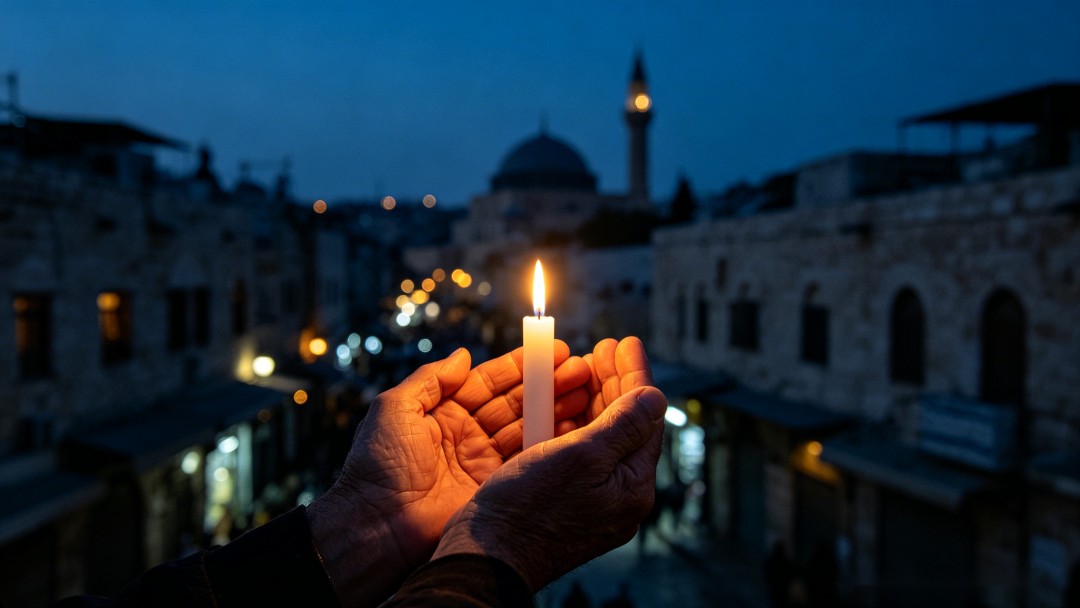
From Afghanistan to Iraq, Syria to various African countries, when bombs go off, the destroyed neighborhoods, markets, and mosques are almost always places where everyday locals are just trying to live their lives—nobody cares what faith they practice, as they are simply walking down the street, heading to work, or grabbing a bite to eat for their kids.
Late-night candlelight
Because of this harsh reality, polls consistently show that extremism and violence rank at the very top of what Muslims are frustrated with in their societies; they aren't just sitting back watching the chaos, they are literally paying for it with their lives.
To put it bluntly, extremism is the ultimate betrayal of the very people it claims it's going to save.
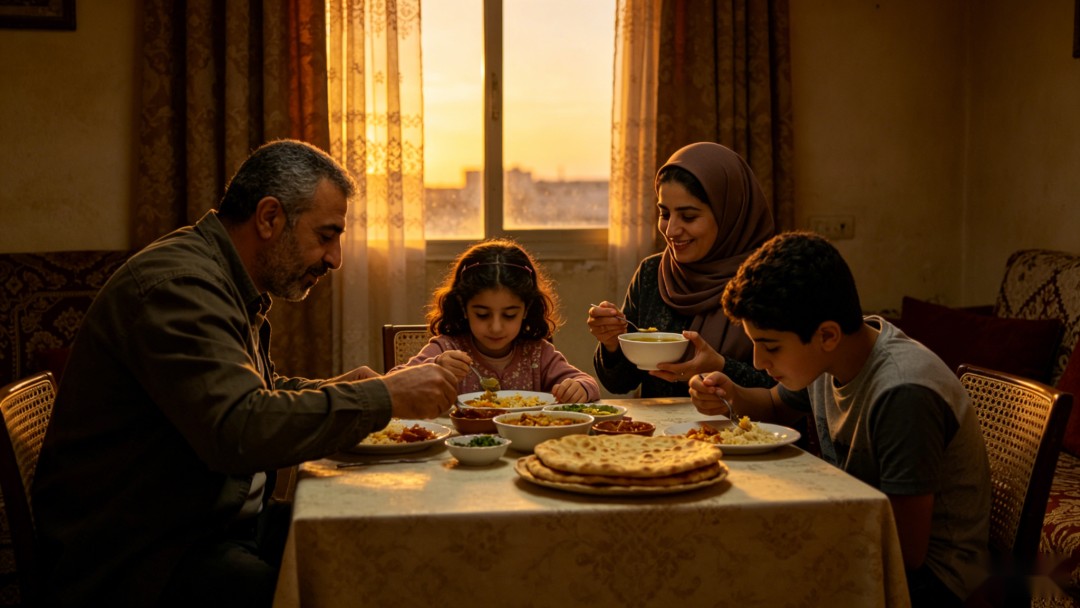
If you sit down and chat with everyday Muslims, you will realize they quietly crave the exact same normal, everyday things we do: a stable job, reliable social security, knowing their kids can go to school safely without war interrupting their lives, or even minor perks like a traffic-free commute on the highway. How are they any different from us?
Family dinner at dusk
Yet whenever the cameras turn toward them, the media usually only pushes one specific narrative—gunfire, black flags, and shouting slogans—as if that is the entirety of their existence. There's a famous line from the movie Dying to Survive that says, 'There is only one disease in this world, and that is being poor.' It totally fits here, because a lot of so-called 'clashes of civilizations' actually stem from a massive gap in a sense of security and long-term blocked economic opportunities, which easily pushes people toward extremes.
So, writing everyone off by saying 'that is just how they are' isn't just deeply unfair to them; in a way, it’s giving free PR to terrorists and handing the microphone over to them.
Part 4: The Gap in Understanding Is Scarier Than Any Physical Divide
There is a pretty ironic detail here: when pollsters ask Americans, 'How much do you actually know about Muslims?', a ton of people straight-up reply, 'Nothing at all' or 'I have no idea.' But the moment they jump into an online comments section to trash Muslims, their tone is super confident, like they just graduated top of their class from a 'truth seminar.'
It’s kind of like giving a TV show a one-star review without watching a single episode, claiming 'it's absolute trash,' and when someone asks you why it's so bad, you just say, 'I can figure that out using my toes.'
The two banks of the foggy valley
Looking at it from the flip side, plenty of Muslims have huge misunderstandings about the Western world too. Some genuinely believe that everyone over there from top to bottom is actively plotting a massive war against their faith, taking random political gaffes as 'exposing their true nature' and convincing themselves the other side views them as an enemy at heart.
By that point, both sides are totally convinced they have each other completely figured out, but what they are actually seeing are just straw men built out of their own emotional projections. While they're out here fighting imaginary villains, nobody actually understands the real human beings on the other side.
Kafka’s novels are always full of these worlds where people completely fail to understand each other, leaving only cold bureaucratic systems and labels behind. Honestly, way more than 'pure evil,' what really scares me is this kind of lazy, self-righteous ignorance—it doesn't march with megaphones or push any buttons, but it quietly throws fuel on the fire of bias every single day.
You see the exact same thing in tons of online arguments: people will yell about 'waking up to reality' while flat-out refusing to read a complete set of facts or data. The second a news story matches their pre-existing biases, they instantly wave it around like absolute proof. In that sense, internet users in the East and West are honestly super similar.
Not understanding the other side isn't scary; what's terrifying is being totally clueless while acting like you've already figured it all out.
Part 5: Boiling Complex Humans Down Into Lazy Buzzwords Is the Ultimate Form of Laziness
We love packaging the world into convenient 'value meals'—assuming Muslims always look or act a certain way, specific countries possess rigid personality traits, or certain skin colors equal instant danger. Relying on labels saves your brain from doing any heavy lifting, kind of like buying pre-made hot pot base at the grocery store and just throwing it in the pot. The only catch is that the flavor you end up tasting is always whatever someone else pre-mixed for you.
A mannequin covered in sticky notes
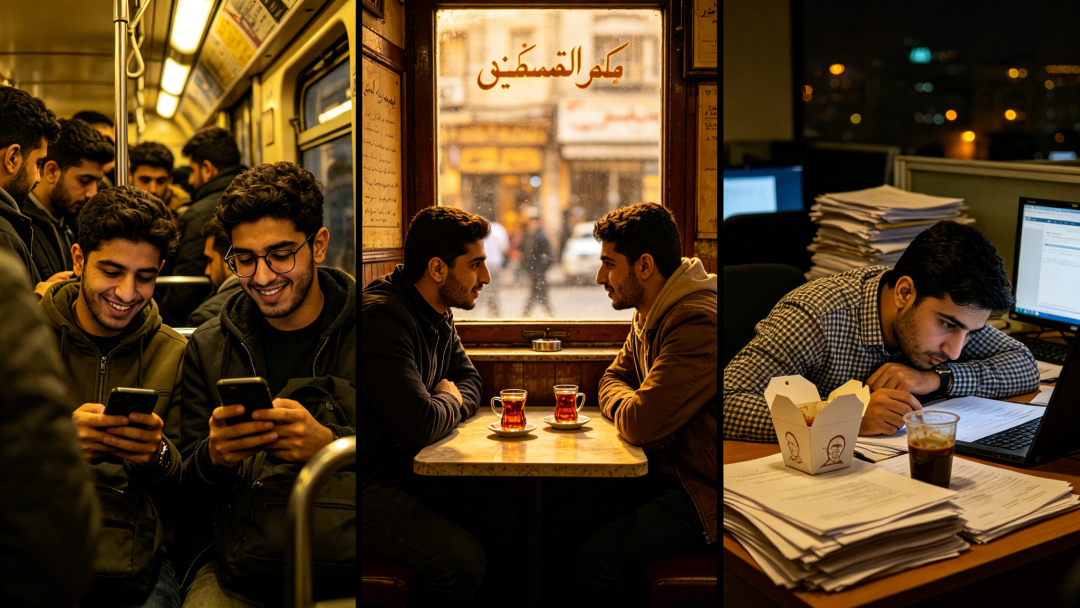
But when you actually look at everyday people up close, the vibe is completely different. On the packed subway in Cairo, loud young folks are scrolling through TikTok-style short videos, laughing at the exact same memes we do; in Tehran cafes, young couples secretly flirt and stress out about getting yelled at if their parents find out; and in Jakarta office buildings, desk workers dealing with last-minute client revisions are just ordering late-night delivery and trying to nap on their keyboards like everyone else.
The daily lives of the same kinds of people across three different cities
These concrete, mundane little details are what a place's real identity is all about. Yet in mainstream narratives, they completely vanish, leaving behind massive, empty buzzwords like 'Muslims,' 'the West,' or 'the clash of civilizations.' Big buzzwords sound impressive, but they completely strip away people's humanity and flatten them out. Best Halal Food in Shanghai: Authentic Hui Muslim Street Food and Beef Shengjianbao
Stephen Chow’s movie *A Chinese Odyssey* has this iconic line: "I had a true love in front of me, but I didn't cherish it." Many people handle other cultures the same way. They have the chance to meet real, living people, but they throw it away, preferring to spend their time in comment sections fighting imaginary enemies they’ve built up in their own heads.
Once you get into the habit of starting sentences with "They’re all like..." or "They’re all the same," the world starts to turn into something cold and rigid. All the nuance, the hesitation, the internal struggles, and the complexity get sanded down until all that’s left is a head-on collision.
Anthropology has always held onto one simple belief: if you just look at the actual people and listen to their whole story, you’ll realize that behind every "dangerous" label is a messy, complicated reality. There’s good and there’s not-so-good, but it’s almost never purely black and white.
It’s actually that lack of 'purity' that makes it possible for us to have a conversation in the first place.
Section 6: Hatred loves to be mistaken for the 'collective will.'
One of the sneakiest things about terrorism is how well it exploits our human tendency to think in group stereotypes.
When extremists do something horrific, they almost always claim to act in the name of a group—whether it’s a religion, an ethnicity, or history. This is where ordinary people get trapped: on one side, you have the public saying, "Your people are all like that," and on the other, you have extremists whispering, "See? They already treat you like an enemy. You might as well join us."
If the outside world insists that "they all support violence," they’re basically giving those extremists a green light and confirming, "Yes, you really do represent that group." It locks a situation that might have had some wiggle room into a total stalemate.
Conversely, if we consistently keep the "crimes" tied to the specific individuals who committed them—being clear about who did what and holding them accountable rather than lazily attacking an entire region or a sacred text—the people caught in the middle will see that there’s still room left in this world for them to choose their own path.
There’s a brutal line in the movie *Let the Bullets Fly*: "I’m giving you a chance to be a better person." In international relations, that’s actually a pretty profound concept. The more room a society gives someone to choose a better way, the less room there is for extremism to grow.
Shadows in the corner.
What hate is truly afraid of isn't a counter-attack, but being seen for what it is. As long as the vast majority of people refuse to accept that "you represent us," hate is forced to sit in the corner and talk to itself.
Section 7: Ditch the 'clash of civilizations' script and learn a little everyday curiosity.
At this point, you might ask: what can an average person actually do? We aren't writing policy and we don't have a megaphone. What can we even change?
Honestly, maybe not much, but it’s not nothing. One subtle change is to ask yourself before you speak: "Do I actually know the facts, or am I just riding a wave of emotion?"
For example, when you see a negative news story about a certain country, don’t rush to conclude that "they’re just like that." Try rephrasing it to: "A group of people within that country did this thing." Those few extra words change your entire mindset and leave a little more breathing room for others.
Or, when you meet someone from a group you aren't familiar with, don't lead with a label. Just ask, "What do you usually get up to?" You’ll find out they also stress about mortgages, late nights at the office, their kids' homework, binge-watching shows, and high prices. Suddenly, the world feels a lot less alien.
In his collection *Call to Arms*, Lu Xun wrote that he wrote to "save the children." After years of doing field research, I’ve started to feel that what we really need to save is the child in us—the one who still has a shred of curiosity before it gets snuffed out by adult prejudices.
There are plenty of problems in this world, and conflicts won't vanish overnight. But the scariest problem is when we lock an entire group of people into a single word, denying them the chance to explain themselves and denying ourselves the chance to understand them in a new way.
Peace isn't just some grand, abstract concept. In daily life, it’s just saying, "Tell me your side." It’s the patience to think, "This person might be different from me, but that doesn't mean they don't deserve to be treated as an individual." It’s just leaving a comment when you see someone equate "Muslims" with "terrorists" that says, "Actually, it’s not that simple."
See? These things aren't hard. What’s hard is deciding, in that moment when you’re feeling the most riled up, to hit the brakes.
Final thoughts: Don't let the world be spoken for by the violence of a few.
If you look back at that data, you’ll find a pretty encouraging reality: in many Muslim-majority societies, there is a much firmer stance against violence toward civilians than we usually imagine—in some cases, it’s even clearer than in places that consider themselves the "center of civilization."
Hatred doesn't naturally grow out of a specific faith. It grows in the soil of long-term neglect, in wounds that have been diagnosed with bias, and in those moments when we’re just too lazy to actually understand each other.
So, when someone asks, "Do all Muslims sympathize with terrorist activities?"—that question itself is already being led by emotion. The real question we should be asking ourselves is this—
Whether we’re ready to admit it or not, most regular people around the world—no matter what they believe or don't believe—are actually just like you and me; they’re afraid of dying, afraid of pain, and worried about their kids, and they definitely don’t have any romantic illusions about bombs or gunfire.
Setting sail at sunrise.
If one day, when we talk about 'them,' we use a little more common sense instead of that 'I already knew what you were like' attitude, the people who are actually dangerous will find themselves a lot more isolated.
The world is a huge place with plenty of problems, but life is worth more than our opinions, and people are way more interesting and complex than any labels we slap on them; for all those places that have been misunderstood, one day we’ll need to come together and help find the right solutions. view all
[Internet Repost]
By citing long-term, large-scale survey data from authoritative international bodies like Gallup covering dozens of countries, we can use objective facts to break down the stereotypical link between the Muslim community and violence. The data shows that the vast majority of Muslims firmly oppose violence against civilians and cherish peace and order.
The percentage of people who oppose violence is actually higher in Muslim-majority countries than in the United States.
Don't let the violence of a small minority speak for everyone.

A lone boat in the middle of a storm.
If you’re scrolling through your phone late at night, you’ve probably seen it: a comment section under an international news post turning into an absolute mess. Someone says, 'Aren’t all people from that place like that?' and a flood of 'Yeah,' 'Born to be militant,' or 'They're violent to the core' follows. It’s said so casually, as if the fate of over a billion people deserves to be packed up and written off by a single label.
There’s been a dangerous trend online these past few years where the more aggressive your emotions, the easier it is to end up at the center of the conversation. Our complex world is slowly being squeezed into a few simple, crude words: Muslim, terror, hate—they seem like an automatically paired set. If anyone dares to say, 'It’s not quite like that,' someone immediately challenges them: 'Then explain why the terrorists are always the ones who follow this religion.'
Sometimes when I look at these arguments, I’m reminded of that line from the book 'To Live': 'People live for just one breath.' Yet in the public arena, some people don't even want to leave that breath for others; they just toss a billion people into the same pot and say, 'Whatever, they’re all basically the same.'
1. A set of data, poking a hole in a common assumption.
Let’s start with a pretty heartbreaking detail: many people assume Muslims are inherently 'understanding' or 'sympathetic' toward terrorist activities, but one set of surveys absolutely shatters that narrative.
An organization once asked, in the same year, both ordinary American citizens and people in several Muslim-majority countries: 'Do you feel that violent acts intended to target civilians are unjustifiable under any circumstances?'
The results were actually pretty counter-intuitive: only about half of Americans said it was 'wrong no matter what,' while in Indonesia, Pakistan, Bangladesh, and Iran, the vast majority strongly opposed such attacks. The percentages were significantly higher than in the U.S., with some countries having numbers well over two-thirds.

A comparison of the percentages opposing attacks on civilians.
Look at another question: Does anyone think 'attacks targeting civilians are completely justifiable under certain circumstances'? In the U.S., about one in twenty people nodded in agreement. In those Middle Eastern countries? The proportion was even lower than that, with some representing only a tiny fraction.
See, numbers are cold, but sometimes they’re more useful than shouting matches. Many people shout about being 'rational,' but their actions show they only acknowledge the stories they want to hear, not the facts.
So, that narrative that 'Muslims are naturally more prone to supporting terror' is just like the prejudice that 'all out-of-towners drive recklessly.' It’s a shortcut for a lazy brain: easy to remember, easy to bash, and easy to hurt people with.
Tolstoy wrote in 'War and Peace' that what truly drives history is often not some 'genius,' but the choices of ordinary people. It’s the same here. Extremists make a massive amount of noise and steal the spotlight, but behind them are even more silent, ordinary people. These folks are just like workers anywhere else, worrying about their kids' tuition and their monthly utility bills—they have zero romantic fantasies about bombs.
It’s just that they don’t make it to the trending topics.
2. If you 'diagnose' the problem wrong, the medicine just keeps getting stronger.
Many people like to explain the world with one phrase: 'It’s all the religion's fault.' It’s as if every problem can be settled once and for all simply by pinning it on a specific faith; it's convenient and simple.
This approach looks satisfying, but it’s really like a shady street doctor who sees someone coughing and claims they have 'cold poison in their bones.' Whether the person has a cold or an allergy, they prescribe a massive dose of tonic anyway. The illness doesn't get better, but the side effects are endless.
The reality of the situation is much more complicated. Terrorism is more like a 'social contagion,' and religion is just a cloak borrowed during its spread. The real fuel is long-term humiliation, a sense of injustice, ignored anger, and that despair of 'no one listens to what I have to say, so I have to use the most extreme methods just to make someone look at me.'
The research mentions that there are over a billion Muslims in the world. Even if you take only a small fraction, about seven percent, who are categorized as 'politically radical,' that number doesn't sound like much—but in absolute terms, that’s a group in the tens of millions. They aren’t all terrorists, but they have long felt suppressed, disrespected, and like no one is willing to listen to reason. That kind of mental state is only a few lines of 'the world has betrayed you' away from extremist agitation.
If someone insists on diagnosing all of this as 'there is something wrong with a specific religion itself,' what will the result be? It’s simple: it will push the entire sea of moderate people toward those few little boats, and make those who are still hesitant truly believe the claim: 'See, they really do hate our faith.'
Gabriel García Márquez wrote in 'One Hundred Years of Solitude' that a family becomes increasingly unhinged in isolation. It’s a bit like the situation of many Muslim communities: on one hand, they are kidnapped by extreme voices from within, and on the other, they are surrounded by general suspicion from the outside. The more they try to prove 'I am not what you say I am,' the more they realize no one has the patience to actually listen to what they have to say.
At this rate, terrorists actually have it pretty 'easy.' They don't have to do much; they just wait for the world to feed itself a full dose of the 'wrong medicine.'
Part 3: The Grim Reality of Who Actually Pays the Ultimate Price
There is a brutal, often overlooked truth that needs to be laid out: the vast majority of casualties in terrorist attacks are actually Muslims.
From Afghanistan to Iraq, Syria to various African countries, when bombs go off, the destroyed neighborhoods, markets, and mosques are almost always places where everyday locals are just trying to live their lives—nobody cares what faith they practice, as they are simply walking down the street, heading to work, or grabbing a bite to eat for their kids.
Late-night candlelight
Because of this harsh reality, polls consistently show that extremism and violence rank at the very top of what Muslims are frustrated with in their societies; they aren't just sitting back watching the chaos, they are literally paying for it with their lives.
To put it bluntly, extremism is the ultimate betrayal of the very people it claims it's going to save.
If you sit down and chat with everyday Muslims, you will realize they quietly crave the exact same normal, everyday things we do: a stable job, reliable social security, knowing their kids can go to school safely without war interrupting their lives, or even minor perks like a traffic-free commute on the highway. How are they any different from us?
Family dinner at dusk
Yet whenever the cameras turn toward them, the media usually only pushes one specific narrative—gunfire, black flags, and shouting slogans—as if that is the entirety of their existence. There's a famous line from the movie Dying to Survive that says, 'There is only one disease in this world, and that is being poor.' It totally fits here, because a lot of so-called 'clashes of civilizations' actually stem from a massive gap in a sense of security and long-term blocked economic opportunities, which easily pushes people toward extremes.
So, writing everyone off by saying 'that is just how they are' isn't just deeply unfair to them; in a way, it’s giving free PR to terrorists and handing the microphone over to them.
Part 4: The Gap in Understanding Is Scarier Than Any Physical Divide
There is a pretty ironic detail here: when pollsters ask Americans, 'How much do you actually know about Muslims?', a ton of people straight-up reply, 'Nothing at all' or 'I have no idea.' But the moment they jump into an online comments section to trash Muslims, their tone is super confident, like they just graduated top of their class from a 'truth seminar.'
It’s kind of like giving a TV show a one-star review without watching a single episode, claiming 'it's absolute trash,' and when someone asks you why it's so bad, you just say, 'I can figure that out using my toes.'

The two banks of the foggy valley
Looking at it from the flip side, plenty of Muslims have huge misunderstandings about the Western world too. Some genuinely believe that everyone over there from top to bottom is actively plotting a massive war against their faith, taking random political gaffes as 'exposing their true nature' and convincing themselves the other side views them as an enemy at heart.
By that point, both sides are totally convinced they have each other completely figured out, but what they are actually seeing are just straw men built out of their own emotional projections. While they're out here fighting imaginary villains, nobody actually understands the real human beings on the other side.
Kafka’s novels are always full of these worlds where people completely fail to understand each other, leaving only cold bureaucratic systems and labels behind. Honestly, way more than 'pure evil,' what really scares me is this kind of lazy, self-righteous ignorance—it doesn't march with megaphones or push any buttons, but it quietly throws fuel on the fire of bias every single day.
You see the exact same thing in tons of online arguments: people will yell about 'waking up to reality' while flat-out refusing to read a complete set of facts or data. The second a news story matches their pre-existing biases, they instantly wave it around like absolute proof. In that sense, internet users in the East and West are honestly super similar.
Not understanding the other side isn't scary; what's terrifying is being totally clueless while acting like you've already figured it all out.
Part 5: Boiling Complex Humans Down Into Lazy Buzzwords Is the Ultimate Form of Laziness
We love packaging the world into convenient 'value meals'—assuming Muslims always look or act a certain way, specific countries possess rigid personality traits, or certain skin colors equal instant danger. Relying on labels saves your brain from doing any heavy lifting, kind of like buying pre-made hot pot base at the grocery store and just throwing it in the pot. The only catch is that the flavor you end up tasting is always whatever someone else pre-mixed for you.

A mannequin covered in sticky notes
But when you actually look at everyday people up close, the vibe is completely different. On the packed subway in Cairo, loud young folks are scrolling through TikTok-style short videos, laughing at the exact same memes we do; in Tehran cafes, young couples secretly flirt and stress out about getting yelled at if their parents find out; and in Jakarta office buildings, desk workers dealing with last-minute client revisions are just ordering late-night delivery and trying to nap on their keyboards like everyone else.
The daily lives of the same kinds of people across three different cities
These concrete, mundane little details are what a place's real identity is all about. Yet in mainstream narratives, they completely vanish, leaving behind massive, empty buzzwords like 'Muslims,' 'the West,' or 'the clash of civilizations.' Big buzzwords sound impressive, but they completely strip away people's humanity and flatten them out. Best Halal Food in Shanghai: Authentic Hui Muslim Street Food and Beef Shengjianbao
Stephen Chow’s movie *A Chinese Odyssey* has this iconic line: "I had a true love in front of me, but I didn't cherish it." Many people handle other cultures the same way. They have the chance to meet real, living people, but they throw it away, preferring to spend their time in comment sections fighting imaginary enemies they’ve built up in their own heads.
Once you get into the habit of starting sentences with "They’re all like..." or "They’re all the same," the world starts to turn into something cold and rigid. All the nuance, the hesitation, the internal struggles, and the complexity get sanded down until all that’s left is a head-on collision.
Anthropology has always held onto one simple belief: if you just look at the actual people and listen to their whole story, you’ll realize that behind every "dangerous" label is a messy, complicated reality. There’s good and there’s not-so-good, but it’s almost never purely black and white.
It’s actually that lack of 'purity' that makes it possible for us to have a conversation in the first place.
Section 6: Hatred loves to be mistaken for the 'collective will.'
One of the sneakiest things about terrorism is how well it exploits our human tendency to think in group stereotypes.
When extremists do something horrific, they almost always claim to act in the name of a group—whether it’s a religion, an ethnicity, or history. This is where ordinary people get trapped: on one side, you have the public saying, "Your people are all like that," and on the other, you have extremists whispering, "See? They already treat you like an enemy. You might as well join us."
If the outside world insists that "they all support violence," they’re basically giving those extremists a green light and confirming, "Yes, you really do represent that group." It locks a situation that might have had some wiggle room into a total stalemate.
Conversely, if we consistently keep the "crimes" tied to the specific individuals who committed them—being clear about who did what and holding them accountable rather than lazily attacking an entire region or a sacred text—the people caught in the middle will see that there’s still room left in this world for them to choose their own path.
There’s a brutal line in the movie *Let the Bullets Fly*: "I’m giving you a chance to be a better person." In international relations, that’s actually a pretty profound concept. The more room a society gives someone to choose a better way, the less room there is for extremism to grow.
Shadows in the corner.
What hate is truly afraid of isn't a counter-attack, but being seen for what it is. As long as the vast majority of people refuse to accept that "you represent us," hate is forced to sit in the corner and talk to itself.
Section 7: Ditch the 'clash of civilizations' script and learn a little everyday curiosity.
At this point, you might ask: what can an average person actually do? We aren't writing policy and we don't have a megaphone. What can we even change?
Honestly, maybe not much, but it’s not nothing. One subtle change is to ask yourself before you speak: "Do I actually know the facts, or am I just riding a wave of emotion?"
For example, when you see a negative news story about a certain country, don’t rush to conclude that "they’re just like that." Try rephrasing it to: "A group of people within that country did this thing." Those few extra words change your entire mindset and leave a little more breathing room for others.
Or, when you meet someone from a group you aren't familiar with, don't lead with a label. Just ask, "What do you usually get up to?" You’ll find out they also stress about mortgages, late nights at the office, their kids' homework, binge-watching shows, and high prices. Suddenly, the world feels a lot less alien.
In his collection *Call to Arms*, Lu Xun wrote that he wrote to "save the children." After years of doing field research, I’ve started to feel that what we really need to save is the child in us—the one who still has a shred of curiosity before it gets snuffed out by adult prejudices.
There are plenty of problems in this world, and conflicts won't vanish overnight. But the scariest problem is when we lock an entire group of people into a single word, denying them the chance to explain themselves and denying ourselves the chance to understand them in a new way.
Peace isn't just some grand, abstract concept. In daily life, it’s just saying, "Tell me your side." It’s the patience to think, "This person might be different from me, but that doesn't mean they don't deserve to be treated as an individual." It’s just leaving a comment when you see someone equate "Muslims" with "terrorists" that says, "Actually, it’s not that simple."
See? These things aren't hard. What’s hard is deciding, in that moment when you’re feeling the most riled up, to hit the brakes.
Final thoughts: Don't let the world be spoken for by the violence of a few.
If you look back at that data, you’ll find a pretty encouraging reality: in many Muslim-majority societies, there is a much firmer stance against violence toward civilians than we usually imagine—in some cases, it’s even clearer than in places that consider themselves the "center of civilization."
Hatred doesn't naturally grow out of a specific faith. It grows in the soil of long-term neglect, in wounds that have been diagnosed with bias, and in those moments when we’re just too lazy to actually understand each other.
So, when someone asks, "Do all Muslims sympathize with terrorist activities?"—that question itself is already being led by emotion. The real question we should be asking ourselves is this—
Whether we’re ready to admit it or not, most regular people around the world—no matter what they believe or don't believe—are actually just like you and me; they’re afraid of dying, afraid of pain, and worried about their kids, and they definitely don’t have any romantic illusions about bombs or gunfire.

Setting sail at sunrise.
If one day, when we talk about 'them,' we use a little more common sense instead of that 'I already knew what you were like' attitude, the people who are actually dangerous will find themselves a lot more isolated.
The world is a huge place with plenty of problems, but life is worth more than our opinions, and people are way more interesting and complex than any labels we slap on them; for all those places that have been misunderstood, one day we’ll need to come together and help find the right solutions.
By citing long-term, large-scale survey data from authoritative international bodies like Gallup covering dozens of countries, we can use objective facts to break down the stereotypical link between the Muslim community and violence. The data shows that the vast majority of Muslims firmly oppose violence against civilians and cherish peace and order.
The percentage of people who oppose violence is actually higher in Muslim-majority countries than in the United States.
Don't let the violence of a small minority speak for everyone.
A lone boat in the middle of a storm.
If you’re scrolling through your phone late at night, you’ve probably seen it: a comment section under an international news post turning into an absolute mess. Someone says, 'Aren’t all people from that place like that?' and a flood of 'Yeah,' 'Born to be militant,' or 'They're violent to the core' follows. It’s said so casually, as if the fate of over a billion people deserves to be packed up and written off by a single label.
There’s been a dangerous trend online these past few years where the more aggressive your emotions, the easier it is to end up at the center of the conversation. Our complex world is slowly being squeezed into a few simple, crude words: Muslim, terror, hate—they seem like an automatically paired set. If anyone dares to say, 'It’s not quite like that,' someone immediately challenges them: 'Then explain why the terrorists are always the ones who follow this religion.'
Sometimes when I look at these arguments, I’m reminded of that line from the book 'To Live': 'People live for just one breath.' Yet in the public arena, some people don't even want to leave that breath for others; they just toss a billion people into the same pot and say, 'Whatever, they’re all basically the same.'
1. A set of data, poking a hole in a common assumption.
Let’s start with a pretty heartbreaking detail: many people assume Muslims are inherently 'understanding' or 'sympathetic' toward terrorist activities, but one set of surveys absolutely shatters that narrative.
An organization once asked, in the same year, both ordinary American citizens and people in several Muslim-majority countries: 'Do you feel that violent acts intended to target civilians are unjustifiable under any circumstances?'
The results were actually pretty counter-intuitive: only about half of Americans said it was 'wrong no matter what,' while in Indonesia, Pakistan, Bangladesh, and Iran, the vast majority strongly opposed such attacks. The percentages were significantly higher than in the U.S., with some countries having numbers well over two-thirds.
A comparison of the percentages opposing attacks on civilians.
Look at another question: Does anyone think 'attacks targeting civilians are completely justifiable under certain circumstances'? In the U.S., about one in twenty people nodded in agreement. In those Middle Eastern countries? The proportion was even lower than that, with some representing only a tiny fraction.
See, numbers are cold, but sometimes they’re more useful than shouting matches. Many people shout about being 'rational,' but their actions show they only acknowledge the stories they want to hear, not the facts.
So, that narrative that 'Muslims are naturally more prone to supporting terror' is just like the prejudice that 'all out-of-towners drive recklessly.' It’s a shortcut for a lazy brain: easy to remember, easy to bash, and easy to hurt people with.
Tolstoy wrote in 'War and Peace' that what truly drives history is often not some 'genius,' but the choices of ordinary people. It’s the same here. Extremists make a massive amount of noise and steal the spotlight, but behind them are even more silent, ordinary people. These folks are just like workers anywhere else, worrying about their kids' tuition and their monthly utility bills—they have zero romantic fantasies about bombs.
It’s just that they don’t make it to the trending topics.
2. If you 'diagnose' the problem wrong, the medicine just keeps getting stronger.
Many people like to explain the world with one phrase: 'It’s all the religion's fault.' It’s as if every problem can be settled once and for all simply by pinning it on a specific faith; it's convenient and simple.
This approach looks satisfying, but it’s really like a shady street doctor who sees someone coughing and claims they have 'cold poison in their bones.' Whether the person has a cold or an allergy, they prescribe a massive dose of tonic anyway. The illness doesn't get better, but the side effects are endless.
The reality of the situation is much more complicated. Terrorism is more like a 'social contagion,' and religion is just a cloak borrowed during its spread. The real fuel is long-term humiliation, a sense of injustice, ignored anger, and that despair of 'no one listens to what I have to say, so I have to use the most extreme methods just to make someone look at me.'
The research mentions that there are over a billion Muslims in the world. Even if you take only a small fraction, about seven percent, who are categorized as 'politically radical,' that number doesn't sound like much—but in absolute terms, that’s a group in the tens of millions. They aren’t all terrorists, but they have long felt suppressed, disrespected, and like no one is willing to listen to reason. That kind of mental state is only a few lines of 'the world has betrayed you' away from extremist agitation.
If someone insists on diagnosing all of this as 'there is something wrong with a specific religion itself,' what will the result be? It’s simple: it will push the entire sea of moderate people toward those few little boats, and make those who are still hesitant truly believe the claim: 'See, they really do hate our faith.'
Gabriel García Márquez wrote in 'One Hundred Years of Solitude' that a family becomes increasingly unhinged in isolation. It’s a bit like the situation of many Muslim communities: on one hand, they are kidnapped by extreme voices from within, and on the other, they are surrounded by general suspicion from the outside. The more they try to prove 'I am not what you say I am,' the more they realize no one has the patience to actually listen to what they have to say.
At this rate, terrorists actually have it pretty 'easy.' They don't have to do much; they just wait for the world to feed itself a full dose of the 'wrong medicine.'
Part 3: The Grim Reality of Who Actually Pays the Ultimate Price
There is a brutal, often overlooked truth that needs to be laid out: the vast majority of casualties in terrorist attacks are actually Muslims.
From Afghanistan to Iraq, Syria to various African countries, when bombs go off, the destroyed neighborhoods, markets, and mosques are almost always places where everyday locals are just trying to live their lives—nobody cares what faith they practice, as they are simply walking down the street, heading to work, or grabbing a bite to eat for their kids.
Late-night candlelight
Because of this harsh reality, polls consistently show that extremism and violence rank at the very top of what Muslims are frustrated with in their societies; they aren't just sitting back watching the chaos, they are literally paying for it with their lives.
To put it bluntly, extremism is the ultimate betrayal of the very people it claims it's going to save.
If you sit down and chat with everyday Muslims, you will realize they quietly crave the exact same normal, everyday things we do: a stable job, reliable social security, knowing their kids can go to school safely without war interrupting their lives, or even minor perks like a traffic-free commute on the highway. How are they any different from us?
Family dinner at dusk
Yet whenever the cameras turn toward them, the media usually only pushes one specific narrative—gunfire, black flags, and shouting slogans—as if that is the entirety of their existence. There's a famous line from the movie Dying to Survive that says, 'There is only one disease in this world, and that is being poor.' It totally fits here, because a lot of so-called 'clashes of civilizations' actually stem from a massive gap in a sense of security and long-term blocked economic opportunities, which easily pushes people toward extremes.
So, writing everyone off by saying 'that is just how they are' isn't just deeply unfair to them; in a way, it’s giving free PR to terrorists and handing the microphone over to them.
Part 4: The Gap in Understanding Is Scarier Than Any Physical Divide
There is a pretty ironic detail here: when pollsters ask Americans, 'How much do you actually know about Muslims?', a ton of people straight-up reply, 'Nothing at all' or 'I have no idea.' But the moment they jump into an online comments section to trash Muslims, their tone is super confident, like they just graduated top of their class from a 'truth seminar.'
It’s kind of like giving a TV show a one-star review without watching a single episode, claiming 'it's absolute trash,' and when someone asks you why it's so bad, you just say, 'I can figure that out using my toes.'
The two banks of the foggy valley
Looking at it from the flip side, plenty of Muslims have huge misunderstandings about the Western world too. Some genuinely believe that everyone over there from top to bottom is actively plotting a massive war against their faith, taking random political gaffes as 'exposing their true nature' and convincing themselves the other side views them as an enemy at heart.
By that point, both sides are totally convinced they have each other completely figured out, but what they are actually seeing are just straw men built out of their own emotional projections. While they're out here fighting imaginary villains, nobody actually understands the real human beings on the other side.
Kafka’s novels are always full of these worlds where people completely fail to understand each other, leaving only cold bureaucratic systems and labels behind. Honestly, way more than 'pure evil,' what really scares me is this kind of lazy, self-righteous ignorance—it doesn't march with megaphones or push any buttons, but it quietly throws fuel on the fire of bias every single day.
You see the exact same thing in tons of online arguments: people will yell about 'waking up to reality' while flat-out refusing to read a complete set of facts or data. The second a news story matches their pre-existing biases, they instantly wave it around like absolute proof. In that sense, internet users in the East and West are honestly super similar.
Not understanding the other side isn't scary; what's terrifying is being totally clueless while acting like you've already figured it all out.
Part 5: Boiling Complex Humans Down Into Lazy Buzzwords Is the Ultimate Form of Laziness
We love packaging the world into convenient 'value meals'—assuming Muslims always look or act a certain way, specific countries possess rigid personality traits, or certain skin colors equal instant danger. Relying on labels saves your brain from doing any heavy lifting, kind of like buying pre-made hot pot base at the grocery store and just throwing it in the pot. The only catch is that the flavor you end up tasting is always whatever someone else pre-mixed for you.
A mannequin covered in sticky notes
But when you actually look at everyday people up close, the vibe is completely different. On the packed subway in Cairo, loud young folks are scrolling through TikTok-style short videos, laughing at the exact same memes we do; in Tehran cafes, young couples secretly flirt and stress out about getting yelled at if their parents find out; and in Jakarta office buildings, desk workers dealing with last-minute client revisions are just ordering late-night delivery and trying to nap on their keyboards like everyone else.
The daily lives of the same kinds of people across three different cities
These concrete, mundane little details are what a place's real identity is all about. Yet in mainstream narratives, they completely vanish, leaving behind massive, empty buzzwords like 'Muslims,' 'the West,' or 'the clash of civilizations.' Big buzzwords sound impressive, but they completely strip away people's humanity and flatten them out. Best Halal Food in Shanghai: Authentic Hui Muslim Street Food and Beef Shengjianbao
Stephen Chow’s movie *A Chinese Odyssey* has this iconic line: "I had a true love in front of me, but I didn't cherish it." Many people handle other cultures the same way. They have the chance to meet real, living people, but they throw it away, preferring to spend their time in comment sections fighting imaginary enemies they’ve built up in their own heads.
Once you get into the habit of starting sentences with "They’re all like..." or "They’re all the same," the world starts to turn into something cold and rigid. All the nuance, the hesitation, the internal struggles, and the complexity get sanded down until all that’s left is a head-on collision.
Anthropology has always held onto one simple belief: if you just look at the actual people and listen to their whole story, you’ll realize that behind every "dangerous" label is a messy, complicated reality. There’s good and there’s not-so-good, but it’s almost never purely black and white.
It’s actually that lack of 'purity' that makes it possible for us to have a conversation in the first place.
Section 6: Hatred loves to be mistaken for the 'collective will.'
One of the sneakiest things about terrorism is how well it exploits our human tendency to think in group stereotypes.
When extremists do something horrific, they almost always claim to act in the name of a group—whether it’s a religion, an ethnicity, or history. This is where ordinary people get trapped: on one side, you have the public saying, "Your people are all like that," and on the other, you have extremists whispering, "See? They already treat you like an enemy. You might as well join us."
If the outside world insists that "they all support violence," they’re basically giving those extremists a green light and confirming, "Yes, you really do represent that group." It locks a situation that might have had some wiggle room into a total stalemate.
Conversely, if we consistently keep the "crimes" tied to the specific individuals who committed them—being clear about who did what and holding them accountable rather than lazily attacking an entire region or a sacred text—the people caught in the middle will see that there’s still room left in this world for them to choose their own path.
There’s a brutal line in the movie *Let the Bullets Fly*: "I’m giving you a chance to be a better person." In international relations, that’s actually a pretty profound concept. The more room a society gives someone to choose a better way, the less room there is for extremism to grow.
Shadows in the corner.
What hate is truly afraid of isn't a counter-attack, but being seen for what it is. As long as the vast majority of people refuse to accept that "you represent us," hate is forced to sit in the corner and talk to itself.
Section 7: Ditch the 'clash of civilizations' script and learn a little everyday curiosity.
At this point, you might ask: what can an average person actually do? We aren't writing policy and we don't have a megaphone. What can we even change?
Honestly, maybe not much, but it’s not nothing. One subtle change is to ask yourself before you speak: "Do I actually know the facts, or am I just riding a wave of emotion?"
For example, when you see a negative news story about a certain country, don’t rush to conclude that "they’re just like that." Try rephrasing it to: "A group of people within that country did this thing." Those few extra words change your entire mindset and leave a little more breathing room for others.
Or, when you meet someone from a group you aren't familiar with, don't lead with a label. Just ask, "What do you usually get up to?" You’ll find out they also stress about mortgages, late nights at the office, their kids' homework, binge-watching shows, and high prices. Suddenly, the world feels a lot less alien.
In his collection *Call to Arms*, Lu Xun wrote that he wrote to "save the children." After years of doing field research, I’ve started to feel that what we really need to save is the child in us—the one who still has a shred of curiosity before it gets snuffed out by adult prejudices.
There are plenty of problems in this world, and conflicts won't vanish overnight. But the scariest problem is when we lock an entire group of people into a single word, denying them the chance to explain themselves and denying ourselves the chance to understand them in a new way.
Peace isn't just some grand, abstract concept. In daily life, it’s just saying, "Tell me your side." It’s the patience to think, "This person might be different from me, but that doesn't mean they don't deserve to be treated as an individual." It’s just leaving a comment when you see someone equate "Muslims" with "terrorists" that says, "Actually, it’s not that simple."
See? These things aren't hard. What’s hard is deciding, in that moment when you’re feeling the most riled up, to hit the brakes.
Final thoughts: Don't let the world be spoken for by the violence of a few.
If you look back at that data, you’ll find a pretty encouraging reality: in many Muslim-majority societies, there is a much firmer stance against violence toward civilians than we usually imagine—in some cases, it’s even clearer than in places that consider themselves the "center of civilization."
Hatred doesn't naturally grow out of a specific faith. It grows in the soil of long-term neglect, in wounds that have been diagnosed with bias, and in those moments when we’re just too lazy to actually understand each other.
So, when someone asks, "Do all Muslims sympathize with terrorist activities?"—that question itself is already being led by emotion. The real question we should be asking ourselves is this—
Whether we’re ready to admit it or not, most regular people around the world—no matter what they believe or don't believe—are actually just like you and me; they’re afraid of dying, afraid of pain, and worried about their kids, and they definitely don’t have any romantic illusions about bombs or gunfire.
Setting sail at sunrise.
If one day, when we talk about 'them,' we use a little more common sense instead of that 'I already knew what you were like' attitude, the people who are actually dangerous will find themselves a lot more isolated.
The world is a huge place with plenty of problems, but life is worth more than our opinions, and people are way more interesting and complex than any labels we slap on them; for all those places that have been misunderstood, one day we’ll need to come together and help find the right solutions.
Global Muslim Public Opinion: Debunking Violence Stereotypes with Data-Driven Islamic Perspectives
Articles • Hasan09 posted the article • 0 comments • 62 views • 2026-10-26 09:29
[Internet Repost]
By citing long-term, large-scale survey data from authoritative international bodies like Gallup covering dozens of countries, we can use objective facts to break down the stereotypical link between the Muslim community and violence. The data shows that the vast majority of Muslims firmly oppose violence against civilians and cherish peace and order.
The percentage of people who oppose violence is actually higher in Muslim-majority countries than in the United States.
Don't let the violence of a small minority speak for everyone.
A lone boat in the middle of a storm.
If you’re scrolling through your phone late at night, you’ve probably seen it: a comment section under an international news post turning into an absolute mess. Someone says, 'Aren’t all people from that place like that?' and a flood of 'Yeah,' 'Born to be militant,' or 'They're violent to the core' follows. It’s said so casually, as if the fate of over a billion people deserves to be packed up and written off by a single label.
There’s been a dangerous trend online these past few years where the more aggressive your emotions, the easier it is to end up at the center of the conversation. Our complex world is slowly being squeezed into a few simple, crude words: Muslim, terror, hate—they seem like an automatically paired set. If anyone dares to say, 'It’s not quite like that,' someone immediately challenges them: 'Then explain why the terrorists are always the ones who follow this religion.'
Sometimes when I look at these arguments, I’m reminded of that line from the book 'To Live': 'People live for just one breath.' Yet in the public arena, some people don't even want to leave that breath for others; they just toss a billion people into the same pot and say, 'Whatever, they’re all basically the same.'
1. A set of data, poking a hole in a common assumption.
Let’s start with a pretty heartbreaking detail: many people assume Muslims are inherently 'understanding' or 'sympathetic' toward terrorist activities, but one set of surveys absolutely shatters that narrative.
An organization once asked, in the same year, both ordinary American citizens and people in several Muslim-majority countries: 'Do you feel that violent acts intended to target civilians are unjustifiable under any circumstances?'
The results were actually pretty counter-intuitive: only about half of Americans said it was 'wrong no matter what,' while in Indonesia, Pakistan, Bangladesh, and Iran, the vast majority strongly opposed such attacks. The percentages were significantly higher than in the U.S., with some countries having numbers well over two-thirds.
A comparison of the percentages opposing attacks on civilians.
Look at another question: Does anyone think 'attacks targeting civilians are completely justifiable under certain circumstances'? In the U.S., about one in twenty people nodded in agreement. In those Middle Eastern countries? The proportion was even lower than that, with some representing only a tiny fraction.
See, numbers are cold, but sometimes they’re more useful than shouting matches. Many people shout about being 'rational,' but their actions show they only acknowledge the stories they want to hear, not the facts.
So, that narrative that 'Muslims are naturally more prone to supporting terror' is just like the prejudice that 'all out-of-towners drive recklessly.' It’s a shortcut for a lazy brain: easy to remember, easy to bash, and easy to hurt people with.
Tolstoy wrote in 'War and Peace' that what truly drives history is often not some 'genius,' but the choices of ordinary people. It’s the same here. Extremists make a massive amount of noise and steal the spotlight, but behind them are even more silent, ordinary people. These folks are just like workers anywhere else, worrying about their kids' tuition and their monthly utility bills—they have zero romantic fantasies about bombs.
It’s just that they don’t make it to the trending topics.
2. If you 'diagnose' the problem wrong, the medicine just keeps getting stronger.
Many people like to explain the world with one phrase: 'It’s all the religion's fault.' It’s as if every problem can be settled once and for all simply by pinning it on a specific faith; it's convenient and simple.
This approach looks satisfying, but it’s really like a shady street doctor who sees someone coughing and claims they have 'cold poison in their bones.' Whether the person has a cold or an allergy, they prescribe a massive dose of tonic anyway. The illness doesn't get better, but the side effects are endless.
The reality of the situation is much more complicated. Terrorism is more like a 'social contagion,' and religion is just a cloak borrowed during its spread. The real fuel is long-term humiliation, a sense of injustice, ignored anger, and that despair of 'no one listens to what I have to say, so I have to use the most extreme methods just to make someone look at me.'
The research mentions that there are over a billion Muslims in the world. Even if you take only a small fraction, about seven percent, who are categorized as 'politically radical,' that number doesn't sound like much—but in absolute terms, that’s a group in the tens of millions. They aren’t all terrorists, but they have long felt suppressed, disrespected, and like no one is willing to listen to reason. That kind of mental state is only a few lines of 'the world has betrayed you' away from extremist agitation.
If someone insists on diagnosing all of this as 'there is something wrong with a specific religion itself,' what will the result be? It’s simple: it will push the entire sea of moderate people toward those few little boats, and make those who are still hesitant truly believe the claim: 'See, they really do hate our faith.'
Gabriel García Márquez wrote in 'One Hundred Years of Solitude' that a family becomes increasingly unhinged in isolation. It’s a bit like the situation of many Muslim communities: on one hand, they are kidnapped by extreme voices from within, and on the other, they are surrounded by general suspicion from the outside. The more they try to prove 'I am not what you say I am,' the more they realize no one has the patience to actually listen to what they have to say.
At this rate, terrorists actually have it pretty 'easy.' They don't have to do much; they just wait for the world to feed itself a full dose of the 'wrong medicine.'
Part 3: The Grim Reality of Who Actually Pays the Ultimate Price
There is a brutal, often overlooked truth that needs to be laid out: the vast majority of casualties in terrorist attacks are actually Muslims.
From Afghanistan to Iraq, Syria to various African countries, when bombs go off, the destroyed neighborhoods, markets, and mosques are almost always places where everyday locals are just trying to live their lives—nobody cares what faith they practice, as they are simply walking down the street, heading to work, or grabbing a bite to eat for their kids.
Late-night candlelight
Because of this harsh reality, polls consistently show that extremism and violence rank at the very top of what Muslims are frustrated with in their societies; they aren't just sitting back watching the chaos, they are literally paying for it with their lives.
To put it bluntly, extremism is the ultimate betrayal of the very people it claims it's going to save.
If you sit down and chat with everyday Muslims, you will realize they quietly crave the exact same normal, everyday things we do: a stable job, reliable social security, knowing their kids can go to school safely without war interrupting their lives, or even minor perks like a traffic-free commute on the highway. How are they any different from us?
Family dinner at dusk
Yet whenever the cameras turn toward them, the media usually only pushes one specific narrative—gunfire, black flags, and shouting slogans—as if that is the entirety of their existence. There's a famous line from the movie Dying to Survive that says, 'There is only one disease in this world, and that is being poor.' It totally fits here, because a lot of so-called 'clashes of civilizations' actually stem from a massive gap in a sense of security and long-term blocked economic opportunities, which easily pushes people toward extremes.
So, writing everyone off by saying 'that is just how they are' isn't just deeply unfair to them; in a way, it’s giving free PR to terrorists and handing the microphone over to them.
Part 4: The Gap in Understanding Is Scarier Than Any Physical Divide
There is a pretty ironic detail here: when pollsters ask Americans, 'How much do you actually know about Muslims?', a ton of people straight-up reply, 'Nothing at all' or 'I have no idea.' But the moment they jump into an online comments section to trash Muslims, their tone is super confident, like they just graduated top of their class from a 'truth seminar.'
It’s kind of like giving a TV show a one-star review without watching a single episode, claiming 'it's absolute trash,' and when someone asks you why it's so bad, you just say, 'I can figure that out using my toes.'
The two banks of the foggy valley
Looking at it from the flip side, plenty of Muslims have huge misunderstandings about the Western world too. Some genuinely believe that everyone over there from top to bottom is actively plotting a massive war against their faith, taking random political gaffes as 'exposing their true nature' and convincing themselves the other side views them as an enemy at heart.
By that point, both sides are totally convinced they have each other completely figured out, but what they are actually seeing are just straw men built out of their own emotional projections. While they're out here fighting imaginary villains, nobody actually understands the real human beings on the other side.
Kafka’s novels are always full of these worlds where people completely fail to understand each other, leaving only cold bureaucratic systems and labels behind. Honestly, way more than 'pure evil,' what really scares me is this kind of lazy, self-righteous ignorance—it doesn't march with megaphones or push any buttons, but it quietly throws fuel on the fire of bias every single day.
You see the exact same thing in tons of online arguments: people will yell about 'waking up to reality' while flat-out refusing to read a complete set of facts or data. The second a news story matches their pre-existing biases, they instantly wave it around like absolute proof. In that sense, internet users in the East and West are honestly super similar.
Not understanding the other side isn't scary; what's terrifying is being totally clueless while acting like you've already figured it all out.
Part 5: Boiling Complex Humans Down Into Lazy Buzzwords Is the Ultimate Form of Laziness
We love packaging the world into convenient 'value meals'—assuming Muslims always look or act a certain way, specific countries possess rigid personality traits, or certain skin colors equal instant danger. Relying on labels saves your brain from doing any heavy lifting, kind of like buying pre-made hot pot base at the grocery store and just throwing it in the pot. The only catch is that the flavor you end up tasting is always whatever someone else pre-mixed for you.
A mannequin covered in sticky notes
But when you actually look at everyday people up close, the vibe is completely different. On the packed subway in Cairo, loud young folks are scrolling through TikTok-style short videos, laughing at the exact same memes we do; in Tehran cafes, young couples secretly flirt and stress out about getting yelled at if their parents find out; and in Jakarta office buildings, desk workers dealing with last-minute client revisions are just ordering late-night delivery and trying to nap on their keyboards like everyone else.
The daily lives of the same kinds of people across three different cities
These concrete, mundane little details are what a place's real identity is all about. Yet in mainstream narratives, they completely vanish, leaving behind massive, empty buzzwords like 'Muslims,' 'the West,' or 'the clash of civilizations.' Big buzzwords sound impressive, but they completely strip away people's humanity and flatten them out. Best Halal Food in Shanghai: Authentic Hui Muslim Street Food and Beef Shengjianbao
Stephen Chow’s movie *A Chinese Odyssey* has this iconic line: "I had a true love in front of me, but I didn't cherish it." Many people handle other cultures the same way. They have the chance to meet real, living people, but they throw it away, preferring to spend their time in comment sections fighting imaginary enemies they’ve built up in their own heads.
Once you get into the habit of starting sentences with "They’re all like..." or "They’re all the same," the world starts to turn into something cold and rigid. All the nuance, the hesitation, the internal struggles, and the complexity get sanded down until all that’s left is a head-on collision.
Anthropology has always held onto one simple belief: if you just look at the actual people and listen to their whole story, you’ll realize that behind every "dangerous" label is a messy, complicated reality. There’s good and there’s not-so-good, but it’s almost never purely black and white.
It’s actually that lack of 'purity' that makes it possible for us to have a conversation in the first place.
Section 6: Hatred loves to be mistaken for the 'collective will.'
One of the sneakiest things about terrorism is how well it exploits our human tendency to think in group stereotypes.
When extremists do something horrific, they almost always claim to act in the name of a group—whether it’s a religion, an ethnicity, or history. This is where ordinary people get trapped: on one side, you have the public saying, "Your people are all like that," and on the other, you have extremists whispering, "See? They already treat you like an enemy. You might as well join us."
If the outside world insists that "they all support violence," they’re basically giving those extremists a green light and confirming, "Yes, you really do represent that group." It locks a situation that might have had some wiggle room into a total stalemate.
Conversely, if we consistently keep the "crimes" tied to the specific individuals who committed them—being clear about who did what and holding them accountable rather than lazily attacking an entire region or a sacred text—the people caught in the middle will see that there’s still room left in this world for them to choose their own path.
There’s a brutal line in the movie *Let the Bullets Fly*: "I’m giving you a chance to be a better person." In international relations, that’s actually a pretty profound concept. The more room a society gives someone to choose a better way, the less room there is for extremism to grow.
Shadows in the corner.
What hate is truly afraid of isn't a counter-attack, but being seen for what it is. As long as the vast majority of people refuse to accept that "you represent us," hate is forced to sit in the corner and talk to itself.
Section 7: Ditch the 'clash of civilizations' script and learn a little everyday curiosity.
At this point, you might ask: what can an average person actually do? We aren't writing policy and we don't have a megaphone. What can we even change?
Honestly, maybe not much, but it’s not nothing. One subtle change is to ask yourself before you speak: "Do I actually know the facts, or am I just riding a wave of emotion?"
For example, when you see a negative news story about a certain country, don’t rush to conclude that "they’re just like that." Try rephrasing it to: "A group of people within that country did this thing." Those few extra words change your entire mindset and leave a little more breathing room for others.
Or, when you meet someone from a group you aren't familiar with, don't lead with a label. Just ask, "What do you usually get up to?" You’ll find out they also stress about mortgages, late nights at the office, their kids' homework, binge-watching shows, and high prices. Suddenly, the world feels a lot less alien.
In his collection *Call to Arms*, Lu Xun wrote that he wrote to "save the children." After years of doing field research, I’ve started to feel that what we really need to save is the child in us—the one who still has a shred of curiosity before it gets snuffed out by adult prejudices.
There are plenty of problems in this world, and conflicts won't vanish overnight. But the scariest problem is when we lock an entire group of people into a single word, denying them the chance to explain themselves and denying ourselves the chance to understand them in a new way.
Peace isn't just some grand, abstract concept. In daily life, it’s just saying, "Tell me your side." It’s the patience to think, "This person might be different from me, but that doesn't mean they don't deserve to be treated as an individual." It’s just leaving a comment when you see someone equate "Muslims" with "terrorists" that says, "Actually, it’s not that simple."
See? These things aren't hard. What’s hard is deciding, in that moment when you’re feeling the most riled up, to hit the brakes.
Final thoughts: Don't let the world be spoken for by the violence of a few.
If you look back at that data, you’ll find a pretty encouraging reality: in many Muslim-majority societies, there is a much firmer stance against violence toward civilians than we usually imagine—in some cases, it’s even clearer than in places that consider themselves the "center of civilization."
Hatred doesn't naturally grow out of a specific faith. It grows in the soil of long-term neglect, in wounds that have been diagnosed with bias, and in those moments when we’re just too lazy to actually understand each other.
So, when someone asks, "Do all Muslims sympathize with terrorist activities?"—that question itself is already being led by emotion. The real question we should be asking ourselves is this—
Whether we’re ready to admit it or not, most regular people around the world—no matter what they believe or don't believe—are actually just like you and me; they’re afraid of dying, afraid of pain, and worried about their kids, and they definitely don’t have any romantic illusions about bombs or gunfire.
Setting sail at sunrise.
If one day, when we talk about 'them,' we use a little more common sense instead of that 'I already knew what you were like' attitude, the people who are actually dangerous will find themselves a lot more isolated.
The world is a huge place with plenty of problems, but life is worth more than our opinions, and people are way more interesting and complex than any labels we slap on them; for all those places that have been misunderstood, one day we’ll need to come together and help find the right solutions. view all
[Internet Repost]
By citing long-term, large-scale survey data from authoritative international bodies like Gallup covering dozens of countries, we can use objective facts to break down the stereotypical link between the Muslim community and violence. The data shows that the vast majority of Muslims firmly oppose violence against civilians and cherish peace and order.
The percentage of people who oppose violence is actually higher in Muslim-majority countries than in the United States.
Don't let the violence of a small minority speak for everyone.
A lone boat in the middle of a storm.
If you’re scrolling through your phone late at night, you’ve probably seen it: a comment section under an international news post turning into an absolute mess. Someone says, 'Aren’t all people from that place like that?' and a flood of 'Yeah,' 'Born to be militant,' or 'They're violent to the core' follows. It’s said so casually, as if the fate of over a billion people deserves to be packed up and written off by a single label.
There’s been a dangerous trend online these past few years where the more aggressive your emotions, the easier it is to end up at the center of the conversation. Our complex world is slowly being squeezed into a few simple, crude words: Muslim, terror, hate—they seem like an automatically paired set. If anyone dares to say, 'It’s not quite like that,' someone immediately challenges them: 'Then explain why the terrorists are always the ones who follow this religion.'
Sometimes when I look at these arguments, I’m reminded of that line from the book 'To Live': 'People live for just one breath.' Yet in the public arena, some people don't even want to leave that breath for others; they just toss a billion people into the same pot and say, 'Whatever, they’re all basically the same.'
1. A set of data, poking a hole in a common assumption.
Let’s start with a pretty heartbreaking detail: many people assume Muslims are inherently 'understanding' or 'sympathetic' toward terrorist activities, but one set of surveys absolutely shatters that narrative.
An organization once asked, in the same year, both ordinary American citizens and people in several Muslim-majority countries: 'Do you feel that violent acts intended to target civilians are unjustifiable under any circumstances?'
The results were actually pretty counter-intuitive: only about half of Americans said it was 'wrong no matter what,' while in Indonesia, Pakistan, Bangladesh, and Iran, the vast majority strongly opposed such attacks. The percentages were significantly higher than in the U.S., with some countries having numbers well over two-thirds.
A comparison of the percentages opposing attacks on civilians.
Look at another question: Does anyone think 'attacks targeting civilians are completely justifiable under certain circumstances'? In the U.S., about one in twenty people nodded in agreement. In those Middle Eastern countries? The proportion was even lower than that, with some representing only a tiny fraction.
See, numbers are cold, but sometimes they’re more useful than shouting matches. Many people shout about being 'rational,' but their actions show they only acknowledge the stories they want to hear, not the facts.
So, that narrative that 'Muslims are naturally more prone to supporting terror' is just like the prejudice that 'all out-of-towners drive recklessly.' It’s a shortcut for a lazy brain: easy to remember, easy to bash, and easy to hurt people with.
Tolstoy wrote in 'War and Peace' that what truly drives history is often not some 'genius,' but the choices of ordinary people. It’s the same here. Extremists make a massive amount of noise and steal the spotlight, but behind them are even more silent, ordinary people. These folks are just like workers anywhere else, worrying about their kids' tuition and their monthly utility bills—they have zero romantic fantasies about bombs.
It’s just that they don’t make it to the trending topics.
2. If you 'diagnose' the problem wrong, the medicine just keeps getting stronger.
Many people like to explain the world with one phrase: 'It’s all the religion's fault.' It’s as if every problem can be settled once and for all simply by pinning it on a specific faith; it's convenient and simple.
This approach looks satisfying, but it’s really like a shady street doctor who sees someone coughing and claims they have 'cold poison in their bones.' Whether the person has a cold or an allergy, they prescribe a massive dose of tonic anyway. The illness doesn't get better, but the side effects are endless.
The reality of the situation is much more complicated. Terrorism is more like a 'social contagion,' and religion is just a cloak borrowed during its spread. The real fuel is long-term humiliation, a sense of injustice, ignored anger, and that despair of 'no one listens to what I have to say, so I have to use the most extreme methods just to make someone look at me.'
The research mentions that there are over a billion Muslims in the world. Even if you take only a small fraction, about seven percent, who are categorized as 'politically radical,' that number doesn't sound like much—but in absolute terms, that’s a group in the tens of millions. They aren’t all terrorists, but they have long felt suppressed, disrespected, and like no one is willing to listen to reason. That kind of mental state is only a few lines of 'the world has betrayed you' away from extremist agitation.
If someone insists on diagnosing all of this as 'there is something wrong with a specific religion itself,' what will the result be? It’s simple: it will push the entire sea of moderate people toward those few little boats, and make those who are still hesitant truly believe the claim: 'See, they really do hate our faith.'
Gabriel García Márquez wrote in 'One Hundred Years of Solitude' that a family becomes increasingly unhinged in isolation. It’s a bit like the situation of many Muslim communities: on one hand, they are kidnapped by extreme voices from within, and on the other, they are surrounded by general suspicion from the outside. The more they try to prove 'I am not what you say I am,' the more they realize no one has the patience to actually listen to what they have to say.
At this rate, terrorists actually have it pretty 'easy.' They don't have to do much; they just wait for the world to feed itself a full dose of the 'wrong medicine.'
Part 3: The Grim Reality of Who Actually Pays the Ultimate Price
There is a brutal, often overlooked truth that needs to be laid out: the vast majority of casualties in terrorist attacks are actually Muslims.
From Afghanistan to Iraq, Syria to various African countries, when bombs go off, the destroyed neighborhoods, markets, and mosques are almost always places where everyday locals are just trying to live their lives—nobody cares what faith they practice, as they are simply walking down the street, heading to work, or grabbing a bite to eat for their kids.
Late-night candlelight
Because of this harsh reality, polls consistently show that extremism and violence rank at the very top of what Muslims are frustrated with in their societies; they aren't just sitting back watching the chaos, they are literally paying for it with their lives.
To put it bluntly, extremism is the ultimate betrayal of the very people it claims it's going to save.
If you sit down and chat with everyday Muslims, you will realize they quietly crave the exact same normal, everyday things we do: a stable job, reliable social security, knowing their kids can go to school safely without war interrupting their lives, or even minor perks like a traffic-free commute on the highway. How are they any different from us?
Family dinner at dusk
Yet whenever the cameras turn toward them, the media usually only pushes one specific narrative—gunfire, black flags, and shouting slogans—as if that is the entirety of their existence. There's a famous line from the movie Dying to Survive that says, 'There is only one disease in this world, and that is being poor.' It totally fits here, because a lot of so-called 'clashes of civilizations' actually stem from a massive gap in a sense of security and long-term blocked economic opportunities, which easily pushes people toward extremes.
So, writing everyone off by saying 'that is just how they are' isn't just deeply unfair to them; in a way, it’s giving free PR to terrorists and handing the microphone over to them.
Part 4: The Gap in Understanding Is Scarier Than Any Physical Divide
There is a pretty ironic detail here: when pollsters ask Americans, 'How much do you actually know about Muslims?', a ton of people straight-up reply, 'Nothing at all' or 'I have no idea.' But the moment they jump into an online comments section to trash Muslims, their tone is super confident, like they just graduated top of their class from a 'truth seminar.'
It’s kind of like giving a TV show a one-star review without watching a single episode, claiming 'it's absolute trash,' and when someone asks you why it's so bad, you just say, 'I can figure that out using my toes.'
The two banks of the foggy valley
Looking at it from the flip side, plenty of Muslims have huge misunderstandings about the Western world too. Some genuinely believe that everyone over there from top to bottom is actively plotting a massive war against their faith, taking random political gaffes as 'exposing their true nature' and convincing themselves the other side views them as an enemy at heart.
By that point, both sides are totally convinced they have each other completely figured out, but what they are actually seeing are just straw men built out of their own emotional projections. While they're out here fighting imaginary villains, nobody actually understands the real human beings on the other side.
Kafka’s novels are always full of these worlds where people completely fail to understand each other, leaving only cold bureaucratic systems and labels behind. Honestly, way more than 'pure evil,' what really scares me is this kind of lazy, self-righteous ignorance—it doesn't march with megaphones or push any buttons, but it quietly throws fuel on the fire of bias every single day.
You see the exact same thing in tons of online arguments: people will yell about 'waking up to reality' while flat-out refusing to read a complete set of facts or data. The second a news story matches their pre-existing biases, they instantly wave it around like absolute proof. In that sense, internet users in the East and West are honestly super similar.
Not understanding the other side isn't scary; what's terrifying is being totally clueless while acting like you've already figured it all out.
Part 5: Boiling Complex Humans Down Into Lazy Buzzwords Is the Ultimate Form of Laziness
We love packaging the world into convenient 'value meals'—assuming Muslims always look or act a certain way, specific countries possess rigid personality traits, or certain skin colors equal instant danger. Relying on labels saves your brain from doing any heavy lifting, kind of like buying pre-made hot pot base at the grocery store and just throwing it in the pot. The only catch is that the flavor you end up tasting is always whatever someone else pre-mixed for you.
A mannequin covered in sticky notes
But when you actually look at everyday people up close, the vibe is completely different. On the packed subway in Cairo, loud young folks are scrolling through TikTok-style short videos, laughing at the exact same memes we do; in Tehran cafes, young couples secretly flirt and stress out about getting yelled at if their parents find out; and in Jakarta office buildings, desk workers dealing with last-minute client revisions are just ordering late-night delivery and trying to nap on their keyboards like everyone else.
The daily lives of the same kinds of people across three different cities
These concrete, mundane little details are what a place's real identity is all about. Yet in mainstream narratives, they completely vanish, leaving behind massive, empty buzzwords like 'Muslims,' 'the West,' or 'the clash of civilizations.' Big buzzwords sound impressive, but they completely strip away people's humanity and flatten them out. Best Halal Food in Shanghai: Authentic Hui Muslim Street Food and Beef Shengjianbao
Stephen Chow’s movie *A Chinese Odyssey* has this iconic line: "I had a true love in front of me, but I didn't cherish it." Many people handle other cultures the same way. They have the chance to meet real, living people, but they throw it away, preferring to spend their time in comment sections fighting imaginary enemies they’ve built up in their own heads.
Once you get into the habit of starting sentences with "They’re all like..." or "They’re all the same," the world starts to turn into something cold and rigid. All the nuance, the hesitation, the internal struggles, and the complexity get sanded down until all that’s left is a head-on collision.
Anthropology has always held onto one simple belief: if you just look at the actual people and listen to their whole story, you’ll realize that behind every "dangerous" label is a messy, complicated reality. There’s good and there’s not-so-good, but it’s almost never purely black and white.
It’s actually that lack of 'purity' that makes it possible for us to have a conversation in the first place.
Section 6: Hatred loves to be mistaken for the 'collective will.'
One of the sneakiest things about terrorism is how well it exploits our human tendency to think in group stereotypes.
When extremists do something horrific, they almost always claim to act in the name of a group—whether it’s a religion, an ethnicity, or history. This is where ordinary people get trapped: on one side, you have the public saying, "Your people are all like that," and on the other, you have extremists whispering, "See? They already treat you like an enemy. You might as well join us."
If the outside world insists that "they all support violence," they’re basically giving those extremists a green light and confirming, "Yes, you really do represent that group." It locks a situation that might have had some wiggle room into a total stalemate.
Conversely, if we consistently keep the "crimes" tied to the specific individuals who committed them—being clear about who did what and holding them accountable rather than lazily attacking an entire region or a sacred text—the people caught in the middle will see that there’s still room left in this world for them to choose their own path.
There’s a brutal line in the movie *Let the Bullets Fly*: "I’m giving you a chance to be a better person." In international relations, that’s actually a pretty profound concept. The more room a society gives someone to choose a better way, the less room there is for extremism to grow.
Shadows in the corner.
What hate is truly afraid of isn't a counter-attack, but being seen for what it is. As long as the vast majority of people refuse to accept that "you represent us," hate is forced to sit in the corner and talk to itself.
Section 7: Ditch the 'clash of civilizations' script and learn a little everyday curiosity.
At this point, you might ask: what can an average person actually do? We aren't writing policy and we don't have a megaphone. What can we even change?
Honestly, maybe not much, but it’s not nothing. One subtle change is to ask yourself before you speak: "Do I actually know the facts, or am I just riding a wave of emotion?"
For example, when you see a negative news story about a certain country, don’t rush to conclude that "they’re just like that." Try rephrasing it to: "A group of people within that country did this thing." Those few extra words change your entire mindset and leave a little more breathing room for others.
Or, when you meet someone from a group you aren't familiar with, don't lead with a label. Just ask, "What do you usually get up to?" You’ll find out they also stress about mortgages, late nights at the office, their kids' homework, binge-watching shows, and high prices. Suddenly, the world feels a lot less alien.
In his collection *Call to Arms*, Lu Xun wrote that he wrote to "save the children." After years of doing field research, I’ve started to feel that what we really need to save is the child in us—the one who still has a shred of curiosity before it gets snuffed out by adult prejudices.
There are plenty of problems in this world, and conflicts won't vanish overnight. But the scariest problem is when we lock an entire group of people into a single word, denying them the chance to explain themselves and denying ourselves the chance to understand them in a new way.
Peace isn't just some grand, abstract concept. In daily life, it’s just saying, "Tell me your side." It’s the patience to think, "This person might be different from me, but that doesn't mean they don't deserve to be treated as an individual." It’s just leaving a comment when you see someone equate "Muslims" with "terrorists" that says, "Actually, it’s not that simple."
See? These things aren't hard. What’s hard is deciding, in that moment when you’re feeling the most riled up, to hit the brakes.
Final thoughts: Don't let the world be spoken for by the violence of a few.
If you look back at that data, you’ll find a pretty encouraging reality: in many Muslim-majority societies, there is a much firmer stance against violence toward civilians than we usually imagine—in some cases, it’s even clearer than in places that consider themselves the "center of civilization."
Hatred doesn't naturally grow out of a specific faith. It grows in the soil of long-term neglect, in wounds that have been diagnosed with bias, and in those moments when we’re just too lazy to actually understand each other.
So, when someone asks, "Do all Muslims sympathize with terrorist activities?"—that question itself is already being led by emotion. The real question we should be asking ourselves is this—
Whether we’re ready to admit it or not, most regular people around the world—no matter what they believe or don't believe—are actually just like you and me; they’re afraid of dying, afraid of pain, and worried about their kids, and they definitely don’t have any romantic illusions about bombs or gunfire.
Setting sail at sunrise.
If one day, when we talk about 'them,' we use a little more common sense instead of that 'I already knew what you were like' attitude, the people who are actually dangerous will find themselves a lot more isolated.
The world is a huge place with plenty of problems, but life is worth more than our opinions, and people are way more interesting and complex than any labels we slap on them; for all those places that have been misunderstood, one day we’ll need to come together and help find the right solutions.