

Golestan Palace
Halal Travel Guide: Tehran — Golestan Palace, Qajar History and Islamic Art
Articles • ali2007fr posted the article • 0 comments • 209 views • 2026-05-17 12:23
Reposted from the web
Summary: Tehran — Golestan Palace, Qajar History and Islamic Art is presented here as a firsthand travel account in clear English, beginning with this scene: Golestan Palace (Kākh-e Golestān) means Garden Palace. The word Gol in the name is the same as the name Guli that we are familiar with. The account keeps its focus on Tehran Travel, Golestan Palace, Qajar History while preserving the names, places, food, and historical details from the Chinese source.
Golestan Palace (Kākh-e Golestān) means Garden Palace. The word Gol in the name is the same as the name Guli that we are familiar with. Located in Tehran, the capital of Iran, it was the royal palace of the Qajar dynasty and was added to the UNESCO World Heritage list in 2013.
Golestan Palace was first called the Tehran Citadel (Arg). It was built during the reign of Tahmasp I (reigned 1524-1576) of the Persian Safavid dynasty and was rebuilt during the reign of Karim Khan (reigned 1750-1779) of the Zand dynasty. After Agha Mohammad Khan (reigned 1789-1797) of the Qajar dynasty made Tehran his capital, he officially converted the Tehran Citadel into the Golestan Royal Palace. Haji Ab ol Hasan Mimar Navai rebuilt the palace again in 1865.
Between 1925 and 1945, Reza Shah (reigned 1925-1941) of the Pahlavi dynasty ordered the demolition of most of the Golestan Palace buildings for modern urban development. Modern-style commercial buildings were built there one after another between the 1950s and 1960s.
Karim Khani Nook
Karim Khani Nook was built in 1759 by Karim Khan of the Zand dynasty. It is a terrace featuring a marble throne. There used to be a pool with a fountain in the middle of the terrace. Water flowed into the pond from underground water channels (Qanat) and then flowed to other parts of the palace. Nasser ed Din Shah (reigned 1848-1896) of the Qajar dynasty loved this place. People say he often sat here quietly smoking a water pipe. Today, the marble tombstone of Nasser ed Din Shah stands here, and his portrait is also on the walls of the building.
Negar Khane Gallery
In 1872, during his second visit to Europe, Nasser ed Din Shah was deeply impressed by the artifacts displayed in European museums. After returning to Tehran, he set out to create a museum hall in the Kakh-e Asli area of the palace to display paintings, jewelry, and other royal artifacts.
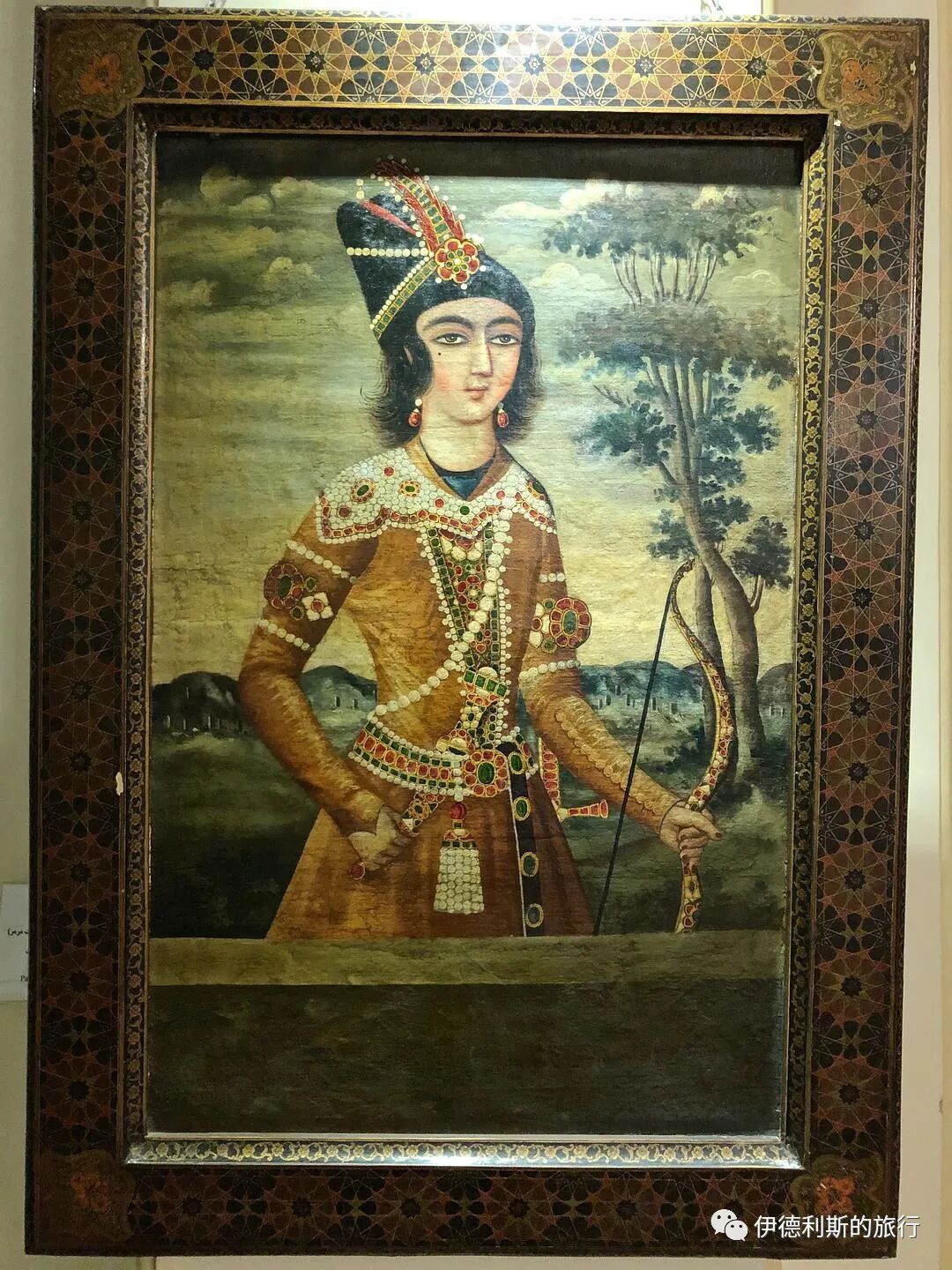
Today, most of the Qajar dynasty collection has been scattered among various museums in Tehran, but many paintings are still kept in Golestan Palace. The southern gallery now houses paintings by early Qajar dynasty masters, including Mirza Baba, Mehr Ali Afshar, Ali Akbar Khan, and Ab ol Hassan Sani. The northern gallery was the home of the royal guard during the Pahlavi period. It underwent a major renovation in 1995 and now displays paintings by late Qajar dynasty masters, including Mahmoud Khan Saba, Mohammad Gafari Kashani, Mehri, and Mosa Momayez.
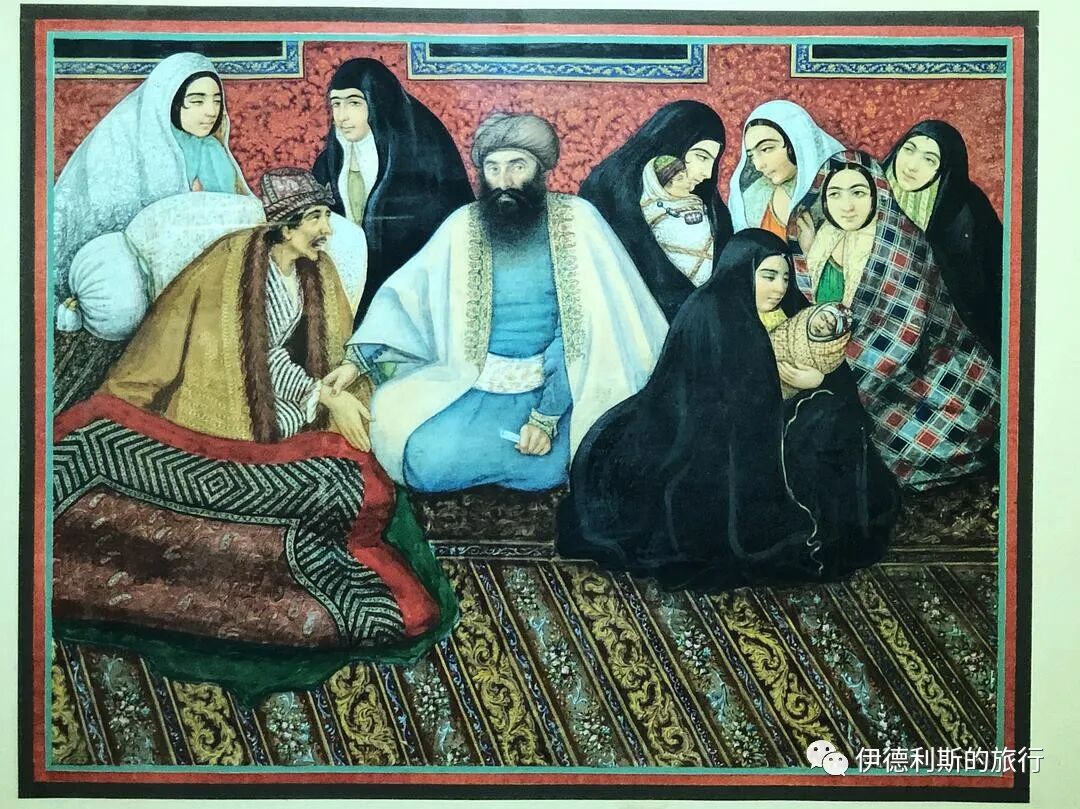
The harem of Nasser ed Din Shah.
Nasser ed Din Shah hunting, painted in 1884.
Servants in the court of Nasser ed Din Shah, painted in 1881.
Golestan Palace, painted in 1885.
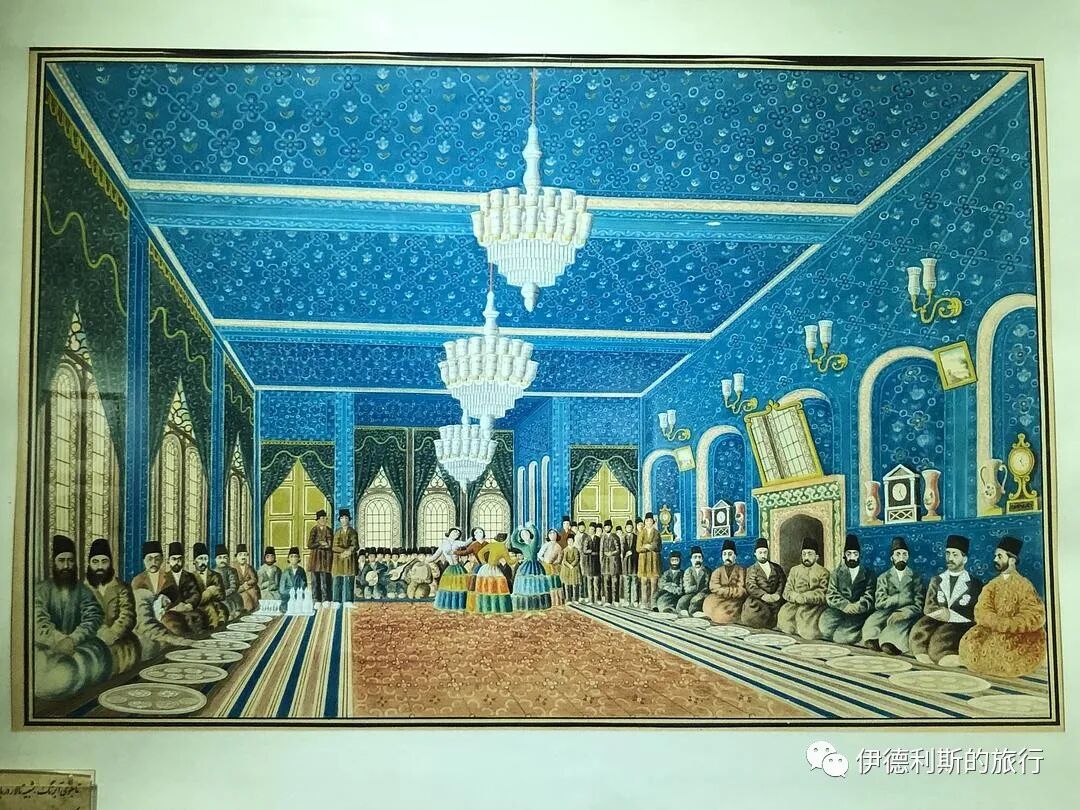
Interior of Golestan Palace, painted in 1864.
Celebration of the 30th anniversary of Nasser ed Din Shah's reign, painted in 1878.
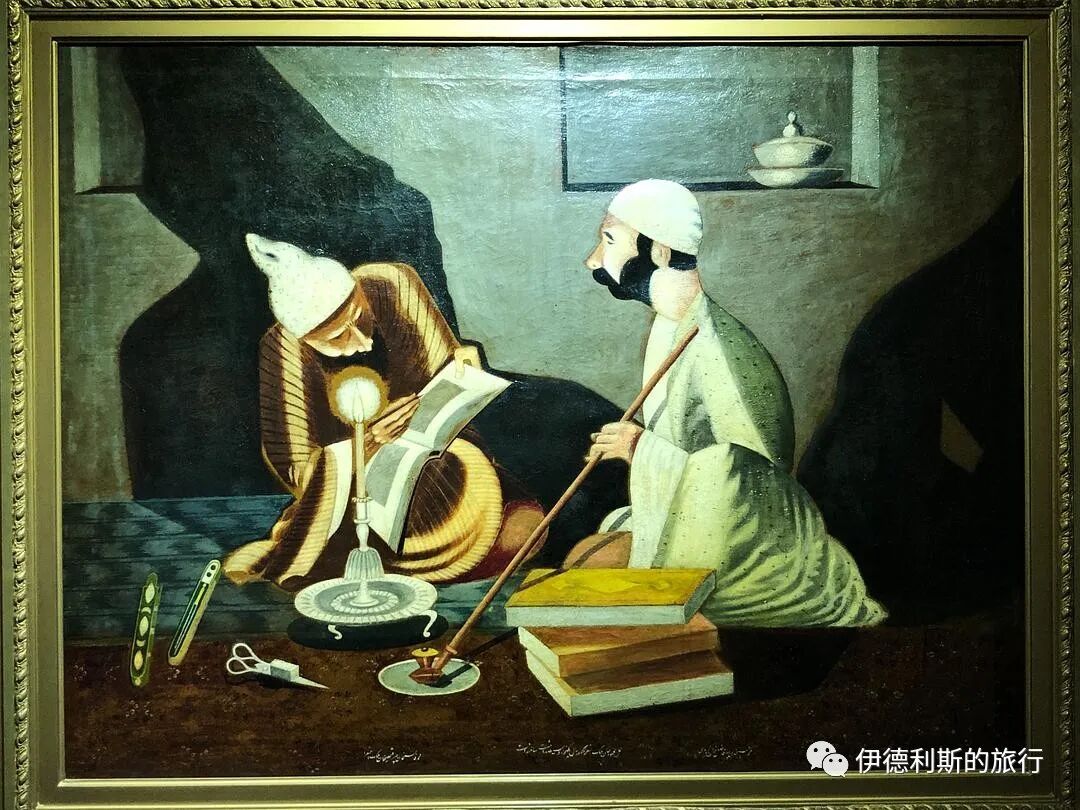
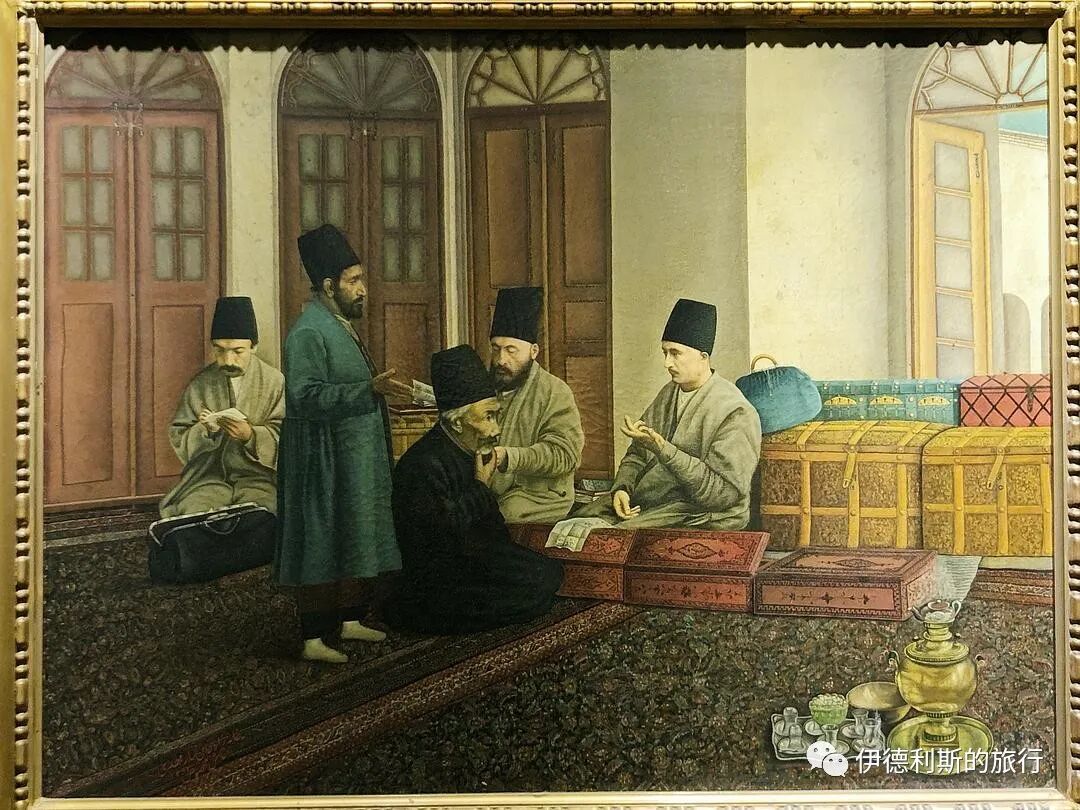
Physician Mirza Abolfazl Tabib Kashani taking a patient's pulse, painted in 1859.
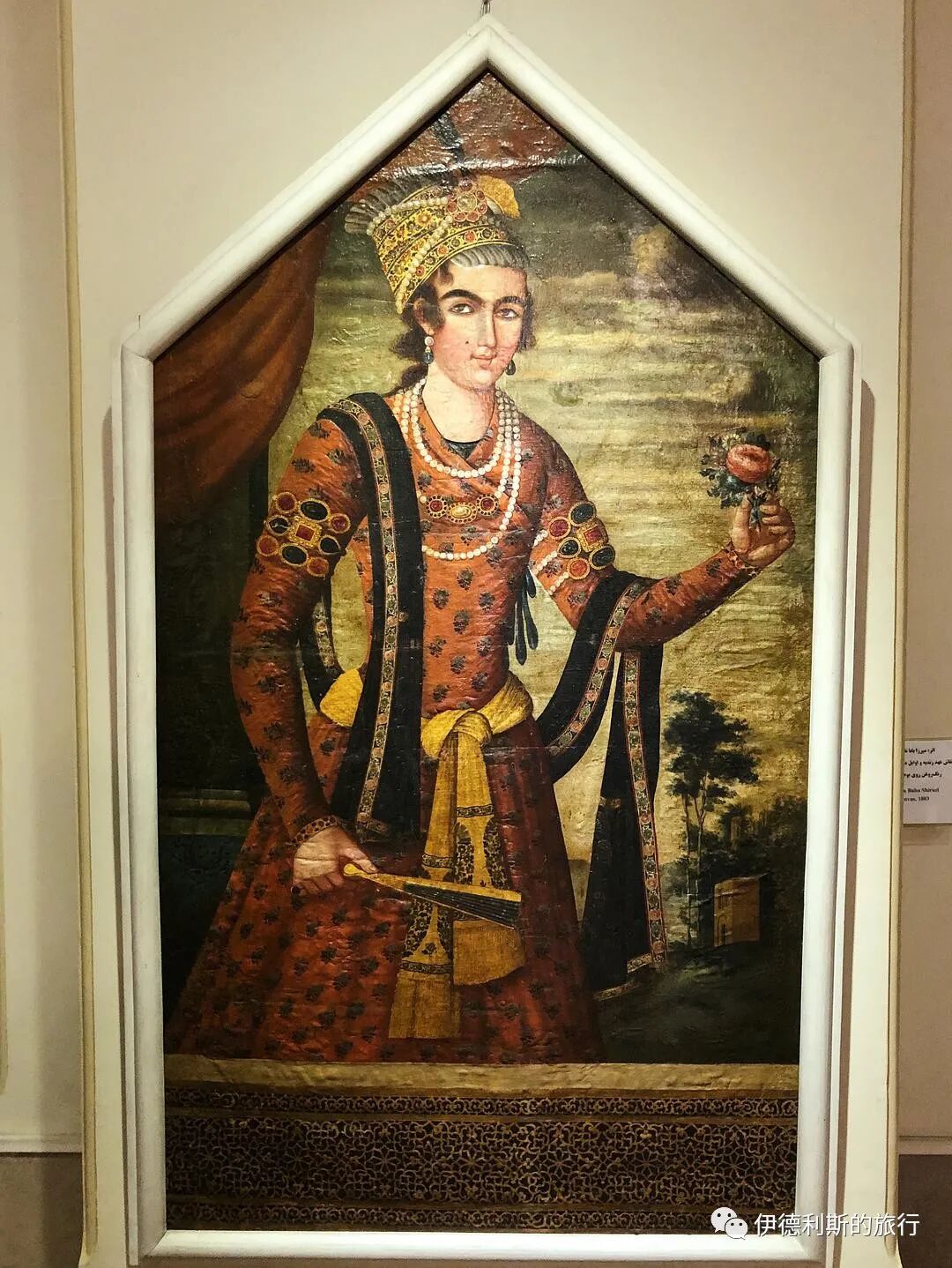
Qajar dynasty prince Abdol-Samad Mirza.
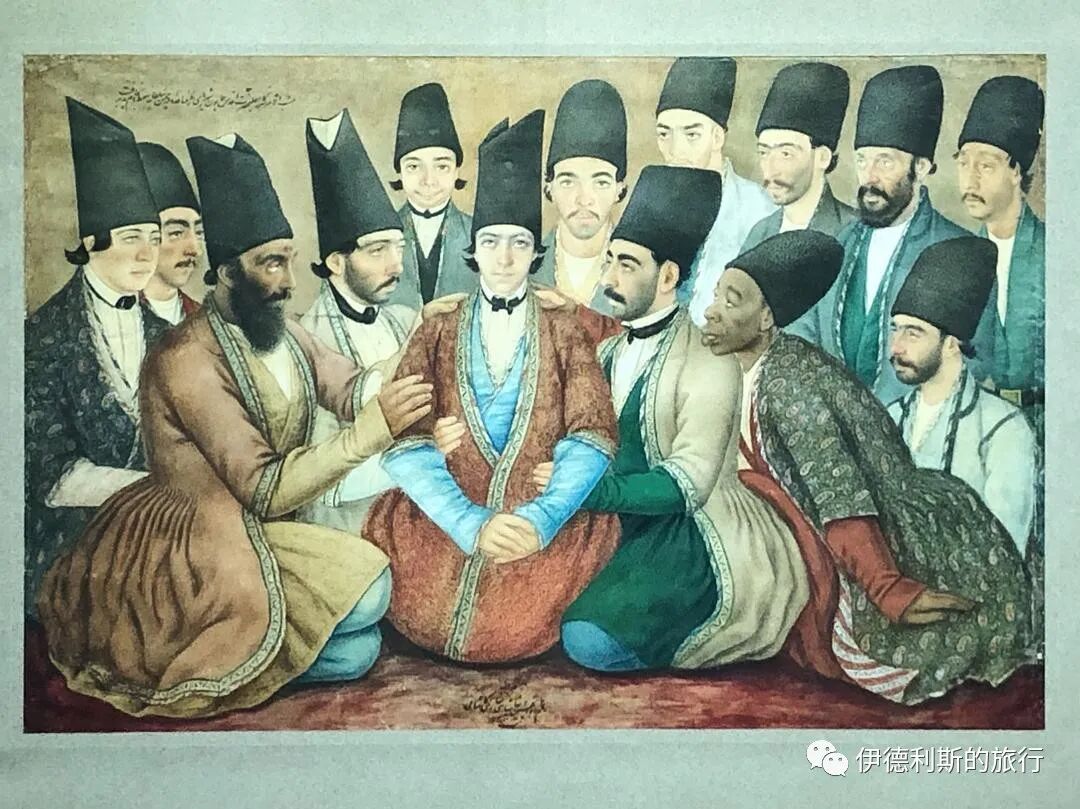
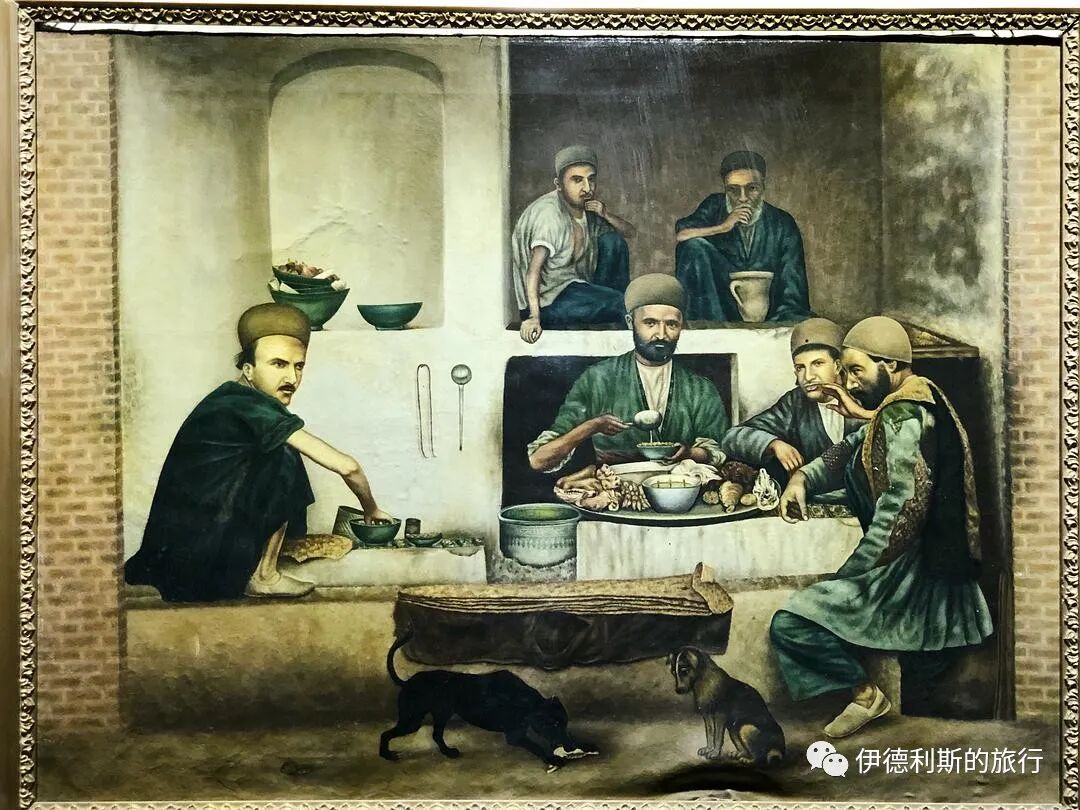
Mohammad Ghasem Khan and Mohammad Hossein, painted in 1891. The former was the Qajar dynasty ambassador to Russia.
Painted in 1895.
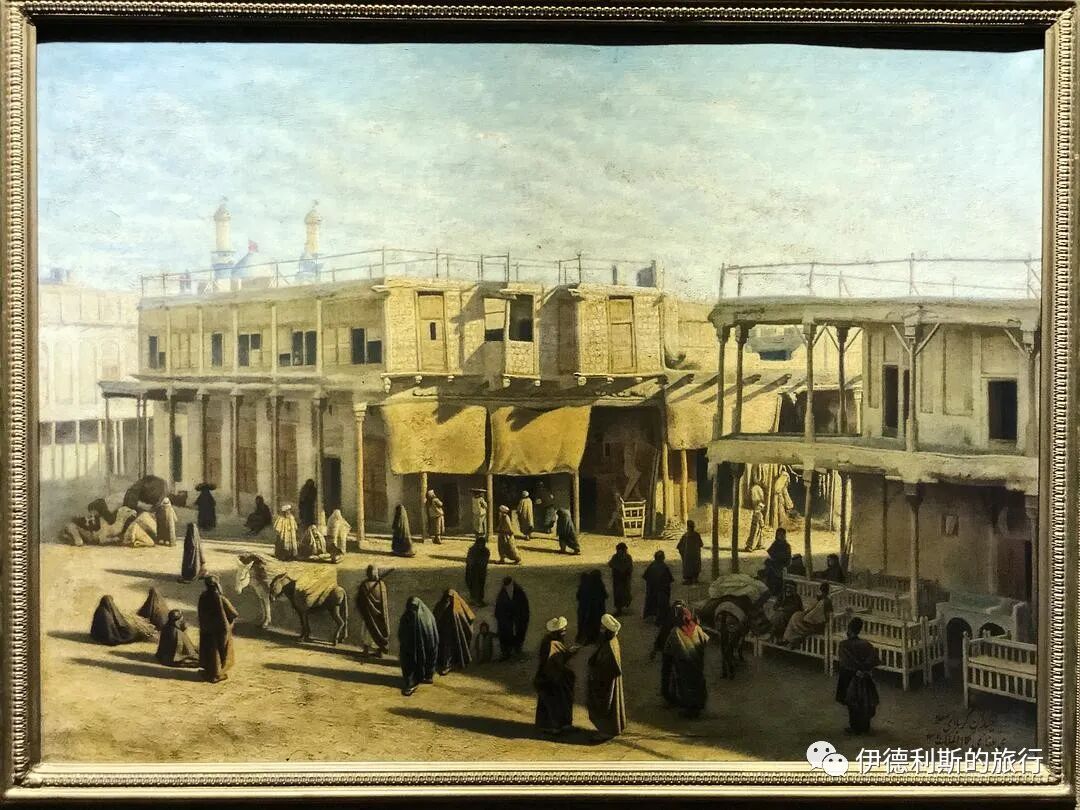
The Shia holy city of Karbala, painted in 1902.
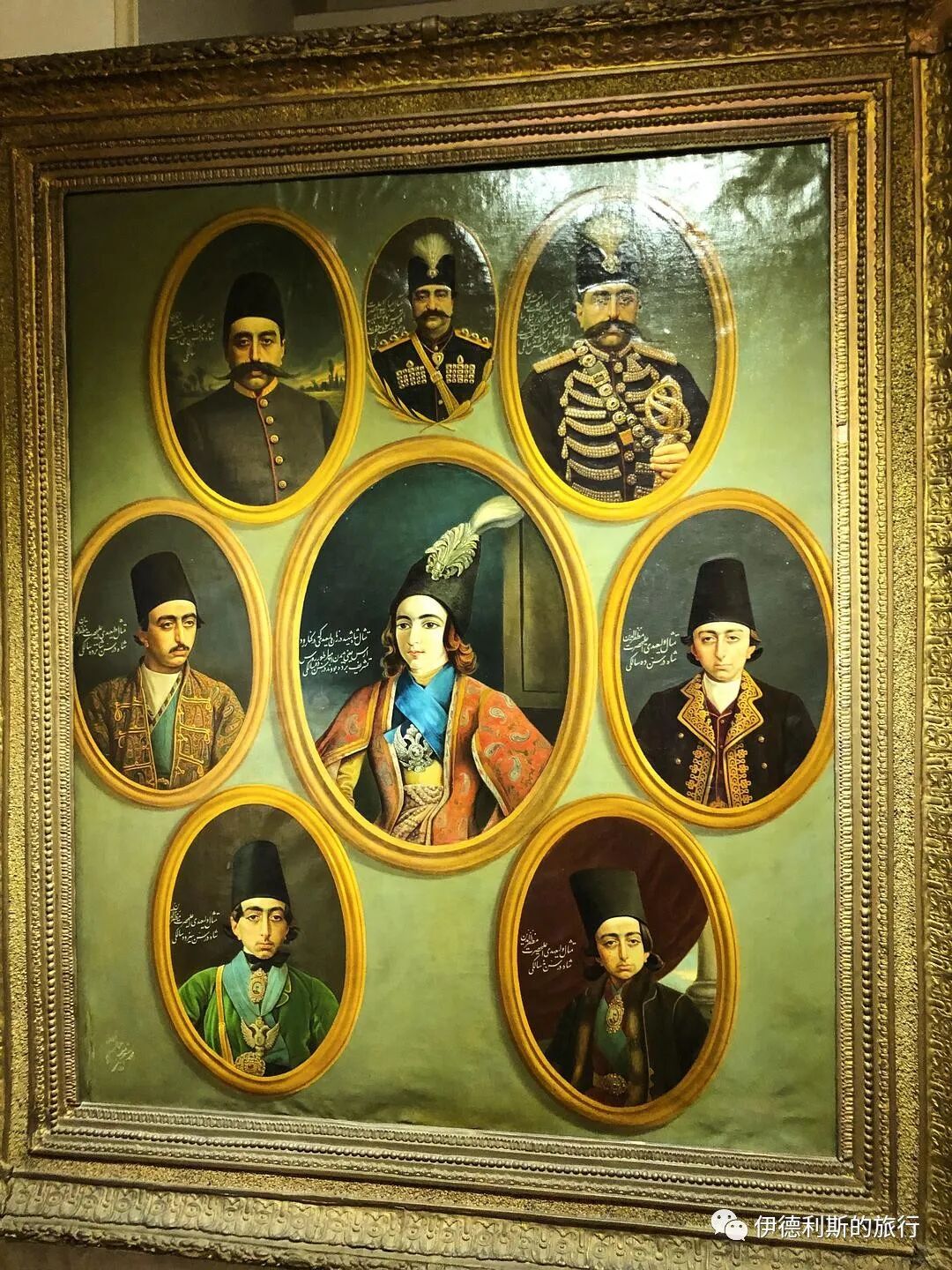
Portraits of the Qajar dynasty royal family.
Makhsus Museum
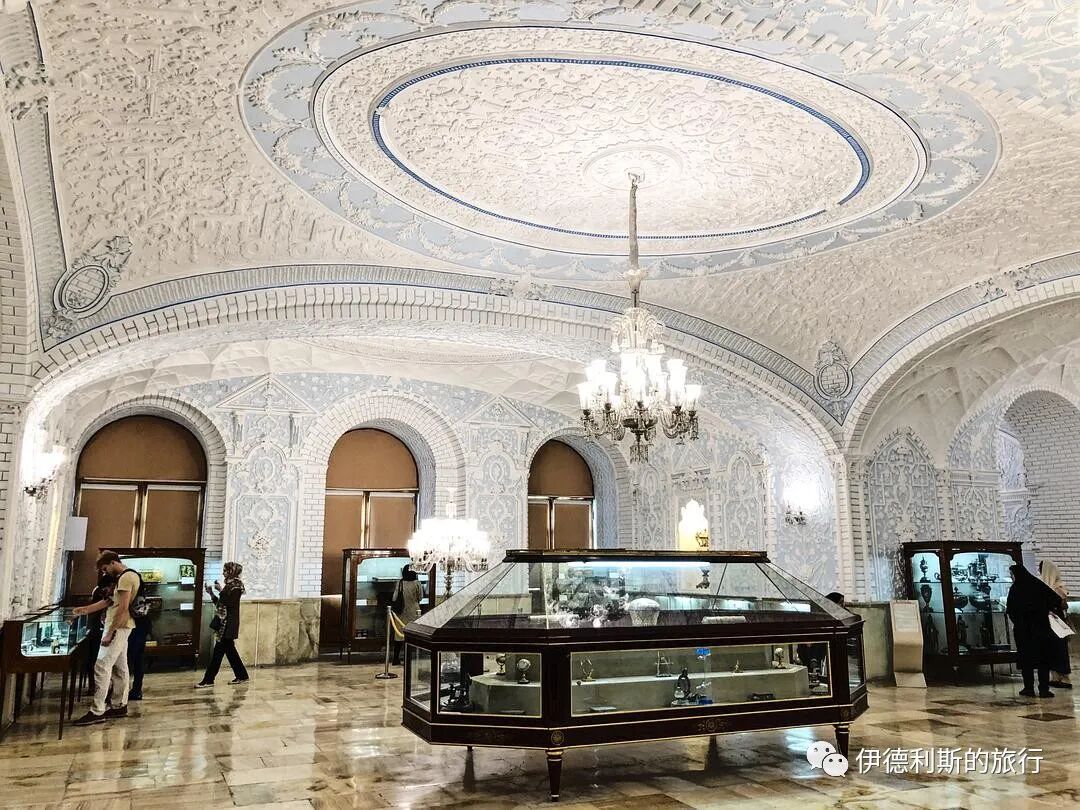
The Makhsus Museum (Mouze-ye Makhsous) preserves copperware, silverware, and weapons gifted to the Qajar dynasty by European kings.
Main Building
East of the museum is the main building (Kakh-e Asli) of Golestan Palace. In front of the main building is a 118-meter-long pool containing 15 fountains. Historical photos show that the pool was once surrounded by bronze statues of boys holding torches and animals, but they were all removed during the Pahlavi dynasty.
On both sides of the entrance is a pair of brass roaring lions symbolizing power.
After entering the main entrance, there is a staircase (Sar sara) with 22 steps, decorated with mirrors in geometric patterns.
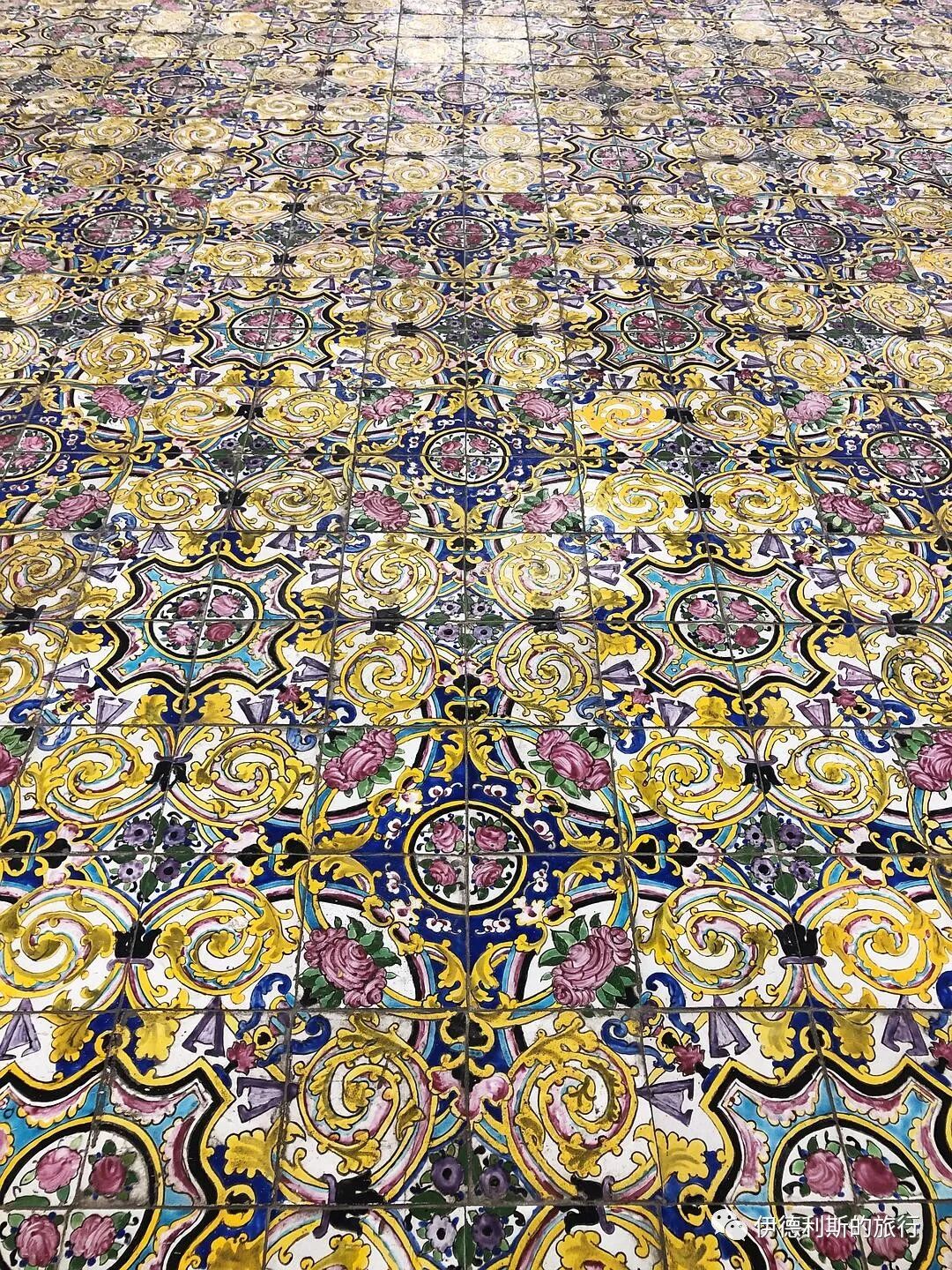
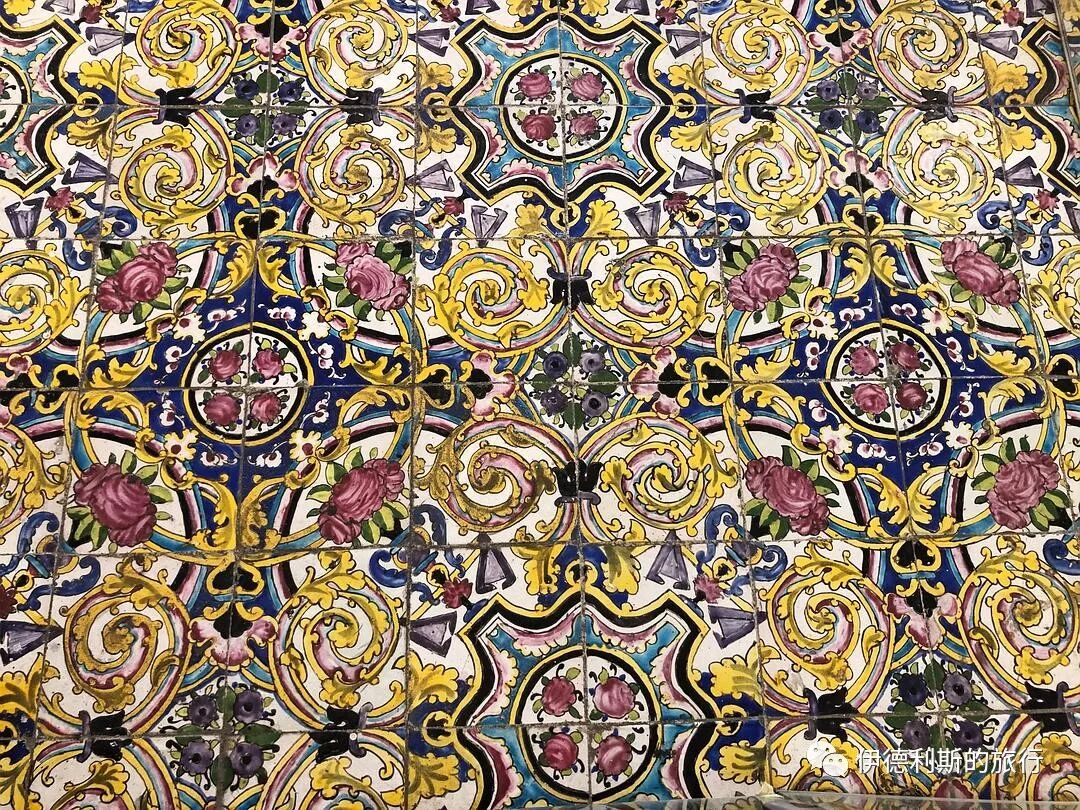
The column bases on the second floor of the main building are covered with colorful tiles, including portraits of past Iranian kings, hunting scenes, coronation ceremonies, some legends and religious stories, and animal figures imitating Persepolis. These tiles once belonged to the Khabgah sleeping quarters and the Haram Khaneh buildings. After these two buildings were demolished, the tiles were moved to the second floor of the main building.
Reception Hall
The Reception Hall (Talar-e Salam), also called the Coronation Hall (Talar-e Taj Gozaari) or the Museum Hall, is where five Qajar dynasty kings and the second Pahlavi king were crowned. Talar-e Salam is the grandest hall in the main building. It is 43 meters long and 20 meters wide, with 20 arches along the sides and beautiful mosaics on the floor. Qajar king Naser al-Din Shah, who reigned from 1848 to 1896, used this space to receive various envoys and guests from European courts. At that time, the hall displayed various Iranian and European paintings and royal jewels. These royal jewels are now kept at the Royal Jewelry Museum in the Central Bank of Iran.
The Talar-e Adj hall is the room where gifts sent to Naser al-Din Shah from various countries were kept. During the Pahlavi dynasty, this space became a reception hall for hosting court banquets, and the interior decorations were renovated.
Mirror Hall
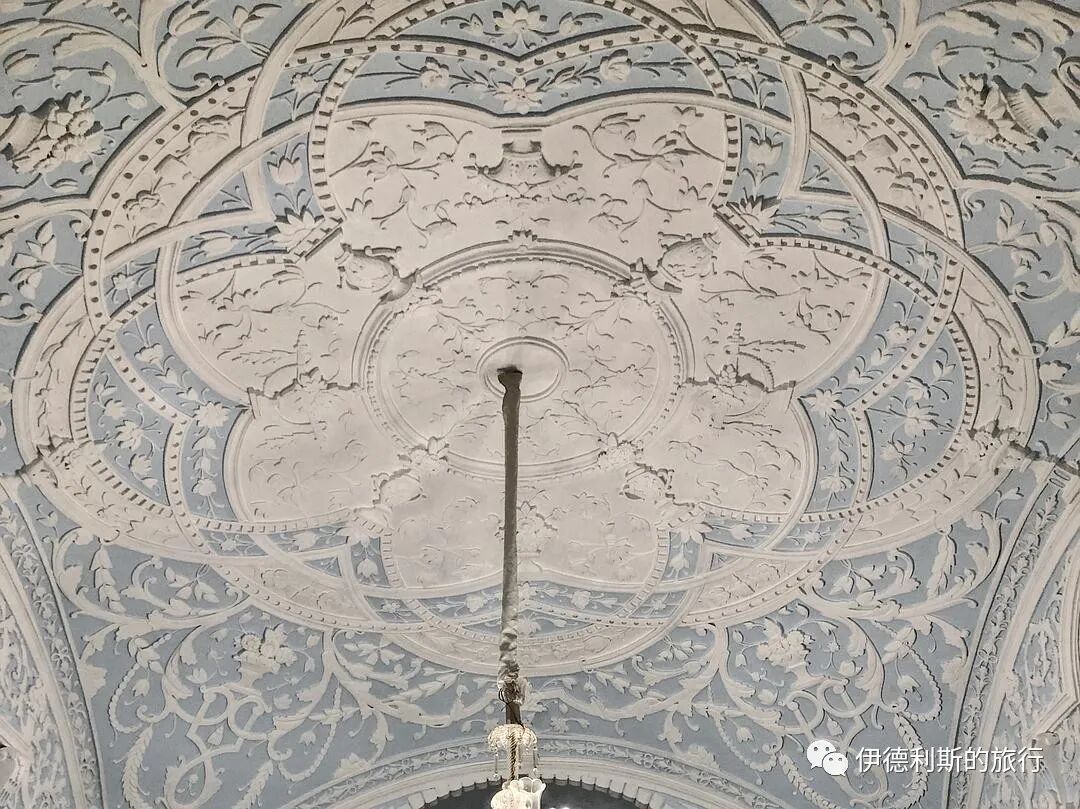
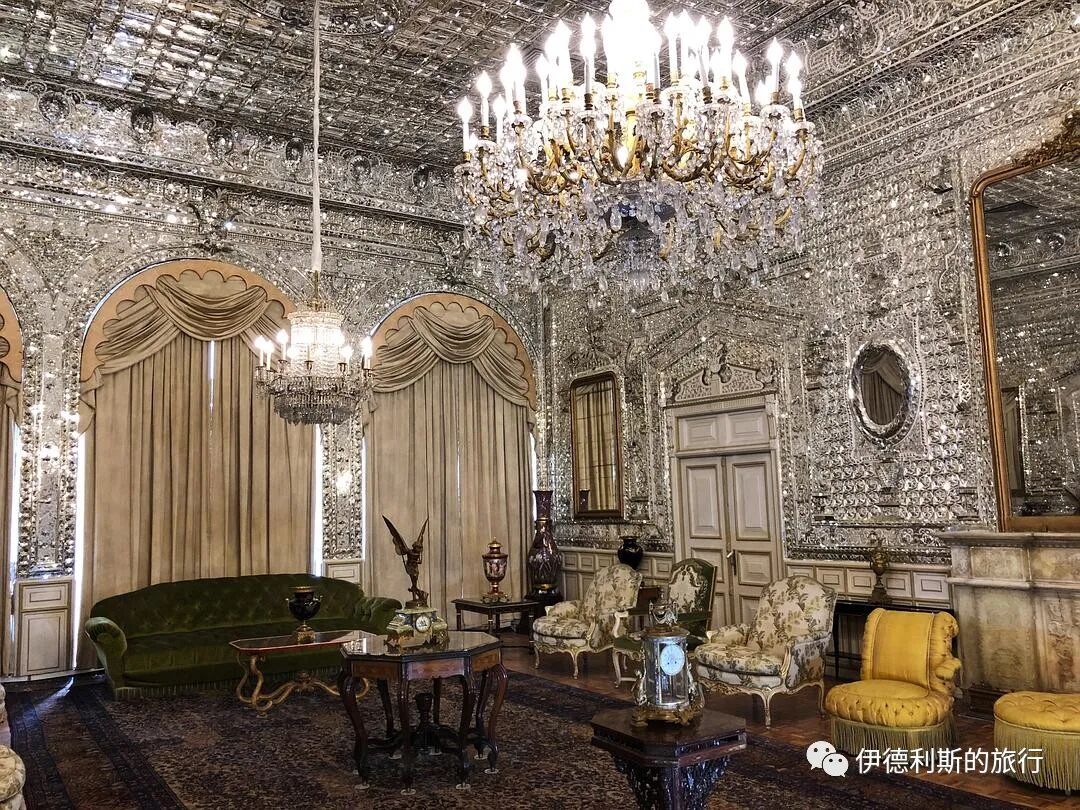
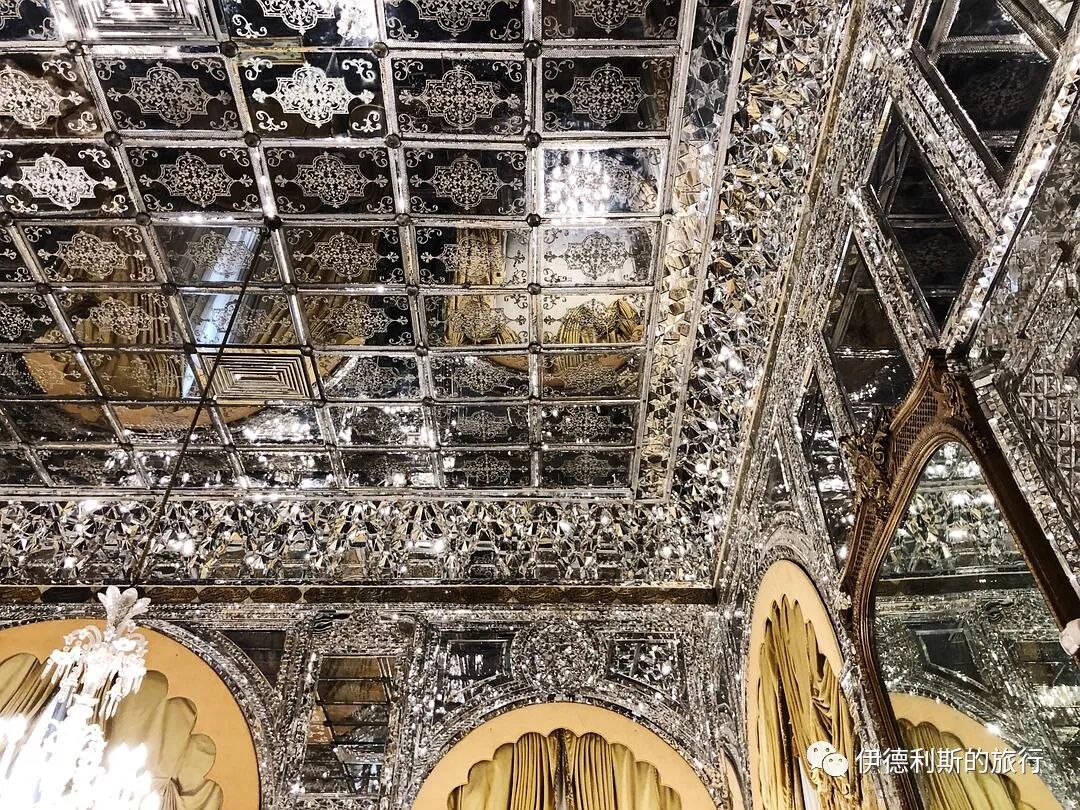
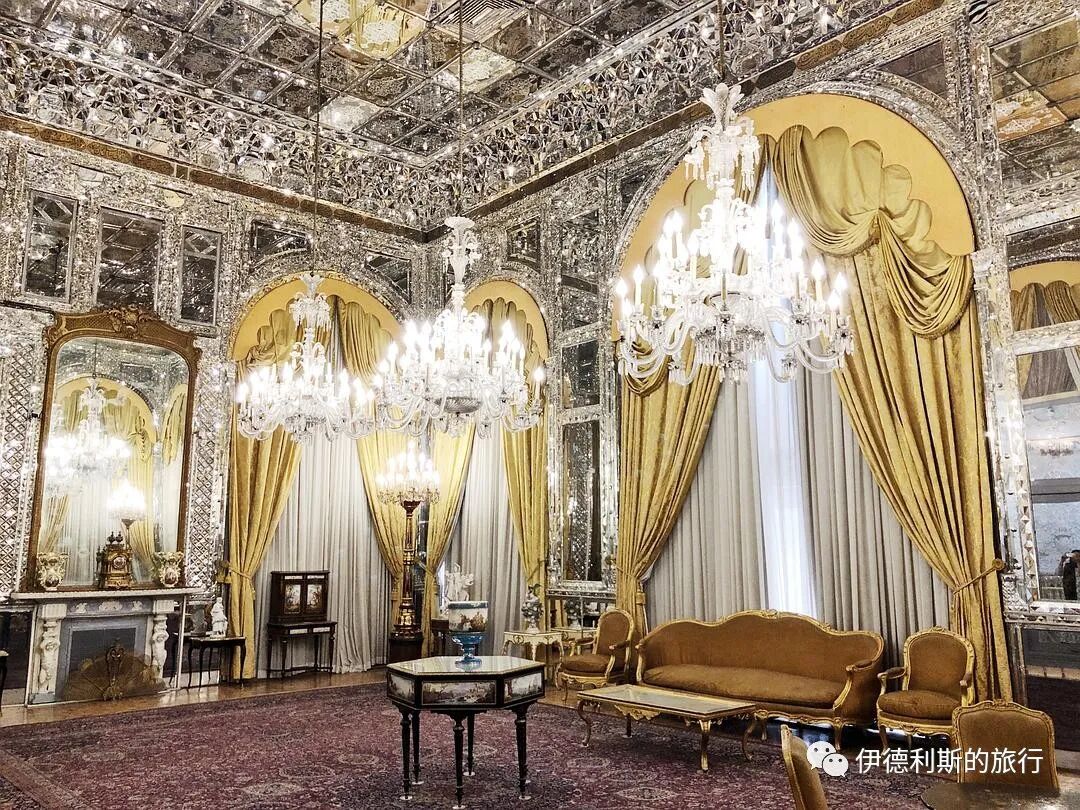
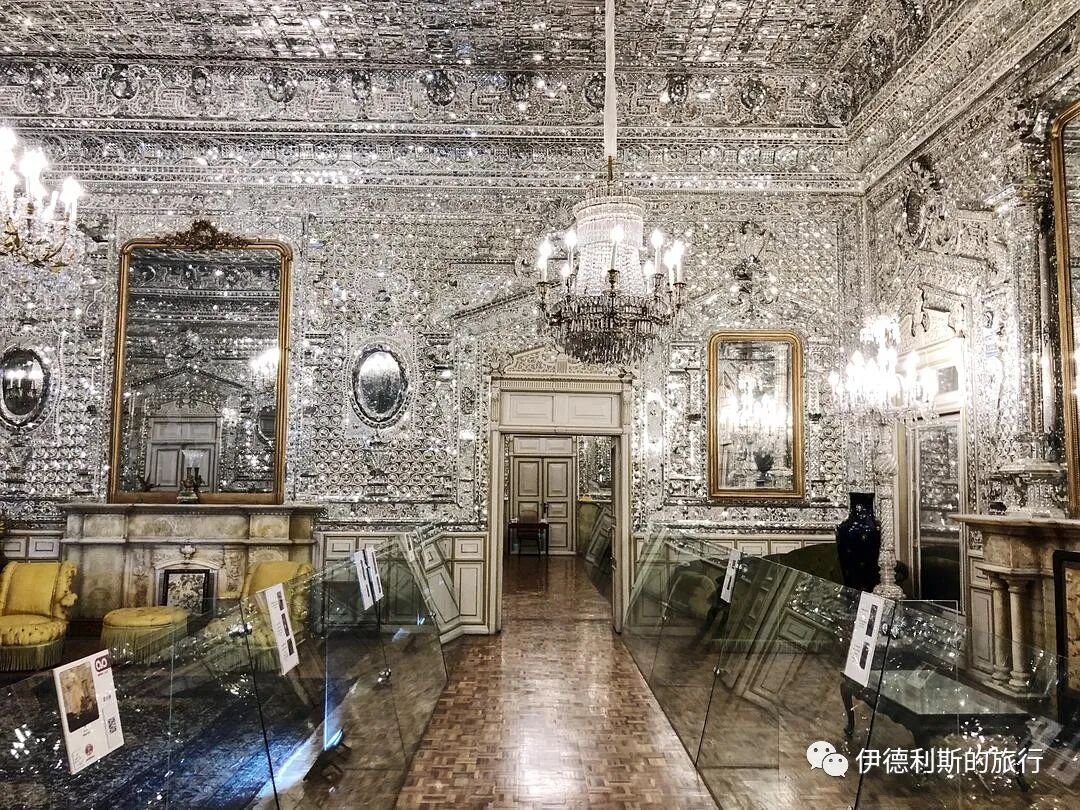
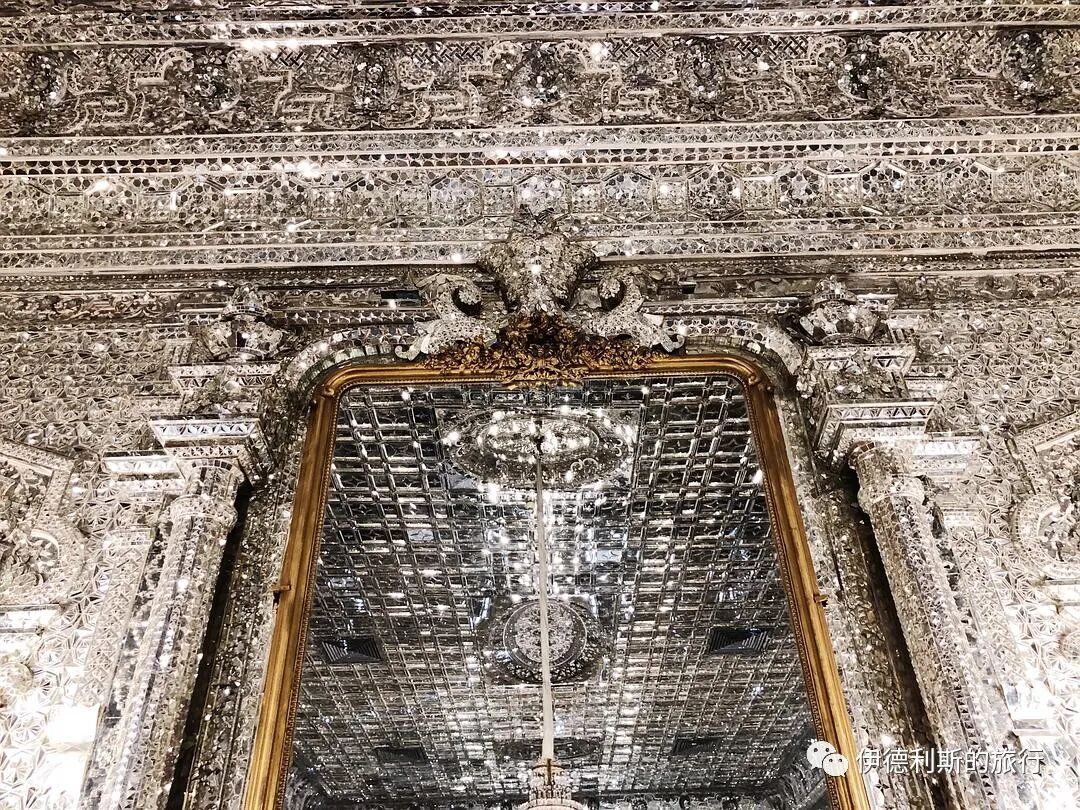
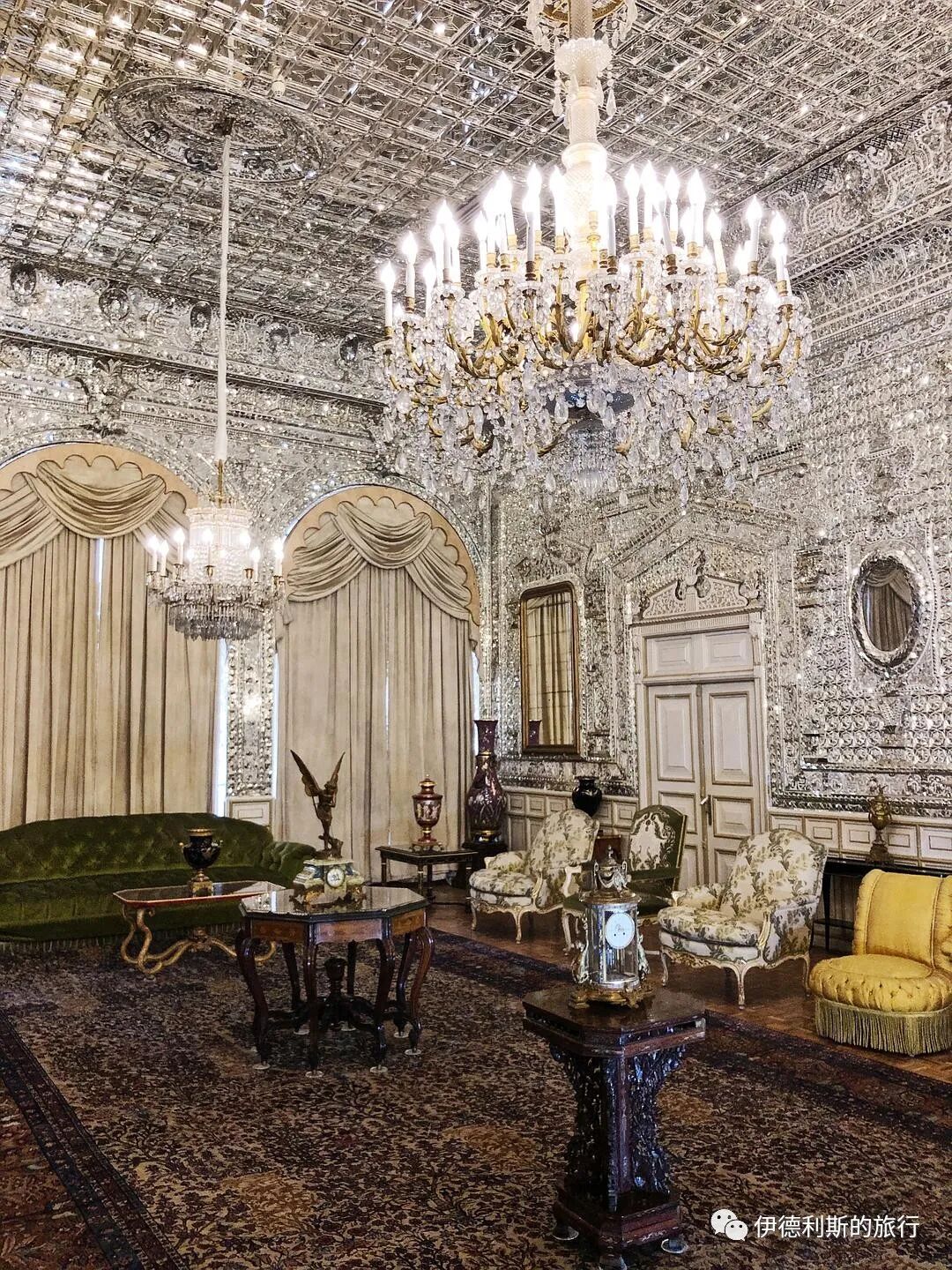
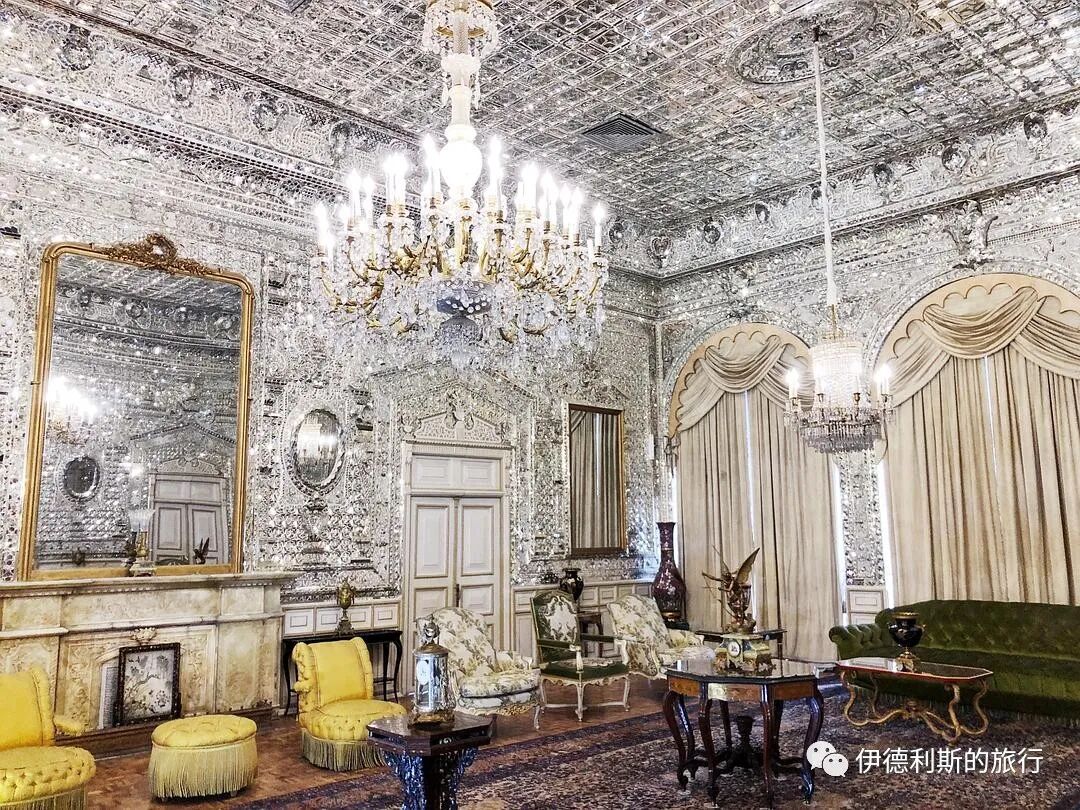
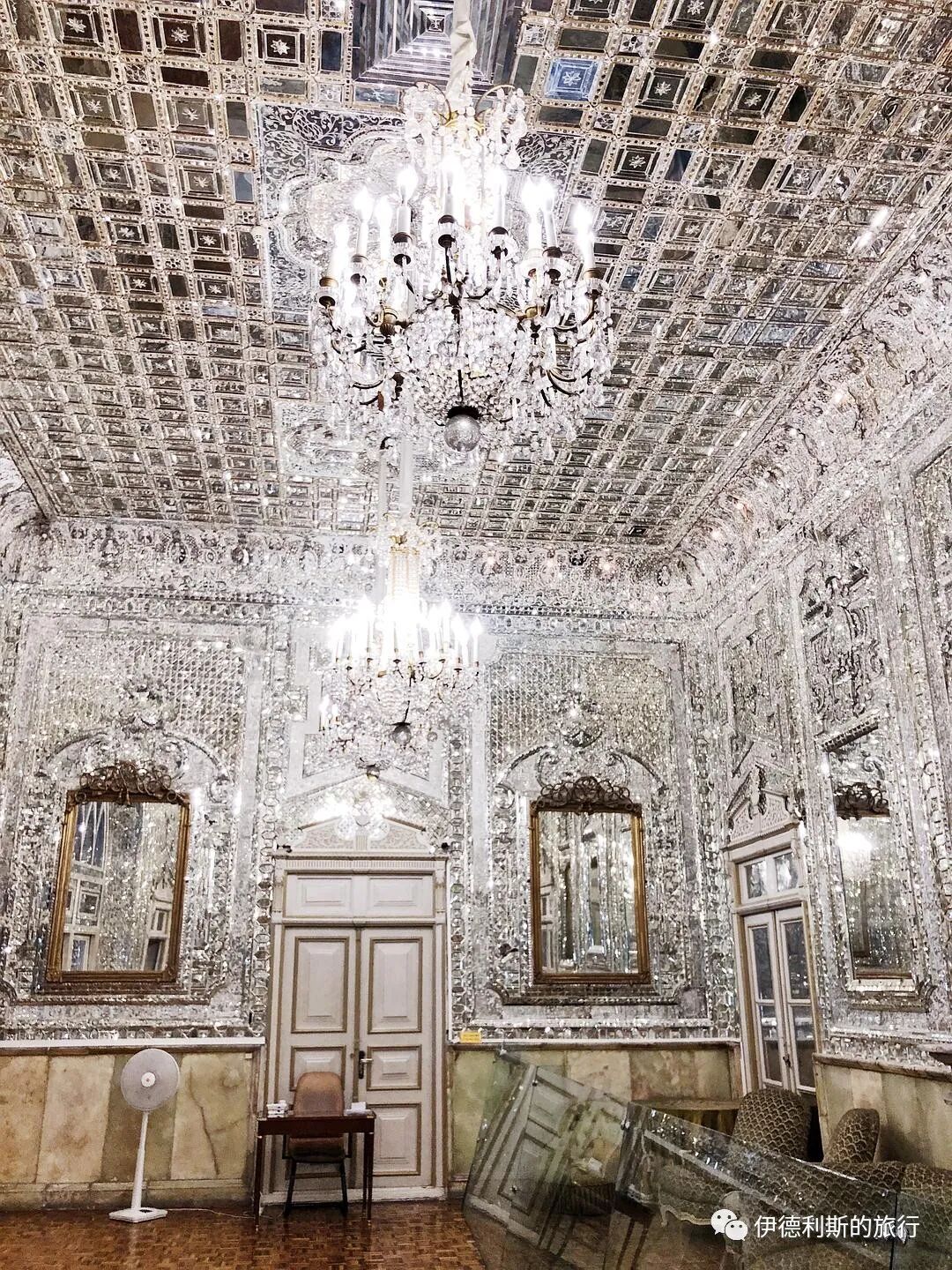
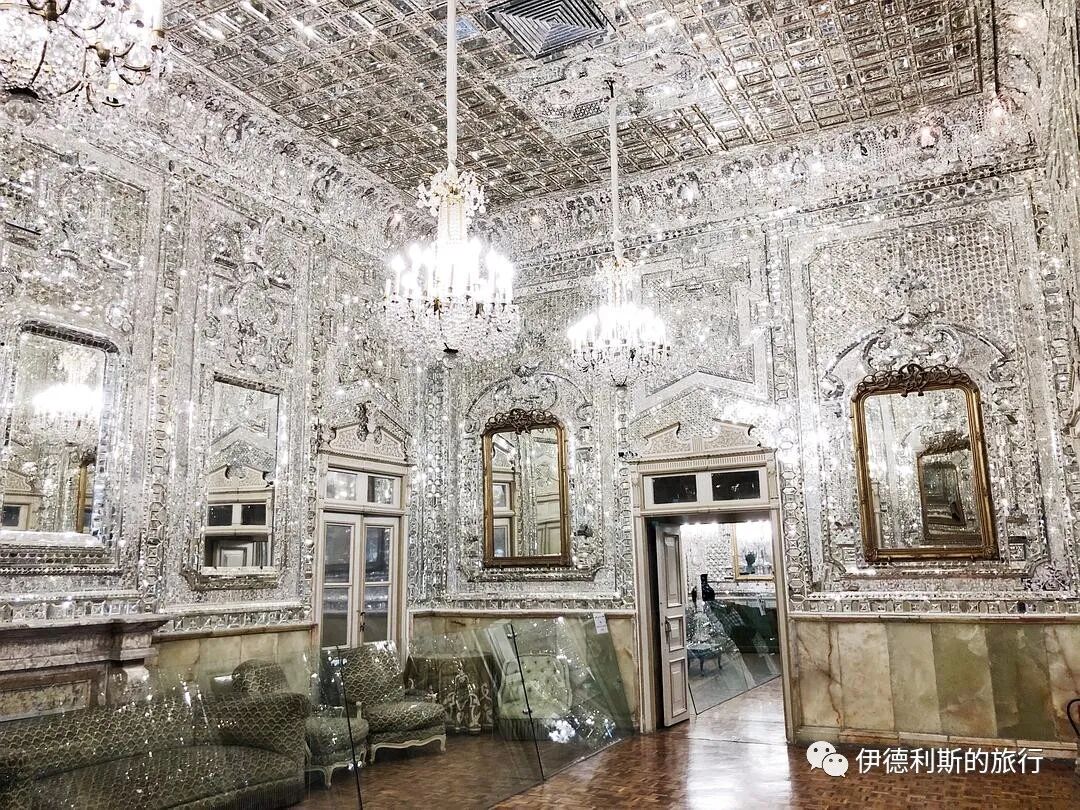
The Mirror Hall (Talar-e Ayineh) is the smallest but most dazzling room in the main building. The gorgeous interior decorations look especially bright reflected in the many mirrors. This room once held the Persian Peacock Throne (Takht-e Tavoos) and the Kiani Crown (Taj-e Kiani) until they were moved to the Royal Jewelry Museum at the Central Bank of Iran in 1980.
Talar-e Zoruf
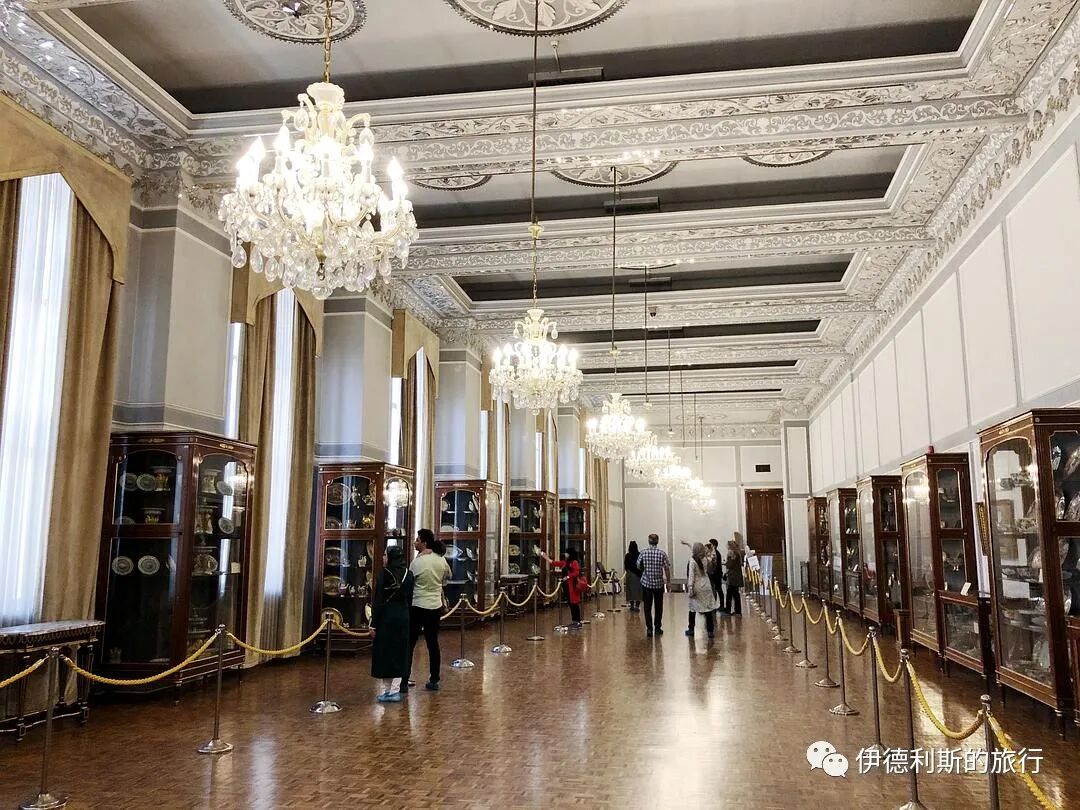
Talar-e Zoruf is a room dedicated to displaying porcelain gifted to the Qajar dynasty by European monarchs like Napoleon, Queen Victoria of England, and Tsars Nicholas I and Alexander III. It was renovated during the Pahlavi dynasty. view all
Summary: Tehran — Golestan Palace, Qajar History and Islamic Art is presented here as a firsthand travel account in clear English, beginning with this scene: Golestan Palace (Kākh-e Golestān) means Garden Palace. The word Gol in the name is the same as the name Guli that we are familiar with. The account keeps its focus on Tehran Travel, Golestan Palace, Qajar History while preserving the names, places, food, and historical details from the Chinese source.
Golestan Palace (Kākh-e Golestān) means Garden Palace. The word Gol in the name is the same as the name Guli that we are familiar with. Located in Tehran, the capital of Iran, it was the royal palace of the Qajar dynasty and was added to the UNESCO World Heritage list in 2013.
Golestan Palace was first called the Tehran Citadel (Arg). It was built during the reign of Tahmasp I (reigned 1524-1576) of the Persian Safavid dynasty and was rebuilt during the reign of Karim Khan (reigned 1750-1779) of the Zand dynasty. After Agha Mohammad Khan (reigned 1789-1797) of the Qajar dynasty made Tehran his capital, he officially converted the Tehran Citadel into the Golestan Royal Palace. Haji Ab ol Hasan Mimar Navai rebuilt the palace again in 1865.
Between 1925 and 1945, Reza Shah (reigned 1925-1941) of the Pahlavi dynasty ordered the demolition of most of the Golestan Palace buildings for modern urban development. Modern-style commercial buildings were built there one after another between the 1950s and 1960s.
Karim Khani Nook
Karim Khani Nook was built in 1759 by Karim Khan of the Zand dynasty. It is a terrace featuring a marble throne. There used to be a pool with a fountain in the middle of the terrace. Water flowed into the pond from underground water channels (Qanat) and then flowed to other parts of the palace. Nasser ed Din Shah (reigned 1848-1896) of the Qajar dynasty loved this place. People say he often sat here quietly smoking a water pipe. Today, the marble tombstone of Nasser ed Din Shah stands here, and his portrait is also on the walls of the building.
Negar Khane Gallery
In 1872, during his second visit to Europe, Nasser ed Din Shah was deeply impressed by the artifacts displayed in European museums. After returning to Tehran, he set out to create a museum hall in the Kakh-e Asli area of the palace to display paintings, jewelry, and other royal artifacts.
Today, most of the Qajar dynasty collection has been scattered among various museums in Tehran, but many paintings are still kept in Golestan Palace. The southern gallery now houses paintings by early Qajar dynasty masters, including Mirza Baba, Mehr Ali Afshar, Ali Akbar Khan, and Ab ol Hassan Sani. The northern gallery was the home of the royal guard during the Pahlavi period. It underwent a major renovation in 1995 and now displays paintings by late Qajar dynasty masters, including Mahmoud Khan Saba, Mohammad Gafari Kashani, Mehri, and Mosa Momayez.
The harem of Nasser ed Din Shah.
Nasser ed Din Shah hunting, painted in 1884.
Servants in the court of Nasser ed Din Shah, painted in 1881.
Golestan Palace, painted in 1885.
Interior of Golestan Palace, painted in 1864.
Celebration of the 30th anniversary of Nasser ed Din Shah's reign, painted in 1878.
Physician Mirza Abolfazl Tabib Kashani taking a patient's pulse, painted in 1859.
Qajar dynasty prince Abdol-Samad Mirza.
Mohammad Ghasem Khan and Mohammad Hossein, painted in 1891. The former was the Qajar dynasty ambassador to Russia.
Painted in 1895.
The Shia holy city of Karbala, painted in 1902.
Portraits of the Qajar dynasty royal family.
Makhsus Museum
The Makhsus Museum (Mouze-ye Makhsous) preserves copperware, silverware, and weapons gifted to the Qajar dynasty by European kings.
Main Building
East of the museum is the main building (Kakh-e Asli) of Golestan Palace. In front of the main building is a 118-meter-long pool containing 15 fountains. Historical photos show that the pool was once surrounded by bronze statues of boys holding torches and animals, but they were all removed during the Pahlavi dynasty.
On both sides of the entrance is a pair of brass roaring lions symbolizing power.
After entering the main entrance, there is a staircase (Sar sara) with 22 steps, decorated with mirrors in geometric patterns.
The column bases on the second floor of the main building are covered with colorful tiles, including portraits of past Iranian kings, hunting scenes, coronation ceremonies, some legends and religious stories, and animal figures imitating Persepolis. These tiles once belonged to the Khabgah sleeping quarters and the Haram Khaneh buildings. After these two buildings were demolished, the tiles were moved to the second floor of the main building.
Reception Hall
The Reception Hall (Talar-e Salam), also called the Coronation Hall (Talar-e Taj Gozaari) or the Museum Hall, is where five Qajar dynasty kings and the second Pahlavi king were crowned. Talar-e Salam is the grandest hall in the main building. It is 43 meters long and 20 meters wide, with 20 arches along the sides and beautiful mosaics on the floor. Qajar king Naser al-Din Shah, who reigned from 1848 to 1896, used this space to receive various envoys and guests from European courts. At that time, the hall displayed various Iranian and European paintings and royal jewels. These royal jewels are now kept at the Royal Jewelry Museum in the Central Bank of Iran.
The Talar-e Adj hall is the room where gifts sent to Naser al-Din Shah from various countries were kept. During the Pahlavi dynasty, this space became a reception hall for hosting court banquets, and the interior decorations were renovated.
Mirror Hall
The Mirror Hall (Talar-e Ayineh) is the smallest but most dazzling room in the main building. The gorgeous interior decorations look especially bright reflected in the many mirrors. This room once held the Persian Peacock Throne (Takht-e Tavoos) and the Kiani Crown (Taj-e Kiani) until they were moved to the Royal Jewelry Museum at the Central Bank of Iran in 1980.
Talar-e Zoruf
Talar-e Zoruf is a room dedicated to displaying porcelain gifted to the Qajar dynasty by European monarchs like Napoleon, Queen Victoria of England, and Tsars Nicholas I and Alexander III. It was renovated during the Pahlavi dynasty. view all
Reposted from the web
Summary: Tehran — Golestan Palace, Qajar History and Islamic Art is presented here as a firsthand travel account in clear English, beginning with this scene: Golestan Palace (Kākh-e Golestān) means Garden Palace. The word Gol in the name is the same as the name Guli that we are familiar with. The account keeps its focus on Tehran Travel, Golestan Palace, Qajar History while preserving the names, places, food, and historical details from the Chinese source.
Golestan Palace (Kākh-e Golestān) means Garden Palace. The word Gol in the name is the same as the name Guli that we are familiar with. Located in Tehran, the capital of Iran, it was the royal palace of the Qajar dynasty and was added to the UNESCO World Heritage list in 2013.
Golestan Palace was first called the Tehran Citadel (Arg). It was built during the reign of Tahmasp I (reigned 1524-1576) of the Persian Safavid dynasty and was rebuilt during the reign of Karim Khan (reigned 1750-1779) of the Zand dynasty. After Agha Mohammad Khan (reigned 1789-1797) of the Qajar dynasty made Tehran his capital, he officially converted the Tehran Citadel into the Golestan Royal Palace. Haji Ab ol Hasan Mimar Navai rebuilt the palace again in 1865.
Between 1925 and 1945, Reza Shah (reigned 1925-1941) of the Pahlavi dynasty ordered the demolition of most of the Golestan Palace buildings for modern urban development. Modern-style commercial buildings were built there one after another between the 1950s and 1960s.
Karim Khani Nook
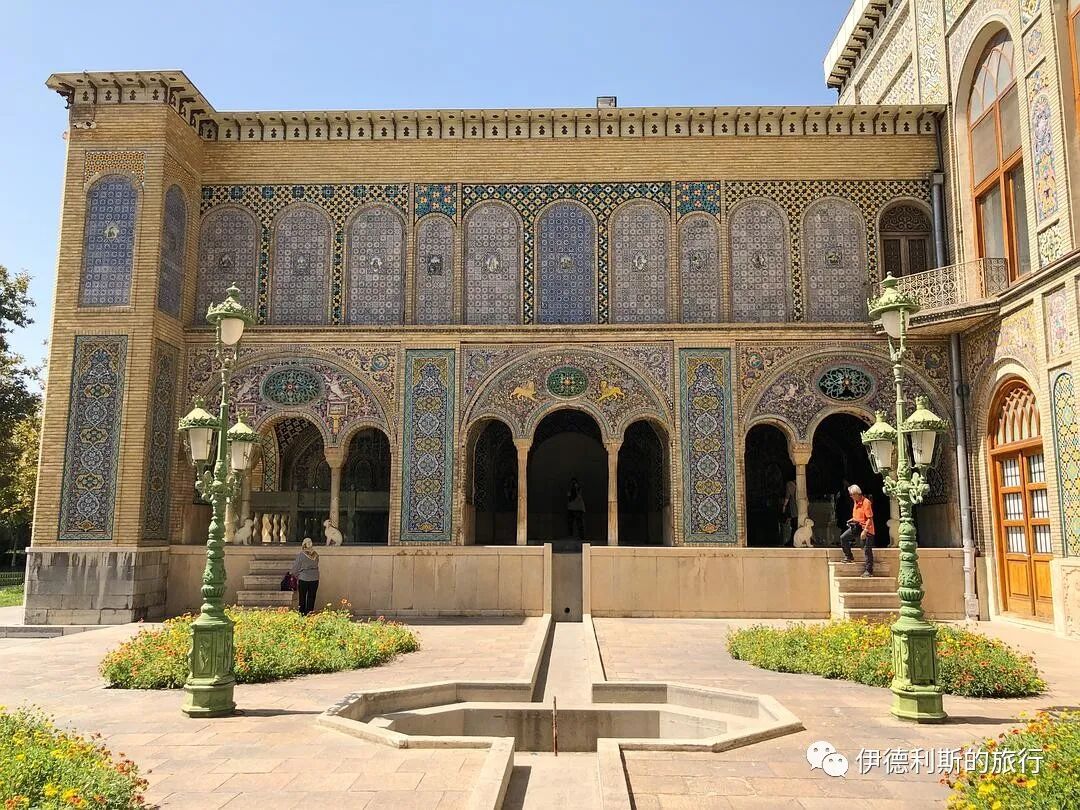
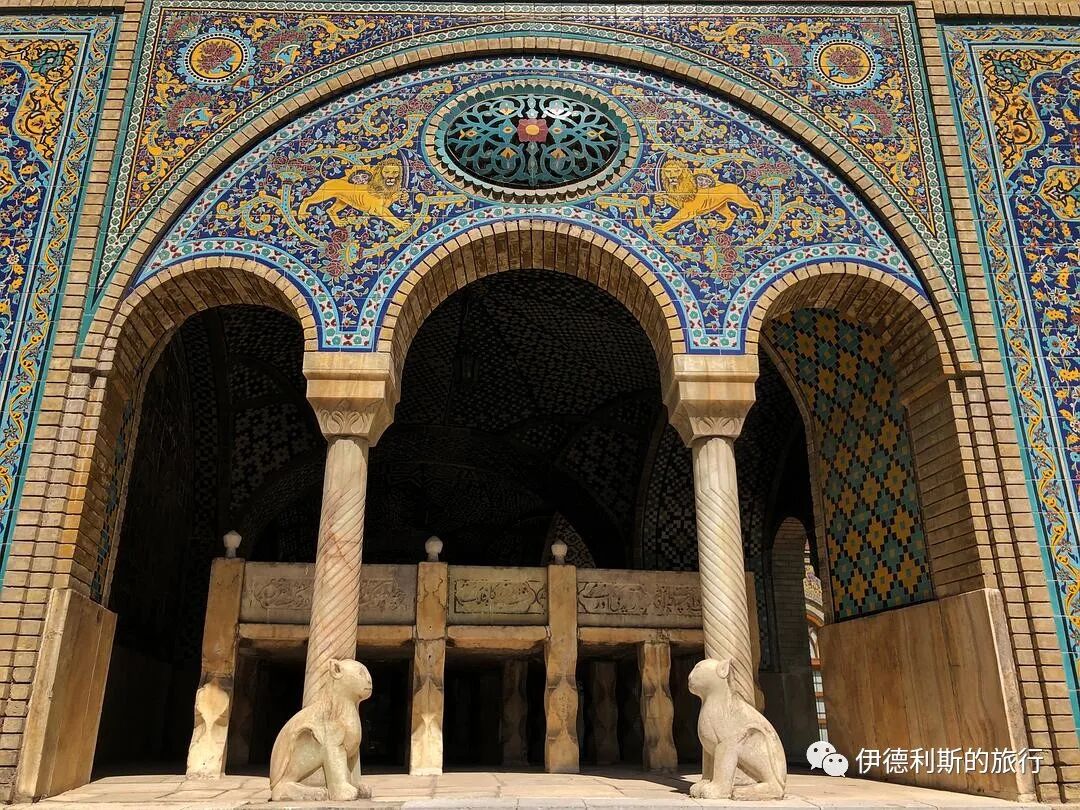
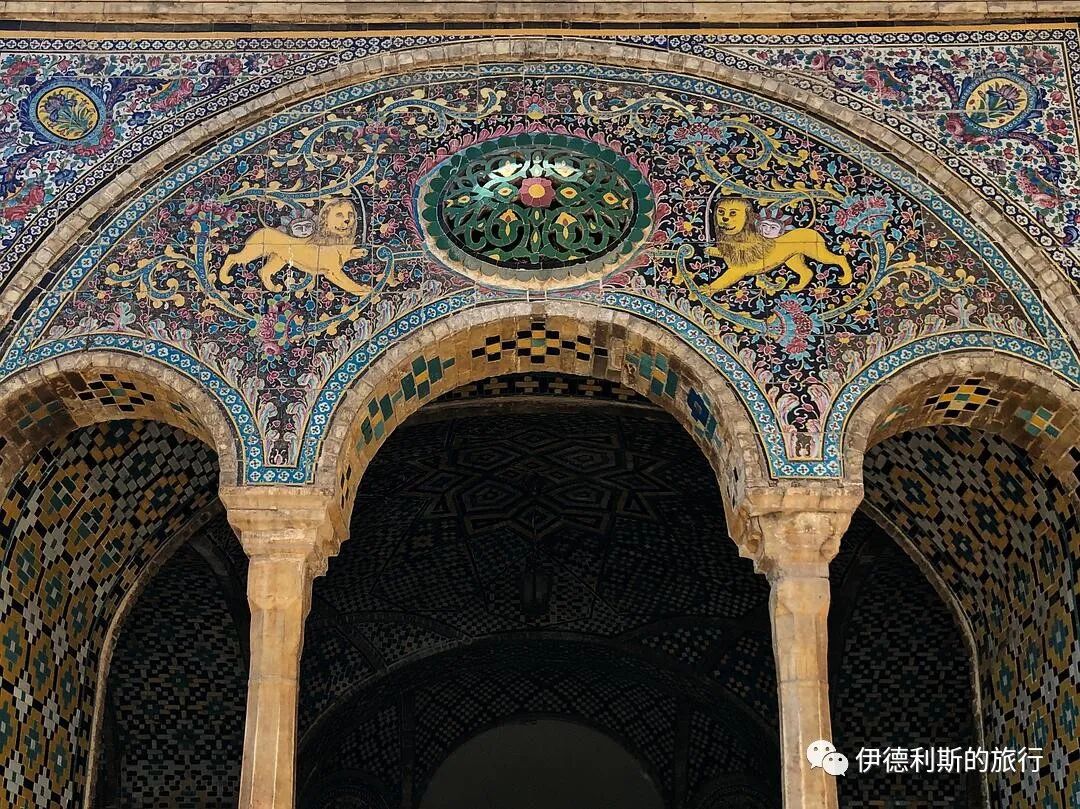
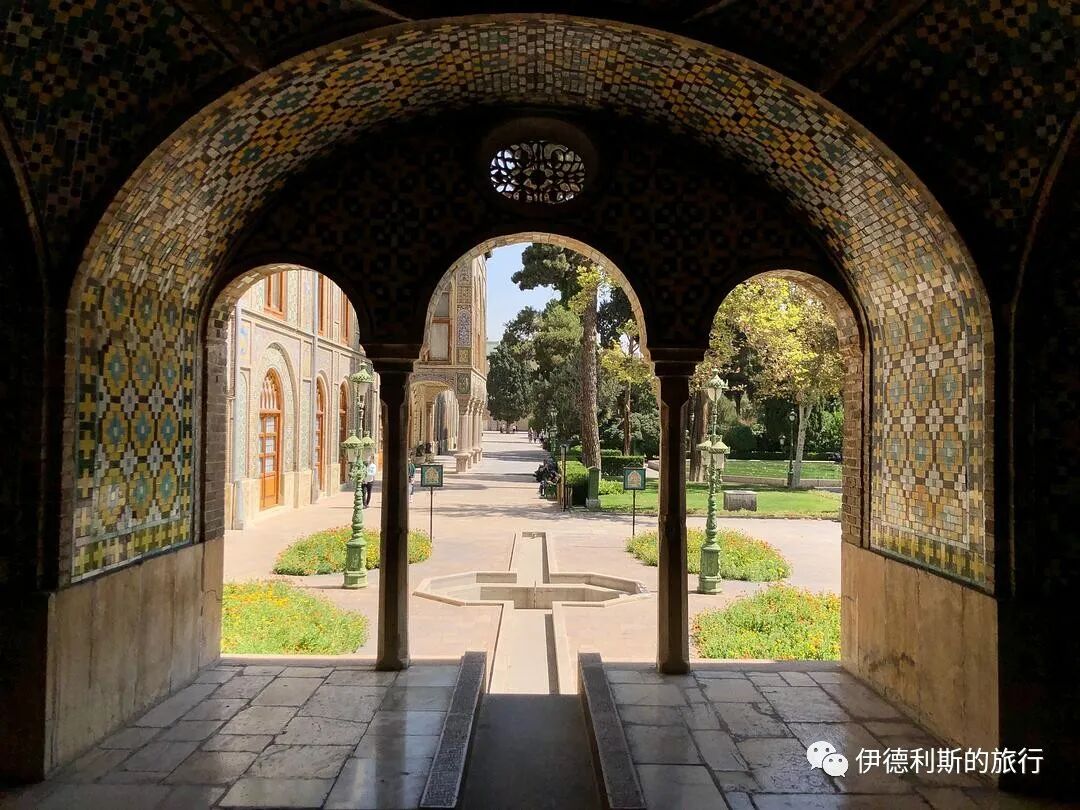
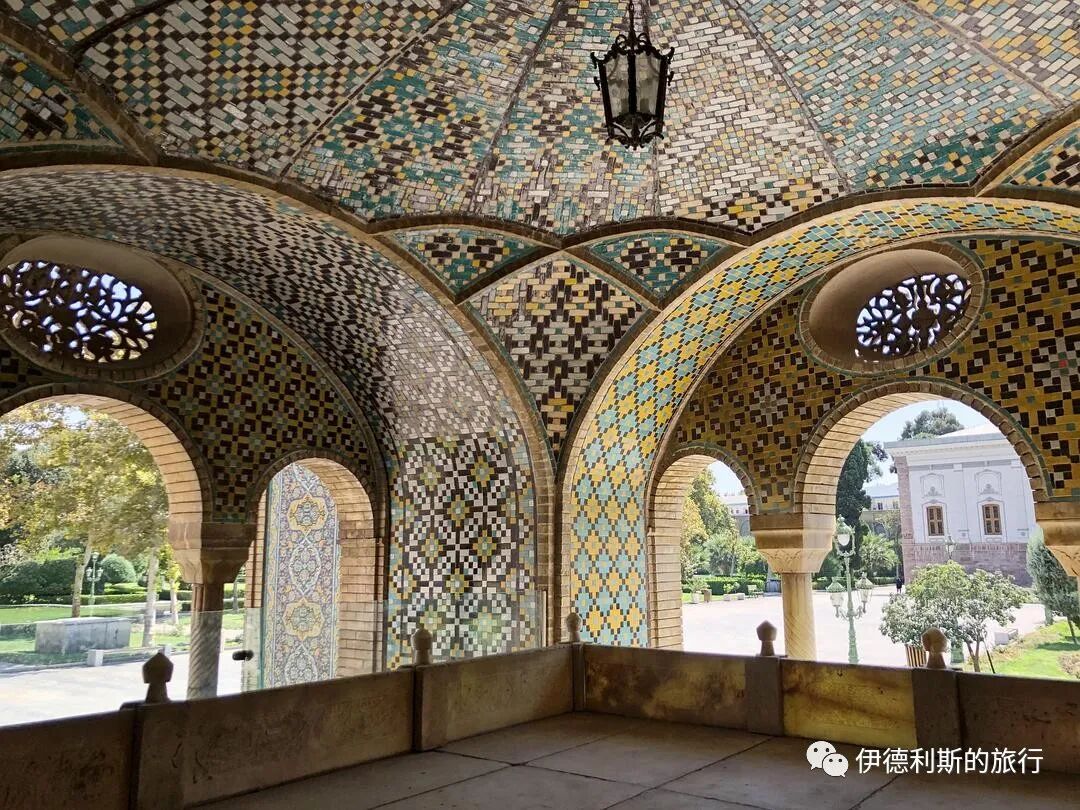
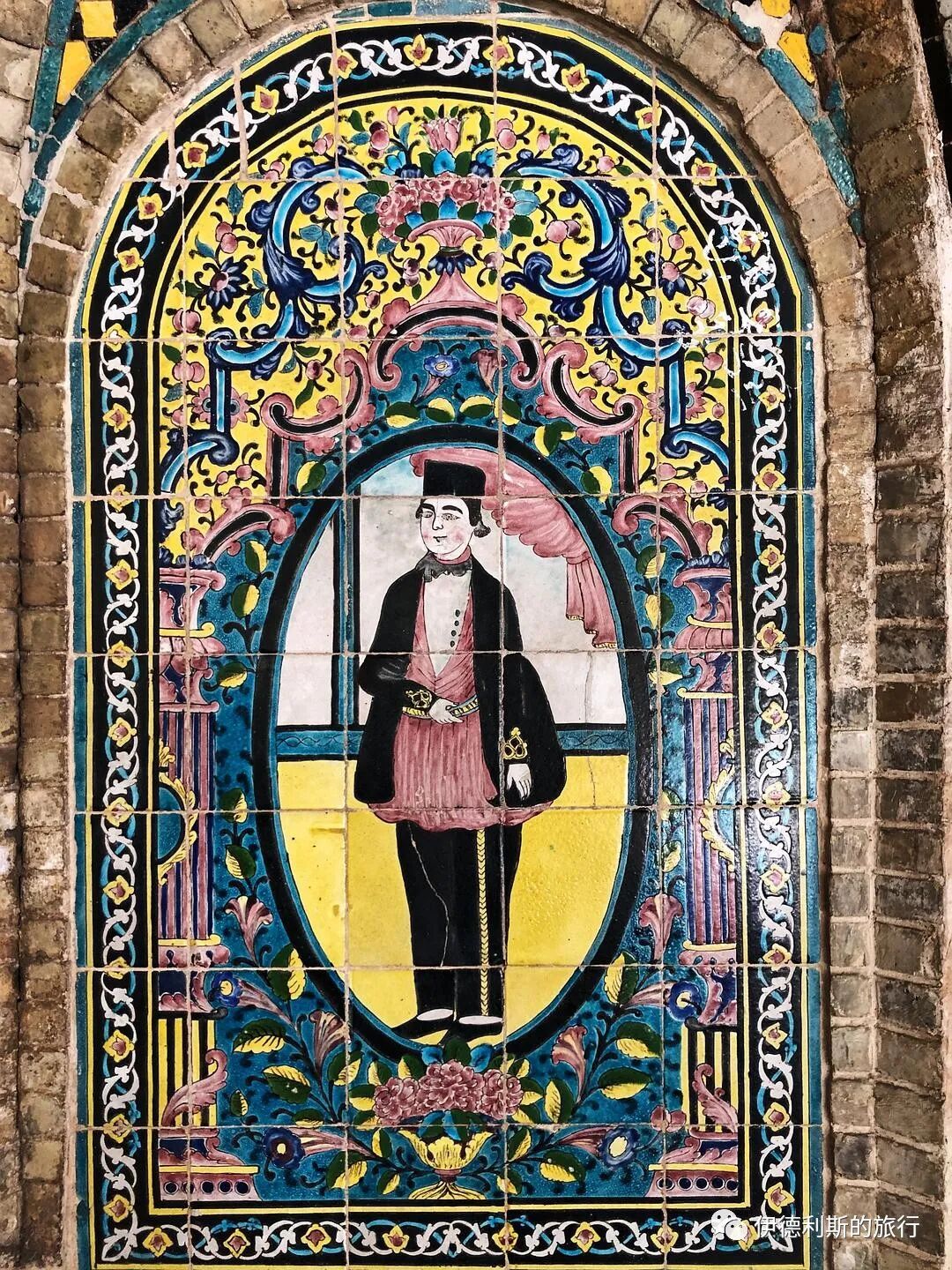
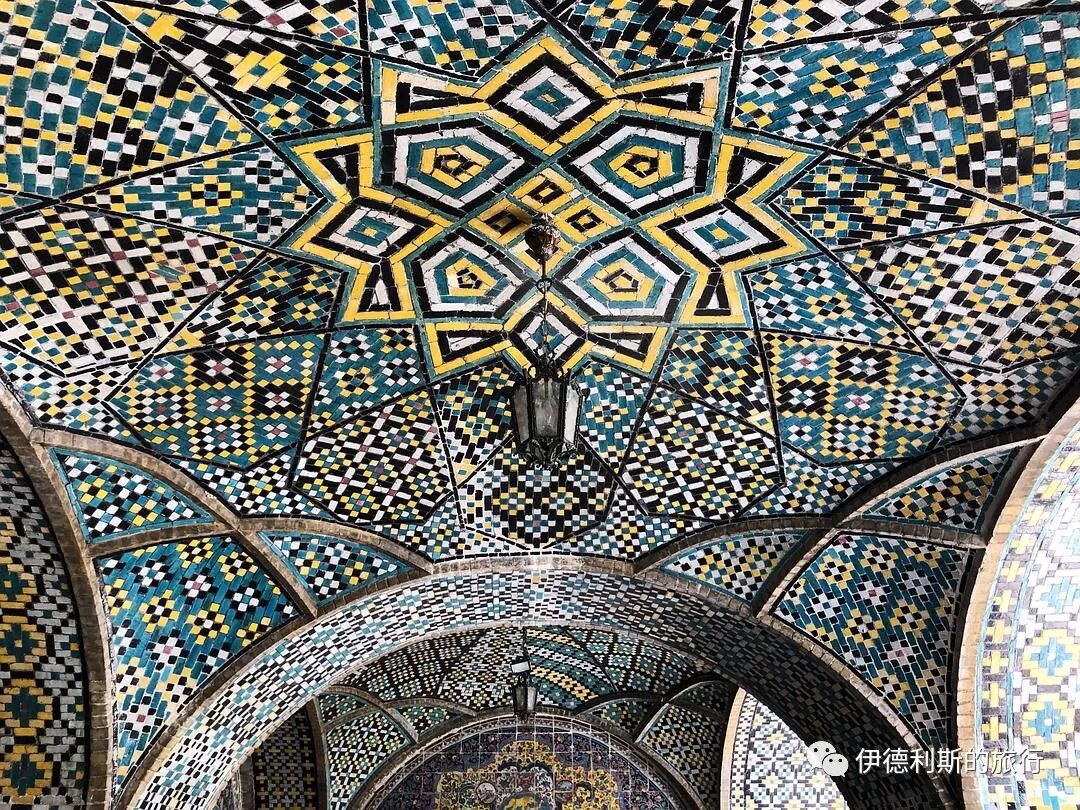
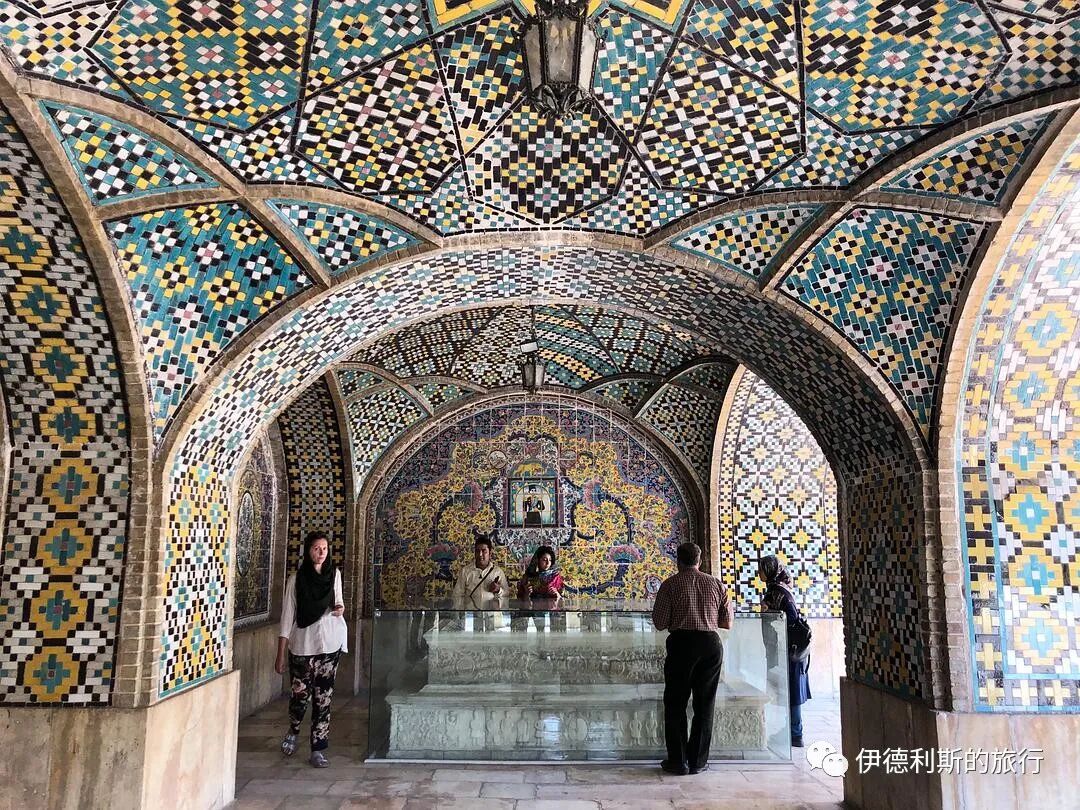
Karim Khani Nook was built in 1759 by Karim Khan of the Zand dynasty. It is a terrace featuring a marble throne. There used to be a pool with a fountain in the middle of the terrace. Water flowed into the pond from underground water channels (Qanat) and then flowed to other parts of the palace. Nasser ed Din Shah (reigned 1848-1896) of the Qajar dynasty loved this place. People say he often sat here quietly smoking a water pipe. Today, the marble tombstone of Nasser ed Din Shah stands here, and his portrait is also on the walls of the building.
Negar Khane Gallery
In 1872, during his second visit to Europe, Nasser ed Din Shah was deeply impressed by the artifacts displayed in European museums. After returning to Tehran, he set out to create a museum hall in the Kakh-e Asli area of the palace to display paintings, jewelry, and other royal artifacts.
Today, most of the Qajar dynasty collection has been scattered among various museums in Tehran, but many paintings are still kept in Golestan Palace. The southern gallery now houses paintings by early Qajar dynasty masters, including Mirza Baba, Mehr Ali Afshar, Ali Akbar Khan, and Ab ol Hassan Sani. The northern gallery was the home of the royal guard during the Pahlavi period. It underwent a major renovation in 1995 and now displays paintings by late Qajar dynasty masters, including Mahmoud Khan Saba, Mohammad Gafari Kashani, Mehri, and Mosa Momayez.
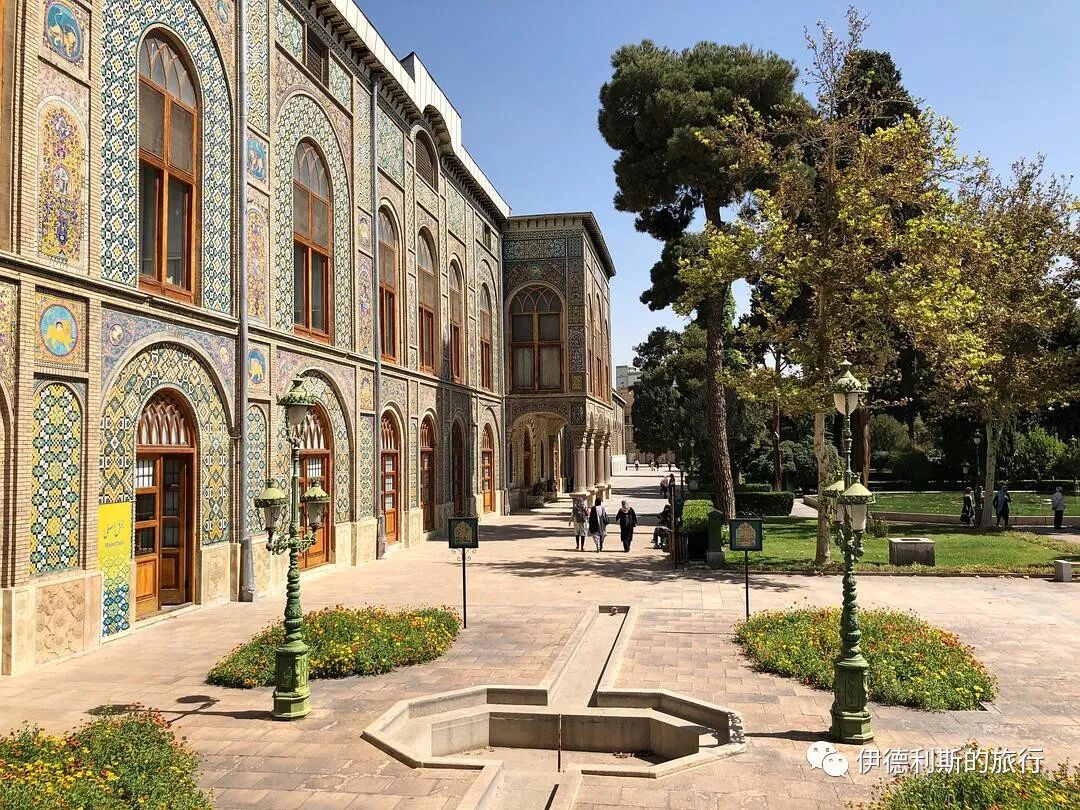
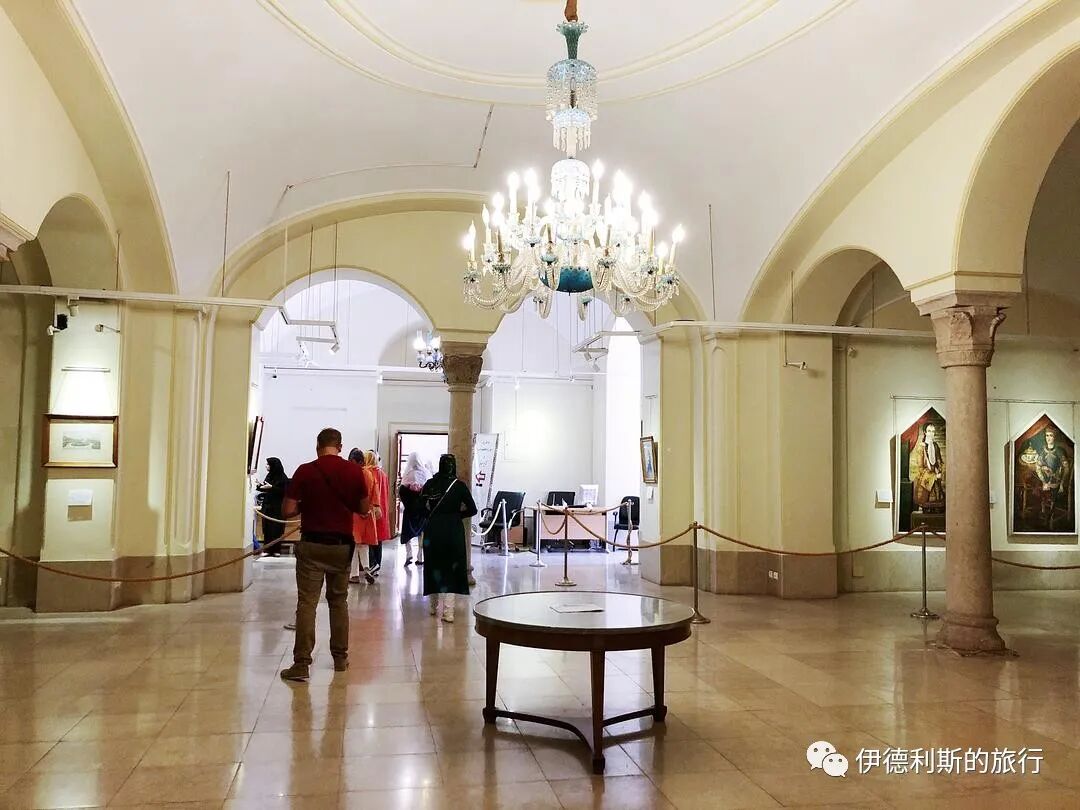
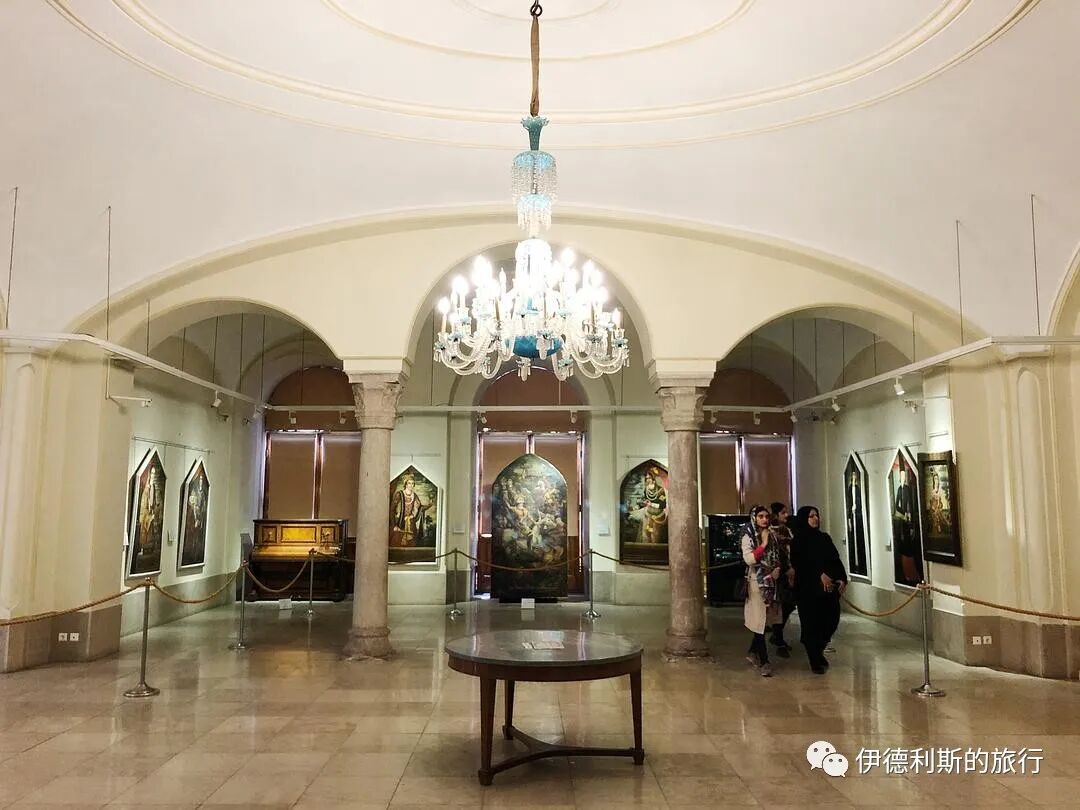
The harem of Nasser ed Din Shah.
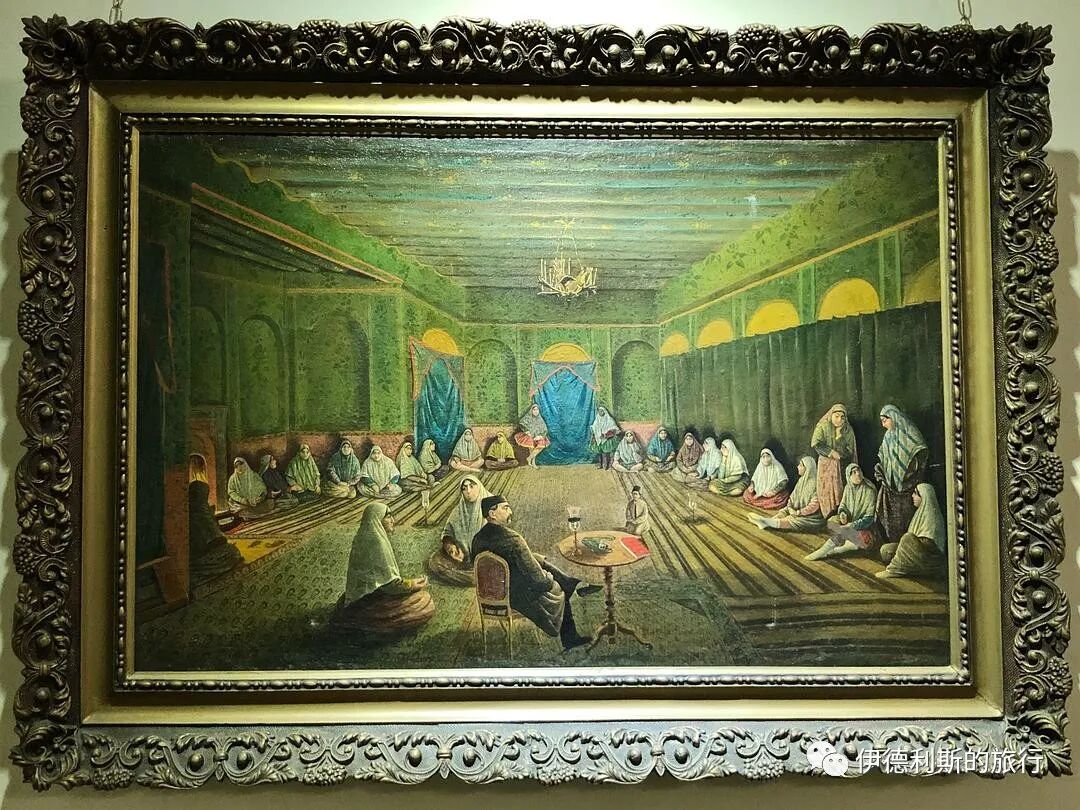
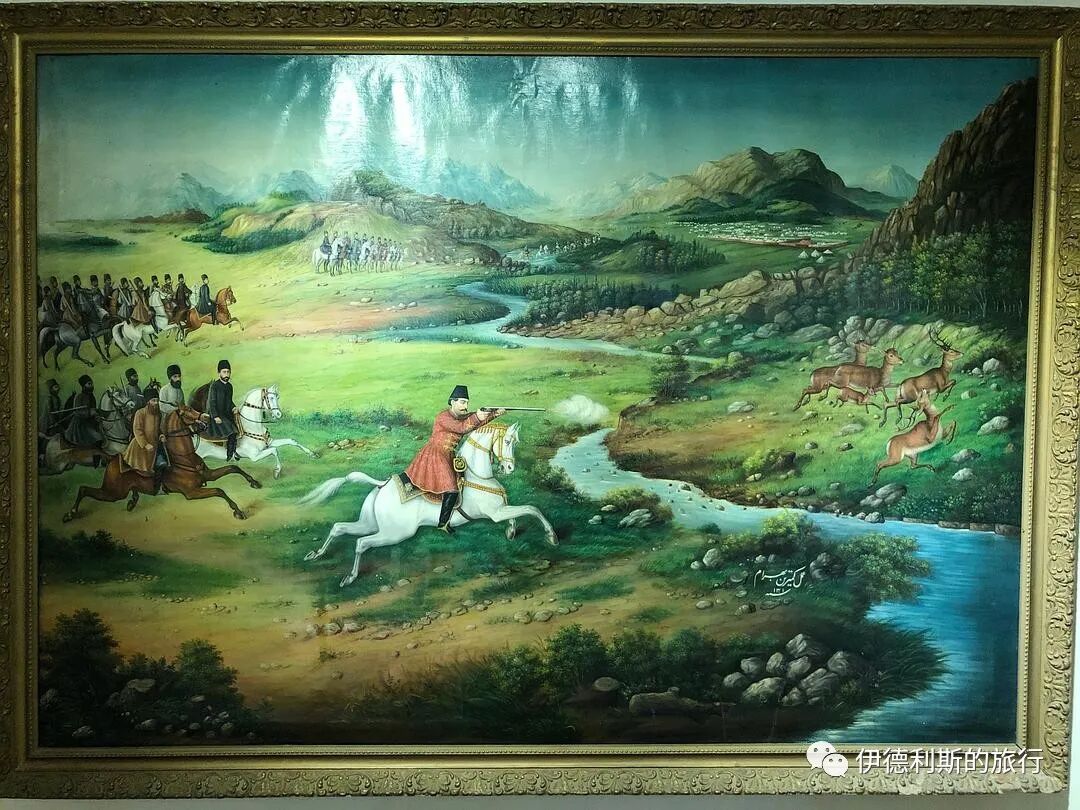
Nasser ed Din Shah hunting, painted in 1884.
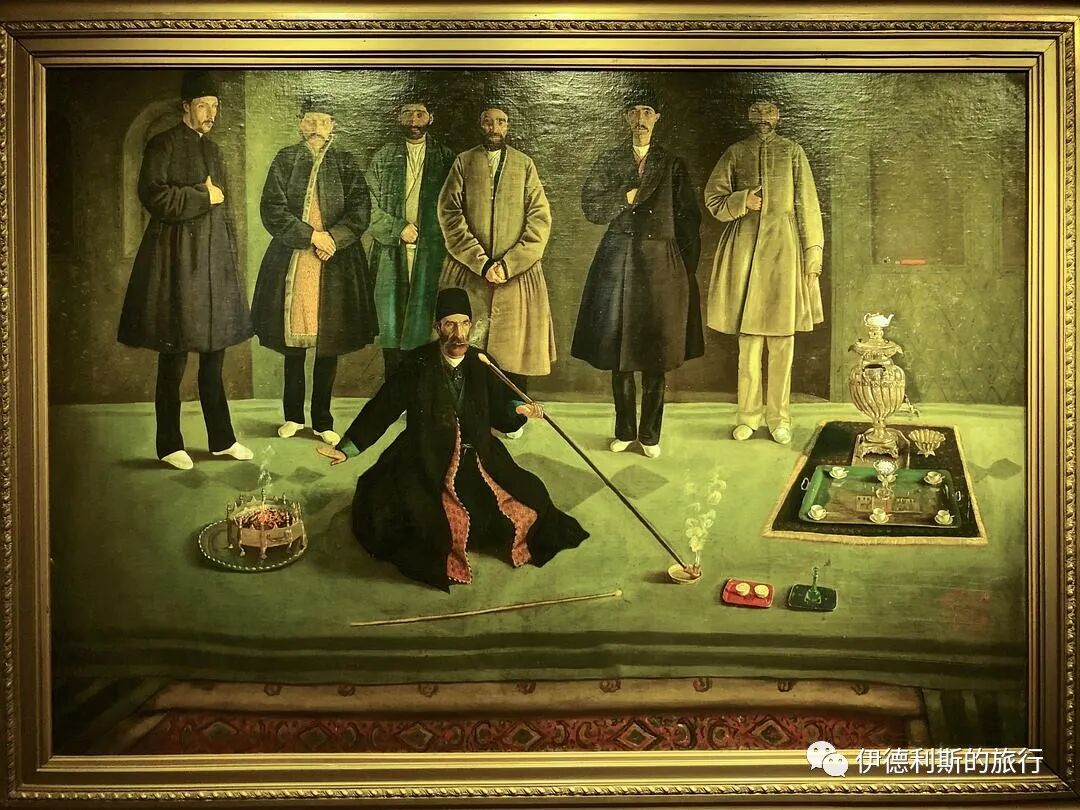
Servants in the court of Nasser ed Din Shah, painted in 1881.
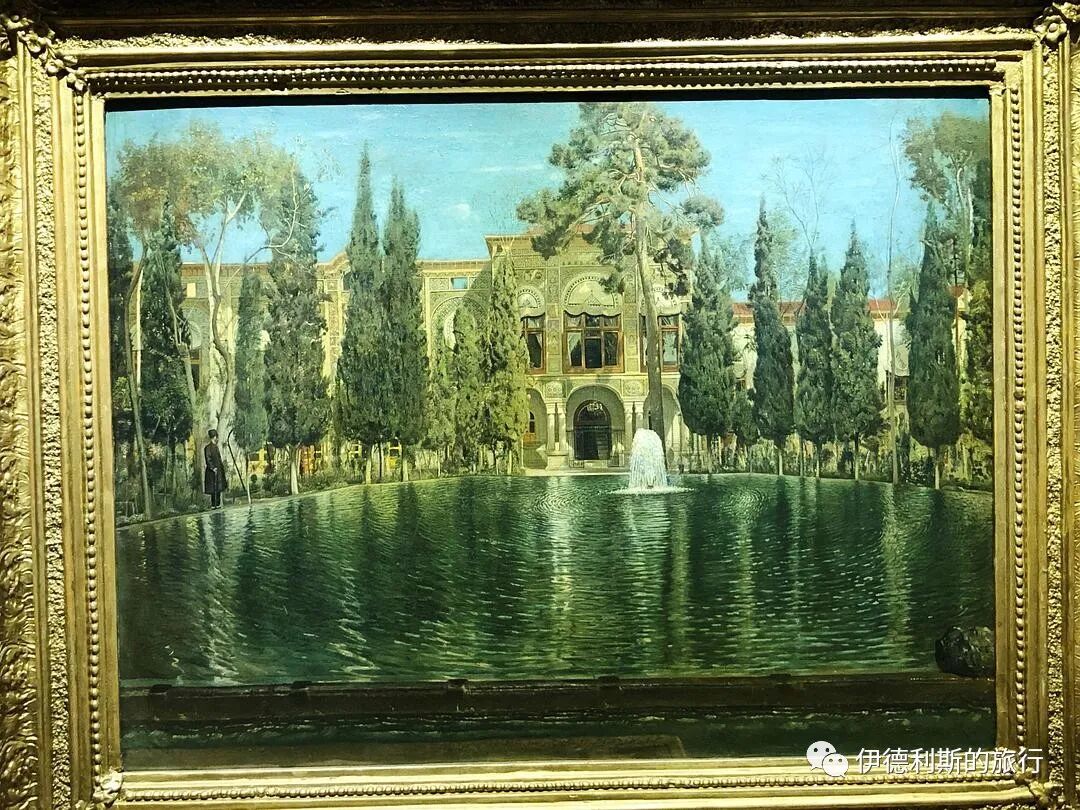
Golestan Palace, painted in 1885.
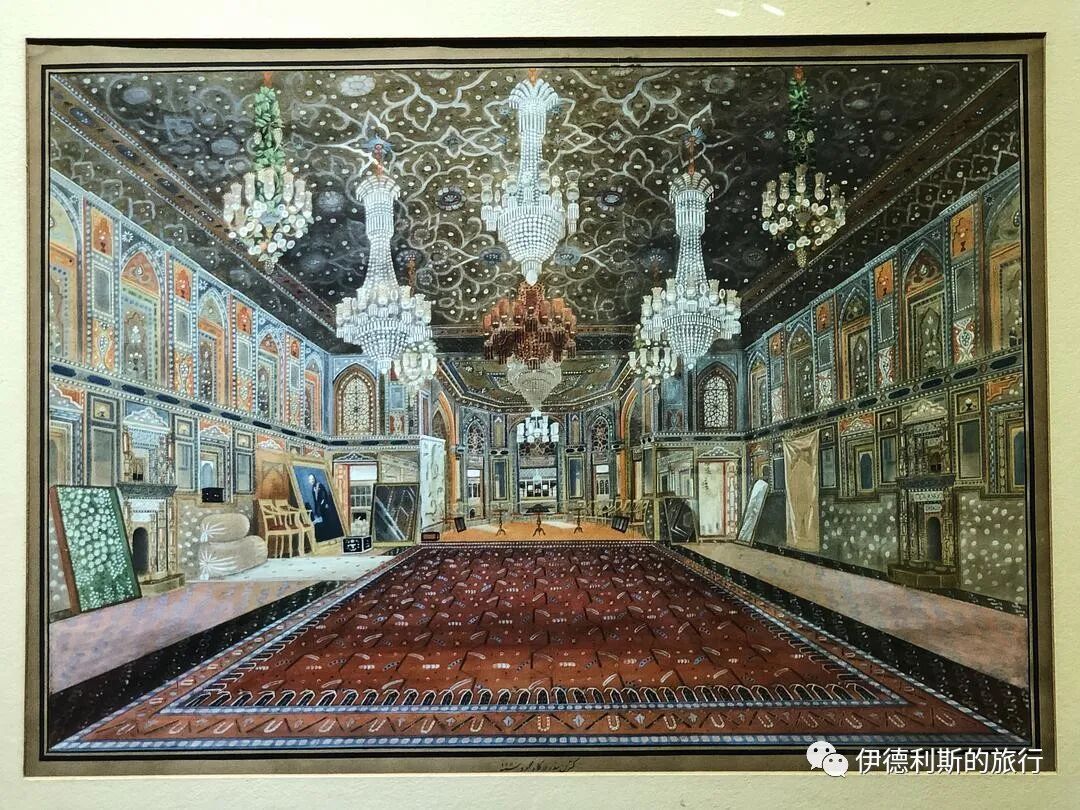
Interior of Golestan Palace, painted in 1864.
Celebration of the 30th anniversary of Nasser ed Din Shah's reign, painted in 1878.
Physician Mirza Abolfazl Tabib Kashani taking a patient's pulse, painted in 1859.
Qajar dynasty prince Abdol-Samad Mirza.
Mohammad Ghasem Khan and Mohammad Hossein, painted in 1891. The former was the Qajar dynasty ambassador to Russia.
Painted in 1895.
The Shia holy city of Karbala, painted in 1902.
Portraits of the Qajar dynasty royal family.
Makhsus Museum
The Makhsus Museum (Mouze-ye Makhsous) preserves copperware, silverware, and weapons gifted to the Qajar dynasty by European kings.
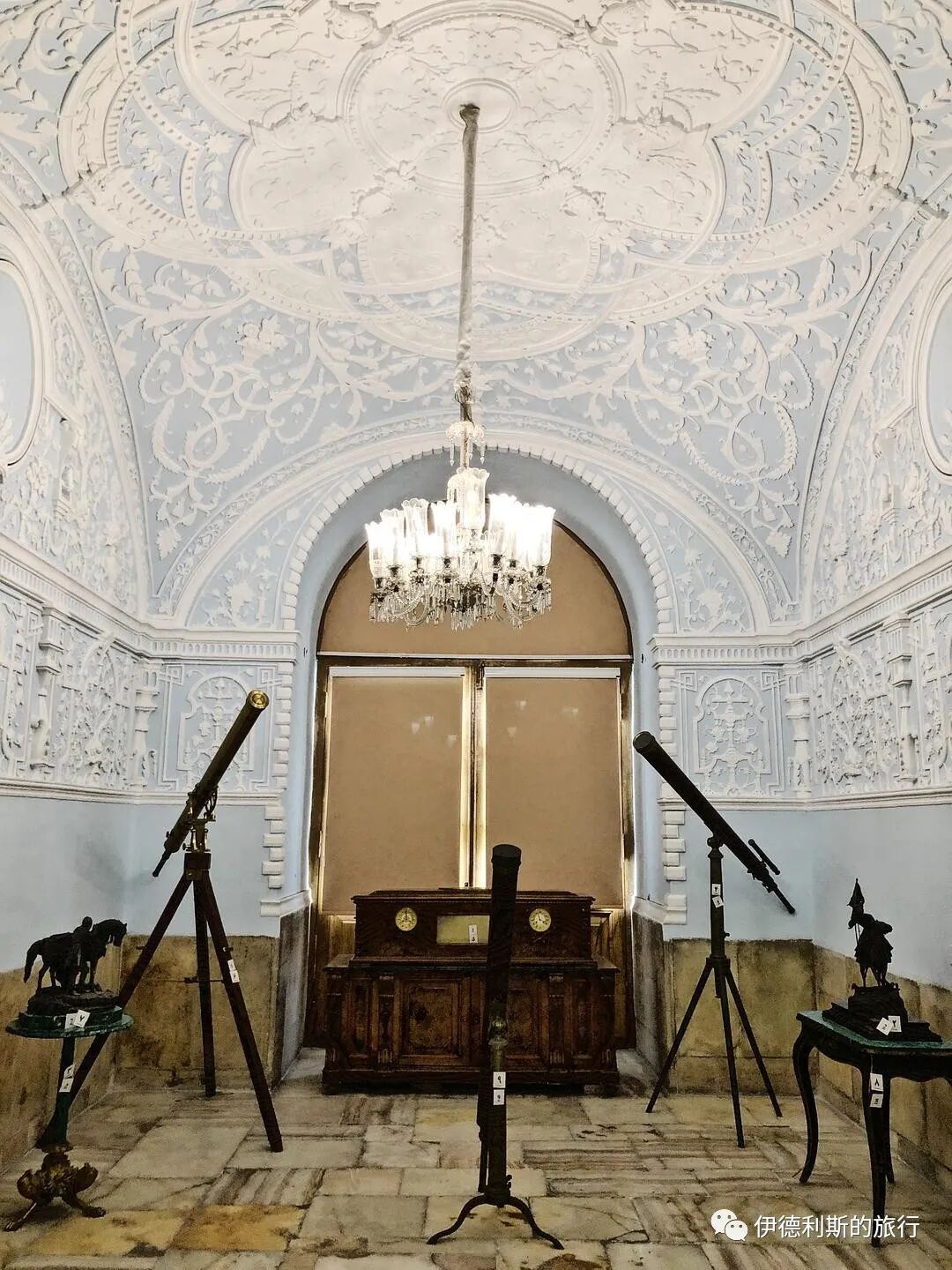
Main Building
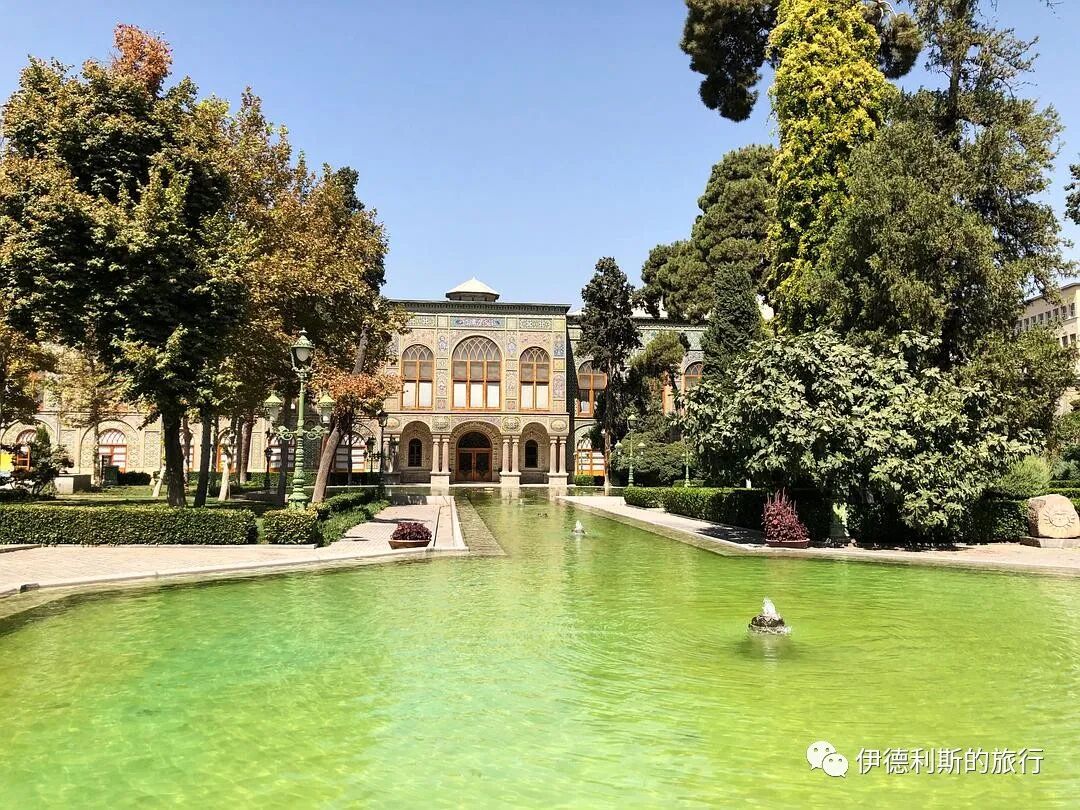
East of the museum is the main building (Kakh-e Asli) of Golestan Palace. In front of the main building is a 118-meter-long pool containing 15 fountains. Historical photos show that the pool was once surrounded by bronze statues of boys holding torches and animals, but they were all removed during the Pahlavi dynasty.
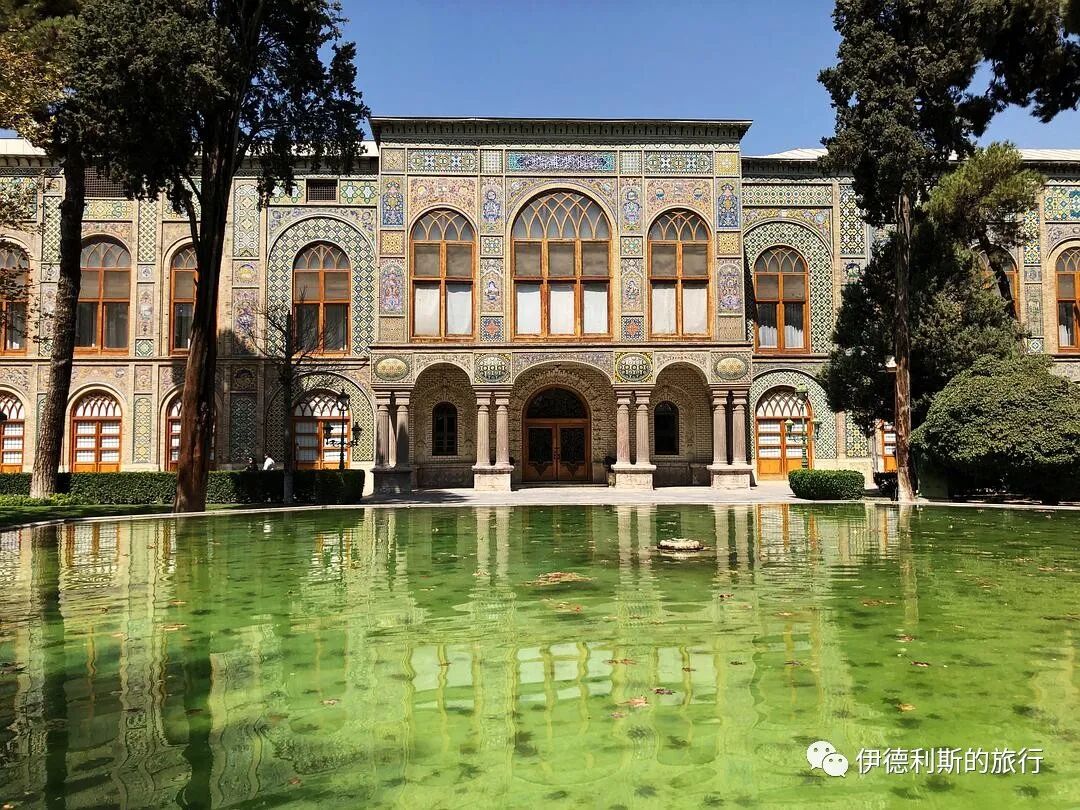
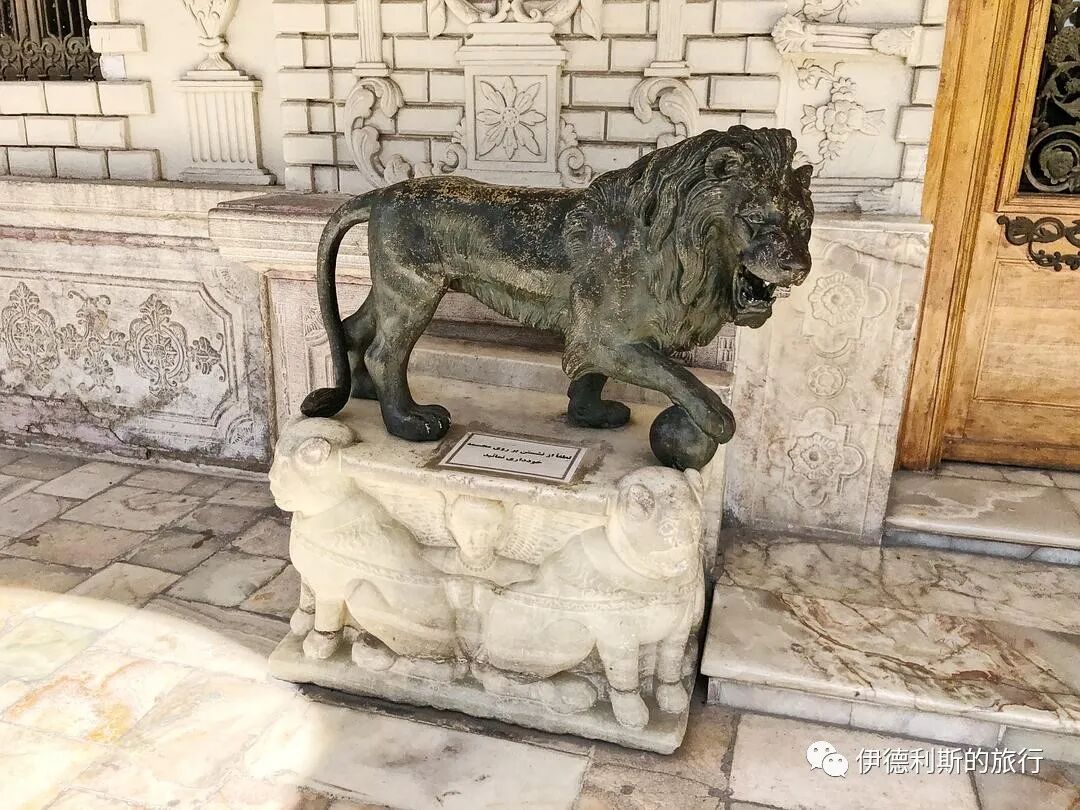
On both sides of the entrance is a pair of brass roaring lions symbolizing power.
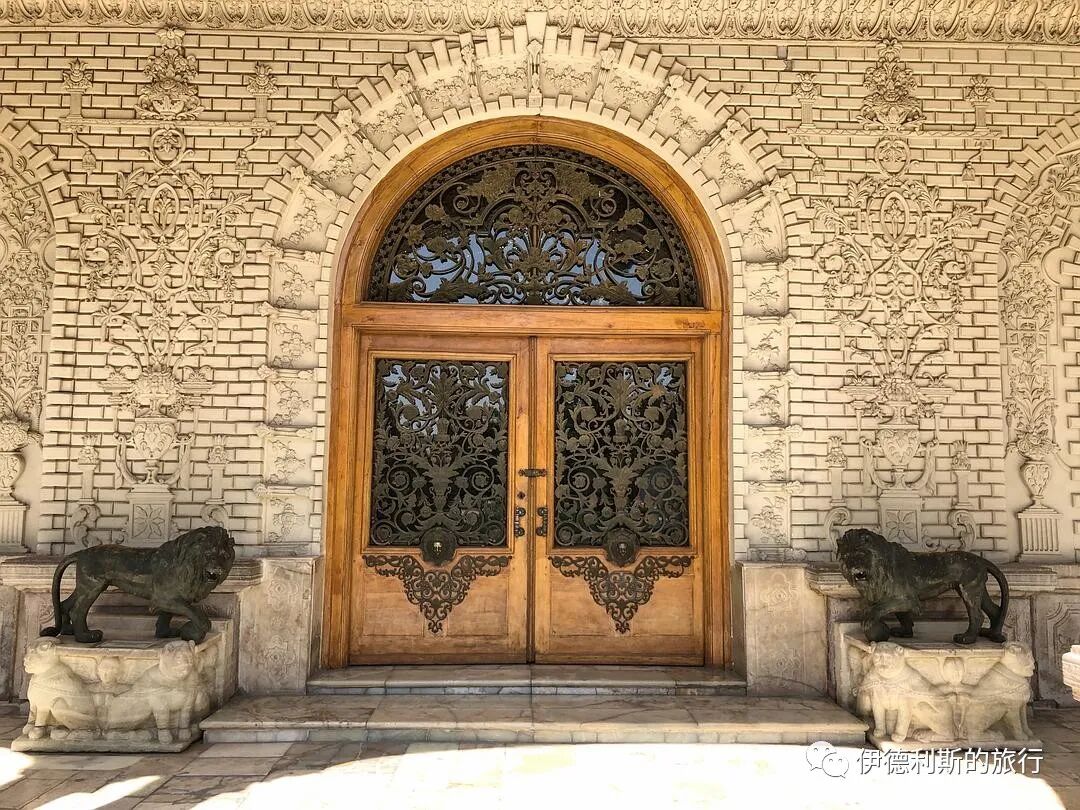
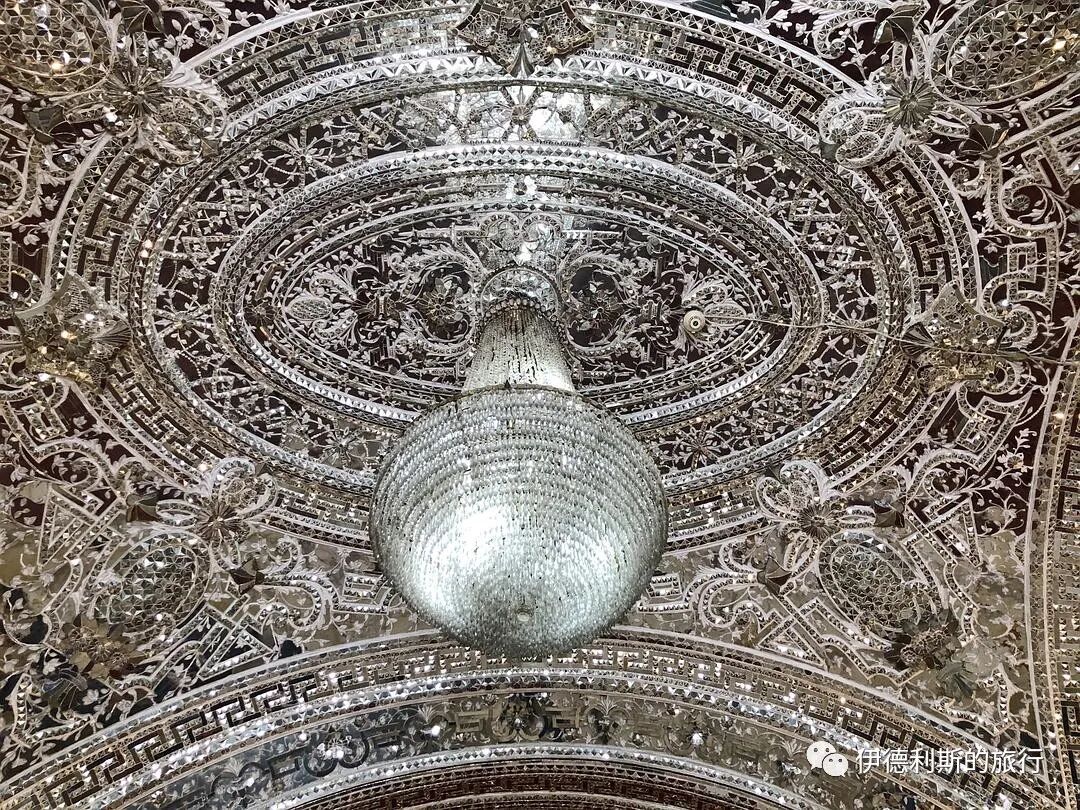
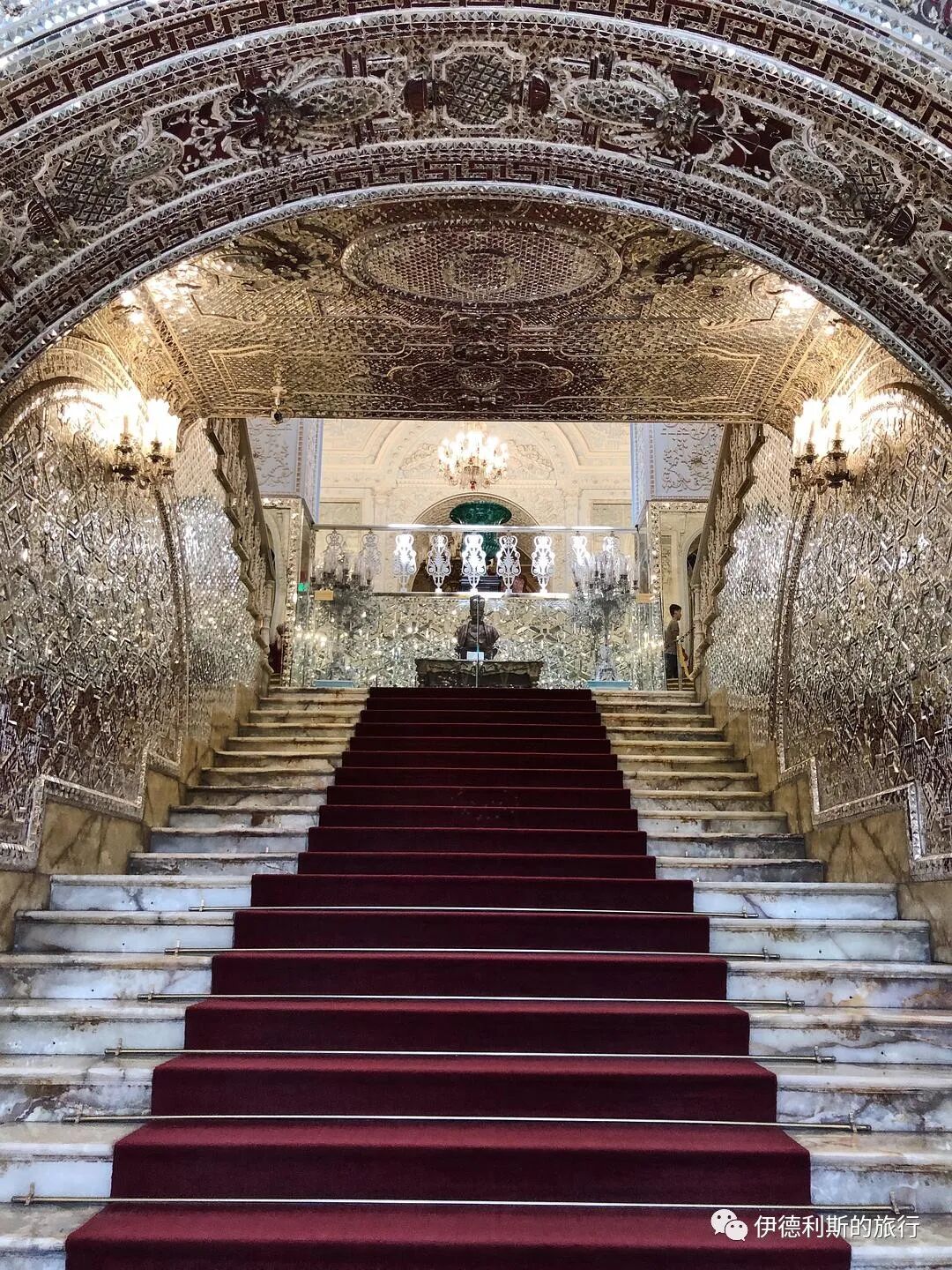
After entering the main entrance, there is a staircase (Sar sara) with 22 steps, decorated with mirrors in geometric patterns.
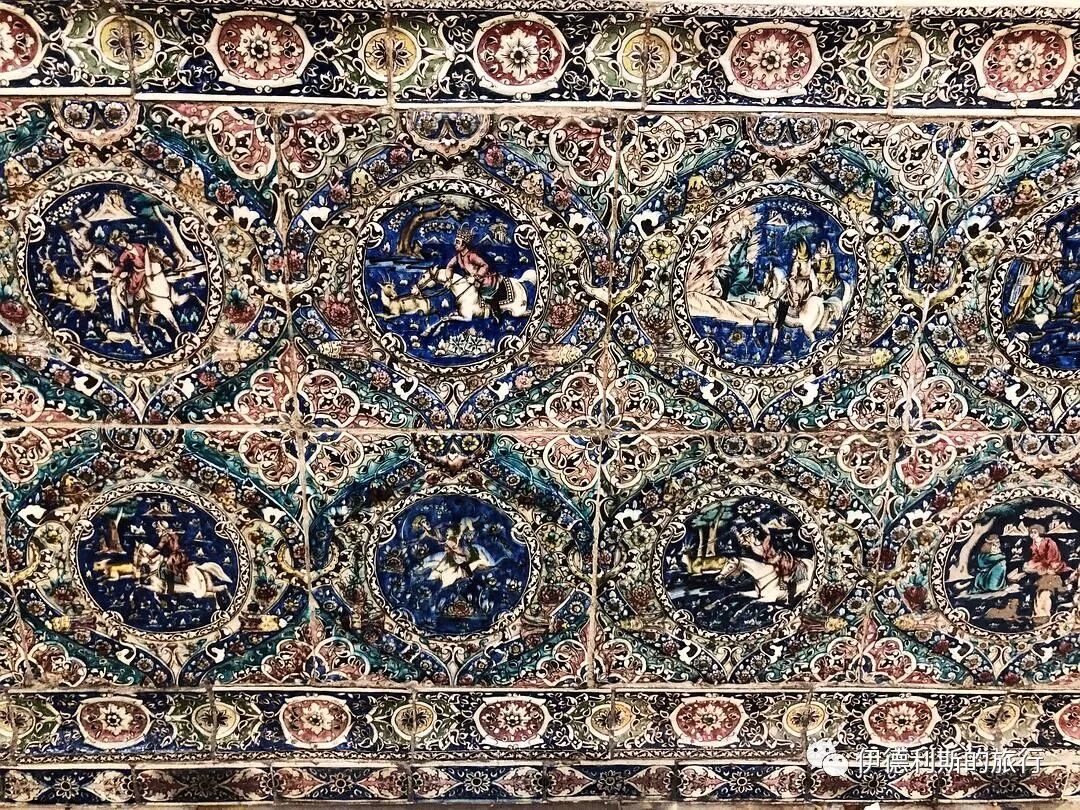
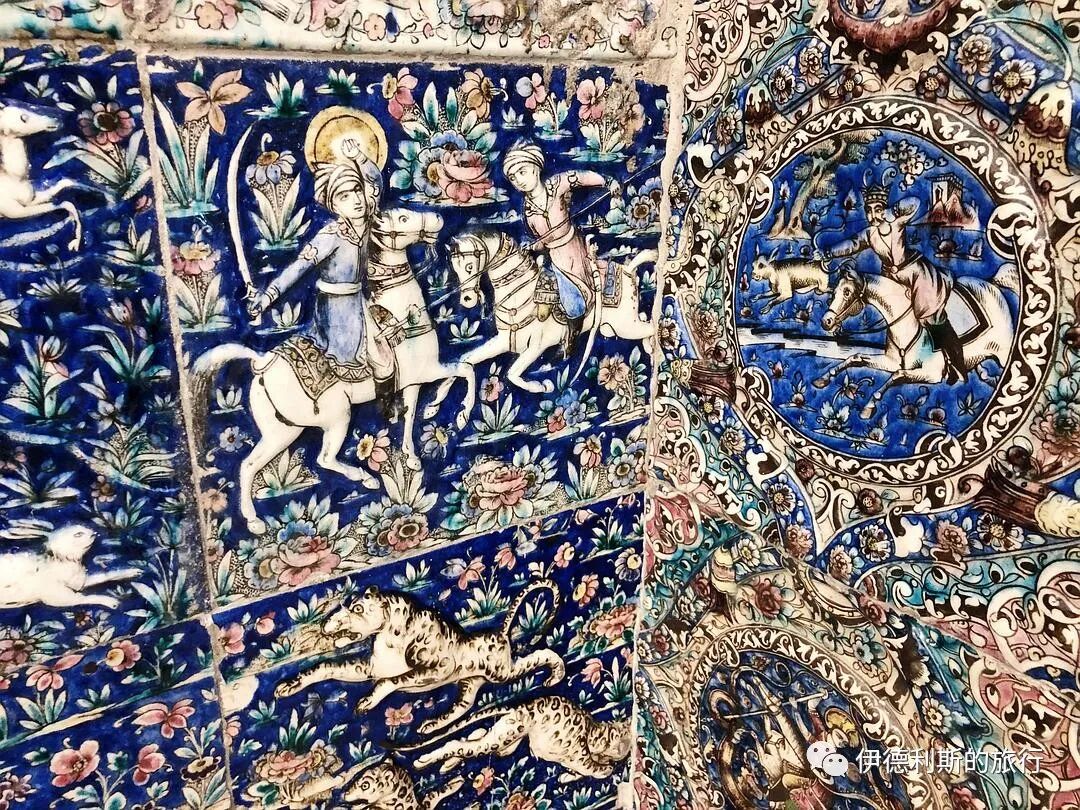
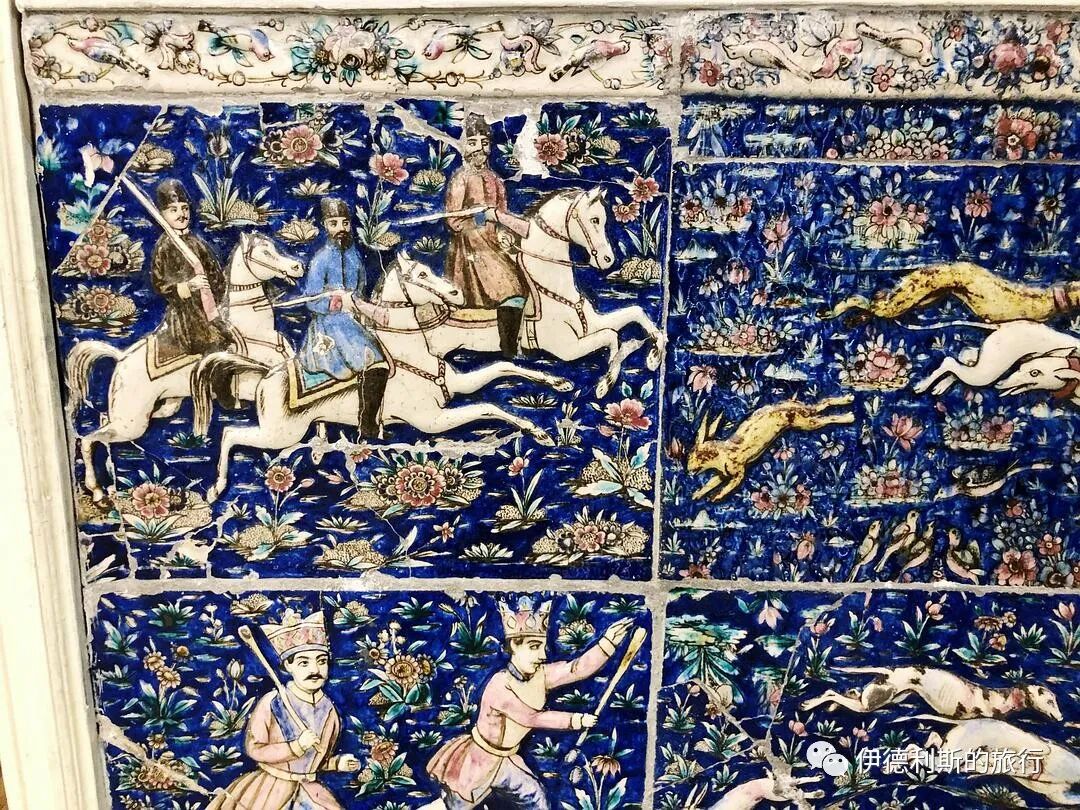
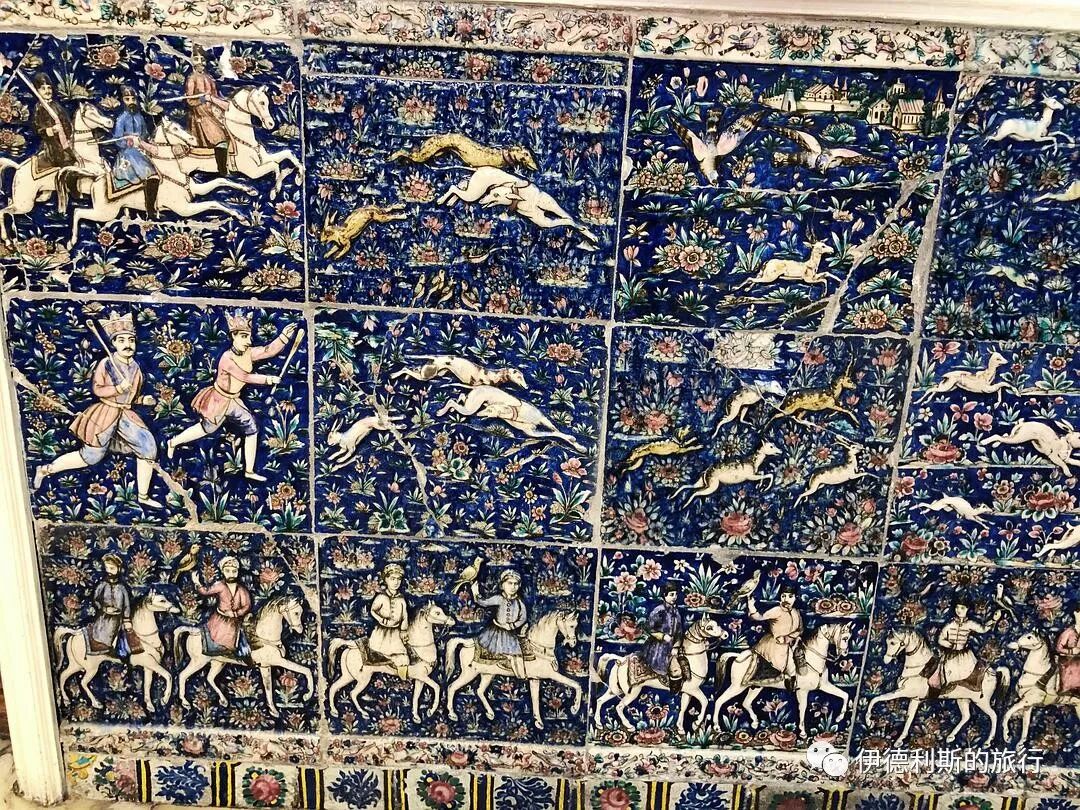
The column bases on the second floor of the main building are covered with colorful tiles, including portraits of past Iranian kings, hunting scenes, coronation ceremonies, some legends and religious stories, and animal figures imitating Persepolis. These tiles once belonged to the Khabgah sleeping quarters and the Haram Khaneh buildings. After these two buildings were demolished, the tiles were moved to the second floor of the main building.
Reception Hall
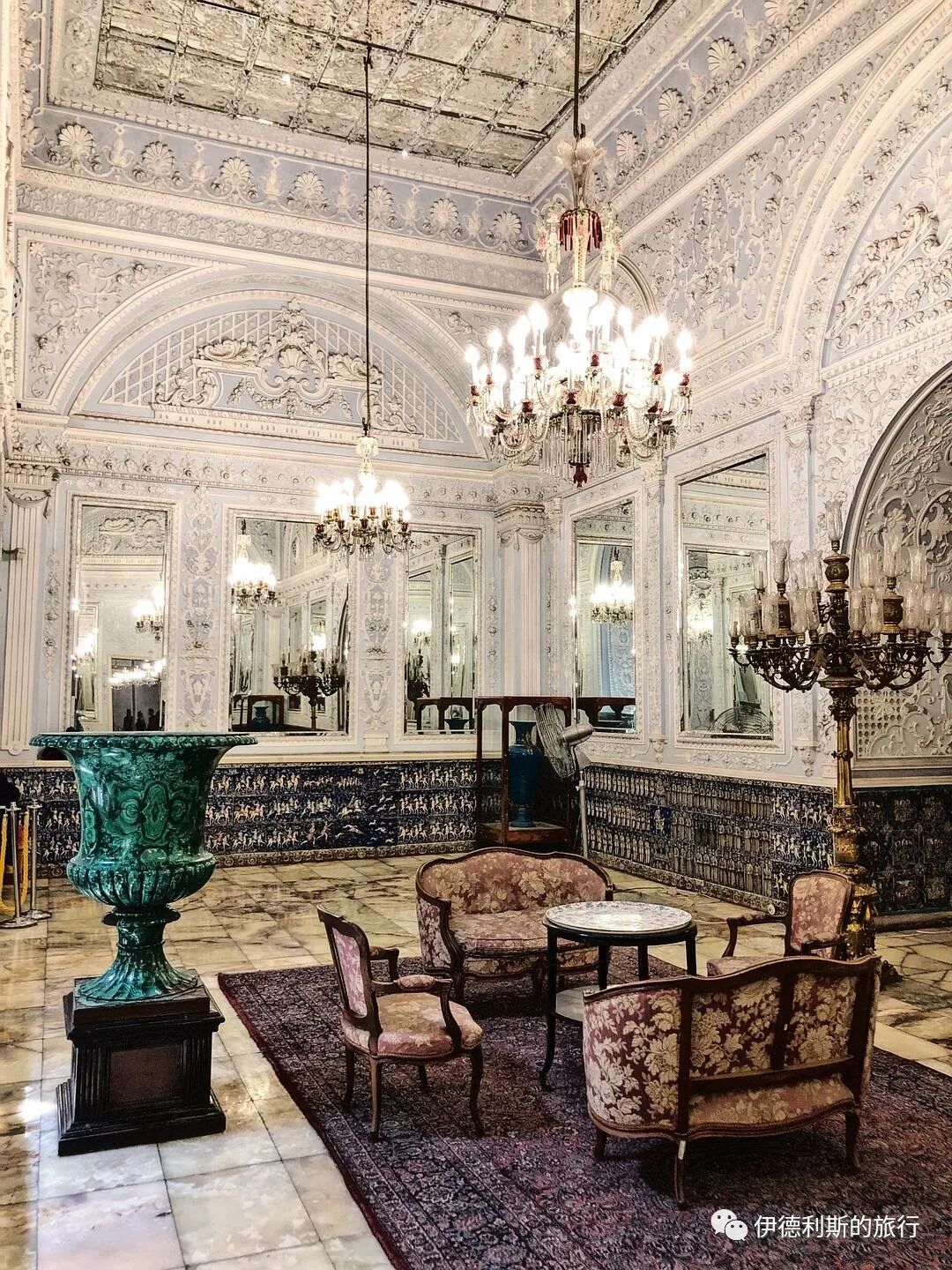
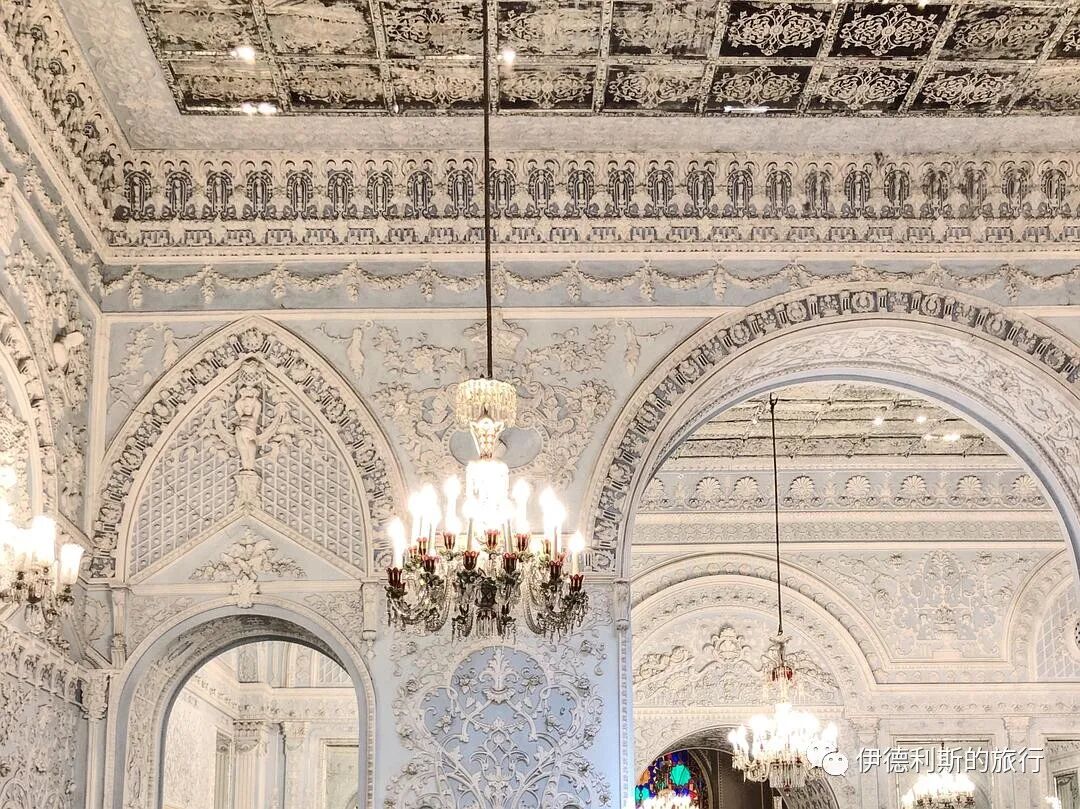
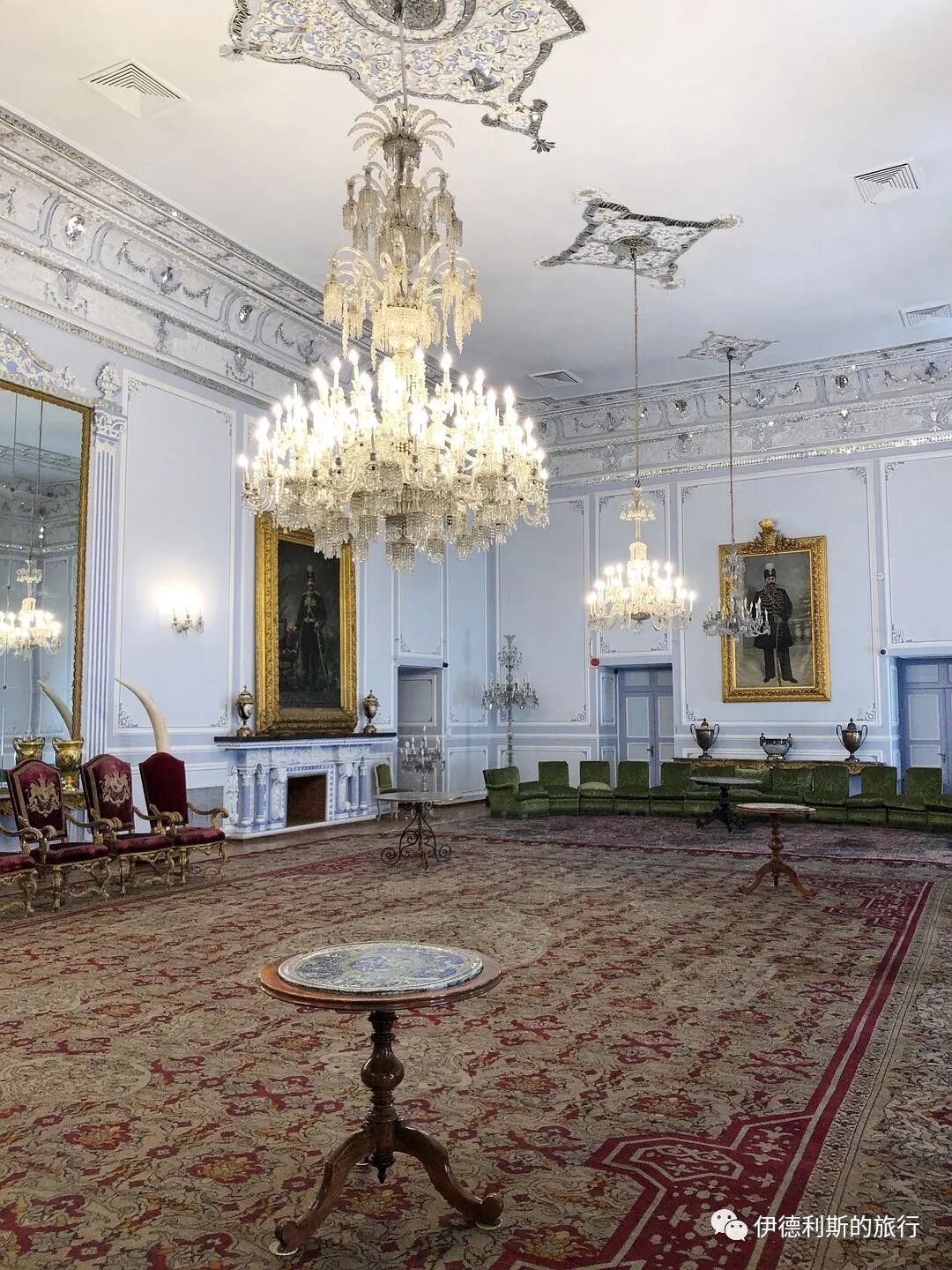
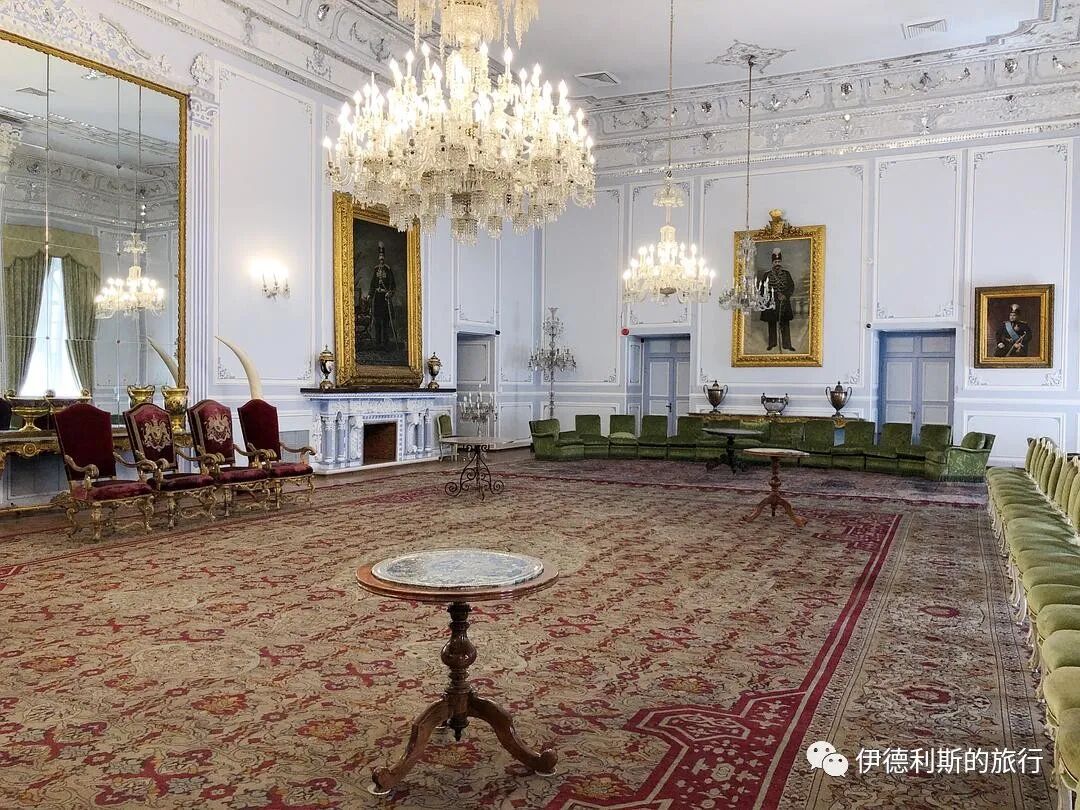
The Reception Hall (Talar-e Salam), also called the Coronation Hall (Talar-e Taj Gozaari) or the Museum Hall, is where five Qajar dynasty kings and the second Pahlavi king were crowned. Talar-e Salam is the grandest hall in the main building. It is 43 meters long and 20 meters wide, with 20 arches along the sides and beautiful mosaics on the floor. Qajar king Naser al-Din Shah, who reigned from 1848 to 1896, used this space to receive various envoys and guests from European courts. At that time, the hall displayed various Iranian and European paintings and royal jewels. These royal jewels are now kept at the Royal Jewelry Museum in the Central Bank of Iran.
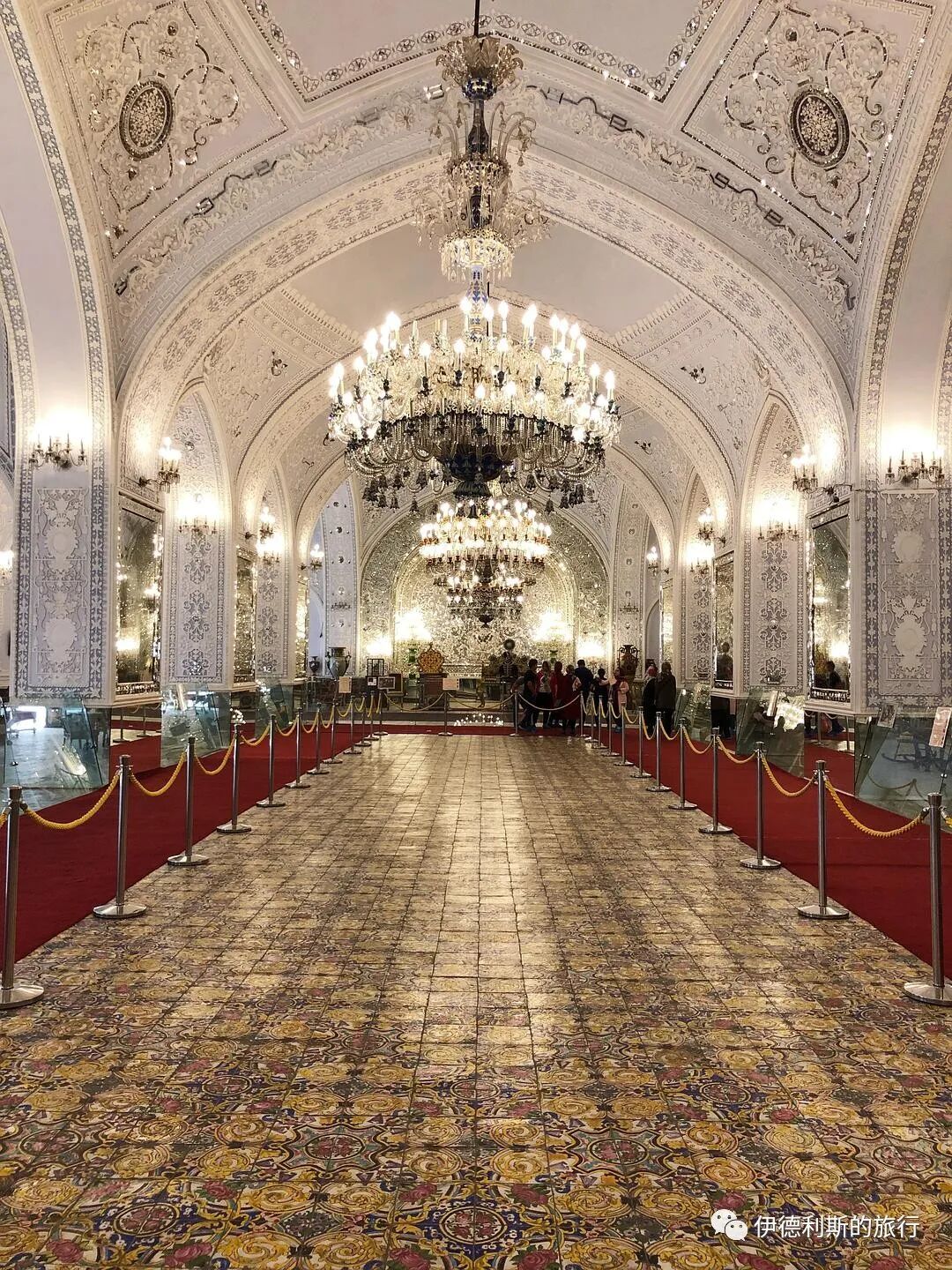
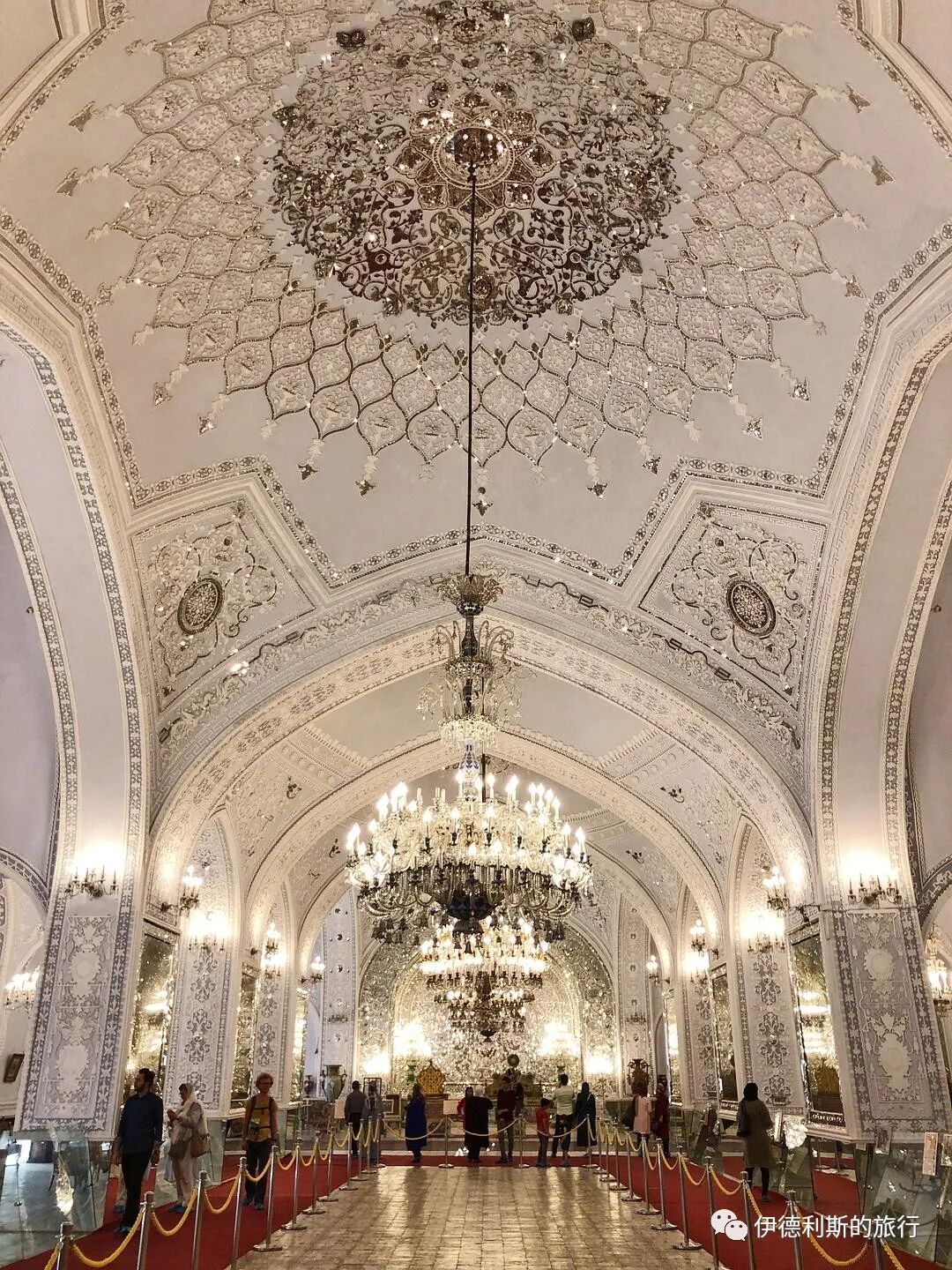
The Talar-e Adj hall is the room where gifts sent to Naser al-Din Shah from various countries were kept. During the Pahlavi dynasty, this space became a reception hall for hosting court banquets, and the interior decorations were renovated.
Mirror Hall
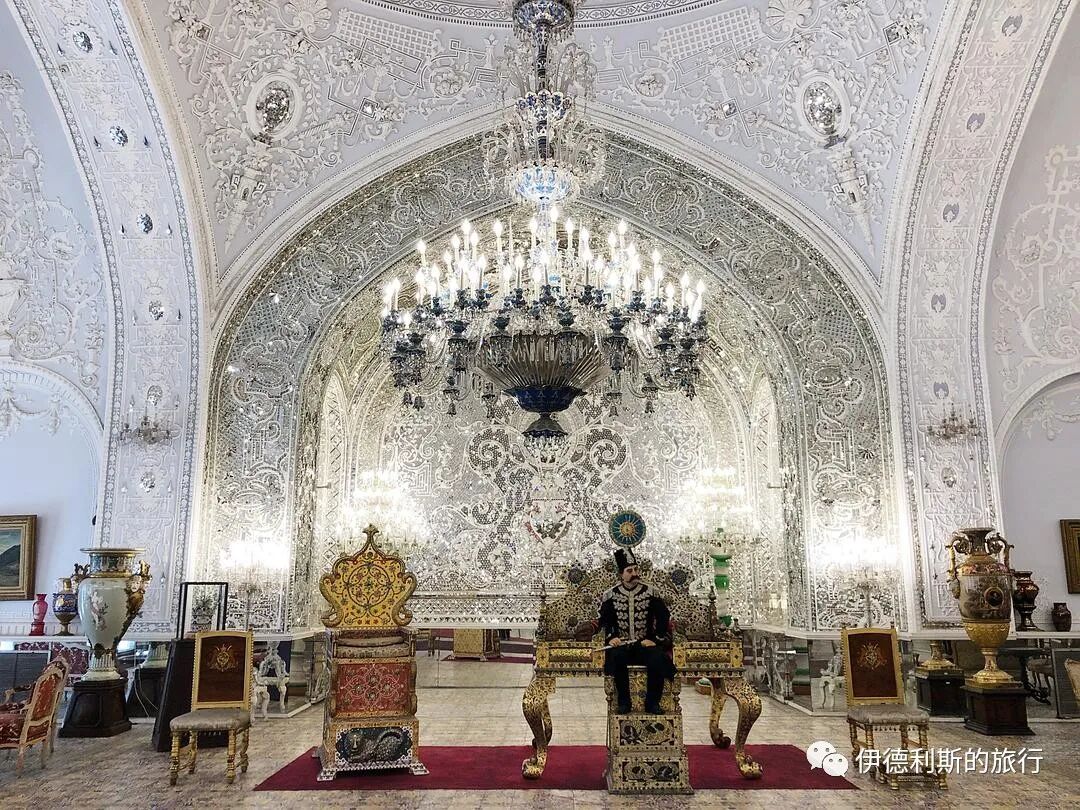
The Mirror Hall (Talar-e Ayineh) is the smallest but most dazzling room in the main building. The gorgeous interior decorations look especially bright reflected in the many mirrors. This room once held the Persian Peacock Throne (Takht-e Tavoos) and the Kiani Crown (Taj-e Kiani) until they were moved to the Royal Jewelry Museum at the Central Bank of Iran in 1980.
Talar-e Zoruf
Talar-e Zoruf is a room dedicated to displaying porcelain gifted to the Qajar dynasty by European monarchs like Napoleon, Queen Victoria of England, and Tsars Nicholas I and Alexander III. It was renovated during the Pahlavi dynasty.
Summary: Tehran — Golestan Palace, Qajar History and Islamic Art is presented here as a firsthand travel account in clear English, beginning with this scene: Golestan Palace (Kākh-e Golestān) means Garden Palace. The word Gol in the name is the same as the name Guli that we are familiar with. The account keeps its focus on Tehran Travel, Golestan Palace, Qajar History while preserving the names, places, food, and historical details from the Chinese source.
Golestan Palace (Kākh-e Golestān) means Garden Palace. The word Gol in the name is the same as the name Guli that we are familiar with. Located in Tehran, the capital of Iran, it was the royal palace of the Qajar dynasty and was added to the UNESCO World Heritage list in 2013.
Golestan Palace was first called the Tehran Citadel (Arg). It was built during the reign of Tahmasp I (reigned 1524-1576) of the Persian Safavid dynasty and was rebuilt during the reign of Karim Khan (reigned 1750-1779) of the Zand dynasty. After Agha Mohammad Khan (reigned 1789-1797) of the Qajar dynasty made Tehran his capital, he officially converted the Tehran Citadel into the Golestan Royal Palace. Haji Ab ol Hasan Mimar Navai rebuilt the palace again in 1865.
Between 1925 and 1945, Reza Shah (reigned 1925-1941) of the Pahlavi dynasty ordered the demolition of most of the Golestan Palace buildings for modern urban development. Modern-style commercial buildings were built there one after another between the 1950s and 1960s.
Karim Khani Nook
Karim Khani Nook was built in 1759 by Karim Khan of the Zand dynasty. It is a terrace featuring a marble throne. There used to be a pool with a fountain in the middle of the terrace. Water flowed into the pond from underground water channels (Qanat) and then flowed to other parts of the palace. Nasser ed Din Shah (reigned 1848-1896) of the Qajar dynasty loved this place. People say he often sat here quietly smoking a water pipe. Today, the marble tombstone of Nasser ed Din Shah stands here, and his portrait is also on the walls of the building.
Negar Khane Gallery
In 1872, during his second visit to Europe, Nasser ed Din Shah was deeply impressed by the artifacts displayed in European museums. After returning to Tehran, he set out to create a museum hall in the Kakh-e Asli area of the palace to display paintings, jewelry, and other royal artifacts.
Today, most of the Qajar dynasty collection has been scattered among various museums in Tehran, but many paintings are still kept in Golestan Palace. The southern gallery now houses paintings by early Qajar dynasty masters, including Mirza Baba, Mehr Ali Afshar, Ali Akbar Khan, and Ab ol Hassan Sani. The northern gallery was the home of the royal guard during the Pahlavi period. It underwent a major renovation in 1995 and now displays paintings by late Qajar dynasty masters, including Mahmoud Khan Saba, Mohammad Gafari Kashani, Mehri, and Mosa Momayez.
The harem of Nasser ed Din Shah.
Nasser ed Din Shah hunting, painted in 1884.
Servants in the court of Nasser ed Din Shah, painted in 1881.
Golestan Palace, painted in 1885.
Interior of Golestan Palace, painted in 1864.
Celebration of the 30th anniversary of Nasser ed Din Shah's reign, painted in 1878.
Physician Mirza Abolfazl Tabib Kashani taking a patient's pulse, painted in 1859.
Qajar dynasty prince Abdol-Samad Mirza.
Mohammad Ghasem Khan and Mohammad Hossein, painted in 1891. The former was the Qajar dynasty ambassador to Russia.
Painted in 1895.
The Shia holy city of Karbala, painted in 1902.
Portraits of the Qajar dynasty royal family.
Makhsus Museum
The Makhsus Museum (Mouze-ye Makhsous) preserves copperware, silverware, and weapons gifted to the Qajar dynasty by European kings.
Main Building
East of the museum is the main building (Kakh-e Asli) of Golestan Palace. In front of the main building is a 118-meter-long pool containing 15 fountains. Historical photos show that the pool was once surrounded by bronze statues of boys holding torches and animals, but they were all removed during the Pahlavi dynasty.
On both sides of the entrance is a pair of brass roaring lions symbolizing power.
After entering the main entrance, there is a staircase (Sar sara) with 22 steps, decorated with mirrors in geometric patterns.
The column bases on the second floor of the main building are covered with colorful tiles, including portraits of past Iranian kings, hunting scenes, coronation ceremonies, some legends and religious stories, and animal figures imitating Persepolis. These tiles once belonged to the Khabgah sleeping quarters and the Haram Khaneh buildings. After these two buildings were demolished, the tiles were moved to the second floor of the main building.
Reception Hall
The Reception Hall (Talar-e Salam), also called the Coronation Hall (Talar-e Taj Gozaari) or the Museum Hall, is where five Qajar dynasty kings and the second Pahlavi king were crowned. Talar-e Salam is the grandest hall in the main building. It is 43 meters long and 20 meters wide, with 20 arches along the sides and beautiful mosaics on the floor. Qajar king Naser al-Din Shah, who reigned from 1848 to 1896, used this space to receive various envoys and guests from European courts. At that time, the hall displayed various Iranian and European paintings and royal jewels. These royal jewels are now kept at the Royal Jewelry Museum in the Central Bank of Iran.
The Talar-e Adj hall is the room where gifts sent to Naser al-Din Shah from various countries were kept. During the Pahlavi dynasty, this space became a reception hall for hosting court banquets, and the interior decorations were renovated.
Mirror Hall
The Mirror Hall (Talar-e Ayineh) is the smallest but most dazzling room in the main building. The gorgeous interior decorations look especially bright reflected in the many mirrors. This room once held the Persian Peacock Throne (Takht-e Tavoos) and the Kiani Crown (Taj-e Kiani) until they were moved to the Royal Jewelry Museum at the Central Bank of Iran in 1980.
Talar-e Zoruf
Talar-e Zoruf is a room dedicated to displaying porcelain gifted to the Qajar dynasty by European monarchs like Napoleon, Queen Victoria of England, and Tsars Nicholas I and Alexander III. It was renovated during the Pahlavi dynasty.
Halal Travel Guide: Tehran — Golestan Palace, Qajar History and Islamic Art
Articles • ali2007fr posted the article • 0 comments • 209 views • 2026-05-17 12:23
Reposted from the web
Summary: Tehran — Golestan Palace, Qajar History and Islamic Art is presented here as a firsthand travel account in clear English, beginning with this scene: Golestan Palace (Kākh-e Golestān) means Garden Palace. The word Gol in the name is the same as the name Guli that we are familiar with. The account keeps its focus on Tehran Travel, Golestan Palace, Qajar History while preserving the names, places, food, and historical details from the Chinese source.
Golestan Palace (Kākh-e Golestān) means Garden Palace. The word Gol in the name is the same as the name Guli that we are familiar with. Located in Tehran, the capital of Iran, it was the royal palace of the Qajar dynasty and was added to the UNESCO World Heritage list in 2013.
Golestan Palace was first called the Tehran Citadel (Arg). It was built during the reign of Tahmasp I (reigned 1524-1576) of the Persian Safavid dynasty and was rebuilt during the reign of Karim Khan (reigned 1750-1779) of the Zand dynasty. After Agha Mohammad Khan (reigned 1789-1797) of the Qajar dynasty made Tehran his capital, he officially converted the Tehran Citadel into the Golestan Royal Palace. Haji Ab ol Hasan Mimar Navai rebuilt the palace again in 1865.
Between 1925 and 1945, Reza Shah (reigned 1925-1941) of the Pahlavi dynasty ordered the demolition of most of the Golestan Palace buildings for modern urban development. Modern-style commercial buildings were built there one after another between the 1950s and 1960s.
Karim Khani Nook
Karim Khani Nook was built in 1759 by Karim Khan of the Zand dynasty. It is a terrace featuring a marble throne. There used to be a pool with a fountain in the middle of the terrace. Water flowed into the pond from underground water channels (Qanat) and then flowed to other parts of the palace. Nasser ed Din Shah (reigned 1848-1896) of the Qajar dynasty loved this place. People say he often sat here quietly smoking a water pipe. Today, the marble tombstone of Nasser ed Din Shah stands here, and his portrait is also on the walls of the building.
Negar Khane Gallery
In 1872, during his second visit to Europe, Nasser ed Din Shah was deeply impressed by the artifacts displayed in European museums. After returning to Tehran, he set out to create a museum hall in the Kakh-e Asli area of the palace to display paintings, jewelry, and other royal artifacts.
Today, most of the Qajar dynasty collection has been scattered among various museums in Tehran, but many paintings are still kept in Golestan Palace. The southern gallery now houses paintings by early Qajar dynasty masters, including Mirza Baba, Mehr Ali Afshar, Ali Akbar Khan, and Ab ol Hassan Sani. The northern gallery was the home of the royal guard during the Pahlavi period. It underwent a major renovation in 1995 and now displays paintings by late Qajar dynasty masters, including Mahmoud Khan Saba, Mohammad Gafari Kashani, Mehri, and Mosa Momayez.
The harem of Nasser ed Din Shah.
Nasser ed Din Shah hunting, painted in 1884.
Servants in the court of Nasser ed Din Shah, painted in 1881.
Golestan Palace, painted in 1885.
Interior of Golestan Palace, painted in 1864.
Celebration of the 30th anniversary of Nasser ed Din Shah's reign, painted in 1878.
Physician Mirza Abolfazl Tabib Kashani taking a patient's pulse, painted in 1859.
Qajar dynasty prince Abdol-Samad Mirza.
Mohammad Ghasem Khan and Mohammad Hossein, painted in 1891. The former was the Qajar dynasty ambassador to Russia.
Painted in 1895.
The Shia holy city of Karbala, painted in 1902.
Portraits of the Qajar dynasty royal family.
Makhsus Museum
The Makhsus Museum (Mouze-ye Makhsous) preserves copperware, silverware, and weapons gifted to the Qajar dynasty by European kings.
Main Building
East of the museum is the main building (Kakh-e Asli) of Golestan Palace. In front of the main building is a 118-meter-long pool containing 15 fountains. Historical photos show that the pool was once surrounded by bronze statues of boys holding torches and animals, but they were all removed during the Pahlavi dynasty.
On both sides of the entrance is a pair of brass roaring lions symbolizing power.
After entering the main entrance, there is a staircase (Sar sara) with 22 steps, decorated with mirrors in geometric patterns.
The column bases on the second floor of the main building are covered with colorful tiles, including portraits of past Iranian kings, hunting scenes, coronation ceremonies, some legends and religious stories, and animal figures imitating Persepolis. These tiles once belonged to the Khabgah sleeping quarters and the Haram Khaneh buildings. After these two buildings were demolished, the tiles were moved to the second floor of the main building.
Reception Hall
The Reception Hall (Talar-e Salam), also called the Coronation Hall (Talar-e Taj Gozaari) or the Museum Hall, is where five Qajar dynasty kings and the second Pahlavi king were crowned. Talar-e Salam is the grandest hall in the main building. It is 43 meters long and 20 meters wide, with 20 arches along the sides and beautiful mosaics on the floor. Qajar king Naser al-Din Shah, who reigned from 1848 to 1896, used this space to receive various envoys and guests from European courts. At that time, the hall displayed various Iranian and European paintings and royal jewels. These royal jewels are now kept at the Royal Jewelry Museum in the Central Bank of Iran.
The Talar-e Adj hall is the room where gifts sent to Naser al-Din Shah from various countries were kept. During the Pahlavi dynasty, this space became a reception hall for hosting court banquets, and the interior decorations were renovated.
Mirror Hall
The Mirror Hall (Talar-e Ayineh) is the smallest but most dazzling room in the main building. The gorgeous interior decorations look especially bright reflected in the many mirrors. This room once held the Persian Peacock Throne (Takht-e Tavoos) and the Kiani Crown (Taj-e Kiani) until they were moved to the Royal Jewelry Museum at the Central Bank of Iran in 1980.
Talar-e Zoruf
Talar-e Zoruf is a room dedicated to displaying porcelain gifted to the Qajar dynasty by European monarchs like Napoleon, Queen Victoria of England, and Tsars Nicholas I and Alexander III. It was renovated during the Pahlavi dynasty. view all
Summary: Tehran — Golestan Palace, Qajar History and Islamic Art is presented here as a firsthand travel account in clear English, beginning with this scene: Golestan Palace (Kākh-e Golestān) means Garden Palace. The word Gol in the name is the same as the name Guli that we are familiar with. The account keeps its focus on Tehran Travel, Golestan Palace, Qajar History while preserving the names, places, food, and historical details from the Chinese source.
Golestan Palace (Kākh-e Golestān) means Garden Palace. The word Gol in the name is the same as the name Guli that we are familiar with. Located in Tehran, the capital of Iran, it was the royal palace of the Qajar dynasty and was added to the UNESCO World Heritage list in 2013.
Golestan Palace was first called the Tehran Citadel (Arg). It was built during the reign of Tahmasp I (reigned 1524-1576) of the Persian Safavid dynasty and was rebuilt during the reign of Karim Khan (reigned 1750-1779) of the Zand dynasty. After Agha Mohammad Khan (reigned 1789-1797) of the Qajar dynasty made Tehran his capital, he officially converted the Tehran Citadel into the Golestan Royal Palace. Haji Ab ol Hasan Mimar Navai rebuilt the palace again in 1865.
Between 1925 and 1945, Reza Shah (reigned 1925-1941) of the Pahlavi dynasty ordered the demolition of most of the Golestan Palace buildings for modern urban development. Modern-style commercial buildings were built there one after another between the 1950s and 1960s.
Karim Khani Nook
Karim Khani Nook was built in 1759 by Karim Khan of the Zand dynasty. It is a terrace featuring a marble throne. There used to be a pool with a fountain in the middle of the terrace. Water flowed into the pond from underground water channels (Qanat) and then flowed to other parts of the palace. Nasser ed Din Shah (reigned 1848-1896) of the Qajar dynasty loved this place. People say he often sat here quietly smoking a water pipe. Today, the marble tombstone of Nasser ed Din Shah stands here, and his portrait is also on the walls of the building.
Negar Khane Gallery
In 1872, during his second visit to Europe, Nasser ed Din Shah was deeply impressed by the artifacts displayed in European museums. After returning to Tehran, he set out to create a museum hall in the Kakh-e Asli area of the palace to display paintings, jewelry, and other royal artifacts.
Today, most of the Qajar dynasty collection has been scattered among various museums in Tehran, but many paintings are still kept in Golestan Palace. The southern gallery now houses paintings by early Qajar dynasty masters, including Mirza Baba, Mehr Ali Afshar, Ali Akbar Khan, and Ab ol Hassan Sani. The northern gallery was the home of the royal guard during the Pahlavi period. It underwent a major renovation in 1995 and now displays paintings by late Qajar dynasty masters, including Mahmoud Khan Saba, Mohammad Gafari Kashani, Mehri, and Mosa Momayez.
The harem of Nasser ed Din Shah.
Nasser ed Din Shah hunting, painted in 1884.
Servants in the court of Nasser ed Din Shah, painted in 1881.
Golestan Palace, painted in 1885.
Interior of Golestan Palace, painted in 1864.
Celebration of the 30th anniversary of Nasser ed Din Shah's reign, painted in 1878.
Physician Mirza Abolfazl Tabib Kashani taking a patient's pulse, painted in 1859.
Qajar dynasty prince Abdol-Samad Mirza.
Mohammad Ghasem Khan and Mohammad Hossein, painted in 1891. The former was the Qajar dynasty ambassador to Russia.
Painted in 1895.
The Shia holy city of Karbala, painted in 1902.
Portraits of the Qajar dynasty royal family.
Makhsus Museum
The Makhsus Museum (Mouze-ye Makhsous) preserves copperware, silverware, and weapons gifted to the Qajar dynasty by European kings.
Main Building
East of the museum is the main building (Kakh-e Asli) of Golestan Palace. In front of the main building is a 118-meter-long pool containing 15 fountains. Historical photos show that the pool was once surrounded by bronze statues of boys holding torches and animals, but they were all removed during the Pahlavi dynasty.
On both sides of the entrance is a pair of brass roaring lions symbolizing power.
After entering the main entrance, there is a staircase (Sar sara) with 22 steps, decorated with mirrors in geometric patterns.
The column bases on the second floor of the main building are covered with colorful tiles, including portraits of past Iranian kings, hunting scenes, coronation ceremonies, some legends and religious stories, and animal figures imitating Persepolis. These tiles once belonged to the Khabgah sleeping quarters and the Haram Khaneh buildings. After these two buildings were demolished, the tiles were moved to the second floor of the main building.
Reception Hall
The Reception Hall (Talar-e Salam), also called the Coronation Hall (Talar-e Taj Gozaari) or the Museum Hall, is where five Qajar dynasty kings and the second Pahlavi king were crowned. Talar-e Salam is the grandest hall in the main building. It is 43 meters long and 20 meters wide, with 20 arches along the sides and beautiful mosaics on the floor. Qajar king Naser al-Din Shah, who reigned from 1848 to 1896, used this space to receive various envoys and guests from European courts. At that time, the hall displayed various Iranian and European paintings and royal jewels. These royal jewels are now kept at the Royal Jewelry Museum in the Central Bank of Iran.
The Talar-e Adj hall is the room where gifts sent to Naser al-Din Shah from various countries were kept. During the Pahlavi dynasty, this space became a reception hall for hosting court banquets, and the interior decorations were renovated.
Mirror Hall
The Mirror Hall (Talar-e Ayineh) is the smallest but most dazzling room in the main building. The gorgeous interior decorations look especially bright reflected in the many mirrors. This room once held the Persian Peacock Throne (Takht-e Tavoos) and the Kiani Crown (Taj-e Kiani) until they were moved to the Royal Jewelry Museum at the Central Bank of Iran in 1980.
Talar-e Zoruf
Talar-e Zoruf is a room dedicated to displaying porcelain gifted to the Qajar dynasty by European monarchs like Napoleon, Queen Victoria of England, and Tsars Nicholas I and Alexander III. It was renovated during the Pahlavi dynasty. view all
Reposted from the web
Summary: Tehran — Golestan Palace, Qajar History and Islamic Art is presented here as a firsthand travel account in clear English, beginning with this scene: Golestan Palace (Kākh-e Golestān) means Garden Palace. The word Gol in the name is the same as the name Guli that we are familiar with. The account keeps its focus on Tehran Travel, Golestan Palace, Qajar History while preserving the names, places, food, and historical details from the Chinese source.
Golestan Palace (Kākh-e Golestān) means Garden Palace. The word Gol in the name is the same as the name Guli that we are familiar with. Located in Tehran, the capital of Iran, it was the royal palace of the Qajar dynasty and was added to the UNESCO World Heritage list in 2013.
Golestan Palace was first called the Tehran Citadel (Arg). It was built during the reign of Tahmasp I (reigned 1524-1576) of the Persian Safavid dynasty and was rebuilt during the reign of Karim Khan (reigned 1750-1779) of the Zand dynasty. After Agha Mohammad Khan (reigned 1789-1797) of the Qajar dynasty made Tehran his capital, he officially converted the Tehran Citadel into the Golestan Royal Palace. Haji Ab ol Hasan Mimar Navai rebuilt the palace again in 1865.
Between 1925 and 1945, Reza Shah (reigned 1925-1941) of the Pahlavi dynasty ordered the demolition of most of the Golestan Palace buildings for modern urban development. Modern-style commercial buildings were built there one after another between the 1950s and 1960s.
Karim Khani Nook
Karim Khani Nook was built in 1759 by Karim Khan of the Zand dynasty. It is a terrace featuring a marble throne. There used to be a pool with a fountain in the middle of the terrace. Water flowed into the pond from underground water channels (Qanat) and then flowed to other parts of the palace. Nasser ed Din Shah (reigned 1848-1896) of the Qajar dynasty loved this place. People say he often sat here quietly smoking a water pipe. Today, the marble tombstone of Nasser ed Din Shah stands here, and his portrait is also on the walls of the building.
Negar Khane Gallery
In 1872, during his second visit to Europe, Nasser ed Din Shah was deeply impressed by the artifacts displayed in European museums. After returning to Tehran, he set out to create a museum hall in the Kakh-e Asli area of the palace to display paintings, jewelry, and other royal artifacts.
Today, most of the Qajar dynasty collection has been scattered among various museums in Tehran, but many paintings are still kept in Golestan Palace. The southern gallery now houses paintings by early Qajar dynasty masters, including Mirza Baba, Mehr Ali Afshar, Ali Akbar Khan, and Ab ol Hassan Sani. The northern gallery was the home of the royal guard during the Pahlavi period. It underwent a major renovation in 1995 and now displays paintings by late Qajar dynasty masters, including Mahmoud Khan Saba, Mohammad Gafari Kashani, Mehri, and Mosa Momayez.
The harem of Nasser ed Din Shah.
Nasser ed Din Shah hunting, painted in 1884.
Servants in the court of Nasser ed Din Shah, painted in 1881.
Golestan Palace, painted in 1885.
Interior of Golestan Palace, painted in 1864.
Celebration of the 30th anniversary of Nasser ed Din Shah's reign, painted in 1878.
Physician Mirza Abolfazl Tabib Kashani taking a patient's pulse, painted in 1859.
Qajar dynasty prince Abdol-Samad Mirza.
Mohammad Ghasem Khan and Mohammad Hossein, painted in 1891. The former was the Qajar dynasty ambassador to Russia.
Painted in 1895.
The Shia holy city of Karbala, painted in 1902.
Portraits of the Qajar dynasty royal family.
Makhsus Museum
The Makhsus Museum (Mouze-ye Makhsous) preserves copperware, silverware, and weapons gifted to the Qajar dynasty by European kings.
Main Building
East of the museum is the main building (Kakh-e Asli) of Golestan Palace. In front of the main building is a 118-meter-long pool containing 15 fountains. Historical photos show that the pool was once surrounded by bronze statues of boys holding torches and animals, but they were all removed during the Pahlavi dynasty.
On both sides of the entrance is a pair of brass roaring lions symbolizing power.
After entering the main entrance, there is a staircase (Sar sara) with 22 steps, decorated with mirrors in geometric patterns.
The column bases on the second floor of the main building are covered with colorful tiles, including portraits of past Iranian kings, hunting scenes, coronation ceremonies, some legends and religious stories, and animal figures imitating Persepolis. These tiles once belonged to the Khabgah sleeping quarters and the Haram Khaneh buildings. After these two buildings were demolished, the tiles were moved to the second floor of the main building.
Reception Hall
The Reception Hall (Talar-e Salam), also called the Coronation Hall (Talar-e Taj Gozaari) or the Museum Hall, is where five Qajar dynasty kings and the second Pahlavi king were crowned. Talar-e Salam is the grandest hall in the main building. It is 43 meters long and 20 meters wide, with 20 arches along the sides and beautiful mosaics on the floor. Qajar king Naser al-Din Shah, who reigned from 1848 to 1896, used this space to receive various envoys and guests from European courts. At that time, the hall displayed various Iranian and European paintings and royal jewels. These royal jewels are now kept at the Royal Jewelry Museum in the Central Bank of Iran.
The Talar-e Adj hall is the room where gifts sent to Naser al-Din Shah from various countries were kept. During the Pahlavi dynasty, this space became a reception hall for hosting court banquets, and the interior decorations were renovated.
Mirror Hall
The Mirror Hall (Talar-e Ayineh) is the smallest but most dazzling room in the main building. The gorgeous interior decorations look especially bright reflected in the many mirrors. This room once held the Persian Peacock Throne (Takht-e Tavoos) and the Kiani Crown (Taj-e Kiani) until they were moved to the Royal Jewelry Museum at the Central Bank of Iran in 1980.
Talar-e Zoruf
Talar-e Zoruf is a room dedicated to displaying porcelain gifted to the Qajar dynasty by European monarchs like Napoleon, Queen Victoria of England, and Tsars Nicholas I and Alexander III. It was renovated during the Pahlavi dynasty.
Summary: Tehran — Golestan Palace, Qajar History and Islamic Art is presented here as a firsthand travel account in clear English, beginning with this scene: Golestan Palace (Kākh-e Golestān) means Garden Palace. The word Gol in the name is the same as the name Guli that we are familiar with. The account keeps its focus on Tehran Travel, Golestan Palace, Qajar History while preserving the names, places, food, and historical details from the Chinese source.
Golestan Palace (Kākh-e Golestān) means Garden Palace. The word Gol in the name is the same as the name Guli that we are familiar with. Located in Tehran, the capital of Iran, it was the royal palace of the Qajar dynasty and was added to the UNESCO World Heritage list in 2013.
Golestan Palace was first called the Tehran Citadel (Arg). It was built during the reign of Tahmasp I (reigned 1524-1576) of the Persian Safavid dynasty and was rebuilt during the reign of Karim Khan (reigned 1750-1779) of the Zand dynasty. After Agha Mohammad Khan (reigned 1789-1797) of the Qajar dynasty made Tehran his capital, he officially converted the Tehran Citadel into the Golestan Royal Palace. Haji Ab ol Hasan Mimar Navai rebuilt the palace again in 1865.
Between 1925 and 1945, Reza Shah (reigned 1925-1941) of the Pahlavi dynasty ordered the demolition of most of the Golestan Palace buildings for modern urban development. Modern-style commercial buildings were built there one after another between the 1950s and 1960s.
Karim Khani Nook
Karim Khani Nook was built in 1759 by Karim Khan of the Zand dynasty. It is a terrace featuring a marble throne. There used to be a pool with a fountain in the middle of the terrace. Water flowed into the pond from underground water channels (Qanat) and then flowed to other parts of the palace. Nasser ed Din Shah (reigned 1848-1896) of the Qajar dynasty loved this place. People say he often sat here quietly smoking a water pipe. Today, the marble tombstone of Nasser ed Din Shah stands here, and his portrait is also on the walls of the building.
Negar Khane Gallery
In 1872, during his second visit to Europe, Nasser ed Din Shah was deeply impressed by the artifacts displayed in European museums. After returning to Tehran, he set out to create a museum hall in the Kakh-e Asli area of the palace to display paintings, jewelry, and other royal artifacts.
Today, most of the Qajar dynasty collection has been scattered among various museums in Tehran, but many paintings are still kept in Golestan Palace. The southern gallery now houses paintings by early Qajar dynasty masters, including Mirza Baba, Mehr Ali Afshar, Ali Akbar Khan, and Ab ol Hassan Sani. The northern gallery was the home of the royal guard during the Pahlavi period. It underwent a major renovation in 1995 and now displays paintings by late Qajar dynasty masters, including Mahmoud Khan Saba, Mohammad Gafari Kashani, Mehri, and Mosa Momayez.
The harem of Nasser ed Din Shah.
Nasser ed Din Shah hunting, painted in 1884.
Servants in the court of Nasser ed Din Shah, painted in 1881.
Golestan Palace, painted in 1885.
Interior of Golestan Palace, painted in 1864.
Celebration of the 30th anniversary of Nasser ed Din Shah's reign, painted in 1878.
Physician Mirza Abolfazl Tabib Kashani taking a patient's pulse, painted in 1859.
Qajar dynasty prince Abdol-Samad Mirza.
Mohammad Ghasem Khan and Mohammad Hossein, painted in 1891. The former was the Qajar dynasty ambassador to Russia.
Painted in 1895.
The Shia holy city of Karbala, painted in 1902.
Portraits of the Qajar dynasty royal family.
Makhsus Museum
The Makhsus Museum (Mouze-ye Makhsous) preserves copperware, silverware, and weapons gifted to the Qajar dynasty by European kings.
Main Building
East of the museum is the main building (Kakh-e Asli) of Golestan Palace. In front of the main building is a 118-meter-long pool containing 15 fountains. Historical photos show that the pool was once surrounded by bronze statues of boys holding torches and animals, but they were all removed during the Pahlavi dynasty.
On both sides of the entrance is a pair of brass roaring lions symbolizing power.
After entering the main entrance, there is a staircase (Sar sara) with 22 steps, decorated with mirrors in geometric patterns.
The column bases on the second floor of the main building are covered with colorful tiles, including portraits of past Iranian kings, hunting scenes, coronation ceremonies, some legends and religious stories, and animal figures imitating Persepolis. These tiles once belonged to the Khabgah sleeping quarters and the Haram Khaneh buildings. After these two buildings were demolished, the tiles were moved to the second floor of the main building.
Reception Hall
The Reception Hall (Talar-e Salam), also called the Coronation Hall (Talar-e Taj Gozaari) or the Museum Hall, is where five Qajar dynasty kings and the second Pahlavi king were crowned. Talar-e Salam is the grandest hall in the main building. It is 43 meters long and 20 meters wide, with 20 arches along the sides and beautiful mosaics on the floor. Qajar king Naser al-Din Shah, who reigned from 1848 to 1896, used this space to receive various envoys and guests from European courts. At that time, the hall displayed various Iranian and European paintings and royal jewels. These royal jewels are now kept at the Royal Jewelry Museum in the Central Bank of Iran.
The Talar-e Adj hall is the room where gifts sent to Naser al-Din Shah from various countries were kept. During the Pahlavi dynasty, this space became a reception hall for hosting court banquets, and the interior decorations were renovated.
Mirror Hall
The Mirror Hall (Talar-e Ayineh) is the smallest but most dazzling room in the main building. The gorgeous interior decorations look especially bright reflected in the many mirrors. This room once held the Persian Peacock Throne (Takht-e Tavoos) and the Kiani Crown (Taj-e Kiani) until they were moved to the Royal Jewelry Museum at the Central Bank of Iran in 1980.
Talar-e Zoruf
Talar-e Zoruf is a room dedicated to displaying porcelain gifted to the Qajar dynasty by European monarchs like Napoleon, Queen Victoria of England, and Tsars Nicholas I and Alexander III. It was renovated during the Pahlavi dynasty.