

Guangzhou Travel
Guangzhou's Oldest Mosque: Explore Huaisheng Temple's Ancient Islamic Architecture & Free Entry Guide
Articles • Hasan09 posted the article • 0 comments • 7 views • 52 minutes ago
This is a detailed, 42-high-res photo exploration of Guangzhou's largest mosque and a national key cultural heritage site, Huaisheng Temple (also known as the Light Tower Temple). As one of the earliest existing ancient mosques in China, it's directly accessible by Metro Line 2 and is completely free to enter. The panoramic views meticulously showcase the iconic Tang Dynasty cylindrical light tower, the three-story rosewood eaves moon-watching building, the prayer platform, the main prayer hall, and historical artifacts in the stele corridor, offering an immersive experience of the Hui Muslim cultural heritage along Guangzhou's maritime Silk Road over a thousand years.
The weather in Guangzhou has been super nice lately, the kind of good weather that makes you really want to get out and explore new places.
The spot I visited this time is the Xian'an Mosque in Guangzhou. When I first saw this place, I thought of it as just 'a temple + a cemetery.' After visiting and doing some research for this post, I realized its historical depth is way more significant than I initially imagined.
Legend has it that in the early Zhenguan era of the Tang Dynasty, an Arab elder named Wan Ge Su arrived in Guangzhou by sea to spread his faith. He was buried here after his passing, and later, a prayer hall was built to accompany his tomb, allowing Muslims visiting his grave to perform their prayers. This is how the Xian'an Mosque came to be.
This cemetery used to be called 'Fanren Zhong' (Barbarian Tombs), commonly known as 'Huihui Fen' (Hui People's Cemetery), and also 'Daren Fen' (Elder's Cemetery). 'Daren' refers to Wan Ge Su. It's one of the world's oldest existing Islamic tombs and one of the few famous Muslim burial sites preserved outside the Arab region.
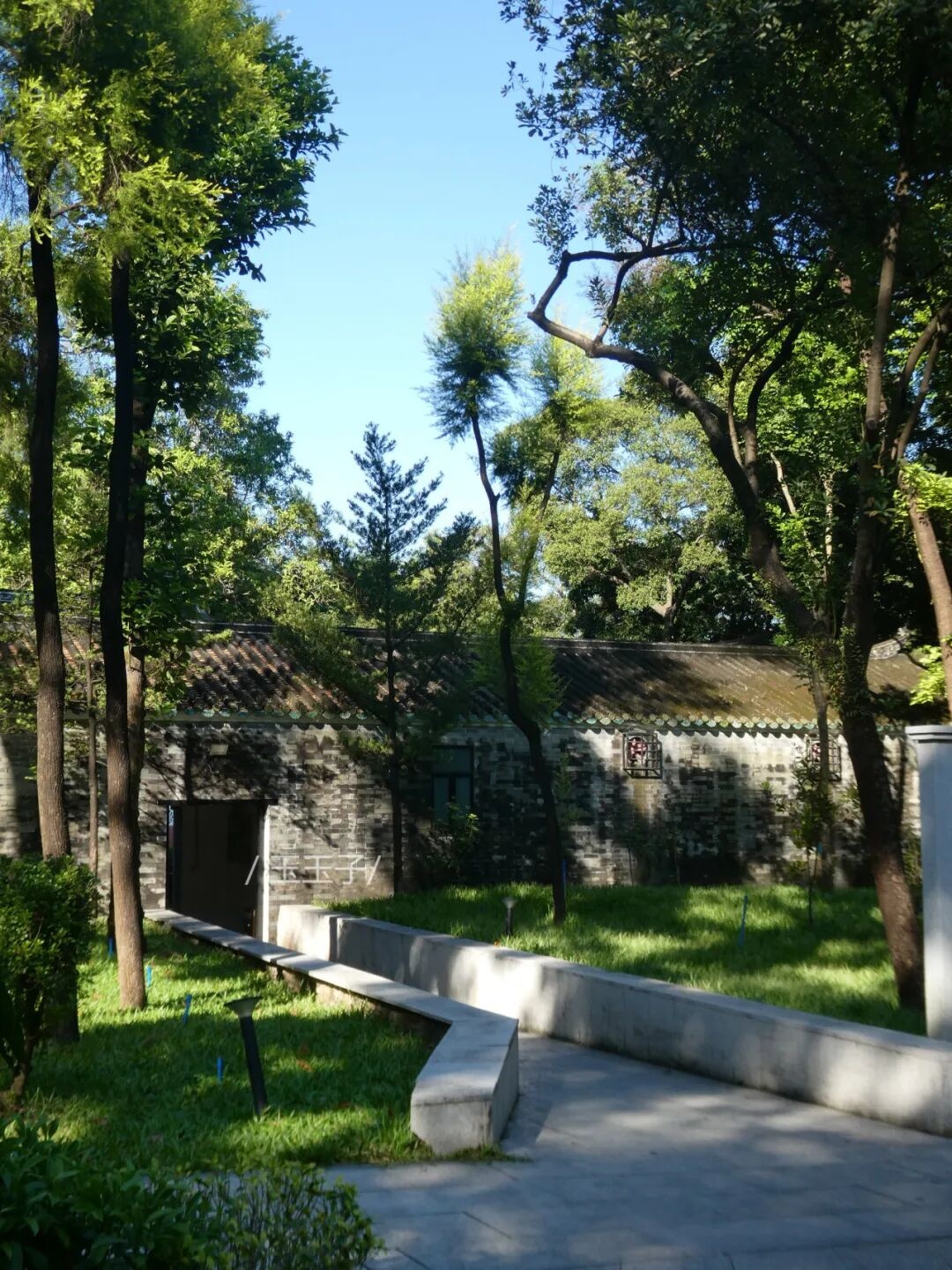
Xian'an Mosque is located near Yuexiu Park and the Orchid Garden, separated by just a wall from the latter. The mosque itself is very tranquil, and most people seen here are worshipers. Hearing the lively atmosphere of tourists from the neighboring Orchid Garden, it feels like two completely different worlds.
But then again, a place like this, a religious sanctuary, even with a great environment, isn't really suitable for casual photo ops or portraits.
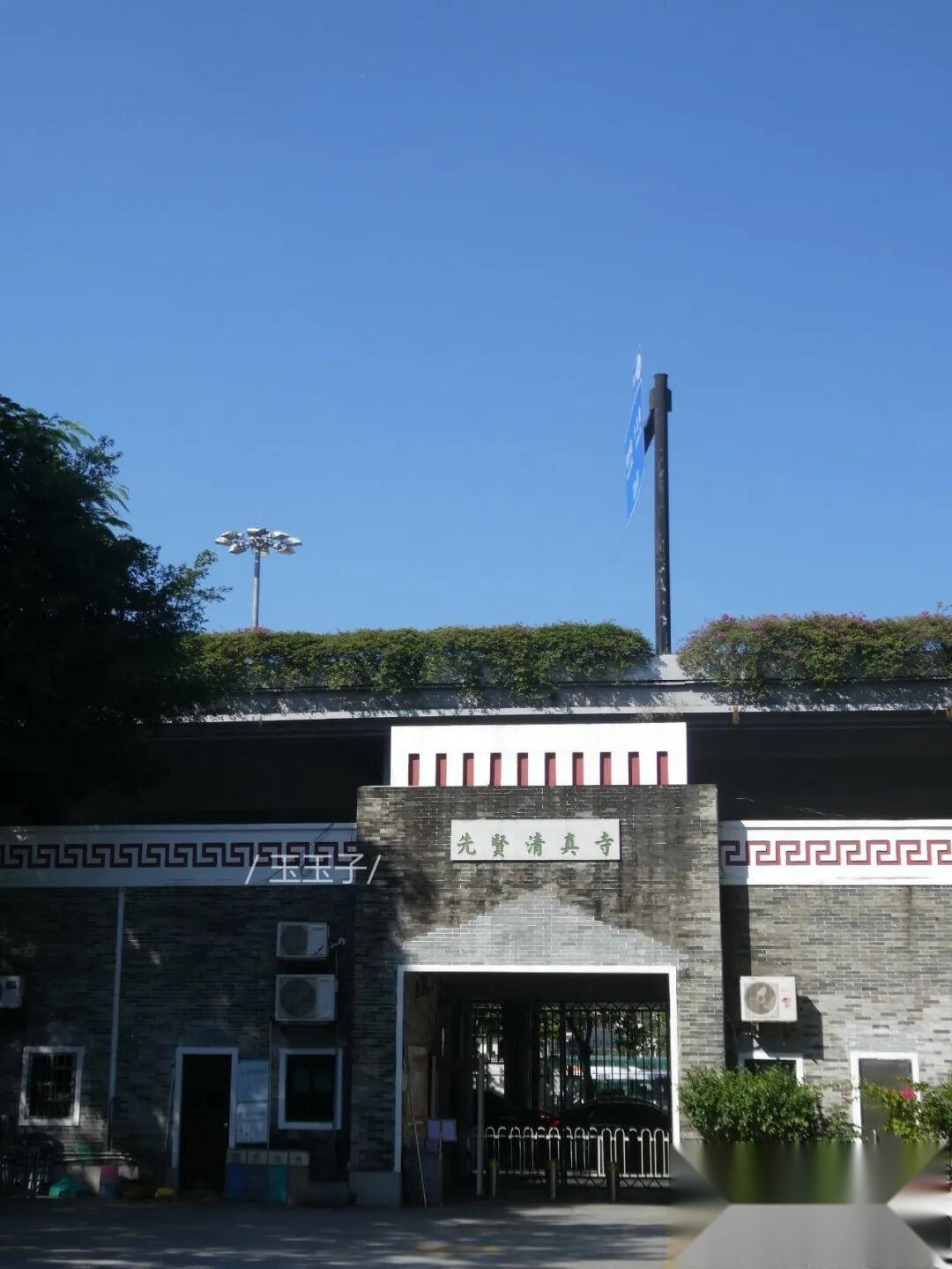
Xian'an Mosque has an entrance on the same row as the Orchid Garden. So, when heading there, you can take Guangzhou Metro Line 2 to Yuexiu Park Station, exit at B2, and walk towards the Orchid Garden entrance. Once you reach the Orchid Garden entrance, go about 50 meters to its left, and you'll find the south gate of Xian'an Mosque.
If you follow navigation apps, you might end up getting off at Guangzhou Railway Station, which is over 700 meters away, or you might exit Yuexiu Park Station and have to loop around to the north gate, which is a much longer walk.
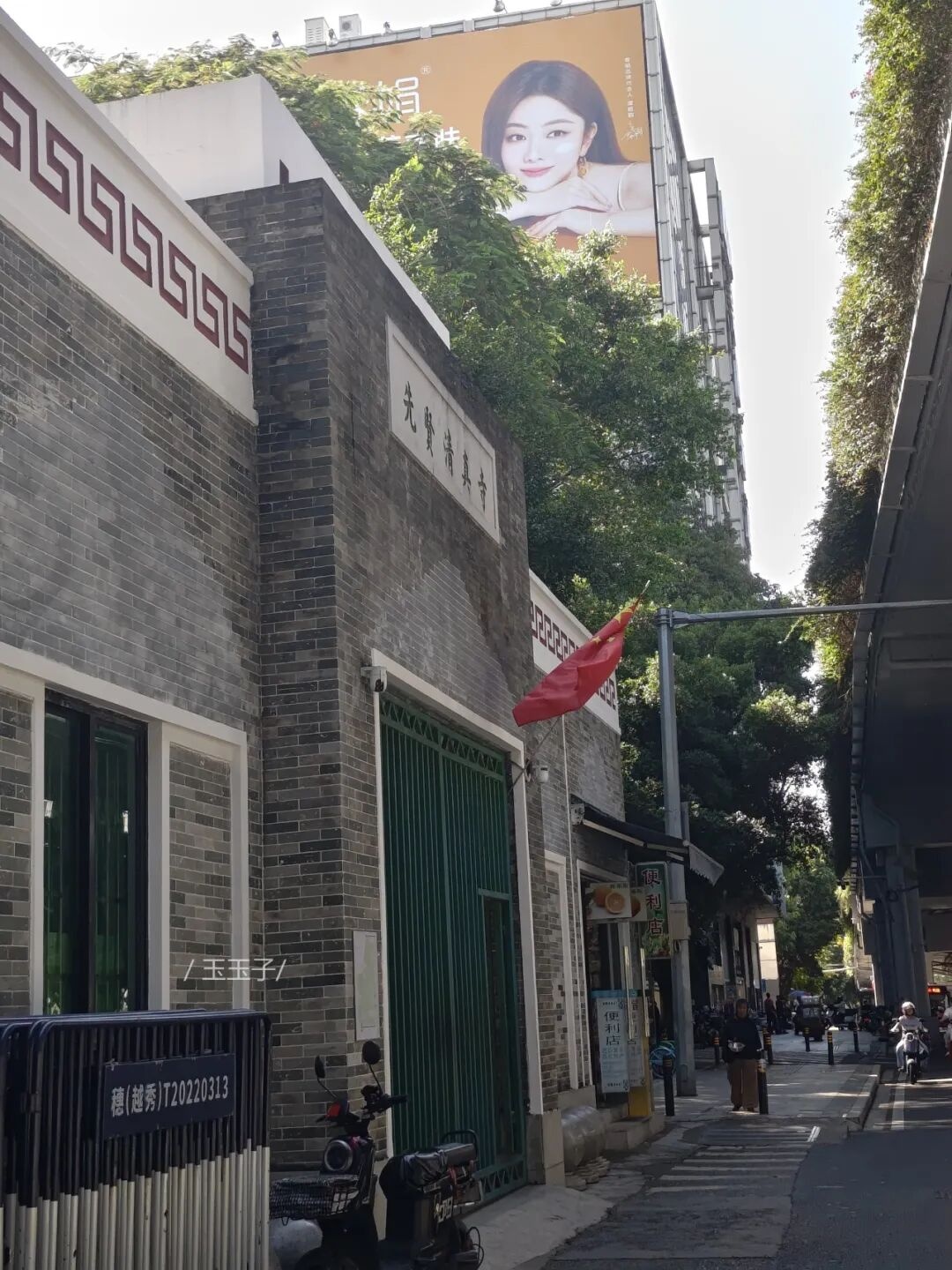
Like me, I got led around by navigation and entered through the north gate that day. It's way closer if you go in from the Orchid Garden side.
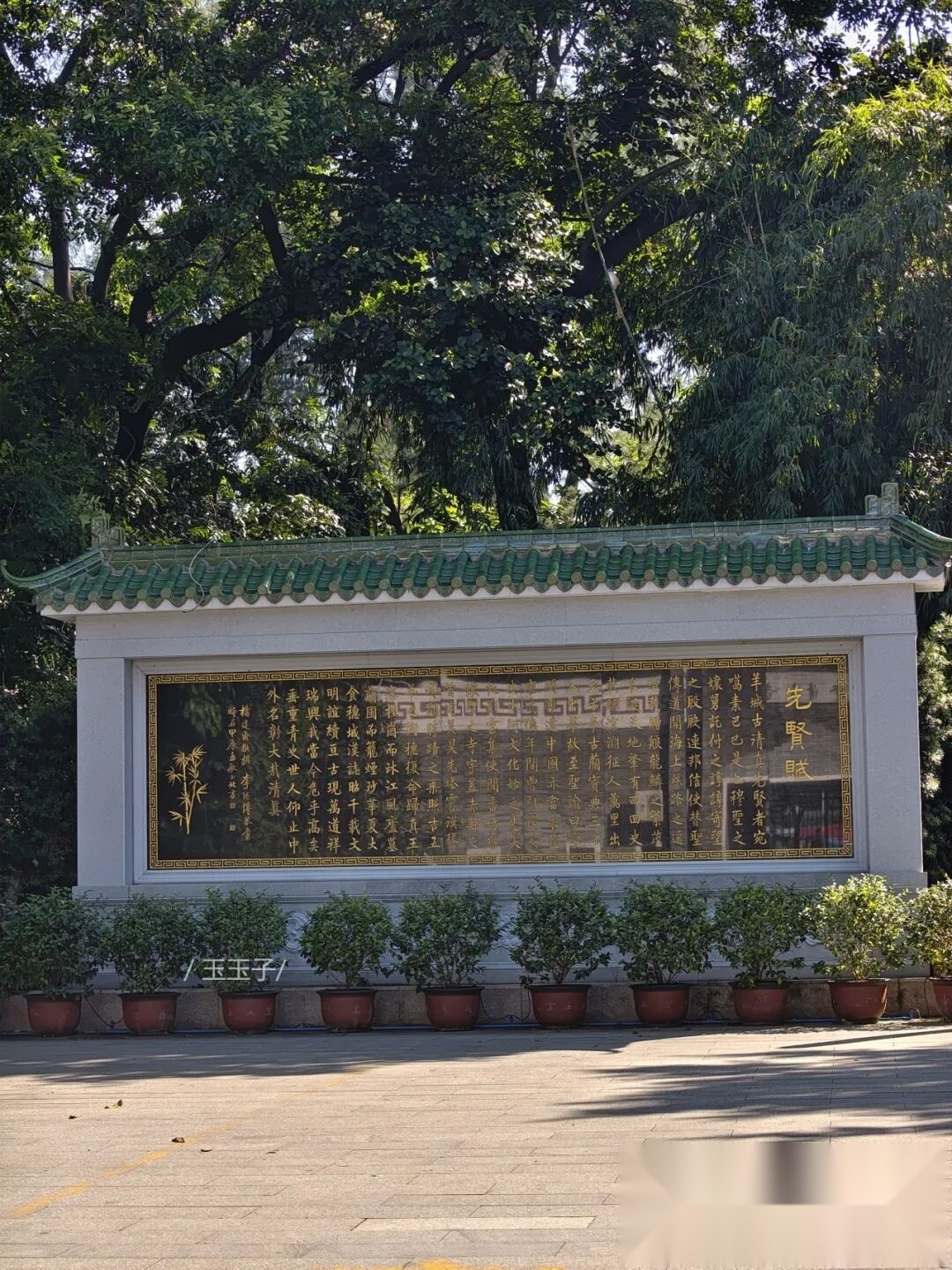
Entering from the north gate of Xian'an Mosque, you'll immediately see the 'Xian'an Fu' (Ode to the Sages) screen wall on your left. It's inscribed in gold on a black stone slab, detailing Wan Ge Su's journey across the maritime Silk Road to Guangzhou to preach, the thousand-year history of the ancient sage's tomb, and stories of Sino-Arab cultural exchange.
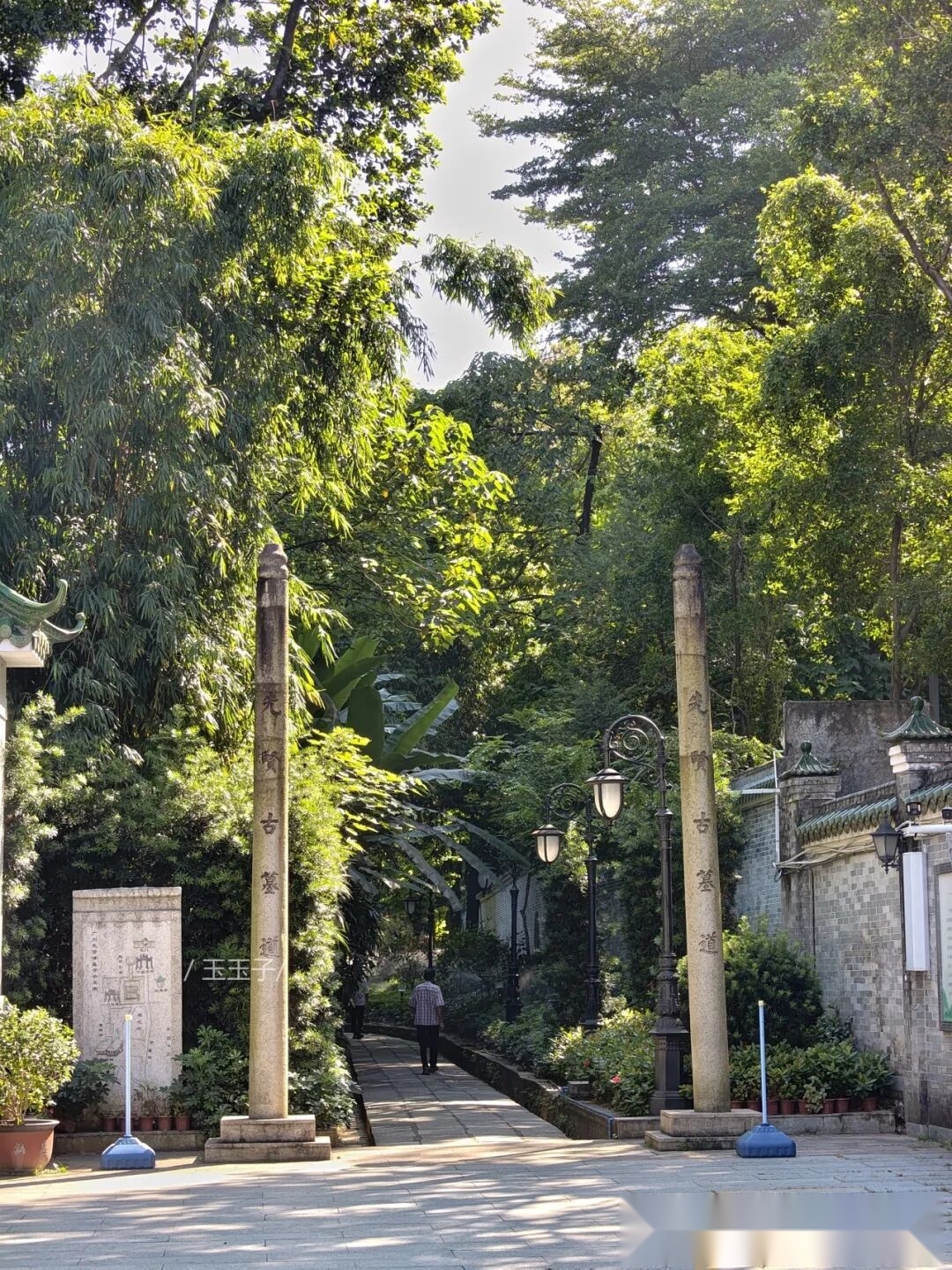
Next to the 'Xian'an Fu' screen wall are two stone pillars engraved with 'Xian'an Ancient Tomb Road,' marking the entrance to the core ancient tomb area.
Walking along the ancient tomb road, on your left is the Tomb of the Forty-One Sages (outer burial area). Legend says that forty preaching sages who crossed the sea with Wan Ge Su are buried here.
This area is a continuous cluster of ancient tombs. Besides the legendary sages, imams from various dynasties are also laid to rest here. However, this burial ground is currently fenced off, and I couldn't enter. Grass has already started growing inside.
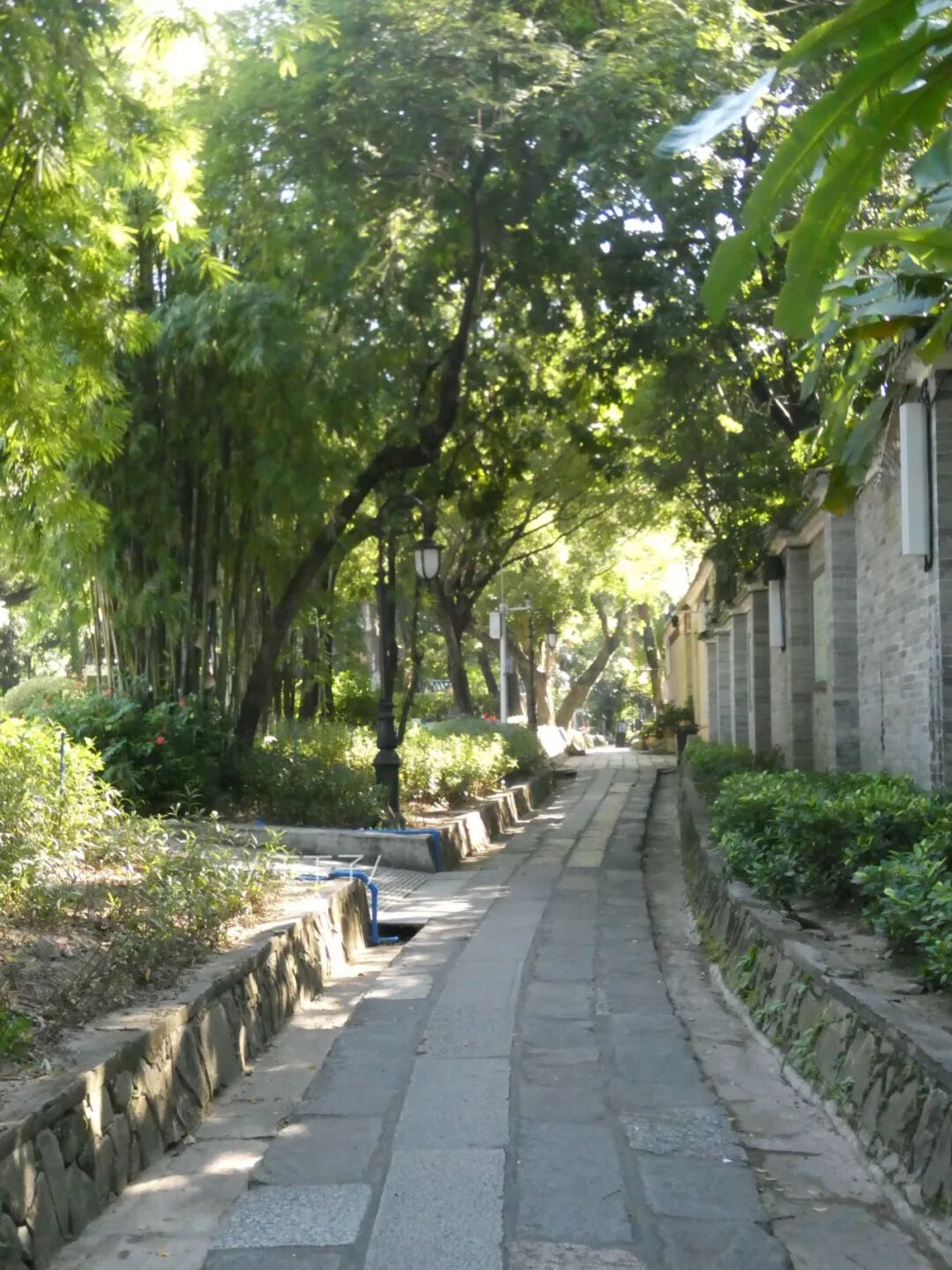
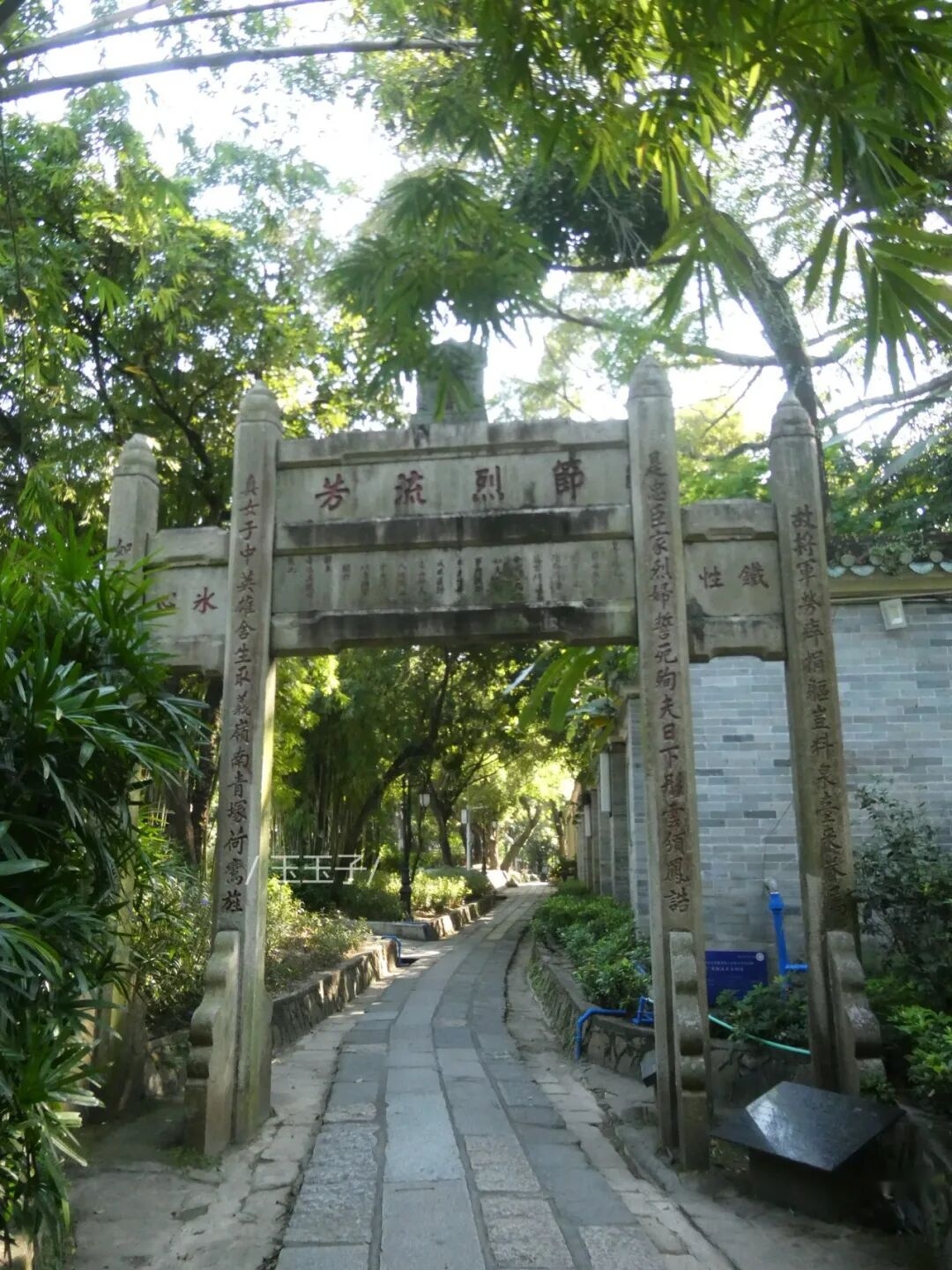
Continuing along the tomb path, you'll reach the 'Jie Lie Liu Fang' (Chastity and Virtuous Reputation) stone archway. This archway was built in the 25th year of the Guangxu reign (1899) to honor Madam Sun.
Madam Sun was a concubine of Cai Jinzhang, a naval commander during the late Qing Dynasty. While Cai Jinzhang was in charge of coastal defense affairs in Humen and fell ill, the 27-year-old Madam Sun heard the news and committed suicide by swallowing gold. This event was reported to the imperial court, and Emperor Guangxu decreed that an archway be erected to commend her. What's particularly interesting is that this is a Han Chinese chastity archway, yet it's located within the Muslim cemetery of the ancient sage's tombs.
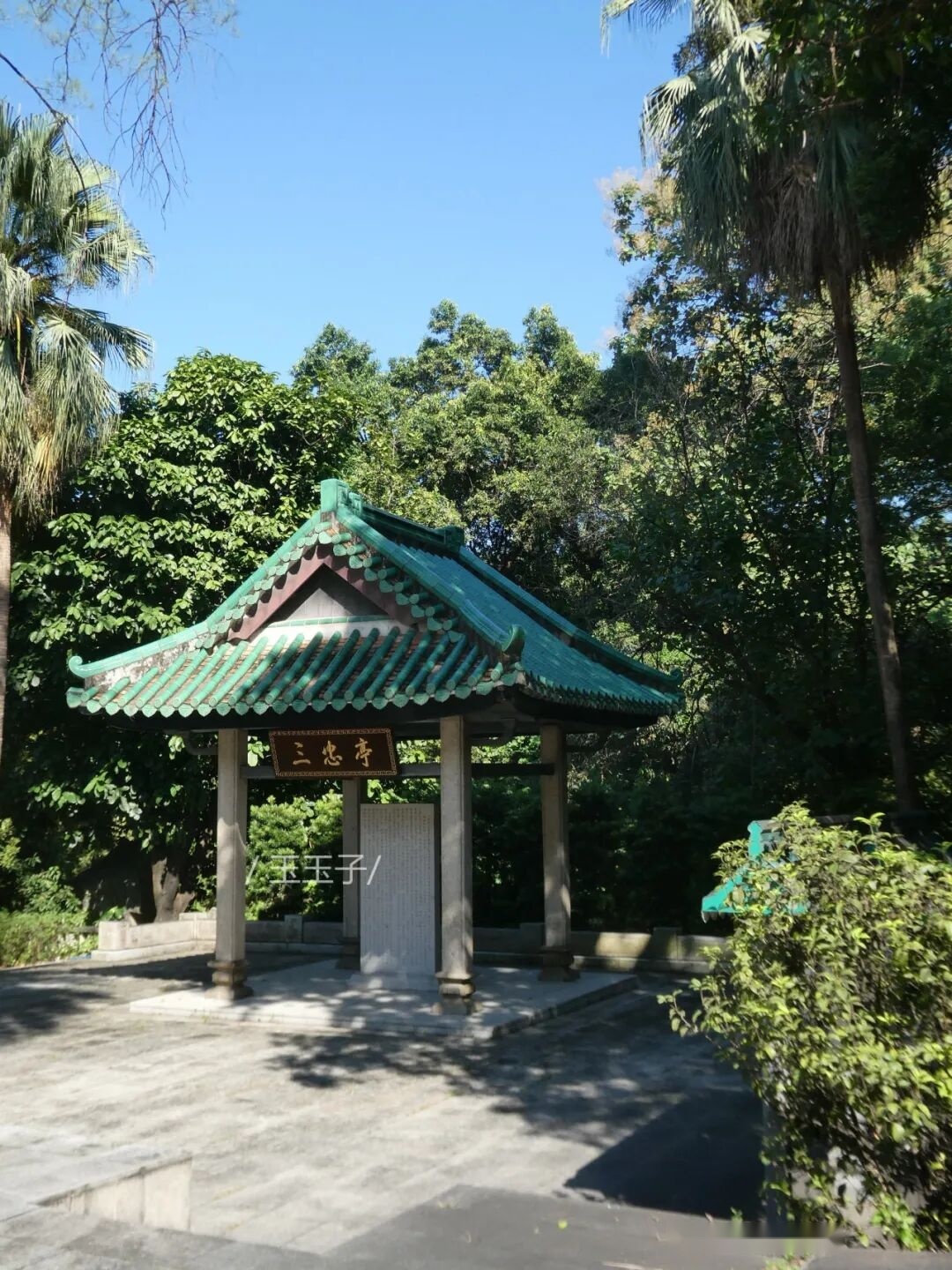
Passing through the 'Jie Lie Liu Fang' stone archway, there's a wide-open square on the left. Looking further inside, you'll find the 'San Zhong Ting' (Pavilion of the Three Loyal Ones). The 'Three Loyal Ones' refer to Yu Fengqi, Sa Zifu, and Ma Chengzhu.
These three men were Hui Muslim military officers stationed in Guangzhou. They fought bravely and died heroically defending Guangzhou against the Qing forces in the late Ming Dynasty. Their remains were scattered and difficult to find. In remembrance of their loyalty and sacrifice, their cenotaphs were built within the ancient sage's cemetery, and a pavilion was erected in their honor, hence the name 'San Zhong Ting.'
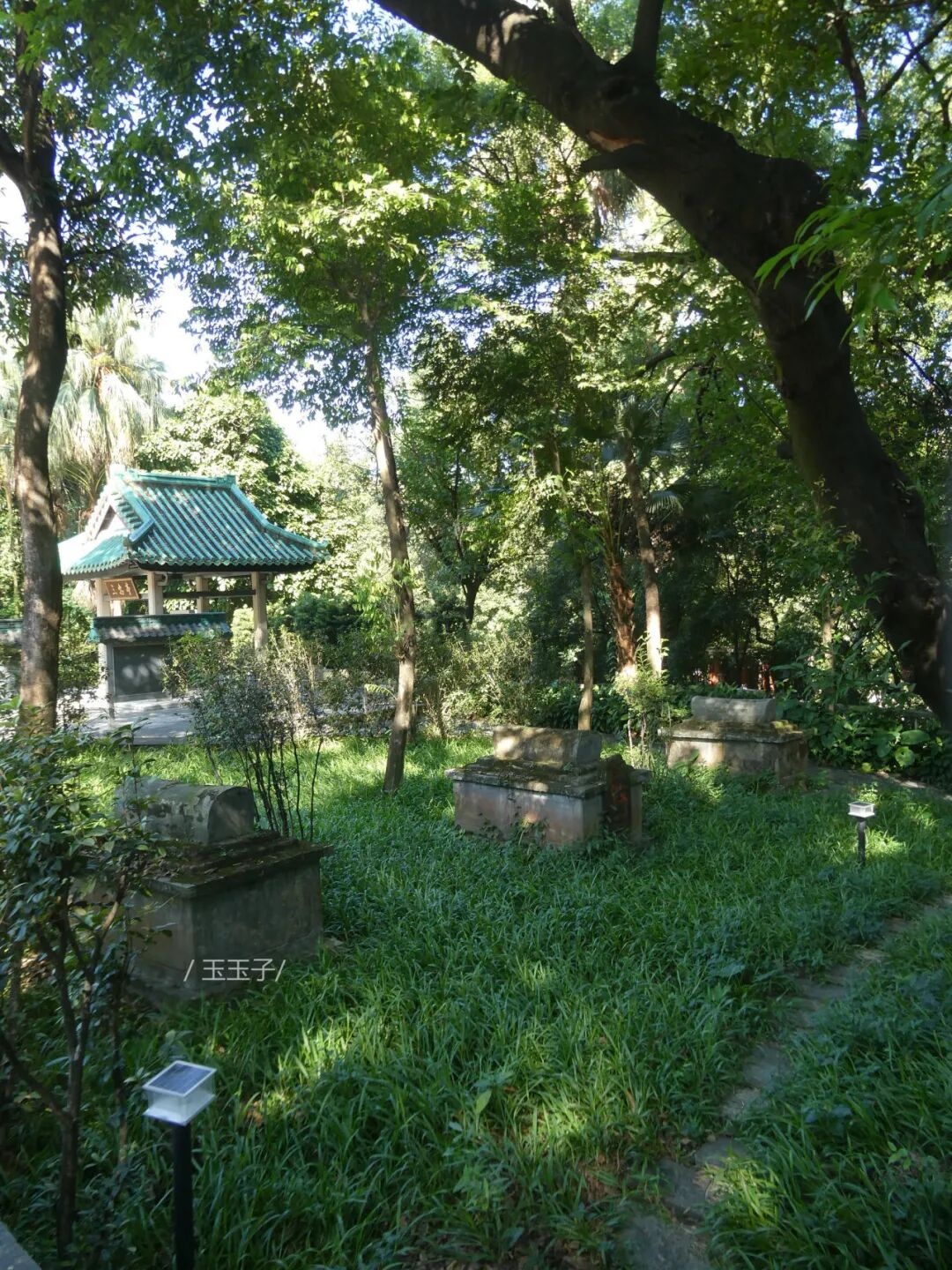
Next to the 'San Zhong Ting' are the cenotaphs of these three generals. They are also overgrown with weeds and look like they haven't been tended to in a long time.
Opposite the square is the main gate of the Qingzhen Xian'an Ancient Tomb (Xiang Fen). This is the entrance to the most central historical courtyard of the entire cemetery.
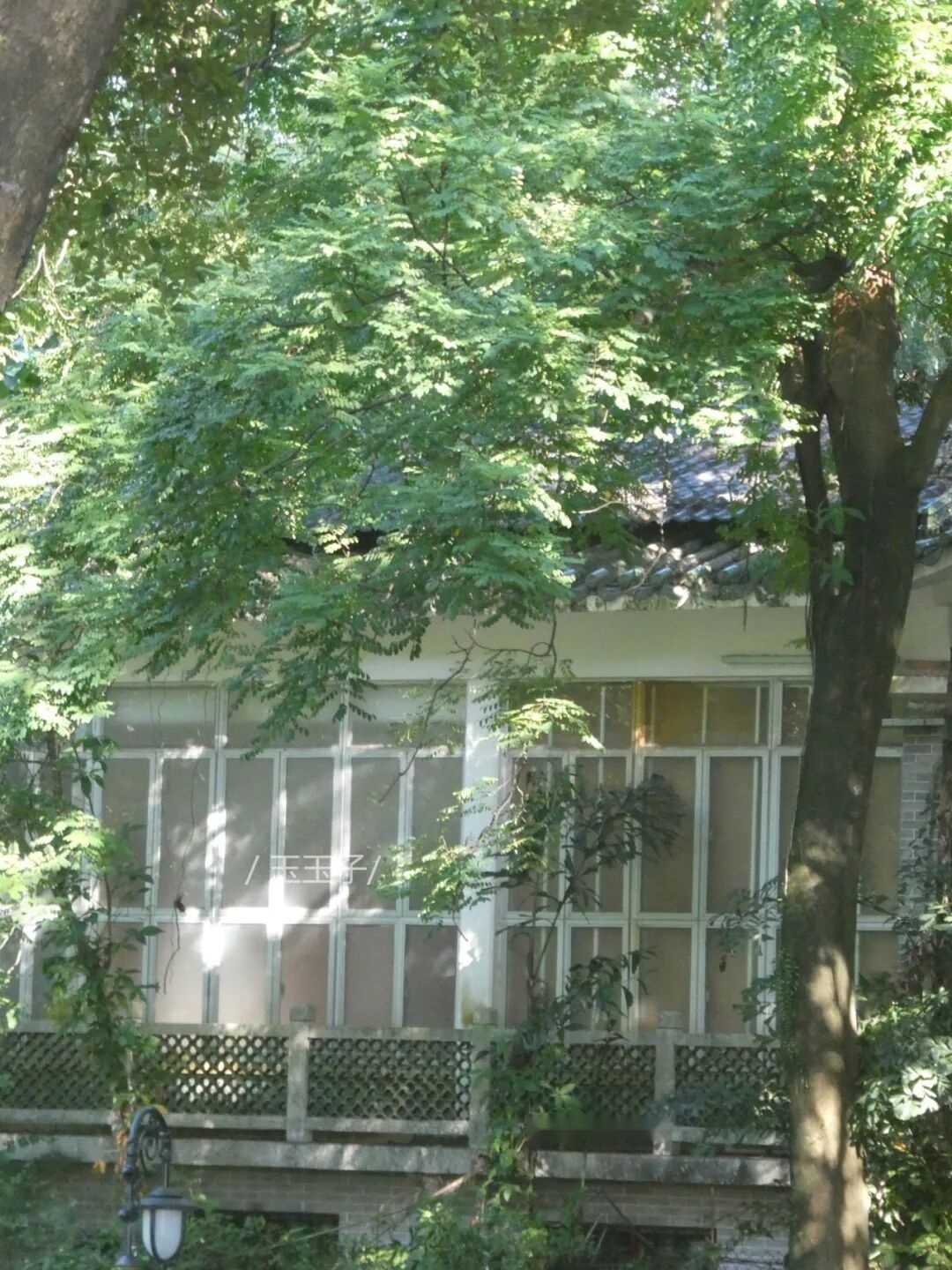
Entering the front courtyard of the prayer hall, I was immediately captivated by the architectural style here. The sinicized architectural aesthetic is just amazing, giving off a sense of restraint yet also grandeur.
Through the main gate of Guangzhou Xian'an Mosque, the green-walled gatehouse you see is the inner gatehouse of the Qingzhen Xian'an Ancient Tomb (Xiang Fen). Passing through this gate, you enter the tomb chamber of Wan Ge Su (Xiang Fen) itself.
During my visit, I saw many worshipers taking off their shoes to enter and pray. On both sides of the pathway are the core tombs of the Forty-One Sages (original site of the inscribed tablets).
Unlike the Tomb of the Forty-One Sages on the left after entering from the 'Jie Lie Liu Fang' archway, that outer area is a vast expanse of scattered ancient graves. This area is specifically a memorial tomb detailing the stories of the Forty-One Sages, with ancient steles from the Qing Dynasty.
Along the tomb path, I encountered two cats leisurely strolling. They slowly ambled through the trees and would approach visitors when they saw them.
Exiting the other end of the front courtyard of the prayer hall, you'll see the 'Yi Men Zhong Xiao' (One Family, Loyalty and Filial Piety) stone archway. This was the most obvious burial site I saw during my visit, and it was immediately recognizable as the Yang family tomb.
This burial ground is the tomb of the family of Yang Shu, a Hui Muslim diplomat in the late Qing Dynasty. The archway was erected at Yang Shu's request to the imperial court, commemorating his grandfather Yang Jing and father Yang Chaosheng, who died in conflict. The four characters 'Yi Men Zhong Xiao' come from this.
In the same area as the Yang family tomb is the disciple of the famous Imam Zhang Ziwen, Zhang Hongtao. He was hired by the Haopan Mosque in Guangzhou to lead the Quranic studies institute, where he preached religious doctrines and trained Hui Muslim scholars in Guangzhou, making him an important figure in Guangzhou's Islamic community in modern times.
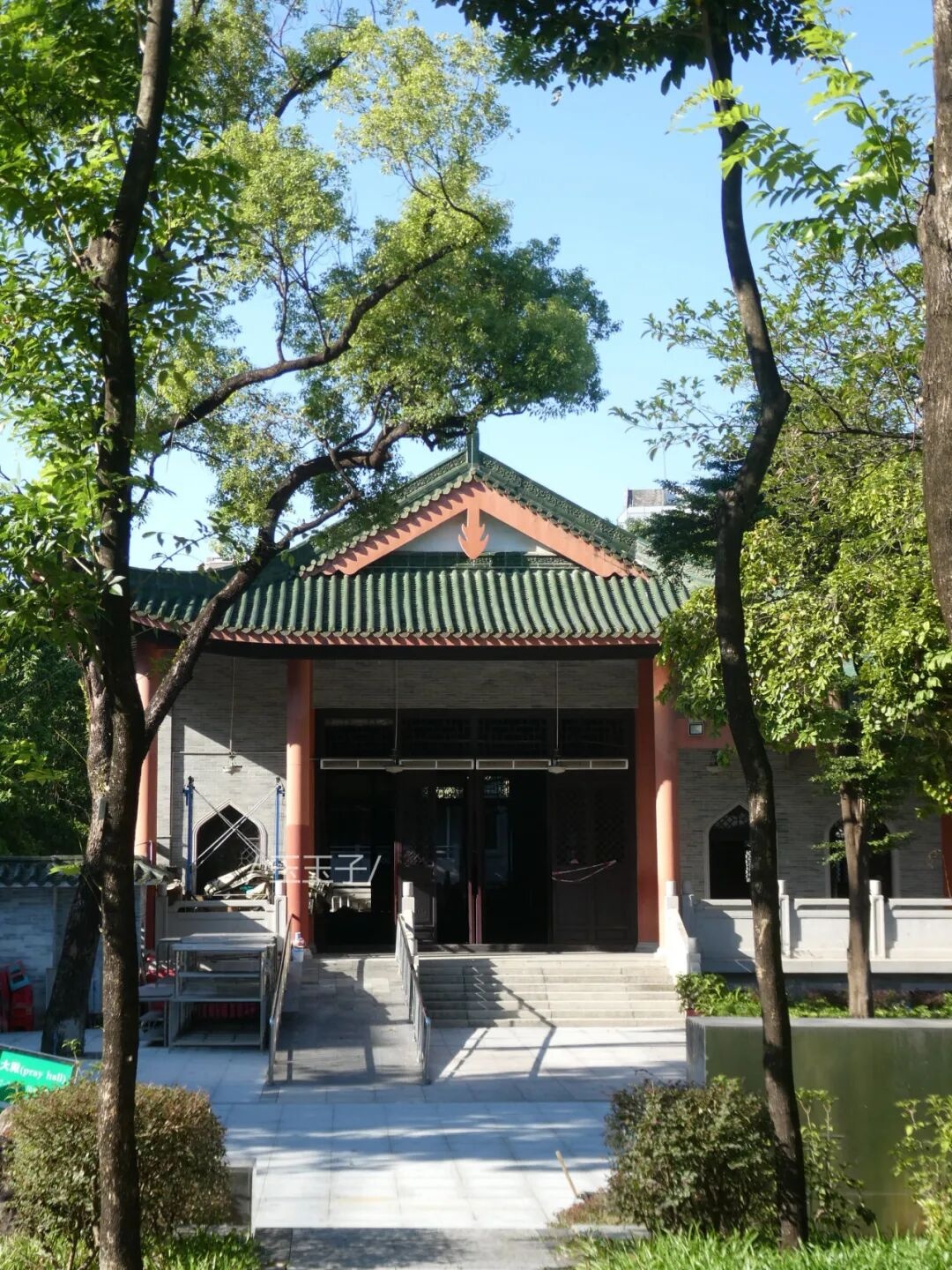
Moving on from the Yang family tomb towards a prominent red building, you'll find the prayer hall of Xian'an Mosque.
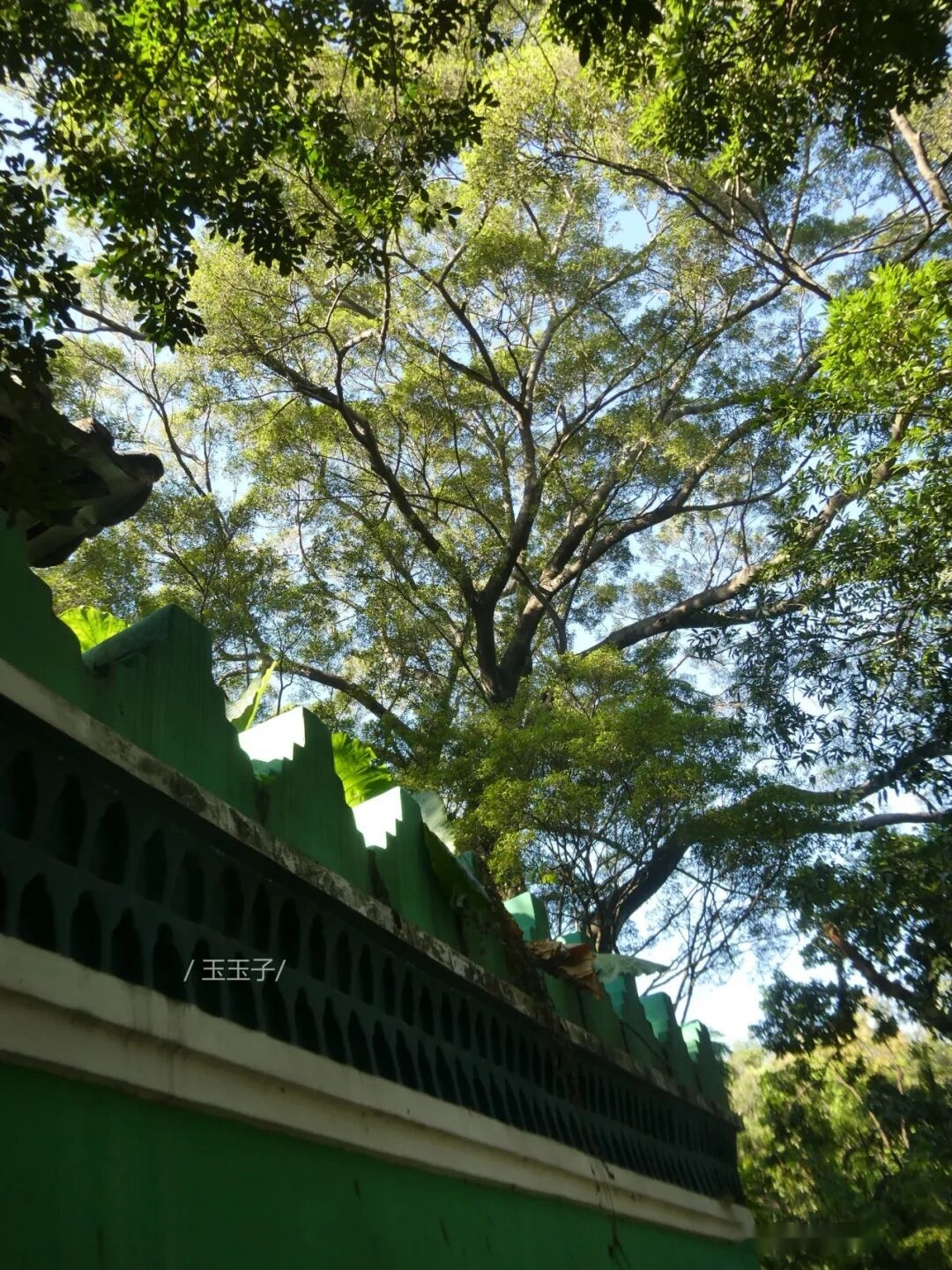
The entire hall is covered with a green glazed tile roof, and above the eaves and brackets, a crescent moon hangs like a hook.
This prayer hall is very much in the Lingnan Chinese style, with green glazed tiles, triangular gables, and red painted pillars.
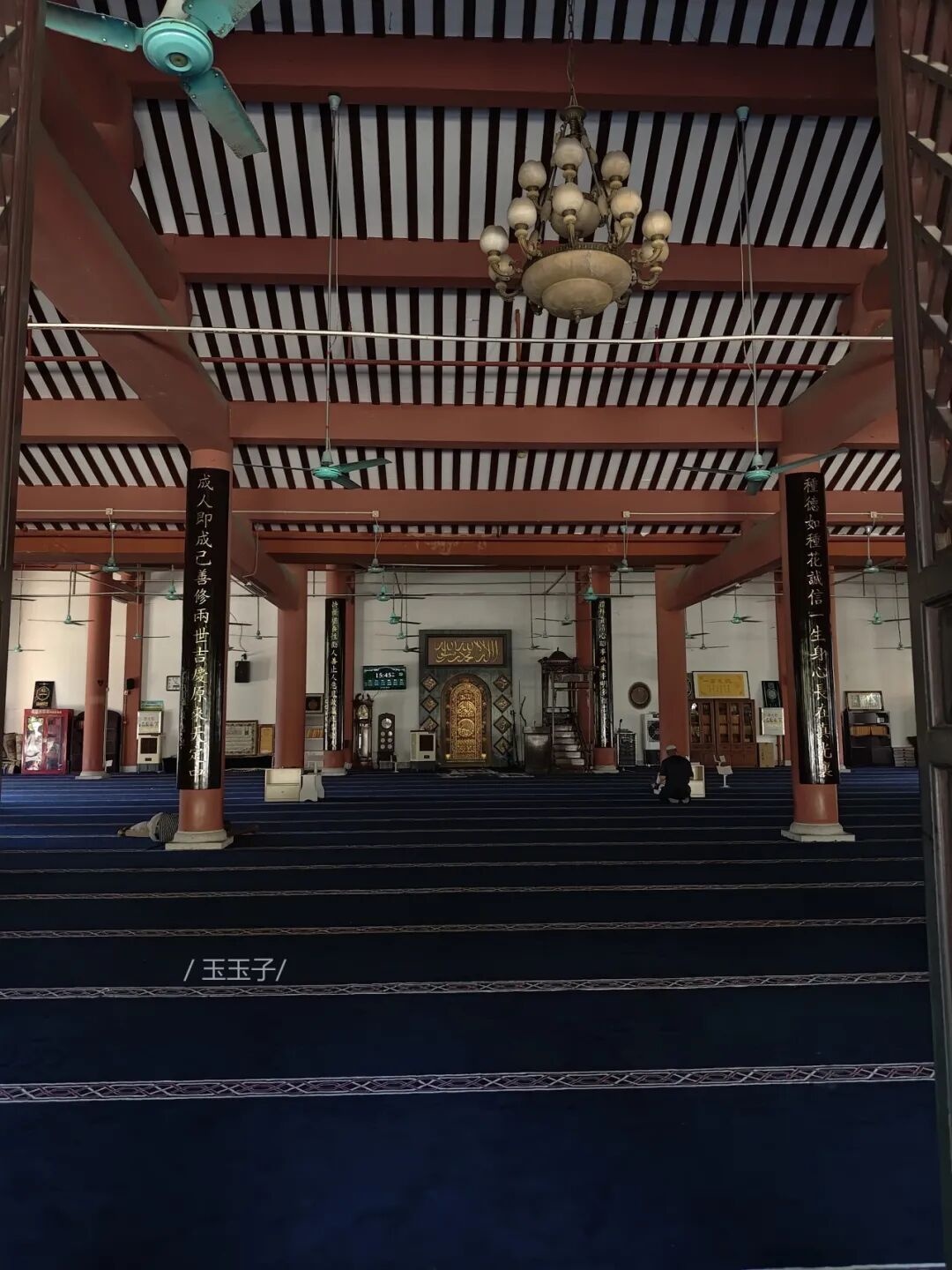
Typically, I see Buddhist or Taoist temples more often, so it was quite novel to see an Islamic prayer hall for the first time. I noticed worshipers taking off their shoes before entering the prayer area, and they could even lie down inside the hall.
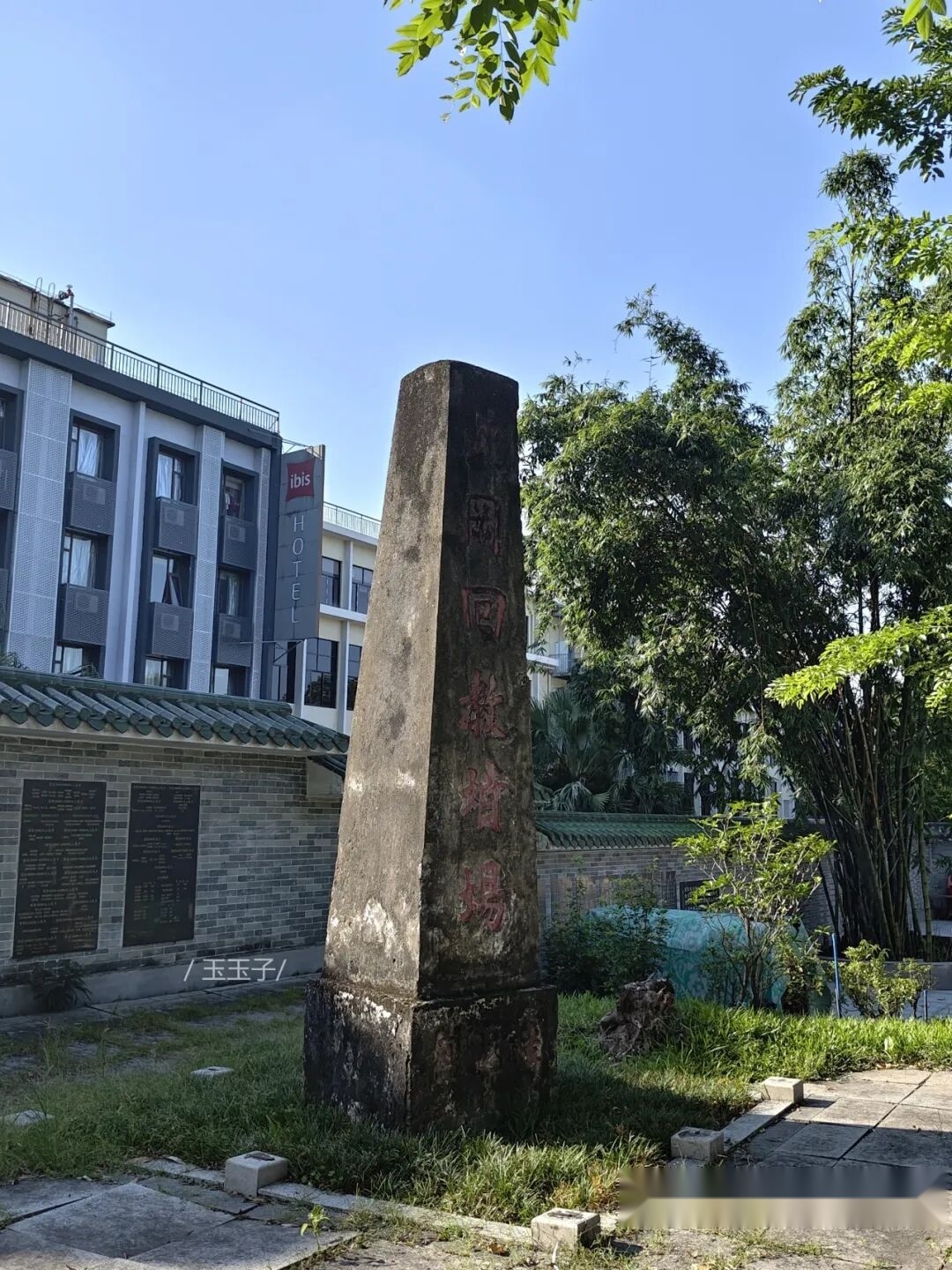
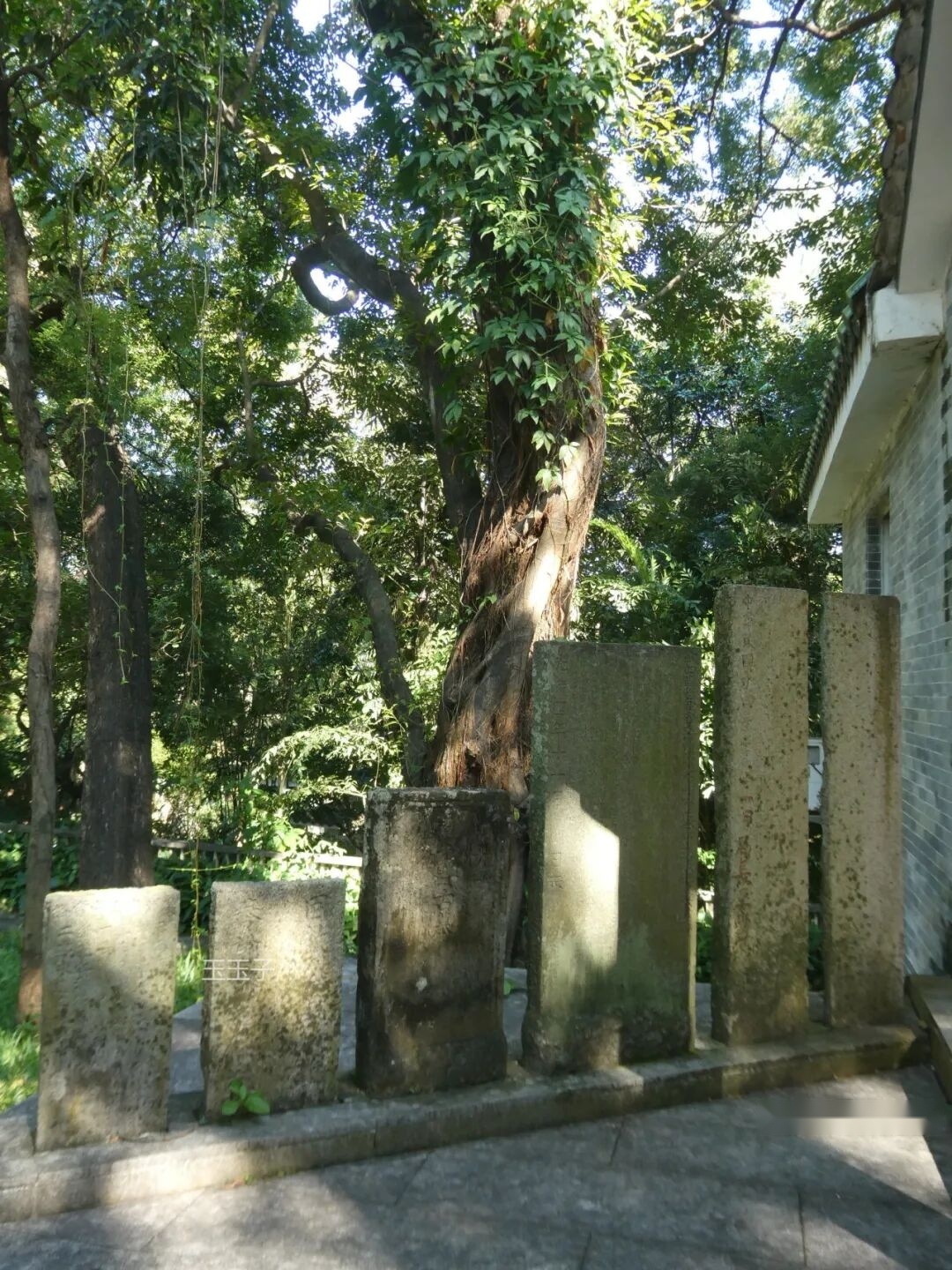
Not far from the prayer hall, you can see an ancient, simple obelisk-style stone tablet inscribed with 'This Hill is a Hui Muslim Cemetery.' This is the boundary marker for the ancient cemetery area, indicating the extent of the entire Hui Muslim burial ground. Interestingly, a modern hotel is located right next to this ancient cemetery.
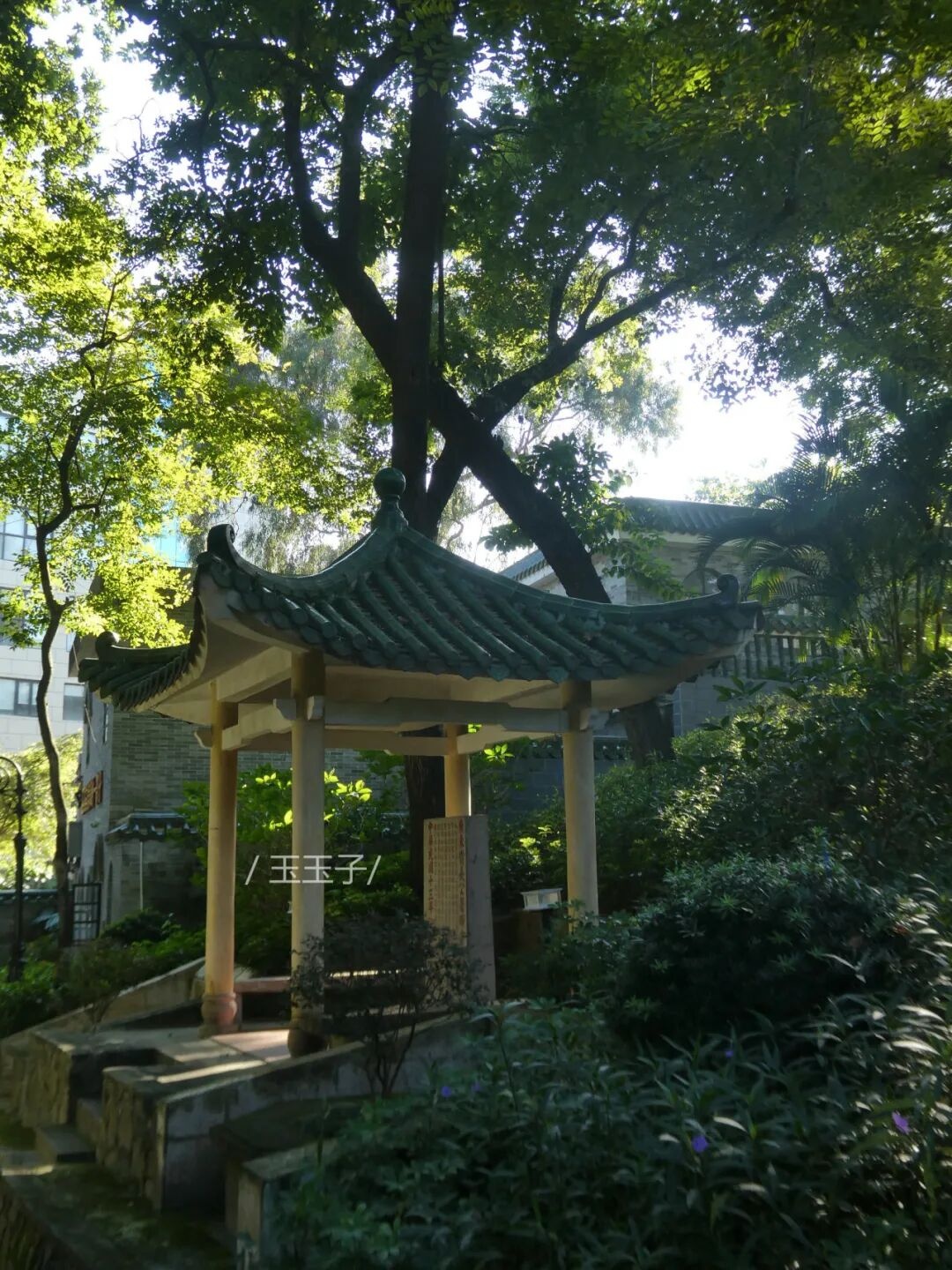
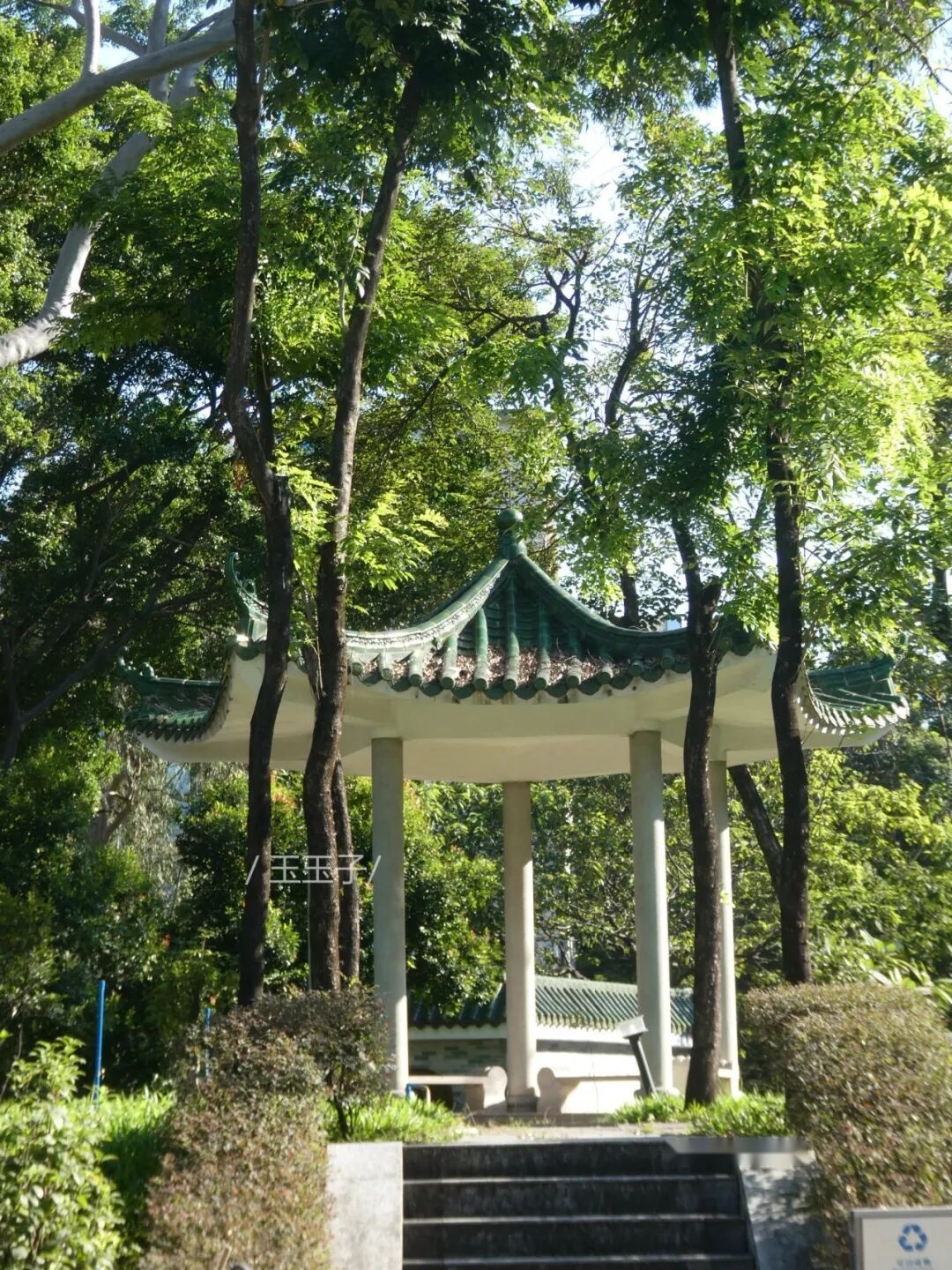
Following the stone slab path towards the south gate, you'll see a green-tiled four-cornered pavilion, specifically built to house the proclamation tablet from the Guangdong Provincial Government Office.
It was this proclamation that, years ago, demarcated the boundaries and decreed the permanent protection of the Guihuagang Xian'an Ancient Cemetery, prohibiting any encroachment. This small pavilion guards the most important legal document for the cemetery.
Walking out of the pavilion along the tomb path, you'll reach the south gate of Xian'an Mosque. Exiting the south gate, you'll pass by the Orchid Garden.
Wan Ge Su, who arrived in Guangzhou from the Arabian Peninsula by sea 1300 years ago, preached, built a mosque, and lived out his days here. He probably never imagined that 1300 years later, his tomb would still be next to Guangzhou Railway Station.
Location Information
⚫ Location Name
Xian'an Mosque
(901 Jiefang North Road, Yuexiu District, Guangzhou)
⚫ Getting Here
(1) Metro: Exit B2 of Yuexiu Park Station on Guangzhou Metro Line 2, walk towards the Lanpu entrance. Once you reach the Lanpu entrance, turn left and walk about 50 meters to get there.
(2) Driving: There are no visitor parking spots open to the public inside the park. You can park at the Lanpu parking lot, which is a 3-minute walk to the south gate of the graveyard. It costs 10 yuan per hour.
⚫ Opening Hours
08:30-16:00 (Last entry at 16:00)
⚫ Tickets
Free, no reservation needed
✅ Nearby Spots to Check Out (Walking Distance)
3 minutes | Lanpu Park (8 yuan/person)
5 minutes | Yuexiu Park (Free)
END view all
This is a detailed, 42-high-res photo exploration of Guangzhou's largest mosque and a national key cultural heritage site, Huaisheng Temple (also known as the Light Tower Temple). As one of the earliest existing ancient mosques in China, it's directly accessible by Metro Line 2 and is completely free to enter. The panoramic views meticulously showcase the iconic Tang Dynasty cylindrical light tower, the three-story rosewood eaves moon-watching building, the prayer platform, the main prayer hall, and historical artifacts in the stele corridor, offering an immersive experience of the Hui Muslim cultural heritage along Guangzhou's maritime Silk Road over a thousand years.
The weather in Guangzhou has been super nice lately, the kind of good weather that makes you really want to get out and explore new places.
The spot I visited this time is the Xian'an Mosque in Guangzhou. When I first saw this place, I thought of it as just 'a temple + a cemetery.' After visiting and doing some research for this post, I realized its historical depth is way more significant than I initially imagined.
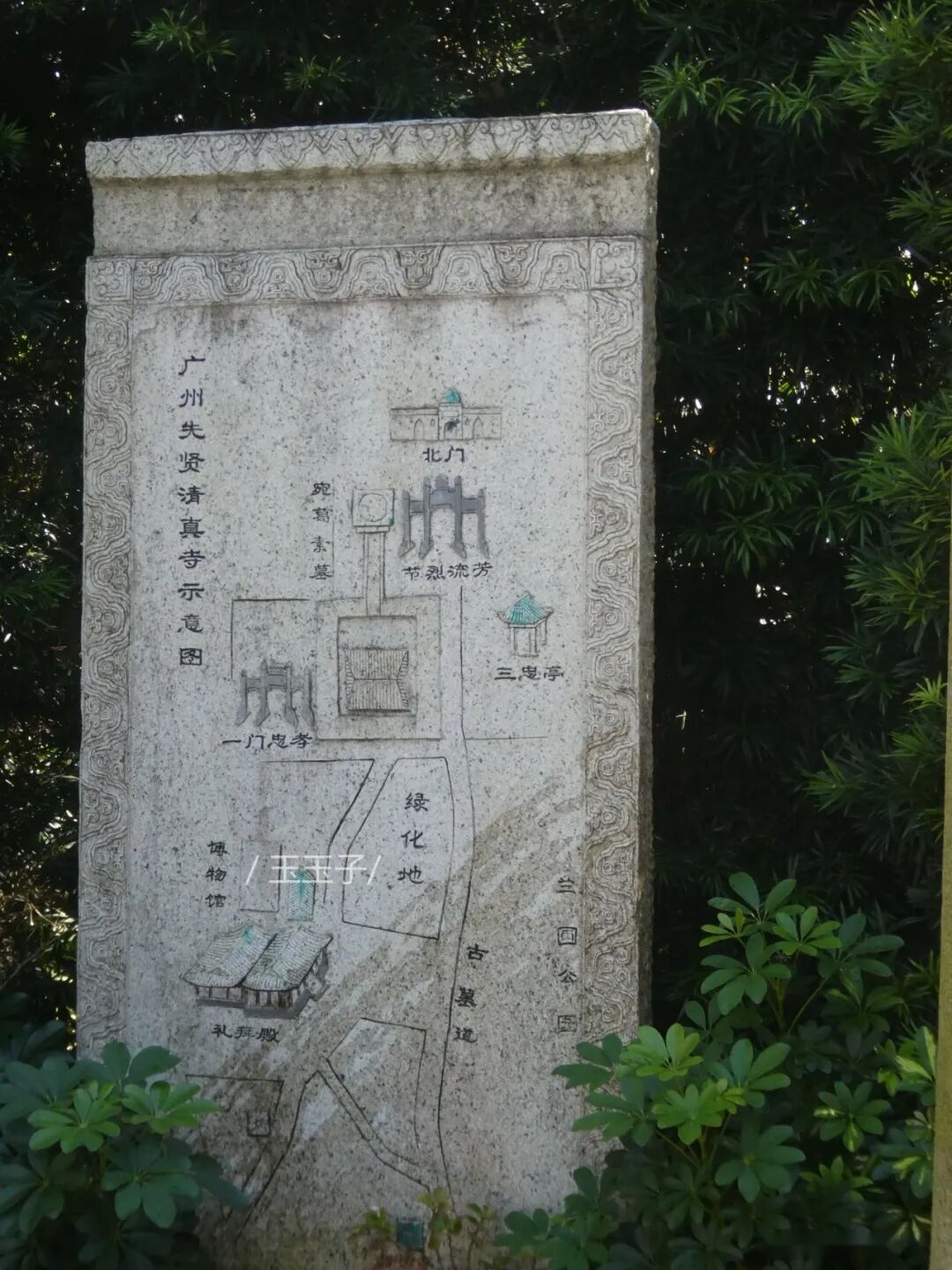
Legend has it that in the early Zhenguan era of the Tang Dynasty, an Arab elder named Wan Ge Su arrived in Guangzhou by sea to spread his faith. He was buried here after his passing, and later, a prayer hall was built to accompany his tomb, allowing Muslims visiting his grave to perform their prayers. This is how the Xian'an Mosque came to be.
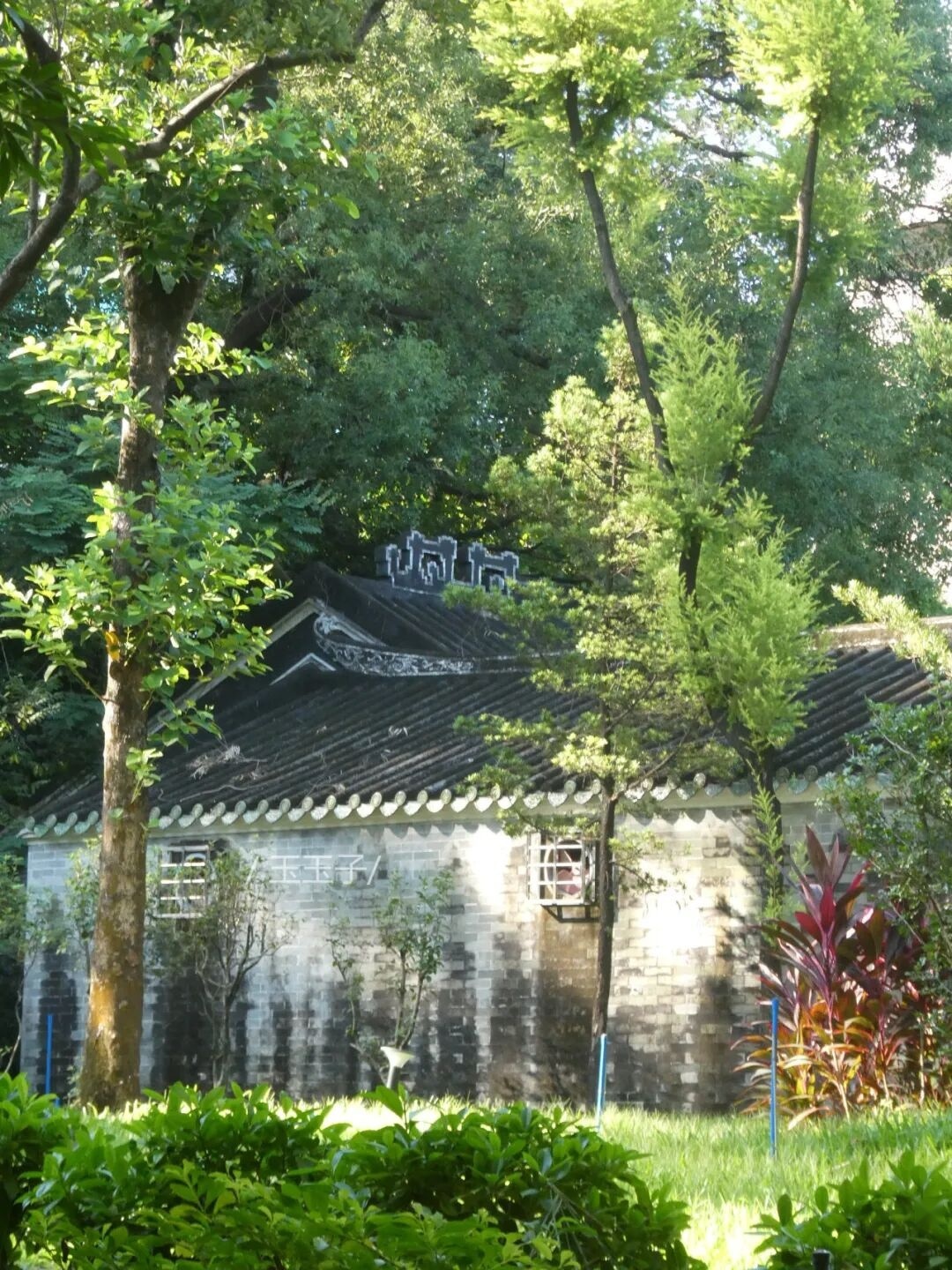
This cemetery used to be called 'Fanren Zhong' (Barbarian Tombs), commonly known as 'Huihui Fen' (Hui People's Cemetery), and also 'Daren Fen' (Elder's Cemetery). 'Daren' refers to Wan Ge Su. It's one of the world's oldest existing Islamic tombs and one of the few famous Muslim burial sites preserved outside the Arab region.
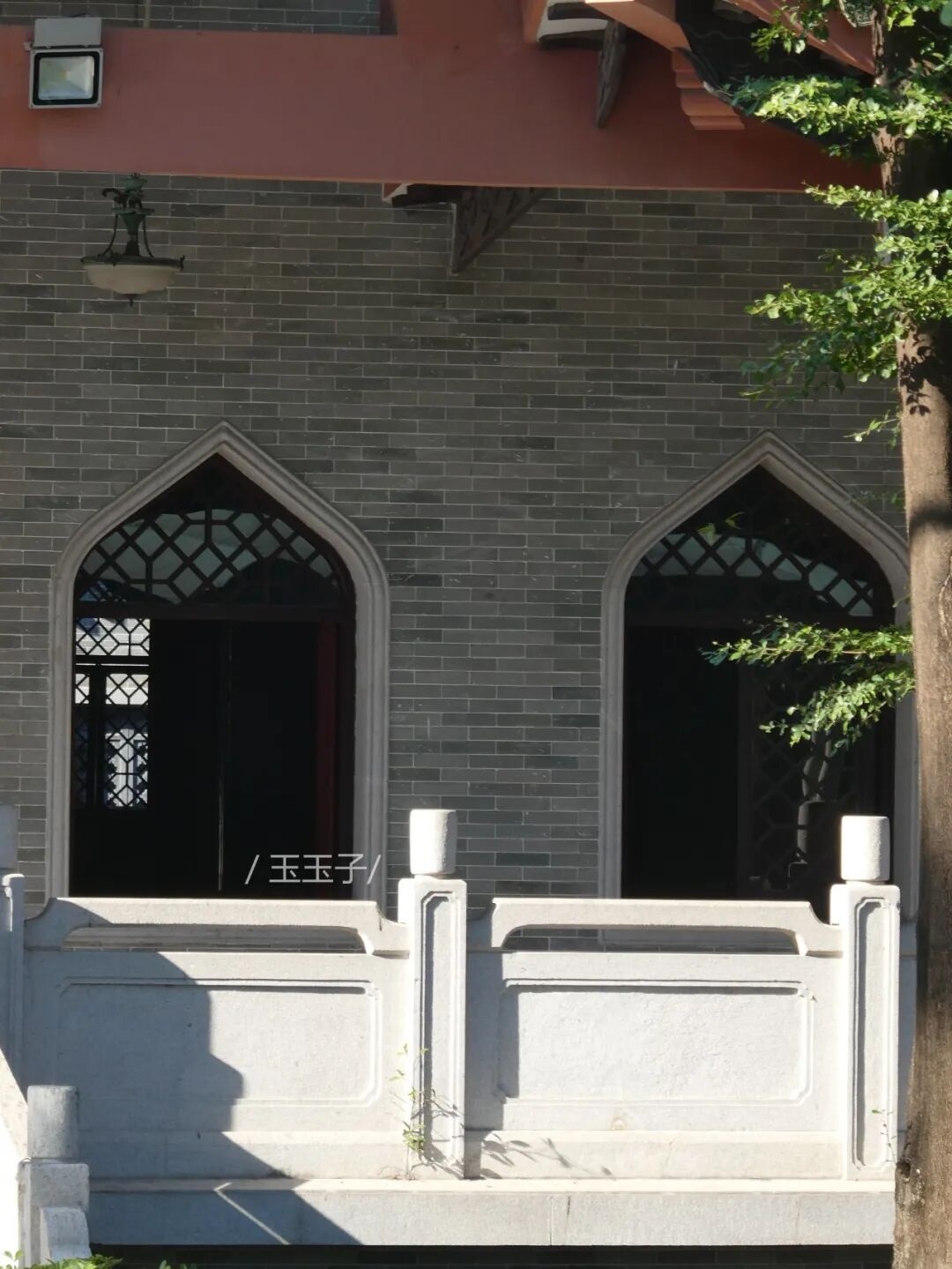
Xian'an Mosque is located near Yuexiu Park and the Orchid Garden, separated by just a wall from the latter. The mosque itself is very tranquil, and most people seen here are worshipers. Hearing the lively atmosphere of tourists from the neighboring Orchid Garden, it feels like two completely different worlds.
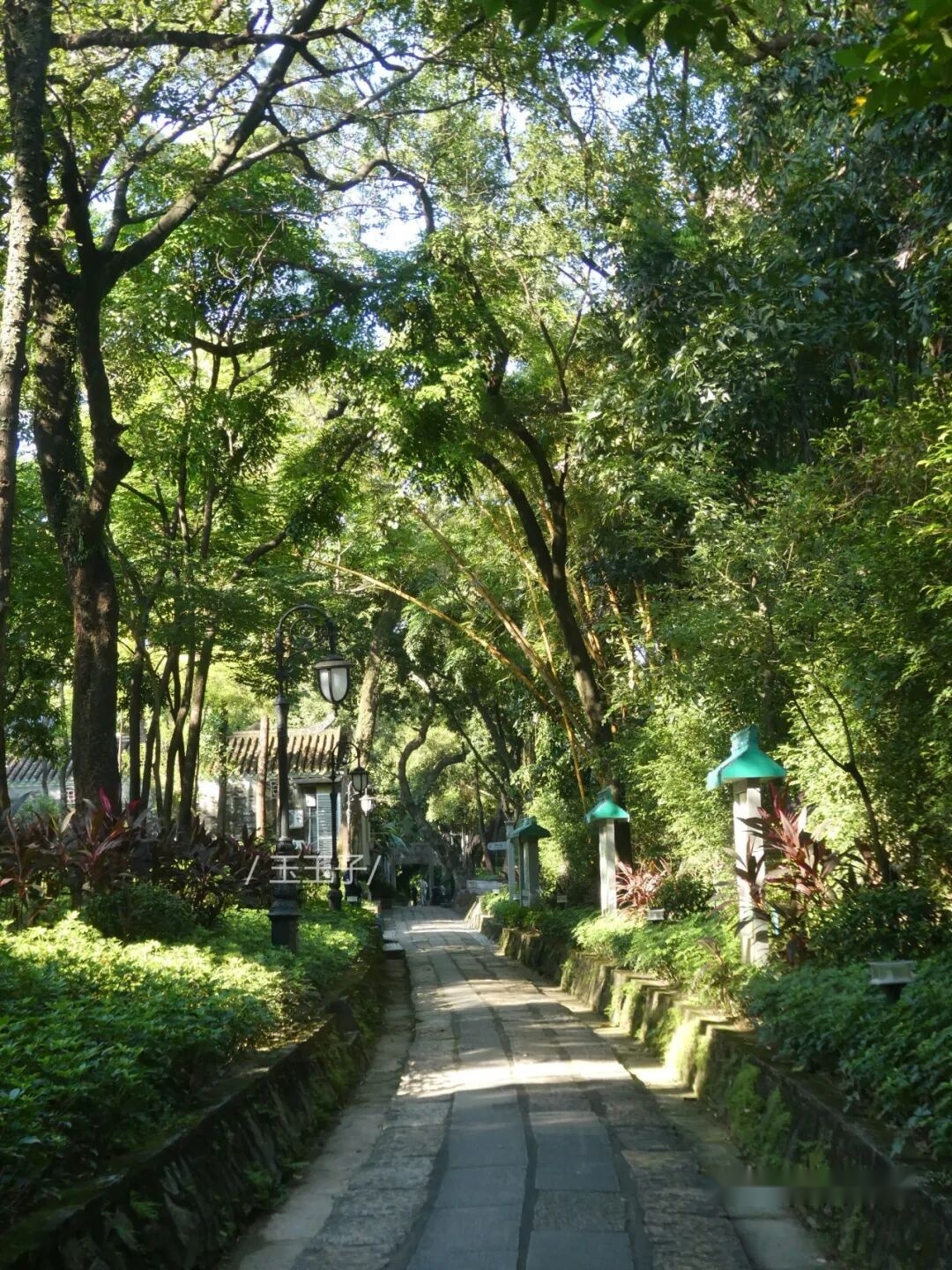
But then again, a place like this, a religious sanctuary, even with a great environment, isn't really suitable for casual photo ops or portraits.
Xian'an Mosque has an entrance on the same row as the Orchid Garden. So, when heading there, you can take Guangzhou Metro Line 2 to Yuexiu Park Station, exit at B2, and walk towards the Orchid Garden entrance. Once you reach the Orchid Garden entrance, go about 50 meters to its left, and you'll find the south gate of Xian'an Mosque.
If you follow navigation apps, you might end up getting off at Guangzhou Railway Station, which is over 700 meters away, or you might exit Yuexiu Park Station and have to loop around to the north gate, which is a much longer walk.
Like me, I got led around by navigation and entered through the north gate that day. It's way closer if you go in from the Orchid Garden side.
Entering from the north gate of Xian'an Mosque, you'll immediately see the 'Xian'an Fu' (Ode to the Sages) screen wall on your left. It's inscribed in gold on a black stone slab, detailing Wan Ge Su's journey across the maritime Silk Road to Guangzhou to preach, the thousand-year history of the ancient sage's tomb, and stories of Sino-Arab cultural exchange.
Next to the 'Xian'an Fu' screen wall are two stone pillars engraved with 'Xian'an Ancient Tomb Road,' marking the entrance to the core ancient tomb area.
Walking along the ancient tomb road, on your left is the Tomb of the Forty-One Sages (outer burial area). Legend says that forty preaching sages who crossed the sea with Wan Ge Su are buried here.
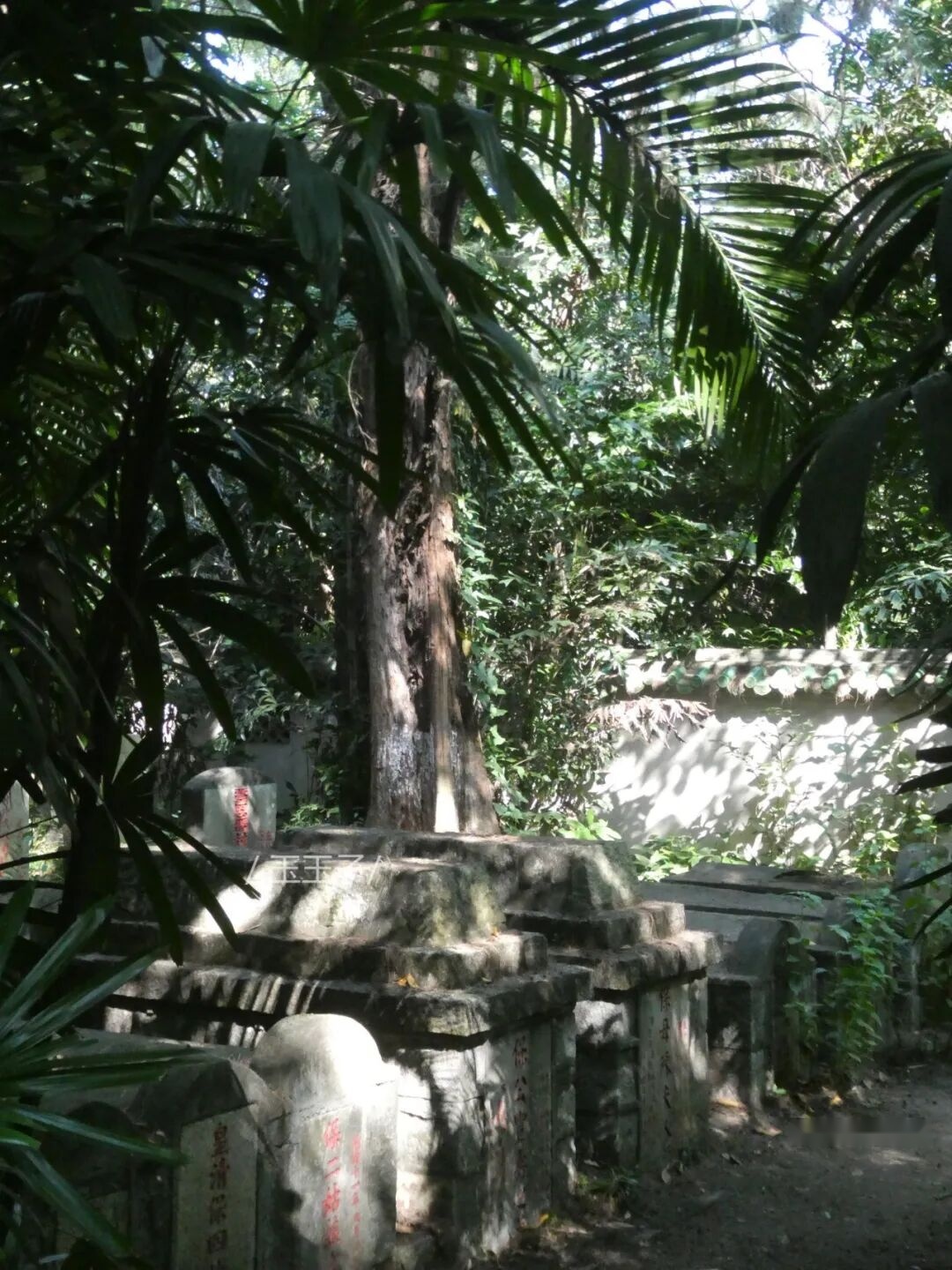
This area is a continuous cluster of ancient tombs. Besides the legendary sages, imams from various dynasties are also laid to rest here. However, this burial ground is currently fenced off, and I couldn't enter. Grass has already started growing inside.
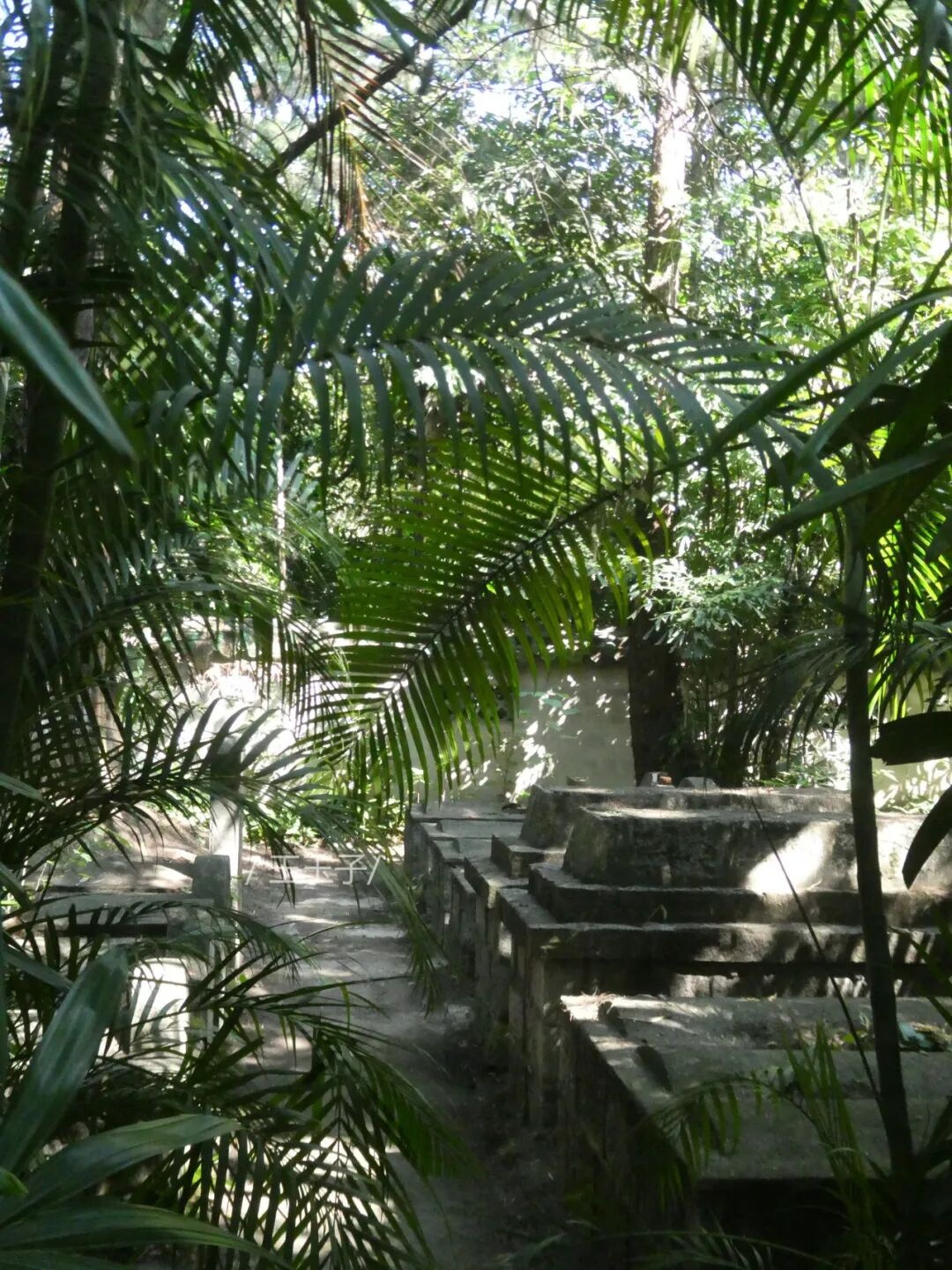
Continuing along the tomb path, you'll reach the 'Jie Lie Liu Fang' (Chastity and Virtuous Reputation) stone archway. This archway was built in the 25th year of the Guangxu reign (1899) to honor Madam Sun.
Madam Sun was a concubine of Cai Jinzhang, a naval commander during the late Qing Dynasty. While Cai Jinzhang was in charge of coastal defense affairs in Humen and fell ill, the 27-year-old Madam Sun heard the news and committed suicide by swallowing gold. This event was reported to the imperial court, and Emperor Guangxu decreed that an archway be erected to commend her. What's particularly interesting is that this is a Han Chinese chastity archway, yet it's located within the Muslim cemetery of the ancient sage's tombs.
Passing through the 'Jie Lie Liu Fang' stone archway, there's a wide-open square on the left. Looking further inside, you'll find the 'San Zhong Ting' (Pavilion of the Three Loyal Ones). The 'Three Loyal Ones' refer to Yu Fengqi, Sa Zifu, and Ma Chengzhu.
These three men were Hui Muslim military officers stationed in Guangzhou. They fought bravely and died heroically defending Guangzhou against the Qing forces in the late Ming Dynasty. Their remains were scattered and difficult to find. In remembrance of their loyalty and sacrifice, their cenotaphs were built within the ancient sage's cemetery, and a pavilion was erected in their honor, hence the name 'San Zhong Ting.'
Next to the 'San Zhong Ting' are the cenotaphs of these three generals. They are also overgrown with weeds and look like they haven't been tended to in a long time.
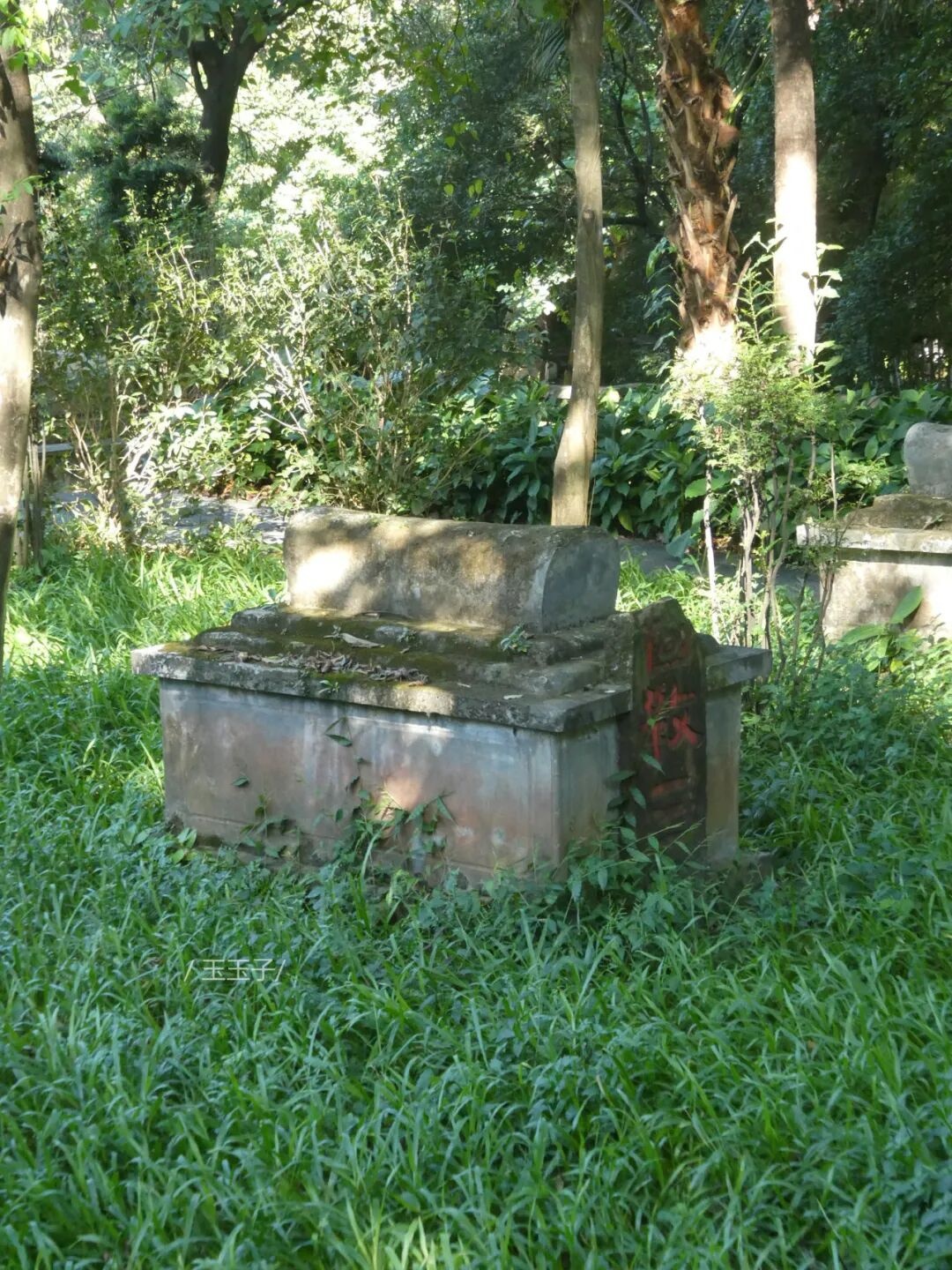
Opposite the square is the main gate of the Qingzhen Xian'an Ancient Tomb (Xiang Fen). This is the entrance to the most central historical courtyard of the entire cemetery.
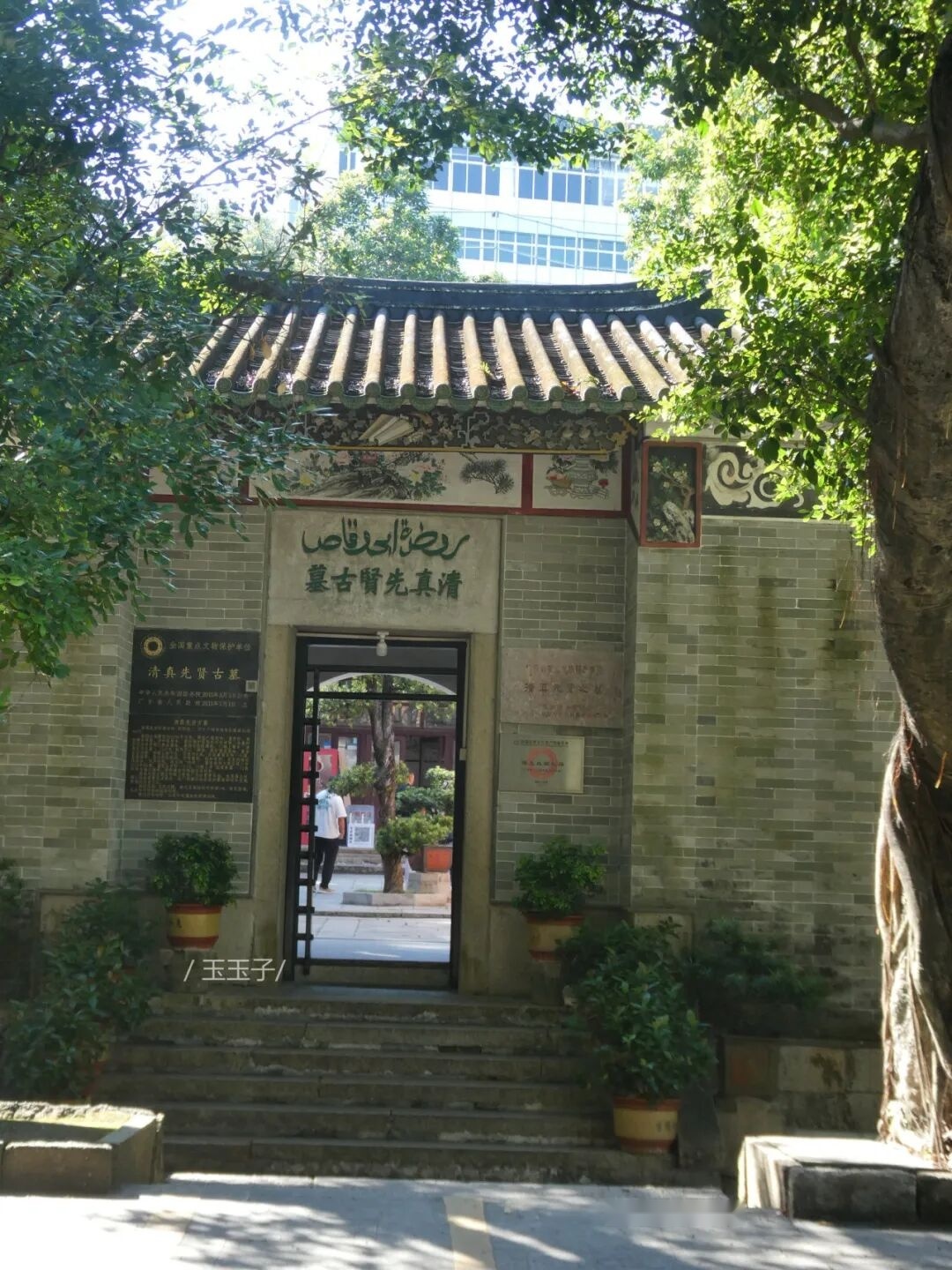
Entering the front courtyard of the prayer hall, I was immediately captivated by the architectural style here. The sinicized architectural aesthetic is just amazing, giving off a sense of restraint yet also grandeur.
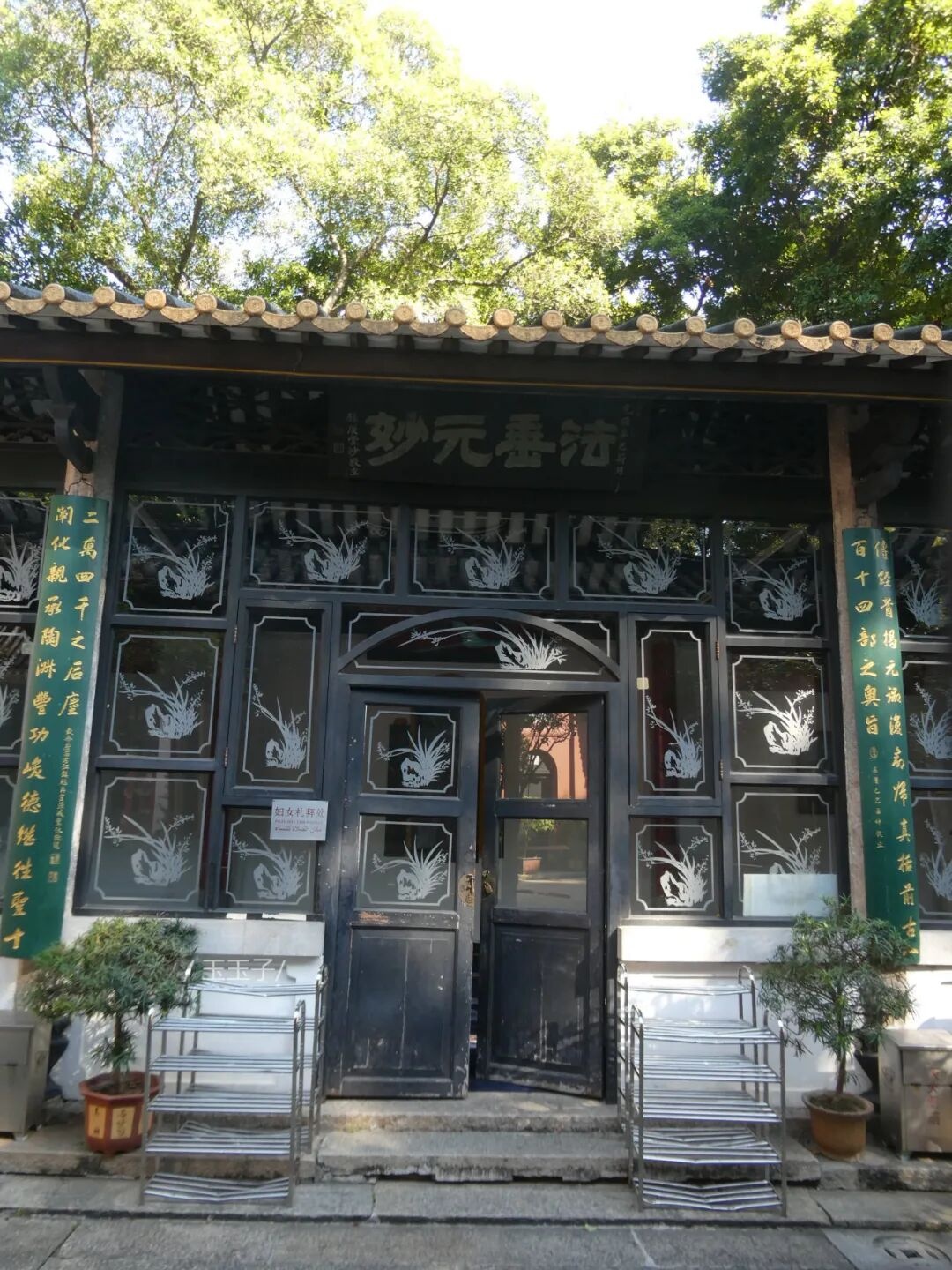
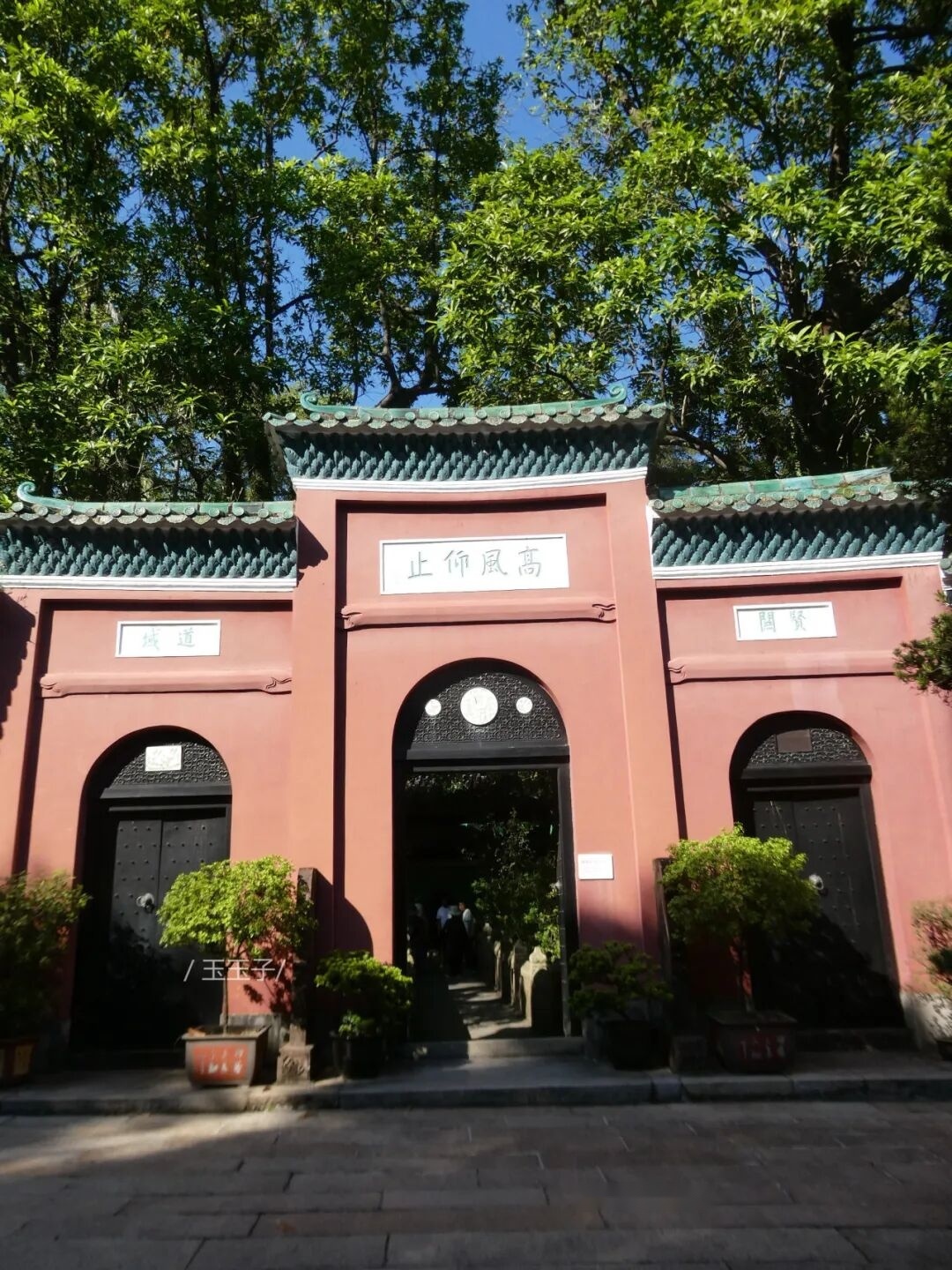
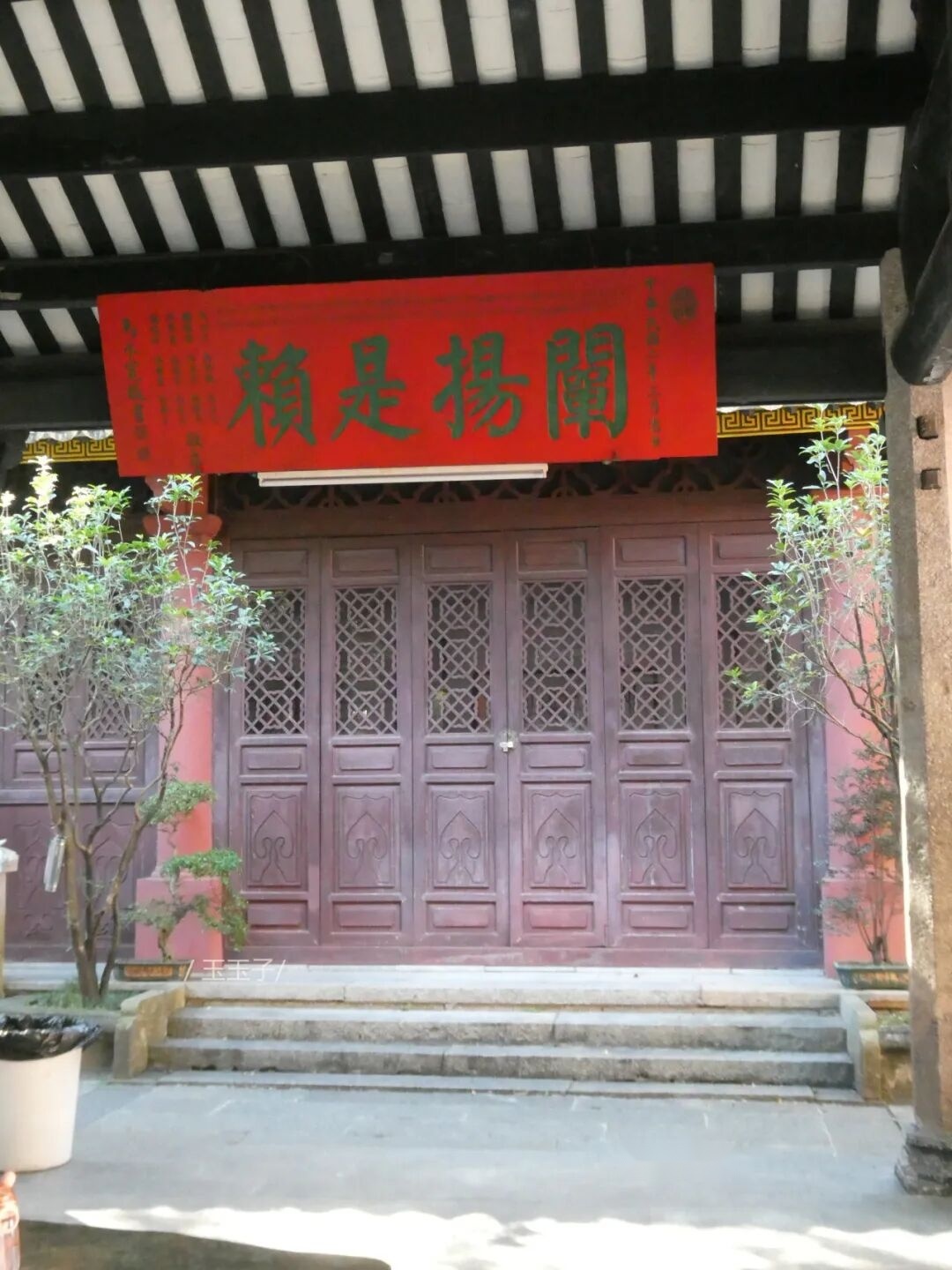
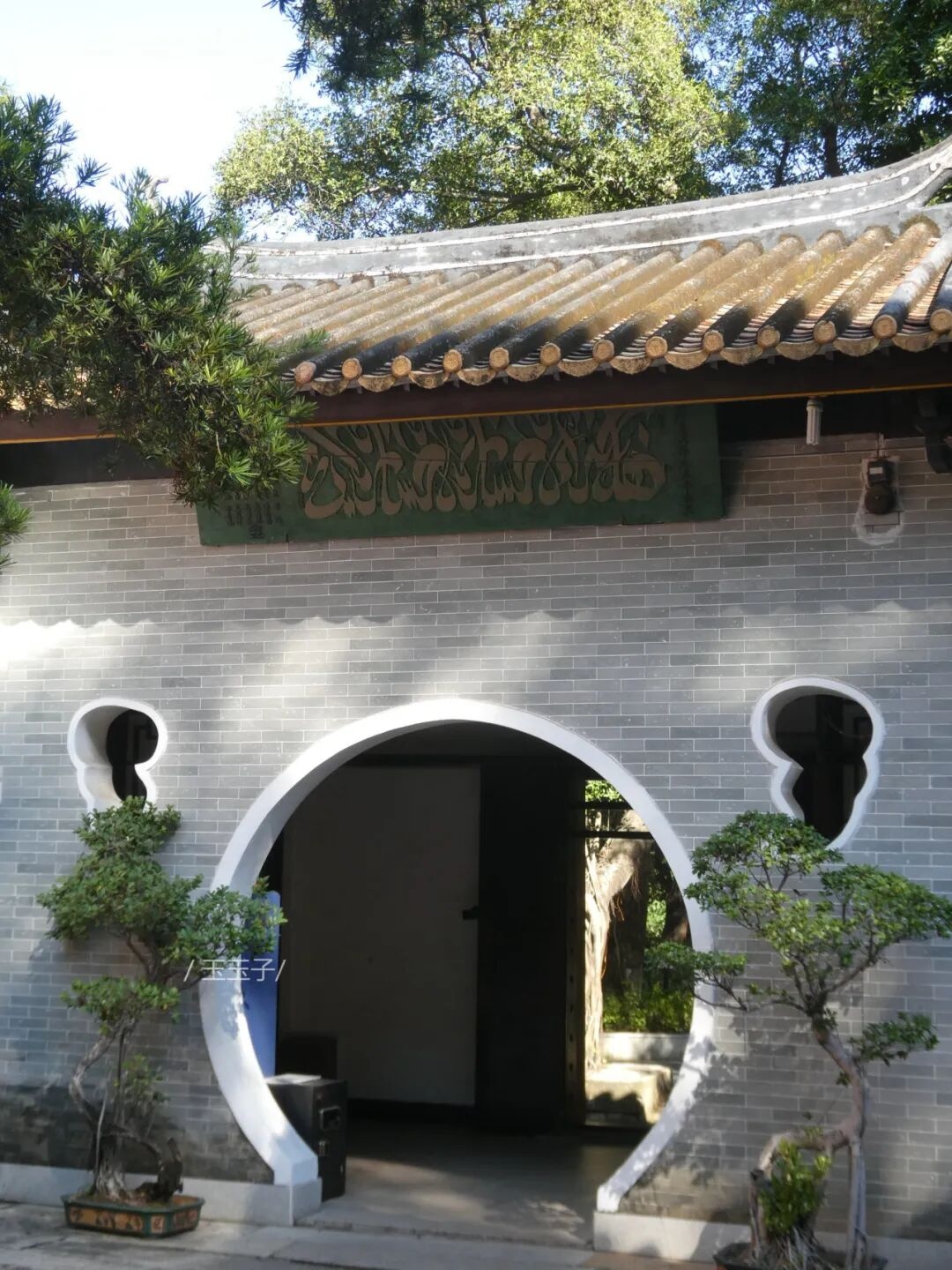
Through the main gate of Guangzhou Xian'an Mosque, the green-walled gatehouse you see is the inner gatehouse of the Qingzhen Xian'an Ancient Tomb (Xiang Fen). Passing through this gate, you enter the tomb chamber of Wan Ge Su (Xiang Fen) itself.
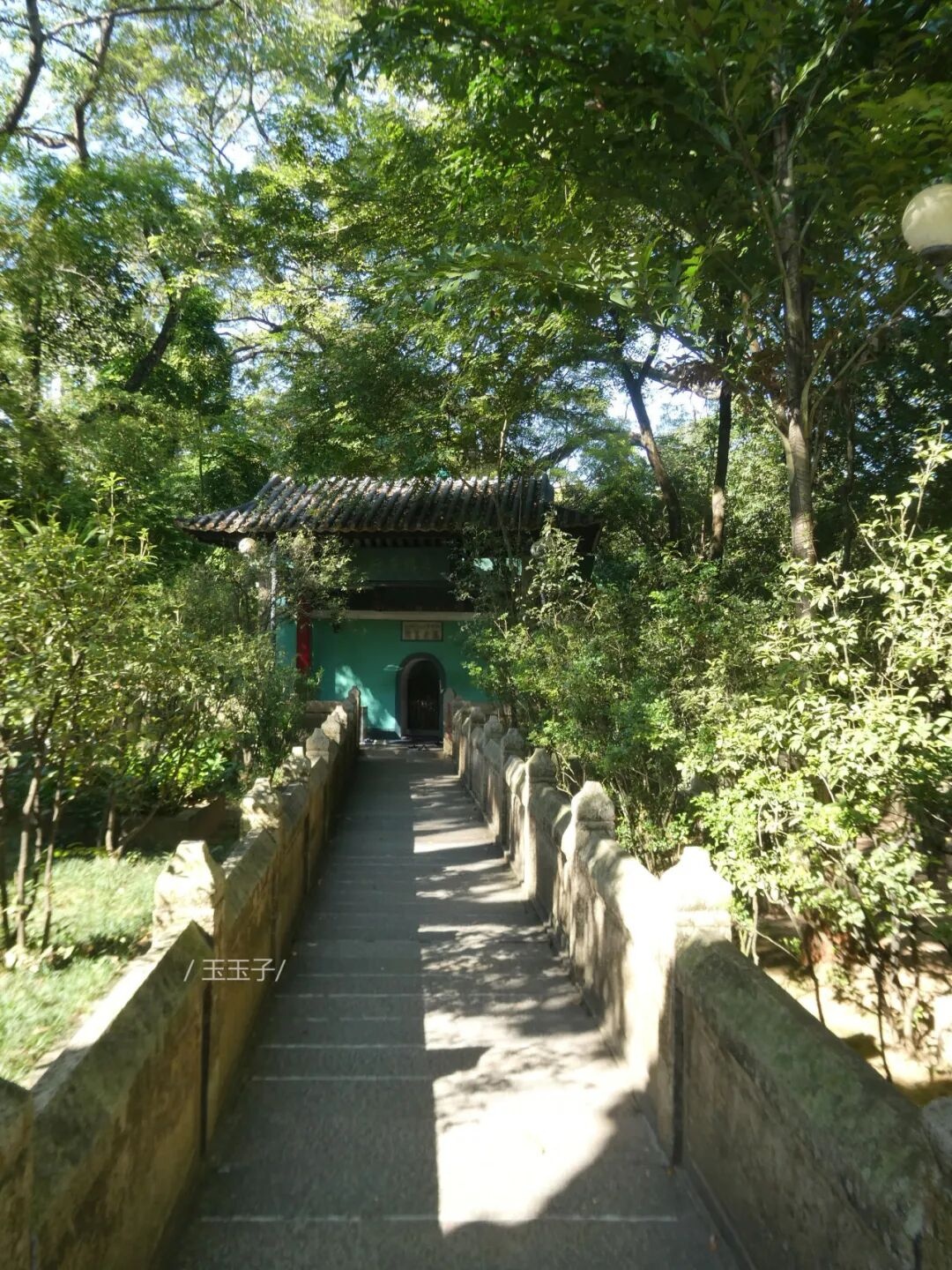
During my visit, I saw many worshipers taking off their shoes to enter and pray. On both sides of the pathway are the core tombs of the Forty-One Sages (original site of the inscribed tablets).
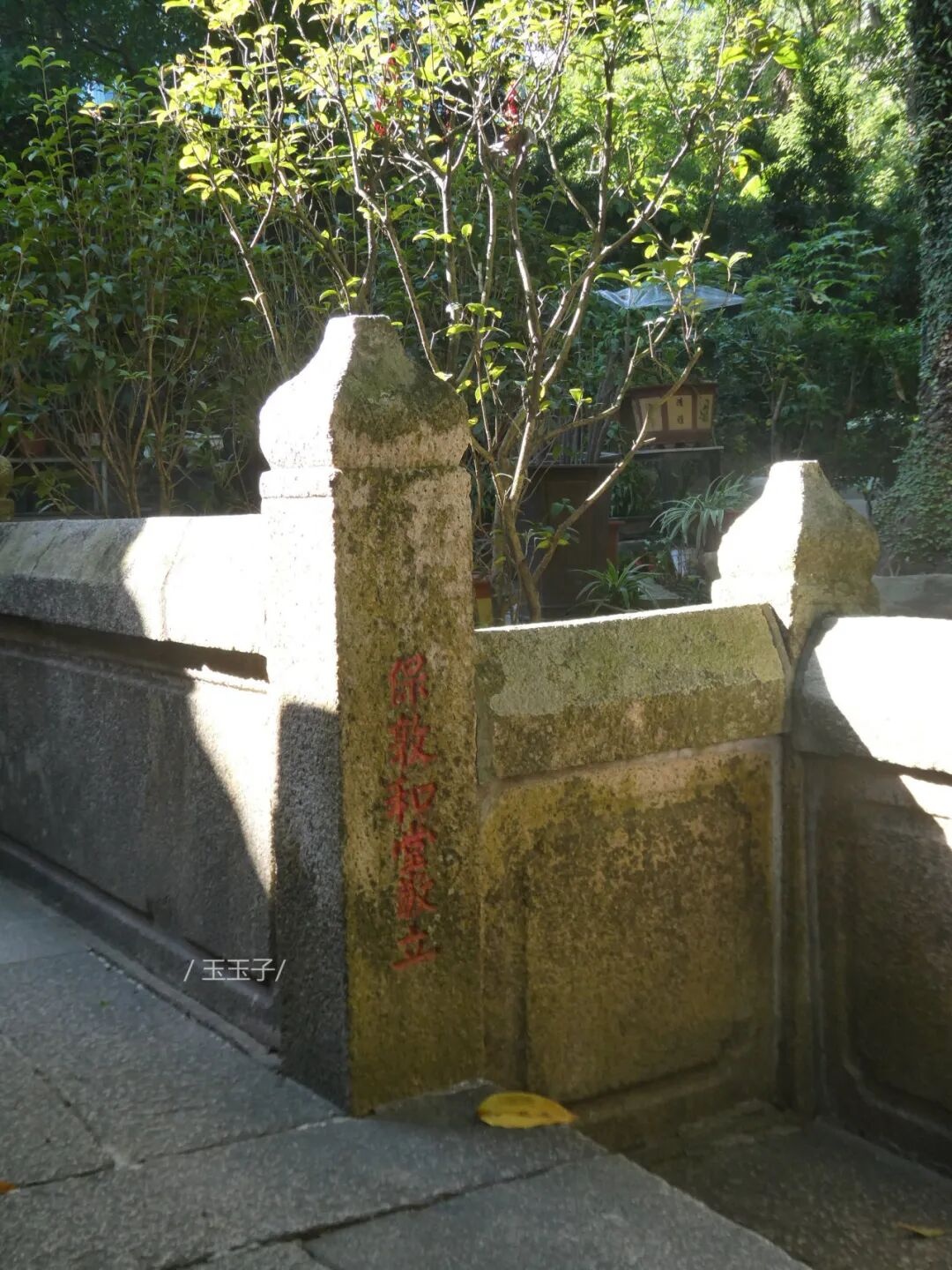
Unlike the Tomb of the Forty-One Sages on the left after entering from the 'Jie Lie Liu Fang' archway, that outer area is a vast expanse of scattered ancient graves. This area is specifically a memorial tomb detailing the stories of the Forty-One Sages, with ancient steles from the Qing Dynasty.
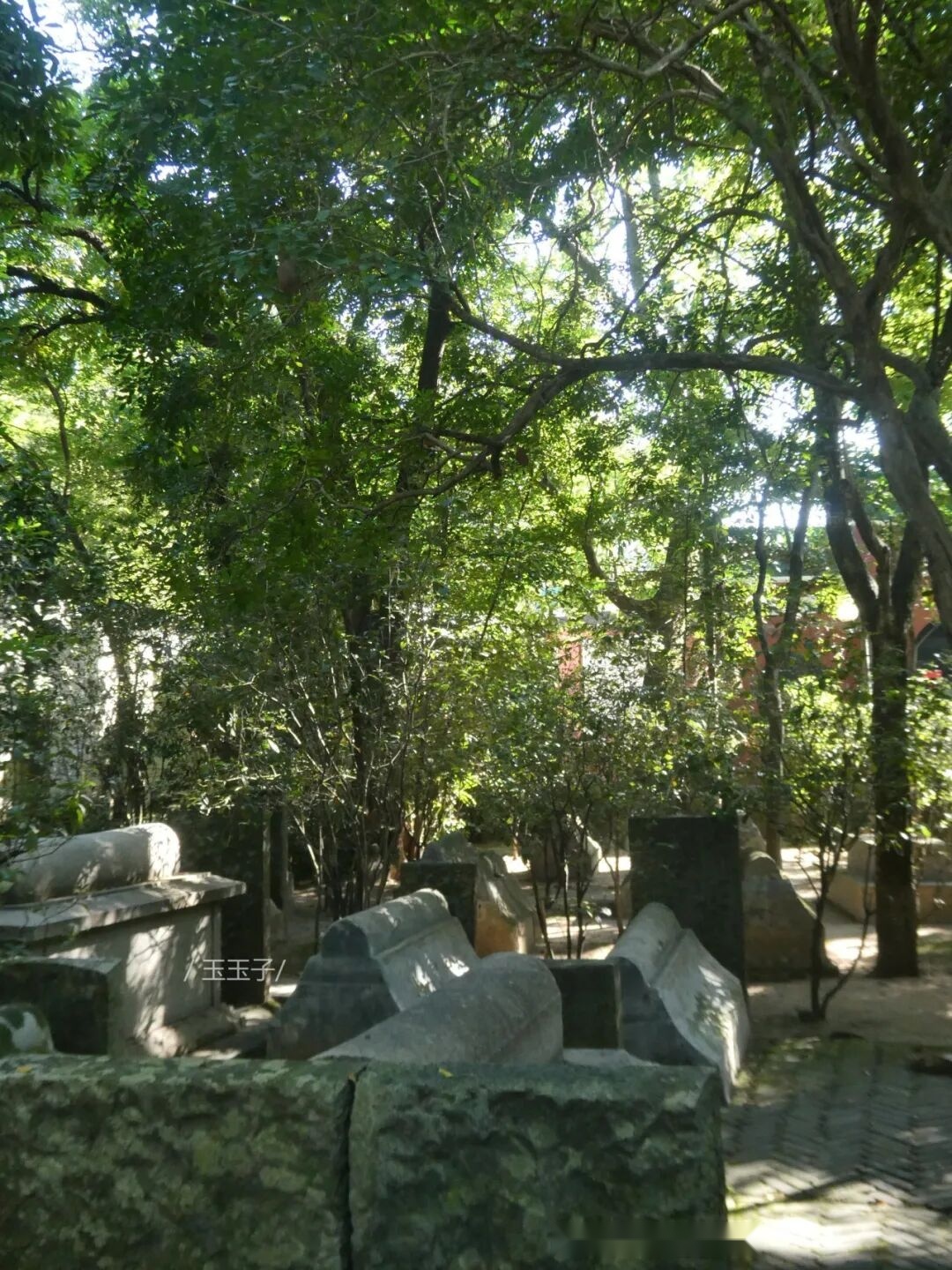
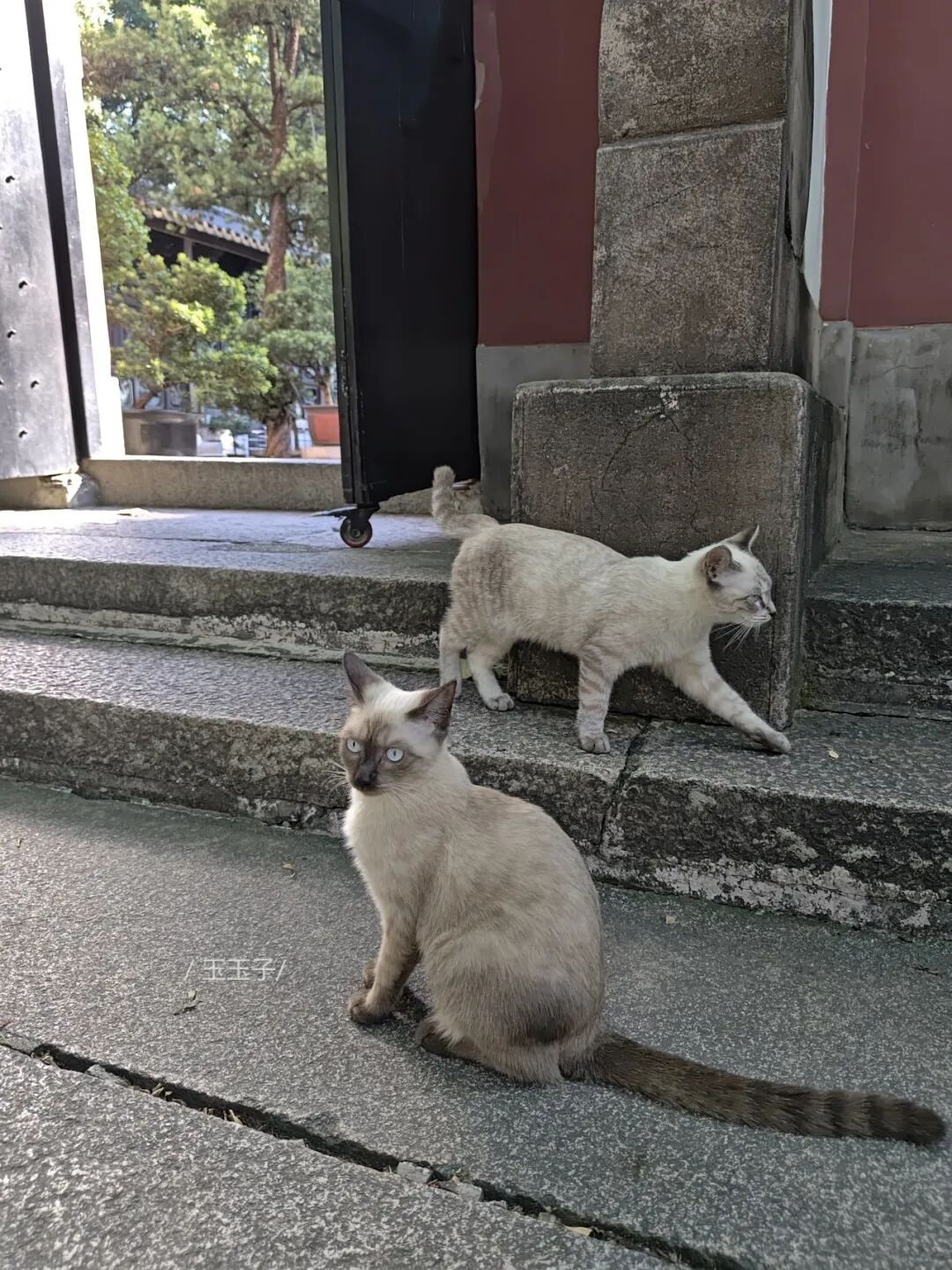
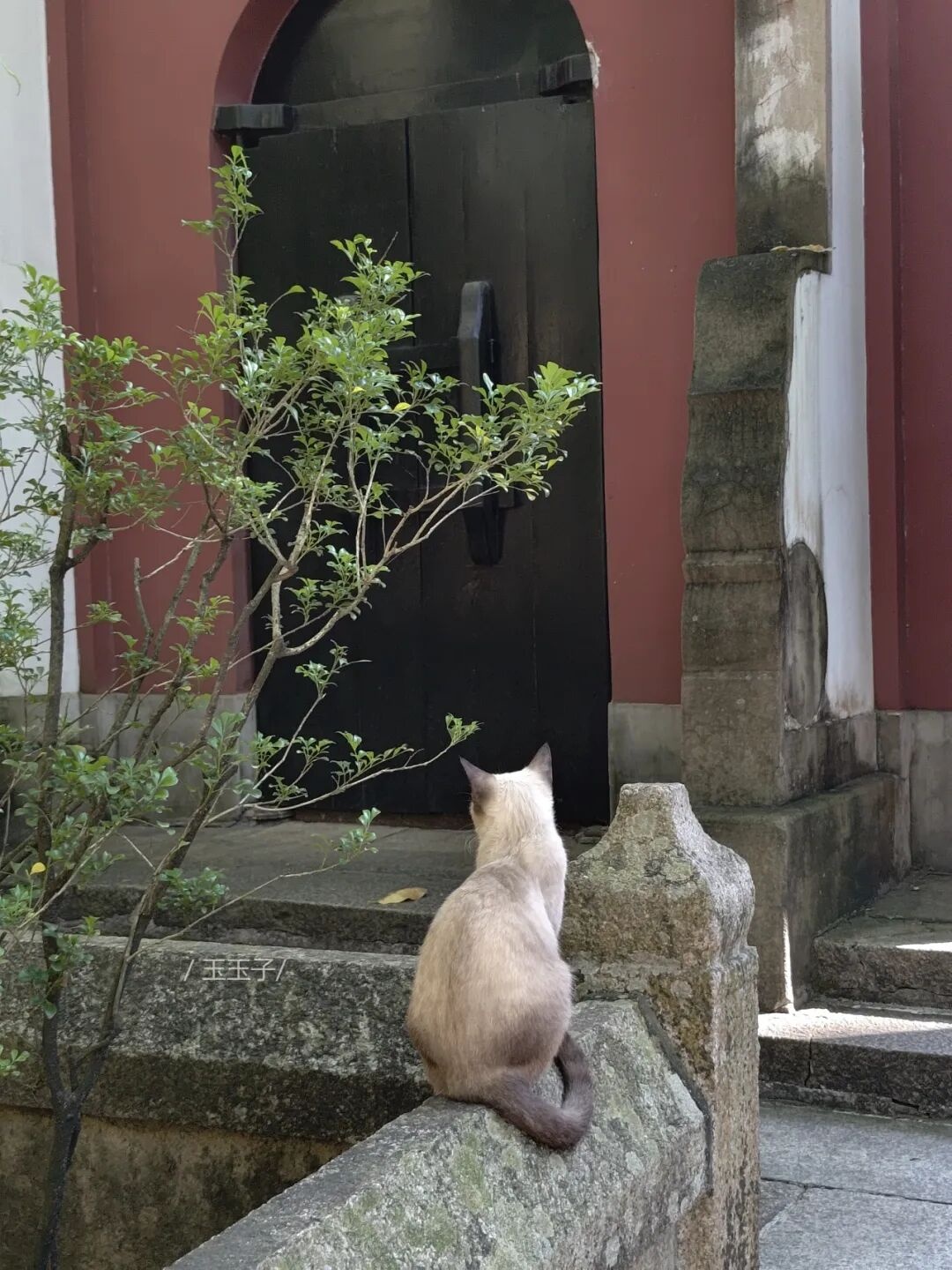
Along the tomb path, I encountered two cats leisurely strolling. They slowly ambled through the trees and would approach visitors when they saw them.
Exiting the other end of the front courtyard of the prayer hall, you'll see the 'Yi Men Zhong Xiao' (One Family, Loyalty and Filial Piety) stone archway. This was the most obvious burial site I saw during my visit, and it was immediately recognizable as the Yang family tomb.
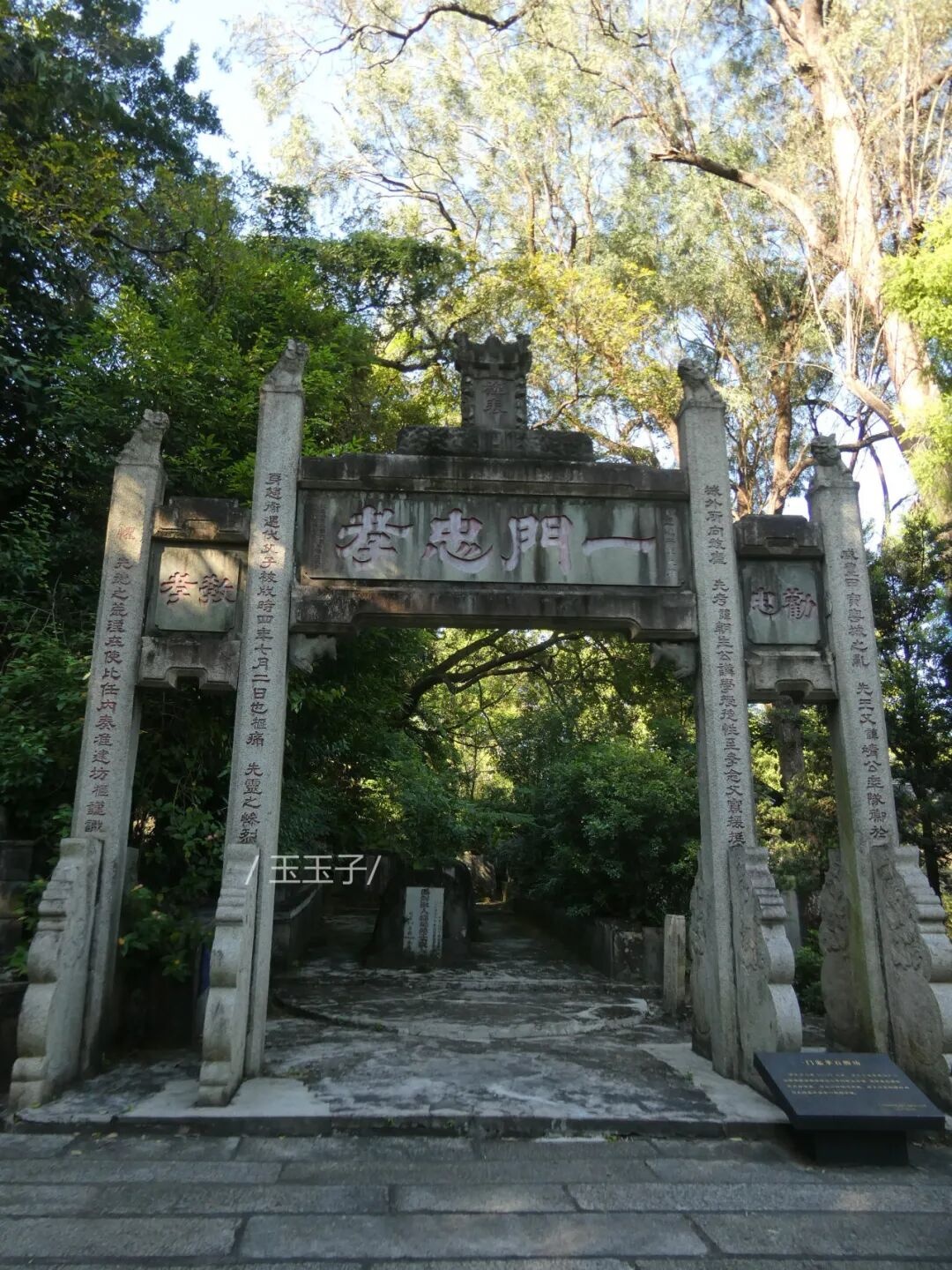
This burial ground is the tomb of the family of Yang Shu, a Hui Muslim diplomat in the late Qing Dynasty. The archway was erected at Yang Shu's request to the imperial court, commemorating his grandfather Yang Jing and father Yang Chaosheng, who died in conflict. The four characters 'Yi Men Zhong Xiao' come from this.
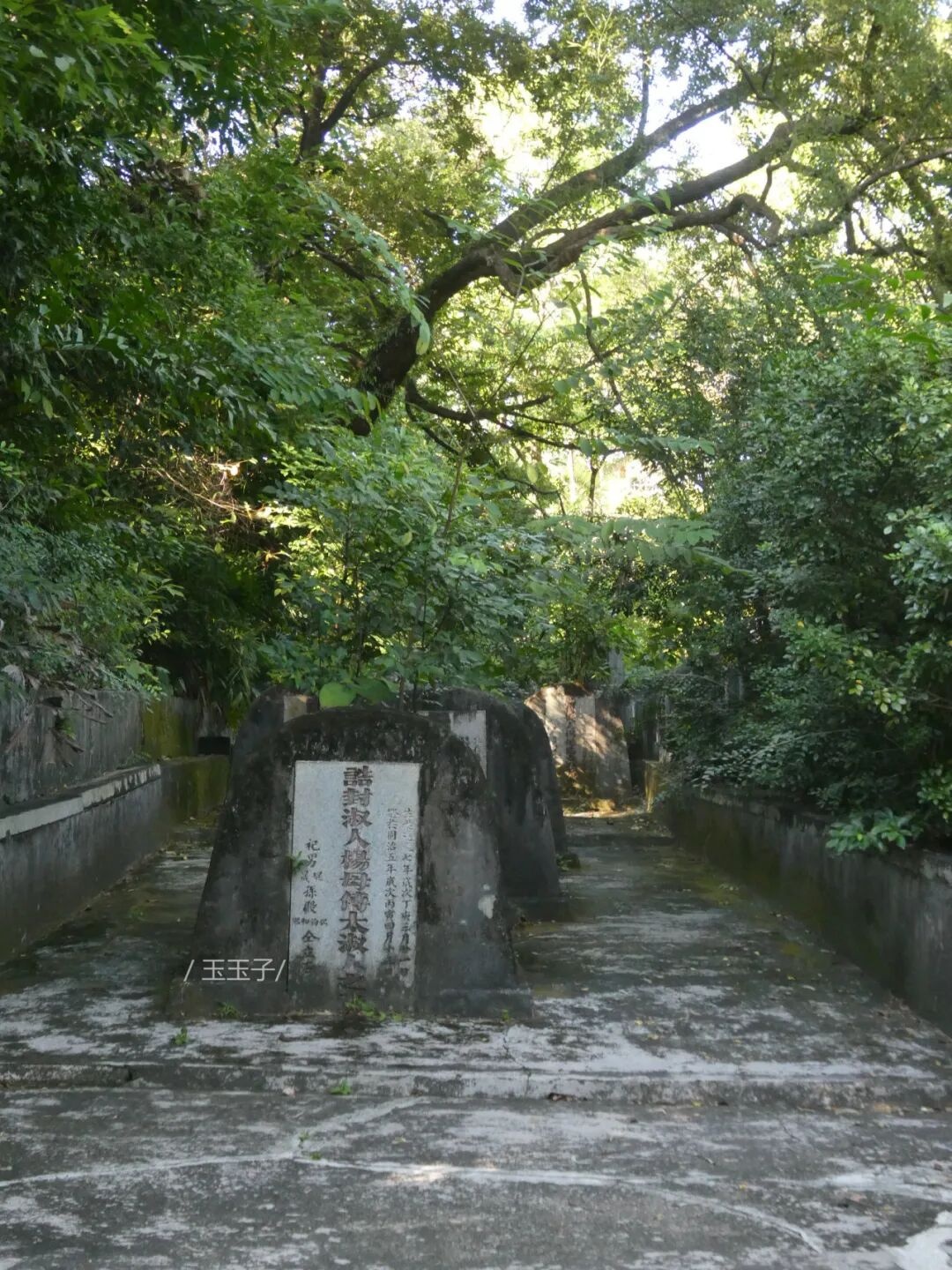
In the same area as the Yang family tomb is the disciple of the famous Imam Zhang Ziwen, Zhang Hongtao. He was hired by the Haopan Mosque in Guangzhou to lead the Quranic studies institute, where he preached religious doctrines and trained Hui Muslim scholars in Guangzhou, making him an important figure in Guangzhou's Islamic community in modern times.
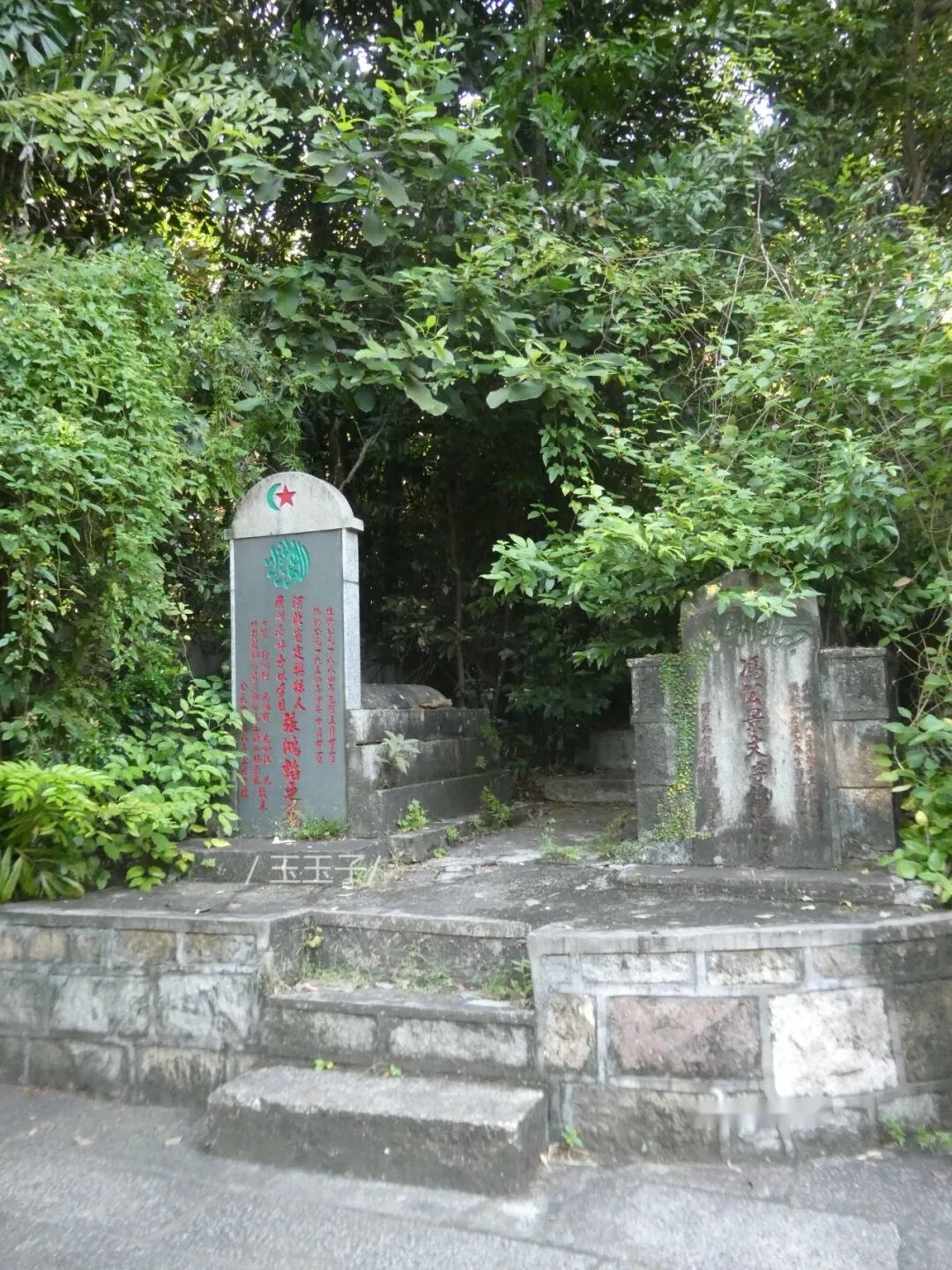
Moving on from the Yang family tomb towards a prominent red building, you'll find the prayer hall of Xian'an Mosque.
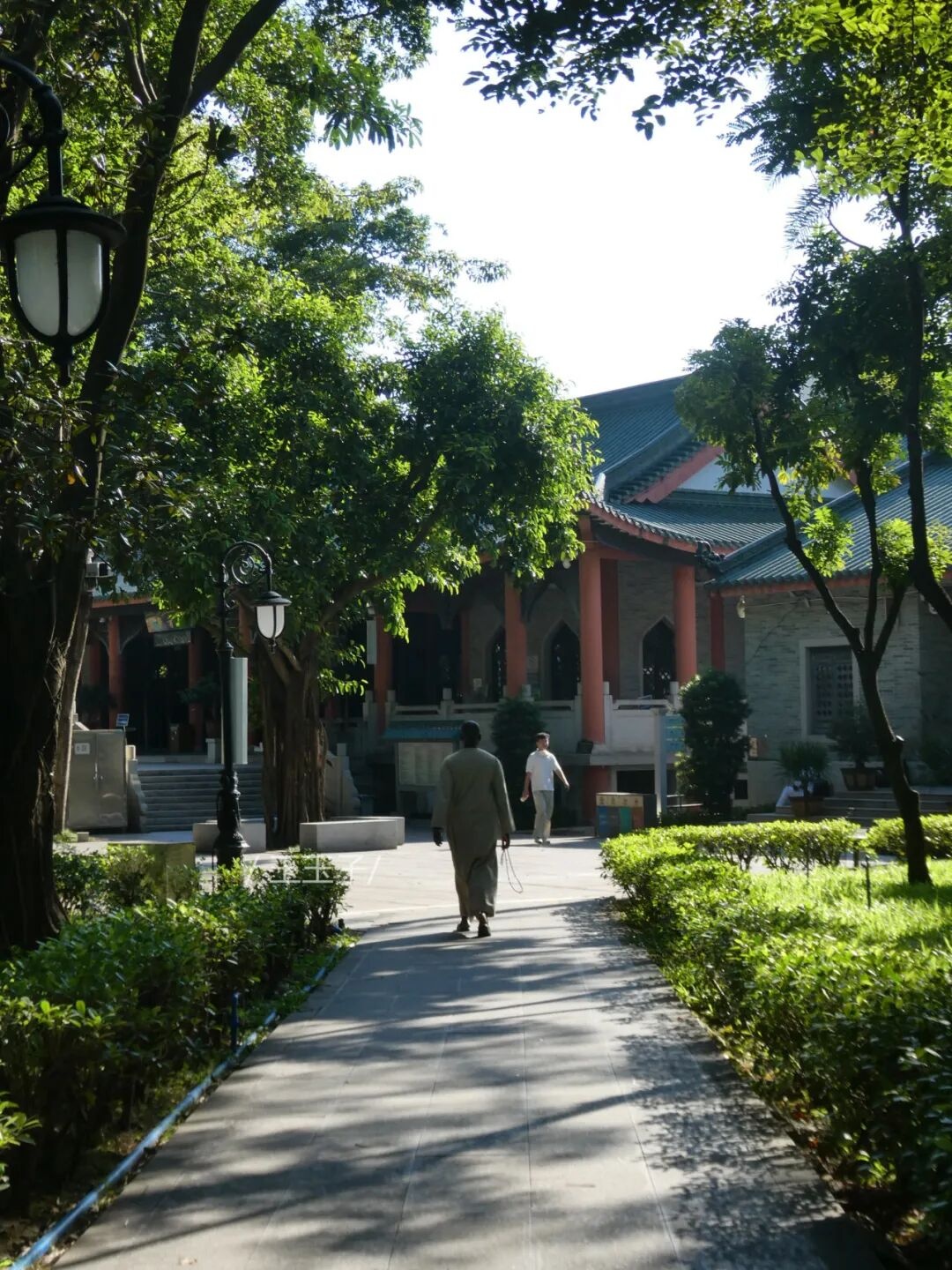
The entire hall is covered with a green glazed tile roof, and above the eaves and brackets, a crescent moon hangs like a hook.
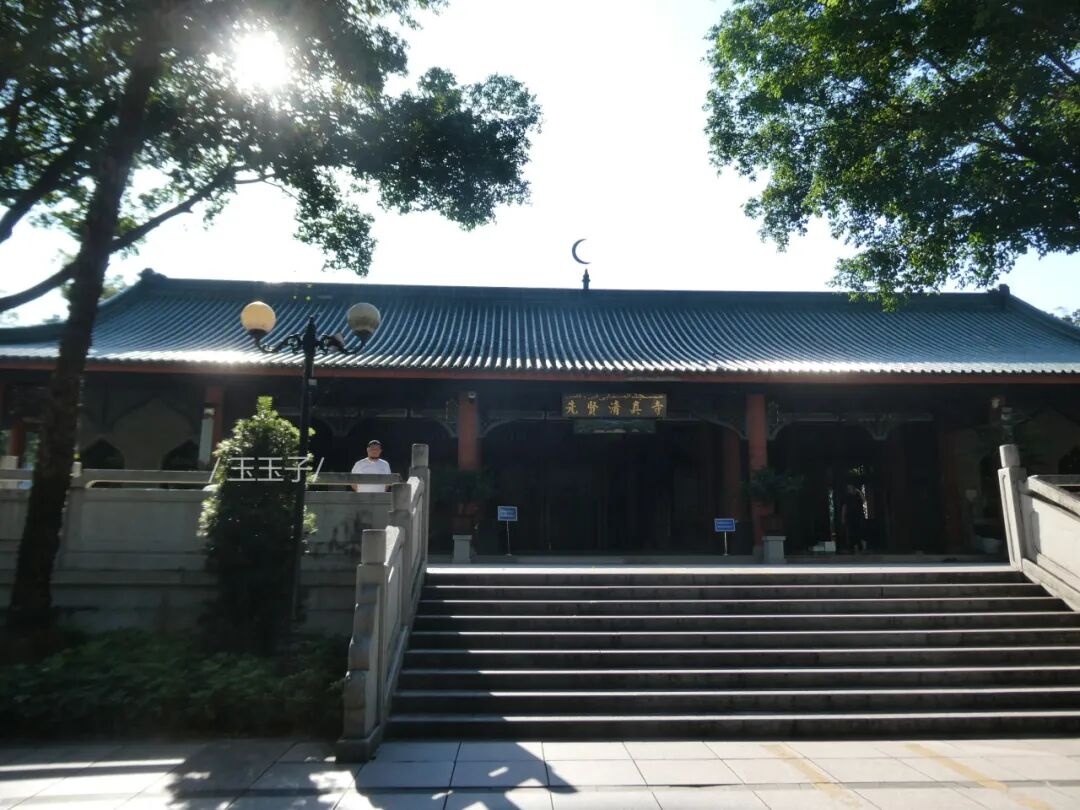
This prayer hall is very much in the Lingnan Chinese style, with green glazed tiles, triangular gables, and red painted pillars.
Typically, I see Buddhist or Taoist temples more often, so it was quite novel to see an Islamic prayer hall for the first time. I noticed worshipers taking off their shoes before entering the prayer area, and they could even lie down inside the hall.
Not far from the prayer hall, you can see an ancient, simple obelisk-style stone tablet inscribed with 'This Hill is a Hui Muslim Cemetery.' This is the boundary marker for the ancient cemetery area, indicating the extent of the entire Hui Muslim burial ground. Interestingly, a modern hotel is located right next to this ancient cemetery.
Following the stone slab path towards the south gate, you'll see a green-tiled four-cornered pavilion, specifically built to house the proclamation tablet from the Guangdong Provincial Government Office.
It was this proclamation that, years ago, demarcated the boundaries and decreed the permanent protection of the Guihuagang Xian'an Ancient Cemetery, prohibiting any encroachment. This small pavilion guards the most important legal document for the cemetery.
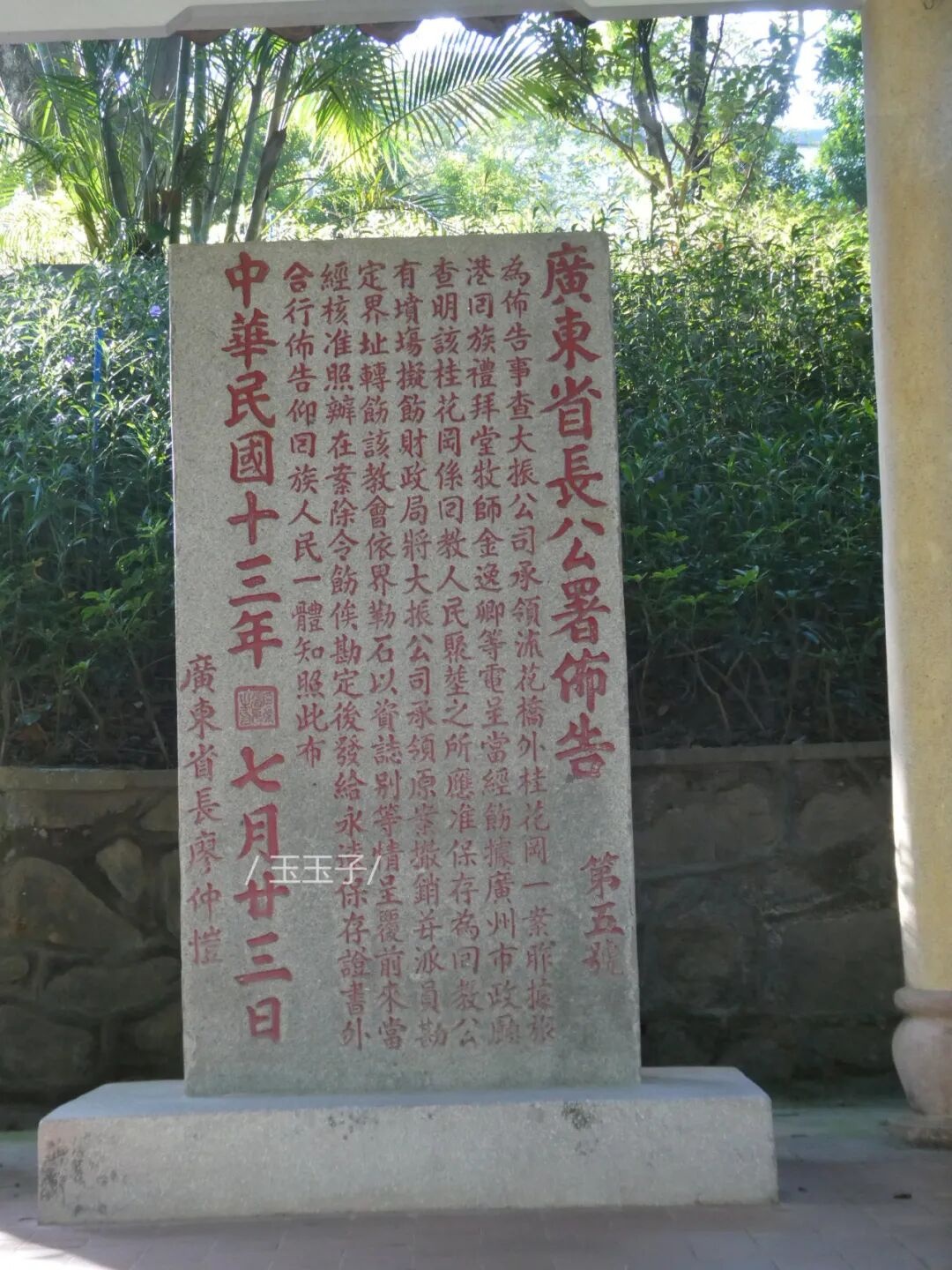
Walking out of the pavilion along the tomb path, you'll reach the south gate of Xian'an Mosque. Exiting the south gate, you'll pass by the Orchid Garden.
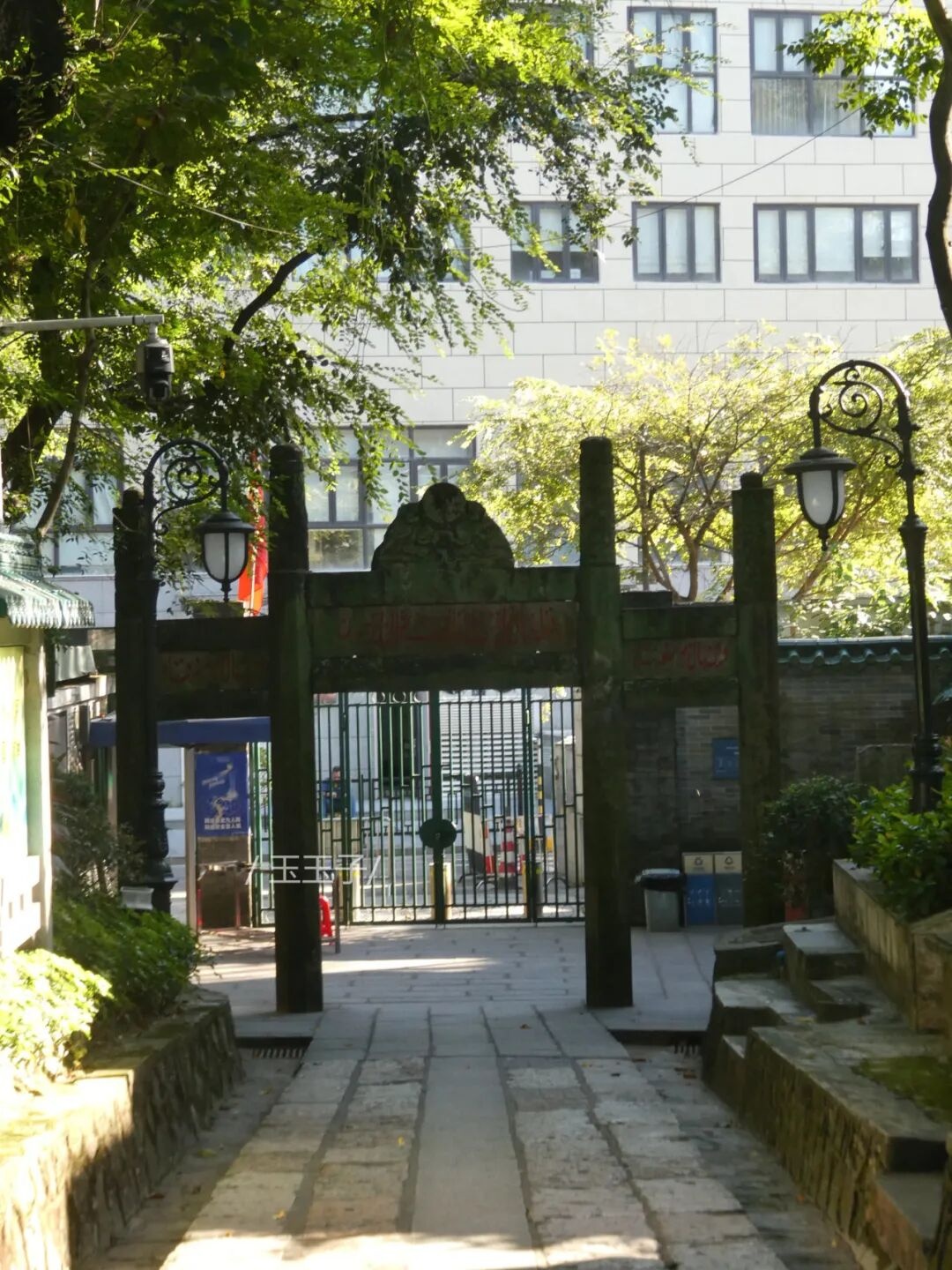
Wan Ge Su, who arrived in Guangzhou from the Arabian Peninsula by sea 1300 years ago, preached, built a mosque, and lived out his days here. He probably never imagined that 1300 years later, his tomb would still be next to Guangzhou Railway Station.
Location Information
⚫ Location Name
Xian'an Mosque
(901 Jiefang North Road, Yuexiu District, Guangzhou)
⚫ Getting Here
(1) Metro: Exit B2 of Yuexiu Park Station on Guangzhou Metro Line 2, walk towards the Lanpu entrance. Once you reach the Lanpu entrance, turn left and walk about 50 meters to get there.
(2) Driving: There are no visitor parking spots open to the public inside the park. You can park at the Lanpu parking lot, which is a 3-minute walk to the south gate of the graveyard. It costs 10 yuan per hour.
⚫ Opening Hours
08:30-16:00 (Last entry at 16:00)
⚫ Tickets
Free, no reservation needed
✅ Nearby Spots to Check Out (Walking Distance)
3 minutes | Lanpu Park (8 yuan/person)
5 minutes | Yuexiu Park (Free)
END
The weather in Guangzhou has been super nice lately, the kind of good weather that makes you really want to get out and explore new places.
The spot I visited this time is the Xian'an Mosque in Guangzhou. When I first saw this place, I thought of it as just 'a temple + a cemetery.' After visiting and doing some research for this post, I realized its historical depth is way more significant than I initially imagined.
Legend has it that in the early Zhenguan era of the Tang Dynasty, an Arab elder named Wan Ge Su arrived in Guangzhou by sea to spread his faith. He was buried here after his passing, and later, a prayer hall was built to accompany his tomb, allowing Muslims visiting his grave to perform their prayers. This is how the Xian'an Mosque came to be.
This cemetery used to be called 'Fanren Zhong' (Barbarian Tombs), commonly known as 'Huihui Fen' (Hui People's Cemetery), and also 'Daren Fen' (Elder's Cemetery). 'Daren' refers to Wan Ge Su. It's one of the world's oldest existing Islamic tombs and one of the few famous Muslim burial sites preserved outside the Arab region.
Xian'an Mosque is located near Yuexiu Park and the Orchid Garden, separated by just a wall from the latter. The mosque itself is very tranquil, and most people seen here are worshipers. Hearing the lively atmosphere of tourists from the neighboring Orchid Garden, it feels like two completely different worlds.
But then again, a place like this, a religious sanctuary, even with a great environment, isn't really suitable for casual photo ops or portraits.
Xian'an Mosque has an entrance on the same row as the Orchid Garden. So, when heading there, you can take Guangzhou Metro Line 2 to Yuexiu Park Station, exit at B2, and walk towards the Orchid Garden entrance. Once you reach the Orchid Garden entrance, go about 50 meters to its left, and you'll find the south gate of Xian'an Mosque.
If you follow navigation apps, you might end up getting off at Guangzhou Railway Station, which is over 700 meters away, or you might exit Yuexiu Park Station and have to loop around to the north gate, which is a much longer walk.
Like me, I got led around by navigation and entered through the north gate that day. It's way closer if you go in from the Orchid Garden side.
Entering from the north gate of Xian'an Mosque, you'll immediately see the 'Xian'an Fu' (Ode to the Sages) screen wall on your left. It's inscribed in gold on a black stone slab, detailing Wan Ge Su's journey across the maritime Silk Road to Guangzhou to preach, the thousand-year history of the ancient sage's tomb, and stories of Sino-Arab cultural exchange.
Next to the 'Xian'an Fu' screen wall are two stone pillars engraved with 'Xian'an Ancient Tomb Road,' marking the entrance to the core ancient tomb area.
Walking along the ancient tomb road, on your left is the Tomb of the Forty-One Sages (outer burial area). Legend says that forty preaching sages who crossed the sea with Wan Ge Su are buried here.
This area is a continuous cluster of ancient tombs. Besides the legendary sages, imams from various dynasties are also laid to rest here. However, this burial ground is currently fenced off, and I couldn't enter. Grass has already started growing inside.
Continuing along the tomb path, you'll reach the 'Jie Lie Liu Fang' (Chastity and Virtuous Reputation) stone archway. This archway was built in the 25th year of the Guangxu reign (1899) to honor Madam Sun.
Madam Sun was a concubine of Cai Jinzhang, a naval commander during the late Qing Dynasty. While Cai Jinzhang was in charge of coastal defense affairs in Humen and fell ill, the 27-year-old Madam Sun heard the news and committed suicide by swallowing gold. This event was reported to the imperial court, and Emperor Guangxu decreed that an archway be erected to commend her. What's particularly interesting is that this is a Han Chinese chastity archway, yet it's located within the Muslim cemetery of the ancient sage's tombs.
Passing through the 'Jie Lie Liu Fang' stone archway, there's a wide-open square on the left. Looking further inside, you'll find the 'San Zhong Ting' (Pavilion of the Three Loyal Ones). The 'Three Loyal Ones' refer to Yu Fengqi, Sa Zifu, and Ma Chengzhu.
These three men were Hui Muslim military officers stationed in Guangzhou. They fought bravely and died heroically defending Guangzhou against the Qing forces in the late Ming Dynasty. Their remains were scattered and difficult to find. In remembrance of their loyalty and sacrifice, their cenotaphs were built within the ancient sage's cemetery, and a pavilion was erected in their honor, hence the name 'San Zhong Ting.'
Next to the 'San Zhong Ting' are the cenotaphs of these three generals. They are also overgrown with weeds and look like they haven't been tended to in a long time.
Opposite the square is the main gate of the Qingzhen Xian'an Ancient Tomb (Xiang Fen). This is the entrance to the most central historical courtyard of the entire cemetery.
Entering the front courtyard of the prayer hall, I was immediately captivated by the architectural style here. The sinicized architectural aesthetic is just amazing, giving off a sense of restraint yet also grandeur.
Through the main gate of Guangzhou Xian'an Mosque, the green-walled gatehouse you see is the inner gatehouse of the Qingzhen Xian'an Ancient Tomb (Xiang Fen). Passing through this gate, you enter the tomb chamber of Wan Ge Su (Xiang Fen) itself.
During my visit, I saw many worshipers taking off their shoes to enter and pray. On both sides of the pathway are the core tombs of the Forty-One Sages (original site of the inscribed tablets).
Unlike the Tomb of the Forty-One Sages on the left after entering from the 'Jie Lie Liu Fang' archway, that outer area is a vast expanse of scattered ancient graves. This area is specifically a memorial tomb detailing the stories of the Forty-One Sages, with ancient steles from the Qing Dynasty.
Along the tomb path, I encountered two cats leisurely strolling. They slowly ambled through the trees and would approach visitors when they saw them.
Exiting the other end of the front courtyard of the prayer hall, you'll see the 'Yi Men Zhong Xiao' (One Family, Loyalty and Filial Piety) stone archway. This was the most obvious burial site I saw during my visit, and it was immediately recognizable as the Yang family tomb.
This burial ground is the tomb of the family of Yang Shu, a Hui Muslim diplomat in the late Qing Dynasty. The archway was erected at Yang Shu's request to the imperial court, commemorating his grandfather Yang Jing and father Yang Chaosheng, who died in conflict. The four characters 'Yi Men Zhong Xiao' come from this.
In the same area as the Yang family tomb is the disciple of the famous Imam Zhang Ziwen, Zhang Hongtao. He was hired by the Haopan Mosque in Guangzhou to lead the Quranic studies institute, where he preached religious doctrines and trained Hui Muslim scholars in Guangzhou, making him an important figure in Guangzhou's Islamic community in modern times.
Moving on from the Yang family tomb towards a prominent red building, you'll find the prayer hall of Xian'an Mosque.
The entire hall is covered with a green glazed tile roof, and above the eaves and brackets, a crescent moon hangs like a hook.
This prayer hall is very much in the Lingnan Chinese style, with green glazed tiles, triangular gables, and red painted pillars.
Typically, I see Buddhist or Taoist temples more often, so it was quite novel to see an Islamic prayer hall for the first time. I noticed worshipers taking off their shoes before entering the prayer area, and they could even lie down inside the hall.
Not far from the prayer hall, you can see an ancient, simple obelisk-style stone tablet inscribed with 'This Hill is a Hui Muslim Cemetery.' This is the boundary marker for the ancient cemetery area, indicating the extent of the entire Hui Muslim burial ground. Interestingly, a modern hotel is located right next to this ancient cemetery.
Following the stone slab path towards the south gate, you'll see a green-tiled four-cornered pavilion, specifically built to house the proclamation tablet from the Guangdong Provincial Government Office.
It was this proclamation that, years ago, demarcated the boundaries and decreed the permanent protection of the Guihuagang Xian'an Ancient Cemetery, prohibiting any encroachment. This small pavilion guards the most important legal document for the cemetery.
Walking out of the pavilion along the tomb path, you'll reach the south gate of Xian'an Mosque. Exiting the south gate, you'll pass by the Orchid Garden.
Wan Ge Su, who arrived in Guangzhou from the Arabian Peninsula by sea 1300 years ago, preached, built a mosque, and lived out his days here. He probably never imagined that 1300 years later, his tomb would still be next to Guangzhou Railway Station.
Location Information
⚫ Location Name
Xian'an Mosque
(901 Jiefang North Road, Yuexiu District, Guangzhou)
⚫ Getting Here
(1) Metro: Exit B2 of Yuexiu Park Station on Guangzhou Metro Line 2, walk towards the Lanpu entrance. Once you reach the Lanpu entrance, turn left and walk about 50 meters to get there.
(2) Driving: There are no visitor parking spots open to the public inside the park. You can park at the Lanpu parking lot, which is a 3-minute walk to the south gate of the graveyard. It costs 10 yuan per hour.
⚫ Opening Hours
08:30-16:00 (Last entry at 16:00)
⚫ Tickets
Free, no reservation needed
✅ Nearby Spots to Check Out (Walking Distance)
3 minutes | Lanpu Park (8 yuan/person)
5 minutes | Yuexiu Park (Free)
END
Guangzhou's Oldest Mosque: Explore Huaisheng Temple's Ancient Islamic Architecture & Free Entry Guide
Articles • Hasan09 posted the article • 0 comments • 7 views • 52 minutes ago
This is a detailed, 42-high-res photo exploration of Guangzhou's largest mosque and a national key cultural heritage site, Huaisheng Temple (also known as the Light Tower Temple). As one of the earliest existing ancient mosques in China, it's directly accessible by Metro Line 2 and is completely free to enter. The panoramic views meticulously showcase the iconic Tang Dynasty cylindrical light tower, the three-story rosewood eaves moon-watching building, the prayer platform, the main prayer hall, and historical artifacts in the stele corridor, offering an immersive experience of the Hui Muslim cultural heritage along Guangzhou's maritime Silk Road over a thousand years.
The weather in Guangzhou has been super nice lately, the kind of good weather that makes you really want to get out and explore new places.
The spot I visited this time is the Xian'an Mosque in Guangzhou. When I first saw this place, I thought of it as just 'a temple + a cemetery.' After visiting and doing some research for this post, I realized its historical depth is way more significant than I initially imagined.
Legend has it that in the early Zhenguan era of the Tang Dynasty, an Arab elder named Wan Ge Su arrived in Guangzhou by sea to spread his faith. He was buried here after his passing, and later, a prayer hall was built to accompany his tomb, allowing Muslims visiting his grave to perform their prayers. This is how the Xian'an Mosque came to be.
This cemetery used to be called 'Fanren Zhong' (Barbarian Tombs), commonly known as 'Huihui Fen' (Hui People's Cemetery), and also 'Daren Fen' (Elder's Cemetery). 'Daren' refers to Wan Ge Su. It's one of the world's oldest existing Islamic tombs and one of the few famous Muslim burial sites preserved outside the Arab region.
Xian'an Mosque is located near Yuexiu Park and the Orchid Garden, separated by just a wall from the latter. The mosque itself is very tranquil, and most people seen here are worshipers. Hearing the lively atmosphere of tourists from the neighboring Orchid Garden, it feels like two completely different worlds.
But then again, a place like this, a religious sanctuary, even with a great environment, isn't really suitable for casual photo ops or portraits.
Xian'an Mosque has an entrance on the same row as the Orchid Garden. So, when heading there, you can take Guangzhou Metro Line 2 to Yuexiu Park Station, exit at B2, and walk towards the Orchid Garden entrance. Once you reach the Orchid Garden entrance, go about 50 meters to its left, and you'll find the south gate of Xian'an Mosque.
If you follow navigation apps, you might end up getting off at Guangzhou Railway Station, which is over 700 meters away, or you might exit Yuexiu Park Station and have to loop around to the north gate, which is a much longer walk.
Like me, I got led around by navigation and entered through the north gate that day. It's way closer if you go in from the Orchid Garden side.
Entering from the north gate of Xian'an Mosque, you'll immediately see the 'Xian'an Fu' (Ode to the Sages) screen wall on your left. It's inscribed in gold on a black stone slab, detailing Wan Ge Su's journey across the maritime Silk Road to Guangzhou to preach, the thousand-year history of the ancient sage's tomb, and stories of Sino-Arab cultural exchange.
Next to the 'Xian'an Fu' screen wall are two stone pillars engraved with 'Xian'an Ancient Tomb Road,' marking the entrance to the core ancient tomb area.
Walking along the ancient tomb road, on your left is the Tomb of the Forty-One Sages (outer burial area). Legend says that forty preaching sages who crossed the sea with Wan Ge Su are buried here.
This area is a continuous cluster of ancient tombs. Besides the legendary sages, imams from various dynasties are also laid to rest here. However, this burial ground is currently fenced off, and I couldn't enter. Grass has already started growing inside.
Continuing along the tomb path, you'll reach the 'Jie Lie Liu Fang' (Chastity and Virtuous Reputation) stone archway. This archway was built in the 25th year of the Guangxu reign (1899) to honor Madam Sun.
Madam Sun was a concubine of Cai Jinzhang, a naval commander during the late Qing Dynasty. While Cai Jinzhang was in charge of coastal defense affairs in Humen and fell ill, the 27-year-old Madam Sun heard the news and committed suicide by swallowing gold. This event was reported to the imperial court, and Emperor Guangxu decreed that an archway be erected to commend her. What's particularly interesting is that this is a Han Chinese chastity archway, yet it's located within the Muslim cemetery of the ancient sage's tombs.
Passing through the 'Jie Lie Liu Fang' stone archway, there's a wide-open square on the left. Looking further inside, you'll find the 'San Zhong Ting' (Pavilion of the Three Loyal Ones). The 'Three Loyal Ones' refer to Yu Fengqi, Sa Zifu, and Ma Chengzhu.
These three men were Hui Muslim military officers stationed in Guangzhou. They fought bravely and died heroically defending Guangzhou against the Qing forces in the late Ming Dynasty. Their remains were scattered and difficult to find. In remembrance of their loyalty and sacrifice, their cenotaphs were built within the ancient sage's cemetery, and a pavilion was erected in their honor, hence the name 'San Zhong Ting.'
Next to the 'San Zhong Ting' are the cenotaphs of these three generals. They are also overgrown with weeds and look like they haven't been tended to in a long time.
Opposite the square is the main gate of the Qingzhen Xian'an Ancient Tomb (Xiang Fen). This is the entrance to the most central historical courtyard of the entire cemetery.
Entering the front courtyard of the prayer hall, I was immediately captivated by the architectural style here. The sinicized architectural aesthetic is just amazing, giving off a sense of restraint yet also grandeur.
Through the main gate of Guangzhou Xian'an Mosque, the green-walled gatehouse you see is the inner gatehouse of the Qingzhen Xian'an Ancient Tomb (Xiang Fen). Passing through this gate, you enter the tomb chamber of Wan Ge Su (Xiang Fen) itself.
During my visit, I saw many worshipers taking off their shoes to enter and pray. On both sides of the pathway are the core tombs of the Forty-One Sages (original site of the inscribed tablets).
Unlike the Tomb of the Forty-One Sages on the left after entering from the 'Jie Lie Liu Fang' archway, that outer area is a vast expanse of scattered ancient graves. This area is specifically a memorial tomb detailing the stories of the Forty-One Sages, with ancient steles from the Qing Dynasty.
Along the tomb path, I encountered two cats leisurely strolling. They slowly ambled through the trees and would approach visitors when they saw them.
Exiting the other end of the front courtyard of the prayer hall, you'll see the 'Yi Men Zhong Xiao' (One Family, Loyalty and Filial Piety) stone archway. This was the most obvious burial site I saw during my visit, and it was immediately recognizable as the Yang family tomb.
This burial ground is the tomb of the family of Yang Shu, a Hui Muslim diplomat in the late Qing Dynasty. The archway was erected at Yang Shu's request to the imperial court, commemorating his grandfather Yang Jing and father Yang Chaosheng, who died in conflict. The four characters 'Yi Men Zhong Xiao' come from this.
In the same area as the Yang family tomb is the disciple of the famous Imam Zhang Ziwen, Zhang Hongtao. He was hired by the Haopan Mosque in Guangzhou to lead the Quranic studies institute, where he preached religious doctrines and trained Hui Muslim scholars in Guangzhou, making him an important figure in Guangzhou's Islamic community in modern times.
Moving on from the Yang family tomb towards a prominent red building, you'll find the prayer hall of Xian'an Mosque.
The entire hall is covered with a green glazed tile roof, and above the eaves and brackets, a crescent moon hangs like a hook.
This prayer hall is very much in the Lingnan Chinese style, with green glazed tiles, triangular gables, and red painted pillars.
Typically, I see Buddhist or Taoist temples more often, so it was quite novel to see an Islamic prayer hall for the first time. I noticed worshipers taking off their shoes before entering the prayer area, and they could even lie down inside the hall.
Not far from the prayer hall, you can see an ancient, simple obelisk-style stone tablet inscribed with 'This Hill is a Hui Muslim Cemetery.' This is the boundary marker for the ancient cemetery area, indicating the extent of the entire Hui Muslim burial ground. Interestingly, a modern hotel is located right next to this ancient cemetery.
Following the stone slab path towards the south gate, you'll see a green-tiled four-cornered pavilion, specifically built to house the proclamation tablet from the Guangdong Provincial Government Office.
It was this proclamation that, years ago, demarcated the boundaries and decreed the permanent protection of the Guihuagang Xian'an Ancient Cemetery, prohibiting any encroachment. This small pavilion guards the most important legal document for the cemetery.
Walking out of the pavilion along the tomb path, you'll reach the south gate of Xian'an Mosque. Exiting the south gate, you'll pass by the Orchid Garden.
Wan Ge Su, who arrived in Guangzhou from the Arabian Peninsula by sea 1300 years ago, preached, built a mosque, and lived out his days here. He probably never imagined that 1300 years later, his tomb would still be next to Guangzhou Railway Station.
Location Information
⚫ Location Name
Xian'an Mosque
(901 Jiefang North Road, Yuexiu District, Guangzhou)
⚫ Getting Here
(1) Metro: Exit B2 of Yuexiu Park Station on Guangzhou Metro Line 2, walk towards the Lanpu entrance. Once you reach the Lanpu entrance, turn left and walk about 50 meters to get there.
(2) Driving: There are no visitor parking spots open to the public inside the park. You can park at the Lanpu parking lot, which is a 3-minute walk to the south gate of the graveyard. It costs 10 yuan per hour.
⚫ Opening Hours
08:30-16:00 (Last entry at 16:00)
⚫ Tickets
Free, no reservation needed
✅ Nearby Spots to Check Out (Walking Distance)
3 minutes | Lanpu Park (8 yuan/person)
5 minutes | Yuexiu Park (Free)
END view all
The weather in Guangzhou has been super nice lately, the kind of good weather that makes you really want to get out and explore new places.
The spot I visited this time is the Xian'an Mosque in Guangzhou. When I first saw this place, I thought of it as just 'a temple + a cemetery.' After visiting and doing some research for this post, I realized its historical depth is way more significant than I initially imagined.
Legend has it that in the early Zhenguan era of the Tang Dynasty, an Arab elder named Wan Ge Su arrived in Guangzhou by sea to spread his faith. He was buried here after his passing, and later, a prayer hall was built to accompany his tomb, allowing Muslims visiting his grave to perform their prayers. This is how the Xian'an Mosque came to be.
This cemetery used to be called 'Fanren Zhong' (Barbarian Tombs), commonly known as 'Huihui Fen' (Hui People's Cemetery), and also 'Daren Fen' (Elder's Cemetery). 'Daren' refers to Wan Ge Su. It's one of the world's oldest existing Islamic tombs and one of the few famous Muslim burial sites preserved outside the Arab region.
Xian'an Mosque is located near Yuexiu Park and the Orchid Garden, separated by just a wall from the latter. The mosque itself is very tranquil, and most people seen here are worshipers. Hearing the lively atmosphere of tourists from the neighboring Orchid Garden, it feels like two completely different worlds.
But then again, a place like this, a religious sanctuary, even with a great environment, isn't really suitable for casual photo ops or portraits.
Xian'an Mosque has an entrance on the same row as the Orchid Garden. So, when heading there, you can take Guangzhou Metro Line 2 to Yuexiu Park Station, exit at B2, and walk towards the Orchid Garden entrance. Once you reach the Orchid Garden entrance, go about 50 meters to its left, and you'll find the south gate of Xian'an Mosque.
If you follow navigation apps, you might end up getting off at Guangzhou Railway Station, which is over 700 meters away, or you might exit Yuexiu Park Station and have to loop around to the north gate, which is a much longer walk.
Like me, I got led around by navigation and entered through the north gate that day. It's way closer if you go in from the Orchid Garden side.
Entering from the north gate of Xian'an Mosque, you'll immediately see the 'Xian'an Fu' (Ode to the Sages) screen wall on your left. It's inscribed in gold on a black stone slab, detailing Wan Ge Su's journey across the maritime Silk Road to Guangzhou to preach, the thousand-year history of the ancient sage's tomb, and stories of Sino-Arab cultural exchange.
Next to the 'Xian'an Fu' screen wall are two stone pillars engraved with 'Xian'an Ancient Tomb Road,' marking the entrance to the core ancient tomb area.
Walking along the ancient tomb road, on your left is the Tomb of the Forty-One Sages (outer burial area). Legend says that forty preaching sages who crossed the sea with Wan Ge Su are buried here.
This area is a continuous cluster of ancient tombs. Besides the legendary sages, imams from various dynasties are also laid to rest here. However, this burial ground is currently fenced off, and I couldn't enter. Grass has already started growing inside.
Continuing along the tomb path, you'll reach the 'Jie Lie Liu Fang' (Chastity and Virtuous Reputation) stone archway. This archway was built in the 25th year of the Guangxu reign (1899) to honor Madam Sun.
Madam Sun was a concubine of Cai Jinzhang, a naval commander during the late Qing Dynasty. While Cai Jinzhang was in charge of coastal defense affairs in Humen and fell ill, the 27-year-old Madam Sun heard the news and committed suicide by swallowing gold. This event was reported to the imperial court, and Emperor Guangxu decreed that an archway be erected to commend her. What's particularly interesting is that this is a Han Chinese chastity archway, yet it's located within the Muslim cemetery of the ancient sage's tombs.
Passing through the 'Jie Lie Liu Fang' stone archway, there's a wide-open square on the left. Looking further inside, you'll find the 'San Zhong Ting' (Pavilion of the Three Loyal Ones). The 'Three Loyal Ones' refer to Yu Fengqi, Sa Zifu, and Ma Chengzhu.
These three men were Hui Muslim military officers stationed in Guangzhou. They fought bravely and died heroically defending Guangzhou against the Qing forces in the late Ming Dynasty. Their remains were scattered and difficult to find. In remembrance of their loyalty and sacrifice, their cenotaphs were built within the ancient sage's cemetery, and a pavilion was erected in their honor, hence the name 'San Zhong Ting.'
Next to the 'San Zhong Ting' are the cenotaphs of these three generals. They are also overgrown with weeds and look like they haven't been tended to in a long time.
Opposite the square is the main gate of the Qingzhen Xian'an Ancient Tomb (Xiang Fen). This is the entrance to the most central historical courtyard of the entire cemetery.
Entering the front courtyard of the prayer hall, I was immediately captivated by the architectural style here. The sinicized architectural aesthetic is just amazing, giving off a sense of restraint yet also grandeur.
Through the main gate of Guangzhou Xian'an Mosque, the green-walled gatehouse you see is the inner gatehouse of the Qingzhen Xian'an Ancient Tomb (Xiang Fen). Passing through this gate, you enter the tomb chamber of Wan Ge Su (Xiang Fen) itself.
During my visit, I saw many worshipers taking off their shoes to enter and pray. On both sides of the pathway are the core tombs of the Forty-One Sages (original site of the inscribed tablets).
Unlike the Tomb of the Forty-One Sages on the left after entering from the 'Jie Lie Liu Fang' archway, that outer area is a vast expanse of scattered ancient graves. This area is specifically a memorial tomb detailing the stories of the Forty-One Sages, with ancient steles from the Qing Dynasty.
Along the tomb path, I encountered two cats leisurely strolling. They slowly ambled through the trees and would approach visitors when they saw them.
Exiting the other end of the front courtyard of the prayer hall, you'll see the 'Yi Men Zhong Xiao' (One Family, Loyalty and Filial Piety) stone archway. This was the most obvious burial site I saw during my visit, and it was immediately recognizable as the Yang family tomb.
This burial ground is the tomb of the family of Yang Shu, a Hui Muslim diplomat in the late Qing Dynasty. The archway was erected at Yang Shu's request to the imperial court, commemorating his grandfather Yang Jing and father Yang Chaosheng, who died in conflict. The four characters 'Yi Men Zhong Xiao' come from this.
In the same area as the Yang family tomb is the disciple of the famous Imam Zhang Ziwen, Zhang Hongtao. He was hired by the Haopan Mosque in Guangzhou to lead the Quranic studies institute, where he preached religious doctrines and trained Hui Muslim scholars in Guangzhou, making him an important figure in Guangzhou's Islamic community in modern times.
Moving on from the Yang family tomb towards a prominent red building, you'll find the prayer hall of Xian'an Mosque.
The entire hall is covered with a green glazed tile roof, and above the eaves and brackets, a crescent moon hangs like a hook.
This prayer hall is very much in the Lingnan Chinese style, with green glazed tiles, triangular gables, and red painted pillars.
Typically, I see Buddhist or Taoist temples more often, so it was quite novel to see an Islamic prayer hall for the first time. I noticed worshipers taking off their shoes before entering the prayer area, and they could even lie down inside the hall.
Not far from the prayer hall, you can see an ancient, simple obelisk-style stone tablet inscribed with 'This Hill is a Hui Muslim Cemetery.' This is the boundary marker for the ancient cemetery area, indicating the extent of the entire Hui Muslim burial ground. Interestingly, a modern hotel is located right next to this ancient cemetery.
Following the stone slab path towards the south gate, you'll see a green-tiled four-cornered pavilion, specifically built to house the proclamation tablet from the Guangdong Provincial Government Office.
It was this proclamation that, years ago, demarcated the boundaries and decreed the permanent protection of the Guihuagang Xian'an Ancient Cemetery, prohibiting any encroachment. This small pavilion guards the most important legal document for the cemetery.
Walking out of the pavilion along the tomb path, you'll reach the south gate of Xian'an Mosque. Exiting the south gate, you'll pass by the Orchid Garden.
Wan Ge Su, who arrived in Guangzhou from the Arabian Peninsula by sea 1300 years ago, preached, built a mosque, and lived out his days here. He probably never imagined that 1300 years later, his tomb would still be next to Guangzhou Railway Station.
Location Information
⚫ Location Name
Xian'an Mosque
(901 Jiefang North Road, Yuexiu District, Guangzhou)
⚫ Getting Here
(1) Metro: Exit B2 of Yuexiu Park Station on Guangzhou Metro Line 2, walk towards the Lanpu entrance. Once you reach the Lanpu entrance, turn left and walk about 50 meters to get there.
(2) Driving: There are no visitor parking spots open to the public inside the park. You can park at the Lanpu parking lot, which is a 3-minute walk to the south gate of the graveyard. It costs 10 yuan per hour.
⚫ Opening Hours
08:30-16:00 (Last entry at 16:00)
⚫ Tickets
Free, no reservation needed
✅ Nearby Spots to Check Out (Walking Distance)
3 minutes | Lanpu Park (8 yuan/person)
5 minutes | Yuexiu Park (Free)
END view all
This is a detailed, 42-high-res photo exploration of Guangzhou's largest mosque and a national key cultural heritage site, Huaisheng Temple (also known as the Light Tower Temple). As one of the earliest existing ancient mosques in China, it's directly accessible by Metro Line 2 and is completely free to enter. The panoramic views meticulously showcase the iconic Tang Dynasty cylindrical light tower, the three-story rosewood eaves moon-watching building, the prayer platform, the main prayer hall, and historical artifacts in the stele corridor, offering an immersive experience of the Hui Muslim cultural heritage along Guangzhou's maritime Silk Road over a thousand years.
The weather in Guangzhou has been super nice lately, the kind of good weather that makes you really want to get out and explore new places.
The spot I visited this time is the Xian'an Mosque in Guangzhou. When I first saw this place, I thought of it as just 'a temple + a cemetery.' After visiting and doing some research for this post, I realized its historical depth is way more significant than I initially imagined.
Legend has it that in the early Zhenguan era of the Tang Dynasty, an Arab elder named Wan Ge Su arrived in Guangzhou by sea to spread his faith. He was buried here after his passing, and later, a prayer hall was built to accompany his tomb, allowing Muslims visiting his grave to perform their prayers. This is how the Xian'an Mosque came to be.
This cemetery used to be called 'Fanren Zhong' (Barbarian Tombs), commonly known as 'Huihui Fen' (Hui People's Cemetery), and also 'Daren Fen' (Elder's Cemetery). 'Daren' refers to Wan Ge Su. It's one of the world's oldest existing Islamic tombs and one of the few famous Muslim burial sites preserved outside the Arab region.
Xian'an Mosque is located near Yuexiu Park and the Orchid Garden, separated by just a wall from the latter. The mosque itself is very tranquil, and most people seen here are worshipers. Hearing the lively atmosphere of tourists from the neighboring Orchid Garden, it feels like two completely different worlds.
But then again, a place like this, a religious sanctuary, even with a great environment, isn't really suitable for casual photo ops or portraits.
Xian'an Mosque has an entrance on the same row as the Orchid Garden. So, when heading there, you can take Guangzhou Metro Line 2 to Yuexiu Park Station, exit at B2, and walk towards the Orchid Garden entrance. Once you reach the Orchid Garden entrance, go about 50 meters to its left, and you'll find the south gate of Xian'an Mosque.
If you follow navigation apps, you might end up getting off at Guangzhou Railway Station, which is over 700 meters away, or you might exit Yuexiu Park Station and have to loop around to the north gate, which is a much longer walk.
Like me, I got led around by navigation and entered through the north gate that day. It's way closer if you go in from the Orchid Garden side.
Entering from the north gate of Xian'an Mosque, you'll immediately see the 'Xian'an Fu' (Ode to the Sages) screen wall on your left. It's inscribed in gold on a black stone slab, detailing Wan Ge Su's journey across the maritime Silk Road to Guangzhou to preach, the thousand-year history of the ancient sage's tomb, and stories of Sino-Arab cultural exchange.
Next to the 'Xian'an Fu' screen wall are two stone pillars engraved with 'Xian'an Ancient Tomb Road,' marking the entrance to the core ancient tomb area.
Walking along the ancient tomb road, on your left is the Tomb of the Forty-One Sages (outer burial area). Legend says that forty preaching sages who crossed the sea with Wan Ge Su are buried here.
This area is a continuous cluster of ancient tombs. Besides the legendary sages, imams from various dynasties are also laid to rest here. However, this burial ground is currently fenced off, and I couldn't enter. Grass has already started growing inside.
Continuing along the tomb path, you'll reach the 'Jie Lie Liu Fang' (Chastity and Virtuous Reputation) stone archway. This archway was built in the 25th year of the Guangxu reign (1899) to honor Madam Sun.
Madam Sun was a concubine of Cai Jinzhang, a naval commander during the late Qing Dynasty. While Cai Jinzhang was in charge of coastal defense affairs in Humen and fell ill, the 27-year-old Madam Sun heard the news and committed suicide by swallowing gold. This event was reported to the imperial court, and Emperor Guangxu decreed that an archway be erected to commend her. What's particularly interesting is that this is a Han Chinese chastity archway, yet it's located within the Muslim cemetery of the ancient sage's tombs.
Passing through the 'Jie Lie Liu Fang' stone archway, there's a wide-open square on the left. Looking further inside, you'll find the 'San Zhong Ting' (Pavilion of the Three Loyal Ones). The 'Three Loyal Ones' refer to Yu Fengqi, Sa Zifu, and Ma Chengzhu.
These three men were Hui Muslim military officers stationed in Guangzhou. They fought bravely and died heroically defending Guangzhou against the Qing forces in the late Ming Dynasty. Their remains were scattered and difficult to find. In remembrance of their loyalty and sacrifice, their cenotaphs were built within the ancient sage's cemetery, and a pavilion was erected in their honor, hence the name 'San Zhong Ting.'
Next to the 'San Zhong Ting' are the cenotaphs of these three generals. They are also overgrown with weeds and look like they haven't been tended to in a long time.
Opposite the square is the main gate of the Qingzhen Xian'an Ancient Tomb (Xiang Fen). This is the entrance to the most central historical courtyard of the entire cemetery.
Entering the front courtyard of the prayer hall, I was immediately captivated by the architectural style here. The sinicized architectural aesthetic is just amazing, giving off a sense of restraint yet also grandeur.
Through the main gate of Guangzhou Xian'an Mosque, the green-walled gatehouse you see is the inner gatehouse of the Qingzhen Xian'an Ancient Tomb (Xiang Fen). Passing through this gate, you enter the tomb chamber of Wan Ge Su (Xiang Fen) itself.
During my visit, I saw many worshipers taking off their shoes to enter and pray. On both sides of the pathway are the core tombs of the Forty-One Sages (original site of the inscribed tablets).
Unlike the Tomb of the Forty-One Sages on the left after entering from the 'Jie Lie Liu Fang' archway, that outer area is a vast expanse of scattered ancient graves. This area is specifically a memorial tomb detailing the stories of the Forty-One Sages, with ancient steles from the Qing Dynasty.
Along the tomb path, I encountered two cats leisurely strolling. They slowly ambled through the trees and would approach visitors when they saw them.
Exiting the other end of the front courtyard of the prayer hall, you'll see the 'Yi Men Zhong Xiao' (One Family, Loyalty and Filial Piety) stone archway. This was the most obvious burial site I saw during my visit, and it was immediately recognizable as the Yang family tomb.
This burial ground is the tomb of the family of Yang Shu, a Hui Muslim diplomat in the late Qing Dynasty. The archway was erected at Yang Shu's request to the imperial court, commemorating his grandfather Yang Jing and father Yang Chaosheng, who died in conflict. The four characters 'Yi Men Zhong Xiao' come from this.
In the same area as the Yang family tomb is the disciple of the famous Imam Zhang Ziwen, Zhang Hongtao. He was hired by the Haopan Mosque in Guangzhou to lead the Quranic studies institute, where he preached religious doctrines and trained Hui Muslim scholars in Guangzhou, making him an important figure in Guangzhou's Islamic community in modern times.
Moving on from the Yang family tomb towards a prominent red building, you'll find the prayer hall of Xian'an Mosque.
The entire hall is covered with a green glazed tile roof, and above the eaves and brackets, a crescent moon hangs like a hook.
This prayer hall is very much in the Lingnan Chinese style, with green glazed tiles, triangular gables, and red painted pillars.
Typically, I see Buddhist or Taoist temples more often, so it was quite novel to see an Islamic prayer hall for the first time. I noticed worshipers taking off their shoes before entering the prayer area, and they could even lie down inside the hall.
Not far from the prayer hall, you can see an ancient, simple obelisk-style stone tablet inscribed with 'This Hill is a Hui Muslim Cemetery.' This is the boundary marker for the ancient cemetery area, indicating the extent of the entire Hui Muslim burial ground. Interestingly, a modern hotel is located right next to this ancient cemetery.
Following the stone slab path towards the south gate, you'll see a green-tiled four-cornered pavilion, specifically built to house the proclamation tablet from the Guangdong Provincial Government Office.
It was this proclamation that, years ago, demarcated the boundaries and decreed the permanent protection of the Guihuagang Xian'an Ancient Cemetery, prohibiting any encroachment. This small pavilion guards the most important legal document for the cemetery.
Walking out of the pavilion along the tomb path, you'll reach the south gate of Xian'an Mosque. Exiting the south gate, you'll pass by the Orchid Garden.
Wan Ge Su, who arrived in Guangzhou from the Arabian Peninsula by sea 1300 years ago, preached, built a mosque, and lived out his days here. He probably never imagined that 1300 years later, his tomb would still be next to Guangzhou Railway Station.
Location Information
⚫ Location Name
Xian'an Mosque
(901 Jiefang North Road, Yuexiu District, Guangzhou)
⚫ Getting Here
(1) Metro: Exit B2 of Yuexiu Park Station on Guangzhou Metro Line 2, walk towards the Lanpu entrance. Once you reach the Lanpu entrance, turn left and walk about 50 meters to get there.
(2) Driving: There are no visitor parking spots open to the public inside the park. You can park at the Lanpu parking lot, which is a 3-minute walk to the south gate of the graveyard. It costs 10 yuan per hour.
⚫ Opening Hours
08:30-16:00 (Last entry at 16:00)
⚫ Tickets
Free, no reservation needed
✅ Nearby Spots to Check Out (Walking Distance)
3 minutes | Lanpu Park (8 yuan/person)
5 minutes | Yuexiu Park (Free)
END