

Gujarati Muslims
Muslim Travel Guide Singapore Little India: Angullia Mosque, Gujarati Muslim Heritage and Prayer Hall
Articles • yusuf908 posted the article • 0 comments • 169 views • 2026-05-23 22:47
Reposted from the web
Summary: This Singapore Muslim travel guide visits Angullia Mosque in Little India, built by a Gujarati Muslim family in the 1890s, with its red exterior, upper-floor prayer hall, glass dome light, mihrab, minbar, wudu areas, and the South Asian street scene nearby.
The mosque I am introducing today was built in the 1890s by the Angullia family, who came from Gujarat, India. Gujarat is the home state of India's current Prime Minister, Modi.
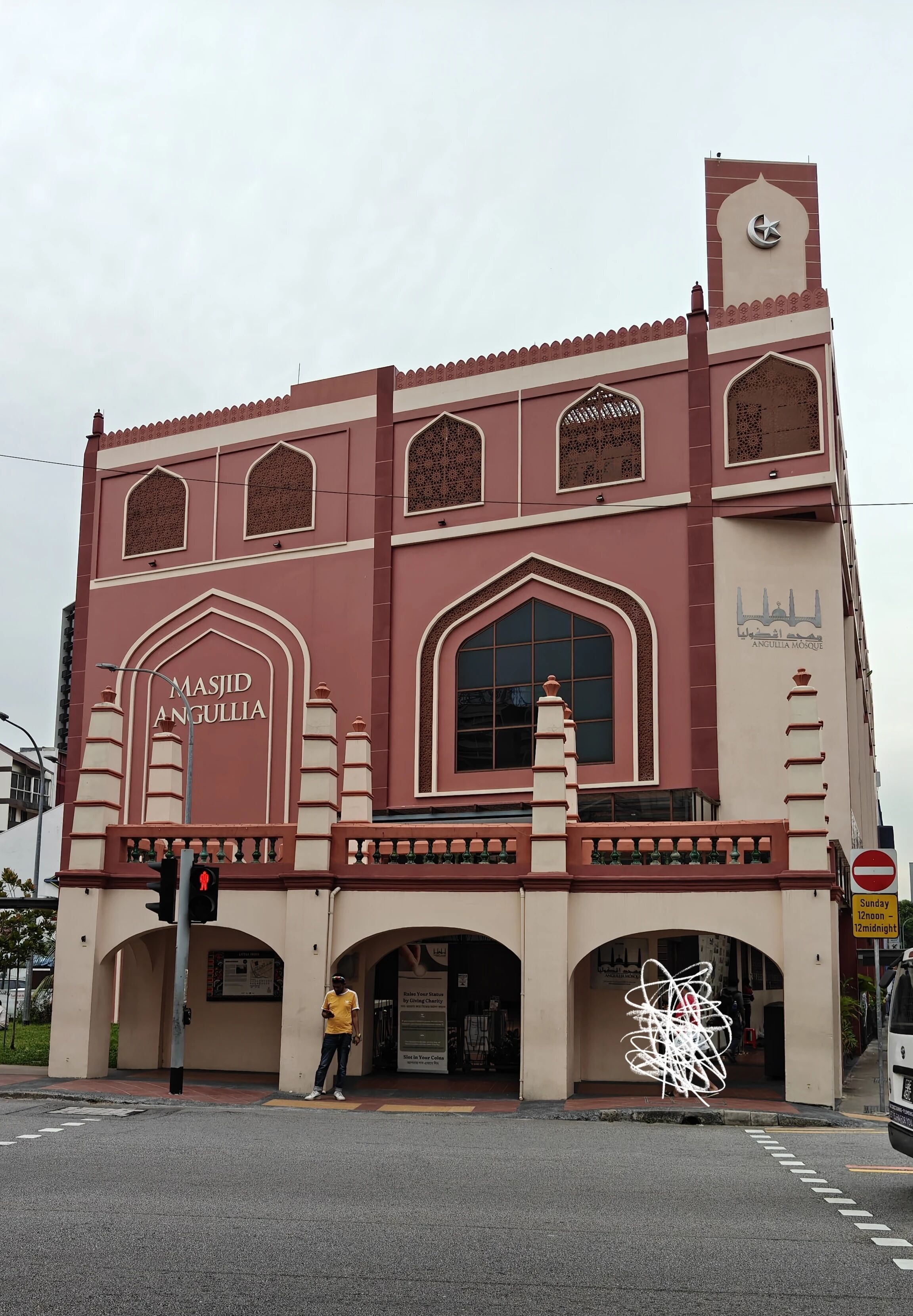
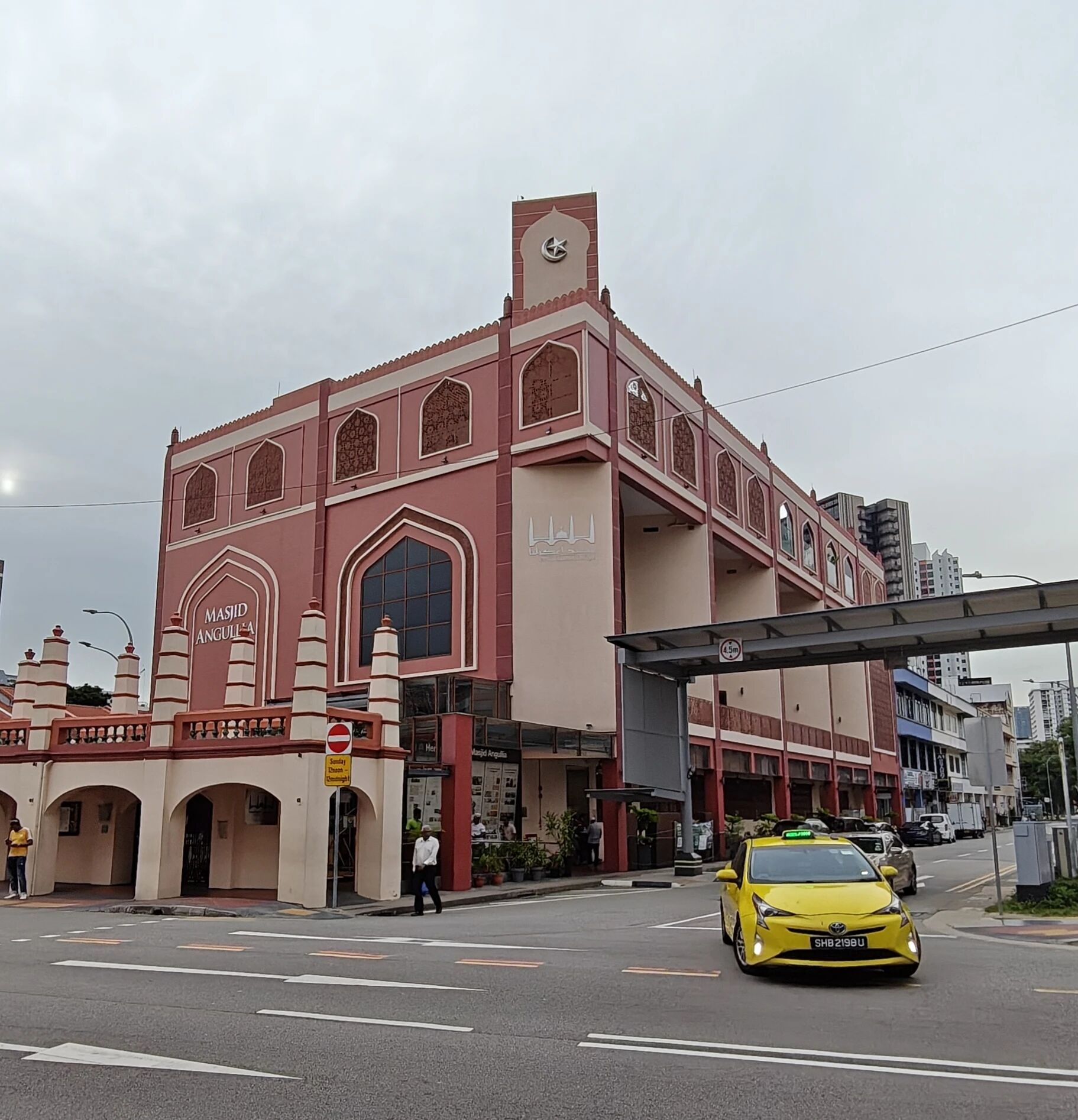
The Angullia Mosque and the Hindu temple shown in the previous post are both in the Little India neighborhood on the same street. Many South Asians walk by, and the shops along the street have a distinct Indian style. The road is full of Diwali decorations, so walking here really feels like being in India.
From the outside, the ochre-red color of the mosque reminds people of iconic Indian buildings like the Red Fort.
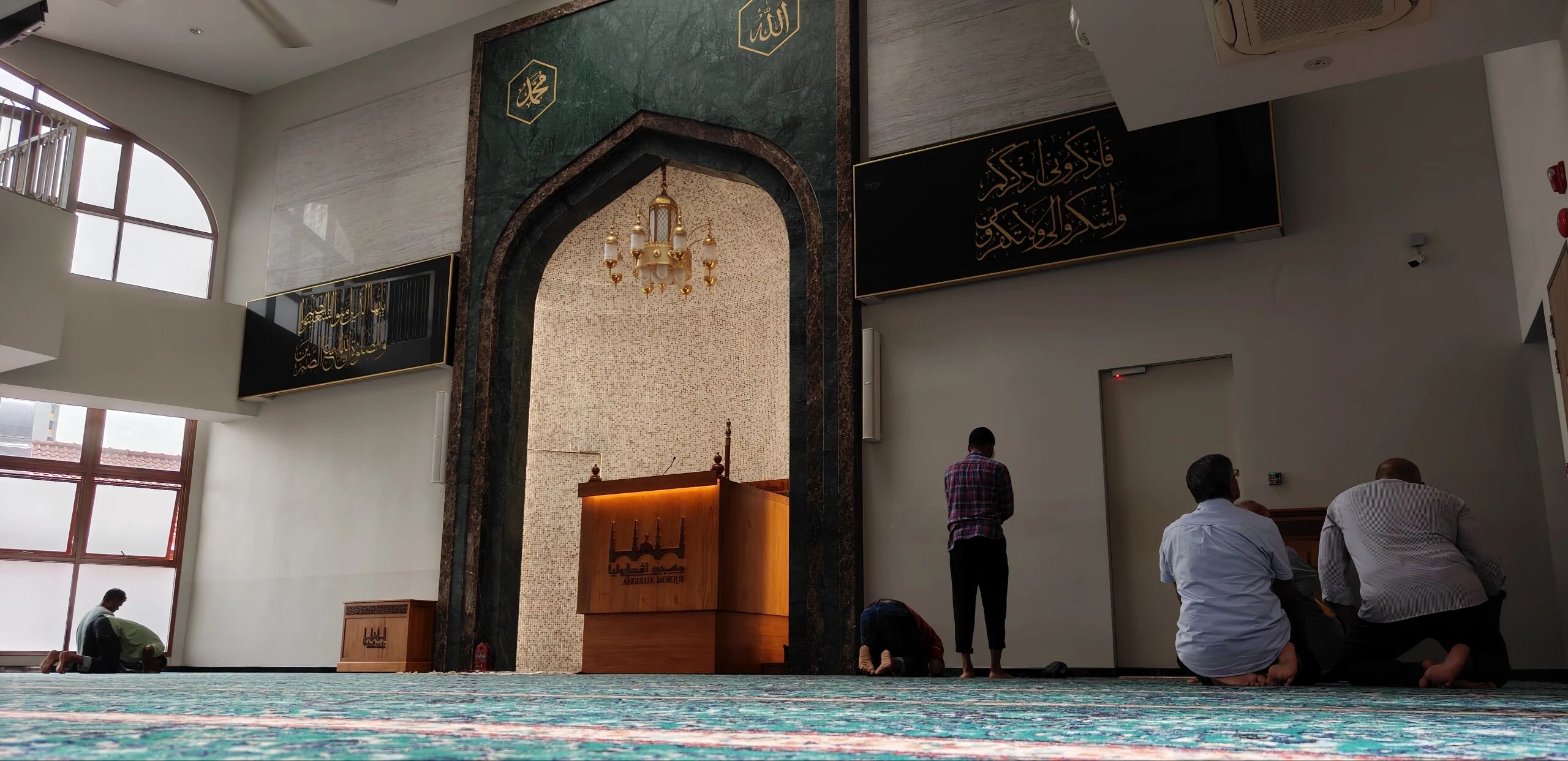
The first floor of the mosque is a parking lot. The prayer hall and the area for wudu (ablution) are on the second floor for men and the third floor for women.
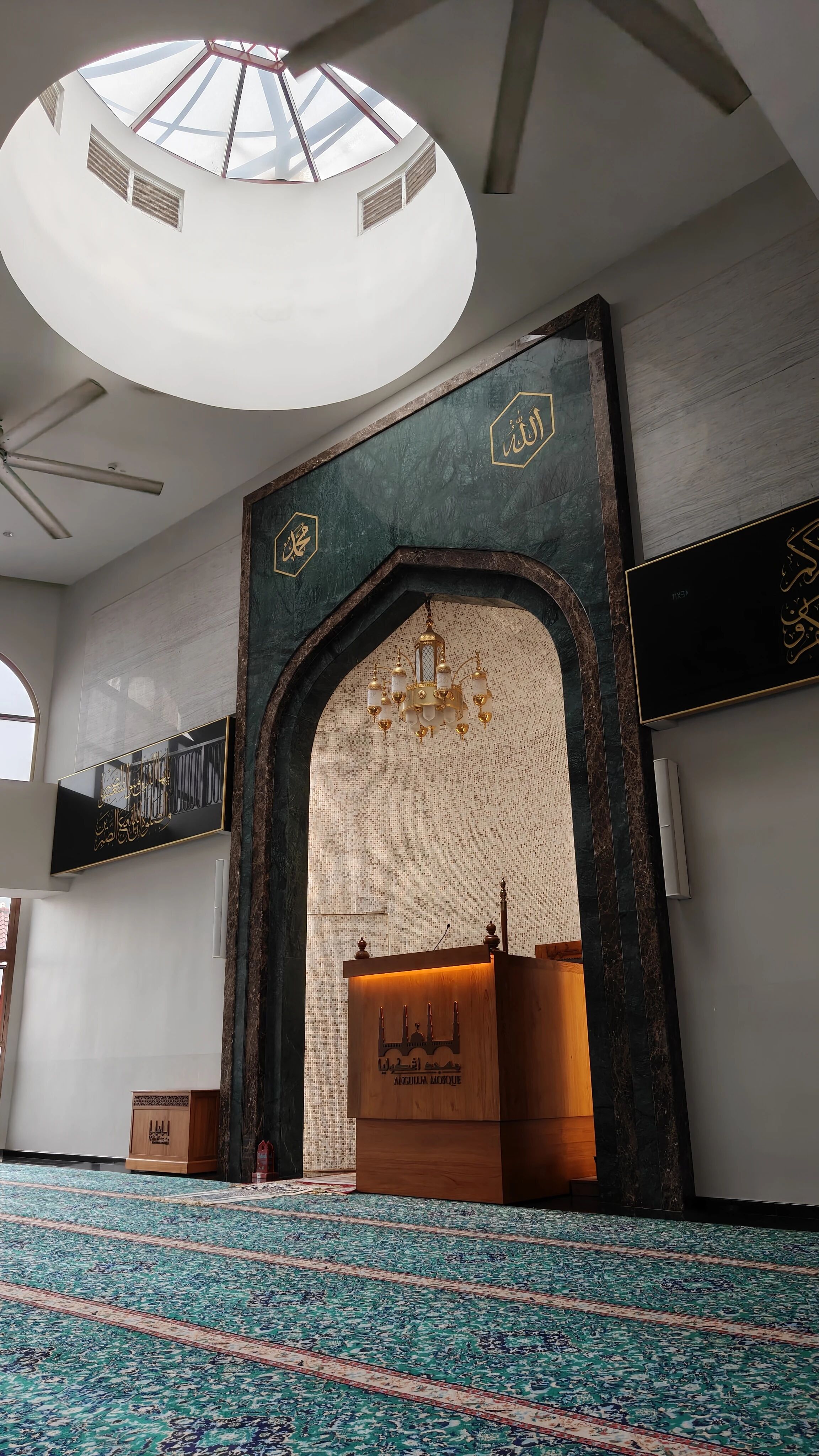
Entering the second floor, the mihrab niche connects the second and third floors vertically. The third-floor floorboards have an opening so that the glass dome on the roof can bring natural light directly down to the second floor. (Photo 3, Photo 4)
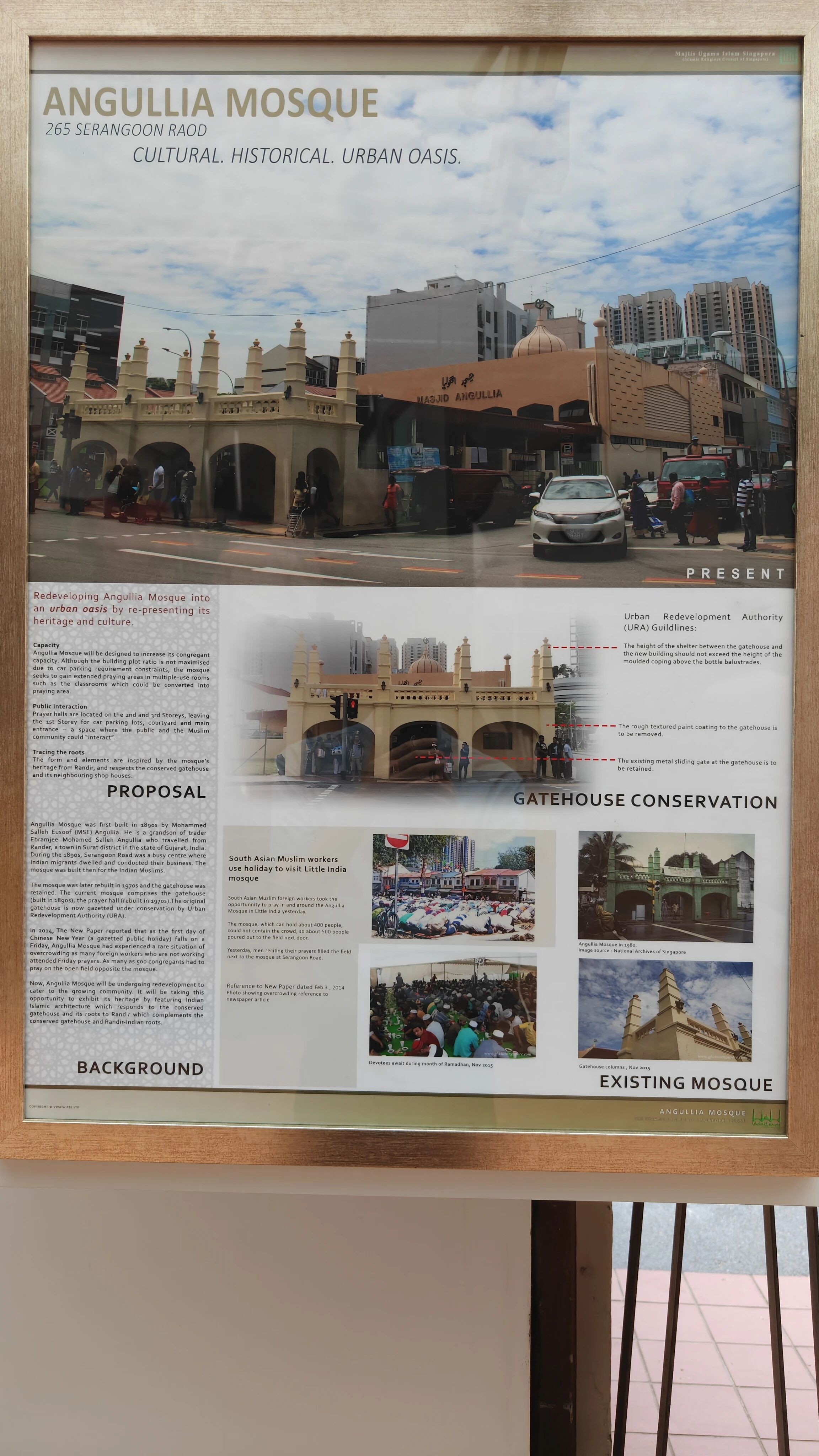
There is an Angullia Mosque logo on the minbar (Photo 5). The silhouette on this logo actually shows what the building looked like originally. In 2014, a large influx of foreign workers exceeded the capacity of the Angullia Mosque.
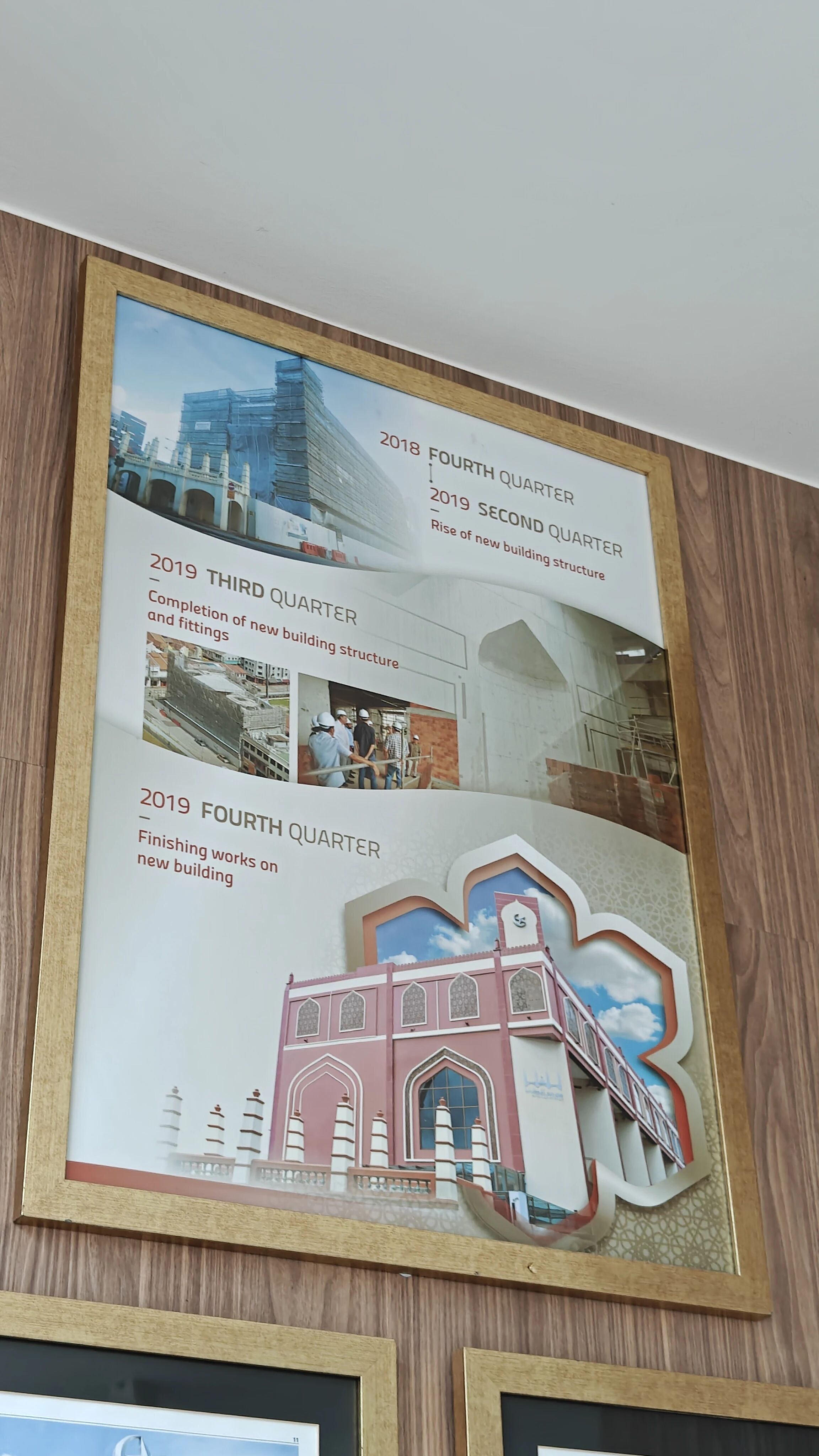
Because of this, demolition and expansion work began here in 2018. However, the iconic entrance hall with its eight pillars was preserved.
There are many copies of the Qur'an behind the prayer hall. I picked one up at random and found it was published in Bangladesh, so it had a lot of Bengali text inside. At first glance, I have to say that this dense Brahmi script really looks like the calligraphy of another world religion. (Photo 7)
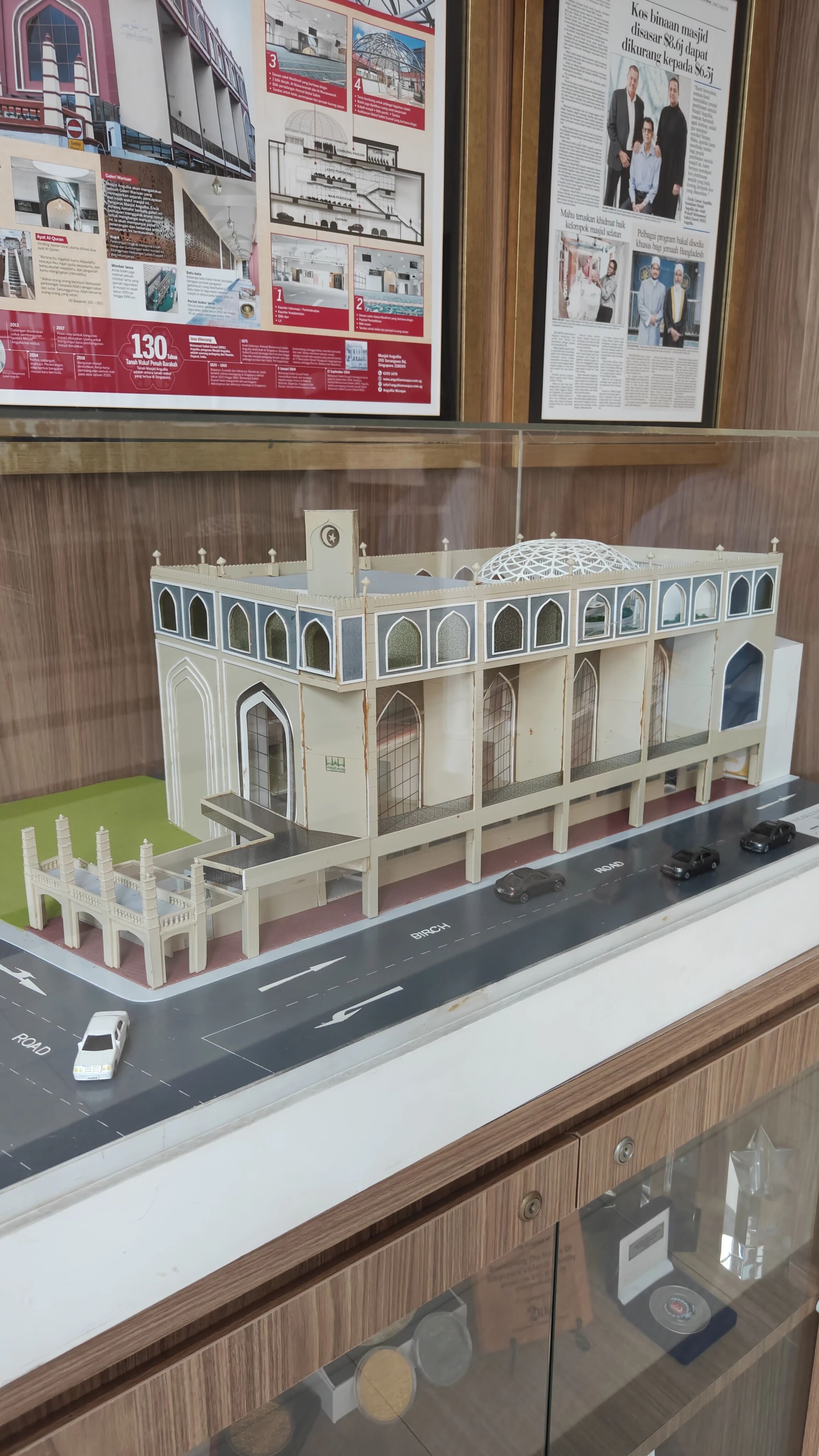
There is a miniature model of the place on the second-floor porch. (Photo 8)
The entrance on the first floor has some old items on display, which serves as a simple exhibition (I think the mosque management committee is very thoughtful). They are:
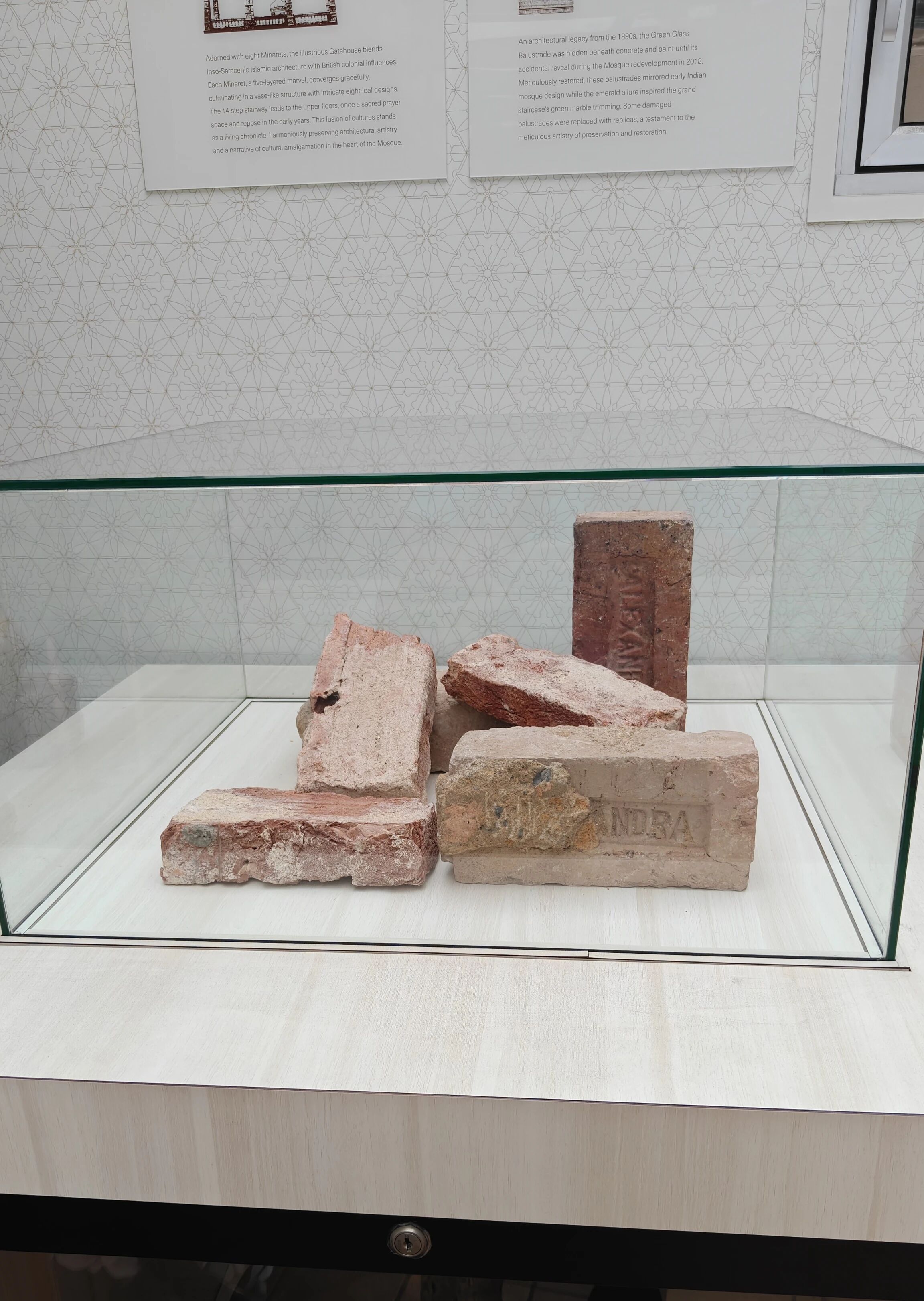
1. Bricks used for building walls in the 1890s, which still have the brick factory's name, Alexandra, printed on them. They were specifically kept during the renovation (Photo 10).
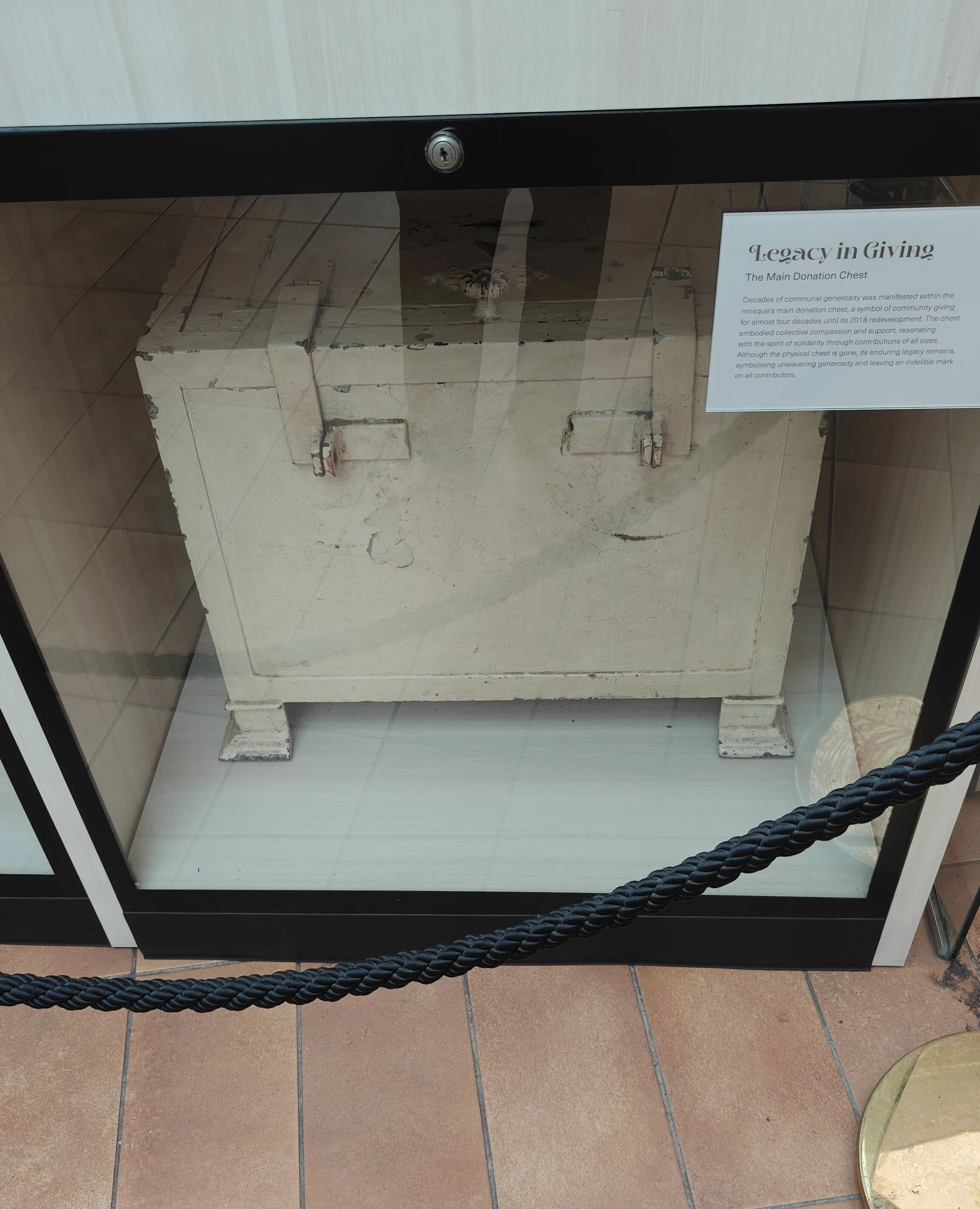
2. A donation box used for over forty years (Photo 11).
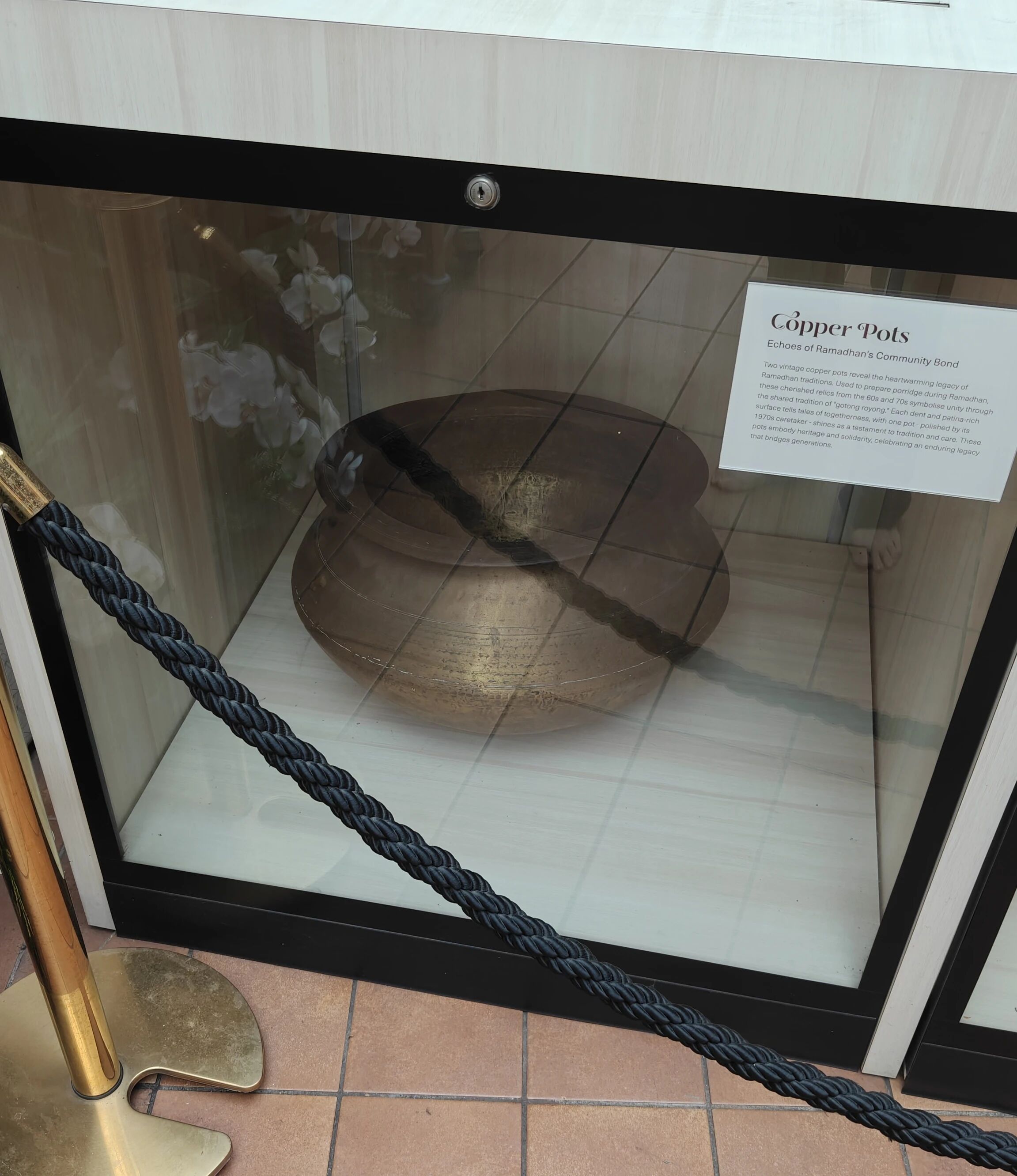
3. A copper pot used for cooking porridge during Ramadan in the past (Photo 12).
Another feature of this mosque is the large number of information boards. You can see what it looked like before the 2018 expansion on the display boards (Photo 13). They even used the outer porch.
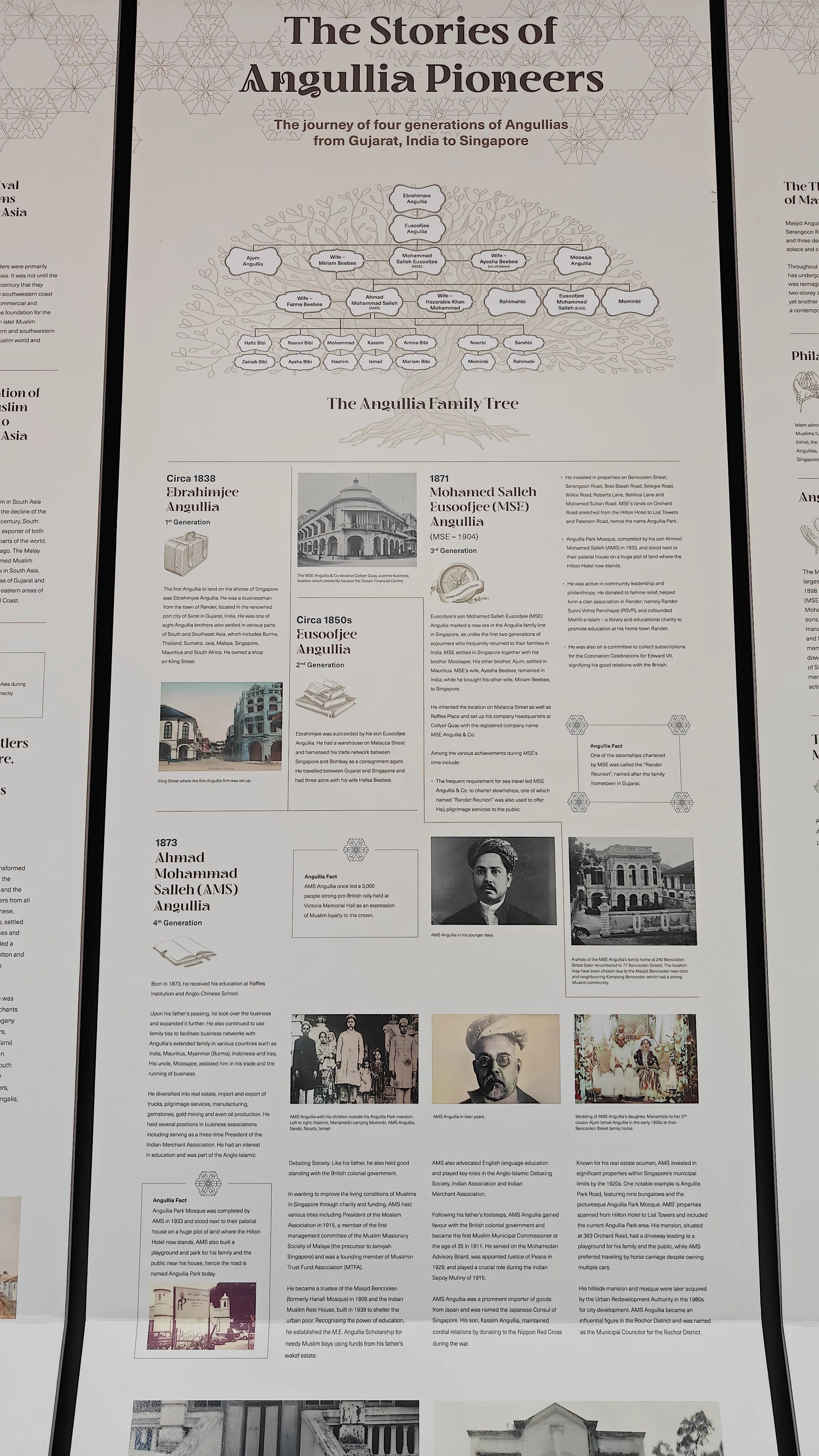
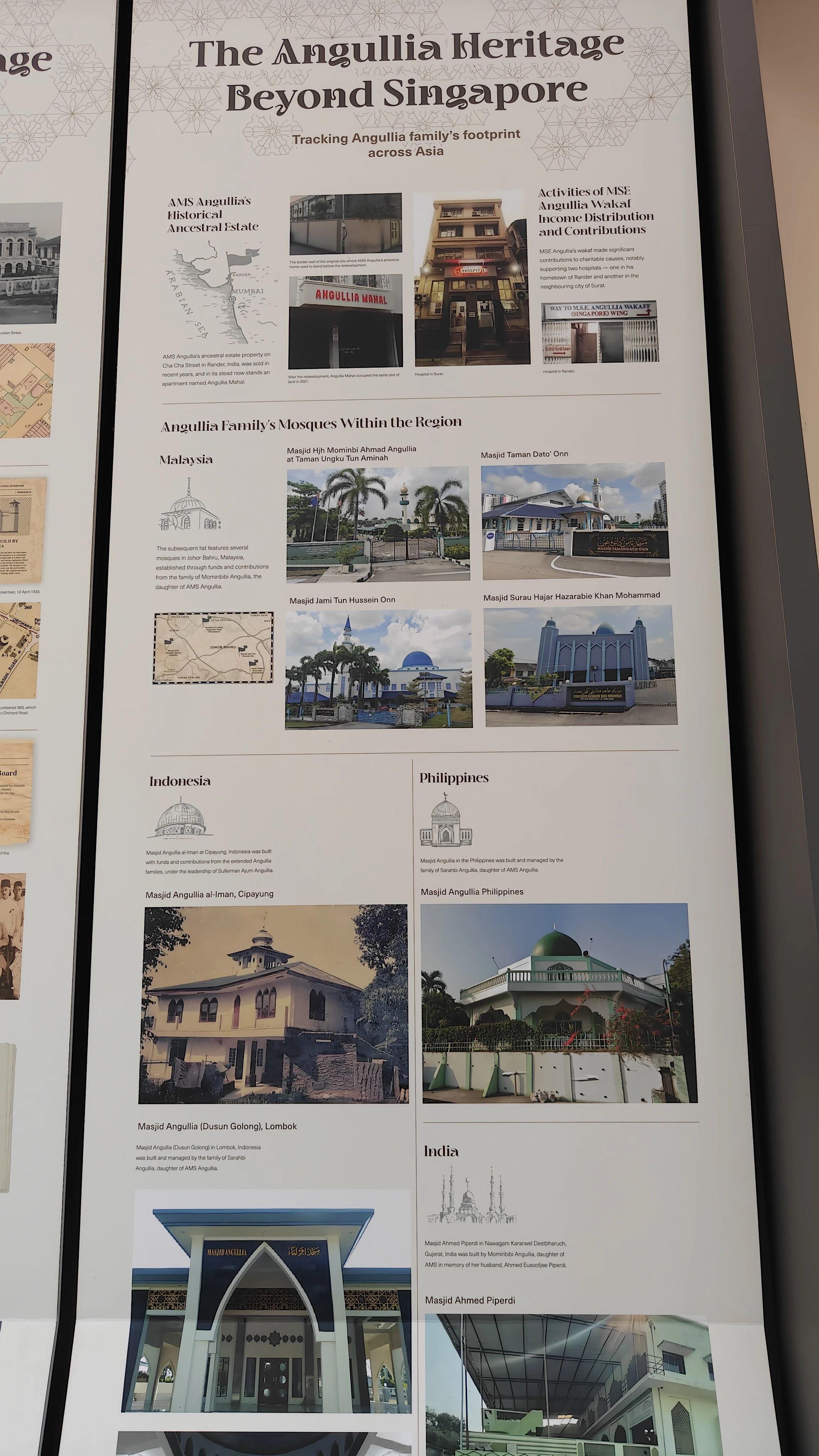
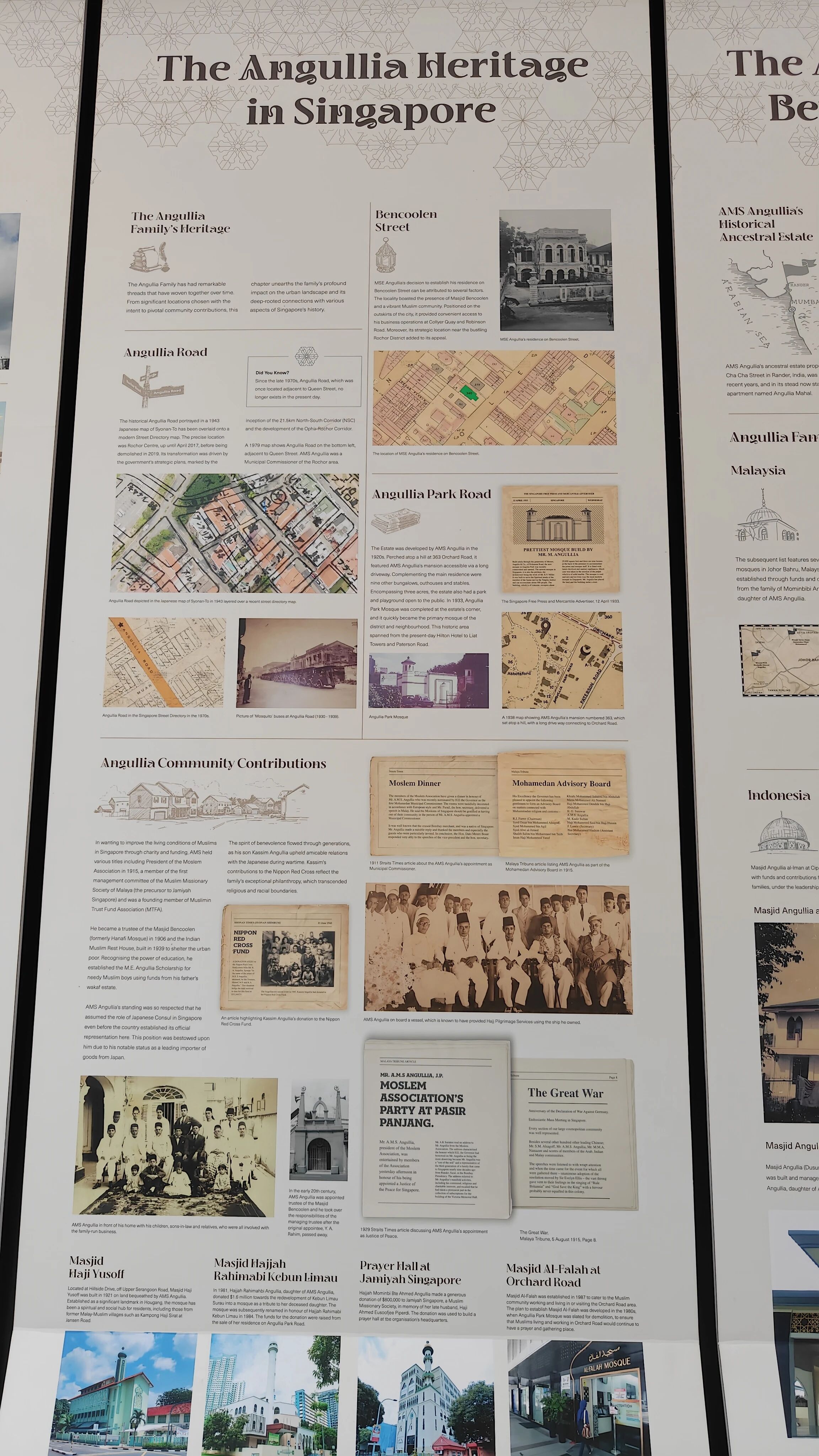
The porch is mainly used to exhibit the family history of the Angullia family (Photo 18), as well as the architectural heritage left by the Angullia family in Singapore and other countries like Malaysia and the Philippines (Photos 19 and 20).
After leaving the mosque, I had dinner and went back to my accommodation to rest. I had previously heard at the Abdul Gafoor Mosque that there is also a Shia mosque in Singapore, which immediately sparked my interest, so I decided to go and see it.
In our next post, we will visit the only Shia mosque in Singapore. view all
Summary: This Singapore Muslim travel guide visits Angullia Mosque in Little India, built by a Gujarati Muslim family in the 1890s, with its red exterior, upper-floor prayer hall, glass dome light, mihrab, minbar, wudu areas, and the South Asian street scene nearby.
The mosque I am introducing today was built in the 1890s by the Angullia family, who came from Gujarat, India. Gujarat is the home state of India's current Prime Minister, Modi.
The Angullia Mosque and the Hindu temple shown in the previous post are both in the Little India neighborhood on the same street. Many South Asians walk by, and the shops along the street have a distinct Indian style. The road is full of Diwali decorations, so walking here really feels like being in India.
From the outside, the ochre-red color of the mosque reminds people of iconic Indian buildings like the Red Fort.
The first floor of the mosque is a parking lot. The prayer hall and the area for wudu (ablution) are on the second floor for men and the third floor for women.
Entering the second floor, the mihrab niche connects the second and third floors vertically. The third-floor floorboards have an opening so that the glass dome on the roof can bring natural light directly down to the second floor. (Photo 3, Photo 4)
There is an Angullia Mosque logo on the minbar (Photo 5). The silhouette on this logo actually shows what the building looked like originally. In 2014, a large influx of foreign workers exceeded the capacity of the Angullia Mosque.
Because of this, demolition and expansion work began here in 2018. However, the iconic entrance hall with its eight pillars was preserved.
There are many copies of the Qur'an behind the prayer hall. I picked one up at random and found it was published in Bangladesh, so it had a lot of Bengali text inside. At first glance, I have to say that this dense Brahmi script really looks like the calligraphy of another world religion. (Photo 7)
There is a miniature model of the place on the second-floor porch. (Photo 8)
The entrance on the first floor has some old items on display, which serves as a simple exhibition (I think the mosque management committee is very thoughtful). They are:
1. Bricks used for building walls in the 1890s, which still have the brick factory's name, Alexandra, printed on them. They were specifically kept during the renovation (Photo 10).
2. A donation box used for over forty years (Photo 11).
3. A copper pot used for cooking porridge during Ramadan in the past (Photo 12).
Another feature of this mosque is the large number of information boards. You can see what it looked like before the 2018 expansion on the display boards (Photo 13). They even used the outer porch.
The porch is mainly used to exhibit the family history of the Angullia family (Photo 18), as well as the architectural heritage left by the Angullia family in Singapore and other countries like Malaysia and the Philippines (Photos 19 and 20).
After leaving the mosque, I had dinner and went back to my accommodation to rest. I had previously heard at the Abdul Gafoor Mosque that there is also a Shia mosque in Singapore, which immediately sparked my interest, so I decided to go and see it.
In our next post, we will visit the only Shia mosque in Singapore. view all
Reposted from the web
Summary: This Singapore Muslim travel guide visits Angullia Mosque in Little India, built by a Gujarati Muslim family in the 1890s, with its red exterior, upper-floor prayer hall, glass dome light, mihrab, minbar, wudu areas, and the South Asian street scene nearby.
The mosque I am introducing today was built in the 1890s by the Angullia family, who came from Gujarat, India. Gujarat is the home state of India's current Prime Minister, Modi.
The Angullia Mosque and the Hindu temple shown in the previous post are both in the Little India neighborhood on the same street. Many South Asians walk by, and the shops along the street have a distinct Indian style. The road is full of Diwali decorations, so walking here really feels like being in India.
From the outside, the ochre-red color of the mosque reminds people of iconic Indian buildings like the Red Fort.
The first floor of the mosque is a parking lot. The prayer hall and the area for wudu (ablution) are on the second floor for men and the third floor for women.
Entering the second floor, the mihrab niche connects the second and third floors vertically. The third-floor floorboards have an opening so that the glass dome on the roof can bring natural light directly down to the second floor. (Photo 3, Photo 4)
There is an Angullia Mosque logo on the minbar (Photo 5). The silhouette on this logo actually shows what the building looked like originally. In 2014, a large influx of foreign workers exceeded the capacity of the Angullia Mosque.
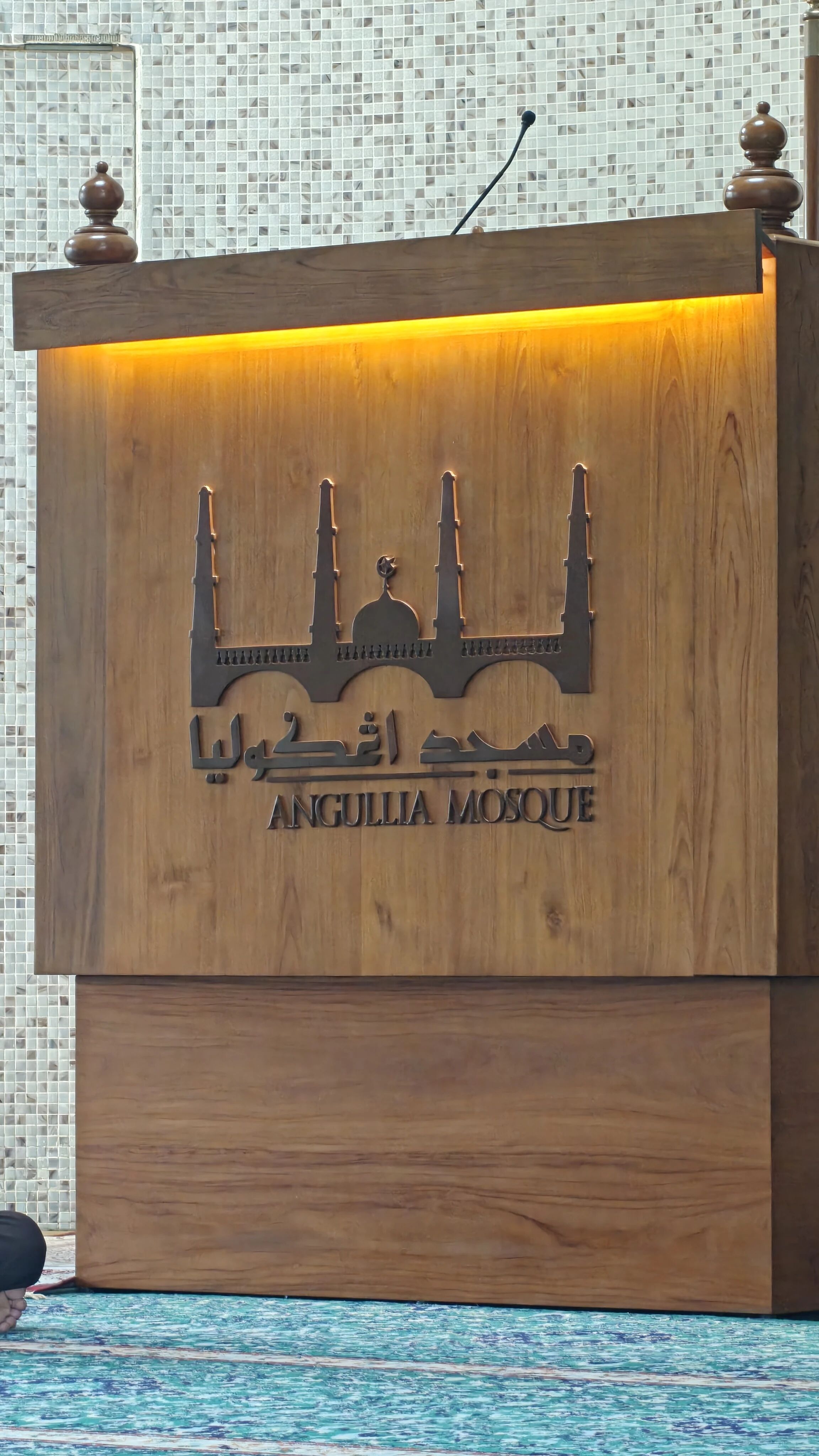
Because of this, demolition and expansion work began here in 2018. However, the iconic entrance hall with its eight pillars was preserved.
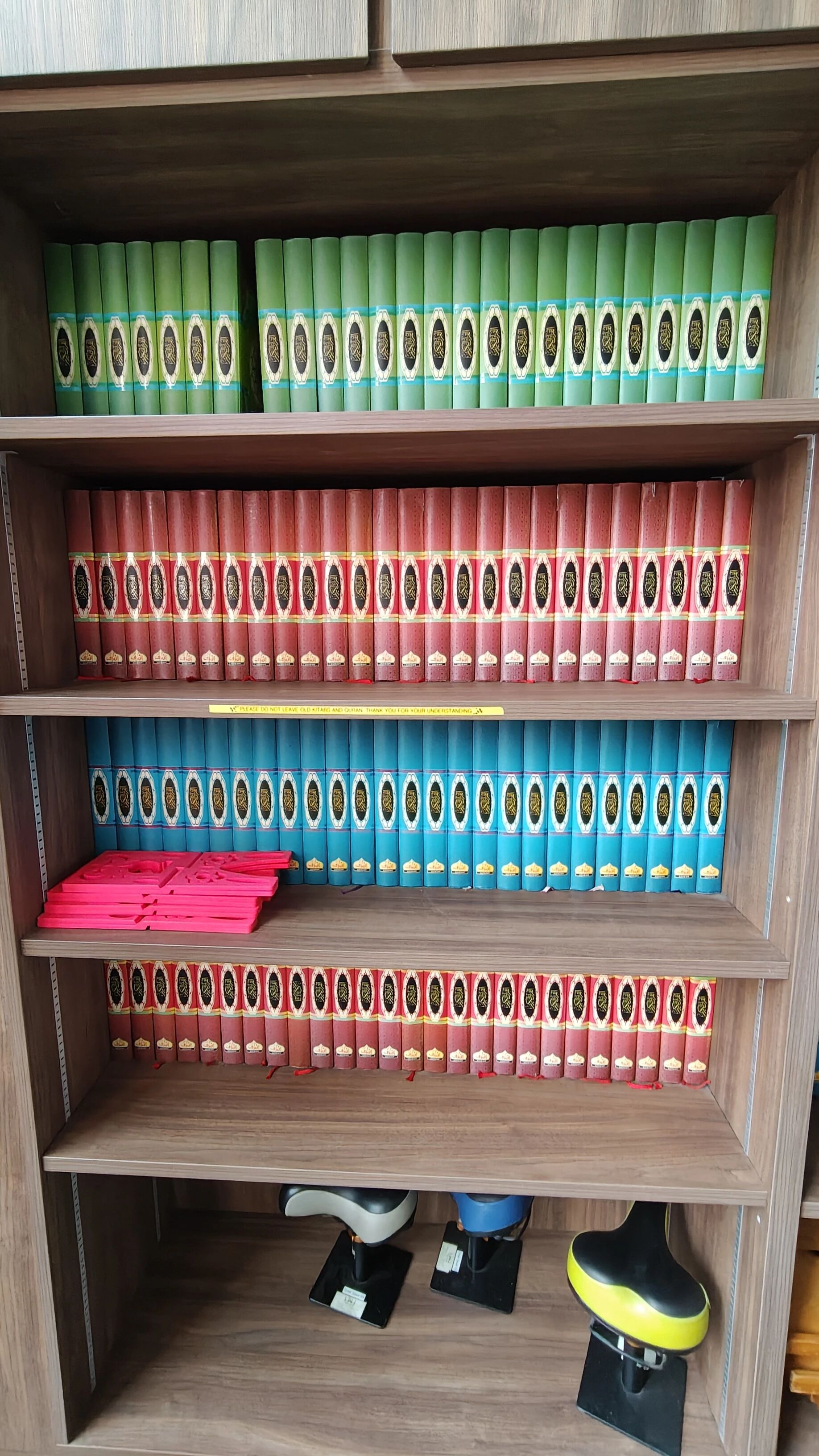
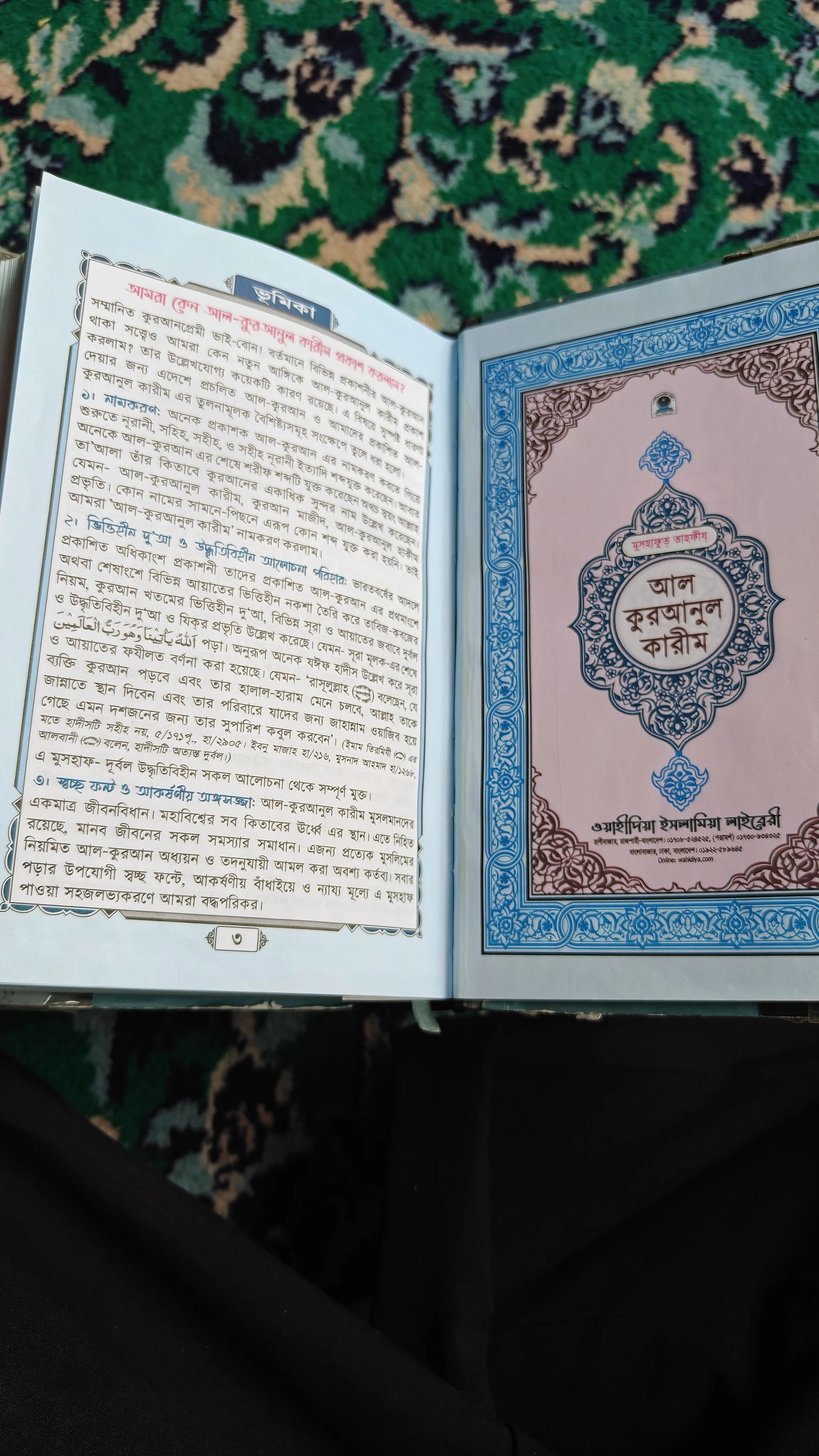
There are many copies of the Qur'an behind the prayer hall. I picked one up at random and found it was published in Bangladesh, so it had a lot of Bengali text inside. At first glance, I have to say that this dense Brahmi script really looks like the calligraphy of another world religion. (Photo 7)
There is a miniature model of the place on the second-floor porch. (Photo 8)
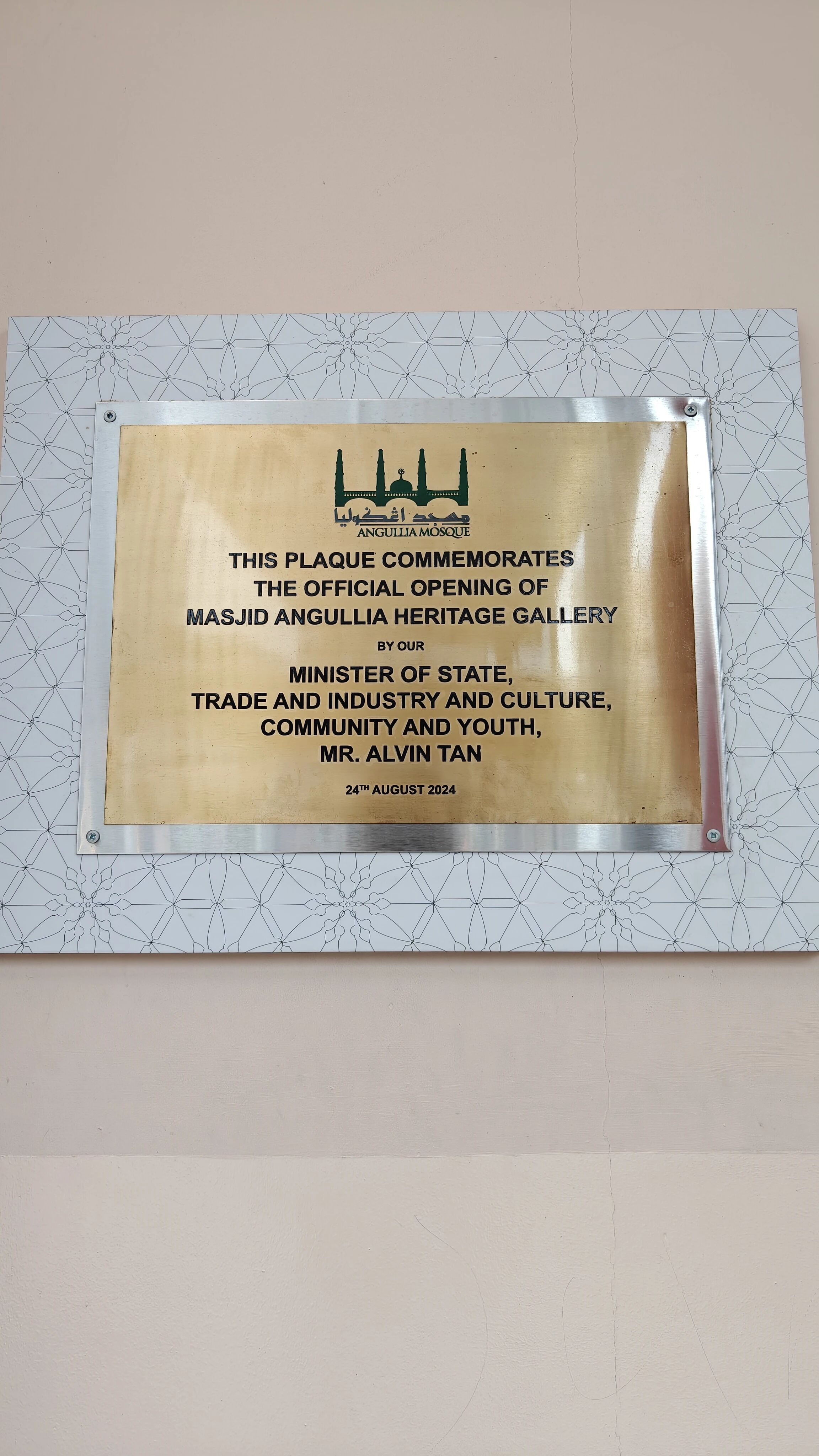
The entrance on the first floor has some old items on display, which serves as a simple exhibition (I think the mosque management committee is very thoughtful). They are:
1. Bricks used for building walls in the 1890s, which still have the brick factory's name, Alexandra, printed on them. They were specifically kept during the renovation (Photo 10).
2. A donation box used for over forty years (Photo 11).
3. A copper pot used for cooking porridge during Ramadan in the past (Photo 12).
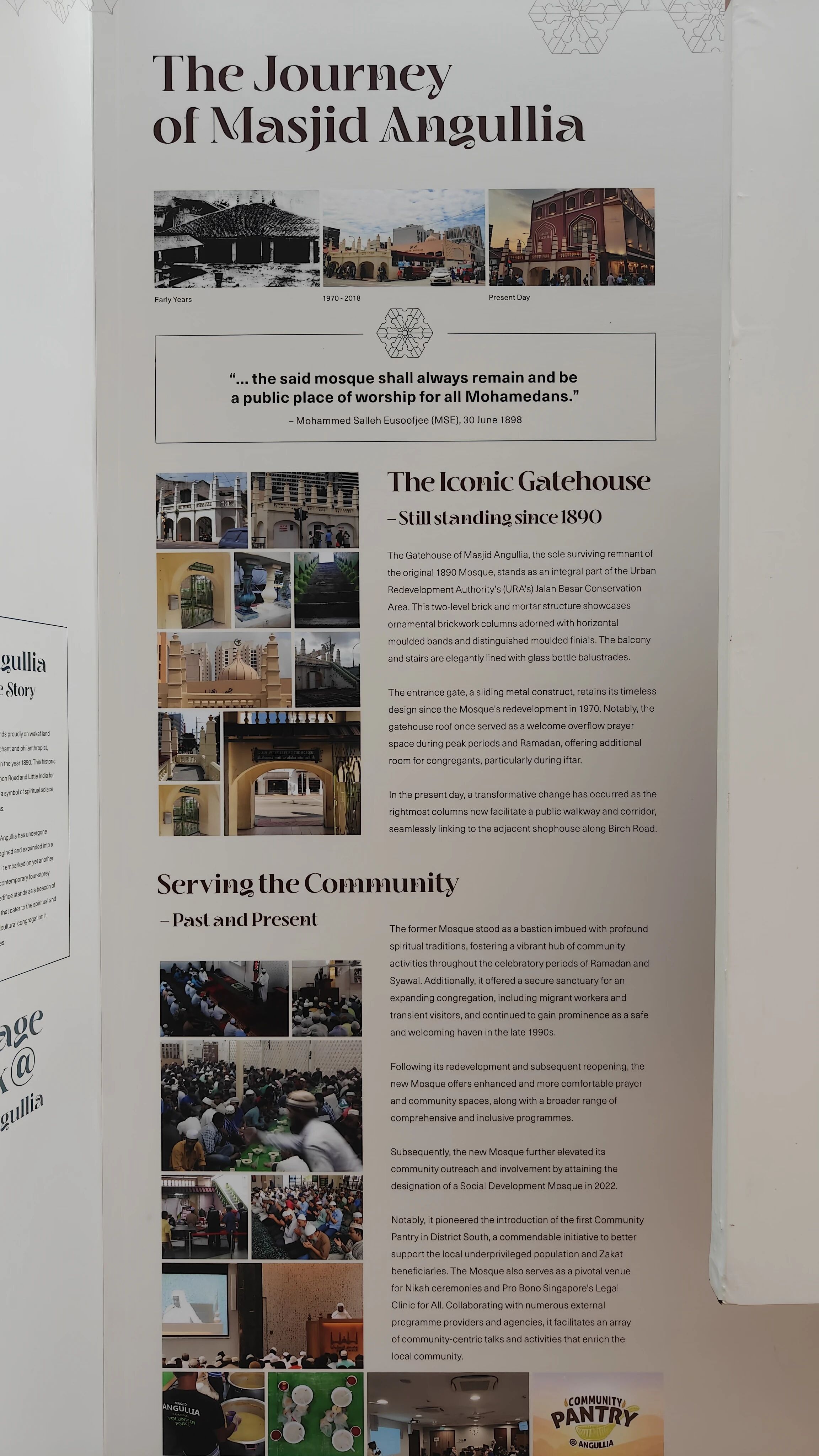
Another feature of this mosque is the large number of information boards. You can see what it looked like before the 2018 expansion on the display boards (Photo 13). They even used the outer porch.
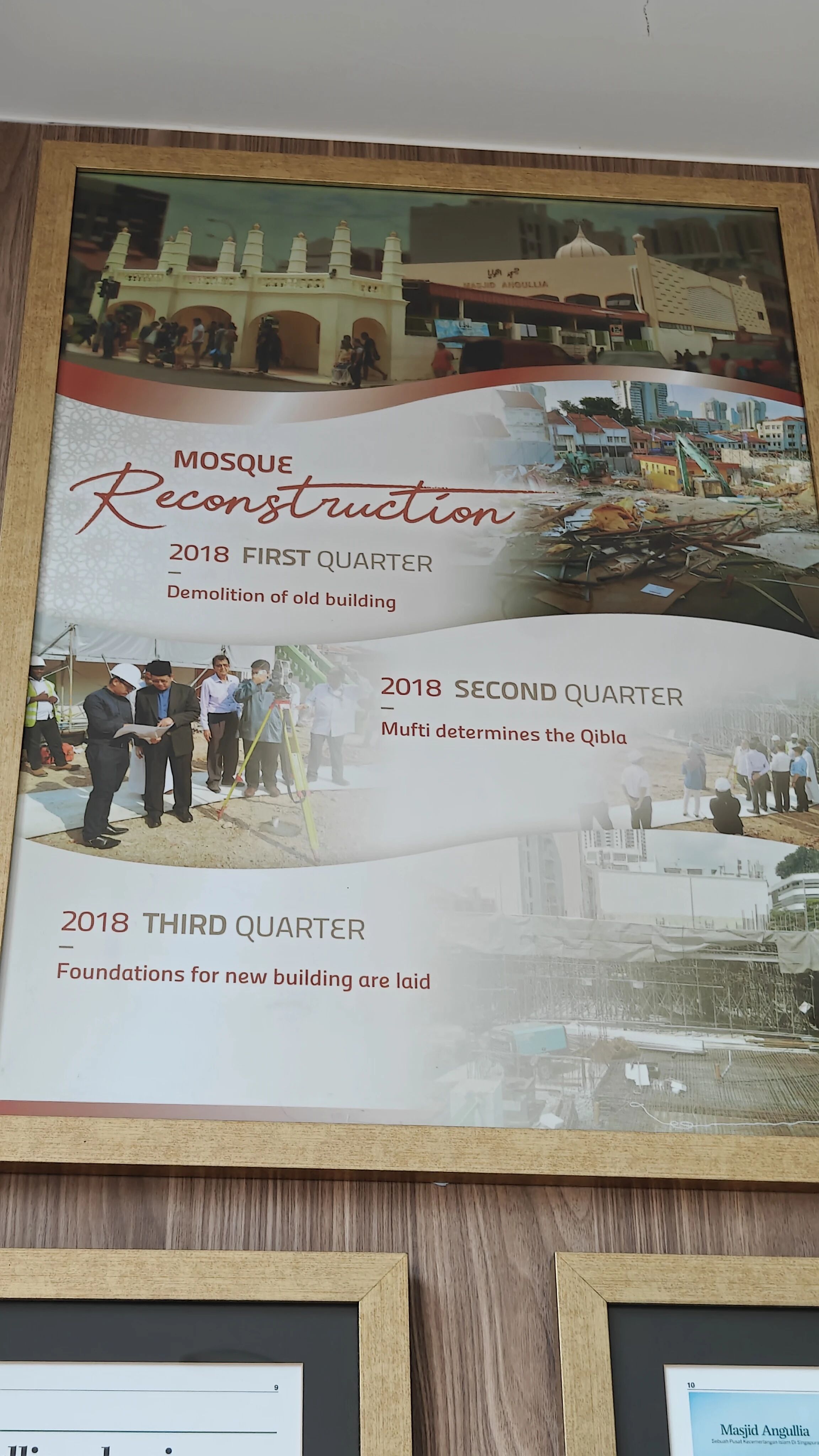
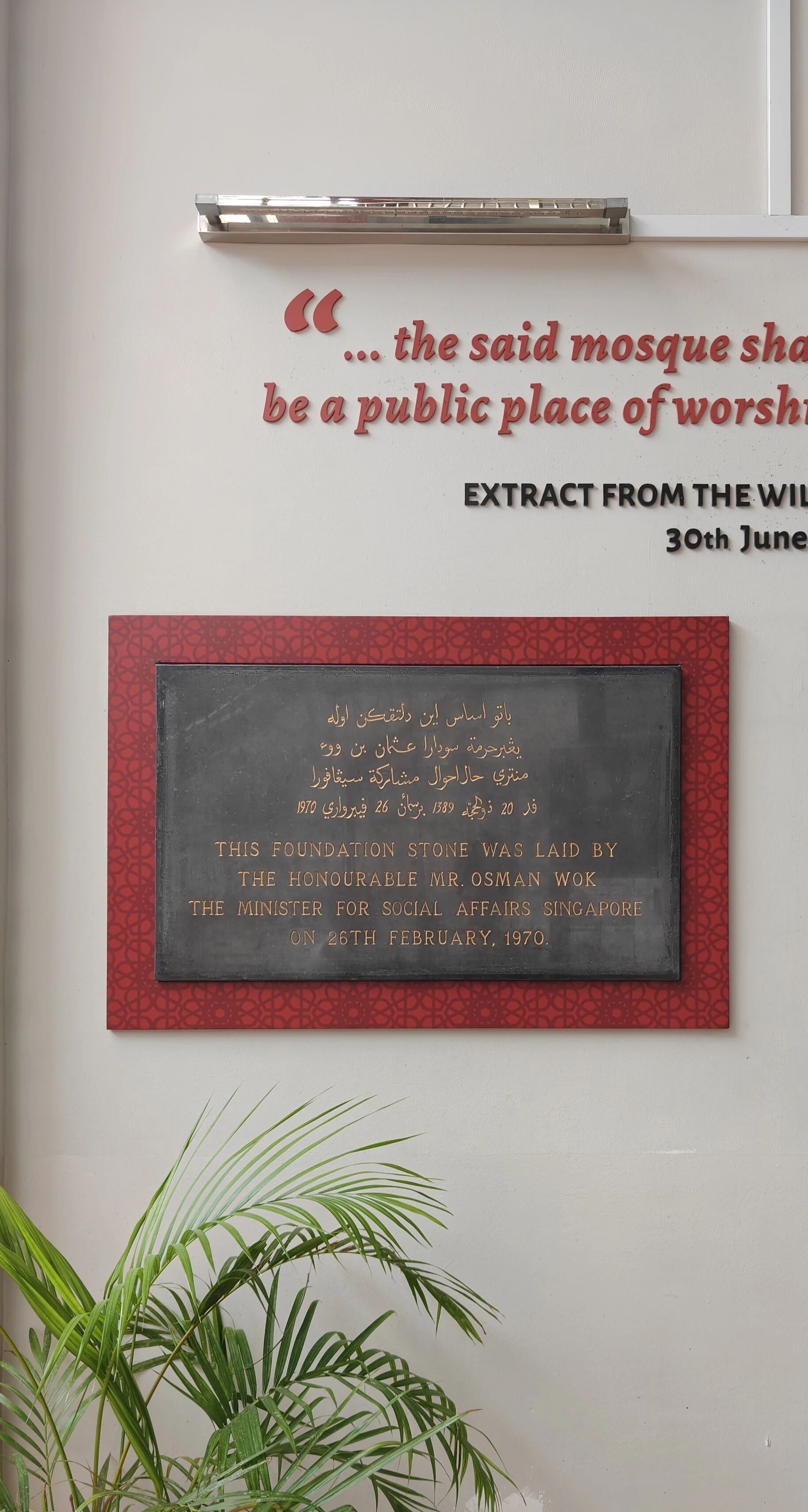
The porch is mainly used to exhibit the family history of the Angullia family (Photo 18), as well as the architectural heritage left by the Angullia family in Singapore and other countries like Malaysia and the Philippines (Photos 19 and 20).
After leaving the mosque, I had dinner and went back to my accommodation to rest. I had previously heard at the Abdul Gafoor Mosque that there is also a Shia mosque in Singapore, which immediately sparked my interest, so I decided to go and see it.
In our next post, we will visit the only Shia mosque in Singapore.
Summary: This Singapore Muslim travel guide visits Angullia Mosque in Little India, built by a Gujarati Muslim family in the 1890s, with its red exterior, upper-floor prayer hall, glass dome light, mihrab, minbar, wudu areas, and the South Asian street scene nearby.
The mosque I am introducing today was built in the 1890s by the Angullia family, who came from Gujarat, India. Gujarat is the home state of India's current Prime Minister, Modi.
The Angullia Mosque and the Hindu temple shown in the previous post are both in the Little India neighborhood on the same street. Many South Asians walk by, and the shops along the street have a distinct Indian style. The road is full of Diwali decorations, so walking here really feels like being in India.
From the outside, the ochre-red color of the mosque reminds people of iconic Indian buildings like the Red Fort.
The first floor of the mosque is a parking lot. The prayer hall and the area for wudu (ablution) are on the second floor for men and the third floor for women.
Entering the second floor, the mihrab niche connects the second and third floors vertically. The third-floor floorboards have an opening so that the glass dome on the roof can bring natural light directly down to the second floor. (Photo 3, Photo 4)
There is an Angullia Mosque logo on the minbar (Photo 5). The silhouette on this logo actually shows what the building looked like originally. In 2014, a large influx of foreign workers exceeded the capacity of the Angullia Mosque.
Because of this, demolition and expansion work began here in 2018. However, the iconic entrance hall with its eight pillars was preserved.
There are many copies of the Qur'an behind the prayer hall. I picked one up at random and found it was published in Bangladesh, so it had a lot of Bengali text inside. At first glance, I have to say that this dense Brahmi script really looks like the calligraphy of another world religion. (Photo 7)
There is a miniature model of the place on the second-floor porch. (Photo 8)
The entrance on the first floor has some old items on display, which serves as a simple exhibition (I think the mosque management committee is very thoughtful). They are:
1. Bricks used for building walls in the 1890s, which still have the brick factory's name, Alexandra, printed on them. They were specifically kept during the renovation (Photo 10).
2. A donation box used for over forty years (Photo 11).
3. A copper pot used for cooking porridge during Ramadan in the past (Photo 12).
Another feature of this mosque is the large number of information boards. You can see what it looked like before the 2018 expansion on the display boards (Photo 13). They even used the outer porch.
The porch is mainly used to exhibit the family history of the Angullia family (Photo 18), as well as the architectural heritage left by the Angullia family in Singapore and other countries like Malaysia and the Philippines (Photos 19 and 20).
After leaving the mosque, I had dinner and went back to my accommodation to rest. I had previously heard at the Abdul Gafoor Mosque that there is also a Shia mosque in Singapore, which immediately sparked my interest, so I decided to go and see it.
In our next post, we will visit the only Shia mosque in Singapore.
Muslim Travel Guide Singapore Little India: Angullia Mosque, Gujarati Muslim Heritage and Prayer Hall
Articles • yusuf908 posted the article • 0 comments • 169 views • 2026-05-23 22:47
Reposted from the web
Summary: This Singapore Muslim travel guide visits Angullia Mosque in Little India, built by a Gujarati Muslim family in the 1890s, with its red exterior, upper-floor prayer hall, glass dome light, mihrab, minbar, wudu areas, and the South Asian street scene nearby.
The mosque I am introducing today was built in the 1890s by the Angullia family, who came from Gujarat, India. Gujarat is the home state of India's current Prime Minister, Modi.
The Angullia Mosque and the Hindu temple shown in the previous post are both in the Little India neighborhood on the same street. Many South Asians walk by, and the shops along the street have a distinct Indian style. The road is full of Diwali decorations, so walking here really feels like being in India.
From the outside, the ochre-red color of the mosque reminds people of iconic Indian buildings like the Red Fort.
The first floor of the mosque is a parking lot. The prayer hall and the area for wudu (ablution) are on the second floor for men and the third floor for women.
Entering the second floor, the mihrab niche connects the second and third floors vertically. The third-floor floorboards have an opening so that the glass dome on the roof can bring natural light directly down to the second floor. (Photo 3, Photo 4)
There is an Angullia Mosque logo on the minbar (Photo 5). The silhouette on this logo actually shows what the building looked like originally. In 2014, a large influx of foreign workers exceeded the capacity of the Angullia Mosque.
Because of this, demolition and expansion work began here in 2018. However, the iconic entrance hall with its eight pillars was preserved.
There are many copies of the Qur'an behind the prayer hall. I picked one up at random and found it was published in Bangladesh, so it had a lot of Bengali text inside. At first glance, I have to say that this dense Brahmi script really looks like the calligraphy of another world religion. (Photo 7)
There is a miniature model of the place on the second-floor porch. (Photo 8)
The entrance on the first floor has some old items on display, which serves as a simple exhibition (I think the mosque management committee is very thoughtful). They are:
1. Bricks used for building walls in the 1890s, which still have the brick factory's name, Alexandra, printed on them. They were specifically kept during the renovation (Photo 10).
2. A donation box used for over forty years (Photo 11).
3. A copper pot used for cooking porridge during Ramadan in the past (Photo 12).
Another feature of this mosque is the large number of information boards. You can see what it looked like before the 2018 expansion on the display boards (Photo 13). They even used the outer porch.
The porch is mainly used to exhibit the family history of the Angullia family (Photo 18), as well as the architectural heritage left by the Angullia family in Singapore and other countries like Malaysia and the Philippines (Photos 19 and 20).
After leaving the mosque, I had dinner and went back to my accommodation to rest. I had previously heard at the Abdul Gafoor Mosque that there is also a Shia mosque in Singapore, which immediately sparked my interest, so I decided to go and see it.
In our next post, we will visit the only Shia mosque in Singapore. view all
Summary: This Singapore Muslim travel guide visits Angullia Mosque in Little India, built by a Gujarati Muslim family in the 1890s, with its red exterior, upper-floor prayer hall, glass dome light, mihrab, minbar, wudu areas, and the South Asian street scene nearby.
The mosque I am introducing today was built in the 1890s by the Angullia family, who came from Gujarat, India. Gujarat is the home state of India's current Prime Minister, Modi.
The Angullia Mosque and the Hindu temple shown in the previous post are both in the Little India neighborhood on the same street. Many South Asians walk by, and the shops along the street have a distinct Indian style. The road is full of Diwali decorations, so walking here really feels like being in India.
From the outside, the ochre-red color of the mosque reminds people of iconic Indian buildings like the Red Fort.
The first floor of the mosque is a parking lot. The prayer hall and the area for wudu (ablution) are on the second floor for men and the third floor for women.
Entering the second floor, the mihrab niche connects the second and third floors vertically. The third-floor floorboards have an opening so that the glass dome on the roof can bring natural light directly down to the second floor. (Photo 3, Photo 4)
There is an Angullia Mosque logo on the minbar (Photo 5). The silhouette on this logo actually shows what the building looked like originally. In 2014, a large influx of foreign workers exceeded the capacity of the Angullia Mosque.
Because of this, demolition and expansion work began here in 2018. However, the iconic entrance hall with its eight pillars was preserved.
There are many copies of the Qur'an behind the prayer hall. I picked one up at random and found it was published in Bangladesh, so it had a lot of Bengali text inside. At first glance, I have to say that this dense Brahmi script really looks like the calligraphy of another world religion. (Photo 7)
There is a miniature model of the place on the second-floor porch. (Photo 8)
The entrance on the first floor has some old items on display, which serves as a simple exhibition (I think the mosque management committee is very thoughtful). They are:
1. Bricks used for building walls in the 1890s, which still have the brick factory's name, Alexandra, printed on them. They were specifically kept during the renovation (Photo 10).
2. A donation box used for over forty years (Photo 11).
3. A copper pot used for cooking porridge during Ramadan in the past (Photo 12).
Another feature of this mosque is the large number of information boards. You can see what it looked like before the 2018 expansion on the display boards (Photo 13). They even used the outer porch.
The porch is mainly used to exhibit the family history of the Angullia family (Photo 18), as well as the architectural heritage left by the Angullia family in Singapore and other countries like Malaysia and the Philippines (Photos 19 and 20).
After leaving the mosque, I had dinner and went back to my accommodation to rest. I had previously heard at the Abdul Gafoor Mosque that there is also a Shia mosque in Singapore, which immediately sparked my interest, so I decided to go and see it.
In our next post, we will visit the only Shia mosque in Singapore. view all
Reposted from the web
Summary: This Singapore Muslim travel guide visits Angullia Mosque in Little India, built by a Gujarati Muslim family in the 1890s, with its red exterior, upper-floor prayer hall, glass dome light, mihrab, minbar, wudu areas, and the South Asian street scene nearby.
The mosque I am introducing today was built in the 1890s by the Angullia family, who came from Gujarat, India. Gujarat is the home state of India's current Prime Minister, Modi.
The Angullia Mosque and the Hindu temple shown in the previous post are both in the Little India neighborhood on the same street. Many South Asians walk by, and the shops along the street have a distinct Indian style. The road is full of Diwali decorations, so walking here really feels like being in India.
From the outside, the ochre-red color of the mosque reminds people of iconic Indian buildings like the Red Fort.
The first floor of the mosque is a parking lot. The prayer hall and the area for wudu (ablution) are on the second floor for men and the third floor for women.
Entering the second floor, the mihrab niche connects the second and third floors vertically. The third-floor floorboards have an opening so that the glass dome on the roof can bring natural light directly down to the second floor. (Photo 3, Photo 4)
There is an Angullia Mosque logo on the minbar (Photo 5). The silhouette on this logo actually shows what the building looked like originally. In 2014, a large influx of foreign workers exceeded the capacity of the Angullia Mosque.
Because of this, demolition and expansion work began here in 2018. However, the iconic entrance hall with its eight pillars was preserved.
There are many copies of the Qur'an behind the prayer hall. I picked one up at random and found it was published in Bangladesh, so it had a lot of Bengali text inside. At first glance, I have to say that this dense Brahmi script really looks like the calligraphy of another world religion. (Photo 7)
There is a miniature model of the place on the second-floor porch. (Photo 8)
The entrance on the first floor has some old items on display, which serves as a simple exhibition (I think the mosque management committee is very thoughtful). They are:
1. Bricks used for building walls in the 1890s, which still have the brick factory's name, Alexandra, printed on them. They were specifically kept during the renovation (Photo 10).
2. A donation box used for over forty years (Photo 11).
3. A copper pot used for cooking porridge during Ramadan in the past (Photo 12).
Another feature of this mosque is the large number of information boards. You can see what it looked like before the 2018 expansion on the display boards (Photo 13). They even used the outer porch.
The porch is mainly used to exhibit the family history of the Angullia family (Photo 18), as well as the architectural heritage left by the Angullia family in Singapore and other countries like Malaysia and the Philippines (Photos 19 and 20).
After leaving the mosque, I had dinner and went back to my accommodation to rest. I had previously heard at the Abdul Gafoor Mosque that there is also a Shia mosque in Singapore, which immediately sparked my interest, so I decided to go and see it.
In our next post, we will visit the only Shia mosque in Singapore.
Summary: This Singapore Muslim travel guide visits Angullia Mosque in Little India, built by a Gujarati Muslim family in the 1890s, with its red exterior, upper-floor prayer hall, glass dome light, mihrab, minbar, wudu areas, and the South Asian street scene nearby.
The mosque I am introducing today was built in the 1890s by the Angullia family, who came from Gujarat, India. Gujarat is the home state of India's current Prime Minister, Modi.
The Angullia Mosque and the Hindu temple shown in the previous post are both in the Little India neighborhood on the same street. Many South Asians walk by, and the shops along the street have a distinct Indian style. The road is full of Diwali decorations, so walking here really feels like being in India.
From the outside, the ochre-red color of the mosque reminds people of iconic Indian buildings like the Red Fort.
The first floor of the mosque is a parking lot. The prayer hall and the area for wudu (ablution) are on the second floor for men and the third floor for women.
Entering the second floor, the mihrab niche connects the second and third floors vertically. The third-floor floorboards have an opening so that the glass dome on the roof can bring natural light directly down to the second floor. (Photo 3, Photo 4)
There is an Angullia Mosque logo on the minbar (Photo 5). The silhouette on this logo actually shows what the building looked like originally. In 2014, a large influx of foreign workers exceeded the capacity of the Angullia Mosque.
Because of this, demolition and expansion work began here in 2018. However, the iconic entrance hall with its eight pillars was preserved.
There are many copies of the Qur'an behind the prayer hall. I picked one up at random and found it was published in Bangladesh, so it had a lot of Bengali text inside. At first glance, I have to say that this dense Brahmi script really looks like the calligraphy of another world religion. (Photo 7)
There is a miniature model of the place on the second-floor porch. (Photo 8)
The entrance on the first floor has some old items on display, which serves as a simple exhibition (I think the mosque management committee is very thoughtful). They are:
1. Bricks used for building walls in the 1890s, which still have the brick factory's name, Alexandra, printed on them. They were specifically kept during the renovation (Photo 10).
2. A donation box used for over forty years (Photo 11).
3. A copper pot used for cooking porridge during Ramadan in the past (Photo 12).
Another feature of this mosque is the large number of information boards. You can see what it looked like before the 2018 expansion on the display boards (Photo 13). They even used the outer porch.
The porch is mainly used to exhibit the family history of the Angullia family (Photo 18), as well as the architectural heritage left by the Angullia family in Singapore and other countries like Malaysia and the Philippines (Photos 19 and 20).
After leaving the mosque, I had dinner and went back to my accommodation to rest. I had previously heard at the Abdul Gafoor Mosque that there is also a Shia mosque in Singapore, which immediately sparked my interest, so I decided to go and see it.
In our next post, we will visit the only Shia mosque in Singapore.