

Hadith Canonization
Sahih al-Bukhari and Sahih Muslim Canonization History: 10th to 11th Century Islamic Scholarship and Sunni Consensus
Articles • Hasan09 posted the article • 0 comments • 3 views • 15 hours ago
[Internet Repost]
Let's dive into the fascinating history of how the two major Sahih hadith collections achieved their ultimate canonical status in Islamic academic history. We'll break down how Bukhari and Muslim's famous books went through centuries of cross-school testing and mutual respect after publication, eventually becoming universally recognized authorities.
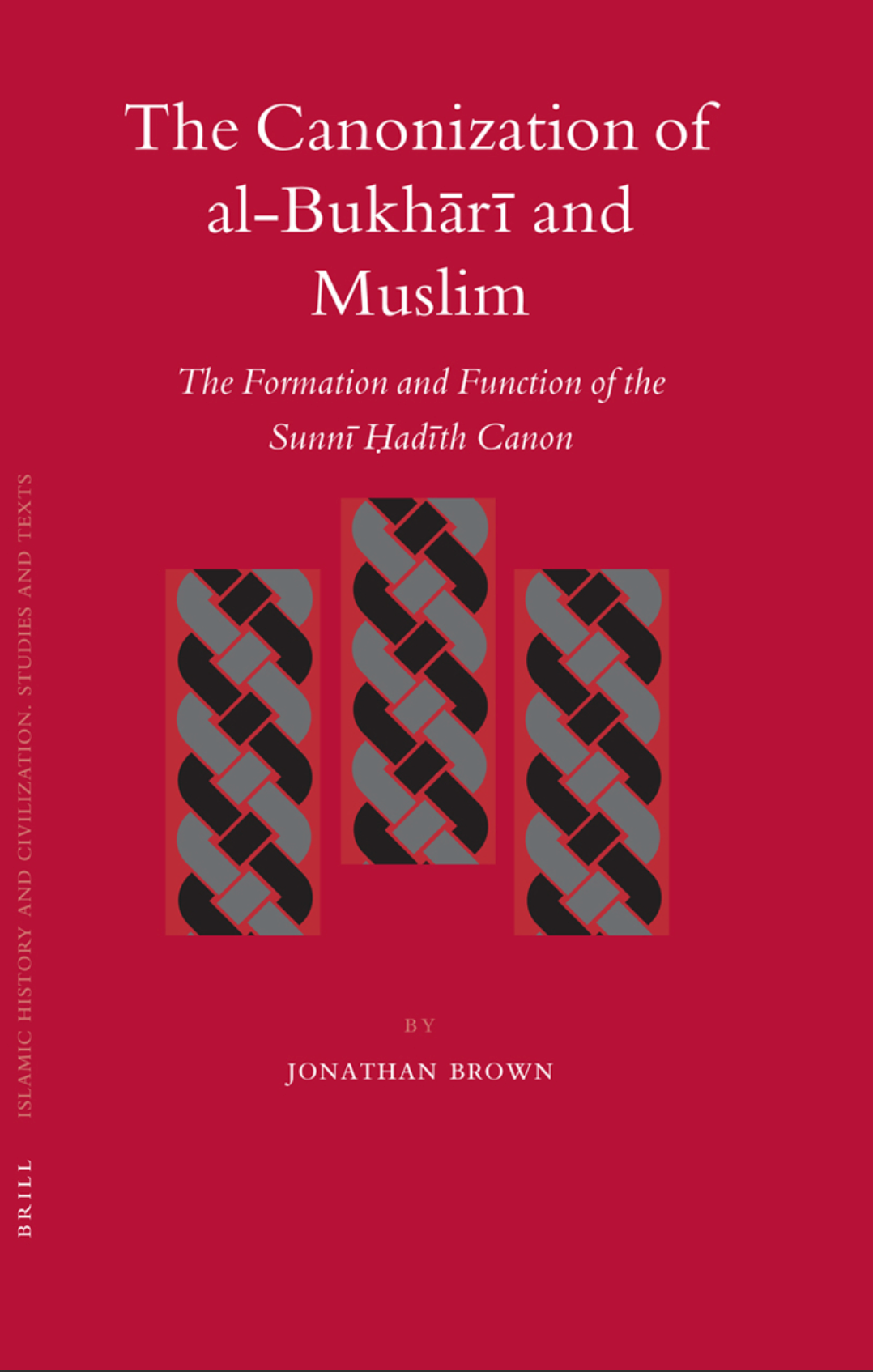
This content comes from Professor Brown's doctoral research monograph below, which you can read alongside the previous overview of contemporary hadith studies. The core idea of this book is that the two Sahih collections didn't instantly become unchallengeable canons right after they were written. Instead, their authority was built through a long academic process spanning the 10th and 11th centuries—the result of different Sunni legal and doctrinal schools reaching a consensus, rather than something the two authors could have predicted ahead of time.
Brown points out that Western Orientalists noticed the lofty status of the two Sahihs, but couldn't pinpoint the exact timing of their canonization. Some scholars lumped all six major hadith collections together, completely missing the fact that the two Sahihs are the core of everything, while the other four were added later on.
The canonical status of any set of texts depends on how tolerant the community is when interpreting them; scholars will go out of their way to reconcile contradictions and protect the rationality of the texts. When that tolerance vanishes, the canonical status starts to shake. Eventually, an entire culture of canonization formed around the two Sahihs: scholars actively protected them, idealized the authors' lives, and smoothed over contradictions and flaws in the books, even though the original authors never intended their work to be a mandatory standard for the entire community.
The 9th century saw the rise of the "Sound Hadith Movement." Back then, mainstream hadith compilations like Ibn Hanbal's *Musnad* would mix both sound and weak transmissions together. The authors of the two Sahihs broke new ground by exclusively compiling traditions they personally judged to be sound. At the time, this was a controversial innovation rather than a universally accepted academic standard.
Bukhari had super strict standards for chains of transmission (isnad), requiring proof that the transmitters had actually met in person. During his life, he even got caught up in major theological controversies. When it came to the createdness of the Quran, his denial of the doctrine got him squeezed out and banished from Khorasan. Honestly, Bukhari didn't really belong to any single school, though all four later legal schools tried to claim him as their own.
Muslim was a student of Bukhari, but his approach to isnads was a bit more relaxed than his mentor's. As long as two people roughly lived in the same era, he allowed transmission based on "so-and-so said," using these fuzzy links without requiring face-to-face meetings.
In the generation right after their deaths, plenty of contemporary top-tier hadith scholars didn't view the two Sahihs as supreme authorities. Rationalist scholars like al-Razi openly criticized Muslim's collection for casually including controversial transmissions, worrying that heretics might weaponize the book in debates. Muslim had to publicly clarify: "This book is just a private collection for me and my followers. I never said all sound hadiths are right here, and just because something isn't in this book doesn't mean it's a weak hadith."
During the 9th and 10th centuries, the primary vehicle for hadith knowledge was oral transmission between teachers and students. Even when written books existed, scholars insisted that students had to listen to a teacher recite the text in person and receive formal authorization (ijazah) before they had the right to pass on the contents. Simply reading a manuscript wasn't enough to gain authority. This created a massive contradiction: the two Sahih collections were written-down sets of sound hadiths, yet the mainstream hadith culture of the time still valued living, generation-to-generation oral chains and didn't recognize a book as having inherent authority. Early master scholars preferred to transmit hadiths through living isnads from older predecessors rather than citing the written compilations of the two Sahihs.
By the early 10th century, the academic community rebuilt its isnads by re-verifying every single hadith in the two Sahihs through separate, independent chains of transmission. While prominent scholars acknowledged that the content of the two Sahihs was worth investing massive effort into tracing back, this didn't mean they accepted them as infallible canons. At this point, regional devotion popped up: local scholars in Muslim's hometown of Nishapur hyped him up like crazy, Juzjan stan'd Bukhari, Baghdad pooled together all kinds of viewpoints, and Isfahan and Central Asia each had their own academic bubbles. Back then, the prestige of the two Sahihs was just a local phenomenon.
After the 10th century, scholars started building a brand-new epistemology. They wanted to find a universally accepted set of criteria for evaluating hadiths to handle arguments between different schools of thought. The two Sahihs started getting treated as potential benchmarks, though they still caught a ton of flak. By the end of the 10th century, while they were definitely important research texts, they still hadn't achieved canonical status backed by the consensus of the entire Ummah.
The key figure who drove the canonization of the two Sahihs was al-Hakim al-Nishapuri (who passed away in 1014). He wanted to distill the selection criteria of the two Sahihs into a universal evaluation tool and use it to judge the entire hadith system, while making sure the criteria could convince traditionalist Hadith scholars and push back against the Mu'tazilites. Al-Hakim argued that tons of hadiths met the sound standards of the two Sahihs without actually being included in them, which is why his work *Al-Mustadrak* was dedicated to gathering those exact materials.
Al-Hakim lived during the 11th-century Seljuk era, a time when Sunni Islam desperately needed to build a unified discourse and smooth over conflicts between legal schools like the Shafi'is and Hanbalis. He believed that the consensus (ijma) of the Ummah could give its official backing to the two Sahihs. Later scholars picked up right where al-Hakim left off, building the authority of the two Sahihs directly into legal theory (usul al-fiqh). Here, Brown reminds readers that al-Hakim never claimed every single hadith in the two Sahihs was completely flawless; he simply treated them as ideal models, and later canon culture slowly wiped away that hesitation.
From then on, the two Sahihs gradually became the accepted baseline. Plenty of jurists who weren't hadith specialists themselves could directly cite the two Sahihs as reliable references without needing to act as original transmitters. Brown reminds us that this authority was contextual—it was used as ironclad proof in external debates. Inside their own schools, however, scholars could still critique or skip individual hadiths from the two Sahihs. Above all, it functioned as a cross-school debating tool.
During the 11th and 12th centuries, Shafi'i scholars consciously built a canon culture around the two Sahihs. They rewrote and romanticized the biographies of the two authors, brushing aside or explaining away early criticisms leveled against them. The Shafi'i school also ironed out flaws in the isnads inside the two Sahihs and smoothed over disagreements between the two books. They churned out heaps of commentaries, working overtime to rationalize seemingly problematic transmissions in the books—which is a prime example of that tolerant principle in action.
Of course, this culture didn't go completely unopposed. Plenty of scholars during this period still pointed out flaws in certain transmissions within the two Sahihs, even if the public discourse was leaning more and more toward defending them.
For a huge chunk of the medieval era, the academic world still allowed people to critique individual hadiths inside the two Sahihs. Back then, questioning a specific transmission chain in the two Sahihs didn't mean you were going off the rails or leaving the fold.
By the 13th century, Ibn al-Salah stepped onto the scene. He argued that the Ummah had already reached a consensus that everything inside the two Sahihs was entirely sound, heavily shrinking the room for criticism. But even he admitted that individual entries still had space for debate. By this point, two opposing stances had formed: the orthodox position, which sought to protect the Sunni community and defend the canonical status of the two Sahihs by shutting down public criticism; and the anti-traditionalist camp, which argued that a group of hadith scholars must always test every single transmission against the rigorous standards of hadith critique no matter how famous the book is, meaning nothing gets a free pass just because it's in the two Sahihs.
A classic modern case is Muhammad Nasir al-Din al-Albani. As a key figure of the Salafi movement, he had the guts to publicly critique parts of the two Sahihs, kicking off a massive controversy. Some modern scholars accused him of disrespecting the canon, while others backed him up, arguing that he was keeping the medieval spirit of hadith critique alive. Brown points out that this really highlights a split right down the middle of the Salafi movement.
The canonization of the two Sahihs was the result of a mix of internal and external forces. Externally, there was the looming threat of the Shia; to counter it, state authorities during the Seljuk era directly ordered the establishment of the two Sahihs' canonical status. Rulers backed their recitation and promotion, while Sufis and historians used the two Sahihs in their writings as narrative symbols representing the pure faith of the earliest generations, contrasting it against the moral decline of later times. Ultimately, the books broke out of pure academic research and transformed into community identity markers and spiritual symbols. view all
[Internet Repost]
Let's dive into the fascinating history of how the two major Sahih hadith collections achieved their ultimate canonical status in Islamic academic history. We'll break down how Bukhari and Muslim's famous books went through centuries of cross-school testing and mutual respect after publication, eventually becoming universally recognized authorities.
This content comes from Professor Brown's doctoral research monograph below, which you can read alongside the previous overview of contemporary hadith studies. The core idea of this book is that the two Sahih collections didn't instantly become unchallengeable canons right after they were written. Instead, their authority was built through a long academic process spanning the 10th and 11th centuries—the result of different Sunni legal and doctrinal schools reaching a consensus, rather than something the two authors could have predicted ahead of time.
Brown points out that Western Orientalists noticed the lofty status of the two Sahihs, but couldn't pinpoint the exact timing of their canonization. Some scholars lumped all six major hadith collections together, completely missing the fact that the two Sahihs are the core of everything, while the other four were added later on.
The canonical status of any set of texts depends on how tolerant the community is when interpreting them; scholars will go out of their way to reconcile contradictions and protect the rationality of the texts. When that tolerance vanishes, the canonical status starts to shake. Eventually, an entire culture of canonization formed around the two Sahihs: scholars actively protected them, idealized the authors' lives, and smoothed over contradictions and flaws in the books, even though the original authors never intended their work to be a mandatory standard for the entire community.
The 9th century saw the rise of the "Sound Hadith Movement." Back then, mainstream hadith compilations like Ibn Hanbal's *Musnad* would mix both sound and weak transmissions together. The authors of the two Sahihs broke new ground by exclusively compiling traditions they personally judged to be sound. At the time, this was a controversial innovation rather than a universally accepted academic standard.
Bukhari had super strict standards for chains of transmission (isnad), requiring proof that the transmitters had actually met in person. During his life, he even got caught up in major theological controversies. When it came to the createdness of the Quran, his denial of the doctrine got him squeezed out and banished from Khorasan. Honestly, Bukhari didn't really belong to any single school, though all four later legal schools tried to claim him as their own.
Muslim was a student of Bukhari, but his approach to isnads was a bit more relaxed than his mentor's. As long as two people roughly lived in the same era, he allowed transmission based on "so-and-so said," using these fuzzy links without requiring face-to-face meetings.
In the generation right after their deaths, plenty of contemporary top-tier hadith scholars didn't view the two Sahihs as supreme authorities. Rationalist scholars like al-Razi openly criticized Muslim's collection for casually including controversial transmissions, worrying that heretics might weaponize the book in debates. Muslim had to publicly clarify: "This book is just a private collection for me and my followers. I never said all sound hadiths are right here, and just because something isn't in this book doesn't mean it's a weak hadith."
During the 9th and 10th centuries, the primary vehicle for hadith knowledge was oral transmission between teachers and students. Even when written books existed, scholars insisted that students had to listen to a teacher recite the text in person and receive formal authorization (ijazah) before they had the right to pass on the contents. Simply reading a manuscript wasn't enough to gain authority. This created a massive contradiction: the two Sahih collections were written-down sets of sound hadiths, yet the mainstream hadith culture of the time still valued living, generation-to-generation oral chains and didn't recognize a book as having inherent authority. Early master scholars preferred to transmit hadiths through living isnads from older predecessors rather than citing the written compilations of the two Sahihs.
By the early 10th century, the academic community rebuilt its isnads by re-verifying every single hadith in the two Sahihs through separate, independent chains of transmission. While prominent scholars acknowledged that the content of the two Sahihs was worth investing massive effort into tracing back, this didn't mean they accepted them as infallible canons. At this point, regional devotion popped up: local scholars in Muslim's hometown of Nishapur hyped him up like crazy, Juzjan stan'd Bukhari, Baghdad pooled together all kinds of viewpoints, and Isfahan and Central Asia each had their own academic bubbles. Back then, the prestige of the two Sahihs was just a local phenomenon.
After the 10th century, scholars started building a brand-new epistemology. They wanted to find a universally accepted set of criteria for evaluating hadiths to handle arguments between different schools of thought. The two Sahihs started getting treated as potential benchmarks, though they still caught a ton of flak. By the end of the 10th century, while they were definitely important research texts, they still hadn't achieved canonical status backed by the consensus of the entire Ummah.
The key figure who drove the canonization of the two Sahihs was al-Hakim al-Nishapuri (who passed away in 1014). He wanted to distill the selection criteria of the two Sahihs into a universal evaluation tool and use it to judge the entire hadith system, while making sure the criteria could convince traditionalist Hadith scholars and push back against the Mu'tazilites. Al-Hakim argued that tons of hadiths met the sound standards of the two Sahihs without actually being included in them, which is why his work *Al-Mustadrak* was dedicated to gathering those exact materials.
Al-Hakim lived during the 11th-century Seljuk era, a time when Sunni Islam desperately needed to build a unified discourse and smooth over conflicts between legal schools like the Shafi'is and Hanbalis. He believed that the consensus (ijma) of the Ummah could give its official backing to the two Sahihs. Later scholars picked up right where al-Hakim left off, building the authority of the two Sahihs directly into legal theory (usul al-fiqh). Here, Brown reminds readers that al-Hakim never claimed every single hadith in the two Sahihs was completely flawless; he simply treated them as ideal models, and later canon culture slowly wiped away that hesitation.
From then on, the two Sahihs gradually became the accepted baseline. Plenty of jurists who weren't hadith specialists themselves could directly cite the two Sahihs as reliable references without needing to act as original transmitters. Brown reminds us that this authority was contextual—it was used as ironclad proof in external debates. Inside their own schools, however, scholars could still critique or skip individual hadiths from the two Sahihs. Above all, it functioned as a cross-school debating tool.
During the 11th and 12th centuries, Shafi'i scholars consciously built a canon culture around the two Sahihs. They rewrote and romanticized the biographies of the two authors, brushing aside or explaining away early criticisms leveled against them. The Shafi'i school also ironed out flaws in the isnads inside the two Sahihs and smoothed over disagreements between the two books. They churned out heaps of commentaries, working overtime to rationalize seemingly problematic transmissions in the books—which is a prime example of that tolerant principle in action.
Of course, this culture didn't go completely unopposed. Plenty of scholars during this period still pointed out flaws in certain transmissions within the two Sahihs, even if the public discourse was leaning more and more toward defending them.
For a huge chunk of the medieval era, the academic world still allowed people to critique individual hadiths inside the two Sahihs. Back then, questioning a specific transmission chain in the two Sahihs didn't mean you were going off the rails or leaving the fold.
By the 13th century, Ibn al-Salah stepped onto the scene. He argued that the Ummah had already reached a consensus that everything inside the two Sahihs was entirely sound, heavily shrinking the room for criticism. But even he admitted that individual entries still had space for debate. By this point, two opposing stances had formed: the orthodox position, which sought to protect the Sunni community and defend the canonical status of the two Sahihs by shutting down public criticism; and the anti-traditionalist camp, which argued that a group of hadith scholars must always test every single transmission against the rigorous standards of hadith critique no matter how famous the book is, meaning nothing gets a free pass just because it's in the two Sahihs.
A classic modern case is Muhammad Nasir al-Din al-Albani. As a key figure of the Salafi movement, he had the guts to publicly critique parts of the two Sahihs, kicking off a massive controversy. Some modern scholars accused him of disrespecting the canon, while others backed him up, arguing that he was keeping the medieval spirit of hadith critique alive. Brown points out that this really highlights a split right down the middle of the Salafi movement.
The canonization of the two Sahihs was the result of a mix of internal and external forces. Externally, there was the looming threat of the Shia; to counter it, state authorities during the Seljuk era directly ordered the establishment of the two Sahihs' canonical status. Rulers backed their recitation and promotion, while Sufis and historians used the two Sahihs in their writings as narrative symbols representing the pure faith of the earliest generations, contrasting it against the moral decline of later times. Ultimately, the books broke out of pure academic research and transformed into community identity markers and spiritual symbols.
Let's dive into the fascinating history of how the two major Sahih hadith collections achieved their ultimate canonical status in Islamic academic history. We'll break down how Bukhari and Muslim's famous books went through centuries of cross-school testing and mutual respect after publication, eventually becoming universally recognized authorities.
This content comes from Professor Brown's doctoral research monograph below, which you can read alongside the previous overview of contemporary hadith studies. The core idea of this book is that the two Sahih collections didn't instantly become unchallengeable canons right after they were written. Instead, their authority was built through a long academic process spanning the 10th and 11th centuries—the result of different Sunni legal and doctrinal schools reaching a consensus, rather than something the two authors could have predicted ahead of time.
Brown points out that Western Orientalists noticed the lofty status of the two Sahihs, but couldn't pinpoint the exact timing of their canonization. Some scholars lumped all six major hadith collections together, completely missing the fact that the two Sahihs are the core of everything, while the other four were added later on.
The canonical status of any set of texts depends on how tolerant the community is when interpreting them; scholars will go out of their way to reconcile contradictions and protect the rationality of the texts. When that tolerance vanishes, the canonical status starts to shake. Eventually, an entire culture of canonization formed around the two Sahihs: scholars actively protected them, idealized the authors' lives, and smoothed over contradictions and flaws in the books, even though the original authors never intended their work to be a mandatory standard for the entire community.
The 9th century saw the rise of the "Sound Hadith Movement." Back then, mainstream hadith compilations like Ibn Hanbal's *Musnad* would mix both sound and weak transmissions together. The authors of the two Sahihs broke new ground by exclusively compiling traditions they personally judged to be sound. At the time, this was a controversial innovation rather than a universally accepted academic standard.
Bukhari had super strict standards for chains of transmission (isnad), requiring proof that the transmitters had actually met in person. During his life, he even got caught up in major theological controversies. When it came to the createdness of the Quran, his denial of the doctrine got him squeezed out and banished from Khorasan. Honestly, Bukhari didn't really belong to any single school, though all four later legal schools tried to claim him as their own.
Muslim was a student of Bukhari, but his approach to isnads was a bit more relaxed than his mentor's. As long as two people roughly lived in the same era, he allowed transmission based on "so-and-so said," using these fuzzy links without requiring face-to-face meetings.
In the generation right after their deaths, plenty of contemporary top-tier hadith scholars didn't view the two Sahihs as supreme authorities. Rationalist scholars like al-Razi openly criticized Muslim's collection for casually including controversial transmissions, worrying that heretics might weaponize the book in debates. Muslim had to publicly clarify: "This book is just a private collection for me and my followers. I never said all sound hadiths are right here, and just because something isn't in this book doesn't mean it's a weak hadith."
During the 9th and 10th centuries, the primary vehicle for hadith knowledge was oral transmission between teachers and students. Even when written books existed, scholars insisted that students had to listen to a teacher recite the text in person and receive formal authorization (ijazah) before they had the right to pass on the contents. Simply reading a manuscript wasn't enough to gain authority. This created a massive contradiction: the two Sahih collections were written-down sets of sound hadiths, yet the mainstream hadith culture of the time still valued living, generation-to-generation oral chains and didn't recognize a book as having inherent authority. Early master scholars preferred to transmit hadiths through living isnads from older predecessors rather than citing the written compilations of the two Sahihs.
By the early 10th century, the academic community rebuilt its isnads by re-verifying every single hadith in the two Sahihs through separate, independent chains of transmission. While prominent scholars acknowledged that the content of the two Sahihs was worth investing massive effort into tracing back, this didn't mean they accepted them as infallible canons. At this point, regional devotion popped up: local scholars in Muslim's hometown of Nishapur hyped him up like crazy, Juzjan stan'd Bukhari, Baghdad pooled together all kinds of viewpoints, and Isfahan and Central Asia each had their own academic bubbles. Back then, the prestige of the two Sahihs was just a local phenomenon.
After the 10th century, scholars started building a brand-new epistemology. They wanted to find a universally accepted set of criteria for evaluating hadiths to handle arguments between different schools of thought. The two Sahihs started getting treated as potential benchmarks, though they still caught a ton of flak. By the end of the 10th century, while they were definitely important research texts, they still hadn't achieved canonical status backed by the consensus of the entire Ummah.
The key figure who drove the canonization of the two Sahihs was al-Hakim al-Nishapuri (who passed away in 1014). He wanted to distill the selection criteria of the two Sahihs into a universal evaluation tool and use it to judge the entire hadith system, while making sure the criteria could convince traditionalist Hadith scholars and push back against the Mu'tazilites. Al-Hakim argued that tons of hadiths met the sound standards of the two Sahihs without actually being included in them, which is why his work *Al-Mustadrak* was dedicated to gathering those exact materials.
Al-Hakim lived during the 11th-century Seljuk era, a time when Sunni Islam desperately needed to build a unified discourse and smooth over conflicts between legal schools like the Shafi'is and Hanbalis. He believed that the consensus (ijma) of the Ummah could give its official backing to the two Sahihs. Later scholars picked up right where al-Hakim left off, building the authority of the two Sahihs directly into legal theory (usul al-fiqh). Here, Brown reminds readers that al-Hakim never claimed every single hadith in the two Sahihs was completely flawless; he simply treated them as ideal models, and later canon culture slowly wiped away that hesitation.
From then on, the two Sahihs gradually became the accepted baseline. Plenty of jurists who weren't hadith specialists themselves could directly cite the two Sahihs as reliable references without needing to act as original transmitters. Brown reminds us that this authority was contextual—it was used as ironclad proof in external debates. Inside their own schools, however, scholars could still critique or skip individual hadiths from the two Sahihs. Above all, it functioned as a cross-school debating tool.
During the 11th and 12th centuries, Shafi'i scholars consciously built a canon culture around the two Sahihs. They rewrote and romanticized the biographies of the two authors, brushing aside or explaining away early criticisms leveled against them. The Shafi'i school also ironed out flaws in the isnads inside the two Sahihs and smoothed over disagreements between the two books. They churned out heaps of commentaries, working overtime to rationalize seemingly problematic transmissions in the books—which is a prime example of that tolerant principle in action.
Of course, this culture didn't go completely unopposed. Plenty of scholars during this period still pointed out flaws in certain transmissions within the two Sahihs, even if the public discourse was leaning more and more toward defending them.
For a huge chunk of the medieval era, the academic world still allowed people to critique individual hadiths inside the two Sahihs. Back then, questioning a specific transmission chain in the two Sahihs didn't mean you were going off the rails or leaving the fold.
By the 13th century, Ibn al-Salah stepped onto the scene. He argued that the Ummah had already reached a consensus that everything inside the two Sahihs was entirely sound, heavily shrinking the room for criticism. But even he admitted that individual entries still had space for debate. By this point, two opposing stances had formed: the orthodox position, which sought to protect the Sunni community and defend the canonical status of the two Sahihs by shutting down public criticism; and the anti-traditionalist camp, which argued that a group of hadith scholars must always test every single transmission against the rigorous standards of hadith critique no matter how famous the book is, meaning nothing gets a free pass just because it's in the two Sahihs.
A classic modern case is Muhammad Nasir al-Din al-Albani. As a key figure of the Salafi movement, he had the guts to publicly critique parts of the two Sahihs, kicking off a massive controversy. Some modern scholars accused him of disrespecting the canon, while others backed him up, arguing that he was keeping the medieval spirit of hadith critique alive. Brown points out that this really highlights a split right down the middle of the Salafi movement.
The canonization of the two Sahihs was the result of a mix of internal and external forces. Externally, there was the looming threat of the Shia; to counter it, state authorities during the Seljuk era directly ordered the establishment of the two Sahihs' canonical status. Rulers backed their recitation and promotion, while Sufis and historians used the two Sahihs in their writings as narrative symbols representing the pure faith of the earliest generations, contrasting it against the moral decline of later times. Ultimately, the books broke out of pure academic research and transformed into community identity markers and spiritual symbols.
Sahih al-Bukhari and Sahih Muslim Canonization History: 10th to 11th Century Islamic Scholarship and Sunni Consensus
Articles • Hasan09 posted the article • 0 comments • 3 views • 15 hours ago
[Internet Repost]
Let's dive into the fascinating history of how the two major Sahih hadith collections achieved their ultimate canonical status in Islamic academic history. We'll break down how Bukhari and Muslim's famous books went through centuries of cross-school testing and mutual respect after publication, eventually becoming universally recognized authorities.
This content comes from Professor Brown's doctoral research monograph below, which you can read alongside the previous overview of contemporary hadith studies. The core idea of this book is that the two Sahih collections didn't instantly become unchallengeable canons right after they were written. Instead, their authority was built through a long academic process spanning the 10th and 11th centuries—the result of different Sunni legal and doctrinal schools reaching a consensus, rather than something the two authors could have predicted ahead of time.
Brown points out that Western Orientalists noticed the lofty status of the two Sahihs, but couldn't pinpoint the exact timing of their canonization. Some scholars lumped all six major hadith collections together, completely missing the fact that the two Sahihs are the core of everything, while the other four were added later on.
The canonical status of any set of texts depends on how tolerant the community is when interpreting them; scholars will go out of their way to reconcile contradictions and protect the rationality of the texts. When that tolerance vanishes, the canonical status starts to shake. Eventually, an entire culture of canonization formed around the two Sahihs: scholars actively protected them, idealized the authors' lives, and smoothed over contradictions and flaws in the books, even though the original authors never intended their work to be a mandatory standard for the entire community.
The 9th century saw the rise of the "Sound Hadith Movement." Back then, mainstream hadith compilations like Ibn Hanbal's *Musnad* would mix both sound and weak transmissions together. The authors of the two Sahihs broke new ground by exclusively compiling traditions they personally judged to be sound. At the time, this was a controversial innovation rather than a universally accepted academic standard.
Bukhari had super strict standards for chains of transmission (isnad), requiring proof that the transmitters had actually met in person. During his life, he even got caught up in major theological controversies. When it came to the createdness of the Quran, his denial of the doctrine got him squeezed out and banished from Khorasan. Honestly, Bukhari didn't really belong to any single school, though all four later legal schools tried to claim him as their own.
Muslim was a student of Bukhari, but his approach to isnads was a bit more relaxed than his mentor's. As long as two people roughly lived in the same era, he allowed transmission based on "so-and-so said," using these fuzzy links without requiring face-to-face meetings.
In the generation right after their deaths, plenty of contemporary top-tier hadith scholars didn't view the two Sahihs as supreme authorities. Rationalist scholars like al-Razi openly criticized Muslim's collection for casually including controversial transmissions, worrying that heretics might weaponize the book in debates. Muslim had to publicly clarify: "This book is just a private collection for me and my followers. I never said all sound hadiths are right here, and just because something isn't in this book doesn't mean it's a weak hadith."
During the 9th and 10th centuries, the primary vehicle for hadith knowledge was oral transmission between teachers and students. Even when written books existed, scholars insisted that students had to listen to a teacher recite the text in person and receive formal authorization (ijazah) before they had the right to pass on the contents. Simply reading a manuscript wasn't enough to gain authority. This created a massive contradiction: the two Sahih collections were written-down sets of sound hadiths, yet the mainstream hadith culture of the time still valued living, generation-to-generation oral chains and didn't recognize a book as having inherent authority. Early master scholars preferred to transmit hadiths through living isnads from older predecessors rather than citing the written compilations of the two Sahihs.
By the early 10th century, the academic community rebuilt its isnads by re-verifying every single hadith in the two Sahihs through separate, independent chains of transmission. While prominent scholars acknowledged that the content of the two Sahihs was worth investing massive effort into tracing back, this didn't mean they accepted them as infallible canons. At this point, regional devotion popped up: local scholars in Muslim's hometown of Nishapur hyped him up like crazy, Juzjan stan'd Bukhari, Baghdad pooled together all kinds of viewpoints, and Isfahan and Central Asia each had their own academic bubbles. Back then, the prestige of the two Sahihs was just a local phenomenon.
After the 10th century, scholars started building a brand-new epistemology. They wanted to find a universally accepted set of criteria for evaluating hadiths to handle arguments between different schools of thought. The two Sahihs started getting treated as potential benchmarks, though they still caught a ton of flak. By the end of the 10th century, while they were definitely important research texts, they still hadn't achieved canonical status backed by the consensus of the entire Ummah.
The key figure who drove the canonization of the two Sahihs was al-Hakim al-Nishapuri (who passed away in 1014). He wanted to distill the selection criteria of the two Sahihs into a universal evaluation tool and use it to judge the entire hadith system, while making sure the criteria could convince traditionalist Hadith scholars and push back against the Mu'tazilites. Al-Hakim argued that tons of hadiths met the sound standards of the two Sahihs without actually being included in them, which is why his work *Al-Mustadrak* was dedicated to gathering those exact materials.
Al-Hakim lived during the 11th-century Seljuk era, a time when Sunni Islam desperately needed to build a unified discourse and smooth over conflicts between legal schools like the Shafi'is and Hanbalis. He believed that the consensus (ijma) of the Ummah could give its official backing to the two Sahihs. Later scholars picked up right where al-Hakim left off, building the authority of the two Sahihs directly into legal theory (usul al-fiqh). Here, Brown reminds readers that al-Hakim never claimed every single hadith in the two Sahihs was completely flawless; he simply treated them as ideal models, and later canon culture slowly wiped away that hesitation.
From then on, the two Sahihs gradually became the accepted baseline. Plenty of jurists who weren't hadith specialists themselves could directly cite the two Sahihs as reliable references without needing to act as original transmitters. Brown reminds us that this authority was contextual—it was used as ironclad proof in external debates. Inside their own schools, however, scholars could still critique or skip individual hadiths from the two Sahihs. Above all, it functioned as a cross-school debating tool.
During the 11th and 12th centuries, Shafi'i scholars consciously built a canon culture around the two Sahihs. They rewrote and romanticized the biographies of the two authors, brushing aside or explaining away early criticisms leveled against them. The Shafi'i school also ironed out flaws in the isnads inside the two Sahihs and smoothed over disagreements between the two books. They churned out heaps of commentaries, working overtime to rationalize seemingly problematic transmissions in the books—which is a prime example of that tolerant principle in action.
Of course, this culture didn't go completely unopposed. Plenty of scholars during this period still pointed out flaws in certain transmissions within the two Sahihs, even if the public discourse was leaning more and more toward defending them.
For a huge chunk of the medieval era, the academic world still allowed people to critique individual hadiths inside the two Sahihs. Back then, questioning a specific transmission chain in the two Sahihs didn't mean you were going off the rails or leaving the fold.
By the 13th century, Ibn al-Salah stepped onto the scene. He argued that the Ummah had already reached a consensus that everything inside the two Sahihs was entirely sound, heavily shrinking the room for criticism. But even he admitted that individual entries still had space for debate. By this point, two opposing stances had formed: the orthodox position, which sought to protect the Sunni community and defend the canonical status of the two Sahihs by shutting down public criticism; and the anti-traditionalist camp, which argued that a group of hadith scholars must always test every single transmission against the rigorous standards of hadith critique no matter how famous the book is, meaning nothing gets a free pass just because it's in the two Sahihs.
A classic modern case is Muhammad Nasir al-Din al-Albani. As a key figure of the Salafi movement, he had the guts to publicly critique parts of the two Sahihs, kicking off a massive controversy. Some modern scholars accused him of disrespecting the canon, while others backed him up, arguing that he was keeping the medieval spirit of hadith critique alive. Brown points out that this really highlights a split right down the middle of the Salafi movement.
The canonization of the two Sahihs was the result of a mix of internal and external forces. Externally, there was the looming threat of the Shia; to counter it, state authorities during the Seljuk era directly ordered the establishment of the two Sahihs' canonical status. Rulers backed their recitation and promotion, while Sufis and historians used the two Sahihs in their writings as narrative symbols representing the pure faith of the earliest generations, contrasting it against the moral decline of later times. Ultimately, the books broke out of pure academic research and transformed into community identity markers and spiritual symbols. view all
Let's dive into the fascinating history of how the two major Sahih hadith collections achieved their ultimate canonical status in Islamic academic history. We'll break down how Bukhari and Muslim's famous books went through centuries of cross-school testing and mutual respect after publication, eventually becoming universally recognized authorities.
This content comes from Professor Brown's doctoral research monograph below, which you can read alongside the previous overview of contemporary hadith studies. The core idea of this book is that the two Sahih collections didn't instantly become unchallengeable canons right after they were written. Instead, their authority was built through a long academic process spanning the 10th and 11th centuries—the result of different Sunni legal and doctrinal schools reaching a consensus, rather than something the two authors could have predicted ahead of time.
Brown points out that Western Orientalists noticed the lofty status of the two Sahihs, but couldn't pinpoint the exact timing of their canonization. Some scholars lumped all six major hadith collections together, completely missing the fact that the two Sahihs are the core of everything, while the other four were added later on.
The canonical status of any set of texts depends on how tolerant the community is when interpreting them; scholars will go out of their way to reconcile contradictions and protect the rationality of the texts. When that tolerance vanishes, the canonical status starts to shake. Eventually, an entire culture of canonization formed around the two Sahihs: scholars actively protected them, idealized the authors' lives, and smoothed over contradictions and flaws in the books, even though the original authors never intended their work to be a mandatory standard for the entire community.
The 9th century saw the rise of the "Sound Hadith Movement." Back then, mainstream hadith compilations like Ibn Hanbal's *Musnad* would mix both sound and weak transmissions together. The authors of the two Sahihs broke new ground by exclusively compiling traditions they personally judged to be sound. At the time, this was a controversial innovation rather than a universally accepted academic standard.
Bukhari had super strict standards for chains of transmission (isnad), requiring proof that the transmitters had actually met in person. During his life, he even got caught up in major theological controversies. When it came to the createdness of the Quran, his denial of the doctrine got him squeezed out and banished from Khorasan. Honestly, Bukhari didn't really belong to any single school, though all four later legal schools tried to claim him as their own.
Muslim was a student of Bukhari, but his approach to isnads was a bit more relaxed than his mentor's. As long as two people roughly lived in the same era, he allowed transmission based on "so-and-so said," using these fuzzy links without requiring face-to-face meetings.
In the generation right after their deaths, plenty of contemporary top-tier hadith scholars didn't view the two Sahihs as supreme authorities. Rationalist scholars like al-Razi openly criticized Muslim's collection for casually including controversial transmissions, worrying that heretics might weaponize the book in debates. Muslim had to publicly clarify: "This book is just a private collection for me and my followers. I never said all sound hadiths are right here, and just because something isn't in this book doesn't mean it's a weak hadith."
During the 9th and 10th centuries, the primary vehicle for hadith knowledge was oral transmission between teachers and students. Even when written books existed, scholars insisted that students had to listen to a teacher recite the text in person and receive formal authorization (ijazah) before they had the right to pass on the contents. Simply reading a manuscript wasn't enough to gain authority. This created a massive contradiction: the two Sahih collections were written-down sets of sound hadiths, yet the mainstream hadith culture of the time still valued living, generation-to-generation oral chains and didn't recognize a book as having inherent authority. Early master scholars preferred to transmit hadiths through living isnads from older predecessors rather than citing the written compilations of the two Sahihs.
By the early 10th century, the academic community rebuilt its isnads by re-verifying every single hadith in the two Sahihs through separate, independent chains of transmission. While prominent scholars acknowledged that the content of the two Sahihs was worth investing massive effort into tracing back, this didn't mean they accepted them as infallible canons. At this point, regional devotion popped up: local scholars in Muslim's hometown of Nishapur hyped him up like crazy, Juzjan stan'd Bukhari, Baghdad pooled together all kinds of viewpoints, and Isfahan and Central Asia each had their own academic bubbles. Back then, the prestige of the two Sahihs was just a local phenomenon.
After the 10th century, scholars started building a brand-new epistemology. They wanted to find a universally accepted set of criteria for evaluating hadiths to handle arguments between different schools of thought. The two Sahihs started getting treated as potential benchmarks, though they still caught a ton of flak. By the end of the 10th century, while they were definitely important research texts, they still hadn't achieved canonical status backed by the consensus of the entire Ummah.
The key figure who drove the canonization of the two Sahihs was al-Hakim al-Nishapuri (who passed away in 1014). He wanted to distill the selection criteria of the two Sahihs into a universal evaluation tool and use it to judge the entire hadith system, while making sure the criteria could convince traditionalist Hadith scholars and push back against the Mu'tazilites. Al-Hakim argued that tons of hadiths met the sound standards of the two Sahihs without actually being included in them, which is why his work *Al-Mustadrak* was dedicated to gathering those exact materials.
Al-Hakim lived during the 11th-century Seljuk era, a time when Sunni Islam desperately needed to build a unified discourse and smooth over conflicts between legal schools like the Shafi'is and Hanbalis. He believed that the consensus (ijma) of the Ummah could give its official backing to the two Sahihs. Later scholars picked up right where al-Hakim left off, building the authority of the two Sahihs directly into legal theory (usul al-fiqh). Here, Brown reminds readers that al-Hakim never claimed every single hadith in the two Sahihs was completely flawless; he simply treated them as ideal models, and later canon culture slowly wiped away that hesitation.
From then on, the two Sahihs gradually became the accepted baseline. Plenty of jurists who weren't hadith specialists themselves could directly cite the two Sahihs as reliable references without needing to act as original transmitters. Brown reminds us that this authority was contextual—it was used as ironclad proof in external debates. Inside their own schools, however, scholars could still critique or skip individual hadiths from the two Sahihs. Above all, it functioned as a cross-school debating tool.
During the 11th and 12th centuries, Shafi'i scholars consciously built a canon culture around the two Sahihs. They rewrote and romanticized the biographies of the two authors, brushing aside or explaining away early criticisms leveled against them. The Shafi'i school also ironed out flaws in the isnads inside the two Sahihs and smoothed over disagreements between the two books. They churned out heaps of commentaries, working overtime to rationalize seemingly problematic transmissions in the books—which is a prime example of that tolerant principle in action.
Of course, this culture didn't go completely unopposed. Plenty of scholars during this period still pointed out flaws in certain transmissions within the two Sahihs, even if the public discourse was leaning more and more toward defending them.
For a huge chunk of the medieval era, the academic world still allowed people to critique individual hadiths inside the two Sahihs. Back then, questioning a specific transmission chain in the two Sahihs didn't mean you were going off the rails or leaving the fold.
By the 13th century, Ibn al-Salah stepped onto the scene. He argued that the Ummah had already reached a consensus that everything inside the two Sahihs was entirely sound, heavily shrinking the room for criticism. But even he admitted that individual entries still had space for debate. By this point, two opposing stances had formed: the orthodox position, which sought to protect the Sunni community and defend the canonical status of the two Sahihs by shutting down public criticism; and the anti-traditionalist camp, which argued that a group of hadith scholars must always test every single transmission against the rigorous standards of hadith critique no matter how famous the book is, meaning nothing gets a free pass just because it's in the two Sahihs.
A classic modern case is Muhammad Nasir al-Din al-Albani. As a key figure of the Salafi movement, he had the guts to publicly critique parts of the two Sahihs, kicking off a massive controversy. Some modern scholars accused him of disrespecting the canon, while others backed him up, arguing that he was keeping the medieval spirit of hadith critique alive. Brown points out that this really highlights a split right down the middle of the Salafi movement.
The canonization of the two Sahihs was the result of a mix of internal and external forces. Externally, there was the looming threat of the Shia; to counter it, state authorities during the Seljuk era directly ordered the establishment of the two Sahihs' canonical status. Rulers backed their recitation and promotion, while Sufis and historians used the two Sahihs in their writings as narrative symbols representing the pure faith of the earliest generations, contrasting it against the moral decline of later times. Ultimately, the books broke out of pure academic research and transformed into community identity markers and spiritual symbols. view all
[Internet Repost]
Let's dive into the fascinating history of how the two major Sahih hadith collections achieved their ultimate canonical status in Islamic academic history. We'll break down how Bukhari and Muslim's famous books went through centuries of cross-school testing and mutual respect after publication, eventually becoming universally recognized authorities.
This content comes from Professor Brown's doctoral research monograph below, which you can read alongside the previous overview of contemporary hadith studies. The core idea of this book is that the two Sahih collections didn't instantly become unchallengeable canons right after they were written. Instead, their authority was built through a long academic process spanning the 10th and 11th centuries—the result of different Sunni legal and doctrinal schools reaching a consensus, rather than something the two authors could have predicted ahead of time.
Brown points out that Western Orientalists noticed the lofty status of the two Sahihs, but couldn't pinpoint the exact timing of their canonization. Some scholars lumped all six major hadith collections together, completely missing the fact that the two Sahihs are the core of everything, while the other four were added later on.
The canonical status of any set of texts depends on how tolerant the community is when interpreting them; scholars will go out of their way to reconcile contradictions and protect the rationality of the texts. When that tolerance vanishes, the canonical status starts to shake. Eventually, an entire culture of canonization formed around the two Sahihs: scholars actively protected them, idealized the authors' lives, and smoothed over contradictions and flaws in the books, even though the original authors never intended their work to be a mandatory standard for the entire community.
The 9th century saw the rise of the "Sound Hadith Movement." Back then, mainstream hadith compilations like Ibn Hanbal's *Musnad* would mix both sound and weak transmissions together. The authors of the two Sahihs broke new ground by exclusively compiling traditions they personally judged to be sound. At the time, this was a controversial innovation rather than a universally accepted academic standard.
Bukhari had super strict standards for chains of transmission (isnad), requiring proof that the transmitters had actually met in person. During his life, he even got caught up in major theological controversies. When it came to the createdness of the Quran, his denial of the doctrine got him squeezed out and banished from Khorasan. Honestly, Bukhari didn't really belong to any single school, though all four later legal schools tried to claim him as their own.
Muslim was a student of Bukhari, but his approach to isnads was a bit more relaxed than his mentor's. As long as two people roughly lived in the same era, he allowed transmission based on "so-and-so said," using these fuzzy links without requiring face-to-face meetings.
In the generation right after their deaths, plenty of contemporary top-tier hadith scholars didn't view the two Sahihs as supreme authorities. Rationalist scholars like al-Razi openly criticized Muslim's collection for casually including controversial transmissions, worrying that heretics might weaponize the book in debates. Muslim had to publicly clarify: "This book is just a private collection for me and my followers. I never said all sound hadiths are right here, and just because something isn't in this book doesn't mean it's a weak hadith."
During the 9th and 10th centuries, the primary vehicle for hadith knowledge was oral transmission between teachers and students. Even when written books existed, scholars insisted that students had to listen to a teacher recite the text in person and receive formal authorization (ijazah) before they had the right to pass on the contents. Simply reading a manuscript wasn't enough to gain authority. This created a massive contradiction: the two Sahih collections were written-down sets of sound hadiths, yet the mainstream hadith culture of the time still valued living, generation-to-generation oral chains and didn't recognize a book as having inherent authority. Early master scholars preferred to transmit hadiths through living isnads from older predecessors rather than citing the written compilations of the two Sahihs.
By the early 10th century, the academic community rebuilt its isnads by re-verifying every single hadith in the two Sahihs through separate, independent chains of transmission. While prominent scholars acknowledged that the content of the two Sahihs was worth investing massive effort into tracing back, this didn't mean they accepted them as infallible canons. At this point, regional devotion popped up: local scholars in Muslim's hometown of Nishapur hyped him up like crazy, Juzjan stan'd Bukhari, Baghdad pooled together all kinds of viewpoints, and Isfahan and Central Asia each had their own academic bubbles. Back then, the prestige of the two Sahihs was just a local phenomenon.
After the 10th century, scholars started building a brand-new epistemology. They wanted to find a universally accepted set of criteria for evaluating hadiths to handle arguments between different schools of thought. The two Sahihs started getting treated as potential benchmarks, though they still caught a ton of flak. By the end of the 10th century, while they were definitely important research texts, they still hadn't achieved canonical status backed by the consensus of the entire Ummah.
The key figure who drove the canonization of the two Sahihs was al-Hakim al-Nishapuri (who passed away in 1014). He wanted to distill the selection criteria of the two Sahihs into a universal evaluation tool and use it to judge the entire hadith system, while making sure the criteria could convince traditionalist Hadith scholars and push back against the Mu'tazilites. Al-Hakim argued that tons of hadiths met the sound standards of the two Sahihs without actually being included in them, which is why his work *Al-Mustadrak* was dedicated to gathering those exact materials.
Al-Hakim lived during the 11th-century Seljuk era, a time when Sunni Islam desperately needed to build a unified discourse and smooth over conflicts between legal schools like the Shafi'is and Hanbalis. He believed that the consensus (ijma) of the Ummah could give its official backing to the two Sahihs. Later scholars picked up right where al-Hakim left off, building the authority of the two Sahihs directly into legal theory (usul al-fiqh). Here, Brown reminds readers that al-Hakim never claimed every single hadith in the two Sahihs was completely flawless; he simply treated them as ideal models, and later canon culture slowly wiped away that hesitation.
From then on, the two Sahihs gradually became the accepted baseline. Plenty of jurists who weren't hadith specialists themselves could directly cite the two Sahihs as reliable references without needing to act as original transmitters. Brown reminds us that this authority was contextual—it was used as ironclad proof in external debates. Inside their own schools, however, scholars could still critique or skip individual hadiths from the two Sahihs. Above all, it functioned as a cross-school debating tool.
During the 11th and 12th centuries, Shafi'i scholars consciously built a canon culture around the two Sahihs. They rewrote and romanticized the biographies of the two authors, brushing aside or explaining away early criticisms leveled against them. The Shafi'i school also ironed out flaws in the isnads inside the two Sahihs and smoothed over disagreements between the two books. They churned out heaps of commentaries, working overtime to rationalize seemingly problematic transmissions in the books—which is a prime example of that tolerant principle in action.
Of course, this culture didn't go completely unopposed. Plenty of scholars during this period still pointed out flaws in certain transmissions within the two Sahihs, even if the public discourse was leaning more and more toward defending them.
For a huge chunk of the medieval era, the academic world still allowed people to critique individual hadiths inside the two Sahihs. Back then, questioning a specific transmission chain in the two Sahihs didn't mean you were going off the rails or leaving the fold.
By the 13th century, Ibn al-Salah stepped onto the scene. He argued that the Ummah had already reached a consensus that everything inside the two Sahihs was entirely sound, heavily shrinking the room for criticism. But even he admitted that individual entries still had space for debate. By this point, two opposing stances had formed: the orthodox position, which sought to protect the Sunni community and defend the canonical status of the two Sahihs by shutting down public criticism; and the anti-traditionalist camp, which argued that a group of hadith scholars must always test every single transmission against the rigorous standards of hadith critique no matter how famous the book is, meaning nothing gets a free pass just because it's in the two Sahihs.
A classic modern case is Muhammad Nasir al-Din al-Albani. As a key figure of the Salafi movement, he had the guts to publicly critique parts of the two Sahihs, kicking off a massive controversy. Some modern scholars accused him of disrespecting the canon, while others backed him up, arguing that he was keeping the medieval spirit of hadith critique alive. Brown points out that this really highlights a split right down the middle of the Salafi movement.
The canonization of the two Sahihs was the result of a mix of internal and external forces. Externally, there was the looming threat of the Shia; to counter it, state authorities during the Seljuk era directly ordered the establishment of the two Sahihs' canonical status. Rulers backed their recitation and promotion, while Sufis and historians used the two Sahihs in their writings as narrative symbols representing the pure faith of the earliest generations, contrasting it against the moral decline of later times. Ultimately, the books broke out of pure academic research and transformed into community identity markers and spiritual symbols.