

Hainan Mosques
Sanya Muslim Culture & Halal Food Guide: Historic Mosques, Utsul Cham Heritage, and Island Vibes
Articles • Hasan09 posted the article • 0 comments • 5 views • 5 hours ago
[Internet Repost]
Sanya Cultural Essay: The Interwoven Memories of an Elderly Imam's Island Preaching Years and His Crossover Life
Abstract:
A vivid account of warm personal stories encountered by chance in Sanya. Listen to the reflections of an elderly imam from Changzhi, Shanxi, on his years running a Halal study hall in Sanya, capturing the resilience and open-mindedness behind an ordinary family, and showcasing the diverse and inclusive cultural fabric of Sanya.
During a few days of business travel to Sanya, I had two casual chats with strangers.
The first conversation took place inside the main hall of the Sanya Ancient Mosque.
The Utsul Muslims have lived in Sanya for over a thousand years. Also known as the 'Sanya Cham', they are descendants of Southeast Asian Hui Muslims who settled together in Sanya. As a result, the compact Sanya urban area features five mosques: the East Mosque, North Great Mosque, and Sanya Ancient Mosque on the western side of the city, along with the Nankai Mosque and South Mosque slightly further east.
This time, I made a special trip into the city to check out the Muslim neighborhoods, visiting the closely situated East Mosque, North Great Mosque, and Sanya Ancient Mosque.
To my surprise, the streets of the Huihui neighborhood in Sanya were totally packed with Uyghur people! Every few steps, you'd spot elderly men in traditional embroidered caps and aunties in gorgeous traditional attire chatting in the Uyghur language. The Uyghur vibe in this neighborhood is honestly higher than the Hunan dialect concentration in Shenzhen!
At the Sanya Ancient Mosque, I chatted for 20 minutes with an elderly gentleman who had just finished the Maghrib prayer.
The elder was a white-bearded imam originally from Changzhi, Shanxi province, whose surname was Ma. As the saying goes, 'nine out of ten Huis are surnamed Ma.' Usually, I start with that to break the ice.
This majestic bearded elder wasn't the Imam Ma from the conversation I mentioned earlier, though.
During our chat, Imam Ma mentioned, 'Over here, except for the Nankai Mosque or South Mosque on the east side which are Ikhwan, the other four are Salafiyya.'
I asked, 'Are there none of our traditional Gedimu followers?'
'Gedimu' means 'old' in Arabic, which is basically the old-school tradition. Gedimu refers to the long-standing traditional Islamic school that has been passed down in China for over a thousand years since the Tang dynasty. Meanwhile, Salafiyya, Ikhwan, and others are newer schools introduced to China in modern times, though not contemporary.
'No. But I'm against making distinctions. Keep the doors open; anyone can come to pray, recite the Shahada (declaration of faith), and declare 'La ilaha illallah' (There is no god but Allah)... and that's all that matters.'
'I completely agree with your view. I think so too.'
Next up was the Isha prayer (the night prayer in Persian), and since I hadn't performed the ritual ablution (wudu), I said goodbye to the elderly imam and stepped down from the main hall.
Written on December 6, 2024, at Phoenix Airport view all
Sanya Cultural Essay: The Interwoven Memories of an Elderly Imam's Island Preaching Years and His Crossover Life
Abstract:
A vivid account of warm personal stories encountered by chance in Sanya. Listen to the reflections of an elderly imam from Changzhi, Shanxi, on his years running a Halal study hall in Sanya, capturing the resilience and open-mindedness behind an ordinary family, and showcasing the diverse and inclusive cultural fabric of Sanya.
During a few days of business travel to Sanya, I had two casual chats with strangers.
The first conversation took place inside the main hall of the Sanya Ancient Mosque.
The Utsul Muslims have lived in Sanya for over a thousand years. Also known as the 'Sanya Cham', they are descendants of Southeast Asian Hui Muslims who settled together in Sanya. As a result, the compact Sanya urban area features five mosques: the East Mosque, North Great Mosque, and Sanya Ancient Mosque on the western side of the city, along with the Nankai Mosque and South Mosque slightly further east.
This time, I made a special trip into the city to check out the Muslim neighborhoods, visiting the closely situated East Mosque, North Great Mosque, and Sanya Ancient Mosque.
To my surprise, the streets of the Huihui neighborhood in Sanya were totally packed with Uyghur people! Every few steps, you'd spot elderly men in traditional embroidered caps and aunties in gorgeous traditional attire chatting in the Uyghur language. The Uyghur vibe in this neighborhood is honestly higher than the Hunan dialect concentration in Shenzhen!
At the Sanya Ancient Mosque, I chatted for 20 minutes with an elderly gentleman who had just finished the Maghrib prayer.
The elder was a white-bearded imam originally from Changzhi, Shanxi province, whose surname was Ma. As the saying goes, 'nine out of ten Huis are surnamed Ma.' Usually, I start with that to break the ice.
This majestic bearded elder wasn't the Imam Ma from the conversation I mentioned earlier, though.
During our chat, Imam Ma mentioned, 'Over here, except for the Nankai Mosque or South Mosque on the east side which are Ikhwan, the other four are Salafiyya.'
I asked, 'Are there none of our traditional Gedimu followers?'
'Gedimu' means 'old' in Arabic, which is basically the old-school tradition. Gedimu refers to the long-standing traditional Islamic school that has been passed down in China for over a thousand years since the Tang dynasty. Meanwhile, Salafiyya, Ikhwan, and others are newer schools introduced to China in modern times, though not contemporary.
'No. But I'm against making distinctions. Keep the doors open; anyone can come to pray, recite the Shahada (declaration of faith), and declare 'La ilaha illallah' (There is no god but Allah)... and that's all that matters.'
'I completely agree with your view. I think so too.'
Next up was the Isha prayer (the night prayer in Persian), and since I hadn't performed the ritual ablution (wudu), I said goodbye to the elderly imam and stepped down from the main hall.
Written on December 6, 2024, at Phoenix Airport view all
[Internet Repost]
Sanya Cultural Essay: The Interwoven Memories of an Elderly Imam's Island Preaching Years and His Crossover Life
Abstract:
A vivid account of warm personal stories encountered by chance in Sanya. Listen to the reflections of an elderly imam from Changzhi, Shanxi, on his years running a Halal study hall in Sanya, capturing the resilience and open-mindedness behind an ordinary family, and showcasing the diverse and inclusive cultural fabric of Sanya.
During a few days of business travel to Sanya, I had two casual chats with strangers.
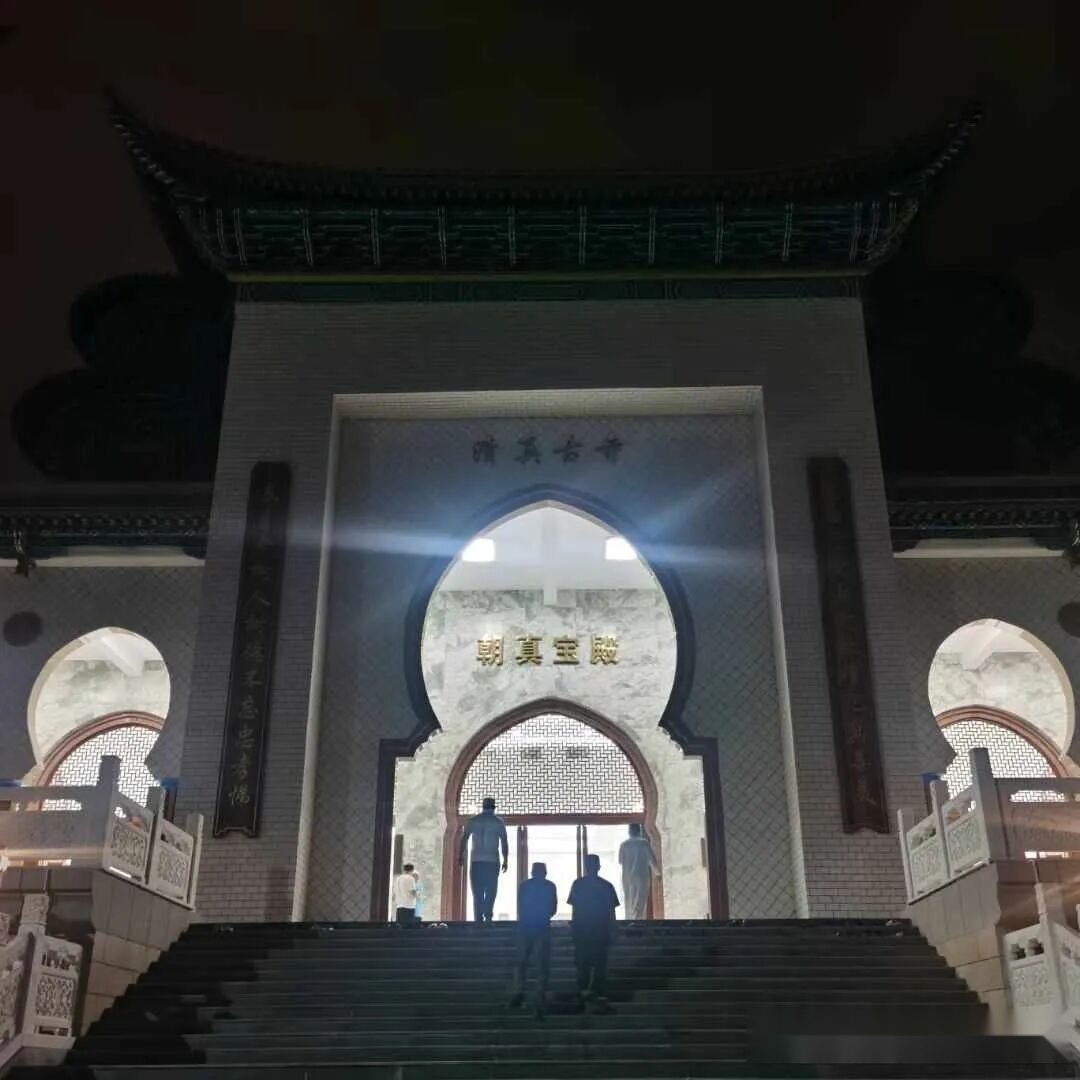
The first conversation took place inside the main hall of the Sanya Ancient Mosque.
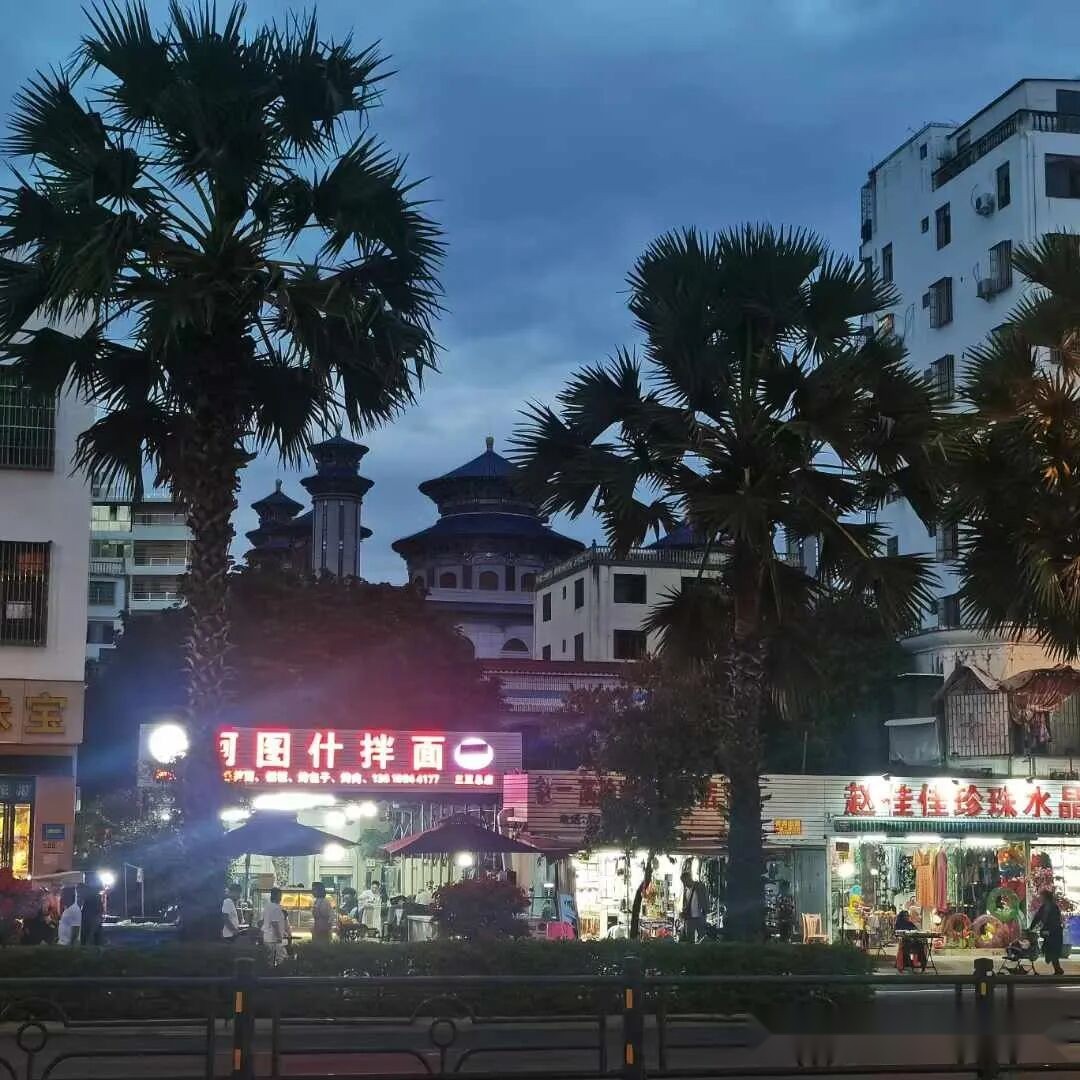
The Utsul Muslims have lived in Sanya for over a thousand years. Also known as the 'Sanya Cham', they are descendants of Southeast Asian Hui Muslims who settled together in Sanya. As a result, the compact Sanya urban area features five mosques: the East Mosque, North Great Mosque, and Sanya Ancient Mosque on the western side of the city, along with the Nankai Mosque and South Mosque slightly further east.

This time, I made a special trip into the city to check out the Muslim neighborhoods, visiting the closely situated East Mosque, North Great Mosque, and Sanya Ancient Mosque.
To my surprise, the streets of the Huihui neighborhood in Sanya were totally packed with Uyghur people! Every few steps, you'd spot elderly men in traditional embroidered caps and aunties in gorgeous traditional attire chatting in the Uyghur language. The Uyghur vibe in this neighborhood is honestly higher than the Hunan dialect concentration in Shenzhen!
At the Sanya Ancient Mosque, I chatted for 20 minutes with an elderly gentleman who had just finished the Maghrib prayer.
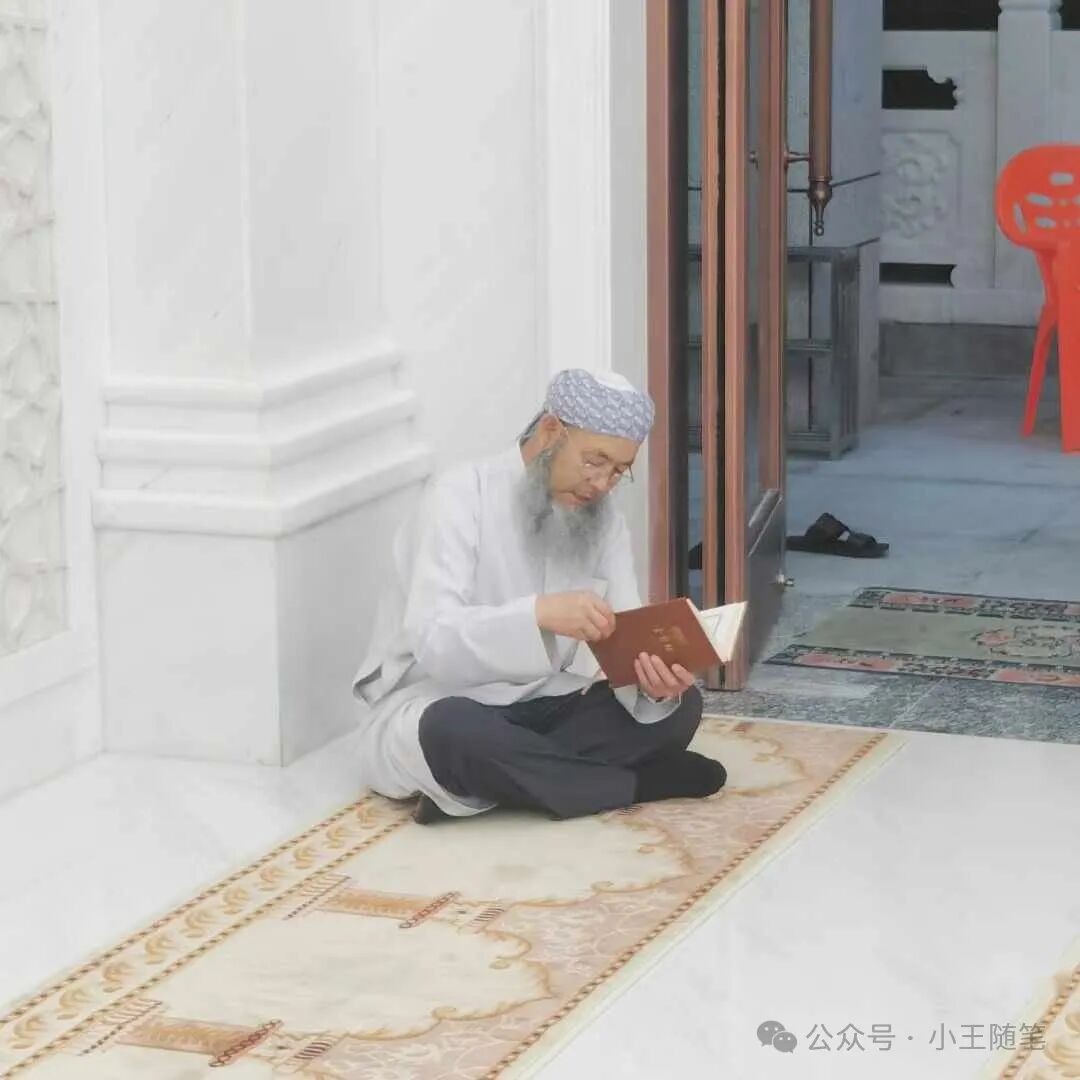
The elder was a white-bearded imam originally from Changzhi, Shanxi province, whose surname was Ma. As the saying goes, 'nine out of ten Huis are surnamed Ma.' Usually, I start with that to break the ice.
This majestic bearded elder wasn't the Imam Ma from the conversation I mentioned earlier, though.
During our chat, Imam Ma mentioned, 'Over here, except for the Nankai Mosque or South Mosque on the east side which are Ikhwan, the other four are Salafiyya.'
I asked, 'Are there none of our traditional Gedimu followers?'
'Gedimu' means 'old' in Arabic, which is basically the old-school tradition. Gedimu refers to the long-standing traditional Islamic school that has been passed down in China for over a thousand years since the Tang dynasty. Meanwhile, Salafiyya, Ikhwan, and others are newer schools introduced to China in modern times, though not contemporary.
'No. But I'm against making distinctions. Keep the doors open; anyone can come to pray, recite the Shahada (declaration of faith), and declare 'La ilaha illallah' (There is no god but Allah)... and that's all that matters.'
'I completely agree with your view. I think so too.'
Next up was the Isha prayer (the night prayer in Persian), and since I hadn't performed the ritual ablution (wudu), I said goodbye to the elderly imam and stepped down from the main hall.
Written on December 6, 2024, at Phoenix Airport
Sanya Cultural Essay: The Interwoven Memories of an Elderly Imam's Island Preaching Years and His Crossover Life
Abstract:
A vivid account of warm personal stories encountered by chance in Sanya. Listen to the reflections of an elderly imam from Changzhi, Shanxi, on his years running a Halal study hall in Sanya, capturing the resilience and open-mindedness behind an ordinary family, and showcasing the diverse and inclusive cultural fabric of Sanya.
During a few days of business travel to Sanya, I had two casual chats with strangers.
The first conversation took place inside the main hall of the Sanya Ancient Mosque.
The Utsul Muslims have lived in Sanya for over a thousand years. Also known as the 'Sanya Cham', they are descendants of Southeast Asian Hui Muslims who settled together in Sanya. As a result, the compact Sanya urban area features five mosques: the East Mosque, North Great Mosque, and Sanya Ancient Mosque on the western side of the city, along with the Nankai Mosque and South Mosque slightly further east.
This time, I made a special trip into the city to check out the Muslim neighborhoods, visiting the closely situated East Mosque, North Great Mosque, and Sanya Ancient Mosque.
To my surprise, the streets of the Huihui neighborhood in Sanya were totally packed with Uyghur people! Every few steps, you'd spot elderly men in traditional embroidered caps and aunties in gorgeous traditional attire chatting in the Uyghur language. The Uyghur vibe in this neighborhood is honestly higher than the Hunan dialect concentration in Shenzhen!
At the Sanya Ancient Mosque, I chatted for 20 minutes with an elderly gentleman who had just finished the Maghrib prayer.
The elder was a white-bearded imam originally from Changzhi, Shanxi province, whose surname was Ma. As the saying goes, 'nine out of ten Huis are surnamed Ma.' Usually, I start with that to break the ice.
This majestic bearded elder wasn't the Imam Ma from the conversation I mentioned earlier, though.
During our chat, Imam Ma mentioned, 'Over here, except for the Nankai Mosque or South Mosque on the east side which are Ikhwan, the other four are Salafiyya.'
I asked, 'Are there none of our traditional Gedimu followers?'
'Gedimu' means 'old' in Arabic, which is basically the old-school tradition. Gedimu refers to the long-standing traditional Islamic school that has been passed down in China for over a thousand years since the Tang dynasty. Meanwhile, Salafiyya, Ikhwan, and others are newer schools introduced to China in modern times, though not contemporary.
'No. But I'm against making distinctions. Keep the doors open; anyone can come to pray, recite the Shahada (declaration of faith), and declare 'La ilaha illallah' (There is no god but Allah)... and that's all that matters.'
'I completely agree with your view. I think so too.'
Next up was the Isha prayer (the night prayer in Persian), and since I hadn't performed the ritual ablution (wudu), I said goodbye to the elderly imam and stepped down from the main hall.
Written on December 6, 2024, at Phoenix Airport
Sanya Muslim Culture & Halal Food Guide: Historic Mosques, Utsul Cham Heritage, and Island Vibes
Articles • Hasan09 posted the article • 0 comments • 5 views • 5 hours ago
[Internet Repost]
Sanya Cultural Essay: The Interwoven Memories of an Elderly Imam's Island Preaching Years and His Crossover Life
Abstract:
A vivid account of warm personal stories encountered by chance in Sanya. Listen to the reflections of an elderly imam from Changzhi, Shanxi, on his years running a Halal study hall in Sanya, capturing the resilience and open-mindedness behind an ordinary family, and showcasing the diverse and inclusive cultural fabric of Sanya.
During a few days of business travel to Sanya, I had two casual chats with strangers.
The first conversation took place inside the main hall of the Sanya Ancient Mosque.
The Utsul Muslims have lived in Sanya for over a thousand years. Also known as the 'Sanya Cham', they are descendants of Southeast Asian Hui Muslims who settled together in Sanya. As a result, the compact Sanya urban area features five mosques: the East Mosque, North Great Mosque, and Sanya Ancient Mosque on the western side of the city, along with the Nankai Mosque and South Mosque slightly further east.
This time, I made a special trip into the city to check out the Muslim neighborhoods, visiting the closely situated East Mosque, North Great Mosque, and Sanya Ancient Mosque.
To my surprise, the streets of the Huihui neighborhood in Sanya were totally packed with Uyghur people! Every few steps, you'd spot elderly men in traditional embroidered caps and aunties in gorgeous traditional attire chatting in the Uyghur language. The Uyghur vibe in this neighborhood is honestly higher than the Hunan dialect concentration in Shenzhen!
At the Sanya Ancient Mosque, I chatted for 20 minutes with an elderly gentleman who had just finished the Maghrib prayer.
The elder was a white-bearded imam originally from Changzhi, Shanxi province, whose surname was Ma. As the saying goes, 'nine out of ten Huis are surnamed Ma.' Usually, I start with that to break the ice.
This majestic bearded elder wasn't the Imam Ma from the conversation I mentioned earlier, though.
During our chat, Imam Ma mentioned, 'Over here, except for the Nankai Mosque or South Mosque on the east side which are Ikhwan, the other four are Salafiyya.'
I asked, 'Are there none of our traditional Gedimu followers?'
'Gedimu' means 'old' in Arabic, which is basically the old-school tradition. Gedimu refers to the long-standing traditional Islamic school that has been passed down in China for over a thousand years since the Tang dynasty. Meanwhile, Salafiyya, Ikhwan, and others are newer schools introduced to China in modern times, though not contemporary.
'No. But I'm against making distinctions. Keep the doors open; anyone can come to pray, recite the Shahada (declaration of faith), and declare 'La ilaha illallah' (There is no god but Allah)... and that's all that matters.'
'I completely agree with your view. I think so too.'
Next up was the Isha prayer (the night prayer in Persian), and since I hadn't performed the ritual ablution (wudu), I said goodbye to the elderly imam and stepped down from the main hall.
Written on December 6, 2024, at Phoenix Airport view all
Sanya Cultural Essay: The Interwoven Memories of an Elderly Imam's Island Preaching Years and His Crossover Life
Abstract:
A vivid account of warm personal stories encountered by chance in Sanya. Listen to the reflections of an elderly imam from Changzhi, Shanxi, on his years running a Halal study hall in Sanya, capturing the resilience and open-mindedness behind an ordinary family, and showcasing the diverse and inclusive cultural fabric of Sanya.
During a few days of business travel to Sanya, I had two casual chats with strangers.
The first conversation took place inside the main hall of the Sanya Ancient Mosque.
The Utsul Muslims have lived in Sanya for over a thousand years. Also known as the 'Sanya Cham', they are descendants of Southeast Asian Hui Muslims who settled together in Sanya. As a result, the compact Sanya urban area features five mosques: the East Mosque, North Great Mosque, and Sanya Ancient Mosque on the western side of the city, along with the Nankai Mosque and South Mosque slightly further east.
This time, I made a special trip into the city to check out the Muslim neighborhoods, visiting the closely situated East Mosque, North Great Mosque, and Sanya Ancient Mosque.
To my surprise, the streets of the Huihui neighborhood in Sanya were totally packed with Uyghur people! Every few steps, you'd spot elderly men in traditional embroidered caps and aunties in gorgeous traditional attire chatting in the Uyghur language. The Uyghur vibe in this neighborhood is honestly higher than the Hunan dialect concentration in Shenzhen!
At the Sanya Ancient Mosque, I chatted for 20 minutes with an elderly gentleman who had just finished the Maghrib prayer.
The elder was a white-bearded imam originally from Changzhi, Shanxi province, whose surname was Ma. As the saying goes, 'nine out of ten Huis are surnamed Ma.' Usually, I start with that to break the ice.
This majestic bearded elder wasn't the Imam Ma from the conversation I mentioned earlier, though.
During our chat, Imam Ma mentioned, 'Over here, except for the Nankai Mosque or South Mosque on the east side which are Ikhwan, the other four are Salafiyya.'
I asked, 'Are there none of our traditional Gedimu followers?'
'Gedimu' means 'old' in Arabic, which is basically the old-school tradition. Gedimu refers to the long-standing traditional Islamic school that has been passed down in China for over a thousand years since the Tang dynasty. Meanwhile, Salafiyya, Ikhwan, and others are newer schools introduced to China in modern times, though not contemporary.
'No. But I'm against making distinctions. Keep the doors open; anyone can come to pray, recite the Shahada (declaration of faith), and declare 'La ilaha illallah' (There is no god but Allah)... and that's all that matters.'
'I completely agree with your view. I think so too.'
Next up was the Isha prayer (the night prayer in Persian), and since I hadn't performed the ritual ablution (wudu), I said goodbye to the elderly imam and stepped down from the main hall.
Written on December 6, 2024, at Phoenix Airport view all
[Internet Repost]
Sanya Cultural Essay: The Interwoven Memories of an Elderly Imam's Island Preaching Years and His Crossover Life
Abstract:
A vivid account of warm personal stories encountered by chance in Sanya. Listen to the reflections of an elderly imam from Changzhi, Shanxi, on his years running a Halal study hall in Sanya, capturing the resilience and open-mindedness behind an ordinary family, and showcasing the diverse and inclusive cultural fabric of Sanya.
During a few days of business travel to Sanya, I had two casual chats with strangers.
The first conversation took place inside the main hall of the Sanya Ancient Mosque.
The Utsul Muslims have lived in Sanya for over a thousand years. Also known as the 'Sanya Cham', they are descendants of Southeast Asian Hui Muslims who settled together in Sanya. As a result, the compact Sanya urban area features five mosques: the East Mosque, North Great Mosque, and Sanya Ancient Mosque on the western side of the city, along with the Nankai Mosque and South Mosque slightly further east.
This time, I made a special trip into the city to check out the Muslim neighborhoods, visiting the closely situated East Mosque, North Great Mosque, and Sanya Ancient Mosque.
To my surprise, the streets of the Huihui neighborhood in Sanya were totally packed with Uyghur people! Every few steps, you'd spot elderly men in traditional embroidered caps and aunties in gorgeous traditional attire chatting in the Uyghur language. The Uyghur vibe in this neighborhood is honestly higher than the Hunan dialect concentration in Shenzhen!
At the Sanya Ancient Mosque, I chatted for 20 minutes with an elderly gentleman who had just finished the Maghrib prayer.
The elder was a white-bearded imam originally from Changzhi, Shanxi province, whose surname was Ma. As the saying goes, 'nine out of ten Huis are surnamed Ma.' Usually, I start with that to break the ice.
This majestic bearded elder wasn't the Imam Ma from the conversation I mentioned earlier, though.
During our chat, Imam Ma mentioned, 'Over here, except for the Nankai Mosque or South Mosque on the east side which are Ikhwan, the other four are Salafiyya.'
I asked, 'Are there none of our traditional Gedimu followers?'
'Gedimu' means 'old' in Arabic, which is basically the old-school tradition. Gedimu refers to the long-standing traditional Islamic school that has been passed down in China for over a thousand years since the Tang dynasty. Meanwhile, Salafiyya, Ikhwan, and others are newer schools introduced to China in modern times, though not contemporary.
'No. But I'm against making distinctions. Keep the doors open; anyone can come to pray, recite the Shahada (declaration of faith), and declare 'La ilaha illallah' (There is no god but Allah)... and that's all that matters.'
'I completely agree with your view. I think so too.'
Next up was the Isha prayer (the night prayer in Persian), and since I hadn't performed the ritual ablution (wudu), I said goodbye to the elderly imam and stepped down from the main hall.
Written on December 6, 2024, at Phoenix Airport
Sanya Cultural Essay: The Interwoven Memories of an Elderly Imam's Island Preaching Years and His Crossover Life
Abstract:
A vivid account of warm personal stories encountered by chance in Sanya. Listen to the reflections of an elderly imam from Changzhi, Shanxi, on his years running a Halal study hall in Sanya, capturing the resilience and open-mindedness behind an ordinary family, and showcasing the diverse and inclusive cultural fabric of Sanya.
During a few days of business travel to Sanya, I had two casual chats with strangers.
The first conversation took place inside the main hall of the Sanya Ancient Mosque.
The Utsul Muslims have lived in Sanya for over a thousand years. Also known as the 'Sanya Cham', they are descendants of Southeast Asian Hui Muslims who settled together in Sanya. As a result, the compact Sanya urban area features five mosques: the East Mosque, North Great Mosque, and Sanya Ancient Mosque on the western side of the city, along with the Nankai Mosque and South Mosque slightly further east.
This time, I made a special trip into the city to check out the Muslim neighborhoods, visiting the closely situated East Mosque, North Great Mosque, and Sanya Ancient Mosque.
To my surprise, the streets of the Huihui neighborhood in Sanya were totally packed with Uyghur people! Every few steps, you'd spot elderly men in traditional embroidered caps and aunties in gorgeous traditional attire chatting in the Uyghur language. The Uyghur vibe in this neighborhood is honestly higher than the Hunan dialect concentration in Shenzhen!
At the Sanya Ancient Mosque, I chatted for 20 minutes with an elderly gentleman who had just finished the Maghrib prayer.
The elder was a white-bearded imam originally from Changzhi, Shanxi province, whose surname was Ma. As the saying goes, 'nine out of ten Huis are surnamed Ma.' Usually, I start with that to break the ice.
This majestic bearded elder wasn't the Imam Ma from the conversation I mentioned earlier, though.
During our chat, Imam Ma mentioned, 'Over here, except for the Nankai Mosque or South Mosque on the east side which are Ikhwan, the other four are Salafiyya.'
I asked, 'Are there none of our traditional Gedimu followers?'
'Gedimu' means 'old' in Arabic, which is basically the old-school tradition. Gedimu refers to the long-standing traditional Islamic school that has been passed down in China for over a thousand years since the Tang dynasty. Meanwhile, Salafiyya, Ikhwan, and others are newer schools introduced to China in modern times, though not contemporary.
'No. But I'm against making distinctions. Keep the doors open; anyone can come to pray, recite the Shahada (declaration of faith), and declare 'La ilaha illallah' (There is no god but Allah)... and that's all that matters.'
'I completely agree with your view. I think so too.'
Next up was the Isha prayer (the night prayer in Persian), and since I hadn't performed the ritual ablution (wudu), I said goodbye to the elderly imam and stepped down from the main hall.
Written on December 6, 2024, at Phoenix Airport